window.__IS_SSR__=true
window.__INITIAL_STATE__={
"attachmentsReducer": {
"audio_0": {
"type": "attachments",
"id": "audio_0",
"imgSizes": {
"kqedFullSize": {
"file": "https://ww2.kqed.org/news/wp-content/themes/KQED-unified/img/audio_bgs/background0.jpg"
}
}
},
"audio_1": {
"type": "attachments",
"id": "audio_1",
"imgSizes": {
"kqedFullSize": {
"file": "https://ww2.kqed.org/news/wp-content/themes/KQED-unified/img/audio_bgs/background1.jpg"
}
}
},
"audio_2": {
"type": "attachments",
"id": "audio_2",
"imgSizes": {
"kqedFullSize": {
"file": "https://ww2.kqed.org/news/wp-content/themes/KQED-unified/img/audio_bgs/background2.jpg"
}
}
},
"audio_3": {
"type": "attachments",
"id": "audio_3",
"imgSizes": {
"kqedFullSize": {
"file": "https://ww2.kqed.org/news/wp-content/themes/KQED-unified/img/audio_bgs/background3.jpg"
}
}
},
"audio_4": {
"type": "attachments",
"id": "audio_4",
"imgSizes": {
"kqedFullSize": {
"file": "https://ww2.kqed.org/news/wp-content/themes/KQED-unified/img/audio_bgs/background4.jpg"
}
}
},
"placeholder": {
"type": "attachments",
"id": "placeholder",
"imgSizes": {
"thumbnail": {
"file": "https://cdn.kqed.org/wp-content/uploads/2024/12/KQED-Default-Image-816638274-2000x1333-1-160x107.jpg",
"width": 160,
"height": 107,
"mimeType": "image/jpeg"
},
"medium": {
"file": "https://cdn.kqed.org/wp-content/uploads/2024/12/KQED-Default-Image-816638274-2000x1333-1-800x533.jpg",
"width": 800,
"height": 533,
"mimeType": "image/jpeg"
},
"medium_large": {
"file": "https://cdn.kqed.org/wp-content/uploads/2024/12/KQED-Default-Image-816638274-2000x1333-1-768x512.jpg",
"width": 768,
"height": 512,
"mimeType": "image/jpeg"
},
"large": {
"file": "https://cdn.kqed.org/wp-content/uploads/2024/12/KQED-Default-Image-816638274-2000x1333-1-1020x680.jpg",
"width": 1020,
"height": 680,
"mimeType": "image/jpeg"
},
"1536x1536": {
"file": "https://cdn.kqed.org/wp-content/uploads/2024/12/KQED-Default-Image-816638274-2000x1333-1-1536x1024.jpg",
"width": 1536,
"height": 1024,
"mimeType": "image/jpeg"
},
"fd-lrg": {
"file": "https://cdn.kqed.org/wp-content/uploads/2024/12/KQED-Default-Image-816638274-2000x1333-1-1536x1024.jpg",
"width": 1536,
"height": 1024,
"mimeType": "image/jpeg"
},
"fd-med": {
"file": "https://cdn.kqed.org/wp-content/uploads/2024/12/KQED-Default-Image-816638274-2000x1333-1-1020x680.jpg",
"width": 1020,
"height": 680,
"mimeType": "image/jpeg"
},
"fd-sm": {
"file": "https://cdn.kqed.org/wp-content/uploads/2024/12/KQED-Default-Image-816638274-2000x1333-1-800x533.jpg",
"width": 800,
"height": 533,
"mimeType": "image/jpeg"
},
"post-thumbnail": {
"file": "https://cdn.kqed.org/wp-content/uploads/2024/12/KQED-Default-Image-816638274-2000x1333-1-672x372.jpg",
"width": 672,
"height": 372,
"mimeType": "image/jpeg"
},
"twentyfourteen-full-width": {
"file": "https://cdn.kqed.org/wp-content/uploads/2024/12/KQED-Default-Image-816638274-2000x1333-1-1038x576.jpg",
"width": 1038,
"height": 576,
"mimeType": "image/jpeg"
},
"xxsmall": {
"file": "https://cdn.kqed.org/wp-content/uploads/2024/12/KQED-Default-Image-816638274-2000x1333-1-160x107.jpg",
"width": 160,
"height": 107,
"mimeType": "image/jpeg"
},
"xsmall": {
"file": "https://cdn.kqed.org/wp-content/uploads/2024/12/KQED-Default-Image-816638274-2000x1333-1-672x372.jpg",
"width": 672,
"height": 372,
"mimeType": "image/jpeg"
},
"small": {
"file": "https://cdn.kqed.org/wp-content/uploads/2024/12/KQED-Default-Image-816638274-2000x1333-1-672x372.jpg",
"width": 672,
"height": 372,
"mimeType": "image/jpeg"
},
"xlarge": {
"file": "https://cdn.kqed.org/wp-content/uploads/2024/12/KQED-Default-Image-816638274-2000x1333-1-1020x680.jpg",
"width": 1020,
"height": 680,
"mimeType": "image/jpeg"
},
"full-width": {
"file": "https://cdn.kqed.org/wp-content/uploads/2024/12/KQED-Default-Image-816638274-2000x1333-1-1920x1280.jpg",
"width": 1920,
"height": 1280,
"mimeType": "image/jpeg"
},
"guest-author-32": {
"file": "https://cdn.kqed.org/wp-content/uploads/2025/01/KQED-Default-Image-816638274-1333x1333-1-160x160.jpg",
"width": 32,
"height": 32,
"mimeType": "image/jpeg"
},
"guest-author-50": {
"file": "https://cdn.kqed.org/wp-content/uploads/2025/01/KQED-Default-Image-816638274-1333x1333-1-160x160.jpg",
"width": 50,
"height": 50,
"mimeType": "image/jpeg"
},
"guest-author-64": {
"file": "https://cdn.kqed.org/wp-content/uploads/2025/01/KQED-Default-Image-816638274-1333x1333-1-160x160.jpg",
"width": 64,
"height": 64,
"mimeType": "image/jpeg"
},
"guest-author-96": {
"file": "https://cdn.kqed.org/wp-content/uploads/2025/01/KQED-Default-Image-816638274-1333x1333-1-160x160.jpg",
"width": 96,
"height": 96,
"mimeType": "image/jpeg"
},
"guest-author-128": {
"file": "https://cdn.kqed.org/wp-content/uploads/2025/01/KQED-Default-Image-816638274-1333x1333-1-160x160.jpg",
"width": 128,
"height": 128,
"mimeType": "image/jpeg"
},
"detail": {
"file": "https://cdn.kqed.org/wp-content/uploads/2025/01/KQED-Default-Image-816638274-1333x1333-1-160x160.jpg",
"width": 160,
"height": 160,
"mimeType": "image/jpeg"
},
"kqedFullSize": {
"file": "https://cdn.kqed.org/wp-content/uploads/2024/12/KQED-Default-Image-816638274-2000x1333-1.jpg",
"width": 2000,
"height": 1333
}
}
},
"bayareabites_74020": {
"type": "attachments",
"id": "bayareabites_74020",
"meta": {
"index": "attachments_1716263798",
"site": "bayareabites",
"id": "74020",
"found": true
},
"parent": 74015,
"imgSizes": {
"kqedFullSize": {
"file": "https://ww2.kqed.org/app/uploads/sites/24/2013/11/coffee-citrus.jpg",
"width": 624,
"height": 350
}
},
"publishDate": 1384530848,
"modified": 1384530848,
"caption": "Coffee can help cut your risk of type 2 diabetes, fresh research shows. Other foods, such as oranges, lemons and other citrus fruits, nuts and beans can also help. Photo: iStock",
"description": null,
"title": "coffee-citrus",
"credit": null,
"status": "inherit",
"isLoading": false,
"fetchFailed": false
},
"bayareabites_73985": {
"type": "attachments",
"id": "bayareabites_73985",
"meta": {
"index": "attachments_1716263798",
"site": "bayareabites",
"id": "73985",
"found": true
},
"parent": 73982,
"imgSizes": {
"kqedFullSize": {
"file": "https://ww2.kqed.org/app/uploads/sites/24/2013/11/banana-gmo.jpg",
"width": 624,
"height": 350
}
},
"publishDate": 1384478820,
"modified": 1384478820,
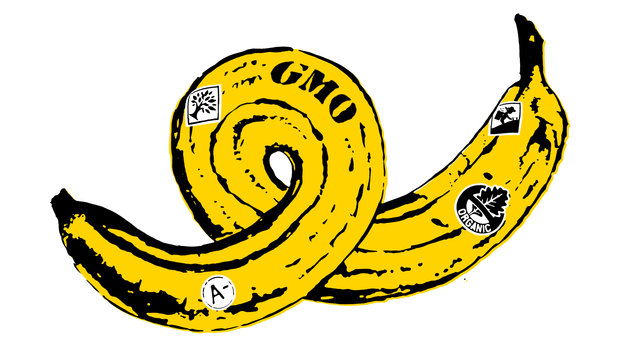
"caption": "GMO Banana Illustration by Daniel Horowitz for NPR",
"description": null,
"title": "banana-gmo",
"credit": null,
"status": "inherit",
"isLoading": false,
"fetchFailed": false
},
"bayareabites_73882": {
"type": "attachments",
"id": "bayareabites_73882",
"meta": {
"index": "attachments_1716263798",
"site": "bayareabites",
"id": "73882",
"found": true
},
"parent": 73873,
"imgSizes": {
"kqedFullSize": {
"file": "https://ww2.kqed.org/app/uploads/sites/24/2013/11/coca-cola-warhol.jpg",
"width": 462,
"height": 577
}
},
"publishDate": 1384319527,
"modified": 1384319527,
"caption": "Coca-Cola (3) was one of many of Warhol's pop art pieces, which celebrated popular culture and consumerism in post-World War II America.",
"description": null,
"title": "coca-cola-warhol",
"credit": null,
"status": "inherit",
"isLoading": false,
"fetchFailed": false
},
"bayareabites_73809": {
"type": "attachments",
"id": "bayareabites_73809",
"meta": {
"index": "attachments_1716263798",
"site": "bayareabites",
"id": "73809",
"found": true
},
"parent": 73805,
"imgSizes": {
"kqedFullSize": {
"file": "https://ww2.kqed.org/app/uploads/sites/24/2013/11/bitcoin.jpg",
"width": 624,
"height": 467
}
},
"publishDate": 1384277219,
"modified": 1384277219,
"caption": "Economists say small business owners — especially farmers dealing in high volume and low profit margins — are more likely to accept a volatile currency like bitcoin than bigger businesses. Photo: Allen Sheffield/Flickr",
"description": null,
"title": "bitcoin",
"credit": null,
"status": "inherit",
"isLoading": false,
"fetchFailed": false
},
"bayareabites_73797": {
"type": "attachments",
"id": "bayareabites_73797",
"meta": {
"index": "attachments_1716263798",
"site": "bayareabites",
"id": "73797",
"found": true
},
"parent": 73793,
"imgSizes": {
"kqedFullSize": {
"file": "https://ww2.kqed.org/app/uploads/sites/24/2013/11/microbiomes.jpg",
"width": 374,
"height": 500
}
},
"publishDate": 1384198346,
"modified": 1384198346,
"caption": "While no one's sure which foods are good for our microbiomes, eating more veggies can't hurt. Photo: iStockPhoto.com",
"description": "While no one's sure which foods are good for our microbiomes, eating more veggies can't hurt.",
"title": "hires",
"credit": null,
"status": "inherit",
"isLoading": false,
"fetchFailed": false
},
"bayareabites_73791": {
"type": "attachments",
"id": "bayareabites_73791",
"meta": {
"index": "attachments_1716263798",
"site": "bayareabites",
"id": "73791",
"found": true
},
"parent": 73787,
"imgSizes": {
"kqedFullSize": {
"file": "https://ww2.kqed.org/app/uploads/sites/24/2013/11/teabiscuit.jpg",
"width": 500,
"height": 500
}
},
"publishDate": 1384197092,
"modified": 1384197092,
"caption": "The first product Duchy Originals launched was the Oaten Biscuit, and it’s still a top seller today. Photo: April Fulton/for NPR",
"description": "The first product Duchy Originals launched was the Oaten Biscuit, and it’s still a top seller today",
"title": "teabiscuit",
"credit": null,
"status": "inherit",
"isLoading": false,
"fetchFailed": false
},
"bayareabites_73648": {
"type": "attachments",
"id": "bayareabites_73648",
"meta": {
"index": "attachments_1716263798",
"site": "bayareabites",
"id": "73648",
"found": true
},
"parent": 73644,
"imgSizes": {
"kqedFullSize": {
"file": "https://ww2.kqed.org/app/uploads/sites/24/2013/11/yelpreviews.jpg",
"width": 624,
"height": 351
}
},
"publishDate": 1383930731,
"modified": 1383930731,
"caption": "A new study finds restaurants that face close regional competition are more likely to post fake positive reviews for themselves and negative reviews for competitors. Photo: Jeremy Brooks/\u003ca href=\"http://www.flickr.com/photos/85853333@N00/9295078135/in/photolist-fanGTR-cZq8sE-99NtC3-dd5eFv-aewmgt-aezbg7-aewmec-9tonFT-98KaPR-cBXqxf-7AoN4Q-ax1vSy-7MFizo-9R8xVH\">Flickr\u003c/a>",
"description": null,
"title": "yelpreviews",
"credit": null,
"status": "inherit",
"isLoading": false,
"fetchFailed": false
},
"bayareabites_73597": {
"type": "attachments",
"id": "bayareabites_73597",
"meta": {
"index": "attachments_1716263798",
"site": "bayareabites",
"id": "73597",
"found": true
},
"parent": 73590,
"imgSizes": {
"kqedFullSize": {
"file": "https://ww2.kqed.org/app/uploads/sites/24/2013/11/yellowcheese.jpg",
"width": 624,
"height": 351
}
},
"publishDate": 1383872152,
"modified": 1383872152,
"caption": "Shelburne Farms' clothbound cheddar has a bright yellow color because it's made from the milk of cows that graze on grasses high in beta-carotene. Photo: Courtesy of A. Blake Gardner",
"description": null,
"title": "yellowcheese",
"credit": null,
"status": "inherit",
"isLoading": false,
"fetchFailed": false
},
"bayareabites_73545": {
"type": "attachments",
"id": "bayareabites_73545",
"meta": {
"index": "attachments_1716263798",
"site": "bayareabites",
"id": "73545",
"found": true
},
"parent": 73540,
"imgSizes": {
"kqedFullSize": {
"file": "https://ww2.kqed.org/app/uploads/sites/24/2013/11/gmocars.jpg",
"width": 624,
"height": 351
}
},
"publishDate": 1383843055,
"modified": 1383843055,
"caption": null,
"description": null,
"title": "gmocars",
"credit": null,
"status": "inherit",
"isLoading": false,
"fetchFailed": false
},
"bayareabites_73498": {
"type": "attachments",
"id": "bayareabites_73498",
"meta": {
"index": "attachments_1716263798",
"site": "bayareabites",
"id": "73498",
"found": true
},
"parent": 73425,
"imgSizes": {
"kqedFullSize": {
"file": "https://ww2.kqed.org/app/uploads/sites/24/2013/11/cookinglabcheesecombo-sm.png",
"width": 624,
"height": 350
}
},
"publishDate": 1383708141,
"modified": 1383708141,
"caption": null,
"description": null,
"title": "cookinglabcheesecombo-sm",
"credit": null,
"status": "inherit",
"isLoading": false,
"fetchFailed": false
},
"bayareabites_73477": {
"type": "attachments",
"id": "bayareabites_73477",
"meta": {
"index": "attachments_1716263798",
"site": "bayareabites",
"id": "73477",
"found": true
},
"parent": 73433,
"imgSizes": {
"kqedFullSize": {
"file": "https://ww2.kqed.org/app/uploads/sites/24/2013/11/pigs-caged.jpg",
"width": 624,
"height": 416
}
},
"publishDate": 1383705859,
"modified": 1383705859,
"caption": "In recent years, pork producers have found ways to keep the animals healthy through improved hygiene. Photo: M. Spencer Green/AP",
"description": null,
"title": "pigs-caged",
"credit": null,
"status": "inherit",
"isLoading": false,
"fetchFailed": false
},
"bayareabites_73450": {
"type": "attachments",
"id": "bayareabites_73450",
"meta": {
"index": "attachments_1716263798",
"site": "bayareabites",
"id": "73450",
"found": true
},
"parent": 73447,
"imgSizes": {
"kqedFullSize": {
"file": "https://ww2.kqed.org/app/uploads/sites/24/2013/11/charlie-trotter.jpg",
"width": 462,
"height": 616
}
},
"publishDate": 1383687718,
"modified": 1383687718,
"caption": "Chef Charlie Trotter, who helped to revitalize Chicago's culinary reputation, has died at age 54. He's seen here at the 2006 International Gastronomy Summit in Madrid. Photo: Pierre-Philippe Marcou/AFP/Getty Images",
"description": null,
"title": "charlie-trotter",
"credit": null,
"status": "inherit",
"isLoading": false,
"fetchFailed": false
}
},
"audioPlayerReducer": {
"postId": "stream_live",
"isPaused": true,
"isPlaying": false,
"pfsActive": false,
"pledgeModalIsOpen": true,
"playerDrawerIsOpen": false,
"liveAudioPlayStartedAt": 0,
"liveAudioPlayContext": ""
},
"authorsReducer": {
"byline_bayareabites_74015": {
"type": "authors",
"id": "byline_bayareabites_74015",
"meta": {
"override": true
},
"slug": "byline_bayareabites_74015",
"name": "Allison Aubrey",
"isLoading": false
},
"byline_bayareabites_73982": {
"type": "authors",
"id": "byline_bayareabites_73982",
"meta": {
"override": true
},
"slug": "byline_bayareabites_73982",
"name": "Dan Charles",
"isLoading": false
},
"byline_bayareabites_73873": {
"type": "authors",
"id": "byline_bayareabites_73873",
"meta": {
"override": true
},
"slug": "byline_bayareabites_73873",
"name": "Tanya Ballard Brown",
"isLoading": false
},
"byline_bayareabites_73805": {
"type": "authors",
"id": "byline_bayareabites_73805",
"meta": {
"override": true
},
"slug": "byline_bayareabites_73805",
"name": "Thomas Andrew Gustafson",
"isLoading": false
},
"byline_bayareabites_73793": {
"type": "authors",
"id": "byline_bayareabites_73793",
"meta": {
"override": true
},
"slug": "byline_bayareabites_73793",
"name": "Maanvi Singh",
"isLoading": false
},
"byline_bayareabites_73787": {
"type": "authors",
"id": "byline_bayareabites_73787",
"meta": {
"override": true
},
"slug": "byline_bayareabites_73787",
"name": "April Fulton",
"isLoading": false
},
"byline_bayareabites_73644": {
"type": "authors",
"id": "byline_bayareabites_73644",
"meta": {
"override": true
},
"slug": "byline_bayareabites_73644",
"name": "Serri Graslie",
"isLoading": false
},
"byline_bayareabites_73590": {
"type": "authors",
"id": "byline_bayareabites_73590",
"meta": {
"override": true
},
"slug": "byline_bayareabites_73590",
"name": "Allison Aubrey",
"isLoading": false
},
"byline_bayareabites_73540": {
"type": "authors",
"id": "byline_bayareabites_73540",
"meta": {
"override": true
},
"slug": "byline_bayareabites_73540",
"name": "Eliza Barclay and Martin Kaste",
"isLoading": false
},
"byline_bayareabites_73425": {
"type": "authors",
"id": "byline_bayareabites_73425",
"meta": {
"override": true
},
"slug": "byline_bayareabites_73425",
"name": "Michaeleen Doucleff",
"isLoading": false
},
"byline_bayareabites_73433": {
"type": "authors",
"id": "byline_bayareabites_73433",
"meta": {
"override": true
},
"slug": "byline_bayareabites_73433",
"name": "Dan Charles",
"isLoading": false
},
"byline_bayareabites_73447": {
"type": "authors",
"id": "byline_bayareabites_73447",
"meta": {
"override": true
},
"slug": "byline_bayareabites_73447",
"name": "Bill Chappell",
"isLoading": false
}
},
"pagesReducer": {
"bayareabites_category_npr-food": {
"type": "terms",
"id": "bayareabites_10916",
"meta": {
"index": "terms_1716263798",
"site": "bayareabites",
"id": "10916",
"score": 13.894709
},
"featImg": null,
"name": "NPR food",
"description": null,
"taxonomy": "category",
"headData": {
"twImgId": null,
"twTitle": null,
"ogTitle": null,
"ogImgId": null,
"twDescription": null,
"description": null,
"title": "NPR food Archives | KQED Bay Area Bites",
"ogDescription": null
},
"ttid": 5375,
"slug": "npr-food",
"isLoading": false,
"title": "NPR food",
"pageMeta": {
"site": "bayareabites",
"WpPageTemplate": "page-topic-editorial",
"currentPage": 61
},
"blocks": [
{
"blockName": "kqed/post-list",
"attrs": {
"layout": "cardArticle2",
"query": "posts/bayareabites?category=npr-food",
"seeMore": false,
"paginated": true,
"page": 61
}
},
{
"blockName": "kqed/ad"
}
]
}
},
"pfsSessionReducer": {},
"postsReducer": {
"stream_live": {
"type": "live",
"id": "stream_live",
"audioUrl": "https://hls.kqed.org/hls/kqed_app/playlist.m3u8",
"title": "Live Stream",
"excerpt": "Live Stream information currently unavailable.",
"link": "/radio",
"featImg": "",
"label": {
"name": "KQED Live",
"link": "/"
}
},
"stream_kqedNewscast": {
"type": "posts",
"id": "stream_kqedNewscast",
"audioUrl": "https://www.kqed.org/.stream/anon/radio/RDnews/newscast.mp3?_=1",
"title": "KQED Newscast",
"featImg": "",
"label": {
"name": "88.5 FM",
"link": "/"
}
},
"bayareabites_74015": {
"type": "posts",
"id": "bayareabites_74015",
"meta": {
"index": "posts_1716263798",
"site": "bayareabites",
"id": "74015",
"score": null,
"sort": [
1384530979000
]
},
"parent": 0,
"labelTerm": {
"site": "bayareabites"
},
"blocks": [],
"publishDate": 1384530979,
"format": "aside",
"disqusTitle": "How Coffee, Citrus And Nuts Help Cut The Risk Of Diabetes",
"title": "How Coffee, Citrus And Nuts Help Cut The Risk Of Diabetes",
"headTitle": "Bay Area Bites | KQED Food",
"content": "\u003cfigure id=\"attachment_74020\" class=\"wp-caption aligncenter\" style=\"max-width: 624px\">\u003ca href=\"http://ww2.kqed.org/bayareabites/wp-content/uploads/sites/24/2013/11/coffee-citrus.jpg\">\u003cimg src=\"http://ww2.kqed.org/bayareabites/wp-content/uploads/sites/24/2013/11/coffee-citrus.jpg\" alt=\"Coffee can help cut your risk of type 2 diabetes, fresh research shows. Other foods, such as oranges, lemons and other citrus fruits, nuts and beans can also help. Photo: iStock\" width=\"624\" height=\"350\" class=\"size-full wp-image-74020\">\u003c/a>\u003cfigcaption class=\"wp-caption-text\">Coffee can help cut your risk of type 2 diabetes, fresh research shows. Other foods, such as oranges, lemons and other citrus fruits, nuts and beans can also help. Photo: iStock\u003c/figcaption>\u003c/figure>\n\u003cp>Post by Allison Aubrey, \u003ca href=\"http://www.npr.org/blogs/thesalt/2013/11/15/245250931/how-coffee-citrus-and-nuts-help-cut-the-risk-of-diabetes\">The Salt at NPR Food\u003c/a> (11/15/13)\u003c/p>\n\u003cp>If you go back to the 1970s, people with a serious coffee habit often had an accompanying habit: smoking.\u003c/p>\n\u003cp>And that's why early studies gave coffee a bad rap. Clearly, smoking was harmful. And it was hard for researchers to disentangle the two habits. \"So it made coffee look bad in terms of health outcomes,\" Harvard researcher Mehr Stampfer \u003ca href=\"http://wap.npr.org/story/174334493\">explained\u003c/a> to me.\u003c/p>\n\u003cp>But, fast forward a quarter century and the rap on coffee began to change.\u003c/p>\n\u003cp>As we've reported, recent studies have found that people who drink coffee regularly are at lower risk of \u003ca href=\"http://www.npr.org/blogs/thesalt/2011/09/27/140837983/caffeinated-women-may-be-fighting-depression-with-every-cup\">depression\u003c/a>, and perhaps \u003ca href=\"http://www.npr.org/templates/story/story.php?storyId=128110552\">Alzheimer's\u003c/a> too.\u003c/p>\n\u003cp>[ad fullwidth]\u003c/p>\n\u003cp>Now, there's further evidence that coffee also helps cut the risk of developing type-2 diabetes. In the most recent \u003ca href=\"http://www.ncbi.nlm.nih.gov/pubmed/24150256\">meta-analysis\u003c/a>, researchers found that drinking two or more cups of coffee per day was associated with a 12 percent decreased risk of developing the disease. And even decaffeinated coffee seemed to cut the risk, though not as much as the caffeinated kind.\u003c/p>\n\u003cp>Of course, the most significant risk factor for type-2 diabetes is weight. And, indeed, the study found that coffee's protective effect didn't seem to hold up as well in overweight people.\u003c/p>\n\u003cp>So, what explains coffee's beneficial effects on diabetes?\u003c/p>\n\u003cp>Well, researchers say there may be several explanations. Coffee contains a host of polyphenols, beneficial plant compounds. And researchers have identified one compound, chlorogenic acid (CGA), which has been shown in \u003ca href=\"http://www.ncbi.nlm.nih.gov/pubmed/22412912\">studies\u003c/a> to delay the absorption of glucose.\u003c/p>\n\u003cp>But man cannot live on coffee alone. So what other foods may help decrease risk of type-2 diabetes — or help people manage the condition if they've already been diagnosed?\u003c/p>\n\u003cp>The American Diabetes Association has a \u003ca href=\"http://www.diabetes.org/food-and-fitness/food/what-can-i-eat/diabetes-superfoods.html\">list. \u003c/a>\u003c/p>\n\u003cp>Not surprisingly, beans and leafy greens are at the top of the list. In addition to being a cheap source of protein, beans contain key nutrients such as potassium and magnesium, which has been shown to help regulate blood sugar.\u003c/p>\n\u003cp>Also on the list are citrus and berries, which are loaded with polyphenols and fiber.\u003c/p>\n\u003cp>Nuts, as we've reported, can \u003ca href=\"http://www.npr.org/blogs/thesalt/2013/10/24/240538905/almonds-for-skinny-snackers-yes-they-help-curb-your-appetite\">help control appetites\u003c/a> and also are a good source of magnesium.\u003c/p>\n\u003cp>Sweet potatoes make the list. Compared to white potatoes, sweet potatoes contain lots of vitamin A and fiber.\u003c/p>\n\u003cp>All of the foods on the list, according to the ADA, have a relatively low glycemic index, meaning they help prevent spikes in blood sugar.\u003c/p>\n\u003cp>\u003c/p>\n\u003cp>\u003cem>Copyright 2013 \u003ca href=\"http://www.npr.org/\">NPR\u003c/a>.\u003c/em> \u003c/p>\n\n",
"disqusIdentifier": "74015 http://blogs.kqed.org/bayareabites/?p=74015",
"disqusUrl": "https://ww2.kqed.org/bayareabites/2013/11/15/how-coffee-citrus-and-nuts-help-cut-the-risk-of-diabetes/",
"stats": {
"hasVideo": false,
"hasChartOrMap": false,
"hasAudio": false,
"hasPolis": false,
"wordCount": 449,
"hasGoogleForm": false,
"hasGallery": false,
"hasHearkenModule": false,
"iframeSrcs": [],
"paragraphCount": 19
},
"modified": 1384530979,
"excerpt": "Drinking two or more cups of coffee per day was associated with a 12 percent decreased risk of developing type 2 diabetes, according to fresh research. But man cannot live on coffee alone. Luckily, other foods may also help decrease the risk of the disease — or help those already diagnosed to manage the condition.",
"headData": {
"twImgId": "",
"twTitle": "",
"ogTitle": "",
"ogImgId": "",
"twDescription": "",
"description": "Drinking two or more cups of coffee per day was associated with a 12 percent decreased risk of developing type 2 diabetes, according to fresh research. But man cannot live on coffee alone. Luckily, other foods may also help decrease the risk of the disease — or help those already diagnosed to manage the condition.",
"title": "How Coffee, Citrus And Nuts Help Cut The Risk Of Diabetes | KQED",
"ogDescription": "",
"schema": {
"@context": "https://schema.org",
"@type": "Article",
"headline": "How Coffee, Citrus And Nuts Help Cut The Risk Of Diabetes",
"datePublished": "2013-11-15T07:56:19-08:00",
"dateModified": "2013-11-15T07:56:19-08:00",
"image": "https://cdn.kqed.org/wp-content/uploads/2020/02/KQED-OG-Image@1x.png"
}
},
"guestAuthors": [],
"slug": "how-coffee-citrus-and-nuts-help-cut-the-risk-of-diabetes",
"status": "publish",
"nprApiLink": "http://api.npr.org/query?id=245250931&apiKey=MDAxOTAwOTE4MDEyMTkxMDAzNjczZDljZA004",
"nprByline": "Allison Aubrey",
"nprStoryDate": "Fri, 15 Nov 2013 09:06:00 -0500",
"nprLastModifiedDate": "Fri, 15 Nov 2013 09:06:18 -0500",
"nprHtmlLink": "http://www.npr.org/blogs/thesalt/2013/11/15/245250931/how-coffee-citrus-and-nuts-help-cut-the-risk-of-diabetes?ft=3&f=245250931",
"nprStoryId": "245250931",
"nprRetrievedStory": "1",
"nprPubDate": "Fri, 15 Nov 2013 09:06:00 -0500",
"path": "/bayareabites/74015/how-coffee-citrus-and-nuts-help-cut-the-risk-of-diabetes",
"audioTrackLength": null,
"parsedContent": [
{
"type": "contentString",
"content": "\u003cdiv class=\"post-body\">\u003cp>\u003cfigure id=\"attachment_74020\" class=\"wp-caption aligncenter\" style=\"max-width: 624px\">\u003ca href=\"http://ww2.kqed.org/bayareabites/wp-content/uploads/sites/24/2013/11/coffee-citrus.jpg\">\u003cimg src=\"http://ww2.kqed.org/bayareabites/wp-content/uploads/sites/24/2013/11/coffee-citrus.jpg\" alt=\"Coffee can help cut your risk of type 2 diabetes, fresh research shows. Other foods, such as oranges, lemons and other citrus fruits, nuts and beans can also help. Photo: iStock\" width=\"624\" height=\"350\" class=\"size-full wp-image-74020\">\u003c/a>\u003cfigcaption class=\"wp-caption-text\">Coffee can help cut your risk of type 2 diabetes, fresh research shows. Other foods, such as oranges, lemons and other citrus fruits, nuts and beans can also help. Photo: iStock\u003c/figcaption>\u003c/figure>\n\u003cp>Post by Allison Aubrey, \u003ca href=\"http://www.npr.org/blogs/thesalt/2013/11/15/245250931/how-coffee-citrus-and-nuts-help-cut-the-risk-of-diabetes\">The Salt at NPR Food\u003c/a> (11/15/13)\u003c/p>\n\u003cp>If you go back to the 1970s, people with a serious coffee habit often had an accompanying habit: smoking.\u003c/p>\n\u003cp>And that's why early studies gave coffee a bad rap. Clearly, smoking was harmful. And it was hard for researchers to disentangle the two habits. \"So it made coffee look bad in terms of health outcomes,\" Harvard researcher Mehr Stampfer \u003ca href=\"http://wap.npr.org/story/174334493\">explained\u003c/a> to me.\u003c/p>\n\u003cp>But, fast forward a quarter century and the rap on coffee began to change.\u003c/p>\n\u003cp>As we've reported, recent studies have found that people who drink coffee regularly are at lower risk of \u003ca href=\"http://www.npr.org/blogs/thesalt/2011/09/27/140837983/caffeinated-women-may-be-fighting-depression-with-every-cup\">depression\u003c/a>, and perhaps \u003ca href=\"http://www.npr.org/templates/story/story.php?storyId=128110552\">Alzheimer's\u003c/a> too.\u003c/p>\n\u003cp>\u003c/p>\u003c/div>",
"attributes": {
"named": {},
"numeric": []
}
},
{
"type": "component",
"content": "",
"name": "ad",
"attributes": {
"named": {
"label": "fullwidth"
},
"numeric": [
"fullwidth"
]
}
},
{
"type": "contentString",
"content": "\u003cdiv class=\"post-body\">\u003cp>\u003c/p>\n\u003cp>Now, there's further evidence that coffee also helps cut the risk of developing type-2 diabetes. In the most recent \u003ca href=\"http://www.ncbi.nlm.nih.gov/pubmed/24150256\">meta-analysis\u003c/a>, researchers found that drinking two or more cups of coffee per day was associated with a 12 percent decreased risk of developing the disease. And even decaffeinated coffee seemed to cut the risk, though not as much as the caffeinated kind.\u003c/p>\n\u003cp>Of course, the most significant risk factor for type-2 diabetes is weight. And, indeed, the study found that coffee's protective effect didn't seem to hold up as well in overweight people.\u003c/p>\n\u003cp>So, what explains coffee's beneficial effects on diabetes?\u003c/p>\n\u003cp>Well, researchers say there may be several explanations. Coffee contains a host of polyphenols, beneficial plant compounds. And researchers have identified one compound, chlorogenic acid (CGA), which has been shown in \u003ca href=\"http://www.ncbi.nlm.nih.gov/pubmed/22412912\">studies\u003c/a> to delay the absorption of glucose.\u003c/p>\n\u003cp>But man cannot live on coffee alone. So what other foods may help decrease risk of type-2 diabetes — or help people manage the condition if they've already been diagnosed?\u003c/p>\n\u003cp>The American Diabetes Association has a \u003ca href=\"http://www.diabetes.org/food-and-fitness/food/what-can-i-eat/diabetes-superfoods.html\">list. \u003c/a>\u003c/p>\n\u003cp>Not surprisingly, beans and leafy greens are at the top of the list. In addition to being a cheap source of protein, beans contain key nutrients such as potassium and magnesium, which has been shown to help regulate blood sugar.\u003c/p>\n\u003cp>Also on the list are citrus and berries, which are loaded with polyphenols and fiber.\u003c/p>\n\u003cp>Nuts, as we've reported, can \u003ca href=\"http://www.npr.org/blogs/thesalt/2013/10/24/240538905/almonds-for-skinny-snackers-yes-they-help-curb-your-appetite\">help control appetites\u003c/a> and also are a good source of magnesium.\u003c/p>\n\u003cp>Sweet potatoes make the list. Compared to white potatoes, sweet potatoes contain lots of vitamin A and fiber.\u003c/p>\n\u003cp>All of the foods on the list, according to the ADA, have a relatively low glycemic index, meaning they help prevent spikes in blood sugar.\u003c/p>\n\u003cp>\u003c/p>\n\u003cp>\u003cem>Copyright 2013 \u003ca href=\"http://www.npr.org/\">NPR\u003c/a>.\u003c/em> \u003c/p>\n\n\u003c/div>\u003c/p>",
"attributes": {
"named": {},
"numeric": []
}
}
],
"link": "/bayareabites/74015/how-coffee-citrus-and-nuts-help-cut-the-risk-of-diabetes",
"authors": [
"byline_bayareabites_74015"
],
"categories": [
"bayareabites_1245",
"bayareabites_10916",
"bayareabites_1248"
],
"tags": [
"bayareabites_12700",
"bayareabites_55",
"bayareabites_125",
"bayareabites_11215",
"bayareabites_12699",
"bayareabites_10921",
"bayareabites_11854"
],
"featImg": "bayareabites_74020",
"label": "bayareabites"
},
"bayareabites_73982": {
"type": "posts",
"id": "bayareabites_73982",
"meta": {
"index": "posts_1716263798",
"site": "bayareabites",
"id": "73982",
"score": null,
"sort": [
1384479189000
]
},
"parent": 0,
"labelTerm": {
"site": "bayareabites"
},
"blocks": [],
"publishDate": 1384479189,
"format": "aside",
"disqusTitle": "What's The Most Important Thing Food Labels Should Tell Us?",
"title": "What's The Most Important Thing Food Labels Should Tell Us?",
"headTitle": "Bay Area Bites | KQED Food",
"content": "\u003cfigure id=\"attachment_73985\" class=\"wp-caption aligncenter\" style=\"max-width: 624px\">\u003ca href=\"http://ww2.kqed.org/bayareabites/wp-content/uploads/sites/24/2013/11/banana-gmo.jpg\">\u003cimg src=\"http://ww2.kqed.org/bayareabites/wp-content/uploads/sites/24/2013/11/banana-gmo.jpg\" alt=\"GMO Banana Illustration by Daniel Horowitz for NPR\" width=\"624\" height=\"350\" class=\"size-full wp-image-73985\">\u003c/a>\u003cfigcaption class=\"wp-caption-text\">GMO Banana Illustration by Daniel Horowitz for NPR\u003c/figcaption>\u003c/figure>\n\u003cp>\u003cstrong>Listen to the Story\u003c/strong> on \u003ca href=\"http://www.npr.org/blogs/thesalt/2013/11/14/245225365/whats-the-most-important-thing-food-labels-should-tell-us\">All Things Considered\u003c/a> [audio src=\"http://pd.npr.org/anon.npr-mp3/npr/atc/2013/11/20131114_atc_16.mp3\"] \u003c/p>\n\u003cp>Post by \u003ca href=\"http://www.npr.org/people/143160021/daniel-charles\">Dan Charles\u003c/a>, \u003ca href=\"http://www.npr.org/blogs/thesalt/2013/11/14/245225365/whats-the-most-important-thing-food-labels-should-tell-us\">The Salt at NPR Food\u003c/a> (11/14/13)\u003c/p>\n\u003cp>Food labels have become battlegrounds. Just last week, voters in Washington state narrowly defeated a measure that would have required food manufacturers to reveal whether their products contain genetically modified ingredients.\u003c/p>\n\u003cp>Supporters of the initiative — and similar proposals in other states — say that consumers have a right to know what they're eating.\u003c/p>\n\u003cp>But there are lots of things we might want to know about our food. So what belongs on the label?\u003c/p>\n\u003cp>[ad fullwidth]\u003c/p>\n\u003cp>I went to four deep thinkers about food and asked them what they'd most like to see labeled. What's the most important thing to know about food, if you're trying to be a health-conscious, responsible consumer?\u003c/p>\n\u003cp>I started with \u003ca href=\"http://environment.umn.edu/about/ione_bios/jon_foley.html\">Jonathan Foley\u003c/a>, director of the Institute on the Environment at the University of Minnesota. On Twitter, Foley is \u003ca href=\"https://twitter.com/GlobalEcoGuy\">@GlobalEcoGuy\u003c/a>.\u003c/p>\n\u003cp>Foley was reluctant to give an answer at first; simple labels can be misleading, he said. But eventually he came up with his top three label suggestions.\u003c/p>\n\u003cp>\"First, deforestation, yes or no?\" he said. In other words, did people cut down trees to grow this food? That's been happening in Indonesia and Malaysia to make room for palm oil plantations. According to Foley, he can't think of a \"bigger hammer to the environment\" than deforestation.\u003c/p>\n\u003cp>Second, Foley continued, \"How much water did it take, and from where?\" Farmers around the world have been draining rivers and underground aquifers to water their crops. \"And No. 3, how much fertilizer did it take, and did you manage to keep it from running off?\" Fertilizer runoff from farms has choked lakes and estuaries from China to the Chesapeake Bay.\u003c/p>\n\u003cp>Of course, the state of our environment certainly isn't the only thing to think about with food.\u003c/p>\n\u003cp>\"I just want to know that folks are getting paid a basic living wage,\" says writer \u003ca href=\"http://traciemcmillan.com/\">Tracie McMillan\u003c/a>. For her book, \u003cem>The American Way of Eating,\u003c/em> McMillan went undercover and worked in the vegetable fields of California.\u003c/p>\n\u003cp>There are field workers who don't even earn a minimum wage, she says. Some workers get cheated out of their pay.\u003c/p>\n\u003cp>People have worried about this sort of thing with imported food, she said. It led to Fair Trade coffee and bananas, \"and the presumption was, you didn't need something like that for the U.S., because we had labor laws that were enforced enough that anything in the U.S. would have been produced under [acceptable] labor conditions. And that's unfortunately no longer the case,\" McMillan says.\u003c/p>\n\u003cp>This idea was echoed by \u003ca href=\"http://foodtank.org/danielle-nierenberg\">Danielle Nierenberg\u003c/a>, co-founder of the \u003ca href=\"http://foodtank.org/\">Food Tank\u003c/a> — Nierenberg calls it a food think tank.\u003c/p>\n\u003cp>She'd love to see food get a grade based on how farmworkers were treated, as well as farm animals — \"something that made it clear to consumers that this was a product where we did our best to make it fairly, justly and humanely.\"\u003c/p>\n\u003cp>It's important to keep it simple, she says. If a label is complicated, people just get confused. \"People are so bombarded with information, particularly around food, that they don't know what to choose, and they don't really realize the impact of what they're eating on their personal health,\" Nierenberg says.\u003c/p>\n\u003cp>This is exactly the problem that my last big thinker wants to solve. Michael Jacobson is the grand old man of food labels. He's executive director of the watchdog group \u003ca href=\"http://www.cspinet.org/\">Center for Science in the Public Interest\u003c/a>.\u003c/p>\n\u003cp>\"Twenty years ago, we led the effort to get nutrition facts labels on foods,\" Jacobson says. \"Now they're there. Everybody loves them. But they haven't had much impact on the American diet.\"\u003c/p>\n\u003cp>So Jacobson now believes we don't need more fine print about sodium and sugar. We need something that grabs people's attention. \"A label that would spur them to choose healthier foods.\"\u003c/p>\n\u003cp>Jacobson wants to put some sort of symbol, or number, right on the front of the package, that gives food a grade. You'd give food credit for all the good stuff in it, such as vitamins and minerals. You'd take away points for trans fat, salt, saturated fat, \"and come up with a red dot, or the number 50, or whatever.\"\u003c/p>\n\u003cp>Jacobson says this label should just focus on whether foods are good for you. The other things — worker conditions, environmental impact — may be interesting, \"but I don't think you can turn a food label into an encyclopedia,\" he says.\u003c/p>\n\u003cp>On the other hand, it is possible, with modern technology, to make labels both small and encyclopedic. Foley, the Global Eco Guy, says that his dream would be a bar code that you could scan with your smartphone to get details about everything in that package: all the ingredients, where they were grown, and how.\u003c/p>\n\u003cp>Even if most people didn't bother looking up that information, he says, it still would be powerful. \"If companies had to think about all those details, and really disclose them more, I think you'd see some pretty dramatic shifts in how they operate.\"\u003c/p>\n\u003cp>It could affect everything that our food touches: forests, water, wages and health. \u003c/p>\n\u003cp>\u003c/p>\n\u003cp> \u003cem>Copyright 2013 \u003ca href=\"http://www.npr.org/\">NPR\u003c/a>.\u003c/em> \u003c/p>\n\n",
"disqusIdentifier": "73982 http://blogs.kqed.org/bayareabites/?p=73982",
"disqusUrl": "https://ww2.kqed.org/bayareabites/2013/11/14/whats-the-most-important-thing-food-labels-should-tell-us/",
"stats": {
"hasVideo": false,
"hasChartOrMap": false,
"hasAudio": true,
"hasPolis": false,
"wordCount": 912,
"hasGoogleForm": false,
"hasGallery": false,
"hasHearkenModule": false,
"iframeSrcs": [],
"paragraphCount": 28
},
"modified": 1384479189,
"excerpt": "Food labels have become battlegrounds. Government regulators, companies and food movement activists have been fighting over what belongs on the label. (GMOs? Trans fats? Claims that bran prevents heart disease?) We asked four big thinkers for their dream food label.",
"headData": {
"twImgId": "",
"twTitle": "",
"ogTitle": "",
"ogImgId": "",
"twDescription": "",
"description": "Food labels have become battlegrounds. Government regulators, companies and food movement activists have been fighting over what belongs on the label. (GMOs? Trans fats? Claims that bran prevents heart disease?) We asked four big thinkers for their dream food label.",
"title": "What's The Most Important Thing Food Labels Should Tell Us? | KQED",
"ogDescription": "",
"schema": {
"@context": "https://schema.org",
"@type": "Article",
"headline": "What's The Most Important Thing Food Labels Should Tell Us?",
"datePublished": "2013-11-14T17:33:09-08:00",
"dateModified": "2013-11-14T17:33:09-08:00",
"image": "https://cdn.kqed.org/wp-content/uploads/2020/02/KQED-OG-Image@1x.png"
}
},
"guestAuthors": [],
"slug": "whats-the-most-important-thing-food-labels-should-tell-us",
"status": "publish",
"nprApiLink": "http://api.npr.org/query?id=245225365&apiKey=MDAxOTAwOTE4MDEyMTkxMDAzNjczZDljZA004",
"nprByline": "Dan Charles",
"nprStoryDate": "Thu, 14 Nov 2013 15:00:00 -0500",
"nprLastModifiedDate": "Thu, 14 Nov 2013 19:29:20 -0500",
"nprHtmlLink": "http://www.npr.org/blogs/thesalt/2013/11/14/245225365/whats-the-most-important-thing-food-labels-should-tell-us?ft=3&f=245225365",
"nprAudio": "http://pd.npr.org/anon.npr-mp3/npr/atc/2013/11/20131114_atc_16.mp3?orgId=1&topicId=1053&ft=3&f=245225365",
"nprAudioM3u": "http://api.npr.org/m3u/1245257907-aeb45b.m3u?orgId=1&topicId=1053&ft=3&f=245225365",
"nprStoryId": "245225365",
"nprRetrievedStory": "1",
"nprPubDate": "Thu, 14 Nov 2013 19:29:00 -0500",
"path": "/bayareabites/73982/whats-the-most-important-thing-food-labels-should-tell-us",
"audioUrl": "http://pd.npr.org/anon.npr-mp3/npr/atc/2013/11/20131114_atc_16.mp3?orgId=1&topicId=1053&ft=3&f=245225365",
"audioDuration": null,
"audioTrackLength": null,
"parsedContent": [
{
"type": "contentString",
"content": "\u003cdiv class=\"post-body\">\u003cp>\u003cfigure id=\"attachment_73985\" class=\"wp-caption aligncenter\" style=\"max-width: 624px\">\u003ca href=\"http://ww2.kqed.org/bayareabites/wp-content/uploads/sites/24/2013/11/banana-gmo.jpg\">\u003cimg src=\"http://ww2.kqed.org/bayareabites/wp-content/uploads/sites/24/2013/11/banana-gmo.jpg\" alt=\"GMO Banana Illustration by Daniel Horowitz for NPR\" width=\"624\" height=\"350\" class=\"size-full wp-image-73985\">\u003c/a>\u003cfigcaption class=\"wp-caption-text\">GMO Banana Illustration by Daniel Horowitz for NPR\u003c/figcaption>\u003c/figure>\n\u003cp>\u003cstrong>Listen to the Story\u003c/strong> on \u003ca href=\"http://www.npr.org/blogs/thesalt/2013/11/14/245225365/whats-the-most-important-thing-food-labels-should-tell-us\">All Things Considered\u003c/a> \u003c/p>\u003c/div>",
"attributes": {
"named": {},
"numeric": []
}
},
{
"type": "component",
"content": "",
"name": "audio",
"attributes": {
"named": {
"src": "http://pd.npr.org/anon.npr-mp3/npr/atc/2013/11/20131114_atc_16.mp3",
"label": ""
},
"numeric": []
}
},
{
"type": "contentString",
"content": "\u003cdiv class=\"post-body\">\u003cp> \u003c/p>\n\u003cp>Post by \u003ca href=\"http://www.npr.org/people/143160021/daniel-charles\">Dan Charles\u003c/a>, \u003ca href=\"http://www.npr.org/blogs/thesalt/2013/11/14/245225365/whats-the-most-important-thing-food-labels-should-tell-us\">The Salt at NPR Food\u003c/a> (11/14/13)\u003c/p>\n\u003cp>Food labels have become battlegrounds. Just last week, voters in Washington state narrowly defeated a measure that would have required food manufacturers to reveal whether their products contain genetically modified ingredients.\u003c/p>\n\u003cp>Supporters of the initiative — and similar proposals in other states — say that consumers have a right to know what they're eating.\u003c/p>\n\u003cp>But there are lots of things we might want to know about our food. So what belongs on the label?\u003c/p>\n\u003cp>\u003c/p>\u003c/div>",
"attributes": {
"named": {},
"numeric": []
}
},
{
"type": "component",
"content": "",
"name": "ad",
"attributes": {
"named": {
"label": "fullwidth"
},
"numeric": [
"fullwidth"
]
}
},
{
"type": "contentString",
"content": "\u003cdiv class=\"post-body\">\u003cp>\u003c/p>\n\u003cp>I went to four deep thinkers about food and asked them what they'd most like to see labeled. What's the most important thing to know about food, if you're trying to be a health-conscious, responsible consumer?\u003c/p>\n\u003cp>I started with \u003ca href=\"http://environment.umn.edu/about/ione_bios/jon_foley.html\">Jonathan Foley\u003c/a>, director of the Institute on the Environment at the University of Minnesota. On Twitter, Foley is \u003ca href=\"https://twitter.com/GlobalEcoGuy\">@GlobalEcoGuy\u003c/a>.\u003c/p>\n\u003cp>Foley was reluctant to give an answer at first; simple labels can be misleading, he said. But eventually he came up with his top three label suggestions.\u003c/p>\n\u003cp>\"First, deforestation, yes or no?\" he said. In other words, did people cut down trees to grow this food? That's been happening in Indonesia and Malaysia to make room for palm oil plantations. According to Foley, he can't think of a \"bigger hammer to the environment\" than deforestation.\u003c/p>\n\u003cp>Second, Foley continued, \"How much water did it take, and from where?\" Farmers around the world have been draining rivers and underground aquifers to water their crops. \"And No. 3, how much fertilizer did it take, and did you manage to keep it from running off?\" Fertilizer runoff from farms has choked lakes and estuaries from China to the Chesapeake Bay.\u003c/p>\n\u003cp>Of course, the state of our environment certainly isn't the only thing to think about with food.\u003c/p>\n\u003cp>\"I just want to know that folks are getting paid a basic living wage,\" says writer \u003ca href=\"http://traciemcmillan.com/\">Tracie McMillan\u003c/a>. For her book, \u003cem>The American Way of Eating,\u003c/em> McMillan went undercover and worked in the vegetable fields of California.\u003c/p>\n\u003cp>There are field workers who don't even earn a minimum wage, she says. Some workers get cheated out of their pay.\u003c/p>\n\u003cp>People have worried about this sort of thing with imported food, she said. It led to Fair Trade coffee and bananas, \"and the presumption was, you didn't need something like that for the U.S., because we had labor laws that were enforced enough that anything in the U.S. would have been produced under [acceptable] labor conditions. And that's unfortunately no longer the case,\" McMillan says.\u003c/p>\n\u003cp>This idea was echoed by \u003ca href=\"http://foodtank.org/danielle-nierenberg\">Danielle Nierenberg\u003c/a>, co-founder of the \u003ca href=\"http://foodtank.org/\">Food Tank\u003c/a> — Nierenberg calls it a food think tank.\u003c/p>\n\u003cp>She'd love to see food get a grade based on how farmworkers were treated, as well as farm animals — \"something that made it clear to consumers that this was a product where we did our best to make it fairly, justly and humanely.\"\u003c/p>\n\u003cp>It's important to keep it simple, she says. If a label is complicated, people just get confused. \"People are so bombarded with information, particularly around food, that they don't know what to choose, and they don't really realize the impact of what they're eating on their personal health,\" Nierenberg says.\u003c/p>\n\u003cp>This is exactly the problem that my last big thinker wants to solve. Michael Jacobson is the grand old man of food labels. He's executive director of the watchdog group \u003ca href=\"http://www.cspinet.org/\">Center for Science in the Public Interest\u003c/a>.\u003c/p>\n\u003cp>\"Twenty years ago, we led the effort to get nutrition facts labels on foods,\" Jacobson says. \"Now they're there. Everybody loves them. But they haven't had much impact on the American diet.\"\u003c/p>\n\u003cp>So Jacobson now believes we don't need more fine print about sodium and sugar. We need something that grabs people's attention. \"A label that would spur them to choose healthier foods.\"\u003c/p>\n\u003cp>Jacobson wants to put some sort of symbol, or number, right on the front of the package, that gives food a grade. You'd give food credit for all the good stuff in it, such as vitamins and minerals. You'd take away points for trans fat, salt, saturated fat, \"and come up with a red dot, or the number 50, or whatever.\"\u003c/p>\n\u003cp>Jacobson says this label should just focus on whether foods are good for you. The other things — worker conditions, environmental impact — may be interesting, \"but I don't think you can turn a food label into an encyclopedia,\" he says.\u003c/p>\n\u003cp>On the other hand, it is possible, with modern technology, to make labels both small and encyclopedic. Foley, the Global Eco Guy, says that his dream would be a bar code that you could scan with your smartphone to get details about everything in that package: all the ingredients, where they were grown, and how.\u003c/p>\n\u003cp>Even if most people didn't bother looking up that information, he says, it still would be powerful. \"If companies had to think about all those details, and really disclose them more, I think you'd see some pretty dramatic shifts in how they operate.\"\u003c/p>\n\u003cp>It could affect everything that our food touches: forests, water, wages and health. \u003c/p>\n\u003cp>\u003c/p>\n\u003cp> \u003cem>Copyright 2013 \u003ca href=\"http://www.npr.org/\">NPR\u003c/a>.\u003c/em> \u003c/p>\n\n\u003c/div>\u003c/p>",
"attributes": {
"named": {},
"numeric": []
}
}
],
"link": "/bayareabites/73982/whats-the-most-important-thing-food-labels-should-tell-us",
"authors": [
"byline_bayareabites_73982"
],
"categories": [
"bayareabites_12555",
"bayareabites_10916",
"bayareabites_2035",
"bayareabites_34",
"bayareabites_60"
],
"tags": [
"bayareabites_11270",
"bayareabites_12697",
"bayareabites_12698",
"bayareabites_10787",
"bayareabites_10774",
"bayareabites_10921"
],
"featImg": "bayareabites_73985",
"label": "bayareabites"
},
"bayareabites_73873": {
"type": "posts",
"id": "bayareabites_73873",
"meta": {
"index": "posts_1716263798",
"site": "bayareabites",
"id": "73873",
"score": null,
"sort": [
1384319956000
]
},
"parent": 0,
"labelTerm": {
"site": "bayareabites"
},
"blocks": [],
"publishDate": 1384319956,
"format": "aside",
"disqusTitle": "How About A Coke? Warhol Painting Up For Grabs",
"title": "How About A Coke? Warhol Painting Up For Grabs",
"headTitle": "Bay Area Bites | KQED Food",
"content": "\u003cfigure id=\"attachment_73882\" class=\"wp-caption aligncenter\" style=\"max-width: 462px\">\u003ca href=\"http://ww2.kqed.org/bayareabites/wp-content/uploads/sites/24/2013/11/coca-cola-warhol.jpg\">\u003cimg src=\"http://ww2.kqed.org/bayareabites/wp-content/uploads/sites/24/2013/11/coca-cola-warhol.jpg\" alt=\"Coca-Cola (3) was one of many of Warhol's pop art pieces, which celebrated popular culture and consumerism in post-World War II America.\" width=\"462\" height=\"577\" class=\"size-full wp-image-73882\">\u003c/a>\u003cfigcaption class=\"wp-caption-text\">Coca-Cola (3) was one of many of Warhol's pop art pieces, which celebrated popular culture and consumerism in post-World War II America.\u003c/figcaption>\u003c/figure>\n\u003cp>Post by \u003ca href=\"http://www.npr.org/people/122979884/tanya-ballard-brown\">Tanya Ballard Brown\u003c/a>, \u003ca href=\"http://www.npr.org/blogs/thetwo-way/2013/11/11/244559034/how-about-a-coke-warhol-painting-up-for-grabs\">The Two-Way at NPR\u003c/a> (11/12/13)\u003c/p>\n\u003cp>On Tuesday, artist Andy Warhol's oversized and iconic \u003cem>Coca-Cola (3)\u003c/em> will \u003ca href=\"http://www.christies.com/about/press-center/releases/pressrelease.aspx?pressreleaseid=6701\">hit the auction block at Christie's\u003c/a>, and to borrow an old slogan from the company, It's The Real Thing.\u003c/p>\n\u003cp>Warhol painted the 6-foot-tall black-and-white canvas in 1962 as part of a series of four Coke bottle paintings. According to Ted Ryan, archivist and historian at the Coca-Cola Co., Warhol had the paintings in his studio and invited his friend, Emile de Antonio, to come by and give him feedback.\u003c/p>\n\u003cp>\"I think he was told No. 3 is it — just throw away No. 1,\" says Ryan, who added that Warhol had been struggling with different art styles at the time. \"It wasn't until he did the series of Coke bottles and got the feedback ... that he found his genre.\"\u003c/p>\n\u003cp>Ryan says the artist \u003ca href=\"http://www.adbranch.com/andy-warhols-coca-cola-paintings/\">chose the Coke bottle\u003c/a> because of its ubiquity, pointing to \u003ca href=\"http://books.google.com/books?id=Rkh473_wb9cC&q=Liz+Taylor#v=onepage&q=Liz%20Taylor%20drinks%20coke&f=false\" target=\"_blank\">a quote from Warhol himself\u003c/a>:\u003c/p>\n\u003cblockquote>\n\u003cp>\"What's great about this country is that America started the tradition where the richest consumers buy essentially the same things as the poorest. You can be watching TV and see Coca-Cola, and you can know that the President drinks Coke, Liz Taylor drinks Coke, and just think, you can drink Coke, too. A Coke is a Coke and no amount of money can get you a better Coke ... All the Cokes are the same and all the Cokes are good. Liz Taylor knows it, the President knows it ... and you know it.\"\u003c/p>\n\u003c/blockquote>\n\u003cp>The artist later went on to depict other American brands, including Brillo, Campbell's Soup, General Electric, Heinz and Kellogg.\u003c/p>\n\u003cp>[ad fullwidth]\u003c/p>\n\u003cp>The Coke painting, which has been part of a private collection since 1995, could sell for more than $40 million — another Warhol piece,\u003cem> Coke Bottle (4),\u003c/em> \u003ca href=\"http://www.bloomberg.com/news/2013-10-02/warhol-s-60-million-coke-faces-koons-richter-in-auction.html\">sold for $35.4 million\u003c/a> a couple of years ago.\u003c/p>\n\u003cp>Coca-Cola itself holds more than 20 pieces of Warhol art. Ryan says the company never sent a cease-and-desist order to the artist asking him to stop using the company's logo and other trademarks, but rather they \"acknowledged each other from afar.\"\u003c/p>\n\u003cp>\u003cem>Copyright 2013 \u003ca href=\"http://www.npr.org/\">NPR\u003c/a>.\u003c/em> \u003c/p>\n\u003cp>\u003c/p>\n\u003cp>\u003cstrong>Another Andy Warhol NPR Post:\u003c/strong>\u003cbr>\n\u003ca href=\"http://www.npr.org/2013/11/02/242174661/dead-bees-nail-clippings-and-priceless-art-in-warhols-time-capsules\">Dead Bees, Nail Clippings And Priceless Art In Warhol's 'Time Capsules'\u003c/a>\u003c/p>\n\n",
"disqusIdentifier": "73873 http://blogs.kqed.org/bayareabites/?p=73873",
"disqusUrl": "https://ww2.kqed.org/bayareabites/2013/11/12/how-about-a-coke-warhol-painting-up-for-grabs/",
"stats": {
"hasVideo": false,
"hasChartOrMap": false,
"hasAudio": false,
"hasPolis": false,
"wordCount": 415,
"hasGoogleForm": false,
"hasGallery": false,
"hasHearkenModule": false,
"iframeSrcs": [],
"paragraphCount": 13
},
"modified": 1384319956,
"excerpt": "Artist Andy Warhol's iconic black-and-white painting of a Coke bottle hits the auction block at Christie's on Tuesday. It is expected to sell for more than $40 million.",
"headData": {
"twImgId": "",
"twTitle": "",
"ogTitle": "",
"ogImgId": "",
"twDescription": "",
"description": "Artist Andy Warhol's iconic black-and-white painting of a Coke bottle hits the auction block at Christie's on Tuesday. It is expected to sell for more than $40 million.",
"title": "How About A Coke? Warhol Painting Up For Grabs | KQED",
"ogDescription": "",
"schema": {
"@context": "https://schema.org",
"@type": "Article",
"headline": "How About A Coke? Warhol Painting Up For Grabs",
"datePublished": "2013-11-12T21:19:16-08:00",
"dateModified": "2013-11-12T21:19:16-08:00",
"image": "https://cdn.kqed.org/wp-content/uploads/2020/02/KQED-OG-Image@1x.png"
}
},
"guestAuthors": [],
"slug": "how-about-a-coke-warhol-painting-up-for-grabs",
"status": "publish",
"nprApiLink": "http://api.npr.org/query?id=244559034&apiKey=MDAxOTAwOTE4MDEyMTkxMDAzNjczZDljZA004",
"nprByline": "Tanya Ballard Brown",
"nprStoryDate": "Tue, 12 Nov 2013 15:35:00 -0500",
"nprLastModifiedDate": "Tue, 12 Nov 2013 16:59:42 -0500",
"nprHtmlLink": "http://www.npr.org/blogs/thetwo-way/2013/11/11/244559034/how-about-a-coke-warhol-painting-up-for-grabs?ft=3&f=244559034",
"nprStoryId": "244559034",
"nprRetrievedStory": "1",
"nprPubDate": "Tue, 12 Nov 2013 16:59:00 -0500",
"path": "/bayareabites/73873/how-about-a-coke-warhol-painting-up-for-grabs",
"audioTrackLength": null,
"parsedContent": [
{
"type": "contentString",
"content": "\u003cdiv class=\"post-body\">\u003cp>\u003cfigure id=\"attachment_73882\" class=\"wp-caption aligncenter\" style=\"max-width: 462px\">\u003ca href=\"http://ww2.kqed.org/bayareabites/wp-content/uploads/sites/24/2013/11/coca-cola-warhol.jpg\">\u003cimg src=\"http://ww2.kqed.org/bayareabites/wp-content/uploads/sites/24/2013/11/coca-cola-warhol.jpg\" alt=\"Coca-Cola (3) was one of many of Warhol's pop art pieces, which celebrated popular culture and consumerism in post-World War II America.\" width=\"462\" height=\"577\" class=\"size-full wp-image-73882\">\u003c/a>\u003cfigcaption class=\"wp-caption-text\">Coca-Cola (3) was one of many of Warhol's pop art pieces, which celebrated popular culture and consumerism in post-World War II America.\u003c/figcaption>\u003c/figure>\n\u003cp>Post by \u003ca href=\"http://www.npr.org/people/122979884/tanya-ballard-brown\">Tanya Ballard Brown\u003c/a>, \u003ca href=\"http://www.npr.org/blogs/thetwo-way/2013/11/11/244559034/how-about-a-coke-warhol-painting-up-for-grabs\">The Two-Way at NPR\u003c/a> (11/12/13)\u003c/p>\n\u003cp>On Tuesday, artist Andy Warhol's oversized and iconic \u003cem>Coca-Cola (3)\u003c/em> will \u003ca href=\"http://www.christies.com/about/press-center/releases/pressrelease.aspx?pressreleaseid=6701\">hit the auction block at Christie's\u003c/a>, and to borrow an old slogan from the company, It's The Real Thing.\u003c/p>\n\u003cp>Warhol painted the 6-foot-tall black-and-white canvas in 1962 as part of a series of four Coke bottle paintings. According to Ted Ryan, archivist and historian at the Coca-Cola Co., Warhol had the paintings in his studio and invited his friend, Emile de Antonio, to come by and give him feedback.\u003c/p>\n\u003cp>\"I think he was told No. 3 is it — just throw away No. 1,\" says Ryan, who added that Warhol had been struggling with different art styles at the time. \"It wasn't until he did the series of Coke bottles and got the feedback ... that he found his genre.\"\u003c/p>\n\u003cp>Ryan says the artist \u003ca href=\"http://www.adbranch.com/andy-warhols-coca-cola-paintings/\">chose the Coke bottle\u003c/a> because of its ubiquity, pointing to \u003ca href=\"http://books.google.com/books?id=Rkh473_wb9cC&q=Liz+Taylor#v=onepage&q=Liz%20Taylor%20drinks%20coke&f=false\" target=\"_blank\">a quote from Warhol himself\u003c/a>:\u003c/p>\n\u003cblockquote>\n\u003cp>\"What's great about this country is that America started the tradition where the richest consumers buy essentially the same things as the poorest. You can be watching TV and see Coca-Cola, and you can know that the President drinks Coke, Liz Taylor drinks Coke, and just think, you can drink Coke, too. A Coke is a Coke and no amount of money can get you a better Coke ... All the Cokes are the same and all the Cokes are good. Liz Taylor knows it, the President knows it ... and you know it.\"\u003c/p>\n\u003c/blockquote>\n\u003cp>The artist later went on to depict other American brands, including Brillo, Campbell's Soup, General Electric, Heinz and Kellogg.\u003c/p>\n\u003cp>\u003c/p>\u003c/div>",
"attributes": {
"named": {},
"numeric": []
}
},
{
"type": "component",
"content": "",
"name": "ad",
"attributes": {
"named": {
"label": "fullwidth"
},
"numeric": [
"fullwidth"
]
}
},
{
"type": "contentString",
"content": "\u003cdiv class=\"post-body\">\u003cp>\u003c/p>\n\u003cp>The Coke painting, which has been part of a private collection since 1995, could sell for more than $40 million — another Warhol piece,\u003cem> Coke Bottle (4),\u003c/em> \u003ca href=\"http://www.bloomberg.com/news/2013-10-02/warhol-s-60-million-coke-faces-koons-richter-in-auction.html\">sold for $35.4 million\u003c/a> a couple of years ago.\u003c/p>\n\u003cp>Coca-Cola itself holds more than 20 pieces of Warhol art. Ryan says the company never sent a cease-and-desist order to the artist asking him to stop using the company's logo and other trademarks, but rather they \"acknowledged each other from afar.\"\u003c/p>\n\u003cp>\u003cem>Copyright 2013 \u003ca href=\"http://www.npr.org/\">NPR\u003c/a>.\u003c/em> \u003c/p>\n\u003cp>\u003c/p>\n\u003cp>\u003cstrong>Another Andy Warhol NPR Post:\u003c/strong>\u003cbr>\n\u003ca href=\"http://www.npr.org/2013/11/02/242174661/dead-bees-nail-clippings-and-priceless-art-in-warhols-time-capsules\">Dead Bees, Nail Clippings And Priceless Art In Warhol's 'Time Capsules'\u003c/a>\u003c/p>\n\n\u003c/div>\u003c/p>",
"attributes": {
"named": {},
"numeric": []
}
}
],
"link": "/bayareabites/73873/how-about-a-coke-warhol-painting-up-for-grabs",
"authors": [
"byline_bayareabites_73873"
],
"categories": [
"bayareabites_2407",
"bayareabites_2090",
"bayareabites_10916"
],
"tags": [
"bayareabites_1415",
"bayareabites_11107",
"bayareabites_11284",
"bayareabites_11465"
],
"featImg": "bayareabites_73882",
"label": "bayareabites"
},
"bayareabites_73805": {
"type": "posts",
"id": "bayareabites_73805",
"meta": {
"index": "posts_1716263798",
"site": "bayareabites",
"id": "73805",
"score": null,
"sort": [
1384277371000
]
},
"parent": 0,
"labelTerm": {
"site": "bayareabites"
},
"blocks": [],
"publishDate": 1384277371,
"format": "aside",
"disqusTitle": "Have Bitcoin To Burn? Next Stop Could Be The Farm",
"title": "Have Bitcoin To Burn? Next Stop Could Be The Farm",
"headTitle": "Bay Area Bites | KQED Food",
"content": "\u003cfigure id=\"attachment_73809\" class=\"wp-caption aligncenter\" style=\"max-width: 624px\">\u003ca href=\"http://ww2.kqed.org/bayareabites/wp-content/uploads/sites/24/2013/11/bitcoin.jpg\">\u003cimg src=\"http://ww2.kqed.org/bayareabites/wp-content/uploads/sites/24/2013/11/bitcoin.jpg\" alt=\"Economists say small business owners — especially farmers dealing in high volume and low profit margins — are more likely to accept a volatile currency like bitcoin than bigger businesses. Photo: Allen Sheffield/Flickr\" width=\"624\" height=\"467\" class=\"size-full wp-image-73809\">\u003c/a>\u003cfigcaption class=\"wp-caption-text\">Economists say small business owners — especially farmers dealing in high volume and low profit margins — are more likely to accept a volatile currency like bitcoin than bigger businesses. Photo: Allen Sheffield/Flickr\u003c/figcaption>\u003c/figure>\n\u003cp>Post by Thomas Andrew Gustafson, \u003ca href=\"http://www.npr.org/blogs/thesalt/2013/11/12/243970494/have-bitcoin-to-burn-next-stop-could-be-the-farm\">The Salt at NPR Food\u003c/a> (11/12/13)\u003c/p>\n\u003cp>For food producers who sell directly to consumers, credit cards are both a blessing and a curse.\u003c/p>\n\u003cp>They're a way to do business with cashless customers, but 3 percent of every credit card sale is usually charged to the farmer as a transaction fee. That adds up in a high-volume, low-profit business like agriculture.\u003c/p>\n\u003cp>The extra fee has farmers looking for a solution to save money. A few are finding one in bitcoin.\u003c/p>\n\u003cp>\u003ca href=\"http://bitcoin.org/en/faq#what-is-bitcoin\">Bitcoin\u003c/a> is a type of cryptocurrency: digital money that doesn't exist in the physical world. There are almost 12 million bitcoins worldwide — worth about $4 billion — that can be sent to or received from anyone with a \u003ca href=\"http://bitcoin.org/en/choose-your-wallet\">bitcoin wallet\u003c/a>.\u003c/p>\n\u003cp>[ad fullwidth]\u003c/p>\n\u003cp>A bitcoin wallet, just like a home, has a unique address. For a farmer accepting bitcoin, customers with the currency would type in the amount to send (yes, the wallet is accessible through smartphones) to the farmer's wallet address and hit send.\u003c/p>\n\u003cp>One farm open to the idea is \u003ca href=\"http://lanayferme.com/\">La Nay Ferme\u003c/a> in Provo, Utah.\u003c/p>\n\u003cp>Owner Clinton Felsted says he began using bitcoin when a crew for the documentary \u003cem>\u003ca href=\"http://lifeonbitcoin.com/\">Life on Bitcoin\u003c/a>\u003c/em> approached him about accepting the currency. Now he's working on a more user-friendly bitcoin payment method that should be up and running by February for consumers buying his fruits and vegetables.\u003c/p>\n\u003cp>It's the invisible nature of the currency, he says, that interested him.\u003c/p>\n\u003cp>\"Taking money with you is a real risk and it's a real security problem,\" he tells The Salt. \"With bitcoin you can take it anywhere with no risk. If I ever need my money I don't need to find an ATM machine.\"\u003c/p>\n\u003cp>But with few other businesses accepting bitcoin, Felsted converts it back into U.S. currency for a lower fee than he'd be charged accepting credit cards.\u003c/p>\n\u003cp>Bitcoin is most popular in the U.S., but farmers outside the U.S. are warming to it as well. One of the first to sell greens in exchange for virtual currency lives in Argentina.\u003c/p>\n\u003cp>Two years ago, organic farmer Santiago Zaz started the Tierra Buena Network to deliver produce to customers from his and his neighbors' farms. That got him interested in creating a website for online purchases.\u003c/p>\n\u003cp>With the help of his friend and software developer Nubis Bruno, they created one of the first produce-for-bitcoin websites, \u003ca href=\"http://www.tierrabuenadelivery.com/\">Tierra Buena\u003c/a>. Bruno says to date a steady one in 10 sales comes in the form of bitcoin.\u003c/p>\n\u003cp>Just like Felstad converting his bitcoins in the U.S. dollars, Bruno says the farmers using the Tierra Buena site are converting it into Argentinean pesos.\u003c/p>\n\u003cp>\u003ca href=\"http://www.garrickhileman.com/\">Garrick Hileman\u003c/a> with the London School of Economics, agrees that bitcoin makes sense for farmers reliant on credit card transactions for sales. Using bitcoins over credit, he says, equals to keeping that 3 percent revenue per sale otherwise lost.\u003c/p>\n\u003cp>And it could actually be more than that. Last week, one bitcoin was worth almost $240. Today it's worth \u003ca href=\"http://www.coindesk.com/price/\">$345\u003c/a>.\u003c/p>\n\u003cp>A few big tech companies, like OkCupid and Foodler, accept bitcoin. But good luck paying utility bills or go mall shopping with it. The currency's volatility tends to scare big companies with more to lose than small companies, Hileman says.\u003c/p>\n\u003cp>\"Small businesses can take the risk with an emerging alternative currency,\" he says.\u003c/p>\n\u003cp>The upcoming documentary \u003cem>Life On Bitcoin\u003c/em> shows farmers at a Salt Lake City market willing to take a risk with bitcoin. In this YouTube video clip, many agree to accept it as payment right away. (A \u003ca href=\"http://www.consciouscookery.com/\">farmers market\u003c/a> in San Diego accepts it, too.)\u003c/p>\n\u003cp>With more small business owners discovering a way around transaction fees through bitcoin, Hileman says, it has the chance to grow. He already sees it happening. That's why, Hileman says, \"we are seeing a boom in bitcoin's price in spite of the shutdown of \u003ca href=\"http://www.npr.org/blogs/thetwo-way/2013/10/02/228491496/fbi-arrests-owner-of-black-market-site-silk-road\">Silk Road\u003c/a> [a shadowy black market site].\"\u003c/p>\n\u003cp>For customers, he adds, the rise of bitcoin could mean lower prices. Often farmers charge more on credit card purchases to cover their losses. \u003c/p>\n\u003cp>\u003c/p>\n\u003cp>\u003cem>Copyright 2013 \u003ca href=\"http://www.npr.org/\">NPR\u003c/a>.\u003c/em> \u003c/p>\n\n",
"disqusIdentifier": "73805 http://blogs.kqed.org/bayareabites/?p=73805",
"disqusUrl": "https://ww2.kqed.org/bayareabites/2013/11/12/have-bitcoin-to-burn-next-stop-could-be-the-farm/",
"stats": {
"hasVideo": false,
"hasChartOrMap": false,
"hasAudio": false,
"hasPolis": false,
"wordCount": 729,
"hasGoogleForm": false,
"hasGallery": false,
"hasHearkenModule": false,
"iframeSrcs": [],
"paragraphCount": 25
},
"modified": 1384277371,
"excerpt": "There aren't many businesses accepting bitcoin just yet, so what's bringing together the futuristic currency with the age-old profession of farming? Some say credit card fees play a big role.",
"headData": {
"twImgId": "",
"twTitle": "",
"ogTitle": "",
"ogImgId": "",
"twDescription": "",
"description": "There aren't many businesses accepting bitcoin just yet, so what's bringing together the futuristic currency with the age-old profession of farming? Some say credit card fees play a big role.",
"title": "Have Bitcoin To Burn? Next Stop Could Be The Farm | KQED",
"ogDescription": "",
"schema": {
"@context": "https://schema.org",
"@type": "Article",
"headline": "Have Bitcoin To Burn? Next Stop Could Be The Farm",
"datePublished": "2013-11-12T09:29:31-08:00",
"dateModified": "2013-11-12T09:29:31-08:00",
"image": "https://cdn.kqed.org/wp-content/uploads/2020/02/KQED-OG-Image@1x.png"
}
},
"guestAuthors": [],
"slug": "have-bitcoin-to-burn-next-stop-could-be-the-farm",
"status": "publish",
"nprApiLink": "http://api.npr.org/query?id=243970494&apiKey=MDAxOTAwOTE4MDEyMTkxMDAzNjczZDljZA004",
"nprByline": "Thomas Andrew Gustafson",
"nprStoryDate": "Tue, 12 Nov 2013 11:12:00 -0500",
"nprLastModifiedDate": "Tue, 12 Nov 2013 11:12:35 -0500",
"nprHtmlLink": "http://www.npr.org/blogs/thesalt/2013/11/12/243970494/have-bitcoin-to-burn-next-stop-could-be-the-farm?ft=3&f=243970494",
"nprStoryId": "243970494",
"nprRetrievedStory": "1",
"nprPubDate": "Tue, 12 Nov 2013 11:12:00 -0500",
"path": "/bayareabites/73805/have-bitcoin-to-burn-next-stop-could-be-the-farm",
"audioTrackLength": null,
"parsedContent": [
{
"type": "contentString",
"content": "\u003cdiv class=\"post-body\">\u003cp>\u003cfigure id=\"attachment_73809\" class=\"wp-caption aligncenter\" style=\"max-width: 624px\">\u003ca href=\"http://ww2.kqed.org/bayareabites/wp-content/uploads/sites/24/2013/11/bitcoin.jpg\">\u003cimg src=\"http://ww2.kqed.org/bayareabites/wp-content/uploads/sites/24/2013/11/bitcoin.jpg\" alt=\"Economists say small business owners — especially farmers dealing in high volume and low profit margins — are more likely to accept a volatile currency like bitcoin than bigger businesses. Photo: Allen Sheffield/Flickr\" width=\"624\" height=\"467\" class=\"size-full wp-image-73809\">\u003c/a>\u003cfigcaption class=\"wp-caption-text\">Economists say small business owners — especially farmers dealing in high volume and low profit margins — are more likely to accept a volatile currency like bitcoin than bigger businesses. Photo: Allen Sheffield/Flickr\u003c/figcaption>\u003c/figure>\n\u003cp>Post by Thomas Andrew Gustafson, \u003ca href=\"http://www.npr.org/blogs/thesalt/2013/11/12/243970494/have-bitcoin-to-burn-next-stop-could-be-the-farm\">The Salt at NPR Food\u003c/a> (11/12/13)\u003c/p>\n\u003cp>For food producers who sell directly to consumers, credit cards are both a blessing and a curse.\u003c/p>\n\u003cp>They're a way to do business with cashless customers, but 3 percent of every credit card sale is usually charged to the farmer as a transaction fee. That adds up in a high-volume, low-profit business like agriculture.\u003c/p>\n\u003cp>The extra fee has farmers looking for a solution to save money. A few are finding one in bitcoin.\u003c/p>\n\u003cp>\u003ca href=\"http://bitcoin.org/en/faq#what-is-bitcoin\">Bitcoin\u003c/a> is a type of cryptocurrency: digital money that doesn't exist in the physical world. There are almost 12 million bitcoins worldwide — worth about $4 billion — that can be sent to or received from anyone with a \u003ca href=\"http://bitcoin.org/en/choose-your-wallet\">bitcoin wallet\u003c/a>.\u003c/p>\n\u003cp>\u003c/p>\u003c/div>",
"attributes": {
"named": {},
"numeric": []
}
},
{
"type": "component",
"content": "",
"name": "ad",
"attributes": {
"named": {
"label": "fullwidth"
},
"numeric": [
"fullwidth"
]
}
},
{
"type": "contentString",
"content": "\u003cdiv class=\"post-body\">\u003cp>\u003c/p>\n\u003cp>A bitcoin wallet, just like a home, has a unique address. For a farmer accepting bitcoin, customers with the currency would type in the amount to send (yes, the wallet is accessible through smartphones) to the farmer's wallet address and hit send.\u003c/p>\n\u003cp>One farm open to the idea is \u003ca href=\"http://lanayferme.com/\">La Nay Ferme\u003c/a> in Provo, Utah.\u003c/p>\n\u003cp>Owner Clinton Felsted says he began using bitcoin when a crew for the documentary \u003cem>\u003ca href=\"http://lifeonbitcoin.com/\">Life on Bitcoin\u003c/a>\u003c/em> approached him about accepting the currency. Now he's working on a more user-friendly bitcoin payment method that should be up and running by February for consumers buying his fruits and vegetables.\u003c/p>\n\u003cp>It's the invisible nature of the currency, he says, that interested him.\u003c/p>\n\u003cp>\"Taking money with you is a real risk and it's a real security problem,\" he tells The Salt. \"With bitcoin you can take it anywhere with no risk. If I ever need my money I don't need to find an ATM machine.\"\u003c/p>\n\u003cp>But with few other businesses accepting bitcoin, Felsted converts it back into U.S. currency for a lower fee than he'd be charged accepting credit cards.\u003c/p>\n\u003cp>Bitcoin is most popular in the U.S., but farmers outside the U.S. are warming to it as well. One of the first to sell greens in exchange for virtual currency lives in Argentina.\u003c/p>\n\u003cp>Two years ago, organic farmer Santiago Zaz started the Tierra Buena Network to deliver produce to customers from his and his neighbors' farms. That got him interested in creating a website for online purchases.\u003c/p>\n\u003cp>With the help of his friend and software developer Nubis Bruno, they created one of the first produce-for-bitcoin websites, \u003ca href=\"http://www.tierrabuenadelivery.com/\">Tierra Buena\u003c/a>. Bruno says to date a steady one in 10 sales comes in the form of bitcoin.\u003c/p>\n\u003cp>Just like Felstad converting his bitcoins in the U.S. dollars, Bruno says the farmers using the Tierra Buena site are converting it into Argentinean pesos.\u003c/p>\n\u003cp>\u003ca href=\"http://www.garrickhileman.com/\">Garrick Hileman\u003c/a> with the London School of Economics, agrees that bitcoin makes sense for farmers reliant on credit card transactions for sales. Using bitcoins over credit, he says, equals to keeping that 3 percent revenue per sale otherwise lost.\u003c/p>\n\u003cp>And it could actually be more than that. Last week, one bitcoin was worth almost $240. Today it's worth \u003ca href=\"http://www.coindesk.com/price/\">$345\u003c/a>.\u003c/p>\n\u003cp>A few big tech companies, like OkCupid and Foodler, accept bitcoin. But good luck paying utility bills or go mall shopping with it. The currency's volatility tends to scare big companies with more to lose than small companies, Hileman says.\u003c/p>\n\u003cp>\"Small businesses can take the risk with an emerging alternative currency,\" he says.\u003c/p>\n\u003cp>The upcoming documentary \u003cem>Life On Bitcoin\u003c/em> shows farmers at a Salt Lake City market willing to take a risk with bitcoin. In this YouTube video clip, many agree to accept it as payment right away. (A \u003ca href=\"http://www.consciouscookery.com/\">farmers market\u003c/a> in San Diego accepts it, too.)\u003c/p>\n\u003cp>With more small business owners discovering a way around transaction fees through bitcoin, Hileman says, it has the chance to grow. He already sees it happening. That's why, Hileman says, \"we are seeing a boom in bitcoin's price in spite of the shutdown of \u003ca href=\"http://www.npr.org/blogs/thetwo-way/2013/10/02/228491496/fbi-arrests-owner-of-black-market-site-silk-road\">Silk Road\u003c/a> [a shadowy black market site].\"\u003c/p>\n\u003cp>For customers, he adds, the rise of bitcoin could mean lower prices. Often farmers charge more on credit card purchases to cover their losses. \u003c/p>\n\u003cp>\u003c/p>\n\u003cp>\u003cem>Copyright 2013 \u003ca href=\"http://www.npr.org/\">NPR\u003c/a>.\u003c/em> \u003c/p>\n\n\u003c/div>\u003c/p>",
"attributes": {
"named": {},
"numeric": []
}
}
],
"link": "/bayareabites/73805/have-bitcoin-to-burn-next-stop-could-be-the-farm",
"authors": [
"byline_bayareabites_73805"
],
"categories": [
"bayareabites_1962",
"bayareabites_1874",
"bayareabites_10916"
],
"tags": [
"bayareabites_12686",
"bayareabites_12687",
"bayareabites_10921"
],
"featImg": "bayareabites_73809",
"label": "bayareabites"
},
"bayareabites_73793": {
"type": "posts",
"id": "bayareabites_73793",
"meta": {
"index": "posts_1716263798",
"site": "bayareabites",
"id": "73793",
"score": null,
"sort": [
1384198684000
]
},
"parent": 0,
"labelTerm": {
"site": "bayareabites"
},
"blocks": [],
"publishDate": 1384198684,
"format": "aside",
"disqusTitle": "Can We Eat Our Way To A Healthier Microbiome? It's Complicated",
"title": "Can We Eat Our Way To A Healthier Microbiome? It's Complicated",
"headTitle": "Bay Area Bites | KQED Food",
"content": "\u003cp>Post by Maanvi Singh, \u003ca href=\"http://www.npr.org/blogs/thesalt/2013/11/08/243929866/can-we-eat-our-way-to-a-healthier-microbiome-its-complicated\">The Salt at NPR Food\u003c/a> (11/8/13)\u003c/p>\n\u003cfigure id=\"attachment_73797\" class=\"wp-caption alignleft\" style=\"max-width: 300px\">\u003ca href=\"http://ww2.kqed.org/bayareabites/wp-content/uploads/sites/24/2013/11/microbiomes.jpg\">\u003cimg src=\"http://ww2.kqed.org/bayareabites/wp-content/uploads/sites/24/2013/11/microbiomes.jpg\" alt=\"While no one's sure which foods are good for our microbiomes, eating more veggies can't hurt. Photo: iStockPhoto.com\" width=\"300\" class=\"size-full wp-image-73797\">\u003c/a>\u003cfigcaption class=\"wp-caption-text\">While no one's sure which foods are good for our microbiomes, eating more veggies can't hurt. Photo: iStockPhoto.com\u003c/figcaption>\u003c/figure>\n\u003cp>When our colleague Rob Stein got his \u003ca href=\"http://www.npr.org/blogs/health/2013/11/04/240278593/getting-your-microbes-analyzed-raises-big-privacy-issues\">microbiome analyzed\u003c/a> recently in the name of science journalism, we were totally fascinated.\u003c/p>\n\u003cp>As Stein noted, it may be possible to cultivate a healthier community of bacteria on and inside us by modifying our diets.\u003c/p>\n\u003cp>Stein was advised to eat more garlic and leeks for his. But we wondered: Are there other foods that promote a healthy microbiome in most people?\u003c/p>\n\u003cp>The answer, we found out, is fairly complicated. Microbiome research is still in the very early stages.\u003c/p>\n\u003cp>[ad fullwidth]\u003c/p>\n\u003cp>\"We know quite a lot about associations between food and health, we know a bunch of associations between food and microbes, and we know a bunch about associations between microbes and health,\" says microbiome researcher \u003ca href=\"http://chem.colorado.edu/index.php?option=com_content&view=article&id=263:rob-knight&catid=41:faculty&Itemid=93\">Rob Knight\u003c/a>.\u003c/p>\n\u003cp>What researchers don't yet know is how to put the whole picture together.\u003c/p>\n\u003cp>Are certain vegetables good because they have a positive effect on our microbiome? Or do they have a more direct effect on our metabolism? \"That's still very much an emerging area of research,\" Knight tells The Salt.\u003c/p>\n\u003cp>Still, some foods look promising. Dietary fiber serves as food for many of the bacteria that live in our guts, says microbiome researcher Jeff Leach of the \u003ca href=\"http://americangut.org/\">Human Food Project\u003c/a>. \"It doesn't hurt as a general rule to eat more fiber,\" Leach tells The Salt.\u003c/p>\n\u003cp>Too little fiber could starve the bacteria we want around. \"When we starve our bacteria they eat us,\" Leach says. \"They eat the mucus lining – the mucin in our large intestine.\"\u003c/p>\n\u003cp>Knight adds that when we do keep our bacteria well fed, they, in turn, give off nutrients that nourish the cells that line our guts. Fiber, Knight says, \"is thought to be good for your gut health over all.\"\u003c/p>\n\u003cp>There are a lot of different ways to get fiber. Leach recommends getting it from vegetables. Eat a variety of veggies, and eat the whole thing, he recommends. \"If you're going to eat asparagus, eat the whole plant, not just the tips,\" he says.\u003c/p>\n\u003cp>Fiber was also central to Leach's suggestion to Stein to eat more garlic and leek. Those vegetables contain high levels of a type of fiber called inulin, which feeds \u003ca href=\"http://eol.org/pages/7861/overview\">actinobacteria\u003c/a> in our guts. In fact, inulin is considered a \u003ca href=\"http://www.npr.org/blogs/health/2012/10/19/163176098/probiotics-need-to-eat-too\">prebiotic\u003c/a>, since it feeds the good bacteria, or probiotics, that live inside us.\u003c/p>\n\u003cp>Garlic actually has antimicrobial properties, which paradoxically, could also be good thing for our microbiomes. \u003ca href=\"http://www.ncbi.nlm.nih.gov/pubmed/22480662\">One study\u003c/a> shows that garlic hurts some of the bad bacteria in our guts while leaving the good guys intact.\u003c/p>\n\u003cp>Whole grains are another good source of fiber — but evaluating its benefits is a bit trickier. Whole grain consumption seems to be associated with high levels of a type of bacteria \u003ca href=\"http://eol.org/pages/83440/overview\">prevotella\u003c/a>, Leach says. \"Prevotella has been associated with \u003ca href=\"http://www.genomeweb.com/arrays/study-reveals-nature-gut-microbiome-shifts-during-hiv-progression\">inflammation\u003c/a> in HIV patients [and] it's been associated with \u003ca href=\"http://news.sciencemag.org/biology/2013/11/gut-bacteria-may-cause-rheumatoid-arthritis\">rheumatoid arthritis\u003c/a>.\" We don't know why that is, Leach says. \"So the jury's still out on whole grains.\"\u003c/p>\n\u003cp>Another way to build a better microbiome may be to eat foods that naturally teem with probiotics. Michael Pollan mentions the puported benefits of organic veggies fresh from the soil in \u003ca href=\"http://www.nytimes.com/2013/05/19/magazine/say-hello-to-the-100-trillion-bacteria-that-make-up-your-microbiome.html?pagewanted=1\">his piece\u003c/a> on the microbiome for \u003cem>The New York Times Magazine\u003c/em>.\u003c/p>\n\u003cp>But this can get tricky, Knight says. In the absence of pesticides, a lot of veggies turn on their \u003ca href=\"http://ww2.kqed.org/bayareabites/2013/10/23/when-edible-plants-turn-their-defenses-on-us/\">natural defenses\u003c/a> in order to fight off insects, and those defenses can be toxic to humans.\u003c/p>\n\u003cp>Fermented foods like kimchi, saurkraut and yogurt might be surer sources of probiotics. Researchers are unclear about whether these have any lasting effect on the composition of our microbiome, but in some cases they do seem to help.\u003c/p>\n\u003cp>\"Epidemiologically there seems to be some evidence that eating fermented food is beneficial rather than harmful,\" Knight says. But researchers are still trying to figure out why.\u003c/p>\n\u003cp>Still, the big question is whether we can actually reshape our microbiomes by changing our diets. \"Short term dietary interventions,\" Leach says, \"don't have a dramatic impact.\" And slightly tweaking your diet probably isn't going to do much either.\u003c/p>\n\u003cp>\"The question is how dramatically are you changing your diet,\" Leach says. \"If you go from eating 10 to 15 grams of fiber a day to eating 40 or 50, you may see some changes.\" \u003c/p>\n\u003cp>\u003c/p>\n\u003cp>\u003cem>Copyright 2013 \u003ca href=\"http://www.npr.org/\">NPR\u003c/a>.\u003c/em> \u003c/p>\n\n",
"disqusIdentifier": "73793 http://blogs.kqed.org/bayareabites/?p=73793",
"disqusUrl": "https://ww2.kqed.org/bayareabites/2013/11/11/can-we-eat-our-way-to-a-healthier-microbiome-its-complicated/",
"stats": {
"hasVideo": false,
"hasChartOrMap": false,
"hasAudio": false,
"hasPolis": false,
"wordCount": 750,
"hasGoogleForm": false,
"hasGallery": false,
"hasHearkenModule": false,
"iframeSrcs": [],
"paragraphCount": 24
},
"modified": 1384198684,
"excerpt": "It may be possible to cultivate a healthier community of bacteria on and inside us by modifying our diet. For starters, eating more vegetables probably won't hurt.",
"headData": {
"twImgId": "",
"twTitle": "",
"ogTitle": "",
"ogImgId": "",
"twDescription": "",
"description": "It may be possible to cultivate a healthier community of bacteria on and inside us by modifying our diet. For starters, eating more vegetables probably won't hurt.",
"title": "Can We Eat Our Way To A Healthier Microbiome? It's Complicated | KQED",
"ogDescription": "",
"schema": {
"@context": "https://schema.org",
"@type": "Article",
"headline": "Can We Eat Our Way To A Healthier Microbiome? It's Complicated",
"datePublished": "2013-11-11T11:38:04-08:00",
"dateModified": "2013-11-11T11:38:04-08:00",
"image": "https://cdn.kqed.org/wp-content/uploads/2020/02/KQED-OG-Image@1x.png"
}
},
"guestAuthors": [],
"slug": "can-we-eat-our-way-to-a-healthier-microbiome-its-complicated",
"status": "publish",
"nprApiLink": "http://api.npr.org/query?id=243929866&apiKey=MDAxOTAwOTE4MDEyMTkxMDAzNjczZDljZA004",
"nprByline": "Maanvi Singh",
"nprStoryDate": "Fri, 08 Nov 2013 16:17:00 -0500",
"nprLastModifiedDate": "Fri, 08 Nov 2013 16:30:12 -0500",
"nprHtmlLink": "http://www.npr.org/blogs/thesalt/2013/11/08/243929866/can-we-eat-our-way-to-a-healthier-microbiome-its-complicated?ft=3&f=243929866",
"nprStoryId": "243929866",
"nprRetrievedStory": "1",
"nprPubDate": "Fri, 08 Nov 2013 16:32:00 -0500",
"path": "/bayareabites/73793/can-we-eat-our-way-to-a-healthier-microbiome-its-complicated",
"audioTrackLength": null,
"parsedContent": [
{
"type": "contentString",
"content": "\u003cdiv class=\"post-body\">\u003cp>\u003cp>Post by Maanvi Singh, \u003ca href=\"http://www.npr.org/blogs/thesalt/2013/11/08/243929866/can-we-eat-our-way-to-a-healthier-microbiome-its-complicated\">The Salt at NPR Food\u003c/a> (11/8/13)\u003c/p>\n\u003cfigure id=\"attachment_73797\" class=\"wp-caption alignleft\" style=\"max-width: 300px\">\u003ca href=\"http://ww2.kqed.org/bayareabites/wp-content/uploads/sites/24/2013/11/microbiomes.jpg\">\u003cimg src=\"http://ww2.kqed.org/bayareabites/wp-content/uploads/sites/24/2013/11/microbiomes.jpg\" alt=\"While no one's sure which foods are good for our microbiomes, eating more veggies can't hurt. Photo: iStockPhoto.com\" width=\"300\" class=\"size-full wp-image-73797\">\u003c/a>\u003cfigcaption class=\"wp-caption-text\">While no one's sure which foods are good for our microbiomes, eating more veggies can't hurt. Photo: iStockPhoto.com\u003c/figcaption>\u003c/figure>\n\u003cp>When our colleague Rob Stein got his \u003ca href=\"http://www.npr.org/blogs/health/2013/11/04/240278593/getting-your-microbes-analyzed-raises-big-privacy-issues\">microbiome analyzed\u003c/a> recently in the name of science journalism, we were totally fascinated.\u003c/p>\n\u003cp>As Stein noted, it may be possible to cultivate a healthier community of bacteria on and inside us by modifying our diets.\u003c/p>\n\u003cp>Stein was advised to eat more garlic and leeks for his. But we wondered: Are there other foods that promote a healthy microbiome in most people?\u003c/p>\n\u003cp>The answer, we found out, is fairly complicated. Microbiome research is still in the very early stages.\u003c/p>\n\u003cp>\u003c/p>\u003c/div>",
"attributes": {
"named": {},
"numeric": []
}
},
{
"type": "component",
"content": "",
"name": "ad",
"attributes": {
"named": {
"label": "fullwidth"
},
"numeric": [
"fullwidth"
]
}
},
{
"type": "contentString",
"content": "\u003cdiv class=\"post-body\">\u003cp>\u003c/p>\n\u003cp>\"We know quite a lot about associations between food and health, we know a bunch of associations between food and microbes, and we know a bunch about associations between microbes and health,\" says microbiome researcher \u003ca href=\"http://chem.colorado.edu/index.php?option=com_content&view=article&id=263:rob-knight&catid=41:faculty&Itemid=93\">Rob Knight\u003c/a>.\u003c/p>\n\u003cp>What researchers don't yet know is how to put the whole picture together.\u003c/p>\n\u003cp>Are certain vegetables good because they have a positive effect on our microbiome? Or do they have a more direct effect on our metabolism? \"That's still very much an emerging area of research,\" Knight tells The Salt.\u003c/p>\n\u003cp>Still, some foods look promising. Dietary fiber serves as food for many of the bacteria that live in our guts, says microbiome researcher Jeff Leach of the \u003ca href=\"http://americangut.org/\">Human Food Project\u003c/a>. \"It doesn't hurt as a general rule to eat more fiber,\" Leach tells The Salt.\u003c/p>\n\u003cp>Too little fiber could starve the bacteria we want around. \"When we starve our bacteria they eat us,\" Leach says. \"They eat the mucus lining – the mucin in our large intestine.\"\u003c/p>\n\u003cp>Knight adds that when we do keep our bacteria well fed, they, in turn, give off nutrients that nourish the cells that line our guts. Fiber, Knight says, \"is thought to be good for your gut health over all.\"\u003c/p>\n\u003cp>There are a lot of different ways to get fiber. Leach recommends getting it from vegetables. Eat a variety of veggies, and eat the whole thing, he recommends. \"If you're going to eat asparagus, eat the whole plant, not just the tips,\" he says.\u003c/p>\n\u003cp>Fiber was also central to Leach's suggestion to Stein to eat more garlic and leek. Those vegetables contain high levels of a type of fiber called inulin, which feeds \u003ca href=\"http://eol.org/pages/7861/overview\">actinobacteria\u003c/a> in our guts. In fact, inulin is considered a \u003ca href=\"http://www.npr.org/blogs/health/2012/10/19/163176098/probiotics-need-to-eat-too\">prebiotic\u003c/a>, since it feeds the good bacteria, or probiotics, that live inside us.\u003c/p>\n\u003cp>Garlic actually has antimicrobial properties, which paradoxically, could also be good thing for our microbiomes. \u003ca href=\"http://www.ncbi.nlm.nih.gov/pubmed/22480662\">One study\u003c/a> shows that garlic hurts some of the bad bacteria in our guts while leaving the good guys intact.\u003c/p>\n\u003cp>Whole grains are another good source of fiber — but evaluating its benefits is a bit trickier. Whole grain consumption seems to be associated with high levels of a type of bacteria \u003ca href=\"http://eol.org/pages/83440/overview\">prevotella\u003c/a>, Leach says. \"Prevotella has been associated with \u003ca href=\"http://www.genomeweb.com/arrays/study-reveals-nature-gut-microbiome-shifts-during-hiv-progression\">inflammation\u003c/a> in HIV patients [and] it's been associated with \u003ca href=\"http://news.sciencemag.org/biology/2013/11/gut-bacteria-may-cause-rheumatoid-arthritis\">rheumatoid arthritis\u003c/a>.\" We don't know why that is, Leach says. \"So the jury's still out on whole grains.\"\u003c/p>\n\u003cp>Another way to build a better microbiome may be to eat foods that naturally teem with probiotics. Michael Pollan mentions the puported benefits of organic veggies fresh from the soil in \u003ca href=\"http://www.nytimes.com/2013/05/19/magazine/say-hello-to-the-100-trillion-bacteria-that-make-up-your-microbiome.html?pagewanted=1\">his piece\u003c/a> on the microbiome for \u003cem>The New York Times Magazine\u003c/em>.\u003c/p>\n\u003cp>But this can get tricky, Knight says. In the absence of pesticides, a lot of veggies turn on their \u003ca href=\"http://ww2.kqed.org/bayareabites/2013/10/23/when-edible-plants-turn-their-defenses-on-us/\">natural defenses\u003c/a> in order to fight off insects, and those defenses can be toxic to humans.\u003c/p>\n\u003cp>Fermented foods like kimchi, saurkraut and yogurt might be surer sources of probiotics. Researchers are unclear about whether these have any lasting effect on the composition of our microbiome, but in some cases they do seem to help.\u003c/p>\n\u003cp>\"Epidemiologically there seems to be some evidence that eating fermented food is beneficial rather than harmful,\" Knight says. But researchers are still trying to figure out why.\u003c/p>\n\u003cp>Still, the big question is whether we can actually reshape our microbiomes by changing our diets. \"Short term dietary interventions,\" Leach says, \"don't have a dramatic impact.\" And slightly tweaking your diet probably isn't going to do much either.\u003c/p>\n\u003cp>\"The question is how dramatically are you changing your diet,\" Leach says. \"If you go from eating 10 to 15 grams of fiber a day to eating 40 or 50, you may see some changes.\" \u003c/p>\n\u003cp>\u003c/p>\n\u003cp>\u003cem>Copyright 2013 \u003ca href=\"http://www.npr.org/\">NPR\u003c/a>.\u003c/em> \u003c/p>\n\n\u003c/div>\u003c/p>",
"attributes": {
"named": {},
"numeric": []
}
}
],
"link": "/bayareabites/73793/can-we-eat-our-way-to-a-healthier-microbiome-its-complicated",
"authors": [
"byline_bayareabites_73793"
],
"categories": [
"bayareabites_4084",
"bayareabites_1245",
"bayareabites_10916"
],
"tags": [
"bayareabites_11456",
"bayareabites_12046",
"bayareabites_12685",
"bayareabites_12684",
"bayareabites_184",
"bayareabites_10921"
],
"featImg": "bayareabites_73797",
"label": "bayareabites"
},
"bayareabites_73787": {
"type": "posts",
"id": "bayareabites_73787",
"meta": {
"index": "posts_1716263798",
"site": "bayareabites",
"id": "73787",
"score": null,
"sort": [
1384197262000
]
},
"parent": 0,
"labelTerm": {
"site": "bayareabites"
},
"blocks": [],
"publishDate": 1384197262,
"format": "aside",
"disqusTitle": "Prince Charles: Organic Innovator, Biscuit Maker ",
"title": "Prince Charles: Organic Innovator, Biscuit Maker ",
"headTitle": "Bay Area Bites | KQED Food",
"content": "\u003cp>Post by April Fulton, \u003ca href=\"http://www.npr.org/blogs/thesalt/2013/11/11/244529699/prince-charles-organic-innovator-biscuit-maker\">The Salt at NPR Food\u003c/a> (11/11/13)\u003c/p>\n\u003cfigure id=\"attachment_73791\" class=\"wp-caption alignleft\" style=\"max-width: 300px\">\u003ca href=\"http://ww2.kqed.org/bayareabites/wp-content/uploads/sites/24/2013/11/teabiscuit.jpg\">\u003cimg src=\"http://ww2.kqed.org/bayareabites/wp-content/uploads/sites/24/2013/11/teabiscuit.jpg\" alt=\"The first product Duchy Originals launched was the Oaten Biscuit, and it’s still a top seller today. Photo: April Fulton/for NPR\" width=\"300\" class=\"size-full wp-image-73791\">\u003c/a>\u003cfigcaption class=\"wp-caption-text\">The first product Duchy Originals launched was the Oaten Biscuit, and it’s still a top seller today. Photo: April Fulton/for NPR\u003c/figcaption>\u003c/figure>\n\u003cp>Who knew Prince Charles started one of the first organic and locally-sourced food companies in the world over 21 years ago?\u003c/p>\n\u003cp>Not us, until we got a pitch from his public relations outfit, inviting us to \"entertain like the Royals\" this holiday season with \"Duchy Originals from Waitrose.\"\u003c/p>\n\u003cp>It turns out the company quietly markets a variety of finely-textured, subtle tasting cookies (biscuits, if you're \u003ca href=\"http://www.npr.org/blogs/thesalt/2011/10/12/141278315/british-to-american-cooking-terms-can-get-lost-in-translation\">a Brit\u003c/a>) at specialty stores and \u003ca href=\"http://us.walkersshortbread.com/category/Duchy_Originals/494.aspx\">online\u003c/a>. The organic biscuits have only been available in the U.S. since 2012; they're part of a line of fancy jams, cheese, eggs, meats and vegetables sold exclusively at the high-end Waitrose grocery stores in the U.K.\u003c/p>\n\u003cp>Two decades ago, the heir to the throne of England foresaw the potential and value in organic agriculture. Prince Charles' estate farm, called the Duchy Home Farm, went organic in 1986, at a time \"when most shoppers cared only about the low price tag on suspiciously blemish-free vegetables and unnaturally large chickens piled high in supermarkets,\" as \u003cem>Time\u003c/em> magazine \u003ca href=\"http://content.time.com/time/specials/2007/article/0,28804,1663317_1663319_1669898,00.html\">describes it\u003c/a>. The farm supplied barley, beets, carrots, milk, mustard, oats, parsnips and wheat to Duchy Originals, the company the price started in 1992.\u003c/p>\n\u003cp>[ad fullwidth]\u003c/p>\n\u003cp>But going green in the go-go 80s and 90s wasn't easy, even for a future king with major assets. \"Just the process of developing a supply chain for organic sausages and bacon was a major challenge,\" said the prince at a recent 21\u003csup>st\u003c/sup> \u003ca href=\"http://www.waitrose.com/home/tv/player.duchy+where+it+all+began.5.2751469898001.html\">anniversary event\u003c/a> for the company.\u003c/p>\n\u003cp>Back in 1992, there were few guidelines for growing large quantities of food without synthetic pesticides. \"We had to start from scratch – literally. And we had to do it by persuading a few courageous producers that it was worth their while to go through the risky and exhaustive process of converting their entire operation to an organic regime,\" Prince Charles told the audience at the event.\u003c/p>\n\u003cp>The first product Duchy Originals launched was the Oaten Biscuit, and it's still a top seller today. (The cookie is much more refined than it sounds, and it hit the spot with tea and cheese when we tried it.)\u003c/p>\n\u003cp>\"Who would have thought that 21 years later, Oaten Biscuit would have turned into a brand worth [$115.2 million], sold in over 30 countries with 230 different lines, and most encouragingly, would have donated over [$17.6 million ] to charitable causes?\" said the prince at the anniversary gathering.\u003c/p>\n\u003cp>Much of the money raised this year will go to a future farming project run by the Soil Association, the prince said in his speech.\u003c/p>\n\u003cp>Of course, the Prince of Wales and his dreams of earth-friendly, elegant food have not been without their challenges. Duchy Originals was by all accounts struggling in mid-2000s as consumers turned away from buying its luxury products during the economic downturn. It \u003ca href=\"http://www.theguardian.com/uk/2009/sep/10/prince-charles-duchy-originals-waitrose\">teamed up\u003c/a> with Waitrose in 2009 and came bouncing back.\u003c/p>\n\u003cp>This summer, Prince Charles was forced to close \"the nation's poshest greengrocer,\" the Veg Shed, where he sold organic fruits and vegetables from his estate's farm, citing \u003ca href=\"http://www.today.com/news/wilted-dream-prince-charles-closes-unprofitable-organic-veggie-shop-6C9823876\">lack of profits\u003c/a>, according to \u003cem>Today\u003c/em>.\u003c/p>\n\u003cp>And just this week, a parliamentary \u003ca href=\"http://www.theguardian.com/uk-news/2013/nov/05/duchy-of-cornwall-tax-prince-wales-charles\">committee\u003c/a> suggested the tax status of the prince's Duchy of Cornwall estate \"may give it an unfair advantage over its competitors.\" A Duchy of Cornwall spokeswoman denies the estate has a tax advantage. \u003c/p>\n\u003cp>\u003c/p>\n\u003cp>\u003cem>Copyright 2013 \u003ca href=\"http://www.npr.org/\">NPR\u003c/a>.\u003c/em> \u003c/p>\n\n",
"disqusIdentifier": "73787 http://blogs.kqed.org/bayareabites/?p=73787",
"disqusUrl": "https://ww2.kqed.org/bayareabites/2013/11/11/prince-charles-organic-innovator-biscuit-maker/",
"stats": {
"hasVideo": false,
"hasChartOrMap": false,
"hasAudio": false,
"hasPolis": false,
"wordCount": 600,
"hasGoogleForm": false,
"hasGallery": false,
"hasHearkenModule": false,
"iframeSrcs": [],
"paragraphCount": 16
},
"modified": 1384197262,
"excerpt": "Two decades ago, the heir to the throne of England foresaw the potential and value in organic agriculture. The first product Duchy Originals launched was the Oaten Biscuit, and it's still a top seller today.",
"headData": {
"twImgId": "",
"twTitle": "",
"ogTitle": "",
"ogImgId": "",
"twDescription": "",
"description": "Two decades ago, the heir to the throne of England foresaw the potential and value in organic agriculture. The first product Duchy Originals launched was the Oaten Biscuit, and it's still a top seller today.",
"title": "Prince Charles: Organic Innovator, Biscuit Maker | KQED",
"ogDescription": "",
"schema": {
"@context": "https://schema.org",
"@type": "Article",
"headline": "Prince Charles: Organic Innovator, Biscuit Maker ",
"datePublished": "2013-11-11T11:14:22-08:00",
"dateModified": "2013-11-11T11:14:22-08:00",
"image": "https://cdn.kqed.org/wp-content/uploads/2020/02/KQED-OG-Image@1x.png"
}
},
"guestAuthors": [],
"slug": "prince-charles-organic-innovator-biscuit-maker",
"status": "publish",
"nprApiLink": "http://api.npr.org/query?id=244529699&apiKey=MDAxOTAwOTE4MDEyMTkxMDAzNjczZDljZA004",
"nprByline": "April Fulton",
"nprStoryDate": "Mon, 11 Nov 2013 12:51:00 -0500",
"nprLastModifiedDate": "Mon, 11 Nov 2013 12:54:42 -0500",
"nprHtmlLink": "http://www.npr.org/blogs/thesalt/2013/11/11/244529699/prince-charles-organic-innovator-biscuit-maker?ft=3&f=244529699",
"nprStoryId": "244529699",
"nprRetrievedStory": "1",
"nprPubDate": "Mon, 11 Nov 2013 12:54:00 -0500",
"path": "/bayareabites/73787/prince-charles-organic-innovator-biscuit-maker",
"audioTrackLength": null,
"parsedContent": [
{
"type": "contentString",
"content": "\u003cdiv class=\"post-body\">\u003cp>\u003cp>Post by April Fulton, \u003ca href=\"http://www.npr.org/blogs/thesalt/2013/11/11/244529699/prince-charles-organic-innovator-biscuit-maker\">The Salt at NPR Food\u003c/a> (11/11/13)\u003c/p>\n\u003cfigure id=\"attachment_73791\" class=\"wp-caption alignleft\" style=\"max-width: 300px\">\u003ca href=\"http://ww2.kqed.org/bayareabites/wp-content/uploads/sites/24/2013/11/teabiscuit.jpg\">\u003cimg src=\"http://ww2.kqed.org/bayareabites/wp-content/uploads/sites/24/2013/11/teabiscuit.jpg\" alt=\"The first product Duchy Originals launched was the Oaten Biscuit, and it’s still a top seller today. Photo: April Fulton/for NPR\" width=\"300\" class=\"size-full wp-image-73791\">\u003c/a>\u003cfigcaption class=\"wp-caption-text\">The first product Duchy Originals launched was the Oaten Biscuit, and it’s still a top seller today. Photo: April Fulton/for NPR\u003c/figcaption>\u003c/figure>\n\u003cp>Who knew Prince Charles started one of the first organic and locally-sourced food companies in the world over 21 years ago?\u003c/p>\n\u003cp>Not us, until we got a pitch from his public relations outfit, inviting us to \"entertain like the Royals\" this holiday season with \"Duchy Originals from Waitrose.\"\u003c/p>\n\u003cp>It turns out the company quietly markets a variety of finely-textured, subtle tasting cookies (biscuits, if you're \u003ca href=\"http://www.npr.org/blogs/thesalt/2011/10/12/141278315/british-to-american-cooking-terms-can-get-lost-in-translation\">a Brit\u003c/a>) at specialty stores and \u003ca href=\"http://us.walkersshortbread.com/category/Duchy_Originals/494.aspx\">online\u003c/a>. The organic biscuits have only been available in the U.S. since 2012; they're part of a line of fancy jams, cheese, eggs, meats and vegetables sold exclusively at the high-end Waitrose grocery stores in the U.K.\u003c/p>\n\u003cp>Two decades ago, the heir to the throne of England foresaw the potential and value in organic agriculture. Prince Charles' estate farm, called the Duchy Home Farm, went organic in 1986, at a time \"when most shoppers cared only about the low price tag on suspiciously blemish-free vegetables and unnaturally large chickens piled high in supermarkets,\" as \u003cem>Time\u003c/em> magazine \u003ca href=\"http://content.time.com/time/specials/2007/article/0,28804,1663317_1663319_1669898,00.html\">describes it\u003c/a>. The farm supplied barley, beets, carrots, milk, mustard, oats, parsnips and wheat to Duchy Originals, the company the price started in 1992.\u003c/p>\n\u003cp>\u003c/p>\u003c/div>",
"attributes": {
"named": {},
"numeric": []
}
},
{
"type": "component",
"content": "",
"name": "ad",
"attributes": {
"named": {
"label": "fullwidth"
},
"numeric": [
"fullwidth"
]
}
},
{
"type": "contentString",
"content": "\u003cdiv class=\"post-body\">\u003cp>\u003c/p>\n\u003cp>But going green in the go-go 80s and 90s wasn't easy, even for a future king with major assets. \"Just the process of developing a supply chain for organic sausages and bacon was a major challenge,\" said the prince at a recent 21\u003csup>st\u003c/sup> \u003ca href=\"http://www.waitrose.com/home/tv/player.duchy+where+it+all+began.5.2751469898001.html\">anniversary event\u003c/a> for the company.\u003c/p>\n\u003cp>Back in 1992, there were few guidelines for growing large quantities of food without synthetic pesticides. \"We had to start from scratch – literally. And we had to do it by persuading a few courageous producers that it was worth their while to go through the risky and exhaustive process of converting their entire operation to an organic regime,\" Prince Charles told the audience at the event.\u003c/p>\n\u003cp>The first product Duchy Originals launched was the Oaten Biscuit, and it's still a top seller today. (The cookie is much more refined than it sounds, and it hit the spot with tea and cheese when we tried it.)\u003c/p>\n\u003cp>\"Who would have thought that 21 years later, Oaten Biscuit would have turned into a brand worth [$115.2 million], sold in over 30 countries with 230 different lines, and most encouragingly, would have donated over [$17.6 million ] to charitable causes?\" said the prince at the anniversary gathering.\u003c/p>\n\u003cp>Much of the money raised this year will go to a future farming project run by the Soil Association, the prince said in his speech.\u003c/p>\n\u003cp>Of course, the Prince of Wales and his dreams of earth-friendly, elegant food have not been without their challenges. Duchy Originals was by all accounts struggling in mid-2000s as consumers turned away from buying its luxury products during the economic downturn. It \u003ca href=\"http://www.theguardian.com/uk/2009/sep/10/prince-charles-duchy-originals-waitrose\">teamed up\u003c/a> with Waitrose in 2009 and came bouncing back.\u003c/p>\n\u003cp>This summer, Prince Charles was forced to close \"the nation's poshest greengrocer,\" the Veg Shed, where he sold organic fruits and vegetables from his estate's farm, citing \u003ca href=\"http://www.today.com/news/wilted-dream-prince-charles-closes-unprofitable-organic-veggie-shop-6C9823876\">lack of profits\u003c/a>, according to \u003cem>Today\u003c/em>.\u003c/p>\n\u003cp>And just this week, a parliamentary \u003ca href=\"http://www.theguardian.com/uk-news/2013/nov/05/duchy-of-cornwall-tax-prince-wales-charles\">committee\u003c/a> suggested the tax status of the prince's Duchy of Cornwall estate \"may give it an unfair advantage over its competitors.\" A Duchy of Cornwall spokeswoman denies the estate has a tax advantage. \u003c/p>\n\u003cp>\u003c/p>\n\u003cp>\u003cem>Copyright 2013 \u003ca href=\"http://www.npr.org/\">NPR\u003c/a>.\u003c/em> \u003c/p>\n\n\u003c/div>\u003c/p>",
"attributes": {
"named": {},
"numeric": []
}
}
],
"link": "/bayareabites/73787/prince-charles-organic-innovator-biscuit-maker",
"authors": [
"byline_bayareabites_73787"
],
"categories": [
"bayareabites_1653",
"bayareabites_2090",
"bayareabites_10916"
],
"tags": [
"bayareabites_12681",
"bayareabites_12682",
"bayareabites_12683",
"bayareabites_65",
"bayareabites_12680",
"bayareabites_10921"
],
"featImg": "bayareabites_73791",
"label": "bayareabites"
},
"bayareabites_73644": {
"type": "posts",
"id": "bayareabites_73644",
"meta": {
"index": "posts_1716263798",
"site": "bayareabites",
"id": "73644",
"score": null,
"sort": [
1383931025000
]
},
"parent": 0,
"labelTerm": {
"site": "bayareabites"
},
"blocks": [],
"publishDate": 1383931025,
"format": "aside",
"disqusTitle": "Hunger Games: What's Behind Yelp's Fake Reviews?",
"title": "Hunger Games: What's Behind Yelp's Fake Reviews?",
"headTitle": "Bay Area Bites | KQED Food",
"content": "\u003cfigure id=\"attachment_73648\" class=\"wp-caption aligncenter\" style=\"max-width: 624px\">\u003ca href=\"http://ww2.kqed.org/bayareabites/wp-content/uploads/sites/24/2013/11/yelpreviews.jpg\">\u003cimg src=\"http://ww2.kqed.org/bayareabites/wp-content/uploads/sites/24/2013/11/yelpreviews.jpg\" alt=\"A new study finds restaurants that face close regional competition are more likely to post fake positive reviews for themselves and negative reviews for competitors. Photo: Jeremy Brooks/Flickr\" width=\"624\" height=\"351\" class=\"size-full wp-image-73648\">\u003c/a>\u003cfigcaption class=\"wp-caption-text\">A new study finds restaurants that face close regional competition are more likely to post fake positive reviews for themselves and negative reviews for competitors. Photo: Jeremy Brooks/\u003ca href=\"http://www.flickr.com/photos/85853333@N00/9295078135/in/photolist-fanGTR-cZq8sE-99NtC3-dd5eFv-aewmgt-aezbg7-aewmec-9tonFT-98KaPR-cBXqxf-7AoN4Q-ax1vSy-7MFizo-9R8xVH\">Flickr\u003c/a>\u003c/figcaption>\u003c/figure>\n\u003cp>Post by Serri Graslie, \u003ca href=\"http://www.npr.org/blogs/thesalt/2013/11/06/243527317/hunger-games-whats-behind-yelps-fake-reviews\">The Salt at NPR Food\u003c/a> (11/8/13)\u003c/p>\n\u003cp>When it comes to scouting out a new bakery, pizzeria or noodle shop, there are few review sites that compare to Yelp. In turn, the reviews left on sites like Yelp can have a big effect on many restaurants' bottom lines.\u003c/p>\n\u003cp>That's created a huge incentive for businesses to write \u003ca href=\"http://www.npr.org/blogs/alltechconsidered/2013/09/23/225455596/fake-reviewers-get-zero-stars-from-new-york-attorney-general\">fake positive reviews about themselves\u003c/a>, called \"astroturfing.\" Some fake reviews are written by the businesses, while others are produced in bulk by reputation management companies. Michael Luca of the Harvard Business School and Georgios Zervas of Boston University wanted to figure out the exact conditions under which companies have strongest incentive to leave a fake review.\u003c/p>\n\u003cp>Luca and Zervas analyzed 316,415 reviews for 3,625 Boston-area restaurants written between 2004 through 2012, all of which Yelp had already flagged as potentially fraudulent. These \"filtered\" reviews \u003ca href=\"http://officialblog.yelp.com/2013/09/fake-reviews-on-yelp-dont-worry-weve-got-your-back.html\">make up\u003c/a> about 25 percent of the 42 million total reviews submitted for all businesses. Of the filtered reviews, Luca and Zervas found 16 percent of reviews weren't legitimate.\u003c/p>\n\u003cp>But defining fraudulence is tricky, especially since Luca and Zervas don't know exactly what makes Yelp's private algorithm tick. According to \u003ca href=\"http://ftc.gov/os/2009/10/091005revisedendorsementguides.pdf\">guidelines\u003c/a> from the Federal Trade Commission, a review written by the business owner, family members, competitors or a compensated reviewer would be considered false advertising. But an owner who encourages users to review his restaurant (and provides instructions) falls into a grey area.\u003c/p>\n\u003cp>[ad fullwidth]\u003c/p>\n\u003cp>Luca and Zervas' study, which is currently being reviewed by a journal for publication, draws a few large conclusions about who cheats and why. They found that restaurants that have a \"weak\" reputation (few and/or poor reviews) are more likely to boost their presence with fake positive reviews. Those that faced more regional competition might write positive reviews for themselves and leave negative reviews for competitors. Luca and Zervas also found that chain restaurants, which do not benefit greatly from Yelp, are less likely to commit review fraud.\u003c/p>\n\u003cp>Luca says he was surprised to find that ethics had nothing to do with it.\u003c/p>\n\u003cp>\"This type of decision was influenced by the amount of competition and incentives,\" he says. \"This wasn't just a story of a few rotten apples that were going to leave a bad review no matter what.\"\u003c/p>\n\u003cp>The number of posts Yelp has to filter has increased dramatically in its nine-year existence. Luca says its part of an \"arms race\" between the review sites and scammers.\u003c/p>\n\u003cp>\"People are finding increasing sophisticated ways to get around the algorithms,\" he says. And, as Zervas \u003ca href=\"http://www.bu.edu/today/2013/yelp-reviews-can-you-trust-them/\">told\u003c/a> Boston University, as more consumers make decisions with on crowd-sourced reviews, businesses have a higher incentive to cheat.\u003c/p>\n\u003cp>But those developing the algorithms are also creating new tools that might make fake reviews less relevant in the first place. Luca's \u003ca href=\"http://www.theatlantic.com/magazine/archive/2013/07/youll-never-throw-up-in-this-town-again/309383/\" target=\"_blank\">next project\u003c/a> is working with health inspectors to tap into a restaurant's reviews and predict which ones might have hygiene violations.\u003c/p>\n\u003cp>\u003c/p>\n\u003cp>If a restaurant's Yelp page is branded with a \"pest infestation\" alert, it might be hard to distract with the fake review: \"Great nachos, fast service.\"\u003cbr>\n\u003cem>\u003cbr>\nCopyright 2013 \u003ca href=\"http://www.npr.org/\">NPR\u003c/a>.\u003c/em> \u003c/p>\n\n",
"disqusIdentifier": "73644 http://blogs.kqed.org/bayareabites/?p=73644",
"disqusUrl": "https://ww2.kqed.org/bayareabites/2013/11/08/hunger-games-whats-behind-yelps-fake-reviews/",
"stats": {
"hasVideo": false,
"hasChartOrMap": false,
"hasAudio": false,
"hasPolis": false,
"wordCount": 559,
"hasGoogleForm": false,
"hasGallery": false,
"hasHearkenModule": false,
"iframeSrcs": [],
"paragraphCount": 14
},
"modified": 1383931025,
"excerpt": "Restaurants with a \"weak\" reputation are more likely to write fake positive reviews, a study finds. But chain restaurants, which do not benefit greatly from Yelp, are less likely to commit review fraud.",
"headData": {
"twImgId": "",
"twTitle": "",
"ogTitle": "",
"ogImgId": "",
"twDescription": "",
"description": "Restaurants with a "weak" reputation are more likely to write fake positive reviews, a study finds. But chain restaurants, which do not benefit greatly from Yelp, are less likely to commit review fraud.",
"title": "Hunger Games: What's Behind Yelp's Fake Reviews? | KQED",
"ogDescription": "",
"schema": {
"@context": "https://schema.org",
"@type": "Article",
"headline": "Hunger Games: What's Behind Yelp's Fake Reviews?",
"datePublished": "2013-11-08T09:17:05-08:00",
"dateModified": "2013-11-08T09:17:05-08:00",
"image": "https://cdn.kqed.org/wp-content/uploads/2020/02/KQED-OG-Image@1x.png"
}
},
"guestAuthors": [],
"slug": "hunger-games-whats-behind-yelps-fake-reviews",
"status": "publish",
"nprApiLink": "http://api.npr.org/query?id=243527317&apiKey=MDAxOTAwOTE4MDEyMTkxMDAzNjczZDljZA004",
"nprByline": "Serri Graslie",
"nprStoryDate": "Fri, 08 Nov 2013 11:35:00 -0500",
"nprLastModifiedDate": "Fri, 08 Nov 2013 12:04:01 -0500",
"nprHtmlLink": "http://www.npr.org/blogs/thesalt/2013/11/06/243527317/hunger-games-whats-behind-yelps-fake-reviews?ft=3&f=243527317",
"nprStoryId": "243527317",
"nprRetrievedStory": "1",
"nprPubDate": "Fri, 08 Nov 2013 12:04:00 -0500",
"path": "/bayareabites/73644/hunger-games-whats-behind-yelps-fake-reviews",
"audioTrackLength": null,
"parsedContent": [
{
"type": "contentString",
"content": "\u003cdiv class=\"post-body\">\u003cp>\u003cfigure id=\"attachment_73648\" class=\"wp-caption aligncenter\" style=\"max-width: 624px\">\u003ca href=\"http://ww2.kqed.org/bayareabites/wp-content/uploads/sites/24/2013/11/yelpreviews.jpg\">\u003cimg src=\"http://ww2.kqed.org/bayareabites/wp-content/uploads/sites/24/2013/11/yelpreviews.jpg\" alt=\"A new study finds restaurants that face close regional competition are more likely to post fake positive reviews for themselves and negative reviews for competitors. Photo: Jeremy Brooks/Flickr\" width=\"624\" height=\"351\" class=\"size-full wp-image-73648\">\u003c/a>\u003cfigcaption class=\"wp-caption-text\">A new study finds restaurants that face close regional competition are more likely to post fake positive reviews for themselves and negative reviews for competitors. Photo: Jeremy Brooks/\u003ca href=\"http://www.flickr.com/photos/85853333@N00/9295078135/in/photolist-fanGTR-cZq8sE-99NtC3-dd5eFv-aewmgt-aezbg7-aewmec-9tonFT-98KaPR-cBXqxf-7AoN4Q-ax1vSy-7MFizo-9R8xVH\">Flickr\u003c/a>\u003c/figcaption>\u003c/figure>\n\u003cp>Post by Serri Graslie, \u003ca href=\"http://www.npr.org/blogs/thesalt/2013/11/06/243527317/hunger-games-whats-behind-yelps-fake-reviews\">The Salt at NPR Food\u003c/a> (11/8/13)\u003c/p>\n\u003cp>When it comes to scouting out a new bakery, pizzeria or noodle shop, there are few review sites that compare to Yelp. In turn, the reviews left on sites like Yelp can have a big effect on many restaurants' bottom lines.\u003c/p>\n\u003cp>That's created a huge incentive for businesses to write \u003ca href=\"http://www.npr.org/blogs/alltechconsidered/2013/09/23/225455596/fake-reviewers-get-zero-stars-from-new-york-attorney-general\">fake positive reviews about themselves\u003c/a>, called \"astroturfing.\" Some fake reviews are written by the businesses, while others are produced in bulk by reputation management companies. Michael Luca of the Harvard Business School and Georgios Zervas of Boston University wanted to figure out the exact conditions under which companies have strongest incentive to leave a fake review.\u003c/p>\n\u003cp>Luca and Zervas analyzed 316,415 reviews for 3,625 Boston-area restaurants written between 2004 through 2012, all of which Yelp had already flagged as potentially fraudulent. These \"filtered\" reviews \u003ca href=\"http://officialblog.yelp.com/2013/09/fake-reviews-on-yelp-dont-worry-weve-got-your-back.html\">make up\u003c/a> about 25 percent of the 42 million total reviews submitted for all businesses. Of the filtered reviews, Luca and Zervas found 16 percent of reviews weren't legitimate.\u003c/p>\n\u003cp>But defining fraudulence is tricky, especially since Luca and Zervas don't know exactly what makes Yelp's private algorithm tick. According to \u003ca href=\"http://ftc.gov/os/2009/10/091005revisedendorsementguides.pdf\">guidelines\u003c/a> from the Federal Trade Commission, a review written by the business owner, family members, competitors or a compensated reviewer would be considered false advertising. But an owner who encourages users to review his restaurant (and provides instructions) falls into a grey area.\u003c/p>\n\u003cp>\u003c/p>\u003c/div>",
"attributes": {
"named": {},
"numeric": []
}
},
{
"type": "component",
"content": "",
"name": "ad",
"attributes": {
"named": {
"label": "fullwidth"
},
"numeric": [
"fullwidth"
]
}
},
{
"type": "contentString",
"content": "\u003cdiv class=\"post-body\">\u003cp>\u003c/p>\n\u003cp>Luca and Zervas' study, which is currently being reviewed by a journal for publication, draws a few large conclusions about who cheats and why. They found that restaurants that have a \"weak\" reputation (few and/or poor reviews) are more likely to boost their presence with fake positive reviews. Those that faced more regional competition might write positive reviews for themselves and leave negative reviews for competitors. Luca and Zervas also found that chain restaurants, which do not benefit greatly from Yelp, are less likely to commit review fraud.\u003c/p>\n\u003cp>Luca says he was surprised to find that ethics had nothing to do with it.\u003c/p>\n\u003cp>\"This type of decision was influenced by the amount of competition and incentives,\" he says. \"This wasn't just a story of a few rotten apples that were going to leave a bad review no matter what.\"\u003c/p>\n\u003cp>The number of posts Yelp has to filter has increased dramatically in its nine-year existence. Luca says its part of an \"arms race\" between the review sites and scammers.\u003c/p>\n\u003cp>\"People are finding increasing sophisticated ways to get around the algorithms,\" he says. And, as Zervas \u003ca href=\"http://www.bu.edu/today/2013/yelp-reviews-can-you-trust-them/\">told\u003c/a> Boston University, as more consumers make decisions with on crowd-sourced reviews, businesses have a higher incentive to cheat.\u003c/p>\n\u003cp>But those developing the algorithms are also creating new tools that might make fake reviews less relevant in the first place. Luca's \u003ca href=\"http://www.theatlantic.com/magazine/archive/2013/07/youll-never-throw-up-in-this-town-again/309383/\" target=\"_blank\">next project\u003c/a> is working with health inspectors to tap into a restaurant's reviews and predict which ones might have hygiene violations.\u003c/p>\n\u003cp>\u003c/p>\n\u003cp>If a restaurant's Yelp page is branded with a \"pest infestation\" alert, it might be hard to distract with the fake review: \"Great nachos, fast service.\"\u003cbr>\n\u003cem>\u003cbr>\nCopyright 2013 \u003ca href=\"http://www.npr.org/\">NPR\u003c/a>.\u003c/em> \u003c/p>\n\n\u003c/div>\u003c/p>",
"attributes": {
"named": {},
"numeric": []
}
}
],
"link": "/bayareabites/73644/hunger-games-whats-behind-yelps-fake-reviews",
"authors": [
"byline_bayareabites_73644"
],
"categories": [
"bayareabites_1865",
"bayareabites_4084",
"bayareabites_10916",
"bayareabites_1927",
"bayareabites_1807",
"bayareabites_10"
],
"tags": [
"bayareabites_12677",
"bayareabites_10921",
"bayareabites_939"
],
"featImg": "bayareabites_73648",
"label": "bayareabites"
},
"bayareabites_73590": {
"type": "posts",
"id": "bayareabites_73590",
"meta": {
"index": "posts_1716263798",
"site": "bayareabites",
"id": "73590",
"score": null,
"sort": [
1383929257000
]
},
"parent": 0,
"labelTerm": {
"site": "bayareabites"
},
"blocks": [],
"publishDate": 1383929257,
"format": "aside",
"disqusTitle": "How 17th Century Fraud Gave Rise To Bright Orange Cheese",
"title": "How 17th Century Fraud Gave Rise To Bright Orange Cheese",
"headTitle": "Bay Area Bites | KQED Food",
"content": "\u003cfigure id=\"attachment_73597\" class=\"wp-caption aligncenter\" style=\"max-width: 624px\">\u003ca href=\"http://ww2.kqed.org/bayareabites/wp-content/uploads/sites/24/2013/11/yellowcheese.jpg\">\u003cimg src=\"http://ww2.kqed.org/bayareabites/wp-content/uploads/sites/24/2013/11/yellowcheese.jpg\" alt=\"Shelburne Farms' clothbound cheddar has a bright yellow color because it's made from the milk of cows that graze on grasses high in beta-carotene. Photo: Courtesy of A. Blake Gardner\" width=\"624\" height=\"351\" class=\"size-full wp-image-73597\">\u003c/a>\u003cfigcaption class=\"wp-caption-text\">Shelburne Farms' clothbound cheddar has a bright yellow color because it's made from the milk of cows that graze on grasses high in beta-carotene. Photo: Courtesy of A. Blake Gardner\u003c/figcaption>\u003c/figure>\n\u003cp>\u003cstrong>Listen to the Story\u003c/strong> on \u003ca href=\"http://www.npr.org/blogs/thesalt/2013/11/07/243733126/how-17th-century-fraud-gave-rise-to-bright-orange-cheese\">All Things Considered\u003c/a> [audio src=\"http://pd.npr.org/anon.npr-mp3/npr/atc/2013/11/20131107_atc_02.mp3\"] \u003c/p>\n\u003cp>Post by \u003ca href=\"http://www.npr.org/people/2100208/allison-aubrey\">Allison Aubrey\u003c/a>, \u003ca href=\"http://www.npr.org/blogs/thesalt/2013/11/07/243733126/how-17th-century-fraud-gave-rise-to-bright-orange-cheese\">The Salt at NPR Food\u003c/a> (11/7/13)\u003c/p>\n\u003cp>The \u003ca href=\"http://ww2.kqed.org/bayareabites/2013/11/01/kraft-dims-that-mac-and-cheese-artificially-orange-glow/\">news\u003c/a> from Kraft last week that the company is ditching two artificial dyes in some versions of its macaroni and cheese products left me with a question.\u003c/p>\n\u003cp>Why did we start coloring cheeses orange to begin with? Turns out there's a curious history here.\u003c/p>\n\u003cp>In theory, cheese should be whitish — similar to the color of milk, right?\u003c/p>\n\u003cp>[ad fullwidth]\u003c/p>\n\u003cp>Well, not really. Centuries ago in England, lots of cheeses had a natural yellowish-orange pigment. The cheese came from the milk of certain breeds of cows, such as Jersey and Guernsey. Their milk tends to be richer in color from beta-carotene in the grass they eat.\u003c/p>\n\u003cp>So, when the orange pigment transferred to the cow's milk, and then to the cheese, it was considered a mark of quality.\u003c/p>\n\u003cp>But here's where the story gets interesting.\u003c/p>\n\u003cp>Cheese expert \u003ca href=\"http://www.uvm.edu/nfs/?Page=kindstedt.php&SM=peoplesubmenu.html\">Paul Kindstedt\u003c/a> of the University of Vermont explains that back in the 17th century, many English cheesemakers realized that they could make more money if they skimmed off the cream — to sell it separately or make butter from it.\u003c/p>\n\u003cp>But in doing so, most of the color was lost, since the natural orange pigment is carried in the fatty cream.\u003c/p>\n\u003cp>So, to pass off what was left over — basically low-fat cheese made from white milk — as a high-quality product, the cheesemakers faked it.\u003c/p>\n\u003cp>\"The cheesemakers were initially trying to trick people to mask the white color [of their cheese],\" explains Kindstedt.\u003c/p>\n\u003cp>They began adding coloring from saffron, marigold, carrot juice and later, annatto, which comes from the seeds of a tropical plant. (It's also what Kraft will use to color its new varieties of macaroni and cheese.)\u003c/p>\n\u003cp>The devious cheesemakers of the 17th century used these colorings to pass their products off as the full-fat, naturally yellowish-orange cheese that Londoners had come to expect.\u003c/p>\n\u003cp>The tradition of coloring cheese then carried over in the U.S. Lots of cheesemakers in Indiana, Ohio, Wisconsin and New York have a long history of coloring cheddar.\u003c/p>\n\u003cp>The motivation was part tradition, part marketing to make their cheeses stand out. There was another reason, too: It helped cheesemakers achieve a uniform color in their cheeses.\u003c/p>\n\u003cp>But Kindstedt says it's not a tradition that ever caught on in New England dairy farms.\u003c/p>\n\u003cp>\"Here in New England there was a disdain for brightly colored cheese,\" Kindstedt says.\u003c/p>\n\u003cp>And that's why to this day, we still see lots of naturally white cheddar cheese from places such as \u003ca href=\"http://www.npr.org/templates/story/story.php?storyId=1454097\">Vermont\u003c/a>.\u003c/p>\n\u003cp>With the boom in the artisanal food movement, we're starting to see more cheese produced from grass-fed cows.\u003c/p>\n\u003cp>And as a result, we may notice the butterlike color in summer cheeses — similar to what the 17th century Londoners ate.\u003c/p>\n\u003cp>\"We absolutely see the color changes when the cows transition onto pasture in early May,\" cheesemaker \u003ca href=\"http://shelburnefarms.org/about/people/nat-bacon\">Nat Bacon\u003c/a> of Shelburne Farms in Vermont wrote to us in an email. He says it's especially evident \"in the whey after we cut the curd, and also in the finished cheese. Both get quite golden in color, kind of like straw, with the beta-carotenes the cows are eating in the fresh meadow grasses.\" \u003c/p>\n\u003cp>\u003c/p>\n\u003cp> \u003cem>Copyright 2013 \u003ca href=\"http://www.npr.org/\">NPR\u003c/a>.\u003c/em> \u003c/p>\n\n",
"disqusIdentifier": "73590 http://blogs.kqed.org/bayareabites/?p=73590",
"disqusUrl": "https://ww2.kqed.org/bayareabites/2013/11/08/how-17th-century-fraud-gave-rise-to-bright-orange-cheese/",
"stats": {
"hasVideo": false,
"hasChartOrMap": false,
"hasAudio": true,
"hasPolis": false,
"wordCount": 608,
"hasGoogleForm": false,
"hasGallery": false,
"hasHearkenModule": false,
"iframeSrcs": [],
"paragraphCount": 25
},
"modified": 1383929257,
"excerpt": "Kraft says it's ditching two artificial dyes in some of its macaroni and cheese products. But why did we start coloring cheeses orange to begin with? Turn's out there's a curious history here.",
"headData": {
"twImgId": "",
"twTitle": "",
"ogTitle": "",
"ogImgId": "",
"twDescription": "",
"description": "Kraft says it's ditching two artificial dyes in some of its macaroni and cheese products. But why did we start coloring cheeses orange to begin with? Turn's out there's a curious history here.",
"title": "How 17th Century Fraud Gave Rise To Bright Orange Cheese | KQED",
"ogDescription": "",
"schema": {
"@context": "https://schema.org",
"@type": "Article",
"headline": "How 17th Century Fraud Gave Rise To Bright Orange Cheese",
"datePublished": "2013-11-08T08:47:37-08:00",
"dateModified": "2013-11-08T08:47:37-08:00",
"image": "https://cdn.kqed.org/wp-content/uploads/2020/02/KQED-OG-Image@1x.png"
}
},
"guestAuthors": [],
"slug": "how-17th-century-fraud-gave-rise-to-bright-orange-cheese",
"status": "publish",
"nprApiLink": "http://api.npr.org/query?id=243733126&apiKey=MDAxOTAwOTE4MDEyMTkxMDAzNjczZDljZA004",
"nprByline": "Allison Aubrey",
"nprStoryDate": "Thu, 07 Nov 2013 15:00:00 -0500",
"nprLastModifiedDate": "Thu, 07 Nov 2013 19:44:51 -0500",
"nprHtmlLink": "http://www.npr.org/blogs/thesalt/2013/11/07/243733126/how-17th-century-fraud-gave-rise-to-bright-orange-cheese?ft=3&f=243733126",
"nprAudio": "http://pd.npr.org/anon.npr-mp3/npr/atc/2013/11/20131107_atc_02.mp3?orgId=1&topicId=1053&ft=3&f=243733126",
"nprAudioM3u": "http://api.npr.org/m3u/1243783505-bf1a6b.m3u?orgId=1&topicId=1053&ft=3&f=243733126",
"nprStoryId": "243733126",
"nprRetrievedStory": "1",
"nprPubDate": "Thu, 07 Nov 2013 19:44:00 -0500",
"path": "/bayareabites/73590/how-17th-century-fraud-gave-rise-to-bright-orange-cheese",
"audioUrl": "http://pd.npr.org/anon.npr-mp3/npr/atc/2013/11/20131107_atc_02.mp3?orgId=1&topicId=1053&ft=3&f=243733126",
"audioDuration": null,
"audioTrackLength": null,
"parsedContent": [
{
"type": "contentString",
"content": "\u003cdiv class=\"post-body\">\u003cp>\u003cfigure id=\"attachment_73597\" class=\"wp-caption aligncenter\" style=\"max-width: 624px\">\u003ca href=\"http://ww2.kqed.org/bayareabites/wp-content/uploads/sites/24/2013/11/yellowcheese.jpg\">\u003cimg src=\"http://ww2.kqed.org/bayareabites/wp-content/uploads/sites/24/2013/11/yellowcheese.jpg\" alt=\"Shelburne Farms' clothbound cheddar has a bright yellow color because it's made from the milk of cows that graze on grasses high in beta-carotene. Photo: Courtesy of A. Blake Gardner\" width=\"624\" height=\"351\" class=\"size-full wp-image-73597\">\u003c/a>\u003cfigcaption class=\"wp-caption-text\">Shelburne Farms' clothbound cheddar has a bright yellow color because it's made from the milk of cows that graze on grasses high in beta-carotene. Photo: Courtesy of A. Blake Gardner\u003c/figcaption>\u003c/figure>\n\u003cp>\u003cstrong>Listen to the Story\u003c/strong> on \u003ca href=\"http://www.npr.org/blogs/thesalt/2013/11/07/243733126/how-17th-century-fraud-gave-rise-to-bright-orange-cheese\">All Things Considered\u003c/a> \u003c/p>\u003c/div>",
"attributes": {
"named": {},
"numeric": []
}
},
{
"type": "component",
"content": "",
"name": "audio",
"attributes": {
"named": {
"src": "http://pd.npr.org/anon.npr-mp3/npr/atc/2013/11/20131107_atc_02.mp3",
"label": ""
},
"numeric": []
}
},
{
"type": "contentString",
"content": "\u003cdiv class=\"post-body\">\u003cp> \u003c/p>\n\u003cp>Post by \u003ca href=\"http://www.npr.org/people/2100208/allison-aubrey\">Allison Aubrey\u003c/a>, \u003ca href=\"http://www.npr.org/blogs/thesalt/2013/11/07/243733126/how-17th-century-fraud-gave-rise-to-bright-orange-cheese\">The Salt at NPR Food\u003c/a> (11/7/13)\u003c/p>\n\u003cp>The \u003ca href=\"http://ww2.kqed.org/bayareabites/2013/11/01/kraft-dims-that-mac-and-cheese-artificially-orange-glow/\">news\u003c/a> from Kraft last week that the company is ditching two artificial dyes in some versions of its macaroni and cheese products left me with a question.\u003c/p>\n\u003cp>Why did we start coloring cheeses orange to begin with? Turns out there's a curious history here.\u003c/p>\n\u003cp>In theory, cheese should be whitish — similar to the color of milk, right?\u003c/p>\n\u003cp>\u003c/p>\u003c/div>",
"attributes": {
"named": {},
"numeric": []
}
},
{
"type": "component",
"content": "",
"name": "ad",
"attributes": {
"named": {
"label": "fullwidth"
},
"numeric": [
"fullwidth"
]
}
},
{
"type": "contentString",
"content": "\u003cdiv class=\"post-body\">\u003cp>\u003c/p>\n\u003cp>Well, not really. Centuries ago in England, lots of cheeses had a natural yellowish-orange pigment. The cheese came from the milk of certain breeds of cows, such as Jersey and Guernsey. Their milk tends to be richer in color from beta-carotene in the grass they eat.\u003c/p>\n\u003cp>So, when the orange pigment transferred to the cow's milk, and then to the cheese, it was considered a mark of quality.\u003c/p>\n\u003cp>But here's where the story gets interesting.\u003c/p>\n\u003cp>Cheese expert \u003ca href=\"http://www.uvm.edu/nfs/?Page=kindstedt.php&SM=peoplesubmenu.html\">Paul Kindstedt\u003c/a> of the University of Vermont explains that back in the 17th century, many English cheesemakers realized that they could make more money if they skimmed off the cream — to sell it separately or make butter from it.\u003c/p>\n\u003cp>But in doing so, most of the color was lost, since the natural orange pigment is carried in the fatty cream.\u003c/p>\n\u003cp>So, to pass off what was left over — basically low-fat cheese made from white milk — as a high-quality product, the cheesemakers faked it.\u003c/p>\n\u003cp>\"The cheesemakers were initially trying to trick people to mask the white color [of their cheese],\" explains Kindstedt.\u003c/p>\n\u003cp>They began adding coloring from saffron, marigold, carrot juice and later, annatto, which comes from the seeds of a tropical plant. (It's also what Kraft will use to color its new varieties of macaroni and cheese.)\u003c/p>\n\u003cp>The devious cheesemakers of the 17th century used these colorings to pass their products off as the full-fat, naturally yellowish-orange cheese that Londoners had come to expect.\u003c/p>\n\u003cp>The tradition of coloring cheese then carried over in the U.S. Lots of cheesemakers in Indiana, Ohio, Wisconsin and New York have a long history of coloring cheddar.\u003c/p>\n\u003cp>The motivation was part tradition, part marketing to make their cheeses stand out. There was another reason, too: It helped cheesemakers achieve a uniform color in their cheeses.\u003c/p>\n\u003cp>But Kindstedt says it's not a tradition that ever caught on in New England dairy farms.\u003c/p>\n\u003cp>\"Here in New England there was a disdain for brightly colored cheese,\" Kindstedt says.\u003c/p>\n\u003cp>And that's why to this day, we still see lots of naturally white cheddar cheese from places such as \u003ca href=\"http://www.npr.org/templates/story/story.php?storyId=1454097\">Vermont\u003c/a>.\u003c/p>\n\u003cp>With the boom in the artisanal food movement, we're starting to see more cheese produced from grass-fed cows.\u003c/p>\n\u003cp>And as a result, we may notice the butterlike color in summer cheeses — similar to what the 17th century Londoners ate.\u003c/p>\n\u003cp>\"We absolutely see the color changes when the cows transition onto pasture in early May,\" cheesemaker \u003ca href=\"http://shelburnefarms.org/about/people/nat-bacon\">Nat Bacon\u003c/a> of Shelburne Farms in Vermont wrote to us in an email. He says it's especially evident \"in the whey after we cut the curd, and also in the finished cheese. Both get quite golden in color, kind of like straw, with the beta-carotenes the cows are eating in the fresh meadow grasses.\" \u003c/p>\n\u003cp>\u003c/p>\n\u003cp> \u003cem>Copyright 2013 \u003ca href=\"http://www.npr.org/\">NPR\u003c/a>.\u003c/em> \u003c/p>\n\n\u003c/div>\u003c/p>",
"attributes": {
"named": {},
"numeric": []
}
}
],
"link": "/bayareabites/73590/how-17th-century-fraud-gave-rise-to-bright-orange-cheese",
"authors": [
"byline_bayareabites_73590"
],
"categories": [
"bayareabites_188",
"bayareabites_2090",
"bayareabites_10916",
"bayareabites_34"
],
"tags": [
"bayareabites_12674",
"bayareabites_14750",
"bayareabites_12673",
"bayareabites_11282",
"bayareabites_679",
"bayareabites_677",
"bayareabites_10921"
],
"featImg": "bayareabites_73597",
"label": "bayareabites"
},
"bayareabites_73540": {
"type": "posts",
"id": "bayareabites_73540",
"meta": {
"index": "posts_1716263798",
"site": "bayareabites",
"id": "73540",
"score": null,
"sort": [
1383843548000
]
},
"parent": 0,
"labelTerm": {
"site": "bayareabites"
},
"blocks": [],
"publishDate": 1383843548,
"format": "aside",
"disqusTitle": "Washington State Says 'No' To GMO Labels",
"title": "Washington State Says 'No' To GMO Labels",
"headTitle": "Bay Area Bites | KQED Food",
"content": "\u003cfigure id=\"attachment_73544\" class=\"wp-caption aligncenter\" style=\"max-width: 1120px\">\u003ca href=\"http://ww2.kqed.org/bayareabites/wp-content/uploads/sites/24/2013/11/gmocars-lg.jpg\">\u003cimg class=\"size-full wp-image-73544\" src=\"http://ww2.kqed.org/bayareabites/wp-content/uploads/sites/24/2013/11/gmocars-lg.jpg\" alt='Cars in Tacoma, Wash., promoting a \"YES\" vote on I-522 in Washington state in October 2013. The initiative, which appears to have failed, would have required genetically engineered foods to be labeled. Photo: Ted S. Warren/ASSOCIATED PRESS' width=\"1120\" height=\"630\">\u003c/a>\u003cfigcaption class=\"wp-caption-text\">Cars in Tacoma, Wash., promoting a \"YES\" vote on I-522 in Washington state in October 2013. The initiative, which appears to have failed, would have required genetically engineered foods to be labeled. Photo: Ted S. Warren/ASSOCIATED PRESS\u003c/figcaption>\u003c/figure>\n\u003cp>Post by Eliza Barclay and Martin Kaste, \u003ca href=\"http://www.npr.org/blogs/thesalt/2013/11/07/243523116/washington-state-says-no-to-gmo-labels\">The Salt at NPR Food\u003c/a> (11/7/13)\u003c/p>\n\u003cp>Voters appear to have defeated another attempt to require labels on genetically modified foods in Washington state. In early counts, the \"no\" campaign has what appears to be an \u003ca href=\"http://vote.wa.gov/results/current/State-Measures-Initiative-to-the-Legislature-522-Concerns-labeling-of-genetically-engineered-foods.html\">insurmountable lead\u003c/a> with 54 percent of votes.\u003c/p>\n\u003cp>The ballot initiative would require labels on the front of packages for most food products, seeds and commodities like soy or corn if they were produced using genetic engineering.\u003c/p>\n\u003cp>The push to require labeling had strong support in the polls a couple of months ago. But as the TV ad war heated up over the last few weeks, popular opinion swung against the idea of a mandatory GMO label on most groceries.\u003c/p>\n\u003cp>Out-of-state companies such as Monsanto, Coca-Cola, PepsiCo and Nestle poured millions into the campaign against labeling, which argued that adding GMO designations would make food more expensive, and confuse consumers. In ads, they said the labels would increase the price of food for a three-person household by $350 to $400 a year.\u003c/p>\n\u003cp>[ad fullwidth]\u003c/p>\n\u003cp>In October, Consumers Union, the policy and advocacy arm of \u003cem>Consumer Reports\u003c/em>, \u003ca href=\"http://www.consumerreports.org/cro/2013/10/labeling-genetically-engineered-food-washington-initiative-522/index.htm\">said\u003c/a> that estimate was too high.\u003c/p>\n\u003cp>The Yes on 522 campaign raised nearly $7.9 million of its own money, including large contributions from so-called \"natural\" product companies, like Dr. Bronner's Magic Soaps of California.\u003c/p>\n\u003cp>As of Thursday morning, the website of the campaign favoring GMO labels was reporting the vote as \"still too close to call.\" Campaign officials say they won't give up until the thousands of mail-in ballots yet to be counted are tallied. The final result will be certified by the state on Dec. 5.\u003c/p>\n\u003cp>A similar labeling initiative was defeated last year in California. But Maine and Connecticut passed labeling laws this summer (though both include stipulations that they won't take effect unless more states do the same).\u003c/p>\n\u003cp>For more on the debate over GMOs in Washington state, check out Martin's \u003ca href=\"http://www.npr.org/blogs/thesalt/2013/10/16/235525984/so-what-happens-if-the-movement-to-label-gmos-succeeds\">October story\u003c/a>.\u003c/p>\n\u003cp>\u003c/p>\n\u003cp>\u003cem>Copyright 2013 \u003ca href=\"http://www.npr.org/\">NPR\u003c/a>.\u003c/em>\u003c/p>\n\n",
"disqusIdentifier": "73540 http://blogs.kqed.org/bayareabites/?p=73540",
"disqusUrl": "https://ww2.kqed.org/bayareabites/2013/11/07/washington-state-says-no-to-gmo-labels/",
"stats": {
"hasVideo": false,
"hasChartOrMap": false,
"hasAudio": false,
"hasPolis": false,
"wordCount": 378,
"hasGoogleForm": false,
"hasGallery": false,
"hasHearkenModule": false,
"iframeSrcs": [],
"paragraphCount": 13
},
"modified": 1550616574,
"excerpt": "The \"no\" campaign appears to have an insurmountable lead in early counts with 54 percent of votes. The ballot initiative in favor of labeling had strong public support two months ago. But food companies spent millions to persuade voters that the labels would increase the cost of groceries.",
"headData": {
"twImgId": "",
"twTitle": "",
"ogTitle": "",
"ogImgId": "",
"twDescription": "",
"description": "The "no" campaign appears to have an insurmountable lead in early counts with 54 percent of votes. The ballot initiative in favor of labeling had strong public support two months ago. But food companies spent millions to persuade voters that the labels would increase the cost of groceries.",
"title": "Washington State Says 'No' To GMO Labels | KQED",
"ogDescription": "",
"schema": {
"@context": "https://schema.org",
"@type": "Article",
"headline": "Washington State Says 'No' To GMO Labels",
"datePublished": "2013-11-07T08:59:08-08:00",
"dateModified": "2019-02-19T14:49:34-08:00",
"image": "https://cdn.kqed.org/wp-content/uploads/2020/02/KQED-OG-Image@1x.png"
}
},
"guestAuthors": [],
"slug": "washington-state-says-no-to-gmo-labels",
"status": "publish",
"nprApiLink": "http://api.npr.org/query?id=243523116&apiKey=MDAxOTAwOTE4MDEyMTkxMDAzNjczZDljZA004",
"nprByline": "Eliza Barclay and Martin Kaste",
"nprStoryDate": "Thu, 07 Nov 2013 11:41:00 -0500",
"nprLastModifiedDate": "Thu, 07 Nov 2013 11:41:12 -0500",
"nprHtmlLink": "http://www.npr.org/blogs/thesalt/2013/11/07/243523116/washington-state-says-no-to-gmo-labels?ft=3&f=243523116",
"nprStoryId": "243523116",
"nprRetrievedStory": "1",
"nprPubDate": "Thu, 07 Nov 2013 11:41:00 -0500",
"path": "/bayareabites/73540/washington-state-says-no-to-gmo-labels",
"audioTrackLength": null,
"parsedContent": [
{
"type": "contentString",
"content": "\u003cdiv class=\"post-body\">\u003cp>\u003cfigure id=\"attachment_73544\" class=\"wp-caption aligncenter\" style=\"max-width: 1120px\">\u003ca href=\"http://ww2.kqed.org/bayareabites/wp-content/uploads/sites/24/2013/11/gmocars-lg.jpg\">\u003cimg class=\"size-full wp-image-73544\" src=\"http://ww2.kqed.org/bayareabites/wp-content/uploads/sites/24/2013/11/gmocars-lg.jpg\" alt='Cars in Tacoma, Wash., promoting a \"YES\" vote on I-522 in Washington state in October 2013. The initiative, which appears to have failed, would have required genetically engineered foods to be labeled. Photo: Ted S. Warren/ASSOCIATED PRESS' width=\"1120\" height=\"630\">\u003c/a>\u003cfigcaption class=\"wp-caption-text\">Cars in Tacoma, Wash., promoting a \"YES\" vote on I-522 in Washington state in October 2013. The initiative, which appears to have failed, would have required genetically engineered foods to be labeled. Photo: Ted S. Warren/ASSOCIATED PRESS\u003c/figcaption>\u003c/figure>\n\u003cp>Post by Eliza Barclay and Martin Kaste, \u003ca href=\"http://www.npr.org/blogs/thesalt/2013/11/07/243523116/washington-state-says-no-to-gmo-labels\">The Salt at NPR Food\u003c/a> (11/7/13)\u003c/p>\n\u003cp>Voters appear to have defeated another attempt to require labels on genetically modified foods in Washington state. In early counts, the \"no\" campaign has what appears to be an \u003ca href=\"http://vote.wa.gov/results/current/State-Measures-Initiative-to-the-Legislature-522-Concerns-labeling-of-genetically-engineered-foods.html\">insurmountable lead\u003c/a> with 54 percent of votes.\u003c/p>\n\u003cp>The ballot initiative would require labels on the front of packages for most food products, seeds and commodities like soy or corn if they were produced using genetic engineering.\u003c/p>\n\u003cp>The push to require labeling had strong support in the polls a couple of months ago. But as the TV ad war heated up over the last few weeks, popular opinion swung against the idea of a mandatory GMO label on most groceries.\u003c/p>\n\u003cp>Out-of-state companies such as Monsanto, Coca-Cola, PepsiCo and Nestle poured millions into the campaign against labeling, which argued that adding GMO designations would make food more expensive, and confuse consumers. In ads, they said the labels would increase the price of food for a three-person household by $350 to $400 a year.\u003c/p>\n\u003cp>\u003c/p>\u003c/div>",
"attributes": {
"named": {},
"numeric": []
}
},
{
"type": "component",
"content": "",
"name": "ad",
"attributes": {
"named": {
"label": "fullwidth"
},
"numeric": [
"fullwidth"
]
}
},
{
"type": "contentString",
"content": "\u003cdiv class=\"post-body\">\u003cp>\u003c/p>\n\u003cp>In October, Consumers Union, the policy and advocacy arm of \u003cem>Consumer Reports\u003c/em>, \u003ca href=\"http://www.consumerreports.org/cro/2013/10/labeling-genetically-engineered-food-washington-initiative-522/index.htm\">said\u003c/a> that estimate was too high.\u003c/p>\n\u003cp>The Yes on 522 campaign raised nearly $7.9 million of its own money, including large contributions from so-called \"natural\" product companies, like Dr. Bronner's Magic Soaps of California.\u003c/p>\n\u003cp>As of Thursday morning, the website of the campaign favoring GMO labels was reporting the vote as \"still too close to call.\" Campaign officials say they won't give up until the thousands of mail-in ballots yet to be counted are tallied. The final result will be certified by the state on Dec. 5.\u003c/p>\n\u003cp>A similar labeling initiative was defeated last year in California. But Maine and Connecticut passed labeling laws this summer (though both include stipulations that they won't take effect unless more states do the same).\u003c/p>\n\u003cp>For more on the debate over GMOs in Washington state, check out Martin's \u003ca href=\"http://www.npr.org/blogs/thesalt/2013/10/16/235525984/so-what-happens-if-the-movement-to-label-gmos-succeeds\">October story\u003c/a>.\u003c/p>\n\u003cp>\u003c/p>\n\u003cp>\u003cem>Copyright 2013 \u003ca href=\"http://www.npr.org/\">NPR\u003c/a>.\u003c/em>\u003c/p>\n\n\u003c/div>\u003c/p>",
"attributes": {
"named": {},
"numeric": []
}
}
],
"link": "/bayareabites/73540/washington-state-says-no-to-gmo-labels",
"authors": [
"byline_bayareabites_73540"
],
"categories": [
"bayareabites_4084",
"bayareabites_1245",
"bayareabites_10916",
"bayareabites_2035"
],
"tags": [
"bayareabites_12277",
"bayareabites_10787",
"bayareabites_10921",
"bayareabites_12663"
],
"featImg": "bayareabites_73545",
"label": "bayareabites"
},
"bayareabites_73425": {
"type": "posts",
"id": "bayareabites_73425",
"meta": {
"index": "posts_1716263798",
"site": "bayareabites",
"id": "73425",
"score": null,
"sort": [
1383758107000
]
},
"parent": 0,
"labelTerm": {
"site": "bayareabites"
},
"blocks": [],
"publishDate": 1383758107,
"format": "aside",
"disqusTitle": "How To Levitate A Sandwich: 'Modern Cuisine' Spills Photo Secrets",
"title": "How To Levitate A Sandwich: 'Modern Cuisine' Spills Photo Secrets",
"headTitle": "Bay Area Bites | KQED Food",
"content": "\u003cfigure id=\"attachment_73486\" class=\"wp-caption aligncenter\" style=\"max-width: 948px\">\u003ca href=\"http://ww2.kqed.org/bayareabites/wp-content/uploads/sites/24/2013/11/cookinglab1.jpg\">\u003cimg src=\"http://ww2.kqed.org/bayareabites/wp-content/uploads/sites/24/2013/11/cookinglab1.jpg\" alt=\"Photography or a food dramatization? An iron pot is sliced in half to show how a pork roast adsorbs heat when hot coals are placed above and below the meat. Photo: Courtesy of The Cooking Lab\" width=\"948\" height=\"571\" class=\"size-full wp-image-73486\">\u003c/a>\u003cfigcaption class=\"wp-caption-text\">Photography or a food dramatization? An iron pot is sliced in half to show how a pork roast adsorbs heat when hot coals are placed above and below the meat. Photo: Courtesy of The Cooking Lab\u003c/figcaption>\u003c/figure>\n\u003cp>Post by Michaeleen Doucleff, \u003ca href=\"http://www.npr.org/blogs/thesalt/2013/11/04/241848440/how-to-levitate-a-sandwich-modern-cuisine-spills-photo-secrets\">The Salt at NPR Food\u003c/a> (11/4/13)\u003c/p>\n\u003cp>Food porn or art? That's for you decide.\u003c/p>\n\u003cp>But one thing is for certain: The jumbo-sized images in \u003cem>The Photography of Modern Cuisine\u003c/em> are truly awesome.\u003c/p>\n\u003cfigure id=\"attachment_73487\" class=\"wp-caption aligncenter\" style=\"max-width: 400px\">\u003ca href=\"http://ww2.kqed.org/bayareabites/wp-content/uploads/sites/24/2013/11/cookinglab2.jpg\">\u003cimg src=\"http://ww2.kqed.org/bayareabites/wp-content/uploads/sites/24/2013/11/cookinglab2.jpg\" alt=\"A tossed salad that isn't tossed. The photographers hung a piece of black velvet at a 70 degree angle and then pinned the leaves and nuts in place. Photo: Courtesy of The Cooking Lab\" width=\"400\" class=\"size-full wp-image-73487\">\u003c/a>\u003cfigcaption class=\"wp-caption-text\">A tossed salad that isn't tossed. The photographers hung a piece of black velvet at a 70 degree angle and then pinned the leaves and nuts in place. Photo: Courtesy of The Cooking Lab\u003c/figcaption>\u003c/figure>\n\u003cp>In one, a ham and cheese sandwich levitates in midair. Then, a Weber grill gets sliced in half lengthwise to expose a pink burger cooking on another page. And blueberries and peas balloon to the size of dinner plates and melons.\u003c/p>\n\u003cp>The latest creation from ex-Microsoft executive \u003ca href=\"http://www.nathanmyhrvold.com/\">Nathan Myhrvold\u003c/a> and his team, called \u003ca href=\"http://modernistcuisine.com/about-modernist-cuisine/\">The Cooking Lab\u003c/a>, is the ultimate coffee table book. It has a wingspan of more than 2 feet, weighs 12 pounds and costs $120.\u003c/p>\n\u003cfigure id=\"attachment_73492\" class=\"wp-caption aligncenter\" style=\"max-width: 1120px\">\u003ca href=\"http://ww2.kqed.org/bayareabites/wp-content/uploads/sites/24/2013/11/cookinglabcheesecombo.png\">\u003cimg src=\"http://ww2.kqed.org/bayareabites/wp-content/uploads/sites/24/2013/11/cookinglabcheesecombo.png\" alt=\"Want to levitate a grilled ham and cheese in your next Instagram snapshot? The team at The Cooking Lab divulges their photo tricks in their new book. Photo: Courtesy of The Cooking Lab\" width=\"1120\" height=\"628\" class=\"size-full wp-image-73492\">\u003c/a>\u003cfigcaption class=\"wp-caption-text\">Want to levitate a grilled ham and cheese in your next Instagram snapshot? The team at The Cooking Lab divulges their photo tricks in their new book. Photo: Courtesy of The Cooking Lab\u003c/figcaption>\u003c/figure>\n\u003cp>\"There are 600 to 700 big coffee table books on dogs and about 1,500 with naked women,\" Myhrvold tells The Salt. \"But there weren't any with big pictures of food — and no recipes.\"\u003c/p>\n\u003cp>[ad fullwidth]\u003c/p>\n\u003cp>And while the images themselves are jaw-dropping, perhaps the best part of the book is that the team shares all the secrets about how the photos are made. Myhrvold's loyal following of mad scientist DIYers are sure to appreciate that.\u003c/p>\n\u003cblockquote>\n\u003col>\n\u003ch3>Five Tips From Modern Cuisine For Taking Better Food Snapshots\u003c/h3>\n\u003cli>\u003cstrong>Look to the light:\u003c/strong> In restaurants, find a big window with diffuse, indirect lighting, Nathan Mryhold recommends. \"If you have to use flash, use a napkin or menu to bounce the light off it and make it diffuse.\"\u003c/li>\n\u003cli>\u003cstrong>Stand up:\u003c/strong> The angle at which we usually view dinner doesn't produce the best photographs. For food that's flat and wide, shoot the dish from right above. If the food is tall and narrow, get down low and shoot it from the side.\u003c/li>\n\u003cli>\u003cstrong>Put it on black:\u003c/strong> Food is most dramatic sitting on white or black, says The Cooking Lab's Chris Hoover. \"White can create some weird reflections, but black is quite easy shoot.\" Place the food black Plexiglass, he says. Then pin a sheet of black velvet on the wall to adsorb the light behind it.\u003c/li>\n\u003cli>\u003cstrong>Dip your toe into editing:\u003c/strong> You don't need to buy a sophisticated editing tool, Hoover says. \"Just get a basic program, like \u003ca href=\"http://www.adobe.com/products/photoshop-lightroom.html\">Adobe Lightroom\u003c/a>,\" he suggests. \"It's easy to understand, and there are tutorials on the web.\"\u003c/li>\n\u003cli>\u003cstrong>Download an HDR app:\u003c/strong> For smartphone snapshots, use a high-dynamic range app, like \u003ca href=\"https://itunes.apple.com/us/app/true-hdr/id340741871?mt=8\">TrueHDR\u003c/a>, to capture all the colors and highlights of food.\u003c/li>\n\u003c/ol>\n\u003c/blockquote>\n\u003cp>Myhrvold and his motley crew of chefs, chemists and editors helped build that following when they published a widely celebrated \u003ca href=\"http://www.npr.org/2011/03/12/134456683/science-nerds-meet-foodies-in-modernist-cuisine\">cookbook\u003c/a> called \u003cem>Modernist Cuisine: The Art and Science of Cooking \u003c/em>a few years ago.\u003cem>\u003cbr>\u003c/em>\u003c/p>\n\u003cp>The cookbook offered an inside look at how the world's most avant garde chefs are using technologies and techniques from the lab to change how people eat and enjoy food. Think French fries made extra crispy by blasting them with sound waves or caramelized carrot soup made with a centrifuge to separate out the juice.\u003c/p>\n\u003cp>The new book features photos from the cookbook — and 278 new ones — in a larger-than-life format. At the back are details about how each photograph was made, from lighting and lenses to editing and stitching images together.\u003c/p>\n\u003cp>[vimeo 32237946]\u003c/p>\n\u003cp>For instance, to get leeks and watermelons to \"glow,\" the team placed thin slices of the produce on clear Plexiglass and then lit them from below. They photographed rice and beans under a microscope to capture the super close-up macros. And to catch a kernel of corn popping, the team filmed more than 5 pounds of popcorn, Myhrovold says. (Who knew that popcorn could rival the grace of a Tchaikovsky ballet?)\u003c/p>\n\u003cp>But it's the \"\u003ca href=\"http://www.youtube.com/watch?v=E6L-uT3XOI0\">cutaway\u003c/a>\" photos that really steal the show. From tomatoes pureeing in a blender to a pork shoulder adsorbing heat in a pressure cooker, Myrhvold and his team offer a glimpse of radical transformations during 14 cooking techniques.\u003c/p>\n\u003cp>So how did they make the cutaways? Two words: band saw.\u003c/p>\n\u003cfigure id=\"attachment_73491\" class=\"wp-caption aligncenter\" style=\"max-width: 1120px\">\u003ca href=\"http://ww2.kqed.org/bayareabites/wp-content/uploads/sites/24/2013/11/cookinglab6.jpg\">\u003cimg src=\"http://ww2.kqed.org/bayareabites/wp-content/uploads/sites/24/2013/11/cookinglab6.jpg\" alt=\"To capture the magic of grilling, the team at The Cooking Lab sawed a Weber grill in half and then combined 30 photographs together. Photo: Ryan Matthew Smith/Courtesy of The Cooking Lab\" width=\"1120\" height=\"838\" class=\"size-full wp-image-73491\">\u003c/a>\u003cfigcaption class=\"wp-caption-text\">To capture the magic of grilling, the team at The Cooking Lab sawed a Weber grill in half and then combined 30 photographs together. Photo: Ryan Matthew Smith/Courtesy of The Cooking Lab\u003c/figcaption>\u003c/figure>\n\u003cp>That's right, the Cooking Lab has its own machine shop, and a guy with spiky, red hair literally slices microwave ovens, pots and blenders in half. Then the teams uses toothpicks or sewing needles to hold the cut food into place. A piece of Plexiglass keeps boiling liquids inside the pans.\u003c/p>\n\u003cp>\"We made a hell of mess especially when food was flying through the air,\" Myrhvold says. The team even started a fire while trying to catch a stir-fry in action. \"But the food only had to look good for 1/1000th of the second.\"\u003c/p>\n\u003cp>And sometimes they didn't put the food in the air at all but just faked it. For instance, that tossed salad isn't tossed all. Instead pieces of lettuces and dressing are pinned to a black velvet.\u003c/p>\n\u003cp>All the photos are heavily edited. And many of the images are actually several — even dozens — of photos combined together in Photoshop. For instance, Myrhvold and the team cropped and combined 30 separate photos to capture the burger cooking on the sliced-in-half grill.\u003c/p>\n\u003cp>That time and effort are worth it, Myhrvold says, because the photographs lure readers into thinking about how cooking works.\u003c/p>\n\u003cp>\"I think a picture may be worth even more than a thousand words,\" he says. \"Nobody is going to read the thousand words anyway.\"\u003c/p>\n\u003cp>\u003c/p>\n\u003cp> \u003cem>Copyright 2013 \u003ca href=\"http://www.npr.org/\">NPR\u003c/a>.\u003c/em> \u003c/p>\n\n",
"disqusIdentifier": "73425 http://blogs.kqed.org/bayareabites/?p=73425",
"disqusUrl": "https://ww2.kqed.org/bayareabites/2013/11/06/how-to-levitate-a-sandwich-modern-cuisine-spills-photo-secrets/",
"stats": {
"hasVideo": true,
"hasChartOrMap": false,
"hasAudio": false,
"hasPolis": false,
"wordCount": 1032,
"hasGoogleForm": false,
"hasGallery": false,
"hasHearkenModule": false,
"iframeSrcs": [],
"paragraphCount": 23
},
"modified": 1383758107,
"excerpt": "A ham and cheese sandwich floats in midair. A Weber grill is sliced in half to expose a burger sizzling inside. \u003cem>The Photography of Modern Cuisine\u003c/em> is both a visual feast and a practical guide to food photography.",
"headData": {
"twImgId": "",
"twTitle": "",
"ogTitle": "",
"ogImgId": "",
"twDescription": "",
"description": "A ham and cheese sandwich floats in midair. A Weber grill is sliced in half to expose a burger sizzling inside. The Photography of Modern Cuisine is both a visual feast and a practical guide to food photography.",
"title": "How To Levitate A Sandwich: 'Modern Cuisine' Spills Photo Secrets | KQED",
"ogDescription": "",
"schema": {
"@context": "https://schema.org",
"@type": "Article",
"headline": "How To Levitate A Sandwich: 'Modern Cuisine' Spills Photo Secrets",
"datePublished": "2013-11-06T09:15:07-08:00",
"dateModified": "2013-11-06T09:15:07-08:00",
"image": "https://cdn.kqed.org/wp-content/uploads/2020/02/KQED-OG-Image@1x.png"
}
},
"guestAuthors": [],
"slug": "how-to-levitate-a-sandwich-modern-cuisine-spills-photo-secrets",
"status": "publish",
"nprApiLink": "http://api.npr.org/query?id=241848440&apiKey=MDAxOTAwOTE4MDEyMTkxMDAzNjczZDljZA004",
"nprByline": "Michaeleen Doucleff",
"nprStoryDate": "Mon, 04 Nov 2013 17:10:00 -0500",
"nprLastModifiedDate": "Mon, 04 Nov 2013 16:49:29 -0500",
"nprHtmlLink": "http://www.npr.org/blogs/thesalt/2013/11/04/241848440/how-to-levitate-a-sandwich-modern-cuisine-spills-photo-secrets?ft=3&f=241848440",
"nprStoryId": "241848440",
"nprRetrievedStory": "1",
"nprPubDate": "Mon, 04 Nov 2013 17:13:00 -0500",
"path": "/bayareabites/73425/how-to-levitate-a-sandwich-modern-cuisine-spills-photo-secrets",
"audioTrackLength": null,
"parsedContent": [
{
"type": "contentString",
"content": "\u003cdiv class=\"post-body\">\u003cp>\u003cfigure id=\"attachment_73486\" class=\"wp-caption aligncenter\" style=\"max-width: 948px\">\u003ca href=\"http://ww2.kqed.org/bayareabites/wp-content/uploads/sites/24/2013/11/cookinglab1.jpg\">\u003cimg src=\"http://ww2.kqed.org/bayareabites/wp-content/uploads/sites/24/2013/11/cookinglab1.jpg\" alt=\"Photography or a food dramatization? An iron pot is sliced in half to show how a pork roast adsorbs heat when hot coals are placed above and below the meat. Photo: Courtesy of The Cooking Lab\" width=\"948\" height=\"571\" class=\"size-full wp-image-73486\">\u003c/a>\u003cfigcaption class=\"wp-caption-text\">Photography or a food dramatization? An iron pot is sliced in half to show how a pork roast adsorbs heat when hot coals are placed above and below the meat. Photo: Courtesy of The Cooking Lab\u003c/figcaption>\u003c/figure>\n\u003cp>Post by Michaeleen Doucleff, \u003ca href=\"http://www.npr.org/blogs/thesalt/2013/11/04/241848440/how-to-levitate-a-sandwich-modern-cuisine-spills-photo-secrets\">The Salt at NPR Food\u003c/a> (11/4/13)\u003c/p>\n\u003cp>Food porn or art? That's for you decide.\u003c/p>\n\u003cp>But one thing is for certain: The jumbo-sized images in \u003cem>The Photography of Modern Cuisine\u003c/em> are truly awesome.\u003c/p>\n\u003cfigure id=\"attachment_73487\" class=\"wp-caption aligncenter\" style=\"max-width: 400px\">\u003ca href=\"http://ww2.kqed.org/bayareabites/wp-content/uploads/sites/24/2013/11/cookinglab2.jpg\">\u003cimg src=\"http://ww2.kqed.org/bayareabites/wp-content/uploads/sites/24/2013/11/cookinglab2.jpg\" alt=\"A tossed salad that isn't tossed. The photographers hung a piece of black velvet at a 70 degree angle and then pinned the leaves and nuts in place. Photo: Courtesy of The Cooking Lab\" width=\"400\" class=\"size-full wp-image-73487\">\u003c/a>\u003cfigcaption class=\"wp-caption-text\">A tossed salad that isn't tossed. The photographers hung a piece of black velvet at a 70 degree angle and then pinned the leaves and nuts in place. Photo: Courtesy of The Cooking Lab\u003c/figcaption>\u003c/figure>\n\u003cp>In one, a ham and cheese sandwich levitates in midair. Then, a Weber grill gets sliced in half lengthwise to expose a pink burger cooking on another page. And blueberries and peas balloon to the size of dinner plates and melons.\u003c/p>\n\u003cp>The latest creation from ex-Microsoft executive \u003ca href=\"http://www.nathanmyhrvold.com/\">Nathan Myhrvold\u003c/a> and his team, called \u003ca href=\"http://modernistcuisine.com/about-modernist-cuisine/\">The Cooking Lab\u003c/a>, is the ultimate coffee table book. It has a wingspan of more than 2 feet, weighs 12 pounds and costs $120.\u003c/p>\n\u003cfigure id=\"attachment_73492\" class=\"wp-caption aligncenter\" style=\"max-width: 1120px\">\u003ca href=\"http://ww2.kqed.org/bayareabites/wp-content/uploads/sites/24/2013/11/cookinglabcheesecombo.png\">\u003cimg src=\"http://ww2.kqed.org/bayareabites/wp-content/uploads/sites/24/2013/11/cookinglabcheesecombo.png\" alt=\"Want to levitate a grilled ham and cheese in your next Instagram snapshot? The team at The Cooking Lab divulges their photo tricks in their new book. Photo: Courtesy of The Cooking Lab\" width=\"1120\" height=\"628\" class=\"size-full wp-image-73492\">\u003c/a>\u003cfigcaption class=\"wp-caption-text\">Want to levitate a grilled ham and cheese in your next Instagram snapshot? The team at The Cooking Lab divulges their photo tricks in their new book. Photo: Courtesy of The Cooking Lab\u003c/figcaption>\u003c/figure>\n\u003cp>\"There are 600 to 700 big coffee table books on dogs and about 1,500 with naked women,\" Myhrvold tells The Salt. \"But there weren't any with big pictures of food — and no recipes.\"\u003c/p>\n\u003cp>\u003c/p>\u003c/div>",
"attributes": {
"named": {},
"numeric": []
}
},
{
"type": "component",
"content": "",
"name": "ad",
"attributes": {
"named": {
"label": "fullwidth"
},
"numeric": [
"fullwidth"
]
}
},
{
"type": "contentString",
"content": "\u003cdiv class=\"post-body\">\u003cp>\u003c/p>\n\u003cp>And while the images themselves are jaw-dropping, perhaps the best part of the book is that the team shares all the secrets about how the photos are made. Myhrvold's loyal following of mad scientist DIYers are sure to appreciate that.\u003c/p>\n\u003cblockquote>\n\u003col>\n\u003ch3>Five Tips From Modern Cuisine For Taking Better Food Snapshots\u003c/h3>\n\u003cli>\u003cstrong>Look to the light:\u003c/strong> In restaurants, find a big window with diffuse, indirect lighting, Nathan Mryhold recommends. \"If you have to use flash, use a napkin or menu to bounce the light off it and make it diffuse.\"\u003c/li>\n\u003cli>\u003cstrong>Stand up:\u003c/strong> The angle at which we usually view dinner doesn't produce the best photographs. For food that's flat and wide, shoot the dish from right above. If the food is tall and narrow, get down low and shoot it from the side.\u003c/li>\n\u003cli>\u003cstrong>Put it on black:\u003c/strong> Food is most dramatic sitting on white or black, says The Cooking Lab's Chris Hoover. \"White can create some weird reflections, but black is quite easy shoot.\" Place the food black Plexiglass, he says. Then pin a sheet of black velvet on the wall to adsorb the light behind it.\u003c/li>\n\u003cli>\u003cstrong>Dip your toe into editing:\u003c/strong> You don't need to buy a sophisticated editing tool, Hoover says. \"Just get a basic program, like \u003ca href=\"http://www.adobe.com/products/photoshop-lightroom.html\">Adobe Lightroom\u003c/a>,\" he suggests. \"It's easy to understand, and there are tutorials on the web.\"\u003c/li>\n\u003cli>\u003cstrong>Download an HDR app:\u003c/strong> For smartphone snapshots, use a high-dynamic range app, like \u003ca href=\"https://itunes.apple.com/us/app/true-hdr/id340741871?mt=8\">TrueHDR\u003c/a>, to capture all the colors and highlights of food.\u003c/li>\n\u003c/ol>\n\u003c/blockquote>\n\u003cp>Myhrvold and his motley crew of chefs, chemists and editors helped build that following when they published a widely celebrated \u003ca href=\"http://www.npr.org/2011/03/12/134456683/science-nerds-meet-foodies-in-modernist-cuisine\">cookbook\u003c/a> called \u003cem>Modernist Cuisine: The Art and Science of Cooking \u003c/em>a few years ago.\u003cem>\u003cbr>\u003c/em>\u003c/p>\n\u003cp>The cookbook offered an inside look at how the world's most avant garde chefs are using technologies and techniques from the lab to change how people eat and enjoy food. Think French fries made extra crispy by blasting them with sound waves or caramelized carrot soup made with a centrifuge to separate out the juice.\u003c/p>\n\u003cp>The new book features photos from the cookbook — and 278 new ones — in a larger-than-life format. At the back are details about how each photograph was made, from lighting and lenses to editing and stitching images together.\u003c/p>\n\u003cp>\u003c/p>\u003c/div>",
"attributes": {
"named": {},
"numeric": []
}
},
{
"type": "component",
"content": "",
"name": "vimeo",
"attributes": {
"named": {
"label": "32237946"
},
"numeric": [
"32237946"
]
}
},
{
"type": "contentString",
"content": "\u003cdiv class=\"post-body\">\u003cp>\u003c/p>\n\u003cp>For instance, to get leeks and watermelons to \"glow,\" the team placed thin slices of the produce on clear Plexiglass and then lit them from below. They photographed rice and beans under a microscope to capture the super close-up macros. And to catch a kernel of corn popping, the team filmed more than 5 pounds of popcorn, Myhrovold says. (Who knew that popcorn could rival the grace of a Tchaikovsky ballet?)\u003c/p>\n\u003cp>But it's the \"\u003ca href=\"http://www.youtube.com/watch?v=E6L-uT3XOI0\">cutaway\u003c/a>\" photos that really steal the show. From tomatoes pureeing in a blender to a pork shoulder adsorbing heat in a pressure cooker, Myrhvold and his team offer a glimpse of radical transformations during 14 cooking techniques.\u003c/p>\n\u003cp>So how did they make the cutaways? Two words: band saw.\u003c/p>\n\u003cfigure id=\"attachment_73491\" class=\"wp-caption aligncenter\" style=\"max-width: 1120px\">\u003ca href=\"http://ww2.kqed.org/bayareabites/wp-content/uploads/sites/24/2013/11/cookinglab6.jpg\">\u003cimg src=\"http://ww2.kqed.org/bayareabites/wp-content/uploads/sites/24/2013/11/cookinglab6.jpg\" alt=\"To capture the magic of grilling, the team at The Cooking Lab sawed a Weber grill in half and then combined 30 photographs together. Photo: Ryan Matthew Smith/Courtesy of The Cooking Lab\" width=\"1120\" height=\"838\" class=\"size-full wp-image-73491\">\u003c/a>\u003cfigcaption class=\"wp-caption-text\">To capture the magic of grilling, the team at The Cooking Lab sawed a Weber grill in half and then combined 30 photographs together. Photo: Ryan Matthew Smith/Courtesy of The Cooking Lab\u003c/figcaption>\u003c/figure>\n\u003cp>That's right, the Cooking Lab has its own machine shop, and a guy with spiky, red hair literally slices microwave ovens, pots and blenders in half. Then the teams uses toothpicks or sewing needles to hold the cut food into place. A piece of Plexiglass keeps boiling liquids inside the pans.\u003c/p>\n\u003cp>\"We made a hell of mess especially when food was flying through the air,\" Myrhvold says. The team even started a fire while trying to catch a stir-fry in action. \"But the food only had to look good for 1/1000th of the second.\"\u003c/p>\n\u003cp>And sometimes they didn't put the food in the air at all but just faked it. For instance, that tossed salad isn't tossed all. Instead pieces of lettuces and dressing are pinned to a black velvet.\u003c/p>\n\u003cp>All the photos are heavily edited. And many of the images are actually several — even dozens — of photos combined together in Photoshop. For instance, Myrhvold and the team cropped and combined 30 separate photos to capture the burger cooking on the sliced-in-half grill.\u003c/p>\n\u003cp>That time and effort are worth it, Myhrvold says, because the photographs lure readers into thinking about how cooking works.\u003c/p>\n\u003cp>\"I think a picture may be worth even more than a thousand words,\" he says. \"Nobody is going to read the thousand words anyway.\"\u003c/p>\n\u003cp>\u003c/p>\n\u003cp> \u003cem>Copyright 2013 \u003ca href=\"http://www.npr.org/\">NPR\u003c/a>.\u003c/em> \u003c/p>\n\n\u003c/div>\u003c/p>",
"attributes": {
"named": {},
"numeric": []
}
}
],
"link": "/bayareabites/73425/how-to-levitate-a-sandwich-modern-cuisine-spills-photo-secrets",
"authors": [
"byline_bayareabites_73425"
],
"categories": [
"bayareabites_2254",
"bayareabites_10916",
"bayareabites_1593"
],
"tags": [
"bayareabites_3609",
"bayareabites_1103",
"bayareabites_12657",
"bayareabites_12658",
"bayareabites_10921"
],
"featImg": "bayareabites_73498",
"label": "bayareabites"
},
"bayareabites_73433": {
"type": "posts",
"id": "bayareabites_73433",
"meta": {
"index": "posts_1716263798",
"site": "bayareabites",
"id": "73433",
"score": null,
"sort": [
1383706741000
]
},
"parent": 0,
"labelTerm": {
"site": "bayareabites"
},
"blocks": [],
"publishDate": 1383706741,
"format": "aside",
"disqusTitle": "Why Are Pig Farmers Still Using Growth-Promoting Drugs?",
"title": "Why Are Pig Farmers Still Using Growth-Promoting Drugs?",
"headTitle": "Bay Area Bites | KQED Food",
"content": "\u003cfigure id=\"attachment_73477\" class=\"wp-caption aligncenter\" style=\"max-width: 624px\">\u003ca href=\"http://ww2.kqed.org/bayareabites/wp-content/uploads/sites/24/2013/11/pigs-caged.jpg\">\u003cimg src=\"http://ww2.kqed.org/bayareabites/wp-content/uploads/sites/24/2013/11/pigs-caged.jpg\" alt=\"In recent years, pork producers have found ways to keep the animals healthy through improved hygiene. Photo: M. Spencer Green/AP\" width=\"624\" height=\"416\" class=\"size-full wp-image-73477\">\u003c/a>\u003cfigcaption class=\"wp-caption-text\">In recent years, pork producers have found ways to keep the animals healthy through improved hygiene. Photo: M. Spencer Green/AP\u003c/figcaption>\u003c/figure>\n\u003cp>\u003cstrong>Listen to the Story\u003c/strong> on \u003ca href=\"http://www.npr.org/blogs/thesalt/2013/11/04/241603861/why-are-pig-farmers-still-using-growth-promoting-drugs\">All Things Considered\u003c/a> [audio:http://pd.npr.org/anon.npr-mp3/npr/atc/2013/11/20131104_atc_09.mp3?orgId=1&topicId=1053&ft=3&f=241603861|titles=Why Are Pig Farmers Still Using Growth-Promoting Drugs? ]\u003cbr>\nPost by \u003ca href=\"http://www.npr.org/people/143160021/daniel-charles\">Dan Charles\u003c/a>, \u003ca href=\"http://www.npr.org/blogs/thesalt/2013/11/04/241603861/why-are-pig-farmers-still-using-growth-promoting-drugs\">The Salt at NPR Food\u003c/a> (11/4/13)\u003c/p>\n\u003cp>It's one of the most controversial practices in agriculture: feeding small amounts of antibiotics to animals in order to make them grow faster.\u003c/p>\n\u003cp>But what if the drugs don't even work very well?\u003c/p>\n\u003cp>There's some good evidence that they don't, at least in pigs. They used to deliver a boost in growth, but that effect has disappeared in recent years or declined greatly.\u003c/p>\n\u003cp>The reason for this is interesting and even paradoxical.\u003c/p>\n\u003cp>[ad fullwidth]\u003c/p>\n\u003cp>Researchers think the antibiotics used to work by suppressing low-grade infections. In recent years, however, pork producers found other ways to accomplish the same thing through improved hygiene. This has occurred even while swine operations grow. As a result, the drugs have become largely superfluous — yet many farmers still use them.\u003c/p>\n\u003cp>To understand how this happened, you have to step back in time, says \u003ca href=\"http://www.vet.k-state.edu/depts/dmp/personnel/faculty/dritz.htm\">Steve Dritz\u003c/a>, a specialist in swine nutrition at Kansas State University.\u003c/p>\n\u003cp>Sixty years ago, when antibiotics were new, \"people started treating animals, and feeding [the antibiotics], and \u003ca href=\"http://ps.fass.org/content/84/4/634.long\">finding\u003c/a> that they had increased growth rates and feed efficiencies,\" he says. Nursery-age pigs, for instance, grew 12 to 15 percent faster with antibiotics. The animals also needed less feed to reach full weight. Other studies showed similar results in chickens and cattle.\u003c/p>\n\u003cp>In the 1980s, a new set of studies found similar effects. So the growth-promoting effects of antibiotics became standard practice among meat producers.\u003c/p>\n\u003cp>Fast forward to the 1990s. Dritz was starting his career as a scientist at Kansas State University, and pork production was changing dramatically. \"We instituted this thing called multisite production,\" says Dritz.\u003c/p>\n\u003cp>Previously, pigs were born and raised in one barn or in several barns close together. This meant infections could easily pass from one generation to the next, the way that kids share germs between their friends on the playground and their parents at home.\u003c/p>\n\u003cp>Under the new system, when piglets are weaned, they move to a whole different place. That new site is carefully scrubbed and free of disease.\u003c/p>\n\u003cp>\u003ca href=\"http://www.foodnutritionscience.com/articles/pork-producer/\">Craig Rowles\u003c/a>, who runs a large swine operation in Carroll, Iowa, shows me one such room. There's not a piglet in sight. \"This room just got completely washed and disinfected, and now it's going to sit here and dry for a while,\" he says.\u003c/p>\n\u003cp>A whole group of pigs will come in here together, and later they will move out together to yet another site. \"That group of pigs will stay together until they go to market,\" Rowles says.\u003c/p>\n\u003cfigure id=\"attachment_73483\" class=\"wp-caption alignleft\" style=\"max-width: 290px\">\u003ca href=\"http://ww2.kqed.org/bayareabites/wp-content/uploads/sites/24/2013/11/antibioticspigs3.jpg\">\u003cimg src=\"http://ww2.kqed.org/bayareabites/wp-content/uploads/sites/24/2013/11/antibioticspigs3-290x163.jpg\" alt=\"Craig Rowles raises pigs near Carroll, Iowa. The piglets will enter and leave this room as a group. Photo: Dan Charles/NPR\" width=\"290\" height=\"163\" class=\"size-medium wp-image-73483\">\u003c/a>\u003cfigcaption class=\"wp-caption-text\">Craig Rowles raises pigs near Carroll, Iowa. The piglets will enter and leave this room as a group. Photo: Dan Charles/NPR\u003c/figcaption>\u003c/figure>\n\u003cp>The groups are kept strictly separated from each other. If workers move between the groups, they first have to change their boots.\u003c/p>\n\u003cp>When farmers adopted multisite production, it cut down on disease — and pigs actually grew faster.\u003c/p>\n\u003cp>So Dritz wondered whether improved hygiene was delivering exactly the same growth-promoting effect that farmers used to get through antibiotics. If so, did they still need to use the drugs?\u003c/p>\n\u003cp>Dritz carried out some \u003ca href=\"http://www.ncbi.nlm.nih.gov/pubmed/12051512\">studies\u003c/a> on pigs in these multisite systems, comparing animals that received antibiotics with others that didn't. \"Lo and behold, in these studies, there wasn't nearly the magnitude of the growth response,\" he says.\u003c/p>\n\u003cp>In the \"finishing\" stage, the effect of antibiotics disappeared. Younger pigs grew a bit faster with antibiotics, but the effect was smaller than had been observed earlier.\u003c/p>\n\u003cp>Dritz started telling pork producers that most uses of antibiotics for growth promotion or feed efficiency really did not make sense anymore. Many farmers took his advice. But he was surprised and a little discouraged to see how many did not. They weren't convinced by the evidence.\u003c/p>\n\u003cp>\"It's very hard to change people's perceptions,\" he says. Even among \u003ca href=\"http://www.npr.org/templates/story/story.php?storyId=240278912&live=1\">veterinarians\u003c/a>, his professional colleagues, there was reluctance to change. Many continue to recommend using the drugs.\u003c/p>\n\u003cp>Dritz thinks that this is partly rooted in psychology and the professional culture of veterinary practice. Veterinarians \"are action-oriented people, most of them. They want to \u003cem>do\u003c/em> something. Not doing something just doesn't seem right, as a professional, you know?\"\u003c/p>\n\u003cp>Once upon a time, this would have been left for farmers and their vets to hash out, but the use of antibiotics on the farm now is the focus of intense controversy. Critics of the meat industry say using these drugs to promote growth \u003ca href=\"http://ww2.kqed.org/bayareabites/2013/07/11/are-antibiotics-on-the-farm-risky-business/\">is irresponsible\u003c/a> because it increases the chances that bacteria will develop resistance to antibiotics, and some of these bacteria can infect humans.\u003c/p>\n\u003cp>The Food and Drug Administration now \u003ca href=\"http://www.fda.gov/downloads/animalveterinary/guidancecomplianceenforcement/guidanceforindustry/ucm216936.pdf\">says\u003c/a> that medically important antibiotics should not be used for this purpose. It is trying to persuade drug companies to stop selling drugs for growth promotion. Within a few years, such uses of antibiotics may no longer be legal.\u003c/p>\n\u003cp>Among farmers, there's some grumbling about this. But at least for pork producers, dropping the drugs may actually save money. \u003c/p>\n\u003cp>\u003c/p>\n\u003cp> \u003cem>Copyright 2013 \u003ca href=\"http://www.npr.org/\">NPR\u003c/a>.\u003c/em> \u003c/p>\n\n",
"disqusIdentifier": "73433 http://blogs.kqed.org/bayareabites/?p=73433",
"disqusUrl": "https://ww2.kqed.org/bayareabites/2013/11/05/why-are-pig-farmers-still-using-growth-promoting-drugs/",
"stats": {
"hasVideo": false,
"hasChartOrMap": false,
"hasAudio": true,
"hasPolis": false,
"wordCount": 908,
"hasGoogleForm": false,
"hasGallery": false,
"hasHearkenModule": false,
"iframeSrcs": [],
"paragraphCount": 28
},
"modified": 1383706756,
"excerpt": "There's a curious twist in the contentious debate over feeding antibiotics to animals in order to make them grow faster. Evidence suggests using antibiotics for growth promotion, at least among pigs, doesn't even make economic sense. But some pork producers don't believe it.",
"headData": {
"twImgId": "",
"twTitle": "",
"ogTitle": "",
"ogImgId": "",
"twDescription": "",
"description": "There's a curious twist in the contentious debate over feeding antibiotics to animals in order to make them grow faster. Evidence suggests using antibiotics for growth promotion, at least among pigs, doesn't even make economic sense. But some pork producers don't believe it.",
"title": "Why Are Pig Farmers Still Using Growth-Promoting Drugs? | KQED",
"ogDescription": "",
"schema": {
"@context": "https://schema.org",
"@type": "Article",
"headline": "Why Are Pig Farmers Still Using Growth-Promoting Drugs?",
"datePublished": "2013-11-05T18:59:01-08:00",
"dateModified": "2013-11-05T18:59:16-08:00",
"image": "https://cdn.kqed.org/wp-content/uploads/2020/02/KQED-OG-Image@1x.png"
}
},
"guestAuthors": [],
"slug": "why-are-pig-farmers-still-using-growth-promoting-drugs",
"status": "publish",
"nprApiLink": "http://api.npr.org/query?id=241603861&apiKey=MDAxOTAwOTE4MDEyMTkxMDAzNjczZDljZA004",
"nprByline": "Dan Charles",
"nprStoryDate": "Mon, 04 Nov 2013 15:00:00 -0500",
"nprLastModifiedDate": "Mon, 04 Nov 2013 19:42:36 -0500",
"nprHtmlLink": "http://www.npr.org/blogs/thesalt/2013/11/04/241603861/why-are-pig-farmers-still-using-growth-promoting-drugs?ft=3&f=241603861",
"nprAudio": "http://pd.npr.org/anon.npr-mp3/npr/atc/2013/11/20131104_atc_09.mp3?orgId=1&topicId=1053&ft=3&f=241603861",
"nprAudioM3u": "http://api.npr.org/m3u/1243056276-bbdf3c.m3u?orgId=1&topicId=1053&ft=3&f=241603861",
"nprStoryId": "241603861",
"nprRetrievedStory": "1",
"nprPubDate": "Mon, 04 Nov 2013 19:42:00 -0500",
"path": "/bayareabites/73433/why-are-pig-farmers-still-using-growth-promoting-drugs",
"audioUrl": "http://pd.npr.org/anon.npr-mp3/npr/atc/2013/11/20131104_atc_09.mp3?orgId=1&topicId=1053&ft=3&f=241603861",
"audioDuration": null,
"audioTrackLength": null,
"parsedContent": [
{
"type": "contentString",
"content": "\u003cdiv class=\"post-body\">\u003cp>\u003cfigure id=\"attachment_73477\" class=\"wp-caption aligncenter\" style=\"max-width: 624px\">\u003ca href=\"http://ww2.kqed.org/bayareabites/wp-content/uploads/sites/24/2013/11/pigs-caged.jpg\">\u003cimg src=\"http://ww2.kqed.org/bayareabites/wp-content/uploads/sites/24/2013/11/pigs-caged.jpg\" alt=\"In recent years, pork producers have found ways to keep the animals healthy through improved hygiene. Photo: M. Spencer Green/AP\" width=\"624\" height=\"416\" class=\"size-full wp-image-73477\">\u003c/a>\u003cfigcaption class=\"wp-caption-text\">In recent years, pork producers have found ways to keep the animals healthy through improved hygiene. Photo: M. Spencer Green/AP\u003c/figcaption>\u003c/figure>\n\u003cp>\u003cstrong>Listen to the Story\u003c/strong> on \u003ca href=\"http://www.npr.org/blogs/thesalt/2013/11/04/241603861/why-are-pig-farmers-still-using-growth-promoting-drugs\">All Things Considered\u003c/a> \u003c/p>\u003c/div>",
"attributes": {
"named": {},
"numeric": []
}
},
{
"type": "component",
"content": "",
"name": "audio",
"attributes": {
"named": {
"label": ":http://pd.npr.org/anon.npr-mp3/npr/atc/2013/11/20131104_atc_09.mp3?orgId=1&topicId=1053&ft=3&f=241603861|titles=Why Are Pig Farmers Still Using Growth-Promoting Drugs?"
},
"numeric": [
":http://pd.npr.org/anon.npr-mp3/npr/atc/2013/11/20131104_atc_09.mp3?orgId=1&topicId=1053&ft=3&f=241603861|titles=Why",
"Are",
"Pig",
"Farmers",
"Still",
"Using",
"Growth-Promoting",
"Drugs?"
]
}
},
{
"type": "contentString",
"content": "\u003cdiv class=\"post-body\">\u003cp>\u003cbr>\nPost by \u003ca href=\"http://www.npr.org/people/143160021/daniel-charles\">Dan Charles\u003c/a>, \u003ca href=\"http://www.npr.org/blogs/thesalt/2013/11/04/241603861/why-are-pig-farmers-still-using-growth-promoting-drugs\">The Salt at NPR Food\u003c/a> (11/4/13)\u003c/p>\n\u003cp>It's one of the most controversial practices in agriculture: feeding small amounts of antibiotics to animals in order to make them grow faster.\u003c/p>\n\u003cp>But what if the drugs don't even work very well?\u003c/p>\n\u003cp>There's some good evidence that they don't, at least in pigs. They used to deliver a boost in growth, but that effect has disappeared in recent years or declined greatly.\u003c/p>\n\u003cp>The reason for this is interesting and even paradoxical.\u003c/p>\n\u003cp>\u003c/p>\u003c/div>",
"attributes": {
"named": {},
"numeric": []
}
},
{
"type": "component",
"content": "",
"name": "ad",
"attributes": {
"named": {
"label": "fullwidth"
},
"numeric": [
"fullwidth"
]
}
},
{
"type": "contentString",
"content": "\u003cdiv class=\"post-body\">\u003cp>\u003c/p>\n\u003cp>Researchers think the antibiotics used to work by suppressing low-grade infections. In recent years, however, pork producers found other ways to accomplish the same thing through improved hygiene. This has occurred even while swine operations grow. As a result, the drugs have become largely superfluous — yet many farmers still use them.\u003c/p>\n\u003cp>To understand how this happened, you have to step back in time, says \u003ca href=\"http://www.vet.k-state.edu/depts/dmp/personnel/faculty/dritz.htm\">Steve Dritz\u003c/a>, a specialist in swine nutrition at Kansas State University.\u003c/p>\n\u003cp>Sixty years ago, when antibiotics were new, \"people started treating animals, and feeding [the antibiotics], and \u003ca href=\"http://ps.fass.org/content/84/4/634.long\">finding\u003c/a> that they had increased growth rates and feed efficiencies,\" he says. Nursery-age pigs, for instance, grew 12 to 15 percent faster with antibiotics. The animals also needed less feed to reach full weight. Other studies showed similar results in chickens and cattle.\u003c/p>\n\u003cp>In the 1980s, a new set of studies found similar effects. So the growth-promoting effects of antibiotics became standard practice among meat producers.\u003c/p>\n\u003cp>Fast forward to the 1990s. Dritz was starting his career as a scientist at Kansas State University, and pork production was changing dramatically. \"We instituted this thing called multisite production,\" says Dritz.\u003c/p>\n\u003cp>Previously, pigs were born and raised in one barn or in several barns close together. This meant infections could easily pass from one generation to the next, the way that kids share germs between their friends on the playground and their parents at home.\u003c/p>\n\u003cp>Under the new system, when piglets are weaned, they move to a whole different place. That new site is carefully scrubbed and free of disease.\u003c/p>\n\u003cp>\u003ca href=\"http://www.foodnutritionscience.com/articles/pork-producer/\">Craig Rowles\u003c/a>, who runs a large swine operation in Carroll, Iowa, shows me one such room. There's not a piglet in sight. \"This room just got completely washed and disinfected, and now it's going to sit here and dry for a while,\" he says.\u003c/p>\n\u003cp>A whole group of pigs will come in here together, and later they will move out together to yet another site. \"That group of pigs will stay together until they go to market,\" Rowles says.\u003c/p>\n\u003cfigure id=\"attachment_73483\" class=\"wp-caption alignleft\" style=\"max-width: 290px\">\u003ca href=\"http://ww2.kqed.org/bayareabites/wp-content/uploads/sites/24/2013/11/antibioticspigs3.jpg\">\u003cimg src=\"http://ww2.kqed.org/bayareabites/wp-content/uploads/sites/24/2013/11/antibioticspigs3-290x163.jpg\" alt=\"Craig Rowles raises pigs near Carroll, Iowa. The piglets will enter and leave this room as a group. Photo: Dan Charles/NPR\" width=\"290\" height=\"163\" class=\"size-medium wp-image-73483\">\u003c/a>\u003cfigcaption class=\"wp-caption-text\">Craig Rowles raises pigs near Carroll, Iowa. The piglets will enter and leave this room as a group. Photo: Dan Charles/NPR\u003c/figcaption>\u003c/figure>\n\u003cp>The groups are kept strictly separated from each other. If workers move between the groups, they first have to change their boots.\u003c/p>\n\u003cp>When farmers adopted multisite production, it cut down on disease — and pigs actually grew faster.\u003c/p>\n\u003cp>So Dritz wondered whether improved hygiene was delivering exactly the same growth-promoting effect that farmers used to get through antibiotics. If so, did they still need to use the drugs?\u003c/p>\n\u003cp>Dritz carried out some \u003ca href=\"http://www.ncbi.nlm.nih.gov/pubmed/12051512\">studies\u003c/a> on pigs in these multisite systems, comparing animals that received antibiotics with others that didn't. \"Lo and behold, in these studies, there wasn't nearly the magnitude of the growth response,\" he says.\u003c/p>\n\u003cp>In the \"finishing\" stage, the effect of antibiotics disappeared. Younger pigs grew a bit faster with antibiotics, but the effect was smaller than had been observed earlier.\u003c/p>\n\u003cp>Dritz started telling pork producers that most uses of antibiotics for growth promotion or feed efficiency really did not make sense anymore. Many farmers took his advice. But he was surprised and a little discouraged to see how many did not. They weren't convinced by the evidence.\u003c/p>\n\u003cp>\"It's very hard to change people's perceptions,\" he says. Even among \u003ca href=\"http://www.npr.org/templates/story/story.php?storyId=240278912&live=1\">veterinarians\u003c/a>, his professional colleagues, there was reluctance to change. Many continue to recommend using the drugs.\u003c/p>\n\u003cp>Dritz thinks that this is partly rooted in psychology and the professional culture of veterinary practice. Veterinarians \"are action-oriented people, most of them. They want to \u003cem>do\u003c/em> something. Not doing something just doesn't seem right, as a professional, you know?\"\u003c/p>\n\u003cp>Once upon a time, this would have been left for farmers and their vets to hash out, but the use of antibiotics on the farm now is the focus of intense controversy. Critics of the meat industry say using these drugs to promote growth \u003ca href=\"http://ww2.kqed.org/bayareabites/2013/07/11/are-antibiotics-on-the-farm-risky-business/\">is irresponsible\u003c/a> because it increases the chances that bacteria will develop resistance to antibiotics, and some of these bacteria can infect humans.\u003c/p>\n\u003cp>The Food and Drug Administration now \u003ca href=\"http://www.fda.gov/downloads/animalveterinary/guidancecomplianceenforcement/guidanceforindustry/ucm216936.pdf\">says\u003c/a> that medically important antibiotics should not be used for this purpose. It is trying to persuade drug companies to stop selling drugs for growth promotion. Within a few years, such uses of antibiotics may no longer be legal.\u003c/p>\n\u003cp>Among farmers, there's some grumbling about this. But at least for pork producers, dropping the drugs may actually save money. \u003c/p>\n\u003cp>\u003c/p>\n\u003cp> \u003cem>Copyright 2013 \u003ca href=\"http://www.npr.org/\">NPR\u003c/a>.\u003c/em> \u003c/p>\n\n\u003c/div>\u003c/p>",
"attributes": {
"named": {},
"numeric": []
}
}
],
"link": "/bayareabites/73433/why-are-pig-farmers-still-using-growth-promoting-drugs",
"authors": [
"byline_bayareabites_73433"
],
"categories": [
"bayareabites_4084",
"bayareabites_1245",
"bayareabites_10916",
"bayareabites_2035"
],
"tags": [
"bayareabites_11521",
"bayareabites_11270",
"bayareabites_12605",
"bayareabites_12656",
"bayareabites_11393",
"bayareabites_10921"
],
"featImg": "bayareabites_73477",
"label": "bayareabites"
},
"bayareabites_73447": {
"type": "posts",
"id": "bayareabites_73447",
"meta": {
"index": "posts_1716263798",
"site": "bayareabites",
"id": "73447",
"score": null,
"sort": [
1383688069000
]
},
"parent": 0,
"labelTerm": {
"site": "bayareabites"
},
"blocks": [],
"publishDate": 1383688069,
"format": "aside",
"disqusTitle": "Charlie Trotter, Famous Chicago Chef, Has Died At 54",
"title": "Charlie Trotter, Famous Chicago Chef, Has Died At 54",
"headTitle": "Bay Area Bites | KQED Food",
"content": "\u003cp>Post by \u003ca href=\"http://www.npr.org/people/14562108/bill-chappell\">Bill Chappell\u003c/a>, \u003ca href=\"http://www.npr.org/blogs/thetwo-way/2013/11/05/243259518/charlie-trotter-famous-chicago-chef-has-died-at-54\">The Two-Way at NPR\u003c/a> (11/5/13)\u003c/p>\n\u003cfigure id=\"attachment_73450\" class=\"wp-caption alignleft\" style=\"max-width: 250px\">\u003ca href=\"http://ww2.kqed.org/bayareabites/wp-content/uploads/sites/24/2013/11/charlie-trotter.jpg\">\u003cimg src=\"http://ww2.kqed.org/bayareabites/wp-content/uploads/sites/24/2013/11/charlie-trotter.jpg\" alt=\"Chef Charlie Trotter, who helped to revitalize Chicago's culinary reputation, has died at age 54. He's seen here at the 2006 International Gastronomy Summit in Madrid. Photo: Pierre-Philippe Marcou/AFP/Getty Images\" width=\"250\" class=\"size-full wp-image-73450\">\u003c/a>\u003cfigcaption class=\"wp-caption-text\">Chef Charlie Trotter, who helped to revitalize Chicago's culinary reputation, has died at age 54. He's seen here at the 2006 International Gastronomy Summit in Madrid. Photo: Pierre-Philippe Marcou/AFP/Getty Images\u003c/figcaption>\u003c/figure>\n\u003cp>Charlie Trotter, whose eponymous Chicago restaurant became an institution and helped pave the way for innovative small dishes that featured fresh and unique food, has died at age 54.\u003c/p>\n\u003cp>His death is being reported by \u003ca href=\"http://www.chicagotribune.com/news/local/breaking/chi-charlie-trotter-dead-20131105,0,3424072.story?utm_content=bufferc0222&utm_source=buffer&utm_medium=twitter&utm_campaign=Buffer\">\u003cem>The Chicago Tribune\u003c/em>\u003c/a>, citing police and family sources. The newspaper reports that Trotter's family discovered him unconscious at home Tuesday morning. He was reportedly rushed to the hospital, but did not survive.\u003c/p>\n\u003cp>In the hours since \u003ca href=\"http://www.nbcchicago.com/news/local/Chicago-Chef-Charlie-Trotter-Dead-230680701.html\">NBC Chicago\u003c/a> first reported the news of Trotter's death, Mayor Rahm Emanuel's office released a statement praising the late chef for playing \"a leading role in elevating the city to the culinary capital it is today.\"\u003c/p>\n\u003cp>Famous for his relentless quest to fill three daily tasting menus with creative dishes, Trotter helped bring a new dimension to fine dining in Chicago and beyond when he opened his restaurant in 1987. His menus bypassed heavy sauces for a lighter approach, often highlighting ingredients that were once rare in fine dining.\u003c/p>\n\u003cp>[ad fullwidth]\u003c/p>\n\u003cp>\"The taste of free-range and organic products is so much better than the alternative,\" Trotter is quoted as saying \u003ca href=\"https://www.charlietrotters.com/restaurant/cuisine/\">on his website\u003c/a>. \"It is also good to know that you are eating unadulterated food and supporting farmers and growers who are directly connected with the land.\"\u003c/p>\n\u003cp>His Chicago restaurant, Charlie Trotter's, closed in 2012 after nearly 25 years of operation. It regularly won five stars from the Mobil Travel Guide, in addition to being on \u003cem>Restaurant Magazine's\u003c/em> list of The World's 50 Best Restaurants for nearly a decade.\u003c/p>\n\u003cp>The restaurant's closing last year was the biggest local culinary story of 2012, according to \u003ca href=\"http://chicagoist.com/2012/12/21/chicagoists_top_stories_of_2012_the_3.php\">the Chicagoist site\u003c/a>.\u003c/p>\n\u003cp>\"Everyone you've heard of, including luminaries like Grant Achatz, Graham Elliot, Homaro Cantu, Mindy Segal, Bill Kim, Beverly Kim and Curtis Duffy came out of Trotter's kitchen,\" the site reported. \"Ironically, the successes of these luminaries probably contributed to the closing.\"\u003c/p>\n\u003cp>Trotter and his restaurant also won 11 prestigious James Beard Foundation awards, ranging from Outstanding Chef to Humanitarian of the Year. The eatery was named Outstanding Restaurant in 2000.\u003c/p>\n\u003cp>Those accomplishments came despite the fact that Trotter never attended culinary school. Instead, he relied on his own tastes and the training he got in working in restaurants in Chicago's North Shore area and elsewhere.\u003c/p>\n\u003cp>\u003c/p>\n\u003cp>\u003cem>Copyright 2013 \u003ca href=\"http://www.npr.org/\">NPR\u003c/a>.\u003c/em> \u003c/p>\n\n",
"disqusIdentifier": "73447 http://blogs.kqed.org/bayareabites/?p=73447",
"disqusUrl": "https://ww2.kqed.org/bayareabites/2013/11/05/charlie-trotter-famous-chicago-chef-has-died-at-54/",
"stats": {
"hasVideo": false,
"hasChartOrMap": false,
"hasAudio": false,
"hasPolis": false,
"wordCount": 434,
"hasGoogleForm": false,
"hasGallery": false,
"hasHearkenModule": false,
"iframeSrcs": [],
"paragraphCount": 14
},
"modified": 1383688069,
"excerpt": "Famous for his quest to fill three daily tasting menus with innovative dishes, Trotter helped bring a new dimension to fine dining in Chicago and beyond when he opened his restaurant in 1987.",
"headData": {
"twImgId": "",
"twTitle": "",
"ogTitle": "",
"ogImgId": "",
"twDescription": "",
"description": "Famous for his quest to fill three daily tasting menus with innovative dishes, Trotter helped bring a new dimension to fine dining in Chicago and beyond when he opened his restaurant in 1987.",
"title": "Charlie Trotter, Famous Chicago Chef, Has Died At 54 | KQED",
"ogDescription": "",
"schema": {
"@context": "https://schema.org",
"@type": "Article",
"headline": "Charlie Trotter, Famous Chicago Chef, Has Died At 54",
"datePublished": "2013-11-05T13:47:49-08:00",
"dateModified": "2013-11-05T13:47:49-08:00",
"image": "https://cdn.kqed.org/wp-content/uploads/2020/02/KQED-OG-Image@1x.png"
}
},
"guestAuthors": [],
"slug": "charlie-trotter-famous-chicago-chef-has-died-at-54",
"status": "publish",
"nprApiLink": "http://api.npr.org/query?id=243259518&apiKey=MDAxOTAwOTE4MDEyMTkxMDAzNjczZDljZA004",
"nprByline": "Bill Chappell",
"nprStoryDate": "Tue, 05 Nov 2013 14:55:00 -0500",
"nprLastModifiedDate": "Tue, 05 Nov 2013 14:55:25 -0500",
"nprHtmlLink": "http://www.npr.org/blogs/thetwo-way/2013/11/05/243259518/charlie-trotter-famous-chicago-chef-has-died-at-54?ft=3&f=243259518",
"nprStoryId": "243259518",
"nprRetrievedStory": "1",
"nprPubDate": "Tue, 05 Nov 2013 14:55:00 -0500",
"path": "/bayareabites/73447/charlie-trotter-famous-chicago-chef-has-died-at-54",
"audioTrackLength": null,
"parsedContent": [
{
"type": "contentString",
"content": "\u003cdiv class=\"post-body\">\u003cp>\u003cp>Post by \u003ca href=\"http://www.npr.org/people/14562108/bill-chappell\">Bill Chappell\u003c/a>, \u003ca href=\"http://www.npr.org/blogs/thetwo-way/2013/11/05/243259518/charlie-trotter-famous-chicago-chef-has-died-at-54\">The Two-Way at NPR\u003c/a> (11/5/13)\u003c/p>\n\u003cfigure id=\"attachment_73450\" class=\"wp-caption alignleft\" style=\"max-width: 250px\">\u003ca href=\"http://ww2.kqed.org/bayareabites/wp-content/uploads/sites/24/2013/11/charlie-trotter.jpg\">\u003cimg src=\"http://ww2.kqed.org/bayareabites/wp-content/uploads/sites/24/2013/11/charlie-trotter.jpg\" alt=\"Chef Charlie Trotter, who helped to revitalize Chicago's culinary reputation, has died at age 54. He's seen here at the 2006 International Gastronomy Summit in Madrid. Photo: Pierre-Philippe Marcou/AFP/Getty Images\" width=\"250\" class=\"size-full wp-image-73450\">\u003c/a>\u003cfigcaption class=\"wp-caption-text\">Chef Charlie Trotter, who helped to revitalize Chicago's culinary reputation, has died at age 54. He's seen here at the 2006 International Gastronomy Summit in Madrid. Photo: Pierre-Philippe Marcou/AFP/Getty Images\u003c/figcaption>\u003c/figure>\n\u003cp>Charlie Trotter, whose eponymous Chicago restaurant became an institution and helped pave the way for innovative small dishes that featured fresh and unique food, has died at age 54.\u003c/p>\n\u003cp>His death is being reported by \u003ca href=\"http://www.chicagotribune.com/news/local/breaking/chi-charlie-trotter-dead-20131105,0,3424072.story?utm_content=bufferc0222&utm_source=buffer&utm_medium=twitter&utm_campaign=Buffer\">\u003cem>The Chicago Tribune\u003c/em>\u003c/a>, citing police and family sources. The newspaper reports that Trotter's family discovered him unconscious at home Tuesday morning. He was reportedly rushed to the hospital, but did not survive.\u003c/p>\n\u003cp>In the hours since \u003ca href=\"http://www.nbcchicago.com/news/local/Chicago-Chef-Charlie-Trotter-Dead-230680701.html\">NBC Chicago\u003c/a> first reported the news of Trotter's death, Mayor Rahm Emanuel's office released a statement praising the late chef for playing \"a leading role in elevating the city to the culinary capital it is today.\"\u003c/p>\n\u003cp>Famous for his relentless quest to fill three daily tasting menus with creative dishes, Trotter helped bring a new dimension to fine dining in Chicago and beyond when he opened his restaurant in 1987. His menus bypassed heavy sauces for a lighter approach, often highlighting ingredients that were once rare in fine dining.\u003c/p>\n\u003cp>\u003c/p>\u003c/div>",
"attributes": {
"named": {},
"numeric": []
}
},
{
"type": "component",
"content": "",
"name": "ad",
"attributes": {
"named": {
"label": "fullwidth"
},
"numeric": [
"fullwidth"
]
}
},
{
"type": "contentString",
"content": "\u003cdiv class=\"post-body\">\u003cp>\u003c/p>\n\u003cp>\"The taste of free-range and organic products is so much better than the alternative,\" Trotter is quoted as saying \u003ca href=\"https://www.charlietrotters.com/restaurant/cuisine/\">on his website\u003c/a>. \"It is also good to know that you are eating unadulterated food and supporting farmers and growers who are directly connected with the land.\"\u003c/p>\n\u003cp>His Chicago restaurant, Charlie Trotter's, closed in 2012 after nearly 25 years of operation. It regularly won five stars from the Mobil Travel Guide, in addition to being on \u003cem>Restaurant Magazine's\u003c/em> list of The World's 50 Best Restaurants for nearly a decade.\u003c/p>\n\u003cp>The restaurant's closing last year was the biggest local culinary story of 2012, according to \u003ca href=\"http://chicagoist.com/2012/12/21/chicagoists_top_stories_of_2012_the_3.php\">the Chicagoist site\u003c/a>.\u003c/p>\n\u003cp>\"Everyone you've heard of, including luminaries like Grant Achatz, Graham Elliot, Homaro Cantu, Mindy Segal, Bill Kim, Beverly Kim and Curtis Duffy came out of Trotter's kitchen,\" the site reported. \"Ironically, the successes of these luminaries probably contributed to the closing.\"\u003c/p>\n\u003cp>Trotter and his restaurant also won 11 prestigious James Beard Foundation awards, ranging from Outstanding Chef to Humanitarian of the Year. The eatery was named Outstanding Restaurant in 2000.\u003c/p>\n\u003cp>Those accomplishments came despite the fact that Trotter never attended culinary school. Instead, he relied on his own tastes and the training he got in working in restaurants in Chicago's North Shore area and elsewhere.\u003c/p>\n\u003cp>\u003c/p>\n\u003cp>\u003cem>Copyright 2013 \u003ca href=\"http://www.npr.org/\">NPR\u003c/a>.\u003c/em> \u003c/p>\n\n\u003c/div>\u003c/p>",
"attributes": {
"named": {},
"numeric": []
}
}
],
"link": "/bayareabites/73447/charlie-trotter-famous-chicago-chef-has-died-at-54",
"authors": [
"byline_bayareabites_73447"
],
"categories": [
"bayareabites_63",
"bayareabites_10916"
],
"tags": [
"bayareabites_2764",
"bayareabites_11465"
],
"featImg": "bayareabites_73450",
"label": "bayareabites"
}
},
"podcastsReducer": {
"isFetching": false,
"fetchFailed": false,
"hasFetched": false,
"podcasts": {}
},
"radioProgramsReducer": {
"isFetching": false,
"fetchFailed": false,
"hasFetched": false,
"radioPrograms": {}
},
"radioSearchSegmentsReducer": {},
"programsReducer": {
"all-things-considered": {
"id": "all-things-considered",
"title": "All Things Considered",
"info": "Every weekday, \u003cem>All Things Considered\u003c/em> hosts Robert Siegel, Audie Cornish, Ari Shapiro, and Kelly McEvers present the program's trademark mix of news, interviews, commentaries, reviews, and offbeat features. Michel Martin hosts on the weekends.",
"airtime": "MON-FRI 1pm-2pm, 4:30pm-6:30pm\u003cbr />SAT-SUN 5pm-6pm",
"imageSrc": "https://cdn.kqed.org/wp-content/uploads/2024/04/All-Things-Considered-Podcast-Tile-360x360-1.jpg",
"officialWebsiteLink": "https://www.npr.org/programs/all-things-considered/",
"meta": {
"site": "news",
"source": "npr"
},
"link": "/radio/program/all-things-considered"
},
"american-suburb-podcast": {
"id": "american-suburb-podcast",
"title": "American Suburb: The Podcast",
"tagline": "The flip side of gentrification, told through one town",
"info": "Gentrification is changing cities across America, forcing people from neighborhoods they have long called home. Call them the displaced. Now those priced out of the Bay Area are looking for a better life in an unlikely place. American Suburb follows this migration to one California town along the Delta, 45 miles from San Francisco. But is this once sleepy suburb ready for them?",
"imageSrc": "https://cdn.kqed.org/wp-content/uploads/2024/04/American-Suburb-Podcast-Tile-703x703-1.jpg",
"officialWebsiteLink": "/news/series/american-suburb-podcast",
"meta": {
"site": "news",
"source": "kqed",
"order": 19
},
"link": "/news/series/american-suburb-podcast/",
"subscribe": {
"npr": "https://rpb3r.app.goo.gl/RBrW",
"apple": "https://itunes.apple.com/WebObjects/MZStore.woa/wa/viewPodcast?mt=2&id=1287748328",
"tuneIn": "https://tunein.com/radio/American-Suburb-p1086805/",
"rss": "https://ww2.kqed.org/news/series/american-suburb-podcast/feed/podcast",
"google": "https://podcasts.google.com/feed/aHR0cHM6Ly9mZWVkcy5tZWdhcGhvbmUuZm0vS1FJTkMzMDExODgxNjA5"
}
},
"baycurious": {
"id": "baycurious",
"title": "Bay Curious",
"tagline": "Exploring the Bay Area, one question at a time",
"info": "KQED’s new podcast, Bay Curious, gets to the bottom of the mysteries — both profound and peculiar — that give the Bay Area its unique identity. And we’ll do it with your help! You ask the questions. You decide what Bay Curious investigates. And you join us on the journey to find the answers.",
"imageSrc": "https://cdn.kqed.org/wp-content/uploads/2024/04/Bay-Curious-Podcast-Tile-703x703-1.jpg",
"imageAlt": "KQED Bay Curious",
"officialWebsiteLink": "/news/series/baycurious",
"meta": {
"site": "news",
"source": "kqed",
"order": 3
},
"link": "/podcasts/baycurious",
"subscribe": {
"apple": "https://podcasts.apple.com/us/podcast/bay-curious/id1172473406",
"npr": "https://www.npr.org/podcasts/500557090/bay-curious",
"rss": "https://ww2.kqed.org/news/category/bay-curious-podcast/feed/podcast",
"amazon": "https://music.amazon.com/podcasts/9a90d476-aa04-455d-9a4c-0871ed6216d4/bay-curious",
"stitcher": "https://www.stitcher.com/podcast/kqed/bay-curious",
"spotify": "https://open.spotify.com/show/6O76IdmhixfijmhTZLIJ8k"
}
},
"bbc-world-service": {
"id": "bbc-world-service",
"title": "BBC World Service",
"info": "The day's top stories from BBC News compiled twice daily in the week, once at weekends.",
"airtime": "MON-FRI 9pm-10pm, TUE-FRI 1am-2am",
"imageSrc": "https://cdn.kqed.org/wp-content/uploads/2024/04/BBC-World-Service-Podcast-Tile-360x360-1.jpg",
"officialWebsiteLink": "https://www.bbc.co.uk/sounds/play/live:bbc_world_service",
"meta": {
"site": "news",
"source": "BBC World Service"
},
"link": "/radio/program/bbc-world-service",
"subscribe": {
"apple": "https://itunes.apple.com/us/podcast/global-news-podcast/id135067274?mt=2",
"tuneIn": "https://tunein.com/radio/BBC-World-Service-p455581/",
"rss": "https://podcasts.files.bbci.co.uk/p02nq0gn.rss"
}
},
"californiareport": {
"id": "californiareport",
"title": "The California Report",
"tagline": "California, day by day",
"info": "KQED’s statewide radio news program providing daily coverage of issues, trends and public policy decisions.",
"imageSrc": "https://cdn.kqed.org/wp-content/uploads/2024/04/The-California-Report-Podcast-Tile-703x703-1.jpg",
"imageAlt": "KQED The California Report",
"officialWebsiteLink": "/californiareport",
"meta": {
"site": "news",
"source": "kqed",
"order": 8
},
"link": "/californiareport",
"subscribe": {
"apple": "https://podcasts.apple.com/us/podcast/kqeds-the-california-report/id79681292",
"amazon": "https://music.amazon.com/podcasts/26099305-72af-4542-9dde-ac1807fe36d5/kqed-s-the-california-report",
"npr": "https://www.npr.org/podcasts/432285393/the-california-report",
"stitcher": "https://www.stitcher.com/podcast/kqedfm-kqeds-the-california-report-podcast-8838",
"rss": "https://ww2.kqed.org/news/tag/tcram/feed/podcast"
}
},
"californiareportmagazine": {
"id": "californiareportmagazine",
"title": "The California Report Magazine",
"tagline": "Your state, your stories",
"info": "Every week, The California Report Magazine takes you on a road trip for the ears: to visit the places and meet the people who make California unique. The in-depth storytelling podcast from the California Report.",
"airtime": "FRI 4:30pm-5pm, 6:30pm-7pm, 11pm-11:30pm",
"imageSrc": "https://cdn.kqed.org/wp-content/uploads/2024/04/The-California-Report-Magazine-Podcast-Tile-703x703-1.jpg",
"imageAlt": "KQED The California Report Magazine",
"officialWebsiteLink": "/californiareportmagazine",
"meta": {
"site": "news",
"source": "kqed",
"order": 10
},
"link": "/californiareportmagazine",
"subscribe": {
"apple": "https://podcasts.apple.com/us/podcast/the-california-report-magazine/id1314750545",
"google": "https://podcasts.google.com/feed/aHR0cHM6Ly9mZWVkcy5tZWdhcGhvbmUuZm0vS1FJTkM3NjkwNjk1OTAz",
"npr": "https://www.npr.org/podcasts/564733126/the-california-report-magazine",
"stitcher": "https://www.stitcher.com/podcast/kqed/the-california-report-magazine",
"rss": "https://ww2.kqed.org/news/tag/tcrmag/feed/podcast"
}
},
"city-arts": {
"id": "city-arts",
"title": "City Arts & Lectures",
"info": "A one-hour radio program to hear celebrated writers, artists and thinkers address contemporary ideas and values, often discussing the creative process. Please note: tapes or transcripts are not available",
"imageSrc": "https://ww2.kqed.org/radio/wp-content/uploads/sites/50/2018/05/cityartsandlecture-300x300.jpg",
"officialWebsiteLink": "https://www.cityarts.net/",
"airtime": "SUN 1pm-2pm, TUE 10pm, WED 1am",
"meta": {
"site": "news",
"source": "City Arts & Lectures"
},
"link": "https://www.cityarts.net",
"subscribe": {
"tuneIn": "https://tunein.com/radio/City-Arts-and-Lectures-p692/",
"rss": "https://www.cityarts.net/feed/"
}
},
"closealltabs": {
"id": "closealltabs",
"title": "Close All Tabs",
"tagline": "Your irreverent guide to the trends redefining our world",
"info": "Close All Tabs breaks down how digital culture shapes our world through thoughtful insights and irreverent humor.",
"imageSrc": "https://cdn.kqed.org/wp-content/uploads/2025/02/CAT_2_Tile-scaled.jpg",
"imageAlt": "KQED Close All Tabs",
"officialWebsiteLink": "/podcasts/closealltabs",
"meta": {
"site": "news",
"source": "kqed",
"order": 1
},
"link": "/podcasts/closealltabs",
"subscribe": {
"apple": "https://podcasts.apple.com/us/podcast/close-all-tabs/id214663465",
"rss": "https://feeds.megaphone.fm/KQINC6993880386",
"amazon": "https://music.amazon.com/podcasts/92d9d4ac-67a3-4eed-b10a-fb45d45b1ef2/close-all-tabs",
"spotify": "https://open.spotify.com/show/6LAJFHnGK1pYXYzv6SIol6?si=deb0cae19813417c"
}
},
"code-switch-life-kit": {
"id": "code-switch-life-kit",
"title": "Code Switch / Life Kit",
"info": "\u003cem>Code Switch\u003c/em>, which listeners will hear in the first part of the hour, has fearless and much-needed conversations about race. Hosted by journalists of color, the show tackles the subject of race head-on, exploring how it impacts every part of society — from politics and pop culture to history, sports and more.\u003cbr />\u003cbr />\u003cem>Life Kit\u003c/em>, which will be in the second part of the hour, guides you through spaces and feelings no one prepares you for — from finances to mental health, from workplace microaggressions to imposter syndrome, from relationships to parenting. The show features experts with real world experience and shares their knowledge. Because everyone needs a little help being human.\u003cbr />\u003cbr />\u003ca href=\"https://www.npr.org/podcasts/510312/codeswitch\">\u003cem>Code Switch\u003c/em> offical site and podcast\u003c/a>\u003cbr />\u003ca href=\"https://www.npr.org/lifekit\">\u003cem>Life Kit\u003c/em> offical site and podcast\u003c/a>\u003cbr />",
"airtime": "SUN 9pm-10pm",
"imageSrc": "https://cdn.kqed.org/wp-content/uploads/2024/04/Code-Switch-Life-Kit-Podcast-Tile-360x360-1.jpg",
"meta": {
"site": "radio",
"source": "npr"
},
"link": "/radio/program/code-switch-life-kit",
"subscribe": {
"apple": "https://podcasts.apple.com/podcast/1112190608?mt=2&at=11l79Y&ct=nprdirectory",
"google": "https://podcasts.google.com/feed/aHR0cHM6Ly93d3cubnByLm9yZy9yc3MvcG9kY2FzdC5waHA_aWQ9NTEwMzEy",
"spotify": "https://open.spotify.com/show/3bExJ9JQpkwNhoHvaIIuyV",
"rss": "https://feeds.npr.org/510312/podcast.xml"
}
},
"commonwealth-club": {
"id": "commonwealth-club",
"title": "Commonwealth Club of California Podcast",
"info": "The Commonwealth Club of California is the nation's oldest and largest public affairs forum. As a non-partisan forum, The Club brings to the public airwaves diverse viewpoints on important topics. The Club's weekly radio broadcast - the oldest in the U.S., dating back to 1924 - is carried across the nation on public radio stations and is now podcasting. Our website archive features audio of our recent programs, as well as selected speeches from our long and distinguished history. This podcast feed is usually updated twice a week and is always un-edited.",
"airtime": "THU 10pm, FRI 1am",
"imageSrc": "https://cdn.kqed.org/wp-content/uploads/2024/04/Commonwealth-Club-Podcast-Tile-360x360-1.jpg",
"officialWebsiteLink": "https://www.commonwealthclub.org/podcasts",
"meta": {
"site": "news",
"source": "Commonwealth Club of California"
},
"link": "/radio/program/commonwealth-club",
"subscribe": {
"apple": "https://itunes.apple.com/us/podcast/commonwealth-club-of-california-podcast/id976334034?mt=2",
"google": "https://podcasts.google.com/feed/aHR0cDovL3d3dy5jb21tb253ZWFsdGhjbHViLm9yZy9hdWRpby9wb2RjYXN0L3dlZWtseS54bWw",
"tuneIn": "https://tunein.com/radio/Commonwealth-Club-of-California-p1060/"
}
},
"forum": {
"id": "forum",
"title": "Forum",
"tagline": "The conversation starts here",
"info": "KQED’s live call-in program discussing local, state, national and international issues, as well as in-depth interviews.",
"airtime": "MON-FRI 9am-11am, 10pm-11pm",
"imageSrc": "https://cdn.kqed.org/wp-content/uploads/2024/04/Forum-Podcast-Tile-703x703-1.jpg",
"imageAlt": "KQED Forum with Mina Kim and Alexis Madrigal",
"officialWebsiteLink": "/forum",
"meta": {
"site": "news",
"source": "kqed",
"order": 9
},
"link": "/forum",
"subscribe": {
"apple": "https://podcasts.apple.com/us/podcast/kqeds-forum/id73329719",
"google": "https://podcasts.google.com/feed/aHR0cHM6Ly9mZWVkcy5tZWdhcGhvbmUuZm0vS1FJTkM5NTU3MzgxNjMz",
"npr": "https://www.npr.org/podcasts/432307980/forum",
"stitcher": "https://www.stitcher.com/podcast/kqedfm-kqeds-forum-podcast",
"rss": "https://feeds.megaphone.fm/KQINC9557381633"
}
},
"freakonomics-radio": {
"id": "freakonomics-radio",
"title": "Freakonomics Radio",
"info": "Freakonomics Radio is a one-hour award-winning podcast and public-radio project hosted by Stephen Dubner, with co-author Steve Levitt as a regular guest. It is produced in partnership with WNYC.",
"imageSrc": "https://ww2.kqed.org/news/wp-content/uploads/sites/10/2018/05/freakonomicsRadio.png",
"officialWebsiteLink": "http://freakonomics.com/",
"airtime": "SUN 1am-2am, SAT 3pm-4pm",
"meta": {
"site": "radio",
"source": "WNYC"
},
"link": "/radio/program/freakonomics-radio",
"subscribe": {
"npr": "https://rpb3r.app.goo.gl/4s8b",
"apple": "https://itunes.apple.com/us/podcast/freakonomics-radio/id354668519",
"tuneIn": "https://tunein.com/podcasts/WNYC-Podcasts/Freakonomics-Radio-p272293/",
"rss": "https://feeds.feedburner.com/freakonomicsradio"
}
},
"fresh-air": {
"id": "fresh-air",
"title": "Fresh Air",
"info": "Hosted by Terry Gross, \u003cem>Fresh Air from WHYY\u003c/em> is the Peabody Award-winning weekday magazine of contemporary arts and issues. One of public radio's most popular programs, Fresh Air features intimate conversations with today's biggest luminaries.",
"airtime": "MON-FRI 7pm-8pm",
"imageSrc": "https://cdn.kqed.org/wp-content/uploads/2024/04/Fresh-Air-Podcast-Tile-360x360-1.jpg",
"officialWebsiteLink": "https://www.npr.org/programs/fresh-air/",
"meta": {
"site": "radio",
"source": "npr"
},
"link": "/radio/program/fresh-air",
"subscribe": {
"npr": "https://rpb3r.app.goo.gl/4s8b",
"apple": "https://itunes.apple.com/WebObjects/MZStore.woa/wa/viewPodcast?s=143441&mt=2&id=214089682&at=11l79Y&ct=nprdirectory",
"tuneIn": "https://tunein.com/radio/Fresh-Air-p17/",
"rss": "https://feeds.npr.org/381444908/podcast.xml"
}
},
"here-and-now": {
"id": "here-and-now",
"title": "Here & Now",
"info": "A live production of NPR and WBUR Boston, in collaboration with stations across the country, Here & Now reflects the fluid world of news as it's happening in the middle of the day, with timely, in-depth news, interviews and conversation. Hosted by Robin Young, Jeremy Hobson and Tonya Mosley.",
"airtime": "MON-THU 11am-12pm",
"imageSrc": "https://cdn.kqed.org/wp-content/uploads/2024/04/Here-And-Now-Podcast-Tile-360x360-1.jpg",
"officialWebsiteLink": "http://www.wbur.org/hereandnow",
"meta": {
"site": "news",
"source": "npr"
},
"link": "/radio/program/here-and-now",
"subsdcribe": {
"apple": "https://itunes.apple.com/WebObjects/MZStore.woa/wa/viewPodcast?mt=2&id=426698661",
"tuneIn": "https://tunein.com/radio/Here--Now-p211/",
"rss": "https://feeds.npr.org/510051/podcast.xml"
}
},
"hidden-brain": {
"id": "hidden-brain",
"title": "Hidden Brain",
"info": "Shankar Vedantam uses science and storytelling to reveal the unconscious patterns that drive human behavior, shape our choices and direct our relationships.",
"imageSrc": "https://ww2.kqed.org/radio/wp-content/uploads/sites/50/2018/05/hiddenbrain.jpg",
"officialWebsiteLink": "https://www.npr.org/series/423302056/hidden-brain",
"airtime": "SUN 7pm-8pm",
"meta": {
"site": "news",
"source": "NPR"
},
"link": "/radio/program/hidden-brain",
"subscribe": {
"apple": "https://itunes.apple.com/us/podcast/hidden-brain/id1028908750?mt=2",
"tuneIn": "https://tunein.com/podcasts/Science-Podcasts/Hidden-Brain-p787503/",
"rss": "https://feeds.npr.org/510308/podcast.xml"
}
},
"how-i-built-this": {
"id": "how-i-built-this",
"title": "How I Built This with Guy Raz",
"info": "Guy Raz dives into the stories behind some of the world's best known companies. How I Built This weaves a narrative journey about innovators, entrepreneurs and idealists—and the movements they built.",
"imageSrc": "https://ww2.kqed.org/news/wp-content/uploads/sites/10/2018/05/howIBuiltThis.png",
"officialWebsiteLink": "https://www.npr.org/podcasts/510313/how-i-built-this",
"airtime": "SUN 7:30pm-8pm",
"meta": {
"site": "news",
"source": "npr"
},
"link": "/radio/program/how-i-built-this",
"subscribe": {
"npr": "https://rpb3r.app.goo.gl/3zxy",
"apple": "https://itunes.apple.com/us/podcast/how-i-built-this-with-guy-raz/id1150510297?mt=2",
"tuneIn": "https://tunein.com/podcasts/Arts--Culture-Podcasts/How-I-Built-This-p910896/",
"rss": "https://feeds.npr.org/510313/podcast.xml"
}
},
"hyphenacion": {
"id": "hyphenacion",
"title": "Hyphenación",
"tagline": "Where conversation and cultura meet",
"info": "What kind of no sabo word is Hyphenación? For us, it’s about living within a hyphenation. Like being a third-gen Mexican-American from the Texas border now living that Bay Area Chicano life. Like Xorje! Each week we bring together a couple of hyphenated Latinos to talk all about personal life choices: family, careers, relationships, belonging … everything is on the table. ",
"imageSrc": "https://cdn.kqed.org/wp-content/uploads/2025/03/Hyphenacion_FinalAssets_PodcastTile.png",
"imageAlt": "KQED Hyphenación",
"officialWebsiteLink": "/podcasts/hyphenacion",
"meta": {
"site": "news",
"source": "kqed",
"order": 15
},
"link": "/podcasts/hyphenacion",
"subscribe": {
"apple": "https://podcasts.apple.com/us/podcast/hyphenaci%C3%B3n/id1191591838",
"spotify": "https://open.spotify.com/show/2p3Fifq96nw9BPcmFdIq0o?si=39209f7b25774f38",
"youtube": "https://www.youtube.com/c/kqedarts",
"amazon": "https://music.amazon.com/podcasts/6c3dd23c-93fb-4aab-97ba-1725fa6315f1/hyphenaci%C3%B3n",
"rss": "https://feeds.megaphone.fm/KQINC2275451163"
}
},
"jerrybrown": {
"id": "jerrybrown",
"title": "The Political Mind of Jerry Brown",
"tagline": "Lessons from a lifetime in politics",
"info": "The Political Mind of Jerry Brown brings listeners the wisdom of the former Governor, Mayor, and presidential candidate. Scott Shafer interviewed Brown for more than 40 hours, covering the former governor's life and half-century in the political game – and Brown has some lessons he'd like to share. ",
"imageSrc": "https://cdn.kqed.org/wp-content/uploads/2024/04/The-Political-Mind-of-Jerry-Brown-Podcast-Tile-703x703-1.jpg",
"imageAlt": "KQED The Political Mind of Jerry Brown",
"officialWebsiteLink": "/podcasts/jerrybrown",
"meta": {
"site": "news",
"source": "kqed",
"order": 18
},
"link": "/podcasts/jerrybrown",
"subscribe": {
"npr": "https://www.npr.org/podcasts/790253322/the-political-mind-of-jerry-brown",
"apple": "https://itunes.apple.com/us/podcast/id1492194549",
"rss": "https://ww2.kqed.org/news/series/jerrybrown/feed/podcast/",
"tuneIn": "http://tun.in/pjGcK",
"stitcher": "https://www.stitcher.com/podcast/kqed/the-political-mind-of-jerry-brown",
"spotify": "https://open.spotify.com/show/54C1dmuyFyKMFttY6X2j6r?si=K8SgRCoISNK6ZbjpXrX5-w",
"amazon": "https://music.amazon.com/podcasts/44420f75-3b0e-4301-ab3b-16da6b09e543/the-political-mind-of-jerry-brown"
}
},
"latino-usa": {
"id": "latino-usa",
"title": "Latino USA",
"airtime": "MON 1am-2am, SUN 6pm-7pm",
"info": "Latino USA, the radio journal of news and culture, is the only national, English-language radio program produced from a Latino perspective.",
"imageSrc": "https://ww2.kqed.org/radio/wp-content/uploads/sites/50/2018/04/latinoUsa.jpg",
"officialWebsiteLink": "http://latinousa.org/",
"meta": {
"site": "news",
"source": "npr"
},
"link": "/radio/program/latino-usa",
"subscribe": {
"npr": "https://rpb3r.app.goo.gl/xtTd",
"apple": "https://itunes.apple.com/WebObjects/MZStore.woa/wa/viewPodcast?s=143441&mt=2&id=79681317&at=11l79Y&ct=nprdirectory",
"tuneIn": "https://tunein.com/radio/Latino-USA-p621/",
"rss": "https://feeds.npr.org/510016/podcast.xml"
}
},
"marketplace": {
"id": "marketplace",
"title": "Marketplace",
"info": "Our flagship program, helmed by Kai Ryssdal, examines what the day in money delivered, through stories, conversations, newsworthy numbers and more. Updated Monday through Friday at about 3:30 p.m. PT.",
"airtime": "MON-FRI 4pm-4:30pm, MON-WED 6:30pm-7pm",
"imageSrc": "https://cdn.kqed.org/wp-content/uploads/2024/04/Marketplace-Podcast-Tile-360x360-1.jpg",
"officialWebsiteLink": "https://www.marketplace.org/",
"meta": {
"site": "news",
"source": "American Public Media"
},
"link": "/radio/program/marketplace",
"subscribe": {
"apple": "https://itunes.apple.com/WebObjects/MZStore.woa/wa/viewPodcast?s=143441&mt=2&id=201853034&at=11l79Y&ct=nprdirectory",
"tuneIn": "https://tunein.com/radio/APM-Marketplace-p88/",
"rss": "https://feeds.publicradio.org/public_feeds/marketplace-pm/rss/rss"
}
},
"masters-of-scale": {
"id": "masters-of-scale",
"title": "Masters of Scale",
"info": "Masters of Scale is an original podcast in which LinkedIn co-founder and Greylock Partner Reid Hoffman sets out to describe and prove theories that explain how great entrepreneurs take their companies from zero to a gazillion in ingenious fashion.",
"airtime": "Every other Wednesday June 12 through October 16 at 8pm (repeats Thursdays at 2am)",
"imageSrc": "https://cdn.kqed.org/wp-content/uploads/2024/04/Masters-of-Scale-Podcast-Tile-360x360-1.jpg",
"officialWebsiteLink": "https://mastersofscale.com/",
"meta": {
"site": "radio",
"source": "WaitWhat"
},
"link": "/radio/program/masters-of-scale",
"subscribe": {
"apple": "http://mastersofscale.app.link/",
"rss": "https://rss.art19.com/masters-of-scale"
}
},
"mindshift": {
"id": "mindshift",
"title": "MindShift",
"tagline": "A podcast about the future of learning and how we raise our kids",
"info": "The MindShift podcast explores the innovations in education that are shaping how kids learn. Hosts Ki Sung and Katrina Schwartz introduce listeners to educators, researchers, parents and students who are developing effective ways to improve how kids learn. We cover topics like how fed-up administrators are developing surprising tactics to deal with classroom disruptions; how listening to podcasts are helping kids develop reading skills; the consequences of overparenting; and why interdisciplinary learning can engage students on all ends of the traditional achievement spectrum. This podcast is part of the MindShift education site, a division of KQED News. KQED is an NPR/PBS member station based in San Francisco. You can also visit the MindShift website for episodes and supplemental blog posts or tweet us \u003ca href=\"https://twitter.com/MindShiftKQED\">@MindShiftKQED\u003c/a> or visit us at \u003ca href=\"/mindshift\">MindShift.KQED.org\u003c/a>",
"imageSrc": "https://cdn.kqed.org/wp-content/uploads/2024/04/Mindshift-Podcast-Tile-703x703-1.jpg",
"imageAlt": "KQED MindShift: How We Will Learn",
"officialWebsiteLink": "/mindshift/",
"meta": {
"site": "news",
"source": "kqed",
"order": 12
},
"link": "/podcasts/mindshift",
"subscribe": {
"apple": "https://podcasts.apple.com/us/podcast/mindshift-podcast/id1078765985",
"google": "https://podcasts.google.com/feed/aHR0cHM6Ly9mZWVkcy5tZWdhcGhvbmUuZm0vS1FJTkM1NzY0NjAwNDI5",
"npr": "https://www.npr.org/podcasts/464615685/mind-shift-podcast",
"stitcher": "https://www.stitcher.com/podcast/kqed/stories-teachers-share",
"spotify": "https://open.spotify.com/show/0MxSpNYZKNprFLCl7eEtyx"
}
},
"morning-edition": {
"id": "morning-edition",
"title": "Morning Edition",
"info": "\u003cem>Morning Edition\u003c/em> takes listeners around the country and the world with multi-faceted stories and commentaries every weekday. Hosts Steve Inskeep, David Greene and Rachel Martin bring you the latest breaking news and features to prepare you for the day.",
"airtime": "MON-FRI 3am-9am",
"imageSrc": "https://cdn.kqed.org/wp-content/uploads/2024/04/Morning-Edition-Podcast-Tile-360x360-1.jpg",
"officialWebsiteLink": "https://www.npr.org/programs/morning-edition/",
"meta": {
"site": "news",
"source": "npr"
},
"link": "/radio/program/morning-edition"
},
"onourwatch": {
"id": "onourwatch",
"title": "On Our Watch",
"tagline": "Deeply-reported investigative journalism",
"info": "For decades, the process for how police police themselves has been inconsistent – if not opaque. In some states, like California, these proceedings were completely hidden. After a new police transparency law unsealed scores of internal affairs files, our reporters set out to examine these cases and the shadow world of police discipline. On Our Watch brings listeners into the rooms where officers are questioned and witnesses are interrogated to find out who this system is really protecting. Is it the officers, or the public they've sworn to serve?",
"imageSrc": "https://cdn.kqed.org/wp-content/uploads/2024/04/On-Our-Watch-Podcast-Tile-703x703-1.jpg",
"imageAlt": "On Our Watch from NPR and KQED",
"officialWebsiteLink": "/podcasts/onourwatch",
"meta": {
"site": "news",
"source": "kqed",
"order": 11
},
"link": "/podcasts/onourwatch",
"subscribe": {
"apple": "https://podcasts.apple.com/podcast/id1567098962",
"google": "https://podcasts.google.com/feed/aHR0cHM6Ly9mZWVkcy5ucHIub3JnLzUxMDM2MC9wb2RjYXN0LnhtbD9zYz1nb29nbGVwb2RjYXN0cw",
"npr": "https://rpb3r.app.goo.gl/onourwatch",
"spotify": "https://open.spotify.com/show/0OLWoyizopu6tY1XiuX70x",
"tuneIn": "https://tunein.com/radio/On-Our-Watch-p1436229/",
"stitcher": "https://www.stitcher.com/show/on-our-watch",
"rss": "https://feeds.npr.org/510360/podcast.xml"
}
},
"on-the-media": {
"id": "on-the-media",
"title": "On The Media",
"info": "Our weekly podcast explores how the media 'sausage' is made, casts an incisive eye on fluctuations in the marketplace of ideas, and examines threats to the freedom of information and expression in America and abroad. For one hour a week, the show tries to lift the veil from the process of \"making media,\" especially news media, because it's through that lens that we see the world and the world sees us",
"airtime": "SUN 2pm-3pm, MON 12am-1am",
"imageSrc": "https://ww2.kqed.org/radio/wp-content/uploads/sites/50/2018/04/onTheMedia.png",
"officialWebsiteLink": "https://www.wnycstudios.org/shows/otm",
"meta": {
"site": "news",
"source": "wnyc"
},
"link": "/radio/program/on-the-media",
"subscribe": {
"apple": "https://itunes.apple.com/us/podcast/on-the-media/id73330715?mt=2",
"tuneIn": "https://tunein.com/radio/On-the-Media-p69/",
"rss": "http://feeds.wnyc.org/onthemedia"
}
},
"pbs-newshour": {
"id": "pbs-newshour",
"title": "PBS NewsHour",
"info": "Analysis, background reports and updates from the PBS NewsHour putting today's news in context.",
"airtime": "MON-FRI 3pm-4pm",
"imageSrc": "https://cdn.kqed.org/wp-content/uploads/2024/04/PBS-News-Hour-Podcast-Tile-360x360-1.jpg",
"officialWebsiteLink": "https://www.pbs.org/newshour/",
"meta": {
"site": "news",
"source": "pbs"
},
"link": "/radio/program/pbs-newshour",
"subscribe": {
"apple": "https://itunes.apple.com/us/podcast/pbs-newshour-full-show/id394432287?mt=2",
"tuneIn": "https://tunein.com/radio/PBS-NewsHour---Full-Show-p425698/",
"rss": "https://www.pbs.org/newshour/feeds/rss/podcasts/show"
}
},
"perspectives": {
"id": "perspectives",
"title": "Perspectives",
"tagline": "KQED's series of daily listener commentaries since 1991",
"info": "KQED's series of daily listener commentaries since 1991.",
"imageSrc": "https://cdn.kqed.org/wp-content/uploads/2025/01/Perspectives_Tile_Final.jpg",
"imageAlt": "KQED Perspectives",
"officialWebsiteLink": "/perspectives/",
"meta": {
"site": "radio",
"source": "kqed",
"order": 14
},
"link": "/perspectives",
"subscribe": {
"apple": "https://podcasts.apple.com/us/podcast/id73801135",
"npr": "https://www.npr.org/podcasts/432309616/perspectives",
"rss": "https://ww2.kqed.org/perspectives/category/perspectives/feed/",
"google": "https://podcasts.google.com/feed/aHR0cHM6Ly93dzIua3FlZC5vcmcvcGVyc3BlY3RpdmVzL2NhdGVnb3J5L3BlcnNwZWN0aXZlcy9mZWVkLw"
}
},
"planet-money": {
"id": "planet-money",
"title": "Planet Money",
"info": "The economy explained. Imagine you could call up a friend and say, Meet me at the bar and tell me what's going on with the economy. Now imagine that's actually a fun evening.",
"airtime": "SUN 3pm-4pm",
"imageSrc": "https://ww2.kqed.org/radio/wp-content/uploads/sites/50/2018/04/planetmoney.jpg",
"officialWebsiteLink": "https://www.npr.org/sections/money/",
"meta": {
"site": "news",
"source": "npr"
},
"link": "/radio/program/planet-money",
"subscribe": {
"npr": "https://rpb3r.app.goo.gl/M4f5",
"apple": "https://itunes.apple.com/us/podcast/planet-money/id290783428?mt=2",
"tuneIn": "https://tunein.com/podcasts/Business--Economics-Podcasts/Planet-Money-p164680/",
"rss": "https://feeds.npr.org/510289/podcast.xml"
}
},
"politicalbreakdown": {
"id": "politicalbreakdown",
"title": "Political Breakdown",
"tagline": "Politics from a personal perspective",
"info": "Political Breakdown is a new series that explores the political intersection of California and the nation. Each week hosts Scott Shafer and Marisa Lagos are joined with a new special guest to unpack politics -- with personality — and offer an insider’s glimpse at how politics happens.",
"airtime": "THU 6:30pm-7pm",
"imageSrc": "https://cdn.kqed.org/wp-content/uploads/2024/04/Political-Breakdown-2024-Podcast-Tile-703x703-1.jpg",
"imageAlt": "KQED Political Breakdown",
"officialWebsiteLink": "/podcasts/politicalbreakdown",
"meta": {
"site": "radio",
"source": "kqed",
"order": 5
},
"link": "/podcasts/politicalbreakdown",
"subscribe": {
"apple": "https://podcasts.apple.com/us/podcast/political-breakdown/id1327641087",
"amazon": "https://music.amazon.com/podcasts/e0c2d153-ad36-4c8d-901d-f1da6a724824/political-breakdown",
"npr": "https://www.npr.org/podcasts/572155894/political-breakdown",
"stitcher": "https://www.stitcher.com/podcast/kqed/political-breakdown",
"spotify": "https://open.spotify.com/show/07RVyIjIdk2WDuVehvBMoN",
"rss": "https://ww2.kqed.org/news/tag/political-breakdown/feed/podcast"
}
},
"possible": {
"id": "possible",
"title": "Possible",
"info": "Possible is hosted by entrepreneur Reid Hoffman and writer Aria Finger. Together in Possible, Hoffman and Finger lead enlightening discussions about building a brighter collective future. The show features interviews with visionary guests like Trevor Noah, Sam Altman and Janette Sadik-Khan. Possible paints an optimistic portrait of the world we can create through science, policy, business, art and our shared humanity. It asks: What if everything goes right for once? How can we get there? Each episode also includes a short fiction story generated by advanced AI GPT-4, serving as a thought-provoking springboard to speculate how humanity could leverage technology for good.",
"airtime": "SUN 2pm",
"imageSrc": "https://cdn.kqed.org/wp-content/uploads/2024/04/Possible-Podcast-Tile-360x360-1.jpg",
"officialWebsiteLink": "https://www.possible.fm/",
"meta": {
"site": "news",
"source": "Possible"
},
"link": "/radio/program/possible",
"subscribe": {
"apple": "https://podcasts.apple.com/us/podcast/possible/id1677184070",
"spotify": "https://open.spotify.com/show/730YpdUSNlMyPQwNnyjp4k"
}
},
"pri-the-world": {
"id": "pri-the-world",
"title": "PRI's The World: Latest Edition",
"info": "Each weekday, host Marco Werman and his team of producers bring you the world's most interesting stories in an hour of radio that reminds us just how small our planet really is.",
"airtime": "MON-FRI 2pm-3pm",
"imageSrc": "https://cdn.kqed.org/wp-content/uploads/2024/04/The-World-Podcast-Tile-360x360-1.jpg",
"officialWebsiteLink": "https://www.pri.org/programs/the-world",
"meta": {
"site": "news",
"source": "PRI"
},
"link": "/radio/program/pri-the-world",
"subscribe": {
"apple": "https://itunes.apple.com/us/podcast/pris-the-world-latest-edition/id278196007?mt=2",
"tuneIn": "https://tunein.com/podcasts/News--Politics-Podcasts/PRIs-The-World-p24/",
"rss": "http://feeds.feedburner.com/pri/theworld"
}
},
"radiolab": {
"id": "radiolab",
"title": "Radiolab",
"info": "A two-time Peabody Award-winner, Radiolab is an investigation told through sounds and stories, and centered around one big idea. In the Radiolab world, information sounds like music and science and culture collide. Hosted by Jad Abumrad and Robert Krulwich, the show is designed for listeners who demand skepticism, but appreciate wonder. WNYC Studios is the producer of other leading podcasts including Freakonomics Radio, Death, Sex & Money, On the Media and many more.",
"airtime": "SUN 12am-1am, SAT 2pm-3pm",
"imageSrc": "https://ww2.kqed.org/radio/wp-content/uploads/sites/50/2018/04/radiolab1400.png",
"officialWebsiteLink": "https://www.wnycstudios.org/shows/radiolab/",
"meta": {
"site": "science",
"source": "WNYC"
},
"link": "/radio/program/radiolab",
"subscribe": {
"apple": "https://itunes.apple.com/us/podcast/radiolab/id152249110?mt=2",
"tuneIn": "https://tunein.com/radio/RadioLab-p68032/",
"rss": "https://feeds.wnyc.org/radiolab"
}
},
"reveal": {
"id": "reveal",
"title": "Reveal",
"info": "Created by The Center for Investigative Reporting and PRX, Reveal is public radios first one-hour weekly radio show and podcast dedicated to investigative reporting. Credible, fact based and without a partisan agenda, Reveal combines the power and artistry of driveway moment storytelling with data-rich reporting on critically important issues. The result is stories that inform and inspire, arming our listeners with information to right injustices, hold the powerful accountable and improve lives.Reveal is hosted by Al Letson and showcases the award-winning work of CIR and newsrooms large and small across the nation. In a radio and podcast market crowded with choices, Reveal focuses on important and often surprising stories that illuminate the world for our listeners.",
"airtime": "SAT 4pm-5pm",
"imageSrc": "https://ww2.kqed.org/radio/wp-content/uploads/sites/50/2018/04/reveal300px.png",
"officialWebsiteLink": "https://www.revealnews.org/episodes/",
"meta": {
"site": "news",
"source": "npr"
},
"link": "/radio/program/reveal",
"subscribe": {
"apple": "https://itunes.apple.com/us/podcast/reveal/id886009669",
"tuneIn": "https://tunein.com/radio/Reveal-p679597/",
"rss": "http://feeds.revealradio.org/revealpodcast"
}
},
"rightnowish": {
"id": "rightnowish",
"title": "Rightnowish",
"tagline": "Art is where you find it",
"info": "Rightnowish digs into life in the Bay Area right now… ish. Journalist Pendarvis Harshaw takes us to galleries painted on the sides of liquor stores in West Oakland. We'll dance in warehouses in the Bayview, make smoothies with kids in South Berkeley, and listen to classical music in a 1984 Cutlass Supreme in Richmond. Every week, Pen talks to movers and shakers about how the Bay Area shapes what they create, and how they shape the place we call home.",
"imageSrc": "https://cdn.kqed.org/wp-content/uploads/2024/04/Rightnowish-Podcast-Tile-500x500-1.jpg",
"imageAlt": "KQED Rightnowish with Pendarvis Harshaw",
"officialWebsiteLink": "/podcasts/rightnowish",
"meta": {
"site": "arts",
"source": "kqed",
"order": 16
},
"link": "/podcasts/rightnowish",
"subscribe": {
"npr": "https://www.npr.org/podcasts/721590300/rightnowish",
"rss": "https://ww2.kqed.org/arts/programs/rightnowish/feed/podcast",
"apple": "https://podcasts.apple.com/us/podcast/rightnowish/id1482187648",
"stitcher": "https://www.stitcher.com/podcast/kqed/rightnowish",
"google": "https://podcasts.google.com/feed/aHR0cHM6Ly9mZWVkcy5tZWdhcGhvbmUuZm0vS1FJTkMxMjU5MTY3NDc4",
"spotify": "https://open.spotify.com/show/7kEJuafTzTVan7B78ttz1I"
}
},
"science-friday": {
"id": "science-friday",
"title": "Science Friday",
"info": "Science Friday is a weekly science talk show, broadcast live over public radio stations nationwide. Each week, the show focuses on science topics that are in the news and tries to bring an educated, balanced discussion to bear on the scientific issues at hand. Panels of expert guests join host Ira Flatow, a veteran science journalist, to discuss science and to take questions from listeners during the call-in portion of the program.",
"airtime": "FRI 11am-1pm",
"imageSrc": "https://cdn.kqed.org/wp-content/uploads/2024/04/Science-Friday-Podcast-Tile-360x360-1.jpg",
"officialWebsiteLink": "https://www.wnycstudios.org/shows/science-friday",
"meta": {
"site": "news",
"source": "npr"
},
"link": "/radio/program/science-friday",
"subscribe": {
"apple": "https://itunes.apple.com/WebObjects/MZStore.woa/wa/viewPodcast?s=143441&mt=2&id=73329284&at=11l79Y&ct=nprdirectory",
"tuneIn": "https://tunein.com/radio/Science-Friday-p394/",
"rss": "http://feeds.wnyc.org/science-friday"
}
},
"snap-judgment": {
"id": "snap-judgment",
"title": "Snap Judgment",
"tagline": "Real stories with killer beats",
"info": "The Snap Judgment radio show and podcast mixes real stories with killer beats to produce cinematic, dramatic radio. Snap's musical brand of storytelling dares listeners to see the world through the eyes of another. This is storytelling... with a BEAT!! Snap first aired on public radio stations nationwide in July 2010. Today, Snap Judgment airs on over 450 public radio stations and is brought to the airwaves by KQED & PRX.",
"airtime": "SAT 1pm-2pm, 9pm-10pm",
"imageSrc": "https://cdn.kqed.org/wp-content/uploads/2024/05/Snap-Judgment-Podcast-Tile-703x703-1.jpg",
"imageAlt": "KQED Snap Judgment",
"officialWebsiteLink": "https://snapjudgment.org",
"meta": {
"site": "arts",
"source": "kqed",
"order": 4
},
"link": "https://snapjudgment.org",
"subscribe": {
"apple": "https://podcasts.apple.com/us/podcast/snap-judgment/id283657561",
"npr": "https://www.npr.org/podcasts/449018144/snap-judgment",
"stitcher": "https://www.pandora.com/podcast/snap-judgment/PC:241?source=stitcher-sunset",
"spotify": "https://open.spotify.com/show/3Cct7ZWmxHNAtLgBTqjC5v",
"rss": "https://snap.feed.snapjudgment.org/"
}
},
"soldout": {
"id": "soldout",
"title": "SOLD OUT: Rethinking Housing in America",
"tagline": "A new future for housing",
"info": "Sold Out: Rethinking Housing in America",
"imageSrc": "https://cdn.kqed.org/wp-content/uploads/2024/04/Sold-Out-Podcast-Tile-703x703-1.jpg",
"imageAlt": "KQED Sold Out: Rethinking Housing in America",
"officialWebsiteLink": "/podcasts/soldout",
"meta": {
"site": "news",
"source": "kqed",
"order": 13
},
"link": "/podcasts/soldout",
"subscribe": {
"npr": "https://www.npr.org/podcasts/911586047/s-o-l-d-o-u-t-a-new-future-for-housing",
"apple": "https://podcasts.apple.com/us/podcast/introducing-sold-out-rethinking-housing-in-america/id1531354937",
"rss": "https://feeds.megaphone.fm/soldout",
"spotify": "https://open.spotify.com/show/38dTBSk2ISFoPiyYNoKn1X",
"stitcher": "https://www.stitcher.com/podcast/kqed/sold-out-rethinking-housing-in-america",
"tunein": "https://tunein.com/radio/SOLD-OUT-Rethinking-Housing-in-America-p1365871/"
}
},
"spooked": {
"id": "spooked",
"title": "Spooked",
"tagline": "True-life supernatural stories",
"info": "",
"imageSrc": "https://cdn.kqed.org/wp-content/uploads/2024/10/Spooked-Podcast-Tile-703x703-1.jpg",
"imageAlt": "KQED Spooked",
"officialWebsiteLink": "https://spookedpodcast.org/",
"meta": {
"site": "news",
"source": "kqed",
"order": 7
},
"link": "https://spookedpodcast.org/",
"subscribe": {
"apple": "https://podcasts.apple.com/us/podcast/spooked/id1279361017",
"npr": "https://www.npr.org/podcasts/549547848/snap-judgment-presents-spooked",
"spotify": "https://open.spotify.com/show/76571Rfl3m7PLJQZKQIGCT",
"rss": "https://feeds.simplecast.com/TBotaapn"
}
},
"tech-nation": {
"id": "tech-nation",
"title": "Tech Nation Radio Podcast",
"info": "Tech Nation is a weekly public radio program, hosted by Dr. Moira Gunn. Founded in 1993, it has grown from a simple interview show to a multi-faceted production, featuring conversations with noted technology and science leaders, and a weekly science and technology-related commentary.",
"airtime": "FRI 10pm",
"imageSrc": "https://cdn.kqed.org/wp-content/uploads/2024/04/Tech-Nation-Radio-Podcast-Tile-360x360-1.jpg",
"officialWebsiteLink": "http://technation.podomatic.com/",
"meta": {
"site": "science",
"source": "Tech Nation Media"
},
"link": "/radio/program/tech-nation",
"subscribe": {
"rss": "https://technation.podomatic.com/rss2.xml"
}
},
"ted-radio-hour": {
"id": "ted-radio-hour",
"title": "TED Radio Hour",
"info": "The TED Radio Hour is a journey through fascinating ideas, astonishing inventions, fresh approaches to old problems, and new ways to think and create.",
"airtime": "SUN 3pm-4pm, SAT 10pm-11pm",
"imageSrc": "https://ww2.kqed.org/radio/wp-content/uploads/sites/50/2018/04/tedRadioHour.jpg",
"officialWebsiteLink": "https://www.npr.org/programs/ted-radio-hour/?showDate=2018-06-22",
"meta": {
"site": "news",
"source": "npr"
},
"link": "/radio/program/ted-radio-hour",
"subscribe": {
"npr": "https://rpb3r.app.goo.gl/8vsS",
"apple": "https://itunes.apple.com/WebObjects/MZStore.woa/wa/viewPodcast?s=143441&mt=2&id=523121474&at=11l79Y&ct=nprdirectory",
"tuneIn": "https://tunein.com/radio/TED-Radio-Hour-p418021/",
"rss": "https://feeds.npr.org/510298/podcast.xml"
}
},
"thebay": {
"id": "thebay",
"title": "The Bay",
"tagline": "Local news to keep you rooted",
"info": "Host Devin Katayama walks you through the biggest story of the day with reporters and newsmakers.",
"imageSrc": "https://cdn.kqed.org/wp-content/uploads/2024/04/The-Bay-Podcast-Tile-703x703-1.jpg",
"imageAlt": "KQED The Bay",
"officialWebsiteLink": "/podcasts/thebay",
"meta": {
"site": "radio",
"source": "kqed",
"order": 2
},
"link": "/podcasts/thebay",
"subscribe": {
"apple": "https://podcasts.apple.com/us/podcast/the-bay/id1350043452",
"amazon": "https://music.amazon.com/podcasts/d800ea4c-7a2c-42f2-b861-edaf78a5db0b/the-bay",
"npr": "https://www.npr.org/podcasts/586725995/the-bay",
"stitcher": "https://www.stitcher.com/podcast/kqed/the-bay",
"spotify": "https://open.spotify.com/show/4BIKBKIujizLHlIlBNaAqQ",
"rss": "https://feeds.megaphone.fm/KQINC8259786327"
}
},
"thelatest": {
"id": "thelatest",
"title": "The Latest",
"tagline": "Trusted local news in real time",
"info": "",
"imageSrc": "https://cdn.kqed.org/wp-content/uploads/2025/05/The-Latest-2025-Podcast-Tile-703x703-1.jpg",
"imageAlt": "KQED The Latest",
"officialWebsiteLink": "/thelatest",
"meta": {
"site": "news",
"source": "kqed",
"order": 6
},
"link": "/thelatest",
"subscribe": {
"apple": "https://podcasts.apple.com/us/podcast/the-latest-from-kqed/id1197721799",
"npr": "https://www.npr.org/podcasts/1257949365/the-latest-from-k-q-e-d",
"spotify": "https://open.spotify.com/show/5KIIXMgM9GTi5AepwOYvIZ?si=bd3053fec7244dba",
"rss": "https://feeds.megaphone.fm/KQINC9137121918"
}
},
"theleap": {
"id": "theleap",
"title": "The Leap",
"tagline": "What if you closed your eyes, and jumped?",
"info": "Stories about people making dramatic, risky changes, told by award-winning public radio reporter Judy Campbell.",
"imageSrc": "https://cdn.kqed.org/wp-content/uploads/2024/04/The-Leap-Podcast-Tile-703x703-1.jpg",
"imageAlt": "KQED The Leap",
"officialWebsiteLink": "/podcasts/theleap",
"meta": {
"site": "news",
"source": "kqed",
"order": 17
},
"link": "/podcasts/theleap",
"subscribe": {
"apple": "https://podcasts.apple.com/us/podcast/the-leap/id1046668171",
"npr": "https://www.npr.org/podcasts/447248267/the-leap",
"stitcher": "https://www.stitcher.com/podcast/kqed/the-leap",
"spotify": "https://open.spotify.com/show/3sSlVHHzU0ytLwuGs1SD1U",
"rss": "https://ww2.kqed.org/news/programs/the-leap/feed/podcast"
}
},
"the-moth-radio-hour": {
"id": "the-moth-radio-hour",
"title": "The Moth Radio Hour",
"info": "Since its launch in 1997, The Moth has presented thousands of true stories, told live and without notes, to standing-room-only crowds worldwide. Moth storytellers stand alone, under a spotlight, with only a microphone and a roomful of strangers. The storyteller and the audience embark on a high-wire act of shared experience which is both terrifying and exhilarating. Since 2008, The Moth podcast has featured many of our favorite stories told live on Moth stages around the country. For information on all of our programs and live events, visit themoth.org.",
"airtime": "SAT 8pm-9pm and SUN 11am-12pm",
"imageSrc": "https://ww2.kqed.org/radio/wp-content/uploads/sites/50/2018/04/theMoth.jpg",
"officialWebsiteLink": "https://themoth.org/",
"meta": {
"site": "arts",
"source": "prx"
},
"link": "/radio/program/the-moth-radio-hour",
"subscribe": {
"apple": "https://itunes.apple.com/us/podcast/the-moth-podcast/id275699983?mt=2",
"tuneIn": "https://tunein.com/radio/The-Moth-p273888/",
"rss": "http://feeds.themoth.org/themothpodcast"
}
},
"the-new-yorker-radio-hour": {
"id": "the-new-yorker-radio-hour",
"title": "The New Yorker Radio Hour",
"info": "The New Yorker Radio Hour is a weekly program presented by the magazine's editor, David Remnick, and produced by WNYC Studios and The New Yorker. Each episode features a diverse mix of interviews, profiles, storytelling, and an occasional burst of humor inspired by the magazine, and shaped by its writers, artists, and editors. This isn't a radio version of a magazine, but something all its own, reflecting the rich possibilities of audio storytelling and conversation. Theme music for the show was composed and performed by Merrill Garbus of tUnE-YArDs.",
"airtime": "SAT 10am-11am",
"imageSrc": "https://cdn.kqed.org/wp-content/uploads/2024/04/The-New-Yorker-Podcast-Tile-360x360-1.jpg",
"officialWebsiteLink": "https://www.wnycstudios.org/shows/tnyradiohour",
"meta": {
"site": "arts",
"source": "WNYC"
},
"link": "/radio/program/the-new-yorker-radio-hour",
"subscribe": {
"apple": "https://itunes.apple.com/us/podcast/id1050430296",
"tuneIn": "https://tunein.com/podcasts/WNYC-Podcasts/New-Yorker-Radio-Hour-p803804/",
"rss": "https://feeds.feedburner.com/newyorkerradiohour"
}
},
"the-sam-sanders-show": {
"id": "the-sam-sanders-show",
"title": "The Sam Sanders Show",
"info": "One of public radio's most dynamic voices, Sam Sanders helped launch The NPR Politics Podcast and hosted NPR's hit show It's Been A Minute. Now, the award-winning host returns with something brand new, The Sam Sanders Show. Every week, Sam Sanders and friends dig into the culture that shapes our lives: what's driving the biggest trends, how artists really think, and even the memes you can't stop scrolling past. Sam is beloved for his way of unpacking the world and bringing you up close to fresh currents and engaging conversations. The Sam Sanders Show is smart, funny and always a good time.",
"airtime": "FRI 12-1pm AND SAT 11am-12pm",
"imageSrc": "https://cdn.kqed.org/wp-content/uploads/2025/11/The-Sam-Sanders-Show-Podcast-Tile-400x400-1.jpg",
"officialWebsiteLink": "https://www.kcrw.com/shows/the-sam-sanders-show/latest",
"meta": {
"site": "arts",
"source": "KCRW"
},
"link": "https://www.kcrw.com/shows/the-sam-sanders-show/latest",
"subscribe": {
"rss": "https://feed.cdnstream1.com/zjb/feed/download/ac/28/59/ac28594c-e1d0-4231-8728-61865cdc80e8.xml"
}
},
"the-splendid-table": {
"id": "the-splendid-table",
"title": "The Splendid Table",
"info": "\u003cem>The Splendid Table\u003c/em> hosts our nation's conversations about cooking, sustainability and food culture.",
"imageSrc": "https://cdn.kqed.org/wp-content/uploads/2024/04/The-Splendid-Table-Podcast-Tile-360x360-1.jpg",
"officialWebsiteLink": "https://www.splendidtable.org/",
"airtime": "SUN 10-11 pm",
"meta": {
"site": "radio",
"source": "npr"
},
"link": "/radio/program/the-splendid-table"
},
"this-american-life": {
"id": "this-american-life",
"title": "This American Life",
"info": "This American Life is a weekly public radio show, heard by 2.2 million people on more than 500 stations. Another 2.5 million people download the weekly podcast. It is hosted by Ira Glass, produced in collaboration with Chicago Public Media, delivered to stations by PRX The Public Radio Exchange, and has won all of the major broadcasting awards.",
"airtime": "SAT 12pm-1pm, 7pm-8pm",
"imageSrc": "https://ww2.kqed.org/radio/wp-content/uploads/sites/50/2018/04/thisAmericanLife.png",
"officialWebsiteLink": "https://www.thisamericanlife.org/",
"meta": {
"site": "news",
"source": "wbez"
},
"link": "/radio/program/this-american-life",
"subscribe": {
"apple": "https://itunes.apple.com/WebObjects/MZStore.woa/wa/viewPodcast?s=143441&mt=2&id=201671138&at=11l79Y&ct=nprdirectory",
"rss": "https://www.thisamericanlife.org/podcast/rss.xml"
}
},
"tinydeskradio": {
"id": "tinydeskradio",
"title": "Tiny Desk Radio",
"info": "We're bringing the best of Tiny Desk to the airwaves, only on public radio.",
"airtime": "SUN 8pm and SAT 9pm",
"imageSrc": "https://cdn.kqed.org/wp-content/uploads/2025/04/300x300-For-Member-Station-Logo-Tiny-Desk-Radio-@2x.png",
"officialWebsiteLink": "https://www.npr.org/series/g-s1-52030/tiny-desk-radio",
"meta": {
"site": "news",
"source": "npr"
},
"link": "/radio/program/tinydeskradio",
"subscribe": {
"rss": "https://feeds.npr.org/g-s1-52030/rss.xml"
}
},
"wait-wait-dont-tell-me": {
"id": "wait-wait-dont-tell-me",
"title": "Wait Wait... Don't Tell Me!",
"info": "Peter Sagal and Bill Kurtis host the weekly NPR News quiz show alongside some of the best and brightest news and entertainment personalities.",
"airtime": "SUN 10am-11am, SAT 11am-12pm, SAT 6pm-7pm",
"imageSrc": "https://cdn.kqed.org/wp-content/uploads/2024/04/Wait-Wait-Podcast-Tile-300x300-1.jpg",
"officialWebsiteLink": "https://www.npr.org/programs/wait-wait-dont-tell-me/",
"meta": {
"site": "news",
"source": "npr"
},
"link": "/radio/program/wait-wait-dont-tell-me",
"subscribe": {
"npr": "https://rpb3r.app.goo.gl/Xogv",
"apple": "https://itunes.apple.com/WebObjects/MZStore.woa/wa/viewPodcast?s=143441&mt=2&id=121493804&at=11l79Y&ct=nprdirectory",
"tuneIn": "https://tunein.com/radio/Wait-Wait-Dont-Tell-Me-p46/",
"rss": "https://feeds.npr.org/344098539/podcast.xml"
}
},
"weekend-edition-saturday": {
"id": "weekend-edition-saturday",
"title": "Weekend Edition Saturday",
"info": "Weekend Edition Saturday wraps up the week's news and offers a mix of analysis and features on a wide range of topics, including arts, sports, entertainment, and human interest stories. The two-hour program is hosted by NPR's Peabody Award-winning Scott Simon.",
"airtime": "SAT 5am-10am",
"imageSrc": "https://cdn.kqed.org/wp-content/uploads/2024/04/Weekend-Edition-Podcast-Tile-360x360-1.jpg",
"officialWebsiteLink": "https://www.npr.org/programs/weekend-edition-saturday/",
"meta": {
"site": "news",
"source": "npr"
},
"link": "/radio/program/weekend-edition-saturday"
},
"weekend-edition-sunday": {
"id": "weekend-edition-sunday",
"title": "Weekend Edition Sunday",
"info": "Weekend Edition Sunday features interviews with newsmakers, artists, scientists, politicians, musicians, writers, theologians and historians. The program has covered news events from Nelson Mandela's 1990 release from a South African prison to the capture of Saddam Hussein.",
"airtime": "SUN 5am-10am",
"imageSrc": "https://cdn.kqed.org/wp-content/uploads/2024/04/Weekend-Edition-Podcast-Tile-360x360-1.jpg",
"officialWebsiteLink": "https://www.npr.org/programs/weekend-edition-sunday/",
"meta": {
"site": "news",
"source": "npr"
},
"link": "/radio/program/weekend-edition-sunday"
}
},
"racesReducer": {},
"racesGenElectionReducer": {},
"racesGenElection2026Reducer": {},
"racesGenElection2026PresidentialReducer": {},
"radioSchedulesReducer": {},
"listsReducer": {
"posts/bayareabites?category=npr-food": {
"isFetching": false,
"latestQuery": {
"from": 720,
"size": 12
},
"vitalsOnly": false,
"totalRequested": 12,
"isLoading": false,
"isLoadingMore": true,
"total": {
"value": 1108,
"relation": "eq"
},
"items": [
"bayareabites_74015",
"bayareabites_73982",
"bayareabites_73873",
"bayareabites_73805",
"bayareabites_73793",
"bayareabites_73787",
"bayareabites_73644",
"bayareabites_73590",
"bayareabites_73540",
"bayareabites_73425",
"bayareabites_73433",
"bayareabites_73447"
],
"complete": true
}
},
"recallGuideReducer": {
"intros": {},
"policy": {},
"candidates": {}
},
"savedArticleReducer": {
"articles": [],
"status": {}
},
"newslettersReducer": {
"isFetching": false,
"fetchFailed": false,
"hasFetched": false,
"newsletters": {},
"isSubscribing": false,
"isUnsubscribing": false,
"subscribedNewsletters": {}
},
"termsReducer": {
"about": {
"name": "About",
"type": "terms",
"id": "about",
"slug": "about",
"link": "/about",
"taxonomy": "site"
},
"arts": {
"name": "Arts & Culture",
"grouping": [
"arts",
"pop",
"trulyca"
],
"description": "KQED Arts provides daily in-depth coverage of the Bay Area's music, art, film, performing arts, literature and arts news, as well as cultural commentary and criticism.",
"type": "terms",
"id": "arts",
"slug": "arts",
"link": "/arts",
"taxonomy": "site"
},
"artschool": {
"name": "Art School",
"parent": "arts",
"type": "terms",
"id": "artschool",
"slug": "artschool",
"link": "/artschool",
"taxonomy": "site"
},
"bayareabites": {
"name": "KQED food",
"grouping": [
"food",
"bayareabites",
"checkplease"
],
"parent": "food",
"type": "terms",
"id": "bayareabites",
"slug": "bayareabites",
"link": "/food",
"taxonomy": "site"
},
"bayareahiphop": {
"name": "Bay Area Hiphop",
"type": "terms",
"id": "bayareahiphop",
"slug": "bayareahiphop",
"link": "/bayareahiphop",
"taxonomy": "site"
},
"campaign21": {
"name": "Campaign 21",
"type": "terms",
"id": "campaign21",
"slug": "campaign21",
"link": "/campaign21",
"taxonomy": "site"
},
"careers": {
"name": "Careers",
"type": "terms",
"id": "careers",
"slug": "careers",
"link": "/careers",
"taxonomy": "site"
},
"checkplease": {
"name": "KQED food",
"grouping": [
"food",
"bayareabites",
"checkplease"
],
"parent": "food",
"type": "terms",
"id": "checkplease",
"slug": "checkplease",
"link": "/food",
"taxonomy": "site"
},
"education": {
"name": "Education",
"grouping": [
"education"
],
"type": "terms",
"id": "education",
"slug": "education",
"link": "/education",
"taxonomy": "site"
},
"elections": {
"name": "Elections",
"type": "terms",
"id": "elections",
"slug": "elections",
"link": "/elections",
"taxonomy": "site"
},
"events": {
"name": "Events",
"type": "terms",
"id": "events",
"slug": "events",
"link": "/events",
"taxonomy": "site"
},
"event": {
"name": "Event",
"alias": "events",
"type": "terms",
"id": "event",
"slug": "event",
"link": "/event",
"taxonomy": "site"
},
"filmschoolshorts": {
"name": "Film School Shorts",
"type": "terms",
"id": "filmschoolshorts",
"slug": "filmschoolshorts",
"link": "/filmschoolshorts",
"taxonomy": "site"
},
"food": {
"name": "KQED food",
"grouping": [
"food",
"bayareabites",
"checkplease"
],
"type": "terms",
"id": "food",
"slug": "food",
"link": "/food",
"taxonomy": "site"
},
"forum": {
"name": "Forum",
"relatedContentQuery": "posts/forum?",
"parent": "news",
"type": "terms",
"id": "forum",
"slug": "forum",
"link": "/forum",
"taxonomy": "site"
},
"futureofyou": {
"name": "Future of You",
"grouping": [
"science",
"futureofyou"
],
"parent": "science",
"type": "terms",
"id": "futureofyou",
"slug": "futureofyou",
"link": "/futureofyou",
"taxonomy": "site"
},
"jpepinheart": {
"name": "KQED food",
"relatedContentQuery": "posts/food,bayareabites,checkplease",
"parent": "food",
"type": "terms",
"id": "jpepinheart",
"slug": "jpepinheart",
"link": "/food",
"taxonomy": "site"
},
"liveblog": {
"name": "Live Blog",
"type": "terms",
"id": "liveblog",
"slug": "liveblog",
"link": "/liveblog",
"taxonomy": "site"
},
"livetv": {
"name": "Live TV",
"parent": "tv",
"type": "terms",
"id": "livetv",
"slug": "livetv",
"link": "/livetv",
"taxonomy": "site"
},
"lowdown": {
"name": "The Lowdown",
"relatedContentQuery": "posts/lowdown?",
"parent": "news",
"type": "terms",
"id": "lowdown",
"slug": "lowdown",
"link": "/lowdown",
"taxonomy": "site"
},
"mindshift": {
"name": "Mindshift",
"parent": "news",
"description": "MindShift explores the future of education by highlighting the innovative – and sometimes counterintuitive – ways educators and parents are helping all children succeed.",
"type": "terms",
"id": "mindshift",
"slug": "mindshift",
"link": "/mindshift",
"taxonomy": "site"
},
"news": {
"name": "News",
"grouping": [
"news",
"forum"
],
"type": "terms",
"id": "news",
"slug": "news",
"link": "/news",
"taxonomy": "site"
},
"newsletters": {
"name": "newsletters",
"type": "terms",
"id": "newsletters",
"slug": "newsletters",
"link": "/newsletters",
"taxonomy": "site"
},
"perspectives": {
"name": "Perspectives",
"parent": "radio",
"type": "terms",
"id": "perspectives",
"slug": "perspectives",
"link": "/perspectives",
"taxonomy": "site"
},
"podcasts": {
"name": "Podcasts",
"type": "terms",
"id": "podcasts",
"slug": "podcasts",
"link": "/podcasts",
"taxonomy": "site"
},
"pop": {
"name": "Pop",
"parent": "arts",
"type": "terms",
"id": "pop",
"slug": "pop",
"link": "/pop",
"taxonomy": "site"
},
"pressroom": {
"name": "Pressroom",
"type": "terms",
"id": "pressroom",
"slug": "pressroom",
"link": "/pressroom",
"taxonomy": "site"
},
"quest": {
"name": "Quest",
"parent": "science",
"type": "terms",
"id": "quest",
"slug": "quest",
"link": "/quest",
"taxonomy": "site"
},
"radio": {
"name": "Radio",
"grouping": [
"forum",
"perspectives"
],
"description": "Listen to KQED Public Radio – home of Forum and The California Report – on 88.5 FM in San Francisco, 89.3 FM in Sacramento, 88.3 FM in Santa Rosa and 88.1 FM in Martinez.",
"type": "terms",
"id": "radio",
"slug": "radio",
"link": "/radio",
"taxonomy": "site"
},
"root": {
"name": "KQED",
"image": "https://ww2.kqed.org/app/uploads/2020/02/KQED-OG-Image@1x.png",
"imageWidth": 1200,
"imageHeight": 630,
"headData": {
"title": "KQED | News, Radio, Podcasts, TV | Public Media for Northern California",
"description": "KQED provides public radio, television, and independent reporting on issues that matter to the Bay Area. We’re the NPR and PBS member station for Northern California."
},
"type": "terms",
"id": "root",
"slug": "root",
"link": "/root",
"taxonomy": "site"
},
"science": {
"name": "Science",
"grouping": [
"science",
"futureofyou"
],
"description": "KQED Science brings you award-winning science and environment coverage from the Bay Area and beyond.",
"type": "terms",
"id": "science",
"slug": "science",
"link": "/science",
"taxonomy": "site"
},
"stateofhealth": {
"name": "State of Health",
"parent": "science",
"type": "terms",
"id": "stateofhealth",
"slug": "stateofhealth",
"link": "/stateofhealth",
"taxonomy": "site"
},
"support": {
"name": "Support",
"type": "terms",
"id": "support",
"slug": "support",
"link": "/support",
"taxonomy": "site"
},
"thedolist": {
"name": "The Do List",
"parent": "arts",
"type": "terms",
"id": "thedolist",
"slug": "thedolist",
"link": "/thedolist",
"taxonomy": "site"
},
"trulyca": {
"name": "Truly CA",
"grouping": [
"arts",
"pop",
"trulyca"
],
"parent": "arts",
"type": "terms",
"id": "trulyca",
"slug": "trulyca",
"link": "/trulyca",
"taxonomy": "site"
},
"tv": {
"name": "TV",
"type": "terms",
"id": "tv",
"slug": "tv",
"link": "/tv",
"taxonomy": "site"
},
"voterguide": {
"name": "Voter Guide",
"parent": "elections",
"alias": "elections",
"type": "terms",
"id": "voterguide",
"slug": "voterguide",
"link": "/voterguide",
"taxonomy": "site"
},
"guiaelectoral": {
"name": "Guia Electoral",
"parent": "elections",
"alias": "elections",
"type": "terms",
"id": "guiaelectoral",
"slug": "guiaelectoral",
"link": "/guiaelectoral",
"taxonomy": "site"
},
"bayareabites_category_npr-food": {
"isLoading": true
},
"bayareabites_10916": {
"type": "terms",
"id": "bayareabites_10916",
"meta": {
"index": "terms_1716263798",
"site": "bayareabites",
"id": "10916",
"found": true
},
"relationships": {},
"featImg": null,
"name": "NPR food",
"description": null,
"taxonomy": "category",
"headData": {
"twImgId": null,
"twTitle": null,
"ogTitle": null,
"ogImgId": null,
"twDescription": null,
"description": null,
"title": "NPR food Archives | KQED Bay Area Bites",
"ogDescription": null
},
"ttid": 5375,
"slug": "npr-food",
"isLoading": false,
"link": "/bayareabites/category/npr-food"
},
"bayareabites_1245": {
"type": "terms",
"id": "bayareabites_1245",
"meta": {
"index": "terms_1716263798",
"site": "bayareabites",
"id": "1245",
"found": true
},
"relationships": {},
"featImg": null,
"name": "health and nutrition",
"description": null,
"taxonomy": "category",
"headData": {
"twImgId": null,
"twTitle": null,
"ogTitle": null,
"ogImgId": null,
"twDescription": null,
"description": null,
"title": "health and nutrition Archives | KQED Bay Area Bites",
"ogDescription": null
},
"ttid": 1078,
"slug": "health-and-nutrition",
"isLoading": false,
"link": "/bayareabites/category/health-and-nutrition"
},
"bayareabites_1248": {
"type": "terms",
"id": "bayareabites_1248",
"meta": {
"index": "terms_1716263798",
"site": "bayareabites",
"id": "1248",
"found": true
},
"relationships": {},
"featImg": null,
"name": "tea and coffee",
"description": null,
"taxonomy": "category",
"headData": {
"twImgId": null,
"twTitle": null,
"ogTitle": null,
"ogImgId": null,
"twDescription": null,
"description": null,
"title": "tea and coffee Archives | KQED Bay Area Bites",
"ogDescription": null
},
"ttid": 1086,
"slug": "tea-and-coffee",
"isLoading": false,
"link": "/bayareabites/category/tea-and-coffee"
},
"bayareabites_12700": {
"type": "terms",
"id": "bayareabites_12700",
"meta": {
"index": "terms_1716263798",
"site": "bayareabites",
"id": "12700",
"found": true
},
"relationships": {},
"featImg": null,
"name": "Alzheimer's disease",
"description": null,
"taxonomy": "tag",
"headData": {
"twImgId": null,
"twTitle": null,
"ogTitle": null,
"ogImgId": null,
"twDescription": null,
"description": null,
"title": "Alzheimer's disease Archives | KQED Bay Area Bites",
"ogDescription": null
},
"ttid": 7163,
"slug": "alzheimers-disease",
"isLoading": false,
"link": "/bayareabites/tag/alzheimers-disease"
},
"bayareabites_55": {
"type": "terms",
"id": "bayareabites_55",
"meta": {
"index": "terms_1716263798",
"site": "bayareabites",
"id": "55",
"found": true
},
"relationships": {},
"featImg": null,
"name": "citrus",
"description": null,
"taxonomy": "tag",
"headData": {
"twImgId": null,
"twTitle": null,
"ogTitle": null,
"ogImgId": null,
"twDescription": null,
"description": null,
"title": "citrus Archives | KQED Bay Area Bites",
"ogDescription": null
},
"ttid": 18,
"slug": "citrus",
"isLoading": false,
"link": "/bayareabites/tag/citrus"
},
"bayareabites_125": {
"type": "terms",
"id": "bayareabites_125",
"meta": {
"index": "terms_1716263798",
"site": "bayareabites",
"id": "125",
"found": true
},
"relationships": {},
"featImg": null,
"name": "coffee",
"description": null,
"taxonomy": "tag",
"headData": {
"twImgId": null,
"twTitle": null,
"ogTitle": null,
"ogImgId": null,
"twDescription": null,
"description": null,
"title": "coffee Archives | KQED Bay Area Bites",
"ogDescription": null
},
"ttid": 89,
"slug": "coffee",
"isLoading": false,
"link": "/bayareabites/tag/coffee"
},
"bayareabites_11215": {
"type": "terms",
"id": "bayareabites_11215",
"meta": {
"index": "terms_1716263798",
"site": "bayareabites",
"id": "11215",
"found": true
},
"relationships": {},
"featImg": null,
"name": "diabetes",
"description": null,
"taxonomy": "tag",
"headData": {
"twImgId": null,
"twTitle": null,
"ogTitle": null,
"ogImgId": null,
"twDescription": null,
"description": null,
"title": "diabetes Archives | KQED Bay Area Bites",
"ogDescription": null
},
"ttid": 5674,
"slug": "diabetes",
"isLoading": false,
"link": "/bayareabites/tag/diabetes"
},
"bayareabites_12699": {
"type": "terms",
"id": "bayareabites_12699",
"meta": {
"index": "terms_1716263798",
"site": "bayareabites",
"id": "12699",
"found": true
},
"relationships": {},
"featImg": null,
"name": "polyphenols",
"description": null,
"taxonomy": "tag",
"headData": {
"twImgId": null,
"twTitle": null,
"ogTitle": null,
"ogImgId": null,
"twDescription": null,
"description": null,
"title": "polyphenols Archives | KQED Bay Area Bites",
"ogDescription": null
},
"ttid": 7162,
"slug": "polyphenols",
"isLoading": false,
"link": "/bayareabites/tag/polyphenols"
},
"bayareabites_10921": {
"type": "terms",
"id": "bayareabites_10921",
"meta": {
"index": "terms_1716263798",
"site": "bayareabites",
"id": "10921",
"found": true
},
"relationships": {},
"featImg": null,
"name": "the salt",
"description": null,
"taxonomy": "tag",
"headData": {
"twImgId": null,
"twTitle": null,
"ogTitle": null,
"ogImgId": null,
"twDescription": null,
"description": null,
"title": "the salt Archives | KQED Bay Area Bites",
"ogDescription": null
},
"ttid": 5380,
"slug": "the-salt",
"isLoading": false,
"link": "/bayareabites/tag/the-salt"
},
"bayareabites_11854": {
"type": "terms",
"id": "bayareabites_11854",
"meta": {
"index": "terms_1716263798",
"site": "bayareabites",
"id": "11854",
"found": true
},
"relationships": {},
"featImg": null,
"name": "Type 2 diabetes",
"description": null,
"taxonomy": "tag",
"headData": {
"twImgId": null,
"twTitle": null,
"ogTitle": null,
"ogImgId": null,
"twDescription": null,
"description": null,
"title": "Type 2 diabetes Archives | KQED Bay Area Bites",
"ogDescription": null
},
"ttid": 6316,
"slug": "type-2-diabetes",
"isLoading": false,
"link": "/bayareabites/tag/type-2-diabetes"
},
"bayareabites_12555": {
"type": "terms",
"id": "bayareabites_12555",
"meta": {
"index": "terms_1716263798",
"site": "bayareabites",
"id": "12555",
"found": true
},
"relationships": {},
"featImg": null,
"name": "marketing, advertising & labeling",
"description": null,
"taxonomy": "category",
"headData": {
"twImgId": null,
"twTitle": null,
"ogTitle": null,
"ogImgId": null,
"twDescription": null,
"description": null,
"title": "marketing, advertising & labeling Archives | KQED Bay Area Bites",
"ogDescription": null
},
"ttid": 7018,
"slug": "marketing-and-advertising",
"isLoading": false,
"link": "/bayareabites/category/marketing-and-advertising"
},
"bayareabites_2035": {
"type": "terms",
"id": "bayareabites_2035",
"meta": {
"index": "terms_1716263798",
"site": "bayareabites",
"id": "2035",
"found": true
},
"relationships": {},
"featImg": null,
"name": "politics, activism, food safety",
"description": null,
"taxonomy": "category",
"headData": {
"twImgId": null,
"twTitle": null,
"ogTitle": null,
"ogImgId": null,
"twDescription": null,
"description": null,
"title": "politics, activism, food safety Archives | KQED Bay Area Bites",
"ogDescription": null
},
"ttid": 943,
"slug": "politics-activism-food-safety",
"isLoading": false,
"link": "/bayareabites/category/politics-activism-food-safety"
},
"bayareabites_34": {
"type": "terms",
"id": "bayareabites_34",
"meta": {
"index": "terms_1716263798",
"site": "bayareabites",
"id": "34",
"found": true
},
"relationships": {},
"featImg": null,
"name": "radio",
"description": null,
"taxonomy": "category",
"headData": {
"twImgId": null,
"twTitle": null,
"ogTitle": null,
"ogImgId": null,
"twDescription": null,
"description": null,
"title": "radio Archives | KQED Bay Area Bites",
"ogDescription": null
},
"ttid": 1158,
"slug": "radio",
"isLoading": false,
"link": "/bayareabites/category/radio"
},
"bayareabites_60": {
"type": "terms",
"id": "bayareabites_60",
"meta": {
"index": "terms_1716263798",
"site": "bayareabites",
"id": "60",
"found": true
},
"relationships": {},
"featImg": null,
"name": "sustainability, environment, climate change",
"description": null,
"taxonomy": "category",
"headData": {
"twImgId": null,
"twTitle": null,
"ogTitle": null,
"ogImgId": null,
"twDescription": null,
"description": null,
"title": "sustainability, environment, climate change Archives | KQED Bay Area Bites",
"ogDescription": null
},
"ttid": 23,
"slug": "sustainability",
"isLoading": false,
"link": "/bayareabites/category/sustainability"
},
"bayareabites_11270": {
"type": "terms",
"id": "bayareabites_11270",
"meta": {
"index": "terms_1716263798",
"site": "bayareabites",
"id": "11270",
"found": true
},
"relationships": {},
"featImg": null,
"name": "dan charles",
"description": null,
"taxonomy": "tag",
"headData": {
"twImgId": null,
"twTitle": null,
"ogTitle": null,
"ogImgId": null,
"twDescription": null,
"description": null,
"title": "dan charles Archives | KQED Bay Area Bites",
"ogDescription": null
},
"ttid": 5729,
"slug": "dan-charles",
"isLoading": false,
"link": "/bayareabites/tag/dan-charles"
},
"bayareabites_12697": {
"type": "terms",
"id": "bayareabites_12697",
"meta": {
"index": "terms_1716263798",
"site": "bayareabites",
"id": "12697",
"found": true
},
"relationships": {},
"featImg": null,
"name": "food labels",
"description": null,
"taxonomy": "tag",
"headData": {
"twImgId": null,
"twTitle": null,
"ogTitle": null,
"ogImgId": null,
"twDescription": null,
"description": null,
"title": "food labels Archives | KQED Bay Area Bites",
"ogDescription": null
},
"ttid": 7160,
"slug": "food-labels",
"isLoading": false,
"link": "/bayareabites/tag/food-labels"
},
"bayareabites_12698": {
"type": "terms",
"id": "bayareabites_12698",
"meta": {
"index": "terms_1716263798",
"site": "bayareabites",
"id": "12698",
"found": true
},
"relationships": {},
"featImg": null,
"name": "Food Tank",
"description": null,
"taxonomy": "tag",
"headData": {
"twImgId": null,
"twTitle": null,
"ogTitle": null,
"ogImgId": null,
"twDescription": null,
"description": null,
"title": "Food Tank Archives | KQED Bay Area Bites",
"ogDescription": null
},
"ttid": 7161,
"slug": "food-tank",
"isLoading": false,
"link": "/bayareabites/tag/food-tank"
},
"bayareabites_10787": {
"type": "terms",
"id": "bayareabites_10787",
"meta": {
"index": "terms_1716263798",
"site": "bayareabites",
"id": "10787",
"found": true
},
"relationships": {},
"featImg": null,
"name": "GMOs",
"description": null,
"taxonomy": "tag",
"headData": {
"twImgId": null,
"twTitle": null,
"ogTitle": null,
"ogImgId": null,
"twDescription": null,
"description": null,
"title": "GMOs Archives | KQED Bay Area Bites",
"ogDescription": null
},
"ttid": 5241,
"slug": "gmos",
"isLoading": false,
"link": "/bayareabites/tag/gmos"
},
"bayareabites_10774": {
"type": "terms",
"id": "bayareabites_10774",
"meta": {
"index": "terms_1716263798",
"site": "bayareabites",
"id": "10774",
"found": true
},
"relationships": {},
"featImg": null,
"name": "labeling",
"description": null,
"taxonomy": "tag",
"headData": {
"twImgId": null,
"twTitle": null,
"ogTitle": null,
"ogImgId": null,
"twDescription": null,
"description": null,
"title": "labeling Archives | KQED Bay Area Bites",
"ogDescription": null
},
"ttid": 5228,
"slug": "labeling",
"isLoading": false,
"link": "/bayareabites/tag/labeling"
},
"bayareabites_2407": {
"type": "terms",
"id": "bayareabites_2407",
"meta": {
"index": "terms_1716263798",
"site": "bayareabites",
"id": "2407",
"found": true
},
"relationships": {},
"featImg": null,
"name": "food art, writing, music, dance",
"description": null,
"taxonomy": "category",
"headData": {
"twImgId": null,
"twTitle": null,
"ogTitle": null,
"ogImgId": null,
"twDescription": null,
"description": null,
"title": "food art, writing, music, dance Archives | KQED Bay Area Bites",
"ogDescription": null
},
"ttid": 941,
"slug": "food-art-writing-music",
"isLoading": false,
"link": "/bayareabites/category/food-art-writing-music"
},
"bayareabites_2090": {
"type": "terms",
"id": "bayareabites_2090",
"meta": {
"index": "terms_1716263798",
"site": "bayareabites",
"id": "2090",
"found": true
},
"relationships": {},
"featImg": null,
"name": "food history and celebrities",
"description": null,
"taxonomy": "category",
"headData": {
"twImgId": null,
"twTitle": null,
"ogTitle": null,
"ogImgId": null,
"twDescription": null,
"description": null,
"title": "food history and celebrities Archives | KQED Bay Area Bites",
"ogDescription": null
},
"ttid": 1561,
"slug": "food-history-and-celebrities",
"isLoading": false,
"link": "/bayareabites/category/food-history-and-celebrities"
},
"bayareabites_1415": {
"type": "terms",
"id": "bayareabites_1415",
"meta": {
"index": "terms_1716263798",
"site": "bayareabites",
"id": "1415",
"found": true
},
"relationships": {},
"featImg": null,
"name": "andy warhol",
"description": null,
"taxonomy": "tag",
"headData": {
"twImgId": null,
"twTitle": null,
"ogTitle": null,
"ogImgId": null,
"twDescription": null,
"description": null,
"title": "andy warhol Archives | KQED Bay Area Bites",
"ogDescription": null
},
"ttid": 1207,
"slug": "andy-warhol",
"isLoading": false,
"link": "/bayareabites/tag/andy-warhol"
},
"bayareabites_11107": {
"type": "terms",
"id": "bayareabites_11107",
"meta": {
"index": "terms_1716263798",
"site": "bayareabites",
"id": "11107",
"found": true
},
"relationships": {},
"featImg": null,
"name": "coca-cola",
"description": null,
"taxonomy": "tag",
"headData": {
"twImgId": null,
"twTitle": null,
"ogTitle": null,
"ogImgId": null,
"twDescription": null,
"description": null,
"title": "coca-cola Archives | KQED Bay Area Bites",
"ogDescription": null
},
"ttid": 5566,
"slug": "coca-cola",
"isLoading": false,
"link": "/bayareabites/tag/coca-cola"
},
"bayareabites_11284": {
"type": "terms",
"id": "bayareabites_11284",
"meta": {
"index": "terms_1716263798",
"site": "bayareabites",
"id": "11284",
"found": true
},
"relationships": {},
"featImg": null,
"name": "Coke",
"description": null,
"taxonomy": "tag",
"headData": {
"twImgId": null,
"twTitle": null,
"ogTitle": null,
"ogImgId": null,
"twDescription": null,
"description": null,
"title": "Coke Archives | KQED Bay Area Bites",
"ogDescription": null
},
"ttid": 5743,
"slug": "coke",
"isLoading": false,
"link": "/bayareabites/tag/coke"
},
"bayareabites_11465": {
"type": "terms",
"id": "bayareabites_11465",
"meta": {
"index": "terms_1716263798",
"site": "bayareabites",
"id": "11465",
"found": true
},
"relationships": {},
"featImg": null,
"name": "the two-way",
"description": null,
"taxonomy": "tag",
"headData": {
"twImgId": null,
"twTitle": null,
"ogTitle": null,
"ogImgId": null,
"twDescription": null,
"description": null,
"title": "the two-way Archives | KQED Bay Area Bites",
"ogDescription": null
},
"ttid": 5926,
"slug": "the-two-way",
"isLoading": false,
"link": "/bayareabites/tag/the-two-way"
},
"bayareabites_1962": {
"type": "terms",
"id": "bayareabites_1962",
"meta": {
"index": "terms_1716263798",
"site": "bayareabites",
"id": "1962",
"found": true
},
"relationships": {},
"featImg": null,
"name": "economy and food costs",
"description": null,
"taxonomy": "category",
"headData": {
"twImgId": null,
"twTitle": null,
"ogTitle": null,
"ogImgId": null,
"twDescription": null,
"description": null,
"title": "economy and food costs Archives | KQED Bay Area Bites",
"ogDescription": null
},
"ttid": 1488,
"slug": "economy-and-food-costs",
"isLoading": false,
"link": "/bayareabites/category/economy-and-food-costs"
},
"bayareabites_1874": {
"type": "terms",
"id": "bayareabites_1874",
"meta": {
"index": "terms_1716263798",
"site": "bayareabites",
"id": "1874",
"found": true
},
"relationships": {},
"featImg": null,
"name": "farmers and farms",
"description": null,
"taxonomy": "category",
"headData": {
"twImgId": null,
"twTitle": null,
"ogTitle": null,
"ogImgId": null,
"twDescription": null,
"description": null,
"title": "farmers and farms Archives | KQED Bay Area Bites",
"ogDescription": null
},
"ttid": 1452,
"slug": "farmers-farmers-markets",
"isLoading": false,
"link": "/bayareabites/category/farmers-farmers-markets"
},
"bayareabites_12686": {
"type": "terms",
"id": "bayareabites_12686",
"meta": {
"index": "terms_1716263798",
"site": "bayareabites",
"id": "12686",
"found": true
},
"relationships": {},
"featImg": null,
"name": "bitcoin",
"description": null,
"taxonomy": "tag",
"headData": {
"twImgId": null,
"twTitle": null,
"ogTitle": null,
"ogImgId": null,
"twDescription": null,
"description": null,
"title": "bitcoin Archives | KQED Bay Area Bites",
"ogDescription": null
},
"ttid": 7149,
"slug": "bitcoin",
"isLoading": false,
"link": "/bayareabites/tag/bitcoin"
},
"bayareabites_12687": {
"type": "terms",
"id": "bayareabites_12687",
"meta": {
"index": "terms_1716263798",
"site": "bayareabites",
"id": "12687",
"found": true
},
"relationships": {},
"featImg": null,
"name": "foodler",
"description": null,
"taxonomy": "tag",
"headData": {
"twImgId": null,
"twTitle": null,
"ogTitle": null,
"ogImgId": null,
"twDescription": null,
"description": null,
"title": "foodler Archives | KQED Bay Area Bites",
"ogDescription": null
},
"ttid": 7150,
"slug": "foodler",
"isLoading": false,
"link": "/bayareabites/tag/foodler"
},
"bayareabites_4084": {
"type": "terms",
"id": "bayareabites_4084",
"meta": {
"index": "terms_1716263798",
"site": "bayareabites",
"id": "4084",
"found": true
},
"relationships": {},
"featImg": null,
"name": "food trends and technology",
"description": null,
"taxonomy": "category",
"headData": {
"twImgId": null,
"twTitle": null,
"ogTitle": null,
"ogImgId": null,
"twDescription": null,
"description": null,
"title": "food trends and technology Archives | KQED Bay Area Bites",
"ogDescription": null
},
"ttid": 2573,
"slug": "food-and-technology",
"isLoading": false,
"link": "/bayareabites/category/food-and-technology"
},
"bayareabites_11456": {
"type": "terms",
"id": "bayareabites_11456",
"meta": {
"index": "terms_1716263798",
"site": "bayareabites",
"id": "11456",
"found": true
},
"relationships": {},
"featImg": null,
"name": "bacteria",
"description": null,
"taxonomy": "tag",
"headData": {
"twImgId": null,
"twTitle": null,
"ogTitle": null,
"ogImgId": null,
"twDescription": null,
"description": null,
"title": "bacteria Archives | KQED Bay Area Bites",
"ogDescription": null
},
"ttid": 5917,
"slug": "bacteria",
"isLoading": false,
"link": "/bayareabites/tag/bacteria"
},
"bayareabites_12046": {
"type": "terms",
"id": "bayareabites_12046",
"meta": {
"index": "terms_1716263798",
"site": "bayareabites",
"id": "12046",
"found": true
},
"relationships": {},
"featImg": null,
"name": "fermented foods",
"description": null,
"taxonomy": "tag",
"headData": {
"twImgId": null,
"twTitle": null,
"ogTitle": null,
"ogImgId": null,
"twDescription": null,
"description": null,
"title": "fermented foods Archives | KQED Bay Area Bites",
"ogDescription": null
},
"ttid": 6508,
"slug": "fermented-foods",
"isLoading": false,
"link": "/bayareabites/tag/fermented-foods"
},
"bayareabites_12685": {
"type": "terms",
"id": "bayareabites_12685",
"meta": {
"index": "terms_1716263798",
"site": "bayareabites",
"id": "12685",
"found": true
},
"relationships": {},
"featImg": null,
"name": "Human Food Project",
"description": null,
"taxonomy": "tag",
"headData": {
"twImgId": null,
"twTitle": null,
"ogTitle": null,
"ogImgId": null,
"twDescription": null,
"description": null,
"title": "Human Food Project Archives | KQED Bay Area Bites",
"ogDescription": null
},
"ttid": 7148,
"slug": "human-food-project",
"isLoading": false,
"link": "/bayareabites/tag/human-food-project"
},
"bayareabites_12684": {
"type": "terms",
"id": "bayareabites_12684",
"meta": {
"index": "terms_1716263798",
"site": "bayareabites",
"id": "12684",
"found": true
},
"relationships": {},
"featImg": null,
"name": "microbiomes",
"description": null,
"taxonomy": "tag",
"headData": {
"twImgId": null,
"twTitle": null,
"ogTitle": null,
"ogImgId": null,
"twDescription": null,
"description": null,
"title": "microbiomes Archives | KQED Bay Area Bites",
"ogDescription": null
},
"ttid": 7147,
"slug": "microbiomes",
"isLoading": false,
"link": "/bayareabites/tag/microbiomes"
},
"bayareabites_184": {
"type": "terms",
"id": "bayareabites_184",
"meta": {
"index": "terms_1716263798",
"site": "bayareabites",
"id": "184",
"found": true
},
"relationships": {},
"featImg": null,
"name": "probiotics",
"description": null,
"taxonomy": "tag",
"headData": {
"twImgId": null,
"twTitle": null,
"ogTitle": null,
"ogImgId": null,
"twDescription": null,
"description": null,
"title": "probiotics Archives | KQED Bay Area Bites",
"ogDescription": null
},
"ttid": 149,
"slug": "probiotics",
"isLoading": false,
"link": "/bayareabites/tag/probiotics"
},
"bayareabites_1653": {
"type": "terms",
"id": "bayareabites_1653",
"meta": {
"index": "terms_1716263798",
"site": "bayareabites",
"id": "1653",
"found": true
},
"relationships": {},
"featImg": null,
"name": "dessert and chocolate",
"description": null,
"taxonomy": "category",
"headData": {
"twImgId": null,
"twTitle": null,
"ogTitle": null,
"ogImgId": null,
"twDescription": null,
"description": null,
"title": "dessert and chocolate Archives | KQED Bay Area Bites",
"ogDescription": null
},
"ttid": 12,
"slug": "dessert-and-chocolate",
"isLoading": false,
"link": "/bayareabites/category/dessert-and-chocolate"
},
"bayareabites_12681": {
"type": "terms",
"id": "bayareabites_12681",
"meta": {
"index": "terms_1716263798",
"site": "bayareabites",
"id": "12681",
"found": true
},
"relationships": {},
"featImg": null,
"name": "biscuit",
"description": null,
"taxonomy": "tag",
"headData": {
"twImgId": null,
"twTitle": null,
"ogTitle": null,
"ogImgId": null,
"twDescription": null,
"description": null,
"title": "biscuit Archives | KQED Bay Area Bites",
"ogDescription": null
},
"ttid": 7144,
"slug": "biscuit",
"isLoading": false,
"link": "/bayareabites/tag/biscuit"
},
"bayareabites_12682": {
"type": "terms",
"id": "bayareabites_12682",
"meta": {
"index": "terms_1716263798",
"site": "bayareabites",
"id": "12682",
"found": true
},
"relationships": {},
"featImg": null,
"name": "Duchy Originals",
"description": null,
"taxonomy": "tag",
"headData": {
"twImgId": null,
"twTitle": null,
"ogTitle": null,
"ogImgId": null,
"twDescription": null,
"description": null,
"title": "Duchy Originals Archives | KQED Bay Area Bites",
"ogDescription": null
},
"ttid": 7145,
"slug": "duchy-originals",
"isLoading": false,
"link": "/bayareabites/tag/duchy-originals"
},
"bayareabites_12683": {
"type": "terms",
"id": "bayareabites_12683",
"meta": {
"index": "terms_1716263798",
"site": "bayareabites",
"id": "12683",
"found": true
},
"relationships": {},
"featImg": null,
"name": "Oaten Biscuit",
"description": null,
"taxonomy": "tag",
"headData": {
"twImgId": null,
"twTitle": null,
"ogTitle": null,
"ogImgId": null,
"twDescription": null,
"description": null,
"title": "Oaten Biscuit Archives | KQED Bay Area Bites",
"ogDescription": null
},
"ttid": 7146,
"slug": "oaten-biscuit",
"isLoading": false,
"link": "/bayareabites/tag/oaten-biscuit"
},
"bayareabites_65": {
"type": "terms",
"id": "bayareabites_65",
"meta": {
"index": "terms_1716263798",
"site": "bayareabites",
"id": "65",
"found": true
},
"relationships": {},
"featImg": null,
"name": "organic",
"description": null,
"taxonomy": "tag",
"headData": {
"twImgId": null,
"twTitle": null,
"ogTitle": null,
"ogImgId": null,
"twDescription": null,
"description": null,
"title": "organic Archives | KQED Bay Area Bites",
"ogDescription": null
},
"ttid": 29,
"slug": "organic",
"isLoading": false,
"link": "/bayareabites/tag/organic"
},
"bayareabites_12680": {
"type": "terms",
"id": "bayareabites_12680",
"meta": {
"index": "terms_1716263798",
"site": "bayareabites",
"id": "12680",
"found": true
},
"relationships": {},
"featImg": null,
"name": "prince charles",
"description": null,
"taxonomy": "tag",
"headData": {
"twImgId": null,
"twTitle": null,
"ogTitle": null,
"ogImgId": null,
"twDescription": null,
"description": null,
"title": "prince charles Archives | KQED Bay Area Bites",
"ogDescription": null
},
"ttid": 7143,
"slug": "prince-charles",
"isLoading": false,
"link": "/bayareabites/tag/prince-charles"
},
"bayareabites_1865": {
"type": "terms",
"id": "bayareabites_1865",
"meta": {
"index": "terms_1716263798",
"site": "bayareabites",
"id": "1865",
"found": true
},
"relationships": {},
"featImg": null,
"name": "food bloggers and social media",
"description": null,
"taxonomy": "category",
"headData": {
"twImgId": null,
"twTitle": null,
"ogTitle": null,
"ogImgId": null,
"twDescription": null,
"description": null,
"title": "food bloggers and social media Archives | KQED Bay Area Bites",
"ogDescription": null
},
"ttid": 1240,
"slug": "food-bloggers-and-social-media",
"isLoading": false,
"link": "/bayareabites/category/food-bloggers-and-social-media"
},
"bayareabites_1927": {
"type": "terms",
"id": "bayareabites_1927",
"meta": {
"index": "terms_1716263798",
"site": "bayareabites",
"id": "1927",
"found": true
},
"relationships": {},
"featImg": null,
"name": "online marketplaces and food sites",
"description": null,
"taxonomy": "category",
"headData": {
"twImgId": null,
"twTitle": null,
"ogTitle": null,
"ogImgId": null,
"twDescription": null,
"description": null,
"title": "online marketplaces and food sites Archives | KQED Bay Area Bites",
"ogDescription": null
},
"ttid": 1472,
"slug": "online-marketplaces-and-food-sites",
"isLoading": false,
"link": "/bayareabites/category/online-marketplaces-and-food-sites"
},
"bayareabites_1807": {
"type": "terms",
"id": "bayareabites_1807",
"meta": {
"index": "terms_1716263798",
"site": "bayareabites",
"id": "1807",
"found": true
},
"relationships": {},
"featImg": null,
"name": "restaurants, bars, cafes, pop-ups",
"description": null,
"taxonomy": "category",
"headData": {
"twImgId": null,
"twTitle": null,
"ogTitle": null,
"ogImgId": null,
"twDescription": null,
"description": null,
"title": "restaurants, bars, cafes, pop-ups Archives | KQED Bay Area Bites",
"ogDescription": null
},
"ttid": 56,
"slug": "restaurants-and-bars",
"isLoading": false,
"link": "/bayareabites/category/restaurants-and-bars"
},
"bayareabites_10": {
"type": "terms",
"id": "bayareabites_10",
"meta": {
"index": "terms_1716263798",
"site": "bayareabites",
"id": "10",
"found": true
},
"relationships": {},
"featImg": null,
"name": "reviews",
"description": null,
"taxonomy": "category",
"headData": {
"twImgId": null,
"twTitle": null,
"ogTitle": null,
"ogImgId": null,
"twDescription": null,
"description": null,
"title": "reviews Archives | KQED Bay Area Bites",
"ogDescription": null
},
"ttid": 24,
"slug": "reviews",
"isLoading": false,
"link": "/bayareabites/category/reviews"
},
"bayareabites_12677": {
"type": "terms",
"id": "bayareabites_12677",
"meta": {
"index": "terms_1716263798",
"site": "bayareabites",
"id": "12677",
"found": true
},
"relationships": {},
"featImg": null,
"name": "fake reviews",
"description": null,
"taxonomy": "tag",
"headData": {
"twImgId": null,
"twTitle": null,
"ogTitle": null,
"ogImgId": null,
"twDescription": null,
"description": null,
"title": "fake reviews Archives | KQED Bay Area Bites",
"ogDescription": null
},
"ttid": 7140,
"slug": "fake-reviews",
"isLoading": false,
"link": "/bayareabites/tag/fake-reviews"
},
"bayareabites_939": {
"type": "terms",
"id": "bayareabites_939",
"meta": {
"index": "terms_1716263798",
"site": "bayareabites",
"id": "939",
"found": true
},
"relationships": {},
"featImg": null,
"name": "yelp",
"description": null,
"taxonomy": "tag",
"headData": {
"twImgId": null,
"twTitle": null,
"ogTitle": null,
"ogImgId": null,
"twDescription": null,
"description": null,
"title": "yelp Archives | KQED Bay Area Bites",
"ogDescription": null
},
"ttid": 860,
"slug": "yelp",
"isLoading": false,
"link": "/bayareabites/tag/yelp"
},
"bayareabites_188": {
"type": "terms",
"id": "bayareabites_188",
"meta": {
"index": "terms_1716263798",
"site": "bayareabites",
"id": "188",
"found": true
},
"relationships": {},
"featImg": null,
"name": "cheese",
"description": null,
"taxonomy": "category",
"headData": {
"twImgId": null,
"twTitle": null,
"ogTitle": null,
"ogImgId": null,
"twDescription": null,
"description": null,
"title": "cheese Archives | KQED Bay Area Bites",
"ogDescription": null
},
"ttid": 5989,
"slug": "cheese",
"isLoading": false,
"link": "/bayareabites/category/cheese"
},
"bayareabites_12674": {
"type": "terms",
"id": "bayareabites_12674",
"meta": {
"index": "terms_1716263798",
"site": "bayareabites",
"id": "12674",
"found": true
},
"relationships": {},
"featImg": null,
"name": "artificial dye",
"description": null,
"taxonomy": "tag",
"headData": {
"twImgId": null,
"twTitle": null,
"ogTitle": null,
"ogImgId": null,
"twDescription": null,
"description": null,
"title": "artificial dye Archives | KQED Bay Area Bites",
"ogDescription": null
},
"ttid": 7137,
"slug": "artificial-dye",
"isLoading": false,
"link": "/bayareabites/tag/artificial-dye"
},
"bayareabites_14750": {
"type": "terms",
"id": "bayareabites_14750",
"meta": {
"index": "terms_1716263798",
"site": "bayareabites",
"id": "14750",
"found": true
},
"relationships": {},
"featImg": null,
"name": "cheese",
"description": null,
"taxonomy": "tag",
"headData": {
"twImgId": null,
"twTitle": null,
"ogTitle": null,
"ogImgId": null,
"twDescription": null,
"description": null,
"title": "cheese Archives | KQED Bay Area Bites",
"ogDescription": null
},
"ttid": 153,
"slug": "cheese",
"isLoading": false,
"link": "/bayareabites/tag/cheese"
},
"bayareabites_12673": {
"type": "terms",
"id": "bayareabites_12673",
"meta": {
"index": "terms_1716263798",
"site": "bayareabites",
"id": "12673",
"found": true
},
"relationships": {},
"featImg": null,
"name": "coloring cheese",
"description": null,
"taxonomy": "tag",
"headData": {
"twImgId": null,
"twTitle": null,
"ogTitle": null,
"ogImgId": null,
"twDescription": null,
"description": null,
"title": "coloring cheese Archives | KQED Bay Area Bites",
"ogDescription": null
},
"ttid": 7136,
"slug": "coloring-cheese",
"isLoading": false,
"link": "/bayareabites/tag/coloring-cheese"
},
"bayareabites_11282": {
"type": "terms",
"id": "bayareabites_11282",
"meta": {
"index": "terms_1716263798",
"site": "bayareabites",
"id": "11282",
"found": true
},
"relationships": {},
"featImg": null,
"name": "Kraft",
"description": null,
"taxonomy": "tag",
"headData": {
"twImgId": null,
"twTitle": null,
"ogTitle": null,
"ogImgId": null,
"twDescription": null,
"description": null,
"title": "Kraft Archives | KQED Bay Area Bites",
"ogDescription": null
},
"ttid": 5741,
"slug": "kraft",
"isLoading": false,
"link": "/bayareabites/tag/kraft"
},
"bayareabites_679": {
"type": "terms",
"id": "bayareabites_679",
"meta": {
"index": "terms_1716263798",
"site": "bayareabites",
"id": "679",
"found": true
},
"relationships": {},
"featImg": null,
"name": "mac and cheese",
"description": null,
"taxonomy": "tag",
"headData": {
"twImgId": null,
"twTitle": null,
"ogTitle": null,
"ogImgId": null,
"twDescription": null,
"description": null,
"title": "mac and cheese Archives | KQED Bay Area Bites",
"ogDescription": null
},
"ttid": 644,
"slug": "mac-and-cheese",
"isLoading": false,
"link": "/bayareabites/tag/mac-and-cheese"
},
"bayareabites_677": {
"type": "terms",
"id": "bayareabites_677",
"meta": {
"index": "terms_1716263798",
"site": "bayareabites",
"id": "677",
"found": true
},
"relationships": {},
"featImg": null,
"name": "macaroni and cheese",
"description": null,
"taxonomy": "tag",
"headData": {
"twImgId": null,
"twTitle": null,
"ogTitle": null,
"ogImgId": null,
"twDescription": null,
"description": null,
"title": "macaroni and cheese Archives | KQED Bay Area Bites",
"ogDescription": null
},
"ttid": 642,
"slug": "macaroni-and-cheese",
"isLoading": false,
"link": "/bayareabites/tag/macaroni-and-cheese"
},
"bayareabites_12277": {
"type": "terms",
"id": "bayareabites_12277",
"meta": {
"index": "terms_1716263798",
"site": "bayareabites",
"id": "12277",
"found": true
},
"relationships": {},
"featImg": null,
"name": "genetic engineering",
"description": null,
"taxonomy": "tag",
"headData": {
"twImgId": null,
"twTitle": null,
"ogTitle": null,
"ogImgId": null,
"twDescription": null,
"description": null,
"title": "genetic engineering Archives | KQED Bay Area Bites",
"ogDescription": null
},
"ttid": 6739,
"slug": "genetic-engineering",
"isLoading": false,
"link": "/bayareabites/tag/genetic-engineering"
},
"bayareabites_12663": {
"type": "terms",
"id": "bayareabites_12663",
"meta": {
"index": "terms_1716263798",
"site": "bayareabites",
"id": "12663",
"found": true
},
"relationships": {},
"featImg": null,
"name": "Washington state",
"description": null,
"taxonomy": "tag",
"headData": {
"twImgId": null,
"twTitle": null,
"ogTitle": null,
"ogImgId": null,
"twDescription": null,
"description": null,
"title": "Washington state Archives | KQED Bay Area Bites",
"ogDescription": null
},
"ttid": 7126,
"slug": "washington-state",
"isLoading": false,
"link": "/bayareabites/tag/washington-state"
},
"bayareabites_2254": {
"type": "terms",
"id": "bayareabites_2254",
"meta": {
"index": "terms_1716263798",
"site": "bayareabites",
"id": "2254",
"found": true
},
"relationships": {},
"featImg": null,
"name": "books, magazines, newspapers",
"description": null,
"taxonomy": "category",
"headData": {
"twImgId": null,
"twTitle": null,
"ogTitle": null,
"ogImgId": null,
"twDescription": null,
"description": null,
"title": "books, magazines, newspapers Archives | KQED Bay Area Bites",
"ogDescription": null
},
"ttid": 11,
"slug": "books-and-magazines",
"isLoading": false,
"link": "/bayareabites/category/books-and-magazines"
},
"bayareabites_1593": {
"type": "terms",
"id": "bayareabites_1593",
"meta": {
"index": "terms_1716263798",
"site": "bayareabites",
"id": "1593",
"found": true
},
"relationships": {},
"featImg": null,
"name": "tv, film, video, photography",
"description": null,
"taxonomy": "category",
"headData": {
"twImgId": null,
"twTitle": null,
"ogTitle": null,
"ogImgId": null,
"twDescription": null,
"description": null,
"title": "tv, film, video, photography Archives | KQED Bay Area Bites",
"ogDescription": null
},
"ttid": 9,
"slug": "tv-film-video",
"isLoading": false,
"link": "/bayareabites/category/tv-film-video"
},
"bayareabites_3609": {
"type": "terms",
"id": "bayareabites_3609",
"meta": {
"index": "terms_1716263798",
"site": "bayareabites",
"id": "3609",
"found": true
},
"relationships": {},
"featImg": null,
"name": "food photography",
"description": null,
"taxonomy": "tag",
"headData": {
"twImgId": null,
"twTitle": null,
"ogTitle": null,
"ogImgId": null,
"twDescription": null,
"description": null,
"title": "food photography Archives | KQED Bay Area Bites",
"ogDescription": null
},
"ttid": 2390,
"slug": "food-photography",
"isLoading": false,
"link": "/bayareabites/tag/food-photography"
},
"bayareabites_1103": {
"type": "terms",
"id": "bayareabites_1103",
"meta": {
"index": "terms_1716263798",
"site": "bayareabites",
"id": "1103",
"found": true
},
"relationships": {},
"featImg": null,
"name": "food porn",
"description": null,
"taxonomy": "tag",
"headData": {
"twImgId": null,
"twTitle": null,
"ogTitle": null,
"ogImgId": null,
"twDescription": null,
"description": null,
"title": "food porn Archives | KQED Bay Area Bites",
"ogDescription": null
},
"ttid": 986,
"slug": "food-porn",
"isLoading": false,
"link": "/bayareabites/tag/food-porn"
},
"bayareabites_12657": {
"type": "terms",
"id": "bayareabites_12657",
"meta": {
"index": "terms_1716263798",
"site": "bayareabites",
"id": "12657",
"found": true
},
"relationships": {},
"featImg": null,
"name": "Nathan Myhrvold",
"description": null,
"taxonomy": "tag",
"headData": {
"twImgId": null,
"twTitle": null,
"ogTitle": null,
"ogImgId": null,
"twDescription": null,
"description": null,
"title": "Nathan Myhrvold Archives | KQED Bay Area Bites",
"ogDescription": null
},
"ttid": 7120,
"slug": "nathan-myhrvold",
"isLoading": false,
"link": "/bayareabites/tag/nathan-myhrvold"
},
"bayareabites_12658": {
"type": "terms",
"id": "bayareabites_12658",
"meta": {
"index": "terms_1716263798",
"site": "bayareabites",
"id": "12658",
"found": true
},
"relationships": {},
"featImg": null,
"name": "The Photography of Modern Cuisine",
"description": null,
"taxonomy": "tag",
"headData": {
"twImgId": null,
"twTitle": null,
"ogTitle": null,
"ogImgId": null,
"twDescription": null,
"description": null,
"title": "The Photography of Modern Cuisine Archives | KQED Bay Area Bites",
"ogDescription": null
},
"ttid": 7121,
"slug": "the-photography-of-modern-cuisine",
"isLoading": false,
"link": "/bayareabites/tag/the-photography-of-modern-cuisine"
},
"bayareabites_11521": {
"type": "terms",
"id": "bayareabites_11521",
"meta": {
"index": "terms_1716263798",
"site": "bayareabites",
"id": "11521",
"found": true
},
"relationships": {},
"featImg": null,
"name": "antibiotics",
"description": null,
"taxonomy": "tag",
"headData": {
"twImgId": null,
"twTitle": null,
"ogTitle": null,
"ogImgId": null,
"twDescription": null,
"description": null,
"title": "antibiotics Archives | KQED Bay Area Bites",
"ogDescription": null
},
"ttid": 5982,
"slug": "antibiotics",
"isLoading": false,
"link": "/bayareabites/tag/antibiotics"
},
"bayareabites_12605": {
"type": "terms",
"id": "bayareabites_12605",
"meta": {
"index": "terms_1716263798",
"site": "bayareabites",
"id": "12605",
"found": true
},
"relationships": {},
"featImg": null,
"name": "growth hormones",
"description": null,
"taxonomy": "tag",
"headData": {
"twImgId": null,
"twTitle": null,
"ogTitle": null,
"ogImgId": null,
"twDescription": null,
"description": null,
"title": "growth hormones Archives | KQED Bay Area Bites",
"ogDescription": null
},
"ttid": 7068,
"slug": "growth-hormones",
"isLoading": false,
"link": "/bayareabites/tag/growth-hormones"
},
"bayareabites_12656": {
"type": "terms",
"id": "bayareabites_12656",
"meta": {
"index": "terms_1716263798",
"site": "bayareabites",
"id": "12656",
"found": true
},
"relationships": {},
"featImg": null,
"name": "pig farmers",
"description": null,
"taxonomy": "tag",
"headData": {
"twImgId": null,
"twTitle": null,
"ogTitle": null,
"ogImgId": null,
"twDescription": null,
"description": null,
"title": "pig farmers Archives | KQED Bay Area Bites",
"ogDescription": null
},
"ttid": 7119,
"slug": "pig-farmers",
"isLoading": false,
"link": "/bayareabites/tag/pig-farmers"
},
"bayareabites_11393": {
"type": "terms",
"id": "bayareabites_11393",
"meta": {
"index": "terms_1716263798",
"site": "bayareabites",
"id": "11393",
"found": true
},
"relationships": {},
"featImg": null,
"name": "pigs",
"description": null,
"taxonomy": "tag",
"headData": {
"twImgId": null,
"twTitle": null,
"ogTitle": null,
"ogImgId": null,
"twDescription": null,
"description": null,
"title": "pigs Archives | KQED Bay Area Bites",
"ogDescription": null
},
"ttid": 5853,
"slug": "pigs",
"isLoading": false,
"link": "/bayareabites/tag/pigs"
},
"bayareabites_63": {
"type": "terms",
"id": "bayareabites_63",
"meta": {
"index": "terms_1716263798",
"site": "bayareabites",
"id": "63",
"found": true
},
"relationships": {},
"featImg": null,
"name": "chefs",
"description": null,
"taxonomy": "category",
"headData": {
"twImgId": null,
"twTitle": null,
"ogTitle": null,
"ogImgId": null,
"twDescription": null,
"description": null,
"title": "chefs Archives | KQED Bay Area Bites",
"ogDescription": null
},
"ttid": 27,
"slug": "chefs",
"isLoading": false,
"link": "/bayareabites/category/chefs"
},
"bayareabites_2764": {
"type": "terms",
"id": "bayareabites_2764",
"meta": {
"index": "terms_1716263798",
"site": "bayareabites",
"id": "2764",
"found": true
},
"relationships": {},
"featImg": null,
"name": "charlie trotter",
"description": null,
"taxonomy": "tag",
"headData": {
"twImgId": null,
"twTitle": null,
"ogTitle": null,
"ogImgId": null,
"twDescription": null,
"description": null,
"title": "charlie trotter Archives | KQED Bay Area Bites",
"ogDescription": null
},
"ttid": 1949,
"slug": "charlie-trotter",
"isLoading": false,
"link": "/bayareabites/tag/charlie-trotter"
}
},
"userPermissionsReducer": {
"wpLoggedIn": false
},
"eventsReducer": {},
"fssReducer": {},
"tvDailyScheduleReducer": {},
"tvWeeklyScheduleReducer": {},
"tvPrimetimeScheduleReducer": {},
"tvMonthlyScheduleReducer": {},
"userAccountReducer": {
"user": {
"email": null,
"emailStatus": "EMAIL_UNVALIDATED",
"loggedStatus": "LOGGED_OUT",
"loggingChecked": false,
"articles": [],
"firstName": null,
"lastName": null,
"phoneNumber": null,
"fetchingMembership": false,
"membershipError": false,
"memberships": [
{
"id": null,
"startDate": null,
"firstName": null,
"lastName": null,
"familyNumber": null,
"memberNumber": null,
"memberSince": null,
"expirationDate": null,
"pfsEligible": false,
"isSustaining": false,
"membershipLevel": "Prospect",
"membershipStatus": "Non Member",
"lastGiftDate": null,
"renewalDate": null,
"lastDonationAmount": null
}
]
},
"authModal": {
"isOpen": false,
"view": "LANDING_VIEW"
},
"error": null
},
"youthMediaReducer": {},
"checkPleaseReducer": {
"filterData": {
"region": {
"key": "Restaurant Region",
"filters": [
"Any Region"
]
},
"cuisine": {
"key": "Restaurant Cuisine",
"filters": [
"Any Cuisine"
]
}
},
"restaurantDataById": {},
"restaurantIdsSorted": [],
"error": null
},
"userAgentReducer": {
"userAgent": "Mozilla/5.0 AppleWebKit/537.36 (KHTML, like Gecko; compatible; ClaudeBot/1.0; +claudebot@anthropic.com)",
"isBot": true
},
"requestOutcomesReducer": {
"notFound": []
},
"navPromosReducer": {
"isFetching": false,
"fetchFailed": false,
"hasFetched": true,
"promos": {
"news": {
"name": "2026 Voter Guide",
"link": "/voterguide",
"imageURL": "https://cdn.kqed.org/wp-content/uploads/2026/10/Nav-News-Nov2026ElectionCoverage@2x-7bd4aad4.png",
"description": "Get informed in minutes with our Voter Guide for California’s November 3 election."
},
"podcasts-radio": {},
"video-tv": {},
"events": {},
"support": {}
}
}
}