window.__IS_SSR__=true
window.__INITIAL_STATE__={
"attachmentsReducer": {
"audio_0": {
"type": "attachments",
"id": "audio_0",
"imgSizes": {
"kqedFullSize": {
"file": "https://ww2.kqed.org/news/wp-content/themes/KQED-unified/img/audio_bgs/background0.jpg"
}
}
},
"audio_1": {
"type": "attachments",
"id": "audio_1",
"imgSizes": {
"kqedFullSize": {
"file": "https://ww2.kqed.org/news/wp-content/themes/KQED-unified/img/audio_bgs/background1.jpg"
}
}
},
"audio_2": {
"type": "attachments",
"id": "audio_2",
"imgSizes": {
"kqedFullSize": {
"file": "https://ww2.kqed.org/news/wp-content/themes/KQED-unified/img/audio_bgs/background2.jpg"
}
}
},
"audio_3": {
"type": "attachments",
"id": "audio_3",
"imgSizes": {
"kqedFullSize": {
"file": "https://ww2.kqed.org/news/wp-content/themes/KQED-unified/img/audio_bgs/background3.jpg"
}
}
},
"audio_4": {
"type": "attachments",
"id": "audio_4",
"imgSizes": {
"kqedFullSize": {
"file": "https://ww2.kqed.org/news/wp-content/themes/KQED-unified/img/audio_bgs/background4.jpg"
}
}
},
"placeholder": {
"type": "attachments",
"id": "placeholder",
"imgSizes": {
"thumbnail": {
"file": "https://cdn.kqed.org/wp-content/uploads/2024/12/KQED-Default-Image-816638274-2000x1333-1-160x107.jpg",
"width": 160,
"height": 107,
"mimeType": "image/jpeg"
},
"medium": {
"file": "https://cdn.kqed.org/wp-content/uploads/2024/12/KQED-Default-Image-816638274-2000x1333-1-800x533.jpg",
"width": 800,
"height": 533,
"mimeType": "image/jpeg"
},
"medium_large": {
"file": "https://cdn.kqed.org/wp-content/uploads/2024/12/KQED-Default-Image-816638274-2000x1333-1-768x512.jpg",
"width": 768,
"height": 512,
"mimeType": "image/jpeg"
},
"large": {
"file": "https://cdn.kqed.org/wp-content/uploads/2024/12/KQED-Default-Image-816638274-2000x1333-1-1020x680.jpg",
"width": 1020,
"height": 680,
"mimeType": "image/jpeg"
},
"1536x1536": {
"file": "https://cdn.kqed.org/wp-content/uploads/2024/12/KQED-Default-Image-816638274-2000x1333-1-1536x1024.jpg",
"width": 1536,
"height": 1024,
"mimeType": "image/jpeg"
},
"fd-lrg": {
"file": "https://cdn.kqed.org/wp-content/uploads/2024/12/KQED-Default-Image-816638274-2000x1333-1-1536x1024.jpg",
"width": 1536,
"height": 1024,
"mimeType": "image/jpeg"
},
"fd-med": {
"file": "https://cdn.kqed.org/wp-content/uploads/2024/12/KQED-Default-Image-816638274-2000x1333-1-1020x680.jpg",
"width": 1020,
"height": 680,
"mimeType": "image/jpeg"
},
"fd-sm": {
"file": "https://cdn.kqed.org/wp-content/uploads/2024/12/KQED-Default-Image-816638274-2000x1333-1-800x533.jpg",
"width": 800,
"height": 533,
"mimeType": "image/jpeg"
},
"post-thumbnail": {
"file": "https://cdn.kqed.org/wp-content/uploads/2024/12/KQED-Default-Image-816638274-2000x1333-1-672x372.jpg",
"width": 672,
"height": 372,
"mimeType": "image/jpeg"
},
"twentyfourteen-full-width": {
"file": "https://cdn.kqed.org/wp-content/uploads/2024/12/KQED-Default-Image-816638274-2000x1333-1-1038x576.jpg",
"width": 1038,
"height": 576,
"mimeType": "image/jpeg"
},
"xxsmall": {
"file": "https://cdn.kqed.org/wp-content/uploads/2024/12/KQED-Default-Image-816638274-2000x1333-1-160x107.jpg",
"width": 160,
"height": 107,
"mimeType": "image/jpeg"
},
"xsmall": {
"file": "https://cdn.kqed.org/wp-content/uploads/2024/12/KQED-Default-Image-816638274-2000x1333-1-672x372.jpg",
"width": 672,
"height": 372,
"mimeType": "image/jpeg"
},
"small": {
"file": "https://cdn.kqed.org/wp-content/uploads/2024/12/KQED-Default-Image-816638274-2000x1333-1-672x372.jpg",
"width": 672,
"height": 372,
"mimeType": "image/jpeg"
},
"xlarge": {
"file": "https://cdn.kqed.org/wp-content/uploads/2024/12/KQED-Default-Image-816638274-2000x1333-1-1020x680.jpg",
"width": 1020,
"height": 680,
"mimeType": "image/jpeg"
},
"full-width": {
"file": "https://cdn.kqed.org/wp-content/uploads/2024/12/KQED-Default-Image-816638274-2000x1333-1-1920x1280.jpg",
"width": 1920,
"height": 1280,
"mimeType": "image/jpeg"
},
"guest-author-32": {
"file": "https://cdn.kqed.org/wp-content/uploads/2025/01/KQED-Default-Image-816638274-1333x1333-1-160x160.jpg",
"width": 32,
"height": 32,
"mimeType": "image/jpeg"
},
"guest-author-50": {
"file": "https://cdn.kqed.org/wp-content/uploads/2025/01/KQED-Default-Image-816638274-1333x1333-1-160x160.jpg",
"width": 50,
"height": 50,
"mimeType": "image/jpeg"
},
"guest-author-64": {
"file": "https://cdn.kqed.org/wp-content/uploads/2025/01/KQED-Default-Image-816638274-1333x1333-1-160x160.jpg",
"width": 64,
"height": 64,
"mimeType": "image/jpeg"
},
"guest-author-96": {
"file": "https://cdn.kqed.org/wp-content/uploads/2025/01/KQED-Default-Image-816638274-1333x1333-1-160x160.jpg",
"width": 96,
"height": 96,
"mimeType": "image/jpeg"
},
"guest-author-128": {
"file": "https://cdn.kqed.org/wp-content/uploads/2025/01/KQED-Default-Image-816638274-1333x1333-1-160x160.jpg",
"width": 128,
"height": 128,
"mimeType": "image/jpeg"
},
"detail": {
"file": "https://cdn.kqed.org/wp-content/uploads/2025/01/KQED-Default-Image-816638274-1333x1333-1-160x160.jpg",
"width": 160,
"height": 160,
"mimeType": "image/jpeg"
},
"kqedFullSize": {
"file": "https://cdn.kqed.org/wp-content/uploads/2024/12/KQED-Default-Image-816638274-2000x1333-1.jpg",
"width": 2000,
"height": 1333
}
}
},
"bayareabites_78914": {
"type": "attachments",
"id": "bayareabites_78914",
"meta": {
"index": "attachments_1716263798",
"site": "bayareabites",
"id": "78914",
"found": true
},
"parent": 78908,
"imgSizes": {
"kqedFullSize": {
"file": "https://ww2.kqed.org/app/uploads/sites/24/2014/03/img_8514_wide-b141c860b6fe2429874e7df215cb295ff9a617e8-s4.jpg",
"width": 624,
"height": 350
}
},
"publishDate": 1394163602,
"modified": 1394163602,
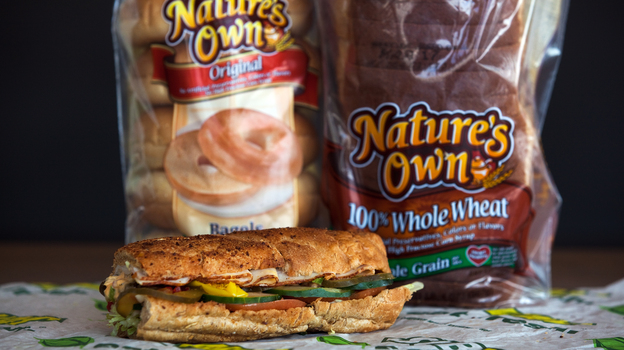
"caption": "Subway was quick to say it would phase out azodicarbonamide from its bread after a popular food blogger raised health concerns. Nature's Own soon noted that it had already removed the compound with the funny name from its bread products. But what's the evidence behind the claims? Photo: Meg Vogel/NPR",
"description": null,
"title": "img_8514",
"credit": null,
"status": "inherit",
"isLoading": false,
"fetchFailed": false
},
"bayareabites_78929": {
"type": "attachments",
"id": "bayareabites_78929",
"meta": {
"index": "attachments_1716263798",
"site": "bayareabites",
"id": "78929",
"found": true
},
"parent": 78926,
"imgSizes": {
"kqedFullSize": {
"file": "https://ww2.kqed.org/app/uploads/sites/24/2014/03/cagefree_01_wide-8596ea43f086c063b0ab9dbc51c7511f26c9378b-s4.jpg",
"width": 624,
"height": 350
}
},
"publishDate": 1394201698,
"modified": 1394201698,
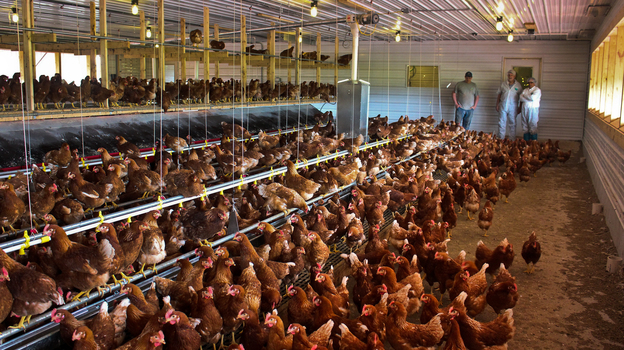
"caption": "Free-range chickens lay eggs for Sauder's Quality Eggs in Pennsylvania. Photo: Dan Charles/NPR",
"description": null,
"title": "cagefree_01",
"credit": null,
"status": "inherit",
"isLoading": false,
"fetchFailed": false
},
"bayareabites_78907": {
"type": "attachments",
"id": "bayareabites_78907",
"meta": {
"index": "attachments_1716263798",
"site": "bayareabites",
"id": "78907",
"found": true
},
"parent": 78902,
"imgSizes": {
"kqedFullSize": {
"file": "https://ww2.kqed.org/app/uploads/sites/24/2014/03/tmbear_wide-b714a8184addcd24debce68a62d6ad5907181935-s4.jpg",
"width": 624,
"height": 350
}
},
"publishDate": 1394162585,
"modified": 1394162585,
"caption": "Not as cute as Yogi's pic-a-nic thievery: Food left out at a campsite in Yosemite National Park is likely to attract bears like this one, seen scavenging at Tuolumne Meadows Campground in 2008. Photo: Courtesy of Erica Crawford",
"description": null,
"title": "tmbear",
"credit": null,
"status": "inherit",
"isLoading": false,
"fetchFailed": false
},
"bayareabites_78897": {
"type": "attachments",
"id": "bayareabites_78897",
"meta": {
"index": "attachments_1716263798",
"site": "bayareabites",
"id": "78897",
"found": true
},
"parent": 78887,
"imgSizes": {
"kqedFullSize": {
"file": "https://ww2.kqed.org/app/uploads/sites/24/2014/03/saltcodmain_custom-30c6a2f2842b0a7f6a6c3074a2090e9a540b029c-s4.jpg",
"width": 624,
"height": 423
}
},
"publishDate": 1394085105,
"modified": 1394085105,
"caption": "The best quality salt cod typically is sold as nearly white whole fillets, 2 or more inches thick in the thickest parts, often packed in coarse salt in wooden boxes. Photo: Tom Gilbert/NPR",
"description": null,
"title": "saltcodmain",
"credit": null,
"status": "inherit",
"isLoading": false,
"fetchFailed": false
},
"bayareabites_78860": {
"type": "attachments",
"id": "bayareabites_78860",
"meta": {
"index": "attachments_1716263798",
"site": "bayareabites",
"id": "78860",
"found": true
},
"parent": 78854,
"imgSizes": {
"kqedFullSize": {
"file": "https://ww2.kqed.org/app/uploads/sites/24/2014/03/istock_000019323306medium_wide-0bc35330b93199e52a00758bef5bc24eabd47499-s4.jpg",
"width": 624,
"height": 350
}
},
"publishDate": 1394052612,
"modified": 1394052612,
"caption": "A new study linking animal protein-rich diets to increased mortality in middle age adds fuel to the controversy over how much protein — and from what sources — is ideal for health. One thing that seems pretty clear: It doesn't hurt to go heavy on the greens. Photo: iStockphoto",
"description": null,
"title": "istock_000019323306medium",
"credit": null,
"status": "inherit",
"isLoading": false,
"fetchFailed": false
},
"bayareabites_78867": {
"type": "attachments",
"id": "bayareabites_78867",
"meta": {
"index": "attachments_1716263798",
"site": "bayareabites",
"id": "78867",
"found": true
},
"parent": 78863,
"imgSizes": {
"kqedFullSize": {
"file": "https://ww2.kqed.org/app/uploads/sites/24/2014/03/tennis-lemon-_wide-209783aea0502ea4749afe14e0de2e545eb20fe2-s4.jpg",
"width": 624,
"height": 350
}
},
"publishDate": 1394056216,
"modified": 1394056216,
"caption": "An ad for Vampt's Lean Machine \"recovery ale,\" which will be marketed as a sports drink later this year, if funding allows. Researchers say drinking beer after working out has some advantages, but there are big caveats. Photo: Courtesy of VAMPT",
"description": null,
"title": "tennis-lemon-",
"credit": null,
"status": "inherit",
"isLoading": false,
"fetchFailed": false
},
"bayareabites_78852": {
"type": "attachments",
"id": "bayareabites_78852",
"meta": {
"index": "attachments_1716263798",
"site": "bayareabites",
"id": "78852",
"found": true
},
"parent": 78848,
"imgSizes": {
"kqedFullSize": {
"file": "https://ww2.kqed.org/app/uploads/sites/24/2014/03/173671193_wide-d237d80aa83703158d2834ffd91821da2877a257-s4.jpg",
"width": 624,
"height": 350
}
},
"publishDate": 1394051598,
"modified": 1394051598,
"caption": "An employee prepares to make fresh guacamole at a Chipotle restaurant in Hollywood, Calif. Photo: Patrick T. Fallon/Bloomberg",
"description": null,
"title": "173671193_wide-d237d80aa83703158d2834ffd91821da2877a257-s4",
"credit": null,
"status": "inherit",
"isLoading": false,
"fetchFailed": false
},
"bayareabites_78829": {
"type": "attachments",
"id": "bayareabites_78829",
"meta": {
"index": "attachments_1716263798",
"site": "bayareabites",
"id": "78829",
"found": true
},
"parent": 78823,
"imgSizes": {
"kqedFullSize": {
"file": "https://ww2.kqed.org/app/uploads/sites/24/2014/03/ap0806120725141_wide-4bf9af956ce041cada1f7fc6471c1483dd5ca67a-s4.jpg",
"width": 624,
"height": 350
}
},
"publishDate": 1393973575,
"modified": 1393973575,
"caption": "The world is increasingly relying on a few dozen mega-crops, like wheat and potatoes, for survival. Above, a wheat field in Arkansas. Photo: Danny Johnston/AP",
"description": "The world is increasingly relying on a few dozen mega-crops, like wheat and potatoes, for survival. Above, a wheat field in Arkansas.",
"title": "ap0806120725141",
"credit": null,
"status": "inherit",
"isLoading": false,
"fetchFailed": false
},
"bayareabites_78801": {
"type": "attachments",
"id": "bayareabites_78801",
"meta": {
"index": "attachments_1716263798",
"site": "bayareabites",
"id": "78801",
"found": true
},
"parent": 78795,
"imgSizes": {
"kqedFullSize": {
"file": "https://ww2.kqed.org/app/uploads/sites/24/2014/03/12775373765_6f21a8ca0c_b_wide-f268886ddc92e3aa82bd81ee037930ca418af7b9-s4.jpg",
"width": 624,
"height": 350
}
},
"publishDate": 1393952056,
"modified": 1393952056,
"caption": "Watson's culinary concoctions were served up from an IBM food truck at a tech conference in Las Vegas last week. Next stop: Austin. Photo: IBM Research/Flickr",
"description": null,
"title": "12775373765_6f21a8ca0c_b",
"credit": null,
"status": "inherit",
"isLoading": false,
"fetchFailed": false
},
"bayareabites_78781": {
"type": "attachments",
"id": "bayareabites_78781",
"meta": {
"index": "attachments_1716263798",
"site": "bayareabites",
"id": "78781",
"found": true
},
"parent": 78776,
"imgSizes": {
"kqedFullSize": {
"file": "https://ww2.kqed.org/app/uploads/sites/24/2014/03/cheese_wide-0f8b7622a4b61704b822ba8209f696575f0cb50c-s4.jpg",
"width": 624,
"height": 350
}
},
"publishDate": 1393949634,
"modified": 1393949634,
"caption": "Cheese, glorious cheese! The European Union wants U.S. food makers to stop using names with historical ties to Europe. But what else would you call, say, Parmesan and Brie? Photo: Dinner Series/Flickr",
"description": null,
"title": "cheese",
"credit": null,
"status": "inherit",
"isLoading": false,
"fetchFailed": false
},
"bayareabites_78765": {
"type": "attachments",
"id": "bayareabites_78765",
"meta": {
"index": "attachments_1716263798",
"site": "bayareabites",
"id": "78765",
"found": true
},
"parent": 78759,
"imgSizes": {
"kqedFullSize": {
"file": "https://ww2.kqed.org/app/uploads/sites/24/2014/03/111652924_wide-c65706b106c916cbb0203d185a1614402a0f00fd-s4.jpg",
"width": 624,
"height": 350
}
},
"publishDate": 1393893320,
"modified": 1393893320,
"caption": "Not quite jumping over the moon but ... : An animal named Luna (get it?) jumps over an obstacle with rider Regina Mayer on her back in the Bavarian town of Traunstein, in southern Germany. Photo: Michael Hudelist/AFP/Getty Images",
"description": "\u003cstrong>Not quite jumping over the moon but ... :\u003c/strong> An animal\u003ca href=\"http://www.telegraph.co.uk/news/newsvideo/weirdnewsvideo/8429563/Luna-the-showjumping-cow.html\"> named Luna\u003c/a> (get it?) jumps over an obstacle with rider\u003cstrong> \u003c/strong>Regina Mayer on her back in the Bavarian town of Traunstein, in southern German",
"title": "111652924_wide-c65706b106c916cbb0203d185a1614402a0f00fd-s4",
"credit": null,
"status": "inherit",
"isLoading": false,
"fetchFailed": false
},
"bayareabites_78743": {
"type": "attachments",
"id": "bayareabites_78743",
"meta": {
"index": "attachments_1716263798",
"site": "bayareabites",
"id": "78743",
"found": true
},
"parent": 78738,
"imgSizes": {
"kqedFullSize": {
"file": "https://ww2.kqed.org/app/uploads/sites/24/2014/03/img_8680_wide-26399ed0c14ab410e07513be0b0d520c1ee54e04-s4.jpg",
"width": 624,
"height": 351
}
},
"publishDate": 1393737472,
"modified": 1393737472,
"caption": "Empty shelves where eggs should be at a Whole Foods Market in Washington, D.C. The store blames increased demand for organic eggs. Photo: Dan Charles/NPR",
"description": null,
"title": "img_8680",
"credit": null,
"status": "inherit",
"isLoading": false,
"fetchFailed": false
}
},
"audioPlayerReducer": {
"postId": "stream_live",
"isPaused": true,
"isPlaying": false,
"pfsActive": false,
"pledgeModalIsOpen": true,
"playerDrawerIsOpen": false,
"liveAudioPlayStartedAt": 0,
"liveAudioPlayContext": ""
},
"authorsReducer": {
"byline_bayareabites_78908": {
"type": "authors",
"id": "byline_bayareabites_78908",
"meta": {
"override": true
},
"slug": "byline_bayareabites_78908",
"name": "Allison Aubrey",
"isLoading": false
},
"byline_bayareabites_78926": {
"type": "authors",
"id": "byline_bayareabites_78926",
"meta": {
"override": true
},
"slug": "byline_bayareabites_78926",
"name": "Frank Morris",
"isLoading": false
},
"byline_bayareabites_78902": {
"type": "authors",
"id": "byline_bayareabites_78902",
"meta": {
"override": true
},
"slug": "byline_bayareabites_78902",
"name": "Eliza Barclay",
"isLoading": false
},
"byline_bayareabites_78887": {
"type": "authors",
"id": "byline_bayareabites_78887",
"meta": {
"override": true
},
"slug": "byline_bayareabites_78887",
"name": "Tom Gilbert",
"isLoading": false
},
"byline_bayareabites_78854": {
"type": "authors",
"id": "byline_bayareabites_78854",
"meta": {
"override": true
},
"slug": "byline_bayareabites_78854",
"name": "Allison Aubrey",
"isLoading": false
},
"byline_bayareabites_78863": {
"type": "authors",
"id": "byline_bayareabites_78863",
"meta": {
"override": true
},
"slug": "byline_bayareabites_78863",
"name": "Linda Poon",
"isLoading": false
},
"byline_bayareabites_78848": {
"type": "authors",
"id": "byline_bayareabites_78848",
"meta": {
"override": true
},
"slug": "byline_bayareabites_78848",
"name": "Maria Godoy",
"isLoading": false
},
"byline_bayareabites_78823": {
"type": "authors",
"id": "byline_bayareabites_78823",
"meta": {
"override": true
},
"slug": "byline_bayareabites_78823",
"name": "Dan Charles",
"isLoading": false
},
"byline_bayareabites_78795": {
"type": "authors",
"id": "byline_bayareabites_78795",
"meta": {
"override": true
},
"slug": "byline_bayareabites_78795",
"name": "Maanvi Singh",
"isLoading": false
},
"byline_bayareabites_78776": {
"type": "authors",
"id": "byline_bayareabites_78776",
"meta": {
"override": true
},
"slug": "byline_bayareabites_78776",
"name": "LaToya Dennis",
"isLoading": false
},
"byline_bayareabites_78759": {
"type": "authors",
"id": "byline_bayareabites_78759",
"meta": {
"override": true
},
"slug": "byline_bayareabites_78759",
"name": "Maria Godoy",
"isLoading": false
},
"byline_bayareabites_78738": {
"type": "authors",
"id": "byline_bayareabites_78738",
"meta": {
"override": true
},
"slug": "byline_bayareabites_78738",
"name": "Dan Charles",
"isLoading": false
}
},
"pagesReducer": {
"bayareabites_category_npr-food": {
"type": "terms",
"id": "bayareabites_10916",
"meta": {
"index": "terms_1716263798",
"site": "bayareabites",
"id": "10916",
"score": 13.894751
},
"featImg": null,
"name": "NPR food",
"description": null,
"taxonomy": "category",
"headData": {
"twImgId": null,
"twTitle": null,
"ogTitle": null,
"ogImgId": null,
"twDescription": null,
"description": null,
"title": "NPR food Archives | KQED Bay Area Bites",
"ogDescription": null
},
"ttid": 5375,
"slug": "npr-food",
"isLoading": false,
"title": "NPR food",
"pageMeta": {
"site": "bayareabites",
"WpPageTemplate": "page-topic-editorial",
"currentPage": 50
},
"blocks": [
{
"blockName": "kqed/post-list",
"attrs": {
"layout": "cardArticle2",
"query": "posts/bayareabites?category=npr-food",
"seeMore": false,
"paginated": true,
"page": 50
}
},
{
"blockName": "kqed/ad"
}
]
}
},
"pfsSessionReducer": {},
"postsReducer": {
"stream_live": {
"type": "live",
"id": "stream_live",
"audioUrl": "https://hls.kqed.org/hls/kqed_app/playlist.m3u8",
"title": "Live Stream",
"excerpt": "Live Stream information currently unavailable.",
"link": "/radio",
"featImg": "",
"label": {
"name": "KQED Live",
"link": "/"
}
},
"stream_kqedNewscast": {
"type": "posts",
"id": "stream_kqedNewscast",
"audioUrl": "https://www.kqed.org/.stream/anon/radio/RDnews/newscast.mp3?_=1",
"title": "KQED Newscast",
"featImg": "",
"label": {
"name": "88.5 FM",
"link": "/"
}
},
"bayareabites_78908": {
"type": "posts",
"id": "bayareabites_78908",
"meta": {
"index": "posts_1716263798",
"site": "bayareabites",
"id": "78908",
"score": null,
"sort": [
1394222745000
]
},
"parent": 0,
"labelTerm": {
"site": "bayareabites"
},
"blocks": [],
"publishDate": 1394222745,
"format": "aside",
"disqusTitle": "Almost 500 Foods Contain the 'Yoga Mat' Compound. Should We Care? ",
"title": "Almost 500 Foods Contain the 'Yoga Mat' Compound. Should We Care? ",
"headTitle": "Bay Area Bites | KQED Food",
"content": "\u003cfigure id=\"attachment_78909\" class=\"wp-caption aligncenter\" style=\"max-width: 1674px\">\u003ca href=\"http://ww2.kqed.org/bayareabites/wp-content/uploads/sites/24/2014/03/img_8514_wide-b141c860b6fe2429874e7df215cb295ff9a617e8.jpg\">\u003cimg src=\"http://ww2.kqed.org/bayareabites/wp-content/uploads/sites/24/2014/03/img_8514_wide-b141c860b6fe2429874e7df215cb295ff9a617e8.jpg\" alt=\"Subway was quick to say it would phase out azodicarbonamide from its bread after a popular food blogger raised health concerns. Nature's Own soon noted that it had already removed the compound with the funny name from its bread products. But what's the evidence behind the claims? Photo: Meg Vogel/NPR\" width=\"1674\" height=\"940\" class=\"size-full wp-image-78909\">\u003c/a>\u003cfigcaption class=\"wp-caption-text\">Subway was quick to say it would phase out azodicarbonamide from its bread after a popular food blogger raised health concerns. Nature's Own soon noted that it had already removed the compound with the funny name from its bread products. But what's the evidence behind the claims? Photo: Meg Vogel/NPR\u003c/figcaption>\u003c/figure>\n\u003cp>Post by \u003ca href=\"http://www.npr.org/people/2100208/allison-aubrey\" target=\"_blank\">Allison Aubrey\u003c/a>, \u003ca href=\"http://www.npr.org/blogs/thesalt/2014/03/06/286886095/almost-500-foods-contain-the-yoga-mat-compound-should-we-care-keep\" target=\"_blank\">The Salt at NPR Food\u003c/a> (3/6/2014)\u003c/p>\n\u003cp>\u003cstrong>Listen to the Story\u003c/strong> on \u003ca href=\"http://www.npr.org/blogs/thesalt/2014/03/06/286886095/almost-500-foods-contain-the-yoga-mat-compound-should-we-care-keep\">All Things Considered\u003c/a> [audio src=\"http://pd.npr.org/anon.npr-mp3/npr/atc/2014/03/20140306_atc_whos_afraid_of_azodicarbonamide.mp3\"] \u003c/p>\n\u003cp>That compound found in commercially baked bread — yep, the one that's in yoga mats, too — is in the news again.\u003c/p>\n\u003cp>A \u003ca href=\"http://www.ewg.org/release/yoga-mat-chemical-found-nearly-500-foods\">report\u003c/a> from the Environmental Working Group finds that the compound, azodicarbonamide, is found in close to 500 food products, from Pillsbury Dinner Rolls to Little Debbie products to Wonder Bread.\u003c/p>\n\u003cp>As you may recall, the sandwich chain Subway got a lot of attention a few weeks back when announced its plans to remove this compound — which is used to improve dough and maintain bread texture — from its bread.\u003c/p>\n\u003cp>[ad fullwidth]\u003c/p>\n\u003cp>And as we reported, the \u003ca href=\"http://www.npr.org/blogs/thesalt/2014/02/06/272455631/subway-phasing-out-bread-additive-after-blogger-flags-health-concerns\">kerfuffle\u003c/a> came in response to an online petition posted posted by the creator of the Food Babe blog. The \u003ca href=\"http://foodbabe.com/subway/\">online petition\u003c/a> pointed to a range of possible health concerns linked to the compound, everything from asthma to cancer.\u003c/p>\n\u003cp>But what is the evidence behind these claims?\u003c/p>\n\u003cp>Let's start with asthma and other respiratory issues. The concerns about breathing problems stem from factory workers who have been exposed to high levels of azodicarbonamide. But it turns out, outside of this occupational exposure, there's no evidence that there's any risk at all to consumers.\u003c/p>\n\u003cp>It's good to \"remind yourself to be more skeptical,\" says Justin Pagano, who has \u003ca href=\"http://www.reddit.com/r/skeptic/comments/1xafd5/food_babe_stop_using_logical_fallacies_in_your/\" target=\"_blank\">written\u003c/a> that he'd like to see more scientific inquiry and reasoning used in these \u003cem>what's-really-in-your-food\u003c/em>\u003cem> \u003c/em>campaigns.\u003c/p>\n\u003cp>He says there's a \"generational zeitgeist\" among his fellow millennials to \"take back food\" from the control of large companies and demand transparency.\u003c/p>\n\u003cp>And he agrees that it is important to be asking questions about how the food we eat may influence our health. Even if the questions are tough to answer.\u003c/p>\n\u003cp>Take, for instance, the tricky business of interpreting toxicity. John Coupland, a food science professor at Penn State, has \u003ca href=\"http://johncoupland.tumblr.com/\">blogged\u003c/a> about the complexities involved.\u003c/p>\n\u003cp>He explains that small amounts of two compounds, semicarbazide and urethane, are formed as azodicarbonamide breaks down during the baking process. And it's possible that these compounds may pose a risk.\u003c/p>\n\u003cp>\"The real question is whether these tiny concentrations in bread are toxicologically significant,\" Coupland writes.\u003c/p>\n\u003cp>Groups such as the Environmental Working group argue that since it's not essential and it could pose health risks, azodicarbonamide should be removed from the food supply.\u003c/p>\n\u003cp>\"This is an unnecessary chemical that's added to bread,\" says EWG scientist David Andrews. And there are viable alternatives, such as ascorbic acid, which is a form of vitamin C.\u003c/p>\n\u003cp>But the FDA considers small amounts of azodicarbonamide to be safe. The agency long ago set an allowable level of 45 parts per million in dough.\u003c/p>\n\u003cp>And food scientist Kantha Shelke of Corvus Blue, who works as an independent consultant to the food industry, says this is reasonable. After all, it's the dose that makes the poison. And \"45 parts per million is very, very, very small,\" she says.\u003c/p>\n\u003cp>But in an era when social media can whip up a frenzy of concern, food companies are becoming quick to respond to get ahead of bad publicity — regardless of the science.\u003c/p>\n\u003cp>\"No [food company or chain] wants to be associated with anything that can be remotely considered harmful,\" Shelke says.\u003c/p>\n\u003cp>Which may explain why, in the wake of Subway's announcement, several more manufacturers have also decided to drop azodicarbonamide from their products.\u003c/p>\n\u003cp>For instance, bread maker \u003ca href=\"http://www.naturesownbread.com/assets/uploads/Natures_Own_Bakery_Foods_Do_Not_Contain_Azodicarbonamide_2-14.pdf\">Nature's Own\u003c/a> noted that it has already phased out the compound from its bread products.\u003c/p>\n\u003cp>And intuitively, it just feels \u003cem>better\u003c/em>\u003cem> \u003c/em>to know that a compound used to make yoga mats is being removed from breads.\u003c/p>\n\u003cp>But maybe I'm just being closed-minded here.\u003c/p>\n\u003cp>For a different perspective, I reached out to bakery industry consultant \u003ca href=\"http://bakercogs.com/services/theresa-cogswell/\">Theresa Cogswell\u003c/a>. She pointed out that \"there are many things used in industrial uses\" that cross over into food use as well.\u003c/p>\n\u003cp>\"And the assumption that it's bad for you,\" she says, is just not accurate.\u003c/p>\n\u003cp>Take, for instance, sheet rock, or gypsum. It contains calcium sulfate, which is also used as a food additive. In fact, it's used to make tofu.\u003c/p>\n\u003cp>Hmmm. A vegan favorite contains the same compound that's used to make drywall. Who knew? \u003c/p>\n\u003cp>\u003c/p>\n\u003cp>\u003cem>Copyright 2014 \u003ca href=\"http://www.npr.org/\" target=\"_blank\">NPR\u003c/a>. \u003c/em>\u003c/p>\n\n",
"disqusIdentifier": "78908 http://blogs.kqed.org/bayareabites/?p=78908",
"disqusUrl": "https://ww2.kqed.org/bayareabites/2014/03/07/almost-500-foods-contain-the-yoga-mat-compound-should-we-care/",
"stats": {
"hasVideo": false,
"hasChartOrMap": false,
"hasAudio": true,
"hasPolis": false,
"wordCount": 792,
"hasGoogleForm": false,
"hasGallery": false,
"hasHearkenModule": false,
"iframeSrcs": [],
"paragraphCount": 31
},
"modified": 1394163905,
"excerpt": "A report finds that azodicarbonamide wasn't just in Subway's bread: It's in hundreds of foods. While it has been linked to asthma in factory workers, the additive poses no known risk to consumers.",
"headData": {
"twImgId": "",
"twTitle": "",
"ogTitle": "",
"ogImgId": "",
"twDescription": "",
"description": "A report finds that azodicarbonamide wasn't just in Subway's bread: It's in hundreds of foods. While it has been linked to asthma in factory workers, the additive poses no known risk to consumers.",
"title": "Almost 500 Foods Contain the 'Yoga Mat' Compound. Should We Care? | KQED",
"ogDescription": "",
"schema": {
"@context": "https://schema.org",
"@type": "Article",
"headline": "Almost 500 Foods Contain the 'Yoga Mat' Compound. Should We Care? ",
"datePublished": "2014-03-07T12:05:45-08:00",
"dateModified": "2014-03-06T19:45:05-08:00",
"image": "https://cdn.kqed.org/wp-content/uploads/2020/02/KQED-OG-Image@1x.png"
}
},
"guestAuthors": [],
"slug": "almost-500-foods-contain-the-yoga-mat-compound-should-we-care",
"status": "publish",
"nprApiLink": "http://api.npr.org/query?id=286886095&apiKey=MDAxOTAwOTE4MDEyMTkxMDAzNjczZDljZA004",
"nprByline": "Allison Aubrey",
"nprStoryDate": "Thu, 06 Mar 2014 16:00:00 -0500",
"nprLastModifiedDate": "Thu, 06 Mar 2014 18:45:26 -0500",
"nprHtmlLink": "http://www.npr.org/blogs/thesalt/2014/03/06/286886095/almost-500-foods-contain-the-yoga-mat-compound-should-we-care-keep?ft=3&f=286886095",
"nprAudio": "http://pd.npr.org/anon.npr-mp3/npr/atc/2014/03/20140306_atc_whos_afraid_of_azodicarbonamide.mp3?orgId=1&topicId=1134&ft=3&f=286886095",
"nprAudioM3u": "http://api.npr.org/m3u/1286886096-879201.m3u?orgId=1&topicId=1134&ft=3&f=286886095",
"nprStoryId": "286886095",
"nprRetrievedStory": "1",
"nprPubDate": "Thu, 06 Mar 2014 19:50:00 -0500",
"path": "/bayareabites/78908/almost-500-foods-contain-the-yoga-mat-compound-should-we-care",
"audioUrl": "http://pd.npr.org/anon.npr-mp3/npr/atc/2014/03/20140306_atc_whos_afraid_of_azodicarbonamide.mp3?orgId=1&topicId=1134&ft=3&f=286886095",
"audioDuration": null,
"audioTrackLength": null,
"parsedContent": [
{
"type": "contentString",
"content": "\u003cdiv class=\"post-body\">\u003cp>\u003cfigure id=\"attachment_78909\" class=\"wp-caption aligncenter\" style=\"max-width: 1674px\">\u003ca href=\"http://ww2.kqed.org/bayareabites/wp-content/uploads/sites/24/2014/03/img_8514_wide-b141c860b6fe2429874e7df215cb295ff9a617e8.jpg\">\u003cimg src=\"http://ww2.kqed.org/bayareabites/wp-content/uploads/sites/24/2014/03/img_8514_wide-b141c860b6fe2429874e7df215cb295ff9a617e8.jpg\" alt=\"Subway was quick to say it would phase out azodicarbonamide from its bread after a popular food blogger raised health concerns. Nature's Own soon noted that it had already removed the compound with the funny name from its bread products. But what's the evidence behind the claims? Photo: Meg Vogel/NPR\" width=\"1674\" height=\"940\" class=\"size-full wp-image-78909\">\u003c/a>\u003cfigcaption class=\"wp-caption-text\">Subway was quick to say it would phase out azodicarbonamide from its bread after a popular food blogger raised health concerns. Nature's Own soon noted that it had already removed the compound with the funny name from its bread products. But what's the evidence behind the claims? Photo: Meg Vogel/NPR\u003c/figcaption>\u003c/figure>\n\u003cp>Post by \u003ca href=\"http://www.npr.org/people/2100208/allison-aubrey\" target=\"_blank\">Allison Aubrey\u003c/a>, \u003ca href=\"http://www.npr.org/blogs/thesalt/2014/03/06/286886095/almost-500-foods-contain-the-yoga-mat-compound-should-we-care-keep\" target=\"_blank\">The Salt at NPR Food\u003c/a> (3/6/2014)\u003c/p>\n\u003cp>\u003cstrong>Listen to the Story\u003c/strong> on \u003ca href=\"http://www.npr.org/blogs/thesalt/2014/03/06/286886095/almost-500-foods-contain-the-yoga-mat-compound-should-we-care-keep\">All Things Considered\u003c/a> \u003c/p>\u003c/div>",
"attributes": {
"named": {},
"numeric": []
}
},
{
"type": "component",
"content": "",
"name": "audio",
"attributes": {
"named": {
"src": "http://pd.npr.org/anon.npr-mp3/npr/atc/2014/03/20140306_atc_whos_afraid_of_azodicarbonamide.mp3",
"label": ""
},
"numeric": []
}
},
{
"type": "contentString",
"content": "\u003cdiv class=\"post-body\">\u003cp> \u003c/p>\n\u003cp>That compound found in commercially baked bread — yep, the one that's in yoga mats, too — is in the news again.\u003c/p>\n\u003cp>A \u003ca href=\"http://www.ewg.org/release/yoga-mat-chemical-found-nearly-500-foods\">report\u003c/a> from the Environmental Working Group finds that the compound, azodicarbonamide, is found in close to 500 food products, from Pillsbury Dinner Rolls to Little Debbie products to Wonder Bread.\u003c/p>\n\u003cp>As you may recall, the sandwich chain Subway got a lot of attention a few weeks back when announced its plans to remove this compound — which is used to improve dough and maintain bread texture — from its bread.\u003c/p>\n\u003cp>\u003c/p>\u003c/div>",
"attributes": {
"named": {},
"numeric": []
}
},
{
"type": "component",
"content": "",
"name": "ad",
"attributes": {
"named": {
"label": "fullwidth"
},
"numeric": [
"fullwidth"
]
}
},
{
"type": "contentString",
"content": "\u003cdiv class=\"post-body\">\u003cp>\u003c/p>\n\u003cp>And as we reported, the \u003ca href=\"http://www.npr.org/blogs/thesalt/2014/02/06/272455631/subway-phasing-out-bread-additive-after-blogger-flags-health-concerns\">kerfuffle\u003c/a> came in response to an online petition posted posted by the creator of the Food Babe blog. The \u003ca href=\"http://foodbabe.com/subway/\">online petition\u003c/a> pointed to a range of possible health concerns linked to the compound, everything from asthma to cancer.\u003c/p>\n\u003cp>But what is the evidence behind these claims?\u003c/p>\n\u003cp>Let's start with asthma and other respiratory issues. The concerns about breathing problems stem from factory workers who have been exposed to high levels of azodicarbonamide. But it turns out, outside of this occupational exposure, there's no evidence that there's any risk at all to consumers.\u003c/p>\n\u003cp>It's good to \"remind yourself to be more skeptical,\" says Justin Pagano, who has \u003ca href=\"http://www.reddit.com/r/skeptic/comments/1xafd5/food_babe_stop_using_logical_fallacies_in_your/\" target=\"_blank\">written\u003c/a> that he'd like to see more scientific inquiry and reasoning used in these \u003cem>what's-really-in-your-food\u003c/em>\u003cem> \u003c/em>campaigns.\u003c/p>\n\u003cp>He says there's a \"generational zeitgeist\" among his fellow millennials to \"take back food\" from the control of large companies and demand transparency.\u003c/p>\n\u003cp>And he agrees that it is important to be asking questions about how the food we eat may influence our health. Even if the questions are tough to answer.\u003c/p>\n\u003cp>Take, for instance, the tricky business of interpreting toxicity. John Coupland, a food science professor at Penn State, has \u003ca href=\"http://johncoupland.tumblr.com/\">blogged\u003c/a> about the complexities involved.\u003c/p>\n\u003cp>He explains that small amounts of two compounds, semicarbazide and urethane, are formed as azodicarbonamide breaks down during the baking process. And it's possible that these compounds may pose a risk.\u003c/p>\n\u003cp>\"The real question is whether these tiny concentrations in bread are toxicologically significant,\" Coupland writes.\u003c/p>\n\u003cp>Groups such as the Environmental Working group argue that since it's not essential and it could pose health risks, azodicarbonamide should be removed from the food supply.\u003c/p>\n\u003cp>\"This is an unnecessary chemical that's added to bread,\" says EWG scientist David Andrews. And there are viable alternatives, such as ascorbic acid, which is a form of vitamin C.\u003c/p>\n\u003cp>But the FDA considers small amounts of azodicarbonamide to be safe. The agency long ago set an allowable level of 45 parts per million in dough.\u003c/p>\n\u003cp>And food scientist Kantha Shelke of Corvus Blue, who works as an independent consultant to the food industry, says this is reasonable. After all, it's the dose that makes the poison. And \"45 parts per million is very, very, very small,\" she says.\u003c/p>\n\u003cp>But in an era when social media can whip up a frenzy of concern, food companies are becoming quick to respond to get ahead of bad publicity — regardless of the science.\u003c/p>\n\u003cp>\"No [food company or chain] wants to be associated with anything that can be remotely considered harmful,\" Shelke says.\u003c/p>\n\u003cp>Which may explain why, in the wake of Subway's announcement, several more manufacturers have also decided to drop azodicarbonamide from their products.\u003c/p>\n\u003cp>For instance, bread maker \u003ca href=\"http://www.naturesownbread.com/assets/uploads/Natures_Own_Bakery_Foods_Do_Not_Contain_Azodicarbonamide_2-14.pdf\">Nature's Own\u003c/a> noted that it has already phased out the compound from its bread products.\u003c/p>\n\u003cp>And intuitively, it just feels \u003cem>better\u003c/em>\u003cem> \u003c/em>to know that a compound used to make yoga mats is being removed from breads.\u003c/p>\n\u003cp>But maybe I'm just being closed-minded here.\u003c/p>\n\u003cp>For a different perspective, I reached out to bakery industry consultant \u003ca href=\"http://bakercogs.com/services/theresa-cogswell/\">Theresa Cogswell\u003c/a>. She pointed out that \"there are many things used in industrial uses\" that cross over into food use as well.\u003c/p>\n\u003cp>\"And the assumption that it's bad for you,\" she says, is just not accurate.\u003c/p>\n\u003cp>Take, for instance, sheet rock, or gypsum. It contains calcium sulfate, which is also used as a food additive. In fact, it's used to make tofu.\u003c/p>\n\u003cp>Hmmm. A vegan favorite contains the same compound that's used to make drywall. Who knew? \u003c/p>\n\u003cp>\u003c/p>\n\u003cp>\u003cem>Copyright 2014 \u003ca href=\"http://www.npr.org/\" target=\"_blank\">NPR\u003c/a>. \u003c/em>\u003c/p>\n\n\u003c/div>\u003c/p>",
"attributes": {
"named": {},
"numeric": []
}
}
],
"link": "/bayareabites/78908/almost-500-foods-contain-the-yoga-mat-compound-should-we-care",
"authors": [
"byline_bayareabites_78908"
],
"categories": [
"bayareabites_1516",
"bayareabites_1865",
"bayareabites_4084",
"bayareabites_12555",
"bayareabites_10916",
"bayareabites_2035",
"bayareabites_34",
"bayareabites_1873"
],
"tags": [
"bayareabites_13135",
"bayareabites_13137",
"bayareabites_13136",
"bayareabites_13089",
"bayareabites_10921",
"bayareabites_13075"
],
"featImg": "bayareabites_78914",
"label": "bayareabites"
},
"bayareabites_78926": {
"type": "posts",
"id": "bayareabites_78926",
"meta": {
"index": "posts_1716263798",
"site": "bayareabites",
"id": "78926",
"score": null,
"sort": [
1394202313000
]
},
"parent": 0,
"labelTerm": {
"site": "bayareabites"
},
"blocks": [],
"publishDate": 1394202313,
"format": "aside",
"disqusTitle": "Poultry Farmers to Fight Back on California Cage-Free Egg Law",
"title": "Poultry Farmers to Fight Back on California Cage-Free Egg Law",
"headTitle": "Bay Area Bites | KQED Food",
"content": "\u003cfigure id=\"attachment_78927\" class=\"wp-caption aligncenter\" style=\"max-width: 1673px\">\u003ca href=\"http://ww2.kqed.org/bayareabites/wp-content/uploads/sites/24/2014/03/cagefree_01_wide-8596ea43f086c063b0ab9dbc51c7511f26c9378b.jpg\">\u003cimg src=\"http://ww2.kqed.org/bayareabites/wp-content/uploads/sites/24/2014/03/cagefree_01_wide-8596ea43f086c063b0ab9dbc51c7511f26c9378b.jpg\" alt=\"Free-range chickens lay eggs for Sauder's Quality Eggs in Pennsylvania. Photo: Dan Charles/NPR\" width=\"1673\" height=\"940\" class=\"size-full wp-image-78927\">\u003c/a>\u003cfigcaption class=\"wp-caption-text\">Free-range chickens lay eggs for Sauder's Quality Eggs in Pennsylvania. Photo: Dan Charles/NPR\u003c/figcaption>\u003c/figure>\n\u003cp>Post by Frank Morris, \u003ca href=\"http://www.npr.org/blogs/thesalt/2014/03/07/286811197/poultry-farmers-to-fight-back-on-california-cage-free-egg-law\" target=\"_blank\">KCUR for The Salt at NPR Food\u003c/a> (3/7/2014)\u003c/p>\n\u003cp>\u003cstrong>Listen to the Story\u003c/strong> on \u003ca href=\"http://www.npr.org/blogs/thesalt/2014/03/07/286811197/poultry-farmers-to-fight-back-on-california-cage-free-egg-law\">Morning Edition\u003c/a> [audio src=\"http://pd.npr.org/anon.npr-mp3/npr/me/2014/03/20140307_me_poultry_farmers_to_fight_back_on_california_cage-free_egg_law.mp3\"] \u003c/p>\n\u003cp>By most measures David Kesten's hens are living the good life.\u003c/p>\n\u003cp>\"They can act like chickens, they can run around,\" says Kesten, who's raising hens in an old wooden shed in the open countryside near Concordia, Mo. \"They can go out and catch bugs, they can dig in the ground.\"\u003c/p>\n\u003cp>But most U.S. hens live crammed into very close quarters, according to \u003ca href=\"http://www.humanesociety.org/about/leadership/executive_staff/joe_maxwell.html\">Joe Maxwell\u003c/a>, with the Humane Society of the U.S. And he says that's just wrong.\u003c/p>\n\u003cp>[ad fullwidth]\u003c/p>\n\u003cp>\"There are some things we should not do to animals,\" says Maxwell.\u003c/p>\n\u003cp>California voters felt the same way and six years ago they passed \u003ca href=\"http://www.smartvoter.org/2008/11/04/ca/state/prop/2/\">Proposition 2\u003c/a>, requiring California producers to provide cages that are almost twice as large as most chickens have now. The legislature followed that with a law requiring that all eggs sold in California be raised under those conditions.\u003c/p>\n\u003cp>\u003ca href=\"http://www.ago.ne.gov/about/jon_bruning\">Nebraska Attorney General Jon Bruning\u003c/a> and five other attorneys general have joined a lawsuit against California.\u003c/p>\n\u003cp>\"We can't have our farmers and ranchers at the whim of California's voters, and that's why we filed the lawsuit,\" says Bruning.\u003c/p>\n\u003cp>Their chief complaint is that their egg producers must either spend millions to comply with California restrictions, or face being shut out of that enormous market.\u003c/p>\n\u003cp>\u003ca href=\"http://www.mopork.com/MPA_BoardOfDirectors.asp\">Don Nikodim\u003c/a> with the Missouri Pork Association calls it \"a clear violation of the U.S. Commerce Clause.\"\u003c/p>\n\u003cp>Now, why would pig farmers care about henhouse restrictions?\u003c/p>\n\u003cp>Because when a huge state like California slaps restrictions on food it imports, farmers all over the country become alarmed. And Nikodim says, this won't likely stop with eggs.\u003c/p>\n\u003cp>\"Logically, the next step is, we should extend our authority on how you produce pork to other states, as well,\" he says. \"Then is it dairy, is it beef, is it corn — go down the list.\"\u003c/p>\n\u003cp>Nikodim is worried that restrictions on cramped pig stalls, called \u003ca href=\"http://ww2.kqed.org/bayareabites/2014/01/07/smithfield-prods-its-pork-suppliers-to-dump-pig-crates\">gestation crates\u003c/a>, may come next. \u003ca href=\"http://www.mofb.org/AboutUs/BoardofDirectors/BlakeHurst.aspx\">Blake Hurst\u003c/a>, with the Missouri Farm Bureau, says if this kind of thing goes unchecked, farmers could soon face a mishmash of state laws.\u003c/p>\n\u003cp>\"It's important because of the precedent set,\" says Hurst. \"It's not important because of how chickens are housed.\"\u003c/p>\n\u003cp>The egg lawsuit isn't the first effort to try and blunt state-specific livestock restrictions. Last year, Rep. Steve King, R-IA tried to amend the Farm Bill to nullify restrictions like California's Proposition 2.\u003c/p>\n\u003cp>\"We just simply cannot let California dictate to the rest of the country, how we house hens, or hogs, or cattle,\" says King.\u003c/p>\n\u003cp>But a coalition animal welfare organizations and environmentalists killed the King amendment, according to Maxwell.\u003c/p>\n\u003cp>\"They couldn't win legislatively, so they're going to try a judiciary track to preempt state's rights to regulate health and safety and animal welfare: King amendment round two,\" says Maxwell.\u003c/p>\n\u003cp>Meanwhile, in California, egg producers are gearing up to comply with the new law when it kicks in January 1. Jill Benson, whose great-grandfather started \u003ca href=\"http://www.jswest.com/index.php/component/content/article/62\">JS West\u003c/a>, an egg producer with hundreds of thousands of birds, says many of them now enjoy nearly double the space they had before.\u003c/p>\n\u003cp>\"And you see perches, nest boxes, scratch areas, emery boards, and a number of accoutrements where the bird is able to display more of her natural behaviors,\" says Benson.\u003c/p>\n\u003cp>As you'd expect, comparatively spacious chicken accommodations are more expensive to build, but over years the cost turns out to be about a penny an egg.\u003c/p>\n\u003cp>Well, that's what the egg industry was saying last year in \u003ca href=\"http://www.eggbill.com/videos.html\">a video\u003c/a> that was part of a campaign by the United Egg Producers to mandate cages compliant with California law nationwide.\u003c/p>\n\u003cp>Jo Manhart, with the Missouri Egg Council, says egg producers had agreed to uniform national standard with their old adversaries, the Humane Society. The resulting Egg Bill drew lots of support, but ran into a wall of opposition from the meat industry.\u003c/p>\n\u003cp>\"They did not want this deal to go through because they felt it would affect them later on, and I think it would,\" Manhart says. \"So, that's dead.\"\u003c/p>\n\u003cp>So, the death of Egg Bill, and the King amendment, set up the current lawsuit in a U.S. District Court. And the ruling will almost certainly be appealed.\u003c/p>\n\u003cp>After all, there's a lot at stake, in a battle pitting state against state, and big ag against powerful animal welfare groups. The money involved could be in the billions. And that ain't chicken feed. \u003c/p>\n\u003cp>\u003c/p>\n\u003cp>\u003cem>Copyright 2014 \u003ca href=\"http://www.kcur.org/\" target=\"_blank\">KCUR-FM\u003c/a>. \u003c/em>\u003c/p>\n\n",
"disqusIdentifier": "78926 http://blogs.kqed.org/bayareabites/?p=78926",
"disqusUrl": "https://ww2.kqed.org/bayareabites/2014/03/07/poultry-farmers-to-fight-back-on-california-cage-free-egg-law/",
"stats": {
"hasVideo": false,
"hasChartOrMap": false,
"hasAudio": true,
"hasPolis": false,
"wordCount": 807,
"hasGoogleForm": false,
"hasGallery": false,
"hasHearkenModule": false,
"iframeSrcs": [],
"paragraphCount": 31
},
"modified": 1394202313,
"excerpt": "Missouri farmers will file a lawsuit against California over its law barring the sale of eggs from producers whose chickens are raised in small cages. The plaintiffs say the law is unconstitutional.",
"headData": {
"twImgId": "",
"twTitle": "",
"ogTitle": "",
"ogImgId": "",
"twDescription": "",
"description": "Missouri farmers will file a lawsuit against California over its law barring the sale of eggs from producers whose chickens are raised in small cages. The plaintiffs say the law is unconstitutional.",
"title": "Poultry Farmers to Fight Back on California Cage-Free Egg Law | KQED",
"ogDescription": "",
"schema": {
"@context": "https://schema.org",
"@type": "Article",
"headline": "Poultry Farmers to Fight Back on California Cage-Free Egg Law",
"datePublished": "2014-03-07T06:25:13-08:00",
"dateModified": "2014-03-07T06:25:13-08:00",
"image": "https://cdn.kqed.org/wp-content/uploads/2020/02/KQED-OG-Image@1x.png"
}
},
"guestAuthors": [],
"slug": "poultry-farmers-to-fight-back-on-california-cage-free-egg-law",
"status": "publish",
"nprApiLink": "http://api.npr.org/query?id=286811197&apiKey=MDAxOTAwOTE4MDEyMTkxMDAzNjczZDljZA004",
"nprByline": "Frank Morris",
"nprStoryDate": "Fri, 07 Mar 2014 03:14:00 -0500",
"nprLastModifiedDate": "Fri, 07 Mar 2014 03:14:11 -0500",
"nprHtmlLink": "http://www.npr.org/blogs/thesalt/2014/03/07/286811197/poultry-farmers-to-fight-back-on-california-cage-free-egg-law?ft=3&f=286811197",
"nprAudio": "http://pd.npr.org/anon.npr-mp3/npr/me/2014/03/20140307_me_poultry_farmers_to_fight_back_on_california_cage-free_egg_law.mp3?orgId=60&topicId=1053&ft=3&f=286811197",
"nprAudioM3u": "http://api.npr.org/m3u/1287117401-993d36.m3u?orgId=60&topicId=1053&ft=3&f=286811197",
"nprStoryId": "286811197",
"nprRetrievedStory": "1",
"nprPubDate": "Fri, 07 Mar 2014 07:13:00 -0500",
"path": "/bayareabites/78926/poultry-farmers-to-fight-back-on-california-cage-free-egg-law",
"audioUrl": "http://pd.npr.org/anon.npr-mp3/npr/me/2014/03/20140307_me_poultry_farmers_to_fight_back_on_california_cage-free_egg_law.mp3?orgId=60&topicId=1053&ft=3&f=286811197",
"audioDuration": null,
"audioTrackLength": null,
"parsedContent": [
{
"type": "contentString",
"content": "\u003cdiv class=\"post-body\">\u003cp>\u003cfigure id=\"attachment_78927\" class=\"wp-caption aligncenter\" style=\"max-width: 1673px\">\u003ca href=\"http://ww2.kqed.org/bayareabites/wp-content/uploads/sites/24/2014/03/cagefree_01_wide-8596ea43f086c063b0ab9dbc51c7511f26c9378b.jpg\">\u003cimg src=\"http://ww2.kqed.org/bayareabites/wp-content/uploads/sites/24/2014/03/cagefree_01_wide-8596ea43f086c063b0ab9dbc51c7511f26c9378b.jpg\" alt=\"Free-range chickens lay eggs for Sauder's Quality Eggs in Pennsylvania. Photo: Dan Charles/NPR\" width=\"1673\" height=\"940\" class=\"size-full wp-image-78927\">\u003c/a>\u003cfigcaption class=\"wp-caption-text\">Free-range chickens lay eggs for Sauder's Quality Eggs in Pennsylvania. Photo: Dan Charles/NPR\u003c/figcaption>\u003c/figure>\n\u003cp>Post by Frank Morris, \u003ca href=\"http://www.npr.org/blogs/thesalt/2014/03/07/286811197/poultry-farmers-to-fight-back-on-california-cage-free-egg-law\" target=\"_blank\">KCUR for The Salt at NPR Food\u003c/a> (3/7/2014)\u003c/p>\n\u003cp>\u003cstrong>Listen to the Story\u003c/strong> on \u003ca href=\"http://www.npr.org/blogs/thesalt/2014/03/07/286811197/poultry-farmers-to-fight-back-on-california-cage-free-egg-law\">Morning Edition\u003c/a> \u003c/p>\u003c/div>",
"attributes": {
"named": {},
"numeric": []
}
},
{
"type": "component",
"content": "",
"name": "audio",
"attributes": {
"named": {
"src": "http://pd.npr.org/anon.npr-mp3/npr/me/2014/03/20140307_me_poultry_farmers_to_fight_back_on_california_cage-free_egg_law.mp3",
"label": ""
},
"numeric": []
}
},
{
"type": "contentString",
"content": "\u003cdiv class=\"post-body\">\u003cp> \u003c/p>\n\u003cp>By most measures David Kesten's hens are living the good life.\u003c/p>\n\u003cp>\"They can act like chickens, they can run around,\" says Kesten, who's raising hens in an old wooden shed in the open countryside near Concordia, Mo. \"They can go out and catch bugs, they can dig in the ground.\"\u003c/p>\n\u003cp>But most U.S. hens live crammed into very close quarters, according to \u003ca href=\"http://www.humanesociety.org/about/leadership/executive_staff/joe_maxwell.html\">Joe Maxwell\u003c/a>, with the Humane Society of the U.S. And he says that's just wrong.\u003c/p>\n\u003cp>\u003c/p>\u003c/div>",
"attributes": {
"named": {},
"numeric": []
}
},
{
"type": "component",
"content": "",
"name": "ad",
"attributes": {
"named": {
"label": "fullwidth"
},
"numeric": [
"fullwidth"
]
}
},
{
"type": "contentString",
"content": "\u003cdiv class=\"post-body\">\u003cp>\u003c/p>\n\u003cp>\"There are some things we should not do to animals,\" says Maxwell.\u003c/p>\n\u003cp>California voters felt the same way and six years ago they passed \u003ca href=\"http://www.smartvoter.org/2008/11/04/ca/state/prop/2/\">Proposition 2\u003c/a>, requiring California producers to provide cages that are almost twice as large as most chickens have now. The legislature followed that with a law requiring that all eggs sold in California be raised under those conditions.\u003c/p>\n\u003cp>\u003ca href=\"http://www.ago.ne.gov/about/jon_bruning\">Nebraska Attorney General Jon Bruning\u003c/a> and five other attorneys general have joined a lawsuit against California.\u003c/p>\n\u003cp>\"We can't have our farmers and ranchers at the whim of California's voters, and that's why we filed the lawsuit,\" says Bruning.\u003c/p>\n\u003cp>Their chief complaint is that their egg producers must either spend millions to comply with California restrictions, or face being shut out of that enormous market.\u003c/p>\n\u003cp>\u003ca href=\"http://www.mopork.com/MPA_BoardOfDirectors.asp\">Don Nikodim\u003c/a> with the Missouri Pork Association calls it \"a clear violation of the U.S. Commerce Clause.\"\u003c/p>\n\u003cp>Now, why would pig farmers care about henhouse restrictions?\u003c/p>\n\u003cp>Because when a huge state like California slaps restrictions on food it imports, farmers all over the country become alarmed. And Nikodim says, this won't likely stop with eggs.\u003c/p>\n\u003cp>\"Logically, the next step is, we should extend our authority on how you produce pork to other states, as well,\" he says. \"Then is it dairy, is it beef, is it corn — go down the list.\"\u003c/p>\n\u003cp>Nikodim is worried that restrictions on cramped pig stalls, called \u003ca href=\"http://ww2.kqed.org/bayareabites/2014/01/07/smithfield-prods-its-pork-suppliers-to-dump-pig-crates\">gestation crates\u003c/a>, may come next. \u003ca href=\"http://www.mofb.org/AboutUs/BoardofDirectors/BlakeHurst.aspx\">Blake Hurst\u003c/a>, with the Missouri Farm Bureau, says if this kind of thing goes unchecked, farmers could soon face a mishmash of state laws.\u003c/p>\n\u003cp>\"It's important because of the precedent set,\" says Hurst. \"It's not important because of how chickens are housed.\"\u003c/p>\n\u003cp>The egg lawsuit isn't the first effort to try and blunt state-specific livestock restrictions. Last year, Rep. Steve King, R-IA tried to amend the Farm Bill to nullify restrictions like California's Proposition 2.\u003c/p>\n\u003cp>\"We just simply cannot let California dictate to the rest of the country, how we house hens, or hogs, or cattle,\" says King.\u003c/p>\n\u003cp>But a coalition animal welfare organizations and environmentalists killed the King amendment, according to Maxwell.\u003c/p>\n\u003cp>\"They couldn't win legislatively, so they're going to try a judiciary track to preempt state's rights to regulate health and safety and animal welfare: King amendment round two,\" says Maxwell.\u003c/p>\n\u003cp>Meanwhile, in California, egg producers are gearing up to comply with the new law when it kicks in January 1. Jill Benson, whose great-grandfather started \u003ca href=\"http://www.jswest.com/index.php/component/content/article/62\">JS West\u003c/a>, an egg producer with hundreds of thousands of birds, says many of them now enjoy nearly double the space they had before.\u003c/p>\n\u003cp>\"And you see perches, nest boxes, scratch areas, emery boards, and a number of accoutrements where the bird is able to display more of her natural behaviors,\" says Benson.\u003c/p>\n\u003cp>As you'd expect, comparatively spacious chicken accommodations are more expensive to build, but over years the cost turns out to be about a penny an egg.\u003c/p>\n\u003cp>Well, that's what the egg industry was saying last year in \u003ca href=\"http://www.eggbill.com/videos.html\">a video\u003c/a> that was part of a campaign by the United Egg Producers to mandate cages compliant with California law nationwide.\u003c/p>\n\u003cp>Jo Manhart, with the Missouri Egg Council, says egg producers had agreed to uniform national standard with their old adversaries, the Humane Society. The resulting Egg Bill drew lots of support, but ran into a wall of opposition from the meat industry.\u003c/p>\n\u003cp>\"They did not want this deal to go through because they felt it would affect them later on, and I think it would,\" Manhart says. \"So, that's dead.\"\u003c/p>\n\u003cp>So, the death of Egg Bill, and the King amendment, set up the current lawsuit in a U.S. District Court. And the ruling will almost certainly be appealed.\u003c/p>\n\u003cp>After all, there's a lot at stake, in a battle pitting state against state, and big ag against powerful animal welfare groups. The money involved could be in the billions. And that ain't chicken feed. \u003c/p>\n\u003cp>\u003c/p>\n\u003cp>\u003cem>Copyright 2014 \u003ca href=\"http://www.kcur.org/\" target=\"_blank\">KCUR-FM\u003c/a>. \u003c/em>\u003c/p>\n\n\u003c/div>\u003c/p>",
"attributes": {
"named": {},
"numeric": []
}
}
],
"link": "/bayareabites/78926/poultry-farmers-to-fight-back-on-california-cage-free-egg-law",
"authors": [
"byline_bayareabites_78926"
],
"categories": [
"bayareabites_1874",
"bayareabites_4084",
"bayareabites_10916",
"bayareabites_2035",
"bayareabites_34"
],
"tags": [
"bayareabites_11915",
"bayareabites_250",
"bayareabites_621",
"bayareabites_11075",
"bayareabites_616",
"bayareabites_1559",
"bayareabites_10921"
],
"featImg": "bayareabites_78929",
"label": "bayareabites"
},
"bayareabites_78902": {
"type": "posts",
"id": "bayareabites_78902",
"meta": {
"index": "posts_1716263798",
"site": "bayareabites",
"id": "78902",
"score": null,
"sort": [
1394202217000
]
},
"parent": 0,
"labelTerm": {
"site": "bayareabites"
},
"blocks": [],
"publishDate": 1394202217,
"format": "aside",
"disqusTitle": "How Yosemite Keeps Its Bears' Paws Off Campers' Hamburgers",
"title": "How Yosemite Keeps Its Bears' Paws Off Campers' Hamburgers",
"headTitle": "Bay Area Bites | KQED Food",
"content": "\u003cfigure id=\"attachment_78904\" class=\"wp-caption aligncenter\" style=\"max-width: 1674px\">\u003ca href=\"http://ww2.kqed.org/bayareabites/wp-content/uploads/sites/24/2014/03/tmbear_wide-b714a8184addcd24debce68a62d6ad5907181935.jpg\">\u003cimg src=\"http://ww2.kqed.org/bayareabites/wp-content/uploads/sites/24/2014/03/tmbear_wide-b714a8184addcd24debce68a62d6ad5907181935.jpg\" alt=\"Not as cute as Yogi's pic-a-nic thievery: Food left out at a campsite in Yosemite National Park is likely to attract bears like this one, seen scavenging at Tuolumne Meadows Campground in 2008. Photo: Courtesy of Erica Crawford\" width=\"1674\" height=\"940\" class=\"size-full wp-image-78904\">\u003c/a>\u003cfigcaption class=\"wp-caption-text\">Not as cute as Yogi's pic-a-nic thievery: Food left out at a campsite in Yosemite National Park is likely to attract bears like this one, seen scavenging at Tuolumne Meadows Campground in 2008. Photo: Courtesy of Erica Crawford\u003c/figcaption>\u003c/figure>\n\u003cp>Post by Eliza Barclay, \u003ca href=\"http://www.npr.org/blogs/thesalt/2014/03/06/285793709/how-yosemite-keeps-its-bears-paws-off-campers-hamburgers\" target=\"_blank\">The Salt at NPR Food\u003c/a> (3/6/2014)\u003c/p>\n\u003cp>One of the great joys of camping out in a national park is chowing down by the fire. But campers aren't the only ones drawn to burgers and s'mores roasting over an open flame, beneath a mass of twinkling stars.\u003c/p>\n\u003cp>Those rich aromas can also prove irresistible to the local critters. From bears to foxes to coyotes, biologists have documented wildlife getting irrevocably hooked on our food and food waste. And for good reason: Our food is way more calorie-rich — and thus, better for making babies — than the standard black bear fare of insects and leaves.\u003c/p>\n\u003cp>As the number of visitors to national parks has grown over time, the animal residents have gotten increasingly crafty about getting their paws and hooves on our food. And we're talking antics far more aggressive than Yogi Bear sneaking away with a pic-a-nic basket.\u003c/p>\n\u003cp>Wild ponies of Assateague Island National Seashore are known to \u003ca href=\"http://www.npr.org/2011/08/10/139261706/assateagues-wild-horses-get-too-close-to-company\">use their teeth\u003c/a> to unzip tents to pilfer for chips and hot dogs. The black bears of Yosemite have ripped the doors off of cars for a taste of hamburger meat within.\u003c/p>\n\u003cfigure id=\"attachment_78903\" class=\"wp-caption aligncenter\" style=\"max-width: 1536px\">\u003ca href=\"http://ww2.kqed.org/bayareabites/wp-content/uploads/sites/24/2014/03/jack-hopkins-collecting-hair_sq-518e722616ae8e0db167f656bbd749946e96eecb.jpg\">\u003cimg src=\"http://ww2.kqed.org/bayareabites/wp-content/uploads/sites/24/2014/03/jack-hopkins-collecting-hair_sq-518e722616ae8e0db167f656bbd749946e96eecb.jpg\" alt=\"Researcher Jack Hopkins used barbed-wire snares to collect hair samples from bears in Yosemite. Analysis of isotope ratios in hair samples showed how much of the bears' diets came from human food. Photo: Courtesy of Jack Hopkins\" width=\"1536\" height=\"1536\" class=\"size-full wp-image-78903\">\u003c/a>\u003cfigcaption class=\"wp-caption-text\">Researcher Jack Hopkins used barbed-wire snares to collect hair samples from bears in Yosemite. Analysis of isotope ratios in hair samples showed how much of the bears' diets came from human food. Photo: Courtesy of Jack Hopkins\u003c/figcaption>\u003c/figure>\n\u003cp>This kind of behavior is both a nuisance and a recipe for conflict. According to one 2013 \u003ca href=\"http://www.bioone.org/doi/abs/10.2192/URSUS-D-12-00018.1?journalCode=ursu\">study\u003c/a>, black bears in Yosemite caused $3.7 million in property damage, injured 50 people and were involved with more than 12,000 reported food-related incidents in the last two decades. And biologists say that the greediest animals, who stop at nothing to get our food, are also the most likely to be killed by us.\u003c/p>\n\u003cp>[ad fullwidth]\u003c/p>\n\u003cp>So how can we keep animals out of our picnic baskets? The National Park Service \u003ca href=\"http://www.nps.gov/grca/naturescience/wildlife_alert.htm\">has come up\u003c/a> with all kinds of strategies to try – from installing animal-proof trash bins to educating visitors to lock up their food in special canisters. Visit Yosemite and you'll get a personal lecture from a ranger on how to store your food to keep from tempting the black bears who lurk near campsites.\u003c/p>\n\u003cp>According to a \u003ca href=\"http://www.esajournals.org/doi/abs/10.1890/130276\">study\u003c/a> in the March issue of the journal\u003cem> \u003c/em>\u003cem>Frontiers in Ecology and the Environment\u003c/em>, these kinds of measures seem to be paying off (in Yosemite, at least). Researchers at the University of California, Santa Cruz wanted to find out whether the proportion of human food in the diet of the black bears there had declined since the park received a big grant to manage the food issue in 1999.\u003c/p>\n\u003cp>To find out, they gathered samples of bear hair and bone dating back to 1915 and measured the chemical isotopes in them. If you've read \u003cem>The Omnivore's Dilemma\u003c/em> or seen the documentary \u003cem>King Corn,\u003c/em> you might remember that human hair samples reveal a lot about our diet today – namely, that we eat a lot of corn. Corn has a heavy carbon and nitrogen isotopic signature, and it goes into sodas, pastries, and even our meat, since it's a big part of what livestock are fed.\u003c/p>\n\u003cp>Here's the really fascinating thing we learned from Jack Hopkins, lead author of the paper. (He did the Yosemite bear research while he was an ecology Ph.D. student at Montana State and a research fellow at UC-Santa Cruz.)\u003c/p>\n\u003cp>\"A bear that eats like us is going to look like us\" in an isotopic analysis, he says. In other words, the corn shows up in the hair of bears who've learned to love and steal human food.\u003c/p>\n\u003cp>The good news, though, is that Hopkins and his co-author, \u003ca href=\"http://www.es.ucsc.edu/~pkoch/\">Paul Koch\u003c/a>, a professor of earth sciences at UC Santa Cruz, found that the human foods in Yosemite bears' diets had decreased by about 63 percent between 1999 and 2007. In other words, teaching park visitors to lock down their food has succeeded at keeping our snacks out of bears' bellies, they conclude.\u003c/p>\n\u003cp>Still, Hopkins says, even if Yosemite can get 99 percent of its visitors to comply with the policy, with 4 million visitors a year, there will always be several who forget or don't pay heed.\u003c/p>\n\u003cp>\"The bears are still there, just waiting for someone to be careless,\" he says. \"There are still a lot of problems.\" \u003c/p>\n\u003cp>\u003c/p>\n\u003cp>\u003cem>Copyright 2014 \u003ca href=\"http://www.npr.org/\" target=\"_blank\">NPR\u003c/a>. \u003c/em>\u003c/p>\n\n",
"disqusIdentifier": "78902 http://blogs.kqed.org/bayareabites/?p=78902",
"disqusUrl": "https://ww2.kqed.org/bayareabites/2014/03/07/how-yosemite-keeps-its-bears-paws-off-campers-hamburgers/",
"stats": {
"hasVideo": false,
"hasChartOrMap": false,
"hasAudio": false,
"hasPolis": false,
"wordCount": 794,
"hasGoogleForm": false,
"hasGallery": false,
"hasHearkenModule": false,
"iframeSrcs": [],
"paragraphCount": 17
},
"modified": 1394162665,
"excerpt": "The park's bears have developed a taste for human food, and that's gotten them in big trouble. But efforts to teach campers to lock up food are helping solve the problem, a bear hair analysis shows.",
"headData": {
"twImgId": "",
"twTitle": "",
"ogTitle": "",
"ogImgId": "",
"twDescription": "",
"description": "The park's bears have developed a taste for human food, and that's gotten them in big trouble. But efforts to teach campers to lock up food are helping solve the problem, a bear hair analysis shows.",
"title": "How Yosemite Keeps Its Bears' Paws Off Campers' Hamburgers | KQED",
"ogDescription": "",
"schema": {
"@context": "https://schema.org",
"@type": "Article",
"headline": "How Yosemite Keeps Its Bears' Paws Off Campers' Hamburgers",
"datePublished": "2014-03-07T06:23:37-08:00",
"dateModified": "2014-03-06T19:24:25-08:00",
"image": "https://cdn.kqed.org/wp-content/uploads/2020/02/KQED-OG-Image@1x.png"
}
},
"guestAuthors": [],
"slug": "how-yosemite-keeps-its-bears-paws-off-campers-hamburgers",
"status": "publish",
"nprApiLink": "http://api.npr.org/query?id=285793709&apiKey=MDAxOTAwOTE4MDEyMTkxMDAzNjczZDljZA004",
"nprByline": "Eliza Barclay",
"nprStoryDate": "Thu, 06 Mar 2014 13:24:00 -0500",
"nprLastModifiedDate": "Thu, 06 Mar 2014 19:38:31 -0500",
"nprHtmlLink": "http://www.npr.org/blogs/thesalt/2014/03/06/285793709/how-yosemite-keeps-its-bears-paws-off-campers-hamburgers?ft=3&f=285793709",
"nprStoryId": "285793709",
"nprRetrievedStory": "1",
"nprPubDate": "Thu, 06 Mar 2014 19:38:00 -0500",
"path": "/bayareabites/78902/how-yosemite-keeps-its-bears-paws-off-campers-hamburgers",
"audioTrackLength": null,
"parsedContent": [
{
"type": "contentString",
"content": "\u003cdiv class=\"post-body\">\u003cp>\u003cfigure id=\"attachment_78904\" class=\"wp-caption aligncenter\" style=\"max-width: 1674px\">\u003ca href=\"http://ww2.kqed.org/bayareabites/wp-content/uploads/sites/24/2014/03/tmbear_wide-b714a8184addcd24debce68a62d6ad5907181935.jpg\">\u003cimg src=\"http://ww2.kqed.org/bayareabites/wp-content/uploads/sites/24/2014/03/tmbear_wide-b714a8184addcd24debce68a62d6ad5907181935.jpg\" alt=\"Not as cute as Yogi's pic-a-nic thievery: Food left out at a campsite in Yosemite National Park is likely to attract bears like this one, seen scavenging at Tuolumne Meadows Campground in 2008. Photo: Courtesy of Erica Crawford\" width=\"1674\" height=\"940\" class=\"size-full wp-image-78904\">\u003c/a>\u003cfigcaption class=\"wp-caption-text\">Not as cute as Yogi's pic-a-nic thievery: Food left out at a campsite in Yosemite National Park is likely to attract bears like this one, seen scavenging at Tuolumne Meadows Campground in 2008. Photo: Courtesy of Erica Crawford\u003c/figcaption>\u003c/figure>\n\u003cp>Post by Eliza Barclay, \u003ca href=\"http://www.npr.org/blogs/thesalt/2014/03/06/285793709/how-yosemite-keeps-its-bears-paws-off-campers-hamburgers\" target=\"_blank\">The Salt at NPR Food\u003c/a> (3/6/2014)\u003c/p>\n\u003cp>One of the great joys of camping out in a national park is chowing down by the fire. But campers aren't the only ones drawn to burgers and s'mores roasting over an open flame, beneath a mass of twinkling stars.\u003c/p>\n\u003cp>Those rich aromas can also prove irresistible to the local critters. From bears to foxes to coyotes, biologists have documented wildlife getting irrevocably hooked on our food and food waste. And for good reason: Our food is way more calorie-rich — and thus, better for making babies — than the standard black bear fare of insects and leaves.\u003c/p>\n\u003cp>As the number of visitors to national parks has grown over time, the animal residents have gotten increasingly crafty about getting their paws and hooves on our food. And we're talking antics far more aggressive than Yogi Bear sneaking away with a pic-a-nic basket.\u003c/p>\n\u003cp>Wild ponies of Assateague Island National Seashore are known to \u003ca href=\"http://www.npr.org/2011/08/10/139261706/assateagues-wild-horses-get-too-close-to-company\">use their teeth\u003c/a> to unzip tents to pilfer for chips and hot dogs. The black bears of Yosemite have ripped the doors off of cars for a taste of hamburger meat within.\u003c/p>\n\u003cfigure id=\"attachment_78903\" class=\"wp-caption aligncenter\" style=\"max-width: 1536px\">\u003ca href=\"http://ww2.kqed.org/bayareabites/wp-content/uploads/sites/24/2014/03/jack-hopkins-collecting-hair_sq-518e722616ae8e0db167f656bbd749946e96eecb.jpg\">\u003cimg src=\"http://ww2.kqed.org/bayareabites/wp-content/uploads/sites/24/2014/03/jack-hopkins-collecting-hair_sq-518e722616ae8e0db167f656bbd749946e96eecb.jpg\" alt=\"Researcher Jack Hopkins used barbed-wire snares to collect hair samples from bears in Yosemite. Analysis of isotope ratios in hair samples showed how much of the bears' diets came from human food. Photo: Courtesy of Jack Hopkins\" width=\"1536\" height=\"1536\" class=\"size-full wp-image-78903\">\u003c/a>\u003cfigcaption class=\"wp-caption-text\">Researcher Jack Hopkins used barbed-wire snares to collect hair samples from bears in Yosemite. Analysis of isotope ratios in hair samples showed how much of the bears' diets came from human food. Photo: Courtesy of Jack Hopkins\u003c/figcaption>\u003c/figure>\n\u003cp>This kind of behavior is both a nuisance and a recipe for conflict. According to one 2013 \u003ca href=\"http://www.bioone.org/doi/abs/10.2192/URSUS-D-12-00018.1?journalCode=ursu\">study\u003c/a>, black bears in Yosemite caused $3.7 million in property damage, injured 50 people and were involved with more than 12,000 reported food-related incidents in the last two decades. And biologists say that the greediest animals, who stop at nothing to get our food, are also the most likely to be killed by us.\u003c/p>\n\u003cp>\u003c/p>\u003c/div>",
"attributes": {
"named": {},
"numeric": []
}
},
{
"type": "component",
"content": "",
"name": "ad",
"attributes": {
"named": {
"label": "fullwidth"
},
"numeric": [
"fullwidth"
]
}
},
{
"type": "contentString",
"content": "\u003cdiv class=\"post-body\">\u003cp>\u003c/p>\n\u003cp>So how can we keep animals out of our picnic baskets? The National Park Service \u003ca href=\"http://www.nps.gov/grca/naturescience/wildlife_alert.htm\">has come up\u003c/a> with all kinds of strategies to try – from installing animal-proof trash bins to educating visitors to lock up their food in special canisters. Visit Yosemite and you'll get a personal lecture from a ranger on how to store your food to keep from tempting the black bears who lurk near campsites.\u003c/p>\n\u003cp>According to a \u003ca href=\"http://www.esajournals.org/doi/abs/10.1890/130276\">study\u003c/a> in the March issue of the journal\u003cem> \u003c/em>\u003cem>Frontiers in Ecology and the Environment\u003c/em>, these kinds of measures seem to be paying off (in Yosemite, at least). Researchers at the University of California, Santa Cruz wanted to find out whether the proportion of human food in the diet of the black bears there had declined since the park received a big grant to manage the food issue in 1999.\u003c/p>\n\u003cp>To find out, they gathered samples of bear hair and bone dating back to 1915 and measured the chemical isotopes in them. If you've read \u003cem>The Omnivore's Dilemma\u003c/em> or seen the documentary \u003cem>King Corn,\u003c/em> you might remember that human hair samples reveal a lot about our diet today – namely, that we eat a lot of corn. Corn has a heavy carbon and nitrogen isotopic signature, and it goes into sodas, pastries, and even our meat, since it's a big part of what livestock are fed.\u003c/p>\n\u003cp>Here's the really fascinating thing we learned from Jack Hopkins, lead author of the paper. (He did the Yosemite bear research while he was an ecology Ph.D. student at Montana State and a research fellow at UC-Santa Cruz.)\u003c/p>\n\u003cp>\"A bear that eats like us is going to look like us\" in an isotopic analysis, he says. In other words, the corn shows up in the hair of bears who've learned to love and steal human food.\u003c/p>\n\u003cp>The good news, though, is that Hopkins and his co-author, \u003ca href=\"http://www.es.ucsc.edu/~pkoch/\">Paul Koch\u003c/a>, a professor of earth sciences at UC Santa Cruz, found that the human foods in Yosemite bears' diets had decreased by about 63 percent between 1999 and 2007. In other words, teaching park visitors to lock down their food has succeeded at keeping our snacks out of bears' bellies, they conclude.\u003c/p>\n\u003cp>Still, Hopkins says, even if Yosemite can get 99 percent of its visitors to comply with the policy, with 4 million visitors a year, there will always be several who forget or don't pay heed.\u003c/p>\n\u003cp>\"The bears are still there, just waiting for someone to be careless,\" he says. \"There are still a lot of problems.\" \u003c/p>\n\u003cp>\u003c/p>\n\u003cp>\u003cem>Copyright 2014 \u003ca href=\"http://www.npr.org/\" target=\"_blank\">NPR\u003c/a>. \u003c/em>\u003c/p>\n\n\u003c/div>\u003c/p>",
"attributes": {
"named": {},
"numeric": []
}
}
],
"link": "/bayareabites/78902/how-yosemite-keeps-its-bears-paws-off-campers-hamburgers",
"authors": [
"byline_bayareabites_78902"
],
"categories": [
"bayareabites_109",
"bayareabites_10916",
"bayareabites_61"
],
"tags": [
"bayareabites_13134",
"bayareabites_252",
"bayareabites_10921",
"bayareabites_8511"
],
"featImg": "bayareabites_78907",
"label": "bayareabites"
},
"bayareabites_78887": {
"type": "posts",
"id": "bayareabites_78887",
"meta": {
"index": "posts_1716263798",
"site": "bayareabites",
"id": "78887",
"score": null,
"sort": [
1394136346000
]
},
"parent": 0,
"labelTerm": {
"site": "bayareabites"
},
"blocks": [],
"publishDate": 1394136346,
"format": "aside",
"disqusTitle": "Salt Cod: The Prosciutto of the Sea?",
"title": "Salt Cod: The Prosciutto of the Sea?",
"headTitle": "Bay Area Bites | KQED Food",
"content": "\u003cfigure id=\"attachment_78888\" class=\"wp-caption aligncenter\" style=\"max-width: 1523px\">\u003ca href=\"http://ww2.kqed.org/bayareabites/wp-content/uploads/sites/24/2014/03/saltcodmain_custom-30c6a2f2842b0a7f6a6c3074a2090e9a540b029c.jpg\">\u003cimg src=\"http://ww2.kqed.org/bayareabites/wp-content/uploads/sites/24/2014/03/saltcodmain_custom-30c6a2f2842b0a7f6a6c3074a2090e9a540b029c.jpg\" alt=\"The best quality salt cod typically is sold as nearly white whole fillets, 2 or more inches thick in the thickest parts, often packed in coarse salt in wooden boxes. Photo: Tom Gilbert/NPR\" width=\"1523\" height=\"1033\" class=\"size-full wp-image-78888\">\u003c/a>\u003cfigcaption class=\"wp-caption-text\">The best quality salt cod typically is sold as nearly white whole fillets, 2 or more inches thick in the thickest parts, often packed in coarse salt in wooden boxes. Photo: Tom Gilbert/NPR\u003c/figcaption>\u003c/figure>\n\u003cp>Post by Tom Gilbert, \u003ca href=\"http://www.npr.org/2014/03/05/285784554/salt-cod-the-prosciutto-of-the-sea\" target=\"_blank\">The Kitchen Window at NPR Food\u003c/a> (3/5/2014)\u003c/p>\n\u003cp>Get recipes for \u003ca href=\"#cakes\">New England Salt Cod Cakes\u003c/a>, \u003ca href=\"#napoletana\">Baccala' Alla Napoletana\u003c/a> (Salt Cod With Potatoes In Tomato Sauce), \u003ca href=\"#mexicana\">Bacalao A La Mexicana\u003c/a> (Salt Cod With Onions In Tomatillo Sauce) and \u003ca href=\"#pickled\">Nina's Cruzan Pickled Salt Fish\u003c/a>.\u003c/p>\n\u003cp>Like the God of the Old Testament, salt cod goes by many names. The French call it \u003cem>morue\u003c/em>, the Italians \u003cem>baccala'\u003c/em> and the Portuguese \u003cem>bacalhau\u003c/em>. Of course, the fish is the same — Atlantic cod — and the process is the same — drying and salting.\u003c/p>\n\u003cp>Salt cod is eaten in nearly every country that comes into contact with the Atlantic Ocean. For centuries, this meaty, plentiful fish, whose low fat content makes it uniquely amenable to long-term preservation, provided mankind with a protein bonanza. Long before airplanes, motor-powered ships or refrigeration, cod could be caught in the north Atlantic and eaten months later in Europe, Africa or Latin America.\u003c/p>\n\u003cp>Salt cod is also very delicious — even more delicious, in the opinion of many, than fresh cod. Still, I have food-savvy friends who don't get it. \"Why eat salt cod,\" they ask, \"when thanks to refrigeration we can always find fresh cod?\" \"Why eat prosciutto,\" I answer, \"when you could have fresh ham?\"\u003c/p>\n\u003cp>[ad fullwidth]\u003c/p>\n\u003cp>This is not a gratuitous comparison. As Harold McGee writes in his encyclopedic work of food science, \u003cem>On Food and Cooking\u003c/em>:\u003c/p>\n\u003cblockquote>\u003cp>The best of these [salted fish] are the piscatory equivalent of salt-cured hams.\u003c/p>\n\u003cp>In both, salt buys time for transformation: it preserves them long and gently enough for enzymes of both fish and harmless salt-tolerant bacteria to break down flavorless proteins and fats into savory fragments, which then react further to create flavors of great complexity.\u003c/p>\u003c/blockquote>\n\u003cp>Amen.\u003c/p>\n\u003cp>This flavor alchemy explains why salt cod continues to be a cherished comfort food, even as dwindling catches have transformed it from a cheap staple into a pricey delicacy. Expensive comfort food may be a paradox, but thanks to overfishing or ecological change or whatever else is on the list of possible causes for the recent collapse of the Atlantic cod fishery, it is a fact of life.\u003c/p>\n\u003cp>Another salt cod paradox is that devotion to this homey and once humble food inevitably leads to faraway places and exotic cuisines.\u003c/p>\n\u003cp>Growing up in New England, we ate salt cod exclusively in the form of fish cakes. My mother made them for dinner, although traditionally they served as part of a working-class breakfast. I still make them, although sometimes, out of thrift, I substitute leftover cooked fish (bluefish and mackerel are good) or smoked fish for some or all of the salt cod.\u003c/p>\n\u003cp>During a college semester in Los Angeles I was introduced to \u003cem>chiles rellenos \u003c/em>and \u003cem>enchiladas\u003c/em>, but also found a life-changing Mexican salt cod casserole that Aztec-ed up the Iberian classic \u003cem>Bacalao a la Vizcaina\u003c/em> with tomatillos and dried chilies. My mother-in-law taught me a spicy and vinegary salt cod dish from her Virgin Islands childhood called pickled salt fish (pronounced more like \"sow fish\").\u003c/p>\n\u003cp>Most Americans associate salt cod with Italians, but to true devotees, southern Europe from Lisbon to Istanbul is a magical mystery tour, in which each nation, region and city cooks the dish in its own way. The Portuguese are in a class by themselves as salt cod lovers. Great fishermen, they not only introduced salt cod to most of Europe, but also proudly claim to have more than a thousand distinct recipes for \u003cem>bacalhau\u003c/em> — and not a single recipe for fresh cod.\u003c/p>\n\u003chr>\n\u003ch3>\u003ca name=\"cakes\">\u003c/a>New England Salt Cod Cakes\u003c/h3>\n\u003cp>\u003cem>These are wonderful when made entirely with salt cod, but out of thrift, or sometimes just for the sake of variety, you can substitute almost any white-fleshed leftover cooked fish, or even smoked fish, for some or all of the salt cod.\u003c/em>\u003c/p>\n\u003cfigure id=\"attachment_78889\" class=\"wp-caption aligncenter\" style=\"max-width: 1448px\">\u003ca href=\"http://ww2.kqed.org/bayareabites/wp-content/uploads/sites/24/2014/03/saltcodcakes-888a5fc905097e2e712d2afa0630d5df8b542a4a.jpg\">\u003cimg src=\"http://ww2.kqed.org/bayareabites/wp-content/uploads/sites/24/2014/03/saltcodcakes-888a5fc905097e2e712d2afa0630d5df8b542a4a.jpg\" alt=\"New England Salt Cod Cakes. Photo: Tom Gilbert/NPR\" width=\"1448\" height=\"1087\" class=\"size-full wp-image-78889\">\u003c/a>\u003cfigcaption class=\"wp-caption-text\">New England Salt Cod Cakes. Photo: Tom Gilbert/NPR\u003c/figcaption>\u003c/figure>\n\u003cp>\u003cem>Makes 4 servings\u003c/em>\u003c/p>\n\u003cp>1 pound desalted salt cod\u003c/p>\n\u003cp>1 or 2 bay leaves\u003c/p>\n\u003cp>4 medium-size starchy potatoes, boiled and mashed or riced\u003c/p>\n\u003cp>1 medium Spanish onion, grated\u003c/p>\n\u003cp>2 eggs, lightly beaten\u003c/p>\n\u003cp>2 teaspoons finely chopped parsley\u003c/p>\n\u003cp>1 generous pinch ground black pepper\u003c/p>\n\u003cp>1 small pinch grated nutmeg\u003c/p>\n\u003cp>1/2 cup unseasoned breadcrumbs, or more as needed to bind the mixture\u003c/p>\n\u003cp>For dredging, 2 cups breadcrumbs, panko or flour\u003c/p>\n\u003cp>2 to 3 tablespoons of bacon fat or butter, or more as needed for frying\u003c/p>\n\u003cp>1 lemon, cut into wedges, or 1/2 cup tartar or hot sauce\u003c/p>\n\u003cp>Salt\u003c/p>\n\u003cp>Poach the desalted cod and bay leaf for 2 to 3 minutes in simmering water. Drain and flake cod; discard the bay leaf.\u003c/p>\n\u003cp>In a large bowl, mix potatoes, onion, eggs, parsley, black pepper, nutmeg and breadcrumbs.\u003c/p>\n\u003cp>Add flaked cod to bowl; mix all ingredients roughly by hand. The consistency should be moist but not so moist that you cannot form cakes about the size of a small hamburger that barely hold together.\u003c/p>\n\u003cp>Form cakes and place them on a wax paper-lined cookie sheet. Cover with wax paper, then cover with tin foil and refrigerate for 3 to 4 hours in advance. You can cook them right away, but letting them rest in the refrigerator will help them hold together during frying.\u003c/p>\n\u003cp>Take cakes out of refrigerator 15 minutes before cooking. Heat bacon fat or butter in a pan or cast iron skillet over medium heat until it sizzles when you add a small piece of bread.\u003c/p>\n\u003cp>Dredge the fish cakes lightly in flour, unseasoned breadcrumbs or panko and fry for about 5 minutes on each side, or until they are heated through and the outsides are crispy and light to medium brown. Salt to taste and serve with lemon wedges, tartar sauce or hot sauce.\u003c/p>\n\u003chr>\n\u003ch3>\u003ca name=\"napoletana\">\u003c/a>Baccala' Alla Napoletana (Salt Cod With Potatoes In Tomato Sauce)\u003c/h3>\n\u003cp>\u003cem>This is real Italian soul food — hearty and unrefined — and there are varieties on this recipe to be found all over Italy. Often, the potatoes are omitted and the dish is served over pasta. \u003c/em>\u003c/p>\n\u003cfigure id=\"attachment_78890\" class=\"wp-caption aligncenter\" style=\"max-width: 1448px\">\u003ca href=\"http://ww2.kqed.org/bayareabites/wp-content/uploads/sites/24/2014/03/saltcodnapoletana-33607207b7b9120eca4fdec7296a72da9eade27d.jpg\">\u003cimg src=\"http://ww2.kqed.org/bayareabites/wp-content/uploads/sites/24/2014/03/saltcodnapoletana-33607207b7b9120eca4fdec7296a72da9eade27d.jpg\" alt=\"Baccala' Alla Napoletana (Salt Cod With Potatoes In Tomato Sauce). Photo: Tom Gilbert/NPR\" width=\"1448\" height=\"1086\" class=\"size-full wp-image-78890\">\u003c/a>\u003cfigcaption class=\"wp-caption-text\">Baccala' Alla Napoletana (Salt Cod With Potatoes In Tomato Sauce). Photo: Tom Gilbert/NPR\u003c/figcaption>\u003c/figure>\n\u003cp>\u003cem>Makes 4 to 6 servings\u003c/em>\u003c/p>\n\u003cp>4 medium starchy potatoes\u003c/p>\n\u003cp>1 cup extra virgin olive oil\u003c/p>\n\u003cp>1/2 cup black olives, pitted and roughly chopped\u003c/p>\n\u003cp>1 large Spanish onion, thinly sliced\u003c/p>\n\u003cp>Flour for dredging\u003c/p>\n\u003cp>1 1/2 pounds thick, desalted salt cod cut into large pieces\u003c/p>\n\u003cp>4 cups canned San Marzano tomatoes, with juice\u003c/p>\n\u003cp>1 tablespoon dried or 2 tablespoons fresh oregano leaves\u003c/p>\n\u003cp>1/2 cup white wine\u003c/p>\n\u003cp>Juice of 1 lemon\u003c/p>\n\u003cp>2 tablespoons salted capers, soaked, drained and roughly chopped\u003c/p>\n\u003cp>1/2 cup finely chopped parsley\u003c/p>\n\u003cp>Freshly ground black pepper\u003c/p>\n\u003cp>Salt\u003c/p>\n\u003cp>Peel the potatoes and boil them in salted water until slightly undercooked. Drain and slice into 1/4-inch thick slices.\u003c/p>\n\u003cp>Over low heat, sauté the olives and onion in a tablespoon or 2 of olive oil until the onions soften (about 5 minutes). Remove and set aside.\u003c/p>\n\u003cp>Raise heat to medium. Add the remaining olive oil to the pan. Dredge cod lightly in flour and fry on both sides until brown. Remove cod and set aside.\u003c/p>\n\u003cp>Add to the skillet the tomatoes, oregano, wine, lemon juice, capers and half of the parsley. Cook until sauce begins to thicken (10 to 15 minutes).\u003c/p>\n\u003cp>Add the cod and potato slices back to the skillet, turning them in the sauce. Cover with the onion and olive mixture. Add a few generous grinds of black pepper. Turn heat to very low and simmer slowly for 45 to 60 minutes, adding water in small amounts if the dish begins to dry out.\u003c/p>\n\u003cp>Sprinkle with the remaining parsley before serving; drizzle with more olive oil or add another squeeze of lemon juice if you like. Taste and correct for salt.\u003c/p>\n\u003chr>\n\u003ch3>\u003ca name=\"mexicana\">\u003c/a>Bacalao A La Mexicana (Salt Cod With Onions In Tomatillo Sauce)\u003c/h3>\n\u003cp>\u003cem>Because it uses very thick pieces of salt cod, this dish can be extremely salty. I used to try to moderate the saltiness by soaking the salt cod for an extra few days, but over the years I have grown to enjoy it with an aggressive salty bite. Feel free to turn up the heat as well by adding hot peppers or hot pepper sauce to the \u003c/em>salsa verde\u003cem>. This recipe is adapted from \u003c/em>Uncommon Fruits and Vegetables: A Commonsense Guide\u003cem> by Elizabeth Schneider (William Morrow Cookbooks, 2010).\u003c/em>\u003c/p>\n\u003cfigure id=\"attachment_78891\" class=\"wp-caption aligncenter\" style=\"max-width: 1447px\">\u003ca href=\"http://ww2.kqed.org/bayareabites/wp-content/uploads/sites/24/2014/03/saltcodmexicana-716e72382ef8c7cda0adafb8a88081b65d9fe9c9.jpg\">\u003cimg src=\"http://ww2.kqed.org/bayareabites/wp-content/uploads/sites/24/2014/03/saltcodmexicana-716e72382ef8c7cda0adafb8a88081b65d9fe9c9.jpg\" alt=\"Bacalao A La Mexicana (Salt Cod With Onions In Tomatillo Sauce). Photo: Tom Gilbert/NPR\" width=\"1447\" height=\"1086\" class=\"size-full wp-image-78891\">\u003c/a>\u003cfigcaption class=\"wp-caption-text\">Bacalao A La Mexicana (Salt Cod With Onions In Tomatillo Sauce). Photo: Tom Gilbert/NPR\u003c/figcaption>\u003c/figure>\n\u003cp>\u003cem>Makes 4 to 6 servings\u003c/em>\u003c/p>\n\u003cp>\u003cstrong>Salsa Verde (Tomatillo Sauce)\u003c/strong>\u003c/p>\n\u003cp>1 pound fresh tomatillos\u003c/p>\n\u003cp>2 or 3 ancho or other dried Mexican chilies (not chipotles)\u003c/p>\n\u003cp>3 garlic cloves, peeled\u003c/p>\n\u003cp>1 teaspoon tomato paste\u003c/p>\n\u003cp>1 bunch thoroughly rinsed cilantro roots and stems, chopped\u003c/p>\n\u003cp>1 bunch cilantro leaves, chopped\u003c/p>\n\u003cp>1 lime, juiced\u003c/p>\n\u003cp>\u003cstrong>Bacalao\u003c/strong>\u003c/p>\n\u003cp>1 1/2 cups \u003cem>salsa verde\u003c/em>\u003c/p>\n\u003cp>1/4 cup extra virgin olive oil or more as needed for sautéing\u003c/p>\n\u003cp>2 large Spanish onions, sliced\u003c/p>\n\u003cp>Flour for dredging\u003c/p>\n\u003cp>1 pound desalted salt cod, cut into pieces approximately 4-inches square\u003c/p>\n\u003cp>4 cups cooked rice\u003c/p>\n\u003cp>Salt\u003c/p>\n\u003cp>For salsa verde, peel and discard papery covering from tomatillos. Rinse tomatillos well under running warm water to clean and remove sticky coating.\u003c/p>\n\u003cp>Boil 1 cup of water in a pot or saucepan. Clean dried chilies, discarding seeds and stems, and add them to hot water. Remove from heat and let stand for 15 to 30 minutes.\u003c/p>\n\u003cp>Puncture the tomatillos once or twice with a sharp fork and add to pot, along with garlic, tomato paste and chopped cilantro roots and stems. Cover and cook over low heat until tomatillos can be easily crushed. Allow sauce to cool. Add cilantro leaves and lime juice. Puree all ingredients in a blender or food processor.\u003c/p>\n\u003cp>For bacalao, heat oil in a pan or skillet over low heat. Add onions and sauté slowly, stirring frequently, until onions are translucent and turning a light golden color. Remove onions to a casserole or baking dish, spreading them to cover the bottom.\u003c/p>\n\u003cp>Dredge cod lightly in flour. Turn heat under skillet to medium, and brown cod thoroughly on both sides in the onion-flavored oil. Remove cod and arrange in casserole on top of cooked onions.\u003c/p>\n\u003cp>Reheat tomatillo sauce in skillet, scraping up remaining bits of flour, oil and juices. Pour sauce into casserole over cod and onions. Bake uncovered in 375-degree oven for 30 minutes. Taste and correct for salt. Serve over rice.\u003c/p>\n\u003chr>\n\u003ch3>\u003ca name=\"pickled\">\u003c/a>Nina's Cruzan Pickled Salt Fish\u003c/h3>\n\u003cp>\u003cem>This dish must cure for a week before eating; after that, it will keep for a month or so in the refrigerator. My mother-in-law, Nina, used to leave it on the kitchen counter, which is fine if ambient temperatures stay under 65 degrees or so.\u003c/em>\u003c/p>\n\u003cfigure id=\"attachment_78899\" class=\"wp-caption aligncenter\" style=\"max-width: 624px\">\u003ca href=\"http://ww2.kqed.org/bayareabites/wp-content/uploads/sites/24/2014/03/saltcodpickled-9485899dce864fe9a9e6560d030bb7cf16f1bfdb-s4.jpg\">\u003cimg src=\"http://ww2.kqed.org/bayareabites/wp-content/uploads/sites/24/2014/03/saltcodpickled-9485899dce864fe9a9e6560d030bb7cf16f1bfdb-s4.jpg\" alt=\"Nina's Cruzan Pickled Salt Fish. Photo: Tom Gilbert/NPR\" width=\"624\" height=\"467\" class=\"size-full wp-image-78899\">\u003c/a>\u003cfigcaption class=\"wp-caption-text\">Nina's Cruzan Pickled Salt Fish. Photo: Tom Gilbert/NPR\u003c/figcaption>\u003c/figure>\n\u003cp>1 pound desalted salt cod\u003c/p>\n\u003cp>2 bay leaves\u003c/p>\n\u003cp>1 medium red onion, chopped\u003c/p>\n\u003cp>1 red bell pepper, chopped\u003c/p>\n\u003cp>2 jalapeno, habanero or other hot peppers with seeds and interior ribs removed, finely chopped (leave seeds and ribs in if you like more heat)\u003c/p>\n\u003cp>2 celery stalks, chopped\u003c/p>\n\u003cp>1 cup thoroughly rinsed cilantro, including both leaves and stems, chopped\u003c/p>\n\u003cp>1 clove garlic, peeled\u003c/p>\n\u003cp>2 limes, juiced\u003c/p>\n\u003cp>1/4 cup light olive oil\u003c/p>\n\u003cp>Distilled white vinegar\u003c/p>\n\u003cp>Salt\u003c/p>\n\u003cp>Poach desalted cod along with bay leaves in simmering water to cover for 3 minutes. Drain, cool and flake. Discard bay leaves.\u003c/p>\n\u003cp>Add to a bowl the onion, bell pepper, hot pepper, celery, cilantro, garlic, lime juice and olive oil. Add flaked cod and mix well.\u003c/p>\n\u003cp>Spoon mixture into large mason or other glass jar. Fill to top with distilled white vinegar. Cover and refrigerate for 1 week. Taste and correct for salt. Serve on lettuce, crackers, toast or bread.\u003c/p>\n\u003cp>\u003c/p>\u003ch3>About Salt Cod\u003c/h3>\n\n\u003cp>\u003cstrong>Buying. \u003c/strong>The quality of salt cod varies considerably. Often, what is labeled \"salt cod,\" \"baccala'\" or \"bacalao\" is actually hake or another cod impersonator. You can make decent fish cakes using pretty much any of these, but for other recipes try to use the best quality salt cod you can find. This means nearly white whole fillets, about 2 or more inches thick in the thickest parts; these tend to come in wooden boxes packed in coarse salt.\u003c/p>\n\u003cp>\u003cstrong>Desalting\u003c/strong>. All of these recipes begin with desalting the salt cod. (You can skip this step if your fish seller — as some do in Italian and Latino markets — desalts the salt cod for you and sells it frozen.) This is done by soaking the fish in a pot of cold water for 2 days or so — changing the water 2 or 3 times a day. The pot should be kept in the refrigerator. Obviously, the thicker the salt cod, the longer the process will take.\u003c/p>\n\u003cp>\u003cstrong>Salt\u003c/strong>. Because the desalting process can be a bit unpredictable, do not add salt to these dishes until they are done and you have tasted them.\u003c/p>\n\u003cp>\u003c/p>\u003ch3>About the Author\u003c/h3>\n\u003cp> Tom Gilbert writes about food, baseball, politics and the history of New York City. A longtime resident of Greenpoint, Brooklyn, where he is a notorious home cook, Tom knows the good food places in three NYC boroughs and several Italian regions; he can eat in eight languages and talk about eating in five. \u003c/p>\n\u003cp>[ad floatright]\u003c/p>\n\u003cp>\u003cem>Copyright 2014 \u003ca href=\"http://www.npr.org/\" target=\"_blank\">NPR\u003c/a>. \u003c/em>\u003c/p>\n\n",
"disqusIdentifier": "78887 http://blogs.kqed.org/bayareabites/?p=78887",
"disqusUrl": "https://ww2.kqed.org/bayareabites/2014/03/06/salt-cod-the-prosciutto-of-the-sea/",
"stats": {
"hasVideo": false,
"hasChartOrMap": false,
"hasAudio": false,
"hasPolis": false,
"wordCount": 2250,
"hasGoogleForm": false,
"hasGallery": false,
"hasHearkenModule": false,
"iframeSrcs": [],
"paragraphCount": 106
},
"modified": 1394085511,
"excerpt": "Why eat preserved cod when fresh is so readily available? The salt transforms it into savory, complex comfort food, and nearly every country bordering the Atlantic Ocean has a version of it.",
"headData": {
"twImgId": "",
"twTitle": "",
"ogTitle": "",
"ogImgId": "",
"twDescription": "",
"description": "Why eat preserved cod when fresh is so readily available? The salt transforms it into savory, complex comfort food, and nearly every country bordering the Atlantic Ocean has a version of it.",
"title": "Salt Cod: The Prosciutto of the Sea? | KQED",
"ogDescription": "",
"schema": {
"@context": "https://schema.org",
"@type": "Article",
"headline": "Salt Cod: The Prosciutto of the Sea?",
"datePublished": "2014-03-06T12:05:46-08:00",
"dateModified": "2014-03-05T21:58:31-08:00",
"image": "https://cdn.kqed.org/wp-content/uploads/2020/02/KQED-OG-Image@1x.png"
}
},
"guestAuthors": [],
"slug": "salt-cod-the-prosciutto-of-the-sea",
"status": "publish",
"nprApiLink": "http://api.npr.org/query?id=285784554&apiKey=MDAxOTAwOTE4MDEyMTkxMDAzNjczZDljZA004",
"nprByline": "Tom Gilbert",
"nprStoryDate": "Wed, 05 Mar 2014 00:12:00 -0500",
"nprLastModifiedDate": "Wed, 05 Mar 2014 03:09:48 -0500",
"nprHtmlLink": "http://www.npr.org/2014/03/05/285784554/salt-cod-the-prosciutto-of-the-sea?ft=3&f=285784554",
"nprStoryId": "285784554",
"nprRetrievedStory": "1",
"nprPubDate": "Wed, 05 Mar 2014 03:09:00 -0500",
"path": "/bayareabites/78887/salt-cod-the-prosciutto-of-the-sea",
"audioTrackLength": null,
"parsedContent": [
{
"type": "contentString",
"content": "\u003cdiv class=\"post-body\">\u003cp>\u003cfigure id=\"attachment_78888\" class=\"wp-caption aligncenter\" style=\"max-width: 1523px\">\u003ca href=\"http://ww2.kqed.org/bayareabites/wp-content/uploads/sites/24/2014/03/saltcodmain_custom-30c6a2f2842b0a7f6a6c3074a2090e9a540b029c.jpg\">\u003cimg src=\"http://ww2.kqed.org/bayareabites/wp-content/uploads/sites/24/2014/03/saltcodmain_custom-30c6a2f2842b0a7f6a6c3074a2090e9a540b029c.jpg\" alt=\"The best quality salt cod typically is sold as nearly white whole fillets, 2 or more inches thick in the thickest parts, often packed in coarse salt in wooden boxes. Photo: Tom Gilbert/NPR\" width=\"1523\" height=\"1033\" class=\"size-full wp-image-78888\">\u003c/a>\u003cfigcaption class=\"wp-caption-text\">The best quality salt cod typically is sold as nearly white whole fillets, 2 or more inches thick in the thickest parts, often packed in coarse salt in wooden boxes. Photo: Tom Gilbert/NPR\u003c/figcaption>\u003c/figure>\n\u003cp>Post by Tom Gilbert, \u003ca href=\"http://www.npr.org/2014/03/05/285784554/salt-cod-the-prosciutto-of-the-sea\" target=\"_blank\">The Kitchen Window at NPR Food\u003c/a> (3/5/2014)\u003c/p>\n\u003cp>Get recipes for \u003ca href=\"#cakes\">New England Salt Cod Cakes\u003c/a>, \u003ca href=\"#napoletana\">Baccala' Alla Napoletana\u003c/a> (Salt Cod With Potatoes In Tomato Sauce), \u003ca href=\"#mexicana\">Bacalao A La Mexicana\u003c/a> (Salt Cod With Onions In Tomatillo Sauce) and \u003ca href=\"#pickled\">Nina's Cruzan Pickled Salt Fish\u003c/a>.\u003c/p>\n\u003cp>Like the God of the Old Testament, salt cod goes by many names. The French call it \u003cem>morue\u003c/em>, the Italians \u003cem>baccala'\u003c/em> and the Portuguese \u003cem>bacalhau\u003c/em>. Of course, the fish is the same — Atlantic cod — and the process is the same — drying and salting.\u003c/p>\n\u003cp>Salt cod is eaten in nearly every country that comes into contact with the Atlantic Ocean. For centuries, this meaty, plentiful fish, whose low fat content makes it uniquely amenable to long-term preservation, provided mankind with a protein bonanza. Long before airplanes, motor-powered ships or refrigeration, cod could be caught in the north Atlantic and eaten months later in Europe, Africa or Latin America.\u003c/p>\n\u003cp>Salt cod is also very delicious — even more delicious, in the opinion of many, than fresh cod. Still, I have food-savvy friends who don't get it. \"Why eat salt cod,\" they ask, \"when thanks to refrigeration we can always find fresh cod?\" \"Why eat prosciutto,\" I answer, \"when you could have fresh ham?\"\u003c/p>\n\u003cp>\u003c/p>\u003c/div>",
"attributes": {
"named": {},
"numeric": []
}
},
{
"type": "component",
"content": "",
"name": "ad",
"attributes": {
"named": {
"label": "fullwidth"
},
"numeric": [
"fullwidth"
]
}
},
{
"type": "contentString",
"content": "\u003cdiv class=\"post-body\">\u003cp>\u003c/p>\n\u003cp>This is not a gratuitous comparison. As Harold McGee writes in his encyclopedic work of food science, \u003cem>On Food and Cooking\u003c/em>:\u003c/p>\n\u003cblockquote>\u003cp>The best of these [salted fish] are the piscatory equivalent of salt-cured hams.\u003c/p>\n\u003cp>In both, salt buys time for transformation: it preserves them long and gently enough for enzymes of both fish and harmless salt-tolerant bacteria to break down flavorless proteins and fats into savory fragments, which then react further to create flavors of great complexity.\u003c/p>\u003c/blockquote>\n\u003cp>Amen.\u003c/p>\n\u003cp>This flavor alchemy explains why salt cod continues to be a cherished comfort food, even as dwindling catches have transformed it from a cheap staple into a pricey delicacy. Expensive comfort food may be a paradox, but thanks to overfishing or ecological change or whatever else is on the list of possible causes for the recent collapse of the Atlantic cod fishery, it is a fact of life.\u003c/p>\n\u003cp>Another salt cod paradox is that devotion to this homey and once humble food inevitably leads to faraway places and exotic cuisines.\u003c/p>\n\u003cp>Growing up in New England, we ate salt cod exclusively in the form of fish cakes. My mother made them for dinner, although traditionally they served as part of a working-class breakfast. I still make them, although sometimes, out of thrift, I substitute leftover cooked fish (bluefish and mackerel are good) or smoked fish for some or all of the salt cod.\u003c/p>\n\u003cp>During a college semester in Los Angeles I was introduced to \u003cem>chiles rellenos \u003c/em>and \u003cem>enchiladas\u003c/em>, but also found a life-changing Mexican salt cod casserole that Aztec-ed up the Iberian classic \u003cem>Bacalao a la Vizcaina\u003c/em> with tomatillos and dried chilies. My mother-in-law taught me a spicy and vinegary salt cod dish from her Virgin Islands childhood called pickled salt fish (pronounced more like \"sow fish\").\u003c/p>\n\u003cp>Most Americans associate salt cod with Italians, but to true devotees, southern Europe from Lisbon to Istanbul is a magical mystery tour, in which each nation, region and city cooks the dish in its own way. The Portuguese are in a class by themselves as salt cod lovers. Great fishermen, they not only introduced salt cod to most of Europe, but also proudly claim to have more than a thousand distinct recipes for \u003cem>bacalhau\u003c/em> — and not a single recipe for fresh cod.\u003c/p>\n\u003chr>\n\u003ch3>\u003ca name=\"cakes\">\u003c/a>New England Salt Cod Cakes\u003c/h3>\n\u003cp>\u003cem>These are wonderful when made entirely with salt cod, but out of thrift, or sometimes just for the sake of variety, you can substitute almost any white-fleshed leftover cooked fish, or even smoked fish, for some or all of the salt cod.\u003c/em>\u003c/p>\n\u003cfigure id=\"attachment_78889\" class=\"wp-caption aligncenter\" style=\"max-width: 1448px\">\u003ca href=\"http://ww2.kqed.org/bayareabites/wp-content/uploads/sites/24/2014/03/saltcodcakes-888a5fc905097e2e712d2afa0630d5df8b542a4a.jpg\">\u003cimg src=\"http://ww2.kqed.org/bayareabites/wp-content/uploads/sites/24/2014/03/saltcodcakes-888a5fc905097e2e712d2afa0630d5df8b542a4a.jpg\" alt=\"New England Salt Cod Cakes. Photo: Tom Gilbert/NPR\" width=\"1448\" height=\"1087\" class=\"size-full wp-image-78889\">\u003c/a>\u003cfigcaption class=\"wp-caption-text\">New England Salt Cod Cakes. Photo: Tom Gilbert/NPR\u003c/figcaption>\u003c/figure>\n\u003cp>\u003cem>Makes 4 servings\u003c/em>\u003c/p>\n\u003cp>1 pound desalted salt cod\u003c/p>\n\u003cp>1 or 2 bay leaves\u003c/p>\n\u003cp>4 medium-size starchy potatoes, boiled and mashed or riced\u003c/p>\n\u003cp>1 medium Spanish onion, grated\u003c/p>\n\u003cp>2 eggs, lightly beaten\u003c/p>\n\u003cp>2 teaspoons finely chopped parsley\u003c/p>\n\u003cp>1 generous pinch ground black pepper\u003c/p>\n\u003cp>1 small pinch grated nutmeg\u003c/p>\n\u003cp>1/2 cup unseasoned breadcrumbs, or more as needed to bind the mixture\u003c/p>\n\u003cp>For dredging, 2 cups breadcrumbs, panko or flour\u003c/p>\n\u003cp>2 to 3 tablespoons of bacon fat or butter, or more as needed for frying\u003c/p>\n\u003cp>1 lemon, cut into wedges, or 1/2 cup tartar or hot sauce\u003c/p>\n\u003cp>Salt\u003c/p>\n\u003cp>Poach the desalted cod and bay leaf for 2 to 3 minutes in simmering water. Drain and flake cod; discard the bay leaf.\u003c/p>\n\u003cp>In a large bowl, mix potatoes, onion, eggs, parsley, black pepper, nutmeg and breadcrumbs.\u003c/p>\n\u003cp>Add flaked cod to bowl; mix all ingredients roughly by hand. The consistency should be moist but not so moist that you cannot form cakes about the size of a small hamburger that barely hold together.\u003c/p>\n\u003cp>Form cakes and place them on a wax paper-lined cookie sheet. Cover with wax paper, then cover with tin foil and refrigerate for 3 to 4 hours in advance. You can cook them right away, but letting them rest in the refrigerator will help them hold together during frying.\u003c/p>\n\u003cp>Take cakes out of refrigerator 15 minutes before cooking. Heat bacon fat or butter in a pan or cast iron skillet over medium heat until it sizzles when you add a small piece of bread.\u003c/p>\n\u003cp>Dredge the fish cakes lightly in flour, unseasoned breadcrumbs or panko and fry for about 5 minutes on each side, or until they are heated through and the outsides are crispy and light to medium brown. Salt to taste and serve with lemon wedges, tartar sauce or hot sauce.\u003c/p>\n\u003chr>\n\u003ch3>\u003ca name=\"napoletana\">\u003c/a>Baccala' Alla Napoletana (Salt Cod With Potatoes In Tomato Sauce)\u003c/h3>\n\u003cp>\u003cem>This is real Italian soul food — hearty and unrefined — and there are varieties on this recipe to be found all over Italy. Often, the potatoes are omitted and the dish is served over pasta. \u003c/em>\u003c/p>\n\u003cfigure id=\"attachment_78890\" class=\"wp-caption aligncenter\" style=\"max-width: 1448px\">\u003ca href=\"http://ww2.kqed.org/bayareabites/wp-content/uploads/sites/24/2014/03/saltcodnapoletana-33607207b7b9120eca4fdec7296a72da9eade27d.jpg\">\u003cimg src=\"http://ww2.kqed.org/bayareabites/wp-content/uploads/sites/24/2014/03/saltcodnapoletana-33607207b7b9120eca4fdec7296a72da9eade27d.jpg\" alt=\"Baccala' Alla Napoletana (Salt Cod With Potatoes In Tomato Sauce). Photo: Tom Gilbert/NPR\" width=\"1448\" height=\"1086\" class=\"size-full wp-image-78890\">\u003c/a>\u003cfigcaption class=\"wp-caption-text\">Baccala' Alla Napoletana (Salt Cod With Potatoes In Tomato Sauce). Photo: Tom Gilbert/NPR\u003c/figcaption>\u003c/figure>\n\u003cp>\u003cem>Makes 4 to 6 servings\u003c/em>\u003c/p>\n\u003cp>4 medium starchy potatoes\u003c/p>\n\u003cp>1 cup extra virgin olive oil\u003c/p>\n\u003cp>1/2 cup black olives, pitted and roughly chopped\u003c/p>\n\u003cp>1 large Spanish onion, thinly sliced\u003c/p>\n\u003cp>Flour for dredging\u003c/p>\n\u003cp>1 1/2 pounds thick, desalted salt cod cut into large pieces\u003c/p>\n\u003cp>4 cups canned San Marzano tomatoes, with juice\u003c/p>\n\u003cp>1 tablespoon dried or 2 tablespoons fresh oregano leaves\u003c/p>\n\u003cp>1/2 cup white wine\u003c/p>\n\u003cp>Juice of 1 lemon\u003c/p>\n\u003cp>2 tablespoons salted capers, soaked, drained and roughly chopped\u003c/p>\n\u003cp>1/2 cup finely chopped parsley\u003c/p>\n\u003cp>Freshly ground black pepper\u003c/p>\n\u003cp>Salt\u003c/p>\n\u003cp>Peel the potatoes and boil them in salted water until slightly undercooked. Drain and slice into 1/4-inch thick slices.\u003c/p>\n\u003cp>Over low heat, sauté the olives and onion in a tablespoon or 2 of olive oil until the onions soften (about 5 minutes). Remove and set aside.\u003c/p>\n\u003cp>Raise heat to medium. Add the remaining olive oil to the pan. Dredge cod lightly in flour and fry on both sides until brown. Remove cod and set aside.\u003c/p>\n\u003cp>Add to the skillet the tomatoes, oregano, wine, lemon juice, capers and half of the parsley. Cook until sauce begins to thicken (10 to 15 minutes).\u003c/p>\n\u003cp>Add the cod and potato slices back to the skillet, turning them in the sauce. Cover with the onion and olive mixture. Add a few generous grinds of black pepper. Turn heat to very low and simmer slowly for 45 to 60 minutes, adding water in small amounts if the dish begins to dry out.\u003c/p>\n\u003cp>Sprinkle with the remaining parsley before serving; drizzle with more olive oil or add another squeeze of lemon juice if you like. Taste and correct for salt.\u003c/p>\n\u003chr>\n\u003ch3>\u003ca name=\"mexicana\">\u003c/a>Bacalao A La Mexicana (Salt Cod With Onions In Tomatillo Sauce)\u003c/h3>\n\u003cp>\u003cem>Because it uses very thick pieces of salt cod, this dish can be extremely salty. I used to try to moderate the saltiness by soaking the salt cod for an extra few days, but over the years I have grown to enjoy it with an aggressive salty bite. Feel free to turn up the heat as well by adding hot peppers or hot pepper sauce to the \u003c/em>salsa verde\u003cem>. This recipe is adapted from \u003c/em>Uncommon Fruits and Vegetables: A Commonsense Guide\u003cem> by Elizabeth Schneider (William Morrow Cookbooks, 2010).\u003c/em>\u003c/p>\n\u003cfigure id=\"attachment_78891\" class=\"wp-caption aligncenter\" style=\"max-width: 1447px\">\u003ca href=\"http://ww2.kqed.org/bayareabites/wp-content/uploads/sites/24/2014/03/saltcodmexicana-716e72382ef8c7cda0adafb8a88081b65d9fe9c9.jpg\">\u003cimg src=\"http://ww2.kqed.org/bayareabites/wp-content/uploads/sites/24/2014/03/saltcodmexicana-716e72382ef8c7cda0adafb8a88081b65d9fe9c9.jpg\" alt=\"Bacalao A La Mexicana (Salt Cod With Onions In Tomatillo Sauce). Photo: Tom Gilbert/NPR\" width=\"1447\" height=\"1086\" class=\"size-full wp-image-78891\">\u003c/a>\u003cfigcaption class=\"wp-caption-text\">Bacalao A La Mexicana (Salt Cod With Onions In Tomatillo Sauce). Photo: Tom Gilbert/NPR\u003c/figcaption>\u003c/figure>\n\u003cp>\u003cem>Makes 4 to 6 servings\u003c/em>\u003c/p>\n\u003cp>\u003cstrong>Salsa Verde (Tomatillo Sauce)\u003c/strong>\u003c/p>\n\u003cp>1 pound fresh tomatillos\u003c/p>\n\u003cp>2 or 3 ancho or other dried Mexican chilies (not chipotles)\u003c/p>\n\u003cp>3 garlic cloves, peeled\u003c/p>\n\u003cp>1 teaspoon tomato paste\u003c/p>\n\u003cp>1 bunch thoroughly rinsed cilantro roots and stems, chopped\u003c/p>\n\u003cp>1 bunch cilantro leaves, chopped\u003c/p>\n\u003cp>1 lime, juiced\u003c/p>\n\u003cp>\u003cstrong>Bacalao\u003c/strong>\u003c/p>\n\u003cp>1 1/2 cups \u003cem>salsa verde\u003c/em>\u003c/p>\n\u003cp>1/4 cup extra virgin olive oil or more as needed for sautéing\u003c/p>\n\u003cp>2 large Spanish onions, sliced\u003c/p>\n\u003cp>Flour for dredging\u003c/p>\n\u003cp>1 pound desalted salt cod, cut into pieces approximately 4-inches square\u003c/p>\n\u003cp>4 cups cooked rice\u003c/p>\n\u003cp>Salt\u003c/p>\n\u003cp>For salsa verde, peel and discard papery covering from tomatillos. Rinse tomatillos well under running warm water to clean and remove sticky coating.\u003c/p>\n\u003cp>Boil 1 cup of water in a pot or saucepan. Clean dried chilies, discarding seeds and stems, and add them to hot water. Remove from heat and let stand for 15 to 30 minutes.\u003c/p>\n\u003cp>Puncture the tomatillos once or twice with a sharp fork and add to pot, along with garlic, tomato paste and chopped cilantro roots and stems. Cover and cook over low heat until tomatillos can be easily crushed. Allow sauce to cool. Add cilantro leaves and lime juice. Puree all ingredients in a blender or food processor.\u003c/p>\n\u003cp>For bacalao, heat oil in a pan or skillet over low heat. Add onions and sauté slowly, stirring frequently, until onions are translucent and turning a light golden color. Remove onions to a casserole or baking dish, spreading them to cover the bottom.\u003c/p>\n\u003cp>Dredge cod lightly in flour. Turn heat under skillet to medium, and brown cod thoroughly on both sides in the onion-flavored oil. Remove cod and arrange in casserole on top of cooked onions.\u003c/p>\n\u003cp>Reheat tomatillo sauce in skillet, scraping up remaining bits of flour, oil and juices. Pour sauce into casserole over cod and onions. Bake uncovered in 375-degree oven for 30 minutes. Taste and correct for salt. Serve over rice.\u003c/p>\n\u003chr>\n\u003ch3>\u003ca name=\"pickled\">\u003c/a>Nina's Cruzan Pickled Salt Fish\u003c/h3>\n\u003cp>\u003cem>This dish must cure for a week before eating; after that, it will keep for a month or so in the refrigerator. My mother-in-law, Nina, used to leave it on the kitchen counter, which is fine if ambient temperatures stay under 65 degrees or so.\u003c/em>\u003c/p>\n\u003cfigure id=\"attachment_78899\" class=\"wp-caption aligncenter\" style=\"max-width: 624px\">\u003ca href=\"http://ww2.kqed.org/bayareabites/wp-content/uploads/sites/24/2014/03/saltcodpickled-9485899dce864fe9a9e6560d030bb7cf16f1bfdb-s4.jpg\">\u003cimg src=\"http://ww2.kqed.org/bayareabites/wp-content/uploads/sites/24/2014/03/saltcodpickled-9485899dce864fe9a9e6560d030bb7cf16f1bfdb-s4.jpg\" alt=\"Nina's Cruzan Pickled Salt Fish. Photo: Tom Gilbert/NPR\" width=\"624\" height=\"467\" class=\"size-full wp-image-78899\">\u003c/a>\u003cfigcaption class=\"wp-caption-text\">Nina's Cruzan Pickled Salt Fish. Photo: Tom Gilbert/NPR\u003c/figcaption>\u003c/figure>\n\u003cp>1 pound desalted salt cod\u003c/p>\n\u003cp>2 bay leaves\u003c/p>\n\u003cp>1 medium red onion, chopped\u003c/p>\n\u003cp>1 red bell pepper, chopped\u003c/p>\n\u003cp>2 jalapeno, habanero or other hot peppers with seeds and interior ribs removed, finely chopped (leave seeds and ribs in if you like more heat)\u003c/p>\n\u003cp>2 celery stalks, chopped\u003c/p>\n\u003cp>1 cup thoroughly rinsed cilantro, including both leaves and stems, chopped\u003c/p>\n\u003cp>1 clove garlic, peeled\u003c/p>\n\u003cp>2 limes, juiced\u003c/p>\n\u003cp>1/4 cup light olive oil\u003c/p>\n\u003cp>Distilled white vinegar\u003c/p>\n\u003cp>Salt\u003c/p>\n\u003cp>Poach desalted cod along with bay leaves in simmering water to cover for 3 minutes. Drain, cool and flake. Discard bay leaves.\u003c/p>\n\u003cp>Add to a bowl the onion, bell pepper, hot pepper, celery, cilantro, garlic, lime juice and olive oil. Add flaked cod and mix well.\u003c/p>\n\u003cp>Spoon mixture into large mason or other glass jar. Fill to top with distilled white vinegar. Cover and refrigerate for 1 week. Taste and correct for salt. Serve on lettuce, crackers, toast or bread.\u003c/p>\n\u003cp>\u003c/p>\u003ch3>About Salt Cod\u003c/h3>\n\n\u003cp>\u003cstrong>Buying. \u003c/strong>The quality of salt cod varies considerably. Often, what is labeled \"salt cod,\" \"baccala'\" or \"bacalao\" is actually hake or another cod impersonator. You can make decent fish cakes using pretty much any of these, but for other recipes try to use the best quality salt cod you can find. This means nearly white whole fillets, about 2 or more inches thick in the thickest parts; these tend to come in wooden boxes packed in coarse salt.\u003c/p>\n\u003cp>\u003cstrong>Desalting\u003c/strong>. All of these recipes begin with desalting the salt cod. (You can skip this step if your fish seller — as some do in Italian and Latino markets — desalts the salt cod for you and sells it frozen.) This is done by soaking the fish in a pot of cold water for 2 days or so — changing the water 2 or 3 times a day. The pot should be kept in the refrigerator. Obviously, the thicker the salt cod, the longer the process will take.\u003c/p>\n\u003cp>\u003cstrong>Salt\u003c/strong>. Because the desalting process can be a bit unpredictable, do not add salt to these dishes until they are done and you have tasted them.\u003c/p>\n\u003cp>\u003c/p>\u003ch3>About the Author\u003c/h3>\n\u003cp> Tom Gilbert writes about food, baseball, politics and the history of New York City. A longtime resident of Greenpoint, Brooklyn, where he is a notorious home cook, Tom knows the good food places in three NYC boroughs and several Italian regions; he can eat in eight languages and talk about eating in five. \u003c/p>\n\u003cp>\u003c/p>\u003c/div>",
"attributes": {
"named": {},
"numeric": []
}
},
{
"type": "component",
"content": "",
"name": "ad",
"attributes": {
"named": {
"label": "floatright"
},
"numeric": [
"floatright"
]
}
},
{
"type": "contentString",
"content": "\u003cdiv class=\"post-body\">\u003cp>\u003c/p>\n\u003cp>\u003cem>Copyright 2014 \u003ca href=\"http://www.npr.org/\" target=\"_blank\">NPR\u003c/a>. \u003c/em>\u003c/p>\n\n\u003c/div>\u003c/p>",
"attributes": {
"named": {},
"numeric": []
}
}
],
"link": "/bayareabites/78887/salt-cod-the-prosciutto-of-the-sea",
"authors": [
"byline_bayareabites_78887"
],
"categories": [
"bayareabites_10916",
"bayareabites_12"
],
"tags": [
"bayareabites_2202",
"bayareabites_376",
"bayareabites_11086",
"bayareabites_14738",
"bayareabites_13133"
],
"featImg": "bayareabites_78897",
"label": "bayareabites"
},
"bayareabites_78854": {
"type": "posts",
"id": "bayareabites_78854",
"meta": {
"index": "posts_1716263798",
"site": "bayareabites",
"id": "78854",
"score": null,
"sort": [
1394121056000
]
},
"parent": 0,
"labelTerm": {
"site": "bayareabites"
},
"blocks": [],
"publishDate": 1394121056,
"format": "aside",
"disqusTitle": "Eat Plants and Prosper: For Longevity, Go Easy on the Meat, Study Says",
"title": "Eat Plants and Prosper: For Longevity, Go Easy on the Meat, Study Says",
"headTitle": "Bay Area Bites | KQED Food",
"content": "\u003cfigure id=\"attachment_78855\" class=\"wp-caption aligncenter\" style=\"max-width: 1675px\">\u003ca href=\"http://ww2.kqed.org/bayareabites/wp-content/uploads/sites/24/2014/03/istock_000019323306medium_wide-0bc35330b93199e52a00758bef5bc24eabd47499.jpg\">\u003cimg src=\"http://ww2.kqed.org/bayareabites/wp-content/uploads/sites/24/2014/03/istock_000019323306medium_wide-0bc35330b93199e52a00758bef5bc24eabd47499.jpg\" alt=\"A new study linking animal protein-rich diets to increased mortality in middle age adds fuel to the controversy over how much protein — and from what sources — is ideal for health. One thing that seems pretty clear: It doesn't hurt to go heavy on the greens. Photo: iStockphoto\" width=\"1675\" height=\"940\" class=\"size-full wp-image-78855\">\u003c/a>\u003cfigcaption class=\"wp-caption-text\">A new study linking animal protein-rich diets to increased mortality in middle age adds fuel to the controversy over how much protein — and from what sources — is ideal for health. One thing that seems pretty clear: It doesn't hurt to go heavy on the greens. Photo: iStockphoto\u003c/figcaption>\u003c/figure>\n\u003cp>Post by \u003ca href=\"http://www.npr.org/people/2100208/allison-aubrey\" target=\"_blank\">Allison Aubrey\u003c/a>, \u003ca href=\"http://www.npr.org/blogs/thesalt/2014/03/04/285879644/eat-plants-and-prosper-for-longevity-go-easy-on-the-meat-study-says\" target=\"_blank\">The Salt at NPR Food\u003c/a> (3/5/2014)\u003c/p>\n\u003cp>Americans who ate a diet rich in animal protein during middle age were significantly more likely to die from cancer and other causes, compared with people who reported going easy on foods such as red meat and cheese, fresh research suggests.\u003c/p>\n\u003cp>The \u003ca href=\"http://www.cell.com/cell-metabolism/fulltext/S1550-4131%2814%2900062-X\">study,\u003c/a> published Tuesday in the journal \u003cem>Cell Metabolism\u003c/em>, was based on an analysis of data from \u003ca href=\"http://www.cdc.gov/nchs/nhanes.htm\">NHANES\u003c/a>, an ongoing federally funded study that surveys Americans about their eating habits and behaviors.\u003c/p>\n\u003cp>In this particular study, researchers tracked about 6,000 older adults included in the survey to find connections between dietary patterns, death and disease.\u003c/p>\n\u003cp>\"The research shows that a low-protein diet in middle age is useful for preventing cancer and overall mortality,\" wrote co-author \u003ca href=\"http://gero.usc.edu/faculty/crimmins/\">Eileen Crimmins\u003c/a>, the AARP Chair in Gerontology at the University of Southern California, in a release about the paper.\u003c/p>\n\u003cp>[ad fullwidth]\u003c/p>\n\u003cp>But here's the catch: The researchers also found that for older people, ages 65 and up, there may be a benefit to eating more protein. In this age group, higher levels of protein seemed to be protective against cancer and premature death.\u003c/p>\n\u003cp>So how might these age-dependent effects be explained? Well, \u003ca href=\"http://www.usc.edu/programs/neuroscience/faculty/profile.php?fid=51\">Valter Longo\u003c/a>, the director of the Longevity Institute at USC, who led the research, points to changes in the growth hormone known as IGF-I.\u003c/p>\n\u003cp>When we're young, IGF-1 help promotes growth, which is good. But as we age, too much protein in our diets may lead to overly high levels of IGF-1, which may contribute to aging and DNA damage, Longo explains.\u003c/p>\n\u003cp>Then, after 65, when IGF-I levels trail off, our bodies may benefit from more protein in the diet to help fend of frailty and decline.\u003c/p>\n\u003cp>\"We've suspected that this is the case,\" Longo tells The Salt. In his view, most middle-aged Americans are eating too much protein.\u003c/p>\n\u003cp>The findings, he says, build on previous research he's done on IGF-I, including \u003ca href=\"http://www.npr.org/2011/02/17/133817590/gene-mutation-key-to-ecuador-groups-health\">a study\u003c/a> that looked at a group of Ecuadorians who had low levels of cancer and diabetes due to a genetic mutation that lowered levels of IGF-I.\u003c/p>\n\u003cp>In the new study, Longo and his colleagues found that high-protein foods derived from plants, such as beans and nuts, did not have the same effect on mortality as did high-protein foods from animals.\u003c/p>\n\u003cp>Singling out the effects of protein in the diet is hard to do. For starters, our diets are complex, and sussing out the independent effect of any one component is tough. What's more, surveying people on what they have eaten, as NHANES does, and then trying to figure out how that influences their health years later is a tricky business. So there are still lots of questions about how to interpret these findings.\u003c/p>\n\u003cp>In an age when advocates of the Paleo Diet and other low-carb eating plans such as Atkins talk up the virtues of protein because of its satiating effects, expect plenty of people to be skeptical of the new findings.\u003c/p>\n\u003cp>That said, as we've previously reported, several other studies have found a link between a high intake of red \u003ca href=\"http://www.npr.org/blogs/thesalt/2012/03/12/148457233/death-by-bacon-study-finds-eating-meat-is-risky\">meat\u003c/a> — especially \u003ca href=\"http://ww2.kqed.org/bayareabites/2013/03/06/salami-suicide-processed-meats-linked-to-heart-disease-and-cancer/\">processed meats\u003c/a> like bacon and salami — and other animal proteins and an increased risk of mortality.\u003c/p>\n\u003cp>But could eating meat and cheese really be as bad for you as smoking, as the university news release describing the new \u003cem>Cell Metabolism\u003c/em> paper suggested?\u003c/p>\n\u003cp>Well, that may be an exaggeration, according to Dr. \u003ca href=\"http://www.hsph.harvard.edu/frank-hu/\">Frank Hu\u003c/a>, a researcher at the Harvard School of Public Health who studies the links between health, diet and lifestyle.\u003c/p>\n\u003cp>\"The harmful effects of smoking on cancer and mortality are well-established to be substantial, while the harmful effects of red meat consumption are modest in comparison,\" Hu wrote to us in an email.\u003c/p>\n\u003cp>For instance, in a study Hu authored, people who ate a serving of red meat \u003cem>every\u003c/em> day had a 13 percent increased risk of mortality, compared with those who ate little meat. By comparison, people who swapped out red meat for alternative sources of protein cut their risk of premature death. Choosing chicken and other poultry decreased the risk by 14 percent, fish decreased the risk by 7 percent and legumes decreased the risk by 10 percent.\u003c/p>\n\u003cp>So the debate about how much protein is ideal — and from which sources — will go on.\u003c/p>\n\u003cp>In the meantime, if you're feeling confused, consider the one strategy that almost all experts agree on: moderation.\u003c/p>\n\u003cp>The simplest way to maintain a healthy body weight and cut the risk of so many weight-related diseases is to limit calories.\u003c/p>\n\u003cp>So eat what you enjoy. Upsize servings of greens and other vegetables. And downsize servings of meat, cheese and other high-calorie foods. \u003c/p>\n\u003cp>\u003c/p>\n\u003cp>\u003cem>Copyright 2014 \u003ca href=\"http://www.npr.org/\" target=\"_blank\">NPR\u003c/a>. \u003c/em>\u003c/p>\n\n",
"disqusIdentifier": "78854 http://blogs.kqed.org/bayareabites/?p=78854",
"disqusUrl": "https://ww2.kqed.org/bayareabites/2014/03/06/eat-plants-and-prosper-for-longevity-go-easy-on-the-meat-study-says/",
"stats": {
"hasVideo": false,
"hasChartOrMap": false,
"hasAudio": false,
"hasPolis": false,
"wordCount": 857,
"hasGoogleForm": false,
"hasGallery": false,
"hasHearkenModule": false,
"iframeSrcs": [],
"paragraphCount": 26
},
"modified": 1546456140,
"excerpt": "A new study cautions that eating a diet rich in animal proteins could be as harmful to health as smoking. Not quite, other researchers say, but it's still a good idea to go heavy on the greens.",
"headData": {
"twImgId": "",
"twTitle": "",
"ogTitle": "",
"ogImgId": "",
"twDescription": "",
"description": "A new study cautions that eating a diet rich in animal proteins could be as harmful to health as smoking. Not quite, other researchers say, but it's still a good idea to go heavy on the greens.",
"title": "Eat Plants and Prosper: For Longevity, Go Easy on the Meat, Study Says | KQED",
"ogDescription": "",
"schema": {
"@context": "https://schema.org",
"@type": "Article",
"headline": "Eat Plants and Prosper: For Longevity, Go Easy on the Meat, Study Says",
"datePublished": "2014-03-06T07:50:56-08:00",
"dateModified": "2019-01-02T11:09:00-08:00",
"image": "https://cdn.kqed.org/wp-content/uploads/2020/02/KQED-OG-Image@1x.png"
}
},
"guestAuthors": [],
"slug": "eat-plants-and-prosper-for-longevity-go-easy-on-the-meat-study-says",
"status": "publish",
"nprApiLink": "http://api.npr.org/query?id=285879644&apiKey=MDAxOTAwOTE4MDEyMTkxMDAzNjczZDljZA004",
"nprByline": "Allison Aubrey",
"nprStoryDate": "Wed, 05 Mar 2014 08:41:00 -0500",
"nprLastModifiedDate": "Wed, 05 Mar 2014 12:19:15 -0500",
"nprHtmlLink": "http://www.npr.org/blogs/thesalt/2014/03/04/285879644/eat-plants-and-prosper-for-longevity-go-easy-on-the-meat-study-says?ft=3&f=285879644",
"nprStoryId": "285879644",
"nprRetrievedStory": "1",
"nprPubDate": "Wed, 05 Mar 2014 12:19:00 -0500",
"path": "/bayareabites/78854/eat-plants-and-prosper-for-longevity-go-easy-on-the-meat-study-says",
"audioTrackLength": null,
"parsedContent": [
{
"type": "contentString",
"content": "\u003cdiv class=\"post-body\">\u003cp>\u003cfigure id=\"attachment_78855\" class=\"wp-caption aligncenter\" style=\"max-width: 1675px\">\u003ca href=\"http://ww2.kqed.org/bayareabites/wp-content/uploads/sites/24/2014/03/istock_000019323306medium_wide-0bc35330b93199e52a00758bef5bc24eabd47499.jpg\">\u003cimg src=\"http://ww2.kqed.org/bayareabites/wp-content/uploads/sites/24/2014/03/istock_000019323306medium_wide-0bc35330b93199e52a00758bef5bc24eabd47499.jpg\" alt=\"A new study linking animal protein-rich diets to increased mortality in middle age adds fuel to the controversy over how much protein — and from what sources — is ideal for health. One thing that seems pretty clear: It doesn't hurt to go heavy on the greens. Photo: iStockphoto\" width=\"1675\" height=\"940\" class=\"size-full wp-image-78855\">\u003c/a>\u003cfigcaption class=\"wp-caption-text\">A new study linking animal protein-rich diets to increased mortality in middle age adds fuel to the controversy over how much protein — and from what sources — is ideal for health. One thing that seems pretty clear: It doesn't hurt to go heavy on the greens. Photo: iStockphoto\u003c/figcaption>\u003c/figure>\n\u003cp>Post by \u003ca href=\"http://www.npr.org/people/2100208/allison-aubrey\" target=\"_blank\">Allison Aubrey\u003c/a>, \u003ca href=\"http://www.npr.org/blogs/thesalt/2014/03/04/285879644/eat-plants-and-prosper-for-longevity-go-easy-on-the-meat-study-says\" target=\"_blank\">The Salt at NPR Food\u003c/a> (3/5/2014)\u003c/p>\n\u003cp>Americans who ate a diet rich in animal protein during middle age were significantly more likely to die from cancer and other causes, compared with people who reported going easy on foods such as red meat and cheese, fresh research suggests.\u003c/p>\n\u003cp>The \u003ca href=\"http://www.cell.com/cell-metabolism/fulltext/S1550-4131%2814%2900062-X\">study,\u003c/a> published Tuesday in the journal \u003cem>Cell Metabolism\u003c/em>, was based on an analysis of data from \u003ca href=\"http://www.cdc.gov/nchs/nhanes.htm\">NHANES\u003c/a>, an ongoing federally funded study that surveys Americans about their eating habits and behaviors.\u003c/p>\n\u003cp>In this particular study, researchers tracked about 6,000 older adults included in the survey to find connections between dietary patterns, death and disease.\u003c/p>\n\u003cp>\"The research shows that a low-protein diet in middle age is useful for preventing cancer and overall mortality,\" wrote co-author \u003ca href=\"http://gero.usc.edu/faculty/crimmins/\">Eileen Crimmins\u003c/a>, the AARP Chair in Gerontology at the University of Southern California, in a release about the paper.\u003c/p>\n\u003cp>\u003c/p>\u003c/div>",
"attributes": {
"named": {},
"numeric": []
}
},
{
"type": "component",
"content": "",
"name": "ad",
"attributes": {
"named": {
"label": "fullwidth"
},
"numeric": [
"fullwidth"
]
}
},
{
"type": "contentString",
"content": "\u003cdiv class=\"post-body\">\u003cp>\u003c/p>\n\u003cp>But here's the catch: The researchers also found that for older people, ages 65 and up, there may be a benefit to eating more protein. In this age group, higher levels of protein seemed to be protective against cancer and premature death.\u003c/p>\n\u003cp>So how might these age-dependent effects be explained? Well, \u003ca href=\"http://www.usc.edu/programs/neuroscience/faculty/profile.php?fid=51\">Valter Longo\u003c/a>, the director of the Longevity Institute at USC, who led the research, points to changes in the growth hormone known as IGF-I.\u003c/p>\n\u003cp>When we're young, IGF-1 help promotes growth, which is good. But as we age, too much protein in our diets may lead to overly high levels of IGF-1, which may contribute to aging and DNA damage, Longo explains.\u003c/p>\n\u003cp>Then, after 65, when IGF-I levels trail off, our bodies may benefit from more protein in the diet to help fend of frailty and decline.\u003c/p>\n\u003cp>\"We've suspected that this is the case,\" Longo tells The Salt. In his view, most middle-aged Americans are eating too much protein.\u003c/p>\n\u003cp>The findings, he says, build on previous research he's done on IGF-I, including \u003ca href=\"http://www.npr.org/2011/02/17/133817590/gene-mutation-key-to-ecuador-groups-health\">a study\u003c/a> that looked at a group of Ecuadorians who had low levels of cancer and diabetes due to a genetic mutation that lowered levels of IGF-I.\u003c/p>\n\u003cp>In the new study, Longo and his colleagues found that high-protein foods derived from plants, such as beans and nuts, did not have the same effect on mortality as did high-protein foods from animals.\u003c/p>\n\u003cp>Singling out the effects of protein in the diet is hard to do. For starters, our diets are complex, and sussing out the independent effect of any one component is tough. What's more, surveying people on what they have eaten, as NHANES does, and then trying to figure out how that influences their health years later is a tricky business. So there are still lots of questions about how to interpret these findings.\u003c/p>\n\u003cp>In an age when advocates of the Paleo Diet and other low-carb eating plans such as Atkins talk up the virtues of protein because of its satiating effects, expect plenty of people to be skeptical of the new findings.\u003c/p>\n\u003cp>That said, as we've previously reported, several other studies have found a link between a high intake of red \u003ca href=\"http://www.npr.org/blogs/thesalt/2012/03/12/148457233/death-by-bacon-study-finds-eating-meat-is-risky\">meat\u003c/a> — especially \u003ca href=\"http://ww2.kqed.org/bayareabites/2013/03/06/salami-suicide-processed-meats-linked-to-heart-disease-and-cancer/\">processed meats\u003c/a> like bacon and salami — and other animal proteins and an increased risk of mortality.\u003c/p>\n\u003cp>But could eating meat and cheese really be as bad for you as smoking, as the university news release describing the new \u003cem>Cell Metabolism\u003c/em> paper suggested?\u003c/p>\n\u003cp>Well, that may be an exaggeration, according to Dr. \u003ca href=\"http://www.hsph.harvard.edu/frank-hu/\">Frank Hu\u003c/a>, a researcher at the Harvard School of Public Health who studies the links between health, diet and lifestyle.\u003c/p>\n\u003cp>\"The harmful effects of smoking on cancer and mortality are well-established to be substantial, while the harmful effects of red meat consumption are modest in comparison,\" Hu wrote to us in an email.\u003c/p>\n\u003cp>For instance, in a study Hu authored, people who ate a serving of red meat \u003cem>every\u003c/em> day had a 13 percent increased risk of mortality, compared with those who ate little meat. By comparison, people who swapped out red meat for alternative sources of protein cut their risk of premature death. Choosing chicken and other poultry decreased the risk by 14 percent, fish decreased the risk by 7 percent and legumes decreased the risk by 10 percent.\u003c/p>\n\u003cp>So the debate about how much protein is ideal — and from which sources — will go on.\u003c/p>\n\u003cp>In the meantime, if you're feeling confused, consider the one strategy that almost all experts agree on: moderation.\u003c/p>\n\u003cp>The simplest way to maintain a healthy body weight and cut the risk of so many weight-related diseases is to limit calories.\u003c/p>\n\u003cp>So eat what you enjoy. Upsize servings of greens and other vegetables. And downsize servings of meat, cheese and other high-calorie foods. \u003c/p>\n\u003cp>\u003c/p>\n\u003cp>\u003cem>Copyright 2014 \u003ca href=\"http://www.npr.org/\" target=\"_blank\">NPR\u003c/a>. \u003c/em>\u003c/p>\n\n\u003c/div>\u003c/p>",
"attributes": {
"named": {},
"numeric": []
}
}
],
"link": "/bayareabites/78854/eat-plants-and-prosper-for-longevity-go-easy-on-the-meat-study-says",
"authors": [
"byline_bayareabites_78854"
],
"categories": [
"bayareabites_1245",
"bayareabites_10916",
"bayareabites_1873"
],
"tags": [
"bayareabites_14750",
"bayareabites_310",
"bayareabites_13127",
"bayareabites_243",
"bayareabites_8861",
"bayareabites_10921"
],
"featImg": "bayareabites_78860",
"label": "bayareabites"
},
"bayareabites_78863": {
"type": "posts",
"id": "bayareabites_78863",
"meta": {
"index": "posts_1716263798",
"site": "bayareabites",
"id": "78863",
"score": null,
"sort": [
1394056326000
]
},
"parent": 0,
"labelTerm": {
"site": "bayareabites"
},
"blocks": [],
"publishDate": 1394056326,
"format": "aside",
"disqusTitle": "Beer as a Post-Workout Recovery Drink? Not as Crazy as It Sounds",
"title": "Beer as a Post-Workout Recovery Drink? Not as Crazy as It Sounds",
"headTitle": "Bay Area Bites | KQED Food",
"content": "\u003cfigure id=\"attachment_78864\" class=\"wp-caption aligncenter\" style=\"max-width: 1674px\">\u003ca href=\"http://ww2.kqed.org/bayareabites/wp-content/uploads/sites/24/2014/03/tennis-lemon-_wide-209783aea0502ea4749afe14e0de2e545eb20fe2.jpg\">\u003cimg src=\"http://ww2.kqed.org/bayareabites/wp-content/uploads/sites/24/2014/03/tennis-lemon-_wide-209783aea0502ea4749afe14e0de2e545eb20fe2.jpg\" alt=\"An ad for Vampt's Lean Machine "recovery ale," which will be marketed as a sports drink later this year, if funding allows. Researchers say drinking beer after working out has some advantages, but there are big caveats. Photo: Courtesy of VAMPT\" width=\"1674\" height=\"940\" class=\"size-full wp-image-78864\">\u003c/a>\u003cfigcaption class=\"wp-caption-text\">An ad for Vampt's Lean Machine \"recovery ale,\" which will be marketed as a sports drink later this year, if funding allows. Researchers say drinking beer after working out has some advantages, but there are big caveats. Photo: Courtesy of VAMPT\u003c/figcaption>\u003c/figure>\n\u003cp>Post by Linda Poon, \u003ca href=\"http://www.npr.org/blogs/thesalt/2014/03/05/285693136/beer-as-a-post-workout-recovery-drink-not-as-crazy-as-it-sounds\" target=\"_blank\">The Salt at NPR Food\u003c/a> (3/5/2014)\u003c/p>\n\u003cp>There may be some good news brewing for fitness and beer enthusiasts: Somewhere in the north, a Canadian beverage company has concocted a low-alcohol, protein-packed \"fit beer\" that is expected to be marketed as a sports drink later this year, if funding allows.\u003c/p>\n\u003cp>The so-called \u003ca href=\"http://www.leanmachinecanada.com/\">Lean Machine\u003c/a> \"recovery ale,\" created by a team of food scientists at Vampt, touts itself as a healthy alternative to traditional ales, with only 77 calories and 0.5 percent alcohol by volume. And it's supposedly enriched with nutrients, antioxidants and electrolytes to help replenish the body after a good workout.\u003c/p>\n\u003cp>The idea, says Vampt founder Ian Toews, is to create a beverage that aligns with the active lifestyles of young beer lovers, while promoting responsible drinking.\u003c/p>\n\u003cp>\"We just thought that maybe we could do something that would support a drinker, make it still socially fun, and help them accomplish what needs to be accomplished after an aggressive workout,\" he says.\u003c/p>\n\u003cp>[ad fullwidth]\u003c/p>\n\u003cp>We wondered what science had to say about this seemingly contradictory, but nonetheless appealing, pairing. Can beer really join the ranks of Gatorade and Powerade to become the next go-to sports drink?\u003c/p>\n\u003cp>Turns out, the idea isn't as farfetched as it might seem.\u003c/p>\n\u003cp>You see, when we exercise, our body gets sapped of some key components\u003cstrong>.\u003c/strong> We lose fluid and electrolytes through sweat as the body tries to cool down. We also draw down our small stores of carbohydrates and proteins as we put our muscles to work. By the end of the workout, our body needs to get all those things back to recover.\u003c/p>\n\u003cp>This is where sports drinks come in. They're full of carbs, sodium and all sorts of nutrients to keep our bodies hydrated and energized during and after exercise. And beer may be able to do that, too — if formulated the right way, says \u003ca href=\"http://www.griffith.edu.au/health/school-public-health/staff/dr-ben-desbrow\">Ben Desbrow\u003c/a>, a sports nutritionist at Griffith University in Australia.\u003c/p>\n\u003cp>Beer itself contains a small amount of carbohydrates and electrolytes, he says. It's not enough to do your body any good after exercise, but researchers like Desbrow have been experimenting with ways to reformulate beer so that it'll have the properties of a sports drink without the dehydrating effects of alcohol.\u003c/p>\n\u003cp>In a \u003ca href=\"http://www.ncbi.nlm.nih.gov/pubmed/23690556\">study\u003c/a> published last December in the\u003cem> \u003c/em>\u003cem>International Journal of Sports Nutrition and Exercise Metabolism\u003c/em>, he and his colleagues found that beer's dehydrating effect can be weakened by changing its electrolyte content — a good first step into turning ale into a sports beverage.\u003c/p>\n\u003cp>By lowering the level of alcohol by volume to 2.3 percent and adding salt, they found that the manipulated beer actually hydrated their sample of athletes better than traditional ale.\u003c/p>\n\u003cp>Plus, he adds, since beer is plant based – the key ingredients, aside from water, are barley, hops, and yeast – it contains a whole range of naturally occurring nutrients that manufactured sports drinks don't have.\u003c/p>\n\u003cp>\"A properly formulated beer beverage is likely to do you no more harm than you are likely to get from a sports drink,\" Desbrow says. \"In fact, it probably is likely to do you more good, because it's got a lot of these sort of natural compounds, like polyphenols, that are actually good for your health.\"\u003c/p>\n\u003cp>He's talking about compounds found in plants that are believed to have anti-inflammatory and antioxidative effects. A 2011 \u003ca href=\"http://www.ncbi.nlm.nih.gov/pubmed/21659904\">study\u003c/a> in Germany suggested that polyphenols in beer may be especially useful for those who go through prolonged strenuous exercise, which tends to lower the body's immune function.\u003c/p>\n\u003cp>In the study, those who were given nonalcoholic beer every day for three weeks before and two weeks after a marathon reported fewer incidences of upper respiratory tract infections and were up to three times less susceptible to the common cold.\u003c/p>\n\u003cp>So that's the good news. The caveat is that for beer to be a good sports drink, you'll have to lose most of the alcohol. And the reasons go beyond just dehydration.\u003c/p>\n\u003cp>For one, excessive amounts of alcohol can impair protein synthesis, the process by which your muscles repair themselves after exercise, according to a \u003ca href=\"http://www.plosone.org/article/info%3Adoi%2F10.1371%2Fjournal.pone.0088384\">study\u003c/a> published last month in \u003cem>PLoS One.\u003c/em>\u003c/p>\n\u003cp>\"It impairs some of what we call the protein signaling molecules in the body. These are the traffic lights that turn on protein synthesis,\" says \u003ca href=\"http://www.ljmu.ac.uk/sps/127448.htm\">John Hawley\u003c/a>, an exercise and nutrition researcher at Australian Catholic University, who led the study. \"[Alcohol] dims the traffic light signals. So ultimately, that whole muscle protein synthesis is slowed down.\"\u003c/p>\n\u003cp>His study found that when athletes binged on alcohol after an intensive strength-training workout, their protein synthesis decreased by nearly 40 percent.\u003c/p>\n\u003cp>Now, the athletes in Hawley's study did \u003cem>a lot\u003c/em> of drinking: They consumed roughly eight shots of vodka mixed with orange juice over a three-hour period. Hawley says it's not clear how more moderate drinking affects the recovery process, but \"my guess is that any alcohol impedes it a little bit.\"\u003c/p>\n\u003cp>So how will a low-alcohol beer like Vampt's Lean Machine ale fare in the market? Hawley notes that consumers haven't always embraced drinks that mimic alcoholic favorites without the buzz. In the 1970s, he says, a whiskey-like, non-alcoholic beverage called \u003ca href=\"http://www.youtube.com/watch?v=ylH43Tcaj60\">Claytons\u003c/a> hit the shelves in New Zealand.\u003c/p>\n\u003cp>\"It lasted on the market three years,\" Hawley says. \"So there's your answer to that.\"\u003c/p>\n\u003cp>But Vampt's Toews says he's not too worried. His company is in the midst of consumer taste tests for its recovery ale in Canada, and \"Canadians know what a good beer is,\" he says. \u003c/p>\n\u003cp>\u003c/p>\n\u003cp>\u003cem>Copyright 2014 \u003ca href=\"http://www.npr.org/\" target=\"_blank\">NPR\u003c/a>. \u003c/em>\u003c/p>\n\n",
"disqusIdentifier": "78863 http://blogs.kqed.org/bayareabites/?p=78863",
"disqusUrl": "https://ww2.kqed.org/bayareabites/2014/03/05/beer-as-a-post-workout-recovery-drink-not-as-crazy-as-it-sounds/",
"stats": {
"hasVideo": false,
"hasChartOrMap": false,
"hasAudio": false,
"hasPolis": false,
"wordCount": 995,
"hasGoogleForm": false,
"hasGallery": false,
"hasHearkenModule": false,
"iframeSrcs": [],
"paragraphCount": 27
},
"modified": 1539808598,
"excerpt": "A company claims to have created a \"fit beer\" that can help replenish the body after a workout. We turned to science to see if beer and exercise can really go hand-in-hand. The answer? Yes – and no.",
"headData": {
"twImgId": "",
"twTitle": "",
"ogTitle": "",
"ogImgId": "",
"twDescription": "",
"description": "A company claims to have created a "fit beer" that can help replenish the body after a workout. We turned to science to see if beer and exercise can really go hand-in-hand. The answer? Yes – and no.",
"title": "Beer as a Post-Workout Recovery Drink? Not as Crazy as It Sounds | KQED",
"ogDescription": "",
"schema": {
"@context": "https://schema.org",
"@type": "Article",
"headline": "Beer as a Post-Workout Recovery Drink? Not as Crazy as It Sounds",
"datePublished": "2014-03-05T13:52:06-08:00",
"dateModified": "2018-10-17T13:36:38-07:00",
"image": "https://cdn.kqed.org/wp-content/uploads/2020/02/KQED-OG-Image@1x.png"
}
},
"guestAuthors": [],
"slug": "beer-as-a-post-workout-recovery-drink-not-as-crazy-as-it-sounds",
"status": "publish",
"nprApiLink": "http://api.npr.org/query?id=285693136&apiKey=MDAxOTAwOTE4MDEyMTkxMDAzNjczZDljZA004",
"nprByline": "Linda Poon",
"nprStoryDate": "Wed, 05 Mar 2014 16:28:00 -0500",
"nprLastModifiedDate": "Wed, 05 Mar 2014 16:46:16 -0500",
"nprHtmlLink": "http://www.npr.org/blogs/thesalt/2014/03/05/285693136/beer-as-a-post-workout-recovery-drink-not-as-crazy-as-it-sounds?ft=3&f=285693136",
"nprStoryId": "285693136",
"nprRetrievedStory": "1",
"nprPubDate": "Wed, 05 Mar 2014 16:46:00 -0500",
"path": "/bayareabites/78863/beer-as-a-post-workout-recovery-drink-not-as-crazy-as-it-sounds",
"audioTrackLength": null,
"parsedContent": [
{
"type": "contentString",
"content": "\u003cdiv class=\"post-body\">\u003cp>\u003cfigure id=\"attachment_78864\" class=\"wp-caption aligncenter\" style=\"max-width: 1674px\">\u003ca href=\"http://ww2.kqed.org/bayareabites/wp-content/uploads/sites/24/2014/03/tennis-lemon-_wide-209783aea0502ea4749afe14e0de2e545eb20fe2.jpg\">\u003cimg src=\"http://ww2.kqed.org/bayareabites/wp-content/uploads/sites/24/2014/03/tennis-lemon-_wide-209783aea0502ea4749afe14e0de2e545eb20fe2.jpg\" alt=\"An ad for Vampt's Lean Machine "recovery ale," which will be marketed as a sports drink later this year, if funding allows. Researchers say drinking beer after working out has some advantages, but there are big caveats. Photo: Courtesy of VAMPT\" width=\"1674\" height=\"940\" class=\"size-full wp-image-78864\">\u003c/a>\u003cfigcaption class=\"wp-caption-text\">An ad for Vampt's Lean Machine \"recovery ale,\" which will be marketed as a sports drink later this year, if funding allows. Researchers say drinking beer after working out has some advantages, but there are big caveats. Photo: Courtesy of VAMPT\u003c/figcaption>\u003c/figure>\n\u003cp>Post by Linda Poon, \u003ca href=\"http://www.npr.org/blogs/thesalt/2014/03/05/285693136/beer-as-a-post-workout-recovery-drink-not-as-crazy-as-it-sounds\" target=\"_blank\">The Salt at NPR Food\u003c/a> (3/5/2014)\u003c/p>\n\u003cp>There may be some good news brewing for fitness and beer enthusiasts: Somewhere in the north, a Canadian beverage company has concocted a low-alcohol, protein-packed \"fit beer\" that is expected to be marketed as a sports drink later this year, if funding allows.\u003c/p>\n\u003cp>The so-called \u003ca href=\"http://www.leanmachinecanada.com/\">Lean Machine\u003c/a> \"recovery ale,\" created by a team of food scientists at Vampt, touts itself as a healthy alternative to traditional ales, with only 77 calories and 0.5 percent alcohol by volume. And it's supposedly enriched with nutrients, antioxidants and electrolytes to help replenish the body after a good workout.\u003c/p>\n\u003cp>The idea, says Vampt founder Ian Toews, is to create a beverage that aligns with the active lifestyles of young beer lovers, while promoting responsible drinking.\u003c/p>\n\u003cp>\"We just thought that maybe we could do something that would support a drinker, make it still socially fun, and help them accomplish what needs to be accomplished after an aggressive workout,\" he says.\u003c/p>\n\u003cp>\u003c/p>\u003c/div>",
"attributes": {
"named": {},
"numeric": []
}
},
{
"type": "component",
"content": "",
"name": "ad",
"attributes": {
"named": {
"label": "fullwidth"
},
"numeric": [
"fullwidth"
]
}
},
{
"type": "contentString",
"content": "\u003cdiv class=\"post-body\">\u003cp>\u003c/p>\n\u003cp>We wondered what science had to say about this seemingly contradictory, but nonetheless appealing, pairing. Can beer really join the ranks of Gatorade and Powerade to become the next go-to sports drink?\u003c/p>\n\u003cp>Turns out, the idea isn't as farfetched as it might seem.\u003c/p>\n\u003cp>You see, when we exercise, our body gets sapped of some key components\u003cstrong>.\u003c/strong> We lose fluid and electrolytes through sweat as the body tries to cool down. We also draw down our small stores of carbohydrates and proteins as we put our muscles to work. By the end of the workout, our body needs to get all those things back to recover.\u003c/p>\n\u003cp>This is where sports drinks come in. They're full of carbs, sodium and all sorts of nutrients to keep our bodies hydrated and energized during and after exercise. And beer may be able to do that, too — if formulated the right way, says \u003ca href=\"http://www.griffith.edu.au/health/school-public-health/staff/dr-ben-desbrow\">Ben Desbrow\u003c/a>, a sports nutritionist at Griffith University in Australia.\u003c/p>\n\u003cp>Beer itself contains a small amount of carbohydrates and electrolytes, he says. It's not enough to do your body any good after exercise, but researchers like Desbrow have been experimenting with ways to reformulate beer so that it'll have the properties of a sports drink without the dehydrating effects of alcohol.\u003c/p>\n\u003cp>In a \u003ca href=\"http://www.ncbi.nlm.nih.gov/pubmed/23690556\">study\u003c/a> published last December in the\u003cem> \u003c/em>\u003cem>International Journal of Sports Nutrition and Exercise Metabolism\u003c/em>, he and his colleagues found that beer's dehydrating effect can be weakened by changing its electrolyte content — a good first step into turning ale into a sports beverage.\u003c/p>\n\u003cp>By lowering the level of alcohol by volume to 2.3 percent and adding salt, they found that the manipulated beer actually hydrated their sample of athletes better than traditional ale.\u003c/p>\n\u003cp>Plus, he adds, since beer is plant based – the key ingredients, aside from water, are barley, hops, and yeast – it contains a whole range of naturally occurring nutrients that manufactured sports drinks don't have.\u003c/p>\n\u003cp>\"A properly formulated beer beverage is likely to do you no more harm than you are likely to get from a sports drink,\" Desbrow says. \"In fact, it probably is likely to do you more good, because it's got a lot of these sort of natural compounds, like polyphenols, that are actually good for your health.\"\u003c/p>\n\u003cp>He's talking about compounds found in plants that are believed to have anti-inflammatory and antioxidative effects. A 2011 \u003ca href=\"http://www.ncbi.nlm.nih.gov/pubmed/21659904\">study\u003c/a> in Germany suggested that polyphenols in beer may be especially useful for those who go through prolonged strenuous exercise, which tends to lower the body's immune function.\u003c/p>\n\u003cp>In the study, those who were given nonalcoholic beer every day for three weeks before and two weeks after a marathon reported fewer incidences of upper respiratory tract infections and were up to three times less susceptible to the common cold.\u003c/p>\n\u003cp>So that's the good news. The caveat is that for beer to be a good sports drink, you'll have to lose most of the alcohol. And the reasons go beyond just dehydration.\u003c/p>\n\u003cp>For one, excessive amounts of alcohol can impair protein synthesis, the process by which your muscles repair themselves after exercise, according to a \u003ca href=\"http://www.plosone.org/article/info%3Adoi%2F10.1371%2Fjournal.pone.0088384\">study\u003c/a> published last month in \u003cem>PLoS One.\u003c/em>\u003c/p>\n\u003cp>\"It impairs some of what we call the protein signaling molecules in the body. These are the traffic lights that turn on protein synthesis,\" says \u003ca href=\"http://www.ljmu.ac.uk/sps/127448.htm\">John Hawley\u003c/a>, an exercise and nutrition researcher at Australian Catholic University, who led the study. \"[Alcohol] dims the traffic light signals. So ultimately, that whole muscle protein synthesis is slowed down.\"\u003c/p>\n\u003cp>His study found that when athletes binged on alcohol after an intensive strength-training workout, their protein synthesis decreased by nearly 40 percent.\u003c/p>\n\u003cp>Now, the athletes in Hawley's study did \u003cem>a lot\u003c/em> of drinking: They consumed roughly eight shots of vodka mixed with orange juice over a three-hour period. Hawley says it's not clear how more moderate drinking affects the recovery process, but \"my guess is that any alcohol impedes it a little bit.\"\u003c/p>\n\u003cp>So how will a low-alcohol beer like Vampt's Lean Machine ale fare in the market? Hawley notes that consumers haven't always embraced drinks that mimic alcoholic favorites without the buzz. In the 1970s, he says, a whiskey-like, non-alcoholic beverage called \u003ca href=\"http://www.youtube.com/watch?v=ylH43Tcaj60\">Claytons\u003c/a> hit the shelves in New Zealand.\u003c/p>\n\u003cp>\"It lasted on the market three years,\" Hawley says. \"So there's your answer to that.\"\u003c/p>\n\u003cp>But Vampt's Toews says he's not too worried. His company is in the midst of consumer taste tests for its recovery ale in Canada, and \"Canadians know what a good beer is,\" he says. \u003c/p>\n\u003cp>\u003c/p>\n\u003cp>\u003cem>Copyright 2014 \u003ca href=\"http://www.npr.org/\" target=\"_blank\">NPR\u003c/a>. \u003c/em>\u003c/p>\n\n\u003c/div>\u003c/p>",
"attributes": {
"named": {},
"numeric": []
}
}
],
"link": "/bayareabites/78863/beer-as-a-post-workout-recovery-drink-not-as-crazy-as-it-sounds",
"authors": [
"byline_bayareabites_78863"
],
"categories": [
"bayareabites_301",
"bayareabites_1245",
"bayareabites_1846",
"bayareabites_10916",
"bayareabites_4"
],
"tags": [
"bayareabites_14753",
"bayareabites_449",
"bayareabites_14756"
],
"featImg": "bayareabites_78867",
"label": "bayareabites"
},
"bayareabites_78848": {
"type": "posts",
"id": "bayareabites_78848",
"meta": {
"index": "posts_1716263798",
"site": "bayareabites",
"id": "78848",
"score": null,
"sort": [
1394051715000
]
},
"parent": 0,
"labelTerm": {
"site": "bayareabites"
},
"blocks": [],
"publishDate": 1394051715,
"format": "aside",
"disqusTitle": "Chipotle Says There's No 'Guacapocalypse' Looming",
"title": "Chipotle Says There's No 'Guacapocalypse' Looming",
"headTitle": "Bay Area Bites | KQED Food",
"content": "\u003cfigure id=\"attachment_78849\" class=\"wp-caption aligncenter\" style=\"max-width: 1449px\">\u003ca href=\"http://ww2.kqed.org/bayareabites/wp-content/uploads/sites/24/2014/03/173671193-1cd706ebc352e69547d3a316978518b8b4f78b07.jpg\">\u003cimg src=\"http://ww2.kqed.org/bayareabites/wp-content/uploads/sites/24/2014/03/173671193-1cd706ebc352e69547d3a316978518b8b4f78b07.jpg\" alt=\"An employee prepares to make fresh guacamole at a Chipotle restaurant in Hollywood, Calif. Photo: Patrick T. Fallon/Bloomberg\" width=\"1449\" height=\"1086\" class=\"size-full wp-image-78849\">\u003c/a>\u003cfigcaption class=\"wp-caption-text\">An employee prepares to make fresh guacamole at a Chipotle restaurant in Hollywood, Calif. Photo: Patrick T. Fallon/Bloomberg\u003c/figcaption>\u003c/figure>\n\u003cp>Post by Maria Godoy, \u003ca href=\"http://www.npr.org/blogs/thesalt/2014/03/05/286197040/chipotle-says-theres-no-guacapocalypse-looming-after-all\" target=\"_blank\">The Salt at NPR Food\u003c/a> (3/5/2014)\u003c/p>\n\u003cp>Looks like reports of a looming \"guacapocalypse\" have been vastly overstated.\u003c/p>\n\u003cp>This morning, guacamole lovers woke to headlines warning that Mexican fast-food chain Chipotle could eventually be forced to drop the dip from its menu, if changing global weather patterns continue to drive volatility in the price of avocados.\u003c/p>\n\u003cp>The warning was contained in an \u003ca href=\"http://ir.chipotle.com/phoenix.zhtml?c=194775&p=irol-SECText&TEXT=aHR0cDovL2FwaS50ZW5rd2l6YXJkLmNvbS9maWxpbmcueG1sP2lwYWdlPTkzNjIzNTImRFNFUT0wJlNFUT0wJlNRREVTQz1TRUNUSU9OX0VOVElSRSZzdWJzaWQ9NTc%3d#tx629534_2\">annual report\u003c/a> that Chipotle filed with the Securities and Exchange Commission last month.\u003c/p>\n\u003cp>\"Increasing weather volatility or other long-term changes in global weather patterns, including any changes associated with global climate change, could have a significant impact on the price or availability of some of our ingredients,\" the company said in the filing.\u003c/p>\n\u003cp>[ad fullwidth]\u003c/p>\n\u003cp>Then came this sentence that could squash a guac lover's heart:\u003c/p>\n\u003cblockquote>\n\u003cp>\"In the event of cost increases with respect to one or more of our raw ingredients, we may choose to temporarily suspend serving menu items, such as guacamole or one or more of our salsas, rather than paying the increased cost for the ingredients.\"\u003c/p>\n\u003c/blockquote>\n\u003cp>But there's no reason for Chipotle fans to panic, says company spokesman Chris Arnold. He tells us that the warning included in the SEC filing is just a routine disclosure of risk factors that could impact business.\u003c/p>\n\u003cp>\"There is no looming 'guacapocalypse' and I wouldn't read too much into this,\" Arnold tells The Salt in an email.\u003c/p>\n\u003cp>And weather-related price volatility is just part of doing business when a company relies on fresh ingredients, he notes. For the record, Chipotle goes through about 97,000 pounds of avocados per day, according to its website.\u003c/p>\n\u003cp>\"With regard to avocados, we saw similar issues in 2011 and incurred higher prices for the avocados we used, but never stopped serving guacamole,\" he says.\u003c/p>\n\u003cp>\"The sky is not falling.\"\u003c/p>\n\u003cp>\u003cstrong>Update\u003c/strong>: In case you are wondering, there is currently no shortage of Hass avocados (the kind used to make guacamole) in the U.S., according to the \u003ca href=\"http://www.hassavocadoboard.com/\">Hass Avocado Board\u003c/a>. In fact, 2014's volume is projected to be higher than last year's, Emiliano Escobedo, the board's executive director, tells The Salt via email. \u003c/p>\n\u003cp>\u003c/p>\n\u003cp>\u003cem>Copyright 2014 \u003ca href=\"http://www.npr.org\" target=\"_blank\">NPR\u003c/a>. \u003c/em>\u003c/p>\n\n",
"disqusIdentifier": "78848 http://blogs.kqed.org/bayareabites/?p=78848",
"disqusUrl": "https://ww2.kqed.org/bayareabites/2014/03/05/chipotle-says-theres-no-guacapocalypse-looming/",
"stats": {
"hasVideo": false,
"hasChartOrMap": false,
"hasAudio": false,
"hasPolis": false,
"wordCount": 386,
"hasGoogleForm": false,
"hasGallery": false,
"hasHearkenModule": false,
"iframeSrcs": [],
"paragraphCount": 16
},
"modified": 1394051715,
"excerpt": "Yes, climate change raises the risk that avocados will become extra pricey. But Chipotle says that news reports suggesting it could be forced to drop guacamole from the menu are vastly overstated.",
"headData": {
"twImgId": "",
"twTitle": "",
"ogTitle": "",
"ogImgId": "",
"twDescription": "",
"description": "Yes, climate change raises the risk that avocados will become extra pricey. But Chipotle says that news reports suggesting it could be forced to drop guacamole from the menu are vastly overstated.",
"title": "Chipotle Says There's No 'Guacapocalypse' Looming | KQED",
"ogDescription": "",
"schema": {
"@context": "https://schema.org",
"@type": "Article",
"headline": "Chipotle Says There's No 'Guacapocalypse' Looming",
"datePublished": "2014-03-05T12:35:15-08:00",
"dateModified": "2014-03-05T12:35:15-08:00",
"image": "https://cdn.kqed.org/wp-content/uploads/2020/02/KQED-OG-Image@1x.png"
}
},
"guestAuthors": [],
"slug": "chipotle-says-theres-no-guacapocalypse-looming",
"status": "publish",
"nprApiLink": "http://api.npr.org/query?id=286197040&apiKey=MDAxOTAwOTE4MDEyMTkxMDAzNjczZDljZA004",
"nprByline": "Maria Godoy",
"nprStoryDate": "Wed, 05 Mar 2014 11:42:00 -0500",
"nprLastModifiedDate": "Wed, 05 Mar 2014 15:08:32 -0500",
"nprHtmlLink": "http://www.npr.org/blogs/thesalt/2014/03/05/286197040/chipotle-says-theres-no-guacapocalypse-looming-after-all?ft=3&f=286197040",
"nprStoryId": "286197040",
"nprRetrievedStory": "1",
"nprPubDate": "Wed, 05 Mar 2014 15:08:00 -0500",
"path": "/bayareabites/78848/chipotle-says-theres-no-guacapocalypse-looming",
"audioTrackLength": null,
"parsedContent": [
{
"type": "contentString",
"content": "\u003cdiv class=\"post-body\">\u003cp>\u003cfigure id=\"attachment_78849\" class=\"wp-caption aligncenter\" style=\"max-width: 1449px\">\u003ca href=\"http://ww2.kqed.org/bayareabites/wp-content/uploads/sites/24/2014/03/173671193-1cd706ebc352e69547d3a316978518b8b4f78b07.jpg\">\u003cimg src=\"http://ww2.kqed.org/bayareabites/wp-content/uploads/sites/24/2014/03/173671193-1cd706ebc352e69547d3a316978518b8b4f78b07.jpg\" alt=\"An employee prepares to make fresh guacamole at a Chipotle restaurant in Hollywood, Calif. Photo: Patrick T. Fallon/Bloomberg\" width=\"1449\" height=\"1086\" class=\"size-full wp-image-78849\">\u003c/a>\u003cfigcaption class=\"wp-caption-text\">An employee prepares to make fresh guacamole at a Chipotle restaurant in Hollywood, Calif. Photo: Patrick T. Fallon/Bloomberg\u003c/figcaption>\u003c/figure>\n\u003cp>Post by Maria Godoy, \u003ca href=\"http://www.npr.org/blogs/thesalt/2014/03/05/286197040/chipotle-says-theres-no-guacapocalypse-looming-after-all\" target=\"_blank\">The Salt at NPR Food\u003c/a> (3/5/2014)\u003c/p>\n\u003cp>Looks like reports of a looming \"guacapocalypse\" have been vastly overstated.\u003c/p>\n\u003cp>This morning, guacamole lovers woke to headlines warning that Mexican fast-food chain Chipotle could eventually be forced to drop the dip from its menu, if changing global weather patterns continue to drive volatility in the price of avocados.\u003c/p>\n\u003cp>The warning was contained in an \u003ca href=\"http://ir.chipotle.com/phoenix.zhtml?c=194775&p=irol-SECText&TEXT=aHR0cDovL2FwaS50ZW5rd2l6YXJkLmNvbS9maWxpbmcueG1sP2lwYWdlPTkzNjIzNTImRFNFUT0wJlNFUT0wJlNRREVTQz1TRUNUSU9OX0VOVElSRSZzdWJzaWQ9NTc%3d#tx629534_2\">annual report\u003c/a> that Chipotle filed with the Securities and Exchange Commission last month.\u003c/p>\n\u003cp>\"Increasing weather volatility or other long-term changes in global weather patterns, including any changes associated with global climate change, could have a significant impact on the price or availability of some of our ingredients,\" the company said in the filing.\u003c/p>\n\u003cp>\u003c/p>\u003c/div>",
"attributes": {
"named": {},
"numeric": []
}
},
{
"type": "component",
"content": "",
"name": "ad",
"attributes": {
"named": {
"label": "fullwidth"
},
"numeric": [
"fullwidth"
]
}
},
{
"type": "contentString",
"content": "\u003cdiv class=\"post-body\">\u003cp>\u003c/p>\n\u003cp>Then came this sentence that could squash a guac lover's heart:\u003c/p>\n\u003cblockquote>\n\u003cp>\"In the event of cost increases with respect to one or more of our raw ingredients, we may choose to temporarily suspend serving menu items, such as guacamole or one or more of our salsas, rather than paying the increased cost for the ingredients.\"\u003c/p>\n\u003c/blockquote>\n\u003cp>But there's no reason for Chipotle fans to panic, says company spokesman Chris Arnold. He tells us that the warning included in the SEC filing is just a routine disclosure of risk factors that could impact business.\u003c/p>\n\u003cp>\"There is no looming 'guacapocalypse' and I wouldn't read too much into this,\" Arnold tells The Salt in an email.\u003c/p>\n\u003cp>And weather-related price volatility is just part of doing business when a company relies on fresh ingredients, he notes. For the record, Chipotle goes through about 97,000 pounds of avocados per day, according to its website.\u003c/p>\n\u003cp>\"With regard to avocados, we saw similar issues in 2011 and incurred higher prices for the avocados we used, but never stopped serving guacamole,\" he says.\u003c/p>\n\u003cp>\"The sky is not falling.\"\u003c/p>\n\u003cp>\u003cstrong>Update\u003c/strong>: In case you are wondering, there is currently no shortage of Hass avocados (the kind used to make guacamole) in the U.S., according to the \u003ca href=\"http://www.hassavocadoboard.com/\">Hass Avocado Board\u003c/a>. In fact, 2014's volume is projected to be higher than last year's, Emiliano Escobedo, the board's executive director, tells The Salt via email. \u003c/p>\n\u003cp>\u003c/p>\n\u003cp>\u003cem>Copyright 2014 \u003ca href=\"http://www.npr.org\" target=\"_blank\">NPR\u003c/a>. \u003c/em>\u003c/p>\n\n\u003c/div>\u003c/p>",
"attributes": {
"named": {},
"numeric": []
}
}
],
"link": "/bayareabites/78848/chipotle-says-theres-no-guacapocalypse-looming",
"authors": [
"byline_bayareabites_78848"
],
"categories": [
"bayareabites_1962",
"bayareabites_10916",
"bayareabites_60"
],
"tags": [
"bayareabites_10627",
"bayareabites_12211",
"bayareabites_12243",
"bayareabites_10921"
],
"featImg": "bayareabites_78852",
"label": "bayareabites"
},
"bayareabites_78823": {
"type": "posts",
"id": "bayareabites_78823",
"meta": {
"index": "posts_1716263798",
"site": "bayareabites",
"id": "78823",
"score": null,
"sort": [
1393973890000
]
},
"parent": 0,
"labelTerm": {
"site": "bayareabites"
},
"blocks": [],
"publishDate": 1393973890,
"format": "aside",
"disqusTitle": "In the New Globalized Diet, Wheat, Soy and Palm Oil Rule",
"title": "In the New Globalized Diet, Wheat, Soy and Palm Oil Rule",
"headTitle": "Bay Area Bites | KQED Food",
"content": "\u003cfigure id=\"attachment_78824\" class=\"wp-caption aligncenter\" style=\"max-width: 1674px\">\u003ca href=\"http://ww2.kqed.org/bayareabites/wp-content/uploads/sites/24/2014/03/ap0806120725141_wide-4bf9af956ce041cada1f7fc6471c1483dd5ca67a.jpg\">\u003cimg src=\"http://ww2.kqed.org/bayareabites/wp-content/uploads/sites/24/2014/03/ap0806120725141_wide-4bf9af956ce041cada1f7fc6471c1483dd5ca67a.jpg\" alt=\"The world is increasingly relying on a few dozen mega-crops, like wheat and potatoes, for survival. Above, a wheat field in Arkansas. Photo: Danny Johnston/AP\" width=\"1674\" height=\"940\" class=\"size-full wp-image-78824\">\u003c/a>\u003cfigcaption class=\"wp-caption-text\">The world is increasingly relying on a few dozen mega-crops, like wheat and potatoes, for survival. Above, a wheat field in Arkansas. Photo: Danny Johnston/AP\u003c/figcaption>\u003c/figure>\n\u003cp>Post by \u003ca href=\"http://www.npr.org/people/143160021/daniel-charles\" target=\"_blank\">Dan Charles\u003c/a>, \u003ca href=\"http://www.npr.org/blogs/thesalt/2014/03/03/285335070/in-the-new-globalized-diet-wheat-soy-and-palm-oil-rule\" target=\"_blank\">The Salt at NPR Food\u003c/a> (3/4/2014)\u003c/p>\n\u003cp>\u003cstrong>Listen to the Story\u003c/strong> on \u003ca href=\"http://www.npr.org/blogs/thesalt/2014/03/03/285335070/in-the-new-globalized-diet-wheat-soy-and-palm-oil-rule\">Morning Edition\u003c/a> [audio src=\"http://pd.npr.org/anon.npr-mp3/npr/me/2014/03/20140304_me_in_the_new_globalized_diet_wheat_soy_and_palm_oil_rule.mp3\"] \u003c/p>\n\u003cp>These days you can fly to far corners of the world and eat pretty much the same food as you could back home. There's pizza in China and sushi in Ethiopia.\u003c/p>\n\u003cp>A new scientific \u003ca href=\"http://www.ciatnews.cgiar.org/2014/03/03/globalized-diet-more-food-less-diversity-more-associated-risks/\">study\u003c/a> shows that something similar is true of the crops that farmers grow. Increasingly, there's a standard global diet, and the human race is depending more and more on a handful of major crops for much of its food.\u003c/p>\n\u003cp>At the same time, all over the world, people are eating a bigger variety of foods. But until now, no one had crunched the numbers to see whether global diets were overall getting less diverse, or more.\u003c/p>\n\u003cp>[ad fullwidth]\u003c/p>\n\u003cp>\"We wanted to know, really, how many crops feed the world, and what's happening with them,\" says Colin Khoury, a visiting researcher at the International Center for Tropical Agriculture, or \u003ca href=\"http://www.ciatnews.cgiar.org/\">CIAT\u003c/a>, in Cali, Colombia.\u003c/p>\n\u003cp>Khoury and his collaborators went through \u003ca href=\"http://www.pnas.org/content/early/2014/02/26/1313490111\">50 years of data\u003c/a> collected by the United Nations' Food and Agriculture Organization. And they uncovered two big trends.\u003c/p>\n\u003cfigure id=\"attachment_78825\" class=\"wp-caption alignleft\" style=\"max-width: 200px\">\u003ca href=\"http://ww2.kqed.org/bayareabites/wp-content/uploads/sites/24/2014/03/diet_composition_crops_custom-0d3ebb044b7ac8f4671074f05face0f036faf6ec.jpg\">\u003cimg src=\"http://ww2.kqed.org/bayareabites/wp-content/uploads/sites/24/2014/03/diet_composition_crops_custom-0d3ebb044b7ac8f4671074f05face0f036faf6ec.jpg\" alt=\"Photo: International Center for Tropical Agriculture\" width=\"200\" height=\"325\" class=\"size-full wp-image-78825\">\u003c/a>\u003cfigcaption class=\"wp-caption-text\">Photo: International Center for Tropical Agriculture\u003c/figcaption>\u003c/figure>\n\u003cp>The first: \"Hey, actually, there's places where diets are diversifying, where they're adding crops,\" says Khoury.\u003c/p>\n\u003cp>In parts of Asia, such as China, rice is a declining portion of the average person's diet as they add in other foods that are now more available. In the U.S., meanwhile, people are eating more imported foods, like mangoes and coconut water.\u003c/p>\n\u003cp>But here's the second discovery: Those bigger menus of food also are getting more and more similar to each other, from Nanjing to Nairobi. Everybody is relying more and more heavily on a few dozen global mega-foods.\u003c/p>\n\u003cp>Many of those foods are part of what you'd call a standard Western diet, including wheat, potatoes and dairy. But other mega-crops come from the tropics, such as \u003ca href=\"280257631\">palm oil\u003c/a>. \"It's grown on a large scale in Malaysia and Indonesia, but it's become a global commodity in diets essentially everywhere,\" says Khoury.\u003c/p>\n\u003cp>Smaller crops, meanwhile, are getting pushed aside. \u003ca href=\"http://www.npr.org/2012/09/12/160946531/sorghum-travels-from-the-south-to-the-mainstream\">Sorghum\u003c/a> and \u003ca href=\"http://www.npr.org/blogs/thesalt/2013/10/02/227889550/can-millet-take-on-quinoa-first-itll-need-a-makeover\">millet\u003c/a>, for instance, are grown quite widely around the world but they're losing out to corn and soybeans. Other small crops that you only find in certain areas could disappear altogether.\u003c/p>\n\u003cp>\"In the Andes, aside from the potato, most of the rest of the traditional roots and tubers, crops like \u003ca href=\"http://cipotato.org/roots-and-tubers\">oca and maca\u003c/a>, are declining in the amount of production, and the amount of consumption,\" says Khoury.\u003c/p>\n\u003cp>A lot of things are driving this trend, he says. There's a rise in international trade, but also \"people moving to cities, having more access to supermarkets, to fast food, having less time to cook, not having gardens.\u003c/p>\n\u003cp>The trend toward greater dependence on fewer crops continues, Khoury says. And so do the risks. It's dangerous to depend on just a few crops because any one of them could be hit by some disaster, such as disease.\u003c/p>\n\u003cp>But governments and international organizations can still help to safeguard diversity in our food sources. They can act to preserve the many genetic varieties of mega-crops that still exist, and also preserve and encourage cultivation of minor crops, he says.\u003c/p>\n\u003cp>\u003ca href=\"http://www.rachellaudan.com/\">Rachel Laudan\u003c/a>, a historian at the University of Texas and author of \u003ca href=\"http://www.amazon.com/Cuisine-Empire-Cooking-World-History/dp/0520266455\">Cuisine and Empire: Cooking in World History\u003c/a>, says that it's important to remember that what drives the rise and fall of crops is demand for them, after they've been transformed into something mouth-watering. \"They're only interesting if they've been processed in some way,\" she says.\u003c/p>\n\u003cp>Think of all the things people do with wheat, she says. \"You can get bread. You can get flatbread. You can get cakes. You can get pie. You can get beer!\"\u003c/p>\n\u003cp>That's what turned wheat into a mega-crop. Root crops, by contrast, were difficult to store, transport or process into interesting foods.\u003c/p>\n\u003cp>We could still turn some of these minor crops into attractive foods if there's enough interest in them, she says. In fact, interest may be reviving.\u003c/p>\n\u003cp>Consumers in the U.S. and Europe are snapping up little-known tropical fruits and so-called ancient grains, like \u003ca href=\"http://www.npr.org/2013/10/02/227838385/farro-an-ancient-if-complicated-grain-worth-figuring-out\">farro\u003c/a> and \u003ca href=\"http://www.npr.org/blogs/thesalt/2013/08/15/212342707/can-quinoa-farming-go-global-without-leaving-andeans-behind\">quinoa\u003c/a>. Perhaps some of those minor crops can get their own spot on the global menu. \u003c/p>\n\u003cp>\u003c/p>\n\u003cp>\u003cem>Copyright 2014 \u003ca href=\"http://www.npr.org/\" target=\"_blank\">NPR\u003c/a>. \u003c/em>\u003c/p>\n\n",
"disqusIdentifier": "78823 http://blogs.kqed.org/bayareabites/?p=78823",
"disqusUrl": "https://ww2.kqed.org/bayareabites/2014/03/04/in-the-new-globalized-diet-wheat-soy-and-palm-oil-rule/",
"stats": {
"hasVideo": false,
"hasChartOrMap": false,
"hasAudio": true,
"hasPolis": false,
"wordCount": 780,
"hasGoogleForm": false,
"hasGallery": false,
"hasHearkenModule": false,
"iframeSrcs": [],
"paragraphCount": 24
},
"modified": 1393973890,
"excerpt": "People around the world are eating a wider range of foods. But as a whole, we are increasingly reliant on a few crops. Researchers say that increases the risk of agricultural disaster.",
"headData": {
"twImgId": "",
"twTitle": "",
"ogTitle": "",
"ogImgId": "",
"twDescription": "",
"description": "People around the world are eating a wider range of foods. But as a whole, we are increasingly reliant on a few crops. Researchers say that increases the risk of agricultural disaster.",
"title": "In the New Globalized Diet, Wheat, Soy and Palm Oil Rule | KQED",
"ogDescription": "",
"schema": {
"@context": "https://schema.org",
"@type": "Article",
"headline": "In the New Globalized Diet, Wheat, Soy and Palm Oil Rule",
"datePublished": "2014-03-04T14:58:10-08:00",
"dateModified": "2014-03-04T14:58:10-08:00",
"image": "https://cdn.kqed.org/wp-content/uploads/2020/02/KQED-OG-Image@1x.png"
}
},
"guestAuthors": [],
"slug": "in-the-new-globalized-diet-wheat-soy-and-palm-oil-rule",
"status": "publish",
"nprApiLink": "http://api.npr.org/query?id=285335070&apiKey=MDAxOTAwOTE4MDEyMTkxMDAzNjczZDljZA004",
"nprByline": "Dan Charles",
"nprStoryDate": "Tue, 04 Mar 2014 03:50:00 -0500",
"nprLastModifiedDate": "Tue, 04 Mar 2014 03:50:47 -0500",
"nprHtmlLink": "http://www.npr.org/blogs/thesalt/2014/03/03/285335070/in-the-new-globalized-diet-wheat-soy-and-palm-oil-rule?ft=3&f=285335070",
"nprAudio": "http://pd.npr.org/anon.npr-mp3/npr/me/2014/03/20140304_me_in_the_new_globalized_diet_wheat_soy_and_palm_oil_rule.mp3?orgId=1&topicId=1053&ft=3&f=285335070",
"nprAudioM3u": "http://api.npr.org/m3u/1285581499-1877fa.m3u?orgId=1&topicId=1053&ft=3&f=285335070",
"nprStoryId": "285335070",
"nprRetrievedStory": "1",
"nprPubDate": "Tue, 04 Mar 2014 08:04:00 -0500",
"path": "/bayareabites/78823/in-the-new-globalized-diet-wheat-soy-and-palm-oil-rule",
"audioUrl": "http://pd.npr.org/anon.npr-mp3/npr/me/2014/03/20140304_me_in_the_new_globalized_diet_wheat_soy_and_palm_oil_rule.mp3?orgId=1&topicId=1053&ft=3&f=285335070",
"audioDuration": null,
"audioTrackLength": null,
"parsedContent": [
{
"type": "contentString",
"content": "\u003cdiv class=\"post-body\">\u003cp>\u003cfigure id=\"attachment_78824\" class=\"wp-caption aligncenter\" style=\"max-width: 1674px\">\u003ca href=\"http://ww2.kqed.org/bayareabites/wp-content/uploads/sites/24/2014/03/ap0806120725141_wide-4bf9af956ce041cada1f7fc6471c1483dd5ca67a.jpg\">\u003cimg src=\"http://ww2.kqed.org/bayareabites/wp-content/uploads/sites/24/2014/03/ap0806120725141_wide-4bf9af956ce041cada1f7fc6471c1483dd5ca67a.jpg\" alt=\"The world is increasingly relying on a few dozen mega-crops, like wheat and potatoes, for survival. Above, a wheat field in Arkansas. Photo: Danny Johnston/AP\" width=\"1674\" height=\"940\" class=\"size-full wp-image-78824\">\u003c/a>\u003cfigcaption class=\"wp-caption-text\">The world is increasingly relying on a few dozen mega-crops, like wheat and potatoes, for survival. Above, a wheat field in Arkansas. Photo: Danny Johnston/AP\u003c/figcaption>\u003c/figure>\n\u003cp>Post by \u003ca href=\"http://www.npr.org/people/143160021/daniel-charles\" target=\"_blank\">Dan Charles\u003c/a>, \u003ca href=\"http://www.npr.org/blogs/thesalt/2014/03/03/285335070/in-the-new-globalized-diet-wheat-soy-and-palm-oil-rule\" target=\"_blank\">The Salt at NPR Food\u003c/a> (3/4/2014)\u003c/p>\n\u003cp>\u003cstrong>Listen to the Story\u003c/strong> on \u003ca href=\"http://www.npr.org/blogs/thesalt/2014/03/03/285335070/in-the-new-globalized-diet-wheat-soy-and-palm-oil-rule\">Morning Edition\u003c/a> \u003c/p>\u003c/div>",
"attributes": {
"named": {},
"numeric": []
}
},
{
"type": "component",
"content": "",
"name": "audio",
"attributes": {
"named": {
"src": "http://pd.npr.org/anon.npr-mp3/npr/me/2014/03/20140304_me_in_the_new_globalized_diet_wheat_soy_and_palm_oil_rule.mp3",
"label": ""
},
"numeric": []
}
},
{
"type": "contentString",
"content": "\u003cdiv class=\"post-body\">\u003cp> \u003c/p>\n\u003cp>These days you can fly to far corners of the world and eat pretty much the same food as you could back home. There's pizza in China and sushi in Ethiopia.\u003c/p>\n\u003cp>A new scientific \u003ca href=\"http://www.ciatnews.cgiar.org/2014/03/03/globalized-diet-more-food-less-diversity-more-associated-risks/\">study\u003c/a> shows that something similar is true of the crops that farmers grow. Increasingly, there's a standard global diet, and the human race is depending more and more on a handful of major crops for much of its food.\u003c/p>\n\u003cp>At the same time, all over the world, people are eating a bigger variety of foods. But until now, no one had crunched the numbers to see whether global diets were overall getting less diverse, or more.\u003c/p>\n\u003cp>\u003c/p>\u003c/div>",
"attributes": {
"named": {},
"numeric": []
}
},
{
"type": "component",
"content": "",
"name": "ad",
"attributes": {
"named": {
"label": "fullwidth"
},
"numeric": [
"fullwidth"
]
}
},
{
"type": "contentString",
"content": "\u003cdiv class=\"post-body\">\u003cp>\u003c/p>\n\u003cp>\"We wanted to know, really, how many crops feed the world, and what's happening with them,\" says Colin Khoury, a visiting researcher at the International Center for Tropical Agriculture, or \u003ca href=\"http://www.ciatnews.cgiar.org/\">CIAT\u003c/a>, in Cali, Colombia.\u003c/p>\n\u003cp>Khoury and his collaborators went through \u003ca href=\"http://www.pnas.org/content/early/2014/02/26/1313490111\">50 years of data\u003c/a> collected by the United Nations' Food and Agriculture Organization. And they uncovered two big trends.\u003c/p>\n\u003cfigure id=\"attachment_78825\" class=\"wp-caption alignleft\" style=\"max-width: 200px\">\u003ca href=\"http://ww2.kqed.org/bayareabites/wp-content/uploads/sites/24/2014/03/diet_composition_crops_custom-0d3ebb044b7ac8f4671074f05face0f036faf6ec.jpg\">\u003cimg src=\"http://ww2.kqed.org/bayareabites/wp-content/uploads/sites/24/2014/03/diet_composition_crops_custom-0d3ebb044b7ac8f4671074f05face0f036faf6ec.jpg\" alt=\"Photo: International Center for Tropical Agriculture\" width=\"200\" height=\"325\" class=\"size-full wp-image-78825\">\u003c/a>\u003cfigcaption class=\"wp-caption-text\">Photo: International Center for Tropical Agriculture\u003c/figcaption>\u003c/figure>\n\u003cp>The first: \"Hey, actually, there's places where diets are diversifying, where they're adding crops,\" says Khoury.\u003c/p>\n\u003cp>In parts of Asia, such as China, rice is a declining portion of the average person's diet as they add in other foods that are now more available. In the U.S., meanwhile, people are eating more imported foods, like mangoes and coconut water.\u003c/p>\n\u003cp>But here's the second discovery: Those bigger menus of food also are getting more and more similar to each other, from Nanjing to Nairobi. Everybody is relying more and more heavily on a few dozen global mega-foods.\u003c/p>\n\u003cp>Many of those foods are part of what you'd call a standard Western diet, including wheat, potatoes and dairy. But other mega-crops come from the tropics, such as \u003ca href=\"280257631\">palm oil\u003c/a>. \"It's grown on a large scale in Malaysia and Indonesia, but it's become a global commodity in diets essentially everywhere,\" says Khoury.\u003c/p>\n\u003cp>Smaller crops, meanwhile, are getting pushed aside. \u003ca href=\"http://www.npr.org/2012/09/12/160946531/sorghum-travels-from-the-south-to-the-mainstream\">Sorghum\u003c/a> and \u003ca href=\"http://www.npr.org/blogs/thesalt/2013/10/02/227889550/can-millet-take-on-quinoa-first-itll-need-a-makeover\">millet\u003c/a>, for instance, are grown quite widely around the world but they're losing out to corn and soybeans. Other small crops that you only find in certain areas could disappear altogether.\u003c/p>\n\u003cp>\"In the Andes, aside from the potato, most of the rest of the traditional roots and tubers, crops like \u003ca href=\"http://cipotato.org/roots-and-tubers\">oca and maca\u003c/a>, are declining in the amount of production, and the amount of consumption,\" says Khoury.\u003c/p>\n\u003cp>A lot of things are driving this trend, he says. There's a rise in international trade, but also \"people moving to cities, having more access to supermarkets, to fast food, having less time to cook, not having gardens.\u003c/p>\n\u003cp>The trend toward greater dependence on fewer crops continues, Khoury says. And so do the risks. It's dangerous to depend on just a few crops because any one of them could be hit by some disaster, such as disease.\u003c/p>\n\u003cp>But governments and international organizations can still help to safeguard diversity in our food sources. They can act to preserve the many genetic varieties of mega-crops that still exist, and also preserve and encourage cultivation of minor crops, he says.\u003c/p>\n\u003cp>\u003ca href=\"http://www.rachellaudan.com/\">Rachel Laudan\u003c/a>, a historian at the University of Texas and author of \u003ca href=\"http://www.amazon.com/Cuisine-Empire-Cooking-World-History/dp/0520266455\">Cuisine and Empire: Cooking in World History\u003c/a>, says that it's important to remember that what drives the rise and fall of crops is demand for them, after they've been transformed into something mouth-watering. \"They're only interesting if they've been processed in some way,\" she says.\u003c/p>\n\u003cp>Think of all the things people do with wheat, she says. \"You can get bread. You can get flatbread. You can get cakes. You can get pie. You can get beer!\"\u003c/p>\n\u003cp>That's what turned wheat into a mega-crop. Root crops, by contrast, were difficult to store, transport or process into interesting foods.\u003c/p>\n\u003cp>We could still turn some of these minor crops into attractive foods if there's enough interest in them, she says. In fact, interest may be reviving.\u003c/p>\n\u003cp>Consumers in the U.S. and Europe are snapping up little-known tropical fruits and so-called ancient grains, like \u003ca href=\"http://www.npr.org/2013/10/02/227838385/farro-an-ancient-if-complicated-grain-worth-figuring-out\">farro\u003c/a> and \u003ca href=\"http://www.npr.org/blogs/thesalt/2013/08/15/212342707/can-quinoa-farming-go-global-without-leaving-andeans-behind\">quinoa\u003c/a>. Perhaps some of those minor crops can get their own spot on the global menu. \u003c/p>\n\u003cp>\u003c/p>\n\u003cp>\u003cem>Copyright 2014 \u003ca href=\"http://www.npr.org/\" target=\"_blank\">NPR\u003c/a>. \u003c/em>\u003c/p>\n\n\u003c/div>\u003c/p>",
"attributes": {
"named": {},
"numeric": []
}
}
],
"link": "/bayareabites/78823/in-the-new-globalized-diet-wheat-soy-and-palm-oil-rule",
"authors": [
"byline_bayareabites_78823"
],
"categories": [
"bayareabites_1962",
"bayareabites_1874",
"bayareabites_4084",
"bayareabites_10916",
"bayareabites_34",
"bayareabites_60"
],
"tags": [
"bayareabites_129",
"bayareabites_12355",
"bayareabites_4214",
"bayareabites_11870",
"bayareabites_215",
"bayareabites_3581",
"bayareabites_10921"
],
"featImg": "bayareabites_78829",
"label": "bayareabites"
},
"bayareabites_78795": {
"type": "posts",
"id": "bayareabites_78795",
"meta": {
"index": "posts_1716263798",
"site": "bayareabites",
"id": "78795",
"score": null,
"sort": [
1393952304000
]
},
"parent": 0,
"labelTerm": {
"site": "bayareabites"
},
"blocks": [],
"publishDate": 1393952304,
"format": "aside",
"disqusTitle": "Our Supercomputer Overlord is Now Running a Food Truck",
"title": "Our Supercomputer Overlord is Now Running a Food Truck",
"headTitle": "Bay Area Bites | KQED Food",
"content": "\u003cfigure id=\"attachment_78796\" class=\"wp-caption alignright\" style=\"max-width: 1024px\">\u003ca href=\"http://ww2.kqed.org/bayareabites/wp-content/uploads/sites/24/2014/03/12775373765_6f21a8ca0c_b_wide-f268886ddc92e3aa82bd81ee037930ca418af7b9.jpg\">\u003cimg src=\"http://ww2.kqed.org/bayareabites/wp-content/uploads/sites/24/2014/03/12775373765_6f21a8ca0c_b_wide-f268886ddc92e3aa82bd81ee037930ca418af7b9.jpg\" alt=\"Watson's culinary concoctions were served up from an IBM food truck at a tech conference in Las Vegas last week. Next stop: Austin. Photo: IBM Research/Flickr\" width=\"1024\" height=\"575\" class=\"size-full wp-image-78796\">\u003c/a>\u003cfigcaption class=\"wp-caption-text\">Watson's culinary concoctions were served up from an IBM food truck at a tech conference in Las Vegas last week. Next stop: Austin. Photo: IBM Research/Flickr\u003c/figcaption>\u003c/figure>\n\u003cp>Post by Maanvi Singh, \u003ca href=\"http://www.npr.org/blogs/thesalt/2014/03/03/285326611/our-supercomputer-overlord-is-now-running-a-food-truck\" target=\"_blank\">The Salt at NPR Food\u003c/a> (3/4/2014)\u003c/p>\n\u003cp>These days, there's a lot of pressure on chefs to think up the most fantastical, cutting-edge dishes. We live in an age of cronuts, \u003ca href=\"http://www.npr.org/blogs/thesalt/2013/08/19/213505018/sandwich-monday-pb-j-fries\">PB&J fries\u003c/a> and pecan pie \u003ca href=\"http://www.npr.org/blogs/thesalt/2013/12/09/249757596/sandwich-monday-pecan-pie-pringles\">potato chips\u003c/a>.\u003c/p>\n\u003cp>Yet even the greatest of culinary masterminds are merely human, at the end of the day. And strokes of genius can be few and far between.\u003c/p>\n\u003cfigure id=\"attachment_78797\" class=\"wp-caption alignright\" style=\"max-width: 1024px\">\u003ca href=\"http://ww2.kqed.org/bayareabites/wp-content/uploads/sites/24/2014/03/12775122814_df3dcfa487_b-2dcce250f3b256aa947b3cfdbfe8661fd02ccf93.jpg\">\u003cimg src=\"http://ww2.kqed.org/bayareabites/wp-content/uploads/sites/24/2014/03/12775122814_df3dcfa487_b-2dcce250f3b256aa947b3cfdbfe8661fd02ccf93.jpg\" alt=\"At the IBM food truck, chef James Briscione serves up Baltic apple pie — a dish that includes pork loin, apples and garlic chips. Photo: IBM Research/Flickr\" width=\"1024\" height=\"768\" class=\"size-full wp-image-78797\">\u003c/a>\u003cfigcaption class=\"wp-caption-text\">At the IBM food truck, chef James Briscione serves up Baltic apple pie — a dish that includes pork loin, apples and garlic chips. Photo: IBM Research/Flickr\u003c/figcaption>\u003c/figure>\n\u003cp>That's where IBM's supercomputer, Watson, comes in. Watson, you might remember, crushed it on\u003cem> Jeopardy!\u003c/em> \u003ca href=\"http://www.npr.org/2011/02/20/133916058/the-dark-side-of-watson\">back in February 2011\u003c/a>. Since then, researchers at IBM have teamed up with the Institute of Culinary Education in New York. They've re-programmed Watson to serve as a sort of sous-chef that can spit out novel ingredient combinations and recipes on command.\u003c/p>\n\u003cp>The IBM researchers call it \"creative computing.\" Chefs can specify a key ingredient and a cuisine, and IBM's computer program will come up with millions of ideas.\u003c/p>\n\u003cp>[ad fullwidth]\u003c/p>\n\u003cp>So far, the \u003ca href=\"http://www.ibm.com/smarterplanet/us/en/cognitivecooking/tech.html?cmp=usbrb&cm=s&csr=cognitive_cooking_site&cr=home&ct=usbrb301\">program\u003c/a> has generated dishes like Swiss-Thai asparagus quiche and Austrian chocolate burrito. IBM served both out of a food truck that it debuted at a Las Vegas tech conference last week. They may sound like strange flavor combinations, but human taste testers have deemed them delicious. The truck's next stop is Austin, where it will be serving up more of these unorthodox dishes at the South By Southwest music festival.\u003c/p>\n\u003cp>\"The goal is to help chefs figure out combinations they would not have thought about,\" says \u003ca href=\"http://researcher.ibm.com/researcher/view.php?person=us-pinel\">Florian Pinel\u003c/a>, one of the IBM researchers behind the technology.\u003c/p>\n\u003cp>Chefs usually think about pairs of ingredients when pondering new tastes and combinations, Pinel tells The Salt. Occasionally, they'll think about three flavors that might work well together.\u003c/p>\n\u003cp>By contrast, \"the computer can go through trillions and quadrillions of possibilities,\" Pinel says.\u003c/p>\n\u003cp>The chef starts by suggesting a main ingredient — say, lobster. The program then goes through its huge database of recipes and ingredient profiles, looking for other ingredients known to pair well with it in different global cuisines. The program evaluates the chemistry of the food and models human perception to try to predict which ingredient pairings will prove tasty and surprising. (One dish it came up with: a Cuban-style lobster bouillabaisse with squash.) This video explains how it all works in more detail:\u003c/p>\n\u003cp>[youtube //www.youtube.com/watch?v=mr-1JAnairs]\u003c/p>\n\u003cp>The current prototype, which the chefs at ICE are testing out, produces a simple list of ingredients and a suggestion about how to cook them. For example, it might suggest making a pie filled with pork tenderloin, apples, garlic and allspice. This sort of system works well for chefs, who can figure out how to proceed from there, Pinel says.\u003c/p>\n\u003cp>And IBM is also working on an app for the general public, which will provide more detailed recipes for culinary novices, Pinel says.\u003c/p>\n\u003cp>For chefs, the program is a great way to generate new, unexpected dishes, says \u003ca href=\"http://jamesbriscione.com/wordpress/\">James Briscione\u003c/a>, the director of culinary development at ICE and one of the chefs working on IBM's food truck.\u003c/p>\n\u003cp>\"It has driven up some flavor pairings that we would not have thought of,\" he tells The Salt. \"But we haven't come across an instance yet where something didn't taste good.\"\u003c/p>\n\u003cp>Take the pork belly moussaka that Watson's program thought up. \"The ingredient list sounds horrendous,\" Briscione says. It involved cottage cheese, red bell peppers, dill, pork belly and cheddar cheese.\u003c/p>\n\u003cp>\"I said, 'No freaking way! This sounds horrible,' \" Briscione says. But in the end, the moussaka turned out quite mouthwatering. \"Everyone who tasted it had to say, 'Wow.' \"\u003c/p>\n\u003cp>Still, computers won't be replacing chefs any time soon. Briscione says that while computers are great at coming up with flavor combinations, they still have trouble with things like balance and texture.\u003c/p>\n\u003cp>\"You can end up with a list of ingredients, and none of them has an element of crispiness,\" he says. That's where chefs have to use their expertise. And it's where human creativity comes into play.\u003c/p>\n\u003cp>\"Two different chefs can get the same list of ingredients and come up with completely different dishes,\" Briscione says.\u003c/p>\n\u003cp>Curious foodies can taste IBM's offerings at \u003ca href=\"http://sxsw.com/interactive\">SXSW Interactive\u003c/a> from Friday, March 7, through Tuesday, March 11. You can also \u003ca href=\"http://www.ibm.com/smarterplanet/us/en/cognitivecooking/\">vote online\u003c/a> for the types of dishes you'd like the food truck to serve.\u003c/p>\n\u003cp>Can't make it to Austin? You may be out of luck: IBM has no firm plans for the food truck's next stop. But if you're itching to try one of Watson's creations, you could give one of \u003ca href=\"http://www.ibm.com/smarterplanet/us/en/cognitivecooking/food.html\">these computer-generated recipes\u003c/a>, with instructions from ICE chefs, a whirl. \u003c/p>\n\u003cp>\u003c/p>\n\u003cp>\u003cem>Copyright 2014 \u003ca href=\"http://www.npr.org/\" target=\"_blank\">NPR\u003c/a>. \u003c/em>\u003c/p>\n\n",
"disqusIdentifier": "78795 http://blogs.kqed.org/bayareabites/?p=78795",
"disqusUrl": "https://ww2.kqed.org/bayareabites/2014/03/04/our-supercomputer-overlord-is-now-running-a-food-truck/",
"stats": {
"hasVideo": true,
"hasChartOrMap": false,
"hasAudio": false,
"hasPolis": false,
"wordCount": 848,
"hasGoogleForm": false,
"hasGallery": false,
"hasHearkenModule": false,
"iframeSrcs": [],
"paragraphCount": 25
},
"modified": 1393964214,
"excerpt": "IBM's Watson, known for crushing the human competition on\u003cem> Jeopardy!\u003c/em>, is now a sous-chef. It's spitting out novel ingredient combos for human chefs to cook, and hitting the road with sample dishes.",
"headData": {
"twImgId": "",
"twTitle": "",
"ogTitle": "",
"ogImgId": "",
"twDescription": "",
"description": "IBM's Watson, known for crushing the human competition on Jeopardy!, is now a sous-chef. It's spitting out novel ingredient combos for human chefs to cook, and hitting the road with sample dishes.",
"title": "Our Supercomputer Overlord is Now Running a Food Truck | KQED",
"ogDescription": "",
"schema": {
"@context": "https://schema.org",
"@type": "Article",
"headline": "Our Supercomputer Overlord is Now Running a Food Truck",
"datePublished": "2014-03-04T08:58:24-08:00",
"dateModified": "2014-03-04T12:16:54-08:00",
"image": "https://cdn.kqed.org/wp-content/uploads/2020/02/KQED-OG-Image@1x.png"
}
},
"guestAuthors": [],
"slug": "our-supercomputer-overlord-is-now-running-a-food-truck",
"status": "publish",
"nprApiLink": "http://api.npr.org/query?id=285326611&apiKey=MDAxOTAwOTE4MDEyMTkxMDAzNjczZDljZA004",
"nprByline": "Maanvi Singh",
"nprStoryDate": "Tue, 04 Mar 2014 11:19:00 -0500",
"nprLastModifiedDate": "Tue, 04 Mar 2014 11:22:12 -0500",
"nprHtmlLink": "http://www.npr.org/blogs/thesalt/2014/03/03/285326611/our-supercomputer-overlord-is-now-running-a-food-truck?ft=3&f=285326611",
"nprStoryId": "285326611",
"nprRetrievedStory": "1",
"nprPubDate": "Tue, 04 Mar 2014 11:22:00 -0500",
"path": "/bayareabites/78795/our-supercomputer-overlord-is-now-running-a-food-truck",
"audioTrackLength": null,
"parsedContent": [
{
"type": "contentString",
"content": "\u003cdiv class=\"post-body\">\u003cp>\u003cfigure id=\"attachment_78796\" class=\"wp-caption alignright\" style=\"max-width: 1024px\">\u003ca href=\"http://ww2.kqed.org/bayareabites/wp-content/uploads/sites/24/2014/03/12775373765_6f21a8ca0c_b_wide-f268886ddc92e3aa82bd81ee037930ca418af7b9.jpg\">\u003cimg src=\"http://ww2.kqed.org/bayareabites/wp-content/uploads/sites/24/2014/03/12775373765_6f21a8ca0c_b_wide-f268886ddc92e3aa82bd81ee037930ca418af7b9.jpg\" alt=\"Watson's culinary concoctions were served up from an IBM food truck at a tech conference in Las Vegas last week. Next stop: Austin. Photo: IBM Research/Flickr\" width=\"1024\" height=\"575\" class=\"size-full wp-image-78796\">\u003c/a>\u003cfigcaption class=\"wp-caption-text\">Watson's culinary concoctions were served up from an IBM food truck at a tech conference in Las Vegas last week. Next stop: Austin. Photo: IBM Research/Flickr\u003c/figcaption>\u003c/figure>\n\u003cp>Post by Maanvi Singh, \u003ca href=\"http://www.npr.org/blogs/thesalt/2014/03/03/285326611/our-supercomputer-overlord-is-now-running-a-food-truck\" target=\"_blank\">The Salt at NPR Food\u003c/a> (3/4/2014)\u003c/p>\n\u003cp>These days, there's a lot of pressure on chefs to think up the most fantastical, cutting-edge dishes. We live in an age of cronuts, \u003ca href=\"http://www.npr.org/blogs/thesalt/2013/08/19/213505018/sandwich-monday-pb-j-fries\">PB&J fries\u003c/a> and pecan pie \u003ca href=\"http://www.npr.org/blogs/thesalt/2013/12/09/249757596/sandwich-monday-pecan-pie-pringles\">potato chips\u003c/a>.\u003c/p>\n\u003cp>Yet even the greatest of culinary masterminds are merely human, at the end of the day. And strokes of genius can be few and far between.\u003c/p>\n\u003cfigure id=\"attachment_78797\" class=\"wp-caption alignright\" style=\"max-width: 1024px\">\u003ca href=\"http://ww2.kqed.org/bayareabites/wp-content/uploads/sites/24/2014/03/12775122814_df3dcfa487_b-2dcce250f3b256aa947b3cfdbfe8661fd02ccf93.jpg\">\u003cimg src=\"http://ww2.kqed.org/bayareabites/wp-content/uploads/sites/24/2014/03/12775122814_df3dcfa487_b-2dcce250f3b256aa947b3cfdbfe8661fd02ccf93.jpg\" alt=\"At the IBM food truck, chef James Briscione serves up Baltic apple pie — a dish that includes pork loin, apples and garlic chips. Photo: IBM Research/Flickr\" width=\"1024\" height=\"768\" class=\"size-full wp-image-78797\">\u003c/a>\u003cfigcaption class=\"wp-caption-text\">At the IBM food truck, chef James Briscione serves up Baltic apple pie — a dish that includes pork loin, apples and garlic chips. Photo: IBM Research/Flickr\u003c/figcaption>\u003c/figure>\n\u003cp>That's where IBM's supercomputer, Watson, comes in. Watson, you might remember, crushed it on\u003cem> Jeopardy!\u003c/em> \u003ca href=\"http://www.npr.org/2011/02/20/133916058/the-dark-side-of-watson\">back in February 2011\u003c/a>. Since then, researchers at IBM have teamed up with the Institute of Culinary Education in New York. They've re-programmed Watson to serve as a sort of sous-chef that can spit out novel ingredient combinations and recipes on command.\u003c/p>\n\u003cp>The IBM researchers call it \"creative computing.\" Chefs can specify a key ingredient and a cuisine, and IBM's computer program will come up with millions of ideas.\u003c/p>\n\u003cp>\u003c/p>\u003c/div>",
"attributes": {
"named": {},
"numeric": []
}
},
{
"type": "component",
"content": "",
"name": "ad",
"attributes": {
"named": {
"label": "fullwidth"
},
"numeric": [
"fullwidth"
]
}
},
{
"type": "contentString",
"content": "\u003cdiv class=\"post-body\">\u003cp>\u003c/p>\n\u003cp>So far, the \u003ca href=\"http://www.ibm.com/smarterplanet/us/en/cognitivecooking/tech.html?cmp=usbrb&cm=s&csr=cognitive_cooking_site&cr=home&ct=usbrb301\">program\u003c/a> has generated dishes like Swiss-Thai asparagus quiche and Austrian chocolate burrito. IBM served both out of a food truck that it debuted at a Las Vegas tech conference last week. They may sound like strange flavor combinations, but human taste testers have deemed them delicious. The truck's next stop is Austin, where it will be serving up more of these unorthodox dishes at the South By Southwest music festival.\u003c/p>\n\u003cp>\"The goal is to help chefs figure out combinations they would not have thought about,\" says \u003ca href=\"http://researcher.ibm.com/researcher/view.php?person=us-pinel\">Florian Pinel\u003c/a>, one of the IBM researchers behind the technology.\u003c/p>\n\u003cp>Chefs usually think about pairs of ingredients when pondering new tastes and combinations, Pinel tells The Salt. Occasionally, they'll think about three flavors that might work well together.\u003c/p>\n\u003cp>By contrast, \"the computer can go through trillions and quadrillions of possibilities,\" Pinel says.\u003c/p>\n\u003cp>The chef starts by suggesting a main ingredient — say, lobster. The program then goes through its huge database of recipes and ingredient profiles, looking for other ingredients known to pair well with it in different global cuisines. The program evaluates the chemistry of the food and models human perception to try to predict which ingredient pairings will prove tasty and surprising. (One dish it came up with: a Cuban-style lobster bouillabaisse with squash.) This video explains how it all works in more detail:\u003c/p>\n\u003cp>\u003c/p>\u003cp>\u003cspan class='utils-parseShortcode-shortcodes-__youtubeShortcode__embedYoutube'>\n \u003cspan class='utils-parseShortcode-shortcodes-__youtubeShortcode__embedYoutubeInside'>\n \u003ciframe\n loading='lazy'\n class='utils-parseShortcode-shortcodes-__youtubeShortcode__youtubePlayer'\n type='text/html'\n src='//www.youtube.com/embed/mr-1JAnairs'\n title='//www.youtube.com/embed/mr-1JAnairs'\n allowfullscreen='true'\n style='border:0;'>\u003c/iframe>\n \u003c/span>\n \u003c/span>\u003c/p>\u003cp>\u003c/p>\n\u003cp>The current prototype, which the chefs at ICE are testing out, produces a simple list of ingredients and a suggestion about how to cook them. For example, it might suggest making a pie filled with pork tenderloin, apples, garlic and allspice. This sort of system works well for chefs, who can figure out how to proceed from there, Pinel says.\u003c/p>\n\u003cp>And IBM is also working on an app for the general public, which will provide more detailed recipes for culinary novices, Pinel says.\u003c/p>\n\u003cp>For chefs, the program is a great way to generate new, unexpected dishes, says \u003ca href=\"http://jamesbriscione.com/wordpress/\">James Briscione\u003c/a>, the director of culinary development at ICE and one of the chefs working on IBM's food truck.\u003c/p>\n\u003cp>\"It has driven up some flavor pairings that we would not have thought of,\" he tells The Salt. \"But we haven't come across an instance yet where something didn't taste good.\"\u003c/p>\n\u003cp>Take the pork belly moussaka that Watson's program thought up. \"The ingredient list sounds horrendous,\" Briscione says. It involved cottage cheese, red bell peppers, dill, pork belly and cheddar cheese.\u003c/p>\n\u003cp>\"I said, 'No freaking way! This sounds horrible,' \" Briscione says. But in the end, the moussaka turned out quite mouthwatering. \"Everyone who tasted it had to say, 'Wow.' \"\u003c/p>\n\u003cp>Still, computers won't be replacing chefs any time soon. Briscione says that while computers are great at coming up with flavor combinations, they still have trouble with things like balance and texture.\u003c/p>\n\u003cp>\"You can end up with a list of ingredients, and none of them has an element of crispiness,\" he says. That's where chefs have to use their expertise. And it's where human creativity comes into play.\u003c/p>\n\u003cp>\"Two different chefs can get the same list of ingredients and come up with completely different dishes,\" Briscione says.\u003c/p>\n\u003cp>Curious foodies can taste IBM's offerings at \u003ca href=\"http://sxsw.com/interactive\">SXSW Interactive\u003c/a> from Friday, March 7, through Tuesday, March 11. You can also \u003ca href=\"http://www.ibm.com/smarterplanet/us/en/cognitivecooking/\">vote online\u003c/a> for the types of dishes you'd like the food truck to serve.\u003c/p>\n\u003cp>Can't make it to Austin? You may be out of luck: IBM has no firm plans for the food truck's next stop. But if you're itching to try one of Watson's creations, you could give one of \u003ca href=\"http://www.ibm.com/smarterplanet/us/en/cognitivecooking/food.html\">these computer-generated recipes\u003c/a>, with instructions from ICE chefs, a whirl. \u003c/p>\n\u003cp>\u003c/p>\n\u003cp>\u003cem>Copyright 2014 \u003ca href=\"http://www.npr.org/\" target=\"_blank\">NPR\u003c/a>. \u003c/em>\u003c/p>\n\n\u003c/div>\u003c/p>",
"attributes": {
"named": {},
"numeric": []
}
}
],
"link": "/bayareabites/78795/our-supercomputer-overlord-is-now-running-a-food-truck",
"authors": [
"byline_bayareabites_78795"
],
"categories": [
"bayareabites_4084",
"bayareabites_10916",
"bayareabites_181",
"bayareabites_316"
],
"tags": [
"bayareabites_9230",
"bayareabites_8693",
"bayareabites_13123",
"bayareabites_13124",
"bayareabites_13125",
"bayareabites_10921"
],
"featImg": "bayareabites_78801",
"label": "bayareabites"
},
"bayareabites_78776": {
"type": "posts",
"id": "bayareabites_78776",
"meta": {
"index": "posts_1716263798",
"site": "bayareabites",
"id": "78776",
"score": null,
"sort": [
1393949981000
]
},
"parent": 0,
"labelTerm": {
"site": "bayareabites"
},
"blocks": [],
"publishDate": 1393949981,
"format": "aside",
"disqusTitle": "Europe Tells U.S. to Lay Off Brie and Get Its Own Cheese Names",
"title": "Europe Tells U.S. to Lay Off Brie and Get Its Own Cheese Names",
"headTitle": "Bay Area Bites | KQED Food",
"content": "\u003cfigure id=\"attachment_78780\" class=\"wp-caption aligncenter\" style=\"max-width: 1120px\">\u003ca href=\"http://ww2.kqed.org/bayareabites/wp-content/uploads/sites/24/2014/03/bigcheese.jpg\">\u003cimg src=\"http://ww2.kqed.org/bayareabites/wp-content/uploads/sites/24/2014/03/bigcheese.jpg\" alt=\"Cheese, glorious cheese! The European Union wants U.S. food makers to stop using names with historical ties to Europe. But what else would you call, say, Parmesan and Brie? Photo: Dinner Series/Flickr\" width=\"1120\" height=\"628\" class=\"size-full wp-image-78780\">\u003c/a>\u003cfigcaption class=\"wp-caption-text\">Cheese, glorious cheese! The European Union wants U.S. food makers to stop using names with historical ties to Europe. But what else would you call, say, Parmesan and Brie? Photo: Dinner Series/Flickr\u003c/figcaption>\u003c/figure>\n\u003cp>Post by \u003ca href=\"http://wuwm.drupal.publicbroadcasting.net/people/latoya-dennis\" target=\"_blank\">LaToya Dennis\u003c/a>, \u003ca href=\"http://www.npr.org/blogs/thesalt/2014/03/04/280736997/europe-tells-u-s-to-lay-off-brie-and-get-its-own-cheese-names\" target=\"_blank\">Milwaukee Public Radio for The Salt at NPR Food\u003c/a> (3/4/2014)\u003c/p>\n\u003cp>\u003cstrong>Listen to the Story\u003c/strong> on \u003ca href=\"http://www.npr.org/blogs/thesalt/2014/03/04/280736997/europe-tells-u-s-to-lay-off-brie-and-get-its-own-cheese-names\">Morning Edition\u003c/a> [audio src=\"http://pd.npr.org/anon.npr-mp3/npr/me/2014/03/20140304_me_europe_tells_us_to_lay_off_brie_and_get_its_own_cheese_names.mp3\"] \u003c/p>\n\u003cp>What's in a name? It's an age-old question Juliet once asked Romeo in Shakespeare's famed play.\u003c/p>\n\u003cp>Today, it's a serious question between the U.S. and the European Union, which has said it wants U.S. food makers to stop using European names.\u003c/p>\n\u003cp>But depending on what food you're talking about, a name could be a lot, says \u003ca href=\"http://kylecherek.com/\">Kyle Cherek\u003c/a>, the producer and host of a TV show called \u003cem>Wisconsin Foodie\u003c/em>.\u003c/p>\n\u003cp>[ad fullwidth]\u003c/p>\n\u003cp>Cherek argues that certain products are so unique that only one country or region should be allowed to lay claim. So, for example, he says only onions from Vidalia, Ga., should be called American Vidalia, and Lambic beer absolutely has to come from a specific valley in Belgium.\u003c/p>\n\u003cp>\"Roquefort, of course, has to come from that region\" of France, he adds, because there's a distinctive fungus that gives the cheese its flavor.\u003c/p>\n\u003cp>But not everything fits into that category. Take, for instance, cheddar cheese — which is big business in Wisconsin.\u003c/p>\n\u003cp>\"They simply can't legislate that into a region,\" Cherek says. \"Cheddar is made in Australia, in the U.S., in Canada. It's made in probably seven or eight countries.\"\u003c/p>\n\u003cp>And therein lies the problem.\u003c/p>\n\u003cp>As part of negotiations over the Transatlantic Trade and Investment Partnership, the European Union wants the U.S. to prohibit food makers here from using names with historical ties to Europe.\u003c/p>\n\u003cp>That means popular cheeses like Gruyere, Brie and Parmesan could all be in line for a name change, thanks to the EU's proposed restrictions. The problem, says Steve Stettler, who owns \u003ca href=\"http://www.decaturdairy.com/\">Decatur Dairy\u003c/a> in Brodhead, Wis., is that U.S. food makers have spent a lot of money building their brands.\u003c/p>\n\u003cp>\"How do we educate our consumers? People have spent a great deal of money on labeling, building traditions, building a name on a product,\" Stettler says. \"And then not being able to use that name would be kind of horrific.\"\u003c/p>\n\u003cp>His factory, located 100 miles from Milwaukee, currently makes a variety of cheeses, including Havarti, Swiss and Gouda. Right now, there's a 35,000-pound stainless steel vat full of liquid Muenster cheese — whose name may also have to be changed because it originates from France's Valley of Muenster — in the process of changing to a solid.\u003c/p>\n\u003cp>Since the EU started putting restrictions on food names in the mid-1990s, they've spread to other countries, says Shawna Morris of the \u003ca href=\"http://www.usdec.org/\">U.S. Dairy Export Council\u003c/a>.\u003c/p>\n\u003cp>A couple of years ago, she notes, a free trade agreement between the EU and South Korea \"banned the sale of U.S. feta, Asiago, Gorgonzola and fontina to Korea.\"\u003c/p>\n\u003cp>Morris says Costa Rica recently decided against allowing the sale of American provolone and Parmesan, and South and Central America have similar restrictions.\u003c/p>\n\u003cp>She argues that it's less about civic pride, and more about competition.\u003c/p>\n\u003cp>\"Actually, just last year, the U.S. became the largest single country exporter of cheese in the world,\" she says.\u003c/p>\n\u003cp>And nearly a quarter of all cheese produced in the U.S. comes from Wisconsin.\u003c/p>\n\u003cp>Even if the state's producers are eventually barred from using European-derived names for their cheeses, they'll always have Wisconsin's native product: cheese curds. \u003c/p>\n\u003cp>\u003c/p>\n\u003cp>\u003cem>Copyright 2014 \u003ca href=\"http://www.wuwm.com/\" target=\"_blank\">Milwaukee Public Radio\u003c/a>. \u003c/em> \u003c/p>\n\n",
"disqusIdentifier": "78776 http://blogs.kqed.org/bayareabites/?p=78776",
"disqusUrl": "https://ww2.kqed.org/bayareabites/2014/03/04/europe-tells-u-s-to-lay-off-brie-and-get-its-own-cheese-names/",
"stats": {
"hasVideo": false,
"hasChartOrMap": false,
"hasAudio": true,
"hasPolis": false,
"wordCount": 625,
"hasGoogleForm": false,
"hasGallery": false,
"hasHearkenModule": false,
"iframeSrcs": [],
"paragraphCount": 24
},
"modified": 1393949981,
"excerpt": "The EU wants the U.S. to prohibit food makers from using names with historical ties to Europe. That means cheeses like Parmesan and Brie sold in the U.S. may have to find new names.",
"headData": {
"twImgId": "",
"twTitle": "",
"ogTitle": "",
"ogImgId": "",
"twDescription": "",
"description": "The EU wants the U.S. to prohibit food makers from using names with historical ties to Europe. That means cheeses like Parmesan and Brie sold in the U.S. may have to find new names.",
"title": "Europe Tells U.S. to Lay Off Brie and Get Its Own Cheese Names | KQED",
"ogDescription": "",
"schema": {
"@context": "https://schema.org",
"@type": "Article",
"headline": "Europe Tells U.S. to Lay Off Brie and Get Its Own Cheese Names",
"datePublished": "2014-03-04T08:19:41-08:00",
"dateModified": "2014-03-04T08:19:41-08:00",
"image": "https://cdn.kqed.org/wp-content/uploads/2020/02/KQED-OG-Image@1x.png"
}
},
"guestAuthors": [],
"slug": "europe-tells-u-s-to-lay-off-brie-and-get-its-own-cheese-names",
"status": "publish",
"nprApiLink": "http://api.npr.org/query?id=280736997&apiKey=MDAxOTAwOTE4MDEyMTkxMDAzNjczZDljZA004",
"nprByline": "LaToya Dennis",
"nprStoryDate": "Tue, 04 Mar 2014 03:48:00 -0500",
"nprLastModifiedDate": "Tue, 04 Mar 2014 09:19:33 -0500",
"nprHtmlLink": "http://www.npr.org/blogs/thesalt/2014/03/04/280736997/europe-tells-u-s-to-lay-off-brie-and-get-its-own-cheese-names?ft=3&f=280736997",
"nprAudio": "http://pd.npr.org/anon.npr-mp3/npr/me/2014/03/20140304_me_europe_tells_us_to_lay_off_brie_and_get_its_own_cheese_names.mp3?orgId=674&topicId=1053&ft=3&f=280736997",
"nprAudioM3u": "http://api.npr.org/m3u/1285581487-3a1a52.m3u?orgId=674&topicId=1053&ft=3&f=280736997",
"nprStoryId": "280736997",
"nprRetrievedStory": "1",
"nprPubDate": "Tue, 04 Mar 2014 09:19:00 -0500",
"path": "/bayareabites/78776/europe-tells-u-s-to-lay-off-brie-and-get-its-own-cheese-names",
"audioUrl": "http://pd.npr.org/anon.npr-mp3/npr/me/2014/03/20140304_me_europe_tells_us_to_lay_off_brie_and_get_its_own_cheese_names.mp3",
"audioDuration": null,
"audioTrackLength": null,
"parsedContent": [
{
"type": "contentString",
"content": "\u003cdiv class=\"post-body\">\u003cp>\u003cfigure id=\"attachment_78780\" class=\"wp-caption aligncenter\" style=\"max-width: 1120px\">\u003ca href=\"http://ww2.kqed.org/bayareabites/wp-content/uploads/sites/24/2014/03/bigcheese.jpg\">\u003cimg src=\"http://ww2.kqed.org/bayareabites/wp-content/uploads/sites/24/2014/03/bigcheese.jpg\" alt=\"Cheese, glorious cheese! The European Union wants U.S. food makers to stop using names with historical ties to Europe. But what else would you call, say, Parmesan and Brie? Photo: Dinner Series/Flickr\" width=\"1120\" height=\"628\" class=\"size-full wp-image-78780\">\u003c/a>\u003cfigcaption class=\"wp-caption-text\">Cheese, glorious cheese! The European Union wants U.S. food makers to stop using names with historical ties to Europe. But what else would you call, say, Parmesan and Brie? Photo: Dinner Series/Flickr\u003c/figcaption>\u003c/figure>\n\u003cp>Post by \u003ca href=\"http://wuwm.drupal.publicbroadcasting.net/people/latoya-dennis\" target=\"_blank\">LaToya Dennis\u003c/a>, \u003ca href=\"http://www.npr.org/blogs/thesalt/2014/03/04/280736997/europe-tells-u-s-to-lay-off-brie-and-get-its-own-cheese-names\" target=\"_blank\">Milwaukee Public Radio for The Salt at NPR Food\u003c/a> (3/4/2014)\u003c/p>\n\u003cp>\u003cstrong>Listen to the Story\u003c/strong> on \u003ca href=\"http://www.npr.org/blogs/thesalt/2014/03/04/280736997/europe-tells-u-s-to-lay-off-brie-and-get-its-own-cheese-names\">Morning Edition\u003c/a> \u003c/p>\u003c/div>",
"attributes": {
"named": {},
"numeric": []
}
},
{
"type": "component",
"content": "",
"name": "audio",
"attributes": {
"named": {
"src": "http://pd.npr.org/anon.npr-mp3/npr/me/2014/03/20140304_me_europe_tells_us_to_lay_off_brie_and_get_its_own_cheese_names.mp3",
"label": ""
},
"numeric": []
}
},
{
"type": "contentString",
"content": "\u003cdiv class=\"post-body\">\u003cp> \u003c/p>\n\u003cp>What's in a name? It's an age-old question Juliet once asked Romeo in Shakespeare's famed play.\u003c/p>\n\u003cp>Today, it's a serious question between the U.S. and the European Union, which has said it wants U.S. food makers to stop using European names.\u003c/p>\n\u003cp>But depending on what food you're talking about, a name could be a lot, says \u003ca href=\"http://kylecherek.com/\">Kyle Cherek\u003c/a>, the producer and host of a TV show called \u003cem>Wisconsin Foodie\u003c/em>.\u003c/p>\n\u003cp>\u003c/p>\u003c/div>",
"attributes": {
"named": {},
"numeric": []
}
},
{
"type": "component",
"content": "",
"name": "ad",
"attributes": {
"named": {
"label": "fullwidth"
},
"numeric": [
"fullwidth"
]
}
},
{
"type": "contentString",
"content": "\u003cdiv class=\"post-body\">\u003cp>\u003c/p>\n\u003cp>Cherek argues that certain products are so unique that only one country or region should be allowed to lay claim. So, for example, he says only onions from Vidalia, Ga., should be called American Vidalia, and Lambic beer absolutely has to come from a specific valley in Belgium.\u003c/p>\n\u003cp>\"Roquefort, of course, has to come from that region\" of France, he adds, because there's a distinctive fungus that gives the cheese its flavor.\u003c/p>\n\u003cp>But not everything fits into that category. Take, for instance, cheddar cheese — which is big business in Wisconsin.\u003c/p>\n\u003cp>\"They simply can't legislate that into a region,\" Cherek says. \"Cheddar is made in Australia, in the U.S., in Canada. It's made in probably seven or eight countries.\"\u003c/p>\n\u003cp>And therein lies the problem.\u003c/p>\n\u003cp>As part of negotiations over the Transatlantic Trade and Investment Partnership, the European Union wants the U.S. to prohibit food makers here from using names with historical ties to Europe.\u003c/p>\n\u003cp>That means popular cheeses like Gruyere, Brie and Parmesan could all be in line for a name change, thanks to the EU's proposed restrictions. The problem, says Steve Stettler, who owns \u003ca href=\"http://www.decaturdairy.com/\">Decatur Dairy\u003c/a> in Brodhead, Wis., is that U.S. food makers have spent a lot of money building their brands.\u003c/p>\n\u003cp>\"How do we educate our consumers? People have spent a great deal of money on labeling, building traditions, building a name on a product,\" Stettler says. \"And then not being able to use that name would be kind of horrific.\"\u003c/p>\n\u003cp>His factory, located 100 miles from Milwaukee, currently makes a variety of cheeses, including Havarti, Swiss and Gouda. Right now, there's a 35,000-pound stainless steel vat full of liquid Muenster cheese — whose name may also have to be changed because it originates from France's Valley of Muenster — in the process of changing to a solid.\u003c/p>\n\u003cp>Since the EU started putting restrictions on food names in the mid-1990s, they've spread to other countries, says Shawna Morris of the \u003ca href=\"http://www.usdec.org/\">U.S. Dairy Export Council\u003c/a>.\u003c/p>\n\u003cp>A couple of years ago, she notes, a free trade agreement between the EU and South Korea \"banned the sale of U.S. feta, Asiago, Gorgonzola and fontina to Korea.\"\u003c/p>\n\u003cp>Morris says Costa Rica recently decided against allowing the sale of American provolone and Parmesan, and South and Central America have similar restrictions.\u003c/p>\n\u003cp>She argues that it's less about civic pride, and more about competition.\u003c/p>\n\u003cp>\"Actually, just last year, the U.S. became the largest single country exporter of cheese in the world,\" she says.\u003c/p>\n\u003cp>And nearly a quarter of all cheese produced in the U.S. comes from Wisconsin.\u003c/p>\n\u003cp>Even if the state's producers are eventually barred from using European-derived names for their cheeses, they'll always have Wisconsin's native product: cheese curds. \u003c/p>\n\u003cp>\u003c/p>\n\u003cp>\u003cem>Copyright 2014 \u003ca href=\"http://www.wuwm.com/\" target=\"_blank\">Milwaukee Public Radio\u003c/a>. \u003c/em> \u003c/p>\n\n\u003c/div>\u003c/p>",
"attributes": {
"named": {},
"numeric": []
}
}
],
"link": "/bayareabites/78776/europe-tells-u-s-to-lay-off-brie-and-get-its-own-cheese-names",
"authors": [
"byline_bayareabites_78776"
],
"categories": [
"bayareabites_188",
"bayareabites_12555",
"bayareabites_10916",
"bayareabites_2035",
"bayareabites_34"
],
"tags": [
"bayareabites_2114",
"bayareabites_14750",
"bayareabites_11615",
"bayareabites_11087",
"bayareabites_10921",
"bayareabites_8945"
],
"featImg": "bayareabites_78781",
"label": "bayareabites"
},
"bayareabites_78759": {
"type": "posts",
"id": "bayareabites_78759",
"meta": {
"index": "posts_1716263798",
"site": "bayareabites",
"id": "78759",
"score": null,
"sort": [
1393893816000
]
},
"parent": 0,
"labelTerm": {
"site": "bayareabites"
},
"blocks": [],
"publishDate": 1393893816,
"format": "aside",
"disqusTitle": "The Secret Lives of Cows: Jumping for Joy",
"title": "The Secret Lives of Cows: Jumping for Joy",
"headTitle": "Bay Area Bites | KQED Food",
"content": "\u003cfigure id=\"attachment_78760\" class=\"wp-caption aligncenter\" style=\"max-width: 1674px\">\u003ca href=\"http://ww2.kqed.org/bayareabites/wp-content/uploads/sites/24/2014/03/111652924_wide-557cacc1210fac2bf7fe802e99fce6c6dbbb2219.jpg\">\u003cimg src=\"http://ww2.kqed.org/bayareabites/wp-content/uploads/sites/24/2014/03/111652924_wide-557cacc1210fac2bf7fe802e99fce6c6dbbb2219.jpg\" alt=\"Not quite jumping over the moon but ... : An animal named Luna (get it?) jumps over an obstacle with rider Regina Mayer on her back in the Bavarian town of Traunstein, in southern Germany. Photo: Michael Hudelist/AFP/Getty Images\" width=\"1674\" height=\"940\" class=\"size-full wp-image-78760\">\u003c/a>\u003cfigcaption class=\"wp-caption-text\">Not quite jumping over the moon but ... : An animal named Luna (get it?) jumps over an obstacle with rider Regina Mayer on her back in the Bavarian town of Traunstein, in southern Germany. Photo: Michael Hudelist/AFP/Getty Images\u003c/figcaption>\u003c/figure>\n\u003cp>Post by Maria Godoy, \u003ca href=\"http://www.npr.org/blogs/thesalt/2014/02/24/282169577/the-secret-lives-of-cows-jumping-for-joy\" target=\"_blank\">The Salt at NPR Food\u003c/a> (3/3/2014)\u003c/p>\n\u003cp>Ah, cows. They're big, lumbering, earthbound beasts, right? But sometimes, Bessie and pals just have to get airborne.\u003c/p>\n\u003cp>That gif of dairy cows \"jumping for joy\" is from a \u003ca href=\"bit.ly/1ff0Dd1\">video\u003c/a> that's been making the rounds on the Internet. We spotted it last week when food journalist Michael Pollan tweeted it out:\u003c/p>\n\u003cdiv id=\"res283939346\" class=\"bucketwrap twitter large graphic624\">\n\u003cblockquote class=\"twitter-tweet\">\n\u003cp>Sweet video: Cows Literally Jump For Joy After Being Freed From A Dairy Farm Into An Open Field Again \u003ca href=\"http://t.co/hvyNKyYQAI\">http://t.co/hvyNKyYQAI\u003c/a>\u003c/p>\n\u003cp>— Michael Pollan (@michaelpollan) \u003ca href=\"https://twitter.com/michaelpollan/statuses/437744633289121792\">February 24, 2014\u003c/a>\u003c/p>\u003c/blockquote>\n\u003cp>\u003cscript async src=\"//platform.twitter.com/widgets.js\" charset=\"utf-8\">\u003c/script>\n \u003c/p>\u003c/div>\n\u003cp>Turns out, the cows pictured hadn't just been \"freed from a dairy farm,\" as the title of the video suggests. Still, they had quite a history. With their milking days behind them, these dairy cows had been headed to the slaughterhouse, according to the video's subtitles (it's in German). But an animal welfare group called \u003ca href=\"http://www.kuhrettung.de/\">Kuhrettung Rhein-Berg\u003c/a> stepped in to offer the cows a retirement home. In this video from the group, we see the animals relishing their release from their winter housing into the great outdoors.\u003c/p>\n\u003cp>It's a moving scene, given the cows' backstory. But is it \"literally jumping for joy,\" as the title puts it?\u003c/p>\n\u003cp>[ad fullwidth]\u003c/p>\n\u003cp>\"We can certainly interpret it as positive excitement,\" says \u003ca href=\"http://www.agr.gc.ca/eng/science-and-innovation/research-centres/british-columbia/pacific-agri-food-research-centre-agassiz/scientific-staff-and-expertise-pacific-agri-food-research-centre-agassiz/de-passille-anne-marie-phd/?id=1181935452270\">Anne Marie de Passille\u003c/a>, a Canadian researcher who studies the play behavior of cows. \"Can it be joy? Who knows how to identify joy in cows? We have a hard time identifying it in humans,\" she jokes.\u003c/p>\n\u003cp>\u003cstrong> \u003c/strong>What we do know, she says, is that cows love a change of scenery. And a switch from the concrete floors of the indoors to a soft green pasture would surely help break a bovine's winter blues, she says.\u003c/p>\n\u003cp>In fact, cows are suckers for novelty, adds de Passille's colleague, \u003ca href=\"http://www.agr.gc.ca/eng/science-and-innovation/research-centres/british-columbia/pacific-agri-food-research-centre-agassiz/scientific-staff-and-expertise-pacific-agri-food-research-centre-agassiz/rushen-jeffrey-phd/?id=1181920596212\">Jeffrey Rushen\u003c/a>. They get an extra spring or leap in their step \"whenever something new or unexpected happens,\" he says – say, changing their bedding or letting them out or back in. \"We think it's a sign that things are well with them.\"\u003c/p>\n\u003cp>And happy cows can really catch some air – a young cow can easily clear a five-foot fence, he says. \u003ca href=\"http://www.telegraph.co.uk/news/newstopics/howaboutthat/6831123/Cow-jumps-six-feet-on-to-roof.html\">This one in Britain\u003c/a> jumped six feet to land on the roof of a house.\u003c/p>\n\u003cp>http://www.npr.org/assets/img/2014/02/27/CowPyschology.gif\u003c/p>\n\u003cp>In some places, including \u003ca href=\"http://www.dailymail.co.uk/news/article-2513279/The-cow-CAN-jump-moon--Finlands-bizarre-bovine-agility-competition-dont-ask-pull-udder-one.html\">Finland\u003c/a>, it seems, cow jumping competitions – a la equestrian show-jumping – are an official \u003cem>thing\u003c/em>. Is that animal cruelty? As long as they're landing on soft surfaces, the cows are probably enjoying the ride, says de Passille. (The Royal Society for the Prevention of Cruelty to Animals has \u003ca href=\"http://www.theguardian.com/world/2011/apr/06/cow-german-girl-rides-show-jumps\">raised concerns\u003c/a> that these kinds of show-jumps could potentially harm the animals' udders.)\u003cem>\u003c/em>\u003c/p>\n\u003cp>Now, cows don't spend their whole days \u003ca href=\"http://www.youtube.com/watch?v=010KyIQjkTk\">channeling their inner Kriss Kross\u003c/a> — maybe just 5 or 10 minutes a day, Rushen says. And dusk, adds de Passille, is when they really like to party.\u003c/p>\n\u003cp>\"They often do it right before sunset, and then they can really jump,\" she says. \"It's quite the rodeo. It's really a party.\" \u003c/p>\n\u003cp>\u003c/p>\n\u003cp>\u003cem>Copyright 2014 \u003ca href=\"http://www.npr.org/\" target=\"_blank\">NPR\u003c/a>. \u003c/em>\u003c/p>\n\n",
"disqusIdentifier": "78759 http://blogs.kqed.org/bayareabites/?p=78759",
"disqusUrl": "https://ww2.kqed.org/bayareabites/2014/03/03/the-secret-lives-of-cows-jumping-for-joy/",
"stats": {
"hasVideo": false,
"hasChartOrMap": false,
"hasAudio": false,
"hasPolis": false,
"wordCount": 570,
"hasGoogleForm": false,
"hasGallery": false,
"hasHearkenModule": false,
"iframeSrcs": [],
"paragraphCount": 18
},
"modified": 1393893816,
"excerpt": "Yes, they're big, lumbering, earthbound creatures. But sometimes, Bessie and friends just have to get airborne.",
"headData": {
"twImgId": "",
"twTitle": "",
"ogTitle": "",
"ogImgId": "",
"twDescription": "",
"description": "Yes, they're big, lumbering, earthbound creatures. But sometimes, Bessie and friends just have to get airborne.",
"title": "The Secret Lives of Cows: Jumping for Joy | KQED",
"ogDescription": "",
"schema": {
"@context": "https://schema.org",
"@type": "Article",
"headline": "The Secret Lives of Cows: Jumping for Joy",
"datePublished": "2014-03-03T16:43:36-08:00",
"dateModified": "2014-03-03T16:43:36-08:00",
"image": "https://cdn.kqed.org/wp-content/uploads/2020/02/KQED-OG-Image@1x.png"
}
},
"guestAuthors": [],
"slug": "the-secret-lives-of-cows-jumping-for-joy",
"status": "publish",
"nprApiLink": "http://api.npr.org/query?id=282169577&apiKey=MDAxOTAwOTE4MDEyMTkxMDAzNjczZDljZA004",
"nprByline": "Maria Godoy",
"nprStoryDate": "Mon, 03 Mar 2014 14:38:00 -0500",
"nprLastModifiedDate": "Mon, 03 Mar 2014 19:02:01 -0500",
"nprHtmlLink": "http://www.npr.org/blogs/thesalt/2014/02/24/282169577/the-secret-lives-of-cows-jumping-for-joy?ft=3&f=282169577",
"nprStoryId": "282169577",
"nprRetrievedStory": "1",
"nprPubDate": "Mon, 03 Mar 2014 19:02:00 -0500",
"path": "/bayareabites/78759/the-secret-lives-of-cows-jumping-for-joy",
"audioTrackLength": null,
"parsedContent": [
{
"type": "contentString",
"content": "\u003cdiv class=\"post-body\">\u003cp>\u003cfigure id=\"attachment_78760\" class=\"wp-caption aligncenter\" style=\"max-width: 1674px\">\u003ca href=\"http://ww2.kqed.org/bayareabites/wp-content/uploads/sites/24/2014/03/111652924_wide-557cacc1210fac2bf7fe802e99fce6c6dbbb2219.jpg\">\u003cimg src=\"http://ww2.kqed.org/bayareabites/wp-content/uploads/sites/24/2014/03/111652924_wide-557cacc1210fac2bf7fe802e99fce6c6dbbb2219.jpg\" alt=\"Not quite jumping over the moon but ... : An animal named Luna (get it?) jumps over an obstacle with rider Regina Mayer on her back in the Bavarian town of Traunstein, in southern Germany. Photo: Michael Hudelist/AFP/Getty Images\" width=\"1674\" height=\"940\" class=\"size-full wp-image-78760\">\u003c/a>\u003cfigcaption class=\"wp-caption-text\">Not quite jumping over the moon but ... : An animal named Luna (get it?) jumps over an obstacle with rider Regina Mayer on her back in the Bavarian town of Traunstein, in southern Germany. Photo: Michael Hudelist/AFP/Getty Images\u003c/figcaption>\u003c/figure>\n\u003cp>Post by Maria Godoy, \u003ca href=\"http://www.npr.org/blogs/thesalt/2014/02/24/282169577/the-secret-lives-of-cows-jumping-for-joy\" target=\"_blank\">The Salt at NPR Food\u003c/a> (3/3/2014)\u003c/p>\n\u003cp>Ah, cows. They're big, lumbering, earthbound beasts, right? But sometimes, Bessie and pals just have to get airborne.\u003c/p>\n\u003cp>That gif of dairy cows \"jumping for joy\" is from a \u003ca href=\"bit.ly/1ff0Dd1\">video\u003c/a> that's been making the rounds on the Internet. We spotted it last week when food journalist Michael Pollan tweeted it out:\u003c/p>\n\u003cdiv id=\"res283939346\" class=\"bucketwrap twitter large graphic624\">\n\u003cblockquote class=\"twitter-tweet\">\n\u003cp>Sweet video: Cows Literally Jump For Joy After Being Freed From A Dairy Farm Into An Open Field Again \u003ca href=\"http://t.co/hvyNKyYQAI\">http://t.co/hvyNKyYQAI\u003c/a>\u003c/p>\n\u003cp>— Michael Pollan (@michaelpollan) \u003ca href=\"https://twitter.com/michaelpollan/statuses/437744633289121792\">February 24, 2014\u003c/a>\u003c/p>\u003c/blockquote>\n\u003cp>\u003cscript async src=\"//platform.twitter.com/widgets.js\" charset=\"utf-8\">\u003c/script>\n \u003c/p>\u003c/div>\n\u003cp>Turns out, the cows pictured hadn't just been \"freed from a dairy farm,\" as the title of the video suggests. Still, they had quite a history. With their milking days behind them, these dairy cows had been headed to the slaughterhouse, according to the video's subtitles (it's in German). But an animal welfare group called \u003ca href=\"http://www.kuhrettung.de/\">Kuhrettung Rhein-Berg\u003c/a> stepped in to offer the cows a retirement home. In this video from the group, we see the animals relishing their release from their winter housing into the great outdoors.\u003c/p>\n\u003cp>It's a moving scene, given the cows' backstory. But is it \"literally jumping for joy,\" as the title puts it?\u003c/p>\n\u003cp>\u003c/p>\u003c/div>",
"attributes": {
"named": {},
"numeric": []
}
},
{
"type": "component",
"content": "",
"name": "ad",
"attributes": {
"named": {
"label": "fullwidth"
},
"numeric": [
"fullwidth"
]
}
},
{
"type": "contentString",
"content": "\u003cdiv class=\"post-body\">\u003cp>\u003c/p>\n\u003cp>\"We can certainly interpret it as positive excitement,\" says \u003ca href=\"http://www.agr.gc.ca/eng/science-and-innovation/research-centres/british-columbia/pacific-agri-food-research-centre-agassiz/scientific-staff-and-expertise-pacific-agri-food-research-centre-agassiz/de-passille-anne-marie-phd/?id=1181935452270\">Anne Marie de Passille\u003c/a>, a Canadian researcher who studies the play behavior of cows. \"Can it be joy? Who knows how to identify joy in cows? We have a hard time identifying it in humans,\" she jokes.\u003c/p>\n\u003cp>\u003cstrong> \u003c/strong>What we do know, she says, is that cows love a change of scenery. And a switch from the concrete floors of the indoors to a soft green pasture would surely help break a bovine's winter blues, she says.\u003c/p>\n\u003cp>In fact, cows are suckers for novelty, adds de Passille's colleague, \u003ca href=\"http://www.agr.gc.ca/eng/science-and-innovation/research-centres/british-columbia/pacific-agri-food-research-centre-agassiz/scientific-staff-and-expertise-pacific-agri-food-research-centre-agassiz/rushen-jeffrey-phd/?id=1181920596212\">Jeffrey Rushen\u003c/a>. They get an extra spring or leap in their step \"whenever something new or unexpected happens,\" he says – say, changing their bedding or letting them out or back in. \"We think it's a sign that things are well with them.\"\u003c/p>\n\u003cp>And happy cows can really catch some air – a young cow can easily clear a five-foot fence, he says. \u003ca href=\"http://www.telegraph.co.uk/news/newstopics/howaboutthat/6831123/Cow-jumps-six-feet-on-to-roof.html\">This one in Britain\u003c/a> jumped six feet to land on the roof of a house.\u003c/p>\n\u003cp>http://www.npr.org/assets/img/2014/02/27/CowPyschology.gif\u003c/p>\n\u003cp>In some places, including \u003ca href=\"http://www.dailymail.co.uk/news/article-2513279/The-cow-CAN-jump-moon--Finlands-bizarre-bovine-agility-competition-dont-ask-pull-udder-one.html\">Finland\u003c/a>, it seems, cow jumping competitions – a la equestrian show-jumping – are an official \u003cem>thing\u003c/em>. Is that animal cruelty? As long as they're landing on soft surfaces, the cows are probably enjoying the ride, says de Passille. (The Royal Society for the Prevention of Cruelty to Animals has \u003ca href=\"http://www.theguardian.com/world/2011/apr/06/cow-german-girl-rides-show-jumps\">raised concerns\u003c/a> that these kinds of show-jumps could potentially harm the animals' udders.)\u003cem>\u003c/em>\u003c/p>\n\u003cp>Now, cows don't spend their whole days \u003ca href=\"http://www.youtube.com/watch?v=010KyIQjkTk\">channeling their inner Kriss Kross\u003c/a> — maybe just 5 or 10 minutes a day, Rushen says. And dusk, adds de Passille, is when they really like to party.\u003c/p>\n\u003cp>\"They often do it right before sunset, and then they can really jump,\" she says. \"It's quite the rodeo. It's really a party.\" \u003c/p>\n\u003cp>\u003c/p>\n\u003cp>\u003cem>Copyright 2014 \u003ca href=\"http://www.npr.org/\" target=\"_blank\">NPR\u003c/a>. \u003c/em>\u003c/p>\n\n\u003c/div>\u003c/p>",
"attributes": {
"named": {},
"numeric": []
}
}
],
"link": "/bayareabites/78759/the-secret-lives-of-cows-jumping-for-joy",
"authors": [
"byline_bayareabites_78759"
],
"categories": [
"bayareabites_1874",
"bayareabites_334",
"bayareabites_10916",
"bayareabites_316"
],
"tags": [
"bayareabites_9541",
"bayareabites_10921"
],
"featImg": "bayareabites_78765",
"label": "bayareabites"
},
"bayareabites_78738": {
"type": "posts",
"id": "bayareabites_78738",
"meta": {
"index": "posts_1716263798",
"site": "bayareabites",
"id": "78738",
"score": null,
"sort": [
1393780525000
]
},
"parent": 0,
"labelTerm": {
"site": "bayareabites"
},
"blocks": [],
"publishDate": 1393780525,
"format": "aside",
"disqusTitle": "Chickens That Lay Organic Eggs Eat Imported Food, And It's Pricey",
"title": "Chickens That Lay Organic Eggs Eat Imported Food, And It's Pricey",
"headTitle": "Bay Area Bites | KQED Food",
"content": "\u003cfigure id=\"attachment_78739\" class=\"wp-caption aligncenter\" style=\"max-width: 1672px\">\u003ca href=\"http://ww2.kqed.org/bayareabites/wp-content/uploads/sites/24/2014/02/img_8680_wide-26399ed0c14ab410e07513be0b0d520c1ee54e04.jpg\">\u003cimg src=\"http://ww2.kqed.org/bayareabites/wp-content/uploads/sites/24/2014/02/img_8680_wide-26399ed0c14ab410e07513be0b0d520c1ee54e04.jpg\" alt=\"Empty shelves where eggs should be at a Whole Foods Market in Washington, D.C. The store blames increased demand for organic eggs. Photo: Dan Charles/NPR\" width=\"1672\" height=\"941\" class=\"size-full wp-image-78739\">\u003c/a>\u003cfigcaption class=\"wp-caption-text\">Empty shelves where eggs should be at a Whole Foods Market in Washington, D.C. The store blames increased demand for organic eggs. Photo: Dan Charles/NPR\u003c/figcaption>\u003c/figure>\n\u003cp>Post by \u003ca href=\"http://www.npr.org/people/143160021/daniel-charles\" target=\"_blank\">Dan Charles\u003c/a>, \u003ca href=\"http://www.npr.org/blogs/thesalt/2014/02/26/283112526/chickens-laying-organic-eggs-eat-imported-food-and-its-pricey\" target=\"_blank\">The Salt at NPR Food\u003c/a> (2/27/2014)\u003c/p>\n\u003cp>\u003cstrong>Listen to the Story\u003c/strong> on \u003ca href=\"http://www.npr.org/blogs/thesalt/2014/02/26/283112526/chickens-laying-organic-eggs-eat-imported-food-and-its-pricey\">All Things Considered\u003c/a> [audio src=\"http://pd.npr.org/anon.npr-mp3/npr/atc/2014/02/20140227_atc_why_organic_chickens_need_soybeans_from_china.mp3\"] \u003c/p>\n\u003cp>The other morning, I found myself staring at something strange and unfamiliar: empty grocery shelves with the word \"eggs\" above them. The store, a Whole Foods Market in Washington, D.C., blamed, in another sign, the dearth on \"increased demand for organic eggs.\"\u003c/p>\n\u003cp>This scene is unfolding in grocery stores across the country. But Whole Foods' sign wasn't telling the whole truth. Demand for organic eggs is indeed increasing, but production is also down.\u003c/p>\n\u003cp>The reason behind that shortfall highlights an increasingly acute problem in the organic industry.\u003c/p>\n\u003cp>[ad fullwidth]\u003c/p>\n\u003cp>Most chickens eat feed made from ground-up corn and soybeans, but America's farmers are not growing enough organic corn and soybeans — especially soybeans — to feed the country's organic animals.\u003c/p>\n\u003cp>\"We continue to be frustrated finding enough domestic production to meet domestic demand,\" says \u003ca href=\"http://www.clarksongrain.com/about-us.php\">Lynn Clarkson\u003c/a>, a grain trader in Cerro Gordo, Ill., who buys and sells organic soybeans.\u003c/p>\n\u003cp>Who's filling that gap? Increasingly, farmers in China, India and Argentina.\u003c/p>\n\u003cp>It's led to the following situation, which on the face of it seems bizarre. The U.S., a soybean superpower, \u003ca href=\"http://www.ers.usda.gov/data-products/chart-gallery/detail.aspx?chartId=41089#.Uw9YOeNdV8E\">ships\u003c/a> conventional soybeans all over the world to feed animals in places like China. Meanwhile, in China, farmers are growing organic soybeans and sending them here.\u003c/p>\n\u003cp>The U.S. now gets more than half of its organic soybeans from abroad. The biggest suppliers are China and India.\u003c/p>\n\u003cp>And the stream of imports is growing. Last year, for the first time, the U.S. imported significant amounts of organic corn, too. This also went for animal feed.\u003c/p>\n\u003cfigure id=\"attachment_78740\" class=\"wp-caption aligncenter\" style=\"max-width: 1448px\">\u003ca href=\"http://ww2.kqed.org/bayareabites/wp-content/uploads/sites/24/2014/02/img_5793-09db9e889e4648a383e10682f3646ea36fa84067.jpg\">\u003cimg src=\"http://ww2.kqed.org/bayareabites/wp-content/uploads/sites/24/2014/02/img_5793-09db9e889e4648a383e10682f3646ea36fa84067.jpg\" alt=\"These free-range chickens are getting conventional feed. They lay eggs for Sauder's Quality Eggs in Pennsylvania. Photo: Dan Charles/NPR\" width=\"1448\" height=\"1087\" class=\"size-full wp-image-78740\">\u003c/a>\u003cfigcaption class=\"wp-caption-text\">These free-range chickens are getting conventional feed. They lay eggs for Sauder's Quality Eggs in Pennsylvania. Photo: Dan Charles/NPR\u003c/figcaption>\u003c/figure>\n\u003cp>Tight supplies of both commodities, and resulting high feed prices, produced the current egg shortages.\u003c/p>\n\u003cp>David Bruce, who's director of eggs, meat and produce for the company \u003ca href=\"http://www.organicvalley.coop/\">Organic Valley\u003c/a>, says organic feed prices spiked last summer to two or three times above conventional rations.\u003c/p>\n\u003cp>Eggs were plentiful at the time, as they usually are during summer, so some egg producers decided to shut down their organic production for a while. They got rid of some flocks, and switched others over to conventional feed. The eggs from those flocks still could be sold as \"free range\" eggs, since all organic chicken houses fit the definition of \"free range.\"\u003c/p>\n\u003cp>Organic egg production fell, while demand grew faster than expected last fall, leading to today's empty shelves. Organic production is now coming back, Bruce says, but the problem of expensive feed remains.\u003c/p>\n\u003cp>Clarkson, the grain dealer, says it's difficult to persuade most U.S. farmers to make the switch to organic production. The financial incentives are there, he says. Farmers can sell organic soybeans for twice what they'd get for conventional beans. \"This should be almost a no-brainer,\" Clarkson says. \"But it's not.\"\u003c/p>\n\u003cp>Farmers say there are a series of obstacles to growing organic soybeans. Allen Williams, a farmer near Cerro Gordo who does grow organic crops, says part of the resistance come from deeply rooted attitudes about farming. \"In this area, a good farmer is one who keeps his farm very well maintained, and that means weed-free,\" he says. \"Organic definitely isn't weed-free.\"\u003c/p>\n\u003cp>There also are practical reasons. Growing organically can mean more work, clearing weeds by hand. Also, organic soybeans may be profitable, but farmers can't grow organic soybeans on a particular field every year; they'd have too many problems with pests. The crops that they grow in other years, such as wheat, may not bring in as much money.\u003c/p>\n\u003cp>Finally, U.S. farmers are doing well already. They've been earning record profits growing conventional crops and see no compelling reason to change.\u003c/p>\n\u003cp>Farmers in China or India, on the other hand, often rely heavily on hand labor for weed control already. Their yields and profits from nonorganic crops aren't as high. So switching to organic is both less difficult and more rewarding.\u003c/p>\n\u003cp>Many people in the organic industry are \u003ca href=\"http://www.cornucopia.org/2009/05/soy-report-and-scorecard/\">unhappy\u003c/a> about the situation. Judging by the reaction of Elissa Rubin, shopping for eggs at the Whole Foods, consumers may not like it either. \"Wow. They're importing organic feed from those countries? That's amazing,\" she said. \"Seems to go against the grain of helping sustainability and the environment.\"\u003c/p>\n\u003cp>Some in the organic industry don't trust the imports. Even though Chinese and Indian farms have to get the same organic certification as American farms, the skeptics think some foreign suppliers may be cheating, selling soybeans that weren't actually grown according to organic rules.\u003c/p>\n\u003cp>Clarkson, the grain trader, says he does have to be on his guard, \"but last year, when the USDA National Organic Program's enforcement folks were looking into this, most of the people who were ejected from the organic world for fraud happened to be good old faithful Americans,\" he says. \"A few happened to be Chinese. No matter where you are, you need to know your chain of supply.\"\u003c/p>\n\u003cp>That supply chain, reaching all the way back to certified organic soybean fields in China or India, has become the key to putting organic eggs and chicken meat on America's grocery shelves.\u003c/p>\n\u003cp>\u003c/p>\n\u003cp>\u003cem>Copyright 2014 \u003ca href=\"http://www.npr.org/\" target=\"_blank\">NPR\u003c/a>. \u003c/em>\u003c/p>\n\n",
"disqusIdentifier": "78738 http://blogs.kqed.org/bayareabites/?p=78738",
"disqusUrl": "https://ww2.kqed.org/bayareabites/2014/03/02/chickens-that-lay-organic-eggs-eat-imported-food-and-its-pricey/",
"stats": {
"hasVideo": false,
"hasChartOrMap": false,
"hasAudio": true,
"hasPolis": false,
"wordCount": 941,
"hasGoogleForm": false,
"hasGallery": false,
"hasHearkenModule": false,
"iframeSrcs": [],
"paragraphCount": 27
},
"modified": 1393737912,
"excerpt": "America's farmers aren't growing enough organic corn and soybeans for our organic animals. Farmers in China, India and Argentina are filling the gap, but tight supplies have led to shortages.",
"headData": {
"twImgId": "",
"twTitle": "",
"ogTitle": "",
"ogImgId": "",
"twDescription": "",
"description": "America's farmers aren't growing enough organic corn and soybeans for our organic animals. Farmers in China, India and Argentina are filling the gap, but tight supplies have led to shortages.",
"title": "Chickens That Lay Organic Eggs Eat Imported Food, And It's Pricey | KQED",
"ogDescription": "",
"schema": {
"@context": "https://schema.org",
"@type": "Article",
"headline": "Chickens That Lay Organic Eggs Eat Imported Food, And It's Pricey",
"datePublished": "2014-03-02T09:15:25-08:00",
"dateModified": "2014-03-01T21:25:12-08:00",
"image": "https://cdn.kqed.org/wp-content/uploads/2020/02/KQED-OG-Image@1x.png"
}
},
"guestAuthors": [],
"slug": "chickens-that-lay-organic-eggs-eat-imported-food-and-its-pricey",
"status": "publish",
"nprApiLink": "http://api.npr.org/query?id=283112526&apiKey=MDAxOTAwOTE4MDEyMTkxMDAzNjczZDljZA004",
"nprByline": "Dan Charles",
"nprStoryDate": "Thu, 27 Feb 2014 16:38:00 -0500",
"nprLastModifiedDate": "Thu, 27 Feb 2014 19:03:41 -0500",
"nprHtmlLink": "http://www.npr.org/blogs/thesalt/2014/02/26/283112526/chickens-laying-organic-eggs-eat-imported-food-and-its-pricey?ft=3&f=283112526",
"nprAudio": "http://pd.npr.org/anon.npr-mp3/npr/atc/2014/02/20140227_atc_why_organic_chickens_need_soybeans_from_china.mp3?orgId=1&topicId=1053&ft=3&f=283112526",
"nprAudioM3u": "http://api.npr.org/m3u/1283533747-2f34a6.m3u?orgId=1&topicId=1053&ft=3&f=283112526",
"nprStoryId": "283112526",
"nprRetrievedStory": "1",
"nprPubDate": "Thu, 27 Feb 2014 19:57:00 -0500",
"path": "/bayareabites/78738/chickens-that-lay-organic-eggs-eat-imported-food-and-its-pricey",
"audioUrl": "http://pd.npr.org/anon.npr-mp3/npr/atc/2014/02/20140227_atc_why_organic_chickens_need_soybeans_from_china.mp3?orgId=1&topicId=1053&ft=3&f=283112526",
"audioDuration": null,
"audioTrackLength": null,
"parsedContent": [
{
"type": "contentString",
"content": "\u003cdiv class=\"post-body\">\u003cp>\u003cfigure id=\"attachment_78739\" class=\"wp-caption aligncenter\" style=\"max-width: 1672px\">\u003ca href=\"http://ww2.kqed.org/bayareabites/wp-content/uploads/sites/24/2014/02/img_8680_wide-26399ed0c14ab410e07513be0b0d520c1ee54e04.jpg\">\u003cimg src=\"http://ww2.kqed.org/bayareabites/wp-content/uploads/sites/24/2014/02/img_8680_wide-26399ed0c14ab410e07513be0b0d520c1ee54e04.jpg\" alt=\"Empty shelves where eggs should be at a Whole Foods Market in Washington, D.C. The store blames increased demand for organic eggs. Photo: Dan Charles/NPR\" width=\"1672\" height=\"941\" class=\"size-full wp-image-78739\">\u003c/a>\u003cfigcaption class=\"wp-caption-text\">Empty shelves where eggs should be at a Whole Foods Market in Washington, D.C. The store blames increased demand for organic eggs. Photo: Dan Charles/NPR\u003c/figcaption>\u003c/figure>\n\u003cp>Post by \u003ca href=\"http://www.npr.org/people/143160021/daniel-charles\" target=\"_blank\">Dan Charles\u003c/a>, \u003ca href=\"http://www.npr.org/blogs/thesalt/2014/02/26/283112526/chickens-laying-organic-eggs-eat-imported-food-and-its-pricey\" target=\"_blank\">The Salt at NPR Food\u003c/a> (2/27/2014)\u003c/p>\n\u003cp>\u003cstrong>Listen to the Story\u003c/strong> on \u003ca href=\"http://www.npr.org/blogs/thesalt/2014/02/26/283112526/chickens-laying-organic-eggs-eat-imported-food-and-its-pricey\">All Things Considered\u003c/a> \u003c/p>\u003c/div>",
"attributes": {
"named": {},
"numeric": []
}
},
{
"type": "component",
"content": "",
"name": "audio",
"attributes": {
"named": {
"src": "http://pd.npr.org/anon.npr-mp3/npr/atc/2014/02/20140227_atc_why_organic_chickens_need_soybeans_from_china.mp3",
"label": ""
},
"numeric": []
}
},
{
"type": "contentString",
"content": "\u003cdiv class=\"post-body\">\u003cp> \u003c/p>\n\u003cp>The other morning, I found myself staring at something strange and unfamiliar: empty grocery shelves with the word \"eggs\" above them. The store, a Whole Foods Market in Washington, D.C., blamed, in another sign, the dearth on \"increased demand for organic eggs.\"\u003c/p>\n\u003cp>This scene is unfolding in grocery stores across the country. But Whole Foods' sign wasn't telling the whole truth. Demand for organic eggs is indeed increasing, but production is also down.\u003c/p>\n\u003cp>The reason behind that shortfall highlights an increasingly acute problem in the organic industry.\u003c/p>\n\u003cp>\u003c/p>\u003c/div>",
"attributes": {
"named": {},
"numeric": []
}
},
{
"type": "component",
"content": "",
"name": "ad",
"attributes": {
"named": {
"label": "fullwidth"
},
"numeric": [
"fullwidth"
]
}
},
{
"type": "contentString",
"content": "\u003cdiv class=\"post-body\">\u003cp>\u003c/p>\n\u003cp>Most chickens eat feed made from ground-up corn and soybeans, but America's farmers are not growing enough organic corn and soybeans — especially soybeans — to feed the country's organic animals.\u003c/p>\n\u003cp>\"We continue to be frustrated finding enough domestic production to meet domestic demand,\" says \u003ca href=\"http://www.clarksongrain.com/about-us.php\">Lynn Clarkson\u003c/a>, a grain trader in Cerro Gordo, Ill., who buys and sells organic soybeans.\u003c/p>\n\u003cp>Who's filling that gap? Increasingly, farmers in China, India and Argentina.\u003c/p>\n\u003cp>It's led to the following situation, which on the face of it seems bizarre. The U.S., a soybean superpower, \u003ca href=\"http://www.ers.usda.gov/data-products/chart-gallery/detail.aspx?chartId=41089#.Uw9YOeNdV8E\">ships\u003c/a> conventional soybeans all over the world to feed animals in places like China. Meanwhile, in China, farmers are growing organic soybeans and sending them here.\u003c/p>\n\u003cp>The U.S. now gets more than half of its organic soybeans from abroad. The biggest suppliers are China and India.\u003c/p>\n\u003cp>And the stream of imports is growing. Last year, for the first time, the U.S. imported significant amounts of organic corn, too. This also went for animal feed.\u003c/p>\n\u003cfigure id=\"attachment_78740\" class=\"wp-caption aligncenter\" style=\"max-width: 1448px\">\u003ca href=\"http://ww2.kqed.org/bayareabites/wp-content/uploads/sites/24/2014/02/img_5793-09db9e889e4648a383e10682f3646ea36fa84067.jpg\">\u003cimg src=\"http://ww2.kqed.org/bayareabites/wp-content/uploads/sites/24/2014/02/img_5793-09db9e889e4648a383e10682f3646ea36fa84067.jpg\" alt=\"These free-range chickens are getting conventional feed. They lay eggs for Sauder's Quality Eggs in Pennsylvania. Photo: Dan Charles/NPR\" width=\"1448\" height=\"1087\" class=\"size-full wp-image-78740\">\u003c/a>\u003cfigcaption class=\"wp-caption-text\">These free-range chickens are getting conventional feed. They lay eggs for Sauder's Quality Eggs in Pennsylvania. Photo: Dan Charles/NPR\u003c/figcaption>\u003c/figure>\n\u003cp>Tight supplies of both commodities, and resulting high feed prices, produced the current egg shortages.\u003c/p>\n\u003cp>David Bruce, who's director of eggs, meat and produce for the company \u003ca href=\"http://www.organicvalley.coop/\">Organic Valley\u003c/a>, says organic feed prices spiked last summer to two or three times above conventional rations.\u003c/p>\n\u003cp>Eggs were plentiful at the time, as they usually are during summer, so some egg producers decided to shut down their organic production for a while. They got rid of some flocks, and switched others over to conventional feed. The eggs from those flocks still could be sold as \"free range\" eggs, since all organic chicken houses fit the definition of \"free range.\"\u003c/p>\n\u003cp>Organic egg production fell, while demand grew faster than expected last fall, leading to today's empty shelves. Organic production is now coming back, Bruce says, but the problem of expensive feed remains.\u003c/p>\n\u003cp>Clarkson, the grain dealer, says it's difficult to persuade most U.S. farmers to make the switch to organic production. The financial incentives are there, he says. Farmers can sell organic soybeans for twice what they'd get for conventional beans. \"This should be almost a no-brainer,\" Clarkson says. \"But it's not.\"\u003c/p>\n\u003cp>Farmers say there are a series of obstacles to growing organic soybeans. Allen Williams, a farmer near Cerro Gordo who does grow organic crops, says part of the resistance come from deeply rooted attitudes about farming. \"In this area, a good farmer is one who keeps his farm very well maintained, and that means weed-free,\" he says. \"Organic definitely isn't weed-free.\"\u003c/p>\n\u003cp>There also are practical reasons. Growing organically can mean more work, clearing weeds by hand. Also, organic soybeans may be profitable, but farmers can't grow organic soybeans on a particular field every year; they'd have too many problems with pests. The crops that they grow in other years, such as wheat, may not bring in as much money.\u003c/p>\n\u003cp>Finally, U.S. farmers are doing well already. They've been earning record profits growing conventional crops and see no compelling reason to change.\u003c/p>\n\u003cp>Farmers in China or India, on the other hand, often rely heavily on hand labor for weed control already. Their yields and profits from nonorganic crops aren't as high. So switching to organic is both less difficult and more rewarding.\u003c/p>\n\u003cp>Many people in the organic industry are \u003ca href=\"http://www.cornucopia.org/2009/05/soy-report-and-scorecard/\">unhappy\u003c/a> about the situation. Judging by the reaction of Elissa Rubin, shopping for eggs at the Whole Foods, consumers may not like it either. \"Wow. They're importing organic feed from those countries? That's amazing,\" she said. \"Seems to go against the grain of helping sustainability and the environment.\"\u003c/p>\n\u003cp>Some in the organic industry don't trust the imports. Even though Chinese and Indian farms have to get the same organic certification as American farms, the skeptics think some foreign suppliers may be cheating, selling soybeans that weren't actually grown according to organic rules.\u003c/p>\n\u003cp>Clarkson, the grain trader, says he does have to be on his guard, \"but last year, when the USDA National Organic Program's enforcement folks were looking into this, most of the people who were ejected from the organic world for fraud happened to be good old faithful Americans,\" he says. \"A few happened to be Chinese. No matter where you are, you need to know your chain of supply.\"\u003c/p>\n\u003cp>That supply chain, reaching all the way back to certified organic soybean fields in China or India, has become the key to putting organic eggs and chicken meat on America's grocery shelves.\u003c/p>\n\u003cp>\u003c/p>\n\u003cp>\u003cem>Copyright 2014 \u003ca href=\"http://www.npr.org/\" target=\"_blank\">NPR\u003c/a>. \u003c/em>\u003c/p>\n\n\u003c/div>\u003c/p>",
"attributes": {
"named": {},
"numeric": []
}
}
],
"link": "/bayareabites/78738/chickens-that-lay-organic-eggs-eat-imported-food-and-its-pricey",
"authors": [
"byline_bayareabites_78738"
],
"categories": [
"bayareabites_1962",
"bayareabites_1874",
"bayareabites_10916",
"bayareabites_34"
],
"tags": [
"bayareabites_11926",
"bayareabites_272",
"bayareabites_33",
"bayareabites_107",
"bayareabites_65",
"bayareabites_12129",
"bayareabites_3582",
"bayareabites_10921"
],
"featImg": "bayareabites_78743",
"label": "bayareabites"
}
},
"podcastsReducer": {
"isFetching": false,
"fetchFailed": false,
"hasFetched": false,
"podcasts": {}
},
"radioProgramsReducer": {
"isFetching": false,
"fetchFailed": false,
"hasFetched": false,
"radioPrograms": {}
},
"radioSearchSegmentsReducer": {},
"programsReducer": {
"all-things-considered": {
"id": "all-things-considered",
"title": "All Things Considered",
"info": "Every weekday, \u003cem>All Things Considered\u003c/em> hosts Robert Siegel, Audie Cornish, Ari Shapiro, and Kelly McEvers present the program's trademark mix of news, interviews, commentaries, reviews, and offbeat features. Michel Martin hosts on the weekends.",
"airtime": "MON-FRI 1pm-2pm, 4:30pm-6:30pm\u003cbr />SAT-SUN 5pm-6pm",
"imageSrc": "https://cdn.kqed.org/wp-content/uploads/2024/04/All-Things-Considered-Podcast-Tile-360x360-1.jpg",
"officialWebsiteLink": "https://www.npr.org/programs/all-things-considered/",
"meta": {
"site": "news",
"source": "npr"
},
"link": "/radio/program/all-things-considered"
},
"american-suburb-podcast": {
"id": "american-suburb-podcast",
"title": "American Suburb: The Podcast",
"tagline": "The flip side of gentrification, told through one town",
"info": "Gentrification is changing cities across America, forcing people from neighborhoods they have long called home. Call them the displaced. Now those priced out of the Bay Area are looking for a better life in an unlikely place. American Suburb follows this migration to one California town along the Delta, 45 miles from San Francisco. But is this once sleepy suburb ready for them?",
"imageSrc": "https://cdn.kqed.org/wp-content/uploads/2024/04/American-Suburb-Podcast-Tile-703x703-1.jpg",
"officialWebsiteLink": "/news/series/american-suburb-podcast",
"meta": {
"site": "news",
"source": "kqed",
"order": 19
},
"link": "/news/series/american-suburb-podcast/",
"subscribe": {
"npr": "https://rpb3r.app.goo.gl/RBrW",
"apple": "https://itunes.apple.com/WebObjects/MZStore.woa/wa/viewPodcast?mt=2&id=1287748328",
"tuneIn": "https://tunein.com/radio/American-Suburb-p1086805/",
"rss": "https://ww2.kqed.org/news/series/american-suburb-podcast/feed/podcast",
"google": "https://podcasts.google.com/feed/aHR0cHM6Ly9mZWVkcy5tZWdhcGhvbmUuZm0vS1FJTkMzMDExODgxNjA5"
}
},
"baycurious": {
"id": "baycurious",
"title": "Bay Curious",
"tagline": "Exploring the Bay Area, one question at a time",
"info": "KQED’s new podcast, Bay Curious, gets to the bottom of the mysteries — both profound and peculiar — that give the Bay Area its unique identity. And we’ll do it with your help! You ask the questions. You decide what Bay Curious investigates. And you join us on the journey to find the answers.",
"imageSrc": "https://cdn.kqed.org/wp-content/uploads/2024/04/Bay-Curious-Podcast-Tile-703x703-1.jpg",
"imageAlt": "KQED Bay Curious",
"officialWebsiteLink": "/news/series/baycurious",
"meta": {
"site": "news",
"source": "kqed",
"order": 3
},
"link": "/podcasts/baycurious",
"subscribe": {
"apple": "https://podcasts.apple.com/us/podcast/bay-curious/id1172473406",
"npr": "https://www.npr.org/podcasts/500557090/bay-curious",
"rss": "https://ww2.kqed.org/news/category/bay-curious-podcast/feed/podcast",
"amazon": "https://music.amazon.com/podcasts/9a90d476-aa04-455d-9a4c-0871ed6216d4/bay-curious",
"stitcher": "https://www.stitcher.com/podcast/kqed/bay-curious",
"spotify": "https://open.spotify.com/show/6O76IdmhixfijmhTZLIJ8k"
}
},
"bbc-world-service": {
"id": "bbc-world-service",
"title": "BBC World Service",
"info": "The day's top stories from BBC News compiled twice daily in the week, once at weekends.",
"airtime": "MON-FRI 9pm-10pm, TUE-FRI 1am-2am",
"imageSrc": "https://cdn.kqed.org/wp-content/uploads/2024/04/BBC-World-Service-Podcast-Tile-360x360-1.jpg",
"officialWebsiteLink": "https://www.bbc.co.uk/sounds/play/live:bbc_world_service",
"meta": {
"site": "news",
"source": "BBC World Service"
},
"link": "/radio/program/bbc-world-service",
"subscribe": {
"apple": "https://itunes.apple.com/us/podcast/global-news-podcast/id135067274?mt=2",
"tuneIn": "https://tunein.com/radio/BBC-World-Service-p455581/",
"rss": "https://podcasts.files.bbci.co.uk/p02nq0gn.rss"
}
},
"californiareport": {
"id": "californiareport",
"title": "The California Report",
"tagline": "California, day by day",
"info": "KQED’s statewide radio news program providing daily coverage of issues, trends and public policy decisions.",
"imageSrc": "https://cdn.kqed.org/wp-content/uploads/2024/04/The-California-Report-Podcast-Tile-703x703-1.jpg",
"imageAlt": "KQED The California Report",
"officialWebsiteLink": "/californiareport",
"meta": {
"site": "news",
"source": "kqed",
"order": 8
},
"link": "/californiareport",
"subscribe": {
"apple": "https://podcasts.apple.com/us/podcast/kqeds-the-california-report/id79681292",
"amazon": "https://music.amazon.com/podcasts/26099305-72af-4542-9dde-ac1807fe36d5/kqed-s-the-california-report",
"npr": "https://www.npr.org/podcasts/432285393/the-california-report",
"stitcher": "https://www.stitcher.com/podcast/kqedfm-kqeds-the-california-report-podcast-8838",
"rss": "https://ww2.kqed.org/news/tag/tcram/feed/podcast"
}
},
"californiareportmagazine": {
"id": "californiareportmagazine",
"title": "The California Report Magazine",
"tagline": "Your state, your stories",
"info": "Every week, The California Report Magazine takes you on a road trip for the ears: to visit the places and meet the people who make California unique. The in-depth storytelling podcast from the California Report.",
"airtime": "FRI 4:30pm-5pm, 6:30pm-7pm, 11pm-11:30pm",
"imageSrc": "https://cdn.kqed.org/wp-content/uploads/2024/04/The-California-Report-Magazine-Podcast-Tile-703x703-1.jpg",
"imageAlt": "KQED The California Report Magazine",
"officialWebsiteLink": "/californiareportmagazine",
"meta": {
"site": "news",
"source": "kqed",
"order": 10
},
"link": "/californiareportmagazine",
"subscribe": {
"apple": "https://podcasts.apple.com/us/podcast/the-california-report-magazine/id1314750545",
"google": "https://podcasts.google.com/feed/aHR0cHM6Ly9mZWVkcy5tZWdhcGhvbmUuZm0vS1FJTkM3NjkwNjk1OTAz",
"npr": "https://www.npr.org/podcasts/564733126/the-california-report-magazine",
"stitcher": "https://www.stitcher.com/podcast/kqed/the-california-report-magazine",
"rss": "https://ww2.kqed.org/news/tag/tcrmag/feed/podcast"
}
},
"city-arts": {
"id": "city-arts",
"title": "City Arts & Lectures",
"info": "A one-hour radio program to hear celebrated writers, artists and thinkers address contemporary ideas and values, often discussing the creative process. Please note: tapes or transcripts are not available",
"imageSrc": "https://ww2.kqed.org/radio/wp-content/uploads/sites/50/2018/05/cityartsandlecture-300x300.jpg",
"officialWebsiteLink": "https://www.cityarts.net/",
"airtime": "SUN 1pm-2pm, TUE 10pm, WED 1am",
"meta": {
"site": "news",
"source": "City Arts & Lectures"
},
"link": "https://www.cityarts.net",
"subscribe": {
"tuneIn": "https://tunein.com/radio/City-Arts-and-Lectures-p692/",
"rss": "https://www.cityarts.net/feed/"
}
},
"closealltabs": {
"id": "closealltabs",
"title": "Close All Tabs",
"tagline": "Your irreverent guide to the trends redefining our world",
"info": "Close All Tabs breaks down how digital culture shapes our world through thoughtful insights and irreverent humor.",
"imageSrc": "https://cdn.kqed.org/wp-content/uploads/2025/02/CAT_2_Tile-scaled.jpg",
"imageAlt": "KQED Close All Tabs",
"officialWebsiteLink": "/podcasts/closealltabs",
"meta": {
"site": "news",
"source": "kqed",
"order": 1
},
"link": "/podcasts/closealltabs",
"subscribe": {
"apple": "https://podcasts.apple.com/us/podcast/close-all-tabs/id214663465",
"rss": "https://feeds.megaphone.fm/KQINC6993880386",
"amazon": "https://music.amazon.com/podcasts/92d9d4ac-67a3-4eed-b10a-fb45d45b1ef2/close-all-tabs",
"spotify": "https://open.spotify.com/show/6LAJFHnGK1pYXYzv6SIol6?si=deb0cae19813417c"
}
},
"code-switch-life-kit": {
"id": "code-switch-life-kit",
"title": "Code Switch / Life Kit",
"info": "\u003cem>Code Switch\u003c/em>, which listeners will hear in the first part of the hour, has fearless and much-needed conversations about race. Hosted by journalists of color, the show tackles the subject of race head-on, exploring how it impacts every part of society — from politics and pop culture to history, sports and more.\u003cbr />\u003cbr />\u003cem>Life Kit\u003c/em>, which will be in the second part of the hour, guides you through spaces and feelings no one prepares you for — from finances to mental health, from workplace microaggressions to imposter syndrome, from relationships to parenting. The show features experts with real world experience and shares their knowledge. Because everyone needs a little help being human.\u003cbr />\u003cbr />\u003ca href=\"https://www.npr.org/podcasts/510312/codeswitch\">\u003cem>Code Switch\u003c/em> offical site and podcast\u003c/a>\u003cbr />\u003ca href=\"https://www.npr.org/lifekit\">\u003cem>Life Kit\u003c/em> offical site and podcast\u003c/a>\u003cbr />",
"airtime": "SUN 9pm-10pm",
"imageSrc": "https://cdn.kqed.org/wp-content/uploads/2024/04/Code-Switch-Life-Kit-Podcast-Tile-360x360-1.jpg",
"meta": {
"site": "radio",
"source": "npr"
},
"link": "/radio/program/code-switch-life-kit",
"subscribe": {
"apple": "https://podcasts.apple.com/podcast/1112190608?mt=2&at=11l79Y&ct=nprdirectory",
"google": "https://podcasts.google.com/feed/aHR0cHM6Ly93d3cubnByLm9yZy9yc3MvcG9kY2FzdC5waHA_aWQ9NTEwMzEy",
"spotify": "https://open.spotify.com/show/3bExJ9JQpkwNhoHvaIIuyV",
"rss": "https://feeds.npr.org/510312/podcast.xml"
}
},
"commonwealth-club": {
"id": "commonwealth-club",
"title": "Commonwealth Club of California Podcast",
"info": "The Commonwealth Club of California is the nation's oldest and largest public affairs forum. As a non-partisan forum, The Club brings to the public airwaves diverse viewpoints on important topics. The Club's weekly radio broadcast - the oldest in the U.S., dating back to 1924 - is carried across the nation on public radio stations and is now podcasting. Our website archive features audio of our recent programs, as well as selected speeches from our long and distinguished history. This podcast feed is usually updated twice a week and is always un-edited.",
"airtime": "THU 10pm, FRI 1am",
"imageSrc": "https://cdn.kqed.org/wp-content/uploads/2024/04/Commonwealth-Club-Podcast-Tile-360x360-1.jpg",
"officialWebsiteLink": "https://www.commonwealthclub.org/podcasts",
"meta": {
"site": "news",
"source": "Commonwealth Club of California"
},
"link": "/radio/program/commonwealth-club",
"subscribe": {
"apple": "https://itunes.apple.com/us/podcast/commonwealth-club-of-california-podcast/id976334034?mt=2",
"google": "https://podcasts.google.com/feed/aHR0cDovL3d3dy5jb21tb253ZWFsdGhjbHViLm9yZy9hdWRpby9wb2RjYXN0L3dlZWtseS54bWw",
"tuneIn": "https://tunein.com/radio/Commonwealth-Club-of-California-p1060/"
}
},
"forum": {
"id": "forum",
"title": "Forum",
"tagline": "The conversation starts here",
"info": "KQED’s live call-in program discussing local, state, national and international issues, as well as in-depth interviews.",
"airtime": "MON-FRI 9am-11am, 10pm-11pm",
"imageSrc": "https://cdn.kqed.org/wp-content/uploads/2024/04/Forum-Podcast-Tile-703x703-1.jpg",
"imageAlt": "KQED Forum with Mina Kim and Alexis Madrigal",
"officialWebsiteLink": "/forum",
"meta": {
"site": "news",
"source": "kqed",
"order": 9
},
"link": "/forum",
"subscribe": {
"apple": "https://podcasts.apple.com/us/podcast/kqeds-forum/id73329719",
"google": "https://podcasts.google.com/feed/aHR0cHM6Ly9mZWVkcy5tZWdhcGhvbmUuZm0vS1FJTkM5NTU3MzgxNjMz",
"npr": "https://www.npr.org/podcasts/432307980/forum",
"stitcher": "https://www.stitcher.com/podcast/kqedfm-kqeds-forum-podcast",
"rss": "https://feeds.megaphone.fm/KQINC9557381633"
}
},
"freakonomics-radio": {
"id": "freakonomics-radio",
"title": "Freakonomics Radio",
"info": "Freakonomics Radio is a one-hour award-winning podcast and public-radio project hosted by Stephen Dubner, with co-author Steve Levitt as a regular guest. It is produced in partnership with WNYC.",
"imageSrc": "https://ww2.kqed.org/news/wp-content/uploads/sites/10/2018/05/freakonomicsRadio.png",
"officialWebsiteLink": "http://freakonomics.com/",
"airtime": "SUN 1am-2am, SAT 3pm-4pm",
"meta": {
"site": "radio",
"source": "WNYC"
},
"link": "/radio/program/freakonomics-radio",
"subscribe": {
"npr": "https://rpb3r.app.goo.gl/4s8b",
"apple": "https://itunes.apple.com/us/podcast/freakonomics-radio/id354668519",
"tuneIn": "https://tunein.com/podcasts/WNYC-Podcasts/Freakonomics-Radio-p272293/",
"rss": "https://feeds.feedburner.com/freakonomicsradio"
}
},
"fresh-air": {
"id": "fresh-air",
"title": "Fresh Air",
"info": "Hosted by Terry Gross, \u003cem>Fresh Air from WHYY\u003c/em> is the Peabody Award-winning weekday magazine of contemporary arts and issues. One of public radio's most popular programs, Fresh Air features intimate conversations with today's biggest luminaries.",
"airtime": "MON-FRI 7pm-8pm",
"imageSrc": "https://cdn.kqed.org/wp-content/uploads/2024/04/Fresh-Air-Podcast-Tile-360x360-1.jpg",
"officialWebsiteLink": "https://www.npr.org/programs/fresh-air/",
"meta": {
"site": "radio",
"source": "npr"
},
"link": "/radio/program/fresh-air",
"subscribe": {
"npr": "https://rpb3r.app.goo.gl/4s8b",
"apple": "https://itunes.apple.com/WebObjects/MZStore.woa/wa/viewPodcast?s=143441&mt=2&id=214089682&at=11l79Y&ct=nprdirectory",
"tuneIn": "https://tunein.com/radio/Fresh-Air-p17/",
"rss": "https://feeds.npr.org/381444908/podcast.xml"
}
},
"here-and-now": {
"id": "here-and-now",
"title": "Here & Now",
"info": "A live production of NPR and WBUR Boston, in collaboration with stations across the country, Here & Now reflects the fluid world of news as it's happening in the middle of the day, with timely, in-depth news, interviews and conversation. Hosted by Robin Young, Jeremy Hobson and Tonya Mosley.",
"airtime": "MON-THU 11am-12pm",
"imageSrc": "https://cdn.kqed.org/wp-content/uploads/2024/04/Here-And-Now-Podcast-Tile-360x360-1.jpg",
"officialWebsiteLink": "http://www.wbur.org/hereandnow",
"meta": {
"site": "news",
"source": "npr"
},
"link": "/radio/program/here-and-now",
"subsdcribe": {
"apple": "https://itunes.apple.com/WebObjects/MZStore.woa/wa/viewPodcast?mt=2&id=426698661",
"tuneIn": "https://tunein.com/radio/Here--Now-p211/",
"rss": "https://feeds.npr.org/510051/podcast.xml"
}
},
"hidden-brain": {
"id": "hidden-brain",
"title": "Hidden Brain",
"info": "Shankar Vedantam uses science and storytelling to reveal the unconscious patterns that drive human behavior, shape our choices and direct our relationships.",
"imageSrc": "https://ww2.kqed.org/radio/wp-content/uploads/sites/50/2018/05/hiddenbrain.jpg",
"officialWebsiteLink": "https://www.npr.org/series/423302056/hidden-brain",
"airtime": "SUN 7pm-8pm",
"meta": {
"site": "news",
"source": "NPR"
},
"link": "/radio/program/hidden-brain",
"subscribe": {
"apple": "https://itunes.apple.com/us/podcast/hidden-brain/id1028908750?mt=2",
"tuneIn": "https://tunein.com/podcasts/Science-Podcasts/Hidden-Brain-p787503/",
"rss": "https://feeds.npr.org/510308/podcast.xml"
}
},
"how-i-built-this": {
"id": "how-i-built-this",
"title": "How I Built This with Guy Raz",
"info": "Guy Raz dives into the stories behind some of the world's best known companies. How I Built This weaves a narrative journey about innovators, entrepreneurs and idealists—and the movements they built.",
"imageSrc": "https://ww2.kqed.org/news/wp-content/uploads/sites/10/2018/05/howIBuiltThis.png",
"officialWebsiteLink": "https://www.npr.org/podcasts/510313/how-i-built-this",
"airtime": "SUN 7:30pm-8pm",
"meta": {
"site": "news",
"source": "npr"
},
"link": "/radio/program/how-i-built-this",
"subscribe": {
"npr": "https://rpb3r.app.goo.gl/3zxy",
"apple": "https://itunes.apple.com/us/podcast/how-i-built-this-with-guy-raz/id1150510297?mt=2",
"tuneIn": "https://tunein.com/podcasts/Arts--Culture-Podcasts/How-I-Built-This-p910896/",
"rss": "https://feeds.npr.org/510313/podcast.xml"
}
},
"hyphenacion": {
"id": "hyphenacion",
"title": "Hyphenación",
"tagline": "Where conversation and cultura meet",
"info": "What kind of no sabo word is Hyphenación? For us, it’s about living within a hyphenation. Like being a third-gen Mexican-American from the Texas border now living that Bay Area Chicano life. Like Xorje! Each week we bring together a couple of hyphenated Latinos to talk all about personal life choices: family, careers, relationships, belonging … everything is on the table. ",
"imageSrc": "https://cdn.kqed.org/wp-content/uploads/2025/03/Hyphenacion_FinalAssets_PodcastTile.png",
"imageAlt": "KQED Hyphenación",
"officialWebsiteLink": "/podcasts/hyphenacion",
"meta": {
"site": "news",
"source": "kqed",
"order": 15
},
"link": "/podcasts/hyphenacion",
"subscribe": {
"apple": "https://podcasts.apple.com/us/podcast/hyphenaci%C3%B3n/id1191591838",
"spotify": "https://open.spotify.com/show/2p3Fifq96nw9BPcmFdIq0o?si=39209f7b25774f38",
"youtube": "https://www.youtube.com/c/kqedarts",
"amazon": "https://music.amazon.com/podcasts/6c3dd23c-93fb-4aab-97ba-1725fa6315f1/hyphenaci%C3%B3n",
"rss": "https://feeds.megaphone.fm/KQINC2275451163"
}
},
"jerrybrown": {
"id": "jerrybrown",
"title": "The Political Mind of Jerry Brown",
"tagline": "Lessons from a lifetime in politics",
"info": "The Political Mind of Jerry Brown brings listeners the wisdom of the former Governor, Mayor, and presidential candidate. Scott Shafer interviewed Brown for more than 40 hours, covering the former governor's life and half-century in the political game – and Brown has some lessons he'd like to share. ",
"imageSrc": "https://cdn.kqed.org/wp-content/uploads/2024/04/The-Political-Mind-of-Jerry-Brown-Podcast-Tile-703x703-1.jpg",
"imageAlt": "KQED The Political Mind of Jerry Brown",
"officialWebsiteLink": "/podcasts/jerrybrown",
"meta": {
"site": "news",
"source": "kqed",
"order": 18
},
"link": "/podcasts/jerrybrown",
"subscribe": {
"npr": "https://www.npr.org/podcasts/790253322/the-political-mind-of-jerry-brown",
"apple": "https://itunes.apple.com/us/podcast/id1492194549",
"rss": "https://ww2.kqed.org/news/series/jerrybrown/feed/podcast/",
"tuneIn": "http://tun.in/pjGcK",
"stitcher": "https://www.stitcher.com/podcast/kqed/the-political-mind-of-jerry-brown",
"spotify": "https://open.spotify.com/show/54C1dmuyFyKMFttY6X2j6r?si=K8SgRCoISNK6ZbjpXrX5-w",
"amazon": "https://music.amazon.com/podcasts/44420f75-3b0e-4301-ab3b-16da6b09e543/the-political-mind-of-jerry-brown"
}
},
"latino-usa": {
"id": "latino-usa",
"title": "Latino USA",
"airtime": "MON 1am-2am, SUN 6pm-7pm",
"info": "Latino USA, the radio journal of news and culture, is the only national, English-language radio program produced from a Latino perspective.",
"imageSrc": "https://ww2.kqed.org/radio/wp-content/uploads/sites/50/2018/04/latinoUsa.jpg",
"officialWebsiteLink": "http://latinousa.org/",
"meta": {
"site": "news",
"source": "npr"
},
"link": "/radio/program/latino-usa",
"subscribe": {
"npr": "https://rpb3r.app.goo.gl/xtTd",
"apple": "https://itunes.apple.com/WebObjects/MZStore.woa/wa/viewPodcast?s=143441&mt=2&id=79681317&at=11l79Y&ct=nprdirectory",
"tuneIn": "https://tunein.com/radio/Latino-USA-p621/",
"rss": "https://feeds.npr.org/510016/podcast.xml"
}
},
"marketplace": {
"id": "marketplace",
"title": "Marketplace",
"info": "Our flagship program, helmed by Kai Ryssdal, examines what the day in money delivered, through stories, conversations, newsworthy numbers and more. Updated Monday through Friday at about 3:30 p.m. PT.",
"airtime": "MON-FRI 4pm-4:30pm, MON-WED 6:30pm-7pm",
"imageSrc": "https://cdn.kqed.org/wp-content/uploads/2024/04/Marketplace-Podcast-Tile-360x360-1.jpg",
"officialWebsiteLink": "https://www.marketplace.org/",
"meta": {
"site": "news",
"source": "American Public Media"
},
"link": "/radio/program/marketplace",
"subscribe": {
"apple": "https://itunes.apple.com/WebObjects/MZStore.woa/wa/viewPodcast?s=143441&mt=2&id=201853034&at=11l79Y&ct=nprdirectory",
"tuneIn": "https://tunein.com/radio/APM-Marketplace-p88/",
"rss": "https://feeds.publicradio.org/public_feeds/marketplace-pm/rss/rss"
}
},
"masters-of-scale": {
"id": "masters-of-scale",
"title": "Masters of Scale",
"info": "Masters of Scale is an original podcast in which LinkedIn co-founder and Greylock Partner Reid Hoffman sets out to describe and prove theories that explain how great entrepreneurs take their companies from zero to a gazillion in ingenious fashion.",
"airtime": "Every other Wednesday June 12 through October 16 at 8pm (repeats Thursdays at 2am)",
"imageSrc": "https://cdn.kqed.org/wp-content/uploads/2024/04/Masters-of-Scale-Podcast-Tile-360x360-1.jpg",
"officialWebsiteLink": "https://mastersofscale.com/",
"meta": {
"site": "radio",
"source": "WaitWhat"
},
"link": "/radio/program/masters-of-scale",
"subscribe": {
"apple": "http://mastersofscale.app.link/",
"rss": "https://rss.art19.com/masters-of-scale"
}
},
"mindshift": {
"id": "mindshift",
"title": "MindShift",
"tagline": "A podcast about the future of learning and how we raise our kids",
"info": "The MindShift podcast explores the innovations in education that are shaping how kids learn. Hosts Ki Sung and Katrina Schwartz introduce listeners to educators, researchers, parents and students who are developing effective ways to improve how kids learn. We cover topics like how fed-up administrators are developing surprising tactics to deal with classroom disruptions; how listening to podcasts are helping kids develop reading skills; the consequences of overparenting; and why interdisciplinary learning can engage students on all ends of the traditional achievement spectrum. This podcast is part of the MindShift education site, a division of KQED News. KQED is an NPR/PBS member station based in San Francisco. You can also visit the MindShift website for episodes and supplemental blog posts or tweet us \u003ca href=\"https://twitter.com/MindShiftKQED\">@MindShiftKQED\u003c/a> or visit us at \u003ca href=\"/mindshift\">MindShift.KQED.org\u003c/a>",
"imageSrc": "https://cdn.kqed.org/wp-content/uploads/2024/04/Mindshift-Podcast-Tile-703x703-1.jpg",
"imageAlt": "KQED MindShift: How We Will Learn",
"officialWebsiteLink": "/mindshift/",
"meta": {
"site": "news",
"source": "kqed",
"order": 12
},
"link": "/podcasts/mindshift",
"subscribe": {
"apple": "https://podcasts.apple.com/us/podcast/mindshift-podcast/id1078765985",
"google": "https://podcasts.google.com/feed/aHR0cHM6Ly9mZWVkcy5tZWdhcGhvbmUuZm0vS1FJTkM1NzY0NjAwNDI5",
"npr": "https://www.npr.org/podcasts/464615685/mind-shift-podcast",
"stitcher": "https://www.stitcher.com/podcast/kqed/stories-teachers-share",
"spotify": "https://open.spotify.com/show/0MxSpNYZKNprFLCl7eEtyx"
}
},
"morning-edition": {
"id": "morning-edition",
"title": "Morning Edition",
"info": "\u003cem>Morning Edition\u003c/em> takes listeners around the country and the world with multi-faceted stories and commentaries every weekday. Hosts Steve Inskeep, David Greene and Rachel Martin bring you the latest breaking news and features to prepare you for the day.",
"airtime": "MON-FRI 3am-9am",
"imageSrc": "https://cdn.kqed.org/wp-content/uploads/2024/04/Morning-Edition-Podcast-Tile-360x360-1.jpg",
"officialWebsiteLink": "https://www.npr.org/programs/morning-edition/",
"meta": {
"site": "news",
"source": "npr"
},
"link": "/radio/program/morning-edition"
},
"onourwatch": {
"id": "onourwatch",
"title": "On Our Watch",
"tagline": "Deeply-reported investigative journalism",
"info": "For decades, the process for how police police themselves has been inconsistent – if not opaque. In some states, like California, these proceedings were completely hidden. After a new police transparency law unsealed scores of internal affairs files, our reporters set out to examine these cases and the shadow world of police discipline. On Our Watch brings listeners into the rooms where officers are questioned and witnesses are interrogated to find out who this system is really protecting. Is it the officers, or the public they've sworn to serve?",
"imageSrc": "https://cdn.kqed.org/wp-content/uploads/2024/04/On-Our-Watch-Podcast-Tile-703x703-1.jpg",
"imageAlt": "On Our Watch from NPR and KQED",
"officialWebsiteLink": "/podcasts/onourwatch",
"meta": {
"site": "news",
"source": "kqed",
"order": 11
},
"link": "/podcasts/onourwatch",
"subscribe": {
"apple": "https://podcasts.apple.com/podcast/id1567098962",
"google": "https://podcasts.google.com/feed/aHR0cHM6Ly9mZWVkcy5ucHIub3JnLzUxMDM2MC9wb2RjYXN0LnhtbD9zYz1nb29nbGVwb2RjYXN0cw",
"npr": "https://rpb3r.app.goo.gl/onourwatch",
"spotify": "https://open.spotify.com/show/0OLWoyizopu6tY1XiuX70x",
"tuneIn": "https://tunein.com/radio/On-Our-Watch-p1436229/",
"stitcher": "https://www.stitcher.com/show/on-our-watch",
"rss": "https://feeds.npr.org/510360/podcast.xml"
}
},
"on-the-media": {
"id": "on-the-media",
"title": "On The Media",
"info": "Our weekly podcast explores how the media 'sausage' is made, casts an incisive eye on fluctuations in the marketplace of ideas, and examines threats to the freedom of information and expression in America and abroad. For one hour a week, the show tries to lift the veil from the process of \"making media,\" especially news media, because it's through that lens that we see the world and the world sees us",
"airtime": "SUN 2pm-3pm, MON 12am-1am",
"imageSrc": "https://ww2.kqed.org/radio/wp-content/uploads/sites/50/2018/04/onTheMedia.png",
"officialWebsiteLink": "https://www.wnycstudios.org/shows/otm",
"meta": {
"site": "news",
"source": "wnyc"
},
"link": "/radio/program/on-the-media",
"subscribe": {
"apple": "https://itunes.apple.com/us/podcast/on-the-media/id73330715?mt=2",
"tuneIn": "https://tunein.com/radio/On-the-Media-p69/",
"rss": "http://feeds.wnyc.org/onthemedia"
}
},
"pbs-newshour": {
"id": "pbs-newshour",
"title": "PBS NewsHour",
"info": "Analysis, background reports and updates from the PBS NewsHour putting today's news in context.",
"airtime": "MON-FRI 3pm-4pm",
"imageSrc": "https://cdn.kqed.org/wp-content/uploads/2024/04/PBS-News-Hour-Podcast-Tile-360x360-1.jpg",
"officialWebsiteLink": "https://www.pbs.org/newshour/",
"meta": {
"site": "news",
"source": "pbs"
},
"link": "/radio/program/pbs-newshour",
"subscribe": {
"apple": "https://itunes.apple.com/us/podcast/pbs-newshour-full-show/id394432287?mt=2",
"tuneIn": "https://tunein.com/radio/PBS-NewsHour---Full-Show-p425698/",
"rss": "https://www.pbs.org/newshour/feeds/rss/podcasts/show"
}
},
"perspectives": {
"id": "perspectives",
"title": "Perspectives",
"tagline": "KQED's series of daily listener commentaries since 1991",
"info": "KQED's series of daily listener commentaries since 1991.",
"imageSrc": "https://cdn.kqed.org/wp-content/uploads/2025/01/Perspectives_Tile_Final.jpg",
"imageAlt": "KQED Perspectives",
"officialWebsiteLink": "/perspectives/",
"meta": {
"site": "radio",
"source": "kqed",
"order": 14
},
"link": "/perspectives",
"subscribe": {
"apple": "https://podcasts.apple.com/us/podcast/id73801135",
"npr": "https://www.npr.org/podcasts/432309616/perspectives",
"rss": "https://ww2.kqed.org/perspectives/category/perspectives/feed/",
"google": "https://podcasts.google.com/feed/aHR0cHM6Ly93dzIua3FlZC5vcmcvcGVyc3BlY3RpdmVzL2NhdGVnb3J5L3BlcnNwZWN0aXZlcy9mZWVkLw"
}
},
"planet-money": {
"id": "planet-money",
"title": "Planet Money",
"info": "The economy explained. Imagine you could call up a friend and say, Meet me at the bar and tell me what's going on with the economy. Now imagine that's actually a fun evening.",
"airtime": "SUN 3pm-4pm",
"imageSrc": "https://ww2.kqed.org/radio/wp-content/uploads/sites/50/2018/04/planetmoney.jpg",
"officialWebsiteLink": "https://www.npr.org/sections/money/",
"meta": {
"site": "news",
"source": "npr"
},
"link": "/radio/program/planet-money",
"subscribe": {
"npr": "https://rpb3r.app.goo.gl/M4f5",
"apple": "https://itunes.apple.com/us/podcast/planet-money/id290783428?mt=2",
"tuneIn": "https://tunein.com/podcasts/Business--Economics-Podcasts/Planet-Money-p164680/",
"rss": "https://feeds.npr.org/510289/podcast.xml"
}
},
"politicalbreakdown": {
"id": "politicalbreakdown",
"title": "Political Breakdown",
"tagline": "Politics from a personal perspective",
"info": "Political Breakdown is a new series that explores the political intersection of California and the nation. Each week hosts Scott Shafer and Marisa Lagos are joined with a new special guest to unpack politics -- with personality — and offer an insider’s glimpse at how politics happens.",
"airtime": "THU 6:30pm-7pm",
"imageSrc": "https://cdn.kqed.org/wp-content/uploads/2024/04/Political-Breakdown-2024-Podcast-Tile-703x703-1.jpg",
"imageAlt": "KQED Political Breakdown",
"officialWebsiteLink": "/podcasts/politicalbreakdown",
"meta": {
"site": "radio",
"source": "kqed",
"order": 5
},
"link": "/podcasts/politicalbreakdown",
"subscribe": {
"apple": "https://podcasts.apple.com/us/podcast/political-breakdown/id1327641087",
"amazon": "https://music.amazon.com/podcasts/e0c2d153-ad36-4c8d-901d-f1da6a724824/political-breakdown",
"npr": "https://www.npr.org/podcasts/572155894/political-breakdown",
"stitcher": "https://www.stitcher.com/podcast/kqed/political-breakdown",
"spotify": "https://open.spotify.com/show/07RVyIjIdk2WDuVehvBMoN",
"rss": "https://ww2.kqed.org/news/tag/political-breakdown/feed/podcast"
}
},
"possible": {
"id": "possible",
"title": "Possible",
"info": "Possible is hosted by entrepreneur Reid Hoffman and writer Aria Finger. Together in Possible, Hoffman and Finger lead enlightening discussions about building a brighter collective future. The show features interviews with visionary guests like Trevor Noah, Sam Altman and Janette Sadik-Khan. Possible paints an optimistic portrait of the world we can create through science, policy, business, art and our shared humanity. It asks: What if everything goes right for once? How can we get there? Each episode also includes a short fiction story generated by advanced AI GPT-4, serving as a thought-provoking springboard to speculate how humanity could leverage technology for good.",
"airtime": "SUN 2pm",
"imageSrc": "https://cdn.kqed.org/wp-content/uploads/2024/04/Possible-Podcast-Tile-360x360-1.jpg",
"officialWebsiteLink": "https://www.possible.fm/",
"meta": {
"site": "news",
"source": "Possible"
},
"link": "/radio/program/possible",
"subscribe": {
"apple": "https://podcasts.apple.com/us/podcast/possible/id1677184070",
"spotify": "https://open.spotify.com/show/730YpdUSNlMyPQwNnyjp4k"
}
},
"pri-the-world": {
"id": "pri-the-world",
"title": "PRI's The World: Latest Edition",
"info": "Each weekday, host Marco Werman and his team of producers bring you the world's most interesting stories in an hour of radio that reminds us just how small our planet really is.",
"airtime": "MON-FRI 2pm-3pm",
"imageSrc": "https://cdn.kqed.org/wp-content/uploads/2024/04/The-World-Podcast-Tile-360x360-1.jpg",
"officialWebsiteLink": "https://www.pri.org/programs/the-world",
"meta": {
"site": "news",
"source": "PRI"
},
"link": "/radio/program/pri-the-world",
"subscribe": {
"apple": "https://itunes.apple.com/us/podcast/pris-the-world-latest-edition/id278196007?mt=2",
"tuneIn": "https://tunein.com/podcasts/News--Politics-Podcasts/PRIs-The-World-p24/",
"rss": "http://feeds.feedburner.com/pri/theworld"
}
},
"radiolab": {
"id": "radiolab",
"title": "Radiolab",
"info": "A two-time Peabody Award-winner, Radiolab is an investigation told through sounds and stories, and centered around one big idea. In the Radiolab world, information sounds like music and science and culture collide. Hosted by Jad Abumrad and Robert Krulwich, the show is designed for listeners who demand skepticism, but appreciate wonder. WNYC Studios is the producer of other leading podcasts including Freakonomics Radio, Death, Sex & Money, On the Media and many more.",
"airtime": "SUN 12am-1am, SAT 2pm-3pm",
"imageSrc": "https://ww2.kqed.org/radio/wp-content/uploads/sites/50/2018/04/radiolab1400.png",
"officialWebsiteLink": "https://www.wnycstudios.org/shows/radiolab/",
"meta": {
"site": "science",
"source": "WNYC"
},
"link": "/radio/program/radiolab",
"subscribe": {
"apple": "https://itunes.apple.com/us/podcast/radiolab/id152249110?mt=2",
"tuneIn": "https://tunein.com/radio/RadioLab-p68032/",
"rss": "https://feeds.wnyc.org/radiolab"
}
},
"reveal": {
"id": "reveal",
"title": "Reveal",
"info": "Created by The Center for Investigative Reporting and PRX, Reveal is public radios first one-hour weekly radio show and podcast dedicated to investigative reporting. Credible, fact based and without a partisan agenda, Reveal combines the power and artistry of driveway moment storytelling with data-rich reporting on critically important issues. The result is stories that inform and inspire, arming our listeners with information to right injustices, hold the powerful accountable and improve lives.Reveal is hosted by Al Letson and showcases the award-winning work of CIR and newsrooms large and small across the nation. In a radio and podcast market crowded with choices, Reveal focuses on important and often surprising stories that illuminate the world for our listeners.",
"airtime": "SAT 4pm-5pm",
"imageSrc": "https://ww2.kqed.org/radio/wp-content/uploads/sites/50/2018/04/reveal300px.png",
"officialWebsiteLink": "https://www.revealnews.org/episodes/",
"meta": {
"site": "news",
"source": "npr"
},
"link": "/radio/program/reveal",
"subscribe": {
"apple": "https://itunes.apple.com/us/podcast/reveal/id886009669",
"tuneIn": "https://tunein.com/radio/Reveal-p679597/",
"rss": "http://feeds.revealradio.org/revealpodcast"
}
},
"rightnowish": {
"id": "rightnowish",
"title": "Rightnowish",
"tagline": "Art is where you find it",
"info": "Rightnowish digs into life in the Bay Area right now… ish. Journalist Pendarvis Harshaw takes us to galleries painted on the sides of liquor stores in West Oakland. We'll dance in warehouses in the Bayview, make smoothies with kids in South Berkeley, and listen to classical music in a 1984 Cutlass Supreme in Richmond. Every week, Pen talks to movers and shakers about how the Bay Area shapes what they create, and how they shape the place we call home.",
"imageSrc": "https://cdn.kqed.org/wp-content/uploads/2024/04/Rightnowish-Podcast-Tile-500x500-1.jpg",
"imageAlt": "KQED Rightnowish with Pendarvis Harshaw",
"officialWebsiteLink": "/podcasts/rightnowish",
"meta": {
"site": "arts",
"source": "kqed",
"order": 16
},
"link": "/podcasts/rightnowish",
"subscribe": {
"npr": "https://www.npr.org/podcasts/721590300/rightnowish",
"rss": "https://ww2.kqed.org/arts/programs/rightnowish/feed/podcast",
"apple": "https://podcasts.apple.com/us/podcast/rightnowish/id1482187648",
"stitcher": "https://www.stitcher.com/podcast/kqed/rightnowish",
"google": "https://podcasts.google.com/feed/aHR0cHM6Ly9mZWVkcy5tZWdhcGhvbmUuZm0vS1FJTkMxMjU5MTY3NDc4",
"spotify": "https://open.spotify.com/show/7kEJuafTzTVan7B78ttz1I"
}
},
"science-friday": {
"id": "science-friday",
"title": "Science Friday",
"info": "Science Friday is a weekly science talk show, broadcast live over public radio stations nationwide. Each week, the show focuses on science topics that are in the news and tries to bring an educated, balanced discussion to bear on the scientific issues at hand. Panels of expert guests join host Ira Flatow, a veteran science journalist, to discuss science and to take questions from listeners during the call-in portion of the program.",
"airtime": "FRI 11am-1pm",
"imageSrc": "https://cdn.kqed.org/wp-content/uploads/2024/04/Science-Friday-Podcast-Tile-360x360-1.jpg",
"officialWebsiteLink": "https://www.wnycstudios.org/shows/science-friday",
"meta": {
"site": "news",
"source": "npr"
},
"link": "/radio/program/science-friday",
"subscribe": {
"apple": "https://itunes.apple.com/WebObjects/MZStore.woa/wa/viewPodcast?s=143441&mt=2&id=73329284&at=11l79Y&ct=nprdirectory",
"tuneIn": "https://tunein.com/radio/Science-Friday-p394/",
"rss": "http://feeds.wnyc.org/science-friday"
}
},
"snap-judgment": {
"id": "snap-judgment",
"title": "Snap Judgment",
"tagline": "Real stories with killer beats",
"info": "The Snap Judgment radio show and podcast mixes real stories with killer beats to produce cinematic, dramatic radio. Snap's musical brand of storytelling dares listeners to see the world through the eyes of another. This is storytelling... with a BEAT!! Snap first aired on public radio stations nationwide in July 2010. Today, Snap Judgment airs on over 450 public radio stations and is brought to the airwaves by KQED & PRX.",
"airtime": "SAT 1pm-2pm, 9pm-10pm",
"imageSrc": "https://cdn.kqed.org/wp-content/uploads/2024/05/Snap-Judgment-Podcast-Tile-703x703-1.jpg",
"imageAlt": "KQED Snap Judgment",
"officialWebsiteLink": "https://snapjudgment.org",
"meta": {
"site": "arts",
"source": "kqed",
"order": 4
},
"link": "https://snapjudgment.org",
"subscribe": {
"apple": "https://podcasts.apple.com/us/podcast/snap-judgment/id283657561",
"npr": "https://www.npr.org/podcasts/449018144/snap-judgment",
"stitcher": "https://www.pandora.com/podcast/snap-judgment/PC:241?source=stitcher-sunset",
"spotify": "https://open.spotify.com/show/3Cct7ZWmxHNAtLgBTqjC5v",
"rss": "https://snap.feed.snapjudgment.org/"
}
},
"soldout": {
"id": "soldout",
"title": "SOLD OUT: Rethinking Housing in America",
"tagline": "A new future for housing",
"info": "Sold Out: Rethinking Housing in America",
"imageSrc": "https://cdn.kqed.org/wp-content/uploads/2024/04/Sold-Out-Podcast-Tile-703x703-1.jpg",
"imageAlt": "KQED Sold Out: Rethinking Housing in America",
"officialWebsiteLink": "/podcasts/soldout",
"meta": {
"site": "news",
"source": "kqed",
"order": 13
},
"link": "/podcasts/soldout",
"subscribe": {
"npr": "https://www.npr.org/podcasts/911586047/s-o-l-d-o-u-t-a-new-future-for-housing",
"apple": "https://podcasts.apple.com/us/podcast/introducing-sold-out-rethinking-housing-in-america/id1531354937",
"rss": "https://feeds.megaphone.fm/soldout",
"spotify": "https://open.spotify.com/show/38dTBSk2ISFoPiyYNoKn1X",
"stitcher": "https://www.stitcher.com/podcast/kqed/sold-out-rethinking-housing-in-america",
"tunein": "https://tunein.com/radio/SOLD-OUT-Rethinking-Housing-in-America-p1365871/"
}
},
"spooked": {
"id": "spooked",
"title": "Spooked",
"tagline": "True-life supernatural stories",
"info": "",
"imageSrc": "https://cdn.kqed.org/wp-content/uploads/2024/10/Spooked-Podcast-Tile-703x703-1.jpg",
"imageAlt": "KQED Spooked",
"officialWebsiteLink": "https://spookedpodcast.org/",
"meta": {
"site": "news",
"source": "kqed",
"order": 7
},
"link": "https://spookedpodcast.org/",
"subscribe": {
"apple": "https://podcasts.apple.com/us/podcast/spooked/id1279361017",
"npr": "https://www.npr.org/podcasts/549547848/snap-judgment-presents-spooked",
"spotify": "https://open.spotify.com/show/76571Rfl3m7PLJQZKQIGCT",
"rss": "https://feeds.simplecast.com/TBotaapn"
}
},
"tech-nation": {
"id": "tech-nation",
"title": "Tech Nation Radio Podcast",
"info": "Tech Nation is a weekly public radio program, hosted by Dr. Moira Gunn. Founded in 1993, it has grown from a simple interview show to a multi-faceted production, featuring conversations with noted technology and science leaders, and a weekly science and technology-related commentary.",
"airtime": "FRI 10pm",
"imageSrc": "https://cdn.kqed.org/wp-content/uploads/2024/04/Tech-Nation-Radio-Podcast-Tile-360x360-1.jpg",
"officialWebsiteLink": "http://technation.podomatic.com/",
"meta": {
"site": "science",
"source": "Tech Nation Media"
},
"link": "/radio/program/tech-nation",
"subscribe": {
"rss": "https://technation.podomatic.com/rss2.xml"
}
},
"ted-radio-hour": {
"id": "ted-radio-hour",
"title": "TED Radio Hour",
"info": "The TED Radio Hour is a journey through fascinating ideas, astonishing inventions, fresh approaches to old problems, and new ways to think and create.",
"airtime": "SUN 3pm-4pm, SAT 10pm-11pm",
"imageSrc": "https://ww2.kqed.org/radio/wp-content/uploads/sites/50/2018/04/tedRadioHour.jpg",
"officialWebsiteLink": "https://www.npr.org/programs/ted-radio-hour/?showDate=2018-06-22",
"meta": {
"site": "news",
"source": "npr"
},
"link": "/radio/program/ted-radio-hour",
"subscribe": {
"npr": "https://rpb3r.app.goo.gl/8vsS",
"apple": "https://itunes.apple.com/WebObjects/MZStore.woa/wa/viewPodcast?s=143441&mt=2&id=523121474&at=11l79Y&ct=nprdirectory",
"tuneIn": "https://tunein.com/radio/TED-Radio-Hour-p418021/",
"rss": "https://feeds.npr.org/510298/podcast.xml"
}
},
"thebay": {
"id": "thebay",
"title": "The Bay",
"tagline": "Local news to keep you rooted",
"info": "Host Devin Katayama walks you through the biggest story of the day with reporters and newsmakers.",
"imageSrc": "https://cdn.kqed.org/wp-content/uploads/2024/04/The-Bay-Podcast-Tile-703x703-1.jpg",
"imageAlt": "KQED The Bay",
"officialWebsiteLink": "/podcasts/thebay",
"meta": {
"site": "radio",
"source": "kqed",
"order": 2
},
"link": "/podcasts/thebay",
"subscribe": {
"apple": "https://podcasts.apple.com/us/podcast/the-bay/id1350043452",
"amazon": "https://music.amazon.com/podcasts/d800ea4c-7a2c-42f2-b861-edaf78a5db0b/the-bay",
"npr": "https://www.npr.org/podcasts/586725995/the-bay",
"stitcher": "https://www.stitcher.com/podcast/kqed/the-bay",
"spotify": "https://open.spotify.com/show/4BIKBKIujizLHlIlBNaAqQ",
"rss": "https://feeds.megaphone.fm/KQINC8259786327"
}
},
"thelatest": {
"id": "thelatest",
"title": "The Latest",
"tagline": "Trusted local news in real time",
"info": "",
"imageSrc": "https://cdn.kqed.org/wp-content/uploads/2025/05/The-Latest-2025-Podcast-Tile-703x703-1.jpg",
"imageAlt": "KQED The Latest",
"officialWebsiteLink": "/thelatest",
"meta": {
"site": "news",
"source": "kqed",
"order": 6
},
"link": "/thelatest",
"subscribe": {
"apple": "https://podcasts.apple.com/us/podcast/the-latest-from-kqed/id1197721799",
"npr": "https://www.npr.org/podcasts/1257949365/the-latest-from-k-q-e-d",
"spotify": "https://open.spotify.com/show/5KIIXMgM9GTi5AepwOYvIZ?si=bd3053fec7244dba",
"rss": "https://feeds.megaphone.fm/KQINC9137121918"
}
},
"theleap": {
"id": "theleap",
"title": "The Leap",
"tagline": "What if you closed your eyes, and jumped?",
"info": "Stories about people making dramatic, risky changes, told by award-winning public radio reporter Judy Campbell.",
"imageSrc": "https://cdn.kqed.org/wp-content/uploads/2024/04/The-Leap-Podcast-Tile-703x703-1.jpg",
"imageAlt": "KQED The Leap",
"officialWebsiteLink": "/podcasts/theleap",
"meta": {
"site": "news",
"source": "kqed",
"order": 17
},
"link": "/podcasts/theleap",
"subscribe": {
"apple": "https://podcasts.apple.com/us/podcast/the-leap/id1046668171",
"npr": "https://www.npr.org/podcasts/447248267/the-leap",
"stitcher": "https://www.stitcher.com/podcast/kqed/the-leap",
"spotify": "https://open.spotify.com/show/3sSlVHHzU0ytLwuGs1SD1U",
"rss": "https://ww2.kqed.org/news/programs/the-leap/feed/podcast"
}
},
"the-moth-radio-hour": {
"id": "the-moth-radio-hour",
"title": "The Moth Radio Hour",
"info": "Since its launch in 1997, The Moth has presented thousands of true stories, told live and without notes, to standing-room-only crowds worldwide. Moth storytellers stand alone, under a spotlight, with only a microphone and a roomful of strangers. The storyteller and the audience embark on a high-wire act of shared experience which is both terrifying and exhilarating. Since 2008, The Moth podcast has featured many of our favorite stories told live on Moth stages around the country. For information on all of our programs and live events, visit themoth.org.",
"airtime": "SAT 8pm-9pm and SUN 11am-12pm",
"imageSrc": "https://ww2.kqed.org/radio/wp-content/uploads/sites/50/2018/04/theMoth.jpg",
"officialWebsiteLink": "https://themoth.org/",
"meta": {
"site": "arts",
"source": "prx"
},
"link": "/radio/program/the-moth-radio-hour",
"subscribe": {
"apple": "https://itunes.apple.com/us/podcast/the-moth-podcast/id275699983?mt=2",
"tuneIn": "https://tunein.com/radio/The-Moth-p273888/",
"rss": "http://feeds.themoth.org/themothpodcast"
}
},
"the-new-yorker-radio-hour": {
"id": "the-new-yorker-radio-hour",
"title": "The New Yorker Radio Hour",
"info": "The New Yorker Radio Hour is a weekly program presented by the magazine's editor, David Remnick, and produced by WNYC Studios and The New Yorker. Each episode features a diverse mix of interviews, profiles, storytelling, and an occasional burst of humor inspired by the magazine, and shaped by its writers, artists, and editors. This isn't a radio version of a magazine, but something all its own, reflecting the rich possibilities of audio storytelling and conversation. Theme music for the show was composed and performed by Merrill Garbus of tUnE-YArDs.",
"airtime": "SAT 10am-11am",
"imageSrc": "https://cdn.kqed.org/wp-content/uploads/2024/04/The-New-Yorker-Podcast-Tile-360x360-1.jpg",
"officialWebsiteLink": "https://www.wnycstudios.org/shows/tnyradiohour",
"meta": {
"site": "arts",
"source": "WNYC"
},
"link": "/radio/program/the-new-yorker-radio-hour",
"subscribe": {
"apple": "https://itunes.apple.com/us/podcast/id1050430296",
"tuneIn": "https://tunein.com/podcasts/WNYC-Podcasts/New-Yorker-Radio-Hour-p803804/",
"rss": "https://feeds.feedburner.com/newyorkerradiohour"
}
},
"the-sam-sanders-show": {
"id": "the-sam-sanders-show",
"title": "The Sam Sanders Show",
"info": "One of public radio's most dynamic voices, Sam Sanders helped launch The NPR Politics Podcast and hosted NPR's hit show It's Been A Minute. Now, the award-winning host returns with something brand new, The Sam Sanders Show. Every week, Sam Sanders and friends dig into the culture that shapes our lives: what's driving the biggest trends, how artists really think, and even the memes you can't stop scrolling past. Sam is beloved for his way of unpacking the world and bringing you up close to fresh currents and engaging conversations. The Sam Sanders Show is smart, funny and always a good time.",
"airtime": "FRI 12-1pm AND SAT 11am-12pm",
"imageSrc": "https://cdn.kqed.org/wp-content/uploads/2025/11/The-Sam-Sanders-Show-Podcast-Tile-400x400-1.jpg",
"officialWebsiteLink": "https://www.kcrw.com/shows/the-sam-sanders-show/latest",
"meta": {
"site": "arts",
"source": "KCRW"
},
"link": "https://www.kcrw.com/shows/the-sam-sanders-show/latest",
"subscribe": {
"rss": "https://feed.cdnstream1.com/zjb/feed/download/ac/28/59/ac28594c-e1d0-4231-8728-61865cdc80e8.xml"
}
},
"the-splendid-table": {
"id": "the-splendid-table",
"title": "The Splendid Table",
"info": "\u003cem>The Splendid Table\u003c/em> hosts our nation's conversations about cooking, sustainability and food culture.",
"imageSrc": "https://cdn.kqed.org/wp-content/uploads/2024/04/The-Splendid-Table-Podcast-Tile-360x360-1.jpg",
"officialWebsiteLink": "https://www.splendidtable.org/",
"airtime": "SUN 10-11 pm",
"meta": {
"site": "radio",
"source": "npr"
},
"link": "/radio/program/the-splendid-table"
},
"this-american-life": {
"id": "this-american-life",
"title": "This American Life",
"info": "This American Life is a weekly public radio show, heard by 2.2 million people on more than 500 stations. Another 2.5 million people download the weekly podcast. It is hosted by Ira Glass, produced in collaboration with Chicago Public Media, delivered to stations by PRX The Public Radio Exchange, and has won all of the major broadcasting awards.",
"airtime": "SAT 12pm-1pm, 7pm-8pm",
"imageSrc": "https://ww2.kqed.org/radio/wp-content/uploads/sites/50/2018/04/thisAmericanLife.png",
"officialWebsiteLink": "https://www.thisamericanlife.org/",
"meta": {
"site": "news",
"source": "wbez"
},
"link": "/radio/program/this-american-life",
"subscribe": {
"apple": "https://itunes.apple.com/WebObjects/MZStore.woa/wa/viewPodcast?s=143441&mt=2&id=201671138&at=11l79Y&ct=nprdirectory",
"rss": "https://www.thisamericanlife.org/podcast/rss.xml"
}
},
"tinydeskradio": {
"id": "tinydeskradio",
"title": "Tiny Desk Radio",
"info": "We're bringing the best of Tiny Desk to the airwaves, only on public radio.",
"airtime": "SUN 8pm and SAT 9pm",
"imageSrc": "https://cdn.kqed.org/wp-content/uploads/2025/04/300x300-For-Member-Station-Logo-Tiny-Desk-Radio-@2x.png",
"officialWebsiteLink": "https://www.npr.org/series/g-s1-52030/tiny-desk-radio",
"meta": {
"site": "news",
"source": "npr"
},
"link": "/radio/program/tinydeskradio",
"subscribe": {
"rss": "https://feeds.npr.org/g-s1-52030/rss.xml"
}
},
"wait-wait-dont-tell-me": {
"id": "wait-wait-dont-tell-me",
"title": "Wait Wait... Don't Tell Me!",
"info": "Peter Sagal and Bill Kurtis host the weekly NPR News quiz show alongside some of the best and brightest news and entertainment personalities.",
"airtime": "SUN 10am-11am, SAT 11am-12pm, SAT 6pm-7pm",
"imageSrc": "https://cdn.kqed.org/wp-content/uploads/2024/04/Wait-Wait-Podcast-Tile-300x300-1.jpg",
"officialWebsiteLink": "https://www.npr.org/programs/wait-wait-dont-tell-me/",
"meta": {
"site": "news",
"source": "npr"
},
"link": "/radio/program/wait-wait-dont-tell-me",
"subscribe": {
"npr": "https://rpb3r.app.goo.gl/Xogv",
"apple": "https://itunes.apple.com/WebObjects/MZStore.woa/wa/viewPodcast?s=143441&mt=2&id=121493804&at=11l79Y&ct=nprdirectory",
"tuneIn": "https://tunein.com/radio/Wait-Wait-Dont-Tell-Me-p46/",
"rss": "https://feeds.npr.org/344098539/podcast.xml"
}
},
"weekend-edition-saturday": {
"id": "weekend-edition-saturday",
"title": "Weekend Edition Saturday",
"info": "Weekend Edition Saturday wraps up the week's news and offers a mix of analysis and features on a wide range of topics, including arts, sports, entertainment, and human interest stories. The two-hour program is hosted by NPR's Peabody Award-winning Scott Simon.",
"airtime": "SAT 5am-10am",
"imageSrc": "https://cdn.kqed.org/wp-content/uploads/2024/04/Weekend-Edition-Podcast-Tile-360x360-1.jpg",
"officialWebsiteLink": "https://www.npr.org/programs/weekend-edition-saturday/",
"meta": {
"site": "news",
"source": "npr"
},
"link": "/radio/program/weekend-edition-saturday"
},
"weekend-edition-sunday": {
"id": "weekend-edition-sunday",
"title": "Weekend Edition Sunday",
"info": "Weekend Edition Sunday features interviews with newsmakers, artists, scientists, politicians, musicians, writers, theologians and historians. The program has covered news events from Nelson Mandela's 1990 release from a South African prison to the capture of Saddam Hussein.",
"airtime": "SUN 5am-10am",
"imageSrc": "https://cdn.kqed.org/wp-content/uploads/2024/04/Weekend-Edition-Podcast-Tile-360x360-1.jpg",
"officialWebsiteLink": "https://www.npr.org/programs/weekend-edition-sunday/",
"meta": {
"site": "news",
"source": "npr"
},
"link": "/radio/program/weekend-edition-sunday"
}
},
"racesReducer": {},
"racesGenElectionReducer": {},
"racesGenElection2026Reducer": {},
"racesGenElection2026PresidentialReducer": {},
"radioSchedulesReducer": {},
"listsReducer": {
"posts/bayareabites?category=npr-food": {
"isFetching": false,
"latestQuery": {
"from": 588,
"size": 12
},
"vitalsOnly": false,
"totalRequested": 12,
"isLoading": false,
"isLoadingMore": true,
"total": {
"value": 1108,
"relation": "eq"
},
"items": [
"bayareabites_78908",
"bayareabites_78926",
"bayareabites_78902",
"bayareabites_78887",
"bayareabites_78854",
"bayareabites_78863",
"bayareabites_78848",
"bayareabites_78823",
"bayareabites_78795",
"bayareabites_78776",
"bayareabites_78759",
"bayareabites_78738"
],
"complete": true
}
},
"recallGuideReducer": {
"intros": {},
"policy": {},
"candidates": {}
},
"savedArticleReducer": {
"articles": [],
"status": {}
},
"newslettersReducer": {
"isFetching": false,
"fetchFailed": false,
"hasFetched": false,
"newsletters": {},
"isSubscribing": false,
"isUnsubscribing": false,
"subscribedNewsletters": {}
},
"termsReducer": {
"about": {
"name": "About",
"type": "terms",
"id": "about",
"slug": "about",
"link": "/about",
"taxonomy": "site"
},
"arts": {
"name": "Arts & Culture",
"grouping": [
"arts",
"pop",
"trulyca"
],
"description": "KQED Arts provides daily in-depth coverage of the Bay Area's music, art, film, performing arts, literature and arts news, as well as cultural commentary and criticism.",
"type": "terms",
"id": "arts",
"slug": "arts",
"link": "/arts",
"taxonomy": "site"
},
"artschool": {
"name": "Art School",
"parent": "arts",
"type": "terms",
"id": "artschool",
"slug": "artschool",
"link": "/artschool",
"taxonomy": "site"
},
"bayareabites": {
"name": "KQED food",
"grouping": [
"food",
"bayareabites",
"checkplease"
],
"parent": "food",
"type": "terms",
"id": "bayareabites",
"slug": "bayareabites",
"link": "/food",
"taxonomy": "site"
},
"bayareahiphop": {
"name": "Bay Area Hiphop",
"type": "terms",
"id": "bayareahiphop",
"slug": "bayareahiphop",
"link": "/bayareahiphop",
"taxonomy": "site"
},
"campaign21": {
"name": "Campaign 21",
"type": "terms",
"id": "campaign21",
"slug": "campaign21",
"link": "/campaign21",
"taxonomy": "site"
},
"careers": {
"name": "Careers",
"type": "terms",
"id": "careers",
"slug": "careers",
"link": "/careers",
"taxonomy": "site"
},
"checkplease": {
"name": "KQED food",
"grouping": [
"food",
"bayareabites",
"checkplease"
],
"parent": "food",
"type": "terms",
"id": "checkplease",
"slug": "checkplease",
"link": "/food",
"taxonomy": "site"
},
"education": {
"name": "Education",
"grouping": [
"education"
],
"type": "terms",
"id": "education",
"slug": "education",
"link": "/education",
"taxonomy": "site"
},
"elections": {
"name": "Elections",
"type": "terms",
"id": "elections",
"slug": "elections",
"link": "/elections",
"taxonomy": "site"
},
"events": {
"name": "Events",
"type": "terms",
"id": "events",
"slug": "events",
"link": "/events",
"taxonomy": "site"
},
"event": {
"name": "Event",
"alias": "events",
"type": "terms",
"id": "event",
"slug": "event",
"link": "/event",
"taxonomy": "site"
},
"filmschoolshorts": {
"name": "Film School Shorts",
"type": "terms",
"id": "filmschoolshorts",
"slug": "filmschoolshorts",
"link": "/filmschoolshorts",
"taxonomy": "site"
},
"food": {
"name": "KQED food",
"grouping": [
"food",
"bayareabites",
"checkplease"
],
"type": "terms",
"id": "food",
"slug": "food",
"link": "/food",
"taxonomy": "site"
},
"forum": {
"name": "Forum",
"relatedContentQuery": "posts/forum?",
"parent": "news",
"type": "terms",
"id": "forum",
"slug": "forum",
"link": "/forum",
"taxonomy": "site"
},
"futureofyou": {
"name": "Future of You",
"grouping": [
"science",
"futureofyou"
],
"parent": "science",
"type": "terms",
"id": "futureofyou",
"slug": "futureofyou",
"link": "/futureofyou",
"taxonomy": "site"
},
"jpepinheart": {
"name": "KQED food",
"relatedContentQuery": "posts/food,bayareabites,checkplease",
"parent": "food",
"type": "terms",
"id": "jpepinheart",
"slug": "jpepinheart",
"link": "/food",
"taxonomy": "site"
},
"liveblog": {
"name": "Live Blog",
"type": "terms",
"id": "liveblog",
"slug": "liveblog",
"link": "/liveblog",
"taxonomy": "site"
},
"livetv": {
"name": "Live TV",
"parent": "tv",
"type": "terms",
"id": "livetv",
"slug": "livetv",
"link": "/livetv",
"taxonomy": "site"
},
"lowdown": {
"name": "The Lowdown",
"relatedContentQuery": "posts/lowdown?",
"parent": "news",
"type": "terms",
"id": "lowdown",
"slug": "lowdown",
"link": "/lowdown",
"taxonomy": "site"
},
"mindshift": {
"name": "Mindshift",
"parent": "news",
"description": "MindShift explores the future of education by highlighting the innovative – and sometimes counterintuitive – ways educators and parents are helping all children succeed.",
"type": "terms",
"id": "mindshift",
"slug": "mindshift",
"link": "/mindshift",
"taxonomy": "site"
},
"news": {
"name": "News",
"grouping": [
"news",
"forum"
],
"type": "terms",
"id": "news",
"slug": "news",
"link": "/news",
"taxonomy": "site"
},
"newsletters": {
"name": "newsletters",
"type": "terms",
"id": "newsletters",
"slug": "newsletters",
"link": "/newsletters",
"taxonomy": "site"
},
"perspectives": {
"name": "Perspectives",
"parent": "radio",
"type": "terms",
"id": "perspectives",
"slug": "perspectives",
"link": "/perspectives",
"taxonomy": "site"
},
"podcasts": {
"name": "Podcasts",
"type": "terms",
"id": "podcasts",
"slug": "podcasts",
"link": "/podcasts",
"taxonomy": "site"
},
"pop": {
"name": "Pop",
"parent": "arts",
"type": "terms",
"id": "pop",
"slug": "pop",
"link": "/pop",
"taxonomy": "site"
},
"pressroom": {
"name": "Pressroom",
"type": "terms",
"id": "pressroom",
"slug": "pressroom",
"link": "/pressroom",
"taxonomy": "site"
},
"quest": {
"name": "Quest",
"parent": "science",
"type": "terms",
"id": "quest",
"slug": "quest",
"link": "/quest",
"taxonomy": "site"
},
"radio": {
"name": "Radio",
"grouping": [
"forum",
"perspectives"
],
"description": "Listen to KQED Public Radio – home of Forum and The California Report – on 88.5 FM in San Francisco, 89.3 FM in Sacramento, 88.3 FM in Santa Rosa and 88.1 FM in Martinez.",
"type": "terms",
"id": "radio",
"slug": "radio",
"link": "/radio",
"taxonomy": "site"
},
"root": {
"name": "KQED",
"image": "https://ww2.kqed.org/app/uploads/2020/02/KQED-OG-Image@1x.png",
"imageWidth": 1200,
"imageHeight": 630,
"headData": {
"title": "KQED | News, Radio, Podcasts, TV | Public Media for Northern California",
"description": "KQED provides public radio, television, and independent reporting on issues that matter to the Bay Area. We’re the NPR and PBS member station for Northern California."
},
"type": "terms",
"id": "root",
"slug": "root",
"link": "/root",
"taxonomy": "site"
},
"science": {
"name": "Science",
"grouping": [
"science",
"futureofyou"
],
"description": "KQED Science brings you award-winning science and environment coverage from the Bay Area and beyond.",
"type": "terms",
"id": "science",
"slug": "science",
"link": "/science",
"taxonomy": "site"
},
"stateofhealth": {
"name": "State of Health",
"parent": "science",
"type": "terms",
"id": "stateofhealth",
"slug": "stateofhealth",
"link": "/stateofhealth",
"taxonomy": "site"
},
"support": {
"name": "Support",
"type": "terms",
"id": "support",
"slug": "support",
"link": "/support",
"taxonomy": "site"
},
"thedolist": {
"name": "The Do List",
"parent": "arts",
"type": "terms",
"id": "thedolist",
"slug": "thedolist",
"link": "/thedolist",
"taxonomy": "site"
},
"trulyca": {
"name": "Truly CA",
"grouping": [
"arts",
"pop",
"trulyca"
],
"parent": "arts",
"type": "terms",
"id": "trulyca",
"slug": "trulyca",
"link": "/trulyca",
"taxonomy": "site"
},
"tv": {
"name": "TV",
"type": "terms",
"id": "tv",
"slug": "tv",
"link": "/tv",
"taxonomy": "site"
},
"voterguide": {
"name": "Voter Guide",
"parent": "elections",
"alias": "elections",
"type": "terms",
"id": "voterguide",
"slug": "voterguide",
"link": "/voterguide",
"taxonomy": "site"
},
"guiaelectoral": {
"name": "Guia Electoral",
"parent": "elections",
"alias": "elections",
"type": "terms",
"id": "guiaelectoral",
"slug": "guiaelectoral",
"link": "/guiaelectoral",
"taxonomy": "site"
},
"bayareabites_category_npr-food": {
"isLoading": true
},
"bayareabites_10916": {
"type": "terms",
"id": "bayareabites_10916",
"meta": {
"index": "terms_1716263798",
"site": "bayareabites",
"id": "10916",
"found": true
},
"relationships": {},
"featImg": null,
"name": "NPR food",
"description": null,
"taxonomy": "category",
"headData": {
"twImgId": null,
"twTitle": null,
"ogTitle": null,
"ogImgId": null,
"twDescription": null,
"description": null,
"title": "NPR food Archives | KQED Bay Area Bites",
"ogDescription": null
},
"ttid": 5375,
"slug": "npr-food",
"isLoading": false,
"link": "/bayareabites/category/npr-food"
},
"bayareabites_1516": {
"type": "terms",
"id": "bayareabites_1516",
"meta": {
"index": "terms_1716263798",
"site": "bayareabites",
"id": "1516",
"found": true
},
"relationships": {},
"featImg": null,
"name": "baking and bakeries",
"description": null,
"taxonomy": "category",
"headData": {
"twImgId": null,
"twTitle": null,
"ogTitle": null,
"ogImgId": null,
"twDescription": null,
"description": null,
"title": "baking and bakeries Archives | KQED Bay Area Bites",
"ogDescription": null
},
"ttid": 1253,
"slug": "baking-and-bakeries",
"isLoading": false,
"link": "/bayareabites/category/baking-and-bakeries"
},
"bayareabites_1865": {
"type": "terms",
"id": "bayareabites_1865",
"meta": {
"index": "terms_1716263798",
"site": "bayareabites",
"id": "1865",
"found": true
},
"relationships": {},
"featImg": null,
"name": "food bloggers and social media",
"description": null,
"taxonomy": "category",
"headData": {
"twImgId": null,
"twTitle": null,
"ogTitle": null,
"ogImgId": null,
"twDescription": null,
"description": null,
"title": "food bloggers and social media Archives | KQED Bay Area Bites",
"ogDescription": null
},
"ttid": 1240,
"slug": "food-bloggers-and-social-media",
"isLoading": false,
"link": "/bayareabites/category/food-bloggers-and-social-media"
},
"bayareabites_4084": {
"type": "terms",
"id": "bayareabites_4084",
"meta": {
"index": "terms_1716263798",
"site": "bayareabites",
"id": "4084",
"found": true
},
"relationships": {},
"featImg": null,
"name": "food trends and technology",
"description": null,
"taxonomy": "category",
"headData": {
"twImgId": null,
"twTitle": null,
"ogTitle": null,
"ogImgId": null,
"twDescription": null,
"description": null,
"title": "food trends and technology Archives | KQED Bay Area Bites",
"ogDescription": null
},
"ttid": 2573,
"slug": "food-and-technology",
"isLoading": false,
"link": "/bayareabites/category/food-and-technology"
},
"bayareabites_12555": {
"type": "terms",
"id": "bayareabites_12555",
"meta": {
"index": "terms_1716263798",
"site": "bayareabites",
"id": "12555",
"found": true
},
"relationships": {},
"featImg": null,
"name": "marketing, advertising & labeling",
"description": null,
"taxonomy": "category",
"headData": {
"twImgId": null,
"twTitle": null,
"ogTitle": null,
"ogImgId": null,
"twDescription": null,
"description": null,
"title": "marketing, advertising & labeling Archives | KQED Bay Area Bites",
"ogDescription": null
},
"ttid": 7018,
"slug": "marketing-and-advertising",
"isLoading": false,
"link": "/bayareabites/category/marketing-and-advertising"
},
"bayareabites_2035": {
"type": "terms",
"id": "bayareabites_2035",
"meta": {
"index": "terms_1716263798",
"site": "bayareabites",
"id": "2035",
"found": true
},
"relationships": {},
"featImg": null,
"name": "politics, activism, food safety",
"description": null,
"taxonomy": "category",
"headData": {
"twImgId": null,
"twTitle": null,
"ogTitle": null,
"ogImgId": null,
"twDescription": null,
"description": null,
"title": "politics, activism, food safety Archives | KQED Bay Area Bites",
"ogDescription": null
},
"ttid": 943,
"slug": "politics-activism-food-safety",
"isLoading": false,
"link": "/bayareabites/category/politics-activism-food-safety"
},
"bayareabites_34": {
"type": "terms",
"id": "bayareabites_34",
"meta": {
"index": "terms_1716263798",
"site": "bayareabites",
"id": "34",
"found": true
},
"relationships": {},
"featImg": null,
"name": "radio",
"description": null,
"taxonomy": "category",
"headData": {
"twImgId": null,
"twTitle": null,
"ogTitle": null,
"ogImgId": null,
"twDescription": null,
"description": null,
"title": "radio Archives | KQED Bay Area Bites",
"ogDescription": null
},
"ttid": 1158,
"slug": "radio",
"isLoading": false,
"link": "/bayareabites/category/radio"
},
"bayareabites_1873": {
"type": "terms",
"id": "bayareabites_1873",
"meta": {
"index": "terms_1716263798",
"site": "bayareabites",
"id": "1873",
"found": true
},
"relationships": {},
"featImg": null,
"name": "vegetarian and vegan",
"description": null,
"taxonomy": "category",
"headData": {
"twImgId": null,
"twTitle": null,
"ogTitle": null,
"ogImgId": null,
"twDescription": null,
"description": null,
"title": "vegetarian and vegan Archives | KQED Bay Area Bites",
"ogDescription": null
},
"ttid": 1451,
"slug": "vegetarian-and-vegan",
"isLoading": false,
"link": "/bayareabites/category/vegetarian-and-vegan"
},
"bayareabites_13135": {
"type": "terms",
"id": "bayareabites_13135",
"meta": {
"index": "terms_1716263798",
"site": "bayareabites",
"id": "13135",
"found": true
},
"relationships": {},
"featImg": null,
"name": "azodicarbonamide",
"description": null,
"taxonomy": "tag",
"headData": {
"twImgId": null,
"twTitle": null,
"ogTitle": null,
"ogImgId": null,
"twDescription": null,
"description": null,
"title": "azodicarbonamide Archives | KQED Bay Area Bites",
"ogDescription": null
},
"ttid": 7598,
"slug": "azodicarbonamide",
"isLoading": false,
"link": "/bayareabites/tag/azodicarbonamide"
},
"bayareabites_13137": {
"type": "terms",
"id": "bayareabites_13137",
"meta": {
"index": "terms_1716263798",
"site": "bayareabites",
"id": "13137",
"found": true
},
"relationships": {},
"featImg": null,
"name": "chemicals",
"description": null,
"taxonomy": "tag",
"headData": {
"twImgId": null,
"twTitle": null,
"ogTitle": null,
"ogImgId": null,
"twDescription": null,
"description": null,
"title": "chemicals Archives | KQED Bay Area Bites",
"ogDescription": null
},
"ttid": 7600,
"slug": "chemicals",
"isLoading": false,
"link": "/bayareabites/tag/chemicals"
},
"bayareabites_13136": {
"type": "terms",
"id": "bayareabites_13136",
"meta": {
"index": "terms_1716263798",
"site": "bayareabites",
"id": "13136",
"found": true
},
"relationships": {},
"featImg": null,
"name": "Nature's Own",
"description": null,
"taxonomy": "tag",
"headData": {
"twImgId": null,
"twTitle": null,
"ogTitle": null,
"ogImgId": null,
"twDescription": null,
"description": null,
"title": "Nature's Own Archives | KQED Bay Area Bites",
"ogDescription": null
},
"ttid": 7599,
"slug": "natures-own",
"isLoading": false,
"link": "/bayareabites/tag/natures-own"
},
"bayareabites_13089": {
"type": "terms",
"id": "bayareabites_13089",
"meta": {
"index": "terms_1716263798",
"site": "bayareabites",
"id": "13089",
"found": true
},
"relationships": {},
"featImg": null,
"name": "Subway",
"description": null,
"taxonomy": "tag",
"headData": {
"twImgId": null,
"twTitle": null,
"ogTitle": null,
"ogImgId": null,
"twDescription": null,
"description": null,
"title": "Subway Archives | KQED Bay Area Bites",
"ogDescription": null
},
"ttid": 7552,
"slug": "subway",
"isLoading": false,
"link": "/bayareabites/tag/subway"
},
"bayareabites_10921": {
"type": "terms",
"id": "bayareabites_10921",
"meta": {
"index": "terms_1716263798",
"site": "bayareabites",
"id": "10921",
"found": true
},
"relationships": {},
"featImg": null,
"name": "the salt",
"description": null,
"taxonomy": "tag",
"headData": {
"twImgId": null,
"twTitle": null,
"ogTitle": null,
"ogImgId": null,
"twDescription": null,
"description": null,
"title": "the salt Archives | KQED Bay Area Bites",
"ogDescription": null
},
"ttid": 5380,
"slug": "the-salt",
"isLoading": false,
"link": "/bayareabites/tag/the-salt"
},
"bayareabites_13075": {
"type": "terms",
"id": "bayareabites_13075",
"meta": {
"index": "terms_1716263798",
"site": "bayareabites",
"id": "13075",
"found": true
},
"relationships": {},
"featImg": null,
"name": "toxins",
"description": null,
"taxonomy": "tag",
"headData": {
"twImgId": null,
"twTitle": null,
"ogTitle": null,
"ogImgId": null,
"twDescription": null,
"description": null,
"title": "toxins Archives | KQED Bay Area Bites",
"ogDescription": null
},
"ttid": 7538,
"slug": "toxins",
"isLoading": false,
"link": "/bayareabites/tag/toxins"
},
"bayareabites_1874": {
"type": "terms",
"id": "bayareabites_1874",
"meta": {
"index": "terms_1716263798",
"site": "bayareabites",
"id": "1874",
"found": true
},
"relationships": {},
"featImg": null,
"name": "farmers and farms",
"description": null,
"taxonomy": "category",
"headData": {
"twImgId": null,
"twTitle": null,
"ogTitle": null,
"ogImgId": null,
"twDescription": null,
"description": null,
"title": "farmers and farms Archives | KQED Bay Area Bites",
"ogDescription": null
},
"ttid": 1452,
"slug": "farmers-farmers-markets",
"isLoading": false,
"link": "/bayareabites/category/farmers-farmers-markets"
},
"bayareabites_11915": {
"type": "terms",
"id": "bayareabites_11915",
"meta": {
"index": "terms_1716263798",
"site": "bayareabites",
"id": "11915",
"found": true
},
"relationships": {},
"featImg": null,
"name": "cage-free",
"description": null,
"taxonomy": "tag",
"headData": {
"twImgId": null,
"twTitle": null,
"ogTitle": null,
"ogImgId": null,
"twDescription": null,
"description": null,
"title": "cage-free Archives | KQED Bay Area Bites",
"ogDescription": null
},
"ttid": 6377,
"slug": "cage-free",
"isLoading": false,
"link": "/bayareabites/tag/cage-free"
},
"bayareabites_250": {
"type": "terms",
"id": "bayareabites_250",
"meta": {
"index": "terms_1716263798",
"site": "bayareabites",
"id": "250",
"found": true
},
"relationships": {},
"featImg": null,
"name": "California",
"description": null,
"taxonomy": "tag",
"headData": {
"twImgId": null,
"twTitle": null,
"ogTitle": null,
"ogImgId": null,
"twDescription": null,
"description": null,
"title": "California Archives | KQED Bay Area Bites",
"ogDescription": null
},
"ttid": 215,
"slug": "california",
"isLoading": false,
"link": "/bayareabites/tag/california"
},
"bayareabites_621": {
"type": "terms",
"id": "bayareabites_621",
"meta": {
"index": "terms_1716263798",
"site": "bayareabites",
"id": "621",
"found": true
},
"relationships": {},
"featImg": null,
"name": "chicken",
"description": null,
"taxonomy": "tag",
"headData": {
"twImgId": null,
"twTitle": null,
"ogTitle": null,
"ogImgId": null,
"twDescription": null,
"description": null,
"title": "chicken Archives | KQED Bay Area Bites",
"ogDescription": null
},
"ttid": 586,
"slug": "chicken",
"isLoading": false,
"link": "/bayareabites/tag/chicken"
},
"bayareabites_11075": {
"type": "terms",
"id": "bayareabites_11075",
"meta": {
"index": "terms_1716263798",
"site": "bayareabites",
"id": "11075",
"found": true
},
"relationships": {},
"featImg": null,
"name": "lawsuit",
"description": null,
"taxonomy": "tag",
"headData": {
"twImgId": null,
"twTitle": null,
"ogTitle": null,
"ogImgId": null,
"twDescription": null,
"description": null,
"title": "lawsuit Archives | KQED Bay Area Bites",
"ogDescription": null
},
"ttid": 5534,
"slug": "lawsuit",
"isLoading": false,
"link": "/bayareabites/tag/lawsuit"
},
"bayareabites_616": {
"type": "terms",
"id": "bayareabites_616",
"meta": {
"index": "terms_1716263798",
"site": "bayareabites",
"id": "616",
"found": true
},
"relationships": {},
"featImg": null,
"name": "pork",
"description": null,
"taxonomy": "tag",
"headData": {
"twImgId": null,
"twTitle": null,
"ogTitle": null,
"ogImgId": null,
"twDescription": null,
"description": null,
"title": "pork Archives | KQED Bay Area Bites",
"ogDescription": null
},
"ttid": 581,
"slug": "pork",
"isLoading": false,
"link": "/bayareabites/tag/pork"
},
"bayareabites_1559": {
"type": "terms",
"id": "bayareabites_1559",
"meta": {
"index": "terms_1716263798",
"site": "bayareabites",
"id": "1559",
"found": true
},
"relationships": {},
"featImg": null,
"name": "proposition 2",
"description": null,
"taxonomy": "tag",
"headData": {
"twImgId": null,
"twTitle": null,
"ogTitle": null,
"ogImgId": null,
"twDescription": null,
"description": null,
"title": "proposition 2 Archives | KQED Bay Area Bites",
"ogDescription": null
},
"ttid": 1270,
"slug": "proposition-2",
"isLoading": false,
"link": "/bayareabites/tag/proposition-2"
},
"bayareabites_109": {
"type": "terms",
"id": "bayareabites_109",
"meta": {
"index": "terms_1716263798",
"site": "bayareabites",
"id": "109",
"found": true
},
"relationships": {},
"featImg": null,
"name": "bay area",
"description": null,
"taxonomy": "category",
"headData": {
"twImgId": null,
"twTitle": null,
"ogTitle": null,
"ogImgId": null,
"twDescription": null,
"description": null,
"title": "bay area Archives | KQED Bay Area Bites",
"ogDescription": null
},
"ttid": 73,
"slug": "bay-area",
"isLoading": false,
"link": "/bayareabites/category/bay-area"
},
"bayareabites_61": {
"type": "terms",
"id": "bayareabites_61",
"meta": {
"index": "terms_1716263798",
"site": "bayareabites",
"id": "61",
"found": true
},
"relationships": {},
"featImg": null,
"name": "travel",
"description": null,
"taxonomy": "category",
"headData": {
"twImgId": null,
"twTitle": null,
"ogTitle": null,
"ogImgId": null,
"twDescription": null,
"description": null,
"title": "travel Archives | KQED Bay Area Bites",
"ogDescription": null
},
"ttid": 1216,
"slug": "travel",
"isLoading": false,
"link": "/bayareabites/category/travel"
},
"bayareabites_13134": {
"type": "terms",
"id": "bayareabites_13134",
"meta": {
"index": "terms_1716263798",
"site": "bayareabites",
"id": "13134",
"found": true
},
"relationships": {},
"featImg": null,
"name": "bears",
"description": null,
"taxonomy": "tag",
"headData": {
"twImgId": null,
"twTitle": null,
"ogTitle": null,
"ogImgId": null,
"twDescription": null,
"description": null,
"title": "bears Archives | KQED Bay Area Bites",
"ogDescription": null
},
"ttid": 7597,
"slug": "bears",
"isLoading": false,
"link": "/bayareabites/tag/bears"
},
"bayareabites_252": {
"type": "terms",
"id": "bayareabites_252",
"meta": {
"index": "terms_1716263798",
"site": "bayareabites",
"id": "252",
"found": true
},
"relationships": {},
"featImg": null,
"name": "camping",
"description": null,
"taxonomy": "tag",
"headData": {
"twImgId": null,
"twTitle": null,
"ogTitle": null,
"ogImgId": null,
"twDescription": null,
"description": null,
"title": "camping Archives | KQED Bay Area Bites",
"ogDescription": null
},
"ttid": 217,
"slug": "camping",
"isLoading": false,
"link": "/bayareabites/tag/camping"
},
"bayareabites_8511": {
"type": "terms",
"id": "bayareabites_8511",
"meta": {
"index": "terms_1716263798",
"site": "bayareabites",
"id": "8511",
"found": true
},
"relationships": {},
"featImg": null,
"name": "yosemite",
"description": null,
"taxonomy": "tag",
"headData": {
"twImgId": null,
"twTitle": null,
"ogTitle": null,
"ogImgId": null,
"twDescription": null,
"description": null,
"title": "yosemite Archives | KQED Bay Area Bites",
"ogDescription": null
},
"ttid": 2964,
"slug": "yosemite",
"isLoading": false,
"link": "/bayareabites/tag/yosemite"
},
"bayareabites_12": {
"type": "terms",
"id": "bayareabites_12",
"meta": {
"index": "terms_1716263798",
"site": "bayareabites",
"id": "12",
"found": true
},
"relationships": {},
"featImg": null,
"name": "recipes",
"description": null,
"taxonomy": "category",
"headData": {
"twImgId": null,
"twTitle": null,
"ogTitle": null,
"ogImgId": null,
"twDescription": null,
"description": null,
"title": "recipes Archives | KQED Bay Area Bites",
"ogDescription": null
},
"ttid": 10,
"slug": "recipes",
"isLoading": false,
"link": "/bayareabites/category/recipes"
},
"bayareabites_2202": {
"type": "terms",
"id": "bayareabites_2202",
"meta": {
"index": "terms_1716263798",
"site": "bayareabites",
"id": "2202",
"found": true
},
"relationships": {},
"featImg": null,
"name": "cod",
"description": null,
"taxonomy": "tag",
"headData": {
"twImgId": null,
"twTitle": null,
"ogTitle": null,
"ogImgId": null,
"twDescription": null,
"description": null,
"title": "cod Archives | KQED Bay Area Bites",
"ogDescription": null
},
"ttid": 1638,
"slug": "cod",
"isLoading": false,
"link": "/bayareabites/tag/cod"
},
"bayareabites_376": {
"type": "terms",
"id": "bayareabites_376",
"meta": {
"index": "terms_1716263798",
"site": "bayareabites",
"id": "376",
"found": true
},
"relationships": {},
"featImg": null,
"name": "fish",
"description": null,
"taxonomy": "tag",
"headData": {
"twImgId": null,
"twTitle": null,
"ogTitle": null,
"ogImgId": null,
"twDescription": null,
"description": null,
"title": "fish Archives | KQED Bay Area Bites",
"ogDescription": null
},
"ttid": 341,
"slug": "fish",
"isLoading": false,
"link": "/bayareabites/tag/fish"
},
"bayareabites_11086": {
"type": "terms",
"id": "bayareabites_11086",
"meta": {
"index": "terms_1716263798",
"site": "bayareabites",
"id": "11086",
"found": true
},
"relationships": {},
"featImg": null,
"name": "kitchen window",
"description": null,
"taxonomy": "tag",
"headData": {
"twImgId": null,
"twTitle": null,
"ogTitle": null,
"ogImgId": null,
"twDescription": null,
"description": null,
"title": "kitchen window Archives | KQED Bay Area Bites",
"ogDescription": null
},
"ttid": 5545,
"slug": "kitchen-window",
"isLoading": false,
"link": "/bayareabites/tag/kitchen-window"
},
"bayareabites_14738": {
"type": "terms",
"id": "bayareabites_14738",
"meta": {
"index": "terms_1716263798",
"site": "bayareabites",
"id": "14738",
"found": true
},
"relationships": {},
"featImg": null,
"name": "recipes",
"description": null,
"taxonomy": "tag",
"headData": {
"twImgId": null,
"twTitle": null,
"ogTitle": null,
"ogImgId": null,
"twDescription": null,
"description": null,
"title": "recipes Archives | KQED Bay Area Bites",
"ogDescription": null
},
"ttid": 831,
"slug": "recipes",
"isLoading": false,
"link": "/bayareabites/tag/recipes"
},
"bayareabites_13133": {
"type": "terms",
"id": "bayareabites_13133",
"meta": {
"index": "terms_1716263798",
"site": "bayareabites",
"id": "13133",
"found": true
},
"relationships": {},
"featImg": null,
"name": "salt cod",
"description": null,
"taxonomy": "tag",
"headData": {
"twImgId": null,
"twTitle": null,
"ogTitle": null,
"ogImgId": null,
"twDescription": null,
"description": null,
"title": "salt cod Archives | KQED Bay Area Bites",
"ogDescription": null
},
"ttid": 7596,
"slug": "salt-cod",
"isLoading": false,
"link": "/bayareabites/tag/salt-cod"
},
"bayareabites_1245": {
"type": "terms",
"id": "bayareabites_1245",
"meta": {
"index": "terms_1716263798",
"site": "bayareabites",
"id": "1245",
"found": true
},
"relationships": {},
"featImg": null,
"name": "health and nutrition",
"description": null,
"taxonomy": "category",
"headData": {
"twImgId": null,
"twTitle": null,
"ogTitle": null,
"ogImgId": null,
"twDescription": null,
"description": null,
"title": "health and nutrition Archives | KQED Bay Area Bites",
"ogDescription": null
},
"ttid": 1078,
"slug": "health-and-nutrition",
"isLoading": false,
"link": "/bayareabites/category/health-and-nutrition"
},
"bayareabites_14750": {
"type": "terms",
"id": "bayareabites_14750",
"meta": {
"index": "terms_1716263798",
"site": "bayareabites",
"id": "14750",
"found": true
},
"relationships": {},
"featImg": null,
"name": "cheese",
"description": null,
"taxonomy": "tag",
"headData": {
"twImgId": null,
"twTitle": null,
"ogTitle": null,
"ogImgId": null,
"twDescription": null,
"description": null,
"title": "cheese Archives | KQED Bay Area Bites",
"ogDescription": null
},
"ttid": 153,
"slug": "cheese",
"isLoading": false,
"link": "/bayareabites/tag/cheese"
},
"bayareabites_310": {
"type": "terms",
"id": "bayareabites_310",
"meta": {
"index": "terms_1716263798",
"site": "bayareabites",
"id": "310",
"found": true
},
"relationships": {},
"featImg": null,
"name": "healthy eating",
"description": null,
"taxonomy": "tag",
"headData": {
"twImgId": null,
"twTitle": null,
"ogTitle": null,
"ogImgId": null,
"twDescription": null,
"description": null,
"title": "healthy eating Archives | KQED Bay Area Bites",
"ogDescription": null
},
"ttid": 275,
"slug": "healthy-eating",
"isLoading": false,
"link": "/bayareabites/tag/healthy-eating"
},
"bayareabites_13127": {
"type": "terms",
"id": "bayareabites_13127",
"meta": {
"index": "terms_1716263798",
"site": "bayareabites",
"id": "13127",
"found": true
},
"relationships": {},
"featImg": null,
"name": "IGF-I",
"description": null,
"taxonomy": "tag",
"headData": {
"twImgId": null,
"twTitle": null,
"ogTitle": null,
"ogImgId": null,
"twDescription": null,
"description": null,
"title": "IGF-I Archives | KQED Bay Area Bites",
"ogDescription": null
},
"ttid": 7590,
"slug": "igf-i",
"isLoading": false,
"link": "/bayareabites/tag/igf-i"
},
"bayareabites_243": {
"type": "terms",
"id": "bayareabites_243",
"meta": {
"index": "terms_1716263798",
"site": "bayareabites",
"id": "243",
"found": true
},
"relationships": {},
"featImg": null,
"name": "meat",
"description": null,
"taxonomy": "tag",
"headData": {
"twImgId": null,
"twTitle": null,
"ogTitle": null,
"ogImgId": null,
"twDescription": null,
"description": null,
"title": "meat Archives | KQED Bay Area Bites",
"ogDescription": null
},
"ttid": 208,
"slug": "meat",
"isLoading": false,
"link": "/bayareabites/tag/meat"
},
"bayareabites_8861": {
"type": "terms",
"id": "bayareabites_8861",
"meta": {
"index": "terms_1716263798",
"site": "bayareabites",
"id": "8861",
"found": true
},
"relationships": {},
"featImg": null,
"name": "protein",
"description": null,
"taxonomy": "tag",
"headData": {
"twImgId": null,
"twTitle": null,
"ogTitle": null,
"ogImgId": null,
"twDescription": null,
"description": null,
"title": "protein Archives | KQED Bay Area Bites",
"ogDescription": null
},
"ttid": 3314,
"slug": "protein",
"isLoading": false,
"link": "/bayareabites/tag/protein"
},
"bayareabites_301": {
"type": "terms",
"id": "bayareabites_301",
"meta": {
"index": "terms_1716263798",
"site": "bayareabites",
"id": "301",
"found": true
},
"relationships": {},
"featImg": null,
"name": "beer",
"description": "Beer",
"taxonomy": "category",
"headData": {
"twImgId": null,
"twTitle": null,
"ogTitle": null,
"ogImgId": null,
"twDescription": null,
"description": "beer",
"title": "beer Archives | KQED Bay Area Bites",
"ogDescription": null
},
"ttid": 1071,
"slug": "beer",
"isLoading": false,
"link": "/bayareabites/category/beer"
},
"bayareabites_1846": {
"type": "terms",
"id": "bayareabites_1846",
"meta": {
"index": "terms_1716263798",
"site": "bayareabites",
"id": "1846",
"found": true
},
"relationships": {},
"featImg": null,
"name": "near beer",
"description": null,
"taxonomy": "category",
"headData": {
"twImgId": null,
"twTitle": null,
"ogTitle": null,
"ogImgId": null,
"twDescription": null,
"description": null,
"title": "near beer Archives | KQED Bay Area Bites",
"ogDescription": null
},
"ttid": 1434,
"slug": "near-beer",
"isLoading": false,
"link": "/bayareabites/category/near-beer"
},
"bayareabites_4": {
"type": "terms",
"id": "bayareabites_4",
"meta": {
"index": "terms_1716263798",
"site": "bayareabites",
"id": "4",
"found": true
},
"relationships": {},
"featImg": null,
"name": "sports",
"description": null,
"taxonomy": "category",
"headData": {
"twImgId": null,
"twTitle": null,
"ogTitle": null,
"ogImgId": null,
"twDescription": null,
"description": null,
"title": "sports Archives | KQED Bay Area Bites",
"ogDescription": null
},
"ttid": 5814,
"slug": "sports",
"isLoading": false,
"link": "/bayareabites/category/sports"
},
"bayareabites_14753": {
"type": "terms",
"id": "bayareabites_14753",
"meta": {
"index": "terms_1716263798",
"site": "bayareabites",
"id": "14753",
"found": true
},
"relationships": {},
"featImg": null,
"name": "beer",
"description": null,
"taxonomy": "tag",
"headData": {
"twImgId": null,
"twTitle": null,
"ogTitle": null,
"ogImgId": null,
"twDescription": null,
"description": null,
"title": "beer Archives | KQED Bay Area Bites",
"ogDescription": null
},
"ttid": 266,
"slug": "beer",
"isLoading": false,
"link": "/bayareabites/tag/beer"
},
"bayareabites_449": {
"type": "terms",
"id": "bayareabites_449",
"meta": {
"index": "terms_1716263798",
"site": "bayareabites",
"id": "449",
"found": true
},
"relationships": {},
"featImg": null,
"name": "nutrition",
"description": null,
"taxonomy": "tag",
"headData": {
"twImgId": null,
"twTitle": null,
"ogTitle": null,
"ogImgId": null,
"twDescription": null,
"description": null,
"title": "nutrition Archives | KQED Bay Area Bites",
"ogDescription": null
},
"ttid": 414,
"slug": "nutrition",
"isLoading": false,
"link": "/bayareabites/tag/nutrition"
},
"bayareabites_14756": {
"type": "terms",
"id": "bayareabites_14756",
"meta": {
"index": "terms_1716263798",
"site": "bayareabites",
"id": "14756",
"found": true
},
"relationships": {},
"featImg": null,
"name": "science",
"description": null,
"taxonomy": "tag",
"headData": {
"twImgId": null,
"twTitle": null,
"ogTitle": null,
"ogImgId": null,
"twDescription": null,
"description": null,
"title": "science Archives | KQED Bay Area Bites",
"ogDescription": null
},
"ttid": 323,
"slug": "science",
"isLoading": false,
"link": "/bayareabites/tag/science"
},
"bayareabites_1962": {
"type": "terms",
"id": "bayareabites_1962",
"meta": {
"index": "terms_1716263798",
"site": "bayareabites",
"id": "1962",
"found": true
},
"relationships": {},
"featImg": null,
"name": "economy and food costs",
"description": null,
"taxonomy": "category",
"headData": {
"twImgId": null,
"twTitle": null,
"ogTitle": null,
"ogImgId": null,
"twDescription": null,
"description": null,
"title": "economy and food costs Archives | KQED Bay Area Bites",
"ogDescription": null
},
"ttid": 1488,
"slug": "economy-and-food-costs",
"isLoading": false,
"link": "/bayareabites/category/economy-and-food-costs"
},
"bayareabites_60": {
"type": "terms",
"id": "bayareabites_60",
"meta": {
"index": "terms_1716263798",
"site": "bayareabites",
"id": "60",
"found": true
},
"relationships": {},
"featImg": null,
"name": "sustainability, environment, climate change",
"description": null,
"taxonomy": "category",
"headData": {
"twImgId": null,
"twTitle": null,
"ogTitle": null,
"ogImgId": null,
"twDescription": null,
"description": null,
"title": "sustainability, environment, climate change Archives | KQED Bay Area Bites",
"ogDescription": null
},
"ttid": 23,
"slug": "sustainability",
"isLoading": false,
"link": "/bayareabites/category/sustainability"
},
"bayareabites_10627": {
"type": "terms",
"id": "bayareabites_10627",
"meta": {
"index": "terms_1716263798",
"site": "bayareabites",
"id": "10627",
"found": true
},
"relationships": {},
"featImg": null,
"name": "avocados",
"description": null,
"taxonomy": "tag",
"headData": {
"twImgId": null,
"twTitle": null,
"ogTitle": null,
"ogImgId": null,
"twDescription": null,
"description": null,
"title": "avocados Archives | KQED Bay Area Bites",
"ogDescription": null
},
"ttid": 5081,
"slug": "avocados",
"isLoading": false,
"link": "/bayareabites/tag/avocados"
},
"bayareabites_12211": {
"type": "terms",
"id": "bayareabites_12211",
"meta": {
"index": "terms_1716263798",
"site": "bayareabites",
"id": "12211",
"found": true
},
"relationships": {},
"featImg": null,
"name": "Chipotle",
"description": null,
"taxonomy": "tag",
"headData": {
"twImgId": null,
"twTitle": null,
"ogTitle": null,
"ogImgId": null,
"twDescription": null,
"description": null,
"title": "Chipotle Archives | KQED Bay Area Bites",
"ogDescription": null
},
"ttid": 6673,
"slug": "chipotle",
"isLoading": false,
"link": "/bayareabites/tag/chipotle"
},
"bayareabites_12243": {
"type": "terms",
"id": "bayareabites_12243",
"meta": {
"index": "terms_1716263798",
"site": "bayareabites",
"id": "12243",
"found": true
},
"relationships": {},
"featImg": null,
"name": "gaucamole",
"description": null,
"taxonomy": "tag",
"headData": {
"twImgId": null,
"twTitle": null,
"ogTitle": null,
"ogImgId": null,
"twDescription": null,
"description": null,
"title": "gaucamole Archives | KQED Bay Area Bites",
"ogDescription": null
},
"ttid": 6705,
"slug": "gaucamole",
"isLoading": false,
"link": "/bayareabites/tag/gaucamole"
},
"bayareabites_129": {
"type": "terms",
"id": "bayareabites_129",
"meta": {
"index": "terms_1716263798",
"site": "bayareabites",
"id": "129",
"found": true
},
"relationships": {},
"featImg": null,
"name": "agriculture",
"description": null,
"taxonomy": "tag",
"headData": {
"twImgId": null,
"twTitle": null,
"ogTitle": null,
"ogImgId": null,
"twDescription": null,
"description": null,
"title": "agriculture Archives | KQED Bay Area Bites",
"ogDescription": null
},
"ttid": 93,
"slug": "agriculture",
"isLoading": false,
"link": "/bayareabites/tag/agriculture"
},
"bayareabites_12355": {
"type": "terms",
"id": "bayareabites_12355",
"meta": {
"index": "terms_1716263798",
"site": "bayareabites",
"id": "12355",
"found": true
},
"relationships": {},
"featImg": null,
"name": "diversity",
"description": null,
"taxonomy": "tag",
"headData": {
"twImgId": null,
"twTitle": null,
"ogTitle": null,
"ogImgId": null,
"twDescription": null,
"description": null,
"title": "diversity Archives | KQED Bay Area Bites",
"ogDescription": null
},
"ttid": 6817,
"slug": "diversity",
"isLoading": false,
"link": "/bayareabites/tag/diversity"
},
"bayareabites_4214": {
"type": "terms",
"id": "bayareabites_4214",
"meta": {
"index": "terms_1716263798",
"site": "bayareabites",
"id": "4214",
"found": true
},
"relationships": {},
"featImg": null,
"name": "grain",
"description": null,
"taxonomy": "tag",
"headData": {
"twImgId": null,
"twTitle": null,
"ogTitle": null,
"ogImgId": null,
"twDescription": null,
"description": null,
"title": "grain Archives | KQED Bay Area Bites",
"ogDescription": null
},
"ttid": 2641,
"slug": "grain",
"isLoading": false,
"link": "/bayareabites/tag/grain"
},
"bayareabites_11870": {
"type": "terms",
"id": "bayareabites_11870",
"meta": {
"index": "terms_1716263798",
"site": "bayareabites",
"id": "11870",
"found": true
},
"relationships": {},
"featImg": null,
"name": "palm oil",
"description": null,
"taxonomy": "tag",
"headData": {
"twImgId": null,
"twTitle": null,
"ogTitle": null,
"ogImgId": null,
"twDescription": null,
"description": null,
"title": "palm oil Archives | KQED Bay Area Bites",
"ogDescription": null
},
"ttid": 6332,
"slug": "palm-oil",
"isLoading": false,
"link": "/bayareabites/tag/palm-oil"
},
"bayareabites_215": {
"type": "terms",
"id": "bayareabites_215",
"meta": {
"index": "terms_1716263798",
"site": "bayareabites",
"id": "215",
"found": true
},
"relationships": {},
"featImg": null,
"name": "rice",
"description": null,
"taxonomy": "tag",
"headData": {
"twImgId": null,
"twTitle": null,
"ogTitle": null,
"ogImgId": null,
"twDescription": null,
"description": null,
"title": "rice Archives | KQED Bay Area Bites",
"ogDescription": null
},
"ttid": 180,
"slug": "rice",
"isLoading": false,
"link": "/bayareabites/tag/rice"
},
"bayareabites_3581": {
"type": "terms",
"id": "bayareabites_3581",
"meta": {
"index": "terms_1716263798",
"site": "bayareabites",
"id": "3581",
"found": true
},
"relationships": {},
"featImg": null,
"name": "soy",
"description": null,
"taxonomy": "tag",
"headData": {
"twImgId": null,
"twTitle": null,
"ogTitle": null,
"ogImgId": null,
"twDescription": null,
"description": null,
"title": "soy Archives | KQED Bay Area Bites",
"ogDescription": null
},
"ttid": 2371,
"slug": "soy",
"isLoading": false,
"link": "/bayareabites/tag/soy"
},
"bayareabites_181": {
"type": "terms",
"id": "bayareabites_181",
"meta": {
"index": "terms_1716263798",
"site": "bayareabites",
"id": "181",
"found": true
},
"relationships": {},
"featImg": null,
"name": "street food and fast food",
"description": null,
"taxonomy": "category",
"headData": {
"twImgId": null,
"twTitle": null,
"ogTitle": null,
"ogImgId": null,
"twDescription": null,
"description": null,
"title": "street food and fast food Archives | KQED Bay Area Bites",
"ogDescription": null
},
"ttid": 1872,
"slug": "street-food",
"isLoading": false,
"link": "/bayareabites/category/street-food"
},
"bayareabites_316": {
"type": "terms",
"id": "bayareabites_316",
"meta": {
"index": "terms_1716263798",
"site": "bayareabites",
"id": "316",
"found": true
},
"relationships": {},
"featImg": null,
"name": "video",
"description": null,
"taxonomy": "category",
"headData": {
"twImgId": null,
"twTitle": null,
"ogTitle": null,
"ogImgId": null,
"twDescription": null,
"description": null,
"title": "video Archives | KQED Bay Area Bites",
"ogDescription": null
},
"ttid": 5360,
"slug": "video",
"isLoading": false,
"link": "/bayareabites/category/video"
},
"bayareabites_9230": {
"type": "terms",
"id": "bayareabites_9230",
"meta": {
"index": "terms_1716263798",
"site": "bayareabites",
"id": "9230",
"found": true
},
"relationships": {},
"featImg": null,
"name": "computers",
"description": null,
"taxonomy": "tag",
"headData": {
"twImgId": null,
"twTitle": null,
"ogTitle": null,
"ogImgId": null,
"twDescription": null,
"description": null,
"title": "computers Archives | KQED Bay Area Bites",
"ogDescription": null
},
"ttid": 3684,
"slug": "computers",
"isLoading": false,
"link": "/bayareabites/tag/computers"
},
"bayareabites_8693": {
"type": "terms",
"id": "bayareabites_8693",
"meta": {
"index": "terms_1716263798",
"site": "bayareabites",
"id": "8693",
"found": true
},
"relationships": {},
"featImg": null,
"name": "food technology",
"description": null,
"taxonomy": "tag",
"headData": {
"twImgId": null,
"twTitle": null,
"ogTitle": null,
"ogImgId": null,
"twDescription": null,
"description": null,
"title": "food technology Archives | KQED Bay Area Bites",
"ogDescription": null
},
"ttid": 3146,
"slug": "food-technology",
"isLoading": false,
"link": "/bayareabites/tag/food-technology"
},
"bayareabites_13123": {
"type": "terms",
"id": "bayareabites_13123",
"meta": {
"index": "terms_1716263798",
"site": "bayareabites",
"id": "13123",
"found": true
},
"relationships": {},
"featImg": null,
"name": "IBM",
"description": null,
"taxonomy": "tag",
"headData": {
"twImgId": null,
"twTitle": null,
"ogTitle": null,
"ogImgId": null,
"twDescription": null,
"description": null,
"title": "IBM Archives | KQED Bay Area Bites",
"ogDescription": null
},
"ttid": 7586,
"slug": "ibm",
"isLoading": false,
"link": "/bayareabites/tag/ibm"
},
"bayareabites_13124": {
"type": "terms",
"id": "bayareabites_13124",
"meta": {
"index": "terms_1716263798",
"site": "bayareabites",
"id": "13124",
"found": true
},
"relationships": {},
"featImg": null,
"name": "Institute of Culinary Education",
"description": null,
"taxonomy": "tag",
"headData": {
"twImgId": null,
"twTitle": null,
"ogTitle": null,
"ogImgId": null,
"twDescription": null,
"description": null,
"title": "Institute of Culinary Education Archives | KQED Bay Area Bites",
"ogDescription": null
},
"ttid": 7587,
"slug": "institute-of-culinary-education",
"isLoading": false,
"link": "/bayareabites/tag/institute-of-culinary-education"
},
"bayareabites_13125": {
"type": "terms",
"id": "bayareabites_13125",
"meta": {
"index": "terms_1716263798",
"site": "bayareabites",
"id": "13125",
"found": true
},
"relationships": {},
"featImg": null,
"name": "SXSW",
"description": null,
"taxonomy": "tag",
"headData": {
"twImgId": null,
"twTitle": null,
"ogTitle": null,
"ogImgId": null,
"twDescription": null,
"description": null,
"title": "SXSW Archives | KQED Bay Area Bites",
"ogDescription": null
},
"ttid": 7588,
"slug": "sxsw",
"isLoading": false,
"link": "/bayareabites/tag/sxsw"
},
"bayareabites_188": {
"type": "terms",
"id": "bayareabites_188",
"meta": {
"index": "terms_1716263798",
"site": "bayareabites",
"id": "188",
"found": true
},
"relationships": {},
"featImg": null,
"name": "cheese",
"description": null,
"taxonomy": "category",
"headData": {
"twImgId": null,
"twTitle": null,
"ogTitle": null,
"ogImgId": null,
"twDescription": null,
"description": null,
"title": "cheese Archives | KQED Bay Area Bites",
"ogDescription": null
},
"ttid": 5989,
"slug": "cheese",
"isLoading": false,
"link": "/bayareabites/category/cheese"
},
"bayareabites_2114": {
"type": "terms",
"id": "bayareabites_2114",
"meta": {
"index": "terms_1716263798",
"site": "bayareabites",
"id": "2114",
"found": true
},
"relationships": {},
"featImg": null,
"name": "brie",
"description": null,
"taxonomy": "tag",
"headData": {
"twImgId": null,
"twTitle": null,
"ogTitle": null,
"ogImgId": null,
"twDescription": null,
"description": null,
"title": "brie Archives | KQED Bay Area Bites",
"ogDescription": null
},
"ttid": 1578,
"slug": "brie",
"isLoading": false,
"link": "/bayareabites/tag/brie"
},
"bayareabites_11615": {
"type": "terms",
"id": "bayareabites_11615",
"meta": {
"index": "terms_1716263798",
"site": "bayareabites",
"id": "11615",
"found": true
},
"relationships": {},
"featImg": null,
"name": "EU",
"description": null,
"taxonomy": "tag",
"headData": {
"twImgId": null,
"twTitle": null,
"ogTitle": null,
"ogImgId": null,
"twDescription": null,
"description": null,
"title": "EU Archives | KQED Bay Area Bites",
"ogDescription": null
},
"ttid": 6077,
"slug": "eu",
"isLoading": false,
"link": "/bayareabites/tag/eu"
},
"bayareabites_11087": {
"type": "terms",
"id": "bayareabites_11087",
"meta": {
"index": "terms_1716263798",
"site": "bayareabites",
"id": "11087",
"found": true
},
"relationships": {},
"featImg": null,
"name": "gouda",
"description": null,
"taxonomy": "tag",
"headData": {
"twImgId": null,
"twTitle": null,
"ogTitle": null,
"ogImgId": null,
"twDescription": null,
"description": null,
"title": "gouda Archives | KQED Bay Area Bites",
"ogDescription": null
},
"ttid": 5546,
"slug": "gouda",
"isLoading": false,
"link": "/bayareabites/tag/gouda"
},
"bayareabites_8945": {
"type": "terms",
"id": "bayareabites_8945",
"meta": {
"index": "terms_1716263798",
"site": "bayareabites",
"id": "8945",
"found": true
},
"relationships": {},
"featImg": null,
"name": "Wisconsin",
"description": null,
"taxonomy": "tag",
"headData": {
"twImgId": null,
"twTitle": null,
"ogTitle": null,
"ogImgId": null,
"twDescription": null,
"description": null,
"title": "Wisconsin Archives | KQED Bay Area Bites",
"ogDescription": null
},
"ttid": 3398,
"slug": "wisconsin",
"isLoading": false,
"link": "/bayareabites/tag/wisconsin"
},
"bayareabites_334": {
"type": "terms",
"id": "bayareabites_334",
"meta": {
"index": "terms_1716263798",
"site": "bayareabites",
"id": "334",
"found": true
},
"relationships": {},
"featImg": null,
"name": "humor",
"description": null,
"taxonomy": "category",
"headData": {
"twImgId": null,
"twTitle": null,
"ogTitle": null,
"ogImgId": null,
"twDescription": null,
"description": null,
"title": "humor Archives | KQED Bay Area Bites",
"ogDescription": null
},
"ttid": 5913,
"slug": "humor",
"isLoading": false,
"link": "/bayareabites/category/humor"
},
"bayareabites_9541": {
"type": "terms",
"id": "bayareabites_9541",
"meta": {
"index": "terms_1716263798",
"site": "bayareabites",
"id": "9541",
"found": true
},
"relationships": {},
"featImg": null,
"name": "cows",
"description": null,
"taxonomy": "tag",
"headData": {
"twImgId": null,
"twTitle": null,
"ogTitle": null,
"ogImgId": null,
"twDescription": null,
"description": null,
"title": "cows Archives | KQED Bay Area Bites",
"ogDescription": null
},
"ttid": 3995,
"slug": "cows",
"isLoading": false,
"link": "/bayareabites/tag/cows"
},
"bayareabites_11926": {
"type": "terms",
"id": "bayareabites_11926",
"meta": {
"index": "terms_1716263798",
"site": "bayareabites",
"id": "11926",
"found": true
},
"relationships": {},
"featImg": null,
"name": "animal feed",
"description": null,
"taxonomy": "tag",
"headData": {
"twImgId": null,
"twTitle": null,
"ogTitle": null,
"ogImgId": null,
"twDescription": null,
"description": null,
"title": "animal feed Archives | KQED Bay Area Bites",
"ogDescription": null
},
"ttid": 6388,
"slug": "animal-feed",
"isLoading": false,
"link": "/bayareabites/tag/animal-feed"
},
"bayareabites_272": {
"type": "terms",
"id": "bayareabites_272",
"meta": {
"index": "terms_1716263798",
"site": "bayareabites",
"id": "272",
"found": true
},
"relationships": {},
"featImg": null,
"name": "china",
"description": null,
"taxonomy": "tag",
"headData": {
"twImgId": null,
"twTitle": null,
"ogTitle": null,
"ogImgId": null,
"twDescription": null,
"description": null,
"title": "china Archives | KQED Bay Area Bites",
"ogDescription": null
},
"ttid": 237,
"slug": "china",
"isLoading": false,
"link": "/bayareabites/tag/china"
},
"bayareabites_33": {
"type": "terms",
"id": "bayareabites_33",
"meta": {
"index": "terms_1716263798",
"site": "bayareabites",
"id": "33",
"found": true
},
"relationships": {},
"featImg": null,
"name": "eggs",
"description": null,
"taxonomy": "tag",
"headData": {
"twImgId": null,
"twTitle": null,
"ogTitle": null,
"ogImgId": null,
"twDescription": null,
"description": null,
"title": "eggs Archives | KQED Bay Area Bites",
"ogDescription": null
},
"ttid": 1497,
"slug": "eggs",
"isLoading": false,
"link": "/bayareabites/tag/eggs"
},
"bayareabites_107": {
"type": "terms",
"id": "bayareabites_107",
"meta": {
"index": "terms_1716263798",
"site": "bayareabites",
"id": "107",
"found": true
},
"relationships": {},
"featImg": null,
"name": "india",
"description": null,
"taxonomy": "tag",
"headData": {
"twImgId": null,
"twTitle": null,
"ogTitle": null,
"ogImgId": null,
"twDescription": null,
"description": null,
"title": "india Archives | KQED Bay Area Bites",
"ogDescription": null
},
"ttid": 71,
"slug": "india",
"isLoading": false,
"link": "/bayareabites/tag/india"
},
"bayareabites_65": {
"type": "terms",
"id": "bayareabites_65",
"meta": {
"index": "terms_1716263798",
"site": "bayareabites",
"id": "65",
"found": true
},
"relationships": {},
"featImg": null,
"name": "organic",
"description": null,
"taxonomy": "tag",
"headData": {
"twImgId": null,
"twTitle": null,
"ogTitle": null,
"ogImgId": null,
"twDescription": null,
"description": null,
"title": "organic Archives | KQED Bay Area Bites",
"ogDescription": null
},
"ttid": 29,
"slug": "organic",
"isLoading": false,
"link": "/bayareabites/tag/organic"
},
"bayareabites_12129": {
"type": "terms",
"id": "bayareabites_12129",
"meta": {
"index": "terms_1716263798",
"site": "bayareabites",
"id": "12129",
"found": true
},
"relationships": {},
"featImg": null,
"name": "organic farms",
"description": null,
"taxonomy": "tag",
"headData": {
"twImgId": null,
"twTitle": null,
"ogTitle": null,
"ogImgId": null,
"twDescription": null,
"description": null,
"title": "organic farms Archives | KQED Bay Area Bites",
"ogDescription": null
},
"ttid": 6591,
"slug": "organic-farms",
"isLoading": false,
"link": "/bayareabites/tag/organic-farms"
},
"bayareabites_3582": {
"type": "terms",
"id": "bayareabites_3582",
"meta": {
"index": "terms_1716263798",
"site": "bayareabites",
"id": "3582",
"found": true
},
"relationships": {},
"featImg": null,
"name": "soybeans",
"description": null,
"taxonomy": "tag",
"headData": {
"twImgId": null,
"twTitle": null,
"ogTitle": null,
"ogImgId": null,
"twDescription": null,
"description": null,
"title": "soybeans Archives | KQED Bay Area Bites",
"ogDescription": null
},
"ttid": 2372,
"slug": "soybeans",
"isLoading": false,
"link": "/bayareabites/tag/soybeans"
}
},
"userPermissionsReducer": {
"wpLoggedIn": false
},
"eventsReducer": {},
"fssReducer": {},
"tvDailyScheduleReducer": {},
"tvWeeklyScheduleReducer": {},
"tvPrimetimeScheduleReducer": {},
"tvMonthlyScheduleReducer": {},
"userAccountReducer": {
"user": {
"email": null,
"emailStatus": "EMAIL_UNVALIDATED",
"loggedStatus": "LOGGED_OUT",
"loggingChecked": false,
"articles": [],
"firstName": null,
"lastName": null,
"phoneNumber": null,
"fetchingMembership": false,
"membershipError": false,
"memberships": [
{
"id": null,
"startDate": null,
"firstName": null,
"lastName": null,
"familyNumber": null,
"memberNumber": null,
"memberSince": null,
"expirationDate": null,
"pfsEligible": false,
"isSustaining": false,
"membershipLevel": "Prospect",
"membershipStatus": "Non Member",
"lastGiftDate": null,
"renewalDate": null,
"lastDonationAmount": null
}
]
},
"authModal": {
"isOpen": false,
"view": "LANDING_VIEW"
},
"error": null
},
"youthMediaReducer": {},
"checkPleaseReducer": {
"filterData": {
"region": {
"key": "Restaurant Region",
"filters": [
"Any Region"
]
},
"cuisine": {
"key": "Restaurant Cuisine",
"filters": [
"Any Cuisine"
]
}
},
"restaurantDataById": {},
"restaurantIdsSorted": [],
"error": null
},
"userAgentReducer": {
"userAgent": "Mozilla/5.0 AppleWebKit/537.36 (KHTML, like Gecko; compatible; ClaudeBot/1.0; +claudebot@anthropic.com)",
"isBot": true
},
"requestOutcomesReducer": {
"notFound": []
},
"navPromosReducer": {
"isFetching": false,
"fetchFailed": false,
"hasFetched": true,
"promos": {
"news": {
"name": "2026 Voter Guide",
"link": "/voterguide",
"imageURL": "https://cdn.kqed.org/wp-content/uploads/2026/10/Nav-News-Nov2026ElectionCoverage@2x-7bd4aad4.png",
"description": "Get informed in minutes with our Voter Guide for California’s November 3 election."
},
"podcasts-radio": {},
"video-tv": {},
"events": {},
"support": {}
}
}
}