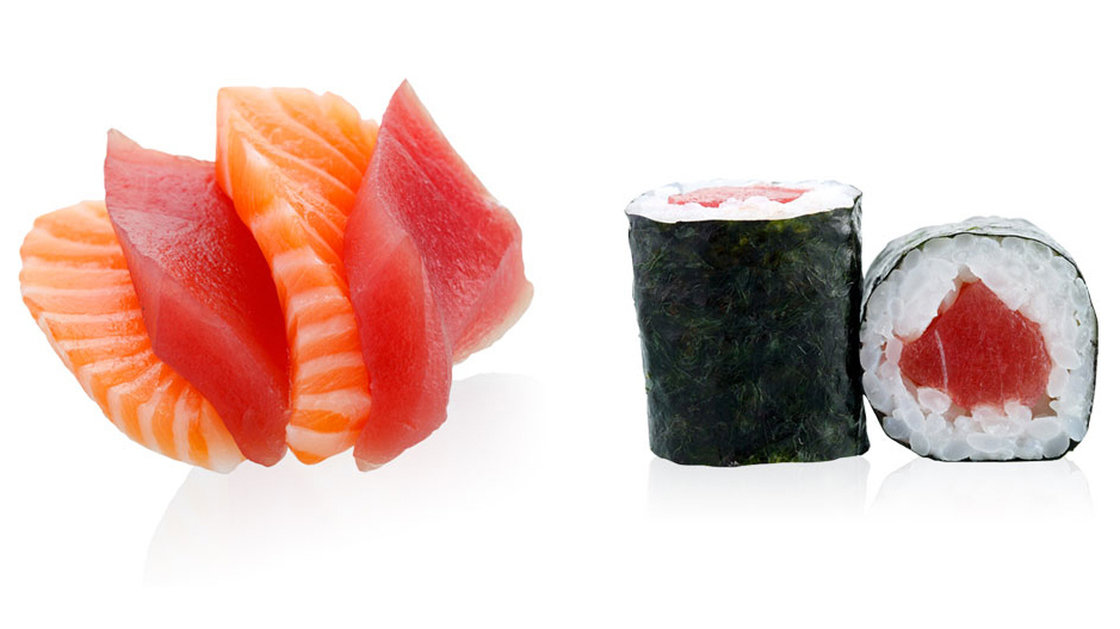
window.__IS_SSR__=true
window.__INITIAL_STATE__={
"attachmentsReducer": {
"audio_0": {
"type": "attachments",
"id": "audio_0",
"imgSizes": {
"kqedFullSize": {
"file": "https://ww2.kqed.org/news/wp-content/themes/KQED-unified/img/audio_bgs/background0.jpg"
}
}
},
"audio_1": {
"type": "attachments",
"id": "audio_1",
"imgSizes": {
"kqedFullSize": {
"file": "https://ww2.kqed.org/news/wp-content/themes/KQED-unified/img/audio_bgs/background1.jpg"
}
}
},
"audio_2": {
"type": "attachments",
"id": "audio_2",
"imgSizes": {
"kqedFullSize": {
"file": "https://ww2.kqed.org/news/wp-content/themes/KQED-unified/img/audio_bgs/background2.jpg"
}
}
},
"audio_3": {
"type": "attachments",
"id": "audio_3",
"imgSizes": {
"kqedFullSize": {
"file": "https://ww2.kqed.org/news/wp-content/themes/KQED-unified/img/audio_bgs/background3.jpg"
}
}
},
"audio_4": {
"type": "attachments",
"id": "audio_4",
"imgSizes": {
"kqedFullSize": {
"file": "https://ww2.kqed.org/news/wp-content/themes/KQED-unified/img/audio_bgs/background4.jpg"
}
}
},
"placeholder": {
"type": "attachments",
"id": "placeholder",
"imgSizes": {
"thumbnail": {
"file": "https://cdn.kqed.org/wp-content/uploads/2024/12/KQED-Default-Image-816638274-2000x1333-1-160x107.jpg",
"width": 160,
"height": 107,
"mimeType": "image/jpeg"
},
"medium": {
"file": "https://cdn.kqed.org/wp-content/uploads/2024/12/KQED-Default-Image-816638274-2000x1333-1-800x533.jpg",
"width": 800,
"height": 533,
"mimeType": "image/jpeg"
},
"medium_large": {
"file": "https://cdn.kqed.org/wp-content/uploads/2024/12/KQED-Default-Image-816638274-2000x1333-1-768x512.jpg",
"width": 768,
"height": 512,
"mimeType": "image/jpeg"
},
"large": {
"file": "https://cdn.kqed.org/wp-content/uploads/2024/12/KQED-Default-Image-816638274-2000x1333-1-1020x680.jpg",
"width": 1020,
"height": 680,
"mimeType": "image/jpeg"
},
"1536x1536": {
"file": "https://cdn.kqed.org/wp-content/uploads/2024/12/KQED-Default-Image-816638274-2000x1333-1-1536x1024.jpg",
"width": 1536,
"height": 1024,
"mimeType": "image/jpeg"
},
"fd-lrg": {
"file": "https://cdn.kqed.org/wp-content/uploads/2024/12/KQED-Default-Image-816638274-2000x1333-1-1536x1024.jpg",
"width": 1536,
"height": 1024,
"mimeType": "image/jpeg"
},
"fd-med": {
"file": "https://cdn.kqed.org/wp-content/uploads/2024/12/KQED-Default-Image-816638274-2000x1333-1-1020x680.jpg",
"width": 1020,
"height": 680,
"mimeType": "image/jpeg"
},
"fd-sm": {
"file": "https://cdn.kqed.org/wp-content/uploads/2024/12/KQED-Default-Image-816638274-2000x1333-1-800x533.jpg",
"width": 800,
"height": 533,
"mimeType": "image/jpeg"
},
"post-thumbnail": {
"file": "https://cdn.kqed.org/wp-content/uploads/2024/12/KQED-Default-Image-816638274-2000x1333-1-672x372.jpg",
"width": 672,
"height": 372,
"mimeType": "image/jpeg"
},
"twentyfourteen-full-width": {
"file": "https://cdn.kqed.org/wp-content/uploads/2024/12/KQED-Default-Image-816638274-2000x1333-1-1038x576.jpg",
"width": 1038,
"height": 576,
"mimeType": "image/jpeg"
},
"xxsmall": {
"file": "https://cdn.kqed.org/wp-content/uploads/2024/12/KQED-Default-Image-816638274-2000x1333-1-160x107.jpg",
"width": 160,
"height": 107,
"mimeType": "image/jpeg"
},
"xsmall": {
"file": "https://cdn.kqed.org/wp-content/uploads/2024/12/KQED-Default-Image-816638274-2000x1333-1-672x372.jpg",
"width": 672,
"height": 372,
"mimeType": "image/jpeg"
},
"small": {
"file": "https://cdn.kqed.org/wp-content/uploads/2024/12/KQED-Default-Image-816638274-2000x1333-1-672x372.jpg",
"width": 672,
"height": 372,
"mimeType": "image/jpeg"
},
"xlarge": {
"file": "https://cdn.kqed.org/wp-content/uploads/2024/12/KQED-Default-Image-816638274-2000x1333-1-1020x680.jpg",
"width": 1020,
"height": 680,
"mimeType": "image/jpeg"
},
"full-width": {
"file": "https://cdn.kqed.org/wp-content/uploads/2024/12/KQED-Default-Image-816638274-2000x1333-1-1920x1280.jpg",
"width": 1920,
"height": 1280,
"mimeType": "image/jpeg"
},
"guest-author-32": {
"file": "https://cdn.kqed.org/wp-content/uploads/2025/01/KQED-Default-Image-816638274-1333x1333-1-160x160.jpg",
"width": 32,
"height": 32,
"mimeType": "image/jpeg"
},
"guest-author-50": {
"file": "https://cdn.kqed.org/wp-content/uploads/2025/01/KQED-Default-Image-816638274-1333x1333-1-160x160.jpg",
"width": 50,
"height": 50,
"mimeType": "image/jpeg"
},
"guest-author-64": {
"file": "https://cdn.kqed.org/wp-content/uploads/2025/01/KQED-Default-Image-816638274-1333x1333-1-160x160.jpg",
"width": 64,
"height": 64,
"mimeType": "image/jpeg"
},
"guest-author-96": {
"file": "https://cdn.kqed.org/wp-content/uploads/2025/01/KQED-Default-Image-816638274-1333x1333-1-160x160.jpg",
"width": 96,
"height": 96,
"mimeType": "image/jpeg"
},
"guest-author-128": {
"file": "https://cdn.kqed.org/wp-content/uploads/2025/01/KQED-Default-Image-816638274-1333x1333-1-160x160.jpg",
"width": 128,
"height": 128,
"mimeType": "image/jpeg"
},
"detail": {
"file": "https://cdn.kqed.org/wp-content/uploads/2025/01/KQED-Default-Image-816638274-1333x1333-1-160x160.jpg",
"width": 160,
"height": 160,
"mimeType": "image/jpeg"
},
"kqedFullSize": {
"file": "https://cdn.kqed.org/wp-content/uploads/2024/12/KQED-Default-Image-816638274-2000x1333-1.jpg",
"width": 2000,
"height": 1333
}
}
},
"bayareabites_82488": {
"type": "attachments",
"id": "bayareabites_82488",
"meta": {
"index": "attachments_1716263798",
"site": "bayareabites",
"id": "82488",
"found": true
},
"parent": 82482,
"imgSizes": {
"kqedFullSize": {
"file": "https://ww2.kqed.org/app/uploads/sites/24/2014/05/sushi1_wide-4a0777e9ad7fbe948b96bf9117fd478b89e968e3-s40-c85.jpg",
"width": 1120,
"height": 629
}
},
"publishDate": 1400877911,
"modified": 1400877911,
"caption": "Lazy and luxurious: Raw salmon and tuna have soft, creamy textures because the fishes' muscles don't work as hard as those in land animals. Photo: Moonsushi/Flickr",
"description": null,
"title": "sushi1_wide-4a0777e9ad7fbe948b96bf9117fd478b89e968e3-s40-c85",
"credit": null,
"status": "inherit",
"isLoading": false,
"fetchFailed": false
},
"bayareabites_82425": {
"type": "attachments",
"id": "bayareabites_82425",
"meta": {
"index": "attachments_1716263798",
"site": "bayareabites",
"id": "82425",
"found": true
},
"parent": 82424,
"imgSizes": {
"kqedFullSize": {
"file": "https://ww2.kqed.org/app/uploads/sites/24/2014/05/yelp-1_wide-c07e41ca11053d2d7c30aafa94556b2ea5e53f5f.jpg",
"width": 1800,
"height": 1011
}
},
"publishDate": 1400821045,
"modified": 1400821045,
"caption": "The Yelp app maps out restaurant locations in Manhattan. Photo: Meredith Rizzo/NPR",
"description": null,
"title": "The Yelp app ",
"credit": null,
"status": "inherit",
"isLoading": false,
"fetchFailed": false
},
"bayareabites_82418": {
"type": "attachments",
"id": "bayareabites_82418",
"meta": {
"index": "attachments_1716263798",
"site": "bayareabites",
"id": "82418",
"found": true
},
"parent": 82417,
"imgSizes": {
"kqedFullSize": {
"file": "https://ww2.kqed.org/app/uploads/sites/24/2014/05/gluten-bread-34d95b215f09fec51216616011ad2772dd288685.jpg",
"width": 911,
"height": 683
}
},
"publishDate": 1400793988,
"modified": 1400793988,
"caption": null,
"description": "The wheat and grains in many breads contain gluten.",
"title": "The wheat and grains in many breads contain gluten.",
"credit": null,
"status": "inherit",
"isLoading": false,
"fetchFailed": false
},
"bayareabites_82398": {
"type": "attachments",
"id": "bayareabites_82398",
"meta": {
"index": "attachments_1716263798",
"site": "bayareabites",
"id": "82398",
"found": true
},
"parent": 82397,
"imgSizes": {
"kqedFullSize": {
"file": "https://ww2.kqed.org/app/uploads/sites/24/2014/05/red-graveolens-edit1_enl-29f6a7fbca7717830389f8023945803dfbb65a7b.jpg",
"width": 1800,
"height": 1198
}
},
"publishDate": 1400773234,
"modified": 1400773234,
"caption": "The inside of the Graveolens, a variety of durian that grows in the southernmost parts of Thailand, is sticky and cheese-like. Photo: Courtesy of Lindsay Gasik",
"description": "The inside of the Graveolens, a variety of durian that grows in the southernmost parts of Thailand, is sticky and cheese-like.",
"title": "durian",
"credit": null,
"status": "inherit",
"isLoading": false,
"fetchFailed": false
},
"bayareabites_82386": {
"type": "attachments",
"id": "bayareabites_82386",
"meta": {
"index": "attachments_1716263798",
"site": "bayareabites",
"id": "82386",
"found": true
},
"parent": 82385,
"imgSizes": {
"kqedFullSize": {
"file": "https://ww2.kqed.org/app/uploads/sites/24/2014/05/ap786642362258-1-0b5d627c2e62a9ca3e3005db39dc3a75953ee2e7.jpg",
"width": 2728,
"height": 2045
}
},
"publishDate": 1400687691,
"modified": 1400687691,
"caption": "Some schools say they're having a tough time implementing new nutrition rules requiring more whole grains, more veggies and less fat. Photo: Toby Talbot/AP",
"description": null,
"title": "school food",
"credit": null,
"status": "inherit",
"isLoading": false,
"fetchFailed": false
},
"bayareabites_82378": {
"type": "attachments",
"id": "bayareabites_82378",
"meta": {
"index": "attachments_1716263798",
"site": "bayareabites",
"id": "82378",
"found": true
},
"parent": 82377,
"imgSizes": {
"kqedFullSize": {
"file": "https://ww2.kqed.org/app/uploads/sites/24/2014/05/coffee-drought-1_wide-ad8637b94b7112eed8796278b9e1b45e7a68a5c5.jpg",
"width": 1800,
"height": 1011
}
},
"publishDate": 1400686733,
"modified": 1400686733,
"caption": "A fully formed coffee berry, left, is shown next to a damaged coffee berry due to drought, at a coffee farm in Santo Antonio do Jardim, Brazil on Feb. 6. Photo: Paulo Whitaker/Reuters/Landov",
"description": null,
"title": "coffee",
"credit": null,
"status": "inherit",
"isLoading": false,
"fetchFailed": false
},
"bayareabites_82340": {
"type": "attachments",
"id": "bayareabites_82340",
"meta": {
"index": "attachments_1716263798",
"site": "bayareabites",
"id": "82340",
"found": true
},
"parent": 82339,
"imgSizes": {
"kqedFullSize": {
"file": "https://ww2.kqed.org/app/uploads/sites/24/2014/05/anna-854becedc3a4dfe867b56f0aa8327173adbd1d16.jpg",
"width": 1777,
"height": 1331
}
},
"publishDate": 1400610209,
"modified": 1400610209,
"caption": "Anna Matveevna came to this communal apartment in St. Petersburg in 1931, when she was 8 years old. Photo: Courtesy of European University, St. Petersburg, Russia,Colgate University and Cornell University",
"description": null,
"title": "Anna Matveevna ",
"credit": null,
"status": "inherit",
"isLoading": false,
"fetchFailed": false
},
"bayareabites_82316": {
"type": "attachments",
"id": "bayareabites_82316",
"meta": {
"index": "attachments_1716263798",
"site": "bayareabites",
"id": "82316",
"found": true
},
"parent": 82315,
"imgSizes": {
"kqedFullSize": {
"file": "https://ww2.kqed.org/app/uploads/sites/24/2014/05/mexico-limes-1_wide-262506e6f4a0845ef3f9d572fa98cf6205a63139.jpg",
"width": 1800,
"height": 1011
}
},
"publishDate": 1400540101,
"modified": 1400540101,
"caption": "Workers sort through key limes at a packaging house in Apatzingan, Michoacan. More than 90 percent of limes imported into the U.S. come from Mexico. Photo: Carrie Kahn/NPR",
"description": null,
"title": "lime workers",
"credit": null,
"status": "inherit",
"isLoading": false,
"fetchFailed": false
},
"bayareabites_82296": {
"type": "attachments",
"id": "bayareabites_82296",
"meta": {
"index": "attachments_1716263798",
"site": "bayareabites",
"id": "82296",
"found": true
},
"parent": 82295,
"imgSizes": {
"kqedFullSize": {
"file": "https://ww2.kqed.org/app/uploads/sites/24/2014/05/01_mike_lewis_cisr_asian_citrus_psyllid_wide-4b55dbef10c21f7f272b478cf523e4672230e124.jpg",
"width": 2000,
"height": 1123
}
},
"publishDate": 1400515539,
"modified": 1400515539,
"caption": "The parasitic wasp Tamarixia radiata is the natural enemy of the invasive Asian citrus psyllid. Photo: Mike Lewis/Center for Invasive Species Research, UC Riverside",
"description": "The parasitic wasp \u003cem>Tamarixia radiata\u003c/em> is the natural enemy of the invasive Asian citrus psyllid.",
"title": "psyllid",
"credit": null,
"status": "inherit",
"isLoading": false,
"fetchFailed": false
},
"bayareabites_82304": {
"type": "attachments",
"id": "bayareabites_82304",
"meta": {
"index": "attachments_1716263798",
"site": "bayareabites",
"id": "82304",
"found": true
},
"parent": 82303,
"imgSizes": {
"kqedFullSize": {
"file": "https://ww2.kqed.org/app/uploads/sites/24/2014/05/fed-up-1-a2279d3cde041ad182a541f2d7f56ad295512794.jpg",
"width": 1241,
"height": 931
}
},
"publishDate": 1400517868,
"modified": 1400517868,
"caption": "Maggie Valentine, 12, is a child featured in the film Fed Up. Photo: YouTube",
"description": null,
"title": "Maggie Valentine",
"credit": null,
"status": "inherit",
"isLoading": false,
"fetchFailed": false
},
"bayareabites_82287": {
"type": "attachments",
"id": "bayareabites_82287",
"meta": {
"index": "attachments_1716263798",
"site": "bayareabites",
"id": "82287",
"found": true
},
"parent": 82286,
"imgSizes": {
"kqedFullSize": {
"file": "https://ww2.kqed.org/app/uploads/sites/24/2014/05/soda-fa7ce4178b884106b072879b474f01a1fa52b57e.jpg",
"width": 2624,
"height": 1966
}
},
"publishDate": 1400514848,
"modified": 1400514848,
"caption": "Samples from Dry Soda, Spindrift, Q and Veri Organic, four small companies that are trying to win back soda lovers by lowering the sugar. Photo: Maggie Starbard/NPR",
"description": null,
"title": "Samples ",
"credit": null,
"status": "inherit",
"isLoading": false,
"fetchFailed": false
}
},
"audioPlayerReducer": {
"postId": "stream_live",
"isPaused": true,
"isPlaying": false,
"pfsActive": false,
"pledgeModalIsOpen": true,
"playerDrawerIsOpen": false,
"liveAudioPlayStartedAt": 0,
"liveAudioPlayContext": ""
},
"authorsReducer": {
"byline_bayareabites_82482": {
"type": "authors",
"id": "byline_bayareabites_82482",
"meta": {
"override": true
},
"slug": "byline_bayareabites_82482",
"name": "Michaeleen Doucleff",
"isLoading": false
},
"byline_bayareabites_82424": {
"type": "authors",
"id": "byline_bayareabites_82424",
"meta": {
"override": true
},
"slug": "byline_bayareabites_82424",
"name": "Richard Knox",
"isLoading": false
},
"byline_bayareabites_82417": {
"type": "authors",
"id": "byline_bayareabites_82417",
"meta": {
"override": true
},
"slug": "byline_bayareabites_82417",
"name": "Eliza Barclay",
"isLoading": false
},
"byline_bayareabites_82397": {
"type": "authors",
"id": "byline_bayareabites_82397",
"meta": {
"override": true
},
"slug": "byline_bayareabites_82397",
"name": "Alastair Bland",
"isLoading": false
},
"byline_bayareabites_82385": {
"type": "authors",
"id": "byline_bayareabites_82385",
"meta": {
"override": true
},
"slug": "byline_bayareabites_82385",
"name": "Allison Aubrey",
"isLoading": false
},
"byline_bayareabites_82377": {
"type": "authors",
"id": "byline_bayareabites_82377",
"meta": {
"override": true
},
"slug": "byline_bayareabites_82377",
"name": "Dan Charles",
"isLoading": false
},
"byline_bayareabites_82339": {
"type": "authors",
"id": "byline_bayareabites_82339",
"meta": {
"override": true
},
"slug": "byline_bayareabites_82339",
"name": "The Kitchen Sisters",
"isLoading": false
},
"byline_bayareabites_82315": {
"type": "authors",
"id": "byline_bayareabites_82315",
"meta": {
"override": true
},
"slug": "byline_bayareabites_82315",
"name": "Carrie Kahn",
"isLoading": false
},
"byline_bayareabites_82295": {
"type": "authors",
"id": "byline_bayareabites_82295",
"meta": {
"override": true
},
"slug": "byline_bayareabites_82295",
"name": "Steven Jackson",
"isLoading": false
},
"byline_bayareabites_82303": {
"type": "authors",
"id": "byline_bayareabites_82303",
"meta": {
"override": true
},
"slug": "byline_bayareabites_82303",
"name": "Peggy Lowe",
"isLoading": false
},
"byline_bayareabites_82286": {
"type": "authors",
"id": "byline_bayareabites_82286",
"meta": {
"override": true
},
"slug": "byline_bayareabites_82286",
"name": "Marc Silver",
"isLoading": false
},
"byline_bayareabites_82158": {
"type": "authors",
"id": "byline_bayareabites_82158",
"meta": {
"override": true
},
"slug": "byline_bayareabites_82158",
"name": "NPR Staff",
"isLoading": false
}
},
"pagesReducer": {
"bayareabites_category_npr-food": {
"type": "terms",
"id": "bayareabites_10916",
"meta": {
"index": "terms_1716263798",
"site": "bayareabites",
"id": "10916",
"score": 13.894751
},
"featImg": null,
"name": "NPR food",
"description": null,
"taxonomy": "category",
"headData": {
"twImgId": null,
"twTitle": null,
"ogTitle": null,
"ogImgId": null,
"twDescription": null,
"description": null,
"title": "NPR food Archives | KQED Bay Area Bites",
"ogDescription": null
},
"ttid": 5375,
"slug": "npr-food",
"isLoading": false,
"title": "NPR food",
"pageMeta": {
"site": "bayareabites",
"WpPageTemplate": "page-topic-editorial",
"currentPage": 43
},
"blocks": [
{
"blockName": "kqed/post-list",
"attrs": {
"layout": "cardArticle2",
"query": "posts/bayareabites?category=npr-food",
"seeMore": false,
"paginated": true,
"page": 43
}
},
{
"blockName": "kqed/ad"
}
]
}
},
"pfsSessionReducer": {},
"postsReducer": {
"stream_live": {
"type": "live",
"id": "stream_live",
"audioUrl": "https://hls.kqed.org/hls/kqed_app/playlist.m3u8",
"title": "Live Stream",
"excerpt": "Live Stream information currently unavailable.",
"link": "/radio",
"featImg": "",
"label": {
"name": "KQED Live",
"link": "/"
}
},
"stream_kqedNewscast": {
"type": "posts",
"id": "stream_kqedNewscast",
"audioUrl": "https://www.kqed.org/.stream/anon/radio/RDnews/newscast.mp3?_=1",
"title": "KQED Newscast",
"featImg": "",
"label": {
"name": "88.5 FM",
"link": "/"
}
},
"bayareabites_82482": {
"type": "posts",
"id": "bayareabites_82482",
"meta": {
"index": "posts_1716263798",
"site": "bayareabites",
"id": "82482",
"score": null,
"sort": [
1400878056000
]
},
"parent": 0,
"labelTerm": {
"site": "bayareabites"
},
"blocks": [],
"publishDate": 1400878056,
"format": "aside",
"disqusTitle": "Sushi's Secret: Why We Get Hooked On Raw Fish",
"title": "Sushi's Secret: Why We Get Hooked On Raw Fish",
"headTitle": "Bay Area Bites | KQED Food",
"content": "\u003cfigure id=\"attachment_82488\" class=\"wp-caption aligncenter\" style=\"max-width: 1120px\">\u003ca href=\"https://www.flickr.com/photos/moonsushi/\">\u003cimg src=\"http://ww2.kqed.org/bayareabites/wp-content/uploads/sites/24/2014/05/sushi1_wide-4a0777e9ad7fbe948b96bf9117fd478b89e968e3-s40-c85.jpg\" alt=\"Lazy and luxurious: Raw salmon and tuna have soft, creamy textures because the fishes' muscles don't work as hard as those in land animals. Photo: Moonsushi/Flickr\" width=\"1120\" height=\"629\" class=\"size-full wp-image-82488\">\u003c/a>\u003cfigcaption class=\"wp-caption-text\">Lazy and luxurious: Raw salmon and tuna have soft, creamy textures because the fishes' muscles don't work as hard as those in land animals. Photo: Moonsushi/Flickr\u003c/figcaption>\u003c/figure>\n\u003cp>Post by Michaeleen Doucleff, \u003ca href=\"http://www.npr.org/blogs/thesalt/2014/05/23/312539745/sushis-secret-why-we-get-hooked-on-raw-fish\" target=\"_blank\">The Salt at NPR Food\u003c/a> (5/23/2014)\u003c/p>\n\u003cp>Raw fish is sizzling hot right now.\u003c/p>\n\u003cp>Los Angeles has brand new bars devoted to an Italian style of raw fish, called \u003ca href=\"http://www.latimes.com/style/la-fo-crudo22aug22-story.html#page=1\">crudo\u003c/a>. President Obama kicked off his visit to Asia last month \u003ca href=\"http://www.npr.org/blogs/thesalt/2014/04/23/306227740/obama-gets-a-taste-of-jiros-dream-sushi-in-name-of-diplomacy\">noshing\u003c/a> nigiri at Jiro's famous sushi bar. And back in December, \u003cem>The New York Times\u003c/em> \u003ca href=\"http://www.nytimes.com/2013/12/11/dining/reviews/restaurant-review-sushi-nakazawa-in-the-west-village.html?_r=0\">named\u003c/a> Sushi Nakawaza as its top restaurant of the year.\u003c/p>\n\u003cp>But why do so many of us find utter bliss in eating raw sea creatures but aren't so inclined to chow down on uncooked birds, cows or pigs?\u003c/p>\n\u003cp>A big part of it is gravity — or the effective lack of it in the ocean, says biophysicist Ole Mouritsen, author of \u003ca href=\"http://www.amazon.com/Sushi-Food-Eye-Body-Soul/dp/1441906177\">Sushi: Food for the Eye, the Body and the Soul\u003c/a>.\u003c/p>\n\u003cfigure id=\"attachment_82483\" class=\"wp-caption aligncenter\" style=\"max-width: 3968px\">\u003ca href=\"http://ww2.kqed.org/bayareabites/wp-content/uploads/sites/24/2014/05/15617242_h26348287_wide-a70fbc17e294dc6728b48041532fbb2a43fc1404.jpg\">\u003cimg src=\"http://ww2.kqed.org/bayareabites/wp-content/uploads/sites/24/2014/05/15617242_h26348287_wide-a70fbc17e294dc6728b48041532fbb2a43fc1404.jpg\" alt=\"A feast for the eyes and the mouth. Tuna swim long distances, but their muscles are still soft and tender. Photo: Kyodo /Landov\" width=\"3968\" height=\"2228\" class=\"size-full wp-image-82483\">\u003c/a>\u003cfigcaption class=\"wp-caption-text\">A feast for the eyes and the mouth. Tuna swim long distances, but their muscles are still soft and tender. Photo: Kyodo /Landov\u003c/figcaption>\u003c/figure>\n\u003cp>\"Fish are so soft. You can stick your finger through their muscles,\" he says. \"Try doing that with a chicken or cow. Fish muscle is very different than that in land animals.\"\u003c/p>\n\u003cp>[ad fullwidth]\u003c/p>\n\u003cp>Why? Because fish can afford to be lazier than terrestrial animals. Fish essentially float all the time. So their muscles don't work constantly to fight gravity.\u003c/p>\n\u003cp>\"Fish don't have to support their body weight,\" Mouritsen says, \"so their muscle fibers are shorter and less tough than those in land animals.\" The same goes for the connective tissue holding the muscle fibers together: It's delicate and weak.\u003c/p>\n\u003cp>The result? Fish has a silky, smooth texture when it's raw, and a flaky, light texture when it's cooked.\u003c/p>\n\u003cp>By contrast, \"Land animals — like ourselves — are always working to keep themselves upright and keep their shape,\" Mouritsen says, so our muscle fibers are thicker, tougher and firmer.\u003c/p>\n\u003cp>The result is a ropy, chewy — and less appetizing — texture when the meat is raw. Cooking softens the connective tissue in meat and improves its texture (it also makes it juicy and flavorful).\u003cstrong> \u003c/strong>\u003c/p>\n\u003cp>In general, the more a muscle works, the tougher, more sinuous it gets, Mouritsen writes in his book. This idea explains why the belly of the tuna, known as \u003ca href=\"http://otoro.com/\">otoro\u003c/a>, is exceptionally soft: The belly of the fish is the laziest muscle of them all.\u003c/p>\n\u003cp>\"In contrast, those muscles that are more active in a tuna, say the ones in its fins and tails, are a bit more chewier than other muscles,\" he says.\u003c/p>\n\u003cfigure id=\"attachment_82487\" class=\"wp-caption aligncenter\" style=\"max-width: 624px\">\u003ca href=\"https://www.flickr.com/photos/kake_pugh/3883996818/in/photolist-6VduWo-4r7DHs-tgE28-8oJVjj-492VC-ioXote-4copGL-6BNtb-8odgBr-gVWZgF-drwvYX-6teb3c-68sDXh-7ShNnK-ff3PW1-5v7U5F-dxE4Mh-caLs-6BNsP-6e6twz-QW5X-pXBnX-8jRfo-ft3AHE-6AYADj-f2yyHQ-d867L1-cFu4d-huBaHg\">\u003cimg src=\"http://ww2.kqed.org/bayareabites/wp-content/uploads/sites/24/2014/05/3883996818_21c5d30c2a_b-1-_wide-4271f30780337cec1bca85d8dd1a82d6ea8a8ae5-s4.jpg\" alt=\"One fish, two fish, white fish, red fish: Muscles that depend on oxygen tend to be red, while those that don't are white. Salmon flesh is orange because of the food the fish eat. Photo: Kake/Flickr\" width=\"624\" height=\"350\" class=\"size-full wp-image-82487\">\u003c/a>\u003cfigcaption class=\"wp-caption-text\">One fish, two fish, white fish, red fish: Muscles that depend on oxygen tend to be red, while those that don't are white. Salmon flesh is orange because of the food the fish eat. Photo: Kake/Flickr\u003c/figcaption>\u003c/figure>\n\u003cp>Under a microscope, fish, chicken and other meat muscles look similar, with long, parallel fibers, like ropes, stretched out and tied together.\u003c/p>\n\u003cp>But when you zoom in a little closer, the fish muscles look like the Kate Moss of the bunch: Their fibers are slimmer, shorter and more delicate than the others.\u003c/p>\n\u003cp>The muscle properties of fish also explain the rainbow of colors you see at a sushi bar.\u003c/p>\n\u003cp>\"Fish that are constantly on the move — say, a tuna — have muscles that are always working and burning carbohydrates aerobically,\" Mouritsen says.\u003c/p>\n\u003cp>The muscles need oxygen to make energy. And the molecule that carries oxygen to muscle contains iron. Guess what color iron is in the fish? Red.\u003c/p>\n\u003cp>In contrast, fish that mostly hang out in one place or on the bottom of the ocean — say, for instance, flounder — have muscles that don't rely on oxygen to create energy. No oxygen means no iron to carry it, which means the muscles tend to be white. (Of course, most fish have a mixture of these two type of muscles and thus can look red, white or pink.)\u003c/p>\n\u003cp>So what about the pinkish-orange color of salmon? That's a special case, Mouritsen says.\u003c/p>\n\u003cp>\"The coloring is due to what salmon eat: shellfish that are enriched with a pigment that's related to carotene in carrots, called astaxanthin.\"\u003c/p>\n\u003cp>This pigment creates the characteristic bluish-gray or green color of raw shrimp and crabs. The molecule turns bright pink or orange when the salmon eats the shellfish or we cook it. \u003c/p>\n\u003cp>\u003c/p>\n\u003cp>\u003cem>Copyright 2014 \u003c/em>\u003ca href=\"http://www.npr.org/\" target=\"_blank\">NPR\u003c/a>.\u003c/p>\n\n",
"disqusIdentifier": "82482 http://blogs.kqed.org/bayareabites/?p=82482",
"disqusUrl": "https://ww2.kqed.org/bayareabites/2014/05/23/sushis-secret-why-we-get-hooked-on-raw-fish/",
"stats": {
"hasVideo": false,
"hasChartOrMap": false,
"hasAudio": false,
"hasPolis": false,
"wordCount": 750,
"hasGoogleForm": false,
"hasGallery": false,
"hasHearkenModule": false,
"iframeSrcs": [],
"paragraphCount": 25
},
"modified": 1400878056,
"excerpt": "We love raw seafood but can't stand uncooked fowl or pork. Why? A big part of it is the effective lack of gravity in water, a scientist says. Weightlessness gives fish muscles a smooth, soft texture.",
"headData": {
"twImgId": "",
"twTitle": "",
"ogTitle": "",
"ogImgId": "",
"twDescription": "",
"description": "We love raw seafood but can't stand uncooked fowl or pork. Why? A big part of it is the effective lack of gravity in water, a scientist says. Weightlessness gives fish muscles a smooth, soft texture.",
"title": "Sushi's Secret: Why We Get Hooked On Raw Fish | KQED",
"ogDescription": "",
"schema": {
"@context": "https://schema.org",
"@type": "Article",
"headline": "Sushi's Secret: Why We Get Hooked On Raw Fish",
"datePublished": "2014-05-23T13:47:36-07:00",
"dateModified": "2014-05-23T13:47:36-07:00",
"image": "https://cdn.kqed.org/wp-content/uploads/2020/02/KQED-OG-Image@1x.png"
}
},
"guestAuthors": [],
"slug": "sushis-secret-why-we-get-hooked-on-raw-fish",
"status": "publish",
"nprApiLink": "http://api.npr.org/query?id=312539745&apiKey=MDAxOTAwOTE4MDEyMTkxMDAzNjczZDljZA004",
"nprByline": "Michaeleen Doucleff",
"nprStoryDate": "Fri, 23 May 2014 12:42:00 -0400",
"nprLastModifiedDate": "Fri, 23 May 2014 14:09:30 -0400",
"nprHtmlLink": "http://www.npr.org/blogs/thesalt/2014/05/23/312539745/sushis-secret-why-we-get-hooked-on-raw-fish?ft=3&f=312539745",
"nprStoryId": "312539745",
"nprRetrievedStory": "1",
"nprPubDate": "Fri, 23 May 2014 14:09:00 -0400",
"path": "/bayareabites/82482/sushis-secret-why-we-get-hooked-on-raw-fish",
"audioTrackLength": null,
"parsedContent": [
{
"type": "contentString",
"content": "\u003cdiv class=\"post-body\">\u003cp>\u003cfigure id=\"attachment_82488\" class=\"wp-caption aligncenter\" style=\"max-width: 1120px\">\u003ca href=\"https://www.flickr.com/photos/moonsushi/\">\u003cimg src=\"http://ww2.kqed.org/bayareabites/wp-content/uploads/sites/24/2014/05/sushi1_wide-4a0777e9ad7fbe948b96bf9117fd478b89e968e3-s40-c85.jpg\" alt=\"Lazy and luxurious: Raw salmon and tuna have soft, creamy textures because the fishes' muscles don't work as hard as those in land animals. Photo: Moonsushi/Flickr\" width=\"1120\" height=\"629\" class=\"size-full wp-image-82488\">\u003c/a>\u003cfigcaption class=\"wp-caption-text\">Lazy and luxurious: Raw salmon and tuna have soft, creamy textures because the fishes' muscles don't work as hard as those in land animals. Photo: Moonsushi/Flickr\u003c/figcaption>\u003c/figure>\n\u003cp>Post by Michaeleen Doucleff, \u003ca href=\"http://www.npr.org/blogs/thesalt/2014/05/23/312539745/sushis-secret-why-we-get-hooked-on-raw-fish\" target=\"_blank\">The Salt at NPR Food\u003c/a> (5/23/2014)\u003c/p>\n\u003cp>Raw fish is sizzling hot right now.\u003c/p>\n\u003cp>Los Angeles has brand new bars devoted to an Italian style of raw fish, called \u003ca href=\"http://www.latimes.com/style/la-fo-crudo22aug22-story.html#page=1\">crudo\u003c/a>. President Obama kicked off his visit to Asia last month \u003ca href=\"http://www.npr.org/blogs/thesalt/2014/04/23/306227740/obama-gets-a-taste-of-jiros-dream-sushi-in-name-of-diplomacy\">noshing\u003c/a> nigiri at Jiro's famous sushi bar. And back in December, \u003cem>The New York Times\u003c/em> \u003ca href=\"http://www.nytimes.com/2013/12/11/dining/reviews/restaurant-review-sushi-nakazawa-in-the-west-village.html?_r=0\">named\u003c/a> Sushi Nakawaza as its top restaurant of the year.\u003c/p>\n\u003cp>But why do so many of us find utter bliss in eating raw sea creatures but aren't so inclined to chow down on uncooked birds, cows or pigs?\u003c/p>\n\u003cp>A big part of it is gravity — or the effective lack of it in the ocean, says biophysicist Ole Mouritsen, author of \u003ca href=\"http://www.amazon.com/Sushi-Food-Eye-Body-Soul/dp/1441906177\">Sushi: Food for the Eye, the Body and the Soul\u003c/a>.\u003c/p>\n\u003cfigure id=\"attachment_82483\" class=\"wp-caption aligncenter\" style=\"max-width: 3968px\">\u003ca href=\"http://ww2.kqed.org/bayareabites/wp-content/uploads/sites/24/2014/05/15617242_h26348287_wide-a70fbc17e294dc6728b48041532fbb2a43fc1404.jpg\">\u003cimg src=\"http://ww2.kqed.org/bayareabites/wp-content/uploads/sites/24/2014/05/15617242_h26348287_wide-a70fbc17e294dc6728b48041532fbb2a43fc1404.jpg\" alt=\"A feast for the eyes and the mouth. Tuna swim long distances, but their muscles are still soft and tender. Photo: Kyodo /Landov\" width=\"3968\" height=\"2228\" class=\"size-full wp-image-82483\">\u003c/a>\u003cfigcaption class=\"wp-caption-text\">A feast for the eyes and the mouth. Tuna swim long distances, but their muscles are still soft and tender. Photo: Kyodo /Landov\u003c/figcaption>\u003c/figure>\n\u003cp>\"Fish are so soft. You can stick your finger through their muscles,\" he says. \"Try doing that with a chicken or cow. Fish muscle is very different than that in land animals.\"\u003c/p>\n\u003cp>\u003c/p>\u003c/div>",
"attributes": {
"named": {},
"numeric": []
}
},
{
"type": "component",
"content": "",
"name": "ad",
"attributes": {
"named": {
"label": "fullwidth"
},
"numeric": [
"fullwidth"
]
}
},
{
"type": "contentString",
"content": "\u003cdiv class=\"post-body\">\u003cp>\u003c/p>\n\u003cp>Why? Because fish can afford to be lazier than terrestrial animals. Fish essentially float all the time. So their muscles don't work constantly to fight gravity.\u003c/p>\n\u003cp>\"Fish don't have to support their body weight,\" Mouritsen says, \"so their muscle fibers are shorter and less tough than those in land animals.\" The same goes for the connective tissue holding the muscle fibers together: It's delicate and weak.\u003c/p>\n\u003cp>The result? Fish has a silky, smooth texture when it's raw, and a flaky, light texture when it's cooked.\u003c/p>\n\u003cp>By contrast, \"Land animals — like ourselves — are always working to keep themselves upright and keep their shape,\" Mouritsen says, so our muscle fibers are thicker, tougher and firmer.\u003c/p>\n\u003cp>The result is a ropy, chewy — and less appetizing — texture when the meat is raw. Cooking softens the connective tissue in meat and improves its texture (it also makes it juicy and flavorful).\u003cstrong> \u003c/strong>\u003c/p>\n\u003cp>In general, the more a muscle works, the tougher, more sinuous it gets, Mouritsen writes in his book. This idea explains why the belly of the tuna, known as \u003ca href=\"http://otoro.com/\">otoro\u003c/a>, is exceptionally soft: The belly of the fish is the laziest muscle of them all.\u003c/p>\n\u003cp>\"In contrast, those muscles that are more active in a tuna, say the ones in its fins and tails, are a bit more chewier than other muscles,\" he says.\u003c/p>\n\u003cfigure id=\"attachment_82487\" class=\"wp-caption aligncenter\" style=\"max-width: 624px\">\u003ca href=\"https://www.flickr.com/photos/kake_pugh/3883996818/in/photolist-6VduWo-4r7DHs-tgE28-8oJVjj-492VC-ioXote-4copGL-6BNtb-8odgBr-gVWZgF-drwvYX-6teb3c-68sDXh-7ShNnK-ff3PW1-5v7U5F-dxE4Mh-caLs-6BNsP-6e6twz-QW5X-pXBnX-8jRfo-ft3AHE-6AYADj-f2yyHQ-d867L1-cFu4d-huBaHg\">\u003cimg src=\"http://ww2.kqed.org/bayareabites/wp-content/uploads/sites/24/2014/05/3883996818_21c5d30c2a_b-1-_wide-4271f30780337cec1bca85d8dd1a82d6ea8a8ae5-s4.jpg\" alt=\"One fish, two fish, white fish, red fish: Muscles that depend on oxygen tend to be red, while those that don't are white. Salmon flesh is orange because of the food the fish eat. Photo: Kake/Flickr\" width=\"624\" height=\"350\" class=\"size-full wp-image-82487\">\u003c/a>\u003cfigcaption class=\"wp-caption-text\">One fish, two fish, white fish, red fish: Muscles that depend on oxygen tend to be red, while those that don't are white. Salmon flesh is orange because of the food the fish eat. Photo: Kake/Flickr\u003c/figcaption>\u003c/figure>\n\u003cp>Under a microscope, fish, chicken and other meat muscles look similar, with long, parallel fibers, like ropes, stretched out and tied together.\u003c/p>\n\u003cp>But when you zoom in a little closer, the fish muscles look like the Kate Moss of the bunch: Their fibers are slimmer, shorter and more delicate than the others.\u003c/p>\n\u003cp>The muscle properties of fish also explain the rainbow of colors you see at a sushi bar.\u003c/p>\n\u003cp>\"Fish that are constantly on the move — say, a tuna — have muscles that are always working and burning carbohydrates aerobically,\" Mouritsen says.\u003c/p>\n\u003cp>The muscles need oxygen to make energy. And the molecule that carries oxygen to muscle contains iron. Guess what color iron is in the fish? Red.\u003c/p>\n\u003cp>In contrast, fish that mostly hang out in one place or on the bottom of the ocean — say, for instance, flounder — have muscles that don't rely on oxygen to create energy. No oxygen means no iron to carry it, which means the muscles tend to be white. (Of course, most fish have a mixture of these two type of muscles and thus can look red, white or pink.)\u003c/p>\n\u003cp>So what about the pinkish-orange color of salmon? That's a special case, Mouritsen says.\u003c/p>\n\u003cp>\"The coloring is due to what salmon eat: shellfish that are enriched with a pigment that's related to carotene in carrots, called astaxanthin.\"\u003c/p>\n\u003cp>This pigment creates the characteristic bluish-gray or green color of raw shrimp and crabs. The molecule turns bright pink or orange when the salmon eats the shellfish or we cook it. \u003c/p>\n\u003cp>\u003c/p>\n\u003cp>\u003cem>Copyright 2014 \u003c/em>\u003ca href=\"http://www.npr.org/\" target=\"_blank\">NPR\u003c/a>.\u003c/p>\n\n\u003c/div>\u003c/p>",
"attributes": {
"named": {},
"numeric": []
}
}
],
"link": "/bayareabites/82482/sushis-secret-why-we-get-hooked-on-raw-fish",
"authors": [
"byline_bayareabites_82482"
],
"categories": [
"bayareabites_2998",
"bayareabites_1245",
"bayareabites_10916"
],
"tags": [
"bayareabites_12643",
"bayareabites_336"
],
"featImg": "bayareabites_82488",
"label": "bayareabites"
},
"bayareabites_82424": {
"type": "posts",
"id": "bayareabites_82424",
"meta": {
"index": "posts_1716263798",
"site": "bayareabites",
"id": "82424",
"score": null,
"sort": [
1400853672000
]
},
"parent": 0,
"labelTerm": {
"site": "bayareabites"
},
"blocks": [],
"publishDate": 1400853672,
"format": "aside",
"disqusTitle": "How Yelp Can Help Disease Detectives Track Food Poisoning",
"title": "How Yelp Can Help Disease Detectives Track Food Poisoning",
"headTitle": "Bay Area Bites | KQED Food",
"content": "\u003cfigure id=\"attachment_82425\" class=\"wp-caption aligncenter\" style=\"max-width: 1800px\">\u003cimg src=\"http://ww2.kqed.org/bayareabites/wp-content/uploads/sites/24/2014/05/yelp-1_wide-c07e41ca11053d2d7c30aafa94556b2ea5e53f5f.jpg\" alt=\"The Yelp app maps out restaurant locations in Manhattan. Photo: Meredith Rizzo/NPR\" width=\"1800\" height=\"1011\" class=\"size-full wp-image-82425\">\u003cfigcaption class=\"wp-caption-text\">The Yelp app maps out restaurant locations in Manhattan. Photo: Meredith Rizzo/NPR\u003c/figcaption>\u003c/figure>\n\u003cp>Post by Richard Knox, \u003ca href=\"http://www.npr.org/blogs/thesalt/2014/05/22/314933875/how-yelp-can-help-disease-detectives-track-food-poisoning\" target=\"_blank\">The Salt at NPR Food\u003c/a> (5/22/2014)\u003c/p>\n\u003cp>Almost 50 million Americans get food poisoning every year, the Centers for Disease Control and Prevention estimates. But only a tiny fraction of those cases get reported, making it tough to figure out where they came from.\u003c/p>\n\u003cp>But health officials recently discovered a trove of data that may help them discover outbreaks of foodborne illness and as well as the restaurants responsible for them, they \u003ca href=\"http://www.cdc.gov/mmwr/preview/mmwrhtml/mm6320a1.htm?s_cid=mm6320a1_w\">write\u003c/a> in the CDC's \u003cem>Morbidity and Mortality Weekly Report\u003c/em>.\u003c/p>\n\u003cp>New York City health authorities decided to see if the online restaurant review site Yelp could help direct them to unreported outbreaks. They looked through 294,000 Yelp restaurant reviews over a nine month period from 2012 to 2013 and found 900 of them that mentioned vomiting or diarrhea after eating at a restaurant.\u003c/p>\n\u003cp>Of those, nearly 500 people had described an episode consistent with foodborne illness, but only 3 percent of these incidents had been reported to New York City's non-emergency 311 services.\u003c/p>\n\u003cp>[ad fullwidth]\u003c/p>\n\u003cp>One in seven warranted further investigation. Health workers interviewed reviewers and discovered three previously unreported outbreaks. Inspections of those restaurants revealed problems with food handling.\u003c/p>\n\u003cp>In one of those outbreaks, which sickened three people who'd eaten shrimp and lobster cannelloni at a restaurant in January 2013, health inspectors found improper cold food storage, mouse and roaches and problems with utensil storage at the restaurant.\u003c/p>\n\u003cp>The CDC says New York is tweaking the method to make it more efficient. Meanwhile, Chicago\u003ca href=\"https://twitter.com/foodbornechi\"> is using Twitter\u003c/a> to contact people who tweet about getting sick after eating at a restaurant. \u003c/p>\n\u003cp>\u003c/p>\n\u003cp>\u003cem>Copyright 2014 \u003ca href=\"http://www.npr.org\" target=\"_blank\">NPR\u003c/a>. \u003c/em>\u003c/p>\n\n",
"disqusIdentifier": "82424 http://blogs.kqed.org/bayareabites/?p=82424",
"disqusUrl": "https://ww2.kqed.org/bayareabites/2014/05/23/how-yelp-can-help-disease-detectives-track-food-poisoning/",
"stats": {
"hasVideo": false,
"hasChartOrMap": false,
"hasAudio": false,
"hasPolis": false,
"wordCount": 288,
"hasGoogleForm": false,
"hasGallery": false,
"hasHearkenModule": false,
"iframeSrcs": [],
"paragraphCount": 11
},
"modified": 1400821303,
"excerpt": "Health officials say online restaurant reviews can turn up unreported foodborne illness outbreaks. In New York City, Yelp reviews led officials to three restaurants with food handling problems.",
"headData": {
"twImgId": "",
"twTitle": "",
"ogTitle": "",
"ogImgId": "",
"twDescription": "",
"description": "Health officials say online restaurant reviews can turn up unreported foodborne illness outbreaks. In New York City, Yelp reviews led officials to three restaurants with food handling problems.",
"title": "How Yelp Can Help Disease Detectives Track Food Poisoning | KQED",
"ogDescription": "",
"schema": {
"@context": "https://schema.org",
"@type": "Article",
"headline": "How Yelp Can Help Disease Detectives Track Food Poisoning",
"datePublished": "2014-05-23T07:01:12-07:00",
"dateModified": "2014-05-22T22:01:43-07:00",
"image": "https://cdn.kqed.org/wp-content/uploads/2020/02/KQED-OG-Image@1x.png"
}
},
"guestAuthors": [],
"slug": "how-yelp-can-help-disease-detectives-track-food-poisoning",
"status": "publish",
"nprApiLink": "http://api.npr.org/query?id=314933875&apiKey=MDAxOTAwOTE4MDEyMTkxMDAzNjczZDljZA004",
"nprByline": "Richard Knox",
"nprStoryDate": "Thu, 22 May 2014 17:58:00 -0400",
"nprLastModifiedDate": "Thu, 22 May 2014 18:01:29 -0400",
"nprHtmlLink": "http://www.npr.org/blogs/thesalt/2014/05/22/314933875/how-yelp-can-help-disease-detectives-track-food-poisoning?ft=3&f=314933875",
"nprStoryId": "314933875",
"nprRetrievedStory": "1",
"nprPubDate": "Thu, 22 May 2014 18:01:00 -0400",
"path": "/bayareabites/82424/how-yelp-can-help-disease-detectives-track-food-poisoning",
"audioTrackLength": null,
"parsedContent": [
{
"type": "contentString",
"content": "\u003cdiv class=\"post-body\">\u003cp>\u003cfigure id=\"attachment_82425\" class=\"wp-caption aligncenter\" style=\"max-width: 1800px\">\u003cimg src=\"http://ww2.kqed.org/bayareabites/wp-content/uploads/sites/24/2014/05/yelp-1_wide-c07e41ca11053d2d7c30aafa94556b2ea5e53f5f.jpg\" alt=\"The Yelp app maps out restaurant locations in Manhattan. Photo: Meredith Rizzo/NPR\" width=\"1800\" height=\"1011\" class=\"size-full wp-image-82425\">\u003cfigcaption class=\"wp-caption-text\">The Yelp app maps out restaurant locations in Manhattan. Photo: Meredith Rizzo/NPR\u003c/figcaption>\u003c/figure>\n\u003cp>Post by Richard Knox, \u003ca href=\"http://www.npr.org/blogs/thesalt/2014/05/22/314933875/how-yelp-can-help-disease-detectives-track-food-poisoning\" target=\"_blank\">The Salt at NPR Food\u003c/a> (5/22/2014)\u003c/p>\n\u003cp>Almost 50 million Americans get food poisoning every year, the Centers for Disease Control and Prevention estimates. But only a tiny fraction of those cases get reported, making it tough to figure out where they came from.\u003c/p>\n\u003cp>But health officials recently discovered a trove of data that may help them discover outbreaks of foodborne illness and as well as the restaurants responsible for them, they \u003ca href=\"http://www.cdc.gov/mmwr/preview/mmwrhtml/mm6320a1.htm?s_cid=mm6320a1_w\">write\u003c/a> in the CDC's \u003cem>Morbidity and Mortality Weekly Report\u003c/em>.\u003c/p>\n\u003cp>New York City health authorities decided to see if the online restaurant review site Yelp could help direct them to unreported outbreaks. They looked through 294,000 Yelp restaurant reviews over a nine month period from 2012 to 2013 and found 900 of them that mentioned vomiting or diarrhea after eating at a restaurant.\u003c/p>\n\u003cp>Of those, nearly 500 people had described an episode consistent with foodborne illness, but only 3 percent of these incidents had been reported to New York City's non-emergency 311 services.\u003c/p>\n\u003cp>\u003c/p>\u003c/div>",
"attributes": {
"named": {},
"numeric": []
}
},
{
"type": "component",
"content": "",
"name": "ad",
"attributes": {
"named": {
"label": "fullwidth"
},
"numeric": [
"fullwidth"
]
}
},
{
"type": "contentString",
"content": "\u003cdiv class=\"post-body\">\u003cp>\u003c/p>\n\u003cp>One in seven warranted further investigation. Health workers interviewed reviewers and discovered three previously unreported outbreaks. Inspections of those restaurants revealed problems with food handling.\u003c/p>\n\u003cp>In one of those outbreaks, which sickened three people who'd eaten shrimp and lobster cannelloni at a restaurant in January 2013, health inspectors found improper cold food storage, mouse and roaches and problems with utensil storage at the restaurant.\u003c/p>\n\u003cp>The CDC says New York is tweaking the method to make it more efficient. Meanwhile, Chicago\u003ca href=\"https://twitter.com/foodbornechi\"> is using Twitter\u003c/a> to contact people who tweet about getting sick after eating at a restaurant. \u003c/p>\n\u003cp>\u003c/p>\n\u003cp>\u003cem>Copyright 2014 \u003ca href=\"http://www.npr.org\" target=\"_blank\">NPR\u003c/a>. \u003c/em>\u003c/p>\n\n\u003c/div>\u003c/p>",
"attributes": {
"named": {},
"numeric": []
}
}
],
"link": "/bayareabites/82424/how-yelp-can-help-disease-detectives-track-food-poisoning",
"authors": [
"byline_bayareabites_82424"
],
"categories": [
"bayareabites_4084",
"bayareabites_1245",
"bayareabites_10916",
"bayareabites_1927",
"bayareabites_2035"
],
"tags": [
"bayareabites_10994",
"bayareabites_13078",
"bayareabites_72",
"bayareabites_939"
],
"featImg": "bayareabites_82425",
"label": "bayareabites"
},
"bayareabites_82417": {
"type": "posts",
"id": "bayareabites_82417",
"meta": {
"index": "posts_1716263798",
"site": "bayareabites",
"id": "82417",
"score": null,
"sort": [
1400794252000
]
},
"parent": 0,
"labelTerm": {
"site": "bayareabites"
},
"blocks": [],
"publishDate": 1400794252,
"format": "aside",
"disqusTitle": "Sensitive to Gluten? A Carb in Wheat May Be the Real Culprit",
"title": "Sensitive to Gluten? A Carb in Wheat May Be the Real Culprit",
"headTitle": "Bay Area Bites | KQED Food",
"content": "\u003cfigure id=\"attachment_82419\" class=\"wp-caption aligncenter\" style=\"max-width: 906px\">\u003ca href=\"https://www.flickr.com/photos/camsinlux/14038215765\">\u003cimg src=\"http://ww2.kqed.org/bayareabites/wp-content/uploads/sites/24/2014/05/gluten-free-c724ce58600089892c022f5aaa5ccb25152fafd9.jpg\" alt=\"Sales of gluten-free foods reached $10.5 billion in 2013. But scientists say a lot of our new-found fear of gluten is probably misplaced. Photo: Cams/Flickr\" width=\"906\" height=\"679\" class=\"size-full wp-image-82419\">\u003c/a>\u003cfigcaption class=\"wp-caption-text\">Sales of gluten-free foods reached $10.5 billion in 2013. But scientists say a lot of our new-found fear of gluten is probably misplaced. Photo: Cams/Flickr\u003c/figcaption>\u003c/figure>\n\u003cp>Post by Eliza Barclay, \u003ca href=\"http://www.npr.org/blogs/thesalt/2014/05/22/314287321/sensitive-to-gluten-a-carb-in-wheat-may-be-the-real-culprit\" target=\"_blank\">The Salt at NPR Food \u003c/a>(5/22/2014)\u003c/p>\n\u003cp>As late-night host Jimmy Kimmel so cleverly captured in a \u003ca href=\"https://www.youtube.com/watch?v=AdJFE1sp4Fw\">recent segment, \u003c/a>some people on the gluten-free bandwagon don't know much about gluten, or why, precisely, they should avoid it. (For the record, gluten is a protein found in some cereal grains, including wheat and rye.)\u003c/p>\n\u003cp>Uncertainty about the effects of gluten on people who don't have \u003ca href=\"http://celiac.org/celiac-disease/what-is-celiac-disease/\">celiac disease,\u003c/a> a serious autoimmune disease, but who identify as \"gluten sensitive\" or \"gluten intolerant\" is rampant among doctors, too. As more and more patients experiment on their own with a gluten-free diet, researchers are struggling to keep up with just how and why cutting out the gluten may be helping or hurting them.\u003c/p>\n\u003cp>But the gastroenterologists around the world who've been trying understand the gluten puzzle say they're increasingly convinced of two key things: One is that the number of people who are truly non-celiac gluten sensitive is probably very small. Second, they say that the people who claim to feel better on a gluten-free diet are more likely sensitive to a specific kind of carbohydrate in the wheat — not the gluten protein.\u003c/p>\n\u003cp>That carbohydrate, called \u003ca href=\"http://www.ncbi.nlm.nih.gov/pubmed/15877886\">fructan\u003c/a>, is a member of a group of carbs gastroenterologists say is irritating the guts of a lot of people, causing gas, diarrhea, distension and other uncomfortable symptoms. Altogether, these carbs are called fermentable oligo-di-monosaccharides and polyols, or as the ungainly acronym, FODMAPs.\u003c/p>\n\u003cp>[ad fullwidth]\u003c/p>\n\u003cp>If you're someone with a sensitive tummy and you've never heard of FODMAPs, listen up. In addition to fructan in wheat (and garlic and artichokes), FODMAPs include fructose (found in some fruit), lactose (found in some dairy products) and galactans (found in some legumes).\u003c/p>\n\u003cp>While most people can digest FODMAPs no problem, for many with chronic gut disorders like irritable bowel syndrome, they're poorly absorbed by the small intestine and then fermented by bacteria to produce gas, which leads to those unpleasant symptoms. IBS affects up to 20 percent of Americans.\u003c/p>\n\u003cp>After a team of scientists at Monash University in Australia lead by Peter Gibson and Susan Shepherd linked FODMAPs to IBS in 1999, they designed the \u003ca href=\"http://www.med.monash.edu/cecs/gastro/fodmap/\">low FODMAP diet\u003c/a>. According to \u003ca href=\"http://www.uofmhealth.org/profile/731/william-d-chey-md\">William Chey\u003c/a>, a gastroenterology and professor of medicine at the University of Michigan, the diet has been swiftly embraced by doctors and dieticians as a treatment for IBS that's as effective as the drugs on the market. (In most trials, 70 percent of patients see improvement in their IBS symptoms when they go on the low FODMAP diet.)\u003cstrong> \u003c/strong>\u003c/p>\n\u003cp>Yet the gluten-free diet is still way more popular and well-known than the low FODMAP diet. And that's led researchers to want to try and separate the effects of the gluten protein from the FODMAPs in foods like wheat where they're both found.\u003c/p>\n\u003cp>Back around 2010, \u003ca href=\"https://www.linkedin.com/pub/jessica-biesiekierski/30/617/78b\">Jessica Biesiekierski\u003c/a>, who's now a post-doctoral research fellow at the Translational Research Center for Gastrointestinal Disorders in Belgium, heard that a lot of people with IBS in Melbourne, Australia were claiming to experience benefits from the gluten-free diet. That gave her the idea to do a trial to test gluten sensitivity in these people who didn't have celiac disease while she was a grad student at Monash.\u003cstrong> \u003c/strong>\u003c/p>\n\u003cp>In a \u003ca href=\"http://www.ncbi.nlm.nih.gov/pubmed/21224837\">study\u003c/a> published in 2011, Biesiekierski and a team of researchers at Monash (who were also involved with the FODMAP research) showed evidence of the existence of non-celiac gluten sensitivity in a randomized controlled trial of 34 people, some of whom got gluten and some of whom got placebo.\u003c/p>\n\u003cp>\"Everybody was jumping up and down since that was the first study to show gluten could induce symptoms in patients that did not have celiac disease,\" Biesiekierski tells The Salt. It also helped fuel the explosion of gluten-free food: The number of people with celiac disease is small — less than one percent of the population — but suddenly it seemed possible that a lot more people were sensitive to gluten and should avoid it.\u003c/p>\n\u003cp>Given the response to the study, the team decided to try to reproduce their results. This time, 37 subjects with non-celiac gluten sensitivity and IBS were randomly assigned to groups given a two-week diet of reduced FODMAPs, and were then placed on high-gluten, low-gluten or control diets for one week.\u003c/p>\n\u003cp>The \u003ca href=\"http://www.gastrojournal.org/article/S0016-5085%2813%2900702-6/abstract?cc=y?cc=y\">results\u003c/a>, published in 2013 in the journal \u003cem>Gastroenterology, \u003c/em>were intriguing. Only 8 percent of the participants had gluten-specific effects from the gluten diets, while all participants has significantly improved symptoms on the low FODMAP diet. The researchers concluded that gluten had no specific or dose-dependent effects on patients who claimed to be gluten sensitive but were not diagnosed with celiac disase.\u003c/p>\n\u003cp>\"We believe non-celiac gluten sensitivity probably does exist, but it's not very common and we have a lot more to do until we fully understand [gluten],\" Biesiekierski says.\u003c/p>\n\u003cp>And, Biesiekierski says, for the majority of the people with IBS, FODMAPs like fructan are more likely to be the trigger than gluten. \"That means we really have to understand the differences between gluten sources and FODMAP sources,\" she says, to help people figure out what's upsetting their tummies and how to avoid the triggers.\u003c/p>\n\u003cp>What's more, in a \u003ca href=\"http://ncp.sagepub.com/content/early/2014/04/15/0884533614529163\">survey\u003c/a> published in April, Biesiekierski found that some people who put themselves on gluten-free diet still had some symptoms, which suggests they could be sensitive to FODMAPs other than the ones in wheat.\u003c/p>\n\u003cp>Chey, the gastroenterologist at the University of Michigan, agrees that fructans in wheat are more likely to be triggering IBS in most patients than the gluten. \"But we still need to understand which symptoms are related to gluten, and [which] ones related to fructans,\" he says.\u003c/p>\n\u003cp>And it's exceedingly difficult for scientists to answer these questions.\u003c/p>\n\u003cp>\"It's really hard to design and execute studies that really separate out constituent effects of food,\" says Chey. \"We've still got a long ways to go.\"\u003c/p>\n\u003cp>Regardless, Chey says, \"a number of people, including me, now feel that non-celiac gluten sensitivity is a misnomer. We should be saying wheat intolerance.\"\u003c/p>\n\u003cp>Another critical determinant of gut health scientists are scrambling to understand is the community of microbes in the digestive tract, as we've \u003ca href=\"http://www.npr.org/blogs/thesalt/2014/04/28/306544406/got-gas-it-could-mean-you-ve-got-healthy-gut-microbes\">reported\u003c/a>. Chey notes that what you eat influences your microbiome and your microbiome influences how your ferment carbs like FODMAPs that reach your colon.\u003c/p>\n\u003cp>While many people claim to feel better when they cut out the gluten, there's also a question as to how many of them are experiencing the \u003ca href=\"http://www.nytimes.com/2012/08/12/opinion/sunday/beware-the-nocebo-effect.html?_r=1&\">nocebo effect\u003c/a> — when believing that something makes you sick causes it to do so.\u003c/p>\n\u003cp>Despite the confusion — or perhaps because of it\u003cstrong> — \u003c/strong>gluten-free food is spreading through the market like wildfire. According to Mintel, a market research company, sales of gluten-free products reached about $10.5 billion in 2013. And the company expects them to rise to $15 billion annually by 2016. The gluten-free diet isn't just trendy in the U.S. It's also taking off in Europe and Australia. \u003c/p>\n\u003cp>[ad floatright]\u003c/p>\n\u003cp>\u003cem>Copyright 2014 \u003ca href=\"http://www.npr.org/\" target=\"_blank\">NPR\u003c/a>. \u003c/em>\u003c/p>\n\n",
"disqusIdentifier": "82417 http://blogs.kqed.org/bayareabites/?p=82417",
"disqusUrl": "https://ww2.kqed.org/bayareabites/2014/05/22/sensitive-to-gluten-a-carb-in-wheat-may-be-the-real-culprit/",
"stats": {
"hasVideo": false,
"hasChartOrMap": false,
"hasAudio": false,
"hasPolis": false,
"wordCount": 1234,
"hasGoogleForm": false,
"hasGallery": false,
"hasHearkenModule": false,
"iframeSrcs": [],
"paragraphCount": 27
},
"modified": 1400794252,
"excerpt": "Many people who don't have celiac disease claim they feel better on a gluten-free diet. But scientists say some gut troubles may come from eating fructans and other FODMAP carbs rather than gluten.",
"headData": {
"twImgId": "",
"twTitle": "",
"ogTitle": "",
"ogImgId": "",
"twDescription": "",
"description": "Many people who don't have celiac disease claim they feel better on a gluten-free diet. But scientists say some gut troubles may come from eating fructans and other FODMAP carbs rather than gluten.",
"title": "Sensitive to Gluten? A Carb in Wheat May Be the Real Culprit | KQED",
"ogDescription": "",
"schema": {
"@context": "https://schema.org",
"@type": "Article",
"headline": "Sensitive to Gluten? A Carb in Wheat May Be the Real Culprit",
"datePublished": "2014-05-22T14:30:52-07:00",
"dateModified": "2014-05-22T14:30:52-07:00",
"image": "https://cdn.kqed.org/wp-content/uploads/2020/02/KQED-OG-Image@1x.png"
}
},
"guestAuthors": [],
"slug": "sensitive-to-gluten-a-carb-in-wheat-may-be-the-real-culprit",
"status": "publish",
"nprApiLink": "http://api.npr.org/query?id=314287321&apiKey=MDAxOTAwOTE4MDEyMTkxMDAzNjczZDljZA004",
"nprByline": "Eliza Barclay",
"nprStoryDate": "Thu, 22 May 2014 15:55:00 -0400",
"nprLastModifiedDate": "Thu, 22 May 2014 16:36:39 -0400",
"nprHtmlLink": "http://www.npr.org/blogs/thesalt/2014/05/22/314287321/sensitive-to-gluten-a-carb-in-wheat-may-be-the-real-culprit?ft=3&f=314287321",
"nprStoryId": "314287321",
"nprRetrievedStory": "1",
"nprPubDate": "Thu, 22 May 2014 16:36:00 -0400",
"path": "/bayareabites/82417/sensitive-to-gluten-a-carb-in-wheat-may-be-the-real-culprit",
"audioTrackLength": null,
"parsedContent": [
{
"type": "contentString",
"content": "\u003cdiv class=\"post-body\">\u003cp>\u003cfigure id=\"attachment_82419\" class=\"wp-caption aligncenter\" style=\"max-width: 906px\">\u003ca href=\"https://www.flickr.com/photos/camsinlux/14038215765\">\u003cimg src=\"http://ww2.kqed.org/bayareabites/wp-content/uploads/sites/24/2014/05/gluten-free-c724ce58600089892c022f5aaa5ccb25152fafd9.jpg\" alt=\"Sales of gluten-free foods reached $10.5 billion in 2013. But scientists say a lot of our new-found fear of gluten is probably misplaced. Photo: Cams/Flickr\" width=\"906\" height=\"679\" class=\"size-full wp-image-82419\">\u003c/a>\u003cfigcaption class=\"wp-caption-text\">Sales of gluten-free foods reached $10.5 billion in 2013. But scientists say a lot of our new-found fear of gluten is probably misplaced. Photo: Cams/Flickr\u003c/figcaption>\u003c/figure>\n\u003cp>Post by Eliza Barclay, \u003ca href=\"http://www.npr.org/blogs/thesalt/2014/05/22/314287321/sensitive-to-gluten-a-carb-in-wheat-may-be-the-real-culprit\" target=\"_blank\">The Salt at NPR Food \u003c/a>(5/22/2014)\u003c/p>\n\u003cp>As late-night host Jimmy Kimmel so cleverly captured in a \u003ca href=\"https://www.youtube.com/watch?v=AdJFE1sp4Fw\">recent segment, \u003c/a>some people on the gluten-free bandwagon don't know much about gluten, or why, precisely, they should avoid it. (For the record, gluten is a protein found in some cereal grains, including wheat and rye.)\u003c/p>\n\u003cp>Uncertainty about the effects of gluten on people who don't have \u003ca href=\"http://celiac.org/celiac-disease/what-is-celiac-disease/\">celiac disease,\u003c/a> a serious autoimmune disease, but who identify as \"gluten sensitive\" or \"gluten intolerant\" is rampant among doctors, too. As more and more patients experiment on their own with a gluten-free diet, researchers are struggling to keep up with just how and why cutting out the gluten may be helping or hurting them.\u003c/p>\n\u003cp>But the gastroenterologists around the world who've been trying understand the gluten puzzle say they're increasingly convinced of two key things: One is that the number of people who are truly non-celiac gluten sensitive is probably very small. Second, they say that the people who claim to feel better on a gluten-free diet are more likely sensitive to a specific kind of carbohydrate in the wheat — not the gluten protein.\u003c/p>\n\u003cp>That carbohydrate, called \u003ca href=\"http://www.ncbi.nlm.nih.gov/pubmed/15877886\">fructan\u003c/a>, is a member of a group of carbs gastroenterologists say is irritating the guts of a lot of people, causing gas, diarrhea, distension and other uncomfortable symptoms. Altogether, these carbs are called fermentable oligo-di-monosaccharides and polyols, or as the ungainly acronym, FODMAPs.\u003c/p>\n\u003cp>\u003c/p>\u003c/div>",
"attributes": {
"named": {},
"numeric": []
}
},
{
"type": "component",
"content": "",
"name": "ad",
"attributes": {
"named": {
"label": "fullwidth"
},
"numeric": [
"fullwidth"
]
}
},
{
"type": "contentString",
"content": "\u003cdiv class=\"post-body\">\u003cp>\u003c/p>\n\u003cp>If you're someone with a sensitive tummy and you've never heard of FODMAPs, listen up. In addition to fructan in wheat (and garlic and artichokes), FODMAPs include fructose (found in some fruit), lactose (found in some dairy products) and galactans (found in some legumes).\u003c/p>\n\u003cp>While most people can digest FODMAPs no problem, for many with chronic gut disorders like irritable bowel syndrome, they're poorly absorbed by the small intestine and then fermented by bacteria to produce gas, which leads to those unpleasant symptoms. IBS affects up to 20 percent of Americans.\u003c/p>\n\u003cp>After a team of scientists at Monash University in Australia lead by Peter Gibson and Susan Shepherd linked FODMAPs to IBS in 1999, they designed the \u003ca href=\"http://www.med.monash.edu/cecs/gastro/fodmap/\">low FODMAP diet\u003c/a>. According to \u003ca href=\"http://www.uofmhealth.org/profile/731/william-d-chey-md\">William Chey\u003c/a>, a gastroenterology and professor of medicine at the University of Michigan, the diet has been swiftly embraced by doctors and dieticians as a treatment for IBS that's as effective as the drugs on the market. (In most trials, 70 percent of patients see improvement in their IBS symptoms when they go on the low FODMAP diet.)\u003cstrong> \u003c/strong>\u003c/p>\n\u003cp>Yet the gluten-free diet is still way more popular and well-known than the low FODMAP diet. And that's led researchers to want to try and separate the effects of the gluten protein from the FODMAPs in foods like wheat where they're both found.\u003c/p>\n\u003cp>Back around 2010, \u003ca href=\"https://www.linkedin.com/pub/jessica-biesiekierski/30/617/78b\">Jessica Biesiekierski\u003c/a>, who's now a post-doctoral research fellow at the Translational Research Center for Gastrointestinal Disorders in Belgium, heard that a lot of people with IBS in Melbourne, Australia were claiming to experience benefits from the gluten-free diet. That gave her the idea to do a trial to test gluten sensitivity in these people who didn't have celiac disease while she was a grad student at Monash.\u003cstrong> \u003c/strong>\u003c/p>\n\u003cp>In a \u003ca href=\"http://www.ncbi.nlm.nih.gov/pubmed/21224837\">study\u003c/a> published in 2011, Biesiekierski and a team of researchers at Monash (who were also involved with the FODMAP research) showed evidence of the existence of non-celiac gluten sensitivity in a randomized controlled trial of 34 people, some of whom got gluten and some of whom got placebo.\u003c/p>\n\u003cp>\"Everybody was jumping up and down since that was the first study to show gluten could induce symptoms in patients that did not have celiac disease,\" Biesiekierski tells The Salt. It also helped fuel the explosion of gluten-free food: The number of people with celiac disease is small — less than one percent of the population — but suddenly it seemed possible that a lot more people were sensitive to gluten and should avoid it.\u003c/p>\n\u003cp>Given the response to the study, the team decided to try to reproduce their results. This time, 37 subjects with non-celiac gluten sensitivity and IBS were randomly assigned to groups given a two-week diet of reduced FODMAPs, and were then placed on high-gluten, low-gluten or control diets for one week.\u003c/p>\n\u003cp>The \u003ca href=\"http://www.gastrojournal.org/article/S0016-5085%2813%2900702-6/abstract?cc=y?cc=y\">results\u003c/a>, published in 2013 in the journal \u003cem>Gastroenterology, \u003c/em>were intriguing. Only 8 percent of the participants had gluten-specific effects from the gluten diets, while all participants has significantly improved symptoms on the low FODMAP diet. The researchers concluded that gluten had no specific or dose-dependent effects on patients who claimed to be gluten sensitive but were not diagnosed with celiac disase.\u003c/p>\n\u003cp>\"We believe non-celiac gluten sensitivity probably does exist, but it's not very common and we have a lot more to do until we fully understand [gluten],\" Biesiekierski says.\u003c/p>\n\u003cp>And, Biesiekierski says, for the majority of the people with IBS, FODMAPs like fructan are more likely to be the trigger than gluten. \"That means we really have to understand the differences between gluten sources and FODMAP sources,\" she says, to help people figure out what's upsetting their tummies and how to avoid the triggers.\u003c/p>\n\u003cp>What's more, in a \u003ca href=\"http://ncp.sagepub.com/content/early/2014/04/15/0884533614529163\">survey\u003c/a> published in April, Biesiekierski found that some people who put themselves on gluten-free diet still had some symptoms, which suggests they could be sensitive to FODMAPs other than the ones in wheat.\u003c/p>\n\u003cp>Chey, the gastroenterologist at the University of Michigan, agrees that fructans in wheat are more likely to be triggering IBS in most patients than the gluten. \"But we still need to understand which symptoms are related to gluten, and [which] ones related to fructans,\" he says.\u003c/p>\n\u003cp>And it's exceedingly difficult for scientists to answer these questions.\u003c/p>\n\u003cp>\"It's really hard to design and execute studies that really separate out constituent effects of food,\" says Chey. \"We've still got a long ways to go.\"\u003c/p>\n\u003cp>Regardless, Chey says, \"a number of people, including me, now feel that non-celiac gluten sensitivity is a misnomer. We should be saying wheat intolerance.\"\u003c/p>\n\u003cp>Another critical determinant of gut health scientists are scrambling to understand is the community of microbes in the digestive tract, as we've \u003ca href=\"http://www.npr.org/blogs/thesalt/2014/04/28/306544406/got-gas-it-could-mean-you-ve-got-healthy-gut-microbes\">reported\u003c/a>. Chey notes that what you eat influences your microbiome and your microbiome influences how your ferment carbs like FODMAPs that reach your colon.\u003c/p>\n\u003cp>While many people claim to feel better when they cut out the gluten, there's also a question as to how many of them are experiencing the \u003ca href=\"http://www.nytimes.com/2012/08/12/opinion/sunday/beware-the-nocebo-effect.html?_r=1&\">nocebo effect\u003c/a> — when believing that something makes you sick causes it to do so.\u003c/p>\n\u003cp>Despite the confusion — or perhaps because of it\u003cstrong> — \u003c/strong>gluten-free food is spreading through the market like wildfire. According to Mintel, a market research company, sales of gluten-free products reached about $10.5 billion in 2013. And the company expects them to rise to $15 billion annually by 2016. The gluten-free diet isn't just trendy in the U.S. It's also taking off in Europe and Australia. \u003c/p>\n\u003cp>\u003c/p>\u003c/div>",
"attributes": {
"named": {},
"numeric": []
}
},
{
"type": "component",
"content": "",
"name": "ad",
"attributes": {
"named": {
"label": "floatright"
},
"numeric": [
"floatright"
]
}
},
{
"type": "contentString",
"content": "\u003cdiv class=\"post-body\">\u003cp>\u003c/p>\n\u003cp>\u003cem>Copyright 2014 \u003ca href=\"http://www.npr.org/\" target=\"_blank\">NPR\u003c/a>. \u003c/em>\u003c/p>\n\n\u003c/div>\u003c/p>",
"attributes": {
"named": {},
"numeric": []
}
}
],
"link": "/bayareabites/82417/sensitive-to-gluten-a-carb-in-wheat-may-be-the-real-culprit",
"authors": [
"byline_bayareabites_82417"
],
"categories": [
"bayareabites_1516",
"bayareabites_1962",
"bayareabites_4084",
"bayareabites_1245",
"bayareabites_10916"
],
"tags": [
"bayareabites_13401",
"bayareabites_11132",
"bayareabites_12574",
"bayareabites_12460",
"bayareabites_138",
"bayareabites_13400",
"bayareabites_11567"
],
"featImg": "bayareabites_82418",
"label": "bayareabites"
},
"bayareabites_82397": {
"type": "posts",
"id": "bayareabites_82397",
"meta": {
"index": "posts_1716263798",
"site": "bayareabites",
"id": "82397",
"score": null,
"sort": [
1400773869000
]
},
"parent": 0,
"labelTerm": {
"site": "bayareabites"
},
"blocks": [],
"publishDate": 1400773869,
"format": "aside",
"disqusTitle": "On the Trail of Durian, Southeast Asia's 'Crème Brûlée on a Tree'",
"title": "On the Trail of Durian, Southeast Asia's 'Crème Brûlée on a Tree'",
"headTitle": "Bay Area Bites | KQED Food",
"content": "\u003cfigure id=\"attachment_82398\" class=\"wp-caption aligncenter\" style=\"max-width: 1800px\">\u003ca href=\"http://ww2.kqed.org/bayareabites/wp-content/uploads/sites/24/2014/05/red-graveolens-edit1_enl-29f6a7fbca7717830389f8023945803dfbb65a7b.jpg\">\u003cimg class=\"size-full wp-image-82398\" src=\"http://ww2.kqed.org/bayareabites/wp-content/uploads/sites/24/2014/05/red-graveolens-edit1_enl-29f6a7fbca7717830389f8023945803dfbb65a7b.jpg\" alt=\"The inside of the Graveolens, a variety of durian that grows in the southernmost parts of Thailand, is sticky and cheese-like. Photo: Courtesy of Lindsay Gasik\" width=\"1800\" height=\"1198\">\u003c/a>\u003cfigcaption class=\"wp-caption-text\">The inside of the Graveolens, a variety of durian that grows in the southernmost parts of Thailand, is sticky and cheese-like. Photo: Courtesy of Lindsay Gasik\u003c/figcaption>\u003c/figure>\n\u003cp>Post by Alastair Bland, \u003ca href=\"http://www.npr.org/blogs/thesalt/2014/05/21/314529503/on-the-trail-of-durian-southeast-asias-cr-me-br-l-e-on-a-tree\" target=\"_blank\" rel=\"noopener\">The Salt at NPR Food\u003c/a> (5/21/2014)\u003c/p>\n\u003cp>What if a single taste of one fruit — in this case, the durian — changed the course of your entire life?\u003c/p>\n\u003cp>That's what happened to Lindsay Gasik and Rob Culclasure, a young couple who visited an Asian grocery store in Eugene, Ore., in 2009 in search of the football-sized fruit with thick, spiky skin. They were curious to try it after hearing that the durian's pungent smell and custard-like flesh had the power to drive people delirious with craving.\u003c/p>\n\u003cfigure id=\"attachment_82399\" class=\"wp-caption aligncenter\" style=\"max-width: 1500px\">\u003ca href=\"http://ww2.kqed.org/bayareabites/wp-content/uploads/sites/24/2014/05/profile-pic-edit-82f3a2cec9f74cc04f66a9528c155a1a345200c3.jpg\">\u003cimg class=\"size-full wp-image-82399\" src=\"http://ww2.kqed.org/bayareabites/wp-content/uploads/sites/24/2014/05/profile-pic-edit-82f3a2cec9f74cc04f66a9528c155a1a345200c3.jpg\" alt=\"Lindsay Gasik and Rob Culclasure moved to Asia in 2012 to pursue durians. Photo: Courtesy of Lindsay Gasik\" width=\"1500\" height=\"1124\">\u003c/a>\u003cfigcaption class=\"wp-caption-text\">Lindsay Gasik and Rob Culclasure moved to Asia in 2012 to pursue durians. Photo: Courtesy of Lindsay Gasik\u003c/figcaption>\u003c/figure>\n\u003cp>The moment Gasik and Culclasure inhaled the fruit's gassy aroma of fermented pineapple and onion and tasted its cool, creamy, vanilla-flavored flesh, they were hopelessly hooked. Now, after years of traveling through Southeast Asia tracking down and eating durian almost daily, they have become experts on the fruit. And for other travelers who catch durian fever, Gasik has written a \u003ca href=\"http://www.yearofthedurian.com/p/our-ebooks.html#.U3zZc3JdXTo\">durian travel guide to Thailand\u003c/a>, which comes out in June.\u003c/p>\n\u003cp>Five years into their obsession, Gasik tells The Salt they're as enthralled with the durian as ever.\u003c/p>\n\u003cp>[ad fullwidth]\u003c/p>\n\u003cp>\"It's very sensual — the thorny texture, intense aroma, bizarre appearance and amazing range of flavors found in no other fruit or natural food,\" Gasik tells us by email from Bangkok. \"Durian is the only fruit in the world that I know of that combines a very high sugar content with a high fat content. It's like crème brûlée on a tree.\"\u003c/p>\n\u003cfigure id=\"attachment_82400\" class=\"wp-caption aligncenter\" style=\"max-width: 1599px\">\u003ca href=\"http://ww2.kqed.org/bayareabites/wp-content/uploads/sites/24/2014/05/durian-tree-83ad8d1bc9d21a01cbc793a420c25f3d3c1dd58e.jpg\">\u003cimg class=\"size-full wp-image-82400\" src=\"http://ww2.kqed.org/bayareabites/wp-content/uploads/sites/24/2014/05/durian-tree-83ad8d1bc9d21a01cbc793a420c25f3d3c1dd58e.jpg\" alt=\"Durian fruit hangs from a tree. Courtesy of Lindsay Gasik\" width=\"1599\" height=\"1198\">\u003c/a>\u003cfigcaption class=\"wp-caption-text\">Durian fruit hangs from a tree. Courtesy of Lindsay Gasik\u003c/figcaption>\u003c/figure>\n\u003cp>Since the couple departed for Asia in 2012 to pursue durians nearly full-time, they've eaten the fruit in 13 countries, including Malaysia, Vietnam, Myanmar and Australia. Along the way, they visited remote orchards and wild jungles and enjoyed all-you-can-eat durian feasts at roadside stands. And they documented it all on their blog, \u003ca href=\"http://www.yearofthedurian.com/p/first-durian-start-here.html#.U3Zce2FOWT0\" target=\"_blank\" rel=\"noopener\">Year of the Durian\u003c/a>.\u003c/p>\n\u003cp>Thailand, they say, is ground zero for durian diversity and abundance. More than 200 varieties are grown here, and the country's orchards produce more durians by far than any other nation.\u003c/p>\n\u003cp>Thing is, most visitors to Thailand never experience the country's traditional durian culture of roadside stands and small farms open to the public.\u003c/p>\n\u003cp>\"So few travelers venture away from the tourist-friendly beaches and neon cities that great swaths of the country are left virtually untouched by the tourism industry and its vices,\" Gasik writes in \u003cem>The Durian Tourist's Guide to Thailand\u003c/em>. \"This is where durian grows.\"\u003c/p>\n\u003cp>The guide provides everything you need to know for a durian-centric vacation, like how to harvest the fruit on organic farms, avoid durians that have been doused by pesticides and even arrange lodging in idyllic orchard guesthouses.\u003c/p>\n\u003cp>In Nakhon Nayok, durian seekers can find an organic orchard where a dedicated farmer has preserved 50 rare varieties of the fruit, while Chantaburi province may be worth a visit for the annual World Durian Festival.\u003c/p>\n\u003cp>Seasons in the tropics are unpredictable, and fruit trees can be, too. This means you can't find durians just anywhere, anytime. In central and eastern Thailand, Gasik's guidebook tells us, durians are usually available March through June; in the south, durians ripen and drop from the trees almost all year long.\u003c/p>\n\u003cfigure id=\"attachment_82401\" class=\"wp-caption aligncenter\" style=\"max-width: 1200px\">\u003ca href=\"http://ww2.kqed.org/bayareabites/wp-content/uploads/sites/24/2014/05/longlaplae-edit_enl-9bf8b92f000fc53f7aac5c630221292efa1c2db1.jpg\">\u003cimg class=\"size-full wp-image-82401\" src=\"http://ww2.kqed.org/bayareabites/wp-content/uploads/sites/24/2014/05/longlaplae-edit_enl-9bf8b92f000fc53f7aac5c630221292efa1c2db1.jpg\" alt=\"The Longlaplae is a milder tasting durian with almost no aroma. Photo: Courtesy of Lindsay Gasik\" width=\"1200\" height=\"790\">\u003c/a>\u003cfigcaption class=\"wp-caption-text\">The Longlaplae is a milder tasting durian with almost no aroma. Photo: Courtesy of Lindsay Gasik\u003c/figcaption>\u003c/figure>\n\u003cp>The guide also provides some vocabulary and phraseology basics. \"\u003cem>Chun/Pom thong gan ja gin turian\u003c/em>,\" for instance, means \"I want to eat durian.\" That should help get you moving in the right direction once you've left the Bangkok airport.\u003c/p>\n\u003cp>You'll want Gasik's tips on the tact and etiquette of eating durians in Thailand, too.\u003c/p>\n\u003cp>\"[Eating durian with bare hands] is considered fairly bad manners,\" Gasik writes, so many locals use rubber gloves. If you have to go bare, don't shake hands or touch anyone until you've washed your hands.\u003c/p>\n\u003cfigure id=\"attachment_82402\" class=\"wp-caption aligncenter\" style=\"max-width: 1500px\">\u003ca href=\"http://ww2.kqed.org/bayareabites/wp-content/uploads/sites/24/2014/05/puangmanee-inside-edit-cbb5a9dacdc8775af41bb3fe6ecc2cf30b33ddd8.jpg\">\u003cimg class=\"size-full wp-image-82402\" src=\"http://ww2.kqed.org/bayareabites/wp-content/uploads/sites/24/2014/05/puangmanee-inside-edit-cbb5a9dacdc8775af41bb3fe6ecc2cf30b33ddd8.jpg\" alt=\"According to Gasik, the Puangmanee durian's flesh has "a smooth, chocolatey sensation." Courtesy of Lindsay Gasik\" width=\"1500\" height=\"1124\">\u003c/a>\u003cfigcaption class=\"wp-caption-text\">According to Gasik, the Puangmanee durian's flesh has \"a smooth, chocolatey sensation.\" Courtesy of Lindsay Gasik\u003c/figcaption>\u003c/figure>\n\u003cp>Nor should you take a durian into a closed public space; many people – even people who've been around durian their whole life — simply cannot bear the smell.\u003c/p>\n\u003cp>For durian beginners, the Monthong, a sweet and creamy variety grown for export to countries like the U.S., is a good starting point. The Longlaplae, too, has a mild, milky flavor and virtually no aroma.\u003c/p>\n\u003cp>But there's much, much more out there for those willing to venture deeper into the durian flavor spectrum.\u003c/p>\n\u003cp>\"Thai durians come in flavors ranging from vanilla or butterscotch custard to milk chocolate, caramelized onions, or even a sulfurous egg-iness relished by those with a thing for the savory,\" Gasik writes.\u003c/p>\n\u003cp>The Puangmanee durian – found in the Chantaburi province – has yellow-orange flesh \"with a smooth, chocolatey sensation.\"\u003c/p>\n\u003cp>The Ganyao, one of the most prized durians, has \"yellow, very dry, thick and smooth [flesh], comparable to an extremely rich frosting or moist cake.\"\u003c/p>\n\u003cp>In the southernmost part of the country, there's a rare durian called the \u003ca href=\"http://www.yearofthedurian.com/2013/05/durio-graveolens.html#.U3k9P2FOWT0\" target=\"_blank\" rel=\"noopener\">Graveolens\u003c/a> with what Gasik describes as \"lipstick red flesh\" so rich, sticky and cheese-like that it can be difficult to swallow.\u003c/p>\n\u003cp>More intrepid seekers of the fruit can find wild durians \u003ca href=\"http://www.yearofthedurian.com/2013/04/durio-kinabaluensis.html#.U3bqOWFOWT0\" target=\"_blank\" rel=\"noopener\">in the jungle\u003c/a> growing from seed and without varietal names; they're referred to collectively as \u003cem>thurian ban\u003c/em>.\u003c/p>\n\u003cp>And even Gasik and Culclasure have more new durians to taste. This summer, they're hoping for a chance at \"elephant dung durian.\"\u003c/p>\n\u003cp>Elephants often eat fallen durians off the ground, Gasik explains, and sometimes the entire fruit manages to pass through the animal unbroken. The flesh of these durians supposedly goes through a further ripening process that amplifies the taste.\u003c/p>\n\u003cp>\"There's a guy in Malaysia who says he'll have some in July,\" Gasik says. \"I'm really, really excited.\"\u003c/p>\n\u003cp>\u003c/p>\n\u003cp>\u003cem>Copyright 2014 \u003ca href=\"http://www.npr.org/\" target=\"_blank\" rel=\"noopener\">NPR\u003c/a>. \u003c/em>\u003c/p>\n\n",
"disqusIdentifier": "82397 http://blogs.kqed.org/bayareabites/?p=82397",
"disqusUrl": "https://ww2.kqed.org/bayareabites/2014/05/22/on-the-trail-of-durian-southeast-asias-creme-brulee-on-a-tree/",
"stats": {
"hasVideo": false,
"hasChartOrMap": false,
"hasAudio": false,
"hasPolis": false,
"wordCount": 1041,
"hasGoogleForm": false,
"hasGallery": false,
"hasHearkenModule": false,
"iframeSrcs": [],
"paragraphCount": 30
},
"modified": 1550604184,
"excerpt": "A young couple got hooked on durians after one life-changing bite in 2009. And after two years of tracking the stinky sweet fruit through Southeast Asia, they've become experts on durian tourism.",
"headData": {
"twImgId": "",
"twTitle": "",
"ogTitle": "",
"ogImgId": "",
"twDescription": "",
"description": "A young couple got hooked on durians after one life-changing bite in 2009. And after two years of tracking the stinky sweet fruit through Southeast Asia, they've become experts on durian tourism.",
"title": "On the Trail of Durian, Southeast Asia's 'Crème Brûlée on a Tree' | KQED",
"ogDescription": "",
"schema": {
"@context": "https://schema.org",
"@type": "Article",
"headline": "On the Trail of Durian, Southeast Asia's 'Crème Brûlée on a Tree'",
"datePublished": "2014-05-22T08:51:09-07:00",
"dateModified": "2019-02-19T11:23:04-08:00",
"image": "https://cdn.kqed.org/wp-content/uploads/2020/02/KQED-OG-Image@1x.png"
}
},
"guestAuthors": [],
"slug": "on-the-trail-of-durian-southeast-asias-creme-brulee-on-a-tree",
"status": "publish",
"nprApiLink": "http://api.npr.org/query?id=314529503&apiKey=MDAxOTAwOTE4MDEyMTkxMDAzNjczZDljZA004",
"nprByline": "Alastair Bland",
"nprStoryDate": "Wed, 21 May 2014 13:39:00 -0400",
"nprLastModifiedDate": "Wed, 21 May 2014 14:52:59 -0400",
"nprHtmlLink": "http://www.npr.org/blogs/thesalt/2014/05/21/314529503/on-the-trail-of-durian-southeast-asias-cr-me-br-l-e-on-a-tree?ft=3&f=314529503",
"nprStoryId": "314529503",
"nprRetrievedStory": "1",
"nprPubDate": "Wed, 21 May 2014 14:52:00 -0400",
"path": "/bayareabites/82397/on-the-trail-of-durian-southeast-asias-creme-brulee-on-a-tree",
"audioTrackLength": null,
"parsedContent": [
{
"type": "contentString",
"content": "\u003cdiv class=\"post-body\">\u003cp>\u003cfigure id=\"attachment_82398\" class=\"wp-caption aligncenter\" style=\"max-width: 1800px\">\u003ca href=\"http://ww2.kqed.org/bayareabites/wp-content/uploads/sites/24/2014/05/red-graveolens-edit1_enl-29f6a7fbca7717830389f8023945803dfbb65a7b.jpg\">\u003cimg class=\"size-full wp-image-82398\" src=\"http://ww2.kqed.org/bayareabites/wp-content/uploads/sites/24/2014/05/red-graveolens-edit1_enl-29f6a7fbca7717830389f8023945803dfbb65a7b.jpg\" alt=\"The inside of the Graveolens, a variety of durian that grows in the southernmost parts of Thailand, is sticky and cheese-like. Photo: Courtesy of Lindsay Gasik\" width=\"1800\" height=\"1198\">\u003c/a>\u003cfigcaption class=\"wp-caption-text\">The inside of the Graveolens, a variety of durian that grows in the southernmost parts of Thailand, is sticky and cheese-like. Photo: Courtesy of Lindsay Gasik\u003c/figcaption>\u003c/figure>\n\u003cp>Post by Alastair Bland, \u003ca href=\"http://www.npr.org/blogs/thesalt/2014/05/21/314529503/on-the-trail-of-durian-southeast-asias-cr-me-br-l-e-on-a-tree\" target=\"_blank\" rel=\"noopener\">The Salt at NPR Food\u003c/a> (5/21/2014)\u003c/p>\n\u003cp>What if a single taste of one fruit — in this case, the durian — changed the course of your entire life?\u003c/p>\n\u003cp>That's what happened to Lindsay Gasik and Rob Culclasure, a young couple who visited an Asian grocery store in Eugene, Ore., in 2009 in search of the football-sized fruit with thick, spiky skin. They were curious to try it after hearing that the durian's pungent smell and custard-like flesh had the power to drive people delirious with craving.\u003c/p>\n\u003cfigure id=\"attachment_82399\" class=\"wp-caption aligncenter\" style=\"max-width: 1500px\">\u003ca href=\"http://ww2.kqed.org/bayareabites/wp-content/uploads/sites/24/2014/05/profile-pic-edit-82f3a2cec9f74cc04f66a9528c155a1a345200c3.jpg\">\u003cimg class=\"size-full wp-image-82399\" src=\"http://ww2.kqed.org/bayareabites/wp-content/uploads/sites/24/2014/05/profile-pic-edit-82f3a2cec9f74cc04f66a9528c155a1a345200c3.jpg\" alt=\"Lindsay Gasik and Rob Culclasure moved to Asia in 2012 to pursue durians. Photo: Courtesy of Lindsay Gasik\" width=\"1500\" height=\"1124\">\u003c/a>\u003cfigcaption class=\"wp-caption-text\">Lindsay Gasik and Rob Culclasure moved to Asia in 2012 to pursue durians. Photo: Courtesy of Lindsay Gasik\u003c/figcaption>\u003c/figure>\n\u003cp>The moment Gasik and Culclasure inhaled the fruit's gassy aroma of fermented pineapple and onion and tasted its cool, creamy, vanilla-flavored flesh, they were hopelessly hooked. Now, after years of traveling through Southeast Asia tracking down and eating durian almost daily, they have become experts on the fruit. And for other travelers who catch durian fever, Gasik has written a \u003ca href=\"http://www.yearofthedurian.com/p/our-ebooks.html#.U3zZc3JdXTo\">durian travel guide to Thailand\u003c/a>, which comes out in June.\u003c/p>\n\u003cp>Five years into their obsession, Gasik tells The Salt they're as enthralled with the durian as ever.\u003c/p>\n\u003cp>\u003c/p>\u003c/div>",
"attributes": {
"named": {},
"numeric": []
}
},
{
"type": "component",
"content": "",
"name": "ad",
"attributes": {
"named": {
"label": "fullwidth"
},
"numeric": [
"fullwidth"
]
}
},
{
"type": "contentString",
"content": "\u003cdiv class=\"post-body\">\u003cp>\u003c/p>\n\u003cp>\"It's very sensual — the thorny texture, intense aroma, bizarre appearance and amazing range of flavors found in no other fruit or natural food,\" Gasik tells us by email from Bangkok. \"Durian is the only fruit in the world that I know of that combines a very high sugar content with a high fat content. It's like crème brûlée on a tree.\"\u003c/p>\n\u003cfigure id=\"attachment_82400\" class=\"wp-caption aligncenter\" style=\"max-width: 1599px\">\u003ca href=\"http://ww2.kqed.org/bayareabites/wp-content/uploads/sites/24/2014/05/durian-tree-83ad8d1bc9d21a01cbc793a420c25f3d3c1dd58e.jpg\">\u003cimg class=\"size-full wp-image-82400\" src=\"http://ww2.kqed.org/bayareabites/wp-content/uploads/sites/24/2014/05/durian-tree-83ad8d1bc9d21a01cbc793a420c25f3d3c1dd58e.jpg\" alt=\"Durian fruit hangs from a tree. Courtesy of Lindsay Gasik\" width=\"1599\" height=\"1198\">\u003c/a>\u003cfigcaption class=\"wp-caption-text\">Durian fruit hangs from a tree. Courtesy of Lindsay Gasik\u003c/figcaption>\u003c/figure>\n\u003cp>Since the couple departed for Asia in 2012 to pursue durians nearly full-time, they've eaten the fruit in 13 countries, including Malaysia, Vietnam, Myanmar and Australia. Along the way, they visited remote orchards and wild jungles and enjoyed all-you-can-eat durian feasts at roadside stands. And they documented it all on their blog, \u003ca href=\"http://www.yearofthedurian.com/p/first-durian-start-here.html#.U3Zce2FOWT0\" target=\"_blank\" rel=\"noopener\">Year of the Durian\u003c/a>.\u003c/p>\n\u003cp>Thailand, they say, is ground zero for durian diversity and abundance. More than 200 varieties are grown here, and the country's orchards produce more durians by far than any other nation.\u003c/p>\n\u003cp>Thing is, most visitors to Thailand never experience the country's traditional durian culture of roadside stands and small farms open to the public.\u003c/p>\n\u003cp>\"So few travelers venture away from the tourist-friendly beaches and neon cities that great swaths of the country are left virtually untouched by the tourism industry and its vices,\" Gasik writes in \u003cem>The Durian Tourist's Guide to Thailand\u003c/em>. \"This is where durian grows.\"\u003c/p>\n\u003cp>The guide provides everything you need to know for a durian-centric vacation, like how to harvest the fruit on organic farms, avoid durians that have been doused by pesticides and even arrange lodging in idyllic orchard guesthouses.\u003c/p>\n\u003cp>In Nakhon Nayok, durian seekers can find an organic orchard where a dedicated farmer has preserved 50 rare varieties of the fruit, while Chantaburi province may be worth a visit for the annual World Durian Festival.\u003c/p>\n\u003cp>Seasons in the tropics are unpredictable, and fruit trees can be, too. This means you can't find durians just anywhere, anytime. In central and eastern Thailand, Gasik's guidebook tells us, durians are usually available March through June; in the south, durians ripen and drop from the trees almost all year long.\u003c/p>\n\u003cfigure id=\"attachment_82401\" class=\"wp-caption aligncenter\" style=\"max-width: 1200px\">\u003ca href=\"http://ww2.kqed.org/bayareabites/wp-content/uploads/sites/24/2014/05/longlaplae-edit_enl-9bf8b92f000fc53f7aac5c630221292efa1c2db1.jpg\">\u003cimg class=\"size-full wp-image-82401\" src=\"http://ww2.kqed.org/bayareabites/wp-content/uploads/sites/24/2014/05/longlaplae-edit_enl-9bf8b92f000fc53f7aac5c630221292efa1c2db1.jpg\" alt=\"The Longlaplae is a milder tasting durian with almost no aroma. Photo: Courtesy of Lindsay Gasik\" width=\"1200\" height=\"790\">\u003c/a>\u003cfigcaption class=\"wp-caption-text\">The Longlaplae is a milder tasting durian with almost no aroma. Photo: Courtesy of Lindsay Gasik\u003c/figcaption>\u003c/figure>\n\u003cp>The guide also provides some vocabulary and phraseology basics. \"\u003cem>Chun/Pom thong gan ja gin turian\u003c/em>,\" for instance, means \"I want to eat durian.\" That should help get you moving in the right direction once you've left the Bangkok airport.\u003c/p>\n\u003cp>You'll want Gasik's tips on the tact and etiquette of eating durians in Thailand, too.\u003c/p>\n\u003cp>\"[Eating durian with bare hands] is considered fairly bad manners,\" Gasik writes, so many locals use rubber gloves. If you have to go bare, don't shake hands or touch anyone until you've washed your hands.\u003c/p>\n\u003cfigure id=\"attachment_82402\" class=\"wp-caption aligncenter\" style=\"max-width: 1500px\">\u003ca href=\"http://ww2.kqed.org/bayareabites/wp-content/uploads/sites/24/2014/05/puangmanee-inside-edit-cbb5a9dacdc8775af41bb3fe6ecc2cf30b33ddd8.jpg\">\u003cimg class=\"size-full wp-image-82402\" src=\"http://ww2.kqed.org/bayareabites/wp-content/uploads/sites/24/2014/05/puangmanee-inside-edit-cbb5a9dacdc8775af41bb3fe6ecc2cf30b33ddd8.jpg\" alt=\"According to Gasik, the Puangmanee durian's flesh has "a smooth, chocolatey sensation." Courtesy of Lindsay Gasik\" width=\"1500\" height=\"1124\">\u003c/a>\u003cfigcaption class=\"wp-caption-text\">According to Gasik, the Puangmanee durian's flesh has \"a smooth, chocolatey sensation.\" Courtesy of Lindsay Gasik\u003c/figcaption>\u003c/figure>\n\u003cp>Nor should you take a durian into a closed public space; many people – even people who've been around durian their whole life — simply cannot bear the smell.\u003c/p>\n\u003cp>For durian beginners, the Monthong, a sweet and creamy variety grown for export to countries like the U.S., is a good starting point. The Longlaplae, too, has a mild, milky flavor and virtually no aroma.\u003c/p>\n\u003cp>But there's much, much more out there for those willing to venture deeper into the durian flavor spectrum.\u003c/p>\n\u003cp>\"Thai durians come in flavors ranging from vanilla or butterscotch custard to milk chocolate, caramelized onions, or even a sulfurous egg-iness relished by those with a thing for the savory,\" Gasik writes.\u003c/p>\n\u003cp>The Puangmanee durian – found in the Chantaburi province – has yellow-orange flesh \"with a smooth, chocolatey sensation.\"\u003c/p>\n\u003cp>The Ganyao, one of the most prized durians, has \"yellow, very dry, thick and smooth [flesh], comparable to an extremely rich frosting or moist cake.\"\u003c/p>\n\u003cp>In the southernmost part of the country, there's a rare durian called the \u003ca href=\"http://www.yearofthedurian.com/2013/05/durio-graveolens.html#.U3k9P2FOWT0\" target=\"_blank\" rel=\"noopener\">Graveolens\u003c/a> with what Gasik describes as \"lipstick red flesh\" so rich, sticky and cheese-like that it can be difficult to swallow.\u003c/p>\n\u003cp>More intrepid seekers of the fruit can find wild durians \u003ca href=\"http://www.yearofthedurian.com/2013/04/durio-kinabaluensis.html#.U3bqOWFOWT0\" target=\"_blank\" rel=\"noopener\">in the jungle\u003c/a> growing from seed and without varietal names; they're referred to collectively as \u003cem>thurian ban\u003c/em>.\u003c/p>\n\u003cp>And even Gasik and Culclasure have more new durians to taste. This summer, they're hoping for a chance at \"elephant dung durian.\"\u003c/p>\n\u003cp>Elephants often eat fallen durians off the ground, Gasik explains, and sometimes the entire fruit manages to pass through the animal unbroken. The flesh of these durians supposedly goes through a further ripening process that amplifies the taste.\u003c/p>\n\u003cp>\"There's a guy in Malaysia who says he'll have some in July,\" Gasik says. \"I'm really, really excited.\"\u003c/p>\n\u003cp>\u003c/p>\n\u003cp>\u003cem>Copyright 2014 \u003ca href=\"http://www.npr.org/\" target=\"_blank\" rel=\"noopener\">NPR\u003c/a>. \u003c/em>\u003c/p>\n\n\u003c/div>\u003c/p>",
"attributes": {
"named": {},
"numeric": []
}
}
],
"link": "/bayareabites/82397/on-the-trail-of-durian-southeast-asias-creme-brulee-on-a-tree",
"authors": [
"byline_bayareabites_82397"
],
"categories": [
"bayareabites_2998",
"bayareabites_2254",
"bayareabites_10916",
"bayareabites_61"
],
"tags": [
"bayareabites_13399",
"bayareabites_244",
"bayareabites_2932"
],
"featImg": "bayareabites_82398",
"label": "bayareabites"
},
"bayareabites_82385": {
"type": "posts",
"id": "bayareabites_82385",
"meta": {
"index": "posts_1716263798",
"site": "bayareabites",
"id": "82385",
"score": null,
"sort": [
1400699486000
]
},
"parent": 0,
"labelTerm": {
"site": "bayareabites"
},
"blocks": [],
"publishDate": 1400699486,
"format": "aside",
"disqusTitle": "Lawmakers Seek Delay on Healthy Lunch Rules for Schools",
"title": "Lawmakers Seek Delay on Healthy Lunch Rules for Schools",
"headTitle": "Bay Area Bites | KQED Food",
"content": "\u003cfigure id=\"attachment_82386\" class=\"wp-caption aligncenter\" style=\"max-width: 2728px\">\u003ca href=\"http://ww2.kqed.org/bayareabites/wp-content/uploads/sites/24/2014/05/ap786642362258-1-0b5d627c2e62a9ca3e3005db39dc3a75953ee2e7.jpg\">\u003cimg src=\"http://ww2.kqed.org/bayareabites/wp-content/uploads/sites/24/2014/05/ap786642362258-1-0b5d627c2e62a9ca3e3005db39dc3a75953ee2e7.jpg\" alt=\"Some schools say they're having a tough time implementing new nutrition rules requiring more whole grains, more veggies and less fat. Photo: Toby Talbot/AP\" width=\"2728\" height=\"2045\" class=\"size-full wp-image-82386\">\u003c/a>\u003cfigcaption class=\"wp-caption-text\">Some schools say they're having a tough time implementing new nutrition rules requiring more whole grains, more veggies and less fat. Photo: Toby Talbot/AP\u003c/figcaption>\u003c/figure>\n\u003cp>Post by Allion Aubrey, \u003ca href=\"http://www.npr.org/blogs/thesalt/2014/05/20/313983587/lawmakers-seek-delay-on-healthy-lunch-rules-for-schools\" target=\"_blank\">The Salt at NPR Food\u003c/a> (5/21/2014)\u003c/p>\n\u003cp>How hard can it be for school cafeterias to swap white bread for whole-grain tortillas, cut sodium, and nudge kids to put more fruit and vegetables on their trays?\u003c/p>\n\u003cp>Tougher than you might imagine, according to some schools.\u003c/p>\n\u003cp>From the \u003ca href=\"http://journaltimes.com/news/local/waterford-school-districts-drop-federal-lunch-program/article_a67dcee0-b348-11e3-9b4e-0019bb2963f4.html\">Waterford school district\u003c/a> in Wisconsin to the \u003ca href=\"http://www.timesunion.com/local/article/Lunch-fails-many-students-4230626.php\">Voorheesville school district\u003c/a> in New York to \u003ca href=\"http://chicago.cbslocal.com/2014/05/08/suburban-school-district-might-drop-out-of-federal-lunch-program/\">Arlington Heights\u003c/a> in Illinois, schools have complained that the healthy school lunch standards that became law in 2012 are just too challenging. They say they need more time to figure out how to limit calories and fat, and get more veggies on every plate.\u003c/p>\n\u003cp>And some lawmakers agree.\u003c/p>\n\u003cp>[ad fullwidth]\u003c/p>\n\u003cp>Congressional Republicans in charge of funding the school lunch program are proposing a \u003ca href=\"http://appropriations.house.gov/uploadedfiles/bills-113hr-sc-ap-fy2015-agriculture-subcommitteedraft.pdf\">waiver\u003c/a> that would give schools a one-year reprieve from the standards if they are operating at a net loss.\u003c/p>\n\u003cp>The School Nutrition Association, which represents school food administrators and is supported by food service manufacturers, wants the waiver. The SNA estimates that about 1 million fewer students participated in the school lunch program last year — in part due to the new federal requirements.\u003c/p>\n\u003cp>\"A temporary waiver would ease the burden on school meal programs, preventing more schools from dropping out of the National School Lunch Program altogether,\" SNA President Leah Schmidt writes in a \u003ca href=\"http://www.schoolnutrition.org/Blog2.aspx?id=20446&blogid=564\">release\u003c/a> supporting the waiver.\u003c/p>\n\u003cp>In addition, the SNA is asking Congress and the U.S. Department of Agriculture to relax some new regulations — such as the requirement that students must take a fruit or vegetable as part of a meal.\u003c/p>\n\u003cp>\"Forcing students to take a food they don't want on their tray has led to increased program costs, plate waste, and a decline in student participation,\" the SNA writes in a \u003ca href=\"http://www.schoolnutrition.org/uploadedFiles/School_Nutrition/11_News/protect%20school%20meals.pdf?n=729\">statement\u003c/a>.\u003c/p>\n\u003cp>The SNA says it's asking for more flexibility, but some consumer health advocates are critical of the proposed changes. Margo Wootan of the Center for Science in the Public Interest says \"really they are asking Congress to significantly roll back standards.\"\u003c/p>\n\u003cp>\"By allowing school districts to opt out of school nutrition standards, House Republicans are opening up the floodgates to let all the old junk food back into schools, while crowding out the fruits, vegetables, and whole grains that have been gaining ground in the program,\" Wootan adds.\u003c/p>\n\u003cp>Alabama Republican Robert Aderholt, chairman of the House agriculture subcommittee, disagrees. \"I continually hear from my schools in Alabama about the challenges and costs they are facing and their desperation for flexibility and relief so that they can operate a [school meal] program serving healthy foods the kids will eat,\" he \u003ca href=\"http://ofwlaw.files.wordpress.com/2014/05/chairman-aderholt-opening-statement-fy-2015-subcommittee-markup.pdf\">said\u003c/a> in opening remarks at a hearing Tuesday.\u003c/p>\n\u003cp>USDA has said in the past that it doesn't have the authority to grant a waiver on the standards, but today announced it could grant schools more flexibility on one of them — the \u003ca href=\"http://www.fns.usda.gov/sites/default/files/WholeGrainResource.pdf\">requirement\u003c/a> to increase the amount of whole grains in pasta products.\u003c/p>\n\u003cp>Currently, half of all products served must be \"whole-grain rich,\" which USDA defines as products made of at least 50 percent whole grain. By the start of the next school year, the law says schools must use only products that are whole-grain rich.\u003cstrong>\u003cbr>\u003c/strong>\u003c/p>\n\u003cp>But this year, USDA heard feedback from some schools suggesting that certain whole-grain-rich pastas were falling apart. \"Some of the available products, such as lasagna and elbow noodles, degraded easily during preparation and service and were difficult to use in larger-scale cooking operations,\" a press \u003ca href=\"http://www.usda.gov/wps/portal/usda/usdahome?contentid=2014/05/0097.xml&navid=NEWS_RELEASE&navtype=RT&parentnav=LATEST_RELEASES&edeployment_action=retrievecontent\">release\u003c/a> from the department says.\u003c/p>\n\u003cp>So the USDA is offering a two-year extension for schools that can \"demonstrate significant challenges in serving whole-grain rich pastas\" to continue serving \"traditional enriched pasta products\" for up to two more years as the food industry develops better whole-grain pasta products for schools.\u003c/p>\n\u003cp>Despite the challenges, 90 percent of schools are meeting the nutrition standards established in 2012, USDA says.\u003c/p>\n\u003cp>The Alliance for a Healthier Generation, a group focused on ending childhood obesity, points to several \u003ca href=\"https://schools.healthiergeneration.org/resources__tools/success_stories/2013/01/24/688/report_from_the_field_creative_strategies_help_ensure_school_meal_success/\">success stories\u003c/a> at schools around the country — like the eight new veggie-based soups on offer at Dover High School in Delaware.\u003c/p>\n\u003cp>\"As we soon close out the school year, we should be celebrating — not rolling back — the great progress that schools have made toward implementing the USDA's school nutrition standards,\" Howell Wechsler of the alliance \u003ca href=\"https://www.healthiergeneration.org/news__events/2014/05/20/928/reaffirming_our_commitment_to_school_nutrition_standards_and_student_health\">says\u003c/a> in a statement. \u003c/p>\n\u003cp>\u003c/p>\n\u003cp>\u003cem>Copyright 2014 \u003ca href=\"http://www.npr.org\" target=\"_blank\">NPR\u003c/a>. \u003c/em>\u003c/p>\n\n",
"disqusIdentifier": "82385 http://blogs.kqed.org/bayareabites/?p=82385",
"disqusUrl": "https://ww2.kqed.org/bayareabites/2014/05/21/lawmakers-seek-delay-on-healthy-lunch-rules-for-schools/",
"stats": {
"hasVideo": false,
"hasChartOrMap": false,
"hasAudio": false,
"hasPolis": false,
"wordCount": 765,
"hasGoogleForm": false,
"hasGallery": false,
"hasHearkenModule": false,
"iframeSrcs": [],
"paragraphCount": 23
},
"modified": 1400688869,
"excerpt": "Some in Congress want to give schools more time to comply with a new law to limit calories and fat and add more veggies to meals. But nutrition advocates say it would roll back healthy gains for kids.",
"headData": {
"twImgId": "",
"twTitle": "",
"ogTitle": "",
"ogImgId": "",
"twDescription": "",
"description": "Some in Congress want to give schools more time to comply with a new law to limit calories and fat and add more veggies to meals. But nutrition advocates say it would roll back healthy gains for kids.",
"title": "Lawmakers Seek Delay on Healthy Lunch Rules for Schools | KQED",
"ogDescription": "",
"schema": {
"@context": "https://schema.org",
"@type": "Article",
"headline": "Lawmakers Seek Delay on Healthy Lunch Rules for Schools",
"datePublished": "2014-05-21T12:11:26-07:00",
"dateModified": "2014-05-21T09:14:29-07:00",
"image": "https://cdn.kqed.org/wp-content/uploads/2020/02/KQED-OG-Image@1x.png"
}
},
"guestAuthors": [],
"slug": "lawmakers-seek-delay-on-healthy-lunch-rules-for-schools",
"status": "publish",
"nprApiLink": "http://api.npr.org/query?id=313983587&apiKey=MDAxOTAwOTE4MDEyMTkxMDAzNjczZDljZA004",
"nprByline": "Allison Aubrey",
"nprStoryDate": "Tue, 20 May 2014 16:57:00 -0400",
"nprLastModifiedDate": "Tue, 20 May 2014 18:16:48 -0400",
"nprHtmlLink": "http://www.npr.org/blogs/thesalt/2014/05/20/313983587/lawmakers-seek-delay-on-healthy-lunch-rules-for-schools?ft=3&f=313983587",
"nprStoryId": "313983587",
"nprRetrievedStory": "1",
"nprPubDate": "Tue, 20 May 2014 18:16:00 -0400",
"path": "/bayareabites/82385/lawmakers-seek-delay-on-healthy-lunch-rules-for-schools",
"audioTrackLength": null,
"parsedContent": [
{
"type": "contentString",
"content": "\u003cdiv class=\"post-body\">\u003cp>\u003cfigure id=\"attachment_82386\" class=\"wp-caption aligncenter\" style=\"max-width: 2728px\">\u003ca href=\"http://ww2.kqed.org/bayareabites/wp-content/uploads/sites/24/2014/05/ap786642362258-1-0b5d627c2e62a9ca3e3005db39dc3a75953ee2e7.jpg\">\u003cimg src=\"http://ww2.kqed.org/bayareabites/wp-content/uploads/sites/24/2014/05/ap786642362258-1-0b5d627c2e62a9ca3e3005db39dc3a75953ee2e7.jpg\" alt=\"Some schools say they're having a tough time implementing new nutrition rules requiring more whole grains, more veggies and less fat. Photo: Toby Talbot/AP\" width=\"2728\" height=\"2045\" class=\"size-full wp-image-82386\">\u003c/a>\u003cfigcaption class=\"wp-caption-text\">Some schools say they're having a tough time implementing new nutrition rules requiring more whole grains, more veggies and less fat. Photo: Toby Talbot/AP\u003c/figcaption>\u003c/figure>\n\u003cp>Post by Allion Aubrey, \u003ca href=\"http://www.npr.org/blogs/thesalt/2014/05/20/313983587/lawmakers-seek-delay-on-healthy-lunch-rules-for-schools\" target=\"_blank\">The Salt at NPR Food\u003c/a> (5/21/2014)\u003c/p>\n\u003cp>How hard can it be for school cafeterias to swap white bread for whole-grain tortillas, cut sodium, and nudge kids to put more fruit and vegetables on their trays?\u003c/p>\n\u003cp>Tougher than you might imagine, according to some schools.\u003c/p>\n\u003cp>From the \u003ca href=\"http://journaltimes.com/news/local/waterford-school-districts-drop-federal-lunch-program/article_a67dcee0-b348-11e3-9b4e-0019bb2963f4.html\">Waterford school district\u003c/a> in Wisconsin to the \u003ca href=\"http://www.timesunion.com/local/article/Lunch-fails-many-students-4230626.php\">Voorheesville school district\u003c/a> in New York to \u003ca href=\"http://chicago.cbslocal.com/2014/05/08/suburban-school-district-might-drop-out-of-federal-lunch-program/\">Arlington Heights\u003c/a> in Illinois, schools have complained that the healthy school lunch standards that became law in 2012 are just too challenging. They say they need more time to figure out how to limit calories and fat, and get more veggies on every plate.\u003c/p>\n\u003cp>And some lawmakers agree.\u003c/p>\n\u003cp>\u003c/p>\u003c/div>",
"attributes": {
"named": {},
"numeric": []
}
},
{
"type": "component",
"content": "",
"name": "ad",
"attributes": {
"named": {
"label": "fullwidth"
},
"numeric": [
"fullwidth"
]
}
},
{
"type": "contentString",
"content": "\u003cdiv class=\"post-body\">\u003cp>\u003c/p>\n\u003cp>Congressional Republicans in charge of funding the school lunch program are proposing a \u003ca href=\"http://appropriations.house.gov/uploadedfiles/bills-113hr-sc-ap-fy2015-agriculture-subcommitteedraft.pdf\">waiver\u003c/a> that would give schools a one-year reprieve from the standards if they are operating at a net loss.\u003c/p>\n\u003cp>The School Nutrition Association, which represents school food administrators and is supported by food service manufacturers, wants the waiver. The SNA estimates that about 1 million fewer students participated in the school lunch program last year — in part due to the new federal requirements.\u003c/p>\n\u003cp>\"A temporary waiver would ease the burden on school meal programs, preventing more schools from dropping out of the National School Lunch Program altogether,\" SNA President Leah Schmidt writes in a \u003ca href=\"http://www.schoolnutrition.org/Blog2.aspx?id=20446&blogid=564\">release\u003c/a> supporting the waiver.\u003c/p>\n\u003cp>In addition, the SNA is asking Congress and the U.S. Department of Agriculture to relax some new regulations — such as the requirement that students must take a fruit or vegetable as part of a meal.\u003c/p>\n\u003cp>\"Forcing students to take a food they don't want on their tray has led to increased program costs, plate waste, and a decline in student participation,\" the SNA writes in a \u003ca href=\"http://www.schoolnutrition.org/uploadedFiles/School_Nutrition/11_News/protect%20school%20meals.pdf?n=729\">statement\u003c/a>.\u003c/p>\n\u003cp>The SNA says it's asking for more flexibility, but some consumer health advocates are critical of the proposed changes. Margo Wootan of the Center for Science in the Public Interest says \"really they are asking Congress to significantly roll back standards.\"\u003c/p>\n\u003cp>\"By allowing school districts to opt out of school nutrition standards, House Republicans are opening up the floodgates to let all the old junk food back into schools, while crowding out the fruits, vegetables, and whole grains that have been gaining ground in the program,\" Wootan adds.\u003c/p>\n\u003cp>Alabama Republican Robert Aderholt, chairman of the House agriculture subcommittee, disagrees. \"I continually hear from my schools in Alabama about the challenges and costs they are facing and their desperation for flexibility and relief so that they can operate a [school meal] program serving healthy foods the kids will eat,\" he \u003ca href=\"http://ofwlaw.files.wordpress.com/2014/05/chairman-aderholt-opening-statement-fy-2015-subcommittee-markup.pdf\">said\u003c/a> in opening remarks at a hearing Tuesday.\u003c/p>\n\u003cp>USDA has said in the past that it doesn't have the authority to grant a waiver on the standards, but today announced it could grant schools more flexibility on one of them — the \u003ca href=\"http://www.fns.usda.gov/sites/default/files/WholeGrainResource.pdf\">requirement\u003c/a> to increase the amount of whole grains in pasta products.\u003c/p>\n\u003cp>Currently, half of all products served must be \"whole-grain rich,\" which USDA defines as products made of at least 50 percent whole grain. By the start of the next school year, the law says schools must use only products that are whole-grain rich.\u003cstrong>\u003cbr>\u003c/strong>\u003c/p>\n\u003cp>But this year, USDA heard feedback from some schools suggesting that certain whole-grain-rich pastas were falling apart. \"Some of the available products, such as lasagna and elbow noodles, degraded easily during preparation and service and were difficult to use in larger-scale cooking operations,\" a press \u003ca href=\"http://www.usda.gov/wps/portal/usda/usdahome?contentid=2014/05/0097.xml&navid=NEWS_RELEASE&navtype=RT&parentnav=LATEST_RELEASES&edeployment_action=retrievecontent\">release\u003c/a> from the department says.\u003c/p>\n\u003cp>So the USDA is offering a two-year extension for schools that can \"demonstrate significant challenges in serving whole-grain rich pastas\" to continue serving \"traditional enriched pasta products\" for up to two more years as the food industry develops better whole-grain pasta products for schools.\u003c/p>\n\u003cp>Despite the challenges, 90 percent of schools are meeting the nutrition standards established in 2012, USDA says.\u003c/p>\n\u003cp>The Alliance for a Healthier Generation, a group focused on ending childhood obesity, points to several \u003ca href=\"https://schools.healthiergeneration.org/resources__tools/success_stories/2013/01/24/688/report_from_the_field_creative_strategies_help_ensure_school_meal_success/\">success stories\u003c/a> at schools around the country — like the eight new veggie-based soups on offer at Dover High School in Delaware.\u003c/p>\n\u003cp>\"As we soon close out the school year, we should be celebrating — not rolling back — the great progress that schools have made toward implementing the USDA's school nutrition standards,\" Howell Wechsler of the alliance \u003ca href=\"https://www.healthiergeneration.org/news__events/2014/05/20/928/reaffirming_our_commitment_to_school_nutrition_standards_and_student_health\">says\u003c/a> in a statement. \u003c/p>\n\u003cp>\u003c/p>\n\u003cp>\u003cem>Copyright 2014 \u003ca href=\"http://www.npr.org\" target=\"_blank\">NPR\u003c/a>. \u003c/em>\u003c/p>\n\n\u003c/div>\u003c/p>",
"attributes": {
"named": {},
"numeric": []
}
}
],
"link": "/bayareabites/82385/lawmakers-seek-delay-on-healthy-lunch-rules-for-schools",
"authors": [
"byline_bayareabites_82385"
],
"categories": [
"bayareabites_1245",
"bayareabites_1246",
"bayareabites_10916",
"bayareabites_2035"
],
"tags": [
"bayareabites_1406",
"bayareabites_10019",
"bayareabites_450",
"bayareabites_8913",
"bayareabites_13267"
],
"featImg": "bayareabites_82386",
"label": "bayareabites"
},
"bayareabites_82377": {
"type": "posts",
"id": "bayareabites_82377",
"meta": {
"index": "posts_1716263798",
"site": "bayareabites",
"id": "82377",
"score": null,
"sort": [
1400687271000
]
},
"parent": 0,
"labelTerm": {
"site": "bayareabites"
},
"blocks": [],
"publishDate": 1400687271,
"format": "aside",
"disqusTitle": "Double Trouble for Coffee: Drought and Disease Send Prices Up",
"title": "Double Trouble for Coffee: Drought and Disease Send Prices Up",
"headTitle": "Bay Area Bites | KQED Food",
"content": "\u003cfigure id=\"attachment_82378\" class=\"wp-caption aligncenter\" style=\"max-width: 1800px\">\u003ca href=\"http://ww2.kqed.org/bayareabites/wp-content/uploads/sites/24/2014/05/coffee-drought-1_wide-ad8637b94b7112eed8796278b9e1b45e7a68a5c5.jpg\">\u003cimg src=\"http://ww2.kqed.org/bayareabites/wp-content/uploads/sites/24/2014/05/coffee-drought-1_wide-ad8637b94b7112eed8796278b9e1b45e7a68a5c5.jpg\" alt=\"A fully formed coffee berry, left, is shown next to a damaged coffee berry due to drought, at a coffee farm in Santo Antonio do Jardim, Brazil on Feb. 6. Photo: Paulo Whitaker/Reuters/Landov\" width=\"1800\" height=\"1011\" class=\"size-full wp-image-82378\">\u003c/a>\u003cfigcaption class=\"wp-caption-text\">A fully formed coffee berry, left, is shown next to a damaged coffee berry due to drought, at a coffee farm in Santo Antonio do Jardim, Brazil on Feb. 6. Photo: Paulo Whitaker/Reuters/Landov\u003c/figcaption>\u003c/figure>\n\u003cp>\u003cstrong>Listen to the Story\u003c/strong> on \u003ca href=\"http://www.npr.org/blogs/thesalt/2014/05/21/314237064/double-trouble-for-coffee-drought-and-disease-send-prices-up\">Morning Edition\u003c/a> [audio src=\"http://pd.npr.org/anon.npr-mp3/npr/me/2014/05/20140521_me_double_trouble_for_coffee_drought_and_disease_send_prices_up.mp3\"] \u003c/p>\n\u003cp>Post by \u003ca href=\"http://www.npr.org/people/143160021/daniel-charles\" target=\"_blank\">Dan Charles\u003c/a>, \u003ca href=\"http://www.npr.org/blogs/thesalt/2014/05/21/314237064/double-trouble-for-coffee-drought-and-disease-send-prices-up\" target=\"_blank\">The Salt at NPR Food\u003c/a> (5/21/2014)\u003c/p>\n\u003cp>If you're drinking a cup of coffee right now, treasure it. The global supply of coffee beans may soon shrink because of problems in coffee-growing areas of Brazil and Central America.\u003c/p>\n\u003cp>With supply threatened and demand strong, prices are \u003ca href=\"http://www.bloomberg.com/news/2014-04-22/coffee-surges-to-highest-in-26-months-on-global-supply-outlook.html\">taking flight\u003c/a>. Wholesale coffee prices are up more than 60 percent since January — from $1.25 per pound of bulk \u003cem>Coffea arabica\u003c/em> beans to $1.85 this week.\u003c/p>\n\u003cp>The biggest market-moving \u003ca href=\"http://www.worldcoffeepress.com/5544/volcafes-predictions-spike-coffee-prices-upwards/\">force\u003c/a> is a drought in Brazil, the world's biggest coffee producer.\u003c/p>\n\u003cp>[ad fullwidth]\u003c/p>\n\u003cp>\u003ca href=\"https://www.greenmountaincoffee.com/CSTM_Bio_lindsey.aspx\">Lindsey Bolger\u003c/a>, vice president of coffee sourcing for \u003ca href=\"https://www.greenmountaincoffee.com/\">Green Mountain Coffee Roasters\u003c/a>, says the damage left behind by the drought is not always obvious.\u003c/p>\n\u003cp>\"If you were to do a drive-by in some of the leading regions in Brazil, you would see what appears to be healthy-looking fruit, and a lot of it,\" she says. But when people cut that fruit open, they're discovering beans that aren't fully formed. Many are twisted and folded in on themselves. They're calling them \"origami beans.\"\u003c/p>\n\u003cfigure id=\"attachment_82379\" class=\"wp-caption aligncenter\" style=\"max-width: 1768px\">\u003ca href=\"http://ww2.kqed.org/bayareabites/wp-content/uploads/sites/24/2014/05/coffee-drought-2_wide-60fa1e1821ba8ebf5a4d8fcebd91a0ee74b8c3a1.jpg\">\u003cimg src=\"http://ww2.kqed.org/bayareabites/wp-content/uploads/sites/24/2014/05/coffee-drought-2_wide-60fa1e1821ba8ebf5a4d8fcebd91a0ee74b8c3a1.jpg\" alt=\"Worker Rigoberto Umul turns up leaves on a coffee bush at a farm near San Pedro Yepocapa, Guatemala, to show the leaf rust that is decimating Central American coffee crops, on May 20, 2013. Photo: Tim Johnson/MCT/Landov\" width=\"1768\" height=\"995\" class=\"size-full wp-image-82379\">\u003c/a>\u003cfigcaption class=\"wp-caption-text\">Worker Rigoberto Umul turns up leaves on a coffee bush at a farm near San Pedro Yepocapa, Guatemala, to show the leaf rust that is decimating Central American coffee crops, on May 20, 2013. Photo: Tim Johnson/MCT/Landov\u003c/figcaption>\u003c/figure>\n\u003cp>Making matters worse is the continuing scourge of leaf rust, a disease that's been attacking coffee trees across Central America and Peru, cutting into production in those regions, too.\u003c/p>\n\u003cp>In January, coffee traders suddenly took notice. After two years of steadily declining prices for coffee, a bidding war erupted and prices shot up.\u003c/p>\n\u003cp>Eventually, this will make coffee more expensive at the supermarket and your local espresso bar — but the impact may be muted. For one thing, most large coffee roasters manage to keep their costs under control by buying coffee well in advance. In addition, raw beans are only a small part of the cost of that latte.\u003c/p>\n\u003cp>Some coffee traders expect prices to go even higher — perhaps even to $3 a pound. They're waiting to see just how much coffee Brazil will produce this year, and whether the trees have been so badly damaged that next year's harvest also will be compromised. This will become clearer when the main harvest gets underway next month.\u003c/p>\n\u003cp>Meanwhile, the U.S. Agency for International Development \u003ca href=\"http://www.feedthefuture.gov/article/usaid-texas-am-invest-5-million-combat-coffee-rust-crisis\">announced\u003c/a> this week that it will put an additional $5 million into an effort to breed and distribute new genetic lines of coffee trees that can withstand leaf rust disease. The effort is being coordinated by \u003ca href=\"http://worldcoffeeresearch.org/\">World Coffee Research\u003c/a>, a non-profit consortium set up by the coffee industry, based at Texas A&M University. \u003c/p>\n\u003cp>\u003c/p>\n\u003cp>\u003cem>Copyright 2014 \u003ca href=\"http://www.npr.org\" target=\"_blank\">NPR\u003c/a>. \u003c/em>\u003c/p>\n\n",
"disqusIdentifier": "82377 http://blogs.kqed.org/bayareabites/?p=82377",
"disqusUrl": "https://ww2.kqed.org/bayareabites/2014/05/21/double-trouble-for-coffee-drought-and-disease-send-prices-up/",
"stats": {
"hasVideo": false,
"hasChartOrMap": false,
"hasAudio": true,
"hasPolis": false,
"wordCount": 521,
"hasGoogleForm": false,
"hasGallery": false,
"hasHearkenModule": false,
"iframeSrcs": [],
"paragraphCount": 15
},
"modified": 1400687271,
"excerpt": "Coffee prices have spiked this year because of drought in Brazil and a disease that's crippling coffee production in parts of Central America. Coffee traders says prices could rise to $3 a pound.",
"headData": {
"twImgId": "",
"twTitle": "",
"ogTitle": "",
"ogImgId": "",
"twDescription": "",
"description": "Coffee prices have spiked this year because of drought in Brazil and a disease that's crippling coffee production in parts of Central America. Coffee traders says prices could rise to $3 a pound.",
"title": "Double Trouble for Coffee: Drought and Disease Send Prices Up | KQED",
"ogDescription": "",
"schema": {
"@context": "https://schema.org",
"@type": "Article",
"headline": "Double Trouble for Coffee: Drought and Disease Send Prices Up",
"datePublished": "2014-05-21T08:47:51-07:00",
"dateModified": "2014-05-21T08:47:51-07:00",
"image": "https://cdn.kqed.org/wp-content/uploads/2020/02/KQED-OG-Image@1x.png"
}
},
"guestAuthors": [],
"slug": "double-trouble-for-coffee-drought-and-disease-send-prices-up",
"status": "publish",
"nprApiLink": "http://api.npr.org/query?id=314237064&apiKey=MDAxOTAwOTE4MDEyMTkxMDAzNjczZDljZA004",
"nprByline": "Dan Charles",
"nprStoryDate": "Wed, 21 May 2014 03:18:00 -0400",
"nprLastModifiedDate": "Wed, 21 May 2014 09:29:31 -0400",
"nprHtmlLink": "http://www.npr.org/blogs/thesalt/2014/05/21/314237064/double-trouble-for-coffee-drought-and-disease-send-prices-up?ft=3&f=314237064",
"nprAudio": "http://pd.npr.org/anon.npr-mp3/npr/me/2014/05/20140521_me_double_trouble_for_coffee_drought_and_disease_send_prices_up.mp3?orgId=1&topicId=1053&ft=3&f=314237064",
"nprAudioM3u": "http://api.npr.org/m3u/1314447921-ef6290.m3u?orgId=1&topicId=1053&ft=3&f=314237064",
"nprStoryId": "314237064",
"nprRetrievedStory": "1",
"nprPubDate": "Wed, 21 May 2014 09:29:00 -0400",
"path": "/bayareabites/82377/double-trouble-for-coffee-drought-and-disease-send-prices-up",
"audioUrl": "http://pd.npr.org/anon.npr-mp3/npr/me/2014/05/20140521_me_double_trouble_for_coffee_drought_and_disease_send_prices_up.mp3",
"audioDuration": null,
"audioTrackLength": null,
"parsedContent": [
{
"type": "contentString",
"content": "\u003cdiv class=\"post-body\">\u003cp>\u003cfigure id=\"attachment_82378\" class=\"wp-caption aligncenter\" style=\"max-width: 1800px\">\u003ca href=\"http://ww2.kqed.org/bayareabites/wp-content/uploads/sites/24/2014/05/coffee-drought-1_wide-ad8637b94b7112eed8796278b9e1b45e7a68a5c5.jpg\">\u003cimg src=\"http://ww2.kqed.org/bayareabites/wp-content/uploads/sites/24/2014/05/coffee-drought-1_wide-ad8637b94b7112eed8796278b9e1b45e7a68a5c5.jpg\" alt=\"A fully formed coffee berry, left, is shown next to a damaged coffee berry due to drought, at a coffee farm in Santo Antonio do Jardim, Brazil on Feb. 6. Photo: Paulo Whitaker/Reuters/Landov\" width=\"1800\" height=\"1011\" class=\"size-full wp-image-82378\">\u003c/a>\u003cfigcaption class=\"wp-caption-text\">A fully formed coffee berry, left, is shown next to a damaged coffee berry due to drought, at a coffee farm in Santo Antonio do Jardim, Brazil on Feb. 6. Photo: Paulo Whitaker/Reuters/Landov\u003c/figcaption>\u003c/figure>\n\u003cp>\u003cstrong>Listen to the Story\u003c/strong> on \u003ca href=\"http://www.npr.org/blogs/thesalt/2014/05/21/314237064/double-trouble-for-coffee-drought-and-disease-send-prices-up\">Morning Edition\u003c/a> \u003c/p>\u003c/div>",
"attributes": {
"named": {},
"numeric": []
}
},
{
"type": "component",
"content": "",
"name": "audio",
"attributes": {
"named": {
"src": "http://pd.npr.org/anon.npr-mp3/npr/me/2014/05/20140521_me_double_trouble_for_coffee_drought_and_disease_send_prices_up.mp3",
"label": ""
},
"numeric": []
}
},
{
"type": "contentString",
"content": "\u003cdiv class=\"post-body\">\u003cp> \u003c/p>\n\u003cp>Post by \u003ca href=\"http://www.npr.org/people/143160021/daniel-charles\" target=\"_blank\">Dan Charles\u003c/a>, \u003ca href=\"http://www.npr.org/blogs/thesalt/2014/05/21/314237064/double-trouble-for-coffee-drought-and-disease-send-prices-up\" target=\"_blank\">The Salt at NPR Food\u003c/a> (5/21/2014)\u003c/p>\n\u003cp>If you're drinking a cup of coffee right now, treasure it. The global supply of coffee beans may soon shrink because of problems in coffee-growing areas of Brazil and Central America.\u003c/p>\n\u003cp>With supply threatened and demand strong, prices are \u003ca href=\"http://www.bloomberg.com/news/2014-04-22/coffee-surges-to-highest-in-26-months-on-global-supply-outlook.html\">taking flight\u003c/a>. Wholesale coffee prices are up more than 60 percent since January — from $1.25 per pound of bulk \u003cem>Coffea arabica\u003c/em> beans to $1.85 this week.\u003c/p>\n\u003cp>The biggest market-moving \u003ca href=\"http://www.worldcoffeepress.com/5544/volcafes-predictions-spike-coffee-prices-upwards/\">force\u003c/a> is a drought in Brazil, the world's biggest coffee producer.\u003c/p>\n\u003cp>\u003c/p>\u003c/div>",
"attributes": {
"named": {},
"numeric": []
}
},
{
"type": "component",
"content": "",
"name": "ad",
"attributes": {
"named": {
"label": "fullwidth"
},
"numeric": [
"fullwidth"
]
}
},
{
"type": "contentString",
"content": "\u003cdiv class=\"post-body\">\u003cp>\u003c/p>\n\u003cp>\u003ca href=\"https://www.greenmountaincoffee.com/CSTM_Bio_lindsey.aspx\">Lindsey Bolger\u003c/a>, vice president of coffee sourcing for \u003ca href=\"https://www.greenmountaincoffee.com/\">Green Mountain Coffee Roasters\u003c/a>, says the damage left behind by the drought is not always obvious.\u003c/p>\n\u003cp>\"If you were to do a drive-by in some of the leading regions in Brazil, you would see what appears to be healthy-looking fruit, and a lot of it,\" she says. But when people cut that fruit open, they're discovering beans that aren't fully formed. Many are twisted and folded in on themselves. They're calling them \"origami beans.\"\u003c/p>\n\u003cfigure id=\"attachment_82379\" class=\"wp-caption aligncenter\" style=\"max-width: 1768px\">\u003ca href=\"http://ww2.kqed.org/bayareabites/wp-content/uploads/sites/24/2014/05/coffee-drought-2_wide-60fa1e1821ba8ebf5a4d8fcebd91a0ee74b8c3a1.jpg\">\u003cimg src=\"http://ww2.kqed.org/bayareabites/wp-content/uploads/sites/24/2014/05/coffee-drought-2_wide-60fa1e1821ba8ebf5a4d8fcebd91a0ee74b8c3a1.jpg\" alt=\"Worker Rigoberto Umul turns up leaves on a coffee bush at a farm near San Pedro Yepocapa, Guatemala, to show the leaf rust that is decimating Central American coffee crops, on May 20, 2013. Photo: Tim Johnson/MCT/Landov\" width=\"1768\" height=\"995\" class=\"size-full wp-image-82379\">\u003c/a>\u003cfigcaption class=\"wp-caption-text\">Worker Rigoberto Umul turns up leaves on a coffee bush at a farm near San Pedro Yepocapa, Guatemala, to show the leaf rust that is decimating Central American coffee crops, on May 20, 2013. Photo: Tim Johnson/MCT/Landov\u003c/figcaption>\u003c/figure>\n\u003cp>Making matters worse is the continuing scourge of leaf rust, a disease that's been attacking coffee trees across Central America and Peru, cutting into production in those regions, too.\u003c/p>\n\u003cp>In January, coffee traders suddenly took notice. After two years of steadily declining prices for coffee, a bidding war erupted and prices shot up.\u003c/p>\n\u003cp>Eventually, this will make coffee more expensive at the supermarket and your local espresso bar — but the impact may be muted. For one thing, most large coffee roasters manage to keep their costs under control by buying coffee well in advance. In addition, raw beans are only a small part of the cost of that latte.\u003c/p>\n\u003cp>Some coffee traders expect prices to go even higher — perhaps even to $3 a pound. They're waiting to see just how much coffee Brazil will produce this year, and whether the trees have been so badly damaged that next year's harvest also will be compromised. This will become clearer when the main harvest gets underway next month.\u003c/p>\n\u003cp>Meanwhile, the U.S. Agency for International Development \u003ca href=\"http://www.feedthefuture.gov/article/usaid-texas-am-invest-5-million-combat-coffee-rust-crisis\">announced\u003c/a> this week that it will put an additional $5 million into an effort to breed and distribute new genetic lines of coffee trees that can withstand leaf rust disease. The effort is being coordinated by \u003ca href=\"http://worldcoffeeresearch.org/\">World Coffee Research\u003c/a>, a non-profit consortium set up by the coffee industry, based at Texas A&M University. \u003c/p>\n\u003cp>\u003c/p>\n\u003cp>\u003cem>Copyright 2014 \u003ca href=\"http://www.npr.org\" target=\"_blank\">NPR\u003c/a>. \u003c/em>\u003c/p>\n\n\u003c/div>\u003c/p>",
"attributes": {
"named": {},
"numeric": []
}
}
],
"link": "/bayareabites/82377/double-trouble-for-coffee-drought-and-disease-send-prices-up",
"authors": [
"byline_bayareabites_82377"
],
"categories": [
"bayareabites_1962",
"bayareabites_1874",
"bayareabites_10916",
"bayareabites_34",
"bayareabites_1248"
],
"tags": [
"bayareabites_9420",
"bayareabites_125",
"bayareabites_13397",
"bayareabites_12034"
],
"featImg": "bayareabites_82378",
"label": "bayareabites"
},
"bayareabites_82339": {
"type": "posts",
"id": "bayareabites_82339",
"meta": {
"index": "posts_1716263798",
"site": "bayareabites",
"id": "82339",
"score": null,
"sort": [
1400611114000
]
},
"parent": 0,
"labelTerm": {
"site": "bayareabites"
},
"blocks": [],
"publishDate": 1400611114,
"format": "aside",
"disqusTitle": "How Russia's Shared Kitchens Helped Shape Soviet Politics ",
"title": "How Russia's Shared Kitchens Helped Shape Soviet Politics ",
"headTitle": "Bay Area Bites | KQED Food",
"content": "\u003cfigure id=\"attachment_82340\" class=\"wp-caption aligncenter\" style=\"max-width: 1777px\">\u003ca href=\"http://ww2.kqed.org/bayareabites/wp-content/uploads/sites/24/2014/05/anna-854becedc3a4dfe867b56f0aa8327173adbd1d16.jpg\">\u003cimg src=\"http://ww2.kqed.org/bayareabites/wp-content/uploads/sites/24/2014/05/anna-854becedc3a4dfe867b56f0aa8327173adbd1d16.jpg\" alt=\"Anna Matveevna came to this communal apartment in St. Petersburg in 1931, when she was 8 years old. Photo: Courtesy of European University, St. Petersburg, Russia,Colgate University and Cornell University\" width=\"1777\" height=\"1331\" class=\"size-full wp-image-82340\">\u003c/a>\u003cfigcaption class=\"wp-caption-text\">Anna Matveevna came to this communal apartment in St. Petersburg in 1931, when she was 8 years old. Photo: Courtesy of European University, St. Petersburg, Russia,Colgate University and Cornell University\u003c/figcaption>\u003c/figure>\n\u003cp>\u003cstrong>Listen to the Story\u003c/strong> on \u003ca href=\"http://www.npr.org/blogs/thesalt/2014/05/20/314054405/how-russias-shared-kitchens-helped-shape-soviet-politics\">Morning Edition\u003c/a> [audio src=\"http://pd.npr.org/anon.npr-mp3/npr/me/2014/05/20140520_me_how_russias_shared_kitchens_helped_shape_soviet_politics_.mp3\"] \u003c/p>\n\u003cp>Post by \u003ca href=\"http://www.npr.org/people/5252035/the-kitchen-sisters\" target=\"_blank\">The Kitchen Sisters\u003c/a>, \u003ca href=\"http://www.npr.org/blogs/thesalt/2014/05/20/314054405/how-russias-shared-kitchens-helped-shape-soviet-politics\" target=\"_blank\">The Salt at NPR Food\u003c/a> (5/20/2014)\u003c/p>\n\u003cp>In the decades following the 1917 Russian Revolution, most people in Moscow lived in communal apartments; seven or more families crammed together where there had been one, sharing one kitchen and one bathroom. They were crowded; stove space and food were limited. Clotheslines were strewn across the kitchen, the laundry of one family dripping into the omelet of another.\u003c/p>\n\u003cp>As the Soviet Union industrialized from the 1920s to the 1950s, and millions poured into Moscow from the countryside, one of the goals of the new government was to provide housing for the workers. It started putting people into apartments that had been occupied by the rich or by aristocrats who had been driven out by the new regime.\u003c/p>\n\u003cp>\"The communal apartment was like a microcosm of Soviet society,\" says \u003ca href=\"http://www.npr.org/books/authors/223091725/anya-von-bremzen\">Anya von Bremzen\u003c/a>, author of \u003cem>Mastering the Art of Soviet Cooking\u003c/em>. \"People from all walks of life, sometimes absolute class enemies, living next to each other. The expression was 'densed up.' The allotment was 9 square meters per person.\"\u003c/p>\n\u003cp>[ad fullwidth]\u003c/p>\n\u003cp>\u003ca href=\"http://www.stanford.edu/~gfreidin/\">Gregory (Grisha) Freidin,\u003c/a> professor of Russian literature at Stanford University, grew up in a communal apartment of 10 families about five blocks from the Kremlin in the 1940s. \"On one side of my room was the man who washed corpses at the local morgue.\u003cstrong> \u003c/strong>There were two rooms where the mother and father served in the KGB. Then there was the woman whose husband was serving a sentence for stealing bread from the bread factory where he worked.\"\u003c/p>\n\u003cfigure id=\"attachment_82341\" class=\"wp-caption aligncenter\" style=\"max-width: 1772px\">\u003ca href=\"http://ww2.kqed.org/bayareabites/wp-content/uploads/sites/24/2014/05/44b4_001_vert-2e6f07a51f0c4f4006a6f35b530acc83f3d01b36.jpg\">\u003cimg src=\"http://ww2.kqed.org/bayareabites/wp-content/uploads/sites/24/2014/05/44b4_001_vert-2e6f07a51f0c4f4006a6f35b530acc83f3d01b36.jpg\" alt=\"Laundry drying in a communal kitchen in Moscow. Photo: Courtesy of European University, St. Petersburg, Russia, Colgate University and Cornell University\" width=\"1772\" height=\"2362\" class=\"size-full wp-image-82341\">\u003c/a>\u003cfigcaption class=\"wp-caption-text\">Laundry drying in a communal kitchen in Moscow. Photo: Courtesy of European University, St. Petersburg, Russia, Colgate University and Cornell University\u003c/figcaption>\u003c/figure>\n\u003cp>In Freidin's kitchen, every family had a small kitchen table that housed a few pots and pans. There were two four-burner stoves. Everyone cooked their own food — cabbage soup, borscht with beets, potatoes, buckwheat groats, boiled chicken.\u003c/p>\n\u003cp>Kitchens became a source of tension and conflict. \"Five different kettles, five different pots that are all marked,\" says Edward Shenderovich, venture capital investor and Russian poet. \"When relations between the neighbors were especially fierce, you could see locks on the cabinets.\"\u003c/p>\n\u003cp>Families cooked in quick, staggered shifts. \"They cooked in the kitchen but practically never ate there,\" says \u003ca href=\"http://uk.linkedin.com/pub/masha-karp/23/308/509\">Masha Karp\u003c/a>, who was born in Moscow and worked as a Russian features editor for the BBC World Service from 1991 to 2009. \"They would go with their pots along their corridor and eat in their room.\"\u003c/p>\n\u003cp>\u003cstrong>Crowded Kitchens By Design\u003c/strong>\u003c/p>\n\u003cp>\"Communal kitchen was a war zone,\" says Alexander Genis, Russian writer and radio journalist. \"During the Stalin era [1928-1953] it was the most dangerous place to be — in the kitchen.\"\u003c/p>\n\u003cp>Shenderovich agrees: \"Communal kitchens were not places where you would bring your friends. I think that was one of the ideas for creating a communal kitchen. There would be a watchful eye of society over every communal apartment. People would report on each other. You would never know who would be reporting.\"\u003c/p>\n\u003cp>But Anya von Bremzen remembers there was camaraderie as well. \"There was always a grandmother to take care of the kids, and share a bit of \u003cem>cutletta\u003c/em> or \u003cem>salat Olivier\u003c/em>. And when they began to disband the communal apartments, the communal kitchen was an institution that many people actually began to miss.\"\u003c/p>\n\u003cp>The reason Soviet authorities considered kitchens and private apartments dangerous to the regime was because they were places people could gather to talk about politics.\u003c/p>\n\u003cp>\"The most important part of kitchen politics in early Soviet time was they would like to have houses without kitchens,\" says Genis. \"Because kitchen is something \u003cem>bourgeois\u003c/em>. Every family, as long as they have a kitchen, they have some part of their private life and private property.\"\u003c/p>\n\u003cp>\u003ca href=\"http://www.choices.edu/resources/scholars_Khrushchev.php\">Sergei Khrushchev\u003c/a>, retired Brown University professor and son of\u003cstrong> \u003c/strong>Nikita Khrushchev, the head of the Soviet Union from 1953 to 1964, explains: \"In Stalin's time, the theoretical idea of communism declared that all people have to be equal and the women have to be free from the slavery work in the kitchen. There mustn't be a kitchen in the apartment. You will go and eat in the cafeteria.\"\u003c/p>\n\u003cp>This was part of the romantic approach of the early post-revolutionary years, says Masha Karp. \"People forget what an incredible upheaval the 1917 revolution was,\" she says. \"There was a huge movement to free the country from the czarism, bring happiness to poorer classes. People thought maybe it was a good idea to relieve a housewife from her daily chores so that she could develop as a personality. She would go and play the piano, write poetry, and she would not cook and wash up. The idea to have canteens and cafeterias was a continuation of this wonderful intention.\"\u003c/p>\n\u003cp>But the cafeteria idea did not pan out. After the revolution, the civil war began and they did not build any cafeterias. Also, Anya von Bremzen tells us,\u003cstrong> \u003c/strong>the food in the canteens was terrible, and women continued to cook.\u003c/p>\n\u003cp>\"Bolsheviks were not into food. [Vladimir] Lenin was not a foodie,\" says von Bremzen. \"They saw it as fuel; they had to feed the workers. The Bolsheviks kind of wanted to eradicate privacy. And private hearth, private stove becomes very politicized.\"\u003c/p>\n\u003cp>Following the \u003ca href=\"http://www.historylearningsite.co.uk/russian_civil_war1.htm\">civil war,\u003c/a> the shortages\u003cstrong> \u003c/strong>and\u003cstrong> \u003c/strong>the famine of the 1920s devastated whatever was left of the Russian kitchen. Stalin's industrialization program included the industrialization of food. Completely new, mass-produced food appeared — foods like canned and processed soup, fish, meat and mayonnaise.\u003c/p>\n\u003cp>\"The whole of the Soviet Union, all 120 different ethnic groups were suddenly being served exactly the same stuff,\" says Grisha Freidin. \"Choices for this or that food, the tastings, took place at the politburo level. The kinds of candies that were being produced was decided in a special meeting with Stalin and [Vyacheslav] Molotov.\"\u003c/p>\n\u003cp>\u003cstrong>The Cold War And The Kitchen Debate\u003c/strong>\u003c/p>\n\u003cp>With the death of Soviet leader Joseph Stalin in 1953 and the ramping up of the Cold War, the Soviet Union's goal was to catch up and overtake the United States. In 1959, Nikita Khrushchev decided to have a cultural exchange of exhibitions with the United States, the first in history.\u003c/p>\n\u003cp>The Soviet Union's display in the New York Coliseum showcased progress: It featured sputnik satellites, and a model of an atomic ice-breaker and enormous statues of Soviet workers.\u003c/p>\n\u003cp>But the Americans' exhibit focused on lifestyle. They built a huge pavilion in Moscow's Sokolniki Park, a futuristic geodesic dome featuring\u003cstrong> \u003c/strong>American jazz, basketball, rows and rows of high-heeled shoes, abstract art, long, sleek American cars. The exhibition introduced never-before seen or tasted American products to the Soviet people.\u003c/p>\n\u003cp>For many Soviet visitors to the exhibit, Pepsi-Cola stole the show. \"Every visitor would pass the counter where Pepsi-Cola was given out in disposable paper cups,\" remembers Grisha Freidin, who was 13 years old at the time. A decade later, a historic deal was negotiated that brought Pepsi to Russia. \"Pepsi was the first American company, even before McDonald's, to get their foot in the door. Part of the deal between Pepsi-Cola and the Soviet Union was that Pepsi would be given the distribution rights for Stoli, Stolichnaya Vodka,\" says Freidin.\u003c/p>\n\u003cp>At the center of the U.S. exhibit was a \"typical American home\" with a \"typical American kitchen.\" It had gleaming white refrigerators, washing machines and all the latest electric appliances.\u003c/p>\n\u003cp>When Vice President Richard Nixon arrived to open the pavilion, it was in this model Betty Crocker kitchen that he and Nikita Khrushchev made an unscheduled stop and came head to head in what is now known as \"\u003ca href=\"http://www.c-span.org/video/?110721-1/nixonkhrushchev-kitchen-debate\">The Kitchen Debate\u003c/a>.\"\u003c/p>\n\u003cfigure id=\"attachment_82342\" class=\"wp-caption aligncenter\" style=\"max-width: 2698px\">\u003ca href=\"http://ww2.kqed.org/bayareabites/wp-content/uploads/sites/24/2014/05/50475727-fd1409fee35acca7748b729b71bb0b6f8b32be7e.jpg\">\u003cimg src=\"http://ww2.kqed.org/bayareabites/wp-content/uploads/sites/24/2014/05/50475727-fd1409fee35acca7748b729b71bb0b6f8b32be7e.jpg\" alt=\"Soviet Premier Nikita Khrushchev and U.S. Vice President Richard Nixon have an impromptu and testy ideological debate in a model American kitchen in July 1959. Photo: Howard Sochurek/Time\" width=\"2698\" height=\"2024\" class=\"size-full wp-image-82342\">\u003c/a>\u003cfigcaption class=\"wp-caption-text\">Soviet Premier Nikita Khrushchev and U.S. Vice President Richard Nixon have an impromptu and testy ideological debate in a model American kitchen in July 1959. Photo: Howard Sochurek/Time\u003c/figcaption>\u003c/figure>\n\u003cp>\"They go to this kitchen,\" remembers Sergei Khrushchev, \"and Nixon talks about American achievement and my father talks about Soviet achievement. They argue with each other about which system is better.\"\u003c/p>\n\u003cp>While there's only a \u003ca href=\"http://www.foia.cia.gov/sites/default/files/document_conversions/16/1959-07-24.pdf\">partial transcript\u003c/a> of the impromptu encounter, here's what the \u003cem>New York Times\u003c/em> reporter who covered the event in 1959 \u003ca href=\"http://www.nytimes.com/learning/general/onthisday/big/0724.html#article\">wrote\u003c/a>:\u003cstrong> \u003c/strong>\u003c/p>\n\u003cblockquote>\n\u003cp>\"On political problems,\" the Soviet Premier said, \"we will never agree with you. For instance, [Soviet statesman Anastas] \u003ca href=\"http://russiapedia.rt.com/prominent-russians/politics-and-society/anastas-mikoyan/\">Mikoyan\u003c/a> likes very peppery soup. I do not. But this does not mean that we do not get along.\"\u003c/p>\n\u003cp>\"You can learn from us, and we can learn from you,\" Mr. Nixon said. \"There must be a free exchange. Let the people choose the kind of house, the kind of soup, the kind of ideas that they want.\"\u003c/p>\n\u003c/blockquote>\n\u003cp>And so, the threat of atomic warfare, economic progress and diplomacy were all examined through the lens of the kitchen. \"Nixon and Khrushchev talked about food,\" says the Russian writer Alexander Genis, \"how people live, how people eat.\" \u003c/p>\n\u003cp>[ad floatright]\u003c/p>\n\u003cp>\u003cem>Copyright 2014 \u003ca href=\"http://www.npr.org\" target=\"_blank\">NPR\u003c/a>. \u003c/em>\u003c/p>\n\n",
"disqusIdentifier": "82339 http://blogs.kqed.org/bayareabites/?p=82339",
"disqusUrl": "https://ww2.kqed.org/bayareabites/2014/05/20/how-russias-shared-kitchens-helped-shape-soviet-politics/",
"stats": {
"hasVideo": false,
"hasChartOrMap": false,
"hasAudio": true,
"hasPolis": false,
"wordCount": 1549,
"hasGoogleForm": false,
"hasGallery": false,
"hasHearkenModule": false,
"iframeSrcs": [],
"paragraphCount": 36
},
"modified": 1400611114,
"excerpt": "In the Soviet Union's communal kitchens, many families jockeyed for one stove. Apartments were crowded, food was scarce and government informants were everywhere. Still, some found joy and connection.",
"headData": {
"twImgId": "",
"twTitle": "",
"ogTitle": "",
"ogImgId": "",
"twDescription": "",
"description": "In the Soviet Union's communal kitchens, many families jockeyed for one stove. Apartments were crowded, food was scarce and government informants were everywhere. Still, some found joy and connection.",
"title": "How Russia's Shared Kitchens Helped Shape Soviet Politics | KQED",
"ogDescription": "",
"schema": {
"@context": "https://schema.org",
"@type": "Article",
"headline": "How Russia's Shared Kitchens Helped Shape Soviet Politics ",
"datePublished": "2014-05-20T11:38:34-07:00",
"dateModified": "2014-05-20T11:38:34-07:00",
"image": "https://cdn.kqed.org/wp-content/uploads/2020/02/KQED-OG-Image@1x.png"
}
},
"guestAuthors": [],
"slug": "how-russias-shared-kitchens-helped-shape-soviet-politics",
"status": "publish",
"nprApiLink": "http://api.npr.org/query?id=314054405&apiKey=MDAxOTAwOTE4MDEyMTkxMDAzNjczZDljZA004",
"nprByline": "The Kitchen Sisters",
"nprStoryDate": "Tue, 20 May 2014 03:30:00 -0400",
"nprLastModifiedDate": "Tue, 20 May 2014 09:33:00 -0400",
"nprHtmlLink": "http://www.npr.org/blogs/thesalt/2014/05/20/314054405/how-russias-shared-kitchens-helped-shape-soviet-politics?ft=3&f=314054405",
"nprAudio": "http://pd.npr.org/anon.npr-mp3/npr/me/2014/05/20140520_me_how_russias_shared_kitchens_helped_shape_soviet_politics_.mp3?orgId=1&topicId=1053&ft=3&f=314054405",
"nprAudioM3u": "http://api.npr.org/m3u/1314138915-e8ff1b.m3u?orgId=1&topicId=1053&ft=3&f=314054405",
"nprStoryId": "314054405",
"nprRetrievedStory": "1",
"nprPubDate": "Tue, 20 May 2014 11:43:00 -0400",
"path": "/bayareabites/82339/how-russias-shared-kitchens-helped-shape-soviet-politics",
"audioUrl": "http://pd.npr.org/anon.npr-mp3/npr/me/2014/05/20140520_me_how_russias_shared_kitchens_helped_shape_soviet_politics_.mp3",
"audioDuration": null,
"audioTrackLength": null,
"parsedContent": [
{
"type": "contentString",
"content": "\u003cdiv class=\"post-body\">\u003cp>\u003cfigure id=\"attachment_82340\" class=\"wp-caption aligncenter\" style=\"max-width: 1777px\">\u003ca href=\"http://ww2.kqed.org/bayareabites/wp-content/uploads/sites/24/2014/05/anna-854becedc3a4dfe867b56f0aa8327173adbd1d16.jpg\">\u003cimg src=\"http://ww2.kqed.org/bayareabites/wp-content/uploads/sites/24/2014/05/anna-854becedc3a4dfe867b56f0aa8327173adbd1d16.jpg\" alt=\"Anna Matveevna came to this communal apartment in St. Petersburg in 1931, when she was 8 years old. Photo: Courtesy of European University, St. Petersburg, Russia,Colgate University and Cornell University\" width=\"1777\" height=\"1331\" class=\"size-full wp-image-82340\">\u003c/a>\u003cfigcaption class=\"wp-caption-text\">Anna Matveevna came to this communal apartment in St. Petersburg in 1931, when she was 8 years old. Photo: Courtesy of European University, St. Petersburg, Russia,Colgate University and Cornell University\u003c/figcaption>\u003c/figure>\n\u003cp>\u003cstrong>Listen to the Story\u003c/strong> on \u003ca href=\"http://www.npr.org/blogs/thesalt/2014/05/20/314054405/how-russias-shared-kitchens-helped-shape-soviet-politics\">Morning Edition\u003c/a> \u003c/p>\u003c/div>",
"attributes": {
"named": {},
"numeric": []
}
},
{
"type": "component",
"content": "",
"name": "audio",
"attributes": {
"named": {
"src": "http://pd.npr.org/anon.npr-mp3/npr/me/2014/05/20140520_me_how_russias_shared_kitchens_helped_shape_soviet_politics_.mp3",
"label": ""
},
"numeric": []
}
},
{
"type": "contentString",
"content": "\u003cdiv class=\"post-body\">\u003cp> \u003c/p>\n\u003cp>Post by \u003ca href=\"http://www.npr.org/people/5252035/the-kitchen-sisters\" target=\"_blank\">The Kitchen Sisters\u003c/a>, \u003ca href=\"http://www.npr.org/blogs/thesalt/2014/05/20/314054405/how-russias-shared-kitchens-helped-shape-soviet-politics\" target=\"_blank\">The Salt at NPR Food\u003c/a> (5/20/2014)\u003c/p>\n\u003cp>In the decades following the 1917 Russian Revolution, most people in Moscow lived in communal apartments; seven or more families crammed together where there had been one, sharing one kitchen and one bathroom. They were crowded; stove space and food were limited. Clotheslines were strewn across the kitchen, the laundry of one family dripping into the omelet of another.\u003c/p>\n\u003cp>As the Soviet Union industrialized from the 1920s to the 1950s, and millions poured into Moscow from the countryside, one of the goals of the new government was to provide housing for the workers. It started putting people into apartments that had been occupied by the rich or by aristocrats who had been driven out by the new regime.\u003c/p>\n\u003cp>\"The communal apartment was like a microcosm of Soviet society,\" says \u003ca href=\"http://www.npr.org/books/authors/223091725/anya-von-bremzen\">Anya von Bremzen\u003c/a>, author of \u003cem>Mastering the Art of Soviet Cooking\u003c/em>. \"People from all walks of life, sometimes absolute class enemies, living next to each other. The expression was 'densed up.' The allotment was 9 square meters per person.\"\u003c/p>\n\u003cp>\u003c/p>\u003c/div>",
"attributes": {
"named": {},
"numeric": []
}
},
{
"type": "component",
"content": "",
"name": "ad",
"attributes": {
"named": {
"label": "fullwidth"
},
"numeric": [
"fullwidth"
]
}
},
{
"type": "contentString",
"content": "\u003cdiv class=\"post-body\">\u003cp>\u003c/p>\n\u003cp>\u003ca href=\"http://www.stanford.edu/~gfreidin/\">Gregory (Grisha) Freidin,\u003c/a> professor of Russian literature at Stanford University, grew up in a communal apartment of 10 families about five blocks from the Kremlin in the 1940s. \"On one side of my room was the man who washed corpses at the local morgue.\u003cstrong> \u003c/strong>There were two rooms where the mother and father served in the KGB. Then there was the woman whose husband was serving a sentence for stealing bread from the bread factory where he worked.\"\u003c/p>\n\u003cfigure id=\"attachment_82341\" class=\"wp-caption aligncenter\" style=\"max-width: 1772px\">\u003ca href=\"http://ww2.kqed.org/bayareabites/wp-content/uploads/sites/24/2014/05/44b4_001_vert-2e6f07a51f0c4f4006a6f35b530acc83f3d01b36.jpg\">\u003cimg src=\"http://ww2.kqed.org/bayareabites/wp-content/uploads/sites/24/2014/05/44b4_001_vert-2e6f07a51f0c4f4006a6f35b530acc83f3d01b36.jpg\" alt=\"Laundry drying in a communal kitchen in Moscow. Photo: Courtesy of European University, St. Petersburg, Russia, Colgate University and Cornell University\" width=\"1772\" height=\"2362\" class=\"size-full wp-image-82341\">\u003c/a>\u003cfigcaption class=\"wp-caption-text\">Laundry drying in a communal kitchen in Moscow. Photo: Courtesy of European University, St. Petersburg, Russia, Colgate University and Cornell University\u003c/figcaption>\u003c/figure>\n\u003cp>In Freidin's kitchen, every family had a small kitchen table that housed a few pots and pans. There were two four-burner stoves. Everyone cooked their own food — cabbage soup, borscht with beets, potatoes, buckwheat groats, boiled chicken.\u003c/p>\n\u003cp>Kitchens became a source of tension and conflict. \"Five different kettles, five different pots that are all marked,\" says Edward Shenderovich, venture capital investor and Russian poet. \"When relations between the neighbors were especially fierce, you could see locks on the cabinets.\"\u003c/p>\n\u003cp>Families cooked in quick, staggered shifts. \"They cooked in the kitchen but practically never ate there,\" says \u003ca href=\"http://uk.linkedin.com/pub/masha-karp/23/308/509\">Masha Karp\u003c/a>, who was born in Moscow and worked as a Russian features editor for the BBC World Service from 1991 to 2009. \"They would go with their pots along their corridor and eat in their room.\"\u003c/p>\n\u003cp>\u003cstrong>Crowded Kitchens By Design\u003c/strong>\u003c/p>\n\u003cp>\"Communal kitchen was a war zone,\" says Alexander Genis, Russian writer and radio journalist. \"During the Stalin era [1928-1953] it was the most dangerous place to be — in the kitchen.\"\u003c/p>\n\u003cp>Shenderovich agrees: \"Communal kitchens were not places where you would bring your friends. I think that was one of the ideas for creating a communal kitchen. There would be a watchful eye of society over every communal apartment. People would report on each other. You would never know who would be reporting.\"\u003c/p>\n\u003cp>But Anya von Bremzen remembers there was camaraderie as well. \"There was always a grandmother to take care of the kids, and share a bit of \u003cem>cutletta\u003c/em> or \u003cem>salat Olivier\u003c/em>. And when they began to disband the communal apartments, the communal kitchen was an institution that many people actually began to miss.\"\u003c/p>\n\u003cp>The reason Soviet authorities considered kitchens and private apartments dangerous to the regime was because they were places people could gather to talk about politics.\u003c/p>\n\u003cp>\"The most important part of kitchen politics in early Soviet time was they would like to have houses without kitchens,\" says Genis. \"Because kitchen is something \u003cem>bourgeois\u003c/em>. Every family, as long as they have a kitchen, they have some part of their private life and private property.\"\u003c/p>\n\u003cp>\u003ca href=\"http://www.choices.edu/resources/scholars_Khrushchev.php\">Sergei Khrushchev\u003c/a>, retired Brown University professor and son of\u003cstrong> \u003c/strong>Nikita Khrushchev, the head of the Soviet Union from 1953 to 1964, explains: \"In Stalin's time, the theoretical idea of communism declared that all people have to be equal and the women have to be free from the slavery work in the kitchen. There mustn't be a kitchen in the apartment. You will go and eat in the cafeteria.\"\u003c/p>\n\u003cp>This was part of the romantic approach of the early post-revolutionary years, says Masha Karp. \"People forget what an incredible upheaval the 1917 revolution was,\" she says. \"There was a huge movement to free the country from the czarism, bring happiness to poorer classes. People thought maybe it was a good idea to relieve a housewife from her daily chores so that she could develop as a personality. She would go and play the piano, write poetry, and she would not cook and wash up. The idea to have canteens and cafeterias was a continuation of this wonderful intention.\"\u003c/p>\n\u003cp>But the cafeteria idea did not pan out. After the revolution, the civil war began and they did not build any cafeterias. Also, Anya von Bremzen tells us,\u003cstrong> \u003c/strong>the food in the canteens was terrible, and women continued to cook.\u003c/p>\n\u003cp>\"Bolsheviks were not into food. [Vladimir] Lenin was not a foodie,\" says von Bremzen. \"They saw it as fuel; they had to feed the workers. The Bolsheviks kind of wanted to eradicate privacy. And private hearth, private stove becomes very politicized.\"\u003c/p>\n\u003cp>Following the \u003ca href=\"http://www.historylearningsite.co.uk/russian_civil_war1.htm\">civil war,\u003c/a> the shortages\u003cstrong> \u003c/strong>and\u003cstrong> \u003c/strong>the famine of the 1920s devastated whatever was left of the Russian kitchen. Stalin's industrialization program included the industrialization of food. Completely new, mass-produced food appeared — foods like canned and processed soup, fish, meat and mayonnaise.\u003c/p>\n\u003cp>\"The whole of the Soviet Union, all 120 different ethnic groups were suddenly being served exactly the same stuff,\" says Grisha Freidin. \"Choices for this or that food, the tastings, took place at the politburo level. The kinds of candies that were being produced was decided in a special meeting with Stalin and [Vyacheslav] Molotov.\"\u003c/p>\n\u003cp>\u003cstrong>The Cold War And The Kitchen Debate\u003c/strong>\u003c/p>\n\u003cp>With the death of Soviet leader Joseph Stalin in 1953 and the ramping up of the Cold War, the Soviet Union's goal was to catch up and overtake the United States. In 1959, Nikita Khrushchev decided to have a cultural exchange of exhibitions with the United States, the first in history.\u003c/p>\n\u003cp>The Soviet Union's display in the New York Coliseum showcased progress: It featured sputnik satellites, and a model of an atomic ice-breaker and enormous statues of Soviet workers.\u003c/p>\n\u003cp>But the Americans' exhibit focused on lifestyle. They built a huge pavilion in Moscow's Sokolniki Park, a futuristic geodesic dome featuring\u003cstrong> \u003c/strong>American jazz, basketball, rows and rows of high-heeled shoes, abstract art, long, sleek American cars. The exhibition introduced never-before seen or tasted American products to the Soviet people.\u003c/p>\n\u003cp>For many Soviet visitors to the exhibit, Pepsi-Cola stole the show. \"Every visitor would pass the counter where Pepsi-Cola was given out in disposable paper cups,\" remembers Grisha Freidin, who was 13 years old at the time. A decade later, a historic deal was negotiated that brought Pepsi to Russia. \"Pepsi was the first American company, even before McDonald's, to get their foot in the door. Part of the deal between Pepsi-Cola and the Soviet Union was that Pepsi would be given the distribution rights for Stoli, Stolichnaya Vodka,\" says Freidin.\u003c/p>\n\u003cp>At the center of the U.S. exhibit was a \"typical American home\" with a \"typical American kitchen.\" It had gleaming white refrigerators, washing machines and all the latest electric appliances.\u003c/p>\n\u003cp>When Vice President Richard Nixon arrived to open the pavilion, it was in this model Betty Crocker kitchen that he and Nikita Khrushchev made an unscheduled stop and came head to head in what is now known as \"\u003ca href=\"http://www.c-span.org/video/?110721-1/nixonkhrushchev-kitchen-debate\">The Kitchen Debate\u003c/a>.\"\u003c/p>\n\u003cfigure id=\"attachment_82342\" class=\"wp-caption aligncenter\" style=\"max-width: 2698px\">\u003ca href=\"http://ww2.kqed.org/bayareabites/wp-content/uploads/sites/24/2014/05/50475727-fd1409fee35acca7748b729b71bb0b6f8b32be7e.jpg\">\u003cimg src=\"http://ww2.kqed.org/bayareabites/wp-content/uploads/sites/24/2014/05/50475727-fd1409fee35acca7748b729b71bb0b6f8b32be7e.jpg\" alt=\"Soviet Premier Nikita Khrushchev and U.S. Vice President Richard Nixon have an impromptu and testy ideological debate in a model American kitchen in July 1959. Photo: Howard Sochurek/Time\" width=\"2698\" height=\"2024\" class=\"size-full wp-image-82342\">\u003c/a>\u003cfigcaption class=\"wp-caption-text\">Soviet Premier Nikita Khrushchev and U.S. Vice President Richard Nixon have an impromptu and testy ideological debate in a model American kitchen in July 1959. Photo: Howard Sochurek/Time\u003c/figcaption>\u003c/figure>\n\u003cp>\"They go to this kitchen,\" remembers Sergei Khrushchev, \"and Nixon talks about American achievement and my father talks about Soviet achievement. They argue with each other about which system is better.\"\u003c/p>\n\u003cp>While there's only a \u003ca href=\"http://www.foia.cia.gov/sites/default/files/document_conversions/16/1959-07-24.pdf\">partial transcript\u003c/a> of the impromptu encounter, here's what the \u003cem>New York Times\u003c/em> reporter who covered the event in 1959 \u003ca href=\"http://www.nytimes.com/learning/general/onthisday/big/0724.html#article\">wrote\u003c/a>:\u003cstrong> \u003c/strong>\u003c/p>\n\u003cblockquote>\n\u003cp>\"On political problems,\" the Soviet Premier said, \"we will never agree with you. For instance, [Soviet statesman Anastas] \u003ca href=\"http://russiapedia.rt.com/prominent-russians/politics-and-society/anastas-mikoyan/\">Mikoyan\u003c/a> likes very peppery soup. I do not. But this does not mean that we do not get along.\"\u003c/p>\n\u003cp>\"You can learn from us, and we can learn from you,\" Mr. Nixon said. \"There must be a free exchange. Let the people choose the kind of house, the kind of soup, the kind of ideas that they want.\"\u003c/p>\n\u003c/blockquote>\n\u003cp>And so, the threat of atomic warfare, economic progress and diplomacy were all examined through the lens of the kitchen. \"Nixon and Khrushchev talked about food,\" says the Russian writer Alexander Genis, \"how people live, how people eat.\" \u003c/p>\n\u003cp>\u003c/p>\u003c/div>",
"attributes": {
"named": {},
"numeric": []
}
},
{
"type": "component",
"content": "",
"name": "ad",
"attributes": {
"named": {
"label": "floatright"
},
"numeric": [
"floatright"
]
}
},
{
"type": "contentString",
"content": "\u003cdiv class=\"post-body\">\u003cp>\u003c/p>\n\u003cp>\u003cem>Copyright 2014 \u003ca href=\"http://www.npr.org\" target=\"_blank\">NPR\u003c/a>. \u003c/em>\u003c/p>\n\n\u003c/div>\u003c/p>",
"attributes": {
"named": {},
"numeric": []
}
}
],
"link": "/bayareabites/82339/how-russias-shared-kitchens-helped-shape-soviet-politics",
"authors": [
"byline_bayareabites_82339"
],
"categories": [
"bayareabites_2090",
"bayareabites_10916",
"bayareabites_2035",
"bayareabites_34",
"bayareabites_61"
],
"tags": [
"bayareabites_13335",
"bayareabites_10234",
"bayareabites_11194",
"bayareabites_9006"
],
"featImg": "bayareabites_82340",
"label": "bayareabites"
},
"bayareabites_82315": {
"type": "posts",
"id": "bayareabites_82315",
"meta": {
"index": "posts_1716263798",
"site": "bayareabites",
"id": "82315",
"score": null,
"sort": [
1400540587000
]
},
"parent": 0,
"labelTerm": {
"site": "bayareabites"
},
"blocks": [],
"publishDate": 1400540587,
"format": "aside",
"disqusTitle": "With Cartels on the Run, Mexican Lime Farmers Keep More of the Green",
"title": "With Cartels on the Run, Mexican Lime Farmers Keep More of the Green",
"headTitle": "Bay Area Bites | KQED Food",
"content": "\u003cfigure id=\"attachment_82316\" class=\"wp-caption aligncenter\" style=\"max-width: 1800px\">\u003ca href=\"http://ww2.kqed.org/bayareabites/wp-content/uploads/sites/24/2014/05/mexico-limes-1_wide-262506e6f4a0845ef3f9d572fa98cf6205a63139.jpg\">\u003cimg src=\"http://ww2.kqed.org/bayareabites/wp-content/uploads/sites/24/2014/05/mexico-limes-1_wide-262506e6f4a0845ef3f9d572fa98cf6205a63139.jpg\" alt=\"Workers sort through key limes at a packaging house in Apatzingan, Michoacan. More than 90 percent of limes imported into the U.S. come from Mexico. Photo: Carrie Kahn/NPR\" width=\"1800\" height=\"1011\" class=\"size-full wp-image-82316\">\u003c/a>\u003cfigcaption class=\"wp-caption-text\">Workers sort through key limes at a packaging house in Apatzingan, Michoacan. More than 90 percent of limes imported into the U.S. come from Mexico. Photo: Carrie Kahn/NPR\u003c/figcaption>\u003c/figure>\n\u003cp>\u003cstrong>Listen to the Story\u003c/strong> on \u003ca href=\"http://www.npr.org/blogs/thesalt/2014/05/19/313020751/with-cartel-on-the-run-mexican-lime-farmers-keep-more-of-the-green\">All Things Considered\u003c/a> [audio src=\"http://pd.npr.org/anon.npr-mp3/npr/atc/2014/05/20140519_atc_with_cartel_on_the_run_mexican_lime_farmers_see_green.mp3\"] \u003c/p>\n\u003cp>Post by \u003ca href=\"http://www.npr.org/people/2100701/carrie-kahn\" target=\"_blank\">Carrie Kahn\u003c/a>, \u003ca href=\"http://www.npr.org/blogs/thesalt/2014/05/19/313020751/with-cartel-on-the-run-mexican-lime-farmers-keep-more-of-the-green\" target=\"_blank\">The Salt at NPR Food\u003c/a> (5/19/2014)\u003c/p>\n\u003cp>If the prices of a margarita or guacamole have been too high for you lately, blame it on a key ingredient of the Mexican treats — the lime. Prices for limes, imported almost exclusively from Mexico, hit record highs this year, and demand remains high. But now the price is dropping and farmers couldn't be happier.\u003c/p>\n\u003cp>You can see it firsthand at the outdoor wholesale lime market in Apatzingan, Michoacan. Dozens of buyers stand in the dirt parking lot waiting for beat-up pickup trucks to roll in. The men rush to the backs of the trucks, filled high with crates of limes. Here the round fruit is known as green gold.\u003c/p>\n\u003cp>Lime buyer Geraldo Fernandez scrambles up the back of the crates and peers over the top. \"The trucks barely stop and the limes are sold ... they're selling like hotcakes,\" he says in Spanish.\u003c/p>\n\u003cp>[ad fullwidth]\u003c/p>\n\u003cp>While Mexico's other lime-producing states were hit hard by bad weather and a fungal outbreak earlier this year, as we've \u003ca href=\"http://ww2.kqed.org/bayareabites/2014/03/26/in-mexico-and-u-s-lime-lovers-feel-squeezed-by-high-prices\">reported\u003c/a>, the orchards in Michoacan have been flourishing, netting record profits for the state's farmers.\u003c/p>\n\u003cp>But with every boom comes the bust. And prices are falling fast.\u003c/p>\n\u003cp>Better weather and a bountiful spring crop in the state of Veracruz have supplies back to normal.\u003c/p>\n\u003cp>Fernandez thumbs through another box of limes. He tells the driver he'll give him 80 pesos — about six bucks for the whole 40-pound box. He says just a month or two ago he was paying these guys as much as $35 a box.\u003c/p>\n\u003cp>Prices in the U.S. are dropping, too. Last week the U.S. Department of Agriculture said consumers paid on average \u003ca href=\"http://www.ams.usda.gov/mnreports/fvwretail.pdf\">30 cents\u003c/a> a lime, compared with 90 a few months ago.\u003c/p>\n\u003cp>Michoacan farmers aren't complaining about the precipitous price drop, though; most are still enjoying their record profits. But the biggest boon to them is that for the first time in a decade, many say they are no longer at the mercy of Mexico's ruthless drug cartels.\u003c/p>\n\u003cfigure id=\"attachment_82317\" class=\"wp-caption aligncenter\" style=\"max-width: 1599px\">\u003ca href=\"http://ww2.kqed.org/bayareabites/wp-content/uploads/sites/24/2014/05/mexico-limes-2-ddeabe6d077ec156356c533bf75d3f74e0811a68.jpg\">\u003cimg src=\"http://ww2.kqed.org/bayareabites/wp-content/uploads/sites/24/2014/05/mexico-limes-2-ddeabe6d077ec156356c533bf75d3f74e0811a68.jpg\" alt=\"Farmer Efrain Hernandez Vazquez's profits this year will allow him to purchase 30 more acres and expand his lime operation. Photo: Carrie Kahn/NPR\" width=\"1599\" height=\"1198\" class=\"size-full wp-image-82317\">\u003c/a>\u003cfigcaption class=\"wp-caption-text\">Farmer Efrain Hernandez Vazquez's profits this year will allow him to purchase 30 more acres and expand his lime operation. Photo: Carrie Kahn/NPR\u003c/figcaption>\u003c/figure>\n\u003cp>For more than 10 years, every part of the lime business was controlled by one drug gang or another. The last few seasons have been controlled by the Knights Templar cartel, says buyer and farm manager Efrain Hernandez Vazquez.\u003c/p>\n\u003cp>\"You'd make the money and they would take it, they charged so-called taxes, quotas on everything,\" says Hernandez. The drug gang told farmers where and when they could sell their crops and — most important — at what price. He estimates he paid about $2,000 a week, or 10 percent of his sales, to the Knights Templar.\u003c/p>\n\u003cp>But since a federal police crackdown in the state and the emergence of civilian militias, the cartel has been on the run. Several top leaders have been either killed or arrested, and \u003ca href=\"http://news.yahoo.com/mexico-ruling-party-official-arrested-suspicion-gang-links-220002640.html\">three mayors\u003c/a> and a former governor of Michoacan have been arrested on charges of colluding with organized crime.\u003c/p>\n\u003cp>Hernandez says now, it's just pure happiness.\u003c/p>\n\u003cp>At his farm, about 20 minutes outside Apatzingan, a worker is plowing the fields. Hernandez says he just bought 30 more acres with his profits and will plant Persian limes here — the fat, seedless ones most favored by U.S. consumers.\u003c/p>\n\u003cp>Hernandez walks over to a line of lush lime trees teeming with Persian limes. He tells me to take in a deep breath and smell the sweetness. They are the best, he says, and jokes, \"and they smell like green dollars, don't they?\" \u003c/p>\n\u003cp>\u003c/p>\n\u003cp>\u003cem>Copyright 2014 \u003ca href=\"http://www.npr.org\" target=\"_blank\">NPR\u003c/a>. \u003c/em>\u003c/p>\n\n",
"disqusIdentifier": "82315 http://blogs.kqed.org/bayareabites/?p=82315",
"disqusUrl": "https://ww2.kqed.org/bayareabites/2014/05/19/with-cartels-on-the-run-mexican-lime-farmers-keep-more-of-the-green/",
"stats": {
"hasVideo": false,
"hasChartOrMap": false,
"hasAudio": true,
"hasPolis": false,
"wordCount": 679,
"hasGoogleForm": false,
"hasGallery": false,
"hasHearkenModule": false,
"iframeSrcs": [],
"paragraphCount": 20
},
"modified": 1400540587,
"excerpt": "Thanks to a big spring crop in Veracruz and police crackdowns on drug cartels, high prices for Mexican limes are falling earthward, just in time for summer cocktails. Mexican farmers are celebrating.",
"headData": {
"twImgId": "",
"twTitle": "",
"ogTitle": "",
"ogImgId": "",
"twDescription": "",
"description": "Thanks to a big spring crop in Veracruz and police crackdowns on drug cartels, high prices for Mexican limes are falling earthward, just in time for summer cocktails. Mexican farmers are celebrating.",
"title": "With Cartels on the Run, Mexican Lime Farmers Keep More of the Green | KQED",
"ogDescription": "",
"schema": {
"@context": "https://schema.org",
"@type": "Article",
"headline": "With Cartels on the Run, Mexican Lime Farmers Keep More of the Green",
"datePublished": "2014-05-19T16:03:07-07:00",
"dateModified": "2014-05-19T16:03:07-07:00",
"image": "https://cdn.kqed.org/wp-content/uploads/2020/02/KQED-OG-Image@1x.png"
}
},
"guestAuthors": [],
"slug": "with-cartels-on-the-run-mexican-lime-farmers-keep-more-of-the-green",
"status": "publish",
"nprApiLink": "http://api.npr.org/query?id=313020751&apiKey=MDAxOTAwOTE4MDEyMTkxMDAzNjczZDljZA004",
"nprByline": "Carrie Kahn",
"nprStoryDate": "Mon, 19 May 2014 16:16:00 -0400",
"nprLastModifiedDate": "Mon, 19 May 2014 17:56:22 -0400",
"nprHtmlLink": "http://www.npr.org/blogs/thesalt/2014/05/19/313020751/with-cartel-on-the-run-mexican-lime-farmers-keep-more-of-the-green?ft=3&f=313020751",
"nprAudio": "http://pd.npr.org/anon.npr-mp3/npr/atc/2014/05/20140519_atc_with_cartel_on_the_run_mexican_lime_farmers_see_green.mp3?orgId=1&topicId=1053&ft=3&f=313020751",
"nprAudioM3u": "http://api.npr.org/m3u/1313996816-40ac1e.m3u?orgId=1&topicId=1053&ft=3&f=313020751",
"nprStoryId": "313020751",
"nprRetrievedStory": "1",
"nprPubDate": "Mon, 19 May 2014 17:56:00 -0400",
"path": "/bayareabites/82315/with-cartels-on-the-run-mexican-lime-farmers-keep-more-of-the-green",
"audioUrl": "http://pd.npr.org/anon.npr-mp3/npr/atc/2014/05/20140519_atc_with_cartel_on_the_run_mexican_lime_farmers_see_green.mp3",
"audioDuration": null,
"audioTrackLength": null,
"parsedContent": [
{
"type": "contentString",
"content": "\u003cdiv class=\"post-body\">\u003cp>\u003cfigure id=\"attachment_82316\" class=\"wp-caption aligncenter\" style=\"max-width: 1800px\">\u003ca href=\"http://ww2.kqed.org/bayareabites/wp-content/uploads/sites/24/2014/05/mexico-limes-1_wide-262506e6f4a0845ef3f9d572fa98cf6205a63139.jpg\">\u003cimg src=\"http://ww2.kqed.org/bayareabites/wp-content/uploads/sites/24/2014/05/mexico-limes-1_wide-262506e6f4a0845ef3f9d572fa98cf6205a63139.jpg\" alt=\"Workers sort through key limes at a packaging house in Apatzingan, Michoacan. More than 90 percent of limes imported into the U.S. come from Mexico. Photo: Carrie Kahn/NPR\" width=\"1800\" height=\"1011\" class=\"size-full wp-image-82316\">\u003c/a>\u003cfigcaption class=\"wp-caption-text\">Workers sort through key limes at a packaging house in Apatzingan, Michoacan. More than 90 percent of limes imported into the U.S. come from Mexico. Photo: Carrie Kahn/NPR\u003c/figcaption>\u003c/figure>\n\u003cp>\u003cstrong>Listen to the Story\u003c/strong> on \u003ca href=\"http://www.npr.org/blogs/thesalt/2014/05/19/313020751/with-cartel-on-the-run-mexican-lime-farmers-keep-more-of-the-green\">All Things Considered\u003c/a> \u003c/p>\u003c/div>",
"attributes": {
"named": {},
"numeric": []
}
},
{
"type": "component",
"content": "",
"name": "audio",
"attributes": {
"named": {
"src": "http://pd.npr.org/anon.npr-mp3/npr/atc/2014/05/20140519_atc_with_cartel_on_the_run_mexican_lime_farmers_see_green.mp3",
"label": ""
},
"numeric": []
}
},
{
"type": "contentString",
"content": "\u003cdiv class=\"post-body\">\u003cp> \u003c/p>\n\u003cp>Post by \u003ca href=\"http://www.npr.org/people/2100701/carrie-kahn\" target=\"_blank\">Carrie Kahn\u003c/a>, \u003ca href=\"http://www.npr.org/blogs/thesalt/2014/05/19/313020751/with-cartel-on-the-run-mexican-lime-farmers-keep-more-of-the-green\" target=\"_blank\">The Salt at NPR Food\u003c/a> (5/19/2014)\u003c/p>\n\u003cp>If the prices of a margarita or guacamole have been too high for you lately, blame it on a key ingredient of the Mexican treats — the lime. Prices for limes, imported almost exclusively from Mexico, hit record highs this year, and demand remains high. But now the price is dropping and farmers couldn't be happier.\u003c/p>\n\u003cp>You can see it firsthand at the outdoor wholesale lime market in Apatzingan, Michoacan. Dozens of buyers stand in the dirt parking lot waiting for beat-up pickup trucks to roll in. The men rush to the backs of the trucks, filled high with crates of limes. Here the round fruit is known as green gold.\u003c/p>\n\u003cp>Lime buyer Geraldo Fernandez scrambles up the back of the crates and peers over the top. \"The trucks barely stop and the limes are sold ... they're selling like hotcakes,\" he says in Spanish.\u003c/p>\n\u003cp>\u003c/p>\u003c/div>",
"attributes": {
"named": {},
"numeric": []
}
},
{
"type": "component",
"content": "",
"name": "ad",
"attributes": {
"named": {
"label": "fullwidth"
},
"numeric": [
"fullwidth"
]
}
},
{
"type": "contentString",
"content": "\u003cdiv class=\"post-body\">\u003cp>\u003c/p>\n\u003cp>While Mexico's other lime-producing states were hit hard by bad weather and a fungal outbreak earlier this year, as we've \u003ca href=\"http://ww2.kqed.org/bayareabites/2014/03/26/in-mexico-and-u-s-lime-lovers-feel-squeezed-by-high-prices\">reported\u003c/a>, the orchards in Michoacan have been flourishing, netting record profits for the state's farmers.\u003c/p>\n\u003cp>But with every boom comes the bust. And prices are falling fast.\u003c/p>\n\u003cp>Better weather and a bountiful spring crop in the state of Veracruz have supplies back to normal.\u003c/p>\n\u003cp>Fernandez thumbs through another box of limes. He tells the driver he'll give him 80 pesos — about six bucks for the whole 40-pound box. He says just a month or two ago he was paying these guys as much as $35 a box.\u003c/p>\n\u003cp>Prices in the U.S. are dropping, too. Last week the U.S. Department of Agriculture said consumers paid on average \u003ca href=\"http://www.ams.usda.gov/mnreports/fvwretail.pdf\">30 cents\u003c/a> a lime, compared with 90 a few months ago.\u003c/p>\n\u003cp>Michoacan farmers aren't complaining about the precipitous price drop, though; most are still enjoying their record profits. But the biggest boon to them is that for the first time in a decade, many say they are no longer at the mercy of Mexico's ruthless drug cartels.\u003c/p>\n\u003cfigure id=\"attachment_82317\" class=\"wp-caption aligncenter\" style=\"max-width: 1599px\">\u003ca href=\"http://ww2.kqed.org/bayareabites/wp-content/uploads/sites/24/2014/05/mexico-limes-2-ddeabe6d077ec156356c533bf75d3f74e0811a68.jpg\">\u003cimg src=\"http://ww2.kqed.org/bayareabites/wp-content/uploads/sites/24/2014/05/mexico-limes-2-ddeabe6d077ec156356c533bf75d3f74e0811a68.jpg\" alt=\"Farmer Efrain Hernandez Vazquez's profits this year will allow him to purchase 30 more acres and expand his lime operation. Photo: Carrie Kahn/NPR\" width=\"1599\" height=\"1198\" class=\"size-full wp-image-82317\">\u003c/a>\u003cfigcaption class=\"wp-caption-text\">Farmer Efrain Hernandez Vazquez's profits this year will allow him to purchase 30 more acres and expand his lime operation. Photo: Carrie Kahn/NPR\u003c/figcaption>\u003c/figure>\n\u003cp>For more than 10 years, every part of the lime business was controlled by one drug gang or another. The last few seasons have been controlled by the Knights Templar cartel, says buyer and farm manager Efrain Hernandez Vazquez.\u003c/p>\n\u003cp>\"You'd make the money and they would take it, they charged so-called taxes, quotas on everything,\" says Hernandez. The drug gang told farmers where and when they could sell their crops and — most important — at what price. He estimates he paid about $2,000 a week, or 10 percent of his sales, to the Knights Templar.\u003c/p>\n\u003cp>But since a federal police crackdown in the state and the emergence of civilian militias, the cartel has been on the run. Several top leaders have been either killed or arrested, and \u003ca href=\"http://news.yahoo.com/mexico-ruling-party-official-arrested-suspicion-gang-links-220002640.html\">three mayors\u003c/a> and a former governor of Michoacan have been arrested on charges of colluding with organized crime.\u003c/p>\n\u003cp>Hernandez says now, it's just pure happiness.\u003c/p>\n\u003cp>At his farm, about 20 minutes outside Apatzingan, a worker is plowing the fields. Hernandez says he just bought 30 more acres with his profits and will plant Persian limes here — the fat, seedless ones most favored by U.S. consumers.\u003c/p>\n\u003cp>Hernandez walks over to a line of lush lime trees teeming with Persian limes. He tells me to take in a deep breath and smell the sweetness. They are the best, he says, and jokes, \"and they smell like green dollars, don't they?\" \u003c/p>\n\u003cp>\u003c/p>\n\u003cp>\u003cem>Copyright 2014 \u003ca href=\"http://www.npr.org\" target=\"_blank\">NPR\u003c/a>. \u003c/em>\u003c/p>\n\n\u003c/div>\u003c/p>",
"attributes": {
"named": {},
"numeric": []
}
}
],
"link": "/bayareabites/82315/with-cartels-on-the-run-mexican-lime-farmers-keep-more-of-the-green",
"authors": [
"byline_bayareabites_82315"
],
"categories": [
"bayareabites_1962",
"bayareabites_1874",
"bayareabites_10916",
"bayareabites_34"
],
"tags": [
"bayareabites_13394",
"bayareabites_12243",
"bayareabites_13198",
"bayareabites_2561",
"bayareabites_13395"
],
"featImg": "bayareabites_82316",
"label": "bayareabites"
},
"bayareabites_82295": {
"type": "posts",
"id": "bayareabites_82295",
"meta": {
"index": "posts_1716263798",
"site": "bayareabites",
"id": "82295",
"score": null,
"sort": [
1400535920000
]
},
"parent": 0,
"labelTerm": {
"site": "bayareabites"
},
"blocks": [],
"publishDate": 1400535920,
"format": "aside",
"disqusTitle": "Fighting Bugs with Bugs: Hatching a Solution for Troubled Trees",
"title": "Fighting Bugs with Bugs: Hatching a Solution for Troubled Trees",
"headTitle": "Bay Area Bites | KQED Food",
"content": "\u003cfigure id=\"attachment_82296\" class=\"wp-caption aligncenter\" style=\"max-width: 2000px\">\u003ca href=\"http://ww2.kqed.org/bayareabites/wp-content/uploads/sites/24/2014/05/01_mike_lewis_cisr_asian_citrus_psyllid_wide-4b55dbef10c21f7f272b478cf523e4672230e124.jpg\">\u003cimg src=\"http://ww2.kqed.org/bayareabites/wp-content/uploads/sites/24/2014/05/01_mike_lewis_cisr_asian_citrus_psyllid_wide-4b55dbef10c21f7f272b478cf523e4672230e124.jpg\" alt=\"The parasitic wasp Tamarixia radiata is the natural enemy of the invasive Asian citrus psyllid. Photo: Mike Lewis/Center for Invasive Species Research, UC Riverside\" width=\"2000\" height=\"1123\" class=\"size-full wp-image-82296\">\u003c/a>\u003cfigcaption class=\"wp-caption-text\">The parasitic wasp Tamarixia radiata is the natural enemy of the invasive Asian citrus psyllid. Photo: Mike Lewis/Center for Invasive Species Research, UC Riverside\u003c/figcaption>\u003c/figure>\n\u003cp>\u003cstrong>Listen to the Story\u003c/strong> on \u003ca href=\"http://www.npr.org/blogs/thesalt/2014/05/18/310557799/fighting-bugs-with-bugs-hatching-a-solution-for-troubled-trees\">All Things Considered\u003c/a> [audio src=\"http://pd.npr.org/anon.npr-mp3/npr/atc/2014/05/20140518_atc_fighting_bugs_with_bugs_hatching_a_solution_for_troubled_trees.mp3\"] \u003c/p>\n\u003cp>Post by Steven Jackson, \u003ca href=\"http://www.npr.org/blogs/thesalt/2014/05/18/310557799/fighting-bugs-with-bugs-hatching-a-solution-for-troubled-trees\" target=\"_blank\">The Salt at NPR Food\u003c/a> (5/19/2014)\u003c/p>\n\u003cp>We all know about the drought in California, but farmers there have more to worry about than a lack of water.\u003c/p>\n\u003cp>There's also the looming threat of Asian citrus psyllid (ACP), an invasive pest that flies from tree to tree, feeding on tender leaves. By itself, the psyllid is not particularly harmful, but it can carry citrus greening disease, which kills trees within a few years of infection. There is no cure.\u003c/p>\n\u003cp>In 2005, ACP spread citrus greening disease all over Florida, devastating the state's $9 billion citrus crop, destroying 60,000 acres of farmland and driving up farming costs by about 40 percent.\u003c/p>\n\u003cp>[ad fullwidth]\u003c/p>\n\u003cp>ACP came to California in 2008. This alone was worrying, but the truly alarming news came four years later in 2012, when a backyard orange tree in Los Angeles County was found to be infected with citrus greening disease. With both the disease and the carrier present in the state, citrus growers are worried that the agricultural disaster in Florida might repeat itself in California, and they're scrambling for a solution. And instead of relying on chemicals and quarantines, farmers and scientists are turning to an unlikely ally: another bug.\u003c/p>\n\u003cp>\u003cstrong>Legacy Of Insects\u003c/strong>\u003c/p>\n\u003cp>Using insects to fight invasive pests isn't exactly new. It's called biological control, and California growers have been doing it for over a century. In many ways, the \"golden age\" of biological control was in the early 1900s. The University of California system supported entomological research expeditions all over the world to find natural predators for invasive pests. Businesses called insectaries popped up, devoted to rearing insects by the millions and selling them to farmers.\u003c/p>\n\u003cp>Associates Insectary in Santa Paula, Calif., was one of the earliest such businesses. It opened in 1928 and is still active today. Associates rears mites, beetles, snails and wasps — hundreds of millions of them each year — and releases them on about 8,000 acres of citrus and avocado groves in Ventura and Santa Barbara counties. Brett Chandler, owner and operator, says the job is not easy.\u003c/p>\n\u003cp>\"The insects are living, breathing creatures and they have to be collected and fed ... every day of the year,\" he says. \"It's a highly skilled small staff that does the work, and most of it can't be automated.\"\u003c/p>\n\u003cp>It is labor intensive work, but Associates Insectary has plenty of clients to support the business. Farmers know that natural pest control can yield huge savings on chemical sprays, and that using insects as part of their pest management plan is better for farm ecology — and therefore profits — overall.\u003c/p>\n\u003cp>\"I don't want to spray too much because [it also kills] insects which are used as pollinators,\" says Jose Alcarez, an avocado and citrus grower in Santa Paula. \"So that's why we try to stay away from the spray.\"\u003c/p>\n\u003cp>\u003cstrong>Higher Stakes\u003c/strong>\u003c/p>\n\u003cp>With the coming of ACP and the danger of citrus greening disease, farmers will have to spray to protect their crops. Commercial insectaries don't sell a natural predator for the psyllid, so a harsh pesticide regimen is the only option.\u003c/p>\n\u003cp>That's where Mark Hoddle comes in. Hoddle is an entomologist at the University of California, Riverside, where he focuses on the biological control of invasive species using natural predators.\u003c/p>\n\u003cp>Hoddle recently went on a research expedition to Pakistan, which is thought to be ACP's country of origin. There he found a parasitic wasp, called T\u003cem>amarixia radiata\u003c/em>, that loves to kill ACP. Hoddle brought some wasps back to the states and began running tests to ensure they wouldn't become invasive nuisances themselves if introduced in California.\u003c/p>\n\u003cp>After 18 months of testing in quarantine, the results were clear.\u003c/p>\n\u003cp>\"The parasites we found in Pakistan pose no risk to non-target species,\" Hoddle says. \"They are very focused on finding Asian citrus psyllid for food, and in the absence of Asian citrus psyllid, they will starve to death. That is a great natural enemy for us because it means it is not going to attack other organisms in the environment.\"\u003c/p>\n\u003cp>\u003cstrong>Backyard Menace\u003c/strong>\u003c/p>\n\u003cp>One might wonder, why go to all the trouble of finding a natural predator for ACP? Why not just stick with pesticides? The answer is surprising. The state of California has more citrus trees in residential areas than on farms — which is really saying something for a state with over 250,000 acres of commercial citrus groves.\u003c/p>\n\u003cp>For the millions of citrus trees in neighborhood yards, pesticide control of ACP isn't an option. When the psyllid was first discovered in California, the California Department of Food and Agriculture (CDFA) attempted to eradicate the bug with pesticides, but it soon proved infeasible. Homeowners objected to the use of chemicals on their property, and the cost of spraying millions of individual trees amounted to approximately $100 per tree.\u003c/p>\n\u003cp>Meanwhile, if any residential citrus trees in California were to get citrus greening disease, it would only take one psyllid to spread the disease to commercial groves.\u003c/p>\n\u003cp>\"We don't want the psyllid getting into these commercial areas because it runs the risk of introducing the disease, which will then put us on a similar trajectory to what we have seen in Florida,\" says Hoddle.\u003c/p>\n\u003cp>\u003cstrong>Hatching A Future\u003c/strong>\u003c/p>\n\u003cp>Now an insectary run by the CDFA is hatching thousands of wasps and releasing them strategically throughout the state. It's a complicated operation: They have to provide a food source for the wasp, and since it only eats ACP, researchers are rearing thousands of the very pest they are trying to eradicate. The work is slow and careful, and security is extremely important.\u003c/p>\n\u003cfigure id=\"attachment_82297\" class=\"wp-caption aligncenter\" style=\"max-width: 5118px\">\u003ca href=\"http://ww2.kqed.org/bayareabites/wp-content/uploads/sites/24/2014/05/bv5a0767-f40e29a9f08a4a0f238ae0a9b74ac92bcb04b3e4.jpg\">\u003cimg src=\"http://ww2.kqed.org/bayareabites/wp-content/uploads/sites/24/2014/05/bv5a0767-f40e29a9f08a4a0f238ae0a9b74ac92bcb04b3e4.jpg\" alt=\"Technicians at the CDFA insectary collect baby wasps. Photo: Steven Jackson/NPR\" width=\"5118\" height=\"3836\" class=\"size-full wp-image-82297\">\u003c/a>\u003cfigcaption class=\"wp-caption-text\">Technicians at the CDFA insectary collect baby wasps. Photo: Steven Jackson/NPR\u003c/figcaption>\u003c/figure>\n\u003cp>David Morgan, CDFA program manager for biological control, oversees the operation.\u003c/p>\n\u003cp>\"It took us a while to get off the ground,\" he says. \"But now we're really beginning to crank.\"\u003c/p>\n\u003cp>Under Morgan's direction, the CDFA insectary is producing thousands of wasps each week, with the goal of releasing one million by the end of the year.\u003c/p>\n\u003cp>While this is a big step forward for California growers, the wasp won't entirely solve the ACP problem, according to Hoddle.\u003c/p>\n\u003cp>\"This is going to be a several-year process, and it's going to involve the use of natural enemies, it's going to involve the use of selective pesticides applied at the right time, and probably the development of new types of citrus that are resistant or tolerant to ACP.\"\u003c/p>\n\u003cp>Hoddle remains focused on the wasp. His next research project is to monitor areas in which the wasp has been released, to determine exactly how effective it is in curbing the ACP population.\u003c/p>\n\u003cp>For now, farmers will keep an eye on their trees, spray when they have to, and hope what happened in Florida doesn't repeat itself in California. \u003c/p>\n\u003cp>[ad floatright]\u003c/p>\n\u003cp>\u003cem>Copyright 2014 \u003ca href=\"http://www.npr.org/\" target=\"_blank\">NPR\u003c/a>. \u003c/em>\u003c/p>\n\n",
"disqusIdentifier": "82295 http://blogs.kqed.org/bayareabites/?p=82295",
"disqusUrl": "https://ww2.kqed.org/bayareabites/2014/05/19/fighting-bugs-with-bugs-hatching-a-solution-for-troubled-trees/",
"stats": {
"hasVideo": false,
"hasChartOrMap": false,
"hasAudio": true,
"hasPolis": false,
"wordCount": 1212,
"hasGoogleForm": false,
"hasGallery": false,
"hasHearkenModule": false,
"iframeSrcs": [],
"paragraphCount": 35
},
"modified": 1400517805,
"excerpt": "The Asian citrus psyllid is a tiny bug that spreads a devastating tree disease. Pesticides can't always control it, so California farmers have turned to a different solution: another bug.",
"headData": {
"twImgId": "",
"twTitle": "",
"ogTitle": "",
"ogImgId": "",
"twDescription": "",
"description": "The Asian citrus psyllid is a tiny bug that spreads a devastating tree disease. Pesticides can't always control it, so California farmers have turned to a different solution: another bug.",
"title": "Fighting Bugs with Bugs: Hatching a Solution for Troubled Trees | KQED",
"ogDescription": "",
"schema": {
"@context": "https://schema.org",
"@type": "Article",
"headline": "Fighting Bugs with Bugs: Hatching a Solution for Troubled Trees",
"datePublished": "2014-05-19T14:45:20-07:00",
"dateModified": "2014-05-19T09:43:25-07:00",
"image": "https://cdn.kqed.org/wp-content/uploads/2020/02/KQED-OG-Image@1x.png"
}
},
"guestAuthors": [],
"slug": "fighting-bugs-with-bugs-hatching-a-solution-for-troubled-trees",
"status": "publish",
"nprApiLink": "http://api.npr.org/query?id=310557799&apiKey=MDAxOTAwOTE4MDEyMTkxMDAzNjczZDljZA004",
"nprByline": "Steven Jackson",
"nprStoryDate": "Sun, 18 May 2014 17:00:00 -0400",
"nprLastModifiedDate": "Sun, 18 May 2014 20:56:09 -0400",
"nprHtmlLink": "http://www.npr.org/blogs/thesalt/2014/05/18/310557799/fighting-bugs-with-bugs-hatching-a-solution-for-troubled-trees?ft=3&f=310557799",
"nprAudio": "http://pd.npr.org/anon.npr-mp3/npr/atc/2014/05/20140518_atc_fighting_bugs_with_bugs_hatching_a_solution_for_troubled_trees.mp3?orgId=1&topicId=1025&ft=3&f=310557799",
"nprAudioM3u": "http://api.npr.org/m3u/1313714338-f33964.m3u?orgId=1&topicId=1025&ft=3&f=310557799",
"nprStoryId": "310557799",
"nprRetrievedStory": "1",
"nprPubDate": "Sun, 18 May 2014 20:56:00 -0400",
"path": "/bayareabites/82295/fighting-bugs-with-bugs-hatching-a-solution-for-troubled-trees",
"audioUrl": "http://pd.npr.org/anon.npr-mp3/npr/atc/2014/05/20140518_atc_fighting_bugs_with_bugs_hatching_a_solution_for_troubled_trees.mp3",
"audioDuration": null,
"audioTrackLength": null,
"parsedContent": [
{
"type": "contentString",
"content": "\u003cdiv class=\"post-body\">\u003cp>\u003cfigure id=\"attachment_82296\" class=\"wp-caption aligncenter\" style=\"max-width: 2000px\">\u003ca href=\"http://ww2.kqed.org/bayareabites/wp-content/uploads/sites/24/2014/05/01_mike_lewis_cisr_asian_citrus_psyllid_wide-4b55dbef10c21f7f272b478cf523e4672230e124.jpg\">\u003cimg src=\"http://ww2.kqed.org/bayareabites/wp-content/uploads/sites/24/2014/05/01_mike_lewis_cisr_asian_citrus_psyllid_wide-4b55dbef10c21f7f272b478cf523e4672230e124.jpg\" alt=\"The parasitic wasp Tamarixia radiata is the natural enemy of the invasive Asian citrus psyllid. Photo: Mike Lewis/Center for Invasive Species Research, UC Riverside\" width=\"2000\" height=\"1123\" class=\"size-full wp-image-82296\">\u003c/a>\u003cfigcaption class=\"wp-caption-text\">The parasitic wasp Tamarixia radiata is the natural enemy of the invasive Asian citrus psyllid. Photo: Mike Lewis/Center for Invasive Species Research, UC Riverside\u003c/figcaption>\u003c/figure>\n\u003cp>\u003cstrong>Listen to the Story\u003c/strong> on \u003ca href=\"http://www.npr.org/blogs/thesalt/2014/05/18/310557799/fighting-bugs-with-bugs-hatching-a-solution-for-troubled-trees\">All Things Considered\u003c/a> \u003c/p>\u003c/div>",
"attributes": {
"named": {},
"numeric": []
}
},
{
"type": "component",
"content": "",
"name": "audio",
"attributes": {
"named": {
"src": "http://pd.npr.org/anon.npr-mp3/npr/atc/2014/05/20140518_atc_fighting_bugs_with_bugs_hatching_a_solution_for_troubled_trees.mp3",
"label": ""
},
"numeric": []
}
},
{
"type": "contentString",
"content": "\u003cdiv class=\"post-body\">\u003cp> \u003c/p>\n\u003cp>Post by Steven Jackson, \u003ca href=\"http://www.npr.org/blogs/thesalt/2014/05/18/310557799/fighting-bugs-with-bugs-hatching-a-solution-for-troubled-trees\" target=\"_blank\">The Salt at NPR Food\u003c/a> (5/19/2014)\u003c/p>\n\u003cp>We all know about the drought in California, but farmers there have more to worry about than a lack of water.\u003c/p>\n\u003cp>There's also the looming threat of Asian citrus psyllid (ACP), an invasive pest that flies from tree to tree, feeding on tender leaves. By itself, the psyllid is not particularly harmful, but it can carry citrus greening disease, which kills trees within a few years of infection. There is no cure.\u003c/p>\n\u003cp>In 2005, ACP spread citrus greening disease all over Florida, devastating the state's $9 billion citrus crop, destroying 60,000 acres of farmland and driving up farming costs by about 40 percent.\u003c/p>\n\u003cp>\u003c/p>\u003c/div>",
"attributes": {
"named": {},
"numeric": []
}
},
{
"type": "component",
"content": "",
"name": "ad",
"attributes": {
"named": {
"label": "fullwidth"
},
"numeric": [
"fullwidth"
]
}
},
{
"type": "contentString",
"content": "\u003cdiv class=\"post-body\">\u003cp>\u003c/p>\n\u003cp>ACP came to California in 2008. This alone was worrying, but the truly alarming news came four years later in 2012, when a backyard orange tree in Los Angeles County was found to be infected with citrus greening disease. With both the disease and the carrier present in the state, citrus growers are worried that the agricultural disaster in Florida might repeat itself in California, and they're scrambling for a solution. And instead of relying on chemicals and quarantines, farmers and scientists are turning to an unlikely ally: another bug.\u003c/p>\n\u003cp>\u003cstrong>Legacy Of Insects\u003c/strong>\u003c/p>\n\u003cp>Using insects to fight invasive pests isn't exactly new. It's called biological control, and California growers have been doing it for over a century. In many ways, the \"golden age\" of biological control was in the early 1900s. The University of California system supported entomological research expeditions all over the world to find natural predators for invasive pests. Businesses called insectaries popped up, devoted to rearing insects by the millions and selling them to farmers.\u003c/p>\n\u003cp>Associates Insectary in Santa Paula, Calif., was one of the earliest such businesses. It opened in 1928 and is still active today. Associates rears mites, beetles, snails and wasps — hundreds of millions of them each year — and releases them on about 8,000 acres of citrus and avocado groves in Ventura and Santa Barbara counties. Brett Chandler, owner and operator, says the job is not easy.\u003c/p>\n\u003cp>\"The insects are living, breathing creatures and they have to be collected and fed ... every day of the year,\" he says. \"It's a highly skilled small staff that does the work, and most of it can't be automated.\"\u003c/p>\n\u003cp>It is labor intensive work, but Associates Insectary has plenty of clients to support the business. Farmers know that natural pest control can yield huge savings on chemical sprays, and that using insects as part of their pest management plan is better for farm ecology — and therefore profits — overall.\u003c/p>\n\u003cp>\"I don't want to spray too much because [it also kills] insects which are used as pollinators,\" says Jose Alcarez, an avocado and citrus grower in Santa Paula. \"So that's why we try to stay away from the spray.\"\u003c/p>\n\u003cp>\u003cstrong>Higher Stakes\u003c/strong>\u003c/p>\n\u003cp>With the coming of ACP and the danger of citrus greening disease, farmers will have to spray to protect their crops. Commercial insectaries don't sell a natural predator for the psyllid, so a harsh pesticide regimen is the only option.\u003c/p>\n\u003cp>That's where Mark Hoddle comes in. Hoddle is an entomologist at the University of California, Riverside, where he focuses on the biological control of invasive species using natural predators.\u003c/p>\n\u003cp>Hoddle recently went on a research expedition to Pakistan, which is thought to be ACP's country of origin. There he found a parasitic wasp, called T\u003cem>amarixia radiata\u003c/em>, that loves to kill ACP. Hoddle brought some wasps back to the states and began running tests to ensure they wouldn't become invasive nuisances themselves if introduced in California.\u003c/p>\n\u003cp>After 18 months of testing in quarantine, the results were clear.\u003c/p>\n\u003cp>\"The parasites we found in Pakistan pose no risk to non-target species,\" Hoddle says. \"They are very focused on finding Asian citrus psyllid for food, and in the absence of Asian citrus psyllid, they will starve to death. That is a great natural enemy for us because it means it is not going to attack other organisms in the environment.\"\u003c/p>\n\u003cp>\u003cstrong>Backyard Menace\u003c/strong>\u003c/p>\n\u003cp>One might wonder, why go to all the trouble of finding a natural predator for ACP? Why not just stick with pesticides? The answer is surprising. The state of California has more citrus trees in residential areas than on farms — which is really saying something for a state with over 250,000 acres of commercial citrus groves.\u003c/p>\n\u003cp>For the millions of citrus trees in neighborhood yards, pesticide control of ACP isn't an option. When the psyllid was first discovered in California, the California Department of Food and Agriculture (CDFA) attempted to eradicate the bug with pesticides, but it soon proved infeasible. Homeowners objected to the use of chemicals on their property, and the cost of spraying millions of individual trees amounted to approximately $100 per tree.\u003c/p>\n\u003cp>Meanwhile, if any residential citrus trees in California were to get citrus greening disease, it would only take one psyllid to spread the disease to commercial groves.\u003c/p>\n\u003cp>\"We don't want the psyllid getting into these commercial areas because it runs the risk of introducing the disease, which will then put us on a similar trajectory to what we have seen in Florida,\" says Hoddle.\u003c/p>\n\u003cp>\u003cstrong>Hatching A Future\u003c/strong>\u003c/p>\n\u003cp>Now an insectary run by the CDFA is hatching thousands of wasps and releasing them strategically throughout the state. It's a complicated operation: They have to provide a food source for the wasp, and since it only eats ACP, researchers are rearing thousands of the very pest they are trying to eradicate. The work is slow and careful, and security is extremely important.\u003c/p>\n\u003cfigure id=\"attachment_82297\" class=\"wp-caption aligncenter\" style=\"max-width: 5118px\">\u003ca href=\"http://ww2.kqed.org/bayareabites/wp-content/uploads/sites/24/2014/05/bv5a0767-f40e29a9f08a4a0f238ae0a9b74ac92bcb04b3e4.jpg\">\u003cimg src=\"http://ww2.kqed.org/bayareabites/wp-content/uploads/sites/24/2014/05/bv5a0767-f40e29a9f08a4a0f238ae0a9b74ac92bcb04b3e4.jpg\" alt=\"Technicians at the CDFA insectary collect baby wasps. Photo: Steven Jackson/NPR\" width=\"5118\" height=\"3836\" class=\"size-full wp-image-82297\">\u003c/a>\u003cfigcaption class=\"wp-caption-text\">Technicians at the CDFA insectary collect baby wasps. Photo: Steven Jackson/NPR\u003c/figcaption>\u003c/figure>\n\u003cp>David Morgan, CDFA program manager for biological control, oversees the operation.\u003c/p>\n\u003cp>\"It took us a while to get off the ground,\" he says. \"But now we're really beginning to crank.\"\u003c/p>\n\u003cp>Under Morgan's direction, the CDFA insectary is producing thousands of wasps each week, with the goal of releasing one million by the end of the year.\u003c/p>\n\u003cp>While this is a big step forward for California growers, the wasp won't entirely solve the ACP problem, according to Hoddle.\u003c/p>\n\u003cp>\"This is going to be a several-year process, and it's going to involve the use of natural enemies, it's going to involve the use of selective pesticides applied at the right time, and probably the development of new types of citrus that are resistant or tolerant to ACP.\"\u003c/p>\n\u003cp>Hoddle remains focused on the wasp. His next research project is to monitor areas in which the wasp has been released, to determine exactly how effective it is in curbing the ACP population.\u003c/p>\n\u003cp>For now, farmers will keep an eye on their trees, spray when they have to, and hope what happened in Florida doesn't repeat itself in California. \u003c/p>\n\u003cp>\u003c/p>\u003c/div>",
"attributes": {
"named": {},
"numeric": []
}
},
{
"type": "component",
"content": "",
"name": "ad",
"attributes": {
"named": {
"label": "floatright"
},
"numeric": [
"floatright"
]
}
},
{
"type": "contentString",
"content": "\u003cdiv class=\"post-body\">\u003cp>\u003c/p>\n\u003cp>\u003cem>Copyright 2014 \u003ca href=\"http://www.npr.org/\" target=\"_blank\">NPR\u003c/a>. \u003c/em>\u003c/p>\n\n\u003c/div>\u003c/p>",
"attributes": {
"named": {},
"numeric": []
}
}
],
"link": "/bayareabites/82295/fighting-bugs-with-bugs-hatching-a-solution-for-troubled-trees",
"authors": [
"byline_bayareabites_82295"
],
"categories": [
"bayareabites_1874",
"bayareabites_4084",
"bayareabites_10916",
"bayareabites_2035",
"bayareabites_34",
"bayareabites_60"
],
"tags": [
"bayareabites_13390",
"bayareabites_11813",
"bayareabites_12056",
"bayareabites_11445"
],
"featImg": "bayareabites_82296",
"label": "bayareabites"
},
"bayareabites_82303": {
"type": "posts",
"id": "bayareabites_82303",
"meta": {
"index": "posts_1716263798",
"site": "bayareabites",
"id": "82303",
"score": null,
"sort": [
1400521219000
]
},
"parent": 0,
"labelTerm": {
"site": "bayareabites"
},
"blocks": [],
"publishDate": 1400521219,
"format": "aside",
"disqusTitle": "'Fed Up' Portrays Obese Kids as Victims in a Sugar-Coated World",
"title": "'Fed Up' Portrays Obese Kids as Victims in a Sugar-Coated World",
"headTitle": "Bay Area Bites | KQED Food",
"content": "\u003cfigure id=\"attachment_82304\" class=\"wp-caption aligncenter\" style=\"max-width: 1241px\">\u003ca href=\"http://ww2.kqed.org/bayareabites/wp-content/uploads/sites/24/2014/05/fed-up-1-a2279d3cde041ad182a541f2d7f56ad295512794.jpg\">\u003cimg src=\"http://ww2.kqed.org/bayareabites/wp-content/uploads/sites/24/2014/05/fed-up-1-a2279d3cde041ad182a541f2d7f56ad295512794.jpg\" alt=\"Maggie Valentine, 12, is a child featured in the film Fed Up. Photo: YouTube\" width=\"1241\" height=\"931\" class=\"size-full wp-image-82304\">\u003c/a>\u003cfigcaption class=\"wp-caption-text\">Maggie Valentine, 12, is a child featured in the film Fed Up. Photo: YouTube\u003c/figcaption>\u003c/figure>\n\u003cp>Post by Peggy Lowe, \u003ca href=\"http://www.npr.org/blogs/thesalt/2014/05/19/313156681/fed-up-another-food-documentary-war-wades-into-the-obesity-debate\" target=\"_blank\">The Salt at NPR Food\u003c/a> (5/19/2014)\u003c/p>\n\u003cp>Just who's to blame for the childhood obesity epidemic? Over the years, the finger has been pointed at parents, video games, Happy Meals and the hamburgers in the school cafeteria.\u003c/p>\n\u003cp>A new documentary, \u003cem>Fed Up\u003c/em>, alleges it all boils down to simple substance most of us consume every day: sugar. The pushers of \"the new tobacco,\" according to the film, are the food industry and our own government.\u003c/p>\n\u003cp>With a mix of dramatic music, scary soundbites and powerful images of kids injecting insulin into their chubby tummies, \u003cem>Fed Up\u003c/em> argues the children are not to blame. For the rising number of overweight and obese kids, the mantra of \"eat less, move more\" is an impossible goal. They simply can't circumvent the onslaught of marketing that has made them into junk-food junkies, the film says.\u003c/p>\n\u003cp>\"What if our whole approach to this epidemic has been dead wrong?\" the film's narrator, TV journalist Katie Couric, says in the film's opening.\u003c/p>\n\u003cp>[ad fullwidth]\u003c/p>\n\u003cp>Hoping to do for childhood obesity what \u003cem>An Inconvenient Truth\u003c/em> did for climate change, \u003ca href=\"http://fedupmovie.com/#/page/home\">Fed Up\u003c/a> takes on the U.S. Department of Agriculture, First Lady Michelle Obama's \"Let's Move\" campaign and Big Food: Coca Cola, Nestle, Kraft, and Kellogg, to name a few. Laurie David, who produced the Oscar-winning \u003cem>An Inconvenient Truth\u003c/em>, is executive producer along with Couric; \u003ca href=\"http://www.imdb.com/name/nm3253001/\">Stephanie Soechtig\u003c/a> is the director.\u003c/p>\n\u003cp>The film sometimes resorts to hyperbole to describe the obesity epidemic and its related health costs, but the message is backed up with sobering statistics and policies that got us here.\u003c/p>\n\u003cp>\u003ca href=\"http://www.cbsnews.com/news/in-the-us-childhood-obesity-is-a-heavy-burden/\">Childhood obesity rates\u003c/a> have grown exponentially in the past 30 years. And they've tracked with the huge increase in sugar added to packaged food to make it \"hyper-palatable,\" as one scientist says, during the \u003ca href=\"http://www.npr.org/blogs/thesalt/2014/03/28/295332576/why-we-got-fatter-during-the-fat-free-food-boom\">low-fat craze\u003c/a> of the 1980s and 1990s.\u003c/p>\n\u003cp>All the while, the food and beverage lobby spent millions winning political battle after political battle to defend their place in the market, as Reuters \u003ca href=\"http://www.reuters.com/article/2012/04/27/us-usa-foodlobby-idUSBRE83Q0ED20120427\">reported\u003c/a> in 2012.\u003c/p>\n\u003cp>The film features scientist-doctors like \u003ca href=\"http://ww2.kqed.org/bayareabites/2013/03/02/sugars-role-in-rise-of-diabetes-gets-clearer\">Robert Lustig\u003c/a> and \u003ca href=\"http://ww2.kqed.org/bayareabites/2014/04/15/wheres-the-whole-grain-in-most-of-our-wheat-bread/\">David Ludwig\u003c/a>, and real food advocates like Michael Pollan, Marion Nestle and Mark Bittman. Couric also takes Agriculture Secretary Tom Vilsack to task, as well as former President Bill Clinton, for failing to combat the problem during his administration.\u003c/p>\n\u003cp>But the film's true stars are several overweight children who are trying – and failing – to lose weight. It's heartbreaking to watch as the kids tape private video diaries of their struggles, with fears of death and tears of frustration.\u003c/p>\n\u003cp>\"I want people to know that childhood obesity isn't as simple as TV and press make it seem ... and even Mrs. Obama,\" says a tearful Maggie Valentine, a 12-year-old girl who weighs more than 200 pounds. \"No matter how hard you try, it's always going to be an ongoing battle.\"\u003c/p>\n\u003cp>The food industry, which got a lashing from the film \u003cem>Food, Inc.\u003c/em>, is already fighting the message of\u003cem> Fed Up\u003c/em>, despite its still limited release.\u003c/p>\n\u003cp>The loudest cry is coming from the Grocery Manufacturers Association, which has launched a website called \u003ca href=\"http://fedupfacts.com/\">Fed Up Facts\u003c/a> that mimics the plate-and-menu graphics of the documentary's website. It claims, among other things, that childhood obesity rates have dropped by as much as 43 percent, and obesity rates overall have plateaued.\u003c/p>\n\u003cp>A spokeswoman for the Grocery Manufacturers Association, which is also the lead in \u003ca href=\"http://harvestpublicmedia.org/content/bill-bar-gmo-labeling-unveiled#.U3TkNyg3PZg\">fighting state's GMO labeling\u003c/a> efforts, did not respond to The Salt's request for comment on the film.\u003c/p>\n\u003cp>The \u003ca href=\"http://www.foodintegrity.org/\">Center for Food Integrity\u003c/a>, a Kansas City-based non-profit that gets funding from dairy, soybean, poultry and pork producers and companies like ConAgra, Monsanto and Tyson, is also preparing to battle the message of \u003cem>Fed Up\u003c/em>. The group's \u003ca href=\"http://www.cfiengage.com/archive/post/documentary-fed-up\">talking points and social media tips\u003c/a> urge farmers to engage in what it calls \"values-based discussions about today's food system.\"\u003c/p>\n\u003cp>Terry Fleck, executive director of the Center for Food Integrity, tells The Salt that the film errs in singling out sugar as the culprit in childhood obesity. And many companies like Nestle and General Mills are already reducing sugar in products like breakfast cereals, he says.\u003c/p>\n\u003cfigure id=\"attachment_82305\" class=\"wp-caption aligncenter\" style=\"max-width: 724px\">\u003ca href=\"http://ww2.kqed.org/bayareabites/wp-content/uploads/sites/24/2014/05/fed-up-2-21d68d916c3da23b9edd062562a3223359a6781a.jpg\">\u003cimg src=\"http://ww2.kqed.org/bayareabites/wp-content/uploads/sites/24/2014/05/fed-up-2-21d68d916c3da23b9edd062562a3223359a6781a.jpg\" alt=\"A list of individuals and organizations who declined to be interviewed by the filmmakers of Fed Up. Photo: Courtesy of Radius TWC\" width=\"724\" height=\"543\" class=\"size-full wp-image-82305\">\u003c/a>\u003cfigcaption class=\"wp-caption-text\">A list of individuals and organizations who declined to be interviewed by the filmmakers of Fed Up. Photo: Courtesy of Radius TWC\u003c/figcaption>\u003c/figure>\n\u003cp>\"Obesity is this reality that we are consuming more calories than we are burning off and that's easy to do in our society,\" Fleck says. \"The reality is we are a society that's busy. We want convenience foods. We drive everywhere. We don't walk like others in other cultures.\"\u003c/p>\n\u003cp>\u003ca href=\"http://www.eatdrinkpolitics.com/\">Michele Simon\u003c/a>, a public health lawyer who appears in \u003cem>Fed Up\u003c/em>, says it's becoming increasingly common for companies to create \"front groups\" to try to help shape the public discourse. She \u003ca href=\"http://www.centerforfoodsafety.org/files/front_groups_final_84531.pdfhttp:/www.centerforfoodsafety.org/files/front_groups_final_84531.pdf\">names\u003c/a> the Center for Food Integrity as one such group.\u003c/p>\n\u003cp>\"What's going on here is that the food industry has a credibility problem,\" Simon says. \"So they funnel their money into these front groups that can look like they're doing this with the sheen of credibility — and sometimes even scientists — that are bringing the industry messages into the public discourse.\"\u003c/p>\n\u003cp>The public discourse, Simon says, is finally questioning whether individuals are to blame when it comes to childhood obesity\u003cem>. Fed Up\u003c/em> will help that conversation, she says.\u003c/p>\n\u003cp>The film concludes with a list of the 20 companies, industry groups and politicians who refused to talk to the producers.\u003c/p>\n\u003cp>\u003cem>Peggy Lowe is a reporter for \u003ca href=\"http://harvestpublicmedia.org/\">Harvest Public Media\u003c/a>. \u003c/em> \u003c/p>\n\u003cp>\u003c/p>\n\u003cp>\u003cem>Copyright 2014 \u003ca href=\"http://www.npr.org/\" target=\"_blank\">NPR\u003c/a>. \u003c/em>\u003c/p>\n\n",
"disqusIdentifier": "82303 http://blogs.kqed.org/bayareabites/?p=82303",
"disqusUrl": "https://ww2.kqed.org/bayareabites/2014/05/19/fed-up-portrays-obese-kids-as-victims-in-a-sugar-coated-world/",
"stats": {
"hasVideo": false,
"hasChartOrMap": false,
"hasAudio": false,
"hasPolis": false,
"wordCount": 956,
"hasGoogleForm": false,
"hasGallery": false,
"hasHearkenModule": false,
"iframeSrcs": [],
"paragraphCount": 26
},
"modified": 1400518382,
"excerpt": "A new documentary argues that the food industry and government policies have pushed too much sugar on children and caused the childhood obesity epidemic. But the industry says society is to blame.",
"headData": {
"twImgId": "",
"twTitle": "",
"ogTitle": "",
"ogImgId": "",
"twDescription": "",
"description": "A new documentary argues that the food industry and government policies have pushed too much sugar on children and caused the childhood obesity epidemic. But the industry says society is to blame.",
"title": "'Fed Up' Portrays Obese Kids as Victims in a Sugar-Coated World | KQED",
"ogDescription": "",
"schema": {
"@context": "https://schema.org",
"@type": "Article",
"headline": "'Fed Up' Portrays Obese Kids as Victims in a Sugar-Coated World",
"datePublished": "2014-05-19T10:40:19-07:00",
"dateModified": "2014-05-19T09:53:02-07:00",
"image": "https://cdn.kqed.org/wp-content/uploads/2020/02/KQED-OG-Image@1x.png"
}
},
"guestAuthors": [],
"slug": "fed-up-portrays-obese-kids-as-victims-in-a-sugar-coated-world",
"status": "publish",
"nprApiLink": "http://api.npr.org/query?id=313156681&apiKey=MDAxOTAwOTE4MDEyMTkxMDAzNjczZDljZA004",
"nprByline": "Peggy Lowe",
"nprStoryDate": "Mon, 19 May 2014 12:08:00 -0400",
"nprLastModifiedDate": "Mon, 19 May 2014 12:09:42 -0400",
"nprHtmlLink": "http://www.npr.org/blogs/thesalt/2014/05/19/313156681/fed-up-another-food-documentary-war-wades-into-the-obesity-debate?ft=3&f=313156681",
"nprStoryId": "313156681",
"nprRetrievedStory": "1",
"nprPubDate": "Mon, 19 May 2014 12:09:00 -0400",
"path": "/bayareabites/82303/fed-up-portrays-obese-kids-as-victims-in-a-sugar-coated-world",
"audioTrackLength": null,
"parsedContent": [
{
"type": "contentString",
"content": "\u003cdiv class=\"post-body\">\u003cp>\u003cfigure id=\"attachment_82304\" class=\"wp-caption aligncenter\" style=\"max-width: 1241px\">\u003ca href=\"http://ww2.kqed.org/bayareabites/wp-content/uploads/sites/24/2014/05/fed-up-1-a2279d3cde041ad182a541f2d7f56ad295512794.jpg\">\u003cimg src=\"http://ww2.kqed.org/bayareabites/wp-content/uploads/sites/24/2014/05/fed-up-1-a2279d3cde041ad182a541f2d7f56ad295512794.jpg\" alt=\"Maggie Valentine, 12, is a child featured in the film Fed Up. Photo: YouTube\" width=\"1241\" height=\"931\" class=\"size-full wp-image-82304\">\u003c/a>\u003cfigcaption class=\"wp-caption-text\">Maggie Valentine, 12, is a child featured in the film Fed Up. Photo: YouTube\u003c/figcaption>\u003c/figure>\n\u003cp>Post by Peggy Lowe, \u003ca href=\"http://www.npr.org/blogs/thesalt/2014/05/19/313156681/fed-up-another-food-documentary-war-wades-into-the-obesity-debate\" target=\"_blank\">The Salt at NPR Food\u003c/a> (5/19/2014)\u003c/p>\n\u003cp>Just who's to blame for the childhood obesity epidemic? Over the years, the finger has been pointed at parents, video games, Happy Meals and the hamburgers in the school cafeteria.\u003c/p>\n\u003cp>A new documentary, \u003cem>Fed Up\u003c/em>, alleges it all boils down to simple substance most of us consume every day: sugar. The pushers of \"the new tobacco,\" according to the film, are the food industry and our own government.\u003c/p>\n\u003cp>With a mix of dramatic music, scary soundbites and powerful images of kids injecting insulin into their chubby tummies, \u003cem>Fed Up\u003c/em> argues the children are not to blame. For the rising number of overweight and obese kids, the mantra of \"eat less, move more\" is an impossible goal. They simply can't circumvent the onslaught of marketing that has made them into junk-food junkies, the film says.\u003c/p>\n\u003cp>\"What if our whole approach to this epidemic has been dead wrong?\" the film's narrator, TV journalist Katie Couric, says in the film's opening.\u003c/p>\n\u003cp>\u003c/p>\u003c/div>",
"attributes": {
"named": {},
"numeric": []
}
},
{
"type": "component",
"content": "",
"name": "ad",
"attributes": {
"named": {
"label": "fullwidth"
},
"numeric": [
"fullwidth"
]
}
},
{
"type": "contentString",
"content": "\u003cdiv class=\"post-body\">\u003cp>\u003c/p>\n\u003cp>Hoping to do for childhood obesity what \u003cem>An Inconvenient Truth\u003c/em> did for climate change, \u003ca href=\"http://fedupmovie.com/#/page/home\">Fed Up\u003c/a> takes on the U.S. Department of Agriculture, First Lady Michelle Obama's \"Let's Move\" campaign and Big Food: Coca Cola, Nestle, Kraft, and Kellogg, to name a few. Laurie David, who produced the Oscar-winning \u003cem>An Inconvenient Truth\u003c/em>, is executive producer along with Couric; \u003ca href=\"http://www.imdb.com/name/nm3253001/\">Stephanie Soechtig\u003c/a> is the director.\u003c/p>\n\u003cp>The film sometimes resorts to hyperbole to describe the obesity epidemic and its related health costs, but the message is backed up with sobering statistics and policies that got us here.\u003c/p>\n\u003cp>\u003ca href=\"http://www.cbsnews.com/news/in-the-us-childhood-obesity-is-a-heavy-burden/\">Childhood obesity rates\u003c/a> have grown exponentially in the past 30 years. And they've tracked with the huge increase in sugar added to packaged food to make it \"hyper-palatable,\" as one scientist says, during the \u003ca href=\"http://www.npr.org/blogs/thesalt/2014/03/28/295332576/why-we-got-fatter-during-the-fat-free-food-boom\">low-fat craze\u003c/a> of the 1980s and 1990s.\u003c/p>\n\u003cp>All the while, the food and beverage lobby spent millions winning political battle after political battle to defend their place in the market, as Reuters \u003ca href=\"http://www.reuters.com/article/2012/04/27/us-usa-foodlobby-idUSBRE83Q0ED20120427\">reported\u003c/a> in 2012.\u003c/p>\n\u003cp>The film features scientist-doctors like \u003ca href=\"http://ww2.kqed.org/bayareabites/2013/03/02/sugars-role-in-rise-of-diabetes-gets-clearer\">Robert Lustig\u003c/a> and \u003ca href=\"http://ww2.kqed.org/bayareabites/2014/04/15/wheres-the-whole-grain-in-most-of-our-wheat-bread/\">David Ludwig\u003c/a>, and real food advocates like Michael Pollan, Marion Nestle and Mark Bittman. Couric also takes Agriculture Secretary Tom Vilsack to task, as well as former President Bill Clinton, for failing to combat the problem during his administration.\u003c/p>\n\u003cp>But the film's true stars are several overweight children who are trying – and failing – to lose weight. It's heartbreaking to watch as the kids tape private video diaries of their struggles, with fears of death and tears of frustration.\u003c/p>\n\u003cp>\"I want people to know that childhood obesity isn't as simple as TV and press make it seem ... and even Mrs. Obama,\" says a tearful Maggie Valentine, a 12-year-old girl who weighs more than 200 pounds. \"No matter how hard you try, it's always going to be an ongoing battle.\"\u003c/p>\n\u003cp>The food industry, which got a lashing from the film \u003cem>Food, Inc.\u003c/em>, is already fighting the message of\u003cem> Fed Up\u003c/em>, despite its still limited release.\u003c/p>\n\u003cp>The loudest cry is coming from the Grocery Manufacturers Association, which has launched a website called \u003ca href=\"http://fedupfacts.com/\">Fed Up Facts\u003c/a> that mimics the plate-and-menu graphics of the documentary's website. It claims, among other things, that childhood obesity rates have dropped by as much as 43 percent, and obesity rates overall have plateaued.\u003c/p>\n\u003cp>A spokeswoman for the Grocery Manufacturers Association, which is also the lead in \u003ca href=\"http://harvestpublicmedia.org/content/bill-bar-gmo-labeling-unveiled#.U3TkNyg3PZg\">fighting state's GMO labeling\u003c/a> efforts, did not respond to The Salt's request for comment on the film.\u003c/p>\n\u003cp>The \u003ca href=\"http://www.foodintegrity.org/\">Center for Food Integrity\u003c/a>, a Kansas City-based non-profit that gets funding from dairy, soybean, poultry and pork producers and companies like ConAgra, Monsanto and Tyson, is also preparing to battle the message of \u003cem>Fed Up\u003c/em>. The group's \u003ca href=\"http://www.cfiengage.com/archive/post/documentary-fed-up\">talking points and social media tips\u003c/a> urge farmers to engage in what it calls \"values-based discussions about today's food system.\"\u003c/p>\n\u003cp>Terry Fleck, executive director of the Center for Food Integrity, tells The Salt that the film errs in singling out sugar as the culprit in childhood obesity. And many companies like Nestle and General Mills are already reducing sugar in products like breakfast cereals, he says.\u003c/p>\n\u003cfigure id=\"attachment_82305\" class=\"wp-caption aligncenter\" style=\"max-width: 724px\">\u003ca href=\"http://ww2.kqed.org/bayareabites/wp-content/uploads/sites/24/2014/05/fed-up-2-21d68d916c3da23b9edd062562a3223359a6781a.jpg\">\u003cimg src=\"http://ww2.kqed.org/bayareabites/wp-content/uploads/sites/24/2014/05/fed-up-2-21d68d916c3da23b9edd062562a3223359a6781a.jpg\" alt=\"A list of individuals and organizations who declined to be interviewed by the filmmakers of Fed Up. Photo: Courtesy of Radius TWC\" width=\"724\" height=\"543\" class=\"size-full wp-image-82305\">\u003c/a>\u003cfigcaption class=\"wp-caption-text\">A list of individuals and organizations who declined to be interviewed by the filmmakers of Fed Up. Photo: Courtesy of Radius TWC\u003c/figcaption>\u003c/figure>\n\u003cp>\"Obesity is this reality that we are consuming more calories than we are burning off and that's easy to do in our society,\" Fleck says. \"The reality is we are a society that's busy. We want convenience foods. We drive everywhere. We don't walk like others in other cultures.\"\u003c/p>\n\u003cp>\u003ca href=\"http://www.eatdrinkpolitics.com/\">Michele Simon\u003c/a>, a public health lawyer who appears in \u003cem>Fed Up\u003c/em>, says it's becoming increasingly common for companies to create \"front groups\" to try to help shape the public discourse. She \u003ca href=\"http://www.centerforfoodsafety.org/files/front_groups_final_84531.pdfhttp:/www.centerforfoodsafety.org/files/front_groups_final_84531.pdf\">names\u003c/a> the Center for Food Integrity as one such group.\u003c/p>\n\u003cp>\"What's going on here is that the food industry has a credibility problem,\" Simon says. \"So they funnel their money into these front groups that can look like they're doing this with the sheen of credibility — and sometimes even scientists — that are bringing the industry messages into the public discourse.\"\u003c/p>\n\u003cp>The public discourse, Simon says, is finally questioning whether individuals are to blame when it comes to childhood obesity\u003cem>. Fed Up\u003c/em> will help that conversation, she says.\u003c/p>\n\u003cp>The film concludes with a list of the 20 companies, industry groups and politicians who refused to talk to the producers.\u003c/p>\n\u003cp>\u003cem>Peggy Lowe is a reporter for \u003ca href=\"http://harvestpublicmedia.org/\">Harvest Public Media\u003c/a>. \u003c/em> \u003c/p>\n\u003cp>\u003c/p>\n\u003cp>\u003cem>Copyright 2014 \u003ca href=\"http://www.npr.org/\" target=\"_blank\">NPR\u003c/a>. \u003c/em>\u003c/p>\n\n\u003c/div>\u003c/p>",
"attributes": {
"named": {},
"numeric": []
}
}
],
"link": "/bayareabites/82303/fed-up-portrays-obese-kids-as-victims-in-a-sugar-coated-world",
"authors": [
"byline_bayareabites_82303"
],
"categories": [
"bayareabites_1245",
"bayareabites_1246",
"bayareabites_10916",
"bayareabites_2035",
"bayareabites_1593"
],
"tags": [
"bayareabites_10019",
"bayareabites_13391",
"bayareabites_13393",
"bayareabites_13392",
"bayareabites_8743",
"bayareabites_511"
],
"featImg": "bayareabites_82304",
"label": "bayareabites"
},
"bayareabites_82286": {
"type": "posts",
"id": "bayareabites_82286",
"meta": {
"index": "posts_1716263798",
"site": "bayareabites",
"id": "82286",
"score": null,
"sort": [
1400515471000
]
},
"parent": 0,
"labelTerm": {
"site": "bayareabites"
},
"blocks": [],
"publishDate": 1400515471,
"format": "aside",
"disqusTitle": "Will Soda Lovers Drink to Less Sugar?",
"title": "Will Soda Lovers Drink to Less Sugar?",
"headTitle": "Bay Area Bites | KQED Food",
"content": "\u003cfigure id=\"attachment_82287\" class=\"wp-caption aligncenter\" style=\"max-width: 2624px\">\u003ca href=\"http://ww2.kqed.org/bayareabites/wp-content/uploads/sites/24/2014/05/soda-fa7ce4178b884106b072879b474f01a1fa52b57e.jpg\">\u003cimg src=\"http://ww2.kqed.org/bayareabites/wp-content/uploads/sites/24/2014/05/soda-fa7ce4178b884106b072879b474f01a1fa52b57e.jpg\" alt=\"Samples from Dry Soda, Spindrift, Q and Veri Organic, four small companies that are trying to win back soda lovers by lowering the sugar. Photo: Maggie Starbard/NPR\" width=\"2624\" height=\"1966\" class=\"size-full wp-image-82287\">\u003c/a>\u003cfigcaption class=\"wp-caption-text\">Samples from Dry Soda, Spindrift, Q and Veri Organic, four small companies that are trying to win back soda lovers by lowering the sugar. Photo: Maggie Starbard/NPR\u003c/figcaption>\u003c/figure>\n\u003cp>Post by Marc Silver, \u003ca href=\"http://www.npr.org/blogs/health/2014/05/16/312823157/will-soda-lovers-drink-to-less-sugar-in-the-can\" target=\"_blank\">The Salt at NPR Food\u003c/a> (5/16/2014)\u003c/p>\n\u003cp>\u003cstrong>Correction\u003c/strong>\u003cbr>\n(5/19/2014)\u003cbr>\nAn earlier version of this story suggested that John Sicher thinks people's fears of studies that have linked some artificial sweeteners to cancer have led to the drop in diet soda sales. In fact, Sicher says the drop may be tied to concerns about artificial ingredients.\u003c/p>\n\u003chr>\n\u003cp>Who's a member of the Pepsi Generation? Anyone?\u003c/p>\n\u003cp>Would anyone still \"like to buy the world a Coke\"?\u003c/p>\n\u003cp>Yes, it's tough times for Big Soda in the U.S. The numbers alone make it clear. \"The entire [U.S.] carbonated soft drink category has been down for nine years,\" says John Sicher, editor of \u003ca href=\"http://www.beverage-digest.com/about.html\">Beverage Digest\u003c/a>\u003cem>. \u003c/em>\"Diet [soft drinks] are declining at a steeper pace than sugared [soft drinks],\" likely because people are concerned about artificial ingredients.\u003c/p>\n\u003cp>[ad fullwidth]\u003c/p>\n\u003cp>But soda-makers aren't giving up. They think midcalorie soft drinks are a trend waiting to happen — that's the classification for soft drinks with roughly 60 to 100 calories in a 12-ounce serving, and 4 to 6 teaspoons of sugar. The same serving of a regular soda has 140 to 150 calories and 11 or so teaspoons of sugar or high fructose corn syrup.\u003c/p>\n\u003cp>At Coke, hopes are high for Coca-Cola Life, sweetened with half the sugar of a regular Coke along with the no-calorie sweetener stevia. It's been launched in Argentina and Chile so far. A spokeswoman calls it \"a unique, great-tasting option for those looking for beverages with fewer calories.\"\u003c/p>\n\u003cp>Pepsi and Dr Pepper are also testing new formulas for midcalorie sodas. Like Coke, they're cutting sugar and adding stevia, perhaps because, unlike some of the artificial sweeteners, it's not linked to health concerns. Health advocates agree: \"We wanted more testing but it's probably safe,\" says Michael Jacobson, executive director of the \u003ca href=\"http://www.cspinet.org/about/\">Center for Science in the Public Interest\u003c/a>.\u003c/p>\n\u003cp>Stevia does have a distinct aftertaste — some would call it bitter or metallic. The soda-makers all claim to have figured out ways to fight that.\u003c/p>\n\u003cp>But there's more than one way to make a midcal soda. Small artisan soda-makers believe you can cut the sugar and still create a taste sensation. They're betting that some Americans will prefer a subtler soft drink — and unconventional favors. Cucumber or juniper berry soda, anyone?\u003c/p>\n\u003cp>\u003ca href=\"http://drysoda.com/\">Dry Soda\u003c/a> owes its birth to Sharelle Klaus' pregnancies. She gave up wine but still wanted a \"unique flavor\" beverage to pair with food. She experimented in her kitchen at first. It took more than 1,000 tests to perfect lavender, rhubarb and other offbeat sodas.\u003c/p>\n\u003cp>Top Chef winner Richard Blais helped develop the four newest flavors: apple, cherry, ginger and pear.\u003c/p>\n\u003cp>Don't add ice, Klaus advises. \"They were developed to drink out of a champagne flute.\" In fact, the name Dry Soda is a homage to dry wines.\u003c/p>\n\u003cp>Jordan Silbert of \u003ca href=\"http://qdrinks.com/\">Q Drinks\u003c/a> is another kitchen experimenter who launched a small soda company. Q stands for quinine, an ingredient in the tonic water that marked his entry into the beverage biz in 2007.\u003c/p>\n\u003cp>His 8-ounce bottles are sometimes sweetened with cane sugar (it goes well with flavors like lemon orange and grapefruit, he says) but earthy agave seemed the best choice for ginger ale.\u003c/p>\n\u003cp>\u003ca href=\"http://www.spindriftfresh.com/\">Spindrift\u003c/a> spent three years perfecting its sodas, which typically have fruit flavors like blackberry and mango orange. The goal is \"to be as true to the actual fruit as possible,\" says a spokeswoman. There's even pulp in some. Spindrift also has a line of seltzers, with calories that run from 10 to zero: It's just carbonated water with fruit juice.\u003c/p>\n\u003cp>And there's also a startup company, \u003ca href=\"http://www.verisoda.com/#/\">Veri Soda\u003c/a>, that's trying the sugar-stevia blend.\u003c/p>\n\u003cp>Market share is so small that no one is tracking these small fry, but they all report that sales are increasing. And that's something considering the price: around $1.50 a bottle.\u003c/p>\n\u003cp>\"They're pretty small, but more power to 'em,\" says Jacobson of CSPI. If you want a soda, he figures, fewer teaspoons of sugar are a good thing.\u003c/p>\n\u003cp>But what do these new breed sodas taste like?\u003c/p>\n\u003cp>We arranged a taste test. Coke, Pepsi and Dr Pepper could not provide samples of their new midcalorie lines, so Veri Soda represented the sugar-plus-stevia category.\u003c/p>\n\u003cp>There were lots of snarky comments, as you might expect from a crowd of thirsty journalists.\u003c/p>\n\u003cfigure id=\"attachment_82288\" class=\"wp-caption aligncenter\" style=\"max-width: 3000px\">\u003ca href=\"http://ww2.kqed.org/bayareabites/wp-content/uploads/sites/24/2014/05/soda3_wide-d9c7bc402aee9bd43e81acd621200472491879e3.jpg\">\u003cimg src=\"http://ww2.kqed.org/bayareabites/wp-content/uploads/sites/24/2014/05/soda3_wide-d9c7bc402aee9bd43e81acd621200472491879e3.jpg\" alt=\"Dry Soda, Q Drinks and Spindrift are a few of the sodas we tried. Photo: Maggie Starbard/NPR\" width=\"3000\" height=\"1685\" class=\"size-full wp-image-82288\">\u003c/a>\u003cfigcaption class=\"wp-caption-text\">Dry Soda, Q Drinks and Spindrift are a few of the sodas we tried. Photo: Maggie Starbard/NPR\u003c/figcaption>\u003c/figure>\n\u003cp>\"Cucumber tastes like body wash.\"\u003c/p>\n\u003cp>\"Juniper berry is like a weak version of Scope.\"\u003c/p>\n\u003cp>\"Veri Cola is like weak beer with sugar.\"\u003c/p>\n\u003cp>Then there were the backhanded compliments: \"Pear soda is nice enough. I don't regret drinking it.\"\u003c/p>\n\u003cp>But basically, every soda found its fans, even Dry Soda's cucumber: \"Refreshing and not too sweet. It'd be nice with gin.\"\u003c/p>\n\u003cp>One taster is eager to enhance Dark 'n' Stormys with the \"good kick\" of Q ginger ale.\u003c/p>\n\u003cp>Spindrift's fruit flavors impressed, especially orange-mango, and so did its carbonated half-and-half (that's tea and lemonade): \"Very good.\"\u003c/p>\n\u003cp>Veri Soda's sugar-stevia blend also won over taste buds. One person is ready to switch from mainstream cola to the Veri Soda version. Sure, there's an aftertaste, she said, but she didn't mind that much. Another said Veri Soda's orange had \"that orange creamsicle taste,\" giving it a slight edge over the also tasty orange from Q.\u003c/p>\n\u003cp>To sum it all up: \"Soda is so much better,\" one taster said, \"with half the sugar.\"\u003c/p>\n\u003cp>Will the public buy it? Sicher of \u003cem>Beverage Digest\u003c/em> isn't sure: \"Midcals in the U.S. historically have not worked well.\" RIP, \u003ca href=\"http://hbr.org/2011/04/why-most-product-launches-fail/ar/2\">Coke C2\u003c/a> and \u003ca href=\"http://money.cnn.com/2005/05/20/news/fortune500/pepsi_edge/\">Pepsi Edge\u003c/a>. He adds: \"It's too early to tell whether [midcalorie] products will be successful.\" \u003c/p>\n\u003cp>\u003c/p>\n\u003cp>\u003cem>Copyright 2014 \u003ca href=\"http://www.npr.org/\" target=\"_blank\">NPR\u003c/a>. \u003c/em>\u003c/p>\n\n",
"disqusIdentifier": "82286 http://blogs.kqed.org/bayareabites/?p=82286",
"disqusUrl": "https://ww2.kqed.org/bayareabites/2014/05/19/will-soda-lovers-drink-to-less-sugar/",
"stats": {
"hasVideo": false,
"hasChartOrMap": false,
"hasAudio": false,
"hasPolis": false,
"wordCount": 1024,
"hasGoogleForm": false,
"hasGallery": false,
"hasHearkenModule": false,
"iframeSrcs": [],
"paragraphCount": 35
},
"modified": 1400517172,
"excerpt": "U.S. sales of sugared and diet sodas have slumped. So soda-makers are trying to win back consumers with new flavors and less sugar. But historically, midcalorie sodas haven't sold very well.",
"headData": {
"twImgId": "",
"twTitle": "",
"ogTitle": "",
"ogImgId": "",
"twDescription": "",
"description": "U.S. sales of sugared and diet sodas have slumped. So soda-makers are trying to win back consumers with new flavors and less sugar. But historically, midcalorie sodas haven't sold very well.",
"title": "Will Soda Lovers Drink to Less Sugar? | KQED",
"ogDescription": "",
"schema": {
"@context": "https://schema.org",
"@type": "Article",
"headline": "Will Soda Lovers Drink to Less Sugar?",
"datePublished": "2014-05-19T09:04:31-07:00",
"dateModified": "2014-05-19T09:32:52-07:00",
"image": "https://cdn.kqed.org/wp-content/uploads/2020/02/KQED-OG-Image@1x.png"
}
},
"guestAuthors": [],
"slug": "will-soda-lovers-drink-to-less-sugar",
"status": "publish",
"nprApiLink": "http://api.npr.org/query?id=312823157&apiKey=MDAxOTAwOTE4MDEyMTkxMDAzNjczZDljZA004",
"nprByline": "Marc Silver",
"nprStoryDate": "Fri, 16 May 2014 16:39:00 -0400",
"nprLastModifiedDate": "Mon, 19 May 2014 10:26:54 -0400",
"nprHtmlLink": "http://www.npr.org/blogs/health/2014/05/16/312823157/will-soda-lovers-drink-to-less-sugar-in-the-can?ft=3&f=312823157",
"nprStoryId": "312823157",
"nprRetrievedStory": "1",
"nprPubDate": "Mon, 19 May 2014 10:26:00 -0400",
"path": "/bayareabites/82286/will-soda-lovers-drink-to-less-sugar",
"audioTrackLength": null,
"parsedContent": [
{
"type": "contentString",
"content": "\u003cdiv class=\"post-body\">\u003cp>\u003cfigure id=\"attachment_82287\" class=\"wp-caption aligncenter\" style=\"max-width: 2624px\">\u003ca href=\"http://ww2.kqed.org/bayareabites/wp-content/uploads/sites/24/2014/05/soda-fa7ce4178b884106b072879b474f01a1fa52b57e.jpg\">\u003cimg src=\"http://ww2.kqed.org/bayareabites/wp-content/uploads/sites/24/2014/05/soda-fa7ce4178b884106b072879b474f01a1fa52b57e.jpg\" alt=\"Samples from Dry Soda, Spindrift, Q and Veri Organic, four small companies that are trying to win back soda lovers by lowering the sugar. Photo: Maggie Starbard/NPR\" width=\"2624\" height=\"1966\" class=\"size-full wp-image-82287\">\u003c/a>\u003cfigcaption class=\"wp-caption-text\">Samples from Dry Soda, Spindrift, Q and Veri Organic, four small companies that are trying to win back soda lovers by lowering the sugar. Photo: Maggie Starbard/NPR\u003c/figcaption>\u003c/figure>\n\u003cp>Post by Marc Silver, \u003ca href=\"http://www.npr.org/blogs/health/2014/05/16/312823157/will-soda-lovers-drink-to-less-sugar-in-the-can\" target=\"_blank\">The Salt at NPR Food\u003c/a> (5/16/2014)\u003c/p>\n\u003cp>\u003cstrong>Correction\u003c/strong>\u003cbr>\n(5/19/2014)\u003cbr>\nAn earlier version of this story suggested that John Sicher thinks people's fears of studies that have linked some artificial sweeteners to cancer have led to the drop in diet soda sales. In fact, Sicher says the drop may be tied to concerns about artificial ingredients.\u003c/p>\n\u003chr>\n\u003cp>Who's a member of the Pepsi Generation? Anyone?\u003c/p>\n\u003cp>Would anyone still \"like to buy the world a Coke\"?\u003c/p>\n\u003cp>Yes, it's tough times for Big Soda in the U.S. The numbers alone make it clear. \"The entire [U.S.] carbonated soft drink category has been down for nine years,\" says John Sicher, editor of \u003ca href=\"http://www.beverage-digest.com/about.html\">Beverage Digest\u003c/a>\u003cem>. \u003c/em>\"Diet [soft drinks] are declining at a steeper pace than sugared [soft drinks],\" likely because people are concerned about artificial ingredients.\u003c/p>\n\u003cp>\u003c/p>\u003c/div>",
"attributes": {
"named": {},
"numeric": []
}
},
{
"type": "component",
"content": "",
"name": "ad",
"attributes": {
"named": {
"label": "fullwidth"
},
"numeric": [
"fullwidth"
]
}
},
{
"type": "contentString",
"content": "\u003cdiv class=\"post-body\">\u003cp>\u003c/p>\n\u003cp>But soda-makers aren't giving up. They think midcalorie soft drinks are a trend waiting to happen — that's the classification for soft drinks with roughly 60 to 100 calories in a 12-ounce serving, and 4 to 6 teaspoons of sugar. The same serving of a regular soda has 140 to 150 calories and 11 or so teaspoons of sugar or high fructose corn syrup.\u003c/p>\n\u003cp>At Coke, hopes are high for Coca-Cola Life, sweetened with half the sugar of a regular Coke along with the no-calorie sweetener stevia. It's been launched in Argentina and Chile so far. A spokeswoman calls it \"a unique, great-tasting option for those looking for beverages with fewer calories.\"\u003c/p>\n\u003cp>Pepsi and Dr Pepper are also testing new formulas for midcalorie sodas. Like Coke, they're cutting sugar and adding stevia, perhaps because, unlike some of the artificial sweeteners, it's not linked to health concerns. Health advocates agree: \"We wanted more testing but it's probably safe,\" says Michael Jacobson, executive director of the \u003ca href=\"http://www.cspinet.org/about/\">Center for Science in the Public Interest\u003c/a>.\u003c/p>\n\u003cp>Stevia does have a distinct aftertaste — some would call it bitter or metallic. The soda-makers all claim to have figured out ways to fight that.\u003c/p>\n\u003cp>But there's more than one way to make a midcal soda. Small artisan soda-makers believe you can cut the sugar and still create a taste sensation. They're betting that some Americans will prefer a subtler soft drink — and unconventional favors. Cucumber or juniper berry soda, anyone?\u003c/p>\n\u003cp>\u003ca href=\"http://drysoda.com/\">Dry Soda\u003c/a> owes its birth to Sharelle Klaus' pregnancies. She gave up wine but still wanted a \"unique flavor\" beverage to pair with food. She experimented in her kitchen at first. It took more than 1,000 tests to perfect lavender, rhubarb and other offbeat sodas.\u003c/p>\n\u003cp>Top Chef winner Richard Blais helped develop the four newest flavors: apple, cherry, ginger and pear.\u003c/p>\n\u003cp>Don't add ice, Klaus advises. \"They were developed to drink out of a champagne flute.\" In fact, the name Dry Soda is a homage to dry wines.\u003c/p>\n\u003cp>Jordan Silbert of \u003ca href=\"http://qdrinks.com/\">Q Drinks\u003c/a> is another kitchen experimenter who launched a small soda company. Q stands for quinine, an ingredient in the tonic water that marked his entry into the beverage biz in 2007.\u003c/p>\n\u003cp>His 8-ounce bottles are sometimes sweetened with cane sugar (it goes well with flavors like lemon orange and grapefruit, he says) but earthy agave seemed the best choice for ginger ale.\u003c/p>\n\u003cp>\u003ca href=\"http://www.spindriftfresh.com/\">Spindrift\u003c/a> spent three years perfecting its sodas, which typically have fruit flavors like blackberry and mango orange. The goal is \"to be as true to the actual fruit as possible,\" says a spokeswoman. There's even pulp in some. Spindrift also has a line of seltzers, with calories that run from 10 to zero: It's just carbonated water with fruit juice.\u003c/p>\n\u003cp>And there's also a startup company, \u003ca href=\"http://www.verisoda.com/#/\">Veri Soda\u003c/a>, that's trying the sugar-stevia blend.\u003c/p>\n\u003cp>Market share is so small that no one is tracking these small fry, but they all report that sales are increasing. And that's something considering the price: around $1.50 a bottle.\u003c/p>\n\u003cp>\"They're pretty small, but more power to 'em,\" says Jacobson of CSPI. If you want a soda, he figures, fewer teaspoons of sugar are a good thing.\u003c/p>\n\u003cp>But what do these new breed sodas taste like?\u003c/p>\n\u003cp>We arranged a taste test. Coke, Pepsi and Dr Pepper could not provide samples of their new midcalorie lines, so Veri Soda represented the sugar-plus-stevia category.\u003c/p>\n\u003cp>There were lots of snarky comments, as you might expect from a crowd of thirsty journalists.\u003c/p>\n\u003cfigure id=\"attachment_82288\" class=\"wp-caption aligncenter\" style=\"max-width: 3000px\">\u003ca href=\"http://ww2.kqed.org/bayareabites/wp-content/uploads/sites/24/2014/05/soda3_wide-d9c7bc402aee9bd43e81acd621200472491879e3.jpg\">\u003cimg src=\"http://ww2.kqed.org/bayareabites/wp-content/uploads/sites/24/2014/05/soda3_wide-d9c7bc402aee9bd43e81acd621200472491879e3.jpg\" alt=\"Dry Soda, Q Drinks and Spindrift are a few of the sodas we tried. Photo: Maggie Starbard/NPR\" width=\"3000\" height=\"1685\" class=\"size-full wp-image-82288\">\u003c/a>\u003cfigcaption class=\"wp-caption-text\">Dry Soda, Q Drinks and Spindrift are a few of the sodas we tried. Photo: Maggie Starbard/NPR\u003c/figcaption>\u003c/figure>\n\u003cp>\"Cucumber tastes like body wash.\"\u003c/p>\n\u003cp>\"Juniper berry is like a weak version of Scope.\"\u003c/p>\n\u003cp>\"Veri Cola is like weak beer with sugar.\"\u003c/p>\n\u003cp>Then there were the backhanded compliments: \"Pear soda is nice enough. I don't regret drinking it.\"\u003c/p>\n\u003cp>But basically, every soda found its fans, even Dry Soda's cucumber: \"Refreshing and not too sweet. It'd be nice with gin.\"\u003c/p>\n\u003cp>One taster is eager to enhance Dark 'n' Stormys with the \"good kick\" of Q ginger ale.\u003c/p>\n\u003cp>Spindrift's fruit flavors impressed, especially orange-mango, and so did its carbonated half-and-half (that's tea and lemonade): \"Very good.\"\u003c/p>\n\u003cp>Veri Soda's sugar-stevia blend also won over taste buds. One person is ready to switch from mainstream cola to the Veri Soda version. Sure, there's an aftertaste, she said, but she didn't mind that much. Another said Veri Soda's orange had \"that orange creamsicle taste,\" giving it a slight edge over the also tasty orange from Q.\u003c/p>\n\u003cp>To sum it all up: \"Soda is so much better,\" one taster said, \"with half the sugar.\"\u003c/p>\n\u003cp>Will the public buy it? Sicher of \u003cem>Beverage Digest\u003c/em> isn't sure: \"Midcals in the U.S. historically have not worked well.\" RIP, \u003ca href=\"http://hbr.org/2011/04/why-most-product-launches-fail/ar/2\">Coke C2\u003c/a> and \u003ca href=\"http://money.cnn.com/2005/05/20/news/fortune500/pepsi_edge/\">Pepsi Edge\u003c/a>. He adds: \"It's too early to tell whether [midcalorie] products will be successful.\" \u003c/p>\n\u003cp>\u003c/p>\n\u003cp>\u003cem>Copyright 2014 \u003ca href=\"http://www.npr.org/\" target=\"_blank\">NPR\u003c/a>. \u003c/em>\u003c/p>\n\n\u003c/div>\u003c/p>",
"attributes": {
"named": {},
"numeric": []
}
}
],
"link": "/bayareabites/82286/will-soda-lovers-drink-to-less-sugar",
"authors": [
"byline_bayareabites_82286"
],
"categories": [
"bayareabites_13306",
"bayareabites_4084",
"bayareabites_12555",
"bayareabites_10916",
"bayareabites_11070"
],
"tags": [
"bayareabites_11107",
"bayareabites_11149",
"bayareabites_11931",
"bayareabites_13388",
"bayareabites_14781",
"bayareabites_13389",
"bayareabites_12018",
"bayareabites_511"
],
"featImg": "bayareabites_82287",
"label": "bayareabites"
},
"bayareabites_82158": {
"type": "posts",
"id": "bayareabites_82158",
"meta": {
"index": "posts_1716263798",
"site": "bayareabites",
"id": "82158",
"score": null,
"sort": [
1400107558000
]
},
"parent": 0,
"labelTerm": {
"site": "bayareabites"
},
"blocks": [],
"publishDate": 1400107558,
"format": "aside",
"disqusTitle": "How Food Companies Court Nutrition Educators With Junk Food",
"title": "How Food Companies Court Nutrition Educators With Junk Food",
"headTitle": "Bay Area Bites | KQED Food",
"content": "\u003cfigure id=\"attachment_82164\" class=\"wp-caption aligncenter\" style=\"max-width: 1120px\">\u003ca href=\"http://ww2.kqed.org/bayareabites/wp-content/uploads/sites/24/2014/05/mcdonalds-sponsorship.jpg\">\u003cimg src=\"http://ww2.kqed.org/bayareabites/wp-content/uploads/sites/24/2014/05/mcdonalds-sponsorship.jpg\" alt=\"McDonald's was the featured sponsor of the annual meeting of the California Dietetic Association in 2014..Alan Broadhead/Flickr\" width=\"1120\" height=\"745\" class=\"size-full wp-image-82164\">\u003c/a>\u003cfigcaption class=\"wp-caption-text\">McDonald's was the featured sponsor of the annual meeting of the California Dietetic Association in 2014..Alan Broadhead/Flickr\u003c/figcaption>\u003c/figure>\n\u003cp>\u003cstrong>Listen to the Story\u003c/strong> on \u003ca href=\"http://www.npr.org/blogs/thesalt/2014/05/14/312460302/how-food-companies-court-nutrition-educators-with-junk-food\">All Things Considered\u003c/a> [audio src=\"http://pd.npr.org/anon.npr-mp3/npr/atc/2014/05/20140514_atc_how_big_food_plied_dieticians_and_nutritionists_at_their_meeting.mp3\"] \u003c/p>\n\u003cp>by \u003ca href=\"http://www.npr.org/people/125167196/npr-staff/archive\">NPR Staff\u003c/a>, \u003ca href=\"http://www.npr.org/blogs/thesalt/2014/05/14/312460302/how-food-companies-court-nutrition-educators-with-junk-food\">The Salt at NPR Food\u003c/a> (5/14/14)\u003c/p>\n\u003cp>When hundreds of California nutritionists and dietitians gathered for their \u003ca href=\"http://www.dietitian.org/annual_meeting14.html\">annual conference\u003c/a> in April, their Friday lunch was a bacon ranch salad, chocolate chip cookies and a pink yogurt parfait, all courtesy of McDonald's.\u003c/p>\n\u003cp>According to a \u003ca href=\"http://m.motherjones.com/environment/2014/05/my-trip-mcdonalds-sponsored-nutritionist-convention\">story\u003c/a> on Mother Jones' web site by Kiera Butler, an editor at the magazine who went to the conference of the California Dietetic Association, besides McDonald's lunch, one dinner was catered by Sizzler, Boston Market and California Pizza Kitchen.\u003c/p>\n\u003cp>Butler tells Melissa Block on \u003cem>All Things Considered\u003c/em> that the food industry also played a big role in the conference sessions.\u003c/p>\n\u003cp>[ad fullwidth]\u003c/p>\n\u003cp>One panel on sweeteners in schools was sponsored by the Corn Refiners Association, whose members produce high fructose corn syrup.\u003c/p>\n\u003cp>Inside the exhibition hall, Hershey's was handing out chocolate and strawberry milk and Butter Buds gave out fake butter crystals.\u003c/p>\n\u003cp>\"These nutritionists and dietitians were here getting continuing education credits,\" says Butler. \"So going to this conference and attending these sessions is something that they need to do to keep up their accreditation. These people work in all kinds of places. they work in school cafeterias, hospital cafeteria, they work in corporate settings — these are really the gatekeepers of our nutritional information.\"\u003c/p>\n\u003cp>The problem with such a heavy industry presence, according to Butler, is that \"they are getting their information from a very one-sided panel that is sponsored by manufacturers of high-fructose corn syrup, which we know contributes to the obesity epidemic.\"\u003c/p>\n\u003cp>Butler says some of the attendees were troubled by the heavy industry presence at the meeting. \"There were a lot of eye rolls at the McDonald's lunch,\" she says.\u003c/p>\n\u003cp>One veteran nutritionist told her: \"I can't believe we're sleeping with the enemy.\"\u003c/p>\n\u003cp>One group of dietitians within the professional organization, \u003ca href=\"http://integritydietitians.org/\" target=\"_blank\">Dietitians for Professional Integrity\u003c/a>, wants to change the sponsorship policy but have been unable to get much traction. And Butler says sponsorships are still going strong.\u003c/p>\n\u003cp>She notes a \u003ca href=\"http://www.eatdrinkpolitics.com/wp-content/uploads/AND_Corporate_Sponsorship_Report.pdf\">study\u003c/a> by Michelle Simon, a public interest lawyer and blogger, of corporate sponsorships of nutritionists' conference. Simon found that in 2001, the Academy of Nutrition and Dietetics listed 10 sponsors, and by 2011 there were 38, including Coca-Cola, PepsiCo, Nestle, Mars and others. \u003c/p>\n\u003cp>\u003c/p>\n\u003cp>\u003cem>Copyright 2014 \u003ca href=\"http://www.npr.org/\">NPR\u003c/a>.\u003c/em> \u003c/p>\n\n",
"disqusIdentifier": "82158 http://blogs.kqed.org/bayareabites/?p=82158",
"disqusUrl": "https://ww2.kqed.org/bayareabites/2014/05/14/how-food-companies-court-nutrition-educators-with-junk-food/",
"stats": {
"hasVideo": false,
"hasChartOrMap": false,
"hasAudio": true,
"hasPolis": false,
"wordCount": 430,
"hasGoogleForm": false,
"hasGallery": false,
"hasHearkenModule": false,
"iframeSrcs": [],
"paragraphCount": 16
},
"modified": 1400107558,
"excerpt": "Corporate sponsorship of professional events for nutritionists has been on the rise. But should the gatekeepers of nutrition information be taking free meals and snacks from McDonald's and Hershey's?",
"headData": {
"twImgId": "",
"twTitle": "",
"ogTitle": "",
"ogImgId": "",
"twDescription": "",
"description": "Corporate sponsorship of professional events for nutritionists has been on the rise. But should the gatekeepers of nutrition information be taking free meals and snacks from McDonald's and Hershey's?",
"title": "How Food Companies Court Nutrition Educators With Junk Food | KQED",
"ogDescription": "",
"schema": {
"@context": "https://schema.org",
"@type": "Article",
"headline": "How Food Companies Court Nutrition Educators With Junk Food",
"datePublished": "2014-05-14T15:45:58-07:00",
"dateModified": "2014-05-14T15:45:58-07:00",
"image": "https://cdn.kqed.org/wp-content/uploads/2020/02/KQED-OG-Image@1x.png"
}
},
"guestAuthors": [],
"slug": "how-food-companies-court-nutrition-educators-with-junk-food",
"status": "publish",
"nprApiLink": "http://api.npr.org/query?id=312460302&apiKey=MDAxOTAwOTE4MDEyMTkxMDAzNjczZDljZA004",
"nprByline": "NPR Staff",
"nprStoryDate": "Wed, 14 May 2014 18:09:00 -0400",
"nprLastModifiedDate": "Wed, 14 May 2014 18:09:26 -0400",
"nprHtmlLink": "http://www.npr.org/blogs/thesalt/2014/05/14/312460302/how-food-companies-court-nutrition-educators-with-junk-food?ft=3&f=312460302",
"nprAudio": "http://pd.npr.org/anon.npr-mp3/npr/atc/2014/05/20140514_atc_how_big_food_plied_dieticians_and_nutritionists_at_their_meeting.mp3?orgId=1&topicId=1053&ft=3&f=312460302",
"nprAudioM3u": "http://api.npr.org/m3u/1312524052-147396.m3u?orgId=1&topicId=1053&ft=3&f=312460302",
"nprStoryId": "312460302",
"nprRetrievedStory": "1",
"nprPubDate": "Wed, 14 May 2014 18:13:00 -0400",
"path": "/bayareabites/82158/how-food-companies-court-nutrition-educators-with-junk-food",
"audioUrl": "http://pd.npr.org/anon.npr-mp3/npr/atc/2014/05/20140514_atc_how_big_food_plied_dieticians_and_nutritionists_at_their_meeting.mp3",
"audioDuration": null,
"audioTrackLength": null,
"parsedContent": [
{
"type": "contentString",
"content": "\u003cdiv class=\"post-body\">\u003cp>\u003cfigure id=\"attachment_82164\" class=\"wp-caption aligncenter\" style=\"max-width: 1120px\">\u003ca href=\"http://ww2.kqed.org/bayareabites/wp-content/uploads/sites/24/2014/05/mcdonalds-sponsorship.jpg\">\u003cimg src=\"http://ww2.kqed.org/bayareabites/wp-content/uploads/sites/24/2014/05/mcdonalds-sponsorship.jpg\" alt=\"McDonald's was the featured sponsor of the annual meeting of the California Dietetic Association in 2014..Alan Broadhead/Flickr\" width=\"1120\" height=\"745\" class=\"size-full wp-image-82164\">\u003c/a>\u003cfigcaption class=\"wp-caption-text\">McDonald's was the featured sponsor of the annual meeting of the California Dietetic Association in 2014..Alan Broadhead/Flickr\u003c/figcaption>\u003c/figure>\n\u003cp>\u003cstrong>Listen to the Story\u003c/strong> on \u003ca href=\"http://www.npr.org/blogs/thesalt/2014/05/14/312460302/how-food-companies-court-nutrition-educators-with-junk-food\">All Things Considered\u003c/a> \u003c/p>\u003c/div>",
"attributes": {
"named": {},
"numeric": []
}
},
{
"type": "component",
"content": "",
"name": "audio",
"attributes": {
"named": {
"src": "http://pd.npr.org/anon.npr-mp3/npr/atc/2014/05/20140514_atc_how_big_food_plied_dieticians_and_nutritionists_at_their_meeting.mp3",
"label": ""
},
"numeric": []
}
},
{
"type": "contentString",
"content": "\u003cdiv class=\"post-body\">\u003cp> \u003c/p>\n\u003cp>by \u003ca href=\"http://www.npr.org/people/125167196/npr-staff/archive\">NPR Staff\u003c/a>, \u003ca href=\"http://www.npr.org/blogs/thesalt/2014/05/14/312460302/how-food-companies-court-nutrition-educators-with-junk-food\">The Salt at NPR Food\u003c/a> (5/14/14)\u003c/p>\n\u003cp>When hundreds of California nutritionists and dietitians gathered for their \u003ca href=\"http://www.dietitian.org/annual_meeting14.html\">annual conference\u003c/a> in April, their Friday lunch was a bacon ranch salad, chocolate chip cookies and a pink yogurt parfait, all courtesy of McDonald's.\u003c/p>\n\u003cp>According to a \u003ca href=\"http://m.motherjones.com/environment/2014/05/my-trip-mcdonalds-sponsored-nutritionist-convention\">story\u003c/a> on Mother Jones' web site by Kiera Butler, an editor at the magazine who went to the conference of the California Dietetic Association, besides McDonald's lunch, one dinner was catered by Sizzler, Boston Market and California Pizza Kitchen.\u003c/p>\n\u003cp>Butler tells Melissa Block on \u003cem>All Things Considered\u003c/em> that the food industry also played a big role in the conference sessions.\u003c/p>\n\u003cp>\u003c/p>\u003c/div>",
"attributes": {
"named": {},
"numeric": []
}
},
{
"type": "component",
"content": "",
"name": "ad",
"attributes": {
"named": {
"label": "fullwidth"
},
"numeric": [
"fullwidth"
]
}
},
{
"type": "contentString",
"content": "\u003cdiv class=\"post-body\">\u003cp>\u003c/p>\n\u003cp>One panel on sweeteners in schools was sponsored by the Corn Refiners Association, whose members produce high fructose corn syrup.\u003c/p>\n\u003cp>Inside the exhibition hall, Hershey's was handing out chocolate and strawberry milk and Butter Buds gave out fake butter crystals.\u003c/p>\n\u003cp>\"These nutritionists and dietitians were here getting continuing education credits,\" says Butler. \"So going to this conference and attending these sessions is something that they need to do to keep up their accreditation. These people work in all kinds of places. they work in school cafeterias, hospital cafeteria, they work in corporate settings — these are really the gatekeepers of our nutritional information.\"\u003c/p>\n\u003cp>The problem with such a heavy industry presence, according to Butler, is that \"they are getting their information from a very one-sided panel that is sponsored by manufacturers of high-fructose corn syrup, which we know contributes to the obesity epidemic.\"\u003c/p>\n\u003cp>Butler says some of the attendees were troubled by the heavy industry presence at the meeting. \"There were a lot of eye rolls at the McDonald's lunch,\" she says.\u003c/p>\n\u003cp>One veteran nutritionist told her: \"I can't believe we're sleeping with the enemy.\"\u003c/p>\n\u003cp>One group of dietitians within the professional organization, \u003ca href=\"http://integritydietitians.org/\" target=\"_blank\">Dietitians for Professional Integrity\u003c/a>, wants to change the sponsorship policy but have been unable to get much traction. And Butler says sponsorships are still going strong.\u003c/p>\n\u003cp>She notes a \u003ca href=\"http://www.eatdrinkpolitics.com/wp-content/uploads/AND_Corporate_Sponsorship_Report.pdf\">study\u003c/a> by Michelle Simon, a public interest lawyer and blogger, of corporate sponsorships of nutritionists' conference. Simon found that in 2001, the Academy of Nutrition and Dietetics listed 10 sponsors, and by 2011 there were 38, including Coca-Cola, PepsiCo, Nestle, Mars and others. \u003c/p>\n\u003cp>\u003c/p>\n\u003cp>\u003cem>Copyright 2014 \u003ca href=\"http://www.npr.org/\">NPR\u003c/a>.\u003c/em> \u003c/p>\n\n\u003c/div>\u003c/p>",
"attributes": {
"named": {},
"numeric": []
}
}
],
"link": "/bayareabites/82158/how-food-companies-court-nutrition-educators-with-junk-food",
"authors": [
"byline_bayareabites_82158"
],
"categories": [
"bayareabites_1245",
"bayareabites_10916",
"bayareabites_2035",
"bayareabites_34",
"bayareabites_181"
],
"tags": [
"bayareabites_13380",
"bayareabites_2948",
"bayareabites_1435",
"bayareabites_1002",
"bayareabites_9101",
"bayareabites_13379",
"bayareabites_13378",
"bayareabites_10921"
],
"label": "bayareabites"
}
},
"podcastsReducer": {
"isFetching": false,
"fetchFailed": false,
"hasFetched": false,
"podcasts": {}
},
"radioProgramsReducer": {
"isFetching": false,
"fetchFailed": false,
"hasFetched": false,
"radioPrograms": {}
},
"radioSearchSegmentsReducer": {},
"programsReducer": {
"all-things-considered": {
"id": "all-things-considered",
"title": "All Things Considered",
"info": "Every weekday, \u003cem>All Things Considered\u003c/em> hosts Robert Siegel, Audie Cornish, Ari Shapiro, and Kelly McEvers present the program's trademark mix of news, interviews, commentaries, reviews, and offbeat features. Michel Martin hosts on the weekends.",
"airtime": "MON-FRI 1pm-2pm, 4:30pm-6:30pm\u003cbr />SAT-SUN 5pm-6pm",
"imageSrc": "https://cdn.kqed.org/wp-content/uploads/2024/04/All-Things-Considered-Podcast-Tile-360x360-1.jpg",
"officialWebsiteLink": "https://www.npr.org/programs/all-things-considered/",
"meta": {
"site": "news",
"source": "npr"
},
"link": "/radio/program/all-things-considered"
},
"american-suburb-podcast": {
"id": "american-suburb-podcast",
"title": "American Suburb: The Podcast",
"tagline": "The flip side of gentrification, told through one town",
"info": "Gentrification is changing cities across America, forcing people from neighborhoods they have long called home. Call them the displaced. Now those priced out of the Bay Area are looking for a better life in an unlikely place. American Suburb follows this migration to one California town along the Delta, 45 miles from San Francisco. But is this once sleepy suburb ready for them?",
"imageSrc": "https://cdn.kqed.org/wp-content/uploads/2024/04/American-Suburb-Podcast-Tile-703x703-1.jpg",
"officialWebsiteLink": "/news/series/american-suburb-podcast",
"meta": {
"site": "news",
"source": "kqed",
"order": 19
},
"link": "/news/series/american-suburb-podcast/",
"subscribe": {
"npr": "https://rpb3r.app.goo.gl/RBrW",
"apple": "https://itunes.apple.com/WebObjects/MZStore.woa/wa/viewPodcast?mt=2&id=1287748328",
"tuneIn": "https://tunein.com/radio/American-Suburb-p1086805/",
"rss": "https://ww2.kqed.org/news/series/american-suburb-podcast/feed/podcast",
"google": "https://podcasts.google.com/feed/aHR0cHM6Ly9mZWVkcy5tZWdhcGhvbmUuZm0vS1FJTkMzMDExODgxNjA5"
}
},
"baycurious": {
"id": "baycurious",
"title": "Bay Curious",
"tagline": "Exploring the Bay Area, one question at a time",
"info": "KQED’s new podcast, Bay Curious, gets to the bottom of the mysteries — both profound and peculiar — that give the Bay Area its unique identity. And we’ll do it with your help! You ask the questions. You decide what Bay Curious investigates. And you join us on the journey to find the answers.",
"imageSrc": "https://cdn.kqed.org/wp-content/uploads/2024/04/Bay-Curious-Podcast-Tile-703x703-1.jpg",
"imageAlt": "KQED Bay Curious",
"officialWebsiteLink": "/news/series/baycurious",
"meta": {
"site": "news",
"source": "kqed",
"order": 3
},
"link": "/podcasts/baycurious",
"subscribe": {
"apple": "https://podcasts.apple.com/us/podcast/bay-curious/id1172473406",
"npr": "https://www.npr.org/podcasts/500557090/bay-curious",
"rss": "https://ww2.kqed.org/news/category/bay-curious-podcast/feed/podcast",
"amazon": "https://music.amazon.com/podcasts/9a90d476-aa04-455d-9a4c-0871ed6216d4/bay-curious",
"stitcher": "https://www.stitcher.com/podcast/kqed/bay-curious",
"spotify": "https://open.spotify.com/show/6O76IdmhixfijmhTZLIJ8k"
}
},
"bbc-world-service": {
"id": "bbc-world-service",
"title": "BBC World Service",
"info": "The day's top stories from BBC News compiled twice daily in the week, once at weekends.",
"airtime": "MON-FRI 9pm-10pm, TUE-FRI 1am-2am",
"imageSrc": "https://cdn.kqed.org/wp-content/uploads/2024/04/BBC-World-Service-Podcast-Tile-360x360-1.jpg",
"officialWebsiteLink": "https://www.bbc.co.uk/sounds/play/live:bbc_world_service",
"meta": {
"site": "news",
"source": "BBC World Service"
},
"link": "/radio/program/bbc-world-service",
"subscribe": {
"apple": "https://itunes.apple.com/us/podcast/global-news-podcast/id135067274?mt=2",
"tuneIn": "https://tunein.com/radio/BBC-World-Service-p455581/",
"rss": "https://podcasts.files.bbci.co.uk/p02nq0gn.rss"
}
},
"californiareport": {
"id": "californiareport",
"title": "The California Report",
"tagline": "California, day by day",
"info": "KQED’s statewide radio news program providing daily coverage of issues, trends and public policy decisions.",
"imageSrc": "https://cdn.kqed.org/wp-content/uploads/2024/04/The-California-Report-Podcast-Tile-703x703-1.jpg",
"imageAlt": "KQED The California Report",
"officialWebsiteLink": "/californiareport",
"meta": {
"site": "news",
"source": "kqed",
"order": 8
},
"link": "/californiareport",
"subscribe": {
"apple": "https://podcasts.apple.com/us/podcast/kqeds-the-california-report/id79681292",
"amazon": "https://music.amazon.com/podcasts/26099305-72af-4542-9dde-ac1807fe36d5/kqed-s-the-california-report",
"npr": "https://www.npr.org/podcasts/432285393/the-california-report",
"stitcher": "https://www.stitcher.com/podcast/kqedfm-kqeds-the-california-report-podcast-8838",
"rss": "https://ww2.kqed.org/news/tag/tcram/feed/podcast"
}
},
"californiareportmagazine": {
"id": "californiareportmagazine",
"title": "The California Report Magazine",
"tagline": "Your state, your stories",
"info": "Every week, The California Report Magazine takes you on a road trip for the ears: to visit the places and meet the people who make California unique. The in-depth storytelling podcast from the California Report.",
"airtime": "FRI 4:30pm-5pm, 6:30pm-7pm, 11pm-11:30pm",
"imageSrc": "https://cdn.kqed.org/wp-content/uploads/2024/04/The-California-Report-Magazine-Podcast-Tile-703x703-1.jpg",
"imageAlt": "KQED The California Report Magazine",
"officialWebsiteLink": "/californiareportmagazine",
"meta": {
"site": "news",
"source": "kqed",
"order": 10
},
"link": "/californiareportmagazine",
"subscribe": {
"apple": "https://podcasts.apple.com/us/podcast/the-california-report-magazine/id1314750545",
"google": "https://podcasts.google.com/feed/aHR0cHM6Ly9mZWVkcy5tZWdhcGhvbmUuZm0vS1FJTkM3NjkwNjk1OTAz",
"npr": "https://www.npr.org/podcasts/564733126/the-california-report-magazine",
"stitcher": "https://www.stitcher.com/podcast/kqed/the-california-report-magazine",
"rss": "https://ww2.kqed.org/news/tag/tcrmag/feed/podcast"
}
},
"city-arts": {
"id": "city-arts",
"title": "City Arts & Lectures",
"info": "A one-hour radio program to hear celebrated writers, artists and thinkers address contemporary ideas and values, often discussing the creative process. Please note: tapes or transcripts are not available",
"imageSrc": "https://ww2.kqed.org/radio/wp-content/uploads/sites/50/2018/05/cityartsandlecture-300x300.jpg",
"officialWebsiteLink": "https://www.cityarts.net/",
"airtime": "SUN 1pm-2pm, TUE 10pm, WED 1am",
"meta": {
"site": "news",
"source": "City Arts & Lectures"
},
"link": "https://www.cityarts.net",
"subscribe": {
"tuneIn": "https://tunein.com/radio/City-Arts-and-Lectures-p692/",
"rss": "https://www.cityarts.net/feed/"
}
},
"closealltabs": {
"id": "closealltabs",
"title": "Close All Tabs",
"tagline": "Your irreverent guide to the trends redefining our world",
"info": "Close All Tabs breaks down how digital culture shapes our world through thoughtful insights and irreverent humor.",
"imageSrc": "https://cdn.kqed.org/wp-content/uploads/2025/02/CAT_2_Tile-scaled.jpg",
"imageAlt": "KQED Close All Tabs",
"officialWebsiteLink": "/podcasts/closealltabs",
"meta": {
"site": "news",
"source": "kqed",
"order": 1
},
"link": "/podcasts/closealltabs",
"subscribe": {
"apple": "https://podcasts.apple.com/us/podcast/close-all-tabs/id214663465",
"rss": "https://feeds.megaphone.fm/KQINC6993880386",
"amazon": "https://music.amazon.com/podcasts/92d9d4ac-67a3-4eed-b10a-fb45d45b1ef2/close-all-tabs",
"spotify": "https://open.spotify.com/show/6LAJFHnGK1pYXYzv6SIol6?si=deb0cae19813417c"
}
},
"code-switch-life-kit": {
"id": "code-switch-life-kit",
"title": "Code Switch / Life Kit",
"info": "\u003cem>Code Switch\u003c/em>, which listeners will hear in the first part of the hour, has fearless and much-needed conversations about race. Hosted by journalists of color, the show tackles the subject of race head-on, exploring how it impacts every part of society — from politics and pop culture to history, sports and more.\u003cbr />\u003cbr />\u003cem>Life Kit\u003c/em>, which will be in the second part of the hour, guides you through spaces and feelings no one prepares you for — from finances to mental health, from workplace microaggressions to imposter syndrome, from relationships to parenting. The show features experts with real world experience and shares their knowledge. Because everyone needs a little help being human.\u003cbr />\u003cbr />\u003ca href=\"https://www.npr.org/podcasts/510312/codeswitch\">\u003cem>Code Switch\u003c/em> offical site and podcast\u003c/a>\u003cbr />\u003ca href=\"https://www.npr.org/lifekit\">\u003cem>Life Kit\u003c/em> offical site and podcast\u003c/a>\u003cbr />",
"airtime": "SUN 9pm-10pm",
"imageSrc": "https://cdn.kqed.org/wp-content/uploads/2024/04/Code-Switch-Life-Kit-Podcast-Tile-360x360-1.jpg",
"meta": {
"site": "radio",
"source": "npr"
},
"link": "/radio/program/code-switch-life-kit",
"subscribe": {
"apple": "https://podcasts.apple.com/podcast/1112190608?mt=2&at=11l79Y&ct=nprdirectory",
"google": "https://podcasts.google.com/feed/aHR0cHM6Ly93d3cubnByLm9yZy9yc3MvcG9kY2FzdC5waHA_aWQ9NTEwMzEy",
"spotify": "https://open.spotify.com/show/3bExJ9JQpkwNhoHvaIIuyV",
"rss": "https://feeds.npr.org/510312/podcast.xml"
}
},
"commonwealth-club": {
"id": "commonwealth-club",
"title": "Commonwealth Club of California Podcast",
"info": "The Commonwealth Club of California is the nation's oldest and largest public affairs forum. As a non-partisan forum, The Club brings to the public airwaves diverse viewpoints on important topics. The Club's weekly radio broadcast - the oldest in the U.S., dating back to 1924 - is carried across the nation on public radio stations and is now podcasting. Our website archive features audio of our recent programs, as well as selected speeches from our long and distinguished history. This podcast feed is usually updated twice a week and is always un-edited.",
"airtime": "THU 10pm, FRI 1am",
"imageSrc": "https://cdn.kqed.org/wp-content/uploads/2024/04/Commonwealth-Club-Podcast-Tile-360x360-1.jpg",
"officialWebsiteLink": "https://www.commonwealthclub.org/podcasts",
"meta": {
"site": "news",
"source": "Commonwealth Club of California"
},
"link": "/radio/program/commonwealth-club",
"subscribe": {
"apple": "https://itunes.apple.com/us/podcast/commonwealth-club-of-california-podcast/id976334034?mt=2",
"google": "https://podcasts.google.com/feed/aHR0cDovL3d3dy5jb21tb253ZWFsdGhjbHViLm9yZy9hdWRpby9wb2RjYXN0L3dlZWtseS54bWw",
"tuneIn": "https://tunein.com/radio/Commonwealth-Club-of-California-p1060/"
}
},
"forum": {
"id": "forum",
"title": "Forum",
"tagline": "The conversation starts here",
"info": "KQED’s live call-in program discussing local, state, national and international issues, as well as in-depth interviews.",
"airtime": "MON-FRI 9am-11am, 10pm-11pm",
"imageSrc": "https://cdn.kqed.org/wp-content/uploads/2024/04/Forum-Podcast-Tile-703x703-1.jpg",
"imageAlt": "KQED Forum with Mina Kim and Alexis Madrigal",
"officialWebsiteLink": "/forum",
"meta": {
"site": "news",
"source": "kqed",
"order": 9
},
"link": "/forum",
"subscribe": {
"apple": "https://podcasts.apple.com/us/podcast/kqeds-forum/id73329719",
"google": "https://podcasts.google.com/feed/aHR0cHM6Ly9mZWVkcy5tZWdhcGhvbmUuZm0vS1FJTkM5NTU3MzgxNjMz",
"npr": "https://www.npr.org/podcasts/432307980/forum",
"stitcher": "https://www.stitcher.com/podcast/kqedfm-kqeds-forum-podcast",
"rss": "https://feeds.megaphone.fm/KQINC9557381633"
}
},
"freakonomics-radio": {
"id": "freakonomics-radio",
"title": "Freakonomics Radio",
"info": "Freakonomics Radio is a one-hour award-winning podcast and public-radio project hosted by Stephen Dubner, with co-author Steve Levitt as a regular guest. It is produced in partnership with WNYC.",
"imageSrc": "https://ww2.kqed.org/news/wp-content/uploads/sites/10/2018/05/freakonomicsRadio.png",
"officialWebsiteLink": "http://freakonomics.com/",
"airtime": "SUN 1am-2am, SAT 3pm-4pm",
"meta": {
"site": "radio",
"source": "WNYC"
},
"link": "/radio/program/freakonomics-radio",
"subscribe": {
"npr": "https://rpb3r.app.goo.gl/4s8b",
"apple": "https://itunes.apple.com/us/podcast/freakonomics-radio/id354668519",
"tuneIn": "https://tunein.com/podcasts/WNYC-Podcasts/Freakonomics-Radio-p272293/",
"rss": "https://feeds.feedburner.com/freakonomicsradio"
}
},
"fresh-air": {
"id": "fresh-air",
"title": "Fresh Air",
"info": "Hosted by Terry Gross, \u003cem>Fresh Air from WHYY\u003c/em> is the Peabody Award-winning weekday magazine of contemporary arts and issues. One of public radio's most popular programs, Fresh Air features intimate conversations with today's biggest luminaries.",
"airtime": "MON-FRI 7pm-8pm",
"imageSrc": "https://cdn.kqed.org/wp-content/uploads/2024/04/Fresh-Air-Podcast-Tile-360x360-1.jpg",
"officialWebsiteLink": "https://www.npr.org/programs/fresh-air/",
"meta": {
"site": "radio",
"source": "npr"
},
"link": "/radio/program/fresh-air",
"subscribe": {
"npr": "https://rpb3r.app.goo.gl/4s8b",
"apple": "https://itunes.apple.com/WebObjects/MZStore.woa/wa/viewPodcast?s=143441&mt=2&id=214089682&at=11l79Y&ct=nprdirectory",
"tuneIn": "https://tunein.com/radio/Fresh-Air-p17/",
"rss": "https://feeds.npr.org/381444908/podcast.xml"
}
},
"here-and-now": {
"id": "here-and-now",
"title": "Here & Now",
"info": "A live production of NPR and WBUR Boston, in collaboration with stations across the country, Here & Now reflects the fluid world of news as it's happening in the middle of the day, with timely, in-depth news, interviews and conversation. Hosted by Robin Young, Jeremy Hobson and Tonya Mosley.",
"airtime": "MON-THU 11am-12pm",
"imageSrc": "https://cdn.kqed.org/wp-content/uploads/2024/04/Here-And-Now-Podcast-Tile-360x360-1.jpg",
"officialWebsiteLink": "http://www.wbur.org/hereandnow",
"meta": {
"site": "news",
"source": "npr"
},
"link": "/radio/program/here-and-now",
"subsdcribe": {
"apple": "https://itunes.apple.com/WebObjects/MZStore.woa/wa/viewPodcast?mt=2&id=426698661",
"tuneIn": "https://tunein.com/radio/Here--Now-p211/",
"rss": "https://feeds.npr.org/510051/podcast.xml"
}
},
"hidden-brain": {
"id": "hidden-brain",
"title": "Hidden Brain",
"info": "Shankar Vedantam uses science and storytelling to reveal the unconscious patterns that drive human behavior, shape our choices and direct our relationships.",
"imageSrc": "https://ww2.kqed.org/radio/wp-content/uploads/sites/50/2018/05/hiddenbrain.jpg",
"officialWebsiteLink": "https://www.npr.org/series/423302056/hidden-brain",
"airtime": "SUN 7pm-8pm",
"meta": {
"site": "news",
"source": "NPR"
},
"link": "/radio/program/hidden-brain",
"subscribe": {
"apple": "https://itunes.apple.com/us/podcast/hidden-brain/id1028908750?mt=2",
"tuneIn": "https://tunein.com/podcasts/Science-Podcasts/Hidden-Brain-p787503/",
"rss": "https://feeds.npr.org/510308/podcast.xml"
}
},
"how-i-built-this": {
"id": "how-i-built-this",
"title": "How I Built This with Guy Raz",
"info": "Guy Raz dives into the stories behind some of the world's best known companies. How I Built This weaves a narrative journey about innovators, entrepreneurs and idealists—and the movements they built.",
"imageSrc": "https://ww2.kqed.org/news/wp-content/uploads/sites/10/2018/05/howIBuiltThis.png",
"officialWebsiteLink": "https://www.npr.org/podcasts/510313/how-i-built-this",
"airtime": "SUN 7:30pm-8pm",
"meta": {
"site": "news",
"source": "npr"
},
"link": "/radio/program/how-i-built-this",
"subscribe": {
"npr": "https://rpb3r.app.goo.gl/3zxy",
"apple": "https://itunes.apple.com/us/podcast/how-i-built-this-with-guy-raz/id1150510297?mt=2",
"tuneIn": "https://tunein.com/podcasts/Arts--Culture-Podcasts/How-I-Built-This-p910896/",
"rss": "https://feeds.npr.org/510313/podcast.xml"
}
},
"hyphenacion": {
"id": "hyphenacion",
"title": "Hyphenación",
"tagline": "Where conversation and cultura meet",
"info": "What kind of no sabo word is Hyphenación? For us, it’s about living within a hyphenation. Like being a third-gen Mexican-American from the Texas border now living that Bay Area Chicano life. Like Xorje! Each week we bring together a couple of hyphenated Latinos to talk all about personal life choices: family, careers, relationships, belonging … everything is on the table. ",
"imageSrc": "https://cdn.kqed.org/wp-content/uploads/2025/03/Hyphenacion_FinalAssets_PodcastTile.png",
"imageAlt": "KQED Hyphenación",
"officialWebsiteLink": "/podcasts/hyphenacion",
"meta": {
"site": "news",
"source": "kqed",
"order": 15
},
"link": "/podcasts/hyphenacion",
"subscribe": {
"apple": "https://podcasts.apple.com/us/podcast/hyphenaci%C3%B3n/id1191591838",
"spotify": "https://open.spotify.com/show/2p3Fifq96nw9BPcmFdIq0o?si=39209f7b25774f38",
"youtube": "https://www.youtube.com/c/kqedarts",
"amazon": "https://music.amazon.com/podcasts/6c3dd23c-93fb-4aab-97ba-1725fa6315f1/hyphenaci%C3%B3n",
"rss": "https://feeds.megaphone.fm/KQINC2275451163"
}
},
"jerrybrown": {
"id": "jerrybrown",
"title": "The Political Mind of Jerry Brown",
"tagline": "Lessons from a lifetime in politics",
"info": "The Political Mind of Jerry Brown brings listeners the wisdom of the former Governor, Mayor, and presidential candidate. Scott Shafer interviewed Brown for more than 40 hours, covering the former governor's life and half-century in the political game – and Brown has some lessons he'd like to share. ",
"imageSrc": "https://cdn.kqed.org/wp-content/uploads/2024/04/The-Political-Mind-of-Jerry-Brown-Podcast-Tile-703x703-1.jpg",
"imageAlt": "KQED The Political Mind of Jerry Brown",
"officialWebsiteLink": "/podcasts/jerrybrown",
"meta": {
"site": "news",
"source": "kqed",
"order": 18
},
"link": "/podcasts/jerrybrown",
"subscribe": {
"npr": "https://www.npr.org/podcasts/790253322/the-political-mind-of-jerry-brown",
"apple": "https://itunes.apple.com/us/podcast/id1492194549",
"rss": "https://ww2.kqed.org/news/series/jerrybrown/feed/podcast/",
"tuneIn": "http://tun.in/pjGcK",
"stitcher": "https://www.stitcher.com/podcast/kqed/the-political-mind-of-jerry-brown",
"spotify": "https://open.spotify.com/show/54C1dmuyFyKMFttY6X2j6r?si=K8SgRCoISNK6ZbjpXrX5-w",
"amazon": "https://music.amazon.com/podcasts/44420f75-3b0e-4301-ab3b-16da6b09e543/the-political-mind-of-jerry-brown"
}
},
"latino-usa": {
"id": "latino-usa",
"title": "Latino USA",
"airtime": "MON 1am-2am, SUN 6pm-7pm",
"info": "Latino USA, the radio journal of news and culture, is the only national, English-language radio program produced from a Latino perspective.",
"imageSrc": "https://ww2.kqed.org/radio/wp-content/uploads/sites/50/2018/04/latinoUsa.jpg",
"officialWebsiteLink": "http://latinousa.org/",
"meta": {
"site": "news",
"source": "npr"
},
"link": "/radio/program/latino-usa",
"subscribe": {
"npr": "https://rpb3r.app.goo.gl/xtTd",
"apple": "https://itunes.apple.com/WebObjects/MZStore.woa/wa/viewPodcast?s=143441&mt=2&id=79681317&at=11l79Y&ct=nprdirectory",
"tuneIn": "https://tunein.com/radio/Latino-USA-p621/",
"rss": "https://feeds.npr.org/510016/podcast.xml"
}
},
"marketplace": {
"id": "marketplace",
"title": "Marketplace",
"info": "Our flagship program, helmed by Kai Ryssdal, examines what the day in money delivered, through stories, conversations, newsworthy numbers and more. Updated Monday through Friday at about 3:30 p.m. PT.",
"airtime": "MON-FRI 4pm-4:30pm, MON-WED 6:30pm-7pm",
"imageSrc": "https://cdn.kqed.org/wp-content/uploads/2024/04/Marketplace-Podcast-Tile-360x360-1.jpg",
"officialWebsiteLink": "https://www.marketplace.org/",
"meta": {
"site": "news",
"source": "American Public Media"
},
"link": "/radio/program/marketplace",
"subscribe": {
"apple": "https://itunes.apple.com/WebObjects/MZStore.woa/wa/viewPodcast?s=143441&mt=2&id=201853034&at=11l79Y&ct=nprdirectory",
"tuneIn": "https://tunein.com/radio/APM-Marketplace-p88/",
"rss": "https://feeds.publicradio.org/public_feeds/marketplace-pm/rss/rss"
}
},
"masters-of-scale": {
"id": "masters-of-scale",
"title": "Masters of Scale",
"info": "Masters of Scale is an original podcast in which LinkedIn co-founder and Greylock Partner Reid Hoffman sets out to describe and prove theories that explain how great entrepreneurs take their companies from zero to a gazillion in ingenious fashion.",
"airtime": "Every other Wednesday June 12 through October 16 at 8pm (repeats Thursdays at 2am)",
"imageSrc": "https://cdn.kqed.org/wp-content/uploads/2024/04/Masters-of-Scale-Podcast-Tile-360x360-1.jpg",
"officialWebsiteLink": "https://mastersofscale.com/",
"meta": {
"site": "radio",
"source": "WaitWhat"
},
"link": "/radio/program/masters-of-scale",
"subscribe": {
"apple": "http://mastersofscale.app.link/",
"rss": "https://rss.art19.com/masters-of-scale"
}
},
"mindshift": {
"id": "mindshift",
"title": "MindShift",
"tagline": "A podcast about the future of learning and how we raise our kids",
"info": "The MindShift podcast explores the innovations in education that are shaping how kids learn. Hosts Ki Sung and Katrina Schwartz introduce listeners to educators, researchers, parents and students who are developing effective ways to improve how kids learn. We cover topics like how fed-up administrators are developing surprising tactics to deal with classroom disruptions; how listening to podcasts are helping kids develop reading skills; the consequences of overparenting; and why interdisciplinary learning can engage students on all ends of the traditional achievement spectrum. This podcast is part of the MindShift education site, a division of KQED News. KQED is an NPR/PBS member station based in San Francisco. You can also visit the MindShift website for episodes and supplemental blog posts or tweet us \u003ca href=\"https://twitter.com/MindShiftKQED\">@MindShiftKQED\u003c/a> or visit us at \u003ca href=\"/mindshift\">MindShift.KQED.org\u003c/a>",
"imageSrc": "https://cdn.kqed.org/wp-content/uploads/2024/04/Mindshift-Podcast-Tile-703x703-1.jpg",
"imageAlt": "KQED MindShift: How We Will Learn",
"officialWebsiteLink": "/mindshift/",
"meta": {
"site": "news",
"source": "kqed",
"order": 12
},
"link": "/podcasts/mindshift",
"subscribe": {
"apple": "https://podcasts.apple.com/us/podcast/mindshift-podcast/id1078765985",
"google": "https://podcasts.google.com/feed/aHR0cHM6Ly9mZWVkcy5tZWdhcGhvbmUuZm0vS1FJTkM1NzY0NjAwNDI5",
"npr": "https://www.npr.org/podcasts/464615685/mind-shift-podcast",
"stitcher": "https://www.stitcher.com/podcast/kqed/stories-teachers-share",
"spotify": "https://open.spotify.com/show/0MxSpNYZKNprFLCl7eEtyx"
}
},
"morning-edition": {
"id": "morning-edition",
"title": "Morning Edition",
"info": "\u003cem>Morning Edition\u003c/em> takes listeners around the country and the world with multi-faceted stories and commentaries every weekday. Hosts Steve Inskeep, David Greene and Rachel Martin bring you the latest breaking news and features to prepare you for the day.",
"airtime": "MON-FRI 3am-9am",
"imageSrc": "https://cdn.kqed.org/wp-content/uploads/2024/04/Morning-Edition-Podcast-Tile-360x360-1.jpg",
"officialWebsiteLink": "https://www.npr.org/programs/morning-edition/",
"meta": {
"site": "news",
"source": "npr"
},
"link": "/radio/program/morning-edition"
},
"onourwatch": {
"id": "onourwatch",
"title": "On Our Watch",
"tagline": "Deeply-reported investigative journalism",
"info": "For decades, the process for how police police themselves has been inconsistent – if not opaque. In some states, like California, these proceedings were completely hidden. After a new police transparency law unsealed scores of internal affairs files, our reporters set out to examine these cases and the shadow world of police discipline. On Our Watch brings listeners into the rooms where officers are questioned and witnesses are interrogated to find out who this system is really protecting. Is it the officers, or the public they've sworn to serve?",
"imageSrc": "https://cdn.kqed.org/wp-content/uploads/2024/04/On-Our-Watch-Podcast-Tile-703x703-1.jpg",
"imageAlt": "On Our Watch from NPR and KQED",
"officialWebsiteLink": "/podcasts/onourwatch",
"meta": {
"site": "news",
"source": "kqed",
"order": 11
},
"link": "/podcasts/onourwatch",
"subscribe": {
"apple": "https://podcasts.apple.com/podcast/id1567098962",
"google": "https://podcasts.google.com/feed/aHR0cHM6Ly9mZWVkcy5ucHIub3JnLzUxMDM2MC9wb2RjYXN0LnhtbD9zYz1nb29nbGVwb2RjYXN0cw",
"npr": "https://rpb3r.app.goo.gl/onourwatch",
"spotify": "https://open.spotify.com/show/0OLWoyizopu6tY1XiuX70x",
"tuneIn": "https://tunein.com/radio/On-Our-Watch-p1436229/",
"stitcher": "https://www.stitcher.com/show/on-our-watch",
"rss": "https://feeds.npr.org/510360/podcast.xml"
}
},
"on-the-media": {
"id": "on-the-media",
"title": "On The Media",
"info": "Our weekly podcast explores how the media 'sausage' is made, casts an incisive eye on fluctuations in the marketplace of ideas, and examines threats to the freedom of information and expression in America and abroad. For one hour a week, the show tries to lift the veil from the process of \"making media,\" especially news media, because it's through that lens that we see the world and the world sees us",
"airtime": "SUN 2pm-3pm, MON 12am-1am",
"imageSrc": "https://ww2.kqed.org/radio/wp-content/uploads/sites/50/2018/04/onTheMedia.png",
"officialWebsiteLink": "https://www.wnycstudios.org/shows/otm",
"meta": {
"site": "news",
"source": "wnyc"
},
"link": "/radio/program/on-the-media",
"subscribe": {
"apple": "https://itunes.apple.com/us/podcast/on-the-media/id73330715?mt=2",
"tuneIn": "https://tunein.com/radio/On-the-Media-p69/",
"rss": "http://feeds.wnyc.org/onthemedia"
}
},
"pbs-newshour": {
"id": "pbs-newshour",
"title": "PBS NewsHour",
"info": "Analysis, background reports and updates from the PBS NewsHour putting today's news in context.",
"airtime": "MON-FRI 3pm-4pm",
"imageSrc": "https://cdn.kqed.org/wp-content/uploads/2024/04/PBS-News-Hour-Podcast-Tile-360x360-1.jpg",
"officialWebsiteLink": "https://www.pbs.org/newshour/",
"meta": {
"site": "news",
"source": "pbs"
},
"link": "/radio/program/pbs-newshour",
"subscribe": {
"apple": "https://itunes.apple.com/us/podcast/pbs-newshour-full-show/id394432287?mt=2",
"tuneIn": "https://tunein.com/radio/PBS-NewsHour---Full-Show-p425698/",
"rss": "https://www.pbs.org/newshour/feeds/rss/podcasts/show"
}
},
"perspectives": {
"id": "perspectives",
"title": "Perspectives",
"tagline": "KQED's series of daily listener commentaries since 1991",
"info": "KQED's series of daily listener commentaries since 1991.",
"imageSrc": "https://cdn.kqed.org/wp-content/uploads/2025/01/Perspectives_Tile_Final.jpg",
"imageAlt": "KQED Perspectives",
"officialWebsiteLink": "/perspectives/",
"meta": {
"site": "radio",
"source": "kqed",
"order": 14
},
"link": "/perspectives",
"subscribe": {
"apple": "https://podcasts.apple.com/us/podcast/id73801135",
"npr": "https://www.npr.org/podcasts/432309616/perspectives",
"rss": "https://ww2.kqed.org/perspectives/category/perspectives/feed/",
"google": "https://podcasts.google.com/feed/aHR0cHM6Ly93dzIua3FlZC5vcmcvcGVyc3BlY3RpdmVzL2NhdGVnb3J5L3BlcnNwZWN0aXZlcy9mZWVkLw"
}
},
"planet-money": {
"id": "planet-money",
"title": "Planet Money",
"info": "The economy explained. Imagine you could call up a friend and say, Meet me at the bar and tell me what's going on with the economy. Now imagine that's actually a fun evening.",
"airtime": "SUN 3pm-4pm",
"imageSrc": "https://ww2.kqed.org/radio/wp-content/uploads/sites/50/2018/04/planetmoney.jpg",
"officialWebsiteLink": "https://www.npr.org/sections/money/",
"meta": {
"site": "news",
"source": "npr"
},
"link": "/radio/program/planet-money",
"subscribe": {
"npr": "https://rpb3r.app.goo.gl/M4f5",
"apple": "https://itunes.apple.com/us/podcast/planet-money/id290783428?mt=2",
"tuneIn": "https://tunein.com/podcasts/Business--Economics-Podcasts/Planet-Money-p164680/",
"rss": "https://feeds.npr.org/510289/podcast.xml"
}
},
"politicalbreakdown": {
"id": "politicalbreakdown",
"title": "Political Breakdown",
"tagline": "Politics from a personal perspective",
"info": "Political Breakdown is a new series that explores the political intersection of California and the nation. Each week hosts Scott Shafer and Marisa Lagos are joined with a new special guest to unpack politics -- with personality — and offer an insider’s glimpse at how politics happens.",
"airtime": "THU 6:30pm-7pm",
"imageSrc": "https://cdn.kqed.org/wp-content/uploads/2024/04/Political-Breakdown-2024-Podcast-Tile-703x703-1.jpg",
"imageAlt": "KQED Political Breakdown",
"officialWebsiteLink": "/podcasts/politicalbreakdown",
"meta": {
"site": "radio",
"source": "kqed",
"order": 5
},
"link": "/podcasts/politicalbreakdown",
"subscribe": {
"apple": "https://podcasts.apple.com/us/podcast/political-breakdown/id1327641087",
"amazon": "https://music.amazon.com/podcasts/e0c2d153-ad36-4c8d-901d-f1da6a724824/political-breakdown",
"npr": "https://www.npr.org/podcasts/572155894/political-breakdown",
"stitcher": "https://www.stitcher.com/podcast/kqed/political-breakdown",
"spotify": "https://open.spotify.com/show/07RVyIjIdk2WDuVehvBMoN",
"rss": "https://ww2.kqed.org/news/tag/political-breakdown/feed/podcast"
}
},
"possible": {
"id": "possible",
"title": "Possible",
"info": "Possible is hosted by entrepreneur Reid Hoffman and writer Aria Finger. Together in Possible, Hoffman and Finger lead enlightening discussions about building a brighter collective future. The show features interviews with visionary guests like Trevor Noah, Sam Altman and Janette Sadik-Khan. Possible paints an optimistic portrait of the world we can create through science, policy, business, art and our shared humanity. It asks: What if everything goes right for once? How can we get there? Each episode also includes a short fiction story generated by advanced AI GPT-4, serving as a thought-provoking springboard to speculate how humanity could leverage technology for good.",
"airtime": "SUN 2pm",
"imageSrc": "https://cdn.kqed.org/wp-content/uploads/2024/04/Possible-Podcast-Tile-360x360-1.jpg",
"officialWebsiteLink": "https://www.possible.fm/",
"meta": {
"site": "news",
"source": "Possible"
},
"link": "/radio/program/possible",
"subscribe": {
"apple": "https://podcasts.apple.com/us/podcast/possible/id1677184070",
"spotify": "https://open.spotify.com/show/730YpdUSNlMyPQwNnyjp4k"
}
},
"pri-the-world": {
"id": "pri-the-world",
"title": "PRI's The World: Latest Edition",
"info": "Each weekday, host Marco Werman and his team of producers bring you the world's most interesting stories in an hour of radio that reminds us just how small our planet really is.",
"airtime": "MON-FRI 2pm-3pm",
"imageSrc": "https://cdn.kqed.org/wp-content/uploads/2024/04/The-World-Podcast-Tile-360x360-1.jpg",
"officialWebsiteLink": "https://www.pri.org/programs/the-world",
"meta": {
"site": "news",
"source": "PRI"
},
"link": "/radio/program/pri-the-world",
"subscribe": {
"apple": "https://itunes.apple.com/us/podcast/pris-the-world-latest-edition/id278196007?mt=2",
"tuneIn": "https://tunein.com/podcasts/News--Politics-Podcasts/PRIs-The-World-p24/",
"rss": "http://feeds.feedburner.com/pri/theworld"
}
},
"radiolab": {
"id": "radiolab",
"title": "Radiolab",
"info": "A two-time Peabody Award-winner, Radiolab is an investigation told through sounds and stories, and centered around one big idea. In the Radiolab world, information sounds like music and science and culture collide. Hosted by Jad Abumrad and Robert Krulwich, the show is designed for listeners who demand skepticism, but appreciate wonder. WNYC Studios is the producer of other leading podcasts including Freakonomics Radio, Death, Sex & Money, On the Media and many more.",
"airtime": "SUN 12am-1am, SAT 2pm-3pm",
"imageSrc": "https://ww2.kqed.org/radio/wp-content/uploads/sites/50/2018/04/radiolab1400.png",
"officialWebsiteLink": "https://www.wnycstudios.org/shows/radiolab/",
"meta": {
"site": "science",
"source": "WNYC"
},
"link": "/radio/program/radiolab",
"subscribe": {
"apple": "https://itunes.apple.com/us/podcast/radiolab/id152249110?mt=2",
"tuneIn": "https://tunein.com/radio/RadioLab-p68032/",
"rss": "https://feeds.wnyc.org/radiolab"
}
},
"reveal": {
"id": "reveal",
"title": "Reveal",
"info": "Created by The Center for Investigative Reporting and PRX, Reveal is public radios first one-hour weekly radio show and podcast dedicated to investigative reporting. Credible, fact based and without a partisan agenda, Reveal combines the power and artistry of driveway moment storytelling with data-rich reporting on critically important issues. The result is stories that inform and inspire, arming our listeners with information to right injustices, hold the powerful accountable and improve lives.Reveal is hosted by Al Letson and showcases the award-winning work of CIR and newsrooms large and small across the nation. In a radio and podcast market crowded with choices, Reveal focuses on important and often surprising stories that illuminate the world for our listeners.",
"airtime": "SAT 4pm-5pm",
"imageSrc": "https://ww2.kqed.org/radio/wp-content/uploads/sites/50/2018/04/reveal300px.png",
"officialWebsiteLink": "https://www.revealnews.org/episodes/",
"meta": {
"site": "news",
"source": "npr"
},
"link": "/radio/program/reveal",
"subscribe": {
"apple": "https://itunes.apple.com/us/podcast/reveal/id886009669",
"tuneIn": "https://tunein.com/radio/Reveal-p679597/",
"rss": "http://feeds.revealradio.org/revealpodcast"
}
},
"rightnowish": {
"id": "rightnowish",
"title": "Rightnowish",
"tagline": "Art is where you find it",
"info": "Rightnowish digs into life in the Bay Area right now… ish. Journalist Pendarvis Harshaw takes us to galleries painted on the sides of liquor stores in West Oakland. We'll dance in warehouses in the Bayview, make smoothies with kids in South Berkeley, and listen to classical music in a 1984 Cutlass Supreme in Richmond. Every week, Pen talks to movers and shakers about how the Bay Area shapes what they create, and how they shape the place we call home.",
"imageSrc": "https://cdn.kqed.org/wp-content/uploads/2024/04/Rightnowish-Podcast-Tile-500x500-1.jpg",
"imageAlt": "KQED Rightnowish with Pendarvis Harshaw",
"officialWebsiteLink": "/podcasts/rightnowish",
"meta": {
"site": "arts",
"source": "kqed",
"order": 16
},
"link": "/podcasts/rightnowish",
"subscribe": {
"npr": "https://www.npr.org/podcasts/721590300/rightnowish",
"rss": "https://ww2.kqed.org/arts/programs/rightnowish/feed/podcast",
"apple": "https://podcasts.apple.com/us/podcast/rightnowish/id1482187648",
"stitcher": "https://www.stitcher.com/podcast/kqed/rightnowish",
"google": "https://podcasts.google.com/feed/aHR0cHM6Ly9mZWVkcy5tZWdhcGhvbmUuZm0vS1FJTkMxMjU5MTY3NDc4",
"spotify": "https://open.spotify.com/show/7kEJuafTzTVan7B78ttz1I"
}
},
"science-friday": {
"id": "science-friday",
"title": "Science Friday",
"info": "Science Friday is a weekly science talk show, broadcast live over public radio stations nationwide. Each week, the show focuses on science topics that are in the news and tries to bring an educated, balanced discussion to bear on the scientific issues at hand. Panels of expert guests join host Ira Flatow, a veteran science journalist, to discuss science and to take questions from listeners during the call-in portion of the program.",
"airtime": "FRI 11am-1pm",
"imageSrc": "https://cdn.kqed.org/wp-content/uploads/2024/04/Science-Friday-Podcast-Tile-360x360-1.jpg",
"officialWebsiteLink": "https://www.wnycstudios.org/shows/science-friday",
"meta": {
"site": "news",
"source": "npr"
},
"link": "/radio/program/science-friday",
"subscribe": {
"apple": "https://itunes.apple.com/WebObjects/MZStore.woa/wa/viewPodcast?s=143441&mt=2&id=73329284&at=11l79Y&ct=nprdirectory",
"tuneIn": "https://tunein.com/radio/Science-Friday-p394/",
"rss": "http://feeds.wnyc.org/science-friday"
}
},
"snap-judgment": {
"id": "snap-judgment",
"title": "Snap Judgment",
"tagline": "Real stories with killer beats",
"info": "The Snap Judgment radio show and podcast mixes real stories with killer beats to produce cinematic, dramatic radio. Snap's musical brand of storytelling dares listeners to see the world through the eyes of another. This is storytelling... with a BEAT!! Snap first aired on public radio stations nationwide in July 2010. Today, Snap Judgment airs on over 450 public radio stations and is brought to the airwaves by KQED & PRX.",
"airtime": "SAT 1pm-2pm, 9pm-10pm",
"imageSrc": "https://cdn.kqed.org/wp-content/uploads/2024/05/Snap-Judgment-Podcast-Tile-703x703-1.jpg",
"imageAlt": "KQED Snap Judgment",
"officialWebsiteLink": "https://snapjudgment.org",
"meta": {
"site": "arts",
"source": "kqed",
"order": 4
},
"link": "https://snapjudgment.org",
"subscribe": {
"apple": "https://podcasts.apple.com/us/podcast/snap-judgment/id283657561",
"npr": "https://www.npr.org/podcasts/449018144/snap-judgment",
"stitcher": "https://www.pandora.com/podcast/snap-judgment/PC:241?source=stitcher-sunset",
"spotify": "https://open.spotify.com/show/3Cct7ZWmxHNAtLgBTqjC5v",
"rss": "https://snap.feed.snapjudgment.org/"
}
},
"soldout": {
"id": "soldout",
"title": "SOLD OUT: Rethinking Housing in America",
"tagline": "A new future for housing",
"info": "Sold Out: Rethinking Housing in America",
"imageSrc": "https://cdn.kqed.org/wp-content/uploads/2024/04/Sold-Out-Podcast-Tile-703x703-1.jpg",
"imageAlt": "KQED Sold Out: Rethinking Housing in America",
"officialWebsiteLink": "/podcasts/soldout",
"meta": {
"site": "news",
"source": "kqed",
"order": 13
},
"link": "/podcasts/soldout",
"subscribe": {
"npr": "https://www.npr.org/podcasts/911586047/s-o-l-d-o-u-t-a-new-future-for-housing",
"apple": "https://podcasts.apple.com/us/podcast/introducing-sold-out-rethinking-housing-in-america/id1531354937",
"rss": "https://feeds.megaphone.fm/soldout",
"spotify": "https://open.spotify.com/show/38dTBSk2ISFoPiyYNoKn1X",
"stitcher": "https://www.stitcher.com/podcast/kqed/sold-out-rethinking-housing-in-america",
"tunein": "https://tunein.com/radio/SOLD-OUT-Rethinking-Housing-in-America-p1365871/"
}
},
"spooked": {
"id": "spooked",
"title": "Spooked",
"tagline": "True-life supernatural stories",
"info": "",
"imageSrc": "https://cdn.kqed.org/wp-content/uploads/2024/10/Spooked-Podcast-Tile-703x703-1.jpg",
"imageAlt": "KQED Spooked",
"officialWebsiteLink": "https://spookedpodcast.org/",
"meta": {
"site": "news",
"source": "kqed",
"order": 7
},
"link": "https://spookedpodcast.org/",
"subscribe": {
"apple": "https://podcasts.apple.com/us/podcast/spooked/id1279361017",
"npr": "https://www.npr.org/podcasts/549547848/snap-judgment-presents-spooked",
"spotify": "https://open.spotify.com/show/76571Rfl3m7PLJQZKQIGCT",
"rss": "https://feeds.simplecast.com/TBotaapn"
}
},
"tech-nation": {
"id": "tech-nation",
"title": "Tech Nation Radio Podcast",
"info": "Tech Nation is a weekly public radio program, hosted by Dr. Moira Gunn. Founded in 1993, it has grown from a simple interview show to a multi-faceted production, featuring conversations with noted technology and science leaders, and a weekly science and technology-related commentary.",
"airtime": "FRI 10pm",
"imageSrc": "https://cdn.kqed.org/wp-content/uploads/2024/04/Tech-Nation-Radio-Podcast-Tile-360x360-1.jpg",
"officialWebsiteLink": "http://technation.podomatic.com/",
"meta": {
"site": "science",
"source": "Tech Nation Media"
},
"link": "/radio/program/tech-nation",
"subscribe": {
"rss": "https://technation.podomatic.com/rss2.xml"
}
},
"ted-radio-hour": {
"id": "ted-radio-hour",
"title": "TED Radio Hour",
"info": "The TED Radio Hour is a journey through fascinating ideas, astonishing inventions, fresh approaches to old problems, and new ways to think and create.",
"airtime": "SUN 3pm-4pm, SAT 10pm-11pm",
"imageSrc": "https://ww2.kqed.org/radio/wp-content/uploads/sites/50/2018/04/tedRadioHour.jpg",
"officialWebsiteLink": "https://www.npr.org/programs/ted-radio-hour/?showDate=2018-06-22",
"meta": {
"site": "news",
"source": "npr"
},
"link": "/radio/program/ted-radio-hour",
"subscribe": {
"npr": "https://rpb3r.app.goo.gl/8vsS",
"apple": "https://itunes.apple.com/WebObjects/MZStore.woa/wa/viewPodcast?s=143441&mt=2&id=523121474&at=11l79Y&ct=nprdirectory",
"tuneIn": "https://tunein.com/radio/TED-Radio-Hour-p418021/",
"rss": "https://feeds.npr.org/510298/podcast.xml"
}
},
"thebay": {
"id": "thebay",
"title": "The Bay",
"tagline": "Local news to keep you rooted",
"info": "Host Devin Katayama walks you through the biggest story of the day with reporters and newsmakers.",
"imageSrc": "https://cdn.kqed.org/wp-content/uploads/2024/04/The-Bay-Podcast-Tile-703x703-1.jpg",
"imageAlt": "KQED The Bay",
"officialWebsiteLink": "/podcasts/thebay",
"meta": {
"site": "radio",
"source": "kqed",
"order": 2
},
"link": "/podcasts/thebay",
"subscribe": {
"apple": "https://podcasts.apple.com/us/podcast/the-bay/id1350043452",
"amazon": "https://music.amazon.com/podcasts/d800ea4c-7a2c-42f2-b861-edaf78a5db0b/the-bay",
"npr": "https://www.npr.org/podcasts/586725995/the-bay",
"stitcher": "https://www.stitcher.com/podcast/kqed/the-bay",
"spotify": "https://open.spotify.com/show/4BIKBKIujizLHlIlBNaAqQ",
"rss": "https://feeds.megaphone.fm/KQINC8259786327"
}
},
"thelatest": {
"id": "thelatest",
"title": "The Latest",
"tagline": "Trusted local news in real time",
"info": "",
"imageSrc": "https://cdn.kqed.org/wp-content/uploads/2025/05/The-Latest-2025-Podcast-Tile-703x703-1.jpg",
"imageAlt": "KQED The Latest",
"officialWebsiteLink": "/thelatest",
"meta": {
"site": "news",
"source": "kqed",
"order": 6
},
"link": "/thelatest",
"subscribe": {
"apple": "https://podcasts.apple.com/us/podcast/the-latest-from-kqed/id1197721799",
"npr": "https://www.npr.org/podcasts/1257949365/the-latest-from-k-q-e-d",
"spotify": "https://open.spotify.com/show/5KIIXMgM9GTi5AepwOYvIZ?si=bd3053fec7244dba",
"rss": "https://feeds.megaphone.fm/KQINC9137121918"
}
},
"theleap": {
"id": "theleap",
"title": "The Leap",
"tagline": "What if you closed your eyes, and jumped?",
"info": "Stories about people making dramatic, risky changes, told by award-winning public radio reporter Judy Campbell.",
"imageSrc": "https://cdn.kqed.org/wp-content/uploads/2024/04/The-Leap-Podcast-Tile-703x703-1.jpg",
"imageAlt": "KQED The Leap",
"officialWebsiteLink": "/podcasts/theleap",
"meta": {
"site": "news",
"source": "kqed",
"order": 17
},
"link": "/podcasts/theleap",
"subscribe": {
"apple": "https://podcasts.apple.com/us/podcast/the-leap/id1046668171",
"npr": "https://www.npr.org/podcasts/447248267/the-leap",
"stitcher": "https://www.stitcher.com/podcast/kqed/the-leap",
"spotify": "https://open.spotify.com/show/3sSlVHHzU0ytLwuGs1SD1U",
"rss": "https://ww2.kqed.org/news/programs/the-leap/feed/podcast"
}
},
"the-moth-radio-hour": {
"id": "the-moth-radio-hour",
"title": "The Moth Radio Hour",
"info": "Since its launch in 1997, The Moth has presented thousands of true stories, told live and without notes, to standing-room-only crowds worldwide. Moth storytellers stand alone, under a spotlight, with only a microphone and a roomful of strangers. The storyteller and the audience embark on a high-wire act of shared experience which is both terrifying and exhilarating. Since 2008, The Moth podcast has featured many of our favorite stories told live on Moth stages around the country. For information on all of our programs and live events, visit themoth.org.",
"airtime": "SAT 8pm-9pm and SUN 11am-12pm",
"imageSrc": "https://ww2.kqed.org/radio/wp-content/uploads/sites/50/2018/04/theMoth.jpg",
"officialWebsiteLink": "https://themoth.org/",
"meta": {
"site": "arts",
"source": "prx"
},
"link": "/radio/program/the-moth-radio-hour",
"subscribe": {
"apple": "https://itunes.apple.com/us/podcast/the-moth-podcast/id275699983?mt=2",
"tuneIn": "https://tunein.com/radio/The-Moth-p273888/",
"rss": "http://feeds.themoth.org/themothpodcast"
}
},
"the-new-yorker-radio-hour": {
"id": "the-new-yorker-radio-hour",
"title": "The New Yorker Radio Hour",
"info": "The New Yorker Radio Hour is a weekly program presented by the magazine's editor, David Remnick, and produced by WNYC Studios and The New Yorker. Each episode features a diverse mix of interviews, profiles, storytelling, and an occasional burst of humor inspired by the magazine, and shaped by its writers, artists, and editors. This isn't a radio version of a magazine, but something all its own, reflecting the rich possibilities of audio storytelling and conversation. Theme music for the show was composed and performed by Merrill Garbus of tUnE-YArDs.",
"airtime": "SAT 10am-11am",
"imageSrc": "https://cdn.kqed.org/wp-content/uploads/2024/04/The-New-Yorker-Podcast-Tile-360x360-1.jpg",
"officialWebsiteLink": "https://www.wnycstudios.org/shows/tnyradiohour",
"meta": {
"site": "arts",
"source": "WNYC"
},
"link": "/radio/program/the-new-yorker-radio-hour",
"subscribe": {
"apple": "https://itunes.apple.com/us/podcast/id1050430296",
"tuneIn": "https://tunein.com/podcasts/WNYC-Podcasts/New-Yorker-Radio-Hour-p803804/",
"rss": "https://feeds.feedburner.com/newyorkerradiohour"
}
},
"the-sam-sanders-show": {
"id": "the-sam-sanders-show",
"title": "The Sam Sanders Show",
"info": "One of public radio's most dynamic voices, Sam Sanders helped launch The NPR Politics Podcast and hosted NPR's hit show It's Been A Minute. Now, the award-winning host returns with something brand new, The Sam Sanders Show. Every week, Sam Sanders and friends dig into the culture that shapes our lives: what's driving the biggest trends, how artists really think, and even the memes you can't stop scrolling past. Sam is beloved for his way of unpacking the world and bringing you up close to fresh currents and engaging conversations. The Sam Sanders Show is smart, funny and always a good time.",
"airtime": "FRI 12-1pm AND SAT 11am-12pm",
"imageSrc": "https://cdn.kqed.org/wp-content/uploads/2025/11/The-Sam-Sanders-Show-Podcast-Tile-400x400-1.jpg",
"officialWebsiteLink": "https://www.kcrw.com/shows/the-sam-sanders-show/latest",
"meta": {
"site": "arts",
"source": "KCRW"
},
"link": "https://www.kcrw.com/shows/the-sam-sanders-show/latest",
"subscribe": {
"rss": "https://feed.cdnstream1.com/zjb/feed/download/ac/28/59/ac28594c-e1d0-4231-8728-61865cdc80e8.xml"
}
},
"the-splendid-table": {
"id": "the-splendid-table",
"title": "The Splendid Table",
"info": "\u003cem>The Splendid Table\u003c/em> hosts our nation's conversations about cooking, sustainability and food culture.",
"imageSrc": "https://cdn.kqed.org/wp-content/uploads/2024/04/The-Splendid-Table-Podcast-Tile-360x360-1.jpg",
"officialWebsiteLink": "https://www.splendidtable.org/",
"airtime": "SUN 10-11 pm",
"meta": {
"site": "radio",
"source": "npr"
},
"link": "/radio/program/the-splendid-table"
},
"this-american-life": {
"id": "this-american-life",
"title": "This American Life",
"info": "This American Life is a weekly public radio show, heard by 2.2 million people on more than 500 stations. Another 2.5 million people download the weekly podcast. It is hosted by Ira Glass, produced in collaboration with Chicago Public Media, delivered to stations by PRX The Public Radio Exchange, and has won all of the major broadcasting awards.",
"airtime": "SAT 12pm-1pm, 7pm-8pm",
"imageSrc": "https://ww2.kqed.org/radio/wp-content/uploads/sites/50/2018/04/thisAmericanLife.png",
"officialWebsiteLink": "https://www.thisamericanlife.org/",
"meta": {
"site": "news",
"source": "wbez"
},
"link": "/radio/program/this-american-life",
"subscribe": {
"apple": "https://itunes.apple.com/WebObjects/MZStore.woa/wa/viewPodcast?s=143441&mt=2&id=201671138&at=11l79Y&ct=nprdirectory",
"rss": "https://www.thisamericanlife.org/podcast/rss.xml"
}
},
"tinydeskradio": {
"id": "tinydeskradio",
"title": "Tiny Desk Radio",
"info": "We're bringing the best of Tiny Desk to the airwaves, only on public radio.",
"airtime": "SUN 8pm and SAT 9pm",
"imageSrc": "https://cdn.kqed.org/wp-content/uploads/2025/04/300x300-For-Member-Station-Logo-Tiny-Desk-Radio-@2x.png",
"officialWebsiteLink": "https://www.npr.org/series/g-s1-52030/tiny-desk-radio",
"meta": {
"site": "news",
"source": "npr"
},
"link": "/radio/program/tinydeskradio",
"subscribe": {
"rss": "https://feeds.npr.org/g-s1-52030/rss.xml"
}
},
"wait-wait-dont-tell-me": {
"id": "wait-wait-dont-tell-me",
"title": "Wait Wait... Don't Tell Me!",
"info": "Peter Sagal and Bill Kurtis host the weekly NPR News quiz show alongside some of the best and brightest news and entertainment personalities.",
"airtime": "SUN 10am-11am, SAT 11am-12pm, SAT 6pm-7pm",
"imageSrc": "https://cdn.kqed.org/wp-content/uploads/2024/04/Wait-Wait-Podcast-Tile-300x300-1.jpg",
"officialWebsiteLink": "https://www.npr.org/programs/wait-wait-dont-tell-me/",
"meta": {
"site": "news",
"source": "npr"
},
"link": "/radio/program/wait-wait-dont-tell-me",
"subscribe": {
"npr": "https://rpb3r.app.goo.gl/Xogv",
"apple": "https://itunes.apple.com/WebObjects/MZStore.woa/wa/viewPodcast?s=143441&mt=2&id=121493804&at=11l79Y&ct=nprdirectory",
"tuneIn": "https://tunein.com/radio/Wait-Wait-Dont-Tell-Me-p46/",
"rss": "https://feeds.npr.org/344098539/podcast.xml"
}
},
"weekend-edition-saturday": {
"id": "weekend-edition-saturday",
"title": "Weekend Edition Saturday",
"info": "Weekend Edition Saturday wraps up the week's news and offers a mix of analysis and features on a wide range of topics, including arts, sports, entertainment, and human interest stories. The two-hour program is hosted by NPR's Peabody Award-winning Scott Simon.",
"airtime": "SAT 5am-10am",
"imageSrc": "https://cdn.kqed.org/wp-content/uploads/2024/04/Weekend-Edition-Podcast-Tile-360x360-1.jpg",
"officialWebsiteLink": "https://www.npr.org/programs/weekend-edition-saturday/",
"meta": {
"site": "news",
"source": "npr"
},
"link": "/radio/program/weekend-edition-saturday"
},
"weekend-edition-sunday": {
"id": "weekend-edition-sunday",
"title": "Weekend Edition Sunday",
"info": "Weekend Edition Sunday features interviews with newsmakers, artists, scientists, politicians, musicians, writers, theologians and historians. The program has covered news events from Nelson Mandela's 1990 release from a South African prison to the capture of Saddam Hussein.",
"airtime": "SUN 5am-10am",
"imageSrc": "https://cdn.kqed.org/wp-content/uploads/2024/04/Weekend-Edition-Podcast-Tile-360x360-1.jpg",
"officialWebsiteLink": "https://www.npr.org/programs/weekend-edition-sunday/",
"meta": {
"site": "news",
"source": "npr"
},
"link": "/radio/program/weekend-edition-sunday"
}
},
"racesReducer": {},
"racesGenElectionReducer": {},
"racesGenElection2026Reducer": {},
"racesGenElection2026PresidentialReducer": {},
"radioSchedulesReducer": {},
"listsReducer": {
"posts/bayareabites?category=npr-food": {
"isFetching": false,
"latestQuery": {
"from": 504,
"size": 12
},
"vitalsOnly": false,
"totalRequested": 12,
"isLoading": false,
"isLoadingMore": true,
"total": {
"value": 1108,
"relation": "eq"
},
"items": [
"bayareabites_82482",
"bayareabites_82424",
"bayareabites_82417",
"bayareabites_82397",
"bayareabites_82385",
"bayareabites_82377",
"bayareabites_82339",
"bayareabites_82315",
"bayareabites_82295",
"bayareabites_82303",
"bayareabites_82286",
"bayareabites_82158"
],
"complete": true
}
},
"recallGuideReducer": {
"intros": {},
"policy": {},
"candidates": {}
},
"savedArticleReducer": {
"articles": [],
"status": {}
},
"newslettersReducer": {
"isFetching": false,
"fetchFailed": false,
"hasFetched": false,
"newsletters": {},
"isSubscribing": false,
"isUnsubscribing": false,
"subscribedNewsletters": {}
},
"termsReducer": {
"about": {
"name": "About",
"type": "terms",
"id": "about",
"slug": "about",
"link": "/about",
"taxonomy": "site"
},
"arts": {
"name": "Arts & Culture",
"grouping": [
"arts",
"pop",
"trulyca"
],
"description": "KQED Arts provides daily in-depth coverage of the Bay Area's music, art, film, performing arts, literature and arts news, as well as cultural commentary and criticism.",
"type": "terms",
"id": "arts",
"slug": "arts",
"link": "/arts",
"taxonomy": "site"
},
"artschool": {
"name": "Art School",
"parent": "arts",
"type": "terms",
"id": "artschool",
"slug": "artschool",
"link": "/artschool",
"taxonomy": "site"
},
"bayareabites": {
"name": "KQED food",
"grouping": [
"food",
"bayareabites",
"checkplease"
],
"parent": "food",
"type": "terms",
"id": "bayareabites",
"slug": "bayareabites",
"link": "/food",
"taxonomy": "site"
},
"bayareahiphop": {
"name": "Bay Area Hiphop",
"type": "terms",
"id": "bayareahiphop",
"slug": "bayareahiphop",
"link": "/bayareahiphop",
"taxonomy": "site"
},
"campaign21": {
"name": "Campaign 21",
"type": "terms",
"id": "campaign21",
"slug": "campaign21",
"link": "/campaign21",
"taxonomy": "site"
},
"careers": {
"name": "Careers",
"type": "terms",
"id": "careers",
"slug": "careers",
"link": "/careers",
"taxonomy": "site"
},
"checkplease": {
"name": "KQED food",
"grouping": [
"food",
"bayareabites",
"checkplease"
],
"parent": "food",
"type": "terms",
"id": "checkplease",
"slug": "checkplease",
"link": "/food",
"taxonomy": "site"
},
"education": {
"name": "Education",
"grouping": [
"education"
],
"type": "terms",
"id": "education",
"slug": "education",
"link": "/education",
"taxonomy": "site"
},
"elections": {
"name": "Elections",
"type": "terms",
"id": "elections",
"slug": "elections",
"link": "/elections",
"taxonomy": "site"
},
"events": {
"name": "Events",
"type": "terms",
"id": "events",
"slug": "events",
"link": "/events",
"taxonomy": "site"
},
"event": {
"name": "Event",
"alias": "events",
"type": "terms",
"id": "event",
"slug": "event",
"link": "/event",
"taxonomy": "site"
},
"filmschoolshorts": {
"name": "Film School Shorts",
"type": "terms",
"id": "filmschoolshorts",
"slug": "filmschoolshorts",
"link": "/filmschoolshorts",
"taxonomy": "site"
},
"food": {
"name": "KQED food",
"grouping": [
"food",
"bayareabites",
"checkplease"
],
"type": "terms",
"id": "food",
"slug": "food",
"link": "/food",
"taxonomy": "site"
},
"forum": {
"name": "Forum",
"relatedContentQuery": "posts/forum?",
"parent": "news",
"type": "terms",
"id": "forum",
"slug": "forum",
"link": "/forum",
"taxonomy": "site"
},
"futureofyou": {
"name": "Future of You",
"grouping": [
"science",
"futureofyou"
],
"parent": "science",
"type": "terms",
"id": "futureofyou",
"slug": "futureofyou",
"link": "/futureofyou",
"taxonomy": "site"
},
"jpepinheart": {
"name": "KQED food",
"relatedContentQuery": "posts/food,bayareabites,checkplease",
"parent": "food",
"type": "terms",
"id": "jpepinheart",
"slug": "jpepinheart",
"link": "/food",
"taxonomy": "site"
},
"liveblog": {
"name": "Live Blog",
"type": "terms",
"id": "liveblog",
"slug": "liveblog",
"link": "/liveblog",
"taxonomy": "site"
},
"livetv": {
"name": "Live TV",
"parent": "tv",
"type": "terms",
"id": "livetv",
"slug": "livetv",
"link": "/livetv",
"taxonomy": "site"
},
"lowdown": {
"name": "The Lowdown",
"relatedContentQuery": "posts/lowdown?",
"parent": "news",
"type": "terms",
"id": "lowdown",
"slug": "lowdown",
"link": "/lowdown",
"taxonomy": "site"
},
"mindshift": {
"name": "Mindshift",
"parent": "news",
"description": "MindShift explores the future of education by highlighting the innovative – and sometimes counterintuitive – ways educators and parents are helping all children succeed.",
"type": "terms",
"id": "mindshift",
"slug": "mindshift",
"link": "/mindshift",
"taxonomy": "site"
},
"news": {
"name": "News",
"grouping": [
"news",
"forum"
],
"type": "terms",
"id": "news",
"slug": "news",
"link": "/news",
"taxonomy": "site"
},
"newsletters": {
"name": "newsletters",
"type": "terms",
"id": "newsletters",
"slug": "newsletters",
"link": "/newsletters",
"taxonomy": "site"
},
"perspectives": {
"name": "Perspectives",
"parent": "radio",
"type": "terms",
"id": "perspectives",
"slug": "perspectives",
"link": "/perspectives",
"taxonomy": "site"
},
"podcasts": {
"name": "Podcasts",
"type": "terms",
"id": "podcasts",
"slug": "podcasts",
"link": "/podcasts",
"taxonomy": "site"
},
"pop": {
"name": "Pop",
"parent": "arts",
"type": "terms",
"id": "pop",
"slug": "pop",
"link": "/pop",
"taxonomy": "site"
},
"pressroom": {
"name": "Pressroom",
"type": "terms",
"id": "pressroom",
"slug": "pressroom",
"link": "/pressroom",
"taxonomy": "site"
},
"quest": {
"name": "Quest",
"parent": "science",
"type": "terms",
"id": "quest",
"slug": "quest",
"link": "/quest",
"taxonomy": "site"
},
"radio": {
"name": "Radio",
"grouping": [
"forum",
"perspectives"
],
"description": "Listen to KQED Public Radio – home of Forum and The California Report – on 88.5 FM in San Francisco, 89.3 FM in Sacramento, 88.3 FM in Santa Rosa and 88.1 FM in Martinez.",
"type": "terms",
"id": "radio",
"slug": "radio",
"link": "/radio",
"taxonomy": "site"
},
"root": {
"name": "KQED",
"image": "https://ww2.kqed.org/app/uploads/2020/02/KQED-OG-Image@1x.png",
"imageWidth": 1200,
"imageHeight": 630,
"headData": {
"title": "KQED | News, Radio, Podcasts, TV | Public Media for Northern California",
"description": "KQED provides public radio, television, and independent reporting on issues that matter to the Bay Area. We’re the NPR and PBS member station for Northern California."
},
"type": "terms",
"id": "root",
"slug": "root",
"link": "/root",
"taxonomy": "site"
},
"science": {
"name": "Science",
"grouping": [
"science",
"futureofyou"
],
"description": "KQED Science brings you award-winning science and environment coverage from the Bay Area and beyond.",
"type": "terms",
"id": "science",
"slug": "science",
"link": "/science",
"taxonomy": "site"
},
"stateofhealth": {
"name": "State of Health",
"parent": "science",
"type": "terms",
"id": "stateofhealth",
"slug": "stateofhealth",
"link": "/stateofhealth",
"taxonomy": "site"
},
"support": {
"name": "Support",
"type": "terms",
"id": "support",
"slug": "support",
"link": "/support",
"taxonomy": "site"
},
"thedolist": {
"name": "The Do List",
"parent": "arts",
"type": "terms",
"id": "thedolist",
"slug": "thedolist",
"link": "/thedolist",
"taxonomy": "site"
},
"trulyca": {
"name": "Truly CA",
"grouping": [
"arts",
"pop",
"trulyca"
],
"parent": "arts",
"type": "terms",
"id": "trulyca",
"slug": "trulyca",
"link": "/trulyca",
"taxonomy": "site"
},
"tv": {
"name": "TV",
"type": "terms",
"id": "tv",
"slug": "tv",
"link": "/tv",
"taxonomy": "site"
},
"voterguide": {
"name": "Voter Guide",
"parent": "elections",
"alias": "elections",
"type": "terms",
"id": "voterguide",
"slug": "voterguide",
"link": "/voterguide",
"taxonomy": "site"
},
"guiaelectoral": {
"name": "Guia Electoral",
"parent": "elections",
"alias": "elections",
"type": "terms",
"id": "guiaelectoral",
"slug": "guiaelectoral",
"link": "/guiaelectoral",
"taxonomy": "site"
},
"bayareabites_category_npr-food": {
"isLoading": true
},
"bayareabites_10916": {
"type": "terms",
"id": "bayareabites_10916",
"meta": {
"index": "terms_1716263798",
"site": "bayareabites",
"id": "10916",
"found": true
},
"relationships": {},
"featImg": null,
"name": "NPR food",
"description": null,
"taxonomy": "category",
"headData": {
"twImgId": null,
"twTitle": null,
"ogTitle": null,
"ogImgId": null,
"twDescription": null,
"description": null,
"title": "NPR food Archives | KQED Bay Area Bites",
"ogDescription": null
},
"ttid": 5375,
"slug": "npr-food",
"isLoading": false,
"link": "/bayareabites/category/npr-food"
},
"bayareabites_2998": {
"type": "terms",
"id": "bayareabites_2998",
"meta": {
"index": "terms_1716263798",
"site": "bayareabites",
"id": "2998",
"found": true
},
"relationships": {},
"featImg": null,
"name": "asian food and drink",
"description": null,
"taxonomy": "category",
"headData": {
"twImgId": null,
"twTitle": null,
"ogTitle": null,
"ogImgId": null,
"twDescription": null,
"description": null,
"title": "asian food and drink Archives | KQED Bay Area Bites",
"ogDescription": null
},
"ttid": 58,
"slug": "asian-food-and-drink",
"isLoading": false,
"link": "/bayareabites/category/asian-food-and-drink"
},
"bayareabites_1245": {
"type": "terms",
"id": "bayareabites_1245",
"meta": {
"index": "terms_1716263798",
"site": "bayareabites",
"id": "1245",
"found": true
},
"relationships": {},
"featImg": null,
"name": "health and nutrition",
"description": null,
"taxonomy": "category",
"headData": {
"twImgId": null,
"twTitle": null,
"ogTitle": null,
"ogImgId": null,
"twDescription": null,
"description": null,
"title": "health and nutrition Archives | KQED Bay Area Bites",
"ogDescription": null
},
"ttid": 1078,
"slug": "health-and-nutrition",
"isLoading": false,
"link": "/bayareabites/category/health-and-nutrition"
},
"bayareabites_12643": {
"type": "terms",
"id": "bayareabites_12643",
"meta": {
"index": "terms_1716263798",
"site": "bayareabites",
"id": "12643",
"found": true
},
"relationships": {},
"featImg": null,
"name": "artificial color",
"description": null,
"taxonomy": "tag",
"headData": {
"twImgId": null,
"twTitle": null,
"ogTitle": null,
"ogImgId": null,
"twDescription": null,
"description": null,
"title": "artificial color Archives | KQED Bay Area Bites",
"ogDescription": null
},
"ttid": 7106,
"slug": "artificial-color",
"isLoading": false,
"link": "/bayareabites/tag/artificial-color"
},
"bayareabites_336": {
"type": "terms",
"id": "bayareabites_336",
"meta": {
"index": "terms_1716263798",
"site": "bayareabites",
"id": "336",
"found": true
},
"relationships": {},
"featImg": null,
"name": "sushi",
"description": null,
"taxonomy": "tag",
"headData": {
"twImgId": null,
"twTitle": null,
"ogTitle": null,
"ogImgId": null,
"twDescription": null,
"description": null,
"title": "sushi Archives | KQED Bay Area Bites",
"ogDescription": null
},
"ttid": 301,
"slug": "sushi",
"isLoading": false,
"link": "/bayareabites/tag/sushi"
},
"bayareabites_4084": {
"type": "terms",
"id": "bayareabites_4084",
"meta": {
"index": "terms_1716263798",
"site": "bayareabites",
"id": "4084",
"found": true
},
"relationships": {},
"featImg": null,
"name": "food trends and technology",
"description": null,
"taxonomy": "category",
"headData": {
"twImgId": null,
"twTitle": null,
"ogTitle": null,
"ogImgId": null,
"twDescription": null,
"description": null,
"title": "food trends and technology Archives | KQED Bay Area Bites",
"ogDescription": null
},
"ttid": 2573,
"slug": "food-and-technology",
"isLoading": false,
"link": "/bayareabites/category/food-and-technology"
},
"bayareabites_1927": {
"type": "terms",
"id": "bayareabites_1927",
"meta": {
"index": "terms_1716263798",
"site": "bayareabites",
"id": "1927",
"found": true
},
"relationships": {},
"featImg": null,
"name": "online marketplaces and food sites",
"description": null,
"taxonomy": "category",
"headData": {
"twImgId": null,
"twTitle": null,
"ogTitle": null,
"ogImgId": null,
"twDescription": null,
"description": null,
"title": "online marketplaces and food sites Archives | KQED Bay Area Bites",
"ogDescription": null
},
"ttid": 1472,
"slug": "online-marketplaces-and-food-sites",
"isLoading": false,
"link": "/bayareabites/category/online-marketplaces-and-food-sites"
},
"bayareabites_2035": {
"type": "terms",
"id": "bayareabites_2035",
"meta": {
"index": "terms_1716263798",
"site": "bayareabites",
"id": "2035",
"found": true
},
"relationships": {},
"featImg": null,
"name": "politics, activism, food safety",
"description": null,
"taxonomy": "category",
"headData": {
"twImgId": null,
"twTitle": null,
"ogTitle": null,
"ogImgId": null,
"twDescription": null,
"description": null,
"title": "politics, activism, food safety Archives | KQED Bay Area Bites",
"ogDescription": null
},
"ttid": 943,
"slug": "politics-activism-food-safety",
"isLoading": false,
"link": "/bayareabites/category/politics-activism-food-safety"
},
"bayareabites_10994": {
"type": "terms",
"id": "bayareabites_10994",
"meta": {
"index": "terms_1716263798",
"site": "bayareabites",
"id": "10994",
"found": true
},
"relationships": {},
"featImg": null,
"name": "CDC",
"description": null,
"taxonomy": "tag",
"headData": {
"twImgId": null,
"twTitle": null,
"ogTitle": null,
"ogImgId": null,
"twDescription": null,
"description": null,
"title": "CDC Archives | KQED Bay Area Bites",
"ogDescription": null
},
"ttid": 5453,
"slug": "cdc",
"isLoading": false,
"link": "/bayareabites/tag/cdc"
},
"bayareabites_13078": {
"type": "terms",
"id": "bayareabites_13078",
"meta": {
"index": "terms_1716263798",
"site": "bayareabites",
"id": "13078",
"found": true
},
"relationships": {},
"featImg": null,
"name": "food poisoning",
"description": null,
"taxonomy": "tag",
"headData": {
"twImgId": null,
"twTitle": null,
"ogTitle": null,
"ogImgId": null,
"twDescription": null,
"description": null,
"title": "food poisoning Archives | KQED Bay Area Bites",
"ogDescription": null
},
"ttid": 7541,
"slug": "food-poisoning",
"isLoading": false,
"link": "/bayareabites/tag/food-poisoning"
},
"bayareabites_72": {
"type": "terms",
"id": "bayareabites_72",
"meta": {
"index": "terms_1716263798",
"site": "bayareabites",
"id": "72",
"found": true
},
"relationships": {},
"featImg": null,
"name": "New York City",
"description": null,
"taxonomy": "tag",
"headData": {
"twImgId": null,
"twTitle": null,
"ogTitle": null,
"ogImgId": null,
"twDescription": null,
"description": null,
"title": "New York City Archives | KQED Bay Area Bites",
"ogDescription": null
},
"ttid": 36,
"slug": "new-york-city",
"isLoading": false,
"link": "/bayareabites/tag/new-york-city"
},
"bayareabites_939": {
"type": "terms",
"id": "bayareabites_939",
"meta": {
"index": "terms_1716263798",
"site": "bayareabites",
"id": "939",
"found": true
},
"relationships": {},
"featImg": null,
"name": "yelp",
"description": null,
"taxonomy": "tag",
"headData": {
"twImgId": null,
"twTitle": null,
"ogTitle": null,
"ogImgId": null,
"twDescription": null,
"description": null,
"title": "yelp Archives | KQED Bay Area Bites",
"ogDescription": null
},
"ttid": 860,
"slug": "yelp",
"isLoading": false,
"link": "/bayareabites/tag/yelp"
},
"bayareabites_1516": {
"type": "terms",
"id": "bayareabites_1516",
"meta": {
"index": "terms_1716263798",
"site": "bayareabites",
"id": "1516",
"found": true
},
"relationships": {},
"featImg": null,
"name": "baking and bakeries",
"description": null,
"taxonomy": "category",
"headData": {
"twImgId": null,
"twTitle": null,
"ogTitle": null,
"ogImgId": null,
"twDescription": null,
"description": null,
"title": "baking and bakeries Archives | KQED Bay Area Bites",
"ogDescription": null
},
"ttid": 1253,
"slug": "baking-and-bakeries",
"isLoading": false,
"link": "/bayareabites/category/baking-and-bakeries"
},
"bayareabites_1962": {
"type": "terms",
"id": "bayareabites_1962",
"meta": {
"index": "terms_1716263798",
"site": "bayareabites",
"id": "1962",
"found": true
},
"relationships": {},
"featImg": null,
"name": "economy and food costs",
"description": null,
"taxonomy": "category",
"headData": {
"twImgId": null,
"twTitle": null,
"ogTitle": null,
"ogImgId": null,
"twDescription": null,
"description": null,
"title": "economy and food costs Archives | KQED Bay Area Bites",
"ogDescription": null
},
"ttid": 1488,
"slug": "economy-and-food-costs",
"isLoading": false,
"link": "/bayareabites/category/economy-and-food-costs"
},
"bayareabites_13401": {
"type": "terms",
"id": "bayareabites_13401",
"meta": {
"index": "terms_1716263798",
"site": "bayareabites",
"id": "13401",
"found": true
},
"relationships": {},
"featImg": null,
"name": "fructan",
"description": null,
"taxonomy": "tag",
"headData": {
"twImgId": null,
"twTitle": null,
"ogTitle": null,
"ogImgId": null,
"twDescription": null,
"description": null,
"title": "fructan Archives | KQED Bay Area Bites",
"ogDescription": null
},
"ttid": 7870,
"slug": "fructan",
"isLoading": false,
"link": "/bayareabites/tag/fructan"
},
"bayareabites_11132": {
"type": "terms",
"id": "bayareabites_11132",
"meta": {
"index": "terms_1716263798",
"site": "bayareabites",
"id": "11132",
"found": true
},
"relationships": {},
"featImg": null,
"name": "gluten",
"description": null,
"taxonomy": "tag",
"headData": {
"twImgId": null,
"twTitle": null,
"ogTitle": null,
"ogImgId": null,
"twDescription": null,
"description": null,
"title": "gluten Archives | KQED Bay Area Bites",
"ogDescription": null
},
"ttid": 5591,
"slug": "gluten",
"isLoading": false,
"link": "/bayareabites/tag/gluten"
},
"bayareabites_12574": {
"type": "terms",
"id": "bayareabites_12574",
"meta": {
"index": "terms_1716263798",
"site": "bayareabites",
"id": "12574",
"found": true
},
"relationships": {},
"featImg": null,
"name": "gluten intolerance",
"description": null,
"taxonomy": "tag",
"headData": {
"twImgId": null,
"twTitle": null,
"ogTitle": null,
"ogImgId": null,
"twDescription": null,
"description": null,
"title": "gluten intolerance Archives | KQED Bay Area Bites",
"ogDescription": null
},
"ttid": 7037,
"slug": "gluten-intolerance",
"isLoading": false,
"link": "/bayareabites/tag/gluten-intolerance"
},
"bayareabites_12460": {
"type": "terms",
"id": "bayareabites_12460",
"meta": {
"index": "terms_1716263798",
"site": "bayareabites",
"id": "12460",
"found": true
},
"relationships": {},
"featImg": null,
"name": "gluten sensitivity",
"description": null,
"taxonomy": "tag",
"headData": {
"twImgId": null,
"twTitle": null,
"ogTitle": null,
"ogImgId": null,
"twDescription": null,
"description": null,
"title": "gluten sensitivity Archives | KQED Bay Area Bites",
"ogDescription": null
},
"ttid": 6922,
"slug": "gluten-sensitivity",
"isLoading": false,
"link": "/bayareabites/tag/gluten-sensitivity"
},
"bayareabites_138": {
"type": "terms",
"id": "bayareabites_138",
"meta": {
"index": "terms_1716263798",
"site": "bayareabites",
"id": "138",
"found": true
},
"relationships": {},
"featImg": null,
"name": "gluten-free",
"description": null,
"taxonomy": "tag",
"headData": {
"twImgId": null,
"twTitle": null,
"ogTitle": null,
"ogImgId": null,
"twDescription": null,
"description": null,
"title": "gluten-free Archives | KQED Bay Area Bites",
"ogDescription": null
},
"ttid": 103,
"slug": "gluten-free",
"isLoading": false,
"link": "/bayareabites/tag/gluten-free"
},
"bayareabites_13400": {
"type": "terms",
"id": "bayareabites_13400",
"meta": {
"index": "terms_1716263798",
"site": "bayareabites",
"id": "13400",
"found": true
},
"relationships": {},
"featImg": null,
"name": "jimmy kimmel",
"description": null,
"taxonomy": "tag",
"headData": {
"twImgId": null,
"twTitle": null,
"ogTitle": null,
"ogImgId": null,
"twDescription": null,
"description": null,
"title": "jimmy kimmel Archives | KQED Bay Area Bites",
"ogDescription": null
},
"ttid": 7869,
"slug": "jimmy-kimmel",
"isLoading": false,
"link": "/bayareabites/tag/jimmy-kimmel"
},
"bayareabites_11567": {
"type": "terms",
"id": "bayareabites_11567",
"meta": {
"index": "terms_1716263798",
"site": "bayareabites",
"id": "11567",
"found": true
},
"relationships": {},
"featImg": null,
"name": "stomach",
"description": null,
"taxonomy": "tag",
"headData": {
"twImgId": null,
"twTitle": null,
"ogTitle": null,
"ogImgId": null,
"twDescription": null,
"description": null,
"title": "stomach Archives | KQED Bay Area Bites",
"ogDescription": null
},
"ttid": 6029,
"slug": "stomach",
"isLoading": false,
"link": "/bayareabites/tag/stomach"
},
"bayareabites_2254": {
"type": "terms",
"id": "bayareabites_2254",
"meta": {
"index": "terms_1716263798",
"site": "bayareabites",
"id": "2254",
"found": true
},
"relationships": {},
"featImg": null,
"name": "books, magazines, newspapers",
"description": null,
"taxonomy": "category",
"headData": {
"twImgId": null,
"twTitle": null,
"ogTitle": null,
"ogImgId": null,
"twDescription": null,
"description": null,
"title": "books, magazines, newspapers Archives | KQED Bay Area Bites",
"ogDescription": null
},
"ttid": 11,
"slug": "books-and-magazines",
"isLoading": false,
"link": "/bayareabites/category/books-and-magazines"
},
"bayareabites_61": {
"type": "terms",
"id": "bayareabites_61",
"meta": {
"index": "terms_1716263798",
"site": "bayareabites",
"id": "61",
"found": true
},
"relationships": {},
"featImg": null,
"name": "travel",
"description": null,
"taxonomy": "category",
"headData": {
"twImgId": null,
"twTitle": null,
"ogTitle": null,
"ogImgId": null,
"twDescription": null,
"description": null,
"title": "travel Archives | KQED Bay Area Bites",
"ogDescription": null
},
"ttid": 1216,
"slug": "travel",
"isLoading": false,
"link": "/bayareabites/category/travel"
},
"bayareabites_13399": {
"type": "terms",
"id": "bayareabites_13399",
"meta": {
"index": "terms_1716263798",
"site": "bayareabites",
"id": "13399",
"found": true
},
"relationships": {},
"featImg": null,
"name": "durian",
"description": null,
"taxonomy": "tag",
"headData": {
"twImgId": null,
"twTitle": null,
"ogTitle": null,
"ogImgId": null,
"twDescription": null,
"description": null,
"title": "durian Archives | KQED Bay Area Bites",
"ogDescription": null
},
"ttid": 7868,
"slug": "durian",
"isLoading": false,
"link": "/bayareabites/tag/durian"
},
"bayareabites_244": {
"type": "terms",
"id": "bayareabites_244",
"meta": {
"index": "terms_1716263798",
"site": "bayareabites",
"id": "244",
"found": true
},
"relationships": {},
"featImg": null,
"name": "fruit",
"description": null,
"taxonomy": "tag",
"headData": {
"twImgId": null,
"twTitle": null,
"ogTitle": null,
"ogImgId": null,
"twDescription": null,
"description": null,
"title": "fruit Archives | KQED Bay Area Bites",
"ogDescription": null
},
"ttid": 209,
"slug": "fruit",
"isLoading": false,
"link": "/bayareabites/tag/fruit"
},
"bayareabites_2932": {
"type": "terms",
"id": "bayareabites_2932",
"meta": {
"index": "terms_1716263798",
"site": "bayareabites",
"id": "2932",
"found": true
},
"relationships": {},
"featImg": null,
"name": "thailand",
"description": null,
"taxonomy": "tag",
"headData": {
"twImgId": null,
"twTitle": null,
"ogTitle": null,
"ogImgId": null,
"twDescription": null,
"description": null,
"title": "thailand Archives | KQED Bay Area Bites",
"ogDescription": null
},
"ttid": 2043,
"slug": "thailand",
"isLoading": false,
"link": "/bayareabites/tag/thailand"
},
"bayareabites_1246": {
"type": "terms",
"id": "bayareabites_1246",
"meta": {
"index": "terms_1716263798",
"site": "bayareabites",
"id": "1246",
"found": true
},
"relationships": {},
"featImg": null,
"name": "kids and family",
"description": null,
"taxonomy": "category",
"headData": {
"twImgId": null,
"twTitle": null,
"ogTitle": null,
"ogImgId": null,
"twDescription": null,
"description": null,
"title": "kids and family Archives | KQED Bay Area Bites",
"ogDescription": null
},
"ttid": 1085,
"slug": "kids-and-family",
"isLoading": false,
"link": "/bayareabites/category/kids-and-family"
},
"bayareabites_1406": {
"type": "terms",
"id": "bayareabites_1406",
"meta": {
"index": "terms_1716263798",
"site": "bayareabites",
"id": "1406",
"found": true
},
"relationships": {},
"featImg": null,
"name": "child nutrition",
"description": null,
"taxonomy": "tag",
"headData": {
"twImgId": null,
"twTitle": null,
"ogTitle": null,
"ogImgId": null,
"twDescription": null,
"description": null,
"title": "child nutrition Archives | KQED Bay Area Bites",
"ogDescription": null
},
"ttid": 1202,
"slug": "child-nutrition",
"isLoading": false,
"link": "/bayareabites/tag/child-nutrition"
},
"bayareabites_10019": {
"type": "terms",
"id": "bayareabites_10019",
"meta": {
"index": "terms_1716263798",
"site": "bayareabites",
"id": "10019",
"found": true
},
"relationships": {},
"featImg": null,
"name": "childhood obesity",
"description": null,
"taxonomy": "tag",
"headData": {
"twImgId": null,
"twTitle": null,
"ogTitle": null,
"ogImgId": null,
"twDescription": null,
"description": null,
"title": "childhood obesity Archives | KQED Bay Area Bites",
"ogDescription": null
},
"ttid": 4473,
"slug": "childhood-obesity",
"isLoading": false,
"link": "/bayareabites/tag/childhood-obesity"
},
"bayareabites_450": {
"type": "terms",
"id": "bayareabites_450",
"meta": {
"index": "terms_1716263798",
"site": "bayareabites",
"id": "450",
"found": true
},
"relationships": {},
"featImg": null,
"name": "school lunch",
"description": null,
"taxonomy": "tag",
"headData": {
"twImgId": null,
"twTitle": null,
"ogTitle": null,
"ogImgId": null,
"twDescription": null,
"description": null,
"title": "school lunch Archives | KQED Bay Area Bites",
"ogDescription": null
},
"ttid": 415,
"slug": "school-lunch",
"isLoading": false,
"link": "/bayareabites/tag/school-lunch"
},
"bayareabites_8913": {
"type": "terms",
"id": "bayareabites_8913",
"meta": {
"index": "terms_1716263798",
"site": "bayareabites",
"id": "8913",
"found": true
},
"relationships": {},
"featImg": null,
"name": "usda",
"description": null,
"taxonomy": "tag",
"headData": {
"twImgId": null,
"twTitle": null,
"ogTitle": null,
"ogImgId": null,
"twDescription": null,
"description": null,
"title": "usda Archives | KQED Bay Area Bites",
"ogDescription": null
},
"ttid": 3366,
"slug": "usda",
"isLoading": false,
"link": "/bayareabites/tag/usda"
},
"bayareabites_13267": {
"type": "terms",
"id": "bayareabites_13267",
"meta": {
"index": "terms_1716263798",
"site": "bayareabites",
"id": "13267",
"found": true
},
"relationships": {},
"featImg": null,
"name": "whole grain",
"description": null,
"taxonomy": "tag",
"headData": {
"twImgId": null,
"twTitle": null,
"ogTitle": null,
"ogImgId": null,
"twDescription": null,
"description": null,
"title": "whole grain Archives | KQED Bay Area Bites",
"ogDescription": null
},
"ttid": 7733,
"slug": "whole-grain",
"isLoading": false,
"link": "/bayareabites/tag/whole-grain"
},
"bayareabites_1874": {
"type": "terms",
"id": "bayareabites_1874",
"meta": {
"index": "terms_1716263798",
"site": "bayareabites",
"id": "1874",
"found": true
},
"relationships": {},
"featImg": null,
"name": "farmers and farms",
"description": null,
"taxonomy": "category",
"headData": {
"twImgId": null,
"twTitle": null,
"ogTitle": null,
"ogImgId": null,
"twDescription": null,
"description": null,
"title": "farmers and farms Archives | KQED Bay Area Bites",
"ogDescription": null
},
"ttid": 1452,
"slug": "farmers-farmers-markets",
"isLoading": false,
"link": "/bayareabites/category/farmers-farmers-markets"
},
"bayareabites_34": {
"type": "terms",
"id": "bayareabites_34",
"meta": {
"index": "terms_1716263798",
"site": "bayareabites",
"id": "34",
"found": true
},
"relationships": {},
"featImg": null,
"name": "radio",
"description": null,
"taxonomy": "category",
"headData": {
"twImgId": null,
"twTitle": null,
"ogTitle": null,
"ogImgId": null,
"twDescription": null,
"description": null,
"title": "radio Archives | KQED Bay Area Bites",
"ogDescription": null
},
"ttid": 1158,
"slug": "radio",
"isLoading": false,
"link": "/bayareabites/category/radio"
},
"bayareabites_1248": {
"type": "terms",
"id": "bayareabites_1248",
"meta": {
"index": "terms_1716263798",
"site": "bayareabites",
"id": "1248",
"found": true
},
"relationships": {},
"featImg": null,
"name": "tea and coffee",
"description": null,
"taxonomy": "category",
"headData": {
"twImgId": null,
"twTitle": null,
"ogTitle": null,
"ogImgId": null,
"twDescription": null,
"description": null,
"title": "tea and coffee Archives | KQED Bay Area Bites",
"ogDescription": null
},
"ttid": 1086,
"slug": "tea-and-coffee",
"isLoading": false,
"link": "/bayareabites/category/tea-and-coffee"
},
"bayareabites_9420": {
"type": "terms",
"id": "bayareabites_9420",
"meta": {
"index": "terms_1716263798",
"site": "bayareabites",
"id": "9420",
"found": true
},
"relationships": {},
"featImg": null,
"name": "Brazil",
"description": null,
"taxonomy": "tag",
"headData": {
"twImgId": null,
"twTitle": null,
"ogTitle": null,
"ogImgId": null,
"twDescription": null,
"description": null,
"title": "Brazil Archives | KQED Bay Area Bites",
"ogDescription": null
},
"ttid": 3874,
"slug": "brazil",
"isLoading": false,
"link": "/bayareabites/tag/brazil"
},
"bayareabites_125": {
"type": "terms",
"id": "bayareabites_125",
"meta": {
"index": "terms_1716263798",
"site": "bayareabites",
"id": "125",
"found": true
},
"relationships": {},
"featImg": null,
"name": "coffee",
"description": null,
"taxonomy": "tag",
"headData": {
"twImgId": null,
"twTitle": null,
"ogTitle": null,
"ogImgId": null,
"twDescription": null,
"description": null,
"title": "coffee Archives | KQED Bay Area Bites",
"ogDescription": null
},
"ttid": 89,
"slug": "coffee",
"isLoading": false,
"link": "/bayareabites/tag/coffee"
},
"bayareabites_13397": {
"type": "terms",
"id": "bayareabites_13397",
"meta": {
"index": "terms_1716263798",
"site": "bayareabites",
"id": "13397",
"found": true
},
"relationships": {},
"featImg": null,
"name": "coffee beans",
"description": null,
"taxonomy": "tag",
"headData": {
"twImgId": null,
"twTitle": null,
"ogTitle": null,
"ogImgId": null,
"twDescription": null,
"description": null,
"title": "coffee beans Archives | KQED Bay Area Bites",
"ogDescription": null
},
"ttid": 7866,
"slug": "coffee-beans",
"isLoading": false,
"link": "/bayareabites/tag/coffee-beans"
},
"bayareabites_12034": {
"type": "terms",
"id": "bayareabites_12034",
"meta": {
"index": "terms_1716263798",
"site": "bayareabites",
"id": "12034",
"found": true
},
"relationships": {},
"featImg": null,
"name": "Peru",
"description": null,
"taxonomy": "tag",
"headData": {
"twImgId": null,
"twTitle": null,
"ogTitle": null,
"ogImgId": null,
"twDescription": null,
"description": null,
"title": "Peru Archives | KQED Bay Area Bites",
"ogDescription": null
},
"ttid": 6496,
"slug": "peru",
"isLoading": false,
"link": "/bayareabites/tag/peru"
},
"bayareabites_2090": {
"type": "terms",
"id": "bayareabites_2090",
"meta": {
"index": "terms_1716263798",
"site": "bayareabites",
"id": "2090",
"found": true
},
"relationships": {},
"featImg": null,
"name": "food history and celebrities",
"description": null,
"taxonomy": "category",
"headData": {
"twImgId": null,
"twTitle": null,
"ogTitle": null,
"ogImgId": null,
"twDescription": null,
"description": null,
"title": "food history and celebrities Archives | KQED Bay Area Bites",
"ogDescription": null
},
"ttid": 1561,
"slug": "food-history-and-celebrities",
"isLoading": false,
"link": "/bayareabites/category/food-history-and-celebrities"
},
"bayareabites_13335": {
"type": "terms",
"id": "bayareabites_13335",
"meta": {
"index": "terms_1716263798",
"site": "bayareabites",
"id": "13335",
"found": true
},
"relationships": {},
"featImg": null,
"name": "hidden kitchens",
"description": null,
"taxonomy": "tag",
"headData": {
"twImgId": null,
"twTitle": null,
"ogTitle": null,
"ogImgId": null,
"twDescription": null,
"description": null,
"title": "hidden kitchens Archives | KQED Bay Area Bites",
"ogDescription": null
},
"ttid": 7803,
"slug": "hidden-kitchens",
"isLoading": false,
"link": "/bayareabites/tag/hidden-kitchens"
},
"bayareabites_10234": {
"type": "terms",
"id": "bayareabites_10234",
"meta": {
"index": "terms_1716263798",
"site": "bayareabites",
"id": "10234",
"found": true
},
"relationships": {},
"featImg": null,
"name": "kitchen",
"description": null,
"taxonomy": "tag",
"headData": {
"twImgId": null,
"twTitle": null,
"ogTitle": null,
"ogImgId": null,
"twDescription": null,
"description": null,
"title": "kitchen Archives | KQED Bay Area Bites",
"ogDescription": null
},
"ttid": 4688,
"slug": "kitchen",
"isLoading": false,
"link": "/bayareabites/tag/kitchen"
},
"bayareabites_11194": {
"type": "terms",
"id": "bayareabites_11194",
"meta": {
"index": "terms_1716263798",
"site": "bayareabites",
"id": "11194",
"found": true
},
"relationships": {},
"featImg": null,
"name": "russia",
"description": null,
"taxonomy": "tag",
"headData": {
"twImgId": null,
"twTitle": null,
"ogTitle": null,
"ogImgId": null,
"twDescription": null,
"description": null,
"title": "russia Archives | KQED Bay Area Bites",
"ogDescription": null
},
"ttid": 5653,
"slug": "russia",
"isLoading": false,
"link": "/bayareabites/tag/russia"
},
"bayareabites_9006": {
"type": "terms",
"id": "bayareabites_9006",
"meta": {
"index": "terms_1716263798",
"site": "bayareabites",
"id": "9006",
"found": true
},
"relationships": {},
"featImg": null,
"name": "the kitchen sisters",
"description": null,
"taxonomy": "tag",
"headData": {
"twImgId": null,
"twTitle": null,
"ogTitle": null,
"ogImgId": null,
"twDescription": null,
"description": null,
"title": "the kitchen sisters Archives | KQED Bay Area Bites",
"ogDescription": null
},
"ttid": 3459,
"slug": "the-kitchen-sisters",
"isLoading": false,
"link": "/bayareabites/tag/the-kitchen-sisters"
},
"bayareabites_13394": {
"type": "terms",
"id": "bayareabites_13394",
"meta": {
"index": "terms_1716263798",
"site": "bayareabites",
"id": "13394",
"found": true
},
"relationships": {},
"featImg": null,
"name": "drug cartels",
"description": null,
"taxonomy": "tag",
"headData": {
"twImgId": null,
"twTitle": null,
"ogTitle": null,
"ogImgId": null,
"twDescription": null,
"description": null,
"title": "drug cartels Archives | KQED Bay Area Bites",
"ogDescription": null
},
"ttid": 7863,
"slug": "drug-cartels",
"isLoading": false,
"link": "/bayareabites/tag/drug-cartels"
},
"bayareabites_12243": {
"type": "terms",
"id": "bayareabites_12243",
"meta": {
"index": "terms_1716263798",
"site": "bayareabites",
"id": "12243",
"found": true
},
"relationships": {},
"featImg": null,
"name": "gaucamole",
"description": null,
"taxonomy": "tag",
"headData": {
"twImgId": null,
"twTitle": null,
"ogTitle": null,
"ogImgId": null,
"twDescription": null,
"description": null,
"title": "gaucamole Archives | KQED Bay Area Bites",
"ogDescription": null
},
"ttid": 6705,
"slug": "gaucamole",
"isLoading": false,
"link": "/bayareabites/tag/gaucamole"
},
"bayareabites_13198": {
"type": "terms",
"id": "bayareabites_13198",
"meta": {
"index": "terms_1716263798",
"site": "bayareabites",
"id": "13198",
"found": true
},
"relationships": {},
"featImg": null,
"name": "limes",
"description": null,
"taxonomy": "tag",
"headData": {
"twImgId": null,
"twTitle": null,
"ogTitle": null,
"ogImgId": null,
"twDescription": null,
"description": null,
"title": "limes Archives | KQED Bay Area Bites",
"ogDescription": null
},
"ttid": 7664,
"slug": "limes",
"isLoading": false,
"link": "/bayareabites/tag/limes"
},
"bayareabites_2561": {
"type": "terms",
"id": "bayareabites_2561",
"meta": {
"index": "terms_1716263798",
"site": "bayareabites",
"id": "2561",
"found": true
},
"relationships": {},
"featImg": null,
"name": "Mexico",
"description": null,
"taxonomy": "tag",
"headData": {
"twImgId": null,
"twTitle": null,
"ogTitle": null,
"ogImgId": null,
"twDescription": null,
"description": null,
"title": "Mexico Archives | KQED Bay Area Bites",
"ogDescription": null
},
"ttid": 2218,
"slug": "mexico",
"isLoading": false,
"link": "/bayareabites/tag/mexico"
},
"bayareabites_13395": {
"type": "terms",
"id": "bayareabites_13395",
"meta": {
"index": "terms_1716263798",
"site": "bayareabites",
"id": "13395",
"found": true
},
"relationships": {},
"featImg": null,
"name": "Michoacan",
"description": null,
"taxonomy": "tag",
"headData": {
"twImgId": null,
"twTitle": null,
"ogTitle": null,
"ogImgId": null,
"twDescription": null,
"description": null,
"title": "Michoacan Archives | KQED Bay Area Bites",
"ogDescription": null
},
"ttid": 7864,
"slug": "michoacan",
"isLoading": false,
"link": "/bayareabites/tag/michoacan"
},
"bayareabites_60": {
"type": "terms",
"id": "bayareabites_60",
"meta": {
"index": "terms_1716263798",
"site": "bayareabites",
"id": "60",
"found": true
},
"relationships": {},
"featImg": null,
"name": "sustainability, environment, climate change",
"description": null,
"taxonomy": "category",
"headData": {
"twImgId": null,
"twTitle": null,
"ogTitle": null,
"ogImgId": null,
"twDescription": null,
"description": null,
"title": "sustainability, environment, climate change Archives | KQED Bay Area Bites",
"ogDescription": null
},
"ttid": 23,
"slug": "sustainability",
"isLoading": false,
"link": "/bayareabites/category/sustainability"
},
"bayareabites_13390": {
"type": "terms",
"id": "bayareabites_13390",
"meta": {
"index": "terms_1716263798",
"site": "bayareabites",
"id": "13390",
"found": true
},
"relationships": {},
"featImg": null,
"name": "Asian citrus psyllid",
"description": null,
"taxonomy": "tag",
"headData": {
"twImgId": null,
"twTitle": null,
"ogTitle": null,
"ogImgId": null,
"twDescription": null,
"description": null,
"title": "Asian citrus psyllid Archives | KQED Bay Area Bites",
"ogDescription": null
},
"ttid": 7859,
"slug": "asian-citrus-psyllid",
"isLoading": false,
"link": "/bayareabites/tag/asian-citrus-psyllid"
},
"bayareabites_11813": {
"type": "terms",
"id": "bayareabites_11813",
"meta": {
"index": "terms_1716263798",
"site": "bayareabites",
"id": "11813",
"found": true
},
"relationships": {},
"featImg": null,
"name": "drought",
"description": null,
"taxonomy": "tag",
"headData": {
"twImgId": null,
"twTitle": null,
"ogTitle": null,
"ogImgId": null,
"twDescription": null,
"description": null,
"title": "drought Archives | KQED Bay Area Bites",
"ogDescription": null
},
"ttid": 6275,
"slug": "drought",
"isLoading": false,
"link": "/bayareabites/tag/drought"
},
"bayareabites_12056": {
"type": "terms",
"id": "bayareabites_12056",
"meta": {
"index": "terms_1716263798",
"site": "bayareabites",
"id": "12056",
"found": true
},
"relationships": {},
"featImg": null,
"name": "insects",
"description": null,
"taxonomy": "tag",
"headData": {
"twImgId": null,
"twTitle": null,
"ogTitle": null,
"ogImgId": null,
"twDescription": null,
"description": null,
"title": "insects Archives | KQED Bay Area Bites",
"ogDescription": null
},
"ttid": 6518,
"slug": "insects",
"isLoading": false,
"link": "/bayareabites/tag/insects"
},
"bayareabites_11445": {
"type": "terms",
"id": "bayareabites_11445",
"meta": {
"index": "terms_1716263798",
"site": "bayareabites",
"id": "11445",
"found": true
},
"relationships": {},
"featImg": null,
"name": "pesticides",
"description": null,
"taxonomy": "tag",
"headData": {
"twImgId": null,
"twTitle": null,
"ogTitle": null,
"ogImgId": null,
"twDescription": null,
"description": null,
"title": "pesticides Archives | KQED Bay Area Bites",
"ogDescription": null
},
"ttid": 5905,
"slug": "pesticides",
"isLoading": false,
"link": "/bayareabites/tag/pesticides"
},
"bayareabites_1593": {
"type": "terms",
"id": "bayareabites_1593",
"meta": {
"index": "terms_1716263798",
"site": "bayareabites",
"id": "1593",
"found": true
},
"relationships": {},
"featImg": null,
"name": "tv, film, video, photography",
"description": null,
"taxonomy": "category",
"headData": {
"twImgId": null,
"twTitle": null,
"ogTitle": null,
"ogImgId": null,
"twDescription": null,
"description": null,
"title": "tv, film, video, photography Archives | KQED Bay Area Bites",
"ogDescription": null
},
"ttid": 9,
"slug": "tv-film-video",
"isLoading": false,
"link": "/bayareabites/category/tv-film-video"
},
"bayareabites_13391": {
"type": "terms",
"id": "bayareabites_13391",
"meta": {
"index": "terms_1716263798",
"site": "bayareabites",
"id": "13391",
"found": true
},
"relationships": {},
"featImg": null,
"name": "Fed Up",
"description": null,
"taxonomy": "tag",
"headData": {
"twImgId": null,
"twTitle": null,
"ogTitle": null,
"ogImgId": null,
"twDescription": null,
"description": null,
"title": "Fed Up Archives | KQED Bay Area Bites",
"ogDescription": null
},
"ttid": 7860,
"slug": "fed-up",
"isLoading": false,
"link": "/bayareabites/tag/fed-up"
},
"bayareabites_13393": {
"type": "terms",
"id": "bayareabites_13393",
"meta": {
"index": "terms_1716263798",
"site": "bayareabites",
"id": "13393",
"found": true
},
"relationships": {},
"featImg": null,
"name": "grocery manufacturer's association",
"description": null,
"taxonomy": "tag",
"headData": {
"twImgId": null,
"twTitle": null,
"ogTitle": null,
"ogImgId": null,
"twDescription": null,
"description": null,
"title": "grocery manufacturer's association Archives | KQED Bay Area Bites",
"ogDescription": null
},
"ttid": 7862,
"slug": "grocery-manufacturers-association",
"isLoading": false,
"link": "/bayareabites/tag/grocery-manufacturers-association"
},
"bayareabites_13392": {
"type": "terms",
"id": "bayareabites_13392",
"meta": {
"index": "terms_1716263798",
"site": "bayareabites",
"id": "13392",
"found": true
},
"relationships": {},
"featImg": null,
"name": "katie couric",
"description": null,
"taxonomy": "tag",
"headData": {
"twImgId": null,
"twTitle": null,
"ogTitle": null,
"ogImgId": null,
"twDescription": null,
"description": null,
"title": "katie couric Archives | KQED Bay Area Bites",
"ogDescription": null
},
"ttid": 7861,
"slug": "katie-couric",
"isLoading": false,
"link": "/bayareabites/tag/katie-couric"
},
"bayareabites_8743": {
"type": "terms",
"id": "bayareabites_8743",
"meta": {
"index": "terms_1716263798",
"site": "bayareabites",
"id": "8743",
"found": true
},
"relationships": {},
"featImg": null,
"name": "let's move campaign",
"description": null,
"taxonomy": "tag",
"headData": {
"twImgId": null,
"twTitle": null,
"ogTitle": null,
"ogImgId": null,
"twDescription": null,
"description": null,
"title": "let's move campaign Archives | KQED Bay Area Bites",
"ogDescription": null
},
"ttid": 3196,
"slug": "lets-move-campaign",
"isLoading": false,
"link": "/bayareabites/tag/lets-move-campaign"
},
"bayareabites_511": {
"type": "terms",
"id": "bayareabites_511",
"meta": {
"index": "terms_1716263798",
"site": "bayareabites",
"id": "511",
"found": true
},
"relationships": {},
"featImg": null,
"name": "sugar",
"description": null,
"taxonomy": "tag",
"headData": {
"twImgId": null,
"twTitle": null,
"ogTitle": null,
"ogImgId": null,
"twDescription": null,
"description": null,
"title": "sugar Archives | KQED Bay Area Bites",
"ogDescription": null
},
"ttid": 476,
"slug": "sugar",
"isLoading": false,
"link": "/bayareabites/tag/sugar"
},
"bayareabites_13306": {
"type": "terms",
"id": "bayareabites_13306",
"meta": {
"index": "terms_1716263798",
"site": "bayareabites",
"id": "13306",
"found": true
},
"relationships": {},
"featImg": null,
"name": "beverages",
"description": null,
"taxonomy": "category",
"headData": {
"twImgId": null,
"twTitle": null,
"ogTitle": null,
"ogImgId": null,
"twDescription": null,
"description": null,
"title": "beverages Archives | KQED Bay Area Bites",
"ogDescription": null
},
"ttid": 7773,
"slug": "beverages",
"isLoading": false,
"link": "/bayareabites/category/beverages"
},
"bayareabites_12555": {
"type": "terms",
"id": "bayareabites_12555",
"meta": {
"index": "terms_1716263798",
"site": "bayareabites",
"id": "12555",
"found": true
},
"relationships": {},
"featImg": null,
"name": "marketing, advertising & labeling",
"description": null,
"taxonomy": "category",
"headData": {
"twImgId": null,
"twTitle": null,
"ogTitle": null,
"ogImgId": null,
"twDescription": null,
"description": null,
"title": "marketing, advertising & labeling Archives | KQED Bay Area Bites",
"ogDescription": null
},
"ttid": 7018,
"slug": "marketing-and-advertising",
"isLoading": false,
"link": "/bayareabites/category/marketing-and-advertising"
},
"bayareabites_11070": {
"type": "terms",
"id": "bayareabites_11070",
"meta": {
"index": "terms_1716263798",
"site": "bayareabites",
"id": "11070",
"found": true
},
"relationships": {},
"featImg": null,
"name": "soda",
"description": null,
"taxonomy": "category",
"headData": {
"twImgId": null,
"twTitle": null,
"ogTitle": null,
"ogImgId": null,
"twDescription": null,
"description": null,
"title": "soda Archives | KQED Bay Area Bites",
"ogDescription": null
},
"ttid": 7810,
"slug": "soda",
"isLoading": false,
"link": "/bayareabites/category/soda"
},
"bayareabites_11107": {
"type": "terms",
"id": "bayareabites_11107",
"meta": {
"index": "terms_1716263798",
"site": "bayareabites",
"id": "11107",
"found": true
},
"relationships": {},
"featImg": null,
"name": "coca-cola",
"description": null,
"taxonomy": "tag",
"headData": {
"twImgId": null,
"twTitle": null,
"ogTitle": null,
"ogImgId": null,
"twDescription": null,
"description": null,
"title": "coca-cola Archives | KQED Bay Area Bites",
"ogDescription": null
},
"ttid": 5566,
"slug": "coca-cola",
"isLoading": false,
"link": "/bayareabites/tag/coca-cola"
},
"bayareabites_11149": {
"type": "terms",
"id": "bayareabites_11149",
"meta": {
"index": "terms_1716263798",
"site": "bayareabites",
"id": "11149",
"found": true
},
"relationships": {},
"featImg": null,
"name": "diet soda",
"description": null,
"taxonomy": "tag",
"headData": {
"twImgId": null,
"twTitle": null,
"ogTitle": null,
"ogImgId": null,
"twDescription": null,
"description": null,
"title": "diet soda Archives | KQED Bay Area Bites",
"ogDescription": null
},
"ttid": 5608,
"slug": "diet-soda",
"isLoading": false,
"link": "/bayareabites/tag/diet-soda"
},
"bayareabites_11931": {
"type": "terms",
"id": "bayareabites_11931",
"meta": {
"index": "terms_1716263798",
"site": "bayareabites",
"id": "11931",
"found": true
},
"relationships": {},
"featImg": null,
"name": "pepsi",
"description": null,
"taxonomy": "tag",
"headData": {
"twImgId": null,
"twTitle": null,
"ogTitle": null,
"ogImgId": null,
"twDescription": null,
"description": null,
"title": "pepsi Archives | KQED Bay Area Bites",
"ogDescription": null
},
"ttid": 6393,
"slug": "pepsi",
"isLoading": false,
"link": "/bayareabites/tag/pepsi"
},
"bayareabites_13388": {
"type": "terms",
"id": "bayareabites_13388",
"meta": {
"index": "terms_1716263798",
"site": "bayareabites",
"id": "13388",
"found": true
},
"relationships": {},
"featImg": null,
"name": "Q Drinks",
"description": null,
"taxonomy": "tag",
"headData": {
"twImgId": null,
"twTitle": null,
"ogTitle": null,
"ogImgId": null,
"twDescription": null,
"description": null,
"title": "Q Drinks Archives | KQED Bay Area Bites",
"ogDescription": null
},
"ttid": 7857,
"slug": "q-drinks",
"isLoading": false,
"link": "/bayareabites/tag/q-drinks"
},
"bayareabites_14781": {
"type": "terms",
"id": "bayareabites_14781",
"meta": {
"index": "terms_1716263798",
"site": "bayareabites",
"id": "14781",
"found": true
},
"relationships": {},
"featImg": null,
"name": "soda",
"description": null,
"taxonomy": "tag",
"headData": {
"twImgId": null,
"twTitle": null,
"ogTitle": null,
"ogImgId": null,
"twDescription": null,
"description": null,
"title": "soda Archives | KQED Bay Area Bites",
"ogDescription": null
},
"ttid": 5529,
"slug": "soda",
"isLoading": false,
"link": "/bayareabites/tag/soda"
},
"bayareabites_13389": {
"type": "terms",
"id": "bayareabites_13389",
"meta": {
"index": "terms_1716263798",
"site": "bayareabites",
"id": "13389",
"found": true
},
"relationships": {},
"featImg": null,
"name": "Spindthrift",
"description": null,
"taxonomy": "tag",
"headData": {
"twImgId": null,
"twTitle": null,
"ogTitle": null,
"ogImgId": null,
"twDescription": null,
"description": null,
"title": "Spindthrift Archives | KQED Bay Area Bites",
"ogDescription": null
},
"ttid": 7858,
"slug": "spindthrift",
"isLoading": false,
"link": "/bayareabites/tag/spindthrift"
},
"bayareabites_12018": {
"type": "terms",
"id": "bayareabites_12018",
"meta": {
"index": "terms_1716263798",
"site": "bayareabites",
"id": "12018",
"found": true
},
"relationships": {},
"featImg": null,
"name": "stevia",
"description": null,
"taxonomy": "tag",
"headData": {
"twImgId": null,
"twTitle": null,
"ogTitle": null,
"ogImgId": null,
"twDescription": null,
"description": null,
"title": "stevia Archives | KQED Bay Area Bites",
"ogDescription": null
},
"ttid": 6480,
"slug": "stevia",
"isLoading": false,
"link": "/bayareabites/tag/stevia"
},
"bayareabites_181": {
"type": "terms",
"id": "bayareabites_181",
"meta": {
"index": "terms_1716263798",
"site": "bayareabites",
"id": "181",
"found": true
},
"relationships": {},
"featImg": null,
"name": "street food and fast food",
"description": null,
"taxonomy": "category",
"headData": {
"twImgId": null,
"twTitle": null,
"ogTitle": null,
"ogImgId": null,
"twDescription": null,
"description": null,
"title": "street food and fast food Archives | KQED Bay Area Bites",
"ogDescription": null
},
"ttid": 1872,
"slug": "street-food",
"isLoading": false,
"link": "/bayareabites/category/street-food"
},
"bayareabites_13380": {
"type": "terms",
"id": "bayareabites_13380",
"meta": {
"index": "terms_1716263798",
"site": "bayareabites",
"id": "13380",
"found": true
},
"relationships": {},
"featImg": null,
"name": "corporate sponsorship",
"description": null,
"taxonomy": "tag",
"headData": {
"twImgId": null,
"twTitle": null,
"ogTitle": null,
"ogImgId": null,
"twDescription": null,
"description": null,
"title": "corporate sponsorship Archives | KQED Bay Area Bites",
"ogDescription": null
},
"ttid": 7849,
"slug": "corporate-sponsorship",
"isLoading": false,
"link": "/bayareabites/tag/corporate-sponsorship"
},
"bayareabites_2948": {
"type": "terms",
"id": "bayareabites_2948",
"meta": {
"index": "terms_1716263798",
"site": "bayareabites",
"id": "2948",
"found": true
},
"relationships": {},
"featImg": null,
"name": "ethics",
"description": null,
"taxonomy": "tag",
"headData": {
"twImgId": null,
"twTitle": null,
"ogTitle": null,
"ogImgId": null,
"twDescription": null,
"description": null,
"title": "ethics Archives | KQED Bay Area Bites",
"ogDescription": null
},
"ttid": 2055,
"slug": "ethics",
"isLoading": false,
"link": "/bayareabites/tag/ethics"
},
"bayareabites_1435": {
"type": "terms",
"id": "bayareabites_1435",
"meta": {
"index": "terms_1716263798",
"site": "bayareabites",
"id": "1435",
"found": true
},
"relationships": {},
"featImg": null,
"name": "fast food",
"description": null,
"taxonomy": "tag",
"headData": {
"twImgId": null,
"twTitle": null,
"ogTitle": null,
"ogImgId": null,
"twDescription": null,
"description": null,
"title": "fast food Archives | KQED Bay Area Bites",
"ogDescription": null
},
"ttid": 1223,
"slug": "fast-food",
"isLoading": false,
"link": "/bayareabites/tag/fast-food"
},
"bayareabites_1002": {
"type": "terms",
"id": "bayareabites_1002",
"meta": {
"index": "terms_1716263798",
"site": "bayareabites",
"id": "1002",
"found": true
},
"relationships": {},
"featImg": null,
"name": "junk food",
"description": null,
"taxonomy": "tag",
"headData": {
"twImgId": null,
"twTitle": null,
"ogTitle": null,
"ogImgId": null,
"twDescription": null,
"description": null,
"title": "junk food Archives | KQED Bay Area Bites",
"ogDescription": null
},
"ttid": 913,
"slug": "junk-food",
"isLoading": false,
"link": "/bayareabites/tag/junk-food"
},
"bayareabites_9101": {
"type": "terms",
"id": "bayareabites_9101",
"meta": {
"index": "terms_1716263798",
"site": "bayareabites",
"id": "9101",
"found": true
},
"relationships": {},
"featImg": null,
"name": "mcdonald's",
"description": null,
"taxonomy": "tag",
"headData": {
"twImgId": null,
"twTitle": null,
"ogTitle": null,
"ogImgId": null,
"twDescription": null,
"description": null,
"title": "mcdonald's Archives | KQED Bay Area Bites",
"ogDescription": null
},
"ttid": 3555,
"slug": "mcdonalds",
"isLoading": false,
"link": "/bayareabites/tag/mcdonalds"
},
"bayareabites_13379": {
"type": "terms",
"id": "bayareabites_13379",
"meta": {
"index": "terms_1716263798",
"site": "bayareabites",
"id": "13379",
"found": true
},
"relationships": {},
"featImg": null,
"name": "michelle simon",
"description": null,
"taxonomy": "tag",
"headData": {
"twImgId": null,
"twTitle": null,
"ogTitle": null,
"ogImgId": null,
"twDescription": null,
"description": null,
"title": "michelle simon Archives | KQED Bay Area Bites",
"ogDescription": null
},
"ttid": 7848,
"slug": "michelle-simon",
"isLoading": false,
"link": "/bayareabites/tag/michelle-simon"
},
"bayareabites_13378": {
"type": "terms",
"id": "bayareabites_13378",
"meta": {
"index": "terms_1716263798",
"site": "bayareabites",
"id": "13378",
"found": true
},
"relationships": {},
"featImg": null,
"name": "nutrition educators",
"description": null,
"taxonomy": "tag",
"headData": {
"twImgId": null,
"twTitle": null,
"ogTitle": null,
"ogImgId": null,
"twDescription": null,
"description": null,
"title": "nutrition educators Archives | KQED Bay Area Bites",
"ogDescription": null
},
"ttid": 7847,
"slug": "nutrition-educators",
"isLoading": false,
"link": "/bayareabites/tag/nutrition-educators"
},
"bayareabites_10921": {
"type": "terms",
"id": "bayareabites_10921",
"meta": {
"index": "terms_1716263798",
"site": "bayareabites",
"id": "10921",
"found": true
},
"relationships": {},
"featImg": null,
"name": "the salt",
"description": null,
"taxonomy": "tag",
"headData": {
"twImgId": null,
"twTitle": null,
"ogTitle": null,
"ogImgId": null,
"twDescription": null,
"description": null,
"title": "the salt Archives | KQED Bay Area Bites",
"ogDescription": null
},
"ttid": 5380,
"slug": "the-salt",
"isLoading": false,
"link": "/bayareabites/tag/the-salt"
}
},
"userPermissionsReducer": {
"wpLoggedIn": false
},
"eventsReducer": {},
"fssReducer": {},
"tvDailyScheduleReducer": {},
"tvWeeklyScheduleReducer": {},
"tvPrimetimeScheduleReducer": {},
"tvMonthlyScheduleReducer": {},
"userAccountReducer": {
"user": {
"email": null,
"emailStatus": "EMAIL_UNVALIDATED",
"loggedStatus": "LOGGED_OUT",
"loggingChecked": false,
"articles": [],
"firstName": null,
"lastName": null,
"phoneNumber": null,
"fetchingMembership": false,
"membershipError": false,
"memberships": [
{
"id": null,
"startDate": null,
"firstName": null,
"lastName": null,
"familyNumber": null,
"memberNumber": null,
"memberSince": null,
"expirationDate": null,
"pfsEligible": false,
"isSustaining": false,
"membershipLevel": "Prospect",
"membershipStatus": "Non Member",
"lastGiftDate": null,
"renewalDate": null,
"lastDonationAmount": null
}
]
},
"authModal": {
"isOpen": false,
"view": "LANDING_VIEW"
},
"error": null
},
"youthMediaReducer": {},
"checkPleaseReducer": {
"filterData": {
"region": {
"key": "Restaurant Region",
"filters": [
"Any Region"
]
},
"cuisine": {
"key": "Restaurant Cuisine",
"filters": [
"Any Cuisine"
]
}
},
"restaurantDataById": {},
"restaurantIdsSorted": [],
"error": null
},
"userAgentReducer": {
"userAgent": "Mozilla/5.0 AppleWebKit/537.36 (KHTML, like Gecko; compatible; ClaudeBot/1.0; +claudebot@anthropic.com)",
"isBot": true
},
"requestOutcomesReducer": {
"notFound": []
},
"navPromosReducer": {
"isFetching": false,
"fetchFailed": false,
"hasFetched": true,
"promos": {
"news": {
"name": "2026 Voter Guide",
"link": "/voterguide",
"imageURL": "https://cdn.kqed.org/wp-content/uploads/2026/10/Nav-News-Nov2026ElectionCoverage@2x-7bd4aad4.png",
"description": "Get informed in minutes with our Voter Guide for California’s November 3 election."
},
"podcasts-radio": {},
"video-tv": {},
"events": {},
"support": {}
}
}
}