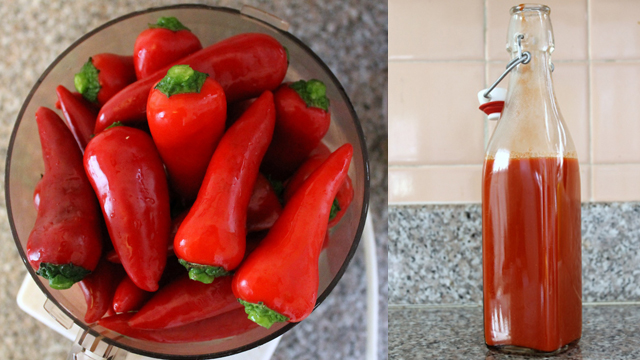
window.__IS_SSR__=true
window.__INITIAL_STATE__={
"attachmentsReducer": {
"audio_0": {
"type": "attachments",
"id": "audio_0",
"imgSizes": {
"kqedFullSize": {
"file": "https://ww2.kqed.org/news/wp-content/themes/KQED-unified/img/audio_bgs/background0.jpg"
}
}
},
"audio_1": {
"type": "attachments",
"id": "audio_1",
"imgSizes": {
"kqedFullSize": {
"file": "https://ww2.kqed.org/news/wp-content/themes/KQED-unified/img/audio_bgs/background1.jpg"
}
}
},
"audio_2": {
"type": "attachments",
"id": "audio_2",
"imgSizes": {
"kqedFullSize": {
"file": "https://ww2.kqed.org/news/wp-content/themes/KQED-unified/img/audio_bgs/background2.jpg"
}
}
},
"audio_3": {
"type": "attachments",
"id": "audio_3",
"imgSizes": {
"kqedFullSize": {
"file": "https://ww2.kqed.org/news/wp-content/themes/KQED-unified/img/audio_bgs/background3.jpg"
}
}
},
"audio_4": {
"type": "attachments",
"id": "audio_4",
"imgSizes": {
"kqedFullSize": {
"file": "https://ww2.kqed.org/news/wp-content/themes/KQED-unified/img/audio_bgs/background4.jpg"
}
}
},
"placeholder": {
"type": "attachments",
"id": "placeholder",
"imgSizes": {
"thumbnail": {
"file": "https://cdn.kqed.org/wp-content/uploads/2024/12/KQED-Default-Image-816638274-2000x1333-1-160x107.jpg",
"width": 160,
"height": 107,
"mimeType": "image/jpeg"
},
"medium": {
"file": "https://cdn.kqed.org/wp-content/uploads/2024/12/KQED-Default-Image-816638274-2000x1333-1-800x533.jpg",
"width": 800,
"height": 533,
"mimeType": "image/jpeg"
},
"medium_large": {
"file": "https://cdn.kqed.org/wp-content/uploads/2024/12/KQED-Default-Image-816638274-2000x1333-1-768x512.jpg",
"width": 768,
"height": 512,
"mimeType": "image/jpeg"
},
"large": {
"file": "https://cdn.kqed.org/wp-content/uploads/2024/12/KQED-Default-Image-816638274-2000x1333-1-1020x680.jpg",
"width": 1020,
"height": 680,
"mimeType": "image/jpeg"
},
"1536x1536": {
"file": "https://cdn.kqed.org/wp-content/uploads/2024/12/KQED-Default-Image-816638274-2000x1333-1-1536x1024.jpg",
"width": 1536,
"height": 1024,
"mimeType": "image/jpeg"
},
"fd-lrg": {
"file": "https://cdn.kqed.org/wp-content/uploads/2024/12/KQED-Default-Image-816638274-2000x1333-1-1536x1024.jpg",
"width": 1536,
"height": 1024,
"mimeType": "image/jpeg"
},
"fd-med": {
"file": "https://cdn.kqed.org/wp-content/uploads/2024/12/KQED-Default-Image-816638274-2000x1333-1-1020x680.jpg",
"width": 1020,
"height": 680,
"mimeType": "image/jpeg"
},
"fd-sm": {
"file": "https://cdn.kqed.org/wp-content/uploads/2024/12/KQED-Default-Image-816638274-2000x1333-1-800x533.jpg",
"width": 800,
"height": 533,
"mimeType": "image/jpeg"
},
"post-thumbnail": {
"file": "https://cdn.kqed.org/wp-content/uploads/2024/12/KQED-Default-Image-816638274-2000x1333-1-672x372.jpg",
"width": 672,
"height": 372,
"mimeType": "image/jpeg"
},
"twentyfourteen-full-width": {
"file": "https://cdn.kqed.org/wp-content/uploads/2024/12/KQED-Default-Image-816638274-2000x1333-1-1038x576.jpg",
"width": 1038,
"height": 576,
"mimeType": "image/jpeg"
},
"xxsmall": {
"file": "https://cdn.kqed.org/wp-content/uploads/2024/12/KQED-Default-Image-816638274-2000x1333-1-160x107.jpg",
"width": 160,
"height": 107,
"mimeType": "image/jpeg"
},
"xsmall": {
"file": "https://cdn.kqed.org/wp-content/uploads/2024/12/KQED-Default-Image-816638274-2000x1333-1-672x372.jpg",
"width": 672,
"height": 372,
"mimeType": "image/jpeg"
},
"small": {
"file": "https://cdn.kqed.org/wp-content/uploads/2024/12/KQED-Default-Image-816638274-2000x1333-1-672x372.jpg",
"width": 672,
"height": 372,
"mimeType": "image/jpeg"
},
"xlarge": {
"file": "https://cdn.kqed.org/wp-content/uploads/2024/12/KQED-Default-Image-816638274-2000x1333-1-1020x680.jpg",
"width": 1020,
"height": 680,
"mimeType": "image/jpeg"
},
"full-width": {
"file": "https://cdn.kqed.org/wp-content/uploads/2024/12/KQED-Default-Image-816638274-2000x1333-1-1920x1280.jpg",
"width": 1920,
"height": 1280,
"mimeType": "image/jpeg"
},
"guest-author-32": {
"file": "https://cdn.kqed.org/wp-content/uploads/2025/01/KQED-Default-Image-816638274-1333x1333-1-160x160.jpg",
"width": 32,
"height": 32,
"mimeType": "image/jpeg"
},
"guest-author-50": {
"file": "https://cdn.kqed.org/wp-content/uploads/2025/01/KQED-Default-Image-816638274-1333x1333-1-160x160.jpg",
"width": 50,
"height": 50,
"mimeType": "image/jpeg"
},
"guest-author-64": {
"file": "https://cdn.kqed.org/wp-content/uploads/2025/01/KQED-Default-Image-816638274-1333x1333-1-160x160.jpg",
"width": 64,
"height": 64,
"mimeType": "image/jpeg"
},
"guest-author-96": {
"file": "https://cdn.kqed.org/wp-content/uploads/2025/01/KQED-Default-Image-816638274-1333x1333-1-160x160.jpg",
"width": 96,
"height": 96,
"mimeType": "image/jpeg"
},
"guest-author-128": {
"file": "https://cdn.kqed.org/wp-content/uploads/2025/01/KQED-Default-Image-816638274-1333x1333-1-160x160.jpg",
"width": 128,
"height": 128,
"mimeType": "image/jpeg"
},
"detail": {
"file": "https://cdn.kqed.org/wp-content/uploads/2025/01/KQED-Default-Image-816638274-1333x1333-1-160x160.jpg",
"width": 160,
"height": 160,
"mimeType": "image/jpeg"
},
"kqedFullSize": {
"file": "https://cdn.kqed.org/wp-content/uploads/2024/12/KQED-Default-Image-816638274-2000x1333-1.jpg",
"width": 2000,
"height": 1333
}
}
},
"bayareabites_77694": {
"type": "attachments",
"id": "bayareabites_77694",
"meta": {
"index": "attachments_1716263798",
"site": "bayareabites",
"id": "77694",
"found": true
},
"parent": 77684,
"imgSizes": {
"kqedFullSize": {
"file": "https://ww2.kqed.org/app/uploads/sites/24/2014/02/sriracha-640x360.jpg",
"width": 640,
"height": 360
}
},
"publishDate": 1391572036,
"modified": 1391572036,
"caption": null,
"description": null,
"title": "sriracha-640x360",
"credit": null,
"status": "inherit",
"isLoading": false,
"fetchFailed": false
},
"bayareabites_77716": {
"type": "attachments",
"id": "bayareabites_77716",
"meta": {
"index": "attachments_1716263798",
"site": "bayareabites",
"id": "77716",
"found": true
},
"parent": 77707,
"imgSizes": {
"kqedFullSize": {
"file": "https://ww2.kqed.org/app/uploads/sites/24/2014/02/simpsons-beerbuddy.jpg",
"width": 624,
"height": 350
}
},
"publishDate": 1391621042,
"modified": 1391621042,
"caption": null,
"description": null,
"title": "simpsons-beerbuddy",
"credit": null,
"status": "inherit",
"isLoading": false,
"fetchFailed": false
},
"bayareabites_77631": {
"type": "attachments",
"id": "bayareabites_77631",
"meta": {
"index": "attachments_1716263798",
"site": "bayareabites",
"id": "77631",
"found": true
},
"parent": 77622,
"imgSizes": {
"kqedFullSize": {
"file": "https://ww2.kqed.org/app/uploads/sites/24/2014/02/gmo-dancharles.jpg",
"width": 624,
"height": 467
}
},
"publishDate": 1391534384,
"modified": 1391534384,
"caption": null,
"description": null,
"title": "gmo-dancharles",
"credit": null,
"status": "inherit",
"isLoading": false,
"fetchFailed": false
},
"bayareabites_77546": {
"type": "attachments",
"id": "bayareabites_77546",
"meta": {
"index": "attachments_1716263798",
"site": "bayareabites",
"id": "77546",
"found": true
},
"parent": 77537,
"imgSizes": {
"kqedFullSize": {
"file": "https://ww2.kqed.org/app/uploads/sites/24/2014/02/pot-edibles.jpg",
"width": 624,
"height": 350
}
},
"publishDate": 1391400848,
"modified": 1391400848,
"caption": null,
"description": null,
"title": "pot-edibles",
"credit": null,
"status": "inherit",
"isLoading": false,
"fetchFailed": false
},
"bayareabites_77441": {
"type": "attachments",
"id": "bayareabites_77441",
"meta": {
"index": "attachments_1716263798",
"site": "bayareabites",
"id": "77441",
"found": true
},
"parent": 77440,
"imgSizes": {
"kqedFullSize": {
"file": "https://ww2.kqed.org/app/uploads/sites/24/2014/01/screen-shot-2014-01-30-at-6.23.02-pm-d698a6fe1c70e2c8c89894b8483ef033d9c95eee.png",
"width": 780,
"height": 585
}
},
"publishDate": 1391186024,
"modified": 1391186024,
"caption": null,
"description": null,
"title": "The Full House cast John Stamos, Bob Saget and Dave Coulier are featured in Dannon's Superbowl ad.",
"credit": null,
"status": "inherit",
"isLoading": false,
"fetchFailed": false
},
"bayareabites_77255": {
"type": "attachments",
"id": "bayareabites_77255",
"meta": {
"index": "attachments_1716263798",
"site": "bayareabites",
"id": "77255",
"found": true
},
"parent": 77230,
"imgSizes": {
"kqedFullSize": {
"file": "https://ww2.kqed.org/app/uploads/sites/24/2014/01/farmingland.jpg",
"width": 624,
"height": 350
}
},
"publishDate": 1390849126,
"modified": 1390849126,
"caption": null,
"description": null,
"title": "farmingland",
"credit": null,
"status": "inherit",
"isLoading": false,
"fetchFailed": false
},
"bayareabites_77227": {
"type": "attachments",
"id": "bayareabites_77227",
"meta": {
"index": "attachments_1716263798",
"site": "bayareabites",
"id": "77227",
"found": true
},
"parent": 77222,
"imgSizes": {
"kqedFullSize": {
"file": "https://ww2.kqed.org/app/uploads/sites/24/2014/01/moonshine.jpg",
"width": 624,
"height": 350
}
},
"publishDate": 1390846695,
"modified": 1390846695,
"caption": null,
"description": null,
"title": "moonshine",
"credit": null,
"status": "inherit",
"isLoading": false,
"fetchFailed": false
},
"bayareabites_76961": {
"type": "attachments",
"id": "bayareabites_76961",
"meta": {
"index": "attachments_1716263798",
"site": "bayareabites",
"id": "76961",
"found": true
},
"parent": 76947,
"imgSizes": {
"kqedFullSize": {
"file": "https://ww2.kqed.org/app/uploads/sites/24/2014/01/farmdata.jpg",
"width": 624,
"height": 350
}
},
"publishDate": 1390502861,
"modified": 1390502861,
"caption": null,
"description": null,
"title": "farmdata",
"credit": null,
"status": "inherit",
"isLoading": false,
"fetchFailed": false
},
"bayareabites_76683": {
"type": "attachments",
"id": "bayareabites_76683",
"meta": {
"index": "attachments_1716263798",
"site": "bayareabites",
"id": "76683",
"found": true
},
"parent": 76678,
"imgSizes": {
"kqedFullSize": {
"file": "https://ww2.kqed.org/app/uploads/sites/24/2014/01/160884752-1.jpg",
"width": 727,
"height": 481
}
},
"publishDate": 1389938495,
"modified": 1389938495,
"caption": "People often use their smart phone even while eating now. Photo: Thinkstock",
"description": "People often use their smart phone even while eating now. Photo: Thinkstock",
"title": "160884752 (1)",
"credit": null,
"status": "inherit",
"isLoading": false,
"fetchFailed": false
},
"bayareabites_76652": {
"type": "attachments",
"id": "bayareabites_76652",
"meta": {
"index": "attachments_1716263798",
"site": "bayareabites",
"id": "76652",
"found": true
},
"parent": 76642,
"imgSizes": {
"kqedFullSize": {
"file": "https://ww2.kqed.org/app/uploads/sites/24/2014/01/dinner-club.jpg",
"width": 624,
"height": 351
}
},
"publishDate": 1389903119,
"modified": 1389903119,
"caption": null,
"description": null,
"title": "dinner-club",
"credit": null,
"status": "inherit",
"isLoading": false,
"fetchFailed": false
},
"bayareabites_76477": {
"type": "attachments",
"id": "bayareabites_76477",
"meta": {
"index": "attachments_1716263798",
"site": "bayareabites",
"id": "76477",
"found": true
},
"parent": 76459,
"imgSizes": {
"kqedFullSize": {
"file": "https://ww2.kqed.org/app/uploads/sites/24/2014/01/3-d-printer.jpg",
"width": 624,
"height": 351
}
},
"publishDate": 1389723504,
"modified": 1389723504,
"caption": null,
"description": null,
"title": "3-d-printer",
"credit": null,
"status": "inherit",
"isLoading": false,
"fetchFailed": false
},
"bayareabites_76212": {
"type": "attachments",
"id": "bayareabites_76212",
"meta": {
"index": "attachments_1716263798",
"site": "bayareabites",
"id": "76212",
"found": true
},
"parent": 76211,
"imgSizes": {
"kqedFullSize": {
"file": "https://ww2.kqed.org/app/uploads/sites/24/2014/01/3306-2-84c22cdc79fc9e599fd91bfc7fe997c45619cb0b-e1389221903818.jpg",
"width": 640,
"height": 480
}
},
"publishDate": 1389221542,
"modified": 1389221542,
"caption": "Soon after being sliced, a conventional Granny Smith apple (left) starts to brown, while a newly developed GM Granny Smith stays fresher looking. Photo courtesy of Okanagan Specialty Fruits Inc.",
"description": null,
"title": "Soon after being sliced, a conventional Granny Smith apple (left) starts to brown, while a newly developed GM Granny Smith stays fresher looking.",
"credit": null,
"status": "inherit",
"isLoading": false,
"fetchFailed": false
}
},
"audioPlayerReducer": {
"postId": "stream_live",
"isPaused": true,
"isPlaying": false,
"pfsActive": false,
"pledgeModalIsOpen": true,
"playerDrawerIsOpen": false,
"liveAudioPlayStartedAt": 0,
"liveAudioPlayContext": ""
},
"authorsReducer": {
"byline_bayareabites_77707": {
"type": "authors",
"id": "byline_bayareabites_77707",
"meta": {
"override": true
},
"slug": "byline_bayareabites_77707",
"name": "Maanvi Singh",
"isLoading": false
},
"byline_bayareabites_77622": {
"type": "authors",
"id": "byline_bayareabites_77622",
"meta": {
"override": true
},
"slug": "byline_bayareabites_77622",
"name": "Dan Charles",
"isLoading": false
},
"byline_bayareabites_77537": {
"type": "authors",
"id": "byline_bayareabites_77537",
"meta": {
"override": true
},
"slug": "byline_bayareabites_77537",
"name": "Luke Runyon",
"isLoading": false
},
"byline_bayareabites_77440": {
"type": "authors",
"id": "byline_bayareabites_77440",
"meta": {
"override": true
},
"slug": "byline_bayareabites_77440",
"name": "Allison Aubrey",
"isLoading": false
},
"byline_bayareabites_77230": {
"type": "authors",
"id": "byline_bayareabites_77230",
"meta": {
"override": true
},
"slug": "byline_bayareabites_77230",
"name": "Dan Charles",
"isLoading": false
},
"byline_bayareabites_77222": {
"type": "authors",
"id": "byline_bayareabites_77222",
"meta": {
"override": true
},
"slug": "byline_bayareabites_77222",
"name": "Alastair Bland",
"isLoading": false
},
"byline_bayareabites_76947": {
"type": "authors",
"id": "byline_bayareabites_76947",
"meta": {
"override": true
},
"slug": "byline_bayareabites_76947",
"name": "Dan Charles",
"isLoading": false
},
"byline_bayareabites_76642": {
"type": "authors",
"id": "byline_bayareabites_76642",
"meta": {
"override": true
},
"slug": "byline_bayareabites_76642",
"name": "Arun Venugopal",
"isLoading": false
},
"byline_bayareabites_76459": {
"type": "authors",
"id": "byline_bayareabites_76459",
"meta": {
"override": true
},
"slug": "byline_bayareabites_76459",
"name": "Michaeleen Doucleff",
"isLoading": false
},
"byline_bayareabites_76211": {
"type": "authors",
"id": "byline_bayareabites_76211",
"meta": {
"override": true
},
"slug": "byline_bayareabites_76211",
"name": "Dan Charles",
"isLoading": false
},
"kdomara": {
"type": "authors",
"id": "1459",
"meta": {
"index": "authors_1716337520",
"id": "1459",
"found": true
},
"name": "Kelly O'Mara",
"firstName": "Kelly",
"lastName": "O'Mara",
"slug": "kdomara",
"email": "komara@kqed.org",
"display_author_email": false,
"staff_mastheads": [
"news"
],
"title": "KQED Contributor",
"bio": "Kelly O'Mara is a writer and reporter in the San Francisco Bay Area. She writes about food, health, sports, travel, business and California news. Her work has appeared on KQED, online for Outside Magazine, epsnW, VICE and in Competitor Magazine, among others. Follow Kelly on Twitter \u003ca href=\"https://twitter.com/kellydomara\">@kellydomara\u003c/a>.",
"avatar": "https://secure.gravatar.com/avatar/768fec7412028b72f13bdd0f5f9d8186?s=600&d=blank&r=g",
"twitter": null,
"facebook": null,
"instagram": null,
"linkedin": null,
"sites": [
{
"site": "arts",
"roles": []
},
{
"site": "news",
"roles": []
},
{
"site": "bayareabites",
"roles": []
},
{
"site": "stateofhealth",
"roles": []
},
{
"site": "science",
"roles": []
},
{
"site": "checkplease",
"roles": [
"editor"
]
},
{
"site": "food",
"roles": []
},
{
"site": "forum",
"roles": [
"editor"
]
},
{
"site": "liveblog",
"roles": [
"editor"
]
}
],
"headData": {
"title": "Kelly O'Mara | KQED",
"description": "KQED Contributor",
"ogImgSrc": "https://secure.gravatar.com/avatar/768fec7412028b72f13bdd0f5f9d8186?s=600&d=blank&r=g",
"twImgSrc": "https://secure.gravatar.com/avatar/768fec7412028b72f13bdd0f5f9d8186?s=600&d=blank&r=g"
},
"isLoading": false,
"link": "/author/kdomara"
},
"katewilliams": {
"type": "authors",
"id": "5485",
"meta": {
"index": "authors_1716337520",
"id": "5485",
"found": true
},
"name": "Kate Williams",
"firstName": "Kate",
"lastName": "Williams",
"slug": "katewilliams",
"email": "williaka@gmail.com",
"display_author_email": false,
"staff_mastheads": [],
"title": null,
"bio": "Kate Williams grew up outside of Atlanta, where twenty-pound baskets of peaches were an end-of-summer tradition. After spending time in Boston developing recipes for America's Test Kitchen and pretending to be a New Englander, she moved to sunny Berkeley. Here she works as a personal chef and food writer, covering topics ranging from taco trucks to modernist cookbooks. In addition to KQED's Bay Area Bites, Kate's work appears on Serious Eats, Berkeleyside NOSH, The Oxford American, America's Test Kitchen cookbooks, and Food52.",
"avatar": "https://secure.gravatar.com/avatar/25623fe56e181fe8b6ee92fd0ea077de?s=600&d=blank&r=g",
"twitter": "KateHWilliams",
"facebook": null,
"instagram": null,
"linkedin": null,
"sites": [
{
"site": "bayareabites",
"roles": [
"contributor"
]
},
{
"site": "food",
"roles": [
"contributor"
]
}
],
"headData": {
"title": "Kate Williams | KQED",
"description": null,
"ogImgSrc": "https://secure.gravatar.com/avatar/25623fe56e181fe8b6ee92fd0ea077de?s=600&d=blank&r=g",
"twImgSrc": "https://secure.gravatar.com/avatar/25623fe56e181fe8b6ee92fd0ea077de?s=600&d=blank&r=g"
},
"isLoading": false,
"link": "/author/katewilliams"
}
},
"pagesReducer": {
"bayareabites_category_food-and-technology": {
"type": "terms",
"id": "bayareabites_4084",
"meta": {
"index": "terms_1716263798",
"site": "bayareabites",
"id": "4084",
"score": 14.405561
},
"featImg": null,
"name": "food trends and technology",
"description": null,
"taxonomy": "category",
"headData": {
"twImgId": null,
"twTitle": null,
"ogTitle": null,
"ogImgId": null,
"twDescription": null,
"description": null,
"title": "food trends and technology Archives | KQED Bay Area Bites",
"ogDescription": null
},
"ttid": 2573,
"slug": "food-and-technology",
"isLoading": false,
"title": "food trends and technology",
"pageMeta": {
"site": "bayareabites",
"WpPageTemplate": "page-topic-editorial",
"currentPage": 42
},
"blocks": [
{
"blockName": "kqed/post-list",
"attrs": {
"layout": "cardArticle2",
"query": "posts/bayareabites?category=food-and-technology",
"seeMore": false,
"paginated": true,
"page": 42
}
},
{
"blockName": "kqed/ad"
}
]
}
},
"pfsSessionReducer": {},
"postsReducer": {
"stream_live": {
"type": "live",
"id": "stream_live",
"audioUrl": "https://streams.kqed.org/kqedradio",
"title": "Live Stream",
"excerpt": "Live Stream information currently unavailable.",
"link": "/radio",
"featImg": "",
"label": {
"name": "KQED Live",
"link": "/"
}
},
"stream_kqedNewscast": {
"type": "posts",
"id": "stream_kqedNewscast",
"audioUrl": "https://www.kqed.org/.stream/anon/radio/RDnews/newscast.mp3?_=1",
"title": "KQED Newscast",
"featImg": "",
"label": {
"name": "88.5 FM",
"link": "/"
}
},
"bayareabites_77684": {
"type": "posts",
"id": "bayareabites_77684",
"meta": {
"index": "posts_1716263798",
"site": "bayareabites",
"id": "77684",
"score": null,
"sort": [
1391622245000
]
},
"parent": 0,
"labelTerm": {
"site": "bayareabites"
},
"blocks": [],
"publishDate": 1391622245,
"format": "aside",
"disqusTitle": "DIY Sriracha: Make it at Home and Never Worry About a Hot Sauce Shortage Again",
"title": "DIY Sriracha: Make it at Home and Never Worry About a Hot Sauce Shortage Again",
"headTitle": "Bay Area Bites | KQED Food",
"content": "\u003cfigure id=\"attachment_77693\" class=\"wp-caption aligncenter\" style=\"max-width: 500px\">\u003ca href=\"http://ww2.kqed.org/bayareabites/wp-content/uploads/sites/24/2014/02/final-bottled-sauce.jpg\">\u003cimg src=\"http://ww2.kqed.org/bayareabites/wp-content/uploads/sites/24/2014/02/final-bottled-sauce.jpg\" alt=\"Make Sriracha hot sauce at home to ensure a constant supply. Photo: Kate Williams\" width=\"500\" class=\"size-full wp-image-77693\">\u003c/a>\u003cfigcaption class=\"wp-caption-text\">Make Sriracha hot sauce at home to ensure a constant supply. Photo: Kate Williams\u003c/figcaption>\u003c/figure>\n\u003cp>Before Christmas, back when the Srirachapocalypse was nigh, I was privy to a long conversation on strategies for stockpiling the chile-garlic hot sauce. We talked about which stores still carried it, where was the best place to store it, how long can one last on Tabasco alone, and plenty of other topics including a comparison of the number of bottles currently in our kitchens. Me? I had one bottle, close to empty, in my fridge at the time. Still, I don’t necessarily put Sriracha on everything, and I wasn’t terribly worried about its pending depletion. But given the fact that so many other spice-loving folks were already hoarding the stuff, I figured there must be a better way to survive the shortage than buying out Berkeley Bowl’s supply.\u003c/p>\n\u003cp>With a little bit of patience and a pair of plastic gloves, it’s not too complicated to make Sriracha at home. Plus, heat, garlic, and sugar levels can be easily modified; a boon if you, like me, find Huy Fong Sriracha a bit too sweet. \u003c/p>\n\u003cfigure id=\"attachment_77689\" class=\"wp-caption aligncenter\" style=\"max-width: 1000px\">\u003ca href=\"http://ww2.kqed.org/bayareabites/wp-content/uploads/sites/24/2014/02/very-full-food-processor.jpg\">\u003cimg src=\"http://ww2.kqed.org/bayareabites/wp-content/uploads/sites/24/2014/02/very-full-food-processor.jpg\" alt=\"Use easy-to-find red Fresno chiles for a medium-hot sauce, or add spicier chiles, like habaneros, for a more daring blend. Whichever you choose, pulse them to a mash in a food processor. Photo: Kate Williams\" width=\"1000\" height=\"748\" class=\"size-full wp-image-77689\">\u003c/a>\u003cfigcaption class=\"wp-caption-text\">Use easy-to-find red Fresno chiles for a medium-hot sauce, or add spicier chiles, like habaneros, for a more daring blend. Whichever you choose, pulse them to a mash in a food processor. Photo: Kate Williams\u003c/figcaption>\u003c/figure>\n\u003cp>The first step is to make a pepper-garlic mash and let the mixture ferment for around two weeks. Traditionally, chile-garlic sauce is made with red serranos, but I prefer easier-to-find and slightly milder Fresno chiles. For the best flavor, I trim off just the top part of the stem, leaving the aromatic base. I pulse the trimmed chiles with 12 cloves of garlic in a food processor until they’ve broken down a bit before adding brown sugar and kosher salt to the mix. I keep it running until the chiles and garlic have turned into seed-sized bits, and they’ve released much of their juice. \u003c/p>\n\u003cfigure id=\"attachment_77691\" class=\"wp-caption aligncenter\" style=\"max-width: 1000px\">\u003ca href=\"http://ww2.kqed.org/bayareabites/wp-content/uploads/sites/24/2014/02/yogurt-draining.jpg\">\u003cimg src=\"http://ww2.kqed.org/bayareabites/wp-content/uploads/sites/24/2014/02/yogurt-draining.jpg\" alt=\"Adding the whey drained off from a cup of yogurt will add live cultures to the chile mash, significantly speeding up the fermentation process. Photo: Kate Williams\" width=\"1000\" height=\"667\" class=\"size-full wp-image-77691\">\u003c/a>\u003cfigcaption class=\"wp-caption-text\">Adding the whey drained off from a cup of yogurt will add live cultures to the chile mash, significantly speeding up the fermentation process. Photo: Kate Williams\u003c/figcaption>\u003c/figure>\n\u003cp>Technically, the chile mixture will ferment safely on its own, as the salt will inhibit the growth of any bad bacteria. Yet I like to give my ferments a little bit of a jump-start with some live cultures. The easiest place to get live cultures is from the whey that drains out of yogurt. I simply scoop a cup of yogurt into a coffee-filter lined strainer and let it drip until I’ve collected 1/4 cup of liquid. (It’ll take a few hours, so this is best to start ahead of time.) I pour the whey into the processor with the chile mash, and pulse to combine. Then I transfer the mixture into a 1-quart glass jar—but I don’t seal it.\u003c/p>\n\u003cp>The fermentation process will create a carbon dioxide by-product that will need a way to escape. At the same time, it is best to cover the jar to let in as little oxygen as possible. There are air-locks you can purchase that will screw on to canning jars, but I find that simply flipping the lid upside down and screwing the band on loosely will do the trick well enough.\u003c/p>\n\u003cfigure id=\"attachment_77692\" class=\"wp-caption aligncenter\" style=\"max-width: 500px\">\u003ca href=\"http://ww2.kqed.org/bayareabites/wp-content/uploads/sites/24/2014/02/fermenting-in-progress.jpg\">\u003cimg src=\"http://ww2.kqed.org/bayareabites/wp-content/uploads/sites/24/2014/02/fermenting-in-progress.jpg\" alt=\"Once fermentation begins, the chile mash will rise in the jar and bubbles will form throughout. The mash may separate from the liquid at the bottom of the jar. Photo: Kate Williams\" width=\"500\" class=\"size-full wp-image-77692\">\u003c/a>\u003cfigcaption class=\"wp-caption-text\">Once fermentation begins, the chile mash will rise in the jar and bubbles will form throughout. The mash may separate from the liquid at the bottom of the jar. Photo: Kate Williams\u003c/figcaption>\u003c/figure>\n\u003cp>At this point, all the chile mash needs is time. For the first few days, you may not see any changes in the jar; but at some point around day 3 or 4, the mash will appear to grow, form bubbles, and perhaps separate from the liquid at the bottom of this jar. This is good. Continue to monitor the jar. You can open the lid from time to time, take a whiff, and check for mold. The mash should smell sweet, spicy, and maybe a little sour. If anything smells super funky (like paint thinner), you’ll unfortunately need to chuck it and start again.\u003c/p>\n\u003cp>[ad fullwidth]\u003c/p>\n\u003cp>Depending on the ambient temperature of your kitchen, the fermentation process could take as little as a week, or as long as three. It hasn’t been very cold this winter, so I found that the chile mash took about 12 days to ferment properly. You’ll know that fermentation has slowed when the mash sinks back down to in the jar. At this point, it should smell like Sriracha. You’ll probably be more than ready to eat it. \u003c/p>\n\u003cfigure id=\"attachment_77690\" class=\"wp-caption aligncenter\" style=\"max-width: 500px\">\u003ca href=\"http://ww2.kqed.org/bayareabites/wp-content/uploads/sites/24/2014/02/final-ingredients.jpg\">\u003cimg src=\"http://ww2.kqed.org/bayareabites/wp-content/uploads/sites/24/2014/02/final-ingredients.jpg\" alt=\"After fermentation has slowed down, transfer the chile mash to a blender with distilled vinegar and puree. Photo: Kate Williams\" width=\"500\" class=\"size-full wp-image-77690\">\u003c/a>\u003cfigcaption class=\"wp-caption-text\">After fermentation has slowed down, transfer the chile mash to a blender with distilled vinegar and puree. Photo: Kate Williams\u003c/figcaption>\u003c/figure>\n\u003cp>But before digging in, you’ll need to turn the chunky chile mash into smooth sauce. First, transfer the mash to a blender (the stronger the motor, the better) with 1/2 cup of regular white vinegar. Slowly crank the blender up to high and puree the mixture as smooth as possible. Once it looks smooth, blend it some more.\u003c/p>\n\u003cfigure id=\"attachment_77688\" class=\"wp-caption aligncenter\" style=\"max-width: 1000px\">\u003ca href=\"http://ww2.kqed.org/bayareabites/wp-content/uploads/sites/24/2014/02/level-of-dryness.jpg\">\u003cimg src=\"http://ww2.kqed.org/bayareabites/wp-content/uploads/sites/24/2014/02/level-of-dryness.jpg\" alt=\"When straining the mixture, use a spatuala to press as much of the chile flesh through the strainer as possible. Leave only a dry mixture of skins and seeds behind. Photo: Kate Williams\" width=\"1000\" height=\"667\" class=\"size-full wp-image-77688\">\u003c/a>\u003cfigcaption class=\"wp-caption-text\">When straining the mixture, use a spatuala to press as much of the chile flesh through the strainer as possible. Leave only a dry mixture of skins and seeds behind. Photo: Kate Williams\u003c/figcaption>\u003c/figure>\n\u003cp>Now pour the vinegar and chile mixture through a fine-mesh strainer into a medium saucepan. I like to use a spatula or wooden spoon to smoosh as much of the chile flesh through the strainer as possible, leaving behind only the seeds and remaining pieces of skin. (If your strainer is on the small side, you will likely need to do this step in batches. Take your time, and consider this step to be your arm workout for the week.)\u003c/p>\n\u003cp>Finally, once I’ve smooshed the puree through the strainer, I bring the sauce to a simmer, and continue to cook it until the sauce has thickened enough to coat the back of a spoon. Now all that’s left to do is bottle the sauce; a plastic squeeze bottle is nice for serving, but I like the aesthetics of a glass bottle myself. Go ahead, use it on everything.\u003c/p>\n\u003ch3>Recipe: DIY Sriracha\u003c/h3>\n\u003cp>\u003cem>Makes about 2 cups\u003c/em> \u003c/p>\n\u003cul>\n\u003cstrong>Ingredients:\u003c/strong>\n\u003cli>1\tcup plain yogurt with live cultures\u003c/li>\n\u003cli>1 1/2\tpounds red jalapenos or Fresno chiles, stems snipped off leaving green tops intact\u003c/li>\n\u003cli>12\tcloves garlic, peeled\u003c/li>\n\u003cli>1/4\tcup brown sugar\u003c/li>\n\u003cli>1\ttablespoon kosher salt\u003c/li>\n\u003cli>1/2\tcup distilled white vinegar\u003c/li>\n\u003c/ul>\n\u003cul>\n\u003cstrong>Equipment:\u003c/strong>\n\u003cli>Fine-mesh strainer\u003c/li>\n\u003cli>Coffee Filters\u003c/li>\n\u003cli>Food processor\u003c/li>\n\u003cli>Blender\u003c/li>\n\u003cli>1-quart glass jar with two-part lid\u003c/li>\n\u003cli>Medium saucepan\u003c/li>\n\u003cli>Glass jar or plastic squeeze bottle for storage\u003c/li>\n\u003c/ul>\n\u003cp>[ad floatright]\u003c/p>\n\u003cp>\u003cstrong>Instructions:\u003c/strong>\u003c/p>\n\u003col>\n\u003cli>Line a fine-mesh strainer with a triple layer of coffee filters and set it over a liquid measuring cup. Spoon the yogurt into the strainer, cover, and refrigerate until the yogurt has released 1/4 cup of liquid, about 2 hours. Keep the thickened yogurt for a snack.\u003c/li>\n\u003cli>Place the jalapenos, garlic, sugar, and salt in a food processor, and pulse until the chiles are finely chopped, stopping to scrape the sides of the bowl as needed. Add the whey and pulse to combine.\u003c/li>\n\u003cli>Transfer the mixture to a 1-quart class canning jar and cover, turning the lid upside down so that the rubber gasket faces up. Screw band on loosely. You will want air to escape the jar.\u003c/li>\n\u003cli>Let jar sit in a dark place at room temperature to ferment until the liquid level has risen and then fallen (bubbles will form in mixture), indicating that fermentation has slowed. This will take around 12 to 16 days.\u003c/li>\n\u003cli>Transfer chile mixture to the jar of a blender, add the white vinegar, and puree until completely smooth, 1-3 minutes. Transfer to a fine mesh strainer set over a medium saucepan. Strain chile mixture into the saucepan, using a rubber spatula to push through as much pulp as you can. You’ll want to leave behind only the seeds and large pieces of chiles behind.\u003c/li>\n\u003cli>Bring the mixture to a boil over medium-high heat. Reduce the heat to medium-low and simmer until the sauce thickens enough to cling to a spoon, about 15 minutes. Transfer to glass jar or plastic squeeze bottle and store in the refrigerator for up to 6 months.\u003c/li>\n\u003c/ol>\n\n",
"disqusIdentifier": "77684 http://blogs.kqed.org/bayareabites/?p=77684",
"disqusUrl": "https://ww2.kqed.org/bayareabites/2014/02/05/diy-sriracha-make-it-at-home-and-never-worry-about-a-hot-sauce-shortage-again/",
"stats": {
"hasVideo": false,
"hasChartOrMap": false,
"hasAudio": false,
"hasPolis": false,
"wordCount": 1426,
"hasGoogleForm": false,
"hasGallery": false,
"hasHearkenModule": false,
"iframeSrcs": [],
"paragraphCount": 14
},
"modified": 1391708432,
"excerpt": "The Sriracha shortage may be over, but there's no reason to rely on the factory-made sauce when it can be fermented and bottled at home. Even better—DIY Sriracha is easily adaptable to suit varied tastes in heat, sweetness, and potency. Kate Williams runs through the steps.",
"headData": {
"twImgId": "",
"twTitle": "",
"ogTitle": "",
"ogImgId": "",
"twDescription": "",
"description": "The Sriracha shortage may be over, but there's no reason to rely on the factory-made sauce when it can be fermented and bottled at home. Even better—DIY Sriracha is easily adaptable to suit varied tastes in heat, sweetness, and potency. Kate Williams runs through the steps.",
"title": "DIY Sriracha: Make it at Home and Never Worry About a Hot Sauce Shortage Again | KQED",
"ogDescription": "",
"schema": {
"@context": "https://schema.org",
"@type": "Article",
"headline": "DIY Sriracha: Make it at Home and Never Worry About a Hot Sauce Shortage Again",
"datePublished": "2014-02-05T09:44:05-08:00",
"dateModified": "2014-02-06T09:40:32-08:00",
"image": "https://cdn.kqed.org/wp-content/uploads/2020/02/KQED-OG-Image@1x.png"
}
},
"guestAuthors": [],
"slug": "diy-sriracha-make-it-at-home-and-never-worry-about-a-hot-sauce-shortage-again",
"status": "publish",
"path": "/bayareabites/77684/diy-sriracha-make-it-at-home-and-never-worry-about-a-hot-sauce-shortage-again",
"audioTrackLength": null,
"parsedContent": [
{
"type": "contentString",
"content": "\u003cdiv class=\"post-body\">\u003cp>\u003cfigure id=\"attachment_77693\" class=\"wp-caption aligncenter\" style=\"max-width: 500px\">\u003ca href=\"http://ww2.kqed.org/bayareabites/wp-content/uploads/sites/24/2014/02/final-bottled-sauce.jpg\">\u003cimg src=\"http://ww2.kqed.org/bayareabites/wp-content/uploads/sites/24/2014/02/final-bottled-sauce.jpg\" alt=\"Make Sriracha hot sauce at home to ensure a constant supply. Photo: Kate Williams\" width=\"500\" class=\"size-full wp-image-77693\">\u003c/a>\u003cfigcaption class=\"wp-caption-text\">Make Sriracha hot sauce at home to ensure a constant supply. Photo: Kate Williams\u003c/figcaption>\u003c/figure>\n\u003cp>Before Christmas, back when the Srirachapocalypse was nigh, I was privy to a long conversation on strategies for stockpiling the chile-garlic hot sauce. We talked about which stores still carried it, where was the best place to store it, how long can one last on Tabasco alone, and plenty of other topics including a comparison of the number of bottles currently in our kitchens. Me? I had one bottle, close to empty, in my fridge at the time. Still, I don’t necessarily put Sriracha on everything, and I wasn’t terribly worried about its pending depletion. But given the fact that so many other spice-loving folks were already hoarding the stuff, I figured there must be a better way to survive the shortage than buying out Berkeley Bowl’s supply.\u003c/p>\n\u003cp>With a little bit of patience and a pair of plastic gloves, it’s not too complicated to make Sriracha at home. Plus, heat, garlic, and sugar levels can be easily modified; a boon if you, like me, find Huy Fong Sriracha a bit too sweet. \u003c/p>\n\u003cfigure id=\"attachment_77689\" class=\"wp-caption aligncenter\" style=\"max-width: 1000px\">\u003ca href=\"http://ww2.kqed.org/bayareabites/wp-content/uploads/sites/24/2014/02/very-full-food-processor.jpg\">\u003cimg src=\"http://ww2.kqed.org/bayareabites/wp-content/uploads/sites/24/2014/02/very-full-food-processor.jpg\" alt=\"Use easy-to-find red Fresno chiles for a medium-hot sauce, or add spicier chiles, like habaneros, for a more daring blend. Whichever you choose, pulse them to a mash in a food processor. Photo: Kate Williams\" width=\"1000\" height=\"748\" class=\"size-full wp-image-77689\">\u003c/a>\u003cfigcaption class=\"wp-caption-text\">Use easy-to-find red Fresno chiles for a medium-hot sauce, or add spicier chiles, like habaneros, for a more daring blend. Whichever you choose, pulse them to a mash in a food processor. Photo: Kate Williams\u003c/figcaption>\u003c/figure>\n\u003cp>The first step is to make a pepper-garlic mash and let the mixture ferment for around two weeks. Traditionally, chile-garlic sauce is made with red serranos, but I prefer easier-to-find and slightly milder Fresno chiles. For the best flavor, I trim off just the top part of the stem, leaving the aromatic base. I pulse the trimmed chiles with 12 cloves of garlic in a food processor until they’ve broken down a bit before adding brown sugar and kosher salt to the mix. I keep it running until the chiles and garlic have turned into seed-sized bits, and they’ve released much of their juice. \u003c/p>\n\u003cfigure id=\"attachment_77691\" class=\"wp-caption aligncenter\" style=\"max-width: 1000px\">\u003ca href=\"http://ww2.kqed.org/bayareabites/wp-content/uploads/sites/24/2014/02/yogurt-draining.jpg\">\u003cimg src=\"http://ww2.kqed.org/bayareabites/wp-content/uploads/sites/24/2014/02/yogurt-draining.jpg\" alt=\"Adding the whey drained off from a cup of yogurt will add live cultures to the chile mash, significantly speeding up the fermentation process. Photo: Kate Williams\" width=\"1000\" height=\"667\" class=\"size-full wp-image-77691\">\u003c/a>\u003cfigcaption class=\"wp-caption-text\">Adding the whey drained off from a cup of yogurt will add live cultures to the chile mash, significantly speeding up the fermentation process. Photo: Kate Williams\u003c/figcaption>\u003c/figure>\n\u003cp>Technically, the chile mixture will ferment safely on its own, as the salt will inhibit the growth of any bad bacteria. Yet I like to give my ferments a little bit of a jump-start with some live cultures. The easiest place to get live cultures is from the whey that drains out of yogurt. I simply scoop a cup of yogurt into a coffee-filter lined strainer and let it drip until I’ve collected 1/4 cup of liquid. (It’ll take a few hours, so this is best to start ahead of time.) I pour the whey into the processor with the chile mash, and pulse to combine. Then I transfer the mixture into a 1-quart glass jar—but I don’t seal it.\u003c/p>\n\u003cp>The fermentation process will create a carbon dioxide by-product that will need a way to escape. At the same time, it is best to cover the jar to let in as little oxygen as possible. There are air-locks you can purchase that will screw on to canning jars, but I find that simply flipping the lid upside down and screwing the band on loosely will do the trick well enough.\u003c/p>\n\u003cfigure id=\"attachment_77692\" class=\"wp-caption aligncenter\" style=\"max-width: 500px\">\u003ca href=\"http://ww2.kqed.org/bayareabites/wp-content/uploads/sites/24/2014/02/fermenting-in-progress.jpg\">\u003cimg src=\"http://ww2.kqed.org/bayareabites/wp-content/uploads/sites/24/2014/02/fermenting-in-progress.jpg\" alt=\"Once fermentation begins, the chile mash will rise in the jar and bubbles will form throughout. The mash may separate from the liquid at the bottom of the jar. Photo: Kate Williams\" width=\"500\" class=\"size-full wp-image-77692\">\u003c/a>\u003cfigcaption class=\"wp-caption-text\">Once fermentation begins, the chile mash will rise in the jar and bubbles will form throughout. The mash may separate from the liquid at the bottom of the jar. Photo: Kate Williams\u003c/figcaption>\u003c/figure>\n\u003cp>At this point, all the chile mash needs is time. For the first few days, you may not see any changes in the jar; but at some point around day 3 or 4, the mash will appear to grow, form bubbles, and perhaps separate from the liquid at the bottom of this jar. This is good. Continue to monitor the jar. You can open the lid from time to time, take a whiff, and check for mold. The mash should smell sweet, spicy, and maybe a little sour. If anything smells super funky (like paint thinner), you’ll unfortunately need to chuck it and start again.\u003c/p>\n\u003cp>\u003c/p>\u003c/div>",
"attributes": {
"named": {},
"numeric": []
}
},
{
"type": "component",
"content": "",
"name": "ad",
"attributes": {
"named": {
"label": "fullwidth"
},
"numeric": [
"fullwidth"
]
}
},
{
"type": "contentString",
"content": "\u003cdiv class=\"post-body\">\u003cp>\u003c/p>\n\u003cp>Depending on the ambient temperature of your kitchen, the fermentation process could take as little as a week, or as long as three. It hasn’t been very cold this winter, so I found that the chile mash took about 12 days to ferment properly. You’ll know that fermentation has slowed when the mash sinks back down to in the jar. At this point, it should smell like Sriracha. You’ll probably be more than ready to eat it. \u003c/p>\n\u003cfigure id=\"attachment_77690\" class=\"wp-caption aligncenter\" style=\"max-width: 500px\">\u003ca href=\"http://ww2.kqed.org/bayareabites/wp-content/uploads/sites/24/2014/02/final-ingredients.jpg\">\u003cimg src=\"http://ww2.kqed.org/bayareabites/wp-content/uploads/sites/24/2014/02/final-ingredients.jpg\" alt=\"After fermentation has slowed down, transfer the chile mash to a blender with distilled vinegar and puree. Photo: Kate Williams\" width=\"500\" class=\"size-full wp-image-77690\">\u003c/a>\u003cfigcaption class=\"wp-caption-text\">After fermentation has slowed down, transfer the chile mash to a blender with distilled vinegar and puree. Photo: Kate Williams\u003c/figcaption>\u003c/figure>\n\u003cp>But before digging in, you’ll need to turn the chunky chile mash into smooth sauce. First, transfer the mash to a blender (the stronger the motor, the better) with 1/2 cup of regular white vinegar. Slowly crank the blender up to high and puree the mixture as smooth as possible. Once it looks smooth, blend it some more.\u003c/p>\n\u003cfigure id=\"attachment_77688\" class=\"wp-caption aligncenter\" style=\"max-width: 1000px\">\u003ca href=\"http://ww2.kqed.org/bayareabites/wp-content/uploads/sites/24/2014/02/level-of-dryness.jpg\">\u003cimg src=\"http://ww2.kqed.org/bayareabites/wp-content/uploads/sites/24/2014/02/level-of-dryness.jpg\" alt=\"When straining the mixture, use a spatuala to press as much of the chile flesh through the strainer as possible. Leave only a dry mixture of skins and seeds behind. Photo: Kate Williams\" width=\"1000\" height=\"667\" class=\"size-full wp-image-77688\">\u003c/a>\u003cfigcaption class=\"wp-caption-text\">When straining the mixture, use a spatuala to press as much of the chile flesh through the strainer as possible. Leave only a dry mixture of skins and seeds behind. Photo: Kate Williams\u003c/figcaption>\u003c/figure>\n\u003cp>Now pour the vinegar and chile mixture through a fine-mesh strainer into a medium saucepan. I like to use a spatula or wooden spoon to smoosh as much of the chile flesh through the strainer as possible, leaving behind only the seeds and remaining pieces of skin. (If your strainer is on the small side, you will likely need to do this step in batches. Take your time, and consider this step to be your arm workout for the week.)\u003c/p>\n\u003cp>Finally, once I’ve smooshed the puree through the strainer, I bring the sauce to a simmer, and continue to cook it until the sauce has thickened enough to coat the back of a spoon. Now all that’s left to do is bottle the sauce; a plastic squeeze bottle is nice for serving, but I like the aesthetics of a glass bottle myself. Go ahead, use it on everything.\u003c/p>\n\u003ch3>Recipe: DIY Sriracha\u003c/h3>\n\u003cp>\u003cem>Makes about 2 cups\u003c/em> \u003c/p>\n\u003cul>\n\u003cstrong>Ingredients:\u003c/strong>\n\u003cli>1\tcup plain yogurt with live cultures\u003c/li>\n\u003cli>1 1/2\tpounds red jalapenos or Fresno chiles, stems snipped off leaving green tops intact\u003c/li>\n\u003cli>12\tcloves garlic, peeled\u003c/li>\n\u003cli>1/4\tcup brown sugar\u003c/li>\n\u003cli>1\ttablespoon kosher salt\u003c/li>\n\u003cli>1/2\tcup distilled white vinegar\u003c/li>\n\u003c/ul>\n\u003cul>\n\u003cstrong>Equipment:\u003c/strong>\n\u003cli>Fine-mesh strainer\u003c/li>\n\u003cli>Coffee Filters\u003c/li>\n\u003cli>Food processor\u003c/li>\n\u003cli>Blender\u003c/li>\n\u003cli>1-quart glass jar with two-part lid\u003c/li>\n\u003cli>Medium saucepan\u003c/li>\n\u003cli>Glass jar or plastic squeeze bottle for storage\u003c/li>\n\u003c/ul>\n\u003cp>\u003c/p>\u003c/div>",
"attributes": {
"named": {},
"numeric": []
}
},
{
"type": "component",
"content": "",
"name": "ad",
"attributes": {
"named": {
"label": "floatright"
},
"numeric": [
"floatright"
]
}
},
{
"type": "contentString",
"content": "\u003cdiv class=\"post-body\">\u003cp>\u003c/p>\n\u003cp>\u003cstrong>Instructions:\u003c/strong>\u003c/p>\n\u003col>\n\u003cli>Line a fine-mesh strainer with a triple layer of coffee filters and set it over a liquid measuring cup. Spoon the yogurt into the strainer, cover, and refrigerate until the yogurt has released 1/4 cup of liquid, about 2 hours. Keep the thickened yogurt for a snack.\u003c/li>\n\u003cli>Place the jalapenos, garlic, sugar, and salt in a food processor, and pulse until the chiles are finely chopped, stopping to scrape the sides of the bowl as needed. Add the whey and pulse to combine.\u003c/li>\n\u003cli>Transfer the mixture to a 1-quart class canning jar and cover, turning the lid upside down so that the rubber gasket faces up. Screw band on loosely. You will want air to escape the jar.\u003c/li>\n\u003cli>Let jar sit in a dark place at room temperature to ferment until the liquid level has risen and then fallen (bubbles will form in mixture), indicating that fermentation has slowed. This will take around 12 to 16 days.\u003c/li>\n\u003cli>Transfer chile mixture to the jar of a blender, add the white vinegar, and puree until completely smooth, 1-3 minutes. Transfer to a fine mesh strainer set over a medium saucepan. Strain chile mixture into the saucepan, using a rubber spatula to push through as much pulp as you can. You’ll want to leave behind only the seeds and large pieces of chiles behind.\u003c/li>\n\u003cli>Bring the mixture to a boil over medium-high heat. Reduce the heat to medium-low and simmer until the sauce thickens enough to cling to a spoon, about 15 minutes. Transfer to glass jar or plastic squeeze bottle and store in the refrigerator for up to 6 months.\u003c/li>\n\u003c/ol>\n\n\u003c/div>\u003c/p>",
"attributes": {
"named": {},
"numeric": []
}
}
],
"link": "/bayareabites/77684/diy-sriracha-make-it-at-home-and-never-worry-about-a-hot-sauce-shortage-again",
"authors": [
"5485"
],
"categories": [
"bayareabites_2998",
"bayareabites_752",
"bayareabites_2695",
"bayareabites_2638",
"bayareabites_4084",
"bayareabites_12"
],
"tags": [
"bayareabites_987",
"bayareabites_11510",
"bayareabites_12800",
"bayareabites_13035"
],
"featImg": "bayareabites_77694",
"label": "bayareabites"
},
"bayareabites_77707": {
"type": "posts",
"id": "bayareabites_77707",
"meta": {
"index": "posts_1716263798",
"site": "bayareabites",
"id": "77707",
"score": null,
"sort": [
1391621121000
]
},
"parent": 0,
"labelTerm": {
"site": "bayareabites"
},
"blocks": [],
"publishDate": 1391621121,
"format": "aside",
"disqusTitle": "Electronic Tongues Are The Beer Snobs Of The Future",
"title": "Electronic Tongues Are The Beer Snobs Of The Future",
"headTitle": "Bay Area Bites | KQED Food",
"content": "\u003cfigure id=\"attachment_77708\" class=\"wp-caption aligncenter\" style=\"max-width: 1024px\">\u003ca href=\"http://ww2.kqed.org/bayareabites/wp-content/uploads/sites/24/2014/02/simpsons_wallpaper_the-simpsons-wallpaper-futurama-homer-bender-beer-bar-1_wide-a2dc4bae9ad74b4d9c653ca9652a59942664eb79.jpg\">\u003cimg src=\"http://ww2.kqed.org/bayareabites/wp-content/uploads/sites/24/2014/02/simpsons_wallpaper_the-simpsons-wallpaper-futurama-homer-bender-beer-bar-1_wide-a2dc4bae9ad74b4d9c653ca9652a59942664eb79-1024x575.jpg\" alt=\"Personally, we're most looking forward to having robot drinking buddies. Image: Bongo Entertainment, Inc\" width=\"1024\" height=\"575\" class=\"size-large wp-image-77708\">\u003c/a>\u003cfigcaption class=\"wp-caption-text\">Personally, we're most looking forward to having robot drinking buddies. Image: Bongo Entertainment, Inc\u003c/figcaption>\u003c/figure>\n\u003cp>Post by Maanvi Singh, \u003ca href=\"http://www.npr.org/blogs/thesalt/2014/02/04/271555162/electronic-tongues-are-the-beer-snobs-of-the-future\">The Salt at NPR Food\u003c/a> (2/5/14)\u003c/p>\n\u003cp>If beer is the new wine, robots are the new beer snobs. Well, sort of.\u003c/p>\n\u003cp>Researchers in Barcelona have developed an electronic tongue that really knows the difference between a pilsner, a lager and a bock.\u003c/p>\n\u003cp>For now, it looks less like a slick, futuristic robot and more like a big clump of sensors. It's still a prototype, but its creators say it could one day replace human taste-testers.\u003c/p>\n\u003cp>And in \u003ca href=\"http://www.sciencedirect.com/science/article/pii/S0308814613006845\" target=\"_blank\">a study\u003c/a> published in the journal \u003cem>Food Chemistry\u003c/em>, the researchers found that the robo taste-tester can distinguish among different types of beer with 82 percent accuracy.\u003c/p>\n\u003cp>[ad fullwidth]\u003c/p>\n\u003cp>\u003ca href=\"http://experts.scival.com/uabcei/expert.asp?n=Manuel+Del+Valle+Zafra&u_id=380\" target=\"_blank\">Manel del Valle\u003c/a>, one of the study's authors and a roboticist at the Autonomous University of Barcelona, says food and beverage manufacturers could use the technology for quality control.\u003c/p>\n\u003cp>\"The food industry needs to test lots of their products — and this is usually done by an expert,\" del Valle tells The Salt. \"But if you transfer this expertise to a robot, you can produce at night, you can produce on the weekends.\" And manufacturers wouldn't have to worry about having a taste-tester on hand at all times.\u003c/p>\n\u003cfigure id=\"attachment_77709\" class=\"wp-caption aligncenter\" style=\"max-width: 1024px\">\u003ca href=\"http://ww2.kqed.org/bayareabites/wp-content/uploads/sites/24/2014/02/tongue_dip_custom-17a7625f4a3b3ef621bb66626d90f5bc1670db3c.jpg\">\u003cimg src=\"http://ww2.kqed.org/bayareabites/wp-content/uploads/sites/24/2014/02/tongue_dip_custom-17a7625f4a3b3ef621bb66626d90f5bc1670db3c-1024x409.jpg\" alt=\"Robot beer party: The electronic tongue works by using its array of sensors to identify the chemical components in a solution. Researchers taught the tongue how to distinguish among five distinct beer types. Photos: Manel del Valle/Universitat Autonoma de Barcelona\" width=\"1024\" height=\"409\" class=\"size-large wp-image-77709\">\u003c/a>\u003cfigcaption class=\"wp-caption-text\">Robot beer party: The electronic tongue works by using its array of sensors to identify the chemical components in a solution. Researchers taught the tongue how to distinguish among five distinct beer types. Photos: Manel del Valle/Universitat Autonoma de Barcelona\u003c/figcaption>\u003c/figure>\n\u003cp>So it seems these robo beer buffs are more likely to be sampling Bud Lights someday than craft brews.\u003c/p>\n\u003cp>The electronic tongue works by using its array of sensors to identify the chemical components in a solution, del Valle says. It then cross-checks what it finds with what it already knows about different beers.\u003c/p>\n\u003cp>The robot is best at discerning tastes it has already been trained to look for. For the purposes of their study, del Valle says, the researchers taught the tongue how to distinguish among five distinct types of beers. So when they had it taste a \u003ca href=\"http://ww2.kqed.org/bayareabites/2013/07/15/the-dog-days-of-summer-lead-drinkers-to-shandy/\" target=\"_blank\">shandy\u003c/a> — a drink that is traditionally a blend of beer and lemonade, ginger ale or citrus soda — the electronic tongue knew that something was different.\u003c/p>\n\u003cp>Del Valle says the next step is to fine-tune their data processing tools so the tongue can taste with even more accuracy.\u003c/p>\n\u003cp>For now, del Valle says he and his colleagues are tailoring their creation to the beverage industry, but the robots could be tweaked to serve as taste-testers for pharmaceutical companies and drug manufacturers as well. He's also working with forensic scientists, using the robot to test for things like gunshot residue.\u003c/p>\n\u003cp>But personally, we're most looking forward to having \u003ca href=\"http://4.bp.blogspot.com/-QUnBdgmK-eU/UDFQ1-enxMI/AAAAAAAARvw/ANxjZN4RuxA/s1600/futurama-bender-fry-drinking-slurm.jpg\" target=\"_blank\">robot drinking buddies\u003c/a>. \u003c/p>\n\u003cp>\u003c/p>\n\u003cp>\u003cem>Copyright 2014 \u003ca href=\"http://www.npr.org/\">NPR\u003c/a>.\u003c/em> \u003c/p>\n\n",
"disqusIdentifier": "77707 http://blogs.kqed.org/bayareabites/?p=77707",
"disqusUrl": "https://ww2.kqed.org/bayareabites/2014/02/05/electronic-tongues-are-the-beer-snobs-of-the-future/",
"stats": {
"hasVideo": false,
"hasChartOrMap": false,
"hasAudio": false,
"hasPolis": false,
"wordCount": 479,
"hasGoogleForm": false,
"hasGallery": false,
"hasHearkenModule": false,
"iframeSrcs": [],
"paragraphCount": 16
},
"modified": 1391621121,
"excerpt": "Researchers in Barcelona have developed an electronic tongue that really knows the difference between a pilsner, a lager and a bock. It's still a prototype, but its creators say it could someday replace human taste-testers.",
"headData": {
"twImgId": "",
"twTitle": "",
"ogTitle": "",
"ogImgId": "",
"twDescription": "",
"description": "Researchers in Barcelona have developed an electronic tongue that really knows the difference between a pilsner, a lager and a bock. It's still a prototype, but its creators say it could someday replace human taste-testers.",
"title": "Electronic Tongues Are The Beer Snobs Of The Future | KQED",
"ogDescription": "",
"schema": {
"@context": "https://schema.org",
"@type": "Article",
"headline": "Electronic Tongues Are The Beer Snobs Of The Future",
"datePublished": "2014-02-05T09:25:21-08:00",
"dateModified": "2014-02-05T09:25:21-08:00",
"image": "https://cdn.kqed.org/wp-content/uploads/2020/02/KQED-OG-Image@1x.png"
}
},
"guestAuthors": [],
"slug": "electronic-tongues-are-the-beer-snobs-of-the-future",
"status": "publish",
"nprApiLink": "http://api.npr.org/query?id=271555162&apiKey=MDAxOTAwOTE4MDEyMTkxMDAzNjczZDljZA004",
"nprByline": "Maanvi Singh",
"nprStoryDate": "Wed, 05 Feb 2014 09:19:00 -0500",
"nprLastModifiedDate": "Wed, 05 Feb 2014 11:36:38 -0500",
"nprHtmlLink": "http://www.npr.org/blogs/thesalt/2014/02/04/271555162/electronic-tongues-are-the-beer-snobs-of-the-future?ft=3&f=271555162",
"nprStoryId": "271555162",
"nprRetrievedStory": "1",
"nprPubDate": "Wed, 05 Feb 2014 11:36:00 -0500",
"path": "/bayareabites/77707/electronic-tongues-are-the-beer-snobs-of-the-future",
"audioTrackLength": null,
"parsedContent": [
{
"type": "contentString",
"content": "\u003cdiv class=\"post-body\">\u003cp>\u003cfigure id=\"attachment_77708\" class=\"wp-caption aligncenter\" style=\"max-width: 1024px\">\u003ca href=\"http://ww2.kqed.org/bayareabites/wp-content/uploads/sites/24/2014/02/simpsons_wallpaper_the-simpsons-wallpaper-futurama-homer-bender-beer-bar-1_wide-a2dc4bae9ad74b4d9c653ca9652a59942664eb79.jpg\">\u003cimg src=\"http://ww2.kqed.org/bayareabites/wp-content/uploads/sites/24/2014/02/simpsons_wallpaper_the-simpsons-wallpaper-futurama-homer-bender-beer-bar-1_wide-a2dc4bae9ad74b4d9c653ca9652a59942664eb79-1024x575.jpg\" alt=\"Personally, we're most looking forward to having robot drinking buddies. Image: Bongo Entertainment, Inc\" width=\"1024\" height=\"575\" class=\"size-large wp-image-77708\">\u003c/a>\u003cfigcaption class=\"wp-caption-text\">Personally, we're most looking forward to having robot drinking buddies. Image: Bongo Entertainment, Inc\u003c/figcaption>\u003c/figure>\n\u003cp>Post by Maanvi Singh, \u003ca href=\"http://www.npr.org/blogs/thesalt/2014/02/04/271555162/electronic-tongues-are-the-beer-snobs-of-the-future\">The Salt at NPR Food\u003c/a> (2/5/14)\u003c/p>\n\u003cp>If beer is the new wine, robots are the new beer snobs. Well, sort of.\u003c/p>\n\u003cp>Researchers in Barcelona have developed an electronic tongue that really knows the difference between a pilsner, a lager and a bock.\u003c/p>\n\u003cp>For now, it looks less like a slick, futuristic robot and more like a big clump of sensors. It's still a prototype, but its creators say it could one day replace human taste-testers.\u003c/p>\n\u003cp>And in \u003ca href=\"http://www.sciencedirect.com/science/article/pii/S0308814613006845\" target=\"_blank\">a study\u003c/a> published in the journal \u003cem>Food Chemistry\u003c/em>, the researchers found that the robo taste-tester can distinguish among different types of beer with 82 percent accuracy.\u003c/p>\n\u003cp>\u003c/p>\u003c/div>",
"attributes": {
"named": {},
"numeric": []
}
},
{
"type": "component",
"content": "",
"name": "ad",
"attributes": {
"named": {
"label": "fullwidth"
},
"numeric": [
"fullwidth"
]
}
},
{
"type": "contentString",
"content": "\u003cdiv class=\"post-body\">\u003cp>\u003c/p>\n\u003cp>\u003ca href=\"http://experts.scival.com/uabcei/expert.asp?n=Manuel+Del+Valle+Zafra&u_id=380\" target=\"_blank\">Manel del Valle\u003c/a>, one of the study's authors and a roboticist at the Autonomous University of Barcelona, says food and beverage manufacturers could use the technology for quality control.\u003c/p>\n\u003cp>\"The food industry needs to test lots of their products — and this is usually done by an expert,\" del Valle tells The Salt. \"But if you transfer this expertise to a robot, you can produce at night, you can produce on the weekends.\" And manufacturers wouldn't have to worry about having a taste-tester on hand at all times.\u003c/p>\n\u003cfigure id=\"attachment_77709\" class=\"wp-caption aligncenter\" style=\"max-width: 1024px\">\u003ca href=\"http://ww2.kqed.org/bayareabites/wp-content/uploads/sites/24/2014/02/tongue_dip_custom-17a7625f4a3b3ef621bb66626d90f5bc1670db3c.jpg\">\u003cimg src=\"http://ww2.kqed.org/bayareabites/wp-content/uploads/sites/24/2014/02/tongue_dip_custom-17a7625f4a3b3ef621bb66626d90f5bc1670db3c-1024x409.jpg\" alt=\"Robot beer party: The electronic tongue works by using its array of sensors to identify the chemical components in a solution. Researchers taught the tongue how to distinguish among five distinct beer types. Photos: Manel del Valle/Universitat Autonoma de Barcelona\" width=\"1024\" height=\"409\" class=\"size-large wp-image-77709\">\u003c/a>\u003cfigcaption class=\"wp-caption-text\">Robot beer party: The electronic tongue works by using its array of sensors to identify the chemical components in a solution. Researchers taught the tongue how to distinguish among five distinct beer types. Photos: Manel del Valle/Universitat Autonoma de Barcelona\u003c/figcaption>\u003c/figure>\n\u003cp>So it seems these robo beer buffs are more likely to be sampling Bud Lights someday than craft brews.\u003c/p>\n\u003cp>The electronic tongue works by using its array of sensors to identify the chemical components in a solution, del Valle says. It then cross-checks what it finds with what it already knows about different beers.\u003c/p>\n\u003cp>The robot is best at discerning tastes it has already been trained to look for. For the purposes of their study, del Valle says, the researchers taught the tongue how to distinguish among five distinct types of beers. So when they had it taste a \u003ca href=\"http://ww2.kqed.org/bayareabites/2013/07/15/the-dog-days-of-summer-lead-drinkers-to-shandy/\" target=\"_blank\">shandy\u003c/a> — a drink that is traditionally a blend of beer and lemonade, ginger ale or citrus soda — the electronic tongue knew that something was different.\u003c/p>\n\u003cp>Del Valle says the next step is to fine-tune their data processing tools so the tongue can taste with even more accuracy.\u003c/p>\n\u003cp>For now, del Valle says he and his colleagues are tailoring their creation to the beverage industry, but the robots could be tweaked to serve as taste-testers for pharmaceutical companies and drug manufacturers as well. He's also working with forensic scientists, using the robot to test for things like gunshot residue.\u003c/p>\n\u003cp>But personally, we're most looking forward to having \u003ca href=\"http://4.bp.blogspot.com/-QUnBdgmK-eU/UDFQ1-enxMI/AAAAAAAARvw/ANxjZN4RuxA/s1600/futurama-bender-fry-drinking-slurm.jpg\" target=\"_blank\">robot drinking buddies\u003c/a>. \u003c/p>\n\u003cp>\u003c/p>\n\u003cp>\u003cem>Copyright 2014 \u003ca href=\"http://www.npr.org/\">NPR\u003c/a>.\u003c/em> \u003c/p>\n\n\u003c/div>\u003c/p>",
"attributes": {
"named": {},
"numeric": []
}
}
],
"link": "/bayareabites/77707/electronic-tongues-are-the-beer-snobs-of-the-future",
"authors": [
"byline_bayareabites_77707"
],
"categories": [
"bayareabites_301",
"bayareabites_4084",
"bayareabites_10916"
],
"tags": [
"bayareabites_1990",
"bayareabites_14753",
"bayareabites_13037",
"bayareabites_13038",
"bayareabites_12293",
"bayareabites_13039",
"bayareabites_10921"
],
"featImg": "bayareabites_77716",
"label": "bayareabites"
},
"bayareabites_77622": {
"type": "posts",
"id": "bayareabites_77622",
"meta": {
"index": "posts_1716263798",
"site": "bayareabites",
"id": "77622",
"score": null,
"sort": [
1391534823000
]
},
"parent": 0,
"labelTerm": {
"site": "bayareabites"
},
"blocks": [],
"publishDate": 1391534823,
"format": "aside",
"disqusTitle": "How American Food Companies Go GMO-Free In A GMO World",
"title": "How American Food Companies Go GMO-Free In A GMO World",
"headTitle": "Bay Area Bites | KQED Food",
"content": "\u003cfigure id=\"attachment_77623\" class=\"wp-caption aligncenter\" style=\"max-width: 1449px\">\u003ca href=\"http://ww2.kqed.org/bayareabites/wp-content/uploads/sites/24/2014/02/img_8629-468dd35768d45afd8b5fc16a6702714163845b46.jpg\">\u003cimg src=\"http://ww2.kqed.org/bayareabites/wp-content/uploads/sites/24/2014/02/img_8629-468dd35768d45afd8b5fc16a6702714163845b46.jpg\" alt=\"Allen Williams grows corn and soybeans for Clarkson Grain, which has been selling GMO-free grain to Japan for years. Photo: Dan Charles/NPR\" width=\"1449\" height=\"1086\" class=\"size-full wp-image-77623\">\u003c/a>\u003cfigcaption class=\"wp-caption-text\">Allen Williams grows corn and soybeans for Clarkson Grain, which has been selling GMO-free grain to Japan for years. Photo: Dan Charles/NPR\u003c/figcaption>\u003c/figure>\n\u003cp>Post by \u003ca href=\"http://www.npr.org/people/143160021/daniel-charles\">Dan Charles\u003c/a>, \u003ca href=\"http://www.npr.org/blogs/thesalt/2014/02/04/269479079/how-american-food-companies-go-gmo-free-in-a-gmo-world\">The Salt at NPR Food\u003c/a> (2/4/14)\u003c/p>\n\u003cp>\u003cstrong>Listen to the Story\u003c/strong> on \u003ca href=\"http://www.npr.org/blogs/thesalt/2014/02/04/269479079/how-american-food-companies-go-gmo-free-in-a-gmo-world\">Morning Edition\u003c/a> [audio src=\"http://pd.npr.org/anon.npr-mp3/npr/me/2014/02/20140204_me_how_american_food_companies_go_gmo-free_in_a_gmo_world.mp3\"] \u003c/p>\n\u003cp>Quite possibly, you've noticed some new food labels out there, like \"Not made with genetically modified ingredients\" or \"GMO-free.\" You might have seen them on boxes of \u003ca href=\"http://www.cheerios.com/en/Articles/cheerios-and-gmos#.UvAOhD1dV8E\">Cheerios\u003c/a>, or on \u003ca href=\"http://murrayschicken.com/images/poop/Non-GMO_Chicken_Card_New.pdf\">chicken meat\u003c/a>. If you've shopped at Whole Foods, that retailer \u003ca href=\"http://www.wholefoodsmarket.com/blog/gmo-labeling-coming-whole-foods-market\">says\u003c/a> it now sells more than 3,000 products that have been certified as \"non-GMO.\"\u003c/p>\n\u003cp>But where does non-GMO food come from? After all, 90 percent of America's corn and soybeans are genetically modified, and producers of eggs, milk and meat rely on those crops to feed their animals. Soy oil and corn starch are used throughout the industry. Can big food companies really avoid GMOs?\u003c/p>\n\u003cp>Looking for the answer, I ended up at one of the first links in the non-GMO supply chain: a corn processing facility just north of the small town of Cerro Gordo, in west-central Illinois.\u003c/p>\n\u003cfigure id=\"attachment_77624\" class=\"wp-caption alignleft\" style=\"max-width: 290px\">\u003ca href=\"http://ww2.kqed.org/bayareabites/wp-content/uploads/sites/24/2014/02/img_8582-65425013cf64e8b9d0446e5f0c8cada94772adc9.jpg\">\u003cimg src=\"http://ww2.kqed.org/bayareabites/wp-content/uploads/sites/24/2014/02/img_8582-65425013cf64e8b9d0446e5f0c8cada94772adc9-290x217.jpg\" alt=\"A robotic arm at Clarkson Grain takes a sample of blue corn to be tested for GMOs. Photo: Dan Charles/NPR\" width=\"290\" height=\"217\" class=\"size-medium wp-image-77624\">\u003c/a>\u003cfigcaption class=\"wp-caption-text\">A robotic arm at Clarkson Grain takes a sample of blue corn to be tested for GMOs. Photo: Dan Charles/NPR\u003c/figcaption>\u003c/figure>\n\u003cp>Truckloads of corn arrive here and stop at the \"scale house,\" where they're weighed. A remote-controlled steel probe dives into each load and sucks out some grain for testing.\u003c/p>\n\u003cp>[ad fullwidth]\u003c/p>\n\u003cp>That's all standard at any corn handling facility. But at this processing plant, operated by \u003ca href=\"http://www.clarksongrain.com/\">Clarkson Grain\u003c/a>, there's one more test: a quick, five-minute check to see if this corn contains specific proteins that are the signature of genetic modification.\u003c/p>\n\u003cp>Farmers have embraced these novel proteins; they protect a growing cornstalk from some insects, or weedkillers. So, at almost any corn processing facility in America, this test would come up positive.\u003c/p>\n\u003cp>But here, a positive test means rejection; the truck has to turn around and leave.\u003c/p>\n\u003cp>Clarkson Grain only accepts GMO-free grain because that's what its customers want.\u003c/p>\n\u003cp>\"We don't tell people what their values should be. We inquire, and then we do our best to support those values,\" says \u003ca href=\"http://www.clarksongrain.com/about-us.php\">Lynn Clarkson\u003c/a>, the company's founder.\u003c/p>\n\u003cp>Clarkson has been in the grain business for 40 years. He doesn't seem terribly excited about prices and profits, but he loves to talk about relationships: about the customers and suppliers who've stayed with him for decades, or the telegram of thanks he got, years ago, after his first foreign deal. \"That was the first compliment I had ever received in the grain business in 20 years,\" he recalls. \"Most of us want to make money, but we also want to do something that somebody appreciates.\"\u003c/p>\n\u003cfigure id=\"attachment_77625\" class=\"wp-caption alignleft\" style=\"max-width: 290px\">\u003ca href=\"http://ww2.kqed.org/bayareabites/wp-content/uploads/sites/24/2014/02/img_8599-c749a296cc42c882cb30db2fdd4a4ffd5f1e78d7.jpg\">\u003cimg src=\"http://ww2.kqed.org/bayareabites/wp-content/uploads/sites/24/2014/02/img_8599-c749a296cc42c882cb30db2fdd4a4ffd5f1e78d7-290x217.jpg\" alt=\"Lynn Clarkson founded Clarkson Grain, which accepts only non-GMO grain. Photo: Dan Charles/NPR\" width=\"290\" height=\"217\" class=\"size-medium wp-image-77625\">\u003c/a>\u003cfigcaption class=\"wp-caption-text\">Lynn Clarkson founded Clarkson Grain, which accepts only non-GMO grain. Photo: Dan Charles/NPR\u003c/figcaption>\u003c/figure>\n\u003cp>That story, and the story of Lynn Clarkson's company, helps explain how American food companies can, in fact, go GMO-free in a world filled with GMOs.\u003c/p>\n\u003cp>And the story starts years ago, long before any GMOs existed.\u003c/p>\n\u003cp>Lynn Clarkson was a small-town grain dealer looking for new buyers for his corn. He drove to Chicago to talk to food companies, and he realized that they had a problem. \"If you ask food processors anywhere in the world, 90 percent of them will tell you there's too much variation in incoming raw materials,\" he says.\u003c/p>\n\u003cp>The corn that these food processors were buying wasn't consistent. They'd cook it and get widely varying results.\u003c/p>\n\u003cp>Clarkson told them that this problem had a simple cause. They were getting perhaps 30 different genetic types of corn in each shipment.\u003c/p>\n\u003cp>Clarkson also proposed a solution: \"buying a single variety, a single hybrid, delivered at any one time, so you're not mixing different cooking characteristics.\"\u003c/p>\n\u003cp>Clarkson set up a system that allowed him to deliver exactly that. He signed contracts with farmers near his hometown of Cerro Gordo, agreeing to pay them a little extra to supply specific corn hybrids, or particular varieties of soybeans.\u003c/p>\n\u003cp>He delivered this uniform, predictable grain to food companies, first in Chicago and then to those appreciative foreign buyers — in particular, in Japan.\u003c/p>\n\u003cp>When GMOs came on the scene about 20 years ago, it turned out that his Japanese customers didn't want them. Japanese food companies were suspicious of the new technology and didn't want to risk a hostile consumer reaction.\u003c/p>\n\u003cp>So Clarkson tweaked his supply chain to deliver what the Japanese wanted. He made sure his farmers grew varieties that weren't genetically engineered. The non-GMO niche was born.\u003c/p>\n\u003cp>He wasn't the only one doing this. Clarkson shows me, on a wall map, the concentration of farmers who supply the Japanese market. Many are along the Illinois and Ohio rivers, with easy access to ships heading toward Asia.\u003c/p>\n\u003cp>There are thousands of them, and they're now happy to supply customers in the U.S., too.\u003c/p>\n\u003cp>\"U.S. buyers often think that we're starting from scratch\" with non-GMO grain, Clarkson says. \"Well, we're not. We're starting from millions of bushels of demand that are in place and being satisfied on a regular basis for Asian clients.\"\u003c/p>\n\u003cp>Most of these farmers don't have any philosophical objection to genetic engineering. In fact, most of them grow both GMO and non-GMO crops.\u003c/p>\n\u003cp>Allen Williams, who grows grain for Lynn Clarkson, says the choice to grow non-GMO grain simply comes down to money. \"You're just trying to improve your profit,\" he says. \"There's not a lot of ways to do that, if you're growing commodities. This is one way to do that.\"\u003c/p>\n\u003cp>He'll sell his non-GMO grain for 10 percent or 15 percent more than the standard market price. But there are complications. Some of the extra income gets eaten up by extra costs. He'll spend more money on pesticides, for instance, for his non-GMO soybean fields.\u003c/p>\n\u003cp>He also has to make sure the grain he sends to Clarkson Grain doesn't contain any traces of his GMO crops. So when he finishes harvesting one of his GMO fields, he has to spend hours cleaning out his combine.\u003c/p>\n\u003cp>\"You know, time is of the essence during harvest,\" he says. \"So to take time during harvest to clean out equipment and storage locations and transportation equipment is very expensive for a farmer.\"\u003c/p>\n\u003cfigure id=\"attachment_77626\" class=\"wp-caption alignleft\" style=\"max-width: 290px\">\u003ca href=\"http://ww2.kqed.org/bayareabites/wp-content/uploads/sites/24/2014/02/img_85631-48099a9eb9629c29fd26c12e603c62305bf7f6b7.jpg\">\u003cimg src=\"http://ww2.kqed.org/bayareabites/wp-content/uploads/sites/24/2014/02/img_85631-48099a9eb9629c29fd26c12e603c62305bf7f6b7-290x217.jpg\" alt=\"A GMO test kit in use at Clarkson Grain. Photo: Dan Charles/NPR\" width=\"290\" height=\"217\" class=\"size-medium wp-image-77626\">\u003c/a>\u003cfigcaption class=\"wp-caption-text\">A GMO test kit in use at Clarkson Grain. Photo: Dan Charles/NPR\u003c/figcaption>\u003c/figure>\n\u003cp>Also, because corn pollen blows in the wind, he has to make sure his non-GMO fields of corn are a hundred feet from any GMO corn fields.\u003c/p>\n\u003cp>The separation doesn't always work perfectly. But Lynn Clarkson says the food industry is pragmatic; companies know that they have to tolerate small traces of GMOs. \"It always comes down to: How do you define GMO-free?\" he says. \"What's the tolerance level? If it's zero, we might as well have a drink and part friendly, because we can't do business. We cannot hit a zero standard.\"\u003c/p>\n\u003cp>People just need to know, he says, that in the U.S., \"GMO-free\" means that something contains no more than 0.9 percent GMOs.\u003c/p>\n\u003cp>Demand for non-GMO grain is growing. Lynn Clarkson has told farmers that he'll buy about 25 percent more non-GMO grain next year.\u003c/p>\n\u003cp>At the company's modest offices beside the railroad tracks in the small town of Cerro Gordo, Wyatt Muse is fielding calls and emails. \"We have everything from the home survivalist wanting a 5-gallon bucket for their basement, up to people wanting a Panamax vessel to ship it into East Asia,\" he says.\u003c/p>\n\u003cp>The latest query, sitting on Muse's desk, is from a snack food company in Europe. It wants non-GMO corn. \"We're going to send one container next week, and assuming they like the quality, we would probably be doing a 100 to 120 containers over the next few months,\" he says.\u003c/p>\n\u003cp>In the world of international grain trading, that's still pretty small. But there's a potential development that could transform this small niche market, Clarkson says: a surge in orders for animal feed. A few poultry and egg producers already are going GMO-free; if others do the same, the non-GMO wave could turn into a tsunami.\u003c/p>\n\u003cp>[ad floatright]\u003c/p>\n\u003cp>\u003cem>Copyright 2014 \u003ca href=\"http://www.npr.org/\">NPR\u003c/a>.\u003c/em> \u003c/p>\n\n",
"disqusIdentifier": "77622 http://blogs.kqed.org/bayareabites/?p=77622",
"disqusUrl": "https://ww2.kqed.org/bayareabites/2014/02/04/how-american-food-companies-go-gmo-free-in-a-gmo-world/",
"stats": {
"hasVideo": false,
"hasChartOrMap": false,
"hasAudio": true,
"hasPolis": false,
"wordCount": 1431,
"hasGoogleForm": false,
"hasGallery": false,
"hasHearkenModule": false,
"iframeSrcs": [],
"paragraphCount": 40
},
"modified": 1391534823,
"excerpt": "Many American food companies, responding to consumer demands, are looking for grain that's not genetically modified. It turns out that non-GMO corn and soybeans aren't hard to find. Years ago, grain traders set up a supply chain to deliver non-GMO grain from U.S. farmers to customers in Japan.",
"headData": {
"twImgId": "",
"twTitle": "",
"ogTitle": "",
"ogImgId": "",
"twDescription": "",
"description": "Many American food companies, responding to consumer demands, are looking for grain that's not genetically modified. It turns out that non-GMO corn and soybeans aren't hard to find. Years ago, grain traders set up a supply chain to deliver non-GMO grain from U.S. farmers to customers in Japan.",
"title": "How American Food Companies Go GMO-Free In A GMO World | KQED",
"ogDescription": "",
"schema": {
"@context": "https://schema.org",
"@type": "Article",
"headline": "How American Food Companies Go GMO-Free In A GMO World",
"datePublished": "2014-02-04T09:27:03-08:00",
"dateModified": "2014-02-04T09:27:03-08:00",
"image": "https://cdn.kqed.org/wp-content/uploads/2020/02/KQED-OG-Image@1x.png"
}
},
"guestAuthors": [],
"slug": "how-american-food-companies-go-gmo-free-in-a-gmo-world",
"status": "publish",
"nprApiLink": "http://api.npr.org/query?id=269479079&apiKey=MDAxOTAwOTE4MDEyMTkxMDAzNjczZDljZA004",
"nprByline": "Dan Charles",
"nprStoryDate": "Tue, 04 Feb 2014 03:41:00 -0500",
"nprLastModifiedDate": "Tue, 04 Feb 2014 11:26:42 -0500",
"nprHtmlLink": "http://www.npr.org/blogs/thesalt/2014/02/04/269479079/how-american-food-companies-go-gmo-free-in-a-gmo-world?ft=3&f=269479079",
"nprAudio": "http://pd.npr.org/anon.npr-mp3/npr/me/2014/02/20140204_me_how_american_food_companies_go_gmo-free_in_a_gmo_world.mp3?orgId=1&topicId=1053&ft=3&f=269479079",
"nprAudioM3u": "http://api.npr.org/m3u/1271355343-65d137.m3u?orgId=1&topicId=1053&ft=3&f=269479079",
"nprStoryId": "269479079",
"nprRetrievedStory": "1",
"nprPubDate": "Tue, 04 Feb 2014 11:53:00 -0500",
"path": "/bayareabites/77622/how-american-food-companies-go-gmo-free-in-a-gmo-world",
"audioUrl": "http://pd.npr.org/anon.npr-mp3/npr/me/2014/02/20140204_me_how_american_food_companies_go_gmo-free_in_a_gmo_world.mp3?orgId=1&topicId=1053&ft=3&f=269479079",
"audioDuration": null,
"audioTrackLength": null,
"parsedContent": [
{
"type": "contentString",
"content": "\u003cdiv class=\"post-body\">\u003cp>\u003cfigure id=\"attachment_77623\" class=\"wp-caption aligncenter\" style=\"max-width: 1449px\">\u003ca href=\"http://ww2.kqed.org/bayareabites/wp-content/uploads/sites/24/2014/02/img_8629-468dd35768d45afd8b5fc16a6702714163845b46.jpg\">\u003cimg src=\"http://ww2.kqed.org/bayareabites/wp-content/uploads/sites/24/2014/02/img_8629-468dd35768d45afd8b5fc16a6702714163845b46.jpg\" alt=\"Allen Williams grows corn and soybeans for Clarkson Grain, which has been selling GMO-free grain to Japan for years. Photo: Dan Charles/NPR\" width=\"1449\" height=\"1086\" class=\"size-full wp-image-77623\">\u003c/a>\u003cfigcaption class=\"wp-caption-text\">Allen Williams grows corn and soybeans for Clarkson Grain, which has been selling GMO-free grain to Japan for years. Photo: Dan Charles/NPR\u003c/figcaption>\u003c/figure>\n\u003cp>Post by \u003ca href=\"http://www.npr.org/people/143160021/daniel-charles\">Dan Charles\u003c/a>, \u003ca href=\"http://www.npr.org/blogs/thesalt/2014/02/04/269479079/how-american-food-companies-go-gmo-free-in-a-gmo-world\">The Salt at NPR Food\u003c/a> (2/4/14)\u003c/p>\n\u003cp>\u003cstrong>Listen to the Story\u003c/strong> on \u003ca href=\"http://www.npr.org/blogs/thesalt/2014/02/04/269479079/how-american-food-companies-go-gmo-free-in-a-gmo-world\">Morning Edition\u003c/a> \u003c/p>\u003c/div>",
"attributes": {
"named": {},
"numeric": []
}
},
{
"type": "component",
"content": "",
"name": "audio",
"attributes": {
"named": {
"src": "http://pd.npr.org/anon.npr-mp3/npr/me/2014/02/20140204_me_how_american_food_companies_go_gmo-free_in_a_gmo_world.mp3",
"label": ""
},
"numeric": []
}
},
{
"type": "contentString",
"content": "\u003cdiv class=\"post-body\">\u003cp> \u003c/p>\n\u003cp>Quite possibly, you've noticed some new food labels out there, like \"Not made with genetically modified ingredients\" or \"GMO-free.\" You might have seen them on boxes of \u003ca href=\"http://www.cheerios.com/en/Articles/cheerios-and-gmos#.UvAOhD1dV8E\">Cheerios\u003c/a>, or on \u003ca href=\"http://murrayschicken.com/images/poop/Non-GMO_Chicken_Card_New.pdf\">chicken meat\u003c/a>. If you've shopped at Whole Foods, that retailer \u003ca href=\"http://www.wholefoodsmarket.com/blog/gmo-labeling-coming-whole-foods-market\">says\u003c/a> it now sells more than 3,000 products that have been certified as \"non-GMO.\"\u003c/p>\n\u003cp>But where does non-GMO food come from? After all, 90 percent of America's corn and soybeans are genetically modified, and producers of eggs, milk and meat rely on those crops to feed their animals. Soy oil and corn starch are used throughout the industry. Can big food companies really avoid GMOs?\u003c/p>\n\u003cp>Looking for the answer, I ended up at one of the first links in the non-GMO supply chain: a corn processing facility just north of the small town of Cerro Gordo, in west-central Illinois.\u003c/p>\n\u003cfigure id=\"attachment_77624\" class=\"wp-caption alignleft\" style=\"max-width: 290px\">\u003ca href=\"http://ww2.kqed.org/bayareabites/wp-content/uploads/sites/24/2014/02/img_8582-65425013cf64e8b9d0446e5f0c8cada94772adc9.jpg\">\u003cimg src=\"http://ww2.kqed.org/bayareabites/wp-content/uploads/sites/24/2014/02/img_8582-65425013cf64e8b9d0446e5f0c8cada94772adc9-290x217.jpg\" alt=\"A robotic arm at Clarkson Grain takes a sample of blue corn to be tested for GMOs. Photo: Dan Charles/NPR\" width=\"290\" height=\"217\" class=\"size-medium wp-image-77624\">\u003c/a>\u003cfigcaption class=\"wp-caption-text\">A robotic arm at Clarkson Grain takes a sample of blue corn to be tested for GMOs. Photo: Dan Charles/NPR\u003c/figcaption>\u003c/figure>\n\u003cp>Truckloads of corn arrive here and stop at the \"scale house,\" where they're weighed. A remote-controlled steel probe dives into each load and sucks out some grain for testing.\u003c/p>\n\u003cp>\u003c/p>\u003c/div>",
"attributes": {
"named": {},
"numeric": []
}
},
{
"type": "component",
"content": "",
"name": "ad",
"attributes": {
"named": {
"label": "fullwidth"
},
"numeric": [
"fullwidth"
]
}
},
{
"type": "contentString",
"content": "\u003cdiv class=\"post-body\">\u003cp>\u003c/p>\n\u003cp>That's all standard at any corn handling facility. But at this processing plant, operated by \u003ca href=\"http://www.clarksongrain.com/\">Clarkson Grain\u003c/a>, there's one more test: a quick, five-minute check to see if this corn contains specific proteins that are the signature of genetic modification.\u003c/p>\n\u003cp>Farmers have embraced these novel proteins; they protect a growing cornstalk from some insects, or weedkillers. So, at almost any corn processing facility in America, this test would come up positive.\u003c/p>\n\u003cp>But here, a positive test means rejection; the truck has to turn around and leave.\u003c/p>\n\u003cp>Clarkson Grain only accepts GMO-free grain because that's what its customers want.\u003c/p>\n\u003cp>\"We don't tell people what their values should be. We inquire, and then we do our best to support those values,\" says \u003ca href=\"http://www.clarksongrain.com/about-us.php\">Lynn Clarkson\u003c/a>, the company's founder.\u003c/p>\n\u003cp>Clarkson has been in the grain business for 40 years. He doesn't seem terribly excited about prices and profits, but he loves to talk about relationships: about the customers and suppliers who've stayed with him for decades, or the telegram of thanks he got, years ago, after his first foreign deal. \"That was the first compliment I had ever received in the grain business in 20 years,\" he recalls. \"Most of us want to make money, but we also want to do something that somebody appreciates.\"\u003c/p>\n\u003cfigure id=\"attachment_77625\" class=\"wp-caption alignleft\" style=\"max-width: 290px\">\u003ca href=\"http://ww2.kqed.org/bayareabites/wp-content/uploads/sites/24/2014/02/img_8599-c749a296cc42c882cb30db2fdd4a4ffd5f1e78d7.jpg\">\u003cimg src=\"http://ww2.kqed.org/bayareabites/wp-content/uploads/sites/24/2014/02/img_8599-c749a296cc42c882cb30db2fdd4a4ffd5f1e78d7-290x217.jpg\" alt=\"Lynn Clarkson founded Clarkson Grain, which accepts only non-GMO grain. Photo: Dan Charles/NPR\" width=\"290\" height=\"217\" class=\"size-medium wp-image-77625\">\u003c/a>\u003cfigcaption class=\"wp-caption-text\">Lynn Clarkson founded Clarkson Grain, which accepts only non-GMO grain. Photo: Dan Charles/NPR\u003c/figcaption>\u003c/figure>\n\u003cp>That story, and the story of Lynn Clarkson's company, helps explain how American food companies can, in fact, go GMO-free in a world filled with GMOs.\u003c/p>\n\u003cp>And the story starts years ago, long before any GMOs existed.\u003c/p>\n\u003cp>Lynn Clarkson was a small-town grain dealer looking for new buyers for his corn. He drove to Chicago to talk to food companies, and he realized that they had a problem. \"If you ask food processors anywhere in the world, 90 percent of them will tell you there's too much variation in incoming raw materials,\" he says.\u003c/p>\n\u003cp>The corn that these food processors were buying wasn't consistent. They'd cook it and get widely varying results.\u003c/p>\n\u003cp>Clarkson told them that this problem had a simple cause. They were getting perhaps 30 different genetic types of corn in each shipment.\u003c/p>\n\u003cp>Clarkson also proposed a solution: \"buying a single variety, a single hybrid, delivered at any one time, so you're not mixing different cooking characteristics.\"\u003c/p>\n\u003cp>Clarkson set up a system that allowed him to deliver exactly that. He signed contracts with farmers near his hometown of Cerro Gordo, agreeing to pay them a little extra to supply specific corn hybrids, or particular varieties of soybeans.\u003c/p>\n\u003cp>He delivered this uniform, predictable grain to food companies, first in Chicago and then to those appreciative foreign buyers — in particular, in Japan.\u003c/p>\n\u003cp>When GMOs came on the scene about 20 years ago, it turned out that his Japanese customers didn't want them. Japanese food companies were suspicious of the new technology and didn't want to risk a hostile consumer reaction.\u003c/p>\n\u003cp>So Clarkson tweaked his supply chain to deliver what the Japanese wanted. He made sure his farmers grew varieties that weren't genetically engineered. The non-GMO niche was born.\u003c/p>\n\u003cp>He wasn't the only one doing this. Clarkson shows me, on a wall map, the concentration of farmers who supply the Japanese market. Many are along the Illinois and Ohio rivers, with easy access to ships heading toward Asia.\u003c/p>\n\u003cp>There are thousands of them, and they're now happy to supply customers in the U.S., too.\u003c/p>\n\u003cp>\"U.S. buyers often think that we're starting from scratch\" with non-GMO grain, Clarkson says. \"Well, we're not. We're starting from millions of bushels of demand that are in place and being satisfied on a regular basis for Asian clients.\"\u003c/p>\n\u003cp>Most of these farmers don't have any philosophical objection to genetic engineering. In fact, most of them grow both GMO and non-GMO crops.\u003c/p>\n\u003cp>Allen Williams, who grows grain for Lynn Clarkson, says the choice to grow non-GMO grain simply comes down to money. \"You're just trying to improve your profit,\" he says. \"There's not a lot of ways to do that, if you're growing commodities. This is one way to do that.\"\u003c/p>\n\u003cp>He'll sell his non-GMO grain for 10 percent or 15 percent more than the standard market price. But there are complications. Some of the extra income gets eaten up by extra costs. He'll spend more money on pesticides, for instance, for his non-GMO soybean fields.\u003c/p>\n\u003cp>He also has to make sure the grain he sends to Clarkson Grain doesn't contain any traces of his GMO crops. So when he finishes harvesting one of his GMO fields, he has to spend hours cleaning out his combine.\u003c/p>\n\u003cp>\"You know, time is of the essence during harvest,\" he says. \"So to take time during harvest to clean out equipment and storage locations and transportation equipment is very expensive for a farmer.\"\u003c/p>\n\u003cfigure id=\"attachment_77626\" class=\"wp-caption alignleft\" style=\"max-width: 290px\">\u003ca href=\"http://ww2.kqed.org/bayareabites/wp-content/uploads/sites/24/2014/02/img_85631-48099a9eb9629c29fd26c12e603c62305bf7f6b7.jpg\">\u003cimg src=\"http://ww2.kqed.org/bayareabites/wp-content/uploads/sites/24/2014/02/img_85631-48099a9eb9629c29fd26c12e603c62305bf7f6b7-290x217.jpg\" alt=\"A GMO test kit in use at Clarkson Grain. Photo: Dan Charles/NPR\" width=\"290\" height=\"217\" class=\"size-medium wp-image-77626\">\u003c/a>\u003cfigcaption class=\"wp-caption-text\">A GMO test kit in use at Clarkson Grain. Photo: Dan Charles/NPR\u003c/figcaption>\u003c/figure>\n\u003cp>Also, because corn pollen blows in the wind, he has to make sure his non-GMO fields of corn are a hundred feet from any GMO corn fields.\u003c/p>\n\u003cp>The separation doesn't always work perfectly. But Lynn Clarkson says the food industry is pragmatic; companies know that they have to tolerate small traces of GMOs. \"It always comes down to: How do you define GMO-free?\" he says. \"What's the tolerance level? If it's zero, we might as well have a drink and part friendly, because we can't do business. We cannot hit a zero standard.\"\u003c/p>\n\u003cp>People just need to know, he says, that in the U.S., \"GMO-free\" means that something contains no more than 0.9 percent GMOs.\u003c/p>\n\u003cp>Demand for non-GMO grain is growing. Lynn Clarkson has told farmers that he'll buy about 25 percent more non-GMO grain next year.\u003c/p>\n\u003cp>At the company's modest offices beside the railroad tracks in the small town of Cerro Gordo, Wyatt Muse is fielding calls and emails. \"We have everything from the home survivalist wanting a 5-gallon bucket for their basement, up to people wanting a Panamax vessel to ship it into East Asia,\" he says.\u003c/p>\n\u003cp>The latest query, sitting on Muse's desk, is from a snack food company in Europe. It wants non-GMO corn. \"We're going to send one container next week, and assuming they like the quality, we would probably be doing a 100 to 120 containers over the next few months,\" he says.\u003c/p>\n\u003cp>In the world of international grain trading, that's still pretty small. But there's a potential development that could transform this small niche market, Clarkson says: a surge in orders for animal feed. A few poultry and egg producers already are going GMO-free; if others do the same, the non-GMO wave could turn into a tsunami.\u003c/p>\n\u003cp>\u003c/p>\u003c/div>",
"attributes": {
"named": {},
"numeric": []
}
},
{
"type": "component",
"content": "",
"name": "ad",
"attributes": {
"named": {
"label": "floatright"
},
"numeric": [
"floatright"
]
}
},
{
"type": "contentString",
"content": "\u003cdiv class=\"post-body\">\u003cp>\u003c/p>\n\u003cp>\u003cem>Copyright 2014 \u003ca href=\"http://www.npr.org/\">NPR\u003c/a>.\u003c/em> \u003c/p>\n\n\u003c/div>\u003c/p>",
"attributes": {
"named": {},
"numeric": []
}
}
],
"link": "/bayareabites/77622/how-american-food-companies-go-gmo-free-in-a-gmo-world",
"authors": [
"byline_bayareabites_77622"
],
"categories": [
"bayareabites_1962",
"bayareabites_1874",
"bayareabites_4084",
"bayareabites_1245",
"bayareabites_10916",
"bayareabites_34",
"bayareabites_60"
],
"tags": [
"bayareabites_11270",
"bayareabites_12277",
"bayareabites_10787",
"bayareabites_10921"
],
"featImg": "bayareabites_77631",
"label": "bayareabites"
},
"bayareabites_77537": {
"type": "posts",
"id": "bayareabites_77537",
"meta": {
"index": "posts_1716263798",
"site": "bayareabites",
"id": "77537",
"score": null,
"sort": [
1391401056000
]
},
"parent": 0,
"labelTerm": {
"site": "bayareabites"
},
"blocks": [],
"publishDate": 1391401056,
"format": "aside",
"disqusTitle": " Marijuana-Laced Treats Leave Colorado Jonesing For Food-Safety Rules",
"title": " Marijuana-Laced Treats Leave Colorado Jonesing For Food-Safety Rules",
"headTitle": "Bay Area Bites | KQED Food",
"content": "\u003cfigure id=\"attachment_77538\" class=\"wp-caption aligncenter\" style=\"max-width: 1448px\">\u003ca href=\"http://ww2.kqed.org/bayareabites/wp-content/uploads/sites/24/2014/02/img_1659-26820c72cd63b76b8e24fd132b3db63eff70336d.jpg\">\u003cimg src=\"http://ww2.kqed.org/bayareabites/wp-content/uploads/sites/24/2014/02/img_1659-26820c72cd63b76b8e24fd132b3db63eff70336d.jpg\" alt=\"Truffles are among the many foods infused with THC – the chemical in marijuana that gives you a high — already for sale in Colorado. Photo: Luke Runyon/KUNC/Harvest Public Media\" width=\"1448\" height=\"1086\" class=\"size-full wp-image-77538\">\u003c/a>\u003cfigcaption class=\"wp-caption-text\">Truffles are among the many foods infused with THC – the chemical in marijuana that gives you a high — already for sale in Colorado. Photo: Luke Runyon/KUNC/Harvest Public Media\u003c/figcaption>\u003c/figure>\n\u003cp>Post by \u003ca href=\"http://kunc.org/people/luke-runyon\">Luke Runyon\u003c/a>, KUNC at \u003ca href=\"http://www.npr.org/blogs/thesalt/2014/02/02/268381983/marijuana-laced-treats-leave-colorado-jonesing-for-food-safety-rules\">The Salt at NPR Food\u003c/a> (2/2/14)\u003c/p>\n\u003cp>\u003cstrong>Listen to the Story\u003c/strong> on \u003ca href=\"http://www.npr.org/blogs/thesalt/2014/02/02/268381983/marijuana-laced-treats-leave-colorado-jonesing-for-food-safety-rules\">All Things Considered\u003c/a> [audio src=\"http://pd.npr.org/anon.npr-mp3/npr/atc/2014/02/20140202_atc_marijuana-laced_treats_leave_colorado_jonesing_for_food-safety_rules.mp3\"] \u003c/p>\n\u003cp>Where there's pot, there's pot brownies. But how do you make sure those high-inducing sweets are safe to eat?\u003c/p>\n\u003cp>Colorado regulators are wrestling with that question now that the state has legalized recreational marijuana. From sodas and truffles to granola bars and butter, food products infused with THC – the chemical in marijuana that gives you a high — are already for sale.\u003c/p>\n\u003cp>The problem? Marijuana is still illegal under federal law. And that means the existing food safety system, which relies heavily on support from federal agencies, can't ensure that marijuana-infused foods are safe.\u003c/p>\n\u003cp>[ad fullwidth]\u003c/p>\n\u003cp>Purveyors of pot-laced foods say they \u003cem>want\u003c/em> the regulation.\u003c/p>\n\u003cp>\"We are under a microscope,\" says Christie Lunsford, marketing and education director for Dixie Elixirs, a manufacturer of foods infused with THC. \"Even my competitors, who are food novices, they really care about providing for the consumer and making sure they're safe.\"\u003c/p>\n\u003cp>That's created new demand for businesses like CannLabs, a facility where chemists pick apart marijuana products to find out if they're safe to smoke or eat. Owner Genifer Murray is preparing for a boom in business.\u003c/p>\n\u003cp>\"CannLabs started in a space of about 150 square feet,\" she notes during a tour of the company's offices. \"This is about 500 and we're moving to 2,000.\"\u003c/p>\n\u003cp>New state rules go into effect this year that require businesses to test their marijuana products in labs like Murray's. Until this point, tests for mold, foodborne pathogens and potency were voluntary, meaning few companies actually did them. Murray says new potency standards could help prevent marijuana novices from, say, eating too many prepackaged special brownies in one sitting.\u003c/p>\n\u003cp>\"You can feel like you're dying,\" she says, describing what it feels like when you take in too much THC. \"Your heart rate speeds up, you sweat, you can throw up. I mean, it's awful. So with edibles, it is very important that they get tested and that you know your dose.\"\u003c/p>\n\u003cp>The enforcement and creation of the industry's rules is the responsibility of the small Marijuana Enforcement Division. It was created to watch over the medical marijuana industry, but Colorado's experiment in recreational use has expanded the division into areas it never would have been before, like food safety and lab certification.\u003c/p>\n\u003cp>\"To a large extent, we're learning a lot as we go along,\" says Lewis Koski, the division's chief. \"The right thing to do, from a regulatory standpoint, is to make sure we can comprehensively regulate all these businesses and ensure the health and welfare of the citizens of Colorado.\"\u003c/p>\n\u003cp>Because Colorado is one of the first states to draft rules for recreational marijuana, all eyes are on Koski.\u003c/p>\n\u003cp>\"It's a new agency. If you're just going to start up a new agency – [even] in a public policy arena that wasn't this divisive — it'd be pretty challenging,\" he says.\u003c/p>\n\u003cp>Colorado has already taken some innovative steps in ensuring public safety. For example, state regulators have rolled out a system that tracks all marijuana plants from seed to sale, meaning if a pot cookie caused a salmonella outbreak, you could track it all the way back to the source.\u003c/p>\n\u003cp>That tracking system is just one piece of a much larger set of rules used to keep the recreational marijuana industry in check.\u003c/p>\n\u003cp>And with more states legalizing marijuana, both recreational and medicinal, you can guarantee they'll be watching to see if this regulatory scheme built from scratch actually works.\u003c/p>\n\u003cp>\u003cem>This story comes to us via \u003ca href=\"http://harvestpublicmedia.org/\">Harvest Public Media\u003c/a>, a public radio reporting collaboration that focuses on agriculture and food production.\u003c/em> \u003c/p>\n\u003cp>\u003c/p>\n\u003cp>\u003cem>Copyright 2014 \u003ca href=\"http://www.npr.org/\">NPR\u003c/a>.\u003c/em>\u003c/p>\n\n",
"disqusIdentifier": "77537 http://blogs.kqed.org/bayareabites/?p=77537",
"disqusUrl": "https://ww2.kqed.org/bayareabites/2014/02/02/marijuana-laced-treats-leave-colorado-jonesing-for-food-safety-rules/",
"stats": {
"hasVideo": false,
"hasChartOrMap": false,
"hasAudio": true,
"hasPolis": false,
"wordCount": 692,
"hasGoogleForm": false,
"hasGallery": false,
"hasHearkenModule": false,
"iframeSrcs": [],
"paragraphCount": 22
},
"modified": 1391401056,
"excerpt": "From sodas to truffles to butter, foods infused with THC — the chemical in marijuana that gives you a high — are already for sale in Colorado. But the federal government still considers pot illegal, so the state has to create from scratch its own system to regulate these foods.",
"headData": {
"twImgId": "",
"twTitle": "",
"ogTitle": "",
"ogImgId": "",
"twDescription": "",
"description": "From sodas to truffles to butter, foods infused with THC — the chemical in marijuana that gives you a high — are already for sale in Colorado. But the federal government still considers pot illegal, so the state has to create from scratch its own system to regulate these foods.",
"title": "Marijuana-Laced Treats Leave Colorado Jonesing For Food-Safety Rules | KQED",
"ogDescription": "",
"schema": {
"@context": "https://schema.org",
"@type": "Article",
"headline": " Marijuana-Laced Treats Leave Colorado Jonesing For Food-Safety Rules",
"datePublished": "2014-02-02T20:17:36-08:00",
"dateModified": "2014-02-02T20:17:36-08:00",
"image": "https://cdn.kqed.org/wp-content/uploads/2020/02/KQED-OG-Image@1x.png"
}
},
"guestAuthors": [],
"slug": "marijuana-laced-treats-leave-colorado-jonesing-for-food-safety-rules",
"status": "publish",
"nprApiLink": "http://api.npr.org/query?id=268381983&apiKey=MDAxOTAwOTE4MDEyMTkxMDAzNjczZDljZA004",
"nprByline": "Luke Runyon",
"nprStoryDate": "Sun, 02 Feb 2014 16:11:00 -0500",
"nprLastModifiedDate": "Sun, 02 Feb 2014 18:40:06 -0500",
"nprHtmlLink": "http://www.npr.org/blogs/thesalt/2014/02/02/268381983/marijuana-laced-treats-leave-colorado-jonesing-for-food-safety-rules?ft=3&f=268381983",
"nprAudio": "http://pd.npr.org/anon.npr-mp3/npr/atc/2014/02/20140202_atc_marijuana-laced_treats_leave_colorado_jonesing_for_food-safety_rules.mp3?orgId=1&topicId=1091&ft=3&f=268381983",
"nprAudioM3u": "http://api.npr.org/m3u/1270664070-8b23ae.m3u?orgId=1&topicId=1091&ft=3&f=268381983",
"nprStoryId": "268381983",
"nprRetrievedStory": "1",
"nprPubDate": "Sun, 02 Feb 2014 18:42:00 -0500",
"path": "/bayareabites/77537/marijuana-laced-treats-leave-colorado-jonesing-for-food-safety-rules",
"audioUrl": "http://pd.npr.org/anon.npr-mp3/npr/atc/2014/02/20140202_atc_marijuana-laced_treats_leave_colorado_jonesing_for_food-safety_rules.mp3?orgId=1&topicId=1091&ft=3&f=268381983",
"audioDuration": null,
"audioTrackLength": null,
"parsedContent": [
{
"type": "contentString",
"content": "\u003cdiv class=\"post-body\">\u003cp>\u003cfigure id=\"attachment_77538\" class=\"wp-caption aligncenter\" style=\"max-width: 1448px\">\u003ca href=\"http://ww2.kqed.org/bayareabites/wp-content/uploads/sites/24/2014/02/img_1659-26820c72cd63b76b8e24fd132b3db63eff70336d.jpg\">\u003cimg src=\"http://ww2.kqed.org/bayareabites/wp-content/uploads/sites/24/2014/02/img_1659-26820c72cd63b76b8e24fd132b3db63eff70336d.jpg\" alt=\"Truffles are among the many foods infused with THC – the chemical in marijuana that gives you a high — already for sale in Colorado. Photo: Luke Runyon/KUNC/Harvest Public Media\" width=\"1448\" height=\"1086\" class=\"size-full wp-image-77538\">\u003c/a>\u003cfigcaption class=\"wp-caption-text\">Truffles are among the many foods infused with THC – the chemical in marijuana that gives you a high — already for sale in Colorado. Photo: Luke Runyon/KUNC/Harvest Public Media\u003c/figcaption>\u003c/figure>\n\u003cp>Post by \u003ca href=\"http://kunc.org/people/luke-runyon\">Luke Runyon\u003c/a>, KUNC at \u003ca href=\"http://www.npr.org/blogs/thesalt/2014/02/02/268381983/marijuana-laced-treats-leave-colorado-jonesing-for-food-safety-rules\">The Salt at NPR Food\u003c/a> (2/2/14)\u003c/p>\n\u003cp>\u003cstrong>Listen to the Story\u003c/strong> on \u003ca href=\"http://www.npr.org/blogs/thesalt/2014/02/02/268381983/marijuana-laced-treats-leave-colorado-jonesing-for-food-safety-rules\">All Things Considered\u003c/a> \u003c/p>\u003c/div>",
"attributes": {
"named": {},
"numeric": []
}
},
{
"type": "component",
"content": "",
"name": "audio",
"attributes": {
"named": {
"src": "http://pd.npr.org/anon.npr-mp3/npr/atc/2014/02/20140202_atc_marijuana-laced_treats_leave_colorado_jonesing_for_food-safety_rules.mp3",
"label": ""
},
"numeric": []
}
},
{
"type": "contentString",
"content": "\u003cdiv class=\"post-body\">\u003cp> \u003c/p>\n\u003cp>Where there's pot, there's pot brownies. But how do you make sure those high-inducing sweets are safe to eat?\u003c/p>\n\u003cp>Colorado regulators are wrestling with that question now that the state has legalized recreational marijuana. From sodas and truffles to granola bars and butter, food products infused with THC – the chemical in marijuana that gives you a high — are already for sale.\u003c/p>\n\u003cp>The problem? Marijuana is still illegal under federal law. And that means the existing food safety system, which relies heavily on support from federal agencies, can't ensure that marijuana-infused foods are safe.\u003c/p>\n\u003cp>\u003c/p>\u003c/div>",
"attributes": {
"named": {},
"numeric": []
}
},
{
"type": "component",
"content": "",
"name": "ad",
"attributes": {
"named": {
"label": "fullwidth"
},
"numeric": [
"fullwidth"
]
}
},
{
"type": "contentString",
"content": "\u003cdiv class=\"post-body\">\u003cp>\u003c/p>\n\u003cp>Purveyors of pot-laced foods say they \u003cem>want\u003c/em> the regulation.\u003c/p>\n\u003cp>\"We are under a microscope,\" says Christie Lunsford, marketing and education director for Dixie Elixirs, a manufacturer of foods infused with THC. \"Even my competitors, who are food novices, they really care about providing for the consumer and making sure they're safe.\"\u003c/p>\n\u003cp>That's created new demand for businesses like CannLabs, a facility where chemists pick apart marijuana products to find out if they're safe to smoke or eat. Owner Genifer Murray is preparing for a boom in business.\u003c/p>\n\u003cp>\"CannLabs started in a space of about 150 square feet,\" she notes during a tour of the company's offices. \"This is about 500 and we're moving to 2,000.\"\u003c/p>\n\u003cp>New state rules go into effect this year that require businesses to test their marijuana products in labs like Murray's. Until this point, tests for mold, foodborne pathogens and potency were voluntary, meaning few companies actually did them. Murray says new potency standards could help prevent marijuana novices from, say, eating too many prepackaged special brownies in one sitting.\u003c/p>\n\u003cp>\"You can feel like you're dying,\" she says, describing what it feels like when you take in too much THC. \"Your heart rate speeds up, you sweat, you can throw up. I mean, it's awful. So with edibles, it is very important that they get tested and that you know your dose.\"\u003c/p>\n\u003cp>The enforcement and creation of the industry's rules is the responsibility of the small Marijuana Enforcement Division. It was created to watch over the medical marijuana industry, but Colorado's experiment in recreational use has expanded the division into areas it never would have been before, like food safety and lab certification.\u003c/p>\n\u003cp>\"To a large extent, we're learning a lot as we go along,\" says Lewis Koski, the division's chief. \"The right thing to do, from a regulatory standpoint, is to make sure we can comprehensively regulate all these businesses and ensure the health and welfare of the citizens of Colorado.\"\u003c/p>\n\u003cp>Because Colorado is one of the first states to draft rules for recreational marijuana, all eyes are on Koski.\u003c/p>\n\u003cp>\"It's a new agency. If you're just going to start up a new agency – [even] in a public policy arena that wasn't this divisive — it'd be pretty challenging,\" he says.\u003c/p>\n\u003cp>Colorado has already taken some innovative steps in ensuring public safety. For example, state regulators have rolled out a system that tracks all marijuana plants from seed to sale, meaning if a pot cookie caused a salmonella outbreak, you could track it all the way back to the source.\u003c/p>\n\u003cp>That tracking system is just one piece of a much larger set of rules used to keep the recreational marijuana industry in check.\u003c/p>\n\u003cp>And with more states legalizing marijuana, both recreational and medicinal, you can guarantee they'll be watching to see if this regulatory scheme built from scratch actually works.\u003c/p>\n\u003cp>\u003cem>This story comes to us via \u003ca href=\"http://harvestpublicmedia.org/\">Harvest Public Media\u003c/a>, a public radio reporting collaboration that focuses on agriculture and food production.\u003c/em> \u003c/p>\n\u003cp>\u003c/p>\n\u003cp>\u003cem>Copyright 2014 \u003ca href=\"http://www.npr.org/\">NPR\u003c/a>.\u003c/em>\u003c/p>\n\n\u003c/div>\u003c/p>",
"attributes": {
"named": {},
"numeric": []
}
}
],
"link": "/bayareabites/77537/marijuana-laced-treats-leave-colorado-jonesing-for-food-safety-rules",
"authors": [
"byline_bayareabites_77537"
],
"categories": [
"bayareabites_4084",
"bayareabites_1245",
"bayareabites_10916",
"bayareabites_2035",
"bayareabites_34"
],
"tags": [
"bayareabites_12217",
"bayareabites_1412",
"bayareabites_11746",
"bayareabites_12897",
"bayareabites_10921"
],
"featImg": "bayareabites_77546",
"label": "bayareabites"
},
"bayareabites_77440": {
"type": "posts",
"id": "bayareabites_77440",
"meta": {
"index": "posts_1716263798",
"site": "bayareabites",
"id": "77440",
"score": null,
"sort": [
1391186946000
]
},
"parent": 0,
"labelTerm": {
"site": "bayareabites"
},
"blocks": [],
"publishDate": 1391186946,
"format": "aside",
"disqusTitle": "Super Bowl Ads Go Healthy: Selling Yogurt With A Steamy Kiss",
"title": "Super Bowl Ads Go Healthy: Selling Yogurt With A Steamy Kiss",
"headTitle": "Bay Area Bites | KQED Food",
"content": "\u003cp>[youtube //www.youtube.com/watch?v=DrcaeAumAZo]\u003c/p>\n\u003cp>Post by Allison Aubrey, \u003ca href=\"http://www.npr.org/blogs/thesalt/2014/01/31/268387184/super-bowl-ads-go-healthy-selling-yogurt-with-a-steamy-kiss\">The Salt at NPR Food\u003c/a> (1/31/14)\u003c/p>\n\u003cp>\u003cstrong>Listen to the Story\u003c/strong> on \u003ca href=\"http://www.npr.org/blogs/thesalt/2014/01/31/268387184/super-bowl-ads-go-healthy-selling-yogurt-with-a-steamy-kiss\">Morning Edition\u003c/a> [audio src=\"http://pd.npr.org/anon.npr-mp3/npr/me/2014/01/20140131_me_super_bowl_ads_go_healthy_selling_yogurt_with_a_steamy_kiss.mp3\"] \u003c/p>\n\u003cp>We're all accustomed to Super Bowl ads for chips and soda and beer.\u003c/p>\n\u003cp>But it's a new day. And, this year, we'll also get pitched on healthier fare.\u003c/p>\n\u003cp>[ad fullwidth]\u003c/p>\n\u003cp>For starters, there will be lots of yogurt ads — both Dannon and Chobani will make a play for game-time viewers. Pistachios will make their debut. And Cheerios will keep it interesting, too.\u003c/p>\n\u003cp>Now, in order to overcome the \u003cem>better-for-you\u003c/em> snooze factor, companies are turning to sex appeal, star power and intimate father-daughter moments to create a buzz.\u003c/p>\n\u003cp>Take the Dannon ad for its Greek-style Oikos. The vibe is decidedly steamy. It stars actor \u003ca href=\"http://www.imdb.com/name/nm0001764/bio\">John Stamos\u003c/a> (who starred in the TV sitcom \u003ca href=\"http://www.imdb.com/title/tt0092359/?ref_=nmbio_trv_4\">Full House\u003c/a> in the early '90s, around the same time he was named one of \u003cem>People \u003c/em>magazine's most beautiful people).\u003c/p>\n\u003cp>In the ad, Stamos has a dab of yogurt kissed from his lip by a beautiful woman.\u003c/p>\n\u003cp>Now, sales of yogurt have grown steadily in recent years. And moms and kiddos are eating plenty of it. So who is Dannon trying to appeal to here?\u003c/p>\n\u003cp>Everyone, it turns out. With a huge audience on Sunday, spanning multiple generations, Dannon hopes to catch the attention of lots of folks.\u003c/p>\n\u003cp>But \"the big opportunity for us is with 20- and 30-somethings,\" says Art D'Elia, vice president of marketing at Dannon.\u003c/p>\n\u003cp>Meanwhile, General Mills has already generated buzz for its ad slated to air Sunday, which features a bi-racial family.\u003c/p>\n\u003cp>Don't look for any talk about nutrition or taste in this ad. The pitch is for something bigger than just a bowl of cereal.\u003c/p>\n\u003cp>The aim is to promote family together time. General Mills has joined efforts with a non-profit, The Family Dinner Project, which is promoting the same message. The joint project is called the \u003ca href=\"http://www.cheerios.com/en/familybreakfast.aspx?utm_source=google&utm_medium=cpc&utm_campaign=cheerios+franchise&utm_term=family%20breakfast%20project&gclid=CPC_85nQj7wCFRQ14Aod6EsAAA&gclsrc=ds\">Family Breakfast Project\u003c/a>.\u003c/p>\n\u003cp>[youtube //www.youtube.com/watch?v=7fwH_924WUc]\u003c/p>\n\u003cp>\"It's important for us to be more than ... a circular O, that's made of oats and doesn't have a lot of sugar,\" Doug Martin, marketing manager for Cheerios, told us.\u003c/p>\n\u003cp>When families sit around the breakfast table, it's the experience that he hopes folks will connect to the Cheerios brand.\u003c/p>\n\u003cp>Now, how to jazz up nuts?\u003c/p>\n\u003cp>The folks at Wonderful Pistachios are hoping that funnyman Stephen Colbert can help boost their brand.\u003c/p>\n\u003cp>[youtube //www.youtube.com/watch?v=FoZXGR8F9XI]\u003c/p>\n\u003cp>Just don't expect Colbert to educate us on the fiber and protein content of nuts. Nope. This spot is likely to be much more playful.\u003c/p>\n\u003cp>So, if companies are increasingly pitching more healthful foods, why don't we hear much about, well healthfulness?\u003c/p>\n\u003cp>Advertising and marketing expert \u003ca href=\"http://www.galewill.com/\">Bob McKinnon\u003c/a> of Galewill Design says there's a risk of coming off as preachy, which isn't so effective.\u003c/p>\n\u003cp>Health is not as important a motivator when it comes to getting consumers to buy as \"appealing to people at a direct, human level,\" McKinnon told us.\u003c/p>\n\u003cp>So, playing to people's emotions, to sex appeal, or to an ideal — such as a strong family bond — can all be powerful ways to connect with consumers, McKinnon says.\u003c/p>\n\u003cp>Now, of course, the Super Bowl ad line-up still includes lots of pitches for beer, chips and chocolate. For instance, M&Ms didn't miss the chance to capitalize on twerking, Miley Cyrus-style.\u003c/p>\n\u003cp>[youtube //www.youtube.com/watch?v=Af_npxrmljg]\u003c/p>\n\u003cp>And a few new Dorito ads are scheduled to air.\u003c/p>\n\u003cp>[youtube //www.youtube.com/watch?v=ugo7Y2lRsxc]\u003c/p>\n\u003cp>This one elicited quite a reaction from my colleagues here. Lots of us at The Salt agreed: We were grossed out. For us, it didn't pass the taste test. But maybe an ick vibe makes it more memorable?\u003c/p>\n\u003cp>We asked McKinnon.\u003c/p>\n\u003cp>\"There are a lot of young people and young guys who [will be] watching the Super Bowl who are probably going to find that hilarious.\" \u003c/p>\n\u003cp>\u003c/p>\n\u003cp>\u003cem>Copyright 2014 \u003ca href=\"http://www.npr.org/\">NPR\u003c/a>.\u003c/em> \u003c/p>\n\n",
"disqusIdentifier": "77440 http://blogs.kqed.org/bayareabites/?p=77440",
"disqusUrl": "https://ww2.kqed.org/bayareabites/2014/01/31/super-bowl-ads-go-healthy-selling-yogurt-with-a-steamy-kiss/",
"stats": {
"hasVideo": true,
"hasChartOrMap": false,
"hasAudio": true,
"hasPolis": false,
"wordCount": 700,
"hasGoogleForm": false,
"hasGallery": false,
"hasHearkenModule": false,
"iframeSrcs": [],
"paragraphCount": 36
},
"modified": 1391190470,
"excerpt": "Advertising during the big game is traditionally the realm of beer, chips and soda. But better-for-you foods will also make a play for viewers' wallets this year. Expect clever ads pitching nuts, yogurt and whole grain cereals.",
"headData": {
"twImgId": "",
"twTitle": "",
"ogTitle": "",
"ogImgId": "",
"twDescription": "",
"description": "Advertising during the big game is traditionally the realm of beer, chips and soda. But better-for-you foods will also make a play for viewers' wallets this year. Expect clever ads pitching nuts, yogurt and whole grain cereals.",
"title": "Super Bowl Ads Go Healthy: Selling Yogurt With A Steamy Kiss | KQED",
"ogDescription": "",
"schema": {
"@context": "https://schema.org",
"@type": "Article",
"headline": "Super Bowl Ads Go Healthy: Selling Yogurt With A Steamy Kiss",
"datePublished": "2014-01-31T08:49:06-08:00",
"dateModified": "2014-01-31T09:47:50-08:00",
"image": "https://cdn.kqed.org/wp-content/uploads/2020/02/KQED-OG-Image@1x.png"
}
},
"guestAuthors": [],
"slug": "super-bowl-ads-go-healthy-selling-yogurt-with-a-steamy-kiss",
"status": "publish",
"nprApiLink": "http://api.npr.org/query?id=268387184&apiKey=MDAxOTAwOTE4MDEyMTkxMDAzNjczZDljZA004",
"nprByline": "Allison Aubrey",
"nprStoryDate": "Fri, 31 Jan 2014 03:01:00 -0500",
"nprLastModifiedDate": "Fri, 31 Jan 2014 06:55:44 -0500",
"nprHtmlLink": "http://www.npr.org/blogs/thesalt/2014/01/31/268387184/super-bowl-ads-go-healthy-selling-yogurt-with-a-steamy-kiss?ft=3&f=268387184",
"nprAudio": "http://pd.npr.org/anon.npr-mp3/npr/me/2014/01/20140131_me_super_bowl_ads_go_healthy_selling_yogurt_with_a_steamy_kiss.mp3?orgId=1&topicId=1006&ft=3&f=268387184",
"nprAudioM3u": "http://api.npr.org/m3u/1269217013-ab1705.m3u?orgId=1&topicId=1006&ft=3&f=268387184",
"nprStoryId": "268387184",
"nprRetrievedStory": "1",
"nprPubDate": "Fri, 31 Jan 2014 07:58:00 -0500",
"path": "/bayareabites/77440/super-bowl-ads-go-healthy-selling-yogurt-with-a-steamy-kiss",
"audioUrl": "http://pd.npr.org/anon.npr-mp3/npr/me/2014/01/20140131_me_super_bowl_ads_go_healthy_selling_yogurt_with_a_steamy_kiss.mp3?orgId=1&topicId=1006&ft=3&f=268387184",
"audioDuration": null,
"audioTrackLength": null,
"parsedContent": [
{
"type": "contentString",
"content": "\u003cdiv class=\"post-body\">\u003cp>\u003cp>\u003c/p>\u003cp>\u003cspan class='utils-parseShortcode-shortcodes-__youtubeShortcode__embedYoutube'>\n \u003cspan class='utils-parseShortcode-shortcodes-__youtubeShortcode__embedYoutubeInside'>\n \u003ciframe\n loading='lazy'\n class='utils-parseShortcode-shortcodes-__youtubeShortcode__youtubePlayer'\n type='text/html'\n src='//www.youtube.com/embed/DrcaeAumAZo'\n title='//www.youtube.com/embed/DrcaeAumAZo'\n allowfullscreen='true'\n style='border:0;'>\u003c/iframe>\n \u003c/span>\n \u003c/span>\u003c/p>\u003cp>\u003c/p>\n\u003cp>Post by Allison Aubrey, \u003ca href=\"http://www.npr.org/blogs/thesalt/2014/01/31/268387184/super-bowl-ads-go-healthy-selling-yogurt-with-a-steamy-kiss\">The Salt at NPR Food\u003c/a> (1/31/14)\u003c/p>\n\u003cp>\u003cstrong>Listen to the Story\u003c/strong> on \u003ca href=\"http://www.npr.org/blogs/thesalt/2014/01/31/268387184/super-bowl-ads-go-healthy-selling-yogurt-with-a-steamy-kiss\">Morning Edition\u003c/a> \u003c/p>\u003c/div>",
"attributes": {
"named": {},
"numeric": []
}
},
{
"type": "component",
"content": "",
"name": "audio",
"attributes": {
"named": {
"src": "http://pd.npr.org/anon.npr-mp3/npr/me/2014/01/20140131_me_super_bowl_ads_go_healthy_selling_yogurt_with_a_steamy_kiss.mp3",
"label": ""
},
"numeric": []
}
},
{
"type": "contentString",
"content": "\u003cdiv class=\"post-body\">\u003cp> \u003c/p>\n\u003cp>We're all accustomed to Super Bowl ads for chips and soda and beer.\u003c/p>\n\u003cp>But it's a new day. And, this year, we'll also get pitched on healthier fare.\u003c/p>\n\u003cp>\u003c/p>\u003c/div>",
"attributes": {
"named": {},
"numeric": []
}
},
{
"type": "component",
"content": "",
"name": "ad",
"attributes": {
"named": {
"label": "fullwidth"
},
"numeric": [
"fullwidth"
]
}
},
{
"type": "contentString",
"content": "\u003cdiv class=\"post-body\">\u003cp>\u003c/p>\n\u003cp>For starters, there will be lots of yogurt ads — both Dannon and Chobani will make a play for game-time viewers. Pistachios will make their debut. And Cheerios will keep it interesting, too.\u003c/p>\n\u003cp>Now, in order to overcome the \u003cem>better-for-you\u003c/em> snooze factor, companies are turning to sex appeal, star power and intimate father-daughter moments to create a buzz.\u003c/p>\n\u003cp>Take the Dannon ad for its Greek-style Oikos. The vibe is decidedly steamy. It stars actor \u003ca href=\"http://www.imdb.com/name/nm0001764/bio\">John Stamos\u003c/a> (who starred in the TV sitcom \u003ca href=\"http://www.imdb.com/title/tt0092359/?ref_=nmbio_trv_4\">Full House\u003c/a> in the early '90s, around the same time he was named one of \u003cem>People \u003c/em>magazine's most beautiful people).\u003c/p>\n\u003cp>In the ad, Stamos has a dab of yogurt kissed from his lip by a beautiful woman.\u003c/p>\n\u003cp>Now, sales of yogurt have grown steadily in recent years. And moms and kiddos are eating plenty of it. So who is Dannon trying to appeal to here?\u003c/p>\n\u003cp>Everyone, it turns out. With a huge audience on Sunday, spanning multiple generations, Dannon hopes to catch the attention of lots of folks.\u003c/p>\n\u003cp>But \"the big opportunity for us is with 20- and 30-somethings,\" says Art D'Elia, vice president of marketing at Dannon.\u003c/p>\n\u003cp>Meanwhile, General Mills has already generated buzz for its ad slated to air Sunday, which features a bi-racial family.\u003c/p>\n\u003cp>Don't look for any talk about nutrition or taste in this ad. The pitch is for something bigger than just a bowl of cereal.\u003c/p>\n\u003cp>The aim is to promote family together time. General Mills has joined efforts with a non-profit, The Family Dinner Project, which is promoting the same message. The joint project is called the \u003ca href=\"http://www.cheerios.com/en/familybreakfast.aspx?utm_source=google&utm_medium=cpc&utm_campaign=cheerios+franchise&utm_term=family%20breakfast%20project&gclid=CPC_85nQj7wCFRQ14Aod6EsAAA&gclsrc=ds\">Family Breakfast Project\u003c/a>.\u003c/p>\n\u003cp>\u003c/p>\u003cp>\u003cspan class='utils-parseShortcode-shortcodes-__youtubeShortcode__embedYoutube'>\n \u003cspan class='utils-parseShortcode-shortcodes-__youtubeShortcode__embedYoutubeInside'>\n \u003ciframe\n loading='lazy'\n class='utils-parseShortcode-shortcodes-__youtubeShortcode__youtubePlayer'\n type='text/html'\n src='//www.youtube.com/embed/7fwH_924WUc'\n title='//www.youtube.com/embed/7fwH_924WUc'\n allowfullscreen='true'\n style='border:0;'>\u003c/iframe>\n \u003c/span>\n \u003c/span>\u003c/p>\u003cp>\u003c/p>\n\u003cp>\"It's important for us to be more than ... a circular O, that's made of oats and doesn't have a lot of sugar,\" Doug Martin, marketing manager for Cheerios, told us.\u003c/p>\n\u003cp>When families sit around the breakfast table, it's the experience that he hopes folks will connect to the Cheerios brand.\u003c/p>\n\u003cp>Now, how to jazz up nuts?\u003c/p>\n\u003cp>The folks at Wonderful Pistachios are hoping that funnyman Stephen Colbert can help boost their brand.\u003c/p>\n\u003cp>\u003c/p>\u003cp>\u003cspan class='utils-parseShortcode-shortcodes-__youtubeShortcode__embedYoutube'>\n \u003cspan class='utils-parseShortcode-shortcodes-__youtubeShortcode__embedYoutubeInside'>\n \u003ciframe\n loading='lazy'\n class='utils-parseShortcode-shortcodes-__youtubeShortcode__youtubePlayer'\n type='text/html'\n src='//www.youtube.com/embed/FoZXGR8F9XI'\n title='//www.youtube.com/embed/FoZXGR8F9XI'\n allowfullscreen='true'\n style='border:0;'>\u003c/iframe>\n \u003c/span>\n \u003c/span>\u003c/p>\u003cp>\u003c/p>\n\u003cp>Just don't expect Colbert to educate us on the fiber and protein content of nuts. Nope. This spot is likely to be much more playful.\u003c/p>\n\u003cp>So, if companies are increasingly pitching more healthful foods, why don't we hear much about, well healthfulness?\u003c/p>\n\u003cp>Advertising and marketing expert \u003ca href=\"http://www.galewill.com/\">Bob McKinnon\u003c/a> of Galewill Design says there's a risk of coming off as preachy, which isn't so effective.\u003c/p>\n\u003cp>Health is not as important a motivator when it comes to getting consumers to buy as \"appealing to people at a direct, human level,\" McKinnon told us.\u003c/p>\n\u003cp>So, playing to people's emotions, to sex appeal, or to an ideal — such as a strong family bond — can all be powerful ways to connect with consumers, McKinnon says.\u003c/p>\n\u003cp>Now, of course, the Super Bowl ad line-up still includes lots of pitches for beer, chips and chocolate. For instance, M&Ms didn't miss the chance to capitalize on twerking, Miley Cyrus-style.\u003c/p>\n\u003cp>\u003c/p>\u003cp>\u003cspan class='utils-parseShortcode-shortcodes-__youtubeShortcode__embedYoutube'>\n \u003cspan class='utils-parseShortcode-shortcodes-__youtubeShortcode__embedYoutubeInside'>\n \u003ciframe\n loading='lazy'\n class='utils-parseShortcode-shortcodes-__youtubeShortcode__youtubePlayer'\n type='text/html'\n src='//www.youtube.com/embed/Af_npxrmljg'\n title='//www.youtube.com/embed/Af_npxrmljg'\n allowfullscreen='true'\n style='border:0;'>\u003c/iframe>\n \u003c/span>\n \u003c/span>\u003c/p>\u003cp>\u003c/p>\n\u003cp>And a few new Dorito ads are scheduled to air.\u003c/p>\n\u003cp>\u003c/p>\u003cp>\u003cspan class='utils-parseShortcode-shortcodes-__youtubeShortcode__embedYoutube'>\n \u003cspan class='utils-parseShortcode-shortcodes-__youtubeShortcode__embedYoutubeInside'>\n \u003ciframe\n loading='lazy'\n class='utils-parseShortcode-shortcodes-__youtubeShortcode__youtubePlayer'\n type='text/html'\n src='//www.youtube.com/embed/ugo7Y2lRsxc'\n title='//www.youtube.com/embed/ugo7Y2lRsxc'\n allowfullscreen='true'\n style='border:0;'>\u003c/iframe>\n \u003c/span>\n \u003c/span>\u003c/p>\u003cp>\u003c/p>\n\u003cp>This one elicited quite a reaction from my colleagues here. Lots of us at The Salt agreed: We were grossed out. For us, it didn't pass the taste test. But maybe an ick vibe makes it more memorable?\u003c/p>\n\u003cp>We asked McKinnon.\u003c/p>\n\u003cp>\"There are a lot of young people and young guys who [will be] watching the Super Bowl who are probably going to find that hilarious.\" \u003c/p>\n\u003cp>\u003c/p>\n\u003cp>\u003cem>Copyright 2014 \u003ca href=\"http://www.npr.org/\">NPR\u003c/a>.\u003c/em> \u003c/p>\n\n\u003c/div>\u003c/p>",
"attributes": {
"named": {},
"numeric": []
}
}
],
"link": "/bayareabites/77440/super-bowl-ads-go-healthy-selling-yogurt-with-a-steamy-kiss",
"authors": [
"byline_bayareabites_77440"
],
"categories": [
"bayareabites_4084",
"bayareabites_1245",
"bayareabites_1763",
"bayareabites_10916",
"bayareabites_34",
"bayareabites_4"
],
"tags": [
"bayareabites_13017",
"bayareabites_11108",
"bayareabites_12333",
"bayareabites_13020",
"bayareabites_1001",
"bayareabites_3397",
"bayareabites_3381",
"bayareabites_13018",
"bayareabites_10921",
"bayareabites_13019"
],
"featImg": "bayareabites_77441",
"label": "bayareabites"
},
"bayareabites_77230": {
"type": "posts",
"id": "bayareabites_77230",
"meta": {
"index": "posts_1716263798",
"site": "bayareabites",
"id": "77230",
"score": null,
"sort": [
1390850057000
]
},
"parent": 0,
"labelTerm": {
"site": "bayareabites"
},
"blocks": [],
"publishDate": 1390850057,
"format": "aside",
"disqusTitle": "Soil, Weedkillers And GMOs: When Numbers Don't Tell The Whole Story",
"title": "Soil, Weedkillers And GMOs: When Numbers Don't Tell The Whole Story",
"headTitle": "Bay Area Bites | KQED Food",
"content": "\u003cfigure id=\"attachment_77231\" class=\"wp-caption aligncenter\" style=\"max-width: 1024px\">\u003ca href=\"http://ww2.kqed.org/bayareabites/wp-content/uploads/sites/24/2014/01/ap580422036986-14bf0fdec4c03f890d304d3ca71add37d15d8d9a.jpg\">\u003cimg src=\"http://ww2.kqed.org/bayareabites/wp-content/uploads/sites/24/2014/01/ap580422036986-14bf0fdec4c03f890d304d3ca71add37d15d8d9a-1024x767.jpg\" alt=\"Farm statistics: usually illuminating ... occasionally misleading. Photo: Seth Perlman/AP\" width=\"1024\" height=\"767\" class=\"size-large wp-image-77231\">\u003c/a>\u003cfigcaption class=\"wp-caption-text\">Farm statistics: usually illuminating ... occasionally misleading. Photo: Seth Perlman/AP\u003c/figcaption>\u003c/figure>\n\u003cp>Post by \u003ca href=\"http://www.npr.org/people/143160021/daniel-charles\">Dan Charles\u003c/a>, \u003ca href=\"http://www.npr.org/blogs/thesalt/2014/01/27/265687251/soil-weedkillers-and-gmos-when-numbers-don-t-tell-the-whole-story\">The Salt at NPR Food\u003c/a> (1/27/14)\u003c/p>\n\u003cp>I love numbers. A picture may be worth a thousand words, but I think a good bar graph can be worth a thousand pictures.\u003c/p>\n\u003cp>But three times in the past few days, I've come across statistics in reputable-looking publications that made me stop and say, \"Huh?\"\u003c/p>\n\u003cp>I did some investigating so you don't have to. And indeed, the numbers don't quite tell the story that they purport to tell.\u003c/p>\n\u003cp>So here goes: My skeptical inquiry into statistics on herbicide use, soil erosion, and the production of fruit and nut.\u003c/p>\n\u003cp>[ad fullwidth]\u003c/p>\n\u003cp>First, weedkillers (and GMOs). I was struck by this graph, which appeared in a \u003ca href=\"http://documents.foodandwaterwatch.org/doc/Superweeds.pdf\">report\u003c/a> issued by\u003ca href=\"http://www.foodandwaterwatch.org/\"> Food and Water Watch\u003c/a>, an environmentalist group.\u003c/p>\n\u003cfigure id=\"attachment_77246\" class=\"wp-caption aligncenter\" style=\"max-width: 624px\">\u003ca href=\"http://ww2.kqed.org/bayareabites/wp-content/uploads/sites/24/2014/01/graph1.jpg\">\u003cimg src=\"http://ww2.kqed.org/bayareabites/wp-content/uploads/sites/24/2014/01/graph1.jpg\" alt=\"Herbicide use data from Food and Water Watch. Graph: Food and Water Watch\" width=\"624\" height=\"770\" class=\"size-full wp-image-77246\">\u003c/a>\u003cfigcaption class=\"wp-caption-text\">Herbicide use data from Food and Water Watch. Graph: Food and Water Watch\u003c/figcaption>\u003c/figure>\n\u003cp>Their report was published a while ago, but Tom Philpott re-used it recently in a \u003ca href=\"http://www.motherjones.com/tom-philpott/2014/01/usda-prepares-greenlight-chemical-war-weeds\">post\u003c/a> for the web site of \u003cem>Mother Jones\u003c/em> magazine. The point of the chart is to show how increases in herbicide use on soybeans, corn, and cotton have gone hand-in-hand with the rise of genetically modified, herbicide-tolerant, versions of those crops.\u003c/p>\n\u003cp>That link seems logical, but still, farmers have been planting more corn and soybeans in recent years. How much of this soaring curve is simply because farmers have more acres to cover?\u003c/p>\n\u003cp>I dove into the USDA numbers, and discovered, first of all, that they're fragmentary. In recent years, the USDA didn't collect such numbers for all three crops in all years. The curve, in this case, is based on just two data points.\u003c/p>\n\u003cp>No matter. I took the numbers that\u003cem> were\u003c/em> available and divided them by the number of acres planted. (I'm using a column chart to make clear for which years we have data.) Suddenly, the trend doesn't seem quite so dramatic.\u003c/p>\n\u003cfigure id=\"attachment_77247\" class=\"wp-caption aligncenter\" style=\"max-width: 500px\">\u003ca href=\"http://ww2.kqed.org/bayareabites/wp-content/uploads/sites/24/2014/01/graph2.png\">\u003cimg src=\"http://ww2.kqed.org/bayareabites/wp-content/uploads/sites/24/2014/01/graph2.png\" alt=\"Herbicide use on corn, soybeans and cotton — break it down per acre and it's not so dramatic. Graph: NPR using USDA data\" width=\"500\" class=\"size-full wp-image-77247\">\u003c/a>\u003cfigcaption class=\"wp-caption-text\">Herbicide use on corn, soybeans and cotton — break it down per acre and it's not so dramatic. Graph: NPR using USDA data\u003c/figcaption>\u003c/figure>\n\u003cp>And how do we know if herbicide-tolerant GMOs are driving this increase? What if it's something else entirely? For comparison, I decided to look at herbicide use in wheat, since no GMO wheat is being planted. Here's a graph of herbicide use in wheat, per acre, over the same period of time.\u003c/p>\n\u003cp>Whoa. No GMOs here, and herbicide use went up at a faster rate. (In absolute amounts, farmers still use much less herbicide on wheat than on soybeans or corn.)\u003c/p>\n\u003cfigure id=\"attachment_77245\" class=\"wp-caption aligncenter\" style=\"max-width: 500px\">\u003ca href=\"http://ww2.kqed.org/bayareabites/wp-content/uploads/sites/24/2014/01/graph3.png\">\u003cimg src=\"http://ww2.kqed.org/bayareabites/wp-content/uploads/sites/24/2014/01/graph3.png\" alt=\"Herbicide use per acre on wheat has been going up a lot in recent years. Graph: NPR using USDA data\" width=\"500\" class=\"size-full wp-image-77245\">\u003c/a>\u003cfigcaption class=\"wp-caption-text\">Herbicide use per acre on wheat has been going up a lot in recent years. Graph: NPR using USDA data\u003c/figcaption>\u003c/figure>\n\u003cp>What could be driving this increase, if not herbicide-tolerant GMOs? I called a few wheat experts in Kansas and Oregon, who mentioned some possibilities.\u003c/p>\n\u003cp>First, farmers are reducing their use of tillage to control weeds, in part of conserve their soil. Many are relying more on chemical weedkillers instead. Second, with grain prices high, farmers are more inclined to spend more money on anything that will boost yields.\u003c/p>\n\u003cp>Both of these factors are probably influencing herbicide use in corn and soybeans, too. They may be more important than the popularity of GMOs.\u003c/p>\n\u003cp>One thing, though, is perfectly clear. The rise of glyphosate-tolerant GMOs did persuade farmers to use much more of that particular chemical. Some argue that a new generation of GMOs that are tolerant to other weedkillers will drive further increases in herbicide use.\u003c/p>\n\u003cp>Maybe they will. I'll wait for the numbers.\u003c/p>\n\u003cp>Next up, soil erosion. Here's are two maps that caught my attention. They're published in a report called the \u003ca href=\"http://www.nrcs.usda.gov/wps/portal/nrcs/main/national/technical/nra/nri/\">National Resources Inventory\u003c/a>, released last week by the USDA's Natural Resources Conservation Service. (I should also tell you that the NRCS is one of my very favorite federal agencies; please don't hold this post against it.)\u003c/p>\n\u003cfigure id=\"attachment_77249\" class=\"wp-caption aligncenter\" style=\"max-width: 1024px\">\u003ca href=\"http://ww2.kqed.org/bayareabites/wp-content/uploads/sites/24/2014/01/map1.jpg\">\u003cimg src=\"http://ww2.kqed.org/bayareabites/wp-content/uploads/sites/24/2014/01/map1-1024x681.jpg\" alt=\"1982 Estimated Sheet and Rill Erosion on Cropland Map: U.S. Dept. of Agriculture/NRCS\" width=\"1024\" height=\"681\" class=\"size-large wp-image-77249\">\u003c/a>\u003cfigcaption class=\"wp-caption-text\">1982 Estimated Sheet and Rill Erosion on Cropland Map: U.S. Dept. of Agriculture/NRCS\u003c/figcaption>\u003c/figure>\n\u003cp>The dramatic shrinkage of those red and orange botches along America's major rivers is terrific news. It shows that less topsoil is washing away today, compared to 1982.\u003c/p>\n\u003cfigure id=\"attachment_77248\" class=\"wp-caption aligncenter\" style=\"max-width: 1024px\">\u003ca href=\"http://ww2.kqed.org/bayareabites/wp-content/uploads/sites/24/2014/01/map2.jpg\">\u003cimg src=\"http://ww2.kqed.org/bayareabites/wp-content/uploads/sites/24/2014/01/map2-1024x682.jpg\" alt=\"2010 Estimated Sheet and Rill Erosion on Cropland Map: U.S. Dept. of Agriculture/NRCS\" width=\"1024\" height=\"682\" class=\"size-large wp-image-77248\">\u003c/a>\u003cfigcaption class=\"wp-caption-text\">2010 Estimated Sheet and Rill Erosion on Cropland Map: U.S. Dept. of Agriculture/NRCS\u003c/figcaption>\u003c/figure>\n\u003cp>Intrigued by this apparent good-news story, I called \u003ca href=\"http://www.ewg.org/node/280\">Craig Cox\u003c/a>, in the Iowa office of the Environmental Working Group.\u003c/p>\n\u003cp>Cox already knew about this map. He wasn't happy about it. In his view, it obscures more than it reveals.\u003c/p>\n\u003cp>According to Cox, the good news is old news. Practically all of the dramatic progress in fighting soil erosion occurred 15 years ago, between 1982 and 1997. At that time, \"we were on a really solid pathway to finally getting on top of this ancient enemy,\" he says.\u003c/p>\n\u003cp>Since 1997, however, progress has stalled, so the map paints an overly cheerful picture. (In fairness to NRCS, there is another, less prominent, graph in the report that does show this stagnation in anti-erosion efforts.)\u003c/p>\n\u003cp>In addition, there's a basic problem with these data, Cox says: \"They only capture one kind of erosion,\" called sheet and rill erosion. This is the erosion that happens evenly across a field, and can be predicted from the amount of rain, the field's slope, its soil type and whether it is bare or covered by grass. The NRCS data is based on such predictions, and the estimated improvements since 1982 happened mainly because farmers are tilling less, and protecting more of their land with vegetation.\u003c/p>\n\u003cp>By contrast, no models can predict when something more catastrophic will occur; when small rivulets of water combine into larger, fast-moving streams that cut deep ditches, or gullies, into a field. According to Cox, those gullies actually carry off more soil than the predictable kinds of erosion, and they were especially bad during the storms that hit the Midwest last spring and summer.\u003c/p>\n\u003cp>So my straightforward good-news story about soil erosion evaporated.\u003c/p>\n\u003cp>Finally, there was a second surprising statistic buried deep inside that NRCS report, and I only noticed it because of a press release that the USDA put out. According to that release, the NRCS's National Resources Inventory detected \"a boom in land dedicated to growing fruits, nuts and flowers, increasing from 124,800 acres in 2007 to 273,800 in 2010.\"\u003c/p>\n\u003cp>Wow! I looked at the numbers again. In fact, the boom was only in a category of production called \"cultivated\" fruit and nut production. Turns out, that's a tiny category, barely worth counting. It apparently refers to orchards in which there's also some tillage going on in order to grow a second crop.\u003c/p>\n\u003cp>\"Uncultivated\" fruit, nut, and flower production, by contrast, went from 4.7 million acres in 2007 to 4.4 million acres in 2010.\u003c/p>\n\u003cp>Sorry. No boom. \u003c/p>\n\u003cp>[ad floatright]\u003c/p>\n\u003cp>\u003cem>Copyright 2014 \u003ca href=\"http://www.npr.org/\">NPR\u003c/a>.\u003c/em> \u003c/p>\n\n",
"disqusIdentifier": "77230 http://blogs.kqed.org/bayareabites/?p=77230",
"disqusUrl": "https://ww2.kqed.org/bayareabites/2014/01/27/soil-weedkillers-and-gmos-when-numbers-dont-tell-the-whole-story/",
"stats": {
"hasVideo": false,
"hasChartOrMap": false,
"hasAudio": false,
"hasPolis": false,
"wordCount": 1159,
"hasGoogleForm": false,
"hasGallery": false,
"hasHearkenModule": false,
"iframeSrcs": [],
"paragraphCount": 33
},
"modified": 1390850057,
"excerpt": "Numbers don't lie, but they can sometimes tell a misleading story. Three times in the last week, we came across farm statistics that painted a picture not quite backed up by facts on the ground.",
"headData": {
"twImgId": "",
"twTitle": "",
"ogTitle": "",
"ogImgId": "",
"twDescription": "",
"description": "Numbers don't lie, but they can sometimes tell a misleading story. Three times in the last week, we came across farm statistics that painted a picture not quite backed up by facts on the ground.",
"title": "Soil, Weedkillers And GMOs: When Numbers Don't Tell The Whole Story | KQED",
"ogDescription": "",
"schema": {
"@context": "https://schema.org",
"@type": "Article",
"headline": "Soil, Weedkillers And GMOs: When Numbers Don't Tell The Whole Story",
"datePublished": "2014-01-27T11:14:17-08:00",
"dateModified": "2014-01-27T11:14:17-08:00",
"image": "https://cdn.kqed.org/wp-content/uploads/2020/02/KQED-OG-Image@1x.png"
}
},
"guestAuthors": [],
"slug": "soil-weedkillers-and-gmos-when-numbers-dont-tell-the-whole-story",
"status": "publish",
"nprApiLink": "http://api.npr.org/query?id=265687251&apiKey=MDAxOTAwOTE4MDEyMTkxMDAzNjczZDljZA004",
"nprByline": "Dan Charles",
"nprStoryDate": "Mon, 27 Jan 2014 12:08:00 -0500",
"nprLastModifiedDate": "Mon, 27 Jan 2014 12:07:58 -0500",
"nprHtmlLink": "http://www.npr.org/blogs/thesalt/2014/01/27/265687251/soil-weedkillers-and-gmos-when-numbers-don-t-tell-the-whole-story?ft=3&f=265687251",
"nprStoryId": "265687251",
"nprRetrievedStory": "1",
"nprPubDate": "Mon, 27 Jan 2014 12:07:00 -0500",
"path": "/bayareabites/77230/soil-weedkillers-and-gmos-when-numbers-dont-tell-the-whole-story",
"audioTrackLength": null,
"parsedContent": [
{
"type": "contentString",
"content": "\u003cdiv class=\"post-body\">\u003cp>\u003cfigure id=\"attachment_77231\" class=\"wp-caption aligncenter\" style=\"max-width: 1024px\">\u003ca href=\"http://ww2.kqed.org/bayareabites/wp-content/uploads/sites/24/2014/01/ap580422036986-14bf0fdec4c03f890d304d3ca71add37d15d8d9a.jpg\">\u003cimg src=\"http://ww2.kqed.org/bayareabites/wp-content/uploads/sites/24/2014/01/ap580422036986-14bf0fdec4c03f890d304d3ca71add37d15d8d9a-1024x767.jpg\" alt=\"Farm statistics: usually illuminating ... occasionally misleading. Photo: Seth Perlman/AP\" width=\"1024\" height=\"767\" class=\"size-large wp-image-77231\">\u003c/a>\u003cfigcaption class=\"wp-caption-text\">Farm statistics: usually illuminating ... occasionally misleading. Photo: Seth Perlman/AP\u003c/figcaption>\u003c/figure>\n\u003cp>Post by \u003ca href=\"http://www.npr.org/people/143160021/daniel-charles\">Dan Charles\u003c/a>, \u003ca href=\"http://www.npr.org/blogs/thesalt/2014/01/27/265687251/soil-weedkillers-and-gmos-when-numbers-don-t-tell-the-whole-story\">The Salt at NPR Food\u003c/a> (1/27/14)\u003c/p>\n\u003cp>I love numbers. A picture may be worth a thousand words, but I think a good bar graph can be worth a thousand pictures.\u003c/p>\n\u003cp>But three times in the past few days, I've come across statistics in reputable-looking publications that made me stop and say, \"Huh?\"\u003c/p>\n\u003cp>I did some investigating so you don't have to. And indeed, the numbers don't quite tell the story that they purport to tell.\u003c/p>\n\u003cp>So here goes: My skeptical inquiry into statistics on herbicide use, soil erosion, and the production of fruit and nut.\u003c/p>\n\u003cp>\u003c/p>\u003c/div>",
"attributes": {
"named": {},
"numeric": []
}
},
{
"type": "component",
"content": "",
"name": "ad",
"attributes": {
"named": {
"label": "fullwidth"
},
"numeric": [
"fullwidth"
]
}
},
{
"type": "contentString",
"content": "\u003cdiv class=\"post-body\">\u003cp>\u003c/p>\n\u003cp>First, weedkillers (and GMOs). I was struck by this graph, which appeared in a \u003ca href=\"http://documents.foodandwaterwatch.org/doc/Superweeds.pdf\">report\u003c/a> issued by\u003ca href=\"http://www.foodandwaterwatch.org/\"> Food and Water Watch\u003c/a>, an environmentalist group.\u003c/p>\n\u003cfigure id=\"attachment_77246\" class=\"wp-caption aligncenter\" style=\"max-width: 624px\">\u003ca href=\"http://ww2.kqed.org/bayareabites/wp-content/uploads/sites/24/2014/01/graph1.jpg\">\u003cimg src=\"http://ww2.kqed.org/bayareabites/wp-content/uploads/sites/24/2014/01/graph1.jpg\" alt=\"Herbicide use data from Food and Water Watch. Graph: Food and Water Watch\" width=\"624\" height=\"770\" class=\"size-full wp-image-77246\">\u003c/a>\u003cfigcaption class=\"wp-caption-text\">Herbicide use data from Food and Water Watch. Graph: Food and Water Watch\u003c/figcaption>\u003c/figure>\n\u003cp>Their report was published a while ago, but Tom Philpott re-used it recently in a \u003ca href=\"http://www.motherjones.com/tom-philpott/2014/01/usda-prepares-greenlight-chemical-war-weeds\">post\u003c/a> for the web site of \u003cem>Mother Jones\u003c/em> magazine. The point of the chart is to show how increases in herbicide use on soybeans, corn, and cotton have gone hand-in-hand with the rise of genetically modified, herbicide-tolerant, versions of those crops.\u003c/p>\n\u003cp>That link seems logical, but still, farmers have been planting more corn and soybeans in recent years. How much of this soaring curve is simply because farmers have more acres to cover?\u003c/p>\n\u003cp>I dove into the USDA numbers, and discovered, first of all, that they're fragmentary. In recent years, the USDA didn't collect such numbers for all three crops in all years. The curve, in this case, is based on just two data points.\u003c/p>\n\u003cp>No matter. I took the numbers that\u003cem> were\u003c/em> available and divided them by the number of acres planted. (I'm using a column chart to make clear for which years we have data.) Suddenly, the trend doesn't seem quite so dramatic.\u003c/p>\n\u003cfigure id=\"attachment_77247\" class=\"wp-caption aligncenter\" style=\"max-width: 500px\">\u003ca href=\"http://ww2.kqed.org/bayareabites/wp-content/uploads/sites/24/2014/01/graph2.png\">\u003cimg src=\"http://ww2.kqed.org/bayareabites/wp-content/uploads/sites/24/2014/01/graph2.png\" alt=\"Herbicide use on corn, soybeans and cotton — break it down per acre and it's not so dramatic. Graph: NPR using USDA data\" width=\"500\" class=\"size-full wp-image-77247\">\u003c/a>\u003cfigcaption class=\"wp-caption-text\">Herbicide use on corn, soybeans and cotton — break it down per acre and it's not so dramatic. Graph: NPR using USDA data\u003c/figcaption>\u003c/figure>\n\u003cp>And how do we know if herbicide-tolerant GMOs are driving this increase? What if it's something else entirely? For comparison, I decided to look at herbicide use in wheat, since no GMO wheat is being planted. Here's a graph of herbicide use in wheat, per acre, over the same period of time.\u003c/p>\n\u003cp>Whoa. No GMOs here, and herbicide use went up at a faster rate. (In absolute amounts, farmers still use much less herbicide on wheat than on soybeans or corn.)\u003c/p>\n\u003cfigure id=\"attachment_77245\" class=\"wp-caption aligncenter\" style=\"max-width: 500px\">\u003ca href=\"http://ww2.kqed.org/bayareabites/wp-content/uploads/sites/24/2014/01/graph3.png\">\u003cimg src=\"http://ww2.kqed.org/bayareabites/wp-content/uploads/sites/24/2014/01/graph3.png\" alt=\"Herbicide use per acre on wheat has been going up a lot in recent years. Graph: NPR using USDA data\" width=\"500\" class=\"size-full wp-image-77245\">\u003c/a>\u003cfigcaption class=\"wp-caption-text\">Herbicide use per acre on wheat has been going up a lot in recent years. Graph: NPR using USDA data\u003c/figcaption>\u003c/figure>\n\u003cp>What could be driving this increase, if not herbicide-tolerant GMOs? I called a few wheat experts in Kansas and Oregon, who mentioned some possibilities.\u003c/p>\n\u003cp>First, farmers are reducing their use of tillage to control weeds, in part of conserve their soil. Many are relying more on chemical weedkillers instead. Second, with grain prices high, farmers are more inclined to spend more money on anything that will boost yields.\u003c/p>\n\u003cp>Both of these factors are probably influencing herbicide use in corn and soybeans, too. They may be more important than the popularity of GMOs.\u003c/p>\n\u003cp>One thing, though, is perfectly clear. The rise of glyphosate-tolerant GMOs did persuade farmers to use much more of that particular chemical. Some argue that a new generation of GMOs that are tolerant to other weedkillers will drive further increases in herbicide use.\u003c/p>\n\u003cp>Maybe they will. I'll wait for the numbers.\u003c/p>\n\u003cp>Next up, soil erosion. Here's are two maps that caught my attention. They're published in a report called the \u003ca href=\"http://www.nrcs.usda.gov/wps/portal/nrcs/main/national/technical/nra/nri/\">National Resources Inventory\u003c/a>, released last week by the USDA's Natural Resources Conservation Service. (I should also tell you that the NRCS is one of my very favorite federal agencies; please don't hold this post against it.)\u003c/p>\n\u003cfigure id=\"attachment_77249\" class=\"wp-caption aligncenter\" style=\"max-width: 1024px\">\u003ca href=\"http://ww2.kqed.org/bayareabites/wp-content/uploads/sites/24/2014/01/map1.jpg\">\u003cimg src=\"http://ww2.kqed.org/bayareabites/wp-content/uploads/sites/24/2014/01/map1-1024x681.jpg\" alt=\"1982 Estimated Sheet and Rill Erosion on Cropland Map: U.S. Dept. of Agriculture/NRCS\" width=\"1024\" height=\"681\" class=\"size-large wp-image-77249\">\u003c/a>\u003cfigcaption class=\"wp-caption-text\">1982 Estimated Sheet and Rill Erosion on Cropland Map: U.S. Dept. of Agriculture/NRCS\u003c/figcaption>\u003c/figure>\n\u003cp>The dramatic shrinkage of those red and orange botches along America's major rivers is terrific news. It shows that less topsoil is washing away today, compared to 1982.\u003c/p>\n\u003cfigure id=\"attachment_77248\" class=\"wp-caption aligncenter\" style=\"max-width: 1024px\">\u003ca href=\"http://ww2.kqed.org/bayareabites/wp-content/uploads/sites/24/2014/01/map2.jpg\">\u003cimg src=\"http://ww2.kqed.org/bayareabites/wp-content/uploads/sites/24/2014/01/map2-1024x682.jpg\" alt=\"2010 Estimated Sheet and Rill Erosion on Cropland Map: U.S. Dept. of Agriculture/NRCS\" width=\"1024\" height=\"682\" class=\"size-large wp-image-77248\">\u003c/a>\u003cfigcaption class=\"wp-caption-text\">2010 Estimated Sheet and Rill Erosion on Cropland Map: U.S. Dept. of Agriculture/NRCS\u003c/figcaption>\u003c/figure>\n\u003cp>Intrigued by this apparent good-news story, I called \u003ca href=\"http://www.ewg.org/node/280\">Craig Cox\u003c/a>, in the Iowa office of the Environmental Working Group.\u003c/p>\n\u003cp>Cox already knew about this map. He wasn't happy about it. In his view, it obscures more than it reveals.\u003c/p>\n\u003cp>According to Cox, the good news is old news. Practically all of the dramatic progress in fighting soil erosion occurred 15 years ago, between 1982 and 1997. At that time, \"we were on a really solid pathway to finally getting on top of this ancient enemy,\" he says.\u003c/p>\n\u003cp>Since 1997, however, progress has stalled, so the map paints an overly cheerful picture. (In fairness to NRCS, there is another, less prominent, graph in the report that does show this stagnation in anti-erosion efforts.)\u003c/p>\n\u003cp>In addition, there's a basic problem with these data, Cox says: \"They only capture one kind of erosion,\" called sheet and rill erosion. This is the erosion that happens evenly across a field, and can be predicted from the amount of rain, the field's slope, its soil type and whether it is bare or covered by grass. The NRCS data is based on such predictions, and the estimated improvements since 1982 happened mainly because farmers are tilling less, and protecting more of their land with vegetation.\u003c/p>\n\u003cp>By contrast, no models can predict when something more catastrophic will occur; when small rivulets of water combine into larger, fast-moving streams that cut deep ditches, or gullies, into a field. According to Cox, those gullies actually carry off more soil than the predictable kinds of erosion, and they were especially bad during the storms that hit the Midwest last spring and summer.\u003c/p>\n\u003cp>So my straightforward good-news story about soil erosion evaporated.\u003c/p>\n\u003cp>Finally, there was a second surprising statistic buried deep inside that NRCS report, and I only noticed it because of a press release that the USDA put out. According to that release, the NRCS's National Resources Inventory detected \"a boom in land dedicated to growing fruits, nuts and flowers, increasing from 124,800 acres in 2007 to 273,800 in 2010.\"\u003c/p>\n\u003cp>Wow! I looked at the numbers again. In fact, the boom was only in a category of production called \"cultivated\" fruit and nut production. Turns out, that's a tiny category, barely worth counting. It apparently refers to orchards in which there's also some tillage going on in order to grow a second crop.\u003c/p>\n\u003cp>\"Uncultivated\" fruit, nut, and flower production, by contrast, went from 4.7 million acres in 2007 to 4.4 million acres in 2010.\u003c/p>\n\u003cp>Sorry. No boom. \u003c/p>\n\u003cp>\u003c/p>\u003c/div>",
"attributes": {
"named": {},
"numeric": []
}
},
{
"type": "component",
"content": "",
"name": "ad",
"attributes": {
"named": {
"label": "floatright"
},
"numeric": [
"floatright"
]
}
},
{
"type": "contentString",
"content": "\u003cdiv class=\"post-body\">\u003cp>\u003c/p>\n\u003cp>\u003cem>Copyright 2014 \u003ca href=\"http://www.npr.org/\">NPR\u003c/a>.\u003c/em> \u003c/p>\n\n\u003c/div>\u003c/p>",
"attributes": {
"named": {},
"numeric": []
}
}
],
"link": "/bayareabites/77230/soil-weedkillers-and-gmos-when-numbers-dont-tell-the-whole-story",
"authors": [
"byline_bayareabites_77230"
],
"categories": [
"bayareabites_1874",
"bayareabites_4084",
"bayareabites_10916",
"bayareabites_2035"
],
"tags": [
"bayareabites_11270",
"bayareabites_12997",
"bayareabites_12998",
"bayareabites_10787",
"bayareabites_13001",
"bayareabites_12999",
"bayareabites_13002",
"bayareabites_13000",
"bayareabites_8913"
],
"featImg": "bayareabites_77255",
"label": "bayareabites"
},
"bayareabites_77222": {
"type": "posts",
"id": "bayareabites_77222",
"meta": {
"index": "posts_1716263798",
"site": "bayareabites",
"id": "77222",
"score": null,
"sort": [
1390846831000
]
},
"parent": 0,
"labelTerm": {
"site": "bayareabites"
},
"blocks": [],
"publishDate": 1390846831,
"format": "aside",
"disqusTitle": "Making Moonshine At Home Is On The Rise. But It's Still Illegal",
"title": "Making Moonshine At Home Is On The Rise. But It's Still Illegal",
"headTitle": "Bay Area Bites | KQED Food",
"content": "\u003cfigure id=\"attachment_77223\" class=\"wp-caption aligncenter\" style=\"max-width: 1024px\">\u003ca href=\"http://ww2.kqed.org/bayareabites/wp-content/uploads/sites/24/2014/01/dsc5253_wide-e6721515059cc3cb03563692251c7cd9d47a8db4.jpg\">\u003cimg src=\"http://ww2.kqed.org/bayareabites/wp-content/uploads/sites/24/2014/01/dsc5253_wide-e6721515059cc3cb03563692251c7cd9d47a8db4-1024x575.jpg\" alt=\"A worker at New York's Kings County Distillery, which opened in 2010. Before going legit with the operation, co-founder Colin Spoelman (not pictured) learned to make moonshine in his Brooklyn apartment without a permit. Photo: Courtesy of Valery Rizzo\" width=\"1024\" height=\"575\" class=\"size-large wp-image-77223\">\u003c/a>\u003cfigcaption class=\"wp-caption-text\">A worker at New York's Kings County Distillery, which opened in 2010. Before going legit with the operation, co-founder Colin Spoelman (not pictured) learned to make moonshine in his Brooklyn apartment without a permit. Photo: Courtesy of Valery Rizzo\u003c/figcaption>\u003c/figure>\n\u003cp>Post by Alastair Bland, \u003ca href=\"http://www.npr.org/blogs/thesalt/2014/01/21/264573592/making-moonshine-at-home-is-on-the-rise-but-its-still-illegal\">The Salt at NPR Food\u003c/a> (1/27/14)\u003c/p>\n\u003cp>Within days after each season premiere and season finale of the Discovery Channel's reality show \"\u003ca href=\"http://dsc.discovery.com/tv-shows/moonshiners/about-this-show/moonshiners-about-show.htm\">Moonshiners\u003c/a>,\" they come — a small but perceptible wave of people — to purchase suspiciously large amounts of corn, sugar and hardy strains of fermenting yeast at \u003ca href=\"http://www.austinhomebrew.com/\">Austin Homebrew Supply\u003c/a>.\u003c/p>\n\u003cp>\"We know what they're up to,\" says Chris Ellison, the manager of the Texas store.\u003c/p>\n\u003cp>That is, it's obvious they're planning to ferment the sugars from grain or fruit juice into alcohol, then distill the resulting mid-strength beverage into high-alcohol hooch.\u003c/p>\n\u003cp>Making spirits at home with plans to drink it is \u003ca href=\"http://www.ttb.gov/faqs/genalcohol.shtml\">against\u003c/a> federal law. Only with the right permits may a person make ethanol, either for use strictly as fuel, or as part of a commercial endeavor — like launching a craft spirits company, of which \u003ca href=\"http://www.npr.org/blogs/thesalt/2014/01/22/264863748/small-batch-distilleries-ride-the-craft-liquor-wave\">hundreds have opened\u003c/a> nationwide in recent years.\u003c/p>\n\u003cp>[ad fullwidth]\u003c/p>\n\u003cp>Yet more and more people seem to be making home moonshine, according to sources.\u003c/p>\n\u003cp>\"The interest level is growing rapidly,\" says Gary Robinson, owner of \u003ca href=\"http://www.moonshinestillpro.com/default.asp\">Moonshine Still Pro\u003c/a>, a supplier in Missouri. Robinson sells stills — which are perfectly legal to own — from roughly three gallons in capacity to about 13. He ships to all states, but the core regions of his business are the traditional southeastern moonshine districts and the West Coast.\u003c/p>\n\u003cp>Mike Haney, owner of \u003ca href=\"http://www.hillbillystills.com/\">Hillbilly Stills\u003c/a> in Barlow, Ky., says his sales of ethanol stills have doubled every year for three years since he opened. \"Just that someone buys a still doesn't mean they're out to break the law,\" Haney points out. \"A lot of people are making fuel.\"\u003c/p>\n\u003cp>Haney also sells miniature oak barrels — the sort used for aging bourbon and brandy.\u003c/p>\n\u003cp>\"But they might be aging wine in them, or just buying everclear from a supermarket and putting that in the barrel,\" he says. \"Anyone can buy a barrel.\"\u003c/p>\n\u003cp>Haney reports that the distilling business seems to be booming globally. He recently shipped equipment to start-up distilleries in China and in Sweden.\u003c/p>\n\u003cp>And interest in distilling is on the rise in Portland, Ore., too, according to Duke Geren, of \u003ca href=\"https://www.fhsteinbart.com/index.php%20\">F.H. Steinbart\u003c/a> homebrew supplies shop. Geren says many customers seem to be inspired by Discovery's popular ongoing television docudrama, now in its third season. Many others, Geren says, are recent immigrants from Eastern Europe wishing to keep alive old traditions of making chacha, rakya, ouzo, vodka, firewater and grappa.\u003c/p>\n\u003cp>\"People have brought me some very interesting stuff to try,\" Geren says.\u003c/p>\n\u003cp>Yet he says he and his colleagues, when they sell a still, must assume that customers are interested in \u003ca href=\"http://makezine.com/projects/home-perfumery/\">making perfumes\u003c/a>, distilled water or some other legal liquid.\u003c/p>\n\u003cp>When customers let on that they want to make hooch, Geren says he must curb the conversation to remain within the bounds of the law.\u003c/p>\n\u003cp>\"We can discuss with them how spirits are made, but we can't give advice,\" Geren says. To that end, he may suggest instructional books — like \u003ca href=\"http://www.barnesandnoble.com/w/the-alaskan-bootleggers-bible-leon-w-kania/1111351240\">The Alaskan Bootlegger's Bible\u003c/a> and \u003ca href=\"http://beer-wine.com/products/moonshine-made-simple\">Moonshine Made Simple\u003c/a>.\u003c/p>\n\u003cp>Besides the legal issues involved, there are also health concerns to worry about. Moonshine can become tainted with toxic liquids, especially methanol, the form of alcohol reputed to cause blindness and death. Making moonshine also poses obvious risks of fire or explosion.\u003c/p>\n\u003cp>Laws against moonshine may place those who wish to make their own line of commercial brandy or other spirit in a tricky situation. Robinson, at Moonshine Still Pro, likens existing distillation laws to a sort of catch-22.\u003c/p>\n\u003cp>\"You can't open a distillery if you don't know what you're doing, and you can't know what you're doing unless you've practiced somewhere,\" Robinson says.\u003c/p>\n\u003cp>Haney, at Hillbilly Stills, says he guesses most professional distillers first dabbled in their craft illegally.\u003c/p>\n\u003cp>Colin Spoelman, for one, tells The Salt he learned to make moonshine in his Brooklyn apartment in 2008 without a permit before deciding to make the operation legit.\u003c/p>\n\u003cp>\"Eventually, we got a license to make it legal to do what we were already doing,\" says Spoelman, cofounder of \u003ca href=\"http://kingscountydistillery.com/\">Kings County Distillery\u003c/a>.\u003c/p>\n\u003cp>While most states prohibit home moonshining, state laws sometimes conflict with federal law. In Missouri, for example, a person 21 or over may produce\u003ca href=\"http://www.moga.mo.gov/statutes/C300-399/3110000055.HTM\"> up to 100 gallons of spirits\u003c/a> per year for personal consumption without a permit.\u003c/p>\n\u003cp>But federal law trumps state law, and to the feds, distilling at home for personal consumption is illegal, period.\u003c/p>\n\u003cp>\"If you distill without permits, you're looking at roughly a dozen felonies,\" says Tom Hogue, spokesman for the Alcohol and Tobacco Tax and Trade Bureau. \"It's not something you want to be doing.\" \u003c/p>\n\u003cp>\u003c/p>\n\u003cp>\u003cem>Copyright 2014 \u003ca href=\"http://www.npr.org/\">NPR\u003c/a>.\u003c/em> \u003c/p>\n\n",
"disqusIdentifier": "77222 http://blogs.kqed.org/bayareabites/?p=77222",
"disqusUrl": "https://ww2.kqed.org/bayareabites/2014/01/27/making-moonshine-at-home-is-on-the-rise-but-its-still-illegal/",
"stats": {
"hasVideo": false,
"hasChartOrMap": false,
"hasAudio": false,
"hasPolis": false,
"wordCount": 833,
"hasGoogleForm": false,
"hasGallery": false,
"hasHearkenModule": false,
"iframeSrcs": [],
"paragraphCount": 28
},
"modified": 1390846831,
"excerpt": "Let's be clear: Making spirits at home with plans to drink it remains against federal law, folks. Even so, more and more people appear to be taking up home distilling as a hobby. For some, it's the first step toward a professional, legit operation.",
"headData": {
"twImgId": "",
"twTitle": "",
"ogTitle": "",
"ogImgId": "",
"twDescription": "",
"description": "Let's be clear: Making spirits at home with plans to drink it remains against federal law, folks. Even so, more and more people appear to be taking up home distilling as a hobby. For some, it's the first step toward a professional, legit operation.",
"title": "Making Moonshine At Home Is On The Rise. But It's Still Illegal | KQED",
"ogDescription": "",
"schema": {
"@context": "https://schema.org",
"@type": "Article",
"headline": "Making Moonshine At Home Is On The Rise. But It's Still Illegal",
"datePublished": "2014-01-27T10:20:31-08:00",
"dateModified": "2014-01-27T10:20:31-08:00",
"image": "https://cdn.kqed.org/wp-content/uploads/2020/02/KQED-OG-Image@1x.png"
}
},
"guestAuthors": [],
"slug": "making-moonshine-at-home-is-on-the-rise-but-its-still-illegal",
"status": "publish",
"nprApiLink": "http://api.npr.org/query?id=264573592&apiKey=MDAxOTAwOTE4MDEyMTkxMDAzNjczZDljZA004",
"nprByline": "Alastair Bland",
"nprStoryDate": "Mon, 27 Jan 2014 12:46:00 -0500",
"nprLastModifiedDate": "Mon, 27 Jan 2014 12:51:29 -0500",
"nprHtmlLink": "http://www.npr.org/blogs/thesalt/2014/01/21/264573592/making-moonshine-at-home-is-on-the-rise-but-its-still-illegal?ft=3&f=264573592",
"nprStoryId": "264573592",
"nprRetrievedStory": "1",
"nprPubDate": "Mon, 27 Jan 2014 12:51:00 -0500",
"path": "/bayareabites/77222/making-moonshine-at-home-is-on-the-rise-but-its-still-illegal",
"audioTrackLength": null,
"parsedContent": [
{
"type": "contentString",
"content": "\u003cdiv class=\"post-body\">\u003cp>\u003cfigure id=\"attachment_77223\" class=\"wp-caption aligncenter\" style=\"max-width: 1024px\">\u003ca href=\"http://ww2.kqed.org/bayareabites/wp-content/uploads/sites/24/2014/01/dsc5253_wide-e6721515059cc3cb03563692251c7cd9d47a8db4.jpg\">\u003cimg src=\"http://ww2.kqed.org/bayareabites/wp-content/uploads/sites/24/2014/01/dsc5253_wide-e6721515059cc3cb03563692251c7cd9d47a8db4-1024x575.jpg\" alt=\"A worker at New York's Kings County Distillery, which opened in 2010. Before going legit with the operation, co-founder Colin Spoelman (not pictured) learned to make moonshine in his Brooklyn apartment without a permit. Photo: Courtesy of Valery Rizzo\" width=\"1024\" height=\"575\" class=\"size-large wp-image-77223\">\u003c/a>\u003cfigcaption class=\"wp-caption-text\">A worker at New York's Kings County Distillery, which opened in 2010. Before going legit with the operation, co-founder Colin Spoelman (not pictured) learned to make moonshine in his Brooklyn apartment without a permit. Photo: Courtesy of Valery Rizzo\u003c/figcaption>\u003c/figure>\n\u003cp>Post by Alastair Bland, \u003ca href=\"http://www.npr.org/blogs/thesalt/2014/01/21/264573592/making-moonshine-at-home-is-on-the-rise-but-its-still-illegal\">The Salt at NPR Food\u003c/a> (1/27/14)\u003c/p>\n\u003cp>Within days after each season premiere and season finale of the Discovery Channel's reality show \"\u003ca href=\"http://dsc.discovery.com/tv-shows/moonshiners/about-this-show/moonshiners-about-show.htm\">Moonshiners\u003c/a>,\" they come — a small but perceptible wave of people — to purchase suspiciously large amounts of corn, sugar and hardy strains of fermenting yeast at \u003ca href=\"http://www.austinhomebrew.com/\">Austin Homebrew Supply\u003c/a>.\u003c/p>\n\u003cp>\"We know what they're up to,\" says Chris Ellison, the manager of the Texas store.\u003c/p>\n\u003cp>That is, it's obvious they're planning to ferment the sugars from grain or fruit juice into alcohol, then distill the resulting mid-strength beverage into high-alcohol hooch.\u003c/p>\n\u003cp>Making spirits at home with plans to drink it is \u003ca href=\"http://www.ttb.gov/faqs/genalcohol.shtml\">against\u003c/a> federal law. Only with the right permits may a person make ethanol, either for use strictly as fuel, or as part of a commercial endeavor — like launching a craft spirits company, of which \u003ca href=\"http://www.npr.org/blogs/thesalt/2014/01/22/264863748/small-batch-distilleries-ride-the-craft-liquor-wave\">hundreds have opened\u003c/a> nationwide in recent years.\u003c/p>\n\u003cp>\u003c/p>\u003c/div>",
"attributes": {
"named": {},
"numeric": []
}
},
{
"type": "component",
"content": "",
"name": "ad",
"attributes": {
"named": {
"label": "fullwidth"
},
"numeric": [
"fullwidth"
]
}
},
{
"type": "contentString",
"content": "\u003cdiv class=\"post-body\">\u003cp>\u003c/p>\n\u003cp>Yet more and more people seem to be making home moonshine, according to sources.\u003c/p>\n\u003cp>\"The interest level is growing rapidly,\" says Gary Robinson, owner of \u003ca href=\"http://www.moonshinestillpro.com/default.asp\">Moonshine Still Pro\u003c/a>, a supplier in Missouri. Robinson sells stills — which are perfectly legal to own — from roughly three gallons in capacity to about 13. He ships to all states, but the core regions of his business are the traditional southeastern moonshine districts and the West Coast.\u003c/p>\n\u003cp>Mike Haney, owner of \u003ca href=\"http://www.hillbillystills.com/\">Hillbilly Stills\u003c/a> in Barlow, Ky., says his sales of ethanol stills have doubled every year for three years since he opened. \"Just that someone buys a still doesn't mean they're out to break the law,\" Haney points out. \"A lot of people are making fuel.\"\u003c/p>\n\u003cp>Haney also sells miniature oak barrels — the sort used for aging bourbon and brandy.\u003c/p>\n\u003cp>\"But they might be aging wine in them, or just buying everclear from a supermarket and putting that in the barrel,\" he says. \"Anyone can buy a barrel.\"\u003c/p>\n\u003cp>Haney reports that the distilling business seems to be booming globally. He recently shipped equipment to start-up distilleries in China and in Sweden.\u003c/p>\n\u003cp>And interest in distilling is on the rise in Portland, Ore., too, according to Duke Geren, of \u003ca href=\"https://www.fhsteinbart.com/index.php%20\">F.H. Steinbart\u003c/a> homebrew supplies shop. Geren says many customers seem to be inspired by Discovery's popular ongoing television docudrama, now in its third season. Many others, Geren says, are recent immigrants from Eastern Europe wishing to keep alive old traditions of making chacha, rakya, ouzo, vodka, firewater and grappa.\u003c/p>\n\u003cp>\"People have brought me some very interesting stuff to try,\" Geren says.\u003c/p>\n\u003cp>Yet he says he and his colleagues, when they sell a still, must assume that customers are interested in \u003ca href=\"http://makezine.com/projects/home-perfumery/\">making perfumes\u003c/a>, distilled water or some other legal liquid.\u003c/p>\n\u003cp>When customers let on that they want to make hooch, Geren says he must curb the conversation to remain within the bounds of the law.\u003c/p>\n\u003cp>\"We can discuss with them how spirits are made, but we can't give advice,\" Geren says. To that end, he may suggest instructional books — like \u003ca href=\"http://www.barnesandnoble.com/w/the-alaskan-bootleggers-bible-leon-w-kania/1111351240\">The Alaskan Bootlegger's Bible\u003c/a> and \u003ca href=\"http://beer-wine.com/products/moonshine-made-simple\">Moonshine Made Simple\u003c/a>.\u003c/p>\n\u003cp>Besides the legal issues involved, there are also health concerns to worry about. Moonshine can become tainted with toxic liquids, especially methanol, the form of alcohol reputed to cause blindness and death. Making moonshine also poses obvious risks of fire or explosion.\u003c/p>\n\u003cp>Laws against moonshine may place those who wish to make their own line of commercial brandy or other spirit in a tricky situation. Robinson, at Moonshine Still Pro, likens existing distillation laws to a sort of catch-22.\u003c/p>\n\u003cp>\"You can't open a distillery if you don't know what you're doing, and you can't know what you're doing unless you've practiced somewhere,\" Robinson says.\u003c/p>\n\u003cp>Haney, at Hillbilly Stills, says he guesses most professional distillers first dabbled in their craft illegally.\u003c/p>\n\u003cp>Colin Spoelman, for one, tells The Salt he learned to make moonshine in his Brooklyn apartment in 2008 without a permit before deciding to make the operation legit.\u003c/p>\n\u003cp>\"Eventually, we got a license to make it legal to do what we were already doing,\" says Spoelman, cofounder of \u003ca href=\"http://kingscountydistillery.com/\">Kings County Distillery\u003c/a>.\u003c/p>\n\u003cp>While most states prohibit home moonshining, state laws sometimes conflict with federal law. In Missouri, for example, a person 21 or over may produce\u003ca href=\"http://www.moga.mo.gov/statutes/C300-399/3110000055.HTM\"> up to 100 gallons of spirits\u003c/a> per year for personal consumption without a permit.\u003c/p>\n\u003cp>But federal law trumps state law, and to the feds, distilling at home for personal consumption is illegal, period.\u003c/p>\n\u003cp>\"If you distill without permits, you're looking at roughly a dozen felonies,\" says Tom Hogue, spokesman for the Alcohol and Tobacco Tax and Trade Bureau. \"It's not something you want to be doing.\" \u003c/p>\n\u003cp>\u003c/p>\n\u003cp>\u003cem>Copyright 2014 \u003ca href=\"http://www.npr.org/\">NPR\u003c/a>.\u003c/em> \u003c/p>\n\n\u003c/div>\u003c/p>",
"attributes": {
"named": {},
"numeric": []
}
}
],
"link": "/bayareabites/77222/making-moonshine-at-home-is-on-the-rise-but-its-still-illegal",
"authors": [
"byline_bayareabites_77222"
],
"categories": [
"bayareabites_1244",
"bayareabites_4084",
"bayareabites_10916",
"bayareabites_2035"
],
"tags": [
"bayareabites_12994",
"bayareabites_12993",
"bayareabites_12995",
"bayareabites_12996",
"bayareabites_12992",
"bayareabites_12542",
"bayareabites_10921"
],
"featImg": "bayareabites_77227",
"label": "bayareabites"
},
"bayareabites_76947": {
"type": "posts",
"id": "bayareabites_76947",
"meta": {
"index": "posts_1716263798",
"site": "bayareabites",
"id": "76947",
"score": null,
"sort": [
1390502915000
]
},
"parent": 0,
"labelTerm": {
"site": "bayareabites"
},
"blocks": [],
"publishDate": 1390502915,
"format": "aside",
"disqusTitle": "Should Farmers Give John Deere And Monsanto Their Data?",
"title": "Should Farmers Give John Deere And Monsanto Their Data?",
"headTitle": "Bay Area Bites | KQED Food",
"content": "\u003cfigure id=\"attachment_76948\" class=\"wp-caption aligncenter\" style=\"max-width: 1024px\">\u003ca href=\"http://ww2.kqed.org/bayareabites/wp-content/uploads/sites/24/2014/01/farmdata_wide-201becbe7dd71310bd6176b680c9f89e139222ac.jpg\">\u003cimg src=\"http://ww2.kqed.org/bayareabites/wp-content/uploads/sites/24/2014/01/farmdata_wide-201becbe7dd71310bd6176b680c9f89e139222ac-1024x575.jpg\" alt=\"Collecting farm data. Image: Adam Cole/NPR\" width=\"1024\" height=\"575\" class=\"size-large wp-image-76948\">\u003c/a>\u003cfigcaption class=\"wp-caption-text\">Image: Adam Cole/NPR\u003c/figcaption>\u003c/figure>\n\u003cp>\u003cstrong>Listen to the Story\u003c/strong> on \u003ca href=\"http://www.npr.org/blogs/thesalt/2014/01/21/264577744/should-farmers-give-john-deere-and-monsanto-their-data\">All Things Considered\u003c/a> [audio src=\"http://pd.npr.org/anon.npr-mp3/npr/atc/2014/01/20140122_atc_should_farmers_give_john_deere_and_monsanto_their_data.mp3\"] \u003c/p>\n\u003cp>Post by \u003ca href=\"http://www.npr.org/people/143160021/daniel-charles\">Dan Charles\u003c/a>, \u003ca href=\"http://www.npr.org/blogs/thesalt/2014/01/21/264577744/should-farmers-give-john-deere-and-monsanto-their-data\">The Salt at NPR Food\u003c/a> (1/22/14)\u003c/p>\n\u003cp>Starting this year, farmers across the Midwest can sign up for a service that lets big agribusiness collect data from their farms, minute by minute, as they plant and harvest their crops.\u003c/p>\n\u003cp>\u003ca href=\"http://www.monsanto.com/products/pages/fieldscripts.aspx\">Monsanto\u003c/a> and \u003ca href=\"http://www.deere.com/wps/dcom/en_INT/regional_home.page\">John Deere\u003c/a> are offering competing versions of this service. Both are promising to mine that data for tips that will put more money in farmers' pockets.\u003c/p>\n\u003cp>But a leading farm organization, the American Farm Bureau Federation, is telling farmers to be cautious. These services, it says, could threaten farmers' privacy and give the big companies too much power.\u003c/p>\n\u003cp>[ad fullwidth]\u003c/p>\n\u003cp>The data in question come from detailed maps of farmers' fields.\u003c/p>\n\u003cp>Jonathan Quinn, who grows corn, soybeans and wheat on a large farm in northeast Maryland, pulls out a thick binder, opens it up on his kitchen table, and shows me an example. The rectangular outline of one field is covered with multicolored curved shapes, like a weather map showing areas of different temperatures.\u003c/p>\n\u003cp>The dark green areas, Quinn explains, are areas that produced higher yields. Light green and red areas produced less. \"And this gray area, that's just zero yield,\" he says.\u003c/p>\n\u003cp>The amount of variation is astonishing. It happens because soil types vary, even within a single field. So does moisture.\u003c/p>\n\u003cfigure id=\"attachment_76949\" class=\"wp-caption alignleft\" style=\"max-width: 290px\">\u003ca href=\"http://ww2.kqed.org/bayareabites/wp-content/uploads/sites/24/2014/01/fieldsripts-perscription_custom-4923e362bc6c61ab6f0f7f6c4fae5370bcd80fb8.jpg\">\u003cimg src=\"http://ww2.kqed.org/bayareabites/wp-content/uploads/sites/24/2014/01/fieldsripts-perscription_custom-4923e362bc6c61ab6f0f7f6c4fae5370bcd80fb8-290x251.jpg\" alt=\"Each box on this Monsanto FieldScripts map represents an 18-by-18-foot unit of field. The colors represent different planting rates. Image: Courtesy of Monsanto\" width=\"290\" height=\"251\" class=\"size-medium wp-image-76949\">\u003c/a>\u003cfigcaption class=\"wp-caption-text\">Each box on this Monsanto FieldScripts map represents an 18-by-18-foot unit of field. The colors represent different planting rates. Image: Courtesy of Monsanto\u003c/figcaption>\u003c/figure>\n\u003cp>Quinn pulls out the machine that collects the data for this map. It's a superaccurate GPS receiver — an oversize version of the kind you'd have in your car. At harvest time, it goes along in the combine, recording how much grain comes from every spot.\u003c/p>\n\u003cp>Later, at planting time, the receiver controls the planting machinery, placing seeds closer together where the soil is more fertile, or switching seed varieties to match conditions in different parts of the field.\u003c/p>\n\u003cp>Essentially, the planter is following a pre-programmed \"prescription\" for each part of the field. \"It's all done on software,\" Quinn explains. \"It's loaded onto a thumb drive; you stick the thumb drive into this [GPS display], and when you drive across the field, it automatically knows where it is because of the GPS.\"\u003c/p>\n\u003cp>Until now, all this information about his planting and harvest stayed in Quinn's hands.\u003c/p>\n\u003cp>But this year, he's taking the next technological step, participating in an experimental version of the data-sharing system that Monsanto is rolling out commercially in the Midwest.\u003c/p>\n\u003cp>Data will be transmitted directly from his tractor or combine into what computer people call \"the cloud,\" where it will land on Monsanto's computer servers. \"They're going to be able to see everything this [GPS] monitor does. So they're going to be able to look at my field all the time. They'll be able to look at my information, and they're going to just watch that field,\" Quinn says.\u003c/p>\n\u003cp>Monsanto thinks it can help farmers come up with the perfect prescription of seeds for their soil and weather because the company will have more data than any one farmer can collect or analyze. It will have more detailed soil maps and information from many other fields with similar soil conditions.\u003c/p>\n\u003cfigure id=\"attachment_76950\" class=\"wp-caption alignleft\" style=\"max-width: 290px\">\u003ca href=\"http://ww2.kqed.org/bayareabites/wp-content/uploads/sites/24/2014/01/r4a029515_rrd-4-71b9d0f9346078abf1693c2d39440d734c388544.jpg\">\u003cimg src=\"http://ww2.kqed.org/bayareabites/wp-content/uploads/sites/24/2014/01/r4a029515_rrd-4-71b9d0f9346078abf1693c2d39440d734c388544-290x217.jpg\" alt=\"Companies, like John Deere, that are collecting farmers' data may be able to see how much grain is being harvested, minute by minute, from tens of thousands of fields. Photo: Steve Dolan/Visual Services-East Moline\" width=\"290\" height=\"217\" class=\"size-medium wp-image-76950\">\u003c/a>\u003cfigcaption class=\"wp-caption-text\">Companies, like John Deere, that are collecting farmers' data may be able to see how much grain is being harvested, minute by minute, from tens of thousands of fields. Photo: Steve Dolan/Visual Services-East Moline\u003c/figcaption>\u003c/figure>\n\u003cp>Eventually, it will have field-by-field weather predictions from a high-tech venture called the Climate Corp., which Monsanto bought last year for $1 billion. (\u003cem>The New Yorker\u003c/em> \u003ca href=\"http://www.newyorker.com/reporting/2013/11/11/131111fa_fact_specter\">published\u003c/a> an interesting profile of the Climate Corp. last November.)\u003c/p>\n\u003cp>\"I've had people ask me, 'Why should Monsanto have all your information?' \" Quinn says. \"My theory is, if they have my information, and they're out there working with me, I'm hoping that they're going to bring me a better product. And them having my information doesn't bother me.\"\u003c/p>\n\u003cp>John Deere, the big farm machinery company, is offering something similar in collaboration with other \u003ca href=\"http://www.pioneer.com/home/site/about/template.CONTENT/guid.0961DD8E-DA33-39A1-BE0C-5534326D35E2/\">big seed companies\u003c/a>.\u003c/p>\n\u003cp>Both companies are promoting this as a better version of what farmers do already. But the American Farm Bureau Federation is \u003ca href=\"http://ofbf.org/uploads/Proprietary_Information.pdf\">telling\u003c/a> its members: Be careful. This is different.\u003c/p>\n\u003cp>Mary Kay Thatcher, the farm bureau's senior director for congressional relations, says farmers should understand that when data move into the cloud, they can go anywhere.\u003c/p>\n\u003cp>For instance: Your local seed salesman might get the data, and he may also be a farmer — and thus your competitor, bidding against you for land that you both want to rent. \"All of a sudden he's got a whole lot of information about your capabilities,\" Thatcher says.\u003c/p>\n\u003cp>Or consider this: Companies that are collecting these data may be able to see how much grain is being harvested, minute by minute, from tens of thousands of fields. That's valuable information, Thatcher says. \"They could actually manipulate the market with it. They only have to know the information about what is actually happening with harvest minutes before somebody else knows it. I'm not saying they will,\" says Thatcher. \"Just a concern.\"\u003c/p>\n\u003cp>Both Monsanto and John Deere say that they'll share an individual farmer's data only with people whom that farmer wants to see the information.\u003c/p>\n\u003cp>\"In our mind, that data is just as important as a person's banking information,\" says Chris Batdorf, a manager with John Deere's Intelligent Solutions Group.\u003c/p>\n\u003cp>Batdorf also says that his company won't use the overall, aggregated data — for instance, harvest totals from whole groups of farms — to play in commodity markets. \"John Deere will not do that,\" he says. \"We don't want to do anything with markets or forecasting with this data.\" A Monsanto spokesperson said the same.\u003c/p>\n\u003cp>But many of the rules for how these data will be shared, and how they can be used, haven't been written yet. These data collection programs are just getting off the ground, and they're still evolving. \u003c/p>\n\u003cp>[ad floatright]\u003c/p>\n\u003cp>\u003cem>Copyright 2014 \u003ca href=\"http://www.npr.org/\">NPR\u003c/a>.\u003c/em> \u003c/p>\n\n",
"disqusIdentifier": "76947 http://blogs.kqed.org/bayareabites/?p=76947",
"disqusUrl": "https://ww2.kqed.org/bayareabites/2014/01/23/should-farmers-give-john-deere-and-monsanto-their-data/",
"stats": {
"hasVideo": false,
"hasChartOrMap": false,
"hasAudio": true,
"hasPolis": false,
"wordCount": 1058,
"hasGoogleForm": false,
"hasGallery": false,
"hasHearkenModule": false,
"iframeSrcs": [],
"paragraphCount": 30
},
"modified": 1390502915,
"excerpt": "Farmers can now deliver data from their fields, minute by minute, to big agribusiness companies like Monsanto or John Deere. Those companies promise to use the data to help farmers make money. But some farmers worry that it could threaten their privacy and give the big companies too much power.",
"headData": {
"twImgId": "",
"twTitle": "",
"ogTitle": "",
"ogImgId": "",
"twDescription": "",
"description": "Farmers can now deliver data from their fields, minute by minute, to big agribusiness companies like Monsanto or John Deere. Those companies promise to use the data to help farmers make money. But some farmers worry that it could threaten their privacy and give the big companies too much power.",
"title": "Should Farmers Give John Deere And Monsanto Their Data? | KQED",
"ogDescription": "",
"schema": {
"@context": "https://schema.org",
"@type": "Article",
"headline": "Should Farmers Give John Deere And Monsanto Their Data?",
"datePublished": "2014-01-23T10:48:35-08:00",
"dateModified": "2014-01-23T10:48:35-08:00",
"image": "https://cdn.kqed.org/wp-content/uploads/2020/02/KQED-OG-Image@1x.png"
}
},
"guestAuthors": [],
"slug": "should-farmers-give-john-deere-and-monsanto-their-data",
"status": "publish",
"nprApiLink": "http://api.npr.org/query?id=264577744&apiKey=MDAxOTAwOTE4MDEyMTkxMDAzNjczZDljZA004",
"nprByline": "Dan Charles",
"nprStoryDate": "Wed, 22 Jan 2014 16:45:00 -0500",
"nprLastModifiedDate": "Wed, 22 Jan 2014 19:18:50 -0500",
"nprHtmlLink": "http://www.npr.org/blogs/thesalt/2014/01/21/264577744/should-farmers-give-john-deere-and-monsanto-their-data?ft=3&f=264577744",
"nprAudio": "http://pd.npr.org/anon.npr-mp3/npr/atc/2014/01/20140122_atc_should_farmers_give_john_deere_and_monsanto_their_data.mp3?orgId=1&topicId=1053&ft=3&f=264577744",
"nprAudioM3u": "http://api.npr.org/m3u/1265060850-a1d3a2.m3u?orgId=1&topicId=1053&ft=3&f=264577744",
"nprStoryId": "264577744",
"nprRetrievedStory": "1",
"nprPubDate": "Wed, 22 Jan 2014 20:01:00 -0500",
"path": "/bayareabites/76947/should-farmers-give-john-deere-and-monsanto-their-data",
"audioUrl": "http://pd.npr.org/anon.npr-mp3/npr/atc/2014/01/20140122_atc_should_farmers_give_john_deere_and_monsanto_their_data.mp3?orgId=1&topicId=1053&ft=3&f=264577744",
"audioDuration": null,
"audioTrackLength": null,
"parsedContent": [
{
"type": "contentString",
"content": "\u003cdiv class=\"post-body\">\u003cp>\u003cfigure id=\"attachment_76948\" class=\"wp-caption aligncenter\" style=\"max-width: 1024px\">\u003ca href=\"http://ww2.kqed.org/bayareabites/wp-content/uploads/sites/24/2014/01/farmdata_wide-201becbe7dd71310bd6176b680c9f89e139222ac.jpg\">\u003cimg src=\"http://ww2.kqed.org/bayareabites/wp-content/uploads/sites/24/2014/01/farmdata_wide-201becbe7dd71310bd6176b680c9f89e139222ac-1024x575.jpg\" alt=\"Collecting farm data. Image: Adam Cole/NPR\" width=\"1024\" height=\"575\" class=\"size-large wp-image-76948\">\u003c/a>\u003cfigcaption class=\"wp-caption-text\">Image: Adam Cole/NPR\u003c/figcaption>\u003c/figure>\n\u003cp>\u003cstrong>Listen to the Story\u003c/strong> on \u003ca href=\"http://www.npr.org/blogs/thesalt/2014/01/21/264577744/should-farmers-give-john-deere-and-monsanto-their-data\">All Things Considered\u003c/a> \u003c/p>\u003c/div>",
"attributes": {
"named": {},
"numeric": []
}
},
{
"type": "component",
"content": "",
"name": "audio",
"attributes": {
"named": {
"src": "http://pd.npr.org/anon.npr-mp3/npr/atc/2014/01/20140122_atc_should_farmers_give_john_deere_and_monsanto_their_data.mp3",
"label": ""
},
"numeric": []
}
},
{
"type": "contentString",
"content": "\u003cdiv class=\"post-body\">\u003cp> \u003c/p>\n\u003cp>Post by \u003ca href=\"http://www.npr.org/people/143160021/daniel-charles\">Dan Charles\u003c/a>, \u003ca href=\"http://www.npr.org/blogs/thesalt/2014/01/21/264577744/should-farmers-give-john-deere-and-monsanto-their-data\">The Salt at NPR Food\u003c/a> (1/22/14)\u003c/p>\n\u003cp>Starting this year, farmers across the Midwest can sign up for a service that lets big agribusiness collect data from their farms, minute by minute, as they plant and harvest their crops.\u003c/p>\n\u003cp>\u003ca href=\"http://www.monsanto.com/products/pages/fieldscripts.aspx\">Monsanto\u003c/a> and \u003ca href=\"http://www.deere.com/wps/dcom/en_INT/regional_home.page\">John Deere\u003c/a> are offering competing versions of this service. Both are promising to mine that data for tips that will put more money in farmers' pockets.\u003c/p>\n\u003cp>But a leading farm organization, the American Farm Bureau Federation, is telling farmers to be cautious. These services, it says, could threaten farmers' privacy and give the big companies too much power.\u003c/p>\n\u003cp>\u003c/p>\u003c/div>",
"attributes": {
"named": {},
"numeric": []
}
},
{
"type": "component",
"content": "",
"name": "ad",
"attributes": {
"named": {
"label": "fullwidth"
},
"numeric": [
"fullwidth"
]
}
},
{
"type": "contentString",
"content": "\u003cdiv class=\"post-body\">\u003cp>\u003c/p>\n\u003cp>The data in question come from detailed maps of farmers' fields.\u003c/p>\n\u003cp>Jonathan Quinn, who grows corn, soybeans and wheat on a large farm in northeast Maryland, pulls out a thick binder, opens it up on his kitchen table, and shows me an example. The rectangular outline of one field is covered with multicolored curved shapes, like a weather map showing areas of different temperatures.\u003c/p>\n\u003cp>The dark green areas, Quinn explains, are areas that produced higher yields. Light green and red areas produced less. \"And this gray area, that's just zero yield,\" he says.\u003c/p>\n\u003cp>The amount of variation is astonishing. It happens because soil types vary, even within a single field. So does moisture.\u003c/p>\n\u003cfigure id=\"attachment_76949\" class=\"wp-caption alignleft\" style=\"max-width: 290px\">\u003ca href=\"http://ww2.kqed.org/bayareabites/wp-content/uploads/sites/24/2014/01/fieldsripts-perscription_custom-4923e362bc6c61ab6f0f7f6c4fae5370bcd80fb8.jpg\">\u003cimg src=\"http://ww2.kqed.org/bayareabites/wp-content/uploads/sites/24/2014/01/fieldsripts-perscription_custom-4923e362bc6c61ab6f0f7f6c4fae5370bcd80fb8-290x251.jpg\" alt=\"Each box on this Monsanto FieldScripts map represents an 18-by-18-foot unit of field. The colors represent different planting rates. Image: Courtesy of Monsanto\" width=\"290\" height=\"251\" class=\"size-medium wp-image-76949\">\u003c/a>\u003cfigcaption class=\"wp-caption-text\">Each box on this Monsanto FieldScripts map represents an 18-by-18-foot unit of field. The colors represent different planting rates. Image: Courtesy of Monsanto\u003c/figcaption>\u003c/figure>\n\u003cp>Quinn pulls out the machine that collects the data for this map. It's a superaccurate GPS receiver — an oversize version of the kind you'd have in your car. At harvest time, it goes along in the combine, recording how much grain comes from every spot.\u003c/p>\n\u003cp>Later, at planting time, the receiver controls the planting machinery, placing seeds closer together where the soil is more fertile, or switching seed varieties to match conditions in different parts of the field.\u003c/p>\n\u003cp>Essentially, the planter is following a pre-programmed \"prescription\" for each part of the field. \"It's all done on software,\" Quinn explains. \"It's loaded onto a thumb drive; you stick the thumb drive into this [GPS display], and when you drive across the field, it automatically knows where it is because of the GPS.\"\u003c/p>\n\u003cp>Until now, all this information about his planting and harvest stayed in Quinn's hands.\u003c/p>\n\u003cp>But this year, he's taking the next technological step, participating in an experimental version of the data-sharing system that Monsanto is rolling out commercially in the Midwest.\u003c/p>\n\u003cp>Data will be transmitted directly from his tractor or combine into what computer people call \"the cloud,\" where it will land on Monsanto's computer servers. \"They're going to be able to see everything this [GPS] monitor does. So they're going to be able to look at my field all the time. They'll be able to look at my information, and they're going to just watch that field,\" Quinn says.\u003c/p>\n\u003cp>Monsanto thinks it can help farmers come up with the perfect prescription of seeds for their soil and weather because the company will have more data than any one farmer can collect or analyze. It will have more detailed soil maps and information from many other fields with similar soil conditions.\u003c/p>\n\u003cfigure id=\"attachment_76950\" class=\"wp-caption alignleft\" style=\"max-width: 290px\">\u003ca href=\"http://ww2.kqed.org/bayareabites/wp-content/uploads/sites/24/2014/01/r4a029515_rrd-4-71b9d0f9346078abf1693c2d39440d734c388544.jpg\">\u003cimg src=\"http://ww2.kqed.org/bayareabites/wp-content/uploads/sites/24/2014/01/r4a029515_rrd-4-71b9d0f9346078abf1693c2d39440d734c388544-290x217.jpg\" alt=\"Companies, like John Deere, that are collecting farmers' data may be able to see how much grain is being harvested, minute by minute, from tens of thousands of fields. Photo: Steve Dolan/Visual Services-East Moline\" width=\"290\" height=\"217\" class=\"size-medium wp-image-76950\">\u003c/a>\u003cfigcaption class=\"wp-caption-text\">Companies, like John Deere, that are collecting farmers' data may be able to see how much grain is being harvested, minute by minute, from tens of thousands of fields. Photo: Steve Dolan/Visual Services-East Moline\u003c/figcaption>\u003c/figure>\n\u003cp>Eventually, it will have field-by-field weather predictions from a high-tech venture called the Climate Corp., which Monsanto bought last year for $1 billion. (\u003cem>The New Yorker\u003c/em> \u003ca href=\"http://www.newyorker.com/reporting/2013/11/11/131111fa_fact_specter\">published\u003c/a> an interesting profile of the Climate Corp. last November.)\u003c/p>\n\u003cp>\"I've had people ask me, 'Why should Monsanto have all your information?' \" Quinn says. \"My theory is, if they have my information, and they're out there working with me, I'm hoping that they're going to bring me a better product. And them having my information doesn't bother me.\"\u003c/p>\n\u003cp>John Deere, the big farm machinery company, is offering something similar in collaboration with other \u003ca href=\"http://www.pioneer.com/home/site/about/template.CONTENT/guid.0961DD8E-DA33-39A1-BE0C-5534326D35E2/\">big seed companies\u003c/a>.\u003c/p>\n\u003cp>Both companies are promoting this as a better version of what farmers do already. But the American Farm Bureau Federation is \u003ca href=\"http://ofbf.org/uploads/Proprietary_Information.pdf\">telling\u003c/a> its members: Be careful. This is different.\u003c/p>\n\u003cp>Mary Kay Thatcher, the farm bureau's senior director for congressional relations, says farmers should understand that when data move into the cloud, they can go anywhere.\u003c/p>\n\u003cp>For instance: Your local seed salesman might get the data, and he may also be a farmer — and thus your competitor, bidding against you for land that you both want to rent. \"All of a sudden he's got a whole lot of information about your capabilities,\" Thatcher says.\u003c/p>\n\u003cp>Or consider this: Companies that are collecting these data may be able to see how much grain is being harvested, minute by minute, from tens of thousands of fields. That's valuable information, Thatcher says. \"They could actually manipulate the market with it. They only have to know the information about what is actually happening with harvest minutes before somebody else knows it. I'm not saying they will,\" says Thatcher. \"Just a concern.\"\u003c/p>\n\u003cp>Both Monsanto and John Deere say that they'll share an individual farmer's data only with people whom that farmer wants to see the information.\u003c/p>\n\u003cp>\"In our mind, that data is just as important as a person's banking information,\" says Chris Batdorf, a manager with John Deere's Intelligent Solutions Group.\u003c/p>\n\u003cp>Batdorf also says that his company won't use the overall, aggregated data — for instance, harvest totals from whole groups of farms — to play in commodity markets. \"John Deere will not do that,\" he says. \"We don't want to do anything with markets or forecasting with this data.\" A Monsanto spokesperson said the same.\u003c/p>\n\u003cp>But many of the rules for how these data will be shared, and how they can be used, haven't been written yet. These data collection programs are just getting off the ground, and they're still evolving. \u003c/p>\n\u003cp>\u003c/p>\u003c/div>",
"attributes": {
"named": {},
"numeric": []
}
},
{
"type": "component",
"content": "",
"name": "ad",
"attributes": {
"named": {
"label": "floatright"
},
"numeric": [
"floatright"
]
}
},
{
"type": "contentString",
"content": "\u003cdiv class=\"post-body\">\u003cp>\u003c/p>\n\u003cp>\u003cem>Copyright 2014 \u003ca href=\"http://www.npr.org/\">NPR\u003c/a>.\u003c/em> \u003c/p>\n\n\u003c/div>\u003c/p>",
"attributes": {
"named": {},
"numeric": []
}
}
],
"link": "/bayareabites/76947/should-farmers-give-john-deere-and-monsanto-their-data",
"authors": [
"byline_bayareabites_76947"
],
"categories": [
"bayareabites_1874",
"bayareabites_4084",
"bayareabites_10916",
"bayareabites_2035",
"bayareabites_34"
],
"tags": [
"bayareabites_12971",
"bayareabites_11270",
"bayareabites_12970",
"bayareabites_10773",
"bayareabites_10921"
],
"featImg": "bayareabites_76961",
"label": "bayareabites"
},
"bayareabites_76678": {
"type": "posts",
"id": "bayareabites_76678",
"meta": {
"index": "posts_1716263798",
"site": "bayareabites",
"id": "76678",
"score": null,
"sort": [
1389985931000
]
},
"parent": 0,
"labelTerm": {
"site": "bayareabites"
},
"blocks": [],
"publishDate": 1389985931,
"format": "aside",
"disqusTitle": "The New Food Apps You Don't Want to Miss",
"title": "The New Food Apps You Don't Want to Miss",
"headTitle": "Bay Area Bites | KQED Food",
"content": "\u003cfigure id=\"attachment_76683\" class=\"wp-caption aligncenter\" style=\"max-width: 727px\">\u003ca href=\"http://ww2.kqed.org/bayareabites/wp-content/uploads/sites/24/2014/01/160884752-1.jpg\">\u003cimg src=\"http://ww2.kqed.org/bayareabites/wp-content/uploads/sites/24/2014/01/160884752-1.jpg\" alt=\"People often use their smart phone even while eating now. Photo: Thinkstock\" width=\"727\" height=\"481\" class=\"size-full wp-image-76683\">\u003c/a>\u003cfigcaption class=\"wp-caption-text\">People often use their smart phone even while eating now. Photo: Thinkstock\u003c/figcaption>\u003c/figure>\n\u003cp>With just over 140 million smartphones in the U.S., having an app for that is basically a prerequisite to being a cutting-edge company. Even traditional brick-and-mortar businesses are launching all kinds of crazy apps. Last week, \u003ca href=\"http://www.forbes.com/sites/dalebuss/2014/01/07/dominos-creates-1st-fast-food-ordering-app-for-fords-sync/\" target=\"_blank\">Domino's announced a new app\u003c/a> partnering with Ford that will let you order a pizza directly from your car with a few voice commands via the Ford Sync AppLink.\u003c/p>\n\u003cp>And, certainly, nowhere is a hotter spot for tech companies and startups than the Bay Area. Combine that with San Francisco's love of food and all things hipster -- artisan toast anyone? -- and the food apps coming out should be nothing short of mouth-watering.\u003c/p>\n\u003cp>While \u003ca href=\"http://ww2.kqed.org/bayareabites/2013/12/12/food-delivery-technology/\" title=\"AmazonFresh, Drones, Plated and Pizza Buttons: Food Delivery in the 21st Century\" target=\"_blank\">the food delivery app space\u003c/a> remains the most crowded, there are plenty of other food apps hitting the market as well. As 2014 gets underway, we're taking a look at some of the food apps that should be big in the new year. Here are a few of the most exciting and best new apps.\u003c/p>\n\u003cfigure id=\"attachment_76679\" class=\"wp-caption aligncenter\" style=\"max-width: 400px\">\u003ca href=\"http://ww2.kqed.org/bayareabites/wp-content/uploads/sites/24/2014/01/foodie-tv.jpg\">\u003cimg src=\"http://ww2.kqed.org/bayareabites/wp-content/uploads/sites/24/2014/01/foodie-tv.jpg\" alt=\"FoodieTV offers short programs about food and travel for the casual, interested viewer. Photo: FoodieTV\" width=\"400\" height=\"340\" class=\"size-full wp-image-76679\">\u003c/a>\u003cfigcaption class=\"wp-caption-text\">FoodieTV offers short programs about food and travel for the casual, interested viewer. Photo: FoodieTV\u003c/figcaption>\u003c/figure>\n\u003cp>\u003cstrong>FoodieTV\u003c/strong>: A new video app, \u003ca href=\"http://tv.foodie.com/\" target=\"_blank\">FoodieTV\u003c/a> provides five short videos each week about different tastes, cooks or places. The three- to five-minute shows are supposed to be TV-quality -- better than your average YouTube upload. Each week centers around a theme to form an \"episode\" that can be watched in pieces or all together, on your mobile or streamed onto your TV with an AppleTV. The hope is to capture mainstream interest in food and travel that isn't just recipes and insider coverage of the industry. Available in the Apple app store.\u003c/p>\n\u003cfigure id=\"attachment_76680\" class=\"wp-caption aligncenter\" style=\"max-width: 380px\">\u003ca href=\"http://ww2.kqed.org/bayareabites/wp-content/uploads/sites/24/2014/01/my-pact-iphone.jpg\">\u003cimg src=\"http://ww2.kqed.org/bayareabites/wp-content/uploads/sites/24/2014/01/my-pact-iphone.jpg\" alt=\"Make a pact to eat more vegetables with the Pact app. Photo: Pact\" width=\"380\" height=\"750\" class=\"size-full wp-image-76680\">\u003c/a>\u003cfigcaption class=\"wp-caption-text\">Make a pact to eat more vegetables with the Pact app. Photo: Pact\u003c/figcaption>\u003c/figure>\n\u003cp>\u003cstrong>Pact\u003c/strong>: Originally launched a GymPact a year ago, the app has relaunched this year as \u003ca href=\"http://www.gym-pact.com/\" target=\"_blank\">Pact\u003c/a> with new dieting features. Make a \"pact\" to eat more vegetables, log your meals in a diary or exercise. You then choose a penalty to pay if you don't fulfill your pact. For example, $5/day could be automatically deducted from your Paypal account if you fail to eat your vegetables. But, if you do meet your goals, then you can earn back money in rewards paid out of the pool of money from people who have not. While cheating is possible, posts and check-ins are required to meet your requirements. The eating more vegetables goal -- which has its own group -- requires uploading a picture of your vegetables and other members can vote it down if it doesn't appear to be real vegetables or if you don't seem to have eaten them. (Selfies!) Available in the Apple app store and the Google play store.\u003c/p>\n\u003cp>[ad fullwidth]\u003c/p>\n\u003cp>\u003cstrong>Leftover Swap\u003c/strong>: Launched in August (so still relatively new), \u003ca href=\"http://leftoverswap.com/\" target=\"_blank\">Leftover Swap\u003c/a> lets you do just that: swap leftovers. Have leftover food? Take a picture and post it on the app. Other users can then either barter for your leftovers, take them off your hands for free or offer up a donation for anything particularly tasty-looking. The founders aren't sure how to make money yet and the \u003ca href=\"http://ww2.kqed.org/bayareabites/2013/07/30/a-new-app-will-let-you-share-your-leftovers-with-strangers/\" target=\"_blank\">San Francisco Health Department has already raised concerns\u003c/a>. Selling food requires a permit and selling leftover food is a health department no-no. But, the goal is to help eliminate some of \u003ca href=\"http://ww2.kqed.org/bayareabites/2013/10/14/food-waste/\" title=\"In the Trash: The Wasted 40% of Food\" target=\"_blank\">the huge amount of food that is wasted every year\u003c/a>. Available in the Apple app store.\u003c/p>\n\u003cfigure id=\"attachment_76681\" class=\"wp-caption aligncenter\" style=\"max-width: 544px\">\u003ca href=\"http://ww2.kqed.org/bayareabites/wp-content/uploads/sites/24/2014/01/foodiequest.jpg\">\u003cimg src=\"http://ww2.kqed.org/bayareabites/wp-content/uploads/sites/24/2014/01/foodiequest.jpg\" alt=\"FoodieQuest lets you pit your food photos against your friends' food photos and earn votes. Photo: FoodieQuest\" width=\"544\" height=\"274\" class=\"size-full wp-image-76681\">\u003c/a>\u003cfigcaption class=\"wp-caption-text\">FoodieQuest lets you pit your food photos against your friends' food photos and earn votes. Photo: FoodieQuest\u003c/figcaption>\u003c/figure>\n\u003cp>\u003cstrong>FoodieQuest\u003c/strong> and \u003cstrong>Epicurator\u003c/strong>: Taking pictures of your food is so last year, so over. These two apps want to make photography of your meals cool again -- and more fun. \u003ca href=\"http://playfoodiequest.com/\" target=\"_blank\">FoodieQuest\u003c/a>, which was supposed to launch out of beta in December but is still in the works, has made food photos a game. Compete against friends with your photos, earn votes or search by city. \u003ca href=\"http://blog.epicuratorapp.com/\" target=\"_blank\">Epicurator\u003c/a> launched at the end of the summer and is a cross between Yelp and Instagram. Post pictures of your food and rate the meal from \"Bleh\" to \"Foodgasm.\" It's basically a digital way to say, \"I'll have what she's having.\" FoodieQuest is coming soon to the Apple app store. Epicurator is available on the Apple app store.\u003c/p>\n\u003cp>[youtube //www.youtube.com/watch?v=kcNj1DknDpg]\u003c/p>\n\u003cp>\u003cstrong>TellSpec\u003c/strong>: One of the craziest and, if it works, most exciting technologies (and sort of an app) that could come out this year uses a small laser to scan your food and then uploads all the nutritional data about what you're eating to an app on your smartphone. \u003ca href=\"http://tellspec.com/\" target=\"_blank\">TellSpec\u003c/a> showed off a beta version at the Consumer Electronics Show last week and plans to go to beta testers in April. The goal is for the laser, essentially a raman spectrometer, to measure the composition of what you're eating and give you detailed information about the ingredients -- even those not listed on the label -- and more in-depth nutritional information. As more people use the scanner and app, the database of foods will grow. Right now, the company is using the $380,000 it raised on \u003ca href=\"http://www.indiegogo.com/projects/tellspec-what-s-in-your-food\" target=\"_blank\">IndieGoGo\u003c/a> and the $1 million it just received in seed money to make the scanner more lightweight and useable and to fine-tune the app. \u003c/p>\n\u003cp>\u003c/p>\n\u003cp>\u003cstrong>These are certainly not all the food apps available or even all the new ones. Please share your favorite food apps in the comments.\u003c/strong>\u003c/p>\n\n",
"disqusIdentifier": "76678 http://blogs.kqed.org/bayareabites/?p=76678",
"disqusUrl": "https://ww2.kqed.org/bayareabites/2014/01/17/new-food-apps/",
"stats": {
"hasVideo": true,
"hasChartOrMap": false,
"hasAudio": false,
"hasPolis": false,
"wordCount": 923,
"hasGoogleForm": false,
"hasGallery": false,
"hasHearkenModule": false,
"iframeSrcs": [],
"paragraphCount": 12
},
"modified": 1390235954,
"excerpt": "With more people using smartphones than ever, look for these newly launched and soon to come food apps in 2014.",
"headData": {
"twImgId": "",
"twTitle": "",
"ogTitle": "",
"ogImgId": "",
"twDescription": "",
"description": "With more people using smartphones than ever, look for these newly launched and soon to come food apps in 2014.",
"title": "The New Food Apps You Don't Want to Miss | KQED",
"ogDescription": "",
"schema": {
"@context": "https://schema.org",
"@type": "Article",
"headline": "The New Food Apps You Don't Want to Miss",
"datePublished": "2014-01-17T11:12:11-08:00",
"dateModified": "2014-01-20T08:39:14-08:00",
"image": "https://cdn.kqed.org/wp-content/uploads/2020/02/KQED-OG-Image@1x.png"
}
},
"guestAuthors": [],
"slug": "new-food-apps",
"status": "publish",
"path": "/bayareabites/76678/new-food-apps",
"audioTrackLength": null,
"parsedContent": [
{
"type": "contentString",
"content": "\u003cdiv class=\"post-body\">\u003cp>\u003cfigure id=\"attachment_76683\" class=\"wp-caption aligncenter\" style=\"max-width: 727px\">\u003ca href=\"http://ww2.kqed.org/bayareabites/wp-content/uploads/sites/24/2014/01/160884752-1.jpg\">\u003cimg src=\"http://ww2.kqed.org/bayareabites/wp-content/uploads/sites/24/2014/01/160884752-1.jpg\" alt=\"People often use their smart phone even while eating now. Photo: Thinkstock\" width=\"727\" height=\"481\" class=\"size-full wp-image-76683\">\u003c/a>\u003cfigcaption class=\"wp-caption-text\">People often use their smart phone even while eating now. Photo: Thinkstock\u003c/figcaption>\u003c/figure>\n\u003cp>With just over 140 million smartphones in the U.S., having an app for that is basically a prerequisite to being a cutting-edge company. Even traditional brick-and-mortar businesses are launching all kinds of crazy apps. Last week, \u003ca href=\"http://www.forbes.com/sites/dalebuss/2014/01/07/dominos-creates-1st-fast-food-ordering-app-for-fords-sync/\" target=\"_blank\">Domino's announced a new app\u003c/a> partnering with Ford that will let you order a pizza directly from your car with a few voice commands via the Ford Sync AppLink.\u003c/p>\n\u003cp>And, certainly, nowhere is a hotter spot for tech companies and startups than the Bay Area. Combine that with San Francisco's love of food and all things hipster -- artisan toast anyone? -- and the food apps coming out should be nothing short of mouth-watering.\u003c/p>\n\u003cp>While \u003ca href=\"http://ww2.kqed.org/bayareabites/2013/12/12/food-delivery-technology/\" title=\"AmazonFresh, Drones, Plated and Pizza Buttons: Food Delivery in the 21st Century\" target=\"_blank\">the food delivery app space\u003c/a> remains the most crowded, there are plenty of other food apps hitting the market as well. As 2014 gets underway, we're taking a look at some of the food apps that should be big in the new year. Here are a few of the most exciting and best new apps.\u003c/p>\n\u003cfigure id=\"attachment_76679\" class=\"wp-caption aligncenter\" style=\"max-width: 400px\">\u003ca href=\"http://ww2.kqed.org/bayareabites/wp-content/uploads/sites/24/2014/01/foodie-tv.jpg\">\u003cimg src=\"http://ww2.kqed.org/bayareabites/wp-content/uploads/sites/24/2014/01/foodie-tv.jpg\" alt=\"FoodieTV offers short programs about food and travel for the casual, interested viewer. Photo: FoodieTV\" width=\"400\" height=\"340\" class=\"size-full wp-image-76679\">\u003c/a>\u003cfigcaption class=\"wp-caption-text\">FoodieTV offers short programs about food and travel for the casual, interested viewer. Photo: FoodieTV\u003c/figcaption>\u003c/figure>\n\u003cp>\u003cstrong>FoodieTV\u003c/strong>: A new video app, \u003ca href=\"http://tv.foodie.com/\" target=\"_blank\">FoodieTV\u003c/a> provides five short videos each week about different tastes, cooks or places. The three- to five-minute shows are supposed to be TV-quality -- better than your average YouTube upload. Each week centers around a theme to form an \"episode\" that can be watched in pieces or all together, on your mobile or streamed onto your TV with an AppleTV. The hope is to capture mainstream interest in food and travel that isn't just recipes and insider coverage of the industry. Available in the Apple app store.\u003c/p>\n\u003cfigure id=\"attachment_76680\" class=\"wp-caption aligncenter\" style=\"max-width: 380px\">\u003ca href=\"http://ww2.kqed.org/bayareabites/wp-content/uploads/sites/24/2014/01/my-pact-iphone.jpg\">\u003cimg src=\"http://ww2.kqed.org/bayareabites/wp-content/uploads/sites/24/2014/01/my-pact-iphone.jpg\" alt=\"Make a pact to eat more vegetables with the Pact app. Photo: Pact\" width=\"380\" height=\"750\" class=\"size-full wp-image-76680\">\u003c/a>\u003cfigcaption class=\"wp-caption-text\">Make a pact to eat more vegetables with the Pact app. Photo: Pact\u003c/figcaption>\u003c/figure>\n\u003cp>\u003cstrong>Pact\u003c/strong>: Originally launched a GymPact a year ago, the app has relaunched this year as \u003ca href=\"http://www.gym-pact.com/\" target=\"_blank\">Pact\u003c/a> with new dieting features. Make a \"pact\" to eat more vegetables, log your meals in a diary or exercise. You then choose a penalty to pay if you don't fulfill your pact. For example, $5/day could be automatically deducted from your Paypal account if you fail to eat your vegetables. But, if you do meet your goals, then you can earn back money in rewards paid out of the pool of money from people who have not. While cheating is possible, posts and check-ins are required to meet your requirements. The eating more vegetables goal -- which has its own group -- requires uploading a picture of your vegetables and other members can vote it down if it doesn't appear to be real vegetables or if you don't seem to have eaten them. (Selfies!) Available in the Apple app store and the Google play store.\u003c/p>\n\u003cp>\u003c/p>\u003c/div>",
"attributes": {
"named": {},
"numeric": []
}
},
{
"type": "component",
"content": "",
"name": "ad",
"attributes": {
"named": {
"label": "fullwidth"
},
"numeric": [
"fullwidth"
]
}
},
{
"type": "contentString",
"content": "\u003cdiv class=\"post-body\">\u003cp>\u003c/p>\n\u003cp>\u003cstrong>Leftover Swap\u003c/strong>: Launched in August (so still relatively new), \u003ca href=\"http://leftoverswap.com/\" target=\"_blank\">Leftover Swap\u003c/a> lets you do just that: swap leftovers. Have leftover food? Take a picture and post it on the app. Other users can then either barter for your leftovers, take them off your hands for free or offer up a donation for anything particularly tasty-looking. The founders aren't sure how to make money yet and the \u003ca href=\"http://ww2.kqed.org/bayareabites/2013/07/30/a-new-app-will-let-you-share-your-leftovers-with-strangers/\" target=\"_blank\">San Francisco Health Department has already raised concerns\u003c/a>. Selling food requires a permit and selling leftover food is a health department no-no. But, the goal is to help eliminate some of \u003ca href=\"http://ww2.kqed.org/bayareabites/2013/10/14/food-waste/\" title=\"In the Trash: The Wasted 40% of Food\" target=\"_blank\">the huge amount of food that is wasted every year\u003c/a>. Available in the Apple app store.\u003c/p>\n\u003cfigure id=\"attachment_76681\" class=\"wp-caption aligncenter\" style=\"max-width: 544px\">\u003ca href=\"http://ww2.kqed.org/bayareabites/wp-content/uploads/sites/24/2014/01/foodiequest.jpg\">\u003cimg src=\"http://ww2.kqed.org/bayareabites/wp-content/uploads/sites/24/2014/01/foodiequest.jpg\" alt=\"FoodieQuest lets you pit your food photos against your friends' food photos and earn votes. Photo: FoodieQuest\" width=\"544\" height=\"274\" class=\"size-full wp-image-76681\">\u003c/a>\u003cfigcaption class=\"wp-caption-text\">FoodieQuest lets you pit your food photos against your friends' food photos and earn votes. Photo: FoodieQuest\u003c/figcaption>\u003c/figure>\n\u003cp>\u003cstrong>FoodieQuest\u003c/strong> and \u003cstrong>Epicurator\u003c/strong>: Taking pictures of your food is so last year, so over. These two apps want to make photography of your meals cool again -- and more fun. \u003ca href=\"http://playfoodiequest.com/\" target=\"_blank\">FoodieQuest\u003c/a>, which was supposed to launch out of beta in December but is still in the works, has made food photos a game. Compete against friends with your photos, earn votes or search by city. \u003ca href=\"http://blog.epicuratorapp.com/\" target=\"_blank\">Epicurator\u003c/a> launched at the end of the summer and is a cross between Yelp and Instagram. Post pictures of your food and rate the meal from \"Bleh\" to \"Foodgasm.\" It's basically a digital way to say, \"I'll have what she's having.\" FoodieQuest is coming soon to the Apple app store. Epicurator is available on the Apple app store.\u003c/p>\n\u003cp>\u003c/p>\u003cp>\u003cspan class='utils-parseShortcode-shortcodes-__youtubeShortcode__embedYoutube'>\n \u003cspan class='utils-parseShortcode-shortcodes-__youtubeShortcode__embedYoutubeInside'>\n \u003ciframe\n loading='lazy'\n class='utils-parseShortcode-shortcodes-__youtubeShortcode__youtubePlayer'\n type='text/html'\n src='//www.youtube.com/embed/kcNj1DknDpg'\n title='//www.youtube.com/embed/kcNj1DknDpg'\n allowfullscreen='true'\n style='border:0;'>\u003c/iframe>\n \u003c/span>\n \u003c/span>\u003c/p>\u003cp>\u003c/p>\n\u003cp>\u003cstrong>TellSpec\u003c/strong>: One of the craziest and, if it works, most exciting technologies (and sort of an app) that could come out this year uses a small laser to scan your food and then uploads all the nutritional data about what you're eating to an app on your smartphone. \u003ca href=\"http://tellspec.com/\" target=\"_blank\">TellSpec\u003c/a> showed off a beta version at the Consumer Electronics Show last week and plans to go to beta testers in April. The goal is for the laser, essentially a raman spectrometer, to measure the composition of what you're eating and give you detailed information about the ingredients -- even those not listed on the label -- and more in-depth nutritional information. As more people use the scanner and app, the database of foods will grow. Right now, the company is using the $380,000 it raised on \u003ca href=\"http://www.indiegogo.com/projects/tellspec-what-s-in-your-food\" target=\"_blank\">IndieGoGo\u003c/a> and the $1 million it just received in seed money to make the scanner more lightweight and useable and to fine-tune the app. \u003c/p>\n\u003cp>\u003c/p>\n\u003cp>\u003cstrong>These are certainly not all the food apps available or even all the new ones. Please share your favorite food apps in the comments.\u003c/strong>\u003c/p>\n\n\u003c/div>\u003c/p>",
"attributes": {
"named": {},
"numeric": []
}
}
],
"link": "/bayareabites/76678/new-food-apps",
"authors": [
"1459"
],
"categories": [
"bayareabites_109",
"bayareabites_4084",
"bayareabites_1927"
],
"tags": [
"bayareabites_12108",
"bayareabites_12945",
"bayareabites_8693",
"bayareabites_12946",
"bayareabites_12944",
"bayareabites_12109",
"bayareabites_12947",
"bayareabites_12948",
"bayareabites_12949"
],
"featImg": "bayareabites_76683",
"label": "bayareabites"
},
"bayareabites_76642": {
"type": "posts",
"id": "bayareabites_76642",
"meta": {
"index": "posts_1716263798",
"site": "bayareabites",
"id": "76642",
"score": null,
"sort": [
1389903187000
]
},
"parent": 0,
"labelTerm": {
"site": "bayareabites"
},
"blocks": [],
"publishDate": 1389903187,
"format": "aside",
"disqusTitle": "Sometimes A Perfect Stranger Is The Best Dinner Host",
"title": "Sometimes A Perfect Stranger Is The Best Dinner Host",
"headTitle": "Bay Area Bites | KQED Food",
"content": "\u003cfigure id=\"attachment_76643\" class=\"wp-caption aligncenter\" style=\"max-width: 1024px\">\u003ca href=\"http://ww2.kqed.org/bayareabites/wp-content/uploads/sites/24/2014/01/img_8159_toned_wide-8df0021536a701ccb1fdde856038a6607e6a887b.jpg\">\u003cimg src=\"http://ww2.kqed.org/bayareabites/wp-content/uploads/sites/24/2014/01/img_8159_toned_wide-8df0021536a701ccb1fdde856038a6607e6a887b-1024x575.jpg\" alt=\"A group gathers in a Ballston, Va., home for a supper club organized through the site Feastly. A new food trend gaining popularity in New York and other cities lets diners enjoy a meal prepared by a stranger in that person's home. Photo: Courtesy of Noah Karesh\" width=\"1024\" height=\"575\" class=\"size-large wp-image-76643\">\u003c/a>\u003cfigcaption class=\"wp-caption-text\">A group gathers in a Ballston, Va., home for a supper club organized through the site Feastly. A new food trend gaining popularity in New York and other cities lets diners enjoy a meal prepared by a stranger in that person's home. Photo: Courtesy of Noah Karesh\u003c/figcaption>\u003c/figure>\n\u003cp>\u003cstrong>Listen to the Story\u003c/strong> on \u003ca href=\"http://www.npr.org/blogs/thesalt/2014/01/16/262776529/sometimes-a-perfect-stranger-is-the-best-dinner-host\">Morning Edition\u003c/a> [audio src=\"http://pd.npr.org/anon.npr-mp3/npr/me/2014/01/20140116_me_dining_with_strangers.mp3\"] \u003c/p>\n\u003cp>Post by Arun Venugopal, \u003ca href=\"http://www.npr.org/blogs/thesalt/2014/01/16/262776529/sometimes-a-perfect-stranger-is-the-best-dinner-host\">The Salt at NPR Food\u003c/a> (1/16/14)\u003c/p>\n\u003cp>With website names like \u003ca href=\"http://www.eatwith.com/\" target=\"_blank\">Eat With\u003c/a>, \u003ca href=\"https://www.sidetour.com/\" target=\"_blank\">Side Tour\u003c/a>, \u003ca href=\"http://www.voulezvousdiner.com/en\" target=\"_blank\">VoulezVousDiner\u003c/a> and \u003ca href=\"http://eatfeastly.com/intro/\">Feastly\u003c/a>, a new food trend that is sweeping New York and other cities allows diners to enjoy fine meals inside someone else's home. Think of it as \u003ca href=\"https://www.airbnb.com/\" target=\"_blank\">Airbnb\u003c/a> for hungry people.\u003c/p>\n\u003cp>It's easy to think these sites are all about the food, but they're not. The food is often just an excuse for what can essentially be a really great party with a bunch of people you've never met.\u003c/p>\n\u003cp>Recently I went to a \"taco party\" I found through the Eat With website. I paid $40 to go to the home of two fun-loving Latinas. They have a great apartment, filled with art, just across from the Brooklyn Museum. As soon as their guests arrived, they made it a point to shove rum drinks into our hands.\u003c/p>\n\u003cp>[ad fullwidth]\u003c/p>\n\u003cp>Katrin Bergmann came all the way from Frankfurt, Germany — she was part of a gaggle of German tourists who turned up — because she'd seen a segment on Eat With on German TV called \"How to Survive in New York.\"\u003c/p>\n\u003cp>\"We thought we wanted to do something different from a normal tourist tour, and we wanted to talk to real people who live here,\" Bergmann said. \"And so we have real Brooklyn people around us ... and Germans.\"\u003c/p>\n\u003cfigure id=\"attachment_76644\" class=\"wp-caption alignleft\" style=\"max-width: 290px\">\u003ca href=\"http://ww2.kqed.org/bayareabites/wp-content/uploads/sites/24/2014/01/eat-with2-c937abb7975e946315a7051bc8e98b33839b06e2.jpg\">\u003cimg src=\"http://ww2.kqed.org/bayareabites/wp-content/uploads/sites/24/2014/01/eat-with2-c937abb7975e946315a7051bc8e98b33839b06e2-290x217.jpg\" alt=\"Glori Linares, left, and Victoria Delgado, invited strangers to a dinner party in their apartment in Brooklyn through the site EatWith.com. Photo: Arun Venugopal/WNYC\" width=\"290\" height=\"217\" class=\"size-medium wp-image-76644\">\u003c/a>\u003cfigcaption class=\"wp-caption-text\">Glori Linares, left, and Victoria Delgado, invited strangers to a dinner party in their apartment in Brooklyn through the site EatWith.com. Photo: Arun Venugopal/WNYC\u003c/figcaption>\u003c/figure>\n\u003cp>The hosts, \u003ca href=\"http://www.eatwith.com/#!/host/1532\" target=\"_blank\">Glori Linares and Victoria Delgado\u003c/a>, kept shuttling between the dining room and kitchen, frying up empanadillas stuffed with Oaxaca cheese. They're both vivacious and easygoing — perfectly suited to the job of hosting a bunch of strangers and dealing with \"unforeseen circumstances,\" like an episode last summer when a guest fainted after a little too much rum on a hot day.\u003c/p>\n\u003cp>But I actually went for two dinners, and one was nothing like the other. The second dinner was in the East Village, in Manhattan. The host: a Wall Street banker turned Hindu monk named Rasanath Dasa.\u003c/p>\n\u003cp>We sat in Dasa's apartment, discussing authenticity and the pure life, capitalism and self-denial, all the while sipping water and having what might be some of the best soup I have ever eaten. If this all sounds a little strange, and surreal — it was. It was also completely mesmerizing.\u003c/p>\n\u003cp>Vipin Goyal co-founded Side Tour, the site where you can sign up for Rasanath Dasa's dinner. He said the company takes pains to find people who are more than just good cooks.\u003c/p>\n\u003cp>\"It was people who we thought would be really remarkable for other people to get to know,\" Goyal said.\u003c/p>\n\u003cp>The idea seems to be succeeding. Side Tour says some of its hosts make anywhere from $10,000 to $50,000 a year, and in the fall the company was bought by Groupon.\u003c/p>\n\u003cp>Meanwhile, Eat With is adding dining experiences in dozens of countries. Not that anyone's expecting home dining to replace restaurants, at least not in New York. After all, there are only so many New Yorkers who can cook and are willing to play host in their tiny apartments. But that doesn't make the experience any less fun. \u003c/p>\n\u003cp>\u003c/p>\n\u003cp>\u003cem>Copyright 2014 \u003ca href=\"http://www.npr.org/\">NPR\u003c/a>.\u003c/em> \u003c/p>\n\n",
"disqusIdentifier": "76642 http://blogs.kqed.org/bayareabites/?p=76642",
"disqusUrl": "https://ww2.kqed.org/bayareabites/2014/01/16/sometimes-a-perfect-stranger-is-the-best-dinner-host/",
"stats": {
"hasVideo": false,
"hasChartOrMap": false,
"hasAudio": true,
"hasPolis": false,
"wordCount": 631,
"hasGoogleForm": false,
"hasGallery": false,
"hasHearkenModule": false,
"iframeSrcs": [],
"paragraphCount": 17
},
"modified": 1390318418,
"excerpt": "A new food trend gaining popularity in New York and other cities allows diners to enjoy fine meals inside someone else's home. But the food is often just an excuse for what can essentially be a really great party with a bunch of people you've never met.",
"headData": {
"twImgId": "",
"twTitle": "",
"ogTitle": "",
"ogImgId": "",
"twDescription": "",
"description": "A new food trend gaining popularity in New York and other cities allows diners to enjoy fine meals inside someone else's home. But the food is often just an excuse for what can essentially be a really great party with a bunch of people you've never met.",
"title": "Sometimes A Perfect Stranger Is The Best Dinner Host | KQED",
"ogDescription": "",
"schema": {
"@context": "https://schema.org",
"@type": "Article",
"headline": "Sometimes A Perfect Stranger Is The Best Dinner Host",
"datePublished": "2014-01-16T12:13:07-08:00",
"dateModified": "2014-01-21T07:33:38-08:00",
"image": "https://cdn.kqed.org/wp-content/uploads/2020/02/KQED-OG-Image@1x.png"
}
},
"guestAuthors": [],
"slug": "sometimes-a-perfect-stranger-is-the-best-dinner-host",
"status": "publish",
"nprApiLink": "http://api.npr.org/query?id=262776529&apiKey=MDAxOTAwOTE4MDEyMTkxMDAzNjczZDljZA004",
"nprByline": "Arun Venugopal",
"nprStoryDate": "Thu, 16 Jan 2014 00:00:00 -0500",
"nprLastModifiedDate": "Thu, 16 Jan 2014 11:58:43 -0500",
"nprHtmlLink": "http://www.npr.org/blogs/thesalt/2014/01/16/262776529/sometimes-a-perfect-stranger-is-the-best-dinner-host?ft=3&f=262776529",
"nprAudio": "http://pd.npr.org/anon.npr-mp3/npr/me/2014/01/20140116_me_dining_with_strangers.mp3?orgId=1&topicId=1053&ft=3&f=262776529",
"nprAudioM3u": "http://api.npr.org/m3u/1262947006-33d837.m3u?orgId=1&topicId=1053&ft=3&f=262776529",
"nprStoryId": "262776529",
"nprRetrievedStory": "1",
"nprPubDate": "Thu, 16 Jan 2014 11:58:00 -0500",
"path": "/bayareabites/76642/sometimes-a-perfect-stranger-is-the-best-dinner-host",
"audioUrl": "http://pd.npr.org/anon.npr-mp3/npr/me/2014/01/20140116_me_dining_with_strangers.mp3",
"audioDuration": null,
"audioTrackLength": null,
"parsedContent": [
{
"type": "contentString",
"content": "\u003cdiv class=\"post-body\">\u003cp>\u003cfigure id=\"attachment_76643\" class=\"wp-caption aligncenter\" style=\"max-width: 1024px\">\u003ca href=\"http://ww2.kqed.org/bayareabites/wp-content/uploads/sites/24/2014/01/img_8159_toned_wide-8df0021536a701ccb1fdde856038a6607e6a887b.jpg\">\u003cimg src=\"http://ww2.kqed.org/bayareabites/wp-content/uploads/sites/24/2014/01/img_8159_toned_wide-8df0021536a701ccb1fdde856038a6607e6a887b-1024x575.jpg\" alt=\"A group gathers in a Ballston, Va., home for a supper club organized through the site Feastly. A new food trend gaining popularity in New York and other cities lets diners enjoy a meal prepared by a stranger in that person's home. Photo: Courtesy of Noah Karesh\" width=\"1024\" height=\"575\" class=\"size-large wp-image-76643\">\u003c/a>\u003cfigcaption class=\"wp-caption-text\">A group gathers in a Ballston, Va., home for a supper club organized through the site Feastly. A new food trend gaining popularity in New York and other cities lets diners enjoy a meal prepared by a stranger in that person's home. Photo: Courtesy of Noah Karesh\u003c/figcaption>\u003c/figure>\n\u003cp>\u003cstrong>Listen to the Story\u003c/strong> on \u003ca href=\"http://www.npr.org/blogs/thesalt/2014/01/16/262776529/sometimes-a-perfect-stranger-is-the-best-dinner-host\">Morning Edition\u003c/a> \u003c/p>\u003c/div>",
"attributes": {
"named": {},
"numeric": []
}
},
{
"type": "component",
"content": "",
"name": "audio",
"attributes": {
"named": {
"src": "http://pd.npr.org/anon.npr-mp3/npr/me/2014/01/20140116_me_dining_with_strangers.mp3",
"label": ""
},
"numeric": []
}
},
{
"type": "contentString",
"content": "\u003cdiv class=\"post-body\">\u003cp> \u003c/p>\n\u003cp>Post by Arun Venugopal, \u003ca href=\"http://www.npr.org/blogs/thesalt/2014/01/16/262776529/sometimes-a-perfect-stranger-is-the-best-dinner-host\">The Salt at NPR Food\u003c/a> (1/16/14)\u003c/p>\n\u003cp>With website names like \u003ca href=\"http://www.eatwith.com/\" target=\"_blank\">Eat With\u003c/a>, \u003ca href=\"https://www.sidetour.com/\" target=\"_blank\">Side Tour\u003c/a>, \u003ca href=\"http://www.voulezvousdiner.com/en\" target=\"_blank\">VoulezVousDiner\u003c/a> and \u003ca href=\"http://eatfeastly.com/intro/\">Feastly\u003c/a>, a new food trend that is sweeping New York and other cities allows diners to enjoy fine meals inside someone else's home. Think of it as \u003ca href=\"https://www.airbnb.com/\" target=\"_blank\">Airbnb\u003c/a> for hungry people.\u003c/p>\n\u003cp>It's easy to think these sites are all about the food, but they're not. The food is often just an excuse for what can essentially be a really great party with a bunch of people you've never met.\u003c/p>\n\u003cp>Recently I went to a \"taco party\" I found through the Eat With website. I paid $40 to go to the home of two fun-loving Latinas. They have a great apartment, filled with art, just across from the Brooklyn Museum. As soon as their guests arrived, they made it a point to shove rum drinks into our hands.\u003c/p>\n\u003cp>\u003c/p>\u003c/div>",
"attributes": {
"named": {},
"numeric": []
}
},
{
"type": "component",
"content": "",
"name": "ad",
"attributes": {
"named": {
"label": "fullwidth"
},
"numeric": [
"fullwidth"
]
}
},
{
"type": "contentString",
"content": "\u003cdiv class=\"post-body\">\u003cp>\u003c/p>\n\u003cp>Katrin Bergmann came all the way from Frankfurt, Germany — she was part of a gaggle of German tourists who turned up — because she'd seen a segment on Eat With on German TV called \"How to Survive in New York.\"\u003c/p>\n\u003cp>\"We thought we wanted to do something different from a normal tourist tour, and we wanted to talk to real people who live here,\" Bergmann said. \"And so we have real Brooklyn people around us ... and Germans.\"\u003c/p>\n\u003cfigure id=\"attachment_76644\" class=\"wp-caption alignleft\" style=\"max-width: 290px\">\u003ca href=\"http://ww2.kqed.org/bayareabites/wp-content/uploads/sites/24/2014/01/eat-with2-c937abb7975e946315a7051bc8e98b33839b06e2.jpg\">\u003cimg src=\"http://ww2.kqed.org/bayareabites/wp-content/uploads/sites/24/2014/01/eat-with2-c937abb7975e946315a7051bc8e98b33839b06e2-290x217.jpg\" alt=\"Glori Linares, left, and Victoria Delgado, invited strangers to a dinner party in their apartment in Brooklyn through the site EatWith.com. Photo: Arun Venugopal/WNYC\" width=\"290\" height=\"217\" class=\"size-medium wp-image-76644\">\u003c/a>\u003cfigcaption class=\"wp-caption-text\">Glori Linares, left, and Victoria Delgado, invited strangers to a dinner party in their apartment in Brooklyn through the site EatWith.com. Photo: Arun Venugopal/WNYC\u003c/figcaption>\u003c/figure>\n\u003cp>The hosts, \u003ca href=\"http://www.eatwith.com/#!/host/1532\" target=\"_blank\">Glori Linares and Victoria Delgado\u003c/a>, kept shuttling between the dining room and kitchen, frying up empanadillas stuffed with Oaxaca cheese. They're both vivacious and easygoing — perfectly suited to the job of hosting a bunch of strangers and dealing with \"unforeseen circumstances,\" like an episode last summer when a guest fainted after a little too much rum on a hot day.\u003c/p>\n\u003cp>But I actually went for two dinners, and one was nothing like the other. The second dinner was in the East Village, in Manhattan. The host: a Wall Street banker turned Hindu monk named Rasanath Dasa.\u003c/p>\n\u003cp>We sat in Dasa's apartment, discussing authenticity and the pure life, capitalism and self-denial, all the while sipping water and having what might be some of the best soup I have ever eaten. If this all sounds a little strange, and surreal — it was. It was also completely mesmerizing.\u003c/p>\n\u003cp>Vipin Goyal co-founded Side Tour, the site where you can sign up for Rasanath Dasa's dinner. He said the company takes pains to find people who are more than just good cooks.\u003c/p>\n\u003cp>\"It was people who we thought would be really remarkable for other people to get to know,\" Goyal said.\u003c/p>\n\u003cp>The idea seems to be succeeding. Side Tour says some of its hosts make anywhere from $10,000 to $50,000 a year, and in the fall the company was bought by Groupon.\u003c/p>\n\u003cp>Meanwhile, Eat With is adding dining experiences in dozens of countries. Not that anyone's expecting home dining to replace restaurants, at least not in New York. After all, there are only so many New Yorkers who can cook and are willing to play host in their tiny apartments. But that doesn't make the experience any less fun. \u003c/p>\n\u003cp>\u003c/p>\n\u003cp>\u003cem>Copyright 2014 \u003ca href=\"http://www.npr.org/\">NPR\u003c/a>.\u003c/em> \u003c/p>\n\n\u003c/div>\u003c/p>",
"attributes": {
"named": {},
"numeric": []
}
}
],
"link": "/bayareabites/76642/sometimes-a-perfect-stranger-is-the-best-dinner-host",
"authors": [
"byline_bayareabites_76642"
],
"categories": [
"bayareabites_4084",
"bayareabites_10916",
"bayareabites_34"
],
"tags": [
"bayareabites_11042",
"bayareabites_12934",
"bayareabites_11044",
"bayareabites_12933",
"bayareabites_10921",
"bayareabites_12935"
],
"featImg": "bayareabites_76652",
"label": "bayareabites"
},
"bayareabites_76459": {
"type": "posts",
"id": "bayareabites_76459",
"meta": {
"index": "posts_1716263798",
"site": "bayareabites",
"id": "76459",
"score": null,
"sort": [
1389723556000
]
},
"parent": 0,
"labelTerm": {
"site": "bayareabites"
},
"blocks": [],
"publishDate": 1389723556,
"format": "aside",
"disqusTitle": "Spinach Dinosaurs To Sugar Diamonds: 3-D Printers Hit The Kitchen",
"title": "Spinach Dinosaurs To Sugar Diamonds: 3-D Printers Hit The Kitchen",
"headTitle": "Bay Area Bites | KQED Food",
"content": "\u003cfigure id=\"attachment_76460\" class=\"wp-caption aligncenter\" style=\"max-width: 1024px\">\u003ca href=\"http://ww2.kqed.org/bayareabites/wp-content/uploads/sites/24/2014/01/pg-18-3d-printer_wide-25d5a1046c7c5a4f85773e34eaeb630e2fed8a9b.jpg\">\u003cimg src=\"http://ww2.kqed.org/bayareabites/wp-content/uploads/sites/24/2014/01/pg-18-3d-printer_wide-25d5a1046c7c5a4f85773e34eaeb630e2fed8a9b-1024x575.jpg\" alt=\"A mathematician's sweet dream: For about $10,000, you can print out rainbow sugar dodecahedrons and interlocking cubes. Photo: 3D Systems\" width=\"1024\" height=\"575\" class=\"size-large wp-image-76460\">\u003c/a>\u003cfigcaption class=\"wp-caption-text\">A mathematician's sweet dream: For about $10,000, you can print out rainbow sugar dodecahedrons and interlocking cubes. Photo: 3D Systems\u003c/figcaption>\u003c/figure>\n\u003cp>Post by Micheleen Doucleff, \u003ca href=\"http://www.npr.org/blogs/thesalt/2014/01/13/262066977/spinach-dinosaurs-to-sugar-diamonds-3-d-printers-hit-the-kitchen\">The Salt at NPR Food\u003c/a> (1/14/14)\u003c/p>\n\u003cfigure id=\"attachment_76462\" class=\"wp-caption alignleft\" style=\"max-width: 290px\">\u003ca href=\"http://ww2.kqed.org/bayareabites/wp-content/uploads/sites/24/2014/01/image7_clickthru_0-24c715fd47cba1c098672bf424ff26f19a2aa1c6.jpg\">\u003cimg src=\"http://ww2.kqed.org/bayareabites/wp-content/uploads/sites/24/2014/01/image7_clickthru_0-24c715fd47cba1c098672bf424ff26f19a2aa1c6-290x217.jpg\" alt=\"If you can design a shape on the computer, than you can print it with sugar or chocolate. Photo: The Sugar Lab\" width=\"290\" height=\"217\" class=\"size-medium wp-image-76462\">\u003c/a>\u003cfigcaption class=\"wp-caption-text\">If you can design a shape on the computer, than you can print it with sugar or chocolate. Photo: The Sugar Lab\u003c/figcaption>\u003c/figure>\n\u003cp>From cool \u003ca href=\"http://www.npr.org/templates/story/story.php?storyId=261910763\">casts\u003c/a> for a broken arm to impressive replicas of Michelangelo's \u003cem>David,\u003c/em> 3-D printing has come a long ways in the past few years.\u003c/p>\n\u003cp>In fact, the technology is moving so fast that 3-D printers might be coming to your kitchen this year — or at least, to a bakery or bistro down the street.\u003c/p>\n\u003cp>A company from South Carolina unveiled the first \u003ca href=\"http://www.akitchen.com/store/nsf-ul.html\">restaurant-grade certified\u003c/a> 3-D printer at the Consumer Electronics Show, or \u003ca href=\"http://www.cesweb.org/\">CES 2014\u003c/a>, in Las Vegas last week.\u003c/p>\n\u003cp>The countertop device, called the \u003ca href=\"http://www.3dsystems.com/press-releases/3d-systems-sweetens-its-offering-new-chefjettm-3d-printer-series\">ChefJet\u003c/a>, is about the size of a microwave and can churn out chocolate and sugar candies in any geometric shape imaginable. Think hollow honeycombs, rainbow dodecahedrons, interlocking Buckyballs and stitched up globes — all made with sugar infused with mint, sour cherry or vanilla.\u003c/p>\n\u003cfigure id=\"attachment_76463\" class=\"wp-caption aligncenter\" style=\"max-width: 600px\">\u003ca href=\"http://ww2.kqed.org/bayareabites/wp-content/uploads/sites/24/2014/01/chefjet-650x450-2a9928f3c4ea5fcf61c147a3b857ff7c375c37a2.jpg\">\u003cimg src=\"http://ww2.kqed.org/bayareabites/wp-content/uploads/sites/24/2014/01/chefjet-650x450-2a9928f3c4ea5fcf61c147a3b857ff7c375c37a2.jpg\" alt=\"A mathematical twist on a cup of coffee: The ChefJet Pro 3-D printer spins sugar into intricate shapes to stir into your coffee or top your cupcakes. Photo: 3D Systems\" width=\"600\" height=\"449\" class=\"size-full wp-image-76463\">\u003c/a>\u003cfigcaption class=\"wp-caption-text\">A mathematical twist on a cup of coffee: The ChefJet Pro 3-D printer spins sugar into intricate shapes to stir into your coffee or top your cupcakes. Photo: 3D Systems\u003c/figcaption>\u003c/figure>\n\u003cp>Although the sugar cubes (can we call them that?) and chocolate sculptures look super cool, there are still some kinks to iron out before the 3-D printers replace pastry chefs and cake decorators.\u003c/p>\n\u003cp>[ad fullwidth]\u003c/p>\n\u003cp>[youtube //www.youtube.com/watch?v=7HX9tVCbm5g]\u003c/p>\n\u003cp>For starters, \"the samples the company handed out [at CES 2014] didn't taste very good,\" the \u003cem>AP\u003c/em> \u003ca href=\"http://www.npr.org/templates/story/story.php?storyId=261910763\">wrote\u003c/a> about the candies Monday. That could be problem.\u003c/p>\n\u003cp>And the \u003ca href=\"http://www.3dsystems.com/press-releases/3d-systems-sweetens-its-offering-new-chefjettm-3d-printer-series\">ChefJet\u003c/a> printer isn't cheap.\u003c/p>\n\u003cp>The company behind it, 3D Systems, is planning to start selling two models of the device later this year. The first one will cost about $5,000 and spins out candies in only one color. The top model, ChefJet Pro, will run you $10,000. But it will create not just multicolored candies but also photograph-quality pictures for wrapping around cakes.\u003c/p>\n\u003cfigure id=\"attachment_76464\" class=\"wp-caption aligncenter\" style=\"max-width: 1024px\">\u003ca href=\"http://ww2.kqed.org/bayareabites/wp-content/uploads/sites/24/2014/01/nm-quiche-spinach-dinosaur-plate-b55f9488f0a71e29e7b6bc79900c66942462025a.jpg\">\u003cimg src=\"http://ww2.kqed.org/bayareabites/wp-content/uploads/sites/24/2014/01/nm-quiche-spinach-dinosaur-plate-b55f9488f0a71e29e7b6bc79900c66942462025a-1024x768.jpg\" alt=\"Dinosaur quiche, anyone? A traditional spinach quiche gets a technology makeover with the 3-D printer Foodini, which churns out foods in fun shapes, like dinosaurs and butterflies. Photo: Natural Machines\" width=\"1024\" height=\"768\" class=\"size-large wp-image-76464\">\u003c/a>\u003cfigcaption class=\"wp-caption-text\">Dinosaur quiche, anyone? A traditional spinach quiche gets a technology makeover with the 3-D printer Foodini, which churns out foods in fun shapes, like dinosaurs and butterflies. Photo: Natural Machines\u003c/figcaption>\u003c/figure>\n\u003cfigure id=\"attachment_76461\" class=\"wp-caption alignleft\" style=\"max-width: 217px\">\u003ca href=\"http://ww2.kqed.org/bayareabites/wp-content/uploads/sites/24/2014/01/nm-burger-printer_vert-89adad8c02292194f52010a7a03b6fe19ab71de1.jpg\">\u003cimg src=\"http://ww2.kqed.org/bayareabites/wp-content/uploads/sites/24/2014/01/nm-burger-printer_vert-89adad8c02292194f52010a7a03b6fe19ab71de1-217x290.jpg\" alt=\"Here, the Foodini prints up the bread for a burger. The 3-D food printer will come with five ports to fill with homemade doughs, sauces or fillings. Photo: Natural Machines\" width=\"217\" height=\"290\" class=\"size-medium wp-image-76461\">\u003c/a>\u003cfigcaption class=\"wp-caption-text\">Here, the Foodini prints up the bread for a burger. The 3-D food printer will come with five ports to fill with homemade doughs, sauces or fillings. Photo: Natural Machines\u003c/figcaption>\u003c/figure>\n\u003cp>To create the food printers, 3D Systems teamed up with engineers over at the \u003ca href=\"http://the-sugar-lab.com/\">The Sugar Lab\u003c/a> in Los Angeles, which had already adapted a regular inkjet printer for the kitchen. The engineers had replaced the ink cartridges with ones that could hold water, sugar or chocolate.\u003c/p>\n\u003cp>\"What's happening in this machine is that it's basically spreading out a fine layer of sugar,\" a spokeswoman for 3D System \u003ca href=\"http://www.bbc.co.uk/news/technology-25647918\">told\u003c/a> the \u003cem>BBC\u003c/em> Wednesday about the ChefJet. \"And it's using an inkjet print head to paint on top of that sugar with water. And that allows the sugar to recrystallize and harden into a 3-D printed object.\"\u003c/p>\n\u003cp>Of course, the ChefJet isn't the only 3-D food printer in development.\u003c/p>\n\u003cp>The pasta giant Barilla is said to be working with a \u003ca href=\"https://www.tno.nl/groep.cfm?context=thema&content=inno_cases&laag1=891&laag2=903&item_id=903&pagina=2\">Dutch company\u003c/a> to put a new twist on fusilli and rigatoni: \"Barilla aims to offer customers cartridges of dough that they can insert into a 3-D printer to create their own pasta designs,\"\u003cem> The Guardian\u003c/em> \u003ca href=\"http://www.theguardian.com/lifeandstyle/2014/jan/09/3d-printed-pasta-shapes\">reported\u003c/a> last week. \"But the company declined to give further details, dismissing the claims as 'speculation.' \"\u003c/p>\n\u003cp>Meanwhile, a team in Barcelona is probably the closest to getting printed pasta boiling on your stove.\u003c/p>\n\u003cp>They have developed an appliance, called \u003ca href=\"http://www.youtube.com/watch?v=7HX9tVCbm5g\">The Foodini\u003c/a>, that automatically prints items like ravioli, gnocchi, pizza and quiches on a baking pan. And then you pop them in the oven to cook.\u003c/p>\n\u003cp>\"We recently made a 'designer fish and chips' with the Foodini,\" says Lynette Kucsma, the co-founder of Natural Machines, which makes the device. \"We printed up mashed potatoes in the shape of a honeycomb and then filled each hole with fish or mashed peas.\"\u003c/p>\n\u003cp>The Foodini is still in the early stage of development. Kucsma and her team have a working prototype of it, but they won't start manufacturing it for another six months or so, she says.\u003c/p>\n\u003cp>In the end, Kucsma hopes the device will not only speed up home cooking but also get kids more interested in healthful foods.\u003c/p>\n\u003cp>\"I have two young kids,\" she tells The Salt. \"They are suspicious of anything green on the plate. They wouldn't touch a spinach quiche I made\" — until she printed out the dish in the shape of a dinosaur and a butterfly.\u003c/p>\n\u003cp>\"They actually ate every single one of the dinosaur quiches,\" Kucsma says. \"I couldn't believe it. It was the exact same recipe. It was just making it fun for kids so they'd try new foods.\"\u003c/p>\n\u003cp>Still, at about $1,300 for each Foodini, that's a pretty pricey bite of spinach.\u003c/p>\n\u003cfigure id=\"attachment_76465\" class=\"wp-caption aligncenter\" style=\"max-width: 384px\">\u003ca href=\"http://ww2.kqed.org/bayareabites/wp-content/uploads/sites/24/2014/01/chefjet_full-color_sugar_2_72dpi-5e36e82f208a54f4ccb02291b887a75a175157eb.jpg\">\u003cimg src=\"http://ww2.kqed.org/bayareabites/wp-content/uploads/sites/24/2014/01/chefjet_full-color_sugar_2_72dpi-5e36e82f208a54f4ccb02291b887a75a175157eb.jpg\" alt=\"We may not be able to 3-D print an apple pie or Peking duck yet. But you can now make these rainbow sugar spheres and cubes with a $10,000 ChefJet Pro 3-D food printer. Photo: 3D Systems\" width=\"384\" height=\"288\" class=\"size-full wp-image-76465\">\u003c/a>\u003cfigcaption class=\"wp-caption-text\">We may not be able to 3-D print an apple pie or Peking duck yet. But you can now make these rainbow sugar spheres and cubes with a $10,000 ChefJet Pro 3-D food printer. Photo: 3D Systems\u003c/figcaption>\u003c/figure>\n\u003cp>\u003c/p>\n\u003cp>\u003cem>Copyright 2014 \u003ca href=\"http://www.npr.org/\">NPR\u003c/a>.\u003c/em> \u003c/p>\n\n",
"disqusIdentifier": "76459 http://blogs.kqed.org/bayareabites/?p=76459",
"disqusUrl": "https://ww2.kqed.org/bayareabites/2014/01/14/spinach-dinosaurs-to-sugar-diamonds-3-d-printers-hit-the-kitchen/",
"stats": {
"hasVideo": true,
"hasChartOrMap": false,
"hasAudio": false,
"hasPolis": false,
"wordCount": 900,
"hasGoogleForm": false,
"hasGallery": false,
"hasHearkenModule": false,
"iframeSrcs": [],
"paragraphCount": 25
},
"modified": 1546994025,
"excerpt": "Pizza printed up for dinner? Or how about an edible photograph for your next birthday cake? The first restaurant-grade approved 3-D printer was unveiled last week, and the gadget can churn out candies in any shape imaginable. Other printers in the works make custom-shaped pastas and assemble ravioli and gnocchi.",
"headData": {
"twImgId": "",
"twTitle": "",
"ogTitle": "",
"ogImgId": "",
"twDescription": "",
"description": "Pizza printed up for dinner? Or how about an edible photograph for your next birthday cake? The first restaurant-grade approved 3-D printer was unveiled last week, and the gadget can churn out candies in any shape imaginable. Other printers in the works make custom-shaped pastas and assemble ravioli and gnocchi.",
"title": "Spinach Dinosaurs To Sugar Diamonds: 3-D Printers Hit The Kitchen | KQED",
"ogDescription": "",
"schema": {
"@context": "https://schema.org",
"@type": "Article",
"headline": "Spinach Dinosaurs To Sugar Diamonds: 3-D Printers Hit The Kitchen",
"datePublished": "2014-01-14T10:19:16-08:00",
"dateModified": "2019-01-08T16:33:45-08:00",
"image": "https://cdn.kqed.org/wp-content/uploads/2020/02/KQED-OG-Image@1x.png"
}
},
"guestAuthors": [],
"slug": "spinach-dinosaurs-to-sugar-diamonds-3-d-printers-hit-the-kitchen",
"status": "publish",
"nprApiLink": "http://api.npr.org/query?id=262066977&apiKey=MDAxOTAwOTE4MDEyMTkxMDAzNjczZDljZA004",
"nprByline": "Michaeleen Doucleff",
"nprStoryDate": "Tue, 14 Jan 2014 12:06:00 -0500",
"nprLastModifiedDate": "Tue, 14 Jan 2014 12:07:13 -0500",
"nprHtmlLink": "http://www.npr.org/blogs/thesalt/2014/01/13/262066977/spinach-dinosaurs-to-sugar-diamonds-3-d-printers-hit-the-kitchen?ft=3&f=262066977",
"nprStoryId": "262066977",
"nprRetrievedStory": "1",
"nprPubDate": "Tue, 14 Jan 2014 12:07:00 -0500",
"path": "/bayareabites/76459/spinach-dinosaurs-to-sugar-diamonds-3-d-printers-hit-the-kitchen",
"audioTrackLength": null,
"parsedContent": [
{
"type": "contentString",
"content": "\u003cdiv class=\"post-body\">\u003cp>\u003cfigure id=\"attachment_76460\" class=\"wp-caption aligncenter\" style=\"max-width: 1024px\">\u003ca href=\"http://ww2.kqed.org/bayareabites/wp-content/uploads/sites/24/2014/01/pg-18-3d-printer_wide-25d5a1046c7c5a4f85773e34eaeb630e2fed8a9b.jpg\">\u003cimg src=\"http://ww2.kqed.org/bayareabites/wp-content/uploads/sites/24/2014/01/pg-18-3d-printer_wide-25d5a1046c7c5a4f85773e34eaeb630e2fed8a9b-1024x575.jpg\" alt=\"A mathematician's sweet dream: For about $10,000, you can print out rainbow sugar dodecahedrons and interlocking cubes. Photo: 3D Systems\" width=\"1024\" height=\"575\" class=\"size-large wp-image-76460\">\u003c/a>\u003cfigcaption class=\"wp-caption-text\">A mathematician's sweet dream: For about $10,000, you can print out rainbow sugar dodecahedrons and interlocking cubes. Photo: 3D Systems\u003c/figcaption>\u003c/figure>\n\u003cp>Post by Micheleen Doucleff, \u003ca href=\"http://www.npr.org/blogs/thesalt/2014/01/13/262066977/spinach-dinosaurs-to-sugar-diamonds-3-d-printers-hit-the-kitchen\">The Salt at NPR Food\u003c/a> (1/14/14)\u003c/p>\n\u003cfigure id=\"attachment_76462\" class=\"wp-caption alignleft\" style=\"max-width: 290px\">\u003ca href=\"http://ww2.kqed.org/bayareabites/wp-content/uploads/sites/24/2014/01/image7_clickthru_0-24c715fd47cba1c098672bf424ff26f19a2aa1c6.jpg\">\u003cimg src=\"http://ww2.kqed.org/bayareabites/wp-content/uploads/sites/24/2014/01/image7_clickthru_0-24c715fd47cba1c098672bf424ff26f19a2aa1c6-290x217.jpg\" alt=\"If you can design a shape on the computer, than you can print it with sugar or chocolate. Photo: The Sugar Lab\" width=\"290\" height=\"217\" class=\"size-medium wp-image-76462\">\u003c/a>\u003cfigcaption class=\"wp-caption-text\">If you can design a shape on the computer, than you can print it with sugar or chocolate. Photo: The Sugar Lab\u003c/figcaption>\u003c/figure>\n\u003cp>From cool \u003ca href=\"http://www.npr.org/templates/story/story.php?storyId=261910763\">casts\u003c/a> for a broken arm to impressive replicas of Michelangelo's \u003cem>David,\u003c/em> 3-D printing has come a long ways in the past few years.\u003c/p>\n\u003cp>In fact, the technology is moving so fast that 3-D printers might be coming to your kitchen this year — or at least, to a bakery or bistro down the street.\u003c/p>\n\u003cp>A company from South Carolina unveiled the first \u003ca href=\"http://www.akitchen.com/store/nsf-ul.html\">restaurant-grade certified\u003c/a> 3-D printer at the Consumer Electronics Show, or \u003ca href=\"http://www.cesweb.org/\">CES 2014\u003c/a>, in Las Vegas last week.\u003c/p>\n\u003cp>The countertop device, called the \u003ca href=\"http://www.3dsystems.com/press-releases/3d-systems-sweetens-its-offering-new-chefjettm-3d-printer-series\">ChefJet\u003c/a>, is about the size of a microwave and can churn out chocolate and sugar candies in any geometric shape imaginable. Think hollow honeycombs, rainbow dodecahedrons, interlocking Buckyballs and stitched up globes — all made with sugar infused with mint, sour cherry or vanilla.\u003c/p>\n\u003cfigure id=\"attachment_76463\" class=\"wp-caption aligncenter\" style=\"max-width: 600px\">\u003ca href=\"http://ww2.kqed.org/bayareabites/wp-content/uploads/sites/24/2014/01/chefjet-650x450-2a9928f3c4ea5fcf61c147a3b857ff7c375c37a2.jpg\">\u003cimg src=\"http://ww2.kqed.org/bayareabites/wp-content/uploads/sites/24/2014/01/chefjet-650x450-2a9928f3c4ea5fcf61c147a3b857ff7c375c37a2.jpg\" alt=\"A mathematical twist on a cup of coffee: The ChefJet Pro 3-D printer spins sugar into intricate shapes to stir into your coffee or top your cupcakes. Photo: 3D Systems\" width=\"600\" height=\"449\" class=\"size-full wp-image-76463\">\u003c/a>\u003cfigcaption class=\"wp-caption-text\">A mathematical twist on a cup of coffee: The ChefJet Pro 3-D printer spins sugar into intricate shapes to stir into your coffee or top your cupcakes. Photo: 3D Systems\u003c/figcaption>\u003c/figure>\n\u003cp>Although the sugar cubes (can we call them that?) and chocolate sculptures look super cool, there are still some kinks to iron out before the 3-D printers replace pastry chefs and cake decorators.\u003c/p>\n\u003cp>\u003c/p>\u003c/div>",
"attributes": {
"named": {},
"numeric": []
}
},
{
"type": "component",
"content": "",
"name": "ad",
"attributes": {
"named": {
"label": "fullwidth"
},
"numeric": [
"fullwidth"
]
}
},
{
"type": "contentString",
"content": "\u003cdiv class=\"post-body\">\u003cp>\u003c/p>\n\u003cp>\u003c/p>\u003cp>\u003cspan class='utils-parseShortcode-shortcodes-__youtubeShortcode__embedYoutube'>\n \u003cspan class='utils-parseShortcode-shortcodes-__youtubeShortcode__embedYoutubeInside'>\n \u003ciframe\n loading='lazy'\n class='utils-parseShortcode-shortcodes-__youtubeShortcode__youtubePlayer'\n type='text/html'\n src='//www.youtube.com/embed/7HX9tVCbm5g'\n title='//www.youtube.com/embed/7HX9tVCbm5g'\n allowfullscreen='true'\n style='border:0;'>\u003c/iframe>\n \u003c/span>\n \u003c/span>\u003c/p>\u003cp>\u003c/p>\n\u003cp>For starters, \"the samples the company handed out [at CES 2014] didn't taste very good,\" the \u003cem>AP\u003c/em> \u003ca href=\"http://www.npr.org/templates/story/story.php?storyId=261910763\">wrote\u003c/a> about the candies Monday. That could be problem.\u003c/p>\n\u003cp>And the \u003ca href=\"http://www.3dsystems.com/press-releases/3d-systems-sweetens-its-offering-new-chefjettm-3d-printer-series\">ChefJet\u003c/a> printer isn't cheap.\u003c/p>\n\u003cp>The company behind it, 3D Systems, is planning to start selling two models of the device later this year. The first one will cost about $5,000 and spins out candies in only one color. The top model, ChefJet Pro, will run you $10,000. But it will create not just multicolored candies but also photograph-quality pictures for wrapping around cakes.\u003c/p>\n\u003cfigure id=\"attachment_76464\" class=\"wp-caption aligncenter\" style=\"max-width: 1024px\">\u003ca href=\"http://ww2.kqed.org/bayareabites/wp-content/uploads/sites/24/2014/01/nm-quiche-spinach-dinosaur-plate-b55f9488f0a71e29e7b6bc79900c66942462025a.jpg\">\u003cimg src=\"http://ww2.kqed.org/bayareabites/wp-content/uploads/sites/24/2014/01/nm-quiche-spinach-dinosaur-plate-b55f9488f0a71e29e7b6bc79900c66942462025a-1024x768.jpg\" alt=\"Dinosaur quiche, anyone? A traditional spinach quiche gets a technology makeover with the 3-D printer Foodini, which churns out foods in fun shapes, like dinosaurs and butterflies. Photo: Natural Machines\" width=\"1024\" height=\"768\" class=\"size-large wp-image-76464\">\u003c/a>\u003cfigcaption class=\"wp-caption-text\">Dinosaur quiche, anyone? A traditional spinach quiche gets a technology makeover with the 3-D printer Foodini, which churns out foods in fun shapes, like dinosaurs and butterflies. Photo: Natural Machines\u003c/figcaption>\u003c/figure>\n\u003cfigure id=\"attachment_76461\" class=\"wp-caption alignleft\" style=\"max-width: 217px\">\u003ca href=\"http://ww2.kqed.org/bayareabites/wp-content/uploads/sites/24/2014/01/nm-burger-printer_vert-89adad8c02292194f52010a7a03b6fe19ab71de1.jpg\">\u003cimg src=\"http://ww2.kqed.org/bayareabites/wp-content/uploads/sites/24/2014/01/nm-burger-printer_vert-89adad8c02292194f52010a7a03b6fe19ab71de1-217x290.jpg\" alt=\"Here, the Foodini prints up the bread for a burger. The 3-D food printer will come with five ports to fill with homemade doughs, sauces or fillings. Photo: Natural Machines\" width=\"217\" height=\"290\" class=\"size-medium wp-image-76461\">\u003c/a>\u003cfigcaption class=\"wp-caption-text\">Here, the Foodini prints up the bread for a burger. The 3-D food printer will come with five ports to fill with homemade doughs, sauces or fillings. Photo: Natural Machines\u003c/figcaption>\u003c/figure>\n\u003cp>To create the food printers, 3D Systems teamed up with engineers over at the \u003ca href=\"http://the-sugar-lab.com/\">The Sugar Lab\u003c/a> in Los Angeles, which had already adapted a regular inkjet printer for the kitchen. The engineers had replaced the ink cartridges with ones that could hold water, sugar or chocolate.\u003c/p>\n\u003cp>\"What's happening in this machine is that it's basically spreading out a fine layer of sugar,\" a spokeswoman for 3D System \u003ca href=\"http://www.bbc.co.uk/news/technology-25647918\">told\u003c/a> the \u003cem>BBC\u003c/em> Wednesday about the ChefJet. \"And it's using an inkjet print head to paint on top of that sugar with water. And that allows the sugar to recrystallize and harden into a 3-D printed object.\"\u003c/p>\n\u003cp>Of course, the ChefJet isn't the only 3-D food printer in development.\u003c/p>\n\u003cp>The pasta giant Barilla is said to be working with a \u003ca href=\"https://www.tno.nl/groep.cfm?context=thema&content=inno_cases&laag1=891&laag2=903&item_id=903&pagina=2\">Dutch company\u003c/a> to put a new twist on fusilli and rigatoni: \"Barilla aims to offer customers cartridges of dough that they can insert into a 3-D printer to create their own pasta designs,\"\u003cem> The Guardian\u003c/em> \u003ca href=\"http://www.theguardian.com/lifeandstyle/2014/jan/09/3d-printed-pasta-shapes\">reported\u003c/a> last week. \"But the company declined to give further details, dismissing the claims as 'speculation.' \"\u003c/p>\n\u003cp>Meanwhile, a team in Barcelona is probably the closest to getting printed pasta boiling on your stove.\u003c/p>\n\u003cp>They have developed an appliance, called \u003ca href=\"http://www.youtube.com/watch?v=7HX9tVCbm5g\">The Foodini\u003c/a>, that automatically prints items like ravioli, gnocchi, pizza and quiches on a baking pan. And then you pop them in the oven to cook.\u003c/p>\n\u003cp>\"We recently made a 'designer fish and chips' with the Foodini,\" says Lynette Kucsma, the co-founder of Natural Machines, which makes the device. \"We printed up mashed potatoes in the shape of a honeycomb and then filled each hole with fish or mashed peas.\"\u003c/p>\n\u003cp>The Foodini is still in the early stage of development. Kucsma and her team have a working prototype of it, but they won't start manufacturing it for another six months or so, she says.\u003c/p>\n\u003cp>In the end, Kucsma hopes the device will not only speed up home cooking but also get kids more interested in healthful foods.\u003c/p>\n\u003cp>\"I have two young kids,\" she tells The Salt. \"They are suspicious of anything green on the plate. They wouldn't touch a spinach quiche I made\" — until she printed out the dish in the shape of a dinosaur and a butterfly.\u003c/p>\n\u003cp>\"They actually ate every single one of the dinosaur quiches,\" Kucsma says. \"I couldn't believe it. It was the exact same recipe. It was just making it fun for kids so they'd try new foods.\"\u003c/p>\n\u003cp>Still, at about $1,300 for each Foodini, that's a pretty pricey bite of spinach.\u003c/p>\n\u003cfigure id=\"attachment_76465\" class=\"wp-caption aligncenter\" style=\"max-width: 384px\">\u003ca href=\"http://ww2.kqed.org/bayareabites/wp-content/uploads/sites/24/2014/01/chefjet_full-color_sugar_2_72dpi-5e36e82f208a54f4ccb02291b887a75a175157eb.jpg\">\u003cimg src=\"http://ww2.kqed.org/bayareabites/wp-content/uploads/sites/24/2014/01/chefjet_full-color_sugar_2_72dpi-5e36e82f208a54f4ccb02291b887a75a175157eb.jpg\" alt=\"We may not be able to 3-D print an apple pie or Peking duck yet. But you can now make these rainbow sugar spheres and cubes with a $10,000 ChefJet Pro 3-D food printer. Photo: 3D Systems\" width=\"384\" height=\"288\" class=\"size-full wp-image-76465\">\u003c/a>\u003cfigcaption class=\"wp-caption-text\">We may not be able to 3-D print an apple pie or Peking duck yet. But you can now make these rainbow sugar spheres and cubes with a $10,000 ChefJet Pro 3-D food printer. Photo: 3D Systems\u003c/figcaption>\u003c/figure>\n\u003cp>\u003c/p>\n\u003cp>\u003cem>Copyright 2014 \u003ca href=\"http://www.npr.org/\">NPR\u003c/a>.\u003c/em> \u003c/p>\n\n\u003c/div>\u003c/p>",
"attributes": {
"named": {},
"numeric": []
}
}
],
"link": "/bayareabites/76459/spinach-dinosaurs-to-sugar-diamonds-3-d-printers-hit-the-kitchen",
"authors": [
"byline_bayareabites_76459"
],
"categories": [
"bayareabites_4084",
"bayareabites_10916"
],
"tags": [
"bayareabites_14775",
"bayareabites_16272",
"bayareabites_14756",
"bayareabites_16265"
],
"featImg": "bayareabites_76477",
"label": "bayareabites"
},
"bayareabites_76211": {
"type": "posts",
"id": "bayareabites_76211",
"meta": {
"index": "posts_1716263798",
"site": "bayareabites",
"id": "76211",
"score": null,
"sort": [
1389222228000
]
},
"parent": 0,
"labelTerm": {
"site": "bayareabites"
},
"blocks": [],
"publishDate": 1389222228,
"format": "aside",
"disqusTitle": "This GMO Apple Won't Brown. Will That Sour The Fruit's Image?",
"title": "This GMO Apple Won't Brown. Will That Sour The Fruit's Image?",
"headTitle": "Bay Area Bites | KQED Food",
"content": "\u003cfigure id=\"attachment_76212\" class=\"wp-caption aligncenter\" style=\"max-width: 640px\">\u003ca href=\"http://ww2.kqed.org/bayareabites/wp-content/uploads/sites/24/2014/01/3306-2-84c22cdc79fc9e599fd91bfc7fe997c45619cb0b-e1389221903818.jpg\">\u003cimg src=\"http://ww2.kqed.org/bayareabites/wp-content/uploads/sites/24/2014/01/3306-2-84c22cdc79fc9e599fd91bfc7fe997c45619cb0b-e1389221903818.jpg\" alt=\"Soon after being sliced, a conventional Granny Smith apple (left) starts to brown, while a newly developed GM Granny Smith stays fresher looking. Photo courtesy of Okanagan Specialty Fruits Inc.\" width=\"640\" height=\"480\" class=\"size-full wp-image-76212\">\u003c/a>\u003cfigcaption class=\"wp-caption-text\">Soon after being sliced, a conventional Granny Smith apple (left) starts to brown, while a newly developed GM Granny Smith stays fresher looking. Photo courtesy of Okanagan Specialty Fruits Inc.\u003c/figcaption>\u003c/figure>\n\u003cp>\u003cstrong>Listen to the Story\u003c/strong> on \u003ca href=\"http://www.npr.org/blogs/thesalt/2014/01/08/260782518/this-gmo-apple-wont-brown-will-that-sour-the-fruits-image\">All Things Considered\u003c/a> [audio src=\"http://pd.npr.org/anon.npr-mp3/npr/atc/2014/01/20140108_atc_gmo_apple.mp3\"] \u003c/p>\n\u003cp>Post by \u003ca href=\"http://www.npr.org/people/143160021/daniel-charles\">Dan Charles\u003c/a>, \u003ca href=\"http://www.npr.org/blogs/thesalt/2014/01/08/260782518/this-gmo-apple-wont-brown-will-that-sour-the-fruits-image\">The Salt at NPR Food\u003c/a> (1/8/14)\u003c/p>\n\u003cp>If you (or your children) turn up your nose at brown apple slices, would you prefer fresh-looking ones that have been genetically engineered?\u003c/p>\n\u003cp>Neal Carter, president of \u003ca href=\"http://www.okspecialtyfruits.com/\">Okanagan Specialty Fruits\u003c/a>, in British Columbia, Canada, certainly hopes so. His company has created the new, non-browning, \u003ca href=\"http://www.arcticapples.com/\">\"Arctic\" apples\u003c/a>, and he's hoping for big orders from despairing parents and food service companies alike. Food service companies, he says, would no longer have to treat their sliced apples with antioxidant chemicals like calcium ascorbate to keep them looking fresh.\u003c/p>\n\u003cp>The cost savings \"can be huge,\" he says. \"Right now, to make fresh-cut apple slices and put them in the bag, 35 or 40 percent of the cost is the antioxident treatment. So you could make a fresh-cut apple slice 30 percent cheaper.\"\u003c/p>\n\u003cp>[ad fullwidth]\u003c/p>\n\u003cp>The new apples are waiting for approval from the U.S. Department of Agriculture. But they face opposition — including from apple producers who worry that this new product will taint the apple's wholesome, all-natural image.\u003c/p>\n\u003cp>\"Our concern is marketing,\" says Christian Schlect, president of the \u003ca href=\"http://www.nwhort.org/\">Northwest Horticultural Council\u003c/a>, which represents apple growers in the major apple-producing areas of the Pacific Northwest.\u003c/p>\n\u003cp>Schlect sees a risk that consumers who are viscerally opposed to genetic engineering will avoid apples entirely, and the industry will have to spend precious time and money keeping GMO apples separate from their conventional cousins.\u003c/p>\n\u003cp>The non-browning trait was created by inserting extra copies of genes that the apple already possessed. These genes normally create an enzyme called polyphenol oxidase, which is responsible for the chemical reaction that causes browning.\u003c/p>\n\u003cp>Yet when extra copies of the gene are added, the apple reacts by shutting down all of them, stopping production of the enzyme and preventing the browning reaction. (Like any apple, these apples eventually will go brown from normal rotting. It's the immediate \"enzymatic browning\" that's blocked.)\u003c/p>\n\u003cp>Okanagan Specialty Fruits licensed this technique from the Australian research institute where it was first discovered.\u003c/p>\n\u003cp>At the moment, there are non-browning versions of Golden Delicious and Granny Smith apples. The U.S. Department of Agriculture has allowed Okanagan Specialty Fruits to produce them in test plots covering a few acres in the states of New York and Washington. Carter says his company now is working to put the trait in Fuji and Gala apples, too.\u003c/p>\n\u003cp>The USDA has studied the apple and released a \u003ca href=\"http://www.regulations.gov/#!documentDetail;D=APHIS-2012-0025-1937\">preliminary conclusion\u003c/a> that Arctic apples are pretty much as harmless as conventional ones. That assessment is now open for public comment, and thousands of people have taken advantage of the opportunity — most of them fiercely opposed to it.\u003c/p>\n\u003cp>Even if the USDA approved the apples within a few months, as Carter hopes, it would take several years before commercial quantities of non-browning apples could show up in grocery stores.\u003c/p>\n\u003cp>Okanagan Specialty Fruits does not plan to grow large quantities of apples itself. It will license its variety to commercial growers, charging them a one-time fee of $1,500 per acre of trees. Carter says this is comparable to the license fees that growers currently pay for the right to produce patented varieties such as Gala or Fuji.\u003c/p>\n\u003cp>Carter is convinced that most consumers will be curious to try the apple. The company conducted focus groups in four U.S. cities, from San Francisco to Raleigh, N.C. The company showed consumers the apple, explained that it was genetically engineered, and asked them, \"Would you buy it?\"\u003c/p>\n\u003cp>\"Typically, it's about 80-20,\" says Carter. \"80 percent say, 'Fantastic, bring it on.' And 20 percent say, 'Hmm. I don't think I like genetic engineering.' But they all eat it. Even if they were a nay-sayer that was never going to eat any GM fruit, they will eat a slice. It's not like we have to ask them to eat a slice. They will ask if they can eat a slice.\"\u003c/p>\n\u003cp>Carter thinks it may be more difficult convincing grocery stores to stock the new apple. Even if only a minority of their customers are viscerally opposed to it, grocery stores are risk-averse, and don't want to drive away any business at all.\u003c/p>\n\u003cp>\u003c/p>\n\u003cp>\u003cem>Copyright 2014 \u003ca href=\"http://www.npr.org/\">NPR\u003c/a>.\u003c/em> \u003c/p>\n\n",
"disqusIdentifier": "76211 http://blogs.kqed.org/bayareabites/?p=76211",
"disqusUrl": "https://ww2.kqed.org/bayareabites/2014/01/08/this-gmo-apple-wont-brown-will-that-sour-the-fruits-image/",
"stats": {
"hasVideo": false,
"hasChartOrMap": false,
"hasAudio": true,
"hasPolis": false,
"wordCount": 774,
"hasGoogleForm": false,
"hasGallery": false,
"hasHearkenModule": false,
"iframeSrcs": [],
"paragraphCount": 21
},
"modified": 1389222228,
"excerpt": "A small Canadian company has created a genetically engineered apple that doesn't go brown when you slice it. It's waiting for approval from the U.S. Department of Agriculture. But some apple producers are worried that this new product will taint the apple's wholesome, all-natural image.",
"headData": {
"twImgId": "",
"twTitle": "",
"ogTitle": "",
"ogImgId": "",
"twDescription": "",
"description": "A small Canadian company has created a genetically engineered apple that doesn't go brown when you slice it. It's waiting for approval from the U.S. Department of Agriculture. But some apple producers are worried that this new product will taint the apple's wholesome, all-natural image.",
"title": "This GMO Apple Won't Brown. Will That Sour The Fruit's Image? | KQED",
"ogDescription": "",
"schema": {
"@context": "https://schema.org",
"@type": "Article",
"headline": "This GMO Apple Won't Brown. Will That Sour The Fruit's Image?",
"datePublished": "2014-01-08T15:03:48-08:00",
"dateModified": "2014-01-08T15:03:48-08:00",
"image": "https://cdn.kqed.org/wp-content/uploads/2020/02/KQED-OG-Image@1x.png"
}
},
"guestAuthors": [],
"slug": "this-gmo-apple-wont-brown-will-that-sour-the-fruits-image",
"status": "publish",
"nprApiLink": "http://api.npr.org/query?id=260782518&apiKey=MDAxOTAwOTE4MDEyMTkxMDAzNjczZDljZA004",
"nprByline": "Dan Charles",
"nprStoryDate": "Wed, 08 Jan 2014 16:00:00 -0500",
"nprLastModifiedDate": "Wed, 08 Jan 2014 17:31:02 -0500",
"nprHtmlLink": "http://www.npr.org/blogs/thesalt/2014/01/08/260782518/this-gmo-apple-wont-brown-will-that-sour-the-fruits-image?ft=3&f=260782518",
"nprAudio": "http://pd.npr.org/anon.npr-mp3/npr/atc/2014/01/20140108_atc_gmo_apple.mp3?orgId=1&topicId=1053&ft=3&f=260782518",
"nprAudioM3u": "http://api.npr.org/m3u/1260879149-4241a6.m3u?orgId=1&topicId=1053&ft=3&f=260782518",
"nprStoryId": "260782518",
"nprRetrievedStory": "1",
"nprPubDate": "Wed, 08 Jan 2014 17:31:00 -0500",
"path": "/bayareabites/76211/this-gmo-apple-wont-brown-will-that-sour-the-fruits-image",
"audioUrl": "http://pd.npr.org/anon.npr-mp3/npr/atc/2014/01/20140108_atc_gmo_apple.mp3",
"audioDuration": null,
"audioTrackLength": null,
"parsedContent": [
{
"type": "contentString",
"content": "\u003cdiv class=\"post-body\">\u003cp>\u003cfigure id=\"attachment_76212\" class=\"wp-caption aligncenter\" style=\"max-width: 640px\">\u003ca href=\"http://ww2.kqed.org/bayareabites/wp-content/uploads/sites/24/2014/01/3306-2-84c22cdc79fc9e599fd91bfc7fe997c45619cb0b-e1389221903818.jpg\">\u003cimg src=\"http://ww2.kqed.org/bayareabites/wp-content/uploads/sites/24/2014/01/3306-2-84c22cdc79fc9e599fd91bfc7fe997c45619cb0b-e1389221903818.jpg\" alt=\"Soon after being sliced, a conventional Granny Smith apple (left) starts to brown, while a newly developed GM Granny Smith stays fresher looking. Photo courtesy of Okanagan Specialty Fruits Inc.\" width=\"640\" height=\"480\" class=\"size-full wp-image-76212\">\u003c/a>\u003cfigcaption class=\"wp-caption-text\">Soon after being sliced, a conventional Granny Smith apple (left) starts to brown, while a newly developed GM Granny Smith stays fresher looking. Photo courtesy of Okanagan Specialty Fruits Inc.\u003c/figcaption>\u003c/figure>\n\u003cp>\u003cstrong>Listen to the Story\u003c/strong> on \u003ca href=\"http://www.npr.org/blogs/thesalt/2014/01/08/260782518/this-gmo-apple-wont-brown-will-that-sour-the-fruits-image\">All Things Considered\u003c/a> \u003c/p>\u003c/div>",
"attributes": {
"named": {},
"numeric": []
}
},
{
"type": "component",
"content": "",
"name": "audio",
"attributes": {
"named": {
"src": "http://pd.npr.org/anon.npr-mp3/npr/atc/2014/01/20140108_atc_gmo_apple.mp3",
"label": ""
},
"numeric": []
}
},
{
"type": "contentString",
"content": "\u003cdiv class=\"post-body\">\u003cp> \u003c/p>\n\u003cp>Post by \u003ca href=\"http://www.npr.org/people/143160021/daniel-charles\">Dan Charles\u003c/a>, \u003ca href=\"http://www.npr.org/blogs/thesalt/2014/01/08/260782518/this-gmo-apple-wont-brown-will-that-sour-the-fruits-image\">The Salt at NPR Food\u003c/a> (1/8/14)\u003c/p>\n\u003cp>If you (or your children) turn up your nose at brown apple slices, would you prefer fresh-looking ones that have been genetically engineered?\u003c/p>\n\u003cp>Neal Carter, president of \u003ca href=\"http://www.okspecialtyfruits.com/\">Okanagan Specialty Fruits\u003c/a>, in British Columbia, Canada, certainly hopes so. His company has created the new, non-browning, \u003ca href=\"http://www.arcticapples.com/\">\"Arctic\" apples\u003c/a>, and he's hoping for big orders from despairing parents and food service companies alike. Food service companies, he says, would no longer have to treat their sliced apples with antioxidant chemicals like calcium ascorbate to keep them looking fresh.\u003c/p>\n\u003cp>The cost savings \"can be huge,\" he says. \"Right now, to make fresh-cut apple slices and put them in the bag, 35 or 40 percent of the cost is the antioxident treatment. So you could make a fresh-cut apple slice 30 percent cheaper.\"\u003c/p>\n\u003cp>\u003c/p>\u003c/div>",
"attributes": {
"named": {},
"numeric": []
}
},
{
"type": "component",
"content": "",
"name": "ad",
"attributes": {
"named": {
"label": "fullwidth"
},
"numeric": [
"fullwidth"
]
}
},
{
"type": "contentString",
"content": "\u003cdiv class=\"post-body\">\u003cp>\u003c/p>\n\u003cp>The new apples are waiting for approval from the U.S. Department of Agriculture. But they face opposition — including from apple producers who worry that this new product will taint the apple's wholesome, all-natural image.\u003c/p>\n\u003cp>\"Our concern is marketing,\" says Christian Schlect, president of the \u003ca href=\"http://www.nwhort.org/\">Northwest Horticultural Council\u003c/a>, which represents apple growers in the major apple-producing areas of the Pacific Northwest.\u003c/p>\n\u003cp>Schlect sees a risk that consumers who are viscerally opposed to genetic engineering will avoid apples entirely, and the industry will have to spend precious time and money keeping GMO apples separate from their conventional cousins.\u003c/p>\n\u003cp>The non-browning trait was created by inserting extra copies of genes that the apple already possessed. These genes normally create an enzyme called polyphenol oxidase, which is responsible for the chemical reaction that causes browning.\u003c/p>\n\u003cp>Yet when extra copies of the gene are added, the apple reacts by shutting down all of them, stopping production of the enzyme and preventing the browning reaction. (Like any apple, these apples eventually will go brown from normal rotting. It's the immediate \"enzymatic browning\" that's blocked.)\u003c/p>\n\u003cp>Okanagan Specialty Fruits licensed this technique from the Australian research institute where it was first discovered.\u003c/p>\n\u003cp>At the moment, there are non-browning versions of Golden Delicious and Granny Smith apples. The U.S. Department of Agriculture has allowed Okanagan Specialty Fruits to produce them in test plots covering a few acres in the states of New York and Washington. Carter says his company now is working to put the trait in Fuji and Gala apples, too.\u003c/p>\n\u003cp>The USDA has studied the apple and released a \u003ca href=\"http://www.regulations.gov/#!documentDetail;D=APHIS-2012-0025-1937\">preliminary conclusion\u003c/a> that Arctic apples are pretty much as harmless as conventional ones. That assessment is now open for public comment, and thousands of people have taken advantage of the opportunity — most of them fiercely opposed to it.\u003c/p>\n\u003cp>Even if the USDA approved the apples within a few months, as Carter hopes, it would take several years before commercial quantities of non-browning apples could show up in grocery stores.\u003c/p>\n\u003cp>Okanagan Specialty Fruits does not plan to grow large quantities of apples itself. It will license its variety to commercial growers, charging them a one-time fee of $1,500 per acre of trees. Carter says this is comparable to the license fees that growers currently pay for the right to produce patented varieties such as Gala or Fuji.\u003c/p>\n\u003cp>Carter is convinced that most consumers will be curious to try the apple. The company conducted focus groups in four U.S. cities, from San Francisco to Raleigh, N.C. The company showed consumers the apple, explained that it was genetically engineered, and asked them, \"Would you buy it?\"\u003c/p>\n\u003cp>\"Typically, it's about 80-20,\" says Carter. \"80 percent say, 'Fantastic, bring it on.' And 20 percent say, 'Hmm. I don't think I like genetic engineering.' But they all eat it. Even if they were a nay-sayer that was never going to eat any GM fruit, they will eat a slice. It's not like we have to ask them to eat a slice. They will ask if they can eat a slice.\"\u003c/p>\n\u003cp>Carter thinks it may be more difficult convincing grocery stores to stock the new apple. Even if only a minority of their customers are viscerally opposed to it, grocery stores are risk-averse, and don't want to drive away any business at all.\u003c/p>\n\u003cp>\u003c/p>\n\u003cp>\u003cem>Copyright 2014 \u003ca href=\"http://www.npr.org/\">NPR\u003c/a>.\u003c/em> \u003c/p>\n\n\u003c/div>\u003c/p>",
"attributes": {
"named": {},
"numeric": []
}
}
],
"link": "/bayareabites/76211/this-gmo-apple-wont-brown-will-that-sour-the-fruits-image",
"authors": [
"byline_bayareabites_76211"
],
"categories": [
"bayareabites_1874",
"bayareabites_4084",
"bayareabites_1245",
"bayareabites_10916",
"bayareabites_34"
],
"tags": [
"bayareabites_469",
"bayareabites_11270",
"bayareabites_244",
"bayareabites_11354",
"bayareabites_10771",
"bayareabites_10787",
"bayareabites_12891",
"bayareabites_10921",
"bayareabites_8913"
],
"featImg": "bayareabites_76212",
"label": "bayareabites"
}
},
"podcastsReducer": {
"isFetching": false,
"fetchFailed": false,
"hasFetched": false,
"podcasts": {}
},
"radioProgramsReducer": {
"isFetching": false,
"fetchFailed": false,
"hasFetched": false,
"radioPrograms": {}
},
"radioSearchSegmentsReducer": {},
"programsReducer": {
"all-things-considered": {
"id": "all-things-considered",
"title": "All Things Considered",
"info": "Every weekday, \u003cem>All Things Considered\u003c/em> hosts Robert Siegel, Audie Cornish, Ari Shapiro, and Kelly McEvers present the program's trademark mix of news, interviews, commentaries, reviews, and offbeat features. Michel Martin hosts on the weekends.",
"airtime": "MON-FRI 1pm-2pm, 4:30pm-6:30pm\u003cbr />SAT-SUN 5pm-6pm",
"imageSrc": "https://cdn.kqed.org/wp-content/uploads/2024/04/All-Things-Considered-Podcast-Tile-360x360-1.jpg",
"officialWebsiteLink": "https://www.npr.org/programs/all-things-considered/",
"meta": {
"site": "news",
"source": "npr"
},
"link": "/radio/program/all-things-considered"
},
"american-suburb-podcast": {
"id": "american-suburb-podcast",
"title": "American Suburb: The Podcast",
"tagline": "The flip side of gentrification, told through one town",
"info": "Gentrification is changing cities across America, forcing people from neighborhoods they have long called home. Call them the displaced. Now those priced out of the Bay Area are looking for a better life in an unlikely place. American Suburb follows this migration to one California town along the Delta, 45 miles from San Francisco. But is this once sleepy suburb ready for them?",
"imageSrc": "https://cdn.kqed.org/wp-content/uploads/2024/04/American-Suburb-Podcast-Tile-703x703-1.jpg",
"officialWebsiteLink": "/news/series/american-suburb-podcast",
"meta": {
"site": "news",
"source": "kqed",
"order": 19
},
"link": "/news/series/american-suburb-podcast/",
"subscribe": {
"npr": "https://rpb3r.app.goo.gl/RBrW",
"apple": "https://itunes.apple.com/WebObjects/MZStore.woa/wa/viewPodcast?mt=2&id=1287748328",
"tuneIn": "https://tunein.com/radio/American-Suburb-p1086805/",
"rss": "https://ww2.kqed.org/news/series/american-suburb-podcast/feed/podcast",
"google": "https://podcasts.google.com/feed/aHR0cHM6Ly9mZWVkcy5tZWdhcGhvbmUuZm0vS1FJTkMzMDExODgxNjA5"
}
},
"baycurious": {
"id": "baycurious",
"title": "Bay Curious",
"tagline": "Exploring the Bay Area, one question at a time",
"info": "KQED’s new podcast, Bay Curious, gets to the bottom of the mysteries — both profound and peculiar — that give the Bay Area its unique identity. And we’ll do it with your help! You ask the questions. You decide what Bay Curious investigates. And you join us on the journey to find the answers.",
"imageSrc": "https://cdn.kqed.org/wp-content/uploads/2024/04/Bay-Curious-Podcast-Tile-703x703-1.jpg",
"imageAlt": "KQED Bay Curious",
"officialWebsiteLink": "/news/series/baycurious",
"meta": {
"site": "news",
"source": "kqed",
"order": 3
},
"link": "/podcasts/baycurious",
"subscribe": {
"apple": "https://podcasts.apple.com/us/podcast/bay-curious/id1172473406",
"npr": "https://www.npr.org/podcasts/500557090/bay-curious",
"rss": "https://ww2.kqed.org/news/category/bay-curious-podcast/feed/podcast",
"amazon": "https://music.amazon.com/podcasts/9a90d476-aa04-455d-9a4c-0871ed6216d4/bay-curious",
"stitcher": "https://www.stitcher.com/podcast/kqed/bay-curious",
"spotify": "https://open.spotify.com/show/6O76IdmhixfijmhTZLIJ8k"
}
},
"bbc-world-service": {
"id": "bbc-world-service",
"title": "BBC World Service",
"info": "The day's top stories from BBC News compiled twice daily in the week, once at weekends.",
"airtime": "MON-FRI 9pm-10pm, TUE-FRI 1am-2am",
"imageSrc": "https://cdn.kqed.org/wp-content/uploads/2024/04/BBC-World-Service-Podcast-Tile-360x360-1.jpg",
"officialWebsiteLink": "https://www.bbc.co.uk/sounds/play/live:bbc_world_service",
"meta": {
"site": "news",
"source": "BBC World Service"
},
"link": "/radio/program/bbc-world-service",
"subscribe": {
"apple": "https://itunes.apple.com/us/podcast/global-news-podcast/id135067274?mt=2",
"tuneIn": "https://tunein.com/radio/BBC-World-Service-p455581/",
"rss": "https://podcasts.files.bbci.co.uk/p02nq0gn.rss"
}
},
"californiareport": {
"id": "californiareport",
"title": "The California Report",
"tagline": "California, day by day",
"info": "KQED’s statewide radio news program providing daily coverage of issues, trends and public policy decisions.",
"imageSrc": "https://cdn.kqed.org/wp-content/uploads/2024/04/The-California-Report-Podcast-Tile-703x703-1.jpg",
"imageAlt": "KQED The California Report",
"officialWebsiteLink": "/californiareport",
"meta": {
"site": "news",
"source": "kqed",
"order": 8
},
"link": "/californiareport",
"subscribe": {
"apple": "https://podcasts.apple.com/us/podcast/kqeds-the-california-report/id79681292",
"amazon": "https://music.amazon.com/podcasts/26099305-72af-4542-9dde-ac1807fe36d5/kqed-s-the-california-report",
"npr": "https://www.npr.org/podcasts/432285393/the-california-report",
"stitcher": "https://www.stitcher.com/podcast/kqedfm-kqeds-the-california-report-podcast-8838",
"rss": "https://ww2.kqed.org/news/tag/tcram/feed/podcast"
}
},
"californiareportmagazine": {
"id": "californiareportmagazine",
"title": "The California Report Magazine",
"tagline": "Your state, your stories",
"info": "Every week, The California Report Magazine takes you on a road trip for the ears: to visit the places and meet the people who make California unique. The in-depth storytelling podcast from the California Report.",
"airtime": "FRI 4:30pm-5pm, 6:30pm-7pm, 11pm-11:30pm",
"imageSrc": "https://cdn.kqed.org/wp-content/uploads/2024/04/The-California-Report-Magazine-Podcast-Tile-703x703-1.jpg",
"imageAlt": "KQED The California Report Magazine",
"officialWebsiteLink": "/californiareportmagazine",
"meta": {
"site": "news",
"source": "kqed",
"order": 10
},
"link": "/californiareportmagazine",
"subscribe": {
"apple": "https://podcasts.apple.com/us/podcast/the-california-report-magazine/id1314750545",
"google": "https://podcasts.google.com/feed/aHR0cHM6Ly9mZWVkcy5tZWdhcGhvbmUuZm0vS1FJTkM3NjkwNjk1OTAz",
"npr": "https://www.npr.org/podcasts/564733126/the-california-report-magazine",
"stitcher": "https://www.stitcher.com/podcast/kqed/the-california-report-magazine",
"rss": "https://ww2.kqed.org/news/tag/tcrmag/feed/podcast"
}
},
"city-arts": {
"id": "city-arts",
"title": "City Arts & Lectures",
"info": "A one-hour radio program to hear celebrated writers, artists and thinkers address contemporary ideas and values, often discussing the creative process. Please note: tapes or transcripts are not available",
"imageSrc": "https://ww2.kqed.org/radio/wp-content/uploads/sites/50/2018/05/cityartsandlecture-300x300.jpg",
"officialWebsiteLink": "https://www.cityarts.net/",
"airtime": "SUN 1pm-2pm, TUE 10pm, WED 1am",
"meta": {
"site": "news",
"source": "City Arts & Lectures"
},
"link": "https://www.cityarts.net",
"subscribe": {
"tuneIn": "https://tunein.com/radio/City-Arts-and-Lectures-p692/",
"rss": "https://www.cityarts.net/feed/"
}
},
"closealltabs": {
"id": "closealltabs",
"title": "Close All Tabs",
"tagline": "Your irreverent guide to the trends redefining our world",
"info": "Close All Tabs breaks down how digital culture shapes our world through thoughtful insights and irreverent humor.",
"imageSrc": "https://cdn.kqed.org/wp-content/uploads/2025/02/CAT_2_Tile-scaled.jpg",
"imageAlt": "KQED Close All Tabs",
"officialWebsiteLink": "/podcasts/closealltabs",
"meta": {
"site": "news",
"source": "kqed",
"order": 1
},
"link": "/podcasts/closealltabs",
"subscribe": {
"apple": "https://podcasts.apple.com/us/podcast/close-all-tabs/id214663465",
"rss": "https://feeds.megaphone.fm/KQINC6993880386",
"amazon": "https://music.amazon.com/podcasts/92d9d4ac-67a3-4eed-b10a-fb45d45b1ef2/close-all-tabs",
"spotify": "https://open.spotify.com/show/6LAJFHnGK1pYXYzv6SIol6?si=deb0cae19813417c"
}
},
"code-switch-life-kit": {
"id": "code-switch-life-kit",
"title": "Code Switch / Life Kit",
"info": "\u003cem>Code Switch\u003c/em>, which listeners will hear in the first part of the hour, has fearless and much-needed conversations about race. Hosted by journalists of color, the show tackles the subject of race head-on, exploring how it impacts every part of society — from politics and pop culture to history, sports and more.\u003cbr />\u003cbr />\u003cem>Life Kit\u003c/em>, which will be in the second part of the hour, guides you through spaces and feelings no one prepares you for — from finances to mental health, from workplace microaggressions to imposter syndrome, from relationships to parenting. The show features experts with real world experience and shares their knowledge. Because everyone needs a little help being human.\u003cbr />\u003cbr />\u003ca href=\"https://www.npr.org/podcasts/510312/codeswitch\">\u003cem>Code Switch\u003c/em> offical site and podcast\u003c/a>\u003cbr />\u003ca href=\"https://www.npr.org/lifekit\">\u003cem>Life Kit\u003c/em> offical site and podcast\u003c/a>\u003cbr />",
"airtime": "SUN 9pm-10pm",
"imageSrc": "https://cdn.kqed.org/wp-content/uploads/2024/04/Code-Switch-Life-Kit-Podcast-Tile-360x360-1.jpg",
"meta": {
"site": "radio",
"source": "npr"
},
"link": "/radio/program/code-switch-life-kit",
"subscribe": {
"apple": "https://podcasts.apple.com/podcast/1112190608?mt=2&at=11l79Y&ct=nprdirectory",
"google": "https://podcasts.google.com/feed/aHR0cHM6Ly93d3cubnByLm9yZy9yc3MvcG9kY2FzdC5waHA_aWQ9NTEwMzEy",
"spotify": "https://open.spotify.com/show/3bExJ9JQpkwNhoHvaIIuyV",
"rss": "https://feeds.npr.org/510312/podcast.xml"
}
},
"commonwealth-club": {
"id": "commonwealth-club",
"title": "Commonwealth Club of California Podcast",
"info": "The Commonwealth Club of California is the nation's oldest and largest public affairs forum. As a non-partisan forum, The Club brings to the public airwaves diverse viewpoints on important topics. The Club's weekly radio broadcast - the oldest in the U.S., dating back to 1924 - is carried across the nation on public radio stations and is now podcasting. Our website archive features audio of our recent programs, as well as selected speeches from our long and distinguished history. This podcast feed is usually updated twice a week and is always un-edited.",
"airtime": "THU 10pm, FRI 1am",
"imageSrc": "https://cdn.kqed.org/wp-content/uploads/2024/04/Commonwealth-Club-Podcast-Tile-360x360-1.jpg",
"officialWebsiteLink": "https://www.commonwealthclub.org/podcasts",
"meta": {
"site": "news",
"source": "Commonwealth Club of California"
},
"link": "/radio/program/commonwealth-club",
"subscribe": {
"apple": "https://itunes.apple.com/us/podcast/commonwealth-club-of-california-podcast/id976334034?mt=2",
"google": "https://podcasts.google.com/feed/aHR0cDovL3d3dy5jb21tb253ZWFsdGhjbHViLm9yZy9hdWRpby9wb2RjYXN0L3dlZWtseS54bWw",
"tuneIn": "https://tunein.com/radio/Commonwealth-Club-of-California-p1060/"
}
},
"forum": {
"id": "forum",
"title": "Forum",
"tagline": "The conversation starts here",
"info": "KQED’s live call-in program discussing local, state, national and international issues, as well as in-depth interviews.",
"airtime": "MON-FRI 9am-11am, 10pm-11pm",
"imageSrc": "https://cdn.kqed.org/wp-content/uploads/2024/04/Forum-Podcast-Tile-703x703-1.jpg",
"imageAlt": "KQED Forum with Mina Kim and Alexis Madrigal",
"officialWebsiteLink": "/forum",
"meta": {
"site": "news",
"source": "kqed",
"order": 9
},
"link": "/forum",
"subscribe": {
"apple": "https://podcasts.apple.com/us/podcast/kqeds-forum/id73329719",
"google": "https://podcasts.google.com/feed/aHR0cHM6Ly9mZWVkcy5tZWdhcGhvbmUuZm0vS1FJTkM5NTU3MzgxNjMz",
"npr": "https://www.npr.org/podcasts/432307980/forum",
"stitcher": "https://www.stitcher.com/podcast/kqedfm-kqeds-forum-podcast",
"rss": "https://feeds.megaphone.fm/KQINC9557381633"
}
},
"freakonomics-radio": {
"id": "freakonomics-radio",
"title": "Freakonomics Radio",
"info": "Freakonomics Radio is a one-hour award-winning podcast and public-radio project hosted by Stephen Dubner, with co-author Steve Levitt as a regular guest. It is produced in partnership with WNYC.",
"imageSrc": "https://ww2.kqed.org/news/wp-content/uploads/sites/10/2018/05/freakonomicsRadio.png",
"officialWebsiteLink": "http://freakonomics.com/",
"airtime": "SUN 1am-2am, SAT 3pm-4pm",
"meta": {
"site": "radio",
"source": "WNYC"
},
"link": "/radio/program/freakonomics-radio",
"subscribe": {
"npr": "https://rpb3r.app.goo.gl/4s8b",
"apple": "https://itunes.apple.com/us/podcast/freakonomics-radio/id354668519",
"tuneIn": "https://tunein.com/podcasts/WNYC-Podcasts/Freakonomics-Radio-p272293/",
"rss": "https://feeds.feedburner.com/freakonomicsradio"
}
},
"fresh-air": {
"id": "fresh-air",
"title": "Fresh Air",
"info": "Hosted by Terry Gross, \u003cem>Fresh Air from WHYY\u003c/em> is the Peabody Award-winning weekday magazine of contemporary arts and issues. One of public radio's most popular programs, Fresh Air features intimate conversations with today's biggest luminaries.",
"airtime": "MON-FRI 7pm-8pm",
"imageSrc": "https://cdn.kqed.org/wp-content/uploads/2024/04/Fresh-Air-Podcast-Tile-360x360-1.jpg",
"officialWebsiteLink": "https://www.npr.org/programs/fresh-air/",
"meta": {
"site": "radio",
"source": "npr"
},
"link": "/radio/program/fresh-air",
"subscribe": {
"npr": "https://rpb3r.app.goo.gl/4s8b",
"apple": "https://itunes.apple.com/WebObjects/MZStore.woa/wa/viewPodcast?s=143441&mt=2&id=214089682&at=11l79Y&ct=nprdirectory",
"tuneIn": "https://tunein.com/radio/Fresh-Air-p17/",
"rss": "https://feeds.npr.org/381444908/podcast.xml"
}
},
"here-and-now": {
"id": "here-and-now",
"title": "Here & Now",
"info": "A live production of NPR and WBUR Boston, in collaboration with stations across the country, Here & Now reflects the fluid world of news as it's happening in the middle of the day, with timely, in-depth news, interviews and conversation. Hosted by Robin Young, Jeremy Hobson and Tonya Mosley.",
"airtime": "MON-THU 11am-12pm",
"imageSrc": "https://cdn.kqed.org/wp-content/uploads/2024/04/Here-And-Now-Podcast-Tile-360x360-1.jpg",
"officialWebsiteLink": "http://www.wbur.org/hereandnow",
"meta": {
"site": "news",
"source": "npr"
},
"link": "/radio/program/here-and-now",
"subsdcribe": {
"apple": "https://itunes.apple.com/WebObjects/MZStore.woa/wa/viewPodcast?mt=2&id=426698661",
"tuneIn": "https://tunein.com/radio/Here--Now-p211/",
"rss": "https://feeds.npr.org/510051/podcast.xml"
}
},
"hidden-brain": {
"id": "hidden-brain",
"title": "Hidden Brain",
"info": "Shankar Vedantam uses science and storytelling to reveal the unconscious patterns that drive human behavior, shape our choices and direct our relationships.",
"imageSrc": "https://ww2.kqed.org/radio/wp-content/uploads/sites/50/2018/05/hiddenbrain.jpg",
"officialWebsiteLink": "https://www.npr.org/series/423302056/hidden-brain",
"airtime": "SUN 7pm-8pm",
"meta": {
"site": "news",
"source": "NPR"
},
"link": "/radio/program/hidden-brain",
"subscribe": {
"apple": "https://itunes.apple.com/us/podcast/hidden-brain/id1028908750?mt=2",
"tuneIn": "https://tunein.com/podcasts/Science-Podcasts/Hidden-Brain-p787503/",
"rss": "https://feeds.npr.org/510308/podcast.xml"
}
},
"how-i-built-this": {
"id": "how-i-built-this",
"title": "How I Built This with Guy Raz",
"info": "Guy Raz dives into the stories behind some of the world's best known companies. How I Built This weaves a narrative journey about innovators, entrepreneurs and idealists—and the movements they built.",
"imageSrc": "https://ww2.kqed.org/news/wp-content/uploads/sites/10/2018/05/howIBuiltThis.png",
"officialWebsiteLink": "https://www.npr.org/podcasts/510313/how-i-built-this",
"airtime": "SUN 7:30pm-8pm",
"meta": {
"site": "news",
"source": "npr"
},
"link": "/radio/program/how-i-built-this",
"subscribe": {
"npr": "https://rpb3r.app.goo.gl/3zxy",
"apple": "https://itunes.apple.com/us/podcast/how-i-built-this-with-guy-raz/id1150510297?mt=2",
"tuneIn": "https://tunein.com/podcasts/Arts--Culture-Podcasts/How-I-Built-This-p910896/",
"rss": "https://feeds.npr.org/510313/podcast.xml"
}
},
"hyphenacion": {
"id": "hyphenacion",
"title": "Hyphenación",
"tagline": "Where conversation and cultura meet",
"info": "What kind of no sabo word is Hyphenación? For us, it’s about living within a hyphenation. Like being a third-gen Mexican-American from the Texas border now living that Bay Area Chicano life. Like Xorje! Each week we bring together a couple of hyphenated Latinos to talk all about personal life choices: family, careers, relationships, belonging … everything is on the table. ",
"imageSrc": "https://cdn.kqed.org/wp-content/uploads/2025/03/Hyphenacion_FinalAssets_PodcastTile.png",
"imageAlt": "KQED Hyphenación",
"officialWebsiteLink": "/podcasts/hyphenacion",
"meta": {
"site": "news",
"source": "kqed",
"order": 15
},
"link": "/podcasts/hyphenacion",
"subscribe": {
"apple": "https://podcasts.apple.com/us/podcast/hyphenaci%C3%B3n/id1191591838",
"spotify": "https://open.spotify.com/show/2p3Fifq96nw9BPcmFdIq0o?si=39209f7b25774f38",
"youtube": "https://www.youtube.com/c/kqedarts",
"amazon": "https://music.amazon.com/podcasts/6c3dd23c-93fb-4aab-97ba-1725fa6315f1/hyphenaci%C3%B3n",
"rss": "https://feeds.megaphone.fm/KQINC2275451163"
}
},
"jerrybrown": {
"id": "jerrybrown",
"title": "The Political Mind of Jerry Brown",
"tagline": "Lessons from a lifetime in politics",
"info": "The Political Mind of Jerry Brown brings listeners the wisdom of the former Governor, Mayor, and presidential candidate. Scott Shafer interviewed Brown for more than 40 hours, covering the former governor's life and half-century in the political game – and Brown has some lessons he'd like to share. ",
"imageSrc": "https://cdn.kqed.org/wp-content/uploads/2024/04/The-Political-Mind-of-Jerry-Brown-Podcast-Tile-703x703-1.jpg",
"imageAlt": "KQED The Political Mind of Jerry Brown",
"officialWebsiteLink": "/podcasts/jerrybrown",
"meta": {
"site": "news",
"source": "kqed",
"order": 18
},
"link": "/podcasts/jerrybrown",
"subscribe": {
"npr": "https://www.npr.org/podcasts/790253322/the-political-mind-of-jerry-brown",
"apple": "https://itunes.apple.com/us/podcast/id1492194549",
"rss": "https://ww2.kqed.org/news/series/jerrybrown/feed/podcast/",
"tuneIn": "http://tun.in/pjGcK",
"stitcher": "https://www.stitcher.com/podcast/kqed/the-political-mind-of-jerry-brown",
"spotify": "https://open.spotify.com/show/54C1dmuyFyKMFttY6X2j6r?si=K8SgRCoISNK6ZbjpXrX5-w",
"amazon": "https://music.amazon.com/podcasts/44420f75-3b0e-4301-ab3b-16da6b09e543/the-political-mind-of-jerry-brown"
}
},
"latino-usa": {
"id": "latino-usa",
"title": "Latino USA",
"airtime": "MON 1am-2am, SUN 6pm-7pm",
"info": "Latino USA, the radio journal of news and culture, is the only national, English-language radio program produced from a Latino perspective.",
"imageSrc": "https://ww2.kqed.org/radio/wp-content/uploads/sites/50/2018/04/latinoUsa.jpg",
"officialWebsiteLink": "http://latinousa.org/",
"meta": {
"site": "news",
"source": "npr"
},
"link": "/radio/program/latino-usa",
"subscribe": {
"npr": "https://rpb3r.app.goo.gl/xtTd",
"apple": "https://itunes.apple.com/WebObjects/MZStore.woa/wa/viewPodcast?s=143441&mt=2&id=79681317&at=11l79Y&ct=nprdirectory",
"tuneIn": "https://tunein.com/radio/Latino-USA-p621/",
"rss": "https://feeds.npr.org/510016/podcast.xml"
}
},
"marketplace": {
"id": "marketplace",
"title": "Marketplace",
"info": "Our flagship program, helmed by Kai Ryssdal, examines what the day in money delivered, through stories, conversations, newsworthy numbers and more. Updated Monday through Friday at about 3:30 p.m. PT.",
"airtime": "MON-FRI 4pm-4:30pm, MON-WED 6:30pm-7pm",
"imageSrc": "https://cdn.kqed.org/wp-content/uploads/2024/04/Marketplace-Podcast-Tile-360x360-1.jpg",
"officialWebsiteLink": "https://www.marketplace.org/",
"meta": {
"site": "news",
"source": "American Public Media"
},
"link": "/radio/program/marketplace",
"subscribe": {
"apple": "https://itunes.apple.com/WebObjects/MZStore.woa/wa/viewPodcast?s=143441&mt=2&id=201853034&at=11l79Y&ct=nprdirectory",
"tuneIn": "https://tunein.com/radio/APM-Marketplace-p88/",
"rss": "https://feeds.publicradio.org/public_feeds/marketplace-pm/rss/rss"
}
},
"masters-of-scale": {
"id": "masters-of-scale",
"title": "Masters of Scale",
"info": "Masters of Scale is an original podcast in which LinkedIn co-founder and Greylock Partner Reid Hoffman sets out to describe and prove theories that explain how great entrepreneurs take their companies from zero to a gazillion in ingenious fashion.",
"airtime": "Every other Wednesday June 12 through October 16 at 8pm (repeats Thursdays at 2am)",
"imageSrc": "https://cdn.kqed.org/wp-content/uploads/2024/04/Masters-of-Scale-Podcast-Tile-360x360-1.jpg",
"officialWebsiteLink": "https://mastersofscale.com/",
"meta": {
"site": "radio",
"source": "WaitWhat"
},
"link": "/radio/program/masters-of-scale",
"subscribe": {
"apple": "http://mastersofscale.app.link/",
"rss": "https://rss.art19.com/masters-of-scale"
}
},
"mindshift": {
"id": "mindshift",
"title": "MindShift",
"tagline": "A podcast about the future of learning and how we raise our kids",
"info": "The MindShift podcast explores the innovations in education that are shaping how kids learn. Hosts Ki Sung and Katrina Schwartz introduce listeners to educators, researchers, parents and students who are developing effective ways to improve how kids learn. We cover topics like how fed-up administrators are developing surprising tactics to deal with classroom disruptions; how listening to podcasts are helping kids develop reading skills; the consequences of overparenting; and why interdisciplinary learning can engage students on all ends of the traditional achievement spectrum. This podcast is part of the MindShift education site, a division of KQED News. KQED is an NPR/PBS member station based in San Francisco. You can also visit the MindShift website for episodes and supplemental blog posts or tweet us \u003ca href=\"https://twitter.com/MindShiftKQED\">@MindShiftKQED\u003c/a> or visit us at \u003ca href=\"/mindshift\">MindShift.KQED.org\u003c/a>",
"imageSrc": "https://cdn.kqed.org/wp-content/uploads/2024/04/Mindshift-Podcast-Tile-703x703-1.jpg",
"imageAlt": "KQED MindShift: How We Will Learn",
"officialWebsiteLink": "/mindshift/",
"meta": {
"site": "news",
"source": "kqed",
"order": 12
},
"link": "/podcasts/mindshift",
"subscribe": {
"apple": "https://podcasts.apple.com/us/podcast/mindshift-podcast/id1078765985",
"google": "https://podcasts.google.com/feed/aHR0cHM6Ly9mZWVkcy5tZWdhcGhvbmUuZm0vS1FJTkM1NzY0NjAwNDI5",
"npr": "https://www.npr.org/podcasts/464615685/mind-shift-podcast",
"stitcher": "https://www.stitcher.com/podcast/kqed/stories-teachers-share",
"spotify": "https://open.spotify.com/show/0MxSpNYZKNprFLCl7eEtyx"
}
},
"morning-edition": {
"id": "morning-edition",
"title": "Morning Edition",
"info": "\u003cem>Morning Edition\u003c/em> takes listeners around the country and the world with multi-faceted stories and commentaries every weekday. Hosts Steve Inskeep, David Greene and Rachel Martin bring you the latest breaking news and features to prepare you for the day.",
"airtime": "MON-FRI 3am-9am",
"imageSrc": "https://cdn.kqed.org/wp-content/uploads/2024/04/Morning-Edition-Podcast-Tile-360x360-1.jpg",
"officialWebsiteLink": "https://www.npr.org/programs/morning-edition/",
"meta": {
"site": "news",
"source": "npr"
},
"link": "/radio/program/morning-edition"
},
"onourwatch": {
"id": "onourwatch",
"title": "On Our Watch",
"tagline": "Deeply-reported investigative journalism",
"info": "For decades, the process for how police police themselves has been inconsistent – if not opaque. In some states, like California, these proceedings were completely hidden. After a new police transparency law unsealed scores of internal affairs files, our reporters set out to examine these cases and the shadow world of police discipline. On Our Watch brings listeners into the rooms where officers are questioned and witnesses are interrogated to find out who this system is really protecting. Is it the officers, or the public they've sworn to serve?",
"imageSrc": "https://cdn.kqed.org/wp-content/uploads/2024/04/On-Our-Watch-Podcast-Tile-703x703-1.jpg",
"imageAlt": "On Our Watch from NPR and KQED",
"officialWebsiteLink": "/podcasts/onourwatch",
"meta": {
"site": "news",
"source": "kqed",
"order": 11
},
"link": "/podcasts/onourwatch",
"subscribe": {
"apple": "https://podcasts.apple.com/podcast/id1567098962",
"google": "https://podcasts.google.com/feed/aHR0cHM6Ly9mZWVkcy5ucHIub3JnLzUxMDM2MC9wb2RjYXN0LnhtbD9zYz1nb29nbGVwb2RjYXN0cw",
"npr": "https://rpb3r.app.goo.gl/onourwatch",
"spotify": "https://open.spotify.com/show/0OLWoyizopu6tY1XiuX70x",
"tuneIn": "https://tunein.com/radio/On-Our-Watch-p1436229/",
"stitcher": "https://www.stitcher.com/show/on-our-watch",
"rss": "https://feeds.npr.org/510360/podcast.xml"
}
},
"on-the-media": {
"id": "on-the-media",
"title": "On The Media",
"info": "Our weekly podcast explores how the media 'sausage' is made, casts an incisive eye on fluctuations in the marketplace of ideas, and examines threats to the freedom of information and expression in America and abroad. For one hour a week, the show tries to lift the veil from the process of \"making media,\" especially news media, because it's through that lens that we see the world and the world sees us",
"airtime": "SUN 2pm-3pm, MON 12am-1am",
"imageSrc": "https://ww2.kqed.org/radio/wp-content/uploads/sites/50/2018/04/onTheMedia.png",
"officialWebsiteLink": "https://www.wnycstudios.org/shows/otm",
"meta": {
"site": "news",
"source": "wnyc"
},
"link": "/radio/program/on-the-media",
"subscribe": {
"apple": "https://itunes.apple.com/us/podcast/on-the-media/id73330715?mt=2",
"tuneIn": "https://tunein.com/radio/On-the-Media-p69/",
"rss": "http://feeds.wnyc.org/onthemedia"
}
},
"pbs-newshour": {
"id": "pbs-newshour",
"title": "PBS NewsHour",
"info": "Analysis, background reports and updates from the PBS NewsHour putting today's news in context.",
"airtime": "MON-FRI 3pm-4pm",
"imageSrc": "https://cdn.kqed.org/wp-content/uploads/2024/04/PBS-News-Hour-Podcast-Tile-360x360-1.jpg",
"officialWebsiteLink": "https://www.pbs.org/newshour/",
"meta": {
"site": "news",
"source": "pbs"
},
"link": "/radio/program/pbs-newshour",
"subscribe": {
"apple": "https://itunes.apple.com/us/podcast/pbs-newshour-full-show/id394432287?mt=2",
"tuneIn": "https://tunein.com/radio/PBS-NewsHour---Full-Show-p425698/",
"rss": "https://www.pbs.org/newshour/feeds/rss/podcasts/show"
}
},
"perspectives": {
"id": "perspectives",
"title": "Perspectives",
"tagline": "KQED's series of daily listener commentaries since 1991",
"info": "KQED's series of daily listener commentaries since 1991.",
"imageSrc": "https://cdn.kqed.org/wp-content/uploads/2025/01/Perspectives_Tile_Final.jpg",
"imageAlt": "KQED Perspectives",
"officialWebsiteLink": "/perspectives/",
"meta": {
"site": "radio",
"source": "kqed",
"order": 14
},
"link": "/perspectives",
"subscribe": {
"apple": "https://podcasts.apple.com/us/podcast/id73801135",
"npr": "https://www.npr.org/podcasts/432309616/perspectives",
"rss": "https://ww2.kqed.org/perspectives/category/perspectives/feed/",
"google": "https://podcasts.google.com/feed/aHR0cHM6Ly93dzIua3FlZC5vcmcvcGVyc3BlY3RpdmVzL2NhdGVnb3J5L3BlcnNwZWN0aXZlcy9mZWVkLw"
}
},
"planet-money": {
"id": "planet-money",
"title": "Planet Money",
"info": "The economy explained. Imagine you could call up a friend and say, Meet me at the bar and tell me what's going on with the economy. Now imagine that's actually a fun evening.",
"airtime": "SUN 3pm-4pm",
"imageSrc": "https://ww2.kqed.org/radio/wp-content/uploads/sites/50/2018/04/planetmoney.jpg",
"officialWebsiteLink": "https://www.npr.org/sections/money/",
"meta": {
"site": "news",
"source": "npr"
},
"link": "/radio/program/planet-money",
"subscribe": {
"npr": "https://rpb3r.app.goo.gl/M4f5",
"apple": "https://itunes.apple.com/us/podcast/planet-money/id290783428?mt=2",
"tuneIn": "https://tunein.com/podcasts/Business--Economics-Podcasts/Planet-Money-p164680/",
"rss": "https://feeds.npr.org/510289/podcast.xml"
}
},
"politicalbreakdown": {
"id": "politicalbreakdown",
"title": "Political Breakdown",
"tagline": "Politics from a personal perspective",
"info": "Political Breakdown is a new series that explores the political intersection of California and the nation. Each week hosts Scott Shafer and Marisa Lagos are joined with a new special guest to unpack politics -- with personality — and offer an insider’s glimpse at how politics happens.",
"airtime": "THU 6:30pm-7pm",
"imageSrc": "https://cdn.kqed.org/wp-content/uploads/2024/04/Political-Breakdown-2024-Podcast-Tile-703x703-1.jpg",
"imageAlt": "KQED Political Breakdown",
"officialWebsiteLink": "/podcasts/politicalbreakdown",
"meta": {
"site": "radio",
"source": "kqed",
"order": 5
},
"link": "/podcasts/politicalbreakdown",
"subscribe": {
"apple": "https://podcasts.apple.com/us/podcast/political-breakdown/id1327641087",
"amazon": "https://music.amazon.com/podcasts/e0c2d153-ad36-4c8d-901d-f1da6a724824/political-breakdown",
"npr": "https://www.npr.org/podcasts/572155894/political-breakdown",
"stitcher": "https://www.stitcher.com/podcast/kqed/political-breakdown",
"spotify": "https://open.spotify.com/show/07RVyIjIdk2WDuVehvBMoN",
"rss": "https://ww2.kqed.org/news/tag/political-breakdown/feed/podcast"
}
},
"possible": {
"id": "possible",
"title": "Possible",
"info": "Possible is hosted by entrepreneur Reid Hoffman and writer Aria Finger. Together in Possible, Hoffman and Finger lead enlightening discussions about building a brighter collective future. The show features interviews with visionary guests like Trevor Noah, Sam Altman and Janette Sadik-Khan. Possible paints an optimistic portrait of the world we can create through science, policy, business, art and our shared humanity. It asks: What if everything goes right for once? How can we get there? Each episode also includes a short fiction story generated by advanced AI GPT-4, serving as a thought-provoking springboard to speculate how humanity could leverage technology for good.",
"airtime": "SUN 2pm",
"imageSrc": "https://cdn.kqed.org/wp-content/uploads/2024/04/Possible-Podcast-Tile-360x360-1.jpg",
"officialWebsiteLink": "https://www.possible.fm/",
"meta": {
"site": "news",
"source": "Possible"
},
"link": "/radio/program/possible",
"subscribe": {
"apple": "https://podcasts.apple.com/us/podcast/possible/id1677184070",
"spotify": "https://open.spotify.com/show/730YpdUSNlMyPQwNnyjp4k"
}
},
"pri-the-world": {
"id": "pri-the-world",
"title": "PRI's The World: Latest Edition",
"info": "Each weekday, host Marco Werman and his team of producers bring you the world's most interesting stories in an hour of radio that reminds us just how small our planet really is.",
"airtime": "MON-FRI 2pm-3pm",
"imageSrc": "https://cdn.kqed.org/wp-content/uploads/2024/04/The-World-Podcast-Tile-360x360-1.jpg",
"officialWebsiteLink": "https://www.pri.org/programs/the-world",
"meta": {
"site": "news",
"source": "PRI"
},
"link": "/radio/program/pri-the-world",
"subscribe": {
"apple": "https://itunes.apple.com/us/podcast/pris-the-world-latest-edition/id278196007?mt=2",
"tuneIn": "https://tunein.com/podcasts/News--Politics-Podcasts/PRIs-The-World-p24/",
"rss": "http://feeds.feedburner.com/pri/theworld"
}
},
"radiolab": {
"id": "radiolab",
"title": "Radiolab",
"info": "A two-time Peabody Award-winner, Radiolab is an investigation told through sounds and stories, and centered around one big idea. In the Radiolab world, information sounds like music and science and culture collide. Hosted by Jad Abumrad and Robert Krulwich, the show is designed for listeners who demand skepticism, but appreciate wonder. WNYC Studios is the producer of other leading podcasts including Freakonomics Radio, Death, Sex & Money, On the Media and many more.",
"airtime": "SUN 12am-1am, SAT 2pm-3pm",
"imageSrc": "https://ww2.kqed.org/radio/wp-content/uploads/sites/50/2018/04/radiolab1400.png",
"officialWebsiteLink": "https://www.wnycstudios.org/shows/radiolab/",
"meta": {
"site": "science",
"source": "WNYC"
},
"link": "/radio/program/radiolab",
"subscribe": {
"apple": "https://itunes.apple.com/us/podcast/radiolab/id152249110?mt=2",
"tuneIn": "https://tunein.com/radio/RadioLab-p68032/",
"rss": "https://feeds.wnyc.org/radiolab"
}
},
"reveal": {
"id": "reveal",
"title": "Reveal",
"info": "Created by The Center for Investigative Reporting and PRX, Reveal is public radios first one-hour weekly radio show and podcast dedicated to investigative reporting. Credible, fact based and without a partisan agenda, Reveal combines the power and artistry of driveway moment storytelling with data-rich reporting on critically important issues. The result is stories that inform and inspire, arming our listeners with information to right injustices, hold the powerful accountable and improve lives.Reveal is hosted by Al Letson and showcases the award-winning work of CIR and newsrooms large and small across the nation. In a radio and podcast market crowded with choices, Reveal focuses on important and often surprising stories that illuminate the world for our listeners.",
"airtime": "SAT 4pm-5pm",
"imageSrc": "https://ww2.kqed.org/radio/wp-content/uploads/sites/50/2018/04/reveal300px.png",
"officialWebsiteLink": "https://www.revealnews.org/episodes/",
"meta": {
"site": "news",
"source": "npr"
},
"link": "/radio/program/reveal",
"subscribe": {
"apple": "https://itunes.apple.com/us/podcast/reveal/id886009669",
"tuneIn": "https://tunein.com/radio/Reveal-p679597/",
"rss": "http://feeds.revealradio.org/revealpodcast"
}
},
"rightnowish": {
"id": "rightnowish",
"title": "Rightnowish",
"tagline": "Art is where you find it",
"info": "Rightnowish digs into life in the Bay Area right now… ish. Journalist Pendarvis Harshaw takes us to galleries painted on the sides of liquor stores in West Oakland. We'll dance in warehouses in the Bayview, make smoothies with kids in South Berkeley, and listen to classical music in a 1984 Cutlass Supreme in Richmond. Every week, Pen talks to movers and shakers about how the Bay Area shapes what they create, and how they shape the place we call home.",
"imageSrc": "https://cdn.kqed.org/wp-content/uploads/2024/04/Rightnowish-Podcast-Tile-500x500-1.jpg",
"imageAlt": "KQED Rightnowish with Pendarvis Harshaw",
"officialWebsiteLink": "/podcasts/rightnowish",
"meta": {
"site": "arts",
"source": "kqed",
"order": 16
},
"link": "/podcasts/rightnowish",
"subscribe": {
"npr": "https://www.npr.org/podcasts/721590300/rightnowish",
"rss": "https://ww2.kqed.org/arts/programs/rightnowish/feed/podcast",
"apple": "https://podcasts.apple.com/us/podcast/rightnowish/id1482187648",
"stitcher": "https://www.stitcher.com/podcast/kqed/rightnowish",
"google": "https://podcasts.google.com/feed/aHR0cHM6Ly9mZWVkcy5tZWdhcGhvbmUuZm0vS1FJTkMxMjU5MTY3NDc4",
"spotify": "https://open.spotify.com/show/7kEJuafTzTVan7B78ttz1I"
}
},
"science-friday": {
"id": "science-friday",
"title": "Science Friday",
"info": "Science Friday is a weekly science talk show, broadcast live over public radio stations nationwide. Each week, the show focuses on science topics that are in the news and tries to bring an educated, balanced discussion to bear on the scientific issues at hand. Panels of expert guests join host Ira Flatow, a veteran science journalist, to discuss science and to take questions from listeners during the call-in portion of the program.",
"airtime": "FRI 11am-1pm",
"imageSrc": "https://cdn.kqed.org/wp-content/uploads/2024/04/Science-Friday-Podcast-Tile-360x360-1.jpg",
"officialWebsiteLink": "https://www.wnycstudios.org/shows/science-friday",
"meta": {
"site": "news",
"source": "npr"
},
"link": "/radio/program/science-friday",
"subscribe": {
"apple": "https://itunes.apple.com/WebObjects/MZStore.woa/wa/viewPodcast?s=143441&mt=2&id=73329284&at=11l79Y&ct=nprdirectory",
"tuneIn": "https://tunein.com/radio/Science-Friday-p394/",
"rss": "http://feeds.wnyc.org/science-friday"
}
},
"snap-judgment": {
"id": "snap-judgment",
"title": "Snap Judgment",
"tagline": "Real stories with killer beats",
"info": "The Snap Judgment radio show and podcast mixes real stories with killer beats to produce cinematic, dramatic radio. Snap's musical brand of storytelling dares listeners to see the world through the eyes of another. This is storytelling... with a BEAT!! Snap first aired on public radio stations nationwide in July 2010. Today, Snap Judgment airs on over 450 public radio stations and is brought to the airwaves by KQED & PRX.",
"airtime": "SAT 1pm-2pm, 9pm-10pm",
"imageSrc": "https://cdn.kqed.org/wp-content/uploads/2024/05/Snap-Judgment-Podcast-Tile-703x703-1.jpg",
"imageAlt": "KQED Snap Judgment",
"officialWebsiteLink": "https://snapjudgment.org",
"meta": {
"site": "arts",
"source": "kqed",
"order": 4
},
"link": "https://snapjudgment.org",
"subscribe": {
"apple": "https://podcasts.apple.com/us/podcast/snap-judgment/id283657561",
"npr": "https://www.npr.org/podcasts/449018144/snap-judgment",
"stitcher": "https://www.pandora.com/podcast/snap-judgment/PC:241?source=stitcher-sunset",
"spotify": "https://open.spotify.com/show/3Cct7ZWmxHNAtLgBTqjC5v",
"rss": "https://snap.feed.snapjudgment.org/"
}
},
"soldout": {
"id": "soldout",
"title": "SOLD OUT: Rethinking Housing in America",
"tagline": "A new future for housing",
"info": "Sold Out: Rethinking Housing in America",
"imageSrc": "https://cdn.kqed.org/wp-content/uploads/2024/04/Sold-Out-Podcast-Tile-703x703-1.jpg",
"imageAlt": "KQED Sold Out: Rethinking Housing in America",
"officialWebsiteLink": "/podcasts/soldout",
"meta": {
"site": "news",
"source": "kqed",
"order": 13
},
"link": "/podcasts/soldout",
"subscribe": {
"npr": "https://www.npr.org/podcasts/911586047/s-o-l-d-o-u-t-a-new-future-for-housing",
"apple": "https://podcasts.apple.com/us/podcast/introducing-sold-out-rethinking-housing-in-america/id1531354937",
"rss": "https://feeds.megaphone.fm/soldout",
"spotify": "https://open.spotify.com/show/38dTBSk2ISFoPiyYNoKn1X",
"stitcher": "https://www.stitcher.com/podcast/kqed/sold-out-rethinking-housing-in-america",
"tunein": "https://tunein.com/radio/SOLD-OUT-Rethinking-Housing-in-America-p1365871/"
}
},
"spooked": {
"id": "spooked",
"title": "Spooked",
"tagline": "True-life supernatural stories",
"info": "",
"imageSrc": "https://cdn.kqed.org/wp-content/uploads/2024/10/Spooked-Podcast-Tile-703x703-1.jpg",
"imageAlt": "KQED Spooked",
"officialWebsiteLink": "https://spookedpodcast.org/",
"meta": {
"site": "news",
"source": "kqed",
"order": 7
},
"link": "https://spookedpodcast.org/",
"subscribe": {
"apple": "https://podcasts.apple.com/us/podcast/spooked/id1279361017",
"npr": "https://www.npr.org/podcasts/549547848/snap-judgment-presents-spooked",
"spotify": "https://open.spotify.com/show/76571Rfl3m7PLJQZKQIGCT",
"rss": "https://feeds.simplecast.com/TBotaapn"
}
},
"tech-nation": {
"id": "tech-nation",
"title": "Tech Nation Radio Podcast",
"info": "Tech Nation is a weekly public radio program, hosted by Dr. Moira Gunn. Founded in 1993, it has grown from a simple interview show to a multi-faceted production, featuring conversations with noted technology and science leaders, and a weekly science and technology-related commentary.",
"airtime": "FRI 10pm",
"imageSrc": "https://cdn.kqed.org/wp-content/uploads/2024/04/Tech-Nation-Radio-Podcast-Tile-360x360-1.jpg",
"officialWebsiteLink": "http://technation.podomatic.com/",
"meta": {
"site": "science",
"source": "Tech Nation Media"
},
"link": "/radio/program/tech-nation",
"subscribe": {
"rss": "https://technation.podomatic.com/rss2.xml"
}
},
"ted-radio-hour": {
"id": "ted-radio-hour",
"title": "TED Radio Hour",
"info": "The TED Radio Hour is a journey through fascinating ideas, astonishing inventions, fresh approaches to old problems, and new ways to think and create.",
"airtime": "SUN 3pm-4pm, SAT 10pm-11pm",
"imageSrc": "https://ww2.kqed.org/radio/wp-content/uploads/sites/50/2018/04/tedRadioHour.jpg",
"officialWebsiteLink": "https://www.npr.org/programs/ted-radio-hour/?showDate=2018-06-22",
"meta": {
"site": "news",
"source": "npr"
},
"link": "/radio/program/ted-radio-hour",
"subscribe": {
"npr": "https://rpb3r.app.goo.gl/8vsS",
"apple": "https://itunes.apple.com/WebObjects/MZStore.woa/wa/viewPodcast?s=143441&mt=2&id=523121474&at=11l79Y&ct=nprdirectory",
"tuneIn": "https://tunein.com/radio/TED-Radio-Hour-p418021/",
"rss": "https://feeds.npr.org/510298/podcast.xml"
}
},
"thebay": {
"id": "thebay",
"title": "The Bay",
"tagline": "Local news to keep you rooted",
"info": "Host Devin Katayama walks you through the biggest story of the day with reporters and newsmakers.",
"imageSrc": "https://cdn.kqed.org/wp-content/uploads/2024/04/The-Bay-Podcast-Tile-703x703-1.jpg",
"imageAlt": "KQED The Bay",
"officialWebsiteLink": "/podcasts/thebay",
"meta": {
"site": "radio",
"source": "kqed",
"order": 2
},
"link": "/podcasts/thebay",
"subscribe": {
"apple": "https://podcasts.apple.com/us/podcast/the-bay/id1350043452",
"amazon": "https://music.amazon.com/podcasts/d800ea4c-7a2c-42f2-b861-edaf78a5db0b/the-bay",
"npr": "https://www.npr.org/podcasts/586725995/the-bay",
"stitcher": "https://www.stitcher.com/podcast/kqed/the-bay",
"spotify": "https://open.spotify.com/show/4BIKBKIujizLHlIlBNaAqQ",
"rss": "https://feeds.megaphone.fm/KQINC8259786327"
}
},
"thelatest": {
"id": "thelatest",
"title": "The Latest",
"tagline": "Trusted local news in real time",
"info": "",
"imageSrc": "https://cdn.kqed.org/wp-content/uploads/2025/05/The-Latest-2025-Podcast-Tile-703x703-1.jpg",
"imageAlt": "KQED The Latest",
"officialWebsiteLink": "/thelatest",
"meta": {
"site": "news",
"source": "kqed",
"order": 6
},
"link": "/thelatest",
"subscribe": {
"apple": "https://podcasts.apple.com/us/podcast/the-latest-from-kqed/id1197721799",
"npr": "https://www.npr.org/podcasts/1257949365/the-latest-from-k-q-e-d",
"spotify": "https://open.spotify.com/show/5KIIXMgM9GTi5AepwOYvIZ?si=bd3053fec7244dba",
"rss": "https://feeds.megaphone.fm/KQINC9137121918"
}
},
"theleap": {
"id": "theleap",
"title": "The Leap",
"tagline": "What if you closed your eyes, and jumped?",
"info": "Stories about people making dramatic, risky changes, told by award-winning public radio reporter Judy Campbell.",
"imageSrc": "https://cdn.kqed.org/wp-content/uploads/2024/04/The-Leap-Podcast-Tile-703x703-1.jpg",
"imageAlt": "KQED The Leap",
"officialWebsiteLink": "/podcasts/theleap",
"meta": {
"site": "news",
"source": "kqed",
"order": 17
},
"link": "/podcasts/theleap",
"subscribe": {
"apple": "https://podcasts.apple.com/us/podcast/the-leap/id1046668171",
"npr": "https://www.npr.org/podcasts/447248267/the-leap",
"stitcher": "https://www.stitcher.com/podcast/kqed/the-leap",
"spotify": "https://open.spotify.com/show/3sSlVHHzU0ytLwuGs1SD1U",
"rss": "https://ww2.kqed.org/news/programs/the-leap/feed/podcast"
}
},
"the-moth-radio-hour": {
"id": "the-moth-radio-hour",
"title": "The Moth Radio Hour",
"info": "Since its launch in 1997, The Moth has presented thousands of true stories, told live and without notes, to standing-room-only crowds worldwide. Moth storytellers stand alone, under a spotlight, with only a microphone and a roomful of strangers. The storyteller and the audience embark on a high-wire act of shared experience which is both terrifying and exhilarating. Since 2008, The Moth podcast has featured many of our favorite stories told live on Moth stages around the country. For information on all of our programs and live events, visit themoth.org.",
"airtime": "SAT 8pm-9pm and SUN 11am-12pm",
"imageSrc": "https://ww2.kqed.org/radio/wp-content/uploads/sites/50/2018/04/theMoth.jpg",
"officialWebsiteLink": "https://themoth.org/",
"meta": {
"site": "arts",
"source": "prx"
},
"link": "/radio/program/the-moth-radio-hour",
"subscribe": {
"apple": "https://itunes.apple.com/us/podcast/the-moth-podcast/id275699983?mt=2",
"tuneIn": "https://tunein.com/radio/The-Moth-p273888/",
"rss": "http://feeds.themoth.org/themothpodcast"
}
},
"the-new-yorker-radio-hour": {
"id": "the-new-yorker-radio-hour",
"title": "The New Yorker Radio Hour",
"info": "The New Yorker Radio Hour is a weekly program presented by the magazine's editor, David Remnick, and produced by WNYC Studios and The New Yorker. Each episode features a diverse mix of interviews, profiles, storytelling, and an occasional burst of humor inspired by the magazine, and shaped by its writers, artists, and editors. This isn't a radio version of a magazine, but something all its own, reflecting the rich possibilities of audio storytelling and conversation. Theme music for the show was composed and performed by Merrill Garbus of tUnE-YArDs.",
"airtime": "SAT 10am-11am",
"imageSrc": "https://cdn.kqed.org/wp-content/uploads/2024/04/The-New-Yorker-Podcast-Tile-360x360-1.jpg",
"officialWebsiteLink": "https://www.wnycstudios.org/shows/tnyradiohour",
"meta": {
"site": "arts",
"source": "WNYC"
},
"link": "/radio/program/the-new-yorker-radio-hour",
"subscribe": {
"apple": "https://itunes.apple.com/us/podcast/id1050430296",
"tuneIn": "https://tunein.com/podcasts/WNYC-Podcasts/New-Yorker-Radio-Hour-p803804/",
"rss": "https://feeds.feedburner.com/newyorkerradiohour"
}
},
"the-sam-sanders-show": {
"id": "the-sam-sanders-show",
"title": "The Sam Sanders Show",
"info": "One of public radio's most dynamic voices, Sam Sanders helped launch The NPR Politics Podcast and hosted NPR's hit show It's Been A Minute. Now, the award-winning host returns with something brand new, The Sam Sanders Show. Every week, Sam Sanders and friends dig into the culture that shapes our lives: what's driving the biggest trends, how artists really think, and even the memes you can't stop scrolling past. Sam is beloved for his way of unpacking the world and bringing you up close to fresh currents and engaging conversations. The Sam Sanders Show is smart, funny and always a good time.",
"airtime": "FRI 12-1pm AND SAT 11am-12pm",
"imageSrc": "https://cdn.kqed.org/wp-content/uploads/2025/11/The-Sam-Sanders-Show-Podcast-Tile-400x400-1.jpg",
"officialWebsiteLink": "https://www.kcrw.com/shows/the-sam-sanders-show/latest",
"meta": {
"site": "arts",
"source": "KCRW"
},
"link": "https://www.kcrw.com/shows/the-sam-sanders-show/latest",
"subscribe": {
"rss": "https://feed.cdnstream1.com/zjb/feed/download/ac/28/59/ac28594c-e1d0-4231-8728-61865cdc80e8.xml"
}
},
"the-splendid-table": {
"id": "the-splendid-table",
"title": "The Splendid Table",
"info": "\u003cem>The Splendid Table\u003c/em> hosts our nation's conversations about cooking, sustainability and food culture.",
"imageSrc": "https://cdn.kqed.org/wp-content/uploads/2024/04/The-Splendid-Table-Podcast-Tile-360x360-1.jpg",
"officialWebsiteLink": "https://www.splendidtable.org/",
"airtime": "SUN 10-11 pm",
"meta": {
"site": "radio",
"source": "npr"
},
"link": "/radio/program/the-splendid-table"
},
"this-american-life": {
"id": "this-american-life",
"title": "This American Life",
"info": "This American Life is a weekly public radio show, heard by 2.2 million people on more than 500 stations. Another 2.5 million people download the weekly podcast. It is hosted by Ira Glass, produced in collaboration with Chicago Public Media, delivered to stations by PRX The Public Radio Exchange, and has won all of the major broadcasting awards.",
"airtime": "SAT 12pm-1pm, 7pm-8pm",
"imageSrc": "https://ww2.kqed.org/radio/wp-content/uploads/sites/50/2018/04/thisAmericanLife.png",
"officialWebsiteLink": "https://www.thisamericanlife.org/",
"meta": {
"site": "news",
"source": "wbez"
},
"link": "/radio/program/this-american-life",
"subscribe": {
"apple": "https://itunes.apple.com/WebObjects/MZStore.woa/wa/viewPodcast?s=143441&mt=2&id=201671138&at=11l79Y&ct=nprdirectory",
"rss": "https://www.thisamericanlife.org/podcast/rss.xml"
}
},
"tinydeskradio": {
"id": "tinydeskradio",
"title": "Tiny Desk Radio",
"info": "We're bringing the best of Tiny Desk to the airwaves, only on public radio.",
"airtime": "SUN 8pm and SAT 9pm",
"imageSrc": "https://cdn.kqed.org/wp-content/uploads/2025/04/300x300-For-Member-Station-Logo-Tiny-Desk-Radio-@2x.png",
"officialWebsiteLink": "https://www.npr.org/series/g-s1-52030/tiny-desk-radio",
"meta": {
"site": "news",
"source": "npr"
},
"link": "/radio/program/tinydeskradio",
"subscribe": {
"rss": "https://feeds.npr.org/g-s1-52030/rss.xml"
}
},
"wait-wait-dont-tell-me": {
"id": "wait-wait-dont-tell-me",
"title": "Wait Wait... Don't Tell Me!",
"info": "Peter Sagal and Bill Kurtis host the weekly NPR News quiz show alongside some of the best and brightest news and entertainment personalities.",
"airtime": "SUN 10am-11am, SAT 11am-12pm, SAT 6pm-7pm",
"imageSrc": "https://cdn.kqed.org/wp-content/uploads/2024/04/Wait-Wait-Podcast-Tile-300x300-1.jpg",
"officialWebsiteLink": "https://www.npr.org/programs/wait-wait-dont-tell-me/",
"meta": {
"site": "news",
"source": "npr"
},
"link": "/radio/program/wait-wait-dont-tell-me",
"subscribe": {
"npr": "https://rpb3r.app.goo.gl/Xogv",
"apple": "https://itunes.apple.com/WebObjects/MZStore.woa/wa/viewPodcast?s=143441&mt=2&id=121493804&at=11l79Y&ct=nprdirectory",
"tuneIn": "https://tunein.com/radio/Wait-Wait-Dont-Tell-Me-p46/",
"rss": "https://feeds.npr.org/344098539/podcast.xml"
}
},
"weekend-edition-saturday": {
"id": "weekend-edition-saturday",
"title": "Weekend Edition Saturday",
"info": "Weekend Edition Saturday wraps up the week's news and offers a mix of analysis and features on a wide range of topics, including arts, sports, entertainment, and human interest stories. The two-hour program is hosted by NPR's Peabody Award-winning Scott Simon.",
"airtime": "SAT 5am-10am",
"imageSrc": "https://cdn.kqed.org/wp-content/uploads/2024/04/Weekend-Edition-Podcast-Tile-360x360-1.jpg",
"officialWebsiteLink": "https://www.npr.org/programs/weekend-edition-saturday/",
"meta": {
"site": "news",
"source": "npr"
},
"link": "/radio/program/weekend-edition-saturday"
},
"weekend-edition-sunday": {
"id": "weekend-edition-sunday",
"title": "Weekend Edition Sunday",
"info": "Weekend Edition Sunday features interviews with newsmakers, artists, scientists, politicians, musicians, writers, theologians and historians. The program has covered news events from Nelson Mandela's 1990 release from a South African prison to the capture of Saddam Hussein.",
"airtime": "SUN 5am-10am",
"imageSrc": "https://cdn.kqed.org/wp-content/uploads/2024/04/Weekend-Edition-Podcast-Tile-360x360-1.jpg",
"officialWebsiteLink": "https://www.npr.org/programs/weekend-edition-sunday/",
"meta": {
"site": "news",
"source": "npr"
},
"link": "/radio/program/weekend-edition-sunday"
}
},
"racesReducer": {},
"racesGenElectionReducer": {},
"racesGenElection2026Reducer": {},
"radioSchedulesReducer": {},
"listsReducer": {
"posts/bayareabites?category=food-and-technology": {
"isFetching": false,
"latestQuery": {
"from": 492,
"size": 12
},
"vitalsOnly": false,
"totalRequested": 12,
"isLoading": false,
"isLoadingMore": true,
"total": {
"value": 743,
"relation": "eq"
},
"items": [
"bayareabites_77684",
"bayareabites_77707",
"bayareabites_77622",
"bayareabites_77537",
"bayareabites_77440",
"bayareabites_77230",
"bayareabites_77222",
"bayareabites_76947",
"bayareabites_76678",
"bayareabites_76642",
"bayareabites_76459",
"bayareabites_76211"
],
"complete": true
}
},
"recallGuideReducer": {
"intros": {},
"policy": {},
"candidates": {}
},
"savedArticleReducer": {
"articles": [],
"status": {}
},
"newslettersReducer": {
"isFetching": false,
"fetchFailed": false,
"hasFetched": false,
"newsletters": {},
"isSubscribing": false,
"isUnsubscribing": false,
"subscribedNewsletters": {}
},
"termsReducer": {
"about": {
"name": "About",
"type": "terms",
"id": "about",
"slug": "about",
"link": "/about",
"taxonomy": "site"
},
"arts": {
"name": "Arts & Culture",
"grouping": [
"arts",
"pop",
"trulyca"
],
"description": "KQED Arts provides daily in-depth coverage of the Bay Area's music, art, film, performing arts, literature and arts news, as well as cultural commentary and criticism.",
"type": "terms",
"id": "arts",
"slug": "arts",
"link": "/arts",
"taxonomy": "site"
},
"artschool": {
"name": "Art School",
"parent": "arts",
"type": "terms",
"id": "artschool",
"slug": "artschool",
"link": "/artschool",
"taxonomy": "site"
},
"bayareabites": {
"name": "KQED food",
"grouping": [
"food",
"bayareabites",
"checkplease"
],
"parent": "food",
"type": "terms",
"id": "bayareabites",
"slug": "bayareabites",
"link": "/food",
"taxonomy": "site"
},
"bayareahiphop": {
"name": "Bay Area Hiphop",
"type": "terms",
"id": "bayareahiphop",
"slug": "bayareahiphop",
"link": "/bayareahiphop",
"taxonomy": "site"
},
"campaign21": {
"name": "Campaign 21",
"type": "terms",
"id": "campaign21",
"slug": "campaign21",
"link": "/campaign21",
"taxonomy": "site"
},
"careers": {
"name": "Careers",
"type": "terms",
"id": "careers",
"slug": "careers",
"link": "/careers",
"taxonomy": "site"
},
"checkplease": {
"name": "KQED food",
"grouping": [
"food",
"bayareabites",
"checkplease"
],
"parent": "food",
"type": "terms",
"id": "checkplease",
"slug": "checkplease",
"link": "/food",
"taxonomy": "site"
},
"education": {
"name": "Education",
"grouping": [
"education"
],
"type": "terms",
"id": "education",
"slug": "education",
"link": "/education",
"taxonomy": "site"
},
"elections": {
"name": "Elections",
"type": "terms",
"id": "elections",
"slug": "elections",
"link": "/elections",
"taxonomy": "site"
},
"events": {
"name": "Events",
"type": "terms",
"id": "events",
"slug": "events",
"link": "/events",
"taxonomy": "site"
},
"event": {
"name": "Event",
"alias": "events",
"type": "terms",
"id": "event",
"slug": "event",
"link": "/event",
"taxonomy": "site"
},
"filmschoolshorts": {
"name": "Film School Shorts",
"type": "terms",
"id": "filmschoolshorts",
"slug": "filmschoolshorts",
"link": "/filmschoolshorts",
"taxonomy": "site"
},
"food": {
"name": "KQED food",
"grouping": [
"food",
"bayareabites",
"checkplease"
],
"type": "terms",
"id": "food",
"slug": "food",
"link": "/food",
"taxonomy": "site"
},
"forum": {
"name": "Forum",
"relatedContentQuery": "posts/forum?",
"parent": "news",
"type": "terms",
"id": "forum",
"slug": "forum",
"link": "/forum",
"taxonomy": "site"
},
"futureofyou": {
"name": "Future of You",
"grouping": [
"science",
"futureofyou"
],
"parent": "science",
"type": "terms",
"id": "futureofyou",
"slug": "futureofyou",
"link": "/futureofyou",
"taxonomy": "site"
},
"jpepinheart": {
"name": "KQED food",
"relatedContentQuery": "posts/food,bayareabites,checkplease",
"parent": "food",
"type": "terms",
"id": "jpepinheart",
"slug": "jpepinheart",
"link": "/food",
"taxonomy": "site"
},
"liveblog": {
"name": "Live Blog",
"type": "terms",
"id": "liveblog",
"slug": "liveblog",
"link": "/liveblog",
"taxonomy": "site"
},
"livetv": {
"name": "Live TV",
"parent": "tv",
"type": "terms",
"id": "livetv",
"slug": "livetv",
"link": "/livetv",
"taxonomy": "site"
},
"lowdown": {
"name": "The Lowdown",
"relatedContentQuery": "posts/lowdown?",
"parent": "news",
"type": "terms",
"id": "lowdown",
"slug": "lowdown",
"link": "/lowdown",
"taxonomy": "site"
},
"mindshift": {
"name": "Mindshift",
"parent": "news",
"description": "MindShift explores the future of education by highlighting the innovative – and sometimes counterintuitive – ways educators and parents are helping all children succeed.",
"type": "terms",
"id": "mindshift",
"slug": "mindshift",
"link": "/mindshift",
"taxonomy": "site"
},
"news": {
"name": "News",
"grouping": [
"news",
"forum"
],
"type": "terms",
"id": "news",
"slug": "news",
"link": "/news",
"taxonomy": "site"
},
"newsletters": {
"name": "newsletters",
"type": "terms",
"id": "newsletters",
"slug": "newsletters",
"link": "/newsletters",
"taxonomy": "site"
},
"perspectives": {
"name": "Perspectives",
"parent": "radio",
"type": "terms",
"id": "perspectives",
"slug": "perspectives",
"link": "/perspectives",
"taxonomy": "site"
},
"podcasts": {
"name": "Podcasts",
"type": "terms",
"id": "podcasts",
"slug": "podcasts",
"link": "/podcasts",
"taxonomy": "site"
},
"pop": {
"name": "Pop",
"parent": "arts",
"type": "terms",
"id": "pop",
"slug": "pop",
"link": "/pop",
"taxonomy": "site"
},
"pressroom": {
"name": "Pressroom",
"type": "terms",
"id": "pressroom",
"slug": "pressroom",
"link": "/pressroom",
"taxonomy": "site"
},
"quest": {
"name": "Quest",
"parent": "science",
"type": "terms",
"id": "quest",
"slug": "quest",
"link": "/quest",
"taxonomy": "site"
},
"radio": {
"name": "Radio",
"grouping": [
"forum",
"perspectives"
],
"description": "Listen to KQED Public Radio – home of Forum and The California Report – on 88.5 FM in San Francisco, 89.3 FM in Sacramento, 88.3 FM in Santa Rosa and 88.1 FM in Martinez.",
"type": "terms",
"id": "radio",
"slug": "radio",
"link": "/radio",
"taxonomy": "site"
},
"root": {
"name": "KQED",
"image": "https://ww2.kqed.org/app/uploads/2020/02/KQED-OG-Image@1x.png",
"imageWidth": 1200,
"imageHeight": 630,
"headData": {
"title": "KQED | News, Radio, Podcasts, TV | Public Media for Northern California",
"description": "KQED provides public radio, television, and independent reporting on issues that matter to the Bay Area. We’re the NPR and PBS member station for Northern California."
},
"type": "terms",
"id": "root",
"slug": "root",
"link": "/root",
"taxonomy": "site"
},
"science": {
"name": "Science",
"grouping": [
"science",
"futureofyou"
],
"description": "KQED Science brings you award-winning science and environment coverage from the Bay Area and beyond.",
"type": "terms",
"id": "science",
"slug": "science",
"link": "/science",
"taxonomy": "site"
},
"stateofhealth": {
"name": "State of Health",
"parent": "science",
"type": "terms",
"id": "stateofhealth",
"slug": "stateofhealth",
"link": "/stateofhealth",
"taxonomy": "site"
},
"support": {
"name": "Support",
"type": "terms",
"id": "support",
"slug": "support",
"link": "/support",
"taxonomy": "site"
},
"thedolist": {
"name": "The Do List",
"parent": "arts",
"type": "terms",
"id": "thedolist",
"slug": "thedolist",
"link": "/thedolist",
"taxonomy": "site"
},
"trulyca": {
"name": "Truly CA",
"grouping": [
"arts",
"pop",
"trulyca"
],
"parent": "arts",
"type": "terms",
"id": "trulyca",
"slug": "trulyca",
"link": "/trulyca",
"taxonomy": "site"
},
"tv": {
"name": "TV",
"type": "terms",
"id": "tv",
"slug": "tv",
"link": "/tv",
"taxonomy": "site"
},
"voterguide": {
"name": "Voter Guide",
"parent": "elections",
"alias": "elections",
"type": "terms",
"id": "voterguide",
"slug": "voterguide",
"link": "/voterguide",
"taxonomy": "site"
},
"guiaelectoral": {
"name": "Guia Electoral",
"parent": "elections",
"alias": "elections",
"type": "terms",
"id": "guiaelectoral",
"slug": "guiaelectoral",
"link": "/guiaelectoral",
"taxonomy": "site"
},
"bayareabites_category_food-and-technology": {
"isLoading": true
},
"bayareabites_4084": {
"type": "terms",
"id": "bayareabites_4084",
"meta": {
"index": "terms_1716263798",
"site": "bayareabites",
"id": "4084",
"found": true
},
"relationships": {},
"featImg": null,
"name": "food trends and technology",
"description": null,
"taxonomy": "category",
"headData": {
"twImgId": null,
"twTitle": null,
"ogTitle": null,
"ogImgId": null,
"twDescription": null,
"description": null,
"title": "food trends and technology Archives | KQED Bay Area Bites",
"ogDescription": null
},
"ttid": 2573,
"slug": "food-and-technology",
"isLoading": false,
"link": "/bayareabites/category/food-and-technology"
},
"bayareabites_2998": {
"type": "terms",
"id": "bayareabites_2998",
"meta": {
"index": "terms_1716263798",
"site": "bayareabites",
"id": "2998",
"found": true
},
"relationships": {},
"featImg": null,
"name": "asian food and drink",
"description": null,
"taxonomy": "category",
"headData": {
"twImgId": null,
"twTitle": null,
"ogTitle": null,
"ogImgId": null,
"twDescription": null,
"description": null,
"title": "asian food and drink Archives | KQED Bay Area Bites",
"ogDescription": null
},
"ttid": 58,
"slug": "asian-food-and-drink",
"isLoading": false,
"link": "/bayareabites/category/asian-food-and-drink"
},
"bayareabites_752": {
"type": "terms",
"id": "bayareabites_752",
"meta": {
"index": "terms_1716263798",
"site": "bayareabites",
"id": "752",
"found": true
},
"relationships": {},
"featImg": null,
"name": "Bay Area Bites Food + Drink",
"description": null,
"taxonomy": "category",
"headData": {
"twImgId": null,
"twTitle": null,
"ogTitle": null,
"ogImgId": null,
"twDescription": null,
"description": null,
"title": "Bay Area Bites Food + Drink Archives | KQED Bay Area Bites",
"ogDescription": null
},
"ttid": 1,
"slug": "food-and-drink",
"isLoading": false,
"link": "/bayareabites/category/food-and-drink"
},
"bayareabites_2695": {
"type": "terms",
"id": "bayareabites_2695",
"meta": {
"index": "terms_1716263798",
"site": "bayareabites",
"id": "2695",
"found": true
},
"relationships": {},
"featImg": null,
"name": "cooking techniques and tips",
"description": null,
"taxonomy": "category",
"headData": {
"twImgId": null,
"twTitle": null,
"ogTitle": null,
"ogImgId": null,
"twDescription": null,
"description": null,
"title": "cooking techniques and tips Archives | KQED Bay Area Bites",
"ogDescription": null
},
"ttid": 1905,
"slug": "cooking-techniques-and-tips",
"isLoading": false,
"link": "/bayareabites/category/cooking-techniques-and-tips"
},
"bayareabites_2638": {
"type": "terms",
"id": "bayareabites_2638",
"meta": {
"index": "terms_1716263798",
"site": "bayareabites",
"id": "2638",
"found": true
},
"relationships": {},
"featImg": null,
"name": "DIY, foraging, urban homesteading",
"description": null,
"taxonomy": "category",
"headData": {
"twImgId": null,
"twTitle": null,
"ogTitle": null,
"ogImgId": null,
"twDescription": null,
"description": null,
"title": "DIY, foraging, urban homesteading Archives | KQED Bay Area Bites",
"ogDescription": null
},
"ttid": 1880,
"slug": "diy-and-urban-homesteading",
"isLoading": false,
"link": "/bayareabites/category/diy-and-urban-homesteading"
},
"bayareabites_12": {
"type": "terms",
"id": "bayareabites_12",
"meta": {
"index": "terms_1716263798",
"site": "bayareabites",
"id": "12",
"found": true
},
"relationships": {},
"featImg": null,
"name": "recipes",
"description": null,
"taxonomy": "category",
"headData": {
"twImgId": null,
"twTitle": null,
"ogTitle": null,
"ogImgId": null,
"twDescription": null,
"description": null,
"title": "recipes Archives | KQED Bay Area Bites",
"ogDescription": null
},
"ttid": 10,
"slug": "recipes",
"isLoading": false,
"link": "/bayareabites/category/recipes"
},
"bayareabites_987": {
"type": "terms",
"id": "bayareabites_987",
"meta": {
"index": "terms_1716263798",
"site": "bayareabites",
"id": "987",
"found": true
},
"relationships": {},
"featImg": null,
"name": "DIY",
"description": null,
"taxonomy": "tag",
"headData": {
"twImgId": null,
"twTitle": null,
"ogTitle": null,
"ogImgId": null,
"twDescription": null,
"description": null,
"title": "DIY Archives | KQED Bay Area Bites",
"ogDescription": null
},
"ttid": 898,
"slug": "diy",
"isLoading": false,
"link": "/bayareabites/tag/diy"
},
"bayareabites_11510": {
"type": "terms",
"id": "bayareabites_11510",
"meta": {
"index": "terms_1716263798",
"site": "bayareabites",
"id": "11510",
"found": true
},
"relationships": {},
"featImg": null,
"name": "fermentation",
"description": null,
"taxonomy": "tag",
"headData": {
"twImgId": null,
"twTitle": null,
"ogTitle": null,
"ogImgId": null,
"twDescription": null,
"description": null,
"title": "fermentation Archives | KQED Bay Area Bites",
"ogDescription": null
},
"ttid": 5971,
"slug": "fermentation",
"isLoading": false,
"link": "/bayareabites/tag/fermentation"
},
"bayareabites_12800": {
"type": "terms",
"id": "bayareabites_12800",
"meta": {
"index": "terms_1716263798",
"site": "bayareabites",
"id": "12800",
"found": true
},
"relationships": {},
"featImg": null,
"name": "Sriracha",
"description": null,
"taxonomy": "tag",
"headData": {
"twImgId": null,
"twTitle": null,
"ogTitle": null,
"ogImgId": null,
"twDescription": null,
"description": null,
"title": "Sriracha Archives | KQED Bay Area Bites",
"ogDescription": null
},
"ttid": 7263,
"slug": "sriracha",
"isLoading": false,
"link": "/bayareabites/tag/sriracha"
},
"bayareabites_13035": {
"type": "terms",
"id": "bayareabites_13035",
"meta": {
"index": "terms_1716263798",
"site": "bayareabites",
"id": "13035",
"found": true
},
"relationships": {},
"featImg": null,
"name": "Srirachapocalypse",
"description": null,
"taxonomy": "tag",
"headData": {
"twImgId": null,
"twTitle": null,
"ogTitle": null,
"ogImgId": null,
"twDescription": null,
"description": null,
"title": "Srirachapocalypse Archives | KQED Bay Area Bites",
"ogDescription": null
},
"ttid": 7498,
"slug": "srirachapocalypse",
"isLoading": false,
"link": "/bayareabites/tag/srirachapocalypse"
},
"bayareabites_301": {
"type": "terms",
"id": "bayareabites_301",
"meta": {
"index": "terms_1716263798",
"site": "bayareabites",
"id": "301",
"found": true
},
"relationships": {},
"featImg": null,
"name": "beer",
"description": "Beer",
"taxonomy": "category",
"headData": {
"twImgId": null,
"twTitle": null,
"ogTitle": null,
"ogImgId": null,
"twDescription": null,
"description": "beer",
"title": "beer Archives | KQED Bay Area Bites",
"ogDescription": null
},
"ttid": 1071,
"slug": "beer",
"isLoading": false,
"link": "/bayareabites/category/beer"
},
"bayareabites_10916": {
"type": "terms",
"id": "bayareabites_10916",
"meta": {
"index": "terms_1716263798",
"site": "bayareabites",
"id": "10916",
"found": true
},
"relationships": {},
"featImg": null,
"name": "NPR food",
"description": null,
"taxonomy": "category",
"headData": {
"twImgId": null,
"twTitle": null,
"ogTitle": null,
"ogImgId": null,
"twDescription": null,
"description": null,
"title": "NPR food Archives | KQED Bay Area Bites",
"ogDescription": null
},
"ttid": 5375,
"slug": "npr-food",
"isLoading": false,
"link": "/bayareabites/category/npr-food"
},
"bayareabites_1990": {
"type": "terms",
"id": "bayareabites_1990",
"meta": {
"index": "terms_1716263798",
"site": "bayareabites",
"id": "1990",
"found": true
},
"relationships": {},
"featImg": null,
"name": "barcelona",
"description": null,
"taxonomy": "tag",
"headData": {
"twImgId": null,
"twTitle": null,
"ogTitle": null,
"ogImgId": null,
"twDescription": null,
"description": null,
"title": "barcelona Archives | KQED Bay Area Bites",
"ogDescription": null
},
"ttid": 1503,
"slug": "barcelona",
"isLoading": false,
"link": "/bayareabites/tag/barcelona"
},
"bayareabites_14753": {
"type": "terms",
"id": "bayareabites_14753",
"meta": {
"index": "terms_1716263798",
"site": "bayareabites",
"id": "14753",
"found": true
},
"relationships": {},
"featImg": null,
"name": "beer",
"description": null,
"taxonomy": "tag",
"headData": {
"twImgId": null,
"twTitle": null,
"ogTitle": null,
"ogImgId": null,
"twDescription": null,
"description": null,
"title": "beer Archives | KQED Bay Area Bites",
"ogDescription": null
},
"ttid": 266,
"slug": "beer",
"isLoading": false,
"link": "/bayareabites/tag/beer"
},
"bayareabites_13037": {
"type": "terms",
"id": "bayareabites_13037",
"meta": {
"index": "terms_1716263798",
"site": "bayareabites",
"id": "13037",
"found": true
},
"relationships": {},
"featImg": null,
"name": "electric tongue",
"description": null,
"taxonomy": "tag",
"headData": {
"twImgId": null,
"twTitle": null,
"ogTitle": null,
"ogImgId": null,
"twDescription": null,
"description": null,
"title": "electric tongue Archives | KQED Bay Area Bites",
"ogDescription": null
},
"ttid": 7500,
"slug": "electric-tongue",
"isLoading": false,
"link": "/bayareabites/tag/electric-tongue"
},
"bayareabites_13038": {
"type": "terms",
"id": "bayareabites_13038",
"meta": {
"index": "terms_1716263798",
"site": "bayareabites",
"id": "13038",
"found": true
},
"relationships": {},
"featImg": null,
"name": "food chemistry",
"description": null,
"taxonomy": "tag",
"headData": {
"twImgId": null,
"twTitle": null,
"ogTitle": null,
"ogImgId": null,
"twDescription": null,
"description": null,
"title": "food chemistry Archives | KQED Bay Area Bites",
"ogDescription": null
},
"ttid": 7501,
"slug": "food-chemistry",
"isLoading": false,
"link": "/bayareabites/tag/food-chemistry"
},
"bayareabites_12293": {
"type": "terms",
"id": "bayareabites_12293",
"meta": {
"index": "terms_1716263798",
"site": "bayareabites",
"id": "12293",
"found": true
},
"relationships": {},
"featImg": null,
"name": "robots",
"description": null,
"taxonomy": "tag",
"headData": {
"twImgId": null,
"twTitle": null,
"ogTitle": null,
"ogImgId": null,
"twDescription": null,
"description": null,
"title": "robots Archives | KQED Bay Area Bites",
"ogDescription": null
},
"ttid": 6755,
"slug": "robots",
"isLoading": false,
"link": "/bayareabites/tag/robots"
},
"bayareabites_13039": {
"type": "terms",
"id": "bayareabites_13039",
"meta": {
"index": "terms_1716263798",
"site": "bayareabites",
"id": "13039",
"found": true
},
"relationships": {},
"featImg": null,
"name": "taste-testers",
"description": null,
"taxonomy": "tag",
"headData": {
"twImgId": null,
"twTitle": null,
"ogTitle": null,
"ogImgId": null,
"twDescription": null,
"description": null,
"title": "taste-testers Archives | KQED Bay Area Bites",
"ogDescription": null
},
"ttid": 7502,
"slug": "taste-testers",
"isLoading": false,
"link": "/bayareabites/tag/taste-testers"
},
"bayareabites_10921": {
"type": "terms",
"id": "bayareabites_10921",
"meta": {
"index": "terms_1716263798",
"site": "bayareabites",
"id": "10921",
"found": true
},
"relationships": {},
"featImg": null,
"name": "the salt",
"description": null,
"taxonomy": "tag",
"headData": {
"twImgId": null,
"twTitle": null,
"ogTitle": null,
"ogImgId": null,
"twDescription": null,
"description": null,
"title": "the salt Archives | KQED Bay Area Bites",
"ogDescription": null
},
"ttid": 5380,
"slug": "the-salt",
"isLoading": false,
"link": "/bayareabites/tag/the-salt"
},
"bayareabites_1962": {
"type": "terms",
"id": "bayareabites_1962",
"meta": {
"index": "terms_1716263798",
"site": "bayareabites",
"id": "1962",
"found": true
},
"relationships": {},
"featImg": null,
"name": "economy and food costs",
"description": null,
"taxonomy": "category",
"headData": {
"twImgId": null,
"twTitle": null,
"ogTitle": null,
"ogImgId": null,
"twDescription": null,
"description": null,
"title": "economy and food costs Archives | KQED Bay Area Bites",
"ogDescription": null
},
"ttid": 1488,
"slug": "economy-and-food-costs",
"isLoading": false,
"link": "/bayareabites/category/economy-and-food-costs"
},
"bayareabites_1874": {
"type": "terms",
"id": "bayareabites_1874",
"meta": {
"index": "terms_1716263798",
"site": "bayareabites",
"id": "1874",
"found": true
},
"relationships": {},
"featImg": null,
"name": "farmers and farms",
"description": null,
"taxonomy": "category",
"headData": {
"twImgId": null,
"twTitle": null,
"ogTitle": null,
"ogImgId": null,
"twDescription": null,
"description": null,
"title": "farmers and farms Archives | KQED Bay Area Bites",
"ogDescription": null
},
"ttid": 1452,
"slug": "farmers-farmers-markets",
"isLoading": false,
"link": "/bayareabites/category/farmers-farmers-markets"
},
"bayareabites_1245": {
"type": "terms",
"id": "bayareabites_1245",
"meta": {
"index": "terms_1716263798",
"site": "bayareabites",
"id": "1245",
"found": true
},
"relationships": {},
"featImg": null,
"name": "health and nutrition",
"description": null,
"taxonomy": "category",
"headData": {
"twImgId": null,
"twTitle": null,
"ogTitle": null,
"ogImgId": null,
"twDescription": null,
"description": null,
"title": "health and nutrition Archives | KQED Bay Area Bites",
"ogDescription": null
},
"ttid": 1078,
"slug": "health-and-nutrition",
"isLoading": false,
"link": "/bayareabites/category/health-and-nutrition"
},
"bayareabites_34": {
"type": "terms",
"id": "bayareabites_34",
"meta": {
"index": "terms_1716263798",
"site": "bayareabites",
"id": "34",
"found": true
},
"relationships": {},
"featImg": null,
"name": "radio",
"description": null,
"taxonomy": "category",
"headData": {
"twImgId": null,
"twTitle": null,
"ogTitle": null,
"ogImgId": null,
"twDescription": null,
"description": null,
"title": "radio Archives | KQED Bay Area Bites",
"ogDescription": null
},
"ttid": 1158,
"slug": "radio",
"isLoading": false,
"link": "/bayareabites/category/radio"
},
"bayareabites_60": {
"type": "terms",
"id": "bayareabites_60",
"meta": {
"index": "terms_1716263798",
"site": "bayareabites",
"id": "60",
"found": true
},
"relationships": {},
"featImg": null,
"name": "sustainability, environment, climate change",
"description": null,
"taxonomy": "category",
"headData": {
"twImgId": null,
"twTitle": null,
"ogTitle": null,
"ogImgId": null,
"twDescription": null,
"description": null,
"title": "sustainability, environment, climate change Archives | KQED Bay Area Bites",
"ogDescription": null
},
"ttid": 23,
"slug": "sustainability",
"isLoading": false,
"link": "/bayareabites/category/sustainability"
},
"bayareabites_11270": {
"type": "terms",
"id": "bayareabites_11270",
"meta": {
"index": "terms_1716263798",
"site": "bayareabites",
"id": "11270",
"found": true
},
"relationships": {},
"featImg": null,
"name": "dan charles",
"description": null,
"taxonomy": "tag",
"headData": {
"twImgId": null,
"twTitle": null,
"ogTitle": null,
"ogImgId": null,
"twDescription": null,
"description": null,
"title": "dan charles Archives | KQED Bay Area Bites",
"ogDescription": null
},
"ttid": 5729,
"slug": "dan-charles",
"isLoading": false,
"link": "/bayareabites/tag/dan-charles"
},
"bayareabites_12277": {
"type": "terms",
"id": "bayareabites_12277",
"meta": {
"index": "terms_1716263798",
"site": "bayareabites",
"id": "12277",
"found": true
},
"relationships": {},
"featImg": null,
"name": "genetic engineering",
"description": null,
"taxonomy": "tag",
"headData": {
"twImgId": null,
"twTitle": null,
"ogTitle": null,
"ogImgId": null,
"twDescription": null,
"description": null,
"title": "genetic engineering Archives | KQED Bay Area Bites",
"ogDescription": null
},
"ttid": 6739,
"slug": "genetic-engineering",
"isLoading": false,
"link": "/bayareabites/tag/genetic-engineering"
},
"bayareabites_10787": {
"type": "terms",
"id": "bayareabites_10787",
"meta": {
"index": "terms_1716263798",
"site": "bayareabites",
"id": "10787",
"found": true
},
"relationships": {},
"featImg": null,
"name": "GMOs",
"description": null,
"taxonomy": "tag",
"headData": {
"twImgId": null,
"twTitle": null,
"ogTitle": null,
"ogImgId": null,
"twDescription": null,
"description": null,
"title": "GMOs Archives | KQED Bay Area Bites",
"ogDescription": null
},
"ttid": 5241,
"slug": "gmos",
"isLoading": false,
"link": "/bayareabites/tag/gmos"
},
"bayareabites_2035": {
"type": "terms",
"id": "bayareabites_2035",
"meta": {
"index": "terms_1716263798",
"site": "bayareabites",
"id": "2035",
"found": true
},
"relationships": {},
"featImg": null,
"name": "politics, activism, food safety",
"description": null,
"taxonomy": "category",
"headData": {
"twImgId": null,
"twTitle": null,
"ogTitle": null,
"ogImgId": null,
"twDescription": null,
"description": null,
"title": "politics, activism, food safety Archives | KQED Bay Area Bites",
"ogDescription": null
},
"ttid": 943,
"slug": "politics-activism-food-safety",
"isLoading": false,
"link": "/bayareabites/category/politics-activism-food-safety"
},
"bayareabites_12217": {
"type": "terms",
"id": "bayareabites_12217",
"meta": {
"index": "terms_1716263798",
"site": "bayareabites",
"id": "12217",
"found": true
},
"relationships": {},
"featImg": null,
"name": "Colorado",
"description": null,
"taxonomy": "tag",
"headData": {
"twImgId": null,
"twTitle": null,
"ogTitle": null,
"ogImgId": null,
"twDescription": null,
"description": null,
"title": "Colorado Archives | KQED Bay Area Bites",
"ogDescription": null
},
"ttid": 6679,
"slug": "colorado",
"isLoading": false,
"link": "/bayareabites/tag/colorado"
},
"bayareabites_1412": {
"type": "terms",
"id": "bayareabites_1412",
"meta": {
"index": "terms_1716263798",
"site": "bayareabites",
"id": "1412",
"found": true
},
"relationships": {},
"featImg": null,
"name": "food safety",
"description": null,
"taxonomy": "tag",
"headData": {
"twImgId": null,
"twTitle": null,
"ogTitle": null,
"ogImgId": null,
"twDescription": null,
"description": null,
"title": "food safety Archives | KQED Bay Area Bites",
"ogDescription": null
},
"ttid": 1205,
"slug": "food-safety",
"isLoading": false,
"link": "/bayareabites/tag/food-safety"
},
"bayareabites_11746": {
"type": "terms",
"id": "bayareabites_11746",
"meta": {
"index": "terms_1716263798",
"site": "bayareabites",
"id": "11746",
"found": true
},
"relationships": {},
"featImg": null,
"name": "marijuana",
"description": null,
"taxonomy": "tag",
"headData": {
"twImgId": null,
"twTitle": null,
"ogTitle": null,
"ogImgId": null,
"twDescription": null,
"description": null,
"title": "marijuana Archives | KQED Bay Area Bites",
"ogDescription": null
},
"ttid": 6208,
"slug": "marijuana",
"isLoading": false,
"link": "/bayareabites/tag/marijuana"
},
"bayareabites_12897": {
"type": "terms",
"id": "bayareabites_12897",
"meta": {
"index": "terms_1716263798",
"site": "bayareabites",
"id": "12897",
"found": true
},
"relationships": {},
"featImg": null,
"name": "marijuana edibles",
"description": null,
"taxonomy": "tag",
"headData": {
"twImgId": null,
"twTitle": null,
"ogTitle": null,
"ogImgId": null,
"twDescription": null,
"description": null,
"title": "marijuana edibles Archives | KQED Bay Area Bites",
"ogDescription": null
},
"ttid": 7360,
"slug": "marijuana-edibles",
"isLoading": false,
"link": "/bayareabites/tag/marijuana-edibles"
},
"bayareabites_1763": {
"type": "terms",
"id": "bayareabites_1763",
"meta": {
"index": "terms_1716263798",
"site": "bayareabites",
"id": "1763",
"found": true
},
"relationships": {},
"featImg": null,
"name": "holidays and traditions",
"description": null,
"taxonomy": "category",
"headData": {
"twImgId": null,
"twTitle": null,
"ogTitle": null,
"ogImgId": null,
"twDescription": null,
"description": null,
"title": "holidays and traditions Archives | KQED Bay Area Bites",
"ogDescription": null
},
"ttid": 1254,
"slug": "holidays-and-traditions",
"isLoading": false,
"link": "/bayareabites/category/holidays-and-traditions"
},
"bayareabites_4": {
"type": "terms",
"id": "bayareabites_4",
"meta": {
"index": "terms_1716263798",
"site": "bayareabites",
"id": "4",
"found": true
},
"relationships": {},
"featImg": null,
"name": "sports",
"description": null,
"taxonomy": "category",
"headData": {
"twImgId": null,
"twTitle": null,
"ogTitle": null,
"ogImgId": null,
"twDescription": null,
"description": null,
"title": "sports Archives | KQED Bay Area Bites",
"ogDescription": null
},
"ttid": 5814,
"slug": "sports",
"isLoading": false,
"link": "/bayareabites/category/sports"
},
"bayareabites_13017": {
"type": "terms",
"id": "bayareabites_13017",
"meta": {
"index": "terms_1716263798",
"site": "bayareabites",
"id": "13017",
"found": true
},
"relationships": {},
"featImg": null,
"name": "ads",
"description": null,
"taxonomy": "tag",
"headData": {
"twImgId": null,
"twTitle": null,
"ogTitle": null,
"ogImgId": null,
"twDescription": null,
"description": null,
"title": "ads Archives | KQED Bay Area Bites",
"ogDescription": null
},
"ttid": 7480,
"slug": "ads",
"isLoading": false,
"link": "/bayareabites/tag/ads"
},
"bayareabites_11108": {
"type": "terms",
"id": "bayareabites_11108",
"meta": {
"index": "terms_1716263798",
"site": "bayareabites",
"id": "11108",
"found": true
},
"relationships": {},
"featImg": null,
"name": "advertising",
"description": null,
"taxonomy": "tag",
"headData": {
"twImgId": null,
"twTitle": null,
"ogTitle": null,
"ogImgId": null,
"twDescription": null,
"description": null,
"title": "advertising Archives | KQED Bay Area Bites",
"ogDescription": null
},
"ttid": 5567,
"slug": "advertising",
"isLoading": false,
"link": "/bayareabites/tag/advertising"
},
"bayareabites_12333": {
"type": "terms",
"id": "bayareabites_12333",
"meta": {
"index": "terms_1716263798",
"site": "bayareabites",
"id": "12333",
"found": true
},
"relationships": {},
"featImg": null,
"name": "Chobani",
"description": null,
"taxonomy": "tag",
"headData": {
"twImgId": null,
"twTitle": null,
"ogTitle": null,
"ogImgId": null,
"twDescription": null,
"description": null,
"title": "Chobani Archives | KQED Bay Area Bites",
"ogDescription": null
},
"ttid": 6795,
"slug": "chobani",
"isLoading": false,
"link": "/bayareabites/tag/chobani"
},
"bayareabites_13020": {
"type": "terms",
"id": "bayareabites_13020",
"meta": {
"index": "terms_1716263798",
"site": "bayareabites",
"id": "13020",
"found": true
},
"relationships": {},
"featImg": null,
"name": "dannon",
"description": null,
"taxonomy": "tag",
"headData": {
"twImgId": null,
"twTitle": null,
"ogTitle": null,
"ogImgId": null,
"twDescription": null,
"description": null,
"title": "dannon Archives | KQED Bay Area Bites",
"ogDescription": null
},
"ttid": 7483,
"slug": "dannon",
"isLoading": false,
"link": "/bayareabites/tag/dannon"
},
"bayareabites_1001": {
"type": "terms",
"id": "bayareabites_1001",
"meta": {
"index": "terms_1716263798",
"site": "bayareabites",
"id": "1001",
"found": true
},
"relationships": {},
"featImg": null,
"name": "doritos",
"description": null,
"taxonomy": "tag",
"headData": {
"twImgId": null,
"twTitle": null,
"ogTitle": null,
"ogImgId": null,
"twDescription": null,
"description": null,
"title": "doritos Archives | KQED Bay Area Bites",
"ogDescription": null
},
"ttid": 912,
"slug": "doritos",
"isLoading": false,
"link": "/bayareabites/tag/doritos"
},
"bayareabites_3397": {
"type": "terms",
"id": "bayareabites_3397",
"meta": {
"index": "terms_1716263798",
"site": "bayareabites",
"id": "3397",
"found": true
},
"relationships": {},
"featImg": null,
"name": "football",
"description": null,
"taxonomy": "tag",
"headData": {
"twImgId": null,
"twTitle": null,
"ogTitle": null,
"ogImgId": null,
"twDescription": null,
"description": null,
"title": "football Archives | KQED Bay Area Bites",
"ogDescription": null
},
"ttid": 2284,
"slug": "football",
"isLoading": false,
"link": "/bayareabites/tag/football"
},
"bayareabites_3381": {
"type": "terms",
"id": "bayareabites_3381",
"meta": {
"index": "terms_1716263798",
"site": "bayareabites",
"id": "3381",
"found": true
},
"relationships": {},
"featImg": null,
"name": "super bowl",
"description": null,
"taxonomy": "tag",
"headData": {
"twImgId": null,
"twTitle": null,
"ogTitle": null,
"ogImgId": null,
"twDescription": null,
"description": null,
"title": "super bowl Archives | KQED Bay Area Bites",
"ogDescription": null
},
"ttid": 2271,
"slug": "super-bowl",
"isLoading": false,
"link": "/bayareabites/tag/super-bowl"
},
"bayareabites_13018": {
"type": "terms",
"id": "bayareabites_13018",
"meta": {
"index": "terms_1716263798",
"site": "bayareabites",
"id": "13018",
"found": true
},
"relationships": {},
"featImg": null,
"name": "the big game",
"description": null,
"taxonomy": "tag",
"headData": {
"twImgId": null,
"twTitle": null,
"ogTitle": null,
"ogImgId": null,
"twDescription": null,
"description": null,
"title": "the big game Archives | KQED Bay Area Bites",
"ogDescription": null
},
"ttid": 7481,
"slug": "the-big-game",
"isLoading": false,
"link": "/bayareabites/tag/the-big-game"
},
"bayareabites_13019": {
"type": "terms",
"id": "bayareabites_13019",
"meta": {
"index": "terms_1716263798",
"site": "bayareabites",
"id": "13019",
"found": true
},
"relationships": {},
"featImg": null,
"name": "twerking",
"description": null,
"taxonomy": "tag",
"headData": {
"twImgId": null,
"twTitle": null,
"ogTitle": null,
"ogImgId": null,
"twDescription": null,
"description": null,
"title": "twerking Archives | KQED Bay Area Bites",
"ogDescription": null
},
"ttid": 7482,
"slug": "twerking",
"isLoading": false,
"link": "/bayareabites/tag/twerking"
},
"bayareabites_12997": {
"type": "terms",
"id": "bayareabites_12997",
"meta": {
"index": "terms_1716263798",
"site": "bayareabites",
"id": "12997",
"found": true
},
"relationships": {},
"featImg": null,
"name": "farm statistics",
"description": null,
"taxonomy": "tag",
"headData": {
"twImgId": null,
"twTitle": null,
"ogTitle": null,
"ogImgId": null,
"twDescription": null,
"description": null,
"title": "farm statistics Archives | KQED Bay Area Bites",
"ogDescription": null
},
"ttid": 7460,
"slug": "farm-statistics",
"isLoading": false,
"link": "/bayareabites/tag/farm-statistics"
},
"bayareabites_12998": {
"type": "terms",
"id": "bayareabites_12998",
"meta": {
"index": "terms_1716263798",
"site": "bayareabites",
"id": "12998",
"found": true
},
"relationships": {},
"featImg": null,
"name": "Food and Water Watch",
"description": null,
"taxonomy": "tag",
"headData": {
"twImgId": null,
"twTitle": null,
"ogTitle": null,
"ogImgId": null,
"twDescription": null,
"description": null,
"title": "Food and Water Watch Archives | KQED Bay Area Bites",
"ogDescription": null
},
"ttid": 7461,
"slug": "food-and-water-watch",
"isLoading": false,
"link": "/bayareabites/tag/food-and-water-watch"
},
"bayareabites_13001": {
"type": "terms",
"id": "bayareabites_13001",
"meta": {
"index": "terms_1716263798",
"site": "bayareabites",
"id": "13001",
"found": true
},
"relationships": {},
"featImg": null,
"name": "herbicide",
"description": null,
"taxonomy": "tag",
"headData": {
"twImgId": null,
"twTitle": null,
"ogTitle": null,
"ogImgId": null,
"twDescription": null,
"description": null,
"title": "herbicide Archives | KQED Bay Area Bites",
"ogDescription": null
},
"ttid": 7464,
"slug": "herbicide",
"isLoading": false,
"link": "/bayareabites/tag/herbicide"
},
"bayareabites_12999": {
"type": "terms",
"id": "bayareabites_12999",
"meta": {
"index": "terms_1716263798",
"site": "bayareabites",
"id": "12999",
"found": true
},
"relationships": {},
"featImg": null,
"name": "herbicide-tolerate GMOs",
"description": null,
"taxonomy": "tag",
"headData": {
"twImgId": null,
"twTitle": null,
"ogTitle": null,
"ogImgId": null,
"twDescription": null,
"description": null,
"title": "herbicide-tolerate GMOs Archives | KQED Bay Area Bites",
"ogDescription": null
},
"ttid": 7462,
"slug": "herbicide-tolerate-gmos",
"isLoading": false,
"link": "/bayareabites/tag/herbicide-tolerate-gmos"
},
"bayareabites_13002": {
"type": "terms",
"id": "bayareabites_13002",
"meta": {
"index": "terms_1716263798",
"site": "bayareabites",
"id": "13002",
"found": true
},
"relationships": {},
"featImg": null,
"name": "soil erosion",
"description": null,
"taxonomy": "tag",
"headData": {
"twImgId": null,
"twTitle": null,
"ogTitle": null,
"ogImgId": null,
"twDescription": null,
"description": null,
"title": "soil erosion Archives | KQED Bay Area Bites",
"ogDescription": null
},
"ttid": 7465,
"slug": "soil-erosion",
"isLoading": false,
"link": "/bayareabites/tag/soil-erosion"
},
"bayareabites_13000": {
"type": "terms",
"id": "bayareabites_13000",
"meta": {
"index": "terms_1716263798",
"site": "bayareabites",
"id": "13000",
"found": true
},
"relationships": {},
"featImg": null,
"name": "Tom Philpott",
"description": null,
"taxonomy": "tag",
"headData": {
"twImgId": null,
"twTitle": null,
"ogTitle": null,
"ogImgId": null,
"twDescription": null,
"description": null,
"title": "Tom Philpott Archives | KQED Bay Area Bites",
"ogDescription": null
},
"ttid": 7463,
"slug": "tom-philpott",
"isLoading": false,
"link": "/bayareabites/tag/tom-philpott"
},
"bayareabites_8913": {
"type": "terms",
"id": "bayareabites_8913",
"meta": {
"index": "terms_1716263798",
"site": "bayareabites",
"id": "8913",
"found": true
},
"relationships": {},
"featImg": null,
"name": "usda",
"description": null,
"taxonomy": "tag",
"headData": {
"twImgId": null,
"twTitle": null,
"ogTitle": null,
"ogImgId": null,
"twDescription": null,
"description": null,
"title": "usda Archives | KQED Bay Area Bites",
"ogDescription": null
},
"ttid": 3366,
"slug": "usda",
"isLoading": false,
"link": "/bayareabites/tag/usda"
},
"bayareabites_1244": {
"type": "terms",
"id": "bayareabites_1244",
"meta": {
"index": "terms_1716263798",
"site": "bayareabites",
"id": "1244",
"found": true
},
"relationships": {},
"featImg": null,
"name": "cocktails and spirits",
"description": null,
"taxonomy": "category",
"headData": {
"twImgId": null,
"twTitle": null,
"ogTitle": null,
"ogImgId": null,
"twDescription": null,
"description": null,
"title": "cocktails and spirits Archives | KQED Bay Area Bites",
"ogDescription": null
},
"ttid": 53,
"slug": "cocktails-and-spirits",
"isLoading": false,
"link": "/bayareabites/category/cocktails-and-spirits"
},
"bayareabites_12994": {
"type": "terms",
"id": "bayareabites_12994",
"meta": {
"index": "terms_1716263798",
"site": "bayareabites",
"id": "12994",
"found": true
},
"relationships": {},
"featImg": null,
"name": "distilling",
"description": null,
"taxonomy": "tag",
"headData": {
"twImgId": null,
"twTitle": null,
"ogTitle": null,
"ogImgId": null,
"twDescription": null,
"description": null,
"title": "distilling Archives | KQED Bay Area Bites",
"ogDescription": null
},
"ttid": 7457,
"slug": "distilling",
"isLoading": false,
"link": "/bayareabites/tag/distilling"
},
"bayareabites_12993": {
"type": "terms",
"id": "bayareabites_12993",
"meta": {
"index": "terms_1716263798",
"site": "bayareabites",
"id": "12993",
"found": true
},
"relationships": {},
"featImg": null,
"name": "everclear",
"description": null,
"taxonomy": "tag",
"headData": {
"twImgId": null,
"twTitle": null,
"ogTitle": null,
"ogImgId": null,
"twDescription": null,
"description": null,
"title": "everclear Archives | KQED Bay Area Bites",
"ogDescription": null
},
"ttid": 7456,
"slug": "everclear",
"isLoading": false,
"link": "/bayareabites/tag/everclear"
},
"bayareabites_12995": {
"type": "terms",
"id": "bayareabites_12995",
"meta": {
"index": "terms_1716263798",
"site": "bayareabites",
"id": "12995",
"found": true
},
"relationships": {},
"featImg": null,
"name": "homebrew",
"description": null,
"taxonomy": "tag",
"headData": {
"twImgId": null,
"twTitle": null,
"ogTitle": null,
"ogImgId": null,
"twDescription": null,
"description": null,
"title": "homebrew Archives | KQED Bay Area Bites",
"ogDescription": null
},
"ttid": 7458,
"slug": "homebrew",
"isLoading": false,
"link": "/bayareabites/tag/homebrew"
},
"bayareabites_12996": {
"type": "terms",
"id": "bayareabites_12996",
"meta": {
"index": "terms_1716263798",
"site": "bayareabites",
"id": "12996",
"found": true
},
"relationships": {},
"featImg": null,
"name": "illegal",
"description": null,
"taxonomy": "tag",
"headData": {
"twImgId": null,
"twTitle": null,
"ogTitle": null,
"ogImgId": null,
"twDescription": null,
"description": null,
"title": "illegal Archives | KQED Bay Area Bites",
"ogDescription": null
},
"ttid": 7459,
"slug": "illegal",
"isLoading": false,
"link": "/bayareabites/tag/illegal"
},
"bayareabites_12992": {
"type": "terms",
"id": "bayareabites_12992",
"meta": {
"index": "terms_1716263798",
"site": "bayareabites",
"id": "12992",
"found": true
},
"relationships": {},
"featImg": null,
"name": "moonshine",
"description": null,
"taxonomy": "tag",
"headData": {
"twImgId": null,
"twTitle": null,
"ogTitle": null,
"ogImgId": null,
"twDescription": null,
"description": null,
"title": "moonshine Archives | KQED Bay Area Bites",
"ogDescription": null
},
"ttid": 7455,
"slug": "moonshine",
"isLoading": false,
"link": "/bayareabites/tag/moonshine"
},
"bayareabites_12542": {
"type": "terms",
"id": "bayareabites_12542",
"meta": {
"index": "terms_1716263798",
"site": "bayareabites",
"id": "12542",
"found": true
},
"relationships": {},
"featImg": null,
"name": "spirits",
"description": null,
"taxonomy": "tag",
"headData": {
"twImgId": null,
"twTitle": null,
"ogTitle": null,
"ogImgId": null,
"twDescription": null,
"description": null,
"title": "spirits Archives | KQED Bay Area Bites",
"ogDescription": null
},
"ttid": 7005,
"slug": "spirits",
"isLoading": false,
"link": "/bayareabites/tag/spirits"
},
"bayareabites_12971": {
"type": "terms",
"id": "bayareabites_12971",
"meta": {
"index": "terms_1716263798",
"site": "bayareabites",
"id": "12971",
"found": true
},
"relationships": {},
"featImg": null,
"name": "American Farm Bureau Federation",
"description": null,
"taxonomy": "tag",
"headData": {
"twImgId": null,
"twTitle": null,
"ogTitle": null,
"ogImgId": null,
"twDescription": null,
"description": null,
"title": "American Farm Bureau Federation Archives | KQED Bay Area Bites",
"ogDescription": null
},
"ttid": 7434,
"slug": "american-farm-bureau-federation",
"isLoading": false,
"link": "/bayareabites/tag/american-farm-bureau-federation"
},
"bayareabites_12970": {
"type": "terms",
"id": "bayareabites_12970",
"meta": {
"index": "terms_1716263798",
"site": "bayareabites",
"id": "12970",
"found": true
},
"relationships": {},
"featImg": null,
"name": "John Deere",
"description": null,
"taxonomy": "tag",
"headData": {
"twImgId": null,
"twTitle": null,
"ogTitle": null,
"ogImgId": null,
"twDescription": null,
"description": null,
"title": "John Deere Archives | KQED Bay Area Bites",
"ogDescription": null
},
"ttid": 7433,
"slug": "john-deere",
"isLoading": false,
"link": "/bayareabites/tag/john-deere"
},
"bayareabites_10773": {
"type": "terms",
"id": "bayareabites_10773",
"meta": {
"index": "terms_1716263798",
"site": "bayareabites",
"id": "10773",
"found": true
},
"relationships": {},
"featImg": null,
"name": "Monsanto",
"description": null,
"taxonomy": "tag",
"headData": {
"twImgId": null,
"twTitle": null,
"ogTitle": null,
"ogImgId": null,
"twDescription": null,
"description": null,
"title": "Monsanto Archives | KQED Bay Area Bites",
"ogDescription": null
},
"ttid": 5227,
"slug": "monsanto",
"isLoading": false,
"link": "/bayareabites/tag/monsanto"
},
"bayareabites_109": {
"type": "terms",
"id": "bayareabites_109",
"meta": {
"index": "terms_1716263798",
"site": "bayareabites",
"id": "109",
"found": true
},
"relationships": {},
"featImg": null,
"name": "bay area",
"description": null,
"taxonomy": "category",
"headData": {
"twImgId": null,
"twTitle": null,
"ogTitle": null,
"ogImgId": null,
"twDescription": null,
"description": null,
"title": "bay area Archives | KQED Bay Area Bites",
"ogDescription": null
},
"ttid": 73,
"slug": "bay-area",
"isLoading": false,
"link": "/bayareabites/category/bay-area"
},
"bayareabites_1927": {
"type": "terms",
"id": "bayareabites_1927",
"meta": {
"index": "terms_1716263798",
"site": "bayareabites",
"id": "1927",
"found": true
},
"relationships": {},
"featImg": null,
"name": "online marketplaces and food sites",
"description": null,
"taxonomy": "category",
"headData": {
"twImgId": null,
"twTitle": null,
"ogTitle": null,
"ogImgId": null,
"twDescription": null,
"description": null,
"title": "online marketplaces and food sites Archives | KQED Bay Area Bites",
"ogDescription": null
},
"ttid": 1472,
"slug": "online-marketplaces-and-food-sites",
"isLoading": false,
"link": "/bayareabites/category/online-marketplaces-and-food-sites"
},
"bayareabites_12108": {
"type": "terms",
"id": "bayareabites_12108",
"meta": {
"index": "terms_1716263798",
"site": "bayareabites",
"id": "12108",
"found": true
},
"relationships": {},
"featImg": null,
"name": "app",
"description": null,
"taxonomy": "tag",
"headData": {
"twImgId": null,
"twTitle": null,
"ogTitle": null,
"ogImgId": null,
"twDescription": null,
"description": null,
"title": "app Archives | KQED Bay Area Bites",
"ogDescription": null
},
"ttid": 6570,
"slug": "app",
"isLoading": false,
"link": "/bayareabites/tag/app"
},
"bayareabites_12945": {
"type": "terms",
"id": "bayareabites_12945",
"meta": {
"index": "terms_1716263798",
"site": "bayareabites",
"id": "12945",
"found": true
},
"relationships": {},
"featImg": null,
"name": "Epicurator",
"description": null,
"taxonomy": "tag",
"headData": {
"twImgId": null,
"twTitle": null,
"ogTitle": null,
"ogImgId": null,
"twDescription": null,
"description": null,
"title": "Epicurator Archives | KQED Bay Area Bites",
"ogDescription": null
},
"ttid": 7408,
"slug": "epicurator",
"isLoading": false,
"link": "/bayareabites/tag/epicurator"
},
"bayareabites_8693": {
"type": "terms",
"id": "bayareabites_8693",
"meta": {
"index": "terms_1716263798",
"site": "bayareabites",
"id": "8693",
"found": true
},
"relationships": {},
"featImg": null,
"name": "food technology",
"description": null,
"taxonomy": "tag",
"headData": {
"twImgId": null,
"twTitle": null,
"ogTitle": null,
"ogImgId": null,
"twDescription": null,
"description": null,
"title": "food technology Archives | KQED Bay Area Bites",
"ogDescription": null
},
"ttid": 3146,
"slug": "food-technology",
"isLoading": false,
"link": "/bayareabites/tag/food-technology"
},
"bayareabites_12946": {
"type": "terms",
"id": "bayareabites_12946",
"meta": {
"index": "terms_1716263798",
"site": "bayareabites",
"id": "12946",
"found": true
},
"relationships": {},
"featImg": null,
"name": "FoodieQuest",
"description": null,
"taxonomy": "tag",
"headData": {
"twImgId": null,
"twTitle": null,
"ogTitle": null,
"ogImgId": null,
"twDescription": null,
"description": null,
"title": "FoodieQuest Archives | KQED Bay Area Bites",
"ogDescription": null
},
"ttid": 7409,
"slug": "foodiequest",
"isLoading": false,
"link": "/bayareabites/tag/foodiequest"
},
"bayareabites_12944": {
"type": "terms",
"id": "bayareabites_12944",
"meta": {
"index": "terms_1716263798",
"site": "bayareabites",
"id": "12944",
"found": true
},
"relationships": {},
"featImg": null,
"name": "FoodieTV",
"description": null,
"taxonomy": "tag",
"headData": {
"twImgId": null,
"twTitle": null,
"ogTitle": null,
"ogImgId": null,
"twDescription": null,
"description": null,
"title": "FoodieTV Archives | KQED Bay Area Bites",
"ogDescription": null
},
"ttid": 7407,
"slug": "foodietv",
"isLoading": false,
"link": "/bayareabites/tag/foodietv"
},
"bayareabites_12109": {
"type": "terms",
"id": "bayareabites_12109",
"meta": {
"index": "terms_1716263798",
"site": "bayareabites",
"id": "12109",
"found": true
},
"relationships": {},
"featImg": null,
"name": "Leftover Swap",
"description": null,
"taxonomy": "tag",
"headData": {
"twImgId": null,
"twTitle": null,
"ogTitle": null,
"ogImgId": null,
"twDescription": null,
"description": null,
"title": "Leftover Swap Archives | KQED Bay Area Bites",
"ogDescription": null
},
"ttid": 6571,
"slug": "leftover-swap",
"isLoading": false,
"link": "/bayareabites/tag/leftover-swap"
},
"bayareabites_12947": {
"type": "terms",
"id": "bayareabites_12947",
"meta": {
"index": "terms_1716263798",
"site": "bayareabites",
"id": "12947",
"found": true
},
"relationships": {},
"featImg": null,
"name": "Pact",
"description": null,
"taxonomy": "tag",
"headData": {
"twImgId": null,
"twTitle": null,
"ogTitle": null,
"ogImgId": null,
"twDescription": null,
"description": null,
"title": "Pact Archives | KQED Bay Area Bites",
"ogDescription": null
},
"ttid": 7410,
"slug": "pact",
"isLoading": false,
"link": "/bayareabites/tag/pact"
},
"bayareabites_12948": {
"type": "terms",
"id": "bayareabites_12948",
"meta": {
"index": "terms_1716263798",
"site": "bayareabites",
"id": "12948",
"found": true
},
"relationships": {},
"featImg": null,
"name": "smartphones",
"description": null,
"taxonomy": "tag",
"headData": {
"twImgId": null,
"twTitle": null,
"ogTitle": null,
"ogImgId": null,
"twDescription": null,
"description": null,
"title": "smartphones Archives | KQED Bay Area Bites",
"ogDescription": null
},
"ttid": 7411,
"slug": "smartphones",
"isLoading": false,
"link": "/bayareabites/tag/smartphones"
},
"bayareabites_12949": {
"type": "terms",
"id": "bayareabites_12949",
"meta": {
"index": "terms_1716263798",
"site": "bayareabites",
"id": "12949",
"found": true
},
"relationships": {},
"featImg": null,
"name": "TellSpec",
"description": null,
"taxonomy": "tag",
"headData": {
"twImgId": null,
"twTitle": null,
"ogTitle": null,
"ogImgId": null,
"twDescription": null,
"description": null,
"title": "TellSpec Archives | KQED Bay Area Bites",
"ogDescription": null
},
"ttid": 7412,
"slug": "tellspec",
"isLoading": false,
"link": "/bayareabites/tag/tellspec"
},
"bayareabites_11042": {
"type": "terms",
"id": "bayareabites_11042",
"meta": {
"index": "terms_1716263798",
"site": "bayareabites",
"id": "11042",
"found": true
},
"relationships": {},
"featImg": null,
"name": "Airbnb",
"description": null,
"taxonomy": "tag",
"headData": {
"twImgId": null,
"twTitle": null,
"ogTitle": null,
"ogImgId": null,
"twDescription": null,
"description": null,
"title": "Airbnb Archives | KQED Bay Area Bites",
"ogDescription": null
},
"ttid": 5501,
"slug": "airbnb",
"isLoading": false,
"link": "/bayareabites/tag/airbnb"
},
"bayareabites_12934": {
"type": "terms",
"id": "bayareabites_12934",
"meta": {
"index": "terms_1716263798",
"site": "bayareabites",
"id": "12934",
"found": true
},
"relationships": {},
"featImg": null,
"name": "Eat With",
"description": null,
"taxonomy": "tag",
"headData": {
"twImgId": null,
"twTitle": null,
"ogTitle": null,
"ogImgId": null,
"twDescription": null,
"description": null,
"title": "Eat With Archives | KQED Bay Area Bites",
"ogDescription": null
},
"ttid": 7397,
"slug": "eat-with",
"isLoading": false,
"link": "/bayareabites/tag/eat-with"
},
"bayareabites_11044": {
"type": "terms",
"id": "bayareabites_11044",
"meta": {
"index": "terms_1716263798",
"site": "bayareabites",
"id": "11044",
"found": true
},
"relationships": {},
"featImg": null,
"name": "Feastly",
"description": null,
"taxonomy": "tag",
"headData": {
"twImgId": null,
"twTitle": null,
"ogTitle": null,
"ogImgId": null,
"twDescription": null,
"description": null,
"title": "Feastly Archives | KQED Bay Area Bites",
"ogDescription": null
},
"ttid": 5503,
"slug": "feastly",
"isLoading": false,
"link": "/bayareabites/tag/feastly"
},
"bayareabites_12933": {
"type": "terms",
"id": "bayareabites_12933",
"meta": {
"index": "terms_1716263798",
"site": "bayareabites",
"id": "12933",
"found": true
},
"relationships": {},
"featImg": null,
"name": "Side Tour",
"description": null,
"taxonomy": "tag",
"headData": {
"twImgId": null,
"twTitle": null,
"ogTitle": null,
"ogImgId": null,
"twDescription": null,
"description": null,
"title": "Side Tour Archives | KQED Bay Area Bites",
"ogDescription": null
},
"ttid": 7396,
"slug": "side-tour",
"isLoading": false,
"link": "/bayareabites/tag/side-tour"
},
"bayareabites_12935": {
"type": "terms",
"id": "bayareabites_12935",
"meta": {
"index": "terms_1716263798",
"site": "bayareabites",
"id": "12935",
"found": true
},
"relationships": {},
"featImg": null,
"name": "VoulezVousDiner",
"description": null,
"taxonomy": "tag",
"headData": {
"twImgId": null,
"twTitle": null,
"ogTitle": null,
"ogImgId": null,
"twDescription": null,
"description": null,
"title": "VoulezVousDiner Archives | KQED Bay Area Bites",
"ogDescription": null
},
"ttid": 7398,
"slug": "voulezvousdiner",
"isLoading": false,
"link": "/bayareabites/tag/voulezvousdiner"
},
"bayareabites_14775": {
"type": "terms",
"id": "bayareabites_14775",
"meta": {
"index": "terms_1716263798",
"site": "bayareabites",
"id": "14775",
"found": true
},
"relationships": {},
"featImg": null,
"name": "food news",
"description": null,
"taxonomy": "tag",
"headData": {
"twImgId": null,
"twTitle": null,
"ogTitle": null,
"ogImgId": null,
"twDescription": null,
"description": null,
"title": "food news Archives | KQED Bay Area Bites",
"ogDescription": null
},
"ttid": 4482,
"slug": "food-news",
"isLoading": false,
"link": "/bayareabites/tag/food-news"
},
"bayareabites_16272": {
"type": "terms",
"id": "bayareabites_16272",
"meta": {
"index": "terms_1716263798",
"site": "bayareabites",
"id": "16272",
"found": true
},
"relationships": {},
"featImg": null,
"name": "npr food",
"description": null,
"taxonomy": "tag",
"headData": {
"twImgId": null,
"twTitle": null,
"ogTitle": null,
"ogImgId": null,
"twDescription": null,
"description": null,
"title": "npr food Archives | KQED Bay Area Bites",
"ogDescription": null
},
"ttid": 100602,
"slug": "npr-food",
"isLoading": false,
"link": "/bayareabites/tag/npr-food"
},
"bayareabites_14756": {
"type": "terms",
"id": "bayareabites_14756",
"meta": {
"index": "terms_1716263798",
"site": "bayareabites",
"id": "14756",
"found": true
},
"relationships": {},
"featImg": null,
"name": "science",
"description": null,
"taxonomy": "tag",
"headData": {
"twImgId": null,
"twTitle": null,
"ogTitle": null,
"ogImgId": null,
"twDescription": null,
"description": null,
"title": "science Archives | KQED Bay Area Bites",
"ogDescription": null
},
"ttid": 323,
"slug": "science",
"isLoading": false,
"link": "/bayareabites/tag/science"
},
"bayareabites_16265": {
"type": "terms",
"id": "bayareabites_16265",
"meta": {
"index": "terms_1716263798",
"site": "bayareabites",
"id": "16265",
"found": true
},
"relationships": {},
"featImg": null,
"name": "tech",
"description": null,
"taxonomy": "tag",
"headData": {
"twImgId": null,
"twTitle": null,
"ogTitle": null,
"ogImgId": null,
"twDescription": null,
"description": null,
"title": "tech Archives | KQED Bay Area Bites",
"ogDescription": null
},
"ttid": 100595,
"slug": "tech",
"isLoading": false,
"link": "/bayareabites/tag/tech"
},
"bayareabites_469": {
"type": "terms",
"id": "bayareabites_469",
"meta": {
"index": "terms_1716263798",
"site": "bayareabites",
"id": "469",
"found": true
},
"relationships": {},
"featImg": null,
"name": "apples",
"description": null,
"taxonomy": "tag",
"headData": {
"twImgId": null,
"twTitle": null,
"ogTitle": null,
"ogImgId": null,
"twDescription": null,
"description": null,
"title": "apples Archives | KQED Bay Area Bites",
"ogDescription": null
},
"ttid": 434,
"slug": "apples",
"isLoading": false,
"link": "/bayareabites/tag/apples"
},
"bayareabites_244": {
"type": "terms",
"id": "bayareabites_244",
"meta": {
"index": "terms_1716263798",
"site": "bayareabites",
"id": "244",
"found": true
},
"relationships": {},
"featImg": null,
"name": "fruit",
"description": null,
"taxonomy": "tag",
"headData": {
"twImgId": null,
"twTitle": null,
"ogTitle": null,
"ogImgId": null,
"twDescription": null,
"description": null,
"title": "fruit Archives | KQED Bay Area Bites",
"ogDescription": null
},
"ttid": 209,
"slug": "fruit",
"isLoading": false,
"link": "/bayareabites/tag/fruit"
},
"bayareabites_11354": {
"type": "terms",
"id": "bayareabites_11354",
"meta": {
"index": "terms_1716263798",
"site": "bayareabites",
"id": "11354",
"found": true
},
"relationships": {},
"featImg": null,
"name": "genetically engineered",
"description": null,
"taxonomy": "tag",
"headData": {
"twImgId": null,
"twTitle": null,
"ogTitle": null,
"ogImgId": null,
"twDescription": null,
"description": null,
"title": "genetically engineered Archives | KQED Bay Area Bites",
"ogDescription": null
},
"ttid": 5813,
"slug": "genetically-engineered",
"isLoading": false,
"link": "/bayareabites/tag/genetically-engineered"
},
"bayareabites_10771": {
"type": "terms",
"id": "bayareabites_10771",
"meta": {
"index": "terms_1716263798",
"site": "bayareabites",
"id": "10771",
"found": true
},
"relationships": {},
"featImg": null,
"name": "GMO",
"description": null,
"taxonomy": "tag",
"headData": {
"twImgId": null,
"twTitle": null,
"ogTitle": null,
"ogImgId": null,
"twDescription": null,
"description": null,
"title": "GMO Archives | KQED Bay Area Bites",
"ogDescription": null
},
"ttid": 5225,
"slug": "gmo",
"isLoading": false,
"link": "/bayareabites/tag/gmo"
},
"bayareabites_12891": {
"type": "terms",
"id": "bayareabites_12891",
"meta": {
"index": "terms_1716263798",
"site": "bayareabites",
"id": "12891",
"found": true
},
"relationships": {},
"featImg": null,
"name": "non-browning trait",
"description": null,
"taxonomy": "tag",
"headData": {
"twImgId": null,
"twTitle": null,
"ogTitle": null,
"ogImgId": null,
"twDescription": null,
"description": null,
"title": "non-browning trait Archives | KQED Bay Area Bites",
"ogDescription": null
},
"ttid": 7354,
"slug": "non-browning-trait",
"isLoading": false,
"link": "/bayareabites/tag/non-browning-trait"
}
},
"userPermissionsReducer": {
"wpLoggedIn": false
},
"eventsReducer": {},
"fssReducer": {},
"tvDailyScheduleReducer": {},
"tvWeeklyScheduleReducer": {},
"tvPrimetimeScheduleReducer": {},
"tvMonthlyScheduleReducer": {},
"userAccountReducer": {
"user": {
"email": null,
"emailStatus": "EMAIL_UNVALIDATED",
"loggedStatus": "LOGGED_OUT",
"loggingChecked": false,
"articles": [],
"firstName": null,
"lastName": null,
"phoneNumber": null,
"fetchingMembership": false,
"membershipError": false,
"memberships": [
{
"id": null,
"startDate": null,
"firstName": null,
"lastName": null,
"familyNumber": null,
"memberNumber": null,
"memberSince": null,
"expirationDate": null,
"pfsEligible": false,
"isSustaining": false,
"membershipLevel": "Prospect",
"membershipStatus": "Non Member",
"lastGiftDate": null,
"renewalDate": null,
"lastDonationAmount": null
}
]
},
"authModal": {
"isOpen": false,
"view": "LANDING_VIEW"
},
"error": null
},
"youthMediaReducer": {},
"checkPleaseReducer": {
"filterData": {
"region": {
"key": "Restaurant Region",
"filters": [
"Any Region"
]
},
"cuisine": {
"key": "Restaurant Cuisine",
"filters": [
"Any Cuisine"
]
}
},
"restaurantDataById": {},
"restaurantIdsSorted": [],
"error": null
},
"userAgentReducer": {
"userAgent": "Mozilla/5.0 AppleWebKit/537.36 (KHTML, like Gecko; compatible; ClaudeBot/1.0; +claudebot@anthropic.com)",
"isBot": true
},
"requestOutcomesReducer": {
"notFound": []
}
}