window.__IS_SSR__=true
window.__INITIAL_STATE__={
"attachmentsReducer": {
"audio_0": {
"type": "attachments",
"id": "audio_0",
"imgSizes": {
"kqedFullSize": {
"file": "https://ww2.kqed.org/news/wp-content/themes/KQED-unified/img/audio_bgs/background0.jpg"
}
}
},
"audio_1": {
"type": "attachments",
"id": "audio_1",
"imgSizes": {
"kqedFullSize": {
"file": "https://ww2.kqed.org/news/wp-content/themes/KQED-unified/img/audio_bgs/background1.jpg"
}
}
},
"audio_2": {
"type": "attachments",
"id": "audio_2",
"imgSizes": {
"kqedFullSize": {
"file": "https://ww2.kqed.org/news/wp-content/themes/KQED-unified/img/audio_bgs/background2.jpg"
}
}
},
"audio_3": {
"type": "attachments",
"id": "audio_3",
"imgSizes": {
"kqedFullSize": {
"file": "https://ww2.kqed.org/news/wp-content/themes/KQED-unified/img/audio_bgs/background3.jpg"
}
}
},
"audio_4": {
"type": "attachments",
"id": "audio_4",
"imgSizes": {
"kqedFullSize": {
"file": "https://ww2.kqed.org/news/wp-content/themes/KQED-unified/img/audio_bgs/background4.jpg"
}
}
},
"placeholder": {
"type": "attachments",
"id": "placeholder",
"imgSizes": {
"thumbnail": {
"file": "https://cdn.kqed.org/wp-content/uploads/2024/12/KQED-Default-Image-816638274-2000x1333-1-160x107.jpg",
"width": 160,
"height": 107,
"mimeType": "image/jpeg"
},
"medium": {
"file": "https://cdn.kqed.org/wp-content/uploads/2024/12/KQED-Default-Image-816638274-2000x1333-1-800x533.jpg",
"width": 800,
"height": 533,
"mimeType": "image/jpeg"
},
"medium_large": {
"file": "https://cdn.kqed.org/wp-content/uploads/2024/12/KQED-Default-Image-816638274-2000x1333-1-768x512.jpg",
"width": 768,
"height": 512,
"mimeType": "image/jpeg"
},
"large": {
"file": "https://cdn.kqed.org/wp-content/uploads/2024/12/KQED-Default-Image-816638274-2000x1333-1-1020x680.jpg",
"width": 1020,
"height": 680,
"mimeType": "image/jpeg"
},
"1536x1536": {
"file": "https://cdn.kqed.org/wp-content/uploads/2024/12/KQED-Default-Image-816638274-2000x1333-1-1536x1024.jpg",
"width": 1536,
"height": 1024,
"mimeType": "image/jpeg"
},
"fd-lrg": {
"file": "https://cdn.kqed.org/wp-content/uploads/2024/12/KQED-Default-Image-816638274-2000x1333-1-1536x1024.jpg",
"width": 1536,
"height": 1024,
"mimeType": "image/jpeg"
},
"fd-med": {
"file": "https://cdn.kqed.org/wp-content/uploads/2024/12/KQED-Default-Image-816638274-2000x1333-1-1020x680.jpg",
"width": 1020,
"height": 680,
"mimeType": "image/jpeg"
},
"fd-sm": {
"file": "https://cdn.kqed.org/wp-content/uploads/2024/12/KQED-Default-Image-816638274-2000x1333-1-800x533.jpg",
"width": 800,
"height": 533,
"mimeType": "image/jpeg"
},
"post-thumbnail": {
"file": "https://cdn.kqed.org/wp-content/uploads/2024/12/KQED-Default-Image-816638274-2000x1333-1-672x372.jpg",
"width": 672,
"height": 372,
"mimeType": "image/jpeg"
},
"twentyfourteen-full-width": {
"file": "https://cdn.kqed.org/wp-content/uploads/2024/12/KQED-Default-Image-816638274-2000x1333-1-1038x576.jpg",
"width": 1038,
"height": 576,
"mimeType": "image/jpeg"
},
"xxsmall": {
"file": "https://cdn.kqed.org/wp-content/uploads/2024/12/KQED-Default-Image-816638274-2000x1333-1-160x107.jpg",
"width": 160,
"height": 107,
"mimeType": "image/jpeg"
},
"xsmall": {
"file": "https://cdn.kqed.org/wp-content/uploads/2024/12/KQED-Default-Image-816638274-2000x1333-1-672x372.jpg",
"width": 672,
"height": 372,
"mimeType": "image/jpeg"
},
"small": {
"file": "https://cdn.kqed.org/wp-content/uploads/2024/12/KQED-Default-Image-816638274-2000x1333-1-672x372.jpg",
"width": 672,
"height": 372,
"mimeType": "image/jpeg"
},
"xlarge": {
"file": "https://cdn.kqed.org/wp-content/uploads/2024/12/KQED-Default-Image-816638274-2000x1333-1-1020x680.jpg",
"width": 1020,
"height": 680,
"mimeType": "image/jpeg"
},
"full-width": {
"file": "https://cdn.kqed.org/wp-content/uploads/2024/12/KQED-Default-Image-816638274-2000x1333-1-1920x1280.jpg",
"width": 1920,
"height": 1280,
"mimeType": "image/jpeg"
},
"guest-author-32": {
"file": "https://cdn.kqed.org/wp-content/uploads/2025/01/KQED-Default-Image-816638274-1333x1333-1-160x160.jpg",
"width": 32,
"height": 32,
"mimeType": "image/jpeg"
},
"guest-author-50": {
"file": "https://cdn.kqed.org/wp-content/uploads/2025/01/KQED-Default-Image-816638274-1333x1333-1-160x160.jpg",
"width": 50,
"height": 50,
"mimeType": "image/jpeg"
},
"guest-author-64": {
"file": "https://cdn.kqed.org/wp-content/uploads/2025/01/KQED-Default-Image-816638274-1333x1333-1-160x160.jpg",
"width": 64,
"height": 64,
"mimeType": "image/jpeg"
},
"guest-author-96": {
"file": "https://cdn.kqed.org/wp-content/uploads/2025/01/KQED-Default-Image-816638274-1333x1333-1-160x160.jpg",
"width": 96,
"height": 96,
"mimeType": "image/jpeg"
},
"guest-author-128": {
"file": "https://cdn.kqed.org/wp-content/uploads/2025/01/KQED-Default-Image-816638274-1333x1333-1-160x160.jpg",
"width": 128,
"height": 128,
"mimeType": "image/jpeg"
},
"detail": {
"file": "https://cdn.kqed.org/wp-content/uploads/2025/01/KQED-Default-Image-816638274-1333x1333-1-160x160.jpg",
"width": 160,
"height": 160,
"mimeType": "image/jpeg"
},
"kqedFullSize": {
"file": "https://cdn.kqed.org/wp-content/uploads/2024/12/KQED-Default-Image-816638274-2000x1333-1.jpg",
"width": 2000,
"height": 1333
}
}
},
"bayareabites_61664": {
"type": "attachments",
"id": "bayareabites_61664",
"meta": {
"index": "attachments_1716263798",
"site": "bayareabites",
"id": "61664",
"found": true
},
"parent": 60681,
"imgSizes": {
"kqedFullSize": {
"file": "https://ww2.kqed.org/app/uploads/sites/24/2013/04/chefdavidlawrence400x300.jpg",
"width": 400,
"height": 300
}
},
"publishDate": 1368220510,
"modified": 1368220510,
"caption": null,
"description": null,
"title": "chefdavidlawrence400x300",
"credit": null,
"status": "inherit",
"isLoading": false,
"fetchFailed": false
},
"bayareabites_61126": {
"type": "attachments",
"id": "bayareabites_61126",
"meta": {
"index": "attachments_1716263798",
"site": "bayareabites",
"id": "61126",
"found": true
},
"parent": 61125,
"imgSizes": {
"kqedFullSize": {
"file": "https://ww2.kqed.org/app/uploads/sites/24/2013/04/104476530-1-_custom-64e22894d097848721f6a427951a4673e8e79615.jpg",
"width": 200,
"height": 188
}
},
"publishDate": 1367353186,
"modified": 1367353186,
"caption": null,
"description": "Fast times on the Champs-Elysees: People walk past a McDonald's on one of Paris' most storied avenues. But it's not just McD's that has caught French interest: Fast food now accounts for the majority of restaurant spending in the country.",
"title": "Fast times on the Champs-Elysees: People walk past a McDonald's on one of Paris' most storied avenues. But it's not just McD's that has caught French interest: Fast food now accounts for the majority of restaurant spending in the country.",
"credit": null,
"status": "inherit",
"isLoading": false,
"fetchFailed": false
},
"bayareabites_60788": {
"type": "attachments",
"id": "bayareabites_60788",
"meta": {
"index": "attachments_1716263798",
"site": "bayareabites",
"id": "60788",
"found": true
},
"parent": 60787,
"imgSizes": {
"kqedFullSize": {
"file": "https://ww2.kqed.org/app/uploads/sites/24/2013/04/italybarista-ea49149ef34fa88c4e7f5f416aebb9a77e33bfe3.jpg",
"width": 200,
"height": 149
}
},
"publishDate": 1366927067,
"modified": 1366927067,
"caption": null,
"description": "A barista serves coffee at a cafe in Naples, Italy. The Italian city's long-standing tradition of buying a cup for a less-fortunate stranger is now spreading across Europe.",
"title": "A barista serves coffee at a cafe in Naples, Italy. The Italian city's long-standing tradition of buying a cup for a less-fortunate stranger is now spreading across Europe.",
"credit": null,
"status": "inherit",
"isLoading": false,
"fetchFailed": false
},
"bayareabites_59322": {
"type": "attachments",
"id": "bayareabites_59322",
"meta": {
"index": "attachments_1716263798",
"site": "bayareabites",
"id": "59322",
"found": true
},
"parent": 59137,
"imgSizes": {
"kqedFullSize": {
"file": "https://ww2.kqed.org/app/uploads/sites/24/2013/04/store-front400x300.jpg",
"width": 400,
"height": 300
}
},
"publishDate": 1364867761,
"modified": 1364867761,
"caption": null,
"description": null,
"title": "store-front400x300",
"credit": null,
"status": "inherit",
"isLoading": false,
"fetchFailed": false
},
"bayareabites_59053": {
"type": "attachments",
"id": "bayareabites_59053",
"meta": {
"index": "attachments_1716263798",
"site": "bayareabites",
"id": "59053",
"found": true
},
"parent": 59052,
"imgSizes": {
"kqedFullSize": {
"file": "https://ww2.kqed.org/app/uploads/sites/24/2013/03/ap110201180970_vert-21b7accf385a89771c44e3cd838c7a080a3b34c3.jpg",
"width": 200,
"height": 266
}
},
"publishDate": 1364513615,
"modified": 1364513615,
"caption": "While many people enjoy sweet treats -- like these chocolate bunnies -- the price of a key ingredient has some people bitter. A government subsidy program is criticized for keeping sugar prices too high. But as prices fall, the government may buy 400,000 tons of sugar to help struggling processors. Photo: Toby Talbot/AP",
"description": "While many people enjoy sweet treats -- like these chocolate bunnies -- the price of a key ingredient has some people bitter. A government subsidy program is criticized for keeping sugar prices too high. But as prices fall, the government may buy 400,000 tons of sugar to help struggling processors.",
"title": "While many people enjoy sweet treats — like these chocolate bunnies — the price of a key ingredient has some people bitter. A government subsidy program is criticized for keeping sugar prices too high. But as prices fall, the government may buy 400,000 tons of sugar to help struggling processors.",
"credit": null,
"status": "inherit",
"isLoading": false,
"fetchFailed": false
},
"bayareabites_58576": {
"type": "attachments",
"id": "bayareabites_58576",
"meta": {
"index": "attachments_1716263798",
"site": "bayareabites",
"id": "58576",
"found": true
},
"parent": 58575,
"imgSizes": {
"kqedFullSize": {
"file": "https://ww2.kqed.org/app/uploads/sites/24/2013/03/pick-n-pay-291eb137d8c0dbfda5fcb1ab9b68fa213861b3fd.jpg",
"width": 200,
"height": 150
}
},
"publishDate": 1363730587,
"modified": 1363730587,
"caption": null,
"description": "A shopper at a branch of South African retailer Pick n Pay in Johannesburg. Health insurer Discovery offers rebates on health food at the chain to its members who enroll in a health promotion program.",
"title": "A shopper at a branch of South African retailer Pick n Pay in Johannesburg. Health insurer Discovery offers rebates on health food at the chain to its members who enroll in a health promotion program.",
"credit": null,
"status": "inherit",
"isLoading": false,
"fetchFailed": false
},
"bayareabites_58062": {
"type": "attachments",
"id": "bayareabites_58062",
"meta": {
"index": "attachments_1716263798",
"site": "bayareabites",
"id": "58062",
"found": true
},
"parent": 58061,
"imgSizes": {
"kqedFullSize": {
"file": "https://ww2.kqed.org/app/uploads/sites/24/2013/03/goldricecompare-3f668436a741ae7bbe24086ae89860b3998bf38f.jpg",
"width": 200,
"height": 150
}
},
"publishDate": 1362685082,
"modified": 1362685082,
"caption": null,
"description": "Genetically modified to be enriched with beta-carotene, golden rice grains (left) are a deep yellow. At right, white rice grains.",
"title": "Genetically modified to be enriched with beta-carotene, golden rice grains (left) are a deep yellow. At right, white rice grains.",
"credit": null,
"status": "inherit",
"isLoading": false,
"fetchFailed": false
},
"bayareabites_57685": {
"type": "attachments",
"id": "bayareabites_57685",
"meta": {
"index": "attachments_1716263798",
"site": "bayareabites",
"id": "57685",
"found": true
},
"parent": 57684,
"imgSizes": {
"kqedFullSize": {
"file": "https://ww2.kqed.org/app/uploads/sites/24/2013/03/o-a-place-at-the-table-570_custom-91ecc63205db5013bf502f1bc7a653eb09983583.jpg",
"width": 200,
"height": 296
}
},
"publishDate": 1362268778,
"modified": 1362268778,
"caption": null,
"description": "The poster for the documentary \u003cem>A Place At The Table\u003c/em>.",
"title": "The poster for the documentary A Place At The Table.",
"credit": null,
"status": "inherit",
"isLoading": false,
"fetchFailed": false
},
"bayareabites_57254": {
"type": "attachments",
"id": "bayareabites_57254",
"meta": {
"index": "attachments_1716263798",
"site": "bayareabites",
"id": "57254",
"found": true
},
"parent": 57253,
"imgSizes": {
"kqedFullSize": {
"file": "https://ww2.kqed.org/app/uploads/sites/24/2013/02/fish-dna_wide-60b603d32cd80af6dbe9768c2788b5b94a1ebb23.jpg",
"width": 200,
"height": 112
}
},
"publishDate": 1361490987,
"modified": 1361490987,
"caption": "Escolar, right, is often substituted for more expensive Albacore tuna (left), a report on mislabeled seafood found. Photo: Yoon S. Byun/Boston Globe via Getty Images",
"description": "Escolar, right, is often substituted for more expensive Albacore tuna (left), a report on mislabeled seafood found.",
"title": "Escolar, right, is often substituted for more expensive Albacore tuna (left), a report on mislabeled seafood found.",
"credit": null,
"status": "inherit",
"isLoading": false,
"fetchFailed": false
},
"bayareabites_57067": {
"type": "attachments",
"id": "bayareabites_57067",
"meta": {
"index": "attachments_1716263798",
"site": "bayareabites",
"id": "57067",
"found": true
},
"parent": 57066,
"imgSizes": {
"kqedFullSize": {
"file": "https://ww2.kqed.org/app/uploads/sites/24/2013/02/ap245498572857_wide-f2e3c0a5b38132a572e3cfad7787a98c898aada0.jpg",
"width": 200,
"height": 112
}
},
"publishDate": 1361322491,
"modified": 1361322491,
"caption": null,
"description": "A corn field is shrouded in mist at sunrise in rural Springfield, Neb.",
"title": "A corn field is shrouded in mist at sunrise in rural Springfield, Neb.",
"credit": null,
"status": "inherit",
"isLoading": false,
"fetchFailed": false
},
"bayareabites_56185": {
"type": "attachments",
"id": "bayareabites_56185",
"meta": {
"index": "attachments_1716263798",
"site": "bayareabites",
"id": "56185",
"found": true
},
"parent": 56184,
"imgSizes": {
"kqedFullSize": {
"file": "https://ww2.kqed.org/app/uploads/sites/24/2013/02/istock_000000378399small-bf61157d1d6f63b1a7f38c53fc882fc0769e43b5.jpg",
"width": 200,
"height": 149
}
},
"publishDate": 1360261215,
"modified": 1360261215,
"caption": null,
"description": "Ordering the small fries? You're part of a trend.",
"title": "Ordering the small fries? You're part of a trend.",
"credit": null,
"status": "inherit",
"isLoading": false,
"fetchFailed": false
},
"bayareabites_55023": {
"type": "attachments",
"id": "bayareabites_55023",
"meta": {
"index": "attachments_1716263798",
"site": "bayareabites",
"id": "55023",
"found": true
},
"parent": 55022,
"imgSizes": {
"kqedFullSize": {
"file": "https://ww2.kqed.org/app/uploads/sites/24/2013/01/milkphoto-2f3245a648eeabc0c530f2390e0ccb14d69bbfc6.jpg",
"width": 200,
"height": 149
}
},
"publishDate": 1358964718,
"modified": 1358964718,
"caption": null,
"description": "This 5-foot plexiglass piece of art resembling a freshly poured glass of milk sits near the door at Dairy Farmers of America headquarters in Kansas City, Mo.",
"title": "This 5-foot plexiglass piece of art resembling a freshly poured glass of milk sits near the door at Dairy Farmers of America headquarters in Kansas City, Mo.",
"credit": null,
"status": "inherit",
"isLoading": false,
"fetchFailed": false
}
},
"audioPlayerReducer": {
"postId": "stream_live",
"isPaused": true,
"isPlaying": false,
"pfsActive": false,
"pledgeModalIsOpen": true,
"playerDrawerIsOpen": false,
"liveAudioPlayStartedAt": 0,
"liveAudioPlayContext": ""
},
"authorsReducer": {
"byline_bayareabites_61125": {
"type": "authors",
"id": "byline_bayareabites_61125",
"meta": {
"override": true
},
"slug": "byline_bayareabites_61125",
"name": "Amy Guttman",
"isLoading": false
},
"byline_bayareabites_60787": {
"type": "authors",
"id": "byline_bayareabites_60787",
"meta": {
"override": true
},
"slug": "byline_bayareabites_60787",
"name": "Sylvia Poggioli",
"isLoading": false
},
"byline_bayareabites_59052": {
"type": "authors",
"id": "byline_bayareabites_59052",
"meta": {
"override": true
},
"slug": "byline_bayareabites_59052",
"name": "Dan Bobkoff",
"isLoading": false
},
"byline_bayareabites_58575": {
"type": "authors",
"id": "byline_bayareabites_58575",
"meta": {
"override": true
},
"slug": "byline_bayareabites_58575",
"name": "Allison Aubrey",
"isLoading": false
},
"byline_bayareabites_58061": {
"type": "authors",
"id": "byline_bayareabites_58061",
"meta": {
"override": true
},
"slug": "byline_bayareabites_58061",
"name": "Dan Charles",
"isLoading": false
},
"byline_bayareabites_57684": {
"type": "authors",
"id": "byline_bayareabites_57684",
"meta": {
"override": true
},
"slug": "byline_bayareabites_57684",
"name": "Allison Aubrey",
"isLoading": false
},
"byline_bayareabites_57253": {
"type": "authors",
"id": "byline_bayareabites_57253",
"meta": {
"override": true
},
"slug": "byline_bayareabites_57253",
"name": "Eliza Barclay",
"isLoading": false
},
"byline_bayareabites_57066": {
"type": "authors",
"id": "byline_bayareabites_57066",
"meta": {
"override": true
},
"slug": "byline_bayareabites_57066",
"name": "Dan Charles",
"isLoading": false
},
"byline_bayareabites_56184": {
"type": "authors",
"id": "byline_bayareabites_56184",
"meta": {
"override": true
},
"slug": "byline_bayareabites_56184",
"name": "Nancy Shute",
"isLoading": false
},
"byline_bayareabites_55022": {
"type": "authors",
"id": "byline_bayareabites_55022",
"meta": {
"override": true
},
"slug": "byline_bayareabites_55022",
"name": "Peggy Lowe",
"isLoading": false
},
"maryladd": {
"type": "authors",
"id": "5092",
"meta": {
"index": "authors_1716337520",
"id": "5092",
"found": true
},
"name": "Mary Ladd",
"firstName": "Mary",
"lastName": "Ladd",
"slug": "maryladd",
"email": "writereadeat@gmail.com",
"display_author_email": false,
"staff_mastheads": [],
"title": null,
"bio": "Mary Ladd is a freelance writer and event professional based in her hometown of San Francisco. Her writing has been featured in SF Weekly, Tasting Table, the San Francisco Chronicle and elsewhere. She has shuttled \u003ca href=\"http://sf.eater.com/archives/2009/03/26/eater_map_mr_bourdains_san_francisco_whereabouts.php\">Anthony Bourdain\u003c/a> around town and mastered the art of properly loading a catering van in a flash. Mary has eaten the world’s hottest burger and loves to cook and eat. Follow her at \u003ca href=\"https://twitter.com/mladdfood\">@mladdfood\u003c/a>",
"avatar": "https://secure.gravatar.com/avatar/dab53b49e4e893d0d1e6a7ec6ed29e27?s=600&d=blank&r=g",
"twitter": "mladdfood",
"facebook": null,
"instagram": null,
"linkedin": null,
"sites": [
{
"site": "bayareabites",
"roles": [
"contributor"
]
}
],
"headData": {
"title": "Mary Ladd | KQED",
"description": null,
"ogImgSrc": "https://secure.gravatar.com/avatar/dab53b49e4e893d0d1e6a7ec6ed29e27?s=600&d=blank&r=g",
"twImgSrc": "https://secure.gravatar.com/avatar/dab53b49e4e893d0d1e6a7ec6ed29e27?s=600&d=blank&r=g"
},
"isLoading": false,
"link": "/author/maryladd"
},
"sarahhenry": {
"type": "authors",
"id": "5125",
"meta": {
"index": "authors_1716337520",
"id": "5125",
"found": true
},
"name": "Sarah Henry",
"firstName": "Sarah",
"lastName": "Henry",
"slug": "sarahhenry",
"email": "sarahhenry0509@gmail.com",
"display_author_email": false,
"staff_mastheads": [],
"title": null,
"bio": "\u003ca href=\"http://www.sarahhenrywriter.com/\">Sarah Henry\u003c/a> hails from Sydney, Australia, where she grew up eating lamingtons, Vegemite, and prawns (not shrimp) on the barbie (barbecue). Sarah has called the Bay Area home for the past two decades and remembers how delighted she was when a modest farmers' market sprouted in downtown San Francisco years ago. As a freelance writer Sarah has covered local food people, places, politics, culture, and news for the \u003ca href=\"http://www.sfgate.com/food/article/Latina-entrepreneurs-share-wealth-knowledge-2693764.php\">San Francisco Chronicle\u003c/a>, \u003ca href=\"http://www.mercurynews.com/food-wine/ci_21619882/good-eggs-pie-subscriptions-and-seafood-deliveries\">San Jose Mercury News\u003c/a>, \u003ca href=\"http://alumni.berkeley.edu/news/california-magazine/fall-2011-good-fight/justice%E2%80%94and-good-grub%E2%80%94-all\">California\u003c/a>, \u003ca href=\"http://www.modernluxury.com/san-francisco\">San Francisco\u003c/a>, \u003ca href=\"http://www.diablomag.com/Diablo-Magazine/November-2012/Artisan-Eats/\">Diablo\u003c/a>, \u003ca href=\"http://www.ediblecommunities.com/eastbay/fall-2012/school-lunch-20.htm\">Edible East Bay\u003c/a>, \u003ca href=\"http://www.ediblecommunities.com/marinandwinecountry/summer-2012-issue-14/getting-wild-at-a-west-marin-supper-club.htm\">Edible Marin & Wine Country\u003c/a>, and \u003ca href=\"http://www.berkeleyside.com/\">Berkeleyside\u003c/a>. A contributor to the national food policy site \u003ca href=\"http://civileats.com/\">Civil Eats\u003c/a>, her stories have also appeared in \u003ca href=\"http://www.theatlantic.com/sarah-henry/\">The Atlantic\u003c/a>, \u003ca href=\"http://www.afar.com/highlights/kamal-mouzawaks-beirut-lebanon\">AFAR\u003c/a>, \u003ca href=\"http://www.gilttaste.com/stories/5207-a-family-tied-together-by-apron-strings\">Gilt Taste\u003c/a>, \u003ca href=\"http://www.lhj.com/community/your-stories/whats-for-dinner-dude/?page=1\">Ladies' Home Journal\u003c/a>, \u003ca href=\"http://grist.org/author/sarah-henry/\">Grist\u003c/a>, \u003ca href=\"http://www.shareable.net/users/sarah-henry\">Shareable\u003c/a>, and \u003ca href=\"http://www.eatingwell.com/food_news_origins/green_sustainable/host_a_diy_food_swap\">Eating Well\u003c/a>. An epicurean tour guide for \u003ca href=\"http://edibleexcursions.net/\">Edible Excursions\u003c/a>, Sarah is the voice behind the blog \u003ca href=\"http://lettuceeatkale.com/\">Lettuce Eat Kale\u003c/a> and \u003ca href=\"http://twitter.com/lettuceeatkale\">tweets\u003c/a> under that moniker too.",
"avatar": "https://secure.gravatar.com/avatar/3fcd7301e44f9b621f8c9fc7ad678ac7?s=600&d=blank&r=g",
"twitter": "lettuceeatkale",
"facebook": "pages/Lettuce-Eat-Kale/239312194611",
"instagram": null,
"linkedin": null,
"sites": [
{
"site": "bayareabites",
"roles": [
"contributor"
]
},
{
"site": "food",
"roles": [
"contributor"
]
}
],
"headData": {
"title": "Sarah Henry | KQED",
"description": null,
"ogImgSrc": "https://secure.gravatar.com/avatar/3fcd7301e44f9b621f8c9fc7ad678ac7?s=600&d=blank&r=g",
"twImgSrc": "https://secure.gravatar.com/avatar/3fcd7301e44f9b621f8c9fc7ad678ac7?s=600&d=blank&r=g"
},
"isLoading": false,
"link": "/author/sarahhenry"
}
},
"pagesReducer": {
"bayareabites_category_economy-and-food-costs": {
"type": "terms",
"id": "bayareabites_1962",
"meta": {
"index": "terms_1716263798",
"site": "bayareabites",
"id": "1962",
"score": 13.896381
},
"featImg": null,
"name": "economy and food costs",
"description": null,
"taxonomy": "category",
"headData": {
"twImgId": null,
"twTitle": null,
"ogTitle": null,
"ogImgId": null,
"twDescription": null,
"description": null,
"title": "economy and food costs Archives | KQED Bay Area Bites",
"ogDescription": null
},
"ttid": 1488,
"slug": "economy-and-food-costs",
"isLoading": false,
"title": "economy and food costs",
"pageMeta": {
"site": "bayareabites",
"WpPageTemplate": "page-topic-editorial",
"currentPage": 19
},
"blocks": [
{
"blockName": "kqed/post-list",
"attrs": {
"layout": "cardArticle2",
"query": "posts/bayareabites?category=economy-and-food-costs",
"seeMore": false,
"paginated": true,
"page": 19
}
},
{
"blockName": "kqed/ad"
}
]
}
},
"pfsSessionReducer": {},
"postsReducer": {
"stream_live": {
"type": "live",
"id": "stream_live",
"audioUrl": "https://streams.kqed.org/kqedradio",
"title": "Live Stream",
"excerpt": "Live Stream information currently unavailable.",
"link": "/radio",
"featImg": "",
"label": {
"name": "KQED Live",
"link": "/"
}
},
"stream_kqedNewscast": {
"type": "posts",
"id": "stream_kqedNewscast",
"audioUrl": "https://www.kqed.org/.stream/anon/radio/RDnews/newscast.mp3?_=1",
"title": "KQED Newscast",
"featImg": "",
"label": {
"name": "88.5 FM",
"link": "/"
}
},
"bayareabites_60681": {
"type": "posts",
"id": "bayareabites_60681",
"meta": {
"index": "posts_1716263798",
"site": "bayareabites",
"id": "60681",
"score": null,
"sort": [
1368239534000
]
},
"parent": 0,
"labelTerm": {
"site": "bayareabites"
},
"blocks": [],
"publishDate": 1368239534,
"format": "aside",
"disqusTitle": "Grits, Fried Chicken and Gospel Brunch - Chef David Lawrence Discusses Life at \"1300 on Fillmore\"",
"title": "Grits, Fried Chicken and Gospel Brunch - Chef David Lawrence Discusses Life at \"1300 on Fillmore\"",
"headTitle": "Bay Area Bites | KQED Food",
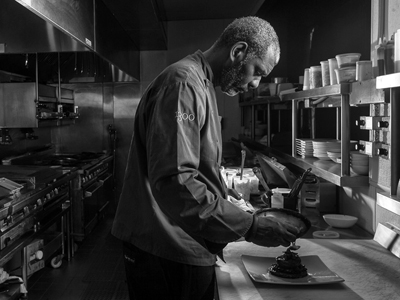
"content": "\u003cfigure id=\"attachment_61665\" class=\"wp-caption aligncenter\" style=\"max-width: 1000px\">\u003ca href=\"http://ww2.kqed.org/bayareabites/wp-content/uploads/sites/24/2013/04/chefdavidlawrence1000.jpg\">\u003cimg src=\"http://ww2.kqed.org/bayareabites/wp-content/uploads/sites/24/2013/04/chefdavidlawrence1000.jpg\" alt=\"Chef David Lawrence in the 1300 on Fillmore kitchen. Photo courtesy of 1300 Fillmore\" width=\"1000\" height=\"666\" class=\"size-full wp-image-61665\">\u003c/a>\u003cfigcaption class=\"wp-caption-text\">Chef David Lawrence in the 1300 on Fillmore kitchen. Photo courtesy of 1300 Fillmore\u003c/figcaption>\u003c/figure>\n\u003cp>At events like \u003ca href=\"http://ww2.kqed.org/bayareabites/2012/07/03/a-festival-by-chefs-and-for-chefs-sf-chefs-lets-you-eat-drink-and-ogle-chefs-and-their-goods/\">SF Chefs\u003c/a>, we've noticed again and again that chef David Lawrence has culinary offerings that stand out. His \"Soulful American\" bites with roots in England and Jamaica include such dishes as shrimp grits and white grits with pesto, and organic skillet fried chicken, with an upscale twist. Lawrence's plates tend to demonstrate how the deep South can cozy up with fresh California produce, using classic French technique.\u003c/p>\n\u003cp>\u003ca href=\"http://ww2.kqed.org/bayareabites/wp-content/uploads/sites/24/2013/05/fried_chicken_1300-Fillmore.jpg\">\u003cimg src=\"http://ww2.kqed.org/bayareabites/wp-content/uploads/sites/24/2013/05/fried_chicken_1300-Fillmore-290x192.jpg\" title=\"Fried chicken with blue cheese fondue. Photo courtesy of 1300 Fillmore\" alt=\"Fried chicken with blue cheese fondue. Photo courtesy of 1300 Fillmore\" width=\"290\" height=\"192\" class=\"alignnone size-medium wp-image-61673\">\u003c/a>\u003ca href=\"http://ww2.kqed.org/bayareabites/wp-content/uploads/sites/24/2013/05/ribeye1000.jpg\">\u003cimg src=\"http://ww2.kqed.org/bayareabites/wp-content/uploads/sites/24/2013/05/ribeye1000-290x193.jpg\" title=\"Ribeye. Photo courtesy of 1300 on Fillmore\" alt=\"Ribeye. Photo courtesy of 1300 on Fillmore\" width=\"290\" height=\"193\" class=\"alignnone size-medium wp-image-61694\">\u003c/a>\u003c/p>\n\u003cp>Since opening in 2007, Lawrence’s restaurant, \u003ca href=\"http://www.1300fillmore.com/\">1300 on Fillmore\u003c/a>, remains a draw for Sunday gospel brunch crowds, as well as those looking for a group dinner or bar snack--the fried chicken or skillet catfish; meaty ribeye; variety of grits and even warm chocolate beignets with coffee soda are almost begging to be shared. Lawrence, a London native, is 1300 on Fillmore’s executive chef and managing partner. He has cooked for royalty and was formally trained in the culinary arts at Westminster College. In 1982, Lawrence joined England's most celebrated and honored culinarians, Albert and Michel Roux, who were definitely considered \"celeb chefs\" there and were the chef-proprietors of the world-renowned \u003ca href=\"https://www.facebook.com/pages/Le-Gavroche/112349592115580?ref=ts&fref=ts\">Le Gavroche\u003c/a> and the \u003ca href=\"http://www.waterside-inn.co.uk/\">Waterside Inn\u003c/a> (at that time, both three-star Michelin restaurants). Lawrence cooked his way through five of their famous restaurants and became a sous chef, in four short years. In 1986, Lawrence became chef de cuisine at Interlude Restaurant in London, which gave him the sweet chance to make meals for none other than the Prince and Princess of Wales; Princess Margaret, Countess of Snowdon; and Prime Minister Margaret Thatcher.\u003c/p>\n\u003cp>He left for the U.S. in 1988 in a kismet vacation moment that led to chef de cuisine work with a former Le Gavroche chef named Kurt Graising who was opening \u003ca href=\"http://www.231ellsworth.com/\">231 Ellsworth Restaurant\u003c/a> in San Mateo. Lawrence next landed at the (ornate and beautiful) \u003ca href=\"http://www.yelp.com/biz/carnelian-room-san-francisco\">Carnelian Room\u003c/a> and \u003ca href=\"http://www.yelp.com/biz/cityscape-bar-and-restaurant-san-francisco\">Cityscape\u003c/a> restaurants in San Francisco, respectively. While at Cityscape, he created the Chefs for Kids program, which raised thousands of dollars for the Tenderloin After School program. Lawrence is also generous with his time for various local charity events. We caught up in person recently to find out more about his culinary style and career. His comments have been edited for length and clarity.\u003c/p>\n\u003cp>\u003ca href=\"http://ww2.kqed.org/bayareabites/wp-content/uploads/sites/24/2013/05/catfish1000.jpg\">\u003cimg src=\"http://ww2.kqed.org/bayareabites/wp-content/uploads/sites/24/2013/05/catfish1000-290x193.jpg\" title=\"Skillet catfish. Photo courtesy of 1300 on Fillmore\" alt=\"Skillet catfish. Photo courtesy of 1300 on Fillmore\" width=\"290\" height=\"193\" class=\"alignnone size-medium wp-image-61693\">\u003c/a>\u003ca href=\"http://ww2.kqed.org/bayareabites/wp-content/uploads/sites/24/2013/05/snapper1000.jpg\">\u003cimg src=\"http://ww2.kqed.org/bayareabites/wp-content/uploads/sites/24/2013/05/snapper1000-290x193.jpg\" title=\"Snapper. Photo courtesy of 1300 on Fillmore\" alt=\"Snapper. Photo courtesy of 1300 on Fillmore\" width=\"290\" height=\"193\" class=\"alignnone size-medium wp-image-61692\">\u003c/a>\u003c/p>\n\u003cp>[ad fullwidth]\u003c/p>\n\u003cp>\u003cstrong>Bay Area Bites: Can you tell us about your successes & goals?\u003c/strong>\u003cbr>\n\u003cstrong>Lawrence:\u003c/strong> The restaurant just celebrated five years of business last October. When we opened the restaurant, it was all fanfare and then the economy crashed. We survived but had to cut back and there was no sous chef, and no general manager. My wife \u003ca href=\"http://newfillmore.com/fillmore-classics/magic-at-1300-fillmore/\">Monetta White\u003c/a> and I did all that. We we’re able to do so with the support of the city and the people who came in. I’m proud of what we’ve achieved. Now I’m looking at expanding. \u003c/p>\n\u003cp>Our gospel brunch is on Sunday. For Easter, we decided to try something different, and keep our hours to the daytime and not open at night. I saw hordes of people walking back up to Pacific Heights as they left brunch. Then when I went to Safeway, I saw a line of people, and there were families and kids walking down here. I remember when we first came here and Monetta lived at Bush and Fillmore. Back then, no one went below Bush Street. \u003c/p>\n\u003cp>\u003ca href=\"http://ww2.kqed.org/bayareabites/wp-content/uploads/sites/24/2013/05/chef_pancake1000.jpg\">\u003cimg src=\"http://ww2.kqed.org/bayareabites/wp-content/uploads/sites/24/2013/05/chef_pancake1000.jpg\" title=\"Chef David Lawrence flipping a caramelized onion, yam-potato rosti (pancake). Photo courtesy of 1300 on Fillmore\" alt=\"Chef David Lawrence flipping a caramelized onion, yam-potato rosti (pancake). Photo courtesy of 1300 on Fillmore\" width=\"1000\" height=\"667\" class=\"size-full wp-image-61689\">\u003c/a>\u003cbr>\n\u003ca href=\"http://ww2.kqed.org/bayareabites/wp-content/uploads/sites/24/2013/05/pancake1000.jpg\">\u003cimg src=\"http://ww2.kqed.org/bayareabites/wp-content/uploads/sites/24/2013/05/pancake1000-290x193.jpg\" title=\"Caramelized onion, yam-potato rosti (pancake). Photo courtesy of 1300 on Fillmore\" alt=\"Caramelized onion, yam-potato rosti (pancake). Photo courtesy of 1300 on Fillmore\" width=\"290\" height=\"193\" class=\"alignnone size-medium wp-image-61690\">\u003c/a>\u003ca href=\"http://ww2.kqed.org/bayareabites/wp-content/uploads/sites/24/2013/05/poachedeggchickenliver1000.jpg\">\u003cimg src=\"http://ww2.kqed.org/bayareabites/wp-content/uploads/sites/24/2013/05/poachedeggchickenliver1000-290x193.jpg\" width=\"290\" height=\"193\" class=\"alignnone size-medium wp-image-61691\">\u003c/a>\u003c/p>\n\u003cp>\u003cstrong>Bay Area Bites: What are your best selling menu items...and your favorites?\u003c/strong>\u003cbr>\n\u003cstrong>Lawrence:\u003c/strong> For the best seller, it’s always the fried chicken. When I walk around and go out, people say that fried chicken is the bestseller. It is so funny because I come from Europe and have worked with Michelin-starred chefs. I have no complaints but my claim to fame is chicken. I just turned 50 in February, and it’s, “Wow, I’m 50 and known for fried chicken.” \u003c/p>\n\u003cp>I am the most proud of dishes like shrimp and grits and fried chicken. The shrimp and grits dishes really got me to look at this cuisine and what we do. Monetta is from Mississippi and we’ve been together for 19 years. We have a similar thing in England where I am from that is cornmeal porridge: sugar, nutmeg, and spice to make it nice and creamy. I cooked the grits more or less the same way and decided to do it without the sugar. Slowly but surely, people became interested and back then, no one was doing this. \u003c/p>\n\u003cp>\u003cstrong>Bay Area Bites: As a chef and businessman, what would you like to be known for?\u003c/strong>\u003cbr>\n\u003cstrong>Lawrence:\u003c/strong> It’s a fine line doing both. I’ve seen many amazing chefs open restaurants and crash. I’ve seen many mediocre chefs succeed because of their business acumen. As a chef, you have to cook what your customers want instead of what your ego wants. It’s about getting that balance. With the restaurant’s earlier days, I had foie gras, lamb, and rabbit and it was great for me but I couldn’t sell it. I never wanted a hamburger but I put one on the menu because people want it. It’s about finding the fine line between your own ego and what makes sense and sells. That way, you can hopefully still enjoy what you do.\u003c/p>\n\u003cp>\u003cstrong>Bay Area Bites: Guilty pleasure?\u003c/strong>\u003cbr>\n\u003cstrong>Lawrence:\u003c/strong> My thing is chocolate \u003ca href=\"http://en.wikipedia.org/wiki/HobNob\">HobNobs\u003c/a>. You call them cookies, and I call them biscuits. I don’t buy them because I can’t eat just one. \u003c/p>\n\u003cp>\u003cstrong>Bay Area Bites: Where do you live?\u003c/strong>\u003cbr>\n\u003cstrong>Lawrence:\u003c/strong> We live right above the restaurant. The commute is awesome. I love it. If I get five minutes for myself, I can go upstairs. It gives me just enough time to recharge my batteries. I can pop down if someone is here and wants to say hello, which is the least I can do if they have come all this way to eat at my restaurant. 1300 is my love and will be my love for the rest of my life. \u003c/p>\n\u003cp>\u003cstrong>Related Information:\u003c/strong>\u003c/p>\n\u003cp>\u003ca href=\"http://www.1300fillmore.com/\">1300 on Fillmore\u003c/a>\u003cbr>\n\u003cstrong>Address:\u003c/strong> \u003ca href=\"http://goo.gl/maps/vTGMT\">Map\u003c/a>\u003cbr>\n1300 Fillmore St.\u003cbr>\nSan Francisco CA 94115\u003cbr>\n(415) 771-7100\u003cbr>\n\u003cstrong>Facebook:\u003c/strong> \u003ca href=\"https://www.facebook.com/1300Fillmore\">1300 on Fillmore\u003c/a>\u003cbr>\n\u003cstrong>Twitter:\u003c/strong> \u003ca href=\"https://twitter.com/1300onFillmore\">@1300onFillmore\u003c/a>\u003c/p>\n\u003cp>[ad floatright]\u003c/p>\n\u003cp>\u003ca href=\"http://blogs.kqed.org/checkplease/2012/09/19/1300-on-fillmore-restaurant-info/\">\u003cstrong>1300 on Fillmore\u003c/strong> was featured on KQED's Check, Please! Bay Area\u003c/a> in 2012.\u003cbr>\nWatch the restaurant segment from the show:\u003cbr>\n[youtube http://www.youtube.com/watch?v=gRgtpPcvnS0]\u003c/p>\n\n",
"disqusIdentifier": "60681 http://blogs.kqed.org/bayareabites/?p=60681",
"disqusUrl": "https://ww2.kqed.org/bayareabites/2013/05/10/grits-fried-chicken-and-gospel-brunch-chef-david-lawrence-discusses-life-at-1300-on-fillmore/",
"stats": {
"hasVideo": true,
"hasChartOrMap": false,
"hasAudio": false,
"hasPolis": false,
"wordCount": 1088,
"hasGoogleForm": false,
"hasGallery": false,
"hasHearkenModule": false,
"iframeSrcs": [],
"paragraphCount": 18
},
"modified": 1546976051,
"excerpt": "Mary Ladd interviews Chef David Lawrence about his restaurant \"1300 on Fillmore\" which is known for fabulous grits, fried chicken and a lively Sunday Gospel brunch. ",
"headData": {
"twImgId": "",
"twTitle": "",
"ogTitle": "",
"ogImgId": "",
"twDescription": "",
"description": "Mary Ladd interviews Chef David Lawrence about his restaurant "1300 on Fillmore" which is known for fabulous grits, fried chicken and a lively Sunday Gospel brunch. ",
"title": "Grits, Fried Chicken and Gospel Brunch - Chef David Lawrence Discusses Life at \"1300 on Fillmore\" | KQED",
"ogDescription": "",
"schema": {
"@context": "https://schema.org",
"@type": "Article",
"headline": "Grits, Fried Chicken and Gospel Brunch - Chef David Lawrence Discusses Life at \"1300 on Fillmore\"",
"datePublished": "2013-05-10T19:32:14-07:00",
"dateModified": "2019-01-08T11:34:11-08:00",
"image": "https://cdn.kqed.org/wp-content/uploads/2020/02/KQED-OG-Image@1x.png"
}
},
"guestAuthors": [],
"slug": "grits-fried-chicken-and-gospel-brunch-chef-david-lawrence-discusses-life-at-1300-on-fillmore",
"status": "publish",
"path": "/bayareabites/60681/grits-fried-chicken-and-gospel-brunch-chef-david-lawrence-discusses-life-at-1300-on-fillmore",
"audioTrackLength": null,
"parsedContent": [
{
"type": "contentString",
"content": "\u003cdiv class=\"post-body\">\u003cp>\u003cfigure id=\"attachment_61665\" class=\"wp-caption aligncenter\" style=\"max-width: 1000px\">\u003ca href=\"http://ww2.kqed.org/bayareabites/wp-content/uploads/sites/24/2013/04/chefdavidlawrence1000.jpg\">\u003cimg src=\"http://ww2.kqed.org/bayareabites/wp-content/uploads/sites/24/2013/04/chefdavidlawrence1000.jpg\" alt=\"Chef David Lawrence in the 1300 on Fillmore kitchen. Photo courtesy of 1300 Fillmore\" width=\"1000\" height=\"666\" class=\"size-full wp-image-61665\">\u003c/a>\u003cfigcaption class=\"wp-caption-text\">Chef David Lawrence in the 1300 on Fillmore kitchen. Photo courtesy of 1300 Fillmore\u003c/figcaption>\u003c/figure>\n\u003cp>At events like \u003ca href=\"http://ww2.kqed.org/bayareabites/2012/07/03/a-festival-by-chefs-and-for-chefs-sf-chefs-lets-you-eat-drink-and-ogle-chefs-and-their-goods/\">SF Chefs\u003c/a>, we've noticed again and again that chef David Lawrence has culinary offerings that stand out. His \"Soulful American\" bites with roots in England and Jamaica include such dishes as shrimp grits and white grits with pesto, and organic skillet fried chicken, with an upscale twist. Lawrence's plates tend to demonstrate how the deep South can cozy up with fresh California produce, using classic French technique.\u003c/p>\n\u003cp>\u003ca href=\"http://ww2.kqed.org/bayareabites/wp-content/uploads/sites/24/2013/05/fried_chicken_1300-Fillmore.jpg\">\u003cimg src=\"http://ww2.kqed.org/bayareabites/wp-content/uploads/sites/24/2013/05/fried_chicken_1300-Fillmore-290x192.jpg\" title=\"Fried chicken with blue cheese fondue. Photo courtesy of 1300 Fillmore\" alt=\"Fried chicken with blue cheese fondue. Photo courtesy of 1300 Fillmore\" width=\"290\" height=\"192\" class=\"alignnone size-medium wp-image-61673\">\u003c/a>\u003ca href=\"http://ww2.kqed.org/bayareabites/wp-content/uploads/sites/24/2013/05/ribeye1000.jpg\">\u003cimg src=\"http://ww2.kqed.org/bayareabites/wp-content/uploads/sites/24/2013/05/ribeye1000-290x193.jpg\" title=\"Ribeye. Photo courtesy of 1300 on Fillmore\" alt=\"Ribeye. Photo courtesy of 1300 on Fillmore\" width=\"290\" height=\"193\" class=\"alignnone size-medium wp-image-61694\">\u003c/a>\u003c/p>\n\u003cp>Since opening in 2007, Lawrence’s restaurant, \u003ca href=\"http://www.1300fillmore.com/\">1300 on Fillmore\u003c/a>, remains a draw for Sunday gospel brunch crowds, as well as those looking for a group dinner or bar snack--the fried chicken or skillet catfish; meaty ribeye; variety of grits and even warm chocolate beignets with coffee soda are almost begging to be shared. Lawrence, a London native, is 1300 on Fillmore’s executive chef and managing partner. He has cooked for royalty and was formally trained in the culinary arts at Westminster College. In 1982, Lawrence joined England's most celebrated and honored culinarians, Albert and Michel Roux, who were definitely considered \"celeb chefs\" there and were the chef-proprietors of the world-renowned \u003ca href=\"https://www.facebook.com/pages/Le-Gavroche/112349592115580?ref=ts&fref=ts\">Le Gavroche\u003c/a> and the \u003ca href=\"http://www.waterside-inn.co.uk/\">Waterside Inn\u003c/a> (at that time, both three-star Michelin restaurants). Lawrence cooked his way through five of their famous restaurants and became a sous chef, in four short years. In 1986, Lawrence became chef de cuisine at Interlude Restaurant in London, which gave him the sweet chance to make meals for none other than the Prince and Princess of Wales; Princess Margaret, Countess of Snowdon; and Prime Minister Margaret Thatcher.\u003c/p>\n\u003cp>He left for the U.S. in 1988 in a kismet vacation moment that led to chef de cuisine work with a former Le Gavroche chef named Kurt Graising who was opening \u003ca href=\"http://www.231ellsworth.com/\">231 Ellsworth Restaurant\u003c/a> in San Mateo. Lawrence next landed at the (ornate and beautiful) \u003ca href=\"http://www.yelp.com/biz/carnelian-room-san-francisco\">Carnelian Room\u003c/a> and \u003ca href=\"http://www.yelp.com/biz/cityscape-bar-and-restaurant-san-francisco\">Cityscape\u003c/a> restaurants in San Francisco, respectively. While at Cityscape, he created the Chefs for Kids program, which raised thousands of dollars for the Tenderloin After School program. Lawrence is also generous with his time for various local charity events. We caught up in person recently to find out more about his culinary style and career. His comments have been edited for length and clarity.\u003c/p>\n\u003cp>\u003ca href=\"http://ww2.kqed.org/bayareabites/wp-content/uploads/sites/24/2013/05/catfish1000.jpg\">\u003cimg src=\"http://ww2.kqed.org/bayareabites/wp-content/uploads/sites/24/2013/05/catfish1000-290x193.jpg\" title=\"Skillet catfish. Photo courtesy of 1300 on Fillmore\" alt=\"Skillet catfish. Photo courtesy of 1300 on Fillmore\" width=\"290\" height=\"193\" class=\"alignnone size-medium wp-image-61693\">\u003c/a>\u003ca href=\"http://ww2.kqed.org/bayareabites/wp-content/uploads/sites/24/2013/05/snapper1000.jpg\">\u003cimg src=\"http://ww2.kqed.org/bayareabites/wp-content/uploads/sites/24/2013/05/snapper1000-290x193.jpg\" title=\"Snapper. Photo courtesy of 1300 on Fillmore\" alt=\"Snapper. Photo courtesy of 1300 on Fillmore\" width=\"290\" height=\"193\" class=\"alignnone size-medium wp-image-61692\">\u003c/a>\u003c/p>\n\u003cp>\u003c/p>\u003c/div>",
"attributes": {
"named": {},
"numeric": []
}
},
{
"type": "component",
"content": "",
"name": "ad",
"attributes": {
"named": {
"label": "fullwidth"
},
"numeric": [
"fullwidth"
]
}
},
{
"type": "contentString",
"content": "\u003cdiv class=\"post-body\">\u003cp>\u003c/p>\n\u003cp>\u003cstrong>Bay Area Bites: Can you tell us about your successes & goals?\u003c/strong>\u003cbr>\n\u003cstrong>Lawrence:\u003c/strong> The restaurant just celebrated five years of business last October. When we opened the restaurant, it was all fanfare and then the economy crashed. We survived but had to cut back and there was no sous chef, and no general manager. My wife \u003ca href=\"http://newfillmore.com/fillmore-classics/magic-at-1300-fillmore/\">Monetta White\u003c/a> and I did all that. We we’re able to do so with the support of the city and the people who came in. I’m proud of what we’ve achieved. Now I’m looking at expanding. \u003c/p>\n\u003cp>Our gospel brunch is on Sunday. For Easter, we decided to try something different, and keep our hours to the daytime and not open at night. I saw hordes of people walking back up to Pacific Heights as they left brunch. Then when I went to Safeway, I saw a line of people, and there were families and kids walking down here. I remember when we first came here and Monetta lived at Bush and Fillmore. Back then, no one went below Bush Street. \u003c/p>\n\u003cp>\u003ca href=\"http://ww2.kqed.org/bayareabites/wp-content/uploads/sites/24/2013/05/chef_pancake1000.jpg\">\u003cimg src=\"http://ww2.kqed.org/bayareabites/wp-content/uploads/sites/24/2013/05/chef_pancake1000.jpg\" title=\"Chef David Lawrence flipping a caramelized onion, yam-potato rosti (pancake). Photo courtesy of 1300 on Fillmore\" alt=\"Chef David Lawrence flipping a caramelized onion, yam-potato rosti (pancake). Photo courtesy of 1300 on Fillmore\" width=\"1000\" height=\"667\" class=\"size-full wp-image-61689\">\u003c/a>\u003cbr>\n\u003ca href=\"http://ww2.kqed.org/bayareabites/wp-content/uploads/sites/24/2013/05/pancake1000.jpg\">\u003cimg src=\"http://ww2.kqed.org/bayareabites/wp-content/uploads/sites/24/2013/05/pancake1000-290x193.jpg\" title=\"Caramelized onion, yam-potato rosti (pancake). Photo courtesy of 1300 on Fillmore\" alt=\"Caramelized onion, yam-potato rosti (pancake). Photo courtesy of 1300 on Fillmore\" width=\"290\" height=\"193\" class=\"alignnone size-medium wp-image-61690\">\u003c/a>\u003ca href=\"http://ww2.kqed.org/bayareabites/wp-content/uploads/sites/24/2013/05/poachedeggchickenliver1000.jpg\">\u003cimg src=\"http://ww2.kqed.org/bayareabites/wp-content/uploads/sites/24/2013/05/poachedeggchickenliver1000-290x193.jpg\" width=\"290\" height=\"193\" class=\"alignnone size-medium wp-image-61691\">\u003c/a>\u003c/p>\n\u003cp>\u003cstrong>Bay Area Bites: What are your best selling menu items...and your favorites?\u003c/strong>\u003cbr>\n\u003cstrong>Lawrence:\u003c/strong> For the best seller, it’s always the fried chicken. When I walk around and go out, people say that fried chicken is the bestseller. It is so funny because I come from Europe and have worked with Michelin-starred chefs. I have no complaints but my claim to fame is chicken. I just turned 50 in February, and it’s, “Wow, I’m 50 and known for fried chicken.” \u003c/p>\n\u003cp>I am the most proud of dishes like shrimp and grits and fried chicken. The shrimp and grits dishes really got me to look at this cuisine and what we do. Monetta is from Mississippi and we’ve been together for 19 years. We have a similar thing in England where I am from that is cornmeal porridge: sugar, nutmeg, and spice to make it nice and creamy. I cooked the grits more or less the same way and decided to do it without the sugar. Slowly but surely, people became interested and back then, no one was doing this. \u003c/p>\n\u003cp>\u003cstrong>Bay Area Bites: As a chef and businessman, what would you like to be known for?\u003c/strong>\u003cbr>\n\u003cstrong>Lawrence:\u003c/strong> It’s a fine line doing both. I’ve seen many amazing chefs open restaurants and crash. I’ve seen many mediocre chefs succeed because of their business acumen. As a chef, you have to cook what your customers want instead of what your ego wants. It’s about getting that balance. With the restaurant’s earlier days, I had foie gras, lamb, and rabbit and it was great for me but I couldn’t sell it. I never wanted a hamburger but I put one on the menu because people want it. It’s about finding the fine line between your own ego and what makes sense and sells. That way, you can hopefully still enjoy what you do.\u003c/p>\n\u003cp>\u003cstrong>Bay Area Bites: Guilty pleasure?\u003c/strong>\u003cbr>\n\u003cstrong>Lawrence:\u003c/strong> My thing is chocolate \u003ca href=\"http://en.wikipedia.org/wiki/HobNob\">HobNobs\u003c/a>. You call them cookies, and I call them biscuits. I don’t buy them because I can’t eat just one. \u003c/p>\n\u003cp>\u003cstrong>Bay Area Bites: Where do you live?\u003c/strong>\u003cbr>\n\u003cstrong>Lawrence:\u003c/strong> We live right above the restaurant. The commute is awesome. I love it. If I get five minutes for myself, I can go upstairs. It gives me just enough time to recharge my batteries. I can pop down if someone is here and wants to say hello, which is the least I can do if they have come all this way to eat at my restaurant. 1300 is my love and will be my love for the rest of my life. \u003c/p>\n\u003cp>\u003cstrong>Related Information:\u003c/strong>\u003c/p>\n\u003cp>\u003ca href=\"http://www.1300fillmore.com/\">1300 on Fillmore\u003c/a>\u003cbr>\n\u003cstrong>Address:\u003c/strong> \u003ca href=\"http://goo.gl/maps/vTGMT\">Map\u003c/a>\u003cbr>\n1300 Fillmore St.\u003cbr>\nSan Francisco CA 94115\u003cbr>\n(415) 771-7100\u003cbr>\n\u003cstrong>Facebook:\u003c/strong> \u003ca href=\"https://www.facebook.com/1300Fillmore\">1300 on Fillmore\u003c/a>\u003cbr>\n\u003cstrong>Twitter:\u003c/strong> \u003ca href=\"https://twitter.com/1300onFillmore\">@1300onFillmore\u003c/a>\u003c/p>\n\u003cp>\u003c/p>\u003c/div>",
"attributes": {
"named": {},
"numeric": []
}
},
{
"type": "component",
"content": "",
"name": "ad",
"attributes": {
"named": {
"label": "floatright"
},
"numeric": [
"floatright"
]
}
},
{
"type": "contentString",
"content": "\u003cdiv class=\"post-body\">\u003cp>\u003c/p>\n\u003cp>\u003ca href=\"http://blogs.kqed.org/checkplease/2012/09/19/1300-on-fillmore-restaurant-info/\">\u003cstrong>1300 on Fillmore\u003c/strong> was featured on KQED's Check, Please! Bay Area\u003c/a> in 2012.\u003cbr>\nWatch the restaurant segment from the show:\u003cbr>\n\u003c/p>\u003cp>\u003cspan class='utils-parseShortcode-shortcodes-__youtubeShortcode__embedYoutube'>\n \u003cspan class='utils-parseShortcode-shortcodes-__youtubeShortcode__embedYoutubeInside'>\n \u003ciframe\n loading='lazy'\n class='utils-parseShortcode-shortcodes-__youtubeShortcode__youtubePlayer'\n type='text/html'\n src='//www.youtube.com/embed/gRgtpPcvnS0'\n title='//www.youtube.com/embed/gRgtpPcvnS0'\n allowfullscreen='true'\n style='border:0;'>\u003c/iframe>\n \u003c/span>\n \u003c/span>\u003c/p>\u003cp>\u003c/p>\n\n\u003c/div>\u003c/p>",
"attributes": {
"named": {},
"numeric": []
}
}
],
"link": "/bayareabites/60681/grits-fried-chicken-and-gospel-brunch-chef-david-lawrence-discusses-life-at-1300-on-fillmore",
"authors": [
"5092"
],
"categories": [
"bayareabites_109",
"bayareabites_63",
"bayareabites_1962",
"bayareabites_1875",
"bayareabites_1807",
"bayareabites_90"
],
"tags": [
"bayareabites_16244",
"bayareabites_14453",
"bayareabites_763",
"bayareabites_14744",
"bayareabites_422"
],
"featImg": "bayareabites_61664",
"label": "bayareabites"
},
"bayareabites_61125": {
"type": "posts",
"id": "bayareabites_61125",
"meta": {
"index": "posts_1716263798",
"site": "bayareabites",
"id": "61125",
"score": null,
"sort": [
1367353624000
]
},
"parent": 0,
"labelTerm": {
"site": "bayareabites"
},
"blocks": [],
"publishDate": 1367353624,
"format": "aside",
"disqusTitle": "Mon Dieu! Fast Food Now Rules In France",
"title": "Mon Dieu! Fast Food Now Rules In France",
"headTitle": "Bay Area Bites | KQED Food",
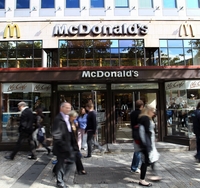
"content": "\u003cfigure id=\"attachment_61131\" class=\"wp-caption aligncenter\" style=\"max-width: 1120px\">\u003ca href=\"http://ww2.kqed.org/bayareabites/wp-content/uploads/sites/24/2013/04/104476530-1-_custom-64e22894d097848721f6a427951a4673e8e79615-s40.jpg\">\u003cimg src=\"http://ww2.kqed.org/bayareabites/wp-content/uploads/sites/24/2013/04/104476530-1-_custom-64e22894d097848721f6a427951a4673e8e79615-s40.jpg\" alt=\"Fast times on the Champs-Elysees: People walk past a McDonald's on one of Paris' most storied avenues. But it's not just McD's that has caught French interest: Fast food now accounts for the majority of restaurant spending in the country. Photo: Thomas Coex/AFP/Getty Images\" width=\"1120\" height=\"753\" class=\"size-full wp-image-61131\">\u003c/a>\u003cfigcaption class=\"wp-caption-text\">Fast times on the Champs-Elysees: People walk past a McDonald's on one of Paris' most storied avenues. But it's not just McD's that has caught French interest: Fast food now accounts for the majority of restaurant spending in the country. \u003cbr>Photo: Thomas Coex/AFP/Getty Images\u003c/figcaption>\u003c/figure>\n\u003cp>Post by Amy Guttman, \u003ca href=\"http://www.npr.org/blogs/thesalt/2013/04/29/179879664/mon-dieu-fast-food-now-rules-in-france\">The Salt at NPR Food\u003c/a> (04/30/13)\u003c/p>\n\u003cp>When it comes to culinary matters, France, in many minds, is synonymous with fine dining. So it might surprise you that, for the first time, sales at fast food chains have overtaken those at traditional restaurants in the country that gave us the word \u003cem>gastronomie.\u003c/em>\u003c/p>\n\u003cp>That's according to an annual \u003ca href=\"http://www.giraconseil.com/3-cahiers-de-tendances\">survey\u003c/a> of consumer spending, traffic and other restaurant data conducted by Gira Conseil, a food consultancy firm. The latest survey, to be released in May, found that fast food chains now account for 54 percent of all restaurant sales in France.\u003c/p>\n\u003cp>\"In previous years, we could see fast food was gaining ground, but this is the first time it has overtaken restaurants where you are served at the table,\" Julien Janneau of Gira Conseil \u003ca href=\"http://tempsreel.nouvelobs.com/societe/20130228.OBS0336/restauration-la-france-sandwich.html\">told\u003c/a> French newspaper \u003cem>Nouvel Observateur\u003c/em>.\u003c/p>\n\u003cp>Consumption at casual eateries serving burgers, sandwiches, pizza and other fast food has increased 14 percent in the past year alone, according to the survey.\u003c/p>\n\u003cp>[ad fullwidth]\u003c/p>\n\u003cp>While McDonald's has \u003ca href=\"http://lauder.wharton.upenn.edu/pages/pdf/student_thesis/UhrielWood_Thesis.pdf\">been in France\u003c/a> since the 1970s, many industry observers say it wasn't until the turn of this century that outlets for both American and European fast food chains really began proliferating. The fast food market is now so ripe that Subway says it has opened some 400 stores in the past decade, and Burger King, which shut its 39 French restaurants 16 years ago, recently \u003ca href=\"http://connexionfrance.com/McDonalds-casse-croute-menu-France-market-French-do-get-fat-14500-news-article.html%20\">re-entered\u003c/a> the market with great success.\u003c/p>\n\u003cp>\"We are the second-biggest consumer of fast food, after the U.S.,\" \u003ca href=\"http://gastronomie.blog.lemonde.fr/\">Camille Labro\u003c/a>, a food writer and regular contributor to \u003cem>Le Monde\u003c/em> magazine, tells The Salt.\u003c/p>\n\u003cp>The rise of fast food has come as the French have grown lax about their notoriously rigid food culture rules. Frédéric Maquair, who co-founded \u003ca href=\"http://www.cojean.fr/\">Cojean\u003c/a>, a Parisian chain of healthy fast food outlets, in 2001, notes that meals never used to be a solitary activity. \"Before, people didn't dare go by themselves to a restaurant, eating alone, reading a magazine,\" he tells The Salt.\u003c/p>\n\u003cp>Nowadays, he and others say, the French have come to see fast food as freedom from the rigid gastronomical rules that used to bind them to sitting at a table, with other people, at specific times, for multiple courses.\u003c/p>\n\u003cp>But there's another, more practical concern encouraging the fast food trend: a shrinking lunch break.\u003c/p>\n\u003cp>The French lunch hour has collapsed from 80 minutes back in 1975 to \u003ca href=\"http://www.thelocal.fr/page/view/1329#.UXZ9wkoQNmk\">just 22 minutes\u003c/a>, according to a 2011 study by insurer Malakoff Mederic. That, in turn, has hurt business at traditional cafes, where offerings — like the typical 13 euro ($15) multicourse lunch — are still geared toward leisurely eating habits that are, increasingly, a relic of the past.\u003c/p>\n\u003cp>The number of cafes in France has dropped from more than 200,000 after World War II to just 32,000 today, according to estimates from Gira Conseil.\u003c/p>\n\u003cp>\"The offer has not changed,\" says Gira Conseil's Devanne Julien, \"but the consumer is different.\" Cafes, he says, \"have not been able to adapt and compete with fast food.\"\u003c/p>\n\u003cp>Indeed, adaptation has been a key to fast food's success in France — where offerings tend to be healthier than in other parts of the world. There's less emphasis on fried and more focus on fresh ingredients and local tastes.\u003c/p>\n\u003cp>At British chain Pret A Manger, known for its sandwiches, a third of the menu is dedicated to French classics like apple tart and the beloved \u003cem>jambon-beurre,\u003c/em> or ham and butter — which might be called the French national sandwich.\u003c/p>\n\u003cp>And as we've \u003ca href=\"http://www.npr.org/blogs/thesalt/2012/01/24/145698222/why-mcdonalds-in-france-doesnt-feel-like-fast-food\">previously reported,\u003c/a> McDonald's has risen to the top of the fast food pack in France, with more than 1,200 outlets, precisely by fine-tuning its menu to fit the local culture (think grass-fed beef burgers). In 2011, the company even opened a \u003ca href=\"http://blogs.ocweekly.com/stickaforkinit/2012/01/why_is_mcdonalds_doing_well_in.php\">salad-only cafe\u003c/a>, called McSalad, which managed to win a begrudging bit of praise from food writer Labro.\u003c/p>\n\u003cp>\"The dressing was made with hazelnut and balsamic vinegar,\" she admits reluctantly, \"just like I make at home.\"\u003c/p>\n\u003cp>But American chains like McDonald's and Subway also attract French fans for the ways in which they depart from local customs — at least when it comes to wait staff, says Labro.\u003c/p>\n\u003cp>French waiters, she says, tend to be \"so mean and unserviceable that the American way of doing things in fast food places is almost pleasant.\"\u003c/p>\n\u003cp>Labro remains a steadfast opponent of fast food, but she can also see why its American-style service appeals to consumers. They'd \"rather have an automated experience than a waiter ready to throw food in my face. It's more relaxing.\" \u003c/p>\n\u003cp>\u003c/p>\n\u003cp>\u003cem>Copyright 2013 \u003ca href=\"http://www.npr.org/blogs/thesalt/2013/04/29/179879664/mon-dieu-fast-food-now-rules-in-france\">NPR\u003c/a>.\u003c/em>\u003c/p>\n\n",
"disqusIdentifier": "61125 http://blogs.kqed.org/bayareabites/?p=61125",
"disqusUrl": "https://ww2.kqed.org/bayareabites/2013/04/30/mon-dieu-fast-food-now-rules-in-france/",
"stats": {
"hasVideo": false,
"hasChartOrMap": false,
"hasAudio": false,
"hasPolis": false,
"wordCount": 839,
"hasGoogleForm": false,
"hasGallery": false,
"hasHearkenModule": false,
"iframeSrcs": [],
"paragraphCount": 23
},
"modified": 1367353624,
"excerpt": "The French may have a global reputation as gastronomes, but the majority of their restaurant spending now goes to fast food chains, a new survey finds. The change comes amid shrinking lunch breaks and growing laxity among the French when it comes to their famously rigid food culture rules.",
"headData": {
"twImgId": "",
"twTitle": "",
"ogTitle": "",
"ogImgId": "",
"twDescription": "",
"description": "The French may have a global reputation as gastronomes, but the majority of their restaurant spending now goes to fast food chains, a new survey finds. The change comes amid shrinking lunch breaks and growing laxity among the French when it comes to their famously rigid food culture rules.",
"title": "Mon Dieu! Fast Food Now Rules In France | KQED",
"ogDescription": "",
"schema": {
"@context": "https://schema.org",
"@type": "Article",
"headline": "Mon Dieu! Fast Food Now Rules In France",
"datePublished": "2013-04-30T13:27:04-07:00",
"dateModified": "2013-04-30T13:27:04-07:00",
"image": "https://cdn.kqed.org/wp-content/uploads/2020/02/KQED-OG-Image@1x.png"
}
},
"guestAuthors": [],
"slug": "mon-dieu-fast-food-now-rules-in-france",
"status": "publish",
"nprApiLink": "http://api.npr.org/query?id=179879664&apiKey=MDAxOTAwOTE4MDEyMTkxMDAzNjczZDljZA004",
"nprByline": "Amy Guttman",
"nprStoryDate": "Tue, 30 Apr 2013 11:23:00 -0400",
"nprLastModifiedDate": "Tue, 30 Apr 2013 14:03:27 -0400",
"nprHtmlLink": "http://www.npr.org/blogs/thesalt/2013/04/29/179879664/mon-dieu-fast-food-now-rules-in-france?ft=3&f=179879664",
"nprStoryId": "179879664",
"nprRetrievedStory": "1",
"nprPubDate": "Tue, 30 Apr 2013 14:03:00 -0400",
"path": "/bayareabites/61125/mon-dieu-fast-food-now-rules-in-france",
"audioTrackLength": null,
"parsedContent": [
{
"type": "contentString",
"content": "\u003cdiv class=\"post-body\">\u003cp>\u003cfigure id=\"attachment_61131\" class=\"wp-caption aligncenter\" style=\"max-width: 1120px\">\u003ca href=\"http://ww2.kqed.org/bayareabites/wp-content/uploads/sites/24/2013/04/104476530-1-_custom-64e22894d097848721f6a427951a4673e8e79615-s40.jpg\">\u003cimg src=\"http://ww2.kqed.org/bayareabites/wp-content/uploads/sites/24/2013/04/104476530-1-_custom-64e22894d097848721f6a427951a4673e8e79615-s40.jpg\" alt=\"Fast times on the Champs-Elysees: People walk past a McDonald's on one of Paris' most storied avenues. But it's not just McD's that has caught French interest: Fast food now accounts for the majority of restaurant spending in the country. Photo: Thomas Coex/AFP/Getty Images\" width=\"1120\" height=\"753\" class=\"size-full wp-image-61131\">\u003c/a>\u003cfigcaption class=\"wp-caption-text\">Fast times on the Champs-Elysees: People walk past a McDonald's on one of Paris' most storied avenues. But it's not just McD's that has caught French interest: Fast food now accounts for the majority of restaurant spending in the country. \u003cbr>Photo: Thomas Coex/AFP/Getty Images\u003c/figcaption>\u003c/figure>\n\u003cp>Post by Amy Guttman, \u003ca href=\"http://www.npr.org/blogs/thesalt/2013/04/29/179879664/mon-dieu-fast-food-now-rules-in-france\">The Salt at NPR Food\u003c/a> (04/30/13)\u003c/p>\n\u003cp>When it comes to culinary matters, France, in many minds, is synonymous with fine dining. So it might surprise you that, for the first time, sales at fast food chains have overtaken those at traditional restaurants in the country that gave us the word \u003cem>gastronomie.\u003c/em>\u003c/p>\n\u003cp>That's according to an annual \u003ca href=\"http://www.giraconseil.com/3-cahiers-de-tendances\">survey\u003c/a> of consumer spending, traffic and other restaurant data conducted by Gira Conseil, a food consultancy firm. The latest survey, to be released in May, found that fast food chains now account for 54 percent of all restaurant sales in France.\u003c/p>\n\u003cp>\"In previous years, we could see fast food was gaining ground, but this is the first time it has overtaken restaurants where you are served at the table,\" Julien Janneau of Gira Conseil \u003ca href=\"http://tempsreel.nouvelobs.com/societe/20130228.OBS0336/restauration-la-france-sandwich.html\">told\u003c/a> French newspaper \u003cem>Nouvel Observateur\u003c/em>.\u003c/p>\n\u003cp>Consumption at casual eateries serving burgers, sandwiches, pizza and other fast food has increased 14 percent in the past year alone, according to the survey.\u003c/p>\n\u003cp>\u003c/p>\u003c/div>",
"attributes": {
"named": {},
"numeric": []
}
},
{
"type": "component",
"content": "",
"name": "ad",
"attributes": {
"named": {
"label": "fullwidth"
},
"numeric": [
"fullwidth"
]
}
},
{
"type": "contentString",
"content": "\u003cdiv class=\"post-body\">\u003cp>\u003c/p>\n\u003cp>While McDonald's has \u003ca href=\"http://lauder.wharton.upenn.edu/pages/pdf/student_thesis/UhrielWood_Thesis.pdf\">been in France\u003c/a> since the 1970s, many industry observers say it wasn't until the turn of this century that outlets for both American and European fast food chains really began proliferating. The fast food market is now so ripe that Subway says it has opened some 400 stores in the past decade, and Burger King, which shut its 39 French restaurants 16 years ago, recently \u003ca href=\"http://connexionfrance.com/McDonalds-casse-croute-menu-France-market-French-do-get-fat-14500-news-article.html%20\">re-entered\u003c/a> the market with great success.\u003c/p>\n\u003cp>\"We are the second-biggest consumer of fast food, after the U.S.,\" \u003ca href=\"http://gastronomie.blog.lemonde.fr/\">Camille Labro\u003c/a>, a food writer and regular contributor to \u003cem>Le Monde\u003c/em> magazine, tells The Salt.\u003c/p>\n\u003cp>The rise of fast food has come as the French have grown lax about their notoriously rigid food culture rules. Frédéric Maquair, who co-founded \u003ca href=\"http://www.cojean.fr/\">Cojean\u003c/a>, a Parisian chain of healthy fast food outlets, in 2001, notes that meals never used to be a solitary activity. \"Before, people didn't dare go by themselves to a restaurant, eating alone, reading a magazine,\" he tells The Salt.\u003c/p>\n\u003cp>Nowadays, he and others say, the French have come to see fast food as freedom from the rigid gastronomical rules that used to bind them to sitting at a table, with other people, at specific times, for multiple courses.\u003c/p>\n\u003cp>But there's another, more practical concern encouraging the fast food trend: a shrinking lunch break.\u003c/p>\n\u003cp>The French lunch hour has collapsed from 80 minutes back in 1975 to \u003ca href=\"http://www.thelocal.fr/page/view/1329#.UXZ9wkoQNmk\">just 22 minutes\u003c/a>, according to a 2011 study by insurer Malakoff Mederic. That, in turn, has hurt business at traditional cafes, where offerings — like the typical 13 euro ($15) multicourse lunch — are still geared toward leisurely eating habits that are, increasingly, a relic of the past.\u003c/p>\n\u003cp>The number of cafes in France has dropped from more than 200,000 after World War II to just 32,000 today, according to estimates from Gira Conseil.\u003c/p>\n\u003cp>\"The offer has not changed,\" says Gira Conseil's Devanne Julien, \"but the consumer is different.\" Cafes, he says, \"have not been able to adapt and compete with fast food.\"\u003c/p>\n\u003cp>Indeed, adaptation has been a key to fast food's success in France — where offerings tend to be healthier than in other parts of the world. There's less emphasis on fried and more focus on fresh ingredients and local tastes.\u003c/p>\n\u003cp>At British chain Pret A Manger, known for its sandwiches, a third of the menu is dedicated to French classics like apple tart and the beloved \u003cem>jambon-beurre,\u003c/em> or ham and butter — which might be called the French national sandwich.\u003c/p>\n\u003cp>And as we've \u003ca href=\"http://www.npr.org/blogs/thesalt/2012/01/24/145698222/why-mcdonalds-in-france-doesnt-feel-like-fast-food\">previously reported,\u003c/a> McDonald's has risen to the top of the fast food pack in France, with more than 1,200 outlets, precisely by fine-tuning its menu to fit the local culture (think grass-fed beef burgers). In 2011, the company even opened a \u003ca href=\"http://blogs.ocweekly.com/stickaforkinit/2012/01/why_is_mcdonalds_doing_well_in.php\">salad-only cafe\u003c/a>, called McSalad, which managed to win a begrudging bit of praise from food writer Labro.\u003c/p>\n\u003cp>\"The dressing was made with hazelnut and balsamic vinegar,\" she admits reluctantly, \"just like I make at home.\"\u003c/p>\n\u003cp>But American chains like McDonald's and Subway also attract French fans for the ways in which they depart from local customs — at least when it comes to wait staff, says Labro.\u003c/p>\n\u003cp>French waiters, she says, tend to be \"so mean and unserviceable that the American way of doing things in fast food places is almost pleasant.\"\u003c/p>\n\u003cp>Labro remains a steadfast opponent of fast food, but she can also see why its American-style service appeals to consumers. They'd \"rather have an automated experience than a waiter ready to throw food in my face. It's more relaxing.\" \u003c/p>\n\u003cp>\u003c/p>\n\u003cp>\u003cem>Copyright 2013 \u003ca href=\"http://www.npr.org/blogs/thesalt/2013/04/29/179879664/mon-dieu-fast-food-now-rules-in-france\">NPR\u003c/a>.\u003c/em>\u003c/p>\n\n\u003c/div>\u003c/p>",
"attributes": {
"named": {},
"numeric": []
}
}
],
"link": "/bayareabites/61125/mon-dieu-fast-food-now-rules-in-france",
"authors": [
"byline_bayareabites_61125"
],
"categories": [
"bayareabites_1962",
"bayareabites_4084",
"bayareabites_10916",
"bayareabites_181"
],
"tags": [
"bayareabites_1435",
"bayareabites_74"
],
"featImg": "bayareabites_61126",
"label": "bayareabites"
},
"bayareabites_60787": {
"type": "posts",
"id": "bayareabites_60787",
"meta": {
"index": "posts_1716263798",
"site": "bayareabites",
"id": "60787",
"score": null,
"sort": [
1366927385000
]
},
"parent": 0,
"labelTerm": {
"site": "bayareabites"
},
"blocks": [],
"publishDate": 1366927385,
"format": "aside",
"disqusTitle": "EU Embraces 'Suspended Coffee': Pay It Forward With A Cup Of Joe",
"title": "EU Embraces 'Suspended Coffee': Pay It Forward With A Cup Of Joe",
"headTitle": "Bay Area Bites | KQED Food",
"content": "\u003cfigure id=\"attachment_60790\" class=\"wp-caption aligncenter\" style=\"max-width: 624px\">\u003ca href=\"http://ww2.kqed.org/bayareabites/wp-content/uploads/sites/24/2013/04/italybarista.jpg\">\u003cimg src=\"http://ww2.kqed.org/bayareabites/wp-content/uploads/sites/24/2013/04/italybarista.jpg\" alt=\"A barista serves coffee at a cafe in Naples, Italy. The Italian city's long-standing tradition of buying a cup for a less-fortunate stranger is now spreading across Europe. Photo: Christopher Furlong/Getty Images\" width=\"624\" height=\"467\" class=\"size-full wp-image-60790\">\u003c/a>\u003cfigcaption class=\"wp-caption-text\">A barista serves coffee at a cafe in Naples, Italy. The Italian city's long-standing tradition of buying a cup for a less-fortunate stranger is now spreading across Europe. Photo: Christopher Furlong/Getty Images\u003c/figcaption>\u003c/figure>\n\u003cp>Post by \u003ca href=\"http://www.npr.org/people/2101034/sylvia-poggioli\">Sylvia Poggioli\u003c/a>, \u003ca href=\"http://www.npr.org/blogs/thesalt/2013/04/24/178829301/eu-embraces-suspended-coffee-pay-it-forward-with-a-cup-of-joe\">The Salt at NPR Food\u003c/a>, (4/25/13)\u003c/p>\n\u003cp>Tough economic times and growing poverty in much of Europe are reviving a humble tradition that began some one-hundred years ago in the Italian city of Naples. It's called \u003cem>caffè sospeso\u003c/em> — \"suspended coffee\": A customer pays in advance for a person who cannot afford a cup of coffee.\u003c/p>\n\u003cp>The Neapolitan writer Luciano de Crescenzo used the tradition as the title of one of his books, \u003cem>\u003ca href=\"http://books.google.com/books/about/Il_caff%C3%A8_sospeso.html?id=8Bk4-iAlWp4C\">Caffè sospeso\u003c/a>: Saggezza quotidiana in piccoli sorsi\u003c/em> (\"Suspended coffee: Daily wisdom in small sips\").\u003c/p>\n\u003cp>\"It was a beautiful custom,\" he recalls. \"When a person who had a break of good luck entered a cafe and ordered a cup of coffee, he didn't pay just for one, but for two cups, allowing someone less fortunate who entered later to have a cup of coffee for free.\"\u003c/p>\n\u003cp>The barista would keep a log, and when someone popped his head in the doorway of the cafe and asked, \"Is there anything suspended?\" the barista would nod and serve him a cup of coffee ... for free.\u003c/p>\n\u003cp>[ad fullwidth]\u003c/p>\n\u003cp>It's an elegant way to show generosity: an act of charity in which donors and recipients never meet each other, the donor doesn't show off and the recipient doesn't have to show gratitude.\u003c/p>\n\u003cp>The writer says the tradition is part of the city's philosophy of life. \"In other words, it was a cup of coffee,\" de Crescenzo says, \"offered to the rest of humankind.\" It was a time, he adds, when there were more customers who were poor than those who were well-off.\u003c/p>\n\u003cp>It's fitting that the tradition started in Naples, a city that prides itself on having the best coffee in Italy. And in a country where the first coffeehouse in Europe opened in 1683 (in Venice), that is no small claim.\u003c/p>\n\u003cp>Before the likes of \u003ca href=\"http://www.gaggia.com/e/landing-page.html\">Gaggia\u003c/a> and \u003ca href=\"http://www.cimbali.com/\">Cimbali\u003c/a> started producing the modern commercial espresso machines, Italians made coffee at home on the stovetop with a coffee maker known as a \u003ca href=\"http://en.wikipedia.org/wiki/Neapolitan_flip_coffee_pot\">Napoletana\u003c/a>.\u003c/p>\n\u003cp>Naples and coffee are inseparable, but the \u003cem>caffè\u003c/em> \u003cem>sospeso\u003c/em> tradition waned as Italy entered the boom years of postwar reconstruction and \u003cem>La Dolce Vita\u003c/em>. For decades, the custom was confined mainly to the Christmas season.\u003c/p>\n\u003cp>Now, it's made a comeback. Two years ago, with the eurozone crisis already raging, unemployment rising and small businesses closing on a daily basis, more and more Italians could no longer afford the national beverage — an espresso or a cappuccino. (According to the \u003ca href=\"http://www.ico.org/\">International Coffee Organization\u003c/a>, which represents 44 coffee exporting countries, Italian per capita annual consumption of coffee has dropped to 5.6 kilograms, the lowest level in the past six years.)\u003c/p>\n\u003cp>Then someone remembered the old Neapolitan custom. So several nongovernmental organizations got together and — with the support of Naples Mayor Luigi de Magistris — Dec.10 was formally declared \"Suspended Coffee Day.\"\u003c/p>\n\u003cp>The practice is now spreading to other crisis-ravaged parts of Europe.\u003c/p>\n\u003cp>In Bulgaria, the European Union's poorest country, where several desperate people have set themselves on fire in recent months, more than 150 cafes have joined an initiative modeled on the Neapolitan \"suspended coffee\" tradition.\u003c/p>\n\u003cp>In crisis-wracked Spain, a young man from Barcelona, Gonzalo Sapina, in a few short weeks started a network called \u003cem>Cafes Pendientes\u003c/em> (\"pending coffees\") and promoted the initiative among numerous coffee shops.\u003c/p>\n\u003cp>In France, several cafes now carry the logo \"cafe en attente\" (\"waiting coffee\").\u003c/p>\n\u003cp>And there is even a \u003ca href=\"http://www.coffeesharing.com/\">site\u003c/a> that lists establishments that have joined the \"suspended coffee\" initiative — the countries range from the \u003ca href=\"http://www.examiner.co.uk/news/local-west-yorkshire-news/2013/04/23/lindley-and-huddersfield-cafes-join-suspended-coffees-scheme-for-homeless-people-86081-33218894/#.UXaQTISvFWg.twitter\">U.K.\u003c/a> and Ireland and Hungary to Australia and Canada.\u003c/p>\n\u003cp>The prepaid cup of coffee has become a symbol of grass-roots social solidarity at a time of mounting poverty in what, until recently, were affluent Western societies.\u003c/p>\n\u003cp>But now, back to Naples, where coffee is not a luxury but is considered, more or less, a basic human right.\u003c/p>\n\u003cp>And the variety is vast: You can order an espresso \"ristretto\" (\"tightened,\" i.e., stronger); or an espresso \"macchiato\" (\"stained,\" i.e., with a little milk); or an espresso \"corretto\" (\"corrected,\" i.e., with a shot of grappa, cognac or sambuca).\u003c/p>\n\u003cp>\u003c/p>\n\u003cp>There's only one iron-clad rule: Cappuccino — which takes its name from the white and beige colors of the Capuchin friars' habits — is exclusively a breakfast beverage, and must never, never be consumed after 11 a.m. (OK, let's say noon).\u003cbr>\n\u003cem>\u003cbr>\nCopyright 2013 \u003ca href=\"http://www.npr.org/\">NPR\u003c/a>.\u003c/em> \u003c/p>\n\n",
"disqusIdentifier": "60787 http://blogs.kqed.org/bayareabites/?p=60787",
"disqusUrl": "https://ww2.kqed.org/bayareabites/2013/04/25/eu-embraces-suspended-coffee-pay-it-forward-with-a-cup-of-joe/",
"stats": {
"hasVideo": false,
"hasChartOrMap": false,
"hasAudio": false,
"hasPolis": false,
"wordCount": 788,
"hasGoogleForm": false,
"hasGallery": false,
"hasHearkenModule": false,
"iframeSrcs": [],
"paragraphCount": 23
},
"modified": 1366927385,
"excerpt": "About a century ago, a beautiful tradition emerged in the Italian city of Naples: Cafe-goers would buy a cup of coffee anonymously and in advance for a less-fortunate stranger. With much of Europe now in tight financial times, the custom is spreading across the continent.",
"headData": {
"twImgId": "",
"twTitle": "",
"ogTitle": "",
"ogImgId": "",
"twDescription": "",
"description": "About a century ago, a beautiful tradition emerged in the Italian city of Naples: Cafe-goers would buy a cup of coffee anonymously and in advance for a less-fortunate stranger. With much of Europe now in tight financial times, the custom is spreading across the continent.",
"title": "EU Embraces 'Suspended Coffee': Pay It Forward With A Cup Of Joe | KQED",
"ogDescription": "",
"schema": {
"@context": "https://schema.org",
"@type": "Article",
"headline": "EU Embraces 'Suspended Coffee': Pay It Forward With A Cup Of Joe",
"datePublished": "2013-04-25T15:03:05-07:00",
"dateModified": "2013-04-25T15:03:05-07:00",
"image": "https://cdn.kqed.org/wp-content/uploads/2020/02/KQED-OG-Image@1x.png"
}
},
"guestAuthors": [],
"slug": "eu-embraces-suspended-coffee-pay-it-forward-with-a-cup-of-joe",
"status": "publish",
"nprApiLink": "http://api.npr.org/query?id=178829301&apiKey=MDAxOTAwOTE4MDEyMTkxMDAzNjczZDljZA004",
"nprByline": "Sylvia Poggioli",
"nprStoryDate": "Thu, 25 Apr 2013 12:04:00 -0400",
"nprLastModifiedDate": "Thu, 25 Apr 2013 13:35:32 -0400",
"nprHtmlLink": "http://www.npr.org/blogs/thesalt/2013/04/24/178829301/eu-embraces-suspended-coffee-pay-it-forward-with-a-cup-of-joe?ft=3&f=178829301",
"nprStoryId": "178829301",
"nprRetrievedStory": "1",
"nprPubDate": "Thu, 25 Apr 2013 13:35:00 -0400",
"path": "/bayareabites/60787/eu-embraces-suspended-coffee-pay-it-forward-with-a-cup-of-joe",
"audioTrackLength": null,
"parsedContent": [
{
"type": "contentString",
"content": "\u003cdiv class=\"post-body\">\u003cp>\u003cfigure id=\"attachment_60790\" class=\"wp-caption aligncenter\" style=\"max-width: 624px\">\u003ca href=\"http://ww2.kqed.org/bayareabites/wp-content/uploads/sites/24/2013/04/italybarista.jpg\">\u003cimg src=\"http://ww2.kqed.org/bayareabites/wp-content/uploads/sites/24/2013/04/italybarista.jpg\" alt=\"A barista serves coffee at a cafe in Naples, Italy. The Italian city's long-standing tradition of buying a cup for a less-fortunate stranger is now spreading across Europe. Photo: Christopher Furlong/Getty Images\" width=\"624\" height=\"467\" class=\"size-full wp-image-60790\">\u003c/a>\u003cfigcaption class=\"wp-caption-text\">A barista serves coffee at a cafe in Naples, Italy. The Italian city's long-standing tradition of buying a cup for a less-fortunate stranger is now spreading across Europe. Photo: Christopher Furlong/Getty Images\u003c/figcaption>\u003c/figure>\n\u003cp>Post by \u003ca href=\"http://www.npr.org/people/2101034/sylvia-poggioli\">Sylvia Poggioli\u003c/a>, \u003ca href=\"http://www.npr.org/blogs/thesalt/2013/04/24/178829301/eu-embraces-suspended-coffee-pay-it-forward-with-a-cup-of-joe\">The Salt at NPR Food\u003c/a>, (4/25/13)\u003c/p>\n\u003cp>Tough economic times and growing poverty in much of Europe are reviving a humble tradition that began some one-hundred years ago in the Italian city of Naples. It's called \u003cem>caffè sospeso\u003c/em> — \"suspended coffee\": A customer pays in advance for a person who cannot afford a cup of coffee.\u003c/p>\n\u003cp>The Neapolitan writer Luciano de Crescenzo used the tradition as the title of one of his books, \u003cem>\u003ca href=\"http://books.google.com/books/about/Il_caff%C3%A8_sospeso.html?id=8Bk4-iAlWp4C\">Caffè sospeso\u003c/a>: Saggezza quotidiana in piccoli sorsi\u003c/em> (\"Suspended coffee: Daily wisdom in small sips\").\u003c/p>\n\u003cp>\"It was a beautiful custom,\" he recalls. \"When a person who had a break of good luck entered a cafe and ordered a cup of coffee, he didn't pay just for one, but for two cups, allowing someone less fortunate who entered later to have a cup of coffee for free.\"\u003c/p>\n\u003cp>The barista would keep a log, and when someone popped his head in the doorway of the cafe and asked, \"Is there anything suspended?\" the barista would nod and serve him a cup of coffee ... for free.\u003c/p>\n\u003cp>\u003c/p>\u003c/div>",
"attributes": {
"named": {},
"numeric": []
}
},
{
"type": "component",
"content": "",
"name": "ad",
"attributes": {
"named": {
"label": "fullwidth"
},
"numeric": [
"fullwidth"
]
}
},
{
"type": "contentString",
"content": "\u003cdiv class=\"post-body\">\u003cp>\u003c/p>\n\u003cp>It's an elegant way to show generosity: an act of charity in which donors and recipients never meet each other, the donor doesn't show off and the recipient doesn't have to show gratitude.\u003c/p>\n\u003cp>The writer says the tradition is part of the city's philosophy of life. \"In other words, it was a cup of coffee,\" de Crescenzo says, \"offered to the rest of humankind.\" It was a time, he adds, when there were more customers who were poor than those who were well-off.\u003c/p>\n\u003cp>It's fitting that the tradition started in Naples, a city that prides itself on having the best coffee in Italy. And in a country where the first coffeehouse in Europe opened in 1683 (in Venice), that is no small claim.\u003c/p>\n\u003cp>Before the likes of \u003ca href=\"http://www.gaggia.com/e/landing-page.html\">Gaggia\u003c/a> and \u003ca href=\"http://www.cimbali.com/\">Cimbali\u003c/a> started producing the modern commercial espresso machines, Italians made coffee at home on the stovetop with a coffee maker known as a \u003ca href=\"http://en.wikipedia.org/wiki/Neapolitan_flip_coffee_pot\">Napoletana\u003c/a>.\u003c/p>\n\u003cp>Naples and coffee are inseparable, but the \u003cem>caffè\u003c/em> \u003cem>sospeso\u003c/em> tradition waned as Italy entered the boom years of postwar reconstruction and \u003cem>La Dolce Vita\u003c/em>. For decades, the custom was confined mainly to the Christmas season.\u003c/p>\n\u003cp>Now, it's made a comeback. Two years ago, with the eurozone crisis already raging, unemployment rising and small businesses closing on a daily basis, more and more Italians could no longer afford the national beverage — an espresso or a cappuccino. (According to the \u003ca href=\"http://www.ico.org/\">International Coffee Organization\u003c/a>, which represents 44 coffee exporting countries, Italian per capita annual consumption of coffee has dropped to 5.6 kilograms, the lowest level in the past six years.)\u003c/p>\n\u003cp>Then someone remembered the old Neapolitan custom. So several nongovernmental organizations got together and — with the support of Naples Mayor Luigi de Magistris — Dec.10 was formally declared \"Suspended Coffee Day.\"\u003c/p>\n\u003cp>The practice is now spreading to other crisis-ravaged parts of Europe.\u003c/p>\n\u003cp>In Bulgaria, the European Union's poorest country, where several desperate people have set themselves on fire in recent months, more than 150 cafes have joined an initiative modeled on the Neapolitan \"suspended coffee\" tradition.\u003c/p>\n\u003cp>In crisis-wracked Spain, a young man from Barcelona, Gonzalo Sapina, in a few short weeks started a network called \u003cem>Cafes Pendientes\u003c/em> (\"pending coffees\") and promoted the initiative among numerous coffee shops.\u003c/p>\n\u003cp>In France, several cafes now carry the logo \"cafe en attente\" (\"waiting coffee\").\u003c/p>\n\u003cp>And there is even a \u003ca href=\"http://www.coffeesharing.com/\">site\u003c/a> that lists establishments that have joined the \"suspended coffee\" initiative — the countries range from the \u003ca href=\"http://www.examiner.co.uk/news/local-west-yorkshire-news/2013/04/23/lindley-and-huddersfield-cafes-join-suspended-coffees-scheme-for-homeless-people-86081-33218894/#.UXaQTISvFWg.twitter\">U.K.\u003c/a> and Ireland and Hungary to Australia and Canada.\u003c/p>\n\u003cp>The prepaid cup of coffee has become a symbol of grass-roots social solidarity at a time of mounting poverty in what, until recently, were affluent Western societies.\u003c/p>\n\u003cp>But now, back to Naples, where coffee is not a luxury but is considered, more or less, a basic human right.\u003c/p>\n\u003cp>And the variety is vast: You can order an espresso \"ristretto\" (\"tightened,\" i.e., stronger); or an espresso \"macchiato\" (\"stained,\" i.e., with a little milk); or an espresso \"corretto\" (\"corrected,\" i.e., with a shot of grappa, cognac or sambuca).\u003c/p>\n\u003cp>\u003c/p>\n\u003cp>There's only one iron-clad rule: Cappuccino — which takes its name from the white and beige colors of the Capuchin friars' habits — is exclusively a breakfast beverage, and must never, never be consumed after 11 a.m. (OK, let's say noon).\u003cbr>\n\u003cem>\u003cbr>\nCopyright 2013 \u003ca href=\"http://www.npr.org/\">NPR\u003c/a>.\u003c/em> \u003c/p>\n\n\u003c/div>\u003c/p>",
"attributes": {
"named": {},
"numeric": []
}
}
],
"link": "/bayareabites/60787/eu-embraces-suspended-coffee-pay-it-forward-with-a-cup-of-joe",
"authors": [
"byline_bayareabites_60787"
],
"categories": [
"bayareabites_1962",
"bayareabites_10916",
"bayareabites_1248"
],
"tags": [
"bayareabites_11618",
"bayareabites_125",
"bayareabites_11615",
"bayareabites_9102",
"bayareabites_11616",
"bayareabites_11617",
"bayareabites_10921"
],
"featImg": "bayareabites_60788",
"label": "bayareabites"
},
"bayareabites_59137": {
"type": "posts",
"id": "bayareabites_59137",
"meta": {
"index": "posts_1716263798",
"site": "bayareabites",
"id": "59137",
"score": null,
"sort": [
1364917213000
]
},
"parent": 0,
"labelTerm": {
"site": "bayareabites"
},
"blocks": [],
"publishDate": 1364917213,
"format": "aside",
"disqusTitle": "Coming Soon: A Supermarket in West Oakland",
"title": "Coming Soon: A Supermarket in West Oakland",
"headTitle": "Bay Area Bites | KQED Food",
"content": "\u003cfigure id=\"attachment_59309\" class=\"wp-caption aligncenter\" style=\"max-width: 1000px\">\u003ca href=\"http://ww2.kqed.org/bayareabites/wp-content/uploads/sites/24/2013/04/store-front1000.jpg\">\u003cimg src=\"http://ww2.kqed.org/bayareabites/wp-content/uploads/sites/24/2013/04/store-front1000.jpg\" alt=\"The proposed People's Community Market is a 12,000 square foot corner supermarket about the size of a typical Trader Joe's. Rendering: Lowney Architecture\" width=\"1000\" height=\"545\" class=\"size-full wp-image-59309\">\u003c/a>\u003cfigcaption class=\"wp-caption-text\">The proposed People's Community Market is a 12,000 square foot supermarket about the size of a typical Trader Joe's. Rendering: Lowney Architecture\u003c/figcaption>\u003c/figure>\n\u003cp>The wait in West Oakland may finally be over: An innovative approach to funding for an ambitious full-service, mid-sized grocery store looks likely to pay off. \u003ca href=\"http://peoplescommunitymarket.com/\">People's Community Market\u003c/a>, slated to anchor a vacant lot at the corner of busy West Grand Avenue and Market Street, will serve a community that is home to more than 50 liquor stores and over a dozen corner shops but lacks a supermarket. (The nearby worker owned-and-operated \u003ca href=\"http://www.mandelafoods.com/\">Mandela Foods Cooperative\u003c/a> offers some local residents access to \u003ca href=\"http://lettuceeatkale.com/2011/james-berk-of-mandela-foods-brings-produce-to-his-people/\">fresh produce\u003c/a> and natural grocery items but the small store can't meet the needs of the entire West Oakland area.)\u003c/p>\n\u003cp>For many residents, especially the car-less and seniors, who can schlep two hours to get to and from a supermarket by bus, the new grocery store can't come soon enough. If all continues to go well on the fundraising front the market is projected to open in the fall of 2014. It has high-profile supporters such as Oakland cookbook author-chef-advocate \u003ca href=\"http://www.bryant-terry.com/\">Bryant Terry\u003c/a>, who has emceed \u003ca href=\"http://peoplescommunitymarket.com/attend-an-event/\">\"Front Porch\" fundraisers\u003c/a> for the project, and \u003ca href=\"http://www.sfchronicle.com/entertainment/article/Sam-Mogannam-churns-success-at-Bi-Rites-4389210.php\">Sam Mogannam\u003c/a> of San Francisco's wildly successful \u003ca href=\"http://www.biritemarket.com/\">Bi-Rite Market\u003c/a>, and a leadership team that includes \u003ca href=\"http://www.ethicurean.com/2009/06/07/monterey-market/\">Bill Fujimoto\u003c/a>, the beloved former \u003ca href=\"http://www.montereymarket.com/\">Monterey Market\u003c/a> produce whisperer.\u003c/p>\n\u003cp>The project is raising money for the much-needed store in a novel approach. It's selling stock in the supermarket in what's known as a direct public offering, a \u003ca href=\"http://www.dfdpo.com/clientsum10.htm\">fundraising approach\u003c/a> successfully employed by other Bay Area businesses like packaged mac & cheese maker \u003ca href=\"http://www.annies.com/\">Annie's Homegrown\u003c/a>. \u003c/p>\n\u003cp>\u003ca href=\"http://foodandcommunityfellows.org/fellow/brahm-ahmadi\">Brahm Ahmadi\u003c/a>, founder and CEO of People's Community Market, checked in with Bay Area Bites about the status of the capital-raising campaign, how it ties into a food financing initiative designed to increase access to healthy, affordable food in underserved communities in California (\u003ca href=\"http://ww2.kqed.org/bayareabites/2011/07/20/peoples-community-market-closer-to-finding-funding-with-white-house-announcement/\">previously reported on BAB\u003c/a>), and the lessons he's learned in his crusade to get good grub into a neighborhood long overlooked by supermarket chains.\u003c/p>\n\u003cfigure id=\"attachment_59310\" class=\"wp-caption aligncenter\" style=\"max-width: 400px\">\u003ca href=\"http://ww2.kqed.org/bayareabites/wp-content/uploads/sites/24/2013/04/Brahm_green600.jpg\">\u003cimg src=\"http://ww2.kqed.org/bayareabites/wp-content/uploads/sites/24/2013/04/Brahm_green600.jpg\" alt=\"People's Community Market founder Brahm Ahmadi is confident the West Oakland store will get funded. Photo courtesy of Brahm Ahmadi\" width=\"400\" class=\"size-full wp-image-59310\">\u003c/a>\u003cfigcaption class=\"wp-caption-text\">People's Community Market founder Brahm Ahmadi is confident the West Oakland store will get funded. Photo courtesy of Brahm Ahmadi\u003c/figcaption>\u003c/figure>\n\u003cp>\u003cstrong>Why did People's Community Market decide to go the direct public offering route and how is it going?\u003c/strong>\u003c/p>\n\u003cp>[ad fullwidth]\u003c/p>\n\u003cp>We launched it at the beginning of November 2012 and have raised $350K so far. We’re shooting to reach $500K by the end of May as that will ignite the next key stages of the project -- securing a loan and a lease. We hope to capitalize on the growing public interest in supporting local economies and thriving communities through investment in local small businesses and mission-driven enterprises.\u003c/p>\n\u003cp>We first tried to raise the equity funding from foundations and private investors. The foundations couldn’t sort out how to make an investment into a for-profit venture. The private investors weren’t interested in the low-margins and timeframes for when they’d get paid back. These investors also preferred fast growth and eventually selling to a larger company -- neither of which fits with our goals of focusing on West Oakland and retaining local ownership. \u003c/p>\n\u003cp>We saw that crowdfunding, as a means of public financial support for small projects, was taking off and that the Occupy protest movement was signaling a public desire for something other than Wall Street. We thought these trends presented new opportunities for raising money from the public. But we wanted People’s Community Market to be a real and sustainable investment and for our backers to become true shareholders. \u003c/p>\n\u003cp>So with the guidance and counsel of \u003ca href=\"http://www.cuttingedgecapital.com/\">Cutting Edge Capital\u003c/a> in Oakland, we launched a direct public stock offering (DPO) that enables California residents of diverse economic backgrounds to buy shares in our venture and earn a modest return while supporting West Oakland families to attain healthier and more socially connected lives.\u003c/p>\n\u003cp>\u003cstrong>Why not try \u003ca href=\"http://www.kickstarter.com/\">Kickstarter\u003c/a>, or similar \u003ca href=\"http://www.indiegogo.com/\">crowdsourcing\u003c/a> options \u003ca href=\"http://grist.org/sustainable-food/put-your-money-where-your-mouth-is-funding-food-on-kickstarter/\">popular with new food enterprises\u003c/a>, instead?\u003c/strong>\u003c/p>\n\u003cp>It’s hard to raise a large amount of money (most projects raise $10K-$100K) through crowdfunding and it’s a very crowded and noisy space and, therefore, pretty hard to stand out. \u003c/p>\n\u003cp>\u003cstrong>Can you explain how the DPO ties into the California Fresh Works Fund? \u003c/strong>\u003c/p>\n\u003cp>The \u003ca href=\"http://www.cafreshworks.com/\">California Fresh Works Fund\u003c/a> will proceed with a below-market-rate loan for two-thirds of our financing once we have secured the other one-third as equity. The DPO is how we’re raising the one-third equity we need to leverage the loan opportunity. What this means is that every dollar that someone invests into our project by purchasing shares will be matched by two dollars in debt financing from the California Fresh Works Fund.\u003c/p>\n\u003cfigure id=\"attachment_59313\" class=\"wp-caption aligncenter\" style=\"max-width: 1000px\">\u003ca href=\"http://ww2.kqed.org/bayareabites/wp-content/uploads/sites/24/2013/04/produce-stand1000.jpg\">\u003cimg src=\"http://ww2.kqed.org/bayareabites/wp-content/uploads/sites/24/2013/04/produce-stand1000.jpg\" alt=\"People's Grocery sponsored a program called the Grub Box as a short-term solution to getting fresh food to folks in a neighborhood with no full-service supermarket. Photo: Scott Braley\" width=\"1000\" height=\"664\" class=\"size-full wp-image-59313\">\u003c/a>\u003cfigcaption class=\"wp-caption-text\">People's Grocery sponsored a program called the Grub Box as a short-term solution to getting fresh food to folks in a neighborhood with no full-service supermarket. Photo: Scott Braley\u003c/figcaption>\u003c/figure>\n\u003cp>\u003cstrong>What kind of people have signed up as shareholders and what reasons have they given for investing?\u003c/strong>\u003c/p>\n\u003cp>The vast majority of people who have become founding shareholders are working class and middle class individuals and families. This is a very local- and small-investor based campaign. Unfortunately, most West Oakland residents can’t afford the $1,000 minimum investment. And we can’t afford to lower the minimum investment at this time. We’re planning a secondary offering that will launch in the summer that will enable West Oakland residents to contribute financially at a rate they can afford. \u003c/p>\n\u003cp>The most consistent theme I hear about \u003ca href=\"http://peoplescommunitymarket.com/2013/03/03/success-of-share-match-shows-the-power-of-small-investors/\">why people invest \u003c/a>is that people really care about the problem we’re trying to address – that 25,000 people in West Oakland don’t have access to a full-service grocer and that 48% of them are obese or at unhealthy weights. They’re drawn to the social impact we’re looking to make, as well as the economic impact in terms of job creation, tax revenue generation, etc. It seems like a lot of folks are just tired of the options of either donating to charities or investing in Wall Street. They want to be more locally engaged with their money and to do it in a more financially sustainable way that allows them to have a positive and meaningful impact. \u003c/p>\n\u003cp>\u003cstrong>What's in it for the investor? What level of risk are people taking on?\u003c/strong>\u003c/p>\n\u003cp>Investors will receive a 3% compounded annual interest rate, which is better than a 10-year treasury bill currently offering 2% or less in annual interest. Investors will also receive a 1% annual store credit. Shareholders can choose to redeem their investment beginning at the end of the seventh full year of business.\u003c/p>\n\u003cp>Like all investments that don’t offer guarantees (including all stock investments on Wall Street), there is risk in this investment. If the business fails the investors will lose their money. That’s why this is an equity investment. The risks are covered extensively in our \u003ca href=\"http://peoplescommunitymarket.com/buy-shares/\">offering memorandum\u003c/a>.\u003c/p>\n\u003cp>\u003cstrong>This project has taken more than a decade to get up and running, why so long?\u003c/strong>\u003c/p>\n\u003cp>One reason some people think it has taken so long is that our nonprofit sister organization, \u003ca href=\"http://www.peoplesgrocery.org/\">People’s Grocery\u003c/a>, has been talking about opening a grocery store since we founded the organization back in 2002. The reality is that we didn’t really start working on creating a grocery store until I left People’s Grocery in 2010 and founded People’s Community Market that fall. So it has really only been 2.5 years. Most mid-sized grocery stores and supermarkets take three to four years from planning to launch. So we’re pretty much on target. \u003c/p>\n\u003cp>Between 2002-2010 we built a strong base and social capital in West Oakland, rallying the community together toward a vision for a community food system and getting first hand-experience and knowledge by operating and testing smaller food projects and enterprises. We took this long-term approach because we knew that a strong foundation of relationships and support had to be established in order for a larger business venture to succeed. Social capital and community engagement are key assets in the success of independent grocers.\u003c/p>\n\u003cfigure id=\"attachment_59316\" class=\"wp-caption aligncenter\" style=\"max-width: 1000px\">\u003ca href=\"http://ww2.kqed.org/bayareabites/wp-content/uploads/sites/24/2013/04/Braley-Photos1000.jpg\">\u003cimg src=\"http://ww2.kqed.org/bayareabites/wp-content/uploads/sites/24/2013/04/Braley-Photos1000.jpg\" alt=\"People's Community Market plans to provide education -- like cooking classes -- at its store. Photo: Scott Braley\" width=\"1000\" height=\"669\" class=\"size-full wp-image-59316\">\u003c/a>\u003cfigcaption class=\"wp-caption-text\">People's Community Market plans to provide education -- like cooking classes -- at its store. Photo: Scott Braley\u003c/figcaption>\u003c/figure>\n\u003cp>\u003cstrong>How close does it feel to actually happening and how will you measure success? \u003c/strong>\u003c/p>\n\u003cp>I think we’re in the final stretch toward the store becoming a reality. Just opening a store founded on the model and principles we’re backing into it will be a success. Obviously, we’ll be measuring financial performance in terms of both traditional business metrics and local economic impacts like job creation, employee retention/training, contributing to the local economy, etc. We’ll also measure health impacts, dietary change and residents becoming more socially connected and increasing their community networks. \u003c/p>\n\u003cp>\u003cstrong>Are there any lessons learned or advice you'd like to share with others launching a food business?\u003c/strong>\u003c/p>\n\u003cp>The only thing I might have done differently is not talk about the idea of opening a grocery store so early on because, in a culture of short-term thinking, most people can’t understand a long-term vision and plan. My advice to anyone who wants to open a community-based business is to make an honest assessment of the skills, resources and relationships they have in relation to what they need to succeed and then create a way of filling the gap. Give yourself time to hone your skills and networks and build your foundation. Don’t worry about the pressures of society to move at a faster rate than what enables you to optimize your project. \u003c/p>\n\u003cp>[ad floatright]\u003c/p>\n\u003cp>[youtube http://www.youtube.com/watch?v=gDECy0mVMiM]\u003c/p>\n\n",
"disqusIdentifier": "59137 http://blogs.kqed.org/bayareabites/?p=59137",
"disqusUrl": "https://ww2.kqed.org/bayareabites/2013/04/02/coming-soon-a-supermarket-in-west-oakland/",
"stats": {
"hasVideo": true,
"hasChartOrMap": false,
"hasAudio": false,
"hasPolis": false,
"wordCount": 1668,
"hasGoogleForm": false,
"hasGallery": false,
"hasHearkenModule": false,
"iframeSrcs": [],
"paragraphCount": 29
},
"modified": 1368376677,
"excerpt": "People's Community Market, projected to open in West Oakland in the fall of 2014, is inching closer to full funding. Brahm Ahmadi explains to Sarah Henry why the supermarket has been a long time coming and what local residents can expect.",
"headData": {
"twImgId": "",
"twTitle": "",
"ogTitle": "",
"ogImgId": "",
"twDescription": "",
"description": "People's Community Market, projected to open in West Oakland in the fall of 2014, is inching closer to full funding. Brahm Ahmadi explains to Sarah Henry why the supermarket has been a long time coming and what local residents can expect.",
"title": "Coming Soon: A Supermarket in West Oakland | KQED",
"ogDescription": "",
"schema": {
"@context": "https://schema.org",
"@type": "Article",
"headline": "Coming Soon: A Supermarket in West Oakland",
"datePublished": "2013-04-02T08:40:13-07:00",
"dateModified": "2013-05-12T09:37:57-07:00",
"image": "https://cdn.kqed.org/wp-content/uploads/2020/02/KQED-OG-Image@1x.png"
}
},
"guestAuthors": [],
"slug": "coming-soon-a-supermarket-in-west-oakland",
"status": "publish",
"path": "/bayareabites/59137/coming-soon-a-supermarket-in-west-oakland",
"audioTrackLength": null,
"parsedContent": [
{
"type": "contentString",
"content": "\u003cdiv class=\"post-body\">\u003cp>\u003cfigure id=\"attachment_59309\" class=\"wp-caption aligncenter\" style=\"max-width: 1000px\">\u003ca href=\"http://ww2.kqed.org/bayareabites/wp-content/uploads/sites/24/2013/04/store-front1000.jpg\">\u003cimg src=\"http://ww2.kqed.org/bayareabites/wp-content/uploads/sites/24/2013/04/store-front1000.jpg\" alt=\"The proposed People's Community Market is a 12,000 square foot corner supermarket about the size of a typical Trader Joe's. Rendering: Lowney Architecture\" width=\"1000\" height=\"545\" class=\"size-full wp-image-59309\">\u003c/a>\u003cfigcaption class=\"wp-caption-text\">The proposed People's Community Market is a 12,000 square foot supermarket about the size of a typical Trader Joe's. Rendering: Lowney Architecture\u003c/figcaption>\u003c/figure>\n\u003cp>The wait in West Oakland may finally be over: An innovative approach to funding for an ambitious full-service, mid-sized grocery store looks likely to pay off. \u003ca href=\"http://peoplescommunitymarket.com/\">People's Community Market\u003c/a>, slated to anchor a vacant lot at the corner of busy West Grand Avenue and Market Street, will serve a community that is home to more than 50 liquor stores and over a dozen corner shops but lacks a supermarket. (The nearby worker owned-and-operated \u003ca href=\"http://www.mandelafoods.com/\">Mandela Foods Cooperative\u003c/a> offers some local residents access to \u003ca href=\"http://lettuceeatkale.com/2011/james-berk-of-mandela-foods-brings-produce-to-his-people/\">fresh produce\u003c/a> and natural grocery items but the small store can't meet the needs of the entire West Oakland area.)\u003c/p>\n\u003cp>For many residents, especially the car-less and seniors, who can schlep two hours to get to and from a supermarket by bus, the new grocery store can't come soon enough. If all continues to go well on the fundraising front the market is projected to open in the fall of 2014. It has high-profile supporters such as Oakland cookbook author-chef-advocate \u003ca href=\"http://www.bryant-terry.com/\">Bryant Terry\u003c/a>, who has emceed \u003ca href=\"http://peoplescommunitymarket.com/attend-an-event/\">\"Front Porch\" fundraisers\u003c/a> for the project, and \u003ca href=\"http://www.sfchronicle.com/entertainment/article/Sam-Mogannam-churns-success-at-Bi-Rites-4389210.php\">Sam Mogannam\u003c/a> of San Francisco's wildly successful \u003ca href=\"http://www.biritemarket.com/\">Bi-Rite Market\u003c/a>, and a leadership team that includes \u003ca href=\"http://www.ethicurean.com/2009/06/07/monterey-market/\">Bill Fujimoto\u003c/a>, the beloved former \u003ca href=\"http://www.montereymarket.com/\">Monterey Market\u003c/a> produce whisperer.\u003c/p>\n\u003cp>The project is raising money for the much-needed store in a novel approach. It's selling stock in the supermarket in what's known as a direct public offering, a \u003ca href=\"http://www.dfdpo.com/clientsum10.htm\">fundraising approach\u003c/a> successfully employed by other Bay Area businesses like packaged mac & cheese maker \u003ca href=\"http://www.annies.com/\">Annie's Homegrown\u003c/a>. \u003c/p>\n\u003cp>\u003ca href=\"http://foodandcommunityfellows.org/fellow/brahm-ahmadi\">Brahm Ahmadi\u003c/a>, founder and CEO of People's Community Market, checked in with Bay Area Bites about the status of the capital-raising campaign, how it ties into a food financing initiative designed to increase access to healthy, affordable food in underserved communities in California (\u003ca href=\"http://ww2.kqed.org/bayareabites/2011/07/20/peoples-community-market-closer-to-finding-funding-with-white-house-announcement/\">previously reported on BAB\u003c/a>), and the lessons he's learned in his crusade to get good grub into a neighborhood long overlooked by supermarket chains.\u003c/p>\n\u003cfigure id=\"attachment_59310\" class=\"wp-caption aligncenter\" style=\"max-width: 400px\">\u003ca href=\"http://ww2.kqed.org/bayareabites/wp-content/uploads/sites/24/2013/04/Brahm_green600.jpg\">\u003cimg src=\"http://ww2.kqed.org/bayareabites/wp-content/uploads/sites/24/2013/04/Brahm_green600.jpg\" alt=\"People's Community Market founder Brahm Ahmadi is confident the West Oakland store will get funded. Photo courtesy of Brahm Ahmadi\" width=\"400\" class=\"size-full wp-image-59310\">\u003c/a>\u003cfigcaption class=\"wp-caption-text\">People's Community Market founder Brahm Ahmadi is confident the West Oakland store will get funded. Photo courtesy of Brahm Ahmadi\u003c/figcaption>\u003c/figure>\n\u003cp>\u003cstrong>Why did People's Community Market decide to go the direct public offering route and how is it going?\u003c/strong>\u003c/p>\n\u003cp>\u003c/p>\u003c/div>",
"attributes": {
"named": {},
"numeric": []
}
},
{
"type": "component",
"content": "",
"name": "ad",
"attributes": {
"named": {
"label": "fullwidth"
},
"numeric": [
"fullwidth"
]
}
},
{
"type": "contentString",
"content": "\u003cdiv class=\"post-body\">\u003cp>\u003c/p>\n\u003cp>We launched it at the beginning of November 2012 and have raised $350K so far. We’re shooting to reach $500K by the end of May as that will ignite the next key stages of the project -- securing a loan and a lease. We hope to capitalize on the growing public interest in supporting local economies and thriving communities through investment in local small businesses and mission-driven enterprises.\u003c/p>\n\u003cp>We first tried to raise the equity funding from foundations and private investors. The foundations couldn’t sort out how to make an investment into a for-profit venture. The private investors weren’t interested in the low-margins and timeframes for when they’d get paid back. These investors also preferred fast growth and eventually selling to a larger company -- neither of which fits with our goals of focusing on West Oakland and retaining local ownership. \u003c/p>\n\u003cp>We saw that crowdfunding, as a means of public financial support for small projects, was taking off and that the Occupy protest movement was signaling a public desire for something other than Wall Street. We thought these trends presented new opportunities for raising money from the public. But we wanted People’s Community Market to be a real and sustainable investment and for our backers to become true shareholders. \u003c/p>\n\u003cp>So with the guidance and counsel of \u003ca href=\"http://www.cuttingedgecapital.com/\">Cutting Edge Capital\u003c/a> in Oakland, we launched a direct public stock offering (DPO) that enables California residents of diverse economic backgrounds to buy shares in our venture and earn a modest return while supporting West Oakland families to attain healthier and more socially connected lives.\u003c/p>\n\u003cp>\u003cstrong>Why not try \u003ca href=\"http://www.kickstarter.com/\">Kickstarter\u003c/a>, or similar \u003ca href=\"http://www.indiegogo.com/\">crowdsourcing\u003c/a> options \u003ca href=\"http://grist.org/sustainable-food/put-your-money-where-your-mouth-is-funding-food-on-kickstarter/\">popular with new food enterprises\u003c/a>, instead?\u003c/strong>\u003c/p>\n\u003cp>It’s hard to raise a large amount of money (most projects raise $10K-$100K) through crowdfunding and it’s a very crowded and noisy space and, therefore, pretty hard to stand out. \u003c/p>\n\u003cp>\u003cstrong>Can you explain how the DPO ties into the California Fresh Works Fund? \u003c/strong>\u003c/p>\n\u003cp>The \u003ca href=\"http://www.cafreshworks.com/\">California Fresh Works Fund\u003c/a> will proceed with a below-market-rate loan for two-thirds of our financing once we have secured the other one-third as equity. The DPO is how we’re raising the one-third equity we need to leverage the loan opportunity. What this means is that every dollar that someone invests into our project by purchasing shares will be matched by two dollars in debt financing from the California Fresh Works Fund.\u003c/p>\n\u003cfigure id=\"attachment_59313\" class=\"wp-caption aligncenter\" style=\"max-width: 1000px\">\u003ca href=\"http://ww2.kqed.org/bayareabites/wp-content/uploads/sites/24/2013/04/produce-stand1000.jpg\">\u003cimg src=\"http://ww2.kqed.org/bayareabites/wp-content/uploads/sites/24/2013/04/produce-stand1000.jpg\" alt=\"People's Grocery sponsored a program called the Grub Box as a short-term solution to getting fresh food to folks in a neighborhood with no full-service supermarket. Photo: Scott Braley\" width=\"1000\" height=\"664\" class=\"size-full wp-image-59313\">\u003c/a>\u003cfigcaption class=\"wp-caption-text\">People's Grocery sponsored a program called the Grub Box as a short-term solution to getting fresh food to folks in a neighborhood with no full-service supermarket. Photo: Scott Braley\u003c/figcaption>\u003c/figure>\n\u003cp>\u003cstrong>What kind of people have signed up as shareholders and what reasons have they given for investing?\u003c/strong>\u003c/p>\n\u003cp>The vast majority of people who have become founding shareholders are working class and middle class individuals and families. This is a very local- and small-investor based campaign. Unfortunately, most West Oakland residents can’t afford the $1,000 minimum investment. And we can’t afford to lower the minimum investment at this time. We’re planning a secondary offering that will launch in the summer that will enable West Oakland residents to contribute financially at a rate they can afford. \u003c/p>\n\u003cp>The most consistent theme I hear about \u003ca href=\"http://peoplescommunitymarket.com/2013/03/03/success-of-share-match-shows-the-power-of-small-investors/\">why people invest \u003c/a>is that people really care about the problem we’re trying to address – that 25,000 people in West Oakland don’t have access to a full-service grocer and that 48% of them are obese or at unhealthy weights. They’re drawn to the social impact we’re looking to make, as well as the economic impact in terms of job creation, tax revenue generation, etc. It seems like a lot of folks are just tired of the options of either donating to charities or investing in Wall Street. They want to be more locally engaged with their money and to do it in a more financially sustainable way that allows them to have a positive and meaningful impact. \u003c/p>\n\u003cp>\u003cstrong>What's in it for the investor? What level of risk are people taking on?\u003c/strong>\u003c/p>\n\u003cp>Investors will receive a 3% compounded annual interest rate, which is better than a 10-year treasury bill currently offering 2% or less in annual interest. Investors will also receive a 1% annual store credit. Shareholders can choose to redeem their investment beginning at the end of the seventh full year of business.\u003c/p>\n\u003cp>Like all investments that don’t offer guarantees (including all stock investments on Wall Street), there is risk in this investment. If the business fails the investors will lose their money. That’s why this is an equity investment. The risks are covered extensively in our \u003ca href=\"http://peoplescommunitymarket.com/buy-shares/\">offering memorandum\u003c/a>.\u003c/p>\n\u003cp>\u003cstrong>This project has taken more than a decade to get up and running, why so long?\u003c/strong>\u003c/p>\n\u003cp>One reason some people think it has taken so long is that our nonprofit sister organization, \u003ca href=\"http://www.peoplesgrocery.org/\">People’s Grocery\u003c/a>, has been talking about opening a grocery store since we founded the organization back in 2002. The reality is that we didn’t really start working on creating a grocery store until I left People’s Grocery in 2010 and founded People’s Community Market that fall. So it has really only been 2.5 years. Most mid-sized grocery stores and supermarkets take three to four years from planning to launch. So we’re pretty much on target. \u003c/p>\n\u003cp>Between 2002-2010 we built a strong base and social capital in West Oakland, rallying the community together toward a vision for a community food system and getting first hand-experience and knowledge by operating and testing smaller food projects and enterprises. We took this long-term approach because we knew that a strong foundation of relationships and support had to be established in order for a larger business venture to succeed. Social capital and community engagement are key assets in the success of independent grocers.\u003c/p>\n\u003cfigure id=\"attachment_59316\" class=\"wp-caption aligncenter\" style=\"max-width: 1000px\">\u003ca href=\"http://ww2.kqed.org/bayareabites/wp-content/uploads/sites/24/2013/04/Braley-Photos1000.jpg\">\u003cimg src=\"http://ww2.kqed.org/bayareabites/wp-content/uploads/sites/24/2013/04/Braley-Photos1000.jpg\" alt=\"People's Community Market plans to provide education -- like cooking classes -- at its store. Photo: Scott Braley\" width=\"1000\" height=\"669\" class=\"size-full wp-image-59316\">\u003c/a>\u003cfigcaption class=\"wp-caption-text\">People's Community Market plans to provide education -- like cooking classes -- at its store. Photo: Scott Braley\u003c/figcaption>\u003c/figure>\n\u003cp>\u003cstrong>How close does it feel to actually happening and how will you measure success? \u003c/strong>\u003c/p>\n\u003cp>I think we’re in the final stretch toward the store becoming a reality. Just opening a store founded on the model and principles we’re backing into it will be a success. Obviously, we’ll be measuring financial performance in terms of both traditional business metrics and local economic impacts like job creation, employee retention/training, contributing to the local economy, etc. We’ll also measure health impacts, dietary change and residents becoming more socially connected and increasing their community networks. \u003c/p>\n\u003cp>\u003cstrong>Are there any lessons learned or advice you'd like to share with others launching a food business?\u003c/strong>\u003c/p>\n\u003cp>The only thing I might have done differently is not talk about the idea of opening a grocery store so early on because, in a culture of short-term thinking, most people can’t understand a long-term vision and plan. My advice to anyone who wants to open a community-based business is to make an honest assessment of the skills, resources and relationships they have in relation to what they need to succeed and then create a way of filling the gap. Give yourself time to hone your skills and networks and build your foundation. Don’t worry about the pressures of society to move at a faster rate than what enables you to optimize your project. \u003c/p>\n\u003cp>\u003c/p>\u003c/div>",
"attributes": {
"named": {},
"numeric": []
}
},
{
"type": "component",
"content": "",
"name": "ad",
"attributes": {
"named": {
"label": "floatright"
},
"numeric": [
"floatright"
]
}
},
{
"type": "contentString",
"content": "\u003cdiv class=\"post-body\">\u003cp>\u003c/p>\n\u003cp>\u003c/p>\u003cp>\u003cspan class='utils-parseShortcode-shortcodes-__youtubeShortcode__embedYoutube'>\n \u003cspan class='utils-parseShortcode-shortcodes-__youtubeShortcode__embedYoutubeInside'>\n \u003ciframe\n loading='lazy'\n class='utils-parseShortcode-shortcodes-__youtubeShortcode__youtubePlayer'\n type='text/html'\n src='//www.youtube.com/embed/gDECy0mVMiM'\n title='//www.youtube.com/embed/gDECy0mVMiM'\n allowfullscreen='true'\n style='border:0;'>\u003c/iframe>\n \u003c/span>\n \u003c/span>\u003c/p>\u003cp>\u003c/p>\n\n\u003c/div>\u003c/p>",
"attributes": {
"named": {},
"numeric": []
}
}
],
"link": "/bayareabites/59137/coming-soon-a-supermarket-in-west-oakland",
"authors": [
"5125"
],
"categories": [
"bayareabites_109",
"bayareabites_752",
"bayareabites_1962",
"bayareabites_1245",
"bayareabites_1875",
"bayareabites_2035"
],
"tags": [
"bayareabites_9576",
"bayareabites_11474",
"bayareabites_11470",
"bayareabites_9094",
"bayareabites_11471",
"bayareabites_11473",
"bayareabites_556",
"bayareabites_9532",
"bayareabites_9097",
"bayareabites_9574"
],
"featImg": "bayareabites_59322",
"label": "bayareabites"
},
"bayareabites_59052": {
"type": "posts",
"id": "bayareabites_59052",
"meta": {
"index": "posts_1716263798",
"site": "bayareabites",
"id": "59052",
"score": null,
"sort": [
1364516347000
]
},
"parent": 0,
"labelTerm": {
"site": "bayareabites"
},
"blocks": [],
"publishDate": 1364516347,
"format": "aside",
"disqusTitle": "Farm Bill's Sugar Subsidy More Taxing Than Sweet, Critics Say",
"title": "Farm Bill's Sugar Subsidy More Taxing Than Sweet, Critics Say",
"headTitle": "Bay Area Bites | KQED Food",
"content": "\u003cfigure id=\"attachment_59063\" class=\"wp-caption alignleft\" style=\"max-width: 216px\">\u003ca href=\"http://ww2.kqed.org/bayareabites/wp-content/uploads/sites/24/2013/03/chocolatebunnies1.jpg\">\u003cimg src=\"http://ww2.kqed.org/bayareabites/wp-content/uploads/sites/24/2013/03/chocolatebunnies1-216x290.jpg\" alt=\"While many people enjoy sweet treats -- like these chocolate bunnies -- the price of a key ingredient has some people bitter. A government subsidy program is criticized for keeping sugar prices too high. But as prices fall, the government may buy 400,000 tons of sugar to help struggling processors. Photo: Toby Talbot/AP\" width=\"216\" height=\"290\" class=\"size-medium wp-image-59063\">\u003c/a>\u003cfigcaption class=\"wp-caption-text\">While many people enjoy sweet treats -- like these chocolate bunnies -- the price of a key ingredient has some people bitter. A government subsidy program is criticized for keeping sugar prices too high. But as prices fall, the government may buy 400,000 tons of sugar to help struggling processors.\u003cbr>Photo: Toby Talbot/AP\u003c/figcaption>\u003c/figure>\n\u003cp>\u003cstrong>Listen to the Story\u003c/strong> on \u003ca href=\"http://www.npr.org/2013/03/28/175569499/farm-bills-sugar-subsidy-more-taxing-than-sweet-critics-say\">All Things Considered\u003c/a>\u003cbr>\n [audio src=\"http://pd.npr.org/anon.npr-mp3/npr/atc/2013/03/20130328_atc_07.mp3\"] \u003c/p>\n\u003cp>Post by by \u003ca href=\"http://michigan.drupal.publicbroadcasting.net/people/dan-bobkoff\">Dan Bobkoff\u003c/a>, \u003ca href=\"http://www.npr.org/2013/03/28/175569499/farm-bills-sugar-subsidy-more-taxing-than-sweet-critics-say\">The Salt at NPR Food\u003c/a> (3/28/13)\u003c/p>\n\u003cp>While you indulge in some Easter Peeps and chocolates this weekend, you might want to think about all that sugar. No, this isn't a calorie warning. In the U.S., raw sugar can cost twice the world average.\u003c/p>\n\u003cp>Critics say U.S. sugar policy artificially inflates sugar prices to benefit an exclusive group of processors — even though it leads to higher food prices. But this year, prices fell anyway. Now, the government could be poised to use taxpayer dollars to buy up the excess sugar.\u003c/p>\n\u003cp>American sugar starts where you'd expect: in a field, like Gary Gravois' sugarcane crop in Napoleonville, La.\u003c/p>\n\u003cp>[ad fullwidth]\u003c/p>\n\u003cp>\"It's just something in the culture of South Louisiana,\" Gravois says. \"If you're a farmer, that's pretty much what you do.\"\u003c/p>\n\u003cp>And in the end, that sugar might end up in a jelly bean. Bob Simpson, president of Jelly Belly in California, says it's 40 percent of the product and the \"most expensive ingredient.\"\u003c/p>\n\u003cp>\u003cstrong>A Sweet Deal?\u003c/strong>\u003c/p>\n\u003cp>Sugar costs are a complicated combination of import restrictions, production quotas and a kind of guaranteed price.\u003c/p>\n\u003cp>\"The U.S. sugar system is essentially a Soviet-style control on production,\" says Chris Edwards, an economist at the Cato Institute.\u003c/p>\n\u003cp>The effect of these policies, he says, is that U.S. sugar prices normally remain artificially high — sometimes twice the world price. (Last year, the price of sugar around the world averaged 26.5 cents per pound, compared with 43.4 cents in the U.S.) That hurts food companies and leads to higher prices at the grocery store.\u003c/p>\n\u003cp>\"The core goal of policymakers has been to push up U.S. sugar prices to the benefit of U.S. sugar growers,\" Edwards says.\u003c/p>\n\u003cp>A big part of this policy is a sweet loan program for the processors that refine sugar. To pay growers like Gravois right away, processors can take out government loans. The sugar itself is the collateral.\u003c/p>\n\u003cp>This leads to an interesting choice: If sugar prices go up, processors sell it on the open market and make a profit. If prices fall, they can just hand over their sugar to the government and keep the loan money.\u003c/p>\n\u003cp>\u003cstrong>Sugar's Price Tag\u003c/strong>\u003c/p>\n\u003cp>The program is supposed to run at no cost to taxpayers.\u003c/p>\n\u003cp>\"The loans are typically repaid in most years,\" says Joe Glauber, chief economist at the U.S. Department of Agriculture.\u003c/p>\n\u003cp>But that could change this year. Even with all those import restrictions and price supports, sugar prices fell. Farmers like Gravois produced a lot more than expected.\u003c/p>\n\u003cp>\"Last year was the best crop we ever made,\" Gravois says.\u003c/p>\n\u003cp>That's why processors might now be tempted to forfeit their sugar to the government instead of selling it. This is where your tax dollars come in.\u003c/p>\n\u003cp>The government is considering buying that surplus sugar directly from processors and then selling it at a loss to companies that make ethanol. That would take some of the surplus off the market, boosting processors' profits, but taxpayers could be on the hook for millions of dollars.\u003c/p>\n\u003cp>\u003cstrong>'It Is What It Is'\u003c/strong>\u003c/p>\n\u003cp>The USDA says it's not to blame. The agency just administers what Congress sets in the farm bill.\u003c/p>\n\u003cp>\"It is what it is. It's been a program that supports a lot of sugar producers and has had a lot of support in Congress over the years,\" Glauber says.\u003c/p>\n\u003cp>In fact, import tariffs on sugar date back to 1789. Other provisions originated during the Great Depression.\u003c/p>\n\u003cp>Sugar policy has been so contentious for so long that the two sides have derisive nicknames for each other — it's \"Big Sugar\" versus \"Big Candy.\"\u003c/p>\n\u003cp>Representing Big Candy is Bob Simpson from Jelly Belly, who also chairs the National Confectioners Association. \"We'd just like them to compete on a fair, open market without the intrusion of the federal government,\" he says.\u003c/p>\n\u003cp>He says Jelly Belly opened a plant in Thailand, partly to get cheaper sugar for markets overseas.\u003c/p>\n\u003cp>Defending Big Sugar is Jack Roney of the American Sugar Alliance.\u003c/p>\n\u003cp>\"There's really no reason for contention about U.S. sugar policy. It's the most successful of any U.S. commodity policy,\" says Roney, who adds that in most years this program costs taxpayers nothing — unlike other farm supports.\u003c/p>\n\u003cp>He blames falling prices on Mexican imports which, under the North American Free Trade Agreement, are not controlled by tariffs.\u003c/p>\n\u003cp>\u003cstrong>What To Do With Excess\u003c/strong>\u003c/p>\n\u003cp>Roney says the argument over higher food prices is really about food companies lobbying to get sugar prices down. \"Is that out of some altruistic desire to help consumers? Well, no. It's so they can increase profits,\" he says.\u003c/p>\n\u003cp>He says ditching the sugar supports would put thousands of jobs at risk.\u003c/p>\n\u003cp>But opposition to the sugar policy has brought together an unusual alliance of libertarian conservatives, environmentalists, food companies and lawmakers from both parties.\u003c/p>\n\u003cp>\u003c/p>\n\u003cp>In the meantime, the government has about six months to decide whether to buy excess sugar using our dollars.\u003cbr>\n\u003cem>\u003cbr>\nCopyright 2013 \u003ca href=\"http://www.npr.org/\">NPR\u003c/a>.\u003c/em> \u003c/p>\n\n",
"disqusIdentifier": "59052 http://blogs.kqed.org/bayareabites/?p=59052",
"disqusUrl": "https://ww2.kqed.org/bayareabites/2013/03/28/farm-bills-sugar-subsidy-more-taxing-than-sweet-critics-say/",
"stats": {
"hasVideo": false,
"hasChartOrMap": false,
"hasAudio": true,
"hasPolis": false,
"wordCount": 931,
"hasGoogleForm": false,
"hasGallery": false,
"hasHearkenModule": false,
"iframeSrcs": [],
"paragraphCount": 38
},
"modified": 1364516347,
"excerpt": "A government sugar subsidy program is often criticized for keeping sugar prices too high. But now prices are falling and the government may buy 400,000 tons of sugar to help struggling sugar processors. Critics say the government's involvement in the sugar business should end.",
"headData": {
"twImgId": "",
"twTitle": "",
"ogTitle": "",
"ogImgId": "",
"twDescription": "",
"description": "A government sugar subsidy program is often criticized for keeping sugar prices too high. But now prices are falling and the government may buy 400,000 tons of sugar to help struggling sugar processors. Critics say the government's involvement in the sugar business should end.",
"title": "Farm Bill's Sugar Subsidy More Taxing Than Sweet, Critics Say | KQED",
"ogDescription": "",
"schema": {
"@context": "https://schema.org",
"@type": "Article",
"headline": "Farm Bill's Sugar Subsidy More Taxing Than Sweet, Critics Say",
"datePublished": "2013-03-28T17:19:07-07:00",
"dateModified": "2013-03-28T17:19:07-07:00",
"image": "https://cdn.kqed.org/wp-content/uploads/2020/02/KQED-OG-Image@1x.png"
}
},
"guestAuthors": [],
"slug": "farm-bills-sugar-subsidy-more-taxing-than-sweet-critics-say",
"status": "publish",
"nprApiLink": "http://api.npr.org/query?id=175569499&apiKey=MDAxOTAwOTE4MDEyMTkxMDAzNjczZDljZA004",
"nprByline": "Dan Bobkoff",
"nprStoryDate": "Thu, 28 Mar 2013 15:00:00 -0400",
"nprLastModifiedDate": "Thu, 28 Mar 2013 19:30:31 -0400",
"nprHtmlLink": "http://www.npr.org/2013/03/28/175569499/farm-bills-sugar-subsidy-more-taxing-than-sweet-critics-say?ft=3&f=175569499",
"nprAudio": "http://pd.npr.org/anon.npr-mp3/npr/atc/2013/03/20130328_atc_07.mp3?orgId=1&topicId=1006&ft=3&f=175569499",
"nprAudioM3u": "http://api.npr.org/m3u/1175619059-652cff.m3u?orgId=1&topicId=1006&ft=3&f=175569499",
"nprStoryId": "175569499",
"nprRetrievedStory": "1",
"nprPubDate": "Thu, 28 Mar 2013 19:30:00 -0400",
"path": "/bayareabites/59052/farm-bills-sugar-subsidy-more-taxing-than-sweet-critics-say",
"audioUrl": "http://pd.npr.org/anon.npr-mp3/npr/atc/2013/03/20130328_atc_07.mp3?orgId=1&topicId=1006&ft=3&f=175569499",
"audioDuration": null,
"audioTrackLength": null,
"parsedContent": [
{
"type": "contentString",
"content": "\u003cdiv class=\"post-body\">\u003cp>\u003cfigure id=\"attachment_59063\" class=\"wp-caption alignleft\" style=\"max-width: 216px\">\u003ca href=\"http://ww2.kqed.org/bayareabites/wp-content/uploads/sites/24/2013/03/chocolatebunnies1.jpg\">\u003cimg src=\"http://ww2.kqed.org/bayareabites/wp-content/uploads/sites/24/2013/03/chocolatebunnies1-216x290.jpg\" alt=\"While many people enjoy sweet treats -- like these chocolate bunnies -- the price of a key ingredient has some people bitter. A government subsidy program is criticized for keeping sugar prices too high. But as prices fall, the government may buy 400,000 tons of sugar to help struggling processors. Photo: Toby Talbot/AP\" width=\"216\" height=\"290\" class=\"size-medium wp-image-59063\">\u003c/a>\u003cfigcaption class=\"wp-caption-text\">While many people enjoy sweet treats -- like these chocolate bunnies -- the price of a key ingredient has some people bitter. A government subsidy program is criticized for keeping sugar prices too high. But as prices fall, the government may buy 400,000 tons of sugar to help struggling processors.\u003cbr>Photo: Toby Talbot/AP\u003c/figcaption>\u003c/figure>\n\u003cp>\u003cstrong>Listen to the Story\u003c/strong> on \u003ca href=\"http://www.npr.org/2013/03/28/175569499/farm-bills-sugar-subsidy-more-taxing-than-sweet-critics-say\">All Things Considered\u003c/a>\u003cbr>\n \u003c/p>\u003c/div>",
"attributes": {
"named": {},
"numeric": []
}
},
{
"type": "component",
"content": "",
"name": "audio",
"attributes": {
"named": {
"src": "http://pd.npr.org/anon.npr-mp3/npr/atc/2013/03/20130328_atc_07.mp3",
"label": ""
},
"numeric": []
}
},
{
"type": "contentString",
"content": "\u003cdiv class=\"post-body\">\u003cp> \u003c/p>\n\u003cp>Post by by \u003ca href=\"http://michigan.drupal.publicbroadcasting.net/people/dan-bobkoff\">Dan Bobkoff\u003c/a>, \u003ca href=\"http://www.npr.org/2013/03/28/175569499/farm-bills-sugar-subsidy-more-taxing-than-sweet-critics-say\">The Salt at NPR Food\u003c/a> (3/28/13)\u003c/p>\n\u003cp>While you indulge in some Easter Peeps and chocolates this weekend, you might want to think about all that sugar. No, this isn't a calorie warning. In the U.S., raw sugar can cost twice the world average.\u003c/p>\n\u003cp>Critics say U.S. sugar policy artificially inflates sugar prices to benefit an exclusive group of processors — even though it leads to higher food prices. But this year, prices fell anyway. Now, the government could be poised to use taxpayer dollars to buy up the excess sugar.\u003c/p>\n\u003cp>American sugar starts where you'd expect: in a field, like Gary Gravois' sugarcane crop in Napoleonville, La.\u003c/p>\n\u003cp>\u003c/p>\u003c/div>",
"attributes": {
"named": {},
"numeric": []
}
},
{
"type": "component",
"content": "",
"name": "ad",
"attributes": {
"named": {
"label": "fullwidth"
},
"numeric": [
"fullwidth"
]
}
},
{
"type": "contentString",
"content": "\u003cdiv class=\"post-body\">\u003cp>\u003c/p>\n\u003cp>\"It's just something in the culture of South Louisiana,\" Gravois says. \"If you're a farmer, that's pretty much what you do.\"\u003c/p>\n\u003cp>And in the end, that sugar might end up in a jelly bean. Bob Simpson, president of Jelly Belly in California, says it's 40 percent of the product and the \"most expensive ingredient.\"\u003c/p>\n\u003cp>\u003cstrong>A Sweet Deal?\u003c/strong>\u003c/p>\n\u003cp>Sugar costs are a complicated combination of import restrictions, production quotas and a kind of guaranteed price.\u003c/p>\n\u003cp>\"The U.S. sugar system is essentially a Soviet-style control on production,\" says Chris Edwards, an economist at the Cato Institute.\u003c/p>\n\u003cp>The effect of these policies, he says, is that U.S. sugar prices normally remain artificially high — sometimes twice the world price. (Last year, the price of sugar around the world averaged 26.5 cents per pound, compared with 43.4 cents in the U.S.) That hurts food companies and leads to higher prices at the grocery store.\u003c/p>\n\u003cp>\"The core goal of policymakers has been to push up U.S. sugar prices to the benefit of U.S. sugar growers,\" Edwards says.\u003c/p>\n\u003cp>A big part of this policy is a sweet loan program for the processors that refine sugar. To pay growers like Gravois right away, processors can take out government loans. The sugar itself is the collateral.\u003c/p>\n\u003cp>This leads to an interesting choice: If sugar prices go up, processors sell it on the open market and make a profit. If prices fall, they can just hand over their sugar to the government and keep the loan money.\u003c/p>\n\u003cp>\u003cstrong>Sugar's Price Tag\u003c/strong>\u003c/p>\n\u003cp>The program is supposed to run at no cost to taxpayers.\u003c/p>\n\u003cp>\"The loans are typically repaid in most years,\" says Joe Glauber, chief economist at the U.S. Department of Agriculture.\u003c/p>\n\u003cp>But that could change this year. Even with all those import restrictions and price supports, sugar prices fell. Farmers like Gravois produced a lot more than expected.\u003c/p>\n\u003cp>\"Last year was the best crop we ever made,\" Gravois says.\u003c/p>\n\u003cp>That's why processors might now be tempted to forfeit their sugar to the government instead of selling it. This is where your tax dollars come in.\u003c/p>\n\u003cp>The government is considering buying that surplus sugar directly from processors and then selling it at a loss to companies that make ethanol. That would take some of the surplus off the market, boosting processors' profits, but taxpayers could be on the hook for millions of dollars.\u003c/p>\n\u003cp>\u003cstrong>'It Is What It Is'\u003c/strong>\u003c/p>\n\u003cp>The USDA says it's not to blame. The agency just administers what Congress sets in the farm bill.\u003c/p>\n\u003cp>\"It is what it is. It's been a program that supports a lot of sugar producers and has had a lot of support in Congress over the years,\" Glauber says.\u003c/p>\n\u003cp>In fact, import tariffs on sugar date back to 1789. Other provisions originated during the Great Depression.\u003c/p>\n\u003cp>Sugar policy has been so contentious for so long that the two sides have derisive nicknames for each other — it's \"Big Sugar\" versus \"Big Candy.\"\u003c/p>\n\u003cp>Representing Big Candy is Bob Simpson from Jelly Belly, who also chairs the National Confectioners Association. \"We'd just like them to compete on a fair, open market without the intrusion of the federal government,\" he says.\u003c/p>\n\u003cp>He says Jelly Belly opened a plant in Thailand, partly to get cheaper sugar for markets overseas.\u003c/p>\n\u003cp>Defending Big Sugar is Jack Roney of the American Sugar Alliance.\u003c/p>\n\u003cp>\"There's really no reason for contention about U.S. sugar policy. It's the most successful of any U.S. commodity policy,\" says Roney, who adds that in most years this program costs taxpayers nothing — unlike other farm supports.\u003c/p>\n\u003cp>He blames falling prices on Mexican imports which, under the North American Free Trade Agreement, are not controlled by tariffs.\u003c/p>\n\u003cp>\u003cstrong>What To Do With Excess\u003c/strong>\u003c/p>\n\u003cp>Roney says the argument over higher food prices is really about food companies lobbying to get sugar prices down. \"Is that out of some altruistic desire to help consumers? Well, no. It's so they can increase profits,\" he says.\u003c/p>\n\u003cp>He says ditching the sugar supports would put thousands of jobs at risk.\u003c/p>\n\u003cp>But opposition to the sugar policy has brought together an unusual alliance of libertarian conservatives, environmentalists, food companies and lawmakers from both parties.\u003c/p>\n\u003cp>\u003c/p>\n\u003cp>In the meantime, the government has about six months to decide whether to buy excess sugar using our dollars.\u003cbr>\n\u003cem>\u003cbr>\nCopyright 2013 \u003ca href=\"http://www.npr.org/\">NPR\u003c/a>.\u003c/em> \u003c/p>\n\n\u003c/div>\u003c/p>",
"attributes": {
"named": {},
"numeric": []
}
}
],
"link": "/bayareabites/59052/farm-bills-sugar-subsidy-more-taxing-than-sweet-critics-say",
"authors": [
"byline_bayareabites_59052"
],
"categories": [
"bayareabites_1962",
"bayareabites_10916",
"bayareabites_2035",
"bayareabites_34",
"bayareabites_60"
],
"tags": [
"bayareabites_10995",
"bayareabites_135",
"bayareabites_511",
"bayareabites_10921"
],
"featImg": "bayareabites_59053",
"label": "bayareabites"
},
"bayareabites_58575": {
"type": "posts",
"id": "bayareabites_58575",
"meta": {
"index": "posts_1716263798",
"site": "bayareabites",
"id": "58575",
"score": null,
"sort": [
1363730951000
]
},
"parent": 0,
"labelTerm": {
"site": "bayareabites"
},
"blocks": [],
"publishDate": 1363730951,
"format": "aside",
"disqusTitle": "Cash Back On Broccoli: Health Insurers Nudge Shoppers To Be Well ",
"title": "Cash Back On Broccoli: Health Insurers Nudge Shoppers To Be Well ",
"headTitle": "Bay Area Bites | KQED Food",
"content": "\u003cfigure id=\"attachment_58580\" class=\"wp-caption aligncenter\" style=\"max-width: 1024px\">\u003ca href=\"http://ww2.kqed.org/bayareabites/wp-content/uploads/sites/24/2013/03/pick-n-pay.jpg\">\u003cimg src=\"http://ww2.kqed.org/bayareabites/wp-content/uploads/sites/24/2013/03/pick-n-pay-1024x768.jpg\" alt=\"A shopper at a branch of South African retailer Pick n Pay in Johannesburg. Health insurer Discovery offers rebates on health food at the chain to its members who enroll in a health promotion program. Photo: SIPHIWE SIBEKO/Reuters/Landov\" width=\"1024\" height=\"768\" class=\"size-large wp-image-58580\">\u003c/a>\u003cfigcaption class=\"wp-caption-text\">A shopper at a branch of South African retailer Pick n Pay in Johannesburg. Health insurer Discovery offers rebates on health food at the chain to its members who enroll in a health promotion program.\u003cbr>Photo: SIPHIWE SIBEKO/Reuters/Landov\u003c/figcaption>\u003c/figure>\n\u003cp>Post by Allison Aubrey, \u003ca href=\"http://www.npr.org/blogs/thesalt/2013/03/18/174667020/cash-back-on-broccoli-health-insurers-nudge-shoppers-to-be-well\">The Salt at NPR Food\u003c/a> (3/19/13)\u003c/p>\n\u003cp>At $2.50 a pound, broccoli may seem too expensive. But cut the price by 25 percent, and our thinking about whether we should buy it may change.\u003c/p>\n\u003cp>A \u003ca href=\"http://www.ajpmonline.org/webfiles/images/journals/amepre/AMEPRE_3774%5B3%5D-stamped-031913.pdf\">study\u003c/a> published in the \u003cem>American Journal of Preventive Medicine\u003c/em> concludes that rebates on healthy food purchases lead to significant changes in what people put in their grocery carts.\u003c/p>\n\u003cp>It was actually South Africa's largest insurer, Discovery, in partnership with Vitality Group, that decided to offer 10 percent and 25 percent cash-back rebates to members of its health promotion program on fruits, vegetables, non-fat dairy and other \u003ca href=\"http://www.discovery.co.za\">healthful foods\u003c/a> at one supermarket chain. (To get the 25 percent rebate, members had to fill out a questionnaire.)\u003c/p>\n\u003cp>Researchers at the RAND Corporation then looked at their spending on these foods and found that they increased 9.3 percent (calculated as a ratio of spending on healthy food to total food spending) with the 25 percent rebate. A 10 percent rebate nudged people to buy healthier stuff, too, just a little less — a 6 percent increase.\u003c/p>\n\u003cp>[ad fullwidth]\u003c/p>\n\u003cp>\"People did react fairly strong,\" says \u003ca href=\"http://www.rand.org/about/people/s/sturm_roland.html\">Roland Sturm\u003c/a> of RAND Corporation in Santa Monica, Calif., the study's lead author. Even the smaller rebate was \"enough to change behavior.\"\u003c/p>\n\u003cp>The analysis looked at the purchases of more than 170,000 households, 60 percent of which were eligible for the rebate.\u003c/p>\n\u003cp>In the U.S., Wal-Mart and a company called HumanaVitality are now testing a similar healthful food incentives \u003ca href=\"http://www.prnewswire.com/news-releases/walmart-and-humanavitality-partner-for-first-of-its-kind-healthier-food-program-designed-to-incentivize-wellness-in-america-170286676.html\">pilot program\u003c/a>. Members of HumanaVitality, a partnership between the Vitality Group (owned by Discovery) and health insurer Humana, save 5 percent when they buy foods with the \u003ca href=\"http://corporate.walmart.com/global-responsibility/hunger-nutrition/great-for-you\">Great For You\u003c/a> label at Wal-Mart.\u003c/p>\n\u003cp>But is a 5 percent rebate, or discount, enough to motivate people to change their shopping patterns? It's not clear. HumanaVitality will find out when they analyze the results in September.\u003c/p>\n\u003cp>Derek Yach of the Vitality Group acknowledges that a 10 percent rebate would be better than 5 percent. As my colleague Dan Charles \u003ca href=\"http://www.npr.org/blogs/thesalt/2013/01/28/169733003/how-one-man-tried-to-slim-down-big-soda-from-the-inside\">has reported\u003c/a>, Yach, a former PepsiCo vice president, and Vitality Group, are at the forefront of this movement to try to incentivize wellness.\u003c/p>\n\u003cp>But Yach says the findings of the RAND study suggest that diets can be shifted. And this, he believes, has huge implications for public policy.\u003c/p>\n\u003cp>Some two-thirds of healthcare spending is linked to lifestyle diseases such as obesity, Type-2 diabetes that can be prevented or controlled by healthier diets and lifestyle. So the insurers sponsoring these incentive programs are hoping they'll help curb future healthcare costs.\u003c/p>\n\u003cp>While the study is among the first to evaluate a large rebate program, it's important to look at what shoppers did with the cash they got back. Did they use the 25 percent savings on broccoli to buy doughnuts? Nope — they increased their spending on healthy foods.\u003c/p>\n\u003cp>But incentive programs have also been known to fall flat. As we've \u003ca href=\"http://www.npr.org/templates/story/story.php?storyId=124610428\">reported,\u003c/a> researchers at the University of Buffalo found that subsidizing healthy food led to the unintended consequence of people spending more on high-calorie, low-nutrient foods. This was a small study that took place in a simulated market setting, not a real grocery store.\u003c/p>\n\u003cp>\u003c/p>\n\u003cp>But this new study shows that over the long-term, it may be possible to nudge people towards wellness by consistently making healthy food cheaper.\u003cbr>\n\u003cem>\u003cbr>\nCopyright 2013 \u003ca href=\"http://www.npr.org/\">NPR\u003c/a>.\u003c/em> \u003c/p>\n\n",
"disqusIdentifier": "58575 http://blogs.kqed.org/bayareabites/?p=58575",
"disqusUrl": "https://ww2.kqed.org/bayareabites/2013/03/19/cash-back-on-broccoli-health-insurers-nudge-shoppers-to-be-well/",
"stats": {
"hasVideo": false,
"hasChartOrMap": false,
"hasAudio": false,
"hasPolis": false,
"wordCount": 615,
"hasGoogleForm": false,
"hasGallery": false,
"hasHearkenModule": false,
"iframeSrcs": [],
"paragraphCount": 17
},
"modified": 1370304482,
"excerpt": "Rebates on healthy foods purchases can influence what put in their grocery carts, a study found. People spent 9 percent more on fruits, vegetables, non-fat dairy and other healthful foods when they got a 25 percent rebate on them.",
"headData": {
"twImgId": "",
"twTitle": "",
"ogTitle": "",
"ogImgId": "",
"twDescription": "",
"description": "Rebates on healthy foods purchases can influence what put in their grocery carts, a study found. People spent 9 percent more on fruits, vegetables, non-fat dairy and other healthful foods when they got a 25 percent rebate on them.",
"title": "Cash Back On Broccoli: Health Insurers Nudge Shoppers To Be Well | KQED",
"ogDescription": "",
"schema": {
"@context": "https://schema.org",
"@type": "Article",
"headline": "Cash Back On Broccoli: Health Insurers Nudge Shoppers To Be Well ",
"datePublished": "2013-03-19T15:09:11-07:00",
"dateModified": "2013-06-03T17:08:02-07:00",
"image": "https://cdn.kqed.org/wp-content/uploads/2020/02/KQED-OG-Image@1x.png"
}
},
"guestAuthors": [],
"slug": "cash-back-on-broccoli-health-insurers-nudge-shoppers-to-be-well",
"status": "publish",
"nprApiLink": "http://api.npr.org/query?id=174667020&apiKey=MDAxOTAwOTE4MDEyMTkxMDAzNjczZDljZA004",
"nprByline": "Allison Aubrey",
"nprStoryDate": "Tue, 19 Mar 2013 16:43:00 -0400",
"nprLastModifiedDate": "Tue, 19 Mar 2013 16:49:42 -0400",
"nprHtmlLink": "http://www.npr.org/blogs/thesalt/2013/03/18/174667020/cash-back-on-broccoli-health-insurers-nudge-shoppers-to-be-well?ft=3&f=174667020",
"nprStoryId": "174667020",
"nprRetrievedStory": "1",
"nprPubDate": "Tue, 19 Mar 2013 16:49:00 -0400",
"path": "/bayareabites/58575/cash-back-on-broccoli-health-insurers-nudge-shoppers-to-be-well",
"audioTrackLength": null,
"parsedContent": [
{
"type": "contentString",
"content": "\u003cdiv class=\"post-body\">\u003cp>\u003cfigure id=\"attachment_58580\" class=\"wp-caption aligncenter\" style=\"max-width: 1024px\">\u003ca href=\"http://ww2.kqed.org/bayareabites/wp-content/uploads/sites/24/2013/03/pick-n-pay.jpg\">\u003cimg src=\"http://ww2.kqed.org/bayareabites/wp-content/uploads/sites/24/2013/03/pick-n-pay-1024x768.jpg\" alt=\"A shopper at a branch of South African retailer Pick n Pay in Johannesburg. Health insurer Discovery offers rebates on health food at the chain to its members who enroll in a health promotion program. Photo: SIPHIWE SIBEKO/Reuters/Landov\" width=\"1024\" height=\"768\" class=\"size-large wp-image-58580\">\u003c/a>\u003cfigcaption class=\"wp-caption-text\">A shopper at a branch of South African retailer Pick n Pay in Johannesburg. Health insurer Discovery offers rebates on health food at the chain to its members who enroll in a health promotion program.\u003cbr>Photo: SIPHIWE SIBEKO/Reuters/Landov\u003c/figcaption>\u003c/figure>\n\u003cp>Post by Allison Aubrey, \u003ca href=\"http://www.npr.org/blogs/thesalt/2013/03/18/174667020/cash-back-on-broccoli-health-insurers-nudge-shoppers-to-be-well\">The Salt at NPR Food\u003c/a> (3/19/13)\u003c/p>\n\u003cp>At $2.50 a pound, broccoli may seem too expensive. But cut the price by 25 percent, and our thinking about whether we should buy it may change.\u003c/p>\n\u003cp>A \u003ca href=\"http://www.ajpmonline.org/webfiles/images/journals/amepre/AMEPRE_3774%5B3%5D-stamped-031913.pdf\">study\u003c/a> published in the \u003cem>American Journal of Preventive Medicine\u003c/em> concludes that rebates on healthy food purchases lead to significant changes in what people put in their grocery carts.\u003c/p>\n\u003cp>It was actually South Africa's largest insurer, Discovery, in partnership with Vitality Group, that decided to offer 10 percent and 25 percent cash-back rebates to members of its health promotion program on fruits, vegetables, non-fat dairy and other \u003ca href=\"http://www.discovery.co.za\">healthful foods\u003c/a> at one supermarket chain. (To get the 25 percent rebate, members had to fill out a questionnaire.)\u003c/p>\n\u003cp>Researchers at the RAND Corporation then looked at their spending on these foods and found that they increased 9.3 percent (calculated as a ratio of spending on healthy food to total food spending) with the 25 percent rebate. A 10 percent rebate nudged people to buy healthier stuff, too, just a little less — a 6 percent increase.\u003c/p>\n\u003cp>\u003c/p>\u003c/div>",
"attributes": {
"named": {},
"numeric": []
}
},
{
"type": "component",
"content": "",
"name": "ad",
"attributes": {
"named": {
"label": "fullwidth"
},
"numeric": [
"fullwidth"
]
}
},
{
"type": "contentString",
"content": "\u003cdiv class=\"post-body\">\u003cp>\u003c/p>\n\u003cp>\"People did react fairly strong,\" says \u003ca href=\"http://www.rand.org/about/people/s/sturm_roland.html\">Roland Sturm\u003c/a> of RAND Corporation in Santa Monica, Calif., the study's lead author. Even the smaller rebate was \"enough to change behavior.\"\u003c/p>\n\u003cp>The analysis looked at the purchases of more than 170,000 households, 60 percent of which were eligible for the rebate.\u003c/p>\n\u003cp>In the U.S., Wal-Mart and a company called HumanaVitality are now testing a similar healthful food incentives \u003ca href=\"http://www.prnewswire.com/news-releases/walmart-and-humanavitality-partner-for-first-of-its-kind-healthier-food-program-designed-to-incentivize-wellness-in-america-170286676.html\">pilot program\u003c/a>. Members of HumanaVitality, a partnership between the Vitality Group (owned by Discovery) and health insurer Humana, save 5 percent when they buy foods with the \u003ca href=\"http://corporate.walmart.com/global-responsibility/hunger-nutrition/great-for-you\">Great For You\u003c/a> label at Wal-Mart.\u003c/p>\n\u003cp>But is a 5 percent rebate, or discount, enough to motivate people to change their shopping patterns? It's not clear. HumanaVitality will find out when they analyze the results in September.\u003c/p>\n\u003cp>Derek Yach of the Vitality Group acknowledges that a 10 percent rebate would be better than 5 percent. As my colleague Dan Charles \u003ca href=\"http://www.npr.org/blogs/thesalt/2013/01/28/169733003/how-one-man-tried-to-slim-down-big-soda-from-the-inside\">has reported\u003c/a>, Yach, a former PepsiCo vice president, and Vitality Group, are at the forefront of this movement to try to incentivize wellness.\u003c/p>\n\u003cp>But Yach says the findings of the RAND study suggest that diets can be shifted. And this, he believes, has huge implications for public policy.\u003c/p>\n\u003cp>Some two-thirds of healthcare spending is linked to lifestyle diseases such as obesity, Type-2 diabetes that can be prevented or controlled by healthier diets and lifestyle. So the insurers sponsoring these incentive programs are hoping they'll help curb future healthcare costs.\u003c/p>\n\u003cp>While the study is among the first to evaluate a large rebate program, it's important to look at what shoppers did with the cash they got back. Did they use the 25 percent savings on broccoli to buy doughnuts? Nope — they increased their spending on healthy foods.\u003c/p>\n\u003cp>But incentive programs have also been known to fall flat. As we've \u003ca href=\"http://www.npr.org/templates/story/story.php?storyId=124610428\">reported,\u003c/a> researchers at the University of Buffalo found that subsidizing healthy food led to the unintended consequence of people spending more on high-calorie, low-nutrient foods. This was a small study that took place in a simulated market setting, not a real grocery store.\u003c/p>\n\u003cp>\u003c/p>\n\u003cp>But this new study shows that over the long-term, it may be possible to nudge people towards wellness by consistently making healthy food cheaper.\u003cbr>\n\u003cem>\u003cbr>\nCopyright 2013 \u003ca href=\"http://www.npr.org/\">NPR\u003c/a>.\u003c/em> \u003c/p>\n\n\u003c/div>\u003c/p>",
"attributes": {
"named": {},
"numeric": []
}
}
],
"link": "/bayareabites/58575/cash-back-on-broccoli-health-insurers-nudge-shoppers-to-be-well",
"authors": [
"byline_bayareabites_58575"
],
"categories": [
"bayareabites_1962",
"bayareabites_4084",
"bayareabites_1245",
"bayareabites_10916",
"bayareabites_2035"
],
"tags": [
"bayareabites_11415",
"bayareabites_11418",
"bayareabites_11417",
"bayareabites_10921",
"bayareabites_11141"
],
"featImg": "bayareabites_58576",
"label": "bayareabites"
},
"bayareabites_58061": {
"type": "posts",
"id": "bayareabites_58061",
"meta": {
"index": "posts_1716263798",
"site": "bayareabites",
"id": "58061",
"score": null,
"sort": [
1362978349000
]
},
"parent": 0,
"labelTerm": {
"site": "bayareabites"
},
"blocks": [],
"publishDate": 1362978349,
"format": "aside",
"disqusTitle": "In A Grain Of Golden Rice, A World Of Controversy Over GMO Foods",
"title": "In A Grain Of Golden Rice, A World Of Controversy Over GMO Foods",
"headTitle": "Bay Area Bites | KQED Food",
"content": "\u003cfigure id=\"attachment_58295\" class=\"wp-caption aligncenter\" style=\"max-width: 666px\">\u003ca href=\"http://ww2.kqed.org/bayareabites/wp-content/uploads/sites/24/2013/03/yellowrice.jpg\">\u003cimg src=\"http://ww2.kqed.org/bayareabites/wp-content/uploads/sites/24/2013/03/yellowrice.jpg\" alt=\"Genetically modified to be enriched with beta-carotene, golden rice grains (left) are a deep yellow. At right, white rice grains. Photo: Isagani Serrano/International Rice Research Institute\" width=\"666\" height=\"500\" class=\"size-full wp-image-58295\">\u003c/a>\u003cfigcaption class=\"wp-caption-text\">Genetically modified to be enriched with beta-carotene, golden rice grains (left) are a deep yellow. At right, white rice grains. Photo: Isagani Serrano/International Rice Research Institute\u003c/figcaption>\u003c/figure>\n\u003cp>\u003cstrong>Listen to the Story\u003c/strong> on \u003ca href=\"http://www.npr.org/blogs/thesalt/2013/03/07/173611461/in-a-grain-of-golden-rice-a-world-of-controversy-over-gmo-foods\">Morning Edition\u003c/a>\u003cbr>\n [audio src=\"http://pd.npr.org/anon.npr-mp3/npr/me/2013/03/20130307_me_13.mp3\"] \u003c/p>\n\u003cp>Post by \u003ca href=\"http://www.npr.org/people/143160021/daniel-charles\">Dan Charles\u003c/a>, \u003ca href=\"http://www.npr.org/blogs/thesalt/2013/03/07/173611461/in-a-grain-of-golden-rice-a-world-of-controversy-over-gmo-foods\">The Salt at NPR Food\u003c/a> (3/7/13)\u003c/p>\n\u003cp>There's a kind of rice growing in some test plots in the Philippines that's unlike any rice ever seen before. It's yellow. Its \u003ca href=\"http://www.goldenrice.org/\">backers\u003c/a> call it \"\u003ca href=\"http://www.irri.org/index.php?option=com_k2&view=itemlist&task=category&id=764:golden-rice-at-irri&lang=en\">golden rice\u003c/a>.\" It's been genetically modified so that it contains beta-carotene, the source of vitamin A.\u003c/p>\n\u003cp>Millions of people in Asia and Africa don't get enough of this vital nutrient, so this rice has become the symbol of an idea: that genetically engineered crops can be a tool to improve the lives of the poor.\u003c/p>\n\u003cp>It's a statement that rouses emotions and sets off fierce arguments. There's a raging, global debate about such crops.\u003c/p>\n\u003cp>[ad fullwidth]\u003c/p>\n\u003cp>But before we get to that debate, and the role that golden rice plays in it, let's travel back in time to golden rice's origins.\u003c/p>\n\u003cp>It began with a conversation in 1984.\u003c/p>\n\u003cp>The science of biotechnology was in its infancy at this point. There were no genetically engineered crops yet. Scientists were just figuring out how to find genes and move them between different organisms.\u003c/p>\n\u003cp>Some people at the \u003ca href=\"http://www.rockefellerfoundation.org/\">Rockefeller Foundation\u003c/a> thought that these techniques might be useful for giving farmers in poor countries a bigger harvest.\u003c/p>\n\u003cp>So they set up a meeting at the \u003ca href=\"http://www.irri.org/\">International Rice Research Institute\u003c/a> (IRRI), in the Philippines, to talk about this.\u003c/p>\n\u003cp>\u003ca href=\"http://www.rockefellerfoundation.org/about-us/our-team/gary-h-toenniessen\">Gary Toenniessen\u003c/a>, who was in charge of the foundation's biotechnology program at the time, says that a lot of people at this meeting were very skeptical about biotechnology. They were plant breeders, masters of the traditional way to improve crops.\u003c/p>\n\u003cp>One evening, after the formal sessions, \"a group of these breeders were sitting around at the guesthouse at IRRI, having a beer or two,\" says Toenniessen. After listening to their skepticism for a while, Toenniessen spoke up. If this technology did actually pan out, he said, and you could put any gene you wanted into rice, which one would you pick? \"What's your favorite gene?\"\u003c/p>\n\u003cp>They went around the room. Breeders talked about genes for resisting disease or surviving droughts.\u003c/p>\n\u003cp>They came to a breeder named \u003ca href=\"https://www.google.com/url?sa=t&rct=j&q=&esrc=s&source=web&cd=2&cad=rja&ved=0CDQQtwIwAQ&url=http%3A%2F%2Fwww.youtube.com%2Fwatch%3Fv%3DOxdJ_wiimc0&ei=ooE3UfK3IoLC0QHhkoGQDw&usg=AFQjCNFxX6TbJ6JV_93Amlqe7b24c9FEFw\">Peter Jennings\u003c/a>, a legendary figure in these circles. He'd created perhaps the most famous variety of rice in history, called \u003ca href=\"http://www.livinghistoryfarm.org/farminginthe50s/crops_17.html\">IR 8\u003c/a>, which launched the so-called Green Revolution in rice-growing countries of Asia in the 1960s.\u003c/p>\n\u003cp>\"Yellow endosperm,\" said Jennings. (The endosperm of a grain of rice or wheat is the main part that's eaten.)\u003c/p>\n\u003cp>\"That kind of took everybody by surprise. It certainly took me by surprise. So I said, 'Why?'\" Toenniessen recalls.\u003c/p>\n\u003cp>Jennings explained that the color yellow signals the presence of beta-carotene — the source of vitamin A. Yellow kinds of corn or sorghum exist naturally, and for years, Jennings said, he had been looking for similar varieties of rice. Regular white rice doesn't provide this vital nutrient, and it's a big problem.\u003c/p>\n\u003cp>\"When children are weaned, they're often weaned on a rice gruel. And if they don't get any beta-carotene or vitamin A during that period, they can be harmed for the rest of their lives,\" says Toenniessen.\u003c/p>\n\u003cp>Toenniessen was persuaded, and the Rockefeller Foundation started a program aimed at creating, through technology, what Jennings had not been able to find in nature.\u003c/p>\n\u003cp>A global network of scientists at nonprofit research institutes started working on the problem.\u003c/p>\n\u003cp>The first real breakthrough came in 1999. \u003ca href=\"http://www.agbioworld.org/biotech-info/topics/goldenrice/tale.html\">Scientists\u003c/a> in Switzerland inserted two genes into rice that switched on production of beta-carotene. A few years later, other researchers created an even \u003ca href=\"http://www.nature.com/nbt/journal/v23/n4/full/nbt1082.html\">better version\u003c/a>.\u003c/p>\n\u003cp>A single bowl of this new golden rice can \u003ca href=\"http://ajcn.nutrition.org/content/96/3/658.abstract\">supply\u003c/a> 60 percent of a child's daily requirement of vitamin A.\u003c/p>\n\u003cp>\"It's a great product. And it's beautiful! It looks just like saffron rice,\" says Toenniessen, who's now a managing director at the Rockefeller Foundation.\u003c/p>\n\u003cfigure id=\"attachment_58296\" class=\"wp-caption alignleft\" style=\"max-width: 290px\">\u003ca href=\"http://ww2.kqed.org/bayareabites/wp-content/uploads/sites/24/2013/03/goldenricefield.jpg\">\u003cimg src=\"http://ww2.kqed.org/bayareabites/wp-content/uploads/sites/24/2013/03/goldenricefield-290x193.jpg\" alt=\"Golden rice plants at a confined field trial in 2010. Photo: Courtesy of the International Rice Research Institute\" width=\"290\" height=\"193\" class=\"size-medium wp-image-58296\">\u003c/a>\u003cfigcaption class=\"wp-caption-text\">Golden rice plants at a confined field trial in 2010. Photo: Courtesy of the International Rice Research Institute\u003c/figcaption>\u003c/figure>\n\u003cp>Others, though, don't find it beautiful at all.\u003c/p>\n\u003cp>For instance, consider what happened just a few months ago. Some U.S.-funded researchers published the results of a nutritional \u003ca href=\"http://ajcn.nutrition.org/content/96/3/658.abstract\">study\u003c/a> showing that people's bodies easily absorb the beta-carotene in golden rice. They'd carried out that study among children in China.\u003c/p>\n\u003cp>The result seemed like great news. But the environmental group Greenpeace immediately called it a \u003ca href=\"http://gmwatch.org/latest-listing/51-2012/14157-alarm-at-us-backed-gm-food-trial-on-chinese-children\">scandal\u003c/a>.\u003c/p>\n\u003cp>\"People are angry, really furious about these tests, using Chinese children as guinea pigs,\" says Wang Jing, a campaigner for Greenpeace in China.\u003c/p>\n\u003cp>The Chinese government \u003ca href=\"http://www.nature.com/news/china-sacks-officials-over-golden-rice-controversy-1.11998\">reacted\u003c/a> quickly. It punished three Chinese co-authors of the study, removing them from their jobs.\u003c/p>\n\u003cp>In a \u003ca href=\"http://www.chinacdc.cn/zxdt/201212/t20121206_72794.htm\">report\u003c/a> on the case, Chinese authorities say that the researchers didn't get all the approvals they needed before carrying out the study. Also, the researchers told the children, and their parents, that this was a special kind of rice high in beta-carotene, but they didn't always say it was genetically modified.\u003c/p>\n\u003cp>\"They actually hid the fact that golden rice is a genetically modified crop,\" says Wang.\u003c/p>\n\u003cp>For some people, this makes all the difference in the world.\u003c/p>\n\u003cp>This is where golden rice gets caught up in the bigger argument over genetically engineered crops — specifically, the argument over who benefits from them.\u003c/p>\n\u003cp>\u003ca href=\"http://www.etcgroup.org/users/neth-da%C3%B1o\">Neth Daño\u003c/a>, who works in the Philippines for the \u003ca href=\"http://www.etcgroup.org/\">ETC Group\u003c/a>, an advocate on behalf of small farmers, says the main purpose of genetically modifying crops has not been to help people; it's been driven by profit.\u003c/p>\n\u003cp>\"A handful of corporations in developing countries has reaped billions in profits selling genetically modified seeds and proprietary herbicides,\" she says. Yet those companies have always claimed that this technology would benefit the poor. \"The poor have always been at the center of each and every assertion about the importance of genetically modified organisms to mankind.\"\u003c/p>\n\u003cp>So this is the real significance of golden rice, she says. It gives biotech companies a chance to say, \"See, biotechnology \u003cem>is\u003c/em> good for the poor!\"\u003c/p>\n\u003cp>\"Some proponents are already announcing that the debate is over, that the golden rice product is the clincher.\"\u003c/p>\n\u003cp>Don't misunderstand me, Daño says: Golden rice is not purely public relations. It is, indeed, supposed to help malnourished people — although she doesn't think it's a very good way to help. She thinks it will be more expensive and less effective than traditional nutrition programs.\u003c/p>\n\u003cp>This rice is mainly going to help the image of biotechnology, she says.\u003c/p>\n\u003cp>This mixture of motives — helping people and promoting biotechnology — also shows up in the biography of the man who's now leading the golden rice effort.\u003c/p>\n\u003cfigure id=\"attachment_58297\" class=\"wp-caption alignleft\" style=\"max-width: 290px\">\u003ca href=\"http://ww2.kqed.org/bayareabites/wp-content/uploads/sites/24/2013/03/gerardbarry.jpg\">\u003cimg src=\"http://ww2.kqed.org/bayareabites/wp-content/uploads/sites/24/2013/03/gerardbarry-290x290.jpg\" alt=\"Dr. Gerard Barry, IRRI's golden rice project leader, inspects golden rice in the screen house. Photo: Bill Sta. Clara/International Rice Research Institute\" width=\"290\" height=\"290\" class=\"size-medium wp-image-58297\">\u003c/a>\u003cfigcaption class=\"wp-caption-text\">Dr. Gerard Barry, IRRI's golden rice project leader, inspects golden rice in the screen house. Photo: Bill Sta. Clara/International Rice Research Institute\u003c/figcaption>\u003c/figure>\n\u003cp>\u003ca href=\"http://www.irri.org/index.php?option=com_k2&view=item&id=10150:barry-gerard&lang=en\">Gerard Barry\u003c/a>, a native of Ireland, spent more than 20 years in St. Louis working for Monsanto, the company that pioneered genetically engineered crops.\u003c/p>\n\u003cp>He's listed as first inventor on some of Monsanto's most valuable \u003ca href=\"http://www.google.com/patents/US5627061\">patents\u003c/a>. He found the gene that made crops immune to the weedkiller Roundup. That gene is now in soybeans, corn and cotton grown on hundreds of millions of acres.\u003c/p>\n\u003cp>But along the way, Barry also got interested in rice. \"It was very exciting. It was probably my favorite crop to work on,\" he says. \"Because you got to meet really passionate people. Rice is something that's vital to large numbers of people. I mean, a couple of billion people eat it.\"\u003c/p>\n\u003cp>Ten years ago, Barry left the corporate world and moved to the nonprofit International Rice Research Institute in the Philippines — the place where the idea of golden rice was born.\u003c/p>\n\u003cp>His job is now to shepherd it down the home stretch to the finish line.\u003c/p>\n\u003cp>Part of the job involves old-fashioned plant breeding to transfer the beta-carotene genes into rice varieties that farmers like to grow.\u003c/p>\n\u003cp>But before farmers can get their hands on golden rice, government regulators in each country need to agree that it's safe.\u003c/p>\n\u003cp>Later this year, the network of golden rice researchers will apply for approval in the Philippines. After that, they'll do the same in Bangladesh.\u003c/p>\n\u003cp>Yet that's only the first step. They'll have to roll out a marketing campaign on behalf of golden rice, and the campaign has to reach the poorest people in the most remote villages.\u003c/p>\n\u003cp>\"Golden rice will be good for everybody, but some people need it more,\" Barry says. \"Our job is to make sure that [those] people have access to it, understand the value of it, and ask for it.\"\u003c/p>\n\u003cp>This will be the final test of that 30-year-old brainstorm — the idea that genetically altered rice actually could be a cheap, self-multiplying source of this vital nutrient. \u003c/p>\n\u003cp>[ad floatright]\u003c/p>\n\u003cp>\u003cem>Copyright 2013 \u003ca href=\"http://www.npr.org/\">NPR\u003c/a>.\u003c/em> \u003c/p>\n\n",
"disqusIdentifier": "58061 http://blogs.kqed.org/bayareabites/?p=58061",
"disqusUrl": "https://ww2.kqed.org/bayareabites/2013/03/10/in-a-grain-of-golden-rice-a-world-of-controversy-over-gmo-foods/",
"stats": {
"hasVideo": false,
"hasChartOrMap": false,
"hasAudio": true,
"hasPolis": false,
"wordCount": 1537,
"hasGoogleForm": false,
"hasGallery": false,
"hasHearkenModule": false,
"iframeSrcs": [],
"paragraphCount": 53
},
"modified": 1362978349,
"excerpt": "A rice enriched with beta-carotene promises to boost the health of poor children around the world. But critics say golden rice is also a clever PR move for a biotech industry driven by profits, not humanitarianism.",
"headData": {
"twImgId": "",
"twTitle": "",
"ogTitle": "",
"ogImgId": "",
"twDescription": "",
"description": "A rice enriched with beta-carotene promises to boost the health of poor children around the world. But critics say golden rice is also a clever PR move for a biotech industry driven by profits, not humanitarianism.",
"title": "In A Grain Of Golden Rice, A World Of Controversy Over GMO Foods | KQED",
"ogDescription": "",
"schema": {
"@context": "https://schema.org",
"@type": "Article",
"headline": "In A Grain Of Golden Rice, A World Of Controversy Over GMO Foods",
"datePublished": "2013-03-10T22:05:49-07:00",
"dateModified": "2013-03-10T22:05:49-07:00",
"image": "https://cdn.kqed.org/wp-content/uploads/2020/02/KQED-OG-Image@1x.png"
}
},
"guestAuthors": [],
"slug": "in-a-grain-of-golden-rice-a-world-of-controversy-over-gmo-foods",
"status": "publish",
"nprApiLink": "http://api.npr.org/query?id=173611461&apiKey=MDAxOTAwOTE4MDEyMTkxMDAzNjczZDljZA004",
"nprByline": "Dan Charles",
"nprStoryDate": "Thu, 07 Mar 2013 04:00:00 -0500",
"nprLastModifiedDate": "Thu, 07 Mar 2013 07:40:27 -0500",
"nprHtmlLink": "http://www.npr.org/blogs/thesalt/2013/03/07/173611461/in-a-grain-of-golden-rice-a-world-of-controversy-over-gmo-foods?ft=3&f=173611461",
"nprAudio": "http://pd.npr.org/anon.npr-mp3/npr/me/2013/03/20130307_me_13.mp3?orgId=1&topicId=1053&ft=3&f=173611461",
"nprAudioM3u": "http://api.npr.org/m3u/1173687766-0e56c5.m3u?orgId=1&topicId=1053&ft=3&f=173611461",
"nprStoryId": "173611461",
"nprRetrievedStory": "1",
"nprPubDate": "Thu, 07 Mar 2013 04:48:00 -0500",
"path": "/bayareabites/58061/in-a-grain-of-golden-rice-a-world-of-controversy-over-gmo-foods",
"audioUrl": "http://pd.npr.org/anon.npr-mp3/npr/me/2013/03/20130307_me_13.mp3?orgId=1&topicId=1053&ft=3&f=173611461",
"audioDuration": null,
"audioTrackLength": null,
"parsedContent": [
{
"type": "contentString",
"content": "\u003cdiv class=\"post-body\">\u003cp>\u003cfigure id=\"attachment_58295\" class=\"wp-caption aligncenter\" style=\"max-width: 666px\">\u003ca href=\"http://ww2.kqed.org/bayareabites/wp-content/uploads/sites/24/2013/03/yellowrice.jpg\">\u003cimg src=\"http://ww2.kqed.org/bayareabites/wp-content/uploads/sites/24/2013/03/yellowrice.jpg\" alt=\"Genetically modified to be enriched with beta-carotene, golden rice grains (left) are a deep yellow. At right, white rice grains. Photo: Isagani Serrano/International Rice Research Institute\" width=\"666\" height=\"500\" class=\"size-full wp-image-58295\">\u003c/a>\u003cfigcaption class=\"wp-caption-text\">Genetically modified to be enriched with beta-carotene, golden rice grains (left) are a deep yellow. At right, white rice grains. Photo: Isagani Serrano/International Rice Research Institute\u003c/figcaption>\u003c/figure>\n\u003cp>\u003cstrong>Listen to the Story\u003c/strong> on \u003ca href=\"http://www.npr.org/blogs/thesalt/2013/03/07/173611461/in-a-grain-of-golden-rice-a-world-of-controversy-over-gmo-foods\">Morning Edition\u003c/a>\u003cbr>\n \u003c/p>\u003c/div>",
"attributes": {
"named": {},
"numeric": []
}
},
{
"type": "component",
"content": "",
"name": "audio",
"attributes": {
"named": {
"src": "http://pd.npr.org/anon.npr-mp3/npr/me/2013/03/20130307_me_13.mp3",
"label": ""
},
"numeric": []
}
},
{
"type": "contentString",
"content": "\u003cdiv class=\"post-body\">\u003cp> \u003c/p>\n\u003cp>Post by \u003ca href=\"http://www.npr.org/people/143160021/daniel-charles\">Dan Charles\u003c/a>, \u003ca href=\"http://www.npr.org/blogs/thesalt/2013/03/07/173611461/in-a-grain-of-golden-rice-a-world-of-controversy-over-gmo-foods\">The Salt at NPR Food\u003c/a> (3/7/13)\u003c/p>\n\u003cp>There's a kind of rice growing in some test plots in the Philippines that's unlike any rice ever seen before. It's yellow. Its \u003ca href=\"http://www.goldenrice.org/\">backers\u003c/a> call it \"\u003ca href=\"http://www.irri.org/index.php?option=com_k2&view=itemlist&task=category&id=764:golden-rice-at-irri&lang=en\">golden rice\u003c/a>.\" It's been genetically modified so that it contains beta-carotene, the source of vitamin A.\u003c/p>\n\u003cp>Millions of people in Asia and Africa don't get enough of this vital nutrient, so this rice has become the symbol of an idea: that genetically engineered crops can be a tool to improve the lives of the poor.\u003c/p>\n\u003cp>It's a statement that rouses emotions and sets off fierce arguments. There's a raging, global debate about such crops.\u003c/p>\n\u003cp>\u003c/p>\u003c/div>",
"attributes": {
"named": {},
"numeric": []
}
},
{
"type": "component",
"content": "",
"name": "ad",
"attributes": {
"named": {
"label": "fullwidth"
},
"numeric": [
"fullwidth"
]
}
},
{
"type": "contentString",
"content": "\u003cdiv class=\"post-body\">\u003cp>\u003c/p>\n\u003cp>But before we get to that debate, and the role that golden rice plays in it, let's travel back in time to golden rice's origins.\u003c/p>\n\u003cp>It began with a conversation in 1984.\u003c/p>\n\u003cp>The science of biotechnology was in its infancy at this point. There were no genetically engineered crops yet. Scientists were just figuring out how to find genes and move them between different organisms.\u003c/p>\n\u003cp>Some people at the \u003ca href=\"http://www.rockefellerfoundation.org/\">Rockefeller Foundation\u003c/a> thought that these techniques might be useful for giving farmers in poor countries a bigger harvest.\u003c/p>\n\u003cp>So they set up a meeting at the \u003ca href=\"http://www.irri.org/\">International Rice Research Institute\u003c/a> (IRRI), in the Philippines, to talk about this.\u003c/p>\n\u003cp>\u003ca href=\"http://www.rockefellerfoundation.org/about-us/our-team/gary-h-toenniessen\">Gary Toenniessen\u003c/a>, who was in charge of the foundation's biotechnology program at the time, says that a lot of people at this meeting were very skeptical about biotechnology. They were plant breeders, masters of the traditional way to improve crops.\u003c/p>\n\u003cp>One evening, after the formal sessions, \"a group of these breeders were sitting around at the guesthouse at IRRI, having a beer or two,\" says Toenniessen. After listening to their skepticism for a while, Toenniessen spoke up. If this technology did actually pan out, he said, and you could put any gene you wanted into rice, which one would you pick? \"What's your favorite gene?\"\u003c/p>\n\u003cp>They went around the room. Breeders talked about genes for resisting disease or surviving droughts.\u003c/p>\n\u003cp>They came to a breeder named \u003ca href=\"https://www.google.com/url?sa=t&rct=j&q=&esrc=s&source=web&cd=2&cad=rja&ved=0CDQQtwIwAQ&url=http%3A%2F%2Fwww.youtube.com%2Fwatch%3Fv%3DOxdJ_wiimc0&ei=ooE3UfK3IoLC0QHhkoGQDw&usg=AFQjCNFxX6TbJ6JV_93Amlqe7b24c9FEFw\">Peter Jennings\u003c/a>, a legendary figure in these circles. He'd created perhaps the most famous variety of rice in history, called \u003ca href=\"http://www.livinghistoryfarm.org/farminginthe50s/crops_17.html\">IR 8\u003c/a>, which launched the so-called Green Revolution in rice-growing countries of Asia in the 1960s.\u003c/p>\n\u003cp>\"Yellow endosperm,\" said Jennings. (The endosperm of a grain of rice or wheat is the main part that's eaten.)\u003c/p>\n\u003cp>\"That kind of took everybody by surprise. It certainly took me by surprise. So I said, 'Why?'\" Toenniessen recalls.\u003c/p>\n\u003cp>Jennings explained that the color yellow signals the presence of beta-carotene — the source of vitamin A. Yellow kinds of corn or sorghum exist naturally, and for years, Jennings said, he had been looking for similar varieties of rice. Regular white rice doesn't provide this vital nutrient, and it's a big problem.\u003c/p>\n\u003cp>\"When children are weaned, they're often weaned on a rice gruel. And if they don't get any beta-carotene or vitamin A during that period, they can be harmed for the rest of their lives,\" says Toenniessen.\u003c/p>\n\u003cp>Toenniessen was persuaded, and the Rockefeller Foundation started a program aimed at creating, through technology, what Jennings had not been able to find in nature.\u003c/p>\n\u003cp>A global network of scientists at nonprofit research institutes started working on the problem.\u003c/p>\n\u003cp>The first real breakthrough came in 1999. \u003ca href=\"http://www.agbioworld.org/biotech-info/topics/goldenrice/tale.html\">Scientists\u003c/a> in Switzerland inserted two genes into rice that switched on production of beta-carotene. A few years later, other researchers created an even \u003ca href=\"http://www.nature.com/nbt/journal/v23/n4/full/nbt1082.html\">better version\u003c/a>.\u003c/p>\n\u003cp>A single bowl of this new golden rice can \u003ca href=\"http://ajcn.nutrition.org/content/96/3/658.abstract\">supply\u003c/a> 60 percent of a child's daily requirement of vitamin A.\u003c/p>\n\u003cp>\"It's a great product. And it's beautiful! It looks just like saffron rice,\" says Toenniessen, who's now a managing director at the Rockefeller Foundation.\u003c/p>\n\u003cfigure id=\"attachment_58296\" class=\"wp-caption alignleft\" style=\"max-width: 290px\">\u003ca href=\"http://ww2.kqed.org/bayareabites/wp-content/uploads/sites/24/2013/03/goldenricefield.jpg\">\u003cimg src=\"http://ww2.kqed.org/bayareabites/wp-content/uploads/sites/24/2013/03/goldenricefield-290x193.jpg\" alt=\"Golden rice plants at a confined field trial in 2010. Photo: Courtesy of the International Rice Research Institute\" width=\"290\" height=\"193\" class=\"size-medium wp-image-58296\">\u003c/a>\u003cfigcaption class=\"wp-caption-text\">Golden rice plants at a confined field trial in 2010. Photo: Courtesy of the International Rice Research Institute\u003c/figcaption>\u003c/figure>\n\u003cp>Others, though, don't find it beautiful at all.\u003c/p>\n\u003cp>For instance, consider what happened just a few months ago. Some U.S.-funded researchers published the results of a nutritional \u003ca href=\"http://ajcn.nutrition.org/content/96/3/658.abstract\">study\u003c/a> showing that people's bodies easily absorb the beta-carotene in golden rice. They'd carried out that study among children in China.\u003c/p>\n\u003cp>The result seemed like great news. But the environmental group Greenpeace immediately called it a \u003ca href=\"http://gmwatch.org/latest-listing/51-2012/14157-alarm-at-us-backed-gm-food-trial-on-chinese-children\">scandal\u003c/a>.\u003c/p>\n\u003cp>\"People are angry, really furious about these tests, using Chinese children as guinea pigs,\" says Wang Jing, a campaigner for Greenpeace in China.\u003c/p>\n\u003cp>The Chinese government \u003ca href=\"http://www.nature.com/news/china-sacks-officials-over-golden-rice-controversy-1.11998\">reacted\u003c/a> quickly. It punished three Chinese co-authors of the study, removing them from their jobs.\u003c/p>\n\u003cp>In a \u003ca href=\"http://www.chinacdc.cn/zxdt/201212/t20121206_72794.htm\">report\u003c/a> on the case, Chinese authorities say that the researchers didn't get all the approvals they needed before carrying out the study. Also, the researchers told the children, and their parents, that this was a special kind of rice high in beta-carotene, but they didn't always say it was genetically modified.\u003c/p>\n\u003cp>\"They actually hid the fact that golden rice is a genetically modified crop,\" says Wang.\u003c/p>\n\u003cp>For some people, this makes all the difference in the world.\u003c/p>\n\u003cp>This is where golden rice gets caught up in the bigger argument over genetically engineered crops — specifically, the argument over who benefits from them.\u003c/p>\n\u003cp>\u003ca href=\"http://www.etcgroup.org/users/neth-da%C3%B1o\">Neth Daño\u003c/a>, who works in the Philippines for the \u003ca href=\"http://www.etcgroup.org/\">ETC Group\u003c/a>, an advocate on behalf of small farmers, says the main purpose of genetically modifying crops has not been to help people; it's been driven by profit.\u003c/p>\n\u003cp>\"A handful of corporations in developing countries has reaped billions in profits selling genetically modified seeds and proprietary herbicides,\" she says. Yet those companies have always claimed that this technology would benefit the poor. \"The poor have always been at the center of each and every assertion about the importance of genetically modified organisms to mankind.\"\u003c/p>\n\u003cp>So this is the real significance of golden rice, she says. It gives biotech companies a chance to say, \"See, biotechnology \u003cem>is\u003c/em> good for the poor!\"\u003c/p>\n\u003cp>\"Some proponents are already announcing that the debate is over, that the golden rice product is the clincher.\"\u003c/p>\n\u003cp>Don't misunderstand me, Daño says: Golden rice is not purely public relations. It is, indeed, supposed to help malnourished people — although she doesn't think it's a very good way to help. She thinks it will be more expensive and less effective than traditional nutrition programs.\u003c/p>\n\u003cp>This rice is mainly going to help the image of biotechnology, she says.\u003c/p>\n\u003cp>This mixture of motives — helping people and promoting biotechnology — also shows up in the biography of the man who's now leading the golden rice effort.\u003c/p>\n\u003cfigure id=\"attachment_58297\" class=\"wp-caption alignleft\" style=\"max-width: 290px\">\u003ca href=\"http://ww2.kqed.org/bayareabites/wp-content/uploads/sites/24/2013/03/gerardbarry.jpg\">\u003cimg src=\"http://ww2.kqed.org/bayareabites/wp-content/uploads/sites/24/2013/03/gerardbarry-290x290.jpg\" alt=\"Dr. Gerard Barry, IRRI's golden rice project leader, inspects golden rice in the screen house. Photo: Bill Sta. Clara/International Rice Research Institute\" width=\"290\" height=\"290\" class=\"size-medium wp-image-58297\">\u003c/a>\u003cfigcaption class=\"wp-caption-text\">Dr. Gerard Barry, IRRI's golden rice project leader, inspects golden rice in the screen house. Photo: Bill Sta. Clara/International Rice Research Institute\u003c/figcaption>\u003c/figure>\n\u003cp>\u003ca href=\"http://www.irri.org/index.php?option=com_k2&view=item&id=10150:barry-gerard&lang=en\">Gerard Barry\u003c/a>, a native of Ireland, spent more than 20 years in St. Louis working for Monsanto, the company that pioneered genetically engineered crops.\u003c/p>\n\u003cp>He's listed as first inventor on some of Monsanto's most valuable \u003ca href=\"http://www.google.com/patents/US5627061\">patents\u003c/a>. He found the gene that made crops immune to the weedkiller Roundup. That gene is now in soybeans, corn and cotton grown on hundreds of millions of acres.\u003c/p>\n\u003cp>But along the way, Barry also got interested in rice. \"It was very exciting. It was probably my favorite crop to work on,\" he says. \"Because you got to meet really passionate people. Rice is something that's vital to large numbers of people. I mean, a couple of billion people eat it.\"\u003c/p>\n\u003cp>Ten years ago, Barry left the corporate world and moved to the nonprofit International Rice Research Institute in the Philippines — the place where the idea of golden rice was born.\u003c/p>\n\u003cp>His job is now to shepherd it down the home stretch to the finish line.\u003c/p>\n\u003cp>Part of the job involves old-fashioned plant breeding to transfer the beta-carotene genes into rice varieties that farmers like to grow.\u003c/p>\n\u003cp>But before farmers can get their hands on golden rice, government regulators in each country need to agree that it's safe.\u003c/p>\n\u003cp>Later this year, the network of golden rice researchers will apply for approval in the Philippines. After that, they'll do the same in Bangladesh.\u003c/p>\n\u003cp>Yet that's only the first step. They'll have to roll out a marketing campaign on behalf of golden rice, and the campaign has to reach the poorest people in the most remote villages.\u003c/p>\n\u003cp>\"Golden rice will be good for everybody, but some people need it more,\" Barry says. \"Our job is to make sure that [those] people have access to it, understand the value of it, and ask for it.\"\u003c/p>\n\u003cp>This will be the final test of that 30-year-old brainstorm — the idea that genetically altered rice actually could be a cheap, self-multiplying source of this vital nutrient. \u003c/p>\n\u003cp>\u003c/p>\u003c/div>",
"attributes": {
"named": {},
"numeric": []
}
},
{
"type": "component",
"content": "",
"name": "ad",
"attributes": {
"named": {
"label": "floatright"
},
"numeric": [
"floatright"
]
}
},
{
"type": "contentString",
"content": "\u003cdiv class=\"post-body\">\u003cp>\u003c/p>\n\u003cp>\u003cem>Copyright 2013 \u003ca href=\"http://www.npr.org/\">NPR\u003c/a>.\u003c/em> \u003c/p>\n\n\u003c/div>\u003c/p>",
"attributes": {
"named": {},
"numeric": []
}
}
],
"link": "/bayareabites/58061/in-a-grain-of-golden-rice-a-world-of-controversy-over-gmo-foods",
"authors": [
"byline_bayareabites_58061"
],
"categories": [
"bayareabites_1962",
"bayareabites_4084",
"bayareabites_1245",
"bayareabites_10916",
"bayareabites_34"
],
"tags": [
"bayareabites_11352",
"bayareabites_11270",
"bayareabites_11353",
"bayareabites_11354",
"bayareabites_10771",
"bayareabites_10787",
"bayareabites_11351",
"bayareabites_11350",
"bayareabites_10921"
],
"featImg": "bayareabites_58062",
"label": "bayareabites"
},
"bayareabites_57684": {
"type": "posts",
"id": "bayareabites_57684",
"meta": {
"index": "posts_1716263798",
"site": "bayareabites",
"id": "57684",
"score": null,
"sort": [
1362271843000
]
},
"parent": 0,
"labelTerm": {
"site": "bayareabites"
},
"blocks": [],
"publishDate": 1362271843,
"format": "aside",
"disqusTitle": "Documentary 'A Place At The Table' Is A Call To Action On Hunger",
"title": "Documentary 'A Place At The Table' Is A Call To Action On Hunger",
"headTitle": "Bay Area Bites | KQED Food",
"content": "\u003cp>Post by Allison Aubrey, \u003ca href=\"http://www.npr.org/blogs/thesalt/2013/03/01/172040074/documentary-a-place-at-the-table-is-a-call-to-action-on-hunger\">The Salt at NPR Food\u003c/a> (3/1/13)\u003c/p>\n\u003cfigure id=\"attachment_57691\" class=\"wp-caption alignleft\" style=\"max-width: 300px\">\u003ca href=\"http://ww2.kqed.org/bayareabites/wp-content/uploads/sites/24/2013/03/aplaceatthetable.jpg\">\u003cimg class=\"size-full wp-image-57691\" src=\"http://ww2.kqed.org/bayareabites/wp-content/uploads/sites/24/2013/03/aplaceatthetable.jpg\" alt=\"The poster for the documentary A Place At The Table.\" width=\"300\" height=\"444\">\u003c/a>\u003cfigcaption class=\"wp-caption-text\">The poster for the documentary \u003cem>A Place At The Table\u003c/em>.\u003c/figcaption>\u003c/figure>\n\u003cp>One nation underfed. Really?\u003c/p>\n\u003cp>Many of us don't think of the U.S. as the land of the underfed.\u003c/p>\n\u003cp>In this era of the expanding waistlines, we hear far more concern about obesity than we do about hunger. But the two are more closely connected that many of us realize.\u003c/p>\n\u003cp>A new documentary, \u003cem>A Place at the Table\u003c/em>, peels back the curtain on the problem of food insecurity, weaving the stories of low-income Americans who struggle to put healthy food on the table, despite the fact that they have jobs.\u003c/p>\n\u003cp>[ad fullwidth]\u003c/p>\n\u003cp>As we've \u003ca href=\"http://m.npr.org/news/Health/160623735\">reported\u003c/a>, the U.S. Department of Agriculture estimates that about about 50 million Americans fall into this category of \"food insecure\" — meaning they don't always have the resources to buy the food they need. This includes nearly 17 million children in the U.S.\u003c/p>\n\u003cp>I attended a screening of the film - along with a panel discussion with the producers and folks from \u003ca href=\"http://www.participantmedia.com/\">Participant Media\u003c/a> (the people behind \u003ca href=\"http://www.npr.org/templates/story/story.php?storyId=105285829\">Food Inc.\u003c/a>). Judging from the reaction of the audience, the film works. At a gut level, the story of Barbie, a single mom from Philly who grew up in poverty, is wrenching.\u003c/p>\n\u003cp>As Barbie tries to break the cycle, she finds at times that she makes too much money to qualify for federal food assistance. And her paycheck runs out long before the end of the month.\u003c/p>\n\u003cp>As we watch her open cans of cheap pasta and peer into her near-empty fridge, our hearts leap.\u003c/p>\n\u003cp>The film includes the voices of hunger and nutrition experts, as well as advocates who criticize federal farm subsidies of crops such as wheat and corn. These crops supply the bulk of our nation's processed foods, which tend to be calorie dense, and nutrient poor.\u003c/p>\n\u003cp>Food policy expert Marion Nestle points out there are no subsidies for fruits and vegetables — one reason, perhaps, that they're so much more expensive. Raj Patel, author of \u003ca href=\"http://www.amazon.com/gp/product/1612191274?ie=UTF8&camp=1789&creativeASIN=1612191274&linkCode=xm2&tag=washpost-weekend-20\">Stuffed and Starved\u003c/a>, weighs in, too.\u003c/p>\n\u003cp>But as producer Lori Silverbush (married to chef \u003ca href=\"http://www.takepart.com/video/tom-colicchio-place-table-directors-kristi-jacobson-and-lori-silverbush\">Tom Colicchio,\u003c/a> who appears in the film) pointed out during the after-screening discussion, subsidies are just one part of a complex story.\u003c/p>\n\u003cp>The bottom line, according to hunger advocate Billy Shore of Share Our Strength: \"Childhood hunger in this nation is a solvable problem.\" Shore says we have enough food and good nutrition programs.\u003c/p>\n\u003cp>[youtube http://www.youtube.com/watch?v=ArI_ZHc-n5A]\u003c/p>\n\u003cp>\"What we need is to make sure the kids who need the food are able to access the programs,\" Shore says.\u003c/p>\n\u003cp>Participant Media, which helped embolden the food movement with \u003ca href=\"http://www.takepart.com/foodinc\">Food, Inc\u003c/a>., is hoping that the film serves another call to action.\u003c/p>\n\u003cp>They've launched a \u003ca href=\"http://www.takepart.com/place-at-the-table\">website \u003c/a>that will serve as a hub for for all sorts of hunger-related advocacy. And groups including Bread for the World, Feeding America, FRAC and Share Our Strength are all represented.\u003c/p>\n\u003cp>And back to that idea that hunger and obesity live in close quarters. I think Michael O'Sullivan of the Washington Post summed it up best in a \u003ca href=\"http://www.washingtonpost.com/gog/movies/a-place-at-the-table,1244912/critic-review.html#reviewNum1\">review\u003c/a> of the documentary:\u003c/p>\n\u003cp>\"The problem, as \u003cem>Table\u003c/em> shows, isn't that the next meal never comes. It's that when it arrives, too often it is filled with empty calories,\" O'Sullivan writes.\u003c/p>\n\u003cp>\u003c/p>\n\u003cp>\u003cem>Copyright 2013 \u003ca href=\"http://www.npr.org/\">NPR\u003c/a>.\u003c/em>\u003c/p>\n\n",
"disqusIdentifier": "57684 http://blogs.kqed.org/bayareabites/?p=57684",
"disqusUrl": "https://ww2.kqed.org/bayareabites/2013/03/02/documentary-a-place-at-the-table-is-a-call-to-action-on-hunger/",
"stats": {
"hasVideo": true,
"hasChartOrMap": false,
"hasAudio": false,
"hasPolis": false,
"wordCount": 571,
"hasGoogleForm": false,
"hasGallery": false,
"hasHearkenModule": false,
"iframeSrcs": [],
"paragraphCount": 22
},
"modified": 1551225244,
"excerpt": "A new documentary peels back the curtain on the problem of food insecurity in the U.S. It shows that hunger and obesity are more closely connected than many of us realize.",
"headData": {
"twImgId": "",
"twTitle": "",
"ogTitle": "",
"ogImgId": "",
"twDescription": "",
"description": "A new documentary peels back the curtain on the problem of food insecurity in the U.S. It shows that hunger and obesity are more closely connected than many of us realize.",
"title": "Documentary 'A Place At The Table' Is A Call To Action On Hunger | KQED",
"ogDescription": "",
"schema": {
"@context": "https://schema.org",
"@type": "Article",
"headline": "Documentary 'A Place At The Table' Is A Call To Action On Hunger",
"datePublished": "2013-03-02T16:50:43-08:00",
"dateModified": "2019-02-26T15:54:04-08:00",
"image": "https://cdn.kqed.org/wp-content/uploads/2020/02/KQED-OG-Image@1x.png"
}
},
"guestAuthors": [],
"slug": "documentary-a-place-at-the-table-is-a-call-to-action-on-hunger",
"status": "publish",
"nprApiLink": "http://api.npr.org/query?id=172040074&apiKey=MDAxOTAwOTE4MDEyMTkxMDAzNjczZDljZA004",
"nprByline": "Allison Aubrey",
"nprStoryDate": "Fri, 01 Mar 2013 18:09:00 -0500",
"nprLastModifiedDate": "Fri, 01 Mar 2013 18:09:36 -0500",
"nprHtmlLink": "http://www.npr.org/blogs/thesalt/2013/03/01/172040074/documentary-a-place-at-the-table-is-a-call-to-action-on-hunger?ft=3&f=172040074",
"nprStoryId": "172040074",
"nprRetrievedStory": "1",
"nprPubDate": "Fri, 01 Mar 2013 18:09:00 -0500",
"path": "/bayareabites/57684/documentary-a-place-at-the-table-is-a-call-to-action-on-hunger",
"audioTrackLength": null,
"parsedContent": [
{
"type": "contentString",
"content": "\u003cdiv class=\"post-body\">\u003cp>\u003cp>Post by Allison Aubrey, \u003ca href=\"http://www.npr.org/blogs/thesalt/2013/03/01/172040074/documentary-a-place-at-the-table-is-a-call-to-action-on-hunger\">The Salt at NPR Food\u003c/a> (3/1/13)\u003c/p>\n\u003cfigure id=\"attachment_57691\" class=\"wp-caption alignleft\" style=\"max-width: 300px\">\u003ca href=\"http://ww2.kqed.org/bayareabites/wp-content/uploads/sites/24/2013/03/aplaceatthetable.jpg\">\u003cimg class=\"size-full wp-image-57691\" src=\"http://ww2.kqed.org/bayareabites/wp-content/uploads/sites/24/2013/03/aplaceatthetable.jpg\" alt=\"The poster for the documentary A Place At The Table.\" width=\"300\" height=\"444\">\u003c/a>\u003cfigcaption class=\"wp-caption-text\">The poster for the documentary \u003cem>A Place At The Table\u003c/em>.\u003c/figcaption>\u003c/figure>\n\u003cp>One nation underfed. Really?\u003c/p>\n\u003cp>Many of us don't think of the U.S. as the land of the underfed.\u003c/p>\n\u003cp>In this era of the expanding waistlines, we hear far more concern about obesity than we do about hunger. But the two are more closely connected that many of us realize.\u003c/p>\n\u003cp>A new documentary, \u003cem>A Place at the Table\u003c/em>, peels back the curtain on the problem of food insecurity, weaving the stories of low-income Americans who struggle to put healthy food on the table, despite the fact that they have jobs.\u003c/p>\n\u003cp>\u003c/p>\u003c/div>",
"attributes": {
"named": {},
"numeric": []
}
},
{
"type": "component",
"content": "",
"name": "ad",
"attributes": {
"named": {
"label": "fullwidth"
},
"numeric": [
"fullwidth"
]
}
},
{
"type": "contentString",
"content": "\u003cdiv class=\"post-body\">\u003cp>\u003c/p>\n\u003cp>As we've \u003ca href=\"http://m.npr.org/news/Health/160623735\">reported\u003c/a>, the U.S. Department of Agriculture estimates that about about 50 million Americans fall into this category of \"food insecure\" — meaning they don't always have the resources to buy the food they need. This includes nearly 17 million children in the U.S.\u003c/p>\n\u003cp>I attended a screening of the film - along with a panel discussion with the producers and folks from \u003ca href=\"http://www.participantmedia.com/\">Participant Media\u003c/a> (the people behind \u003ca href=\"http://www.npr.org/templates/story/story.php?storyId=105285829\">Food Inc.\u003c/a>). Judging from the reaction of the audience, the film works. At a gut level, the story of Barbie, a single mom from Philly who grew up in poverty, is wrenching.\u003c/p>\n\u003cp>As Barbie tries to break the cycle, she finds at times that she makes too much money to qualify for federal food assistance. And her paycheck runs out long before the end of the month.\u003c/p>\n\u003cp>As we watch her open cans of cheap pasta and peer into her near-empty fridge, our hearts leap.\u003c/p>\n\u003cp>The film includes the voices of hunger and nutrition experts, as well as advocates who criticize federal farm subsidies of crops such as wheat and corn. These crops supply the bulk of our nation's processed foods, which tend to be calorie dense, and nutrient poor.\u003c/p>\n\u003cp>Food policy expert Marion Nestle points out there are no subsidies for fruits and vegetables — one reason, perhaps, that they're so much more expensive. Raj Patel, author of \u003ca href=\"http://www.amazon.com/gp/product/1612191274?ie=UTF8&camp=1789&creativeASIN=1612191274&linkCode=xm2&tag=washpost-weekend-20\">Stuffed and Starved\u003c/a>, weighs in, too.\u003c/p>\n\u003cp>But as producer Lori Silverbush (married to chef \u003ca href=\"http://www.takepart.com/video/tom-colicchio-place-table-directors-kristi-jacobson-and-lori-silverbush\">Tom Colicchio,\u003c/a> who appears in the film) pointed out during the after-screening discussion, subsidies are just one part of a complex story.\u003c/p>\n\u003cp>The bottom line, according to hunger advocate Billy Shore of Share Our Strength: \"Childhood hunger in this nation is a solvable problem.\" Shore says we have enough food and good nutrition programs.\u003c/p>\n\u003cp>\u003c/p>\u003cp>\u003cspan class='utils-parseShortcode-shortcodes-__youtubeShortcode__embedYoutube'>\n \u003cspan class='utils-parseShortcode-shortcodes-__youtubeShortcode__embedYoutubeInside'>\n \u003ciframe\n loading='lazy'\n class='utils-parseShortcode-shortcodes-__youtubeShortcode__youtubePlayer'\n type='text/html'\n src='//www.youtube.com/embed/ArI_ZHc-n5A'\n title='//www.youtube.com/embed/ArI_ZHc-n5A'\n allowfullscreen='true'\n style='border:0;'>\u003c/iframe>\n \u003c/span>\n \u003c/span>\u003c/p>\u003cp>\u003c/p>\n\u003cp>\"What we need is to make sure the kids who need the food are able to access the programs,\" Shore says.\u003c/p>\n\u003cp>Participant Media, which helped embolden the food movement with \u003ca href=\"http://www.takepart.com/foodinc\">Food, Inc\u003c/a>., is hoping that the film serves another call to action.\u003c/p>\n\u003cp>They've launched a \u003ca href=\"http://www.takepart.com/place-at-the-table\">website \u003c/a>that will serve as a hub for for all sorts of hunger-related advocacy. And groups including Bread for the World, Feeding America, FRAC and Share Our Strength are all represented.\u003c/p>\n\u003cp>And back to that idea that hunger and obesity live in close quarters. I think Michael O'Sullivan of the Washington Post summed it up best in a \u003ca href=\"http://www.washingtonpost.com/gog/movies/a-place-at-the-table,1244912/critic-review.html#reviewNum1\">review\u003c/a> of the documentary:\u003c/p>\n\u003cp>\"The problem, as \u003cem>Table\u003c/em> shows, isn't that the next meal never comes. It's that when it arrives, too often it is filled with empty calories,\" O'Sullivan writes.\u003c/p>\n\u003cp>\u003c/p>\n\u003cp>\u003cem>Copyright 2013 \u003ca href=\"http://www.npr.org/\">NPR\u003c/a>.\u003c/em>\u003c/p>\n\n\u003c/div>\u003c/p>",
"attributes": {
"named": {},
"numeric": []
}
}
],
"link": "/bayareabites/57684/documentary-a-place-at-the-table-is-a-call-to-action-on-hunger",
"authors": [
"byline_bayareabites_57684"
],
"categories": [
"bayareabites_1962",
"bayareabites_1245",
"bayareabites_1246",
"bayareabites_10916",
"bayareabites_2035",
"bayareabites_1593"
],
"tags": [
"bayareabites_11299",
"bayareabites_779",
"bayareabites_3570",
"bayareabites_248",
"bayareabites_449",
"bayareabites_2243",
"bayareabites_10921"
],
"featImg": "bayareabites_57685",
"label": "bayareabites"
},
"bayareabites_57253": {
"type": "posts",
"id": "bayareabites_57253",
"meta": {
"index": "posts_1716263798",
"site": "bayareabites",
"id": "57253",
"score": null,
"sort": [
1361494077000
]
},
"parent": 0,
"labelTerm": {
"site": "bayareabites"
},
"blocks": [],
"publishDate": 1361494077,
"format": "aside",
"disqusTitle": "One In Three Fish Sold At Restaurants And Grocery Stores Is Mislabeled",
"title": "One In Three Fish Sold At Restaurants And Grocery Stores Is Mislabeled",
"headTitle": "Bay Area Bites | KQED Food",
"content": "\u003cp>Post by Eliza Barclay, \u003ca href=\"http://www.npr.org/blogs/thesalt/2013/02/21/172589997/one-in-three-fish-sold-at-restaurants-and-grocery-stores-is-mislabeled\">The Salt at NPR Food\u003c/a>\u003c/p>\n\u003cfigure id=\"attachment_57265\" class=\"wp-caption alignleft\" style=\"max-width: 290px\">\u003ca href=\"http://ww2.kqed.org/bayareabites/wp-content/uploads/sites/24/2013/02/fish-fraud.jpg\">\u003cimg src=\"http://ww2.kqed.org/bayareabites/wp-content/uploads/sites/24/2013/02/fish-fraud-290x162.jpg\" alt=\"Escolar, right, is often substituted for more expensive Albacore tuna (left), a report on mislabeled seafood found. Photo: Yoon S. Byun/Boston Globe via Getty Images\" width=\"290\" height=\"162\" class=\"size-medium wp-image-57265\">\u003c/a>\u003cfigcaption class=\"wp-caption-text\">Escolar, right, is often substituted for more expensive Albacore tuna (left), a report on mislabeled seafood found. Photo: Yoon S. Byun/Boston Globe via Getty Images\u003c/figcaption>\u003c/figure>\n\u003cp>There are so many fish in the sea. But from a diner's viewpoint, peering down at a sliver of white fish atop a bed of sushi rice, a lot of them look the same.\u003c/p>\n\u003cp>Now a \u003ca href=\"http://oceana.org/en/news-media/publications/reports/oceana-study-reveals-seafood-fraud-nationwide\">report\u003c/a> from the ocean conservation group Oceana confirms that there's a pretty decent chance that fish on the plate or on ice in the seafood case is not what it's labeled to be. That means that seafood wallet cards designed by conservation groups to help steer consumers towards \u003ca href=\"http://www.npr.org/series/171717418/the-meaning-of-sustainable-labeled-seafood\">sustainable\u003c/a> choices may not be doing much good.\u003c/p>\n\u003cp>Between 2010 and 2012, Oceana took 1,215 seafood samples from 674 retail outlets in 21 states. When they tested the \u003ca href=\"http://barcoding.si.edu/dnabarcoding.htm\">DNA\u003c/a>, they found that 33 percent were mislabeled. Sushi vendors and grocery stores were the most likely outlets to sell mislabeled food, though Oceana says the fraud can happen before it reaches them.\u003c/p>\n\u003cp>Earlier \u003ca href=\"http://www.npr.org/blogs/thesalt/2012/12/11/166981454/seafood-sleuthing-reveals-pervasive-fish-fraud-in-new-york-city?ft=1&f=139941248\">investigations\u003c/a> by Oceana and the \u003ca href=\"http://www.boston.com/news/local/massachusetts/2012/12/01/dnasidebar/maoPlTvCRdnKmzKdmhHxpO/story.html?p1=News_links\">Boston Globe\u003c/a> revealed that seafood mislabeling is common in cities like New York and Boston, where people eat a lot of fish. But the report out Thursday shows it's happening across the country, and is as bad or worse in places like Texas and Colorado. Some 49 percent of the retail outlets sampled in Austin and Houston sold mislabeled seafood, while 36 percent in Colorado did so.\u003c/p>\n\u003cp>[ad fullwidth]\u003c/p>\n\u003cp>So what's the big deal with fish sold under a pseudonym? Well, for one, it's often just a form of swindling – a cheap fish like tilapia sold as red snapper. But Oceana says the practice also can put consumers at health risk when species like king mackerel, which is high in mercury, or escolar, which contains a naturally occurring toxin than can cause gastrointestinal problems, are marketed as grouper and white tuna, respectively.\u003c/p>\n\u003cp>Oceana's also concerned that substituting cheaper, easier-to-find fish for rarer, more valuable ones gives consumers a distorted sense of the market. Of the fish types most heavily sampled by Oceana, those sold as snapper and tuna had the highest mislabeling rates — 87 and 59 percent. Only seven of the 120 samples of red snapper purchased nationwide were actually red snapper, the report found.\u003c/p>\n\u003cp>\"The majority of fraud is various fish standing in for snapper – it's used as catch-all name for all kinds of white fleshed fish,\" says Oceana senior scientist \u003ca href=\"http://oceana.org/en/about-us/people-partners/oceana-staff/kimberly-warner\">Kimberly Warner\u003c/a>. \"But there are real conservation concerns when you slip in things in place of the real thing. People think snapper must be doing great because it's everywhere, but it's overfished.\"\u003c/p>\n\u003cp>Consumers using wallet cards from groups like the Monterey Bay Aquarium and NRDC could end up buying exactly the species they're trying to avoid, Warner says, because mislabeling is so prevalent.\u003c/p>\n\u003cp>One reason mislabeling has gotten so rampant is that the U.S. now imports 90 percent of its seafood and less than 2 percent is inspected for fraud. That means would-be fraudsters have a lot new options for substitutions.The Food and Drug Administration regularly updates \u003ca href=\"http://www.fda.gov/Food/GuidanceComplianceRegulatoryInformation/GuidanceDocuments/Seafood/ucm313510.htm\">its list\u003c/a> of seafood approved for sale – in 2012 alone, 19 new species were added to the list, including cornetfish, sampa and claresse.\u003c/p>\n\u003cp>So what's the government or a consumer to do about all this? Oceana would like to see an international traceability system where retailers would be required to tell consumers where and when a fish was caught and what gear was used. Requirements like these would help the industry — one of the least transparent in the food system — more accountable.\u003c/p>\n\u003cp>The National Fisheries Institute argues that the problem is one of enforcement — the FDA needs to do a better job of enforcing laws that are already on the books to discourage fraud. And they encourage consumers to seek out retailers through the \u003ca href=\"http://www.aboutseafood.com/about/about-nfi/better-seafood-board\">Better Seafood Board\u003c/a>.\u003c/p>\n\u003cp>\u003c/p>\n\u003cp>\u003cem>Copyright 2013 \u003ca href=\"http://www.npr.org/\">NPR\u003c/a>.\u003c/em> \u003c/p>\n\n",
"disqusIdentifier": "57253 http://blogs.kqed.org/bayareabites/?p=57253",
"disqusUrl": "https://ww2.kqed.org/bayareabites/2013/02/21/one-in-three-fish-sold-at-restaurants-and-grocery-stores-is-mislabeled/",
"stats": {
"hasVideo": false,
"hasChartOrMap": false,
"hasAudio": false,
"hasPolis": false,
"wordCount": 681,
"hasGoogleForm": false,
"hasGallery": false,
"hasHearkenModule": false,
"iframeSrcs": [],
"paragraphCount": 15
},
"modified": 1361494200,
"excerpt": "Fish fraud is often just a form of swindling when a cheap fish, like tilapia, is sold as pricy red snapper. But a conservation group says it also puts consumers at risk of health issues and makes it harder to avoid buying fish that are being overfished.",
"headData": {
"twImgId": "",
"twTitle": "",
"ogTitle": "",
"ogImgId": "",
"twDescription": "",
"description": "Fish fraud is often just a form of swindling when a cheap fish, like tilapia, is sold as pricy red snapper. But a conservation group says it also puts consumers at risk of health issues and makes it harder to avoid buying fish that are being overfished.",
"title": "One In Three Fish Sold At Restaurants And Grocery Stores Is Mislabeled | KQED",
"ogDescription": "",
"schema": {
"@context": "https://schema.org",
"@type": "Article",
"headline": "One In Three Fish Sold At Restaurants And Grocery Stores Is Mislabeled",
"datePublished": "2013-02-21T16:47:57-08:00",
"dateModified": "2013-02-21T16:50:00-08:00",
"image": "https://cdn.kqed.org/wp-content/uploads/2020/02/KQED-OG-Image@1x.png"
}
},
"guestAuthors": [],
"slug": "one-in-three-fish-sold-at-restaurants-and-grocery-stores-is-mislabeled",
"status": "publish",
"nprApiLink": "http://api.npr.org/query?id=172589997&apiKey=MDAxOTAwOTE4MDEyMTkxMDAzNjczZDljZA004",
"nprByline": "Eliza Barclay",
"nprStoryDate": "Thu, 21 Feb 2013 15:05:00 -0500",
"nprLastModifiedDate": "Thu, 21 Feb 2013 16:40:59 -0500",
"nprHtmlLink": "http://www.npr.org/blogs/thesalt/2013/02/21/172589997/one-in-three-fish-sold-at-restaurants-and-grocery-stores-is-mislabeled?ft=3&f=172589997",
"nprStoryId": "172589997",
"nprRetrievedStory": "1",
"nprPubDate": "Thu, 21 Feb 2013 16:40:00 -0500",
"path": "/bayareabites/57253/one-in-three-fish-sold-at-restaurants-and-grocery-stores-is-mislabeled",
"audioTrackLength": null,
"parsedContent": [
{
"type": "contentString",
"content": "\u003cdiv class=\"post-body\">\u003cp>\u003cp>Post by Eliza Barclay, \u003ca href=\"http://www.npr.org/blogs/thesalt/2013/02/21/172589997/one-in-three-fish-sold-at-restaurants-and-grocery-stores-is-mislabeled\">The Salt at NPR Food\u003c/a>\u003c/p>\n\u003cfigure id=\"attachment_57265\" class=\"wp-caption alignleft\" style=\"max-width: 290px\">\u003ca href=\"http://ww2.kqed.org/bayareabites/wp-content/uploads/sites/24/2013/02/fish-fraud.jpg\">\u003cimg src=\"http://ww2.kqed.org/bayareabites/wp-content/uploads/sites/24/2013/02/fish-fraud-290x162.jpg\" alt=\"Escolar, right, is often substituted for more expensive Albacore tuna (left), a report on mislabeled seafood found. Photo: Yoon S. Byun/Boston Globe via Getty Images\" width=\"290\" height=\"162\" class=\"size-medium wp-image-57265\">\u003c/a>\u003cfigcaption class=\"wp-caption-text\">Escolar, right, is often substituted for more expensive Albacore tuna (left), a report on mislabeled seafood found. Photo: Yoon S. Byun/Boston Globe via Getty Images\u003c/figcaption>\u003c/figure>\n\u003cp>There are so many fish in the sea. But from a diner's viewpoint, peering down at a sliver of white fish atop a bed of sushi rice, a lot of them look the same.\u003c/p>\n\u003cp>Now a \u003ca href=\"http://oceana.org/en/news-media/publications/reports/oceana-study-reveals-seafood-fraud-nationwide\">report\u003c/a> from the ocean conservation group Oceana confirms that there's a pretty decent chance that fish on the plate or on ice in the seafood case is not what it's labeled to be. That means that seafood wallet cards designed by conservation groups to help steer consumers towards \u003ca href=\"http://www.npr.org/series/171717418/the-meaning-of-sustainable-labeled-seafood\">sustainable\u003c/a> choices may not be doing much good.\u003c/p>\n\u003cp>Between 2010 and 2012, Oceana took 1,215 seafood samples from 674 retail outlets in 21 states. When they tested the \u003ca href=\"http://barcoding.si.edu/dnabarcoding.htm\">DNA\u003c/a>, they found that 33 percent were mislabeled. Sushi vendors and grocery stores were the most likely outlets to sell mislabeled food, though Oceana says the fraud can happen before it reaches them.\u003c/p>\n\u003cp>Earlier \u003ca href=\"http://www.npr.org/blogs/thesalt/2012/12/11/166981454/seafood-sleuthing-reveals-pervasive-fish-fraud-in-new-york-city?ft=1&f=139941248\">investigations\u003c/a> by Oceana and the \u003ca href=\"http://www.boston.com/news/local/massachusetts/2012/12/01/dnasidebar/maoPlTvCRdnKmzKdmhHxpO/story.html?p1=News_links\">Boston Globe\u003c/a> revealed that seafood mislabeling is common in cities like New York and Boston, where people eat a lot of fish. But the report out Thursday shows it's happening across the country, and is as bad or worse in places like Texas and Colorado. Some 49 percent of the retail outlets sampled in Austin and Houston sold mislabeled seafood, while 36 percent in Colorado did so.\u003c/p>\n\u003cp>\u003c/p>\u003c/div>",
"attributes": {
"named": {},
"numeric": []
}
},
{
"type": "component",
"content": "",
"name": "ad",
"attributes": {
"named": {
"label": "fullwidth"
},
"numeric": [
"fullwidth"
]
}
},
{
"type": "contentString",
"content": "\u003cdiv class=\"post-body\">\u003cp>\u003c/p>\n\u003cp>So what's the big deal with fish sold under a pseudonym? Well, for one, it's often just a form of swindling – a cheap fish like tilapia sold as red snapper. But Oceana says the practice also can put consumers at health risk when species like king mackerel, which is high in mercury, or escolar, which contains a naturally occurring toxin than can cause gastrointestinal problems, are marketed as grouper and white tuna, respectively.\u003c/p>\n\u003cp>Oceana's also concerned that substituting cheaper, easier-to-find fish for rarer, more valuable ones gives consumers a distorted sense of the market. Of the fish types most heavily sampled by Oceana, those sold as snapper and tuna had the highest mislabeling rates — 87 and 59 percent. Only seven of the 120 samples of red snapper purchased nationwide were actually red snapper, the report found.\u003c/p>\n\u003cp>\"The majority of fraud is various fish standing in for snapper – it's used as catch-all name for all kinds of white fleshed fish,\" says Oceana senior scientist \u003ca href=\"http://oceana.org/en/about-us/people-partners/oceana-staff/kimberly-warner\">Kimberly Warner\u003c/a>. \"But there are real conservation concerns when you slip in things in place of the real thing. People think snapper must be doing great because it's everywhere, but it's overfished.\"\u003c/p>\n\u003cp>Consumers using wallet cards from groups like the Monterey Bay Aquarium and NRDC could end up buying exactly the species they're trying to avoid, Warner says, because mislabeling is so prevalent.\u003c/p>\n\u003cp>One reason mislabeling has gotten so rampant is that the U.S. now imports 90 percent of its seafood and less than 2 percent is inspected for fraud. That means would-be fraudsters have a lot new options for substitutions.The Food and Drug Administration regularly updates \u003ca href=\"http://www.fda.gov/Food/GuidanceComplianceRegulatoryInformation/GuidanceDocuments/Seafood/ucm313510.htm\">its list\u003c/a> of seafood approved for sale – in 2012 alone, 19 new species were added to the list, including cornetfish, sampa and claresse.\u003c/p>\n\u003cp>So what's the government or a consumer to do about all this? Oceana would like to see an international traceability system where retailers would be required to tell consumers where and when a fish was caught and what gear was used. Requirements like these would help the industry — one of the least transparent in the food system — more accountable.\u003c/p>\n\u003cp>The National Fisheries Institute argues that the problem is one of enforcement — the FDA needs to do a better job of enforcing laws that are already on the books to discourage fraud. And they encourage consumers to seek out retailers through the \u003ca href=\"http://www.aboutseafood.com/about/about-nfi/better-seafood-board\">Better Seafood Board\u003c/a>.\u003c/p>\n\u003cp>\u003c/p>\n\u003cp>\u003cem>Copyright 2013 \u003ca href=\"http://www.npr.org/\">NPR\u003c/a>.\u003c/em> \u003c/p>\n\n\u003c/div>\u003c/p>",
"attributes": {
"named": {},
"numeric": []
}
}
],
"link": "/bayareabites/57253/one-in-three-fish-sold-at-restaurants-and-grocery-stores-is-mislabeled",
"authors": [
"byline_bayareabites_57253"
],
"categories": [
"bayareabites_1962",
"bayareabites_4084",
"bayareabites_1245",
"bayareabites_2035",
"bayareabites_60"
],
"tags": [
"bayareabites_2608",
"bayareabites_376",
"bayareabites_9392",
"bayareabites_11244",
"bayareabites_10443",
"bayareabites_11246",
"bayareabites_11245",
"bayareabites_323",
"bayareabites_9494",
"bayareabites_9491",
"bayareabites_10921"
],
"featImg": "bayareabites_57254",
"label": "bayareabites"
},
"bayareabites_57066": {
"type": "posts",
"id": "bayareabites_57066",
"meta": {
"index": "posts_1716263798",
"site": "bayareabites",
"id": "57066",
"score": null,
"sort": [
1361323953000
]
},
"parent": 0,
"labelTerm": {
"site": "bayareabites"
},
"blocks": [],
"publishDate": 1361323953,
"format": "aside",
"disqusTitle": "Pictures Don't Lie: Corn And Soybeans Are Conquering U.S. Grasslands",
"title": "Pictures Don't Lie: Corn And Soybeans Are Conquering U.S. Grasslands",
"headTitle": "Bay Area Bites | KQED Food",
"content": "\u003cfigure id=\"attachment_57070\" class=\"wp-caption aligncenter\" style=\"max-width: 1024px\">\u003ca href=\"http://ww2.kqed.org/bayareabites/wp-content/uploads/sites/24/2013/02/cornfield.jpg\">\u003cimg src=\"http://ww2.kqed.org/bayareabites/wp-content/uploads/sites/24/2013/02/cornfield-1024x575.jpg\" alt=\"A corn field is shrouded in mist at sunrise in rural Springfield, Neb. Photo: Nati Harnik/AP\" width=\"1024\" height=\"575\" class=\"size-large wp-image-57070\">\u003c/a>\u003cfigcaption class=\"wp-caption-text\">A corn field is shrouded in mist at sunrise in rural Springfield, Neb. Photo: Nati Harnik/AP\u003c/figcaption>\u003c/figure>\n\u003cp>Post by \u003ca href=\"http://www.npr.org/people/143160021/daniel-charles\">Dan Charles\u003c/a>, \u003ca href=\"http://www.npr.org/blogs/thesalt/2013/02/14/172021095/pictures-dont-lie-corn-and-soybeans-are-conquering-u-s-grasslands\">The Salt at NPR Food\u003c/a>\u003c/p>\n\u003cp>For years, I've been hearing stories about the changing agricultural landscape of the northern plains. Grasslands are disappearing, farmers told me. They're being replaced by fields of corn and soybeans.\u003c/p>\n\u003cp>This week, those stories got a big dose of scientific, peer-reviewed validation. A \u003ca href=\"http://www.pnas.org/content/early/2013/02/13/1215404110.abstract?sid=6beb2b07-ff9f-4090-a5dc-ec4811e46f7a\">study\u003c/a> published in the \u003cem>Proceedings of the National Academy of Sciences\u003c/em> shows actual pictures — derived from satellite data — of that changing landscape. The images show that farmers in the Dakotas, Minnesota, Iowa and Nebraska converted 1.3 million acres of grassland into soybean and corn production between 2006 and 2011.\u003c/p>\n\u003cp>\"This is kind of the worst-kept secret in the Northern Plains. We just put some numbers on it,\" says \u003ca href=\"http://globalmonitoring.sdstate.edu/people.php?view=6&a=show&id=69\">Christopher Wright\u003c/a>, from South Dakota State University, who got funding from the National Science Foundation and the Department of Energy to take a close look at this phenomenon. Earlier studies from the \u003ca href=\"http://static.ewg.org/pdf/plowed_under.pdf\">Environmental Working Group\u003c/a> and the USDA's \u003ca href=\"http://www.ers.usda.gov/media/128019/err120.pdf\">Economic Research Service\u003c/a> have also looked at it, each using slightly different methods.\u003c/p>\n\u003cfigure id=\"attachment_57071\" class=\"wp-caption alignleft\" style=\"max-width: 279px\">\u003ca href=\"http://ww2.kqed.org/bayareabites/wp-content/uploads/sites/24/2013/02/map.jpg\">\u003cimg src=\"http://ww2.kqed.org/bayareabites/wp-content/uploads/sites/24/2013/02/map-279x290.jpg\" alt=\"Hot spots of grassland conversion: This map shows the percentage of existing grasslands that were converted into corn or soybean fields between 2006 and 2011. Photo: Christopher K. Wright/South Dakota State University\" width=\"279\" height=\"290\" class=\"size-medium wp-image-57071\">\u003c/a>\u003cfigcaption class=\"wp-caption-text\">Hot spots of grassland conversion: This map shows the percentage of existing grasslands that were converted into corn or soybean fields between 2006 and 2011. Photo: Christopher K. Wright/South Dakota State University\u003c/figcaption>\u003c/figure>\n\u003cp>Still, Wright's images are striking, and these changes are having profound effects on the environment of this region. For instance, it's bad news for wildlife, because corn fields are much less inviting habitat for a wide range of wild creatures, from ground-nesting birds to insects, including \u003ca href=\"http://www.npr.org/blogs/thesalt/2012/02/14/146872577/why-california-almonds-need-north-dakota-flowers-and-a-few-billion-bees\">bees\u003c/a>. Corn and soybean fields are increasingly encroaching into the Prairie Pothole region of the Dakotas and Minnesota, the most important breeding habitat for waterfowl in North America.\u003c/p>\n\u003cp>[ad fullwidth]\u003c/p>\n\u003cp>In southern Iowa, Wright says, much of the land conversion is taking place on hillsides. The soil of those fields, without permanent grass to hold it in place, is now much more likely to wash into streams and ponds. And on the western edge of this region, farmers are taking a chance on corn and soybeans in places that sometimes don't get enough rainfall for these thirsty crops.\u003c/p>\n\u003cp>Why? There's one very simple reason: Corn and soybean prices are high, so farmers can earn a lot of money growing those crops. Meanwhile, funding has been declining for one important alternative — the government's \u003ca href=\"http://www.npr.org/templates/story/story.php?storyId=4736044\">Conservation Reserve Program\u003c/a>, which pays farmers to protect wildlife and water quality by keeping land in grass.\u003c/p>\n\u003cp>Another reason, however, is getting increasing attention: crop insurance. The government subsidizes private insurance policies that cover the risks of poor harvests, or even that prices will fall. Because farmers don't pay for the full cost of this insurance, critics of crop insurance say that it encourages risky behavior: planting crops in areas that don't drain well, where rainfall is unreliable, or on hillsides where soil erosion is a problem.\u003c/p>\n\u003cp>\u003c/p>\n\u003cp>Critics say that the government should drastically reduce its subsidies for such insurance. Not only is it \u003ca href=\"http://www.card.iastate.edu/policy_briefs/display.aspx?id=1154\">fiscally irresponsible\u003c/a>, they say. It's encouraging farmers to \u003ca href=\"http://static.ewg.org/pdf/plowed_under.pdf\">destroy the grasslands\u003c/a> of the northern plains, a priceless and increasingly scarce natural treasure.\u003cbr>\n\u003cem>\u003cbr>\nCopyright 2013 \u003ca href=\"http://www.npr.org/\">NPR\u003c/a>.\u003c/em> \u003c/p>\n\n",
"disqusIdentifier": "57066 http://blogs.kqed.org/bayareabites/?p=57066",
"disqusUrl": "https://ww2.kqed.org/bayareabites/2013/02/19/pictures-dont-lie-corn-and-soybeans-are-conquering-u-s-grasslands/",
"stats": {
"hasVideo": false,
"hasChartOrMap": false,
"hasAudio": false,
"hasPolis": false,
"wordCount": 546,
"hasGoogleForm": false,
"hasGallery": false,
"hasHearkenModule": false,
"iframeSrcs": [],
"paragraphCount": 11
},
"modified": 1361323953,
"excerpt": "Farmers in the Dakotas, Minnesota, Iowa and Nebraska converted 1.3 million acres of grassland into soybean and corn production between 2006 and 2011. Images derived from satellite data confirmed that changing landscape, which spells bad news wildlife and for soil integrity in some parts.",
"headData": {
"twImgId": "",
"twTitle": "",
"ogTitle": "",
"ogImgId": "",
"twDescription": "",
"description": "Farmers in the Dakotas, Minnesota, Iowa and Nebraska converted 1.3 million acres of grassland into soybean and corn production between 2006 and 2011. Images derived from satellite data confirmed that changing landscape, which spells bad news wildlife and for soil integrity in some parts.",
"title": "Pictures Don't Lie: Corn And Soybeans Are Conquering U.S. Grasslands | KQED",
"ogDescription": "",
"schema": {
"@context": "https://schema.org",
"@type": "Article",
"headline": "Pictures Don't Lie: Corn And Soybeans Are Conquering U.S. Grasslands",
"datePublished": "2013-02-19T17:32:33-08:00",
"dateModified": "2013-02-19T17:32:33-08:00",
"image": "https://cdn.kqed.org/wp-content/uploads/2020/02/KQED-OG-Image@1x.png"
}
},
"guestAuthors": [],
"slug": "pictures-dont-lie-corn-and-soybeans-are-conquering-u-s-grasslands",
"status": "publish",
"nprApiLink": "http://api.npr.org/query?id=172021095&apiKey=MDAxOTAwOTE4MDEyMTkxMDAzNjczZDljZA004",
"nprByline": "Dan Charles",
"nprStoryDate": "Tue, 19 Feb 2013 10:58:00 -0500",
"nprLastModifiedDate": "Tue, 19 Feb 2013 13:56:17 -0500",
"nprHtmlLink": "http://www.npr.org/blogs/thesalt/2013/02/14/172021095/pictures-dont-lie-corn-and-soybeans-are-conquering-u-s-grasslands?ft=3&f=172021095",
"nprStoryId": "172021095",
"nprRetrievedStory": "1",
"nprPubDate": "Tue, 19 Feb 2013 13:56:00 -0500",
"path": "/bayareabites/57066/pictures-dont-lie-corn-and-soybeans-are-conquering-u-s-grasslands",
"audioTrackLength": null,
"parsedContent": [
{
"type": "contentString",
"content": "\u003cdiv class=\"post-body\">\u003cp>\u003cfigure id=\"attachment_57070\" class=\"wp-caption aligncenter\" style=\"max-width: 1024px\">\u003ca href=\"http://ww2.kqed.org/bayareabites/wp-content/uploads/sites/24/2013/02/cornfield.jpg\">\u003cimg src=\"http://ww2.kqed.org/bayareabites/wp-content/uploads/sites/24/2013/02/cornfield-1024x575.jpg\" alt=\"A corn field is shrouded in mist at sunrise in rural Springfield, Neb. Photo: Nati Harnik/AP\" width=\"1024\" height=\"575\" class=\"size-large wp-image-57070\">\u003c/a>\u003cfigcaption class=\"wp-caption-text\">A corn field is shrouded in mist at sunrise in rural Springfield, Neb. Photo: Nati Harnik/AP\u003c/figcaption>\u003c/figure>\n\u003cp>Post by \u003ca href=\"http://www.npr.org/people/143160021/daniel-charles\">Dan Charles\u003c/a>, \u003ca href=\"http://www.npr.org/blogs/thesalt/2013/02/14/172021095/pictures-dont-lie-corn-and-soybeans-are-conquering-u-s-grasslands\">The Salt at NPR Food\u003c/a>\u003c/p>\n\u003cp>For years, I've been hearing stories about the changing agricultural landscape of the northern plains. Grasslands are disappearing, farmers told me. They're being replaced by fields of corn and soybeans.\u003c/p>\n\u003cp>This week, those stories got a big dose of scientific, peer-reviewed validation. A \u003ca href=\"http://www.pnas.org/content/early/2013/02/13/1215404110.abstract?sid=6beb2b07-ff9f-4090-a5dc-ec4811e46f7a\">study\u003c/a> published in the \u003cem>Proceedings of the National Academy of Sciences\u003c/em> shows actual pictures — derived from satellite data — of that changing landscape. The images show that farmers in the Dakotas, Minnesota, Iowa and Nebraska converted 1.3 million acres of grassland into soybean and corn production between 2006 and 2011.\u003c/p>\n\u003cp>\"This is kind of the worst-kept secret in the Northern Plains. We just put some numbers on it,\" says \u003ca href=\"http://globalmonitoring.sdstate.edu/people.php?view=6&a=show&id=69\">Christopher Wright\u003c/a>, from South Dakota State University, who got funding from the National Science Foundation and the Department of Energy to take a close look at this phenomenon. Earlier studies from the \u003ca href=\"http://static.ewg.org/pdf/plowed_under.pdf\">Environmental Working Group\u003c/a> and the USDA's \u003ca href=\"http://www.ers.usda.gov/media/128019/err120.pdf\">Economic Research Service\u003c/a> have also looked at it, each using slightly different methods.\u003c/p>\n\u003cfigure id=\"attachment_57071\" class=\"wp-caption alignleft\" style=\"max-width: 279px\">\u003ca href=\"http://ww2.kqed.org/bayareabites/wp-content/uploads/sites/24/2013/02/map.jpg\">\u003cimg src=\"http://ww2.kqed.org/bayareabites/wp-content/uploads/sites/24/2013/02/map-279x290.jpg\" alt=\"Hot spots of grassland conversion: This map shows the percentage of existing grasslands that were converted into corn or soybean fields between 2006 and 2011. Photo: Christopher K. Wright/South Dakota State University\" width=\"279\" height=\"290\" class=\"size-medium wp-image-57071\">\u003c/a>\u003cfigcaption class=\"wp-caption-text\">Hot spots of grassland conversion: This map shows the percentage of existing grasslands that were converted into corn or soybean fields between 2006 and 2011. Photo: Christopher K. Wright/South Dakota State University\u003c/figcaption>\u003c/figure>\n\u003cp>Still, Wright's images are striking, and these changes are having profound effects on the environment of this region. For instance, it's bad news for wildlife, because corn fields are much less inviting habitat for a wide range of wild creatures, from ground-nesting birds to insects, including \u003ca href=\"http://www.npr.org/blogs/thesalt/2012/02/14/146872577/why-california-almonds-need-north-dakota-flowers-and-a-few-billion-bees\">bees\u003c/a>. Corn and soybean fields are increasingly encroaching into the Prairie Pothole region of the Dakotas and Minnesota, the most important breeding habitat for waterfowl in North America.\u003c/p>\n\u003cp>\u003c/p>\u003c/div>",
"attributes": {
"named": {},
"numeric": []
}
},
{
"type": "component",
"content": "",
"name": "ad",
"attributes": {
"named": {
"label": "fullwidth"
},
"numeric": [
"fullwidth"
]
}
},
{
"type": "contentString",
"content": "\u003cdiv class=\"post-body\">\u003cp>\u003c/p>\n\u003cp>In southern Iowa, Wright says, much of the land conversion is taking place on hillsides. The soil of those fields, without permanent grass to hold it in place, is now much more likely to wash into streams and ponds. And on the western edge of this region, farmers are taking a chance on corn and soybeans in places that sometimes don't get enough rainfall for these thirsty crops.\u003c/p>\n\u003cp>Why? There's one very simple reason: Corn and soybean prices are high, so farmers can earn a lot of money growing those crops. Meanwhile, funding has been declining for one important alternative — the government's \u003ca href=\"http://www.npr.org/templates/story/story.php?storyId=4736044\">Conservation Reserve Program\u003c/a>, which pays farmers to protect wildlife and water quality by keeping land in grass.\u003c/p>\n\u003cp>Another reason, however, is getting increasing attention: crop insurance. The government subsidizes private insurance policies that cover the risks of poor harvests, or even that prices will fall. Because farmers don't pay for the full cost of this insurance, critics of crop insurance say that it encourages risky behavior: planting crops in areas that don't drain well, where rainfall is unreliable, or on hillsides where soil erosion is a problem.\u003c/p>\n\u003cp>\u003c/p>\n\u003cp>Critics say that the government should drastically reduce its subsidies for such insurance. Not only is it \u003ca href=\"http://www.card.iastate.edu/policy_briefs/display.aspx?id=1154\">fiscally irresponsible\u003c/a>, they say. It's encouraging farmers to \u003ca href=\"http://static.ewg.org/pdf/plowed_under.pdf\">destroy the grasslands\u003c/a> of the northern plains, a priceless and increasingly scarce natural treasure.\u003cbr>\n\u003cem>\u003cbr>\nCopyright 2013 \u003ca href=\"http://www.npr.org/\">NPR\u003c/a>.\u003c/em> \u003c/p>\n\n\u003c/div>\u003c/p>",
"attributes": {
"named": {},
"numeric": []
}
}
],
"link": "/bayareabites/57066/pictures-dont-lie-corn-and-soybeans-are-conquering-u-s-grasslands",
"authors": [
"byline_bayareabites_57066"
],
"categories": [
"bayareabites_1962",
"bayareabites_1874",
"bayareabites_4084",
"bayareabites_1245",
"bayareabites_10916",
"bayareabites_2035",
"bayareabites_60"
],
"tags": [
"bayareabites_515",
"bayareabites_134",
"bayareabites_11214",
"bayareabites_3582",
"bayareabites_10921"
],
"featImg": "bayareabites_57067",
"label": "bayareabites"
},
"bayareabites_56184": {
"type": "posts",
"id": "bayareabites_56184",
"meta": {
"index": "posts_1716263798",
"site": "bayareabites",
"id": "56184",
"score": null,
"sort": [
1360261731000
]
},
"parent": 0,
"labelTerm": {
"site": "bayareabites"
},
"blocks": [],
"publishDate": 1360261731,
"format": "aside",
"disqusTitle": "Chain Restaurants Boost Sales With Lower-Calorie Foods",
"title": "Chain Restaurants Boost Sales With Lower-Calorie Foods",
"headTitle": "Bay Area Bites | KQED Food",
"content": "\u003cp>Post by Nancy Shute, \u003ca href=\"http://www.npr.org/blogs/thesalt/2013/02/07/171371691/lower-calories-feed-higher-profits-at-chain-restaurants\">The Salt at NPR Food\u003c/a> (2/7/13)\u003c/p>\n\u003cfigure id=\"attachment_56191\" class=\"wp-caption alignleft\" style=\"max-width: 300px\">\u003ca href=\"http://ww2.kqed.org/bayareabites/wp-content/uploads/sites/24/2013/02/frenchfries-istock.jpg\">\u003cimg src=\"http://ww2.kqed.org/bayareabites/wp-content/uploads/sites/24/2013/02/frenchfries-istock-300x225.jpg\" alt=\"Ordering the small fries? You're part of a trend.\" width=\"300\" height=\"225\" class=\"size-medium wp-image-56191\">\u003c/a>\u003cfigcaption class=\"wp-caption-text\">Ordering the small fries? You're part of a trend. Photo: iStockphoto.com\u003c/figcaption>\u003c/figure>\n\u003cp>Lower-calorie foods are driving growth and profits for chain restaurants, according to fresh research, suggesting that people are making smarter choices when it comes to burgers and fries.\u003c/p>\n\u003cp>We're still ordering the burger and fries, mind you. But we're going for smaller portions and shunning sugary drinks. French fry sales dropped about 2 percent from 2006 to 2011, while sales of lower-calorie beverages rose 10 percent, the study found.\u003c/p>\n\u003cp>That should make for happy restaurant chains, which have argued that Americans really don't want salads and other healthy offerings pushed by public health officials.\u003c/p>\n\u003cp>The \u003ca href=\"http://www.hudson.org/files/publications/lower_calorie_foods.pdf\">\u003cstrong>report, from the Hudson Institute\u003c/strong>\u003c/a>, analyzed sales at 21 restaurant chains, including McDonald's, Applebee's, Burger King, Cracker Barrel, IHOP, Panera Bread and KFC.\u003c/p>\n\u003cp>[ad fullwidth]\u003c/p>\n\u003cp>Restaurants that offered more lower-calorie services saw a 9 percent increase in food and beverage sales from 2006 to 2011, while restaurants that didn't saw sales drop by 16 percent.\u003c/p>\n\u003cp>The researchers defined lower calorie as a main item with fewer than 500 calories, a side dish with fewer than 150 calories, and a beverage below 50 calories for an eight-ounce serving.\u003c/p>\n\u003cp>\"You go to McDonald's and get a plain old burger, and you don't get many calories,\" says \u003ca href=\"http://www.hudson.org/cardello\">Hank Cardello\u003c/a>, a senior fellow at the Hudson Institute and author of the report. It was funded by the Robert Wood Johnson Foundation.\u003c/p>\n\u003cp>A former food industry executive at companies like Coca-Cola and General Mills, Cardello is of the belief that badgering people about eating healthy isn't necessarily the only way — or the best way — to solve the nation's obesity crisis.\u003c/p>\n\u003cp>\"We found some good performance in restaurants that were selling smaller-portion chicken sandwiches,\" Cardello says. Even if that's a fried chicken sandwich, he notes, smaller means fewer calories. And for the restaurants, \"You don't give up profits by doing that.\"\u003c/p>\n\u003cp>New federal regulations requiring chain restaurants to post calorie counts will take effect next year, but some, including McDonald's, already provide that information. Earlier studies have found that posted calorie counts \u003ca href=\"http://www.npr.org/blogs/health/2011/02/15/133772527/prominent-calorie-counts-dont-budge-fast-food-choices\">don't drive\u003c/a> people to make better choices, and that they can actually be so \u003ca href=\"http://www.npr.org/blogs/thesalt/2012/02/24/147360505/menu-math-when-counting-fast-food-calories-requires-a-calculator\">confusing\u003c/a> as to be useless. But this study suggests that people are starting to pay attention.\u003c/p>\n\u003cp>Cardello hopes the dollar figures will get restaurateurs to pay attention, too.\u003c/p>\n\u003cp>\"The restaurant industry as a whole is a very show-me industry; show me why I should change.\" He knows he's not going to convert the chains to being public-health advocates. but now, the chains will know that they should \"get with the program, or you leave money on the table.\"\u003c/p>\n\u003cp>\u003cem>Editor's Note: The Robert Wood Johnson Foundation also funds coverage of health care on NPR.\u003c/em> \u003c/p>\n\u003cp>\u003c/p>\n\u003cp>\u003cem>Copyright 2013 \u003ca href=\"http://www.npr.org/\">NPR\u003c/a>.\u003c/em> \u003c/p>\n\n",
"disqusIdentifier": "56184 http://blogs.kqed.org/bayareabites/?p=56184",
"disqusUrl": "https://ww2.kqed.org/bayareabites/2013/02/07/chain-restaurants-boost-sales-with-lower-calorie-foods/",
"stats": {
"hasVideo": false,
"hasChartOrMap": false,
"hasAudio": false,
"hasPolis": false,
"wordCount": 492,
"hasGoogleForm": false,
"hasGallery": false,
"hasHearkenModule": false,
"iframeSrcs": [],
"paragraphCount": 17
},
"modified": 1360261731,
"excerpt": "Who says healthy doesn't sell? McDonald's, Panera Bread and other restaurant chains that offered more lower-calorie food choices saw a 9 percent jump in food and beverage sales from 2006 to 2011, a new report finds. Restaurants without these options saw sales drop.",
"headData": {
"twImgId": "",
"twTitle": "",
"ogTitle": "",
"ogImgId": "",
"twDescription": "",
"description": "Who says healthy doesn't sell? McDonald's, Panera Bread and other restaurant chains that offered more lower-calorie food choices saw a 9 percent jump in food and beverage sales from 2006 to 2011, a new report finds. Restaurants without these options saw sales drop.",
"title": "Chain Restaurants Boost Sales With Lower-Calorie Foods | KQED",
"ogDescription": "",
"schema": {
"@context": "https://schema.org",
"@type": "Article",
"headline": "Chain Restaurants Boost Sales With Lower-Calorie Foods",
"datePublished": "2013-02-07T10:28:51-08:00",
"dateModified": "2013-02-07T10:28:51-08:00",
"image": "https://cdn.kqed.org/wp-content/uploads/2020/02/KQED-OG-Image@1x.png"
}
},
"guestAuthors": [],
"slug": "chain-restaurants-boost-sales-with-lower-calorie-foods",
"status": "publish",
"nprApiLink": "http://api.npr.org/query?id=171371691&apiKey=MDAxOTAwOTE4MDEyMTkxMDAzNjczZDljZA004",
"nprByline": "Nancy Shute",
"nprStoryDate": "Thu, 07 Feb 2013 12:09:00 -0500",
"nprLastModifiedDate": "Thu, 07 Feb 2013 12:09:18 -0500",
"nprHtmlLink": "http://www.npr.org/blogs/thesalt/2013/02/07/171371691/lower-calories-feed-higher-profits-at-chain-restaurants?ft=3&f=171371691",
"nprStoryId": "171371691",
"nprRetrievedStory": "1",
"nprPubDate": "Thu, 07 Feb 2013 12:09:00 -0500",
"path": "/bayareabites/56184/chain-restaurants-boost-sales-with-lower-calorie-foods",
"audioTrackLength": null,
"parsedContent": [
{
"type": "contentString",
"content": "\u003cdiv class=\"post-body\">\u003cp>\u003cp>Post by Nancy Shute, \u003ca href=\"http://www.npr.org/blogs/thesalt/2013/02/07/171371691/lower-calories-feed-higher-profits-at-chain-restaurants\">The Salt at NPR Food\u003c/a> (2/7/13)\u003c/p>\n\u003cfigure id=\"attachment_56191\" class=\"wp-caption alignleft\" style=\"max-width: 300px\">\u003ca href=\"http://ww2.kqed.org/bayareabites/wp-content/uploads/sites/24/2013/02/frenchfries-istock.jpg\">\u003cimg src=\"http://ww2.kqed.org/bayareabites/wp-content/uploads/sites/24/2013/02/frenchfries-istock-300x225.jpg\" alt=\"Ordering the small fries? You're part of a trend.\" width=\"300\" height=\"225\" class=\"size-medium wp-image-56191\">\u003c/a>\u003cfigcaption class=\"wp-caption-text\">Ordering the small fries? You're part of a trend. Photo: iStockphoto.com\u003c/figcaption>\u003c/figure>\n\u003cp>Lower-calorie foods are driving growth and profits for chain restaurants, according to fresh research, suggesting that people are making smarter choices when it comes to burgers and fries.\u003c/p>\n\u003cp>We're still ordering the burger and fries, mind you. But we're going for smaller portions and shunning sugary drinks. French fry sales dropped about 2 percent from 2006 to 2011, while sales of lower-calorie beverages rose 10 percent, the study found.\u003c/p>\n\u003cp>That should make for happy restaurant chains, which have argued that Americans really don't want salads and other healthy offerings pushed by public health officials.\u003c/p>\n\u003cp>The \u003ca href=\"http://www.hudson.org/files/publications/lower_calorie_foods.pdf\">\u003cstrong>report, from the Hudson Institute\u003c/strong>\u003c/a>, analyzed sales at 21 restaurant chains, including McDonald's, Applebee's, Burger King, Cracker Barrel, IHOP, Panera Bread and KFC.\u003c/p>\n\u003cp>\u003c/p>\u003c/div>",
"attributes": {
"named": {},
"numeric": []
}
},
{
"type": "component",
"content": "",
"name": "ad",
"attributes": {
"named": {
"label": "fullwidth"
},
"numeric": [
"fullwidth"
]
}
},
{
"type": "contentString",
"content": "\u003cdiv class=\"post-body\">\u003cp>\u003c/p>\n\u003cp>Restaurants that offered more lower-calorie services saw a 9 percent increase in food and beverage sales from 2006 to 2011, while restaurants that didn't saw sales drop by 16 percent.\u003c/p>\n\u003cp>The researchers defined lower calorie as a main item with fewer than 500 calories, a side dish with fewer than 150 calories, and a beverage below 50 calories for an eight-ounce serving.\u003c/p>\n\u003cp>\"You go to McDonald's and get a plain old burger, and you don't get many calories,\" says \u003ca href=\"http://www.hudson.org/cardello\">Hank Cardello\u003c/a>, a senior fellow at the Hudson Institute and author of the report. It was funded by the Robert Wood Johnson Foundation.\u003c/p>\n\u003cp>A former food industry executive at companies like Coca-Cola and General Mills, Cardello is of the belief that badgering people about eating healthy isn't necessarily the only way — or the best way — to solve the nation's obesity crisis.\u003c/p>\n\u003cp>\"We found some good performance in restaurants that were selling smaller-portion chicken sandwiches,\" Cardello says. Even if that's a fried chicken sandwich, he notes, smaller means fewer calories. And for the restaurants, \"You don't give up profits by doing that.\"\u003c/p>\n\u003cp>New federal regulations requiring chain restaurants to post calorie counts will take effect next year, but some, including McDonald's, already provide that information. Earlier studies have found that posted calorie counts \u003ca href=\"http://www.npr.org/blogs/health/2011/02/15/133772527/prominent-calorie-counts-dont-budge-fast-food-choices\">don't drive\u003c/a> people to make better choices, and that they can actually be so \u003ca href=\"http://www.npr.org/blogs/thesalt/2012/02/24/147360505/menu-math-when-counting-fast-food-calories-requires-a-calculator\">confusing\u003c/a> as to be useless. But this study suggests that people are starting to pay attention.\u003c/p>\n\u003cp>Cardello hopes the dollar figures will get restaurateurs to pay attention, too.\u003c/p>\n\u003cp>\"The restaurant industry as a whole is a very show-me industry; show me why I should change.\" He knows he's not going to convert the chains to being public-health advocates. but now, the chains will know that they should \"get with the program, or you leave money on the table.\"\u003c/p>\n\u003cp>\u003cem>Editor's Note: The Robert Wood Johnson Foundation also funds coverage of health care on NPR.\u003c/em> \u003c/p>\n\u003cp>\u003c/p>\n\u003cp>\u003cem>Copyright 2013 \u003ca href=\"http://www.npr.org/\">NPR\u003c/a>.\u003c/em> \u003c/p>\n\n\u003c/div>\u003c/p>",
"attributes": {
"named": {},
"numeric": []
}
}
],
"link": "/bayareabites/56184/chain-restaurants-boost-sales-with-lower-calorie-foods",
"authors": [
"byline_bayareabites_56184"
],
"categories": [
"bayareabites_1962",
"bayareabites_4084",
"bayareabites_10916",
"bayareabites_181"
],
"tags": [
"bayareabites_11168",
"bayareabites_9103",
"bayareabites_11173",
"bayareabites_11169",
"bayareabites_1435",
"bayareabites_11170",
"bayareabites_11172",
"bayareabites_9101",
"bayareabites_11171",
"bayareabites_10921"
],
"featImg": "bayareabites_56185",
"label": "bayareabites"
},
"bayareabites_55022": {
"type": "posts",
"id": "bayareabites_55022",
"meta": {
"index": "posts_1716263798",
"site": "bayareabites",
"id": "55022",
"score": null,
"sort": [
1358965665000
]
},
"parent": 0,
"labelTerm": {
"site": "bayareabites"
},
"blocks": [],
"publishDate": 1358965665,
"format": "aside",
"disqusTitle": "Farmers And Their Cooperative Settle Lawsuit On Fixing The Price Of Milk",
"title": "Farmers And Their Cooperative Settle Lawsuit On Fixing The Price Of Milk",
"headTitle": "Bay Area Bites | KQED Food",
"content": "\u003cp>Listen to Morning Edition on NPR: \u003ca href=\"http://www.npr.org/blogs/thesalt/2013/01/23/170015186/farmers-and-their-cooperative-settle-lawsuit-on-fixing-the-price-of-milk\">Farmers And Their Cooperative Settle Lawsuit On Fixing The Price Of Milk\u003c/a>\u003cbr>\n [audio src=\"http://pd.npr.org/anon.npr-mp3/npr/me/2013/01/20130123_me_08.mp3\"] \u003c/p>\n\u003cp>Post by \u003ca href=\"http://www.kcur.org/people/peggy-lowe\">Peggy Lowe\u003c/a>, The Salt at NPR (1/23/13)\u003c/p>\n\u003cfigure id=\"attachment_55029\" class=\"wp-caption alignleft\" style=\"max-width: 300px\">\u003ca href=\"http://ww2.kqed.org/bayareabites/wp-content/uploads/sites/24/2013/01/milkphoto.jpg\">\u003cimg src=\"http://ww2.kqed.org/bayareabites/wp-content/uploads/sites/24/2013/01/milkphoto-300x224.jpg\" alt=\"This 5-foot plexiglass piece of art resembling a freshly poured glass of milk sits near the door at Dairy Farmers of America headquarters in Kansas City, Mo. Photo: Peggy Lowe/Harvest Public Media\" width=\"300\" height=\"224\" class=\"size-medium wp-image-55029\">\u003c/a>\u003cfigcaption class=\"wp-caption-text\">This 5-foot plexiglass piece of art resembling a freshly poured glass of milk sits near the door at Dairy Farmers of America headquarters in Kansas City, Mo. Photo: Peggy Lowe/Harvest Public Media\u003c/figcaption>\u003c/figure>\n\u003cp>Farmers who had hoped to get some answers on why prices for their raw milk went into free fall a decade ago were disappointed Tuesday by the settlement of a case accusing Dairy Farmers of America Inc. of creating a milk monopoly in the Southeast.\u003c/p>\n\u003cp>Dairy farmers and industry observers had hoped for their day in court after years of delays in the large class-action suit. But the day before the trial was to start in federal court in Tennessee, DFA announced a $158.6 million deal, saying it didn't want to risk going to trial.\u003c/p>\n\u003cp>Although the payout will only go to farmers in the Southeast, the case was being watched as an indicator of the national industry, which has faced dramatic changes as it has become more industrialized and family farmers have been squeezed out.\u003c/p>\n\u003cp>[ad fullwidth]\u003c/p>\n\u003cp>But things were worse in the Southeast, where DFA, a food cooperative that was supposed to represent its 1,700 member farmers, instead made a deal with Dean Foods, a large food company based in Dallas, back in 2001. \u003ca href=\"http://www.npr.org/templates/story/story.php?storyId=112002639\">As NPR's John Burnett reported in 2009\u003c/a>, the deal made the milk industry icon Elsie the Cow look instead like Gordon Gekko.\u003c/p>\n\u003cp>The farmers filed suit in 2007, alleging that DFA and Dean conspired to eliminate competition in the Southeast and suppress the prices they would pay farmers for raw milk. In turn, executives made deals that made them rich. DFA's former CEO, Gary Hanman, who was named in the suit, was paid $31.6 million during his seven years as head of the cooperative. Dean's former CEO, Gregg Engles, was paid $156 million, according to \u003ca href=\"http://www.nytimes.com/2012/10/28/business/in-dairy-industry-consolidation-lush-paydays.html?pagewanted=all&_r=0\">published reports\u003c/a>.\u003c/p>\n\u003cp>Dean settled its case last summer for $145 million. The DFA settled Tuesday.\u003c/p>\n\u003cp>\"Where inherently there's risk when you go to trial, the member's interest would be better served by making a business decision to put it behind us,\" says DFA CEO Rick Smith, who announced his organization's \u003ca href=\"http://www.dfamilk.com/newsroom/press-releases/dfa-reaches-settlement-southeast-lawsuit\">settlement\u003c/a>, in which the cooperative admitted no wrongdoing.\u003c/p>\n\u003cp>Veterinarian Sam Galphin, who has worked in Raleigh, N.C., for 30 years, is unhappy with that settlement, saying farmers will see very little money and will get no relief from a bad market that makes it impossible to make any money. He calls the DFA-Dean deal a \"cartel\" and bristles at describing it as an industry consolidation.\u003c/p>\n\u003cp>\"When I started in North Carolina, there were 1,200 dairies. Today there are less than 300. In South Carolina, there were 800 dairies. Today there are less than 100,\" he says. \"That's not just consolidation.\"\u003c/p>\n\u003cp>Peter Carstensen, a University of Wisconsin Madison \u003ca href=\"http://www.law.wisc.edu/profiles/pccarste@wisc.edu\">law professor\u003c/a> who has watched the case for years, says he was not surprised by the settlement, but he was disappointed because most of the dairy farmers' problems won't be addressed.\u003c/p>\n\u003cp>\"While it is nice that the farmers get some modest compensation for the harm that they suffered in the past, they remain at risk, as does the entire milk industry, by the failure to use this case to develop better, more open and nondiscriminatory access to markets for milk,\" he says.\u003c/p>\n\u003cp>The U.S. Department of Justice investigated the industry on antitrust issues during the George W. Bush administration but didn't file any charges. That's why Carstensen had hoped the DFA case would go to trial, so that the judge could perhaps establish restrictions on DFA, and more family farmers could be competitive.\u003c/p>\n\u003cp>The farmers had sought $1.2 billion in damages from DFA. Combined with the Dean settlement, the dairy farmers should share more than $300 million.\u003cem> \u003cbr>\u003c/em>\u003c/p>\n\u003cp>\u003cem>Peggy Lowe is a reporter for \u003ca href=\"http://harvestpublicmedia.org/\">Harvest Public Media\u003c/a>.\u003c/em> \u003c/p>\n\u003cp>\u003c/p>\n\u003cp>\u003cem>Copyright 2013 \u003ca href=\"http://www.npr.org\">NPR\u003c/a>.\u003c/em> \u003c/p>\n\n",
"disqusIdentifier": "55022 http://blogs.kqed.org/bayareabites/?p=55022",
"disqusUrl": "https://ww2.kqed.org/bayareabites/2013/01/23/farmers-and-their-cooperative-settle-lawsuit-on-fixing-the-price-of-milk/",
"stats": {
"hasVideo": false,
"hasChartOrMap": false,
"hasAudio": true,
"hasPolis": false,
"wordCount": 695,
"hasGoogleForm": false,
"hasGallery": false,
"hasHearkenModule": false,
"iframeSrcs": [],
"paragraphCount": 19
},
"modified": 1358965665,
"excerpt": "Farmers in the Southeast had accused their own food cooperative, the Dairy Farmers of America, of striking a deal that created a milk monopoly and suppressed the price paid for raw milk. In settling the case, the cooperative said it did nothing wrong.",
"headData": {
"twImgId": "",
"twTitle": "",
"ogTitle": "",
"ogImgId": "",
"twDescription": "",
"description": "Farmers in the Southeast had accused their own food cooperative, the Dairy Farmers of America, of striking a deal that created a milk monopoly and suppressed the price paid for raw milk. In settling the case, the cooperative said it did nothing wrong.",
"title": "Farmers And Their Cooperative Settle Lawsuit On Fixing The Price Of Milk | KQED",
"ogDescription": "",
"schema": {
"@context": "https://schema.org",
"@type": "Article",
"headline": "Farmers And Their Cooperative Settle Lawsuit On Fixing The Price Of Milk",
"datePublished": "2013-01-23T10:27:45-08:00",
"dateModified": "2013-01-23T10:27:45-08:00",
"image": "https://cdn.kqed.org/wp-content/uploads/2020/02/KQED-OG-Image@1x.png"
}
},
"guestAuthors": [],
"slug": "farmers-and-their-cooperative-settle-lawsuit-on-fixing-the-price-of-milk",
"status": "publish",
"nprApiLink": "http://api.npr.org/query?id=170015186&apiKey=MDAxOTAwOTE4MDEyMTkxMDAzNjczZDljZA004",
"nprByline": "Peggy Lowe",
"nprStoryDate": "Wed, 23 Jan 2013 04:00:00 -0500",
"nprLastModifiedDate": "Wed, 23 Jan 2013 09:17:02 -0500",
"nprHtmlLink": "http://www.npr.org/blogs/thesalt/2013/01/23/170015186/farmers-and-their-cooperative-settle-lawsuit-on-fixing-the-price-of-milk?ft=3&f=170015186",
"nprAudio": "http://pd.npr.org/anon.npr-mp3/npr/me/2013/01/20130123_me_08.mp3?orgId=1&topicId=1053&ft=3&f=170015186",
"nprAudioM3u": "http://api.npr.org/m3u/1170044467-6e84b1.m3u?orgId=1&topicId=1053&ft=3&f=170015186",
"nprStoryId": "170015186",
"nprRetrievedStory": "1",
"nprPubDate": "Wed, 23 Jan 2013 09:01:00 -0500",
"path": "/bayareabites/55022/farmers-and-their-cooperative-settle-lawsuit-on-fixing-the-price-of-milk",
"audioUrl": "http://pd.npr.org/anon.npr-mp3/npr/me/2013/01/20130123_me_08.mp3?orgId=1&topicId=1053&ft=3&f=170015186",
"audioDuration": null,
"audioTrackLength": null,
"parsedContent": [
{
"type": "contentString",
"content": "\u003cdiv class=\"post-body\">\u003cp>\u003cp>Listen to Morning Edition on NPR: \u003ca href=\"http://www.npr.org/blogs/thesalt/2013/01/23/170015186/farmers-and-their-cooperative-settle-lawsuit-on-fixing-the-price-of-milk\">Farmers And Their Cooperative Settle Lawsuit On Fixing The Price Of Milk\u003c/a>\u003cbr>\n \u003c/p>\u003c/div>",
"attributes": {
"named": {},
"numeric": []
}
},
{
"type": "component",
"content": "",
"name": "audio",
"attributes": {
"named": {
"src": "http://pd.npr.org/anon.npr-mp3/npr/me/2013/01/20130123_me_08.mp3",
"label": ""
},
"numeric": []
}
},
{
"type": "contentString",
"content": "\u003cdiv class=\"post-body\">\u003cp> \u003c/p>\n\u003cp>Post by \u003ca href=\"http://www.kcur.org/people/peggy-lowe\">Peggy Lowe\u003c/a>, The Salt at NPR (1/23/13)\u003c/p>\n\u003cfigure id=\"attachment_55029\" class=\"wp-caption alignleft\" style=\"max-width: 300px\">\u003ca href=\"http://ww2.kqed.org/bayareabites/wp-content/uploads/sites/24/2013/01/milkphoto.jpg\">\u003cimg src=\"http://ww2.kqed.org/bayareabites/wp-content/uploads/sites/24/2013/01/milkphoto-300x224.jpg\" alt=\"This 5-foot plexiglass piece of art resembling a freshly poured glass of milk sits near the door at Dairy Farmers of America headquarters in Kansas City, Mo. Photo: Peggy Lowe/Harvest Public Media\" width=\"300\" height=\"224\" class=\"size-medium wp-image-55029\">\u003c/a>\u003cfigcaption class=\"wp-caption-text\">This 5-foot plexiglass piece of art resembling a freshly poured glass of milk sits near the door at Dairy Farmers of America headquarters in Kansas City, Mo. Photo: Peggy Lowe/Harvest Public Media\u003c/figcaption>\u003c/figure>\n\u003cp>Farmers who had hoped to get some answers on why prices for their raw milk went into free fall a decade ago were disappointed Tuesday by the settlement of a case accusing Dairy Farmers of America Inc. of creating a milk monopoly in the Southeast.\u003c/p>\n\u003cp>Dairy farmers and industry observers had hoped for their day in court after years of delays in the large class-action suit. But the day before the trial was to start in federal court in Tennessee, DFA announced a $158.6 million deal, saying it didn't want to risk going to trial.\u003c/p>\n\u003cp>Although the payout will only go to farmers in the Southeast, the case was being watched as an indicator of the national industry, which has faced dramatic changes as it has become more industrialized and family farmers have been squeezed out.\u003c/p>\n\u003cp>\u003c/p>\u003c/div>",
"attributes": {
"named": {},
"numeric": []
}
},
{
"type": "component",
"content": "",
"name": "ad",
"attributes": {
"named": {
"label": "fullwidth"
},
"numeric": [
"fullwidth"
]
}
},
{
"type": "contentString",
"content": "\u003cdiv class=\"post-body\">\u003cp>\u003c/p>\n\u003cp>But things were worse in the Southeast, where DFA, a food cooperative that was supposed to represent its 1,700 member farmers, instead made a deal with Dean Foods, a large food company based in Dallas, back in 2001. \u003ca href=\"http://www.npr.org/templates/story/story.php?storyId=112002639\">As NPR's John Burnett reported in 2009\u003c/a>, the deal made the milk industry icon Elsie the Cow look instead like Gordon Gekko.\u003c/p>\n\u003cp>The farmers filed suit in 2007, alleging that DFA and Dean conspired to eliminate competition in the Southeast and suppress the prices they would pay farmers for raw milk. In turn, executives made deals that made them rich. DFA's former CEO, Gary Hanman, who was named in the suit, was paid $31.6 million during his seven years as head of the cooperative. Dean's former CEO, Gregg Engles, was paid $156 million, according to \u003ca href=\"http://www.nytimes.com/2012/10/28/business/in-dairy-industry-consolidation-lush-paydays.html?pagewanted=all&_r=0\">published reports\u003c/a>.\u003c/p>\n\u003cp>Dean settled its case last summer for $145 million. The DFA settled Tuesday.\u003c/p>\n\u003cp>\"Where inherently there's risk when you go to trial, the member's interest would be better served by making a business decision to put it behind us,\" says DFA CEO Rick Smith, who announced his organization's \u003ca href=\"http://www.dfamilk.com/newsroom/press-releases/dfa-reaches-settlement-southeast-lawsuit\">settlement\u003c/a>, in which the cooperative admitted no wrongdoing.\u003c/p>\n\u003cp>Veterinarian Sam Galphin, who has worked in Raleigh, N.C., for 30 years, is unhappy with that settlement, saying farmers will see very little money and will get no relief from a bad market that makes it impossible to make any money. He calls the DFA-Dean deal a \"cartel\" and bristles at describing it as an industry consolidation.\u003c/p>\n\u003cp>\"When I started in North Carolina, there were 1,200 dairies. Today there are less than 300. In South Carolina, there were 800 dairies. Today there are less than 100,\" he says. \"That's not just consolidation.\"\u003c/p>\n\u003cp>Peter Carstensen, a University of Wisconsin Madison \u003ca href=\"http://www.law.wisc.edu/profiles/pccarste@wisc.edu\">law professor\u003c/a> who has watched the case for years, says he was not surprised by the settlement, but he was disappointed because most of the dairy farmers' problems won't be addressed.\u003c/p>\n\u003cp>\"While it is nice that the farmers get some modest compensation for the harm that they suffered in the past, they remain at risk, as does the entire milk industry, by the failure to use this case to develop better, more open and nondiscriminatory access to markets for milk,\" he says.\u003c/p>\n\u003cp>The U.S. Department of Justice investigated the industry on antitrust issues during the George W. Bush administration but didn't file any charges. That's why Carstensen had hoped the DFA case would go to trial, so that the judge could perhaps establish restrictions on DFA, and more family farmers could be competitive.\u003c/p>\n\u003cp>The farmers had sought $1.2 billion in damages from DFA. Combined with the Dean settlement, the dairy farmers should share more than $300 million.\u003cem> \u003cbr>\u003c/em>\u003c/p>\n\u003cp>\u003cem>Peggy Lowe is a reporter for \u003ca href=\"http://harvestpublicmedia.org/\">Harvest Public Media\u003c/a>.\u003c/em> \u003c/p>\n\u003cp>\u003c/p>\n\u003cp>\u003cem>Copyright 2013 \u003ca href=\"http://www.npr.org\">NPR\u003c/a>.\u003c/em> \u003c/p>\n\n\u003c/div>\u003c/p>",
"attributes": {
"named": {},
"numeric": []
}
}
],
"link": "/bayareabites/55022/farmers-and-their-cooperative-settle-lawsuit-on-fixing-the-price-of-milk",
"authors": [
"byline_bayareabites_55022"
],
"categories": [
"bayareabites_1962",
"bayareabites_1874",
"bayareabites_10916",
"bayareabites_2035",
"bayareabites_34"
],
"tags": [
"bayareabites_11078",
"bayareabites_11077",
"bayareabites_11075",
"bayareabites_1621",
"bayareabites_11076",
"bayareabites_10921"
],
"featImg": "bayareabites_55023",
"label": "bayareabites"
}
},
"podcastsReducer": {
"isFetching": false,
"fetchFailed": false,
"hasFetched": false,
"podcasts": {}
},
"radioProgramsReducer": {
"isFetching": false,
"fetchFailed": false,
"hasFetched": false,
"radioPrograms": {}
},
"radioSearchSegmentsReducer": {},
"programsReducer": {
"all-things-considered": {
"id": "all-things-considered",
"title": "All Things Considered",
"info": "Every weekday, \u003cem>All Things Considered\u003c/em> hosts Robert Siegel, Audie Cornish, Ari Shapiro, and Kelly McEvers present the program's trademark mix of news, interviews, commentaries, reviews, and offbeat features. Michel Martin hosts on the weekends.",
"airtime": "MON-FRI 1pm-2pm, 4:30pm-6:30pm\u003cbr />SAT-SUN 5pm-6pm",
"imageSrc": "https://cdn.kqed.org/wp-content/uploads/2024/04/All-Things-Considered-Podcast-Tile-360x360-1.jpg",
"officialWebsiteLink": "https://www.npr.org/programs/all-things-considered/",
"meta": {
"site": "news",
"source": "npr"
},
"link": "/radio/program/all-things-considered"
},
"american-suburb-podcast": {
"id": "american-suburb-podcast",
"title": "American Suburb: The Podcast",
"tagline": "The flip side of gentrification, told through one town",
"info": "Gentrification is changing cities across America, forcing people from neighborhoods they have long called home. Call them the displaced. Now those priced out of the Bay Area are looking for a better life in an unlikely place. American Suburb follows this migration to one California town along the Delta, 45 miles from San Francisco. But is this once sleepy suburb ready for them?",
"imageSrc": "https://cdn.kqed.org/wp-content/uploads/2024/04/American-Suburb-Podcast-Tile-703x703-1.jpg",
"officialWebsiteLink": "/news/series/american-suburb-podcast",
"meta": {
"site": "news",
"source": "kqed",
"order": 19
},
"link": "/news/series/american-suburb-podcast/",
"subscribe": {
"npr": "https://rpb3r.app.goo.gl/RBrW",
"apple": "https://itunes.apple.com/WebObjects/MZStore.woa/wa/viewPodcast?mt=2&id=1287748328",
"tuneIn": "https://tunein.com/radio/American-Suburb-p1086805/",
"rss": "https://ww2.kqed.org/news/series/american-suburb-podcast/feed/podcast",
"google": "https://podcasts.google.com/feed/aHR0cHM6Ly9mZWVkcy5tZWdhcGhvbmUuZm0vS1FJTkMzMDExODgxNjA5"
}
},
"baycurious": {
"id": "baycurious",
"title": "Bay Curious",
"tagline": "Exploring the Bay Area, one question at a time",
"info": "KQED’s new podcast, Bay Curious, gets to the bottom of the mysteries — both profound and peculiar — that give the Bay Area its unique identity. And we’ll do it with your help! You ask the questions. You decide what Bay Curious investigates. And you join us on the journey to find the answers.",
"imageSrc": "https://cdn.kqed.org/wp-content/uploads/2024/04/Bay-Curious-Podcast-Tile-703x703-1.jpg",
"imageAlt": "KQED Bay Curious",
"officialWebsiteLink": "/news/series/baycurious",
"meta": {
"site": "news",
"source": "kqed",
"order": 3
},
"link": "/podcasts/baycurious",
"subscribe": {
"apple": "https://podcasts.apple.com/us/podcast/bay-curious/id1172473406",
"npr": "https://www.npr.org/podcasts/500557090/bay-curious",
"rss": "https://ww2.kqed.org/news/category/bay-curious-podcast/feed/podcast",
"amazon": "https://music.amazon.com/podcasts/9a90d476-aa04-455d-9a4c-0871ed6216d4/bay-curious",
"stitcher": "https://www.stitcher.com/podcast/kqed/bay-curious",
"spotify": "https://open.spotify.com/show/6O76IdmhixfijmhTZLIJ8k"
}
},
"bbc-world-service": {
"id": "bbc-world-service",
"title": "BBC World Service",
"info": "The day's top stories from BBC News compiled twice daily in the week, once at weekends.",
"airtime": "MON-FRI 9pm-10pm, TUE-FRI 1am-2am",
"imageSrc": "https://cdn.kqed.org/wp-content/uploads/2024/04/BBC-World-Service-Podcast-Tile-360x360-1.jpg",
"officialWebsiteLink": "https://www.bbc.co.uk/sounds/play/live:bbc_world_service",
"meta": {
"site": "news",
"source": "BBC World Service"
},
"link": "/radio/program/bbc-world-service",
"subscribe": {
"apple": "https://itunes.apple.com/us/podcast/global-news-podcast/id135067274?mt=2",
"tuneIn": "https://tunein.com/radio/BBC-World-Service-p455581/",
"rss": "https://podcasts.files.bbci.co.uk/p02nq0gn.rss"
}
},
"californiareport": {
"id": "californiareport",
"title": "The California Report",
"tagline": "California, day by day",
"info": "KQED’s statewide radio news program providing daily coverage of issues, trends and public policy decisions.",
"imageSrc": "https://cdn.kqed.org/wp-content/uploads/2024/04/The-California-Report-Podcast-Tile-703x703-1.jpg",
"imageAlt": "KQED The California Report",
"officialWebsiteLink": "/californiareport",
"meta": {
"site": "news",
"source": "kqed",
"order": 8
},
"link": "/californiareport",
"subscribe": {
"apple": "https://podcasts.apple.com/us/podcast/kqeds-the-california-report/id79681292",
"amazon": "https://music.amazon.com/podcasts/26099305-72af-4542-9dde-ac1807fe36d5/kqed-s-the-california-report",
"npr": "https://www.npr.org/podcasts/432285393/the-california-report",
"stitcher": "https://www.stitcher.com/podcast/kqedfm-kqeds-the-california-report-podcast-8838",
"rss": "https://ww2.kqed.org/news/tag/tcram/feed/podcast"
}
},
"californiareportmagazine": {
"id": "californiareportmagazine",
"title": "The California Report Magazine",
"tagline": "Your state, your stories",
"info": "Every week, The California Report Magazine takes you on a road trip for the ears: to visit the places and meet the people who make California unique. The in-depth storytelling podcast from the California Report.",
"airtime": "FRI 4:30pm-5pm, 6:30pm-7pm, 11pm-11:30pm",
"imageSrc": "https://cdn.kqed.org/wp-content/uploads/2024/04/The-California-Report-Magazine-Podcast-Tile-703x703-1.jpg",
"imageAlt": "KQED The California Report Magazine",
"officialWebsiteLink": "/californiareportmagazine",
"meta": {
"site": "news",
"source": "kqed",
"order": 10
},
"link": "/californiareportmagazine",
"subscribe": {
"apple": "https://podcasts.apple.com/us/podcast/the-california-report-magazine/id1314750545",
"google": "https://podcasts.google.com/feed/aHR0cHM6Ly9mZWVkcy5tZWdhcGhvbmUuZm0vS1FJTkM3NjkwNjk1OTAz",
"npr": "https://www.npr.org/podcasts/564733126/the-california-report-magazine",
"stitcher": "https://www.stitcher.com/podcast/kqed/the-california-report-magazine",
"rss": "https://ww2.kqed.org/news/tag/tcrmag/feed/podcast"
}
},
"city-arts": {
"id": "city-arts",
"title": "City Arts & Lectures",
"info": "A one-hour radio program to hear celebrated writers, artists and thinkers address contemporary ideas and values, often discussing the creative process. Please note: tapes or transcripts are not available",
"imageSrc": "https://ww2.kqed.org/radio/wp-content/uploads/sites/50/2018/05/cityartsandlecture-300x300.jpg",
"officialWebsiteLink": "https://www.cityarts.net/",
"airtime": "SUN 1pm-2pm, TUE 10pm, WED 1am",
"meta": {
"site": "news",
"source": "City Arts & Lectures"
},
"link": "https://www.cityarts.net",
"subscribe": {
"tuneIn": "https://tunein.com/radio/City-Arts-and-Lectures-p692/",
"rss": "https://www.cityarts.net/feed/"
}
},
"closealltabs": {
"id": "closealltabs",
"title": "Close All Tabs",
"tagline": "Your irreverent guide to the trends redefining our world",
"info": "Close All Tabs breaks down how digital culture shapes our world through thoughtful insights and irreverent humor.",
"imageSrc": "https://cdn.kqed.org/wp-content/uploads/2025/02/CAT_2_Tile-scaled.jpg",
"imageAlt": "KQED Close All Tabs",
"officialWebsiteLink": "/podcasts/closealltabs",
"meta": {
"site": "news",
"source": "kqed",
"order": 1
},
"link": "/podcasts/closealltabs",
"subscribe": {
"apple": "https://podcasts.apple.com/us/podcast/close-all-tabs/id214663465",
"rss": "https://feeds.megaphone.fm/KQINC6993880386",
"amazon": "https://music.amazon.com/podcasts/92d9d4ac-67a3-4eed-b10a-fb45d45b1ef2/close-all-tabs",
"spotify": "https://open.spotify.com/show/6LAJFHnGK1pYXYzv6SIol6?si=deb0cae19813417c"
}
},
"code-switch-life-kit": {
"id": "code-switch-life-kit",
"title": "Code Switch / Life Kit",
"info": "\u003cem>Code Switch\u003c/em>, which listeners will hear in the first part of the hour, has fearless and much-needed conversations about race. Hosted by journalists of color, the show tackles the subject of race head-on, exploring how it impacts every part of society — from politics and pop culture to history, sports and more.\u003cbr />\u003cbr />\u003cem>Life Kit\u003c/em>, which will be in the second part of the hour, guides you through spaces and feelings no one prepares you for — from finances to mental health, from workplace microaggressions to imposter syndrome, from relationships to parenting. The show features experts with real world experience and shares their knowledge. Because everyone needs a little help being human.\u003cbr />\u003cbr />\u003ca href=\"https://www.npr.org/podcasts/510312/codeswitch\">\u003cem>Code Switch\u003c/em> offical site and podcast\u003c/a>\u003cbr />\u003ca href=\"https://www.npr.org/lifekit\">\u003cem>Life Kit\u003c/em> offical site and podcast\u003c/a>\u003cbr />",
"airtime": "SUN 9pm-10pm",
"imageSrc": "https://cdn.kqed.org/wp-content/uploads/2024/04/Code-Switch-Life-Kit-Podcast-Tile-360x360-1.jpg",
"meta": {
"site": "radio",
"source": "npr"
},
"link": "/radio/program/code-switch-life-kit",
"subscribe": {
"apple": "https://podcasts.apple.com/podcast/1112190608?mt=2&at=11l79Y&ct=nprdirectory",
"google": "https://podcasts.google.com/feed/aHR0cHM6Ly93d3cubnByLm9yZy9yc3MvcG9kY2FzdC5waHA_aWQ9NTEwMzEy",
"spotify": "https://open.spotify.com/show/3bExJ9JQpkwNhoHvaIIuyV",
"rss": "https://feeds.npr.org/510312/podcast.xml"
}
},
"commonwealth-club": {
"id": "commonwealth-club",
"title": "Commonwealth Club of California Podcast",
"info": "The Commonwealth Club of California is the nation's oldest and largest public affairs forum. As a non-partisan forum, The Club brings to the public airwaves diverse viewpoints on important topics. The Club's weekly radio broadcast - the oldest in the U.S., dating back to 1924 - is carried across the nation on public radio stations and is now podcasting. Our website archive features audio of our recent programs, as well as selected speeches from our long and distinguished history. This podcast feed is usually updated twice a week and is always un-edited.",
"airtime": "THU 10pm, FRI 1am",
"imageSrc": "https://cdn.kqed.org/wp-content/uploads/2024/04/Commonwealth-Club-Podcast-Tile-360x360-1.jpg",
"officialWebsiteLink": "https://www.commonwealthclub.org/podcasts",
"meta": {
"site": "news",
"source": "Commonwealth Club of California"
},
"link": "/radio/program/commonwealth-club",
"subscribe": {
"apple": "https://itunes.apple.com/us/podcast/commonwealth-club-of-california-podcast/id976334034?mt=2",
"google": "https://podcasts.google.com/feed/aHR0cDovL3d3dy5jb21tb253ZWFsdGhjbHViLm9yZy9hdWRpby9wb2RjYXN0L3dlZWtseS54bWw",
"tuneIn": "https://tunein.com/radio/Commonwealth-Club-of-California-p1060/"
}
},
"forum": {
"id": "forum",
"title": "Forum",
"tagline": "The conversation starts here",
"info": "KQED’s live call-in program discussing local, state, national and international issues, as well as in-depth interviews.",
"airtime": "MON-FRI 9am-11am, 10pm-11pm",
"imageSrc": "https://cdn.kqed.org/wp-content/uploads/2024/04/Forum-Podcast-Tile-703x703-1.jpg",
"imageAlt": "KQED Forum with Mina Kim and Alexis Madrigal",
"officialWebsiteLink": "/forum",
"meta": {
"site": "news",
"source": "kqed",
"order": 9
},
"link": "/forum",
"subscribe": {
"apple": "https://podcasts.apple.com/us/podcast/kqeds-forum/id73329719",
"google": "https://podcasts.google.com/feed/aHR0cHM6Ly9mZWVkcy5tZWdhcGhvbmUuZm0vS1FJTkM5NTU3MzgxNjMz",
"npr": "https://www.npr.org/podcasts/432307980/forum",
"stitcher": "https://www.stitcher.com/podcast/kqedfm-kqeds-forum-podcast",
"rss": "https://feeds.megaphone.fm/KQINC9557381633"
}
},
"freakonomics-radio": {
"id": "freakonomics-radio",
"title": "Freakonomics Radio",
"info": "Freakonomics Radio is a one-hour award-winning podcast and public-radio project hosted by Stephen Dubner, with co-author Steve Levitt as a regular guest. It is produced in partnership with WNYC.",
"imageSrc": "https://ww2.kqed.org/news/wp-content/uploads/sites/10/2018/05/freakonomicsRadio.png",
"officialWebsiteLink": "http://freakonomics.com/",
"airtime": "SUN 1am-2am, SAT 3pm-4pm",
"meta": {
"site": "radio",
"source": "WNYC"
},
"link": "/radio/program/freakonomics-radio",
"subscribe": {
"npr": "https://rpb3r.app.goo.gl/4s8b",
"apple": "https://itunes.apple.com/us/podcast/freakonomics-radio/id354668519",
"tuneIn": "https://tunein.com/podcasts/WNYC-Podcasts/Freakonomics-Radio-p272293/",
"rss": "https://feeds.feedburner.com/freakonomicsradio"
}
},
"fresh-air": {
"id": "fresh-air",
"title": "Fresh Air",
"info": "Hosted by Terry Gross, \u003cem>Fresh Air from WHYY\u003c/em> is the Peabody Award-winning weekday magazine of contemporary arts and issues. One of public radio's most popular programs, Fresh Air features intimate conversations with today's biggest luminaries.",
"airtime": "MON-FRI 7pm-8pm",
"imageSrc": "https://cdn.kqed.org/wp-content/uploads/2024/04/Fresh-Air-Podcast-Tile-360x360-1.jpg",
"officialWebsiteLink": "https://www.npr.org/programs/fresh-air/",
"meta": {
"site": "radio",
"source": "npr"
},
"link": "/radio/program/fresh-air",
"subscribe": {
"npr": "https://rpb3r.app.goo.gl/4s8b",
"apple": "https://itunes.apple.com/WebObjects/MZStore.woa/wa/viewPodcast?s=143441&mt=2&id=214089682&at=11l79Y&ct=nprdirectory",
"tuneIn": "https://tunein.com/radio/Fresh-Air-p17/",
"rss": "https://feeds.npr.org/381444908/podcast.xml"
}
},
"here-and-now": {
"id": "here-and-now",
"title": "Here & Now",
"info": "A live production of NPR and WBUR Boston, in collaboration with stations across the country, Here & Now reflects the fluid world of news as it's happening in the middle of the day, with timely, in-depth news, interviews and conversation. Hosted by Robin Young, Jeremy Hobson and Tonya Mosley.",
"airtime": "MON-THU 11am-12pm",
"imageSrc": "https://cdn.kqed.org/wp-content/uploads/2024/04/Here-And-Now-Podcast-Tile-360x360-1.jpg",
"officialWebsiteLink": "http://www.wbur.org/hereandnow",
"meta": {
"site": "news",
"source": "npr"
},
"link": "/radio/program/here-and-now",
"subsdcribe": {
"apple": "https://itunes.apple.com/WebObjects/MZStore.woa/wa/viewPodcast?mt=2&id=426698661",
"tuneIn": "https://tunein.com/radio/Here--Now-p211/",
"rss": "https://feeds.npr.org/510051/podcast.xml"
}
},
"hidden-brain": {
"id": "hidden-brain",
"title": "Hidden Brain",
"info": "Shankar Vedantam uses science and storytelling to reveal the unconscious patterns that drive human behavior, shape our choices and direct our relationships.",
"imageSrc": "https://ww2.kqed.org/radio/wp-content/uploads/sites/50/2018/05/hiddenbrain.jpg",
"officialWebsiteLink": "https://www.npr.org/series/423302056/hidden-brain",
"airtime": "SUN 7pm-8pm",
"meta": {
"site": "news",
"source": "NPR"
},
"link": "/radio/program/hidden-brain",
"subscribe": {
"apple": "https://itunes.apple.com/us/podcast/hidden-brain/id1028908750?mt=2",
"tuneIn": "https://tunein.com/podcasts/Science-Podcasts/Hidden-Brain-p787503/",
"rss": "https://feeds.npr.org/510308/podcast.xml"
}
},
"how-i-built-this": {
"id": "how-i-built-this",
"title": "How I Built This with Guy Raz",
"info": "Guy Raz dives into the stories behind some of the world's best known companies. How I Built This weaves a narrative journey about innovators, entrepreneurs and idealists—and the movements they built.",
"imageSrc": "https://ww2.kqed.org/news/wp-content/uploads/sites/10/2018/05/howIBuiltThis.png",
"officialWebsiteLink": "https://www.npr.org/podcasts/510313/how-i-built-this",
"airtime": "SUN 7:30pm-8pm",
"meta": {
"site": "news",
"source": "npr"
},
"link": "/radio/program/how-i-built-this",
"subscribe": {
"npr": "https://rpb3r.app.goo.gl/3zxy",
"apple": "https://itunes.apple.com/us/podcast/how-i-built-this-with-guy-raz/id1150510297?mt=2",
"tuneIn": "https://tunein.com/podcasts/Arts--Culture-Podcasts/How-I-Built-This-p910896/",
"rss": "https://feeds.npr.org/510313/podcast.xml"
}
},
"hyphenacion": {
"id": "hyphenacion",
"title": "Hyphenación",
"tagline": "Where conversation and cultura meet",
"info": "What kind of no sabo word is Hyphenación? For us, it’s about living within a hyphenation. Like being a third-gen Mexican-American from the Texas border now living that Bay Area Chicano life. Like Xorje! Each week we bring together a couple of hyphenated Latinos to talk all about personal life choices: family, careers, relationships, belonging … everything is on the table. ",
"imageSrc": "https://cdn.kqed.org/wp-content/uploads/2025/03/Hyphenacion_FinalAssets_PodcastTile.png",
"imageAlt": "KQED Hyphenación",
"officialWebsiteLink": "/podcasts/hyphenacion",
"meta": {
"site": "news",
"source": "kqed",
"order": 15
},
"link": "/podcasts/hyphenacion",
"subscribe": {
"apple": "https://podcasts.apple.com/us/podcast/hyphenaci%C3%B3n/id1191591838",
"spotify": "https://open.spotify.com/show/2p3Fifq96nw9BPcmFdIq0o?si=39209f7b25774f38",
"youtube": "https://www.youtube.com/c/kqedarts",
"amazon": "https://music.amazon.com/podcasts/6c3dd23c-93fb-4aab-97ba-1725fa6315f1/hyphenaci%C3%B3n",
"rss": "https://feeds.megaphone.fm/KQINC2275451163"
}
},
"jerrybrown": {
"id": "jerrybrown",
"title": "The Political Mind of Jerry Brown",
"tagline": "Lessons from a lifetime in politics",
"info": "The Political Mind of Jerry Brown brings listeners the wisdom of the former Governor, Mayor, and presidential candidate. Scott Shafer interviewed Brown for more than 40 hours, covering the former governor's life and half-century in the political game – and Brown has some lessons he'd like to share. ",
"imageSrc": "https://cdn.kqed.org/wp-content/uploads/2024/04/The-Political-Mind-of-Jerry-Brown-Podcast-Tile-703x703-1.jpg",
"imageAlt": "KQED The Political Mind of Jerry Brown",
"officialWebsiteLink": "/podcasts/jerrybrown",
"meta": {
"site": "news",
"source": "kqed",
"order": 18
},
"link": "/podcasts/jerrybrown",
"subscribe": {
"npr": "https://www.npr.org/podcasts/790253322/the-political-mind-of-jerry-brown",
"apple": "https://itunes.apple.com/us/podcast/id1492194549",
"rss": "https://ww2.kqed.org/news/series/jerrybrown/feed/podcast/",
"tuneIn": "http://tun.in/pjGcK",
"stitcher": "https://www.stitcher.com/podcast/kqed/the-political-mind-of-jerry-brown",
"spotify": "https://open.spotify.com/show/54C1dmuyFyKMFttY6X2j6r?si=K8SgRCoISNK6ZbjpXrX5-w",
"amazon": "https://music.amazon.com/podcasts/44420f75-3b0e-4301-ab3b-16da6b09e543/the-political-mind-of-jerry-brown"
}
},
"latino-usa": {
"id": "latino-usa",
"title": "Latino USA",
"airtime": "MON 1am-2am, SUN 6pm-7pm",
"info": "Latino USA, the radio journal of news and culture, is the only national, English-language radio program produced from a Latino perspective.",
"imageSrc": "https://ww2.kqed.org/radio/wp-content/uploads/sites/50/2018/04/latinoUsa.jpg",
"officialWebsiteLink": "http://latinousa.org/",
"meta": {
"site": "news",
"source": "npr"
},
"link": "/radio/program/latino-usa",
"subscribe": {
"npr": "https://rpb3r.app.goo.gl/xtTd",
"apple": "https://itunes.apple.com/WebObjects/MZStore.woa/wa/viewPodcast?s=143441&mt=2&id=79681317&at=11l79Y&ct=nprdirectory",
"tuneIn": "https://tunein.com/radio/Latino-USA-p621/",
"rss": "https://feeds.npr.org/510016/podcast.xml"
}
},
"marketplace": {
"id": "marketplace",
"title": "Marketplace",
"info": "Our flagship program, helmed by Kai Ryssdal, examines what the day in money delivered, through stories, conversations, newsworthy numbers and more. Updated Monday through Friday at about 3:30 p.m. PT.",
"airtime": "MON-FRI 4pm-4:30pm, MON-WED 6:30pm-7pm",
"imageSrc": "https://cdn.kqed.org/wp-content/uploads/2024/04/Marketplace-Podcast-Tile-360x360-1.jpg",
"officialWebsiteLink": "https://www.marketplace.org/",
"meta": {
"site": "news",
"source": "American Public Media"
},
"link": "/radio/program/marketplace",
"subscribe": {
"apple": "https://itunes.apple.com/WebObjects/MZStore.woa/wa/viewPodcast?s=143441&mt=2&id=201853034&at=11l79Y&ct=nprdirectory",
"tuneIn": "https://tunein.com/radio/APM-Marketplace-p88/",
"rss": "https://feeds.publicradio.org/public_feeds/marketplace-pm/rss/rss"
}
},
"masters-of-scale": {
"id": "masters-of-scale",
"title": "Masters of Scale",
"info": "Masters of Scale is an original podcast in which LinkedIn co-founder and Greylock Partner Reid Hoffman sets out to describe and prove theories that explain how great entrepreneurs take their companies from zero to a gazillion in ingenious fashion.",
"airtime": "Every other Wednesday June 12 through October 16 at 8pm (repeats Thursdays at 2am)",
"imageSrc": "https://cdn.kqed.org/wp-content/uploads/2024/04/Masters-of-Scale-Podcast-Tile-360x360-1.jpg",
"officialWebsiteLink": "https://mastersofscale.com/",
"meta": {
"site": "radio",
"source": "WaitWhat"
},
"link": "/radio/program/masters-of-scale",
"subscribe": {
"apple": "http://mastersofscale.app.link/",
"rss": "https://rss.art19.com/masters-of-scale"
}
},
"mindshift": {
"id": "mindshift",
"title": "MindShift",
"tagline": "A podcast about the future of learning and how we raise our kids",
"info": "The MindShift podcast explores the innovations in education that are shaping how kids learn. Hosts Ki Sung and Katrina Schwartz introduce listeners to educators, researchers, parents and students who are developing effective ways to improve how kids learn. We cover topics like how fed-up administrators are developing surprising tactics to deal with classroom disruptions; how listening to podcasts are helping kids develop reading skills; the consequences of overparenting; and why interdisciplinary learning can engage students on all ends of the traditional achievement spectrum. This podcast is part of the MindShift education site, a division of KQED News. KQED is an NPR/PBS member station based in San Francisco. You can also visit the MindShift website for episodes and supplemental blog posts or tweet us \u003ca href=\"https://twitter.com/MindShiftKQED\">@MindShiftKQED\u003c/a> or visit us at \u003ca href=\"/mindshift\">MindShift.KQED.org\u003c/a>",
"imageSrc": "https://cdn.kqed.org/wp-content/uploads/2024/04/Mindshift-Podcast-Tile-703x703-1.jpg",
"imageAlt": "KQED MindShift: How We Will Learn",
"officialWebsiteLink": "/mindshift/",
"meta": {
"site": "news",
"source": "kqed",
"order": 12
},
"link": "/podcasts/mindshift",
"subscribe": {
"apple": "https://podcasts.apple.com/us/podcast/mindshift-podcast/id1078765985",
"google": "https://podcasts.google.com/feed/aHR0cHM6Ly9mZWVkcy5tZWdhcGhvbmUuZm0vS1FJTkM1NzY0NjAwNDI5",
"npr": "https://www.npr.org/podcasts/464615685/mind-shift-podcast",
"stitcher": "https://www.stitcher.com/podcast/kqed/stories-teachers-share",
"spotify": "https://open.spotify.com/show/0MxSpNYZKNprFLCl7eEtyx"
}
},
"morning-edition": {
"id": "morning-edition",
"title": "Morning Edition",
"info": "\u003cem>Morning Edition\u003c/em> takes listeners around the country and the world with multi-faceted stories and commentaries every weekday. Hosts Steve Inskeep, David Greene and Rachel Martin bring you the latest breaking news and features to prepare you for the day.",
"airtime": "MON-FRI 3am-9am",
"imageSrc": "https://cdn.kqed.org/wp-content/uploads/2024/04/Morning-Edition-Podcast-Tile-360x360-1.jpg",
"officialWebsiteLink": "https://www.npr.org/programs/morning-edition/",
"meta": {
"site": "news",
"source": "npr"
},
"link": "/radio/program/morning-edition"
},
"onourwatch": {
"id": "onourwatch",
"title": "On Our Watch",
"tagline": "Deeply-reported investigative journalism",
"info": "For decades, the process for how police police themselves has been inconsistent – if not opaque. In some states, like California, these proceedings were completely hidden. After a new police transparency law unsealed scores of internal affairs files, our reporters set out to examine these cases and the shadow world of police discipline. On Our Watch brings listeners into the rooms where officers are questioned and witnesses are interrogated to find out who this system is really protecting. Is it the officers, or the public they've sworn to serve?",
"imageSrc": "https://cdn.kqed.org/wp-content/uploads/2024/04/On-Our-Watch-Podcast-Tile-703x703-1.jpg",
"imageAlt": "On Our Watch from NPR and KQED",
"officialWebsiteLink": "/podcasts/onourwatch",
"meta": {
"site": "news",
"source": "kqed",
"order": 11
},
"link": "/podcasts/onourwatch",
"subscribe": {
"apple": "https://podcasts.apple.com/podcast/id1567098962",
"google": "https://podcasts.google.com/feed/aHR0cHM6Ly9mZWVkcy5ucHIub3JnLzUxMDM2MC9wb2RjYXN0LnhtbD9zYz1nb29nbGVwb2RjYXN0cw",
"npr": "https://rpb3r.app.goo.gl/onourwatch",
"spotify": "https://open.spotify.com/show/0OLWoyizopu6tY1XiuX70x",
"tuneIn": "https://tunein.com/radio/On-Our-Watch-p1436229/",
"stitcher": "https://www.stitcher.com/show/on-our-watch",
"rss": "https://feeds.npr.org/510360/podcast.xml"
}
},
"on-the-media": {
"id": "on-the-media",
"title": "On The Media",
"info": "Our weekly podcast explores how the media 'sausage' is made, casts an incisive eye on fluctuations in the marketplace of ideas, and examines threats to the freedom of information and expression in America and abroad. For one hour a week, the show tries to lift the veil from the process of \"making media,\" especially news media, because it's through that lens that we see the world and the world sees us",
"airtime": "SUN 2pm-3pm, MON 12am-1am",
"imageSrc": "https://ww2.kqed.org/radio/wp-content/uploads/sites/50/2018/04/onTheMedia.png",
"officialWebsiteLink": "https://www.wnycstudios.org/shows/otm",
"meta": {
"site": "news",
"source": "wnyc"
},
"link": "/radio/program/on-the-media",
"subscribe": {
"apple": "https://itunes.apple.com/us/podcast/on-the-media/id73330715?mt=2",
"tuneIn": "https://tunein.com/radio/On-the-Media-p69/",
"rss": "http://feeds.wnyc.org/onthemedia"
}
},
"pbs-newshour": {
"id": "pbs-newshour",
"title": "PBS NewsHour",
"info": "Analysis, background reports and updates from the PBS NewsHour putting today's news in context.",
"airtime": "MON-FRI 3pm-4pm",
"imageSrc": "https://cdn.kqed.org/wp-content/uploads/2024/04/PBS-News-Hour-Podcast-Tile-360x360-1.jpg",
"officialWebsiteLink": "https://www.pbs.org/newshour/",
"meta": {
"site": "news",
"source": "pbs"
},
"link": "/radio/program/pbs-newshour",
"subscribe": {
"apple": "https://itunes.apple.com/us/podcast/pbs-newshour-full-show/id394432287?mt=2",
"tuneIn": "https://tunein.com/radio/PBS-NewsHour---Full-Show-p425698/",
"rss": "https://www.pbs.org/newshour/feeds/rss/podcasts/show"
}
},
"perspectives": {
"id": "perspectives",
"title": "Perspectives",
"tagline": "KQED's series of daily listener commentaries since 1991",
"info": "KQED's series of daily listener commentaries since 1991.",
"imageSrc": "https://cdn.kqed.org/wp-content/uploads/2025/01/Perspectives_Tile_Final.jpg",
"imageAlt": "KQED Perspectives",
"officialWebsiteLink": "/perspectives/",
"meta": {
"site": "radio",
"source": "kqed",
"order": 14
},
"link": "/perspectives",
"subscribe": {
"apple": "https://podcasts.apple.com/us/podcast/id73801135",
"npr": "https://www.npr.org/podcasts/432309616/perspectives",
"rss": "https://ww2.kqed.org/perspectives/category/perspectives/feed/",
"google": "https://podcasts.google.com/feed/aHR0cHM6Ly93dzIua3FlZC5vcmcvcGVyc3BlY3RpdmVzL2NhdGVnb3J5L3BlcnNwZWN0aXZlcy9mZWVkLw"
}
},
"planet-money": {
"id": "planet-money",
"title": "Planet Money",
"info": "The economy explained. Imagine you could call up a friend and say, Meet me at the bar and tell me what's going on with the economy. Now imagine that's actually a fun evening.",
"airtime": "SUN 3pm-4pm",
"imageSrc": "https://ww2.kqed.org/radio/wp-content/uploads/sites/50/2018/04/planetmoney.jpg",
"officialWebsiteLink": "https://www.npr.org/sections/money/",
"meta": {
"site": "news",
"source": "npr"
},
"link": "/radio/program/planet-money",
"subscribe": {
"npr": "https://rpb3r.app.goo.gl/M4f5",
"apple": "https://itunes.apple.com/us/podcast/planet-money/id290783428?mt=2",
"tuneIn": "https://tunein.com/podcasts/Business--Economics-Podcasts/Planet-Money-p164680/",
"rss": "https://feeds.npr.org/510289/podcast.xml"
}
},
"politicalbreakdown": {
"id": "politicalbreakdown",
"title": "Political Breakdown",
"tagline": "Politics from a personal perspective",
"info": "Political Breakdown is a new series that explores the political intersection of California and the nation. Each week hosts Scott Shafer and Marisa Lagos are joined with a new special guest to unpack politics -- with personality — and offer an insider’s glimpse at how politics happens.",
"airtime": "THU 6:30pm-7pm",
"imageSrc": "https://cdn.kqed.org/wp-content/uploads/2024/04/Political-Breakdown-2024-Podcast-Tile-703x703-1.jpg",
"imageAlt": "KQED Political Breakdown",
"officialWebsiteLink": "/podcasts/politicalbreakdown",
"meta": {
"site": "radio",
"source": "kqed",
"order": 5
},
"link": "/podcasts/politicalbreakdown",
"subscribe": {
"apple": "https://podcasts.apple.com/us/podcast/political-breakdown/id1327641087",
"amazon": "https://music.amazon.com/podcasts/e0c2d153-ad36-4c8d-901d-f1da6a724824/political-breakdown",
"npr": "https://www.npr.org/podcasts/572155894/political-breakdown",
"stitcher": "https://www.stitcher.com/podcast/kqed/political-breakdown",
"spotify": "https://open.spotify.com/show/07RVyIjIdk2WDuVehvBMoN",
"rss": "https://ww2.kqed.org/news/tag/political-breakdown/feed/podcast"
}
},
"possible": {
"id": "possible",
"title": "Possible",
"info": "Possible is hosted by entrepreneur Reid Hoffman and writer Aria Finger. Together in Possible, Hoffman and Finger lead enlightening discussions about building a brighter collective future. The show features interviews with visionary guests like Trevor Noah, Sam Altman and Janette Sadik-Khan. Possible paints an optimistic portrait of the world we can create through science, policy, business, art and our shared humanity. It asks: What if everything goes right for once? How can we get there? Each episode also includes a short fiction story generated by advanced AI GPT-4, serving as a thought-provoking springboard to speculate how humanity could leverage technology for good.",
"airtime": "SUN 2pm",
"imageSrc": "https://cdn.kqed.org/wp-content/uploads/2024/04/Possible-Podcast-Tile-360x360-1.jpg",
"officialWebsiteLink": "https://www.possible.fm/",
"meta": {
"site": "news",
"source": "Possible"
},
"link": "/radio/program/possible",
"subscribe": {
"apple": "https://podcasts.apple.com/us/podcast/possible/id1677184070",
"spotify": "https://open.spotify.com/show/730YpdUSNlMyPQwNnyjp4k"
}
},
"pri-the-world": {
"id": "pri-the-world",
"title": "PRI's The World: Latest Edition",
"info": "Each weekday, host Marco Werman and his team of producers bring you the world's most interesting stories in an hour of radio that reminds us just how small our planet really is.",
"airtime": "MON-FRI 2pm-3pm",
"imageSrc": "https://cdn.kqed.org/wp-content/uploads/2024/04/The-World-Podcast-Tile-360x360-1.jpg",
"officialWebsiteLink": "https://www.pri.org/programs/the-world",
"meta": {
"site": "news",
"source": "PRI"
},
"link": "/radio/program/pri-the-world",
"subscribe": {
"apple": "https://itunes.apple.com/us/podcast/pris-the-world-latest-edition/id278196007?mt=2",
"tuneIn": "https://tunein.com/podcasts/News--Politics-Podcasts/PRIs-The-World-p24/",
"rss": "http://feeds.feedburner.com/pri/theworld"
}
},
"radiolab": {
"id": "radiolab",
"title": "Radiolab",
"info": "A two-time Peabody Award-winner, Radiolab is an investigation told through sounds and stories, and centered around one big idea. In the Radiolab world, information sounds like music and science and culture collide. Hosted by Jad Abumrad and Robert Krulwich, the show is designed for listeners who demand skepticism, but appreciate wonder. WNYC Studios is the producer of other leading podcasts including Freakonomics Radio, Death, Sex & Money, On the Media and many more.",
"airtime": "SUN 12am-1am, SAT 2pm-3pm",
"imageSrc": "https://ww2.kqed.org/radio/wp-content/uploads/sites/50/2018/04/radiolab1400.png",
"officialWebsiteLink": "https://www.wnycstudios.org/shows/radiolab/",
"meta": {
"site": "science",
"source": "WNYC"
},
"link": "/radio/program/radiolab",
"subscribe": {
"apple": "https://itunes.apple.com/us/podcast/radiolab/id152249110?mt=2",
"tuneIn": "https://tunein.com/radio/RadioLab-p68032/",
"rss": "https://feeds.wnyc.org/radiolab"
}
},
"reveal": {
"id": "reveal",
"title": "Reveal",
"info": "Created by The Center for Investigative Reporting and PRX, Reveal is public radios first one-hour weekly radio show and podcast dedicated to investigative reporting. Credible, fact based and without a partisan agenda, Reveal combines the power and artistry of driveway moment storytelling with data-rich reporting on critically important issues. The result is stories that inform and inspire, arming our listeners with information to right injustices, hold the powerful accountable and improve lives.Reveal is hosted by Al Letson and showcases the award-winning work of CIR and newsrooms large and small across the nation. In a radio and podcast market crowded with choices, Reveal focuses on important and often surprising stories that illuminate the world for our listeners.",
"airtime": "SAT 4pm-5pm",
"imageSrc": "https://ww2.kqed.org/radio/wp-content/uploads/sites/50/2018/04/reveal300px.png",
"officialWebsiteLink": "https://www.revealnews.org/episodes/",
"meta": {
"site": "news",
"source": "npr"
},
"link": "/radio/program/reveal",
"subscribe": {
"apple": "https://itunes.apple.com/us/podcast/reveal/id886009669",
"tuneIn": "https://tunein.com/radio/Reveal-p679597/",
"rss": "http://feeds.revealradio.org/revealpodcast"
}
},
"rightnowish": {
"id": "rightnowish",
"title": "Rightnowish",
"tagline": "Art is where you find it",
"info": "Rightnowish digs into life in the Bay Area right now… ish. Journalist Pendarvis Harshaw takes us to galleries painted on the sides of liquor stores in West Oakland. We'll dance in warehouses in the Bayview, make smoothies with kids in South Berkeley, and listen to classical music in a 1984 Cutlass Supreme in Richmond. Every week, Pen talks to movers and shakers about how the Bay Area shapes what they create, and how they shape the place we call home.",
"imageSrc": "https://cdn.kqed.org/wp-content/uploads/2024/04/Rightnowish-Podcast-Tile-500x500-1.jpg",
"imageAlt": "KQED Rightnowish with Pendarvis Harshaw",
"officialWebsiteLink": "/podcasts/rightnowish",
"meta": {
"site": "arts",
"source": "kqed",
"order": 16
},
"link": "/podcasts/rightnowish",
"subscribe": {
"npr": "https://www.npr.org/podcasts/721590300/rightnowish",
"rss": "https://ww2.kqed.org/arts/programs/rightnowish/feed/podcast",
"apple": "https://podcasts.apple.com/us/podcast/rightnowish/id1482187648",
"stitcher": "https://www.stitcher.com/podcast/kqed/rightnowish",
"google": "https://podcasts.google.com/feed/aHR0cHM6Ly9mZWVkcy5tZWdhcGhvbmUuZm0vS1FJTkMxMjU5MTY3NDc4",
"spotify": "https://open.spotify.com/show/7kEJuafTzTVan7B78ttz1I"
}
},
"science-friday": {
"id": "science-friday",
"title": "Science Friday",
"info": "Science Friday is a weekly science talk show, broadcast live over public radio stations nationwide. Each week, the show focuses on science topics that are in the news and tries to bring an educated, balanced discussion to bear on the scientific issues at hand. Panels of expert guests join host Ira Flatow, a veteran science journalist, to discuss science and to take questions from listeners during the call-in portion of the program.",
"airtime": "FRI 11am-1pm",
"imageSrc": "https://cdn.kqed.org/wp-content/uploads/2024/04/Science-Friday-Podcast-Tile-360x360-1.jpg",
"officialWebsiteLink": "https://www.wnycstudios.org/shows/science-friday",
"meta": {
"site": "news",
"source": "npr"
},
"link": "/radio/program/science-friday",
"subscribe": {
"apple": "https://itunes.apple.com/WebObjects/MZStore.woa/wa/viewPodcast?s=143441&mt=2&id=73329284&at=11l79Y&ct=nprdirectory",
"tuneIn": "https://tunein.com/radio/Science-Friday-p394/",
"rss": "http://feeds.wnyc.org/science-friday"
}
},
"snap-judgment": {
"id": "snap-judgment",
"title": "Snap Judgment",
"tagline": "Real stories with killer beats",
"info": "The Snap Judgment radio show and podcast mixes real stories with killer beats to produce cinematic, dramatic radio. Snap's musical brand of storytelling dares listeners to see the world through the eyes of another. This is storytelling... with a BEAT!! Snap first aired on public radio stations nationwide in July 2010. Today, Snap Judgment airs on over 450 public radio stations and is brought to the airwaves by KQED & PRX.",
"airtime": "SAT 1pm-2pm, 9pm-10pm",
"imageSrc": "https://cdn.kqed.org/wp-content/uploads/2024/05/Snap-Judgment-Podcast-Tile-703x703-1.jpg",
"imageAlt": "KQED Snap Judgment",
"officialWebsiteLink": "https://snapjudgment.org",
"meta": {
"site": "arts",
"source": "kqed",
"order": 4
},
"link": "https://snapjudgment.org",
"subscribe": {
"apple": "https://podcasts.apple.com/us/podcast/snap-judgment/id283657561",
"npr": "https://www.npr.org/podcasts/449018144/snap-judgment",
"stitcher": "https://www.pandora.com/podcast/snap-judgment/PC:241?source=stitcher-sunset",
"spotify": "https://open.spotify.com/show/3Cct7ZWmxHNAtLgBTqjC5v",
"rss": "https://snap.feed.snapjudgment.org/"
}
},
"soldout": {
"id": "soldout",
"title": "SOLD OUT: Rethinking Housing in America",
"tagline": "A new future for housing",
"info": "Sold Out: Rethinking Housing in America",
"imageSrc": "https://cdn.kqed.org/wp-content/uploads/2024/04/Sold-Out-Podcast-Tile-703x703-1.jpg",
"imageAlt": "KQED Sold Out: Rethinking Housing in America",
"officialWebsiteLink": "/podcasts/soldout",
"meta": {
"site": "news",
"source": "kqed",
"order": 13
},
"link": "/podcasts/soldout",
"subscribe": {
"npr": "https://www.npr.org/podcasts/911586047/s-o-l-d-o-u-t-a-new-future-for-housing",
"apple": "https://podcasts.apple.com/us/podcast/introducing-sold-out-rethinking-housing-in-america/id1531354937",
"rss": "https://feeds.megaphone.fm/soldout",
"spotify": "https://open.spotify.com/show/38dTBSk2ISFoPiyYNoKn1X",
"stitcher": "https://www.stitcher.com/podcast/kqed/sold-out-rethinking-housing-in-america",
"tunein": "https://tunein.com/radio/SOLD-OUT-Rethinking-Housing-in-America-p1365871/"
}
},
"spooked": {
"id": "spooked",
"title": "Spooked",
"tagline": "True-life supernatural stories",
"info": "",
"imageSrc": "https://cdn.kqed.org/wp-content/uploads/2024/10/Spooked-Podcast-Tile-703x703-1.jpg",
"imageAlt": "KQED Spooked",
"officialWebsiteLink": "https://spookedpodcast.org/",
"meta": {
"site": "news",
"source": "kqed",
"order": 7
},
"link": "https://spookedpodcast.org/",
"subscribe": {
"apple": "https://podcasts.apple.com/us/podcast/spooked/id1279361017",
"npr": "https://www.npr.org/podcasts/549547848/snap-judgment-presents-spooked",
"spotify": "https://open.spotify.com/show/76571Rfl3m7PLJQZKQIGCT",
"rss": "https://feeds.simplecast.com/TBotaapn"
}
},
"tech-nation": {
"id": "tech-nation",
"title": "Tech Nation Radio Podcast",
"info": "Tech Nation is a weekly public radio program, hosted by Dr. Moira Gunn. Founded in 1993, it has grown from a simple interview show to a multi-faceted production, featuring conversations with noted technology and science leaders, and a weekly science and technology-related commentary.",
"airtime": "FRI 10pm",
"imageSrc": "https://cdn.kqed.org/wp-content/uploads/2024/04/Tech-Nation-Radio-Podcast-Tile-360x360-1.jpg",
"officialWebsiteLink": "http://technation.podomatic.com/",
"meta": {
"site": "science",
"source": "Tech Nation Media"
},
"link": "/radio/program/tech-nation",
"subscribe": {
"rss": "https://technation.podomatic.com/rss2.xml"
}
},
"ted-radio-hour": {
"id": "ted-radio-hour",
"title": "TED Radio Hour",
"info": "The TED Radio Hour is a journey through fascinating ideas, astonishing inventions, fresh approaches to old problems, and new ways to think and create.",
"airtime": "SUN 3pm-4pm, SAT 10pm-11pm",
"imageSrc": "https://ww2.kqed.org/radio/wp-content/uploads/sites/50/2018/04/tedRadioHour.jpg",
"officialWebsiteLink": "https://www.npr.org/programs/ted-radio-hour/?showDate=2018-06-22",
"meta": {
"site": "news",
"source": "npr"
},
"link": "/radio/program/ted-radio-hour",
"subscribe": {
"npr": "https://rpb3r.app.goo.gl/8vsS",
"apple": "https://itunes.apple.com/WebObjects/MZStore.woa/wa/viewPodcast?s=143441&mt=2&id=523121474&at=11l79Y&ct=nprdirectory",
"tuneIn": "https://tunein.com/radio/TED-Radio-Hour-p418021/",
"rss": "https://feeds.npr.org/510298/podcast.xml"
}
},
"thebay": {
"id": "thebay",
"title": "The Bay",
"tagline": "Local news to keep you rooted",
"info": "Host Devin Katayama walks you through the biggest story of the day with reporters and newsmakers.",
"imageSrc": "https://cdn.kqed.org/wp-content/uploads/2024/04/The-Bay-Podcast-Tile-703x703-1.jpg",
"imageAlt": "KQED The Bay",
"officialWebsiteLink": "/podcasts/thebay",
"meta": {
"site": "radio",
"source": "kqed",
"order": 2
},
"link": "/podcasts/thebay",
"subscribe": {
"apple": "https://podcasts.apple.com/us/podcast/the-bay/id1350043452",
"amazon": "https://music.amazon.com/podcasts/d800ea4c-7a2c-42f2-b861-edaf78a5db0b/the-bay",
"npr": "https://www.npr.org/podcasts/586725995/the-bay",
"stitcher": "https://www.stitcher.com/podcast/kqed/the-bay",
"spotify": "https://open.spotify.com/show/4BIKBKIujizLHlIlBNaAqQ",
"rss": "https://feeds.megaphone.fm/KQINC8259786327"
}
},
"thelatest": {
"id": "thelatest",
"title": "The Latest",
"tagline": "Trusted local news in real time",
"info": "",
"imageSrc": "https://cdn.kqed.org/wp-content/uploads/2025/05/The-Latest-2025-Podcast-Tile-703x703-1.jpg",
"imageAlt": "KQED The Latest",
"officialWebsiteLink": "/thelatest",
"meta": {
"site": "news",
"source": "kqed",
"order": 6
},
"link": "/thelatest",
"subscribe": {
"apple": "https://podcasts.apple.com/us/podcast/the-latest-from-kqed/id1197721799",
"npr": "https://www.npr.org/podcasts/1257949365/the-latest-from-k-q-e-d",
"spotify": "https://open.spotify.com/show/5KIIXMgM9GTi5AepwOYvIZ?si=bd3053fec7244dba",
"rss": "https://feeds.megaphone.fm/KQINC9137121918"
}
},
"theleap": {
"id": "theleap",
"title": "The Leap",
"tagline": "What if you closed your eyes, and jumped?",
"info": "Stories about people making dramatic, risky changes, told by award-winning public radio reporter Judy Campbell.",
"imageSrc": "https://cdn.kqed.org/wp-content/uploads/2024/04/The-Leap-Podcast-Tile-703x703-1.jpg",
"imageAlt": "KQED The Leap",
"officialWebsiteLink": "/podcasts/theleap",
"meta": {
"site": "news",
"source": "kqed",
"order": 17
},
"link": "/podcasts/theleap",
"subscribe": {
"apple": "https://podcasts.apple.com/us/podcast/the-leap/id1046668171",
"npr": "https://www.npr.org/podcasts/447248267/the-leap",
"stitcher": "https://www.stitcher.com/podcast/kqed/the-leap",
"spotify": "https://open.spotify.com/show/3sSlVHHzU0ytLwuGs1SD1U",
"rss": "https://ww2.kqed.org/news/programs/the-leap/feed/podcast"
}
},
"the-moth-radio-hour": {
"id": "the-moth-radio-hour",
"title": "The Moth Radio Hour",
"info": "Since its launch in 1997, The Moth has presented thousands of true stories, told live and without notes, to standing-room-only crowds worldwide. Moth storytellers stand alone, under a spotlight, with only a microphone and a roomful of strangers. The storyteller and the audience embark on a high-wire act of shared experience which is both terrifying and exhilarating. Since 2008, The Moth podcast has featured many of our favorite stories told live on Moth stages around the country. For information on all of our programs and live events, visit themoth.org.",
"airtime": "SAT 8pm-9pm and SUN 11am-12pm",
"imageSrc": "https://ww2.kqed.org/radio/wp-content/uploads/sites/50/2018/04/theMoth.jpg",
"officialWebsiteLink": "https://themoth.org/",
"meta": {
"site": "arts",
"source": "prx"
},
"link": "/radio/program/the-moth-radio-hour",
"subscribe": {
"apple": "https://itunes.apple.com/us/podcast/the-moth-podcast/id275699983?mt=2",
"tuneIn": "https://tunein.com/radio/The-Moth-p273888/",
"rss": "http://feeds.themoth.org/themothpodcast"
}
},
"the-new-yorker-radio-hour": {
"id": "the-new-yorker-radio-hour",
"title": "The New Yorker Radio Hour",
"info": "The New Yorker Radio Hour is a weekly program presented by the magazine's editor, David Remnick, and produced by WNYC Studios and The New Yorker. Each episode features a diverse mix of interviews, profiles, storytelling, and an occasional burst of humor inspired by the magazine, and shaped by its writers, artists, and editors. This isn't a radio version of a magazine, but something all its own, reflecting the rich possibilities of audio storytelling and conversation. Theme music for the show was composed and performed by Merrill Garbus of tUnE-YArDs.",
"airtime": "SAT 10am-11am",
"imageSrc": "https://cdn.kqed.org/wp-content/uploads/2024/04/The-New-Yorker-Podcast-Tile-360x360-1.jpg",
"officialWebsiteLink": "https://www.wnycstudios.org/shows/tnyradiohour",
"meta": {
"site": "arts",
"source": "WNYC"
},
"link": "/radio/program/the-new-yorker-radio-hour",
"subscribe": {
"apple": "https://itunes.apple.com/us/podcast/id1050430296",
"tuneIn": "https://tunein.com/podcasts/WNYC-Podcasts/New-Yorker-Radio-Hour-p803804/",
"rss": "https://feeds.feedburner.com/newyorkerradiohour"
}
},
"the-sam-sanders-show": {
"id": "the-sam-sanders-show",
"title": "The Sam Sanders Show",
"info": "One of public radio's most dynamic voices, Sam Sanders helped launch The NPR Politics Podcast and hosted NPR's hit show It's Been A Minute. Now, the award-winning host returns with something brand new, The Sam Sanders Show. Every week, Sam Sanders and friends dig into the culture that shapes our lives: what's driving the biggest trends, how artists really think, and even the memes you can't stop scrolling past. Sam is beloved for his way of unpacking the world and bringing you up close to fresh currents and engaging conversations. The Sam Sanders Show is smart, funny and always a good time.",
"airtime": "FRI 12-1pm AND SAT 11am-12pm",
"imageSrc": "https://cdn.kqed.org/wp-content/uploads/2025/11/The-Sam-Sanders-Show-Podcast-Tile-400x400-1.jpg",
"officialWebsiteLink": "https://www.kcrw.com/shows/the-sam-sanders-show/latest",
"meta": {
"site": "arts",
"source": "KCRW"
},
"link": "https://www.kcrw.com/shows/the-sam-sanders-show/latest",
"subscribe": {
"rss": "https://feed.cdnstream1.com/zjb/feed/download/ac/28/59/ac28594c-e1d0-4231-8728-61865cdc80e8.xml"
}
},
"the-splendid-table": {
"id": "the-splendid-table",
"title": "The Splendid Table",
"info": "\u003cem>The Splendid Table\u003c/em> hosts our nation's conversations about cooking, sustainability and food culture.",
"imageSrc": "https://cdn.kqed.org/wp-content/uploads/2024/04/The-Splendid-Table-Podcast-Tile-360x360-1.jpg",
"officialWebsiteLink": "https://www.splendidtable.org/",
"airtime": "SUN 10-11 pm",
"meta": {
"site": "radio",
"source": "npr"
},
"link": "/radio/program/the-splendid-table"
},
"this-american-life": {
"id": "this-american-life",
"title": "This American Life",
"info": "This American Life is a weekly public radio show, heard by 2.2 million people on more than 500 stations. Another 2.5 million people download the weekly podcast. It is hosted by Ira Glass, produced in collaboration with Chicago Public Media, delivered to stations by PRX The Public Radio Exchange, and has won all of the major broadcasting awards.",
"airtime": "SAT 12pm-1pm, 7pm-8pm",
"imageSrc": "https://ww2.kqed.org/radio/wp-content/uploads/sites/50/2018/04/thisAmericanLife.png",
"officialWebsiteLink": "https://www.thisamericanlife.org/",
"meta": {
"site": "news",
"source": "wbez"
},
"link": "/radio/program/this-american-life",
"subscribe": {
"apple": "https://itunes.apple.com/WebObjects/MZStore.woa/wa/viewPodcast?s=143441&mt=2&id=201671138&at=11l79Y&ct=nprdirectory",
"rss": "https://www.thisamericanlife.org/podcast/rss.xml"
}
},
"tinydeskradio": {
"id": "tinydeskradio",
"title": "Tiny Desk Radio",
"info": "We're bringing the best of Tiny Desk to the airwaves, only on public radio.",
"airtime": "SUN 8pm and SAT 9pm",
"imageSrc": "https://cdn.kqed.org/wp-content/uploads/2025/04/300x300-For-Member-Station-Logo-Tiny-Desk-Radio-@2x.png",
"officialWebsiteLink": "https://www.npr.org/series/g-s1-52030/tiny-desk-radio",
"meta": {
"site": "news",
"source": "npr"
},
"link": "/radio/program/tinydeskradio",
"subscribe": {
"rss": "https://feeds.npr.org/g-s1-52030/rss.xml"
}
},
"wait-wait-dont-tell-me": {
"id": "wait-wait-dont-tell-me",
"title": "Wait Wait... Don't Tell Me!",
"info": "Peter Sagal and Bill Kurtis host the weekly NPR News quiz show alongside some of the best and brightest news and entertainment personalities.",
"airtime": "SUN 10am-11am, SAT 11am-12pm, SAT 6pm-7pm",
"imageSrc": "https://cdn.kqed.org/wp-content/uploads/2024/04/Wait-Wait-Podcast-Tile-300x300-1.jpg",
"officialWebsiteLink": "https://www.npr.org/programs/wait-wait-dont-tell-me/",
"meta": {
"site": "news",
"source": "npr"
},
"link": "/radio/program/wait-wait-dont-tell-me",
"subscribe": {
"npr": "https://rpb3r.app.goo.gl/Xogv",
"apple": "https://itunes.apple.com/WebObjects/MZStore.woa/wa/viewPodcast?s=143441&mt=2&id=121493804&at=11l79Y&ct=nprdirectory",
"tuneIn": "https://tunein.com/radio/Wait-Wait-Dont-Tell-Me-p46/",
"rss": "https://feeds.npr.org/344098539/podcast.xml"
}
},
"weekend-edition-saturday": {
"id": "weekend-edition-saturday",
"title": "Weekend Edition Saturday",
"info": "Weekend Edition Saturday wraps up the week's news and offers a mix of analysis and features on a wide range of topics, including arts, sports, entertainment, and human interest stories. The two-hour program is hosted by NPR's Peabody Award-winning Scott Simon.",
"airtime": "SAT 5am-10am",
"imageSrc": "https://cdn.kqed.org/wp-content/uploads/2024/04/Weekend-Edition-Podcast-Tile-360x360-1.jpg",
"officialWebsiteLink": "https://www.npr.org/programs/weekend-edition-saturday/",
"meta": {
"site": "news",
"source": "npr"
},
"link": "/radio/program/weekend-edition-saturday"
},
"weekend-edition-sunday": {
"id": "weekend-edition-sunday",
"title": "Weekend Edition Sunday",
"info": "Weekend Edition Sunday features interviews with newsmakers, artists, scientists, politicians, musicians, writers, theologians and historians. The program has covered news events from Nelson Mandela's 1990 release from a South African prison to the capture of Saddam Hussein.",
"airtime": "SUN 5am-10am",
"imageSrc": "https://cdn.kqed.org/wp-content/uploads/2024/04/Weekend-Edition-Podcast-Tile-360x360-1.jpg",
"officialWebsiteLink": "https://www.npr.org/programs/weekend-edition-sunday/",
"meta": {
"site": "news",
"source": "npr"
},
"link": "/radio/program/weekend-edition-sunday"
}
},
"racesReducer": {},
"racesGenElectionReducer": {},
"racesGenElection2026Reducer": {},
"racesGenElection2026PresidentialReducer": {},
"radioSchedulesReducer": {},
"listsReducer": {
"posts/bayareabites?category=economy-and-food-costs": {
"isFetching": false,
"latestQuery": {
"from": 216,
"size": 12
},
"vitalsOnly": false,
"totalRequested": 12,
"isLoading": false,
"isLoadingMore": true,
"total": {
"value": 270,
"relation": "eq"
},
"items": [
"bayareabites_60681",
"bayareabites_61125",
"bayareabites_60787",
"bayareabites_59137",
"bayareabites_59052",
"bayareabites_58575",
"bayareabites_58061",
"bayareabites_57684",
"bayareabites_57253",
"bayareabites_57066",
"bayareabites_56184",
"bayareabites_55022"
],
"complete": true
}
},
"recallGuideReducer": {
"intros": {},
"policy": {},
"candidates": {}
},
"savedArticleReducer": {
"articles": [],
"status": {}
},
"newslettersReducer": {
"isFetching": false,
"fetchFailed": false,
"hasFetched": false,
"newsletters": {},
"isSubscribing": false,
"isUnsubscribing": false,
"subscribedNewsletters": {}
},
"termsReducer": {
"about": {
"name": "About",
"type": "terms",
"id": "about",
"slug": "about",
"link": "/about",
"taxonomy": "site"
},
"arts": {
"name": "Arts & Culture",
"grouping": [
"arts",
"pop",
"trulyca"
],
"description": "KQED Arts provides daily in-depth coverage of the Bay Area's music, art, film, performing arts, literature and arts news, as well as cultural commentary and criticism.",
"type": "terms",
"id": "arts",
"slug": "arts",
"link": "/arts",
"taxonomy": "site"
},
"artschool": {
"name": "Art School",
"parent": "arts",
"type": "terms",
"id": "artschool",
"slug": "artschool",
"link": "/artschool",
"taxonomy": "site"
},
"bayareabites": {
"name": "KQED food",
"grouping": [
"food",
"bayareabites",
"checkplease"
],
"parent": "food",
"type": "terms",
"id": "bayareabites",
"slug": "bayareabites",
"link": "/food",
"taxonomy": "site"
},
"bayareahiphop": {
"name": "Bay Area Hiphop",
"type": "terms",
"id": "bayareahiphop",
"slug": "bayareahiphop",
"link": "/bayareahiphop",
"taxonomy": "site"
},
"campaign21": {
"name": "Campaign 21",
"type": "terms",
"id": "campaign21",
"slug": "campaign21",
"link": "/campaign21",
"taxonomy": "site"
},
"careers": {
"name": "Careers",
"type": "terms",
"id": "careers",
"slug": "careers",
"link": "/careers",
"taxonomy": "site"
},
"checkplease": {
"name": "KQED food",
"grouping": [
"food",
"bayareabites",
"checkplease"
],
"parent": "food",
"type": "terms",
"id": "checkplease",
"slug": "checkplease",
"link": "/food",
"taxonomy": "site"
},
"education": {
"name": "Education",
"grouping": [
"education"
],
"type": "terms",
"id": "education",
"slug": "education",
"link": "/education",
"taxonomy": "site"
},
"elections": {
"name": "Elections",
"type": "terms",
"id": "elections",
"slug": "elections",
"link": "/elections",
"taxonomy": "site"
},
"events": {
"name": "Events",
"type": "terms",
"id": "events",
"slug": "events",
"link": "/events",
"taxonomy": "site"
},
"event": {
"name": "Event",
"alias": "events",
"type": "terms",
"id": "event",
"slug": "event",
"link": "/event",
"taxonomy": "site"
},
"filmschoolshorts": {
"name": "Film School Shorts",
"type": "terms",
"id": "filmschoolshorts",
"slug": "filmschoolshorts",
"link": "/filmschoolshorts",
"taxonomy": "site"
},
"food": {
"name": "KQED food",
"grouping": [
"food",
"bayareabites",
"checkplease"
],
"type": "terms",
"id": "food",
"slug": "food",
"link": "/food",
"taxonomy": "site"
},
"forum": {
"name": "Forum",
"relatedContentQuery": "posts/forum?",
"parent": "news",
"type": "terms",
"id": "forum",
"slug": "forum",
"link": "/forum",
"taxonomy": "site"
},
"futureofyou": {
"name": "Future of You",
"grouping": [
"science",
"futureofyou"
],
"parent": "science",
"type": "terms",
"id": "futureofyou",
"slug": "futureofyou",
"link": "/futureofyou",
"taxonomy": "site"
},
"jpepinheart": {
"name": "KQED food",
"relatedContentQuery": "posts/food,bayareabites,checkplease",
"parent": "food",
"type": "terms",
"id": "jpepinheart",
"slug": "jpepinheart",
"link": "/food",
"taxonomy": "site"
},
"liveblog": {
"name": "Live Blog",
"type": "terms",
"id": "liveblog",
"slug": "liveblog",
"link": "/liveblog",
"taxonomy": "site"
},
"livetv": {
"name": "Live TV",
"parent": "tv",
"type": "terms",
"id": "livetv",
"slug": "livetv",
"link": "/livetv",
"taxonomy": "site"
},
"lowdown": {
"name": "The Lowdown",
"relatedContentQuery": "posts/lowdown?",
"parent": "news",
"type": "terms",
"id": "lowdown",
"slug": "lowdown",
"link": "/lowdown",
"taxonomy": "site"
},
"mindshift": {
"name": "Mindshift",
"parent": "news",
"description": "MindShift explores the future of education by highlighting the innovative – and sometimes counterintuitive – ways educators and parents are helping all children succeed.",
"type": "terms",
"id": "mindshift",
"slug": "mindshift",
"link": "/mindshift",
"taxonomy": "site"
},
"news": {
"name": "News",
"grouping": [
"news",
"forum"
],
"type": "terms",
"id": "news",
"slug": "news",
"link": "/news",
"taxonomy": "site"
},
"newsletters": {
"name": "newsletters",
"type": "terms",
"id": "newsletters",
"slug": "newsletters",
"link": "/newsletters",
"taxonomy": "site"
},
"perspectives": {
"name": "Perspectives",
"parent": "radio",
"type": "terms",
"id": "perspectives",
"slug": "perspectives",
"link": "/perspectives",
"taxonomy": "site"
},
"podcasts": {
"name": "Podcasts",
"type": "terms",
"id": "podcasts",
"slug": "podcasts",
"link": "/podcasts",
"taxonomy": "site"
},
"pop": {
"name": "Pop",
"parent": "arts",
"type": "terms",
"id": "pop",
"slug": "pop",
"link": "/pop",
"taxonomy": "site"
},
"pressroom": {
"name": "Pressroom",
"type": "terms",
"id": "pressroom",
"slug": "pressroom",
"link": "/pressroom",
"taxonomy": "site"
},
"quest": {
"name": "Quest",
"parent": "science",
"type": "terms",
"id": "quest",
"slug": "quest",
"link": "/quest",
"taxonomy": "site"
},
"radio": {
"name": "Radio",
"grouping": [
"forum",
"perspectives"
],
"description": "Listen to KQED Public Radio – home of Forum and The California Report – on 88.5 FM in San Francisco, 89.3 FM in Sacramento, 88.3 FM in Santa Rosa and 88.1 FM in Martinez.",
"type": "terms",
"id": "radio",
"slug": "radio",
"link": "/radio",
"taxonomy": "site"
},
"root": {
"name": "KQED",
"image": "https://ww2.kqed.org/app/uploads/2020/02/KQED-OG-Image@1x.png",
"imageWidth": 1200,
"imageHeight": 630,
"headData": {
"title": "KQED | News, Radio, Podcasts, TV | Public Media for Northern California",
"description": "KQED provides public radio, television, and independent reporting on issues that matter to the Bay Area. We’re the NPR and PBS member station for Northern California."
},
"type": "terms",
"id": "root",
"slug": "root",
"link": "/root",
"taxonomy": "site"
},
"science": {
"name": "Science",
"grouping": [
"science",
"futureofyou"
],
"description": "KQED Science brings you award-winning science and environment coverage from the Bay Area and beyond.",
"type": "terms",
"id": "science",
"slug": "science",
"link": "/science",
"taxonomy": "site"
},
"stateofhealth": {
"name": "State of Health",
"parent": "science",
"type": "terms",
"id": "stateofhealth",
"slug": "stateofhealth",
"link": "/stateofhealth",
"taxonomy": "site"
},
"support": {
"name": "Support",
"type": "terms",
"id": "support",
"slug": "support",
"link": "/support",
"taxonomy": "site"
},
"thedolist": {
"name": "The Do List",
"parent": "arts",
"type": "terms",
"id": "thedolist",
"slug": "thedolist",
"link": "/thedolist",
"taxonomy": "site"
},
"trulyca": {
"name": "Truly CA",
"grouping": [
"arts",
"pop",
"trulyca"
],
"parent": "arts",
"type": "terms",
"id": "trulyca",
"slug": "trulyca",
"link": "/trulyca",
"taxonomy": "site"
},
"tv": {
"name": "TV",
"type": "terms",
"id": "tv",
"slug": "tv",
"link": "/tv",
"taxonomy": "site"
},
"voterguide": {
"name": "Voter Guide",
"parent": "elections",
"alias": "elections",
"type": "terms",
"id": "voterguide",
"slug": "voterguide",
"link": "/voterguide",
"taxonomy": "site"
},
"guiaelectoral": {
"name": "Guia Electoral",
"parent": "elections",
"alias": "elections",
"type": "terms",
"id": "guiaelectoral",
"slug": "guiaelectoral",
"link": "/guiaelectoral",
"taxonomy": "site"
},
"bayareabites_category_economy-and-food-costs": {
"isLoading": true
},
"bayareabites_1962": {
"type": "terms",
"id": "bayareabites_1962",
"meta": {
"index": "terms_1716263798",
"site": "bayareabites",
"id": "1962",
"found": true
},
"relationships": {},
"featImg": null,
"name": "economy and food costs",
"description": null,
"taxonomy": "category",
"headData": {
"twImgId": null,
"twTitle": null,
"ogTitle": null,
"ogImgId": null,
"twDescription": null,
"description": null,
"title": "economy and food costs Archives | KQED Bay Area Bites",
"ogDescription": null
},
"ttid": 1488,
"slug": "economy-and-food-costs",
"isLoading": false,
"link": "/bayareabites/category/economy-and-food-costs"
},
"bayareabites_109": {
"type": "terms",
"id": "bayareabites_109",
"meta": {
"index": "terms_1716263798",
"site": "bayareabites",
"id": "109",
"found": true
},
"relationships": {},
"featImg": null,
"name": "bay area",
"description": null,
"taxonomy": "category",
"headData": {
"twImgId": null,
"twTitle": null,
"ogTitle": null,
"ogImgId": null,
"twDescription": null,
"description": null,
"title": "bay area Archives | KQED Bay Area Bites",
"ogDescription": null
},
"ttid": 73,
"slug": "bay-area",
"isLoading": false,
"link": "/bayareabites/category/bay-area"
},
"bayareabites_63": {
"type": "terms",
"id": "bayareabites_63",
"meta": {
"index": "terms_1716263798",
"site": "bayareabites",
"id": "63",
"found": true
},
"relationships": {},
"featImg": null,
"name": "chefs",
"description": null,
"taxonomy": "category",
"headData": {
"twImgId": null,
"twTitle": null,
"ogTitle": null,
"ogImgId": null,
"twDescription": null,
"description": null,
"title": "chefs Archives | KQED Bay Area Bites",
"ogDescription": null
},
"ttid": 27,
"slug": "chefs",
"isLoading": false,
"link": "/bayareabites/category/chefs"
},
"bayareabites_1875": {
"type": "terms",
"id": "bayareabites_1875",
"meta": {
"index": "terms_1716263798",
"site": "bayareabites",
"id": "1875",
"found": true
},
"relationships": {},
"featImg": null,
"name": "local food businesses",
"description": null,
"taxonomy": "category",
"headData": {
"twImgId": null,
"twTitle": null,
"ogTitle": null,
"ogImgId": null,
"twDescription": null,
"description": null,
"title": "local food businesses Archives | KQED Bay Area Bites",
"ogDescription": null
},
"ttid": 1453,
"slug": "local-food-businesses",
"isLoading": false,
"link": "/bayareabites/category/local-food-businesses"
},
"bayareabites_1807": {
"type": "terms",
"id": "bayareabites_1807",
"meta": {
"index": "terms_1716263798",
"site": "bayareabites",
"id": "1807",
"found": true
},
"relationships": {},
"featImg": null,
"name": "restaurants, bars, cafes, pop-ups",
"description": null,
"taxonomy": "category",
"headData": {
"twImgId": null,
"twTitle": null,
"ogTitle": null,
"ogImgId": null,
"twDescription": null,
"description": null,
"title": "restaurants, bars, cafes, pop-ups Archives | KQED Bay Area Bites",
"ogDescription": null
},
"ttid": 56,
"slug": "restaurants-and-bars",
"isLoading": false,
"link": "/bayareabites/category/restaurants-and-bars"
},
"bayareabites_90": {
"type": "terms",
"id": "bayareabites_90",
"meta": {
"index": "terms_1716263798",
"site": "bayareabites",
"id": "90",
"found": true
},
"relationships": {},
"featImg": null,
"name": "san francisco",
"description": null,
"taxonomy": "category",
"headData": {
"twImgId": null,
"twTitle": null,
"ogTitle": null,
"ogImgId": null,
"twDescription": null,
"description": null,
"title": "san francisco Archives | KQED Bay Area Bites",
"ogDescription": null
},
"ttid": 54,
"slug": "san-francisco",
"isLoading": false,
"link": "/bayareabites/category/san-francisco"
},
"bayareabites_16244": {
"type": "terms",
"id": "bayareabites_16244",
"meta": {
"index": "terms_1716263798",
"site": "bayareabites",
"id": "16244",
"found": true
},
"relationships": {},
"featImg": null,
"name": "american food",
"description": null,
"taxonomy": "tag",
"headData": {
"twImgId": null,
"twTitle": null,
"ogTitle": null,
"ogImgId": null,
"twDescription": null,
"description": null,
"title": "american food Archives | KQED Bay Area Bites",
"ogDescription": null
},
"ttid": 100574,
"slug": "american-food",
"isLoading": false,
"link": "/bayareabites/tag/american-food"
},
"bayareabites_14453": {
"type": "terms",
"id": "bayareabites_14453",
"meta": {
"index": "terms_1716263798",
"site": "bayareabites",
"id": "14453",
"found": true
},
"relationships": {},
"featImg": null,
"name": "bay area",
"description": null,
"taxonomy": "tag",
"headData": {
"twImgId": null,
"twTitle": null,
"ogTitle": null,
"ogImgId": null,
"twDescription": null,
"description": null,
"title": "bay area Archives | KQED Bay Area Bites",
"ogDescription": null
},
"ttid": 98829,
"slug": "bay-area",
"isLoading": false,
"link": "/bayareabites/tag/bay-area"
},
"bayareabites_763": {
"type": "terms",
"id": "bayareabites_763",
"meta": {
"index": "terms_1716263798",
"site": "bayareabites",
"id": "763",
"found": true
},
"relationships": {},
"featImg": null,
"name": "check please bay area",
"description": null,
"taxonomy": "tag",
"headData": {
"twImgId": null,
"twTitle": null,
"ogTitle": null,
"ogImgId": null,
"twDescription": null,
"description": null,
"title": "check please bay area Archives | KQED Bay Area Bites",
"ogDescription": null
},
"ttid": 2241,
"slug": "check-please-bay-area",
"isLoading": false,
"link": "/bayareabites/tag/check-please-bay-area"
},
"bayareabites_14744": {
"type": "terms",
"id": "bayareabites_14744",
"meta": {
"index": "terms_1716263798",
"site": "bayareabites",
"id": "14744",
"found": true
},
"relationships": {},
"featImg": null,
"name": "chefs",
"description": null,
"taxonomy": "tag",
"headData": {
"twImgId": null,
"twTitle": null,
"ogTitle": null,
"ogImgId": null,
"twDescription": null,
"description": null,
"title": "chefs Archives | KQED Bay Area Bites",
"ogDescription": null
},
"ttid": 1676,
"slug": "chefs",
"isLoading": false,
"link": "/bayareabites/tag/chefs"
},
"bayareabites_422": {
"type": "terms",
"id": "bayareabites_422",
"meta": {
"index": "terms_1716263798",
"site": "bayareabites",
"id": "422",
"found": true
},
"relationships": {},
"featImg": null,
"name": "Southern food",
"description": null,
"taxonomy": "tag",
"headData": {
"twImgId": null,
"twTitle": null,
"ogTitle": null,
"ogImgId": null,
"twDescription": null,
"description": null,
"title": "Southern food Archives | KQED Bay Area Bites",
"ogDescription": null
},
"ttid": 387,
"slug": "southern-food",
"isLoading": false,
"link": "/bayareabites/tag/southern-food"
},
"bayareabites_4084": {
"type": "terms",
"id": "bayareabites_4084",
"meta": {
"index": "terms_1716263798",
"site": "bayareabites",
"id": "4084",
"found": true
},
"relationships": {},
"featImg": null,
"name": "food trends and technology",
"description": null,
"taxonomy": "category",
"headData": {
"twImgId": null,
"twTitle": null,
"ogTitle": null,
"ogImgId": null,
"twDescription": null,
"description": null,
"title": "food trends and technology Archives | KQED Bay Area Bites",
"ogDescription": null
},
"ttid": 2573,
"slug": "food-and-technology",
"isLoading": false,
"link": "/bayareabites/category/food-and-technology"
},
"bayareabites_10916": {
"type": "terms",
"id": "bayareabites_10916",
"meta": {
"index": "terms_1716263798",
"site": "bayareabites",
"id": "10916",
"found": true
},
"relationships": {},
"featImg": null,
"name": "NPR food",
"description": null,
"taxonomy": "category",
"headData": {
"twImgId": null,
"twTitle": null,
"ogTitle": null,
"ogImgId": null,
"twDescription": null,
"description": null,
"title": "NPR food Archives | KQED Bay Area Bites",
"ogDescription": null
},
"ttid": 5375,
"slug": "npr-food",
"isLoading": false,
"link": "/bayareabites/category/npr-food"
},
"bayareabites_181": {
"type": "terms",
"id": "bayareabites_181",
"meta": {
"index": "terms_1716263798",
"site": "bayareabites",
"id": "181",
"found": true
},
"relationships": {},
"featImg": null,
"name": "street food and fast food",
"description": null,
"taxonomy": "category",
"headData": {
"twImgId": null,
"twTitle": null,
"ogTitle": null,
"ogImgId": null,
"twDescription": null,
"description": null,
"title": "street food and fast food Archives | KQED Bay Area Bites",
"ogDescription": null
},
"ttid": 1872,
"slug": "street-food",
"isLoading": false,
"link": "/bayareabites/category/street-food"
},
"bayareabites_1435": {
"type": "terms",
"id": "bayareabites_1435",
"meta": {
"index": "terms_1716263798",
"site": "bayareabites",
"id": "1435",
"found": true
},
"relationships": {},
"featImg": null,
"name": "fast food",
"description": null,
"taxonomy": "tag",
"headData": {
"twImgId": null,
"twTitle": null,
"ogTitle": null,
"ogImgId": null,
"twDescription": null,
"description": null,
"title": "fast food Archives | KQED Bay Area Bites",
"ogDescription": null
},
"ttid": 1223,
"slug": "fast-food",
"isLoading": false,
"link": "/bayareabites/tag/fast-food"
},
"bayareabites_74": {
"type": "terms",
"id": "bayareabites_74",
"meta": {
"index": "terms_1716263798",
"site": "bayareabites",
"id": "74",
"found": true
},
"relationships": {},
"featImg": null,
"name": "France",
"description": null,
"taxonomy": "tag",
"headData": {
"twImgId": null,
"twTitle": null,
"ogTitle": null,
"ogImgId": null,
"twDescription": null,
"description": null,
"title": "France Archives | KQED Bay Area Bites",
"ogDescription": null
},
"ttid": 38,
"slug": "france",
"isLoading": false,
"link": "/bayareabites/tag/france"
},
"bayareabites_1248": {
"type": "terms",
"id": "bayareabites_1248",
"meta": {
"index": "terms_1716263798",
"site": "bayareabites",
"id": "1248",
"found": true
},
"relationships": {},
"featImg": null,
"name": "tea and coffee",
"description": null,
"taxonomy": "category",
"headData": {
"twImgId": null,
"twTitle": null,
"ogTitle": null,
"ogImgId": null,
"twDescription": null,
"description": null,
"title": "tea and coffee Archives | KQED Bay Area Bites",
"ogDescription": null
},
"ttid": 1086,
"slug": "tea-and-coffee",
"isLoading": false,
"link": "/bayareabites/category/tea-and-coffee"
},
"bayareabites_11618": {
"type": "terms",
"id": "bayareabites_11618",
"meta": {
"index": "terms_1716263798",
"site": "bayareabites",
"id": "11618",
"found": true
},
"relationships": {},
"featImg": null,
"name": "caffè sospeso",
"description": null,
"taxonomy": "tag",
"headData": {
"twImgId": null,
"twTitle": null,
"ogTitle": null,
"ogImgId": null,
"twDescription": null,
"description": null,
"title": "caffè sospeso Archives | KQED Bay Area Bites",
"ogDescription": null
},
"ttid": 6080,
"slug": "caffe-sospeso",
"isLoading": false,
"link": "/bayareabites/tag/caffe-sospeso"
},
"bayareabites_125": {
"type": "terms",
"id": "bayareabites_125",
"meta": {
"index": "terms_1716263798",
"site": "bayareabites",
"id": "125",
"found": true
},
"relationships": {},
"featImg": null,
"name": "coffee",
"description": null,
"taxonomy": "tag",
"headData": {
"twImgId": null,
"twTitle": null,
"ogTitle": null,
"ogImgId": null,
"twDescription": null,
"description": null,
"title": "coffee Archives | KQED Bay Area Bites",
"ogDescription": null
},
"ttid": 89,
"slug": "coffee",
"isLoading": false,
"link": "/bayareabites/tag/coffee"
},
"bayareabites_11615": {
"type": "terms",
"id": "bayareabites_11615",
"meta": {
"index": "terms_1716263798",
"site": "bayareabites",
"id": "11615",
"found": true
},
"relationships": {},
"featImg": null,
"name": "EU",
"description": null,
"taxonomy": "tag",
"headData": {
"twImgId": null,
"twTitle": null,
"ogTitle": null,
"ogImgId": null,
"twDescription": null,
"description": null,
"title": "EU Archives | KQED Bay Area Bites",
"ogDescription": null
},
"ttid": 6077,
"slug": "eu",
"isLoading": false,
"link": "/bayareabites/tag/eu"
},
"bayareabites_9102": {
"type": "terms",
"id": "bayareabites_9102",
"meta": {
"index": "terms_1716263798",
"site": "bayareabites",
"id": "9102",
"found": true
},
"relationships": {},
"featImg": null,
"name": "europe",
"description": null,
"taxonomy": "tag",
"headData": {
"twImgId": null,
"twTitle": null,
"ogTitle": null,
"ogImgId": null,
"twDescription": null,
"description": null,
"title": "europe Archives | KQED Bay Area Bites",
"ogDescription": null
},
"ttid": 3556,
"slug": "europe",
"isLoading": false,
"link": "/bayareabites/tag/europe"
},
"bayareabites_11616": {
"type": "terms",
"id": "bayareabites_11616",
"meta": {
"index": "terms_1716263798",
"site": "bayareabites",
"id": "11616",
"found": true
},
"relationships": {},
"featImg": null,
"name": "Naples",
"description": null,
"taxonomy": "tag",
"headData": {
"twImgId": null,
"twTitle": null,
"ogTitle": null,
"ogImgId": null,
"twDescription": null,
"description": null,
"title": "Naples Archives | KQED Bay Area Bites",
"ogDescription": null
},
"ttid": 6078,
"slug": "naples",
"isLoading": false,
"link": "/bayareabites/tag/naples"
},
"bayareabites_11617": {
"type": "terms",
"id": "bayareabites_11617",
"meta": {
"index": "terms_1716263798",
"site": "bayareabites",
"id": "11617",
"found": true
},
"relationships": {},
"featImg": null,
"name": "Sylvia Poggioli",
"description": null,
"taxonomy": "tag",
"headData": {
"twImgId": null,
"twTitle": null,
"ogTitle": null,
"ogImgId": null,
"twDescription": null,
"description": null,
"title": "Sylvia Poggioli Archives | KQED Bay Area Bites",
"ogDescription": null
},
"ttid": 6079,
"slug": "sylvia-poggioli",
"isLoading": false,
"link": "/bayareabites/tag/sylvia-poggioli"
},
"bayareabites_10921": {
"type": "terms",
"id": "bayareabites_10921",
"meta": {
"index": "terms_1716263798",
"site": "bayareabites",
"id": "10921",
"found": true
},
"relationships": {},
"featImg": null,
"name": "the salt",
"description": null,
"taxonomy": "tag",
"headData": {
"twImgId": null,
"twTitle": null,
"ogTitle": null,
"ogImgId": null,
"twDescription": null,
"description": null,
"title": "the salt Archives | KQED Bay Area Bites",
"ogDescription": null
},
"ttid": 5380,
"slug": "the-salt",
"isLoading": false,
"link": "/bayareabites/tag/the-salt"
},
"bayareabites_752": {
"type": "terms",
"id": "bayareabites_752",
"meta": {
"index": "terms_1716263798",
"site": "bayareabites",
"id": "752",
"found": true
},
"relationships": {},
"featImg": null,
"name": "Bay Area Bites Food + Drink",
"description": null,
"taxonomy": "category",
"headData": {
"twImgId": null,
"twTitle": null,
"ogTitle": null,
"ogImgId": null,
"twDescription": null,
"description": null,
"title": "Bay Area Bites Food + Drink Archives | KQED Bay Area Bites",
"ogDescription": null
},
"ttid": 1,
"slug": "food-and-drink",
"isLoading": false,
"link": "/bayareabites/category/food-and-drink"
},
"bayareabites_1245": {
"type": "terms",
"id": "bayareabites_1245",
"meta": {
"index": "terms_1716263798",
"site": "bayareabites",
"id": "1245",
"found": true
},
"relationships": {},
"featImg": null,
"name": "health and nutrition",
"description": null,
"taxonomy": "category",
"headData": {
"twImgId": null,
"twTitle": null,
"ogTitle": null,
"ogImgId": null,
"twDescription": null,
"description": null,
"title": "health and nutrition Archives | KQED Bay Area Bites",
"ogDescription": null
},
"ttid": 1078,
"slug": "health-and-nutrition",
"isLoading": false,
"link": "/bayareabites/category/health-and-nutrition"
},
"bayareabites_2035": {
"type": "terms",
"id": "bayareabites_2035",
"meta": {
"index": "terms_1716263798",
"site": "bayareabites",
"id": "2035",
"found": true
},
"relationships": {},
"featImg": null,
"name": "politics, activism, food safety",
"description": null,
"taxonomy": "category",
"headData": {
"twImgId": null,
"twTitle": null,
"ogTitle": null,
"ogImgId": null,
"twDescription": null,
"description": null,
"title": "politics, activism, food safety Archives | KQED Bay Area Bites",
"ogDescription": null
},
"ttid": 943,
"slug": "politics-activism-food-safety",
"isLoading": false,
"link": "/bayareabites/category/politics-activism-food-safety"
},
"bayareabites_9576": {
"type": "terms",
"id": "bayareabites_9576",
"meta": {
"index": "terms_1716263798",
"site": "bayareabites",
"id": "9576",
"found": true
},
"relationships": {},
"featImg": null,
"name": "bi-rite market",
"description": null,
"taxonomy": "tag",
"headData": {
"twImgId": null,
"twTitle": null,
"ogTitle": null,
"ogImgId": null,
"twDescription": null,
"description": null,
"title": "bi-rite market Archives | KQED Bay Area Bites",
"ogDescription": null
},
"ttid": 4030,
"slug": "bi-rite-market",
"isLoading": false,
"link": "/bayareabites/tag/bi-rite-market"
},
"bayareabites_11474": {
"type": "terms",
"id": "bayareabites_11474",
"meta": {
"index": "terms_1716263798",
"site": "bayareabites",
"id": "11474",
"found": true
},
"relationships": {},
"featImg": null,
"name": "bill fujimoto",
"description": null,
"taxonomy": "tag",
"headData": {
"twImgId": null,
"twTitle": null,
"ogTitle": null,
"ogImgId": null,
"twDescription": null,
"description": null,
"title": "bill fujimoto Archives | KQED Bay Area Bites",
"ogDescription": null
},
"ttid": 5935,
"slug": "bill-fujimoto",
"isLoading": false,
"link": "/bayareabites/tag/bill-fujimoto"
},
"bayareabites_11470": {
"type": "terms",
"id": "bayareabites_11470",
"meta": {
"index": "terms_1716263798",
"site": "bayareabites",
"id": "11470",
"found": true
},
"relationships": {},
"featImg": null,
"name": "brahm ahmadi",
"description": null,
"taxonomy": "tag",
"headData": {
"twImgId": null,
"twTitle": null,
"ogTitle": null,
"ogImgId": null,
"twDescription": null,
"description": null,
"title": "brahm ahmadi Archives | KQED Bay Area Bites",
"ogDescription": null
},
"ttid": 5931,
"slug": "brahm-ahmadi",
"isLoading": false,
"link": "/bayareabites/tag/brahm-ahmadi"
},
"bayareabites_9094": {
"type": "terms",
"id": "bayareabites_9094",
"meta": {
"index": "terms_1716263798",
"site": "bayareabites",
"id": "9094",
"found": true
},
"relationships": {},
"featImg": null,
"name": "bryant terry",
"description": null,
"taxonomy": "tag",
"headData": {
"twImgId": null,
"twTitle": null,
"ogTitle": null,
"ogImgId": null,
"twDescription": null,
"description": null,
"title": "bryant terry Archives | KQED Bay Area Bites",
"ogDescription": null
},
"ttid": 3548,
"slug": "bryant-terry",
"isLoading": false,
"link": "/bayareabites/tag/bryant-terry"
},
"bayareabites_11471": {
"type": "terms",
"id": "bayareabites_11471",
"meta": {
"index": "terms_1716263798",
"site": "bayareabites",
"id": "11471",
"found": true
},
"relationships": {},
"featImg": null,
"name": "calfornia fresh works fund",
"description": null,
"taxonomy": "tag",
"headData": {
"twImgId": null,
"twTitle": null,
"ogTitle": null,
"ogImgId": null,
"twDescription": null,
"description": null,
"title": "calfornia fresh works fund Archives | KQED Bay Area Bites",
"ogDescription": null
},
"ttid": 5932,
"slug": "calfornia-fresh-works-fund",
"isLoading": false,
"link": "/bayareabites/tag/calfornia-fresh-works-fund"
},
"bayareabites_11473": {
"type": "terms",
"id": "bayareabites_11473",
"meta": {
"index": "terms_1716263798",
"site": "bayareabites",
"id": "11473",
"found": true
},
"relationships": {},
"featImg": null,
"name": "mandela food cooperative",
"description": null,
"taxonomy": "tag",
"headData": {
"twImgId": null,
"twTitle": null,
"ogTitle": null,
"ogImgId": null,
"twDescription": null,
"description": null,
"title": "mandela food cooperative Archives | KQED Bay Area Bites",
"ogDescription": null
},
"ttid": 5934,
"slug": "mandela-food-cooperative",
"isLoading": false,
"link": "/bayareabites/tag/mandela-food-cooperative"
},
"bayareabites_556": {
"type": "terms",
"id": "bayareabites_556",
"meta": {
"index": "terms_1716263798",
"site": "bayareabites",
"id": "556",
"found": true
},
"relationships": {},
"featImg": null,
"name": "Monterey Market",
"description": null,
"taxonomy": "tag",
"headData": {
"twImgId": null,
"twTitle": null,
"ogTitle": null,
"ogImgId": null,
"twDescription": null,
"description": null,
"title": "Monterey Market Archives | KQED Bay Area Bites",
"ogDescription": null
},
"ttid": 521,
"slug": "monterey-market",
"isLoading": false,
"link": "/bayareabites/tag/monterey-market"
},
"bayareabites_9532": {
"type": "terms",
"id": "bayareabites_9532",
"meta": {
"index": "terms_1716263798",
"site": "bayareabites",
"id": "9532",
"found": true
},
"relationships": {},
"featImg": null,
"name": "People's Community Market",
"description": null,
"taxonomy": "tag",
"headData": {
"twImgId": null,
"twTitle": null,
"ogTitle": null,
"ogImgId": null,
"twDescription": null,
"description": null,
"title": "People's Community Market Archives | KQED Bay Area Bites",
"ogDescription": null
},
"ttid": 3986,
"slug": "peoples-community-market",
"isLoading": false,
"link": "/bayareabites/tag/peoples-community-market"
},
"bayareabites_9097": {
"type": "terms",
"id": "bayareabites_9097",
"meta": {
"index": "terms_1716263798",
"site": "bayareabites",
"id": "9097",
"found": true
},
"relationships": {},
"featImg": null,
"name": "people's grocery",
"description": null,
"taxonomy": "tag",
"headData": {
"twImgId": null,
"twTitle": null,
"ogTitle": null,
"ogImgId": null,
"twDescription": null,
"description": null,
"title": "people's grocery Archives | KQED Bay Area Bites",
"ogDescription": null
},
"ttid": 3551,
"slug": "peoples-grocery",
"isLoading": false,
"link": "/bayareabites/tag/peoples-grocery"
},
"bayareabites_9574": {
"type": "terms",
"id": "bayareabites_9574",
"meta": {
"index": "terms_1716263798",
"site": "bayareabites",
"id": "9574",
"found": true
},
"relationships": {},
"featImg": null,
"name": "Sam Mogannam",
"description": null,
"taxonomy": "tag",
"headData": {
"twImgId": null,
"twTitle": null,
"ogTitle": null,
"ogImgId": null,
"twDescription": null,
"description": null,
"title": "Sam Mogannam Archives | KQED Bay Area Bites",
"ogDescription": null
},
"ttid": 4028,
"slug": "sam-mogannam",
"isLoading": false,
"link": "/bayareabites/tag/sam-mogannam"
},
"bayareabites_34": {
"type": "terms",
"id": "bayareabites_34",
"meta": {
"index": "terms_1716263798",
"site": "bayareabites",
"id": "34",
"found": true
},
"relationships": {},
"featImg": null,
"name": "radio",
"description": null,
"taxonomy": "category",
"headData": {
"twImgId": null,
"twTitle": null,
"ogTitle": null,
"ogImgId": null,
"twDescription": null,
"description": null,
"title": "radio Archives | KQED Bay Area Bites",
"ogDescription": null
},
"ttid": 1158,
"slug": "radio",
"isLoading": false,
"link": "/bayareabites/category/radio"
},
"bayareabites_60": {
"type": "terms",
"id": "bayareabites_60",
"meta": {
"index": "terms_1716263798",
"site": "bayareabites",
"id": "60",
"found": true
},
"relationships": {},
"featImg": null,
"name": "sustainability, environment, climate change",
"description": null,
"taxonomy": "category",
"headData": {
"twImgId": null,
"twTitle": null,
"ogTitle": null,
"ogImgId": null,
"twDescription": null,
"description": null,
"title": "sustainability, environment, climate change Archives | KQED Bay Area Bites",
"ogDescription": null
},
"ttid": 23,
"slug": "sustainability",
"isLoading": false,
"link": "/bayareabites/category/sustainability"
},
"bayareabites_10995": {
"type": "terms",
"id": "bayareabites_10995",
"meta": {
"index": "terms_1716263798",
"site": "bayareabites",
"id": "10995",
"found": true
},
"relationships": {},
"featImg": null,
"name": "All Things Considered",
"description": null,
"taxonomy": "tag",
"headData": {
"twImgId": null,
"twTitle": null,
"ogTitle": null,
"ogImgId": null,
"twDescription": null,
"description": null,
"title": "All Things Considered Archives | KQED Bay Area Bites",
"ogDescription": null
},
"ttid": 5454,
"slug": "all-things-considered",
"isLoading": false,
"link": "/bayareabites/tag/all-things-considered"
},
"bayareabites_135": {
"type": "terms",
"id": "bayareabites_135",
"meta": {
"index": "terms_1716263798",
"site": "bayareabites",
"id": "135",
"found": true
},
"relationships": {},
"featImg": null,
"name": "farm bill",
"description": null,
"taxonomy": "tag",
"headData": {
"twImgId": null,
"twTitle": null,
"ogTitle": null,
"ogImgId": null,
"twDescription": null,
"description": null,
"title": "farm bill Archives | KQED Bay Area Bites",
"ogDescription": null
},
"ttid": 100,
"slug": "farm-bill",
"isLoading": false,
"link": "/bayareabites/tag/farm-bill"
},
"bayareabites_511": {
"type": "terms",
"id": "bayareabites_511",
"meta": {
"index": "terms_1716263798",
"site": "bayareabites",
"id": "511",
"found": true
},
"relationships": {},
"featImg": null,
"name": "sugar",
"description": null,
"taxonomy": "tag",
"headData": {
"twImgId": null,
"twTitle": null,
"ogTitle": null,
"ogImgId": null,
"twDescription": null,
"description": null,
"title": "sugar Archives | KQED Bay Area Bites",
"ogDescription": null
},
"ttid": 476,
"slug": "sugar",
"isLoading": false,
"link": "/bayareabites/tag/sugar"
},
"bayareabites_11415": {
"type": "terms",
"id": "bayareabites_11415",
"meta": {
"index": "terms_1716263798",
"site": "bayareabites",
"id": "11415",
"found": true
},
"relationships": {},
"featImg": null,
"name": "health insurance",
"description": null,
"taxonomy": "tag",
"headData": {
"twImgId": null,
"twTitle": null,
"ogTitle": null,
"ogImgId": null,
"twDescription": null,
"description": null,
"title": "health insurance Archives | KQED Bay Area Bites",
"ogDescription": null
},
"ttid": 5875,
"slug": "health-insurance",
"isLoading": false,
"link": "/bayareabites/tag/health-insurance"
},
"bayareabites_11418": {
"type": "terms",
"id": "bayareabites_11418",
"meta": {
"index": "terms_1716263798",
"site": "bayareabites",
"id": "11418",
"found": true
},
"relationships": {},
"featImg": null,
"name": "HumanaVitality",
"description": null,
"taxonomy": "tag",
"headData": {
"twImgId": null,
"twTitle": null,
"ogTitle": null,
"ogImgId": null,
"twDescription": null,
"description": null,
"title": "HumanaVitality Archives | KQED Bay Area Bites",
"ogDescription": null
},
"ttid": 5878,
"slug": "humanavitality",
"isLoading": false,
"link": "/bayareabites/tag/humanavitality"
},
"bayareabites_11417": {
"type": "terms",
"id": "bayareabites_11417",
"meta": {
"index": "terms_1716263798",
"site": "bayareabites",
"id": "11417",
"found": true
},
"relationships": {},
"featImg": null,
"name": "RAND Corporation",
"description": null,
"taxonomy": "tag",
"headData": {
"twImgId": null,
"twTitle": null,
"ogTitle": null,
"ogImgId": null,
"twDescription": null,
"description": null,
"title": "RAND Corporation Archives | KQED Bay Area Bites",
"ogDescription": null
},
"ttid": 5877,
"slug": "rand-corporation",
"isLoading": false,
"link": "/bayareabites/tag/rand-corporation"
},
"bayareabites_11141": {
"type": "terms",
"id": "bayareabites_11141",
"meta": {
"index": "terms_1716263798",
"site": "bayareabites",
"id": "11141",
"found": true
},
"relationships": {},
"featImg": null,
"name": "Wal-Mart",
"description": null,
"taxonomy": "tag",
"headData": {
"twImgId": null,
"twTitle": null,
"ogTitle": null,
"ogImgId": null,
"twDescription": null,
"description": null,
"title": "Wal-Mart Archives | KQED Bay Area Bites",
"ogDescription": null
},
"ttid": 5600,
"slug": "wal-mart",
"isLoading": false,
"link": "/bayareabites/tag/wal-mart"
},
"bayareabites_11352": {
"type": "terms",
"id": "bayareabites_11352",
"meta": {
"index": "terms_1716263798",
"site": "bayareabites",
"id": "11352",
"found": true
},
"relationships": {},
"featImg": null,
"name": "biotechnology",
"description": null,
"taxonomy": "tag",
"headData": {
"twImgId": null,
"twTitle": null,
"ogTitle": null,
"ogImgId": null,
"twDescription": null,
"description": null,
"title": "biotechnology Archives | KQED Bay Area Bites",
"ogDescription": null
},
"ttid": 5811,
"slug": "biotechnology",
"isLoading": false,
"link": "/bayareabites/tag/biotechnology"
},
"bayareabites_11270": {
"type": "terms",
"id": "bayareabites_11270",
"meta": {
"index": "terms_1716263798",
"site": "bayareabites",
"id": "11270",
"found": true
},
"relationships": {},
"featImg": null,
"name": "dan charles",
"description": null,
"taxonomy": "tag",
"headData": {
"twImgId": null,
"twTitle": null,
"ogTitle": null,
"ogImgId": null,
"twDescription": null,
"description": null,
"title": "dan charles Archives | KQED Bay Area Bites",
"ogDescription": null
},
"ttid": 5729,
"slug": "dan-charles",
"isLoading": false,
"link": "/bayareabites/tag/dan-charles"
},
"bayareabites_11353": {
"type": "terms",
"id": "bayareabites_11353",
"meta": {
"index": "terms_1716263798",
"site": "bayareabites",
"id": "11353",
"found": true
},
"relationships": {},
"featImg": null,
"name": "GE food",
"description": null,
"taxonomy": "tag",
"headData": {
"twImgId": null,
"twTitle": null,
"ogTitle": null,
"ogImgId": null,
"twDescription": null,
"description": null,
"title": "GE food Archives | KQED Bay Area Bites",
"ogDescription": null
},
"ttid": 5812,
"slug": "ge-food",
"isLoading": false,
"link": "/bayareabites/tag/ge-food"
},
"bayareabites_11354": {
"type": "terms",
"id": "bayareabites_11354",
"meta": {
"index": "terms_1716263798",
"site": "bayareabites",
"id": "11354",
"found": true
},
"relationships": {},
"featImg": null,
"name": "genetically engineered",
"description": null,
"taxonomy": "tag",
"headData": {
"twImgId": null,
"twTitle": null,
"ogTitle": null,
"ogImgId": null,
"twDescription": null,
"description": null,
"title": "genetically engineered Archives | KQED Bay Area Bites",
"ogDescription": null
},
"ttid": 5813,
"slug": "genetically-engineered",
"isLoading": false,
"link": "/bayareabites/tag/genetically-engineered"
},
"bayareabites_10771": {
"type": "terms",
"id": "bayareabites_10771",
"meta": {
"index": "terms_1716263798",
"site": "bayareabites",
"id": "10771",
"found": true
},
"relationships": {},
"featImg": null,
"name": "GMO",
"description": null,
"taxonomy": "tag",
"headData": {
"twImgId": null,
"twTitle": null,
"ogTitle": null,
"ogImgId": null,
"twDescription": null,
"description": null,
"title": "GMO Archives | KQED Bay Area Bites",
"ogDescription": null
},
"ttid": 5225,
"slug": "gmo",
"isLoading": false,
"link": "/bayareabites/tag/gmo"
},
"bayareabites_10787": {
"type": "terms",
"id": "bayareabites_10787",
"meta": {
"index": "terms_1716263798",
"site": "bayareabites",
"id": "10787",
"found": true
},
"relationships": {},
"featImg": null,
"name": "GMOs",
"description": null,
"taxonomy": "tag",
"headData": {
"twImgId": null,
"twTitle": null,
"ogTitle": null,
"ogImgId": null,
"twDescription": null,
"description": null,
"title": "GMOs Archives | KQED Bay Area Bites",
"ogDescription": null
},
"ttid": 5241,
"slug": "gmos",
"isLoading": false,
"link": "/bayareabites/tag/gmos"
},
"bayareabites_11351": {
"type": "terms",
"id": "bayareabites_11351",
"meta": {
"index": "terms_1716263798",
"site": "bayareabites",
"id": "11351",
"found": true
},
"relationships": {},
"featImg": null,
"name": "International Rice Research Institute",
"description": null,
"taxonomy": "tag",
"headData": {
"twImgId": null,
"twTitle": null,
"ogTitle": null,
"ogImgId": null,
"twDescription": null,
"description": null,
"title": "International Rice Research Institute Archives | KQED Bay Area Bites",
"ogDescription": null
},
"ttid": 5810,
"slug": "international-rice-research-institute",
"isLoading": false,
"link": "/bayareabites/tag/international-rice-research-institute"
},
"bayareabites_11350": {
"type": "terms",
"id": "bayareabites_11350",
"meta": {
"index": "terms_1716263798",
"site": "bayareabites",
"id": "11350",
"found": true
},
"relationships": {},
"featImg": null,
"name": "IRRI",
"description": null,
"taxonomy": "tag",
"headData": {
"twImgId": null,
"twTitle": null,
"ogTitle": null,
"ogImgId": null,
"twDescription": null,
"description": null,
"title": "IRRI Archives | KQED Bay Area Bites",
"ogDescription": null
},
"ttid": 5809,
"slug": "irri",
"isLoading": false,
"link": "/bayareabites/tag/irri"
},
"bayareabites_1246": {
"type": "terms",
"id": "bayareabites_1246",
"meta": {
"index": "terms_1716263798",
"site": "bayareabites",
"id": "1246",
"found": true
},
"relationships": {},
"featImg": null,
"name": "kids and family",
"description": null,
"taxonomy": "category",
"headData": {
"twImgId": null,
"twTitle": null,
"ogTitle": null,
"ogImgId": null,
"twDescription": null,
"description": null,
"title": "kids and family Archives | KQED Bay Area Bites",
"ogDescription": null
},
"ttid": 1085,
"slug": "kids-and-family",
"isLoading": false,
"link": "/bayareabites/category/kids-and-family"
},
"bayareabites_1593": {
"type": "terms",
"id": "bayareabites_1593",
"meta": {
"index": "terms_1716263798",
"site": "bayareabites",
"id": "1593",
"found": true
},
"relationships": {},
"featImg": null,
"name": "tv, film, video, photography",
"description": null,
"taxonomy": "category",
"headData": {
"twImgId": null,
"twTitle": null,
"ogTitle": null,
"ogImgId": null,
"twDescription": null,
"description": null,
"title": "tv, film, video, photography Archives | KQED Bay Area Bites",
"ogDescription": null
},
"ttid": 9,
"slug": "tv-film-video",
"isLoading": false,
"link": "/bayareabites/category/tv-film-video"
},
"bayareabites_11299": {
"type": "terms",
"id": "bayareabites_11299",
"meta": {
"index": "terms_1716263798",
"site": "bayareabites",
"id": "11299",
"found": true
},
"relationships": {},
"featImg": null,
"name": "a place at the table",
"description": null,
"taxonomy": "tag",
"headData": {
"twImgId": null,
"twTitle": null,
"ogTitle": null,
"ogImgId": null,
"twDescription": null,
"description": null,
"title": "a place at the table Archives | KQED Bay Area Bites",
"ogDescription": null
},
"ttid": 5758,
"slug": "a-place-at-the-table",
"isLoading": false,
"link": "/bayareabites/tag/a-place-at-the-table"
},
"bayareabites_779": {
"type": "terms",
"id": "bayareabites_779",
"meta": {
"index": "terms_1716263798",
"site": "bayareabites",
"id": "779",
"found": true
},
"relationships": {},
"featImg": null,
"name": "documentary",
"description": null,
"taxonomy": "tag",
"headData": {
"twImgId": null,
"twTitle": null,
"ogTitle": null,
"ogImgId": null,
"twDescription": null,
"description": null,
"title": "documentary Archives | KQED Bay Area Bites",
"ogDescription": null
},
"ttid": 762,
"slug": "documentary",
"isLoading": false,
"link": "/bayareabites/tag/documentary"
},
"bayareabites_3570": {
"type": "terms",
"id": "bayareabites_3570",
"meta": {
"index": "terms_1716263798",
"site": "bayareabites",
"id": "3570",
"found": true
},
"relationships": {},
"featImg": null,
"name": "food inc",
"description": null,
"taxonomy": "tag",
"headData": {
"twImgId": null,
"twTitle": null,
"ogTitle": null,
"ogImgId": null,
"twDescription": null,
"description": null,
"title": "food inc Archives | KQED Bay Area Bites",
"ogDescription": null
},
"ttid": 2363,
"slug": "food-inc",
"isLoading": false,
"link": "/bayareabites/tag/food-inc"
},
"bayareabites_248": {
"type": "terms",
"id": "bayareabites_248",
"meta": {
"index": "terms_1716263798",
"site": "bayareabites",
"id": "248",
"found": true
},
"relationships": {},
"featImg": null,
"name": "hunger",
"description": null,
"taxonomy": "tag",
"headData": {
"twImgId": null,
"twTitle": null,
"ogTitle": null,
"ogImgId": null,
"twDescription": null,
"description": null,
"title": "hunger Archives | KQED Bay Area Bites",
"ogDescription": null
},
"ttid": 213,
"slug": "hunger",
"isLoading": false,
"link": "/bayareabites/tag/hunger"
},
"bayareabites_449": {
"type": "terms",
"id": "bayareabites_449",
"meta": {
"index": "terms_1716263798",
"site": "bayareabites",
"id": "449",
"found": true
},
"relationships": {},
"featImg": null,
"name": "nutrition",
"description": null,
"taxonomy": "tag",
"headData": {
"twImgId": null,
"twTitle": null,
"ogTitle": null,
"ogImgId": null,
"twDescription": null,
"description": null,
"title": "nutrition Archives | KQED Bay Area Bites",
"ogDescription": null
},
"ttid": 414,
"slug": "nutrition",
"isLoading": false,
"link": "/bayareabites/tag/nutrition"
},
"bayareabites_2243": {
"type": "terms",
"id": "bayareabites_2243",
"meta": {
"index": "terms_1716263798",
"site": "bayareabites",
"id": "2243",
"found": true
},
"relationships": {},
"featImg": null,
"name": "politics",
"description": null,
"taxonomy": "tag",
"headData": {
"twImgId": null,
"twTitle": null,
"ogTitle": null,
"ogImgId": null,
"twDescription": null,
"description": null,
"title": "politics Archives | KQED Bay Area Bites",
"ogDescription": null
},
"ttid": 1668,
"slug": "politics",
"isLoading": false,
"link": "/bayareabites/tag/politics"
},
"bayareabites_2608": {
"type": "terms",
"id": "bayareabites_2608",
"meta": {
"index": "terms_1716263798",
"site": "bayareabites",
"id": "2608",
"found": true
},
"relationships": {},
"featImg": null,
"name": "FDA",
"description": null,
"taxonomy": "tag",
"headData": {
"twImgId": null,
"twTitle": null,
"ogTitle": null,
"ogImgId": null,
"twDescription": null,
"description": null,
"title": "FDA Archives | KQED Bay Area Bites",
"ogDescription": null
},
"ttid": 1862,
"slug": "fda",
"isLoading": false,
"link": "/bayareabites/tag/fda"
},
"bayareabites_376": {
"type": "terms",
"id": "bayareabites_376",
"meta": {
"index": "terms_1716263798",
"site": "bayareabites",
"id": "376",
"found": true
},
"relationships": {},
"featImg": null,
"name": "fish",
"description": null,
"taxonomy": "tag",
"headData": {
"twImgId": null,
"twTitle": null,
"ogTitle": null,
"ogImgId": null,
"twDescription": null,
"description": null,
"title": "fish Archives | KQED Bay Area Bites",
"ogDescription": null
},
"ttid": 341,
"slug": "fish",
"isLoading": false,
"link": "/bayareabites/tag/fish"
},
"bayareabites_9392": {
"type": "terms",
"id": "bayareabites_9392",
"meta": {
"index": "terms_1716263798",
"site": "bayareabites",
"id": "9392",
"found": true
},
"relationships": {},
"featImg": null,
"name": "fraud",
"description": null,
"taxonomy": "tag",
"headData": {
"twImgId": null,
"twTitle": null,
"ogTitle": null,
"ogImgId": null,
"twDescription": null,
"description": null,
"title": "fraud Archives | KQED Bay Area Bites",
"ogDescription": null
},
"ttid": 3846,
"slug": "fraud",
"isLoading": false,
"link": "/bayareabites/tag/fraud"
},
"bayareabites_11244": {
"type": "terms",
"id": "bayareabites_11244",
"meta": {
"index": "terms_1716263798",
"site": "bayareabites",
"id": "11244",
"found": true
},
"relationships": {},
"featImg": null,
"name": "mislabeled fish",
"description": null,
"taxonomy": "tag",
"headData": {
"twImgId": null,
"twTitle": null,
"ogTitle": null,
"ogImgId": null,
"twDescription": null,
"description": null,
"title": "mislabeled fish Archives | KQED Bay Area Bites",
"ogDescription": null
},
"ttid": 5703,
"slug": "mislabeled-fish",
"isLoading": false,
"link": "/bayareabites/tag/mislabeled-fish"
},
"bayareabites_10443": {
"type": "terms",
"id": "bayareabites_10443",
"meta": {
"index": "terms_1716263798",
"site": "bayareabites",
"id": "10443",
"found": true
},
"relationships": {},
"featImg": null,
"name": "monterey bay aquarium",
"description": null,
"taxonomy": "tag",
"headData": {
"twImgId": null,
"twTitle": null,
"ogTitle": null,
"ogImgId": null,
"twDescription": null,
"description": null,
"title": "monterey bay aquarium Archives | KQED Bay Area Bites",
"ogDescription": null
},
"ttid": 4897,
"slug": "monterey-bay-aquarium",
"isLoading": false,
"link": "/bayareabites/tag/monterey-bay-aquarium"
},
"bayareabites_11246": {
"type": "terms",
"id": "bayareabites_11246",
"meta": {
"index": "terms_1716263798",
"site": "bayareabites",
"id": "11246",
"found": true
},
"relationships": {},
"featImg": null,
"name": "NRDC",
"description": null,
"taxonomy": "tag",
"headData": {
"twImgId": null,
"twTitle": null,
"ogTitle": null,
"ogImgId": null,
"twDescription": null,
"description": null,
"title": "NRDC Archives | KQED Bay Area Bites",
"ogDescription": null
},
"ttid": 5705,
"slug": "nrdc",
"isLoading": false,
"link": "/bayareabites/tag/nrdc"
},
"bayareabites_11245": {
"type": "terms",
"id": "bayareabites_11245",
"meta": {
"index": "terms_1716263798",
"site": "bayareabites",
"id": "11245",
"found": true
},
"relationships": {},
"featImg": null,
"name": "Oceana",
"description": null,
"taxonomy": "tag",
"headData": {
"twImgId": null,
"twTitle": null,
"ogTitle": null,
"ogImgId": null,
"twDescription": null,
"description": null,
"title": "Oceana Archives | KQED Bay Area Bites",
"ogDescription": null
},
"ttid": 5704,
"slug": "oceana",
"isLoading": false,
"link": "/bayareabites/tag/oceana"
},
"bayareabites_323": {
"type": "terms",
"id": "bayareabites_323",
"meta": {
"index": "terms_1716263798",
"site": "bayareabites",
"id": "323",
"found": true
},
"relationships": {},
"featImg": null,
"name": "seafood",
"description": null,
"taxonomy": "tag",
"headData": {
"twImgId": null,
"twTitle": null,
"ogTitle": null,
"ogImgId": null,
"twDescription": null,
"description": null,
"title": "seafood Archives | KQED Bay Area Bites",
"ogDescription": null
},
"ttid": 288,
"slug": "seafood",
"isLoading": false,
"link": "/bayareabites/tag/seafood"
},
"bayareabites_9494": {
"type": "terms",
"id": "bayareabites_9494",
"meta": {
"index": "terms_1716263798",
"site": "bayareabites",
"id": "9494",
"found": true
},
"relationships": {},
"featImg": null,
"name": "seafood watch",
"description": null,
"taxonomy": "tag",
"headData": {
"twImgId": null,
"twTitle": null,
"ogTitle": null,
"ogImgId": null,
"twDescription": null,
"description": null,
"title": "seafood watch Archives | KQED Bay Area Bites",
"ogDescription": null
},
"ttid": 3948,
"slug": "seafood-watch",
"isLoading": false,
"link": "/bayareabites/tag/seafood-watch"
},
"bayareabites_9491": {
"type": "terms",
"id": "bayareabites_9491",
"meta": {
"index": "terms_1716263798",
"site": "bayareabites",
"id": "9491",
"found": true
},
"relationships": {},
"featImg": null,
"name": "sustainable seafood",
"description": null,
"taxonomy": "tag",
"headData": {
"twImgId": null,
"twTitle": null,
"ogTitle": null,
"ogImgId": null,
"twDescription": null,
"description": null,
"title": "sustainable seafood Archives | KQED Bay Area Bites",
"ogDescription": null
},
"ttid": 3945,
"slug": "sustainable-seafood",
"isLoading": false,
"link": "/bayareabites/tag/sustainable-seafood"
},
"bayareabites_1874": {
"type": "terms",
"id": "bayareabites_1874",
"meta": {
"index": "terms_1716263798",
"site": "bayareabites",
"id": "1874",
"found": true
},
"relationships": {},
"featImg": null,
"name": "farmers and farms",
"description": null,
"taxonomy": "category",
"headData": {
"twImgId": null,
"twTitle": null,
"ogTitle": null,
"ogImgId": null,
"twDescription": null,
"description": null,
"title": "farmers and farms Archives | KQED Bay Area Bites",
"ogDescription": null
},
"ttid": 1452,
"slug": "farmers-farmers-markets",
"isLoading": false,
"link": "/bayareabites/category/farmers-farmers-markets"
},
"bayareabites_515": {
"type": "terms",
"id": "bayareabites_515",
"meta": {
"index": "terms_1716263798",
"site": "bayareabites",
"id": "515",
"found": true
},
"relationships": {},
"featImg": null,
"name": "corn",
"description": null,
"taxonomy": "tag",
"headData": {
"twImgId": null,
"twTitle": null,
"ogTitle": null,
"ogImgId": null,
"twDescription": null,
"description": null,
"title": "corn Archives | KQED Bay Area Bites",
"ogDescription": null
},
"ttid": 480,
"slug": "corn",
"isLoading": false,
"link": "/bayareabites/tag/corn"
},
"bayareabites_134": {
"type": "terms",
"id": "bayareabites_134",
"meta": {
"index": "terms_1716263798",
"site": "bayareabites",
"id": "134",
"found": true
},
"relationships": {},
"featImg": null,
"name": "farmers",
"description": null,
"taxonomy": "tag",
"headData": {
"twImgId": null,
"twTitle": null,
"ogTitle": null,
"ogImgId": null,
"twDescription": null,
"description": null,
"title": "farmers Archives | KQED Bay Area Bites",
"ogDescription": null
},
"ttid": 99,
"slug": "farmers",
"isLoading": false,
"link": "/bayareabites/tag/farmers"
},
"bayareabites_11214": {
"type": "terms",
"id": "bayareabites_11214",
"meta": {
"index": "terms_1716263798",
"site": "bayareabites",
"id": "11214",
"found": true
},
"relationships": {},
"featImg": null,
"name": "grasslands",
"description": null,
"taxonomy": "tag",
"headData": {
"twImgId": null,
"twTitle": null,
"ogTitle": null,
"ogImgId": null,
"twDescription": null,
"description": null,
"title": "grasslands Archives | KQED Bay Area Bites",
"ogDescription": null
},
"ttid": 5673,
"slug": "grasslands",
"isLoading": false,
"link": "/bayareabites/tag/grasslands"
},
"bayareabites_3582": {
"type": "terms",
"id": "bayareabites_3582",
"meta": {
"index": "terms_1716263798",
"site": "bayareabites",
"id": "3582",
"found": true
},
"relationships": {},
"featImg": null,
"name": "soybeans",
"description": null,
"taxonomy": "tag",
"headData": {
"twImgId": null,
"twTitle": null,
"ogTitle": null,
"ogImgId": null,
"twDescription": null,
"description": null,
"title": "soybeans Archives | KQED Bay Area Bites",
"ogDescription": null
},
"ttid": 2372,
"slug": "soybeans",
"isLoading": false,
"link": "/bayareabites/tag/soybeans"
},
"bayareabites_11168": {
"type": "terms",
"id": "bayareabites_11168",
"meta": {
"index": "terms_1716263798",
"site": "bayareabites",
"id": "11168",
"found": true
},
"relationships": {},
"featImg": null,
"name": "Applebee's",
"description": null,
"taxonomy": "tag",
"headData": {
"twImgId": null,
"twTitle": null,
"ogTitle": null,
"ogImgId": null,
"twDescription": null,
"description": null,
"title": "Applebee's Archives | KQED Bay Area Bites",
"ogDescription": null
},
"ttid": 5627,
"slug": "applebees",
"isLoading": false,
"link": "/bayareabites/tag/applebees"
},
"bayareabites_9103": {
"type": "terms",
"id": "bayareabites_9103",
"meta": {
"index": "terms_1716263798",
"site": "bayareabites",
"id": "9103",
"found": true
},
"relationships": {},
"featImg": null,
"name": "burger king",
"description": null,
"taxonomy": "tag",
"headData": {
"twImgId": null,
"twTitle": null,
"ogTitle": null,
"ogImgId": null,
"twDescription": null,
"description": null,
"title": "burger king Archives | KQED Bay Area Bites",
"ogDescription": null
},
"ttid": 3557,
"slug": "burger-king",
"isLoading": false,
"link": "/bayareabites/tag/burger-king"
},
"bayareabites_11173": {
"type": "terms",
"id": "bayareabites_11173",
"meta": {
"index": "terms_1716263798",
"site": "bayareabites",
"id": "11173",
"found": true
},
"relationships": {},
"featImg": null,
"name": "chain restaurants",
"description": null,
"taxonomy": "tag",
"headData": {
"twImgId": null,
"twTitle": null,
"ogTitle": null,
"ogImgId": null,
"twDescription": null,
"description": null,
"title": "chain restaurants Archives | KQED Bay Area Bites",
"ogDescription": null
},
"ttid": 5632,
"slug": "chain-restaurants",
"isLoading": false,
"link": "/bayareabites/tag/chain-restaurants"
},
"bayareabites_11169": {
"type": "terms",
"id": "bayareabites_11169",
"meta": {
"index": "terms_1716263798",
"site": "bayareabites",
"id": "11169",
"found": true
},
"relationships": {},
"featImg": null,
"name": "Cracker Barrel",
"description": null,
"taxonomy": "tag",
"headData": {
"twImgId": null,
"twTitle": null,
"ogTitle": null,
"ogImgId": null,
"twDescription": null,
"description": null,
"title": "Cracker Barrel Archives | KQED Bay Area Bites",
"ogDescription": null
},
"ttid": 5628,
"slug": "cracker-barrel",
"isLoading": false,
"link": "/bayareabites/tag/cracker-barrel"
},
"bayareabites_11170": {
"type": "terms",
"id": "bayareabites_11170",
"meta": {
"index": "terms_1716263798",
"site": "bayareabites",
"id": "11170",
"found": true
},
"relationships": {},
"featImg": null,
"name": "IHOP",
"description": null,
"taxonomy": "tag",
"headData": {
"twImgId": null,
"twTitle": null,
"ogTitle": null,
"ogImgId": null,
"twDescription": null,
"description": null,
"title": "IHOP Archives | KQED Bay Area Bites",
"ogDescription": null
},
"ttid": 5629,
"slug": "ihop",
"isLoading": false,
"link": "/bayareabites/tag/ihop"
},
"bayareabites_11172": {
"type": "terms",
"id": "bayareabites_11172",
"meta": {
"index": "terms_1716263798",
"site": "bayareabites",
"id": "11172",
"found": true
},
"relationships": {},
"featImg": null,
"name": "KCF",
"description": null,
"taxonomy": "tag",
"headData": {
"twImgId": null,
"twTitle": null,
"ogTitle": null,
"ogImgId": null,
"twDescription": null,
"description": null,
"title": "KCF Archives | KQED Bay Area Bites",
"ogDescription": null
},
"ttid": 5631,
"slug": "kcf",
"isLoading": false,
"link": "/bayareabites/tag/kcf"
},
"bayareabites_9101": {
"type": "terms",
"id": "bayareabites_9101",
"meta": {
"index": "terms_1716263798",
"site": "bayareabites",
"id": "9101",
"found": true
},
"relationships": {},
"featImg": null,
"name": "mcdonald's",
"description": null,
"taxonomy": "tag",
"headData": {
"twImgId": null,
"twTitle": null,
"ogTitle": null,
"ogImgId": null,
"twDescription": null,
"description": null,
"title": "mcdonald's Archives | KQED Bay Area Bites",
"ogDescription": null
},
"ttid": 3555,
"slug": "mcdonalds",
"isLoading": false,
"link": "/bayareabites/tag/mcdonalds"
},
"bayareabites_11171": {
"type": "terms",
"id": "bayareabites_11171",
"meta": {
"index": "terms_1716263798",
"site": "bayareabites",
"id": "11171",
"found": true
},
"relationships": {},
"featImg": null,
"name": "Panera Bread",
"description": null,
"taxonomy": "tag",
"headData": {
"twImgId": null,
"twTitle": null,
"ogTitle": null,
"ogImgId": null,
"twDescription": null,
"description": null,
"title": "Panera Bread Archives | KQED Bay Area Bites",
"ogDescription": null
},
"ttid": 5630,
"slug": "panera-bread",
"isLoading": false,
"link": "/bayareabites/tag/panera-bread"
},
"bayareabites_11078": {
"type": "terms",
"id": "bayareabites_11078",
"meta": {
"index": "terms_1716263798",
"site": "bayareabites",
"id": "11078",
"found": true
},
"relationships": {},
"featImg": null,
"name": "Dairy Farmers of America",
"description": null,
"taxonomy": "tag",
"headData": {
"twImgId": null,
"twTitle": null,
"ogTitle": null,
"ogImgId": null,
"twDescription": null,
"description": null,
"title": "Dairy Farmers of America Archives | KQED Bay Area Bites",
"ogDescription": null
},
"ttid": 5537,
"slug": "dairy-farmers-of-america",
"isLoading": false,
"link": "/bayareabites/tag/dairy-farmers-of-america"
},
"bayareabites_11077": {
"type": "terms",
"id": "bayareabites_11077",
"meta": {
"index": "terms_1716263798",
"site": "bayareabites",
"id": "11077",
"found": true
},
"relationships": {},
"featImg": null,
"name": "DFA",
"description": null,
"taxonomy": "tag",
"headData": {
"twImgId": null,
"twTitle": null,
"ogTitle": null,
"ogImgId": null,
"twDescription": null,
"description": null,
"title": "DFA Archives | KQED Bay Area Bites",
"ogDescription": null
},
"ttid": 5536,
"slug": "dfa",
"isLoading": false,
"link": "/bayareabites/tag/dfa"
},
"bayareabites_11075": {
"type": "terms",
"id": "bayareabites_11075",
"meta": {
"index": "terms_1716263798",
"site": "bayareabites",
"id": "11075",
"found": true
},
"relationships": {},
"featImg": null,
"name": "lawsuit",
"description": null,
"taxonomy": "tag",
"headData": {
"twImgId": null,
"twTitle": null,
"ogTitle": null,
"ogImgId": null,
"twDescription": null,
"description": null,
"title": "lawsuit Archives | KQED Bay Area Bites",
"ogDescription": null
},
"ttid": 5534,
"slug": "lawsuit",
"isLoading": false,
"link": "/bayareabites/tag/lawsuit"
},
"bayareabites_1621": {
"type": "terms",
"id": "bayareabites_1621",
"meta": {
"index": "terms_1716263798",
"site": "bayareabites",
"id": "1621",
"found": true
},
"relationships": {},
"featImg": null,
"name": "milk",
"description": null,
"taxonomy": "tag",
"headData": {
"twImgId": null,
"twTitle": null,
"ogTitle": null,
"ogImgId": null,
"twDescription": null,
"description": null,
"title": "milk Archives | KQED Bay Area Bites",
"ogDescription": null
},
"ttid": 1320,
"slug": "milk",
"isLoading": false,
"link": "/bayareabites/tag/milk"
},
"bayareabites_11076": {
"type": "terms",
"id": "bayareabites_11076",
"meta": {
"index": "terms_1716263798",
"site": "bayareabites",
"id": "11076",
"found": true
},
"relationships": {},
"featImg": null,
"name": "price of milk",
"description": null,
"taxonomy": "tag",
"headData": {
"twImgId": null,
"twTitle": null,
"ogTitle": null,
"ogImgId": null,
"twDescription": null,
"description": null,
"title": "price of milk Archives | KQED Bay Area Bites",
"ogDescription": null
},
"ttid": 5535,
"slug": "price-of-milk",
"isLoading": false,
"link": "/bayareabites/tag/price-of-milk"
}
},
"userPermissionsReducer": {
"wpLoggedIn": false
},
"eventsReducer": {},
"fssReducer": {},
"tvDailyScheduleReducer": {},
"tvWeeklyScheduleReducer": {},
"tvPrimetimeScheduleReducer": {},
"tvMonthlyScheduleReducer": {},
"userAccountReducer": {
"user": {
"email": null,
"emailStatus": "EMAIL_UNVALIDATED",
"loggedStatus": "LOGGED_OUT",
"loggingChecked": false,
"articles": [],
"firstName": null,
"lastName": null,
"phoneNumber": null,
"fetchingMembership": false,
"membershipError": false,
"memberships": [
{
"id": null,
"startDate": null,
"firstName": null,
"lastName": null,
"familyNumber": null,
"memberNumber": null,
"memberSince": null,
"expirationDate": null,
"pfsEligible": false,
"isSustaining": false,
"membershipLevel": "Prospect",
"membershipStatus": "Non Member",
"lastGiftDate": null,
"renewalDate": null,
"lastDonationAmount": null
}
]
},
"authModal": {
"isOpen": false,
"view": "LANDING_VIEW"
},
"error": null
},
"youthMediaReducer": {},
"checkPleaseReducer": {
"filterData": {
"region": {
"key": "Restaurant Region",
"filters": [
"Any Region"
]
},
"cuisine": {
"key": "Restaurant Cuisine",
"filters": [
"Any Cuisine"
]
}
},
"restaurantDataById": {},
"restaurantIdsSorted": [],
"error": null
},
"userAgentReducer": {
"userAgent": "Mozilla/5.0 AppleWebKit/537.36 (KHTML, like Gecko; compatible; ClaudeBot/1.0; +claudebot@anthropic.com)",
"isBot": true
},
"requestOutcomesReducer": {
"notFound": []
}
}