window.__IS_SSR__=true
window.__INITIAL_STATE__={
"attachmentsReducer": {
"audio_0": {
"type": "attachments",
"id": "audio_0",
"imgSizes": {
"kqedFullSize": {
"file": "https://ww2.kqed.org/news/wp-content/themes/KQED-unified/img/audio_bgs/background0.jpg"
}
}
},
"audio_1": {
"type": "attachments",
"id": "audio_1",
"imgSizes": {
"kqedFullSize": {
"file": "https://ww2.kqed.org/news/wp-content/themes/KQED-unified/img/audio_bgs/background1.jpg"
}
}
},
"audio_2": {
"type": "attachments",
"id": "audio_2",
"imgSizes": {
"kqedFullSize": {
"file": "https://ww2.kqed.org/news/wp-content/themes/KQED-unified/img/audio_bgs/background2.jpg"
}
}
},
"audio_3": {
"type": "attachments",
"id": "audio_3",
"imgSizes": {
"kqedFullSize": {
"file": "https://ww2.kqed.org/news/wp-content/themes/KQED-unified/img/audio_bgs/background3.jpg"
}
}
},
"audio_4": {
"type": "attachments",
"id": "audio_4",
"imgSizes": {
"kqedFullSize": {
"file": "https://ww2.kqed.org/news/wp-content/themes/KQED-unified/img/audio_bgs/background4.jpg"
}
}
},
"placeholder": {
"type": "attachments",
"id": "placeholder",
"imgSizes": {
"thumbnail": {
"file": "https://cdn.kqed.org/wp-content/uploads/2024/12/KQED-Default-Image-816638274-2000x1333-1-160x107.jpg",
"width": 160,
"height": 107,
"mimeType": "image/jpeg"
},
"medium": {
"file": "https://cdn.kqed.org/wp-content/uploads/2024/12/KQED-Default-Image-816638274-2000x1333-1-800x533.jpg",
"width": 800,
"height": 533,
"mimeType": "image/jpeg"
},
"medium_large": {
"file": "https://cdn.kqed.org/wp-content/uploads/2024/12/KQED-Default-Image-816638274-2000x1333-1-768x512.jpg",
"width": 768,
"height": 512,
"mimeType": "image/jpeg"
},
"large": {
"file": "https://cdn.kqed.org/wp-content/uploads/2024/12/KQED-Default-Image-816638274-2000x1333-1-1020x680.jpg",
"width": 1020,
"height": 680,
"mimeType": "image/jpeg"
},
"1536x1536": {
"file": "https://cdn.kqed.org/wp-content/uploads/2024/12/KQED-Default-Image-816638274-2000x1333-1-1536x1024.jpg",
"width": 1536,
"height": 1024,
"mimeType": "image/jpeg"
},
"fd-lrg": {
"file": "https://cdn.kqed.org/wp-content/uploads/2024/12/KQED-Default-Image-816638274-2000x1333-1-1536x1024.jpg",
"width": 1536,
"height": 1024,
"mimeType": "image/jpeg"
},
"fd-med": {
"file": "https://cdn.kqed.org/wp-content/uploads/2024/12/KQED-Default-Image-816638274-2000x1333-1-1020x680.jpg",
"width": 1020,
"height": 680,
"mimeType": "image/jpeg"
},
"fd-sm": {
"file": "https://cdn.kqed.org/wp-content/uploads/2024/12/KQED-Default-Image-816638274-2000x1333-1-800x533.jpg",
"width": 800,
"height": 533,
"mimeType": "image/jpeg"
},
"post-thumbnail": {
"file": "https://cdn.kqed.org/wp-content/uploads/2024/12/KQED-Default-Image-816638274-2000x1333-1-672x372.jpg",
"width": 672,
"height": 372,
"mimeType": "image/jpeg"
},
"twentyfourteen-full-width": {
"file": "https://cdn.kqed.org/wp-content/uploads/2024/12/KQED-Default-Image-816638274-2000x1333-1-1038x576.jpg",
"width": 1038,
"height": 576,
"mimeType": "image/jpeg"
},
"xxsmall": {
"file": "https://cdn.kqed.org/wp-content/uploads/2024/12/KQED-Default-Image-816638274-2000x1333-1-160x107.jpg",
"width": 160,
"height": 107,
"mimeType": "image/jpeg"
},
"xsmall": {
"file": "https://cdn.kqed.org/wp-content/uploads/2024/12/KQED-Default-Image-816638274-2000x1333-1-672x372.jpg",
"width": 672,
"height": 372,
"mimeType": "image/jpeg"
},
"small": {
"file": "https://cdn.kqed.org/wp-content/uploads/2024/12/KQED-Default-Image-816638274-2000x1333-1-672x372.jpg",
"width": 672,
"height": 372,
"mimeType": "image/jpeg"
},
"xlarge": {
"file": "https://cdn.kqed.org/wp-content/uploads/2024/12/KQED-Default-Image-816638274-2000x1333-1-1020x680.jpg",
"width": 1020,
"height": 680,
"mimeType": "image/jpeg"
},
"full-width": {
"file": "https://cdn.kqed.org/wp-content/uploads/2024/12/KQED-Default-Image-816638274-2000x1333-1-1920x1280.jpg",
"width": 1920,
"height": 1280,
"mimeType": "image/jpeg"
},
"guest-author-32": {
"file": "https://cdn.kqed.org/wp-content/uploads/2025/01/KQED-Default-Image-816638274-1333x1333-1-160x160.jpg",
"width": 32,
"height": 32,
"mimeType": "image/jpeg"
},
"guest-author-50": {
"file": "https://cdn.kqed.org/wp-content/uploads/2025/01/KQED-Default-Image-816638274-1333x1333-1-160x160.jpg",
"width": 50,
"height": 50,
"mimeType": "image/jpeg"
},
"guest-author-64": {
"file": "https://cdn.kqed.org/wp-content/uploads/2025/01/KQED-Default-Image-816638274-1333x1333-1-160x160.jpg",
"width": 64,
"height": 64,
"mimeType": "image/jpeg"
},
"guest-author-96": {
"file": "https://cdn.kqed.org/wp-content/uploads/2025/01/KQED-Default-Image-816638274-1333x1333-1-160x160.jpg",
"width": 96,
"height": 96,
"mimeType": "image/jpeg"
},
"guest-author-128": {
"file": "https://cdn.kqed.org/wp-content/uploads/2025/01/KQED-Default-Image-816638274-1333x1333-1-160x160.jpg",
"width": 128,
"height": 128,
"mimeType": "image/jpeg"
},
"detail": {
"file": "https://cdn.kqed.org/wp-content/uploads/2025/01/KQED-Default-Image-816638274-1333x1333-1-160x160.jpg",
"width": 160,
"height": 160,
"mimeType": "image/jpeg"
},
"kqedFullSize": {
"file": "https://cdn.kqed.org/wp-content/uploads/2024/12/KQED-Default-Image-816638274-2000x1333-1.jpg",
"width": 2000,
"height": 1333
}
}
},
"bayareabites_75306": {
"type": "attachments",
"id": "bayareabites_75306",
"meta": {
"index": "attachments_1716263798",
"site": "bayareabites",
"id": "75306",
"found": true
},
"parent": 75227,
"imgSizes": {
"kqedFullSize": {
"file": "https://ww2.kqed.org/app/uploads/sites/24/2013/12/food-brain640x3601.jpg",
"width": 640,
"height": 360
}
},
"publishDate": 1387400493,
"modified": 1387400493,
"caption": null,
"description": null,
"title": "food-brain640x360",
"credit": null,
"status": "inherit",
"isLoading": false,
"fetchFailed": false
},
"bayareabites_75376": {
"type": "attachments",
"id": "bayareabites_75376",
"meta": {
"index": "attachments_1716263798",
"site": "bayareabites",
"id": "75376",
"found": true
},
"parent": 75375,
"imgSizes": {
"kqedFullSize": {
"file": "https://ww2.kqed.org/app/uploads/sites/24/2013/12/hunger_gleaning_019_wide-b53b2523f4f1433b8abb470eef8627d114c478f1-e1387475813686.jpg",
"width": 640,
"height": 360
}
},
"publishDate": 1387475335,
"modified": 1387475335,
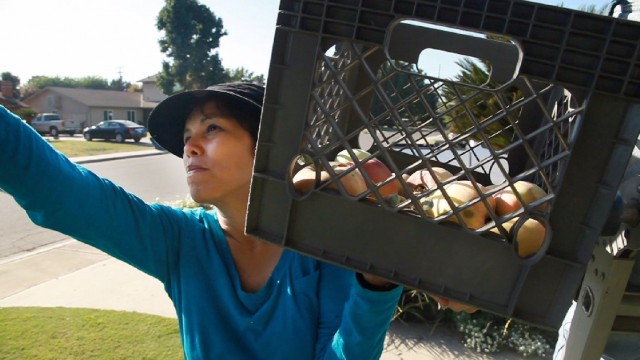
"caption": "Sarah Ramirez runs an organization that brings excess produce to the hungry. Here, she gleans apples from a front yard. Photo: Scott Anger/KQED",
"description": null,
"title": "Sarah Ramirez runs an organization that brings excess produce to the hungry. Here, she gleans apples from a front yard.",
"credit": null,
"status": "inherit",
"isLoading": false,
"fetchFailed": false
},
"bayareabites_75286": {
"type": "attachments",
"id": "bayareabites_75286",
"meta": {
"index": "attachments_1716263798",
"site": "bayareabites",
"id": "75286",
"found": true
},
"parent": 75285,
"imgSizes": {
"kqedFullSize": {
"file": "https://ww2.kqed.org/app/uploads/sites/24/2013/12/hunger_food-bank_016-1_wide-34e5e8961df57f5e66e547bfe451026794fd141a-e1387387299249.jpg",
"width": 640,
"height": 360
}
},
"publishDate": 1387386792,
"modified": 1387386792,
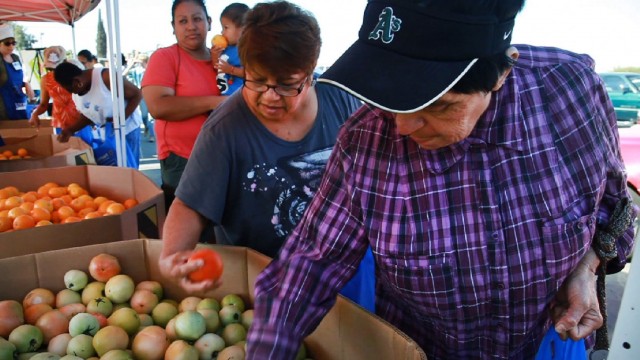
"caption": "Food banks have become a primary source of nutrition for rural farmworker communities in the Central Valley. Photo: Scott Anger/KQED",
"description": null,
"title": "Food banks have become a primary source of nutrition for rural farmworker communities in the Central Valley.",
"credit": null,
"status": "inherit",
"isLoading": false,
"fetchFailed": false
},
"bayareabites_75220": {
"type": "attachments",
"id": "bayareabites_75220",
"meta": {
"index": "attachments_1716263798",
"site": "bayareabites",
"id": "75220",
"found": true
},
"parent": 75219,
"imgSizes": {
"kqedFullSize": {
"file": "https://ww2.kqed.org/app/uploads/sites/24/2013/12/kenya-e78018b5d9656a9bf3a772f79d13f965003ca9bf-e1387300166749.jpg",
"width": 640,
"height": 480
}
},
"publishDate": 1387299755,
"modified": 1387299755,
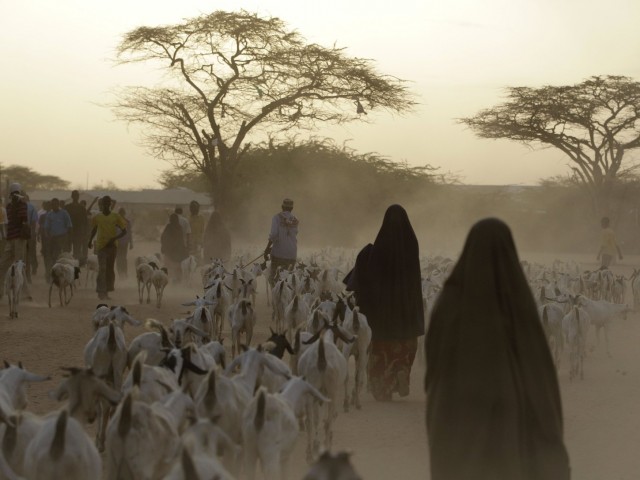
"caption": "Somali refugees lead their herds of goats home for the night outside Dadaab, Kenya. A new study shows that animals in many parts of the developing world require more food — and generate more greenhouse emissions — than animals in wealthy countries. Photo: Rebecca Blackwell/AP",
"description": null,
"title": "Somali refugees lead their herds of goats home for the night outside Dadaab, Kenya. A new study shows that animals in many parts of the developing world require more food — and generate more greenhouse emissions — than animals in wealthy countries.",
"credit": null,
"status": "inherit",
"isLoading": false,
"fetchFailed": false
},
"bayareabites_75044": {
"type": "attachments",
"id": "bayareabites_75044",
"meta": {
"index": "attachments_1716263798",
"site": "bayareabites",
"id": "75044",
"found": true
},
"parent": 75043,
"imgSizes": {
"kqedFullSize": {
"file": "https://ww2.kqed.org/app/uploads/sites/24/2013/12/community-shop-3-e3923b436d383fcb17fba76a5e717db31bc083ae-e1386886696162.jpg",
"width": 640,
"height": 479
}
},
"publishDate": 1386886360,
"modified": 1386886360,
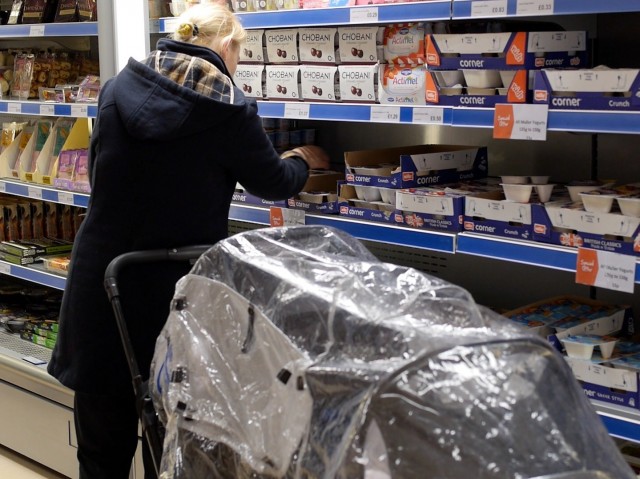
"caption": "A customer scans the shelves at Community Shop, the U.K.'s first \"social supermarket.\" The discount grocery stores are growing in popularity across Europe and are open exclusively to those in need. Photo: Courtesy of Community Shop",
"description": "A customer scans the shelves at Community Shop, the U.K.'s first \"social supermarket.\" The discount grocery stores are growing in popularity across Europe and are open exclusively to those in need.",
"title": "A customer scans the shelves at Community Shop, the U.K.'s first \"social supermarket.\" The discount grocery stores are growing in popularity across Europe and are open exclusively to those in need.",
"credit": null,
"status": "inherit",
"isLoading": false,
"fetchFailed": false
},
"bayareabites_74936": {
"type": "attachments",
"id": "bayareabites_74936",
"meta": {
"index": "attachments_1716263798",
"site": "bayareabites",
"id": "74936",
"found": true
},
"parent": 74935,
"imgSizes": {
"kqedFullSize": {
"file": "https://ww2.kqed.org/app/uploads/sites/24/2013/12/istock_000014476652large_slide-556191c9ebb27b1f85a01ea15a96d4a162658b1f-e1386639626492.jpg",
"width": 640,
"height": 426
}
},
"publishDate": 1386639317,
"modified": 1386639317,
"caption": "In her new book, historian Maureen Ogle examines the rise of our modern meat industry. She argues that there's a fundamental disconnect in the way many of us view meat. Photo: iStockphoto",
"description": null,
"title": "In her new book, historian Maureen Ogle examines the rise of our modern meat industry. She argues that there's a fundamental disconnect in the way many of us view meat.",
"credit": null,
"status": "inherit",
"isLoading": false,
"fetchFailed": false
},
"bayareabites_74838": {
"type": "attachments",
"id": "bayareabites_74838",
"meta": {
"index": "attachments_1716263798",
"site": "bayareabites",
"id": "74838",
"found": true
},
"parent": 74829,
"imgSizes": {
"kqedFullSize": {
"file": "https://ww2.kqed.org/app/uploads/sites/24/2013/12/fastfoodworkerstrike.jpg",
"width": 624,
"height": 350
}
},
"publishDate": 1386271905,
"modified": 1386271905,
"caption": null,
"description": null,
"title": "fastfoodworkerstrike",
"credit": null,
"status": "inherit",
"isLoading": false,
"fetchFailed": false
},
"bayareabites_74828": {
"type": "attachments",
"id": "bayareabites_74828",
"meta": {
"index": "attachments_1716263798",
"site": "bayareabites",
"id": "74828",
"found": true
},
"parent": 74822,
"imgSizes": {
"kqedFullSize": {
"file": "https://ww2.kqed.org/app/uploads/sites/24/2013/12/foodstamps.jpg",
"width": 624,
"height": 467
}
},
"publishDate": 1386271211,
"modified": 1386271211,
"caption": null,
"description": null,
"title": "foodstamps",
"credit": null,
"status": "inherit",
"isLoading": false,
"fetchFailed": false
},
"bayareabites_74760": {
"type": "attachments",
"id": "bayareabites_74760",
"meta": {
"index": "attachments_1716263798",
"site": "bayareabites",
"id": "74760",
"found": true
},
"parent": 74754,
"imgSizes": {
"kqedFullSize": {
"file": "https://ww2.kqed.org/app/uploads/sites/24/2013/12/milkprices.jpg",
"width": 624,
"height": 350
}
},
"publishDate": 1386175682,
"modified": 1386175682,
"caption": null,
"description": null,
"title": "milkprices",
"credit": null,
"status": "inherit",
"isLoading": false,
"fetchFailed": false
},
"bayareabites_74638": {
"type": "attachments",
"id": "bayareabites_74638",
"meta": {
"index": "attachments_1716263798",
"site": "bayareabites",
"id": "74638",
"found": true
},
"parent": 74626,
"imgSizes": {
"kqedFullSize": {
"file": "https://ww2.kqed.org/app/uploads/sites/24/2013/11/supermarketsweet.jpg",
"width": 550,
"height": 366
}
},
"publishDate": 1385575403,
"modified": 1385575403,
"caption": null,
"description": null,
"title": "supermarketsweep",
"credit": null,
"status": "inherit",
"isLoading": false,
"fetchFailed": false
},
"bayareabites_74044": {
"type": "attachments",
"id": "bayareabites_74044",
"meta": {
"index": "attachments_1716263798",
"site": "bayareabites",
"id": "74044",
"found": true
},
"parent": 74038,
"imgSizes": {
"kqedFullSize": {
"file": "https://ww2.kqed.org/app/uploads/sites/24/2013/11/foodstampmap640.jpg",
"width": 640,
"height": 359
}
},
"publishDate": 1384793736,
"modified": 1384793736,
"caption": null,
"description": null,
"title": "foodstampmap640",
"credit": null,
"status": "inherit",
"isLoading": false,
"fetchFailed": false
},
"bayareabites_73809": {
"type": "attachments",
"id": "bayareabites_73809",
"meta": {
"index": "attachments_1716263798",
"site": "bayareabites",
"id": "73809",
"found": true
},
"parent": 73805,
"imgSizes": {
"kqedFullSize": {
"file": "https://ww2.kqed.org/app/uploads/sites/24/2013/11/bitcoin.jpg",
"width": 624,
"height": 467
}
},
"publishDate": 1384277219,
"modified": 1384277219,
"caption": "Economists say small business owners — especially farmers dealing in high volume and low profit margins — are more likely to accept a volatile currency like bitcoin than bigger businesses. Photo: Allen Sheffield/Flickr",
"description": null,
"title": "bitcoin",
"credit": null,
"status": "inherit",
"isLoading": false,
"fetchFailed": false
}
},
"audioPlayerReducer": {
"postId": "stream_live",
"isPaused": true,
"isPlaying": false,
"pfsActive": false,
"pledgeModalIsOpen": true,
"playerDrawerIsOpen": false,
"liveAudioPlayStartedAt": 0,
"liveAudioPlayContext": ""
},
"authorsReducer": {
"byline_bayareabites_75285": {
"type": "authors",
"id": "byline_bayareabites_75285",
"meta": {
"override": true
},
"slug": "byline_bayareabites_75285",
"name": "Sasha Khokha",
"isLoading": false
},
"byline_bayareabites_75219": {
"type": "authors",
"id": "byline_bayareabites_75219",
"meta": {
"override": true
},
"slug": "byline_bayareabites_75219",
"name": "Eliza Barclay",
"isLoading": false
},
"byline_bayareabites_75043": {
"type": "authors",
"id": "byline_bayareabites_75043",
"meta": {
"override": true
},
"slug": "byline_bayareabites_75043",
"name": "Serri Graslie",
"isLoading": false
},
"byline_bayareabites_74935": {
"type": "authors",
"id": "byline_bayareabites_74935",
"meta": {
"override": true
},
"slug": "byline_bayareabites_74935",
"name": "Jeremy Bernfeld",
"isLoading": false
},
"byline_bayareabites_74829": {
"type": "authors",
"id": "byline_bayareabites_74829",
"meta": {
"override": true
},
"slug": "byline_bayareabites_74829",
"name": "Allison Aubrey",
"isLoading": false
},
"byline_bayareabites_74822": {
"type": "authors",
"id": "byline_bayareabites_74822",
"meta": {
"override": true
},
"slug": "byline_bayareabites_74822",
"name": "Pam Fessler",
"isLoading": false
},
"byline_bayareabites_74754": {
"type": "authors",
"id": "byline_bayareabites_74754",
"meta": {
"override": true
},
"slug": "byline_bayareabites_74754",
"name": "Tamara Keith",
"isLoading": false
},
"byline_bayareabites_74038": {
"type": "authors",
"id": "byline_bayareabites_74038",
"meta": {
"override": true
},
"slug": "byline_bayareabites_74038",
"name": "Maria Godoy",
"isLoading": false
},
"byline_bayareabites_73805": {
"type": "authors",
"id": "byline_bayareabites_73805",
"meta": {
"override": true
},
"slug": "byline_bayareabites_73805",
"name": "Thomas Andrew Gustafson",
"isLoading": false
},
"kdomara": {
"type": "authors",
"id": "1459",
"meta": {
"index": "authors_1716337520",
"id": "1459",
"found": true
},
"name": "Kelly O'Mara",
"firstName": "Kelly",
"lastName": "O'Mara",
"slug": "kdomara",
"email": "komara@kqed.org",
"display_author_email": false,
"staff_mastheads": [
"news"
],
"title": "KQED Contributor",
"bio": "Kelly O'Mara is a writer and reporter in the San Francisco Bay Area. She writes about food, health, sports, travel, business and California news. Her work has appeared on KQED, online for Outside Magazine, epsnW, VICE and in Competitor Magazine, among others. Follow Kelly on Twitter \u003ca href=\"https://twitter.com/kellydomara\">@kellydomara\u003c/a>.",
"avatar": "https://secure.gravatar.com/avatar/768fec7412028b72f13bdd0f5f9d8186?s=600&d=blank&r=g",
"twitter": null,
"facebook": null,
"instagram": null,
"linkedin": null,
"sites": [
{
"site": "arts",
"roles": []
},
{
"site": "news",
"roles": []
},
{
"site": "bayareabites",
"roles": []
},
{
"site": "stateofhealth",
"roles": []
},
{
"site": "science",
"roles": []
},
{
"site": "checkplease",
"roles": [
"editor"
]
},
{
"site": "food",
"roles": []
},
{
"site": "forum",
"roles": [
"editor"
]
},
{
"site": "liveblog",
"roles": [
"editor"
]
}
],
"headData": {
"title": "Kelly O'Mara | KQED",
"description": "KQED Contributor",
"ogImgSrc": "https://secure.gravatar.com/avatar/768fec7412028b72f13bdd0f5f9d8186?s=600&d=blank&r=g",
"twImgSrc": "https://secure.gravatar.com/avatar/768fec7412028b72f13bdd0f5f9d8186?s=600&d=blank&r=g"
},
"isLoading": false,
"link": "/author/kdomara"
},
"jennyoh": {
"type": "authors",
"id": "2100",
"meta": {
"index": "authors_1716337520",
"id": "2100",
"found": true
},
"name": "Jenny Oh",
"firstName": "Jenny",
"lastName": "Oh",
"slug": "jennyoh",
"email": "joh@kqed.org",
"display_author_email": false,
"staff_mastheads": [],
"title": "Audience Engagement Producer, Deep Look",
"bio": "Jenny is an Emmy Award-winning producer and is currently the Audience Engagement Producer for KQED Science's \u003cem>Deep Look\u003c/em> online video series. She was also a long-time contributor to Bay Area Bites, KQED's popular food blog. Jenny graduated with honors from New York University’s Tisch School of the Arts Film and Television program and has worked for WNET/PBS, The Learning Channel, Sundance Channel, HBO and the University of California.",
"avatar": "https://secure.gravatar.com/avatar/7ddda0ed657e46dbe66083f569967752?s=600&d=mm&r=g",
"twitter": null,
"facebook": null,
"instagram": null,
"linkedin": null,
"sites": [
{
"site": "arts",
"roles": []
},
{
"site": "pop",
"roles": []
},
{
"site": "about",
"roles": []
},
{
"site": "bayareabites",
"roles": []
},
{
"site": "science",
"roles": []
},
{
"site": "education",
"roles": []
},
{
"site": "quest",
"roles": []
},
{
"site": "food",
"roles": []
}
],
"headData": {
"title": "Jenny Oh | KQED",
"description": "Audience Engagement Producer, Deep Look",
"ogImgSrc": "https://secure.gravatar.com/avatar/7ddda0ed657e46dbe66083f569967752?s=600&d=mm&r=g",
"twImgSrc": "https://secure.gravatar.com/avatar/7ddda0ed657e46dbe66083f569967752?s=600&d=mm&r=g"
},
"isLoading": false,
"link": "/author/jennyoh"
},
"nprfood": {
"type": "authors",
"id": "5403",
"meta": {
"index": "authors_1716337520",
"id": "5403",
"found": true
},
"name": "NPR Food",
"firstName": "NPR Food",
"lastName": null,
"slug": "nprfood",
"email": "nprfood@kqed.org",
"display_author_email": false,
"staff_mastheads": [],
"title": null,
"bio": "Food and Health-related stories from NPR including NPR Radio; NPR's food blog, \"The Salt\"; NPR's Health News blog, \"Shots\"; NPR's Breaking News blog \"The Two-Way\"; NPR's global stories blog \"Goats and Soda,\" NPR's economy explainer \"Planet Money\"; food-related technology news from NPR's \"All Tech Considered\"; and food series \"Kitchen Window.\"",
"avatar": "https://secure.gravatar.com/avatar/c4b735bb26404fa18ce2447d32e64291?s=600&d=blank&r=g",
"twitter": "nprfood",
"facebook": null,
"instagram": null,
"linkedin": null,
"sites": [
{
"site": "bayareabites",
"roles": [
"contributor"
]
},
{
"site": "food",
"roles": [
"contributor"
]
}
],
"headData": {
"title": "NPR Food | KQED",
"description": null,
"ogImgSrc": "https://secure.gravatar.com/avatar/c4b735bb26404fa18ce2447d32e64291?s=600&d=blank&r=g",
"twImgSrc": "https://secure.gravatar.com/avatar/c4b735bb26404fa18ce2447d32e64291?s=600&d=blank&r=g"
},
"isLoading": false,
"link": "/author/nprfood"
}
},
"pagesReducer": {
"bayareabites_category_economy-and-food-costs": {
"type": "terms",
"id": "bayareabites_1962",
"meta": {
"index": "terms_1716263798",
"site": "bayareabites",
"id": "1962",
"score": 13.89634
},
"featImg": null,
"name": "economy and food costs",
"description": null,
"taxonomy": "category",
"headData": {
"twImgId": null,
"twTitle": null,
"ogTitle": null,
"ogImgId": null,
"twDescription": null,
"description": null,
"title": "economy and food costs Archives | KQED Bay Area Bites",
"ogDescription": null
},
"ttid": 1488,
"slug": "economy-and-food-costs",
"isLoading": false,
"title": "economy and food costs",
"pageMeta": {
"site": "bayareabites",
"WpPageTemplate": "page-topic-editorial",
"currentPage": 14
},
"blocks": [
{
"blockName": "kqed/post-list",
"attrs": {
"layout": "cardArticle2",
"query": "posts/bayareabites?category=economy-and-food-costs",
"seeMore": false,
"paginated": true,
"page": 14
}
},
{
"blockName": "kqed/ad"
}
]
}
},
"pfsSessionReducer": {},
"postsReducer": {
"stream_live": {
"type": "live",
"id": "stream_live",
"audioUrl": "https://streams.kqed.org/kqedradio",
"title": "Live Stream",
"excerpt": "Live Stream information currently unavailable.",
"link": "/radio",
"featImg": "",
"label": {
"name": "KQED Live",
"link": "/"
}
},
"stream_kqedNewscast": {
"type": "posts",
"id": "stream_kqedNewscast",
"audioUrl": "https://www.kqed.org/.stream/anon/radio/RDnews/newscast.mp3?_=1",
"title": "KQED Newscast",
"featImg": "",
"label": {
"name": "88.5 FM",
"link": "/"
}
},
"bayareabites_75227": {
"type": "posts",
"id": "bayareabites_75227",
"meta": {
"index": "posts_1716263798",
"site": "bayareabites",
"id": "75227",
"score": null,
"sort": [
1387483205000
]
},
"parent": 0,
"labelTerm": {
"site": "bayareabites"
},
"blocks": [],
"publishDate": 1387483205,
"format": "aside",
"disqusTitle": "The Top Issues That Consumed the Food World This Year",
"title": "The Top Issues That Consumed the Food World This Year",
"headTitle": "Bay Area Bites | KQED Food",
"content": "\u003cfigure id=\"attachment_75231\" class=\"wp-caption aligncenter\" style=\"max-width: 655px\">\u003ca href=\"http://ww2.kqed.org/bayareabites/wp-content/uploads/sites/24/2013/12/167314167.jpg\">\u003cimg class=\"size-full wp-image-75231\" src=\"http://ww2.kqed.org/bayareabites/wp-content/uploads/sites/24/2013/12/167314167.jpg\" alt=\"These were some of the top stories and issues that rocked the food world in 2013. Photo: Thinkstock\" width=\"655\" height=\"535\">\u003c/a>\u003cfigcaption class=\"wp-caption-text\">These were some of the top stories and issues that rocked the food world in 2013. Photo: Thinkstock\u003c/figcaption>\u003c/figure>\n\u003cp>Everyone loves to eat and this year was no exception. But, with technology changing the way we eat and the economy continuing to affect what we eat, some old trends fell by the wayside in 2013 and new issues rose to the surface. Most importantly, we began to finally act on hot topics like antibiotics in our meat and fast food workers' wages. Here were some of the trends that consumed the food industry this year and what we to expect in 2014.\u003c/p>\n\u003cfigure id=\"attachment_73032\" class=\"wp-caption aligncenter\" style=\"max-width: 437px\">\u003ca href=\"http://ww2.kqed.org/bayareabites/wp-content/uploads/sites/24/2013/10/scentee.jpg\">\u003cimg class=\" wp-image-73032 \" src=\"http://ww2.kqed.org/bayareabites/wp-content/uploads/sites/24/2013/10/scentee.jpg\" alt=\"Simply plug the Scentee device into your iPhone jack and let the scent of grilled meat waft your way.\" width=\"437\" height=\"327\">\u003c/a>\u003cfigcaption class=\"wp-caption-text\">Simply plug the Scentee device into your iPhone jack and let the scent of grilled meat waft your way.\u003c/figcaption>\u003c/figure>\n\u003cp>\u003cstrong>Food Technology\u003c/strong>: Perhaps it's no surprise, here in the heart of our nation's technology capitol, that even our food got a tech-makeover this year. \u003ca href=\"http://ww2.kqed.org/bayareabites/2013/11/18/smell-technologies/\" target=\"_blank\">Smell technologies\u003c/a> -- which recreate the smells of foods through \u003ca href=\"http://pogueman.tumblr.com/post/69837669173/the-worlds-first-smell-enabled-iphone-app\" target=\"_blank\">smart phones\u003c/a>, computers and TVs -- made a big jump forward this year. With smell playing such a large part in our eating experience, scent tech is integral in creating artifical foods that may not be what they appear -- \u003ca href=\"http://gizmodo.com/5608457/meta-cookie-uses-virtual-reality-to-make-a-cookie-taste-like-anything-you-want\" target=\"_blank\">such as a cookie wafer that tastes like steak\u003c/a>.\u003c/p>\n\u003cp>Many of the technologies that came out of Silicon Valley start-ups this year, though, were more mundane than steak cookies. Food is a big business and there's a booming industry in connecting people with that food. \u003ca href=\"http://ww2.kqed.org/bayareabites/2013/12/12/food-delivery-technology/\" target=\"_blank\">New food delivery tech companies\u003c/a> launched around-the-clock this year, each trying to find the best (and most profitable) way to deliver food or get take-out without ever leaving your house. Eating is still the domain of the non-robotic, for now, but virtually everything else can be done via the internet. There are apps to pair you with chefs and apps to find you recipes and apps to bring the food to your front door. In 2014, you may not have to be involved in any part of the food experience: Eating? There's an app for that.\u003c/p>\n\u003cfigure id=\"attachment_72054\" class=\"wp-caption aligncenter\" style=\"max-width: 640px\">\u003ca href=\"http://ww2.kqed.org/bayareabites/wp-content/uploads/sites/24/2013/10/food-waste640.jpg\">\u003cimg class=\"size-full wp-image-72054\" src=\"http://ww2.kqed.org/bayareabites/wp-content/uploads/sites/24/2013/10/food-waste640.jpg\" alt=\"Food Shift has launched ads educating people about how much of the pie is being thrown away. Photo: Food Shift\" width=\"640\" height=\"403\">\u003c/a>\u003cfigcaption class=\"wp-caption-text\">Food Shift has launched ads educating people about how much of the pie is being thrown away. Photo: Food Shift\u003c/figcaption>\u003c/figure>\n\u003cp>\u003cstrong>Food Waste\u003c/strong>: But, as long as we're not robots, we'll still generate waste -- a lot of waste. \u003ca href=\"http://blogs.kqed.org/lowdown/2013/12/13/food-waste\" target=\"_blank\">Nearly 40% of our food is currently being wasted\u003c/a>. This year, \u003ca href=\"http://ww2.kqed.org/bayareabites/2013/10/14/food-waste/\" target=\"_blank\">a number of organizations stepped forward to both reduce that amount of food waste and to re-purpose what is thrown away\u003c/a>. Places like \u003ca href=\"http://foodshift.net/\" target=\"_blank\">Food Shift\u003c/a> and \u003ca href=\"http://www.foodrunners.org/\" target=\"_blank\">Food Runners\u003c/a> are taking leftovers from grocery stores and restaurants to those who need the food. Gleaning, the practice of picking up perfectly good food that's left on the ground after a harvest, \u003ca href=\"http://ww2.kqed.org/news/2013/10/08/getting-harvest-to-the-hungry/\" target=\"_blank\">continued to gain traction around the state and country\u003c/a>, going mainstream in 2013. And, of course, there's an app for that too. \u003ca href=\"http://www.nydailynews.com/life-style/eats/new-app-lets-swap-leftover-food-strangers-article-1.1422837\" target=\"_blank\">The leftover app\u003c/a> lets people swap leftovers instead of simply throwing them out. There's still plenty of leftovers left, though, to tackle in 2014.\u003c/p>\n\u003cfigure id=\"attachment_66825\" class=\"wp-caption aligncenter\" style=\"max-width: 1024px\">\u003ca href=\"http://ww2.kqed.org/bayareabites/wp-content/uploads/sites/24/2013/07/fast-food-strike.jpg\">\u003cimg class=\"size-large wp-image-66825\" src=\"http://ww2.kqed.org/bayareabites/wp-content/uploads/sites/24/2013/07/fast-food-strike-1024x574.jpg\" alt=\"People gathered outside a Wendy's restaurant in New York City on Monday as part of a one-day strike calling for higher wages for fast-food workers. Photo: Justin Lane/EPA/Landov\" width=\"1024\" height=\"574\">\u003c/a>\u003cfigcaption class=\"wp-caption-text\">People gathered outside a Wendy's restaurant in New York City as part of a strike calling for higher wages for fast-food workers. Photo: Justin Lane/EPA/Landov\u003c/figcaption>\u003c/figure>\n\u003cp>\u003cstrong>Minimum Wage, Food Stamps and Poverty\u003c/strong>: The strikes that swept through fast food restaurants this year left many starting to think about the real cost of their cheap food. In April, \u003ca href=\"http://ww2.kqed.org/bayareabites/2013/04/05/nycs-fast-food-workers-strike-demand-living-wages/\" target=\"_blank\">workers staged a strike in New York, where the minimum wage is $7.25\u003c/a>. In July, \u003ca href=\"http://ww2.kqed.org/bayareabites/2013/07/30/fast-food-strikers-demand-a-living-wage/\" target=\"_blank\">more fast food employees joined the picket lines to demand a living wage\u003c/a>. Earlier this month, workers staged one of the biggest protests yet, focused on the fact that McDonald's has bought luxury jets for its executives but can't afford a raise in the minimum wage for its employees. The movement this year brought attention to (and some action focused on) the cost of supporting people who make less than a living wage. Studies found that over 50% of fast food workers are enrolled in public assistance programs, such as food stamps, in order to afford the very food they serve. It turns out that cheap food isn't really as cheap as it seems. \u003ca href=\"http://ww2.kqed.org/bayareabites/2013/10/16/why-u-s-taxpayers-pay-7-billion-a-year-to-help-fast-food-workers/\" target=\"_blank\">Taxpayers pay $7 billion to support those fast food workers\u003c/a>.\u003c/p>\n\u003cp>[ad fullwidth]\u003c/p>\n\u003cp>The people who rely on those programs faced some hits after \u003ca href=\"http://ww2.kqed.org/bayareabites/2013/11/18/see-how-food-stamp-cuts-are-hitting-across-the-u-s/\" target=\"_blank\">a $5 billion cut to food stamps went into effect on Nov. 1\u003c/a>. With more budget cuts being debated, the food stamps program and how poor citizens can afford to feed their families came to the front of the nation's attention. It even raised questions about \u003ca href=\"http://ww2.kqed.org/bayareabites/2013/12/09/kqeds-forum-should-food-stamp-users-be-blocked-from-buying-junk-food/\" target=\"_blank\">what people should be allowed to buy with food stamps\u003c/a> and how they can find fresh produce in \u003ca href=\"http://ww2.kqed.org/bayareabites/2011/12/03/kqed-forum-eating-healthy-in-a-food-desert/\" target=\"_blank\">food deserts\u003c/a> -- questions without answers yet.\u003c/p>\n\u003cfigure id=\"attachment_70290\" class=\"wp-caption aligncenter\" style=\"max-width: 1024px\">\u003ca href=\"http://ww2.kqed.org/bayareabites/wp-content/uploads/sites/24/2013/09/antibioticspigs2.jpg\">\u003cimg class=\"size-large wp-image-70290\" src=\"http://ww2.kqed.org/bayareabites/wp-content/uploads/sites/24/2013/09/antibioticspigs2-1024x767.jpg\" alt=\"These pigs in Iowa, newly weaned from their mothers, get antibiotics in their water to ward off bacterial infection. Photo: Dan Charles/NPR\" width=\"1024\" height=\"767\">\u003c/a>\u003cfigcaption class=\"wp-caption-text\">These pigs in Iowa, newly weaned from their mothers, get antibiotics in their water to ward off bacterial infection. Photo: Dan Charles/NPR\u003c/figcaption>\u003c/figure>\n\u003cp>\u003cstrong>Hormones and Antibiotics\u003c/strong>: The use of animal antibiotics on farms has been around for years -- and, arguably, getting worse most of that time. But, this year was the year that people decided enough was enough. \u003ca href=\"http://ww2.kqed.org/bayareabites/2013/07/11/are-antibiotics-on-the-farm-risky-business/\" target=\"_blank\">There was a rise in awareness of the dangers of too many antibiotics\u003c/a>, both for the animals and for people's health after eating the animals. Too many strong antibiotics have created \u003ca href=\"http://ww2.kqed.org/bayareabites/2013/05/01/antibiotic-resistant-bugs-turn-up-again-in-turkey-meat/\" target=\"_blank\">antibiotic-resistance bacteria\u003c/a> that are increasingly turning up in chickens, turkeys, pigs and cows. Growth-promoting drugs can also balloon up animals, making them full of meat to sell, but unable to walk while they're alive. \u003ca href=\"http://ww2.kqed.org/bayareabites/2013/11/05/why-are-pig-farmers-still-using-growth-promoting-drugs/\" target=\"_blank\">The FDA began putting pressure on drug companies to pull their strongest antibiotics and on farmers to voluntarily stop using certain drugs\u003c/a>. Last week, \u003ca href=\"http://ww2.kqed.org/bayareabites/2013/12/12/drug-companies-accept-fda-plan-to-phase-out-some-animal-antibiotic-uses/\" target=\"_blank\">the two biggest veterinary drug companies agreed to follow FDA advice and phase out some drugs used for growth promotion\u003c/a>.\u003c/p>\n\u003cfigure id=\"attachment_63379\" class=\"wp-caption aligncenter\" style=\"max-width: 1024px\">\u003ca href=\"http://ww2.kqed.org/bayareabites/wp-content/uploads/sites/24/2013/06/gmosoybeans.jpg\">\u003cimg class=\"size-large wp-image-63379\" src=\"http://ww2.kqed.org/bayareabites/wp-content/uploads/sites/24/2013/06/gmosoybeans-1024x767.jpg\" alt=\"A farmer holds Monsanto's Roundup Ready soybean seeds at his family farm in Bunceton, Mo. Photo: Dan Gill/AP\" width=\"1024\" height=\"767\">\u003c/a>\u003cfigcaption class=\"wp-caption-text\">A farmer holds Monsanto's Roundup Ready soybean seeds at his family farm in Bunceton, Mo. Photo: Dan Gill/AP\u003c/figcaption>\u003c/figure>\n\u003cp>\u003cstrong>GMO & Labeling:\u003c/strong> The genetically-modified food debate didn't get resolved this year, but it hit some key points around the country. As more people considered what the labels on their food should say, initiatives to label GMOs went to the voters. In November, \u003ca href=\"http://ww2.kqed.org/bayareabites/2013/11/07/washington-state-says-no-to-gmo-labels/\" target=\"_blank\">Washington voted 'No' on GMO labeling\u003c/a>. A number of other initiatives are expected to be on other state ballots in the next year. Advocates say people have the right to know what's in their food. But, opinions on GMOs are still mixed. \u003ca href=\"http://ww2.kqed.org/bayareabites/2013/05/15/for-supreme-court-monsantos-win-was-more-about-patents-than-seeds/\" target=\"_blank\">A Supreme Court ruling in May sided with seed manufacturer Monsanto\u003c/a>, arguing that farmers who used genetically-modified seeds for multiple plantings violate copyright. As farmers move away from GMO seeds, particularly since the seeds haven't always worked as well as promised and in an effort to disconnect from large companies like Monsanto, \u003ca href=\"http://modernfarmer.com/2013/12/post-gmo-economy/\" target=\"_blank\">they're looking for natural solutions to what GMOs promised\u003c/a>. What will the post-GMO economy look like?\u003c/p>\n\u003cp>But, for the conscientious foodie, GMOs aren't the only thing to worry about in their food. The labels tell consumers lots of information -- where it's from, how much fat it has, how many calories or, potentially, what antibiotics were used. The debate over that information is only getting started. \u003ca href=\"http://ww2.kqed.org/bayareabites/2013/11/14/whats-the-most-important-thing-food-labels-should-tell-us/\" target=\"_blank\">What should our labels tell us\u003c/a>?\u003c/p>\n\u003cfigure id=\"attachment_74841\" class=\"wp-caption aligncenter\" style=\"max-width: 1024px\">\u003ca href=\"http://ww2.kqed.org/bayareabites/wp-content/uploads/sites/24/2013/12/schoollunch-503876b2756a4c46fb21b6d11427e193962a9fee.jpg\">\u003cimg class=\"size-large wp-image-74841\" src=\"http://ww2.kqed.org/bayareabites/wp-content/uploads/sites/24/2013/12/schoollunch-503876b2756a4c46fb21b6d11427e193962a9fee-1024x768.jpg\" alt=\"Students at Lowell High School in Michigan sit down for lunch. Shorter lunch breaks mean that many kids don't get enough time to eat and socialize. Photo: Emily Zoladz/Landov\" width=\"1024\" height=\"768\">\u003c/a>\u003cfigcaption class=\"wp-caption-text\">Students at Lowell High School in Michigan sit down for lunch. Shorter lunch breaks mean that many kids don't get enough time to eat and socialize. Photo: Emily Zoladz/Landov\u003c/figcaption>\u003c/figure>\n\u003cp>\u003cstrong>School Lunches:\u003c/strong> Every parent wants their kids to eat well, so it's no surprise that school lunches remained a hot topic again in 2013. In July, \u003ca href=\"http://blogs.kqed.org/stateofhealth/2013/07/12/drink-up-schools-must-provide-more-water-during-meals/\" target=\"_blank\">a new federal regulation required that schools provide drinking water at breakfast for students\u003c/a>, helping to address growing concern about sugary soft drinks. Traditional worries about nutrition guidelines met with new angst about GMOs, antibiotics and leftovers -- some of the food waste nonprofits are taking leftover food from school lunch programs for re-use. But, now, parents have something else to worry about too: how much time kids have to eat. With school schedules getting condensed and budgets taking a hit, \u003ca href=\"http://ww2.kqed.org/bayareabites/2013/12/06/these-days-school-lunch-hours-are-more-like-15-minutes/\" target=\"_blank\">lunch is getting shorter\u003c/a>. \u003c/p>\n\u003cp>[ad floatright]\u003c/p>\n\u003cp>A popular photo spread showed us \u003ca href=\"http://www.good.is/posts/this-is-what-america-s-school-lunches-really-look-like\" target=\"_blank\">what school lunches really looked like this year\u003c/a>. What will they look like next year?\u003c/p>\n\u003ch3>What were some of the biggest trends this year that we missed?\u003c/h3>\n\n",
"disqusIdentifier": "75227 http://blogs.kqed.org/bayareabites/?p=75227",
"disqusUrl": "https://ww2.kqed.org/bayareabites/2013/12/19/the-top-issues-that-consumed-the-food-world-this-year/",
"stats": {
"hasVideo": false,
"hasChartOrMap": false,
"hasAudio": false,
"hasPolis": false,
"wordCount": 1374,
"hasGoogleForm": false,
"hasGallery": false,
"hasHearkenModule": false,
"iframeSrcs": [],
"paragraphCount": 13
},
"modified": 1546992853,
"excerpt": "From GMOs to apps on your phone, these were some of the biggest food stories and trends in 2013.",
"headData": {
"twImgId": "",
"twTitle": "",
"ogTitle": "",
"ogImgId": "",
"twDescription": "",
"description": "From GMOs to apps on your phone, these were some of the biggest food stories and trends in 2013.",
"title": "The Top Issues That Consumed the Food World This Year | KQED",
"ogDescription": "",
"schema": {
"@context": "https://schema.org",
"@type": "Article",
"headline": "The Top Issues That Consumed the Food World This Year",
"datePublished": "2013-12-19T12:00:05-08:00",
"dateModified": "2019-01-08T16:14:13-08:00",
"image": "https://cdn.kqed.org/wp-content/uploads/2020/02/KQED-OG-Image@1x.png"
}
},
"guestAuthors": [],
"slug": "the-top-issues-that-consumed-the-food-world-this-year",
"status": "publish",
"path": "/bayareabites/75227/the-top-issues-that-consumed-the-food-world-this-year",
"audioTrackLength": null,
"parsedContent": [
{
"type": "contentString",
"content": "\u003cdiv class=\"post-body\">\u003cp>\u003cfigure id=\"attachment_75231\" class=\"wp-caption aligncenter\" style=\"max-width: 655px\">\u003ca href=\"http://ww2.kqed.org/bayareabites/wp-content/uploads/sites/24/2013/12/167314167.jpg\">\u003cimg class=\"size-full wp-image-75231\" src=\"http://ww2.kqed.org/bayareabites/wp-content/uploads/sites/24/2013/12/167314167.jpg\" alt=\"These were some of the top stories and issues that rocked the food world in 2013. Photo: Thinkstock\" width=\"655\" height=\"535\">\u003c/a>\u003cfigcaption class=\"wp-caption-text\">These were some of the top stories and issues that rocked the food world in 2013. Photo: Thinkstock\u003c/figcaption>\u003c/figure>\n\u003cp>Everyone loves to eat and this year was no exception. But, with technology changing the way we eat and the economy continuing to affect what we eat, some old trends fell by the wayside in 2013 and new issues rose to the surface. Most importantly, we began to finally act on hot topics like antibiotics in our meat and fast food workers' wages. Here were some of the trends that consumed the food industry this year and what we to expect in 2014.\u003c/p>\n\u003cfigure id=\"attachment_73032\" class=\"wp-caption aligncenter\" style=\"max-width: 437px\">\u003ca href=\"http://ww2.kqed.org/bayareabites/wp-content/uploads/sites/24/2013/10/scentee.jpg\">\u003cimg class=\" wp-image-73032 \" src=\"http://ww2.kqed.org/bayareabites/wp-content/uploads/sites/24/2013/10/scentee.jpg\" alt=\"Simply plug the Scentee device into your iPhone jack and let the scent of grilled meat waft your way.\" width=\"437\" height=\"327\">\u003c/a>\u003cfigcaption class=\"wp-caption-text\">Simply plug the Scentee device into your iPhone jack and let the scent of grilled meat waft your way.\u003c/figcaption>\u003c/figure>\n\u003cp>\u003cstrong>Food Technology\u003c/strong>: Perhaps it's no surprise, here in the heart of our nation's technology capitol, that even our food got a tech-makeover this year. \u003ca href=\"http://ww2.kqed.org/bayareabites/2013/11/18/smell-technologies/\" target=\"_blank\">Smell technologies\u003c/a> -- which recreate the smells of foods through \u003ca href=\"http://pogueman.tumblr.com/post/69837669173/the-worlds-first-smell-enabled-iphone-app\" target=\"_blank\">smart phones\u003c/a>, computers and TVs -- made a big jump forward this year. With smell playing such a large part in our eating experience, scent tech is integral in creating artifical foods that may not be what they appear -- \u003ca href=\"http://gizmodo.com/5608457/meta-cookie-uses-virtual-reality-to-make-a-cookie-taste-like-anything-you-want\" target=\"_blank\">such as a cookie wafer that tastes like steak\u003c/a>.\u003c/p>\n\u003cp>Many of the technologies that came out of Silicon Valley start-ups this year, though, were more mundane than steak cookies. Food is a big business and there's a booming industry in connecting people with that food. \u003ca href=\"http://ww2.kqed.org/bayareabites/2013/12/12/food-delivery-technology/\" target=\"_blank\">New food delivery tech companies\u003c/a> launched around-the-clock this year, each trying to find the best (and most profitable) way to deliver food or get take-out without ever leaving your house. Eating is still the domain of the non-robotic, for now, but virtually everything else can be done via the internet. There are apps to pair you with chefs and apps to find you recipes and apps to bring the food to your front door. In 2014, you may not have to be involved in any part of the food experience: Eating? There's an app for that.\u003c/p>\n\u003cfigure id=\"attachment_72054\" class=\"wp-caption aligncenter\" style=\"max-width: 640px\">\u003ca href=\"http://ww2.kqed.org/bayareabites/wp-content/uploads/sites/24/2013/10/food-waste640.jpg\">\u003cimg class=\"size-full wp-image-72054\" src=\"http://ww2.kqed.org/bayareabites/wp-content/uploads/sites/24/2013/10/food-waste640.jpg\" alt=\"Food Shift has launched ads educating people about how much of the pie is being thrown away. Photo: Food Shift\" width=\"640\" height=\"403\">\u003c/a>\u003cfigcaption class=\"wp-caption-text\">Food Shift has launched ads educating people about how much of the pie is being thrown away. Photo: Food Shift\u003c/figcaption>\u003c/figure>\n\u003cp>\u003cstrong>Food Waste\u003c/strong>: But, as long as we're not robots, we'll still generate waste -- a lot of waste. \u003ca href=\"http://blogs.kqed.org/lowdown/2013/12/13/food-waste\" target=\"_blank\">Nearly 40% of our food is currently being wasted\u003c/a>. This year, \u003ca href=\"http://ww2.kqed.org/bayareabites/2013/10/14/food-waste/\" target=\"_blank\">a number of organizations stepped forward to both reduce that amount of food waste and to re-purpose what is thrown away\u003c/a>. Places like \u003ca href=\"http://foodshift.net/\" target=\"_blank\">Food Shift\u003c/a> and \u003ca href=\"http://www.foodrunners.org/\" target=\"_blank\">Food Runners\u003c/a> are taking leftovers from grocery stores and restaurants to those who need the food. Gleaning, the practice of picking up perfectly good food that's left on the ground after a harvest, \u003ca href=\"http://ww2.kqed.org/news/2013/10/08/getting-harvest-to-the-hungry/\" target=\"_blank\">continued to gain traction around the state and country\u003c/a>, going mainstream in 2013. And, of course, there's an app for that too. \u003ca href=\"http://www.nydailynews.com/life-style/eats/new-app-lets-swap-leftover-food-strangers-article-1.1422837\" target=\"_blank\">The leftover app\u003c/a> lets people swap leftovers instead of simply throwing them out. There's still plenty of leftovers left, though, to tackle in 2014.\u003c/p>\n\u003cfigure id=\"attachment_66825\" class=\"wp-caption aligncenter\" style=\"max-width: 1024px\">\u003ca href=\"http://ww2.kqed.org/bayareabites/wp-content/uploads/sites/24/2013/07/fast-food-strike.jpg\">\u003cimg class=\"size-large wp-image-66825\" src=\"http://ww2.kqed.org/bayareabites/wp-content/uploads/sites/24/2013/07/fast-food-strike-1024x574.jpg\" alt=\"People gathered outside a Wendy's restaurant in New York City on Monday as part of a one-day strike calling for higher wages for fast-food workers. Photo: Justin Lane/EPA/Landov\" width=\"1024\" height=\"574\">\u003c/a>\u003cfigcaption class=\"wp-caption-text\">People gathered outside a Wendy's restaurant in New York City as part of a strike calling for higher wages for fast-food workers. Photo: Justin Lane/EPA/Landov\u003c/figcaption>\u003c/figure>\n\u003cp>\u003cstrong>Minimum Wage, Food Stamps and Poverty\u003c/strong>: The strikes that swept through fast food restaurants this year left many starting to think about the real cost of their cheap food. In April, \u003ca href=\"http://ww2.kqed.org/bayareabites/2013/04/05/nycs-fast-food-workers-strike-demand-living-wages/\" target=\"_blank\">workers staged a strike in New York, where the minimum wage is $7.25\u003c/a>. In July, \u003ca href=\"http://ww2.kqed.org/bayareabites/2013/07/30/fast-food-strikers-demand-a-living-wage/\" target=\"_blank\">more fast food employees joined the picket lines to demand a living wage\u003c/a>. Earlier this month, workers staged one of the biggest protests yet, focused on the fact that McDonald's has bought luxury jets for its executives but can't afford a raise in the minimum wage for its employees. The movement this year brought attention to (and some action focused on) the cost of supporting people who make less than a living wage. Studies found that over 50% of fast food workers are enrolled in public assistance programs, such as food stamps, in order to afford the very food they serve. It turns out that cheap food isn't really as cheap as it seems. \u003ca href=\"http://ww2.kqed.org/bayareabites/2013/10/16/why-u-s-taxpayers-pay-7-billion-a-year-to-help-fast-food-workers/\" target=\"_blank\">Taxpayers pay $7 billion to support those fast food workers\u003c/a>.\u003c/p>\n\u003cp>\u003c/p>\u003c/div>",
"attributes": {
"named": {},
"numeric": []
}
},
{
"type": "component",
"content": "",
"name": "ad",
"attributes": {
"named": {
"label": "fullwidth"
},
"numeric": [
"fullwidth"
]
}
},
{
"type": "contentString",
"content": "\u003cdiv class=\"post-body\">\u003cp>\u003c/p>\n\u003cp>The people who rely on those programs faced some hits after \u003ca href=\"http://ww2.kqed.org/bayareabites/2013/11/18/see-how-food-stamp-cuts-are-hitting-across-the-u-s/\" target=\"_blank\">a $5 billion cut to food stamps went into effect on Nov. 1\u003c/a>. With more budget cuts being debated, the food stamps program and how poor citizens can afford to feed their families came to the front of the nation's attention. It even raised questions about \u003ca href=\"http://ww2.kqed.org/bayareabites/2013/12/09/kqeds-forum-should-food-stamp-users-be-blocked-from-buying-junk-food/\" target=\"_blank\">what people should be allowed to buy with food stamps\u003c/a> and how they can find fresh produce in \u003ca href=\"http://ww2.kqed.org/bayareabites/2011/12/03/kqed-forum-eating-healthy-in-a-food-desert/\" target=\"_blank\">food deserts\u003c/a> -- questions without answers yet.\u003c/p>\n\u003cfigure id=\"attachment_70290\" class=\"wp-caption aligncenter\" style=\"max-width: 1024px\">\u003ca href=\"http://ww2.kqed.org/bayareabites/wp-content/uploads/sites/24/2013/09/antibioticspigs2.jpg\">\u003cimg class=\"size-large wp-image-70290\" src=\"http://ww2.kqed.org/bayareabites/wp-content/uploads/sites/24/2013/09/antibioticspigs2-1024x767.jpg\" alt=\"These pigs in Iowa, newly weaned from their mothers, get antibiotics in their water to ward off bacterial infection. Photo: Dan Charles/NPR\" width=\"1024\" height=\"767\">\u003c/a>\u003cfigcaption class=\"wp-caption-text\">These pigs in Iowa, newly weaned from their mothers, get antibiotics in their water to ward off bacterial infection. Photo: Dan Charles/NPR\u003c/figcaption>\u003c/figure>\n\u003cp>\u003cstrong>Hormones and Antibiotics\u003c/strong>: The use of animal antibiotics on farms has been around for years -- and, arguably, getting worse most of that time. But, this year was the year that people decided enough was enough. \u003ca href=\"http://ww2.kqed.org/bayareabites/2013/07/11/are-antibiotics-on-the-farm-risky-business/\" target=\"_blank\">There was a rise in awareness of the dangers of too many antibiotics\u003c/a>, both for the animals and for people's health after eating the animals. Too many strong antibiotics have created \u003ca href=\"http://ww2.kqed.org/bayareabites/2013/05/01/antibiotic-resistant-bugs-turn-up-again-in-turkey-meat/\" target=\"_blank\">antibiotic-resistance bacteria\u003c/a> that are increasingly turning up in chickens, turkeys, pigs and cows. Growth-promoting drugs can also balloon up animals, making them full of meat to sell, but unable to walk while they're alive. \u003ca href=\"http://ww2.kqed.org/bayareabites/2013/11/05/why-are-pig-farmers-still-using-growth-promoting-drugs/\" target=\"_blank\">The FDA began putting pressure on drug companies to pull their strongest antibiotics and on farmers to voluntarily stop using certain drugs\u003c/a>. Last week, \u003ca href=\"http://ww2.kqed.org/bayareabites/2013/12/12/drug-companies-accept-fda-plan-to-phase-out-some-animal-antibiotic-uses/\" target=\"_blank\">the two biggest veterinary drug companies agreed to follow FDA advice and phase out some drugs used for growth promotion\u003c/a>.\u003c/p>\n\u003cfigure id=\"attachment_63379\" class=\"wp-caption aligncenter\" style=\"max-width: 1024px\">\u003ca href=\"http://ww2.kqed.org/bayareabites/wp-content/uploads/sites/24/2013/06/gmosoybeans.jpg\">\u003cimg class=\"size-large wp-image-63379\" src=\"http://ww2.kqed.org/bayareabites/wp-content/uploads/sites/24/2013/06/gmosoybeans-1024x767.jpg\" alt=\"A farmer holds Monsanto's Roundup Ready soybean seeds at his family farm in Bunceton, Mo. Photo: Dan Gill/AP\" width=\"1024\" height=\"767\">\u003c/a>\u003cfigcaption class=\"wp-caption-text\">A farmer holds Monsanto's Roundup Ready soybean seeds at his family farm in Bunceton, Mo. Photo: Dan Gill/AP\u003c/figcaption>\u003c/figure>\n\u003cp>\u003cstrong>GMO & Labeling:\u003c/strong> The genetically-modified food debate didn't get resolved this year, but it hit some key points around the country. As more people considered what the labels on their food should say, initiatives to label GMOs went to the voters. In November, \u003ca href=\"http://ww2.kqed.org/bayareabites/2013/11/07/washington-state-says-no-to-gmo-labels/\" target=\"_blank\">Washington voted 'No' on GMO labeling\u003c/a>. A number of other initiatives are expected to be on other state ballots in the next year. Advocates say people have the right to know what's in their food. But, opinions on GMOs are still mixed. \u003ca href=\"http://ww2.kqed.org/bayareabites/2013/05/15/for-supreme-court-monsantos-win-was-more-about-patents-than-seeds/\" target=\"_blank\">A Supreme Court ruling in May sided with seed manufacturer Monsanto\u003c/a>, arguing that farmers who used genetically-modified seeds for multiple plantings violate copyright. As farmers move away from GMO seeds, particularly since the seeds haven't always worked as well as promised and in an effort to disconnect from large companies like Monsanto, \u003ca href=\"http://modernfarmer.com/2013/12/post-gmo-economy/\" target=\"_blank\">they're looking for natural solutions to what GMOs promised\u003c/a>. What will the post-GMO economy look like?\u003c/p>\n\u003cp>But, for the conscientious foodie, GMOs aren't the only thing to worry about in their food. The labels tell consumers lots of information -- where it's from, how much fat it has, how many calories or, potentially, what antibiotics were used. The debate over that information is only getting started. \u003ca href=\"http://ww2.kqed.org/bayareabites/2013/11/14/whats-the-most-important-thing-food-labels-should-tell-us/\" target=\"_blank\">What should our labels tell us\u003c/a>?\u003c/p>\n\u003cfigure id=\"attachment_74841\" class=\"wp-caption aligncenter\" style=\"max-width: 1024px\">\u003ca href=\"http://ww2.kqed.org/bayareabites/wp-content/uploads/sites/24/2013/12/schoollunch-503876b2756a4c46fb21b6d11427e193962a9fee.jpg\">\u003cimg class=\"size-large wp-image-74841\" src=\"http://ww2.kqed.org/bayareabites/wp-content/uploads/sites/24/2013/12/schoollunch-503876b2756a4c46fb21b6d11427e193962a9fee-1024x768.jpg\" alt=\"Students at Lowell High School in Michigan sit down for lunch. Shorter lunch breaks mean that many kids don't get enough time to eat and socialize. Photo: Emily Zoladz/Landov\" width=\"1024\" height=\"768\">\u003c/a>\u003cfigcaption class=\"wp-caption-text\">Students at Lowell High School in Michigan sit down for lunch. Shorter lunch breaks mean that many kids don't get enough time to eat and socialize. Photo: Emily Zoladz/Landov\u003c/figcaption>\u003c/figure>\n\u003cp>\u003cstrong>School Lunches:\u003c/strong> Every parent wants their kids to eat well, so it's no surprise that school lunches remained a hot topic again in 2013. In July, \u003ca href=\"http://blogs.kqed.org/stateofhealth/2013/07/12/drink-up-schools-must-provide-more-water-during-meals/\" target=\"_blank\">a new federal regulation required that schools provide drinking water at breakfast for students\u003c/a>, helping to address growing concern about sugary soft drinks. Traditional worries about nutrition guidelines met with new angst about GMOs, antibiotics and leftovers -- some of the food waste nonprofits are taking leftover food from school lunch programs for re-use. But, now, parents have something else to worry about too: how much time kids have to eat. With school schedules getting condensed and budgets taking a hit, \u003ca href=\"http://ww2.kqed.org/bayareabites/2013/12/06/these-days-school-lunch-hours-are-more-like-15-minutes/\" target=\"_blank\">lunch is getting shorter\u003c/a>. \u003c/p>\n\u003cp>\u003c/p>\u003c/div>",
"attributes": {
"named": {},
"numeric": []
}
},
{
"type": "component",
"content": "",
"name": "ad",
"attributes": {
"named": {
"label": "floatright"
},
"numeric": [
"floatright"
]
}
},
{
"type": "contentString",
"content": "\u003cdiv class=\"post-body\">\u003cp>\u003c/p>\n\u003cp>A popular photo spread showed us \u003ca href=\"http://www.good.is/posts/this-is-what-america-s-school-lunches-really-look-like\" target=\"_blank\">what school lunches really looked like this year\u003c/a>. What will they look like next year?\u003c/p>\n\u003ch3>What were some of the biggest trends this year that we missed?\u003c/h3>\n\n\u003c/div>\u003c/p>",
"attributes": {
"named": {},
"numeric": []
}
}
],
"link": "/bayareabites/75227/the-top-issues-that-consumed-the-food-world-this-year",
"authors": [
"1459"
],
"categories": [
"bayareabites_109",
"bayareabites_752",
"bayareabites_1962",
"bayareabites_4084",
"bayareabites_2035",
"bayareabites_60"
],
"tags": [
"bayareabites_8693",
"bayareabites_2256",
"bayareabites_3707",
"bayareabites_10771",
"bayareabites_12605",
"bayareabites_11505",
"bayareabites_450",
"bayareabites_12625",
"bayareabites_11838"
],
"featImg": "bayareabites_75306",
"label": "bayareabites"
},
"bayareabites_75375": {
"type": "posts",
"id": "bayareabites_75375",
"meta": {
"index": "posts_1716263798",
"site": "bayareabites",
"id": "75375",
"score": null,
"sort": [
1387476389000
]
},
"parent": 0,
"labelTerm": {
"site": "bayareabites"
},
"blocks": [],
"publishDate": 1387476389,
"format": "aside",
"disqusTitle": "This Stanford Ph.D. Became A Fruit Picker To Feed California's Hungry",
"title": "This Stanford Ph.D. Became A Fruit Picker To Feed California's Hungry",
"headTitle": "Bay Area Bites | KQED Food",
"content": "\u003cfigure id=\"attachment_75376\" class=\"wp-caption aligncenter\" style=\"max-width: 640px\">\u003ca href=\"http://ww2.kqed.org/bayareabites/wp-content/uploads/sites/24/2013/12/hunger_gleaning_019_wide-b53b2523f4f1433b8abb470eef8627d114c478f1-e1387475813686.jpg\">\u003cimg src=\"http://ww2.kqed.org/bayareabites/wp-content/uploads/sites/24/2013/12/hunger_gleaning_019_wide-b53b2523f4f1433b8abb470eef8627d114c478f1-e1387475813686.jpg\" alt=\"Sarah Ramirez runs an organization that brings excess produce to the hungry. Here, she gleans apples from a front yard. Photo: Scott Anger/KQED\" width=\"640\" height=\"360\" class=\"size-full wp-image-75376\">\u003c/a>\u003cfigcaption class=\"wp-caption-text\">Sarah Ramirez runs an organization that brings excess produce to the hungry. Here, she gleans apples from a front yard. Photo: Scott Anger/KQED\u003c/figcaption>\u003c/figure>\n\u003cp>\u003cstrong>Listen to the Story\u003c/strong> on \u003ca href=\"http://www.npr.org/blogs/thesalt/2013/12/19/255252581/this-stanford-ph-d-became-a-fruit-picker-to-feed-californias-hungry\">Morning Edition\u003c/a> [audio src=\"http://pd.npr.org/anon.npr-mp3/npr/me/2013/12/20131219_me_farmworker_hunger_2.mp3\"] \u003c/p>\n\u003cp>Story by Sasha Khokha, \u003ca href=\"http://www.kqed.org/news/specialcoverage/hungerinthevalleyofplenty/index.jsp\">KQED News/CIR\u003c/a> at \u003ca href=\"http://www.npr.org/blogs/thesalt/2013/12/19/255252581/this-stanford-ph-d-became-a-fruit-picker-to-feed-californias-hungry\">The Salt at NPR Food\u003c/a> (12/19/13)\u003c/p>\n\u003cp>By some estimates, we Americans throw away about \u003ca href=\"http://www.nrdc.org/food/files/wasted-food-ip.pdf\" target=\"_blank\">40 percent of our food\u003c/a>, from the cabbage that's wilting in our refrigerators, to the fruit that's falling off the orange tree in our neighbor's backyard.\u003c/p>\n\u003cp>In California's Central Valley, one woman has started a grassroots effort to feed hungry people by rescuing some of that produce.\u003c/p>\n\u003cp>At first glance, Sarah Ramirez's decision to leave a bright future as an epidemiologist with a doctorate from Stanford University to become a fruit picker might seem downright crazy. To understand her motivations, you first need to know a little about the economics of California's Central Valley, where Ramirez grew up, the daughter of farmworkers.\u003c/p>\n\u003cp>[ad fullwidth]\u003c/p>\n\u003cp>Many farms in the Central Valley supply fruits and vegetables for major supermarket chains across the country. Farmer Peter Mesias says those stores demand perfect produce to meet consumer's expectations.\u003c/p>\n\u003cp>I visited \u003ca href=\"https://www.facebook.com/pages/Abe-El-Produce-Fruit-Stands/130420460324490\">Mesias' farm\u003c/a> this summer. He walked me through a squash field dense with prickly leaves, picked a zucchini and showed it to me.\u003c/p>\n\u003cp>\"Right off the bat, you can see there's a nick, there's a little bit of a crook,\" he said. \"That couldn't be packed in a box.\"\u003c/p>\n\u003cp>So that means supermarkets won't buy it. They prefer smaller, tender squash.\u003c/p>\n\u003cp>This year, Mesias ended up with acres of excess squash, and he hoped the local food bank would come take some of the imperfect fruit before he plowed it under.\u003c/p>\n\u003cp>[youtube //www.youtube.com/watch?v=5r_3J8MVkX0]\u003c/p>\n\u003cp>Food bank director Sandy Beals says it's not uncommon for food banks to hear from farmers like Mesias.\u003c/p>\n\u003cp>\"And if we can pick it, we can have it. I mean, how tempting is that?, \" Beals says.\u003c/p>\n\u003cp>But Beals says she can't easily send her staff to pick excess crops. The liability is too high.\u003c/p>\n\u003cp>\"Somebody falls off a ladder and gets hurt. One incident like that could very easily put us belly up,\" she says.\u003c/p>\n\u003cp>And that's too bad. The \u003ca href=\"http://www.foodlinktc.org/\">food bank\u003c/a> that Beals helps run in Tulare County, Calif., serves one out of four county residents, many of them farmworkers. She says she's desperate for donations — she sometimes has to beg for an extension on the food bank's electricity bill so that she can keep the freezers running.\u003c/p>\n\u003cp>And that's where Sarah Ramirez comes in.\u003c/p>\n\u003cp>Ramirez has made it her mission to rescue produce from commercial fields and people's backyards. And as an individual, she can sign a liability waiver saying she won't sue if she gets hurt picking crops.\u003c/p>\n\u003cp>Ramirez grew up in Pixley, Calif., a rural town that John Steinbeck described in \u003cem>The Grapes of Wrath\u003c/em>. She went on to earn a Ph.D. at Stanford and become Tulare County's epidemiologist, where she noticed some troubling trends: high rates of diabetes and obesity, paired with widespread food insecurity.\u003c/p>\n\u003cp>Ramirez says she noticed that a lot fruit in the region went unharvested. \"And yet, at the same time, we have hunger and food insecurity,\" she says. \"And it seems like we should be able to put a need with a surplus. Let's put the pieces together.\"\u003c/p>\n\u003cp>Ramirez recently moved back to Pixley to start a grassroots effort called \u003ca href=\"http://www.behealthytulare.com/\">Be Healthy Tulare\u003c/a>, a shoestring operation she and her husband fund themselves and operate out of their home in a trailer park.\u003c/p>\n\u003cp>\"If I think about the overwhelming nature of the problem, it's so much easier not to do anything. And there's a lot of people who say the problem is so big, nothing we can ever do will fix it,\" Ramirez says. \"Well, if we all took that position, nothing would ever get done.\"\u003c/p>\n\u003cp>Ramirez says she wanted to take action. So she decided to give up the prestige of a high-powered career to return to her roots, to the kind of work that her parents, who labored in the fields, tried to make sure she'd never have to do.\u003c/p>\n\u003cp>\"One of our team members says I should be wearing a t-shirt that says, 'I have a Ph.D. and I pick fruit,' \" Ramirez says.\u003c/p>\n\u003cp>Food bank director Sandy Beals says Ramirez's work is making a big difference.\u003c/p>\n\u003cp>\"There is extreme unemployment, very high poverty and not a lot of hope that things will get better,\" Beals says. \"And [Ramirez's] goal is to give people hope. And hope is the most important thing people can have.\"\u003c/p>\n\u003cp>This year, Ramirez and her tiny band of volunteers have gleaned 20,000 pounds of produce from farms and backyards.\u003c/p>\n\u003cp>And Be Healthy Tulare is doing more than just picking fruit. On weekends, Ramirez ties a colorful bandana on her head and gets out her sharp knives to hold \"food labs,\" nutrition classes to teach people how to incorporate more produce into their diets. They whip up delicacies like peach-cucumber gazpacho in the community kitchen of the Pixley trailer park.\u003c/p>\n\u003cp>They've also started a community garden to grow their own produce, and it's equipped with an outdoor propane stove.\u003c/p>\n\u003cp>That's where Maria Arevalo is sautéing some eggplant she's just harvested. She worked in the fields for some 40 years before recently retiring.\u003c/p>\n\u003cp>\"Vegetables used to look kind of tempting to me,\" she explains in Spanish, standing over an outdoor propane stove. \"But I didn't know how to cook them. My mother never cooked them. People here can't afford them. They're a luxury.\"\u003c/p>\n\u003cp>But now Arevalo is eating fruit and vegetables grown in the organic garden. And it's paying off. She says her blood pressure is now under control. And her community's getting healthier, too. \u003c/p>\n\u003cp>\u003c/p>\n\u003cp>\u003cstrong>More Information:\u003c/strong>\u003cbr>\n\u003ca href=\"http://www.kqed.org/news/specialcoverage/hungerinthevalleyofplenty/index.jsp\">\u003cstrong>Hunger in the Valley of Plenty\u003c/strong>\u003c/a> (Collaboration between KQED and \u003ca href=\"http://cironline.org/reports/video-hunger-valley-plenty-5364\">CIR\u003c/a>)\u003c/p>\n\n",
"disqusIdentifier": "75375 http://blogs.kqed.org/bayareabites/?p=75375",
"disqusUrl": "https://ww2.kqed.org/bayareabites/2013/12/19/this-stanford-ph-d-became-a-fruit-picker-to-feed-californias-hungry/",
"stats": {
"hasVideo": true,
"hasChartOrMap": false,
"hasAudio": true,
"hasPolis": false,
"wordCount": 1029,
"hasGoogleForm": false,
"hasGallery": false,
"hasHearkenModule": false,
"iframeSrcs": [],
"paragraphCount": 35
},
"modified": 1387476510,
"excerpt": "Sarah Ramirez left a high-prestige career to bring California's bounty of unsellable fruit to food banks in the state's Central Valley. Her grassroots organization is trying to address a regional conundrum: While many area farms end up with imperfect fruit that can't be sold to supermarkets, local farmworkers struggle to afford fresh produce.",
"headData": {
"twImgId": "",
"twTitle": "",
"ogTitle": "",
"ogImgId": "",
"twDescription": "",
"description": "Sarah Ramirez left a high-prestige career to bring California's bounty of unsellable fruit to food banks in the state's Central Valley. Her grassroots organization is trying to address a regional conundrum: While many area farms end up with imperfect fruit that can't be sold to supermarkets, local farmworkers struggle to afford fresh produce.",
"title": "This Stanford Ph.D. Became A Fruit Picker To Feed California's Hungry | KQED",
"ogDescription": "",
"schema": {
"@context": "https://schema.org",
"@type": "Article",
"headline": "This Stanford Ph.D. Became A Fruit Picker To Feed California's Hungry",
"datePublished": "2013-12-19T10:06:29-08:00",
"dateModified": "2013-12-19T10:08:30-08:00",
"image": "https://cdn.kqed.org/wp-content/uploads/2020/02/KQED-OG-Image@1x.png"
}
},
"guestAuthors": [],
"slug": "this-stanford-ph-d-became-a-fruit-picker-to-feed-californias-hungry",
"status": "publish",
"nprApiLink": "http://api.npr.org/query?id=255252581&apiKey=MDAxOTAwOTE4MDEyMTkxMDAzNjczZDljZA004",
"nprStoryDate": "Thu, 19 Dec 2013 05:00:00 -0500",
"nprLastModifiedDate": "Thu, 19 Dec 2013 07:20:26 -0500",
"nprHtmlLink": "http://www.npr.org/blogs/thesalt/2013/12/19/255252581/this-stanford-ph-d-became-a-fruit-picker-to-feed-californias-hungry?ft=3&f=255252581",
"nprAudio": "http://pd.npr.org/anon.npr-mp3/npr/me/2013/12/20131219_me_farmworker_hunger_2.mp3?orgId=150&topicId=1053&ft=3&f=255252581",
"nprAudioM3u": "http://api.npr.org/m3u/1255422122-a5d4c4.m3u?orgId=150&topicId=1053&ft=3&f=255252581",
"nprStoryId": "255252581",
"nprRetrievedStory": "1",
"nprPubDate": "Thu, 19 Dec 2013 12:08:00 -0500",
"path": "/bayareabites/75375/this-stanford-ph-d-became-a-fruit-picker-to-feed-californias-hungry",
"audioUrl": "http://pd.npr.org/anon.npr-mp3/npr/me/2013/12/20131219_me_farmworker_hunger_2.mp3?orgId=150&topicId=1053&ft=3&f=255252581",
"audioDuration": null,
"audioTrackLength": null,
"parsedContent": [
{
"type": "contentString",
"content": "\u003cdiv class=\"post-body\">\u003cp>\u003cfigure id=\"attachment_75376\" class=\"wp-caption aligncenter\" style=\"max-width: 640px\">\u003ca href=\"http://ww2.kqed.org/bayareabites/wp-content/uploads/sites/24/2013/12/hunger_gleaning_019_wide-b53b2523f4f1433b8abb470eef8627d114c478f1-e1387475813686.jpg\">\u003cimg src=\"http://ww2.kqed.org/bayareabites/wp-content/uploads/sites/24/2013/12/hunger_gleaning_019_wide-b53b2523f4f1433b8abb470eef8627d114c478f1-e1387475813686.jpg\" alt=\"Sarah Ramirez runs an organization that brings excess produce to the hungry. Here, she gleans apples from a front yard. Photo: Scott Anger/KQED\" width=\"640\" height=\"360\" class=\"size-full wp-image-75376\">\u003c/a>\u003cfigcaption class=\"wp-caption-text\">Sarah Ramirez runs an organization that brings excess produce to the hungry. Here, she gleans apples from a front yard. Photo: Scott Anger/KQED\u003c/figcaption>\u003c/figure>\n\u003cp>\u003cstrong>Listen to the Story\u003c/strong> on \u003ca href=\"http://www.npr.org/blogs/thesalt/2013/12/19/255252581/this-stanford-ph-d-became-a-fruit-picker-to-feed-californias-hungry\">Morning Edition\u003c/a> \u003c/p>\u003c/div>",
"attributes": {
"named": {},
"numeric": []
}
},
{
"type": "component",
"content": "",
"name": "audio",
"attributes": {
"named": {
"src": "http://pd.npr.org/anon.npr-mp3/npr/me/2013/12/20131219_me_farmworker_hunger_2.mp3",
"label": ""
},
"numeric": []
}
},
{
"type": "contentString",
"content": "\u003cdiv class=\"post-body\">\u003cp> \u003c/p>\n\u003cp>Story by Sasha Khokha, \u003ca href=\"http://www.kqed.org/news/specialcoverage/hungerinthevalleyofplenty/index.jsp\">KQED News/CIR\u003c/a> at \u003ca href=\"http://www.npr.org/blogs/thesalt/2013/12/19/255252581/this-stanford-ph-d-became-a-fruit-picker-to-feed-californias-hungry\">The Salt at NPR Food\u003c/a> (12/19/13)\u003c/p>\n\u003cp>By some estimates, we Americans throw away about \u003ca href=\"http://www.nrdc.org/food/files/wasted-food-ip.pdf\" target=\"_blank\">40 percent of our food\u003c/a>, from the cabbage that's wilting in our refrigerators, to the fruit that's falling off the orange tree in our neighbor's backyard.\u003c/p>\n\u003cp>In California's Central Valley, one woman has started a grassroots effort to feed hungry people by rescuing some of that produce.\u003c/p>\n\u003cp>At first glance, Sarah Ramirez's decision to leave a bright future as an epidemiologist with a doctorate from Stanford University to become a fruit picker might seem downright crazy. To understand her motivations, you first need to know a little about the economics of California's Central Valley, where Ramirez grew up, the daughter of farmworkers.\u003c/p>\n\u003cp>\u003c/p>\u003c/div>",
"attributes": {
"named": {},
"numeric": []
}
},
{
"type": "component",
"content": "",
"name": "ad",
"attributes": {
"named": {
"label": "fullwidth"
},
"numeric": [
"fullwidth"
]
}
},
{
"type": "contentString",
"content": "\u003cdiv class=\"post-body\">\u003cp>\u003c/p>\n\u003cp>Many farms in the Central Valley supply fruits and vegetables for major supermarket chains across the country. Farmer Peter Mesias says those stores demand perfect produce to meet consumer's expectations.\u003c/p>\n\u003cp>I visited \u003ca href=\"https://www.facebook.com/pages/Abe-El-Produce-Fruit-Stands/130420460324490\">Mesias' farm\u003c/a> this summer. He walked me through a squash field dense with prickly leaves, picked a zucchini and showed it to me.\u003c/p>\n\u003cp>\"Right off the bat, you can see there's a nick, there's a little bit of a crook,\" he said. \"That couldn't be packed in a box.\"\u003c/p>\n\u003cp>So that means supermarkets won't buy it. They prefer smaller, tender squash.\u003c/p>\n\u003cp>This year, Mesias ended up with acres of excess squash, and he hoped the local food bank would come take some of the imperfect fruit before he plowed it under.\u003c/p>\n\u003cp>\u003c/p>\u003cp>\u003cspan class='utils-parseShortcode-shortcodes-__youtubeShortcode__embedYoutube'>\n \u003cspan class='utils-parseShortcode-shortcodes-__youtubeShortcode__embedYoutubeInside'>\n \u003ciframe\n loading='lazy'\n class='utils-parseShortcode-shortcodes-__youtubeShortcode__youtubePlayer'\n type='text/html'\n src='//www.youtube.com/embed/5r_3J8MVkX0'\n title='//www.youtube.com/embed/5r_3J8MVkX0'\n allowfullscreen='true'\n style='border:0;'>\u003c/iframe>\n \u003c/span>\n \u003c/span>\u003c/p>\u003cp>\u003c/p>\n\u003cp>Food bank director Sandy Beals says it's not uncommon for food banks to hear from farmers like Mesias.\u003c/p>\n\u003cp>\"And if we can pick it, we can have it. I mean, how tempting is that?, \" Beals says.\u003c/p>\n\u003cp>But Beals says she can't easily send her staff to pick excess crops. The liability is too high.\u003c/p>\n\u003cp>\"Somebody falls off a ladder and gets hurt. One incident like that could very easily put us belly up,\" she says.\u003c/p>\n\u003cp>And that's too bad. The \u003ca href=\"http://www.foodlinktc.org/\">food bank\u003c/a> that Beals helps run in Tulare County, Calif., serves one out of four county residents, many of them farmworkers. She says she's desperate for donations — she sometimes has to beg for an extension on the food bank's electricity bill so that she can keep the freezers running.\u003c/p>\n\u003cp>And that's where Sarah Ramirez comes in.\u003c/p>\n\u003cp>Ramirez has made it her mission to rescue produce from commercial fields and people's backyards. And as an individual, she can sign a liability waiver saying she won't sue if she gets hurt picking crops.\u003c/p>\n\u003cp>Ramirez grew up in Pixley, Calif., a rural town that John Steinbeck described in \u003cem>The Grapes of Wrath\u003c/em>. She went on to earn a Ph.D. at Stanford and become Tulare County's epidemiologist, where she noticed some troubling trends: high rates of diabetes and obesity, paired with widespread food insecurity.\u003c/p>\n\u003cp>Ramirez says she noticed that a lot fruit in the region went unharvested. \"And yet, at the same time, we have hunger and food insecurity,\" she says. \"And it seems like we should be able to put a need with a surplus. Let's put the pieces together.\"\u003c/p>\n\u003cp>Ramirez recently moved back to Pixley to start a grassroots effort called \u003ca href=\"http://www.behealthytulare.com/\">Be Healthy Tulare\u003c/a>, a shoestring operation she and her husband fund themselves and operate out of their home in a trailer park.\u003c/p>\n\u003cp>\"If I think about the overwhelming nature of the problem, it's so much easier not to do anything. And there's a lot of people who say the problem is so big, nothing we can ever do will fix it,\" Ramirez says. \"Well, if we all took that position, nothing would ever get done.\"\u003c/p>\n\u003cp>Ramirez says she wanted to take action. So she decided to give up the prestige of a high-powered career to return to her roots, to the kind of work that her parents, who labored in the fields, tried to make sure she'd never have to do.\u003c/p>\n\u003cp>\"One of our team members says I should be wearing a t-shirt that says, 'I have a Ph.D. and I pick fruit,' \" Ramirez says.\u003c/p>\n\u003cp>Food bank director Sandy Beals says Ramirez's work is making a big difference.\u003c/p>\n\u003cp>\"There is extreme unemployment, very high poverty and not a lot of hope that things will get better,\" Beals says. \"And [Ramirez's] goal is to give people hope. And hope is the most important thing people can have.\"\u003c/p>\n\u003cp>This year, Ramirez and her tiny band of volunteers have gleaned 20,000 pounds of produce from farms and backyards.\u003c/p>\n\u003cp>And Be Healthy Tulare is doing more than just picking fruit. On weekends, Ramirez ties a colorful bandana on her head and gets out her sharp knives to hold \"food labs,\" nutrition classes to teach people how to incorporate more produce into their diets. They whip up delicacies like peach-cucumber gazpacho in the community kitchen of the Pixley trailer park.\u003c/p>\n\u003cp>They've also started a community garden to grow their own produce, and it's equipped with an outdoor propane stove.\u003c/p>\n\u003cp>That's where Maria Arevalo is sautéing some eggplant she's just harvested. She worked in the fields for some 40 years before recently retiring.\u003c/p>\n\u003cp>\"Vegetables used to look kind of tempting to me,\" she explains in Spanish, standing over an outdoor propane stove. \"But I didn't know how to cook them. My mother never cooked them. People here can't afford them. They're a luxury.\"\u003c/p>\n\u003cp>But now Arevalo is eating fruit and vegetables grown in the organic garden. And it's paying off. She says her blood pressure is now under control. And her community's getting healthier, too. \u003c/p>\n\u003cp>\u003c/p>\n\u003cp>\u003cstrong>More Information:\u003c/strong>\u003cbr>\n\u003ca href=\"http://www.kqed.org/news/specialcoverage/hungerinthevalleyofplenty/index.jsp\">\u003cstrong>Hunger in the Valley of Plenty\u003c/strong>\u003c/a> (Collaboration between KQED and \u003ca href=\"http://cironline.org/reports/video-hunger-valley-plenty-5364\">CIR\u003c/a>)\u003c/p>\n\n\u003c/div>\u003c/p>",
"attributes": {
"named": {},
"numeric": []
}
}
],
"link": "/bayareabites/75375/this-stanford-ph-d-became-a-fruit-picker-to-feed-californias-hungry",
"authors": [
"5403"
],
"categories": [
"bayareabites_1962",
"bayareabites_1874",
"bayareabites_3032",
"bayareabites_4084",
"bayareabites_2554",
"bayareabites_1245",
"bayareabites_45",
"bayareabites_10916",
"bayareabites_2035"
],
"tags": [
"bayareabites_12816",
"bayareabites_12819",
"bayareabites_249",
"bayareabites_12818",
"bayareabites_12815",
"bayareabites_8572",
"bayareabites_248",
"bayareabites_12820",
"bayareabites_12817"
],
"featImg": "bayareabites_75376",
"label": "bayareabites"
},
"bayareabites_75285": {
"type": "posts",
"id": "bayareabites_75285",
"meta": {
"index": "posts_1716263798",
"site": "bayareabites",
"id": "75285",
"score": null,
"sort": [
1387387580000
]
},
"parent": 0,
"labelTerm": {
"site": "bayareabites"
},
"blocks": [],
"publishDate": 1387387580,
"format": "aside",
"disqusTitle": "Amid Fields Of Plenty, A Farmworker's Wife Struggles To Feed Her Family",
"title": "Amid Fields Of Plenty, A Farmworker's Wife Struggles To Feed Her Family",
"headTitle": "Bay Area Bites | KQED Food",
"content": "\u003cfigure id=\"attachment_75286\" class=\"wp-caption aligncenter\" style=\"max-width: 640px\">\u003ca href=\"http://ww2.kqed.org/bayareabites/wp-content/uploads/sites/24/2013/12/hunger_food-bank_016-1_wide-34e5e8961df57f5e66e547bfe451026794fd141a-e1387387299249.jpg\">\u003cimg src=\"http://ww2.kqed.org/bayareabites/wp-content/uploads/sites/24/2013/12/hunger_food-bank_016-1_wide-34e5e8961df57f5e66e547bfe451026794fd141a-e1387387299249.jpg\" alt=\"Food banks have become a primary source of nutrition for rural farmworker communities in the Central Valley. Photo: Scott Anger/KQED\" width=\"640\" height=\"360\" class=\"size-full wp-image-75286\">\u003c/a>\u003cfigcaption class=\"wp-caption-text\">Food banks have become a primary source of nutrition for rural farmworker communities in the Central Valley. Photo: Scott Anger/KQED\u003c/figcaption>\u003c/figure>\n\u003cp>\u003cstrong>Listen to the Story\u003c/strong> on \u003ca href=\"http://www.npr.org/blogs/thesalt/2013/12/17/252004699/amid-fields-of-plenty-farmworkers-struggle-to-feed-their-families\">Morning Edition\u003c/a> [audio src=\"http://pd.npr.org/anon.npr-mp3/npr/me/2013/12/20131218_me_farmworker_hunger_1.mp3\"] \u003c/p>\n\u003cp>Post by Sasha Khokha, \u003ca href=\"http://www.kqed.org/news/specialcoverage/hungerinthevalleyofplenty/index.jsp\">KQED News/CIR\u003c/a>, \u003ca href=\"http://www.npr.org/blogs/thesalt/2013/12/17/252004699/amid-fields-of-plenty-farmworkers-struggle-to-feed-their-families\">The Salt at NPR Food\u003c/a> (12/18/13)\u003c/p>\n\u003cp>California's San Joaquin Valley is one of the most productive farm regions in the world. But many farmworkers struggle to feed their families fresh and healthy food because they can't afford to buy the produce that grows all around them.\u003c/p>\n\u003cp>The Ortiz family in Raisin City, Calif., faces this very problem.\u003c/p>\n\u003cp>While Oscar Ortiz is out working in an almond orchard, his wife, Jessica Ortiz, is trying to figure out what to feed their five kids tonight.\u003c/p>\n\u003cp>[ad fullwidth]\u003c/p>\n\u003cp>To get to Ortiz's kitchen, you have to step over some rotting floorboards in the crowded living room, peel back a curtain and wait for your eyes to adjust to the dim light. You can see Jessica Ortiz's face better when she cracks open the refrigerator door.\u003c/p>\n\u003cp>She has a few eggs, some potatoes and half a bag of breakfast cereal.\u003c/p>\n\u003cp>\"We don't have milk. Their bologna, ham, all their sandwich stuff, bread — we don't have. Our freezer is totally empty,\" she says.\u003c/p>\n\u003cp>Raisin City is a town of about 400 surrounded by vineyards. Many field workers here are from Mexico. But others, like the Ortizes, were born and raised in California.\u003c/p>\n\u003cp>[youtube //www.youtube.com/watch?v=_ZTxYVdMfLs]\u003c/p>\n\u003cp>Jessica Ortiz dropped out of high school her senior year after getting pregnant with their first child. The family's job prospects might be better in a bigger city. But here the only work is seasonal, often part-time field work. Oscar Ortiz averages $170 a week.\u003c/p>\n\u003cp>Jessica Ortiz pays the rent with cash aid from the government that varies depending on Oscar's income in the fields.\u003c/p>\n\u003cp>\"He's out there picking for almost the whole world, and, I mean, he only brings like so much money home to feed his own family,\" Ortiz says. \"We have many, many field workers that do that. They're out there providing for everybody else's family and barely bring home enough to take care of their own.\"\u003c/p>\n\u003cp>Their monthly food stamp allotment of $800 goes quickly at the local mini-mart in Raisin City.\u003c/p>\n\u003cp>Ortiz walks there with her kids to pick up groceries. She can rattle off the price of almost everything the market sells, part of her careful calculation to balance the household budget for seven people.\u003c/p>\n\u003cp>\"For a gallon of milk, it's like $4.99. For eggs, it's like $3.50. A loaf of bread is $3.50,\" she says. These prices are much higher than in big grocery stores.\u003c/p>\n\u003cfigure id=\"attachment_75287\" class=\"wp-caption alignleft\" style=\"max-width: 290px\">\u003ca href=\"http://ww2.kqed.org/bayareabites/wp-content/uploads/sites/24/2013/12/hunger_005-1-a92e796360aab32682d360a689440f8a182eea0f.jpg\">\u003cimg src=\"http://ww2.kqed.org/bayareabites/wp-content/uploads/sites/24/2013/12/hunger_005-1-a92e796360aab32682d360a689440f8a182eea0f-290x217.jpg\" alt=\"Jessica Ortiz often worries about what to feed her family. Photo: Scott Anger/KQED\" width=\"290\" height=\"217\" class=\"size-medium wp-image-75287\">\u003c/a>\u003cfigcaption class=\"wp-caption-text\">Jessica Ortiz often worries about what to feed her family. Photo: Scott Anger/KQED\u003c/figcaption>\u003c/figure>\n\u003cp>But getting to big grocery stores in the nearby city of Fresno isn't easy. It's a 25-mile trip that turns into an all-day task, since the Ortizes don't have a car, and the bus only comes once a day.\u003c/p>\n\u003cp>\"We could tell people, 'Yes, you're supposed to eat so many servings of fruits and vegetables,' \" says Sarah Ramirez, an epidemiologist in California's Central Valley. \"It's easy to say and not take into account the environment — the fact that in these communities, sometimes soft drinks are more affordable than water,\" Ramirez says.\u003c/p>\n\u003cp>This region ranks among the highest in the nation when it comes to food insecurity, or families not knowing where their next meal is coming from.\u003c/p>\n\u003cp>But it's also struggling with an epidemic of obesity and diabetes.\u003c/p>\n\u003cp>\"The food system here locally is beyond broken,\" Ramirez says.\u003c/p>\n\u003cp>Food banks have become a primary source of nutrition for residents in dozens of rural towns, including Raisin City.\u003c/p>\n\u003cp>Once a month, the Fresno-based food bank has a produce giveaway in Raisin City, so that farmworker families can share in some of the bounty they help to harvest.\u003c/p>\n\u003cp>Hundreds of residents, including Jessica Ortiz, show up for this giveaway. Some arrive hours in advance to make sure they're at the head of the line.\u003c/p>\n\u003cp>\"My kids, they'll run home from school and be like, 'What did we get?' \" Ortiz says. \"My baby loves bananas. So if he happens to get bananas, he thinks he won the race.\" \u003c/p>\n\u003cp>\u003c/p>\n\u003cp>\u003cstrong>More Information:\u003c/strong>\u003cbr>\n\u003ca href=\"http://www.kqed.org/news/specialcoverage/hungerinthevalleyofplenty/index.jsp\">\u003cstrong>Hunger in the Valley of Plenty\u003c/strong>\u003c/a> (Collaboration between KQED and \u003ca href=\"http://cironline.org/reports/video-hunger-valley-plenty-5364\">CIR\u003c/a>)\u003c/p>\n\n",
"disqusIdentifier": "75285 http://blogs.kqed.org/bayareabites/?p=75285",
"disqusUrl": "https://ww2.kqed.org/bayareabites/2013/12/18/amid-fields-of-plenty-a-farmworkers-wife-struggles-to-feed-her-family/",
"stats": {
"hasVideo": true,
"hasChartOrMap": false,
"hasAudio": true,
"hasPolis": false,
"wordCount": 762,
"hasGoogleForm": false,
"hasGallery": false,
"hasHearkenModule": false,
"iframeSrcs": [],
"paragraphCount": 28
},
"modified": 1387476481,
"excerpt": "Many can't afford to buy the fresh produce that grows all around them, and some areas that grow enormous amounts of produce are among the highest in the nation when it comes to food insecurity.",
"headData": {
"twImgId": "",
"twTitle": "",
"ogTitle": "",
"ogImgId": "",
"twDescription": "",
"description": "Many can't afford to buy the fresh produce that grows all around them, and some areas that grow enormous amounts of produce are among the highest in the nation when it comes to food insecurity.",
"title": "Amid Fields Of Plenty, A Farmworker's Wife Struggles To Feed Her Family | KQED",
"ogDescription": "",
"schema": {
"@context": "https://schema.org",
"@type": "Article",
"headline": "Amid Fields Of Plenty, A Farmworker's Wife Struggles To Feed Her Family",
"datePublished": "2013-12-18T09:26:20-08:00",
"dateModified": "2013-12-19T10:08:01-08:00",
"image": "https://cdn.kqed.org/wp-content/uploads/2020/02/KQED-OG-Image@1x.png"
}
},
"guestAuthors": [],
"slug": "amid-fields-of-plenty-a-farmworkers-wife-struggles-to-feed-her-family",
"status": "publish",
"nprApiLink": "http://api.npr.org/query?id=252004699&apiKey=MDAxOTAwOTE4MDEyMTkxMDAzNjczZDljZA004",
"nprByline": "Sasha Khokha",
"nprStoryDate": "Wed, 18 Dec 2013 04:00:00 -0500",
"nprLastModifiedDate": "Wed, 18 Dec 2013 10:25:12 -0500",
"nprHtmlLink": "http://www.npr.org/blogs/thesalt/2013/12/17/252004699/amid-fields-of-plenty-farmworkers-struggle-to-feed-their-families?ft=3&f=252004699",
"nprAudio": "http://pd.npr.org/anon.npr-mp3/npr/me/2013/12/20131218_me_farmworker_hunger_1.mp3?orgId=150&topicId=1053&ft=3&f=252004699",
"nprAudioM3u": "http://api.npr.org/m3u/1255199516-45dbd4.m3u?orgId=150&topicId=1053&ft=3&f=252004699",
"nprStoryId": "252004699",
"nprRetrievedStory": "1",
"nprPubDate": "Wed, 18 Dec 2013 10:25:00 -0500",
"path": "/bayareabites/75285/amid-fields-of-plenty-a-farmworkers-wife-struggles-to-feed-her-family",
"audioUrl": "http://pd.npr.org/anon.npr-mp3/npr/me/2013/12/20131218_me_farmworker_hunger_1.mp3?orgId=150&topicId=1053&ft=3&f=252004699",
"audioDuration": null,
"audioTrackLength": null,
"parsedContent": [
{
"type": "contentString",
"content": "\u003cdiv class=\"post-body\">\u003cp>\u003cfigure id=\"attachment_75286\" class=\"wp-caption aligncenter\" style=\"max-width: 640px\">\u003ca href=\"http://ww2.kqed.org/bayareabites/wp-content/uploads/sites/24/2013/12/hunger_food-bank_016-1_wide-34e5e8961df57f5e66e547bfe451026794fd141a-e1387387299249.jpg\">\u003cimg src=\"http://ww2.kqed.org/bayareabites/wp-content/uploads/sites/24/2013/12/hunger_food-bank_016-1_wide-34e5e8961df57f5e66e547bfe451026794fd141a-e1387387299249.jpg\" alt=\"Food banks have become a primary source of nutrition for rural farmworker communities in the Central Valley. Photo: Scott Anger/KQED\" width=\"640\" height=\"360\" class=\"size-full wp-image-75286\">\u003c/a>\u003cfigcaption class=\"wp-caption-text\">Food banks have become a primary source of nutrition for rural farmworker communities in the Central Valley. Photo: Scott Anger/KQED\u003c/figcaption>\u003c/figure>\n\u003cp>\u003cstrong>Listen to the Story\u003c/strong> on \u003ca href=\"http://www.npr.org/blogs/thesalt/2013/12/17/252004699/amid-fields-of-plenty-farmworkers-struggle-to-feed-their-families\">Morning Edition\u003c/a> \u003c/p>\u003c/div>",
"attributes": {
"named": {},
"numeric": []
}
},
{
"type": "component",
"content": "",
"name": "audio",
"attributes": {
"named": {
"src": "http://pd.npr.org/anon.npr-mp3/npr/me/2013/12/20131218_me_farmworker_hunger_1.mp3",
"label": ""
},
"numeric": []
}
},
{
"type": "contentString",
"content": "\u003cdiv class=\"post-body\">\u003cp> \u003c/p>\n\u003cp>Post by Sasha Khokha, \u003ca href=\"http://www.kqed.org/news/specialcoverage/hungerinthevalleyofplenty/index.jsp\">KQED News/CIR\u003c/a>, \u003ca href=\"http://www.npr.org/blogs/thesalt/2013/12/17/252004699/amid-fields-of-plenty-farmworkers-struggle-to-feed-their-families\">The Salt at NPR Food\u003c/a> (12/18/13)\u003c/p>\n\u003cp>California's San Joaquin Valley is one of the most productive farm regions in the world. But many farmworkers struggle to feed their families fresh and healthy food because they can't afford to buy the produce that grows all around them.\u003c/p>\n\u003cp>The Ortiz family in Raisin City, Calif., faces this very problem.\u003c/p>\n\u003cp>While Oscar Ortiz is out working in an almond orchard, his wife, Jessica Ortiz, is trying to figure out what to feed their five kids tonight.\u003c/p>\n\u003cp>\u003c/p>\u003c/div>",
"attributes": {
"named": {},
"numeric": []
}
},
{
"type": "component",
"content": "",
"name": "ad",
"attributes": {
"named": {
"label": "fullwidth"
},
"numeric": [
"fullwidth"
]
}
},
{
"type": "contentString",
"content": "\u003cdiv class=\"post-body\">\u003cp>\u003c/p>\n\u003cp>To get to Ortiz's kitchen, you have to step over some rotting floorboards in the crowded living room, peel back a curtain and wait for your eyes to adjust to the dim light. You can see Jessica Ortiz's face better when she cracks open the refrigerator door.\u003c/p>\n\u003cp>She has a few eggs, some potatoes and half a bag of breakfast cereal.\u003c/p>\n\u003cp>\"We don't have milk. Their bologna, ham, all their sandwich stuff, bread — we don't have. Our freezer is totally empty,\" she says.\u003c/p>\n\u003cp>Raisin City is a town of about 400 surrounded by vineyards. Many field workers here are from Mexico. But others, like the Ortizes, were born and raised in California.\u003c/p>\n\u003cp>\u003c/p>\u003cp>\u003cspan class='utils-parseShortcode-shortcodes-__youtubeShortcode__embedYoutube'>\n \u003cspan class='utils-parseShortcode-shortcodes-__youtubeShortcode__embedYoutubeInside'>\n \u003ciframe\n loading='lazy'\n class='utils-parseShortcode-shortcodes-__youtubeShortcode__youtubePlayer'\n type='text/html'\n src='//www.youtube.com/embed/_ZTxYVdMfLs'\n title='//www.youtube.com/embed/_ZTxYVdMfLs'\n allowfullscreen='true'\n style='border:0;'>\u003c/iframe>\n \u003c/span>\n \u003c/span>\u003c/p>\u003cp>\u003c/p>\n\u003cp>Jessica Ortiz dropped out of high school her senior year after getting pregnant with their first child. The family's job prospects might be better in a bigger city. But here the only work is seasonal, often part-time field work. Oscar Ortiz averages $170 a week.\u003c/p>\n\u003cp>Jessica Ortiz pays the rent with cash aid from the government that varies depending on Oscar's income in the fields.\u003c/p>\n\u003cp>\"He's out there picking for almost the whole world, and, I mean, he only brings like so much money home to feed his own family,\" Ortiz says. \"We have many, many field workers that do that. They're out there providing for everybody else's family and barely bring home enough to take care of their own.\"\u003c/p>\n\u003cp>Their monthly food stamp allotment of $800 goes quickly at the local mini-mart in Raisin City.\u003c/p>\n\u003cp>Ortiz walks there with her kids to pick up groceries. She can rattle off the price of almost everything the market sells, part of her careful calculation to balance the household budget for seven people.\u003c/p>\n\u003cp>\"For a gallon of milk, it's like $4.99. For eggs, it's like $3.50. A loaf of bread is $3.50,\" she says. These prices are much higher than in big grocery stores.\u003c/p>\n\u003cfigure id=\"attachment_75287\" class=\"wp-caption alignleft\" style=\"max-width: 290px\">\u003ca href=\"http://ww2.kqed.org/bayareabites/wp-content/uploads/sites/24/2013/12/hunger_005-1-a92e796360aab32682d360a689440f8a182eea0f.jpg\">\u003cimg src=\"http://ww2.kqed.org/bayareabites/wp-content/uploads/sites/24/2013/12/hunger_005-1-a92e796360aab32682d360a689440f8a182eea0f-290x217.jpg\" alt=\"Jessica Ortiz often worries about what to feed her family. Photo: Scott Anger/KQED\" width=\"290\" height=\"217\" class=\"size-medium wp-image-75287\">\u003c/a>\u003cfigcaption class=\"wp-caption-text\">Jessica Ortiz often worries about what to feed her family. Photo: Scott Anger/KQED\u003c/figcaption>\u003c/figure>\n\u003cp>But getting to big grocery stores in the nearby city of Fresno isn't easy. It's a 25-mile trip that turns into an all-day task, since the Ortizes don't have a car, and the bus only comes once a day.\u003c/p>\n\u003cp>\"We could tell people, 'Yes, you're supposed to eat so many servings of fruits and vegetables,' \" says Sarah Ramirez, an epidemiologist in California's Central Valley. \"It's easy to say and not take into account the environment — the fact that in these communities, sometimes soft drinks are more affordable than water,\" Ramirez says.\u003c/p>\n\u003cp>This region ranks among the highest in the nation when it comes to food insecurity, or families not knowing where their next meal is coming from.\u003c/p>\n\u003cp>But it's also struggling with an epidemic of obesity and diabetes.\u003c/p>\n\u003cp>\"The food system here locally is beyond broken,\" Ramirez says.\u003c/p>\n\u003cp>Food banks have become a primary source of nutrition for residents in dozens of rural towns, including Raisin City.\u003c/p>\n\u003cp>Once a month, the Fresno-based food bank has a produce giveaway in Raisin City, so that farmworker families can share in some of the bounty they help to harvest.\u003c/p>\n\u003cp>Hundreds of residents, including Jessica Ortiz, show up for this giveaway. Some arrive hours in advance to make sure they're at the head of the line.\u003c/p>\n\u003cp>\"My kids, they'll run home from school and be like, 'What did we get?' \" Ortiz says. \"My baby loves bananas. So if he happens to get bananas, he thinks he won the race.\" \u003c/p>\n\u003cp>\u003c/p>\n\u003cp>\u003cstrong>More Information:\u003c/strong>\u003cbr>\n\u003ca href=\"http://www.kqed.org/news/specialcoverage/hungerinthevalleyofplenty/index.jsp\">\u003cstrong>Hunger in the Valley of Plenty\u003c/strong>\u003c/a> (Collaboration between KQED and \u003ca href=\"http://cironline.org/reports/video-hunger-valley-plenty-5364\">CIR\u003c/a>)\u003c/p>\n\n\u003c/div>\u003c/p>",
"attributes": {
"named": {},
"numeric": []
}
}
],
"link": "/bayareabites/75285/amid-fields-of-plenty-a-farmworkers-wife-struggles-to-feed-her-family",
"authors": [
"byline_bayareabites_75285"
],
"categories": [
"bayareabites_1962",
"bayareabites_1874",
"bayareabites_3032",
"bayareabites_1246",
"bayareabites_45",
"bayareabites_10916",
"bayareabites_1593",
"bayareabites_316"
],
"tags": [
"bayareabites_250",
"bayareabites_12810",
"bayareabites_248",
"bayareabites_12820",
"bayareabites_12811"
],
"featImg": "bayareabites_75286",
"label": "bayareabites"
},
"bayareabites_75219": {
"type": "posts",
"id": "bayareabites_75219",
"meta": {
"index": "posts_1716263798",
"site": "bayareabites",
"id": "75219",
"score": null,
"sort": [
1387300470000
]
},
"parent": 0,
"labelTerm": {
"site": "bayareabites"
},
"blocks": [],
"publishDate": 1387300470,
"format": "aside",
"disqusTitle": "Industrial Meat Bad, Small Farm Good? It's Not So Simple",
"title": "Industrial Meat Bad, Small Farm Good? It's Not So Simple",
"headTitle": "Bay Area Bites | KQED Food",
"content": "\u003cfigure id=\"attachment_75220\" class=\"wp-caption aligncenter\" style=\"max-width: 640px\">\u003ca href=\"http://ww2.kqed.org/bayareabites/wp-content/uploads/sites/24/2013/12/kenya-e78018b5d9656a9bf3a772f79d13f965003ca9bf-e1387300166749.jpg\">\u003cimg src=\"http://ww2.kqed.org/bayareabites/wp-content/uploads/sites/24/2013/12/kenya-e78018b5d9656a9bf3a772f79d13f965003ca9bf-e1387300166749.jpg\" alt=\"Somali refugees lead their herds of goats home for the night outside Dadaab, Kenya. A new study shows that animals in many parts of the developing world require more food — and generate more greenhouse emissions — than animals in wealthy countries. Photo: Rebecca Blackwell/AP\" width=\"640\" height=\"480\" class=\"size-full wp-image-75220\">\u003c/a>\u003cfigcaption class=\"wp-caption-text\">Somali refugees lead their herds of goats home for the night outside Dadaab, Kenya. A new study shows that animals in many parts of the developing world require more food — and generate more greenhouse emissions — than animals in wealthy countries. Photo: Rebecca Blackwell/AP\u003c/figcaption>\u003c/figure>\n\u003cp>Post by Eliza Barclay, \u003ca href=\"http://www.npr.org/blogs/thesalt/2013/12/16/251611230/big-meat-bad-small-farm-good-it-s-not-so-simple\">The Salt at NPR Food\u003c/a> (12/17/13)\u003c/p>\n\u003cp>To feed all 7 billion of us, address climate change and live longer, we all need to eat less meat. From \u003ca href=\"http://ww2.kqed.org/bayareabites/2013/11/26/al-gore-goes-vegan-following-in-footsteps-of-bill-clinton/\">Al Gore\u003c/a> to the Meatless Monday movement to \u003ca href=\"http://www.npr.org/blogs/thesalt/2012/03/12/148457233/death-by-bacon-study-finds-eating-meat-is-risky\">Harvard epidemiologists\u003c/a>, that's been the resounding advice offered to consumers lately.\u003c/p>\n\u003cp>But hold up a minute, says \u003ca href=\"http://scholar.google.com/citations?user=_vmjCiYAAAAJ&hl=en\">Mario Herrero\u003c/a>, the chief research scientist at Australia's national science agency, the CSIRO. Writing off food animals as greedy, inefficient polluters of land and water, artery cloggers and robbers of food from the mouths of hungry babes is perhaps a bit brash, he says.\u003c/p>\n\u003cp>Instead, it's important to see the global livestock sector as a super diverse system of tiny backyards and massive feedlots that defies generalizations, Herrero tells The Salt. Shifting to this view is becoming more and more important as we plan for a future of 9 billion people on Earth by mid-century.\u003c/p>\n\u003cp>It's also one of the takeaways of a \u003ca href=\"http://www.pnas.org/content/early/2013/12/12/1308149110\">assessment of global livestock systems\u003c/a> by Herrero published Monday in the \u003cem>Proceedings of the National Academy of Sciences. \u003c/em>Inside the vast dataset are new calculations of how livestock use land, how efficiently they convert feed into food for humans and their greenhouse gas emissions.\u003c/p>\n\u003cp>[ad fullwidth]\u003c/p>\n\u003cp>Given the range of human nutritional needs and the different ways of raising livestock, Herrero and co-authors argue, decisions about how to make meat and milk production more sustainable should probably be local ones. In other words, there's no \"one-size-fits-all\" blueprint for sustainability for farmers.\u003c/p>\n\u003cp>That's because when it comes to raising livestock, the contradictions abound, the authors note.\u003c/p>\n\u003cp>One example? While animals provide nutrients for farmers' crops (think \u003ca href=\"http://www.npr.org/blogs/thesalt/2013/11/21/246386290/organic-farmers-bash-fda-restrictions-on-manure-use\">manure\u003c/a>), their waste also pollutes the land and water. While grazing animals can be beneficial to a grassland ecosystem, overgrazing can destroy it. Questions of health can be equally complex: Animal milk and meat are critically important sources of protein and other nutrients for many people – especially the poor – but they also contribute to obesity and chronic disease.\u003c/p>\n\u003cp>What this means is that a cattleman raising 10 cows on cruddy grassland in Zambia and the manager of a major Kansas feedlot have starkly different priorities when it comes to how they manage resources.\u003c/p>\n\u003cp>And the authors say the same goes for consumer choices about animal products in rich countries versus those in poor countries: While most Americans could forgo a third serving of bacon for the week, mothers in Cambodia may very well need to seek out more milk and chicken for their children.\u003c/p>\n\u003cp>But that nuanced global perspective is missing from the conversation about meat production, Hererro says. When we think about the global environmental impacts, we tend to imagine industrial U.S. cattle or hog producers spewing emissions and waste into the environment.\u003c/p>\n\u003cp>But according to the \u003cem>PNAS\u003c/em> paper, smaller producers in the developing world account for the most emissions from livestock, including 75 percent of emissions from cattle and other ruminants (like goats) and 56 percent from poultry and pigs. That's mainly because of the sheer number of animals — millions more than those raised in Europe and the U.S.\u003c/p>\n\u003cp>And when it's harder to feed animals, they also produce more emissions. For example, cattle scrounging for food in arid East Africa might release the equivalent of 1,000 pounds of carbon for every pound of protein they produce. Compare that with many parts of the U.S. and Europe, where a cow might generate about 10 pounds of carbon per pound of protein.\u003c/p>\n\u003cp>The paper also reminds us that India is the world's biggest producer of milk and China, the largest producer of pork. Asia accounts for 55 percent of global pork production, dwarfing Europe (26 percent) and the U.S. (17 percent).\u003c/p>\n\u003cp>\"The developing world is where the demand is growing the most, and it's also where we need to find better solutions for protecting resources,\" Herrero tells The Salt. That's going to mean getting more meat and milk out of each animal, with better feed on better managed land.\u003c/p>\n\u003cp>The study found that everywhere, smaller livestock like pigs and poultry convert feed into protein more efficiently — and have a smaller impact on the climate — than beef and dairy cows.\u003c/p>\n\u003cp>That might suggest that for maximum efficiency (and fewer emissions), we should focus on getting protein mainly from pigs and chickens. But as Herrero argues, there's a big tradeoff there.\u003c/p>\n\u003cp>\"Pigs and poultry may be reservoirs of [diseases that can be transmitted to humans], like the flu, so we really need systems diversity,\" says Herrero.\u003c/p>\n\u003cp>Given all this complexity, what's a conscientious consumer to do?\u003c/p>\n\u003cp>Even though choosing to eat less meat won't dismantle industrial meat or stem the rising number of livestock animals on Earth, it still makes sense for consumers in the developed world, Herrero says.\u003c/p>\n\u003cp>\"If we account for how much we consume in general terms — and the fact that we are responsible for most of the world's carbon dioxide emissions — then we should modify our diets and eat fewer animals products, if we can,\" he says. \"We have a higher responsibility, because we are the ones that can make that choice.\" \u003c/p>\n\u003cp>\u003c/p>\n\u003cp>\u003cem>Copyright 2013 \u003ca href=\"http://www.npr.org/\">NPR\u003c/a>.\u003c/em> \u003c/p>\n\n",
"disqusIdentifier": "75219 http://blogs.kqed.org/bayareabites/?p=75219",
"disqusUrl": "https://ww2.kqed.org/bayareabites/2013/12/17/industrial-meat-bad-small-farm-good-its-not-so-simple/",
"stats": {
"hasVideo": false,
"hasChartOrMap": false,
"hasAudio": false,
"hasPolis": false,
"wordCount": 932,
"hasGoogleForm": false,
"hasGallery": false,
"hasHearkenModule": false,
"iframeSrcs": [],
"paragraphCount": 24
},
"modified": 1387300470,
"excerpt": "When it comes to making livestock agriculture more sustainable, there's no one-size-fits-all approach. That's the conclusion of a study of livestock around the world.",
"headData": {
"twImgId": "",
"twTitle": "",
"ogTitle": "",
"ogImgId": "",
"twDescription": "",
"description": "When it comes to making livestock agriculture more sustainable, there's no one-size-fits-all approach. That's the conclusion of a study of livestock around the world.",
"title": "Industrial Meat Bad, Small Farm Good? It's Not So Simple | KQED",
"ogDescription": "",
"schema": {
"@context": "https://schema.org",
"@type": "Article",
"headline": "Industrial Meat Bad, Small Farm Good? It's Not So Simple",
"datePublished": "2013-12-17T09:14:30-08:00",
"dateModified": "2013-12-17T09:14:30-08:00",
"image": "https://cdn.kqed.org/wp-content/uploads/2020/02/KQED-OG-Image@1x.png"
}
},
"guestAuthors": [],
"slug": "industrial-meat-bad-small-farm-good-its-not-so-simple",
"status": "publish",
"nprApiLink": "http://api.npr.org/query?id=251611230&apiKey=MDAxOTAwOTE4MDEyMTkxMDAzNjczZDljZA004",
"nprByline": "Eliza Barclay",
"nprStoryDate": "Tue, 17 Dec 2013 11:01:00 -0500",
"nprLastModifiedDate": "Tue, 17 Dec 2013 11:03:31 -0500",
"nprHtmlLink": "http://www.npr.org/blogs/thesalt/2013/12/16/251611230/big-meat-bad-small-farm-good-it-s-not-so-simple?ft=3&f=251611230",
"nprStoryId": "251611230",
"nprRetrievedStory": "1",
"nprPubDate": "Tue, 17 Dec 2013 11:53:00 -0500",
"path": "/bayareabites/75219/industrial-meat-bad-small-farm-good-its-not-so-simple",
"audioTrackLength": null,
"parsedContent": [
{
"type": "contentString",
"content": "\u003cdiv class=\"post-body\">\u003cp>\u003cfigure id=\"attachment_75220\" class=\"wp-caption aligncenter\" style=\"max-width: 640px\">\u003ca href=\"http://ww2.kqed.org/bayareabites/wp-content/uploads/sites/24/2013/12/kenya-e78018b5d9656a9bf3a772f79d13f965003ca9bf-e1387300166749.jpg\">\u003cimg src=\"http://ww2.kqed.org/bayareabites/wp-content/uploads/sites/24/2013/12/kenya-e78018b5d9656a9bf3a772f79d13f965003ca9bf-e1387300166749.jpg\" alt=\"Somali refugees lead their herds of goats home for the night outside Dadaab, Kenya. A new study shows that animals in many parts of the developing world require more food — and generate more greenhouse emissions — than animals in wealthy countries. Photo: Rebecca Blackwell/AP\" width=\"640\" height=\"480\" class=\"size-full wp-image-75220\">\u003c/a>\u003cfigcaption class=\"wp-caption-text\">Somali refugees lead their herds of goats home for the night outside Dadaab, Kenya. A new study shows that animals in many parts of the developing world require more food — and generate more greenhouse emissions — than animals in wealthy countries. Photo: Rebecca Blackwell/AP\u003c/figcaption>\u003c/figure>\n\u003cp>Post by Eliza Barclay, \u003ca href=\"http://www.npr.org/blogs/thesalt/2013/12/16/251611230/big-meat-bad-small-farm-good-it-s-not-so-simple\">The Salt at NPR Food\u003c/a> (12/17/13)\u003c/p>\n\u003cp>To feed all 7 billion of us, address climate change and live longer, we all need to eat less meat. From \u003ca href=\"http://ww2.kqed.org/bayareabites/2013/11/26/al-gore-goes-vegan-following-in-footsteps-of-bill-clinton/\">Al Gore\u003c/a> to the Meatless Monday movement to \u003ca href=\"http://www.npr.org/blogs/thesalt/2012/03/12/148457233/death-by-bacon-study-finds-eating-meat-is-risky\">Harvard epidemiologists\u003c/a>, that's been the resounding advice offered to consumers lately.\u003c/p>\n\u003cp>But hold up a minute, says \u003ca href=\"http://scholar.google.com/citations?user=_vmjCiYAAAAJ&hl=en\">Mario Herrero\u003c/a>, the chief research scientist at Australia's national science agency, the CSIRO. Writing off food animals as greedy, inefficient polluters of land and water, artery cloggers and robbers of food from the mouths of hungry babes is perhaps a bit brash, he says.\u003c/p>\n\u003cp>Instead, it's important to see the global livestock sector as a super diverse system of tiny backyards and massive feedlots that defies generalizations, Herrero tells The Salt. Shifting to this view is becoming more and more important as we plan for a future of 9 billion people on Earth by mid-century.\u003c/p>\n\u003cp>It's also one of the takeaways of a \u003ca href=\"http://www.pnas.org/content/early/2013/12/12/1308149110\">assessment of global livestock systems\u003c/a> by Herrero published Monday in the \u003cem>Proceedings of the National Academy of Sciences. \u003c/em>Inside the vast dataset are new calculations of how livestock use land, how efficiently they convert feed into food for humans and their greenhouse gas emissions.\u003c/p>\n\u003cp>\u003c/p>\u003c/div>",
"attributes": {
"named": {},
"numeric": []
}
},
{
"type": "component",
"content": "",
"name": "ad",
"attributes": {
"named": {
"label": "fullwidth"
},
"numeric": [
"fullwidth"
]
}
},
{
"type": "contentString",
"content": "\u003cdiv class=\"post-body\">\u003cp>\u003c/p>\n\u003cp>Given the range of human nutritional needs and the different ways of raising livestock, Herrero and co-authors argue, decisions about how to make meat and milk production more sustainable should probably be local ones. In other words, there's no \"one-size-fits-all\" blueprint for sustainability for farmers.\u003c/p>\n\u003cp>That's because when it comes to raising livestock, the contradictions abound, the authors note.\u003c/p>\n\u003cp>One example? While animals provide nutrients for farmers' crops (think \u003ca href=\"http://www.npr.org/blogs/thesalt/2013/11/21/246386290/organic-farmers-bash-fda-restrictions-on-manure-use\">manure\u003c/a>), their waste also pollutes the land and water. While grazing animals can be beneficial to a grassland ecosystem, overgrazing can destroy it. Questions of health can be equally complex: Animal milk and meat are critically important sources of protein and other nutrients for many people – especially the poor – but they also contribute to obesity and chronic disease.\u003c/p>\n\u003cp>What this means is that a cattleman raising 10 cows on cruddy grassland in Zambia and the manager of a major Kansas feedlot have starkly different priorities when it comes to how they manage resources.\u003c/p>\n\u003cp>And the authors say the same goes for consumer choices about animal products in rich countries versus those in poor countries: While most Americans could forgo a third serving of bacon for the week, mothers in Cambodia may very well need to seek out more milk and chicken for their children.\u003c/p>\n\u003cp>But that nuanced global perspective is missing from the conversation about meat production, Hererro says. When we think about the global environmental impacts, we tend to imagine industrial U.S. cattle or hog producers spewing emissions and waste into the environment.\u003c/p>\n\u003cp>But according to the \u003cem>PNAS\u003c/em> paper, smaller producers in the developing world account for the most emissions from livestock, including 75 percent of emissions from cattle and other ruminants (like goats) and 56 percent from poultry and pigs. That's mainly because of the sheer number of animals — millions more than those raised in Europe and the U.S.\u003c/p>\n\u003cp>And when it's harder to feed animals, they also produce more emissions. For example, cattle scrounging for food in arid East Africa might release the equivalent of 1,000 pounds of carbon for every pound of protein they produce. Compare that with many parts of the U.S. and Europe, where a cow might generate about 10 pounds of carbon per pound of protein.\u003c/p>\n\u003cp>The paper also reminds us that India is the world's biggest producer of milk and China, the largest producer of pork. Asia accounts for 55 percent of global pork production, dwarfing Europe (26 percent) and the U.S. (17 percent).\u003c/p>\n\u003cp>\"The developing world is where the demand is growing the most, and it's also where we need to find better solutions for protecting resources,\" Herrero tells The Salt. That's going to mean getting more meat and milk out of each animal, with better feed on better managed land.\u003c/p>\n\u003cp>The study found that everywhere, smaller livestock like pigs and poultry convert feed into protein more efficiently — and have a smaller impact on the climate — than beef and dairy cows.\u003c/p>\n\u003cp>That might suggest that for maximum efficiency (and fewer emissions), we should focus on getting protein mainly from pigs and chickens. But as Herrero argues, there's a big tradeoff there.\u003c/p>\n\u003cp>\"Pigs and poultry may be reservoirs of [diseases that can be transmitted to humans], like the flu, so we really need systems diversity,\" says Herrero.\u003c/p>\n\u003cp>Given all this complexity, what's a conscientious consumer to do?\u003c/p>\n\u003cp>Even though choosing to eat less meat won't dismantle industrial meat or stem the rising number of livestock animals on Earth, it still makes sense for consumers in the developed world, Herrero says.\u003c/p>\n\u003cp>\"If we account for how much we consume in general terms — and the fact that we are responsible for most of the world's carbon dioxide emissions — then we should modify our diets and eat fewer animals products, if we can,\" he says. \"We have a higher responsibility, because we are the ones that can make that choice.\" \u003c/p>\n\u003cp>\u003c/p>\n\u003cp>\u003cem>Copyright 2013 \u003ca href=\"http://www.npr.org/\">NPR\u003c/a>.\u003c/em> \u003c/p>\n\n\u003c/div>\u003c/p>",
"attributes": {
"named": {},
"numeric": []
}
}
],
"link": "/bayareabites/75219/industrial-meat-bad-small-farm-good-its-not-so-simple",
"authors": [
"byline_bayareabites_75219"
],
"categories": [
"bayareabites_1962",
"bayareabites_1874",
"bayareabites_4084",
"bayareabites_1245",
"bayareabites_10916",
"bayareabites_2035",
"bayareabites_60"
],
"tags": [
"bayareabites_12808",
"bayareabites_836",
"bayareabites_12807",
"bayareabites_8914",
"bayareabites_243",
"bayareabites_2613",
"bayareabites_12790",
"bayareabites_10921"
],
"featImg": "bayareabites_75220",
"label": "bayareabites"
},
"bayareabites_75043": {
"type": "posts",
"id": "bayareabites_75043",
"meta": {
"index": "posts_1716263798",
"site": "bayareabites",
"id": "75043",
"score": null,
"sort": [
1386886853000
]
},
"parent": 0,
"labelTerm": {
"site": "bayareabites"
},
"blocks": [],
"publishDate": 1386886853,
"format": "aside",
"disqusTitle": "Social Supermarkets A 'Win-Win-Win' For Europe's Poor",
"title": "Social Supermarkets A 'Win-Win-Win' For Europe's Poor",
"headTitle": "Bay Area Bites | KQED Food",
"content": "\u003cfigure id=\"attachment_75044\" class=\"wp-caption aligncenter\" style=\"max-width: 640px\">\u003ca href=\"http://ww2.kqed.org/bayareabites/wp-content/uploads/sites/24/2013/12/community-shop-3-e3923b436d383fcb17fba76a5e717db31bc083ae-e1386886696162.jpg\">\u003cimg src=\"http://ww2.kqed.org/bayareabites/wp-content/uploads/sites/24/2013/12/community-shop-3-e3923b436d383fcb17fba76a5e717db31bc083ae-e1386886696162.jpg\" alt=\"A customer scans the shelves at Community Shop, the U.K.'s first "social supermarket." The discount grocery stores are growing in popularity across Europe and are open exclusively to those in need. Photo: Courtesy of Community Shop\" width=\"640\" height=\"479\" class=\"size-full wp-image-75044\">\u003c/a>\u003cfigcaption class=\"wp-caption-text\">A customer scans the shelves at Community Shop, the U.K.'s first \"social supermarket.\" The discount grocery stores are growing in popularity across Europe and are open exclusively to those in need. Photo: Courtesy of Community Shop\u003c/figcaption>\u003c/figure>\n\u003cp>Post by Serri Graslie, \u003ca href=\"http://www.npr.org/blogs/thesalt/2013/12/11/250185245/social-supermarkets-a-win-win-win-for-europes-poor\">The Salt at NPR Food\u003c/a> (12/12/13)\u003c/p>\n\u003cp>Somewhere between a food pantry and a traditional grocery store lays an opportunity to help feed those in need.\u003c/p>\n\u003cp>Enter so-called \"social supermarkets,\" a European model that offers discounted food exclusively to those in poverty. The stores have grown in popularity across the continent and this week, the U.K. opened its first. Dubbed \u003ca href=\"http://community-shop.co.uk/\" target=\"_blank\">Community Shop\u003c/a>, the store is located in an impoverished former mining town in South Yorkshire.\u003c/p>\n\u003cp>Part discount grocer, part social service agency, the supermarkets are for members only. Membership is free, but it is limited to those who can prove they receive some form of welfare benefits. Members can save up to 70 percent on food that has been rejected by grocers because it might be mislabeled, have damaged packaging or be nearing an expiration date. That food is still edible, though, so instead of getting thrown away, it's donated with a waiver of liability.\u003c/p>\n\u003cp>Christina Holweg is a professor \u003ca href=\"http://www.supplychain-forum.com/documents/articles/SCFIJvol11-4-2010-Case%20Study.pdf\" target=\"_blank\">who studies\u003c/a> social supermarkets at the Vienna University of Economics and Business in Austria. Unlike food pantries, she says, the stores are designed for people who might have their own house and a job, but are still struggling to make ends meet.\u003c/p>\n\u003cp>[ad fullwidth]\u003c/p>\n\u003cp>\"We're talking about a target group that really needs it, and a target group that is really proud and eager to stay on their own feet,\" she tells The Salt.\u003c/p>\n\u003cp>She calls the stores a \"win-win-win\" for everyone involved: manufacturers and retailers, customers, and the nonprofits that typically run the social supermarkets. The environment also benefits, since less food ends up in landfills.\u003c/p>\n\u003cp>\"I've never seen any disadvantage if it's implemented the proper way,\" she says. \"It also helps society to reduce its welfare costs.\"\u003c/p>\n\u003cp>The social supermarket model has flourished in Europe since the 2008 economic downturn. Holweg says there are now about 1,000 stores spread across the continent, including France, Austria, Belgium, Luxemborg, Romania and Switzerland. Though it may seem counter-intuitive, Holweg thinks a key reason the model works so well is that the stores don't give away food. Customers have a choice while shopping, even if the prices are symbolic.\u003c/p>\n\u003cp>\"They are still treated as a customer. They can even return or exchange a product if it's not good,\" she says. \"And this, to me, makes a major difference.\"\u003c/p>\n\u003cp>In addition to cutting down their grocery bills, customers can take classes on cooking, budgeting, resume writing and more. Stores periodically review memberships, and Holweg says the goal is to help get customers out of poverty and on their way back to shopping at traditional grocery stores.\u003c/p>\n\u003cp>The social supermarkets themselves are not designed to be one-stop shopping in the first place: Because of how they stock their shelves, selection could differ widely from one visit to another. For example, oil, butter and flour can be hard to come by.\u003c/p>\n\u003cp>The U.K. store — Community Shop — is a subsidiary of the British Company Shop, a commercial firm that redistributes surplus food and goods, and will be stocked with donations from major retailers and manufacturers. Sarah Dunwell, Company Shop's director of environment and social affairs, says the stores are a way to be kind to both people and the environment.\u003c/p>\n\u003cp>\"Industry surplus is hard to avoid, but what Community Shop shows is that if we all work together, we can make sure that surplus food delivers lasting social good,\" Dunwell said in a statement.\u003c/p>\n\u003cp>If the location in South Yorkshire proves successful, Company Shop hopes to replicate the social supermarket model in London and other cities next year. And with \u003ca href=\"http://www.poverty.ac.uk/pse-research/falling-below-minimum-standards\">4 million people\u003c/a> without enough food in the U.K., there may be plenty of opportunity.\u003c/p>\n\u003cp>\u003c/p>\n\u003cp>\u003cem>Copyright 2013 \u003ca href=\"http://www.npr.org/\">NPR\u003c/a>.\u003c/em> \u003c/p>\n\n",
"disqusIdentifier": "75043 http://blogs.kqed.org/bayareabites/?p=75043",
"disqusUrl": "https://ww2.kqed.org/bayareabites/2013/12/12/social-supermarkets-a-win-win-win-for-europes-poor/",
"stats": {
"hasVideo": false,
"hasChartOrMap": false,
"hasAudio": false,
"hasPolis": false,
"wordCount": 673,
"hasGoogleForm": false,
"hasGallery": false,
"hasHearkenModule": false,
"iframeSrcs": [],
"paragraphCount": 18
},
"modified": 1386886853,
"excerpt": "Part discount grocer, part social service agency, the supermarkets limit membership to those who can prove they receive some form of welfare benefits. These stores, which are flourishing in Europe, sell food that's been rejected by grocers but is still perfectly edible and would otherwise end up in landfills.",
"headData": {
"twImgId": "",
"twTitle": "",
"ogTitle": "",
"ogImgId": "",
"twDescription": "",
"description": "Part discount grocer, part social service agency, the supermarkets limit membership to those who can prove they receive some form of welfare benefits. These stores, which are flourishing in Europe, sell food that's been rejected by grocers but is still perfectly edible and would otherwise end up in landfills.",
"title": "Social Supermarkets A 'Win-Win-Win' For Europe's Poor | KQED",
"ogDescription": "",
"schema": {
"@context": "https://schema.org",
"@type": "Article",
"headline": "Social Supermarkets A 'Win-Win-Win' For Europe's Poor",
"datePublished": "2013-12-12T14:20:53-08:00",
"dateModified": "2013-12-12T14:20:53-08:00",
"image": "https://cdn.kqed.org/wp-content/uploads/2020/02/KQED-OG-Image@1x.png"
}
},
"guestAuthors": [],
"slug": "social-supermarkets-a-win-win-win-for-europes-poor",
"status": "publish",
"nprApiLink": "http://api.npr.org/query?id=250185245&apiKey=MDAxOTAwOTE4MDEyMTkxMDAzNjczZDljZA004",
"nprByline": "Serri Graslie",
"nprStoryDate": "Thu, 12 Dec 2013 15:15:00 -0500",
"nprLastModifiedDate": "Thu, 12 Dec 2013 15:26:21 -0500",
"nprHtmlLink": "http://www.npr.org/blogs/thesalt/2013/12/11/250185245/social-supermarkets-a-win-win-win-for-europes-poor?ft=3&f=250185245",
"nprStoryId": "250185245",
"nprRetrievedStory": "1",
"nprPubDate": "Thu, 12 Dec 2013 15:26:00 -0500",
"path": "/bayareabites/75043/social-supermarkets-a-win-win-win-for-europes-poor",
"audioTrackLength": null,
"parsedContent": [
{
"type": "contentString",
"content": "\u003cdiv class=\"post-body\">\u003cp>\u003cfigure id=\"attachment_75044\" class=\"wp-caption aligncenter\" style=\"max-width: 640px\">\u003ca href=\"http://ww2.kqed.org/bayareabites/wp-content/uploads/sites/24/2013/12/community-shop-3-e3923b436d383fcb17fba76a5e717db31bc083ae-e1386886696162.jpg\">\u003cimg src=\"http://ww2.kqed.org/bayareabites/wp-content/uploads/sites/24/2013/12/community-shop-3-e3923b436d383fcb17fba76a5e717db31bc083ae-e1386886696162.jpg\" alt=\"A customer scans the shelves at Community Shop, the U.K.'s first "social supermarket." The discount grocery stores are growing in popularity across Europe and are open exclusively to those in need. Photo: Courtesy of Community Shop\" width=\"640\" height=\"479\" class=\"size-full wp-image-75044\">\u003c/a>\u003cfigcaption class=\"wp-caption-text\">A customer scans the shelves at Community Shop, the U.K.'s first \"social supermarket.\" The discount grocery stores are growing in popularity across Europe and are open exclusively to those in need. Photo: Courtesy of Community Shop\u003c/figcaption>\u003c/figure>\n\u003cp>Post by Serri Graslie, \u003ca href=\"http://www.npr.org/blogs/thesalt/2013/12/11/250185245/social-supermarkets-a-win-win-win-for-europes-poor\">The Salt at NPR Food\u003c/a> (12/12/13)\u003c/p>\n\u003cp>Somewhere between a food pantry and a traditional grocery store lays an opportunity to help feed those in need.\u003c/p>\n\u003cp>Enter so-called \"social supermarkets,\" a European model that offers discounted food exclusively to those in poverty. The stores have grown in popularity across the continent and this week, the U.K. opened its first. Dubbed \u003ca href=\"http://community-shop.co.uk/\" target=\"_blank\">Community Shop\u003c/a>, the store is located in an impoverished former mining town in South Yorkshire.\u003c/p>\n\u003cp>Part discount grocer, part social service agency, the supermarkets are for members only. Membership is free, but it is limited to those who can prove they receive some form of welfare benefits. Members can save up to 70 percent on food that has been rejected by grocers because it might be mislabeled, have damaged packaging or be nearing an expiration date. That food is still edible, though, so instead of getting thrown away, it's donated with a waiver of liability.\u003c/p>\n\u003cp>Christina Holweg is a professor \u003ca href=\"http://www.supplychain-forum.com/documents/articles/SCFIJvol11-4-2010-Case%20Study.pdf\" target=\"_blank\">who studies\u003c/a> social supermarkets at the Vienna University of Economics and Business in Austria. Unlike food pantries, she says, the stores are designed for people who might have their own house and a job, but are still struggling to make ends meet.\u003c/p>\n\u003cp>\u003c/p>\u003c/div>",
"attributes": {
"named": {},
"numeric": []
}
},
{
"type": "component",
"content": "",
"name": "ad",
"attributes": {
"named": {
"label": "fullwidth"
},
"numeric": [
"fullwidth"
]
}
},
{
"type": "contentString",
"content": "\u003cdiv class=\"post-body\">\u003cp>\u003c/p>\n\u003cp>\"We're talking about a target group that really needs it, and a target group that is really proud and eager to stay on their own feet,\" she tells The Salt.\u003c/p>\n\u003cp>She calls the stores a \"win-win-win\" for everyone involved: manufacturers and retailers, customers, and the nonprofits that typically run the social supermarkets. The environment also benefits, since less food ends up in landfills.\u003c/p>\n\u003cp>\"I've never seen any disadvantage if it's implemented the proper way,\" she says. \"It also helps society to reduce its welfare costs.\"\u003c/p>\n\u003cp>The social supermarket model has flourished in Europe since the 2008 economic downturn. Holweg says there are now about 1,000 stores spread across the continent, including France, Austria, Belgium, Luxemborg, Romania and Switzerland. Though it may seem counter-intuitive, Holweg thinks a key reason the model works so well is that the stores don't give away food. Customers have a choice while shopping, even if the prices are symbolic.\u003c/p>\n\u003cp>\"They are still treated as a customer. They can even return or exchange a product if it's not good,\" she says. \"And this, to me, makes a major difference.\"\u003c/p>\n\u003cp>In addition to cutting down their grocery bills, customers can take classes on cooking, budgeting, resume writing and more. Stores periodically review memberships, and Holweg says the goal is to help get customers out of poverty and on their way back to shopping at traditional grocery stores.\u003c/p>\n\u003cp>The social supermarkets themselves are not designed to be one-stop shopping in the first place: Because of how they stock their shelves, selection could differ widely from one visit to another. For example, oil, butter and flour can be hard to come by.\u003c/p>\n\u003cp>The U.K. store — Community Shop — is a subsidiary of the British Company Shop, a commercial firm that redistributes surplus food and goods, and will be stocked with donations from major retailers and manufacturers. Sarah Dunwell, Company Shop's director of environment and social affairs, says the stores are a way to be kind to both people and the environment.\u003c/p>\n\u003cp>\"Industry surplus is hard to avoid, but what Community Shop shows is that if we all work together, we can make sure that surplus food delivers lasting social good,\" Dunwell said in a statement.\u003c/p>\n\u003cp>If the location in South Yorkshire proves successful, Company Shop hopes to replicate the social supermarket model in London and other cities next year. And with \u003ca href=\"http://www.poverty.ac.uk/pse-research/falling-below-minimum-standards\">4 million people\u003c/a> without enough food in the U.K., there may be plenty of opportunity.\u003c/p>\n\u003cp>\u003c/p>\n\u003cp>\u003cem>Copyright 2013 \u003ca href=\"http://www.npr.org/\">NPR\u003c/a>.\u003c/em> \u003c/p>\n\n\u003c/div>\u003c/p>",
"attributes": {
"named": {},
"numeric": []
}
}
],
"link": "/bayareabites/75043/social-supermarkets-a-win-win-win-for-europes-poor",
"authors": [
"byline_bayareabites_75043"
],
"categories": [
"bayareabites_1962",
"bayareabites_3032",
"bayareabites_10916",
"bayareabites_2035"
],
"tags": [
"bayareabites_12786",
"bayareabites_9102",
"bayareabites_10011",
"bayareabites_248",
"bayareabites_12785",
"bayareabites_8832",
"bayareabites_12784"
],
"featImg": "bayareabites_75044",
"label": "bayareabites"
},
"bayareabites_74935": {
"type": "posts",
"id": "bayareabites_74935",
"meta": {
"index": "posts_1716263798",
"site": "bayareabites",
"id": "74935",
"score": null,
"sort": [
1386640030000
]
},
"parent": 0,
"labelTerm": {
"site": "bayareabites"
},
"blocks": [],
"publishDate": 1386640030,
"format": "aside",
"disqusTitle": "'In Meat We Trust' Argues We Got The Meat Industry We Asked For",
"title": "'In Meat We Trust' Argues We Got The Meat Industry We Asked For",
"headTitle": "Bay Area Bites | KQED Food",
"content": "\u003cfigure id=\"attachment_74936\" class=\"wp-caption aligncenter\" style=\"max-width: 640px\">\u003ca href=\"http://ww2.kqed.org/bayareabites/wp-content/uploads/sites/24/2013/12/istock_000014476652large_slide-556191c9ebb27b1f85a01ea15a96d4a162658b1f-e1386639626492.jpg\">\u003cimg src=\"http://ww2.kqed.org/bayareabites/wp-content/uploads/sites/24/2013/12/istock_000014476652large_slide-556191c9ebb27b1f85a01ea15a96d4a162658b1f-e1386639626492.jpg\" alt=\"In her new book, historian Maureen Ogle examines the rise of our modern meat industry. She argues that there's a fundamental disconnect in the way many of us view meat. Photo: iStockphoto\" width=\"640\" height=\"426\" class=\"size-full wp-image-74936\">\u003c/a>\u003cfigcaption class=\"wp-caption-text\">In her new book, historian Maureen Ogle examines the rise of our modern meat industry. She argues that there's a fundamental disconnect in the way many of us view meat. Photo: iStockphoto\u003c/figcaption>\u003c/figure>\n\u003cp>Post by \u003ca href=\"http://kcur.org/people/jeremy-bernfeld\">Jeremy Bernfeld\u003c/a>, \u003ca href=\"http://www.npr.org/blogs/thesalt/2013/12/06/249352711/in-meat-we-trust-argues-we-got-the-meat-industry-we-asked-for\">The Salt at NPR Food\u003c/a> (12/8/13)\u003c/p>\n\u003cp>\u003ca href=\"http://www.npr.org/books/titles/249718845/in-meat-we-trust-an-unexpected-history-of-carnivore-america\">\u003cimg src=\"http://ww2.kqed.org/bayareabites/wp-content/uploads/sites/24/2013/12/inmeatwetrust.jpg\" alt=\"In Meat We Trust: An Unexpected History of Carnivore America. Author: Maureen Ogle\" width=\"300\" height=\"450\" class=\"alignleft size-full wp-image-74940\">\u003c/a>The meat on your dinner table probably didn't come from a happy little cow that lived a wondrous life out on rolling green hills. It probably also wasn't produced by a robot animal killer hired by an evil cabal of monocle-wearing industrialists.\u003c/p>\n\u003cp>Truth is, the meat industry is complicated, and it's impossible to understand without a whole lot of context. That's where Maureen Ogle comes in. She's a historian and the author of \u003cem>In Meat We Trust: An Unexpected History of Carnivore America.\u003c/em>\u003c/p>\n\u003cp>Ogle's book examines the pipeline that meat takes today from field to table by trying to understand its roots. She starts all the way back in Colonial America, when settlers found so much available land that they were able to raise livestock they could never have afforded in Europe. Meat, Ogle writes, became a status symbol in early America.\u003c/p>\n\u003cp>Much has been made of the ugly details of the modern meat industry, from Upton Sinclair's \u003cem>The Jungle\u003c/em> to Michael Pollan's \u003cem>Omnivore's Dilemma\u003c/em> to various exposes and \u003ca href=\"http://www.kansascity.com/beef/\">articles on slaughterhouses\u003c/a>. The industry's roots, though, stretch back more than a century, when Americans left their farms for the big cities, leaving a vast urban population with a cash income and a hankering for meat.\u003c/p>\n\u003cp>[ad fullwidth]\u003c/p>\n\u003cp>\"As more people moved to cities, the gap between the amount of livestock and meat that could be produced constantly lagged the demand on the part of consumers,\" \u003ca href=\"http://harvestpublicmedia.org/content/meat-we-trust-author-explainer\">Ogle told me in a recent interview\u003c/a>.\u003c/p>\n\u003cp>Ogle ties the rise of gigantic meat companies and industrial meatpacking facilities not to post-World War II subsidies and corporate takeovers, but to the rise of cities. Those urbanites wanted meat — and they wanted it cheap.\u003c/p>\n\u003cp>\"As a result, farmers, and urban voters, and the USDA and politicians all agreed that farming in the United States needed to be much more efficient and needed to run more like a factory than what many people think a farm should be like,\" Ogle says. All \"in order to reduce farmers' production costs and, therefore, keep the cost of food down.\"\u003c/p>\n\u003cp>The demand for vast quantities of meat at cheap prices led to meat producers pushing for efficiency and squeezing every bit of profit from every animal. That meant the rise of giant feedlots fattening animals on corn feed, and huge meatpackers processing animals at factory speed and scale. The industrial meat system, Ogle argues, is a supply and demand problem.\u003c/p>\n\u003cp>\"As long as the demand is there, we're going to continue to have these very large industrial systems, because that's the only way to satisfy demand,\" Ogle says. \"You're not going to satisfy demand with small farmers.\"\u003c/p>\n\u003cp>It's that kind of thinking that has opened Ogle up to frequent \u003ca href=\"https://twitter.com/tomphilpott/status/394905366602862593\">criticism on social media\u003c/a> since the book was published on Nov. 12. In the introduction to the book, Ogle writes, \"The battles over production and consumption of meat are nearly as ferocious as those over gays, gun control and marriage.\" Now, Ogle is in the middle of vicious debates on the efficacy of the way meat is raised and processed. (Check the comments under recent interviews with WNYC's \u003ca href=\"http://www.thetakeaway.org/story/meat-we-trust-and-americas-historic-relationship-meat/\">The Takeaway\u003c/a> and \u003ca href=\"http://www.salon.com/2013/11/09/maureen_ogle_michael_pollan_doesnt_get_the_beef_business/\">Salon\u003c/a>.)\u003c/p>\n\u003cp>Ogle has been accused of being a shill for big industry and of being anti-small farmer. But the book doesn't shy away from the realities of the modern meatpacking industry and presents it in realistic detail. Ogle says she doesn't want to pick a side, but merely present a nuanced look at an important issue that has been turned into political sound bites.\u003c/p>\n\u003cp>Ultimately, Ogle finds there is a fundamental disconnect in the way many of us view meat. We want it; we want it cheaply; we want it made in a place where we don't have to deal with the sights and sounds of slaughtering animals; and we don't want it to come from factory farms. Something, Ogle says, has to give. \u003c/p>\n\u003cp>\u003c/p>\n\u003cp>\u003cem>Copyright 2013 \u003ca href=\"http://www.npr.org/\">NPR\u003c/a>.\u003c/em>\u003c/p>\n\n",
"disqusIdentifier": "74935 http://blogs.kqed.org/bayareabites/?p=74935",
"disqusUrl": "https://ww2.kqed.org/bayareabites/2013/12/09/in-meat-we-trust-argues-we-got-the-meat-industry-we-asked-for/",
"stats": {
"hasVideo": false,
"hasChartOrMap": false,
"hasAudio": false,
"hasPolis": false,
"wordCount": 715,
"hasGoogleForm": false,
"hasGallery": false,
"hasHearkenModule": false,
"iframeSrcs": [],
"paragraphCount": 16
},
"modified": 1386640030,
"excerpt": "Historian Maureen Ogle's new book examines the rise of our modern industrial meat system by examining its roots — all the way back to Colonial America. There's a fundamental disconnect, she argues, in our demands for both cheap, plentiful meat and an end to factory farms. Something, she says, has to give.",
"headData": {
"twImgId": "",
"twTitle": "",
"ogTitle": "",
"ogImgId": "",
"twDescription": "",
"description": "Historian Maureen Ogle's new book examines the rise of our modern industrial meat system by examining its roots — all the way back to Colonial America. There's a fundamental disconnect, she argues, in our demands for both cheap, plentiful meat and an end to factory farms. Something, she says, has to give.",
"title": "'In Meat We Trust' Argues We Got The Meat Industry We Asked For | KQED",
"ogDescription": "",
"schema": {
"@context": "https://schema.org",
"@type": "Article",
"headline": "'In Meat We Trust' Argues We Got The Meat Industry We Asked For",
"datePublished": "2013-12-09T17:47:10-08:00",
"dateModified": "2013-12-09T17:47:10-08:00",
"image": "https://cdn.kqed.org/wp-content/uploads/2020/02/KQED-OG-Image@1x.png"
}
},
"guestAuthors": [],
"slug": "in-meat-we-trust-argues-we-got-the-meat-industry-we-asked-for",
"status": "publish",
"nprApiLink": "http://api.npr.org/query?id=249352711&apiKey=MDAxOTAwOTE4MDEyMTkxMDAzNjczZDljZA004",
"nprByline": "Jeremy Bernfeld",
"nprStoryDate": "Mon, 09 Dec 2013 12:21:00 -0500",
"nprLastModifiedDate": "Mon, 09 Dec 2013 16:12:43 -0500",
"nprHtmlLink": "http://www.npr.org/blogs/thesalt/2013/12/06/249352711/in-meat-we-trust-argues-we-got-the-meat-industry-we-asked-for?ft=3&f=249352711",
"nprStoryId": "249352711",
"nprRetrievedStory": "1",
"nprPubDate": "Mon, 09 Dec 2013 16:12:00 -0500",
"path": "/bayareabites/74935/in-meat-we-trust-argues-we-got-the-meat-industry-we-asked-for",
"audioTrackLength": null,
"parsedContent": [
{
"type": "contentString",
"content": "\u003cdiv class=\"post-body\">\u003cp>\u003cfigure id=\"attachment_74936\" class=\"wp-caption aligncenter\" style=\"max-width: 640px\">\u003ca href=\"http://ww2.kqed.org/bayareabites/wp-content/uploads/sites/24/2013/12/istock_000014476652large_slide-556191c9ebb27b1f85a01ea15a96d4a162658b1f-e1386639626492.jpg\">\u003cimg src=\"http://ww2.kqed.org/bayareabites/wp-content/uploads/sites/24/2013/12/istock_000014476652large_slide-556191c9ebb27b1f85a01ea15a96d4a162658b1f-e1386639626492.jpg\" alt=\"In her new book, historian Maureen Ogle examines the rise of our modern meat industry. She argues that there's a fundamental disconnect in the way many of us view meat. Photo: iStockphoto\" width=\"640\" height=\"426\" class=\"size-full wp-image-74936\">\u003c/a>\u003cfigcaption class=\"wp-caption-text\">In her new book, historian Maureen Ogle examines the rise of our modern meat industry. She argues that there's a fundamental disconnect in the way many of us view meat. Photo: iStockphoto\u003c/figcaption>\u003c/figure>\n\u003cp>Post by \u003ca href=\"http://kcur.org/people/jeremy-bernfeld\">Jeremy Bernfeld\u003c/a>, \u003ca href=\"http://www.npr.org/blogs/thesalt/2013/12/06/249352711/in-meat-we-trust-argues-we-got-the-meat-industry-we-asked-for\">The Salt at NPR Food\u003c/a> (12/8/13)\u003c/p>\n\u003cp>\u003ca href=\"http://www.npr.org/books/titles/249718845/in-meat-we-trust-an-unexpected-history-of-carnivore-america\">\u003cimg src=\"http://ww2.kqed.org/bayareabites/wp-content/uploads/sites/24/2013/12/inmeatwetrust.jpg\" alt=\"In Meat We Trust: An Unexpected History of Carnivore America. Author: Maureen Ogle\" width=\"300\" height=\"450\" class=\"alignleft size-full wp-image-74940\">\u003c/a>The meat on your dinner table probably didn't come from a happy little cow that lived a wondrous life out on rolling green hills. It probably also wasn't produced by a robot animal killer hired by an evil cabal of monocle-wearing industrialists.\u003c/p>\n\u003cp>Truth is, the meat industry is complicated, and it's impossible to understand without a whole lot of context. That's where Maureen Ogle comes in. She's a historian and the author of \u003cem>In Meat We Trust: An Unexpected History of Carnivore America.\u003c/em>\u003c/p>\n\u003cp>Ogle's book examines the pipeline that meat takes today from field to table by trying to understand its roots. She starts all the way back in Colonial America, when settlers found so much available land that they were able to raise livestock they could never have afforded in Europe. Meat, Ogle writes, became a status symbol in early America.\u003c/p>\n\u003cp>Much has been made of the ugly details of the modern meat industry, from Upton Sinclair's \u003cem>The Jungle\u003c/em> to Michael Pollan's \u003cem>Omnivore's Dilemma\u003c/em> to various exposes and \u003ca href=\"http://www.kansascity.com/beef/\">articles on slaughterhouses\u003c/a>. The industry's roots, though, stretch back more than a century, when Americans left their farms for the big cities, leaving a vast urban population with a cash income and a hankering for meat.\u003c/p>\n\u003cp>\u003c/p>\u003c/div>",
"attributes": {
"named": {},
"numeric": []
}
},
{
"type": "component",
"content": "",
"name": "ad",
"attributes": {
"named": {
"label": "fullwidth"
},
"numeric": [
"fullwidth"
]
}
},
{
"type": "contentString",
"content": "\u003cdiv class=\"post-body\">\u003cp>\u003c/p>\n\u003cp>\"As more people moved to cities, the gap between the amount of livestock and meat that could be produced constantly lagged the demand on the part of consumers,\" \u003ca href=\"http://harvestpublicmedia.org/content/meat-we-trust-author-explainer\">Ogle told me in a recent interview\u003c/a>.\u003c/p>\n\u003cp>Ogle ties the rise of gigantic meat companies and industrial meatpacking facilities not to post-World War II subsidies and corporate takeovers, but to the rise of cities. Those urbanites wanted meat — and they wanted it cheap.\u003c/p>\n\u003cp>\"As a result, farmers, and urban voters, and the USDA and politicians all agreed that farming in the United States needed to be much more efficient and needed to run more like a factory than what many people think a farm should be like,\" Ogle says. All \"in order to reduce farmers' production costs and, therefore, keep the cost of food down.\"\u003c/p>\n\u003cp>The demand for vast quantities of meat at cheap prices led to meat producers pushing for efficiency and squeezing every bit of profit from every animal. That meant the rise of giant feedlots fattening animals on corn feed, and huge meatpackers processing animals at factory speed and scale. The industrial meat system, Ogle argues, is a supply and demand problem.\u003c/p>\n\u003cp>\"As long as the demand is there, we're going to continue to have these very large industrial systems, because that's the only way to satisfy demand,\" Ogle says. \"You're not going to satisfy demand with small farmers.\"\u003c/p>\n\u003cp>It's that kind of thinking that has opened Ogle up to frequent \u003ca href=\"https://twitter.com/tomphilpott/status/394905366602862593\">criticism on social media\u003c/a> since the book was published on Nov. 12. In the introduction to the book, Ogle writes, \"The battles over production and consumption of meat are nearly as ferocious as those over gays, gun control and marriage.\" Now, Ogle is in the middle of vicious debates on the efficacy of the way meat is raised and processed. (Check the comments under recent interviews with WNYC's \u003ca href=\"http://www.thetakeaway.org/story/meat-we-trust-and-americas-historic-relationship-meat/\">The Takeaway\u003c/a> and \u003ca href=\"http://www.salon.com/2013/11/09/maureen_ogle_michael_pollan_doesnt_get_the_beef_business/\">Salon\u003c/a>.)\u003c/p>\n\u003cp>Ogle has been accused of being a shill for big industry and of being anti-small farmer. But the book doesn't shy away from the realities of the modern meatpacking industry and presents it in realistic detail. Ogle says she doesn't want to pick a side, but merely present a nuanced look at an important issue that has been turned into political sound bites.\u003c/p>\n\u003cp>Ultimately, Ogle finds there is a fundamental disconnect in the way many of us view meat. We want it; we want it cheaply; we want it made in a place where we don't have to deal with the sights and sounds of slaughtering animals; and we don't want it to come from factory farms. Something, Ogle says, has to give. \u003c/p>\n\u003cp>\u003c/p>\n\u003cp>\u003cem>Copyright 2013 \u003ca href=\"http://www.npr.org/\">NPR\u003c/a>.\u003c/em>\u003c/p>\n\n\u003c/div>\u003c/p>",
"attributes": {
"named": {},
"numeric": []
}
}
],
"link": "/bayareabites/74935/in-meat-we-trust-argues-we-got-the-meat-industry-we-asked-for",
"authors": [
"byline_bayareabites_74935"
],
"categories": [
"bayareabites_2254",
"bayareabites_1962",
"bayareabites_2090",
"bayareabites_10916",
"bayareabites_2035"
],
"tags": [
"bayareabites_12775",
"bayareabites_12777",
"bayareabites_12774",
"bayareabites_12776",
"bayareabites_243",
"bayareabites_3898",
"bayareabites_10921"
],
"featImg": "bayareabites_74936",
"label": "bayareabites"
},
"bayareabites_74829": {
"type": "posts",
"id": "bayareabites_74829",
"meta": {
"index": "posts_1716263798",
"site": "bayareabites",
"id": "74829",
"score": null,
"sort": [
1386271935000
]
},
"parent": 0,
"labelTerm": {
"site": "bayareabites"
},
"blocks": [],
"publishDate": 1386271935,
"format": "aside",
"disqusTitle": "Fast-Food Workers Cry Poverty Wages As McDonald's Buys Luxury Jet",
"title": "Fast-Food Workers Cry Poverty Wages As McDonald's Buys Luxury Jet",
"headTitle": "Bay Area Bites | KQED Food",
"content": "\u003cfigure id=\"attachment_74830\" class=\"wp-caption aligncenter\" style=\"max-width: 1024px\">\u003ca href=\"http://ww2.kqed.org/bayareabites/wp-content/uploads/sites/24/2013/12/wage-rally-5_wide-472bda5cd09019d454ad6ab8eeb8f91f9dab35f9.jpg\">\u003cimg src=\"http://ww2.kqed.org/bayareabites/wp-content/uploads/sites/24/2013/12/wage-rally-5_wide-472bda5cd09019d454ad6ab8eeb8f91f9dab35f9-1024x575.jpg\" alt=\"Fast-food workers march toward the Smithsonian's National Air and Space Museum in Washington, D.C., on Thursday. Similar rallies occurred in about 100 cities across the U.S. Photo: Morgan Walker/NPR\" width=\"1024\" height=\"575\" class=\"size-large wp-image-74830\">\u003c/a>\u003cfigcaption class=\"wp-caption-text\">Fast-food workers march toward the Smithsonian's National Air and Space Museum in Washington, D.C., on Thursday. Similar rallies occurred in about 100 cities across the U.S. Photo: Morgan Walker/NPR\u003c/figcaption>\u003c/figure>\n\u003cp>Post by Allison Aubrey, \u003ca href=\"http://www.npr.org/blogs/thesalt/2013/12/03/248567592/fast-food-workers-cry-poverty-wages-as-mcdonalds-buys-luxury-jet\">The Salt at NPR Food\u003c/a> (12/5/13)\u003c/p>\n\u003cp>When you're making eight bucks an hour, which is pretty typical in the fast-food industry, it's tough to make ends meet.\u003c/p>\n\u003cp>And increasingly, the working poor are asking this question: Why am I living in poverty, even when I'm working full time?\u003c/p>\n\u003cp>That's the message that thousands of fast-food workers rallying Thursday in about 100 U.S. cities — from Oakland to Memphis to Washington, D.C. — want heard. A \u003ca href=\"http://livingwage.mit.edu/counties/11001\">living wage\u003c/a> in big cities is closer to $14 an hour, and it jumps to about $20 an hour for an adult supporting a child.\u003c/p>\n\u003cp>The protests are part of a growing campaign backed by a coalition of advocacy groups, religious organizations and union organizers aimed at raising fast-food wages to $15 an hour.\u003c/p>\n\u003cp>[ad fullwidth]\u003c/p>\n\u003cp>At at time when the fastest-growing jobs in the U.S. economy are also the lowest-paid, the issue of income inequality is on the lips of leaders worldwide.\u003c/p>\n\u003cfigure id=\"attachment_74831\" class=\"wp-caption alignleft\" style=\"max-width: 290px\">\u003ca href=\"http://ww2.kqed.org/bayareabites/wp-content/uploads/sites/24/2013/12/wage-rally-6-a034999f8db4aa830d1073d5c6915b234f6150b4.jpg\">\u003cimg src=\"http://ww2.kqed.org/bayareabites/wp-content/uploads/sites/24/2013/12/wage-rally-6-a034999f8db4aa830d1073d5c6915b234f6150b4-290x217.jpg\" alt=\"Amal Mimish, an organizer with Good Jobs Nation, registers protesters at the fast-food-workers' rally in Washington, D.C., on Thursday. Photo: Morgan Walker/NPR\" width=\"290\" height=\"217\" class=\"size-medium wp-image-74831\">\u003c/a>\u003cfigcaption class=\"wp-caption-text\">Amal Mimish, an organizer with Good Jobs Nation, registers protesters at the fast-food-workers' rally in Washington, D.C., on Thursday. Photo: Morgan Walker/NPR\u003c/figcaption>\u003c/figure>\n\u003cp>From the \u003ca href=\"http://www.washingtonpost.com/business/economy/pope-francis-denounces-trickle-down-economic-theories-in-critique-of-inequality/2013/11/26/e17ffe4e-56b6-11e3-8304-caf30787c0a9_story.html\">remarks by Pope Francis\u003c/a> a few weeks back to President Obama's \u003ca href=\"http://www.npr.org/blogs/thetwo-way/2013/12/04/248803175/income-inequality-challenge-of-our-time-obama-says\">speech\u003c/a> Wednesday, it's clear that there's growing unease about the divide between the haves and the have-nots.\u003c/p>\n\u003cp>And the image problem for the fast-food industry is exemplified by \u003ca href=\"http://action.ourfuture.org/p/dia/action3/common/public/?action_KEY=249&utm_source=self&utm_Medium=email&utm_Campaign=blst2\">this online petition\u003c/a> urging McDonald's chief executive officer, Donald Thompson, to cancel his order for another corporate jet until he pays all his employees a decent wage.\u003c/p>\n\u003cp>According to the petition, McDonald's \u003ca href=\"http://www.businessinsider.com/mcdonalds-and-starbucks-buy-jets-2013-10\">just bought\u003c/a> a $35 million luxury Bombardier jet for its corporate executives. Yet many of the company's employees make so little that they rely on public assistance to get by.\u003ca href=\"http://www.businessinsider.com/mcdonalds-and-starbucks-buy-jets-2013-10\">\u003c/a>\u003c/p>\n\u003cp>\"It's not right to impoverish your employees while sailing above them at a rate of $2,500 an hour,\" reads the petition started by the \u003ca href=\"http://ourfuture.org/\">Campaign For America's Future\u003c/a>. \"It's immoral to do it with a taxpayer subsidy.\"\u003c/p>\n\u003cp>In a recent \u003ca href=\"http://ww2.kqed.org/bayareabites/2013/10/16/why-u-s-taxpayers-pay-7-billion-a-year-to-help-fast-food-workers/\">study\u003c/a>, economists at the University of California, Berkeley, found that 52 percent of fast-food workers rely on taxpayer-funded public assistance programs, such as food stamps or Medicaid.\u003c/p>\n\u003cp>\"Taxpayers are subsidizing the low-wage model of these employers, who are making record profits in some cases,\" says \u003ca href=\"https://new.sipa.columbia.edu/faculty/dorian-warren\">Dorian Warren\u003c/a>, an associate professor at Columbia University who studies income inequality.\u003c/p>\n\u003cp>McDonald's didn't comment on the new round of protests Thursday. But back in October, a company spokeswoman \u003ca href=\"http://www.npr.org/blogs/thesalt/2013/10/11/232077122/mcdonalds-president-was-caught-off-guard-by-low-wage-single-mom\">told\u003c/a> The Salt that McDonald's history is full of examples of individuals who worked their first job with the company and then went on to have successful careers — both within and outside of McDonald's.\u003c/p>\n\u003cp>As for the push from workers for higher hourly wages, McDonald's \"does not determine wages set by our more than 3,000 U.S. franchises,\" a spokeswoman for the company says.\u003c/p>\n\u003cp>But at the restaurants run by the company — fewer than 10 percent of the roughly 14,000 McDonald's outlets in the U.S. — the spokeswoman explains, \"we pay salaries that begin at minimum wage, but range up from that figure, depending on the job and employee's experience level.\"\u003c/p>\n\u003cp>And according to an analysis by the financial information company \u003ca href=\"https://www.sageworks.com/\">Sageworks\u003c/a>, many franchise operators are seeing significant increases in sales revenue.\u003c/p>\n\u003cp>Over the past four years, privately held fast-food restaurants have seen profit margins nearly double, Sageworks found, while the restaurants' labor costs have remained flat.\u003c/p>\n\u003cp>So what will it take to push up wages? Depends on whom you ask.\u003c/p>\n\u003cp>Increasingly, politicians are under pressure to raise the federal minimum wage. The president made his case Thursday. And already, a patchwork of state and municipal pay hikes have been passed. For instance, New Jersey passed a ballot initiative to \u003ca href=\"http://www.raisetheminimumwage.com/media-center/entry/voters-approve-minimum-wage-increases-in-new-jersey-and-seatac-wa/\">raise its minimum wage\u003c/a> by $1 to $8.25 an hour. And many workers in the city of SeaTac, Wash. — home to the Seattle airport — will get a raise to $15 an hour.\u003c/p>\n\u003cp>\"The federal minimum wage has lagged behind the rising cost of living for the past four decades,\" says \u003ca href=\"http://www.nelp.org/site/about_us/policy_analyst8\">Jack Temple\u003c/a> of the National Employment Law Project.\u003c/p>\n\u003cp>According to \u003ca href=\"http://www.raisetheminimumwage.com/\">Raise The Minimum Wage\u003c/a>, a project of the National Employment Law Project, the minimum wage would be $10.74 if it had kept up with inflation over the past 40 years.\u003c/p>\n\u003cp>\"Workers' backs are against the wall,\" Temple says.\u003c/p>\n\u003cp>But not everyone agrees that raising the federal minimum wage will fix the problem. \"I would oppose raising the minimum wage to $15 an hour,\" says \u003ca href=\"http://www.aei.org/scholar/michael-r-strain/\">Michael Strain\u003c/a> of the American Enterprise Institute.\u003c/p>\n\u003cp>Such a hike in wages would lead to higher prices at the fast-food counter for all of us, Strain says, and employers would hold back on hiring. In addition, fast-food chains might replace people with new automated technology, which could be cheaper over time, he says.\u003c/p>\n\u003cp>Strain favors responses that wouldn't put the onus on business owners, such as an expansion of the \u003ca href=\"http://www.irs.gov/Individuals/EITC-Home-Page--It%E2%80%99s-easier-than-ever-to-find-out-if-you-qualify-for-EITC\">earned income tax credit\u003c/a> or other subsidies.\u003c/p>\n\u003cp>Otherwise, free market economists say, low-skill workers run the risk of being priced out of the job market.\u003c/p>\n\u003cp>It's true that the fast-food industry has given lots of young workers a start in the job market. In fact, the current CEO of McDonald's started behind the counter of a Michigan McDonald's decades ago.\u003c/p>\n\u003cp>But at a time when \u003ca href=\"http://www.cepr.net/index.php/blogs/cepr-blog/slow-progress-for-fast-food-workers\">70 percent\u003c/a> of fast-food workers are in their 20s or older and one-quarter are raising children, the demands for higher wages are growing. \u003c/p>\n\u003cp>\u003c/p>\n\u003cp>\u003cem>Copyright 2013 \u003ca href=\"http://www.npr.org/\">NPR\u003c/a>.\u003c/em> \u003c/p>\n\n",
"disqusIdentifier": "74829 http://blogs.kqed.org/bayareabites/?p=74829",
"disqusUrl": "https://ww2.kqed.org/bayareabites/2013/12/05/fast-food-workers-cry-poverty-wages-as-mcdonalds-buys-luxury-jet/",
"stats": {
"hasVideo": false,
"hasChartOrMap": false,
"hasAudio": false,
"hasPolis": false,
"wordCount": 990,
"hasGoogleForm": false,
"hasGallery": false,
"hasHearkenModule": false,
"iframeSrcs": [],
"paragraphCount": 31
},
"modified": 1386271935,
"excerpt": "Thousands of restaurant workers protested Thursday in cities around the country, calling for an increase in wages to $15 an hour. Many fast-food workers make so little that they rely on public assistance to get by, even as profits at many franchises have nearly doubled in recent years. But not everyone agrees that raising the minimum wage will fix the problem.",
"headData": {
"twImgId": "",
"twTitle": "",
"ogTitle": "",
"ogImgId": "",
"twDescription": "",
"description": "Thousands of restaurant workers protested Thursday in cities around the country, calling for an increase in wages to $15 an hour. Many fast-food workers make so little that they rely on public assistance to get by, even as profits at many franchises have nearly doubled in recent years. But not everyone agrees that raising the minimum wage will fix the problem.",
"title": "Fast-Food Workers Cry Poverty Wages As McDonald's Buys Luxury Jet | KQED",
"ogDescription": "",
"schema": {
"@context": "https://schema.org",
"@type": "Article",
"headline": "Fast-Food Workers Cry Poverty Wages As McDonald's Buys Luxury Jet",
"datePublished": "2013-12-05T11:32:15-08:00",
"dateModified": "2013-12-05T11:32:15-08:00",
"image": "https://cdn.kqed.org/wp-content/uploads/2020/02/KQED-OG-Image@1x.png"
}
},
"guestAuthors": [],
"slug": "fast-food-workers-cry-poverty-wages-as-mcdonalds-buys-luxury-jet",
"status": "publish",
"nprApiLink": "http://api.npr.org/query?id=248567592&apiKey=MDAxOTAwOTE4MDEyMTkxMDAzNjczZDljZA004",
"nprByline": "Allison Aubrey",
"nprStoryDate": "Thu, 05 Dec 2013 13:23:00 -0500",
"nprLastModifiedDate": "Thu, 05 Dec 2013 14:17:52 -0500",
"nprHtmlLink": "http://www.npr.org/blogs/thesalt/2013/12/03/248567592/fast-food-workers-cry-poverty-wages-as-mcdonalds-buys-luxury-jet?ft=3&f=248567592",
"nprStoryId": "248567592",
"nprRetrievedStory": "1",
"nprPubDate": "Thu, 05 Dec 2013 14:17:00 -0500",
"path": "/bayareabites/74829/fast-food-workers-cry-poverty-wages-as-mcdonalds-buys-luxury-jet",
"audioTrackLength": null,
"parsedContent": [
{
"type": "contentString",
"content": "\u003cdiv class=\"post-body\">\u003cp>\u003cfigure id=\"attachment_74830\" class=\"wp-caption aligncenter\" style=\"max-width: 1024px\">\u003ca href=\"http://ww2.kqed.org/bayareabites/wp-content/uploads/sites/24/2013/12/wage-rally-5_wide-472bda5cd09019d454ad6ab8eeb8f91f9dab35f9.jpg\">\u003cimg src=\"http://ww2.kqed.org/bayareabites/wp-content/uploads/sites/24/2013/12/wage-rally-5_wide-472bda5cd09019d454ad6ab8eeb8f91f9dab35f9-1024x575.jpg\" alt=\"Fast-food workers march toward the Smithsonian's National Air and Space Museum in Washington, D.C., on Thursday. Similar rallies occurred in about 100 cities across the U.S. Photo: Morgan Walker/NPR\" width=\"1024\" height=\"575\" class=\"size-large wp-image-74830\">\u003c/a>\u003cfigcaption class=\"wp-caption-text\">Fast-food workers march toward the Smithsonian's National Air and Space Museum in Washington, D.C., on Thursday. Similar rallies occurred in about 100 cities across the U.S. Photo: Morgan Walker/NPR\u003c/figcaption>\u003c/figure>\n\u003cp>Post by Allison Aubrey, \u003ca href=\"http://www.npr.org/blogs/thesalt/2013/12/03/248567592/fast-food-workers-cry-poverty-wages-as-mcdonalds-buys-luxury-jet\">The Salt at NPR Food\u003c/a> (12/5/13)\u003c/p>\n\u003cp>When you're making eight bucks an hour, which is pretty typical in the fast-food industry, it's tough to make ends meet.\u003c/p>\n\u003cp>And increasingly, the working poor are asking this question: Why am I living in poverty, even when I'm working full time?\u003c/p>\n\u003cp>That's the message that thousands of fast-food workers rallying Thursday in about 100 U.S. cities — from Oakland to Memphis to Washington, D.C. — want heard. A \u003ca href=\"http://livingwage.mit.edu/counties/11001\">living wage\u003c/a> in big cities is closer to $14 an hour, and it jumps to about $20 an hour for an adult supporting a child.\u003c/p>\n\u003cp>The protests are part of a growing campaign backed by a coalition of advocacy groups, religious organizations and union organizers aimed at raising fast-food wages to $15 an hour.\u003c/p>\n\u003cp>\u003c/p>\u003c/div>",
"attributes": {
"named": {},
"numeric": []
}
},
{
"type": "component",
"content": "",
"name": "ad",
"attributes": {
"named": {
"label": "fullwidth"
},
"numeric": [
"fullwidth"
]
}
},
{
"type": "contentString",
"content": "\u003cdiv class=\"post-body\">\u003cp>\u003c/p>\n\u003cp>At at time when the fastest-growing jobs in the U.S. economy are also the lowest-paid, the issue of income inequality is on the lips of leaders worldwide.\u003c/p>\n\u003cfigure id=\"attachment_74831\" class=\"wp-caption alignleft\" style=\"max-width: 290px\">\u003ca href=\"http://ww2.kqed.org/bayareabites/wp-content/uploads/sites/24/2013/12/wage-rally-6-a034999f8db4aa830d1073d5c6915b234f6150b4.jpg\">\u003cimg src=\"http://ww2.kqed.org/bayareabites/wp-content/uploads/sites/24/2013/12/wage-rally-6-a034999f8db4aa830d1073d5c6915b234f6150b4-290x217.jpg\" alt=\"Amal Mimish, an organizer with Good Jobs Nation, registers protesters at the fast-food-workers' rally in Washington, D.C., on Thursday. Photo: Morgan Walker/NPR\" width=\"290\" height=\"217\" class=\"size-medium wp-image-74831\">\u003c/a>\u003cfigcaption class=\"wp-caption-text\">Amal Mimish, an organizer with Good Jobs Nation, registers protesters at the fast-food-workers' rally in Washington, D.C., on Thursday. Photo: Morgan Walker/NPR\u003c/figcaption>\u003c/figure>\n\u003cp>From the \u003ca href=\"http://www.washingtonpost.com/business/economy/pope-francis-denounces-trickle-down-economic-theories-in-critique-of-inequality/2013/11/26/e17ffe4e-56b6-11e3-8304-caf30787c0a9_story.html\">remarks by Pope Francis\u003c/a> a few weeks back to President Obama's \u003ca href=\"http://www.npr.org/blogs/thetwo-way/2013/12/04/248803175/income-inequality-challenge-of-our-time-obama-says\">speech\u003c/a> Wednesday, it's clear that there's growing unease about the divide between the haves and the have-nots.\u003c/p>\n\u003cp>And the image problem for the fast-food industry is exemplified by \u003ca href=\"http://action.ourfuture.org/p/dia/action3/common/public/?action_KEY=249&utm_source=self&utm_Medium=email&utm_Campaign=blst2\">this online petition\u003c/a> urging McDonald's chief executive officer, Donald Thompson, to cancel his order for another corporate jet until he pays all his employees a decent wage.\u003c/p>\n\u003cp>According to the petition, McDonald's \u003ca href=\"http://www.businessinsider.com/mcdonalds-and-starbucks-buy-jets-2013-10\">just bought\u003c/a> a $35 million luxury Bombardier jet for its corporate executives. Yet many of the company's employees make so little that they rely on public assistance to get by.\u003ca href=\"http://www.businessinsider.com/mcdonalds-and-starbucks-buy-jets-2013-10\">\u003c/a>\u003c/p>\n\u003cp>\"It's not right to impoverish your employees while sailing above them at a rate of $2,500 an hour,\" reads the petition started by the \u003ca href=\"http://ourfuture.org/\">Campaign For America's Future\u003c/a>. \"It's immoral to do it with a taxpayer subsidy.\"\u003c/p>\n\u003cp>In a recent \u003ca href=\"http://ww2.kqed.org/bayareabites/2013/10/16/why-u-s-taxpayers-pay-7-billion-a-year-to-help-fast-food-workers/\">study\u003c/a>, economists at the University of California, Berkeley, found that 52 percent of fast-food workers rely on taxpayer-funded public assistance programs, such as food stamps or Medicaid.\u003c/p>\n\u003cp>\"Taxpayers are subsidizing the low-wage model of these employers, who are making record profits in some cases,\" says \u003ca href=\"https://new.sipa.columbia.edu/faculty/dorian-warren\">Dorian Warren\u003c/a>, an associate professor at Columbia University who studies income inequality.\u003c/p>\n\u003cp>McDonald's didn't comment on the new round of protests Thursday. But back in October, a company spokeswoman \u003ca href=\"http://www.npr.org/blogs/thesalt/2013/10/11/232077122/mcdonalds-president-was-caught-off-guard-by-low-wage-single-mom\">told\u003c/a> The Salt that McDonald's history is full of examples of individuals who worked their first job with the company and then went on to have successful careers — both within and outside of McDonald's.\u003c/p>\n\u003cp>As for the push from workers for higher hourly wages, McDonald's \"does not determine wages set by our more than 3,000 U.S. franchises,\" a spokeswoman for the company says.\u003c/p>\n\u003cp>But at the restaurants run by the company — fewer than 10 percent of the roughly 14,000 McDonald's outlets in the U.S. — the spokeswoman explains, \"we pay salaries that begin at minimum wage, but range up from that figure, depending on the job and employee's experience level.\"\u003c/p>\n\u003cp>And according to an analysis by the financial information company \u003ca href=\"https://www.sageworks.com/\">Sageworks\u003c/a>, many franchise operators are seeing significant increases in sales revenue.\u003c/p>\n\u003cp>Over the past four years, privately held fast-food restaurants have seen profit margins nearly double, Sageworks found, while the restaurants' labor costs have remained flat.\u003c/p>\n\u003cp>So what will it take to push up wages? Depends on whom you ask.\u003c/p>\n\u003cp>Increasingly, politicians are under pressure to raise the federal minimum wage. The president made his case Thursday. And already, a patchwork of state and municipal pay hikes have been passed. For instance, New Jersey passed a ballot initiative to \u003ca href=\"http://www.raisetheminimumwage.com/media-center/entry/voters-approve-minimum-wage-increases-in-new-jersey-and-seatac-wa/\">raise its minimum wage\u003c/a> by $1 to $8.25 an hour. And many workers in the city of SeaTac, Wash. — home to the Seattle airport — will get a raise to $15 an hour.\u003c/p>\n\u003cp>\"The federal minimum wage has lagged behind the rising cost of living for the past four decades,\" says \u003ca href=\"http://www.nelp.org/site/about_us/policy_analyst8\">Jack Temple\u003c/a> of the National Employment Law Project.\u003c/p>\n\u003cp>According to \u003ca href=\"http://www.raisetheminimumwage.com/\">Raise The Minimum Wage\u003c/a>, a project of the National Employment Law Project, the minimum wage would be $10.74 if it had kept up with inflation over the past 40 years.\u003c/p>\n\u003cp>\"Workers' backs are against the wall,\" Temple says.\u003c/p>\n\u003cp>But not everyone agrees that raising the federal minimum wage will fix the problem. \"I would oppose raising the minimum wage to $15 an hour,\" says \u003ca href=\"http://www.aei.org/scholar/michael-r-strain/\">Michael Strain\u003c/a> of the American Enterprise Institute.\u003c/p>\n\u003cp>Such a hike in wages would lead to higher prices at the fast-food counter for all of us, Strain says, and employers would hold back on hiring. In addition, fast-food chains might replace people with new automated technology, which could be cheaper over time, he says.\u003c/p>\n\u003cp>Strain favors responses that wouldn't put the onus on business owners, such as an expansion of the \u003ca href=\"http://www.irs.gov/Individuals/EITC-Home-Page--It%E2%80%99s-easier-than-ever-to-find-out-if-you-qualify-for-EITC\">earned income tax credit\u003c/a> or other subsidies.\u003c/p>\n\u003cp>Otherwise, free market economists say, low-skill workers run the risk of being priced out of the job market.\u003c/p>\n\u003cp>It's true that the fast-food industry has given lots of young workers a start in the job market. In fact, the current CEO of McDonald's started behind the counter of a Michigan McDonald's decades ago.\u003c/p>\n\u003cp>But at a time when \u003ca href=\"http://www.cepr.net/index.php/blogs/cepr-blog/slow-progress-for-fast-food-workers\">70 percent\u003c/a> of fast-food workers are in their 20s or older and one-quarter are raising children, the demands for higher wages are growing. \u003c/p>\n\u003cp>\u003c/p>\n\u003cp>\u003cem>Copyright 2013 \u003ca href=\"http://www.npr.org/\">NPR\u003c/a>.\u003c/em> \u003c/p>\n\n\u003c/div>\u003c/p>",
"attributes": {
"named": {},
"numeric": []
}
}
],
"link": "/bayareabites/74829/fast-food-workers-cry-poverty-wages-as-mcdonalds-buys-luxury-jet",
"authors": [
"byline_bayareabites_74829"
],
"categories": [
"bayareabites_1962",
"bayareabites_50",
"bayareabites_10916",
"bayareabites_2035",
"bayareabites_181"
],
"tags": [
"bayareabites_12104",
"bayareabites_11502",
"bayareabites_9101",
"bayareabites_11505",
"bayareabites_12284",
"bayareabites_10921"
],
"featImg": "bayareabites_74838",
"label": "bayareabites"
},
"bayareabites_74822": {
"type": "posts",
"id": "bayareabites_74822",
"meta": {
"index": "posts_1716263798",
"site": "bayareabites",
"id": "74822",
"score": null,
"sort": [
1386271366000
]
},
"parent": 0,
"labelTerm": {
"site": "bayareabites"
},
"blocks": [],
"publishDate": 1386271366,
"format": "aside",
"disqusTitle": "Loophole Or Workaround? (Food Stamp Edition)",
"title": "Loophole Or Workaround? (Food Stamp Edition)",
"headTitle": "Bay Area Bites | KQED Food",
"content": "\u003cfigure id=\"attachment_74823\" class=\"wp-caption aligncenter\" style=\"max-width: 1024px\">\u003ca href=\"http://ww2.kqed.org/bayareabites/wp-content/uploads/sites/24/2013/12/foodstamps_01-76497d286977e9a55d66eada2c9fc3f7d05fdd3e.jpg\">\u003cimg src=\"http://ww2.kqed.org/bayareabites/wp-content/uploads/sites/24/2013/12/foodstamps_01-76497d286977e9a55d66eada2c9fc3f7d05fdd3e-1024x766.jpg\" alt=\"What does it take to qualify for food stamps? Photo: Spencer Platt/Getty Images\" width=\"1024\" height=\"766\" class=\"size-large wp-image-74823\">\u003c/a>\u003cfigcaption class=\"wp-caption-text\">What does it take to qualify for food stamps? Photo: Spencer Platt/Getty Images\u003c/figcaption>\u003c/figure>\n\u003cp>\u003cstrong>Listen to the Story\u003c/strong> on \u003ca href=\"http://www.npr.org/blogs/money/2013/12/04/248718310/loophole-or-workaround-food-stamp-edition\">Morning Edition\u003c/a> [audio src=\"http://pd.npr.org/anon.npr-mp3/npr/me/2013/12/20131204_me_14.mp3\"] \u003c/p>\n\u003cp>Post by \u003ca href=\"http://www.npr.org/people/2100470/pam-fessler\">Pam Fessler\u003c/a>, \u003ca href=\"http://www.npr.org/blogs/money/2013/12/04/248718310/loophole-or-workaround-food-stamp-edition\">Planet Money at NPR\u003c/a> (12/4/13)\u003c/p>\n\u003cp>In the debate over whether to cut the food stamp program, members of Congress are looking at two pretty arcane provisions in the law. People who want to cut food stamps call the provisions loopholes. People who don't want to cut food stamps say they're efficient ways to get benefits to those who need them most.\u003c/p>\n\u003cp>\u003cstrong>1. Categorical Eligibility\u003c/strong>\u003c/p>\n\u003cp>People who qualify for one means-tested program — like welfare — can automatically qualify for other programs — like food stamps. This is called \"categorical eligibility.\"\u003c/p>\n\u003cp>[ad fullwidth]\u003c/p>\n\u003cp>Jessica Shahin, who oversees the food stamp program at the U.S. Department of Agriculture, says this saves states time and money, because they don't have to sign people up twice. \"It simplifies the process for states,\" she says.\u003c/p>\n\u003cp>And besides, says Shahin, people still have to have a very low income — below the poverty line — to actually get the food stamps. (The food stamp program, by the way, is now formally called SNAP.)\u003c/p>\n\u003cp>But Republicans point out that categorical eligibility has allowed states to waive a $2,000 asset limit for food stamps recipients. So someone could have, say, $20,000 in the bank and still get food stamps. They argue that this allows people who don't need benefits to get them.\u003c/p>\n\u003cp>Deborah Carroll, who administers food stamps for 130,000 residents in the District of Columbia, say that's very rare — and it would be prohibitively expensive to verify recipients' assets.\u003c/p>\n\u003cp>\"If we had to do that for everyone, it would cost us two, three, four million dollars more to administer that program for a fraction of the population that may have assets out there that we don't necessarily know about,\" she says.\u003c/p>\n\u003cp>\u003cstrong>2. Heat And Eat\u003c/strong>\u003c/p>\n\u003cp>Low income families who get help paying their utility bills through the federal Low-Income Home Energy Assistance Program (LIHEAP) can automatically qualify for higher food stamp benefits. States have figured out if they give someone just $1 in LIHEAP payments, that person can receive more food stamps — paid for with federal dollars.\u003c/p>\n\u003cp>\"It may be a loophole, but I think it's one that benefits families,\" says Carroll.\u003c/p>\n\u003cp>\u003c/p>\n\u003cp>Lawmakers in both parties want to make this harder for states to do. They say it will save billions of dollars in federal funds.\u003cbr>\n\u003cem>\u003cbr>\n Copyright 2013 \u003ca href=\"http://www.npr.org/\">NPR\u003c/a>.\u003c/em> \u003c/p>\n\n",
"disqusIdentifier": "74822 http://blogs.kqed.org/bayareabites/?p=74822",
"disqusUrl": "https://ww2.kqed.org/bayareabites/2013/12/05/loophole-or-workaround-food-stamp-edition/",
"stats": {
"hasVideo": false,
"hasChartOrMap": false,
"hasAudio": true,
"hasPolis": false,
"wordCount": 439,
"hasGoogleForm": false,
"hasGallery": false,
"hasHearkenModule": false,
"iframeSrcs": [],
"paragraphCount": 16
},
"modified": 1386271366,
"excerpt": "In the debate over whether to cut the food stamp program, members of Congress are looking at two pretty arcane provisions in the law.",
"headData": {
"twImgId": "",
"twTitle": "",
"ogTitle": "",
"ogImgId": "",
"twDescription": "",
"description": "In the debate over whether to cut the food stamp program, members of Congress are looking at two pretty arcane provisions in the law.",
"title": "Loophole Or Workaround? (Food Stamp Edition) | KQED",
"ogDescription": "",
"schema": {
"@context": "https://schema.org",
"@type": "Article",
"headline": "Loophole Or Workaround? (Food Stamp Edition)",
"datePublished": "2013-12-05T11:22:46-08:00",
"dateModified": "2013-12-05T11:22:46-08:00",
"image": "https://cdn.kqed.org/wp-content/uploads/2020/02/KQED-OG-Image@1x.png"
}
},
"guestAuthors": [],
"slug": "loophole-or-workaround-food-stamp-edition",
"status": "publish",
"nprApiLink": "http://api.npr.org/query?id=248718310&apiKey=MDAxOTAwOTE4MDEyMTkxMDAzNjczZDljZA004",
"nprByline": "Pam Fessler",
"nprStoryDate": "Wed, 04 Dec 2013 04:00:00 -0500",
"nprLastModifiedDate": "Wed, 04 Dec 2013 15:40:14 -0500",
"nprHtmlLink": "http://www.npr.org/blogs/money/2013/12/04/248718310/loophole-or-workaround-food-stamp-edition?ft=3&f=248718310",
"nprAudio": "http://pd.npr.org/anon.npr-mp3/npr/me/2013/12/20131204_me_14.mp3?orgId=1&topicId=1014&ft=3&f=248718310",
"nprAudioM3u": "http://api.npr.org/m3u/1248719622-cde034.m3u?orgId=1&topicId=1014&ft=3&f=248718310",
"nprStoryId": "248718310",
"nprRetrievedStory": "1",
"nprPubDate": "Wed, 04 Dec 2013 15:39:00 -0500",
"path": "/bayareabites/74822/loophole-or-workaround-food-stamp-edition",
"audioUrl": "http://pd.npr.org/anon.npr-mp3/npr/me/2013/12/20131204_me_14.mp3?orgId=1&topicId=1014&ft=3&f=248718310",
"audioDuration": null,
"audioTrackLength": null,
"parsedContent": [
{
"type": "contentString",
"content": "\u003cdiv class=\"post-body\">\u003cp>\u003cfigure id=\"attachment_74823\" class=\"wp-caption aligncenter\" style=\"max-width: 1024px\">\u003ca href=\"http://ww2.kqed.org/bayareabites/wp-content/uploads/sites/24/2013/12/foodstamps_01-76497d286977e9a55d66eada2c9fc3f7d05fdd3e.jpg\">\u003cimg src=\"http://ww2.kqed.org/bayareabites/wp-content/uploads/sites/24/2013/12/foodstamps_01-76497d286977e9a55d66eada2c9fc3f7d05fdd3e-1024x766.jpg\" alt=\"What does it take to qualify for food stamps? Photo: Spencer Platt/Getty Images\" width=\"1024\" height=\"766\" class=\"size-large wp-image-74823\">\u003c/a>\u003cfigcaption class=\"wp-caption-text\">What does it take to qualify for food stamps? Photo: Spencer Platt/Getty Images\u003c/figcaption>\u003c/figure>\n\u003cp>\u003cstrong>Listen to the Story\u003c/strong> on \u003ca href=\"http://www.npr.org/blogs/money/2013/12/04/248718310/loophole-or-workaround-food-stamp-edition\">Morning Edition\u003c/a> \u003c/p>\u003c/div>",
"attributes": {
"named": {},
"numeric": []
}
},
{
"type": "component",
"content": "",
"name": "audio",
"attributes": {
"named": {
"src": "http://pd.npr.org/anon.npr-mp3/npr/me/2013/12/20131204_me_14.mp3",
"label": ""
},
"numeric": []
}
},
{
"type": "contentString",
"content": "\u003cdiv class=\"post-body\">\u003cp> \u003c/p>\n\u003cp>Post by \u003ca href=\"http://www.npr.org/people/2100470/pam-fessler\">Pam Fessler\u003c/a>, \u003ca href=\"http://www.npr.org/blogs/money/2013/12/04/248718310/loophole-or-workaround-food-stamp-edition\">Planet Money at NPR\u003c/a> (12/4/13)\u003c/p>\n\u003cp>In the debate over whether to cut the food stamp program, members of Congress are looking at two pretty arcane provisions in the law. People who want to cut food stamps call the provisions loopholes. People who don't want to cut food stamps say they're efficient ways to get benefits to those who need them most.\u003c/p>\n\u003cp>\u003cstrong>1. Categorical Eligibility\u003c/strong>\u003c/p>\n\u003cp>People who qualify for one means-tested program — like welfare — can automatically qualify for other programs — like food stamps. This is called \"categorical eligibility.\"\u003c/p>\n\u003cp>\u003c/p>\u003c/div>",
"attributes": {
"named": {},
"numeric": []
}
},
{
"type": "component",
"content": "",
"name": "ad",
"attributes": {
"named": {
"label": "fullwidth"
},
"numeric": [
"fullwidth"
]
}
},
{
"type": "contentString",
"content": "\u003cdiv class=\"post-body\">\u003cp>\u003c/p>\n\u003cp>Jessica Shahin, who oversees the food stamp program at the U.S. Department of Agriculture, says this saves states time and money, because they don't have to sign people up twice. \"It simplifies the process for states,\" she says.\u003c/p>\n\u003cp>And besides, says Shahin, people still have to have a very low income — below the poverty line — to actually get the food stamps. (The food stamp program, by the way, is now formally called SNAP.)\u003c/p>\n\u003cp>But Republicans point out that categorical eligibility has allowed states to waive a $2,000 asset limit for food stamps recipients. So someone could have, say, $20,000 in the bank and still get food stamps. They argue that this allows people who don't need benefits to get them.\u003c/p>\n\u003cp>Deborah Carroll, who administers food stamps for 130,000 residents in the District of Columbia, say that's very rare — and it would be prohibitively expensive to verify recipients' assets.\u003c/p>\n\u003cp>\"If we had to do that for everyone, it would cost us two, three, four million dollars more to administer that program for a fraction of the population that may have assets out there that we don't necessarily know about,\" she says.\u003c/p>\n\u003cp>\u003cstrong>2. Heat And Eat\u003c/strong>\u003c/p>\n\u003cp>Low income families who get help paying their utility bills through the federal Low-Income Home Energy Assistance Program (LIHEAP) can automatically qualify for higher food stamp benefits. States have figured out if they give someone just $1 in LIHEAP payments, that person can receive more food stamps — paid for with federal dollars.\u003c/p>\n\u003cp>\"It may be a loophole, but I think it's one that benefits families,\" says Carroll.\u003c/p>\n\u003cp>\u003c/p>\n\u003cp>Lawmakers in both parties want to make this harder for states to do. They say it will save billions of dollars in federal funds.\u003cbr>\n\u003cem>\u003cbr>\n Copyright 2013 \u003ca href=\"http://www.npr.org/\">NPR\u003c/a>.\u003c/em> \u003c/p>\n\n\u003c/div>\u003c/p>",
"attributes": {
"named": {},
"numeric": []
}
}
],
"link": "/bayareabites/74822/loophole-or-workaround-food-stamp-edition",
"authors": [
"byline_bayareabites_74822"
],
"categories": [
"bayareabites_1962",
"bayareabites_3032",
"bayareabites_10916",
"bayareabites_2035",
"bayareabites_34"
],
"tags": [
"bayareabites_10011",
"bayareabites_12759",
"bayareabites_11838",
"bayareabites_8913"
],
"featImg": "bayareabites_74828",
"label": "bayareabites"
},
"bayareabites_74754": {
"type": "posts",
"id": "bayareabites_74754",
"meta": {
"index": "posts_1716263798",
"site": "bayareabites",
"id": "74754",
"score": null,
"sort": [
1386175772000
]
},
"parent": 0,
"labelTerm": {
"site": "bayareabites"
},
"blocks": [],
"publishDate": 1386175772,
"format": "aside",
"disqusTitle": "Why $7-Per-Gallon Milk Looms Once Again",
"title": "Why $7-Per-Gallon Milk Looms Once Again",
"headTitle": "Bay Area Bites | KQED Food",
"content": "\u003cfigure id=\"attachment_74755\" class=\"wp-caption aligncenter\" style=\"max-width: 1024px\">\u003ca href=\"http://ww2.kqed.org/bayareabites/wp-content/uploads/sites/24/2013/12/milklandov2_wide-d0c5745374dfab08b0143045455bbae9070a8141.jpg\">\u003cimg src=\"http://ww2.kqed.org/bayareabites/wp-content/uploads/sites/24/2013/12/milklandov2_wide-d0c5745374dfab08b0143045455bbae9070a8141-1024x575.jpg\" alt=\"Sticker shock in the dairy aisle? If the government fails to pass the farm bill, milk prices could spike sometime after the first of the year. Photo: George Frey/Landov\" width=\"1024\" height=\"575\" class=\"size-large wp-image-74755\">\u003c/a>\u003cfigcaption class=\"wp-caption-text\">Sticker shock in the dairy aisle? If the government fails to pass the farm bill, milk prices could spike sometime after the first of the year. Photo: George Frey/Landov\u003c/figcaption>\u003c/figure>\n\u003cp>\u003cstrong>Listen to the Story\u003c/strong> on \u003ca href=\"http://www.npr.org/blogs/thesalt/2013/12/04/248648797/why-7-per-gallon-milk-looms-once-again\">Morning Edition\u003c/a> [audio src=\"http://pd.npr.org/anon.npr-mp3/npr/me/2013/12/20131204_me_13.mp3\"] \u003c/p>\n\u003cp>Post by \u003ca href=\"http://www.npr.org/people/122805042/tamara-keith\">Tamara Keith\u003c/a>, \u003ca href=\"http://www.npr.org/blogs/thesalt/2013/12/04/248648797/why-7-per-gallon-milk-looms-once-again\">The Salt at NPR Food\u003c/a> (12/4/13)\u003c/p>\n\u003cp>The leaders of the House and Senate agriculture committees are meeting Wednesday as they continue to try and work out the differences between their respective farm bills. If they fail, the country faces what's being called the \"dairy cliff\" — with milk prices potentially shooting up to about $7 a gallon sometime after the first of the year.\u003c/p>\n\u003cp>Here's why: The nation's farm policy would be legally required to revert back to what's called permanent law. In the case of dairy, that would be the 1949 farm bill.\u003c/p>\n\u003cp>And if House and Senate negotiators fail to reconcile their farm bills, U.S. Agriculture Secretary Tom Vilsack warns, \"I'm going to be put in a position where I have to invoke and implement permanent law. And I will do my job because that's what I swore an oath to do.\"\u003c/p>\n\u003cp>[ad fullwidth]\u003c/p>\n\u003cp>The problem is that back in 1949, the dairy industry was much smaller and less efficient than the one that exists today, so it received bigger price supports from the federal government. And if U.S. policy reverted to the old law, the government would be forced to go into the marketplace and buy milk, butter and cheese at about double the going rate.\u003c/p>\n\u003cp>Vilsack says this would distort the market: \"So you, as a [milk] producer, would have a choice of selling it to your normal purchaser at $18 or $19 a hundred weight or to USDA at $38 a hundred weight. What do you think producers will do?\"\u003c/p>\n\u003cp>Of course the producers would sell to the government. And that, says Jim Dunn, a professor of agricultural economics at Penn State University, \"would be terrible.\"\u003c/p>\n\u003cp>\"Every refrigerated warehouse in the United States would be full of cheese and butter,\" he says, \"and non-refrigerated milk warehouses would be full of powdered milk.\"\u003c/p>\n\u003cp>And for the rest of us, he says, there would be sticker shock in the dairy aisle.\u003c/p>\n\u003cp>Vilsack says there would be supply issues, too, because the federal government would own the commodities, but there would be shortages in the grocery store. Which is how we'd quickly end up facing milk at $7 a gallon --\"If you can find it,\" notes Vilsack. \"And that is why it is ludicrous for Congress not to get a farm bill done.\"\u003c/p>\n\u003cp>Milk would only be the first commodity affected. Without a farm bill, other commodity prices would spike as well as the year went on, affecting every family in America. Farm policy, often obscure for most consumers, would get personal fast. If this all sounds like illogical and terrible policy — well, that's the point, says Vilsack.\u003c/p>\n\u003cp>\"It's a great lever to compel action,\" he says of the invocation of permanent law that hovers over every farm bill. \"In most cases, it's the reason why we've had fairly routine extensions of the farm bill for the past 50 years.\"\u003c/p>\n\u003cp>Rep. Mike Conaway, a Republican from Texas and a member of the farm bill conference committee, agrees with Vilsack's assessment.\u003c/p>\n\u003cp>\"It's applying pressure to me,\" he notes.\"That's the whole advantage of having permanent law that's as bad as it is: To try to get folks to create the new law that we need for the next five years.\"\u003c/p>\n\u003cp>Now if all this talk about a dairy cliff \u003ca href=\"http://www.npr.org/blogs/thesalt/2012/12/05/166513348/milk-producers-peer-over-the-dairy-cliff\">sounds familiar\u003c/a>, that's because it is: Last year, lawmakers narrowly avoided triggering those 1949 price supports by tucking a \u003ca href=\"http://online.wsj.com/news/articles/SB10001424127887323320404578215652575653978\">temporary extension\u003c/a> of the 2008 farm bill into last-minute legislation that avoided the fiscal cliff.\u003c/p>\n\u003cp>This year, efforts to pass a new five-year farm bill have fallen into some of the same philosophical fights about the role of government that have gummed up the budget process on Capitol Hill — and just about everything else. \u003c/p>\n\u003cp>\u003c/p>\n\u003cp>\u003cem>Copyright 2013 \u003ca href=\"http://www.npr.org/\">NPR\u003c/a>.\u003c/em> \u003c/p>\n\n",
"disqusIdentifier": "74754 http://blogs.kqed.org/bayareabites/?p=74754",
"disqusUrl": "https://ww2.kqed.org/bayareabites/2013/12/04/why-7-per-gallon-milk-looms-once-again/",
"stats": {
"hasVideo": false,
"hasChartOrMap": false,
"hasAudio": true,
"hasPolis": false,
"wordCount": 707,
"hasGoogleForm": false,
"hasGallery": false,
"hasHearkenModule": false,
"iframeSrcs": [],
"paragraphCount": 20
},
"modified": 1386175772,
"excerpt": "House and Senate negotiators are meeting to reconcile their two different versions of a new farm bill. If they don't reach agreement, the nation faces going over \"the dairy cliff\" – a reversion to 1949 farm policy that would cause a big spike in milk prices.",
"headData": {
"twImgId": "",
"twTitle": "",
"ogTitle": "",
"ogImgId": "",
"twDescription": "",
"description": "House and Senate negotiators are meeting to reconcile their two different versions of a new farm bill. If they don't reach agreement, the nation faces going over "the dairy cliff" – a reversion to 1949 farm policy that would cause a big spike in milk prices.",
"title": "Why $7-Per-Gallon Milk Looms Once Again | KQED",
"ogDescription": "",
"schema": {
"@context": "https://schema.org",
"@type": "Article",
"headline": "Why $7-Per-Gallon Milk Looms Once Again",
"datePublished": "2013-12-04T08:49:32-08:00",
"dateModified": "2013-12-04T08:49:32-08:00",
"image": "https://cdn.kqed.org/wp-content/uploads/2020/02/KQED-OG-Image@1x.png"
}
},
"guestAuthors": [],
"slug": "why-7-per-gallon-milk-looms-once-again",
"status": "publish",
"nprApiLink": "http://api.npr.org/query?id=248648797&apiKey=MDAxOTAwOTE4MDEyMTkxMDAzNjczZDljZA004",
"nprByline": "Tamara Keith",
"nprStoryDate": "Wed, 04 Dec 2013 04:00:00 -0500",
"nprLastModifiedDate": "Wed, 04 Dec 2013 10:01:56 -0500",
"nprHtmlLink": "http://www.npr.org/blogs/thesalt/2013/12/04/248648797/why-7-per-gallon-milk-looms-once-again?ft=3&f=248648797",
"nprAudio": "http://pd.npr.org/anon.npr-mp3/npr/me/2013/12/20131204_me_13.mp3?orgId=1&topicId=1053&ft=3&f=248648797",
"nprAudioM3u": "http://api.npr.org/m3u/1248718289-22ea37.m3u?orgId=1&topicId=1053&ft=3&f=248648797",
"nprStoryId": "248648797",
"nprRetrievedStory": "1",
"nprPubDate": "Wed, 04 Dec 2013 10:01:00 -0500",
"path": "/bayareabites/74754/why-7-per-gallon-milk-looms-once-again",
"audioUrl": "http://pd.npr.org/anon.npr-mp3/npr/me/2013/12/20131204_me_13.mp3?orgId=1&topicId=1053&ft=3&f=248648797",
"audioDuration": null,
"audioTrackLength": null,
"parsedContent": [
{
"type": "contentString",
"content": "\u003cdiv class=\"post-body\">\u003cp>\u003cfigure id=\"attachment_74755\" class=\"wp-caption aligncenter\" style=\"max-width: 1024px\">\u003ca href=\"http://ww2.kqed.org/bayareabites/wp-content/uploads/sites/24/2013/12/milklandov2_wide-d0c5745374dfab08b0143045455bbae9070a8141.jpg\">\u003cimg src=\"http://ww2.kqed.org/bayareabites/wp-content/uploads/sites/24/2013/12/milklandov2_wide-d0c5745374dfab08b0143045455bbae9070a8141-1024x575.jpg\" alt=\"Sticker shock in the dairy aisle? If the government fails to pass the farm bill, milk prices could spike sometime after the first of the year. Photo: George Frey/Landov\" width=\"1024\" height=\"575\" class=\"size-large wp-image-74755\">\u003c/a>\u003cfigcaption class=\"wp-caption-text\">Sticker shock in the dairy aisle? If the government fails to pass the farm bill, milk prices could spike sometime after the first of the year. Photo: George Frey/Landov\u003c/figcaption>\u003c/figure>\n\u003cp>\u003cstrong>Listen to the Story\u003c/strong> on \u003ca href=\"http://www.npr.org/blogs/thesalt/2013/12/04/248648797/why-7-per-gallon-milk-looms-once-again\">Morning Edition\u003c/a> \u003c/p>\u003c/div>",
"attributes": {
"named": {},
"numeric": []
}
},
{
"type": "component",
"content": "",
"name": "audio",
"attributes": {
"named": {
"src": "http://pd.npr.org/anon.npr-mp3/npr/me/2013/12/20131204_me_13.mp3",
"label": ""
},
"numeric": []
}
},
{
"type": "contentString",
"content": "\u003cdiv class=\"post-body\">\u003cp> \u003c/p>\n\u003cp>Post by \u003ca href=\"http://www.npr.org/people/122805042/tamara-keith\">Tamara Keith\u003c/a>, \u003ca href=\"http://www.npr.org/blogs/thesalt/2013/12/04/248648797/why-7-per-gallon-milk-looms-once-again\">The Salt at NPR Food\u003c/a> (12/4/13)\u003c/p>\n\u003cp>The leaders of the House and Senate agriculture committees are meeting Wednesday as they continue to try and work out the differences between their respective farm bills. If they fail, the country faces what's being called the \"dairy cliff\" — with milk prices potentially shooting up to about $7 a gallon sometime after the first of the year.\u003c/p>\n\u003cp>Here's why: The nation's farm policy would be legally required to revert back to what's called permanent law. In the case of dairy, that would be the 1949 farm bill.\u003c/p>\n\u003cp>And if House and Senate negotiators fail to reconcile their farm bills, U.S. Agriculture Secretary Tom Vilsack warns, \"I'm going to be put in a position where I have to invoke and implement permanent law. And I will do my job because that's what I swore an oath to do.\"\u003c/p>\n\u003cp>\u003c/p>\u003c/div>",
"attributes": {
"named": {},
"numeric": []
}
},
{
"type": "component",
"content": "",
"name": "ad",
"attributes": {
"named": {
"label": "fullwidth"
},
"numeric": [
"fullwidth"
]
}
},
{
"type": "contentString",
"content": "\u003cdiv class=\"post-body\">\u003cp>\u003c/p>\n\u003cp>The problem is that back in 1949, the dairy industry was much smaller and less efficient than the one that exists today, so it received bigger price supports from the federal government. And if U.S. policy reverted to the old law, the government would be forced to go into the marketplace and buy milk, butter and cheese at about double the going rate.\u003c/p>\n\u003cp>Vilsack says this would distort the market: \"So you, as a [milk] producer, would have a choice of selling it to your normal purchaser at $18 or $19 a hundred weight or to USDA at $38 a hundred weight. What do you think producers will do?\"\u003c/p>\n\u003cp>Of course the producers would sell to the government. And that, says Jim Dunn, a professor of agricultural economics at Penn State University, \"would be terrible.\"\u003c/p>\n\u003cp>\"Every refrigerated warehouse in the United States would be full of cheese and butter,\" he says, \"and non-refrigerated milk warehouses would be full of powdered milk.\"\u003c/p>\n\u003cp>And for the rest of us, he says, there would be sticker shock in the dairy aisle.\u003c/p>\n\u003cp>Vilsack says there would be supply issues, too, because the federal government would own the commodities, but there would be shortages in the grocery store. Which is how we'd quickly end up facing milk at $7 a gallon --\"If you can find it,\" notes Vilsack. \"And that is why it is ludicrous for Congress not to get a farm bill done.\"\u003c/p>\n\u003cp>Milk would only be the first commodity affected. Without a farm bill, other commodity prices would spike as well as the year went on, affecting every family in America. Farm policy, often obscure for most consumers, would get personal fast. If this all sounds like illogical and terrible policy — well, that's the point, says Vilsack.\u003c/p>\n\u003cp>\"It's a great lever to compel action,\" he says of the invocation of permanent law that hovers over every farm bill. \"In most cases, it's the reason why we've had fairly routine extensions of the farm bill for the past 50 years.\"\u003c/p>\n\u003cp>Rep. Mike Conaway, a Republican from Texas and a member of the farm bill conference committee, agrees with Vilsack's assessment.\u003c/p>\n\u003cp>\"It's applying pressure to me,\" he notes.\"That's the whole advantage of having permanent law that's as bad as it is: To try to get folks to create the new law that we need for the next five years.\"\u003c/p>\n\u003cp>Now if all this talk about a dairy cliff \u003ca href=\"http://www.npr.org/blogs/thesalt/2012/12/05/166513348/milk-producers-peer-over-the-dairy-cliff\">sounds familiar\u003c/a>, that's because it is: Last year, lawmakers narrowly avoided triggering those 1949 price supports by tucking a \u003ca href=\"http://online.wsj.com/news/articles/SB10001424127887323320404578215652575653978\">temporary extension\u003c/a> of the 2008 farm bill into last-minute legislation that avoided the fiscal cliff.\u003c/p>\n\u003cp>This year, efforts to pass a new five-year farm bill have fallen into some of the same philosophical fights about the role of government that have gummed up the budget process on Capitol Hill — and just about everything else. \u003c/p>\n\u003cp>\u003c/p>\n\u003cp>\u003cem>Copyright 2013 \u003ca href=\"http://www.npr.org/\">NPR\u003c/a>.\u003c/em> \u003c/p>\n\n\u003c/div>\u003c/p>",
"attributes": {
"named": {},
"numeric": []
}
}
],
"link": "/bayareabites/74754/why-7-per-gallon-milk-looms-once-again",
"authors": [
"byline_bayareabites_74754"
],
"categories": [
"bayareabites_1962",
"bayareabites_1874",
"bayareabites_10916",
"bayareabites_2035",
"bayareabites_34"
],
"tags": [
"bayareabites_10480",
"bayareabites_12745",
"bayareabites_135",
"bayareabites_1621",
"bayareabites_10921"
],
"featImg": "bayareabites_74760",
"label": "bayareabites"
},
"bayareabites_74626": {
"type": "posts",
"id": "bayareabites_74626",
"meta": {
"index": "posts_1716263798",
"site": "bayareabites",
"id": "74626",
"score": null,
"sort": [
1385744223000
]
},
"parent": 0,
"labelTerm": {
"site": "bayareabites"
},
"blocks": [],
"publishDate": 1385744223,
"format": "aside",
"disqusTitle": "Cyclists Plan to Use Pedal Power to Help San Francisco and Marin Food Banks ",
"title": "Cyclists Plan to Use Pedal Power to Help San Francisco and Marin Food Banks ",
"headTitle": "Bay Area Bites | KQED Food",
"content": "\u003cp>\u003ca href=\"http://www.sffoodbank.org/\" target=\"_blank\">The San Francisco and Marin Food Banks\u003c/a> has been struggling to make ends meet this year as both food and financial \u003ca href=\"http://ww2.kqed.org/news/2013/11/26/119446/food-bank-donations-down\" target=\"_blank\">donations have been dropping\u003c/a>. The 8th Annual Supermarket Street Sweep, the charity bike race that I organize every holiday season, is happening again on Saturday, December 7. You can get information on how to participate at \u003ca href=\"http://supermarketstreetsweep.blogspot.com/\" target=\"_blank\">the event website\u003c/a>. And check out my previous post on the Sweep's history below.\u003c/p>\n\u003cdiv class=\"mceItemEmbedly\">\n\u003cdiv class=\"embedly\">\u003cimg src=\"http://ww2.kqed.org/bayareabites/wp-content/uploads/sites/24/2011/11/5235358701_ec8109d6cb_z-300x200.jpg\" class=\"thumb embedly-thumbnail-small\">\u003ca class=\"embedly-title\" target=\"_blank\" href=\"http://ww2.kqed.org/bayareabites/2011/11/30/filling-the-pantry-of-the-san-francisco-food-bank-with-pedal-power/\">Filling the Pantry of the San Francisco Food Bank with Pedal Power\u003c/a>Father and son Eric and Sprocket Downing in the 2010 Supermarket Street Sweep. Photo by Koshi.\n\u003c/div>\n\u003c/div>\n\u003cp>[ad fullwidth]\u003c/p>\u003cp>\u003c/p>\n",
"disqusIdentifier": "74626 http://blogs.kqed.org/bayareabites/?p=74626",
"disqusUrl": "https://ww2.kqed.org/bayareabites/2013/11/29/cyclists-plan-to-use-pedal-power-to-help-san-francisco-and-marin-food-banks/",
"stats": {
"hasVideo": false,
"hasChartOrMap": false,
"hasAudio": false,
"hasPolis": false,
"wordCount": 101,
"hasGoogleForm": false,
"hasGallery": false,
"hasHearkenModule": false,
"iframeSrcs": [],
"paragraphCount": 3
},
"modified": 1386010195,
"excerpt": "The 8th Annual Supermarket Street Sweep is a charity bike race that benefits the San Francisco and Marin Food Banks. This year's event takes place on Saturday, December 7. ",
"headData": {
"twImgId": "",
"twTitle": "",
"ogTitle": "",
"ogImgId": "",
"twDescription": "",
"description": "The 8th Annual Supermarket Street Sweep is a charity bike race that benefits the San Francisco and Marin Food Banks. This year's event takes place on Saturday, December 7. ",
"title": "Cyclists Plan to Use Pedal Power to Help San Francisco and Marin Food Banks | KQED",
"ogDescription": "",
"schema": {
"@context": "https://schema.org",
"@type": "Article",
"headline": "Cyclists Plan to Use Pedal Power to Help San Francisco and Marin Food Banks ",
"datePublished": "2013-11-29T08:57:03-08:00",
"dateModified": "2013-12-02T10:49:55-08:00",
"image": "https://cdn.kqed.org/wp-content/uploads/2020/02/KQED-OG-Image@1x.png"
}
},
"guestAuthors": [],
"slug": "cyclists-plan-to-use-pedal-power-to-help-san-francisco-and-marin-food-banks",
"status": "publish",
"path": "/bayareabites/74626/cyclists-plan-to-use-pedal-power-to-help-san-francisco-and-marin-food-banks",
"audioTrackLength": null,
"parsedContent": [
{
"type": "contentString",
"content": "\u003cdiv class=\"post-body\">\u003cp>\u003cp>\u003ca href=\"http://www.sffoodbank.org/\" target=\"_blank\">The San Francisco and Marin Food Banks\u003c/a> has been struggling to make ends meet this year as both food and financial \u003ca href=\"http://ww2.kqed.org/news/2013/11/26/119446/food-bank-donations-down\" target=\"_blank\">donations have been dropping\u003c/a>. The 8th Annual Supermarket Street Sweep, the charity bike race that I organize every holiday season, is happening again on Saturday, December 7. You can get information on how to participate at \u003ca href=\"http://supermarketstreetsweep.blogspot.com/\" target=\"_blank\">the event website\u003c/a>. And check out my previous post on the Sweep's history below.\u003c/p>\n\u003cdiv class=\"mceItemEmbedly\">\n\u003cdiv class=\"embedly\">\u003cimg src=\"http://ww2.kqed.org/bayareabites/wp-content/uploads/sites/24/2011/11/5235358701_ec8109d6cb_z-300x200.jpg\" class=\"thumb embedly-thumbnail-small\">\u003ca class=\"embedly-title\" target=\"_blank\" href=\"http://ww2.kqed.org/bayareabites/2011/11/30/filling-the-pantry-of-the-san-francisco-food-bank-with-pedal-power/\">Filling the Pantry of the San Francisco Food Bank with Pedal Power\u003c/a>Father and son Eric and Sprocket Downing in the 2010 Supermarket Street Sweep. Photo by Koshi.\n\u003c/div>\n\u003c/div>\n\u003cp>\u003c/p>\u003c/div>",
"attributes": {
"named": {},
"numeric": []
}
},
{
"type": "component",
"content": "",
"name": "ad",
"attributes": {
"named": {
"label": "fullwidth"
},
"numeric": [
"fullwidth"
]
}
},
{
"type": "contentString",
"content": "\u003cdiv class=\"post-body\">\u003cp>\u003c/p>\u003cp>\u003c/p>\n\u003c/div>\u003c/p>",
"attributes": {
"named": {},
"numeric": []
}
}
],
"link": "/bayareabites/74626/cyclists-plan-to-use-pedal-power-to-help-san-francisco-and-marin-food-banks",
"authors": [
"2100"
],
"categories": [
"bayareabites_109",
"bayareabites_752",
"bayareabites_1962",
"bayareabites_50",
"bayareabites_3032",
"bayareabites_90"
],
"tags": [
"bayareabites_9218",
"bayareabites_9687",
"bayareabites_9947",
"bayareabites_9946",
"bayareabites_248",
"bayareabites_12738",
"bayareabites_9945"
],
"featImg": "bayareabites_74638",
"label": "bayareabites"
},
"bayareabites_74038": {
"type": "posts",
"id": "bayareabites_74038",
"meta": {
"index": "posts_1716263798",
"site": "bayareabites",
"id": "74038",
"score": null,
"sort": [
1384793845000
]
},
"parent": 0,
"labelTerm": {
"site": "bayareabites"
},
"blocks": [],
"publishDate": 1384793845,
"format": "aside",
"disqusTitle": "See How Food Stamp Cuts Are Hitting Across The U.S.",
"title": "See How Food Stamp Cuts Are Hitting Across The U.S.",
"headTitle": "Bay Area Bites | KQED Food",
"content": "\u003cfigure id=\"attachment_74039\" class=\"wp-caption aligncenter\" style=\"max-width: 912px\">\u003ca href=\"http://ww2.kqed.org/bayareabites/wp-content/uploads/sites/24/2013/11/map2-16dff1005a0dd1eab5b819b7ff278fbd0e753037.jpg\">\u003cimg src=\"http://ww2.kqed.org/bayareabites/wp-content/uploads/sites/24/2013/11/map2-16dff1005a0dd1eab5b819b7ff278fbd0e753037.jpg\" alt=\"Screen grab of a map that shows hard numbers about who's getting hit by food stamp cuts. Screenshot: Stateline\" width=\"912\" height=\"684\" class=\"size-full wp-image-74039\">\u003c/a>\u003cfigcaption class=\"wp-caption-text\">Screen grab of a map that shows hard numbers about who's getting hit by food stamp cuts. Screenshot: \u003ca href=\"http://public.tableausoftware.com/views/HowwiltheNov_1foodstampcutsaffectyourstate-_0/Dashboard1?:embed=y&:display_count=no\">Stateline\u003c/a>\u003c/figcaption>\u003c/figure>\n\u003cp>Post by Maria Godoy, \u003ca href=\"http://www.npr.org/blogs/thesalt/2013/11/17/245487636/see-how-food-stamp-cuts-are-hitting-across-the-u-s\">The Salt at NPR Food\u003c/a> (11/17/13) \u003c/p>\n\u003cp>When you think of Oregon and food, you probably think organic chicken, kale chips and other signs of a strong local food movement. What probably \u003cem>doesn't\u003c/em> come to mind? Food stamps.\u003c/p>\n\u003cp>And yet, 21 percent of Oregon's population – that's one out of every five residents – relies on food stamps to get by. And like many people across the country, these Oregon families who have come to rely on federal food assistance program for meals are learning to make do with less as of this month.\u003c/p>\n\u003cp>That's one of the surprising statistics brought out by Stateline's interactive \u003ca href=\"http://public.tableausoftware.com/views/HowwiltheNov_1foodstampcutsaffectyourstate-_0/Dashboard1?:embed=y&:display_count=no#1\" target=\"_blank\">food stamps map\u003c/a>, which tracks how each state is being affected by cuts in the Supplemental Nutrition and Assistance Program that \u003ca href=\"http://www.npr.org/blogs/thetwo-way/2013/10/31/242153113/local-charities-gear-up-for-cut-to-food-stamp-benefits\">went into effect\u003c/a> on Nov. 1. The program, which helps feed 47 million Americans, saw $5 billion in reductions when a temporary boost in benefits enacted as part of the federal stimulus package expired.\u003c/p>\n\u003cp>In the past few weeks, media outlets have told compelling, sometimes heartbreaking stories of families who rely on food stamps forced to make even harder choices – \u003ca href=\"http://www.nytimes.com/2013/11/08/us/cut-in-food-stamps-forces-hard-choices-on-poor.html?_r=0&adxnnl=1&adxnnlx=1384556850-LELcSYZxXD2G5cJI3RnZJg\">buying less milk\u003c/a> for the kids, \u003ca href=\"http://www.nytimes.com/2013/11/08/us/cut-in-food-stamps-forces-hard-choices-on-poor.html?_r=0&adxnnl=1&adxnnlx=1384556850-LELcSYZxXD2G5cJI3RnZJg\">eschewing meat purchases\u003c/a> as too pricey.\u003c/p>\n\u003cp>[ad fullwidth]\u003c/p>\n\u003cp>Interestingly, Stateline's map shows how cold, hard numbers can also serve to humanize the problem. For instance, as the map shows, in Oregon, 304,000 kids and 159,000 elderly people and those with disabilities have seen their benefits cut.\u003c/p>\n\u003cp>Another fact that jumps out when looking at the map: While Republicans have led the call to slash the SNAP program in the House, many of the states whose residents are most reliant on food stamps are reliably Republican and located in the GOP's Southern heartland. About 20 percent of the population in Tennessee, Georgia, Louisiana, Mississippi, Kentucky, and South Carolina, for instance, receive benefits from the federal food assistance program.\u003c/p>\n\u003cp>\u003c/p>\n\u003cp> \u003cem>Copyright 2013 \u003ca href=\"http://www.npr.org/\">NPR\u003c/a>.\u003c/em> \u003c/p>\n\n",
"disqusIdentifier": "74038 http://blogs.kqed.org/bayareabites/?p=74038",
"disqusUrl": "https://ww2.kqed.org/bayareabites/2013/11/18/see-how-food-stamp-cuts-are-hitting-across-the-u-s/",
"stats": {
"hasVideo": false,
"hasChartOrMap": false,
"hasAudio": false,
"hasPolis": false,
"wordCount": 347,
"hasGoogleForm": false,
"hasGallery": false,
"hasHearkenModule": false,
"iframeSrcs": [],
"paragraphCount": 10
},
"modified": 1384793845,
"excerpt": "Oregon as a local food movement hub? That's obvious. Less so is the fact that one in five state residents rely on food stamps. That's one of the surprising facts that stand out in an interactive map that tracks how cuts that went into effect on Nov. 1 are affecting the country.",
"headData": {
"twImgId": "",
"twTitle": "",
"ogTitle": "",
"ogImgId": "",
"twDescription": "",
"description": "Oregon as a local food movement hub? That's obvious. Less so is the fact that one in five state residents rely on food stamps. That's one of the surprising facts that stand out in an interactive map that tracks how cuts that went into effect on Nov. 1 are affecting the country.",
"title": "See How Food Stamp Cuts Are Hitting Across The U.S. | KQED",
"ogDescription": "",
"schema": {
"@context": "https://schema.org",
"@type": "Article",
"headline": "See How Food Stamp Cuts Are Hitting Across The U.S.",
"datePublished": "2013-11-18T08:57:25-08:00",
"dateModified": "2013-11-18T08:57:25-08:00",
"image": "https://cdn.kqed.org/wp-content/uploads/2020/02/KQED-OG-Image@1x.png"
}
},
"guestAuthors": [],
"slug": "see-how-food-stamp-cuts-are-hitting-across-the-u-s",
"status": "publish",
"nprApiLink": "http://api.npr.org/query?id=245487636&apiKey=MDAxOTAwOTE4MDEyMTkxMDAzNjczZDljZA004",
"nprByline": "Maria Godoy",
"nprStoryDate": "Sun, 17 Nov 2013 11:29:00 -0500",
"nprLastModifiedDate": "Mon, 18 Nov 2013 09:26:48 -0500",
"nprHtmlLink": "http://www.npr.org/blogs/thesalt/2013/11/17/245487636/see-how-food-stamp-cuts-are-hitting-across-the-u-s?ft=3&f=245487636",
"nprStoryId": "245487636",
"nprRetrievedStory": "1",
"nprPubDate": "Mon, 18 Nov 2013 09:26:00 -0500",
"path": "/bayareabites/74038/see-how-food-stamp-cuts-are-hitting-across-the-u-s",
"audioTrackLength": null,
"parsedContent": [
{
"type": "contentString",
"content": "\u003cdiv class=\"post-body\">\u003cp>\u003cfigure id=\"attachment_74039\" class=\"wp-caption aligncenter\" style=\"max-width: 912px\">\u003ca href=\"http://ww2.kqed.org/bayareabites/wp-content/uploads/sites/24/2013/11/map2-16dff1005a0dd1eab5b819b7ff278fbd0e753037.jpg\">\u003cimg src=\"http://ww2.kqed.org/bayareabites/wp-content/uploads/sites/24/2013/11/map2-16dff1005a0dd1eab5b819b7ff278fbd0e753037.jpg\" alt=\"Screen grab of a map that shows hard numbers about who's getting hit by food stamp cuts. Screenshot: Stateline\" width=\"912\" height=\"684\" class=\"size-full wp-image-74039\">\u003c/a>\u003cfigcaption class=\"wp-caption-text\">Screen grab of a map that shows hard numbers about who's getting hit by food stamp cuts. Screenshot: \u003ca href=\"http://public.tableausoftware.com/views/HowwiltheNov_1foodstampcutsaffectyourstate-_0/Dashboard1?:embed=y&:display_count=no\">Stateline\u003c/a>\u003c/figcaption>\u003c/figure>\n\u003cp>Post by Maria Godoy, \u003ca href=\"http://www.npr.org/blogs/thesalt/2013/11/17/245487636/see-how-food-stamp-cuts-are-hitting-across-the-u-s\">The Salt at NPR Food\u003c/a> (11/17/13) \u003c/p>\n\u003cp>When you think of Oregon and food, you probably think organic chicken, kale chips and other signs of a strong local food movement. What probably \u003cem>doesn't\u003c/em> come to mind? Food stamps.\u003c/p>\n\u003cp>And yet, 21 percent of Oregon's population – that's one out of every five residents – relies on food stamps to get by. And like many people across the country, these Oregon families who have come to rely on federal food assistance program for meals are learning to make do with less as of this month.\u003c/p>\n\u003cp>That's one of the surprising statistics brought out by Stateline's interactive \u003ca href=\"http://public.tableausoftware.com/views/HowwiltheNov_1foodstampcutsaffectyourstate-_0/Dashboard1?:embed=y&:display_count=no#1\" target=\"_blank\">food stamps map\u003c/a>, which tracks how each state is being affected by cuts in the Supplemental Nutrition and Assistance Program that \u003ca href=\"http://www.npr.org/blogs/thetwo-way/2013/10/31/242153113/local-charities-gear-up-for-cut-to-food-stamp-benefits\">went into effect\u003c/a> on Nov. 1. The program, which helps feed 47 million Americans, saw $5 billion in reductions when a temporary boost in benefits enacted as part of the federal stimulus package expired.\u003c/p>\n\u003cp>In the past few weeks, media outlets have told compelling, sometimes heartbreaking stories of families who rely on food stamps forced to make even harder choices – \u003ca href=\"http://www.nytimes.com/2013/11/08/us/cut-in-food-stamps-forces-hard-choices-on-poor.html?_r=0&adxnnl=1&adxnnlx=1384556850-LELcSYZxXD2G5cJI3RnZJg\">buying less milk\u003c/a> for the kids, \u003ca href=\"http://www.nytimes.com/2013/11/08/us/cut-in-food-stamps-forces-hard-choices-on-poor.html?_r=0&adxnnl=1&adxnnlx=1384556850-LELcSYZxXD2G5cJI3RnZJg\">eschewing meat purchases\u003c/a> as too pricey.\u003c/p>\n\u003cp>\u003c/p>\u003c/div>",
"attributes": {
"named": {},
"numeric": []
}
},
{
"type": "component",
"content": "",
"name": "ad",
"attributes": {
"named": {
"label": "fullwidth"
},
"numeric": [
"fullwidth"
]
}
},
{
"type": "contentString",
"content": "\u003cdiv class=\"post-body\">\u003cp>\u003c/p>\n\u003cp>Interestingly, Stateline's map shows how cold, hard numbers can also serve to humanize the problem. For instance, as the map shows, in Oregon, 304,000 kids and 159,000 elderly people and those with disabilities have seen their benefits cut.\u003c/p>\n\u003cp>Another fact that jumps out when looking at the map: While Republicans have led the call to slash the SNAP program in the House, many of the states whose residents are most reliant on food stamps are reliably Republican and located in the GOP's Southern heartland. About 20 percent of the population in Tennessee, Georgia, Louisiana, Mississippi, Kentucky, and South Carolina, for instance, receive benefits from the federal food assistance program.\u003c/p>\n\u003cp>\u003c/p>\n\u003cp> \u003cem>Copyright 2013 \u003ca href=\"http://www.npr.org/\">NPR\u003c/a>.\u003c/em> \u003c/p>\n\n\u003c/div>\u003c/p>",
"attributes": {
"named": {},
"numeric": []
}
}
],
"link": "/bayareabites/74038/see-how-food-stamp-cuts-are-hitting-across-the-u-s",
"authors": [
"byline_bayareabites_74038"
],
"categories": [
"bayareabites_1962",
"bayareabites_3032",
"bayareabites_10916",
"bayareabites_2035"
],
"tags": [
"bayareabites_10011",
"bayareabites_12707",
"bayareabites_11838",
"bayareabites_12706",
"bayareabites_10921"
],
"featImg": "bayareabites_74044",
"label": "bayareabites"
},
"bayareabites_73805": {
"type": "posts",
"id": "bayareabites_73805",
"meta": {
"index": "posts_1716263798",
"site": "bayareabites",
"id": "73805",
"score": null,
"sort": [
1384277371000
]
},
"parent": 0,
"labelTerm": {
"site": "bayareabites"
},
"blocks": [],
"publishDate": 1384277371,
"format": "aside",
"disqusTitle": "Have Bitcoin To Burn? Next Stop Could Be The Farm",
"title": "Have Bitcoin To Burn? Next Stop Could Be The Farm",
"headTitle": "Bay Area Bites | KQED Food",
"content": "\u003cfigure id=\"attachment_73809\" class=\"wp-caption aligncenter\" style=\"max-width: 624px\">\u003ca href=\"http://ww2.kqed.org/bayareabites/wp-content/uploads/sites/24/2013/11/bitcoin.jpg\">\u003cimg src=\"http://ww2.kqed.org/bayareabites/wp-content/uploads/sites/24/2013/11/bitcoin.jpg\" alt=\"Economists say small business owners — especially farmers dealing in high volume and low profit margins — are more likely to accept a volatile currency like bitcoin than bigger businesses. Photo: Allen Sheffield/Flickr\" width=\"624\" height=\"467\" class=\"size-full wp-image-73809\">\u003c/a>\u003cfigcaption class=\"wp-caption-text\">Economists say small business owners — especially farmers dealing in high volume and low profit margins — are more likely to accept a volatile currency like bitcoin than bigger businesses. Photo: Allen Sheffield/Flickr\u003c/figcaption>\u003c/figure>\n\u003cp>Post by Thomas Andrew Gustafson, \u003ca href=\"http://www.npr.org/blogs/thesalt/2013/11/12/243970494/have-bitcoin-to-burn-next-stop-could-be-the-farm\">The Salt at NPR Food\u003c/a> (11/12/13)\u003c/p>\n\u003cp>For food producers who sell directly to consumers, credit cards are both a blessing and a curse.\u003c/p>\n\u003cp>They're a way to do business with cashless customers, but 3 percent of every credit card sale is usually charged to the farmer as a transaction fee. That adds up in a high-volume, low-profit business like agriculture.\u003c/p>\n\u003cp>The extra fee has farmers looking for a solution to save money. A few are finding one in bitcoin.\u003c/p>\n\u003cp>\u003ca href=\"http://bitcoin.org/en/faq#what-is-bitcoin\">Bitcoin\u003c/a> is a type of cryptocurrency: digital money that doesn't exist in the physical world. There are almost 12 million bitcoins worldwide — worth about $4 billion — that can be sent to or received from anyone with a \u003ca href=\"http://bitcoin.org/en/choose-your-wallet\">bitcoin wallet\u003c/a>.\u003c/p>\n\u003cp>[ad fullwidth]\u003c/p>\n\u003cp>A bitcoin wallet, just like a home, has a unique address. For a farmer accepting bitcoin, customers with the currency would type in the amount to send (yes, the wallet is accessible through smartphones) to the farmer's wallet address and hit send.\u003c/p>\n\u003cp>One farm open to the idea is \u003ca href=\"http://lanayferme.com/\">La Nay Ferme\u003c/a> in Provo, Utah.\u003c/p>\n\u003cp>Owner Clinton Felsted says he began using bitcoin when a crew for the documentary \u003cem>\u003ca href=\"http://lifeonbitcoin.com/\">Life on Bitcoin\u003c/a>\u003c/em> approached him about accepting the currency. Now he's working on a more user-friendly bitcoin payment method that should be up and running by February for consumers buying his fruits and vegetables.\u003c/p>\n\u003cp>It's the invisible nature of the currency, he says, that interested him.\u003c/p>\n\u003cp>\"Taking money with you is a real risk and it's a real security problem,\" he tells The Salt. \"With bitcoin you can take it anywhere with no risk. If I ever need my money I don't need to find an ATM machine.\"\u003c/p>\n\u003cp>But with few other businesses accepting bitcoin, Felsted converts it back into U.S. currency for a lower fee than he'd be charged accepting credit cards.\u003c/p>\n\u003cp>Bitcoin is most popular in the U.S., but farmers outside the U.S. are warming to it as well. One of the first to sell greens in exchange for virtual currency lives in Argentina.\u003c/p>\n\u003cp>Two years ago, organic farmer Santiago Zaz started the Tierra Buena Network to deliver produce to customers from his and his neighbors' farms. That got him interested in creating a website for online purchases.\u003c/p>\n\u003cp>With the help of his friend and software developer Nubis Bruno, they created one of the first produce-for-bitcoin websites, \u003ca href=\"http://www.tierrabuenadelivery.com/\">Tierra Buena\u003c/a>. Bruno says to date a steady one in 10 sales comes in the form of bitcoin.\u003c/p>\n\u003cp>Just like Felstad converting his bitcoins in the U.S. dollars, Bruno says the farmers using the Tierra Buena site are converting it into Argentinean pesos.\u003c/p>\n\u003cp>\u003ca href=\"http://www.garrickhileman.com/\">Garrick Hileman\u003c/a> with the London School of Economics, agrees that bitcoin makes sense for farmers reliant on credit card transactions for sales. Using bitcoins over credit, he says, equals to keeping that 3 percent revenue per sale otherwise lost.\u003c/p>\n\u003cp>And it could actually be more than that. Last week, one bitcoin was worth almost $240. Today it's worth \u003ca href=\"http://www.coindesk.com/price/\">$345\u003c/a>.\u003c/p>\n\u003cp>A few big tech companies, like OkCupid and Foodler, accept bitcoin. But good luck paying utility bills or go mall shopping with it. The currency's volatility tends to scare big companies with more to lose than small companies, Hileman says.\u003c/p>\n\u003cp>\"Small businesses can take the risk with an emerging alternative currency,\" he says.\u003c/p>\n\u003cp>The upcoming documentary \u003cem>Life On Bitcoin\u003c/em> shows farmers at a Salt Lake City market willing to take a risk with bitcoin. In this YouTube video clip, many agree to accept it as payment right away. (A \u003ca href=\"http://www.consciouscookery.com/\">farmers market\u003c/a> in San Diego accepts it, too.)\u003c/p>\n\u003cp>With more small business owners discovering a way around transaction fees through bitcoin, Hileman says, it has the chance to grow. He already sees it happening. That's why, Hileman says, \"we are seeing a boom in bitcoin's price in spite of the shutdown of \u003ca href=\"http://www.npr.org/blogs/thetwo-way/2013/10/02/228491496/fbi-arrests-owner-of-black-market-site-silk-road\">Silk Road\u003c/a> [a shadowy black market site].\"\u003c/p>\n\u003cp>For customers, he adds, the rise of bitcoin could mean lower prices. Often farmers charge more on credit card purchases to cover their losses. \u003c/p>\n\u003cp>\u003c/p>\n\u003cp>\u003cem>Copyright 2013 \u003ca href=\"http://www.npr.org/\">NPR\u003c/a>.\u003c/em> \u003c/p>\n\n",
"disqusIdentifier": "73805 http://blogs.kqed.org/bayareabites/?p=73805",
"disqusUrl": "https://ww2.kqed.org/bayareabites/2013/11/12/have-bitcoin-to-burn-next-stop-could-be-the-farm/",
"stats": {
"hasVideo": false,
"hasChartOrMap": false,
"hasAudio": false,
"hasPolis": false,
"wordCount": 729,
"hasGoogleForm": false,
"hasGallery": false,
"hasHearkenModule": false,
"iframeSrcs": [],
"paragraphCount": 25
},
"modified": 1384277371,
"excerpt": "There aren't many businesses accepting bitcoin just yet, so what's bringing together the futuristic currency with the age-old profession of farming? Some say credit card fees play a big role.",
"headData": {
"twImgId": "",
"twTitle": "",
"ogTitle": "",
"ogImgId": "",
"twDescription": "",
"description": "There aren't many businesses accepting bitcoin just yet, so what's bringing together the futuristic currency with the age-old profession of farming? Some say credit card fees play a big role.",
"title": "Have Bitcoin To Burn? Next Stop Could Be The Farm | KQED",
"ogDescription": "",
"schema": {
"@context": "https://schema.org",
"@type": "Article",
"headline": "Have Bitcoin To Burn? Next Stop Could Be The Farm",
"datePublished": "2013-11-12T09:29:31-08:00",
"dateModified": "2013-11-12T09:29:31-08:00",
"image": "https://cdn.kqed.org/wp-content/uploads/2020/02/KQED-OG-Image@1x.png"
}
},
"guestAuthors": [],
"slug": "have-bitcoin-to-burn-next-stop-could-be-the-farm",
"status": "publish",
"nprApiLink": "http://api.npr.org/query?id=243970494&apiKey=MDAxOTAwOTE4MDEyMTkxMDAzNjczZDljZA004",
"nprByline": "Thomas Andrew Gustafson",
"nprStoryDate": "Tue, 12 Nov 2013 11:12:00 -0500",
"nprLastModifiedDate": "Tue, 12 Nov 2013 11:12:35 -0500",
"nprHtmlLink": "http://www.npr.org/blogs/thesalt/2013/11/12/243970494/have-bitcoin-to-burn-next-stop-could-be-the-farm?ft=3&f=243970494",
"nprStoryId": "243970494",
"nprRetrievedStory": "1",
"nprPubDate": "Tue, 12 Nov 2013 11:12:00 -0500",
"path": "/bayareabites/73805/have-bitcoin-to-burn-next-stop-could-be-the-farm",
"audioTrackLength": null,
"parsedContent": [
{
"type": "contentString",
"content": "\u003cdiv class=\"post-body\">\u003cp>\u003cfigure id=\"attachment_73809\" class=\"wp-caption aligncenter\" style=\"max-width: 624px\">\u003ca href=\"http://ww2.kqed.org/bayareabites/wp-content/uploads/sites/24/2013/11/bitcoin.jpg\">\u003cimg src=\"http://ww2.kqed.org/bayareabites/wp-content/uploads/sites/24/2013/11/bitcoin.jpg\" alt=\"Economists say small business owners — especially farmers dealing in high volume and low profit margins — are more likely to accept a volatile currency like bitcoin than bigger businesses. Photo: Allen Sheffield/Flickr\" width=\"624\" height=\"467\" class=\"size-full wp-image-73809\">\u003c/a>\u003cfigcaption class=\"wp-caption-text\">Economists say small business owners — especially farmers dealing in high volume and low profit margins — are more likely to accept a volatile currency like bitcoin than bigger businesses. Photo: Allen Sheffield/Flickr\u003c/figcaption>\u003c/figure>\n\u003cp>Post by Thomas Andrew Gustafson, \u003ca href=\"http://www.npr.org/blogs/thesalt/2013/11/12/243970494/have-bitcoin-to-burn-next-stop-could-be-the-farm\">The Salt at NPR Food\u003c/a> (11/12/13)\u003c/p>\n\u003cp>For food producers who sell directly to consumers, credit cards are both a blessing and a curse.\u003c/p>\n\u003cp>They're a way to do business with cashless customers, but 3 percent of every credit card sale is usually charged to the farmer as a transaction fee. That adds up in a high-volume, low-profit business like agriculture.\u003c/p>\n\u003cp>The extra fee has farmers looking for a solution to save money. A few are finding one in bitcoin.\u003c/p>\n\u003cp>\u003ca href=\"http://bitcoin.org/en/faq#what-is-bitcoin\">Bitcoin\u003c/a> is a type of cryptocurrency: digital money that doesn't exist in the physical world. There are almost 12 million bitcoins worldwide — worth about $4 billion — that can be sent to or received from anyone with a \u003ca href=\"http://bitcoin.org/en/choose-your-wallet\">bitcoin wallet\u003c/a>.\u003c/p>\n\u003cp>\u003c/p>\u003c/div>",
"attributes": {
"named": {},
"numeric": []
}
},
{
"type": "component",
"content": "",
"name": "ad",
"attributes": {
"named": {
"label": "fullwidth"
},
"numeric": [
"fullwidth"
]
}
},
{
"type": "contentString",
"content": "\u003cdiv class=\"post-body\">\u003cp>\u003c/p>\n\u003cp>A bitcoin wallet, just like a home, has a unique address. For a farmer accepting bitcoin, customers with the currency would type in the amount to send (yes, the wallet is accessible through smartphones) to the farmer's wallet address and hit send.\u003c/p>\n\u003cp>One farm open to the idea is \u003ca href=\"http://lanayferme.com/\">La Nay Ferme\u003c/a> in Provo, Utah.\u003c/p>\n\u003cp>Owner Clinton Felsted says he began using bitcoin when a crew for the documentary \u003cem>\u003ca href=\"http://lifeonbitcoin.com/\">Life on Bitcoin\u003c/a>\u003c/em> approached him about accepting the currency. Now he's working on a more user-friendly bitcoin payment method that should be up and running by February for consumers buying his fruits and vegetables.\u003c/p>\n\u003cp>It's the invisible nature of the currency, he says, that interested him.\u003c/p>\n\u003cp>\"Taking money with you is a real risk and it's a real security problem,\" he tells The Salt. \"With bitcoin you can take it anywhere with no risk. If I ever need my money I don't need to find an ATM machine.\"\u003c/p>\n\u003cp>But with few other businesses accepting bitcoin, Felsted converts it back into U.S. currency for a lower fee than he'd be charged accepting credit cards.\u003c/p>\n\u003cp>Bitcoin is most popular in the U.S., but farmers outside the U.S. are warming to it as well. One of the first to sell greens in exchange for virtual currency lives in Argentina.\u003c/p>\n\u003cp>Two years ago, organic farmer Santiago Zaz started the Tierra Buena Network to deliver produce to customers from his and his neighbors' farms. That got him interested in creating a website for online purchases.\u003c/p>\n\u003cp>With the help of his friend and software developer Nubis Bruno, they created one of the first produce-for-bitcoin websites, \u003ca href=\"http://www.tierrabuenadelivery.com/\">Tierra Buena\u003c/a>. Bruno says to date a steady one in 10 sales comes in the form of bitcoin.\u003c/p>\n\u003cp>Just like Felstad converting his bitcoins in the U.S. dollars, Bruno says the farmers using the Tierra Buena site are converting it into Argentinean pesos.\u003c/p>\n\u003cp>\u003ca href=\"http://www.garrickhileman.com/\">Garrick Hileman\u003c/a> with the London School of Economics, agrees that bitcoin makes sense for farmers reliant on credit card transactions for sales. Using bitcoins over credit, he says, equals to keeping that 3 percent revenue per sale otherwise lost.\u003c/p>\n\u003cp>And it could actually be more than that. Last week, one bitcoin was worth almost $240. Today it's worth \u003ca href=\"http://www.coindesk.com/price/\">$345\u003c/a>.\u003c/p>\n\u003cp>A few big tech companies, like OkCupid and Foodler, accept bitcoin. But good luck paying utility bills or go mall shopping with it. The currency's volatility tends to scare big companies with more to lose than small companies, Hileman says.\u003c/p>\n\u003cp>\"Small businesses can take the risk with an emerging alternative currency,\" he says.\u003c/p>\n\u003cp>The upcoming documentary \u003cem>Life On Bitcoin\u003c/em> shows farmers at a Salt Lake City market willing to take a risk with bitcoin. In this YouTube video clip, many agree to accept it as payment right away. (A \u003ca href=\"http://www.consciouscookery.com/\">farmers market\u003c/a> in San Diego accepts it, too.)\u003c/p>\n\u003cp>With more small business owners discovering a way around transaction fees through bitcoin, Hileman says, it has the chance to grow. He already sees it happening. That's why, Hileman says, \"we are seeing a boom in bitcoin's price in spite of the shutdown of \u003ca href=\"http://www.npr.org/blogs/thetwo-way/2013/10/02/228491496/fbi-arrests-owner-of-black-market-site-silk-road\">Silk Road\u003c/a> [a shadowy black market site].\"\u003c/p>\n\u003cp>For customers, he adds, the rise of bitcoin could mean lower prices. Often farmers charge more on credit card purchases to cover their losses. \u003c/p>\n\u003cp>\u003c/p>\n\u003cp>\u003cem>Copyright 2013 \u003ca href=\"http://www.npr.org/\">NPR\u003c/a>.\u003c/em> \u003c/p>\n\n\u003c/div>\u003c/p>",
"attributes": {
"named": {},
"numeric": []
}
}
],
"link": "/bayareabites/73805/have-bitcoin-to-burn-next-stop-could-be-the-farm",
"authors": [
"byline_bayareabites_73805"
],
"categories": [
"bayareabites_1962",
"bayareabites_1874",
"bayareabites_10916"
],
"tags": [
"bayareabites_12686",
"bayareabites_12687",
"bayareabites_10921"
],
"featImg": "bayareabites_73809",
"label": "bayareabites"
}
},
"podcastsReducer": {
"isFetching": false,
"fetchFailed": false,
"hasFetched": false,
"podcasts": {}
},
"radioProgramsReducer": {
"isFetching": false,
"fetchFailed": false,
"hasFetched": false,
"radioPrograms": {}
},
"radioSearchSegmentsReducer": {},
"programsReducer": {
"all-things-considered": {
"id": "all-things-considered",
"title": "All Things Considered",
"info": "Every weekday, \u003cem>All Things Considered\u003c/em> hosts Robert Siegel, Audie Cornish, Ari Shapiro, and Kelly McEvers present the program's trademark mix of news, interviews, commentaries, reviews, and offbeat features. Michel Martin hosts on the weekends.",
"airtime": "MON-FRI 1pm-2pm, 4:30pm-6:30pm\u003cbr />SAT-SUN 5pm-6pm",
"imageSrc": "https://cdn.kqed.org/wp-content/uploads/2024/04/All-Things-Considered-Podcast-Tile-360x360-1.jpg",
"officialWebsiteLink": "https://www.npr.org/programs/all-things-considered/",
"meta": {
"site": "news",
"source": "npr"
},
"link": "/radio/program/all-things-considered"
},
"american-suburb-podcast": {
"id": "american-suburb-podcast",
"title": "American Suburb: The Podcast",
"tagline": "The flip side of gentrification, told through one town",
"info": "Gentrification is changing cities across America, forcing people from neighborhoods they have long called home. Call them the displaced. Now those priced out of the Bay Area are looking for a better life in an unlikely place. American Suburb follows this migration to one California town along the Delta, 45 miles from San Francisco. But is this once sleepy suburb ready for them?",
"imageSrc": "https://cdn.kqed.org/wp-content/uploads/2024/04/American-Suburb-Podcast-Tile-703x703-1.jpg",
"officialWebsiteLink": "/news/series/american-suburb-podcast",
"meta": {
"site": "news",
"source": "kqed",
"order": 19
},
"link": "/news/series/american-suburb-podcast/",
"subscribe": {
"npr": "https://rpb3r.app.goo.gl/RBrW",
"apple": "https://itunes.apple.com/WebObjects/MZStore.woa/wa/viewPodcast?mt=2&id=1287748328",
"tuneIn": "https://tunein.com/radio/American-Suburb-p1086805/",
"rss": "https://ww2.kqed.org/news/series/american-suburb-podcast/feed/podcast",
"google": "https://podcasts.google.com/feed/aHR0cHM6Ly9mZWVkcy5tZWdhcGhvbmUuZm0vS1FJTkMzMDExODgxNjA5"
}
},
"baycurious": {
"id": "baycurious",
"title": "Bay Curious",
"tagline": "Exploring the Bay Area, one question at a time",
"info": "KQED’s new podcast, Bay Curious, gets to the bottom of the mysteries — both profound and peculiar — that give the Bay Area its unique identity. And we’ll do it with your help! You ask the questions. You decide what Bay Curious investigates. And you join us on the journey to find the answers.",
"imageSrc": "https://cdn.kqed.org/wp-content/uploads/2024/04/Bay-Curious-Podcast-Tile-703x703-1.jpg",
"imageAlt": "KQED Bay Curious",
"officialWebsiteLink": "/news/series/baycurious",
"meta": {
"site": "news",
"source": "kqed",
"order": 3
},
"link": "/podcasts/baycurious",
"subscribe": {
"apple": "https://podcasts.apple.com/us/podcast/bay-curious/id1172473406",
"npr": "https://www.npr.org/podcasts/500557090/bay-curious",
"rss": "https://ww2.kqed.org/news/category/bay-curious-podcast/feed/podcast",
"amazon": "https://music.amazon.com/podcasts/9a90d476-aa04-455d-9a4c-0871ed6216d4/bay-curious",
"stitcher": "https://www.stitcher.com/podcast/kqed/bay-curious",
"spotify": "https://open.spotify.com/show/6O76IdmhixfijmhTZLIJ8k"
}
},
"bbc-world-service": {
"id": "bbc-world-service",
"title": "BBC World Service",
"info": "The day's top stories from BBC News compiled twice daily in the week, once at weekends.",
"airtime": "MON-FRI 9pm-10pm, TUE-FRI 1am-2am",
"imageSrc": "https://cdn.kqed.org/wp-content/uploads/2024/04/BBC-World-Service-Podcast-Tile-360x360-1.jpg",
"officialWebsiteLink": "https://www.bbc.co.uk/sounds/play/live:bbc_world_service",
"meta": {
"site": "news",
"source": "BBC World Service"
},
"link": "/radio/program/bbc-world-service",
"subscribe": {
"apple": "https://itunes.apple.com/us/podcast/global-news-podcast/id135067274?mt=2",
"tuneIn": "https://tunein.com/radio/BBC-World-Service-p455581/",
"rss": "https://podcasts.files.bbci.co.uk/p02nq0gn.rss"
}
},
"californiareport": {
"id": "californiareport",
"title": "The California Report",
"tagline": "California, day by day",
"info": "KQED’s statewide radio news program providing daily coverage of issues, trends and public policy decisions.",
"imageSrc": "https://cdn.kqed.org/wp-content/uploads/2024/04/The-California-Report-Podcast-Tile-703x703-1.jpg",
"imageAlt": "KQED The California Report",
"officialWebsiteLink": "/californiareport",
"meta": {
"site": "news",
"source": "kqed",
"order": 8
},
"link": "/californiareport",
"subscribe": {
"apple": "https://podcasts.apple.com/us/podcast/kqeds-the-california-report/id79681292",
"amazon": "https://music.amazon.com/podcasts/26099305-72af-4542-9dde-ac1807fe36d5/kqed-s-the-california-report",
"npr": "https://www.npr.org/podcasts/432285393/the-california-report",
"stitcher": "https://www.stitcher.com/podcast/kqedfm-kqeds-the-california-report-podcast-8838",
"rss": "https://ww2.kqed.org/news/tag/tcram/feed/podcast"
}
},
"californiareportmagazine": {
"id": "californiareportmagazine",
"title": "The California Report Magazine",
"tagline": "Your state, your stories",
"info": "Every week, The California Report Magazine takes you on a road trip for the ears: to visit the places and meet the people who make California unique. The in-depth storytelling podcast from the California Report.",
"airtime": "FRI 4:30pm-5pm, 6:30pm-7pm, 11pm-11:30pm",
"imageSrc": "https://cdn.kqed.org/wp-content/uploads/2024/04/The-California-Report-Magazine-Podcast-Tile-703x703-1.jpg",
"imageAlt": "KQED The California Report Magazine",
"officialWebsiteLink": "/californiareportmagazine",
"meta": {
"site": "news",
"source": "kqed",
"order": 10
},
"link": "/californiareportmagazine",
"subscribe": {
"apple": "https://podcasts.apple.com/us/podcast/the-california-report-magazine/id1314750545",
"google": "https://podcasts.google.com/feed/aHR0cHM6Ly9mZWVkcy5tZWdhcGhvbmUuZm0vS1FJTkM3NjkwNjk1OTAz",
"npr": "https://www.npr.org/podcasts/564733126/the-california-report-magazine",
"stitcher": "https://www.stitcher.com/podcast/kqed/the-california-report-magazine",
"rss": "https://ww2.kqed.org/news/tag/tcrmag/feed/podcast"
}
},
"city-arts": {
"id": "city-arts",
"title": "City Arts & Lectures",
"info": "A one-hour radio program to hear celebrated writers, artists and thinkers address contemporary ideas and values, often discussing the creative process. Please note: tapes or transcripts are not available",
"imageSrc": "https://ww2.kqed.org/radio/wp-content/uploads/sites/50/2018/05/cityartsandlecture-300x300.jpg",
"officialWebsiteLink": "https://www.cityarts.net/",
"airtime": "SUN 1pm-2pm, TUE 10pm, WED 1am",
"meta": {
"site": "news",
"source": "City Arts & Lectures"
},
"link": "https://www.cityarts.net",
"subscribe": {
"tuneIn": "https://tunein.com/radio/City-Arts-and-Lectures-p692/",
"rss": "https://www.cityarts.net/feed/"
}
},
"closealltabs": {
"id": "closealltabs",
"title": "Close All Tabs",
"tagline": "Your irreverent guide to the trends redefining our world",
"info": "Close All Tabs breaks down how digital culture shapes our world through thoughtful insights and irreverent humor.",
"imageSrc": "https://cdn.kqed.org/wp-content/uploads/2025/02/CAT_2_Tile-scaled.jpg",
"imageAlt": "KQED Close All Tabs",
"officialWebsiteLink": "/podcasts/closealltabs",
"meta": {
"site": "news",
"source": "kqed",
"order": 1
},
"link": "/podcasts/closealltabs",
"subscribe": {
"apple": "https://podcasts.apple.com/us/podcast/close-all-tabs/id214663465",
"rss": "https://feeds.megaphone.fm/KQINC6993880386",
"amazon": "https://music.amazon.com/podcasts/92d9d4ac-67a3-4eed-b10a-fb45d45b1ef2/close-all-tabs",
"spotify": "https://open.spotify.com/show/6LAJFHnGK1pYXYzv6SIol6?si=deb0cae19813417c"
}
},
"code-switch-life-kit": {
"id": "code-switch-life-kit",
"title": "Code Switch / Life Kit",
"info": "\u003cem>Code Switch\u003c/em>, which listeners will hear in the first part of the hour, has fearless and much-needed conversations about race. Hosted by journalists of color, the show tackles the subject of race head-on, exploring how it impacts every part of society — from politics and pop culture to history, sports and more.\u003cbr />\u003cbr />\u003cem>Life Kit\u003c/em>, which will be in the second part of the hour, guides you through spaces and feelings no one prepares you for — from finances to mental health, from workplace microaggressions to imposter syndrome, from relationships to parenting. The show features experts with real world experience and shares their knowledge. Because everyone needs a little help being human.\u003cbr />\u003cbr />\u003ca href=\"https://www.npr.org/podcasts/510312/codeswitch\">\u003cem>Code Switch\u003c/em> offical site and podcast\u003c/a>\u003cbr />\u003ca href=\"https://www.npr.org/lifekit\">\u003cem>Life Kit\u003c/em> offical site and podcast\u003c/a>\u003cbr />",
"airtime": "SUN 9pm-10pm",
"imageSrc": "https://cdn.kqed.org/wp-content/uploads/2024/04/Code-Switch-Life-Kit-Podcast-Tile-360x360-1.jpg",
"meta": {
"site": "radio",
"source": "npr"
},
"link": "/radio/program/code-switch-life-kit",
"subscribe": {
"apple": "https://podcasts.apple.com/podcast/1112190608?mt=2&at=11l79Y&ct=nprdirectory",
"google": "https://podcasts.google.com/feed/aHR0cHM6Ly93d3cubnByLm9yZy9yc3MvcG9kY2FzdC5waHA_aWQ9NTEwMzEy",
"spotify": "https://open.spotify.com/show/3bExJ9JQpkwNhoHvaIIuyV",
"rss": "https://feeds.npr.org/510312/podcast.xml"
}
},
"commonwealth-club": {
"id": "commonwealth-club",
"title": "Commonwealth Club of California Podcast",
"info": "The Commonwealth Club of California is the nation's oldest and largest public affairs forum. As a non-partisan forum, The Club brings to the public airwaves diverse viewpoints on important topics. The Club's weekly radio broadcast - the oldest in the U.S., dating back to 1924 - is carried across the nation on public radio stations and is now podcasting. Our website archive features audio of our recent programs, as well as selected speeches from our long and distinguished history. This podcast feed is usually updated twice a week and is always un-edited.",
"airtime": "THU 10pm, FRI 1am",
"imageSrc": "https://cdn.kqed.org/wp-content/uploads/2024/04/Commonwealth-Club-Podcast-Tile-360x360-1.jpg",
"officialWebsiteLink": "https://www.commonwealthclub.org/podcasts",
"meta": {
"site": "news",
"source": "Commonwealth Club of California"
},
"link": "/radio/program/commonwealth-club",
"subscribe": {
"apple": "https://itunes.apple.com/us/podcast/commonwealth-club-of-california-podcast/id976334034?mt=2",
"google": "https://podcasts.google.com/feed/aHR0cDovL3d3dy5jb21tb253ZWFsdGhjbHViLm9yZy9hdWRpby9wb2RjYXN0L3dlZWtseS54bWw",
"tuneIn": "https://tunein.com/radio/Commonwealth-Club-of-California-p1060/"
}
},
"forum": {
"id": "forum",
"title": "Forum",
"tagline": "The conversation starts here",
"info": "KQED’s live call-in program discussing local, state, national and international issues, as well as in-depth interviews.",
"airtime": "MON-FRI 9am-11am, 10pm-11pm",
"imageSrc": "https://cdn.kqed.org/wp-content/uploads/2024/04/Forum-Podcast-Tile-703x703-1.jpg",
"imageAlt": "KQED Forum with Mina Kim and Alexis Madrigal",
"officialWebsiteLink": "/forum",
"meta": {
"site": "news",
"source": "kqed",
"order": 9
},
"link": "/forum",
"subscribe": {
"apple": "https://podcasts.apple.com/us/podcast/kqeds-forum/id73329719",
"google": "https://podcasts.google.com/feed/aHR0cHM6Ly9mZWVkcy5tZWdhcGhvbmUuZm0vS1FJTkM5NTU3MzgxNjMz",
"npr": "https://www.npr.org/podcasts/432307980/forum",
"stitcher": "https://www.stitcher.com/podcast/kqedfm-kqeds-forum-podcast",
"rss": "https://feeds.megaphone.fm/KQINC9557381633"
}
},
"freakonomics-radio": {
"id": "freakonomics-radio",
"title": "Freakonomics Radio",
"info": "Freakonomics Radio is a one-hour award-winning podcast and public-radio project hosted by Stephen Dubner, with co-author Steve Levitt as a regular guest. It is produced in partnership with WNYC.",
"imageSrc": "https://ww2.kqed.org/news/wp-content/uploads/sites/10/2018/05/freakonomicsRadio.png",
"officialWebsiteLink": "http://freakonomics.com/",
"airtime": "SUN 1am-2am, SAT 3pm-4pm",
"meta": {
"site": "radio",
"source": "WNYC"
},
"link": "/radio/program/freakonomics-radio",
"subscribe": {
"npr": "https://rpb3r.app.goo.gl/4s8b",
"apple": "https://itunes.apple.com/us/podcast/freakonomics-radio/id354668519",
"tuneIn": "https://tunein.com/podcasts/WNYC-Podcasts/Freakonomics-Radio-p272293/",
"rss": "https://feeds.feedburner.com/freakonomicsradio"
}
},
"fresh-air": {
"id": "fresh-air",
"title": "Fresh Air",
"info": "Hosted by Terry Gross, \u003cem>Fresh Air from WHYY\u003c/em> is the Peabody Award-winning weekday magazine of contemporary arts and issues. One of public radio's most popular programs, Fresh Air features intimate conversations with today's biggest luminaries.",
"airtime": "MON-FRI 7pm-8pm",
"imageSrc": "https://cdn.kqed.org/wp-content/uploads/2024/04/Fresh-Air-Podcast-Tile-360x360-1.jpg",
"officialWebsiteLink": "https://www.npr.org/programs/fresh-air/",
"meta": {
"site": "radio",
"source": "npr"
},
"link": "/radio/program/fresh-air",
"subscribe": {
"npr": "https://rpb3r.app.goo.gl/4s8b",
"apple": "https://itunes.apple.com/WebObjects/MZStore.woa/wa/viewPodcast?s=143441&mt=2&id=214089682&at=11l79Y&ct=nprdirectory",
"tuneIn": "https://tunein.com/radio/Fresh-Air-p17/",
"rss": "https://feeds.npr.org/381444908/podcast.xml"
}
},
"here-and-now": {
"id": "here-and-now",
"title": "Here & Now",
"info": "A live production of NPR and WBUR Boston, in collaboration with stations across the country, Here & Now reflects the fluid world of news as it's happening in the middle of the day, with timely, in-depth news, interviews and conversation. Hosted by Robin Young, Jeremy Hobson and Tonya Mosley.",
"airtime": "MON-THU 11am-12pm",
"imageSrc": "https://cdn.kqed.org/wp-content/uploads/2024/04/Here-And-Now-Podcast-Tile-360x360-1.jpg",
"officialWebsiteLink": "http://www.wbur.org/hereandnow",
"meta": {
"site": "news",
"source": "npr"
},
"link": "/radio/program/here-and-now",
"subsdcribe": {
"apple": "https://itunes.apple.com/WebObjects/MZStore.woa/wa/viewPodcast?mt=2&id=426698661",
"tuneIn": "https://tunein.com/radio/Here--Now-p211/",
"rss": "https://feeds.npr.org/510051/podcast.xml"
}
},
"hidden-brain": {
"id": "hidden-brain",
"title": "Hidden Brain",
"info": "Shankar Vedantam uses science and storytelling to reveal the unconscious patterns that drive human behavior, shape our choices and direct our relationships.",
"imageSrc": "https://ww2.kqed.org/radio/wp-content/uploads/sites/50/2018/05/hiddenbrain.jpg",
"officialWebsiteLink": "https://www.npr.org/series/423302056/hidden-brain",
"airtime": "SUN 7pm-8pm",
"meta": {
"site": "news",
"source": "NPR"
},
"link": "/radio/program/hidden-brain",
"subscribe": {
"apple": "https://itunes.apple.com/us/podcast/hidden-brain/id1028908750?mt=2",
"tuneIn": "https://tunein.com/podcasts/Science-Podcasts/Hidden-Brain-p787503/",
"rss": "https://feeds.npr.org/510308/podcast.xml"
}
},
"how-i-built-this": {
"id": "how-i-built-this",
"title": "How I Built This with Guy Raz",
"info": "Guy Raz dives into the stories behind some of the world's best known companies. How I Built This weaves a narrative journey about innovators, entrepreneurs and idealists—and the movements they built.",
"imageSrc": "https://ww2.kqed.org/news/wp-content/uploads/sites/10/2018/05/howIBuiltThis.png",
"officialWebsiteLink": "https://www.npr.org/podcasts/510313/how-i-built-this",
"airtime": "SUN 7:30pm-8pm",
"meta": {
"site": "news",
"source": "npr"
},
"link": "/radio/program/how-i-built-this",
"subscribe": {
"npr": "https://rpb3r.app.goo.gl/3zxy",
"apple": "https://itunes.apple.com/us/podcast/how-i-built-this-with-guy-raz/id1150510297?mt=2",
"tuneIn": "https://tunein.com/podcasts/Arts--Culture-Podcasts/How-I-Built-This-p910896/",
"rss": "https://feeds.npr.org/510313/podcast.xml"
}
},
"hyphenacion": {
"id": "hyphenacion",
"title": "Hyphenación",
"tagline": "Where conversation and cultura meet",
"info": "What kind of no sabo word is Hyphenación? For us, it’s about living within a hyphenation. Like being a third-gen Mexican-American from the Texas border now living that Bay Area Chicano life. Like Xorje! Each week we bring together a couple of hyphenated Latinos to talk all about personal life choices: family, careers, relationships, belonging … everything is on the table. ",
"imageSrc": "https://cdn.kqed.org/wp-content/uploads/2025/03/Hyphenacion_FinalAssets_PodcastTile.png",
"imageAlt": "KQED Hyphenación",
"officialWebsiteLink": "/podcasts/hyphenacion",
"meta": {
"site": "news",
"source": "kqed",
"order": 15
},
"link": "/podcasts/hyphenacion",
"subscribe": {
"apple": "https://podcasts.apple.com/us/podcast/hyphenaci%C3%B3n/id1191591838",
"spotify": "https://open.spotify.com/show/2p3Fifq96nw9BPcmFdIq0o?si=39209f7b25774f38",
"youtube": "https://www.youtube.com/c/kqedarts",
"amazon": "https://music.amazon.com/podcasts/6c3dd23c-93fb-4aab-97ba-1725fa6315f1/hyphenaci%C3%B3n",
"rss": "https://feeds.megaphone.fm/KQINC2275451163"
}
},
"jerrybrown": {
"id": "jerrybrown",
"title": "The Political Mind of Jerry Brown",
"tagline": "Lessons from a lifetime in politics",
"info": "The Political Mind of Jerry Brown brings listeners the wisdom of the former Governor, Mayor, and presidential candidate. Scott Shafer interviewed Brown for more than 40 hours, covering the former governor's life and half-century in the political game – and Brown has some lessons he'd like to share. ",
"imageSrc": "https://cdn.kqed.org/wp-content/uploads/2024/04/The-Political-Mind-of-Jerry-Brown-Podcast-Tile-703x703-1.jpg",
"imageAlt": "KQED The Political Mind of Jerry Brown",
"officialWebsiteLink": "/podcasts/jerrybrown",
"meta": {
"site": "news",
"source": "kqed",
"order": 18
},
"link": "/podcasts/jerrybrown",
"subscribe": {
"npr": "https://www.npr.org/podcasts/790253322/the-political-mind-of-jerry-brown",
"apple": "https://itunes.apple.com/us/podcast/id1492194549",
"rss": "https://ww2.kqed.org/news/series/jerrybrown/feed/podcast/",
"tuneIn": "http://tun.in/pjGcK",
"stitcher": "https://www.stitcher.com/podcast/kqed/the-political-mind-of-jerry-brown",
"spotify": "https://open.spotify.com/show/54C1dmuyFyKMFttY6X2j6r?si=K8SgRCoISNK6ZbjpXrX5-w",
"amazon": "https://music.amazon.com/podcasts/44420f75-3b0e-4301-ab3b-16da6b09e543/the-political-mind-of-jerry-brown"
}
},
"latino-usa": {
"id": "latino-usa",
"title": "Latino USA",
"airtime": "MON 1am-2am, SUN 6pm-7pm",
"info": "Latino USA, the radio journal of news and culture, is the only national, English-language radio program produced from a Latino perspective.",
"imageSrc": "https://ww2.kqed.org/radio/wp-content/uploads/sites/50/2018/04/latinoUsa.jpg",
"officialWebsiteLink": "http://latinousa.org/",
"meta": {
"site": "news",
"source": "npr"
},
"link": "/radio/program/latino-usa",
"subscribe": {
"npr": "https://rpb3r.app.goo.gl/xtTd",
"apple": "https://itunes.apple.com/WebObjects/MZStore.woa/wa/viewPodcast?s=143441&mt=2&id=79681317&at=11l79Y&ct=nprdirectory",
"tuneIn": "https://tunein.com/radio/Latino-USA-p621/",
"rss": "https://feeds.npr.org/510016/podcast.xml"
}
},
"marketplace": {
"id": "marketplace",
"title": "Marketplace",
"info": "Our flagship program, helmed by Kai Ryssdal, examines what the day in money delivered, through stories, conversations, newsworthy numbers and more. Updated Monday through Friday at about 3:30 p.m. PT.",
"airtime": "MON-FRI 4pm-4:30pm, MON-WED 6:30pm-7pm",
"imageSrc": "https://cdn.kqed.org/wp-content/uploads/2024/04/Marketplace-Podcast-Tile-360x360-1.jpg",
"officialWebsiteLink": "https://www.marketplace.org/",
"meta": {
"site": "news",
"source": "American Public Media"
},
"link": "/radio/program/marketplace",
"subscribe": {
"apple": "https://itunes.apple.com/WebObjects/MZStore.woa/wa/viewPodcast?s=143441&mt=2&id=201853034&at=11l79Y&ct=nprdirectory",
"tuneIn": "https://tunein.com/radio/APM-Marketplace-p88/",
"rss": "https://feeds.publicradio.org/public_feeds/marketplace-pm/rss/rss"
}
},
"masters-of-scale": {
"id": "masters-of-scale",
"title": "Masters of Scale",
"info": "Masters of Scale is an original podcast in which LinkedIn co-founder and Greylock Partner Reid Hoffman sets out to describe and prove theories that explain how great entrepreneurs take their companies from zero to a gazillion in ingenious fashion.",
"airtime": "Every other Wednesday June 12 through October 16 at 8pm (repeats Thursdays at 2am)",
"imageSrc": "https://cdn.kqed.org/wp-content/uploads/2024/04/Masters-of-Scale-Podcast-Tile-360x360-1.jpg",
"officialWebsiteLink": "https://mastersofscale.com/",
"meta": {
"site": "radio",
"source": "WaitWhat"
},
"link": "/radio/program/masters-of-scale",
"subscribe": {
"apple": "http://mastersofscale.app.link/",
"rss": "https://rss.art19.com/masters-of-scale"
}
},
"mindshift": {
"id": "mindshift",
"title": "MindShift",
"tagline": "A podcast about the future of learning and how we raise our kids",
"info": "The MindShift podcast explores the innovations in education that are shaping how kids learn. Hosts Ki Sung and Katrina Schwartz introduce listeners to educators, researchers, parents and students who are developing effective ways to improve how kids learn. We cover topics like how fed-up administrators are developing surprising tactics to deal with classroom disruptions; how listening to podcasts are helping kids develop reading skills; the consequences of overparenting; and why interdisciplinary learning can engage students on all ends of the traditional achievement spectrum. This podcast is part of the MindShift education site, a division of KQED News. KQED is an NPR/PBS member station based in San Francisco. You can also visit the MindShift website for episodes and supplemental blog posts or tweet us \u003ca href=\"https://twitter.com/MindShiftKQED\">@MindShiftKQED\u003c/a> or visit us at \u003ca href=\"/mindshift\">MindShift.KQED.org\u003c/a>",
"imageSrc": "https://cdn.kqed.org/wp-content/uploads/2024/04/Mindshift-Podcast-Tile-703x703-1.jpg",
"imageAlt": "KQED MindShift: How We Will Learn",
"officialWebsiteLink": "/mindshift/",
"meta": {
"site": "news",
"source": "kqed",
"order": 12
},
"link": "/podcasts/mindshift",
"subscribe": {
"apple": "https://podcasts.apple.com/us/podcast/mindshift-podcast/id1078765985",
"google": "https://podcasts.google.com/feed/aHR0cHM6Ly9mZWVkcy5tZWdhcGhvbmUuZm0vS1FJTkM1NzY0NjAwNDI5",
"npr": "https://www.npr.org/podcasts/464615685/mind-shift-podcast",
"stitcher": "https://www.stitcher.com/podcast/kqed/stories-teachers-share",
"spotify": "https://open.spotify.com/show/0MxSpNYZKNprFLCl7eEtyx"
}
},
"morning-edition": {
"id": "morning-edition",
"title": "Morning Edition",
"info": "\u003cem>Morning Edition\u003c/em> takes listeners around the country and the world with multi-faceted stories and commentaries every weekday. Hosts Steve Inskeep, David Greene and Rachel Martin bring you the latest breaking news and features to prepare you for the day.",
"airtime": "MON-FRI 3am-9am",
"imageSrc": "https://cdn.kqed.org/wp-content/uploads/2024/04/Morning-Edition-Podcast-Tile-360x360-1.jpg",
"officialWebsiteLink": "https://www.npr.org/programs/morning-edition/",
"meta": {
"site": "news",
"source": "npr"
},
"link": "/radio/program/morning-edition"
},
"onourwatch": {
"id": "onourwatch",
"title": "On Our Watch",
"tagline": "Deeply-reported investigative journalism",
"info": "For decades, the process for how police police themselves has been inconsistent – if not opaque. In some states, like California, these proceedings were completely hidden. After a new police transparency law unsealed scores of internal affairs files, our reporters set out to examine these cases and the shadow world of police discipline. On Our Watch brings listeners into the rooms where officers are questioned and witnesses are interrogated to find out who this system is really protecting. Is it the officers, or the public they've sworn to serve?",
"imageSrc": "https://cdn.kqed.org/wp-content/uploads/2024/04/On-Our-Watch-Podcast-Tile-703x703-1.jpg",
"imageAlt": "On Our Watch from NPR and KQED",
"officialWebsiteLink": "/podcasts/onourwatch",
"meta": {
"site": "news",
"source": "kqed",
"order": 11
},
"link": "/podcasts/onourwatch",
"subscribe": {
"apple": "https://podcasts.apple.com/podcast/id1567098962",
"google": "https://podcasts.google.com/feed/aHR0cHM6Ly9mZWVkcy5ucHIub3JnLzUxMDM2MC9wb2RjYXN0LnhtbD9zYz1nb29nbGVwb2RjYXN0cw",
"npr": "https://rpb3r.app.goo.gl/onourwatch",
"spotify": "https://open.spotify.com/show/0OLWoyizopu6tY1XiuX70x",
"tuneIn": "https://tunein.com/radio/On-Our-Watch-p1436229/",
"stitcher": "https://www.stitcher.com/show/on-our-watch",
"rss": "https://feeds.npr.org/510360/podcast.xml"
}
},
"on-the-media": {
"id": "on-the-media",
"title": "On The Media",
"info": "Our weekly podcast explores how the media 'sausage' is made, casts an incisive eye on fluctuations in the marketplace of ideas, and examines threats to the freedom of information and expression in America and abroad. For one hour a week, the show tries to lift the veil from the process of \"making media,\" especially news media, because it's through that lens that we see the world and the world sees us",
"airtime": "SUN 2pm-3pm, MON 12am-1am",
"imageSrc": "https://ww2.kqed.org/radio/wp-content/uploads/sites/50/2018/04/onTheMedia.png",
"officialWebsiteLink": "https://www.wnycstudios.org/shows/otm",
"meta": {
"site": "news",
"source": "wnyc"
},
"link": "/radio/program/on-the-media",
"subscribe": {
"apple": "https://itunes.apple.com/us/podcast/on-the-media/id73330715?mt=2",
"tuneIn": "https://tunein.com/radio/On-the-Media-p69/",
"rss": "http://feeds.wnyc.org/onthemedia"
}
},
"pbs-newshour": {
"id": "pbs-newshour",
"title": "PBS NewsHour",
"info": "Analysis, background reports and updates from the PBS NewsHour putting today's news in context.",
"airtime": "MON-FRI 3pm-4pm",
"imageSrc": "https://cdn.kqed.org/wp-content/uploads/2024/04/PBS-News-Hour-Podcast-Tile-360x360-1.jpg",
"officialWebsiteLink": "https://www.pbs.org/newshour/",
"meta": {
"site": "news",
"source": "pbs"
},
"link": "/radio/program/pbs-newshour",
"subscribe": {
"apple": "https://itunes.apple.com/us/podcast/pbs-newshour-full-show/id394432287?mt=2",
"tuneIn": "https://tunein.com/radio/PBS-NewsHour---Full-Show-p425698/",
"rss": "https://www.pbs.org/newshour/feeds/rss/podcasts/show"
}
},
"perspectives": {
"id": "perspectives",
"title": "Perspectives",
"tagline": "KQED's series of daily listener commentaries since 1991",
"info": "KQED's series of daily listener commentaries since 1991.",
"imageSrc": "https://cdn.kqed.org/wp-content/uploads/2025/01/Perspectives_Tile_Final.jpg",
"imageAlt": "KQED Perspectives",
"officialWebsiteLink": "/perspectives/",
"meta": {
"site": "radio",
"source": "kqed",
"order": 14
},
"link": "/perspectives",
"subscribe": {
"apple": "https://podcasts.apple.com/us/podcast/id73801135",
"npr": "https://www.npr.org/podcasts/432309616/perspectives",
"rss": "https://ww2.kqed.org/perspectives/category/perspectives/feed/",
"google": "https://podcasts.google.com/feed/aHR0cHM6Ly93dzIua3FlZC5vcmcvcGVyc3BlY3RpdmVzL2NhdGVnb3J5L3BlcnNwZWN0aXZlcy9mZWVkLw"
}
},
"planet-money": {
"id": "planet-money",
"title": "Planet Money",
"info": "The economy explained. Imagine you could call up a friend and say, Meet me at the bar and tell me what's going on with the economy. Now imagine that's actually a fun evening.",
"airtime": "SUN 3pm-4pm",
"imageSrc": "https://ww2.kqed.org/radio/wp-content/uploads/sites/50/2018/04/planetmoney.jpg",
"officialWebsiteLink": "https://www.npr.org/sections/money/",
"meta": {
"site": "news",
"source": "npr"
},
"link": "/radio/program/planet-money",
"subscribe": {
"npr": "https://rpb3r.app.goo.gl/M4f5",
"apple": "https://itunes.apple.com/us/podcast/planet-money/id290783428?mt=2",
"tuneIn": "https://tunein.com/podcasts/Business--Economics-Podcasts/Planet-Money-p164680/",
"rss": "https://feeds.npr.org/510289/podcast.xml"
}
},
"politicalbreakdown": {
"id": "politicalbreakdown",
"title": "Political Breakdown",
"tagline": "Politics from a personal perspective",
"info": "Political Breakdown is a new series that explores the political intersection of California and the nation. Each week hosts Scott Shafer and Marisa Lagos are joined with a new special guest to unpack politics -- with personality — and offer an insider’s glimpse at how politics happens.",
"airtime": "THU 6:30pm-7pm",
"imageSrc": "https://cdn.kqed.org/wp-content/uploads/2024/04/Political-Breakdown-2024-Podcast-Tile-703x703-1.jpg",
"imageAlt": "KQED Political Breakdown",
"officialWebsiteLink": "/podcasts/politicalbreakdown",
"meta": {
"site": "radio",
"source": "kqed",
"order": 5
},
"link": "/podcasts/politicalbreakdown",
"subscribe": {
"apple": "https://podcasts.apple.com/us/podcast/political-breakdown/id1327641087",
"amazon": "https://music.amazon.com/podcasts/e0c2d153-ad36-4c8d-901d-f1da6a724824/political-breakdown",
"npr": "https://www.npr.org/podcasts/572155894/political-breakdown",
"stitcher": "https://www.stitcher.com/podcast/kqed/political-breakdown",
"spotify": "https://open.spotify.com/show/07RVyIjIdk2WDuVehvBMoN",
"rss": "https://ww2.kqed.org/news/tag/political-breakdown/feed/podcast"
}
},
"possible": {
"id": "possible",
"title": "Possible",
"info": "Possible is hosted by entrepreneur Reid Hoffman and writer Aria Finger. Together in Possible, Hoffman and Finger lead enlightening discussions about building a brighter collective future. The show features interviews with visionary guests like Trevor Noah, Sam Altman and Janette Sadik-Khan. Possible paints an optimistic portrait of the world we can create through science, policy, business, art and our shared humanity. It asks: What if everything goes right for once? How can we get there? Each episode also includes a short fiction story generated by advanced AI GPT-4, serving as a thought-provoking springboard to speculate how humanity could leverage technology for good.",
"airtime": "SUN 2pm",
"imageSrc": "https://cdn.kqed.org/wp-content/uploads/2024/04/Possible-Podcast-Tile-360x360-1.jpg",
"officialWebsiteLink": "https://www.possible.fm/",
"meta": {
"site": "news",
"source": "Possible"
},
"link": "/radio/program/possible",
"subscribe": {
"apple": "https://podcasts.apple.com/us/podcast/possible/id1677184070",
"spotify": "https://open.spotify.com/show/730YpdUSNlMyPQwNnyjp4k"
}
},
"pri-the-world": {
"id": "pri-the-world",
"title": "PRI's The World: Latest Edition",
"info": "Each weekday, host Marco Werman and his team of producers bring you the world's most interesting stories in an hour of radio that reminds us just how small our planet really is.",
"airtime": "MON-FRI 2pm-3pm",
"imageSrc": "https://cdn.kqed.org/wp-content/uploads/2024/04/The-World-Podcast-Tile-360x360-1.jpg",
"officialWebsiteLink": "https://www.pri.org/programs/the-world",
"meta": {
"site": "news",
"source": "PRI"
},
"link": "/radio/program/pri-the-world",
"subscribe": {
"apple": "https://itunes.apple.com/us/podcast/pris-the-world-latest-edition/id278196007?mt=2",
"tuneIn": "https://tunein.com/podcasts/News--Politics-Podcasts/PRIs-The-World-p24/",
"rss": "http://feeds.feedburner.com/pri/theworld"
}
},
"radiolab": {
"id": "radiolab",
"title": "Radiolab",
"info": "A two-time Peabody Award-winner, Radiolab is an investigation told through sounds and stories, and centered around one big idea. In the Radiolab world, information sounds like music and science and culture collide. Hosted by Jad Abumrad and Robert Krulwich, the show is designed for listeners who demand skepticism, but appreciate wonder. WNYC Studios is the producer of other leading podcasts including Freakonomics Radio, Death, Sex & Money, On the Media and many more.",
"airtime": "SUN 12am-1am, SAT 2pm-3pm",
"imageSrc": "https://ww2.kqed.org/radio/wp-content/uploads/sites/50/2018/04/radiolab1400.png",
"officialWebsiteLink": "https://www.wnycstudios.org/shows/radiolab/",
"meta": {
"site": "science",
"source": "WNYC"
},
"link": "/radio/program/radiolab",
"subscribe": {
"apple": "https://itunes.apple.com/us/podcast/radiolab/id152249110?mt=2",
"tuneIn": "https://tunein.com/radio/RadioLab-p68032/",
"rss": "https://feeds.wnyc.org/radiolab"
}
},
"reveal": {
"id": "reveal",
"title": "Reveal",
"info": "Created by The Center for Investigative Reporting and PRX, Reveal is public radios first one-hour weekly radio show and podcast dedicated to investigative reporting. Credible, fact based and without a partisan agenda, Reveal combines the power and artistry of driveway moment storytelling with data-rich reporting on critically important issues. The result is stories that inform and inspire, arming our listeners with information to right injustices, hold the powerful accountable and improve lives.Reveal is hosted by Al Letson and showcases the award-winning work of CIR and newsrooms large and small across the nation. In a radio and podcast market crowded with choices, Reveal focuses on important and often surprising stories that illuminate the world for our listeners.",
"airtime": "SAT 4pm-5pm",
"imageSrc": "https://ww2.kqed.org/radio/wp-content/uploads/sites/50/2018/04/reveal300px.png",
"officialWebsiteLink": "https://www.revealnews.org/episodes/",
"meta": {
"site": "news",
"source": "npr"
},
"link": "/radio/program/reveal",
"subscribe": {
"apple": "https://itunes.apple.com/us/podcast/reveal/id886009669",
"tuneIn": "https://tunein.com/radio/Reveal-p679597/",
"rss": "http://feeds.revealradio.org/revealpodcast"
}
},
"rightnowish": {
"id": "rightnowish",
"title": "Rightnowish",
"tagline": "Art is where you find it",
"info": "Rightnowish digs into life in the Bay Area right now… ish. Journalist Pendarvis Harshaw takes us to galleries painted on the sides of liquor stores in West Oakland. We'll dance in warehouses in the Bayview, make smoothies with kids in South Berkeley, and listen to classical music in a 1984 Cutlass Supreme in Richmond. Every week, Pen talks to movers and shakers about how the Bay Area shapes what they create, and how they shape the place we call home.",
"imageSrc": "https://cdn.kqed.org/wp-content/uploads/2024/04/Rightnowish-Podcast-Tile-500x500-1.jpg",
"imageAlt": "KQED Rightnowish with Pendarvis Harshaw",
"officialWebsiteLink": "/podcasts/rightnowish",
"meta": {
"site": "arts",
"source": "kqed",
"order": 16
},
"link": "/podcasts/rightnowish",
"subscribe": {
"npr": "https://www.npr.org/podcasts/721590300/rightnowish",
"rss": "https://ww2.kqed.org/arts/programs/rightnowish/feed/podcast",
"apple": "https://podcasts.apple.com/us/podcast/rightnowish/id1482187648",
"stitcher": "https://www.stitcher.com/podcast/kqed/rightnowish",
"google": "https://podcasts.google.com/feed/aHR0cHM6Ly9mZWVkcy5tZWdhcGhvbmUuZm0vS1FJTkMxMjU5MTY3NDc4",
"spotify": "https://open.spotify.com/show/7kEJuafTzTVan7B78ttz1I"
}
},
"science-friday": {
"id": "science-friday",
"title": "Science Friday",
"info": "Science Friday is a weekly science talk show, broadcast live over public radio stations nationwide. Each week, the show focuses on science topics that are in the news and tries to bring an educated, balanced discussion to bear on the scientific issues at hand. Panels of expert guests join host Ira Flatow, a veteran science journalist, to discuss science and to take questions from listeners during the call-in portion of the program.",
"airtime": "FRI 11am-1pm",
"imageSrc": "https://cdn.kqed.org/wp-content/uploads/2024/04/Science-Friday-Podcast-Tile-360x360-1.jpg",
"officialWebsiteLink": "https://www.wnycstudios.org/shows/science-friday",
"meta": {
"site": "news",
"source": "npr"
},
"link": "/radio/program/science-friday",
"subscribe": {
"apple": "https://itunes.apple.com/WebObjects/MZStore.woa/wa/viewPodcast?s=143441&mt=2&id=73329284&at=11l79Y&ct=nprdirectory",
"tuneIn": "https://tunein.com/radio/Science-Friday-p394/",
"rss": "http://feeds.wnyc.org/science-friday"
}
},
"snap-judgment": {
"id": "snap-judgment",
"title": "Snap Judgment",
"tagline": "Real stories with killer beats",
"info": "The Snap Judgment radio show and podcast mixes real stories with killer beats to produce cinematic, dramatic radio. Snap's musical brand of storytelling dares listeners to see the world through the eyes of another. This is storytelling... with a BEAT!! Snap first aired on public radio stations nationwide in July 2010. Today, Snap Judgment airs on over 450 public radio stations and is brought to the airwaves by KQED & PRX.",
"airtime": "SAT 1pm-2pm, 9pm-10pm",
"imageSrc": "https://cdn.kqed.org/wp-content/uploads/2024/05/Snap-Judgment-Podcast-Tile-703x703-1.jpg",
"imageAlt": "KQED Snap Judgment",
"officialWebsiteLink": "https://snapjudgment.org",
"meta": {
"site": "arts",
"source": "kqed",
"order": 4
},
"link": "https://snapjudgment.org",
"subscribe": {
"apple": "https://podcasts.apple.com/us/podcast/snap-judgment/id283657561",
"npr": "https://www.npr.org/podcasts/449018144/snap-judgment",
"stitcher": "https://www.pandora.com/podcast/snap-judgment/PC:241?source=stitcher-sunset",
"spotify": "https://open.spotify.com/show/3Cct7ZWmxHNAtLgBTqjC5v",
"rss": "https://snap.feed.snapjudgment.org/"
}
},
"soldout": {
"id": "soldout",
"title": "SOLD OUT: Rethinking Housing in America",
"tagline": "A new future for housing",
"info": "Sold Out: Rethinking Housing in America",
"imageSrc": "https://cdn.kqed.org/wp-content/uploads/2024/04/Sold-Out-Podcast-Tile-703x703-1.jpg",
"imageAlt": "KQED Sold Out: Rethinking Housing in America",
"officialWebsiteLink": "/podcasts/soldout",
"meta": {
"site": "news",
"source": "kqed",
"order": 13
},
"link": "/podcasts/soldout",
"subscribe": {
"npr": "https://www.npr.org/podcasts/911586047/s-o-l-d-o-u-t-a-new-future-for-housing",
"apple": "https://podcasts.apple.com/us/podcast/introducing-sold-out-rethinking-housing-in-america/id1531354937",
"rss": "https://feeds.megaphone.fm/soldout",
"spotify": "https://open.spotify.com/show/38dTBSk2ISFoPiyYNoKn1X",
"stitcher": "https://www.stitcher.com/podcast/kqed/sold-out-rethinking-housing-in-america",
"tunein": "https://tunein.com/radio/SOLD-OUT-Rethinking-Housing-in-America-p1365871/"
}
},
"spooked": {
"id": "spooked",
"title": "Spooked",
"tagline": "True-life supernatural stories",
"info": "",
"imageSrc": "https://cdn.kqed.org/wp-content/uploads/2024/10/Spooked-Podcast-Tile-703x703-1.jpg",
"imageAlt": "KQED Spooked",
"officialWebsiteLink": "https://spookedpodcast.org/",
"meta": {
"site": "news",
"source": "kqed",
"order": 7
},
"link": "https://spookedpodcast.org/",
"subscribe": {
"apple": "https://podcasts.apple.com/us/podcast/spooked/id1279361017",
"npr": "https://www.npr.org/podcasts/549547848/snap-judgment-presents-spooked",
"spotify": "https://open.spotify.com/show/76571Rfl3m7PLJQZKQIGCT",
"rss": "https://feeds.simplecast.com/TBotaapn"
}
},
"tech-nation": {
"id": "tech-nation",
"title": "Tech Nation Radio Podcast",
"info": "Tech Nation is a weekly public radio program, hosted by Dr. Moira Gunn. Founded in 1993, it has grown from a simple interview show to a multi-faceted production, featuring conversations with noted technology and science leaders, and a weekly science and technology-related commentary.",
"airtime": "FRI 10pm",
"imageSrc": "https://cdn.kqed.org/wp-content/uploads/2024/04/Tech-Nation-Radio-Podcast-Tile-360x360-1.jpg",
"officialWebsiteLink": "http://technation.podomatic.com/",
"meta": {
"site": "science",
"source": "Tech Nation Media"
},
"link": "/radio/program/tech-nation",
"subscribe": {
"rss": "https://technation.podomatic.com/rss2.xml"
}
},
"ted-radio-hour": {
"id": "ted-radio-hour",
"title": "TED Radio Hour",
"info": "The TED Radio Hour is a journey through fascinating ideas, astonishing inventions, fresh approaches to old problems, and new ways to think and create.",
"airtime": "SUN 3pm-4pm, SAT 10pm-11pm",
"imageSrc": "https://ww2.kqed.org/radio/wp-content/uploads/sites/50/2018/04/tedRadioHour.jpg",
"officialWebsiteLink": "https://www.npr.org/programs/ted-radio-hour/?showDate=2018-06-22",
"meta": {
"site": "news",
"source": "npr"
},
"link": "/radio/program/ted-radio-hour",
"subscribe": {
"npr": "https://rpb3r.app.goo.gl/8vsS",
"apple": "https://itunes.apple.com/WebObjects/MZStore.woa/wa/viewPodcast?s=143441&mt=2&id=523121474&at=11l79Y&ct=nprdirectory",
"tuneIn": "https://tunein.com/radio/TED-Radio-Hour-p418021/",
"rss": "https://feeds.npr.org/510298/podcast.xml"
}
},
"thebay": {
"id": "thebay",
"title": "The Bay",
"tagline": "Local news to keep you rooted",
"info": "Host Devin Katayama walks you through the biggest story of the day with reporters and newsmakers.",
"imageSrc": "https://cdn.kqed.org/wp-content/uploads/2024/04/The-Bay-Podcast-Tile-703x703-1.jpg",
"imageAlt": "KQED The Bay",
"officialWebsiteLink": "/podcasts/thebay",
"meta": {
"site": "radio",
"source": "kqed",
"order": 2
},
"link": "/podcasts/thebay",
"subscribe": {
"apple": "https://podcasts.apple.com/us/podcast/the-bay/id1350043452",
"amazon": "https://music.amazon.com/podcasts/d800ea4c-7a2c-42f2-b861-edaf78a5db0b/the-bay",
"npr": "https://www.npr.org/podcasts/586725995/the-bay",
"stitcher": "https://www.stitcher.com/podcast/kqed/the-bay",
"spotify": "https://open.spotify.com/show/4BIKBKIujizLHlIlBNaAqQ",
"rss": "https://feeds.megaphone.fm/KQINC8259786327"
}
},
"thelatest": {
"id": "thelatest",
"title": "The Latest",
"tagline": "Trusted local news in real time",
"info": "",
"imageSrc": "https://cdn.kqed.org/wp-content/uploads/2025/05/The-Latest-2025-Podcast-Tile-703x703-1.jpg",
"imageAlt": "KQED The Latest",
"officialWebsiteLink": "/thelatest",
"meta": {
"site": "news",
"source": "kqed",
"order": 6
},
"link": "/thelatest",
"subscribe": {
"apple": "https://podcasts.apple.com/us/podcast/the-latest-from-kqed/id1197721799",
"npr": "https://www.npr.org/podcasts/1257949365/the-latest-from-k-q-e-d",
"spotify": "https://open.spotify.com/show/5KIIXMgM9GTi5AepwOYvIZ?si=bd3053fec7244dba",
"rss": "https://feeds.megaphone.fm/KQINC9137121918"
}
},
"theleap": {
"id": "theleap",
"title": "The Leap",
"tagline": "What if you closed your eyes, and jumped?",
"info": "Stories about people making dramatic, risky changes, told by award-winning public radio reporter Judy Campbell.",
"imageSrc": "https://cdn.kqed.org/wp-content/uploads/2024/04/The-Leap-Podcast-Tile-703x703-1.jpg",
"imageAlt": "KQED The Leap",
"officialWebsiteLink": "/podcasts/theleap",
"meta": {
"site": "news",
"source": "kqed",
"order": 17
},
"link": "/podcasts/theleap",
"subscribe": {
"apple": "https://podcasts.apple.com/us/podcast/the-leap/id1046668171",
"npr": "https://www.npr.org/podcasts/447248267/the-leap",
"stitcher": "https://www.stitcher.com/podcast/kqed/the-leap",
"spotify": "https://open.spotify.com/show/3sSlVHHzU0ytLwuGs1SD1U",
"rss": "https://ww2.kqed.org/news/programs/the-leap/feed/podcast"
}
},
"the-moth-radio-hour": {
"id": "the-moth-radio-hour",
"title": "The Moth Radio Hour",
"info": "Since its launch in 1997, The Moth has presented thousands of true stories, told live and without notes, to standing-room-only crowds worldwide. Moth storytellers stand alone, under a spotlight, with only a microphone and a roomful of strangers. The storyteller and the audience embark on a high-wire act of shared experience which is both terrifying and exhilarating. Since 2008, The Moth podcast has featured many of our favorite stories told live on Moth stages around the country. For information on all of our programs and live events, visit themoth.org.",
"airtime": "SAT 8pm-9pm and SUN 11am-12pm",
"imageSrc": "https://ww2.kqed.org/radio/wp-content/uploads/sites/50/2018/04/theMoth.jpg",
"officialWebsiteLink": "https://themoth.org/",
"meta": {
"site": "arts",
"source": "prx"
},
"link": "/radio/program/the-moth-radio-hour",
"subscribe": {
"apple": "https://itunes.apple.com/us/podcast/the-moth-podcast/id275699983?mt=2",
"tuneIn": "https://tunein.com/radio/The-Moth-p273888/",
"rss": "http://feeds.themoth.org/themothpodcast"
}
},
"the-new-yorker-radio-hour": {
"id": "the-new-yorker-radio-hour",
"title": "The New Yorker Radio Hour",
"info": "The New Yorker Radio Hour is a weekly program presented by the magazine's editor, David Remnick, and produced by WNYC Studios and The New Yorker. Each episode features a diverse mix of interviews, profiles, storytelling, and an occasional burst of humor inspired by the magazine, and shaped by its writers, artists, and editors. This isn't a radio version of a magazine, but something all its own, reflecting the rich possibilities of audio storytelling and conversation. Theme music for the show was composed and performed by Merrill Garbus of tUnE-YArDs.",
"airtime": "SAT 10am-11am",
"imageSrc": "https://cdn.kqed.org/wp-content/uploads/2024/04/The-New-Yorker-Podcast-Tile-360x360-1.jpg",
"officialWebsiteLink": "https://www.wnycstudios.org/shows/tnyradiohour",
"meta": {
"site": "arts",
"source": "WNYC"
},
"link": "/radio/program/the-new-yorker-radio-hour",
"subscribe": {
"apple": "https://itunes.apple.com/us/podcast/id1050430296",
"tuneIn": "https://tunein.com/podcasts/WNYC-Podcasts/New-Yorker-Radio-Hour-p803804/",
"rss": "https://feeds.feedburner.com/newyorkerradiohour"
}
},
"the-sam-sanders-show": {
"id": "the-sam-sanders-show",
"title": "The Sam Sanders Show",
"info": "One of public radio's most dynamic voices, Sam Sanders helped launch The NPR Politics Podcast and hosted NPR's hit show It's Been A Minute. Now, the award-winning host returns with something brand new, The Sam Sanders Show. Every week, Sam Sanders and friends dig into the culture that shapes our lives: what's driving the biggest trends, how artists really think, and even the memes you can't stop scrolling past. Sam is beloved for his way of unpacking the world and bringing you up close to fresh currents and engaging conversations. The Sam Sanders Show is smart, funny and always a good time.",
"airtime": "FRI 12-1pm AND SAT 11am-12pm",
"imageSrc": "https://cdn.kqed.org/wp-content/uploads/2025/11/The-Sam-Sanders-Show-Podcast-Tile-400x400-1.jpg",
"officialWebsiteLink": "https://www.kcrw.com/shows/the-sam-sanders-show/latest",
"meta": {
"site": "arts",
"source": "KCRW"
},
"link": "https://www.kcrw.com/shows/the-sam-sanders-show/latest",
"subscribe": {
"rss": "https://feed.cdnstream1.com/zjb/feed/download/ac/28/59/ac28594c-e1d0-4231-8728-61865cdc80e8.xml"
}
},
"the-splendid-table": {
"id": "the-splendid-table",
"title": "The Splendid Table",
"info": "\u003cem>The Splendid Table\u003c/em> hosts our nation's conversations about cooking, sustainability and food culture.",
"imageSrc": "https://cdn.kqed.org/wp-content/uploads/2024/04/The-Splendid-Table-Podcast-Tile-360x360-1.jpg",
"officialWebsiteLink": "https://www.splendidtable.org/",
"airtime": "SUN 10-11 pm",
"meta": {
"site": "radio",
"source": "npr"
},
"link": "/radio/program/the-splendid-table"
},
"this-american-life": {
"id": "this-american-life",
"title": "This American Life",
"info": "This American Life is a weekly public radio show, heard by 2.2 million people on more than 500 stations. Another 2.5 million people download the weekly podcast. It is hosted by Ira Glass, produced in collaboration with Chicago Public Media, delivered to stations by PRX The Public Radio Exchange, and has won all of the major broadcasting awards.",
"airtime": "SAT 12pm-1pm, 7pm-8pm",
"imageSrc": "https://ww2.kqed.org/radio/wp-content/uploads/sites/50/2018/04/thisAmericanLife.png",
"officialWebsiteLink": "https://www.thisamericanlife.org/",
"meta": {
"site": "news",
"source": "wbez"
},
"link": "/radio/program/this-american-life",
"subscribe": {
"apple": "https://itunes.apple.com/WebObjects/MZStore.woa/wa/viewPodcast?s=143441&mt=2&id=201671138&at=11l79Y&ct=nprdirectory",
"rss": "https://www.thisamericanlife.org/podcast/rss.xml"
}
},
"tinydeskradio": {
"id": "tinydeskradio",
"title": "Tiny Desk Radio",
"info": "We're bringing the best of Tiny Desk to the airwaves, only on public radio.",
"airtime": "SUN 8pm and SAT 9pm",
"imageSrc": "https://cdn.kqed.org/wp-content/uploads/2025/04/300x300-For-Member-Station-Logo-Tiny-Desk-Radio-@2x.png",
"officialWebsiteLink": "https://www.npr.org/series/g-s1-52030/tiny-desk-radio",
"meta": {
"site": "news",
"source": "npr"
},
"link": "/radio/program/tinydeskradio",
"subscribe": {
"rss": "https://feeds.npr.org/g-s1-52030/rss.xml"
}
},
"wait-wait-dont-tell-me": {
"id": "wait-wait-dont-tell-me",
"title": "Wait Wait... Don't Tell Me!",
"info": "Peter Sagal and Bill Kurtis host the weekly NPR News quiz show alongside some of the best and brightest news and entertainment personalities.",
"airtime": "SUN 10am-11am, SAT 11am-12pm, SAT 6pm-7pm",
"imageSrc": "https://cdn.kqed.org/wp-content/uploads/2024/04/Wait-Wait-Podcast-Tile-300x300-1.jpg",
"officialWebsiteLink": "https://www.npr.org/programs/wait-wait-dont-tell-me/",
"meta": {
"site": "news",
"source": "npr"
},
"link": "/radio/program/wait-wait-dont-tell-me",
"subscribe": {
"npr": "https://rpb3r.app.goo.gl/Xogv",
"apple": "https://itunes.apple.com/WebObjects/MZStore.woa/wa/viewPodcast?s=143441&mt=2&id=121493804&at=11l79Y&ct=nprdirectory",
"tuneIn": "https://tunein.com/radio/Wait-Wait-Dont-Tell-Me-p46/",
"rss": "https://feeds.npr.org/344098539/podcast.xml"
}
},
"weekend-edition-saturday": {
"id": "weekend-edition-saturday",
"title": "Weekend Edition Saturday",
"info": "Weekend Edition Saturday wraps up the week's news and offers a mix of analysis and features on a wide range of topics, including arts, sports, entertainment, and human interest stories. The two-hour program is hosted by NPR's Peabody Award-winning Scott Simon.",
"airtime": "SAT 5am-10am",
"imageSrc": "https://cdn.kqed.org/wp-content/uploads/2024/04/Weekend-Edition-Podcast-Tile-360x360-1.jpg",
"officialWebsiteLink": "https://www.npr.org/programs/weekend-edition-saturday/",
"meta": {
"site": "news",
"source": "npr"
},
"link": "/radio/program/weekend-edition-saturday"
},
"weekend-edition-sunday": {
"id": "weekend-edition-sunday",
"title": "Weekend Edition Sunday",
"info": "Weekend Edition Sunday features interviews with newsmakers, artists, scientists, politicians, musicians, writers, theologians and historians. The program has covered news events from Nelson Mandela's 1990 release from a South African prison to the capture of Saddam Hussein.",
"airtime": "SUN 5am-10am",
"imageSrc": "https://cdn.kqed.org/wp-content/uploads/2024/04/Weekend-Edition-Podcast-Tile-360x360-1.jpg",
"officialWebsiteLink": "https://www.npr.org/programs/weekend-edition-sunday/",
"meta": {
"site": "news",
"source": "npr"
},
"link": "/radio/program/weekend-edition-sunday"
}
},
"racesReducer": {},
"racesGenElectionReducer": {},
"racesGenElection2026Reducer": {},
"racesGenElection2026PresidentialReducer": {},
"radioSchedulesReducer": {},
"listsReducer": {
"posts/bayareabites?category=economy-and-food-costs": {
"isFetching": false,
"latestQuery": {
"from": 156,
"size": 12
},
"vitalsOnly": false,
"totalRequested": 12,
"isLoading": false,
"isLoadingMore": true,
"total": {
"value": 270,
"relation": "eq"
},
"items": [
"bayareabites_75227",
"bayareabites_75375",
"bayareabites_75285",
"bayareabites_75219",
"bayareabites_75043",
"bayareabites_74935",
"bayareabites_74829",
"bayareabites_74822",
"bayareabites_74754",
"bayareabites_74626",
"bayareabites_74038",
"bayareabites_73805"
],
"complete": true
}
},
"recallGuideReducer": {
"intros": {},
"policy": {},
"candidates": {}
},
"savedArticleReducer": {
"articles": [],
"status": {}
},
"newslettersReducer": {
"isFetching": false,
"fetchFailed": false,
"hasFetched": false,
"newsletters": {},
"isSubscribing": false,
"isUnsubscribing": false,
"subscribedNewsletters": {}
},
"termsReducer": {
"about": {
"name": "About",
"type": "terms",
"id": "about",
"slug": "about",
"link": "/about",
"taxonomy": "site"
},
"arts": {
"name": "Arts & Culture",
"grouping": [
"arts",
"pop",
"trulyca"
],
"description": "KQED Arts provides daily in-depth coverage of the Bay Area's music, art, film, performing arts, literature and arts news, as well as cultural commentary and criticism.",
"type": "terms",
"id": "arts",
"slug": "arts",
"link": "/arts",
"taxonomy": "site"
},
"artschool": {
"name": "Art School",
"parent": "arts",
"type": "terms",
"id": "artschool",
"slug": "artschool",
"link": "/artschool",
"taxonomy": "site"
},
"bayareabites": {
"name": "KQED food",
"grouping": [
"food",
"bayareabites",
"checkplease"
],
"parent": "food",
"type": "terms",
"id": "bayareabites",
"slug": "bayareabites",
"link": "/food",
"taxonomy": "site"
},
"bayareahiphop": {
"name": "Bay Area Hiphop",
"type": "terms",
"id": "bayareahiphop",
"slug": "bayareahiphop",
"link": "/bayareahiphop",
"taxonomy": "site"
},
"campaign21": {
"name": "Campaign 21",
"type": "terms",
"id": "campaign21",
"slug": "campaign21",
"link": "/campaign21",
"taxonomy": "site"
},
"careers": {
"name": "Careers",
"type": "terms",
"id": "careers",
"slug": "careers",
"link": "/careers",
"taxonomy": "site"
},
"checkplease": {
"name": "KQED food",
"grouping": [
"food",
"bayareabites",
"checkplease"
],
"parent": "food",
"type": "terms",
"id": "checkplease",
"slug": "checkplease",
"link": "/food",
"taxonomy": "site"
},
"education": {
"name": "Education",
"grouping": [
"education"
],
"type": "terms",
"id": "education",
"slug": "education",
"link": "/education",
"taxonomy": "site"
},
"elections": {
"name": "Elections",
"type": "terms",
"id": "elections",
"slug": "elections",
"link": "/elections",
"taxonomy": "site"
},
"events": {
"name": "Events",
"type": "terms",
"id": "events",
"slug": "events",
"link": "/events",
"taxonomy": "site"
},
"event": {
"name": "Event",
"alias": "events",
"type": "terms",
"id": "event",
"slug": "event",
"link": "/event",
"taxonomy": "site"
},
"filmschoolshorts": {
"name": "Film School Shorts",
"type": "terms",
"id": "filmschoolshorts",
"slug": "filmschoolshorts",
"link": "/filmschoolshorts",
"taxonomy": "site"
},
"food": {
"name": "KQED food",
"grouping": [
"food",
"bayareabites",
"checkplease"
],
"type": "terms",
"id": "food",
"slug": "food",
"link": "/food",
"taxonomy": "site"
},
"forum": {
"name": "Forum",
"relatedContentQuery": "posts/forum?",
"parent": "news",
"type": "terms",
"id": "forum",
"slug": "forum",
"link": "/forum",
"taxonomy": "site"
},
"futureofyou": {
"name": "Future of You",
"grouping": [
"science",
"futureofyou"
],
"parent": "science",
"type": "terms",
"id": "futureofyou",
"slug": "futureofyou",
"link": "/futureofyou",
"taxonomy": "site"
},
"jpepinheart": {
"name": "KQED food",
"relatedContentQuery": "posts/food,bayareabites,checkplease",
"parent": "food",
"type": "terms",
"id": "jpepinheart",
"slug": "jpepinheart",
"link": "/food",
"taxonomy": "site"
},
"liveblog": {
"name": "Live Blog",
"type": "terms",
"id": "liveblog",
"slug": "liveblog",
"link": "/liveblog",
"taxonomy": "site"
},
"livetv": {
"name": "Live TV",
"parent": "tv",
"type": "terms",
"id": "livetv",
"slug": "livetv",
"link": "/livetv",
"taxonomy": "site"
},
"lowdown": {
"name": "The Lowdown",
"relatedContentQuery": "posts/lowdown?",
"parent": "news",
"type": "terms",
"id": "lowdown",
"slug": "lowdown",
"link": "/lowdown",
"taxonomy": "site"
},
"mindshift": {
"name": "Mindshift",
"parent": "news",
"description": "MindShift explores the future of education by highlighting the innovative – and sometimes counterintuitive – ways educators and parents are helping all children succeed.",
"type": "terms",
"id": "mindshift",
"slug": "mindshift",
"link": "/mindshift",
"taxonomy": "site"
},
"news": {
"name": "News",
"grouping": [
"news",
"forum"
],
"type": "terms",
"id": "news",
"slug": "news",
"link": "/news",
"taxonomy": "site"
},
"newsletters": {
"name": "newsletters",
"type": "terms",
"id": "newsletters",
"slug": "newsletters",
"link": "/newsletters",
"taxonomy": "site"
},
"perspectives": {
"name": "Perspectives",
"parent": "radio",
"type": "terms",
"id": "perspectives",
"slug": "perspectives",
"link": "/perspectives",
"taxonomy": "site"
},
"podcasts": {
"name": "Podcasts",
"type": "terms",
"id": "podcasts",
"slug": "podcasts",
"link": "/podcasts",
"taxonomy": "site"
},
"pop": {
"name": "Pop",
"parent": "arts",
"type": "terms",
"id": "pop",
"slug": "pop",
"link": "/pop",
"taxonomy": "site"
},
"pressroom": {
"name": "Pressroom",
"type": "terms",
"id": "pressroom",
"slug": "pressroom",
"link": "/pressroom",
"taxonomy": "site"
},
"quest": {
"name": "Quest",
"parent": "science",
"type": "terms",
"id": "quest",
"slug": "quest",
"link": "/quest",
"taxonomy": "site"
},
"radio": {
"name": "Radio",
"grouping": [
"forum",
"perspectives"
],
"description": "Listen to KQED Public Radio – home of Forum and The California Report – on 88.5 FM in San Francisco, 89.3 FM in Sacramento, 88.3 FM in Santa Rosa and 88.1 FM in Martinez.",
"type": "terms",
"id": "radio",
"slug": "radio",
"link": "/radio",
"taxonomy": "site"
},
"root": {
"name": "KQED",
"image": "https://ww2.kqed.org/app/uploads/2020/02/KQED-OG-Image@1x.png",
"imageWidth": 1200,
"imageHeight": 630,
"headData": {
"title": "KQED | News, Radio, Podcasts, TV | Public Media for Northern California",
"description": "KQED provides public radio, television, and independent reporting on issues that matter to the Bay Area. We’re the NPR and PBS member station for Northern California."
},
"type": "terms",
"id": "root",
"slug": "root",
"link": "/root",
"taxonomy": "site"
},
"science": {
"name": "Science",
"grouping": [
"science",
"futureofyou"
],
"description": "KQED Science brings you award-winning science and environment coverage from the Bay Area and beyond.",
"type": "terms",
"id": "science",
"slug": "science",
"link": "/science",
"taxonomy": "site"
},
"stateofhealth": {
"name": "State of Health",
"parent": "science",
"type": "terms",
"id": "stateofhealth",
"slug": "stateofhealth",
"link": "/stateofhealth",
"taxonomy": "site"
},
"support": {
"name": "Support",
"type": "terms",
"id": "support",
"slug": "support",
"link": "/support",
"taxonomy": "site"
},
"thedolist": {
"name": "The Do List",
"parent": "arts",
"type": "terms",
"id": "thedolist",
"slug": "thedolist",
"link": "/thedolist",
"taxonomy": "site"
},
"trulyca": {
"name": "Truly CA",
"grouping": [
"arts",
"pop",
"trulyca"
],
"parent": "arts",
"type": "terms",
"id": "trulyca",
"slug": "trulyca",
"link": "/trulyca",
"taxonomy": "site"
},
"tv": {
"name": "TV",
"type": "terms",
"id": "tv",
"slug": "tv",
"link": "/tv",
"taxonomy": "site"
},
"voterguide": {
"name": "Voter Guide",
"parent": "elections",
"alias": "elections",
"type": "terms",
"id": "voterguide",
"slug": "voterguide",
"link": "/voterguide",
"taxonomy": "site"
},
"guiaelectoral": {
"name": "Guia Electoral",
"parent": "elections",
"alias": "elections",
"type": "terms",
"id": "guiaelectoral",
"slug": "guiaelectoral",
"link": "/guiaelectoral",
"taxonomy": "site"
},
"bayareabites_category_economy-and-food-costs": {
"isLoading": true
},
"bayareabites_1962": {
"type": "terms",
"id": "bayareabites_1962",
"meta": {
"index": "terms_1716263798",
"site": "bayareabites",
"id": "1962",
"found": true
},
"relationships": {},
"featImg": null,
"name": "economy and food costs",
"description": null,
"taxonomy": "category",
"headData": {
"twImgId": null,
"twTitle": null,
"ogTitle": null,
"ogImgId": null,
"twDescription": null,
"description": null,
"title": "economy and food costs Archives | KQED Bay Area Bites",
"ogDescription": null
},
"ttid": 1488,
"slug": "economy-and-food-costs",
"isLoading": false,
"link": "/bayareabites/category/economy-and-food-costs"
},
"bayareabites_109": {
"type": "terms",
"id": "bayareabites_109",
"meta": {
"index": "terms_1716263798",
"site": "bayareabites",
"id": "109",
"found": true
},
"relationships": {},
"featImg": null,
"name": "bay area",
"description": null,
"taxonomy": "category",
"headData": {
"twImgId": null,
"twTitle": null,
"ogTitle": null,
"ogImgId": null,
"twDescription": null,
"description": null,
"title": "bay area Archives | KQED Bay Area Bites",
"ogDescription": null
},
"ttid": 73,
"slug": "bay-area",
"isLoading": false,
"link": "/bayareabites/category/bay-area"
},
"bayareabites_752": {
"type": "terms",
"id": "bayareabites_752",
"meta": {
"index": "terms_1716263798",
"site": "bayareabites",
"id": "752",
"found": true
},
"relationships": {},
"featImg": null,
"name": "Bay Area Bites Food + Drink",
"description": null,
"taxonomy": "category",
"headData": {
"twImgId": null,
"twTitle": null,
"ogTitle": null,
"ogImgId": null,
"twDescription": null,
"description": null,
"title": "Bay Area Bites Food + Drink Archives | KQED Bay Area Bites",
"ogDescription": null
},
"ttid": 1,
"slug": "food-and-drink",
"isLoading": false,
"link": "/bayareabites/category/food-and-drink"
},
"bayareabites_4084": {
"type": "terms",
"id": "bayareabites_4084",
"meta": {
"index": "terms_1716263798",
"site": "bayareabites",
"id": "4084",
"found": true
},
"relationships": {},
"featImg": null,
"name": "food trends and technology",
"description": null,
"taxonomy": "category",
"headData": {
"twImgId": null,
"twTitle": null,
"ogTitle": null,
"ogImgId": null,
"twDescription": null,
"description": null,
"title": "food trends and technology Archives | KQED Bay Area Bites",
"ogDescription": null
},
"ttid": 2573,
"slug": "food-and-technology",
"isLoading": false,
"link": "/bayareabites/category/food-and-technology"
},
"bayareabites_2035": {
"type": "terms",
"id": "bayareabites_2035",
"meta": {
"index": "terms_1716263798",
"site": "bayareabites",
"id": "2035",
"found": true
},
"relationships": {},
"featImg": null,
"name": "politics, activism, food safety",
"description": null,
"taxonomy": "category",
"headData": {
"twImgId": null,
"twTitle": null,
"ogTitle": null,
"ogImgId": null,
"twDescription": null,
"description": null,
"title": "politics, activism, food safety Archives | KQED Bay Area Bites",
"ogDescription": null
},
"ttid": 943,
"slug": "politics-activism-food-safety",
"isLoading": false,
"link": "/bayareabites/category/politics-activism-food-safety"
},
"bayareabites_60": {
"type": "terms",
"id": "bayareabites_60",
"meta": {
"index": "terms_1716263798",
"site": "bayareabites",
"id": "60",
"found": true
},
"relationships": {},
"featImg": null,
"name": "sustainability, environment, climate change",
"description": null,
"taxonomy": "category",
"headData": {
"twImgId": null,
"twTitle": null,
"ogTitle": null,
"ogImgId": null,
"twDescription": null,
"description": null,
"title": "sustainability, environment, climate change Archives | KQED Bay Area Bites",
"ogDescription": null
},
"ttid": 23,
"slug": "sustainability",
"isLoading": false,
"link": "/bayareabites/category/sustainability"
},
"bayareabites_8693": {
"type": "terms",
"id": "bayareabites_8693",
"meta": {
"index": "terms_1716263798",
"site": "bayareabites",
"id": "8693",
"found": true
},
"relationships": {},
"featImg": null,
"name": "food technology",
"description": null,
"taxonomy": "tag",
"headData": {
"twImgId": null,
"twTitle": null,
"ogTitle": null,
"ogImgId": null,
"twDescription": null,
"description": null,
"title": "food technology Archives | KQED Bay Area Bites",
"ogDescription": null
},
"ttid": 3146,
"slug": "food-technology",
"isLoading": false,
"link": "/bayareabites/tag/food-technology"
},
"bayareabites_2256": {
"type": "terms",
"id": "bayareabites_2256",
"meta": {
"index": "terms_1716263798",
"site": "bayareabites",
"id": "2256",
"found": true
},
"relationships": {},
"featImg": null,
"name": "food trends",
"description": null,
"taxonomy": "tag",
"headData": {
"twImgId": null,
"twTitle": null,
"ogTitle": null,
"ogImgId": null,
"twDescription": null,
"description": null,
"title": "food trends Archives | KQED Bay Area Bites",
"ogDescription": null
},
"ttid": 1679,
"slug": "food-trends",
"isLoading": false,
"link": "/bayareabites/tag/food-trends"
},
"bayareabites_3707": {
"type": "terms",
"id": "bayareabites_3707",
"meta": {
"index": "terms_1716263798",
"site": "bayareabites",
"id": "3707",
"found": true
},
"relationships": {},
"featImg": null,
"name": "food waste",
"description": null,
"taxonomy": "tag",
"headData": {
"twImgId": null,
"twTitle": null,
"ogTitle": null,
"ogImgId": null,
"twDescription": null,
"description": null,
"title": "food waste Archives | KQED Bay Area Bites",
"ogDescription": null
},
"ttid": 2448,
"slug": "food-waste",
"isLoading": false,
"link": "/bayareabites/tag/food-waste"
},
"bayareabites_10771": {
"type": "terms",
"id": "bayareabites_10771",
"meta": {
"index": "terms_1716263798",
"site": "bayareabites",
"id": "10771",
"found": true
},
"relationships": {},
"featImg": null,
"name": "GMO",
"description": null,
"taxonomy": "tag",
"headData": {
"twImgId": null,
"twTitle": null,
"ogTitle": null,
"ogImgId": null,
"twDescription": null,
"description": null,
"title": "GMO Archives | KQED Bay Area Bites",
"ogDescription": null
},
"ttid": 5225,
"slug": "gmo",
"isLoading": false,
"link": "/bayareabites/tag/gmo"
},
"bayareabites_12605": {
"type": "terms",
"id": "bayareabites_12605",
"meta": {
"index": "terms_1716263798",
"site": "bayareabites",
"id": "12605",
"found": true
},
"relationships": {},
"featImg": null,
"name": "growth hormones",
"description": null,
"taxonomy": "tag",
"headData": {
"twImgId": null,
"twTitle": null,
"ogTitle": null,
"ogImgId": null,
"twDescription": null,
"description": null,
"title": "growth hormones Archives | KQED Bay Area Bites",
"ogDescription": null
},
"ttid": 7068,
"slug": "growth-hormones",
"isLoading": false,
"link": "/bayareabites/tag/growth-hormones"
},
"bayareabites_11505": {
"type": "terms",
"id": "bayareabites_11505",
"meta": {
"index": "terms_1716263798",
"site": "bayareabites",
"id": "11505",
"found": true
},
"relationships": {},
"featImg": null,
"name": "minimum wage",
"description": null,
"taxonomy": "tag",
"headData": {
"twImgId": null,
"twTitle": null,
"ogTitle": null,
"ogImgId": null,
"twDescription": null,
"description": null,
"title": "minimum wage Archives | KQED Bay Area Bites",
"ogDescription": null
},
"ttid": 5966,
"slug": "minimum-wage",
"isLoading": false,
"link": "/bayareabites/tag/minimum-wage"
},
"bayareabites_450": {
"type": "terms",
"id": "bayareabites_450",
"meta": {
"index": "terms_1716263798",
"site": "bayareabites",
"id": "450",
"found": true
},
"relationships": {},
"featImg": null,
"name": "school lunch",
"description": null,
"taxonomy": "tag",
"headData": {
"twImgId": null,
"twTitle": null,
"ogTitle": null,
"ogImgId": null,
"twDescription": null,
"description": null,
"title": "school lunch Archives | KQED Bay Area Bites",
"ogDescription": null
},
"ttid": 415,
"slug": "school-lunch",
"isLoading": false,
"link": "/bayareabites/tag/school-lunch"
},
"bayareabites_12625": {
"type": "terms",
"id": "bayareabites_12625",
"meta": {
"index": "terms_1716263798",
"site": "bayareabites",
"id": "12625",
"found": true
},
"relationships": {},
"featImg": null,
"name": "smell technology",
"description": null,
"taxonomy": "tag",
"headData": {
"twImgId": null,
"twTitle": null,
"ogTitle": null,
"ogImgId": null,
"twDescription": null,
"description": null,
"title": "smell technology Archives | KQED Bay Area Bites",
"ogDescription": null
},
"ttid": 7088,
"slug": "smell-technology",
"isLoading": false,
"link": "/bayareabites/tag/smell-technology"
},
"bayareabites_11838": {
"type": "terms",
"id": "bayareabites_11838",
"meta": {
"index": "terms_1716263798",
"site": "bayareabites",
"id": "11838",
"found": true
},
"relationships": {},
"featImg": null,
"name": "SNAP",
"description": null,
"taxonomy": "tag",
"headData": {
"twImgId": null,
"twTitle": null,
"ogTitle": null,
"ogImgId": null,
"twDescription": null,
"description": null,
"title": "SNAP Archives | KQED Bay Area Bites",
"ogDescription": null
},
"ttid": 6300,
"slug": "snap",
"isLoading": false,
"link": "/bayareabites/tag/snap"
},
"bayareabites_1874": {
"type": "terms",
"id": "bayareabites_1874",
"meta": {
"index": "terms_1716263798",
"site": "bayareabites",
"id": "1874",
"found": true
},
"relationships": {},
"featImg": null,
"name": "farmers and farms",
"description": null,
"taxonomy": "category",
"headData": {
"twImgId": null,
"twTitle": null,
"ogTitle": null,
"ogImgId": null,
"twDescription": null,
"description": null,
"title": "farmers and farms Archives | KQED Bay Area Bites",
"ogDescription": null
},
"ttid": 1452,
"slug": "farmers-farmers-markets",
"isLoading": false,
"link": "/bayareabites/category/farmers-farmers-markets"
},
"bayareabites_3032": {
"type": "terms",
"id": "bayareabites_3032",
"meta": {
"index": "terms_1716263798",
"site": "bayareabites",
"id": "3032",
"found": true
},
"relationships": {},
"featImg": null,
"name": "food banks, hunger, volunteer",
"description": null,
"taxonomy": "category",
"headData": {
"twImgId": null,
"twTitle": null,
"ogTitle": null,
"ogImgId": null,
"twDescription": null,
"description": null,
"title": "food banks, hunger, volunteer Archives | KQED Bay Area Bites",
"ogDescription": null
},
"ttid": 2109,
"slug": "food-banks-hunger-volunteer",
"isLoading": false,
"link": "/bayareabites/category/food-banks-hunger-volunteer"
},
"bayareabites_2554": {
"type": "terms",
"id": "bayareabites_2554",
"meta": {
"index": "terms_1716263798",
"site": "bayareabites",
"id": "2554",
"found": true
},
"relationships": {},
"featImg": null,
"name": "gardening and urban farming",
"description": null,
"taxonomy": "category",
"headData": {
"twImgId": null,
"twTitle": null,
"ogTitle": null,
"ogImgId": null,
"twDescription": null,
"description": null,
"title": "gardening and urban farming Archives | KQED Bay Area Bites",
"ogDescription": null
},
"ttid": 1016,
"slug": "gardening-and-urban-farming",
"isLoading": false,
"link": "/bayareabites/category/gardening-and-urban-farming"
},
"bayareabites_1245": {
"type": "terms",
"id": "bayareabites_1245",
"meta": {
"index": "terms_1716263798",
"site": "bayareabites",
"id": "1245",
"found": true
},
"relationships": {},
"featImg": null,
"name": "health and nutrition",
"description": null,
"taxonomy": "category",
"headData": {
"twImgId": null,
"twTitle": null,
"ogTitle": null,
"ogImgId": null,
"twDescription": null,
"description": null,
"title": "health and nutrition Archives | KQED Bay Area Bites",
"ogDescription": null
},
"ttid": 1078,
"slug": "health-and-nutrition",
"isLoading": false,
"link": "/bayareabites/category/health-and-nutrition"
},
"bayareabites_45": {
"type": "terms",
"id": "bayareabites_45",
"meta": {
"index": "terms_1716263798",
"site": "bayareabites",
"id": "45",
"found": true
},
"relationships": {},
"featImg": null,
"name": "KQED",
"description": null,
"taxonomy": "category",
"headData": {
"twImgId": null,
"twTitle": null,
"ogTitle": null,
"ogImgId": null,
"twDescription": null,
"description": null,
"title": "KQED Archives | KQED Bay Area Bites",
"ogDescription": null
},
"ttid": 7,
"slug": "kqed",
"isLoading": false,
"link": "/bayareabites/category/kqed"
},
"bayareabites_10916": {
"type": "terms",
"id": "bayareabites_10916",
"meta": {
"index": "terms_1716263798",
"site": "bayareabites",
"id": "10916",
"found": true
},
"relationships": {},
"featImg": null,
"name": "NPR food",
"description": null,
"taxonomy": "category",
"headData": {
"twImgId": null,
"twTitle": null,
"ogTitle": null,
"ogImgId": null,
"twDescription": null,
"description": null,
"title": "NPR food Archives | KQED Bay Area Bites",
"ogDescription": null
},
"ttid": 5375,
"slug": "npr-food",
"isLoading": false,
"link": "/bayareabites/category/npr-food"
},
"bayareabites_12816": {
"type": "terms",
"id": "bayareabites_12816",
"meta": {
"index": "terms_1716263798",
"site": "bayareabites",
"id": "12816",
"found": true
},
"relationships": {},
"featImg": null,
"name": "be healthy tulare",
"description": null,
"taxonomy": "tag",
"headData": {
"twImgId": null,
"twTitle": null,
"ogTitle": null,
"ogImgId": null,
"twDescription": null,
"description": null,
"title": "be healthy tulare Archives | KQED Bay Area Bites",
"ogDescription": null
},
"ttid": 7279,
"slug": "be-healthy-tulare",
"isLoading": false,
"link": "/bayareabites/tag/be-healthy-tulare"
},
"bayareabites_12819": {
"type": "terms",
"id": "bayareabites_12819",
"meta": {
"index": "terms_1716263798",
"site": "bayareabites",
"id": "12819",
"found": true
},
"relationships": {},
"featImg": null,
"name": "CIR",
"description": null,
"taxonomy": "tag",
"headData": {
"twImgId": null,
"twTitle": null,
"ogTitle": null,
"ogImgId": null,
"twDescription": null,
"description": null,
"title": "CIR Archives | KQED Bay Area Bites",
"ogDescription": null
},
"ttid": 7282,
"slug": "cir",
"isLoading": false,
"link": "/bayareabites/tag/cir"
},
"bayareabites_249": {
"type": "terms",
"id": "bayareabites_249",
"meta": {
"index": "terms_1716263798",
"site": "bayareabites",
"id": "249",
"found": true
},
"relationships": {},
"featImg": null,
"name": "food bank",
"description": null,
"taxonomy": "tag",
"headData": {
"twImgId": null,
"twTitle": null,
"ogTitle": null,
"ogImgId": null,
"twDescription": null,
"description": null,
"title": "food bank Archives | KQED Bay Area Bites",
"ogDescription": null
},
"ttid": 214,
"slug": "food-bank",
"isLoading": false,
"link": "/bayareabites/tag/food-bank"
},
"bayareabites_12818": {
"type": "terms",
"id": "bayareabites_12818",
"meta": {
"index": "terms_1716263798",
"site": "bayareabites",
"id": "12818",
"found": true
},
"relationships": {},
"featImg": null,
"name": "fresno",
"description": null,
"taxonomy": "tag",
"headData": {
"twImgId": null,
"twTitle": null,
"ogTitle": null,
"ogImgId": null,
"twDescription": null,
"description": null,
"title": "fresno Archives | KQED Bay Area Bites",
"ogDescription": null
},
"ttid": 7281,
"slug": "fresno",
"isLoading": false,
"link": "/bayareabites/tag/fresno"
},
"bayareabites_12815": {
"type": "terms",
"id": "bayareabites_12815",
"meta": {
"index": "terms_1716263798",
"site": "bayareabites",
"id": "12815",
"found": true
},
"relationships": {},
"featImg": null,
"name": "fruit picker",
"description": null,
"taxonomy": "tag",
"headData": {
"twImgId": null,
"twTitle": null,
"ogTitle": null,
"ogImgId": null,
"twDescription": null,
"description": null,
"title": "fruit picker Archives | KQED Bay Area Bites",
"ogDescription": null
},
"ttid": 7278,
"slug": "fruit-picker",
"isLoading": false,
"link": "/bayareabites/tag/fruit-picker"
},
"bayareabites_8572": {
"type": "terms",
"id": "bayareabites_8572",
"meta": {
"index": "terms_1716263798",
"site": "bayareabites",
"id": "8572",
"found": true
},
"relationships": {},
"featImg": null,
"name": "gleaning",
"description": null,
"taxonomy": "tag",
"headData": {
"twImgId": null,
"twTitle": null,
"ogTitle": null,
"ogImgId": null,
"twDescription": null,
"description": null,
"title": "gleaning Archives | KQED Bay Area Bites",
"ogDescription": null
},
"ttid": 3025,
"slug": "gleaning",
"isLoading": false,
"link": "/bayareabites/tag/gleaning"
},
"bayareabites_248": {
"type": "terms",
"id": "bayareabites_248",
"meta": {
"index": "terms_1716263798",
"site": "bayareabites",
"id": "248",
"found": true
},
"relationships": {},
"featImg": null,
"name": "hunger",
"description": null,
"taxonomy": "tag",
"headData": {
"twImgId": null,
"twTitle": null,
"ogTitle": null,
"ogImgId": null,
"twDescription": null,
"description": null,
"title": "hunger Archives | KQED Bay Area Bites",
"ogDescription": null
},
"ttid": 213,
"slug": "hunger",
"isLoading": false,
"link": "/bayareabites/tag/hunger"
},
"bayareabites_12820": {
"type": "terms",
"id": "bayareabites_12820",
"meta": {
"index": "terms_1716263798",
"site": "bayareabites",
"id": "12820",
"found": true
},
"relationships": {},
"featImg": null,
"name": "hunger in the valley of plenty",
"description": null,
"taxonomy": "tag",
"headData": {
"twImgId": null,
"twTitle": null,
"ogTitle": null,
"ogImgId": null,
"twDescription": null,
"description": null,
"title": "hunger in the valley of plenty Archives | KQED Bay Area Bites",
"ogDescription": null
},
"ttid": 7283,
"slug": "hunger-in-the-valley-of-plenty",
"isLoading": false,
"link": "/bayareabites/tag/hunger-in-the-valley-of-plenty"
},
"bayareabites_12817": {
"type": "terms",
"id": "bayareabites_12817",
"meta": {
"index": "terms_1716263798",
"site": "bayareabites",
"id": "12817",
"found": true
},
"relationships": {},
"featImg": null,
"name": "Sarah Ramirez",
"description": null,
"taxonomy": "tag",
"headData": {
"twImgId": null,
"twTitle": null,
"ogTitle": null,
"ogImgId": null,
"twDescription": null,
"description": null,
"title": "Sarah Ramirez Archives | KQED Bay Area Bites",
"ogDescription": null
},
"ttid": 7280,
"slug": "sarah-ramirez",
"isLoading": false,
"link": "/bayareabites/tag/sarah-ramirez"
},
"bayareabites_1246": {
"type": "terms",
"id": "bayareabites_1246",
"meta": {
"index": "terms_1716263798",
"site": "bayareabites",
"id": "1246",
"found": true
},
"relationships": {},
"featImg": null,
"name": "kids and family",
"description": null,
"taxonomy": "category",
"headData": {
"twImgId": null,
"twTitle": null,
"ogTitle": null,
"ogImgId": null,
"twDescription": null,
"description": null,
"title": "kids and family Archives | KQED Bay Area Bites",
"ogDescription": null
},
"ttid": 1085,
"slug": "kids-and-family",
"isLoading": false,
"link": "/bayareabites/category/kids-and-family"
},
"bayareabites_1593": {
"type": "terms",
"id": "bayareabites_1593",
"meta": {
"index": "terms_1716263798",
"site": "bayareabites",
"id": "1593",
"found": true
},
"relationships": {},
"featImg": null,
"name": "tv, film, video, photography",
"description": null,
"taxonomy": "category",
"headData": {
"twImgId": null,
"twTitle": null,
"ogTitle": null,
"ogImgId": null,
"twDescription": null,
"description": null,
"title": "tv, film, video, photography Archives | KQED Bay Area Bites",
"ogDescription": null
},
"ttid": 9,
"slug": "tv-film-video",
"isLoading": false,
"link": "/bayareabites/category/tv-film-video"
},
"bayareabites_316": {
"type": "terms",
"id": "bayareabites_316",
"meta": {
"index": "terms_1716263798",
"site": "bayareabites",
"id": "316",
"found": true
},
"relationships": {},
"featImg": null,
"name": "video",
"description": null,
"taxonomy": "category",
"headData": {
"twImgId": null,
"twTitle": null,
"ogTitle": null,
"ogImgId": null,
"twDescription": null,
"description": null,
"title": "video Archives | KQED Bay Area Bites",
"ogDescription": null
},
"ttid": 5360,
"slug": "video",
"isLoading": false,
"link": "/bayareabites/category/video"
},
"bayareabites_250": {
"type": "terms",
"id": "bayareabites_250",
"meta": {
"index": "terms_1716263798",
"site": "bayareabites",
"id": "250",
"found": true
},
"relationships": {},
"featImg": null,
"name": "California",
"description": null,
"taxonomy": "tag",
"headData": {
"twImgId": null,
"twTitle": null,
"ogTitle": null,
"ogImgId": null,
"twDescription": null,
"description": null,
"title": "California Archives | KQED Bay Area Bites",
"ogDescription": null
},
"ttid": 215,
"slug": "california",
"isLoading": false,
"link": "/bayareabites/tag/california"
},
"bayareabites_12810": {
"type": "terms",
"id": "bayareabites_12810",
"meta": {
"index": "terms_1716263798",
"site": "bayareabites",
"id": "12810",
"found": true
},
"relationships": {},
"featImg": null,
"name": "farmerworker",
"description": null,
"taxonomy": "tag",
"headData": {
"twImgId": null,
"twTitle": null,
"ogTitle": null,
"ogImgId": null,
"twDescription": null,
"description": null,
"title": "farmerworker Archives | KQED Bay Area Bites",
"ogDescription": null
},
"ttid": 7273,
"slug": "farmerworker",
"isLoading": false,
"link": "/bayareabites/tag/farmerworker"
},
"bayareabites_12811": {
"type": "terms",
"id": "bayareabites_12811",
"meta": {
"index": "terms_1716263798",
"site": "bayareabites",
"id": "12811",
"found": true
},
"relationships": {},
"featImg": null,
"name": "san joaquin valley",
"description": null,
"taxonomy": "tag",
"headData": {
"twImgId": null,
"twTitle": null,
"ogTitle": null,
"ogImgId": null,
"twDescription": null,
"description": null,
"title": "san joaquin valley Archives | KQED Bay Area Bites",
"ogDescription": null
},
"ttid": 7274,
"slug": "san-joaquin-valley",
"isLoading": false,
"link": "/bayareabites/tag/san-joaquin-valley"
},
"bayareabites_12808": {
"type": "terms",
"id": "bayareabites_12808",
"meta": {
"index": "terms_1716263798",
"site": "bayareabites",
"id": "12808",
"found": true
},
"relationships": {},
"featImg": null,
"name": "carbon emissions",
"description": null,
"taxonomy": "tag",
"headData": {
"twImgId": null,
"twTitle": null,
"ogTitle": null,
"ogImgId": null,
"twDescription": null,
"description": null,
"title": "carbon emissions Archives | KQED Bay Area Bites",
"ogDescription": null
},
"ttid": 7271,
"slug": "carbon-emissions",
"isLoading": false,
"link": "/bayareabites/tag/carbon-emissions"
},
"bayareabites_836": {
"type": "terms",
"id": "bayareabites_836",
"meta": {
"index": "terms_1716263798",
"site": "bayareabites",
"id": "836",
"found": true
},
"relationships": {},
"featImg": null,
"name": "climate change",
"description": null,
"taxonomy": "tag",
"headData": {
"twImgId": null,
"twTitle": null,
"ogTitle": null,
"ogImgId": null,
"twDescription": null,
"description": null,
"title": "climate change Archives | KQED Bay Area Bites",
"ogDescription": null
},
"ttid": 834,
"slug": "climate-change",
"isLoading": false,
"link": "/bayareabites/tag/climate-change"
},
"bayareabites_12807": {
"type": "terms",
"id": "bayareabites_12807",
"meta": {
"index": "terms_1716263798",
"site": "bayareabites",
"id": "12807",
"found": true
},
"relationships": {},
"featImg": null,
"name": "industrialized meat",
"description": null,
"taxonomy": "tag",
"headData": {
"twImgId": null,
"twTitle": null,
"ogTitle": null,
"ogImgId": null,
"twDescription": null,
"description": null,
"title": "industrialized meat Archives | KQED Bay Area Bites",
"ogDescription": null
},
"ttid": 7270,
"slug": "industrialized-meat",
"isLoading": false,
"link": "/bayareabites/tag/industrialized-meat"
},
"bayareabites_8914": {
"type": "terms",
"id": "bayareabites_8914",
"meta": {
"index": "terms_1716263798",
"site": "bayareabites",
"id": "8914",
"found": true
},
"relationships": {},
"featImg": null,
"name": "livestock",
"description": null,
"taxonomy": "tag",
"headData": {
"twImgId": null,
"twTitle": null,
"ogTitle": null,
"ogImgId": null,
"twDescription": null,
"description": null,
"title": "livestock Archives | KQED Bay Area Bites",
"ogDescription": null
},
"ttid": 3367,
"slug": "livestock",
"isLoading": false,
"link": "/bayareabites/tag/livestock"
},
"bayareabites_243": {
"type": "terms",
"id": "bayareabites_243",
"meta": {
"index": "terms_1716263798",
"site": "bayareabites",
"id": "243",
"found": true
},
"relationships": {},
"featImg": null,
"name": "meat",
"description": null,
"taxonomy": "tag",
"headData": {
"twImgId": null,
"twTitle": null,
"ogTitle": null,
"ogImgId": null,
"twDescription": null,
"description": null,
"title": "meat Archives | KQED Bay Area Bites",
"ogDescription": null
},
"ttid": 208,
"slug": "meat",
"isLoading": false,
"link": "/bayareabites/tag/meat"
},
"bayareabites_2613": {
"type": "terms",
"id": "bayareabites_2613",
"meta": {
"index": "terms_1716263798",
"site": "bayareabites",
"id": "2613",
"found": true
},
"relationships": {},
"featImg": null,
"name": "obesity",
"description": null,
"taxonomy": "tag",
"headData": {
"twImgId": null,
"twTitle": null,
"ogTitle": null,
"ogImgId": null,
"twDescription": null,
"description": null,
"title": "obesity Archives | KQED Bay Area Bites",
"ogDescription": null
},
"ttid": 1907,
"slug": "obesity",
"isLoading": false,
"link": "/bayareabites/tag/obesity"
},
"bayareabites_12790": {
"type": "terms",
"id": "bayareabites_12790",
"meta": {
"index": "terms_1716263798",
"site": "bayareabites",
"id": "12790",
"found": true
},
"relationships": {},
"featImg": null,
"name": "pollution",
"description": null,
"taxonomy": "tag",
"headData": {
"twImgId": null,
"twTitle": null,
"ogTitle": null,
"ogImgId": null,
"twDescription": null,
"description": null,
"title": "pollution Archives | KQED Bay Area Bites",
"ogDescription": null
},
"ttid": 7253,
"slug": "pollution",
"isLoading": false,
"link": "/bayareabites/tag/pollution"
},
"bayareabites_10921": {
"type": "terms",
"id": "bayareabites_10921",
"meta": {
"index": "terms_1716263798",
"site": "bayareabites",
"id": "10921",
"found": true
},
"relationships": {},
"featImg": null,
"name": "the salt",
"description": null,
"taxonomy": "tag",
"headData": {
"twImgId": null,
"twTitle": null,
"ogTitle": null,
"ogImgId": null,
"twDescription": null,
"description": null,
"title": "the salt Archives | KQED Bay Area Bites",
"ogDescription": null
},
"ttid": 5380,
"slug": "the-salt",
"isLoading": false,
"link": "/bayareabites/tag/the-salt"
},
"bayareabites_12786": {
"type": "terms",
"id": "bayareabites_12786",
"meta": {
"index": "terms_1716263798",
"site": "bayareabites",
"id": "12786",
"found": true
},
"relationships": {},
"featImg": null,
"name": "community shop",
"description": null,
"taxonomy": "tag",
"headData": {
"twImgId": null,
"twTitle": null,
"ogTitle": null,
"ogImgId": null,
"twDescription": null,
"description": null,
"title": "community shop Archives | KQED Bay Area Bites",
"ogDescription": null
},
"ttid": 7249,
"slug": "community-shop",
"isLoading": false,
"link": "/bayareabites/tag/community-shop"
},
"bayareabites_9102": {
"type": "terms",
"id": "bayareabites_9102",
"meta": {
"index": "terms_1716263798",
"site": "bayareabites",
"id": "9102",
"found": true
},
"relationships": {},
"featImg": null,
"name": "europe",
"description": null,
"taxonomy": "tag",
"headData": {
"twImgId": null,
"twTitle": null,
"ogTitle": null,
"ogImgId": null,
"twDescription": null,
"description": null,
"title": "europe Archives | KQED Bay Area Bites",
"ogDescription": null
},
"ttid": 3556,
"slug": "europe",
"isLoading": false,
"link": "/bayareabites/tag/europe"
},
"bayareabites_10011": {
"type": "terms",
"id": "bayareabites_10011",
"meta": {
"index": "terms_1716263798",
"site": "bayareabites",
"id": "10011",
"found": true
},
"relationships": {},
"featImg": null,
"name": "food stamps",
"description": null,
"taxonomy": "tag",
"headData": {
"twImgId": null,
"twTitle": null,
"ogTitle": null,
"ogImgId": null,
"twDescription": null,
"description": null,
"title": "food stamps Archives | KQED Bay Area Bites",
"ogDescription": null
},
"ttid": 4465,
"slug": "food-stamps",
"isLoading": false,
"link": "/bayareabites/tag/food-stamps"
},
"bayareabites_12785": {
"type": "terms",
"id": "bayareabites_12785",
"meta": {
"index": "terms_1716263798",
"site": "bayareabites",
"id": "12785",
"found": true
},
"relationships": {},
"featImg": null,
"name": "poor",
"description": null,
"taxonomy": "tag",
"headData": {
"twImgId": null,
"twTitle": null,
"ogTitle": null,
"ogImgId": null,
"twDescription": null,
"description": null,
"title": "poor Archives | KQED Bay Area Bites",
"ogDescription": null
},
"ttid": 7248,
"slug": "poor",
"isLoading": false,
"link": "/bayareabites/tag/poor"
},
"bayareabites_8832": {
"type": "terms",
"id": "bayareabites_8832",
"meta": {
"index": "terms_1716263798",
"site": "bayareabites",
"id": "8832",
"found": true
},
"relationships": {},
"featImg": null,
"name": "poverty",
"description": null,
"taxonomy": "tag",
"headData": {
"twImgId": null,
"twTitle": null,
"ogTitle": null,
"ogImgId": null,
"twDescription": null,
"description": null,
"title": "poverty Archives | KQED Bay Area Bites",
"ogDescription": null
},
"ttid": 3285,
"slug": "poverty",
"isLoading": false,
"link": "/bayareabites/tag/poverty"
},
"bayareabites_12784": {
"type": "terms",
"id": "bayareabites_12784",
"meta": {
"index": "terms_1716263798",
"site": "bayareabites",
"id": "12784",
"found": true
},
"relationships": {},
"featImg": null,
"name": "social supermarkets",
"description": null,
"taxonomy": "tag",
"headData": {
"twImgId": null,
"twTitle": null,
"ogTitle": null,
"ogImgId": null,
"twDescription": null,
"description": null,
"title": "social supermarkets Archives | KQED Bay Area Bites",
"ogDescription": null
},
"ttid": 7247,
"slug": "social-supermarkets",
"isLoading": false,
"link": "/bayareabites/tag/social-supermarkets"
},
"bayareabites_2254": {
"type": "terms",
"id": "bayareabites_2254",
"meta": {
"index": "terms_1716263798",
"site": "bayareabites",
"id": "2254",
"found": true
},
"relationships": {},
"featImg": null,
"name": "books, magazines, newspapers",
"description": null,
"taxonomy": "category",
"headData": {
"twImgId": null,
"twTitle": null,
"ogTitle": null,
"ogImgId": null,
"twDescription": null,
"description": null,
"title": "books, magazines, newspapers Archives | KQED Bay Area Bites",
"ogDescription": null
},
"ttid": 11,
"slug": "books-and-magazines",
"isLoading": false,
"link": "/bayareabites/category/books-and-magazines"
},
"bayareabites_2090": {
"type": "terms",
"id": "bayareabites_2090",
"meta": {
"index": "terms_1716263798",
"site": "bayareabites",
"id": "2090",
"found": true
},
"relationships": {},
"featImg": null,
"name": "food history and celebrities",
"description": null,
"taxonomy": "category",
"headData": {
"twImgId": null,
"twTitle": null,
"ogTitle": null,
"ogImgId": null,
"twDescription": null,
"description": null,
"title": "food history and celebrities Archives | KQED Bay Area Bites",
"ogDescription": null
},
"ttid": 1561,
"slug": "food-history-and-celebrities",
"isLoading": false,
"link": "/bayareabites/category/food-history-and-celebrities"
},
"bayareabites_12775": {
"type": "terms",
"id": "bayareabites_12775",
"meta": {
"index": "terms_1716263798",
"site": "bayareabites",
"id": "12775",
"found": true
},
"relationships": {},
"featImg": null,
"name": "CFOs",
"description": null,
"taxonomy": "tag",
"headData": {
"twImgId": null,
"twTitle": null,
"ogTitle": null,
"ogImgId": null,
"twDescription": null,
"description": null,
"title": "CFOs Archives | KQED Bay Area Bites",
"ogDescription": null
},
"ttid": 7238,
"slug": "cfos",
"isLoading": false,
"link": "/bayareabites/tag/cfos"
},
"bayareabites_12777": {
"type": "terms",
"id": "bayareabites_12777",
"meta": {
"index": "terms_1716263798",
"site": "bayareabites",
"id": "12777",
"found": true
},
"relationships": {},
"featImg": null,
"name": "In Meat We Trust",
"description": null,
"taxonomy": "tag",
"headData": {
"twImgId": null,
"twTitle": null,
"ogTitle": null,
"ogImgId": null,
"twDescription": null,
"description": null,
"title": "In Meat We Trust Archives | KQED Bay Area Bites",
"ogDescription": null
},
"ttid": 7240,
"slug": "in-meat-we-trust",
"isLoading": false,
"link": "/bayareabites/tag/in-meat-we-trust"
},
"bayareabites_12774": {
"type": "terms",
"id": "bayareabites_12774",
"meta": {
"index": "terms_1716263798",
"site": "bayareabites",
"id": "12774",
"found": true
},
"relationships": {},
"featImg": null,
"name": "Jeremy Bernfeld",
"description": null,
"taxonomy": "tag",
"headData": {
"twImgId": null,
"twTitle": null,
"ogTitle": null,
"ogImgId": null,
"twDescription": null,
"description": null,
"title": "Jeremy Bernfeld Archives | KQED Bay Area Bites",
"ogDescription": null
},
"ttid": 7237,
"slug": "jeremy-bernfeld",
"isLoading": false,
"link": "/bayareabites/tag/jeremy-bernfeld"
},
"bayareabites_12776": {
"type": "terms",
"id": "bayareabites_12776",
"meta": {
"index": "terms_1716263798",
"site": "bayareabites",
"id": "12776",
"found": true
},
"relationships": {},
"featImg": null,
"name": "Maureen Ogle",
"description": null,
"taxonomy": "tag",
"headData": {
"twImgId": null,
"twTitle": null,
"ogTitle": null,
"ogImgId": null,
"twDescription": null,
"description": null,
"title": "Maureen Ogle Archives | KQED Bay Area Bites",
"ogDescription": null
},
"ttid": 7239,
"slug": "maureen-ogle",
"isLoading": false,
"link": "/bayareabites/tag/maureen-ogle"
},
"bayareabites_3898": {
"type": "terms",
"id": "bayareabites_3898",
"meta": {
"index": "terms_1716263798",
"site": "bayareabites",
"id": "3898",
"found": true
},
"relationships": {},
"featImg": null,
"name": "meat industry",
"description": null,
"taxonomy": "tag",
"headData": {
"twImgId": null,
"twTitle": null,
"ogTitle": null,
"ogImgId": null,
"twDescription": null,
"description": null,
"title": "meat industry Archives | KQED Bay Area Bites",
"ogDescription": null
},
"ttid": 2488,
"slug": "meat-industry",
"isLoading": false,
"link": "/bayareabites/tag/meat-industry"
},
"bayareabites_50": {
"type": "terms",
"id": "bayareabites_50",
"meta": {
"index": "terms_1716263798",
"site": "bayareabites",
"id": "50",
"found": true
},
"relationships": {},
"featImg": null,
"name": "events",
"description": null,
"taxonomy": "category",
"headData": {
"twImgId": null,
"twTitle": null,
"ogTitle": null,
"ogImgId": null,
"twDescription": null,
"description": null,
"title": "events Archives | KQED Bay Area Bites",
"ogDescription": null
},
"ttid": 750,
"slug": "events",
"isLoading": false,
"link": "/bayareabites/category/events"
},
"bayareabites_181": {
"type": "terms",
"id": "bayareabites_181",
"meta": {
"index": "terms_1716263798",
"site": "bayareabites",
"id": "181",
"found": true
},
"relationships": {},
"featImg": null,
"name": "street food and fast food",
"description": null,
"taxonomy": "category",
"headData": {
"twImgId": null,
"twTitle": null,
"ogTitle": null,
"ogImgId": null,
"twDescription": null,
"description": null,
"title": "street food and fast food Archives | KQED Bay Area Bites",
"ogDescription": null
},
"ttid": 1872,
"slug": "street-food",
"isLoading": false,
"link": "/bayareabites/category/street-food"
},
"bayareabites_12104": {
"type": "terms",
"id": "bayareabites_12104",
"meta": {
"index": "terms_1716263798",
"site": "bayareabites",
"id": "12104",
"found": true
},
"relationships": {},
"featImg": null,
"name": "fast food workers",
"description": null,
"taxonomy": "tag",
"headData": {
"twImgId": null,
"twTitle": null,
"ogTitle": null,
"ogImgId": null,
"twDescription": null,
"description": null,
"title": "fast food workers Archives | KQED Bay Area Bites",
"ogDescription": null
},
"ttid": 6566,
"slug": "fast-food-workers",
"isLoading": false,
"link": "/bayareabites/tag/fast-food-workers"
},
"bayareabites_11502": {
"type": "terms",
"id": "bayareabites_11502",
"meta": {
"index": "terms_1716263798",
"site": "bayareabites",
"id": "11502",
"found": true
},
"relationships": {},
"featImg": null,
"name": "living wage",
"description": null,
"taxonomy": "tag",
"headData": {
"twImgId": null,
"twTitle": null,
"ogTitle": null,
"ogImgId": null,
"twDescription": null,
"description": null,
"title": "living wage Archives | KQED Bay Area Bites",
"ogDescription": null
},
"ttid": 5963,
"slug": "living-wage",
"isLoading": false,
"link": "/bayareabites/tag/living-wage"
},
"bayareabites_9101": {
"type": "terms",
"id": "bayareabites_9101",
"meta": {
"index": "terms_1716263798",
"site": "bayareabites",
"id": "9101",
"found": true
},
"relationships": {},
"featImg": null,
"name": "mcdonald's",
"description": null,
"taxonomy": "tag",
"headData": {
"twImgId": null,
"twTitle": null,
"ogTitle": null,
"ogImgId": null,
"twDescription": null,
"description": null,
"title": "mcdonald's Archives | KQED Bay Area Bites",
"ogDescription": null
},
"ttid": 3555,
"slug": "mcdonalds",
"isLoading": false,
"link": "/bayareabites/tag/mcdonalds"
},
"bayareabites_12284": {
"type": "terms",
"id": "bayareabites_12284",
"meta": {
"index": "terms_1716263798",
"site": "bayareabites",
"id": "12284",
"found": true
},
"relationships": {},
"featImg": null,
"name": "protest",
"description": null,
"taxonomy": "tag",
"headData": {
"twImgId": null,
"twTitle": null,
"ogTitle": null,
"ogImgId": null,
"twDescription": null,
"description": null,
"title": "protest Archives | KQED Bay Area Bites",
"ogDescription": null
},
"ttid": 6746,
"slug": "protest",
"isLoading": false,
"link": "/bayareabites/tag/protest"
},
"bayareabites_34": {
"type": "terms",
"id": "bayareabites_34",
"meta": {
"index": "terms_1716263798",
"site": "bayareabites",
"id": "34",
"found": true
},
"relationships": {},
"featImg": null,
"name": "radio",
"description": null,
"taxonomy": "category",
"headData": {
"twImgId": null,
"twTitle": null,
"ogTitle": null,
"ogImgId": null,
"twDescription": null,
"description": null,
"title": "radio Archives | KQED Bay Area Bites",
"ogDescription": null
},
"ttid": 1158,
"slug": "radio",
"isLoading": false,
"link": "/bayareabites/category/radio"
},
"bayareabites_12759": {
"type": "terms",
"id": "bayareabites_12759",
"meta": {
"index": "terms_1716263798",
"site": "bayareabites",
"id": "12759",
"found": true
},
"relationships": {},
"featImg": null,
"name": "planet money",
"description": null,
"taxonomy": "tag",
"headData": {
"twImgId": null,
"twTitle": null,
"ogTitle": null,
"ogImgId": null,
"twDescription": null,
"description": null,
"title": "planet money Archives | KQED Bay Area Bites",
"ogDescription": null
},
"ttid": 7222,
"slug": "planet-money",
"isLoading": false,
"link": "/bayareabites/tag/planet-money"
},
"bayareabites_8913": {
"type": "terms",
"id": "bayareabites_8913",
"meta": {
"index": "terms_1716263798",
"site": "bayareabites",
"id": "8913",
"found": true
},
"relationships": {},
"featImg": null,
"name": "usda",
"description": null,
"taxonomy": "tag",
"headData": {
"twImgId": null,
"twTitle": null,
"ogTitle": null,
"ogImgId": null,
"twDescription": null,
"description": null,
"title": "usda Archives | KQED Bay Area Bites",
"ogDescription": null
},
"ttid": 3366,
"slug": "usda",
"isLoading": false,
"link": "/bayareabites/tag/usda"
},
"bayareabites_10480": {
"type": "terms",
"id": "bayareabites_10480",
"meta": {
"index": "terms_1716263798",
"site": "bayareabites",
"id": "10480",
"found": true
},
"relationships": {},
"featImg": null,
"name": "dairy",
"description": null,
"taxonomy": "tag",
"headData": {
"twImgId": null,
"twTitle": null,
"ogTitle": null,
"ogImgId": null,
"twDescription": null,
"description": null,
"title": "dairy Archives | KQED Bay Area Bites",
"ogDescription": null
},
"ttid": 4934,
"slug": "dairy",
"isLoading": false,
"link": "/bayareabites/tag/dairy"
},
"bayareabites_12745": {
"type": "terms",
"id": "bayareabites_12745",
"meta": {
"index": "terms_1716263798",
"site": "bayareabites",
"id": "12745",
"found": true
},
"relationships": {},
"featImg": null,
"name": "dairy cliff",
"description": null,
"taxonomy": "tag",
"headData": {
"twImgId": null,
"twTitle": null,
"ogTitle": null,
"ogImgId": null,
"twDescription": null,
"description": null,
"title": "dairy cliff Archives | KQED Bay Area Bites",
"ogDescription": null
},
"ttid": 7208,
"slug": "dairy-cliff",
"isLoading": false,
"link": "/bayareabites/tag/dairy-cliff"
},
"bayareabites_135": {
"type": "terms",
"id": "bayareabites_135",
"meta": {
"index": "terms_1716263798",
"site": "bayareabites",
"id": "135",
"found": true
},
"relationships": {},
"featImg": null,
"name": "farm bill",
"description": null,
"taxonomy": "tag",
"headData": {
"twImgId": null,
"twTitle": null,
"ogTitle": null,
"ogImgId": null,
"twDescription": null,
"description": null,
"title": "farm bill Archives | KQED Bay Area Bites",
"ogDescription": null
},
"ttid": 100,
"slug": "farm-bill",
"isLoading": false,
"link": "/bayareabites/tag/farm-bill"
},
"bayareabites_1621": {
"type": "terms",
"id": "bayareabites_1621",
"meta": {
"index": "terms_1716263798",
"site": "bayareabites",
"id": "1621",
"found": true
},
"relationships": {},
"featImg": null,
"name": "milk",
"description": null,
"taxonomy": "tag",
"headData": {
"twImgId": null,
"twTitle": null,
"ogTitle": null,
"ogImgId": null,
"twDescription": null,
"description": null,
"title": "milk Archives | KQED Bay Area Bites",
"ogDescription": null
},
"ttid": 1320,
"slug": "milk",
"isLoading": false,
"link": "/bayareabites/tag/milk"
},
"bayareabites_90": {
"type": "terms",
"id": "bayareabites_90",
"meta": {
"index": "terms_1716263798",
"site": "bayareabites",
"id": "90",
"found": true
},
"relationships": {},
"featImg": null,
"name": "san francisco",
"description": null,
"taxonomy": "category",
"headData": {
"twImgId": null,
"twTitle": null,
"ogTitle": null,
"ogImgId": null,
"twDescription": null,
"description": null,
"title": "san francisco Archives | KQED Bay Area Bites",
"ogDescription": null
},
"ttid": 54,
"slug": "san-francisco",
"isLoading": false,
"link": "/bayareabites/category/san-francisco"
},
"bayareabites_9218": {
"type": "terms",
"id": "bayareabites_9218",
"meta": {
"index": "terms_1716263798",
"site": "bayareabites",
"id": "9218",
"found": true
},
"relationships": {},
"featImg": null,
"name": "bicycle",
"description": null,
"taxonomy": "tag",
"headData": {
"twImgId": null,
"twTitle": null,
"ogTitle": null,
"ogImgId": null,
"twDescription": null,
"description": null,
"title": "bicycle Archives | KQED Bay Area Bites",
"ogDescription": null
},
"ttid": 3672,
"slug": "bicycle",
"isLoading": false,
"link": "/bayareabites/tag/bicycle"
},
"bayareabites_9687": {
"type": "terms",
"id": "bayareabites_9687",
"meta": {
"index": "terms_1716263798",
"site": "bayareabites",
"id": "9687",
"found": true
},
"relationships": {},
"featImg": null,
"name": "cycling",
"description": null,
"taxonomy": "tag",
"headData": {
"twImgId": null,
"twTitle": null,
"ogTitle": null,
"ogImgId": null,
"twDescription": null,
"description": null,
"title": "cycling Archives | KQED Bay Area Bites",
"ogDescription": null
},
"ttid": 4141,
"slug": "cycling",
"isLoading": false,
"link": "/bayareabites/tag/cycling"
},
"bayareabites_9947": {
"type": "terms",
"id": "bayareabites_9947",
"meta": {
"index": "terms_1716263798",
"site": "bayareabites",
"id": "9947",
"found": true
},
"relationships": {},
"featImg": null,
"name": "food drive",
"description": null,
"taxonomy": "tag",
"headData": {
"twImgId": null,
"twTitle": null,
"ogTitle": null,
"ogImgId": null,
"twDescription": null,
"description": null,
"title": "food drive Archives | KQED Bay Area Bites",
"ogDescription": null
},
"ttid": 4401,
"slug": "food-drive",
"isLoading": false,
"link": "/bayareabites/tag/food-drive"
},
"bayareabites_9946": {
"type": "terms",
"id": "bayareabites_9946",
"meta": {
"index": "terms_1716263798",
"site": "bayareabites",
"id": "9946",
"found": true
},
"relationships": {},
"featImg": null,
"name": "food pantry",
"description": null,
"taxonomy": "tag",
"headData": {
"twImgId": null,
"twTitle": null,
"ogTitle": null,
"ogImgId": null,
"twDescription": null,
"description": null,
"title": "food pantry Archives | KQED Bay Area Bites",
"ogDescription": null
},
"ttid": 4400,
"slug": "food-pantry",
"isLoading": false,
"link": "/bayareabites/tag/food-pantry"
},
"bayareabites_12738": {
"type": "terms",
"id": "bayareabites_12738",
"meta": {
"index": "terms_1716263798",
"site": "bayareabites",
"id": "12738",
"found": true
},
"relationships": {},
"featImg": null,
"name": "san francisco and marin food banks",
"description": null,
"taxonomy": "tag",
"headData": {
"twImgId": null,
"twTitle": null,
"ogTitle": null,
"ogImgId": null,
"twDescription": null,
"description": null,
"title": "san francisco and marin food banks Archives | KQED Bay Area Bites",
"ogDescription": null
},
"ttid": 7201,
"slug": "san-francisco-and-marin-food-banks",
"isLoading": false,
"link": "/bayareabites/tag/san-francisco-and-marin-food-banks"
},
"bayareabites_9945": {
"type": "terms",
"id": "bayareabites_9945",
"meta": {
"index": "terms_1716263798",
"site": "bayareabites",
"id": "9945",
"found": true
},
"relationships": {},
"featImg": null,
"name": "supermarket street sweep",
"description": null,
"taxonomy": "tag",
"headData": {
"twImgId": null,
"twTitle": null,
"ogTitle": null,
"ogImgId": null,
"twDescription": null,
"description": null,
"title": "supermarket street sweep Archives | KQED Bay Area Bites",
"ogDescription": null
},
"ttid": 4399,
"slug": "supermarket-street-sweep",
"isLoading": false,
"link": "/bayareabites/tag/supermarket-street-sweep"
},
"bayareabites_12707": {
"type": "terms",
"id": "bayareabites_12707",
"meta": {
"index": "terms_1716263798",
"site": "bayareabites",
"id": "12707",
"found": true
},
"relationships": {},
"featImg": null,
"name": "republicans",
"description": null,
"taxonomy": "tag",
"headData": {
"twImgId": null,
"twTitle": null,
"ogTitle": null,
"ogImgId": null,
"twDescription": null,
"description": null,
"title": "republicans Archives | KQED Bay Area Bites",
"ogDescription": null
},
"ttid": 7170,
"slug": "republicans",
"isLoading": false,
"link": "/bayareabites/tag/republicans"
},
"bayareabites_12706": {
"type": "terms",
"id": "bayareabites_12706",
"meta": {
"index": "terms_1716263798",
"site": "bayareabites",
"id": "12706",
"found": true
},
"relationships": {},
"featImg": null,
"name": "Stateline map",
"description": null,
"taxonomy": "tag",
"headData": {
"twImgId": null,
"twTitle": null,
"ogTitle": null,
"ogImgId": null,
"twDescription": null,
"description": null,
"title": "Stateline map Archives | KQED Bay Area Bites",
"ogDescription": null
},
"ttid": 7169,
"slug": "stateline-map",
"isLoading": false,
"link": "/bayareabites/tag/stateline-map"
},
"bayareabites_12686": {
"type": "terms",
"id": "bayareabites_12686",
"meta": {
"index": "terms_1716263798",
"site": "bayareabites",
"id": "12686",
"found": true
},
"relationships": {},
"featImg": null,
"name": "bitcoin",
"description": null,
"taxonomy": "tag",
"headData": {
"twImgId": null,
"twTitle": null,
"ogTitle": null,
"ogImgId": null,
"twDescription": null,
"description": null,
"title": "bitcoin Archives | KQED Bay Area Bites",
"ogDescription": null
},
"ttid": 7149,
"slug": "bitcoin",
"isLoading": false,
"link": "/bayareabites/tag/bitcoin"
},
"bayareabites_12687": {
"type": "terms",
"id": "bayareabites_12687",
"meta": {
"index": "terms_1716263798",
"site": "bayareabites",
"id": "12687",
"found": true
},
"relationships": {},
"featImg": null,
"name": "foodler",
"description": null,
"taxonomy": "tag",
"headData": {
"twImgId": null,
"twTitle": null,
"ogTitle": null,
"ogImgId": null,
"twDescription": null,
"description": null,
"title": "foodler Archives | KQED Bay Area Bites",
"ogDescription": null
},
"ttid": 7150,
"slug": "foodler",
"isLoading": false,
"link": "/bayareabites/tag/foodler"
}
},
"userPermissionsReducer": {
"wpLoggedIn": false
},
"eventsReducer": {},
"fssReducer": {},
"tvDailyScheduleReducer": {},
"tvWeeklyScheduleReducer": {},
"tvPrimetimeScheduleReducer": {},
"tvMonthlyScheduleReducer": {},
"userAccountReducer": {
"user": {
"email": null,
"emailStatus": "EMAIL_UNVALIDATED",
"loggedStatus": "LOGGED_OUT",
"loggingChecked": false,
"articles": [],
"firstName": null,
"lastName": null,
"phoneNumber": null,
"fetchingMembership": false,
"membershipError": false,
"memberships": [
{
"id": null,
"startDate": null,
"firstName": null,
"lastName": null,
"familyNumber": null,
"memberNumber": null,
"memberSince": null,
"expirationDate": null,
"pfsEligible": false,
"isSustaining": false,
"membershipLevel": "Prospect",
"membershipStatus": "Non Member",
"lastGiftDate": null,
"renewalDate": null,
"lastDonationAmount": null
}
]
},
"authModal": {
"isOpen": false,
"view": "LANDING_VIEW"
},
"error": null
},
"youthMediaReducer": {},
"checkPleaseReducer": {
"filterData": {
"region": {
"key": "Restaurant Region",
"filters": [
"Any Region"
]
},
"cuisine": {
"key": "Restaurant Cuisine",
"filters": [
"Any Cuisine"
]
}
},
"restaurantDataById": {},
"restaurantIdsSorted": [],
"error": null
},
"userAgentReducer": {
"userAgent": "Mozilla/5.0 AppleWebKit/537.36 (KHTML, like Gecko; compatible; ClaudeBot/1.0; +claudebot@anthropic.com)",
"isBot": true
},
"requestOutcomesReducer": {
"notFound": []
}
}