window.__IS_SSR__=true
window.__INITIAL_STATE__={
"attachmentsReducer": {
"audio_0": {
"type": "attachments",
"id": "audio_0",
"imgSizes": {
"kqedFullSize": {
"file": "https://ww2.kqed.org/news/wp-content/themes/KQED-unified/img/audio_bgs/background0.jpg"
}
}
},
"audio_1": {
"type": "attachments",
"id": "audio_1",
"imgSizes": {
"kqedFullSize": {
"file": "https://ww2.kqed.org/news/wp-content/themes/KQED-unified/img/audio_bgs/background1.jpg"
}
}
},
"audio_2": {
"type": "attachments",
"id": "audio_2",
"imgSizes": {
"kqedFullSize": {
"file": "https://ww2.kqed.org/news/wp-content/themes/KQED-unified/img/audio_bgs/background2.jpg"
}
}
},
"audio_3": {
"type": "attachments",
"id": "audio_3",
"imgSizes": {
"kqedFullSize": {
"file": "https://ww2.kqed.org/news/wp-content/themes/KQED-unified/img/audio_bgs/background3.jpg"
}
}
},
"audio_4": {
"type": "attachments",
"id": "audio_4",
"imgSizes": {
"kqedFullSize": {
"file": "https://ww2.kqed.org/news/wp-content/themes/KQED-unified/img/audio_bgs/background4.jpg"
}
}
},
"placeholder": {
"type": "attachments",
"id": "placeholder",
"imgSizes": {
"thumbnail": {
"file": "https://cdn.kqed.org/wp-content/uploads/2024/12/KQED-Default-Image-816638274-2000x1333-1-160x107.jpg",
"width": 160,
"height": 107,
"mimeType": "image/jpeg"
},
"medium": {
"file": "https://cdn.kqed.org/wp-content/uploads/2024/12/KQED-Default-Image-816638274-2000x1333-1-800x533.jpg",
"width": 800,
"height": 533,
"mimeType": "image/jpeg"
},
"medium_large": {
"file": "https://cdn.kqed.org/wp-content/uploads/2024/12/KQED-Default-Image-816638274-2000x1333-1-768x512.jpg",
"width": 768,
"height": 512,
"mimeType": "image/jpeg"
},
"large": {
"file": "https://cdn.kqed.org/wp-content/uploads/2024/12/KQED-Default-Image-816638274-2000x1333-1-1020x680.jpg",
"width": 1020,
"height": 680,
"mimeType": "image/jpeg"
},
"1536x1536": {
"file": "https://cdn.kqed.org/wp-content/uploads/2024/12/KQED-Default-Image-816638274-2000x1333-1-1536x1024.jpg",
"width": 1536,
"height": 1024,
"mimeType": "image/jpeg"
},
"fd-lrg": {
"file": "https://cdn.kqed.org/wp-content/uploads/2024/12/KQED-Default-Image-816638274-2000x1333-1-1536x1024.jpg",
"width": 1536,
"height": 1024,
"mimeType": "image/jpeg"
},
"fd-med": {
"file": "https://cdn.kqed.org/wp-content/uploads/2024/12/KQED-Default-Image-816638274-2000x1333-1-1020x680.jpg",
"width": 1020,
"height": 680,
"mimeType": "image/jpeg"
},
"fd-sm": {
"file": "https://cdn.kqed.org/wp-content/uploads/2024/12/KQED-Default-Image-816638274-2000x1333-1-800x533.jpg",
"width": 800,
"height": 533,
"mimeType": "image/jpeg"
},
"post-thumbnail": {
"file": "https://cdn.kqed.org/wp-content/uploads/2024/12/KQED-Default-Image-816638274-2000x1333-1-672x372.jpg",
"width": 672,
"height": 372,
"mimeType": "image/jpeg"
},
"twentyfourteen-full-width": {
"file": "https://cdn.kqed.org/wp-content/uploads/2024/12/KQED-Default-Image-816638274-2000x1333-1-1038x576.jpg",
"width": 1038,
"height": 576,
"mimeType": "image/jpeg"
},
"xxsmall": {
"file": "https://cdn.kqed.org/wp-content/uploads/2024/12/KQED-Default-Image-816638274-2000x1333-1-160x107.jpg",
"width": 160,
"height": 107,
"mimeType": "image/jpeg"
},
"xsmall": {
"file": "https://cdn.kqed.org/wp-content/uploads/2024/12/KQED-Default-Image-816638274-2000x1333-1-672x372.jpg",
"width": 672,
"height": 372,
"mimeType": "image/jpeg"
},
"small": {
"file": "https://cdn.kqed.org/wp-content/uploads/2024/12/KQED-Default-Image-816638274-2000x1333-1-672x372.jpg",
"width": 672,
"height": 372,
"mimeType": "image/jpeg"
},
"xlarge": {
"file": "https://cdn.kqed.org/wp-content/uploads/2024/12/KQED-Default-Image-816638274-2000x1333-1-1020x680.jpg",
"width": 1020,
"height": 680,
"mimeType": "image/jpeg"
},
"full-width": {
"file": "https://cdn.kqed.org/wp-content/uploads/2024/12/KQED-Default-Image-816638274-2000x1333-1-1920x1280.jpg",
"width": 1920,
"height": 1280,
"mimeType": "image/jpeg"
},
"guest-author-32": {
"file": "https://cdn.kqed.org/wp-content/uploads/2025/01/KQED-Default-Image-816638274-1333x1333-1-160x160.jpg",
"width": 32,
"height": 32,
"mimeType": "image/jpeg"
},
"guest-author-50": {
"file": "https://cdn.kqed.org/wp-content/uploads/2025/01/KQED-Default-Image-816638274-1333x1333-1-160x160.jpg",
"width": 50,
"height": 50,
"mimeType": "image/jpeg"
},
"guest-author-64": {
"file": "https://cdn.kqed.org/wp-content/uploads/2025/01/KQED-Default-Image-816638274-1333x1333-1-160x160.jpg",
"width": 64,
"height": 64,
"mimeType": "image/jpeg"
},
"guest-author-96": {
"file": "https://cdn.kqed.org/wp-content/uploads/2025/01/KQED-Default-Image-816638274-1333x1333-1-160x160.jpg",
"width": 96,
"height": 96,
"mimeType": "image/jpeg"
},
"guest-author-128": {
"file": "https://cdn.kqed.org/wp-content/uploads/2025/01/KQED-Default-Image-816638274-1333x1333-1-160x160.jpg",
"width": 128,
"height": 128,
"mimeType": "image/jpeg"
},
"detail": {
"file": "https://cdn.kqed.org/wp-content/uploads/2025/01/KQED-Default-Image-816638274-1333x1333-1-160x160.jpg",
"width": 160,
"height": 160,
"mimeType": "image/jpeg"
},
"kqedFullSize": {
"file": "https://cdn.kqed.org/wp-content/uploads/2024/12/KQED-Default-Image-816638274-2000x1333-1.jpg",
"width": 2000,
"height": 1333
}
}
},
"arts_13966586": {
"type": "attachments",
"id": "arts_13966586",
"meta": {
"index": "attachments_1716263798",
"site": "arts",
"id": "13966586",
"found": true
},
"title": "TW_KingJames_KevinBerne12",
"publishDate": 1728949783,
"status": "inherit",
"parent": 13966570,
"modified": 1728949908,
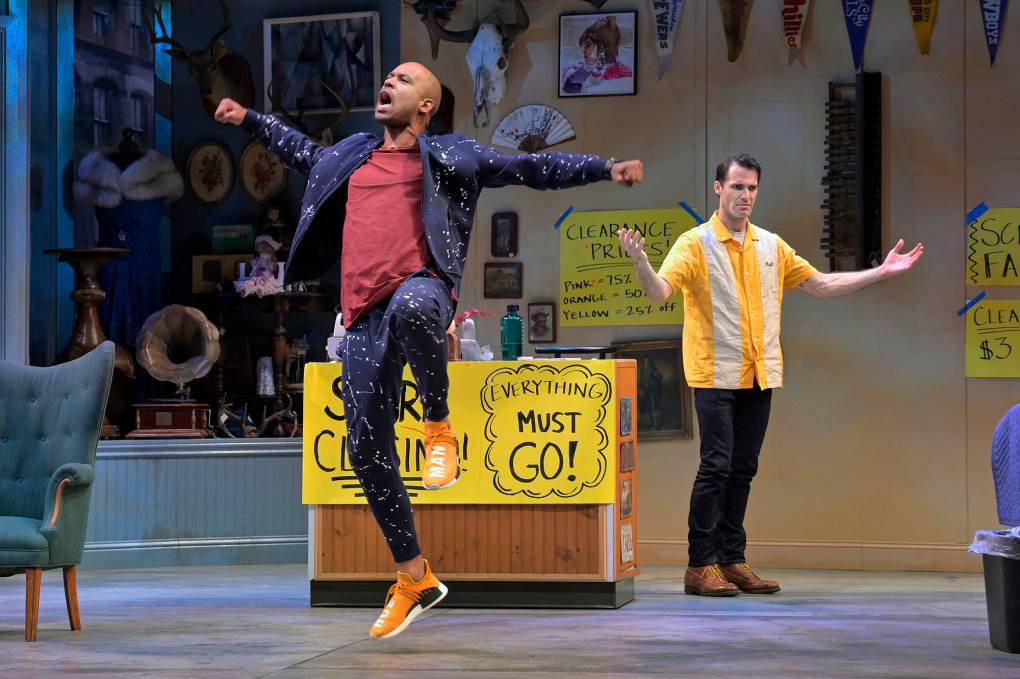
"caption": "Shawn (Kenny Scott) and Matt (Jordan Lane Shappell) share their love of basketball in TheatreWorks Silicon Valley's ‘King James.’ ",
"credit": "Kevin Berne",
"altTag": null,
"description": null,
"imgSizes": {
"medium": {
"file": "https://cdn.kqed.org/wp-content/uploads/sites/2/2024/10/TW_KingJames_KevinBerne12-800x532.jpg",
"width": 800,
"height": 532,
"mimeType": "image/jpeg"
},
"large": {
"file": "https://cdn.kqed.org/wp-content/uploads/sites/2/2024/10/TW_KingJames_KevinBerne12-1020x679.jpg",
"width": 1020,
"height": 679,
"mimeType": "image/jpeg"
},
"thumbnail": {
"file": "https://cdn.kqed.org/wp-content/uploads/sites/2/2024/10/TW_KingJames_KevinBerne12-160x106.jpg",
"width": 160,
"height": 106,
"mimeType": "image/jpeg"
},
"medium_large": {
"file": "https://cdn.kqed.org/wp-content/uploads/sites/2/2024/10/TW_KingJames_KevinBerne12-768x511.jpg",
"width": 768,
"height": 511,
"mimeType": "image/jpeg"
},
"1536x1536": {
"file": "https://cdn.kqed.org/wp-content/uploads/sites/2/2024/10/TW_KingJames_KevinBerne12-1536x1022.jpg",
"width": 1536,
"height": 1022,
"mimeType": "image/jpeg"
},
"post-thumbnail": {
"file": "https://cdn.kqed.org/wp-content/uploads/sites/2/2024/10/TW_KingJames_KevinBerne12-672x372.jpg",
"width": 672,
"height": 372,
"mimeType": "image/jpeg"
},
"twentyfourteen-full-width": {
"file": "https://cdn.kqed.org/wp-content/uploads/sites/2/2024/10/TW_KingJames_KevinBerne12-1038x576.jpg",
"width": 1038,
"height": 576,
"mimeType": "image/jpeg"
},
"full-width": {
"file": "https://cdn.kqed.org/wp-content/uploads/sites/2/2024/10/TW_KingJames_KevinBerne12-1920x1278.jpg",
"width": 1920,
"height": 1278,
"mimeType": "image/jpeg"
},
"kqedFullSize": {
"file": "https://cdn.kqed.org/wp-content/uploads/sites/2/2024/10/TW_KingJames_KevinBerne12.jpg",
"width": 2000,
"height": 1331
}
},
"isLoading": false,
"fetchFailed": false
},
"arts_13965359": {
"type": "attachments",
"id": "arts_13965359",
"meta": {
"index": "attachments_1716263798",
"site": "arts",
"id": "13965359",
"found": true
},
"title": "IMG_3634",
"publishDate": 1727121879,
"status": "inherit",
"parent": 13965353,
"modified": 1727122729,
"caption": null,
"credit": "Courtesy Angel Romero",
"altTag": null,
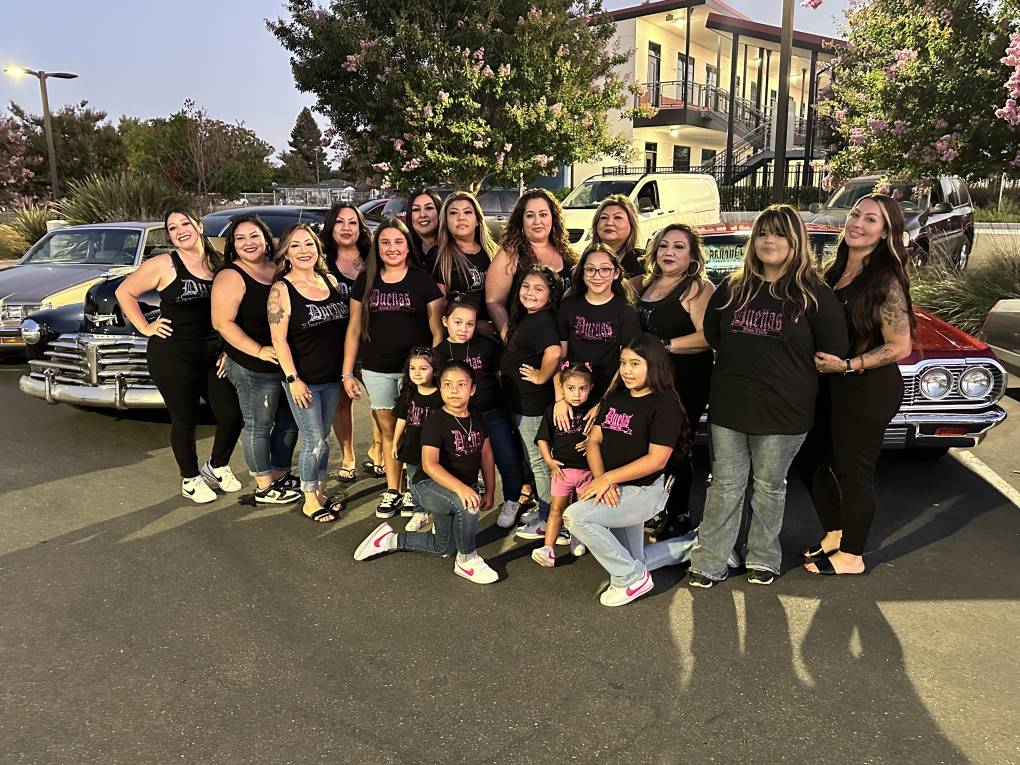
"description": "In recent years, Dueñas has grown from a lowrider car club to a bike club, integrating a new generation of young women enthusiasts. The original club members include Alexa, Sara, Darlene, Mia, Mari, Christina, Angel, Liz, and Christina R. (from left to right).",
"imgSizes": {
"medium": {
"file": "https://cdn.kqed.org/wp-content/uploads/sites/2/2024/09/IMG_3634-800x600.jpg",
"width": 800,
"height": 600,
"mimeType": "image/jpeg"
},
"large": {
"file": "https://cdn.kqed.org/wp-content/uploads/sites/2/2024/09/IMG_3634-1020x765.jpg",
"width": 1020,
"height": 765,
"mimeType": "image/jpeg"
},
"thumbnail": {
"file": "https://cdn.kqed.org/wp-content/uploads/sites/2/2024/09/IMG_3634-160x120.jpg",
"width": 160,
"height": 120,
"mimeType": "image/jpeg"
},
"medium_large": {
"file": "https://cdn.kqed.org/wp-content/uploads/sites/2/2024/09/IMG_3634-768x576.jpg",
"width": 768,
"height": 576,
"mimeType": "image/jpeg"
},
"1536x1536": {
"file": "https://cdn.kqed.org/wp-content/uploads/sites/2/2024/09/IMG_3634-1536x1152.jpg",
"width": 1536,
"height": 1152,
"mimeType": "image/jpeg"
},
"2048x2048": {
"file": "https://cdn.kqed.org/wp-content/uploads/sites/2/2024/09/IMG_3634-2048x1536.jpg",
"width": 2048,
"height": 1536,
"mimeType": "image/jpeg"
},
"post-thumbnail": {
"file": "https://cdn.kqed.org/wp-content/uploads/sites/2/2024/09/IMG_3634-672x372.jpg",
"width": 672,
"height": 372,
"mimeType": "image/jpeg"
},
"twentyfourteen-full-width": {
"file": "https://cdn.kqed.org/wp-content/uploads/sites/2/2024/09/IMG_3634-1038x576.jpg",
"width": 1038,
"height": 576,
"mimeType": "image/jpeg"
},
"full-width": {
"file": "https://cdn.kqed.org/wp-content/uploads/sites/2/2024/09/IMG_3634-1920x1440.jpg",
"width": 1920,
"height": 1440,
"mimeType": "image/jpeg"
},
"kqedFullSize": {
"file": "https://cdn.kqed.org/wp-content/uploads/sites/2/2024/09/IMG_3634-scaled.jpg",
"width": 2560,
"height": 1920
}
},
"isLoading": false,
"fetchFailed": false
},
"arts_13965614": {
"type": "attachments",
"id": "arts_13965614",
"meta": {
"index": "attachments_1716263798",
"site": "arts",
"id": "13965614",
"found": true
},
"title": "20240923_IranianMarket_GC-23",
"publishDate": 1727407897,
"status": "inherit",
"parent": 13965475,
"modified": 1727716514,
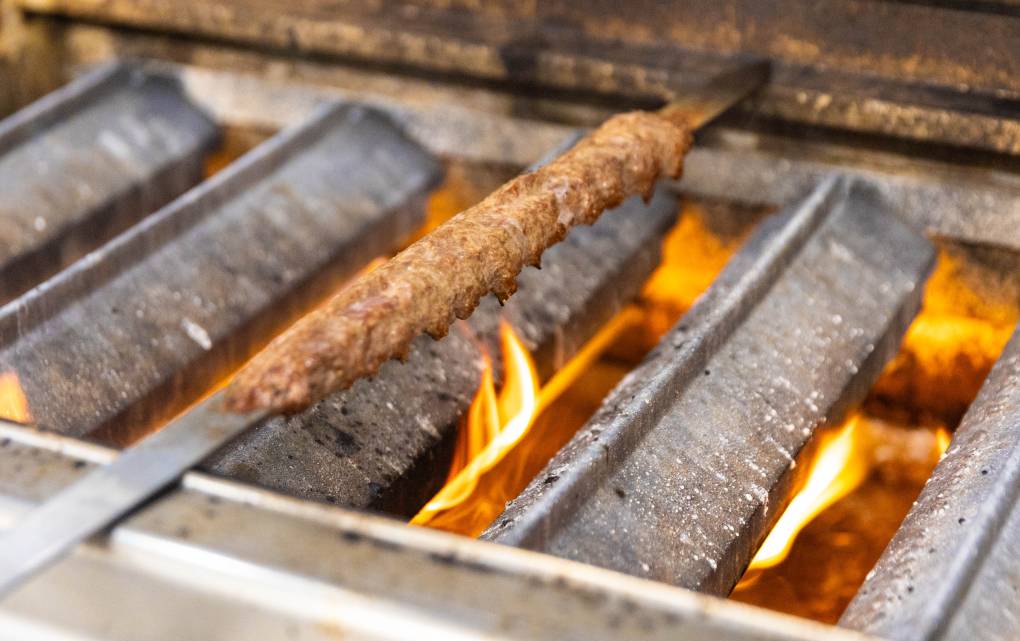
"caption": "Kabab koobideh on the grill at Rose International Market, a community fixture in Mountain View.",
"credit": "Gina Castro/KQED",
"altTag": null,
"description": null,
"imgSizes": {
"medium": {
"file": "https://cdn.kqed.org/wp-content/uploads/sites/2/2024/09/20240923_IranianMarket_GC-23-800x502.jpg",
"width": 800,
"height": 502,
"mimeType": "image/jpeg"
},
"large": {
"file": "https://cdn.kqed.org/wp-content/uploads/sites/2/2024/09/20240923_IranianMarket_GC-23-1020x641.jpg",
"width": 1020,
"height": 641,
"mimeType": "image/jpeg"
},
"thumbnail": {
"file": "https://cdn.kqed.org/wp-content/uploads/sites/2/2024/09/20240923_IranianMarket_GC-23-160x100.jpg",
"width": 160,
"height": 100,
"mimeType": "image/jpeg"
},
"medium_large": {
"file": "https://cdn.kqed.org/wp-content/uploads/sites/2/2024/09/20240923_IranianMarket_GC-23-768x482.jpg",
"width": 768,
"height": 482,
"mimeType": "image/jpeg"
},
"1536x1536": {
"file": "https://cdn.kqed.org/wp-content/uploads/sites/2/2024/09/20240923_IranianMarket_GC-23-1536x965.jpg",
"width": 1536,
"height": 965,
"mimeType": "image/jpeg"
},
"2048x2048": {
"file": "https://cdn.kqed.org/wp-content/uploads/sites/2/2024/09/20240923_IranianMarket_GC-23-2048x1286.jpg",
"width": 2048,
"height": 1286,
"mimeType": "image/jpeg"
},
"post-thumbnail": {
"file": "https://cdn.kqed.org/wp-content/uploads/sites/2/2024/09/20240923_IranianMarket_GC-23-672x372.jpg",
"width": 672,
"height": 372,
"mimeType": "image/jpeg"
},
"twentyfourteen-full-width": {
"file": "https://cdn.kqed.org/wp-content/uploads/sites/2/2024/09/20240923_IranianMarket_GC-23-1038x576.jpg",
"width": 1038,
"height": 576,
"mimeType": "image/jpeg"
},
"full-width": {
"file": "https://cdn.kqed.org/wp-content/uploads/sites/2/2024/09/20240923_IranianMarket_GC-23-1920x1206.jpg",
"width": 1920,
"height": 1206,
"mimeType": "image/jpeg"
},
"kqedFullSize": {
"file": "https://cdn.kqed.org/wp-content/uploads/sites/2/2024/09/20240923_IranianMarket_GC-23-scaled.jpg",
"width": 2560,
"height": 1608
}
},
"isLoading": false,
"fetchFailed": false
},
"arts_13965428": {
"type": "attachments",
"id": "arts_13965428",
"meta": {
"index": "attachments_1716263798",
"site": "arts",
"id": "13965428",
"found": true
},
"title": "DSC08937",
"publishDate": 1727140409,
"status": "inherit",
"parent": 13965374,
"modified": 1727201915,
"caption": "ProTribe Stretch posts in front of Tak Food & Liquor in East Side San Jose.",
"credit": "Pendarvis Harshaw/KQED",
"altTag": null,
"description": null,
"imgSizes": {
"medium": {
"file": "https://cdn.kqed.org/wp-content/uploads/sites/2/2024/09/DSC08937-800x535.jpg",
"width": 800,
"height": 535,
"mimeType": "image/jpeg"
},
"large": {
"file": "https://cdn.kqed.org/wp-content/uploads/sites/2/2024/09/DSC08937-1020x682.jpg",
"width": 1020,
"height": 682,
"mimeType": "image/jpeg"
},
"thumbnail": {
"file": "https://cdn.kqed.org/wp-content/uploads/sites/2/2024/09/DSC08937-160x107.jpg",
"width": 160,
"height": 107,
"mimeType": "image/jpeg"
},
"medium_large": {
"file": "https://cdn.kqed.org/wp-content/uploads/sites/2/2024/09/DSC08937-768x513.jpg",
"width": 768,
"height": 513,
"mimeType": "image/jpeg"
},
"1536x1536": {
"file": "https://cdn.kqed.org/wp-content/uploads/sites/2/2024/09/DSC08937-1536x1027.jpg",
"width": 1536,
"height": 1027,
"mimeType": "image/jpeg"
},
"post-thumbnail": {
"file": "https://cdn.kqed.org/wp-content/uploads/sites/2/2024/09/DSC08937-672x372.jpg",
"width": 672,
"height": 372,
"mimeType": "image/jpeg"
},
"twentyfourteen-full-width": {
"file": "https://cdn.kqed.org/wp-content/uploads/sites/2/2024/09/DSC08937-1038x576.jpg",
"width": 1038,
"height": 576,
"mimeType": "image/jpeg"
},
"kqedFullSize": {
"file": "https://cdn.kqed.org/wp-content/uploads/sites/2/2024/09/DSC08937.jpg",
"width": 1616,
"height": 1080
}
},
"isLoading": false,
"fetchFailed": false
},
"arts_13965133": {
"type": "attachments",
"id": "arts_13965133",
"meta": {
"index": "attachments_1716263798",
"site": "arts",
"id": "13965133",
"found": true
},
"title": "SVU.Intro.Thumbnail",
"publishDate": 1726779233,
"status": "inherit",
"parent": 13964538,
"modified": 1726779233,
"caption": null,
"credit": null,
"altTag": null,
"description": null,
"imgSizes": {
"medium": {
"file": "https://cdn.kqed.org/wp-content/uploads/sites/2/2024/09/SVU.Intro_.Thumbnail-800x450.jpg",
"width": 800,
"height": 450,
"mimeType": "image/jpeg"
},
"large": {
"file": "https://cdn.kqed.org/wp-content/uploads/sites/2/2024/09/SVU.Intro_.Thumbnail-1020x574.jpg",
"width": 1020,
"height": 574,
"mimeType": "image/jpeg"
},
"thumbnail": {
"file": "https://cdn.kqed.org/wp-content/uploads/sites/2/2024/09/SVU.Intro_.Thumbnail-160x90.jpg",
"width": 160,
"height": 90,
"mimeType": "image/jpeg"
},
"medium_large": {
"file": "https://cdn.kqed.org/wp-content/uploads/sites/2/2024/09/SVU.Intro_.Thumbnail-768x432.jpg",
"width": 768,
"height": 432,
"mimeType": "image/jpeg"
},
"1536x1536": {
"file": "https://cdn.kqed.org/wp-content/uploads/sites/2/2024/09/SVU.Intro_.Thumbnail-1536x864.jpg",
"width": 1536,
"height": 864,
"mimeType": "image/jpeg"
},
"post-thumbnail": {
"file": "https://cdn.kqed.org/wp-content/uploads/sites/2/2024/09/SVU.Intro_.Thumbnail-672x372.jpg",
"width": 672,
"height": 372,
"mimeType": "image/jpeg"
},
"twentyfourteen-full-width": {
"file": "https://cdn.kqed.org/wp-content/uploads/sites/2/2024/09/SVU.Intro_.Thumbnail-1038x576.jpg",
"width": 1038,
"height": 576,
"mimeType": "image/jpeg"
},
"kqedFullSize": {
"file": "https://cdn.kqed.org/wp-content/uploads/sites/2/2024/09/SVU.Intro_.Thumbnail.jpg",
"width": 1701,
"height": 957
}
},
"isLoading": false,
"fetchFailed": false
},
"arts_13965233": {
"type": "attachments",
"id": "arts_13965233",
"meta": {
"index": "attachments_1716263798",
"site": "arts",
"id": "13965233",
"found": true
},
"title": "mikiya2-crop",
"publishDate": 1726791371,
"status": "inherit",
"parent": 13965215,
"modified": 1726791494,
"caption": "At Santa Clara's Mikiya Wagyu Shabu House, unlimited quantities of wagyu beef are the main attraction.",
"credit": "Thien Pham",
"altTag": "Illustration: a spread of wagyu beef and other hot pot items at a shabu shabu restaurant.",
"description": null,
"imgSizes": {
"medium": {
"file": "https://cdn.kqed.org/wp-content/uploads/sites/2/2024/09/mikiya2-crop-800x450.jpg",
"width": 800,
"height": 450,
"mimeType": "image/jpeg"
},
"large": {
"file": "https://cdn.kqed.org/wp-content/uploads/sites/2/2024/09/mikiya2-crop-1020x574.jpg",
"width": 1020,
"height": 574,
"mimeType": "image/jpeg"
},
"thumbnail": {
"file": "https://cdn.kqed.org/wp-content/uploads/sites/2/2024/09/mikiya2-crop-160x90.jpg",
"width": 160,
"height": 90,
"mimeType": "image/jpeg"
},
"medium_large": {
"file": "https://cdn.kqed.org/wp-content/uploads/sites/2/2024/09/mikiya2-crop-768x432.jpg",
"width": 768,
"height": 432,
"mimeType": "image/jpeg"
},
"1536x1536": {
"file": "https://cdn.kqed.org/wp-content/uploads/sites/2/2024/09/mikiya2-crop-1536x864.jpg",
"width": 1536,
"height": 864,
"mimeType": "image/jpeg"
},
"post-thumbnail": {
"file": "https://cdn.kqed.org/wp-content/uploads/sites/2/2024/09/mikiya2-crop-672x372.jpg",
"width": 672,
"height": 372,
"mimeType": "image/jpeg"
},
"twentyfourteen-full-width": {
"file": "https://cdn.kqed.org/wp-content/uploads/sites/2/2024/09/mikiya2-crop-1038x576.jpg",
"width": 1038,
"height": 576,
"mimeType": "image/jpeg"
},
"kqedFullSize": {
"file": "https://cdn.kqed.org/wp-content/uploads/sites/2/2024/09/mikiya2-crop.jpg",
"width": 1920,
"height": 1080
}
},
"isLoading": false,
"fetchFailed": false
},
"arts_13957147": {
"type": "attachments",
"id": "arts_13957147",
"meta": {
"index": "attachments_1716263798",
"site": "arts",
"id": "13957147",
"found": true
},
"parent": 13957143,
"imgSizes": {
"twentyfourteen-full-width": {
"file": "https://cdn.kqed.org/wp-content/uploads/sites/2/2024/05/Nokori-1-crop-1038x576.jpg",
"width": 1038,
"mimeType": "image/jpeg",
"height": 576
},
"thumbnail": {
"file": "https://cdn.kqed.org/wp-content/uploads/sites/2/2024/05/Nokori-1-crop-160x90.jpg",
"width": 160,
"mimeType": "image/jpeg",
"height": 90
},
"post-thumbnail": {
"file": "https://cdn.kqed.org/wp-content/uploads/sites/2/2024/05/Nokori-1-crop-672x372.jpg",
"width": 672,
"mimeType": "image/jpeg",
"height": 372
},
"kqedFullSize": {
"file": "https://cdn.kqed.org/wp-content/uploads/sites/2/2024/05/Nokori-1-crop.jpg",
"width": 1920,
"height": 1080
},
"large": {
"file": "https://cdn.kqed.org/wp-content/uploads/sites/2/2024/05/Nokori-1-crop-1020x574.jpg",
"width": 1020,
"mimeType": "image/jpeg",
"height": 574
},
"1536x1536": {
"file": "https://cdn.kqed.org/wp-content/uploads/sites/2/2024/05/Nokori-1-crop-1536x864.jpg",
"width": 1536,
"mimeType": "image/jpeg",
"height": 864
},
"medium": {
"file": "https://cdn.kqed.org/wp-content/uploads/sites/2/2024/05/Nokori-1-crop-800x450.jpg",
"width": 800,
"mimeType": "image/jpeg",
"height": 450
},
"medium_large": {
"file": "https://cdn.kqed.org/wp-content/uploads/sites/2/2024/05/Nokori-1-crop-768x432.jpg",
"width": 768,
"mimeType": "image/jpeg",
"height": 432
}
},
"publishDate": 1714687657,
"modified": 1714687764,
"caption": "Nokori is a Japanese whisky highball bar hidden inside Sunnyvale's TETRA Hotel.",
"description": null,
"title": "Nokori 1-crop",
"credit": "Thien Pham",
"status": "inherit",
"altTag": "Illustration: a man shovels scallops into his mouth while sitting at an elegant bar. On the counter are tidy lobster sandwiches and fizzy cocktails in highball glasses.",
"isLoading": false,
"fetchFailed": false
},
"arts_13955887": {
"type": "attachments",
"id": "arts_13955887",
"meta": {
"index": "attachments_1716263798",
"site": "arts",
"id": "13955887",
"found": true
},
"parent": 13955884,
"imgSizes": {
"twentyfourteen-full-width": {
"file": "https://cdn.kqed.org/wp-content/uploads/sites/2/2024/04/apnimandi-crop-1038x576.jpg",
"width": 1038,
"mimeType": "image/jpeg",
"height": 576
},
"thumbnail": {
"file": "https://cdn.kqed.org/wp-content/uploads/sites/2/2024/04/apnimandi-crop-160x90.jpg",
"width": 160,
"mimeType": "image/jpeg",
"height": 90
},
"post-thumbnail": {
"file": "https://cdn.kqed.org/wp-content/uploads/sites/2/2024/04/apnimandi-crop-672x372.jpg",
"width": 672,
"mimeType": "image/jpeg",
"height": 372
},
"kqedFullSize": {
"file": "https://cdn.kqed.org/wp-content/uploads/sites/2/2024/04/apnimandi-crop.jpg",
"width": 1920,
"height": 1080
},
"large": {
"file": "https://cdn.kqed.org/wp-content/uploads/sites/2/2024/04/apnimandi-crop-1020x574.jpg",
"width": 1020,
"mimeType": "image/jpeg",
"height": 574
},
"1536x1536": {
"file": "https://cdn.kqed.org/wp-content/uploads/sites/2/2024/04/apnimandi-crop-1536x864.jpg",
"width": 1536,
"mimeType": "image/jpeg",
"height": 864
},
"medium": {
"file": "https://cdn.kqed.org/wp-content/uploads/sites/2/2024/04/apnimandi-crop-800x450.jpg",
"width": 800,
"mimeType": "image/jpeg",
"height": 450
},
"medium_large": {
"file": "https://cdn.kqed.org/wp-content/uploads/sites/2/2024/04/apnimandi-crop-768x432.jpg",
"width": 768,
"mimeType": "image/jpeg",
"height": 432
}
},
"publishDate": 1712883835,
"modified": 1712883996,
"caption": "Near midnight, all of the tables outside of Apni Mandi were occupied by diners feasting on chaat and curry. The Sunnyvale grocery store serves hot food 24 hours.",
"description": null,
"title": "apnimandi-crop",
"credit": "Thien Pham",
"status": "inherit",
"altTag": "A spread of Indian food on an outdoor table, including a rice combination tray, two samosas, a mango lassi and a plate of dahi puri. A man puts one of the dahi puri in his mouth.",
"isLoading": false,
"fetchFailed": false
},
"arts_13954721": {
"type": "attachments",
"id": "arts_13954721",
"meta": {
"index": "attachments_1716263798",
"site": "arts",
"id": "13954721",
"found": true
},
"parent": 13954716,
"imgSizes": {
"twentyfourteen-full-width": {
"file": "https://cdn.kqed.org/wp-content/uploads/sites/2/2024/03/SJD2023_FullSet-178_websize-1038x576.jpg",
"width": 1038,
"mimeType": "image/jpeg",
"height": 576
},
"thumbnail": {
"file": "https://cdn.kqed.org/wp-content/uploads/sites/2/2024/03/SJD2023_FullSet-178_websize-160x107.jpg",
"width": 160,
"mimeType": "image/jpeg",
"height": 107
},
"post-thumbnail": {
"file": "https://cdn.kqed.org/wp-content/uploads/sites/2/2024/03/SJD2023_FullSet-178_websize-672x372.jpg",
"width": 672,
"mimeType": "image/jpeg",
"height": 372
},
"kqedFullSize": {
"file": "https://cdn.kqed.org/wp-content/uploads/sites/2/2024/03/SJD2023_FullSet-178_websize.jpg",
"width": 1600,
"height": 1067
},
"large": {
"file": "https://cdn.kqed.org/wp-content/uploads/sites/2/2024/03/SJD2023_FullSet-178_websize-1020x680.jpg",
"width": 1020,
"mimeType": "image/jpeg",
"height": 680
},
"1536x1536": {
"file": "https://cdn.kqed.org/wp-content/uploads/sites/2/2024/03/SJD2023_FullSet-178_websize-1536x1024.jpg",
"width": 1536,
"mimeType": "image/jpeg",
"height": 1024
},
"medium": {
"file": "https://cdn.kqed.org/wp-content/uploads/sites/2/2024/03/SJD2023_FullSet-178_websize-800x534.jpg",
"width": 800,
"mimeType": "image/jpeg",
"height": 534
},
"medium_large": {
"file": "https://cdn.kqed.org/wp-content/uploads/sites/2/2024/03/SJD2023_FullSet-178_websize-768x512.jpg",
"width": 768,
"mimeType": "image/jpeg",
"height": 512
}
},
"publishDate": 1711409032,
"modified": 1711476904,
"caption": "A group of San Jose activists, artists and organizers gather for San Jose Day in 2023. ",
"description": null,
"title": "San Jose Day 2023",
"credit": "Alex Knowbody",
"status": "inherit",
"altTag": "a group of San Jose residents stand outside during a festival in their city",
"isLoading": false,
"fetchFailed": false
},
"arts_13953516": {
"type": "attachments",
"id": "arts_13953516",
"meta": {
"index": "attachments_1716263798",
"site": "arts",
"id": "13953516",
"found": true
},
"parent": 13953330,
"imgSizes": {
"twentyfourteen-full-width": {
"file": "https://cdn.kqed.org/wp-content/uploads/sites/2/2024/03/IMG_2979_crop-1038x576.jpg",
"width": 1038,
"mimeType": "image/jpeg",
"height": 576
},
"thumbnail": {
"file": "https://cdn.kqed.org/wp-content/uploads/sites/2/2024/03/IMG_2979_crop-160x90.jpg",
"width": 160,
"mimeType": "image/jpeg",
"height": 90
},
"post-thumbnail": {
"file": "https://cdn.kqed.org/wp-content/uploads/sites/2/2024/03/IMG_2979_crop-672x372.jpg",
"width": 672,
"mimeType": "image/jpeg",
"height": 372
},
"kqedFullSize": {
"file": "https://cdn.kqed.org/wp-content/uploads/sites/2/2024/03/IMG_2979_crop.jpg",
"width": 2000,
"height": 1125
},
"large": {
"file": "https://cdn.kqed.org/wp-content/uploads/sites/2/2024/03/IMG_2979_crop-1020x574.jpg",
"width": 1020,
"mimeType": "image/jpeg",
"height": 574
},
"1536x1536": {
"file": "https://cdn.kqed.org/wp-content/uploads/sites/2/2024/03/IMG_2979_crop-1536x864.jpg",
"width": 1536,
"mimeType": "image/jpeg",
"height": 864
},
"full-width": {
"file": "https://cdn.kqed.org/wp-content/uploads/sites/2/2024/03/IMG_2979_crop-1920x1080.jpg",
"width": 1920,
"mimeType": "image/jpeg",
"height": 1080
},
"medium": {
"file": "https://cdn.kqed.org/wp-content/uploads/sites/2/2024/03/IMG_2979_crop-800x450.jpg",
"width": 800,
"mimeType": "image/jpeg",
"height": 450
},
"medium_large": {
"file": "https://cdn.kqed.org/wp-content/uploads/sites/2/2024/03/IMG_2979_crop-768x432.jpg",
"width": 768,
"mimeType": "image/jpeg",
"height": 432
}
},
"publishDate": 1709754764,
"modified": 1709755156,
"caption": "Last month, the \"408 Smash\" at Hash N Dash gained over a million views and hundreds of new customers. Now the pop-up is having to shift its food model. ",
"description": null,
"title": "IMG_2979_crop",
"credit": "Alan Chazaro",
"status": "inherit",
"altTag": "a breakfast sandwich is served in a to-go box",
"isLoading": false,
"fetchFailed": false
},
"arts_13953272": {
"type": "attachments",
"id": "arts_13953272",
"meta": {
"index": "attachments_1716263798",
"site": "arts",
"id": "13953272",
"found": true
},
"parent": 13953266,
"imgSizes": {
"twentyfourteen-full-width": {
"file": "https://cdn.kqed.org/wp-content/uploads/sites/2/2024/03/Savory-Empanadas-3-crop-1038x576.jpg",
"width": 1038,
"mimeType": "image/jpeg",
"height": 576
},
"thumbnail": {
"file": "https://cdn.kqed.org/wp-content/uploads/sites/2/2024/03/Savory-Empanadas-3-crop-160x90.jpg",
"width": 160,
"mimeType": "image/jpeg",
"height": 90
},
"post-thumbnail": {
"file": "https://cdn.kqed.org/wp-content/uploads/sites/2/2024/03/Savory-Empanadas-3-crop-672x372.jpg",
"width": 672,
"mimeType": "image/jpeg",
"height": 372
},
"kqedFullSize": {
"file": "https://cdn.kqed.org/wp-content/uploads/sites/2/2024/03/Savory-Empanadas-3-crop.jpg",
"width": 2000,
"height": 1125
},
"large": {
"file": "https://cdn.kqed.org/wp-content/uploads/sites/2/2024/03/Savory-Empanadas-3-crop-1020x574.jpg",
"width": 1020,
"mimeType": "image/jpeg",
"height": 574
},
"1536x1536": {
"file": "https://cdn.kqed.org/wp-content/uploads/sites/2/2024/03/Savory-Empanadas-3-crop-1536x864.jpg",
"width": 1536,
"mimeType": "image/jpeg",
"height": 864
},
"full-width": {
"file": "https://cdn.kqed.org/wp-content/uploads/sites/2/2024/03/Savory-Empanadas-3-crop-1920x1080.jpg",
"width": 1920,
"mimeType": "image/jpeg",
"height": 1080
},
"medium": {
"file": "https://cdn.kqed.org/wp-content/uploads/sites/2/2024/03/Savory-Empanadas-3-crop-800x450.jpg",
"width": 800,
"mimeType": "image/jpeg",
"height": 450
},
"medium_large": {
"file": "https://cdn.kqed.org/wp-content/uploads/sites/2/2024/03/Savory-Empanadas-3-crop-768x432.jpg",
"width": 768,
"mimeType": "image/jpeg",
"height": 432
}
},
"publishDate": 1709334266,
"modified": 1709334418,
"caption": "Three different flavors of savory empanadas from Cheff Che Cafe & Bar, a Mexican American restaurant in San Jose that started out as a pandemic-born home empanada business. ",
"description": null,
"title": "Savory Empanadas 3-crop",
"credit": "Octavio Peña",
"status": "inherit",
"altTag": "On a wooden cutting board, three empanadas cut open to show the fillings inside.",
"isLoading": false,
"fetchFailed": false
},
"arts_13952655": {
"type": "attachments",
"id": "arts_13952655",
"meta": {
"index": "attachments_1716263798",
"site": "arts",
"id": "13952655",
"found": true
},
"parent": 13952597,
"imgSizes": {
"twentyfourteen-full-width": {
"file": "https://cdn.kqed.org/wp-content/uploads/sites/2/2024/02/la_castena_record_crop-1038x576.jpg",
"width": 1038,
"mimeType": "image/jpeg",
"height": 576
},
"thumbnail": {
"file": "https://cdn.kqed.org/wp-content/uploads/sites/2/2024/02/la_castena_record_crop-160x90.jpg",
"width": 160,
"mimeType": "image/jpeg",
"height": 90
},
"post-thumbnail": {
"file": "https://cdn.kqed.org/wp-content/uploads/sites/2/2024/02/la_castena_record_crop-672x372.jpg",
"width": 672,
"mimeType": "image/jpeg",
"height": 372
},
"kqedFullSize": {
"file": "https://cdn.kqed.org/wp-content/uploads/sites/2/2024/02/la_castena_record_crop.jpg",
"width": 1920,
"height": 1080
},
"large": {
"file": "https://cdn.kqed.org/wp-content/uploads/sites/2/2024/02/la_castena_record_crop-1020x574.jpg",
"width": 1020,
"mimeType": "image/jpeg",
"height": 574
},
"1536x1536": {
"file": "https://cdn.kqed.org/wp-content/uploads/sites/2/2024/02/la_castena_record_crop-1536x864.jpg",
"width": 1536,
"mimeType": "image/jpeg",
"height": 864
},
"medium": {
"file": "https://cdn.kqed.org/wp-content/uploads/sites/2/2024/02/la_castena_record_crop-800x450.jpg",
"width": 800,
"mimeType": "image/jpeg",
"height": 450
},
"medium_large": {
"file": "https://cdn.kqed.org/wp-content/uploads/sites/2/2024/02/la_castena_record_crop-768x432.jpg",
"width": 768,
"mimeType": "image/jpeg",
"height": 432
}
},
"publishDate": 1708495042,
"modified": 1708496486,
"caption": "Though mostly known for tech, Silicon Valley also engineered the world's largest burrito in 1997.",
"description": null,
"title": "la_castena_record_crop",
"credit": "Alan Chazaro",
"status": "inherit",
"altTag": "a photo of the world's largest burrito in 1997 wrapping around an entire park in Mountain View, California",
"isLoading": false,
"fetchFailed": false
}
},
"audioPlayerReducer": {
"postId": "stream_live",
"isPaused": true,
"isPlaying": false,
"pfsActive": false,
"pledgeModalIsOpen": true,
"playerDrawerIsOpen": false,
"liveAudioPlayStartedAt": 0,
"liveAudioPlayContext": ""
},
"authorsReducer": {
"byline_arts_13966570": {
"type": "authors",
"id": "byline_arts_13966570",
"meta": {
"override": true
},
"slug": "byline_arts_13966570",
"name": "Ashwini Gangal",
"isLoading": false
},
"byline_arts_13965353": {
"type": "authors",
"id": "byline_arts_13965353",
"meta": {
"override": true
},
"slug": "byline_arts_13965353",
"name": "Angel Romero ",
"isLoading": false
},
"ogpenn": {
"type": "authors",
"id": "11491",
"meta": {
"index": "authors_1716337520",
"id": "11491",
"found": true
},
"name": "Pendarvis Harshaw",
"firstName": "Pendarvis",
"lastName": "Harshaw",
"slug": "ogpenn",
"email": "ogpenn@gmail.com",
"display_author_email": false,
"staff_mastheads": [
"arts"
],
"title": "Community Engagement Reporter",
"bio": "Pendarvis Harshaw is an educator, host and writer with KQED Arts.",
"avatar": "https://secure.gravatar.com/avatar/972b77ee8e3f346ae2b00622661187fbfabd059b5693bbdc1475ea7a722fd4cd?s=600&d=blank&r=g",
"twitter": null,
"bluesky": null,
"facebook": null,
"instagram": "ogpenn",
"linkedin": null,
"sites": [
{
"site": "arts",
"roles": [
"administrator"
]
},
{
"site": "news",
"roles": [
"editor"
]
},
{
"site": "bayareabites",
"roles": [
"author"
]
},
{
"site": "hiphop",
"roles": [
"editor"
]
}
],
"headData": {
"title": "Pendarvis Harshaw | KQED",
"description": "Community Engagement Reporter",
"ogImgSrc": "https://secure.gravatar.com/avatar/972b77ee8e3f346ae2b00622661187fbfabd059b5693bbdc1475ea7a722fd4cd?s=600&d=blank&r=g",
"twImgSrc": "https://secure.gravatar.com/avatar/972b77ee8e3f346ae2b00622661187fbfabd059b5693bbdc1475ea7a722fd4cd?s=600&d=blank&r=g"
},
"isLoading": false,
"link": "/author/ogpenn"
},
"ltsai": {
"type": "authors",
"id": "11743",
"meta": {
"index": "authors_1716337520",
"id": "11743",
"found": true
},
"name": "Luke Tsai",
"firstName": "Luke",
"lastName": "Tsai",
"slug": "ltsai",
"email": "ltsai@kqed.org",
"display_author_email": true,
"staff_mastheads": [
"arts"
],
"title": "Food Editor",
"bio": "Luke Tsai is KQED's food editor and resident stinky tofu connoisseur. Prior to KQED, he was an editor at Eater SF, \u003cem>San Francisco \u003c/em>magazine, and the \u003cem>East Bay Express\u003c/em>, and his work has also appeared in TASTE, the \u003cem>San Francisco Chronicle\u003c/em>, and the \u003cem>Best Food Writing\u003c/em> anthology. When he isn't writing or editing, you'll find him eating most everything he can get his hands on.",
"avatar": "https://secure.gravatar.com/avatar/1e59b45bf191526e7339d6ba46e33a57b2030d25c27660ecc64ea3cb863e34f7?s=600&d=blank&r=g",
"twitter": "theluketsai",
"bluesky": null,
"facebook": null,
"instagram": null,
"linkedin": null,
"sites": [
{
"site": "",
"roles": [
"editor"
]
},
{
"site": "arts",
"roles": [
"administrator"
]
},
{
"site": "news",
"roles": [
"editor",
"contributor"
]
},
{
"site": "bayareabites",
"roles": [
"editor"
]
},
{
"site": "food",
"roles": [
"editor"
]
}
],
"headData": {
"title": "Luke Tsai | KQED",
"description": "Food Editor",
"ogImgSrc": "https://secure.gravatar.com/avatar/1e59b45bf191526e7339d6ba46e33a57b2030d25c27660ecc64ea3cb863e34f7?s=600&d=blank&r=g",
"twImgSrc": "https://secure.gravatar.com/avatar/1e59b45bf191526e7339d6ba46e33a57b2030d25c27660ecc64ea3cb863e34f7?s=600&d=blank&r=g"
},
"isLoading": false,
"link": "/author/ltsai"
},
"achazaro": {
"type": "authors",
"id": "11748",
"meta": {
"index": "authors_1716337520",
"id": "11748",
"found": true
},
"name": "Alan Chazaro",
"firstName": "Alan",
"lastName": "Chazaro",
"slug": "achazaro",
"email": "agchazaro@gmail.com",
"display_author_email": true,
"staff_mastheads": [],
"title": "Food Writer and Reporter",
"bio": "Alan Chazaro is the author of \u003cem>This Is Not a Frank Ocean Cover Album\u003c/em> (Black Lawrence Press, 2019), \u003cem>Piñata Theory\u003c/em> (Black Lawrence Press, 2020), and \u003cem>Notes from the Eastern Span of the Bay Bridge\u003c/em> (Ghost City Press, 2021). He is a graduate of June Jordan’s Poetry for the People program at UC Berkeley and a former Lawrence Ferlinghetti Fellow at the University of San Francisco. He writes about sports, food, art, music, education, and culture while repping the Bay on \u003ca href=\"https://twitter.com/alan_chazaro\">Twitter\u003c/a> and \u003ca href=\"https://www.instagram.com/alan_chazaro/?hl=en\">Instagram\u003c/a> at @alan_chazaro.",
"avatar": "https://secure.gravatar.com/avatar/ea8b6dd970fc5c29e7a188e7d5861df7?s=600&d=blank&r=g",
"twitter": "alan_chazaro",
"facebook": null,
"instagram": null,
"linkedin": null,
"sites": [
{
"site": "arts",
"roles": [
"contributor"
]
},
{
"site": "news",
"roles": [
"editor"
]
}
],
"headData": {
"title": "Alan Chazaro | KQED",
"description": "Food Writer and Reporter",
"ogImgSrc": "https://secure.gravatar.com/avatar/ea8b6dd970fc5c29e7a188e7d5861df7?s=600&d=blank&r=g",
"twImgSrc": "https://secure.gravatar.com/avatar/ea8b6dd970fc5c29e7a188e7d5861df7?s=600&d=blank&r=g"
},
"isLoading": false,
"link": "/author/achazaro"
},
"tpham": {
"type": "authors",
"id": "11753",
"meta": {
"index": "authors_1716337520",
"id": "11753",
"found": true
},
"name": "Thien Pham",
"firstName": "Thien",
"lastName": "Pham",
"slug": "tpham",
"email": "thiendog@gmail.com",
"display_author_email": false,
"staff_mastheads": [],
"title": "KQED Contributor",
"bio": null,
"avatar": "https://secure.gravatar.com/avatar/a5b4729969ad46d88e7b9ec9dd4f3fa6af84dd0fa8fa91f01d8d9481694999bc?s=600&d=blank&r=g",
"twitter": null,
"bluesky": null,
"facebook": null,
"instagram": null,
"linkedin": null,
"sites": [
{
"site": "arts",
"roles": [
"contributor"
]
}
],
"headData": {
"title": "Thien Pham | KQED",
"description": "KQED Contributor",
"ogImgSrc": "https://secure.gravatar.com/avatar/a5b4729969ad46d88e7b9ec9dd4f3fa6af84dd0fa8fa91f01d8d9481694999bc?s=600&d=blank&r=g",
"twImgSrc": "https://secure.gravatar.com/avatar/a5b4729969ad46d88e7b9ec9dd4f3fa6af84dd0fa8fa91f01d8d9481694999bc?s=600&d=blank&r=g"
},
"isLoading": false,
"link": "/author/tpham"
},
"opena": {
"type": "authors",
"id": "11903",
"meta": {
"index": "authors_1716337520",
"id": "11903",
"found": true
},
"name": "Octavio Peña",
"firstName": "Octavio",
"lastName": "Peña",
"slug": "opena",
"email": "octaviopenagutierrez@gmail.com",
"display_author_email": false,
"staff_mastheads": [
"arts"
],
"title": "Food Reporter",
"bio": "Octavio Peña is a food journalist and recipe developer from San Jose, CA. His work has appeared in KQED, Eater SF, Serious Eats, NYT Cooking, and Food & Wine. In his free time, he enjoys walking his dogs, photographing his food, and playing MOBAs.",
"avatar": "https://secure.gravatar.com/avatar/62850791380238ea3945ee72a3d56056477904792b41daaf11effa8780bab75d?s=600&d=blank&r=g",
"twitter": null,
"bluesky": null,
"facebook": null,
"instagram": null,
"linkedin": null,
"sites": [
{
"site": "arts",
"roles": [
"editor"
]
}
],
"headData": {
"title": "Octavio Peña | KQED",
"description": "Food Reporter",
"ogImgSrc": "https://secure.gravatar.com/avatar/62850791380238ea3945ee72a3d56056477904792b41daaf11effa8780bab75d?s=600&d=blank&r=g",
"twImgSrc": "https://secure.gravatar.com/avatar/62850791380238ea3945ee72a3d56056477904792b41daaf11effa8780bab75d?s=600&d=blank&r=g"
},
"isLoading": false,
"link": "/author/opena"
}
},
"pagesReducer": {
"arts_tag_south-bay": {
"type": "terms",
"id": "arts_2475",
"meta": {
"index": "terms_1716263798",
"site": "arts",
"id": "2475",
"score": 7.0871468
},
"featImg": null,
"name": "South Bay",
"description": null,
"taxonomy": "tag",
"headData": {
"twImgId": null,
"twTitle": null,
"ogTitle": null,
"ogImgId": null,
"twDescription": null,
"description": null,
"title": "South Bay Archives | KQED Arts",
"ogDescription": null
},
"ttid": 2487,
"slug": "south-bay",
"isLoading": false,
"title": "South Bay",
"pageMeta": {
"site": "arts",
"WpPageTemplate": "page-topic-editorial",
"currentPage": 2
},
"blocks": [
{
"blockName": "kqed/post-list",
"attrs": {
"layout": "cardArticle2",
"query": "posts/arts?tag=south-bay",
"seeMore": false,
"paginated": true,
"page": 2
}
},
{
"blockName": "kqed/ad"
}
]
}
},
"pfsSessionReducer": {},
"postsReducer": {
"stream_live": {
"type": "live",
"id": "stream_live",
"audioUrl": "https://hls.kqed.org/hls/kqed_app/playlist.m3u8",
"title": "Live Stream",
"excerpt": "Live Stream information currently unavailable.",
"link": "/radio",
"featImg": "",
"label": {
"name": "KQED Live",
"link": "/"
}
},
"stream_kqedNewscast": {
"type": "posts",
"id": "stream_kqedNewscast",
"audioUrl": "https://www.kqed.org/.stream/anon/radio/RDnews/newscast.mp3?_=1",
"title": "KQED Newscast",
"featImg": "",
"label": {
"name": "88.5 FM",
"link": "/"
}
},
"arts_13966570": {
"type": "posts",
"id": "arts_13966570",
"meta": {
"index": "posts_1716263798",
"site": "arts",
"id": "13966570",
"score": null,
"sort": [
1728950155000
]
},
"guestAuthors": [],
"slug": "king-james-rajiv-joseph-theatreworks-silicon-valley",
"title": "‘King James’ Honors the ‘Language of Sports’ Spoken by American Men",
"publishDate": 1728950155,
"format": "standard",
"headTitle": "‘King James’ Honors the ‘Language of Sports’ Spoken by American Men | KQED",
"labelTerm": {
"term": 140,
"site": "arts"
},
"content": "\u003cp>When Rajiv Joseph first wrote \u003cem>King James\u003c/em>, a play about the friendship of two LeBron James fans, Shawn and Matt, it was drafted as a single scene. Eventually, he turned it into a four-part story — loosely mirroring the four quarters of a basketball game — that takes place over several years.\u003c/p>\n\u003cp>“I realized I needed to have a play that spanned the length of time, because part of LeBron’s appeal and his legacy is his longevity,” said the Pulitzer-nominated playwright. “And part of the story is how the emotions towards him ebbed and flowed over time because of different fortunes.”\u003c/p>\n\u003cp>[aside postID='arts_13966472']Directed by Joseph’s longtime workmate Giovanna Sardelli, and \u003ca href=\"https://theatreworks.org/mainstage/king-james/\">running through Nov. 3 at TheatreWorks Silicon Valley\u003c/a> in Mountain View, \u003cem>King James\u003c/em> reflects contemporary social realities in that its protagonists belong to different races and economic backgrounds. At its heart, though, it’s a nod to the way men use sports to express otherwise repressed emotions. “They have a sort of ‘code,’” Joseph said. \u003c/p>\n\u003cp>This theme came from Joseph’s own friendships growing up. “We have this language of sports, this rivalry between teams and our opinions of players that get very fierce,” he said.\u003c/p>\n\u003cfigure id=\"attachment_13966587\" class=\"wp-caption aligncenter\" style=\"max-width: 2000px\">\u003cimg loading=\"lazy\" decoding=\"async\" src=\"https://cdn.kqed.org/wp-content/uploads/sites/2/2024/10/TW_KingJames_KevinBerne3.jpg\" alt=\"\" width=\"2000\" height=\"1331\" class=\"size-full wp-image-13966587\" srcset=\"https://cdn.kqed.org/wp-content/uploads/sites/2/2024/10/TW_KingJames_KevinBerne3.jpg 2000w, https://cdn.kqed.org/wp-content/uploads/sites/2/2024/10/TW_KingJames_KevinBerne3-800x532.jpg 800w, https://cdn.kqed.org/wp-content/uploads/sites/2/2024/10/TW_KingJames_KevinBerne3-1020x679.jpg 1020w, https://cdn.kqed.org/wp-content/uploads/sites/2/2024/10/TW_KingJames_KevinBerne3-160x106.jpg 160w, https://cdn.kqed.org/wp-content/uploads/sites/2/2024/10/TW_KingJames_KevinBerne3-768x511.jpg 768w, https://cdn.kqed.org/wp-content/uploads/sites/2/2024/10/TW_KingJames_KevinBerne3-1536x1022.jpg 1536w, https://cdn.kqed.org/wp-content/uploads/sites/2/2024/10/TW_KingJames_KevinBerne3-1920x1278.jpg 1920w\" sizes=\"(max-width: 2000px) 100vw, 2000px\">\u003cfigcaption class=\"wp-caption-text\">Shawn (Kenny Scott) and Matt (Jordan Lane Shappell) in TheatreWorks Silicon Valley’s ‘King James.’ \u003ccite>(Kevin Berne)\u003c/cite>\u003c/figcaption>\u003c/figure>\n\u003cp>The deepest impression was made by his good friend, actor Glenn Davis who is also the artistic director of Steppenwolf Theatre Company in Chicago, where \u003cem>King James\u003c/em> premiered in March 2022. Davis played Shawn. He was also in the cast of Joseph’s \u003cem>Bengal Tiger at the Baghdad Zoo\u003c/em>, which premiered in California in 2009 and later went to Broadway.\u003c/p>\n\u003cp>[ad fullwidth]\u003c/p>\n\u003cp>Davis and Joseph have been friends for decades and share a love of basketball. “He’s from Chicago, I’m from Cleveland, he’s a Jordan guy, I’m a LeBron guy and so those arguments and debates also filter into the story in a major way,” said Joseph.\u003c/p>\n\u003cp>Team sports, especially of the kind associated with regions and cities, are about a great deal more than simply watching one’s favorite athletes in action, Joseph said. “There’s so much of one’s identity, one’s upbringing, one’s family and friends that’s connected to the performance of a team… that sense of it, the sense of belonging somewhere. All those factors are kind of what inspired the play somewhere for me.”\u003c/p>\n\u003cfigure id=\"attachment_13966585\" class=\"wp-caption aligncenter\" style=\"max-width: 2000px\">\u003cimg loading=\"lazy\" decoding=\"async\" src=\"https://cdn.kqed.org/wp-content/uploads/sites/2/2024/10/TW_KingJames_KevinBerne9.jpg\" alt=\"\" width=\"2000\" height=\"1331\" class=\"size-full wp-image-13966585\" srcset=\"https://cdn.kqed.org/wp-content/uploads/sites/2/2024/10/TW_KingJames_KevinBerne9.jpg 2000w, https://cdn.kqed.org/wp-content/uploads/sites/2/2024/10/TW_KingJames_KevinBerne9-800x532.jpg 800w, https://cdn.kqed.org/wp-content/uploads/sites/2/2024/10/TW_KingJames_KevinBerne9-1020x679.jpg 1020w, https://cdn.kqed.org/wp-content/uploads/sites/2/2024/10/TW_KingJames_KevinBerne9-160x106.jpg 160w, https://cdn.kqed.org/wp-content/uploads/sites/2/2024/10/TW_KingJames_KevinBerne9-768x511.jpg 768w, https://cdn.kqed.org/wp-content/uploads/sites/2/2024/10/TW_KingJames_KevinBerne9-1536x1022.jpg 1536w, https://cdn.kqed.org/wp-content/uploads/sites/2/2024/10/TW_KingJames_KevinBerne9-1920x1278.jpg 1920w\" sizes=\"(max-width: 2000px) 100vw, 2000px\">\u003cfigcaption class=\"wp-caption-text\">Shawn (Kenny Scott) and Matt (Jordan Lane Shappell) in TheatreWorks Silicon Valley’s ‘King James.’ \u003ccite>(Kevin Berne)\u003c/cite>\u003c/figcaption>\u003c/figure>\n\u003cp>Joseph’s own identity has informed this piece in a big way. Not his mixed-race identity — his dad is Indian, his mom is part French-part German — but the part that ties him to the place he was born and raised: Cleveland.\u003c/p>\n\u003cp>“In the case of this play, the identity that comes across of mine is my identity as a Clevelander — as an East Side Clevelander,” he said. Autobiographical elements are aplenty; the entire play takes place in a suburb of the city called Cleveland Heights, where Joseph grew up. Matt went to Heights High School, where Joseph went. Shawn went to St. Ignatius High School, the Catholic private school that Joseph’s grandfather and uncles went to — “that I was supposed to go to, but I begged my parents not to go to,” Joseph said.\u003c/p>\n\u003cp>[aside postID='arts_13966064']Also playing into the creation of this play was the “implicitly dramatic” relationship between the city of Cleveland and LeBron. “You know, he’s from the region, he came here, we loved him, he left Cleveland, we hated him, he came back to Cleveland, we loved him…” he said, recounting James’ career.\u003c/p>\n\u003cp>By his own admission, it’s these aspects that make King James a “decidedly American play,” as compared to much of his previous work. For instance, \u003cem>Guards at the Taj\u003c/em> (2015), about the cruelty behind the construction of the Taj Mahal, remains his most internationally produced play.\u003c/p>\n\u003cfigure id=\"attachment_13966587\" class=\"wp-caption aligncenter\" style=\"max-width: 2000px\">\u003cimg loading=\"lazy\" decoding=\"async\" src=\"https://cdn.kqed.org/wp-content/uploads/sites/2/2024/10/TW_KingJames_KevinBerne3.jpg\" alt=\"\" width=\"2000\" height=\"1331\" class=\"size-full wp-image-13966587\" srcset=\"https://cdn.kqed.org/wp-content/uploads/sites/2/2024/10/TW_KingJames_KevinBerne3.jpg 2000w, https://cdn.kqed.org/wp-content/uploads/sites/2/2024/10/TW_KingJames_KevinBerne3-800x532.jpg 800w, https://cdn.kqed.org/wp-content/uploads/sites/2/2024/10/TW_KingJames_KevinBerne3-1020x679.jpg 1020w, https://cdn.kqed.org/wp-content/uploads/sites/2/2024/10/TW_KingJames_KevinBerne3-160x106.jpg 160w, https://cdn.kqed.org/wp-content/uploads/sites/2/2024/10/TW_KingJames_KevinBerne3-768x511.jpg 768w, https://cdn.kqed.org/wp-content/uploads/sites/2/2024/10/TW_KingJames_KevinBerne3-1536x1022.jpg 1536w, https://cdn.kqed.org/wp-content/uploads/sites/2/2024/10/TW_KingJames_KevinBerne3-1920x1278.jpg 1920w\" sizes=\"(max-width: 2000px) 100vw, 2000px\">\u003cfigcaption class=\"wp-caption-text\">Shawn (Kenny Scott) and Matt (Jordan Lane Shappell) in TheatreWorks Silicon Valley’s ‘King James.’ \u003ccite>(Kevin Berne)\u003c/cite>\u003c/figcaption>\u003c/figure>\n\u003cp>“The story of King James is an American story, and a Cleveland story, and it deals with the racial dynamics between white and Black people in this country,” he said. A few months from now, it’ll be staged in London, but he doesn’t anticipate a prolific international life for it. “I think it’s a limitation that it is kind of so clearly an American play.”\u003c/p>\n\u003cp>All the same, it is one of the most produced plays within the country. In 2016, in a historical final, the Cleveland Cavaliers beat the Golden State Warriors to win the NBA championship thanks to \u003ca href=\"https://en.wikipedia.org/wiki/The_Block_(basketball)\">James’ famed block\u003c/a>. Is Joseph at all concerned that his Bay Area audience most likely comprises Warriors fans who’re still salty about that blip in the sporting matrix? \u003c/p>\n\u003cp>“Oh, not at all,” he said. “The fans of the Warriors are much like the 2016 Warriors — their bark was worse than their bite.”\u003c/p>\n\u003chr>\n\u003cp>\u003c/p>\n\u003cp>\u003cem>‘King James’ runs through Nov. 3 at the Mountain View Center for the Performing Arts in Mountain View. \u003ca href=\"http://<a%20href=\" https:>“>Details here\u003c/a>. \u003c/em>\u003c/p>\n\n",
"blocks": [],
"excerpt": "Rajiv Joseph’s play, loosely about LeBron James, is rooted in friendship, basketball and social realities.",
"status": "publish",
"parent": 0,
"modified": 1728950410,
"stats": {
"hasAudio": false,
"hasVideo": false,
"hasChartOrMap": false,
"iframeSrcs": [],
"hasGoogleForm": false,
"hasGallery": false,
"hasHearkenModule": false,
"hasPolis": false,
"paragraphCount": 17,
"wordCount": 931
},
"headData": {
"title": "‘King James’ Honors the ‘Language of Sports’ Spoken by American Men | KQED",
"description": "Rajiv Joseph’s play, loosely about LeBron James, is rooted in friendship, basketball and social realities.",
"ogTitle": "",
"ogDescription": "",
"ogImgId": "",
"twTitle": "",
"twDescription": "",
"twImgId": "",
"schema": {
"@context": "https://schema.org",
"@type": "Article",
"headline": "‘King James’ Honors the ‘Language of Sports’ Spoken by American Men",
"datePublished": "2024-10-14T16:55:55-07:00",
"dateModified": "2024-10-14T17:00:10-07:00",
"image": "https://cdn.kqed.org/wp-content/uploads/2020/02/KQED-OG-Image@1x.png"
}
},
"sticky": false,
"nprByline": "Ashwini Gangal",
"nprStoryId": "kqed-13966570",
"templateType": "standard",
"featuredImageType": "standard",
"excludeFromSiteSearch": "Include",
"showOnAuthorArchivePages": "No",
"articleAge": "0",
"path": "/arts/13966570/king-james-rajiv-joseph-theatreworks-silicon-valley",
"audioTrackLength": null,
"parsedContent": [
{
"type": "contentString",
"content": "\u003cdiv class=\"post-body\">\u003cp>\u003cp>When Rajiv Joseph first wrote \u003cem>King James\u003c/em>, a play about the friendship of two LeBron James fans, Shawn and Matt, it was drafted as a single scene. Eventually, he turned it into a four-part story — loosely mirroring the four quarters of a basketball game — that takes place over several years.\u003c/p>\n\u003cp>“I realized I needed to have a play that spanned the length of time, because part of LeBron’s appeal and his legacy is his longevity,” said the Pulitzer-nominated playwright. “And part of the story is how the emotions towards him ebbed and flowed over time because of different fortunes.”\u003c/p>\n\u003cp>\u003c/p>\u003c/div>",
"attributes": {
"named": {},
"numeric": []
}
},
{
"type": "component",
"content": "",
"name": "aside",
"attributes": {
"named": {
"postid": "arts_13966472",
"label": ""
},
"numeric": []
}
},
{
"type": "contentString",
"content": "\u003cdiv class=\"post-body\">\u003cp>Directed by Joseph’s longtime workmate Giovanna Sardelli, and \u003ca href=\"https://theatreworks.org/mainstage/king-james/\">running through Nov. 3 at TheatreWorks Silicon Valley\u003c/a> in Mountain View, \u003cem>King James\u003c/em> reflects contemporary social realities in that its protagonists belong to different races and economic backgrounds. At its heart, though, it’s a nod to the way men use sports to express otherwise repressed emotions. “They have a sort of ‘code,’” Joseph said. \u003c/p>\n\u003cp>This theme came from Joseph’s own friendships growing up. “We have this language of sports, this rivalry between teams and our opinions of players that get very fierce,” he said.\u003c/p>\n\u003cfigure id=\"attachment_13966587\" class=\"wp-caption aligncenter\" style=\"max-width: 2000px\">\u003cimg loading=\"lazy\" decoding=\"async\" src=\"https://cdn.kqed.org/wp-content/uploads/sites/2/2024/10/TW_KingJames_KevinBerne3.jpg\" alt=\"\" width=\"2000\" height=\"1331\" class=\"size-full wp-image-13966587\" srcset=\"https://cdn.kqed.org/wp-content/uploads/sites/2/2024/10/TW_KingJames_KevinBerne3.jpg 2000w, https://cdn.kqed.org/wp-content/uploads/sites/2/2024/10/TW_KingJames_KevinBerne3-800x532.jpg 800w, https://cdn.kqed.org/wp-content/uploads/sites/2/2024/10/TW_KingJames_KevinBerne3-1020x679.jpg 1020w, https://cdn.kqed.org/wp-content/uploads/sites/2/2024/10/TW_KingJames_KevinBerne3-160x106.jpg 160w, https://cdn.kqed.org/wp-content/uploads/sites/2/2024/10/TW_KingJames_KevinBerne3-768x511.jpg 768w, https://cdn.kqed.org/wp-content/uploads/sites/2/2024/10/TW_KingJames_KevinBerne3-1536x1022.jpg 1536w, https://cdn.kqed.org/wp-content/uploads/sites/2/2024/10/TW_KingJames_KevinBerne3-1920x1278.jpg 1920w\" sizes=\"(max-width: 2000px) 100vw, 2000px\">\u003cfigcaption class=\"wp-caption-text\">Shawn (Kenny Scott) and Matt (Jordan Lane Shappell) in TheatreWorks Silicon Valley’s ‘King James.’ \u003ccite>(Kevin Berne)\u003c/cite>\u003c/figcaption>\u003c/figure>\n\u003cp>The deepest impression was made by his good friend, actor Glenn Davis who is also the artistic director of Steppenwolf Theatre Company in Chicago, where \u003cem>King James\u003c/em> premiered in March 2022. Davis played Shawn. He was also in the cast of Joseph’s \u003cem>Bengal Tiger at the Baghdad Zoo\u003c/em>, which premiered in California in 2009 and later went to Broadway.\u003c/p>\n\u003cp>\u003c/p>\u003c/div>",
"attributes": {
"named": {},
"numeric": []
}
},
{
"type": "component",
"content": "",
"name": "ad",
"attributes": {
"named": {
"label": "fullwidth"
},
"numeric": [
"fullwidth"
]
}
},
{
"type": "contentString",
"content": "\u003cdiv class=\"post-body\">\u003cp>\u003c/p>\n\u003cp>Davis and Joseph have been friends for decades and share a love of basketball. “He’s from Chicago, I’m from Cleveland, he’s a Jordan guy, I’m a LeBron guy and so those arguments and debates also filter into the story in a major way,” said Joseph.\u003c/p>\n\u003cp>Team sports, especially of the kind associated with regions and cities, are about a great deal more than simply watching one’s favorite athletes in action, Joseph said. “There’s so much of one’s identity, one’s upbringing, one’s family and friends that’s connected to the performance of a team… that sense of it, the sense of belonging somewhere. All those factors are kind of what inspired the play somewhere for me.”\u003c/p>\n\u003cfigure id=\"attachment_13966585\" class=\"wp-caption aligncenter\" style=\"max-width: 2000px\">\u003cimg loading=\"lazy\" decoding=\"async\" src=\"https://cdn.kqed.org/wp-content/uploads/sites/2/2024/10/TW_KingJames_KevinBerne9.jpg\" alt=\"\" width=\"2000\" height=\"1331\" class=\"size-full wp-image-13966585\" srcset=\"https://cdn.kqed.org/wp-content/uploads/sites/2/2024/10/TW_KingJames_KevinBerne9.jpg 2000w, https://cdn.kqed.org/wp-content/uploads/sites/2/2024/10/TW_KingJames_KevinBerne9-800x532.jpg 800w, https://cdn.kqed.org/wp-content/uploads/sites/2/2024/10/TW_KingJames_KevinBerne9-1020x679.jpg 1020w, https://cdn.kqed.org/wp-content/uploads/sites/2/2024/10/TW_KingJames_KevinBerne9-160x106.jpg 160w, https://cdn.kqed.org/wp-content/uploads/sites/2/2024/10/TW_KingJames_KevinBerne9-768x511.jpg 768w, https://cdn.kqed.org/wp-content/uploads/sites/2/2024/10/TW_KingJames_KevinBerne9-1536x1022.jpg 1536w, https://cdn.kqed.org/wp-content/uploads/sites/2/2024/10/TW_KingJames_KevinBerne9-1920x1278.jpg 1920w\" sizes=\"(max-width: 2000px) 100vw, 2000px\">\u003cfigcaption class=\"wp-caption-text\">Shawn (Kenny Scott) and Matt (Jordan Lane Shappell) in TheatreWorks Silicon Valley’s ‘King James.’ \u003ccite>(Kevin Berne)\u003c/cite>\u003c/figcaption>\u003c/figure>\n\u003cp>Joseph’s own identity has informed this piece in a big way. Not his mixed-race identity — his dad is Indian, his mom is part French-part German — but the part that ties him to the place he was born and raised: Cleveland.\u003c/p>\n\u003cp>“In the case of this play, the identity that comes across of mine is my identity as a Clevelander — as an East Side Clevelander,” he said. Autobiographical elements are aplenty; the entire play takes place in a suburb of the city called Cleveland Heights, where Joseph grew up. Matt went to Heights High School, where Joseph went. Shawn went to St. Ignatius High School, the Catholic private school that Joseph’s grandfather and uncles went to — “that I was supposed to go to, but I begged my parents not to go to,” Joseph said.\u003c/p>\n\u003cp>\u003c/p>\u003c/div>",
"attributes": {
"named": {},
"numeric": []
}
},
{
"type": "component",
"content": "",
"name": "aside",
"attributes": {
"named": {
"postid": "arts_13966064",
"label": ""
},
"numeric": []
}
},
{
"type": "contentString",
"content": "\u003cdiv class=\"post-body\">\u003cp>Also playing into the creation of this play was the “implicitly dramatic” relationship between the city of Cleveland and LeBron. “You know, he’s from the region, he came here, we loved him, he left Cleveland, we hated him, he came back to Cleveland, we loved him…” he said, recounting James’ career.\u003c/p>\n\u003cp>By his own admission, it’s these aspects that make King James a “decidedly American play,” as compared to much of his previous work. For instance, \u003cem>Guards at the Taj\u003c/em> (2015), about the cruelty behind the construction of the Taj Mahal, remains his most internationally produced play.\u003c/p>\n\u003cfigure id=\"attachment_13966587\" class=\"wp-caption aligncenter\" style=\"max-width: 2000px\">\u003cimg loading=\"lazy\" decoding=\"async\" src=\"https://cdn.kqed.org/wp-content/uploads/sites/2/2024/10/TW_KingJames_KevinBerne3.jpg\" alt=\"\" width=\"2000\" height=\"1331\" class=\"size-full wp-image-13966587\" srcset=\"https://cdn.kqed.org/wp-content/uploads/sites/2/2024/10/TW_KingJames_KevinBerne3.jpg 2000w, https://cdn.kqed.org/wp-content/uploads/sites/2/2024/10/TW_KingJames_KevinBerne3-800x532.jpg 800w, https://cdn.kqed.org/wp-content/uploads/sites/2/2024/10/TW_KingJames_KevinBerne3-1020x679.jpg 1020w, https://cdn.kqed.org/wp-content/uploads/sites/2/2024/10/TW_KingJames_KevinBerne3-160x106.jpg 160w, https://cdn.kqed.org/wp-content/uploads/sites/2/2024/10/TW_KingJames_KevinBerne3-768x511.jpg 768w, https://cdn.kqed.org/wp-content/uploads/sites/2/2024/10/TW_KingJames_KevinBerne3-1536x1022.jpg 1536w, https://cdn.kqed.org/wp-content/uploads/sites/2/2024/10/TW_KingJames_KevinBerne3-1920x1278.jpg 1920w\" sizes=\"(max-width: 2000px) 100vw, 2000px\">\u003cfigcaption class=\"wp-caption-text\">Shawn (Kenny Scott) and Matt (Jordan Lane Shappell) in TheatreWorks Silicon Valley’s ‘King James.’ \u003ccite>(Kevin Berne)\u003c/cite>\u003c/figcaption>\u003c/figure>\n\u003cp>“The story of King James is an American story, and a Cleveland story, and it deals with the racial dynamics between white and Black people in this country,” he said. A few months from now, it’ll be staged in London, but he doesn’t anticipate a prolific international life for it. “I think it’s a limitation that it is kind of so clearly an American play.”\u003c/p>\n\u003cp>All the same, it is one of the most produced plays within the country. In 2016, in a historical final, the Cleveland Cavaliers beat the Golden State Warriors to win the NBA championship thanks to \u003ca href=\"https://en.wikipedia.org/wiki/The_Block_(basketball)\">James’ famed block\u003c/a>. Is Joseph at all concerned that his Bay Area audience most likely comprises Warriors fans who’re still salty about that blip in the sporting matrix? \u003c/p>\n\u003cp>“Oh, not at all,” he said. “The fans of the Warriors are much like the 2016 Warriors — their bark was worse than their bite.”\u003c/p>\n\u003chr>\n\u003cp>\u003c/p>\n\u003cp>\u003cem>‘King James’ runs through Nov. 3 at the Mountain View Center for the Performing Arts in Mountain View. \u003ca href=\"http://<a%20href=\" https:>“>Details here\u003c/a>. \u003c/em>\u003c/p>\n\n\u003c/div>\u003c/p>",
"attributes": {
"named": {},
"numeric": []
}
}
],
"link": "/arts/13966570/king-james-rajiv-joseph-theatreworks-silicon-valley",
"authors": [
"byline_arts_13966570"
],
"programs": [
"arts_140"
],
"categories": [
"arts_1",
"arts_13238",
"arts_22313",
"arts_967"
],
"tags": [
"arts_10278",
"arts_2286",
"arts_1084",
"arts_2475",
"arts_2323",
"arts_585"
],
"featImg": "arts_13966586",
"label": "arts_140"
},
"arts_13965353": {
"type": "posts",
"id": "arts_13965353",
"meta": {
"index": "posts_1716263798",
"site": "arts",
"id": "13965353",
"score": null,
"sort": [
1727452834000
]
},
"guestAuthors": [],
"slug": "duenas-all-womens-lowrider-club-silicon-valley-sunnyvale-angel-romero",
"title": "How an All-Women’s Lowrider Club Formed in the Heart of Silicon Valley",
"publishDate": 1727452834,
"format": "standard",
"headTitle": "How an All-Women’s Lowrider Club Formed in the Heart of Silicon Valley | KQED",
"labelTerm": {},
"content": "\u003cp>\u003cem>KQED’s \u003ca href=\"https://www.kqed.org/siliconvalleyunseen\">Silicon Valley Unseen\u003c/a> is a series of photo essays, original reporting and underreported histories that survey the tech capital’s overlooked communities and subcultures from a local perspective.\u003c/em>\u003c/p>\n\u003cp>\u003ci>\u003cstrong>Editor’s note\u003c/strong>: Angel Romero is the founder of the all-women’s car club Dueñas, which has been featured in lowrider events and exhibitions around the globe. Here, Romero shares her personal history with cars, her mother’s influence and the pains of gentrification.\u003c/i>\u003c/p>\n\u003cp>\u003ci>As told to Alan Chazaro.\u003c/i>\u003c/p>\n\u003cp>[aside postID='arts_13964538'][dropcap]I[/dropcap]’m proud to have grown up in Sunnyvale, where I’ve lived for most of my life.\u003c/p>\n\u003cp>Starting with my grandparents, who were Mexican immigrants, my family first settled down in Texas in the late ’50s and early ’60s. That’s where my mom was born in 1963. My grandpa came to Sunnyvale later that year and found a job at a cannery, then sent for my grandma, mom and aunt Juanita. I lived here with them after I was born.\u003c/p>\n\u003cp>[ad fullwidth]\u003c/p>\n\u003cp>The reason I got into lowriders was because my mom hung around her cousin Gustavo, who had a 1964 Impala. He started the Midnite Classics car club. My mom was always around that culture. It was all a family thing, you know?\u003c/p>\n\u003cfigure id=\"attachment_13965364\" class=\"wp-caption alignnone\" style=\"max-width: 1242px\">\u003cimg loading=\"lazy\" decoding=\"async\" class=\"size-full wp-image-13965364\" src=\"https://cdn.kqed.org/wp-content/uploads/sites/2/2024/09/IMG_9472.jpg\" alt=\"\" width=\"1242\" height=\"1317\" srcset=\"https://cdn.kqed.org/wp-content/uploads/sites/2/2024/09/IMG_9472.jpg 1242w, https://cdn.kqed.org/wp-content/uploads/sites/2/2024/09/IMG_9472-800x848.jpg 800w, https://cdn.kqed.org/wp-content/uploads/sites/2/2024/09/IMG_9472-1020x1082.jpg 1020w, https://cdn.kqed.org/wp-content/uploads/sites/2/2024/09/IMG_9472-160x170.jpg 160w, https://cdn.kqed.org/wp-content/uploads/sites/2/2024/09/IMG_9472-768x814.jpg 768w\" sizes=\"(max-width: 1242px) 100vw, 1242px\">\u003cfigcaption class=\"wp-caption-text\">A family portrait of Angel Romero (left) with her mother, brother and younger sister in 1985. Romero and her siblings lived in Sunnyvale for their entire lives until recently having to leave due to the cost of living. \u003ccite>(Courtesy Angel Romero)\u003c/cite>\u003c/figcaption>\u003c/figure>\n\u003cp>On her quinceañera, my mom was given a brand new 1977 Monte Carlo. My grandparents ordered it with a custom paint job. It had swivel bucket seats. A sunroof. Such a beautiful car. But my mom was like, I want it to be a lowrider. So she got some Truespoke rims and hydraulics, and had it lifted.\u003c/p>\n\u003cp>Shortly after, when my mom was still very young, I popped out, and then my brother and sister. We’re each a year apart. My mom was a single mother who divorced early. She didn’t have a lot of money.\u003c/p>\n\u003cp>Growing up, we would just cruise around in her car for fun. Three little ones — 3, 4, and 5 years old — just jumping around, messing with the switches. We did everything in that car back then as a family when we didn’t have much else, so I cherish it.\u003c/p>\n\u003cp>At times, we’d go down to San Jose, and there were lots of lowrider events going, especially back then. San Jose doesn’t get the recognition it deserves for being the lowrider capital. \u003cem>Lowrider Magazine\u003c/em> was originally published by Sonny Madrid, a student of San Jose State University. It doesn’t get more obvious than that. People want to fight about where it all started. I get it. But\u003cem> Lowrider Magazine\u003c/em> was our social media back then. Seeing the cars and the drivers, where it’s from, that all came out of San Jose. And we got to see all that growing up here.\u003c/p>\n\u003cfigure id=\"attachment_13965361\" class=\"wp-caption alignnone\" style=\"max-width: 1242px\">\u003cimg loading=\"lazy\" decoding=\"async\" class=\"size-full wp-image-13965361\" src=\"https://cdn.kqed.org/wp-content/uploads/sites/2/2024/09/IMG_9461.jpg\" alt=\"\" width=\"1242\" height=\"625\" srcset=\"https://cdn.kqed.org/wp-content/uploads/sites/2/2024/09/IMG_9461.jpg 1242w, https://cdn.kqed.org/wp-content/uploads/sites/2/2024/09/IMG_9461-800x403.jpg 800w, https://cdn.kqed.org/wp-content/uploads/sites/2/2024/09/IMG_9461-1020x513.jpg 1020w, https://cdn.kqed.org/wp-content/uploads/sites/2/2024/09/IMG_9461-160x81.jpg 160w, https://cdn.kqed.org/wp-content/uploads/sites/2/2024/09/IMG_9461-768x386.jpg 768w\" sizes=\"(max-width: 1242px) 100vw, 1242px\">\u003cfigcaption class=\"wp-caption-text\">Angel Romero’s mother, Maricela Rodriguez, poses next to her 1977 Chevy Monte Carlo, which she received as a gift from her Mexican immigrant parents for her quinceañera. \u003ccite>(Courtesy Angel Romero)\u003c/cite>\u003c/figcaption>\u003c/figure>\n\u003cp>That’s really when I fell in love with cars. I didn’t have money to get my own when I was younger, but my cousin had a mini truck with hydraulics. He would pick me up from high school in it and on weekends we would go cruising. There used to be these popular cruises on El Camino in Santa Clara in the early ’90s. The first time I really got in trouble was cause I went cruising there in my mom’s car and I got pulled over. I was driving with the high beams on. I was only 12 years old.\u003c/p>\n\u003cp>One day when we were teenagers, we were in downtown Sunnyvale playing hooky, and we were looking through an old-school magazine that had advertisements. I saw a ’65 Impala for sale on Fair Oaks in Sunnyvale. That was close to where we lived. We called the number and the owner was a lady, and she confirmed that it was still available. We pulled up and I immediately fell in love with the car. It was all original and needed some work — the paint was scratched and it was on stock wheels — but I fell in love. It was cameo beige with original fawn interior, even though it was all ripped up. I was too scared to drive it, so my sister test-drove it. She pushed me to buy it, and later, to paint it. I’ve had it for 21 years.\u003c/p>\n\u003cp>[aside postID='arts_13923205']That car is my true baby. Anyone who knows me knows about that ’65 Impala. My sister is on her sixth or seventh lowrider now. But I’ve only had that one. When I took it home, I immediately showed my momma. She absolutely loved it.\u003c/p>\n\u003cp>Back then, we didn’t see a lot of women driving lowriders. People would joke that the lowrider was my boyfriend’s or Daddy’s ride. My mom had a jumpsuit she kept with her, and if something happened with her car, she would work on it. We got into this lifestyle and culture very differently from most people. It wasn’t our dad or a male role model who taught us about cars. It was our mom.\u003c/p>\n\u003cfigure id=\"attachment_13965358\" class=\"wp-caption alignnone\" style=\"max-width: 1920px\">\u003cimg loading=\"lazy\" decoding=\"async\" class=\"size-full wp-image-13965358\" src=\"https://cdn.kqed.org/wp-content/uploads/sites/2/2024/09/IMG_2733-scaled.jpg\" alt=\"\" width=\"1920\" height=\"2560\" srcset=\"https://cdn.kqed.org/wp-content/uploads/sites/2/2024/09/IMG_2733-scaled.jpg 1920w, https://cdn.kqed.org/wp-content/uploads/sites/2/2024/09/IMG_2733-800x1067.jpg 800w, https://cdn.kqed.org/wp-content/uploads/sites/2/2024/09/IMG_2733-1020x1360.jpg 1020w, https://cdn.kqed.org/wp-content/uploads/sites/2/2024/09/IMG_2733-160x213.jpg 160w, https://cdn.kqed.org/wp-content/uploads/sites/2/2024/09/IMG_2733-768x1024.jpg 768w, https://cdn.kqed.org/wp-content/uploads/sites/2/2024/09/IMG_2733-1152x1536.jpg 1152w, https://cdn.kqed.org/wp-content/uploads/sites/2/2024/09/IMG_2733-1536x2048.jpg 1536w\" sizes=\"(max-width: 1920px) 100vw, 1920px\">\u003cfigcaption class=\"wp-caption-text\">Angel Romero has owned her 1965 Impala, nicknamed ‘Saturday Love,’ for over 20 years. \u003ccite>(Courtesy Angel Romero)\u003c/cite>\u003c/figcaption>\u003c/figure>\n\u003cp>My mom passed away in 2019. Nowadays, lowriding is even more near and dear to my heart. It’s always a big reminder of her. My mom always instilled hard work and respect in us. She was doing things back then that weren’t really being done by women — going back to college to get her degree, and working full-time while raising three kids as a single mom and fixing up her lowrider. Meanwhile, my grandparents were working at a bar they purchased when they retired. They made a life for themselves in Sunnyvale. They worked hard their whole lives and always pushed us to earn what we’ve got. I think that’s something that we don’t see as much these days. We forget our struggles and where we came from.\u003c/p>\n\u003cp>For nine years, I kept my ’65 all stock. One time, my brother Junior drove it during a Cinco de Mayo cruise and blew the rings. So I rebuilt the motor. Got a new interior, a new paint job. I wanted purple, since that’s my mom’s favorite color, and I wanted everyone to know it was a woman’s car. Then I joined my first car club, Aztec Creations, about a decade ago. A cousin on my dad’s side was the president. I didn’t know much about car clubs, and I learned the basics — the do’s and don’ts. But it seemed a little bit like a disconnect for me. I love my family and the car club was great, but I went back to being a solo rider.\u003c/p>\n\u003cfigure id=\"attachment_13965363\" class=\"wp-caption alignnone\" style=\"max-width: 1242px\">\u003cimg loading=\"lazy\" decoding=\"async\" class=\"size-full wp-image-13965363\" src=\"https://cdn.kqed.org/wp-content/uploads/sites/2/2024/09/IMG_9465.jpg\" alt=\"\" width=\"1242\" height=\"673\" srcset=\"https://cdn.kqed.org/wp-content/uploads/sites/2/2024/09/IMG_9465.jpg 1242w, https://cdn.kqed.org/wp-content/uploads/sites/2/2024/09/IMG_9465-800x433.jpg 800w, https://cdn.kqed.org/wp-content/uploads/sites/2/2024/09/IMG_9465-1020x553.jpg 1020w, https://cdn.kqed.org/wp-content/uploads/sites/2/2024/09/IMG_9465-160x87.jpg 160w, https://cdn.kqed.org/wp-content/uploads/sites/2/2024/09/IMG_9465-768x416.jpg 768w\" sizes=\"(max-width: 1242px) 100vw, 1242px\">\u003cfigcaption class=\"wp-caption-text\">Angel Romero’s 1965 Impala as it looked in 2003, when she bought it from the classified ads in a local paper in Sunnyvale. \u003ccite>(Courtesy Angel Romero)\u003c/cite>\u003c/figcaption>\u003c/figure>\n\u003cp>A few years later, I missed the whole camaraderie and unity of a car club, just riding with other people. So I reached out to a friend who was in the Str8 Riders. I became the first lady of that club, and I hoped to take it to a whole different level. More community, more things we could do like fundraisers and drives, bigger events. Giving back. My mom always told us from a young age that when she didn’t have much, other people helped her. Sunnyvale Community Services helped pay our bills and helped us on Christmas when we didn’t have much. Later on, when my mom got a better-paying job, she would always donate things and help people. My mom was very giving and loving, always helping the less fortunate.\u003c/p>\n\u003cp>I wanted to honor her sense of giving and take the car club in a new direction, but it didn’t feel like a good fit for me at the time, so I decided to leave. After that, I started to help with the\u003ca href=\"https://ulcsj.com/\"> United Lowrider Council of San Jose\u003c/a>. In 2018, me and another girl helped to get the council started. Even then, lowriding still seemed to be male-dominated. Sometimes it felt like a woman’s voice wasn’t being heard. Nowadays, it’s great to see so many women on the council.\u003c/p>\n\u003cp>I always dreamed of having an all-female car club — \u003cem>how badass would that be?\u003c/em> — so me, my sister, my niece and some friends got together and said “Let’s do this. We’ve been in the scene for years, it’s our lifestyle. We cruise and go to car shows already. We might as well put a name on it.”\u003c/p>\n\u003cfigure id=\"attachment_13965357\" class=\"wp-caption alignnone\" style=\"max-width: 1462px\">\u003cimg loading=\"lazy\" decoding=\"async\" class=\"size-full wp-image-13965357\" src=\"https://cdn.kqed.org/wp-content/uploads/sites/2/2024/09/CanonPNS_Aug25-39.jpg\" alt=\"\" width=\"1462\" height=\"1949\" srcset=\"https://cdn.kqed.org/wp-content/uploads/sites/2/2024/09/CanonPNS_Aug25-39.jpg 1462w, https://cdn.kqed.org/wp-content/uploads/sites/2/2024/09/CanonPNS_Aug25-39-800x1066.jpg 800w, https://cdn.kqed.org/wp-content/uploads/sites/2/2024/09/CanonPNS_Aug25-39-1020x1360.jpg 1020w, https://cdn.kqed.org/wp-content/uploads/sites/2/2024/09/CanonPNS_Aug25-39-160x213.jpg 160w, https://cdn.kqed.org/wp-content/uploads/sites/2/2024/09/CanonPNS_Aug25-39-768x1024.jpg 768w, https://cdn.kqed.org/wp-content/uploads/sites/2/2024/09/CanonPNS_Aug25-39-1152x1536.jpg 1152w\" sizes=\"(max-width: 1462px) 100vw, 1462px\">\u003cfigcaption class=\"wp-caption-text\">A member of Dueñas lowrider club parked in a strip mall in Sunnyvale, close to the childhood neighborhood of group founder Angel Romero. Today, the area has changed drastically, but pockets of Spanish-speaking immigrants and Chicanos still gather at Tres Portillos Taqueria and Chavez Supermarket. \u003ccite>(Alex Knowbody)\u003c/cite>\u003c/figcaption>\u003c/figure>\n\u003cp>We ordered plaques. We put things together. The hardest part was coming up with the name. We wanted people to know we were female owners of these cars. We were tired of the whole, “It’s your man’s ride.” Dueña means “owner” in Spanish. And we’re the proud female owners of all these cars.\u003c/p>\n\u003cp>When I told my mom, she was so excited. When we used to go out to events, I would be in the hallway bathroom getting ready, and my mom would always say I looked so beautiful. We’d wash our cars, polish them, and my mom would stand in the garage doorway cheering us on.\u003c/p>\n\u003cp>In the beginning everyone was like, whatever. We were just more cars on the road, people didn’t really pay attention. But eventually when we passed through, people were like, \u003cem>wait\u003c/em>. We knew people on the scene and everyone started to get excited. It’s all females, so we didn’t know what to expect. But we’ve been happy with how much support we’ve gotten.\u003c/p>\n\u003cp>After the ’65 was involved in an accident, I wanted to get a ’63 Impala convertible to dedicate to my mom, since she was born in ’63. I kept looking around for one. They’re very pricey. I decided to sell the ’65 to my brother. When I told her I was getting the ’63, she said “Those are effing ugly.” It broke my heart. We talked about it, but we didn’t get to finish our conversation, because we were in a rush, getting ready to hit a cruise. My mom stayed home. That night, she had a complete heart block and ended up on life support. She didn’t make it. That was one of the hardest times of my life.\u003c/p>\n\u003cfigure id=\"attachment_13965360\" class=\"wp-caption alignnone\" style=\"max-width: 645px\">\u003cimg loading=\"lazy\" decoding=\"async\" class=\"size-full wp-image-13965360\" src=\"https://cdn.kqed.org/wp-content/uploads/sites/2/2024/09/IMG_4090.jpg\" alt=\"\" width=\"645\" height=\"581\" srcset=\"https://cdn.kqed.org/wp-content/uploads/sites/2/2024/09/IMG_4090.jpg 645w, https://cdn.kqed.org/wp-content/uploads/sites/2/2024/09/IMG_4090-160x144.jpg 160w\" sizes=\"(max-width: 645px) 100vw, 645px\">\u003cfigcaption class=\"wp-caption-text\">A mural of Angel Romero’s mother, Maricela Rodriguez, on the back of Romero’s purple Chevy Impala. Known for her generosity, everyone in the neighborhood knew Rodriguez as Tia Mari, whose favorite color was purple. \u003ccite>(Courtesy Angel Romero)\u003c/cite>\u003c/figcaption>\u003c/figure>\n\u003cp>So many things have just changed since she’s been gone. One thing is that I feel like lowriding isn’t just lowriding. It’s something I did with my mom, a love we shared. After that, me and the girls in my club, maybe five or six of us at the time — all of us close family friends for 30 years, sisters, nieces, cousins — we wanted to do something. It was our first year as a car club, and my mom was so big on giving back. We decided to do a toy drive. We got in contact with the San Jose Earthquakes who allowed us to use their parking lot to have the toy drive. We had an outpouring of support from the lowriding community, and the community in general. We donated to some of the local shelters and camps for union workers, for farmers. That was amazing. We couldn’t believe it. We got to do what we love with lowriding, being with my sisters, but also got to do things for the community. Helping people.\u003c/p>\n\u003cp>We have a good relationship with all the car clubs around here. The lowrider community is all about unity. What most people don’t realize about our lifestyle is the family aspect. If you look at these car clubs, it’s dads, moms, grandpas, grandmas, grandchildren. It’s truly our family. The women in the lowriding community were extremely supportive when we first came out. We weren’t being passenger princesses who only helped to cook and get the kids dressed. This was different.\u003c/p>\n\u003cp>When I was growing up in Sunnyvale, people had classic cars here and there. There were more lowriders and more Chicanos in the area. Of course, that all started to change a little bit throughout the years with Google and Yahoo! and tech and all that stuff. People started to be driven out, or bought out. Neighbors could no longer afford those weekend cars, and maybe had to sell their rides or sell their homes. Sunnyvale changed.\u003c/p>\n\u003cp>At the same time, San Jose’s love for lowriding was growing. It felt like more people were buying cars, and more women became involved over the years. Now, I go cruising and there’s so many women with cars. Women in general have evolved. I think tech had something to do with that around here, too. There are women CEOs, women out there doing more and getting more education, not just being a housewife. Now with technology you go on Facebook or Instagram and you can see lowriders here, or over there, everywhere. So it’s easier to network. That technology had a big impact on lowriding and where it’s at today going worldwide.\u003c/p>\n\u003cfigure id=\"attachment_13965358\" class=\"wp-caption alignnone\" style=\"max-width: 1920px\">\u003cimg loading=\"lazy\" decoding=\"async\" class=\"size-full wp-image-13965358\" src=\"https://cdn.kqed.org/wp-content/uploads/sites/2/2024/09/IMG_2733-scaled.jpg\" alt=\"\" width=\"1920\" height=\"2560\" srcset=\"https://cdn.kqed.org/wp-content/uploads/sites/2/2024/09/IMG_2733-scaled.jpg 1920w, https://cdn.kqed.org/wp-content/uploads/sites/2/2024/09/IMG_2733-800x1067.jpg 800w, https://cdn.kqed.org/wp-content/uploads/sites/2/2024/09/IMG_2733-1020x1360.jpg 1020w, https://cdn.kqed.org/wp-content/uploads/sites/2/2024/09/IMG_2733-160x213.jpg 160w, https://cdn.kqed.org/wp-content/uploads/sites/2/2024/09/IMG_2733-768x1024.jpg 768w, https://cdn.kqed.org/wp-content/uploads/sites/2/2024/09/IMG_2733-1152x1536.jpg 1152w, https://cdn.kqed.org/wp-content/uploads/sites/2/2024/09/IMG_2733-1536x2048.jpg 1536w\" sizes=\"(max-width: 1920px) 100vw, 1920px\">\u003cfigcaption class=\"wp-caption-text\">Angel Romero’s has owned her 1965 Impala, nicknamed “Saturday Love” for over 20 years. \u003ccite>(Courtesy Angel Romero)\u003c/cite>\u003c/figcaption>\u003c/figure>\n\u003cp>I recently saw a video about two sisters who built their car in Texas. That’s badass. When I work on my car, I get help from my family and I use YouTube. I learn stuff. Technology and the internet has really impacted the lowrider community in many good ways. Google sponsored an event I attended that was put on by\u003ca href=\"https://blogs.sjsu.edu/newsroom/2023/ricardo-cortez-and-the-abcs-of-lowrider-culture/\"> Ricardo Cortez\u003c/a>. He’s known as “Mr. Lowrider Fever” and he has hosted a few of his workshops in the area. But tech also makes it hard to live here like we used to.\u003c/p>\n\u003cp>To this day, I visit my family home in Sunnyvale, even though we had to sell it. The new owners rent it out for $800 a night on Airbnb. It’s sad. It’s crazy, what the neighborhood has become. We used to go cruising in the Bay every weekend. Now, I feel like you can’t buy a house and build a car, it’s too expensive.\u003c/p>\n\u003cp>With all this money here, how can we not do more for the middle class? You have all these rich techies moving in. When I visit my friends who are still in Sunnyvale, it’s just so different. The rich get richer and the poor get poorer. Last Friday we hosted a bake sale at a local high school as a fundraiser to help kids on the football team to get their helmets and equipment. Where is Silicon Valley for that? These kids don’t even have the proper equipment.\u003c/p>\n\u003cp>[aside postID='arts_13965374']I would’ve loved, \u003ci>loved\u003c/i> to have stayed in Sunnyvale around my family and friends. It’s impossible. So here I am in Modesto — it’s okay, but it isn’t home. There should be another solution. I wanted to move back, but I can’t even afford an apartment with a garage for my car (laugh out loud).\u003c/p>\n\u003cp>When I moved to Modesto, everyone asked if I was going to create a Dueñas chapter here in the Central Valley. But we feel that what works for us — as we celebrate our five-year anniversary — is quality over quantity. Keeping it small with close friends and family who really have the passion for this. My sister is in Hollister, a few of us are in San Jose, I’m out in Modesto and the rest are in Sunnyvale. Nine total members. We also started a lowrider bike club. Our daughters were interested and helped us in building it.\u003c/p>\n\u003cp>[ad floatright]\u003c/p>\n\u003cp>They wanted to cruise with us, too. They enjoy it just as much as we do, and it reminded us of growing up with our moms, aunts and older sisters. Let’s do something for them, for our girls. Something they can build and be proud of.\u003c/p>\n\n",
"blocks": [],
"excerpt": "Angel Romero reflects on growing up in Sunnyvale and founding the car club Dueñas.",
"status": "publish",
"parent": 0,
"modified": 1727481365,
"stats": {
"hasAudio": false,
"hasVideo": false,
"hasChartOrMap": false,
"iframeSrcs": [],
"hasGoogleForm": false,
"hasGallery": false,
"hasHearkenModule": false,
"hasPolis": false,
"paragraphCount": 35,
"wordCount": 2978
},
"headData": {
"title": "How an All-Women’s Lowrider Club Formed in the Heart of Silicon Valley | KQED",
"description": "Angel Romero reflects on growing up in Sunnyvale and founding the car club Dueñas.",
"ogTitle": "",
"ogDescription": "",
"ogImgId": "",
"twTitle": "",
"twDescription": "",
"twImgId": "",
"schema": {
"@context": "https://schema.org",
"@type": "Article",
"headline": "How an All-Women’s Lowrider Club Formed in the Heart of Silicon Valley",
"datePublished": "2024-09-27T09:00:34-07:00",
"dateModified": "2024-09-27T16:56:05-07:00",
"image": "https://cdn.kqed.org/wp-content/uploads/2020/02/KQED-OG-Image@1x.png"
}
},
"source": "Silicon Valley Unseen",
"sourceUrl": "https://www.kqed.org/siliconvalleyunseen/",
"sticky": false,
"nprByline": "Angel Romero ",
"nprStoryId": "kqed-13965353",
"templateType": "standard",
"featuredImageType": "standard",
"excludeFromSiteSearch": "Include",
"showOnAuthorArchivePages": "No",
"articleAge": "0",
"path": "/arts/13965353/duenas-all-womens-lowrider-club-silicon-valley-sunnyvale-angel-romero",
"audioTrackLength": null,
"parsedContent": [
{
"type": "contentString",
"content": "\u003cdiv class=\"post-body\">\u003cp>\u003cp>\u003cem>KQED’s \u003ca href=\"https://www.kqed.org/siliconvalleyunseen\">Silicon Valley Unseen\u003c/a> is a series of photo essays, original reporting and underreported histories that survey the tech capital’s overlooked communities and subcultures from a local perspective.\u003c/em>\u003c/p>\n\u003cp>\u003ci>\u003cstrong>Editor’s note\u003c/strong>: Angel Romero is the founder of the all-women’s car club Dueñas, which has been featured in lowrider events and exhibitions around the globe. Here, Romero shares her personal history with cars, her mother’s influence and the pains of gentrification.\u003c/i>\u003c/p>\n\u003cp>\u003ci>As told to Alan Chazaro.\u003c/i>\u003c/p>\n\u003cp>\u003c/p>\u003c/div>",
"attributes": {
"named": {},
"numeric": []
}
},
{
"type": "component",
"content": "",
"name": "aside",
"attributes": {
"named": {
"postid": "arts_13964538",
"label": ""
},
"numeric": []
}
},
{
"type": "contentString",
"content": "\u003cdiv class=\"post-body\">\u003cp>\u003c/p>\u003cp>\u003cspan class=\"utils-parseShortcode-shortcodes-__dropcapShortcode__dropcap\">I\u003c/span>\u003c/p>\u003cp>’m proud to have grown up in Sunnyvale, where I’ve lived for most of my life.\u003c/p>\n\u003cp>Starting with my grandparents, who were Mexican immigrants, my family first settled down in Texas in the late ’50s and early ’60s. That’s where my mom was born in 1963. My grandpa came to Sunnyvale later that year and found a job at a cannery, then sent for my grandma, mom and aunt Juanita. I lived here with them after I was born.\u003c/p>\n\u003cp>\u003c/p>\u003c/div>",
"attributes": {
"named": {},
"numeric": []
}
},
{
"type": "component",
"content": "",
"name": "ad",
"attributes": {
"named": {
"label": "fullwidth"
},
"numeric": [
"fullwidth"
]
}
},
{
"type": "contentString",
"content": "\u003cdiv class=\"post-body\">\u003cp>\u003c/p>\n\u003cp>The reason I got into lowriders was because my mom hung around her cousin Gustavo, who had a 1964 Impala. He started the Midnite Classics car club. My mom was always around that culture. It was all a family thing, you know?\u003c/p>\n\u003cfigure id=\"attachment_13965364\" class=\"wp-caption alignnone\" style=\"max-width: 1242px\">\u003cimg loading=\"lazy\" decoding=\"async\" class=\"size-full wp-image-13965364\" src=\"https://cdn.kqed.org/wp-content/uploads/sites/2/2024/09/IMG_9472.jpg\" alt=\"\" width=\"1242\" height=\"1317\" srcset=\"https://cdn.kqed.org/wp-content/uploads/sites/2/2024/09/IMG_9472.jpg 1242w, https://cdn.kqed.org/wp-content/uploads/sites/2/2024/09/IMG_9472-800x848.jpg 800w, https://cdn.kqed.org/wp-content/uploads/sites/2/2024/09/IMG_9472-1020x1082.jpg 1020w, https://cdn.kqed.org/wp-content/uploads/sites/2/2024/09/IMG_9472-160x170.jpg 160w, https://cdn.kqed.org/wp-content/uploads/sites/2/2024/09/IMG_9472-768x814.jpg 768w\" sizes=\"(max-width: 1242px) 100vw, 1242px\">\u003cfigcaption class=\"wp-caption-text\">A family portrait of Angel Romero (left) with her mother, brother and younger sister in 1985. Romero and her siblings lived in Sunnyvale for their entire lives until recently having to leave due to the cost of living. \u003ccite>(Courtesy Angel Romero)\u003c/cite>\u003c/figcaption>\u003c/figure>\n\u003cp>On her quinceañera, my mom was given a brand new 1977 Monte Carlo. My grandparents ordered it with a custom paint job. It had swivel bucket seats. A sunroof. Such a beautiful car. But my mom was like, I want it to be a lowrider. So she got some Truespoke rims and hydraulics, and had it lifted.\u003c/p>\n\u003cp>Shortly after, when my mom was still very young, I popped out, and then my brother and sister. We’re each a year apart. My mom was a single mother who divorced early. She didn’t have a lot of money.\u003c/p>\n\u003cp>Growing up, we would just cruise around in her car for fun. Three little ones — 3, 4, and 5 years old — just jumping around, messing with the switches. We did everything in that car back then as a family when we didn’t have much else, so I cherish it.\u003c/p>\n\u003cp>At times, we’d go down to San Jose, and there were lots of lowrider events going, especially back then. San Jose doesn’t get the recognition it deserves for being the lowrider capital. \u003cem>Lowrider Magazine\u003c/em> was originally published by Sonny Madrid, a student of San Jose State University. It doesn’t get more obvious than that. People want to fight about where it all started. I get it. But\u003cem> Lowrider Magazine\u003c/em> was our social media back then. Seeing the cars and the drivers, where it’s from, that all came out of San Jose. And we got to see all that growing up here.\u003c/p>\n\u003cfigure id=\"attachment_13965361\" class=\"wp-caption alignnone\" style=\"max-width: 1242px\">\u003cimg loading=\"lazy\" decoding=\"async\" class=\"size-full wp-image-13965361\" src=\"https://cdn.kqed.org/wp-content/uploads/sites/2/2024/09/IMG_9461.jpg\" alt=\"\" width=\"1242\" height=\"625\" srcset=\"https://cdn.kqed.org/wp-content/uploads/sites/2/2024/09/IMG_9461.jpg 1242w, https://cdn.kqed.org/wp-content/uploads/sites/2/2024/09/IMG_9461-800x403.jpg 800w, https://cdn.kqed.org/wp-content/uploads/sites/2/2024/09/IMG_9461-1020x513.jpg 1020w, https://cdn.kqed.org/wp-content/uploads/sites/2/2024/09/IMG_9461-160x81.jpg 160w, https://cdn.kqed.org/wp-content/uploads/sites/2/2024/09/IMG_9461-768x386.jpg 768w\" sizes=\"(max-width: 1242px) 100vw, 1242px\">\u003cfigcaption class=\"wp-caption-text\">Angel Romero’s mother, Maricela Rodriguez, poses next to her 1977 Chevy Monte Carlo, which she received as a gift from her Mexican immigrant parents for her quinceañera. \u003ccite>(Courtesy Angel Romero)\u003c/cite>\u003c/figcaption>\u003c/figure>\n\u003cp>That’s really when I fell in love with cars. I didn’t have money to get my own when I was younger, but my cousin had a mini truck with hydraulics. He would pick me up from high school in it and on weekends we would go cruising. There used to be these popular cruises on El Camino in Santa Clara in the early ’90s. The first time I really got in trouble was cause I went cruising there in my mom’s car and I got pulled over. I was driving with the high beams on. I was only 12 years old.\u003c/p>\n\u003cp>One day when we were teenagers, we were in downtown Sunnyvale playing hooky, and we were looking through an old-school magazine that had advertisements. I saw a ’65 Impala for sale on Fair Oaks in Sunnyvale. That was close to where we lived. We called the number and the owner was a lady, and she confirmed that it was still available. We pulled up and I immediately fell in love with the car. It was all original and needed some work — the paint was scratched and it was on stock wheels — but I fell in love. It was cameo beige with original fawn interior, even though it was all ripped up. I was too scared to drive it, so my sister test-drove it. She pushed me to buy it, and later, to paint it. I’ve had it for 21 years.\u003c/p>\n\u003cp>\u003c/p>\u003c/div>",
"attributes": {
"named": {},
"numeric": []
}
},
{
"type": "component",
"content": "",
"name": "aside",
"attributes": {
"named": {
"postid": "arts_13923205",
"label": ""
},
"numeric": []
}
},
{
"type": "contentString",
"content": "\u003cdiv class=\"post-body\">\u003cp>That car is my true baby. Anyone who knows me knows about that ’65 Impala. My sister is on her sixth or seventh lowrider now. But I’ve only had that one. When I took it home, I immediately showed my momma. She absolutely loved it.\u003c/p>\n\u003cp>Back then, we didn’t see a lot of women driving lowriders. People would joke that the lowrider was my boyfriend’s or Daddy’s ride. My mom had a jumpsuit she kept with her, and if something happened with her car, she would work on it. We got into this lifestyle and culture very differently from most people. It wasn’t our dad or a male role model who taught us about cars. It was our mom.\u003c/p>\n\u003cfigure id=\"attachment_13965358\" class=\"wp-caption alignnone\" style=\"max-width: 1920px\">\u003cimg loading=\"lazy\" decoding=\"async\" class=\"size-full wp-image-13965358\" src=\"https://cdn.kqed.org/wp-content/uploads/sites/2/2024/09/IMG_2733-scaled.jpg\" alt=\"\" width=\"1920\" height=\"2560\" srcset=\"https://cdn.kqed.org/wp-content/uploads/sites/2/2024/09/IMG_2733-scaled.jpg 1920w, https://cdn.kqed.org/wp-content/uploads/sites/2/2024/09/IMG_2733-800x1067.jpg 800w, https://cdn.kqed.org/wp-content/uploads/sites/2/2024/09/IMG_2733-1020x1360.jpg 1020w, https://cdn.kqed.org/wp-content/uploads/sites/2/2024/09/IMG_2733-160x213.jpg 160w, https://cdn.kqed.org/wp-content/uploads/sites/2/2024/09/IMG_2733-768x1024.jpg 768w, https://cdn.kqed.org/wp-content/uploads/sites/2/2024/09/IMG_2733-1152x1536.jpg 1152w, https://cdn.kqed.org/wp-content/uploads/sites/2/2024/09/IMG_2733-1536x2048.jpg 1536w\" sizes=\"(max-width: 1920px) 100vw, 1920px\">\u003cfigcaption class=\"wp-caption-text\">Angel Romero has owned her 1965 Impala, nicknamed ‘Saturday Love,’ for over 20 years. \u003ccite>(Courtesy Angel Romero)\u003c/cite>\u003c/figcaption>\u003c/figure>\n\u003cp>My mom passed away in 2019. Nowadays, lowriding is even more near and dear to my heart. It’s always a big reminder of her. My mom always instilled hard work and respect in us. She was doing things back then that weren’t really being done by women — going back to college to get her degree, and working full-time while raising three kids as a single mom and fixing up her lowrider. Meanwhile, my grandparents were working at a bar they purchased when they retired. They made a life for themselves in Sunnyvale. They worked hard their whole lives and always pushed us to earn what we’ve got. I think that’s something that we don’t see as much these days. We forget our struggles and where we came from.\u003c/p>\n\u003cp>For nine years, I kept my ’65 all stock. One time, my brother Junior drove it during a Cinco de Mayo cruise and blew the rings. So I rebuilt the motor. Got a new interior, a new paint job. I wanted purple, since that’s my mom’s favorite color, and I wanted everyone to know it was a woman’s car. Then I joined my first car club, Aztec Creations, about a decade ago. A cousin on my dad’s side was the president. I didn’t know much about car clubs, and I learned the basics — the do’s and don’ts. But it seemed a little bit like a disconnect for me. I love my family and the car club was great, but I went back to being a solo rider.\u003c/p>\n\u003cfigure id=\"attachment_13965363\" class=\"wp-caption alignnone\" style=\"max-width: 1242px\">\u003cimg loading=\"lazy\" decoding=\"async\" class=\"size-full wp-image-13965363\" src=\"https://cdn.kqed.org/wp-content/uploads/sites/2/2024/09/IMG_9465.jpg\" alt=\"\" width=\"1242\" height=\"673\" srcset=\"https://cdn.kqed.org/wp-content/uploads/sites/2/2024/09/IMG_9465.jpg 1242w, https://cdn.kqed.org/wp-content/uploads/sites/2/2024/09/IMG_9465-800x433.jpg 800w, https://cdn.kqed.org/wp-content/uploads/sites/2/2024/09/IMG_9465-1020x553.jpg 1020w, https://cdn.kqed.org/wp-content/uploads/sites/2/2024/09/IMG_9465-160x87.jpg 160w, https://cdn.kqed.org/wp-content/uploads/sites/2/2024/09/IMG_9465-768x416.jpg 768w\" sizes=\"(max-width: 1242px) 100vw, 1242px\">\u003cfigcaption class=\"wp-caption-text\">Angel Romero’s 1965 Impala as it looked in 2003, when she bought it from the classified ads in a local paper in Sunnyvale. \u003ccite>(Courtesy Angel Romero)\u003c/cite>\u003c/figcaption>\u003c/figure>\n\u003cp>A few years later, I missed the whole camaraderie and unity of a car club, just riding with other people. So I reached out to a friend who was in the Str8 Riders. I became the first lady of that club, and I hoped to take it to a whole different level. More community, more things we could do like fundraisers and drives, bigger events. Giving back. My mom always told us from a young age that when she didn’t have much, other people helped her. Sunnyvale Community Services helped pay our bills and helped us on Christmas when we didn’t have much. Later on, when my mom got a better-paying job, she would always donate things and help people. My mom was very giving and loving, always helping the less fortunate.\u003c/p>\n\u003cp>I wanted to honor her sense of giving and take the car club in a new direction, but it didn’t feel like a good fit for me at the time, so I decided to leave. After that, I started to help with the\u003ca href=\"https://ulcsj.com/\"> United Lowrider Council of San Jose\u003c/a>. In 2018, me and another girl helped to get the council started. Even then, lowriding still seemed to be male-dominated. Sometimes it felt like a woman’s voice wasn’t being heard. Nowadays, it’s great to see so many women on the council.\u003c/p>\n\u003cp>I always dreamed of having an all-female car club — \u003cem>how badass would that be?\u003c/em> — so me, my sister, my niece and some friends got together and said “Let’s do this. We’ve been in the scene for years, it’s our lifestyle. We cruise and go to car shows already. We might as well put a name on it.”\u003c/p>\n\u003cfigure id=\"attachment_13965357\" class=\"wp-caption alignnone\" style=\"max-width: 1462px\">\u003cimg loading=\"lazy\" decoding=\"async\" class=\"size-full wp-image-13965357\" src=\"https://cdn.kqed.org/wp-content/uploads/sites/2/2024/09/CanonPNS_Aug25-39.jpg\" alt=\"\" width=\"1462\" height=\"1949\" srcset=\"https://cdn.kqed.org/wp-content/uploads/sites/2/2024/09/CanonPNS_Aug25-39.jpg 1462w, https://cdn.kqed.org/wp-content/uploads/sites/2/2024/09/CanonPNS_Aug25-39-800x1066.jpg 800w, https://cdn.kqed.org/wp-content/uploads/sites/2/2024/09/CanonPNS_Aug25-39-1020x1360.jpg 1020w, https://cdn.kqed.org/wp-content/uploads/sites/2/2024/09/CanonPNS_Aug25-39-160x213.jpg 160w, https://cdn.kqed.org/wp-content/uploads/sites/2/2024/09/CanonPNS_Aug25-39-768x1024.jpg 768w, https://cdn.kqed.org/wp-content/uploads/sites/2/2024/09/CanonPNS_Aug25-39-1152x1536.jpg 1152w\" sizes=\"(max-width: 1462px) 100vw, 1462px\">\u003cfigcaption class=\"wp-caption-text\">A member of Dueñas lowrider club parked in a strip mall in Sunnyvale, close to the childhood neighborhood of group founder Angel Romero. Today, the area has changed drastically, but pockets of Spanish-speaking immigrants and Chicanos still gather at Tres Portillos Taqueria and Chavez Supermarket. \u003ccite>(Alex Knowbody)\u003c/cite>\u003c/figcaption>\u003c/figure>\n\u003cp>We ordered plaques. We put things together. The hardest part was coming up with the name. We wanted people to know we were female owners of these cars. We were tired of the whole, “It’s your man’s ride.” Dueña means “owner” in Spanish. And we’re the proud female owners of all these cars.\u003c/p>\n\u003cp>When I told my mom, she was so excited. When we used to go out to events, I would be in the hallway bathroom getting ready, and my mom would always say I looked so beautiful. We’d wash our cars, polish them, and my mom would stand in the garage doorway cheering us on.\u003c/p>\n\u003cp>In the beginning everyone was like, whatever. We were just more cars on the road, people didn’t really pay attention. But eventually when we passed through, people were like, \u003cem>wait\u003c/em>. We knew people on the scene and everyone started to get excited. It’s all females, so we didn’t know what to expect. But we’ve been happy with how much support we’ve gotten.\u003c/p>\n\u003cp>After the ’65 was involved in an accident, I wanted to get a ’63 Impala convertible to dedicate to my mom, since she was born in ’63. I kept looking around for one. They’re very pricey. I decided to sell the ’65 to my brother. When I told her I was getting the ’63, she said “Those are effing ugly.” It broke my heart. We talked about it, but we didn’t get to finish our conversation, because we were in a rush, getting ready to hit a cruise. My mom stayed home. That night, she had a complete heart block and ended up on life support. She didn’t make it. That was one of the hardest times of my life.\u003c/p>\n\u003cfigure id=\"attachment_13965360\" class=\"wp-caption alignnone\" style=\"max-width: 645px\">\u003cimg loading=\"lazy\" decoding=\"async\" class=\"size-full wp-image-13965360\" src=\"https://cdn.kqed.org/wp-content/uploads/sites/2/2024/09/IMG_4090.jpg\" alt=\"\" width=\"645\" height=\"581\" srcset=\"https://cdn.kqed.org/wp-content/uploads/sites/2/2024/09/IMG_4090.jpg 645w, https://cdn.kqed.org/wp-content/uploads/sites/2/2024/09/IMG_4090-160x144.jpg 160w\" sizes=\"(max-width: 645px) 100vw, 645px\">\u003cfigcaption class=\"wp-caption-text\">A mural of Angel Romero’s mother, Maricela Rodriguez, on the back of Romero’s purple Chevy Impala. Known for her generosity, everyone in the neighborhood knew Rodriguez as Tia Mari, whose favorite color was purple. \u003ccite>(Courtesy Angel Romero)\u003c/cite>\u003c/figcaption>\u003c/figure>\n\u003cp>So many things have just changed since she’s been gone. One thing is that I feel like lowriding isn’t just lowriding. It’s something I did with my mom, a love we shared. After that, me and the girls in my club, maybe five or six of us at the time — all of us close family friends for 30 years, sisters, nieces, cousins — we wanted to do something. It was our first year as a car club, and my mom was so big on giving back. We decided to do a toy drive. We got in contact with the San Jose Earthquakes who allowed us to use their parking lot to have the toy drive. We had an outpouring of support from the lowriding community, and the community in general. We donated to some of the local shelters and camps for union workers, for farmers. That was amazing. We couldn’t believe it. We got to do what we love with lowriding, being with my sisters, but also got to do things for the community. Helping people.\u003c/p>\n\u003cp>We have a good relationship with all the car clubs around here. The lowrider community is all about unity. What most people don’t realize about our lifestyle is the family aspect. If you look at these car clubs, it’s dads, moms, grandpas, grandmas, grandchildren. It’s truly our family. The women in the lowriding community were extremely supportive when we first came out. We weren’t being passenger princesses who only helped to cook and get the kids dressed. This was different.\u003c/p>\n\u003cp>When I was growing up in Sunnyvale, people had classic cars here and there. There were more lowriders and more Chicanos in the area. Of course, that all started to change a little bit throughout the years with Google and Yahoo! and tech and all that stuff. People started to be driven out, or bought out. Neighbors could no longer afford those weekend cars, and maybe had to sell their rides or sell their homes. Sunnyvale changed.\u003c/p>\n\u003cp>At the same time, San Jose’s love for lowriding was growing. It felt like more people were buying cars, and more women became involved over the years. Now, I go cruising and there’s so many women with cars. Women in general have evolved. I think tech had something to do with that around here, too. There are women CEOs, women out there doing more and getting more education, not just being a housewife. Now with technology you go on Facebook or Instagram and you can see lowriders here, or over there, everywhere. So it’s easier to network. That technology had a big impact on lowriding and where it’s at today going worldwide.\u003c/p>\n\u003cfigure id=\"attachment_13965358\" class=\"wp-caption alignnone\" style=\"max-width: 1920px\">\u003cimg loading=\"lazy\" decoding=\"async\" class=\"size-full wp-image-13965358\" src=\"https://cdn.kqed.org/wp-content/uploads/sites/2/2024/09/IMG_2733-scaled.jpg\" alt=\"\" width=\"1920\" height=\"2560\" srcset=\"https://cdn.kqed.org/wp-content/uploads/sites/2/2024/09/IMG_2733-scaled.jpg 1920w, https://cdn.kqed.org/wp-content/uploads/sites/2/2024/09/IMG_2733-800x1067.jpg 800w, https://cdn.kqed.org/wp-content/uploads/sites/2/2024/09/IMG_2733-1020x1360.jpg 1020w, https://cdn.kqed.org/wp-content/uploads/sites/2/2024/09/IMG_2733-160x213.jpg 160w, https://cdn.kqed.org/wp-content/uploads/sites/2/2024/09/IMG_2733-768x1024.jpg 768w, https://cdn.kqed.org/wp-content/uploads/sites/2/2024/09/IMG_2733-1152x1536.jpg 1152w, https://cdn.kqed.org/wp-content/uploads/sites/2/2024/09/IMG_2733-1536x2048.jpg 1536w\" sizes=\"(max-width: 1920px) 100vw, 1920px\">\u003cfigcaption class=\"wp-caption-text\">Angel Romero’s has owned her 1965 Impala, nicknamed “Saturday Love” for over 20 years. \u003ccite>(Courtesy Angel Romero)\u003c/cite>\u003c/figcaption>\u003c/figure>\n\u003cp>I recently saw a video about two sisters who built their car in Texas. That’s badass. When I work on my car, I get help from my family and I use YouTube. I learn stuff. Technology and the internet has really impacted the lowrider community in many good ways. Google sponsored an event I attended that was put on by\u003ca href=\"https://blogs.sjsu.edu/newsroom/2023/ricardo-cortez-and-the-abcs-of-lowrider-culture/\"> Ricardo Cortez\u003c/a>. He’s known as “Mr. Lowrider Fever” and he has hosted a few of his workshops in the area. But tech also makes it hard to live here like we used to.\u003c/p>\n\u003cp>To this day, I visit my family home in Sunnyvale, even though we had to sell it. The new owners rent it out for $800 a night on Airbnb. It’s sad. It’s crazy, what the neighborhood has become. We used to go cruising in the Bay every weekend. Now, I feel like you can’t buy a house and build a car, it’s too expensive.\u003c/p>\n\u003cp>With all this money here, how can we not do more for the middle class? You have all these rich techies moving in. When I visit my friends who are still in Sunnyvale, it’s just so different. The rich get richer and the poor get poorer. Last Friday we hosted a bake sale at a local high school as a fundraiser to help kids on the football team to get their helmets and equipment. Where is Silicon Valley for that? These kids don’t even have the proper equipment.\u003c/p>\n\u003cp>\u003c/p>\u003c/div>",
"attributes": {
"named": {},
"numeric": []
}
},
{
"type": "component",
"content": "",
"name": "aside",
"attributes": {
"named": {
"postid": "arts_13965374",
"label": ""
},
"numeric": []
}
},
{
"type": "contentString",
"content": "\u003cdiv class=\"post-body\">\u003cp>I would’ve loved, \u003ci>loved\u003c/i> to have stayed in Sunnyvale around my family and friends. It’s impossible. So here I am in Modesto — it’s okay, but it isn’t home. There should be another solution. I wanted to move back, but I can’t even afford an apartment with a garage for my car (laugh out loud).\u003c/p>\n\u003cp>When I moved to Modesto, everyone asked if I was going to create a Dueñas chapter here in the Central Valley. But we feel that what works for us — as we celebrate our five-year anniversary — is quality over quantity. Keeping it small with close friends and family who really have the passion for this. My sister is in Hollister, a few of us are in San Jose, I’m out in Modesto and the rest are in Sunnyvale. Nine total members. We also started a lowrider bike club. Our daughters were interested and helped us in building it.\u003c/p>\n\u003cp>\u003c/p>\u003c/div>",
"attributes": {
"named": {},
"numeric": []
}
},
{
"type": "component",
"content": "",
"name": "ad",
"attributes": {
"named": {
"label": "floatright"
},
"numeric": [
"floatright"
]
}
},
{
"type": "contentString",
"content": "\u003cdiv class=\"post-body\">\u003cp>\u003c/p>\n\u003cp>They wanted to cruise with us, too. They enjoy it just as much as we do, and it reminded us of growing up with our moms, aunts and older sisters. Let’s do something for them, for our girls. Something they can build and be proud of.\u003c/p>\n\n\u003c/div>\u003c/p>",
"attributes": {
"named": {},
"numeric": []
}
}
],
"link": "/arts/13965353/duenas-all-womens-lowrider-club-silicon-valley-sunnyvale-angel-romero",
"authors": [
"byline_arts_13965353"
],
"series": [
"arts_22322"
],
"categories": [
"arts_1"
],
"tags": [
"arts_10278",
"arts_1256",
"arts_22092",
"arts_1084",
"arts_3001",
"arts_2475",
"arts_14954"
],
"featImg": "arts_13965359",
"label": "source_arts_13965353"
},
"arts_13965475": {
"type": "posts",
"id": "arts_13965475",
"meta": {
"index": "posts_1716263798",
"site": "arts",
"id": "13965475",
"score": null,
"sort": [
1727366360000
]
},
"guestAuthors": [],
"slug": "rose-market-iranian-persian-food-mountain-view",
"title": "This 36-Year-Old Market Is a Homey Destination for Iranian Food",
"publishDate": 1727366360,
"format": "standard",
"headTitle": "This 36-Year-Old Market Is a Homey Destination for Iranian Food | KQED",
"labelTerm": {},
"content": "\u003cp>\u003cem>KQED’s \u003ca href=\"https://www.kqed.org/siliconvalleyunseen\">Silicon Valley Unseen\u003c/a> is a series of photo essays, original reporting and underreported histories that survey the tech capital’s overlooked communities and subcultures from a local perspective.\u003c/em>\u003c/p>\n\u003cp>My earliest childhood memories revolve around an apartment building near downtown Mountain View, populated by immigrant Asian families and, for a time, my Mexican dad. I vividly recall its details: tight quarters, cockroaches scattering between tiles, a shared backyard and the overpowering aroma of mixed diasporas trying to cook their way back to some faraway homeland.\u003c/p>\n\u003cp>[aside postID='arts_13964538']The most distinct sensory detail, though — one I’ve literally dreamt of as an adult — was the daily, charcoal-thick waft from the Persian market across the street, where Middle Eastern spices commingled with joojeh kabab and koobideh.\u003c/p>\n\u003cp>Rose Market is where we’d go for everything from bubblegum and Tahitian punch soda to fresh veggies and poultry. It was among the few places I was allowed to walk to, on my own or with my older brother. Though we moved out of those apartments in the late ’90s, my memory of that market has endured.\u003c/p>\n\u003cfigure id=\"attachment_13965454\" class=\"wp-caption alignnone\" style=\"max-width: 2000px\">\u003cimg loading=\"lazy\" decoding=\"async\" class=\"size-full wp-image-13965454\" src=\"https://cdn.kqed.org/wp-content/uploads/sites/2/2024/09/20240923_IRANIANMARKET_GC-12-KQED.jpg\" alt=\"\" width=\"2000\" height=\"1333\" srcset=\"https://cdn.kqed.org/wp-content/uploads/sites/2/2024/09/20240923_IRANIANMARKET_GC-12-KQED.jpg 2000w, https://cdn.kqed.org/wp-content/uploads/sites/2/2024/09/20240923_IRANIANMARKET_GC-12-KQED-800x533.jpg 800w, https://cdn.kqed.org/wp-content/uploads/sites/2/2024/09/20240923_IRANIANMARKET_GC-12-KQED-1020x680.jpg 1020w, https://cdn.kqed.org/wp-content/uploads/sites/2/2024/09/20240923_IRANIANMARKET_GC-12-KQED-160x107.jpg 160w, https://cdn.kqed.org/wp-content/uploads/sites/2/2024/09/20240923_IRANIANMARKET_GC-12-KQED-768x512.jpg 768w, https://cdn.kqed.org/wp-content/uploads/sites/2/2024/09/20240923_IRANIANMARKET_GC-12-KQED-1536x1024.jpg 1536w, https://cdn.kqed.org/wp-content/uploads/sites/2/2024/09/20240923_IRANIANMARKET_GC-12-KQED-1920x1280.jpg 1920w\" sizes=\"auto, (max-width: 2000px) 100vw, 2000px\">\u003cfigcaption class=\"wp-caption-text\">Middle Eastern spices and seasonings greet customers inside the newly renovated Rose International Market on El Camino Real in Mountain View. \u003ccite>(Gina Castro/KQED)\u003c/cite>\u003c/figcaption>\u003c/figure>\n\u003cp>Rose Market stood in that same location for decades. At the height of its popularity, Middle Eastern families would visit from all over the region. The market eventually expanded to nearby Saratoga, becoming Silicon Valley’s definitive outlet for Iranian foods and groceries.\u003c/p>\n\u003cp>[ad fullwidth]\u003c/p>\n\u003cp>But over the years, as Silicon Valley underwent drastic redevelopment and a tech-induced real estate land grab, some smaller businesses clustered near Rose Market — including Clarke’s Burgers, Le’s Alterations, an auto shop and a liquor store — receded from the landscape. Clarke’s had been a no-frills neighborhood institution, and it was where my single dad would often take us to watch 49ers games. Prior to its closing in 2020, \u003ca href=\"https://www.sfgate.com/food/article/Clarkes-Charcoal-Broiler-Mountain-View-closes-75-15184803.php\">near the start of the pandemic\u003c/a>, it had been the oldest restaurant in all of Mountain View, and perhaps the most universally beloved.\u003c/p>\n\u003cp>By then, Rose had also disappeared in Mountain View. From 2015 to 2019, as rents skyrocketed and trendier properties sprouted up nearby, the humble Iranian market closed its doors, making way for a ritzy mixed-use apartment complex. For nearly half a decade, there was no scent of Persian-style kebabs in Mountain View.\u003c/p>\n\u003cp>Due to public outcry, however, the developer \u003ca href=\"https://www.paloaltoonline.com/blogs/2019/02/14/rose-international-market-returns-to-mountain-view/\">signed long-term leases for a handful of small businesses\u003c/a>, including Rose, to remain on the ground floor once construction was complete. Through all of those back-and-forth negotiations, and a temporary relocation to Cupertino, Rose Market was one of the lucky ones, able to endure.\u003c/p>\n\u003cfigure id=\"attachment_13965462\" class=\"wp-caption alignnone\" style=\"max-width: 2000px\">\u003cimg loading=\"lazy\" decoding=\"async\" class=\"size-full wp-image-13965462\" src=\"https://cdn.kqed.org/wp-content/uploads/sites/2/2024/09/20240923_IRANIANMARKET_GC-59-KQED.jpg\" alt=\"\" width=\"2000\" height=\"1333\" srcset=\"https://cdn.kqed.org/wp-content/uploads/sites/2/2024/09/20240923_IRANIANMARKET_GC-59-KQED.jpg 2000w, https://cdn.kqed.org/wp-content/uploads/sites/2/2024/09/20240923_IRANIANMARKET_GC-59-KQED-800x533.jpg 800w, https://cdn.kqed.org/wp-content/uploads/sites/2/2024/09/20240923_IRANIANMARKET_GC-59-KQED-1020x680.jpg 1020w, https://cdn.kqed.org/wp-content/uploads/sites/2/2024/09/20240923_IRANIANMARKET_GC-59-KQED-160x107.jpg 160w, https://cdn.kqed.org/wp-content/uploads/sites/2/2024/09/20240923_IRANIANMARKET_GC-59-KQED-768x512.jpg 768w, https://cdn.kqed.org/wp-content/uploads/sites/2/2024/09/20240923_IRANIANMARKET_GC-59-KQED-1536x1024.jpg 1536w, https://cdn.kqed.org/wp-content/uploads/sites/2/2024/09/20240923_IRANIANMARKET_GC-59-KQED-1920x1280.jpg 1920w\" sizes=\"auto, (max-width: 2000px) 100vw, 2000px\">\u003cfigcaption class=\"wp-caption-text\">Rose International Market’s new look is drastically different from its humble beginnings in 1988. \u003ccite>(Gina Castro/KQED)\u003c/cite>\u003c/figcaption>\u003c/figure>\n\u003cp>In 2019, Rose finally reopened at the new site. Its exterior is modernized, an extension of a sterile, swanky campus-like structure, similar to those of adjacent small businesses like Le’s Alterations, the Asian-owned dry cleaner from my childhood.\u003c/p>\n\u003cp>Fortunately, Rose Market continues to supply a busy clientele with imported specialty products, like Persian pistachio ice cream sandwiches and an extensive selection of hard-to-find teas from abroad. Though unfamiliar in its updated appearance, it still delivers the same aromatic sensory overload of the old market, offering a soupçon of Iranian culture I’ve always associated with my South Bay upbringing.\u003c/p>\n\u003cp>\u003cimg loading=\"lazy\" decoding=\"async\" class=\"alignnone size-full wp-image-13965311\" src=\"https://cdn.kqed.org/wp-content/uploads/sites/2/2024/09/SVU.LogoBreak.computer.jpg\" alt=\"\" width=\"800\" height=\"78\" srcset=\"https://cdn.kqed.org/wp-content/uploads/sites/2/2024/09/SVU.LogoBreak.computer.jpg 800w, https://cdn.kqed.org/wp-content/uploads/sites/2/2024/09/SVU.LogoBreak.computer-160x16.jpg 160w, https://cdn.kqed.org/wp-content/uploads/sites/2/2024/09/SVU.LogoBreak.computer-768x75.jpg 768w\" sizes=\"auto, (max-width: 800px) 100vw, 800px\">\u003c/p>\n\u003cp>The Bay Area — and Silicon Valley, in particular — has been a hotbed for Iranian immigrants and refugees for over half a century. The initial wave of Persians \u003ca href=\"https://newsroom.ucla.edu/stories/mapping-the-iranian-diaspora-in-america\">mass migrated to the United States in 1979 as a result of the Islamic Revolution\u003c/a>, with the highest concentrations in Los Angeles and San Jose. From 1980 to 1988, during the Iran-Iraq War, even more Iranians left their homeland for California. Today, the state boasts the highest population of Iranians nationwide with over 200,000 estimated residents (as the \u003ca href=\"https://cids.sfsu.edu/background-center\">Center for Iranian Diaspora Studies reports\u003c/a>, no official census data exists for Iranian Americans).\u003c/p>\n\u003cfigure id=\"attachment_13965493\" class=\"wp-caption alignnone\" style=\"max-width: 2560px\">\u003cimg loading=\"lazy\" decoding=\"async\" class=\"size-full wp-image-13965493\" src=\"https://cdn.kqed.org/wp-content/uploads/sites/2/2024/09/20240923_IranianMarket_GC-10-scaled.jpg\" alt=\"\" width=\"2560\" height=\"1684\" srcset=\"https://cdn.kqed.org/wp-content/uploads/sites/2/2024/09/20240923_IranianMarket_GC-10-scaled.jpg 2560w, https://cdn.kqed.org/wp-content/uploads/sites/2/2024/09/20240923_IranianMarket_GC-10-800x526.jpg 800w, https://cdn.kqed.org/wp-content/uploads/sites/2/2024/09/20240923_IranianMarket_GC-10-1020x671.jpg 1020w, https://cdn.kqed.org/wp-content/uploads/sites/2/2024/09/20240923_IranianMarket_GC-10-160x105.jpg 160w, https://cdn.kqed.org/wp-content/uploads/sites/2/2024/09/20240923_IranianMarket_GC-10-768x505.jpg 768w, https://cdn.kqed.org/wp-content/uploads/sites/2/2024/09/20240923_IranianMarket_GC-10-1536x1010.jpg 1536w, https://cdn.kqed.org/wp-content/uploads/sites/2/2024/09/20240923_IranianMarket_GC-10-2048x1347.jpg 2048w, https://cdn.kqed.org/wp-content/uploads/sites/2/2024/09/20240923_IranianMarket_GC-10-1920x1263.jpg 1920w\" sizes=\"auto, (max-width: 2560px) 100vw, 2560px\">\u003cfigcaption class=\"wp-caption-text\">Rose water for sale at Rose International Market in Mountain View. The region has been home to one of the nation’s largest Iranian populations for nearly half a century. \u003ccite>(Gina Castro/KQED)\u003c/cite>\u003c/figcaption>\u003c/figure>\n\u003cp>After leaving Iran, Saied Mehranfar cofounded Rose Market with his brothers in 1988. You can usually find him bustling around the market, delegating tasks and overseeing the business. His English is limited and his storytelling is sparse, but during a recent visit he gave me a tour around the shop, pointing out the different sections of fresh produce, imported beverages and the store’s upgraded kitchen. He then directed me to his nephew, Ramin, a second-generation Iranian American who helps run daily operations.\u003c/p>\n\u003cp>“The developer came and bought up all this property piece by piece, and everything closed down for a few years,” Ramin said, recalling the period of time when the market’s future in Mountain View was uncertain. “[But] this place was always meant for us to come back.”\u003c/p>\n\u003cp>“Mountain View had the first Rose Market,” he continued, referring to the shop’s previous iteration in another part of Mountain View. “Then [we] got a bigger place, and then the one that everybody knows from over 35 years ago.”\u003c/p>\n\u003cfigure id=\"attachment_13965460\" class=\"wp-caption alignnone\" style=\"max-width: 2000px\">\u003cimg loading=\"lazy\" decoding=\"async\" class=\"size-full wp-image-13965460\" src=\"https://cdn.kqed.org/wp-content/uploads/sites/2/2024/09/20240923_IRANIANMARKET_GC-40-KQED.jpg\" alt=\"\" width=\"2000\" height=\"1333\" srcset=\"https://cdn.kqed.org/wp-content/uploads/sites/2/2024/09/20240923_IRANIANMARKET_GC-40-KQED.jpg 2000w, https://cdn.kqed.org/wp-content/uploads/sites/2/2024/09/20240923_IRANIANMARKET_GC-40-KQED-800x533.jpg 800w, https://cdn.kqed.org/wp-content/uploads/sites/2/2024/09/20240923_IRANIANMARKET_GC-40-KQED-1020x680.jpg 1020w, https://cdn.kqed.org/wp-content/uploads/sites/2/2024/09/20240923_IRANIANMARKET_GC-40-KQED-160x107.jpg 160w, https://cdn.kqed.org/wp-content/uploads/sites/2/2024/09/20240923_IRANIANMARKET_GC-40-KQED-768x512.jpg 768w, https://cdn.kqed.org/wp-content/uploads/sites/2/2024/09/20240923_IRANIANMARKET_GC-40-KQED-1536x1024.jpg 1536w, https://cdn.kqed.org/wp-content/uploads/sites/2/2024/09/20240923_IRANIANMARKET_GC-40-KQED-1920x1280.jpg 1920w\" sizes=\"auto, (max-width: 2000px) 100vw, 2000px\">\u003cfigcaption class=\"wp-caption-text\">Mohsen Amiri, right, smiles at Ramin Mehranfar, both employees at Rose International Market in Mountain View. Ramin’s uncle, Saied, is an original co-owner who sometimes appears at the market. \u003ccite>(Gina Castro/KQED)\u003c/cite>\u003c/figcaption>\u003c/figure>\n\u003cp>I was one of those who grew up knowing Rose on Castro Street and Victor Way, when smells from the market wandered through my second-floor apartment’s bedroom window. (The view to the market has since been obstructed by a cookie-cutter development of homes in the adjacent lot, once a dirt field wonderland for kids like me.) Just as Rose offers a sense of connection to a lost homeland for Iranians and Middle Eastern immigrants, it simultaneously connects me to my own upbringing in pre-Googleplex Mountain View.\u003c/p>\n\u003cfigure id=\"attachment_13965453\" class=\"wp-caption alignnone\" style=\"max-width: 2000px\">\u003cimg loading=\"lazy\" decoding=\"async\" class=\"size-full wp-image-13965453\" src=\"https://cdn.kqed.org/wp-content/uploads/sites/2/2024/09/20240923_IRANIANMARKET_GC-6-KQED.jpg\" alt=\"\" width=\"2000\" height=\"1333\" srcset=\"https://cdn.kqed.org/wp-content/uploads/sites/2/2024/09/20240923_IRANIANMARKET_GC-6-KQED.jpg 2000w, https://cdn.kqed.org/wp-content/uploads/sites/2/2024/09/20240923_IRANIANMARKET_GC-6-KQED-800x533.jpg 800w, https://cdn.kqed.org/wp-content/uploads/sites/2/2024/09/20240923_IRANIANMARKET_GC-6-KQED-1020x680.jpg 1020w, https://cdn.kqed.org/wp-content/uploads/sites/2/2024/09/20240923_IRANIANMARKET_GC-6-KQED-160x107.jpg 160w, https://cdn.kqed.org/wp-content/uploads/sites/2/2024/09/20240923_IRANIANMARKET_GC-6-KQED-768x512.jpg 768w, https://cdn.kqed.org/wp-content/uploads/sites/2/2024/09/20240923_IRANIANMARKET_GC-6-KQED-1536x1024.jpg 1536w, https://cdn.kqed.org/wp-content/uploads/sites/2/2024/09/20240923_IRANIANMARKET_GC-6-KQED-1920x1280.jpg 1920w\" sizes=\"auto, (max-width: 2000px) 100vw, 2000px\">\u003cfigcaption class=\"wp-caption-text\">Middle Eastern stew at Rose International Market, a 37-year-old Iranian market, in Mountain View on September 23, 2024. \u003ccite>(Gina Castro/KQED)\u003c/cite>\u003c/figcaption>\u003c/figure>\n\u003cp>\u003ca href=\"https://www.instagram.com/mohammad.earth/\">Mohammad Gorjestani\u003c/a> can relate. \u003cspan style=\"font-weight: 400\">An \u003c/span>\u003ca href=\"https://www.instagram.com/mohammad.earth/\">\u003cspan style=\"font-weight: 400\">Iranian born filmmaker\u003c/span>\u003c/a>\u003cspan style=\"font-weight: 400\">, artist, and founder of production company and creative studio \u003ca href=\"https://www.instagram.com/evenodd.studio/?hl=en\">Even/Odd\u003c/a> in San Francisco, Gorjestani grew up in West San Jose immersed in Iranian traditions. After he and his parents arrived to the Bay Area from Iran in 1988, places like Rose Market became a destination.\u003c/span>\u003c/p>\n\u003cp>“It was a little far from The Gardens [a Section 8 apartment complex in San Jose where many Iranian families lived], \u003cspan style=\"font-weight: 400\">but we would pick up food often at places like Chelokebabi, Yas, or Rose Market and picnic at Shoreline,\u003c/span>” says Gorjestani. “That was a tradition.”\u003c/p>\n\u003cp>As a filmmaker who spent this past summer in Iran capturing the nation’s affinity for wrestling during the 2024 Olympics, Gorjestani is aware of the various complexities and nuances that surround Iran, its migrants and its cultural norms. While the slang and customs have morphed in Iran — a nation which Gorjestani admits is “like a black box to Americans,” \u003cspan style=\"font-weight: 400\">due its portrayal, restricted access, and heavy Western sanctions — Iranians in the diaspora have been more stuck in a time of the past.\u003c/span>\u003c/p>\n\u003cfigure id=\"attachment_13965459\" class=\"wp-caption alignnone\" style=\"max-width: 2000px\">\u003cimg loading=\"lazy\" decoding=\"async\" class=\"size-full wp-image-13965459\" src=\"https://cdn.kqed.org/wp-content/uploads/sites/2/2024/09/20240923_IRANIANMARKET_GC-37-KQED.jpg\" alt=\"\" width=\"2000\" height=\"1333\" srcset=\"https://cdn.kqed.org/wp-content/uploads/sites/2/2024/09/20240923_IRANIANMARKET_GC-37-KQED.jpg 2000w, https://cdn.kqed.org/wp-content/uploads/sites/2/2024/09/20240923_IRANIANMARKET_GC-37-KQED-800x533.jpg 800w, https://cdn.kqed.org/wp-content/uploads/sites/2/2024/09/20240923_IRANIANMARKET_GC-37-KQED-1020x680.jpg 1020w, https://cdn.kqed.org/wp-content/uploads/sites/2/2024/09/20240923_IRANIANMARKET_GC-37-KQED-160x107.jpg 160w, https://cdn.kqed.org/wp-content/uploads/sites/2/2024/09/20240923_IRANIANMARKET_GC-37-KQED-768x512.jpg 768w, https://cdn.kqed.org/wp-content/uploads/sites/2/2024/09/20240923_IRANIANMARKET_GC-37-KQED-1536x1024.jpg 1536w, https://cdn.kqed.org/wp-content/uploads/sites/2/2024/09/20240923_IRANIANMARKET_GC-37-KQED-1920x1280.jpg 1920w\" sizes=\"auto, (max-width: 2000px) 100vw, 2000px\">\u003cfigcaption class=\"wp-caption-text\">Ibrahim Almamori, a Rose International Market employee of over 30 years, makes Kabob Koubideh, in Mountain View on September 23, 2024. \u003ccite>(Gina Castro/KQED)\u003c/cite>\u003c/figcaption>\u003c/figure>\n\u003cp>\u003cspan style=\"font-weight: 400\">“Iran has evolved, but the people who immigrated here are still mimicking what they left behind, I think it’s a natural way of finding comfort for my parents’ generation especially” he told me over the phone while still overseas. “There’s a curtain drawn around Iran by the West. It’s very particular what is seen and shared. That’s why, even being there, it’s like being in a portal. You feel totally transported.”\u003c/span>\u003c/p>\n\u003cp>\u003cspan style=\"font-weight: 400\">Gorjestani reflected on his recent trip to Tehran, Iran’s metropolitan capital, and how it was filled with younger “new wave” efforts, such as craft coffee shops and eateries excited to offer pizzas and burgers. He sees the art and culinary scene in Tehran as eclectic, worldly, experimental — on par with other major cities in the world. In Northern Iran, known for its food and especially sour flavor profiles, Gorjestani experienced things he didn’t even know existed like “Chanar,” distinctly regional dessert shops focused on creating pomegranate-only concoctions of shaved ice, slushies and regional lavashak (“fruit roll-ups”) that he’s never seen. It’s not the Iran that his parents or former generations may have remembered or ever known.\u003c/span>\u003c/p>\n\u003cp>\u003cspan style=\"font-weight: 400\">There’s even a word commonly used (“sonnati”) for anything traditional. It’s not that traditional foods and customs are no longer revered; they’re just no longer the \u003c/span>\u003ci>\u003cspan style=\"font-weight: 400\">only\u003c/span>\u003c/i>\u003cspan style=\"font-weight: 400\"> defining aspects of define Iran’s burgeoning multi-generational identity. \u003c/span>\u003c/p>\n\u003cp>\u003cspan style=\"font-weight: 400\">“When I was going out over there, people would ask, do you want to go to a sonnati — like a traditional place — or do you want to go to a contemporary place, like a fast food spot? I got asked that a lot by all the gracious hosts I had” he says.\u003c/span>\u003c/p>\n\u003cp>\u003cspan style=\"font-weight: 400\">For Gorjestani, Rose Market is more sonnati. It’s a reflection of a time left behind by a certain generation.\u003c/span>\u003c/p>\n\u003cfigure id=\"attachment_13965492\" class=\"wp-caption alignnone\" style=\"max-width: 2560px\">\u003cimg loading=\"lazy\" decoding=\"async\" class=\"size-full wp-image-13965492\" src=\"https://cdn.kqed.org/wp-content/uploads/sites/2/2024/09/20240923_IranianMarket_GC-55-scaled.jpg\" alt=\"\" width=\"2560\" height=\"1707\" srcset=\"https://cdn.kqed.org/wp-content/uploads/sites/2/2024/09/20240923_IranianMarket_GC-55-scaled.jpg 2560w, https://cdn.kqed.org/wp-content/uploads/sites/2/2024/09/20240923_IranianMarket_GC-55-800x533.jpg 800w, https://cdn.kqed.org/wp-content/uploads/sites/2/2024/09/20240923_IranianMarket_GC-55-1020x680.jpg 1020w, https://cdn.kqed.org/wp-content/uploads/sites/2/2024/09/20240923_IranianMarket_GC-55-160x107.jpg 160w, https://cdn.kqed.org/wp-content/uploads/sites/2/2024/09/20240923_IranianMarket_GC-55-768x512.jpg 768w, https://cdn.kqed.org/wp-content/uploads/sites/2/2024/09/20240923_IranianMarket_GC-55-1536x1024.jpg 1536w, https://cdn.kqed.org/wp-content/uploads/sites/2/2024/09/20240923_IranianMarket_GC-55-2048x1365.jpg 2048w, https://cdn.kqed.org/wp-content/uploads/sites/2/2024/09/20240923_IranianMarket_GC-55-1920x1280.jpg 1920w\" sizes=\"auto, (max-width: 2560px) 100vw, 2560px\">\u003cfigcaption class=\"wp-caption-text\">Traditional Middle Eastern pastries are plentiful at Rose International Market. The shop offers a variety of Iranian sweets. \u003ccite>(Gina Castro/KQED)\u003c/cite>\u003c/figcaption>\u003c/figure>\n\u003cp>\u003cspan style=\"font-weight: 400\">“These Iranian markets [in Silicon Valley] were new at the time,” says Gorjestani. “These places were [being opened by] immigrants in their twenties, thirties, maybe forties and fifties if you’re pushing it. They had this energy to create something for the diaspora here and for themselves to deal with being homesick. Then they get older, their businesses get older, and maybe their kids don’t want to run a family business or do their own thing. They’re not as connected to the homeland as their parents are, and things start to fade, assimilate, move on. It’s natural for the ebb and flow of any diaspora. But I’m so grateful for places like Rose Market who kept us connected to our Vatan [motherland]. ”\u003c/span>\u003c/p>\n\u003cp>Dinner at Rose Market might begin with fesenjan, a sweet pomegranate stew bathing thick, uneven chunks of chicken and mixed with ground walnut. When scooped on top of an order of cabbage rice, it smacks harder than just about any dish I’ve ever had. You can pair that with koofteh Tabrizi, a delectable meatball bigger — and meatier — than my balled up fist. The saffron and cinnamon mingle with fresh herbs, onions and prunes, while a massive walnut stuffed at its core awaits. Unlike the average American meatball, which usually functions as a sidekick to pasta, the Iranian koofteh is a meal unto itself. Served in its own juices, it needn’t be accompanied by much more than your appetite.\u003c/p>\n\u003cp>But you’ll want to add more anyway: ghormeh sabzi (a zesty, lemony stew of kidney beans and tender beef), kalam polo (rice and cabbage fried to a golden, auburn hue), tabouli salad, tahdig (crisp, pan-burnt rice), and the showstopping varieties of kebab plated in a to-go box with a generous side of traditional Persian lavash.\u003c/p>\n\u003cp>These items won’t just fill an empty stomach. They’ll bring you closer to enlightenment, reminding you of all things good and holy about our corporeal existence. In that sense, Rose Market is about timelessness, and perhaps that’s why it has lasted for nearly 40 years.\u003c/p>\n\u003cfigure id=\"attachment_13965494\" class=\"wp-caption alignnone\" style=\"max-width: 2560px\">\u003cimg loading=\"lazy\" decoding=\"async\" class=\"size-full wp-image-13965494\" src=\"https://cdn.kqed.org/wp-content/uploads/sites/2/2024/09/20240923_IranianMarket_GC-25-scaled.jpg\" alt=\"\" width=\"2560\" height=\"1707\" srcset=\"https://cdn.kqed.org/wp-content/uploads/sites/2/2024/09/20240923_IranianMarket_GC-25-scaled.jpg 2560w, https://cdn.kqed.org/wp-content/uploads/sites/2/2024/09/20240923_IranianMarket_GC-25-800x533.jpg 800w, https://cdn.kqed.org/wp-content/uploads/sites/2/2024/09/20240923_IranianMarket_GC-25-1020x680.jpg 1020w, https://cdn.kqed.org/wp-content/uploads/sites/2/2024/09/20240923_IranianMarket_GC-25-160x107.jpg 160w, https://cdn.kqed.org/wp-content/uploads/sites/2/2024/09/20240923_IranianMarket_GC-25-768x512.jpg 768w, https://cdn.kqed.org/wp-content/uploads/sites/2/2024/09/20240923_IranianMarket_GC-25-1536x1024.jpg 1536w, https://cdn.kqed.org/wp-content/uploads/sites/2/2024/09/20240923_IranianMarket_GC-25-2048x1365.jpg 2048w, https://cdn.kqed.org/wp-content/uploads/sites/2/2024/09/20240923_IranianMarket_GC-25-1920x1280.jpg 1920w\" sizes=\"auto, (max-width: 2560px) 100vw, 2560px\">\u003cfigcaption class=\"wp-caption-text\">Pistachios are a favorite at Rose International Market. In addition to fresh items and produce, the hot food counter at the back of the shop is a key attraction at the longstanding grocery store. \u003ccite>(Gina Castro/KQED)\u003c/cite>\u003c/figcaption>\u003c/figure>\n\u003cp>In Silicon Valley — hyper-forward thinking, constantly transmorphing — sonnati is necessary. Rose Market may be stuck on a different Iranian timeline, but it represents a more tender version of Silicon Valley, before the dot-com arms race seized this region’s image, and dictated who gets to live and eat here.\u003c/p>\n\u003cp>When I walk into Rose Market now — as an adult, father, and journalist — it teleports me to a quondam time and place that I can never let go of. These days, that’s the kind of nourishment I rarely get anywhere else.\u003c/p>\n\u003cp>[ad floatright]\u003c/p>\n\u003cp>\u003cimg loading=\"lazy\" decoding=\"async\" class=\"alignnone size-full wp-image-13965311\" src=\"https://cdn.kqed.org/wp-content/uploads/sites/2/2024/09/SVU.LogoBreak.computer.jpg\" alt=\"\" width=\"800\" height=\"78\" srcset=\"https://cdn.kqed.org/wp-content/uploads/sites/2/2024/09/SVU.LogoBreak.computer.jpg 800w, https://cdn.kqed.org/wp-content/uploads/sites/2/2024/09/SVU.LogoBreak.computer-160x16.jpg 160w, https://cdn.kqed.org/wp-content/uploads/sites/2/2024/09/SVU.LogoBreak.computer-768x75.jpg 768w\" sizes=\"auto, (max-width: 800px) 100vw, 800px\">\u003c/p>\n\u003cdiv dir=\"auto\">\u003cem>Rose International Market (801 W El Camino Real Suite B, Mountain View) is open daily for groceries from 9 a.m. to 8 p.m. and hot food from 11 a.m. to 7 p.m.\u003c/em>\u003c/div>\n\n",
"blocks": [],
"excerpt": "A Mountain View staple, Rose Market fulfills Persian immigrants’ complicated longings for past comforts.",
"status": "publish",
"parent": 0,
"modified": 1773870297,
"stats": {
"hasAudio": false,
"hasVideo": false,
"hasChartOrMap": false,
"iframeSrcs": [],
"hasGoogleForm": false,
"hasGallery": false,
"hasHearkenModule": false,
"hasPolis": false,
"paragraphCount": 33,
"wordCount": 2195
},
"headData": {
"title": "This 36-Year-Old Market Is a Homey Destination for Iranian Food | KQED",
"description": "A Mountain View staple, Rose Market fulfills Persian immigrants’ complicated longings for past comforts.",
"ogTitle": "",
"ogDescription": "",
"ogImgId": "",
"twTitle": "",
"twDescription": "",
"twImgId": "",
"schema": {
"@context": "https://schema.org",
"@type": "Article",
"headline": "This 36-Year-Old Market Is a Homey Destination for Iranian Food",
"datePublished": "2024-09-26T08:59:20-07:00",
"dateModified": "2026-03-18T14:44:57-07:00",
"image": "https://cdn.kqed.org/wp-content/uploads/2020/02/KQED-OG-Image@1x.png"
}
},
"primaryCategory": {
"termId": 1,
"slug": "arts",
"name": "Arts"
},
"source": "Silicon Valley Unseen",
"sourceUrl": "https://www.kqed.org/siliconvalleyunseen/",
"sticky": false,
"nprStoryId": "kqed-13965475",
"templateType": "standard",
"featuredImageType": "standard",
"excludeFromSiteSearch": "Include",
"articleAge": "0",
"path": "/arts/13965475/rose-market-iranian-persian-food-mountain-view",
"audioTrackLength": null,
"parsedContent": [
{
"type": "contentString",
"content": "\u003cdiv class=\"post-body\">\u003cp>\u003cp>\u003cem>KQED’s \u003ca href=\"https://www.kqed.org/siliconvalleyunseen\">Silicon Valley Unseen\u003c/a> is a series of photo essays, original reporting and underreported histories that survey the tech capital’s overlooked communities and subcultures from a local perspective.\u003c/em>\u003c/p>\n\u003cp>My earliest childhood memories revolve around an apartment building near downtown Mountain View, populated by immigrant Asian families and, for a time, my Mexican dad. I vividly recall its details: tight quarters, cockroaches scattering between tiles, a shared backyard and the overpowering aroma of mixed diasporas trying to cook their way back to some faraway homeland.\u003c/p>\n\u003cp>\u003c/p>\u003c/div>",
"attributes": {
"named": {},
"numeric": []
}
},
{
"type": "component",
"content": "",
"name": "aside",
"attributes": {
"named": {
"postid": "arts_13964538",
"label": ""
},
"numeric": []
}
},
{
"type": "contentString",
"content": "\u003cdiv class=\"post-body\">\u003cp>The most distinct sensory detail, though — one I’ve literally dreamt of as an adult — was the daily, charcoal-thick waft from the Persian market across the street, where Middle Eastern spices commingled with joojeh kabab and koobideh.\u003c/p>\n\u003cp>Rose Market is where we’d go for everything from bubblegum and Tahitian punch soda to fresh veggies and poultry. It was among the few places I was allowed to walk to, on my own or with my older brother. Though we moved out of those apartments in the late ’90s, my memory of that market has endured.\u003c/p>\n\u003cfigure id=\"attachment_13965454\" class=\"wp-caption alignnone\" style=\"max-width: 2000px\">\u003cimg loading=\"lazy\" decoding=\"async\" class=\"size-full wp-image-13965454\" src=\"https://cdn.kqed.org/wp-content/uploads/sites/2/2024/09/20240923_IRANIANMARKET_GC-12-KQED.jpg\" alt=\"\" width=\"2000\" height=\"1333\" srcset=\"https://cdn.kqed.org/wp-content/uploads/sites/2/2024/09/20240923_IRANIANMARKET_GC-12-KQED.jpg 2000w, https://cdn.kqed.org/wp-content/uploads/sites/2/2024/09/20240923_IRANIANMARKET_GC-12-KQED-800x533.jpg 800w, https://cdn.kqed.org/wp-content/uploads/sites/2/2024/09/20240923_IRANIANMARKET_GC-12-KQED-1020x680.jpg 1020w, https://cdn.kqed.org/wp-content/uploads/sites/2/2024/09/20240923_IRANIANMARKET_GC-12-KQED-160x107.jpg 160w, https://cdn.kqed.org/wp-content/uploads/sites/2/2024/09/20240923_IRANIANMARKET_GC-12-KQED-768x512.jpg 768w, https://cdn.kqed.org/wp-content/uploads/sites/2/2024/09/20240923_IRANIANMARKET_GC-12-KQED-1536x1024.jpg 1536w, https://cdn.kqed.org/wp-content/uploads/sites/2/2024/09/20240923_IRANIANMARKET_GC-12-KQED-1920x1280.jpg 1920w\" sizes=\"auto, (max-width: 2000px) 100vw, 2000px\">\u003cfigcaption class=\"wp-caption-text\">Middle Eastern spices and seasonings greet customers inside the newly renovated Rose International Market on El Camino Real in Mountain View. \u003ccite>(Gina Castro/KQED)\u003c/cite>\u003c/figcaption>\u003c/figure>\n\u003cp>Rose Market stood in that same location for decades. At the height of its popularity, Middle Eastern families would visit from all over the region. The market eventually expanded to nearby Saratoga, becoming Silicon Valley’s definitive outlet for Iranian foods and groceries.\u003c/p>\n\u003cp>\u003c/p>\u003c/div>",
"attributes": {
"named": {},
"numeric": []
}
},
{
"type": "component",
"content": "",
"name": "ad",
"attributes": {
"named": {
"label": "fullwidth"
},
"numeric": [
"fullwidth"
]
}
},
{
"type": "contentString",
"content": "\u003cdiv class=\"post-body\">\u003cp>\u003c/p>\n\u003cp>But over the years, as Silicon Valley underwent drastic redevelopment and a tech-induced real estate land grab, some smaller businesses clustered near Rose Market — including Clarke’s Burgers, Le’s Alterations, an auto shop and a liquor store — receded from the landscape. Clarke’s had been a no-frills neighborhood institution, and it was where my single dad would often take us to watch 49ers games. Prior to its closing in 2020, \u003ca href=\"https://www.sfgate.com/food/article/Clarkes-Charcoal-Broiler-Mountain-View-closes-75-15184803.php\">near the start of the pandemic\u003c/a>, it had been the oldest restaurant in all of Mountain View, and perhaps the most universally beloved.\u003c/p>\n\u003cp>By then, Rose had also disappeared in Mountain View. From 2015 to 2019, as rents skyrocketed and trendier properties sprouted up nearby, the humble Iranian market closed its doors, making way for a ritzy mixed-use apartment complex. For nearly half a decade, there was no scent of Persian-style kebabs in Mountain View.\u003c/p>\n\u003cp>Due to public outcry, however, the developer \u003ca href=\"https://www.paloaltoonline.com/blogs/2019/02/14/rose-international-market-returns-to-mountain-view/\">signed long-term leases for a handful of small businesses\u003c/a>, including Rose, to remain on the ground floor once construction was complete. Through all of those back-and-forth negotiations, and a temporary relocation to Cupertino, Rose Market was one of the lucky ones, able to endure.\u003c/p>\n\u003cfigure id=\"attachment_13965462\" class=\"wp-caption alignnone\" style=\"max-width: 2000px\">\u003cimg loading=\"lazy\" decoding=\"async\" class=\"size-full wp-image-13965462\" src=\"https://cdn.kqed.org/wp-content/uploads/sites/2/2024/09/20240923_IRANIANMARKET_GC-59-KQED.jpg\" alt=\"\" width=\"2000\" height=\"1333\" srcset=\"https://cdn.kqed.org/wp-content/uploads/sites/2/2024/09/20240923_IRANIANMARKET_GC-59-KQED.jpg 2000w, https://cdn.kqed.org/wp-content/uploads/sites/2/2024/09/20240923_IRANIANMARKET_GC-59-KQED-800x533.jpg 800w, https://cdn.kqed.org/wp-content/uploads/sites/2/2024/09/20240923_IRANIANMARKET_GC-59-KQED-1020x680.jpg 1020w, https://cdn.kqed.org/wp-content/uploads/sites/2/2024/09/20240923_IRANIANMARKET_GC-59-KQED-160x107.jpg 160w, https://cdn.kqed.org/wp-content/uploads/sites/2/2024/09/20240923_IRANIANMARKET_GC-59-KQED-768x512.jpg 768w, https://cdn.kqed.org/wp-content/uploads/sites/2/2024/09/20240923_IRANIANMARKET_GC-59-KQED-1536x1024.jpg 1536w, https://cdn.kqed.org/wp-content/uploads/sites/2/2024/09/20240923_IRANIANMARKET_GC-59-KQED-1920x1280.jpg 1920w\" sizes=\"auto, (max-width: 2000px) 100vw, 2000px\">\u003cfigcaption class=\"wp-caption-text\">Rose International Market’s new look is drastically different from its humble beginnings in 1988. \u003ccite>(Gina Castro/KQED)\u003c/cite>\u003c/figcaption>\u003c/figure>\n\u003cp>In 2019, Rose finally reopened at the new site. Its exterior is modernized, an extension of a sterile, swanky campus-like structure, similar to those of adjacent small businesses like Le’s Alterations, the Asian-owned dry cleaner from my childhood.\u003c/p>\n\u003cp>Fortunately, Rose Market continues to supply a busy clientele with imported specialty products, like Persian pistachio ice cream sandwiches and an extensive selection of hard-to-find teas from abroad. Though unfamiliar in its updated appearance, it still delivers the same aromatic sensory overload of the old market, offering a soupçon of Iranian culture I’ve always associated with my South Bay upbringing.\u003c/p>\n\u003cp>\u003cimg loading=\"lazy\" decoding=\"async\" class=\"alignnone size-full wp-image-13965311\" src=\"https://cdn.kqed.org/wp-content/uploads/sites/2/2024/09/SVU.LogoBreak.computer.jpg\" alt=\"\" width=\"800\" height=\"78\" srcset=\"https://cdn.kqed.org/wp-content/uploads/sites/2/2024/09/SVU.LogoBreak.computer.jpg 800w, https://cdn.kqed.org/wp-content/uploads/sites/2/2024/09/SVU.LogoBreak.computer-160x16.jpg 160w, https://cdn.kqed.org/wp-content/uploads/sites/2/2024/09/SVU.LogoBreak.computer-768x75.jpg 768w\" sizes=\"auto, (max-width: 800px) 100vw, 800px\">\u003c/p>\n\u003cp>The Bay Area — and Silicon Valley, in particular — has been a hotbed for Iranian immigrants and refugees for over half a century. The initial wave of Persians \u003ca href=\"https://newsroom.ucla.edu/stories/mapping-the-iranian-diaspora-in-america\">mass migrated to the United States in 1979 as a result of the Islamic Revolution\u003c/a>, with the highest concentrations in Los Angeles and San Jose. From 1980 to 1988, during the Iran-Iraq War, even more Iranians left their homeland for California. Today, the state boasts the highest population of Iranians nationwide with over 200,000 estimated residents (as the \u003ca href=\"https://cids.sfsu.edu/background-center\">Center for Iranian Diaspora Studies reports\u003c/a>, no official census data exists for Iranian Americans).\u003c/p>\n\u003cfigure id=\"attachment_13965493\" class=\"wp-caption alignnone\" style=\"max-width: 2560px\">\u003cimg loading=\"lazy\" decoding=\"async\" class=\"size-full wp-image-13965493\" src=\"https://cdn.kqed.org/wp-content/uploads/sites/2/2024/09/20240923_IranianMarket_GC-10-scaled.jpg\" alt=\"\" width=\"2560\" height=\"1684\" srcset=\"https://cdn.kqed.org/wp-content/uploads/sites/2/2024/09/20240923_IranianMarket_GC-10-scaled.jpg 2560w, https://cdn.kqed.org/wp-content/uploads/sites/2/2024/09/20240923_IranianMarket_GC-10-800x526.jpg 800w, https://cdn.kqed.org/wp-content/uploads/sites/2/2024/09/20240923_IranianMarket_GC-10-1020x671.jpg 1020w, https://cdn.kqed.org/wp-content/uploads/sites/2/2024/09/20240923_IranianMarket_GC-10-160x105.jpg 160w, https://cdn.kqed.org/wp-content/uploads/sites/2/2024/09/20240923_IranianMarket_GC-10-768x505.jpg 768w, https://cdn.kqed.org/wp-content/uploads/sites/2/2024/09/20240923_IranianMarket_GC-10-1536x1010.jpg 1536w, https://cdn.kqed.org/wp-content/uploads/sites/2/2024/09/20240923_IranianMarket_GC-10-2048x1347.jpg 2048w, https://cdn.kqed.org/wp-content/uploads/sites/2/2024/09/20240923_IranianMarket_GC-10-1920x1263.jpg 1920w\" sizes=\"auto, (max-width: 2560px) 100vw, 2560px\">\u003cfigcaption class=\"wp-caption-text\">Rose water for sale at Rose International Market in Mountain View. The region has been home to one of the nation’s largest Iranian populations for nearly half a century. \u003ccite>(Gina Castro/KQED)\u003c/cite>\u003c/figcaption>\u003c/figure>\n\u003cp>After leaving Iran, Saied Mehranfar cofounded Rose Market with his brothers in 1988. You can usually find him bustling around the market, delegating tasks and overseeing the business. His English is limited and his storytelling is sparse, but during a recent visit he gave me a tour around the shop, pointing out the different sections of fresh produce, imported beverages and the store’s upgraded kitchen. He then directed me to his nephew, Ramin, a second-generation Iranian American who helps run daily operations.\u003c/p>\n\u003cp>“The developer came and bought up all this property piece by piece, and everything closed down for a few years,” Ramin said, recalling the period of time when the market’s future in Mountain View was uncertain. “[But] this place was always meant for us to come back.”\u003c/p>\n\u003cp>“Mountain View had the first Rose Market,” he continued, referring to the shop’s previous iteration in another part of Mountain View. “Then [we] got a bigger place, and then the one that everybody knows from over 35 years ago.”\u003c/p>\n\u003cfigure id=\"attachment_13965460\" class=\"wp-caption alignnone\" style=\"max-width: 2000px\">\u003cimg loading=\"lazy\" decoding=\"async\" class=\"size-full wp-image-13965460\" src=\"https://cdn.kqed.org/wp-content/uploads/sites/2/2024/09/20240923_IRANIANMARKET_GC-40-KQED.jpg\" alt=\"\" width=\"2000\" height=\"1333\" srcset=\"https://cdn.kqed.org/wp-content/uploads/sites/2/2024/09/20240923_IRANIANMARKET_GC-40-KQED.jpg 2000w, https://cdn.kqed.org/wp-content/uploads/sites/2/2024/09/20240923_IRANIANMARKET_GC-40-KQED-800x533.jpg 800w, https://cdn.kqed.org/wp-content/uploads/sites/2/2024/09/20240923_IRANIANMARKET_GC-40-KQED-1020x680.jpg 1020w, https://cdn.kqed.org/wp-content/uploads/sites/2/2024/09/20240923_IRANIANMARKET_GC-40-KQED-160x107.jpg 160w, https://cdn.kqed.org/wp-content/uploads/sites/2/2024/09/20240923_IRANIANMARKET_GC-40-KQED-768x512.jpg 768w, https://cdn.kqed.org/wp-content/uploads/sites/2/2024/09/20240923_IRANIANMARKET_GC-40-KQED-1536x1024.jpg 1536w, https://cdn.kqed.org/wp-content/uploads/sites/2/2024/09/20240923_IRANIANMARKET_GC-40-KQED-1920x1280.jpg 1920w\" sizes=\"auto, (max-width: 2000px) 100vw, 2000px\">\u003cfigcaption class=\"wp-caption-text\">Mohsen Amiri, right, smiles at Ramin Mehranfar, both employees at Rose International Market in Mountain View. Ramin’s uncle, Saied, is an original co-owner who sometimes appears at the market. \u003ccite>(Gina Castro/KQED)\u003c/cite>\u003c/figcaption>\u003c/figure>\n\u003cp>I was one of those who grew up knowing Rose on Castro Street and Victor Way, when smells from the market wandered through my second-floor apartment’s bedroom window. (The view to the market has since been obstructed by a cookie-cutter development of homes in the adjacent lot, once a dirt field wonderland for kids like me.) Just as Rose offers a sense of connection to a lost homeland for Iranians and Middle Eastern immigrants, it simultaneously connects me to my own upbringing in pre-Googleplex Mountain View.\u003c/p>\n\u003cfigure id=\"attachment_13965453\" class=\"wp-caption alignnone\" style=\"max-width: 2000px\">\u003cimg loading=\"lazy\" decoding=\"async\" class=\"size-full wp-image-13965453\" src=\"https://cdn.kqed.org/wp-content/uploads/sites/2/2024/09/20240923_IRANIANMARKET_GC-6-KQED.jpg\" alt=\"\" width=\"2000\" height=\"1333\" srcset=\"https://cdn.kqed.org/wp-content/uploads/sites/2/2024/09/20240923_IRANIANMARKET_GC-6-KQED.jpg 2000w, https://cdn.kqed.org/wp-content/uploads/sites/2/2024/09/20240923_IRANIANMARKET_GC-6-KQED-800x533.jpg 800w, https://cdn.kqed.org/wp-content/uploads/sites/2/2024/09/20240923_IRANIANMARKET_GC-6-KQED-1020x680.jpg 1020w, https://cdn.kqed.org/wp-content/uploads/sites/2/2024/09/20240923_IRANIANMARKET_GC-6-KQED-160x107.jpg 160w, https://cdn.kqed.org/wp-content/uploads/sites/2/2024/09/20240923_IRANIANMARKET_GC-6-KQED-768x512.jpg 768w, https://cdn.kqed.org/wp-content/uploads/sites/2/2024/09/20240923_IRANIANMARKET_GC-6-KQED-1536x1024.jpg 1536w, https://cdn.kqed.org/wp-content/uploads/sites/2/2024/09/20240923_IRANIANMARKET_GC-6-KQED-1920x1280.jpg 1920w\" sizes=\"auto, (max-width: 2000px) 100vw, 2000px\">\u003cfigcaption class=\"wp-caption-text\">Middle Eastern stew at Rose International Market, a 37-year-old Iranian market, in Mountain View on September 23, 2024. \u003ccite>(Gina Castro/KQED)\u003c/cite>\u003c/figcaption>\u003c/figure>\n\u003cp>\u003ca href=\"https://www.instagram.com/mohammad.earth/\">Mohammad Gorjestani\u003c/a> can relate. \u003cspan style=\"font-weight: 400\">An \u003c/span>\u003ca href=\"https://www.instagram.com/mohammad.earth/\">\u003cspan style=\"font-weight: 400\">Iranian born filmmaker\u003c/span>\u003c/a>\u003cspan style=\"font-weight: 400\">, artist, and founder of production company and creative studio \u003ca href=\"https://www.instagram.com/evenodd.studio/?hl=en\">Even/Odd\u003c/a> in San Francisco, Gorjestani grew up in West San Jose immersed in Iranian traditions. After he and his parents arrived to the Bay Area from Iran in 1988, places like Rose Market became a destination.\u003c/span>\u003c/p>\n\u003cp>“It was a little far from The Gardens [a Section 8 apartment complex in San Jose where many Iranian families lived], \u003cspan style=\"font-weight: 400\">but we would pick up food often at places like Chelokebabi, Yas, or Rose Market and picnic at Shoreline,\u003c/span>” says Gorjestani. “That was a tradition.”\u003c/p>\n\u003cp>As a filmmaker who spent this past summer in Iran capturing the nation’s affinity for wrestling during the 2024 Olympics, Gorjestani is aware of the various complexities and nuances that surround Iran, its migrants and its cultural norms. While the slang and customs have morphed in Iran — a nation which Gorjestani admits is “like a black box to Americans,” \u003cspan style=\"font-weight: 400\">due its portrayal, restricted access, and heavy Western sanctions — Iranians in the diaspora have been more stuck in a time of the past.\u003c/span>\u003c/p>\n\u003cfigure id=\"attachment_13965459\" class=\"wp-caption alignnone\" style=\"max-width: 2000px\">\u003cimg loading=\"lazy\" decoding=\"async\" class=\"size-full wp-image-13965459\" src=\"https://cdn.kqed.org/wp-content/uploads/sites/2/2024/09/20240923_IRANIANMARKET_GC-37-KQED.jpg\" alt=\"\" width=\"2000\" height=\"1333\" srcset=\"https://cdn.kqed.org/wp-content/uploads/sites/2/2024/09/20240923_IRANIANMARKET_GC-37-KQED.jpg 2000w, https://cdn.kqed.org/wp-content/uploads/sites/2/2024/09/20240923_IRANIANMARKET_GC-37-KQED-800x533.jpg 800w, https://cdn.kqed.org/wp-content/uploads/sites/2/2024/09/20240923_IRANIANMARKET_GC-37-KQED-1020x680.jpg 1020w, https://cdn.kqed.org/wp-content/uploads/sites/2/2024/09/20240923_IRANIANMARKET_GC-37-KQED-160x107.jpg 160w, https://cdn.kqed.org/wp-content/uploads/sites/2/2024/09/20240923_IRANIANMARKET_GC-37-KQED-768x512.jpg 768w, https://cdn.kqed.org/wp-content/uploads/sites/2/2024/09/20240923_IRANIANMARKET_GC-37-KQED-1536x1024.jpg 1536w, https://cdn.kqed.org/wp-content/uploads/sites/2/2024/09/20240923_IRANIANMARKET_GC-37-KQED-1920x1280.jpg 1920w\" sizes=\"auto, (max-width: 2000px) 100vw, 2000px\">\u003cfigcaption class=\"wp-caption-text\">Ibrahim Almamori, a Rose International Market employee of over 30 years, makes Kabob Koubideh, in Mountain View on September 23, 2024. \u003ccite>(Gina Castro/KQED)\u003c/cite>\u003c/figcaption>\u003c/figure>\n\u003cp>\u003cspan style=\"font-weight: 400\">“Iran has evolved, but the people who immigrated here are still mimicking what they left behind, I think it’s a natural way of finding comfort for my parents’ generation especially” he told me over the phone while still overseas. “There’s a curtain drawn around Iran by the West. It’s very particular what is seen and shared. That’s why, even being there, it’s like being in a portal. You feel totally transported.”\u003c/span>\u003c/p>\n\u003cp>\u003cspan style=\"font-weight: 400\">Gorjestani reflected on his recent trip to Tehran, Iran’s metropolitan capital, and how it was filled with younger “new wave” efforts, such as craft coffee shops and eateries excited to offer pizzas and burgers. He sees the art and culinary scene in Tehran as eclectic, worldly, experimental — on par with other major cities in the world. In Northern Iran, known for its food and especially sour flavor profiles, Gorjestani experienced things he didn’t even know existed like “Chanar,” distinctly regional dessert shops focused on creating pomegranate-only concoctions of shaved ice, slushies and regional lavashak (“fruit roll-ups”) that he’s never seen. It’s not the Iran that his parents or former generations may have remembered or ever known.\u003c/span>\u003c/p>\n\u003cp>\u003cspan style=\"font-weight: 400\">There’s even a word commonly used (“sonnati”) for anything traditional. It’s not that traditional foods and customs are no longer revered; they’re just no longer the \u003c/span>\u003ci>\u003cspan style=\"font-weight: 400\">only\u003c/span>\u003c/i>\u003cspan style=\"font-weight: 400\"> defining aspects of define Iran’s burgeoning multi-generational identity. \u003c/span>\u003c/p>\n\u003cp>\u003cspan style=\"font-weight: 400\">“When I was going out over there, people would ask, do you want to go to a sonnati — like a traditional place — or do you want to go to a contemporary place, like a fast food spot? I got asked that a lot by all the gracious hosts I had” he says.\u003c/span>\u003c/p>\n\u003cp>\u003cspan style=\"font-weight: 400\">For Gorjestani, Rose Market is more sonnati. It’s a reflection of a time left behind by a certain generation.\u003c/span>\u003c/p>\n\u003cfigure id=\"attachment_13965492\" class=\"wp-caption alignnone\" style=\"max-width: 2560px\">\u003cimg loading=\"lazy\" decoding=\"async\" class=\"size-full wp-image-13965492\" src=\"https://cdn.kqed.org/wp-content/uploads/sites/2/2024/09/20240923_IranianMarket_GC-55-scaled.jpg\" alt=\"\" width=\"2560\" height=\"1707\" srcset=\"https://cdn.kqed.org/wp-content/uploads/sites/2/2024/09/20240923_IranianMarket_GC-55-scaled.jpg 2560w, https://cdn.kqed.org/wp-content/uploads/sites/2/2024/09/20240923_IranianMarket_GC-55-800x533.jpg 800w, https://cdn.kqed.org/wp-content/uploads/sites/2/2024/09/20240923_IranianMarket_GC-55-1020x680.jpg 1020w, https://cdn.kqed.org/wp-content/uploads/sites/2/2024/09/20240923_IranianMarket_GC-55-160x107.jpg 160w, https://cdn.kqed.org/wp-content/uploads/sites/2/2024/09/20240923_IranianMarket_GC-55-768x512.jpg 768w, https://cdn.kqed.org/wp-content/uploads/sites/2/2024/09/20240923_IranianMarket_GC-55-1536x1024.jpg 1536w, https://cdn.kqed.org/wp-content/uploads/sites/2/2024/09/20240923_IranianMarket_GC-55-2048x1365.jpg 2048w, https://cdn.kqed.org/wp-content/uploads/sites/2/2024/09/20240923_IranianMarket_GC-55-1920x1280.jpg 1920w\" sizes=\"auto, (max-width: 2560px) 100vw, 2560px\">\u003cfigcaption class=\"wp-caption-text\">Traditional Middle Eastern pastries are plentiful at Rose International Market. The shop offers a variety of Iranian sweets. \u003ccite>(Gina Castro/KQED)\u003c/cite>\u003c/figcaption>\u003c/figure>\n\u003cp>\u003cspan style=\"font-weight: 400\">“These Iranian markets [in Silicon Valley] were new at the time,” says Gorjestani. “These places were [being opened by] immigrants in their twenties, thirties, maybe forties and fifties if you’re pushing it. They had this energy to create something for the diaspora here and for themselves to deal with being homesick. Then they get older, their businesses get older, and maybe their kids don’t want to run a family business or do their own thing. They’re not as connected to the homeland as their parents are, and things start to fade, assimilate, move on. It’s natural for the ebb and flow of any diaspora. But I’m so grateful for places like Rose Market who kept us connected to our Vatan [motherland]. ”\u003c/span>\u003c/p>\n\u003cp>Dinner at Rose Market might begin with fesenjan, a sweet pomegranate stew bathing thick, uneven chunks of chicken and mixed with ground walnut. When scooped on top of an order of cabbage rice, it smacks harder than just about any dish I’ve ever had. You can pair that with koofteh Tabrizi, a delectable meatball bigger — and meatier — than my balled up fist. The saffron and cinnamon mingle with fresh herbs, onions and prunes, while a massive walnut stuffed at its core awaits. Unlike the average American meatball, which usually functions as a sidekick to pasta, the Iranian koofteh is a meal unto itself. Served in its own juices, it needn’t be accompanied by much more than your appetite.\u003c/p>\n\u003cp>But you’ll want to add more anyway: ghormeh sabzi (a zesty, lemony stew of kidney beans and tender beef), kalam polo (rice and cabbage fried to a golden, auburn hue), tabouli salad, tahdig (crisp, pan-burnt rice), and the showstopping varieties of kebab plated in a to-go box with a generous side of traditional Persian lavash.\u003c/p>\n\u003cp>These items won’t just fill an empty stomach. They’ll bring you closer to enlightenment, reminding you of all things good and holy about our corporeal existence. In that sense, Rose Market is about timelessness, and perhaps that’s why it has lasted for nearly 40 years.\u003c/p>\n\u003cfigure id=\"attachment_13965494\" class=\"wp-caption alignnone\" style=\"max-width: 2560px\">\u003cimg loading=\"lazy\" decoding=\"async\" class=\"size-full wp-image-13965494\" src=\"https://cdn.kqed.org/wp-content/uploads/sites/2/2024/09/20240923_IranianMarket_GC-25-scaled.jpg\" alt=\"\" width=\"2560\" height=\"1707\" srcset=\"https://cdn.kqed.org/wp-content/uploads/sites/2/2024/09/20240923_IranianMarket_GC-25-scaled.jpg 2560w, https://cdn.kqed.org/wp-content/uploads/sites/2/2024/09/20240923_IranianMarket_GC-25-800x533.jpg 800w, https://cdn.kqed.org/wp-content/uploads/sites/2/2024/09/20240923_IranianMarket_GC-25-1020x680.jpg 1020w, https://cdn.kqed.org/wp-content/uploads/sites/2/2024/09/20240923_IranianMarket_GC-25-160x107.jpg 160w, https://cdn.kqed.org/wp-content/uploads/sites/2/2024/09/20240923_IranianMarket_GC-25-768x512.jpg 768w, https://cdn.kqed.org/wp-content/uploads/sites/2/2024/09/20240923_IranianMarket_GC-25-1536x1024.jpg 1536w, https://cdn.kqed.org/wp-content/uploads/sites/2/2024/09/20240923_IranianMarket_GC-25-2048x1365.jpg 2048w, https://cdn.kqed.org/wp-content/uploads/sites/2/2024/09/20240923_IranianMarket_GC-25-1920x1280.jpg 1920w\" sizes=\"auto, (max-width: 2560px) 100vw, 2560px\">\u003cfigcaption class=\"wp-caption-text\">Pistachios are a favorite at Rose International Market. In addition to fresh items and produce, the hot food counter at the back of the shop is a key attraction at the longstanding grocery store. \u003ccite>(Gina Castro/KQED)\u003c/cite>\u003c/figcaption>\u003c/figure>\n\u003cp>In Silicon Valley — hyper-forward thinking, constantly transmorphing — sonnati is necessary. Rose Market may be stuck on a different Iranian timeline, but it represents a more tender version of Silicon Valley, before the dot-com arms race seized this region’s image, and dictated who gets to live and eat here.\u003c/p>\n\u003cp>When I walk into Rose Market now — as an adult, father, and journalist — it teleports me to a quondam time and place that I can never let go of. These days, that’s the kind of nourishment I rarely get anywhere else.\u003c/p>\n\u003cp>\u003c/p>\u003c/div>",
"attributes": {
"named": {},
"numeric": []
}
},
{
"type": "component",
"content": "",
"name": "ad",
"attributes": {
"named": {
"label": "floatright"
},
"numeric": [
"floatright"
]
}
},
{
"type": "contentString",
"content": "\u003cdiv class=\"post-body\">\u003cp>\u003c/p>\n\u003cp>\u003cimg loading=\"lazy\" decoding=\"async\" class=\"alignnone size-full wp-image-13965311\" src=\"https://cdn.kqed.org/wp-content/uploads/sites/2/2024/09/SVU.LogoBreak.computer.jpg\" alt=\"\" width=\"800\" height=\"78\" srcset=\"https://cdn.kqed.org/wp-content/uploads/sites/2/2024/09/SVU.LogoBreak.computer.jpg 800w, https://cdn.kqed.org/wp-content/uploads/sites/2/2024/09/SVU.LogoBreak.computer-160x16.jpg 160w, https://cdn.kqed.org/wp-content/uploads/sites/2/2024/09/SVU.LogoBreak.computer-768x75.jpg 768w\" sizes=\"auto, (max-width: 800px) 100vw, 800px\">\u003c/p>\n\u003cdiv dir=\"auto\">\u003cem>Rose International Market (801 W El Camino Real Suite B, Mountain View) is open daily for groceries from 9 a.m. to 8 p.m. and hot food from 11 a.m. to 7 p.m.\u003c/em>\u003c/div>\n\n\u003c/div>\u003c/p>",
"attributes": {
"named": {},
"numeric": []
}
}
],
"link": "/arts/13965475/rose-market-iranian-persian-food-mountain-view",
"authors": [
"11748"
],
"series": [
"arts_22322"
],
"categories": [
"arts_1",
"arts_12276"
],
"tags": [
"arts_10278",
"arts_1297",
"arts_1494",
"arts_2286",
"arts_3001",
"arts_2475"
],
"featImg": "arts_13965614",
"label": "source_arts_13965475"
},
"arts_13965374": {
"type": "posts",
"id": "arts_13965374",
"meta": {
"index": "posts_1716263798",
"site": "arts",
"id": "13965374",
"score": null,
"sort": [
1727208033000
]
},
"guestAuthors": [],
"slug": "east-side-san-jose-rap-hustle",
"title": "Illicon Valley: Inside East Side San Jose's Rap Hustle",
"publishDate": 1727208033,
"format": "standard",
"headTitle": "Illicon Valley: Inside East Side San Jose’s Rap Hustle | KQED",
"labelTerm": {},
"content": "\u003cp>\u003cem>KQED’s \u003ca href=\"https://www.kqed.org/arts/series/silicon-valley-unseen\">Silicon Valley Unseen\u003c/a> is a series of photo essays, original reporting and underreported histories that survey the tech capital’s overlooked communities and subcultures from a local perspective.\u003c/em>\u003c/p>\n\u003cp>[dropcap]P[/dropcap]roTribe Stretch takes a pull from his Black & Mild as he stands under the blazing summer sun in the Tak Food & Liquor parking lot in East Side San Jose.\u003c/p>\n\u003cp>A tall, thin brown-skinned Eritrean brother in sunglasses and a black shirt, Stretch’s hair is cut short with deep waves, except for the back where a long patch will soon become a set of ducktails. As he moves through the cutty parking lot, he talks about his neighborhood with reverence, noting the sites of music videos and childhood football games.\u003c/p>\n\u003cp>[aside postID='arts_13964538']Stretch is a proud representative of East Side San Jose, an active but often overlooked pocket of the Bay Area. Geographically, it’s near the sprawling campuses that make up Silicon Valley, but culturally it’s closer to parts of the soil that raised me — East Oakland.\u003c/p>\n\u003cp>It’s a multicultural working-class enclave full of families and small businesses, religious centers and corner stores. It’s over-policed and under-resourced, facing an inflated cost of living and the constant threat of redevelopment.\u003c/p>\n\u003cp>[ad fullwidth]\u003c/p>\n\u003cp>Rightfully, East Side San Jose should be mentioned in the same breath as other Bay Area cultural hubs known for their grit and resilience, like Hunters Point, North Vallejo and Central Richmond. But for many, the idea of Silicon Valley overshadows East Side San Jose. Existing in that shadow keeps local artists from shining, and leaves many outsiders in the dark about the city within the Bay Area’s largest city.\u003c/p>\n\u003cfigure id=\"attachment_13965429\" class=\"wp-caption aligncenter\" style=\"max-width: 1616px\">\u003cimg loading=\"lazy\" decoding=\"async\" class=\"size-full wp-image-13965429\" src=\"https://cdn.kqed.org/wp-content/uploads/sites/2/2024/09/DSC08947.jpg\" alt=\"\" width=\"1616\" height=\"1080\" srcset=\"https://cdn.kqed.org/wp-content/uploads/sites/2/2024/09/DSC08947.jpg 1616w, https://cdn.kqed.org/wp-content/uploads/sites/2/2024/09/DSC08947-800x535.jpg 800w, https://cdn.kqed.org/wp-content/uploads/sites/2/2024/09/DSC08947-1020x682.jpg 1020w, https://cdn.kqed.org/wp-content/uploads/sites/2/2024/09/DSC08947-160x107.jpg 160w, https://cdn.kqed.org/wp-content/uploads/sites/2/2024/09/DSC08947-768x513.jpg 768w, https://cdn.kqed.org/wp-content/uploads/sites/2/2024/09/DSC08947-1536x1027.jpg 1536w\" sizes=\"(max-width: 1616px) 100vw, 1616px\">\u003cfigcaption class=\"wp-caption-text\">ProTribe Stretch says what his neighborhood lacks in resources, it makes up for in culture. \u003ccite>(Pendarvis Harshaw/KQED)\u003c/cite>\u003c/figcaption>\u003c/figure>\n\u003cp>Stretch puts out the lit cherry of his cigar before going to work on a plate of beef tacos from Cali Spartan Mexican Kitchen, simultaneously explaining his connection to this part of San Jose and its community.\u003c/p>\n\u003cp>Members of Stretch’s family first immigrated from Eritrea to San Jose in the 1970s. By the end of the 1980s, the extended family owned multiple houses in the cul-de-sac just a block away from the liquor store parking lot. The street’s name is Luke Court. But Stretch calls it “Little Eritrea.”\u003c/p>\n\u003cp>Born in San Jose in 1991, the year Eritrea won its independence from Ethiopia, Stretch is proud of his heritage. And though he’s clear on the importance of history, and the cause of conflicts in the East African region, he’s just as versed in the conflicts happening in San Jose right now.\u003c/p>\n\u003cp>[aside postID='arts_13964439']He knows the turf wars and longstanding beefs. He speaks from experience when discussing the ever-present tension between law enforcement and Black and Brown folks in the South Bay — and America, for that matter. He’s opinionated about the lack of resources in local schools and the region’s high housing costs.\u003c/p>\n\u003cp>But it’s this one conflict Stretch tells me about that causes my ears to perk up: San Jose’s East Side existing at odds with the concept of “Silicon Valley.”\u003c/p>\n\u003cp>San Jose is the tech capital of the world. Its suburbs and surrounding cities are home to some of the world’s wealthiest people. Fortune 500 companies dot the southern tip and western peninsula of The Bay. The cost of living is astronomical, and plenty have no issue paying it.\u003c/p>\n\u003cp>That Silicon Valley brand doesn’t apply to Stretch’s neighborhood. And it hasn’t since the term was first coined in the ’70s.\u003c/p>\n\u003cfigure id=\"attachment_13965422\" class=\"wp-caption aligncenter\" style=\"max-width: 1616px\">\u003cimg loading=\"lazy\" decoding=\"async\" class=\"size-full wp-image-13965422\" src=\"https://cdn.kqed.org/wp-content/uploads/sites/2/2024/09/DSC07708.jpg\" alt=\"\" width=\"1616\" height=\"1080\" srcset=\"https://cdn.kqed.org/wp-content/uploads/sites/2/2024/09/DSC07708.jpg 1616w, https://cdn.kqed.org/wp-content/uploads/sites/2/2024/09/DSC07708-800x535.jpg 800w, https://cdn.kqed.org/wp-content/uploads/sites/2/2024/09/DSC07708-1020x682.jpg 1020w, https://cdn.kqed.org/wp-content/uploads/sites/2/2024/09/DSC07708-160x107.jpg 160w, https://cdn.kqed.org/wp-content/uploads/sites/2/2024/09/DSC07708-768x513.jpg 768w, https://cdn.kqed.org/wp-content/uploads/sites/2/2024/09/DSC07708-1536x1027.jpg 1536w\" sizes=\"(max-width: 1616px) 100vw, 1616px\">\u003cfigcaption class=\"wp-caption-text\">San Jose, known locally as Shark City, hasn’t always gotten the same cultural recognition as its neighboring cities. But as the Bay Area’s largest city in both size and population, it’s home to plenty of aspiring artists and hustlers. \u003ccite>(Pendarvis Harshaw)\u003c/cite>\u003c/figcaption>\u003c/figure>\n\u003cp>“We weren’t going to Mountain View or other parts of San Jose,” says Stretch when asked about his teenage years, which coincided with the dot-com boom of the late ’90s and early 2000s.\u003c/p>\n\u003cp>“A lot of us on this side feel like we got robbed of those opportunities,” Stretch laments. “They’re flying people in from all around the world to come and do these tech jobs, when they really should’ve had us doing them.”\u003c/p>\n\u003cp>Instead of learning to code as a teen, Stretch played basketball. He hustled. He bumped his head and got into legal trouble. He depended on friends for inspiration and family for finances. He started rapping and his mom invested in his plans to sell merch. He created a group called \u003ca href=\"https://www.instagram.com/pro_tribe/\">ProTribe\u003c/a>, a nod to the diverse community of Filipino, Vietnamese, Mexican and Somali folks he grew up amongst. And he started building with his people.\u003c/p>\n\u003cp>[aside postID='arts_13951001']Rhyming over mobbish, synth-laced beats, Stretch expresses himself through expletives, drug references and poetry about escaping oppression. He only has one full solo album, but a gang of singles and features. He’s done shows all around the Bay, and has worked with some top-tier names, including opening for the most famous Eritrean rapper ever, the late Nipsey Hussle.\u003c/p>\n\u003cp>He’s done a lot of work in his neighborhood, an area he didn’t leave much as a kid. “We were always in the East,” says Stretch. “Right off King and Story.”\u003c/p>\n\u003cp>That’s the heart of the East Side, not too far from where I first met him six months ago.\u003c/p>\n\u003cp>\u003cimg loading=\"lazy\" decoding=\"async\" class=\"alignnone size-full wp-image-13965311\" src=\"https://cdn.kqed.org/wp-content/uploads/sites/2/2024/09/SVU.LogoBreak.computer.jpg\" alt=\"\" width=\"800\" height=\"78\" srcset=\"https://cdn.kqed.org/wp-content/uploads/sites/2/2024/09/SVU.LogoBreak.computer.jpg 800w, https://cdn.kqed.org/wp-content/uploads/sites/2/2024/09/SVU.LogoBreak.computer-160x16.jpg 160w, https://cdn.kqed.org/wp-content/uploads/sites/2/2024/09/SVU.LogoBreak.computer-768x75.jpg 768w\" sizes=\"(max-width: 800px) 100vw, 800px\">\u003c/p>\n\u003cp>As a light February rain comes down on the Mt. Pleasant Shopping Center on Story and White, a group of men stand in the parking lot outside \u003ca href=\"https://www.instagram.com/jeanspalaceinc/?hl=en\">San Jose Blue Jeans\u003c/a>.\u003c/p>\n\u003cp>The store is a community staple, where schoolkids buy uniforms and homies from around the way buy rags to rep their set. Displayed inside is a piece of artwork that shows the names of prominent local street signs all mounted together.\u003c/p>\n\u003cfigure id=\"attachment_13965424\" class=\"wp-caption aligncenter\" style=\"max-width: 1616px\">\u003cimg loading=\"lazy\" decoding=\"async\" class=\"size-full wp-image-13965424\" src=\"https://cdn.kqed.org/wp-content/uploads/sites/2/2024/09/DSC07727.jpg\" alt=\"\" width=\"1616\" height=\"1080\" srcset=\"https://cdn.kqed.org/wp-content/uploads/sites/2/2024/09/DSC07727.jpg 1616w, https://cdn.kqed.org/wp-content/uploads/sites/2/2024/09/DSC07727-800x535.jpg 800w, https://cdn.kqed.org/wp-content/uploads/sites/2/2024/09/DSC07727-1020x682.jpg 1020w, https://cdn.kqed.org/wp-content/uploads/sites/2/2024/09/DSC07727-160x107.jpg 160w, https://cdn.kqed.org/wp-content/uploads/sites/2/2024/09/DSC07727-768x513.jpg 768w, https://cdn.kqed.org/wp-content/uploads/sites/2/2024/09/DSC07727-1536x1027.jpg 1536w\" sizes=\"(max-width: 1616px) 100vw, 1616px\">\u003cfigcaption class=\"wp-caption-text\">A man in the Mt. Pleasant Shopping Center parking lot stops to show me a tattoo of his late daughter. \u003ccite>(Pendarvis Harshaw)\u003c/cite>\u003c/figcaption>\u003c/figure>\n\u003cp>Last year, the shopping center where the business is located \u003ca href=\"https://www.siliconvalley.com/2023/02/03/san-jose-retail-center-develop-build-buy-sell-restaurant-real-estate/\">was purchased by a new owner\u003c/a>. Like many things in Silicon Valley, it’s now scheduled for redevelopment.\u003c/p>\n\u003cp>But on this late winter Sunday afternoon, the store’s parking lot is the site of a memorial. A bunch of tattooed guys ranging from their 20s to late 40s stand outside smoking and drinking, paying homage to a fallen friend.\u003c/p>\n\u003cp>“We go through everything that every other trench goes through,” says \u003ca href=\"https://www.instagram.com/amoneymuzic/\">Amoneymuzic\u003c/a>, a Latino rapper who’s worked with ProTribe Stretch. Raised in East Side San Jose, and sporting an olive green windbreaker and a black backwards baseball hat, Amoneymuzic talks candidly about the streets: police brutality, fentanyl deaths, homicides.\u003c/p>\n\u003cp>It’s not the side of Silicon Valley that many see. Unless you grew up in it.\u003c/p>\n\u003cfigure id=\"attachment_13965423\" class=\"wp-caption aligncenter\" style=\"max-width: 1616px\">\u003cimg loading=\"lazy\" decoding=\"async\" class=\"size-full wp-image-13965423\" src=\"https://cdn.kqed.org/wp-content/uploads/sites/2/2024/09/DSC07719.jpg\" alt=\"\" width=\"1616\" height=\"1080\" srcset=\"https://cdn.kqed.org/wp-content/uploads/sites/2/2024/09/DSC07719.jpg 1616w, https://cdn.kqed.org/wp-content/uploads/sites/2/2024/09/DSC07719-800x535.jpg 800w, https://cdn.kqed.org/wp-content/uploads/sites/2/2024/09/DSC07719-1020x682.jpg 1020w, https://cdn.kqed.org/wp-content/uploads/sites/2/2024/09/DSC07719-160x107.jpg 160w, https://cdn.kqed.org/wp-content/uploads/sites/2/2024/09/DSC07719-768x513.jpg 768w, https://cdn.kqed.org/wp-content/uploads/sites/2/2024/09/DSC07719-1536x1027.jpg 1536w\" sizes=\"(max-width: 1616px) 100vw, 1616px\">\u003cfigcaption class=\"wp-caption-text\">Amoneymuzic, in a green jacket and hat, stands alongside two others gathered to mourn the passing of a friend. \u003ccite>(Pendarvis Harshaw)\u003c/cite>\u003c/figcaption>\u003c/figure>\n\u003cp>He notes that while the vast sprawl of San Jose has a population of over a million people, \u003ca href=\"https://www.eastside-fund.org/east_side_alliance\">the concentrated East Side alone has around 300,000 residents\u003c/a>. That population density creates a world unto itself: “A city within a city,” as Amoneymuzic says.\u003c/p>\n\u003cp>San Jose is layered. It’s\u003ca href=\"https://censusreporter.org/profiles/16000US0668000-san-jose-ca/\"> one of the most diverse places in the U.S\u003c/a>., with a population of nearly 40% Asian, 30% Latino and over 20% white. But African Americans account for just about 2% of the city’s residents. The city’s median income is over $130,000, but it’s also \u003ca href=\"https://www.huduser.gov/portal/sites/default/files/pdf/2023-AHAR-Part-1.pdf\">home to one of the largest populations of unsheltered people\u003c/a> in the nation. With \u003ca href=\"https://www.sfgate.com/news/bayarea/article/mayor-says-san-jose-is-safest-bay-area-city-18665432.php\">one of the smallest police forces for a city its size\u003c/a> and only a handful of homicides this year, San Jose was recently \u003ca href=\"https://www.forbes.com/sites/laurabegleybloom/2023/01/31/report-ranks-americas-15-safest-and-most-dangerous-cities-for-2023/\">named by Forbes\u003c/a> as one of the safest major cities in the U.S.; the same article listed the city as one of the most likely for a mass shooting.\u003c/p>\n\u003cp>The East Side, a community of hardworking people, a world removed from the headquarters of Intel, Apple and Google, catches a lot of the negative attributions.\u003c/p>\n\u003cp>[aside postID='news_12000464']To fully understand the inner workings of this community, Amoneymuzic says you have to “push up here” to see it. That’s why there’s a misconception about it, he says: “People don’t come through here.”\u003c/p>\n\u003cp>Having grown up in Oakland, I know where Amoneymuzic is coming from. Outsiders didn’t understand the story of my hometown, so I took it upon myself to show them the nuances of the soil through photos, written pieces and more.\u003c/p>\n\u003cp>Local artists and storytellers are important. People from places that are historically overlooked and underreported have a story to tell — one with more layers than are easily found on the internet.\u003c/p>\n\u003cp>When you type the words “East San Jose” into the Google search tab, the words that autofill are “shooting” and “ghetto.” Just like when you search for “East Oakland.”\u003c/p>\n\u003cp>That’s when I knew I had to push up and see it for myself.\u003c/p>\n\u003cfigure id=\"attachment_13965421\" class=\"wp-caption aligncenter\" style=\"max-width: 1616px\">\u003cimg loading=\"lazy\" decoding=\"async\" class=\"wp-image-13965421 size-full\" src=\"https://cdn.kqed.org/wp-content/uploads/sites/2/2024/09/DSC07695.jpg\" alt=\"\" width=\"1616\" height=\"1080\" srcset=\"https://cdn.kqed.org/wp-content/uploads/sites/2/2024/09/DSC07695.jpg 1616w, https://cdn.kqed.org/wp-content/uploads/sites/2/2024/09/DSC07695-800x535.jpg 800w, https://cdn.kqed.org/wp-content/uploads/sites/2/2024/09/DSC07695-1020x682.jpg 1020w, https://cdn.kqed.org/wp-content/uploads/sites/2/2024/09/DSC07695-160x107.jpg 160w, https://cdn.kqed.org/wp-content/uploads/sites/2/2024/09/DSC07695-768x513.jpg 768w, https://cdn.kqed.org/wp-content/uploads/sites/2/2024/09/DSC07695-1536x1027.jpg 1536w\" sizes=\"(max-width: 1616px) 100vw, 1616px\">\u003cfigcaption class=\"wp-caption-text\">Justin Engel, Joe Fresco, San Jose Blue Jeans store owner Sam Masoud, and Jamori ‘Laze’ Ringold at San Jose Blue Jeans. \u003ccite>(Pendarvis Harshaw/KQED)\u003c/cite>\u003c/figcaption>\u003c/figure>\n\u003cp>That afternoon I rode along with \u003ca href=\"https://linktr.ee/Joefresco\">Joe Fresco\u003c/a>, Jamori “Laze” Ringold, and Justin Engel — a collage of musicians, rappers and producers who grew up on San Jose’s East Side.\u003c/p>\n\u003cp>We bent corners in an SUV, driving down King Road and under the 680 overpass, where it’s customary for drivers to honk their horns as they go by. While passing Eastridge Mall, the trio of Black men shared stories about their teenage years. They pointed toward places in East Side San Jose where their families once lived before being priced out and relocating to Sacramento, Las Vegas and other places.\u003c/p>\n\u003cp>Joe Fresco is a bigger dude who wears fly chains, a gold watch, and a two-finger ring. As a rapper, his music is all about player-isms delivered over ’90s-style West Coast synthesizers and heavy bass, full of references to Zapco boards and Daytons. Over the past two years he’s dropped multiple albums, including two duo projects with \u003ca href=\"https://www.kqed.org/arts/13923766/rbl-posse-a-lesson-to-be-learned-album-cover\">RBL Posse’s Black C\u003c/a>.\u003c/p>\n\u003cp>[aside postID='arts_13939767']Fresco says that outside of \u003ca href=\"https://www.kqed.org/arts/13939767/peanut-butter-wolf-san-jose-hip-hop-1980s-1990s\">Peanut Butter Wolf\u003c/a>, and later, \u003ca href=\"https://www.kqed.org/arts/13907735/remembering-traxamillion-whose-beats-defined-the-bay-area-sound\">Traxamillion\u003c/a>, San Jose didn’t have much of a national footprint when it came to hip-hop. He had to choose between being a gangsta rapper like NWA, a backpacker like Hieroglyphics or a player like Too $hort. He went with $hort. It was his way of telling the story of what he witnessed happening in San Jose.\u003c/p>\n\u003cp>As was the case for Black folks in many major U.S. cities in the 1980s, the crack cocaine epidemic hit Fresco’s family hard. His father, a former serviceman who’d been stationed nearby at Moffett Field in Mountain View, became addicted once he left the service.\u003c/p>\n\u003cp>“My dad was so strung out on crack that he sold everything in the house,” reflects Fresco. “My mom had to go and collect everything from people around the apartments.”\u003c/p>\n\u003cfigure id=\"attachment_13965426\" class=\"wp-caption aligncenter\" style=\"max-width: 1616px\">\u003cimg loading=\"lazy\" decoding=\"async\" class=\"size-full wp-image-13965426\" src=\"https://cdn.kqed.org/wp-content/uploads/sites/2/2024/09/DSC07755.jpg\" alt=\"\" width=\"1616\" height=\"1080\" srcset=\"https://cdn.kqed.org/wp-content/uploads/sites/2/2024/09/DSC07755.jpg 1616w, https://cdn.kqed.org/wp-content/uploads/sites/2/2024/09/DSC07755-800x535.jpg 800w, https://cdn.kqed.org/wp-content/uploads/sites/2/2024/09/DSC07755-1020x682.jpg 1020w, https://cdn.kqed.org/wp-content/uploads/sites/2/2024/09/DSC07755-160x107.jpg 160w, https://cdn.kqed.org/wp-content/uploads/sites/2/2024/09/DSC07755-768x513.jpg 768w, https://cdn.kqed.org/wp-content/uploads/sites/2/2024/09/DSC07755-1536x1027.jpg 1536w\" sizes=\"(max-width: 1616px) 100vw, 1616px\">\u003cfigcaption class=\"wp-caption-text\">Joe Fresco with the fresh two-finger ring. \u003ccite>(Pendarvis Harshaw)\u003c/cite>\u003c/figcaption>\u003c/figure>\n\u003cp>As a youngster, Fresco also learned that East Side San Jose was “political.” Southern California gang culture hit San Jose like no other city in the Bay, where gang colors have never been as critical an issue as in Los Angeles. But in San Jose, particularly throughout the massive East Side, colors mattered. “If you ain’t bangin’, you ain’t hangin’” was the saying back then, says Fresco.\u003c/p>\n\u003cp>“We had to survive in East Side culture, which is gang culture,” says Justin Engel, from the back seat of the car. “It’s only so many times you’re gonna get punked on the 71 [bus] before you clique up. And then you have to protect your section.”\u003c/p>\n\u003cp>The “protection” wasn’t just from people in their own area. It also came from people in neighboring turfs — most notably East Palo Alto, which was dubbed \u003ca href=\"https://www.kqed.org/news/11610493/murder-rate-in-east-palo-alto-so-far-this-year-zero\">the “murder capital” of the United States in 1992\u003c/a>.\u003c/p>\n\u003cp>“People think San Jose is a suburb,” says Laze from the back seat, adding the nickname of “Scrill-a-con Valley.” He theorizes that’s why some violent conflicts and robberies that happen in the community don’t hit the news: “They want to protect the tech companies.”\u003c/p>\n\u003cp>And it’s not just the tech companies, but the entire San Jose brand — and the investment in major construction projects and sprawling new neighborhoods instead of the neglected East Side.\u003c/p>\n\u003cfigure id=\"attachment_13965430\" class=\"wp-caption aligncenter\" style=\"max-width: 800px\">\u003cimg loading=\"lazy\" decoding=\"async\" class=\"wp-image-13965430 size-medium\" src=\"https://cdn.kqed.org/wp-content/uploads/sites/2/2024/09/Screenshot-2024-09-17-at-7.14.38%E2%80%AFAM-800x959.png\" alt=\"\" width=\"800\" height=\"959\" srcset=\"https://cdn.kqed.org/wp-content/uploads/sites/2/2024/09/Screenshot-2024-09-17-at-7.14.38 AM-800x959.png 800w, https://cdn.kqed.org/wp-content/uploads/sites/2/2024/09/Screenshot-2024-09-17-at-7.14.38 AM-1020x1223.png 1020w, https://cdn.kqed.org/wp-content/uploads/sites/2/2024/09/Screenshot-2024-09-17-at-7.14.38 AM-160x192.png 160w, https://cdn.kqed.org/wp-content/uploads/sites/2/2024/09/Screenshot-2024-09-17-at-7.14.38 AM-768x921.png 768w, https://cdn.kqed.org/wp-content/uploads/sites/2/2024/09/Screenshot-2024-09-17-at-7.14.38 AM-1281x1536.png 1281w, https://cdn.kqed.org/wp-content/uploads/sites/2/2024/09/Screenshot-2024-09-17-at-7.14.38 AM.png 1416w\" sizes=\"(max-width: 800px) 100vw, 800px\">\u003cfigcaption class=\"wp-caption-text\">A makeshift street sign inside San Jose Blue Jeans displays prominent intersections and neighborhoods from San Jose’s unseen sides. \u003ccite>(Pendarvis Harshaw)\u003c/cite>\u003c/figcaption>\u003c/figure>\n\u003cp>Just outside the north side of the city is Levi’s Stadium, home to the 49ers, and the upcoming 2026 Super Bowl – its second Super Bowl since it opened 10 years ago. A multi-billion dollar investment in the future of the region, it also hosts concerts by stars like Beyoncé and Taylor Swift, and is a future site for the World Cup. The San Jose metro area is \u003ca href=\"https://www.macrotrends.net/global-metrics/cities/23131/san-jose/population#google_vignette\">growing by about 10,000 people per year\u003c/a>, and with that growth comes change. New buildings — often without the history or connection to what existed before it — have replaced old community fabrics.\u003c/p>\n\u003cp>“The kids are growing up in a different San Jose than we grew up in,” says Joe Fresco.\u003c/p>\n\u003cp>Along the ride, the guys point to spots where shops used to be. They talk about who passed, and who moved away. All are reasons they cling even harder to what’s left.\u003c/p>\n\u003cp>For now, the hub of the East Side is still Mt. Pleasant Shopping Center, anchored by San Jose Blue Jeans. That’s where the guys bump into old classmates, and reminisce about the grocery store back in the day.\u003c/p>\n\u003cfigure id=\"attachment_13965425\" class=\"wp-caption aligncenter\" style=\"max-width: 1616px\">\u003cimg loading=\"lazy\" decoding=\"async\" class=\"size-full wp-image-13965425\" src=\"https://cdn.kqed.org/wp-content/uploads/sites/2/2024/09/DSC07739.jpg\" alt=\"\" width=\"1616\" height=\"1080\" srcset=\"https://cdn.kqed.org/wp-content/uploads/sites/2/2024/09/DSC07739.jpg 1616w, https://cdn.kqed.org/wp-content/uploads/sites/2/2024/09/DSC07739-800x535.jpg 800w, https://cdn.kqed.org/wp-content/uploads/sites/2/2024/09/DSC07739-1020x682.jpg 1020w, https://cdn.kqed.org/wp-content/uploads/sites/2/2024/09/DSC07739-160x107.jpg 160w, https://cdn.kqed.org/wp-content/uploads/sites/2/2024/09/DSC07739-768x513.jpg 768w, https://cdn.kqed.org/wp-content/uploads/sites/2/2024/09/DSC07739-1536x1027.jpg 1536w\" sizes=\"(max-width: 1616px) 100vw, 1616px\">\u003cfigcaption class=\"wp-caption-text\">Getting sideways in San Jose on a Sunday. \u003ccite>(Pendarvis Harshaw)\u003c/cite>\u003c/figcaption>\u003c/figure>\n\u003cp>All conversation stops when a Mustang 5.0 starts to swing donuts during the memorial. As the car dances in the light rain, the men with tattoos and 49ers gear take their phones out and record as the screeching tires send smoke skyward.\u003c/p>\n\u003cp>Moments later, police sirens approach. We assume it’s in response to the car swinging donuts, but it turns out to be for an unhoused person in the alley next to the FoodMaxx.\u003c/p>\n\u003cp>People pivot their phones from the sideshow activity and start documenting a short-lived police foot pursuit that results in the unhoused person being forcibly apprehended. Joe Fresco and company decide to get out of there — their East Side senses kicking in.\u003c/p>\n\u003cp>Their decision proves to be wise. Later that evening, Joe Fresco texts me to say that multiple people were shot near that same parking lot, and one of them passed.\u003c/p>\n\u003cp>\u003cimg loading=\"lazy\" decoding=\"async\" class=\"alignnone size-full wp-image-13965311\" src=\"https://cdn.kqed.org/wp-content/uploads/sites/2/2024/09/SVU.LogoBreak.computer.jpg\" alt=\"\" width=\"800\" height=\"78\" srcset=\"https://cdn.kqed.org/wp-content/uploads/sites/2/2024/09/SVU.LogoBreak.computer.jpg 800w, https://cdn.kqed.org/wp-content/uploads/sites/2/2024/09/SVU.LogoBreak.computer-160x16.jpg 160w, https://cdn.kqed.org/wp-content/uploads/sites/2/2024/09/SVU.LogoBreak.computer-768x75.jpg 768w\" sizes=\"(max-width: 800px) 100vw, 800px\">\u003c/p>\n\u003cp>“It takes a lot to survive over here, bruh.”\u003c/p>\n\u003cp>So says Stretch in the summer of 2024, six months after we’d first met in a parking lot on a drizzling day. He’s parked in front of his brother-in-law’s business, Pro Styles Barbershop on the West Side of the sprawling town. Before going into the shop to get a quick lineup, Stretch lists all the hurdles he faces as an artist — and as a working adult — trying to stay above water in San Jose. “You need a job to fund the art, and to live,” he says. He uses his fingers to count on the steering wheel: “The cameraman, the producer, the studio time, all that shit costs. It takes a lot financially and mentally. It’s draining.”\u003c/p>\n\u003cfigure id=\"attachment_13965427\" class=\"wp-caption aligncenter\" style=\"max-width: 1616px\">\u003cimg loading=\"lazy\" decoding=\"async\" class=\"size-full wp-image-13965427\" src=\"https://cdn.kqed.org/wp-content/uploads/sites/2/2024/09/DSC08905.jpg\" alt=\"\" width=\"1616\" height=\"1080\" srcset=\"https://cdn.kqed.org/wp-content/uploads/sites/2/2024/09/DSC08905.jpg 1616w, https://cdn.kqed.org/wp-content/uploads/sites/2/2024/09/DSC08905-800x535.jpg 800w, https://cdn.kqed.org/wp-content/uploads/sites/2/2024/09/DSC08905-1020x682.jpg 1020w, https://cdn.kqed.org/wp-content/uploads/sites/2/2024/09/DSC08905-160x107.jpg 160w, https://cdn.kqed.org/wp-content/uploads/sites/2/2024/09/DSC08905-768x513.jpg 768w, https://cdn.kqed.org/wp-content/uploads/sites/2/2024/09/DSC08905-1536x1027.jpg 1536w\" sizes=\"(max-width: 1616px) 100vw, 1616px\">\u003cfigcaption class=\"wp-caption-text\">ProTribe Stretch sitting in the chair at Pro Styles Barbershop in San Jose. \u003ccite>(Pendarvis Harshaw/KQED)\u003c/cite>\u003c/figcaption>\u003c/figure>\n\u003cp>On top of the cost of living, it’s hard for a rapper to get a foothold out of the shark tank. In a region of millions, home to major video and music tech companies, plus some of the Bay Area’s largest live music venues, only a few artists have achieved national recognition. Why?\u003c/p>\n\u003cp>“Consistency,” Stretch says.\u003c/p>\n\u003cp>He adds that over-saturation of MCs is an issue — too many people want to be the star — and there’s a lack of connection to the rest of the Bay, both geographically and culturally. Plus, the brand of “Silicon Valley” doesn’t exactly play well for gangsta rappers.\u003c/p>\n\u003cp>Stretch takes accountability for where his own career is. He’s got one foot in music and the other pounding the pavement to make sure his bills are paid. There’s a real reason for the inconsistencies.\u003c/p>\n\u003cp>Deeper than that is the mindset he’s ascribed from living in East Side San Jose.\u003c/p>\n\u003cp>“I grew up where niggas was supposed to be under; we were trying to blend in,” says Stretch.\u003c/p>\n\u003cp>“[But] you can’t blend in if you’re trying to rap.”\u003c/p>\n\u003cp>Listen to the stories in his music, and you’ll understand why he wanted to be under. Take a drive through his neighborhood, and you’ll understand just how far it is from Silicon Valley.\u003c/p>\n\u003cp>[ad floatright]\u003c/p>\n\u003cp>“Majority of the time when people visit, they be like, ‘I didn’t know San Jose get down like this.’” says Stretch. “That’s why I tell people to come pay a visit.”\u003c/p>\n\n",
"blocks": [],
"excerpt": "Pendarvis Harshaw visits the overlooked enclave where aspiring rappers face twin obstacles of tech and neglect.",
"status": "publish",
"parent": 0,
"modified": 1727368761,
"stats": {
"hasAudio": false,
"hasVideo": false,
"hasChartOrMap": false,
"iframeSrcs": [],
"hasGoogleForm": false,
"hasGallery": false,
"hasHearkenModule": false,
"hasPolis": false,
"paragraphCount": 67,
"wordCount": 3065
},
"headData": {
"title": "Illicon Valley: Inside East Side San Jose's Rap Hustle | KQED",
"description": "Pendarvis Harshaw visits the overlooked enclave where aspiring rappers face twin obstacles of tech and neglect.",
"ogTitle": "",
"ogDescription": "",
"ogImgId": "",
"twTitle": "",
"twDescription": "",
"twImgId": "",
"schema": {
"@context": "https://schema.org",
"@type": "Article",
"headline": "Illicon Valley: Inside East Side San Jose's Rap Hustle",
"datePublished": "2024-09-24T13:00:33-07:00",
"dateModified": "2024-09-26T09:39:21-07:00",
"image": "https://cdn.kqed.org/wp-content/uploads/2020/02/KQED-OG-Image@1x.png"
}
},
"source": "Silicon Valley Unseen",
"sourceUrl": "https://www.kqed.org/siliconvalleyunseen/",
"sticky": false,
"nprStoryId": "kqed-13965374",
"templateType": "standard",
"featuredImageType": "standard",
"excludeFromSiteSearch": "Include",
"articleAge": "0",
"path": "/arts/13965374/east-side-san-jose-rap-hustle",
"audioTrackLength": null,
"parsedContent": [
{
"type": "contentString",
"content": "\u003cdiv class=\"post-body\">\u003cp>\u003cp>\u003cem>KQED’s \u003ca href=\"https://www.kqed.org/arts/series/silicon-valley-unseen\">Silicon Valley Unseen\u003c/a> is a series of photo essays, original reporting and underreported histories that survey the tech capital’s overlooked communities and subcultures from a local perspective.\u003c/em>\u003c/p>\n\u003cp>\u003c/p>\u003cp>\u003cspan class=\"utils-parseShortcode-shortcodes-__dropcapShortcode__dropcap\">P\u003c/span>\u003c/p>\u003cp>roTribe Stretch takes a pull from his Black & Mild as he stands under the blazing summer sun in the Tak Food & Liquor parking lot in East Side San Jose.\u003c/p>\n\u003cp>A tall, thin brown-skinned Eritrean brother in sunglasses and a black shirt, Stretch’s hair is cut short with deep waves, except for the back where a long patch will soon become a set of ducktails. As he moves through the cutty parking lot, he talks about his neighborhood with reverence, noting the sites of music videos and childhood football games.\u003c/p>\n\u003cp>\u003c/p>\u003c/div>",
"attributes": {
"named": {},
"numeric": []
}
},
{
"type": "component",
"content": "",
"name": "aside",
"attributes": {
"named": {
"postid": "arts_13964538",
"label": ""
},
"numeric": []
}
},
{
"type": "contentString",
"content": "\u003cdiv class=\"post-body\">\u003cp>Stretch is a proud representative of East Side San Jose, an active but often overlooked pocket of the Bay Area. Geographically, it’s near the sprawling campuses that make up Silicon Valley, but culturally it’s closer to parts of the soil that raised me — East Oakland.\u003c/p>\n\u003cp>It’s a multicultural working-class enclave full of families and small businesses, religious centers and corner stores. It’s over-policed and under-resourced, facing an inflated cost of living and the constant threat of redevelopment.\u003c/p>\n\u003cp>\u003c/p>\u003c/div>",
"attributes": {
"named": {},
"numeric": []
}
},
{
"type": "component",
"content": "",
"name": "ad",
"attributes": {
"named": {
"label": "fullwidth"
},
"numeric": [
"fullwidth"
]
}
},
{
"type": "contentString",
"content": "\u003cdiv class=\"post-body\">\u003cp>\u003c/p>\n\u003cp>Rightfully, East Side San Jose should be mentioned in the same breath as other Bay Area cultural hubs known for their grit and resilience, like Hunters Point, North Vallejo and Central Richmond. But for many, the idea of Silicon Valley overshadows East Side San Jose. Existing in that shadow keeps local artists from shining, and leaves many outsiders in the dark about the city within the Bay Area’s largest city.\u003c/p>\n\u003cfigure id=\"attachment_13965429\" class=\"wp-caption aligncenter\" style=\"max-width: 1616px\">\u003cimg loading=\"lazy\" decoding=\"async\" class=\"size-full wp-image-13965429\" src=\"https://cdn.kqed.org/wp-content/uploads/sites/2/2024/09/DSC08947.jpg\" alt=\"\" width=\"1616\" height=\"1080\" srcset=\"https://cdn.kqed.org/wp-content/uploads/sites/2/2024/09/DSC08947.jpg 1616w, https://cdn.kqed.org/wp-content/uploads/sites/2/2024/09/DSC08947-800x535.jpg 800w, https://cdn.kqed.org/wp-content/uploads/sites/2/2024/09/DSC08947-1020x682.jpg 1020w, https://cdn.kqed.org/wp-content/uploads/sites/2/2024/09/DSC08947-160x107.jpg 160w, https://cdn.kqed.org/wp-content/uploads/sites/2/2024/09/DSC08947-768x513.jpg 768w, https://cdn.kqed.org/wp-content/uploads/sites/2/2024/09/DSC08947-1536x1027.jpg 1536w\" sizes=\"(max-width: 1616px) 100vw, 1616px\">\u003cfigcaption class=\"wp-caption-text\">ProTribe Stretch says what his neighborhood lacks in resources, it makes up for in culture. \u003ccite>(Pendarvis Harshaw/KQED)\u003c/cite>\u003c/figcaption>\u003c/figure>\n\u003cp>Stretch puts out the lit cherry of his cigar before going to work on a plate of beef tacos from Cali Spartan Mexican Kitchen, simultaneously explaining his connection to this part of San Jose and its community.\u003c/p>\n\u003cp>Members of Stretch’s family first immigrated from Eritrea to San Jose in the 1970s. By the end of the 1980s, the extended family owned multiple houses in the cul-de-sac just a block away from the liquor store parking lot. The street’s name is Luke Court. But Stretch calls it “Little Eritrea.”\u003c/p>\n\u003cp>Born in San Jose in 1991, the year Eritrea won its independence from Ethiopia, Stretch is proud of his heritage. And though he’s clear on the importance of history, and the cause of conflicts in the East African region, he’s just as versed in the conflicts happening in San Jose right now.\u003c/p>\n\u003cp>\u003c/p>\u003c/div>",
"attributes": {
"named": {},
"numeric": []
}
},
{
"type": "component",
"content": "",
"name": "aside",
"attributes": {
"named": {
"postid": "arts_13964439",
"label": ""
},
"numeric": []
}
},
{
"type": "contentString",
"content": "\u003cdiv class=\"post-body\">\u003cp>He knows the turf wars and longstanding beefs. He speaks from experience when discussing the ever-present tension between law enforcement and Black and Brown folks in the South Bay — and America, for that matter. He’s opinionated about the lack of resources in local schools and the region’s high housing costs.\u003c/p>\n\u003cp>But it’s this one conflict Stretch tells me about that causes my ears to perk up: San Jose’s East Side existing at odds with the concept of “Silicon Valley.”\u003c/p>\n\u003cp>San Jose is the tech capital of the world. Its suburbs and surrounding cities are home to some of the world’s wealthiest people. Fortune 500 companies dot the southern tip and western peninsula of The Bay. The cost of living is astronomical, and plenty have no issue paying it.\u003c/p>\n\u003cp>That Silicon Valley brand doesn’t apply to Stretch’s neighborhood. And it hasn’t since the term was first coined in the ’70s.\u003c/p>\n\u003cfigure id=\"attachment_13965422\" class=\"wp-caption aligncenter\" style=\"max-width: 1616px\">\u003cimg loading=\"lazy\" decoding=\"async\" class=\"size-full wp-image-13965422\" src=\"https://cdn.kqed.org/wp-content/uploads/sites/2/2024/09/DSC07708.jpg\" alt=\"\" width=\"1616\" height=\"1080\" srcset=\"https://cdn.kqed.org/wp-content/uploads/sites/2/2024/09/DSC07708.jpg 1616w, https://cdn.kqed.org/wp-content/uploads/sites/2/2024/09/DSC07708-800x535.jpg 800w, https://cdn.kqed.org/wp-content/uploads/sites/2/2024/09/DSC07708-1020x682.jpg 1020w, https://cdn.kqed.org/wp-content/uploads/sites/2/2024/09/DSC07708-160x107.jpg 160w, https://cdn.kqed.org/wp-content/uploads/sites/2/2024/09/DSC07708-768x513.jpg 768w, https://cdn.kqed.org/wp-content/uploads/sites/2/2024/09/DSC07708-1536x1027.jpg 1536w\" sizes=\"(max-width: 1616px) 100vw, 1616px\">\u003cfigcaption class=\"wp-caption-text\">San Jose, known locally as Shark City, hasn’t always gotten the same cultural recognition as its neighboring cities. But as the Bay Area’s largest city in both size and population, it’s home to plenty of aspiring artists and hustlers. \u003ccite>(Pendarvis Harshaw)\u003c/cite>\u003c/figcaption>\u003c/figure>\n\u003cp>“We weren’t going to Mountain View or other parts of San Jose,” says Stretch when asked about his teenage years, which coincided with the dot-com boom of the late ’90s and early 2000s.\u003c/p>\n\u003cp>“A lot of us on this side feel like we got robbed of those opportunities,” Stretch laments. “They’re flying people in from all around the world to come and do these tech jobs, when they really should’ve had us doing them.”\u003c/p>\n\u003cp>Instead of learning to code as a teen, Stretch played basketball. He hustled. He bumped his head and got into legal trouble. He depended on friends for inspiration and family for finances. He started rapping and his mom invested in his plans to sell merch. He created a group called \u003ca href=\"https://www.instagram.com/pro_tribe/\">ProTribe\u003c/a>, a nod to the diverse community of Filipino, Vietnamese, Mexican and Somali folks he grew up amongst. And he started building with his people.\u003c/p>\n\u003cp>\u003c/p>\u003c/div>",
"attributes": {
"named": {},
"numeric": []
}
},
{
"type": "component",
"content": "",
"name": "aside",
"attributes": {
"named": {
"postid": "arts_13951001",
"label": ""
},
"numeric": []
}
},
{
"type": "contentString",
"content": "\u003cdiv class=\"post-body\">\u003cp>Rhyming over mobbish, synth-laced beats, Stretch expresses himself through expletives, drug references and poetry about escaping oppression. He only has one full solo album, but a gang of singles and features. He’s done shows all around the Bay, and has worked with some top-tier names, including opening for the most famous Eritrean rapper ever, the late Nipsey Hussle.\u003c/p>\n\u003cp>He’s done a lot of work in his neighborhood, an area he didn’t leave much as a kid. “We were always in the East,” says Stretch. “Right off King and Story.”\u003c/p>\n\u003cp>That’s the heart of the East Side, not too far from where I first met him six months ago.\u003c/p>\n\u003cp>\u003cimg loading=\"lazy\" decoding=\"async\" class=\"alignnone size-full wp-image-13965311\" src=\"https://cdn.kqed.org/wp-content/uploads/sites/2/2024/09/SVU.LogoBreak.computer.jpg\" alt=\"\" width=\"800\" height=\"78\" srcset=\"https://cdn.kqed.org/wp-content/uploads/sites/2/2024/09/SVU.LogoBreak.computer.jpg 800w, https://cdn.kqed.org/wp-content/uploads/sites/2/2024/09/SVU.LogoBreak.computer-160x16.jpg 160w, https://cdn.kqed.org/wp-content/uploads/sites/2/2024/09/SVU.LogoBreak.computer-768x75.jpg 768w\" sizes=\"(max-width: 800px) 100vw, 800px\">\u003c/p>\n\u003cp>As a light February rain comes down on the Mt. Pleasant Shopping Center on Story and White, a group of men stand in the parking lot outside \u003ca href=\"https://www.instagram.com/jeanspalaceinc/?hl=en\">San Jose Blue Jeans\u003c/a>.\u003c/p>\n\u003cp>The store is a community staple, where schoolkids buy uniforms and homies from around the way buy rags to rep their set. Displayed inside is a piece of artwork that shows the names of prominent local street signs all mounted together.\u003c/p>\n\u003cfigure id=\"attachment_13965424\" class=\"wp-caption aligncenter\" style=\"max-width: 1616px\">\u003cimg loading=\"lazy\" decoding=\"async\" class=\"size-full wp-image-13965424\" src=\"https://cdn.kqed.org/wp-content/uploads/sites/2/2024/09/DSC07727.jpg\" alt=\"\" width=\"1616\" height=\"1080\" srcset=\"https://cdn.kqed.org/wp-content/uploads/sites/2/2024/09/DSC07727.jpg 1616w, https://cdn.kqed.org/wp-content/uploads/sites/2/2024/09/DSC07727-800x535.jpg 800w, https://cdn.kqed.org/wp-content/uploads/sites/2/2024/09/DSC07727-1020x682.jpg 1020w, https://cdn.kqed.org/wp-content/uploads/sites/2/2024/09/DSC07727-160x107.jpg 160w, https://cdn.kqed.org/wp-content/uploads/sites/2/2024/09/DSC07727-768x513.jpg 768w, https://cdn.kqed.org/wp-content/uploads/sites/2/2024/09/DSC07727-1536x1027.jpg 1536w\" sizes=\"(max-width: 1616px) 100vw, 1616px\">\u003cfigcaption class=\"wp-caption-text\">A man in the Mt. Pleasant Shopping Center parking lot stops to show me a tattoo of his late daughter. \u003ccite>(Pendarvis Harshaw)\u003c/cite>\u003c/figcaption>\u003c/figure>\n\u003cp>Last year, the shopping center where the business is located \u003ca href=\"https://www.siliconvalley.com/2023/02/03/san-jose-retail-center-develop-build-buy-sell-restaurant-real-estate/\">was purchased by a new owner\u003c/a>. Like many things in Silicon Valley, it’s now scheduled for redevelopment.\u003c/p>\n\u003cp>But on this late winter Sunday afternoon, the store’s parking lot is the site of a memorial. A bunch of tattooed guys ranging from their 20s to late 40s stand outside smoking and drinking, paying homage to a fallen friend.\u003c/p>\n\u003cp>“We go through everything that every other trench goes through,” says \u003ca href=\"https://www.instagram.com/amoneymuzic/\">Amoneymuzic\u003c/a>, a Latino rapper who’s worked with ProTribe Stretch. Raised in East Side San Jose, and sporting an olive green windbreaker and a black backwards baseball hat, Amoneymuzic talks candidly about the streets: police brutality, fentanyl deaths, homicides.\u003c/p>\n\u003cp>It’s not the side of Silicon Valley that many see. Unless you grew up in it.\u003c/p>\n\u003cfigure id=\"attachment_13965423\" class=\"wp-caption aligncenter\" style=\"max-width: 1616px\">\u003cimg loading=\"lazy\" decoding=\"async\" class=\"size-full wp-image-13965423\" src=\"https://cdn.kqed.org/wp-content/uploads/sites/2/2024/09/DSC07719.jpg\" alt=\"\" width=\"1616\" height=\"1080\" srcset=\"https://cdn.kqed.org/wp-content/uploads/sites/2/2024/09/DSC07719.jpg 1616w, https://cdn.kqed.org/wp-content/uploads/sites/2/2024/09/DSC07719-800x535.jpg 800w, https://cdn.kqed.org/wp-content/uploads/sites/2/2024/09/DSC07719-1020x682.jpg 1020w, https://cdn.kqed.org/wp-content/uploads/sites/2/2024/09/DSC07719-160x107.jpg 160w, https://cdn.kqed.org/wp-content/uploads/sites/2/2024/09/DSC07719-768x513.jpg 768w, https://cdn.kqed.org/wp-content/uploads/sites/2/2024/09/DSC07719-1536x1027.jpg 1536w\" sizes=\"(max-width: 1616px) 100vw, 1616px\">\u003cfigcaption class=\"wp-caption-text\">Amoneymuzic, in a green jacket and hat, stands alongside two others gathered to mourn the passing of a friend. \u003ccite>(Pendarvis Harshaw)\u003c/cite>\u003c/figcaption>\u003c/figure>\n\u003cp>He notes that while the vast sprawl of San Jose has a population of over a million people, \u003ca href=\"https://www.eastside-fund.org/east_side_alliance\">the concentrated East Side alone has around 300,000 residents\u003c/a>. That population density creates a world unto itself: “A city within a city,” as Amoneymuzic says.\u003c/p>\n\u003cp>San Jose is layered. It’s\u003ca href=\"https://censusreporter.org/profiles/16000US0668000-san-jose-ca/\"> one of the most diverse places in the U.S\u003c/a>., with a population of nearly 40% Asian, 30% Latino and over 20% white. But African Americans account for just about 2% of the city’s residents. The city’s median income is over $130,000, but it’s also \u003ca href=\"https://www.huduser.gov/portal/sites/default/files/pdf/2023-AHAR-Part-1.pdf\">home to one of the largest populations of unsheltered people\u003c/a> in the nation. With \u003ca href=\"https://www.sfgate.com/news/bayarea/article/mayor-says-san-jose-is-safest-bay-area-city-18665432.php\">one of the smallest police forces for a city its size\u003c/a> and only a handful of homicides this year, San Jose was recently \u003ca href=\"https://www.forbes.com/sites/laurabegleybloom/2023/01/31/report-ranks-americas-15-safest-and-most-dangerous-cities-for-2023/\">named by Forbes\u003c/a> as one of the safest major cities in the U.S.; the same article listed the city as one of the most likely for a mass shooting.\u003c/p>\n\u003cp>The East Side, a community of hardworking people, a world removed from the headquarters of Intel, Apple and Google, catches a lot of the negative attributions.\u003c/p>\n\u003cp>\u003c/p>\u003c/div>",
"attributes": {
"named": {},
"numeric": []
}
},
{
"type": "component",
"content": "",
"name": "aside",
"attributes": {
"named": {
"postid": "news_12000464",
"label": ""
},
"numeric": []
}
},
{
"type": "contentString",
"content": "\u003cdiv class=\"post-body\">\u003cp>To fully understand the inner workings of this community, Amoneymuzic says you have to “push up here” to see it. That’s why there’s a misconception about it, he says: “People don’t come through here.”\u003c/p>\n\u003cp>Having grown up in Oakland, I know where Amoneymuzic is coming from. Outsiders didn’t understand the story of my hometown, so I took it upon myself to show them the nuances of the soil through photos, written pieces and more.\u003c/p>\n\u003cp>Local artists and storytellers are important. People from places that are historically overlooked and underreported have a story to tell — one with more layers than are easily found on the internet.\u003c/p>\n\u003cp>When you type the words “East San Jose” into the Google search tab, the words that autofill are “shooting” and “ghetto.” Just like when you search for “East Oakland.”\u003c/p>\n\u003cp>That’s when I knew I had to push up and see it for myself.\u003c/p>\n\u003cfigure id=\"attachment_13965421\" class=\"wp-caption aligncenter\" style=\"max-width: 1616px\">\u003cimg loading=\"lazy\" decoding=\"async\" class=\"wp-image-13965421 size-full\" src=\"https://cdn.kqed.org/wp-content/uploads/sites/2/2024/09/DSC07695.jpg\" alt=\"\" width=\"1616\" height=\"1080\" srcset=\"https://cdn.kqed.org/wp-content/uploads/sites/2/2024/09/DSC07695.jpg 1616w, https://cdn.kqed.org/wp-content/uploads/sites/2/2024/09/DSC07695-800x535.jpg 800w, https://cdn.kqed.org/wp-content/uploads/sites/2/2024/09/DSC07695-1020x682.jpg 1020w, https://cdn.kqed.org/wp-content/uploads/sites/2/2024/09/DSC07695-160x107.jpg 160w, https://cdn.kqed.org/wp-content/uploads/sites/2/2024/09/DSC07695-768x513.jpg 768w, https://cdn.kqed.org/wp-content/uploads/sites/2/2024/09/DSC07695-1536x1027.jpg 1536w\" sizes=\"(max-width: 1616px) 100vw, 1616px\">\u003cfigcaption class=\"wp-caption-text\">Justin Engel, Joe Fresco, San Jose Blue Jeans store owner Sam Masoud, and Jamori ‘Laze’ Ringold at San Jose Blue Jeans. \u003ccite>(Pendarvis Harshaw/KQED)\u003c/cite>\u003c/figcaption>\u003c/figure>\n\u003cp>That afternoon I rode along with \u003ca href=\"https://linktr.ee/Joefresco\">Joe Fresco\u003c/a>, Jamori “Laze” Ringold, and Justin Engel — a collage of musicians, rappers and producers who grew up on San Jose’s East Side.\u003c/p>\n\u003cp>We bent corners in an SUV, driving down King Road and under the 680 overpass, where it’s customary for drivers to honk their horns as they go by. While passing Eastridge Mall, the trio of Black men shared stories about their teenage years. They pointed toward places in East Side San Jose where their families once lived before being priced out and relocating to Sacramento, Las Vegas and other places.\u003c/p>\n\u003cp>Joe Fresco is a bigger dude who wears fly chains, a gold watch, and a two-finger ring. As a rapper, his music is all about player-isms delivered over ’90s-style West Coast synthesizers and heavy bass, full of references to Zapco boards and Daytons. Over the past two years he’s dropped multiple albums, including two duo projects with \u003ca href=\"https://www.kqed.org/arts/13923766/rbl-posse-a-lesson-to-be-learned-album-cover\">RBL Posse’s Black C\u003c/a>.\u003c/p>\n\u003cp>\u003c/p>\u003c/div>",
"attributes": {
"named": {},
"numeric": []
}
},
{
"type": "component",
"content": "",
"name": "aside",
"attributes": {
"named": {
"postid": "arts_13939767",
"label": ""
},
"numeric": []
}
},
{
"type": "contentString",
"content": "\u003cdiv class=\"post-body\">\u003cp>Fresco says that outside of \u003ca href=\"https://www.kqed.org/arts/13939767/peanut-butter-wolf-san-jose-hip-hop-1980s-1990s\">Peanut Butter Wolf\u003c/a>, and later, \u003ca href=\"https://www.kqed.org/arts/13907735/remembering-traxamillion-whose-beats-defined-the-bay-area-sound\">Traxamillion\u003c/a>, San Jose didn’t have much of a national footprint when it came to hip-hop. He had to choose between being a gangsta rapper like NWA, a backpacker like Hieroglyphics or a player like Too $hort. He went with $hort. It was his way of telling the story of what he witnessed happening in San Jose.\u003c/p>\n\u003cp>As was the case for Black folks in many major U.S. cities in the 1980s, the crack cocaine epidemic hit Fresco’s family hard. His father, a former serviceman who’d been stationed nearby at Moffett Field in Mountain View, became addicted once he left the service.\u003c/p>\n\u003cp>“My dad was so strung out on crack that he sold everything in the house,” reflects Fresco. “My mom had to go and collect everything from people around the apartments.”\u003c/p>\n\u003cfigure id=\"attachment_13965426\" class=\"wp-caption aligncenter\" style=\"max-width: 1616px\">\u003cimg loading=\"lazy\" decoding=\"async\" class=\"size-full wp-image-13965426\" src=\"https://cdn.kqed.org/wp-content/uploads/sites/2/2024/09/DSC07755.jpg\" alt=\"\" width=\"1616\" height=\"1080\" srcset=\"https://cdn.kqed.org/wp-content/uploads/sites/2/2024/09/DSC07755.jpg 1616w, https://cdn.kqed.org/wp-content/uploads/sites/2/2024/09/DSC07755-800x535.jpg 800w, https://cdn.kqed.org/wp-content/uploads/sites/2/2024/09/DSC07755-1020x682.jpg 1020w, https://cdn.kqed.org/wp-content/uploads/sites/2/2024/09/DSC07755-160x107.jpg 160w, https://cdn.kqed.org/wp-content/uploads/sites/2/2024/09/DSC07755-768x513.jpg 768w, https://cdn.kqed.org/wp-content/uploads/sites/2/2024/09/DSC07755-1536x1027.jpg 1536w\" sizes=\"(max-width: 1616px) 100vw, 1616px\">\u003cfigcaption class=\"wp-caption-text\">Joe Fresco with the fresh two-finger ring. \u003ccite>(Pendarvis Harshaw)\u003c/cite>\u003c/figcaption>\u003c/figure>\n\u003cp>As a youngster, Fresco also learned that East Side San Jose was “political.” Southern California gang culture hit San Jose like no other city in the Bay, where gang colors have never been as critical an issue as in Los Angeles. But in San Jose, particularly throughout the massive East Side, colors mattered. “If you ain’t bangin’, you ain’t hangin’” was the saying back then, says Fresco.\u003c/p>\n\u003cp>“We had to survive in East Side culture, which is gang culture,” says Justin Engel, from the back seat of the car. “It’s only so many times you’re gonna get punked on the 71 [bus] before you clique up. And then you have to protect your section.”\u003c/p>\n\u003cp>The “protection” wasn’t just from people in their own area. It also came from people in neighboring turfs — most notably East Palo Alto, which was dubbed \u003ca href=\"https://www.kqed.org/news/11610493/murder-rate-in-east-palo-alto-so-far-this-year-zero\">the “murder capital” of the United States in 1992\u003c/a>.\u003c/p>\n\u003cp>“People think San Jose is a suburb,” says Laze from the back seat, adding the nickname of “Scrill-a-con Valley.” He theorizes that’s why some violent conflicts and robberies that happen in the community don’t hit the news: “They want to protect the tech companies.”\u003c/p>\n\u003cp>And it’s not just the tech companies, but the entire San Jose brand — and the investment in major construction projects and sprawling new neighborhoods instead of the neglected East Side.\u003c/p>\n\u003cfigure id=\"attachment_13965430\" class=\"wp-caption aligncenter\" style=\"max-width: 800px\">\u003cimg loading=\"lazy\" decoding=\"async\" class=\"wp-image-13965430 size-medium\" src=\"https://cdn.kqed.org/wp-content/uploads/sites/2/2024/09/Screenshot-2024-09-17-at-7.14.38%E2%80%AFAM-800x959.png\" alt=\"\" width=\"800\" height=\"959\" srcset=\"https://cdn.kqed.org/wp-content/uploads/sites/2/2024/09/Screenshot-2024-09-17-at-7.14.38 AM-800x959.png 800w, https://cdn.kqed.org/wp-content/uploads/sites/2/2024/09/Screenshot-2024-09-17-at-7.14.38 AM-1020x1223.png 1020w, https://cdn.kqed.org/wp-content/uploads/sites/2/2024/09/Screenshot-2024-09-17-at-7.14.38 AM-160x192.png 160w, https://cdn.kqed.org/wp-content/uploads/sites/2/2024/09/Screenshot-2024-09-17-at-7.14.38 AM-768x921.png 768w, https://cdn.kqed.org/wp-content/uploads/sites/2/2024/09/Screenshot-2024-09-17-at-7.14.38 AM-1281x1536.png 1281w, https://cdn.kqed.org/wp-content/uploads/sites/2/2024/09/Screenshot-2024-09-17-at-7.14.38 AM.png 1416w\" sizes=\"(max-width: 800px) 100vw, 800px\">\u003cfigcaption class=\"wp-caption-text\">A makeshift street sign inside San Jose Blue Jeans displays prominent intersections and neighborhoods from San Jose’s unseen sides. \u003ccite>(Pendarvis Harshaw)\u003c/cite>\u003c/figcaption>\u003c/figure>\n\u003cp>Just outside the north side of the city is Levi’s Stadium, home to the 49ers, and the upcoming 2026 Super Bowl – its second Super Bowl since it opened 10 years ago. A multi-billion dollar investment in the future of the region, it also hosts concerts by stars like Beyoncé and Taylor Swift, and is a future site for the World Cup. The San Jose metro area is \u003ca href=\"https://www.macrotrends.net/global-metrics/cities/23131/san-jose/population#google_vignette\">growing by about 10,000 people per year\u003c/a>, and with that growth comes change. New buildings — often without the history or connection to what existed before it — have replaced old community fabrics.\u003c/p>\n\u003cp>“The kids are growing up in a different San Jose than we grew up in,” says Joe Fresco.\u003c/p>\n\u003cp>Along the ride, the guys point to spots where shops used to be. They talk about who passed, and who moved away. All are reasons they cling even harder to what’s left.\u003c/p>\n\u003cp>For now, the hub of the East Side is still Mt. Pleasant Shopping Center, anchored by San Jose Blue Jeans. That’s where the guys bump into old classmates, and reminisce about the grocery store back in the day.\u003c/p>\n\u003cfigure id=\"attachment_13965425\" class=\"wp-caption aligncenter\" style=\"max-width: 1616px\">\u003cimg loading=\"lazy\" decoding=\"async\" class=\"size-full wp-image-13965425\" src=\"https://cdn.kqed.org/wp-content/uploads/sites/2/2024/09/DSC07739.jpg\" alt=\"\" width=\"1616\" height=\"1080\" srcset=\"https://cdn.kqed.org/wp-content/uploads/sites/2/2024/09/DSC07739.jpg 1616w, https://cdn.kqed.org/wp-content/uploads/sites/2/2024/09/DSC07739-800x535.jpg 800w, https://cdn.kqed.org/wp-content/uploads/sites/2/2024/09/DSC07739-1020x682.jpg 1020w, https://cdn.kqed.org/wp-content/uploads/sites/2/2024/09/DSC07739-160x107.jpg 160w, https://cdn.kqed.org/wp-content/uploads/sites/2/2024/09/DSC07739-768x513.jpg 768w, https://cdn.kqed.org/wp-content/uploads/sites/2/2024/09/DSC07739-1536x1027.jpg 1536w\" sizes=\"(max-width: 1616px) 100vw, 1616px\">\u003cfigcaption class=\"wp-caption-text\">Getting sideways in San Jose on a Sunday. \u003ccite>(Pendarvis Harshaw)\u003c/cite>\u003c/figcaption>\u003c/figure>\n\u003cp>All conversation stops when a Mustang 5.0 starts to swing donuts during the memorial. As the car dances in the light rain, the men with tattoos and 49ers gear take their phones out and record as the screeching tires send smoke skyward.\u003c/p>\n\u003cp>Moments later, police sirens approach. We assume it’s in response to the car swinging donuts, but it turns out to be for an unhoused person in the alley next to the FoodMaxx.\u003c/p>\n\u003cp>People pivot their phones from the sideshow activity and start documenting a short-lived police foot pursuit that results in the unhoused person being forcibly apprehended. Joe Fresco and company decide to get out of there — their East Side senses kicking in.\u003c/p>\n\u003cp>Their decision proves to be wise. Later that evening, Joe Fresco texts me to say that multiple people were shot near that same parking lot, and one of them passed.\u003c/p>\n\u003cp>\u003cimg loading=\"lazy\" decoding=\"async\" class=\"alignnone size-full wp-image-13965311\" src=\"https://cdn.kqed.org/wp-content/uploads/sites/2/2024/09/SVU.LogoBreak.computer.jpg\" alt=\"\" width=\"800\" height=\"78\" srcset=\"https://cdn.kqed.org/wp-content/uploads/sites/2/2024/09/SVU.LogoBreak.computer.jpg 800w, https://cdn.kqed.org/wp-content/uploads/sites/2/2024/09/SVU.LogoBreak.computer-160x16.jpg 160w, https://cdn.kqed.org/wp-content/uploads/sites/2/2024/09/SVU.LogoBreak.computer-768x75.jpg 768w\" sizes=\"(max-width: 800px) 100vw, 800px\">\u003c/p>\n\u003cp>“It takes a lot to survive over here, bruh.”\u003c/p>\n\u003cp>So says Stretch in the summer of 2024, six months after we’d first met in a parking lot on a drizzling day. He’s parked in front of his brother-in-law’s business, Pro Styles Barbershop on the West Side of the sprawling town. Before going into the shop to get a quick lineup, Stretch lists all the hurdles he faces as an artist — and as a working adult — trying to stay above water in San Jose. “You need a job to fund the art, and to live,” he says. He uses his fingers to count on the steering wheel: “The cameraman, the producer, the studio time, all that shit costs. It takes a lot financially and mentally. It’s draining.”\u003c/p>\n\u003cfigure id=\"attachment_13965427\" class=\"wp-caption aligncenter\" style=\"max-width: 1616px\">\u003cimg loading=\"lazy\" decoding=\"async\" class=\"size-full wp-image-13965427\" src=\"https://cdn.kqed.org/wp-content/uploads/sites/2/2024/09/DSC08905.jpg\" alt=\"\" width=\"1616\" height=\"1080\" srcset=\"https://cdn.kqed.org/wp-content/uploads/sites/2/2024/09/DSC08905.jpg 1616w, https://cdn.kqed.org/wp-content/uploads/sites/2/2024/09/DSC08905-800x535.jpg 800w, https://cdn.kqed.org/wp-content/uploads/sites/2/2024/09/DSC08905-1020x682.jpg 1020w, https://cdn.kqed.org/wp-content/uploads/sites/2/2024/09/DSC08905-160x107.jpg 160w, https://cdn.kqed.org/wp-content/uploads/sites/2/2024/09/DSC08905-768x513.jpg 768w, https://cdn.kqed.org/wp-content/uploads/sites/2/2024/09/DSC08905-1536x1027.jpg 1536w\" sizes=\"(max-width: 1616px) 100vw, 1616px\">\u003cfigcaption class=\"wp-caption-text\">ProTribe Stretch sitting in the chair at Pro Styles Barbershop in San Jose. \u003ccite>(Pendarvis Harshaw/KQED)\u003c/cite>\u003c/figcaption>\u003c/figure>\n\u003cp>On top of the cost of living, it’s hard for a rapper to get a foothold out of the shark tank. In a region of millions, home to major video and music tech companies, plus some of the Bay Area’s largest live music venues, only a few artists have achieved national recognition. Why?\u003c/p>\n\u003cp>“Consistency,” Stretch says.\u003c/p>\n\u003cp>He adds that over-saturation of MCs is an issue — too many people want to be the star — and there’s a lack of connection to the rest of the Bay, both geographically and culturally. Plus, the brand of “Silicon Valley” doesn’t exactly play well for gangsta rappers.\u003c/p>\n\u003cp>Stretch takes accountability for where his own career is. He’s got one foot in music and the other pounding the pavement to make sure his bills are paid. There’s a real reason for the inconsistencies.\u003c/p>\n\u003cp>Deeper than that is the mindset he’s ascribed from living in East Side San Jose.\u003c/p>\n\u003cp>“I grew up where niggas was supposed to be under; we were trying to blend in,” says Stretch.\u003c/p>\n\u003cp>“[But] you can’t blend in if you’re trying to rap.”\u003c/p>\n\u003cp>Listen to the stories in his music, and you’ll understand why he wanted to be under. Take a drive through his neighborhood, and you’ll understand just how far it is from Silicon Valley.\u003c/p>\n\u003cp>\u003c/p>\u003c/div>",
"attributes": {
"named": {},
"numeric": []
}
},
{
"type": "component",
"content": "",
"name": "ad",
"attributes": {
"named": {
"label": "floatright"
},
"numeric": [
"floatright"
]
}
},
{
"type": "contentString",
"content": "\u003cdiv class=\"post-body\">\u003cp>\u003c/p>\n\u003cp>“Majority of the time when people visit, they be like, ‘I didn’t know San Jose get down like this.’” says Stretch. “That’s why I tell people to come pay a visit.”\u003c/p>\n\n\u003c/div>\u003c/p>",
"attributes": {
"named": {},
"numeric": []
}
}
],
"link": "/arts/13965374/east-side-san-jose-rap-hustle",
"authors": [
"11491"
],
"series": [
"arts_22322"
],
"categories": [
"arts_1",
"arts_76",
"arts_69"
],
"tags": [
"arts_10342",
"arts_10278",
"arts_831",
"arts_974",
"arts_1084",
"arts_3001",
"arts_2475"
],
"featImg": "arts_13965428",
"label": "source_arts_13965374"
},
"arts_13964538": {
"type": "posts",
"id": "arts_13964538",
"meta": {
"index": "posts_1716263798",
"site": "arts",
"id": "13964538",
"score": null,
"sort": [
1727107249000
]
},
"guestAuthors": [],
"slug": "silicon-valley-unseen-san-jose-south-bay-locals",
"title": "Silicon Valley Unseen: As Told By Locals",
"publishDate": 1727107249,
"format": "aside",
"headTitle": "Silicon Valley Unseen: As Told By Locals | KQED",
"labelTerm": {},
"content": "\u003cfigure id=\"attachment_13965097\" class=\"wp-caption aligncenter\" style=\"max-width: 1701px\">\u003cimg loading=\"lazy\" decoding=\"async\" class=\"size-full wp-image-13965097\" src=\"https://cdn.kqed.org/wp-content/uploads/sites/2/2024/09/MexicanIndep_2024_Preview2-scaled-e1726774232466.jpg\" alt=\"\" width=\"1701\" height=\"1506\" srcset=\"https://cdn.kqed.org/wp-content/uploads/sites/2/2024/09/MexicanIndep_2024_Preview2-scaled-e1726774232466.jpg 1701w, https://cdn.kqed.org/wp-content/uploads/sites/2/2024/09/MexicanIndep_2024_Preview2-scaled-e1726774232466-800x708.jpg 800w, https://cdn.kqed.org/wp-content/uploads/sites/2/2024/09/MexicanIndep_2024_Preview2-scaled-e1726774232466-1020x903.jpg 1020w, https://cdn.kqed.org/wp-content/uploads/sites/2/2024/09/MexicanIndep_2024_Preview2-scaled-e1726774232466-160x142.jpg 160w, https://cdn.kqed.org/wp-content/uploads/sites/2/2024/09/MexicanIndep_2024_Preview2-scaled-e1726774232466-768x680.jpg 768w, https://cdn.kqed.org/wp-content/uploads/sites/2/2024/09/MexicanIndep_2024_Preview2-scaled-e1726774232466-1536x1360.jpg 1536w\" sizes=\"auto, (max-width: 1701px) 100vw, 1701px\">\u003cfigcaption class=\"wp-caption-text\">Silicon Valley is full of economic contradictions and diverse identities. Throughout the year, events like Mexican Independence Day (above) showcase the array of immigrant enclaves that reside in the tech capital. \u003ccite>(Alex Knowbody)\u003c/cite>\u003c/figcaption>\u003c/figure>\n\u003cp>\u003cem>KQED’s \u003ca href=\"https://www.kqed.org/siliconvalleyunseen\">Silicon Valley Unseen\u003c/a> is a series of photo essays, original reporting and underreported histories that survey the tech capital’s overlooked communities and subcultures from a local perspective.\u003c/em>\u003c/p>\n\u003cp>\u003cspan style=\"font-weight: 400\">[dropcap]F[/dropcap]or most of my life, when someone’s asked where I’m from, I’ve avoided saying “Silicon Valley.”\u003c/span>\u003c/p>\n\u003cp>\u003cspan style=\"font-weight: 400\">Instead, I’ve opted for a term more representative of my Bay Area upbringing: the South Bay. “Silicon Valley” and all it connotes is just too one-dimensional, too narrow-minded to hold the layered realities that have shaped my community.\u003c/span>\u003c/p>\n\u003cp>\u003ca href=\"https://www.computerhistory.org/revolution/digital-logic/12/328/1401\">\u003cspan style=\"font-weight: 400\">The name Silicon Valley dates back to 1971, when journalist Don Hoefler coined it\u003c/span>\u003c/a>\u003cspan style=\"font-weight: 400\"> in a series about Santa Clara County’s booming semiconductor industry. In the decades since, its promise has been lionized worldwide.\u003c/span>\u003c/p>\n\u003cp>\u003cspan style=\"font-weight: 400\">To outsiders, Silicon Valley is seen as the world’s biggest gold mine in the digital age. Whereas the pick-and-axe Gold Rush once attracted runaways and rogues westward in the mid-1800s, this tech boom signaled white collar excellence and limitless profiteering laced with uber-innovative thinking — a modern algorithm that has spawned replicas in Tel Aviv, London, Austin and Zhongguancun.\u003c/span>\u003c/p>\n\u003cp>[ad fullwidth]\u003c/p>\n\u003cp>\u003cspan style=\"font-weight: 400\">But this pristine, mainstream portrayal blithely ignores its de facto caste system. For every office building, there are tireless custodians who stay after hours to clean up, and security guards whose shifts begin at midnight. At local parks, groups of Spanish-speaking nannies gather while raising tech workers’ children. Silicon Valley is where you’ll see a scissor-door Lamborghini casually parked in a bland strip mall — right next to an Uber food delivery driver in a Toyota with a missing front bumper.\u003c/span>\u003c/p>\n\u003cfigure id=\"attachment_13965091\" class=\"wp-caption alignnone\" style=\"max-width: 2560px\">\u003cimg loading=\"lazy\" decoding=\"async\" class=\"size-full wp-image-13965091\" src=\"https://cdn.kqed.org/wp-content/uploads/sites/2/2024/09/DSCF6100-scaled.jpg\" alt=\"\" width=\"2560\" height=\"1920\" srcset=\"https://cdn.kqed.org/wp-content/uploads/sites/2/2024/09/DSCF6100-scaled.jpg 2560w, https://cdn.kqed.org/wp-content/uploads/sites/2/2024/09/DSCF6100-800x600.jpg 800w, https://cdn.kqed.org/wp-content/uploads/sites/2/2024/09/DSCF6100-1020x765.jpg 1020w, https://cdn.kqed.org/wp-content/uploads/sites/2/2024/09/DSCF6100-160x120.jpg 160w, https://cdn.kqed.org/wp-content/uploads/sites/2/2024/09/DSCF6100-768x576.jpg 768w, https://cdn.kqed.org/wp-content/uploads/sites/2/2024/09/DSCF6100-1536x1152.jpg 1536w, https://cdn.kqed.org/wp-content/uploads/sites/2/2024/09/DSCF6100-2048x1536.jpg 2048w, https://cdn.kqed.org/wp-content/uploads/sites/2/2024/09/DSCF6100-1920x1440.jpg 1920w\" sizes=\"auto, (max-width: 2560px) 100vw, 2560px\">\u003cfigcaption class=\"wp-caption-text\">Silicon Valley is often depicted as a monolithic capital of wealth and tech innovation, but the region has some of the highest rates of homelessness and wealth disparities in the nation. \u003ccite>(Darius Riley/HOUR VOYSES)\u003c/cite>\u003c/figcaption>\u003c/figure>\n\u003cp>As the son of Mexican immigrants, I’ve spent decades trying to understand the reverence others project onto my imperfect hometown. I’m someone who grew up surrounded by these privileges yet still fell through the institutional cracks.\u003c/p>\n\u003cp>I went to a high school where some students lived in the hills and sported a rotation of BMWs and Mercedes, while others lived with eight undocumented family members doing their best to get by on minimum wage and avoid deportation. I observed these disparities as someone in the middle, with access to both worlds. Constantly toggling between extremes warped my sense of place. I eventually gravitated towards graffiti, attended community college and read up on the Black Panther Party.\u003c/p>\n\u003cp>\u003cspan style=\"font-weight: 400\">In 2007, I left Mountain View (now known as the home of Google) for Berkeley in pursuit of art, education and personal growth. I eventually exited California entirely, and never planned on returning to Silicon Valley. But recently I moved back to my old neighborhood, right next to Highway 101 and Moffett Field. And the changes are enormous.\u003c/span>\u003c/p>\n\u003cfigure id=\"attachment_13965095\" class=\"wp-caption alignnone\" style=\"max-width: 1244px\">\u003cimg loading=\"lazy\" decoding=\"async\" class=\"size-full wp-image-13965095\" src=\"https://cdn.kqed.org/wp-content/uploads/sites/2/2024/09/Screen-Shot-2024-09-18-at-12.22.04-PM.png\" alt=\"\" width=\"1244\" height=\"908\" srcset=\"https://cdn.kqed.org/wp-content/uploads/sites/2/2024/09/Screen-Shot-2024-09-18-at-12.22.04-PM.png 1244w, https://cdn.kqed.org/wp-content/uploads/sites/2/2024/09/Screen-Shot-2024-09-18-at-12.22.04-PM-800x584.png 800w, https://cdn.kqed.org/wp-content/uploads/sites/2/2024/09/Screen-Shot-2024-09-18-at-12.22.04-PM-1020x745.png 1020w, https://cdn.kqed.org/wp-content/uploads/sites/2/2024/09/Screen-Shot-2024-09-18-at-12.22.04-PM-160x117.png 160w, https://cdn.kqed.org/wp-content/uploads/sites/2/2024/09/Screen-Shot-2024-09-18-at-12.22.04-PM-768x561.png 768w\" sizes=\"auto, (max-width: 1244px) 100vw, 1244px\">\u003cfigcaption class=\"wp-caption-text\">The author Alan Chazaro (left) stands with Knuckles (middle) and R.J. (right) during a graffiti outing in Mountain View, circa 2006. Knuckles still lives in Mountain View, as one of the only remaining families in the neighborhood from that time. R.J. has since passed away.\u003c/figcaption>\u003c/figure>\n\u003cp>\u003cspan style=\"font-weight: 400\">Gone are any bounce houses and taco trucks; any lowrider bikes and tinted windows on low-sitting Lexuses and Mustangs; any \u003c/span>\u003ca href=\"https://www.youtube.com/watch?v=AWf-sL1LFjE\">\u003cspan style=\"font-weight: 400\">aspiring Chicano rappers at the nearby park\u003c/span>\u003c/a>\u003cspan style=\"font-weight: 400\">; any Samoan, Vietnamese and Filipino house parties. They’ve mostly been replaced by empty holograms and dollar signs. There isn’t much space and affordability for anything else these days, it seems.\u003c/span>\u003c/p>\n\u003cp>\u003cspan style=\"font-weight: 400\">Headlines about my hometown make it seem like the world’s biggest capitalist theme park rather than an actual community of everyday people: “\u003c/span>\u003ca href=\"https://www.theguardian.com/technology/2019/apr/30/silicon-valley-wealth-second-richest-country-world-earth\">\u003cspan style=\"font-weight: 400\">If Silicon Valley Were a Country, It Would Be Among the Richest on Earth\u003c/span>\u003c/a>.” “\u003ca href=\"https://sfstandard.com/2024/07/28/kid-parties-silicon-valley-entertainers/\">\u003cspan style=\"font-weight: 400\">Inside the Opulent World of Six-Figure Kids Birthday Parties in Silicon Valley.\u003c/span>\u003c/a>” “\u003ca href=\"https://www.wired.com/2017/05/apple-park-new-silicon-valley-campus/\">\u003cspan style=\"font-weight: 400\">Inside Apple’s Insanely Great (or Just Insane) New Mothership\u003c/span>\u003c/a>\u003cspan style=\"font-weight: 400\">.” \u003c/span>\u003c/p>\n\u003cp>\u003cspan style=\"font-weight: 400\">Who gets to tell stories about Silicon Valley? And what do those stories reveal about who we really are? Perhaps more than ever, as the architectures of displacement continue to spread in every direction and the ongoing tides of entities like OpenAI encroach, there’s an urgency for preservation. For humanized connection.\u003c/span>\u003c/p>\n\u003cp>\u003cspan style=\"font-weight: 400\">This week on KQED, local activists, small business owners, car club enthusiasts, photographers, reporters, poets, filmmakers, rappers, radio hosts and longtime community members will converge to share our homegrown views about Silicon Valley — in our own words.\u003c/span>\u003c/p>\n\u003cp>\u003cspan style=\"font-weight: 400\">For too long, our region’s ordinary beauties and people have gone unseen.\u003c/span>\u003c/p>\n\u003cp>\u003cimg loading=\"lazy\" decoding=\"async\" class=\"aligncenter size-full wp-image-13965311\" src=\"https://cdn.kqed.org/wp-content/uploads/sites/2/2024/09/SVU.LogoBreak.computer.jpg\" alt=\"\" width=\"800\" height=\"78\" srcset=\"https://cdn.kqed.org/wp-content/uploads/sites/2/2024/09/SVU.LogoBreak.computer.jpg 800w, https://cdn.kqed.org/wp-content/uploads/sites/2/2024/09/SVU.LogoBreak.computer-160x16.jpg 160w, https://cdn.kqed.org/wp-content/uploads/sites/2/2024/09/SVU.LogoBreak.computer-768x75.jpg 768w\" sizes=\"auto, (max-width: 800px) 100vw, 800px\">\u003c/p>\n\u003cp>\u003cspan style=\"font-weight: 400\">[dropcap]M[/dropcap]y dad never goes to San Francisco’s Mission or Oakland’s Fruitvale — two of Northern California’s most celebrated Mexican and Central American neighborhoods — to order his favorite pupusas. He doesn’t have to.\u003c/span>\u003c/p>\n\u003cp>\u003cspan style=\"font-weight: 400\">His pupusas of choice are served by a Salvadoran woman who lives on a tree-lined suburban cul-de-sac in Mountain View.\u003c/span>\u003c/p>\n\u003cfigure id=\"attachment_13965092\" class=\"wp-caption aligncenter\" style=\"max-width: 2560px\">\u003cimg loading=\"lazy\" decoding=\"async\" class=\"size-full wp-image-13965092\" src=\"https://cdn.kqed.org/wp-content/uploads/sites/2/2024/09/IMG_6313-scaled.jpg\" alt=\"\" width=\"2560\" height=\"1707\" srcset=\"https://cdn.kqed.org/wp-content/uploads/sites/2/2024/09/IMG_6313-scaled.jpg 2560w, https://cdn.kqed.org/wp-content/uploads/sites/2/2024/09/IMG_6313-800x533.jpg 800w, https://cdn.kqed.org/wp-content/uploads/sites/2/2024/09/IMG_6313-1020x680.jpg 1020w, https://cdn.kqed.org/wp-content/uploads/sites/2/2024/09/IMG_6313-160x107.jpg 160w, https://cdn.kqed.org/wp-content/uploads/sites/2/2024/09/IMG_6313-768x512.jpg 768w, https://cdn.kqed.org/wp-content/uploads/sites/2/2024/09/IMG_6313-1536x1024.jpg 1536w, https://cdn.kqed.org/wp-content/uploads/sites/2/2024/09/IMG_6313-2048x1365.jpg 2048w, https://cdn.kqed.org/wp-content/uploads/sites/2/2024/09/IMG_6313-1920x1280.jpg 1920w\" sizes=\"auto, (max-width: 2560px) 100vw, 2560px\">\u003cfigcaption class=\"wp-caption-text\">There are many food vendors in Silicon Valley who set up their operations in front yards, public parks and parking lots. From pupusas to tacos, you’ll find a rich supply of immigrant dishes being served in unlikely locations. This particular taquero immigrated from Mexico City and serves al pastor tacos during local soccer games in Sunnyvale. \u003ccite>(Alex Knowbody)\u003c/cite>\u003c/figcaption>\u003c/figure>\n\u003cp>\u003cspan style=\"font-weight: 400\">In front of a shanty home that remains as a vestige from \u003c/span>\u003ca href=\"https://fortheloveofapricots.com/2016/07/valley-of-hearts-delight/\">\u003cspan style=\"font-weight: 400\">the South Bay’s centuries of fruit orchard prominence\u003c/span>\u003c/a>\u003cspan style=\"font-weight: 400\">, this señora slangs distinctly Salvadoran staples: pupusas, curtido, salsa roja, frijoles and arroz. Her offerings aren’t particularly creative, and she’s not the kind of trendy, underground TikTok food celebrity that attracts buzzing lines.\u003c/span>\u003c/p>\n\u003cp>\u003cspan style=\"font-weight: 400\">Primarily, she’s simply trying to survive the economic reality of Silicon Valley, a land where some people own Cybertrucks, and others ride public transit and help assemble Teslas in nearby factories. Silicon Valley isn’t the attractive, vibrant center of a major metropolis. It’s \u003c/span>\u003cspan style=\"font-weight: 400\">a \u003c/span>\u003ca href=\"https://twitter.com/mocutobi/status/1790549460562628764\">\u003cspan style=\"font-weight: 400\">sleepy stretch of homes that resemble just about any other suburb in the country\u003c/span>\u003c/a>\u003cspan style=\"font-weight: 400\">, except that property values are measured by the multi-millions.\u003c/span>\u003c/p>\n\u003cp>\u003cspan style=\"font-weight: 400\">This is the largest centrifugal cluster of moguldom on the planet. Google, Apple, Uber, Facebook, Waymo, LinkedIn, Netflix and Lockheed Martin are all within 15 miles from my front door. These surrounding corporations — rather than the hardworking residents who live here — are what get cared for and invested in.\u003c/span>\u003c/p>\n\u003cfigure id=\"attachment_13965094\" class=\"wp-caption aligncenter\" style=\"max-width: 2560px\">\u003cimg loading=\"lazy\" decoding=\"async\" class=\"size-full wp-image-13965094\" src=\"https://cdn.kqed.org/wp-content/uploads/sites/2/2024/09/Pa2-scaled.jpg\" alt=\"\" width=\"2560\" height=\"1705\" srcset=\"https://cdn.kqed.org/wp-content/uploads/sites/2/2024/09/Pa2-scaled.jpg 2560w, https://cdn.kqed.org/wp-content/uploads/sites/2/2024/09/Pa2-800x533.jpg 800w, https://cdn.kqed.org/wp-content/uploads/sites/2/2024/09/Pa2-1020x679.jpg 1020w, https://cdn.kqed.org/wp-content/uploads/sites/2/2024/09/Pa2-160x107.jpg 160w, https://cdn.kqed.org/wp-content/uploads/sites/2/2024/09/Pa2-768x511.jpg 768w, https://cdn.kqed.org/wp-content/uploads/sites/2/2024/09/Pa2-1536x1023.jpg 1536w, https://cdn.kqed.org/wp-content/uploads/sites/2/2024/09/Pa2-2048x1364.jpg 2048w, https://cdn.kqed.org/wp-content/uploads/sites/2/2024/09/Pa2-1920x1279.jpg 1920w\" sizes=\"auto, (max-width: 2560px) 100vw, 2560px\">\u003cfigcaption class=\"wp-caption-text\">Ignacio Chazaro immigrated from Mexico to the San Francisco Bay Area in 1976 without a high school education. Within a decade, he was hired as a mechanical designer in Menlo Park, part of what journalist Don Hoefler in 1971 termed “Silicon Valley USA” due to the region’s booming semiconductor industry. \u003ccite>(Courtesy Alan Chazaro)\u003c/cite>\u003c/figcaption>\u003c/figure>\n\u003cp>\u003cspan style=\"font-weight: 400\">Our pupusera prepares her homemade meals in a gravel driveway near a Google satellite campus, right beside a parked trailer where an immigrant Honduran handyman lives because rent in this zip code is too expensive to afford an actual bedroom. (The renovated house across the street from the pupusera is now valued at just shy of $4 million).\u003c/span>\u003c/p>\n\u003cp>\u003cspan style=\"font-weight: 400\">My dad arrived in the San Francisco Peninsula from Mexico as a middle school dropout. Like so many who cross the border into the United States, he sought opportunity. He enrolled at College of San Mateo while working nights as a restaurant cook near campus; miraculously, he managed to complete a program in mechanical design. My dad had known nothing about it, only that a recruiter from a nearby company visited his class and a counselor had encouraged him to sign up. \u003c/span>\u003c/p>\n\u003cfigure id=\"attachment_13965100\" class=\"wp-caption alignnone\" style=\"max-width: 1707px\">\u003cimg loading=\"lazy\" decoding=\"async\" class=\"size-full wp-image-13965100\" src=\"https://cdn.kqed.org/wp-content/uploads/sites/2/2024/09/BE029B9D-ED7C-4944-836B-56A285F04628-scaled.jpg\" alt=\"\" width=\"1707\" height=\"2560\" srcset=\"https://cdn.kqed.org/wp-content/uploads/sites/2/2024/09/BE029B9D-ED7C-4944-836B-56A285F04628-scaled.jpg 1707w, https://cdn.kqed.org/wp-content/uploads/sites/2/2024/09/BE029B9D-ED7C-4944-836B-56A285F04628-800x1200.jpg 800w, https://cdn.kqed.org/wp-content/uploads/sites/2/2024/09/BE029B9D-ED7C-4944-836B-56A285F04628-1020x1530.jpg 1020w, https://cdn.kqed.org/wp-content/uploads/sites/2/2024/09/BE029B9D-ED7C-4944-836B-56A285F04628-160x240.jpg 160w, https://cdn.kqed.org/wp-content/uploads/sites/2/2024/09/BE029B9D-ED7C-4944-836B-56A285F04628-768x1152.jpg 768w, https://cdn.kqed.org/wp-content/uploads/sites/2/2024/09/BE029B9D-ED7C-4944-836B-56A285F04628-1024x1536.jpg 1024w, https://cdn.kqed.org/wp-content/uploads/sites/2/2024/09/BE029B9D-ED7C-4944-836B-56A285F04628-1365x2048.jpg 1365w, https://cdn.kqed.org/wp-content/uploads/sites/2/2024/09/BE029B9D-ED7C-4944-836B-56A285F04628-1920x2880.jpg 1920w\" sizes=\"auto, (max-width: 1707px) 100vw, 1707px\">\u003cfigcaption class=\"wp-caption-text\">Alan Chazaro’s son, Maceo, explores the San Jose Flea Market, where the author often visited while growing up.\u003c/figcaption>\u003c/figure>\n\u003cp>\u003cspan style=\"font-weight: 400\">Prior to that, my dad, Nacho, was a free-floating hippie. By all accounts — from stories I’ve heard and photos I’ve unearthed — he was a marijuana-loving, laissez-faire artist who rocked a Mexican afro and wore a leather vest. A man who’d wandered off from a family of 12 siblings in Veracruz to chase something — anything — somewhere else. He’d never used or seen a computer before. In a recent conversation, when I asked what his plan had been upon reaching California, he told me he didn’t have one.\u003c/span>\u003c/p>\n\u003cp>\u003cspan style=\"font-weight: 400\">That all changed in Silicon Valley. Due to the fateful intersection of time, place and skills, my dad landed a gig in the early tech workforce as someone who could sketch detailed computer parts by hand. (He worked for a company that no longer exists, inside a building that has since been converted into Facebook’s headquarters). Back then, computer parts were drafted by pencil as illustrations. If there’s one thing my dad could do, it was drawing. Nearly four decades later, he does similar work, though he uses a computer now. It pays the bills, he enjoys it, and he never complains. I admire him for being able to plug into the system and reap the rewards of his immigrant scrappiness. By those metrics, he crushed it in life.\u003c/span>\u003c/p>\n\u003cp>\u003cspan style=\"font-weight: 400\">Plus, his life in tech has provided me and my older brother with invaluable tools. I remember when my dad got a computer at our first apartment, back in the days of floppy discs and MS-DOS in the mid-’90s. At the time, I thought it was part of normal childhood. Looking back, it’s clear I grew up with immediate access to technologies that my peers would later come to depend upon and even worship. It was a perk of being inside Silicon Valley, if only on the cultural fringes.\u003c/span>\u003c/p>\n\u003cp>\u003cspan style=\"font-weight: 400\">Try to imagine an unqualified Mexican immigrant waltzing into Silicon Valley for a lifelong career in tech these days. That backdoor has since been locked.\u003c/span>\u003c/p>\n\u003cp>\u003cimg loading=\"lazy\" decoding=\"async\" class=\"aligncenter size-full wp-image-13965311\" src=\"https://cdn.kqed.org/wp-content/uploads/sites/2/2024/09/SVU.LogoBreak.computer.jpg\" alt=\"\" width=\"800\" height=\"78\" srcset=\"https://cdn.kqed.org/wp-content/uploads/sites/2/2024/09/SVU.LogoBreak.computer.jpg 800w, https://cdn.kqed.org/wp-content/uploads/sites/2/2024/09/SVU.LogoBreak.computer-160x16.jpg 160w, https://cdn.kqed.org/wp-content/uploads/sites/2/2024/09/SVU.LogoBreak.computer-768x75.jpg 768w\" sizes=\"auto, (max-width: 800px) 100vw, 800px\">\u003c/p>\n\u003cp>\u003cspan style=\"font-weight: 400\">[dropcap]D[/dropcap]irt bikers popping twelve-o’clock wheelies at rush hour. That’s what you might see in East Palo Alto (EPA) — a redlined city off the eastern ramp of Highway 101, whose primary street leads directly to Stanford’s finely manicured campus. As one of \u003c/span>\u003ci>\u003cspan style=\"font-weight: 400\">Silicon Valley Unseen’\u003c/span>\u003c/i>\u003cspan style=\"font-weight: 400\">s eight collaborators, \u003c/span>\u003ca href=\"https://www.instagram.com/hourvoyses/\">\u003cspan style=\"font-weight: 400\">EPA-raised photographer Darius Riley\u003c/span>\u003c/a>\u003cspan style=\"font-weight: 400\"> rides around on his skateboard, capturing local sights and faces. He provides a glimpse into this ever-evolving community historically alienated from Silicon Valley.\u003c/span>\u003c/p>\n\u003cp>\u003cspan style=\"font-weight: 400\">Across the Dumbarton Bridge from EPA, you’ll find Fremont. The city marks the northeasternmost edge of Silicon Valley, home to a host of tech companies, including Tesla. More importantly, it’s a tranquil suburb known for its Indian cuisine, Afghan community and high-ranking safety. Recently, Fremont has provided the setting for popular films like \u003c/span>\u003ci>\u003cspan style=\"font-weight: 400\">Dìdi \u003c/span>\u003c/i>\u003cspan style=\"font-weight: 400\">and\u003c/span>\u003ci>\u003cspan style=\"font-weight: 400\"> Fremont\u003c/span>\u003c/i>\u003cspan style=\"font-weight: 400\">. East Bay journalist \u003c/span>\u003ca href=\"https://www.instagram.com/soup_.y/\">\u003cspan style=\"font-weight: 400\">Supriya Yelimeli\u003c/span>\u003c/a>\u003cspan style=\"font-weight: 400\"> dives into it all in a reflection on her own upbringing as a first-generation Indian American in the country’s “happiest city.”\u003c/span>\u003c/p>\n\u003cfigure id=\"attachment_13965093\" class=\"wp-caption alignnone\" style=\"max-width: 2560px\">\u003cimg loading=\"lazy\" decoding=\"async\" class=\"size-full wp-image-13965093\" src=\"https://cdn.kqed.org/wp-content/uploads/sites/2/2024/09/img20240917_12071490-scaled.jpg\" alt=\"\" width=\"2560\" height=\"1707\" srcset=\"https://cdn.kqed.org/wp-content/uploads/sites/2/2024/09/img20240917_12071490-scaled.jpg 2560w, https://cdn.kqed.org/wp-content/uploads/sites/2/2024/09/img20240917_12071490-800x533.jpg 800w, https://cdn.kqed.org/wp-content/uploads/sites/2/2024/09/img20240917_12071490-1020x680.jpg 1020w, https://cdn.kqed.org/wp-content/uploads/sites/2/2024/09/img20240917_12071490-160x107.jpg 160w, https://cdn.kqed.org/wp-content/uploads/sites/2/2024/09/img20240917_12071490-768x512.jpg 768w, https://cdn.kqed.org/wp-content/uploads/sites/2/2024/09/img20240917_12071490-1536x1024.jpg 1536w, https://cdn.kqed.org/wp-content/uploads/sites/2/2024/09/img20240917_12071490-2048x1365.jpg 2048w, https://cdn.kqed.org/wp-content/uploads/sites/2/2024/09/img20240917_12071490-1920x1280.jpg 1920w\" sizes=\"auto, (max-width: 2560px) 100vw, 2560px\">\u003cfigcaption class=\"wp-caption-text\">Contributing journalist, Supriya Yelimeli, grew up in Fremont during a time of rapid expansion. Here she is pictured riding BART with her family members. \u003ccite>(Courtesy Supriya Yelimeli)\u003c/cite>\u003c/figcaption>\u003c/figure>\n\u003cp>\u003cspan style=\"font-weight: 400\">From there, you’ll hop on 880, swerving past Union City and Milpitas toward the aortic valve of Silicon Valley: San Jose. \u003c/span>\u003c/p>\n\u003cp>\u003cspan style=\"font-weight: 400\">“Shark City” has multiple regions — East Side, West Side and South — each an ecosystem unto itself. In Japantown, you’ll hear from the Vietnamese American owner of \u003c/span>\u003ca href=\"https://www.instagram.com/classicloot/\">\u003cspan style=\"font-weight: 400\">a clothing boutique\u003c/span>\u003c/a>\u003cspan style=\"font-weight: 400\"> about what defines her sense of Silicon Valley fashion (and where to thrift shop). On San Jose’s East Side, you’ll meet folks like \u003c/span>\u003ca href=\"https://www.instagram.com/jiggyjoefresco/\">\u003cspan style=\"font-weight: 400\">Jiggy Joe Fresco\u003c/span>\u003c/a>\u003cspan style=\"font-weight: 400\"> and Pro Tribe’s \u003c/span>\u003ca href=\"https://www.instagram.com/tribe_general/\">\u003cspan style=\"font-weight: 400\">Stretch\u003c/span>\u003c/a>\u003cspan style=\"font-weight: 400\">. As \u003c/span>\u003ca href=\"https://www.instagram.com/ogpenn/\">\u003cspan style=\"font-weight: 400\">KQED reporter Pendarvis Harshaw\u003c/span>\u003c/a>\u003cspan style=\"font-weight: 400\"> learns over the span of his ride-alongs, the 408’s rap hustle parallels what he has seen in his own community in East Oakland.\u003c/span>\u003c/p>\n\u003cp>\u003ca href=\"https://www.instagram.com/alexknowbody/\">\u003cspan style=\"font-weight: 400\">Alex Knowbody\u003c/span>\u003c/a>\u003cspan style=\"font-weight: 400\"> takes over from there. A Mexican American photographer who spends his weekends at PayPal Park — home to the Bay Area’s only professional soccer clubs, the Earthquakes and Bay FC — he embraces the area’s fútbol passions. His photos reveal the sport’s deep legacy, proving Silicon Valley has long been an underrated hotbed for U.S. soccer.\u003c/span>\u003c/p>\n\u003cp>\u003cspan style=\"font-weight: 400\">Coming back up 101, crossing 237 (sorry, Cupertino and Campbell), you’ll zing past Alvarado and Santa Clara to reach Sunnyvale, home of \u003c/span>\u003ca href=\"https://www.instagram.com/duenascarclub/?hl=en\">\u003cspan style=\"font-weight: 400\">Dueñas, an all-women’s lowrider club\u003c/span>\u003c/a>\u003cspan style=\"font-weight: 400\">. The group’s founder Angel tells us how it all started, and why Silicon Valley is the undisputed lowrider mecca.\u003c/span>\u003c/p>\n\u003cfigure id=\"attachment_13965099\" class=\"wp-caption aligncenter\" style=\"max-width: 2000px\">\u003cimg loading=\"lazy\" decoding=\"async\" class=\"size-full wp-image-13965099\" src=\"https://cdn.kqed.org/wp-content/uploads/sites/2/2024/09/CanonPNS_Aug25-41.jpg\" alt=\"\" width=\"2000\" height=\"1500\" srcset=\"https://cdn.kqed.org/wp-content/uploads/sites/2/2024/09/CanonPNS_Aug25-41.jpg 2000w, https://cdn.kqed.org/wp-content/uploads/sites/2/2024/09/CanonPNS_Aug25-41-800x600.jpg 800w, https://cdn.kqed.org/wp-content/uploads/sites/2/2024/09/CanonPNS_Aug25-41-1020x765.jpg 1020w, https://cdn.kqed.org/wp-content/uploads/sites/2/2024/09/CanonPNS_Aug25-41-160x120.jpg 160w, https://cdn.kqed.org/wp-content/uploads/sites/2/2024/09/CanonPNS_Aug25-41-768x576.jpg 768w, https://cdn.kqed.org/wp-content/uploads/sites/2/2024/09/CanonPNS_Aug25-41-1536x1152.jpg 1536w, https://cdn.kqed.org/wp-content/uploads/sites/2/2024/09/CanonPNS_Aug25-41-1920x1440.jpg 1920w\" sizes=\"auto, (max-width: 2000px) 100vw, 2000px\">\u003cfigcaption class=\"wp-caption-text\">Dueñas are an all-women lowrider club based in Silicon Valley. Here, they pulled into a strip mall and turned heads from every passersby. \u003ccite>(Alex Knowbody)\u003c/cite>\u003c/figcaption>\u003c/figure>\n\u003cp>\u003cspan style=\"font-weight: 400\">Your last stop is in Mountain View, where \u003c/span>\u003ca href=\"https://www.instagram.com/_gbizness/\">\u003cspan style=\"font-weight: 400\">KMEL’s hip-hop radio host G-Biz\u003c/span>\u003c/a>\u003cspan style=\"font-weight: 400\"> moved after growing up in East Palo Alto. At one point, Gary and I were neighbors, and attended the same high school. He explains what the area means to him and his family after they moved from Arkansas.\u003c/span>\u003c/p>\n\u003cp>\u003cspan style=\"font-weight: 400\">And me? I went back to a 47-year-old Iranian market that has flourished near downtown Mountain View since my childhood. After being forced out of business for a few years, Rose Market is still supplying some of the best lahori chicken and basmati rice with saffron and zereshk. I weigh in on what they’ve meant to me, and hear from nearby \u003c/span>\u003ca href=\"https://www.instagram.com/mohammad.earth/?hl=en\">\u003cspan style=\"font-weight: 400\">Iranian American filmmaker Mohammed Gorjestani\u003c/span>\u003c/a>\u003cspan style=\"font-weight: 400\"> about both the importance and shortcomings of immigrant nostalgia.\u003c/span>\u003c/p>\n\u003cfigure id=\"attachment_13965090\" class=\"wp-caption aligncenter\" style=\"max-width: 2560px\">\u003cimg loading=\"lazy\" decoding=\"async\" class=\"size-full wp-image-13965090\" src=\"https://cdn.kqed.org/wp-content/uploads/sites/2/2024/09/DSCF5132-scaled.jpg\" alt=\"\" width=\"2560\" height=\"1920\" srcset=\"https://cdn.kqed.org/wp-content/uploads/sites/2/2024/09/DSCF5132-scaled.jpg 2560w, https://cdn.kqed.org/wp-content/uploads/sites/2/2024/09/DSCF5132-800x600.jpg 800w, https://cdn.kqed.org/wp-content/uploads/sites/2/2024/09/DSCF5132-1020x765.jpg 1020w, https://cdn.kqed.org/wp-content/uploads/sites/2/2024/09/DSCF5132-160x120.jpg 160w, https://cdn.kqed.org/wp-content/uploads/sites/2/2024/09/DSCF5132-768x576.jpg 768w, https://cdn.kqed.org/wp-content/uploads/sites/2/2024/09/DSCF5132-1536x1152.jpg 1536w, https://cdn.kqed.org/wp-content/uploads/sites/2/2024/09/DSCF5132-2048x1536.jpg 2048w, https://cdn.kqed.org/wp-content/uploads/sites/2/2024/09/DSCF5132-1920x1440.jpg 1920w\" sizes=\"auto, (max-width: 2560px) 100vw, 2560px\">\u003cfigcaption class=\"wp-caption-text\">A teenager shows off his motor bike in East Palo Alto, a city that has often been overlooked in the heart of Silicon Valley. \u003ccite>(Darius Riley/HOUR VOYSES)\u003c/cite>\u003c/figcaption>\u003c/figure>\n\u003cp>\u003cspan style=\"font-weight: 400\">To be born and bred in Silicon Valley is not to be enamored or mesmerized by it. On the contrary, it’s to be at once skeptical and open-hearted; to remain simultaneously inspired and disillusioned. It’s to understand that while this region has been the site of so many life-altering tech trends, it has obscured — if not completely dismissed — everyone doing the day-to-day working and living underneath it all.\u003c/span>\u003c/p>\n\u003cp>[ad floatright]\u003c/p>\n\u003cp>\u003cspan style=\"font-weight: 400\">I’m from here. We all are. And in the mighty words of Alex Knowbody: “There was a culture here before tech, and there will be a culture here after it, too.”\u003c/span>\u003c/p>\n\n",
"blocks": [],
"excerpt": "Alan Chazaro introduces the cultures and communities hidden in the world’s tech capital.",
"status": "publish",
"parent": 0,
"modified": 1743636248,
"stats": {
"hasAudio": false,
"hasVideo": false,
"hasChartOrMap": false,
"iframeSrcs": [],
"hasGoogleForm": false,
"hasGallery": false,
"hasHearkenModule": false,
"hasPolis": false,
"paragraphCount": 39,
"wordCount": 2470
},
"headData": {
"title": "Silicon Valley Unseen: As Told By Locals | KQED",
"description": "Alan Chazaro introduces the cultures and communities hidden in the world’s tech capital.",
"ogTitle": "",
"ogDescription": "",
"ogImgId": "",
"twTitle": "",
"twDescription": "",
"twImgId": "",
"schema": {
"@context": "https://schema.org",
"@type": "Article",
"headline": "Silicon Valley Unseen: As Told By Locals",
"datePublished": "2024-09-23T09:00:49-07:00",
"dateModified": "2025-04-02T16:24:08-07:00",
"image": "https://cdn.kqed.org/wp-content/uploads/2020/02/KQED-OG-Image@1x.png"
}
},
"source": "Silicon Valley Unseen",
"sourceUrl": "https://www.kqed.org/siliconvalleyunseen",
"sticky": false,
"nprStoryId": "kqed-13964538",
"templateType": "standard",
"featuredImageType": "standard",
"excludeFromSiteSearch": "Include",
"articleAge": "0",
"path": "/arts/13964538/silicon-valley-unseen-san-jose-south-bay-locals",
"audioTrackLength": null,
"parsedContent": [
{
"type": "contentString",
"content": "\u003cdiv class=\"post-body\">\u003cp>\u003cfigure id=\"attachment_13965097\" class=\"wp-caption aligncenter\" style=\"max-width: 1701px\">\u003cimg loading=\"lazy\" decoding=\"async\" class=\"size-full wp-image-13965097\" src=\"https://cdn.kqed.org/wp-content/uploads/sites/2/2024/09/MexicanIndep_2024_Preview2-scaled-e1726774232466.jpg\" alt=\"\" width=\"1701\" height=\"1506\" srcset=\"https://cdn.kqed.org/wp-content/uploads/sites/2/2024/09/MexicanIndep_2024_Preview2-scaled-e1726774232466.jpg 1701w, https://cdn.kqed.org/wp-content/uploads/sites/2/2024/09/MexicanIndep_2024_Preview2-scaled-e1726774232466-800x708.jpg 800w, https://cdn.kqed.org/wp-content/uploads/sites/2/2024/09/MexicanIndep_2024_Preview2-scaled-e1726774232466-1020x903.jpg 1020w, https://cdn.kqed.org/wp-content/uploads/sites/2/2024/09/MexicanIndep_2024_Preview2-scaled-e1726774232466-160x142.jpg 160w, https://cdn.kqed.org/wp-content/uploads/sites/2/2024/09/MexicanIndep_2024_Preview2-scaled-e1726774232466-768x680.jpg 768w, https://cdn.kqed.org/wp-content/uploads/sites/2/2024/09/MexicanIndep_2024_Preview2-scaled-e1726774232466-1536x1360.jpg 1536w\" sizes=\"auto, (max-width: 1701px) 100vw, 1701px\">\u003cfigcaption class=\"wp-caption-text\">Silicon Valley is full of economic contradictions and diverse identities. Throughout the year, events like Mexican Independence Day (above) showcase the array of immigrant enclaves that reside in the tech capital. \u003ccite>(Alex Knowbody)\u003c/cite>\u003c/figcaption>\u003c/figure>\n\u003cp>\u003cem>KQED’s \u003ca href=\"https://www.kqed.org/siliconvalleyunseen\">Silicon Valley Unseen\u003c/a> is a series of photo essays, original reporting and underreported histories that survey the tech capital’s overlooked communities and subcultures from a local perspective.\u003c/em>\u003c/p>\n\u003cp>\u003cspan style=\"font-weight: 400\">\u003c/p>\u003cp>\u003cspan class=\"utils-parseShortcode-shortcodes-__dropcapShortcode__dropcap\">F\u003c/span>\u003c/p>\u003cp>or most of my life, when someone’s asked where I’m from, I’ve avoided saying “Silicon Valley.”\u003c/span>\u003c/p>\n\u003cp>\u003cspan style=\"font-weight: 400\">Instead, I’ve opted for a term more representative of my Bay Area upbringing: the South Bay. “Silicon Valley” and all it connotes is just too one-dimensional, too narrow-minded to hold the layered realities that have shaped my community.\u003c/span>\u003c/p>\n\u003cp>\u003ca href=\"https://www.computerhistory.org/revolution/digital-logic/12/328/1401\">\u003cspan style=\"font-weight: 400\">The name Silicon Valley dates back to 1971, when journalist Don Hoefler coined it\u003c/span>\u003c/a>\u003cspan style=\"font-weight: 400\"> in a series about Santa Clara County’s booming semiconductor industry. In the decades since, its promise has been lionized worldwide.\u003c/span>\u003c/p>\n\u003cp>\u003cspan style=\"font-weight: 400\">To outsiders, Silicon Valley is seen as the world’s biggest gold mine in the digital age. Whereas the pick-and-axe Gold Rush once attracted runaways and rogues westward in the mid-1800s, this tech boom signaled white collar excellence and limitless profiteering laced with uber-innovative thinking — a modern algorithm that has spawned replicas in Tel Aviv, London, Austin and Zhongguancun.\u003c/span>\u003c/p>\n\u003cp>\u003c/p>\u003c/div>",
"attributes": {
"named": {},
"numeric": []
}
},
{
"type": "component",
"content": "",
"name": "ad",
"attributes": {
"named": {
"label": "fullwidth"
},
"numeric": [
"fullwidth"
]
}
},
{
"type": "contentString",
"content": "\u003cdiv class=\"post-body\">\u003cp>\u003c/p>\n\u003cp>\u003cspan style=\"font-weight: 400\">But this pristine, mainstream portrayal blithely ignores its de facto caste system. For every office building, there are tireless custodians who stay after hours to clean up, and security guards whose shifts begin at midnight. At local parks, groups of Spanish-speaking nannies gather while raising tech workers’ children. Silicon Valley is where you’ll see a scissor-door Lamborghini casually parked in a bland strip mall — right next to an Uber food delivery driver in a Toyota with a missing front bumper.\u003c/span>\u003c/p>\n\u003cfigure id=\"attachment_13965091\" class=\"wp-caption alignnone\" style=\"max-width: 2560px\">\u003cimg loading=\"lazy\" decoding=\"async\" class=\"size-full wp-image-13965091\" src=\"https://cdn.kqed.org/wp-content/uploads/sites/2/2024/09/DSCF6100-scaled.jpg\" alt=\"\" width=\"2560\" height=\"1920\" srcset=\"https://cdn.kqed.org/wp-content/uploads/sites/2/2024/09/DSCF6100-scaled.jpg 2560w, https://cdn.kqed.org/wp-content/uploads/sites/2/2024/09/DSCF6100-800x600.jpg 800w, https://cdn.kqed.org/wp-content/uploads/sites/2/2024/09/DSCF6100-1020x765.jpg 1020w, https://cdn.kqed.org/wp-content/uploads/sites/2/2024/09/DSCF6100-160x120.jpg 160w, https://cdn.kqed.org/wp-content/uploads/sites/2/2024/09/DSCF6100-768x576.jpg 768w, https://cdn.kqed.org/wp-content/uploads/sites/2/2024/09/DSCF6100-1536x1152.jpg 1536w, https://cdn.kqed.org/wp-content/uploads/sites/2/2024/09/DSCF6100-2048x1536.jpg 2048w, https://cdn.kqed.org/wp-content/uploads/sites/2/2024/09/DSCF6100-1920x1440.jpg 1920w\" sizes=\"auto, (max-width: 2560px) 100vw, 2560px\">\u003cfigcaption class=\"wp-caption-text\">Silicon Valley is often depicted as a monolithic capital of wealth and tech innovation, but the region has some of the highest rates of homelessness and wealth disparities in the nation. \u003ccite>(Darius Riley/HOUR VOYSES)\u003c/cite>\u003c/figcaption>\u003c/figure>\n\u003cp>As the son of Mexican immigrants, I’ve spent decades trying to understand the reverence others project onto my imperfect hometown. I’m someone who grew up surrounded by these privileges yet still fell through the institutional cracks.\u003c/p>\n\u003cp>I went to a high school where some students lived in the hills and sported a rotation of BMWs and Mercedes, while others lived with eight undocumented family members doing their best to get by on minimum wage and avoid deportation. I observed these disparities as someone in the middle, with access to both worlds. Constantly toggling between extremes warped my sense of place. I eventually gravitated towards graffiti, attended community college and read up on the Black Panther Party.\u003c/p>\n\u003cp>\u003cspan style=\"font-weight: 400\">In 2007, I left Mountain View (now known as the home of Google) for Berkeley in pursuit of art, education and personal growth. I eventually exited California entirely, and never planned on returning to Silicon Valley. But recently I moved back to my old neighborhood, right next to Highway 101 and Moffett Field. And the changes are enormous.\u003c/span>\u003c/p>\n\u003cfigure id=\"attachment_13965095\" class=\"wp-caption alignnone\" style=\"max-width: 1244px\">\u003cimg loading=\"lazy\" decoding=\"async\" class=\"size-full wp-image-13965095\" src=\"https://cdn.kqed.org/wp-content/uploads/sites/2/2024/09/Screen-Shot-2024-09-18-at-12.22.04-PM.png\" alt=\"\" width=\"1244\" height=\"908\" srcset=\"https://cdn.kqed.org/wp-content/uploads/sites/2/2024/09/Screen-Shot-2024-09-18-at-12.22.04-PM.png 1244w, https://cdn.kqed.org/wp-content/uploads/sites/2/2024/09/Screen-Shot-2024-09-18-at-12.22.04-PM-800x584.png 800w, https://cdn.kqed.org/wp-content/uploads/sites/2/2024/09/Screen-Shot-2024-09-18-at-12.22.04-PM-1020x745.png 1020w, https://cdn.kqed.org/wp-content/uploads/sites/2/2024/09/Screen-Shot-2024-09-18-at-12.22.04-PM-160x117.png 160w, https://cdn.kqed.org/wp-content/uploads/sites/2/2024/09/Screen-Shot-2024-09-18-at-12.22.04-PM-768x561.png 768w\" sizes=\"auto, (max-width: 1244px) 100vw, 1244px\">\u003cfigcaption class=\"wp-caption-text\">The author Alan Chazaro (left) stands with Knuckles (middle) and R.J. (right) during a graffiti outing in Mountain View, circa 2006. Knuckles still lives in Mountain View, as one of the only remaining families in the neighborhood from that time. R.J. has since passed away.\u003c/figcaption>\u003c/figure>\n\u003cp>\u003cspan style=\"font-weight: 400\">Gone are any bounce houses and taco trucks; any lowrider bikes and tinted windows on low-sitting Lexuses and Mustangs; any \u003c/span>\u003ca href=\"https://www.youtube.com/watch?v=AWf-sL1LFjE\">\u003cspan style=\"font-weight: 400\">aspiring Chicano rappers at the nearby park\u003c/span>\u003c/a>\u003cspan style=\"font-weight: 400\">; any Samoan, Vietnamese and Filipino house parties. They’ve mostly been replaced by empty holograms and dollar signs. There isn’t much space and affordability for anything else these days, it seems.\u003c/span>\u003c/p>\n\u003cp>\u003cspan style=\"font-weight: 400\">Headlines about my hometown make it seem like the world’s biggest capitalist theme park rather than an actual community of everyday people: “\u003c/span>\u003ca href=\"https://www.theguardian.com/technology/2019/apr/30/silicon-valley-wealth-second-richest-country-world-earth\">\u003cspan style=\"font-weight: 400\">If Silicon Valley Were a Country, It Would Be Among the Richest on Earth\u003c/span>\u003c/a>.” “\u003ca href=\"https://sfstandard.com/2024/07/28/kid-parties-silicon-valley-entertainers/\">\u003cspan style=\"font-weight: 400\">Inside the Opulent World of Six-Figure Kids Birthday Parties in Silicon Valley.\u003c/span>\u003c/a>” “\u003ca href=\"https://www.wired.com/2017/05/apple-park-new-silicon-valley-campus/\">\u003cspan style=\"font-weight: 400\">Inside Apple’s Insanely Great (or Just Insane) New Mothership\u003c/span>\u003c/a>\u003cspan style=\"font-weight: 400\">.” \u003c/span>\u003c/p>\n\u003cp>\u003cspan style=\"font-weight: 400\">Who gets to tell stories about Silicon Valley? And what do those stories reveal about who we really are? Perhaps more than ever, as the architectures of displacement continue to spread in every direction and the ongoing tides of entities like OpenAI encroach, there’s an urgency for preservation. For humanized connection.\u003c/span>\u003c/p>\n\u003cp>\u003cspan style=\"font-weight: 400\">This week on KQED, local activists, small business owners, car club enthusiasts, photographers, reporters, poets, filmmakers, rappers, radio hosts and longtime community members will converge to share our homegrown views about Silicon Valley — in our own words.\u003c/span>\u003c/p>\n\u003cp>\u003cspan style=\"font-weight: 400\">For too long, our region’s ordinary beauties and people have gone unseen.\u003c/span>\u003c/p>\n\u003cp>\u003cimg loading=\"lazy\" decoding=\"async\" class=\"aligncenter size-full wp-image-13965311\" src=\"https://cdn.kqed.org/wp-content/uploads/sites/2/2024/09/SVU.LogoBreak.computer.jpg\" alt=\"\" width=\"800\" height=\"78\" srcset=\"https://cdn.kqed.org/wp-content/uploads/sites/2/2024/09/SVU.LogoBreak.computer.jpg 800w, https://cdn.kqed.org/wp-content/uploads/sites/2/2024/09/SVU.LogoBreak.computer-160x16.jpg 160w, https://cdn.kqed.org/wp-content/uploads/sites/2/2024/09/SVU.LogoBreak.computer-768x75.jpg 768w\" sizes=\"auto, (max-width: 800px) 100vw, 800px\">\u003c/p>\n\u003cp>\u003cspan style=\"font-weight: 400\">\u003c/p>\u003cp>\u003cspan class=\"utils-parseShortcode-shortcodes-__dropcapShortcode__dropcap\">M\u003c/span>\u003c/p>\u003cp>y dad never goes to San Francisco’s Mission or Oakland’s Fruitvale — two of Northern California’s most celebrated Mexican and Central American neighborhoods — to order his favorite pupusas. He doesn’t have to.\u003c/span>\u003c/p>\n\u003cp>\u003cspan style=\"font-weight: 400\">His pupusas of choice are served by a Salvadoran woman who lives on a tree-lined suburban cul-de-sac in Mountain View.\u003c/span>\u003c/p>\n\u003cfigure id=\"attachment_13965092\" class=\"wp-caption aligncenter\" style=\"max-width: 2560px\">\u003cimg loading=\"lazy\" decoding=\"async\" class=\"size-full wp-image-13965092\" src=\"https://cdn.kqed.org/wp-content/uploads/sites/2/2024/09/IMG_6313-scaled.jpg\" alt=\"\" width=\"2560\" height=\"1707\" srcset=\"https://cdn.kqed.org/wp-content/uploads/sites/2/2024/09/IMG_6313-scaled.jpg 2560w, https://cdn.kqed.org/wp-content/uploads/sites/2/2024/09/IMG_6313-800x533.jpg 800w, https://cdn.kqed.org/wp-content/uploads/sites/2/2024/09/IMG_6313-1020x680.jpg 1020w, https://cdn.kqed.org/wp-content/uploads/sites/2/2024/09/IMG_6313-160x107.jpg 160w, https://cdn.kqed.org/wp-content/uploads/sites/2/2024/09/IMG_6313-768x512.jpg 768w, https://cdn.kqed.org/wp-content/uploads/sites/2/2024/09/IMG_6313-1536x1024.jpg 1536w, https://cdn.kqed.org/wp-content/uploads/sites/2/2024/09/IMG_6313-2048x1365.jpg 2048w, https://cdn.kqed.org/wp-content/uploads/sites/2/2024/09/IMG_6313-1920x1280.jpg 1920w\" sizes=\"auto, (max-width: 2560px) 100vw, 2560px\">\u003cfigcaption class=\"wp-caption-text\">There are many food vendors in Silicon Valley who set up their operations in front yards, public parks and parking lots. From pupusas to tacos, you’ll find a rich supply of immigrant dishes being served in unlikely locations. This particular taquero immigrated from Mexico City and serves al pastor tacos during local soccer games in Sunnyvale. \u003ccite>(Alex Knowbody)\u003c/cite>\u003c/figcaption>\u003c/figure>\n\u003cp>\u003cspan style=\"font-weight: 400\">In front of a shanty home that remains as a vestige from \u003c/span>\u003ca href=\"https://fortheloveofapricots.com/2016/07/valley-of-hearts-delight/\">\u003cspan style=\"font-weight: 400\">the South Bay’s centuries of fruit orchard prominence\u003c/span>\u003c/a>\u003cspan style=\"font-weight: 400\">, this señora slangs distinctly Salvadoran staples: pupusas, curtido, salsa roja, frijoles and arroz. Her offerings aren’t particularly creative, and she’s not the kind of trendy, underground TikTok food celebrity that attracts buzzing lines.\u003c/span>\u003c/p>\n\u003cp>\u003cspan style=\"font-weight: 400\">Primarily, she’s simply trying to survive the economic reality of Silicon Valley, a land where some people own Cybertrucks, and others ride public transit and help assemble Teslas in nearby factories. Silicon Valley isn’t the attractive, vibrant center of a major metropolis. It’s \u003c/span>\u003cspan style=\"font-weight: 400\">a \u003c/span>\u003ca href=\"https://twitter.com/mocutobi/status/1790549460562628764\">\u003cspan style=\"font-weight: 400\">sleepy stretch of homes that resemble just about any other suburb in the country\u003c/span>\u003c/a>\u003cspan style=\"font-weight: 400\">, except that property values are measured by the multi-millions.\u003c/span>\u003c/p>\n\u003cp>\u003cspan style=\"font-weight: 400\">This is the largest centrifugal cluster of moguldom on the planet. Google, Apple, Uber, Facebook, Waymo, LinkedIn, Netflix and Lockheed Martin are all within 15 miles from my front door. These surrounding corporations — rather than the hardworking residents who live here — are what get cared for and invested in.\u003c/span>\u003c/p>\n\u003cfigure id=\"attachment_13965094\" class=\"wp-caption aligncenter\" style=\"max-width: 2560px\">\u003cimg loading=\"lazy\" decoding=\"async\" class=\"size-full wp-image-13965094\" src=\"https://cdn.kqed.org/wp-content/uploads/sites/2/2024/09/Pa2-scaled.jpg\" alt=\"\" width=\"2560\" height=\"1705\" srcset=\"https://cdn.kqed.org/wp-content/uploads/sites/2/2024/09/Pa2-scaled.jpg 2560w, https://cdn.kqed.org/wp-content/uploads/sites/2/2024/09/Pa2-800x533.jpg 800w, https://cdn.kqed.org/wp-content/uploads/sites/2/2024/09/Pa2-1020x679.jpg 1020w, https://cdn.kqed.org/wp-content/uploads/sites/2/2024/09/Pa2-160x107.jpg 160w, https://cdn.kqed.org/wp-content/uploads/sites/2/2024/09/Pa2-768x511.jpg 768w, https://cdn.kqed.org/wp-content/uploads/sites/2/2024/09/Pa2-1536x1023.jpg 1536w, https://cdn.kqed.org/wp-content/uploads/sites/2/2024/09/Pa2-2048x1364.jpg 2048w, https://cdn.kqed.org/wp-content/uploads/sites/2/2024/09/Pa2-1920x1279.jpg 1920w\" sizes=\"auto, (max-width: 2560px) 100vw, 2560px\">\u003cfigcaption class=\"wp-caption-text\">Ignacio Chazaro immigrated from Mexico to the San Francisco Bay Area in 1976 without a high school education. Within a decade, he was hired as a mechanical designer in Menlo Park, part of what journalist Don Hoefler in 1971 termed “Silicon Valley USA” due to the region’s booming semiconductor industry. \u003ccite>(Courtesy Alan Chazaro)\u003c/cite>\u003c/figcaption>\u003c/figure>\n\u003cp>\u003cspan style=\"font-weight: 400\">Our pupusera prepares her homemade meals in a gravel driveway near a Google satellite campus, right beside a parked trailer where an immigrant Honduran handyman lives because rent in this zip code is too expensive to afford an actual bedroom. (The renovated house across the street from the pupusera is now valued at just shy of $4 million).\u003c/span>\u003c/p>\n\u003cp>\u003cspan style=\"font-weight: 400\">My dad arrived in the San Francisco Peninsula from Mexico as a middle school dropout. Like so many who cross the border into the United States, he sought opportunity. He enrolled at College of San Mateo while working nights as a restaurant cook near campus; miraculously, he managed to complete a program in mechanical design. My dad had known nothing about it, only that a recruiter from a nearby company visited his class and a counselor had encouraged him to sign up. \u003c/span>\u003c/p>\n\u003cfigure id=\"attachment_13965100\" class=\"wp-caption alignnone\" style=\"max-width: 1707px\">\u003cimg loading=\"lazy\" decoding=\"async\" class=\"size-full wp-image-13965100\" src=\"https://cdn.kqed.org/wp-content/uploads/sites/2/2024/09/BE029B9D-ED7C-4944-836B-56A285F04628-scaled.jpg\" alt=\"\" width=\"1707\" height=\"2560\" srcset=\"https://cdn.kqed.org/wp-content/uploads/sites/2/2024/09/BE029B9D-ED7C-4944-836B-56A285F04628-scaled.jpg 1707w, https://cdn.kqed.org/wp-content/uploads/sites/2/2024/09/BE029B9D-ED7C-4944-836B-56A285F04628-800x1200.jpg 800w, https://cdn.kqed.org/wp-content/uploads/sites/2/2024/09/BE029B9D-ED7C-4944-836B-56A285F04628-1020x1530.jpg 1020w, https://cdn.kqed.org/wp-content/uploads/sites/2/2024/09/BE029B9D-ED7C-4944-836B-56A285F04628-160x240.jpg 160w, https://cdn.kqed.org/wp-content/uploads/sites/2/2024/09/BE029B9D-ED7C-4944-836B-56A285F04628-768x1152.jpg 768w, https://cdn.kqed.org/wp-content/uploads/sites/2/2024/09/BE029B9D-ED7C-4944-836B-56A285F04628-1024x1536.jpg 1024w, https://cdn.kqed.org/wp-content/uploads/sites/2/2024/09/BE029B9D-ED7C-4944-836B-56A285F04628-1365x2048.jpg 1365w, https://cdn.kqed.org/wp-content/uploads/sites/2/2024/09/BE029B9D-ED7C-4944-836B-56A285F04628-1920x2880.jpg 1920w\" sizes=\"auto, (max-width: 1707px) 100vw, 1707px\">\u003cfigcaption class=\"wp-caption-text\">Alan Chazaro’s son, Maceo, explores the San Jose Flea Market, where the author often visited while growing up.\u003c/figcaption>\u003c/figure>\n\u003cp>\u003cspan style=\"font-weight: 400\">Prior to that, my dad, Nacho, was a free-floating hippie. By all accounts — from stories I’ve heard and photos I’ve unearthed — he was a marijuana-loving, laissez-faire artist who rocked a Mexican afro and wore a leather vest. A man who’d wandered off from a family of 12 siblings in Veracruz to chase something — anything — somewhere else. He’d never used or seen a computer before. In a recent conversation, when I asked what his plan had been upon reaching California, he told me he didn’t have one.\u003c/span>\u003c/p>\n\u003cp>\u003cspan style=\"font-weight: 400\">That all changed in Silicon Valley. Due to the fateful intersection of time, place and skills, my dad landed a gig in the early tech workforce as someone who could sketch detailed computer parts by hand. (He worked for a company that no longer exists, inside a building that has since been converted into Facebook’s headquarters). Back then, computer parts were drafted by pencil as illustrations. If there’s one thing my dad could do, it was drawing. Nearly four decades later, he does similar work, though he uses a computer now. It pays the bills, he enjoys it, and he never complains. I admire him for being able to plug into the system and reap the rewards of his immigrant scrappiness. By those metrics, he crushed it in life.\u003c/span>\u003c/p>\n\u003cp>\u003cspan style=\"font-weight: 400\">Plus, his life in tech has provided me and my older brother with invaluable tools. I remember when my dad got a computer at our first apartment, back in the days of floppy discs and MS-DOS in the mid-’90s. At the time, I thought it was part of normal childhood. Looking back, it’s clear I grew up with immediate access to technologies that my peers would later come to depend upon and even worship. It was a perk of being inside Silicon Valley, if only on the cultural fringes.\u003c/span>\u003c/p>\n\u003cp>\u003cspan style=\"font-weight: 400\">Try to imagine an unqualified Mexican immigrant waltzing into Silicon Valley for a lifelong career in tech these days. That backdoor has since been locked.\u003c/span>\u003c/p>\n\u003cp>\u003cimg loading=\"lazy\" decoding=\"async\" class=\"aligncenter size-full wp-image-13965311\" src=\"https://cdn.kqed.org/wp-content/uploads/sites/2/2024/09/SVU.LogoBreak.computer.jpg\" alt=\"\" width=\"800\" height=\"78\" srcset=\"https://cdn.kqed.org/wp-content/uploads/sites/2/2024/09/SVU.LogoBreak.computer.jpg 800w, https://cdn.kqed.org/wp-content/uploads/sites/2/2024/09/SVU.LogoBreak.computer-160x16.jpg 160w, https://cdn.kqed.org/wp-content/uploads/sites/2/2024/09/SVU.LogoBreak.computer-768x75.jpg 768w\" sizes=\"auto, (max-width: 800px) 100vw, 800px\">\u003c/p>\n\u003cp>\u003cspan style=\"font-weight: 400\">\u003c/p>\u003cp>\u003cspan class=\"utils-parseShortcode-shortcodes-__dropcapShortcode__dropcap\">D\u003c/span>\u003c/p>\u003cp>irt bikers popping twelve-o’clock wheelies at rush hour. That’s what you might see in East Palo Alto (EPA) — a redlined city off the eastern ramp of Highway 101, whose primary street leads directly to Stanford’s finely manicured campus. As one of \u003c/span>\u003ci>\u003cspan style=\"font-weight: 400\">Silicon Valley Unseen’\u003c/span>\u003c/i>\u003cspan style=\"font-weight: 400\">s eight collaborators, \u003c/span>\u003ca href=\"https://www.instagram.com/hourvoyses/\">\u003cspan style=\"font-weight: 400\">EPA-raised photographer Darius Riley\u003c/span>\u003c/a>\u003cspan style=\"font-weight: 400\"> rides around on his skateboard, capturing local sights and faces. He provides a glimpse into this ever-evolving community historically alienated from Silicon Valley.\u003c/span>\u003c/p>\n\u003cp>\u003cspan style=\"font-weight: 400\">Across the Dumbarton Bridge from EPA, you’ll find Fremont. The city marks the northeasternmost edge of Silicon Valley, home to a host of tech companies, including Tesla. More importantly, it’s a tranquil suburb known for its Indian cuisine, Afghan community and high-ranking safety. Recently, Fremont has provided the setting for popular films like \u003c/span>\u003ci>\u003cspan style=\"font-weight: 400\">Dìdi \u003c/span>\u003c/i>\u003cspan style=\"font-weight: 400\">and\u003c/span>\u003ci>\u003cspan style=\"font-weight: 400\"> Fremont\u003c/span>\u003c/i>\u003cspan style=\"font-weight: 400\">. East Bay journalist \u003c/span>\u003ca href=\"https://www.instagram.com/soup_.y/\">\u003cspan style=\"font-weight: 400\">Supriya Yelimeli\u003c/span>\u003c/a>\u003cspan style=\"font-weight: 400\"> dives into it all in a reflection on her own upbringing as a first-generation Indian American in the country’s “happiest city.”\u003c/span>\u003c/p>\n\u003cfigure id=\"attachment_13965093\" class=\"wp-caption alignnone\" style=\"max-width: 2560px\">\u003cimg loading=\"lazy\" decoding=\"async\" class=\"size-full wp-image-13965093\" src=\"https://cdn.kqed.org/wp-content/uploads/sites/2/2024/09/img20240917_12071490-scaled.jpg\" alt=\"\" width=\"2560\" height=\"1707\" srcset=\"https://cdn.kqed.org/wp-content/uploads/sites/2/2024/09/img20240917_12071490-scaled.jpg 2560w, https://cdn.kqed.org/wp-content/uploads/sites/2/2024/09/img20240917_12071490-800x533.jpg 800w, https://cdn.kqed.org/wp-content/uploads/sites/2/2024/09/img20240917_12071490-1020x680.jpg 1020w, https://cdn.kqed.org/wp-content/uploads/sites/2/2024/09/img20240917_12071490-160x107.jpg 160w, https://cdn.kqed.org/wp-content/uploads/sites/2/2024/09/img20240917_12071490-768x512.jpg 768w, https://cdn.kqed.org/wp-content/uploads/sites/2/2024/09/img20240917_12071490-1536x1024.jpg 1536w, https://cdn.kqed.org/wp-content/uploads/sites/2/2024/09/img20240917_12071490-2048x1365.jpg 2048w, https://cdn.kqed.org/wp-content/uploads/sites/2/2024/09/img20240917_12071490-1920x1280.jpg 1920w\" sizes=\"auto, (max-width: 2560px) 100vw, 2560px\">\u003cfigcaption class=\"wp-caption-text\">Contributing journalist, Supriya Yelimeli, grew up in Fremont during a time of rapid expansion. Here she is pictured riding BART with her family members. \u003ccite>(Courtesy Supriya Yelimeli)\u003c/cite>\u003c/figcaption>\u003c/figure>\n\u003cp>\u003cspan style=\"font-weight: 400\">From there, you’ll hop on 880, swerving past Union City and Milpitas toward the aortic valve of Silicon Valley: San Jose. \u003c/span>\u003c/p>\n\u003cp>\u003cspan style=\"font-weight: 400\">“Shark City” has multiple regions — East Side, West Side and South — each an ecosystem unto itself. In Japantown, you’ll hear from the Vietnamese American owner of \u003c/span>\u003ca href=\"https://www.instagram.com/classicloot/\">\u003cspan style=\"font-weight: 400\">a clothing boutique\u003c/span>\u003c/a>\u003cspan style=\"font-weight: 400\"> about what defines her sense of Silicon Valley fashion (and where to thrift shop). On San Jose’s East Side, you’ll meet folks like \u003c/span>\u003ca href=\"https://www.instagram.com/jiggyjoefresco/\">\u003cspan style=\"font-weight: 400\">Jiggy Joe Fresco\u003c/span>\u003c/a>\u003cspan style=\"font-weight: 400\"> and Pro Tribe’s \u003c/span>\u003ca href=\"https://www.instagram.com/tribe_general/\">\u003cspan style=\"font-weight: 400\">Stretch\u003c/span>\u003c/a>\u003cspan style=\"font-weight: 400\">. As \u003c/span>\u003ca href=\"https://www.instagram.com/ogpenn/\">\u003cspan style=\"font-weight: 400\">KQED reporter Pendarvis Harshaw\u003c/span>\u003c/a>\u003cspan style=\"font-weight: 400\"> learns over the span of his ride-alongs, the 408’s rap hustle parallels what he has seen in his own community in East Oakland.\u003c/span>\u003c/p>\n\u003cp>\u003ca href=\"https://www.instagram.com/alexknowbody/\">\u003cspan style=\"font-weight: 400\">Alex Knowbody\u003c/span>\u003c/a>\u003cspan style=\"font-weight: 400\"> takes over from there. A Mexican American photographer who spends his weekends at PayPal Park — home to the Bay Area’s only professional soccer clubs, the Earthquakes and Bay FC — he embraces the area’s fútbol passions. His photos reveal the sport’s deep legacy, proving Silicon Valley has long been an underrated hotbed for U.S. soccer.\u003c/span>\u003c/p>\n\u003cp>\u003cspan style=\"font-weight: 400\">Coming back up 101, crossing 237 (sorry, Cupertino and Campbell), you’ll zing past Alvarado and Santa Clara to reach Sunnyvale, home of \u003c/span>\u003ca href=\"https://www.instagram.com/duenascarclub/?hl=en\">\u003cspan style=\"font-weight: 400\">Dueñas, an all-women’s lowrider club\u003c/span>\u003c/a>\u003cspan style=\"font-weight: 400\">. The group’s founder Angel tells us how it all started, and why Silicon Valley is the undisputed lowrider mecca.\u003c/span>\u003c/p>\n\u003cfigure id=\"attachment_13965099\" class=\"wp-caption aligncenter\" style=\"max-width: 2000px\">\u003cimg loading=\"lazy\" decoding=\"async\" class=\"size-full wp-image-13965099\" src=\"https://cdn.kqed.org/wp-content/uploads/sites/2/2024/09/CanonPNS_Aug25-41.jpg\" alt=\"\" width=\"2000\" height=\"1500\" srcset=\"https://cdn.kqed.org/wp-content/uploads/sites/2/2024/09/CanonPNS_Aug25-41.jpg 2000w, https://cdn.kqed.org/wp-content/uploads/sites/2/2024/09/CanonPNS_Aug25-41-800x600.jpg 800w, https://cdn.kqed.org/wp-content/uploads/sites/2/2024/09/CanonPNS_Aug25-41-1020x765.jpg 1020w, https://cdn.kqed.org/wp-content/uploads/sites/2/2024/09/CanonPNS_Aug25-41-160x120.jpg 160w, https://cdn.kqed.org/wp-content/uploads/sites/2/2024/09/CanonPNS_Aug25-41-768x576.jpg 768w, https://cdn.kqed.org/wp-content/uploads/sites/2/2024/09/CanonPNS_Aug25-41-1536x1152.jpg 1536w, https://cdn.kqed.org/wp-content/uploads/sites/2/2024/09/CanonPNS_Aug25-41-1920x1440.jpg 1920w\" sizes=\"auto, (max-width: 2000px) 100vw, 2000px\">\u003cfigcaption class=\"wp-caption-text\">Dueñas are an all-women lowrider club based in Silicon Valley. Here, they pulled into a strip mall and turned heads from every passersby. \u003ccite>(Alex Knowbody)\u003c/cite>\u003c/figcaption>\u003c/figure>\n\u003cp>\u003cspan style=\"font-weight: 400\">Your last stop is in Mountain View, where \u003c/span>\u003ca href=\"https://www.instagram.com/_gbizness/\">\u003cspan style=\"font-weight: 400\">KMEL’s hip-hop radio host G-Biz\u003c/span>\u003c/a>\u003cspan style=\"font-weight: 400\"> moved after growing up in East Palo Alto. At one point, Gary and I were neighbors, and attended the same high school. He explains what the area means to him and his family after they moved from Arkansas.\u003c/span>\u003c/p>\n\u003cp>\u003cspan style=\"font-weight: 400\">And me? I went back to a 47-year-old Iranian market that has flourished near downtown Mountain View since my childhood. After being forced out of business for a few years, Rose Market is still supplying some of the best lahori chicken and basmati rice with saffron and zereshk. I weigh in on what they’ve meant to me, and hear from nearby \u003c/span>\u003ca href=\"https://www.instagram.com/mohammad.earth/?hl=en\">\u003cspan style=\"font-weight: 400\">Iranian American filmmaker Mohammed Gorjestani\u003c/span>\u003c/a>\u003cspan style=\"font-weight: 400\"> about both the importance and shortcomings of immigrant nostalgia.\u003c/span>\u003c/p>\n\u003cfigure id=\"attachment_13965090\" class=\"wp-caption aligncenter\" style=\"max-width: 2560px\">\u003cimg loading=\"lazy\" decoding=\"async\" class=\"size-full wp-image-13965090\" src=\"https://cdn.kqed.org/wp-content/uploads/sites/2/2024/09/DSCF5132-scaled.jpg\" alt=\"\" width=\"2560\" height=\"1920\" srcset=\"https://cdn.kqed.org/wp-content/uploads/sites/2/2024/09/DSCF5132-scaled.jpg 2560w, https://cdn.kqed.org/wp-content/uploads/sites/2/2024/09/DSCF5132-800x600.jpg 800w, https://cdn.kqed.org/wp-content/uploads/sites/2/2024/09/DSCF5132-1020x765.jpg 1020w, https://cdn.kqed.org/wp-content/uploads/sites/2/2024/09/DSCF5132-160x120.jpg 160w, https://cdn.kqed.org/wp-content/uploads/sites/2/2024/09/DSCF5132-768x576.jpg 768w, https://cdn.kqed.org/wp-content/uploads/sites/2/2024/09/DSCF5132-1536x1152.jpg 1536w, https://cdn.kqed.org/wp-content/uploads/sites/2/2024/09/DSCF5132-2048x1536.jpg 2048w, https://cdn.kqed.org/wp-content/uploads/sites/2/2024/09/DSCF5132-1920x1440.jpg 1920w\" sizes=\"auto, (max-width: 2560px) 100vw, 2560px\">\u003cfigcaption class=\"wp-caption-text\">A teenager shows off his motor bike in East Palo Alto, a city that has often been overlooked in the heart of Silicon Valley. \u003ccite>(Darius Riley/HOUR VOYSES)\u003c/cite>\u003c/figcaption>\u003c/figure>\n\u003cp>\u003cspan style=\"font-weight: 400\">To be born and bred in Silicon Valley is not to be enamored or mesmerized by it. On the contrary, it’s to be at once skeptical and open-hearted; to remain simultaneously inspired and disillusioned. It’s to understand that while this region has been the site of so many life-altering tech trends, it has obscured — if not completely dismissed — everyone doing the day-to-day working and living underneath it all.\u003c/span>\u003c/p>\n\u003cp>\u003c/p>\u003c/div>",
"attributes": {
"named": {},
"numeric": []
}
},
{
"type": "component",
"content": "",
"name": "ad",
"attributes": {
"named": {
"label": "floatright"
},
"numeric": [
"floatright"
]
}
},
{
"type": "contentString",
"content": "\u003cdiv class=\"post-body\">\u003cp>\u003c/p>\n\u003cp>\u003cspan style=\"font-weight: 400\">I’m from here. We all are. And in the mighty words of Alex Knowbody: “There was a culture here before tech, and there will be a culture here after it, too.”\u003c/span>\u003c/p>\n\n\u003c/div>\u003c/p>",
"attributes": {
"named": {},
"numeric": []
}
}
],
"link": "/arts/13964538/silicon-valley-unseen-san-jose-south-bay-locals",
"authors": [
"11748"
],
"series": [
"arts_22322"
],
"categories": [
"arts_1"
],
"tags": [
"arts_3315",
"arts_10342",
"arts_1934",
"arts_10278",
"arts_7496",
"arts_2304",
"arts_21920",
"arts_2286",
"arts_3324",
"arts_1315",
"arts_1084",
"arts_3001",
"arts_2475",
"arts_14954",
"arts_1935"
],
"featImg": "arts_13965133",
"label": "source_arts_13964538"
},
"arts_13965215": {
"type": "posts",
"id": "arts_13965215",
"meta": {
"index": "posts_1716263798",
"site": "arts",
"id": "13965215",
"score": null,
"sort": [
1726792044000
]
},
"guestAuthors": [],
"slug": "all-you-can-eat-wagyu-beef-hot-pot-shabu-shabu-mikiya-santa-clara",
"title": "This Hot Pot Restaurant Serves All-You-Can-Eat Wagyu Beef",
"publishDate": 1726792044,
"format": "aside",
"headTitle": "This Hot Pot Restaurant Serves All-You-Can-Eat Wagyu Beef | KQED",
"labelTerm": {},
"content": "\u003cfigure id=\"attachment_13965236\" class=\"wp-caption alignnone\" style=\"max-width: 1920px\">\u003cimg loading=\"lazy\" decoding=\"async\" class=\"size-full wp-image-13965236\" src=\"https://cdn.kqed.org/wp-content/uploads/sites/2/2024/09/mikiya2.jpg\" alt=\"Illustration: A man chows down on a spread of wagyu beef and other hot pot items at a shabu shabu restaurant.\" width=\"1920\" height=\"1920\" srcset=\"https://cdn.kqed.org/wp-content/uploads/sites/2/2024/09/mikiya2.jpg 1920w, https://cdn.kqed.org/wp-content/uploads/sites/2/2024/09/mikiya2-800x800.jpg 800w, https://cdn.kqed.org/wp-content/uploads/sites/2/2024/09/mikiya2-1020x1020.jpg 1020w, https://cdn.kqed.org/wp-content/uploads/sites/2/2024/09/mikiya2-160x160.jpg 160w, https://cdn.kqed.org/wp-content/uploads/sites/2/2024/09/mikiya2-768x768.jpg 768w, https://cdn.kqed.org/wp-content/uploads/sites/2/2024/09/mikiya2-1536x1536.jpg 1536w\" sizes=\"(max-width: 1920px) 100vw, 1920px\">\u003cfigcaption class=\"wp-caption-text\">At Santa Clara’s Mikiya Wagyu Shabu House, unlimited quantities of wagyu beef are the main attraction. \u003ccite>(Thien Pham)\u003c/cite>\u003c/figcaption>\u003c/figure>\n\u003cp>\u003ca href=\"https://www.kqed.org/arts/tag/the-midnight-diners\">\u003ci>The Midnight Diners\u003c/i>\u003c/a>\u003ci> is a regular collaboration between KQED food editor Luke Tsai and graphic novelist \u003c/i>\u003ca href=\"https://www.instagram.com/thiendog/?hl=en\">\u003ci>Thien Pham\u003c/i>\u003c/a>\u003ci>. Follow them each week as they explore the hot pot restaurants, taco carts and 24-hour casino buffets that make up the Bay Area’s after-hours dining scene.\u003c/i>\u003c/p>\n\u003cp>I’m old enough to remember how Americans used to talk about wagyu beef like it was the most rarefied foodstuff in the world — the manna of the gods butchered from some miniscule number of Japanese cattle who’d spent their entire lives being pampered with \u003ca href=\"https://www.youtube.com/watch?v=VSU5Iu9Z9qI\">massages and beer\u003c/a>. But at some point in the past decade, wagyu (and \u003ca href=\"https://www.seriouseats.com/fake-kobe-wagyu-beef-japanese-steak\">pseudo-wagyu\u003c/a>) became \u003ci>the\u003c/i> number one signifier of bourgeois dining aspirations, to the point that we now have dumpling houses and fast-casual burger joints that churn through hundreds of pounds of the stuff each day.\u003c/p>\n\u003cp>I’ve mostly been agnostic on the trend — but not so much so that I was immune to the inherent appeal of an (\u003ca href=\"https://x.com/NYTIMESALLCAPS\">all caps\u003c/a>) ALL-YOU-CAN-EAT WAGYU BEEF HOT POT restaurant, especially one that stays open until 11 o’clock at night.\u003c/p>\n\u003cp>Which is how we found ourselves at Mikiya Wagyu Shabu House at 9:30 on a recent Friday, having had the foresight to put ourselves on Yelp’s remote online waiting list about two and a half hours before we arrived. (Apparently, this is how things are after the hype has already died down a bit. According to our server, four-hour wait times were routine just a few months ago.)\u003c/p>\n\u003cp>For now, the Santa Clara shop is the only Bay Area outpost for a \u003ca href=\"https://chubbygroup.com/\">conglomerate of assorted high-end wagyu beef restaurants\u003c/a>, with locations in Las Vegas, Honolulu and all over Southern California, each \u003ca href=\"https://thexpot.com/\">new dining concept\u003c/a> swankier than the last.\u003c/p>\n\u003cp>[ad fullwidth]\u003c/p>\n\u003cp>And Mikiya is \u003ci>pretty\u003c/i> swanky, starting with the massive, theatrically lit display case full of imported A5 Japanese wagyu beef roasts that greeted us at the front entrance. Inside, the overall aesthetic is something akin to a bustling cyberpunk night market: bright neon signs, moody red backlighting and vaguely pagoda-like design features. The dining room was packed with groups of youngish, professional-looking types, and, for what it’s worth, I don’t know if I saw a non-Asian person the entire time.\u003c/p>\n\u003cp>Speaking as an Asian: We do \u003ca href=\"https://www.kqed.org/arts/13963093/supreme-crab-asian-cajun-ayce-buffet-crab-legs-redwood-city\">know our way around a buffet\u003c/a>. Even before the first tray of extravagantly marbled wagyu hits the table, you can tell that Mikiya is the kind of high-class Asian buffet that’s so ubiquitous in cities like Singapore and Taipei. The self-serve condiment, noodle and vegetable stations are immaculate — piles of chrysanthemum greens and pristine, unblemished Napa cabbage leaves refilled with such unflagging consistency that they never seemed to diminish. There’s an entire fridge full of pasteurized eggs so you can use the raw yolk as a “sauce” to pair with the sukiyaki broth. There’s a hot cauldron of saucy minced wagyu for you to ladle over rice — as many mini beef donburi as you have stomach space to eat. Cold appetizers like spicy clams and wasabi-spiked raw octopus were so tasty, I would have happily ordered them as a stand-alone at a nice, non-buffet restaurant.\u003c/p>\n\u003cp>A host of other fun touches feel similarly extravagant — the all-you-can-drink Assam milk tea dispenser, the freezer full of mini-cartons of Häagen-Dazs (i.e. the Rolls Royce of buffet ice cream).\u003c/p>\n\u003cfigure id=\"attachment_13965238\" class=\"wp-caption alignnone\" style=\"max-width: 1920px\">\u003cimg loading=\"lazy\" decoding=\"async\" class=\"size-full wp-image-13965238\" src=\"https://cdn.kqed.org/wp-content/uploads/sites/2/2024/09/mikiya.jpg\" alt=\"Illustration: The exterior of a restaurant at night. Inside, a display case of meat is lit up.\" width=\"1920\" height=\"1920\" srcset=\"https://cdn.kqed.org/wp-content/uploads/sites/2/2024/09/mikiya.jpg 1920w, https://cdn.kqed.org/wp-content/uploads/sites/2/2024/09/mikiya-800x800.jpg 800w, https://cdn.kqed.org/wp-content/uploads/sites/2/2024/09/mikiya-1020x1020.jpg 1020w, https://cdn.kqed.org/wp-content/uploads/sites/2/2024/09/mikiya-160x160.jpg 160w, https://cdn.kqed.org/wp-content/uploads/sites/2/2024/09/mikiya-768x768.jpg 768w, https://cdn.kqed.org/wp-content/uploads/sites/2/2024/09/mikiya-1536x1536.jpg 1536w\" sizes=\"(max-width: 1920px) 100vw, 1920px\">\u003cfigcaption class=\"wp-caption-text\">Mikiya epitomizes swanky Asian buffet culture. \u003ccite>(Thien Pham)\u003c/cite>\u003c/figcaption>\u003c/figure>\n\u003cp>All this, and we haven’t even gotten to the beef! Everything except alcohol is included with the price of admission, but deciding on which specific \u003ci>tier \u003c/i>of all-you-can-eat hot pot experience you want can still be confusing, as there are “silver,” “gold” and “diamond” options that vary in price from $55 to $98 in person, and mostly differ in terms of the grade of wagyu offered and a few other super-premium items.\u003c/p>\n\u003cp>Trust me when I say that the silver tier is already plenty premium. You start the meal by choosing two soup bases for the split pot, and we opted for the most classic options: the slightly sweet, soy sauce–based sukiyaki broth (my favorite) and a clear shabu shabu broth — the most wholesome choice for hot pot eaters whose favorite part of the meal is drinking the soup at the end.\u003c/p>\n\u003cp>\u003cspan style=\"font-weight: 400\">\u003cspan style=\"color: #2b2b2b;font-weight: 400\">[aside postID='arts_13963832,arts_13963093,arts_13960432']\u003c/span>\u003c/span>Then comes the parade of meats. Tray after tray of wagyu brisket, shoulder and ribeye sliced nearly paper-thin for you to dip into the hot broth for just a few seconds, then into your sauce of choice: just raw egg yolk for richness if you want to eat it sukiyaki style, or maybe a nutty sesame dressing or a bracing ponzu spiked with garlic and chilies.\u003c/p>\n\u003cp>Of course, the hallmark of high-quality wagyu beef is its gorgeously fatty white marbling, which is the source of the meat’s rich flavor as well as its tenderness: The fat melts at a much lower temperature than most American beef fat, so you barely need to chew it. At the $55 tier, we were eating Australian wagyu beef, which was less sumptuously marbled than the higher-grade A5 Japanese wagyu available at the other price points, and already, each slice was unspeakably soft and buttery. (I would have argued that the extra marbling of the A5 wouldn’t make much difference at all when eaten in hot pot, but then we received one tray of it by accident — and oh, it \u003ci>did\u003c/i>.)\u003c/p>\n\u003cp>The meal also came with an equally luxurious tray of raw seafood to cook in the hot pot broth (scallops! crab legs! abalone!) and our choice of special stand-alone items — a wagyu marrow bone and seared-wagyu nigiri, both delicious but somewhat superfluous given the amount of beef we were already consuming.\u003c/p>\n\u003cp>There is a slightly grating tech-y aspect to Mikiya, from the \u003ca href=\"https://chubbyclub.com/\">NFT-based memberships\u003c/a> (?!) to the unfailingly cheerful AI bot that responds to literally every single Yelp review. But once we sat down for our meal in person, the servers were all so friendly and attentive, and the whole dining experience was seamless and comfortable. Though I don’t know if I’m a full-on wagyu convert yet, I saw that Mikiya also sells an annual (non-NFT) membership that offers discounted rates for $28 a year. And I really, really thought about it. Honestly, I’m still thinking about it.\u003c/p>\n\u003chr>\n\u003cp>[ad floatright]\u003c/p>\n\u003cp>\u003ca href=\"https://www.instagram.com/mikiyanorthcalifornia/\">Mikiya Wagyu Shabu House\u003c/a>\u003ci> is open Monday–Thursday 11:30 a.m.–10 p.m., Friday and Saturday 11 a.m.–11 p.m. and Sunday 11 a.m.–10 p.m. at 3590 Homestead Rd. in Santa Clara. \u003c/i>\u003c/p>\n\n",
"blocks": [],
"excerpt": "Mikiya Wagyu Shabu House is the South Bay’s swankiest Asian buffet.",
"status": "publish",
"parent": 0,
"modified": 1726793245,
"stats": {
"hasAudio": false,
"hasVideo": false,
"hasChartOrMap": false,
"iframeSrcs": [],
"hasGoogleForm": false,
"hasGallery": false,
"hasHearkenModule": false,
"hasPolis": false,
"paragraphCount": 17,
"wordCount": 1190
},
"headData": {
"title": "This South Bay Hot Pot Restaurant Serves AYCE Wagyu Beef | KQED",
"description": "Mikiya Wagyu Shabu House is the South Bay’s swankiest Asian buffet.",
"ogTitle": "This Hot Pot Restaurant Serves All-You-Can-Eat Wagyu Beef",
"ogDescription": "",
"ogImgId": "",
"twTitle": "This Hot Pot Restaurant Serves All-You-Can-Eat Wagyu Beef",
"twDescription": "",
"twImgId": "",
"socialTitle": "This South Bay Hot Pot Restaurant Serves AYCE Wagyu Beef %%page%% %%sep%% KQED",
"schema": {
"@context": "https://schema.org",
"@type": "Article",
"headline": "This Hot Pot Restaurant Serves All-You-Can-Eat Wagyu Beef",
"datePublished": "2024-09-19T17:27:24-07:00",
"dateModified": "2024-09-19T17:47:25-07:00",
"image": "https://cdn.kqed.org/wp-content/uploads/2020/02/KQED-OG-Image@1x.png"
}
},
"source": "The Midnight Diners",
"sourceUrl": "https://www.kqed.org/arts/tag/the-midnight-diners",
"sticky": false,
"nprStoryId": "kqed-13965215",
"excludeFromSiteSearch": "Include",
"articleAge": "0",
"path": "/arts/13965215/all-you-can-eat-wagyu-beef-hot-pot-shabu-shabu-mikiya-santa-clara",
"audioTrackLength": null,
"parsedContent": [
{
"type": "contentString",
"content": "\u003cdiv class=\"post-body\">\u003cp>\u003cfigure id=\"attachment_13965236\" class=\"wp-caption alignnone\" style=\"max-width: 1920px\">\u003cimg loading=\"lazy\" decoding=\"async\" class=\"size-full wp-image-13965236\" src=\"https://cdn.kqed.org/wp-content/uploads/sites/2/2024/09/mikiya2.jpg\" alt=\"Illustration: A man chows down on a spread of wagyu beef and other hot pot items at a shabu shabu restaurant.\" width=\"1920\" height=\"1920\" srcset=\"https://cdn.kqed.org/wp-content/uploads/sites/2/2024/09/mikiya2.jpg 1920w, https://cdn.kqed.org/wp-content/uploads/sites/2/2024/09/mikiya2-800x800.jpg 800w, https://cdn.kqed.org/wp-content/uploads/sites/2/2024/09/mikiya2-1020x1020.jpg 1020w, https://cdn.kqed.org/wp-content/uploads/sites/2/2024/09/mikiya2-160x160.jpg 160w, https://cdn.kqed.org/wp-content/uploads/sites/2/2024/09/mikiya2-768x768.jpg 768w, https://cdn.kqed.org/wp-content/uploads/sites/2/2024/09/mikiya2-1536x1536.jpg 1536w\" sizes=\"(max-width: 1920px) 100vw, 1920px\">\u003cfigcaption class=\"wp-caption-text\">At Santa Clara’s Mikiya Wagyu Shabu House, unlimited quantities of wagyu beef are the main attraction. \u003ccite>(Thien Pham)\u003c/cite>\u003c/figcaption>\u003c/figure>\n\u003cp>\u003ca href=\"https://www.kqed.org/arts/tag/the-midnight-diners\">\u003ci>The Midnight Diners\u003c/i>\u003c/a>\u003ci> is a regular collaboration between KQED food editor Luke Tsai and graphic novelist \u003c/i>\u003ca href=\"https://www.instagram.com/thiendog/?hl=en\">\u003ci>Thien Pham\u003c/i>\u003c/a>\u003ci>. Follow them each week as they explore the hot pot restaurants, taco carts and 24-hour casino buffets that make up the Bay Area’s after-hours dining scene.\u003c/i>\u003c/p>\n\u003cp>I’m old enough to remember how Americans used to talk about wagyu beef like it was the most rarefied foodstuff in the world — the manna of the gods butchered from some miniscule number of Japanese cattle who’d spent their entire lives being pampered with \u003ca href=\"https://www.youtube.com/watch?v=VSU5Iu9Z9qI\">massages and beer\u003c/a>. But at some point in the past decade, wagyu (and \u003ca href=\"https://www.seriouseats.com/fake-kobe-wagyu-beef-japanese-steak\">pseudo-wagyu\u003c/a>) became \u003ci>the\u003c/i> number one signifier of bourgeois dining aspirations, to the point that we now have dumpling houses and fast-casual burger joints that churn through hundreds of pounds of the stuff each day.\u003c/p>\n\u003cp>I’ve mostly been agnostic on the trend — but not so much so that I was immune to the inherent appeal of an (\u003ca href=\"https://x.com/NYTIMESALLCAPS\">all caps\u003c/a>) ALL-YOU-CAN-EAT WAGYU BEEF HOT POT restaurant, especially one that stays open until 11 o’clock at night.\u003c/p>\n\u003cp>Which is how we found ourselves at Mikiya Wagyu Shabu House at 9:30 on a recent Friday, having had the foresight to put ourselves on Yelp’s remote online waiting list about two and a half hours before we arrived. (Apparently, this is how things are after the hype has already died down a bit. According to our server, four-hour wait times were routine just a few months ago.)\u003c/p>\n\u003cp>For now, the Santa Clara shop is the only Bay Area outpost for a \u003ca href=\"https://chubbygroup.com/\">conglomerate of assorted high-end wagyu beef restaurants\u003c/a>, with locations in Las Vegas, Honolulu and all over Southern California, each \u003ca href=\"https://thexpot.com/\">new dining concept\u003c/a> swankier than the last.\u003c/p>\n\u003cp>\u003c/p>\u003c/div>",
"attributes": {
"named": {},
"numeric": []
}
},
{
"type": "component",
"content": "",
"name": "ad",
"attributes": {
"named": {
"label": "fullwidth"
},
"numeric": [
"fullwidth"
]
}
},
{
"type": "contentString",
"content": "\u003cdiv class=\"post-body\">\u003cp>\u003c/p>\n\u003cp>And Mikiya is \u003ci>pretty\u003c/i> swanky, starting with the massive, theatrically lit display case full of imported A5 Japanese wagyu beef roasts that greeted us at the front entrance. Inside, the overall aesthetic is something akin to a bustling cyberpunk night market: bright neon signs, moody red backlighting and vaguely pagoda-like design features. The dining room was packed with groups of youngish, professional-looking types, and, for what it’s worth, I don’t know if I saw a non-Asian person the entire time.\u003c/p>\n\u003cp>Speaking as an Asian: We do \u003ca href=\"https://www.kqed.org/arts/13963093/supreme-crab-asian-cajun-ayce-buffet-crab-legs-redwood-city\">know our way around a buffet\u003c/a>. Even before the first tray of extravagantly marbled wagyu hits the table, you can tell that Mikiya is the kind of high-class Asian buffet that’s so ubiquitous in cities like Singapore and Taipei. The self-serve condiment, noodle and vegetable stations are immaculate — piles of chrysanthemum greens and pristine, unblemished Napa cabbage leaves refilled with such unflagging consistency that they never seemed to diminish. There’s an entire fridge full of pasteurized eggs so you can use the raw yolk as a “sauce” to pair with the sukiyaki broth. There’s a hot cauldron of saucy minced wagyu for you to ladle over rice — as many mini beef donburi as you have stomach space to eat. Cold appetizers like spicy clams and wasabi-spiked raw octopus were so tasty, I would have happily ordered them as a stand-alone at a nice, non-buffet restaurant.\u003c/p>\n\u003cp>A host of other fun touches feel similarly extravagant — the all-you-can-drink Assam milk tea dispenser, the freezer full of mini-cartons of Häagen-Dazs (i.e. the Rolls Royce of buffet ice cream).\u003c/p>\n\u003cfigure id=\"attachment_13965238\" class=\"wp-caption alignnone\" style=\"max-width: 1920px\">\u003cimg loading=\"lazy\" decoding=\"async\" class=\"size-full wp-image-13965238\" src=\"https://cdn.kqed.org/wp-content/uploads/sites/2/2024/09/mikiya.jpg\" alt=\"Illustration: The exterior of a restaurant at night. Inside, a display case of meat is lit up.\" width=\"1920\" height=\"1920\" srcset=\"https://cdn.kqed.org/wp-content/uploads/sites/2/2024/09/mikiya.jpg 1920w, https://cdn.kqed.org/wp-content/uploads/sites/2/2024/09/mikiya-800x800.jpg 800w, https://cdn.kqed.org/wp-content/uploads/sites/2/2024/09/mikiya-1020x1020.jpg 1020w, https://cdn.kqed.org/wp-content/uploads/sites/2/2024/09/mikiya-160x160.jpg 160w, https://cdn.kqed.org/wp-content/uploads/sites/2/2024/09/mikiya-768x768.jpg 768w, https://cdn.kqed.org/wp-content/uploads/sites/2/2024/09/mikiya-1536x1536.jpg 1536w\" sizes=\"(max-width: 1920px) 100vw, 1920px\">\u003cfigcaption class=\"wp-caption-text\">Mikiya epitomizes swanky Asian buffet culture. \u003ccite>(Thien Pham)\u003c/cite>\u003c/figcaption>\u003c/figure>\n\u003cp>All this, and we haven’t even gotten to the beef! Everything except alcohol is included with the price of admission, but deciding on which specific \u003ci>tier \u003c/i>of all-you-can-eat hot pot experience you want can still be confusing, as there are “silver,” “gold” and “diamond” options that vary in price from $55 to $98 in person, and mostly differ in terms of the grade of wagyu offered and a few other super-premium items.\u003c/p>\n\u003cp>Trust me when I say that the silver tier is already plenty premium. You start the meal by choosing two soup bases for the split pot, and we opted for the most classic options: the slightly sweet, soy sauce–based sukiyaki broth (my favorite) and a clear shabu shabu broth — the most wholesome choice for hot pot eaters whose favorite part of the meal is drinking the soup at the end.\u003c/p>\n\u003cp>\u003cspan style=\"font-weight: 400\">\u003cspan style=\"color: #2b2b2b;font-weight: 400\">\u003c/p>\u003c/div>",
"attributes": {
"named": {},
"numeric": []
}
},
{
"type": "component",
"content": "",
"name": "aside",
"attributes": {
"named": {
"postid": "arts_13963832,arts_13963093,arts_13960432",
"label": ""
},
"numeric": []
}
},
{
"type": "contentString",
"content": "\u003cdiv class=\"post-body\">\u003cp>\u003c/span>\u003c/span>Then comes the parade of meats. Tray after tray of wagyu brisket, shoulder and ribeye sliced nearly paper-thin for you to dip into the hot broth for just a few seconds, then into your sauce of choice: just raw egg yolk for richness if you want to eat it sukiyaki style, or maybe a nutty sesame dressing or a bracing ponzu spiked with garlic and chilies.\u003c/p>\n\u003cp>Of course, the hallmark of high-quality wagyu beef is its gorgeously fatty white marbling, which is the source of the meat’s rich flavor as well as its tenderness: The fat melts at a much lower temperature than most American beef fat, so you barely need to chew it. At the $55 tier, we were eating Australian wagyu beef, which was less sumptuously marbled than the higher-grade A5 Japanese wagyu available at the other price points, and already, each slice was unspeakably soft and buttery. (I would have argued that the extra marbling of the A5 wouldn’t make much difference at all when eaten in hot pot, but then we received one tray of it by accident — and oh, it \u003ci>did\u003c/i>.)\u003c/p>\n\u003cp>The meal also came with an equally luxurious tray of raw seafood to cook in the hot pot broth (scallops! crab legs! abalone!) and our choice of special stand-alone items — a wagyu marrow bone and seared-wagyu nigiri, both delicious but somewhat superfluous given the amount of beef we were already consuming.\u003c/p>\n\u003cp>There is a slightly grating tech-y aspect to Mikiya, from the \u003ca href=\"https://chubbyclub.com/\">NFT-based memberships\u003c/a> (?!) to the unfailingly cheerful AI bot that responds to literally every single Yelp review. But once we sat down for our meal in person, the servers were all so friendly and attentive, and the whole dining experience was seamless and comfortable. Though I don’t know if I’m a full-on wagyu convert yet, I saw that Mikiya also sells an annual (non-NFT) membership that offers discounted rates for $28 a year. And I really, really thought about it. Honestly, I’m still thinking about it.\u003c/p>\n\u003chr>\n\u003cp>\u003c/p>\u003c/div>",
"attributes": {
"named": {},
"numeric": []
}
},
{
"type": "component",
"content": "",
"name": "ad",
"attributes": {
"named": {
"label": "floatright"
},
"numeric": [
"floatright"
]
}
},
{
"type": "contentString",
"content": "\u003cdiv class=\"post-body\">\u003cp>\u003c/p>\n\u003cp>\u003ca href=\"https://www.instagram.com/mikiyanorthcalifornia/\">Mikiya Wagyu Shabu House\u003c/a>\u003ci> is open Monday–Thursday 11:30 a.m.–10 p.m., Friday and Saturday 11 a.m.–11 p.m. and Sunday 11 a.m.–10 p.m. at 3590 Homestead Rd. in Santa Clara. \u003c/i>\u003c/p>\n\n\u003c/div>\u003c/p>",
"attributes": {
"named": {},
"numeric": []
}
}
],
"link": "/arts/13965215/all-you-can-eat-wagyu-beef-hot-pot-shabu-shabu-mikiya-santa-clara",
"authors": [
"11743",
"11753"
],
"series": [
"arts_22316"
],
"categories": [
"arts_1",
"arts_12276"
],
"tags": [
"arts_10278",
"arts_1297",
"arts_8805",
"arts_22323",
"arts_2475",
"arts_21928"
],
"featImg": "arts_13965233",
"label": "source_arts_13965215"
},
"arts_13957143": {
"type": "posts",
"id": "arts_13957143",
"meta": {
"index": "posts_1716263798",
"site": "arts",
"id": "13957143",
"score": null,
"sort": [
1714688541000
]
},
"guestAuthors": [],
"slug": "late-night-japanese-whisky-highball-karaage-sunnyvale-nokori",
"title": "Sunnyvale’s Secret Japanese Whisky Bar Serves Killer Late-Night Karaage",
"publishDate": 1714688541,
"format": "aside",
"headTitle": "Sunnyvale’s Secret Japanese Whisky Bar Serves Killer Late-Night Karaage | KQED",
"labelTerm": {},
"content": "\u003cfigure id=\"attachment_13957148\" class=\"wp-caption alignnone\" style=\"max-width: 1920px\">\u003cimg loading=\"lazy\" decoding=\"async\" class=\"size-full wp-image-13957148\" src=\"https://cdn.kqed.org/wp-content/uploads/sites/2/2024/05/Nokori-1.jpg\" alt=\"Illustration: a man shovels scallops into his mouth while sitting at an elegant bar. On the counter are tidy lobster sandwiches and fizzy cocktails in highball glasses.\" width=\"1920\" height=\"1920\" srcset=\"https://cdn.kqed.org/wp-content/uploads/sites/2/2024/05/Nokori-1.jpg 1920w, https://cdn.kqed.org/wp-content/uploads/sites/2/2024/05/Nokori-1-800x800.jpg 800w, https://cdn.kqed.org/wp-content/uploads/sites/2/2024/05/Nokori-1-1020x1020.jpg 1020w, https://cdn.kqed.org/wp-content/uploads/sites/2/2024/05/Nokori-1-160x160.jpg 160w, https://cdn.kqed.org/wp-content/uploads/sites/2/2024/05/Nokori-1-768x768.jpg 768w, https://cdn.kqed.org/wp-content/uploads/sites/2/2024/05/Nokori-1-1536x1536.jpg 1536w\" sizes=\"(max-width: 1920px) 100vw, 1920px\">\u003cfigcaption class=\"wp-caption-text\">Nokori is a Japanese whisky highball bar hidden inside Sunnyvale’s TETRA Hotel. \u003ccite>(Thien Pham)\u003c/cite>\u003c/figcaption>\u003c/figure>\n\u003cp>\u003ca href=\"https://www.kqed.org/arts/tag/the-midnight-diners\">\u003ci>The Midnight Diners\u003c/i>\u003c/a>\u003ci> is a regular collaboration between KQED food editor Luke Tsai and graphic novelist \u003c/i>\u003ca href=\"https://www.instagram.com/thiendog/?hl=en\">\u003ci>Thien Pham\u003c/i>\u003c/a>\u003ci>. Follow them each week as they explore the hot pot restaurants, taco carts and 24-hour casino buffets that make up the Bay Area’s after-hours dining scene.\u003c/i>\u003c/p>\n\u003cp>Here in the Bay Area, the search for late-night food is mostly a matter of excavating the unexpected gems that are hiding in plain sight.\u003c/p>\n\u003cp>To wit: In order to get to \u003ca href=\"https://www.yelp.com/biz/nokori-sunnyvale\">Nokori\u003c/a>, an elegant Japanese whisky bar in Sunnyvale that most Sunnyvaleans haven’t even heard of, you first have to navigate the city’s maze of identical high-tech office parks. Sandwiched between a couple of these anonymous tech campuses sits a \u003ca href=\"https://www.marriott.com/en-us/hotels/sjcva-tetra-hotel-autograph-collection/overview/\">stylish boutique hotel\u003c/a>. And inside that hotel, after you walk through the cool, minimalistic lobby, past the shiny gold leaves dangling from the ceiling, you’ll spot this very chic, very Japanese little cocktail bar — with room for no more than seven or eight people at the counter.\u003c/p>\n\u003cp>When we sidled up to that counter at around 10 o’clock on a recent Friday, there was only one other gentleman there, nursing a cocktail and watching the Japanese F1 race on the TV with the volume turned off. So it really felt like we had stumbled on a secret spot.\u003c/p>\n\u003cp>Of course, we had come because we’d heard Nokori was open until midnight every night, and that it served a concise, appealing menu of fancy izakaya-style small plates until the kitchen did its last call at 11. And also because the bar specializes in the Japanese whisky highball, which happens to be my favorite drink.\u003c/p>\n\u003cp>[ad fullwidth]\u003c/p>\n\u003cp>A basic highball is just Japanese whisky, soda water and ice, but Nokori is one of a handful of bars around the Bay Area that has installed a \u003ca href=\"https://punchdrink.com/articles/toki-japanese-whisky-highball-machine-has-been-hacked/\">special soda dispenser\u003c/a> from Japan that makes the soda water extra-extra fizzy — so much so that the bubbles look visibly angry. The bar serves a whopping nine different highballs, and it uses the expensive kind of ice that’s just one long, perfectly clear cuboid in your glass. All of which to say: My yuzu highball was fantastic. Cold and refreshing as could be. Subtly citrusy. Sneakily strong.\u003c/p>\n\u003cfigure id=\"attachment_13957149\" class=\"wp-caption alignnone\" style=\"max-width: 1920px\">\u003cimg loading=\"lazy\" decoding=\"async\" class=\"size-full wp-image-13957149\" src=\"https://cdn.kqed.org/wp-content/uploads/sites/2/2024/05/Nokori-2.jpg\" alt=\"Illustration: An elegant hotel lobby with modern, minimalist couches and an elegant bar at one end of the room, with sparkly gold leaves dangling from the ceiling.\" width=\"1920\" height=\"1920\" srcset=\"https://cdn.kqed.org/wp-content/uploads/sites/2/2024/05/Nokori-2.jpg 1920w, https://cdn.kqed.org/wp-content/uploads/sites/2/2024/05/Nokori-2-800x800.jpg 800w, https://cdn.kqed.org/wp-content/uploads/sites/2/2024/05/Nokori-2-1020x1020.jpg 1020w, https://cdn.kqed.org/wp-content/uploads/sites/2/2024/05/Nokori-2-160x160.jpg 160w, https://cdn.kqed.org/wp-content/uploads/sites/2/2024/05/Nokori-2-768x768.jpg 768w, https://cdn.kqed.org/wp-content/uploads/sites/2/2024/05/Nokori-2-1536x1536.jpg 1536w\" sizes=\"(max-width: 1920px) 100vw, 1920px\">\u003cfigcaption class=\"wp-caption-text\">For late-night diners looking for a more quiet and chill experience. \u003ccite>(Thien Pham)\u003c/cite>\u003c/figcaption>\u003c/figure>\n\u003cp>It was the food, however, that will bring me back. We ordered torched Hokkaido scallops that were served in a style you might expect to find at one of the Bay Area’s buzzier, Asian-inflected fine dining restaurants. The mostly raw scallops had a zippy leche de tigre dressing and were artfully garnished with algae, rice puffs and briny sea grapes that burst in your mouth — a fun pop-and-crunch effect.\u003c/p>\n\u003cp>\u003cspan style=\"color: #2b2b2b;font-weight: 400\">\u003cb>\u003cstrong>\u003cspan style=\"font-weight: 400\">[aside postID='arts_13956683,arts_13955884,arts_13954112']\u003c/span>\u003c/strong>\u003c/b>\u003c/span>I also had one of the tastiest versions of Japanese karaage-style fried chicken that I’ve eaten in months — just impeccably crispy, well-seasoned and juicy thighs, no bells and whistles other than the little bowl of watery onion salsa that you could spoon over the chicken for a bit of brightness. And, perhaps most decadently, there were furikake-topped lobster grilled cheese sandwiches, served on bouncy Japanese milk bread. (Could I \u003ci>really\u003c/i> taste that it was lobster, instead of some less rarefied protein, under all that cheese? Maybe not. But I did want to dunk everything on the table into the savory miso aioli that came with the sandwich.)\u003c/p>\n\u003cp>No surprise, all those small plates can add up to a bit of a hefty bill if you’re eating \u003ci>dinner\u003c/i> dinner. But for a fancy late-night snack at the bar? Considering that we were the only people ordering food at that hour, everything was so much more ambitious and better-tasting than it really needed to be.\u003c/p>\n\u003cp>So many of the Bay Area’s other after-hours spots are notable because of how crowded and bustling they are even late into the night, but Nokori’s virtues run in the opposite direction, appealing to anyone looking for a more chill and quiet late-night experience. This is the kind of elegant hotel bar where you might imagine yourself striking up a conversation with a beautiful stranger, or maybe your side-piece — or, if luck isn’t on your side, a couple of unkempt food writer types.\u003c/p>\n\u003chr>\n\u003cp>\u003c/p>\n\u003cp>\u003ca href=\"https://www.tetrahotelsv.com/dining/nokori/\">\u003ci>Nokori\u003c/i>\u003c/a>\u003ci> is open daily from 3 p.m. to midnight inside TETRA Hotel (400 W. Java Dr., Sunnyvale); the kitchen is open 4–11 p.m. If you park in the hotel parking garage, Nokori will validate your parking.\u003c/i>\u003c/p>\n\n",
"blocks": [],
"excerpt": "Nokori's highballs and Japanese small plates are some of the South Bay’s best-kept secrets.",
"status": "publish",
"parent": 0,
"modified": 1726786335,
"stats": {
"hasAudio": false,
"hasVideo": false,
"hasChartOrMap": false,
"iframeSrcs": [],
"hasGoogleForm": false,
"hasGallery": false,
"hasHearkenModule": false,
"hasPolis": false,
"paragraphCount": 13,
"wordCount": 803
},
"headData": {
"title": "Sunnyvale’s Secret Japanese Whisky Bar Serves Killer Late-Night Karaage | KQED",
"description": "Nokori's highballs and Japanese small plates are some of the South Bay’s best-kept secrets.",
"ogTitle": "",
"ogDescription": "",
"ogImgId": "",
"twTitle": "",
"twDescription": "",
"twImgId": "",
"schema": {
"@context": "https://schema.org",
"@type": "Article",
"headline": "Sunnyvale’s Secret Japanese Whisky Bar Serves Killer Late-Night Karaage",
"datePublished": "2024-05-02T15:22:21-07:00",
"dateModified": "2024-09-19T15:52:15-07:00",
"image": "https://cdn.kqed.org/wp-content/uploads/2020/02/KQED-OG-Image@1x.png"
}
},
"source": "The Midnight Diners",
"sourceUrl": "https://www.kqed.org/arts/tag/the-midnight-diners",
"sticky": false,
"nprStoryId": "kqed-13957143",
"excludeFromSiteSearch": "Include",
"articleAge": "0",
"path": "/arts/13957143/late-night-japanese-whisky-highball-karaage-sunnyvale-nokori",
"audioTrackLength": null,
"parsedContent": [
{
"type": "contentString",
"content": "\u003cdiv class=\"post-body\">\u003cp>\u003cfigure id=\"attachment_13957148\" class=\"wp-caption alignnone\" style=\"max-width: 1920px\">\u003cimg loading=\"lazy\" decoding=\"async\" class=\"size-full wp-image-13957148\" src=\"https://cdn.kqed.org/wp-content/uploads/sites/2/2024/05/Nokori-1.jpg\" alt=\"Illustration: a man shovels scallops into his mouth while sitting at an elegant bar. On the counter are tidy lobster sandwiches and fizzy cocktails in highball glasses.\" width=\"1920\" height=\"1920\" srcset=\"https://cdn.kqed.org/wp-content/uploads/sites/2/2024/05/Nokori-1.jpg 1920w, https://cdn.kqed.org/wp-content/uploads/sites/2/2024/05/Nokori-1-800x800.jpg 800w, https://cdn.kqed.org/wp-content/uploads/sites/2/2024/05/Nokori-1-1020x1020.jpg 1020w, https://cdn.kqed.org/wp-content/uploads/sites/2/2024/05/Nokori-1-160x160.jpg 160w, https://cdn.kqed.org/wp-content/uploads/sites/2/2024/05/Nokori-1-768x768.jpg 768w, https://cdn.kqed.org/wp-content/uploads/sites/2/2024/05/Nokori-1-1536x1536.jpg 1536w\" sizes=\"(max-width: 1920px) 100vw, 1920px\">\u003cfigcaption class=\"wp-caption-text\">Nokori is a Japanese whisky highball bar hidden inside Sunnyvale’s TETRA Hotel. \u003ccite>(Thien Pham)\u003c/cite>\u003c/figcaption>\u003c/figure>\n\u003cp>\u003ca href=\"https://www.kqed.org/arts/tag/the-midnight-diners\">\u003ci>The Midnight Diners\u003c/i>\u003c/a>\u003ci> is a regular collaboration between KQED food editor Luke Tsai and graphic novelist \u003c/i>\u003ca href=\"https://www.instagram.com/thiendog/?hl=en\">\u003ci>Thien Pham\u003c/i>\u003c/a>\u003ci>. Follow them each week as they explore the hot pot restaurants, taco carts and 24-hour casino buffets that make up the Bay Area’s after-hours dining scene.\u003c/i>\u003c/p>\n\u003cp>Here in the Bay Area, the search for late-night food is mostly a matter of excavating the unexpected gems that are hiding in plain sight.\u003c/p>\n\u003cp>To wit: In order to get to \u003ca href=\"https://www.yelp.com/biz/nokori-sunnyvale\">Nokori\u003c/a>, an elegant Japanese whisky bar in Sunnyvale that most Sunnyvaleans haven’t even heard of, you first have to navigate the city’s maze of identical high-tech office parks. Sandwiched between a couple of these anonymous tech campuses sits a \u003ca href=\"https://www.marriott.com/en-us/hotels/sjcva-tetra-hotel-autograph-collection/overview/\">stylish boutique hotel\u003c/a>. And inside that hotel, after you walk through the cool, minimalistic lobby, past the shiny gold leaves dangling from the ceiling, you’ll spot this very chic, very Japanese little cocktail bar — with room for no more than seven or eight people at the counter.\u003c/p>\n\u003cp>When we sidled up to that counter at around 10 o’clock on a recent Friday, there was only one other gentleman there, nursing a cocktail and watching the Japanese F1 race on the TV with the volume turned off. So it really felt like we had stumbled on a secret spot.\u003c/p>\n\u003cp>Of course, we had come because we’d heard Nokori was open until midnight every night, and that it served a concise, appealing menu of fancy izakaya-style small plates until the kitchen did its last call at 11. And also because the bar specializes in the Japanese whisky highball, which happens to be my favorite drink.\u003c/p>\n\u003cp>\u003c/p>\u003c/div>",
"attributes": {
"named": {},
"numeric": []
}
},
{
"type": "component",
"content": "",
"name": "ad",
"attributes": {
"named": {
"label": "fullwidth"
},
"numeric": [
"fullwidth"
]
}
},
{
"type": "contentString",
"content": "\u003cdiv class=\"post-body\">\u003cp>\u003c/p>\n\u003cp>A basic highball is just Japanese whisky, soda water and ice, but Nokori is one of a handful of bars around the Bay Area that has installed a \u003ca href=\"https://punchdrink.com/articles/toki-japanese-whisky-highball-machine-has-been-hacked/\">special soda dispenser\u003c/a> from Japan that makes the soda water extra-extra fizzy — so much so that the bubbles look visibly angry. The bar serves a whopping nine different highballs, and it uses the expensive kind of ice that’s just one long, perfectly clear cuboid in your glass. All of which to say: My yuzu highball was fantastic. Cold and refreshing as could be. Subtly citrusy. Sneakily strong.\u003c/p>\n\u003cfigure id=\"attachment_13957149\" class=\"wp-caption alignnone\" style=\"max-width: 1920px\">\u003cimg loading=\"lazy\" decoding=\"async\" class=\"size-full wp-image-13957149\" src=\"https://cdn.kqed.org/wp-content/uploads/sites/2/2024/05/Nokori-2.jpg\" alt=\"Illustration: An elegant hotel lobby with modern, minimalist couches and an elegant bar at one end of the room, with sparkly gold leaves dangling from the ceiling.\" width=\"1920\" height=\"1920\" srcset=\"https://cdn.kqed.org/wp-content/uploads/sites/2/2024/05/Nokori-2.jpg 1920w, https://cdn.kqed.org/wp-content/uploads/sites/2/2024/05/Nokori-2-800x800.jpg 800w, https://cdn.kqed.org/wp-content/uploads/sites/2/2024/05/Nokori-2-1020x1020.jpg 1020w, https://cdn.kqed.org/wp-content/uploads/sites/2/2024/05/Nokori-2-160x160.jpg 160w, https://cdn.kqed.org/wp-content/uploads/sites/2/2024/05/Nokori-2-768x768.jpg 768w, https://cdn.kqed.org/wp-content/uploads/sites/2/2024/05/Nokori-2-1536x1536.jpg 1536w\" sizes=\"(max-width: 1920px) 100vw, 1920px\">\u003cfigcaption class=\"wp-caption-text\">For late-night diners looking for a more quiet and chill experience. \u003ccite>(Thien Pham)\u003c/cite>\u003c/figcaption>\u003c/figure>\n\u003cp>It was the food, however, that will bring me back. We ordered torched Hokkaido scallops that were served in a style you might expect to find at one of the Bay Area’s buzzier, Asian-inflected fine dining restaurants. The mostly raw scallops had a zippy leche de tigre dressing and were artfully garnished with algae, rice puffs and briny sea grapes that burst in your mouth — a fun pop-and-crunch effect.\u003c/p>\n\u003cp>\u003cspan style=\"color: #2b2b2b;font-weight: 400\">\u003cb>\u003cstrong>\u003cspan style=\"font-weight: 400\">\u003c/p>\u003c/div>",
"attributes": {
"named": {},
"numeric": []
}
},
{
"type": "component",
"content": "",
"name": "aside",
"attributes": {
"named": {
"postid": "arts_13956683,arts_13955884,arts_13954112",
"label": ""
},
"numeric": []
}
},
{
"type": "contentString",
"content": "\u003cdiv class=\"post-body\">\u003cp>\u003c/span>\u003c/strong>\u003c/b>\u003c/span>I also had one of the tastiest versions of Japanese karaage-style fried chicken that I’ve eaten in months — just impeccably crispy, well-seasoned and juicy thighs, no bells and whistles other than the little bowl of watery onion salsa that you could spoon over the chicken for a bit of brightness. And, perhaps most decadently, there were furikake-topped lobster grilled cheese sandwiches, served on bouncy Japanese milk bread. (Could I \u003ci>really\u003c/i> taste that it was lobster, instead of some less rarefied protein, under all that cheese? Maybe not. But I did want to dunk everything on the table into the savory miso aioli that came with the sandwich.)\u003c/p>\n\u003cp>No surprise, all those small plates can add up to a bit of a hefty bill if you’re eating \u003ci>dinner\u003c/i> dinner. But for a fancy late-night snack at the bar? Considering that we were the only people ordering food at that hour, everything was so much more ambitious and better-tasting than it really needed to be.\u003c/p>\n\u003cp>So many of the Bay Area’s other after-hours spots are notable because of how crowded and bustling they are even late into the night, but Nokori’s virtues run in the opposite direction, appealing to anyone looking for a more chill and quiet late-night experience. This is the kind of elegant hotel bar where you might imagine yourself striking up a conversation with a beautiful stranger, or maybe your side-piece — or, if luck isn’t on your side, a couple of unkempt food writer types.\u003c/p>\n\u003chr>\n\u003cp>\u003c/p>\n\u003cp>\u003ca href=\"https://www.tetrahotelsv.com/dining/nokori/\">\u003ci>Nokori\u003c/i>\u003c/a>\u003ci> is open daily from 3 p.m. to midnight inside TETRA Hotel (400 W. Java Dr., Sunnyvale); the kitchen is open 4–11 p.m. If you park in the hotel parking garage, Nokori will validate your parking.\u003c/i>\u003c/p>\n\n\u003c/div>\u003c/p>",
"attributes": {
"named": {},
"numeric": []
}
}
],
"link": "/arts/13957143/late-night-japanese-whisky-highball-karaage-sunnyvale-nokori",
"authors": [
"11743",
"11753"
],
"series": [
"arts_22316"
],
"categories": [
"arts_1",
"arts_12276",
"arts_235"
],
"tags": [
"arts_22245",
"arts_22055",
"arts_10278",
"arts_10422",
"arts_1297",
"arts_21732",
"arts_8805",
"arts_3001",
"arts_2475",
"arts_14954",
"arts_21928"
],
"featImg": "arts_13957147",
"label": "source_arts_13957143"
},
"arts_13955884": {
"type": "posts",
"id": "arts_13955884",
"meta": {
"index": "posts_1716263798",
"site": "arts",
"id": "13955884",
"score": null,
"sort": [
1712884798000
]
},
"guestAuthors": [],
"slug": "sunnyvale-late-night-food-24-hour-indian-grocery-apni-mandi-apna-bazar",
"title": "Sunnyvale’s Hottest Late-Night Food Spot Is the 24-Hour Indian Grocery Store",
"publishDate": 1712884798,
"format": "aside",
"headTitle": "Sunnyvale’s Hottest Late-Night Food Spot Is the 24-Hour Indian Grocery Store | KQED",
"labelTerm": {},
"content": "\u003cfigure id=\"attachment_13955888\" class=\"wp-caption alignnone\" style=\"max-width: 1920px\">\u003cimg loading=\"lazy\" decoding=\"async\" class=\"size-full wp-image-13955888\" src=\"https://cdn.kqed.org/wp-content/uploads/sites/2/2024/04/apnimandi.jpg\" alt=\"A spread of Indian food on an outdoor table, including a rice combination tray, two samosas, a mango lassi and a plate of dahi puri. A man puts one of the dahi puri in his mouth.\" width=\"1920\" height=\"1920\" srcset=\"https://cdn.kqed.org/wp-content/uploads/sites/2/2024/04/apnimandi.jpg 1920w, https://cdn.kqed.org/wp-content/uploads/sites/2/2024/04/apnimandi-800x800.jpg 800w, https://cdn.kqed.org/wp-content/uploads/sites/2/2024/04/apnimandi-1020x1020.jpg 1020w, https://cdn.kqed.org/wp-content/uploads/sites/2/2024/04/apnimandi-160x160.jpg 160w, https://cdn.kqed.org/wp-content/uploads/sites/2/2024/04/apnimandi-768x768.jpg 768w, https://cdn.kqed.org/wp-content/uploads/sites/2/2024/04/apnimandi-1536x1536.jpg 1536w\" sizes=\"(max-width: 1920px) 100vw, 1920px\">\u003cfigcaption class=\"wp-caption-text\">Near midnight, all of the tables outside of Apni Mandi were occupied by diners feasting on chaat and curry. The Sunnyvale grocery store serves hot food 24 hours. \u003ccite>(Thien Pham)\u003c/cite>\u003c/figcaption>\u003c/figure>\n\u003cp>\u003ca href=\"https://www.kqed.org/arts/tag/the-midnight-diners\">\u003ci>The Midnight Diners\u003c/i>\u003c/a>\u003ci> is a regular collaboration between KQED food editor Luke Tsai and artist Thien Pham. Follow them each week as they explore the hot pot restaurants, taco carts and 24-hour casino buffets that make up the Bay Area’s after-hours dining scene.\u003c/i>\u003c/p>\n\u003cp>One of my personal oddities is that I love going to the grocery store late at night, strolling the fluorescent-lit aisles of my local Safeway a few minutes before closing, when the place resembles a ghost town. There is a sort of Zen-like quietude, I find, to being the only person in the freezer aisle picking out a tub of ice cream, or contemplating the 17 different varieties of instant noodles. In these days of still-mostly-remote work, sometimes it’s the only time I leave the house all day.\u003c/p>\n\u003cp>Not that any of this could have prepared me for the mind-boggling crowd of produce browsers, chai drinkers and late-night snackers; the heaps of bagged spices and upbeat Bhangra music; and, all together, the glorious chaos of an Indian grocery store at midnight. Specifically, the 24-hour \u003ca href=\"https://apnabazar.com/\">Apni Mandi\u003c/a> (formerly \u003ca href=\"https://www.instagram.com/sunnyvale_adda/\">Apna Bazar\u003c/a>) supermarket in Sunnyvale.\u003c/p>\n\u003cp>Of course, it was news to us that there even \u003ci>is \u003c/i>a 24-hour Indian grocery store in the Bay Area, much less one that sells hot vegetarian curries and chaat at all hours of the night. But even knowing that the place existed in theory, we were amazed to see just how many people — all ages, almost exclusively South Asian — had come to the grocery store past 11 o’clock at night. Outside, the eight or nine umbrella-topped tables in front of the store were all occupied by groups of friends making happy conversation over spreads of roti, curry platters and pani puri, devouring the food in the half-darkness. The only light came from the big, neon-yellow “Apni Mandi” sign glowing overhead.\u003c/p>\n\u003cp>Inside, the aisles were jam-packed with shoppers loading their carts with various sundries — a bag of onions, a bunch of half-ripe bananas, some Maggi noodles. More than a few just stood there chatting with a cup of (quite tasty) hot chai in hand, poured from the free chai dispenser at one end of the store. Others stood in line at a kiosk dedicated to selling assorted Indian cakes and sweets.\u003c/p>\n\u003cp>[ad fullwidth]\u003c/p>\n\u003cp>If my typical late-night grocery jaunts are more of a soothing, slightly antisocial balm, this felt electric — reminiscent of my favorite night markets in Asia.\u003c/p>\n\u003cfigure id=\"attachment_13955889\" class=\"wp-caption alignnone\" style=\"max-width: 1920px\">\u003cimg loading=\"lazy\" decoding=\"async\" class=\"size-full wp-image-13955889\" src=\"https://cdn.kqed.org/wp-content/uploads/sites/2/2024/04/apnimandi-inside.jpg\" alt=\"A crowd of people waiting in line to order food inside an Indian grocery store. \" width=\"1920\" height=\"1920\" srcset=\"https://cdn.kqed.org/wp-content/uploads/sites/2/2024/04/apnimandi-inside.jpg 1920w, https://cdn.kqed.org/wp-content/uploads/sites/2/2024/04/apnimandi-inside-800x800.jpg 800w, https://cdn.kqed.org/wp-content/uploads/sites/2/2024/04/apnimandi-inside-1020x1020.jpg 1020w, https://cdn.kqed.org/wp-content/uploads/sites/2/2024/04/apnimandi-inside-160x160.jpg 160w, https://cdn.kqed.org/wp-content/uploads/sites/2/2024/04/apnimandi-inside-768x768.jpg 768w, https://cdn.kqed.org/wp-content/uploads/sites/2/2024/04/apnimandi-inside-1536x1536.jpg 1536w\" sizes=\"(max-width: 1920px) 100vw, 1920px\">\u003cfigcaption class=\"wp-caption-text\">The longest line is at the hot food kiosk, where customers can choose from a variety of chaat, flatbreads and vegetarian curries. \u003ccite>(Thien Pham)\u003c/cite>\u003c/figcaption>\u003c/figure>\n\u003cp>By far the longest of the lines was the one for hot food. For 24 hours a day, customers can choose from an assortment of chaat, flatbreads and vegetarian curries, a \u003ca href=\"https://www.yelp.com/biz_photos/apna-bazar-sunnyvale?select=3570jvAKSEfKa0hWChZlHg\">rotating selection\u003c/a> of which are displayed in Apni Mandi’s steam table setup. There is, I’ll admit, a certain intimidation factor to ordering here if you’re a first-timer not fluent in the vocabulary of kulchas and bhaturas. When you get to the front of the line, none of the curries are labeled, nor is it obvious what anything on the chaat menu even \u003ci>is\u003c/i> if you haven’t had it before, and the long line behind you might add to the pressure.\u003c/p>\n\u003cp>But look: My feeling is that it’s healthy and character-building for every American to experience this mild level of discomfort at least once in a while — and when it’s in the service of procuring delicious food, who can complain? For the record, Apni Mandi’s friendly employees were happy to answer our questions, and, in a pinch, the smile-and-point method works perfectly well.\u003c/p>\n\u003cp>\u003cspan style=\"color: #2b2b2b;font-weight: 400\">\u003cb>\u003cstrong>\u003cspan style=\"font-weight: 400\">[aside postID='arts_13954983,arts_13954112,arts_13954597']\u003c/span>\u003c/strong>\u003c/b>\u003c/span>For just $8.99, the thali platter comes with rice, onions, roti and your choice of two of the day’s curries. The kadhi pakora was savory and tangy, with bits of vegetable fritter that had soaked in the sauce until they were pleasantly soggy. On the other end of the flavor spectrum, the paneer makhani was a chunky tomato-based curry with a wonderful zip of heat. Lunch, dinner, 3 a.m. snack, it doesn’t matter: This thali would make a fantastic meal at any time of day.\u003c/p>\n\u003cp>But really, everything we wound up ordering was delicious (and absurdly reasonable in price). The market’s hallmarks include its fresh, fat samosas, which come two to an order, with an aggressively well-spiced potato filling — the perfect thing to help you sort yourself out if you’ve had a little too much to drink. And the dahi puri are simply a delight: Close cousins to the better-known pani puri, the crispy semolina shells are topped with spices, tamarind chutney, yogurt and little crispy noodles. Try fitting the whole thing in your mouth at once for the ideal tangy-spicy-sweet bite.\u003c/p>\n\u003cp>With apologies, then, to my local Safeway, let us give praise to the 24-hour Indian grocer — to the pleasures of the hot food stand and the prospect of leaving home at midnight for the express purpose of sipping hot chai with friends in the produce aisle. Now that I’ve experienced it in all its glory, I’m afraid there’s no turning back.\u003c/p>\n\u003chr>\n\u003cp>\u003c/p>\n\u003cp>\u003ca href=\"https://www.instagram.com/sunnyvale_adda/\">\u003ci>Apni Mandi\u003c/i>\u003c/a>\u003ci> is open 24/7 at 1111 W. El Camino Real Ste. 107 in Sunnyvale.\u003c/i>\u003c/p>\n\n",
"blocks": [],
"excerpt": "In the South Bay, Apni Mandi is the place to be for delicious midnight chaat, thalis and chai.",
"status": "publish",
"parent": 0,
"modified": 1726786345,
"stats": {
"hasAudio": false,
"hasVideo": false,
"hasChartOrMap": false,
"iframeSrcs": [],
"hasGoogleForm": false,
"hasGallery": false,
"hasHearkenModule": false,
"hasPolis": false,
"paragraphCount": 14,
"wordCount": 965
},
"headData": {
"title": "Sunnyvale’s Best Late-Night Food Is at the 24-Hour Indian Grocery Store | KQED",
"description": "In the South Bay, Apni Mandi is the place to be for delicious midnight chaat, thalis and chai.",
"ogTitle": "Sunnyvale’s Hottest Late-Night Food Spot Is the 24-Hour Indian Grocery Store",
"ogDescription": "",
"ogImgId": "",
"twTitle": "Sunnyvale’s Hottest Late-Night Food Spot Is the 24-Hour Indian Grocery Store",
"twDescription": "",
"twImgId": "",
"socialTitle": "Sunnyvale’s Best Late-Night Food Is at the 24-Hour Indian Grocery Store %%page%% %%sep%% KQED",
"schema": {
"@context": "https://schema.org",
"@type": "Article",
"headline": "Sunnyvale’s Hottest Late-Night Food Spot Is the 24-Hour Indian Grocery Store",
"datePublished": "2024-04-11T18:19:58-07:00",
"dateModified": "2024-09-19T15:52:25-07:00",
"image": "https://cdn.kqed.org/wp-content/uploads/2020/02/KQED-OG-Image@1x.png"
}
},
"source": "The Midnight Diners",
"sourceUrl": "https://www.kqed.org/arts/tag/the-midnight-diners",
"sticky": false,
"excludeFromSiteSearch": "Include",
"articleAge": "0",
"path": "/arts/13955884/sunnyvale-late-night-food-24-hour-indian-grocery-apni-mandi-apna-bazar",
"audioTrackLength": null,
"parsedContent": [
{
"type": "contentString",
"content": "\u003cdiv class=\"post-body\">\u003cp>\u003cfigure id=\"attachment_13955888\" class=\"wp-caption alignnone\" style=\"max-width: 1920px\">\u003cimg loading=\"lazy\" decoding=\"async\" class=\"size-full wp-image-13955888\" src=\"https://cdn.kqed.org/wp-content/uploads/sites/2/2024/04/apnimandi.jpg\" alt=\"A spread of Indian food on an outdoor table, including a rice combination tray, two samosas, a mango lassi and a plate of dahi puri. A man puts one of the dahi puri in his mouth.\" width=\"1920\" height=\"1920\" srcset=\"https://cdn.kqed.org/wp-content/uploads/sites/2/2024/04/apnimandi.jpg 1920w, https://cdn.kqed.org/wp-content/uploads/sites/2/2024/04/apnimandi-800x800.jpg 800w, https://cdn.kqed.org/wp-content/uploads/sites/2/2024/04/apnimandi-1020x1020.jpg 1020w, https://cdn.kqed.org/wp-content/uploads/sites/2/2024/04/apnimandi-160x160.jpg 160w, https://cdn.kqed.org/wp-content/uploads/sites/2/2024/04/apnimandi-768x768.jpg 768w, https://cdn.kqed.org/wp-content/uploads/sites/2/2024/04/apnimandi-1536x1536.jpg 1536w\" sizes=\"(max-width: 1920px) 100vw, 1920px\">\u003cfigcaption class=\"wp-caption-text\">Near midnight, all of the tables outside of Apni Mandi were occupied by diners feasting on chaat and curry. The Sunnyvale grocery store serves hot food 24 hours. \u003ccite>(Thien Pham)\u003c/cite>\u003c/figcaption>\u003c/figure>\n\u003cp>\u003ca href=\"https://www.kqed.org/arts/tag/the-midnight-diners\">\u003ci>The Midnight Diners\u003c/i>\u003c/a>\u003ci> is a regular collaboration between KQED food editor Luke Tsai and artist Thien Pham. Follow them each week as they explore the hot pot restaurants, taco carts and 24-hour casino buffets that make up the Bay Area’s after-hours dining scene.\u003c/i>\u003c/p>\n\u003cp>One of my personal oddities is that I love going to the grocery store late at night, strolling the fluorescent-lit aisles of my local Safeway a few minutes before closing, when the place resembles a ghost town. There is a sort of Zen-like quietude, I find, to being the only person in the freezer aisle picking out a tub of ice cream, or contemplating the 17 different varieties of instant noodles. In these days of still-mostly-remote work, sometimes it’s the only time I leave the house all day.\u003c/p>\n\u003cp>Not that any of this could have prepared me for the mind-boggling crowd of produce browsers, chai drinkers and late-night snackers; the heaps of bagged spices and upbeat Bhangra music; and, all together, the glorious chaos of an Indian grocery store at midnight. Specifically, the 24-hour \u003ca href=\"https://apnabazar.com/\">Apni Mandi\u003c/a> (formerly \u003ca href=\"https://www.instagram.com/sunnyvale_adda/\">Apna Bazar\u003c/a>) supermarket in Sunnyvale.\u003c/p>\n\u003cp>Of course, it was news to us that there even \u003ci>is \u003c/i>a 24-hour Indian grocery store in the Bay Area, much less one that sells hot vegetarian curries and chaat at all hours of the night. But even knowing that the place existed in theory, we were amazed to see just how many people — all ages, almost exclusively South Asian — had come to the grocery store past 11 o’clock at night. Outside, the eight or nine umbrella-topped tables in front of the store were all occupied by groups of friends making happy conversation over spreads of roti, curry platters and pani puri, devouring the food in the half-darkness. The only light came from the big, neon-yellow “Apni Mandi” sign glowing overhead.\u003c/p>\n\u003cp>Inside, the aisles were jam-packed with shoppers loading their carts with various sundries — a bag of onions, a bunch of half-ripe bananas, some Maggi noodles. More than a few just stood there chatting with a cup of (quite tasty) hot chai in hand, poured from the free chai dispenser at one end of the store. Others stood in line at a kiosk dedicated to selling assorted Indian cakes and sweets.\u003c/p>\n\u003cp>\u003c/p>\u003c/div>",
"attributes": {
"named": {},
"numeric": []
}
},
{
"type": "component",
"content": "",
"name": "ad",
"attributes": {
"named": {
"label": "fullwidth"
},
"numeric": [
"fullwidth"
]
}
},
{
"type": "contentString",
"content": "\u003cdiv class=\"post-body\">\u003cp>\u003c/p>\n\u003cp>If my typical late-night grocery jaunts are more of a soothing, slightly antisocial balm, this felt electric — reminiscent of my favorite night markets in Asia.\u003c/p>\n\u003cfigure id=\"attachment_13955889\" class=\"wp-caption alignnone\" style=\"max-width: 1920px\">\u003cimg loading=\"lazy\" decoding=\"async\" class=\"size-full wp-image-13955889\" src=\"https://cdn.kqed.org/wp-content/uploads/sites/2/2024/04/apnimandi-inside.jpg\" alt=\"A crowd of people waiting in line to order food inside an Indian grocery store. \" width=\"1920\" height=\"1920\" srcset=\"https://cdn.kqed.org/wp-content/uploads/sites/2/2024/04/apnimandi-inside.jpg 1920w, https://cdn.kqed.org/wp-content/uploads/sites/2/2024/04/apnimandi-inside-800x800.jpg 800w, https://cdn.kqed.org/wp-content/uploads/sites/2/2024/04/apnimandi-inside-1020x1020.jpg 1020w, https://cdn.kqed.org/wp-content/uploads/sites/2/2024/04/apnimandi-inside-160x160.jpg 160w, https://cdn.kqed.org/wp-content/uploads/sites/2/2024/04/apnimandi-inside-768x768.jpg 768w, https://cdn.kqed.org/wp-content/uploads/sites/2/2024/04/apnimandi-inside-1536x1536.jpg 1536w\" sizes=\"(max-width: 1920px) 100vw, 1920px\">\u003cfigcaption class=\"wp-caption-text\">The longest line is at the hot food kiosk, where customers can choose from a variety of chaat, flatbreads and vegetarian curries. \u003ccite>(Thien Pham)\u003c/cite>\u003c/figcaption>\u003c/figure>\n\u003cp>By far the longest of the lines was the one for hot food. For 24 hours a day, customers can choose from an assortment of chaat, flatbreads and vegetarian curries, a \u003ca href=\"https://www.yelp.com/biz_photos/apna-bazar-sunnyvale?select=3570jvAKSEfKa0hWChZlHg\">rotating selection\u003c/a> of which are displayed in Apni Mandi’s steam table setup. There is, I’ll admit, a certain intimidation factor to ordering here if you’re a first-timer not fluent in the vocabulary of kulchas and bhaturas. When you get to the front of the line, none of the curries are labeled, nor is it obvious what anything on the chaat menu even \u003ci>is\u003c/i> if you haven’t had it before, and the long line behind you might add to the pressure.\u003c/p>\n\u003cp>But look: My feeling is that it’s healthy and character-building for every American to experience this mild level of discomfort at least once in a while — and when it’s in the service of procuring delicious food, who can complain? For the record, Apni Mandi’s friendly employees were happy to answer our questions, and, in a pinch, the smile-and-point method works perfectly well.\u003c/p>\n\u003cp>\u003cspan style=\"color: #2b2b2b;font-weight: 400\">\u003cb>\u003cstrong>\u003cspan style=\"font-weight: 400\">\u003c/p>\u003c/div>",
"attributes": {
"named": {},
"numeric": []
}
},
{
"type": "component",
"content": "",
"name": "aside",
"attributes": {
"named": {
"postid": "arts_13954983,arts_13954112,arts_13954597",
"label": ""
},
"numeric": []
}
},
{
"type": "contentString",
"content": "\u003cdiv class=\"post-body\">\u003cp>\u003c/span>\u003c/strong>\u003c/b>\u003c/span>For just $8.99, the thali platter comes with rice, onions, roti and your choice of two of the day’s curries. The kadhi pakora was savory and tangy, with bits of vegetable fritter that had soaked in the sauce until they were pleasantly soggy. On the other end of the flavor spectrum, the paneer makhani was a chunky tomato-based curry with a wonderful zip of heat. Lunch, dinner, 3 a.m. snack, it doesn’t matter: This thali would make a fantastic meal at any time of day.\u003c/p>\n\u003cp>But really, everything we wound up ordering was delicious (and absurdly reasonable in price). The market’s hallmarks include its fresh, fat samosas, which come two to an order, with an aggressively well-spiced potato filling — the perfect thing to help you sort yourself out if you’ve had a little too much to drink. And the dahi puri are simply a delight: Close cousins to the better-known pani puri, the crispy semolina shells are topped with spices, tamarind chutney, yogurt and little crispy noodles. Try fitting the whole thing in your mouth at once for the ideal tangy-spicy-sweet bite.\u003c/p>\n\u003cp>With apologies, then, to my local Safeway, let us give praise to the 24-hour Indian grocer — to the pleasures of the hot food stand and the prospect of leaving home at midnight for the express purpose of sipping hot chai with friends in the produce aisle. Now that I’ve experienced it in all its glory, I’m afraid there’s no turning back.\u003c/p>\n\u003chr>\n\u003cp>\u003c/p>\n\u003cp>\u003ca href=\"https://www.instagram.com/sunnyvale_adda/\">\u003ci>Apni Mandi\u003c/i>\u003c/a>\u003ci> is open 24/7 at 1111 W. El Camino Real Ste. 107 in Sunnyvale.\u003c/i>\u003c/p>\n\n\u003c/div>\u003c/p>",
"attributes": {
"named": {},
"numeric": []
}
}
],
"link": "/arts/13955884/sunnyvale-late-night-food-24-hour-indian-grocery-apni-mandi-apna-bazar",
"authors": [
"11743",
"11753"
],
"series": [
"arts_22316"
],
"categories": [
"arts_1",
"arts_12276"
],
"tags": [
"arts_10278",
"arts_1297",
"arts_4670",
"arts_8805",
"arts_3001",
"arts_2475",
"arts_14954",
"arts_21928",
"arts_22075"
],
"featImg": "arts_13955887",
"label": "source_arts_13955884"
},
"arts_13954716": {
"type": "posts",
"id": "arts_13954716",
"meta": {
"index": "posts_1716263798",
"site": "arts",
"id": "13954716",
"score": null,
"sort": [
1711986334000
]
},
"guestAuthors": [],
"slug": "san-jose-day-returns-to-celebrate-the-408",
"title": "San Jose Day Returns to Celebrate the 408 in Japantown",
"publishDate": 1711986334,
"format": "standard",
"headTitle": "San Jose Day Returns to Celebrate the 408 in Japantown | KQED",
"labelTerm": {
"term": 140,
"site": "arts"
},
"content": "\u003cp>When Haley Cardamon interviewed \u003ca href=\"https://www.kqed.org/arts/13950855/underground-rap-playa-sht-political-joints-equipto-has-bars\">rapper and activist Equipto\u003c/a> in 2016, she was inspired by how hard he repped his hometown of San Francisco.\u003c/p>\n\u003cp>Cardamon — at the time a community college student running a local arts publication, \u003ca href=\"https://www.awesomefoundation.org/en/projects/80940-bay-area-creatives-klub-magazine\">\u003ci>B.A.C.K Magazine\u003c/i>\u003c/a> — learned from the Filipino lyricist about \u003ca href=\"https://www.kqed.org/arts/13895377/rightnowish-baghead-cerealforthekids\">415 Day\u003c/a>, a celebratory gathering for San Franciscans to uplift one another. The event officially debuted that same year at Dolores Park.\u003c/p>\n\u003cp>As someone born and raised in San Jose’s East Side and downtown neighborhoods, Cardamon realized the hometown she loved didn’t have any equivalent. “Girl, you could do it,” Cardamon recalls Equipto telling her.\u003c/p>\n\u003cp>That’s how San Jose Day, formerly known as 408 Day, was born, with its first iteration held downtown in 2017. It gained traction and continued annually until 2020, when the event was shut down by the pandemic. It made its return in 2023.\u003c/p>\n\u003cp>https://www.youtube.com/watch?v=j793qAWhjqA\u003c/p>\n\u003cp>[ad fullwidth]\u003c/p>\n\u003cp> \u003c/p>\n\u003cp>This year, the event is back and bigger than ever. Feeling reinvigorated, Cardamon believes San Jose is primed for a cultural renaissance.\u003c/p>\n\u003cp>“I’ll be honest, I don’t have a big interest in going to San Francisco and Oakland,” Cardamon says. “San Jose has so much going on. It’s very creative, and our culture has blossomed and grown in a way where people are collaborative and respectful of each other’s lanes. We survive in one of the toughest cities to make a living, and we hustle for each other.”\u003c/p>\n\u003cp>The 6th Annual San Jose Day will include live music, food vendors, Aztec and folklórico dancers, educational awareness groups, gallery artists and more. Among them, Cardamon is especially proud of the \u003ca href=\"https://siliconvalleydownsyndromenetwork.wildapricot.org/\">Silicon Valley Down Syndrome Network\u003c/a>, which is hosting a Japanese Taiko performance.\u003c/p>\n\u003cp>“I’m excited about that; I’ve never seen a festival host a special needs group of youth doing a performance,” says Cardamon. “And everyone’s getting paid. That’s special to me.”\u003c/p>\n\u003cfigure id=\"attachment_13954723\" class=\"wp-caption alignnone\" style=\"max-width: 1600px\">\u003cimg loading=\"lazy\" decoding=\"async\" class=\"size-full wp-image-13954723\" src=\"https://cdn.kqed.org/wp-content/uploads/sites/2/2024/03/SJD2023_FullSet-340_websize.jpg\" alt=\"a musical performer is on stage in front of a large audience in San Jose\" width=\"1600\" height=\"900\" srcset=\"https://cdn.kqed.org/wp-content/uploads/sites/2/2024/03/SJD2023_FullSet-340_websize.jpg 1600w, https://cdn.kqed.org/wp-content/uploads/sites/2/2024/03/SJD2023_FullSet-340_websize-800x450.jpg 800w, https://cdn.kqed.org/wp-content/uploads/sites/2/2024/03/SJD2023_FullSet-340_websize-1020x574.jpg 1020w, https://cdn.kqed.org/wp-content/uploads/sites/2/2024/03/SJD2023_FullSet-340_websize-160x90.jpg 160w, https://cdn.kqed.org/wp-content/uploads/sites/2/2024/03/SJD2023_FullSet-340_websize-768x432.jpg 768w, https://cdn.kqed.org/wp-content/uploads/sites/2/2024/03/SJD2023_FullSet-340_websize-1536x864.jpg 1536w\" sizes=\"(max-width: 1600px) 100vw, 1600px\">\u003cfigcaption class=\"wp-caption-text\">A San Jose performer captivates the crowd during San Jose Day in 2023. \u003ccite>(Alex Knowbody)\u003c/cite>\u003c/figcaption>\u003c/figure>\n\u003cp>Cardamon is a San Jose ride-or-die advocate. Having experienced housing insecurity during the 2008 recession in the city as a youth, she’s intimately familiar with the region’s struggles and the often inaccessible pathways for artists to thrive. That’s especially true in Silicon Valley, where tech innovation frequently eclipses the work of art innovators — both economically and culturally.\u003c/p>\n\u003cp>Like Cardamon herself, the event has roamed around San Jose’s diverse communities. It’s been held in the Gordon Biersch lot in downtown San Jose as well as the famed Mexican Heritage Plaza on Alum Rock Avenue. On April 6, \u003ca href=\"https://www.instagram.com/empire7studios/?hl=en\">Empire Seven Studios\u003c/a> in Japantown — \u003ca href=\"https://www.kqed.org/arts/13952476/san-jose-japantown-photo-night-cukui\">which has a bubbling creative scene\u003c/a> — hosts this year’s edition.\u003c/p>\n\u003cp>Having brought in more than 7,500 attendees last year, Cardamon feels a surging momentum in her city.\u003c/p>\n\u003cp>https://www.youtube.com/watch?v=X9cSIPpBz9Q\u003c/p>\n\u003cp> \u003c/p>\n\u003cp>“The energy was vividly euphoric and positive, so much love,” says Cardamon of last year’s festivities. “It was a pivotal moment for our event to know, and people were like ‘Oh shit, we’ve never heard of it before.’ We had over 98 artists involved. That made me realize I could do this. I want to give more of myself to this.”\u003c/p>\n\u003cp>Cardamon is in the process of finalizing her 501(c)(3) status as a nonprofit, and has also developed an arts and culture board to review applications for participating artists, vendors and community members.\u003c/p>\n\u003cp>Though not quite yet at the level of recognition as 415 Day or 510 Day, San Jose Day — in the hub of the Bay Area’s most populous county — is bound to keep growing. And as it does, Cardamon will be at the center, waving her San Jose flag.\u003c/p>\n\u003cp>\u003cimg loading=\"lazy\" decoding=\"async\" class=\"alignnone size-full wp-image-12127869\" src=\"https://cdn.kqed.org/wp-content/uploads/sites/2/2016/09/Q.Logo_.Break_.jpg\" alt=\"\" width=\"800\" height=\"78\" srcset=\"https://cdn.kqed.org/wp-content/uploads/sites/2/2016/09/Q.Logo_.Break_.jpg 800w, https://cdn.kqed.org/wp-content/uploads/sites/2/2016/09/Q.Logo_.Break_-400x39.jpg 400w, https://cdn.kqed.org/wp-content/uploads/sites/2/2016/09/Q.Logo_.Break_-768x75.jpg 768w\" sizes=\"(max-width: 800px) 100vw, 800px\">\u003c/p>\n\u003cp>\u003c/p>\n\u003cp>\u003ci>\u003ca href=\"https://www.sanjoseday.org/sjd2024\">San Jose Day\u003c/a> takes place on Saturday, April 6, from noon–6 p.m., at 525 N. 7th St., San Jose. Entry is free. \u003ca href=\"https://www.sanjoseday.org/sjd2024\">Details here\u003c/a>.\u003c/i>\u003c/p>\n\n",
"blocks": [],
"excerpt": "This year’s edition of the cultural festival takes place in San Jose’s thriving Japantown.",
"status": "publish",
"parent": 0,
"modified": 1726701788,
"stats": {
"hasAudio": false,
"hasVideo": true,
"hasChartOrMap": false,
"iframeSrcs": [],
"hasGoogleForm": false,
"hasGallery": false,
"hasHearkenModule": false,
"hasPolis": false,
"paragraphCount": 18,
"wordCount": 704
},
"headData": {
"title": "San Jose Day Returns to Celebrate the 408 in Japantown | KQED",
"description": "This year’s edition of the cultural festival takes place in San Jose’s thriving Japantown.",
"ogTitle": "",
"ogDescription": "",
"ogImgId": "",
"twTitle": "",
"twDescription": "",
"twImgId": "",
"schema": {
"@context": "https://schema.org",
"@type": "Article",
"headline": "San Jose Day Returns to Celebrate the 408 in Japantown",
"datePublished": "2024-04-01T08:45:34-07:00",
"dateModified": "2024-09-18T16:23:08-07:00",
"image": "https://cdn.kqed.org/wp-content/uploads/2020/02/KQED-OG-Image@1x.png"
}
},
"sticky": false,
"templateType": "standard",
"featuredImageType": "standard",
"excludeFromSiteSearch": "Include",
"articleAge": "0",
"path": "/arts/13954716/san-jose-day-returns-to-celebrate-the-408",
"audioTrackLength": null,
"parsedContent": [
{
"type": "contentString",
"content": "\u003cdiv class=\"post-body\">\u003cp>\u003cp>When Haley Cardamon interviewed \u003ca href=\"https://www.kqed.org/arts/13950855/underground-rap-playa-sht-political-joints-equipto-has-bars\">rapper and activist Equipto\u003c/a> in 2016, she was inspired by how hard he repped his hometown of San Francisco.\u003c/p>\n\u003cp>Cardamon — at the time a community college student running a local arts publication, \u003ca href=\"https://www.awesomefoundation.org/en/projects/80940-bay-area-creatives-klub-magazine\">\u003ci>B.A.C.K Magazine\u003c/i>\u003c/a> — learned from the Filipino lyricist about \u003ca href=\"https://www.kqed.org/arts/13895377/rightnowish-baghead-cerealforthekids\">415 Day\u003c/a>, a celebratory gathering for San Franciscans to uplift one another. The event officially debuted that same year at Dolores Park.\u003c/p>\n\u003cp>As someone born and raised in San Jose’s East Side and downtown neighborhoods, Cardamon realized the hometown she loved didn’t have any equivalent. “Girl, you could do it,” Cardamon recalls Equipto telling her.\u003c/p>\n\u003cp>That’s how San Jose Day, formerly known as 408 Day, was born, with its first iteration held downtown in 2017. It gained traction and continued annually until 2020, when the event was shut down by the pandemic. It made its return in 2023.\u003c/p>\u003c/p>\u003cp>\u003cspan class='utils-parseShortcode-shortcodes-__youtubeShortcode__embedYoutube'>\n \u003cspan class='utils-parseShortcode-shortcodes-__youtubeShortcode__embedYoutubeInside'>\n \u003ciframe\n loading='lazy'\n class='utils-parseShortcode-shortcodes-__youtubeShortcode__youtubePlayer'\n type='text/html'\n src='//www.youtube.com/embed/j793qAWhjqA'\n title='//www.youtube.com/embed/j793qAWhjqA'\n allowfullscreen='true'\n style='border:0;'>\u003c/iframe>\n \u003c/span>\n \u003c/span>\u003c/p>\u003cp>\u003cp>\u003c/p>\u003c/div>",
"attributes": {
"named": {},
"numeric": []
}
},
{
"type": "component",
"content": "",
"name": "ad",
"attributes": {
"named": {
"label": "fullwidth"
},
"numeric": [
"fullwidth"
]
}
},
{
"type": "contentString",
"content": "\u003cdiv class=\"post-body\">\u003cp>\u003c/p>\n\u003cp> \u003c/p>\n\u003cp>This year, the event is back and bigger than ever. Feeling reinvigorated, Cardamon believes San Jose is primed for a cultural renaissance.\u003c/p>\n\u003cp>“I’ll be honest, I don’t have a big interest in going to San Francisco and Oakland,” Cardamon says. “San Jose has so much going on. It’s very creative, and our culture has blossomed and grown in a way where people are collaborative and respectful of each other’s lanes. We survive in one of the toughest cities to make a living, and we hustle for each other.”\u003c/p>\n\u003cp>The 6th Annual San Jose Day will include live music, food vendors, Aztec and folklórico dancers, educational awareness groups, gallery artists and more. Among them, Cardamon is especially proud of the \u003ca href=\"https://siliconvalleydownsyndromenetwork.wildapricot.org/\">Silicon Valley Down Syndrome Network\u003c/a>, which is hosting a Japanese Taiko performance.\u003c/p>\n\u003cp>“I’m excited about that; I’ve never seen a festival host a special needs group of youth doing a performance,” says Cardamon. “And everyone’s getting paid. That’s special to me.”\u003c/p>\n\u003cfigure id=\"attachment_13954723\" class=\"wp-caption alignnone\" style=\"max-width: 1600px\">\u003cimg loading=\"lazy\" decoding=\"async\" class=\"size-full wp-image-13954723\" src=\"https://cdn.kqed.org/wp-content/uploads/sites/2/2024/03/SJD2023_FullSet-340_websize.jpg\" alt=\"a musical performer is on stage in front of a large audience in San Jose\" width=\"1600\" height=\"900\" srcset=\"https://cdn.kqed.org/wp-content/uploads/sites/2/2024/03/SJD2023_FullSet-340_websize.jpg 1600w, https://cdn.kqed.org/wp-content/uploads/sites/2/2024/03/SJD2023_FullSet-340_websize-800x450.jpg 800w, https://cdn.kqed.org/wp-content/uploads/sites/2/2024/03/SJD2023_FullSet-340_websize-1020x574.jpg 1020w, https://cdn.kqed.org/wp-content/uploads/sites/2/2024/03/SJD2023_FullSet-340_websize-160x90.jpg 160w, https://cdn.kqed.org/wp-content/uploads/sites/2/2024/03/SJD2023_FullSet-340_websize-768x432.jpg 768w, https://cdn.kqed.org/wp-content/uploads/sites/2/2024/03/SJD2023_FullSet-340_websize-1536x864.jpg 1536w\" sizes=\"(max-width: 1600px) 100vw, 1600px\">\u003cfigcaption class=\"wp-caption-text\">A San Jose performer captivates the crowd during San Jose Day in 2023. \u003ccite>(Alex Knowbody)\u003c/cite>\u003c/figcaption>\u003c/figure>\n\u003cp>Cardamon is a San Jose ride-or-die advocate. Having experienced housing insecurity during the 2008 recession in the city as a youth, she’s intimately familiar with the region’s struggles and the often inaccessible pathways for artists to thrive. That’s especially true in Silicon Valley, where tech innovation frequently eclipses the work of art innovators — both economically and culturally.\u003c/p>\n\u003cp>Like Cardamon herself, the event has roamed around San Jose’s diverse communities. It’s been held in the Gordon Biersch lot in downtown San Jose as well as the famed Mexican Heritage Plaza on Alum Rock Avenue. On April 6, \u003ca href=\"https://www.instagram.com/empire7studios/?hl=en\">Empire Seven Studios\u003c/a> in Japantown — \u003ca href=\"https://www.kqed.org/arts/13952476/san-jose-japantown-photo-night-cukui\">which has a bubbling creative scene\u003c/a> — hosts this year’s edition.\u003c/p>\n\u003cp>Having brought in more than 7,500 attendees last year, Cardamon feels a surging momentum in her city.\u003c/p>\u003c/p>\u003cp>\u003cspan class='utils-parseShortcode-shortcodes-__youtubeShortcode__embedYoutube'>\n \u003cspan class='utils-parseShortcode-shortcodes-__youtubeShortcode__embedYoutubeInside'>\n \u003ciframe\n loading='lazy'\n class='utils-parseShortcode-shortcodes-__youtubeShortcode__youtubePlayer'\n type='text/html'\n src='//www.youtube.com/embed/X9cSIPpBz9Q'\n title='//www.youtube.com/embed/X9cSIPpBz9Q'\n allowfullscreen='true'\n style='border:0;'>\u003c/iframe>\n \u003c/span>\n \u003c/span>\u003c/p>\u003cp>\u003cp> \u003c/p>\n\u003cp>“The energy was vividly euphoric and positive, so much love,” says Cardamon of last year’s festivities. “It was a pivotal moment for our event to know, and people were like ‘Oh shit, we’ve never heard of it before.’ We had over 98 artists involved. That made me realize I could do this. I want to give more of myself to this.”\u003c/p>\n\u003cp>Cardamon is in the process of finalizing her 501(c)(3) status as a nonprofit, and has also developed an arts and culture board to review applications for participating artists, vendors and community members.\u003c/p>\n\u003cp>Though not quite yet at the level of recognition as 415 Day or 510 Day, San Jose Day — in the hub of the Bay Area’s most populous county — is bound to keep growing. And as it does, Cardamon will be at the center, waving her San Jose flag.\u003c/p>\n\u003cp>\u003cimg loading=\"lazy\" decoding=\"async\" class=\"alignnone size-full wp-image-12127869\" src=\"https://cdn.kqed.org/wp-content/uploads/sites/2/2016/09/Q.Logo_.Break_.jpg\" alt=\"\" width=\"800\" height=\"78\" srcset=\"https://cdn.kqed.org/wp-content/uploads/sites/2/2016/09/Q.Logo_.Break_.jpg 800w, https://cdn.kqed.org/wp-content/uploads/sites/2/2016/09/Q.Logo_.Break_-400x39.jpg 400w, https://cdn.kqed.org/wp-content/uploads/sites/2/2016/09/Q.Logo_.Break_-768x75.jpg 768w\" sizes=\"(max-width: 800px) 100vw, 800px\">\u003c/p>\n\u003cp>\u003c/p>\n\u003cp>\u003ci>\u003ca href=\"https://www.sanjoseday.org/sjd2024\">San Jose Day\u003c/a> takes place on Saturday, April 6, from noon–6 p.m., at 525 N. 7th St., San Jose. Entry is free. \u003ca href=\"https://www.sanjoseday.org/sjd2024\">Details here\u003c/a>.\u003c/i>\u003c/p>\n\n\u003c/div>\u003c/p>",
"attributes": {
"named": {},
"numeric": []
}
}
],
"link": "/arts/13954716/san-jose-day-returns-to-celebrate-the-408",
"authors": [
"11748"
],
"programs": [
"arts_140"
],
"categories": [
"arts_1",
"arts_966",
"arts_69"
],
"tags": [
"arts_8167",
"arts_5684",
"arts_879",
"arts_14294",
"arts_1084",
"arts_3001",
"arts_2475",
"arts_585"
],
"featImg": "arts_13954721",
"label": "arts_140"
},
"arts_13953330": {
"type": "posts",
"id": "arts_13953330",
"meta": {
"index": "posts_1716263798",
"site": "arts",
"id": "13953330",
"score": null,
"sort": [
1709764589000
]
},
"guestAuthors": [],
"slug": "hash-n-dash-breakfast-sandwiches-pop-up-san-jose-new-location",
"title": "San Jose’s Viral Breakfast Pop-Up Is Reborn After County Attempts to Shut It Down",
"publishDate": 1709764589,
"format": "standard",
"headTitle": "San Jose’s Viral Breakfast Pop-Up Is Reborn After County Attempts to Shut It Down | KQED",
"labelTerm": {},
"content": "\u003cp>[dropcap]P[/dropcap]icture a drizzly Bay Area afternoon, when you’d rather rain-check your plans and stay bundled up indoors. Picture the gray, dreary sky as you trek down 880 over slick pavement, the tired weight of a wintry Sunday knocking inside your head.\u003c/p>\n\u003cp>Now, picture all of that instantly dissolving when you take your first bite of a warm breakfast sandwich served by a dude wearing sunglasses beneath a dark canopy tent.\u003c/p>\n\u003cp>It’s a formula that San Jose’s Brandon Salmon has mastered with his viral breakfast pop-up, \u003ca href=\"https://www.instagram.com/hashndashsj/?hl=en\">Hash N Dash\u003c/a>.\u003c/p>\n\u003cp>Serving a small selection of smash burger–style breakfast sandwiches at any hour of the day, Salmon has carved out a definitive lane as Silicon Valley’s sausage-egg-and-cheese-on-English-muffin god — with regular appearances outside of San Jose’s coffee shops, and occasionally at breweries and wineries around the greater Bay Area.\u003c/p>\n\u003cp>This isn’t some \u003ca href=\"https://www.instagram.com/p/C1xPLS8P0_C/\">McDonald’s warmed-in-the-microwave kind of breakfast sandwich\u003c/a> with a whimper of Canadian bacon in it. This is a full-on sausage patty mashed onto a searing grill then dressed with maple syrup, griddled sweet onions, Tapatio-spiked mayo, melted American cheese and a yolk-bursting soft-boiled egg, all chewily layered inside a toasted English muffin.\u003c/p>\n\u003cp>[ad fullwidth]\u003c/p>\n\u003cp>It’s the kind of out-of-body Northern California food experience where — after the smoke-sizzle clears and the flavors have melted into your system — you might hear Mac Dre’s “Not My Job” slapping from a nearby portable speaker. (If Hash N Dash was ever in need of a motto, a remix of \u003ca href=\"https://www.youtube.com/watch?v=rZgWrovjAAI\">what Mac Dre articulated in 2004\u003c/a> would suffice: “I can make you a breakfast sandwich, but anything else, not my job”).\u003c/p>\n\u003cfigure id=\"attachment_13953461\" class=\"wp-caption alignnone\" style=\"max-width: 2560px\">\u003cimg loading=\"lazy\" decoding=\"async\" class=\"size-full wp-image-13953461\" src=\"https://cdn.kqed.org/wp-content/uploads/sites/2/2024/03/IMG_2931-scaled.jpg\" alt=\"an outdoor cook smashes sausage patties into a searing grill\" width=\"2560\" height=\"1707\" srcset=\"https://cdn.kqed.org/wp-content/uploads/sites/2/2024/03/IMG_2931-scaled.jpg 2560w, https://cdn.kqed.org/wp-content/uploads/sites/2/2024/03/IMG_2931-800x533.jpg 800w, https://cdn.kqed.org/wp-content/uploads/sites/2/2024/03/IMG_2931-1020x680.jpg 1020w, https://cdn.kqed.org/wp-content/uploads/sites/2/2024/03/IMG_2931-160x107.jpg 160w, https://cdn.kqed.org/wp-content/uploads/sites/2/2024/03/IMG_2931-768x512.jpg 768w, https://cdn.kqed.org/wp-content/uploads/sites/2/2024/03/IMG_2931-1536x1024.jpg 1536w, https://cdn.kqed.org/wp-content/uploads/sites/2/2024/03/IMG_2931-2048x1365.jpg 2048w, https://cdn.kqed.org/wp-content/uploads/sites/2/2024/03/IMG_2931-1920x1280.jpg 1920w\" sizes=\"(max-width: 2560px) 100vw, 2560px\">\u003cfigcaption class=\"wp-caption-text\">The “408 Smash” is the main attraction at Hash N Dash. Brandon Salmon prides himself in keeping his food station clean and his ingredients simple. \u003ccite>(Alan Chazaro)\u003c/cite>\u003c/figcaption>\u003c/figure>\n\u003cp>And yet, despite Hash N Dash’s underground success — which peaked in January when \u003ca href=\"https://www.instagram.com/p/C2c7Xfpvnm5/\">a video of its “408 Smash” sando accrued over 1 million views\u003c/a>, driving in hundreds of new customers per day — Santa Clara County temporarily banned Salmon and his small crew from operating on February 8.\u003c/p>\n\u003cp>Salmon says he has been slanging breakfast around San Jose using the same methods since December of 2021. Now, he has to rethink his approach in his hometown, after county officials told him he can no longer run his business in the same way — as a simple pop-up without any infrastructure other than the portable flat-top griddle he sets up at each event.\u003c/p>\n\u003cp>“It’s been a wild two weeks. The [Santa Clara County] Health Department came for me and said I was illegally vending,” he says. “They said we would need to buy a food trailer or food truck. That’s an expense people can’t pull out of nowhere. We’re just trying to make it in this expensive state and pay our bills. They didn’t provide any tips or resources for anything — just paperwork to fill out. It’s frustrating how they don’t seem to want to help you in the process, and aren’t setting you up for success.”\u003c/p>\n\u003cp>In his view, the \u003ca href=\"https://library.municode.com/ca/san_jose/codes/code_of_ordinances?nodeId=TIT20ZO_CH20.80SPUSRE_PT10OUVEFA\">county’s regulations\u003c/a> for outdoor food vendors are draconian and inconsistently enforced, singling him out since he “blew up.” Prior to being flagged, Salmon had set up his mobile operation in front of coffee shops around San Jose for over two years without any problem. He says he had agreements with each business he worked alongside, paid for multiple permits and licenses, and fulfilled the county’s health department requirements (such as always being within 30 feet of a bathroom and having access to three compartment sinks).\u003c/p>\n\u003cp>“I understand the legal process of paying fees; I get it,” says Salmon, who left his full-time job in corporate catering to pursue his passion as an independent food maker. “The problem is that the process is so difficult, and there’s not a lot of room for receiving help to continue thriving and make a living. It’s not conducive to creating a community that says, ‘We care about small business owners.’ It feels the exact opposite. It feels like we’re being driven out.”\u003c/p>\n\u003cp>Even without this latest obstacle, operating a food business in the Bay Area is far from easy. Between soaring rent, staffing and a variety of unforgiving regional factors, it seems some of the best foodmakers are downsizing rather than expanding while others have decided it’s best to simply pack up. Last year, \u003ca href=\"https://www.sfchronicle.com/food/restaurants/article/bay-area-struggles-18411322.php\">the \u003ci>San Francisco Chronicle\u003c/i> described the Bay Area as being a “terrifying” business environment for local restaurant owners\u003c/a>. In that context, starting with a small pop-up seems like it would be the easier, more realistic route.\u003c/p>\n\u003cfigure id=\"attachment_13953462\" class=\"wp-caption alignnone\" style=\"max-width: 2560px\">\u003cimg loading=\"lazy\" decoding=\"async\" class=\"size-full wp-image-13953462\" src=\"https://cdn.kqed.org/wp-content/uploads/sites/2/2024/03/IMG_2953-scaled.jpg\" alt=\"three food workers prepare food and man an outdoor pop-up business in West Oakland\" width=\"2560\" height=\"1707\" srcset=\"https://cdn.kqed.org/wp-content/uploads/sites/2/2024/03/IMG_2953-scaled.jpg 2560w, https://cdn.kqed.org/wp-content/uploads/sites/2/2024/03/IMG_2953-800x533.jpg 800w, https://cdn.kqed.org/wp-content/uploads/sites/2/2024/03/IMG_2953-1020x680.jpg 1020w, https://cdn.kqed.org/wp-content/uploads/sites/2/2024/03/IMG_2953-160x107.jpg 160w, https://cdn.kqed.org/wp-content/uploads/sites/2/2024/03/IMG_2953-768x512.jpg 768w, https://cdn.kqed.org/wp-content/uploads/sites/2/2024/03/IMG_2953-1536x1024.jpg 1536w, https://cdn.kqed.org/wp-content/uploads/sites/2/2024/03/IMG_2953-2048x1365.jpg 2048w, https://cdn.kqed.org/wp-content/uploads/sites/2/2024/03/IMG_2953-1920x1280.jpg 1920w\" sizes=\"(max-width: 2560px) 100vw, 2560px\">\u003cfigcaption class=\"wp-caption-text\">The Hash N Dash team: Brandon Salmon (center), Chris Villa (left) and Skylar Arnold (right) team up to serve their smash burger–style breakfast sandwiches every weekend. Here, they work the grill at a pop-up at Ghost Town Brewing in West Oakland. \u003ccite>(Alan Chazaro)\u003c/cite>\u003c/figcaption>\u003c/figure>\n\u003cp>And yet, at least based on Salmon’s experience, Santa Clara County actually seems to be actively discouraging pop-ups. It doesn’t help that Santa Clara County is \u003ca href=\"https://www.forbes.com/sites/andrewdepietro/2021/12/21/richest-counties-in-the-us/?sh=3c18fde42ecd\">among the wealthiest\u003c/a> — and therefore most expensive — places to live in the entire country, where owning or renting a brick-and-mortar could account for an exorbitant cost that would paralyze many potential businesses. Factor in the county’s recent \u003ca href=\"https://sanjosespotlight.com/san-jose-officials-struggle-to-protect-street-vendors/\">rash of violence toward immigrant street vendors\u003c/a>, and Santa Clara County may legitimately be one of the harshest places to successfully sustain a food pop-up.\u003c/p>\n\u003cp>\u003cspan style=\"font-weight: 400\">But according to Larry Little, the \u003ca href=\"https://ehinfo.sccgov.org/home\">Santa Clara County Department of Environmental Health Department\u003c/a> Communications Officer, \u003c/span>\u003cspan style=\"font-weight: 400\">“This is more about safety and keeping community members safe.” \u003c/span>\u003c/p>\n\u003cp>\u003cspan style=\"font-weight: 400\">“When you get a [temporary] permit, you’re under the umbrella of a larger event that’s happening,” Little says, acknowledging that pop-ups like Hash N Dash, which don’t have a kitchen or a food truck, can’t legally operate in Santa Clara County. “The coffee shop is not a temp event, and they don’t have a permit to sell food there.” \u003c/span>\u003c/p>\n\u003cp>\u003cspan style=\"font-weight: 400\">As it stands, then, foodmakers are expected to acquire either “a food truck, trailer, van, the specific mobile food cart [or] the portable units” — in addition to applying for a Mobile Food Facility permit — to operate a pop-up business in the county.\u003c/span>\u003c/p>\n\u003cp>“I don’t want to at all sound like a victim because I’m absolutely not,” Salmon told KQED via text. “But … I do believe it’s a bigger issue. It’s a bureaucratic issue that absolutely needs to be addressed so that steps can be taken to aid small business owners [and give] pop-up vendors the ability to operate as they do in a legal fashion.”\u003c/p>\n\u003cp>Hash N Dash has paid “around $12k in sales taxes and about $400 in district taxes,” he says. “I’m not trying to do things illegally.”\u003c/p>\n\u003cp>In Salmon’s eyes, the city has not taken any discernible action towards uplifting or creating pathways for the county’s non-traditional food makers — and some municipalities, he argues, are downright hostile toward small pop-ups like his. Meanwhile, \u003ca href=\"https://sf.eater.com/2023/12/14/24001759/manresa-reopens-chef-residency-michelin-star-pop-up\">a fine-dining pop-up in Los Gatos organized by a Michelin-starred chef has been receiving rave reviews\u003c/a>, with no apparent interference from county officials.\u003c/p>\n\u003cfigure id=\"attachment_13953460\" class=\"wp-caption alignnone\" style=\"max-width: 2560px\">\u003cimg loading=\"lazy\" decoding=\"async\" class=\"size-full wp-image-13953460\" src=\"https://cdn.kqed.org/wp-content/uploads/sites/2/2024/03/IMG_2911-scaled.jpg\" alt=\"an order of eight eggs are prepared on a portable outdoor griddle\" width=\"2560\" height=\"1707\" srcset=\"https://cdn.kqed.org/wp-content/uploads/sites/2/2024/03/IMG_2911-scaled.jpg 2560w, https://cdn.kqed.org/wp-content/uploads/sites/2/2024/03/IMG_2911-800x533.jpg 800w, https://cdn.kqed.org/wp-content/uploads/sites/2/2024/03/IMG_2911-1020x680.jpg 1020w, https://cdn.kqed.org/wp-content/uploads/sites/2/2024/03/IMG_2911-160x107.jpg 160w, https://cdn.kqed.org/wp-content/uploads/sites/2/2024/03/IMG_2911-768x512.jpg 768w, https://cdn.kqed.org/wp-content/uploads/sites/2/2024/03/IMG_2911-1536x1024.jpg 1536w, https://cdn.kqed.org/wp-content/uploads/sites/2/2024/03/IMG_2911-2048x1365.jpg 2048w, https://cdn.kqed.org/wp-content/uploads/sites/2/2024/03/IMG_2911-1920x1280.jpg 1920w\" sizes=\"(max-width: 2560px) 100vw, 2560px\">\u003cfigcaption class=\"wp-caption-text\">Over-medium eggs are an essential component for a top-tier breakfast sandwich. \u003ccite>(Alan Chazaro)\u003c/cite>\u003c/figcaption>\u003c/figure>\n\u003cp>Salmon isn’t the only one who has found the county’s regulations around pop-ups and public gatherings to be strict and often unclear. Freddie Jackson, owner of Enso Bar & Nightclub in San Jose, facetiously told San Jose Spotlight, “Here, \u003ca href=\"https://sanjosespotlight.com/san-jose-raised-nfl-football-player-cornerback-chidobe-awuzie-beafro-ent-is-energizing-downtown/\">it takes like 18 months to get a permit to have a chair in front of your building\u003c/a>.” He contrasts that with running a business in San Diego, where he says “They’ll close their streets and let you party for any reason. The wind blows the correct way, and they’ll have a festival.”\u003c/p>\n\u003cp>It’s not just fantasizing about a year-round Mardi Gras in Santa Clara County, though. In many cases, even the day-to-day basics can be a gargantuan struggle. In fact, a group of San Jose’s councilmembers banded together last year to \u003ca href=\"https://sanjosespotlight.com/san-jose-officials-call-for-street-food-vendor-protections/\">publicly call for solutions\u003c/a> in defense of the city’s most vulnerable food suppliers — its immigrant street vendors, who have faced a rash of harassment and violence. \u003ca href=\"https://sanjosespotlight.com/san-jose-officials-struggle-to-protect-street-vendors/\">As councilmember Peter Ortiz put it\u003c/a>, “[The city needs to] modernize policies that have marginalized this community within our economy.”\u003c/p>\n\u003cp>[aside postID='arts_13934596,arts_13936325,arts_13952384']In the case of an immigrant street vendor, the lack of a proper support system can be a matter of basic survival. But that need for support applies to anyone trying to make a living outside of the traditional restaurant model. Salmon, for instance, isn’t an immigrant himself, but he knows it’s a demographic that’s adjacent to his line of work.\u003c/p>\n\u003cp>Haley Cardamon, a San Jose-raised advocate who founded \u003ca href=\"https://www.instagram.com/sanjoseday/\">San Jose Day\u003c/a>, an annual event that hosts nearly 100 local artists and vendors each year, says, “A lot of small food businesses don’t have the means, or the process is so overwhelming, that it’s hard for them to even try to step into that space.”\u003c/p>\n\u003cp>She goes on to ask the million dollar question: “Could there be opportunities for the health department or city or county to provide learning opportunities to help our small businesses succeed?”\u003c/p>\n\u003cp>For Salmon, those “learning opportunities” have only coincided with the county’s attempt to shut him down. But with his fastidious approach and dedication to becoming the best breakfast sandwich provider in the area, he has still found a way to level up.\u003c/p>\n\u003cfigure id=\"attachment_13953463\" class=\"wp-caption alignnone\" style=\"max-width: 2560px\">\u003cimg loading=\"lazy\" decoding=\"async\" class=\"size-full wp-image-13953463\" src=\"https://cdn.kqed.org/wp-content/uploads/sites/2/2024/03/IMG_2955-scaled.jpg\" alt=\"a portable griddle sizzles with sausage patties, onions and eggs\" width=\"2560\" height=\"1707\" srcset=\"https://cdn.kqed.org/wp-content/uploads/sites/2/2024/03/IMG_2955-scaled.jpg 2560w, https://cdn.kqed.org/wp-content/uploads/sites/2/2024/03/IMG_2955-800x533.jpg 800w, https://cdn.kqed.org/wp-content/uploads/sites/2/2024/03/IMG_2955-1020x680.jpg 1020w, https://cdn.kqed.org/wp-content/uploads/sites/2/2024/03/IMG_2955-160x107.jpg 160w, https://cdn.kqed.org/wp-content/uploads/sites/2/2024/03/IMG_2955-768x512.jpg 768w, https://cdn.kqed.org/wp-content/uploads/sites/2/2024/03/IMG_2955-1536x1024.jpg 1536w, https://cdn.kqed.org/wp-content/uploads/sites/2/2024/03/IMG_2955-2048x1365.jpg 2048w, https://cdn.kqed.org/wp-content/uploads/sites/2/2024/03/IMG_2955-1920x1280.jpg 1920w\" sizes=\"(max-width: 2560px) 100vw, 2560px\">\u003cfigcaption class=\"wp-caption-text\">Selling up to 300 sandwiches in under two hours, Hash N Dash makes breakfast food to go (and sells out quickly). \u003ccite>(Alan Chazaro)\u003c/cite>\u003c/figcaption>\u003c/figure>\n\u003cp>On March 10, Hash N Dash will reopen as a fixed location inside the \u003ca href=\"https://www.instagram.com/recroomsj/?hl=en\">Rec Room\u003c/a>, a bar in downtown San Jose that will now double as Hash N Dash’s kitchen. Here, Salmon will serve breakfast five days a week, with his headlining lineup of decadent, overstuffed English muffin smashes. The fully equipped commercial kitchen will allow Hash N Dash to — fittingly — add hash browns to their menu. With a larger operation, Salmon also expects to significantly reduce customer wait time.\u003c/p>\n\u003cp>Despite the turbulent circumstances, it’s a major accomplishment for Salmon, who never envisioned becoming one of the city’s most popular food vendors when he first launched from his driveway with his two brothers. Still, he is concerned for his fellow pop-up operators and street food vendors who haven’t been as fortunate.\u003c/p>\n\u003cp>As it stands, Santa Clara County doesn’t appear to look kindly on emerging food entrepreneurs who can’t afford a brick-and-mortar or haven’t invested in a food truck or food trailer. The roving, micro-scale food makers who are operating in a limited, impermanent way? In Salmon’s view, the county would simply prefer that they take their business elsewhere.\u003c/p>\n\u003cp>It makes one wonder: Is street vending a foundational good for the community? Who wins when food pop-ups are thriving, and who loses? And — importantly — how is that measured, regulated and enforced?\u003c/p>\n\u003cp>“I know that there’s an incredibly rich food scene in San Jose. It’s just obscured by [the] corporate tech DashMart ease of convenience shit,” says Salmon. “So many ‘illegal’ businesses thrive here, but they can’t afford to buy a food truck or rent a brick and mortar. If you just want to start [out] and proof your concept before going all in, it’s very, very hard to do.”\u003c/p>\n\u003cp>\u003cimg loading=\"lazy\" decoding=\"async\" class=\"alignnone size-full wp-image-12127869\" src=\"https://cdn.kqed.org/wp-content/uploads/sites/2/2016/09/Q.Logo_.Break_.jpg\" alt=\"\" width=\"800\" height=\"78\" srcset=\"https://cdn.kqed.org/wp-content/uploads/sites/2/2016/09/Q.Logo_.Break_.jpg 800w, https://cdn.kqed.org/wp-content/uploads/sites/2/2016/09/Q.Logo_.Break_-400x39.jpg 400w, https://cdn.kqed.org/wp-content/uploads/sites/2/2016/09/Q.Logo_.Break_-768x75.jpg 768w\" sizes=\"(max-width: 800px) 100vw, 800px\">\u003c/p>\n\u003cp>[ad floatright]\u003c/p>\n\u003cp>\u003ca href=\"https://www.instagram.com/hashndashsj/\">\u003ci>Hash N Dash\u003c/i>\u003c/a>\u003ci> is relaunching on Friday, Mar. 8 from 8 a.m. to 2 p.m. at \u003c/i>\u003ca href=\"https://www.recroomsj.com/\">\u003ci>Rec Room\u003c/i>\u003c/a>\u003ci> (1 E. San Fernando St., San Jose), as well as Saturday and Sunday during the same hours. Starting on Mar. 13, it will operate weekly from Wednesday to Sunday. Check the pop-up’s page for \u003c/i>\u003ca href=\"https://www.instagram.com/reel/C4HPlvKvzub/?utm_source=ig_web_copy_link\">\u003ci>more updates\u003c/i>\u003c/a>\u003ci>.\u003c/i>\u003c/p>\n\n",
"blocks": [],
"excerpt": "Hash N Dash's smash burger–style breakfast sandwiches now have a home in downtown San Jose.",
"status": "publish",
"parent": 0,
"modified": 1720803558,
"stats": {
"hasAudio": false,
"hasVideo": false,
"hasChartOrMap": false,
"iframeSrcs": [],
"hasGoogleForm": false,
"hasGallery": false,
"hasHearkenModule": false,
"hasPolis": false,
"paragraphCount": 34,
"wordCount": 2173
},
"headData": {
"title": "San Jose’s Viral Breakfast Pop-Up Is Reborn After County Attempts to Shut It Down | KQED",
"description": "Hash N Dash's smash burger–style breakfast sandwiches now have a home in downtown San Jose.",
"ogTitle": "",
"ogDescription": "",
"ogImgId": "",
"twTitle": "",
"twDescription": "",
"twImgId": "",
"schema": {
"@context": "https://schema.org",
"@type": "Article",
"headline": "San Jose’s Viral Breakfast Pop-Up Is Reborn After County Attempts to Shut It Down",
"datePublished": "2024-03-06T14:36:29-08:00",
"dateModified": "2024-07-12T09:59:18-07:00",
"image": "https://cdn.kqed.org/wp-content/uploads/2020/02/KQED-OG-Image@1x.png"
}
},
"source": "Food",
"sourceUrl": "https://www.kqed.org/food",
"sticky": false,
"excludeFromSiteSearch": "Include",
"articleAge": "0",
"path": "/arts/13953330/hash-n-dash-breakfast-sandwiches-pop-up-san-jose-new-location",
"audioTrackLength": null,
"parsedContent": [
{
"type": "contentString",
"content": "\u003cdiv class=\"post-body\">\u003cp>\u003cp>\u003c/p>\u003cp>\u003cspan class=\"utils-parseShortcode-shortcodes-__dropcapShortcode__dropcap\">P\u003c/span>\u003c/p>\u003cp>icture a drizzly Bay Area afternoon, when you’d rather rain-check your plans and stay bundled up indoors. Picture the gray, dreary sky as you trek down 880 over slick pavement, the tired weight of a wintry Sunday knocking inside your head.\u003c/p>\n\u003cp>Now, picture all of that instantly dissolving when you take your first bite of a warm breakfast sandwich served by a dude wearing sunglasses beneath a dark canopy tent.\u003c/p>\n\u003cp>It’s a formula that San Jose’s Brandon Salmon has mastered with his viral breakfast pop-up, \u003ca href=\"https://www.instagram.com/hashndashsj/?hl=en\">Hash N Dash\u003c/a>.\u003c/p>\n\u003cp>Serving a small selection of smash burger–style breakfast sandwiches at any hour of the day, Salmon has carved out a definitive lane as Silicon Valley’s sausage-egg-and-cheese-on-English-muffin god — with regular appearances outside of San Jose’s coffee shops, and occasionally at breweries and wineries around the greater Bay Area.\u003c/p>\n\u003cp>This isn’t some \u003ca href=\"https://www.instagram.com/p/C1xPLS8P0_C/\">McDonald’s warmed-in-the-microwave kind of breakfast sandwich\u003c/a> with a whimper of Canadian bacon in it. This is a full-on sausage patty mashed onto a searing grill then dressed with maple syrup, griddled sweet onions, Tapatio-spiked mayo, melted American cheese and a yolk-bursting soft-boiled egg, all chewily layered inside a toasted English muffin.\u003c/p>\n\u003cp>\u003c/p>\u003c/div>",
"attributes": {
"named": {},
"numeric": []
}
},
{
"type": "component",
"content": "",
"name": "ad",
"attributes": {
"named": {
"label": "fullwidth"
},
"numeric": [
"fullwidth"
]
}
},
{
"type": "contentString",
"content": "\u003cdiv class=\"post-body\">\u003cp>\u003c/p>\n\u003cp>It’s the kind of out-of-body Northern California food experience where — after the smoke-sizzle clears and the flavors have melted into your system — you might hear Mac Dre’s “Not My Job” slapping from a nearby portable speaker. (If Hash N Dash was ever in need of a motto, a remix of \u003ca href=\"https://www.youtube.com/watch?v=rZgWrovjAAI\">what Mac Dre articulated in 2004\u003c/a> would suffice: “I can make you a breakfast sandwich, but anything else, not my job”).\u003c/p>\n\u003cfigure id=\"attachment_13953461\" class=\"wp-caption alignnone\" style=\"max-width: 2560px\">\u003cimg loading=\"lazy\" decoding=\"async\" class=\"size-full wp-image-13953461\" src=\"https://cdn.kqed.org/wp-content/uploads/sites/2/2024/03/IMG_2931-scaled.jpg\" alt=\"an outdoor cook smashes sausage patties into a searing grill\" width=\"2560\" height=\"1707\" srcset=\"https://cdn.kqed.org/wp-content/uploads/sites/2/2024/03/IMG_2931-scaled.jpg 2560w, https://cdn.kqed.org/wp-content/uploads/sites/2/2024/03/IMG_2931-800x533.jpg 800w, https://cdn.kqed.org/wp-content/uploads/sites/2/2024/03/IMG_2931-1020x680.jpg 1020w, https://cdn.kqed.org/wp-content/uploads/sites/2/2024/03/IMG_2931-160x107.jpg 160w, https://cdn.kqed.org/wp-content/uploads/sites/2/2024/03/IMG_2931-768x512.jpg 768w, https://cdn.kqed.org/wp-content/uploads/sites/2/2024/03/IMG_2931-1536x1024.jpg 1536w, https://cdn.kqed.org/wp-content/uploads/sites/2/2024/03/IMG_2931-2048x1365.jpg 2048w, https://cdn.kqed.org/wp-content/uploads/sites/2/2024/03/IMG_2931-1920x1280.jpg 1920w\" sizes=\"(max-width: 2560px) 100vw, 2560px\">\u003cfigcaption class=\"wp-caption-text\">The “408 Smash” is the main attraction at Hash N Dash. Brandon Salmon prides himself in keeping his food station clean and his ingredients simple. \u003ccite>(Alan Chazaro)\u003c/cite>\u003c/figcaption>\u003c/figure>\n\u003cp>And yet, despite Hash N Dash’s underground success — which peaked in January when \u003ca href=\"https://www.instagram.com/p/C2c7Xfpvnm5/\">a video of its “408 Smash” sando accrued over 1 million views\u003c/a>, driving in hundreds of new customers per day — Santa Clara County temporarily banned Salmon and his small crew from operating on February 8.\u003c/p>\n\u003cp>Salmon says he has been slanging breakfast around San Jose using the same methods since December of 2021. Now, he has to rethink his approach in his hometown, after county officials told him he can no longer run his business in the same way — as a simple pop-up without any infrastructure other than the portable flat-top griddle he sets up at each event.\u003c/p>\n\u003cp>“It’s been a wild two weeks. The [Santa Clara County] Health Department came for me and said I was illegally vending,” he says. “They said we would need to buy a food trailer or food truck. That’s an expense people can’t pull out of nowhere. We’re just trying to make it in this expensive state and pay our bills. They didn’t provide any tips or resources for anything — just paperwork to fill out. It’s frustrating how they don’t seem to want to help you in the process, and aren’t setting you up for success.”\u003c/p>\n\u003cp>In his view, the \u003ca href=\"https://library.municode.com/ca/san_jose/codes/code_of_ordinances?nodeId=TIT20ZO_CH20.80SPUSRE_PT10OUVEFA\">county’s regulations\u003c/a> for outdoor food vendors are draconian and inconsistently enforced, singling him out since he “blew up.” Prior to being flagged, Salmon had set up his mobile operation in front of coffee shops around San Jose for over two years without any problem. He says he had agreements with each business he worked alongside, paid for multiple permits and licenses, and fulfilled the county’s health department requirements (such as always being within 30 feet of a bathroom and having access to three compartment sinks).\u003c/p>\n\u003cp>“I understand the legal process of paying fees; I get it,” says Salmon, who left his full-time job in corporate catering to pursue his passion as an independent food maker. “The problem is that the process is so difficult, and there’s not a lot of room for receiving help to continue thriving and make a living. It’s not conducive to creating a community that says, ‘We care about small business owners.’ It feels the exact opposite. It feels like we’re being driven out.”\u003c/p>\n\u003cp>Even without this latest obstacle, operating a food business in the Bay Area is far from easy. Between soaring rent, staffing and a variety of unforgiving regional factors, it seems some of the best foodmakers are downsizing rather than expanding while others have decided it’s best to simply pack up. Last year, \u003ca href=\"https://www.sfchronicle.com/food/restaurants/article/bay-area-struggles-18411322.php\">the \u003ci>San Francisco Chronicle\u003c/i> described the Bay Area as being a “terrifying” business environment for local restaurant owners\u003c/a>. In that context, starting with a small pop-up seems like it would be the easier, more realistic route.\u003c/p>\n\u003cfigure id=\"attachment_13953462\" class=\"wp-caption alignnone\" style=\"max-width: 2560px\">\u003cimg loading=\"lazy\" decoding=\"async\" class=\"size-full wp-image-13953462\" src=\"https://cdn.kqed.org/wp-content/uploads/sites/2/2024/03/IMG_2953-scaled.jpg\" alt=\"three food workers prepare food and man an outdoor pop-up business in West Oakland\" width=\"2560\" height=\"1707\" srcset=\"https://cdn.kqed.org/wp-content/uploads/sites/2/2024/03/IMG_2953-scaled.jpg 2560w, https://cdn.kqed.org/wp-content/uploads/sites/2/2024/03/IMG_2953-800x533.jpg 800w, https://cdn.kqed.org/wp-content/uploads/sites/2/2024/03/IMG_2953-1020x680.jpg 1020w, https://cdn.kqed.org/wp-content/uploads/sites/2/2024/03/IMG_2953-160x107.jpg 160w, https://cdn.kqed.org/wp-content/uploads/sites/2/2024/03/IMG_2953-768x512.jpg 768w, https://cdn.kqed.org/wp-content/uploads/sites/2/2024/03/IMG_2953-1536x1024.jpg 1536w, https://cdn.kqed.org/wp-content/uploads/sites/2/2024/03/IMG_2953-2048x1365.jpg 2048w, https://cdn.kqed.org/wp-content/uploads/sites/2/2024/03/IMG_2953-1920x1280.jpg 1920w\" sizes=\"(max-width: 2560px) 100vw, 2560px\">\u003cfigcaption class=\"wp-caption-text\">The Hash N Dash team: Brandon Salmon (center), Chris Villa (left) and Skylar Arnold (right) team up to serve their smash burger–style breakfast sandwiches every weekend. Here, they work the grill at a pop-up at Ghost Town Brewing in West Oakland. \u003ccite>(Alan Chazaro)\u003c/cite>\u003c/figcaption>\u003c/figure>\n\u003cp>And yet, at least based on Salmon’s experience, Santa Clara County actually seems to be actively discouraging pop-ups. It doesn’t help that Santa Clara County is \u003ca href=\"https://www.forbes.com/sites/andrewdepietro/2021/12/21/richest-counties-in-the-us/?sh=3c18fde42ecd\">among the wealthiest\u003c/a> — and therefore most expensive — places to live in the entire country, where owning or renting a brick-and-mortar could account for an exorbitant cost that would paralyze many potential businesses. Factor in the county’s recent \u003ca href=\"https://sanjosespotlight.com/san-jose-officials-struggle-to-protect-street-vendors/\">rash of violence toward immigrant street vendors\u003c/a>, and Santa Clara County may legitimately be one of the harshest places to successfully sustain a food pop-up.\u003c/p>\n\u003cp>\u003cspan style=\"font-weight: 400\">But according to Larry Little, the \u003ca href=\"https://ehinfo.sccgov.org/home\">Santa Clara County Department of Environmental Health Department\u003c/a> Communications Officer, \u003c/span>\u003cspan style=\"font-weight: 400\">“This is more about safety and keeping community members safe.” \u003c/span>\u003c/p>\n\u003cp>\u003cspan style=\"font-weight: 400\">“When you get a [temporary] permit, you’re under the umbrella of a larger event that’s happening,” Little says, acknowledging that pop-ups like Hash N Dash, which don’t have a kitchen or a food truck, can’t legally operate in Santa Clara County. “The coffee shop is not a temp event, and they don’t have a permit to sell food there.” \u003c/span>\u003c/p>\n\u003cp>\u003cspan style=\"font-weight: 400\">As it stands, then, foodmakers are expected to acquire either “a food truck, trailer, van, the specific mobile food cart [or] the portable units” — in addition to applying for a Mobile Food Facility permit — to operate a pop-up business in the county.\u003c/span>\u003c/p>\n\u003cp>“I don’t want to at all sound like a victim because I’m absolutely not,” Salmon told KQED via text. “But … I do believe it’s a bigger issue. It’s a bureaucratic issue that absolutely needs to be addressed so that steps can be taken to aid small business owners [and give] pop-up vendors the ability to operate as they do in a legal fashion.”\u003c/p>\n\u003cp>Hash N Dash has paid “around $12k in sales taxes and about $400 in district taxes,” he says. “I’m not trying to do things illegally.”\u003c/p>\n\u003cp>In Salmon’s eyes, the city has not taken any discernible action towards uplifting or creating pathways for the county’s non-traditional food makers — and some municipalities, he argues, are downright hostile toward small pop-ups like his. Meanwhile, \u003ca href=\"https://sf.eater.com/2023/12/14/24001759/manresa-reopens-chef-residency-michelin-star-pop-up\">a fine-dining pop-up in Los Gatos organized by a Michelin-starred chef has been receiving rave reviews\u003c/a>, with no apparent interference from county officials.\u003c/p>\n\u003cfigure id=\"attachment_13953460\" class=\"wp-caption alignnone\" style=\"max-width: 2560px\">\u003cimg loading=\"lazy\" decoding=\"async\" class=\"size-full wp-image-13953460\" src=\"https://cdn.kqed.org/wp-content/uploads/sites/2/2024/03/IMG_2911-scaled.jpg\" alt=\"an order of eight eggs are prepared on a portable outdoor griddle\" width=\"2560\" height=\"1707\" srcset=\"https://cdn.kqed.org/wp-content/uploads/sites/2/2024/03/IMG_2911-scaled.jpg 2560w, https://cdn.kqed.org/wp-content/uploads/sites/2/2024/03/IMG_2911-800x533.jpg 800w, https://cdn.kqed.org/wp-content/uploads/sites/2/2024/03/IMG_2911-1020x680.jpg 1020w, https://cdn.kqed.org/wp-content/uploads/sites/2/2024/03/IMG_2911-160x107.jpg 160w, https://cdn.kqed.org/wp-content/uploads/sites/2/2024/03/IMG_2911-768x512.jpg 768w, https://cdn.kqed.org/wp-content/uploads/sites/2/2024/03/IMG_2911-1536x1024.jpg 1536w, https://cdn.kqed.org/wp-content/uploads/sites/2/2024/03/IMG_2911-2048x1365.jpg 2048w, https://cdn.kqed.org/wp-content/uploads/sites/2/2024/03/IMG_2911-1920x1280.jpg 1920w\" sizes=\"(max-width: 2560px) 100vw, 2560px\">\u003cfigcaption class=\"wp-caption-text\">Over-medium eggs are an essential component for a top-tier breakfast sandwich. \u003ccite>(Alan Chazaro)\u003c/cite>\u003c/figcaption>\u003c/figure>\n\u003cp>Salmon isn’t the only one who has found the county’s regulations around pop-ups and public gatherings to be strict and often unclear. Freddie Jackson, owner of Enso Bar & Nightclub in San Jose, facetiously told San Jose Spotlight, “Here, \u003ca href=\"https://sanjosespotlight.com/san-jose-raised-nfl-football-player-cornerback-chidobe-awuzie-beafro-ent-is-energizing-downtown/\">it takes like 18 months to get a permit to have a chair in front of your building\u003c/a>.” He contrasts that with running a business in San Diego, where he says “They’ll close their streets and let you party for any reason. The wind blows the correct way, and they’ll have a festival.”\u003c/p>\n\u003cp>It’s not just fantasizing about a year-round Mardi Gras in Santa Clara County, though. In many cases, even the day-to-day basics can be a gargantuan struggle. In fact, a group of San Jose’s councilmembers banded together last year to \u003ca href=\"https://sanjosespotlight.com/san-jose-officials-call-for-street-food-vendor-protections/\">publicly call for solutions\u003c/a> in defense of the city’s most vulnerable food suppliers — its immigrant street vendors, who have faced a rash of harassment and violence. \u003ca href=\"https://sanjosespotlight.com/san-jose-officials-struggle-to-protect-street-vendors/\">As councilmember Peter Ortiz put it\u003c/a>, “[The city needs to] modernize policies that have marginalized this community within our economy.”\u003c/p>\n\u003cp>\u003c/p>\u003c/div>",
"attributes": {
"named": {},
"numeric": []
}
},
{
"type": "component",
"content": "",
"name": "aside",
"attributes": {
"named": {
"postid": "arts_13934596,arts_13936325,arts_13952384",
"label": ""
},
"numeric": []
}
},
{
"type": "contentString",
"content": "\u003cdiv class=\"post-body\">\u003cp>In the case of an immigrant street vendor, the lack of a proper support system can be a matter of basic survival. But that need for support applies to anyone trying to make a living outside of the traditional restaurant model. Salmon, for instance, isn’t an immigrant himself, but he knows it’s a demographic that’s adjacent to his line of work.\u003c/p>\n\u003cp>Haley Cardamon, a San Jose-raised advocate who founded \u003ca href=\"https://www.instagram.com/sanjoseday/\">San Jose Day\u003c/a>, an annual event that hosts nearly 100 local artists and vendors each year, says, “A lot of small food businesses don’t have the means, or the process is so overwhelming, that it’s hard for them to even try to step into that space.”\u003c/p>\n\u003cp>She goes on to ask the million dollar question: “Could there be opportunities for the health department or city or county to provide learning opportunities to help our small businesses succeed?”\u003c/p>\n\u003cp>For Salmon, those “learning opportunities” have only coincided with the county’s attempt to shut him down. But with his fastidious approach and dedication to becoming the best breakfast sandwich provider in the area, he has still found a way to level up.\u003c/p>\n\u003cfigure id=\"attachment_13953463\" class=\"wp-caption alignnone\" style=\"max-width: 2560px\">\u003cimg loading=\"lazy\" decoding=\"async\" class=\"size-full wp-image-13953463\" src=\"https://cdn.kqed.org/wp-content/uploads/sites/2/2024/03/IMG_2955-scaled.jpg\" alt=\"a portable griddle sizzles with sausage patties, onions and eggs\" width=\"2560\" height=\"1707\" srcset=\"https://cdn.kqed.org/wp-content/uploads/sites/2/2024/03/IMG_2955-scaled.jpg 2560w, https://cdn.kqed.org/wp-content/uploads/sites/2/2024/03/IMG_2955-800x533.jpg 800w, https://cdn.kqed.org/wp-content/uploads/sites/2/2024/03/IMG_2955-1020x680.jpg 1020w, https://cdn.kqed.org/wp-content/uploads/sites/2/2024/03/IMG_2955-160x107.jpg 160w, https://cdn.kqed.org/wp-content/uploads/sites/2/2024/03/IMG_2955-768x512.jpg 768w, https://cdn.kqed.org/wp-content/uploads/sites/2/2024/03/IMG_2955-1536x1024.jpg 1536w, https://cdn.kqed.org/wp-content/uploads/sites/2/2024/03/IMG_2955-2048x1365.jpg 2048w, https://cdn.kqed.org/wp-content/uploads/sites/2/2024/03/IMG_2955-1920x1280.jpg 1920w\" sizes=\"(max-width: 2560px) 100vw, 2560px\">\u003cfigcaption class=\"wp-caption-text\">Selling up to 300 sandwiches in under two hours, Hash N Dash makes breakfast food to go (and sells out quickly). \u003ccite>(Alan Chazaro)\u003c/cite>\u003c/figcaption>\u003c/figure>\n\u003cp>On March 10, Hash N Dash will reopen as a fixed location inside the \u003ca href=\"https://www.instagram.com/recroomsj/?hl=en\">Rec Room\u003c/a>, a bar in downtown San Jose that will now double as Hash N Dash’s kitchen. Here, Salmon will serve breakfast five days a week, with his headlining lineup of decadent, overstuffed English muffin smashes. The fully equipped commercial kitchen will allow Hash N Dash to — fittingly — add hash browns to their menu. With a larger operation, Salmon also expects to significantly reduce customer wait time.\u003c/p>\n\u003cp>Despite the turbulent circumstances, it’s a major accomplishment for Salmon, who never envisioned becoming one of the city’s most popular food vendors when he first launched from his driveway with his two brothers. Still, he is concerned for his fellow pop-up operators and street food vendors who haven’t been as fortunate.\u003c/p>\n\u003cp>As it stands, Santa Clara County doesn’t appear to look kindly on emerging food entrepreneurs who can’t afford a brick-and-mortar or haven’t invested in a food truck or food trailer. The roving, micro-scale food makers who are operating in a limited, impermanent way? In Salmon’s view, the county would simply prefer that they take their business elsewhere.\u003c/p>\n\u003cp>It makes one wonder: Is street vending a foundational good for the community? Who wins when food pop-ups are thriving, and who loses? And — importantly — how is that measured, regulated and enforced?\u003c/p>\n\u003cp>“I know that there’s an incredibly rich food scene in San Jose. It’s just obscured by [the] corporate tech DashMart ease of convenience shit,” says Salmon. “So many ‘illegal’ businesses thrive here, but they can’t afford to buy a food truck or rent a brick and mortar. If you just want to start [out] and proof your concept before going all in, it’s very, very hard to do.”\u003c/p>\n\u003cp>\u003cimg loading=\"lazy\" decoding=\"async\" class=\"alignnone size-full wp-image-12127869\" src=\"https://cdn.kqed.org/wp-content/uploads/sites/2/2016/09/Q.Logo_.Break_.jpg\" alt=\"\" width=\"800\" height=\"78\" srcset=\"https://cdn.kqed.org/wp-content/uploads/sites/2/2016/09/Q.Logo_.Break_.jpg 800w, https://cdn.kqed.org/wp-content/uploads/sites/2/2016/09/Q.Logo_.Break_-400x39.jpg 400w, https://cdn.kqed.org/wp-content/uploads/sites/2/2016/09/Q.Logo_.Break_-768x75.jpg 768w\" sizes=\"(max-width: 800px) 100vw, 800px\">\u003c/p>\n\u003cp>\u003c/p>\u003c/div>",
"attributes": {
"named": {},
"numeric": []
}
},
{
"type": "component",
"content": "",
"name": "ad",
"attributes": {
"named": {
"label": "floatright"
},
"numeric": [
"floatright"
]
}
},
{
"type": "contentString",
"content": "\u003cdiv class=\"post-body\">\u003cp>\u003c/p>\n\u003cp>\u003ca href=\"https://www.instagram.com/hashndashsj/\">\u003ci>Hash N Dash\u003c/i>\u003c/a>\u003ci> is relaunching on Friday, Mar. 8 from 8 a.m. to 2 p.m. at \u003c/i>\u003ca href=\"https://www.recroomsj.com/\">\u003ci>Rec Room\u003c/i>\u003c/a>\u003ci> (1 E. San Fernando St., San Jose), as well as Saturday and Sunday during the same hours. Starting on Mar. 13, it will operate weekly from Wednesday to Sunday. Check the pop-up’s page for \u003c/i>\u003ca href=\"https://www.instagram.com/reel/C4HPlvKvzub/?utm_source=ig_web_copy_link\">\u003ci>more updates\u003c/i>\u003c/a>\u003ci>.\u003c/i>\u003c/p>\n\n\u003c/div>\u003c/p>",
"attributes": {
"named": {},
"numeric": []
}
}
],
"link": "/arts/13953330/hash-n-dash-breakfast-sandwiches-pop-up-san-jose-new-location",
"authors": [
"11748"
],
"categories": [
"arts_1",
"arts_12276",
"arts_235"
],
"tags": [
"arts_10278",
"arts_1297",
"arts_14089",
"arts_1084",
"arts_22211",
"arts_3001",
"arts_2475"
],
"featImg": "arts_13953516",
"label": "source_arts_13953330"
},
"arts_13953266": {
"type": "posts",
"id": "arts_13953266",
"meta": {
"index": "posts_1716263798",
"site": "arts",
"id": "13953266",
"score": null,
"sort": [
1709578838000
]
},
"guestAuthors": [],
"slug": "empanadas-mexican-san-jose-cheff-che-cafe",
"title": "Empanadas Are the Star of This San Jose Cafe's Vast Mexican American Menu",
"publishDate": 1709578838,
"format": "standard",
"headTitle": "Empanadas Are the Star of This San Jose Cafe’s Vast Mexican American Menu | KQED",
"labelTerm": {},
"content": "\u003cp>\u003ca href=\"https://www.instagram.com/cheffchecafe/?locale=en_US%2Cen_US\">Cheff Che Cafe & Bar\u003c/a> is one of those restaurants that seems to have a hundred miscellaneous dishes on the menu. It slings classic American brunch fare, homestyle Mexican breakfast and amalgamations of the two, like a fajitas Benedict and omelets smothered in mole. It serves burgers, hard tacos, crepes and even Italian frittatas.\u003c/p>\n\u003cp>But the not-so-hidden gem of the menu? Mexican-style empanadas, available in both sweet and savory flavors. At Cheff Cafe, these aren’t just a throwaway appetizer — they’re arguably the very heart of the business.\u003c/p>\n\u003cp>Before it was a proper restaurant, Cheff Che was one of the countless small, home-based food businesses that were born out of the pandemic. When shelter-in-place went into effect, owner Julio Garcia lost his restaurant job and decided to use his decades of cooking experience to start an empanada business based out of his family’s garage in Hayward. He created his own recipes and advertised his creations on Facebook Marketplace, where their popularity led to him delivering boxes of empanadas to customers all over the Bay Area.\u003c/p>\n\u003cp>The success also gave Garcia the confidence to open his first restaurant, Cheff Che, in November of 2022. It’s located on The Alameda, a passageway in San Jose that’s sprinkled with cafes and bus stops for commuters heading downtown.\u003c/p>\n\u003cp>“I opened this place to share what I most love,” says Garcia. “It’s cooking and hosting people.”\u003c/p>\n\u003cfigure id=\"attachment_13953275\" class=\"wp-caption alignnone\" style=\"max-width: 2000px\">\u003cimg loading=\"lazy\" decoding=\"async\" class=\"size-full wp-image-13953275\" src=\"https://cdn.kqed.org/wp-content/uploads/sites/2/2024/03/Julio-Garcia-and-Oscar-Rojas.jpg\" alt=\"Two chefs pose outside of their restaurant; the one on the right holds a stack of menus.\" width=\"2000\" height=\"1333\" srcset=\"https://cdn.kqed.org/wp-content/uploads/sites/2/2024/03/Julio-Garcia-and-Oscar-Rojas.jpg 2000w, https://cdn.kqed.org/wp-content/uploads/sites/2/2024/03/Julio-Garcia-and-Oscar-Rojas-800x533.jpg 800w, https://cdn.kqed.org/wp-content/uploads/sites/2/2024/03/Julio-Garcia-and-Oscar-Rojas-1020x680.jpg 1020w, https://cdn.kqed.org/wp-content/uploads/sites/2/2024/03/Julio-Garcia-and-Oscar-Rojas-160x107.jpg 160w, https://cdn.kqed.org/wp-content/uploads/sites/2/2024/03/Julio-Garcia-and-Oscar-Rojas-768x512.jpg 768w, https://cdn.kqed.org/wp-content/uploads/sites/2/2024/03/Julio-Garcia-and-Oscar-Rojas-1536x1024.jpg 1536w, https://cdn.kqed.org/wp-content/uploads/sites/2/2024/03/Julio-Garcia-and-Oscar-Rojas-1920x1280.jpg 1920w\" sizes=\"(max-width: 2000px) 100vw, 2000px\">\u003cfigcaption class=\"wp-caption-text\">Cheff Che owner Julio Garcia (right) poses outside of his restaurant with one of his chefs, Oscar Rojas. \u003ccite>(Octavio Peña)\u003c/cite>\u003c/figcaption>\u003c/figure>\n\u003cp>For Garcia, hospitality is essential to the dining experience. The first time I entered the restaurant, I felt like I had walked into a family breakfast party. Bruno Mars was playing over the speakers, colorful dancing lights projected on the wall and people sipping super-sized mimosas. Garcia even removed the option to check in with a tablet to ensure every customer is greeted by a friendly face.\u003c/p>\n\u003cp>[ad fullwidth]\u003c/p>\n\u003cp>The party-sized menu is large enough to be intimidating, with its selection of breakfast skillets, pancakes, burgers and tacos dorados listed alongside more home-style Mexican dishes like sauce-simmered huevos ahogados served with quesadillas and chorizo links for dipping.\u003c/p>\n\u003cp>But the empanadas are still the star of the menu — and by far the most popular item. Garcia says they make 200 of them each day in over a dozen flavors. Although Garcia is Mexican, and Cheff Che’s menu is primarily Mexican American, his empanadas aren’t the fried, masa-based variety most commonly found in Mexico. Instead, Garcia makes the dough with wheat flour and butter, and bakes it like you would for a Central or \u003ca href=\"https://www.kqed.org/arts/13930138/chile-lindo-chilean-empanadas-mission-district-san-francisco-hella-hungry\">South American empanada\u003c/a>. This hybrid style is common in the U.S., but Garcia refined his recipe through years of working with dough in restaurant kitchens. The finished empanadas are flaky and crisp like pie crust, with a light and buttery flavor that gives the flavorful fillings space to shine.\u003c/p>\n\u003cfigure id=\"attachment_13953280\" class=\"wp-caption alignnone\" style=\"max-width: 2000px\">\u003cimg loading=\"lazy\" decoding=\"async\" class=\"size-full wp-image-13953280\" src=\"https://cdn.kqed.org/wp-content/uploads/sites/2/2024/03/Chilaquiles.jpg\" alt=\"A plate of red chilaquiles with a side of breakfast potatoes.\" width=\"2000\" height=\"1333\" srcset=\"https://cdn.kqed.org/wp-content/uploads/sites/2/2024/03/Chilaquiles.jpg 2000w, https://cdn.kqed.org/wp-content/uploads/sites/2/2024/03/Chilaquiles-800x533.jpg 800w, https://cdn.kqed.org/wp-content/uploads/sites/2/2024/03/Chilaquiles-1020x680.jpg 1020w, https://cdn.kqed.org/wp-content/uploads/sites/2/2024/03/Chilaquiles-160x107.jpg 160w, https://cdn.kqed.org/wp-content/uploads/sites/2/2024/03/Chilaquiles-768x512.jpg 768w, https://cdn.kqed.org/wp-content/uploads/sites/2/2024/03/Chilaquiles-1536x1024.jpg 1536w, https://cdn.kqed.org/wp-content/uploads/sites/2/2024/03/Chilaquiles-1920x1280.jpg 1920w\" sizes=\"(max-width: 2000px) 100vw, 2000px\">\u003cfigcaption class=\"wp-caption-text\">Besides its many varieties of empanadas, the restaurant serves a broad menu of Mexican American favorites, like the chilaquiles pictured here. \u003ccite>(Octavio Peña)\u003c/cite>\u003c/figcaption>\u003c/figure>\n\u003cfigure id=\"attachment_13953277\" class=\"wp-caption alignnone\" style=\"max-width: 2000px\">\u003cimg loading=\"lazy\" decoding=\"async\" class=\"size-full wp-image-13953277\" src=\"https://cdn.kqed.org/wp-content/uploads/sites/2/2024/03/Sweet-Empanadas.jpg\" alt=\"Three sweet empanadas, cut open to show their cross sections.\" width=\"2000\" height=\"1333\" srcset=\"https://cdn.kqed.org/wp-content/uploads/sites/2/2024/03/Sweet-Empanadas.jpg 2000w, https://cdn.kqed.org/wp-content/uploads/sites/2/2024/03/Sweet-Empanadas-800x533.jpg 800w, https://cdn.kqed.org/wp-content/uploads/sites/2/2024/03/Sweet-Empanadas-1020x680.jpg 1020w, https://cdn.kqed.org/wp-content/uploads/sites/2/2024/03/Sweet-Empanadas-160x107.jpg 160w, https://cdn.kqed.org/wp-content/uploads/sites/2/2024/03/Sweet-Empanadas-768x512.jpg 768w, https://cdn.kqed.org/wp-content/uploads/sites/2/2024/03/Sweet-Empanadas-1536x1024.jpg 1536w, https://cdn.kqed.org/wp-content/uploads/sites/2/2024/03/Sweet-Empanadas-1920x1280.jpg 1920w\" sizes=\"(max-width: 2000px) 100vw, 2000px\">\u003cfigcaption class=\"wp-caption-text\">Sweet empanadas might feature homemade marmalade, betún de queso crema or the Mexican caramel known as cajeta. \u003ccite>(Octavio Peña)\u003c/cite>\u003c/figcaption>\u003c/figure>\n\u003cp>Those fillings, too, are made from scratch. For example, a majority of the sweet empanadas are filled with a combination of homemade marmalade and betún de queso crema, a frosting Garcia makes by whipping together orange, vanilla, powdered sugar and cream cheese. The result is a well-balanced, tangy sweetness that melts on your tongue.\u003c/p>\n\u003cp>[aside postID='arts_13930138,arts_13953078,arts_13925233']Other empanadas draw inspiration from traditional Mexican sweets. There’s a churro empanada that’s dusted with cinnamon sugar, for example, and an empanada filled with cajeta — a savory-sweet caramel made by cooking goat’s milk down to the texture of fudge. Even customers who are familiar with these treats will enjoy the textural experience of tasting them encased in an empanada.\u003c/p>\n\u003cp>If you’re only going to try one thing on the menu, get the chicken mole empanada. In Mexico, mole recipes vary widely from region to region and family to family, but the one thing they all have in common is the pride the creator has in their own particular version. The Oaxacan mole negro that Garcia uses in his empanadas — as well as his omelets and enchiladas — is his grandmother’s secret recipe. As such, Garcia refused to share any specific details, but a mole negro is typically made by charring chiles and other spices to develop a savory, complex flavor and a bitterness that’s counteracted by the addition of chocolate. The result is a unique, rich sauce that’s incredibly difficult to master.\u003c/p>\n\u003cfigure id=\"attachment_13953278\" class=\"wp-caption alignnone\" style=\"max-width: 2000px\">\u003cimg loading=\"lazy\" decoding=\"async\" class=\"size-full wp-image-13953278\" src=\"https://cdn.kqed.org/wp-content/uploads/sites/2/2024/03/Chicken-Mole-Empanada.jpg\" alt=\"Close-up view of the chicken mole empanada, made using Garcia's grandmother's secret recipe.\" width=\"2000\" height=\"1333\" srcset=\"https://cdn.kqed.org/wp-content/uploads/sites/2/2024/03/Chicken-Mole-Empanada.jpg 2000w, https://cdn.kqed.org/wp-content/uploads/sites/2/2024/03/Chicken-Mole-Empanada-800x533.jpg 800w, https://cdn.kqed.org/wp-content/uploads/sites/2/2024/03/Chicken-Mole-Empanada-1020x680.jpg 1020w, https://cdn.kqed.org/wp-content/uploads/sites/2/2024/03/Chicken-Mole-Empanada-160x107.jpg 160w, https://cdn.kqed.org/wp-content/uploads/sites/2/2024/03/Chicken-Mole-Empanada-768x512.jpg 768w, https://cdn.kqed.org/wp-content/uploads/sites/2/2024/03/Chicken-Mole-Empanada-1536x1024.jpg 1536w, https://cdn.kqed.org/wp-content/uploads/sites/2/2024/03/Chicken-Mole-Empanada-1920x1280.jpg 1920w\" sizes=\"(max-width: 2000px) 100vw, 2000px\">\u003cfigcaption class=\"wp-caption-text\">Garcia uses his grandmother’s secret Oaxacan mole negro recipe to make his chicken mole empanada. \u003ccite>(Octavio Peña)\u003c/cite>\u003c/figcaption>\u003c/figure>\n\u003cp>What makes Garcia’s mole special is the way it gracefully balances all of the different flavors and elements. In that sense, the mole empanada perfectly showcases what Cheff Che is all about — flavors that are very deep and personal, presented to the customer in a single portable, delicious package.\u003c/p>\n\u003cp>“We went through a lot of difficult times because it’s our first place, but it’s good to learn,” Garcia says. “We care about the people behind us — the cooks, the servers and the people who first came in and loved the food and stayed with us.”\u003c/p>\n\u003cp>\u003cimg loading=\"lazy\" decoding=\"async\" class=\"alignnone size-full wp-image-12127869\" src=\"https://cdn.kqed.org/wp-content/uploads/sites/2/2016/09/Q.Logo_.Break_.jpg\" alt=\"\" width=\"800\" height=\"78\" srcset=\"https://cdn.kqed.org/wp-content/uploads/sites/2/2016/09/Q.Logo_.Break_.jpg 800w, https://cdn.kqed.org/wp-content/uploads/sites/2/2016/09/Q.Logo_.Break_-400x39.jpg 400w, https://cdn.kqed.org/wp-content/uploads/sites/2/2016/09/Q.Logo_.Break_-768x75.jpg 768w\" sizes=\"(max-width: 800px) 100vw, 800px\">\u003c/p>\n\u003cp>\u003c/p>\n\u003cp>\u003cem>\u003ca href=\"https://www.cheffchecafe.com/\">Cheff Che Cafe & Bar\u003c/a> (975 The Alameda #80, San Jose) is open daily from 8 a.m to 3 p.m.\u003c/em>\u003c/p>\n\n",
"blocks": [],
"excerpt": "Cheff Che Cafe got its start as a pandemic-born empanada business run out of the chef's garage.",
"status": "publish",
"parent": 0,
"modified": 1716316985,
"stats": {
"hasAudio": false,
"hasVideo": false,
"hasChartOrMap": false,
"iframeSrcs": [],
"hasGoogleForm": false,
"hasGallery": false,
"hasHearkenModule": false,
"hasPolis": false,
"paragraphCount": 17,
"wordCount": 976
},
"headData": {
"title": "Empanadas Are the Star of This San Jose Cafe's Vast Mexican American Menu | KQED",
"description": "Cheff Che Cafe got its start as a pandemic-born empanada business run out of the chef's garage.",
"ogTitle": "",
"ogDescription": "",
"ogImgId": "",
"twTitle": "",
"twDescription": "",
"twImgId": "",
"schema": {
"@context": "https://schema.org",
"@type": "Article",
"headline": "Empanadas Are the Star of This San Jose Cafe's Vast Mexican American Menu",
"datePublished": "2024-03-04T11:00:38-08:00",
"dateModified": "2024-05-21T11:43:05-07:00",
"image": "https://cdn.kqed.org/wp-content/uploads/2020/02/KQED-OG-Image@1x.png"
}
},
"source": "Food",
"sourceUrl": "https://www.kqed.org/food",
"sticky": false,
"excludeFromSiteSearch": "Include",
"showOnAuthorArchivePages": "Yes",
"articleAge": "0",
"path": "/arts/13953266/empanadas-mexican-san-jose-cheff-che-cafe",
"audioTrackLength": null,
"parsedContent": [
{
"type": "contentString",
"content": "\u003cdiv class=\"post-body\">\u003cp>\u003cp>\u003ca href=\"https://www.instagram.com/cheffchecafe/?locale=en_US%2Cen_US\">Cheff Che Cafe & Bar\u003c/a> is one of those restaurants that seems to have a hundred miscellaneous dishes on the menu. It slings classic American brunch fare, homestyle Mexican breakfast and amalgamations of the two, like a fajitas Benedict and omelets smothered in mole. It serves burgers, hard tacos, crepes and even Italian frittatas.\u003c/p>\n\u003cp>But the not-so-hidden gem of the menu? Mexican-style empanadas, available in both sweet and savory flavors. At Cheff Cafe, these aren’t just a throwaway appetizer — they’re arguably the very heart of the business.\u003c/p>\n\u003cp>Before it was a proper restaurant, Cheff Che was one of the countless small, home-based food businesses that were born out of the pandemic. When shelter-in-place went into effect, owner Julio Garcia lost his restaurant job and decided to use his decades of cooking experience to start an empanada business based out of his family’s garage in Hayward. He created his own recipes and advertised his creations on Facebook Marketplace, where their popularity led to him delivering boxes of empanadas to customers all over the Bay Area.\u003c/p>\n\u003cp>The success also gave Garcia the confidence to open his first restaurant, Cheff Che, in November of 2022. It’s located on The Alameda, a passageway in San Jose that’s sprinkled with cafes and bus stops for commuters heading downtown.\u003c/p>\n\u003cp>“I opened this place to share what I most love,” says Garcia. “It’s cooking and hosting people.”\u003c/p>\n\u003cfigure id=\"attachment_13953275\" class=\"wp-caption alignnone\" style=\"max-width: 2000px\">\u003cimg loading=\"lazy\" decoding=\"async\" class=\"size-full wp-image-13953275\" src=\"https://cdn.kqed.org/wp-content/uploads/sites/2/2024/03/Julio-Garcia-and-Oscar-Rojas.jpg\" alt=\"Two chefs pose outside of their restaurant; the one on the right holds a stack of menus.\" width=\"2000\" height=\"1333\" srcset=\"https://cdn.kqed.org/wp-content/uploads/sites/2/2024/03/Julio-Garcia-and-Oscar-Rojas.jpg 2000w, https://cdn.kqed.org/wp-content/uploads/sites/2/2024/03/Julio-Garcia-and-Oscar-Rojas-800x533.jpg 800w, https://cdn.kqed.org/wp-content/uploads/sites/2/2024/03/Julio-Garcia-and-Oscar-Rojas-1020x680.jpg 1020w, https://cdn.kqed.org/wp-content/uploads/sites/2/2024/03/Julio-Garcia-and-Oscar-Rojas-160x107.jpg 160w, https://cdn.kqed.org/wp-content/uploads/sites/2/2024/03/Julio-Garcia-and-Oscar-Rojas-768x512.jpg 768w, https://cdn.kqed.org/wp-content/uploads/sites/2/2024/03/Julio-Garcia-and-Oscar-Rojas-1536x1024.jpg 1536w, https://cdn.kqed.org/wp-content/uploads/sites/2/2024/03/Julio-Garcia-and-Oscar-Rojas-1920x1280.jpg 1920w\" sizes=\"(max-width: 2000px) 100vw, 2000px\">\u003cfigcaption class=\"wp-caption-text\">Cheff Che owner Julio Garcia (right) poses outside of his restaurant with one of his chefs, Oscar Rojas. \u003ccite>(Octavio Peña)\u003c/cite>\u003c/figcaption>\u003c/figure>\n\u003cp>For Garcia, hospitality is essential to the dining experience. The first time I entered the restaurant, I felt like I had walked into a family breakfast party. Bruno Mars was playing over the speakers, colorful dancing lights projected on the wall and people sipping super-sized mimosas. Garcia even removed the option to check in with a tablet to ensure every customer is greeted by a friendly face.\u003c/p>\n\u003cp>\u003c/p>\u003c/div>",
"attributes": {
"named": {},
"numeric": []
}
},
{
"type": "component",
"content": "",
"name": "ad",
"attributes": {
"named": {
"label": "fullwidth"
},
"numeric": [
"fullwidth"
]
}
},
{
"type": "contentString",
"content": "\u003cdiv class=\"post-body\">\u003cp>\u003c/p>\n\u003cp>The party-sized menu is large enough to be intimidating, with its selection of breakfast skillets, pancakes, burgers and tacos dorados listed alongside more home-style Mexican dishes like sauce-simmered huevos ahogados served with quesadillas and chorizo links for dipping.\u003c/p>\n\u003cp>But the empanadas are still the star of the menu — and by far the most popular item. Garcia says they make 200 of them each day in over a dozen flavors. Although Garcia is Mexican, and Cheff Che’s menu is primarily Mexican American, his empanadas aren’t the fried, masa-based variety most commonly found in Mexico. Instead, Garcia makes the dough with wheat flour and butter, and bakes it like you would for a Central or \u003ca href=\"https://www.kqed.org/arts/13930138/chile-lindo-chilean-empanadas-mission-district-san-francisco-hella-hungry\">South American empanada\u003c/a>. This hybrid style is common in the U.S., but Garcia refined his recipe through years of working with dough in restaurant kitchens. The finished empanadas are flaky and crisp like pie crust, with a light and buttery flavor that gives the flavorful fillings space to shine.\u003c/p>\n\u003cfigure id=\"attachment_13953280\" class=\"wp-caption alignnone\" style=\"max-width: 2000px\">\u003cimg loading=\"lazy\" decoding=\"async\" class=\"size-full wp-image-13953280\" src=\"https://cdn.kqed.org/wp-content/uploads/sites/2/2024/03/Chilaquiles.jpg\" alt=\"A plate of red chilaquiles with a side of breakfast potatoes.\" width=\"2000\" height=\"1333\" srcset=\"https://cdn.kqed.org/wp-content/uploads/sites/2/2024/03/Chilaquiles.jpg 2000w, https://cdn.kqed.org/wp-content/uploads/sites/2/2024/03/Chilaquiles-800x533.jpg 800w, https://cdn.kqed.org/wp-content/uploads/sites/2/2024/03/Chilaquiles-1020x680.jpg 1020w, https://cdn.kqed.org/wp-content/uploads/sites/2/2024/03/Chilaquiles-160x107.jpg 160w, https://cdn.kqed.org/wp-content/uploads/sites/2/2024/03/Chilaquiles-768x512.jpg 768w, https://cdn.kqed.org/wp-content/uploads/sites/2/2024/03/Chilaquiles-1536x1024.jpg 1536w, https://cdn.kqed.org/wp-content/uploads/sites/2/2024/03/Chilaquiles-1920x1280.jpg 1920w\" sizes=\"(max-width: 2000px) 100vw, 2000px\">\u003cfigcaption class=\"wp-caption-text\">Besides its many varieties of empanadas, the restaurant serves a broad menu of Mexican American favorites, like the chilaquiles pictured here. \u003ccite>(Octavio Peña)\u003c/cite>\u003c/figcaption>\u003c/figure>\n\u003cfigure id=\"attachment_13953277\" class=\"wp-caption alignnone\" style=\"max-width: 2000px\">\u003cimg loading=\"lazy\" decoding=\"async\" class=\"size-full wp-image-13953277\" src=\"https://cdn.kqed.org/wp-content/uploads/sites/2/2024/03/Sweet-Empanadas.jpg\" alt=\"Three sweet empanadas, cut open to show their cross sections.\" width=\"2000\" height=\"1333\" srcset=\"https://cdn.kqed.org/wp-content/uploads/sites/2/2024/03/Sweet-Empanadas.jpg 2000w, https://cdn.kqed.org/wp-content/uploads/sites/2/2024/03/Sweet-Empanadas-800x533.jpg 800w, https://cdn.kqed.org/wp-content/uploads/sites/2/2024/03/Sweet-Empanadas-1020x680.jpg 1020w, https://cdn.kqed.org/wp-content/uploads/sites/2/2024/03/Sweet-Empanadas-160x107.jpg 160w, https://cdn.kqed.org/wp-content/uploads/sites/2/2024/03/Sweet-Empanadas-768x512.jpg 768w, https://cdn.kqed.org/wp-content/uploads/sites/2/2024/03/Sweet-Empanadas-1536x1024.jpg 1536w, https://cdn.kqed.org/wp-content/uploads/sites/2/2024/03/Sweet-Empanadas-1920x1280.jpg 1920w\" sizes=\"(max-width: 2000px) 100vw, 2000px\">\u003cfigcaption class=\"wp-caption-text\">Sweet empanadas might feature homemade marmalade, betún de queso crema or the Mexican caramel known as cajeta. \u003ccite>(Octavio Peña)\u003c/cite>\u003c/figcaption>\u003c/figure>\n\u003cp>Those fillings, too, are made from scratch. For example, a majority of the sweet empanadas are filled with a combination of homemade marmalade and betún de queso crema, a frosting Garcia makes by whipping together orange, vanilla, powdered sugar and cream cheese. The result is a well-balanced, tangy sweetness that melts on your tongue.\u003c/p>\n\u003cp>\u003c/p>\u003c/div>",
"attributes": {
"named": {},
"numeric": []
}
},
{
"type": "component",
"content": "",
"name": "aside",
"attributes": {
"named": {
"postid": "arts_13930138,arts_13953078,arts_13925233",
"label": ""
},
"numeric": []
}
},
{
"type": "contentString",
"content": "\u003cdiv class=\"post-body\">\u003cp>Other empanadas draw inspiration from traditional Mexican sweets. There’s a churro empanada that’s dusted with cinnamon sugar, for example, and an empanada filled with cajeta — a savory-sweet caramel made by cooking goat’s milk down to the texture of fudge. Even customers who are familiar with these treats will enjoy the textural experience of tasting them encased in an empanada.\u003c/p>\n\u003cp>If you’re only going to try one thing on the menu, get the chicken mole empanada. In Mexico, mole recipes vary widely from region to region and family to family, but the one thing they all have in common is the pride the creator has in their own particular version. The Oaxacan mole negro that Garcia uses in his empanadas — as well as his omelets and enchiladas — is his grandmother’s secret recipe. As such, Garcia refused to share any specific details, but a mole negro is typically made by charring chiles and other spices to develop a savory, complex flavor and a bitterness that’s counteracted by the addition of chocolate. The result is a unique, rich sauce that’s incredibly difficult to master.\u003c/p>\n\u003cfigure id=\"attachment_13953278\" class=\"wp-caption alignnone\" style=\"max-width: 2000px\">\u003cimg loading=\"lazy\" decoding=\"async\" class=\"size-full wp-image-13953278\" src=\"https://cdn.kqed.org/wp-content/uploads/sites/2/2024/03/Chicken-Mole-Empanada.jpg\" alt=\"Close-up view of the chicken mole empanada, made using Garcia's grandmother's secret recipe.\" width=\"2000\" height=\"1333\" srcset=\"https://cdn.kqed.org/wp-content/uploads/sites/2/2024/03/Chicken-Mole-Empanada.jpg 2000w, https://cdn.kqed.org/wp-content/uploads/sites/2/2024/03/Chicken-Mole-Empanada-800x533.jpg 800w, https://cdn.kqed.org/wp-content/uploads/sites/2/2024/03/Chicken-Mole-Empanada-1020x680.jpg 1020w, https://cdn.kqed.org/wp-content/uploads/sites/2/2024/03/Chicken-Mole-Empanada-160x107.jpg 160w, https://cdn.kqed.org/wp-content/uploads/sites/2/2024/03/Chicken-Mole-Empanada-768x512.jpg 768w, https://cdn.kqed.org/wp-content/uploads/sites/2/2024/03/Chicken-Mole-Empanada-1536x1024.jpg 1536w, https://cdn.kqed.org/wp-content/uploads/sites/2/2024/03/Chicken-Mole-Empanada-1920x1280.jpg 1920w\" sizes=\"(max-width: 2000px) 100vw, 2000px\">\u003cfigcaption class=\"wp-caption-text\">Garcia uses his grandmother’s secret Oaxacan mole negro recipe to make his chicken mole empanada. \u003ccite>(Octavio Peña)\u003c/cite>\u003c/figcaption>\u003c/figure>\n\u003cp>What makes Garcia’s mole special is the way it gracefully balances all of the different flavors and elements. In that sense, the mole empanada perfectly showcases what Cheff Che is all about — flavors that are very deep and personal, presented to the customer in a single portable, delicious package.\u003c/p>\n\u003cp>“We went through a lot of difficult times because it’s our first place, but it’s good to learn,” Garcia says. “We care about the people behind us — the cooks, the servers and the people who first came in and loved the food and stayed with us.”\u003c/p>\n\u003cp>\u003cimg loading=\"lazy\" decoding=\"async\" class=\"alignnone size-full wp-image-12127869\" src=\"https://cdn.kqed.org/wp-content/uploads/sites/2/2016/09/Q.Logo_.Break_.jpg\" alt=\"\" width=\"800\" height=\"78\" srcset=\"https://cdn.kqed.org/wp-content/uploads/sites/2/2016/09/Q.Logo_.Break_.jpg 800w, https://cdn.kqed.org/wp-content/uploads/sites/2/2016/09/Q.Logo_.Break_-400x39.jpg 400w, https://cdn.kqed.org/wp-content/uploads/sites/2/2016/09/Q.Logo_.Break_-768x75.jpg 768w\" sizes=\"(max-width: 800px) 100vw, 800px\">\u003c/p>\n\u003cp>\u003c/p>\n\u003cp>\u003cem>\u003ca href=\"https://www.cheffchecafe.com/\">Cheff Che Cafe & Bar\u003c/a> (975 The Alameda #80, San Jose) is open daily from 8 a.m to 3 p.m.\u003c/em>\u003c/p>\n\n\u003c/div>\u003c/p>",
"attributes": {
"named": {},
"numeric": []
}
}
],
"link": "/arts/13953266/empanadas-mexican-san-jose-cheff-che-cafe",
"authors": [
"11903"
],
"categories": [
"arts_1",
"arts_12276"
],
"tags": [
"arts_1297",
"arts_14985",
"arts_1084",
"arts_2475"
],
"featImg": "arts_13953272",
"label": "source_arts_13953266"
},
"arts_13952597": {
"type": "posts",
"id": "arts_13952597",
"meta": {
"index": "posts_1716263798",
"site": "arts",
"id": "13952597",
"score": null,
"sort": [
1708713194000
]
},
"parent": 0,
"labelTerm": {},
"blocks": [],
"publishDate": 1708713194,
"format": "standard",
"title": "When a Silicon Valley Taqueria Assembled the World’s Largest Burrito",
"headTitle": "When a Silicon Valley Taqueria Assembled the World’s Largest Burrito | KQED",
"content": "\u003cp>[dropcap]I[/dropcap]n 1997, when the dot-com boom was booming in the heart of Silicon Valley, the tech-focused region engineered another kind of innovation: the world’s largest burrito.\u003c/p>\n\u003cp>The burrito weighed about 4,500 pounds, measured more than 3,500 feet long and required hundreds of volunteers to assemble at Mountain View’s Rengstorff Park. (For reference, a Ford Mustang weighs 3,933 pounds; the Empire State Building stretches for 1,458 feet.) In a way, it was one of the earliest iterations of \u003ca href=\"https://www.kqed.org/arts/13936325/social-media-biggest-pupusas-burritos-instagram-tiktok-latinextravagant-bay-area\">the Bay Area’s over-the-top, “Latinextravagant” culinary ambitions\u003c/a>, long before going viral on TikTok or Instagram was even possible.\u003c/p>\n\u003cp>Though largely forgotten and eventually superseded in the Guinness Book of World Records — \u003ca href=\"https://www.guinnessworldrecords.com/world-records/largest-burrito\">the current record holder\u003c/a> is a gargantuan, 12,785-pound burrito assembled in Baja California, Mexico, in 2010 — the once-famed achievement still holds weight in Silicon Valley.\u003c/p>\n\u003cp>La Costeña, a Mexican grocery store in Mountain View known for the customizable burritos it served from the back counter, spearheaded the epic effort along with another local business called Burrito Real (which has since closed). The two taquerias had mastered the assembly line-style build-a-burrito method long before Chipotle popularized it — an approach that made them uniquely well suited for the task at hand.\u003c/p>\n\u003cfigure id=\"attachment_13952654\" class=\"wp-caption alignnone\" style=\"max-width: 1920px\">\u003cimg loading=\"lazy\" decoding=\"async\" class=\"size-full wp-image-13952654\" src=\"https://cdn.kqed.org/wp-content/uploads/sites/2/2024/02/img_6367.jpg\" alt=\"a van parked in a parking lot that displays a restaurant's claim to burrito fame in 1997\" width=\"1920\" height=\"1920\" srcset=\"https://cdn.kqed.org/wp-content/uploads/sites/2/2024/02/img_6367.jpg 1920w, https://cdn.kqed.org/wp-content/uploads/sites/2/2024/02/img_6367-800x800.jpg 800w, https://cdn.kqed.org/wp-content/uploads/sites/2/2024/02/img_6367-1020x1020.jpg 1020w, https://cdn.kqed.org/wp-content/uploads/sites/2/2024/02/img_6367-160x160.jpg 160w, https://cdn.kqed.org/wp-content/uploads/sites/2/2024/02/img_6367-768x768.jpg 768w, https://cdn.kqed.org/wp-content/uploads/sites/2/2024/02/img_6367-1536x1536.jpg 1536w\" sizes=\"(max-width: 1920px) 100vw, 1920px\">\u003cfigcaption class=\"wp-caption-text\">Nearly three decades later, La Costeña proudly displays its former burrito world record in Mountain View. \u003ccite>(Alan Chazaro)\u003c/cite>\u003c/figcaption>\u003c/figure>\n\u003cp>Though La Costeña has since\u003ca href=\"https://www.mercurynews.com/2010/06/25/revamp-in-works-for-popular-mountain-view-burrito-joint/\"> relocated across town \u003c/a>and no longer offers groceries, the restaurant still slings well-sized burritos at affordable prices in a strip mall lot off East Middlefield Road. Even today, the burritos are often named as some of the best in the city.\u003c/p>\n\u003cp>[ad fullwidth]\u003c/p>\n\u003cp>Inside the current location, photos of the record-shattering burrito decorate the restaurant’s otherwise bare walls — an aerial shot that shows the chorizo-and-potato stuffed beast \u003ca href=\"https://www.costena.com/famous.html\">snaking around Rengstorff Park like a baby Godzilla tail\u003c/a>. And there’s an old van parked out front with sun-peeled letters that read, “1997 Guinness Record Worlds [sic] Largest Burrito.” Besides that, there isn’t much physical evidence left. Thankfully, though, La Costena’s moment of glory happened in Silicon Valley, so it was recorded online by first-wave foodies from the Peninsula.\u003c/p>\n\u003cp>[pullquote size=\"large\" align=\"right\"]‘The burrito weighed about 4,500 pounds, measured more than 3,500 feet long and required hundreds of volunteers to assemble.’[/pullquote]A quick Google search (Google’s main campus is just a couple miles down the road from today’s La Costeña) reveals some brief testimonies, photos and records of the event. A 1997 report from \u003ci>Silicon Valley Business Journal\u003c/i> declares “\u003ca href=\"https://www.bizjournals.com/sanjose/stories/1997/04/21/tidbits.html\">¡Ay carramba! Burrito makers go for record\u003c/a>.” Strangely — or perhaps predictably — the special burrito operation was organized by Dan Rosen, a tech worker at nearby Sun Microsystems Inc., in the days leading up to Cinco de Mayo. The event drew a large crowd, which featured news reporters (the original food influencers) from around the state and a young Sofia Vergara when the future star was only known as a co-host on \u003ci>Fuera de serie, \u003c/i>a Latino travel show on Univision\u003ci>.\u003c/i>\u003c/p>\n\u003cp>Further internet sleuthing reveals humorous write-ups about the globally-scaled burrito. The now-defunct website \u003ca href=\"http://www.supersizedmeals.com/food/article.php/2006041120363213\">SuperSizedMeals.com described it as “the earliest Supersized meal we have on record … circa 1997\u003c/a>.” The burrito had to be assembled in coordinated sections in order to meet the 90-minute time limit prescribed by the city’s health department.\u003c/p>\n\u003cfigure id=\"attachment_13952608\" class=\"wp-caption alignnone\" style=\"max-width: 1080px\">\u003cimg loading=\"lazy\" decoding=\"async\" class=\"size-full wp-image-13952608\" src=\"https://cdn.kqed.org/wp-content/uploads/sites/2/2024/02/costena.jpeg\" alt=\"a group of Latino kids stand next to the actress Sofia Vergara at an outdoor park\" width=\"1080\" height=\"709\" srcset=\"https://cdn.kqed.org/wp-content/uploads/sites/2/2024/02/costena.jpeg 1080w, https://cdn.kqed.org/wp-content/uploads/sites/2/2024/02/costena-800x525.jpeg 800w, https://cdn.kqed.org/wp-content/uploads/sites/2/2024/02/costena-1020x670.jpeg 1020w, https://cdn.kqed.org/wp-content/uploads/sites/2/2024/02/costena-160x105.jpeg 160w, https://cdn.kqed.org/wp-content/uploads/sites/2/2024/02/costena-768x504.jpeg 768w\" sizes=\"(max-width: 1080px) 100vw, 1080px\">\u003cfigcaption class=\"wp-caption-text\">The author’s childhood friend and his brothers attended the burrito fest at the Rengstorff Park in Mountain View, and met Sofia Vergara. \u003ccite>(Courtesy Adrian San Agustin)\u003c/cite>\u003c/figcaption>\u003c/figure>\n\u003cp>\u003ca href=\"http://www.supersizedmeals.com/food/article.php/2006041120363213\">One blogger outlined\u003c/a> how the ingredients came in pre-loaded boxes that weighed 40 pounds and contained tortillas, rice, beans, chorizo and salsa, and had to be distributed and laid out on unfurled aluminum foil at a meticulous but speedy pace: “The tortillas were broken out and laid down with care, 12 per table, as we had been instructed. … Once your section was complete, it was time to leapfrog the other workers and start again.”\u003c/p>\n\u003cp>All told, according to \u003ca href=\"https://www.newspapers.com/image/693179611\">news reports\u003c/a> at the time, the burrito consisted of 123 gallons of rice, 28 gallons of salsa and more than 5,000 flour tortillas.\u003c/p>\n\u003cp>\u003cb>\u003cstrong>\u003cspan style=\"font-weight: 400\">[aside postID='arts_13936325,arts_13931115,arts_13936639']\u003c/span>\u003c/strong>\u003c/b>After its completion, which happened under the “officially edible” time limit, the volunteers celebrated by consuming the world’s largest known burrito. “We ravaged that fattie like a wild pack of dogs,” the aforementioned blogger poetically wrote.\u003c/p>\n\u003cp>These days, it might seem strange that this record-breaking effort even took place in Mountain View, a tech suburb that isn’t exactly known for being a Mexican food destination or hub of Latinx culture. Back then, however, the city’s Mexican and Central American immigrant populations were far more sizable than they are today. With that came a famed burrito war between La Costeña and its Salvadoran-owned rival, La Bamba, that lasted over a decade. But in 2013, as part of an ongoing wave of gentrification and redevelopment, \u003ca href=\"https://www.mv-voice.com/news/2013/12/05/taqueria-la-bamba-evicted-la-costena-relocates/\">both restaurants were effectively “evicted” from their original locations\u003c/a>, as La Bamba’s co-owner, Leo Munoz, told the \u003ci>Mountain View Voice\u003c/i> at the time.\u003c/p>\n\u003cp>La Bamba has since gone out of business, along with many of the Latino-owned businesses from that era. But La Costeña — and the legacy of its long burrito — remains.\u003c/p>\n\u003cp>A few weeks ago, I commemorated the achievement by ordering a mole chicken burrito at La Costeña for under $10, which is a steal in today’s economy. For the record, the restaurant’s burrito meat selection is impressive for a sleepy, outwardly-unnoticeable joint in a suburban neighborhood surrounded by tech offices. Besides mole, they offer chile colorado, lengua, pollo borracho (chicken marinated in beer), garlicky al mojo de ajo, fajitas and carnitas estilo Chiconcuac, in addition to the more common options.\u003c/p>\n\u003cfigure id=\"attachment_13952653\" class=\"wp-caption alignnone\" style=\"max-width: 1920px\">\u003cimg loading=\"lazy\" decoding=\"async\" class=\"size-full wp-image-13952653\" src=\"https://cdn.kqed.org/wp-content/uploads/sites/2/2024/02/img_6316.jpg\" alt=\"a photo of three restaurant employees holding a large burrito between the three of them\" width=\"1920\" height=\"1280\" srcset=\"https://cdn.kqed.org/wp-content/uploads/sites/2/2024/02/img_6316.jpg 1920w, https://cdn.kqed.org/wp-content/uploads/sites/2/2024/02/img_6316-800x533.jpg 800w, https://cdn.kqed.org/wp-content/uploads/sites/2/2024/02/img_6316-1020x680.jpg 1020w, https://cdn.kqed.org/wp-content/uploads/sites/2/2024/02/img_6316-160x107.jpg 160w, https://cdn.kqed.org/wp-content/uploads/sites/2/2024/02/img_6316-768x512.jpg 768w, https://cdn.kqed.org/wp-content/uploads/sites/2/2024/02/img_6316-1536x1024.jpg 1536w\" sizes=\"(max-width: 1920px) 100vw, 1920px\">\u003cfigcaption class=\"wp-caption-text\">Not to be confused with the world’s largest burrito, La Costeña often assembled larger-than-average burritos for hungry customers. \u003ccite>(Alan Chazaro)\u003c/cite>\u003c/figcaption>\u003c/figure>\n\u003cp>La Costeña also serves a super burrito that could easily feed two. The dish still attracts a noticeable lunch crowd — albeit mostly tech workers on their break, rather than the shop’s former working-class Latino clientele, who have mostly been priced out. And amateur food reviewers continue to travel from places as far as Austin, Texas, to seek out \u003ca href=\"https://winstonwanders.com/2015/03/25/la-costena-mountain-view/\">the former record-holding burrito destination\u003c/a>.\u003c/p>\n\u003cp>Websites like AOL and Ask Jeeves may no longer be around to feed our sense of connection like they once did. But other remnants of the dot-com era, like La Costeña, are still on the map — if you go offline to search for them.\u003c/p>\n\u003cp>\u003cimg loading=\"lazy\" decoding=\"async\" class=\"alignnone size-full wp-image-12127869\" src=\"https://cdn.kqed.org/wp-content/uploads/sites/2/2016/09/Q.Logo_.Break_.jpg\" alt=\"\" width=\"800\" height=\"78\" srcset=\"https://cdn.kqed.org/wp-content/uploads/sites/2/2016/09/Q.Logo_.Break_.jpg 800w, https://cdn.kqed.org/wp-content/uploads/sites/2/2016/09/Q.Logo_.Break_-400x39.jpg 400w, https://cdn.kqed.org/wp-content/uploads/sites/2/2016/09/Q.Logo_.Break_-768x75.jpg 768w\" sizes=\"(max-width: 800px) 100vw, 800px\">\u003c/p>\n\u003cp>[ad floatright]\u003c/p>\n\u003cp>\u003ci>La Costeña (235 E. Middlefield Rd #1A, Mountain View) is open daily from 8 a.m. to 10 p.m. Though no longer the \u003c/i>Guinness Book of World Records\u003ci> record holder for largest burrito, the restaurant still serves a generously-proportioned super burrito that outsizes most.\u003c/i>\u003c/p>\n\n",
"stats": {
"hasVideo": false,
"hasChartOrMap": false,
"hasAudio": false,
"hasPolis": false,
"wordCount": 1236,
"hasGoogleForm": false,
"hasGallery": false,
"hasHearkenModule": false,
"iframeSrcs": [],
"paragraphCount": 20
},
"modified": 1708717105,
"excerpt": "A pre-Y2K burrito from Mountain View’s La Costeña once ruled the world (record).",
"headData": {
"twImgId": "",
"twTitle": "",
"ogTitle": "",
"ogImgId": "",
"twDescription": "",
"description": "A pre-Y2K burrito from Mountain View’s La Costeña once ruled the world (record).",
"title": "When a Silicon Valley Taqueria Assembled the World’s Largest Burrito | KQED",
"ogDescription": "",
"schema": {
"@context": "https://schema.org",
"@type": "Article",
"headline": "When a Silicon Valley Taqueria Assembled the World’s Largest Burrito",
"datePublished": "2024-02-23T10:33:14-08:00",
"dateModified": "2024-02-23T11:38:25-08:00",
"image": "https://cdn.kqed.org/wp-content/uploads/2020/02/KQED-OG-Image@1x.png"
}
},
"guestAuthors": [],
"slug": "worlds-largest-burrito-guinness-record-la-costena-mountain-view",
"status": "publish",
"sourceUrl": "https://www.kqed.org/food",
"excludeFromSiteSearch": "Include",
"sticky": false,
"source": "Food",
"WpOldSlug": "worlds-largest-burrito-silicon-valley-guinness-record-la-costena-mountain-view",
"articleAge": "0",
"path": "/arts/13952597/worlds-largest-burrito-guinness-record-la-costena-mountain-view",
"audioTrackLength": null,
"parsedContent": [
{
"type": "contentString",
"content": "\u003cdiv class=\"post-body\">\u003cp>\u003cp>\u003c/p>\u003cp>\u003cspan class=\"utils-parseShortcode-shortcodes-__dropcapShortcode__dropcap\">I\u003c/span>\u003c/p>\u003cp>n 1997, when the dot-com boom was booming in the heart of Silicon Valley, the tech-focused region engineered another kind of innovation: the world’s largest burrito.\u003c/p>\n\u003cp>The burrito weighed about 4,500 pounds, measured more than 3,500 feet long and required hundreds of volunteers to assemble at Mountain View’s Rengstorff Park. (For reference, a Ford Mustang weighs 3,933 pounds; the Empire State Building stretches for 1,458 feet.) In a way, it was one of the earliest iterations of \u003ca href=\"https://www.kqed.org/arts/13936325/social-media-biggest-pupusas-burritos-instagram-tiktok-latinextravagant-bay-area\">the Bay Area’s over-the-top, “Latinextravagant” culinary ambitions\u003c/a>, long before going viral on TikTok or Instagram was even possible.\u003c/p>\n\u003cp>Though largely forgotten and eventually superseded in the Guinness Book of World Records — \u003ca href=\"https://www.guinnessworldrecords.com/world-records/largest-burrito\">the current record holder\u003c/a> is a gargantuan, 12,785-pound burrito assembled in Baja California, Mexico, in 2010 — the once-famed achievement still holds weight in Silicon Valley.\u003c/p>\n\u003cp>La Costeña, a Mexican grocery store in Mountain View known for the customizable burritos it served from the back counter, spearheaded the epic effort along with another local business called Burrito Real (which has since closed). The two taquerias had mastered the assembly line-style build-a-burrito method long before Chipotle popularized it — an approach that made them uniquely well suited for the task at hand.\u003c/p>\n\u003cfigure id=\"attachment_13952654\" class=\"wp-caption alignnone\" style=\"max-width: 1920px\">\u003cimg loading=\"lazy\" decoding=\"async\" class=\"size-full wp-image-13952654\" src=\"https://cdn.kqed.org/wp-content/uploads/sites/2/2024/02/img_6367.jpg\" alt=\"a van parked in a parking lot that displays a restaurant's claim to burrito fame in 1997\" width=\"1920\" height=\"1920\" srcset=\"https://cdn.kqed.org/wp-content/uploads/sites/2/2024/02/img_6367.jpg 1920w, https://cdn.kqed.org/wp-content/uploads/sites/2/2024/02/img_6367-800x800.jpg 800w, https://cdn.kqed.org/wp-content/uploads/sites/2/2024/02/img_6367-1020x1020.jpg 1020w, https://cdn.kqed.org/wp-content/uploads/sites/2/2024/02/img_6367-160x160.jpg 160w, https://cdn.kqed.org/wp-content/uploads/sites/2/2024/02/img_6367-768x768.jpg 768w, https://cdn.kqed.org/wp-content/uploads/sites/2/2024/02/img_6367-1536x1536.jpg 1536w\" sizes=\"(max-width: 1920px) 100vw, 1920px\">\u003cfigcaption class=\"wp-caption-text\">Nearly three decades later, La Costeña proudly displays its former burrito world record in Mountain View. \u003ccite>(Alan Chazaro)\u003c/cite>\u003c/figcaption>\u003c/figure>\n\u003cp>Though La Costeña has since\u003ca href=\"https://www.mercurynews.com/2010/06/25/revamp-in-works-for-popular-mountain-view-burrito-joint/\"> relocated across town \u003c/a>and no longer offers groceries, the restaurant still slings well-sized burritos at affordable prices in a strip mall lot off East Middlefield Road. Even today, the burritos are often named as some of the best in the city.\u003c/p>\n\u003cp>\u003c/p>\u003c/div>",
"attributes": {
"named": {},
"numeric": []
}
},
{
"type": "component",
"content": "",
"name": "ad",
"attributes": {
"named": {
"label": "fullwidth"
},
"numeric": [
"fullwidth"
]
}
},
{
"type": "contentString",
"content": "\u003cdiv class=\"post-body\">\u003cp>\u003c/p>\n\u003cp>Inside the current location, photos of the record-shattering burrito decorate the restaurant’s otherwise bare walls — an aerial shot that shows the chorizo-and-potato stuffed beast \u003ca href=\"https://www.costena.com/famous.html\">snaking around Rengstorff Park like a baby Godzilla tail\u003c/a>. And there’s an old van parked out front with sun-peeled letters that read, “1997 Guinness Record Worlds [sic] Largest Burrito.” Besides that, there isn’t much physical evidence left. Thankfully, though, La Costena’s moment of glory happened in Silicon Valley, so it was recorded online by first-wave foodies from the Peninsula.\u003c/p>\n\u003cp>\u003c/p>\u003c/div>",
"attributes": {
"named": {},
"numeric": []
}
},
{
"type": "component",
"content": "‘The burrito weighed about 4,500 pounds, measured more than 3,500 feet long and required hundreds of volunteers to assemble.’",
"name": "pullquote",
"attributes": {
"named": {
"size": "large",
"align": "right",
"label": ""
},
"numeric": []
}
},
{
"type": "contentString",
"content": "\u003cdiv class=\"post-body\">\u003cp>A quick Google search (Google’s main campus is just a couple miles down the road from today’s La Costeña) reveals some brief testimonies, photos and records of the event. A 1997 report from \u003ci>Silicon Valley Business Journal\u003c/i> declares “\u003ca href=\"https://www.bizjournals.com/sanjose/stories/1997/04/21/tidbits.html\">¡Ay carramba! Burrito makers go for record\u003c/a>.” Strangely — or perhaps predictably — the special burrito operation was organized by Dan Rosen, a tech worker at nearby Sun Microsystems Inc., in the days leading up to Cinco de Mayo. The event drew a large crowd, which featured news reporters (the original food influencers) from around the state and a young Sofia Vergara when the future star was only known as a co-host on \u003ci>Fuera de serie, \u003c/i>a Latino travel show on Univision\u003ci>.\u003c/i>\u003c/p>\n\u003cp>Further internet sleuthing reveals humorous write-ups about the globally-scaled burrito. The now-defunct website \u003ca href=\"http://www.supersizedmeals.com/food/article.php/2006041120363213\">SuperSizedMeals.com described it as “the earliest Supersized meal we have on record … circa 1997\u003c/a>.” The burrito had to be assembled in coordinated sections in order to meet the 90-minute time limit prescribed by the city’s health department.\u003c/p>\n\u003cfigure id=\"attachment_13952608\" class=\"wp-caption alignnone\" style=\"max-width: 1080px\">\u003cimg loading=\"lazy\" decoding=\"async\" class=\"size-full wp-image-13952608\" src=\"https://cdn.kqed.org/wp-content/uploads/sites/2/2024/02/costena.jpeg\" alt=\"a group of Latino kids stand next to the actress Sofia Vergara at an outdoor park\" width=\"1080\" height=\"709\" srcset=\"https://cdn.kqed.org/wp-content/uploads/sites/2/2024/02/costena.jpeg 1080w, https://cdn.kqed.org/wp-content/uploads/sites/2/2024/02/costena-800x525.jpeg 800w, https://cdn.kqed.org/wp-content/uploads/sites/2/2024/02/costena-1020x670.jpeg 1020w, https://cdn.kqed.org/wp-content/uploads/sites/2/2024/02/costena-160x105.jpeg 160w, https://cdn.kqed.org/wp-content/uploads/sites/2/2024/02/costena-768x504.jpeg 768w\" sizes=\"(max-width: 1080px) 100vw, 1080px\">\u003cfigcaption class=\"wp-caption-text\">The author’s childhood friend and his brothers attended the burrito fest at the Rengstorff Park in Mountain View, and met Sofia Vergara. \u003ccite>(Courtesy Adrian San Agustin)\u003c/cite>\u003c/figcaption>\u003c/figure>\n\u003cp>\u003ca href=\"http://www.supersizedmeals.com/food/article.php/2006041120363213\">One blogger outlined\u003c/a> how the ingredients came in pre-loaded boxes that weighed 40 pounds and contained tortillas, rice, beans, chorizo and salsa, and had to be distributed and laid out on unfurled aluminum foil at a meticulous but speedy pace: “The tortillas were broken out and laid down with care, 12 per table, as we had been instructed. … Once your section was complete, it was time to leapfrog the other workers and start again.”\u003c/p>\n\u003cp>All told, according to \u003ca href=\"https://www.newspapers.com/image/693179611\">news reports\u003c/a> at the time, the burrito consisted of 123 gallons of rice, 28 gallons of salsa and more than 5,000 flour tortillas.\u003c/p>\n\u003cp>\u003cb>\u003cstrong>\u003cspan style=\"font-weight: 400\">\u003c/p>\u003c/div>",
"attributes": {
"named": {},
"numeric": []
}
},
{
"type": "component",
"content": "",
"name": "aside",
"attributes": {
"named": {
"postid": "arts_13936325,arts_13931115,arts_13936639",
"label": ""
},
"numeric": []
}
},
{
"type": "contentString",
"content": "\u003cdiv class=\"post-body\">\u003cp>\u003c/span>\u003c/strong>\u003c/b>After its completion, which happened under the “officially edible” time limit, the volunteers celebrated by consuming the world’s largest known burrito. “We ravaged that fattie like a wild pack of dogs,” the aforementioned blogger poetically wrote.\u003c/p>\n\u003cp>These days, it might seem strange that this record-breaking effort even took place in Mountain View, a tech suburb that isn’t exactly known for being a Mexican food destination or hub of Latinx culture. Back then, however, the city’s Mexican and Central American immigrant populations were far more sizable than they are today. With that came a famed burrito war between La Costeña and its Salvadoran-owned rival, La Bamba, that lasted over a decade. But in 2013, as part of an ongoing wave of gentrification and redevelopment, \u003ca href=\"https://www.mv-voice.com/news/2013/12/05/taqueria-la-bamba-evicted-la-costena-relocates/\">both restaurants were effectively “evicted” from their original locations\u003c/a>, as La Bamba’s co-owner, Leo Munoz, told the \u003ci>Mountain View Voice\u003c/i> at the time.\u003c/p>\n\u003cp>La Bamba has since gone out of business, along with many of the Latino-owned businesses from that era. But La Costeña — and the legacy of its long burrito — remains.\u003c/p>\n\u003cp>A few weeks ago, I commemorated the achievement by ordering a mole chicken burrito at La Costeña for under $10, which is a steal in today’s economy. For the record, the restaurant’s burrito meat selection is impressive for a sleepy, outwardly-unnoticeable joint in a suburban neighborhood surrounded by tech offices. Besides mole, they offer chile colorado, lengua, pollo borracho (chicken marinated in beer), garlicky al mojo de ajo, fajitas and carnitas estilo Chiconcuac, in addition to the more common options.\u003c/p>\n\u003cfigure id=\"attachment_13952653\" class=\"wp-caption alignnone\" style=\"max-width: 1920px\">\u003cimg loading=\"lazy\" decoding=\"async\" class=\"size-full wp-image-13952653\" src=\"https://cdn.kqed.org/wp-content/uploads/sites/2/2024/02/img_6316.jpg\" alt=\"a photo of three restaurant employees holding a large burrito between the three of them\" width=\"1920\" height=\"1280\" srcset=\"https://cdn.kqed.org/wp-content/uploads/sites/2/2024/02/img_6316.jpg 1920w, https://cdn.kqed.org/wp-content/uploads/sites/2/2024/02/img_6316-800x533.jpg 800w, https://cdn.kqed.org/wp-content/uploads/sites/2/2024/02/img_6316-1020x680.jpg 1020w, https://cdn.kqed.org/wp-content/uploads/sites/2/2024/02/img_6316-160x107.jpg 160w, https://cdn.kqed.org/wp-content/uploads/sites/2/2024/02/img_6316-768x512.jpg 768w, https://cdn.kqed.org/wp-content/uploads/sites/2/2024/02/img_6316-1536x1024.jpg 1536w\" sizes=\"(max-width: 1920px) 100vw, 1920px\">\u003cfigcaption class=\"wp-caption-text\">Not to be confused with the world’s largest burrito, La Costeña often assembled larger-than-average burritos for hungry customers. \u003ccite>(Alan Chazaro)\u003c/cite>\u003c/figcaption>\u003c/figure>\n\u003cp>La Costeña also serves a super burrito that could easily feed two. The dish still attracts a noticeable lunch crowd — albeit mostly tech workers on their break, rather than the shop’s former working-class Latino clientele, who have mostly been priced out. And amateur food reviewers continue to travel from places as far as Austin, Texas, to seek out \u003ca href=\"https://winstonwanders.com/2015/03/25/la-costena-mountain-view/\">the former record-holding burrito destination\u003c/a>.\u003c/p>\n\u003cp>Websites like AOL and Ask Jeeves may no longer be around to feed our sense of connection like they once did. But other remnants of the dot-com era, like La Costeña, are still on the map — if you go offline to search for them.\u003c/p>\n\u003cp>\u003cimg loading=\"lazy\" decoding=\"async\" class=\"alignnone size-full wp-image-12127869\" src=\"https://cdn.kqed.org/wp-content/uploads/sites/2/2016/09/Q.Logo_.Break_.jpg\" alt=\"\" width=\"800\" height=\"78\" srcset=\"https://cdn.kqed.org/wp-content/uploads/sites/2/2016/09/Q.Logo_.Break_.jpg 800w, https://cdn.kqed.org/wp-content/uploads/sites/2/2016/09/Q.Logo_.Break_-400x39.jpg 400w, https://cdn.kqed.org/wp-content/uploads/sites/2/2016/09/Q.Logo_.Break_-768x75.jpg 768w\" sizes=\"(max-width: 800px) 100vw, 800px\">\u003c/p>\n\u003cp>\u003c/p>\u003c/div>",
"attributes": {
"named": {},
"numeric": []
}
},
{
"type": "component",
"content": "",
"name": "ad",
"attributes": {
"named": {
"label": "floatright"
},
"numeric": [
"floatright"
]
}
},
{
"type": "contentString",
"content": "\u003cdiv class=\"post-body\">\u003cp>\u003c/p>\n\u003cp>\u003ci>La Costeña (235 E. Middlefield Rd #1A, Mountain View) is open daily from 8 a.m. to 10 p.m. Though no longer the \u003c/i>Guinness Book of World Records\u003ci> record holder for largest burrito, the restaurant still serves a generously-proportioned super burrito that outsizes most.\u003c/i>\u003c/p>\n\n\u003c/div>\u003c/p>",
"attributes": {
"named": {},
"numeric": []
}
}
],
"link": "/arts/13952597/worlds-largest-burrito-guinness-record-la-costena-mountain-view",
"authors": [
"11748"
],
"categories": [
"arts_1",
"arts_12276"
],
"tags": [
"arts_21731",
"arts_10278",
"arts_1297",
"arts_1332",
"arts_1256",
"arts_5747",
"arts_877",
"arts_14985",
"arts_2286",
"arts_3001",
"arts_2475"
],
"featImg": "arts_13952655",
"label": "source_arts_13952597"
}
},
"podcastsReducer": {
"isFetching": false,
"fetchFailed": false,
"hasFetched": false,
"podcasts": {}
},
"radioProgramsReducer": {
"isFetching": false,
"fetchFailed": false,
"hasFetched": false,
"radioPrograms": {}
},
"radioSearchSegmentsReducer": {},
"programsReducer": {
"all-things-considered": {
"id": "all-things-considered",
"title": "All Things Considered",
"info": "Every weekday, \u003cem>All Things Considered\u003c/em> hosts Robert Siegel, Audie Cornish, Ari Shapiro, and Kelly McEvers present the program's trademark mix of news, interviews, commentaries, reviews, and offbeat features. Michel Martin hosts on the weekends.",
"airtime": "MON-FRI 1pm-2pm, 4:30pm-6:30pm\u003cbr />SAT-SUN 5pm-6pm",
"imageSrc": "https://cdn.kqed.org/wp-content/uploads/2024/04/All-Things-Considered-Podcast-Tile-360x360-1.jpg",
"officialWebsiteLink": "https://www.npr.org/programs/all-things-considered/",
"meta": {
"site": "news",
"source": "npr"
},
"link": "/radio/program/all-things-considered"
},
"american-suburb-podcast": {
"id": "american-suburb-podcast",
"title": "American Suburb: The Podcast",
"tagline": "The flip side of gentrification, told through one town",
"info": "Gentrification is changing cities across America, forcing people from neighborhoods they have long called home. Call them the displaced. Now those priced out of the Bay Area are looking for a better life in an unlikely place. American Suburb follows this migration to one California town along the Delta, 45 miles from San Francisco. But is this once sleepy suburb ready for them?",
"imageSrc": "https://cdn.kqed.org/wp-content/uploads/2024/04/American-Suburb-Podcast-Tile-703x703-1.jpg",
"officialWebsiteLink": "/news/series/american-suburb-podcast",
"meta": {
"site": "news",
"source": "kqed",
"order": 19
},
"link": "/news/series/american-suburb-podcast/",
"subscribe": {
"npr": "https://rpb3r.app.goo.gl/RBrW",
"apple": "https://itunes.apple.com/WebObjects/MZStore.woa/wa/viewPodcast?mt=2&id=1287748328",
"tuneIn": "https://tunein.com/radio/American-Suburb-p1086805/",
"rss": "https://ww2.kqed.org/news/series/american-suburb-podcast/feed/podcast",
"google": "https://podcasts.google.com/feed/aHR0cHM6Ly9mZWVkcy5tZWdhcGhvbmUuZm0vS1FJTkMzMDExODgxNjA5"
}
},
"baycurious": {
"id": "baycurious",
"title": "Bay Curious",
"tagline": "Exploring the Bay Area, one question at a time",
"info": "KQED’s new podcast, Bay Curious, gets to the bottom of the mysteries — both profound and peculiar — that give the Bay Area its unique identity. And we’ll do it with your help! You ask the questions. You decide what Bay Curious investigates. And you join us on the journey to find the answers.",
"imageSrc": "https://cdn.kqed.org/wp-content/uploads/2024/04/Bay-Curious-Podcast-Tile-703x703-1.jpg",
"imageAlt": "KQED Bay Curious",
"officialWebsiteLink": "/news/series/baycurious",
"meta": {
"site": "news",
"source": "kqed",
"order": 3
},
"link": "/podcasts/baycurious",
"subscribe": {
"apple": "https://podcasts.apple.com/us/podcast/bay-curious/id1172473406",
"npr": "https://www.npr.org/podcasts/500557090/bay-curious",
"rss": "https://ww2.kqed.org/news/category/bay-curious-podcast/feed/podcast",
"amazon": "https://music.amazon.com/podcasts/9a90d476-aa04-455d-9a4c-0871ed6216d4/bay-curious",
"stitcher": "https://www.stitcher.com/podcast/kqed/bay-curious",
"spotify": "https://open.spotify.com/show/6O76IdmhixfijmhTZLIJ8k"
}
},
"bbc-world-service": {
"id": "bbc-world-service",
"title": "BBC World Service",
"info": "The day's top stories from BBC News compiled twice daily in the week, once at weekends.",
"airtime": "MON-FRI 9pm-10pm, TUE-FRI 1am-2am",
"imageSrc": "https://cdn.kqed.org/wp-content/uploads/2024/04/BBC-World-Service-Podcast-Tile-360x360-1.jpg",
"officialWebsiteLink": "https://www.bbc.co.uk/sounds/play/live:bbc_world_service",
"meta": {
"site": "news",
"source": "BBC World Service"
},
"link": "/radio/program/bbc-world-service",
"subscribe": {
"apple": "https://itunes.apple.com/us/podcast/global-news-podcast/id135067274?mt=2",
"tuneIn": "https://tunein.com/radio/BBC-World-Service-p455581/",
"rss": "https://podcasts.files.bbci.co.uk/p02nq0gn.rss"
}
},
"californiareport": {
"id": "californiareport",
"title": "The California Report",
"tagline": "California, day by day",
"info": "KQED’s statewide radio news program providing daily coverage of issues, trends and public policy decisions.",
"imageSrc": "https://cdn.kqed.org/wp-content/uploads/2024/04/The-California-Report-Podcast-Tile-703x703-1.jpg",
"imageAlt": "KQED The California Report",
"officialWebsiteLink": "/californiareport",
"meta": {
"site": "news",
"source": "kqed",
"order": 8
},
"link": "/californiareport",
"subscribe": {
"apple": "https://podcasts.apple.com/us/podcast/kqeds-the-california-report/id79681292",
"amazon": "https://music.amazon.com/podcasts/26099305-72af-4542-9dde-ac1807fe36d5/kqed-s-the-california-report",
"npr": "https://www.npr.org/podcasts/432285393/the-california-report",
"stitcher": "https://www.stitcher.com/podcast/kqedfm-kqeds-the-california-report-podcast-8838",
"rss": "https://ww2.kqed.org/news/tag/tcram/feed/podcast"
}
},
"californiareportmagazine": {
"id": "californiareportmagazine",
"title": "The California Report Magazine",
"tagline": "Your state, your stories",
"info": "Every week, The California Report Magazine takes you on a road trip for the ears: to visit the places and meet the people who make California unique. The in-depth storytelling podcast from the California Report.",
"airtime": "FRI 4:30pm-5pm, 6:30pm-7pm, 11pm-11:30pm",
"imageSrc": "https://cdn.kqed.org/wp-content/uploads/2024/04/The-California-Report-Magazine-Podcast-Tile-703x703-1.jpg",
"imageAlt": "KQED The California Report Magazine",
"officialWebsiteLink": "/californiareportmagazine",
"meta": {
"site": "news",
"source": "kqed",
"order": 10
},
"link": "/californiareportmagazine",
"subscribe": {
"apple": "https://podcasts.apple.com/us/podcast/the-california-report-magazine/id1314750545",
"google": "https://podcasts.google.com/feed/aHR0cHM6Ly9mZWVkcy5tZWdhcGhvbmUuZm0vS1FJTkM3NjkwNjk1OTAz",
"npr": "https://www.npr.org/podcasts/564733126/the-california-report-magazine",
"stitcher": "https://www.stitcher.com/podcast/kqed/the-california-report-magazine",
"rss": "https://ww2.kqed.org/news/tag/tcrmag/feed/podcast"
}
},
"city-arts": {
"id": "city-arts",
"title": "City Arts & Lectures",
"info": "A one-hour radio program to hear celebrated writers, artists and thinkers address contemporary ideas and values, often discussing the creative process. Please note: tapes or transcripts are not available",
"imageSrc": "https://ww2.kqed.org/radio/wp-content/uploads/sites/50/2018/05/cityartsandlecture-300x300.jpg",
"officialWebsiteLink": "https://www.cityarts.net/",
"airtime": "SUN 1pm-2pm, TUE 10pm, WED 1am",
"meta": {
"site": "news",
"source": "City Arts & Lectures"
},
"link": "https://www.cityarts.net",
"subscribe": {
"tuneIn": "https://tunein.com/radio/City-Arts-and-Lectures-p692/",
"rss": "https://www.cityarts.net/feed/"
}
},
"closealltabs": {
"id": "closealltabs",
"title": "Close All Tabs",
"tagline": "Your irreverent guide to the trends redefining our world",
"info": "Close All Tabs breaks down how digital culture shapes our world through thoughtful insights and irreverent humor.",
"imageSrc": "https://cdn.kqed.org/wp-content/uploads/2025/02/CAT_2_Tile-scaled.jpg",
"imageAlt": "KQED Close All Tabs",
"officialWebsiteLink": "/podcasts/closealltabs",
"meta": {
"site": "news",
"source": "kqed",
"order": 1
},
"link": "/podcasts/closealltabs",
"subscribe": {
"apple": "https://podcasts.apple.com/us/podcast/close-all-tabs/id214663465",
"rss": "https://feeds.megaphone.fm/KQINC6993880386",
"amazon": "https://music.amazon.com/podcasts/92d9d4ac-67a3-4eed-b10a-fb45d45b1ef2/close-all-tabs",
"spotify": "https://open.spotify.com/show/6LAJFHnGK1pYXYzv6SIol6?si=deb0cae19813417c"
}
},
"code-switch-life-kit": {
"id": "code-switch-life-kit",
"title": "Code Switch / Life Kit",
"info": "\u003cem>Code Switch\u003c/em>, which listeners will hear in the first part of the hour, has fearless and much-needed conversations about race. Hosted by journalists of color, the show tackles the subject of race head-on, exploring how it impacts every part of society — from politics and pop culture to history, sports and more.\u003cbr />\u003cbr />\u003cem>Life Kit\u003c/em>, which will be in the second part of the hour, guides you through spaces and feelings no one prepares you for — from finances to mental health, from workplace microaggressions to imposter syndrome, from relationships to parenting. The show features experts with real world experience and shares their knowledge. Because everyone needs a little help being human.\u003cbr />\u003cbr />\u003ca href=\"https://www.npr.org/podcasts/510312/codeswitch\">\u003cem>Code Switch\u003c/em> offical site and podcast\u003c/a>\u003cbr />\u003ca href=\"https://www.npr.org/lifekit\">\u003cem>Life Kit\u003c/em> offical site and podcast\u003c/a>\u003cbr />",
"airtime": "SUN 9pm-10pm",
"imageSrc": "https://cdn.kqed.org/wp-content/uploads/2024/04/Code-Switch-Life-Kit-Podcast-Tile-360x360-1.jpg",
"meta": {
"site": "radio",
"source": "npr"
},
"link": "/radio/program/code-switch-life-kit",
"subscribe": {
"apple": "https://podcasts.apple.com/podcast/1112190608?mt=2&at=11l79Y&ct=nprdirectory",
"google": "https://podcasts.google.com/feed/aHR0cHM6Ly93d3cubnByLm9yZy9yc3MvcG9kY2FzdC5waHA_aWQ9NTEwMzEy",
"spotify": "https://open.spotify.com/show/3bExJ9JQpkwNhoHvaIIuyV",
"rss": "https://feeds.npr.org/510312/podcast.xml"
}
},
"commonwealth-club": {
"id": "commonwealth-club",
"title": "Commonwealth Club of California Podcast",
"info": "The Commonwealth Club of California is the nation's oldest and largest public affairs forum. As a non-partisan forum, The Club brings to the public airwaves diverse viewpoints on important topics. The Club's weekly radio broadcast - the oldest in the U.S., dating back to 1924 - is carried across the nation on public radio stations and is now podcasting. Our website archive features audio of our recent programs, as well as selected speeches from our long and distinguished history. This podcast feed is usually updated twice a week and is always un-edited.",
"airtime": "THU 10pm, FRI 1am",
"imageSrc": "https://cdn.kqed.org/wp-content/uploads/2024/04/Commonwealth-Club-Podcast-Tile-360x360-1.jpg",
"officialWebsiteLink": "https://www.commonwealthclub.org/podcasts",
"meta": {
"site": "news",
"source": "Commonwealth Club of California"
},
"link": "/radio/program/commonwealth-club",
"subscribe": {
"apple": "https://itunes.apple.com/us/podcast/commonwealth-club-of-california-podcast/id976334034?mt=2",
"google": "https://podcasts.google.com/feed/aHR0cDovL3d3dy5jb21tb253ZWFsdGhjbHViLm9yZy9hdWRpby9wb2RjYXN0L3dlZWtseS54bWw",
"tuneIn": "https://tunein.com/radio/Commonwealth-Club-of-California-p1060/"
}
},
"forum": {
"id": "forum",
"title": "Forum",
"tagline": "The conversation starts here",
"info": "KQED’s live call-in program discussing local, state, national and international issues, as well as in-depth interviews.",
"airtime": "MON-FRI 9am-11am, 10pm-11pm",
"imageSrc": "https://cdn.kqed.org/wp-content/uploads/2024/04/Forum-Podcast-Tile-703x703-1.jpg",
"imageAlt": "KQED Forum with Mina Kim and Alexis Madrigal",
"officialWebsiteLink": "/forum",
"meta": {
"site": "news",
"source": "kqed",
"order": 9
},
"link": "/forum",
"subscribe": {
"apple": "https://podcasts.apple.com/us/podcast/kqeds-forum/id73329719",
"google": "https://podcasts.google.com/feed/aHR0cHM6Ly9mZWVkcy5tZWdhcGhvbmUuZm0vS1FJTkM5NTU3MzgxNjMz",
"npr": "https://www.npr.org/podcasts/432307980/forum",
"stitcher": "https://www.stitcher.com/podcast/kqedfm-kqeds-forum-podcast",
"rss": "https://feeds.megaphone.fm/KQINC9557381633"
}
},
"freakonomics-radio": {
"id": "freakonomics-radio",
"title": "Freakonomics Radio",
"info": "Freakonomics Radio is a one-hour award-winning podcast and public-radio project hosted by Stephen Dubner, with co-author Steve Levitt as a regular guest. It is produced in partnership with WNYC.",
"imageSrc": "https://ww2.kqed.org/news/wp-content/uploads/sites/10/2018/05/freakonomicsRadio.png",
"officialWebsiteLink": "http://freakonomics.com/",
"airtime": "SUN 1am-2am, SAT 3pm-4pm",
"meta": {
"site": "radio",
"source": "WNYC"
},
"link": "/radio/program/freakonomics-radio",
"subscribe": {
"npr": "https://rpb3r.app.goo.gl/4s8b",
"apple": "https://itunes.apple.com/us/podcast/freakonomics-radio/id354668519",
"tuneIn": "https://tunein.com/podcasts/WNYC-Podcasts/Freakonomics-Radio-p272293/",
"rss": "https://feeds.feedburner.com/freakonomicsradio"
}
},
"fresh-air": {
"id": "fresh-air",
"title": "Fresh Air",
"info": "Hosted by Terry Gross, \u003cem>Fresh Air from WHYY\u003c/em> is the Peabody Award-winning weekday magazine of contemporary arts and issues. One of public radio's most popular programs, Fresh Air features intimate conversations with today's biggest luminaries.",
"airtime": "MON-FRI 7pm-8pm",
"imageSrc": "https://cdn.kqed.org/wp-content/uploads/2024/04/Fresh-Air-Podcast-Tile-360x360-1.jpg",
"officialWebsiteLink": "https://www.npr.org/programs/fresh-air/",
"meta": {
"site": "radio",
"source": "npr"
},
"link": "/radio/program/fresh-air",
"subscribe": {
"npr": "https://rpb3r.app.goo.gl/4s8b",
"apple": "https://itunes.apple.com/WebObjects/MZStore.woa/wa/viewPodcast?s=143441&mt=2&id=214089682&at=11l79Y&ct=nprdirectory",
"tuneIn": "https://tunein.com/radio/Fresh-Air-p17/",
"rss": "https://feeds.npr.org/381444908/podcast.xml"
}
},
"here-and-now": {
"id": "here-and-now",
"title": "Here & Now",
"info": "A live production of NPR and WBUR Boston, in collaboration with stations across the country, Here & Now reflects the fluid world of news as it's happening in the middle of the day, with timely, in-depth news, interviews and conversation. Hosted by Robin Young, Jeremy Hobson and Tonya Mosley.",
"airtime": "MON-THU 11am-12pm",
"imageSrc": "https://cdn.kqed.org/wp-content/uploads/2024/04/Here-And-Now-Podcast-Tile-360x360-1.jpg",
"officialWebsiteLink": "http://www.wbur.org/hereandnow",
"meta": {
"site": "news",
"source": "npr"
},
"link": "/radio/program/here-and-now",
"subsdcribe": {
"apple": "https://itunes.apple.com/WebObjects/MZStore.woa/wa/viewPodcast?mt=2&id=426698661",
"tuneIn": "https://tunein.com/radio/Here--Now-p211/",
"rss": "https://feeds.npr.org/510051/podcast.xml"
}
},
"hidden-brain": {
"id": "hidden-brain",
"title": "Hidden Brain",
"info": "Shankar Vedantam uses science and storytelling to reveal the unconscious patterns that drive human behavior, shape our choices and direct our relationships.",
"imageSrc": "https://ww2.kqed.org/radio/wp-content/uploads/sites/50/2018/05/hiddenbrain.jpg",
"officialWebsiteLink": "https://www.npr.org/series/423302056/hidden-brain",
"airtime": "SUN 7pm-8pm",
"meta": {
"site": "news",
"source": "NPR"
},
"link": "/radio/program/hidden-brain",
"subscribe": {
"apple": "https://itunes.apple.com/us/podcast/hidden-brain/id1028908750?mt=2",
"tuneIn": "https://tunein.com/podcasts/Science-Podcasts/Hidden-Brain-p787503/",
"rss": "https://feeds.npr.org/510308/podcast.xml"
}
},
"how-i-built-this": {
"id": "how-i-built-this",
"title": "How I Built This with Guy Raz",
"info": "Guy Raz dives into the stories behind some of the world's best known companies. How I Built This weaves a narrative journey about innovators, entrepreneurs and idealists—and the movements they built.",
"imageSrc": "https://ww2.kqed.org/news/wp-content/uploads/sites/10/2018/05/howIBuiltThis.png",
"officialWebsiteLink": "https://www.npr.org/podcasts/510313/how-i-built-this",
"airtime": "SUN 7:30pm-8pm",
"meta": {
"site": "news",
"source": "npr"
},
"link": "/radio/program/how-i-built-this",
"subscribe": {
"npr": "https://rpb3r.app.goo.gl/3zxy",
"apple": "https://itunes.apple.com/us/podcast/how-i-built-this-with-guy-raz/id1150510297?mt=2",
"tuneIn": "https://tunein.com/podcasts/Arts--Culture-Podcasts/How-I-Built-This-p910896/",
"rss": "https://feeds.npr.org/510313/podcast.xml"
}
},
"hyphenacion": {
"id": "hyphenacion",
"title": "Hyphenación",
"tagline": "Where conversation and cultura meet",
"info": "What kind of no sabo word is Hyphenación? For us, it’s about living within a hyphenation. Like being a third-gen Mexican-American from the Texas border now living that Bay Area Chicano life. Like Xorje! Each week we bring together a couple of hyphenated Latinos to talk all about personal life choices: family, careers, relationships, belonging … everything is on the table. ",
"imageSrc": "https://cdn.kqed.org/wp-content/uploads/2025/03/Hyphenacion_FinalAssets_PodcastTile.png",
"imageAlt": "KQED Hyphenación",
"officialWebsiteLink": "/podcasts/hyphenacion",
"meta": {
"site": "news",
"source": "kqed",
"order": 15
},
"link": "/podcasts/hyphenacion",
"subscribe": {
"apple": "https://podcasts.apple.com/us/podcast/hyphenaci%C3%B3n/id1191591838",
"spotify": "https://open.spotify.com/show/2p3Fifq96nw9BPcmFdIq0o?si=39209f7b25774f38",
"youtube": "https://www.youtube.com/c/kqedarts",
"amazon": "https://music.amazon.com/podcasts/6c3dd23c-93fb-4aab-97ba-1725fa6315f1/hyphenaci%C3%B3n",
"rss": "https://feeds.megaphone.fm/KQINC2275451163"
}
},
"jerrybrown": {
"id": "jerrybrown",
"title": "The Political Mind of Jerry Brown",
"tagline": "Lessons from a lifetime in politics",
"info": "The Political Mind of Jerry Brown brings listeners the wisdom of the former Governor, Mayor, and presidential candidate. Scott Shafer interviewed Brown for more than 40 hours, covering the former governor's life and half-century in the political game – and Brown has some lessons he'd like to share. ",
"imageSrc": "https://cdn.kqed.org/wp-content/uploads/2024/04/The-Political-Mind-of-Jerry-Brown-Podcast-Tile-703x703-1.jpg",
"imageAlt": "KQED The Political Mind of Jerry Brown",
"officialWebsiteLink": "/podcasts/jerrybrown",
"meta": {
"site": "news",
"source": "kqed",
"order": 18
},
"link": "/podcasts/jerrybrown",
"subscribe": {
"npr": "https://www.npr.org/podcasts/790253322/the-political-mind-of-jerry-brown",
"apple": "https://itunes.apple.com/us/podcast/id1492194549",
"rss": "https://ww2.kqed.org/news/series/jerrybrown/feed/podcast/",
"tuneIn": "http://tun.in/pjGcK",
"stitcher": "https://www.stitcher.com/podcast/kqed/the-political-mind-of-jerry-brown",
"spotify": "https://open.spotify.com/show/54C1dmuyFyKMFttY6X2j6r?si=K8SgRCoISNK6ZbjpXrX5-w",
"amazon": "https://music.amazon.com/podcasts/44420f75-3b0e-4301-ab3b-16da6b09e543/the-political-mind-of-jerry-brown"
}
},
"latino-usa": {
"id": "latino-usa",
"title": "Latino USA",
"airtime": "MON 1am-2am, SUN 6pm-7pm",
"info": "Latino USA, the radio journal of news and culture, is the only national, English-language radio program produced from a Latino perspective.",
"imageSrc": "https://ww2.kqed.org/radio/wp-content/uploads/sites/50/2018/04/latinoUsa.jpg",
"officialWebsiteLink": "http://latinousa.org/",
"meta": {
"site": "news",
"source": "npr"
},
"link": "/radio/program/latino-usa",
"subscribe": {
"npr": "https://rpb3r.app.goo.gl/xtTd",
"apple": "https://itunes.apple.com/WebObjects/MZStore.woa/wa/viewPodcast?s=143441&mt=2&id=79681317&at=11l79Y&ct=nprdirectory",
"tuneIn": "https://tunein.com/radio/Latino-USA-p621/",
"rss": "https://feeds.npr.org/510016/podcast.xml"
}
},
"marketplace": {
"id": "marketplace",
"title": "Marketplace",
"info": "Our flagship program, helmed by Kai Ryssdal, examines what the day in money delivered, through stories, conversations, newsworthy numbers and more. Updated Monday through Friday at about 3:30 p.m. PT.",
"airtime": "MON-FRI 4pm-4:30pm, MON-WED 6:30pm-7pm",
"imageSrc": "https://cdn.kqed.org/wp-content/uploads/2024/04/Marketplace-Podcast-Tile-360x360-1.jpg",
"officialWebsiteLink": "https://www.marketplace.org/",
"meta": {
"site": "news",
"source": "American Public Media"
},
"link": "/radio/program/marketplace",
"subscribe": {
"apple": "https://itunes.apple.com/WebObjects/MZStore.woa/wa/viewPodcast?s=143441&mt=2&id=201853034&at=11l79Y&ct=nprdirectory",
"tuneIn": "https://tunein.com/radio/APM-Marketplace-p88/",
"rss": "https://feeds.publicradio.org/public_feeds/marketplace-pm/rss/rss"
}
},
"masters-of-scale": {
"id": "masters-of-scale",
"title": "Masters of Scale",
"info": "Masters of Scale is an original podcast in which LinkedIn co-founder and Greylock Partner Reid Hoffman sets out to describe and prove theories that explain how great entrepreneurs take their companies from zero to a gazillion in ingenious fashion.",
"airtime": "Every other Wednesday June 12 through October 16 at 8pm (repeats Thursdays at 2am)",
"imageSrc": "https://cdn.kqed.org/wp-content/uploads/2024/04/Masters-of-Scale-Podcast-Tile-360x360-1.jpg",
"officialWebsiteLink": "https://mastersofscale.com/",
"meta": {
"site": "radio",
"source": "WaitWhat"
},
"link": "/radio/program/masters-of-scale",
"subscribe": {
"apple": "http://mastersofscale.app.link/",
"rss": "https://rss.art19.com/masters-of-scale"
}
},
"mindshift": {
"id": "mindshift",
"title": "MindShift",
"tagline": "A podcast about the future of learning and how we raise our kids",
"info": "The MindShift podcast explores the innovations in education that are shaping how kids learn. Hosts Ki Sung and Katrina Schwartz introduce listeners to educators, researchers, parents and students who are developing effective ways to improve how kids learn. We cover topics like how fed-up administrators are developing surprising tactics to deal with classroom disruptions; how listening to podcasts are helping kids develop reading skills; the consequences of overparenting; and why interdisciplinary learning can engage students on all ends of the traditional achievement spectrum. This podcast is part of the MindShift education site, a division of KQED News. KQED is an NPR/PBS member station based in San Francisco. You can also visit the MindShift website for episodes and supplemental blog posts or tweet us \u003ca href=\"https://twitter.com/MindShiftKQED\">@MindShiftKQED\u003c/a> or visit us at \u003ca href=\"/mindshift\">MindShift.KQED.org\u003c/a>",
"imageSrc": "https://cdn.kqed.org/wp-content/uploads/2024/04/Mindshift-Podcast-Tile-703x703-1.jpg",
"imageAlt": "KQED MindShift: How We Will Learn",
"officialWebsiteLink": "/mindshift/",
"meta": {
"site": "news",
"source": "kqed",
"order": 12
},
"link": "/podcasts/mindshift",
"subscribe": {
"apple": "https://podcasts.apple.com/us/podcast/mindshift-podcast/id1078765985",
"google": "https://podcasts.google.com/feed/aHR0cHM6Ly9mZWVkcy5tZWdhcGhvbmUuZm0vS1FJTkM1NzY0NjAwNDI5",
"npr": "https://www.npr.org/podcasts/464615685/mind-shift-podcast",
"stitcher": "https://www.stitcher.com/podcast/kqed/stories-teachers-share",
"spotify": "https://open.spotify.com/show/0MxSpNYZKNprFLCl7eEtyx"
}
},
"morning-edition": {
"id": "morning-edition",
"title": "Morning Edition",
"info": "\u003cem>Morning Edition\u003c/em> takes listeners around the country and the world with multi-faceted stories and commentaries every weekday. Hosts Steve Inskeep, David Greene and Rachel Martin bring you the latest breaking news and features to prepare you for the day.",
"airtime": "MON-FRI 3am-9am",
"imageSrc": "https://cdn.kqed.org/wp-content/uploads/2024/04/Morning-Edition-Podcast-Tile-360x360-1.jpg",
"officialWebsiteLink": "https://www.npr.org/programs/morning-edition/",
"meta": {
"site": "news",
"source": "npr"
},
"link": "/radio/program/morning-edition"
},
"onourwatch": {
"id": "onourwatch",
"title": "On Our Watch",
"tagline": "Deeply-reported investigative journalism",
"info": "For decades, the process for how police police themselves has been inconsistent – if not opaque. In some states, like California, these proceedings were completely hidden. After a new police transparency law unsealed scores of internal affairs files, our reporters set out to examine these cases and the shadow world of police discipline. On Our Watch brings listeners into the rooms where officers are questioned and witnesses are interrogated to find out who this system is really protecting. Is it the officers, or the public they've sworn to serve?",
"imageSrc": "https://cdn.kqed.org/wp-content/uploads/2024/04/On-Our-Watch-Podcast-Tile-703x703-1.jpg",
"imageAlt": "On Our Watch from NPR and KQED",
"officialWebsiteLink": "/podcasts/onourwatch",
"meta": {
"site": "news",
"source": "kqed",
"order": 11
},
"link": "/podcasts/onourwatch",
"subscribe": {
"apple": "https://podcasts.apple.com/podcast/id1567098962",
"google": "https://podcasts.google.com/feed/aHR0cHM6Ly9mZWVkcy5ucHIub3JnLzUxMDM2MC9wb2RjYXN0LnhtbD9zYz1nb29nbGVwb2RjYXN0cw",
"npr": "https://rpb3r.app.goo.gl/onourwatch",
"spotify": "https://open.spotify.com/show/0OLWoyizopu6tY1XiuX70x",
"tuneIn": "https://tunein.com/radio/On-Our-Watch-p1436229/",
"stitcher": "https://www.stitcher.com/show/on-our-watch",
"rss": "https://feeds.npr.org/510360/podcast.xml"
}
},
"on-the-media": {
"id": "on-the-media",
"title": "On The Media",
"info": "Our weekly podcast explores how the media 'sausage' is made, casts an incisive eye on fluctuations in the marketplace of ideas, and examines threats to the freedom of information and expression in America and abroad. For one hour a week, the show tries to lift the veil from the process of \"making media,\" especially news media, because it's through that lens that we see the world and the world sees us",
"airtime": "SUN 2pm-3pm, MON 12am-1am",
"imageSrc": "https://ww2.kqed.org/radio/wp-content/uploads/sites/50/2018/04/onTheMedia.png",
"officialWebsiteLink": "https://www.wnycstudios.org/shows/otm",
"meta": {
"site": "news",
"source": "wnyc"
},
"link": "/radio/program/on-the-media",
"subscribe": {
"apple": "https://itunes.apple.com/us/podcast/on-the-media/id73330715?mt=2",
"tuneIn": "https://tunein.com/radio/On-the-Media-p69/",
"rss": "http://feeds.wnyc.org/onthemedia"
}
},
"pbs-newshour": {
"id": "pbs-newshour",
"title": "PBS NewsHour",
"info": "Analysis, background reports and updates from the PBS NewsHour putting today's news in context.",
"airtime": "MON-FRI 3pm-4pm",
"imageSrc": "https://cdn.kqed.org/wp-content/uploads/2024/04/PBS-News-Hour-Podcast-Tile-360x360-1.jpg",
"officialWebsiteLink": "https://www.pbs.org/newshour/",
"meta": {
"site": "news",
"source": "pbs"
},
"link": "/radio/program/pbs-newshour",
"subscribe": {
"apple": "https://itunes.apple.com/us/podcast/pbs-newshour-full-show/id394432287?mt=2",
"tuneIn": "https://tunein.com/radio/PBS-NewsHour---Full-Show-p425698/",
"rss": "https://www.pbs.org/newshour/feeds/rss/podcasts/show"
}
},
"perspectives": {
"id": "perspectives",
"title": "Perspectives",
"tagline": "KQED's series of daily listener commentaries since 1991",
"info": "KQED's series of daily listener commentaries since 1991.",
"imageSrc": "https://cdn.kqed.org/wp-content/uploads/2025/01/Perspectives_Tile_Final.jpg",
"imageAlt": "KQED Perspectives",
"officialWebsiteLink": "/perspectives/",
"meta": {
"site": "radio",
"source": "kqed",
"order": 14
},
"link": "/perspectives",
"subscribe": {
"apple": "https://podcasts.apple.com/us/podcast/id73801135",
"npr": "https://www.npr.org/podcasts/432309616/perspectives",
"rss": "https://ww2.kqed.org/perspectives/category/perspectives/feed/",
"google": "https://podcasts.google.com/feed/aHR0cHM6Ly93dzIua3FlZC5vcmcvcGVyc3BlY3RpdmVzL2NhdGVnb3J5L3BlcnNwZWN0aXZlcy9mZWVkLw"
}
},
"planet-money": {
"id": "planet-money",
"title": "Planet Money",
"info": "The economy explained. Imagine you could call up a friend and say, Meet me at the bar and tell me what's going on with the economy. Now imagine that's actually a fun evening.",
"airtime": "SUN 3pm-4pm",
"imageSrc": "https://ww2.kqed.org/radio/wp-content/uploads/sites/50/2018/04/planetmoney.jpg",
"officialWebsiteLink": "https://www.npr.org/sections/money/",
"meta": {
"site": "news",
"source": "npr"
},
"link": "/radio/program/planet-money",
"subscribe": {
"npr": "https://rpb3r.app.goo.gl/M4f5",
"apple": "https://itunes.apple.com/us/podcast/planet-money/id290783428?mt=2",
"tuneIn": "https://tunein.com/podcasts/Business--Economics-Podcasts/Planet-Money-p164680/",
"rss": "https://feeds.npr.org/510289/podcast.xml"
}
},
"politicalbreakdown": {
"id": "politicalbreakdown",
"title": "Political Breakdown",
"tagline": "Politics from a personal perspective",
"info": "Political Breakdown is a new series that explores the political intersection of California and the nation. Each week hosts Scott Shafer and Marisa Lagos are joined with a new special guest to unpack politics -- with personality — and offer an insider’s glimpse at how politics happens.",
"airtime": "THU 6:30pm-7pm",
"imageSrc": "https://cdn.kqed.org/wp-content/uploads/2024/04/Political-Breakdown-2024-Podcast-Tile-703x703-1.jpg",
"imageAlt": "KQED Political Breakdown",
"officialWebsiteLink": "/podcasts/politicalbreakdown",
"meta": {
"site": "radio",
"source": "kqed",
"order": 5
},
"link": "/podcasts/politicalbreakdown",
"subscribe": {
"apple": "https://podcasts.apple.com/us/podcast/political-breakdown/id1327641087",
"amazon": "https://music.amazon.com/podcasts/e0c2d153-ad36-4c8d-901d-f1da6a724824/political-breakdown",
"npr": "https://www.npr.org/podcasts/572155894/political-breakdown",
"stitcher": "https://www.stitcher.com/podcast/kqed/political-breakdown",
"spotify": "https://open.spotify.com/show/07RVyIjIdk2WDuVehvBMoN",
"rss": "https://ww2.kqed.org/news/tag/political-breakdown/feed/podcast"
}
},
"possible": {
"id": "possible",
"title": "Possible",
"info": "Possible is hosted by entrepreneur Reid Hoffman and writer Aria Finger. Together in Possible, Hoffman and Finger lead enlightening discussions about building a brighter collective future. The show features interviews with visionary guests like Trevor Noah, Sam Altman and Janette Sadik-Khan. Possible paints an optimistic portrait of the world we can create through science, policy, business, art and our shared humanity. It asks: What if everything goes right for once? How can we get there? Each episode also includes a short fiction story generated by advanced AI GPT-4, serving as a thought-provoking springboard to speculate how humanity could leverage technology for good.",
"airtime": "SUN 2pm",
"imageSrc": "https://cdn.kqed.org/wp-content/uploads/2024/04/Possible-Podcast-Tile-360x360-1.jpg",
"officialWebsiteLink": "https://www.possible.fm/",
"meta": {
"site": "news",
"source": "Possible"
},
"link": "/radio/program/possible",
"subscribe": {
"apple": "https://podcasts.apple.com/us/podcast/possible/id1677184070",
"spotify": "https://open.spotify.com/show/730YpdUSNlMyPQwNnyjp4k"
}
},
"pri-the-world": {
"id": "pri-the-world",
"title": "PRI's The World: Latest Edition",
"info": "Each weekday, host Marco Werman and his team of producers bring you the world's most interesting stories in an hour of radio that reminds us just how small our planet really is.",
"airtime": "MON-FRI 2pm-3pm",
"imageSrc": "https://cdn.kqed.org/wp-content/uploads/2024/04/The-World-Podcast-Tile-360x360-1.jpg",
"officialWebsiteLink": "https://www.pri.org/programs/the-world",
"meta": {
"site": "news",
"source": "PRI"
},
"link": "/radio/program/pri-the-world",
"subscribe": {
"apple": "https://itunes.apple.com/us/podcast/pris-the-world-latest-edition/id278196007?mt=2",
"tuneIn": "https://tunein.com/podcasts/News--Politics-Podcasts/PRIs-The-World-p24/",
"rss": "http://feeds.feedburner.com/pri/theworld"
}
},
"radiolab": {
"id": "radiolab",
"title": "Radiolab",
"info": "A two-time Peabody Award-winner, Radiolab is an investigation told through sounds and stories, and centered around one big idea. In the Radiolab world, information sounds like music and science and culture collide. Hosted by Jad Abumrad and Robert Krulwich, the show is designed for listeners who demand skepticism, but appreciate wonder. WNYC Studios is the producer of other leading podcasts including Freakonomics Radio, Death, Sex & Money, On the Media and many more.",
"airtime": "SUN 12am-1am, SAT 2pm-3pm",
"imageSrc": "https://ww2.kqed.org/radio/wp-content/uploads/sites/50/2018/04/radiolab1400.png",
"officialWebsiteLink": "https://www.wnycstudios.org/shows/radiolab/",
"meta": {
"site": "science",
"source": "WNYC"
},
"link": "/radio/program/radiolab",
"subscribe": {
"apple": "https://itunes.apple.com/us/podcast/radiolab/id152249110?mt=2",
"tuneIn": "https://tunein.com/radio/RadioLab-p68032/",
"rss": "https://feeds.wnyc.org/radiolab"
}
},
"reveal": {
"id": "reveal",
"title": "Reveal",
"info": "Created by The Center for Investigative Reporting and PRX, Reveal is public radios first one-hour weekly radio show and podcast dedicated to investigative reporting. Credible, fact based and without a partisan agenda, Reveal combines the power and artistry of driveway moment storytelling with data-rich reporting on critically important issues. The result is stories that inform and inspire, arming our listeners with information to right injustices, hold the powerful accountable and improve lives.Reveal is hosted by Al Letson and showcases the award-winning work of CIR and newsrooms large and small across the nation. In a radio and podcast market crowded with choices, Reveal focuses on important and often surprising stories that illuminate the world for our listeners.",
"airtime": "SAT 4pm-5pm",
"imageSrc": "https://ww2.kqed.org/radio/wp-content/uploads/sites/50/2018/04/reveal300px.png",
"officialWebsiteLink": "https://www.revealnews.org/episodes/",
"meta": {
"site": "news",
"source": "npr"
},
"link": "/radio/program/reveal",
"subscribe": {
"apple": "https://itunes.apple.com/us/podcast/reveal/id886009669",
"tuneIn": "https://tunein.com/radio/Reveal-p679597/",
"rss": "http://feeds.revealradio.org/revealpodcast"
}
},
"rightnowish": {
"id": "rightnowish",
"title": "Rightnowish",
"tagline": "Art is where you find it",
"info": "Rightnowish digs into life in the Bay Area right now… ish. Journalist Pendarvis Harshaw takes us to galleries painted on the sides of liquor stores in West Oakland. We'll dance in warehouses in the Bayview, make smoothies with kids in South Berkeley, and listen to classical music in a 1984 Cutlass Supreme in Richmond. Every week, Pen talks to movers and shakers about how the Bay Area shapes what they create, and how they shape the place we call home.",
"imageSrc": "https://cdn.kqed.org/wp-content/uploads/2024/04/Rightnowish-Podcast-Tile-500x500-1.jpg",
"imageAlt": "KQED Rightnowish with Pendarvis Harshaw",
"officialWebsiteLink": "/podcasts/rightnowish",
"meta": {
"site": "arts",
"source": "kqed",
"order": 16
},
"link": "/podcasts/rightnowish",
"subscribe": {
"npr": "https://www.npr.org/podcasts/721590300/rightnowish",
"rss": "https://ww2.kqed.org/arts/programs/rightnowish/feed/podcast",
"apple": "https://podcasts.apple.com/us/podcast/rightnowish/id1482187648",
"stitcher": "https://www.stitcher.com/podcast/kqed/rightnowish",
"google": "https://podcasts.google.com/feed/aHR0cHM6Ly9mZWVkcy5tZWdhcGhvbmUuZm0vS1FJTkMxMjU5MTY3NDc4",
"spotify": "https://open.spotify.com/show/7kEJuafTzTVan7B78ttz1I"
}
},
"science-friday": {
"id": "science-friday",
"title": "Science Friday",
"info": "Science Friday is a weekly science talk show, broadcast live over public radio stations nationwide. Each week, the show focuses on science topics that are in the news and tries to bring an educated, balanced discussion to bear on the scientific issues at hand. Panels of expert guests join host Ira Flatow, a veteran science journalist, to discuss science and to take questions from listeners during the call-in portion of the program.",
"airtime": "FRI 11am-1pm",
"imageSrc": "https://cdn.kqed.org/wp-content/uploads/2024/04/Science-Friday-Podcast-Tile-360x360-1.jpg",
"officialWebsiteLink": "https://www.wnycstudios.org/shows/science-friday",
"meta": {
"site": "news",
"source": "npr"
},
"link": "/radio/program/science-friday",
"subscribe": {
"apple": "https://itunes.apple.com/WebObjects/MZStore.woa/wa/viewPodcast?s=143441&mt=2&id=73329284&at=11l79Y&ct=nprdirectory",
"tuneIn": "https://tunein.com/radio/Science-Friday-p394/",
"rss": "http://feeds.wnyc.org/science-friday"
}
},
"snap-judgment": {
"id": "snap-judgment",
"title": "Snap Judgment",
"tagline": "Real stories with killer beats",
"info": "The Snap Judgment radio show and podcast mixes real stories with killer beats to produce cinematic, dramatic radio. Snap's musical brand of storytelling dares listeners to see the world through the eyes of another. This is storytelling... with a BEAT!! Snap first aired on public radio stations nationwide in July 2010. Today, Snap Judgment airs on over 450 public radio stations and is brought to the airwaves by KQED & PRX.",
"airtime": "SAT 1pm-2pm, 9pm-10pm",
"imageSrc": "https://cdn.kqed.org/wp-content/uploads/2024/05/Snap-Judgment-Podcast-Tile-703x703-1.jpg",
"imageAlt": "KQED Snap Judgment",
"officialWebsiteLink": "https://snapjudgment.org",
"meta": {
"site": "arts",
"source": "kqed",
"order": 4
},
"link": "https://snapjudgment.org",
"subscribe": {
"apple": "https://podcasts.apple.com/us/podcast/snap-judgment/id283657561",
"npr": "https://www.npr.org/podcasts/449018144/snap-judgment",
"stitcher": "https://www.pandora.com/podcast/snap-judgment/PC:241?source=stitcher-sunset",
"spotify": "https://open.spotify.com/show/3Cct7ZWmxHNAtLgBTqjC5v",
"rss": "https://snap.feed.snapjudgment.org/"
}
},
"soldout": {
"id": "soldout",
"title": "SOLD OUT: Rethinking Housing in America",
"tagline": "A new future for housing",
"info": "Sold Out: Rethinking Housing in America",
"imageSrc": "https://cdn.kqed.org/wp-content/uploads/2024/04/Sold-Out-Podcast-Tile-703x703-1.jpg",
"imageAlt": "KQED Sold Out: Rethinking Housing in America",
"officialWebsiteLink": "/podcasts/soldout",
"meta": {
"site": "news",
"source": "kqed",
"order": 13
},
"link": "/podcasts/soldout",
"subscribe": {
"npr": "https://www.npr.org/podcasts/911586047/s-o-l-d-o-u-t-a-new-future-for-housing",
"apple": "https://podcasts.apple.com/us/podcast/introducing-sold-out-rethinking-housing-in-america/id1531354937",
"rss": "https://feeds.megaphone.fm/soldout",
"spotify": "https://open.spotify.com/show/38dTBSk2ISFoPiyYNoKn1X",
"stitcher": "https://www.stitcher.com/podcast/kqed/sold-out-rethinking-housing-in-america",
"tunein": "https://tunein.com/radio/SOLD-OUT-Rethinking-Housing-in-America-p1365871/"
}
},
"spooked": {
"id": "spooked",
"title": "Spooked",
"tagline": "True-life supernatural stories",
"info": "",
"imageSrc": "https://cdn.kqed.org/wp-content/uploads/2024/10/Spooked-Podcast-Tile-703x703-1.jpg",
"imageAlt": "KQED Spooked",
"officialWebsiteLink": "https://spookedpodcast.org/",
"meta": {
"site": "news",
"source": "kqed",
"order": 7
},
"link": "https://spookedpodcast.org/",
"subscribe": {
"apple": "https://podcasts.apple.com/us/podcast/spooked/id1279361017",
"npr": "https://www.npr.org/podcasts/549547848/snap-judgment-presents-spooked",
"spotify": "https://open.spotify.com/show/76571Rfl3m7PLJQZKQIGCT",
"rss": "https://feeds.simplecast.com/TBotaapn"
}
},
"tech-nation": {
"id": "tech-nation",
"title": "Tech Nation Radio Podcast",
"info": "Tech Nation is a weekly public radio program, hosted by Dr. Moira Gunn. Founded in 1993, it has grown from a simple interview show to a multi-faceted production, featuring conversations with noted technology and science leaders, and a weekly science and technology-related commentary.",
"airtime": "FRI 10pm",
"imageSrc": "https://cdn.kqed.org/wp-content/uploads/2024/04/Tech-Nation-Radio-Podcast-Tile-360x360-1.jpg",
"officialWebsiteLink": "http://technation.podomatic.com/",
"meta": {
"site": "science",
"source": "Tech Nation Media"
},
"link": "/radio/program/tech-nation",
"subscribe": {
"rss": "https://technation.podomatic.com/rss2.xml"
}
},
"ted-radio-hour": {
"id": "ted-radio-hour",
"title": "TED Radio Hour",
"info": "The TED Radio Hour is a journey through fascinating ideas, astonishing inventions, fresh approaches to old problems, and new ways to think and create.",
"airtime": "SUN 3pm-4pm, SAT 10pm-11pm",
"imageSrc": "https://ww2.kqed.org/radio/wp-content/uploads/sites/50/2018/04/tedRadioHour.jpg",
"officialWebsiteLink": "https://www.npr.org/programs/ted-radio-hour/?showDate=2018-06-22",
"meta": {
"site": "news",
"source": "npr"
},
"link": "/radio/program/ted-radio-hour",
"subscribe": {
"npr": "https://rpb3r.app.goo.gl/8vsS",
"apple": "https://itunes.apple.com/WebObjects/MZStore.woa/wa/viewPodcast?s=143441&mt=2&id=523121474&at=11l79Y&ct=nprdirectory",
"tuneIn": "https://tunein.com/radio/TED-Radio-Hour-p418021/",
"rss": "https://feeds.npr.org/510298/podcast.xml"
}
},
"thebay": {
"id": "thebay",
"title": "The Bay",
"tagline": "Local news to keep you rooted",
"info": "Host Devin Katayama walks you through the biggest story of the day with reporters and newsmakers.",
"imageSrc": "https://cdn.kqed.org/wp-content/uploads/2024/04/The-Bay-Podcast-Tile-703x703-1.jpg",
"imageAlt": "KQED The Bay",
"officialWebsiteLink": "/podcasts/thebay",
"meta": {
"site": "radio",
"source": "kqed",
"order": 2
},
"link": "/podcasts/thebay",
"subscribe": {
"apple": "https://podcasts.apple.com/us/podcast/the-bay/id1350043452",
"amazon": "https://music.amazon.com/podcasts/d800ea4c-7a2c-42f2-b861-edaf78a5db0b/the-bay",
"npr": "https://www.npr.org/podcasts/586725995/the-bay",
"stitcher": "https://www.stitcher.com/podcast/kqed/the-bay",
"spotify": "https://open.spotify.com/show/4BIKBKIujizLHlIlBNaAqQ",
"rss": "https://feeds.megaphone.fm/KQINC8259786327"
}
},
"thelatest": {
"id": "thelatest",
"title": "The Latest",
"tagline": "Trusted local news in real time",
"info": "",
"imageSrc": "https://cdn.kqed.org/wp-content/uploads/2025/05/The-Latest-2025-Podcast-Tile-703x703-1.jpg",
"imageAlt": "KQED The Latest",
"officialWebsiteLink": "/thelatest",
"meta": {
"site": "news",
"source": "kqed",
"order": 6
},
"link": "/thelatest",
"subscribe": {
"apple": "https://podcasts.apple.com/us/podcast/the-latest-from-kqed/id1197721799",
"npr": "https://www.npr.org/podcasts/1257949365/the-latest-from-k-q-e-d",
"spotify": "https://open.spotify.com/show/5KIIXMgM9GTi5AepwOYvIZ?si=bd3053fec7244dba",
"rss": "https://feeds.megaphone.fm/KQINC9137121918"
}
},
"theleap": {
"id": "theleap",
"title": "The Leap",
"tagline": "What if you closed your eyes, and jumped?",
"info": "Stories about people making dramatic, risky changes, told by award-winning public radio reporter Judy Campbell.",
"imageSrc": "https://cdn.kqed.org/wp-content/uploads/2024/04/The-Leap-Podcast-Tile-703x703-1.jpg",
"imageAlt": "KQED The Leap",
"officialWebsiteLink": "/podcasts/theleap",
"meta": {
"site": "news",
"source": "kqed",
"order": 17
},
"link": "/podcasts/theleap",
"subscribe": {
"apple": "https://podcasts.apple.com/us/podcast/the-leap/id1046668171",
"npr": "https://www.npr.org/podcasts/447248267/the-leap",
"stitcher": "https://www.stitcher.com/podcast/kqed/the-leap",
"spotify": "https://open.spotify.com/show/3sSlVHHzU0ytLwuGs1SD1U",
"rss": "https://ww2.kqed.org/news/programs/the-leap/feed/podcast"
}
},
"the-moth-radio-hour": {
"id": "the-moth-radio-hour",
"title": "The Moth Radio Hour",
"info": "Since its launch in 1997, The Moth has presented thousands of true stories, told live and without notes, to standing-room-only crowds worldwide. Moth storytellers stand alone, under a spotlight, with only a microphone and a roomful of strangers. The storyteller and the audience embark on a high-wire act of shared experience which is both terrifying and exhilarating. Since 2008, The Moth podcast has featured many of our favorite stories told live on Moth stages around the country. For information on all of our programs and live events, visit themoth.org.",
"airtime": "SAT 8pm-9pm and SUN 11am-12pm",
"imageSrc": "https://ww2.kqed.org/radio/wp-content/uploads/sites/50/2018/04/theMoth.jpg",
"officialWebsiteLink": "https://themoth.org/",
"meta": {
"site": "arts",
"source": "prx"
},
"link": "/radio/program/the-moth-radio-hour",
"subscribe": {
"apple": "https://itunes.apple.com/us/podcast/the-moth-podcast/id275699983?mt=2",
"tuneIn": "https://tunein.com/radio/The-Moth-p273888/",
"rss": "http://feeds.themoth.org/themothpodcast"
}
},
"the-new-yorker-radio-hour": {
"id": "the-new-yorker-radio-hour",
"title": "The New Yorker Radio Hour",
"info": "The New Yorker Radio Hour is a weekly program presented by the magazine's editor, David Remnick, and produced by WNYC Studios and The New Yorker. Each episode features a diverse mix of interviews, profiles, storytelling, and an occasional burst of humor inspired by the magazine, and shaped by its writers, artists, and editors. This isn't a radio version of a magazine, but something all its own, reflecting the rich possibilities of audio storytelling and conversation. Theme music for the show was composed and performed by Merrill Garbus of tUnE-YArDs.",
"airtime": "SAT 10am-11am",
"imageSrc": "https://cdn.kqed.org/wp-content/uploads/2024/04/The-New-Yorker-Podcast-Tile-360x360-1.jpg",
"officialWebsiteLink": "https://www.wnycstudios.org/shows/tnyradiohour",
"meta": {
"site": "arts",
"source": "WNYC"
},
"link": "/radio/program/the-new-yorker-radio-hour",
"subscribe": {
"apple": "https://itunes.apple.com/us/podcast/id1050430296",
"tuneIn": "https://tunein.com/podcasts/WNYC-Podcasts/New-Yorker-Radio-Hour-p803804/",
"rss": "https://feeds.feedburner.com/newyorkerradiohour"
}
},
"the-sam-sanders-show": {
"id": "the-sam-sanders-show",
"title": "The Sam Sanders Show",
"info": "One of public radio's most dynamic voices, Sam Sanders helped launch The NPR Politics Podcast and hosted NPR's hit show It's Been A Minute. Now, the award-winning host returns with something brand new, The Sam Sanders Show. Every week, Sam Sanders and friends dig into the culture that shapes our lives: what's driving the biggest trends, how artists really think, and even the memes you can't stop scrolling past. Sam is beloved for his way of unpacking the world and bringing you up close to fresh currents and engaging conversations. The Sam Sanders Show is smart, funny and always a good time.",
"airtime": "FRI 12-1pm AND SAT 11am-12pm",
"imageSrc": "https://cdn.kqed.org/wp-content/uploads/2025/11/The-Sam-Sanders-Show-Podcast-Tile-400x400-1.jpg",
"officialWebsiteLink": "https://www.kcrw.com/shows/the-sam-sanders-show/latest",
"meta": {
"site": "arts",
"source": "KCRW"
},
"link": "https://www.kcrw.com/shows/the-sam-sanders-show/latest",
"subscribe": {
"rss": "https://feed.cdnstream1.com/zjb/feed/download/ac/28/59/ac28594c-e1d0-4231-8728-61865cdc80e8.xml"
}
},
"the-splendid-table": {
"id": "the-splendid-table",
"title": "The Splendid Table",
"info": "\u003cem>The Splendid Table\u003c/em> hosts our nation's conversations about cooking, sustainability and food culture.",
"imageSrc": "https://cdn.kqed.org/wp-content/uploads/2024/04/The-Splendid-Table-Podcast-Tile-360x360-1.jpg",
"officialWebsiteLink": "https://www.splendidtable.org/",
"airtime": "SUN 10-11 pm",
"meta": {
"site": "radio",
"source": "npr"
},
"link": "/radio/program/the-splendid-table"
},
"this-american-life": {
"id": "this-american-life",
"title": "This American Life",
"info": "This American Life is a weekly public radio show, heard by 2.2 million people on more than 500 stations. Another 2.5 million people download the weekly podcast. It is hosted by Ira Glass, produced in collaboration with Chicago Public Media, delivered to stations by PRX The Public Radio Exchange, and has won all of the major broadcasting awards.",
"airtime": "SAT 12pm-1pm, 7pm-8pm",
"imageSrc": "https://ww2.kqed.org/radio/wp-content/uploads/sites/50/2018/04/thisAmericanLife.png",
"officialWebsiteLink": "https://www.thisamericanlife.org/",
"meta": {
"site": "news",
"source": "wbez"
},
"link": "/radio/program/this-american-life",
"subscribe": {
"apple": "https://itunes.apple.com/WebObjects/MZStore.woa/wa/viewPodcast?s=143441&mt=2&id=201671138&at=11l79Y&ct=nprdirectory",
"rss": "https://www.thisamericanlife.org/podcast/rss.xml"
}
},
"tinydeskradio": {
"id": "tinydeskradio",
"title": "Tiny Desk Radio",
"info": "We're bringing the best of Tiny Desk to the airwaves, only on public radio.",
"airtime": "SUN 8pm and SAT 9pm",
"imageSrc": "https://cdn.kqed.org/wp-content/uploads/2025/04/300x300-For-Member-Station-Logo-Tiny-Desk-Radio-@2x.png",
"officialWebsiteLink": "https://www.npr.org/series/g-s1-52030/tiny-desk-radio",
"meta": {
"site": "news",
"source": "npr"
},
"link": "/radio/program/tinydeskradio",
"subscribe": {
"rss": "https://feeds.npr.org/g-s1-52030/rss.xml"
}
},
"wait-wait-dont-tell-me": {
"id": "wait-wait-dont-tell-me",
"title": "Wait Wait... Don't Tell Me!",
"info": "Peter Sagal and Bill Kurtis host the weekly NPR News quiz show alongside some of the best and brightest news and entertainment personalities.",
"airtime": "SUN 10am-11am, SAT 11am-12pm, SAT 6pm-7pm",
"imageSrc": "https://cdn.kqed.org/wp-content/uploads/2024/04/Wait-Wait-Podcast-Tile-300x300-1.jpg",
"officialWebsiteLink": "https://www.npr.org/programs/wait-wait-dont-tell-me/",
"meta": {
"site": "news",
"source": "npr"
},
"link": "/radio/program/wait-wait-dont-tell-me",
"subscribe": {
"npr": "https://rpb3r.app.goo.gl/Xogv",
"apple": "https://itunes.apple.com/WebObjects/MZStore.woa/wa/viewPodcast?s=143441&mt=2&id=121493804&at=11l79Y&ct=nprdirectory",
"tuneIn": "https://tunein.com/radio/Wait-Wait-Dont-Tell-Me-p46/",
"rss": "https://feeds.npr.org/344098539/podcast.xml"
}
},
"weekend-edition-saturday": {
"id": "weekend-edition-saturday",
"title": "Weekend Edition Saturday",
"info": "Weekend Edition Saturday wraps up the week's news and offers a mix of analysis and features on a wide range of topics, including arts, sports, entertainment, and human interest stories. The two-hour program is hosted by NPR's Peabody Award-winning Scott Simon.",
"airtime": "SAT 5am-10am",
"imageSrc": "https://cdn.kqed.org/wp-content/uploads/2024/04/Weekend-Edition-Podcast-Tile-360x360-1.jpg",
"officialWebsiteLink": "https://www.npr.org/programs/weekend-edition-saturday/",
"meta": {
"site": "news",
"source": "npr"
},
"link": "/radio/program/weekend-edition-saturday"
},
"weekend-edition-sunday": {
"id": "weekend-edition-sunday",
"title": "Weekend Edition Sunday",
"info": "Weekend Edition Sunday features interviews with newsmakers, artists, scientists, politicians, musicians, writers, theologians and historians. The program has covered news events from Nelson Mandela's 1990 release from a South African prison to the capture of Saddam Hussein.",
"airtime": "SUN 5am-10am",
"imageSrc": "https://cdn.kqed.org/wp-content/uploads/2024/04/Weekend-Edition-Podcast-Tile-360x360-1.jpg",
"officialWebsiteLink": "https://www.npr.org/programs/weekend-edition-sunday/",
"meta": {
"site": "news",
"source": "npr"
},
"link": "/radio/program/weekend-edition-sunday"
}
},
"racesReducer": {},
"racesGenElectionReducer": {},
"racesGenElection2026Reducer": {},
"racesGeneralEl2026Reducer": {},
"radioSchedulesReducer": {},
"listsReducer": {
"posts/arts?tag=south-bay": {
"isFetching": false,
"latestQuery": {
"from": 12,
"size": 12
},
"vitalsOnly": false,
"totalRequested": 12,
"isLoading": false,
"isLoadingMore": true,
"total": {
"value": 31,
"relation": "eq"
},
"items": [
"arts_13966570",
"arts_13965353",
"arts_13965475",
"arts_13965374",
"arts_13964538",
"arts_13965215",
"arts_13957143",
"arts_13955884",
"arts_13954716",
"arts_13953330",
"arts_13953266",
"arts_13952597"
],
"complete": true
}
},
"recallGuideReducer": {
"intros": {},
"policy": {},
"candidates": {}
},
"savedArticleReducer": {
"articles": [],
"status": {}
},
"newslettersReducer": {
"isFetching": false,
"fetchFailed": false,
"hasFetched": false,
"newsletters": {},
"isSubscribing": false,
"isUnsubscribing": false,
"subscribedNewsletters": {}
},
"termsReducer": {
"about": {
"name": "About",
"type": "terms",
"id": "about",
"slug": "about",
"link": "/about",
"taxonomy": "site"
},
"arts": {
"name": "Arts & Culture",
"grouping": [
"arts",
"pop",
"trulyca"
],
"description": "KQED Arts provides daily in-depth coverage of the Bay Area's music, art, film, performing arts, literature and arts news, as well as cultural commentary and criticism.",
"type": "terms",
"id": "arts",
"slug": "arts",
"link": "/arts",
"taxonomy": "site"
},
"artschool": {
"name": "Art School",
"parent": "arts",
"type": "terms",
"id": "artschool",
"slug": "artschool",
"link": "/artschool",
"taxonomy": "site"
},
"bayareabites": {
"name": "KQED food",
"grouping": [
"food",
"bayareabites",
"checkplease"
],
"parent": "food",
"type": "terms",
"id": "bayareabites",
"slug": "bayareabites",
"link": "/food",
"taxonomy": "site"
},
"bayareahiphop": {
"name": "Bay Area Hiphop",
"type": "terms",
"id": "bayareahiphop",
"slug": "bayareahiphop",
"link": "/bayareahiphop",
"taxonomy": "site"
},
"campaign21": {
"name": "Campaign 21",
"type": "terms",
"id": "campaign21",
"slug": "campaign21",
"link": "/campaign21",
"taxonomy": "site"
},
"careers": {
"name": "Careers",
"type": "terms",
"id": "careers",
"slug": "careers",
"link": "/careers",
"taxonomy": "site"
},
"checkplease": {
"name": "KQED food",
"grouping": [
"food",
"bayareabites",
"checkplease"
],
"parent": "food",
"type": "terms",
"id": "checkplease",
"slug": "checkplease",
"link": "/food",
"taxonomy": "site"
},
"education": {
"name": "Education",
"grouping": [
"education"
],
"type": "terms",
"id": "education",
"slug": "education",
"link": "/education",
"taxonomy": "site"
},
"elections": {
"name": "Elections",
"type": "terms",
"id": "elections",
"slug": "elections",
"link": "/elections",
"taxonomy": "site"
},
"events": {
"name": "Events",
"type": "terms",
"id": "events",
"slug": "events",
"link": "/events",
"taxonomy": "site"
},
"event": {
"name": "Event",
"alias": "events",
"type": "terms",
"id": "event",
"slug": "event",
"link": "/event",
"taxonomy": "site"
},
"filmschoolshorts": {
"name": "Film School Shorts",
"type": "terms",
"id": "filmschoolshorts",
"slug": "filmschoolshorts",
"link": "/filmschoolshorts",
"taxonomy": "site"
},
"food": {
"name": "KQED food",
"grouping": [
"food",
"bayareabites",
"checkplease"
],
"type": "terms",
"id": "food",
"slug": "food",
"link": "/food",
"taxonomy": "site"
},
"forum": {
"name": "Forum",
"relatedContentQuery": "posts/forum?",
"parent": "news",
"type": "terms",
"id": "forum",
"slug": "forum",
"link": "/forum",
"taxonomy": "site"
},
"futureofyou": {
"name": "Future of You",
"grouping": [
"science",
"futureofyou"
],
"parent": "science",
"type": "terms",
"id": "futureofyou",
"slug": "futureofyou",
"link": "/futureofyou",
"taxonomy": "site"
},
"jpepinheart": {
"name": "KQED food",
"relatedContentQuery": "posts/food,bayareabites,checkplease",
"parent": "food",
"type": "terms",
"id": "jpepinheart",
"slug": "jpepinheart",
"link": "/food",
"taxonomy": "site"
},
"liveblog": {
"name": "Live Blog",
"type": "terms",
"id": "liveblog",
"slug": "liveblog",
"link": "/liveblog",
"taxonomy": "site"
},
"livetv": {
"name": "Live TV",
"parent": "tv",
"type": "terms",
"id": "livetv",
"slug": "livetv",
"link": "/livetv",
"taxonomy": "site"
},
"lowdown": {
"name": "The Lowdown",
"relatedContentQuery": "posts/lowdown?",
"parent": "news",
"type": "terms",
"id": "lowdown",
"slug": "lowdown",
"link": "/lowdown",
"taxonomy": "site"
},
"mindshift": {
"name": "Mindshift",
"parent": "news",
"description": "MindShift explores the future of education by highlighting the innovative – and sometimes counterintuitive – ways educators and parents are helping all children succeed.",
"type": "terms",
"id": "mindshift",
"slug": "mindshift",
"link": "/mindshift",
"taxonomy": "site"
},
"news": {
"name": "News",
"grouping": [
"news",
"forum"
],
"type": "terms",
"id": "news",
"slug": "news",
"link": "/news",
"taxonomy": "site"
},
"newsletters": {
"name": "newsletters",
"type": "terms",
"id": "newsletters",
"slug": "newsletters",
"link": "/newsletters",
"taxonomy": "site"
},
"perspectives": {
"name": "Perspectives",
"parent": "radio",
"type": "terms",
"id": "perspectives",
"slug": "perspectives",
"link": "/perspectives",
"taxonomy": "site"
},
"podcasts": {
"name": "Podcasts",
"type": "terms",
"id": "podcasts",
"slug": "podcasts",
"link": "/podcasts",
"taxonomy": "site"
},
"pop": {
"name": "Pop",
"parent": "arts",
"type": "terms",
"id": "pop",
"slug": "pop",
"link": "/pop",
"taxonomy": "site"
},
"pressroom": {
"name": "Pressroom",
"type": "terms",
"id": "pressroom",
"slug": "pressroom",
"link": "/pressroom",
"taxonomy": "site"
},
"quest": {
"name": "Quest",
"parent": "science",
"type": "terms",
"id": "quest",
"slug": "quest",
"link": "/quest",
"taxonomy": "site"
},
"radio": {
"name": "Radio",
"grouping": [
"forum",
"perspectives"
],
"description": "Listen to KQED Public Radio – home of Forum and The California Report – on 88.5 FM in San Francisco, 89.3 FM in Sacramento, 88.3 FM in Santa Rosa and 88.1 FM in Martinez.",
"type": "terms",
"id": "radio",
"slug": "radio",
"link": "/radio",
"taxonomy": "site"
},
"root": {
"name": "KQED",
"image": "https://ww2.kqed.org/app/uploads/2020/02/KQED-OG-Image@1x.png",
"imageWidth": 1200,
"imageHeight": 630,
"headData": {
"title": "KQED | News, Radio, Podcasts, TV | Public Media for Northern California",
"description": "KQED provides public radio, television, and independent reporting on issues that matter to the Bay Area. We’re the NPR and PBS member station for Northern California."
},
"type": "terms",
"id": "root",
"slug": "root",
"link": "/root",
"taxonomy": "site"
},
"science": {
"name": "Science",
"grouping": [
"science",
"futureofyou"
],
"description": "KQED Science brings you award-winning science and environment coverage from the Bay Area and beyond.",
"type": "terms",
"id": "science",
"slug": "science",
"link": "/science",
"taxonomy": "site"
},
"stateofhealth": {
"name": "State of Health",
"parent": "science",
"type": "terms",
"id": "stateofhealth",
"slug": "stateofhealth",
"link": "/stateofhealth",
"taxonomy": "site"
},
"support": {
"name": "Support",
"type": "terms",
"id": "support",
"slug": "support",
"link": "/support",
"taxonomy": "site"
},
"thedolist": {
"name": "The Do List",
"parent": "arts",
"type": "terms",
"id": "thedolist",
"slug": "thedolist",
"link": "/thedolist",
"taxonomy": "site"
},
"trulyca": {
"name": "Truly CA",
"grouping": [
"arts",
"pop",
"trulyca"
],
"parent": "arts",
"type": "terms",
"id": "trulyca",
"slug": "trulyca",
"link": "/trulyca",
"taxonomy": "site"
},
"tv": {
"name": "TV",
"type": "terms",
"id": "tv",
"slug": "tv",
"link": "/tv",
"taxonomy": "site"
},
"voterguide": {
"name": "Voter Guide",
"parent": "elections",
"alias": "elections",
"type": "terms",
"id": "voterguide",
"slug": "voterguide",
"link": "/voterguide",
"taxonomy": "site"
},
"guiaelectoral": {
"name": "Guia Electoral",
"parent": "elections",
"alias": "elections",
"type": "terms",
"id": "guiaelectoral",
"slug": "guiaelectoral",
"link": "/guiaelectoral",
"taxonomy": "site"
},
"arts_tag_south-bay": {
"isLoading": true
},
"arts_2475": {
"type": "terms",
"id": "arts_2475",
"meta": {
"index": "terms_1716263798",
"site": "arts",
"id": "2475",
"found": true
},
"relationships": {},
"featImg": null,
"name": "South Bay",
"description": null,
"taxonomy": "tag",
"headData": {
"twImgId": null,
"twTitle": null,
"ogTitle": null,
"ogImgId": null,
"twDescription": null,
"description": null,
"title": "South Bay Archives | KQED Arts",
"ogDescription": null
},
"ttid": 2487,
"slug": "south-bay",
"isLoading": false,
"link": "/arts/tag/south-bay"
},
"source_arts_13965353": {
"type": "terms",
"id": "source_arts_13965353",
"meta": {
"override": true
},
"name": "Silicon Valley Unseen",
"link": "https://www.kqed.org/siliconvalleyunseen/",
"isLoading": false
},
"source_arts_13965475": {
"type": "terms",
"id": "source_arts_13965475",
"meta": {
"override": true
},
"name": "Silicon Valley Unseen",
"link": "https://www.kqed.org/siliconvalleyunseen/",
"isLoading": false
},
"source_arts_13965374": {
"type": "terms",
"id": "source_arts_13965374",
"meta": {
"override": true
},
"name": "Silicon Valley Unseen",
"link": "https://www.kqed.org/siliconvalleyunseen/",
"isLoading": false
},
"source_arts_13964538": {
"type": "terms",
"id": "source_arts_13964538",
"meta": {
"override": true
},
"name": "Silicon Valley Unseen",
"link": "https://www.kqed.org/siliconvalleyunseen",
"isLoading": false
},
"source_arts_13965215": {
"type": "terms",
"id": "source_arts_13965215",
"meta": {
"override": true
},
"name": "The Midnight Diners",
"link": "https://www.kqed.org/arts/tag/the-midnight-diners",
"isLoading": false
},
"source_arts_13957143": {
"type": "terms",
"id": "source_arts_13957143",
"meta": {
"override": true
},
"name": "The Midnight Diners",
"link": "https://www.kqed.org/arts/tag/the-midnight-diners",
"isLoading": false
},
"source_arts_13955884": {
"type": "terms",
"id": "source_arts_13955884",
"meta": {
"override": true
},
"name": "The Midnight Diners",
"link": "https://www.kqed.org/arts/tag/the-midnight-diners",
"isLoading": false
},
"source_arts_13953330": {
"type": "terms",
"id": "source_arts_13953330",
"meta": {
"override": true
},
"name": "Food",
"link": "https://www.kqed.org/food",
"isLoading": false
},
"source_arts_13953266": {
"type": "terms",
"id": "source_arts_13953266",
"meta": {
"override": true
},
"name": "Food",
"link": "https://www.kqed.org/food",
"isLoading": false
},
"source_arts_13952597": {
"type": "terms",
"id": "source_arts_13952597",
"meta": {
"override": true
},
"name": "Food",
"link": "https://www.kqed.org/food",
"isLoading": false
},
"arts_140": {
"type": "terms",
"id": "arts_140",
"meta": {
"index": "terms_1716263798",
"site": "arts",
"id": "140",
"found": true
},
"relationships": {},
"name": "The Do List",
"slug": "the-do-list",
"taxonomy": "program",
"description": null,
"featImg": "https://cdn.kqed.org/wp-content/uploads/sites/2/2015/11/The-Do-LIst-logo-2014-horizontal-015.png",
"headData": {
"title": "The Do List Archives | KQED Arts",
"description": null,
"ogTitle": null,
"ogDescription": null,
"ogImgId": null,
"twTitle": null,
"twDescription": null,
"twImgId": null
},
"ttid": 141,
"isLoading": false,
"link": "/arts/program/the-do-list"
},
"arts_1": {
"type": "terms",
"id": "arts_1",
"meta": {
"index": "terms_1716263798",
"site": "arts",
"id": "1",
"found": true
},
"relationships": {},
"featImg": null,
"name": "Arts",
"description": null,
"taxonomy": "category",
"headData": {
"twImgId": null,
"twTitle": null,
"ogTitle": null,
"ogImgId": null,
"twDescription": null,
"description": null,
"title": "Arts Archives | KQED Arts",
"ogDescription": null
},
"ttid": 1,
"slug": "arts",
"isLoading": false,
"link": "/arts/category/arts"
},
"arts_13238": {
"type": "terms",
"id": "arts_13238",
"meta": {
"index": "terms_1716263798",
"site": "arts",
"id": "13238",
"found": true
},
"relationships": {},
"featImg": null,
"name": "Sports",
"description": null,
"taxonomy": "category",
"headData": {
"twImgId": null,
"twTitle": null,
"ogTitle": null,
"ogImgId": null,
"twDescription": null,
"description": null,
"title": "Sports Archives | KQED Arts",
"ogDescription": null
},
"ttid": 13250,
"slug": "sports",
"isLoading": false,
"link": "/arts/category/sports"
},
"arts_22313": {
"type": "terms",
"id": "arts_22313",
"meta": {
"index": "terms_1716263798",
"site": "arts",
"id": "22313",
"found": true
},
"relationships": {},
"name": "The Do List",
"slug": "the-do-list",
"taxonomy": "category",
"description": null,
"featImg": null,
"headData": {
"title": "The Do List | KQED Arts",
"description": null,
"ogTitle": null,
"ogDescription": null,
"ogImgId": null,
"twTitle": null,
"twDescription": null,
"twImgId": null
},
"ttid": 22325,
"isLoading": false,
"link": "/arts/category/the-do-list"
},
"arts_967": {
"type": "terms",
"id": "arts_967",
"meta": {
"index": "terms_1716263798",
"site": "arts",
"id": "967",
"found": true
},
"relationships": {},
"featImg": null,
"name": "Theater",
"description": null,
"taxonomy": "category",
"headData": {
"twImgId": null,
"twTitle": null,
"ogTitle": null,
"ogImgId": null,
"twDescription": null,
"description": null,
"title": "Theater Archives | KQED Arts",
"ogDescription": null
},
"ttid": 985,
"slug": "theater",
"isLoading": false,
"link": "/arts/category/theater"
},
"arts_10278": {
"type": "terms",
"id": "arts_10278",
"meta": {
"index": "terms_1716263798",
"site": "arts",
"id": "10278",
"found": true
},
"relationships": {},
"featImg": null,
"name": "featured-arts",
"description": null,
"taxonomy": "tag",
"headData": {
"twImgId": null,
"twTitle": null,
"ogTitle": null,
"ogImgId": null,
"twDescription": null,
"description": null,
"title": "featured-arts Archives | KQED Arts",
"ogDescription": null
},
"ttid": 10290,
"slug": "featured-arts",
"isLoading": false,
"link": "/arts/tag/featured-arts"
},
"arts_2286": {
"type": "terms",
"id": "arts_2286",
"meta": {
"index": "terms_1716263798",
"site": "arts",
"id": "2286",
"found": true
},
"relationships": {},
"featImg": null,
"name": "Mountain View",
"description": null,
"taxonomy": "tag",
"headData": {
"twImgId": null,
"twTitle": null,
"ogTitle": null,
"ogImgId": null,
"twDescription": null,
"description": null,
"title": "Mountain View Archives | KQED Arts",
"ogDescription": null
},
"ttid": 2298,
"slug": "mountain-view",
"isLoading": false,
"link": "/arts/tag/mountain-view"
},
"arts_1084": {
"type": "terms",
"id": "arts_1084",
"meta": {
"index": "terms_1716263798",
"site": "arts",
"id": "1084",
"found": true
},
"relationships": {},
"featImg": null,
"name": "San Jose",
"description": null,
"taxonomy": "tag",
"headData": {
"twImgId": null,
"twTitle": null,
"ogTitle": null,
"ogImgId": null,
"twDescription": null,
"description": null,
"title": "San Jose Archives | KQED Arts",
"ogDescription": null
},
"ttid": 1101,
"slug": "san-jose",
"isLoading": false,
"link": "/arts/tag/san-jose"
},
"arts_2323": {
"type": "terms",
"id": "arts_2323",
"meta": {
"index": "terms_1716263798",
"site": "arts",
"id": "2323",
"found": true
},
"relationships": {},
"featImg": null,
"name": "Theatreworks",
"description": null,
"taxonomy": "tag",
"headData": {
"twImgId": null,
"twTitle": null,
"ogTitle": null,
"ogImgId": null,
"twDescription": null,
"description": null,
"title": "Theatreworks Archives | KQED Arts",
"ogDescription": null
},
"ttid": 2335,
"slug": "theatreworks",
"isLoading": false,
"link": "/arts/tag/theatreworks"
},
"arts_585": {
"type": "terms",
"id": "arts_585",
"meta": {
"index": "terms_1716263798",
"site": "arts",
"id": "585",
"found": true
},
"relationships": {},
"featImg": null,
"name": "thedolist",
"description": null,
"taxonomy": "tag",
"headData": {
"twImgId": null,
"twTitle": null,
"ogTitle": null,
"ogImgId": null,
"twDescription": null,
"description": null,
"title": "thedolist Archives | KQED Arts",
"ogDescription": null
},
"ttid": 590,
"slug": "thedolist",
"isLoading": false,
"link": "/arts/tag/thedolist"
},
"arts_21866": {
"type": "terms",
"id": "arts_21866",
"meta": {
"index": "terms_1716263798",
"site": "arts",
"id": "21866",
"found": true
},
"relationships": {},
"featImg": null,
"name": "Arts and Culture",
"description": null,
"taxonomy": "interest",
"headData": {
"twImgId": null,
"twTitle": null,
"ogTitle": null,
"ogImgId": null,
"twDescription": null,
"description": null,
"title": "Arts and Culture Archives | KQED Arts",
"ogDescription": null
},
"ttid": 21878,
"slug": "arts-and-culture",
"isLoading": false,
"link": "/arts/interest/arts-and-culture"
},
"arts_21879": {
"type": "terms",
"id": "arts_21879",
"meta": {
"index": "terms_1716263798",
"site": "arts",
"id": "21879",
"found": true
},
"relationships": {},
"featImg": null,
"name": "Entertainment",
"description": null,
"taxonomy": "interest",
"headData": {
"twImgId": null,
"twTitle": null,
"ogTitle": null,
"ogImgId": null,
"twDescription": null,
"description": null,
"title": "Entertainment Archives | KQED Arts",
"ogDescription": null
},
"ttid": 21891,
"slug": "entertainment",
"isLoading": false,
"link": "/arts/interest/entertainment"
},
"arts_21870": {
"type": "terms",
"id": "arts_21870",
"meta": {
"index": "terms_1716263798",
"site": "arts",
"id": "21870",
"found": true
},
"relationships": {},
"featImg": null,
"name": "Events",
"description": null,
"taxonomy": "interest",
"headData": {
"twImgId": null,
"twTitle": null,
"ogTitle": null,
"ogImgId": null,
"twDescription": null,
"description": null,
"title": "Events Archives | KQED Arts",
"ogDescription": null
},
"ttid": 21882,
"slug": "events",
"isLoading": false,
"link": "/arts/interest/events"
},
"arts_21861": {
"type": "terms",
"id": "arts_21861",
"meta": {
"index": "terms_1716263798",
"site": "arts",
"id": "21861",
"found": true
},
"relationships": {},
"featImg": null,
"name": "South Bay",
"description": null,
"taxonomy": "interest",
"headData": {
"twImgId": null,
"twTitle": null,
"ogTitle": null,
"ogImgId": null,
"twDescription": null,
"description": null,
"title": "South Bay Archives | KQED Arts",
"ogDescription": null
},
"ttid": 21873,
"slug": "south-bay",
"isLoading": false,
"link": "/arts/interest/south-bay"
},
"arts_22322": {
"type": "terms",
"id": "arts_22322",
"meta": {
"index": "terms_1716263798",
"site": "arts",
"id": "22322",
"found": true
},
"relationships": {},
"name": "Silicon Valley Unseen",
"slug": "silicon-valley-unseen",
"taxonomy": "series",
"description": null,
"featImg": null,
"headData": {
"title": "Silicon Valley Unseen | KQED Arts",
"description": null,
"ogTitle": null,
"ogDescription": null,
"ogImgId": null,
"twTitle": null,
"twDescription": null,
"twImgId": null
},
"ttid": 22334,
"isLoading": false,
"link": "/arts/series/silicon-valley-unseen"
},
"arts_1256": {
"type": "terms",
"id": "arts_1256",
"meta": {
"index": "terms_1716263798",
"site": "arts",
"id": "1256",
"found": true
},
"relationships": {},
"featImg": null,
"name": "Latino",
"description": null,
"taxonomy": "tag",
"headData": {
"twImgId": null,
"twTitle": null,
"ogTitle": null,
"ogImgId": null,
"twDescription": null,
"description": null,
"title": "Latino Archives | KQED Arts",
"ogDescription": null
},
"ttid": 1268,
"slug": "latino",
"isLoading": false,
"link": "/arts/tag/latino"
},
"arts_22092": {
"type": "terms",
"id": "arts_22092",
"meta": {
"index": "terms_1716263798",
"site": "arts",
"id": "22092",
"found": true
},
"relationships": {},
"featImg": null,
"name": "lowriders",
"description": null,
"taxonomy": "tag",
"headData": {
"twImgId": null,
"twTitle": null,
"ogTitle": null,
"ogImgId": null,
"twDescription": null,
"description": null,
"title": "lowriders Archives | KQED Arts",
"ogDescription": null
},
"ttid": 22104,
"slug": "lowriders",
"isLoading": false,
"link": "/arts/tag/lowriders"
},
"arts_3001": {
"type": "terms",
"id": "arts_3001",
"meta": {
"index": "terms_1716263798",
"site": "arts",
"id": "3001",
"found": true
},
"relationships": {},
"featImg": null,
"name": "silicon valley",
"description": null,
"taxonomy": "tag",
"headData": {
"twImgId": null,
"twTitle": null,
"ogTitle": null,
"ogImgId": null,
"twDescription": null,
"description": null,
"title": "silicon valley Archives | KQED Arts",
"ogDescription": null
},
"ttid": 3013,
"slug": "silicon-valley",
"isLoading": false,
"link": "/arts/tag/silicon-valley"
},
"arts_14954": {
"type": "terms",
"id": "arts_14954",
"meta": {
"index": "terms_1716263798",
"site": "arts",
"id": "14954",
"found": true
},
"relationships": {},
"featImg": null,
"name": "Sunnyvale",
"description": null,
"taxonomy": "tag",
"headData": {
"twImgId": null,
"twTitle": null,
"ogTitle": null,
"ogImgId": null,
"twDescription": null,
"description": null,
"title": "Sunnyvale Archives | KQED Arts",
"ogDescription": null
},
"ttid": 14966,
"slug": "sunnyvale",
"isLoading": false,
"link": "/arts/tag/sunnyvale"
},
"arts_21868": {
"type": "terms",
"id": "arts_21868",
"meta": {
"index": "terms_1716263798",
"site": "arts",
"id": "21868",
"found": true
},
"relationships": {},
"featImg": null,
"name": "California",
"description": null,
"taxonomy": "interest",
"headData": {
"twImgId": null,
"twTitle": null,
"ogTitle": null,
"ogImgId": null,
"twDescription": null,
"description": null,
"title": "California Archives | KQED Arts",
"ogDescription": null
},
"ttid": 21880,
"slug": "california",
"isLoading": false,
"link": "/arts/interest/california"
},
"arts_21874": {
"type": "terms",
"id": "arts_21874",
"meta": {
"index": "terms_1716263798",
"site": "arts",
"id": "21874",
"found": true
},
"relationships": {},
"featImg": null,
"name": "Peninsula",
"description": null,
"taxonomy": "interest",
"headData": {
"twImgId": null,
"twTitle": null,
"ogTitle": null,
"ogImgId": null,
"twDescription": null,
"description": null,
"title": "Peninsula Archives | KQED Arts",
"ogDescription": null
},
"ttid": 21886,
"slug": "peninsula",
"isLoading": false,
"link": "/arts/interest/peninsula"
},
"arts_12276": {
"type": "terms",
"id": "arts_12276",
"meta": {
"index": "terms_1716263798",
"site": "arts",
"id": "12276",
"found": true
},
"relationships": {},
"featImg": null,
"name": "Food",
"description": null,
"taxonomy": "category",
"headData": {
"twImgId": null,
"twTitle": null,
"ogTitle": null,
"ogImgId": null,
"twDescription": null,
"description": "Explore the Bay Area culinary scene through KQED's food stories, recipes, dining experiences, and stories from the diverse tastemakers that define the Bay's cuisines.",
"title": "Bay Area Food Archives, Articles, News, and Reviews | KQED",
"ogDescription": null
},
"ttid": 12288,
"slug": "food",
"isLoading": false,
"link": "/arts/category/food"
},
"arts_1297": {
"type": "terms",
"id": "arts_1297",
"meta": {
"index": "terms_1716263798",
"site": "arts",
"id": "1297",
"found": true
},
"relationships": {},
"featImg": null,
"name": "food",
"description": null,
"taxonomy": "tag",
"headData": {
"twImgId": null,
"twTitle": null,
"ogTitle": null,
"ogImgId": null,
"twDescription": null,
"description": null,
"title": "food Archives | KQED Arts",
"ogDescription": null
},
"ttid": 1309,
"slug": "food",
"isLoading": false,
"link": "/arts/tag/food"
},
"arts_1494": {
"type": "terms",
"id": "arts_1494",
"meta": {
"index": "terms_1716263798",
"site": "arts",
"id": "1494",
"found": true
},
"relationships": {},
"featImg": null,
"name": "Iran",
"description": null,
"taxonomy": "tag",
"headData": {
"twImgId": null,
"twTitle": null,
"ogTitle": null,
"ogImgId": null,
"twDescription": null,
"description": null,
"title": "Iran Archives | KQED Arts",
"ogDescription": null
},
"ttid": 1506,
"slug": "iran",
"isLoading": false,
"link": "/arts/tag/iran"
},
"arts_21865": {
"type": "terms",
"id": "arts_21865",
"meta": {
"index": "terms_1716263798",
"site": "arts",
"id": "21865",
"found": true
},
"relationships": {},
"featImg": null,
"name": "Food and Drink",
"description": null,
"taxonomy": "interest",
"headData": {
"twImgId": null,
"twTitle": null,
"ogTitle": null,
"ogImgId": null,
"twDescription": null,
"description": null,
"title": "Food and Drink Archives | KQED Arts",
"ogDescription": null
},
"ttid": 21877,
"slug": "food-and-drink",
"isLoading": false,
"link": "/arts/interest/food-and-drink"
},
"arts_21878": {
"type": "terms",
"id": "arts_21878",
"meta": {
"index": "terms_1716263798",
"site": "arts",
"id": "21878",
"found": true
},
"relationships": {},
"featImg": null,
"name": "Immigration",
"description": null,
"taxonomy": "interest",
"headData": {
"twImgId": null,
"twTitle": null,
"ogTitle": null,
"ogImgId": null,
"twDescription": null,
"description": null,
"title": "Immigration Archives | KQED Arts",
"ogDescription": null
},
"ttid": 21890,
"slug": "immigration",
"isLoading": false,
"link": "/arts/interest/immigration"
},
"arts_76": {
"type": "terms",
"id": "arts_76",
"meta": {
"index": "terms_1716263798",
"site": "arts",
"id": "76",
"found": true
},
"relationships": {},
"featImg": null,
"name": "Fashion/Design",
"description": null,
"taxonomy": "category",
"headData": {
"twImgId": null,
"twTitle": null,
"ogTitle": null,
"ogImgId": null,
"twDescription": null,
"description": null,
"title": "Fashion/Design Archives | KQED Arts",
"ogDescription": null
},
"ttid": 77,
"slug": "design",
"isLoading": false,
"link": "/arts/category/design"
},
"arts_69": {
"type": "terms",
"id": "arts_69",
"meta": {
"index": "terms_1716263798",
"site": "arts",
"id": "69",
"found": true
},
"relationships": {},
"featImg": null,
"name": "Music",
"description": null,
"taxonomy": "category",
"headData": {
"twImgId": null,
"twTitle": null,
"ogTitle": null,
"ogImgId": null,
"twDescription": null,
"description": null,
"title": "Music Archives | KQED Arts",
"ogDescription": null
},
"ttid": 70,
"slug": "music",
"isLoading": false,
"link": "/arts/category/music"
},
"arts_10342": {
"type": "terms",
"id": "arts_10342",
"meta": {
"index": "terms_1716263798",
"site": "arts",
"id": "10342",
"found": true
},
"relationships": {},
"featImg": null,
"name": "editorspick",
"description": null,
"taxonomy": "tag",
"headData": {
"twImgId": null,
"twTitle": null,
"ogTitle": null,
"ogImgId": null,
"twDescription": null,
"description": null,
"title": "editorspick Archives | KQED Arts",
"ogDescription": null
},
"ttid": 10354,
"slug": "editorspick",
"isLoading": false,
"link": "/arts/tag/editorspick"
},
"arts_831": {
"type": "terms",
"id": "arts_831",
"meta": {
"index": "terms_1716263798",
"site": "arts",
"id": "831",
"found": true
},
"relationships": {},
"featImg": null,
"name": "Hip Hop",
"description": null,
"taxonomy": "tag",
"headData": {
"twImgId": null,
"twTitle": null,
"socialTitle": "Fresh Off the Streets: Get Amped by the Bay's Hottest Hip-Hop Stories",
"ogTitle": null,
"ogImgId": null,
"twDescription": null,
"description": "Discover rising stars, hidden gems, and live events that'll keep your head nodding. Find your next favorite local hip hop artist right here.",
"metaRobotsNoIndex": "index",
"title": "Fresh Off the Streets: Get Amped by the Bay's Hottest Hip-Hop Stories",
"ogDescription": null
},
"ttid": 849,
"slug": "hip-hop",
"isLoading": false,
"link": "/arts/tag/hip-hop"
},
"arts_974": {
"type": "terms",
"id": "arts_974",
"meta": {
"index": "terms_1716263798",
"site": "arts",
"id": "974",
"found": true
},
"relationships": {},
"featImg": null,
"name": "rap",
"description": null,
"taxonomy": "tag",
"headData": {
"twImgId": null,
"twTitle": null,
"ogTitle": null,
"ogImgId": null,
"twDescription": null,
"description": null,
"title": "rap Archives | KQED Arts",
"ogDescription": null
},
"ttid": 992,
"slug": "rap",
"isLoading": false,
"link": "/arts/tag/rap"
},
"arts_3315": {
"type": "terms",
"id": "arts_3315",
"meta": {
"index": "terms_1716263798",
"site": "arts",
"id": "3315",
"found": true
},
"relationships": {},
"featImg": null,
"name": "East Palo Alto",
"description": null,
"taxonomy": "tag",
"headData": {
"twImgId": null,
"twTitle": null,
"ogTitle": null,
"ogImgId": null,
"twDescription": null,
"description": null,
"title": "East Palo Alto Archives | KQED Arts",
"ogDescription": null
},
"ttid": 3327,
"slug": "east-palo-alto",
"isLoading": false,
"link": "/arts/tag/east-palo-alto"
},
"arts_1934": {
"type": "terms",
"id": "arts_1934",
"meta": {
"index": "terms_1716263798",
"site": "arts",
"id": "1934",
"found": true
},
"relationships": {},
"featImg": null,
"name": "facebook",
"description": null,
"taxonomy": "tag",
"headData": {
"twImgId": null,
"twTitle": null,
"ogTitle": null,
"ogImgId": null,
"twDescription": null,
"description": null,
"title": "facebook Archives | KQED Arts",
"ogDescription": null
},
"ttid": 1946,
"slug": "facebook",
"isLoading": false,
"link": "/arts/tag/facebook"
},
"arts_7496": {
"type": "terms",
"id": "arts_7496",
"meta": {
"index": "terms_1716263798",
"site": "arts",
"id": "7496",
"found": true
},
"relationships": {},
"featImg": null,
"name": "Fremont",
"description": null,
"taxonomy": "tag",
"headData": {
"twImgId": null,
"twTitle": null,
"ogTitle": null,
"ogImgId": null,
"twDescription": null,
"description": null,
"title": "Fremont Archives | KQED Arts",
"ogDescription": null
},
"ttid": 7508,
"slug": "fremont",
"isLoading": false,
"link": "/arts/tag/fremont"
},
"arts_2304": {
"type": "terms",
"id": "arts_2304",
"meta": {
"index": "terms_1716263798",
"site": "arts",
"id": "2304",
"found": true
},
"relationships": {},
"featImg": null,
"name": "Google",
"description": null,
"taxonomy": "tag",
"headData": {
"twImgId": null,
"twTitle": null,
"ogTitle": null,
"ogImgId": null,
"twDescription": null,
"description": null,
"title": "Google Archives | KQED Arts",
"ogDescription": null
},
"ttid": 2316,
"slug": "google",
"isLoading": false,
"link": "/arts/tag/google"
},
"arts_21920": {
"type": "terms",
"id": "arts_21920",
"meta": {
"index": "terms_1716263798",
"site": "arts",
"id": "21920",
"found": true
},
"relationships": {},
"featImg": null,
"name": "menlo park",
"description": null,
"taxonomy": "tag",
"headData": {
"twImgId": null,
"twTitle": null,
"ogTitle": null,
"ogImgId": null,
"twDescription": null,
"description": null,
"title": "menlo park Archives | KQED Arts",
"ogDescription": null
},
"ttid": 21932,
"slug": "menlo-park",
"isLoading": false,
"link": "/arts/tag/menlo-park"
},
"arts_3324": {
"type": "terms",
"id": "arts_3324",
"meta": {
"index": "terms_1716263798",
"site": "arts",
"id": "3324",
"found": true
},
"relationships": {},
"featImg": null,
"name": "Netflix",
"description": null,
"taxonomy": "tag",
"headData": {
"twImgId": null,
"twTitle": null,
"ogTitle": null,
"ogImgId": null,
"twDescription": null,
"description": null,
"title": "Netflix Archives | KQED Arts",
"ogDescription": null
},
"ttid": 3336,
"slug": "netflix",
"isLoading": false,
"link": "/arts/tag/netflix"
},
"arts_1315": {
"type": "terms",
"id": "arts_1315",
"meta": {
"index": "terms_1716263798",
"site": "arts",
"id": "1315",
"found": true
},
"relationships": {},
"featImg": null,
"name": "Palo Alto",
"description": null,
"taxonomy": "tag",
"headData": {
"twImgId": null,
"twTitle": null,
"ogTitle": null,
"ogImgId": null,
"twDescription": null,
"description": null,
"title": "Palo Alto Archives | KQED Arts",
"ogDescription": null
},
"ttid": 1327,
"slug": "palo-alto",
"isLoading": false,
"link": "/arts/tag/palo-alto"
},
"arts_1935": {
"type": "terms",
"id": "arts_1935",
"meta": {
"index": "terms_1716263798",
"site": "arts",
"id": "1935",
"found": true
},
"relationships": {},
"featImg": null,
"name": "tech",
"description": null,
"taxonomy": "tag",
"headData": {
"twImgId": null,
"twTitle": null,
"ogTitle": null,
"ogImgId": null,
"twDescription": null,
"description": null,
"title": "tech Archives | KQED Arts",
"ogDescription": null
},
"ttid": 1947,
"slug": "tech",
"isLoading": false,
"link": "/arts/tag/tech"
},
"arts_22316": {
"type": "terms",
"id": "arts_22316",
"meta": {
"index": "terms_1716263798",
"site": "arts",
"id": "22316",
"found": true
},
"relationships": {},
"name": "The Midnight Diners",
"slug": "midnight-diners",
"taxonomy": "series",
"description": null,
"featImg": null,
"headData": {
"title": "The Midnight Diners | KQED Arts",
"description": null,
"ogTitle": null,
"ogDescription": null,
"ogImgId": null,
"twTitle": null,
"twDescription": null,
"twImgId": null
},
"ttid": 22328,
"isLoading": false,
"link": "/arts/series/midnight-diners"
},
"arts_8805": {
"type": "terms",
"id": "arts_8805",
"meta": {
"index": "terms_1716263798",
"site": "arts",
"id": "8805",
"found": true
},
"relationships": {},
"featImg": null,
"name": "late night",
"description": null,
"taxonomy": "tag",
"headData": {
"twImgId": null,
"twTitle": null,
"ogTitle": null,
"ogImgId": null,
"twDescription": null,
"description": null,
"title": "late night Archives | KQED Arts",
"ogDescription": null
},
"ttid": 8817,
"slug": "late-night",
"isLoading": false,
"link": "/arts/tag/late-night"
},
"arts_22323": {
"type": "terms",
"id": "arts_22323",
"meta": {
"index": "terms_1716263798",
"site": "arts",
"id": "22323",
"found": true
},
"relationships": {},
"name": "Santa Clara",
"slug": "santa-clara",
"taxonomy": "tag",
"description": null,
"featImg": null,
"headData": {
"title": "Santa Clara | KQED Arts",
"description": null,
"ogTitle": null,
"ogDescription": null,
"ogImgId": null,
"twTitle": null,
"twDescription": null,
"twImgId": null
},
"ttid": 22335,
"isLoading": false,
"link": "/arts/tag/santa-clara"
},
"arts_21928": {
"type": "terms",
"id": "arts_21928",
"meta": {
"index": "terms_1716263798",
"site": "arts",
"id": "21928",
"found": true
},
"relationships": {},
"featImg": null,
"name": "The Midnight Diners",
"description": "The Midnight Diners is a regular collaboration between KQED food editor Luke Tsai and artist Thien Pham. Follow them each week as they explore the hot pot restaurants, taco carts and 24-hour casino buffets that make up the Bay Area’s after-hours dining scene.",
"taxonomy": "tag",
"headData": {
"twImgId": null,
"twTitle": null,
"ogTitle": null,
"ogImgId": null,
"twDescription": null,
"description": "The Midnight Diners is a regular collaboration between KQED food editor Luke Tsai and artist Thien Pham. Follow them each week as they explore the hot pot restaurants, taco carts and 24-hour casino buffets that make up the Bay Area’s after-hours dining scene.",
"title": "The Midnight Diners Archives | KQED Arts",
"ogDescription": null
},
"ttid": 21940,
"slug": "the-midnight-diners",
"isLoading": false,
"link": "/arts/tag/the-midnight-diners"
},
"arts_235": {
"type": "terms",
"id": "arts_235",
"meta": {
"index": "terms_1716263798",
"site": "arts",
"id": "235",
"found": true
},
"relationships": {},
"featImg": null,
"name": "News",
"description": null,
"taxonomy": "category",
"headData": {
"twImgId": null,
"twTitle": null,
"ogTitle": null,
"ogImgId": null,
"twDescription": null,
"description": null,
"title": "News Archives | KQED Arts",
"ogDescription": null
},
"ttid": 236,
"slug": "news",
"isLoading": false,
"link": "/arts/category/news"
},
"arts_22245": {
"type": "terms",
"id": "arts_22245",
"meta": {
"index": "terms_1716263798",
"site": "arts",
"id": "22245",
"found": true
},
"relationships": {},
"name": "bar",
"slug": "bar",
"taxonomy": "tag",
"description": null,
"featImg": null,
"headData": {
"title": "bar Archives | KQED Arts",
"description": null,
"ogTitle": null,
"ogDescription": null,
"ogImgId": null,
"twTitle": null,
"twDescription": null,
"twImgId": null
},
"ttid": 22257,
"isLoading": false,
"link": "/arts/tag/bar"
},
"arts_22055": {
"type": "terms",
"id": "arts_22055",
"meta": {
"index": "terms_1716263798",
"site": "arts",
"id": "22055",
"found": true
},
"relationships": {},
"featImg": null,
"name": "cocktails",
"description": null,
"taxonomy": "tag",
"headData": {
"twImgId": null,
"twTitle": null,
"ogTitle": null,
"ogImgId": null,
"twDescription": null,
"description": null,
"title": "cocktails Archives | KQED Arts",
"ogDescription": null
},
"ttid": 22067,
"slug": "cocktails",
"isLoading": false,
"link": "/arts/tag/cocktails"
},
"arts_10422": {
"type": "terms",
"id": "arts_10422",
"meta": {
"index": "terms_1716263798",
"site": "arts",
"id": "10422",
"found": true
},
"relationships": {},
"featImg": null,
"name": "featured-news",
"description": null,
"taxonomy": "tag",
"headData": {
"twImgId": null,
"twTitle": null,
"ogTitle": null,
"ogImgId": null,
"twDescription": null,
"description": null,
"title": "featured-news Archives | KQED Arts",
"ogDescription": null
},
"ttid": 10434,
"slug": "featured-news",
"isLoading": false,
"link": "/arts/tag/featured-news"
},
"arts_21732": {
"type": "terms",
"id": "arts_21732",
"meta": {
"index": "terms_1716263798",
"site": "arts",
"id": "21732",
"found": true
},
"relationships": {},
"featImg": null,
"name": "japanese food",
"description": null,
"taxonomy": "tag",
"headData": {
"twImgId": null,
"twTitle": null,
"ogTitle": null,
"ogImgId": null,
"twDescription": null,
"description": null,
"title": "japanese food Archives | KQED Arts",
"ogDescription": null
},
"ttid": 21744,
"slug": "japanese-food",
"isLoading": false,
"link": "/arts/tag/japanese-food"
},
"arts_4670": {
"type": "terms",
"id": "arts_4670",
"meta": {
"index": "terms_1716263798",
"site": "arts",
"id": "4670",
"found": true
},
"relationships": {},
"featImg": null,
"name": "Indian",
"description": null,
"taxonomy": "tag",
"headData": {
"twImgId": null,
"twTitle": null,
"ogTitle": null,
"ogImgId": null,
"twDescription": null,
"description": null,
"title": "Indian Archives | KQED Arts",
"ogDescription": null
},
"ttid": 4682,
"slug": "indian",
"isLoading": false,
"link": "/arts/tag/indian"
},
"arts_22075": {
"type": "terms",
"id": "arts_22075",
"meta": {
"index": "terms_1716263798",
"site": "arts",
"id": "22075",
"found": true
},
"relationships": {},
"featImg": null,
"name": "vegetarian",
"description": null,
"taxonomy": "tag",
"headData": {
"twImgId": null,
"twTitle": null,
"ogTitle": null,
"ogImgId": null,
"twDescription": null,
"description": null,
"title": "vegetarian Archives | KQED Arts",
"ogDescription": null
},
"ttid": 22087,
"slug": "vegetarian",
"isLoading": false,
"link": "/arts/tag/vegetarian"
},
"arts_966": {
"type": "terms",
"id": "arts_966",
"meta": {
"index": "terms_1716263798",
"site": "arts",
"id": "966",
"found": true
},
"relationships": {},
"featImg": null,
"name": "Dance",
"description": null,
"taxonomy": "category",
"headData": {
"twImgId": null,
"twTitle": null,
"ogTitle": null,
"ogImgId": null,
"twDescription": null,
"description": null,
"title": "Dance Archives | KQED Arts",
"ogDescription": null
},
"ttid": 984,
"slug": "dance",
"isLoading": false,
"link": "/arts/category/dance"
},
"arts_8167": {
"type": "terms",
"id": "arts_8167",
"meta": {
"index": "terms_1716263798",
"site": "arts",
"id": "8167",
"found": true
},
"relationships": {},
"featImg": null,
"name": "community",
"description": null,
"taxonomy": "tag",
"headData": {
"twImgId": null,
"twTitle": null,
"ogTitle": null,
"ogImgId": null,
"twDescription": null,
"description": null,
"title": "community Archives | KQED Arts",
"ogDescription": null
},
"ttid": 8179,
"slug": "community",
"isLoading": false,
"link": "/arts/tag/community"
},
"arts_5684": {
"type": "terms",
"id": "arts_5684",
"meta": {
"index": "terms_1716263798",
"site": "arts",
"id": "5684",
"found": true
},
"relationships": {},
"featImg": null,
"name": "craft",
"description": null,
"taxonomy": "tag",
"headData": {
"twImgId": null,
"twTitle": null,
"ogTitle": null,
"ogImgId": null,
"twDescription": null,
"description": null,
"title": "craft Archives | KQED Arts",
"ogDescription": null
},
"ttid": 5696,
"slug": "craft",
"isLoading": false,
"link": "/arts/tag/craft"
},
"arts_879": {
"type": "terms",
"id": "arts_879",
"meta": {
"index": "terms_1716263798",
"site": "arts",
"id": "879",
"found": true
},
"relationships": {},
"featImg": null,
"name": "dance",
"description": "Covering dance events in the Bay Area and more.",
"taxonomy": "tag",
"headData": {
"twImgId": null,
"twTitle": null,
"ogTitle": null,
"ogImgId": null,
"twDescription": null,
"description": "Covering dance events in the Bay Area and more.",
"title": "dance Archives | KQED Arts",
"ogDescription": null
},
"ttid": 897,
"slug": "dance",
"isLoading": false,
"link": "/arts/tag/dance"
},
"arts_14294": {
"type": "terms",
"id": "arts_14294",
"meta": {
"index": "terms_1716263798",
"site": "arts",
"id": "14294",
"found": true
},
"relationships": {},
"featImg": null,
"name": "japantown",
"description": null,
"taxonomy": "tag",
"headData": {
"twImgId": null,
"twTitle": null,
"ogTitle": null,
"ogImgId": null,
"twDescription": null,
"description": null,
"title": "japantown Archives | KQED Arts",
"ogDescription": null
},
"ttid": 14306,
"slug": "japantown",
"isLoading": false,
"link": "/arts/tag/japantown"
},
"arts_14089": {
"type": "terms",
"id": "arts_14089",
"meta": {
"index": "terms_1716263798",
"site": "arts",
"id": "14089",
"found": true
},
"relationships": {},
"featImg": null,
"name": "pop-up",
"description": null,
"taxonomy": "tag",
"headData": {
"twImgId": null,
"twTitle": null,
"ogTitle": null,
"ogImgId": null,
"twDescription": null,
"description": null,
"title": "pop-up Archives | KQED Arts",
"ogDescription": null
},
"ttid": 14101,
"slug": "pop-up",
"isLoading": false,
"link": "/arts/tag/pop-up"
},
"arts_22211": {
"type": "terms",
"id": "arts_22211",
"meta": {
"index": "terms_1716263798",
"site": "arts",
"id": "22211",
"found": true
},
"relationships": {},
"name": "sandwiches",
"slug": "sandwiches",
"taxonomy": "tag",
"description": null,
"featImg": null,
"headData": {
"title": "sandwiches Archives | KQED Arts",
"description": null,
"ogTitle": null,
"ogDescription": null,
"ogImgId": null,
"twTitle": null,
"twDescription": null,
"twImgId": null
},
"ttid": 22223,
"isLoading": false,
"link": "/arts/tag/sandwiches"
},
"arts_14985": {
"type": "terms",
"id": "arts_14985",
"meta": {
"index": "terms_1716263798",
"site": "arts",
"id": "14985",
"found": true
},
"relationships": {},
"featImg": null,
"name": "mexican food",
"description": null,
"taxonomy": "tag",
"headData": {
"twImgId": null,
"twTitle": null,
"ogTitle": null,
"ogImgId": null,
"twDescription": null,
"description": null,
"title": "mexican food Archives | KQED Arts",
"ogDescription": null
},
"ttid": 14997,
"slug": "mexican-food",
"isLoading": false,
"link": "/arts/tag/mexican-food"
},
"arts_21731": {
"type": "terms",
"id": "arts_21731",
"meta": {
"index": "terms_1716263798",
"site": "arts",
"id": "21731",
"found": true
},
"relationships": {},
"featImg": null,
"name": "burrito",
"description": null,
"taxonomy": "tag",
"headData": {
"twImgId": null,
"twTitle": null,
"ogTitle": null,
"ogImgId": null,
"twDescription": null,
"description": null,
"title": "burrito Archives | KQED Arts",
"ogDescription": null
},
"ttid": 21743,
"slug": "burrito",
"isLoading": false,
"link": "/arts/tag/burrito"
},
"arts_1332": {
"type": "terms",
"id": "arts_1332",
"meta": {
"index": "terms_1716263798",
"site": "arts",
"id": "1332",
"found": true
},
"relationships": {},
"featImg": null,
"name": "gentrification",
"description": null,
"taxonomy": "tag",
"headData": {
"twImgId": null,
"twTitle": null,
"ogTitle": null,
"ogImgId": null,
"twDescription": null,
"description": null,
"title": "gentrification Archives | KQED Arts",
"ogDescription": null
},
"ttid": 1344,
"slug": "gentrification",
"isLoading": false,
"link": "/arts/tag/gentrification"
},
"arts_5747": {
"type": "terms",
"id": "arts_5747",
"meta": {
"index": "terms_1716263798",
"site": "arts",
"id": "5747",
"found": true
},
"relationships": {},
"featImg": null,
"name": "latinx",
"description": null,
"taxonomy": "tag",
"headData": {
"twImgId": null,
"twTitle": null,
"ogTitle": null,
"ogImgId": null,
"twDescription": null,
"description": null,
"title": "latinx Archives | KQED Arts",
"ogDescription": null
},
"ttid": 5759,
"slug": "latinx",
"isLoading": false,
"link": "/arts/tag/latinx"
},
"arts_877": {
"type": "terms",
"id": "arts_877",
"meta": {
"index": "terms_1716263798",
"site": "arts",
"id": "877",
"found": true
},
"relationships": {},
"featImg": null,
"name": "Mexican American",
"description": null,
"taxonomy": "tag",
"headData": {
"twImgId": null,
"twTitle": null,
"ogTitle": null,
"ogImgId": null,
"twDescription": null,
"description": null,
"title": "Mexican American Archives | KQED Arts",
"ogDescription": null
},
"ttid": 895,
"slug": "mexican-american",
"isLoading": false,
"link": "/arts/tag/mexican-american"
}
},
"userPermissionsReducer": {
"wpLoggedIn": false
},
"eventsReducer": {},
"fssReducer": {},
"tvDailyScheduleReducer": {},
"tvWeeklyScheduleReducer": {},
"tvPrimetimeScheduleReducer": {},
"tvMonthlyScheduleReducer": {},
"userAccountReducer": {
"user": {
"email": null,
"emailStatus": "EMAIL_UNVALIDATED",
"loggedStatus": "LOGGED_OUT",
"loggingChecked": false,
"articles": [],
"firstName": null,
"lastName": null,
"phoneNumber": null,
"fetchingMembership": false,
"membershipError": false,
"memberships": [
{
"id": null,
"startDate": null,
"firstName": null,
"lastName": null,
"familyNumber": null,
"memberNumber": null,
"memberSince": null,
"expirationDate": null,
"pfsEligible": false,
"isSustaining": false,
"membershipLevel": "Prospect",
"membershipStatus": "Non Member",
"lastGiftDate": null,
"renewalDate": null,
"lastDonationAmount": null
}
]
},
"authModal": {
"isOpen": false,
"view": "LANDING_VIEW"
},
"error": null
},
"youthMediaReducer": {},
"checkPleaseReducer": {
"filterData": {
"region": {
"key": "Restaurant Region",
"filters": [
"Any Region"
]
},
"cuisine": {
"key": "Restaurant Cuisine",
"filters": [
"Any Cuisine"
]
}
},
"restaurantDataById": {},
"restaurantIdsSorted": [],
"error": null
},
"userAgentReducer": {
"userAgent": "Mozilla/5.0 AppleWebKit/537.36 (KHTML, like Gecko; compatible; ClaudeBot/1.0; +claudebot@anthropic.com)",
"isBot": true
},
"requestOutcomesReducer": {
"notFound": []
},
"navPromosReducer": {
"isFetching": false,
"fetchFailed": false,
"hasFetched": true,
"promos": {
"news": {
"name": "2026 Voter Guide",
"link": "/voterguide",
"imageURL": "https://cdn.kqed.org/wp-content/uploads/2026/10/Nav-News-Nov2026ElectionCoverage@2x-7bd4aad4.png",
"description": "Get informed in minutes with our Voter Guide for California’s November 3 election."
},
"podcasts-radio": {},
"video-tv": {},
"events": {},
"support": {}
}
}
}