window.__IS_SSR__=true
window.__INITIAL_STATE__={
"attachmentsReducer": {
"audio_0": {
"type": "attachments",
"id": "audio_0",
"imgSizes": {
"kqedFullSize": {
"file": "https://ww2.kqed.org/news/wp-content/themes/KQED-unified/img/audio_bgs/background0.jpg"
}
}
},
"audio_1": {
"type": "attachments",
"id": "audio_1",
"imgSizes": {
"kqedFullSize": {
"file": "https://ww2.kqed.org/news/wp-content/themes/KQED-unified/img/audio_bgs/background1.jpg"
}
}
},
"audio_2": {
"type": "attachments",
"id": "audio_2",
"imgSizes": {
"kqedFullSize": {
"file": "https://ww2.kqed.org/news/wp-content/themes/KQED-unified/img/audio_bgs/background2.jpg"
}
}
},
"audio_3": {
"type": "attachments",
"id": "audio_3",
"imgSizes": {
"kqedFullSize": {
"file": "https://ww2.kqed.org/news/wp-content/themes/KQED-unified/img/audio_bgs/background3.jpg"
}
}
},
"audio_4": {
"type": "attachments",
"id": "audio_4",
"imgSizes": {
"kqedFullSize": {
"file": "https://ww2.kqed.org/news/wp-content/themes/KQED-unified/img/audio_bgs/background4.jpg"
}
}
},
"placeholder": {
"type": "attachments",
"id": "placeholder",
"imgSizes": {
"thumbnail": {
"file": "https://cdn.kqed.org/wp-content/uploads/2024/12/KQED-Default-Image-816638274-2000x1333-1-160x107.jpg",
"width": 160,
"height": 107,
"mimeType": "image/jpeg"
},
"medium": {
"file": "https://cdn.kqed.org/wp-content/uploads/2024/12/KQED-Default-Image-816638274-2000x1333-1-800x533.jpg",
"width": 800,
"height": 533,
"mimeType": "image/jpeg"
},
"medium_large": {
"file": "https://cdn.kqed.org/wp-content/uploads/2024/12/KQED-Default-Image-816638274-2000x1333-1-768x512.jpg",
"width": 768,
"height": 512,
"mimeType": "image/jpeg"
},
"large": {
"file": "https://cdn.kqed.org/wp-content/uploads/2024/12/KQED-Default-Image-816638274-2000x1333-1-1020x680.jpg",
"width": 1020,
"height": 680,
"mimeType": "image/jpeg"
},
"1536x1536": {
"file": "https://cdn.kqed.org/wp-content/uploads/2024/12/KQED-Default-Image-816638274-2000x1333-1-1536x1024.jpg",
"width": 1536,
"height": 1024,
"mimeType": "image/jpeg"
},
"fd-lrg": {
"file": "https://cdn.kqed.org/wp-content/uploads/2024/12/KQED-Default-Image-816638274-2000x1333-1-1536x1024.jpg",
"width": 1536,
"height": 1024,
"mimeType": "image/jpeg"
},
"fd-med": {
"file": "https://cdn.kqed.org/wp-content/uploads/2024/12/KQED-Default-Image-816638274-2000x1333-1-1020x680.jpg",
"width": 1020,
"height": 680,
"mimeType": "image/jpeg"
},
"fd-sm": {
"file": "https://cdn.kqed.org/wp-content/uploads/2024/12/KQED-Default-Image-816638274-2000x1333-1-800x533.jpg",
"width": 800,
"height": 533,
"mimeType": "image/jpeg"
},
"post-thumbnail": {
"file": "https://cdn.kqed.org/wp-content/uploads/2024/12/KQED-Default-Image-816638274-2000x1333-1-672x372.jpg",
"width": 672,
"height": 372,
"mimeType": "image/jpeg"
},
"twentyfourteen-full-width": {
"file": "https://cdn.kqed.org/wp-content/uploads/2024/12/KQED-Default-Image-816638274-2000x1333-1-1038x576.jpg",
"width": 1038,
"height": 576,
"mimeType": "image/jpeg"
},
"xxsmall": {
"file": "https://cdn.kqed.org/wp-content/uploads/2024/12/KQED-Default-Image-816638274-2000x1333-1-160x107.jpg",
"width": 160,
"height": 107,
"mimeType": "image/jpeg"
},
"xsmall": {
"file": "https://cdn.kqed.org/wp-content/uploads/2024/12/KQED-Default-Image-816638274-2000x1333-1-672x372.jpg",
"width": 672,
"height": 372,
"mimeType": "image/jpeg"
},
"small": {
"file": "https://cdn.kqed.org/wp-content/uploads/2024/12/KQED-Default-Image-816638274-2000x1333-1-672x372.jpg",
"width": 672,
"height": 372,
"mimeType": "image/jpeg"
},
"xlarge": {
"file": "https://cdn.kqed.org/wp-content/uploads/2024/12/KQED-Default-Image-816638274-2000x1333-1-1020x680.jpg",
"width": 1020,
"height": 680,
"mimeType": "image/jpeg"
},
"full-width": {
"file": "https://cdn.kqed.org/wp-content/uploads/2024/12/KQED-Default-Image-816638274-2000x1333-1-1920x1280.jpg",
"width": 1920,
"height": 1280,
"mimeType": "image/jpeg"
},
"guest-author-32": {
"file": "https://cdn.kqed.org/wp-content/uploads/2025/01/KQED-Default-Image-816638274-1333x1333-1-160x160.jpg",
"width": 32,
"height": 32,
"mimeType": "image/jpeg"
},
"guest-author-50": {
"file": "https://cdn.kqed.org/wp-content/uploads/2025/01/KQED-Default-Image-816638274-1333x1333-1-160x160.jpg",
"width": 50,
"height": 50,
"mimeType": "image/jpeg"
},
"guest-author-64": {
"file": "https://cdn.kqed.org/wp-content/uploads/2025/01/KQED-Default-Image-816638274-1333x1333-1-160x160.jpg",
"width": 64,
"height": 64,
"mimeType": "image/jpeg"
},
"guest-author-96": {
"file": "https://cdn.kqed.org/wp-content/uploads/2025/01/KQED-Default-Image-816638274-1333x1333-1-160x160.jpg",
"width": 96,
"height": 96,
"mimeType": "image/jpeg"
},
"guest-author-128": {
"file": "https://cdn.kqed.org/wp-content/uploads/2025/01/KQED-Default-Image-816638274-1333x1333-1-160x160.jpg",
"width": 128,
"height": 128,
"mimeType": "image/jpeg"
},
"detail": {
"file": "https://cdn.kqed.org/wp-content/uploads/2025/01/KQED-Default-Image-816638274-1333x1333-1-160x160.jpg",
"width": 160,
"height": 160,
"mimeType": "image/jpeg"
},
"kqedFullSize": {
"file": "https://cdn.kqed.org/wp-content/uploads/2024/12/KQED-Default-Image-816638274-2000x1333-1.jpg",
"width": 2000,
"height": 1333
}
}
},
"arts_13955291": {
"type": "attachments",
"id": "arts_13955291",
"meta": {
"index": "attachments_1716263798",
"site": "arts",
"id": "13955291",
"found": true
},
"parent": 13955286,
"imgSizes": {
"twentyfourteen-full-width": {
"file": "https://cdn.kqed.org/wp-content/uploads/sites/2/2024/04/Amy-Sherald_For-Love-and-for-Country_COVER-1038x576.jpg",
"width": 1038,
"mimeType": "image/jpeg",
"height": 576
},
"thumbnail": {
"file": "https://cdn.kqed.org/wp-content/uploads/sites/2/2024/04/Amy-Sherald_For-Love-and-for-Country_COVER-160x107.jpg",
"width": 160,
"mimeType": "image/jpeg",
"height": 107
},
"post-thumbnail": {
"file": "https://cdn.kqed.org/wp-content/uploads/sites/2/2024/04/Amy-Sherald_For-Love-and-for-Country_COVER-672x372.jpg",
"width": 672,
"mimeType": "image/jpeg",
"height": 372
},
"kqedFullSize": {
"file": "https://cdn.kqed.org/wp-content/uploads/sites/2/2024/04/Amy-Sherald_For-Love-and-for-Country_COVER.jpg",
"width": 2000,
"height": 1334
},
"large": {
"file": "https://cdn.kqed.org/wp-content/uploads/sites/2/2024/04/Amy-Sherald_For-Love-and-for-Country_COVER-1020x680.jpg",
"width": 1020,
"mimeType": "image/jpeg",
"height": 680
},
"1536x1536": {
"file": "https://cdn.kqed.org/wp-content/uploads/sites/2/2024/04/Amy-Sherald_For-Love-and-for-Country_COVER-1536x1025.jpg",
"width": 1536,
"mimeType": "image/jpeg",
"height": 1025
},
"full-width": {
"file": "https://cdn.kqed.org/wp-content/uploads/sites/2/2024/04/Amy-Sherald_For-Love-and-for-Country_COVER-1920x1281.jpg",
"width": 1920,
"mimeType": "image/jpeg",
"height": 1281
},
"medium": {
"file": "https://cdn.kqed.org/wp-content/uploads/sites/2/2024/04/Amy-Sherald_For-Love-and-for-Country_COVER-800x534.jpg",
"width": 800,
"mimeType": "image/jpeg",
"height": 534
},
"medium_large": {
"file": "https://cdn.kqed.org/wp-content/uploads/sites/2/2024/04/Amy-Sherald_For-Love-and-for-Country_COVER-768x512.jpg",
"width": 768,
"mimeType": "image/jpeg",
"height": 512
}
},
"publishDate": 1712096962,
"modified": 1712097498,
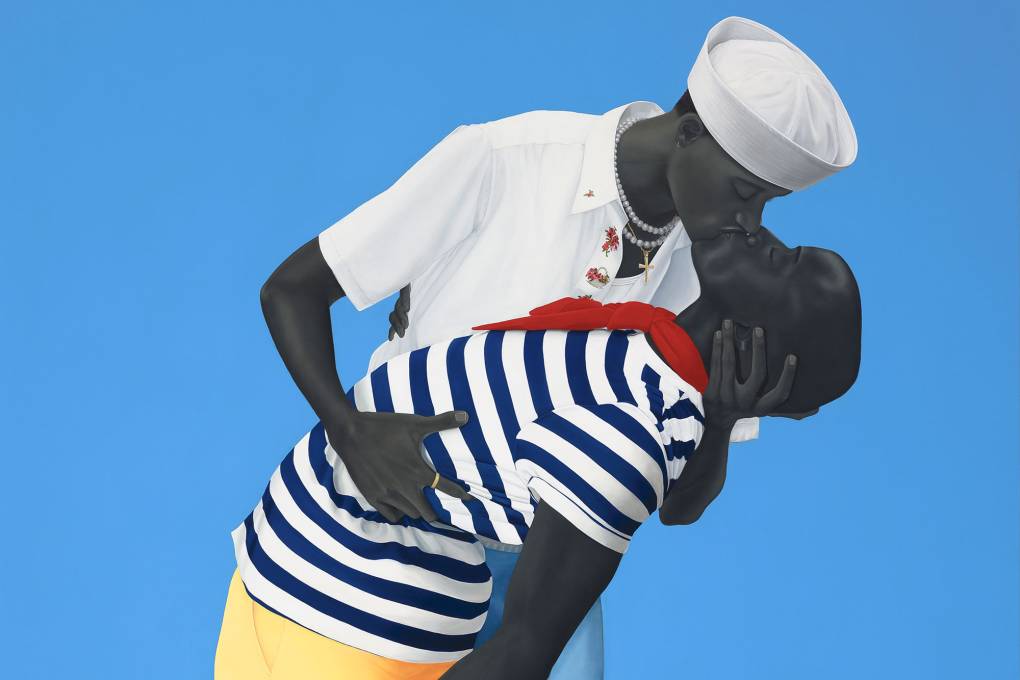
"caption": "Detail of Amy Sherald's' For Love, and for Country,' 2022.",
"description": null,
"title": "Amy-Sherald_For-Love,-and-for-Country_COVER",
"credit": "Photo by Joseph Hyde; Courtesy the artist and Hauser & Wirth",
"status": "inherit",
"altTag": "Two grayscale figures kiss in dramatic pose wearing sailor-like clothes against blue background",
"isLoading": false,
"fetchFailed": false
},
"arts_13955283": {
"type": "attachments",
"id": "arts_13955283",
"meta": {
"index": "attachments_1716263798",
"site": "arts",
"id": "13955283",
"found": true
},
"parent": 13955219,
"imgSizes": {
"twentyfourteen-full-width": {
"file": "https://cdn.kqed.org/wp-content/uploads/sites/2/2024/04/UbeCookies_COVER-1038x576.jpg",
"width": 1038,
"mimeType": "image/jpeg",
"height": 576
},
"thumbnail": {
"file": "https://cdn.kqed.org/wp-content/uploads/sites/2/2024/04/UbeCookies_COVER-160x107.jpg",
"width": 160,
"mimeType": "image/jpeg",
"height": 107
},
"post-thumbnail": {
"file": "https://cdn.kqed.org/wp-content/uploads/sites/2/2024/04/UbeCookies_COVER-672x372.jpg",
"width": 672,
"mimeType": "image/jpeg",
"height": 372
},
"kqedFullSize": {
"file": "https://cdn.kqed.org/wp-content/uploads/sites/2/2024/04/UbeCookies_COVER.jpg",
"width": 1920,
"height": 1280
},
"large": {
"file": "https://cdn.kqed.org/wp-content/uploads/sites/2/2024/04/UbeCookies_COVER-1020x680.jpg",
"width": 1020,
"mimeType": "image/jpeg",
"height": 680
},
"1536x1536": {
"file": "https://cdn.kqed.org/wp-content/uploads/sites/2/2024/04/UbeCookies_COVER-1536x1024.jpg",
"width": 1536,
"mimeType": "image/jpeg",
"height": 1024
},
"medium": {
"file": "https://cdn.kqed.org/wp-content/uploads/sites/2/2024/04/UbeCookies_COVER-800x533.jpg",
"width": 800,
"mimeType": "image/jpeg",
"height": 533
},
"medium_large": {
"file": "https://cdn.kqed.org/wp-content/uploads/sites/2/2024/04/UbeCookies_COVER-768x512.jpg",
"width": 768,
"mimeType": "image/jpeg",
"height": 512
}
},
"publishDate": 1712093821,
"modified": 1712093858,
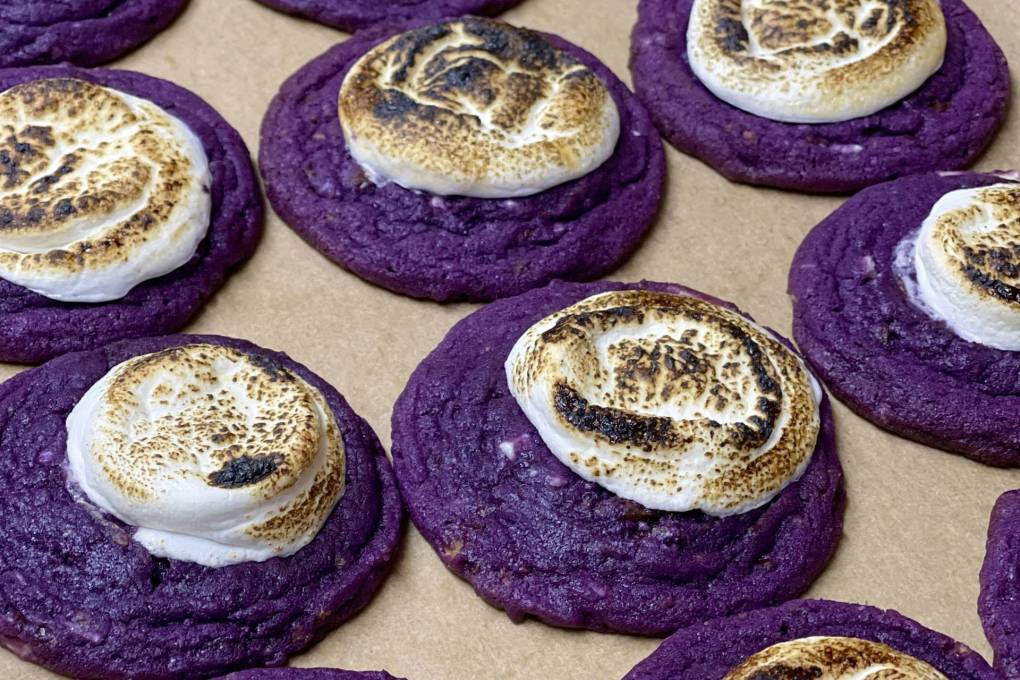
"caption": "Ube-related treats, like these ube cookies, have become some of the most Insgragrammable food content in recent years.",
"description": null,
"title": "UbeCookies_COVER",
"credit": "Courtesy Macs By Icky",
"status": "inherit",
"altTag": "a fresh batch of purple ube cookies with toasted marshmallow are laid out by the dozen",
"isLoading": false,
"fetchFailed": false
},
"arts_13955131": {
"type": "attachments",
"id": "arts_13955131",
"meta": {
"index": "attachments_1716263798",
"site": "arts",
"id": "13955131",
"found": true
},
"parent": 13955126,
"imgSizes": {
"twentyfourteen-full-width": {
"file": "https://cdn.kqed.org/wp-content/uploads/sites/2/2024/04/DSF8273-1038x576.jpg",
"width": 1038,
"mimeType": "image/jpeg",
"height": 576
},
"thumbnail": {
"file": "https://cdn.kqed.org/wp-content/uploads/sites/2/2024/04/DSF8273-160x107.jpg",
"width": 160,
"mimeType": "image/jpeg",
"height": 107
},
"post-thumbnail": {
"file": "https://cdn.kqed.org/wp-content/uploads/sites/2/2024/04/DSF8273-672x372.jpg",
"width": 672,
"mimeType": "image/jpeg",
"height": 372
},
"kqedFullSize": {
"file": "https://cdn.kqed.org/wp-content/uploads/sites/2/2024/04/DSF8273.jpg",
"width": 2034,
"height": 1356
},
"large": {
"file": "https://cdn.kqed.org/wp-content/uploads/sites/2/2024/04/DSF8273-1020x680.jpg",
"width": 1020,
"mimeType": "image/jpeg",
"height": 680
},
"1536x1536": {
"file": "https://cdn.kqed.org/wp-content/uploads/sites/2/2024/04/DSF8273-1536x1024.jpg",
"width": 1536,
"mimeType": "image/jpeg",
"height": 1024
},
"full-width": {
"file": "https://cdn.kqed.org/wp-content/uploads/sites/2/2024/04/DSF8273-1920x1280.jpg",
"width": 1920,
"mimeType": "image/jpeg",
"height": 1280
},
"medium": {
"file": "https://cdn.kqed.org/wp-content/uploads/sites/2/2024/04/DSF8273-800x533.jpg",
"width": 800,
"mimeType": "image/jpeg",
"height": 533
},
"medium_large": {
"file": "https://cdn.kqed.org/wp-content/uploads/sites/2/2024/04/DSF8273-768x512.jpg",
"width": 768,
"mimeType": "image/jpeg",
"height": 512
}
},
"publishDate": 1712000025,
"modified": 1712008920,
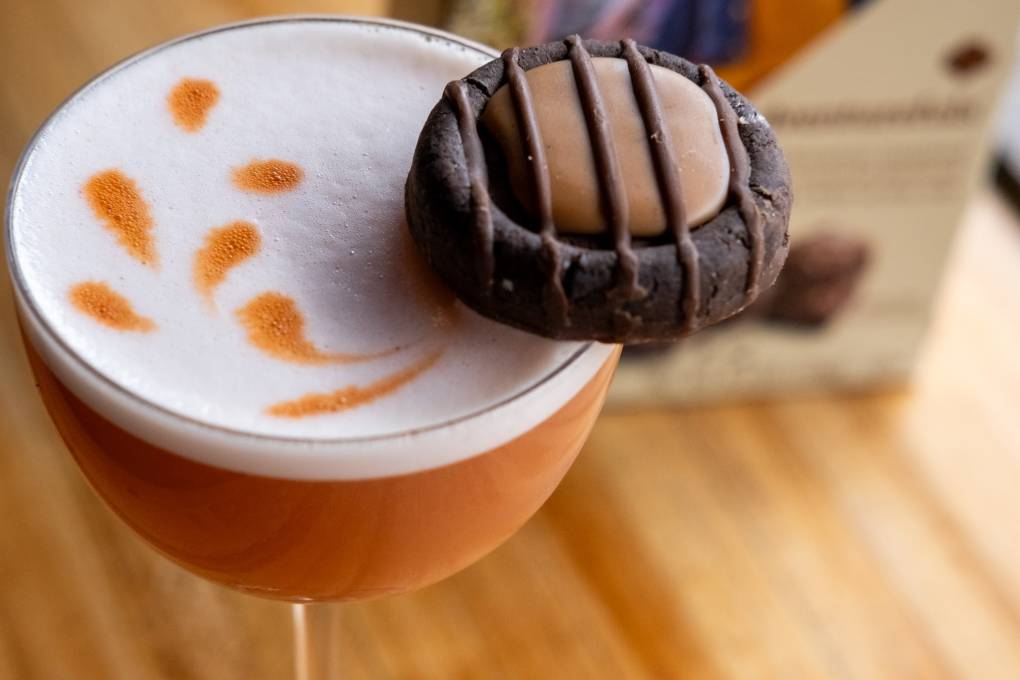
"caption": "Iconic Girl Scout cookies like \"Adventurefuls\" will be seasonally available as cocktails — with proceeds going to local girl scouts.",
"description": null,
"title": "_DSF8273",
"credit": "Décanteur Media",
"status": "inherit",
"altTag": "a cocktail made using ingredients from Girl Scout cookies is displayed at a bar",
"isLoading": false,
"fetchFailed": false
},
"arts_13955048": {
"type": "attachments",
"id": "arts_13955048",
"meta": {
"index": "attachments_1716263798",
"site": "arts",
"id": "13955048",
"found": true
},
"parent": 13955045,
"imgSizes": {
"thumbnail": {
"file": "https://cdn.kqed.org/wp-content/uploads/sites/2/2024/03/IMG_7753-160x107.jpeg",
"width": 160,
"mimeType": "image/jpeg",
"height": 107
},
"post-thumbnail": {
"file": "https://cdn.kqed.org/wp-content/uploads/sites/2/2024/03/IMG_7753-672x372.jpeg",
"width": 672,
"mimeType": "image/jpeg",
"height": 372
},
"kqedFullSize": {
"file": "https://cdn.kqed.org/wp-content/uploads/sites/2/2024/03/IMG_7753.jpeg",
"width": 750,
"height": 500
}
},
"publishDate": 1711761322,
"modified": 1711762355,
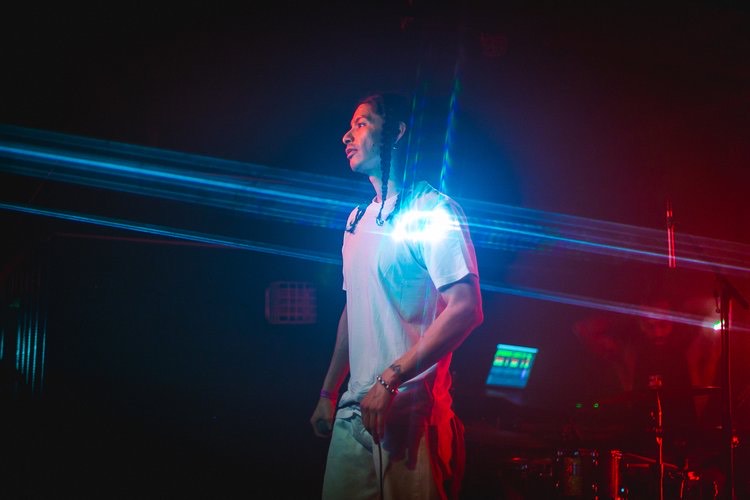
"caption": "A.CHAL's latest album, ESPÍRITU, is garnering national attention. He'll be performing in San Francisco this week.",
"description": null,
"title": "IMG_7753",
"credit": "Courtesy Cold Medina",
"status": "inherit",
"altTag": "a Peruvian rapper is on a darkly lit stage during a music performance",
"isLoading": false,
"fetchFailed": false
},
"arts_13955007": {
"type": "attachments",
"id": "arts_13955007",
"meta": {
"index": "attachments_1716263798",
"site": "arts",
"id": "13955007",
"found": true
},
"parent": 13955006,
"imgSizes": {
"twentyfourteen-full-width": {
"file": "https://cdn.kqed.org/wp-content/uploads/sites/2/2024/03/IMG_7692-Edit-1038x576.jpg",
"width": 1038,
"mimeType": "image/jpeg",
"height": 576
},
"thumbnail": {
"file": "https://cdn.kqed.org/wp-content/uploads/sites/2/2024/03/IMG_7692-Edit-160x114.jpg",
"width": 160,
"mimeType": "image/jpeg",
"height": 114
},
"post-thumbnail": {
"file": "https://cdn.kqed.org/wp-content/uploads/sites/2/2024/03/IMG_7692-Edit-672x372.jpg",
"width": 672,
"mimeType": "image/jpeg",
"height": 372
},
"kqedFullSize": {
"file": "https://cdn.kqed.org/wp-content/uploads/sites/2/2024/03/IMG_7692-Edit-scaled.jpg",
"width": 2560,
"height": 1829
},
"2048x2048": {
"file": "https://cdn.kqed.org/wp-content/uploads/sites/2/2024/03/IMG_7692-Edit-2048x1463.jpg",
"width": 2048,
"mimeType": "image/jpeg",
"height": 1463
},
"large": {
"file": "https://cdn.kqed.org/wp-content/uploads/sites/2/2024/03/IMG_7692-Edit-1020x729.jpg",
"width": 1020,
"mimeType": "image/jpeg",
"height": 729
},
"1536x1536": {
"file": "https://cdn.kqed.org/wp-content/uploads/sites/2/2024/03/IMG_7692-Edit-1536x1097.jpg",
"width": 1536,
"mimeType": "image/jpeg",
"height": 1097
},
"full-width": {
"file": "https://cdn.kqed.org/wp-content/uploads/sites/2/2024/03/IMG_7692-Edit-1920x1372.jpg",
"width": 1920,
"mimeType": "image/jpeg",
"height": 1372
},
"medium": {
"file": "https://cdn.kqed.org/wp-content/uploads/sites/2/2024/03/IMG_7692-Edit-800x572.jpg",
"width": 800,
"mimeType": "image/jpeg",
"height": 572
},
"medium_large": {
"file": "https://cdn.kqed.org/wp-content/uploads/sites/2/2024/03/IMG_7692-Edit-768x549.jpg",
"width": 768,
"mimeType": "image/jpeg",
"height": 549
}
},
"publishDate": 1711672265,
"modified": 1711672337,
"caption": "Lizzie Killian of Teens in Trouble.",
"description": null,
"title": "IMG_7692-Edit",
"credit": "sasss world",
"status": "inherit",
"altTag": "A musician with long hair poses for a portrait.",
"isLoading": false,
"fetchFailed": false
},
"arts_13955000": {
"type": "attachments",
"id": "arts_13955000",
"meta": {
"index": "attachments_1716263798",
"site": "arts",
"id": "13955000",
"found": true
},
"parent": 13954980,
"imgSizes": {
"twentyfourteen-full-width": {
"file": "https://cdn.kqed.org/wp-content/uploads/sites/2/2024/03/MexicanMuseum_706Mission_COVER_final-1038x576.jpg",
"width": 1038,
"mimeType": "image/jpeg",
"height": 576
},
"thumbnail": {
"file": "https://cdn.kqed.org/wp-content/uploads/sites/2/2024/03/MexicanMuseum_706Mission_COVER_final-160x160.jpg",
"width": 160,
"mimeType": "image/jpeg",
"height": 160
},
"post-thumbnail": {
"file": "https://cdn.kqed.org/wp-content/uploads/sites/2/2024/03/MexicanMuseum_706Mission_COVER_final-672x372.jpg",
"width": 672,
"mimeType": "image/jpeg",
"height": 372
},
"kqedFullSize": {
"file": "https://cdn.kqed.org/wp-content/uploads/sites/2/2024/03/MexicanMuseum_706Mission_COVER_final.jpg",
"width": 2000,
"height": 2000
},
"large": {
"file": "https://cdn.kqed.org/wp-content/uploads/sites/2/2024/03/MexicanMuseum_706Mission_COVER_final-1020x1020.jpg",
"width": 1020,
"mimeType": "image/jpeg",
"height": 1020
},
"1536x1536": {
"file": "https://cdn.kqed.org/wp-content/uploads/sites/2/2024/03/MexicanMuseum_706Mission_COVER_final-1536x1536.jpg",
"width": 1536,
"mimeType": "image/jpeg",
"height": 1536
},
"full-width": {
"file": "https://cdn.kqed.org/wp-content/uploads/sites/2/2024/03/MexicanMuseum_706Mission_COVER_final-1920x1920.jpg",
"width": 1920,
"mimeType": "image/jpeg",
"height": 1920
},
"medium": {
"file": "https://cdn.kqed.org/wp-content/uploads/sites/2/2024/03/MexicanMuseum_706Mission_COVER_final-800x800.jpg",
"width": 800,
"mimeType": "image/jpeg",
"height": 800
},
"medium_large": {
"file": "https://cdn.kqed.org/wp-content/uploads/sites/2/2024/03/MexicanMuseum_706Mission_COVER_final-768x768.jpg",
"width": 768,
"mimeType": "image/jpeg",
"height": 768
}
},
"publishDate": 1711669810,
"modified": 1711669872,
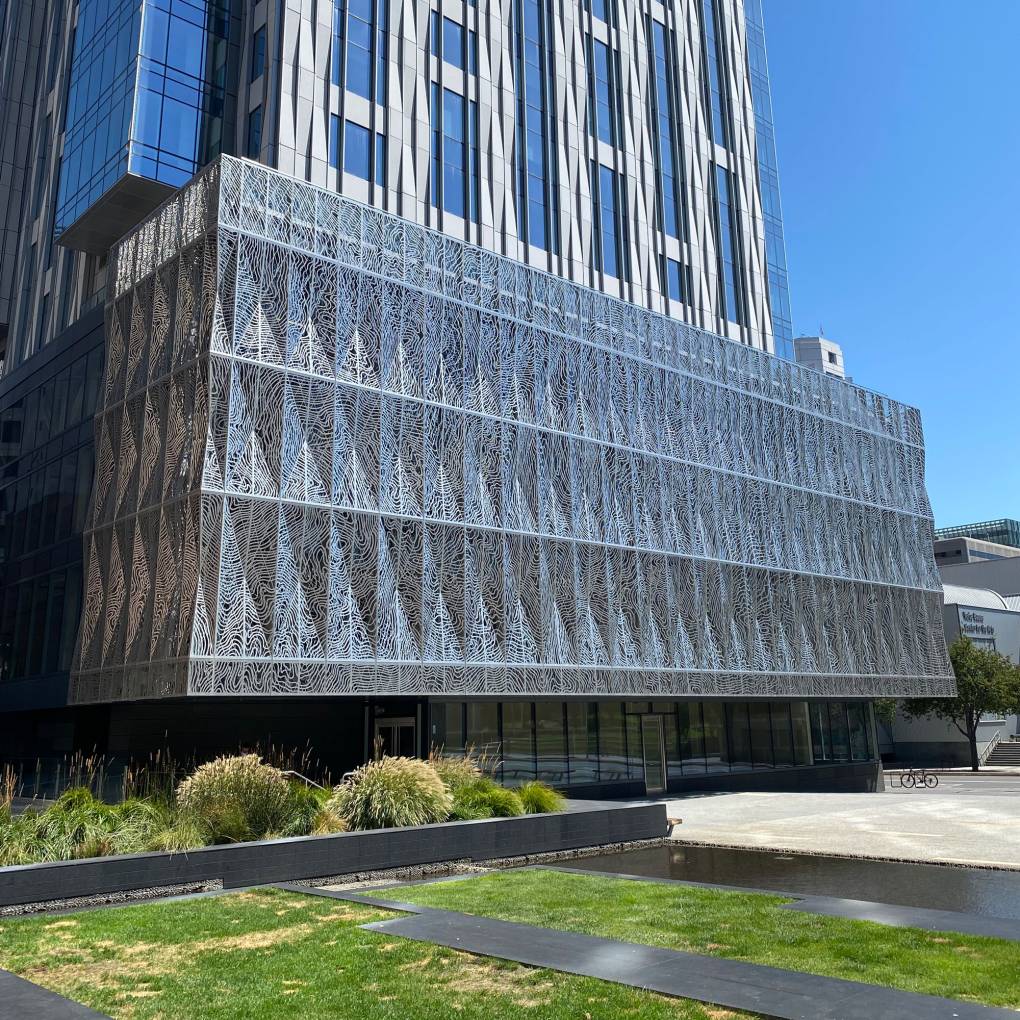
"caption": "The future home of San Francisco's Mexican Museum at 706 Mission St., with a façade designed by Jan Hendrix.",
"description": null,
"title": "MexicanMuseum_706Mission_COVER_final",
"credit": "Courtesy of the Mexican Museum",
"status": "inherit",
"altTag": "Decorative metal facade at base of taller tower fronting plaza",
"isLoading": false,
"fetchFailed": false
},
"arts_12374066": {
"type": "attachments",
"id": "arts_12374066",
"meta": {
"index": "attachments_1716263798",
"site": "arts",
"id": "12374066",
"found": true
},
"parent": 12373880,
"imgSizes": {
"small": {
"file": "https://cdn.kqed.org/wp-content/uploads/sites/2/2016/11/billie-1-520x347.jpg",
"width": 520,
"mimeType": "image/jpeg",
"height": 347
},
"twentyfourteen-full-width": {
"file": "https://cdn.kqed.org/wp-content/uploads/sites/2/2016/11/billie-1-1038x576.jpg",
"width": 1038,
"mimeType": "image/jpeg",
"height": 576
},
"thumbnail": {
"file": "https://cdn.kqed.org/wp-content/uploads/sites/2/2016/11/billie-1-160x107.jpg",
"width": 160,
"mimeType": "image/jpeg",
"height": 107
},
"fd-sm": {
"file": "https://cdn.kqed.org/wp-content/uploads/sites/2/2016/11/billie-1-960x640.jpg",
"width": 960,
"mimeType": "image/jpeg",
"height": 640
},
"post-thumbnail": {
"file": "https://cdn.kqed.org/wp-content/uploads/sites/2/2016/11/billie-1-672x372.jpg",
"width": 672,
"mimeType": "image/jpeg",
"height": 372
},
"xsmall": {
"file": "https://cdn.kqed.org/wp-content/uploads/sites/2/2016/11/billie-1-375x250.jpg",
"width": 375,
"mimeType": "image/jpeg",
"height": 250
},
"kqedFullSize": {
"file": "https://cdn.kqed.org/wp-content/uploads/sites/2/2016/11/billie-1.jpg",
"width": 5760,
"height": 3840
},
"large": {
"file": "https://cdn.kqed.org/wp-content/uploads/sites/2/2016/11/billie-1-1020x680.jpg",
"width": 1020,
"mimeType": "image/jpeg",
"height": 680
},
"xlarge": {
"file": "https://cdn.kqed.org/wp-content/uploads/sites/2/2016/11/billie-1-1180x787.jpg",
"width": 1180,
"mimeType": "image/jpeg",
"height": 787
},
"guest-author-50": {
"file": "https://cdn.kqed.org/wp-content/uploads/sites/2/2016/11/billie-1-50x50.jpg",
"width": 50,
"mimeType": "image/jpeg",
"height": 50
},
"guest-author-96": {
"file": "https://cdn.kqed.org/wp-content/uploads/sites/2/2016/11/billie-1-96x96.jpg",
"width": 96,
"mimeType": "image/jpeg",
"height": 96
},
"medium": {
"file": "https://cdn.kqed.org/wp-content/uploads/sites/2/2016/11/billie-1-800x533.jpg",
"width": 800,
"mimeType": "image/jpeg",
"height": 533
},
"guest-author-64": {
"file": "https://cdn.kqed.org/wp-content/uploads/sites/2/2016/11/billie-1-64x64.jpg",
"width": 64,
"mimeType": "image/jpeg",
"height": 64
},
"guest-author-32": {
"file": "https://cdn.kqed.org/wp-content/uploads/sites/2/2016/11/billie-1-32x32.jpg",
"width": 32,
"mimeType": "image/jpeg",
"height": 32
},
"fd-lrg": {
"file": "https://cdn.kqed.org/wp-content/uploads/sites/2/2016/11/billie-1-1920x1280.jpg",
"width": 1920,
"mimeType": "image/jpeg",
"height": 1280
},
"fd-med": {
"file": "https://cdn.kqed.org/wp-content/uploads/sites/2/2016/11/billie-1-1180x787.jpg",
"width": 1180,
"mimeType": "image/jpeg",
"height": 787
},
"full-width": {
"file": "https://cdn.kqed.org/wp-content/uploads/sites/2/2016/11/billie-1-1920x1280.jpg",
"width": 1920,
"mimeType": "image/jpeg",
"height": 1280
},
"detail": {
"file": "https://cdn.kqed.org/wp-content/uploads/sites/2/2016/11/billie-1-150x150.jpg",
"width": 150,
"mimeType": "image/jpeg",
"height": 150
},
"medium_large": {
"file": "https://cdn.kqed.org/wp-content/uploads/sites/2/2016/11/billie-1-768x512.jpg",
"width": 768,
"mimeType": "image/jpeg",
"height": 512
},
"guest-author-128": {
"file": "https://cdn.kqed.org/wp-content/uploads/sites/2/2016/11/billie-1-128x128.jpg",
"width": 128,
"mimeType": "image/jpeg",
"height": 128
},
"xxsmall": {
"file": "https://cdn.kqed.org/wp-content/uploads/sites/2/2016/11/billie-1-240x160.jpg",
"width": 240,
"mimeType": "image/jpeg",
"height": 160
}
},
"publishDate": 1479703913,
"modified": 1711654115,
"caption": "Green Day at Berkeley’s UC Theatre on Oct. 20, 2016.",
"description": null,
"title": "Green Day at Berkeley’s UC Theatre on Oct. 20, 2016.",
"credit": "Emma Silvers/ KQED",
"status": "inherit",
"altTag": "A white man with black hair sings on stage, while playing a white guitar and wearing a red shirt and black suspenders.",
"isLoading": false,
"fetchFailed": false
},
"arts_13954942": {
"type": "attachments",
"id": "arts_13954942",
"meta": {
"index": "attachments_1716263798",
"site": "arts",
"id": "13954942",
"found": true
},
"parent": 13954939,
"imgSizes": {
"twentyfourteen-full-width": {
"file": "https://cdn.kqed.org/wp-content/uploads/sites/2/2024/03/rasa-rasa_rendang-feature-1038x576.jpg",
"width": 1038,
"mimeType": "image/jpeg",
"height": 576
},
"thumbnail": {
"file": "https://cdn.kqed.org/wp-content/uploads/sites/2/2024/03/rasa-rasa_rendang-feature-160x90.jpg",
"width": 160,
"mimeType": "image/jpeg",
"height": 90
},
"post-thumbnail": {
"file": "https://cdn.kqed.org/wp-content/uploads/sites/2/2024/03/rasa-rasa_rendang-feature-672x372.jpg",
"width": 672,
"mimeType": "image/jpeg",
"height": 372
},
"kqedFullSize": {
"file": "https://cdn.kqed.org/wp-content/uploads/sites/2/2024/03/rasa-rasa_rendang-feature.jpg",
"width": 2000,
"height": 1125
},
"large": {
"file": "https://cdn.kqed.org/wp-content/uploads/sites/2/2024/03/rasa-rasa_rendang-feature-1020x574.jpg",
"width": 1020,
"mimeType": "image/jpeg",
"height": 574
},
"1536x1536": {
"file": "https://cdn.kqed.org/wp-content/uploads/sites/2/2024/03/rasa-rasa_rendang-feature-1536x864.jpg",
"width": 1536,
"mimeType": "image/jpeg",
"height": 864
},
"full-width": {
"file": "https://cdn.kqed.org/wp-content/uploads/sites/2/2024/03/rasa-rasa_rendang-feature-1920x1080.jpg",
"width": 1920,
"mimeType": "image/jpeg",
"height": 1080
},
"medium": {
"file": "https://cdn.kqed.org/wp-content/uploads/sites/2/2024/03/rasa-rasa_rendang-feature-800x450.jpg",
"width": 800,
"mimeType": "image/jpeg",
"height": 450
},
"medium_large": {
"file": "https://cdn.kqed.org/wp-content/uploads/sites/2/2024/03/rasa-rasa_rendang-feature-768x432.jpg",
"width": 768,
"mimeType": "image/jpeg",
"height": 432
}
},
"publishDate": 1711651347,
"modified": 1711651493,
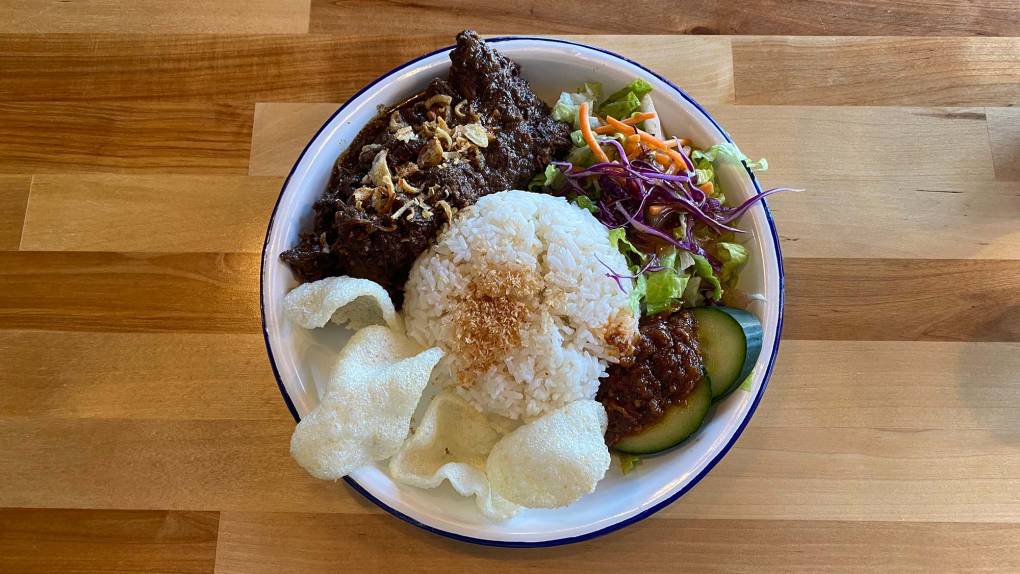
"caption": "The beef rendang platter is one of the classic Indonesian dishes customers can find at Rasa Rasa Kitchen, a new restaurant in San Francisco's Mission District.",
"description": null,
"title": "rasa rasa_rendang feature",
"credit": "Luke Tsai/KQED",
"status": "inherit",
"altTag": "A bowl loaded with beef rendang, coconut white rice, shrimp chips and a salad.",
"isLoading": false,
"fetchFailed": false
},
"arts_13954880": {
"type": "attachments",
"id": "arts_13954880",
"meta": {
"index": "attachments_1716263798",
"site": "arts",
"id": "13954880",
"found": true
},
"parent": 13954872,
"imgSizes": {
"twentyfourteen-full-width": {
"file": "https://cdn.kqed.org/wp-content/uploads/sites/2/2024/03/DIDI_1-1038x576.jpg",
"width": 1038,
"mimeType": "image/jpeg",
"height": 576
},
"thumbnail": {
"file": "https://cdn.kqed.org/wp-content/uploads/sites/2/2024/03/DIDI_1-160x90.jpg",
"width": 160,
"mimeType": "image/jpeg",
"height": 90
},
"post-thumbnail": {
"file": "https://cdn.kqed.org/wp-content/uploads/sites/2/2024/03/DIDI_1-672x372.jpg",
"width": 672,
"mimeType": "image/jpeg",
"height": 372
},
"kqedFullSize": {
"file": "https://cdn.kqed.org/wp-content/uploads/sites/2/2024/03/DIDI_1-scaled.jpg",
"width": 2560,
"height": 1440
},
"2048x2048": {
"file": "https://cdn.kqed.org/wp-content/uploads/sites/2/2024/03/DIDI_1-2048x1152.jpg",
"width": 2048,
"mimeType": "image/jpeg",
"height": 1152
},
"large": {
"file": "https://cdn.kqed.org/wp-content/uploads/sites/2/2024/03/DIDI_1-1020x574.jpg",
"width": 1020,
"mimeType": "image/jpeg",
"height": 574
},
"1536x1536": {
"file": "https://cdn.kqed.org/wp-content/uploads/sites/2/2024/03/DIDI_1-1536x864.jpg",
"width": 1536,
"mimeType": "image/jpeg",
"height": 864
},
"full-width": {
"file": "https://cdn.kqed.org/wp-content/uploads/sites/2/2024/03/DIDI_1-1920x1080.jpg",
"width": 1920,
"mimeType": "image/jpeg",
"height": 1080
},
"medium": {
"file": "https://cdn.kqed.org/wp-content/uploads/sites/2/2024/03/DIDI_1-800x450.jpg",
"width": 800,
"mimeType": "image/jpeg",
"height": 450
},
"medium_large": {
"file": "https://cdn.kqed.org/wp-content/uploads/sites/2/2024/03/DIDI_1-768x432.jpg",
"width": 768,
"mimeType": "image/jpeg",
"height": 432
}
},
"publishDate": 1711575032,
"modified": 1711580833,
"caption": "Izaac Wang stars in writer/director Sean Wang's 'Dìdi (弟弟),' SFFILM's opening night film.",
"description": null,
"title": "DÌDI (2024)",
"credit": "Courtesy of Focus Features/Talking Fish Pictures LLC",
"status": "inherit",
"altTag": "Close-up of face of young person with mouth open, in motion",
"isLoading": false,
"fetchFailed": false
},
"arts_13954846": {
"type": "attachments",
"id": "arts_13954846",
"meta": {
"index": "attachments_1716263798",
"site": "arts",
"id": "13954846",
"found": true
},
"parent": 13954827,
"imgSizes": {
"twentyfourteen-full-width": {
"file": "https://cdn.kqed.org/wp-content/uploads/sites/2/2024/03/RASOTA_March26_SFUSD_2_2000-1-1038x576.jpg",
"width": 1038,
"mimeType": "image/jpeg",
"height": 576
},
"thumbnail": {
"file": "https://cdn.kqed.org/wp-content/uploads/sites/2/2024/03/RASOTA_March26_SFUSD_2_2000-1-160x90.jpg",
"width": 160,
"mimeType": "image/jpeg",
"height": 90
},
"post-thumbnail": {
"file": "https://cdn.kqed.org/wp-content/uploads/sites/2/2024/03/RASOTA_March26_SFUSD_2_2000-1-672x372.jpg",
"width": 672,
"mimeType": "image/jpeg",
"height": 372
},
"kqedFullSize": {
"file": "https://cdn.kqed.org/wp-content/uploads/sites/2/2024/03/RASOTA_March26_SFUSD_2_2000-1.jpg",
"width": 2000,
"height": 1125
},
"large": {
"file": "https://cdn.kqed.org/wp-content/uploads/sites/2/2024/03/RASOTA_March26_SFUSD_2_2000-1-1020x574.jpg",
"width": 1020,
"mimeType": "image/jpeg",
"height": 574
},
"1536x1536": {
"file": "https://cdn.kqed.org/wp-content/uploads/sites/2/2024/03/RASOTA_March26_SFUSD_2_2000-1-1536x864.jpg",
"width": 1536,
"mimeType": "image/jpeg",
"height": 864
},
"full-width": {
"file": "https://cdn.kqed.org/wp-content/uploads/sites/2/2024/03/RASOTA_March26_SFUSD_2_2000-1-1920x1080.jpg",
"width": 1920,
"mimeType": "image/jpeg",
"height": 1080
},
"medium": {
"file": "https://cdn.kqed.org/wp-content/uploads/sites/2/2024/03/RASOTA_March26_SFUSD_2_2000-1-800x450.jpg",
"width": 800,
"mimeType": "image/jpeg",
"height": 450
},
"medium_large": {
"file": "https://cdn.kqed.org/wp-content/uploads/sites/2/2024/03/RASOTA_March26_SFUSD_2_2000-1-768x432.jpg",
"width": 768,
"mimeType": "image/jpeg",
"height": 432
}
},
"publishDate": 1711559438,
"modified": 1711559512,
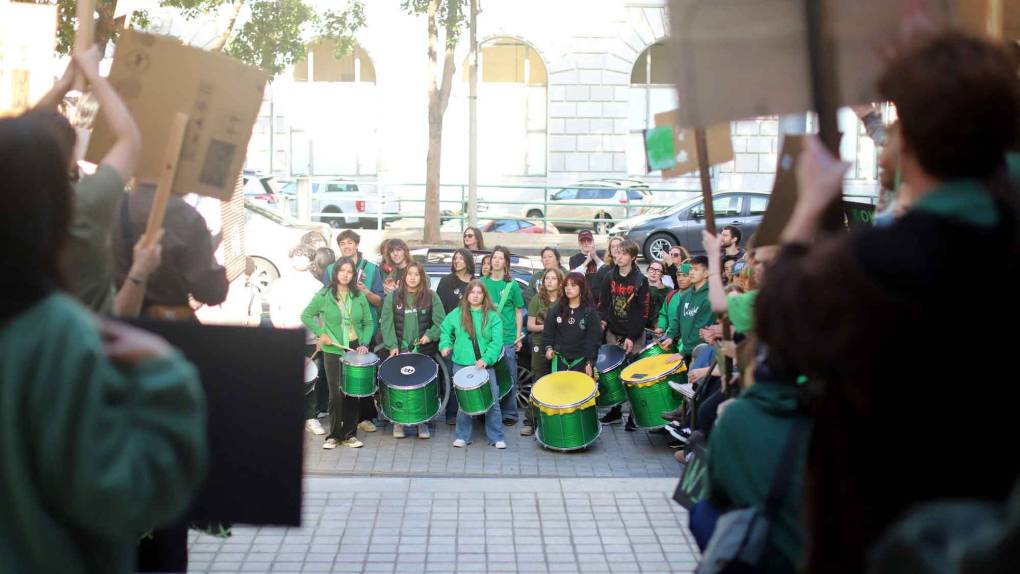
"caption": "Ruth Asawa School of the Arts students, faculty, parents and supporters gathered outside the San Francisco Unified School District building on March 26 to rally in support of two faculty members in the technical theater department who were removed from their positions on March 18.",
"description": null,
"title": "RASOTA_March26_SFUSD_2_2000",
"credit": "Sarah Hotchkiss/KQED",
"status": "inherit",
"altTag": "A crowd of drummers in green on the sidewalk is seen through the silhouetted backs of protesters holding signs",
"isLoading": false,
"fetchFailed": false
},
"arts_13954775": {
"type": "attachments",
"id": "arts_13954775",
"meta": {
"index": "attachments_1716263798",
"site": "arts",
"id": "13954775",
"found": true
},
"parent": 13954771,
"imgSizes": {
"twentyfourteen-full-width": {
"file": "https://cdn.kqed.org/wp-content/uploads/sites/2/2024/03/IMG_9530-1038x576.jpg",
"width": 1038,
"mimeType": "image/jpeg",
"height": 576
},
"thumbnail": {
"file": "https://cdn.kqed.org/wp-content/uploads/sites/2/2024/03/IMG_9530-160x105.jpg",
"width": 160,
"mimeType": "image/jpeg",
"height": 105
},
"post-thumbnail": {
"file": "https://cdn.kqed.org/wp-content/uploads/sites/2/2024/03/IMG_9530-672x372.jpg",
"width": 672,
"mimeType": "image/jpeg",
"height": 372
},
"kqedFullSize": {
"file": "https://cdn.kqed.org/wp-content/uploads/sites/2/2024/03/IMG_9530.jpg",
"width": 1691,
"height": 1113
},
"large": {
"file": "https://cdn.kqed.org/wp-content/uploads/sites/2/2024/03/IMG_9530-1020x671.jpg",
"width": 1020,
"mimeType": "image/jpeg",
"height": 671
},
"1536x1536": {
"file": "https://cdn.kqed.org/wp-content/uploads/sites/2/2024/03/IMG_9530-1536x1011.jpg",
"width": 1536,
"mimeType": "image/jpeg",
"height": 1011
},
"medium": {
"file": "https://cdn.kqed.org/wp-content/uploads/sites/2/2024/03/IMG_9530-800x527.jpg",
"width": 800,
"mimeType": "image/jpeg",
"height": 527
},
"medium_large": {
"file": "https://cdn.kqed.org/wp-content/uploads/sites/2/2024/03/IMG_9530-768x505.jpg",
"width": 768,
"mimeType": "image/jpeg",
"height": 505
}
},
"publishDate": 1711490773,
"modified": 1711558576,
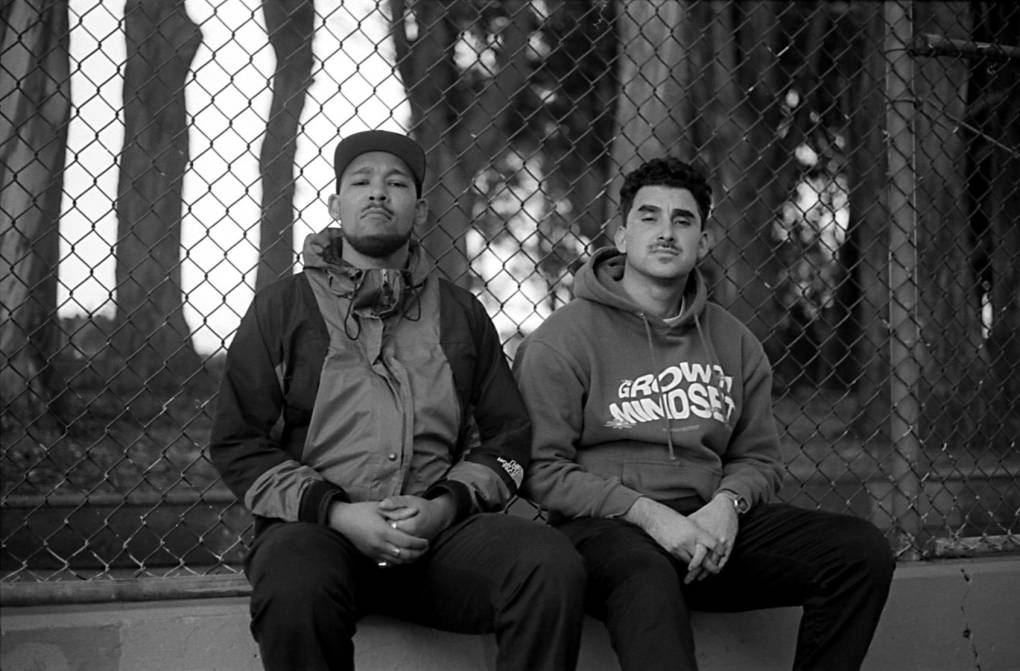
"caption": "Rapper A-1 and producer Baghead make a formidable team on their album 'STEPxSTEP.'",
"description": null,
"title": "IMG_9530",
"credit": "Daniel Valencia",
"status": "inherit",
"altTag": null,
"isLoading": false,
"fetchFailed": false
},
"arts_13954767": {
"type": "attachments",
"id": "arts_13954767",
"meta": {
"index": "attachments_1716263798",
"site": "arts",
"id": "13954767",
"found": true
},
"parent": 13954766,
"imgSizes": {
"twentyfourteen-full-width": {
"file": "https://cdn.kqed.org/wp-content/uploads/sites/2/2024/03/418799190_241307629011087_1178658261652047605_n-1038x576.jpg",
"width": 1038,
"mimeType": "image/jpeg",
"height": 576
},
"thumbnail": {
"file": "https://cdn.kqed.org/wp-content/uploads/sites/2/2024/03/418799190_241307629011087_1178658261652047605_n-160x106.jpg",
"width": 160,
"mimeType": "image/jpeg",
"height": 106
},
"post-thumbnail": {
"file": "https://cdn.kqed.org/wp-content/uploads/sites/2/2024/03/418799190_241307629011087_1178658261652047605_n-672x372.jpg",
"width": 672,
"mimeType": "image/jpeg",
"height": 372
},
"kqedFullSize": {
"file": "https://cdn.kqed.org/wp-content/uploads/sites/2/2024/03/418799190_241307629011087_1178658261652047605_n.jpg",
"width": 1080,
"height": 717
},
"large": {
"file": "https://cdn.kqed.org/wp-content/uploads/sites/2/2024/03/418799190_241307629011087_1178658261652047605_n-1020x677.jpg",
"width": 1020,
"mimeType": "image/jpeg",
"height": 677
},
"medium": {
"file": "https://cdn.kqed.org/wp-content/uploads/sites/2/2024/03/418799190_241307629011087_1178658261652047605_n-800x531.jpg",
"width": 800,
"mimeType": "image/jpeg",
"height": 531
},
"medium_large": {
"file": "https://cdn.kqed.org/wp-content/uploads/sites/2/2024/03/418799190_241307629011087_1178658261652047605_n-768x510.jpg",
"width": 768,
"mimeType": "image/jpeg",
"height": 510
}
},
"publishDate": 1711487875,
"modified": 1711488129,
"caption": "A photograph by Al Barna of 'The Palace' sign on the roof of the Palace Hotel, before work began to replace the neon with LED lighting.",
"description": null,
"title": "418799190_241307629011087_1178658261652047605_n",
"credit": "Al Barna/SF Neon",
"status": "inherit",
"altTag": "White illuminated letters of 'THE PALACE' on a rooftop",
"isLoading": false,
"fetchFailed": false
}
},
"audioPlayerReducer": {
"postId": "stream_live",
"isPaused": true,
"isPlaying": false,
"pfsActive": false,
"pledgeModalIsOpen": true,
"playerDrawerIsOpen": false,
"liveAudioPlayStartedAt": 0,
"liveAudioPlayContext": ""
},
"authorsReducer": {
"byline_arts_13955006": {
"type": "authors",
"id": "byline_arts_13955006",
"meta": {
"override": true
},
"slug": "byline_arts_13955006",
"name": "Danny Acosta",
"isLoading": false
},
"byline_arts_13954949": {
"type": "authors",
"id": "byline_arts_13954949",
"meta": {
"override": true
},
"slug": "byline_arts_13954949",
"name": "Maria Sherman, Associated Press",
"isLoading": false
},
"shotchkiss": {
"type": "authors",
"id": "61",
"meta": {
"index": "authors_1716337520",
"id": "61",
"found": true
},
"name": "Sarah Hotchkiss",
"firstName": "Sarah",
"lastName": "Hotchkiss",
"slug": "shotchkiss",
"email": "shotchkiss@kqed.org",
"display_author_email": true,
"staff_mastheads": [
"arts"
],
"title": "Senior Editor",
"bio": "Sarah Hotchkiss is a San Francisco \u003ca href=\"http://www.sarahhotchkiss.com\">artist\u003c/a> and arts writer. In 2019, she received the Dorothea & Leo Rabkin Foundation grant for visual art journalism and in 2020 she received a Society of Professional Journalists, Northern California award for excellence in arts and culture reporting.",
"avatar": "https://secure.gravatar.com/avatar/bc662df144b3d27fd8b1b6f1c2a420d34e91e53154d411bb7ad353cc8b6cea8d?s=600&d=blank&r=g",
"twitter": null,
"bluesky": null,
"facebook": null,
"instagram": null,
"linkedin": null,
"sites": [
{
"site": "",
"roles": [
"editor"
]
},
{
"site": "arts",
"roles": [
"Contributor",
"administrator"
]
},
{
"site": "artschool",
"roles": [
"administrator"
]
},
{
"site": "news",
"roles": [
"editor"
]
},
{
"site": "pop",
"roles": [
"administrator"
]
},
{
"site": "bayareabites",
"roles": [
"editor"
]
},
{
"site": "spark",
"roles": [
"editor"
]
},
{
"site": "checkplease",
"roles": [
"editor"
]
}
],
"headData": {
"title": "Sarah Hotchkiss | KQED",
"description": "Senior Editor",
"ogImgSrc": "https://secure.gravatar.com/avatar/bc662df144b3d27fd8b1b6f1c2a420d34e91e53154d411bb7ad353cc8b6cea8d?s=600&d=blank&r=g",
"twImgSrc": "https://secure.gravatar.com/avatar/bc662df144b3d27fd8b1b6f1c2a420d34e91e53154d411bb7ad353cc8b6cea8d?s=600&d=blank&r=g"
},
"isLoading": false,
"link": "/author/shotchkiss"
},
"nvoynovskaya": {
"type": "authors",
"id": "11387",
"meta": {
"index": "authors_1716337520",
"id": "11387",
"found": true
},
"name": "Nastia Voynovskaya",
"firstName": "Nastia",
"lastName": "Voynovskaya",
"slug": "nvoynovskaya",
"email": "nvoynovskaya@kqed.org",
"display_author_email": false,
"staff_mastheads": [
"arts"
],
"title": "Editor and reporter",
"bio": "Nastia Voynovskaya is a reporter, editor and host at KQED Arts & Culture. She's been covering the arts in the Bay Area for over a decade, with a focus on music, queer culture, labor issues and grassroots organizing. She has edited KQED story series such as Trans Bay: A History of San Francisco's Gender-Diverse Community, and co-created KQED's Bay Area hip-hop history project, That's My Word. Nastia's work has been recognized by the Society of Professional Journalists and San Francisco Press Club. She regularly appears on podcasts and radio programs, including NPR's All Songs Considered, and hosts live events where music, culture and conversation meet.",
"avatar": "https://secure.gravatar.com/avatar/5025ee460e5a85d69ca20ea6c6f2f80d7e17795c828f61ea3aecfcd924e9042e?s=600&d=blank&r=g",
"twitter": null,
"bluesky": null,
"facebook": null,
"instagram": "https://www.instagram.com/nananastia/",
"linkedin": null,
"sites": [
{
"site": "",
"roles": [
"editor"
]
},
{
"site": "arts",
"roles": [
"administrator"
]
},
{
"site": "news",
"roles": [
"editor"
]
},
{
"site": "pop",
"roles": [
"administrator"
]
},
{
"site": "bayareabites",
"roles": [
"editor"
]
},
{
"site": "podcasts",
"roles": [
"editor"
]
},
{
"site": "hiphop",
"roles": [
"editor"
]
}
],
"headData": {
"title": "Nastia Voynovskaya | KQED",
"description": "Editor and reporter",
"ogImgSrc": "https://secure.gravatar.com/avatar/5025ee460e5a85d69ca20ea6c6f2f80d7e17795c828f61ea3aecfcd924e9042e?s=600&d=blank&r=g",
"twImgSrc": "https://secure.gravatar.com/avatar/5025ee460e5a85d69ca20ea6c6f2f80d7e17795c828f61ea3aecfcd924e9042e?s=600&d=blank&r=g"
},
"isLoading": false,
"link": "/author/nvoynovskaya"
},
"ltsai": {
"type": "authors",
"id": "11743",
"meta": {
"index": "authors_1716337520",
"id": "11743",
"found": true
},
"name": "Luke Tsai",
"firstName": "Luke",
"lastName": "Tsai",
"slug": "ltsai",
"email": "ltsai@kqed.org",
"display_author_email": true,
"staff_mastheads": [
"arts"
],
"title": "Food Editor",
"bio": "Luke Tsai is KQED's food editor and resident stinky tofu connoisseur. Prior to KQED, he was an editor at Eater SF, \u003cem>San Francisco \u003c/em>magazine, and the \u003cem>East Bay Express\u003c/em>, and his work has also appeared in TASTE, the \u003cem>San Francisco Chronicle\u003c/em>, and the \u003cem>Best Food Writing\u003c/em> anthology. When he isn't writing or editing, you'll find him eating most everything he can get his hands on.",
"avatar": "https://secure.gravatar.com/avatar/1e59b45bf191526e7339d6ba46e33a57b2030d25c27660ecc64ea3cb863e34f7?s=600&d=blank&r=g",
"twitter": "theluketsai",
"bluesky": null,
"facebook": null,
"instagram": null,
"linkedin": null,
"sites": [
{
"site": "",
"roles": [
"editor"
]
},
{
"site": "arts",
"roles": [
"administrator"
]
},
{
"site": "news",
"roles": [
"editor",
"contributor"
]
},
{
"site": "bayareabites",
"roles": [
"editor"
]
},
{
"site": "food",
"roles": [
"editor"
]
}
],
"headData": {
"title": "Luke Tsai | KQED",
"description": "Food Editor",
"ogImgSrc": "https://secure.gravatar.com/avatar/1e59b45bf191526e7339d6ba46e33a57b2030d25c27660ecc64ea3cb863e34f7?s=600&d=blank&r=g",
"twImgSrc": "https://secure.gravatar.com/avatar/1e59b45bf191526e7339d6ba46e33a57b2030d25c27660ecc64ea3cb863e34f7?s=600&d=blank&r=g"
},
"isLoading": false,
"link": "/author/ltsai"
},
"achazaro": {
"type": "authors",
"id": "11748",
"meta": {
"index": "authors_1716337520",
"id": "11748",
"found": true
},
"name": "Alan Chazaro",
"firstName": "Alan",
"lastName": "Chazaro",
"slug": "achazaro",
"email": "agchazaro@gmail.com",
"display_author_email": true,
"staff_mastheads": [],
"title": "Food Writer and Reporter",
"bio": "Alan Chazaro is the author of \u003cem>This Is Not a Frank Ocean Cover Album\u003c/em> (Black Lawrence Press, 2019), \u003cem>Piñata Theory\u003c/em> (Black Lawrence Press, 2020), and \u003cem>Notes from the Eastern Span of the Bay Bridge\u003c/em> (Ghost City Press, 2021). He is a graduate of June Jordan’s Poetry for the People program at UC Berkeley and a former Lawrence Ferlinghetti Fellow at the University of San Francisco. He writes about sports, food, art, music, education, and culture while repping the Bay on \u003ca href=\"https://twitter.com/alan_chazaro\">Twitter\u003c/a> and \u003ca href=\"https://www.instagram.com/alan_chazaro/?hl=en\">Instagram\u003c/a> at @alan_chazaro.",
"avatar": "https://secure.gravatar.com/avatar/ea8b6dd970fc5c29e7a188e7d5861df7?s=600&d=blank&r=g",
"twitter": "alan_chazaro",
"facebook": null,
"instagram": null,
"linkedin": null,
"sites": [
{
"site": "arts",
"roles": [
"contributor"
]
},
{
"site": "news",
"roles": [
"editor"
]
}
],
"headData": {
"title": "Alan Chazaro | KQED",
"description": "Food Writer and Reporter",
"ogImgSrc": "https://secure.gravatar.com/avatar/ea8b6dd970fc5c29e7a188e7d5861df7?s=600&d=blank&r=g",
"twImgSrc": "https://secure.gravatar.com/avatar/ea8b6dd970fc5c29e7a188e7d5861df7?s=600&d=blank&r=g"
},
"isLoading": false,
"link": "/author/achazaro"
}
},
"pagesReducer": {
"arts_tag_san-francisco": {
"type": "terms",
"id": "arts_1146",
"meta": {
"index": "terms_1716263798",
"site": "arts",
"id": "1146",
"score": 6.7229023
},
"featImg": null,
"name": "San Francisco",
"description": null,
"taxonomy": "tag",
"headData": {
"twImgId": null,
"twTitle": null,
"ogTitle": null,
"ogImgId": null,
"twDescription": null,
"description": null,
"title": "San Francisco Archives | KQED Arts",
"ogDescription": null
},
"ttid": 701,
"slug": "san-francisco",
"isLoading": false,
"title": "San Francisco",
"pageMeta": {
"site": "arts",
"WpPageTemplate": "page-topic-editorial",
"currentPage": 28
},
"blocks": [
{
"blockName": "kqed/post-list",
"attrs": {
"layout": "cardArticle2",
"query": "posts/arts?tag=san-francisco",
"seeMore": false,
"paginated": true,
"page": 28
}
},
{
"blockName": "kqed/ad"
}
]
}
},
"pfsSessionReducer": {},
"postsReducer": {
"stream_live": {
"type": "live",
"id": "stream_live",
"audioUrl": "https://streams.kqed.org/kqedradio",
"title": "Live Stream",
"excerpt": "Live Stream information currently unavailable.",
"link": "/radio",
"featImg": "",
"label": {
"name": "KQED Live",
"link": "/"
}
},
"stream_kqedNewscast": {
"type": "posts",
"id": "stream_kqedNewscast",
"audioUrl": "https://www.kqed.org/.stream/anon/radio/RDnews/newscast.mp3?_=1",
"title": "KQED Newscast",
"featImg": "",
"label": {
"name": "88.5 FM",
"link": "/"
}
},
"arts_13955286": {
"type": "posts",
"id": "arts_13955286",
"meta": {
"index": "posts_1716263798",
"site": "arts",
"id": "13955286",
"score": null,
"sort": [
1712099206000
]
},
"parent": 0,
"labelTerm": {
"site": "arts",
"term": 140
},
"blocks": [],
"publishDate": 1712099206,
"format": "aside",
"title": "An Amy Sherald Exhibition Is Coming to SFMOMA in November",
"headTitle": "An Amy Sherald Exhibition Is Coming to SFMOMA in November | KQED",
"content": "\u003cfigure id=\"attachment_13955298\" class=\"wp-caption aligncenter\" style=\"max-width: 2039px\">\u003cimg loading=\"lazy\" decoding=\"async\" src=\"https://cdn.kqed.org/wp-content/uploads/sites/2/2024/04/Amy-Sherald_Breonna-Taylor-scaled.jpg\" alt=\"portrait of woman in turquoise dress against turquoise background\" width=\"2039\" height=\"2560\" class=\"size-full wp-image-13955298\" srcset=\"https://cdn.kqed.org/wp-content/uploads/sites/2/2024/04/Amy-Sherald_Breonna-Taylor-scaled.jpg 2039w, https://cdn.kqed.org/wp-content/uploads/sites/2/2024/04/Amy-Sherald_Breonna-Taylor-800x1004.jpg 800w, https://cdn.kqed.org/wp-content/uploads/sites/2/2024/04/Amy-Sherald_Breonna-Taylor-1020x1280.jpg 1020w, https://cdn.kqed.org/wp-content/uploads/sites/2/2024/04/Amy-Sherald_Breonna-Taylor-160x201.jpg 160w, https://cdn.kqed.org/wp-content/uploads/sites/2/2024/04/Amy-Sherald_Breonna-Taylor-768x964.jpg 768w, https://cdn.kqed.org/wp-content/uploads/sites/2/2024/04/Amy-Sherald_Breonna-Taylor-1224x1536.jpg 1224w, https://cdn.kqed.org/wp-content/uploads/sites/2/2024/04/Amy-Sherald_Breonna-Taylor-1632x2048.jpg 1632w, https://cdn.kqed.org/wp-content/uploads/sites/2/2024/04/Amy-Sherald_Breonna-Taylor-1920x2410.jpg 1920w\" sizes=\"(max-width: 2039px) 100vw, 2039px\">\u003cfigcaption class=\"wp-caption-text\">Amy Sherald, ‘Breonna Taylor,’ 2020. \u003ccite>(Photo by Joseph Hyde; Courtesy the artist and Hauser & Wirth)\u003c/cite>\u003c/figcaption>\u003c/figure>\n\u003cp>Even if you don’t know Amy Sherald’s name, you’ll immediately recognize her work: larger-than-life oil paintings of Black subjects set against colorful backgrounds, their skin rendered in shades of gray. \u003c/p>\n\u003cp>You’ll remember her \u003ca href=\"https://www.kqed.org/arts/13824229/paintings-of-barack-and-michelle-obama-unveiled-at-portrait-gallery\">official portrait of First Lady Michelle Obama\u003c/a> for the National Portrait Gallery, unveiled the same year Kehinde Wiley painted President Barack Obama. In it, the first lady is seated elegantly in a modernist-printed gown, calmly gazing directly out of the canvas.\u003c/p>\n\u003cp>Equally recognizable is \u003ca href=\"https://www.vanityfair.com/culture/2020/08/amy-sherald-on-making-breonna-taylors-cover-portrait\">her painting of Breonna Taylor\u003c/a>, which appeared on the September 2020 cover of \u003ci>Vanity Fair\u003c/i>, featuring Taylor in an ethereal turquoise dress designed specifically for this posthumous portrait.\u003c/p>\n\u003cp>Both those paintings — and about 50 others made since 2007 — will be included in \u003ci>Amy Sherald: American Sublime\u003c/i>, the New York artist’s first mid-career survey, on view at the \u003ca href=\"https://www.sfmoma.org/\">San Francisco Museum of Modern Art\u003c/a> Nov. 16, 2024–March 9, 2025. From San Francisco, the exhibition will travel on to the Whitney Museum of American Art in New York. \u003c/p>\n\u003cfigure id=\"attachment_13955290\" class=\"wp-caption aligncenter\" style=\"max-width: 1929px\">\u003cimg loading=\"lazy\" decoding=\"async\" src=\"https://cdn.kqed.org/wp-content/uploads/sites/2/2024/04/Amy-Sherald_For-Love-and-for-Country-scaled.jpg\" alt=\"Two grayscale figures kiss in dramatic pose wearing sailor-like clothes against blue background\" width=\"1929\" height=\"2560\" class=\"size-full wp-image-13955290\" srcset=\"https://cdn.kqed.org/wp-content/uploads/sites/2/2024/04/Amy-Sherald_For-Love-and-for-Country-scaled.jpg 1929w, https://cdn.kqed.org/wp-content/uploads/sites/2/2024/04/Amy-Sherald_For-Love-and-for-Country-800x1062.jpg 800w, https://cdn.kqed.org/wp-content/uploads/sites/2/2024/04/Amy-Sherald_For-Love-and-for-Country-1020x1354.jpg 1020w, https://cdn.kqed.org/wp-content/uploads/sites/2/2024/04/Amy-Sherald_For-Love-and-for-Country-160x212.jpg 160w, https://cdn.kqed.org/wp-content/uploads/sites/2/2024/04/Amy-Sherald_For-Love-and-for-Country-768x1019.jpg 768w, https://cdn.kqed.org/wp-content/uploads/sites/2/2024/04/Amy-Sherald_For-Love-and-for-Country-1157x1536.jpg 1157w, https://cdn.kqed.org/wp-content/uploads/sites/2/2024/04/Amy-Sherald_For-Love-and-for-Country-1543x2048.jpg 1543w, https://cdn.kqed.org/wp-content/uploads/sites/2/2024/04/Amy-Sherald_For-Love-and-for-Country-1920x2549.jpg 1920w\" sizes=\"(max-width: 1929px) 100vw, 1929px\">\u003cfigcaption class=\"wp-caption-text\">Amy Sherald, ‘For Love, and for Country,’ 2022. \u003ccite>(Photo by Joseph Hyde; Courtesy the artist and Hauser & Wirth)\u003c/cite>\u003c/figcaption>\u003c/figure>\n\u003cp>Curated by Sarah Roberts, SFMOMA’s curator and head of painting and sculpture, the exhibition will contextualize Sherald’s work within the canon of American realist and figurative painting, touching on her references to photography, Romanticism and iconic images from U.S. history. (On that last point, Sherald has painted a version of Alfred Eisenstaedt’ 1945 photograph \u003ci>\u003ca href=\"https://en.wikipedia.org/wiki/V-J_Day_in_Times_Square\">V-J Day in Times Square\u003c/a>\u003c/i>, swapping the white heterosexual pair for a Black male couple in Navy-adjacent clothing.)\u003c/p>\n\u003cp>[ad fullwidth]\u003c/p>\n\u003cp>When I visited Sherald’s 2019 exhibition at Hauser & Wirth, the gallery was absolutely packed with visitors — all eager to take in her straightforward yet effortlessly meticulous paintings. Costuming is crucial to her work: figures are rendered in impeccably stylish outfits, then detached from reality against solid-hued backgrounds. Her buoyant use of color further emphasizes the \u003ca href=\"https://en.wikipedia.org/wiki/Grisaille\">grisaille tones\u003c/a> of her subjects’ skin. \u003c/p>\n\u003cp>This desaturation is the oddest of Sherald’s aesthetic moves, and the results are arresting. Part \u003ci>Pleasantville\u003c/i>, part hand-tinted photograph, it’s an effort on her part to highlight race as a construct, along with other calcified notions of gender, religion and social status. Come November, we’ll get plenty of opportunity to mull over all the issues her work touches on — and how she manages, with such care, to capture the essential qualities of her subjects.\u003c/p>\n\u003cp>\u003cimg loading=\"lazy\" decoding=\"async\" src=\"https://cdn.kqed.org/wp-content/uploads/sites/2/2016/09/Q.Logo_.Break_.jpg\" alt=\"\" width=\"800\" height=\"78\" class=\"aligncenter size-full wp-image-12127869\" srcset=\"https://cdn.kqed.org/wp-content/uploads/sites/2/2016/09/Q.Logo_.Break_.jpg 800w, https://cdn.kqed.org/wp-content/uploads/sites/2/2016/09/Q.Logo_.Break_-400x39.jpg 400w, https://cdn.kqed.org/wp-content/uploads/sites/2/2016/09/Q.Logo_.Break_-768x75.jpg 768w\" sizes=\"(max-width: 800px) 100vw, 800px\">\u003c/p>\n\u003cp>\u003c/p>\n\u003cp>\u003ci>‘Amy Sherald: American Sublime’ will be on view at the San Francisco Museum of Modern Art Nov. 16, 2024–March 9, 2025.\u003c/i>\u003c/p>\n\n",
"stats": {
"hasVideo": false,
"hasChartOrMap": false,
"hasAudio": false,
"hasPolis": false,
"wordCount": 476,
"hasGoogleForm": false,
"hasGallery": false,
"hasHearkenModule": false,
"iframeSrcs": [],
"paragraphCount": 11
},
"modified": 1712099206,
"excerpt": "The painter’s signature portraits of Black subjects will continue on to the Whitney Museum.",
"headData": {
"twImgId": "",
"twTitle": "",
"ogTitle": "",
"ogImgId": "",
"twDescription": "",
"description": "The painter’s signature portraits of Black subjects will continue on to the Whitney Museum.",
"title": "An Amy Sherald Exhibition Is Coming to SFMOMA in November | KQED",
"ogDescription": "",
"schema": {
"@context": "https://schema.org",
"@type": "Article",
"headline": "An Amy Sherald Exhibition Is Coming to SFMOMA in November",
"datePublished": "2024-04-02T16:06:46-07:00",
"dateModified": "2024-04-02T16:06:46-07:00",
"image": "https://cdn.kqed.org/wp-content/uploads/2020/02/KQED-OG-Image@1x.png"
}
},
"guestAuthors": [],
"slug": "amy-sherald-sfmoma-american-sublime",
"status": "publish",
"templateType": "standard",
"excludeFromSiteSearch": "Include",
"featuredImageType": "standard",
"sticky": false,
"articleAge": "0",
"path": "/arts/13955286/amy-sherald-sfmoma-american-sublime",
"audioTrackLength": null,
"parsedContent": [
{
"type": "contentString",
"content": "\u003cdiv class=\"post-body\">\u003cp>\u003cfigure id=\"attachment_13955298\" class=\"wp-caption aligncenter\" style=\"max-width: 2039px\">\u003cimg loading=\"lazy\" decoding=\"async\" src=\"https://cdn.kqed.org/wp-content/uploads/sites/2/2024/04/Amy-Sherald_Breonna-Taylor-scaled.jpg\" alt=\"portrait of woman in turquoise dress against turquoise background\" width=\"2039\" height=\"2560\" class=\"size-full wp-image-13955298\" srcset=\"https://cdn.kqed.org/wp-content/uploads/sites/2/2024/04/Amy-Sherald_Breonna-Taylor-scaled.jpg 2039w, https://cdn.kqed.org/wp-content/uploads/sites/2/2024/04/Amy-Sherald_Breonna-Taylor-800x1004.jpg 800w, https://cdn.kqed.org/wp-content/uploads/sites/2/2024/04/Amy-Sherald_Breonna-Taylor-1020x1280.jpg 1020w, https://cdn.kqed.org/wp-content/uploads/sites/2/2024/04/Amy-Sherald_Breonna-Taylor-160x201.jpg 160w, https://cdn.kqed.org/wp-content/uploads/sites/2/2024/04/Amy-Sherald_Breonna-Taylor-768x964.jpg 768w, https://cdn.kqed.org/wp-content/uploads/sites/2/2024/04/Amy-Sherald_Breonna-Taylor-1224x1536.jpg 1224w, https://cdn.kqed.org/wp-content/uploads/sites/2/2024/04/Amy-Sherald_Breonna-Taylor-1632x2048.jpg 1632w, https://cdn.kqed.org/wp-content/uploads/sites/2/2024/04/Amy-Sherald_Breonna-Taylor-1920x2410.jpg 1920w\" sizes=\"(max-width: 2039px) 100vw, 2039px\">\u003cfigcaption class=\"wp-caption-text\">Amy Sherald, ‘Breonna Taylor,’ 2020. \u003ccite>(Photo by Joseph Hyde; Courtesy the artist and Hauser & Wirth)\u003c/cite>\u003c/figcaption>\u003c/figure>\n\u003cp>Even if you don’t know Amy Sherald’s name, you’ll immediately recognize her work: larger-than-life oil paintings of Black subjects set against colorful backgrounds, their skin rendered in shades of gray. \u003c/p>\n\u003cp>You’ll remember her \u003ca href=\"https://www.kqed.org/arts/13824229/paintings-of-barack-and-michelle-obama-unveiled-at-portrait-gallery\">official portrait of First Lady Michelle Obama\u003c/a> for the National Portrait Gallery, unveiled the same year Kehinde Wiley painted President Barack Obama. In it, the first lady is seated elegantly in a modernist-printed gown, calmly gazing directly out of the canvas.\u003c/p>\n\u003cp>Equally recognizable is \u003ca href=\"https://www.vanityfair.com/culture/2020/08/amy-sherald-on-making-breonna-taylors-cover-portrait\">her painting of Breonna Taylor\u003c/a>, which appeared on the September 2020 cover of \u003ci>Vanity Fair\u003c/i>, featuring Taylor in an ethereal turquoise dress designed specifically for this posthumous portrait.\u003c/p>\n\u003cp>Both those paintings — and about 50 others made since 2007 — will be included in \u003ci>Amy Sherald: American Sublime\u003c/i>, the New York artist’s first mid-career survey, on view at the \u003ca href=\"https://www.sfmoma.org/\">San Francisco Museum of Modern Art\u003c/a> Nov. 16, 2024–March 9, 2025. From San Francisco, the exhibition will travel on to the Whitney Museum of American Art in New York. \u003c/p>\n\u003cfigure id=\"attachment_13955290\" class=\"wp-caption aligncenter\" style=\"max-width: 1929px\">\u003cimg loading=\"lazy\" decoding=\"async\" src=\"https://cdn.kqed.org/wp-content/uploads/sites/2/2024/04/Amy-Sherald_For-Love-and-for-Country-scaled.jpg\" alt=\"Two grayscale figures kiss in dramatic pose wearing sailor-like clothes against blue background\" width=\"1929\" height=\"2560\" class=\"size-full wp-image-13955290\" srcset=\"https://cdn.kqed.org/wp-content/uploads/sites/2/2024/04/Amy-Sherald_For-Love-and-for-Country-scaled.jpg 1929w, https://cdn.kqed.org/wp-content/uploads/sites/2/2024/04/Amy-Sherald_For-Love-and-for-Country-800x1062.jpg 800w, https://cdn.kqed.org/wp-content/uploads/sites/2/2024/04/Amy-Sherald_For-Love-and-for-Country-1020x1354.jpg 1020w, https://cdn.kqed.org/wp-content/uploads/sites/2/2024/04/Amy-Sherald_For-Love-and-for-Country-160x212.jpg 160w, https://cdn.kqed.org/wp-content/uploads/sites/2/2024/04/Amy-Sherald_For-Love-and-for-Country-768x1019.jpg 768w, https://cdn.kqed.org/wp-content/uploads/sites/2/2024/04/Amy-Sherald_For-Love-and-for-Country-1157x1536.jpg 1157w, https://cdn.kqed.org/wp-content/uploads/sites/2/2024/04/Amy-Sherald_For-Love-and-for-Country-1543x2048.jpg 1543w, https://cdn.kqed.org/wp-content/uploads/sites/2/2024/04/Amy-Sherald_For-Love-and-for-Country-1920x2549.jpg 1920w\" sizes=\"(max-width: 1929px) 100vw, 1929px\">\u003cfigcaption class=\"wp-caption-text\">Amy Sherald, ‘For Love, and for Country,’ 2022. \u003ccite>(Photo by Joseph Hyde; Courtesy the artist and Hauser & Wirth)\u003c/cite>\u003c/figcaption>\u003c/figure>\n\u003cp>Curated by Sarah Roberts, SFMOMA’s curator and head of painting and sculpture, the exhibition will contextualize Sherald’s work within the canon of American realist and figurative painting, touching on her references to photography, Romanticism and iconic images from U.S. history. (On that last point, Sherald has painted a version of Alfred Eisenstaedt’ 1945 photograph \u003ci>\u003ca href=\"https://en.wikipedia.org/wiki/V-J_Day_in_Times_Square\">V-J Day in Times Square\u003c/a>\u003c/i>, swapping the white heterosexual pair for a Black male couple in Navy-adjacent clothing.)\u003c/p>\n\u003cp>\u003c/p>\u003c/div>",
"attributes": {
"named": {},
"numeric": []
}
},
{
"type": "component",
"content": "",
"name": "ad",
"attributes": {
"named": {
"label": "fullwidth"
},
"numeric": [
"fullwidth"
]
}
},
{
"type": "contentString",
"content": "\u003cdiv class=\"post-body\">\u003cp>\u003c/p>\n\u003cp>When I visited Sherald’s 2019 exhibition at Hauser & Wirth, the gallery was absolutely packed with visitors — all eager to take in her straightforward yet effortlessly meticulous paintings. Costuming is crucial to her work: figures are rendered in impeccably stylish outfits, then detached from reality against solid-hued backgrounds. Her buoyant use of color further emphasizes the \u003ca href=\"https://en.wikipedia.org/wiki/Grisaille\">grisaille tones\u003c/a> of her subjects’ skin. \u003c/p>\n\u003cp>This desaturation is the oddest of Sherald’s aesthetic moves, and the results are arresting. Part \u003ci>Pleasantville\u003c/i>, part hand-tinted photograph, it’s an effort on her part to highlight race as a construct, along with other calcified notions of gender, religion and social status. Come November, we’ll get plenty of opportunity to mull over all the issues her work touches on — and how she manages, with such care, to capture the essential qualities of her subjects.\u003c/p>\n\u003cp>\u003cimg loading=\"lazy\" decoding=\"async\" src=\"https://cdn.kqed.org/wp-content/uploads/sites/2/2016/09/Q.Logo_.Break_.jpg\" alt=\"\" width=\"800\" height=\"78\" class=\"aligncenter size-full wp-image-12127869\" srcset=\"https://cdn.kqed.org/wp-content/uploads/sites/2/2016/09/Q.Logo_.Break_.jpg 800w, https://cdn.kqed.org/wp-content/uploads/sites/2/2016/09/Q.Logo_.Break_-400x39.jpg 400w, https://cdn.kqed.org/wp-content/uploads/sites/2/2016/09/Q.Logo_.Break_-768x75.jpg 768w\" sizes=\"(max-width: 800px) 100vw, 800px\">\u003c/p>\n\u003cp>\u003c/p>\n\u003cp>\u003ci>‘Amy Sherald: American Sublime’ will be on view at the San Francisco Museum of Modern Art Nov. 16, 2024–March 9, 2025.\u003c/i>\u003c/p>\n\n\u003c/div>\u003c/p>",
"attributes": {
"named": {},
"numeric": []
}
}
],
"link": "/arts/13955286/amy-sherald-sfmoma-american-sublime",
"authors": [
"61"
],
"programs": [
"arts_140"
],
"categories": [
"arts_1",
"arts_70"
],
"tags": [
"arts_1146",
"arts_1381",
"arts_585",
"arts_901"
],
"featImg": "arts_13955291",
"label": "arts_140"
},
"arts_13955219": {
"type": "posts",
"id": "arts_13955219",
"meta": {
"index": "posts_1716263798",
"site": "arts",
"id": "13955219",
"score": null,
"sort": [
1712094125000
]
},
"guestAuthors": [],
"slug": "ube-fest-2024-filipino-food-san-francisco-district-six",
"title": "This Year’s Ube Fest Will Be More Ube-licious Than Ever",
"publishDate": 1712094125,
"format": "standard",
"headTitle": "This Year’s Ube Fest Will Be More Ube-licious Than Ever | KQED",
"labelTerm": {},
"content": "\u003cp>Two years ago, my food writing colleague Luke Tsai noticed \u003ca href=\"https://www.kqed.org/arts/13912001/ube-festival-filipino-kapwa-gardens-yum-yams-san-francisco-marleys-treats\">a significant rise in ube-related events\u003c/a> happening during in the spring. He predicted a delectable future: “We might as well go ahead and designate April as National Ube Month.”\u003c/p>\n\u003cp>Well, he’s right. On Sunday, April 7, San Francisco’s District Six will host their largest ever \u003ca href=\"https://www.eventbrite.com/e/the-ube-festival-tickets-821207883887\">Ube Fest\u003c/a>.\u003c/p>\n\u003cp>Certainly you’ve either heard of or eaten ube at this point. The sweet, starchy and iconically purple yam from the Philippines has had the Bay Area’s most creative foodmakers under a lavender spell for years. But it’s something that has always held weight in the Filipino American community. And at the outdoor market of Ube Fest, a squad of over 20 local vendors will showcase their favorite ingredient’s delicious versatility. \u003c/p>\n\u003cfigure id=\"attachment_13912051\" class=\"wp-caption alignnone\" style=\"max-width: 1242px\">\u003cimg loading=\"lazy\" decoding=\"async\" class=\"size-full wp-image-13912051\" src=\"https://cdn.kqed.org/wp-content/uploads/sites/2/2022/04/MarleysTreats.jpeg\" alt=\"Two ube cupcakes, ube pandesals and ube flan cheesecakes, against a white background.\" width=\"1242\" height=\"1235\" srcset=\"https://cdn.kqed.org/wp-content/uploads/sites/2/2022/04/MarleysTreats.jpeg 1242w, https://cdn.kqed.org/wp-content/uploads/sites/2/2022/04/MarleysTreats-800x795.jpeg 800w, https://cdn.kqed.org/wp-content/uploads/sites/2/2022/04/MarleysTreats-1020x1014.jpeg 1020w, https://cdn.kqed.org/wp-content/uploads/sites/2/2022/04/MarleysTreats-160x159.jpeg 160w, https://cdn.kqed.org/wp-content/uploads/sites/2/2022/04/MarleysTreats-768x764.jpeg 768w\" sizes=\"(max-width: 1242px) 100vw, 1242px\">\u003cfigcaption class=\"wp-caption-text\">Ube cupcakes, ‘flandesals’ and ube flan cheesecakes — all from Hayward-based Marley’s Treats, where the ube desserts are by far the most popular items. \u003ccite>(Marley's Treats)\u003c/cite>\u003c/figcaption>\u003c/figure>\n\u003cp>“I’m excited that everyone is catching on because it deserves the spotlight,” says Joseph Alcasabas, co-owner of \u003ca href=\"https://www.kqed.org/arts/13898436/uncle-tito-filipino-comfort-food-soma-opening\">SoMa’s cool Filipino American eatery Uncle Tito\u003c/a>, who will be serving two varieties of ube at the festival. “It’s just eye catching out of the gate, right? The bold purple has you wondering what it tastes like. That builds curiosity within foodie culture. And then the taste delivers.”\u003c/p>\n\u003cp>Uncle Tito’s head chef Vincent Dayao will prepare a rice bowl with the rice seasoned using ube and coconut milk to give the white grains a natural purple dye.\u003c/p>\n\u003cp>[ad fullwidth]\u003c/p>\n\u003cp>And that’s not even the tip of the purple iceberg.\u003c/p>\n\u003cp>Ube salsa on tacos. Ube dessert bars. Ube lemonade. Ube cookies. Ube kettle corn. Ube musubi. Ube pies. Ube nachos? (That last one isn’t actually a thing yet, but it should be — and rest assured that Uncle Tito will be serving their “bistek chistek nachos,” which is a play on a Philly cheesesteak and Filipino bistek in the glorious form of Mexican tortilla chips.)\u003c/p>\n\u003cp>Food vendors will include other San Francisco and East Bay favorites like \u003ca href=\"https://www.instagram.com/senorsisig/?hl=en\">Señor Sisig\u003c/a>, \u003ca href=\"https://www.instagram.com/alpastorpapi415/?hl=en\">Al Pastor Papi\u003c/a> and \u003ca href=\"https://www.instagram.com/marleystreats/?hl=en\">Marley’s Treats\u003c/a>. There will also be DJs, local nonprofits, pop-up clothing and botanical shops, and even a booth to learn more about baseball in the Philippines. \u003c/p>\n\u003cfigure id=\"attachment_13898461\" class=\"wp-caption alignnone\" style=\"max-width: 1707px\">\u003cimg loading=\"lazy\" decoding=\"async\" class=\"size-full wp-image-13898461\" src=\"https://cdn.kqed.org/wp-content/uploads/sites/2/2021/06/UncleTito_Valerios-scaled.jpg\" alt=\"Ube buns and Milo banana creme lumpia on a white plate, dusted with powdered sugar.\" width=\"1707\" height=\"2560\" srcset=\"https://cdn.kqed.org/wp-content/uploads/sites/2/2021/06/UncleTito_Valerios-scaled.jpg 1707w, https://cdn.kqed.org/wp-content/uploads/sites/2/2021/06/UncleTito_Valerios-800x1200.jpg 800w, https://cdn.kqed.org/wp-content/uploads/sites/2/2021/06/UncleTito_Valerios-1020x1530.jpg 1020w, https://cdn.kqed.org/wp-content/uploads/sites/2/2021/06/UncleTito_Valerios-160x240.jpg 160w, https://cdn.kqed.org/wp-content/uploads/sites/2/2021/06/UncleTito_Valerios-768x1152.jpg 768w, https://cdn.kqed.org/wp-content/uploads/sites/2/2021/06/UncleTito_Valerios-1024x1536.jpg 1024w, https://cdn.kqed.org/wp-content/uploads/sites/2/2021/06/UncleTito_Valerios-1365x2048.jpg 1365w, https://cdn.kqed.org/wp-content/uploads/sites/2/2021/06/UncleTito_Valerios-1920x2880.jpg 1920w\" sizes=\"(max-width: 1707px) 100vw, 1707px\">\u003cfigcaption class=\"wp-caption-text\">The ube buns are a collaboration with Valerio’s Tropical Bakeshop, a staple of the local Filipino community. \u003ccite>(Alan Chazaro)\u003c/cite>\u003c/figcaption>\u003c/figure>\n\u003cp>Recently returned from a lengthy stay in the Philippines, the event’s organizer, Anthony Schlander of \u003ca href=\"https://www.instagram.com/anthonypresents/\">Anthony Presents\u003c/a>, is eager to share his renewed connection to his parents’ homeland with Bay Area eaters and hypebeasts alike.\u003c/p>\n\u003cp>“I took a mental break last year, but I’m going to put my efforts back into food and community events [in the Bay Area] this year,” Schlander says. “[This year’s Ube Festival] will actually be our busiest one ever. Ube is purple gold.”\u003c/p>\n\u003cp>For him, ube is a gateway into learning more about what the Philippines have to offer. It just happens to be a flavorful starting point.\u003c/p>\n\u003cp>\u003cimg loading=\"lazy\" decoding=\"async\" class=\"alignnone size-full wp-image-12127869\" src=\"https://cdn.kqed.org/wp-content/uploads/sites/2/2016/09/Q.Logo_.Break_.jpg\" alt=\"\" width=\"800\" height=\"78\" srcset=\"https://cdn.kqed.org/wp-content/uploads/sites/2/2016/09/Q.Logo_.Break_.jpg 800w, https://cdn.kqed.org/wp-content/uploads/sites/2/2016/09/Q.Logo_.Break_-400x39.jpg 400w, https://cdn.kqed.org/wp-content/uploads/sites/2/2016/09/Q.Logo_.Break_-768x75.jpg 768w\" sizes=\"(max-width: 800px) 100vw, 800px\">\u003c/p>\n\u003cp>\u003c/p>\n\u003cp>\u003ci>The Ube Festival will take place at \u003ca href=\"https://www.instagram.com/districtsixsf/?hl=en\">District Six\u003c/a> (428 11th St., San Francisco) on Sunday, April 7 from 12–5 p.m. \u003ca href=\"https://www.eventbrite.com/e/the-ube-festival-tickets-821207883887\">Tickets are available here\u003c/a>.\u003c/i>\u003c/p>\n\n",
"blocks": [],
"excerpt": "The annual festival returns April 7 to San Francisco’s District Six with over 20 local vendors.",
"status": "publish",
"parent": 0,
"modified": 1726701760,
"stats": {
"hasAudio": false,
"hasVideo": false,
"hasChartOrMap": false,
"iframeSrcs": [],
"hasGoogleForm": false,
"hasGallery": false,
"hasHearkenModule": false,
"hasPolis": false,
"paragraphCount": 15,
"wordCount": 577
},
"headData": {
"title": "This Year’s Ube Fest Will Be More Ube-licious Than Ever | KQED",
"description": "The annual festival returns April 7 to San Francisco’s District Six with over 20 local vendors.",
"ogTitle": "",
"ogDescription": "",
"ogImgId": "",
"twTitle": "",
"twDescription": "",
"twImgId": "",
"schema": {
"@context": "https://schema.org",
"@type": "Article",
"headline": "This Year’s Ube Fest Will Be More Ube-licious Than Ever",
"datePublished": "2024-04-02T14:42:05-07:00",
"dateModified": "2024-09-18T16:22:40-07:00",
"image": "https://cdn.kqed.org/wp-content/uploads/2020/02/KQED-OG-Image@1x.png"
}
},
"source": "The Do List",
"sticky": false,
"templateType": "standard",
"featuredImageType": "standard",
"excludeFromSiteSearch": "Include",
"articleAge": "0",
"path": "/arts/13955219/ube-fest-2024-filipino-food-san-francisco-district-six",
"audioTrackLength": null,
"parsedContent": [
{
"type": "contentString",
"content": "\u003cdiv class=\"post-body\">\u003cp>\u003cp>Two years ago, my food writing colleague Luke Tsai noticed \u003ca href=\"https://www.kqed.org/arts/13912001/ube-festival-filipino-kapwa-gardens-yum-yams-san-francisco-marleys-treats\">a significant rise in ube-related events\u003c/a> happening during in the spring. He predicted a delectable future: “We might as well go ahead and designate April as National Ube Month.”\u003c/p>\n\u003cp>Well, he’s right. On Sunday, April 7, San Francisco’s District Six will host their largest ever \u003ca href=\"https://www.eventbrite.com/e/the-ube-festival-tickets-821207883887\">Ube Fest\u003c/a>.\u003c/p>\n\u003cp>Certainly you’ve either heard of or eaten ube at this point. The sweet, starchy and iconically purple yam from the Philippines has had the Bay Area’s most creative foodmakers under a lavender spell for years. But it’s something that has always held weight in the Filipino American community. And at the outdoor market of Ube Fest, a squad of over 20 local vendors will showcase their favorite ingredient’s delicious versatility. \u003c/p>\n\u003cfigure id=\"attachment_13912051\" class=\"wp-caption alignnone\" style=\"max-width: 1242px\">\u003cimg loading=\"lazy\" decoding=\"async\" class=\"size-full wp-image-13912051\" src=\"https://cdn.kqed.org/wp-content/uploads/sites/2/2022/04/MarleysTreats.jpeg\" alt=\"Two ube cupcakes, ube pandesals and ube flan cheesecakes, against a white background.\" width=\"1242\" height=\"1235\" srcset=\"https://cdn.kqed.org/wp-content/uploads/sites/2/2022/04/MarleysTreats.jpeg 1242w, https://cdn.kqed.org/wp-content/uploads/sites/2/2022/04/MarleysTreats-800x795.jpeg 800w, https://cdn.kqed.org/wp-content/uploads/sites/2/2022/04/MarleysTreats-1020x1014.jpeg 1020w, https://cdn.kqed.org/wp-content/uploads/sites/2/2022/04/MarleysTreats-160x159.jpeg 160w, https://cdn.kqed.org/wp-content/uploads/sites/2/2022/04/MarleysTreats-768x764.jpeg 768w\" sizes=\"(max-width: 1242px) 100vw, 1242px\">\u003cfigcaption class=\"wp-caption-text\">Ube cupcakes, ‘flandesals’ and ube flan cheesecakes — all from Hayward-based Marley’s Treats, where the ube desserts are by far the most popular items. \u003ccite>(Marley's Treats)\u003c/cite>\u003c/figcaption>\u003c/figure>\n\u003cp>“I’m excited that everyone is catching on because it deserves the spotlight,” says Joseph Alcasabas, co-owner of \u003ca href=\"https://www.kqed.org/arts/13898436/uncle-tito-filipino-comfort-food-soma-opening\">SoMa’s cool Filipino American eatery Uncle Tito\u003c/a>, who will be serving two varieties of ube at the festival. “It’s just eye catching out of the gate, right? The bold purple has you wondering what it tastes like. That builds curiosity within foodie culture. And then the taste delivers.”\u003c/p>\n\u003cp>Uncle Tito’s head chef Vincent Dayao will prepare a rice bowl with the rice seasoned using ube and coconut milk to give the white grains a natural purple dye.\u003c/p>\n\u003cp>\u003c/p>\u003c/div>",
"attributes": {
"named": {},
"numeric": []
}
},
{
"type": "component",
"content": "",
"name": "ad",
"attributes": {
"named": {
"label": "fullwidth"
},
"numeric": [
"fullwidth"
]
}
},
{
"type": "contentString",
"content": "\u003cdiv class=\"post-body\">\u003cp>\u003c/p>\n\u003cp>And that’s not even the tip of the purple iceberg.\u003c/p>\n\u003cp>Ube salsa on tacos. Ube dessert bars. Ube lemonade. Ube cookies. Ube kettle corn. Ube musubi. Ube pies. Ube nachos? (That last one isn’t actually a thing yet, but it should be — and rest assured that Uncle Tito will be serving their “bistek chistek nachos,” which is a play on a Philly cheesesteak and Filipino bistek in the glorious form of Mexican tortilla chips.)\u003c/p>\n\u003cp>Food vendors will include other San Francisco and East Bay favorites like \u003ca href=\"https://www.instagram.com/senorsisig/?hl=en\">Señor Sisig\u003c/a>, \u003ca href=\"https://www.instagram.com/alpastorpapi415/?hl=en\">Al Pastor Papi\u003c/a> and \u003ca href=\"https://www.instagram.com/marleystreats/?hl=en\">Marley’s Treats\u003c/a>. There will also be DJs, local nonprofits, pop-up clothing and botanical shops, and even a booth to learn more about baseball in the Philippines. \u003c/p>\n\u003cfigure id=\"attachment_13898461\" class=\"wp-caption alignnone\" style=\"max-width: 1707px\">\u003cimg loading=\"lazy\" decoding=\"async\" class=\"size-full wp-image-13898461\" src=\"https://cdn.kqed.org/wp-content/uploads/sites/2/2021/06/UncleTito_Valerios-scaled.jpg\" alt=\"Ube buns and Milo banana creme lumpia on a white plate, dusted with powdered sugar.\" width=\"1707\" height=\"2560\" srcset=\"https://cdn.kqed.org/wp-content/uploads/sites/2/2021/06/UncleTito_Valerios-scaled.jpg 1707w, https://cdn.kqed.org/wp-content/uploads/sites/2/2021/06/UncleTito_Valerios-800x1200.jpg 800w, https://cdn.kqed.org/wp-content/uploads/sites/2/2021/06/UncleTito_Valerios-1020x1530.jpg 1020w, https://cdn.kqed.org/wp-content/uploads/sites/2/2021/06/UncleTito_Valerios-160x240.jpg 160w, https://cdn.kqed.org/wp-content/uploads/sites/2/2021/06/UncleTito_Valerios-768x1152.jpg 768w, https://cdn.kqed.org/wp-content/uploads/sites/2/2021/06/UncleTito_Valerios-1024x1536.jpg 1024w, https://cdn.kqed.org/wp-content/uploads/sites/2/2021/06/UncleTito_Valerios-1365x2048.jpg 1365w, https://cdn.kqed.org/wp-content/uploads/sites/2/2021/06/UncleTito_Valerios-1920x2880.jpg 1920w\" sizes=\"(max-width: 1707px) 100vw, 1707px\">\u003cfigcaption class=\"wp-caption-text\">The ube buns are a collaboration with Valerio’s Tropical Bakeshop, a staple of the local Filipino community. \u003ccite>(Alan Chazaro)\u003c/cite>\u003c/figcaption>\u003c/figure>\n\u003cp>Recently returned from a lengthy stay in the Philippines, the event’s organizer, Anthony Schlander of \u003ca href=\"https://www.instagram.com/anthonypresents/\">Anthony Presents\u003c/a>, is eager to share his renewed connection to his parents’ homeland with Bay Area eaters and hypebeasts alike.\u003c/p>\n\u003cp>“I took a mental break last year, but I’m going to put my efforts back into food and community events [in the Bay Area] this year,” Schlander says. “[This year’s Ube Festival] will actually be our busiest one ever. Ube is purple gold.”\u003c/p>\n\u003cp>For him, ube is a gateway into learning more about what the Philippines have to offer. It just happens to be a flavorful starting point.\u003c/p>\n\u003cp>\u003cimg loading=\"lazy\" decoding=\"async\" class=\"alignnone size-full wp-image-12127869\" src=\"https://cdn.kqed.org/wp-content/uploads/sites/2/2016/09/Q.Logo_.Break_.jpg\" alt=\"\" width=\"800\" height=\"78\" srcset=\"https://cdn.kqed.org/wp-content/uploads/sites/2/2016/09/Q.Logo_.Break_.jpg 800w, https://cdn.kqed.org/wp-content/uploads/sites/2/2016/09/Q.Logo_.Break_-400x39.jpg 400w, https://cdn.kqed.org/wp-content/uploads/sites/2/2016/09/Q.Logo_.Break_-768x75.jpg 768w\" sizes=\"(max-width: 800px) 100vw, 800px\">\u003c/p>\n\u003cp>\u003c/p>\n\u003cp>\u003ci>The Ube Festival will take place at \u003ca href=\"https://www.instagram.com/districtsixsf/?hl=en\">District Six\u003c/a> (428 11th St., San Francisco) on Sunday, April 7 from 12–5 p.m. \u003ca href=\"https://www.eventbrite.com/e/the-ube-festival-tickets-821207883887\">Tickets are available here\u003c/a>.\u003c/i>\u003c/p>\n\n\u003c/div>\u003c/p>",
"attributes": {
"named": {},
"numeric": []
}
}
],
"link": "/arts/13955219/ube-fest-2024-filipino-food-san-francisco-district-six",
"authors": [
"11748"
],
"programs": [
"arts_140"
],
"categories": [
"arts_1",
"arts_12276"
],
"tags": [
"arts_2855",
"arts_14183",
"arts_1176",
"arts_1297",
"arts_1146",
"arts_4903",
"arts_8836",
"arts_585",
"arts_16240"
],
"featImg": "arts_13955283",
"label": "source_arts_13955219"
},
"arts_13955126": {
"type": "posts",
"id": "arts_13955126",
"meta": {
"index": "posts_1716263798",
"site": "arts",
"id": "13955126",
"score": null,
"sort": [
1712080247000
]
},
"guestAuthors": [],
"slug": "girl-scout-cookie-cocktails-san-francisco",
"title": "These Girl Scout Cookie Cocktails Are Only Available Once a Year in San Francisco",
"publishDate": 1712080247,
"format": "standard",
"headTitle": "These Girl Scout Cookie Cocktails Are Only Available Once a Year in San Francisco | KQED",
"labelTerm": {},
"content": "\u003cp>Thin Mints. S’mores. Lemon-Ups. Tagalongs. Samoas.\u003c/p>\n\u003cp>If you grew up in the United States of America, you’ve eaten at least a few boxes of Girl Scout Cookies. There might not be anything more discernibly American, in fact, than coughing up some dollar bills for the old-fashioned treats to a group of young girls and their overworked parents in a grocery store parking lot.\u003c/p>\n\u003cp>Now, for the true devotees, Girl Scout Cookies can now be imbibed in a cocktail glass during happy hour at \u003ca href=\"https://www.instagram.com/causwells/?hl=en\">Causwells\u003c/a>, a neighborhood bistro and bar in San Francisco’s Marina District, during the month of April.\u003c/p>\n\u003cfigure id=\"attachment_13955134\" class=\"wp-caption alignnone\" style=\"max-width: 1085px\">\u003cimg loading=\"lazy\" decoding=\"async\" class=\"size-full wp-image-13955134\" src=\"https://cdn.kqed.org/wp-content/uploads/sites/2/2024/04/DSF8242.jpg\" alt=\"a cocktail made using ingredients from Girl Scout cookies is displayed at a bar\" width=\"1085\" height=\"1356\" srcset=\"https://cdn.kqed.org/wp-content/uploads/sites/2/2024/04/DSF8242.jpg 1085w, https://cdn.kqed.org/wp-content/uploads/sites/2/2024/04/DSF8242-800x1000.jpg 800w, https://cdn.kqed.org/wp-content/uploads/sites/2/2024/04/DSF8242-1020x1275.jpg 1020w, https://cdn.kqed.org/wp-content/uploads/sites/2/2024/04/DSF8242-160x200.jpg 160w, https://cdn.kqed.org/wp-content/uploads/sites/2/2024/04/DSF8242-768x960.jpg 768w\" sizes=\"(max-width: 1085px) 100vw, 1085px\">\u003cfigcaption class=\"wp-caption-text\">The S’mores cocktail incorporates mezcal, chocolate bitters, vanilla cream and espresso. \u003ccite>(Décanteur Media)\u003c/cite>\u003c/figcaption>\u003c/figure>\n\u003cp>“I was literally just walking down Chestnut Street and seeing girl scouts selling cookies, and thinking ‘What could we do to develop our menu with that?’ We bought out the whole stand, and the local troop leader had to bring more from down the street. And from there, it just began by eating a lot of cookies,” Elmer Mejicanos, the bar’s Beverage Director and co-owner, recalls.\u003c/p>\n\u003cp>The limited-time menu, which debuts on Tuesday, April 2, for its second annual iteration, is playfully designed to look like a Girl Scouts Cookie box.\u003c/p>\n\u003cp>[ad fullwidth]\u003c/p>\n\u003cp>Thin Mints are served as vodka with hits of creme de menthe, creme de cacao, fernet and cream (it has a distinctly mint-ish hue, too). Lemon Ups are represented by gin, hazelnut liqueur, and lemon and orange flower water poured over sugar-powdered Japanese shaved ice (to give it that cool lemony kiss). And Adventurefuls? That round cookie of brownie-esque girth? It’ll come as bourbon mixed with vermouth, lemon and mole bitters whisked in egg whites (for that extra creaminess).\u003c/p>\n\u003cp>Mejicanos’ favorite is the Samoa — which mixes rum with organic coconut milk, mint and fresh mandarin in a Tiki-inspired mug. In total, there are six cookies alchemized into cocktail form.\u003c/p>\n\u003cfigure id=\"attachment_13955133\" class=\"wp-caption alignnone\" style=\"max-width: 1085px\">\u003cimg loading=\"lazy\" decoding=\"async\" class=\"size-full wp-image-13955133\" src=\"https://cdn.kqed.org/wp-content/uploads/sites/2/2024/04/DSF7989.jpg\" alt=\"a cocktail made using ingredients from Girl Scout cookies is displayed at a bar\" width=\"1085\" height=\"1356\" srcset=\"https://cdn.kqed.org/wp-content/uploads/sites/2/2024/04/DSF7989.jpg 1085w, https://cdn.kqed.org/wp-content/uploads/sites/2/2024/04/DSF7989-800x1000.jpg 800w, https://cdn.kqed.org/wp-content/uploads/sites/2/2024/04/DSF7989-1020x1275.jpg 1020w, https://cdn.kqed.org/wp-content/uploads/sites/2/2024/04/DSF7989-160x200.jpg 160w, https://cdn.kqed.org/wp-content/uploads/sites/2/2024/04/DSF7989-768x960.jpg 768w\" sizes=\"(max-width: 1085px) 100vw, 1085px\">\u003cfigcaption class=\"wp-caption-text\">The Thin Mint features vodka, fernet, cacao and mint. \u003ccite>(Décanteur Media)\u003c/cite>\u003c/figcaption>\u003c/figure>\n\u003cp>Each cocktail incorporates the actual cookies, too — Mejicanos purchased over 250 boxes of each variety from local sellers — with a mix of infusions, syrups and actual shavings from the various cookies to highlight their iconic flavor profiles. A whole cookie garnishes every drink.\u003c/p>\n\u003cp>“The goal was to mimic the flavor without making it too rich or too sweet,” says Mejicanos.\u003c/p>\n\u003cp>Causwells started churning out their Girl Scout Cookie-inspired beverages a year ago, seasonally aligned with the time of year that local girl scouts distribute their cookies. It proved so popular that Causwells decided to bring it back.\u003c/p>\n\u003cp>“It was cool to get the [local girl scouts] to their goal and be involved in the neighborhood that way,” Mejicanos, who has a younger daughter, says. “The moms were really happy. We’re not just riffing on cocktails. We actually want to help out as much as we can.”\u003c/p>\n\u003cp>\u003cimg loading=\"lazy\" decoding=\"async\" class=\"alignnone size-full wp-image-12127869\" src=\"https://cdn.kqed.org/wp-content/uploads/sites/2/2016/09/Q.Logo_.Break_.jpg\" alt=\"\" width=\"800\" height=\"78\" srcset=\"https://cdn.kqed.org/wp-content/uploads/sites/2/2016/09/Q.Logo_.Break_.jpg 800w, https://cdn.kqed.org/wp-content/uploads/sites/2/2016/09/Q.Logo_.Break_-400x39.jpg 400w, https://cdn.kqed.org/wp-content/uploads/sites/2/2016/09/Q.Logo_.Break_-768x75.jpg 768w\" sizes=\"(max-width: 800px) 100vw, 800px\">\u003c/p>\n\u003cp>\u003c/p>\n\u003cp>\u003ci>\u003ca href=\"https://www.instagram.com/causwells/?hl=en\">Causwells\u003c/a> (2346 Chestnut St., San Francisco) will serve their second annual edition of Girl Scout Cookies cocktails from Tuesday, April 2 to Tuesday, April 30. One dollar from every drink purchased will be donated to the Girl Scouts of America Opportunity Fund for girls in low-income households.\u003c/i>\u003c/p>\n\n",
"blocks": [],
"excerpt": "You can now sip on a liquified Thin Mint or Samoa at this bar in San Francisco's Marina District.",
"status": "publish",
"parent": 0,
"modified": 1726701772,
"stats": {
"hasAudio": false,
"hasVideo": false,
"hasChartOrMap": false,
"iframeSrcs": [],
"hasGoogleForm": false,
"hasGallery": false,
"hasHearkenModule": false,
"hasPolis": false,
"paragraphCount": 15,
"wordCount": 560
},
"headData": {
"title": "These Girl Scout Cookie Cocktails Are Only Available Once a Year in San Francisco | KQED",
"description": "You can now sip on a liquified Thin Mint or Samoa at this bar in San Francisco's Marina District.",
"ogTitle": "",
"ogDescription": "",
"ogImgId": "",
"twTitle": "",
"twDescription": "",
"twImgId": "",
"schema": {
"@context": "https://schema.org",
"@type": "Article",
"headline": "These Girl Scout Cookie Cocktails Are Only Available Once a Year in San Francisco",
"datePublished": "2024-04-02T10:50:47-07:00",
"dateModified": "2024-09-18T16:22:52-07:00",
"image": "https://cdn.kqed.org/wp-content/uploads/2020/02/KQED-OG-Image@1x.png"
}
},
"source": "Food",
"sourceUrl": "https://www.kqed.org/food",
"sticky": false,
"WpOldSlug": "these-girl-scout-cookie-cocktails-are-only-available-once-a-year-in-sf",
"templateType": "standard",
"featuredImageType": "standard",
"excludeFromSiteSearch": "Include",
"articleAge": "0",
"path": "/arts/13955126/girl-scout-cookie-cocktails-san-francisco",
"audioTrackLength": null,
"parsedContent": [
{
"type": "contentString",
"content": "\u003cdiv class=\"post-body\">\u003cp>\u003cp>Thin Mints. S’mores. Lemon-Ups. Tagalongs. Samoas.\u003c/p>\n\u003cp>If you grew up in the United States of America, you’ve eaten at least a few boxes of Girl Scout Cookies. There might not be anything more discernibly American, in fact, than coughing up some dollar bills for the old-fashioned treats to a group of young girls and their overworked parents in a grocery store parking lot.\u003c/p>\n\u003cp>Now, for the true devotees, Girl Scout Cookies can now be imbibed in a cocktail glass during happy hour at \u003ca href=\"https://www.instagram.com/causwells/?hl=en\">Causwells\u003c/a>, a neighborhood bistro and bar in San Francisco’s Marina District, during the month of April.\u003c/p>\n\u003cfigure id=\"attachment_13955134\" class=\"wp-caption alignnone\" style=\"max-width: 1085px\">\u003cimg loading=\"lazy\" decoding=\"async\" class=\"size-full wp-image-13955134\" src=\"https://cdn.kqed.org/wp-content/uploads/sites/2/2024/04/DSF8242.jpg\" alt=\"a cocktail made using ingredients from Girl Scout cookies is displayed at a bar\" width=\"1085\" height=\"1356\" srcset=\"https://cdn.kqed.org/wp-content/uploads/sites/2/2024/04/DSF8242.jpg 1085w, https://cdn.kqed.org/wp-content/uploads/sites/2/2024/04/DSF8242-800x1000.jpg 800w, https://cdn.kqed.org/wp-content/uploads/sites/2/2024/04/DSF8242-1020x1275.jpg 1020w, https://cdn.kqed.org/wp-content/uploads/sites/2/2024/04/DSF8242-160x200.jpg 160w, https://cdn.kqed.org/wp-content/uploads/sites/2/2024/04/DSF8242-768x960.jpg 768w\" sizes=\"(max-width: 1085px) 100vw, 1085px\">\u003cfigcaption class=\"wp-caption-text\">The S’mores cocktail incorporates mezcal, chocolate bitters, vanilla cream and espresso. \u003ccite>(Décanteur Media)\u003c/cite>\u003c/figcaption>\u003c/figure>\n\u003cp>“I was literally just walking down Chestnut Street and seeing girl scouts selling cookies, and thinking ‘What could we do to develop our menu with that?’ We bought out the whole stand, and the local troop leader had to bring more from down the street. And from there, it just began by eating a lot of cookies,” Elmer Mejicanos, the bar’s Beverage Director and co-owner, recalls.\u003c/p>\n\u003cp>The limited-time menu, which debuts on Tuesday, April 2, for its second annual iteration, is playfully designed to look like a Girl Scouts Cookie box.\u003c/p>\n\u003cp>\u003c/p>\u003c/div>",
"attributes": {
"named": {},
"numeric": []
}
},
{
"type": "component",
"content": "",
"name": "ad",
"attributes": {
"named": {
"label": "fullwidth"
},
"numeric": [
"fullwidth"
]
}
},
{
"type": "contentString",
"content": "\u003cdiv class=\"post-body\">\u003cp>\u003c/p>\n\u003cp>Thin Mints are served as vodka with hits of creme de menthe, creme de cacao, fernet and cream (it has a distinctly mint-ish hue, too). Lemon Ups are represented by gin, hazelnut liqueur, and lemon and orange flower water poured over sugar-powdered Japanese shaved ice (to give it that cool lemony kiss). And Adventurefuls? That round cookie of brownie-esque girth? It’ll come as bourbon mixed with vermouth, lemon and mole bitters whisked in egg whites (for that extra creaminess).\u003c/p>\n\u003cp>Mejicanos’ favorite is the Samoa — which mixes rum with organic coconut milk, mint and fresh mandarin in a Tiki-inspired mug. In total, there are six cookies alchemized into cocktail form.\u003c/p>\n\u003cfigure id=\"attachment_13955133\" class=\"wp-caption alignnone\" style=\"max-width: 1085px\">\u003cimg loading=\"lazy\" decoding=\"async\" class=\"size-full wp-image-13955133\" src=\"https://cdn.kqed.org/wp-content/uploads/sites/2/2024/04/DSF7989.jpg\" alt=\"a cocktail made using ingredients from Girl Scout cookies is displayed at a bar\" width=\"1085\" height=\"1356\" srcset=\"https://cdn.kqed.org/wp-content/uploads/sites/2/2024/04/DSF7989.jpg 1085w, https://cdn.kqed.org/wp-content/uploads/sites/2/2024/04/DSF7989-800x1000.jpg 800w, https://cdn.kqed.org/wp-content/uploads/sites/2/2024/04/DSF7989-1020x1275.jpg 1020w, https://cdn.kqed.org/wp-content/uploads/sites/2/2024/04/DSF7989-160x200.jpg 160w, https://cdn.kqed.org/wp-content/uploads/sites/2/2024/04/DSF7989-768x960.jpg 768w\" sizes=\"(max-width: 1085px) 100vw, 1085px\">\u003cfigcaption class=\"wp-caption-text\">The Thin Mint features vodka, fernet, cacao and mint. \u003ccite>(Décanteur Media)\u003c/cite>\u003c/figcaption>\u003c/figure>\n\u003cp>Each cocktail incorporates the actual cookies, too — Mejicanos purchased over 250 boxes of each variety from local sellers — with a mix of infusions, syrups and actual shavings from the various cookies to highlight their iconic flavor profiles. A whole cookie garnishes every drink.\u003c/p>\n\u003cp>“The goal was to mimic the flavor without making it too rich or too sweet,” says Mejicanos.\u003c/p>\n\u003cp>Causwells started churning out their Girl Scout Cookie-inspired beverages a year ago, seasonally aligned with the time of year that local girl scouts distribute their cookies. It proved so popular that Causwells decided to bring it back.\u003c/p>\n\u003cp>“It was cool to get the [local girl scouts] to their goal and be involved in the neighborhood that way,” Mejicanos, who has a younger daughter, says. “The moms were really happy. We’re not just riffing on cocktails. We actually want to help out as much as we can.”\u003c/p>\n\u003cp>\u003cimg loading=\"lazy\" decoding=\"async\" class=\"alignnone size-full wp-image-12127869\" src=\"https://cdn.kqed.org/wp-content/uploads/sites/2/2016/09/Q.Logo_.Break_.jpg\" alt=\"\" width=\"800\" height=\"78\" srcset=\"https://cdn.kqed.org/wp-content/uploads/sites/2/2016/09/Q.Logo_.Break_.jpg 800w, https://cdn.kqed.org/wp-content/uploads/sites/2/2016/09/Q.Logo_.Break_-400x39.jpg 400w, https://cdn.kqed.org/wp-content/uploads/sites/2/2016/09/Q.Logo_.Break_-768x75.jpg 768w\" sizes=\"(max-width: 800px) 100vw, 800px\">\u003c/p>\n\u003cp>\u003c/p>\n\u003cp>\u003ci>\u003ca href=\"https://www.instagram.com/causwells/?hl=en\">Causwells\u003c/a> (2346 Chestnut St., San Francisco) will serve their second annual edition of Girl Scout Cookies cocktails from Tuesday, April 2 to Tuesday, April 30. One dollar from every drink purchased will be donated to the Girl Scouts of America Opportunity Fund for girls in low-income households.\u003c/i>\u003c/p>\n\n\u003c/div>\u003c/p>",
"attributes": {
"named": {},
"numeric": []
}
}
],
"link": "/arts/13955126/girl-scout-cookie-cocktails-san-francisco",
"authors": [
"11748"
],
"categories": [
"arts_1",
"arts_12276"
],
"tags": [
"arts_22245",
"arts_22055",
"arts_17208",
"arts_10278",
"arts_1297",
"arts_1146"
],
"featImg": "arts_13955131",
"label": "source_arts_13955126"
},
"arts_13955045": {
"type": "posts",
"id": "arts_13955045",
"meta": {
"index": "posts_1716263798",
"site": "arts",
"id": "13955045",
"score": null,
"sort": [
1711999083000
]
},
"guestAuthors": [],
"slug": "a-chal-cold-medina-the-chapel-san-francisco",
"title": "A.CHAL to Bring Genre-Bending, Bilingual Rap to the Chapel",
"publishDate": 1711999083,
"format": "standard",
"headTitle": "A.CHAL to Bring Genre-Bending, Bilingual Rap to the Chapel | KQED",
"labelTerm": {},
"content": "\u003cp>\u003cspan style=\"font-weight: 400\">If you’re like me, you might’ve been sleeping on \u003c/span>\u003ca href=\"https://www.instagram.com/a.chal/?hl=en\">\u003cspan style=\"font-weight: 400\">A.CHAL\u003c/span>\u003c/a>\u003cspan style=\"font-weight: 400\"> — the trippy Peruvian-born wordsmith and producer whose bars switch from English to Spanish to Spanglish and back like a dirt bike churning over an uneven jungle path.\u003c/span>\u003c/p>\n\u003cp>\u003cspan style=\"font-weight: 400\">The millennial’s expansive vibe pulls from ’80s synthpop and goth, with underlying hints of trap, corridos tumbados, rock en español and reggaeton. A.CHAL in many ways embodies today’s diverse Latinx musicscape — a broad category that has been propelled into the stratosphere by genre-bending artists like Bad Bunny, Karol G, Kali Uchis, Peso Pluma and so many others.\u003c/span>\u003c/p>\n\u003cp>\u003cspan style=\"font-weight: 400\">A.CHAL’s new work could easily fit on a playlist of that caliber. And on Thurs., Apr. 4, he’ll be pulling up to the Bay to perform at \u003ca href=\"https://wl.seetickets.us/event/achal/587924?afflky=TheChapel\">The Chapel\u003c/a> in San Francisco’s Mission District as part of his nationwide tour.\u003c/span>\u003c/p>\n\u003cp>\u003cspan style=\"font-weight: 400\">With his latest album release, \u003c/span>\u003ca href=\"https://www.youtube.com/playlist?list=OLAK5uy_k6Q7AdJy8rXQy-6OOZt6hUmO9ugSrhUYQ\">\u003ci>\u003cspan style=\"font-weight: 400\">ESPÍRITU\u003c/span>\u003c/i>\u003c/a>\u003ci>\u003cspan style=\"font-weight: 400\">, \u003c/span>\u003c/i>\u003cspan style=\"font-weight: 400\">A.CHAL — whose family immigrated to Queens, New York when he was only four years old — is entering his prime. After \u003c/span>\u003ca href=\"https://remezcla.com/features/music/interview-a-chal-explores-psychedelic-existentialism-on-espiritu/\">\u003cspan style=\"font-weight: 400\">recently spending two years in his native country\u003c/span>\u003c/a>\u003cspan style=\"font-weight: 400\"> exploring the mountainside of Trujillo, Peru, the blossoming artist is hitting his stride and \u003c/span>\u003ca href=\"https://www.rollingstone.com/music/music-features/a-chal-espiritu-new-album-interview-1234979042/\">\u003cspan style=\"font-weight: 400\">garnering national attention\u003c/span>\u003c/a>\u003cspan style=\"font-weight: 400\">. At times, A.CHAL sounds like a young Latinx Weeknd. On other tracks, he’s reminiscent of a lazy-flowing Benito. \u003c/span>\u003c/p>\n\u003cp>\u003cspan style=\"font-weight: 400\">Though he may be new to some West Coast listeners, A.CHAL has been a factor for years. He’s someone that \u003c/span>\u003ca href=\"https://www.instagram.com/thecoldmedina/\">\u003cspan style=\"font-weight: 400\">Cold Medina, a local Mexican and Nicaraguan rapper from Frisco\u003c/span>\u003c/a>\u003cspan style=\"font-weight: 400\">, has had on his radar for some time. Cold Medina will be opening up for A.CHAL on his Bay Area stop.\u003c/span>\u003c/p>\n\u003cp>[ad fullwidth]\u003c/p>\n\u003cp>\u003cspan style=\"font-weight: 400\">“A few years back when I was a teaching artist at an after-school program, one of my students showed me a song of his and told me I needed to work with him, so this is a little bit of a full circle moment for me in that regard,” Cold Medina says about the upcoming show.\u003c/span>\u003c/p>\n\u003cfigure id=\"attachment_13955051\" class=\"wp-caption alignleft\" style=\"max-width: 584px\">\u003cimg loading=\"lazy\" decoding=\"async\" class=\"size-full wp-image-13955051\" src=\"https://cdn.kqed.org/wp-content/uploads/sites/2/2024/03/Screen-Shot-2024-03-29-at-6.25.42-PM.png\" alt=\"A Latinx man stands on an outdoor balcony with his sunglasses on while looking downard\" width=\"584\" height=\"720\" srcset=\"https://cdn.kqed.org/wp-content/uploads/sites/2/2024/03/Screen-Shot-2024-03-29-at-6.25.42-PM.png 584w, https://cdn.kqed.org/wp-content/uploads/sites/2/2024/03/Screen-Shot-2024-03-29-at-6.25.42-PM-160x197.png 160w\" sizes=\"(max-width: 584px) 100vw, 584px\">\u003cfigcaption class=\"wp-caption-text\">Cold Medina has been involved in the Bay Area’s arts and education scene for years. He’s now opening for A.CHAL, whose music a former student first introduced him to. \u003ccite>(Courtesy Cold Medina)\u003c/cite>\u003c/figcaption>\u003c/figure>\n\u003cp>\u003cspan style=\"font-weight: 400\">Like A.CHAL, Cold Medina’s vibe is at once tropical, chill and clouded by weed smoke. On his 2023 EP, \u003c/span>\u003ca href=\"https://thecoldmedina.bandcamp.com/album/a-quest-called-medina\">\u003ci>\u003cspan style=\"font-weight: 400\">A Quest Called Medina \u003c/span>\u003c/i>\u003c/a>\u003cspan style=\"font-weight: 400\">with Vallejo producer \u003c/span>\u003ca href=\"https://www.instagram.com/_sydequest/\">\u003cspan style=\"font-weight: 400\">Sydequest\u003c/span>\u003c/a>\u003cspan style=\"font-weight: 400\">, he flaunts his conscious lyricism with an array of references to Mexican culture and Bay slang. Parallel to A.CHAL’s journey, Medina has spent his adult years traveling to his ancestral homeland, and it shows in the music, which often references — through either direct language or music video settings — an earnest connection to Latin America.\u003c/span>\u003c/p>\n\u003cp>\u003cspan style=\"font-weight: 400\">“There’s a lot more space for Latinx artists to grow their platforms and get some well deserved attention,” Cold Medina says. “The industry still has a narrow view of what a Latinx artist is and can be, [and] with mainstream exposure it can be easy for artists to get pigeonholed. [But] the Latinx experience is very unique and diverse. You are going to get some indigenous perspective and sounds rooted in that experience.”\u003c/span>\u003c/p>\n\u003cp>That spiritual essence will be in full effect when the two bilingual artists synergize on Valencia Street later this week.\u003c/p>\n\u003cp>\u003cimg loading=\"lazy\" decoding=\"async\" class=\"alignnone size-full wp-image-12127869\" src=\"https://cdn.kqed.org/wp-content/uploads/sites/2/2016/09/Q.Logo_.Break_.jpg\" alt=\"\" width=\"800\" height=\"78\" srcset=\"https://cdn.kqed.org/wp-content/uploads/sites/2/2016/09/Q.Logo_.Break_.jpg 800w, https://cdn.kqed.org/wp-content/uploads/sites/2/2016/09/Q.Logo_.Break_-400x39.jpg 400w, https://cdn.kqed.org/wp-content/uploads/sites/2/2016/09/Q.Logo_.Break_-768x75.jpg 768w\" sizes=\"(max-width: 800px) 100vw, 800px\">\u003c/p>\n\u003cp>\u003c/p>\n\u003cp>\u003ci>\u003cspan style=\"font-weight: 400\">\u003ca href=\"https://www.instagram.com/a.chal/?hl=en\">A.CHAL\u003c/a> and \u003ca href=\"https://www.instagram.com/thecoldmedina/\">Cold Medina\u003c/a> will be performing at The Chapel (777 Valencia St., SF) on Thurs. Apr. 4 at 7 p.m. \u003c/span>\u003c/i>\u003ca href=\"https://wl.seetickets.us/event/achal/587924?afflky=TheChapel\">\u003ci>\u003cspan style=\"font-weight: 400\">Tickets and details here\u003c/span>\u003c/i>\u003c/a>\u003ci>\u003cspan style=\"font-weight: 400\">.\u003c/span>\u003c/i>\u003c/p>\n\n",
"blocks": [],
"excerpt": "The Peruvian New York rapper and his SF collaborator Cold Medina embody today's diverse Latinx musical landscape.",
"status": "publish",
"parent": 0,
"modified": 1726701779,
"stats": {
"hasAudio": false,
"hasVideo": false,
"hasChartOrMap": false,
"iframeSrcs": [],
"hasGoogleForm": false,
"hasGallery": false,
"hasHearkenModule": false,
"hasPolis": false,
"paragraphCount": 13,
"wordCount": 606
},
"headData": {
"title": "A.CHAL to Bring Genre-Bending, Bilingual Rap to the Chapel | KQED",
"description": "The Peruvian New York rapper and his SF collaborator Cold Medina embody today's diverse Latinx musical landscape.",
"ogTitle": "",
"ogDescription": "",
"ogImgId": "",
"twTitle": "",
"twDescription": "",
"twImgId": "",
"schema": {
"@context": "https://schema.org",
"@type": "Article",
"headline": "A.CHAL to Bring Genre-Bending, Bilingual Rap to the Chapel",
"datePublished": "2024-04-01T12:18:03-07:00",
"dateModified": "2024-09-18T16:22:59-07:00",
"image": "https://cdn.kqed.org/wp-content/uploads/2020/02/KQED-OG-Image@1x.png"
}
},
"source": "Food",
"sourceUrl": "https://www.kqed.org/food",
"sticky": false,
"templateType": "standard",
"featuredImageType": "standard",
"excludeFromSiteSearch": "Include",
"articleAge": "0",
"path": "/arts/13955045/a-chal-cold-medina-the-chapel-san-francisco",
"audioTrackLength": null,
"parsedContent": [
{
"type": "contentString",
"content": "\u003cdiv class=\"post-body\">\u003cp>\u003cp>\u003cspan style=\"font-weight: 400\">If you’re like me, you might’ve been sleeping on \u003c/span>\u003ca href=\"https://www.instagram.com/a.chal/?hl=en\">\u003cspan style=\"font-weight: 400\">A.CHAL\u003c/span>\u003c/a>\u003cspan style=\"font-weight: 400\"> — the trippy Peruvian-born wordsmith and producer whose bars switch from English to Spanish to Spanglish and back like a dirt bike churning over an uneven jungle path.\u003c/span>\u003c/p>\n\u003cp>\u003cspan style=\"font-weight: 400\">The millennial’s expansive vibe pulls from ’80s synthpop and goth, with underlying hints of trap, corridos tumbados, rock en español and reggaeton. A.CHAL in many ways embodies today’s diverse Latinx musicscape — a broad category that has been propelled into the stratosphere by genre-bending artists like Bad Bunny, Karol G, Kali Uchis, Peso Pluma and so many others.\u003c/span>\u003c/p>\n\u003cp>\u003cspan style=\"font-weight: 400\">A.CHAL’s new work could easily fit on a playlist of that caliber. And on Thurs., Apr. 4, he’ll be pulling up to the Bay to perform at \u003ca href=\"https://wl.seetickets.us/event/achal/587924?afflky=TheChapel\">The Chapel\u003c/a> in San Francisco’s Mission District as part of his nationwide tour.\u003c/span>\u003c/p>\n\u003cp>\u003cspan style=\"font-weight: 400\">With his latest album release, \u003c/span>\u003ca href=\"https://www.youtube.com/playlist?list=OLAK5uy_k6Q7AdJy8rXQy-6OOZt6hUmO9ugSrhUYQ\">\u003ci>\u003cspan style=\"font-weight: 400\">ESPÍRITU\u003c/span>\u003c/i>\u003c/a>\u003ci>\u003cspan style=\"font-weight: 400\">, \u003c/span>\u003c/i>\u003cspan style=\"font-weight: 400\">A.CHAL — whose family immigrated to Queens, New York when he was only four years old — is entering his prime. After \u003c/span>\u003ca href=\"https://remezcla.com/features/music/interview-a-chal-explores-psychedelic-existentialism-on-espiritu/\">\u003cspan style=\"font-weight: 400\">recently spending two years in his native country\u003c/span>\u003c/a>\u003cspan style=\"font-weight: 400\"> exploring the mountainside of Trujillo, Peru, the blossoming artist is hitting his stride and \u003c/span>\u003ca href=\"https://www.rollingstone.com/music/music-features/a-chal-espiritu-new-album-interview-1234979042/\">\u003cspan style=\"font-weight: 400\">garnering national attention\u003c/span>\u003c/a>\u003cspan style=\"font-weight: 400\">. At times, A.CHAL sounds like a young Latinx Weeknd. On other tracks, he’s reminiscent of a lazy-flowing Benito. \u003c/span>\u003c/p>\n\u003cp>\u003cspan style=\"font-weight: 400\">Though he may be new to some West Coast listeners, A.CHAL has been a factor for years. He’s someone that \u003c/span>\u003ca href=\"https://www.instagram.com/thecoldmedina/\">\u003cspan style=\"font-weight: 400\">Cold Medina, a local Mexican and Nicaraguan rapper from Frisco\u003c/span>\u003c/a>\u003cspan style=\"font-weight: 400\">, has had on his radar for some time. Cold Medina will be opening up for A.CHAL on his Bay Area stop.\u003c/span>\u003c/p>\n\u003cp>\u003c/p>\u003c/div>",
"attributes": {
"named": {},
"numeric": []
}
},
{
"type": "component",
"content": "",
"name": "ad",
"attributes": {
"named": {
"label": "fullwidth"
},
"numeric": [
"fullwidth"
]
}
},
{
"type": "contentString",
"content": "\u003cdiv class=\"post-body\">\u003cp>\u003c/p>\n\u003cp>\u003cspan style=\"font-weight: 400\">“A few years back when I was a teaching artist at an after-school program, one of my students showed me a song of his and told me I needed to work with him, so this is a little bit of a full circle moment for me in that regard,” Cold Medina says about the upcoming show.\u003c/span>\u003c/p>\n\u003cfigure id=\"attachment_13955051\" class=\"wp-caption alignleft\" style=\"max-width: 584px\">\u003cimg loading=\"lazy\" decoding=\"async\" class=\"size-full wp-image-13955051\" src=\"https://cdn.kqed.org/wp-content/uploads/sites/2/2024/03/Screen-Shot-2024-03-29-at-6.25.42-PM.png\" alt=\"A Latinx man stands on an outdoor balcony with his sunglasses on while looking downard\" width=\"584\" height=\"720\" srcset=\"https://cdn.kqed.org/wp-content/uploads/sites/2/2024/03/Screen-Shot-2024-03-29-at-6.25.42-PM.png 584w, https://cdn.kqed.org/wp-content/uploads/sites/2/2024/03/Screen-Shot-2024-03-29-at-6.25.42-PM-160x197.png 160w\" sizes=\"(max-width: 584px) 100vw, 584px\">\u003cfigcaption class=\"wp-caption-text\">Cold Medina has been involved in the Bay Area’s arts and education scene for years. He’s now opening for A.CHAL, whose music a former student first introduced him to. \u003ccite>(Courtesy Cold Medina)\u003c/cite>\u003c/figcaption>\u003c/figure>\n\u003cp>\u003cspan style=\"font-weight: 400\">Like A.CHAL, Cold Medina’s vibe is at once tropical, chill and clouded by weed smoke. On his 2023 EP, \u003c/span>\u003ca href=\"https://thecoldmedina.bandcamp.com/album/a-quest-called-medina\">\u003ci>\u003cspan style=\"font-weight: 400\">A Quest Called Medina \u003c/span>\u003c/i>\u003c/a>\u003cspan style=\"font-weight: 400\">with Vallejo producer \u003c/span>\u003ca href=\"https://www.instagram.com/_sydequest/\">\u003cspan style=\"font-weight: 400\">Sydequest\u003c/span>\u003c/a>\u003cspan style=\"font-weight: 400\">, he flaunts his conscious lyricism with an array of references to Mexican culture and Bay slang. Parallel to A.CHAL’s journey, Medina has spent his adult years traveling to his ancestral homeland, and it shows in the music, which often references — through either direct language or music video settings — an earnest connection to Latin America.\u003c/span>\u003c/p>\n\u003cp>\u003cspan style=\"font-weight: 400\">“There’s a lot more space for Latinx artists to grow their platforms and get some well deserved attention,” Cold Medina says. “The industry still has a narrow view of what a Latinx artist is and can be, [and] with mainstream exposure it can be easy for artists to get pigeonholed. [But] the Latinx experience is very unique and diverse. You are going to get some indigenous perspective and sounds rooted in that experience.”\u003c/span>\u003c/p>\n\u003cp>That spiritual essence will be in full effect when the two bilingual artists synergize on Valencia Street later this week.\u003c/p>\n\u003cp>\u003cimg loading=\"lazy\" decoding=\"async\" class=\"alignnone size-full wp-image-12127869\" src=\"https://cdn.kqed.org/wp-content/uploads/sites/2/2016/09/Q.Logo_.Break_.jpg\" alt=\"\" width=\"800\" height=\"78\" srcset=\"https://cdn.kqed.org/wp-content/uploads/sites/2/2016/09/Q.Logo_.Break_.jpg 800w, https://cdn.kqed.org/wp-content/uploads/sites/2/2016/09/Q.Logo_.Break_-400x39.jpg 400w, https://cdn.kqed.org/wp-content/uploads/sites/2/2016/09/Q.Logo_.Break_-768x75.jpg 768w\" sizes=\"(max-width: 800px) 100vw, 800px\">\u003c/p>\n\u003cp>\u003c/p>\n\u003cp>\u003ci>\u003cspan style=\"font-weight: 400\">\u003ca href=\"https://www.instagram.com/a.chal/?hl=en\">A.CHAL\u003c/a> and \u003ca href=\"https://www.instagram.com/thecoldmedina/\">Cold Medina\u003c/a> will be performing at The Chapel (777 Valencia St., SF) on Thurs. Apr. 4 at 7 p.m. \u003c/span>\u003c/i>\u003ca href=\"https://wl.seetickets.us/event/achal/587924?afflky=TheChapel\">\u003ci>\u003cspan style=\"font-weight: 400\">Tickets and details here\u003c/span>\u003c/i>\u003c/a>\u003ci>\u003cspan style=\"font-weight: 400\">.\u003c/span>\u003c/i>\u003c/p>\n\n\u003c/div>\u003c/p>",
"attributes": {
"named": {},
"numeric": []
}
}
],
"link": "/arts/13955045/a-chal-cold-medina-the-chapel-san-francisco",
"authors": [
"11748"
],
"programs": [
"arts_140"
],
"categories": [
"arts_1",
"arts_69"
],
"tags": [
"arts_4435",
"arts_831",
"arts_1720",
"arts_1257",
"arts_974",
"arts_1146"
],
"featImg": "arts_13955048",
"label": "source_arts_13955045"
},
"arts_13955006": {
"type": "posts",
"id": "arts_13955006",
"meta": {
"index": "posts_1716263798",
"site": "arts",
"id": "13955006",
"score": null,
"sort": [
1711724444000
]
},
"parent": 0,
"labelTerm": {
"site": "arts"
},
"blocks": [],
"publishDate": 1711724444,
"format": "standard",
"title": "Pinay Punk Original Lizzie Killian Finds a New Groove With Teens in Trouble",
"headTitle": "Pinay Punk Original Lizzie Killian Finds a New Groove With Teens in Trouble | KQED",
"content": "\u003cp>Lizzie Killian is an overnight success two decades in the making thanks to her new project, Teens in Trouble.\u003c/p>\n\u003cp>The band’s debut full-length album, \u003ca href=\"https://teensintrouble.bandcamp.com/album/whats-mine-2\">\u003cem>What’s Mine \u003c/em>\u003c/a>(out March 29 via \u003ca href=\"https://asianmanrecords.com/\">Asian Man Records\u003c/a>), graduates this Bay Area original from the background to the lead. With contemplative slacker protests in sonically punchy packages, Killian’s songwriting excels with melodic tracks that linger. From the anthemic opening single, “You Don’t Want to Mess with Me,” to the record’s finale, “I’m Not Perfect,” there’s a musical maturity that complements her own journey laid bare on the record.\u003c/p>\n\u003cp>https://youtu.be/EAtv3MtHmis?si=V2sxH5M-rmKC8xff\u003c/p>\n\u003cp>“The weird thing is I’ve just been trying to use this project as a way to dig into my authentic self or whatever, hokey stuff like that, and really trying to tune into what feels good for me,” Killian says.\u003c/p>\n\u003cp>The approach seems to be working: Teens in Trouble recently came off a tour run supporting veteran rockers RX Bandits. “Ever since I’ve been doing that, these opportunities have been presenting themselves,” Killian reflects.\u003c/p>\n\u003cp>[ad fullwidth]\u003c/p>\n\u003cp>Raised in San Francisco’s Outer Sunset district in a Filipino immigrant household, Killian got her first taste of D.I.Y. when she saved enough money to buy her first electric guitar. She spent her teen years waiting outside 21-and-up venues to play with the band she joined, the Filipina-led \u003ca href=\"https://www.youtube.com/watch?v=nunYEBLbrPQ\">Sputterdoll\u003c/a>.\u003c/p>\n\u003cp>“Being a Filipina woman myself, it made me realize there was more than the white guy-fronted bands that I had been listening to, that we can rock just as hard,” she says. [aside postid='arts_13954914']\u003c/p>\n\u003cp>Sputterdoll played Warped Tour’s Shiragirls stage in 2005. They played The Pound — a great rock club out of horror movie central casting on Pier 96 — with Plain White T’s before Plain White T’s churned out a national hit. Of course, rocking DNA Lounge is part of her local lore. Unfortunately, pursuing music caused her to clash with her parents. She eventually worked three jobs to support herself, all while trying to keep her music dreams alive.\u003c/p>\n\u003cp>Once Killian became a certified musical veteran, she noticed her contemporaries in the Bay Area’s music scene mostly moved on or moved out. Teens in Trouble was born from a need to be independent and active, but she was twisting in the wind, and the project immediately stalled.\u003c/p>\n\u003cp>“My brain was so focused on work, that I didn’t know how to write songs anymore. At least, that’s what it felt like,” she says. “There was a point in 2017 where I was like, ‘Maybe that’s it for me. I guess I’m done with music or something.’”\u003c/p>\n\u003cp>\u003c!-- iframe plugin v.4.3 wordpress.org/plugins/iframe/ -->\u003cbr>\n\u003ciframe loading=\"lazy\" style=\"border: 0; width: 100%; height: 120px;\" src=\"https://bandcamp.com/EmbeddedPlayer/album=3779175158/size=large/bgcol=ffffff/linkcol=0687f5/tracklist=false/artwork=small/transparent=true/\" width=\"100%\" height=\"500\" scrolling=\"yes\" class=\"iframe-class\" frameborder=\"0\">\u003c/iframe>\u003c/p>\n\u003cp>Killian loves to bet on herself, though, and music is her gamble of choice. So in 2022, she doubled-down, asserting herself as a songwriter and performer, launching Teens in Trouble in earnest. Killian’s D.I.Y.-ethos meshes well with the label that signed her. San Jose’s Asian Man Records is Mike Park’s long-running operation out of his mom’s South Bay garage. That support energized Lizzie to assemble musicians to fully realize Teens in Trouble under her guidance.\u003c/p>\n\u003cp>https://youtu.be/9NvLKmCjK30?si=Z5GzC2pYBMEjJ85i\u003c/p>\n\u003cp>Despite moving to Raleigh, North Carolina right before the pandemic, Killian’s Bay Area network has been key to her momentum for \u003cem>What’s Mine\u003c/em>, recorded at District Recording in San Jose.\u003c/p>\n\u003cp>A slew of music videos with her best friend, director and cinematographer Aja Pop (another San Francisco Filipina), have amplified Teens in Trouble’s presence in the Bay and beyond. The visuals for the singles on \u003cem>What’s Mine\u003c/em> — “You Don’t Want to Mess with Me,” “Playlist” and “It’s Up To Me” — all feature Aja Pop’s quirky and dreamy creative signature, inspired by French filmmaker’s Michel Gondry’s work with The White Stripes, and bolster Teens in Trouble’s proper arrival.\u003c/p>\n\u003cp>“I was not at all surprised that [Lizzie] figured it out, and got her act together — so to speak — to make this project happen,” says Pop. “I encourage all my friends to get their act together literally and figuratively because once you got that, that’s a sign of self-love.” [aside postid='arts_13954771']\u003c/p>\n\u003cp>Randy Moore, a San Jose-based bassist and producer, became part of Teens in Trouble through working with Asian Man Records. In a strangers-must-be-friends scenario, Killian entrusted Moore to produce her music — his first time producing an entire album for someone other than himself. A shared love of early Weezer’s vulnerability informed their common goals. Killian’s only directive? If the song didn’t make her move, it had to be reworked.\u003c/p>\n\u003cp>“A lot of the topics Lizzie talks about are vulnerable subjects, but instead of doing a somber overall record, guitars are big, guitars are heavy — we still like to rock out, but we still like to talk about our feelings,” Moore says. “That was the mantra going into it.”\u003c/p>\n\u003cp>Rounding out the lineup are lead guitarist Mike Huguenor of San Jose, whose old band Shinobu was often found on bills with Sputterdoll, and drummer Henry Chadwick from Santa Cruz, now based in Portland.\u003c/p>\n\u003cp>According to Killian, it all happened so fast — assembling a reliable team, getting onto a label, playing shows regularly again and now a full-length album. So it goes for an overnight success decades in the making.\u003c/p>\n\u003cp>“It’s been kind of a wild ride. In some regards, it feels like it went from zero to 100,” Killian says.\u003c/p>\n\u003cp>https://youtu.be/Ly3z1QG5EjM?si=cMm5Gb4FJgmJtkFx\u003c/p>\n\u003cp>Aja Pop adds: ”We’re Filipino-American girls living out our creative fantasies, not only in the Bay Area, but coast to coast, in places you wouldn’t expect.”\u003c/p>\n\u003cp>As for Lizzie’s relationship with her parents?\u003c/p>\n\u003cp>“We get along great now. They love Teens in Trouble,” she says. “Every time I visit, my mom’s always watching the same four videos that are on YouTube right now. I’m like, ‘Mom, we have other songs too, I swear.’” [aside postid='arts_13954854']\u003c/p>\n\u003cp>With \u003cem>What’s Mine\u003c/em>, Killian is making music that would feel at home blasting out of an Outer Sunset garage, from a surf van at Ocean Beach or out of someone’s headphones on the N Judah train on another foggy day of hating work. It’s a cohesive, well-sequenced listen that invites an immediate replay.\u003c/p>\n\u003cp>“That’s kinda funny about putting music out, especially in this time where everything is so visible for people. People are watching my growth as a musician or artist through these releases,” Killian reflects, “which is both scary, but also I’m proud of the music I’m putting out and my progress.”\u003c/p>\n\u003cp>\u003cimg loading=\"lazy\" decoding=\"async\" class=\"aligncenter size-full wp-image-12127869\" src=\"https://cdn.kqed.org/wp-content/uploads/sites/2/2016/09/Q.Logo_.Break_.jpg\" alt=\"\" width=\"800\" height=\"78\" srcset=\"https://cdn.kqed.org/wp-content/uploads/sites/2/2016/09/Q.Logo_.Break_.jpg 800w, https://cdn.kqed.org/wp-content/uploads/sites/2/2016/09/Q.Logo_.Break_-400x39.jpg 400w, https://cdn.kqed.org/wp-content/uploads/sites/2/2016/09/Q.Logo_.Break_-768x75.jpg 768w\" sizes=\"(max-width: 800px) 100vw, 800px\">\u003c/p>\n\u003cp>[ad floatright]\u003c/p>\n\u003cp>\u003cem>Teens in Trouble celebrates ‘What’s Mine’ with a \u003ca href=\"https://teensintrouble.bandcamp.com/merch/whats-mine-listening-party\">virtual listening party\u003c/a> on Bandcamp on Friday, March 29, at 9.a.m.\u003c/em>\u003c/p>\n\n",
"stats": {
"hasVideo": false,
"hasChartOrMap": true,
"hasAudio": false,
"hasPolis": false,
"wordCount": 1263,
"hasGoogleForm": false,
"hasGallery": false,
"hasHearkenModule": false,
"iframeSrcs": [
"https://bandcamp.com/EmbeddedPlayer/album=3779175158/size=large/bgcol=ffffff/linkcol=0687f5/tracklist=false/artwork=small/transparent=true/"
],
"paragraphCount": 28
},
"modified": 1711674718,
"excerpt": "The band's debut album 'What's Mine' offers contemplative slacker protests in sonically punchy packages.",
"headData": {
"twImgId": "",
"twTitle": "",
"ogTitle": "",
"ogImgId": "",
"twDescription": "",
"description": "The band's debut album 'What's Mine' offers contemplative slacker protests in sonically punchy packages.",
"title": "Pinay Punk Original Lizzie Killian Finds a New Groove With Teens in Trouble | KQED",
"ogDescription": "",
"schema": {
"@context": "https://schema.org",
"@type": "Article",
"headline": "Pinay Punk Original Lizzie Killian Finds a New Groove With Teens in Trouble",
"datePublished": "2024-03-29T08:00:44-07:00",
"dateModified": "2024-03-28T18:11:58-07:00",
"image": "https://cdn.kqed.org/wp-content/uploads/2020/02/KQED-OG-Image@1x.png"
}
},
"guestAuthors": [],
"slug": "teens-in-trouble-asian-man-records-whats-mine-lizzie-killian",
"status": "publish",
"templateType": "standard",
"nprByline": "Danny Acosta",
"excludeFromSiteSearch": "Include",
"featuredImageType": "standard",
"sticky": false,
"showOnAuthorArchivePages": "No",
"articleAge": "0",
"path": "/arts/13955006/teens-in-trouble-asian-man-records-whats-mine-lizzie-killian",
"audioTrackLength": null,
"parsedContent": [
{
"type": "contentString",
"content": "\u003cdiv class=\"post-body\">\u003cp>\u003cp>Lizzie Killian is an overnight success two decades in the making thanks to her new project, Teens in Trouble.\u003c/p>\n\u003cp>The band’s debut full-length album, \u003ca href=\"https://teensintrouble.bandcamp.com/album/whats-mine-2\">\u003cem>What’s Mine \u003c/em>\u003c/a>(out March 29 via \u003ca href=\"https://asianmanrecords.com/\">Asian Man Records\u003c/a>), graduates this Bay Area original from the background to the lead. With contemplative slacker protests in sonically punchy packages, Killian’s songwriting excels with melodic tracks that linger. From the anthemic opening single, “You Don’t Want to Mess with Me,” to the record’s finale, “I’m Not Perfect,” there’s a musical maturity that complements her own journey laid bare on the record.\u003c/p>\u003c/p>\u003cp>\u003cspan class='utils-parseShortcode-shortcodes-__youtubeShortcode__embedYoutube'>\n \u003cspan class='utils-parseShortcode-shortcodes-__youtubeShortcode__embedYoutubeInside'>\n \u003ciframe\n loading='lazy'\n class='utils-parseShortcode-shortcodes-__youtubeShortcode__youtubePlayer'\n type='text/html'\n src='//www.youtube.com/embed/EAtv3MtHmis'\n title='//www.youtube.com/embed/EAtv3MtHmis'\n allowfullscreen='true'\n style='border:0;'>\u003c/iframe>\n \u003c/span>\n \u003c/span>\u003c/p>\u003cp>\u003cp>“The weird thing is I’ve just been trying to use this project as a way to dig into my authentic self or whatever, hokey stuff like that, and really trying to tune into what feels good for me,” Killian says.\u003c/p>\n\u003cp>The approach seems to be working: Teens in Trouble recently came off a tour run supporting veteran rockers RX Bandits. “Ever since I’ve been doing that, these opportunities have been presenting themselves,” Killian reflects.\u003c/p>\n\u003cp>\u003c/p>\u003c/div>",
"attributes": {
"named": {},
"numeric": []
}
},
{
"type": "component",
"content": "",
"name": "ad",
"attributes": {
"named": {
"label": "fullwidth"
},
"numeric": [
"fullwidth"
]
}
},
{
"type": "contentString",
"content": "\u003cdiv class=\"post-body\">\u003cp>\u003c/p>\n\u003cp>Raised in San Francisco’s Outer Sunset district in a Filipino immigrant household, Killian got her first taste of D.I.Y. when she saved enough money to buy her first electric guitar. She spent her teen years waiting outside 21-and-up venues to play with the band she joined, the Filipina-led \u003ca href=\"https://www.youtube.com/watch?v=nunYEBLbrPQ\">Sputterdoll\u003c/a>.\u003c/p>\n\u003cp>“Being a Filipina woman myself, it made me realize there was more than the white guy-fronted bands that I had been listening to, that we can rock just as hard,” she says. \u003c/p>\u003c/div>",
"attributes": {
"named": {},
"numeric": []
}
},
{
"type": "component",
"content": "",
"name": "aside",
"attributes": {
"named": {
"postid": "arts_13954914",
"label": ""
},
"numeric": []
}
},
{
"type": "contentString",
"content": "\u003cdiv class=\"post-body\">\u003cp>\u003c/p>\n\u003cp>Sputterdoll played Warped Tour’s Shiragirls stage in 2005. They played The Pound — a great rock club out of horror movie central casting on Pier 96 — with Plain White T’s before Plain White T’s churned out a national hit. Of course, rocking DNA Lounge is part of her local lore. Unfortunately, pursuing music caused her to clash with her parents. She eventually worked three jobs to support herself, all while trying to keep her music dreams alive.\u003c/p>\n\u003cp>Once Killian became a certified musical veteran, she noticed her contemporaries in the Bay Area’s music scene mostly moved on or moved out. Teens in Trouble was born from a need to be independent and active, but she was twisting in the wind, and the project immediately stalled.\u003c/p>\n\u003cp>“My brain was so focused on work, that I didn’t know how to write songs anymore. At least, that’s what it felt like,” she says. “There was a point in 2017 where I was like, ‘Maybe that’s it for me. I guess I’m done with music or something.’”\u003c/p>\n\u003cp>\u003c!-- iframe plugin v.4.3 wordpress.org/plugins/iframe/ -->\u003cbr>\n\u003ciframe loading=\"lazy\" style=\"border: 0; width: 100%; height: 120px;\" src=\"https://bandcamp.com/EmbeddedPlayer/album=3779175158/size=large/bgcol=ffffff/linkcol=0687f5/tracklist=false/artwork=small/transparent=true/\" width=\"100%\" height=\"500\" scrolling=\"yes\" class=\"iframe-class\" frameborder=\"0\">\u003c/iframe>\u003c/p>\n\u003cp>Killian loves to bet on herself, though, and music is her gamble of choice. So in 2022, she doubled-down, asserting herself as a songwriter and performer, launching Teens in Trouble in earnest. Killian’s D.I.Y.-ethos meshes well with the label that signed her. San Jose’s Asian Man Records is Mike Park’s long-running operation out of his mom’s South Bay garage. That support energized Lizzie to assemble musicians to fully realize Teens in Trouble under her guidance.\u003c/p>\u003c/p>\u003cp>\u003cspan class='utils-parseShortcode-shortcodes-__youtubeShortcode__embedYoutube'>\n \u003cspan class='utils-parseShortcode-shortcodes-__youtubeShortcode__embedYoutubeInside'>\n \u003ciframe\n loading='lazy'\n class='utils-parseShortcode-shortcodes-__youtubeShortcode__youtubePlayer'\n type='text/html'\n src='//www.youtube.com/embed/9NvLKmCjK30'\n title='//www.youtube.com/embed/9NvLKmCjK30'\n allowfullscreen='true'\n style='border:0;'>\u003c/iframe>\n \u003c/span>\n \u003c/span>\u003c/p>\u003cp>\u003cp>Despite moving to Raleigh, North Carolina right before the pandemic, Killian’s Bay Area network has been key to her momentum for \u003cem>What’s Mine\u003c/em>, recorded at District Recording in San Jose.\u003c/p>\n\u003cp>A slew of music videos with her best friend, director and cinematographer Aja Pop (another San Francisco Filipina), have amplified Teens in Trouble’s presence in the Bay and beyond. The visuals for the singles on \u003cem>What’s Mine\u003c/em> — “You Don’t Want to Mess with Me,” “Playlist” and “It’s Up To Me” — all feature Aja Pop’s quirky and dreamy creative signature, inspired by French filmmaker’s Michel Gondry’s work with The White Stripes, and bolster Teens in Trouble’s proper arrival.\u003c/p>\n\u003cp>“I was not at all surprised that [Lizzie] figured it out, and got her act together — so to speak — to make this project happen,” says Pop. “I encourage all my friends to get their act together literally and figuratively because once you got that, that’s a sign of self-love.” \u003c/p>\u003c/div>",
"attributes": {
"named": {},
"numeric": []
}
},
{
"type": "component",
"content": "",
"name": "aside",
"attributes": {
"named": {
"postid": "arts_13954771",
"label": ""
},
"numeric": []
}
},
{
"type": "contentString",
"content": "\u003cdiv class=\"post-body\">\u003cp>\u003c/p>\n\u003cp>Randy Moore, a San Jose-based bassist and producer, became part of Teens in Trouble through working with Asian Man Records. In a strangers-must-be-friends scenario, Killian entrusted Moore to produce her music — his first time producing an entire album for someone other than himself. A shared love of early Weezer’s vulnerability informed their common goals. Killian’s only directive? If the song didn’t make her move, it had to be reworked.\u003c/p>\n\u003cp>“A lot of the topics Lizzie talks about are vulnerable subjects, but instead of doing a somber overall record, guitars are big, guitars are heavy — we still like to rock out, but we still like to talk about our feelings,” Moore says. “That was the mantra going into it.”\u003c/p>\n\u003cp>Rounding out the lineup are lead guitarist Mike Huguenor of San Jose, whose old band Shinobu was often found on bills with Sputterdoll, and drummer Henry Chadwick from Santa Cruz, now based in Portland.\u003c/p>\n\u003cp>According to Killian, it all happened so fast — assembling a reliable team, getting onto a label, playing shows regularly again and now a full-length album. So it goes for an overnight success decades in the making.\u003c/p>\n\u003cp>“It’s been kind of a wild ride. In some regards, it feels like it went from zero to 100,” Killian says.\u003c/p>\u003c/p>\u003cp>\u003cspan class='utils-parseShortcode-shortcodes-__youtubeShortcode__embedYoutube'>\n \u003cspan class='utils-parseShortcode-shortcodes-__youtubeShortcode__embedYoutubeInside'>\n \u003ciframe\n loading='lazy'\n class='utils-parseShortcode-shortcodes-__youtubeShortcode__youtubePlayer'\n type='text/html'\n src='//www.youtube.com/embed/Ly3z1QG5EjM'\n title='//www.youtube.com/embed/Ly3z1QG5EjM'\n allowfullscreen='true'\n style='border:0;'>\u003c/iframe>\n \u003c/span>\n \u003c/span>\u003c/p>\u003cp>\u003cp>Aja Pop adds: ”We’re Filipino-American girls living out our creative fantasies, not only in the Bay Area, but coast to coast, in places you wouldn’t expect.”\u003c/p>\n\u003cp>As for Lizzie’s relationship with her parents?\u003c/p>\n\u003cp>“We get along great now. They love Teens in Trouble,” she says. “Every time I visit, my mom’s always watching the same four videos that are on YouTube right now. I’m like, ‘Mom, we have other songs too, I swear.’” \u003c/p>\u003c/div>",
"attributes": {
"named": {},
"numeric": []
}
},
{
"type": "component",
"content": "",
"name": "aside",
"attributes": {
"named": {
"postid": "arts_13954854",
"label": ""
},
"numeric": []
}
},
{
"type": "contentString",
"content": "\u003cdiv class=\"post-body\">\u003cp>\u003c/p>\n\u003cp>With \u003cem>What’s Mine\u003c/em>, Killian is making music that would feel at home blasting out of an Outer Sunset garage, from a surf van at Ocean Beach or out of someone’s headphones on the N Judah train on another foggy day of hating work. It’s a cohesive, well-sequenced listen that invites an immediate replay.\u003c/p>\n\u003cp>“That’s kinda funny about putting music out, especially in this time where everything is so visible for people. People are watching my growth as a musician or artist through these releases,” Killian reflects, “which is both scary, but also I’m proud of the music I’m putting out and my progress.”\u003c/p>\n\u003cp>\u003cimg loading=\"lazy\" decoding=\"async\" class=\"aligncenter size-full wp-image-12127869\" src=\"https://cdn.kqed.org/wp-content/uploads/sites/2/2016/09/Q.Logo_.Break_.jpg\" alt=\"\" width=\"800\" height=\"78\" srcset=\"https://cdn.kqed.org/wp-content/uploads/sites/2/2016/09/Q.Logo_.Break_.jpg 800w, https://cdn.kqed.org/wp-content/uploads/sites/2/2016/09/Q.Logo_.Break_-400x39.jpg 400w, https://cdn.kqed.org/wp-content/uploads/sites/2/2016/09/Q.Logo_.Break_-768x75.jpg 768w\" sizes=\"(max-width: 800px) 100vw, 800px\">\u003c/p>\n\u003cp>\u003c/p>\u003c/div>",
"attributes": {
"named": {},
"numeric": []
}
},
{
"type": "component",
"content": "",
"name": "ad",
"attributes": {
"named": {
"label": "floatright"
},
"numeric": [
"floatright"
]
}
},
{
"type": "contentString",
"content": "\u003cdiv class=\"post-body\">\u003cp>\u003c/p>\n\u003cp>\u003cem>Teens in Trouble celebrates ‘What’s Mine’ with a \u003ca href=\"https://teensintrouble.bandcamp.com/merch/whats-mine-listening-party\">virtual listening party\u003c/a> on Bandcamp on Friday, March 29, at 9.a.m.\u003c/em>\u003c/p>\n\n\u003c/div>\u003c/p>",
"attributes": {
"named": {},
"numeric": []
}
}
],
"link": "/arts/13955006/teens-in-trouble-asian-man-records-whats-mine-lizzie-killian",
"authors": [
"byline_arts_13955006"
],
"categories": [
"arts_1",
"arts_69"
],
"tags": [
"arts_10278",
"arts_21788",
"arts_1146"
],
"featImg": "arts_13955007",
"label": "arts"
},
"arts_13954980": {
"type": "posts",
"id": "arts_13954980",
"meta": {
"index": "posts_1716263798",
"site": "arts",
"id": "13954980",
"score": null,
"sort": [
1711672727000
]
},
"guestAuthors": [],
"slug": "san-francisco-mexican-museum-audit-reopening",
"title": "What’s Going on at San Francisco’s Mexican Museum?",
"publishDate": 1711672727,
"format": "standard",
"headTitle": "What’s Going on at San Francisco’s Mexican Museum? | KQED",
"labelTerm": {
"site": "arts"
},
"content": "\u003cp>Last week, San Francisco’s city auditor released a \u003ca href=\"https://www.sf.gov/sites/default/files/2024-03/OCII-RED%20The%20Mexican%20Museum%20Audit%20-%20Final%20Report%2003.21.24.pdf\">bombshell report\u003c/a> on San Francisco’s \u003ca href=\"https://www.mexicanmuseum.org/\">Mexican Museum\u003c/a>, claiming the 49-year-old nonprofit has misused city grant funds and made little progress on fundraising to reopen.\u003c/p>\n\u003cp>The museum, meanwhile, says it “respectfully disagrees with much of the purported conclusions.” \u003c/p>\n\u003cp>To even an average observer, the Mexican Museum has had noticeable troubles. It has been without a director since 2015, and without a home since 2018, when it left Fort Mason Center after falling behind on rent. Its new building at the corner of Third and Mission, adjacent to the Contemporary Jewish Museum, SFMOMA and other cultural institutions, remains empty. \u003c/p>\n\u003cp>The audit’s findings, based on a yearlong investigation requested by Supervisor Aaron Peskin, raise questions about the museum’s ability to fundraise for or manage planned interior improvements at 706 Mission St., a city-owned space at the base of a luxury condo building. \u003c/p>\n\u003cp>Despite the findings, and a subsequent \u003ca href=\"https://www.sfchronicle.com/sf/article/s-f-mexican-museum-audit-19324002.php\">\u003ci>San Francisco Chronicle\u003c/i> story\u003c/a>, the museum, currently without dedicated fundraising staff, is determined to open the first phase of its space by the end of 2025. To do so, its board chair Andrew M. Kluger said in an interview with KQED, requires the cooperation of the city. \u003c/p>\n\u003cp>[ad fullwidth]\u003c/p>\n\u003cp>“Supporting and clearing a path for the museum is a no-brainer for the city,” board secretary Xóchitl Castañeda told KQED. “It’s going to be a win-win situation.”\u003c/p>\n\u003cfigure id=\"attachment_13955001\" class=\"wp-caption aligncenter\" style=\"max-width: 1500px\">\u003cimg loading=\"lazy\" decoding=\"async\" src=\"https://cdn.kqed.org/wp-content/uploads/sites/2/2024/03/TEN_201_RD_05.jpg\" alt=\"\" width=\"1500\" height=\"1000\" class=\"size-full wp-image-13955001\" srcset=\"https://cdn.kqed.org/wp-content/uploads/sites/2/2024/03/TEN_201_RD_05.jpg 1500w, https://cdn.kqed.org/wp-content/uploads/sites/2/2024/03/TEN_201_RD_05-800x533.jpg 800w, https://cdn.kqed.org/wp-content/uploads/sites/2/2024/03/TEN_201_RD_05-1020x680.jpg 1020w, https://cdn.kqed.org/wp-content/uploads/sites/2/2024/03/TEN_201_RD_05-160x107.jpg 160w, https://cdn.kqed.org/wp-content/uploads/sites/2/2024/03/TEN_201_RD_05-768x512.jpg 768w\" sizes=\"(max-width: 1500px) 100vw, 1500px\">\u003cfigcaption class=\"wp-caption-text\">A rendering of the Mexican Museum’s planned interior improvements. \u003ccite>(Courtesy of the Mexican Museum)\u003c/cite>\u003c/figcaption>\u003c/figure>\n\u003ch2>The history of the Mexican Museum’s move downtown\u003c/h2>\n\u003cp>The Mexican Museum was founded in 1975 at the corner of Folsom and 15th Streets by the late artist Peter Rodriguez. In 1982, it moved to Fort Mason Center, where it remained for 36 years, amassing a collection of over 16,500 objects, mostly through donations. \u003c/p>\n\u003cp>Museum holdings span 2,500 years of history, from pre-Hispanic objects to contemporary artworks. The museum is dedicated to “the complexity and richness of Latino art and culture throughout the Americas.” \u003c/p>\n\u003cp>[aside postID='arts_13654906']The Mexican Museum has had periods of instability over the past three decades. A planned move to the Yerba Buena neighborhood to join the city’s other major cultural institutions has been in the works since 1993. In the mid-’90s, the museum was rocked by major staff turnover, accusations of misspent grant funds and lackluster fundraising for the planned move. \u003c/p>\n\u003cp>Then, in 2017, a \u003ca href=\"https://www.kqed.org/arts/13654906/mexican-museum-defends-collection-over-authenticity-concerns\">report commissioned by the museum board\u003c/a> found that only 83 of 2,000 artifacts from the museum’s pre-Hispanic collection could be authenticated. But those 80-some objects, the museum argued in a subsequent press release, are “significant and rare — one piece in the collection being so unique that nothing like it exists in Mexico.” \u003c/p>\n\u003cp>Since leaving Fort Mason in 2018, the collection has been in storage. The museum finally took possession of the first four floors of 706 Mission in July 2023. \u003c/p>\n\u003ch2>Were grant funds misused?\u003c/h2>\n\u003cp>The city audit, officially titled “The Mexican Museum Has Not Demonstrated That It Can Meet the City’s Contractual Obligations, and OCII Has Not Effectively Enforced the Museum’s Grant Agreement” has two main findings: misuse of city grant funds and fundraising shortfalls.\u003c/p>\n\u003cp>In 2010, the museum entered into a $10.6 million grant agreement with the city’s \u003ca href=\"https://sfocii.org/homepage-landing\">Office of Community Investment and Infrastructure\u003c/a> (OCII) — funds meant to go towards “predevelopment and interior improvements” at the new location. \u003c/p>\n\u003cp>Only $4 million of that grant has been spent, but the grant agreement expires June 14, 2024, leaving the museum less than three months to spend the remaining $6.6 million. (During the period of the audit, which began in March 2022, the museum says OCII paused all grant reimbursements.)\u003c/p>\n\u003cfigure id=\"attachment_13955004\" class=\"wp-caption aligncenter\" style=\"max-width: 900px\">\u003cimg loading=\"lazy\" decoding=\"async\" src=\"https://cdn.kqed.org/wp-content/uploads/sites/2/2024/03/TMM-INTERIOR-5_A.jpg\" alt=\"\" width=\"900\" height=\"600\" class=\"size-full wp-image-13955004\" srcset=\"https://cdn.kqed.org/wp-content/uploads/sites/2/2024/03/TMM-INTERIOR-5_A.jpg 900w, https://cdn.kqed.org/wp-content/uploads/sites/2/2024/03/TMM-INTERIOR-5_A-800x533.jpg 800w, https://cdn.kqed.org/wp-content/uploads/sites/2/2024/03/TMM-INTERIOR-5_A-160x107.jpg 160w, https://cdn.kqed.org/wp-content/uploads/sites/2/2024/03/TMM-INTERIOR-5_A-768x512.jpg 768w\" sizes=\"(max-width: 900px) 100vw, 900px\">\u003cfigcaption class=\"wp-caption-text\">A rendering of planned gallery space in the Mexican Museum. \u003ccite>(Courtesy of the Mexican Museum)\u003c/cite>\u003c/figcaption>\u003c/figure>\n\u003cp>The audit found that the museum has spent nearly $1 million of that grant on “ineligible and questionable activities,” including duplicate expenses, artwork storage and staff salaries. But a response from OCII tempers those findings, explaining that “some level of funding for [the museum’s] current operations was necessary to ‘benefit’ the proposed project in the former Yerba Buena Center Project Area.”\u003c/p>\n\u003cp>In other words, OCII argues, the grant \u003ci>should\u003c/i> cover things like storage and some operational costs — so that there might still \u003ci>be\u003c/i> a museum to move into 706 Mission.\u003c/p>\n\u003cp>For their part, the Mexican Museum says “all budgets and scope of work were not only approved by OCII staff, but also by the OCII commission.” Its representatives refute one duplicate expense and acknowledge the other as a clerical error “out of hundreds of submittals to OCII.”\u003c/p>\n\u003ch2>Does the museum have adequate funds to reopen?\u003c/h2>\n\u003cp>The audit found that the museum has raised only 2% of the nearly $49.8 million it’s estimated to need to reopen. But the museum says this is an old number, and that the new, lower estimate for construction is actually $38 million.\u003c/p>\n\u003cp>By their calculations, the museum says it still has $19.9 million left to raise. But it has made some progress in its search for new funding sources. “We’re the only museum outside of the Republic of Mexico that was granted a tax deductible status” by Mexico, says board chair Andrew Kluger. That means Mexican companies and individuals can donate up to 7% of the taxes they owe to the museum as a write-off.\u003c/p>\n\u003cp>The museum has employed a fundraising consultant through the end of 2024, and a representative says the museum has received over $200,000 in cash contributions in the past month.\u003c/p>\n\u003cp>Castañeda admits fundraising for the museum has an uphill journey to her dream goal of $100 million. “I need an army of people to help us,” she says. “You know, how many of the museums today — and I’m not just talking about construction, but operations — are in the red area? We need 10 pesos, $10, you know? Any contribution is welcome and will add to our dream of $100 million.”\u003c/p>\n\u003cfigure id=\"attachment_13955002\" class=\"wp-caption aligncenter\" style=\"max-width: 1901px\">\u003cimg loading=\"lazy\" decoding=\"async\" src=\"https://cdn.kqed.org/wp-content/uploads/sites/2/2024/03/OCII-RED-The-Mexican-Museum-Audit.jpg\" alt=\"Composite image with empty building at left and gallery renderings at right\" width=\"1901\" height=\"1814\" class=\"size-full wp-image-13955002\" srcset=\"https://cdn.kqed.org/wp-content/uploads/sites/2/2024/03/OCII-RED-The-Mexican-Museum-Audit.jpg 1901w, https://cdn.kqed.org/wp-content/uploads/sites/2/2024/03/OCII-RED-The-Mexican-Museum-Audit-800x763.jpg 800w, https://cdn.kqed.org/wp-content/uploads/sites/2/2024/03/OCII-RED-The-Mexican-Museum-Audit-1020x973.jpg 1020w, https://cdn.kqed.org/wp-content/uploads/sites/2/2024/03/OCII-RED-The-Mexican-Museum-Audit-160x153.jpg 160w, https://cdn.kqed.org/wp-content/uploads/sites/2/2024/03/OCII-RED-The-Mexican-Museum-Audit-768x733.jpg 768w, https://cdn.kqed.org/wp-content/uploads/sites/2/2024/03/OCII-RED-The-Mexican-Museum-Audit-1536x1466.jpg 1536w\" sizes=\"(max-width: 1901px) 100vw, 1901px\">\u003cfigcaption class=\"wp-caption-text\">An exhibit included in the audit, showing the museum premises in July 2023 (left) and design plans (right). \u003ccite>(City Services Auditor)\u003c/cite>\u003c/figcaption>\u003c/figure>\n\u003ch2>Why hasn’t the museum started construction?\n\u003c/h2>\u003cp>The Mexican Museum has a 66-year-lease with the city on the first four floors of 706 Mission (with the option to extend another 33 years), for what breaks down to about ¢.02 a year. But all interior improvements on the 48,000 square-foot space — turning the shell of the building into a climate-controlled art institution — are on the museum. So far, it has made no material progress on those improvements.\u003c/p>\n\u003cp>The museum received keys to the space in July 2023. That was after a lawsuit over a missing staircase was dismissed, with the museum and the city agreeing to work out their differences. The space was built without a public staircase connecting two floors of the museum, as originally planned.\u003c/p>\n\u003cp>As the \u003cem>\u003ca href=\"https://www.bizjournals.com/sanfrancisco/news/2023/07/24/mexican-museum-lawsuit-dismissed-audit-s-f.html\">San Francisco Business Times\u003c/a>\u003c/em> reported last year, the city acknowledged that it had intentionally not built the staircase, saying it “planned to sublease only half the space to the Mexican Museum due to growing concerns that the museum’s financial health would not allow it to build out the entire 48,000 square feet as envisioned.”\u003c/p>\n\u003cp>What also hindered interior improvements, the museum says, was the audit itself. “We are all prepared to construct,” says Castañeda. “This audit was impeding us from doing a lot of things … and now we are being blamed for not doing that.”\u003c/p>\n\u003cp>While museum representatives say the OCII’s pause on grant reimbursement did not prevent them from approaching donors over the past year, the audit did cast a shadow over fundraising efforts, causing some donors to put certain time and milestone requirements on their pledges.\u003c/p>\n\u003ch2>What happens now?\u003c/h2>\n\u003cp>The museum says it now needs the support of OCII. In order for their contractors to submit permit applications, it needs to know that OCII will reimburse those expenses.\u003c/p>\n\u003cp>The Controller’s Office will continue to monitor the museum’s progress, following up every six months on the implementation of their recommendations for record-keeping and grant disbursal. \u003c/p>\n\u003cp>[ad floatright]\u003c/p>\n\u003cp>Meanwhile, the Mexican Museum’s representatives affirm that its rightful place is downtown, alongside institutions like the Yerba Buena Center for the Arts and the Museum of the African Diaspora. “We want to decolonize this idea of a museum, traditionally, that is for the elite,” Castañeda says. “This museum is for everybody.”\u003c/p>\n\n",
"blocks": [],
"excerpt": "A city audit raises questions about the museum’s future; museum leaders say the audit has delayed their progress on reopening.",
"status": "publish",
"parent": 0,
"modified": 1726701794,
"stats": {
"hasAudio": false,
"hasVideo": false,
"hasChartOrMap": false,
"iframeSrcs": [],
"hasGoogleForm": false,
"hasGallery": false,
"hasHearkenModule": false,
"hasPolis": false,
"paragraphCount": 31,
"wordCount": 1500
},
"headData": {
"title": "What’s Going on at San Francisco’s Mexican Museum? | KQED",
"description": "A city audit raises questions about the museum’s future; museum leaders say the audit has delayed their progress on reopening.",
"ogTitle": "",
"ogDescription": "",
"ogImgId": "",
"twTitle": "",
"twDescription": "",
"twImgId": "",
"schema": {
"@context": "https://schema.org",
"@type": "Article",
"headline": "What’s Going on at San Francisco’s Mexican Museum?",
"datePublished": "2024-03-28T17:38:47-07:00",
"dateModified": "2024-09-18T16:23:14-07:00",
"image": "https://cdn.kqed.org/wp-content/uploads/2020/02/KQED-OG-Image@1x.png"
}
},
"sticky": false,
"templateType": "standard",
"featuredImageType": "standard",
"excludeFromSiteSearch": "Include",
"articleAge": "0",
"path": "/arts/13954980/san-francisco-mexican-museum-audit-reopening",
"audioTrackLength": null,
"parsedContent": [
{
"type": "contentString",
"content": "\u003cdiv class=\"post-body\">\u003cp>\u003cp>Last week, San Francisco’s city auditor released a \u003ca href=\"https://www.sf.gov/sites/default/files/2024-03/OCII-RED%20The%20Mexican%20Museum%20Audit%20-%20Final%20Report%2003.21.24.pdf\">bombshell report\u003c/a> on San Francisco’s \u003ca href=\"https://www.mexicanmuseum.org/\">Mexican Museum\u003c/a>, claiming the 49-year-old nonprofit has misused city grant funds and made little progress on fundraising to reopen.\u003c/p>\n\u003cp>The museum, meanwhile, says it “respectfully disagrees with much of the purported conclusions.” \u003c/p>\n\u003cp>To even an average observer, the Mexican Museum has had noticeable troubles. It has been without a director since 2015, and without a home since 2018, when it left Fort Mason Center after falling behind on rent. Its new building at the corner of Third and Mission, adjacent to the Contemporary Jewish Museum, SFMOMA and other cultural institutions, remains empty. \u003c/p>\n\u003cp>The audit’s findings, based on a yearlong investigation requested by Supervisor Aaron Peskin, raise questions about the museum’s ability to fundraise for or manage planned interior improvements at 706 Mission St., a city-owned space at the base of a luxury condo building. \u003c/p>\n\u003cp>Despite the findings, and a subsequent \u003ca href=\"https://www.sfchronicle.com/sf/article/s-f-mexican-museum-audit-19324002.php\">\u003ci>San Francisco Chronicle\u003c/i> story\u003c/a>, the museum, currently without dedicated fundraising staff, is determined to open the first phase of its space by the end of 2025. To do so, its board chair Andrew M. Kluger said in an interview with KQED, requires the cooperation of the city. \u003c/p>\n\u003cp>\u003c/p>\u003c/div>",
"attributes": {
"named": {},
"numeric": []
}
},
{
"type": "component",
"content": "",
"name": "ad",
"attributes": {
"named": {
"label": "fullwidth"
},
"numeric": [
"fullwidth"
]
}
},
{
"type": "contentString",
"content": "\u003cdiv class=\"post-body\">\u003cp>\u003c/p>\n\u003cp>“Supporting and clearing a path for the museum is a no-brainer for the city,” board secretary Xóchitl Castañeda told KQED. “It’s going to be a win-win situation.”\u003c/p>\n\u003cfigure id=\"attachment_13955001\" class=\"wp-caption aligncenter\" style=\"max-width: 1500px\">\u003cimg loading=\"lazy\" decoding=\"async\" src=\"https://cdn.kqed.org/wp-content/uploads/sites/2/2024/03/TEN_201_RD_05.jpg\" alt=\"\" width=\"1500\" height=\"1000\" class=\"size-full wp-image-13955001\" srcset=\"https://cdn.kqed.org/wp-content/uploads/sites/2/2024/03/TEN_201_RD_05.jpg 1500w, https://cdn.kqed.org/wp-content/uploads/sites/2/2024/03/TEN_201_RD_05-800x533.jpg 800w, https://cdn.kqed.org/wp-content/uploads/sites/2/2024/03/TEN_201_RD_05-1020x680.jpg 1020w, https://cdn.kqed.org/wp-content/uploads/sites/2/2024/03/TEN_201_RD_05-160x107.jpg 160w, https://cdn.kqed.org/wp-content/uploads/sites/2/2024/03/TEN_201_RD_05-768x512.jpg 768w\" sizes=\"(max-width: 1500px) 100vw, 1500px\">\u003cfigcaption class=\"wp-caption-text\">A rendering of the Mexican Museum’s planned interior improvements. \u003ccite>(Courtesy of the Mexican Museum)\u003c/cite>\u003c/figcaption>\u003c/figure>\n\u003ch2>The history of the Mexican Museum’s move downtown\u003c/h2>\n\u003cp>The Mexican Museum was founded in 1975 at the corner of Folsom and 15th Streets by the late artist Peter Rodriguez. In 1982, it moved to Fort Mason Center, where it remained for 36 years, amassing a collection of over 16,500 objects, mostly through donations. \u003c/p>\n\u003cp>Museum holdings span 2,500 years of history, from pre-Hispanic objects to contemporary artworks. The museum is dedicated to “the complexity and richness of Latino art and culture throughout the Americas.” \u003c/p>\n\u003cp>\u003c/p>\u003c/div>",
"attributes": {
"named": {},
"numeric": []
}
},
{
"type": "component",
"content": "",
"name": "aside",
"attributes": {
"named": {
"postid": "arts_13654906",
"label": ""
},
"numeric": []
}
},
{
"type": "contentString",
"content": "\u003cdiv class=\"post-body\">\u003cp>The Mexican Museum has had periods of instability over the past three decades. A planned move to the Yerba Buena neighborhood to join the city’s other major cultural institutions has been in the works since 1993. In the mid-’90s, the museum was rocked by major staff turnover, accusations of misspent grant funds and lackluster fundraising for the planned move. \u003c/p>\n\u003cp>Then, in 2017, a \u003ca href=\"https://www.kqed.org/arts/13654906/mexican-museum-defends-collection-over-authenticity-concerns\">report commissioned by the museum board\u003c/a> found that only 83 of 2,000 artifacts from the museum’s pre-Hispanic collection could be authenticated. But those 80-some objects, the museum argued in a subsequent press release, are “significant and rare — one piece in the collection being so unique that nothing like it exists in Mexico.” \u003c/p>\n\u003cp>Since leaving Fort Mason in 2018, the collection has been in storage. The museum finally took possession of the first four floors of 706 Mission in July 2023. \u003c/p>\n\u003ch2>Were grant funds misused?\u003c/h2>\n\u003cp>The city audit, officially titled “The Mexican Museum Has Not Demonstrated That It Can Meet the City’s Contractual Obligations, and OCII Has Not Effectively Enforced the Museum’s Grant Agreement” has two main findings: misuse of city grant funds and fundraising shortfalls.\u003c/p>\n\u003cp>In 2010, the museum entered into a $10.6 million grant agreement with the city’s \u003ca href=\"https://sfocii.org/homepage-landing\">Office of Community Investment and Infrastructure\u003c/a> (OCII) — funds meant to go towards “predevelopment and interior improvements” at the new location. \u003c/p>\n\u003cp>Only $4 million of that grant has been spent, but the grant agreement expires June 14, 2024, leaving the museum less than three months to spend the remaining $6.6 million. (During the period of the audit, which began in March 2022, the museum says OCII paused all grant reimbursements.)\u003c/p>\n\u003cfigure id=\"attachment_13955004\" class=\"wp-caption aligncenter\" style=\"max-width: 900px\">\u003cimg loading=\"lazy\" decoding=\"async\" src=\"https://cdn.kqed.org/wp-content/uploads/sites/2/2024/03/TMM-INTERIOR-5_A.jpg\" alt=\"\" width=\"900\" height=\"600\" class=\"size-full wp-image-13955004\" srcset=\"https://cdn.kqed.org/wp-content/uploads/sites/2/2024/03/TMM-INTERIOR-5_A.jpg 900w, https://cdn.kqed.org/wp-content/uploads/sites/2/2024/03/TMM-INTERIOR-5_A-800x533.jpg 800w, https://cdn.kqed.org/wp-content/uploads/sites/2/2024/03/TMM-INTERIOR-5_A-160x107.jpg 160w, https://cdn.kqed.org/wp-content/uploads/sites/2/2024/03/TMM-INTERIOR-5_A-768x512.jpg 768w\" sizes=\"(max-width: 900px) 100vw, 900px\">\u003cfigcaption class=\"wp-caption-text\">A rendering of planned gallery space in the Mexican Museum. \u003ccite>(Courtesy of the Mexican Museum)\u003c/cite>\u003c/figcaption>\u003c/figure>\n\u003cp>The audit found that the museum has spent nearly $1 million of that grant on “ineligible and questionable activities,” including duplicate expenses, artwork storage and staff salaries. But a response from OCII tempers those findings, explaining that “some level of funding for [the museum’s] current operations was necessary to ‘benefit’ the proposed project in the former Yerba Buena Center Project Area.”\u003c/p>\n\u003cp>In other words, OCII argues, the grant \u003ci>should\u003c/i> cover things like storage and some operational costs — so that there might still \u003ci>be\u003c/i> a museum to move into 706 Mission.\u003c/p>\n\u003cp>For their part, the Mexican Museum says “all budgets and scope of work were not only approved by OCII staff, but also by the OCII commission.” Its representatives refute one duplicate expense and acknowledge the other as a clerical error “out of hundreds of submittals to OCII.”\u003c/p>\n\u003ch2>Does the museum have adequate funds to reopen?\u003c/h2>\n\u003cp>The audit found that the museum has raised only 2% of the nearly $49.8 million it’s estimated to need to reopen. But the museum says this is an old number, and that the new, lower estimate for construction is actually $38 million.\u003c/p>\n\u003cp>By their calculations, the museum says it still has $19.9 million left to raise. But it has made some progress in its search for new funding sources. “We’re the only museum outside of the Republic of Mexico that was granted a tax deductible status” by Mexico, says board chair Andrew Kluger. That means Mexican companies and individuals can donate up to 7% of the taxes they owe to the museum as a write-off.\u003c/p>\n\u003cp>The museum has employed a fundraising consultant through the end of 2024, and a representative says the museum has received over $200,000 in cash contributions in the past month.\u003c/p>\n\u003cp>Castañeda admits fundraising for the museum has an uphill journey to her dream goal of $100 million. “I need an army of people to help us,” she says. “You know, how many of the museums today — and I’m not just talking about construction, but operations — are in the red area? We need 10 pesos, $10, you know? Any contribution is welcome and will add to our dream of $100 million.”\u003c/p>\n\u003cfigure id=\"attachment_13955002\" class=\"wp-caption aligncenter\" style=\"max-width: 1901px\">\u003cimg loading=\"lazy\" decoding=\"async\" src=\"https://cdn.kqed.org/wp-content/uploads/sites/2/2024/03/OCII-RED-The-Mexican-Museum-Audit.jpg\" alt=\"Composite image with empty building at left and gallery renderings at right\" width=\"1901\" height=\"1814\" class=\"size-full wp-image-13955002\" srcset=\"https://cdn.kqed.org/wp-content/uploads/sites/2/2024/03/OCII-RED-The-Mexican-Museum-Audit.jpg 1901w, https://cdn.kqed.org/wp-content/uploads/sites/2/2024/03/OCII-RED-The-Mexican-Museum-Audit-800x763.jpg 800w, https://cdn.kqed.org/wp-content/uploads/sites/2/2024/03/OCII-RED-The-Mexican-Museum-Audit-1020x973.jpg 1020w, https://cdn.kqed.org/wp-content/uploads/sites/2/2024/03/OCII-RED-The-Mexican-Museum-Audit-160x153.jpg 160w, https://cdn.kqed.org/wp-content/uploads/sites/2/2024/03/OCII-RED-The-Mexican-Museum-Audit-768x733.jpg 768w, https://cdn.kqed.org/wp-content/uploads/sites/2/2024/03/OCII-RED-The-Mexican-Museum-Audit-1536x1466.jpg 1536w\" sizes=\"(max-width: 1901px) 100vw, 1901px\">\u003cfigcaption class=\"wp-caption-text\">An exhibit included in the audit, showing the museum premises in July 2023 (left) and design plans (right). \u003ccite>(City Services Auditor)\u003c/cite>\u003c/figcaption>\u003c/figure>\n\u003ch2>Why hasn’t the museum started construction?\n\u003c/h2>\u003cp>The Mexican Museum has a 66-year-lease with the city on the first four floors of 706 Mission (with the option to extend another 33 years), for what breaks down to about ¢.02 a year. But all interior improvements on the 48,000 square-foot space — turning the shell of the building into a climate-controlled art institution — are on the museum. So far, it has made no material progress on those improvements.\u003c/p>\n\u003cp>The museum received keys to the space in July 2023. That was after a lawsuit over a missing staircase was dismissed, with the museum and the city agreeing to work out their differences. The space was built without a public staircase connecting two floors of the museum, as originally planned.\u003c/p>\n\u003cp>As the \u003cem>\u003ca href=\"https://www.bizjournals.com/sanfrancisco/news/2023/07/24/mexican-museum-lawsuit-dismissed-audit-s-f.html\">San Francisco Business Times\u003c/a>\u003c/em> reported last year, the city acknowledged that it had intentionally not built the staircase, saying it “planned to sublease only half the space to the Mexican Museum due to growing concerns that the museum’s financial health would not allow it to build out the entire 48,000 square feet as envisioned.”\u003c/p>\n\u003cp>What also hindered interior improvements, the museum says, was the audit itself. “We are all prepared to construct,” says Castañeda. “This audit was impeding us from doing a lot of things … and now we are being blamed for not doing that.”\u003c/p>\n\u003cp>While museum representatives say the OCII’s pause on grant reimbursement did not prevent them from approaching donors over the past year, the audit did cast a shadow over fundraising efforts, causing some donors to put certain time and milestone requirements on their pledges.\u003c/p>\n\u003ch2>What happens now?\u003c/h2>\n\u003cp>The museum says it now needs the support of OCII. In order for their contractors to submit permit applications, it needs to know that OCII will reimburse those expenses.\u003c/p>\n\u003cp>The Controller’s Office will continue to monitor the museum’s progress, following up every six months on the implementation of their recommendations for record-keeping and grant disbursal. \u003c/p>\n\u003cp>\u003c/p>\u003c/div>",
"attributes": {
"named": {},
"numeric": []
}
},
{
"type": "component",
"content": "",
"name": "ad",
"attributes": {
"named": {
"label": "floatright"
},
"numeric": [
"floatright"
]
}
},
{
"type": "contentString",
"content": "\u003cdiv class=\"post-body\">\u003cp>\u003c/p>\n\u003cp>Meanwhile, the Mexican Museum’s representatives affirm that its rightful place is downtown, alongside institutions like the Yerba Buena Center for the Arts and the Museum of the African Diaspora. “We want to decolonize this idea of a museum, traditionally, that is for the elite,” Castañeda says. “This museum is for everybody.”\u003c/p>\n\n\u003c/div>\u003c/p>",
"attributes": {
"named": {},
"numeric": []
}
}
],
"link": "/arts/13954980/san-francisco-mexican-museum-audit-reopening",
"authors": [
"61"
],
"categories": [
"arts_1",
"arts_235",
"arts_70"
],
"tags": [
"arts_10342",
"arts_10278",
"arts_3648",
"arts_1146"
],
"featImg": "arts_13955000",
"label": "arts"
},
"arts_13954949": {
"type": "posts",
"id": "arts_13954949",
"meta": {
"index": "posts_1716263798",
"site": "arts",
"id": "13954949",
"score": null,
"sort": [
1711654616000
]
},
"guestAuthors": [],
"slug": "green-day-fillmore-sf-get-tickets-livenation",
"title": "Ticket Alert: Green Day Is Playing The Fillmore on April 2",
"publishDate": 1711654616,
"format": "standard",
"headTitle": "Ticket Alert: Green Day Is Playing The Fillmore on April 2 | KQED",
"labelTerm": {
"term": 140,
"site": "arts"
},
"content": "\u003cp>\u003ca href=\"https://www.kqed.org/arts/tag/green-day\">Green Day\u003c/a> will headline a United Nations Human Rights-backed global climate concert on April 2 at the Fillmore in San Francisco.\u003c/p>\n\u003cp>The intimate event, which is co-hosted by the Recording Academy, aims to bring attention to the inequalities exasperated by climate change.\u003c/p>\n\u003cp>[aside postid='arts_13955312']Ultra Q, an alternative rock band fronted by Billie Joe Armstrong’s son Jakob Danger, will open.\u003c/p>\n\u003cp>Proceeds from the concert will go to United Nations Human Rights climate justice initiatives and a \u003ca href=\"https://www.musicares.org/\">MusiCares\u003c/a> climate fund to benefit musicians affected by climate change.\u003c/p>\n\u003cp>The \u003ca href=\"https://www.righthererightnow.global/\">Right Here, Right Now Global Climate Alliance\u003c/a> will honor Green Day for their “long-standing commitment to social justice and environmental causes,” according to a press release.\u003c/p>\n\u003cp>[ad fullwidth]\u003c/p>\n\u003cp>“As world renowned artists and activists, Green Day continues to leverage its major influence and platform to bring awareness to the impact of climate change on the people and the environment,” Volker Türk, the United Nations High Commissioner for Human Rights said in a statement.\u003c/p>\n\u003cp>“The United Nations was founded in San Francisco almost 80 years ago to safeguard human rights and dignity from crisis and tragedy. It is only fitting that we are back in San Francisco.”\u003c/p>\n\u003cp>“Music is one of humanity’s greatest resources. It moves the world,” Harvey Mason jr., CEO of the Recording Academy added. “And we are grateful for Green Day’s longstanding dedication to promoting social justice.”\u003c/p>\n\u003cp>\u003cimg loading=\"lazy\" decoding=\"async\" class=\"aligncenter size-medium wp-image-12127869\" src=\"https://ww2.kqed.org/arts/wp-content/uploads/sites/2/2016/09/Q.Logo_.Break_-800x78.jpg\" alt=\"\" width=\"800\" height=\"78\" srcset=\"https://cdn.kqed.org/wp-content/uploads/sites/2/2016/09/Q.Logo_.Break_.jpg 800w, https://cdn.kqed.org/wp-content/uploads/sites/2/2016/09/Q.Logo_.Break_-400x39.jpg 400w, https://cdn.kqed.org/wp-content/uploads/sites/2/2016/09/Q.Logo_.Break_-768x75.jpg 768w\" sizes=\"(max-width: 800px) 100vw, 800px\">\u003c/p>\n\u003cp>\u003c/p>\n\u003cp>\u003cem>Tickets for Green Day’s April 2 show at The Fillmore go on sale \u003ca href=\"https://concerts.livenation.com/green-day-san-francisco-california-04-02-2024/event/1C006079927614B5?_gl=1*1qfbzox*_gcl_au*ODk2MjAxNjIuMTcwOTE0NDk2Mw..*_ga*MTM0NTgwNzQuMTcwOTE0NDk2Mw..*_ga_C1T806G4DF*MTcxMTY1MzQ1Ny4xLjAuMTcxMTY1MzQ2NS41Mi4wLjA.*_ga_H1KKSGW33X*MTcxMTY1MzQ1Ny4xLjAuMTcxMTY1MzQ2NS41Mi4wLjA.&_ga=2.49975855.827973097.1711653457-13458074.1709144963\">via LiveNation.com\u003c/a> on March 29, at 12 p.m.\u003c/em> \u003cem>Tickets will not be available from The Fillmore’s box office. \u003c/em>\u003c/p>\n\n",
"blocks": [],
"excerpt": "The Bay Area punk legends will headline the United Nations-backed show to benefit climate-related causes.",
"status": "publish",
"parent": 0,
"modified": 1729111656,
"stats": {
"hasAudio": false,
"hasVideo": false,
"hasChartOrMap": false,
"iframeSrcs": [],
"hasGoogleForm": false,
"hasGallery": false,
"hasHearkenModule": false,
"hasPolis": false,
"paragraphCount": 12,
"wordCount": 287
},
"headData": {
"title": "Where to Get Tickets for Green Day at The Fillmore | KQED",
"description": "The Bay Area punk legends will headline the United Nations-backed show to benefit climate-related causes.",
"ogTitle": "Ticket Alert: Green Day Is Playing The Fillmore on April 2",
"ogDescription": "",
"ogImgId": "",
"twTitle": "Ticket Alert: Green Day Is Playing The Fillmore on April 2",
"twDescription": "",
"twImgId": "",
"socialTitle": "Where to Get Tickets for Green Day at The Fillmore %%page%% %%sep%% KQED",
"schema": {
"@context": "https://schema.org",
"@type": "Article",
"headline": "Ticket Alert: Green Day Is Playing The Fillmore on April 2",
"datePublished": "2024-03-28T12:36:56-07:00",
"dateModified": "2024-10-16T13:47:36-07:00",
"image": "https://cdn.kqed.org/wp-content/uploads/2020/02/KQED-OG-Image@1x.png"
}
},
"sticky": false,
"nprByline": "Maria Sherman, Associated Press",
"templateType": "standard",
"featuredImageType": "standard",
"excludeFromSiteSearch": "Include",
"showOnAuthorArchivePages": "No",
"articleAge": "0",
"path": "/arts/13954949/green-day-fillmore-sf-get-tickets-livenation",
"audioTrackLength": null,
"parsedContent": [
{
"type": "contentString",
"content": "\u003cdiv class=\"post-body\">\u003cp>\u003cp>\u003ca href=\"https://www.kqed.org/arts/tag/green-day\">Green Day\u003c/a> will headline a United Nations Human Rights-backed global climate concert on April 2 at the Fillmore in San Francisco.\u003c/p>\n\u003cp>The intimate event, which is co-hosted by the Recording Academy, aims to bring attention to the inequalities exasperated by climate change.\u003c/p>\n\u003cp>\u003c/p>\u003c/div>",
"attributes": {
"named": {},
"numeric": []
}
},
{
"type": "component",
"content": "",
"name": "aside",
"attributes": {
"named": {
"postid": "arts_13955312",
"label": ""
},
"numeric": []
}
},
{
"type": "contentString",
"content": "\u003cdiv class=\"post-body\">\u003cp>Ultra Q, an alternative rock band fronted by Billie Joe Armstrong’s son Jakob Danger, will open.\u003c/p>\n\u003cp>Proceeds from the concert will go to United Nations Human Rights climate justice initiatives and a \u003ca href=\"https://www.musicares.org/\">MusiCares\u003c/a> climate fund to benefit musicians affected by climate change.\u003c/p>\n\u003cp>The \u003ca href=\"https://www.righthererightnow.global/\">Right Here, Right Now Global Climate Alliance\u003c/a> will honor Green Day for their “long-standing commitment to social justice and environmental causes,” according to a press release.\u003c/p>\n\u003cp>\u003c/p>\u003c/div>",
"attributes": {
"named": {},
"numeric": []
}
},
{
"type": "component",
"content": "",
"name": "ad",
"attributes": {
"named": {
"label": "fullwidth"
},
"numeric": [
"fullwidth"
]
}
},
{
"type": "contentString",
"content": "\u003cdiv class=\"post-body\">\u003cp>\u003c/p>\n\u003cp>“As world renowned artists and activists, Green Day continues to leverage its major influence and platform to bring awareness to the impact of climate change on the people and the environment,” Volker Türk, the United Nations High Commissioner for Human Rights said in a statement.\u003c/p>\n\u003cp>“The United Nations was founded in San Francisco almost 80 years ago to safeguard human rights and dignity from crisis and tragedy. It is only fitting that we are back in San Francisco.”\u003c/p>\n\u003cp>“Music is one of humanity’s greatest resources. It moves the world,” Harvey Mason jr., CEO of the Recording Academy added. “And we are grateful for Green Day’s longstanding dedication to promoting social justice.”\u003c/p>\n\u003cp>\u003cimg loading=\"lazy\" decoding=\"async\" class=\"aligncenter size-medium wp-image-12127869\" src=\"https://ww2.kqed.org/arts/wp-content/uploads/sites/2/2016/09/Q.Logo_.Break_-800x78.jpg\" alt=\"\" width=\"800\" height=\"78\" srcset=\"https://cdn.kqed.org/wp-content/uploads/sites/2/2016/09/Q.Logo_.Break_.jpg 800w, https://cdn.kqed.org/wp-content/uploads/sites/2/2016/09/Q.Logo_.Break_-400x39.jpg 400w, https://cdn.kqed.org/wp-content/uploads/sites/2/2016/09/Q.Logo_.Break_-768x75.jpg 768w\" sizes=\"(max-width: 800px) 100vw, 800px\">\u003c/p>\n\u003cp>\u003c/p>\n\u003cp>\u003cem>Tickets for Green Day’s April 2 show at The Fillmore go on sale \u003ca href=\"https://concerts.livenation.com/green-day-san-francisco-california-04-02-2024/event/1C006079927614B5?_gl=1*1qfbzox*_gcl_au*ODk2MjAxNjIuMTcwOTE0NDk2Mw..*_ga*MTM0NTgwNzQuMTcwOTE0NDk2Mw..*_ga_C1T806G4DF*MTcxMTY1MzQ1Ny4xLjAuMTcxMTY1MzQ2NS41Mi4wLjA.*_ga_H1KKSGW33X*MTcxMTY1MzQ1Ny4xLjAuMTcxMTY1MzQ2NS41Mi4wLjA.&_ga=2.49975855.827973097.1711653457-13458074.1709144963\">via LiveNation.com\u003c/a> on March 29, at 12 p.m.\u003c/em> \u003cem>Tickets will not be available from The Fillmore’s box office. \u003c/em>\u003c/p>\n\n\u003c/div>\u003c/p>",
"attributes": {
"named": {},
"numeric": []
}
}
],
"link": "/arts/13954949/green-day-fillmore-sf-get-tickets-livenation",
"authors": [
"byline_arts_13954949"
],
"programs": [
"arts_140"
],
"categories": [
"arts_1",
"arts_22351",
"arts_69",
"arts_75"
],
"tags": [
"arts_9964",
"arts_1407",
"arts_1543",
"arts_913",
"arts_1146",
"arts_585"
],
"featImg": "arts_12374066",
"label": "arts_140"
},
"arts_13954939": {
"type": "posts",
"id": "arts_13954939",
"meta": {
"index": "posts_1716263798",
"site": "arts",
"id": "13954939",
"score": null,
"sort": [
1711651990000
]
},
"guestAuthors": [],
"slug": "rasa-rasa-indonesian-restaurant-mission-sf",
"title": "Rasa Rasa Brings Big Indonesian Flavor to the Mission",
"publishDate": 1711651990,
"format": "standard",
"headTitle": "Rasa Rasa Brings Big Indonesian Flavor to the Mission | KQED",
"labelTerm": {},
"content": "\u003cp>In 2020 — March 5, to be exact — Joe Sharp and Patty Tang debuted \u003ca href=\"https://www.instagram.com/sf.rasarasa/?hl=en\">Rasa Rasa\u003c/a>, a shiny new food truck with a mission to initiate San Francisco diners into the bold, spice-forward universe of Indonesian home cooking — a universe populated by rich laksa noodle soups, fiery sambals and tenderly slow-cooked beef rendang.\u003c/p>\n\u003cp>Of course, we all know what happened next: Less than two weeks after the truck served its first bowls of laksa at the Parklab Gardens street food park in Mission Bay, COVID-19 pandemic shutdowns hit the Bay Area, and every food business in the region closed for the better part of three months.\u003c/p>\n\u003cp>There’s a sense of poetry, then, to the fact that Sharp and Tang opened their first brick-and-mortar restaurant, \u003ca href=\"https://www.rasarasakitchen.com/\">Rasa Rasa Kitchen\u003c/a>, exactly four years after the truck’s debut. As of March 5, they’ve brought their home-style Indonesian cooking to a sit-down setting in the Mission, with a bigger and even more creative menu.\u003c/p>\n\u003cp>Looking back on those early months of 2020 now, Sharp says, “It was really tough, but we didn’t give up.” Thankfully, business picked up that summer, when everyone was going stir crazy and, for many San Franciscans, takeout from a food truck was the best available option. But in a very real sense, Rasa Rasa fought an uphill battle just to survive its first year.\u003c/p>\n\u003cfigure id=\"attachment_13954943\" class=\"wp-caption alignnone\" style=\"max-width: 2000px\">\u003cimg loading=\"lazy\" decoding=\"async\" class=\"size-full wp-image-13954943\" src=\"https://cdn.kqed.org/wp-content/uploads/sites/2/2024/03/rasa-rasa-exterior.jpg\" alt='Exterior of a restaurant on a street corner, with the sun setting in the background. The sign reads, \"Rasa Rasa.\"' width=\"2000\" height=\"1500\" srcset=\"https://cdn.kqed.org/wp-content/uploads/sites/2/2024/03/rasa-rasa-exterior.jpg 2000w, https://cdn.kqed.org/wp-content/uploads/sites/2/2024/03/rasa-rasa-exterior-800x600.jpg 800w, https://cdn.kqed.org/wp-content/uploads/sites/2/2024/03/rasa-rasa-exterior-1020x765.jpg 1020w, https://cdn.kqed.org/wp-content/uploads/sites/2/2024/03/rasa-rasa-exterior-160x120.jpg 160w, https://cdn.kqed.org/wp-content/uploads/sites/2/2024/03/rasa-rasa-exterior-768x576.jpg 768w, https://cdn.kqed.org/wp-content/uploads/sites/2/2024/03/rasa-rasa-exterior-1536x1152.jpg 1536w, https://cdn.kqed.org/wp-content/uploads/sites/2/2024/03/rasa-rasa-exterior-1920x1440.jpg 1920w\" sizes=\"(max-width: 2000px) 100vw, 2000px\">\u003cfigcaption class=\"wp-caption-text\">The restaurant offers a larger, more family-style menu compared to Rasa Rasa’s original food truck. \u003ccite>(Courtesy of Rasa Rasa)\u003c/cite>\u003c/figcaption>\u003c/figure>\n\u003cp>For fans of Indonesian cuisine, the restaurant’s arrival is game-changing news. There have, of course, been a handful of Indonesian restaurants in the Bay Area going back as far as the \u003ca href=\"https://www.kqed.org/arts/13929177/borobudur-first-indonesian-restaurant-san-francisco-el-cerrito-grandmother-essay\">early 1980s\u003c/a>. But until the pandemic spurred a \u003ca href=\"https://www.sfchronicle.com/food/restaurants/article/Bay-Area-s-underground-Indonesian-food-scene-is-16263823.php\">new wave\u003c/a> of ambitious food trucks and informal \u003ca href=\"https://www.kqed.org/arts/13908798/bakso-indonesian-street-food-noodle-soup-dgrobak-richmond\">pop-ups\u003c/a>, the cuisine has largely languished in obscurity in our region. From the beginning, Sharp and Tang’s motivation has been to introduce Indonesian food to a wider audience — to, as Sharp puts it, prove to people that it’s “actually very tasty.”\u003c/p>\n\u003cp>[ad fullwidth]\u003c/p>\n\u003cp>On that front, the Rasa Rasa food truck has been a resounding success. Its spicy shrimp laksa, in particular, has built up a dedicated fanbase. When the \u003ca href=\"https://www.sfchronicle.com/projects/best-food-trucks-san-francisco-bay-area/#:~:text=Rasa%20Rasa%20is%20a%20Southeast,a%20faintly%20sweet%20coconut%20broth.\">\u003ci>San Francisco Chronicle\u003c/i>\u003c/a> named Rasa Rasa one of the Bay Area’s top food trucks, it praised the noodle soup’s “alluring spice punch tamped with a faintly sweet coconut broth.”\u003c/p>\n\u003cp>So it was a bold decision for Rasa Rasa to not offer the laksa at the restaurant, except perhaps as an occasional weekend special. Sharp says part of their reasoning was that they didn’t want to cannibalize their own business. The food truck is stationed less than two miles away from the restaurant, after all, and they still want customers to have a reason to go to the truck.\u003c/p>\n\u003cp>[aside postID='arts_13908798,arts_13929177,arts_13951914']Beyond that, though, Sharp says the concept behind the restaurant is to serve all of the food in a more traditional family-style format, with large dishes of curry, fried fish and sambal-smothered vegetables placed at the center of the table for everyone to share. Sharp is hoping that old customers who only ever ordered the laksa will come to the restaurant to try Rasa Rasa’s turmeric fried chicken, rica rica (a saucy pork belly stew) and beef rendang.\u003c/p>\n\u003cp>The rendang I tried during my visit was super-savory, tender enough to pull apart with a spoon, with an intricately spiced gravy that proved to be a fantastic vehicle for devouring a large quantity of fragrant coconut rice. Best of all was the little dollop of chunky sambal that came on the side — a chunky, shrimp paste–spiked version, hot enough to set my tongue on fire.\u003c/p>\n\u003cp>Without any prompting, Sharp concedes that his food isn’t strictly “authentic,” mostly to accommodate the more limited palate — and spice tolerance — of most American diners. If, for example, he made the rica rica the way he would serve it in Indonesia, it would be way too spicy for the vast majority of his customers to eat. Instead, he serves the spicy sauce on the side. True chileheads can of course ask for more.\u003c/p>\n\u003cfigure id=\"attachment_13954944\" class=\"wp-caption alignnone\" style=\"max-width: 2000px\">\u003cimg loading=\"lazy\" decoding=\"async\" class=\"size-full wp-image-13954944\" src=\"https://cdn.kqed.org/wp-content/uploads/sites/2/2024/03/rendang-bread-bowl.jpg\" alt=\"Beef rendang overflowing from the inside of a sourdough bread bowl.\" width=\"2000\" height=\"2000\" srcset=\"https://cdn.kqed.org/wp-content/uploads/sites/2/2024/03/rendang-bread-bowl.jpg 2000w, https://cdn.kqed.org/wp-content/uploads/sites/2/2024/03/rendang-bread-bowl-800x800.jpg 800w, https://cdn.kqed.org/wp-content/uploads/sites/2/2024/03/rendang-bread-bowl-1020x1020.jpg 1020w, https://cdn.kqed.org/wp-content/uploads/sites/2/2024/03/rendang-bread-bowl-160x160.jpg 160w, https://cdn.kqed.org/wp-content/uploads/sites/2/2024/03/rendang-bread-bowl-768x768.jpg 768w, https://cdn.kqed.org/wp-content/uploads/sites/2/2024/03/rendang-bread-bowl-1536x1536.jpg 1536w, https://cdn.kqed.org/wp-content/uploads/sites/2/2024/03/rendang-bread-bowl-1920x1920.jpg 1920w\" sizes=\"(max-width: 2000px) 100vw, 2000px\">\u003cfigcaption class=\"wp-caption-text\">Only in San Francisco? Beef rendang served inside a sourdough bread bowl. \u003ccite>(Courtesy of Rasa Rasa)\u003c/cite>\u003c/figcaption>\u003c/figure>\n\u003cp>Apart from the spice adjustment, Sharp and Tang have also embraced the restaurant’s Northern California home. So, for instance, during dinner service, the gado gado (a kind of salad with both raw and cooked vegetables) comes in a baked tortilla bowl — a nod to the Mission’s vibrant Mexican food scene. And while Rasa Rasa does offer its beef rendang the traditional Indonesian way, over rice, you can also order it served inside the most San Francisco of vessels: a Boudin sourdough bread bowl. The most delicious way to eat this rendang bread bowl, Sharp says, is to just pull it apart with your hands after letting the sauce soak in.\u003c/p>\n\u003cp>According to Sharp, the best thing about opening the restaurant is seeing the way that newcomers to Indonesian food have really embraced the cuisine. He recalls one recent customer’s response to his first rendang: “It’s so good! I feel like I have a parade of spice in my mouth!”\u003c/p>\n\u003cp>\u003cimg loading=\"lazy\" decoding=\"async\" class=\"alignnone size-full wp-image-12127869\" src=\"https://cdn.kqed.org/wp-content/uploads/sites/2/2016/09/Q.Logo_.Break_.jpg\" alt=\"\" width=\"800\" height=\"78\" srcset=\"https://cdn.kqed.org/wp-content/uploads/sites/2/2016/09/Q.Logo_.Break_.jpg 800w, https://cdn.kqed.org/wp-content/uploads/sites/2/2016/09/Q.Logo_.Break_-400x39.jpg 400w, https://cdn.kqed.org/wp-content/uploads/sites/2/2016/09/Q.Logo_.Break_-768x75.jpg 768w\" sizes=\"(max-width: 800px) 100vw, 800px\">\u003c/p>\n\u003cp>\u003c/p>\n\u003cp>\u003ca href=\"https://www.instagram.com/sf.rasarasa/?hl=en\">\u003ci>Rasa Rasa Kitchen\u003c/i>\u003c/a>\u003ci> is open Tuesday through Sunday, 11 a.m.–3 p.m. for lunch and 5 p.m.–9 p.m. for dinner, at 2200 Bryant St. in San Francisco. The Rasa Rasa food truck is open 11 a.m.–8 p.m. daily inside \u003c/i>\u003ca href=\"https://www.instagram.com/parklabgardens/?hl=en\">\u003ci>Parklab Gardens\u003c/i>\u003c/a>\u003ci> at 1379 4th St. in San Francisco.\u003c/i>\u003c/p>\n\n",
"blocks": [],
"excerpt": "Known for its laksa, the popular food truck just opened its first brick-and-mortar restaurant.",
"status": "publish",
"parent": 0,
"modified": 1723056977,
"stats": {
"hasAudio": false,
"hasVideo": false,
"hasChartOrMap": false,
"iframeSrcs": [],
"hasGoogleForm": false,
"hasGallery": false,
"hasHearkenModule": false,
"hasPolis": false,
"paragraphCount": 16,
"wordCount": 980
},
"headData": {
"title": "Rasa Rasa Is a New Indonesian Restaurant in San Francisco | KQED",
"description": "Known for its laksa, the popular food truck just opened its first brick-and-mortar restaurant.",
"ogTitle": "Rasa Rasa Brings Big Indonesian Flavor to the Mission",
"ogDescription": "",
"ogImgId": "",
"twTitle": "Rasa Rasa Brings Big Indonesian Flavor to the Mission",
"twDescription": "",
"twImgId": "",
"socialTitle": "Rasa Rasa Is a New Indonesian Restaurant in San Francisco %%page%% %%sep%% KQED",
"schema": {
"@context": "https://schema.org",
"@type": "Article",
"headline": "Rasa Rasa Brings Big Indonesian Flavor to the Mission",
"datePublished": "2024-03-28T11:53:10-07:00",
"dateModified": "2024-08-07T11:56:17-07:00",
"image": "https://cdn.kqed.org/wp-content/uploads/2020/02/KQED-OG-Image@1x.png"
}
},
"source": "Food",
"sourceUrl": "https://www.kqed.org/food",
"sticky": false,
"excludeFromSiteSearch": "Include",
"articleAge": "0",
"path": "/arts/13954939/rasa-rasa-indonesian-restaurant-mission-sf",
"audioTrackLength": null,
"parsedContent": [
{
"type": "contentString",
"content": "\u003cdiv class=\"post-body\">\u003cp>\u003cp>In 2020 — March 5, to be exact — Joe Sharp and Patty Tang debuted \u003ca href=\"https://www.instagram.com/sf.rasarasa/?hl=en\">Rasa Rasa\u003c/a>, a shiny new food truck with a mission to initiate San Francisco diners into the bold, spice-forward universe of Indonesian home cooking — a universe populated by rich laksa noodle soups, fiery sambals and tenderly slow-cooked beef rendang.\u003c/p>\n\u003cp>Of course, we all know what happened next: Less than two weeks after the truck served its first bowls of laksa at the Parklab Gardens street food park in Mission Bay, COVID-19 pandemic shutdowns hit the Bay Area, and every food business in the region closed for the better part of three months.\u003c/p>\n\u003cp>There’s a sense of poetry, then, to the fact that Sharp and Tang opened their first brick-and-mortar restaurant, \u003ca href=\"https://www.rasarasakitchen.com/\">Rasa Rasa Kitchen\u003c/a>, exactly four years after the truck’s debut. As of March 5, they’ve brought their home-style Indonesian cooking to a sit-down setting in the Mission, with a bigger and even more creative menu.\u003c/p>\n\u003cp>Looking back on those early months of 2020 now, Sharp says, “It was really tough, but we didn’t give up.” Thankfully, business picked up that summer, when everyone was going stir crazy and, for many San Franciscans, takeout from a food truck was the best available option. But in a very real sense, Rasa Rasa fought an uphill battle just to survive its first year.\u003c/p>\n\u003cfigure id=\"attachment_13954943\" class=\"wp-caption alignnone\" style=\"max-width: 2000px\">\u003cimg loading=\"lazy\" decoding=\"async\" class=\"size-full wp-image-13954943\" src=\"https://cdn.kqed.org/wp-content/uploads/sites/2/2024/03/rasa-rasa-exterior.jpg\" alt='Exterior of a restaurant on a street corner, with the sun setting in the background. The sign reads, \"Rasa Rasa.\"' width=\"2000\" height=\"1500\" srcset=\"https://cdn.kqed.org/wp-content/uploads/sites/2/2024/03/rasa-rasa-exterior.jpg 2000w, https://cdn.kqed.org/wp-content/uploads/sites/2/2024/03/rasa-rasa-exterior-800x600.jpg 800w, https://cdn.kqed.org/wp-content/uploads/sites/2/2024/03/rasa-rasa-exterior-1020x765.jpg 1020w, https://cdn.kqed.org/wp-content/uploads/sites/2/2024/03/rasa-rasa-exterior-160x120.jpg 160w, https://cdn.kqed.org/wp-content/uploads/sites/2/2024/03/rasa-rasa-exterior-768x576.jpg 768w, https://cdn.kqed.org/wp-content/uploads/sites/2/2024/03/rasa-rasa-exterior-1536x1152.jpg 1536w, https://cdn.kqed.org/wp-content/uploads/sites/2/2024/03/rasa-rasa-exterior-1920x1440.jpg 1920w\" sizes=\"(max-width: 2000px) 100vw, 2000px\">\u003cfigcaption class=\"wp-caption-text\">The restaurant offers a larger, more family-style menu compared to Rasa Rasa’s original food truck. \u003ccite>(Courtesy of Rasa Rasa)\u003c/cite>\u003c/figcaption>\u003c/figure>\n\u003cp>For fans of Indonesian cuisine, the restaurant’s arrival is game-changing news. There have, of course, been a handful of Indonesian restaurants in the Bay Area going back as far as the \u003ca href=\"https://www.kqed.org/arts/13929177/borobudur-first-indonesian-restaurant-san-francisco-el-cerrito-grandmother-essay\">early 1980s\u003c/a>. But until the pandemic spurred a \u003ca href=\"https://www.sfchronicle.com/food/restaurants/article/Bay-Area-s-underground-Indonesian-food-scene-is-16263823.php\">new wave\u003c/a> of ambitious food trucks and informal \u003ca href=\"https://www.kqed.org/arts/13908798/bakso-indonesian-street-food-noodle-soup-dgrobak-richmond\">pop-ups\u003c/a>, the cuisine has largely languished in obscurity in our region. From the beginning, Sharp and Tang’s motivation has been to introduce Indonesian food to a wider audience — to, as Sharp puts it, prove to people that it’s “actually very tasty.”\u003c/p>\n\u003cp>\u003c/p>\u003c/div>",
"attributes": {
"named": {},
"numeric": []
}
},
{
"type": "component",
"content": "",
"name": "ad",
"attributes": {
"named": {
"label": "fullwidth"
},
"numeric": [
"fullwidth"
]
}
},
{
"type": "contentString",
"content": "\u003cdiv class=\"post-body\">\u003cp>\u003c/p>\n\u003cp>On that front, the Rasa Rasa food truck has been a resounding success. Its spicy shrimp laksa, in particular, has built up a dedicated fanbase. When the \u003ca href=\"https://www.sfchronicle.com/projects/best-food-trucks-san-francisco-bay-area/#:~:text=Rasa%20Rasa%20is%20a%20Southeast,a%20faintly%20sweet%20coconut%20broth.\">\u003ci>San Francisco Chronicle\u003c/i>\u003c/a> named Rasa Rasa one of the Bay Area’s top food trucks, it praised the noodle soup’s “alluring spice punch tamped with a faintly sweet coconut broth.”\u003c/p>\n\u003cp>So it was a bold decision for Rasa Rasa to not offer the laksa at the restaurant, except perhaps as an occasional weekend special. Sharp says part of their reasoning was that they didn’t want to cannibalize their own business. The food truck is stationed less than two miles away from the restaurant, after all, and they still want customers to have a reason to go to the truck.\u003c/p>\n\u003cp>\u003c/p>\u003c/div>",
"attributes": {
"named": {},
"numeric": []
}
},
{
"type": "component",
"content": "",
"name": "aside",
"attributes": {
"named": {
"postid": "arts_13908798,arts_13929177,arts_13951914",
"label": ""
},
"numeric": []
}
},
{
"type": "contentString",
"content": "\u003cdiv class=\"post-body\">\u003cp>Beyond that, though, Sharp says the concept behind the restaurant is to serve all of the food in a more traditional family-style format, with large dishes of curry, fried fish and sambal-smothered vegetables placed at the center of the table for everyone to share. Sharp is hoping that old customers who only ever ordered the laksa will come to the restaurant to try Rasa Rasa’s turmeric fried chicken, rica rica (a saucy pork belly stew) and beef rendang.\u003c/p>\n\u003cp>The rendang I tried during my visit was super-savory, tender enough to pull apart with a spoon, with an intricately spiced gravy that proved to be a fantastic vehicle for devouring a large quantity of fragrant coconut rice. Best of all was the little dollop of chunky sambal that came on the side — a chunky, shrimp paste–spiked version, hot enough to set my tongue on fire.\u003c/p>\n\u003cp>Without any prompting, Sharp concedes that his food isn’t strictly “authentic,” mostly to accommodate the more limited palate — and spice tolerance — of most American diners. If, for example, he made the rica rica the way he would serve it in Indonesia, it would be way too spicy for the vast majority of his customers to eat. Instead, he serves the spicy sauce on the side. True chileheads can of course ask for more.\u003c/p>\n\u003cfigure id=\"attachment_13954944\" class=\"wp-caption alignnone\" style=\"max-width: 2000px\">\u003cimg loading=\"lazy\" decoding=\"async\" class=\"size-full wp-image-13954944\" src=\"https://cdn.kqed.org/wp-content/uploads/sites/2/2024/03/rendang-bread-bowl.jpg\" alt=\"Beef rendang overflowing from the inside of a sourdough bread bowl.\" width=\"2000\" height=\"2000\" srcset=\"https://cdn.kqed.org/wp-content/uploads/sites/2/2024/03/rendang-bread-bowl.jpg 2000w, https://cdn.kqed.org/wp-content/uploads/sites/2/2024/03/rendang-bread-bowl-800x800.jpg 800w, https://cdn.kqed.org/wp-content/uploads/sites/2/2024/03/rendang-bread-bowl-1020x1020.jpg 1020w, https://cdn.kqed.org/wp-content/uploads/sites/2/2024/03/rendang-bread-bowl-160x160.jpg 160w, https://cdn.kqed.org/wp-content/uploads/sites/2/2024/03/rendang-bread-bowl-768x768.jpg 768w, https://cdn.kqed.org/wp-content/uploads/sites/2/2024/03/rendang-bread-bowl-1536x1536.jpg 1536w, https://cdn.kqed.org/wp-content/uploads/sites/2/2024/03/rendang-bread-bowl-1920x1920.jpg 1920w\" sizes=\"(max-width: 2000px) 100vw, 2000px\">\u003cfigcaption class=\"wp-caption-text\">Only in San Francisco? Beef rendang served inside a sourdough bread bowl. \u003ccite>(Courtesy of Rasa Rasa)\u003c/cite>\u003c/figcaption>\u003c/figure>\n\u003cp>Apart from the spice adjustment, Sharp and Tang have also embraced the restaurant’s Northern California home. So, for instance, during dinner service, the gado gado (a kind of salad with both raw and cooked vegetables) comes in a baked tortilla bowl — a nod to the Mission’s vibrant Mexican food scene. And while Rasa Rasa does offer its beef rendang the traditional Indonesian way, over rice, you can also order it served inside the most San Francisco of vessels: a Boudin sourdough bread bowl. The most delicious way to eat this rendang bread bowl, Sharp says, is to just pull it apart with your hands after letting the sauce soak in.\u003c/p>\n\u003cp>According to Sharp, the best thing about opening the restaurant is seeing the way that newcomers to Indonesian food have really embraced the cuisine. He recalls one recent customer’s response to his first rendang: “It’s so good! I feel like I have a parade of spice in my mouth!”\u003c/p>\n\u003cp>\u003cimg loading=\"lazy\" decoding=\"async\" class=\"alignnone size-full wp-image-12127869\" src=\"https://cdn.kqed.org/wp-content/uploads/sites/2/2016/09/Q.Logo_.Break_.jpg\" alt=\"\" width=\"800\" height=\"78\" srcset=\"https://cdn.kqed.org/wp-content/uploads/sites/2/2016/09/Q.Logo_.Break_.jpg 800w, https://cdn.kqed.org/wp-content/uploads/sites/2/2016/09/Q.Logo_.Break_-400x39.jpg 400w, https://cdn.kqed.org/wp-content/uploads/sites/2/2016/09/Q.Logo_.Break_-768x75.jpg 768w\" sizes=\"(max-width: 800px) 100vw, 800px\">\u003c/p>\n\u003cp>\u003c/p>\n\u003cp>\u003ca href=\"https://www.instagram.com/sf.rasarasa/?hl=en\">\u003ci>Rasa Rasa Kitchen\u003c/i>\u003c/a>\u003ci> is open Tuesday through Sunday, 11 a.m.–3 p.m. for lunch and 5 p.m.–9 p.m. for dinner, at 2200 Bryant St. in San Francisco. The Rasa Rasa food truck is open 11 a.m.–8 p.m. daily inside \u003c/i>\u003ca href=\"https://www.instagram.com/parklabgardens/?hl=en\">\u003ci>Parklab Gardens\u003c/i>\u003c/a>\u003ci> at 1379 4th St. in San Francisco.\u003c/i>\u003c/p>\n\n\u003c/div>\u003c/p>",
"attributes": {
"named": {},
"numeric": []
}
}
],
"link": "/arts/13954939/rasa-rasa-indonesian-restaurant-mission-sf",
"authors": [
"11743"
],
"categories": [
"arts_1",
"arts_12276"
],
"tags": [
"arts_10278",
"arts_1297",
"arts_22255",
"arts_1257",
"arts_1146"
],
"featImg": "arts_13954942",
"label": "source_arts_13954939"
},
"arts_13954872": {
"type": "posts",
"id": "arts_13954872",
"meta": {
"index": "posts_1716263798",
"site": "arts",
"id": "13954872",
"score": null,
"sort": [
1711576679000
]
},
"parent": 0,
"labelTerm": {
"site": "arts",
"term": 140
},
"blocks": [],
"publishDate": 1711576679,
"format": "standard",
"title": "Your Extremely Bay Area Guide to the 2024 SFFILM Festival",
"headTitle": "Your Extremely Bay Area Guide to the 2024 SFFILM Festival | KQED",
"content": "\u003cp>The time has come to excitedly pore over the \u003ca href=\"https://sffilm.org/2024-festival-program/\">just-announced program for the 67th San Francisco International Film Festival\u003c/a>, taking place April 24–28 at six San Francisco venues and its traditional East Bay outpost, the Berkeley Art Museum and Pacific Film Archive. \u003c/p>\n\u003cp>But first, some changes. You may have clocked the shortened time frame? This year’s five-day festival is less than half the length of last year’s 11-day fest, but the programming remains just as robust, with 82 films screening in total. \u003c/p>\n\u003cp>Anne Lai, SFFILM’s executive director, said Wednesday morning that the new schedule is an experiment in the festival feel and experience. With a more densely packed program, festival goers might bump into each other more often, or take advantage of a neighborhood’s charms without rushing across the width of the city.\u003c/p>\n\u003cp>On that front, the 2024 festival is centered in the Marina and Presidio, at the Premier Theater, Marina Theatre, Walt Disney Family Museum and Vogue Theatre, with special presentations at Dolby Cinema, SFMOMA and Fort Mason’s Gallery 308. In an “Encore Days” presentation, the Roxie Theater will screen a selection of titles curated from the full festival May 2–4, including audience award winners.\u003c/p>\n\u003cp>Now on to the good stuff: a Fremont-made feature, a celebration of Joan Chen, the future of local filmmaking, and so much more! Here’s your guide to five extremely Bay Area screenings to seek out when festival tickets go on sale to the general public on Friday, March 29 at 10 a.m.\u003c/p>\n\u003ch2>‘\u003ca href=\"https://sffilm.org/event/opening-night-didi/\">Dìdi (弟弟)\u003c/a>’\u003c/h2>\n\u003cp>\u003ci>April 24, 7:00 p.m. at Premier Theater\u003cbr>\nApril 24, 8 p.m. at Marina Theatre\u003c/i>\u003c/p>\n\u003cp>[ad fullwidth]\u003c/p>\n\u003cp>Fremont-born Sean Wang is on a roll. \u003cem>Nǎi Nai and Wài Pó\u003c/em>, his charming portrait of his grandmothers, was nominated for \u003ca href=\"https://www.kqed.org/arts/13952306/sean-wang-oscars-grandma-movie-fremont-wai-po-nai-nai\">best documentary short at the Academy Awards\u003c/a>, and \u003ci>Dìdi (弟弟)\u003c/i>, his feature debut, won two audience awards at Sundance. Now, it’s gracing SFFILM’s opening night. \u003c/p>\n\u003cp>Filmed in Fremont and starring mostly first-time actors from the Bay Area, the semi-autobiographical story is set in 2008 (picture AIM chats and MySpace) and follows a 13-year-old Taiwanese American in the awkward and earnest months leading up to freshman year. \u003c/p>\n\u003cp>As a bonus, Wang will take the stage on April 25 at the SFFILM Festival Lounge to \u003ca href=\"https://sffilm.org/event/festival-talk-filmmaking-in-the-bay-area-and-didi-%e5%bc%9f%e5%bc%9f/\">talk about filmmaking in the Bay Area\u003c/a>.\u003c/p>\n\u003ch2>‘\u003ca href=\"https://sffilm.org/event/seeking-mavis-beacon/\">Seeking Mavis Beacon\u003c/a>’\u003c/h2>\n\u003cfigure id=\"attachment_13954884\" class=\"wp-caption aligncenter\" style=\"max-width: 2000px\">\u003cimg loading=\"lazy\" decoding=\"async\" src=\"https://cdn.kqed.org/wp-content/uploads/sites/2/2024/03/SEEKING_MAVIS_BEACON_1_2000.jpg\" alt=\"Figure leans over light table to look at slide images with magnifying loupe\" width=\"2000\" height=\"1055\" class=\"size-full wp-image-13954884\" srcset=\"https://cdn.kqed.org/wp-content/uploads/sites/2/2024/03/SEEKING_MAVIS_BEACON_1_2000.jpg 2000w, https://cdn.kqed.org/wp-content/uploads/sites/2/2024/03/SEEKING_MAVIS_BEACON_1_2000-800x422.jpg 800w, https://cdn.kqed.org/wp-content/uploads/sites/2/2024/03/SEEKING_MAVIS_BEACON_1_2000-1020x538.jpg 1020w, https://cdn.kqed.org/wp-content/uploads/sites/2/2024/03/SEEKING_MAVIS_BEACON_1_2000-160x84.jpg 160w, https://cdn.kqed.org/wp-content/uploads/sites/2/2024/03/SEEKING_MAVIS_BEACON_1_2000-768x405.jpg 768w, https://cdn.kqed.org/wp-content/uploads/sites/2/2024/03/SEEKING_MAVIS_BEACON_1_2000-1536x810.jpg 1536w, https://cdn.kqed.org/wp-content/uploads/sites/2/2024/03/SEEKING_MAVIS_BEACON_1_2000-1920x1013.jpg 1920w\" sizes=\"(max-width: 2000px) 100vw, 2000px\">\u003cfigcaption class=\"wp-caption-text\">A still from Jazmin Renée Jones’ ‘Seeking Mavis Beacon.’ \u003ccite>(Courtesy of SFFILM)\u003c/cite>\u003c/figcaption>\u003c/figure>\n\u003cp>\u003ci>April 26, 7:00 p.m. at BAMPFA\u003cbr>\nApril 27, 4 p.m. at Premier Theatre\u003c/i>\u003c/p>\n\u003cp>Yes, \u003ci>that\u003c/i> Mavis Beacon. She of the smiling computer software packaging, who taught typing skills to youngsters of a very particular (*cough, millennial*) generation. Director Jazmin Renée Jones picks up the question of “What ever happened to Mavis Beacon?” in this documentary feature, using novel visual approaches in a “spellbinding cyberspace adventure” that looks at issues of representation, feminism and digital personas while celebrating the beauty of glitch art. \u003c/p>\n\u003ch2>\u003ca href=\"https://sffilm.org/event/a-tribute-to-joan-chen-xiu-xiu-the-sent-down-girl/\">A Tribute to Joan Chen + ‘Xiu Xiu: The Sent Down Girl’\u003c/a>\u003c/h2>\n\u003cfigure id=\"attachment_13954886\" class=\"wp-caption aligncenter\" style=\"max-width: 2255px\">\u003cimg loading=\"lazy\" decoding=\"async\" src=\"https://cdn.kqed.org/wp-content/uploads/sites/2/2024/03/XIU_XIU_1.jpeg\" alt=\"Young person smiles while laying on grass\" width=\"2255\" height=\"1421\" class=\"size-full wp-image-13954886\" srcset=\"https://cdn.kqed.org/wp-content/uploads/sites/2/2024/03/XIU_XIU_1.jpeg 2255w, https://cdn.kqed.org/wp-content/uploads/sites/2/2024/03/XIU_XIU_1-800x504.jpeg 800w, https://cdn.kqed.org/wp-content/uploads/sites/2/2024/03/XIU_XIU_1-1020x643.jpeg 1020w, https://cdn.kqed.org/wp-content/uploads/sites/2/2024/03/XIU_XIU_1-160x101.jpeg 160w, https://cdn.kqed.org/wp-content/uploads/sites/2/2024/03/XIU_XIU_1-768x484.jpeg 768w, https://cdn.kqed.org/wp-content/uploads/sites/2/2024/03/XIU_XIU_1-1536x968.jpeg 1536w, https://cdn.kqed.org/wp-content/uploads/sites/2/2024/03/XIU_XIU_1-2048x1291.jpeg 2048w, https://cdn.kqed.org/wp-content/uploads/sites/2/2024/03/XIU_XIU_1-1920x1210.jpeg 1920w\" sizes=\"(max-width: 2255px) 100vw, 2255px\">\u003cfigcaption class=\"wp-caption-text\">A still from Joan Chen’s ‘Xiu Xiu: The Sent Down Girl.’ \u003ccite>(Courtesy of SFFILM)\u003c/cite>\u003c/figcaption>\u003c/figure>\n\u003cp>\u003ci>April 28, 1 p.m. at Premier Theater\u003c/i>\u003c/p>\n\u003cp>San Francisco legend Joan Chen is more than worthy of a tribute night. The actor, screenwriter, producer and director has double-billing at this year’s festival, playing the role of a mother in \u003ci>Dìdi (弟弟)\u003c/i> (which she also executive produced), and getting her flowers alongside a rare 35mm print of her debut directorial feature, 1998’s \u003ci>Xiu Xiu: The Sent Down Girl\u003c/i>. This coming-of-age melodrama, set at the end of the Cultural Revolution, centers on a young girl left in a bleak Tibetan landscape to learn horse breeding. It was described by Jason Sanders in the 1998 SFFILM program as “austere, uncluttered … \u003ci>Xiu Xiu\u003c/i> achieves a purity of vision not found in most contemporary cinema.”\t\u003c/p>\n\u003ch2>‘\u003ca href=\"https://sffilm.org/event/counted-out/\">Counted Out\u003c/a>’\u003c/h2>\n\u003cfigure id=\"attachment_13954887\" class=\"wp-caption aligncenter\" style=\"max-width: 2000px\">\u003cimg loading=\"lazy\" decoding=\"async\" src=\"https://cdn.kqed.org/wp-content/uploads/sites/2/2024/03/COUNTED_OUT_1_2000.jpg\" alt=\"Students around table in classroom\" width=\"2000\" height=\"1331\" class=\"size-full wp-image-13954887\" srcset=\"https://cdn.kqed.org/wp-content/uploads/sites/2/2024/03/COUNTED_OUT_1_2000.jpg 2000w, https://cdn.kqed.org/wp-content/uploads/sites/2/2024/03/COUNTED_OUT_1_2000-800x532.jpg 800w, https://cdn.kqed.org/wp-content/uploads/sites/2/2024/03/COUNTED_OUT_1_2000-1020x679.jpg 1020w, https://cdn.kqed.org/wp-content/uploads/sites/2/2024/03/COUNTED_OUT_1_2000-160x106.jpg 160w, https://cdn.kqed.org/wp-content/uploads/sites/2/2024/03/COUNTED_OUT_1_2000-768x511.jpg 768w, https://cdn.kqed.org/wp-content/uploads/sites/2/2024/03/COUNTED_OUT_1_2000-1536x1022.jpg 1536w, https://cdn.kqed.org/wp-content/uploads/sites/2/2024/03/COUNTED_OUT_1_2000-1920x1278.jpg 1920w\" sizes=\"(max-width: 2000px) 100vw, 2000px\">\u003cfigcaption class=\"wp-caption-text\">A still from Vicki Abeles’ ‘Counted Out.’ \u003ccite>(Courtesy of SFFILM)\u003c/cite>\u003c/figcaption>\u003c/figure>\n\u003cp>\u003ci>April 28, 5:00 p.m. at Marina Theatre\u003c/i>\u003c/p>\n\u003cp>Bay Area filmmaker Vicki Abeles, once a Wall Street lawyer, made her documentary directing debut with 2010’s \u003ci>Race to Nowhere\u003c/i>, about students pushed to their limits by the pressure to achieve academically. Now, she’s turned her lens toward the power of math to determine a child’s future in our increasingly algorithm- and data-driven economy. According to SFFILM, \u003ci>Counted Out\u003c/i> debunks the idea of “math people” and shows what can happen for students when the subject becomes more inclusive.\u003c/p>\n\u003ch2>‘\u003ca href=\"https://sffilm.org/event/shorts-3-lineages-of-love/\">Shorts 3: Lineages of Love\u003c/a>’\u003c/h2>\n\u003cp>\u003ci>April 28, 1:30 p.m. at Marina Theatre\u003c/i>\u003c/p>\n\u003cfigure id=\"attachment_13954888\" class=\"wp-caption aligncenter\" style=\"max-width: 1620px\">\u003cimg loading=\"lazy\" decoding=\"async\" src=\"https://cdn.kqed.org/wp-content/uploads/sites/2/2024/03/We-Exist-in-Memory_1.jpg\" alt=\"Older person and young person cuddle in water while swimming\" width=\"1620\" height=\"1080\" class=\"size-full wp-image-13954888\" srcset=\"https://cdn.kqed.org/wp-content/uploads/sites/2/2024/03/We-Exist-in-Memory_1.jpg 1620w, https://cdn.kqed.org/wp-content/uploads/sites/2/2024/03/We-Exist-in-Memory_1-800x533.jpg 800w, https://cdn.kqed.org/wp-content/uploads/sites/2/2024/03/We-Exist-in-Memory_1-1020x680.jpg 1020w, https://cdn.kqed.org/wp-content/uploads/sites/2/2024/03/We-Exist-in-Memory_1-160x107.jpg 160w, https://cdn.kqed.org/wp-content/uploads/sites/2/2024/03/We-Exist-in-Memory_1-768x512.jpg 768w, https://cdn.kqed.org/wp-content/uploads/sites/2/2024/03/We-Exist-in-Memory_1-1536x1024.jpg 1536w\" sizes=\"(max-width: 1620px) 100vw, 1620px\">\u003cfigcaption class=\"wp-caption-text\">A still from Darian Woehr’s ‘We Exist in Memory.’ \u003ccite>(Courtesy of SFFILM)\u003c/cite>\u003c/figcaption>\u003c/figure>\n\u003cp>We’ve got two Bay Area titles in this shorts program, which centers stories about love bringing people (and animals!) together even when the powers that be would seek to keep them apart. María Luisa Santos’ \u003ci>a film is a goodbye that never ends\u003c/i> is about a woman waiting for a U.S. visa who befriends a dog named Turbo. And San Francisco-based documentary filmmaker Darian Woehr’s \u003ci>We Exist in Memory\u003c/i> centers on conversations between a displaced grandmother and grandchild. Both Santos and Woehr are expected to attend the screening in person.\u003c/p>\n\u003ch2>‘\u003ca href=\"https://sffilm.org/event/shorts-5-family-films-2024/\">Shorts 6: Family Films\u003c/a>’\u003c/h2>\n\u003cp>\u003ci>April 27 at 10 a.m. at Marina Theatre\u003c/i>\u003c/p>\n\u003cp>Note the family-friendly early start time of this program! The program includes a new Pixar short — Searit Kahsay Huluf’s \u003ci>Self\u003c/i>, featuring a blend of stop-motion and computer-generated animation. And San Francisco-based Japanese animator Daisuke ‘Dice’ Tsutsumi has \u003ci>Bottle George\u003c/i>, a sensitive depiction of alcoholism in a family. Both directors are expected to attend the screening in person.\t\t\t\t\u003c/p>\n\u003ch2>‘\u003ca href=\"https://sffilm.org/event/shorts-6-youth-works-2024/\">Shorts 6: Youth Works\u003c/a>’\u003c/h2>\n\u003cp>\u003ci>April 28, 11 a.m. at Marina Theatre\u003c/i>\u003c/p>\n\u003cp>\u003c/p>\n\u003cp>Last but absolutely not least, catch this shorts program for a peek at the future of Bay Area filmmaking. Locals Kayen Manovil (\u003ci>FATALE\u003c/i>), Kaiya Jordan (\u003ci>like a stone or flower\u003c/i>) and Kea Morshed (\u003ci>Majid, the Muslim Rapper\u003c/i>) bring their attention to teenage femininity, Asian American artists and an up-and-coming Oakland rapper, respectively. All three directors are expected to attend the screening.\u003c/p>\n\n",
"stats": {
"hasVideo": false,
"hasChartOrMap": false,
"hasAudio": false,
"hasPolis": false,
"wordCount": 1105,
"hasGoogleForm": false,
"hasGallery": false,
"hasHearkenModule": false,
"iframeSrcs": [],
"paragraphCount": 23
},
"modified": 1711583988,
"excerpt": "A Fremont-made feature opens the festival, with appearances by Joan Chen and a slate of locally made shorts.",
"headData": {
"twImgId": "",
"twTitle": "",
"ogTitle": "",
"ogImgId": "",
"twDescription": "",
"description": "A Fremont-made feature opens the festival, with appearances by Joan Chen and a slate of locally made shorts.",
"title": "Your Extremely Bay Area Guide to the 2024 SFFILM Festival | KQED",
"ogDescription": "",
"schema": {
"@context": "https://schema.org",
"@type": "Article",
"headline": "Your Extremely Bay Area Guide to the 2024 SFFILM Festival",
"datePublished": "2024-03-27T14:57:59-07:00",
"dateModified": "2024-03-27T16:59:48-07:00",
"image": "https://cdn.kqed.org/wp-content/uploads/2020/02/KQED-OG-Image@1x.png"
}
},
"guestAuthors": [],
"slug": "sffilm-2024-bay-area-filmmakers-films-guide",
"status": "publish",
"templateType": "standard",
"excludeFromSiteSearch": "Include",
"featuredImageType": "standard",
"sticky": false,
"articleAge": "0",
"path": "/arts/13954872/sffilm-2024-bay-area-filmmakers-films-guide",
"audioTrackLength": null,
"parsedContent": [
{
"type": "contentString",
"content": "\u003cdiv class=\"post-body\">\u003cp>\u003cp>The time has come to excitedly pore over the \u003ca href=\"https://sffilm.org/2024-festival-program/\">just-announced program for the 67th San Francisco International Film Festival\u003c/a>, taking place April 24–28 at six San Francisco venues and its traditional East Bay outpost, the Berkeley Art Museum and Pacific Film Archive. \u003c/p>\n\u003cp>But first, some changes. You may have clocked the shortened time frame? This year’s five-day festival is less than half the length of last year’s 11-day fest, but the programming remains just as robust, with 82 films screening in total. \u003c/p>\n\u003cp>Anne Lai, SFFILM’s executive director, said Wednesday morning that the new schedule is an experiment in the festival feel and experience. With a more densely packed program, festival goers might bump into each other more often, or take advantage of a neighborhood’s charms without rushing across the width of the city.\u003c/p>\n\u003cp>On that front, the 2024 festival is centered in the Marina and Presidio, at the Premier Theater, Marina Theatre, Walt Disney Family Museum and Vogue Theatre, with special presentations at Dolby Cinema, SFMOMA and Fort Mason’s Gallery 308. In an “Encore Days” presentation, the Roxie Theater will screen a selection of titles curated from the full festival May 2–4, including audience award winners.\u003c/p>\n\u003cp>Now on to the good stuff: a Fremont-made feature, a celebration of Joan Chen, the future of local filmmaking, and so much more! Here’s your guide to five extremely Bay Area screenings to seek out when festival tickets go on sale to the general public on Friday, March 29 at 10 a.m.\u003c/p>\n\u003ch2>‘\u003ca href=\"https://sffilm.org/event/opening-night-didi/\">Dìdi (弟弟)\u003c/a>’\u003c/h2>\n\u003cp>\u003ci>April 24, 7:00 p.m. at Premier Theater\u003cbr>\nApril 24, 8 p.m. at Marina Theatre\u003c/i>\u003c/p>\n\u003cp>\u003c/p>\u003c/div>",
"attributes": {
"named": {},
"numeric": []
}
},
{
"type": "component",
"content": "",
"name": "ad",
"attributes": {
"named": {
"label": "fullwidth"
},
"numeric": [
"fullwidth"
]
}
},
{
"type": "contentString",
"content": "\u003cdiv class=\"post-body\">\u003cp>\u003c/p>\n\u003cp>Fremont-born Sean Wang is on a roll. \u003cem>Nǎi Nai and Wài Pó\u003c/em>, his charming portrait of his grandmothers, was nominated for \u003ca href=\"https://www.kqed.org/arts/13952306/sean-wang-oscars-grandma-movie-fremont-wai-po-nai-nai\">best documentary short at the Academy Awards\u003c/a>, and \u003ci>Dìdi (弟弟)\u003c/i>, his feature debut, won two audience awards at Sundance. Now, it’s gracing SFFILM’s opening night. \u003c/p>\n\u003cp>Filmed in Fremont and starring mostly first-time actors from the Bay Area, the semi-autobiographical story is set in 2008 (picture AIM chats and MySpace) and follows a 13-year-old Taiwanese American in the awkward and earnest months leading up to freshman year. \u003c/p>\n\u003cp>As a bonus, Wang will take the stage on April 25 at the SFFILM Festival Lounge to \u003ca href=\"https://sffilm.org/event/festival-talk-filmmaking-in-the-bay-area-and-didi-%e5%bc%9f%e5%bc%9f/\">talk about filmmaking in the Bay Area\u003c/a>.\u003c/p>\n\u003ch2>‘\u003ca href=\"https://sffilm.org/event/seeking-mavis-beacon/\">Seeking Mavis Beacon\u003c/a>’\u003c/h2>\n\u003cfigure id=\"attachment_13954884\" class=\"wp-caption aligncenter\" style=\"max-width: 2000px\">\u003cimg loading=\"lazy\" decoding=\"async\" src=\"https://cdn.kqed.org/wp-content/uploads/sites/2/2024/03/SEEKING_MAVIS_BEACON_1_2000.jpg\" alt=\"Figure leans over light table to look at slide images with magnifying loupe\" width=\"2000\" height=\"1055\" class=\"size-full wp-image-13954884\" srcset=\"https://cdn.kqed.org/wp-content/uploads/sites/2/2024/03/SEEKING_MAVIS_BEACON_1_2000.jpg 2000w, https://cdn.kqed.org/wp-content/uploads/sites/2/2024/03/SEEKING_MAVIS_BEACON_1_2000-800x422.jpg 800w, https://cdn.kqed.org/wp-content/uploads/sites/2/2024/03/SEEKING_MAVIS_BEACON_1_2000-1020x538.jpg 1020w, https://cdn.kqed.org/wp-content/uploads/sites/2/2024/03/SEEKING_MAVIS_BEACON_1_2000-160x84.jpg 160w, https://cdn.kqed.org/wp-content/uploads/sites/2/2024/03/SEEKING_MAVIS_BEACON_1_2000-768x405.jpg 768w, https://cdn.kqed.org/wp-content/uploads/sites/2/2024/03/SEEKING_MAVIS_BEACON_1_2000-1536x810.jpg 1536w, https://cdn.kqed.org/wp-content/uploads/sites/2/2024/03/SEEKING_MAVIS_BEACON_1_2000-1920x1013.jpg 1920w\" sizes=\"(max-width: 2000px) 100vw, 2000px\">\u003cfigcaption class=\"wp-caption-text\">A still from Jazmin Renée Jones’ ‘Seeking Mavis Beacon.’ \u003ccite>(Courtesy of SFFILM)\u003c/cite>\u003c/figcaption>\u003c/figure>\n\u003cp>\u003ci>April 26, 7:00 p.m. at BAMPFA\u003cbr>\nApril 27, 4 p.m. at Premier Theatre\u003c/i>\u003c/p>\n\u003cp>Yes, \u003ci>that\u003c/i> Mavis Beacon. She of the smiling computer software packaging, who taught typing skills to youngsters of a very particular (*cough, millennial*) generation. Director Jazmin Renée Jones picks up the question of “What ever happened to Mavis Beacon?” in this documentary feature, using novel visual approaches in a “spellbinding cyberspace adventure” that looks at issues of representation, feminism and digital personas while celebrating the beauty of glitch art. \u003c/p>\n\u003ch2>\u003ca href=\"https://sffilm.org/event/a-tribute-to-joan-chen-xiu-xiu-the-sent-down-girl/\">A Tribute to Joan Chen + ‘Xiu Xiu: The Sent Down Girl’\u003c/a>\u003c/h2>\n\u003cfigure id=\"attachment_13954886\" class=\"wp-caption aligncenter\" style=\"max-width: 2255px\">\u003cimg loading=\"lazy\" decoding=\"async\" src=\"https://cdn.kqed.org/wp-content/uploads/sites/2/2024/03/XIU_XIU_1.jpeg\" alt=\"Young person smiles while laying on grass\" width=\"2255\" height=\"1421\" class=\"size-full wp-image-13954886\" srcset=\"https://cdn.kqed.org/wp-content/uploads/sites/2/2024/03/XIU_XIU_1.jpeg 2255w, https://cdn.kqed.org/wp-content/uploads/sites/2/2024/03/XIU_XIU_1-800x504.jpeg 800w, https://cdn.kqed.org/wp-content/uploads/sites/2/2024/03/XIU_XIU_1-1020x643.jpeg 1020w, https://cdn.kqed.org/wp-content/uploads/sites/2/2024/03/XIU_XIU_1-160x101.jpeg 160w, https://cdn.kqed.org/wp-content/uploads/sites/2/2024/03/XIU_XIU_1-768x484.jpeg 768w, https://cdn.kqed.org/wp-content/uploads/sites/2/2024/03/XIU_XIU_1-1536x968.jpeg 1536w, https://cdn.kqed.org/wp-content/uploads/sites/2/2024/03/XIU_XIU_1-2048x1291.jpeg 2048w, https://cdn.kqed.org/wp-content/uploads/sites/2/2024/03/XIU_XIU_1-1920x1210.jpeg 1920w\" sizes=\"(max-width: 2255px) 100vw, 2255px\">\u003cfigcaption class=\"wp-caption-text\">A still from Joan Chen’s ‘Xiu Xiu: The Sent Down Girl.’ \u003ccite>(Courtesy of SFFILM)\u003c/cite>\u003c/figcaption>\u003c/figure>\n\u003cp>\u003ci>April 28, 1 p.m. at Premier Theater\u003c/i>\u003c/p>\n\u003cp>San Francisco legend Joan Chen is more than worthy of a tribute night. The actor, screenwriter, producer and director has double-billing at this year’s festival, playing the role of a mother in \u003ci>Dìdi (弟弟)\u003c/i> (which she also executive produced), and getting her flowers alongside a rare 35mm print of her debut directorial feature, 1998’s \u003ci>Xiu Xiu: The Sent Down Girl\u003c/i>. This coming-of-age melodrama, set at the end of the Cultural Revolution, centers on a young girl left in a bleak Tibetan landscape to learn horse breeding. It was described by Jason Sanders in the 1998 SFFILM program as “austere, uncluttered … \u003ci>Xiu Xiu\u003c/i> achieves a purity of vision not found in most contemporary cinema.”\t\u003c/p>\n\u003ch2>‘\u003ca href=\"https://sffilm.org/event/counted-out/\">Counted Out\u003c/a>’\u003c/h2>\n\u003cfigure id=\"attachment_13954887\" class=\"wp-caption aligncenter\" style=\"max-width: 2000px\">\u003cimg loading=\"lazy\" decoding=\"async\" src=\"https://cdn.kqed.org/wp-content/uploads/sites/2/2024/03/COUNTED_OUT_1_2000.jpg\" alt=\"Students around table in classroom\" width=\"2000\" height=\"1331\" class=\"size-full wp-image-13954887\" srcset=\"https://cdn.kqed.org/wp-content/uploads/sites/2/2024/03/COUNTED_OUT_1_2000.jpg 2000w, https://cdn.kqed.org/wp-content/uploads/sites/2/2024/03/COUNTED_OUT_1_2000-800x532.jpg 800w, https://cdn.kqed.org/wp-content/uploads/sites/2/2024/03/COUNTED_OUT_1_2000-1020x679.jpg 1020w, https://cdn.kqed.org/wp-content/uploads/sites/2/2024/03/COUNTED_OUT_1_2000-160x106.jpg 160w, https://cdn.kqed.org/wp-content/uploads/sites/2/2024/03/COUNTED_OUT_1_2000-768x511.jpg 768w, https://cdn.kqed.org/wp-content/uploads/sites/2/2024/03/COUNTED_OUT_1_2000-1536x1022.jpg 1536w, https://cdn.kqed.org/wp-content/uploads/sites/2/2024/03/COUNTED_OUT_1_2000-1920x1278.jpg 1920w\" sizes=\"(max-width: 2000px) 100vw, 2000px\">\u003cfigcaption class=\"wp-caption-text\">A still from Vicki Abeles’ ‘Counted Out.’ \u003ccite>(Courtesy of SFFILM)\u003c/cite>\u003c/figcaption>\u003c/figure>\n\u003cp>\u003ci>April 28, 5:00 p.m. at Marina Theatre\u003c/i>\u003c/p>\n\u003cp>Bay Area filmmaker Vicki Abeles, once a Wall Street lawyer, made her documentary directing debut with 2010’s \u003ci>Race to Nowhere\u003c/i>, about students pushed to their limits by the pressure to achieve academically. Now, she’s turned her lens toward the power of math to determine a child’s future in our increasingly algorithm- and data-driven economy. According to SFFILM, \u003ci>Counted Out\u003c/i> debunks the idea of “math people” and shows what can happen for students when the subject becomes more inclusive.\u003c/p>\n\u003ch2>‘\u003ca href=\"https://sffilm.org/event/shorts-3-lineages-of-love/\">Shorts 3: Lineages of Love\u003c/a>’\u003c/h2>\n\u003cp>\u003ci>April 28, 1:30 p.m. at Marina Theatre\u003c/i>\u003c/p>\n\u003cfigure id=\"attachment_13954888\" class=\"wp-caption aligncenter\" style=\"max-width: 1620px\">\u003cimg loading=\"lazy\" decoding=\"async\" src=\"https://cdn.kqed.org/wp-content/uploads/sites/2/2024/03/We-Exist-in-Memory_1.jpg\" alt=\"Older person and young person cuddle in water while swimming\" width=\"1620\" height=\"1080\" class=\"size-full wp-image-13954888\" srcset=\"https://cdn.kqed.org/wp-content/uploads/sites/2/2024/03/We-Exist-in-Memory_1.jpg 1620w, https://cdn.kqed.org/wp-content/uploads/sites/2/2024/03/We-Exist-in-Memory_1-800x533.jpg 800w, https://cdn.kqed.org/wp-content/uploads/sites/2/2024/03/We-Exist-in-Memory_1-1020x680.jpg 1020w, https://cdn.kqed.org/wp-content/uploads/sites/2/2024/03/We-Exist-in-Memory_1-160x107.jpg 160w, https://cdn.kqed.org/wp-content/uploads/sites/2/2024/03/We-Exist-in-Memory_1-768x512.jpg 768w, https://cdn.kqed.org/wp-content/uploads/sites/2/2024/03/We-Exist-in-Memory_1-1536x1024.jpg 1536w\" sizes=\"(max-width: 1620px) 100vw, 1620px\">\u003cfigcaption class=\"wp-caption-text\">A still from Darian Woehr’s ‘We Exist in Memory.’ \u003ccite>(Courtesy of SFFILM)\u003c/cite>\u003c/figcaption>\u003c/figure>\n\u003cp>We’ve got two Bay Area titles in this shorts program, which centers stories about love bringing people (and animals!) together even when the powers that be would seek to keep them apart. María Luisa Santos’ \u003ci>a film is a goodbye that never ends\u003c/i> is about a woman waiting for a U.S. visa who befriends a dog named Turbo. And San Francisco-based documentary filmmaker Darian Woehr’s \u003ci>We Exist in Memory\u003c/i> centers on conversations between a displaced grandmother and grandchild. Both Santos and Woehr are expected to attend the screening in person.\u003c/p>\n\u003ch2>‘\u003ca href=\"https://sffilm.org/event/shorts-5-family-films-2024/\">Shorts 6: Family Films\u003c/a>’\u003c/h2>\n\u003cp>\u003ci>April 27 at 10 a.m. at Marina Theatre\u003c/i>\u003c/p>\n\u003cp>Note the family-friendly early start time of this program! The program includes a new Pixar short — Searit Kahsay Huluf’s \u003ci>Self\u003c/i>, featuring a blend of stop-motion and computer-generated animation. And San Francisco-based Japanese animator Daisuke ‘Dice’ Tsutsumi has \u003ci>Bottle George\u003c/i>, a sensitive depiction of alcoholism in a family. Both directors are expected to attend the screening in person.\t\t\t\t\u003c/p>\n\u003ch2>‘\u003ca href=\"https://sffilm.org/event/shorts-6-youth-works-2024/\">Shorts 6: Youth Works\u003c/a>’\u003c/h2>\n\u003cp>\u003ci>April 28, 11 a.m. at Marina Theatre\u003c/i>\u003c/p>\n\u003cp>\u003c/p>\n\u003cp>Last but absolutely not least, catch this shorts program for a peek at the future of Bay Area filmmaking. Locals Kayen Manovil (\u003ci>FATALE\u003c/i>), Kaiya Jordan (\u003ci>like a stone or flower\u003c/i>) and Kea Morshed (\u003ci>Majid, the Muslim Rapper\u003c/i>) bring their attention to teenage femininity, Asian American artists and an up-and-coming Oakland rapper, respectively. All three directors are expected to attend the screening.\u003c/p>\n\n\u003c/div>\u003c/p>",
"attributes": {
"named": {},
"numeric": []
}
}
],
"link": "/arts/13954872/sffilm-2024-bay-area-filmmakers-films-guide",
"authors": [
"61"
],
"programs": [
"arts_140"
],
"categories": [
"arts_1",
"arts_74"
],
"tags": [
"arts_10278",
"arts_1146",
"arts_3772",
"arts_585"
],
"featImg": "arts_13954880",
"label": "arts_140"
},
"arts_13954827": {
"type": "posts",
"id": "arts_13954827",
"meta": {
"index": "posts_1716263798",
"site": "arts",
"id": "13954827",
"score": null,
"sort": [
1711559743000
]
},
"parent": 0,
"labelTerm": {
"site": "arts"
},
"blocks": [],
"publishDate": 1711559743,
"format": "standard",
"title": "Students Protest Removal of Art Teachers to San Francisco School Board",
"headTitle": "Students Protest Removal of Art Teachers to San Francisco School Board | KQED",
"content": "\u003cp>A large crowd of high school students, parents, faculty and other supporters spilled onto the sidewalk from the entrance of the San Francisco Unified School District building on Tuesday, chanting: “When teachers are under attack, what do we do? Stand up! Fight back!”\u003c/p>\n\u003cp>Dressed in green, \u003ca href=\"https://www.instagram.com/p/C5AUTHquZVM/?img_index=10\">playing drums and cheering loudly\u003c/a> at the honks of passing cars, the \u003ca href=\"https://www.sfusd.edu/school/ruth-asawa-san-francisco-school-arts\">Ruth Asawa School of the Arts\u003c/a> (RASOTA) students had assembled to protest the March 18 removal of two faculty members from the school’s technical theater department.\u003c/p>\n\u003cp>RASOTA, San Francisco’s only dedicated public high school for the arts, admits students based on audition into one of eight subject areas, which include dance, music, visual arts, theatre and technical theater.\u003c/p>\n\u003cp>The teachers in question are Paul Kwapy, the director of the school’s technical theater program, and Annette Ribeiro, an artist in residence for the costume department. Both have taught at RASOTA for over 13 years. \u003c/p>\n\u003cfigure id=\"attachment_13954840\" class=\"wp-caption aligncenter\" style=\"max-width: 2000px\">\u003cimg loading=\"lazy\" decoding=\"async\" src=\"https://cdn.kqed.org/wp-content/uploads/sites/2/2024/03/RASOTA_March26_SFUSD_3_2000.jpg\" alt='Hand holding hand painted \"Got Tech?\" sign' width=\"2000\" height=\"1333\" class=\"size-full wp-image-13954840\" srcset=\"https://cdn.kqed.org/wp-content/uploads/sites/2/2024/03/RASOTA_March26_SFUSD_3_2000.jpg 2000w, https://cdn.kqed.org/wp-content/uploads/sites/2/2024/03/RASOTA_March26_SFUSD_3_2000-800x533.jpg 800w, https://cdn.kqed.org/wp-content/uploads/sites/2/2024/03/RASOTA_March26_SFUSD_3_2000-1020x680.jpg 1020w, https://cdn.kqed.org/wp-content/uploads/sites/2/2024/03/RASOTA_March26_SFUSD_3_2000-160x107.jpg 160w, https://cdn.kqed.org/wp-content/uploads/sites/2/2024/03/RASOTA_March26_SFUSD_3_2000-768x512.jpg 768w, https://cdn.kqed.org/wp-content/uploads/sites/2/2024/03/RASOTA_March26_SFUSD_3_2000-1536x1024.jpg 1536w, https://cdn.kqed.org/wp-content/uploads/sites/2/2024/03/RASOTA_March26_SFUSD_3_2000-1920x1280.jpg 1920w\" sizes=\"(max-width: 2000px) 100vw, 2000px\">\u003cfigcaption class=\"wp-caption-text\">A large crowd gathered outside 555 Franklin St. in San Francisco on the evening of March 26, playing drums and chanting. \u003ccite>(Sarah Hotchkiss/KQED)\u003c/cite>\u003c/figcaption>\u003c/figure>\n\u003cp>In a March 25 letter to the RASOTA community, Principal Stella Kim and Assistant Superintendent Davina Goldwasser wrote, “We cannot comment on any personnel matters and need to maintain confidentiality, we are not able to provide more details, or a specific timeline.” In public statements and letters to the school board, faculty and parents have alluded to the removals as an overreach by the school district in response to the teachers’ disciplinary handling of a safety incident in class.\u003c/p>\n\u003cp>[ad fullwidth]\u003c/p>\n\u003cp>What was clear Tuesday evening was just how much RASOTA technical theater students value their two missing teachers — and how well they had mobilized a show of support from other departments. Over 100 people showed up in advance of the night’s school board meeting.\u003c/p>\n\u003cp>Many remained for the meeting’s open session, during which public comment was limited to remarks about third grade literacy. Some tried to comment about the RASOTA situation regardless.\u003c/p>\n\u003cp>“Our teachers cannot truly focus on our students unless they’re fully protected,” said senior technical theater student Angelina Costa to the school board. “Having the same teachers from year to year, that really makes all the difference.” She was cut off at the one-minute mark.\u003c/p>\n\u003cp>Board President Lainie Motamedi thanked the RASOTA students and supporters for their participation. “I do want to note that the board also receives your emails and reads your emails,” she said. “So you have been heard. And we do take those very, very seriously.”\u003c/p>\n\u003cfigure id=\"attachment_13954838\" class=\"wp-caption aligncenter\" style=\"max-width: 2000px\">\u003cimg loading=\"lazy\" decoding=\"async\" src=\"https://cdn.kqed.org/wp-content/uploads/sites/2/2024/03/RASOTA_March26_SFUSD_1_2000.jpg\" alt='Young people hold a large painted banner reading \"SOTA needs Kwapy and Annette\"' width=\"2000\" height=\"1333\" class=\"size-full wp-image-13954838\" srcset=\"https://cdn.kqed.org/wp-content/uploads/sites/2/2024/03/RASOTA_March26_SFUSD_1_2000.jpg 2000w, https://cdn.kqed.org/wp-content/uploads/sites/2/2024/03/RASOTA_March26_SFUSD_1_2000-800x533.jpg 800w, https://cdn.kqed.org/wp-content/uploads/sites/2/2024/03/RASOTA_March26_SFUSD_1_2000-1020x680.jpg 1020w, https://cdn.kqed.org/wp-content/uploads/sites/2/2024/03/RASOTA_March26_SFUSD_1_2000-160x107.jpg 160w, https://cdn.kqed.org/wp-content/uploads/sites/2/2024/03/RASOTA_March26_SFUSD_1_2000-768x512.jpg 768w, https://cdn.kqed.org/wp-content/uploads/sites/2/2024/03/RASOTA_March26_SFUSD_1_2000-1536x1024.jpg 1536w, https://cdn.kqed.org/wp-content/uploads/sites/2/2024/03/RASOTA_March26_SFUSD_1_2000-1920x1280.jpg 1920w\" sizes=\"(max-width: 2000px) 100vw, 2000px\">\u003cfigcaption class=\"wp-caption-text\">The two faculty members were removed from their positions on March 18; the technical theater students have been on strike ever since. \u003ccite>(Sarah Hotchkiss/KQED)\u003c/cite>\u003c/figcaption>\u003c/figure>\n\u003cp>Despite their limited access to public comment, the RASOTA protestors were able to meet with assistant superintendents, and \u003ca href=\"https://www.instagram.com/p/C5AUTHquZVM/?img_index=2\">report a scheduled meeting\u003c/a> with Superintendent Dr. Matt Wayne to discuss their concerns.\u003c/p>\n\u003cp>Since Monday, some 60 technical theater students at RASOTA have been on strike in protest of the faculty removals.\u003c/p>\n\u003cp>“Tech students will no longer be participating in any shows outside of school hours,” an Instagram account run by the students explains. “Our participation in shows will not resume until our directors Paul Kwapy and Annette Ribeiro return.”\u003c/p>\n\u003cp>[aside postID='news_11978035']That means last weekend’s orchestra performances took place unamplified, without mics or student ushers. Students in the tech department typically run a production’s lighting, sound, sets, costumes and props. The spring semester is a busy one, with dance, music and acting showcases scheduled through the end of the school year. Seniors from the costume department have opted for a photoshoot of their designs in lieu of a regularly scheduled fashion show.\u003c/p>\n\u003cp>\u003c/p>\n\u003cp>“When we treat our educators as expendable, it’s no wonder that we have over 300 vacancies at the beginning of a school year,” Costa had planned to say to the school board. “When we fail to listen to the concerns of our students, it’s no wonder that we are being forced to close schools due to a lack of enrollment.”\u003c/p>\n\n",
"stats": {
"hasVideo": false,
"hasChartOrMap": false,
"hasAudio": false,
"hasPolis": false,
"wordCount": 707,
"hasGoogleForm": false,
"hasGallery": false,
"hasHearkenModule": false,
"iframeSrcs": [],
"paragraphCount": 16
},
"modified": 1711564658,
"excerpt": "More than 100 Ruth Asawa School of the Arts students, faculty and parents protested at the district offices on March 26.",
"headData": {
"twImgId": "",
"twTitle": "",
"ogTitle": "",
"ogImgId": "",
"twDescription": "",
"description": "More than 100 Ruth Asawa School of the Arts students, faculty and parents protested at the district offices on March 26.",
"title": "Students Protest Removal of Art Teachers to San Francisco School Board | KQED",
"ogDescription": "",
"schema": {
"@context": "https://schema.org",
"@type": "Article",
"headline": "Students Protest Removal of Art Teachers to San Francisco School Board",
"datePublished": "2024-03-27T10:15:43-07:00",
"dateModified": "2024-03-27T11:37:38-07:00",
"image": "https://cdn.kqed.org/wp-content/uploads/2020/02/KQED-OG-Image@1x.png"
}
},
"guestAuthors": [],
"slug": "ruth-asawa-school-of-the-arts-protest-teachers-students-rally",
"status": "publish",
"templateType": "standard",
"excludeFromSiteSearch": "Include",
"featuredImageType": "standard",
"sticky": false,
"WpOldSlug": "ruth-asawa-school-for-the-arts-protest-teachers-students-rally",
"articleAge": "0",
"path": "/arts/13954827/ruth-asawa-school-of-the-arts-protest-teachers-students-rally",
"audioTrackLength": null,
"parsedContent": [
{
"type": "contentString",
"content": "\u003cdiv class=\"post-body\">\u003cp>\u003cp>A large crowd of high school students, parents, faculty and other supporters spilled onto the sidewalk from the entrance of the San Francisco Unified School District building on Tuesday, chanting: “When teachers are under attack, what do we do? Stand up! Fight back!”\u003c/p>\n\u003cp>Dressed in green, \u003ca href=\"https://www.instagram.com/p/C5AUTHquZVM/?img_index=10\">playing drums and cheering loudly\u003c/a> at the honks of passing cars, the \u003ca href=\"https://www.sfusd.edu/school/ruth-asawa-san-francisco-school-arts\">Ruth Asawa School of the Arts\u003c/a> (RASOTA) students had assembled to protest the March 18 removal of two faculty members from the school’s technical theater department.\u003c/p>\n\u003cp>RASOTA, San Francisco’s only dedicated public high school for the arts, admits students based on audition into one of eight subject areas, which include dance, music, visual arts, theatre and technical theater.\u003c/p>\n\u003cp>The teachers in question are Paul Kwapy, the director of the school’s technical theater program, and Annette Ribeiro, an artist in residence for the costume department. Both have taught at RASOTA for over 13 years. \u003c/p>\n\u003cfigure id=\"attachment_13954840\" class=\"wp-caption aligncenter\" style=\"max-width: 2000px\">\u003cimg loading=\"lazy\" decoding=\"async\" src=\"https://cdn.kqed.org/wp-content/uploads/sites/2/2024/03/RASOTA_March26_SFUSD_3_2000.jpg\" alt='Hand holding hand painted \"Got Tech?\" sign' width=\"2000\" height=\"1333\" class=\"size-full wp-image-13954840\" srcset=\"https://cdn.kqed.org/wp-content/uploads/sites/2/2024/03/RASOTA_March26_SFUSD_3_2000.jpg 2000w, https://cdn.kqed.org/wp-content/uploads/sites/2/2024/03/RASOTA_March26_SFUSD_3_2000-800x533.jpg 800w, https://cdn.kqed.org/wp-content/uploads/sites/2/2024/03/RASOTA_March26_SFUSD_3_2000-1020x680.jpg 1020w, https://cdn.kqed.org/wp-content/uploads/sites/2/2024/03/RASOTA_March26_SFUSD_3_2000-160x107.jpg 160w, https://cdn.kqed.org/wp-content/uploads/sites/2/2024/03/RASOTA_March26_SFUSD_3_2000-768x512.jpg 768w, https://cdn.kqed.org/wp-content/uploads/sites/2/2024/03/RASOTA_March26_SFUSD_3_2000-1536x1024.jpg 1536w, https://cdn.kqed.org/wp-content/uploads/sites/2/2024/03/RASOTA_March26_SFUSD_3_2000-1920x1280.jpg 1920w\" sizes=\"(max-width: 2000px) 100vw, 2000px\">\u003cfigcaption class=\"wp-caption-text\">A large crowd gathered outside 555 Franklin St. in San Francisco on the evening of March 26, playing drums and chanting. \u003ccite>(Sarah Hotchkiss/KQED)\u003c/cite>\u003c/figcaption>\u003c/figure>\n\u003cp>In a March 25 letter to the RASOTA community, Principal Stella Kim and Assistant Superintendent Davina Goldwasser wrote, “We cannot comment on any personnel matters and need to maintain confidentiality, we are not able to provide more details, or a specific timeline.” In public statements and letters to the school board, faculty and parents have alluded to the removals as an overreach by the school district in response to the teachers’ disciplinary handling of a safety incident in class.\u003c/p>\n\u003cp>\u003c/p>\u003c/div>",
"attributes": {
"named": {},
"numeric": []
}
},
{
"type": "component",
"content": "",
"name": "ad",
"attributes": {
"named": {
"label": "fullwidth"
},
"numeric": [
"fullwidth"
]
}
},
{
"type": "contentString",
"content": "\u003cdiv class=\"post-body\">\u003cp>\u003c/p>\n\u003cp>What was clear Tuesday evening was just how much RASOTA technical theater students value their two missing teachers — and how well they had mobilized a show of support from other departments. Over 100 people showed up in advance of the night’s school board meeting.\u003c/p>\n\u003cp>Many remained for the meeting’s open session, during which public comment was limited to remarks about third grade literacy. Some tried to comment about the RASOTA situation regardless.\u003c/p>\n\u003cp>“Our teachers cannot truly focus on our students unless they’re fully protected,” said senior technical theater student Angelina Costa to the school board. “Having the same teachers from year to year, that really makes all the difference.” She was cut off at the one-minute mark.\u003c/p>\n\u003cp>Board President Lainie Motamedi thanked the RASOTA students and supporters for their participation. “I do want to note that the board also receives your emails and reads your emails,” she said. “So you have been heard. And we do take those very, very seriously.”\u003c/p>\n\u003cfigure id=\"attachment_13954838\" class=\"wp-caption aligncenter\" style=\"max-width: 2000px\">\u003cimg loading=\"lazy\" decoding=\"async\" src=\"https://cdn.kqed.org/wp-content/uploads/sites/2/2024/03/RASOTA_March26_SFUSD_1_2000.jpg\" alt='Young people hold a large painted banner reading \"SOTA needs Kwapy and Annette\"' width=\"2000\" height=\"1333\" class=\"size-full wp-image-13954838\" srcset=\"https://cdn.kqed.org/wp-content/uploads/sites/2/2024/03/RASOTA_March26_SFUSD_1_2000.jpg 2000w, https://cdn.kqed.org/wp-content/uploads/sites/2/2024/03/RASOTA_March26_SFUSD_1_2000-800x533.jpg 800w, https://cdn.kqed.org/wp-content/uploads/sites/2/2024/03/RASOTA_March26_SFUSD_1_2000-1020x680.jpg 1020w, https://cdn.kqed.org/wp-content/uploads/sites/2/2024/03/RASOTA_March26_SFUSD_1_2000-160x107.jpg 160w, https://cdn.kqed.org/wp-content/uploads/sites/2/2024/03/RASOTA_March26_SFUSD_1_2000-768x512.jpg 768w, https://cdn.kqed.org/wp-content/uploads/sites/2/2024/03/RASOTA_March26_SFUSD_1_2000-1536x1024.jpg 1536w, https://cdn.kqed.org/wp-content/uploads/sites/2/2024/03/RASOTA_March26_SFUSD_1_2000-1920x1280.jpg 1920w\" sizes=\"(max-width: 2000px) 100vw, 2000px\">\u003cfigcaption class=\"wp-caption-text\">The two faculty members were removed from their positions on March 18; the technical theater students have been on strike ever since. \u003ccite>(Sarah Hotchkiss/KQED)\u003c/cite>\u003c/figcaption>\u003c/figure>\n\u003cp>Despite their limited access to public comment, the RASOTA protestors were able to meet with assistant superintendents, and \u003ca href=\"https://www.instagram.com/p/C5AUTHquZVM/?img_index=2\">report a scheduled meeting\u003c/a> with Superintendent Dr. Matt Wayne to discuss their concerns.\u003c/p>\n\u003cp>Since Monday, some 60 technical theater students at RASOTA have been on strike in protest of the faculty removals.\u003c/p>\n\u003cp>“Tech students will no longer be participating in any shows outside of school hours,” an Instagram account run by the students explains. “Our participation in shows will not resume until our directors Paul Kwapy and Annette Ribeiro return.”\u003c/p>\n\u003cp>\u003c/p>\u003c/div>",
"attributes": {
"named": {},
"numeric": []
}
},
{
"type": "component",
"content": "",
"name": "aside",
"attributes": {
"named": {
"postid": "news_11978035",
"label": ""
},
"numeric": []
}
},
{
"type": "contentString",
"content": "\u003cdiv class=\"post-body\">\u003cp>That means last weekend’s orchestra performances took place unamplified, without mics or student ushers. Students in the tech department typically run a production’s lighting, sound, sets, costumes and props. The spring semester is a busy one, with dance, music and acting showcases scheduled through the end of the school year. Seniors from the costume department have opted for a photoshoot of their designs in lieu of a regularly scheduled fashion show.\u003c/p>\n\u003cp>\u003c/p>\n\u003cp>“When we treat our educators as expendable, it’s no wonder that we have over 300 vacancies at the beginning of a school year,” Costa had planned to say to the school board. “When we fail to listen to the concerns of our students, it’s no wonder that we are being forced to close schools due to a lack of enrollment.”\u003c/p>\n\n\u003c/div>\u003c/p>",
"attributes": {
"named": {},
"numeric": []
}
}
],
"link": "/arts/13954827/ruth-asawa-school-of-the-arts-protest-teachers-students-rally",
"authors": [
"61"
],
"categories": [
"arts_1",
"arts_235",
"arts_967"
],
"tags": [
"arts_10278",
"arts_22044",
"arts_1146",
"arts_9159",
"arts_22045"
],
"featImg": "arts_13954846",
"label": "arts"
},
"arts_13954771": {
"type": "posts",
"id": "arts_13954771",
"meta": {
"index": "posts_1716263798",
"site": "arts",
"id": "13954771",
"score": null,
"sort": [
1711494937000
]
},
"parent": 0,
"labelTerm": {
"site": "arts",
"term": 140
},
"blocks": [],
"publishDate": 1711494937,
"format": "standard",
"title": "A-1 and Baghead Headline a Rap Show with Heart at SF's SOMArts",
"headTitle": "A-1 and Baghead Headline a Rap Show with Heart at SF’s SOMArts | KQED",
"content": "\u003cp>On their collab album \u003ci>STEPxSTEP\u003c/i>, San Francisco rapper \u003ca href=\"https://www.instagram.com/adamraps/?hl=en\">A-1\u003c/a> and producer \u003ca href=\"https://www.instagram.com/baghead.fng/?hl=en\">Baghead\u003c/a> strike a balance with finesse. It’s a smart record without being full of itself, and flows naturally between heartfelt self-reflection, rallying cries for justice and a few danceable tracks prime for sun-drenched summer day parties.\u003c/p>\n\u003cp>Bay Area hip-hop fans might’ve missed it when it came out this past December — that notorious dead zone between year-end album lists and the holidays. But there’s now a chance to appreciate it live when the duo headlines San Francisco’s \u003ca href=\"https://posh.vip/e/a1-bags-big-headline-show?t=posh\">SOMArts\u003c/a> on April 6 to celebrate the release and A-1’s birthday.\u003c/p>\n\u003cp>\u003ci>STEPxSTEP\u003c/i> marks a resurgence for A-1, whose thoughtful bars on 2011’s \u003ci>The Book of Adam\u003c/i> established him as a standout in the local rap scene and earned him opportunities to open for heroes like E-40. After a major label deal gone wrong, he stayed mostly quiet, save for a few sporadic singles where he publicly grappled with the roadblocks of pursuing his dreams.\u003c/p>\n\u003cp>Now, he’s hit his stride once again in this collaboration with Baghead, the \u003ca href=\"https://www.kqed.org/arts/tag/family-not-a-group\">Family Not a Group\u003c/a> producer, DJ and community organizer whose clear-eyed commentary on San Francisco gentrification and human rights abuses in Gaza has \u003ca href=\"https://www.instagram.com/p/Cytj0mPvhhk/\">galvanized the local music scene\u003c/a>.\u003c/p>\n\u003cp>\u003c!-- iframe plugin v.4.3 wordpress.org/plugins/iframe/ -->\u003cbr>\n\u003ciframe style=\"border-radius:12px\" src=\"https://open.spotify.com/embed/album/3SoR0mOQOVvHwR1RAsri0z?utm_source=generator\" width=\"100%\" height=\"352\" frameborder=\"0\" allowfullscreen allow=\"autoplay; clipboard-write; encrypted-media; fullscreen; picture-in-picture\" loading=\"lazy\" scrolling=\"yes\" class=\"iframe-class\">\u003c/iframe>\u003c/p>\n\u003cp>[ad fullwidth]\u003c/p>\n\u003cp>Over Baghead’s smooth and soulful beats, A-1 raps with heart about current social and political upheaval. On “Campaign to Save the Planet,” he reflects on billionaires getting over on the working poor. “What’s the Love For Then?” shares a reminder not to give up, communicated to him by an ancestor in a dream. Party track “H2O,” with a hip-swaying hook perfect for chanting along, and uptempo house song “The Freak Show!” break out of the serious mood and acknowledge that fun is part of liberation. The album concludes with a recording of protesters calling for Palestinian freedom.\u003c/p>\n\u003cp>https://youtu.be/1SskbQhV0Ac?si=UsKm31VXIBF4u0to\u003c/p>\n\u003cp>In this time of collective struggle, \u003ci>STEPxSTEP\u003c/i> is real about what’s happening in the world, and provides a reminder that working towards change takes courage and resolve, and that community and joy are necessary.\u003c/p>\n\u003cp>At the SOMArts show, Baghead and A-1 are joined by \u003ca href=\"https://www.kqed.org/arts/13951286/the-qing-of-queens\">Qing Qi\u003c/a>, a rapper and actress known for her raunchy, unfiltered bars, along with \u003ca href=\"https://www.kqed.org/forum/2010101895281/best-bay-area-music-of-2023\">Afterthought\u003c/a> and the \u003ca href=\"https://www.kqed.org/arts/13952088/cellski-mr-predicter-live-band-frisco\">Top Chefs\u003c/a>, whose heartwarming hip-hop and jazz stylings inspire listeners to see the best in themselves and each other.\u003c/p>\n\u003cp>\u003cimg loading=\"lazy\" decoding=\"async\" class=\"aligncenter size-full wp-image-11687704\" src=\"https://cdn.kqed.org/wp-content/uploads/sites/2/2016/06/Turntable.Break_.jpg\" alt=\"\" width=\"800\" height=\"60\" srcset=\"https://cdn.kqed.org/wp-content/uploads/sites/2/2016/06/Turntable.Break_.jpg 800w, https://cdn.kqed.org/wp-content/uploads/sites/2/2016/06/Turntable.Break_-400x30.jpg 400w, https://cdn.kqed.org/wp-content/uploads/sites/2/2016/06/Turntable.Break_-768x58.jpg 768w\" sizes=\"(max-width: 800px) 100vw, 800px\">\u003c/p>\n\u003cp>\u003c/p>\n\u003cp>\u003cem>A-1 and Baghead perform with Qing Qi and Afterthought and the Top Chefs on Saturday, April 6, at SOMArts in San Francisco. \u003ca href=\"https://posh.vip/e/a1-bags-big-headline-show?t=posh\">Details here\u003c/a>. \u003c/em>\u003c/p>\n\n",
"stats": {
"hasVideo": false,
"hasChartOrMap": false,
"hasAudio": false,
"hasPolis": false,
"wordCount": 455,
"hasGoogleForm": false,
"hasGallery": false,
"hasHearkenModule": false,
"iframeSrcs": [],
"paragraphCount": 12
},
"modified": 1711558581,
"excerpt": "On April 6, the duo celebrates their album 'STEPxSTEP,' which infuses hope and joy into real talk about the state of the world. ",
"headData": {
"twImgId": "",
"twTitle": "",
"ogTitle": "",
"ogImgId": "",
"twDescription": "",
"description": "On April 6, the duo celebrates their album 'STEPxSTEP,' which infuses hope and joy into real talk about the state of the world. ",
"title": "A-1 and Baghead Headline a Rap Show with Heart at SF's SOMArts | KQED",
"ogDescription": "",
"schema": {
"@context": "https://schema.org",
"@type": "Article",
"headline": "A-1 and Baghead Headline a Rap Show with Heart at SF's SOMArts",
"datePublished": "2024-03-26T16:15:37-07:00",
"dateModified": "2024-03-27T09:56:21-07:00",
"image": "https://cdn.kqed.org/wp-content/uploads/2020/02/KQED-OG-Image@1x.png"
}
},
"guestAuthors": [],
"slug": "baghead-a1-somarts-san-francisco-stepxstep",
"status": "publish",
"templateType": "standard",
"excludeFromSiteSearch": "Include",
"featuredImageType": "standard",
"sticky": false,
"articleAge": "0",
"path": "/arts/13954771/baghead-a1-somarts-san-francisco-stepxstep",
"audioTrackLength": null,
"parsedContent": [
{
"type": "contentString",
"content": "\u003cdiv class=\"post-body\">\u003cp>\u003cp>On their collab album \u003ci>STEPxSTEP\u003c/i>, San Francisco rapper \u003ca href=\"https://www.instagram.com/adamraps/?hl=en\">A-1\u003c/a> and producer \u003ca href=\"https://www.instagram.com/baghead.fng/?hl=en\">Baghead\u003c/a> strike a balance with finesse. It’s a smart record without being full of itself, and flows naturally between heartfelt self-reflection, rallying cries for justice and a few danceable tracks prime for sun-drenched summer day parties.\u003c/p>\n\u003cp>Bay Area hip-hop fans might’ve missed it when it came out this past December — that notorious dead zone between year-end album lists and the holidays. But there’s now a chance to appreciate it live when the duo headlines San Francisco’s \u003ca href=\"https://posh.vip/e/a1-bags-big-headline-show?t=posh\">SOMArts\u003c/a> on April 6 to celebrate the release and A-1’s birthday.\u003c/p>\n\u003cp>\u003ci>STEPxSTEP\u003c/i> marks a resurgence for A-1, whose thoughtful bars on 2011’s \u003ci>The Book of Adam\u003c/i> established him as a standout in the local rap scene and earned him opportunities to open for heroes like E-40. After a major label deal gone wrong, he stayed mostly quiet, save for a few sporadic singles where he publicly grappled with the roadblocks of pursuing his dreams.\u003c/p>\n\u003cp>Now, he’s hit his stride once again in this collaboration with Baghead, the \u003ca href=\"https://www.kqed.org/arts/tag/family-not-a-group\">Family Not a Group\u003c/a> producer, DJ and community organizer whose clear-eyed commentary on San Francisco gentrification and human rights abuses in Gaza has \u003ca href=\"https://www.instagram.com/p/Cytj0mPvhhk/\">galvanized the local music scene\u003c/a>.\u003c/p>\n\u003cp>\u003c!-- iframe plugin v.4.3 wordpress.org/plugins/iframe/ -->\u003cbr>\n\u003ciframe style=\"border-radius:12px\" src=\"https://open.spotify.com/embed/album/3SoR0mOQOVvHwR1RAsri0z?utm_source=generator\" width=\"100%\" height=\"352\" frameborder=\"0\" allowfullscreen allow=\"autoplay; clipboard-write; encrypted-media; fullscreen; picture-in-picture\" loading=\"lazy\" scrolling=\"yes\" class=\"iframe-class\">\u003c/iframe>\u003c/p>\n\u003cp>\u003c/p>\u003c/div>",
"attributes": {
"named": {},
"numeric": []
}
},
{
"type": "component",
"content": "",
"name": "ad",
"attributes": {
"named": {
"label": "fullwidth"
},
"numeric": [
"fullwidth"
]
}
},
{
"type": "contentString",
"content": "\u003cdiv class=\"post-body\">\u003cp>\u003c/p>\n\u003cp>Over Baghead’s smooth and soulful beats, A-1 raps with heart about current social and political upheaval. On “Campaign to Save the Planet,” he reflects on billionaires getting over on the working poor. “What’s the Love For Then?” shares a reminder not to give up, communicated to him by an ancestor in a dream. Party track “H2O,” with a hip-swaying hook perfect for chanting along, and uptempo house song “The Freak Show!” break out of the serious mood and acknowledge that fun is part of liberation. The album concludes with a recording of protesters calling for Palestinian freedom.\u003c/p>\u003c/p>\u003cp>\u003cspan class='utils-parseShortcode-shortcodes-__youtubeShortcode__embedYoutube'>\n \u003cspan class='utils-parseShortcode-shortcodes-__youtubeShortcode__embedYoutubeInside'>\n \u003ciframe\n loading='lazy'\n class='utils-parseShortcode-shortcodes-__youtubeShortcode__youtubePlayer'\n type='text/html'\n src='//www.youtube.com/embed/1SskbQhV0Ac'\n title='//www.youtube.com/embed/1SskbQhV0Ac'\n allowfullscreen='true'\n style='border:0;'>\u003c/iframe>\n \u003c/span>\n \u003c/span>\u003c/p>\u003cp>\u003cp>In this time of collective struggle, \u003ci>STEPxSTEP\u003c/i> is real about what’s happening in the world, and provides a reminder that working towards change takes courage and resolve, and that community and joy are necessary.\u003c/p>\n\u003cp>At the SOMArts show, Baghead and A-1 are joined by \u003ca href=\"https://www.kqed.org/arts/13951286/the-qing-of-queens\">Qing Qi\u003c/a>, a rapper and actress known for her raunchy, unfiltered bars, along with \u003ca href=\"https://www.kqed.org/forum/2010101895281/best-bay-area-music-of-2023\">Afterthought\u003c/a> and the \u003ca href=\"https://www.kqed.org/arts/13952088/cellski-mr-predicter-live-band-frisco\">Top Chefs\u003c/a>, whose heartwarming hip-hop and jazz stylings inspire listeners to see the best in themselves and each other.\u003c/p>\n\u003cp>\u003cimg loading=\"lazy\" decoding=\"async\" class=\"aligncenter size-full wp-image-11687704\" src=\"https://cdn.kqed.org/wp-content/uploads/sites/2/2016/06/Turntable.Break_.jpg\" alt=\"\" width=\"800\" height=\"60\" srcset=\"https://cdn.kqed.org/wp-content/uploads/sites/2/2016/06/Turntable.Break_.jpg 800w, https://cdn.kqed.org/wp-content/uploads/sites/2/2016/06/Turntable.Break_-400x30.jpg 400w, https://cdn.kqed.org/wp-content/uploads/sites/2/2016/06/Turntable.Break_-768x58.jpg 768w\" sizes=\"(max-width: 800px) 100vw, 800px\">\u003c/p>\n\u003cp>\u003c/p>\n\u003cp>\u003cem>A-1 and Baghead perform with Qing Qi and Afterthought and the Top Chefs on Saturday, April 6, at SOMArts in San Francisco. \u003ca href=\"https://posh.vip/e/a1-bags-big-headline-show?t=posh\">Details here\u003c/a>. \u003c/em>\u003c/p>\n\n\u003c/div>\u003c/p>",
"attributes": {
"named": {},
"numeric": []
}
}
],
"link": "/arts/13954771/baghead-a1-somarts-san-francisco-stepxstep",
"authors": [
"11387"
],
"programs": [
"arts_140"
],
"categories": [
"arts_1",
"arts_69"
],
"tags": [
"arts_8505",
"arts_21930",
"arts_10278",
"arts_1146",
"arts_585"
],
"featImg": "arts_13954775",
"label": "arts_140"
},
"arts_13954766": {
"type": "posts",
"id": "arts_13954766",
"meta": {
"index": "posts_1716263798",
"site": "arts",
"id": "13954766",
"score": null,
"sort": [
1711491761000
]
},
"parent": 0,
"labelTerm": {
"site": "arts"
},
"blocks": [],
"publishDate": 1711491761,
"format": "standard",
"title": "SF Historic Preservation Commission to Vote on Palace Hotel’s Neon Signs",
"headTitle": "SF Historic Preservation Commission to Vote on Palace Hotel’s Neon Signs | KQED",
"content": "\u003cp>After arguing their case at the end of a marathon five-hour hearing on March 20, neon aficionados will have to wait until April 3 for San Francisco’s Historic Preservation Commission to vote on the future of the Palace Hotel’s iconic neon signs. \u003c/p>\n\u003cp>The hotel received approval in November 2023 to replace the glass tubes of its two “The Palace” signs with “simulated neon” LED lighting, \u003ca href=\"https://www.sfchronicle.com/sf/article/palace-hotel-sign-18601434.php\">as noted in January\u003c/a> by \u003ci>San Francisco Chronicle\u003c/i> urban design critic John Knight. But Randall Ann Homan and Al Barna of \u003ca href=\"https://sfneon.org/\">San Francisco Neon\u003c/a>, a nonprofit that leads neon walking tours, questioned why the building’s owner had seemingly received an over-the-counter permit without a hearing.\u003c/p>\n\u003cp>They raised the point with Supervisor Aaron Peskin, and on March 20, the matter came before the Historic Preservation Commission, along with 211 letters from the public urging the city to prevent the removal of the sign’s neon elements. Barna and four others spoke at the hearing against the LED replacements.\u003c/p>\n\u003cp>The commission did not hear any in-person comment or receive any letters in favor of the proposed LED lighting. With time running short, the vote was delayed until the next meeting. \u003c/p>\n\u003cp>“It’s not only San Franciscans,” Barna says. “We know that people wrote in from Chicago and Denver, Los Angeles, New York City. If you’re interested in neon, this has made national news.”\u003c/p>\n\u003cfigure id=\"attachment_13954789\" class=\"wp-caption aligncenter\" style=\"max-width: 1950px\">\u003cimg loading=\"lazy\" decoding=\"async\" src=\"https://cdn.kqed.org/wp-content/uploads/sites/2/2024/03/Palace-Hotel_Before-After.jpeg\" alt=\"Glowing lettering against sky and scaffolding covering lettering\" width=\"1950\" height=\"960\" class=\"size-full wp-image-13954789\" srcset=\"https://cdn.kqed.org/wp-content/uploads/sites/2/2024/03/Palace-Hotel_Before-After.jpeg 1950w, https://cdn.kqed.org/wp-content/uploads/sites/2/2024/03/Palace-Hotel_Before-After-800x394.jpeg 800w, https://cdn.kqed.org/wp-content/uploads/sites/2/2024/03/Palace-Hotel_Before-After-1020x502.jpeg 1020w, https://cdn.kqed.org/wp-content/uploads/sites/2/2024/03/Palace-Hotel_Before-After-160x79.jpeg 160w, https://cdn.kqed.org/wp-content/uploads/sites/2/2024/03/Palace-Hotel_Before-After-768x378.jpeg 768w, https://cdn.kqed.org/wp-content/uploads/sites/2/2024/03/Palace-Hotel_Before-After-1536x756.jpeg 1536w, https://cdn.kqed.org/wp-content/uploads/sites/2/2024/03/Palace-Hotel_Before-After-1920x945.jpeg 1920w\" sizes=\"(max-width: 1950px) 100vw, 1950px\">\u003cfigcaption class=\"wp-caption-text\">The Palace Hotel’s signs before and after work began to replace the neon tubes with LED lighting. \u003ccite>(Al Barna/SF Neon)\u003c/cite>\u003c/figcaption>\u003c/figure>\n\u003cp>The hotel sits outside the \u003ca href=\"https://sfplanning.s3.amazonaws.com/default/files/publications_reports/Tenderloin+Neon+Signs+Standards.pdf\">Tenderloin Neon Special Sign District\u003c/a>, which was established in 2022 to make it easier to erect new neon signs and repair existing ones. Appreciation of the value of historical signs seems to be on the rise — \u003ca href=\"https://blockclubchicago.org/2023/07/20/chicagos-vintage-signs-have-stronger-protections-under-new-city-ordinance/\">Chicago passed an ordinance\u003c/a> last summer to help preserve signs and murals that are at least 30 years old.\u003c/p>\n\u003cp>[ad fullwidth]\u003c/p>\n\u003cp>“What was so disconcerting in the presentation by the sign company, is they were saying that at that height, you can’t tell the difference,” Homan says. “Why are other building materials considered historic and neon isn’t?”\u003c/p>\n\u003cp>Neon’s glass tubes are bent by hand, she points out, and made of recyclable materials, unlike the plastic in LEDs.\u003c/p>\n\u003cp>The hotel, built in 1878 and rebuilt after the 1906 earthquake and fire, stands at the corner of Market and New Montgomery Streets. Barna says the neon signs, which once read “Sheraton Palace,” have been on top of the seven-story building since 1954. \u003c/p>\n\u003cp>Homan calls the six-foot-tall porcelain enamel letters “the Cadillac of signs.” \u003c/p>\n\u003cp>“LED has its uses, definitely replacing incandescent bulbs, because it is lower-cost,” she says. “But the [electric] draw of the neon sign is much closer to LED.”\u003c/p>\n\u003cp>\u003c/p>\n\u003cp>And LED lighting is, Barna adds, “aesthetically, nowhere near as pleasing.”\u003c/p>\n\n",
"stats": {
"hasVideo": false,
"hasChartOrMap": false,
"hasAudio": false,
"hasPolis": false,
"wordCount": 506,
"hasGoogleForm": false,
"hasGallery": false,
"hasHearkenModule": false,
"iframeSrcs": [],
"paragraphCount": 14
},
"modified": 1711500697,
"excerpt": "The city will decide on April 3 whether the Palace may replace its neon tubes with LED lighting.",
"headData": {
"twImgId": "",
"twTitle": "",
"ogTitle": "",
"ogImgId": "",
"twDescription": "",
"description": "The city will decide on April 3 whether the Palace may replace its neon tubes with LED lighting.",
"title": "SF Historic Preservation Commission to Vote on Palace Hotel’s Neon Signs | KQED",
"ogDescription": "",
"schema": {
"@context": "https://schema.org",
"@type": "Article",
"headline": "SF Historic Preservation Commission to Vote on Palace Hotel’s Neon Signs",
"datePublished": "2024-03-26T15:22:41-07:00",
"dateModified": "2024-03-26T17:51:37-07:00",
"image": "https://cdn.kqed.org/wp-content/uploads/2020/02/KQED-OG-Image@1x.png"
}
},
"guestAuthors": [],
"slug": "palace-hotel-neon-sign-leds-historic-commission",
"status": "publish",
"templateType": "standard",
"excludeFromSiteSearch": "Include",
"featuredImageType": "standard",
"sticky": false,
"articleAge": "0",
"path": "/arts/13954766/palace-hotel-neon-sign-leds-historic-commission",
"audioTrackLength": null,
"parsedContent": [
{
"type": "contentString",
"content": "\u003cdiv class=\"post-body\">\u003cp>\u003cp>After arguing their case at the end of a marathon five-hour hearing on March 20, neon aficionados will have to wait until April 3 for San Francisco’s Historic Preservation Commission to vote on the future of the Palace Hotel’s iconic neon signs. \u003c/p>\n\u003cp>The hotel received approval in November 2023 to replace the glass tubes of its two “The Palace” signs with “simulated neon” LED lighting, \u003ca href=\"https://www.sfchronicle.com/sf/article/palace-hotel-sign-18601434.php\">as noted in January\u003c/a> by \u003ci>San Francisco Chronicle\u003c/i> urban design critic John Knight. But Randall Ann Homan and Al Barna of \u003ca href=\"https://sfneon.org/\">San Francisco Neon\u003c/a>, a nonprofit that leads neon walking tours, questioned why the building’s owner had seemingly received an over-the-counter permit without a hearing.\u003c/p>\n\u003cp>They raised the point with Supervisor Aaron Peskin, and on March 20, the matter came before the Historic Preservation Commission, along with 211 letters from the public urging the city to prevent the removal of the sign’s neon elements. Barna and four others spoke at the hearing against the LED replacements.\u003c/p>\n\u003cp>The commission did not hear any in-person comment or receive any letters in favor of the proposed LED lighting. With time running short, the vote was delayed until the next meeting. \u003c/p>\n\u003cp>“It’s not only San Franciscans,” Barna says. “We know that people wrote in from Chicago and Denver, Los Angeles, New York City. If you’re interested in neon, this has made national news.”\u003c/p>\n\u003cfigure id=\"attachment_13954789\" class=\"wp-caption aligncenter\" style=\"max-width: 1950px\">\u003cimg loading=\"lazy\" decoding=\"async\" src=\"https://cdn.kqed.org/wp-content/uploads/sites/2/2024/03/Palace-Hotel_Before-After.jpeg\" alt=\"Glowing lettering against sky and scaffolding covering lettering\" width=\"1950\" height=\"960\" class=\"size-full wp-image-13954789\" srcset=\"https://cdn.kqed.org/wp-content/uploads/sites/2/2024/03/Palace-Hotel_Before-After.jpeg 1950w, https://cdn.kqed.org/wp-content/uploads/sites/2/2024/03/Palace-Hotel_Before-After-800x394.jpeg 800w, https://cdn.kqed.org/wp-content/uploads/sites/2/2024/03/Palace-Hotel_Before-After-1020x502.jpeg 1020w, https://cdn.kqed.org/wp-content/uploads/sites/2/2024/03/Palace-Hotel_Before-After-160x79.jpeg 160w, https://cdn.kqed.org/wp-content/uploads/sites/2/2024/03/Palace-Hotel_Before-After-768x378.jpeg 768w, https://cdn.kqed.org/wp-content/uploads/sites/2/2024/03/Palace-Hotel_Before-After-1536x756.jpeg 1536w, https://cdn.kqed.org/wp-content/uploads/sites/2/2024/03/Palace-Hotel_Before-After-1920x945.jpeg 1920w\" sizes=\"(max-width: 1950px) 100vw, 1950px\">\u003cfigcaption class=\"wp-caption-text\">The Palace Hotel’s signs before and after work began to replace the neon tubes with LED lighting. \u003ccite>(Al Barna/SF Neon)\u003c/cite>\u003c/figcaption>\u003c/figure>\n\u003cp>The hotel sits outside the \u003ca href=\"https://sfplanning.s3.amazonaws.com/default/files/publications_reports/Tenderloin+Neon+Signs+Standards.pdf\">Tenderloin Neon Special Sign District\u003c/a>, which was established in 2022 to make it easier to erect new neon signs and repair existing ones. Appreciation of the value of historical signs seems to be on the rise — \u003ca href=\"https://blockclubchicago.org/2023/07/20/chicagos-vintage-signs-have-stronger-protections-under-new-city-ordinance/\">Chicago passed an ordinance\u003c/a> last summer to help preserve signs and murals that are at least 30 years old.\u003c/p>\n\u003cp>\u003c/p>\u003c/div>",
"attributes": {
"named": {},
"numeric": []
}
},
{
"type": "component",
"content": "",
"name": "ad",
"attributes": {
"named": {
"label": "fullwidth"
},
"numeric": [
"fullwidth"
]
}
},
{
"type": "contentString",
"content": "\u003cdiv class=\"post-body\">\u003cp>\u003c/p>\n\u003cp>“What was so disconcerting in the presentation by the sign company, is they were saying that at that height, you can’t tell the difference,” Homan says. “Why are other building materials considered historic and neon isn’t?”\u003c/p>\n\u003cp>Neon’s glass tubes are bent by hand, she points out, and made of recyclable materials, unlike the plastic in LEDs.\u003c/p>\n\u003cp>The hotel, built in 1878 and rebuilt after the 1906 earthquake and fire, stands at the corner of Market and New Montgomery Streets. Barna says the neon signs, which once read “Sheraton Palace,” have been on top of the seven-story building since 1954. \u003c/p>\n\u003cp>Homan calls the six-foot-tall porcelain enamel letters “the Cadillac of signs.” \u003c/p>\n\u003cp>“LED has its uses, definitely replacing incandescent bulbs, because it is lower-cost,” she says. “But the [electric] draw of the neon sign is much closer to LED.”\u003c/p>\n\u003cp>\u003c/p>\n\u003cp>And LED lighting is, Barna adds, “aesthetically, nowhere near as pleasing.”\u003c/p>\n\n\u003c/div>\u003c/p>",
"attributes": {
"named": {},
"numeric": []
}
}
],
"link": "/arts/13954766/palace-hotel-neon-sign-leds-historic-commission",
"authors": [
"61"
],
"categories": [
"arts_1",
"arts_7862",
"arts_235"
],
"tags": [
"arts_22042",
"arts_1146",
"arts_1020"
],
"featImg": "arts_13954767",
"label": "arts"
}
},
"podcastsReducer": {
"isFetching": false,
"fetchFailed": false,
"hasFetched": false,
"podcasts": {}
},
"radioProgramsReducer": {
"isFetching": false,
"fetchFailed": false,
"hasFetched": false,
"radioPrograms": {}
},
"radioSearchSegmentsReducer": {},
"programsReducer": {
"all-things-considered": {
"id": "all-things-considered",
"title": "All Things Considered",
"info": "Every weekday, \u003cem>All Things Considered\u003c/em> hosts Robert Siegel, Audie Cornish, Ari Shapiro, and Kelly McEvers present the program's trademark mix of news, interviews, commentaries, reviews, and offbeat features. Michel Martin hosts on the weekends.",
"airtime": "MON-FRI 1pm-2pm, 4:30pm-6:30pm\u003cbr />SAT-SUN 5pm-6pm",
"imageSrc": "https://cdn.kqed.org/wp-content/uploads/2024/04/All-Things-Considered-Podcast-Tile-360x360-1.jpg",
"officialWebsiteLink": "https://www.npr.org/programs/all-things-considered/",
"meta": {
"site": "news",
"source": "npr"
},
"link": "/radio/program/all-things-considered"
},
"american-suburb-podcast": {
"id": "american-suburb-podcast",
"title": "American Suburb: The Podcast",
"tagline": "The flip side of gentrification, told through one town",
"info": "Gentrification is changing cities across America, forcing people from neighborhoods they have long called home. Call them the displaced. Now those priced out of the Bay Area are looking for a better life in an unlikely place. American Suburb follows this migration to one California town along the Delta, 45 miles from San Francisco. But is this once sleepy suburb ready for them?",
"imageSrc": "https://cdn.kqed.org/wp-content/uploads/2024/04/American-Suburb-Podcast-Tile-703x703-1.jpg",
"officialWebsiteLink": "/news/series/american-suburb-podcast",
"meta": {
"site": "news",
"source": "kqed",
"order": 19
},
"link": "/news/series/american-suburb-podcast/",
"subscribe": {
"npr": "https://rpb3r.app.goo.gl/RBrW",
"apple": "https://itunes.apple.com/WebObjects/MZStore.woa/wa/viewPodcast?mt=2&id=1287748328",
"tuneIn": "https://tunein.com/radio/American-Suburb-p1086805/",
"rss": "https://ww2.kqed.org/news/series/american-suburb-podcast/feed/podcast",
"google": "https://podcasts.google.com/feed/aHR0cHM6Ly9mZWVkcy5tZWdhcGhvbmUuZm0vS1FJTkMzMDExODgxNjA5"
}
},
"baycurious": {
"id": "baycurious",
"title": "Bay Curious",
"tagline": "Exploring the Bay Area, one question at a time",
"info": "KQED’s new podcast, Bay Curious, gets to the bottom of the mysteries — both profound and peculiar — that give the Bay Area its unique identity. And we’ll do it with your help! You ask the questions. You decide what Bay Curious investigates. And you join us on the journey to find the answers.",
"imageSrc": "https://cdn.kqed.org/wp-content/uploads/2024/04/Bay-Curious-Podcast-Tile-703x703-1.jpg",
"imageAlt": "KQED Bay Curious",
"officialWebsiteLink": "/news/series/baycurious",
"meta": {
"site": "news",
"source": "kqed",
"order": 3
},
"link": "/podcasts/baycurious",
"subscribe": {
"apple": "https://podcasts.apple.com/us/podcast/bay-curious/id1172473406",
"npr": "https://www.npr.org/podcasts/500557090/bay-curious",
"rss": "https://ww2.kqed.org/news/category/bay-curious-podcast/feed/podcast",
"amazon": "https://music.amazon.com/podcasts/9a90d476-aa04-455d-9a4c-0871ed6216d4/bay-curious",
"stitcher": "https://www.stitcher.com/podcast/kqed/bay-curious",
"spotify": "https://open.spotify.com/show/6O76IdmhixfijmhTZLIJ8k"
}
},
"bbc-world-service": {
"id": "bbc-world-service",
"title": "BBC World Service",
"info": "The day's top stories from BBC News compiled twice daily in the week, once at weekends.",
"airtime": "MON-FRI 9pm-10pm, TUE-FRI 1am-2am",
"imageSrc": "https://cdn.kqed.org/wp-content/uploads/2024/04/BBC-World-Service-Podcast-Tile-360x360-1.jpg",
"officialWebsiteLink": "https://www.bbc.co.uk/sounds/play/live:bbc_world_service",
"meta": {
"site": "news",
"source": "BBC World Service"
},
"link": "/radio/program/bbc-world-service",
"subscribe": {
"apple": "https://itunes.apple.com/us/podcast/global-news-podcast/id135067274?mt=2",
"tuneIn": "https://tunein.com/radio/BBC-World-Service-p455581/",
"rss": "https://podcasts.files.bbci.co.uk/p02nq0gn.rss"
}
},
"californiareport": {
"id": "californiareport",
"title": "The California Report",
"tagline": "California, day by day",
"info": "KQED’s statewide radio news program providing daily coverage of issues, trends and public policy decisions.",
"imageSrc": "https://cdn.kqed.org/wp-content/uploads/2024/04/The-California-Report-Podcast-Tile-703x703-1.jpg",
"imageAlt": "KQED The California Report",
"officialWebsiteLink": "/californiareport",
"meta": {
"site": "news",
"source": "kqed",
"order": 8
},
"link": "/californiareport",
"subscribe": {
"apple": "https://podcasts.apple.com/us/podcast/kqeds-the-california-report/id79681292",
"amazon": "https://music.amazon.com/podcasts/26099305-72af-4542-9dde-ac1807fe36d5/kqed-s-the-california-report",
"npr": "https://www.npr.org/podcasts/432285393/the-california-report",
"stitcher": "https://www.stitcher.com/podcast/kqedfm-kqeds-the-california-report-podcast-8838",
"rss": "https://ww2.kqed.org/news/tag/tcram/feed/podcast"
}
},
"californiareportmagazine": {
"id": "californiareportmagazine",
"title": "The California Report Magazine",
"tagline": "Your state, your stories",
"info": "Every week, The California Report Magazine takes you on a road trip for the ears: to visit the places and meet the people who make California unique. The in-depth storytelling podcast from the California Report.",
"airtime": "FRI 4:30pm-5pm, 6:30pm-7pm, 11pm-11:30pm",
"imageSrc": "https://cdn.kqed.org/wp-content/uploads/2024/04/The-California-Report-Magazine-Podcast-Tile-703x703-1.jpg",
"imageAlt": "KQED The California Report Magazine",
"officialWebsiteLink": "/californiareportmagazine",
"meta": {
"site": "news",
"source": "kqed",
"order": 10
},
"link": "/californiareportmagazine",
"subscribe": {
"apple": "https://podcasts.apple.com/us/podcast/the-california-report-magazine/id1314750545",
"google": "https://podcasts.google.com/feed/aHR0cHM6Ly9mZWVkcy5tZWdhcGhvbmUuZm0vS1FJTkM3NjkwNjk1OTAz",
"npr": "https://www.npr.org/podcasts/564733126/the-california-report-magazine",
"stitcher": "https://www.stitcher.com/podcast/kqed/the-california-report-magazine",
"rss": "https://ww2.kqed.org/news/tag/tcrmag/feed/podcast"
}
},
"city-arts": {
"id": "city-arts",
"title": "City Arts & Lectures",
"info": "A one-hour radio program to hear celebrated writers, artists and thinkers address contemporary ideas and values, often discussing the creative process. Please note: tapes or transcripts are not available",
"imageSrc": "https://ww2.kqed.org/radio/wp-content/uploads/sites/50/2018/05/cityartsandlecture-300x300.jpg",
"officialWebsiteLink": "https://www.cityarts.net/",
"airtime": "SUN 1pm-2pm, TUE 10pm, WED 1am",
"meta": {
"site": "news",
"source": "City Arts & Lectures"
},
"link": "https://www.cityarts.net",
"subscribe": {
"tuneIn": "https://tunein.com/radio/City-Arts-and-Lectures-p692/",
"rss": "https://www.cityarts.net/feed/"
}
},
"closealltabs": {
"id": "closealltabs",
"title": "Close All Tabs",
"tagline": "Your irreverent guide to the trends redefining our world",
"info": "Close All Tabs breaks down how digital culture shapes our world through thoughtful insights and irreverent humor.",
"imageSrc": "https://cdn.kqed.org/wp-content/uploads/2025/02/CAT_2_Tile-scaled.jpg",
"imageAlt": "KQED Close All Tabs",
"officialWebsiteLink": "/podcasts/closealltabs",
"meta": {
"site": "news",
"source": "kqed",
"order": 1
},
"link": "/podcasts/closealltabs",
"subscribe": {
"apple": "https://podcasts.apple.com/us/podcast/close-all-tabs/id214663465",
"rss": "https://feeds.megaphone.fm/KQINC6993880386",
"amazon": "https://music.amazon.com/podcasts/92d9d4ac-67a3-4eed-b10a-fb45d45b1ef2/close-all-tabs",
"spotify": "https://open.spotify.com/show/6LAJFHnGK1pYXYzv6SIol6?si=deb0cae19813417c"
}
},
"code-switch-life-kit": {
"id": "code-switch-life-kit",
"title": "Code Switch / Life Kit",
"info": "\u003cem>Code Switch\u003c/em>, which listeners will hear in the first part of the hour, has fearless and much-needed conversations about race. Hosted by journalists of color, the show tackles the subject of race head-on, exploring how it impacts every part of society — from politics and pop culture to history, sports and more.\u003cbr />\u003cbr />\u003cem>Life Kit\u003c/em>, which will be in the second part of the hour, guides you through spaces and feelings no one prepares you for — from finances to mental health, from workplace microaggressions to imposter syndrome, from relationships to parenting. The show features experts with real world experience and shares their knowledge. Because everyone needs a little help being human.\u003cbr />\u003cbr />\u003ca href=\"https://www.npr.org/podcasts/510312/codeswitch\">\u003cem>Code Switch\u003c/em> offical site and podcast\u003c/a>\u003cbr />\u003ca href=\"https://www.npr.org/lifekit\">\u003cem>Life Kit\u003c/em> offical site and podcast\u003c/a>\u003cbr />",
"airtime": "SUN 9pm-10pm",
"imageSrc": "https://cdn.kqed.org/wp-content/uploads/2024/04/Code-Switch-Life-Kit-Podcast-Tile-360x360-1.jpg",
"meta": {
"site": "radio",
"source": "npr"
},
"link": "/radio/program/code-switch-life-kit",
"subscribe": {
"apple": "https://podcasts.apple.com/podcast/1112190608?mt=2&at=11l79Y&ct=nprdirectory",
"google": "https://podcasts.google.com/feed/aHR0cHM6Ly93d3cubnByLm9yZy9yc3MvcG9kY2FzdC5waHA_aWQ9NTEwMzEy",
"spotify": "https://open.spotify.com/show/3bExJ9JQpkwNhoHvaIIuyV",
"rss": "https://feeds.npr.org/510312/podcast.xml"
}
},
"commonwealth-club": {
"id": "commonwealth-club",
"title": "Commonwealth Club of California Podcast",
"info": "The Commonwealth Club of California is the nation's oldest and largest public affairs forum. As a non-partisan forum, The Club brings to the public airwaves diverse viewpoints on important topics. The Club's weekly radio broadcast - the oldest in the U.S., dating back to 1924 - is carried across the nation on public radio stations and is now podcasting. Our website archive features audio of our recent programs, as well as selected speeches from our long and distinguished history. This podcast feed is usually updated twice a week and is always un-edited.",
"airtime": "THU 10pm, FRI 1am",
"imageSrc": "https://cdn.kqed.org/wp-content/uploads/2024/04/Commonwealth-Club-Podcast-Tile-360x360-1.jpg",
"officialWebsiteLink": "https://www.commonwealthclub.org/podcasts",
"meta": {
"site": "news",
"source": "Commonwealth Club of California"
},
"link": "/radio/program/commonwealth-club",
"subscribe": {
"apple": "https://itunes.apple.com/us/podcast/commonwealth-club-of-california-podcast/id976334034?mt=2",
"google": "https://podcasts.google.com/feed/aHR0cDovL3d3dy5jb21tb253ZWFsdGhjbHViLm9yZy9hdWRpby9wb2RjYXN0L3dlZWtseS54bWw",
"tuneIn": "https://tunein.com/radio/Commonwealth-Club-of-California-p1060/"
}
},
"forum": {
"id": "forum",
"title": "Forum",
"tagline": "The conversation starts here",
"info": "KQED’s live call-in program discussing local, state, national and international issues, as well as in-depth interviews.",
"airtime": "MON-FRI 9am-11am, 10pm-11pm",
"imageSrc": "https://cdn.kqed.org/wp-content/uploads/2024/04/Forum-Podcast-Tile-703x703-1.jpg",
"imageAlt": "KQED Forum with Mina Kim and Alexis Madrigal",
"officialWebsiteLink": "/forum",
"meta": {
"site": "news",
"source": "kqed",
"order": 9
},
"link": "/forum",
"subscribe": {
"apple": "https://podcasts.apple.com/us/podcast/kqeds-forum/id73329719",
"google": "https://podcasts.google.com/feed/aHR0cHM6Ly9mZWVkcy5tZWdhcGhvbmUuZm0vS1FJTkM5NTU3MzgxNjMz",
"npr": "https://www.npr.org/podcasts/432307980/forum",
"stitcher": "https://www.stitcher.com/podcast/kqedfm-kqeds-forum-podcast",
"rss": "https://feeds.megaphone.fm/KQINC9557381633"
}
},
"freakonomics-radio": {
"id": "freakonomics-radio",
"title": "Freakonomics Radio",
"info": "Freakonomics Radio is a one-hour award-winning podcast and public-radio project hosted by Stephen Dubner, with co-author Steve Levitt as a regular guest. It is produced in partnership with WNYC.",
"imageSrc": "https://ww2.kqed.org/news/wp-content/uploads/sites/10/2018/05/freakonomicsRadio.png",
"officialWebsiteLink": "http://freakonomics.com/",
"airtime": "SUN 1am-2am, SAT 3pm-4pm",
"meta": {
"site": "radio",
"source": "WNYC"
},
"link": "/radio/program/freakonomics-radio",
"subscribe": {
"npr": "https://rpb3r.app.goo.gl/4s8b",
"apple": "https://itunes.apple.com/us/podcast/freakonomics-radio/id354668519",
"tuneIn": "https://tunein.com/podcasts/WNYC-Podcasts/Freakonomics-Radio-p272293/",
"rss": "https://feeds.feedburner.com/freakonomicsradio"
}
},
"fresh-air": {
"id": "fresh-air",
"title": "Fresh Air",
"info": "Hosted by Terry Gross, \u003cem>Fresh Air from WHYY\u003c/em> is the Peabody Award-winning weekday magazine of contemporary arts and issues. One of public radio's most popular programs, Fresh Air features intimate conversations with today's biggest luminaries.",
"airtime": "MON-FRI 7pm-8pm",
"imageSrc": "https://cdn.kqed.org/wp-content/uploads/2024/04/Fresh-Air-Podcast-Tile-360x360-1.jpg",
"officialWebsiteLink": "https://www.npr.org/programs/fresh-air/",
"meta": {
"site": "radio",
"source": "npr"
},
"link": "/radio/program/fresh-air",
"subscribe": {
"npr": "https://rpb3r.app.goo.gl/4s8b",
"apple": "https://itunes.apple.com/WebObjects/MZStore.woa/wa/viewPodcast?s=143441&mt=2&id=214089682&at=11l79Y&ct=nprdirectory",
"tuneIn": "https://tunein.com/radio/Fresh-Air-p17/",
"rss": "https://feeds.npr.org/381444908/podcast.xml"
}
},
"here-and-now": {
"id": "here-and-now",
"title": "Here & Now",
"info": "A live production of NPR and WBUR Boston, in collaboration with stations across the country, Here & Now reflects the fluid world of news as it's happening in the middle of the day, with timely, in-depth news, interviews and conversation. Hosted by Robin Young, Jeremy Hobson and Tonya Mosley.",
"airtime": "MON-THU 11am-12pm",
"imageSrc": "https://cdn.kqed.org/wp-content/uploads/2024/04/Here-And-Now-Podcast-Tile-360x360-1.jpg",
"officialWebsiteLink": "http://www.wbur.org/hereandnow",
"meta": {
"site": "news",
"source": "npr"
},
"link": "/radio/program/here-and-now",
"subsdcribe": {
"apple": "https://itunes.apple.com/WebObjects/MZStore.woa/wa/viewPodcast?mt=2&id=426698661",
"tuneIn": "https://tunein.com/radio/Here--Now-p211/",
"rss": "https://feeds.npr.org/510051/podcast.xml"
}
},
"hidden-brain": {
"id": "hidden-brain",
"title": "Hidden Brain",
"info": "Shankar Vedantam uses science and storytelling to reveal the unconscious patterns that drive human behavior, shape our choices and direct our relationships.",
"imageSrc": "https://ww2.kqed.org/radio/wp-content/uploads/sites/50/2018/05/hiddenbrain.jpg",
"officialWebsiteLink": "https://www.npr.org/series/423302056/hidden-brain",
"airtime": "SUN 7pm-8pm",
"meta": {
"site": "news",
"source": "NPR"
},
"link": "/radio/program/hidden-brain",
"subscribe": {
"apple": "https://itunes.apple.com/us/podcast/hidden-brain/id1028908750?mt=2",
"tuneIn": "https://tunein.com/podcasts/Science-Podcasts/Hidden-Brain-p787503/",
"rss": "https://feeds.npr.org/510308/podcast.xml"
}
},
"how-i-built-this": {
"id": "how-i-built-this",
"title": "How I Built This with Guy Raz",
"info": "Guy Raz dives into the stories behind some of the world's best known companies. How I Built This weaves a narrative journey about innovators, entrepreneurs and idealists—and the movements they built.",
"imageSrc": "https://ww2.kqed.org/news/wp-content/uploads/sites/10/2018/05/howIBuiltThis.png",
"officialWebsiteLink": "https://www.npr.org/podcasts/510313/how-i-built-this",
"airtime": "SUN 7:30pm-8pm",
"meta": {
"site": "news",
"source": "npr"
},
"link": "/radio/program/how-i-built-this",
"subscribe": {
"npr": "https://rpb3r.app.goo.gl/3zxy",
"apple": "https://itunes.apple.com/us/podcast/how-i-built-this-with-guy-raz/id1150510297?mt=2",
"tuneIn": "https://tunein.com/podcasts/Arts--Culture-Podcasts/How-I-Built-This-p910896/",
"rss": "https://feeds.npr.org/510313/podcast.xml"
}
},
"hyphenacion": {
"id": "hyphenacion",
"title": "Hyphenación",
"tagline": "Where conversation and cultura meet",
"info": "What kind of no sabo word is Hyphenación? For us, it’s about living within a hyphenation. Like being a third-gen Mexican-American from the Texas border now living that Bay Area Chicano life. Like Xorje! Each week we bring together a couple of hyphenated Latinos to talk all about personal life choices: family, careers, relationships, belonging … everything is on the table. ",
"imageSrc": "https://cdn.kqed.org/wp-content/uploads/2025/03/Hyphenacion_FinalAssets_PodcastTile.png",
"imageAlt": "KQED Hyphenación",
"officialWebsiteLink": "/podcasts/hyphenacion",
"meta": {
"site": "news",
"source": "kqed",
"order": 15
},
"link": "/podcasts/hyphenacion",
"subscribe": {
"apple": "https://podcasts.apple.com/us/podcast/hyphenaci%C3%B3n/id1191591838",
"spotify": "https://open.spotify.com/show/2p3Fifq96nw9BPcmFdIq0o?si=39209f7b25774f38",
"youtube": "https://www.youtube.com/c/kqedarts",
"amazon": "https://music.amazon.com/podcasts/6c3dd23c-93fb-4aab-97ba-1725fa6315f1/hyphenaci%C3%B3n",
"rss": "https://feeds.megaphone.fm/KQINC2275451163"
}
},
"jerrybrown": {
"id": "jerrybrown",
"title": "The Political Mind of Jerry Brown",
"tagline": "Lessons from a lifetime in politics",
"info": "The Political Mind of Jerry Brown brings listeners the wisdom of the former Governor, Mayor, and presidential candidate. Scott Shafer interviewed Brown for more than 40 hours, covering the former governor's life and half-century in the political game – and Brown has some lessons he'd like to share. ",
"imageSrc": "https://cdn.kqed.org/wp-content/uploads/2024/04/The-Political-Mind-of-Jerry-Brown-Podcast-Tile-703x703-1.jpg",
"imageAlt": "KQED The Political Mind of Jerry Brown",
"officialWebsiteLink": "/podcasts/jerrybrown",
"meta": {
"site": "news",
"source": "kqed",
"order": 18
},
"link": "/podcasts/jerrybrown",
"subscribe": {
"npr": "https://www.npr.org/podcasts/790253322/the-political-mind-of-jerry-brown",
"apple": "https://itunes.apple.com/us/podcast/id1492194549",
"rss": "https://ww2.kqed.org/news/series/jerrybrown/feed/podcast/",
"tuneIn": "http://tun.in/pjGcK",
"stitcher": "https://www.stitcher.com/podcast/kqed/the-political-mind-of-jerry-brown",
"spotify": "https://open.spotify.com/show/54C1dmuyFyKMFttY6X2j6r?si=K8SgRCoISNK6ZbjpXrX5-w",
"amazon": "https://music.amazon.com/podcasts/44420f75-3b0e-4301-ab3b-16da6b09e543/the-political-mind-of-jerry-brown"
}
},
"latino-usa": {
"id": "latino-usa",
"title": "Latino USA",
"airtime": "MON 1am-2am, SUN 6pm-7pm",
"info": "Latino USA, the radio journal of news and culture, is the only national, English-language radio program produced from a Latino perspective.",
"imageSrc": "https://ww2.kqed.org/radio/wp-content/uploads/sites/50/2018/04/latinoUsa.jpg",
"officialWebsiteLink": "http://latinousa.org/",
"meta": {
"site": "news",
"source": "npr"
},
"link": "/radio/program/latino-usa",
"subscribe": {
"npr": "https://rpb3r.app.goo.gl/xtTd",
"apple": "https://itunes.apple.com/WebObjects/MZStore.woa/wa/viewPodcast?s=143441&mt=2&id=79681317&at=11l79Y&ct=nprdirectory",
"tuneIn": "https://tunein.com/radio/Latino-USA-p621/",
"rss": "https://feeds.npr.org/510016/podcast.xml"
}
},
"marketplace": {
"id": "marketplace",
"title": "Marketplace",
"info": "Our flagship program, helmed by Kai Ryssdal, examines what the day in money delivered, through stories, conversations, newsworthy numbers and more. Updated Monday through Friday at about 3:30 p.m. PT.",
"airtime": "MON-FRI 4pm-4:30pm, MON-WED 6:30pm-7pm",
"imageSrc": "https://cdn.kqed.org/wp-content/uploads/2024/04/Marketplace-Podcast-Tile-360x360-1.jpg",
"officialWebsiteLink": "https://www.marketplace.org/",
"meta": {
"site": "news",
"source": "American Public Media"
},
"link": "/radio/program/marketplace",
"subscribe": {
"apple": "https://itunes.apple.com/WebObjects/MZStore.woa/wa/viewPodcast?s=143441&mt=2&id=201853034&at=11l79Y&ct=nprdirectory",
"tuneIn": "https://tunein.com/radio/APM-Marketplace-p88/",
"rss": "https://feeds.publicradio.org/public_feeds/marketplace-pm/rss/rss"
}
},
"masters-of-scale": {
"id": "masters-of-scale",
"title": "Masters of Scale",
"info": "Masters of Scale is an original podcast in which LinkedIn co-founder and Greylock Partner Reid Hoffman sets out to describe and prove theories that explain how great entrepreneurs take their companies from zero to a gazillion in ingenious fashion.",
"airtime": "Every other Wednesday June 12 through October 16 at 8pm (repeats Thursdays at 2am)",
"imageSrc": "https://cdn.kqed.org/wp-content/uploads/2024/04/Masters-of-Scale-Podcast-Tile-360x360-1.jpg",
"officialWebsiteLink": "https://mastersofscale.com/",
"meta": {
"site": "radio",
"source": "WaitWhat"
},
"link": "/radio/program/masters-of-scale",
"subscribe": {
"apple": "http://mastersofscale.app.link/",
"rss": "https://rss.art19.com/masters-of-scale"
}
},
"mindshift": {
"id": "mindshift",
"title": "MindShift",
"tagline": "A podcast about the future of learning and how we raise our kids",
"info": "The MindShift podcast explores the innovations in education that are shaping how kids learn. Hosts Ki Sung and Katrina Schwartz introduce listeners to educators, researchers, parents and students who are developing effective ways to improve how kids learn. We cover topics like how fed-up administrators are developing surprising tactics to deal with classroom disruptions; how listening to podcasts are helping kids develop reading skills; the consequences of overparenting; and why interdisciplinary learning can engage students on all ends of the traditional achievement spectrum. This podcast is part of the MindShift education site, a division of KQED News. KQED is an NPR/PBS member station based in San Francisco. You can also visit the MindShift website for episodes and supplemental blog posts or tweet us \u003ca href=\"https://twitter.com/MindShiftKQED\">@MindShiftKQED\u003c/a> or visit us at \u003ca href=\"/mindshift\">MindShift.KQED.org\u003c/a>",
"imageSrc": "https://cdn.kqed.org/wp-content/uploads/2024/04/Mindshift-Podcast-Tile-703x703-1.jpg",
"imageAlt": "KQED MindShift: How We Will Learn",
"officialWebsiteLink": "/mindshift/",
"meta": {
"site": "news",
"source": "kqed",
"order": 12
},
"link": "/podcasts/mindshift",
"subscribe": {
"apple": "https://podcasts.apple.com/us/podcast/mindshift-podcast/id1078765985",
"google": "https://podcasts.google.com/feed/aHR0cHM6Ly9mZWVkcy5tZWdhcGhvbmUuZm0vS1FJTkM1NzY0NjAwNDI5",
"npr": "https://www.npr.org/podcasts/464615685/mind-shift-podcast",
"stitcher": "https://www.stitcher.com/podcast/kqed/stories-teachers-share",
"spotify": "https://open.spotify.com/show/0MxSpNYZKNprFLCl7eEtyx"
}
},
"morning-edition": {
"id": "morning-edition",
"title": "Morning Edition",
"info": "\u003cem>Morning Edition\u003c/em> takes listeners around the country and the world with multi-faceted stories and commentaries every weekday. Hosts Steve Inskeep, David Greene and Rachel Martin bring you the latest breaking news and features to prepare you for the day.",
"airtime": "MON-FRI 3am-9am",
"imageSrc": "https://cdn.kqed.org/wp-content/uploads/2024/04/Morning-Edition-Podcast-Tile-360x360-1.jpg",
"officialWebsiteLink": "https://www.npr.org/programs/morning-edition/",
"meta": {
"site": "news",
"source": "npr"
},
"link": "/radio/program/morning-edition"
},
"onourwatch": {
"id": "onourwatch",
"title": "On Our Watch",
"tagline": "Deeply-reported investigative journalism",
"info": "For decades, the process for how police police themselves has been inconsistent – if not opaque. In some states, like California, these proceedings were completely hidden. After a new police transparency law unsealed scores of internal affairs files, our reporters set out to examine these cases and the shadow world of police discipline. On Our Watch brings listeners into the rooms where officers are questioned and witnesses are interrogated to find out who this system is really protecting. Is it the officers, or the public they've sworn to serve?",
"imageSrc": "https://cdn.kqed.org/wp-content/uploads/2024/04/On-Our-Watch-Podcast-Tile-703x703-1.jpg",
"imageAlt": "On Our Watch from NPR and KQED",
"officialWebsiteLink": "/podcasts/onourwatch",
"meta": {
"site": "news",
"source": "kqed",
"order": 11
},
"link": "/podcasts/onourwatch",
"subscribe": {
"apple": "https://podcasts.apple.com/podcast/id1567098962",
"google": "https://podcasts.google.com/feed/aHR0cHM6Ly9mZWVkcy5ucHIub3JnLzUxMDM2MC9wb2RjYXN0LnhtbD9zYz1nb29nbGVwb2RjYXN0cw",
"npr": "https://rpb3r.app.goo.gl/onourwatch",
"spotify": "https://open.spotify.com/show/0OLWoyizopu6tY1XiuX70x",
"tuneIn": "https://tunein.com/radio/On-Our-Watch-p1436229/",
"stitcher": "https://www.stitcher.com/show/on-our-watch",
"rss": "https://feeds.npr.org/510360/podcast.xml"
}
},
"on-the-media": {
"id": "on-the-media",
"title": "On The Media",
"info": "Our weekly podcast explores how the media 'sausage' is made, casts an incisive eye on fluctuations in the marketplace of ideas, and examines threats to the freedom of information and expression in America and abroad. For one hour a week, the show tries to lift the veil from the process of \"making media,\" especially news media, because it's through that lens that we see the world and the world sees us",
"airtime": "SUN 2pm-3pm, MON 12am-1am",
"imageSrc": "https://ww2.kqed.org/radio/wp-content/uploads/sites/50/2018/04/onTheMedia.png",
"officialWebsiteLink": "https://www.wnycstudios.org/shows/otm",
"meta": {
"site": "news",
"source": "wnyc"
},
"link": "/radio/program/on-the-media",
"subscribe": {
"apple": "https://itunes.apple.com/us/podcast/on-the-media/id73330715?mt=2",
"tuneIn": "https://tunein.com/radio/On-the-Media-p69/",
"rss": "http://feeds.wnyc.org/onthemedia"
}
},
"pbs-newshour": {
"id": "pbs-newshour",
"title": "PBS NewsHour",
"info": "Analysis, background reports and updates from the PBS NewsHour putting today's news in context.",
"airtime": "MON-FRI 3pm-4pm",
"imageSrc": "https://cdn.kqed.org/wp-content/uploads/2024/04/PBS-News-Hour-Podcast-Tile-360x360-1.jpg",
"officialWebsiteLink": "https://www.pbs.org/newshour/",
"meta": {
"site": "news",
"source": "pbs"
},
"link": "/radio/program/pbs-newshour",
"subscribe": {
"apple": "https://itunes.apple.com/us/podcast/pbs-newshour-full-show/id394432287?mt=2",
"tuneIn": "https://tunein.com/radio/PBS-NewsHour---Full-Show-p425698/",
"rss": "https://www.pbs.org/newshour/feeds/rss/podcasts/show"
}
},
"perspectives": {
"id": "perspectives",
"title": "Perspectives",
"tagline": "KQED's series of daily listener commentaries since 1991",
"info": "KQED's series of daily listener commentaries since 1991.",
"imageSrc": "https://cdn.kqed.org/wp-content/uploads/2025/01/Perspectives_Tile_Final.jpg",
"imageAlt": "KQED Perspectives",
"officialWebsiteLink": "/perspectives/",
"meta": {
"site": "radio",
"source": "kqed",
"order": 14
},
"link": "/perspectives",
"subscribe": {
"apple": "https://podcasts.apple.com/us/podcast/id73801135",
"npr": "https://www.npr.org/podcasts/432309616/perspectives",
"rss": "https://ww2.kqed.org/perspectives/category/perspectives/feed/",
"google": "https://podcasts.google.com/feed/aHR0cHM6Ly93dzIua3FlZC5vcmcvcGVyc3BlY3RpdmVzL2NhdGVnb3J5L3BlcnNwZWN0aXZlcy9mZWVkLw"
}
},
"planet-money": {
"id": "planet-money",
"title": "Planet Money",
"info": "The economy explained. Imagine you could call up a friend and say, Meet me at the bar and tell me what's going on with the economy. Now imagine that's actually a fun evening.",
"airtime": "SUN 3pm-4pm",
"imageSrc": "https://ww2.kqed.org/radio/wp-content/uploads/sites/50/2018/04/planetmoney.jpg",
"officialWebsiteLink": "https://www.npr.org/sections/money/",
"meta": {
"site": "news",
"source": "npr"
},
"link": "/radio/program/planet-money",
"subscribe": {
"npr": "https://rpb3r.app.goo.gl/M4f5",
"apple": "https://itunes.apple.com/us/podcast/planet-money/id290783428?mt=2",
"tuneIn": "https://tunein.com/podcasts/Business--Economics-Podcasts/Planet-Money-p164680/",
"rss": "https://feeds.npr.org/510289/podcast.xml"
}
},
"politicalbreakdown": {
"id": "politicalbreakdown",
"title": "Political Breakdown",
"tagline": "Politics from a personal perspective",
"info": "Political Breakdown is a new series that explores the political intersection of California and the nation. Each week hosts Scott Shafer and Marisa Lagos are joined with a new special guest to unpack politics -- with personality — and offer an insider’s glimpse at how politics happens.",
"airtime": "THU 6:30pm-7pm",
"imageSrc": "https://cdn.kqed.org/wp-content/uploads/2024/04/Political-Breakdown-2024-Podcast-Tile-703x703-1.jpg",
"imageAlt": "KQED Political Breakdown",
"officialWebsiteLink": "/podcasts/politicalbreakdown",
"meta": {
"site": "radio",
"source": "kqed",
"order": 5
},
"link": "/podcasts/politicalbreakdown",
"subscribe": {
"apple": "https://podcasts.apple.com/us/podcast/political-breakdown/id1327641087",
"amazon": "https://music.amazon.com/podcasts/e0c2d153-ad36-4c8d-901d-f1da6a724824/political-breakdown",
"npr": "https://www.npr.org/podcasts/572155894/political-breakdown",
"stitcher": "https://www.stitcher.com/podcast/kqed/political-breakdown",
"spotify": "https://open.spotify.com/show/07RVyIjIdk2WDuVehvBMoN",
"rss": "https://ww2.kqed.org/news/tag/political-breakdown/feed/podcast"
}
},
"possible": {
"id": "possible",
"title": "Possible",
"info": "Possible is hosted by entrepreneur Reid Hoffman and writer Aria Finger. Together in Possible, Hoffman and Finger lead enlightening discussions about building a brighter collective future. The show features interviews with visionary guests like Trevor Noah, Sam Altman and Janette Sadik-Khan. Possible paints an optimistic portrait of the world we can create through science, policy, business, art and our shared humanity. It asks: What if everything goes right for once? How can we get there? Each episode also includes a short fiction story generated by advanced AI GPT-4, serving as a thought-provoking springboard to speculate how humanity could leverage technology for good.",
"airtime": "SUN 2pm",
"imageSrc": "https://cdn.kqed.org/wp-content/uploads/2024/04/Possible-Podcast-Tile-360x360-1.jpg",
"officialWebsiteLink": "https://www.possible.fm/",
"meta": {
"site": "news",
"source": "Possible"
},
"link": "/radio/program/possible",
"subscribe": {
"apple": "https://podcasts.apple.com/us/podcast/possible/id1677184070",
"spotify": "https://open.spotify.com/show/730YpdUSNlMyPQwNnyjp4k"
}
},
"pri-the-world": {
"id": "pri-the-world",
"title": "PRI's The World: Latest Edition",
"info": "Each weekday, host Marco Werman and his team of producers bring you the world's most interesting stories in an hour of radio that reminds us just how small our planet really is.",
"airtime": "MON-FRI 2pm-3pm",
"imageSrc": "https://cdn.kqed.org/wp-content/uploads/2024/04/The-World-Podcast-Tile-360x360-1.jpg",
"officialWebsiteLink": "https://www.pri.org/programs/the-world",
"meta": {
"site": "news",
"source": "PRI"
},
"link": "/radio/program/pri-the-world",
"subscribe": {
"apple": "https://itunes.apple.com/us/podcast/pris-the-world-latest-edition/id278196007?mt=2",
"tuneIn": "https://tunein.com/podcasts/News--Politics-Podcasts/PRIs-The-World-p24/",
"rss": "http://feeds.feedburner.com/pri/theworld"
}
},
"radiolab": {
"id": "radiolab",
"title": "Radiolab",
"info": "A two-time Peabody Award-winner, Radiolab is an investigation told through sounds and stories, and centered around one big idea. In the Radiolab world, information sounds like music and science and culture collide. Hosted by Jad Abumrad and Robert Krulwich, the show is designed for listeners who demand skepticism, but appreciate wonder. WNYC Studios is the producer of other leading podcasts including Freakonomics Radio, Death, Sex & Money, On the Media and many more.",
"airtime": "SUN 12am-1am, SAT 2pm-3pm",
"imageSrc": "https://ww2.kqed.org/radio/wp-content/uploads/sites/50/2018/04/radiolab1400.png",
"officialWebsiteLink": "https://www.wnycstudios.org/shows/radiolab/",
"meta": {
"site": "science",
"source": "WNYC"
},
"link": "/radio/program/radiolab",
"subscribe": {
"apple": "https://itunes.apple.com/us/podcast/radiolab/id152249110?mt=2",
"tuneIn": "https://tunein.com/radio/RadioLab-p68032/",
"rss": "https://feeds.wnyc.org/radiolab"
}
},
"reveal": {
"id": "reveal",
"title": "Reveal",
"info": "Created by The Center for Investigative Reporting and PRX, Reveal is public radios first one-hour weekly radio show and podcast dedicated to investigative reporting. Credible, fact based and without a partisan agenda, Reveal combines the power and artistry of driveway moment storytelling with data-rich reporting on critically important issues. The result is stories that inform and inspire, arming our listeners with information to right injustices, hold the powerful accountable and improve lives.Reveal is hosted by Al Letson and showcases the award-winning work of CIR and newsrooms large and small across the nation. In a radio and podcast market crowded with choices, Reveal focuses on important and often surprising stories that illuminate the world for our listeners.",
"airtime": "SAT 4pm-5pm",
"imageSrc": "https://ww2.kqed.org/radio/wp-content/uploads/sites/50/2018/04/reveal300px.png",
"officialWebsiteLink": "https://www.revealnews.org/episodes/",
"meta": {
"site": "news",
"source": "npr"
},
"link": "/radio/program/reveal",
"subscribe": {
"apple": "https://itunes.apple.com/us/podcast/reveal/id886009669",
"tuneIn": "https://tunein.com/radio/Reveal-p679597/",
"rss": "http://feeds.revealradio.org/revealpodcast"
}
},
"rightnowish": {
"id": "rightnowish",
"title": "Rightnowish",
"tagline": "Art is where you find it",
"info": "Rightnowish digs into life in the Bay Area right now… ish. Journalist Pendarvis Harshaw takes us to galleries painted on the sides of liquor stores in West Oakland. We'll dance in warehouses in the Bayview, make smoothies with kids in South Berkeley, and listen to classical music in a 1984 Cutlass Supreme in Richmond. Every week, Pen talks to movers and shakers about how the Bay Area shapes what they create, and how they shape the place we call home.",
"imageSrc": "https://cdn.kqed.org/wp-content/uploads/2024/04/Rightnowish-Podcast-Tile-500x500-1.jpg",
"imageAlt": "KQED Rightnowish with Pendarvis Harshaw",
"officialWebsiteLink": "/podcasts/rightnowish",
"meta": {
"site": "arts",
"source": "kqed",
"order": 16
},
"link": "/podcasts/rightnowish",
"subscribe": {
"npr": "https://www.npr.org/podcasts/721590300/rightnowish",
"rss": "https://ww2.kqed.org/arts/programs/rightnowish/feed/podcast",
"apple": "https://podcasts.apple.com/us/podcast/rightnowish/id1482187648",
"stitcher": "https://www.stitcher.com/podcast/kqed/rightnowish",
"google": "https://podcasts.google.com/feed/aHR0cHM6Ly9mZWVkcy5tZWdhcGhvbmUuZm0vS1FJTkMxMjU5MTY3NDc4",
"spotify": "https://open.spotify.com/show/7kEJuafTzTVan7B78ttz1I"
}
},
"science-friday": {
"id": "science-friday",
"title": "Science Friday",
"info": "Science Friday is a weekly science talk show, broadcast live over public radio stations nationwide. Each week, the show focuses on science topics that are in the news and tries to bring an educated, balanced discussion to bear on the scientific issues at hand. Panels of expert guests join host Ira Flatow, a veteran science journalist, to discuss science and to take questions from listeners during the call-in portion of the program.",
"airtime": "FRI 11am-1pm",
"imageSrc": "https://cdn.kqed.org/wp-content/uploads/2024/04/Science-Friday-Podcast-Tile-360x360-1.jpg",
"officialWebsiteLink": "https://www.wnycstudios.org/shows/science-friday",
"meta": {
"site": "news",
"source": "npr"
},
"link": "/radio/program/science-friday",
"subscribe": {
"apple": "https://itunes.apple.com/WebObjects/MZStore.woa/wa/viewPodcast?s=143441&mt=2&id=73329284&at=11l79Y&ct=nprdirectory",
"tuneIn": "https://tunein.com/radio/Science-Friday-p394/",
"rss": "http://feeds.wnyc.org/science-friday"
}
},
"snap-judgment": {
"id": "snap-judgment",
"title": "Snap Judgment",
"tagline": "Real stories with killer beats",
"info": "The Snap Judgment radio show and podcast mixes real stories with killer beats to produce cinematic, dramatic radio. Snap's musical brand of storytelling dares listeners to see the world through the eyes of another. This is storytelling... with a BEAT!! Snap first aired on public radio stations nationwide in July 2010. Today, Snap Judgment airs on over 450 public radio stations and is brought to the airwaves by KQED & PRX.",
"airtime": "SAT 1pm-2pm, 9pm-10pm",
"imageSrc": "https://cdn.kqed.org/wp-content/uploads/2024/05/Snap-Judgment-Podcast-Tile-703x703-1.jpg",
"imageAlt": "KQED Snap Judgment",
"officialWebsiteLink": "https://snapjudgment.org",
"meta": {
"site": "arts",
"source": "kqed",
"order": 4
},
"link": "https://snapjudgment.org",
"subscribe": {
"apple": "https://podcasts.apple.com/us/podcast/snap-judgment/id283657561",
"npr": "https://www.npr.org/podcasts/449018144/snap-judgment",
"stitcher": "https://www.pandora.com/podcast/snap-judgment/PC:241?source=stitcher-sunset",
"spotify": "https://open.spotify.com/show/3Cct7ZWmxHNAtLgBTqjC5v",
"rss": "https://snap.feed.snapjudgment.org/"
}
},
"soldout": {
"id": "soldout",
"title": "SOLD OUT: Rethinking Housing in America",
"tagline": "A new future for housing",
"info": "Sold Out: Rethinking Housing in America",
"imageSrc": "https://cdn.kqed.org/wp-content/uploads/2024/04/Sold-Out-Podcast-Tile-703x703-1.jpg",
"imageAlt": "KQED Sold Out: Rethinking Housing in America",
"officialWebsiteLink": "/podcasts/soldout",
"meta": {
"site": "news",
"source": "kqed",
"order": 13
},
"link": "/podcasts/soldout",
"subscribe": {
"npr": "https://www.npr.org/podcasts/911586047/s-o-l-d-o-u-t-a-new-future-for-housing",
"apple": "https://podcasts.apple.com/us/podcast/introducing-sold-out-rethinking-housing-in-america/id1531354937",
"rss": "https://feeds.megaphone.fm/soldout",
"spotify": "https://open.spotify.com/show/38dTBSk2ISFoPiyYNoKn1X",
"stitcher": "https://www.stitcher.com/podcast/kqed/sold-out-rethinking-housing-in-america",
"tunein": "https://tunein.com/radio/SOLD-OUT-Rethinking-Housing-in-America-p1365871/"
}
},
"spooked": {
"id": "spooked",
"title": "Spooked",
"tagline": "True-life supernatural stories",
"info": "",
"imageSrc": "https://cdn.kqed.org/wp-content/uploads/2024/10/Spooked-Podcast-Tile-703x703-1.jpg",
"imageAlt": "KQED Spooked",
"officialWebsiteLink": "https://spookedpodcast.org/",
"meta": {
"site": "news",
"source": "kqed",
"order": 7
},
"link": "https://spookedpodcast.org/",
"subscribe": {
"apple": "https://podcasts.apple.com/us/podcast/spooked/id1279361017",
"npr": "https://www.npr.org/podcasts/549547848/snap-judgment-presents-spooked",
"spotify": "https://open.spotify.com/show/76571Rfl3m7PLJQZKQIGCT",
"rss": "https://feeds.simplecast.com/TBotaapn"
}
},
"tech-nation": {
"id": "tech-nation",
"title": "Tech Nation Radio Podcast",
"info": "Tech Nation is a weekly public radio program, hosted by Dr. Moira Gunn. Founded in 1993, it has grown from a simple interview show to a multi-faceted production, featuring conversations with noted technology and science leaders, and a weekly science and technology-related commentary.",
"airtime": "FRI 10pm",
"imageSrc": "https://cdn.kqed.org/wp-content/uploads/2024/04/Tech-Nation-Radio-Podcast-Tile-360x360-1.jpg",
"officialWebsiteLink": "http://technation.podomatic.com/",
"meta": {
"site": "science",
"source": "Tech Nation Media"
},
"link": "/radio/program/tech-nation",
"subscribe": {
"rss": "https://technation.podomatic.com/rss2.xml"
}
},
"ted-radio-hour": {
"id": "ted-radio-hour",
"title": "TED Radio Hour",
"info": "The TED Radio Hour is a journey through fascinating ideas, astonishing inventions, fresh approaches to old problems, and new ways to think and create.",
"airtime": "SUN 3pm-4pm, SAT 10pm-11pm",
"imageSrc": "https://ww2.kqed.org/radio/wp-content/uploads/sites/50/2018/04/tedRadioHour.jpg",
"officialWebsiteLink": "https://www.npr.org/programs/ted-radio-hour/?showDate=2018-06-22",
"meta": {
"site": "news",
"source": "npr"
},
"link": "/radio/program/ted-radio-hour",
"subscribe": {
"npr": "https://rpb3r.app.goo.gl/8vsS",
"apple": "https://itunes.apple.com/WebObjects/MZStore.woa/wa/viewPodcast?s=143441&mt=2&id=523121474&at=11l79Y&ct=nprdirectory",
"tuneIn": "https://tunein.com/radio/TED-Radio-Hour-p418021/",
"rss": "https://feeds.npr.org/510298/podcast.xml"
}
},
"thebay": {
"id": "thebay",
"title": "The Bay",
"tagline": "Local news to keep you rooted",
"info": "Host Devin Katayama walks you through the biggest story of the day with reporters and newsmakers.",
"imageSrc": "https://cdn.kqed.org/wp-content/uploads/2024/04/The-Bay-Podcast-Tile-703x703-1.jpg",
"imageAlt": "KQED The Bay",
"officialWebsiteLink": "/podcasts/thebay",
"meta": {
"site": "radio",
"source": "kqed",
"order": 2
},
"link": "/podcasts/thebay",
"subscribe": {
"apple": "https://podcasts.apple.com/us/podcast/the-bay/id1350043452",
"amazon": "https://music.amazon.com/podcasts/d800ea4c-7a2c-42f2-b861-edaf78a5db0b/the-bay",
"npr": "https://www.npr.org/podcasts/586725995/the-bay",
"stitcher": "https://www.stitcher.com/podcast/kqed/the-bay",
"spotify": "https://open.spotify.com/show/4BIKBKIujizLHlIlBNaAqQ",
"rss": "https://feeds.megaphone.fm/KQINC8259786327"
}
},
"thelatest": {
"id": "thelatest",
"title": "The Latest",
"tagline": "Trusted local news in real time",
"info": "",
"imageSrc": "https://cdn.kqed.org/wp-content/uploads/2025/05/The-Latest-2025-Podcast-Tile-703x703-1.jpg",
"imageAlt": "KQED The Latest",
"officialWebsiteLink": "/thelatest",
"meta": {
"site": "news",
"source": "kqed",
"order": 6
},
"link": "/thelatest",
"subscribe": {
"apple": "https://podcasts.apple.com/us/podcast/the-latest-from-kqed/id1197721799",
"npr": "https://www.npr.org/podcasts/1257949365/the-latest-from-k-q-e-d",
"spotify": "https://open.spotify.com/show/5KIIXMgM9GTi5AepwOYvIZ?si=bd3053fec7244dba",
"rss": "https://feeds.megaphone.fm/KQINC9137121918"
}
},
"theleap": {
"id": "theleap",
"title": "The Leap",
"tagline": "What if you closed your eyes, and jumped?",
"info": "Stories about people making dramatic, risky changes, told by award-winning public radio reporter Judy Campbell.",
"imageSrc": "https://cdn.kqed.org/wp-content/uploads/2024/04/The-Leap-Podcast-Tile-703x703-1.jpg",
"imageAlt": "KQED The Leap",
"officialWebsiteLink": "/podcasts/theleap",
"meta": {
"site": "news",
"source": "kqed",
"order": 17
},
"link": "/podcasts/theleap",
"subscribe": {
"apple": "https://podcasts.apple.com/us/podcast/the-leap/id1046668171",
"npr": "https://www.npr.org/podcasts/447248267/the-leap",
"stitcher": "https://www.stitcher.com/podcast/kqed/the-leap",
"spotify": "https://open.spotify.com/show/3sSlVHHzU0ytLwuGs1SD1U",
"rss": "https://ww2.kqed.org/news/programs/the-leap/feed/podcast"
}
},
"the-moth-radio-hour": {
"id": "the-moth-radio-hour",
"title": "The Moth Radio Hour",
"info": "Since its launch in 1997, The Moth has presented thousands of true stories, told live and without notes, to standing-room-only crowds worldwide. Moth storytellers stand alone, under a spotlight, with only a microphone and a roomful of strangers. The storyteller and the audience embark on a high-wire act of shared experience which is both terrifying and exhilarating. Since 2008, The Moth podcast has featured many of our favorite stories told live on Moth stages around the country. For information on all of our programs and live events, visit themoth.org.",
"airtime": "SAT 8pm-9pm and SUN 11am-12pm",
"imageSrc": "https://ww2.kqed.org/radio/wp-content/uploads/sites/50/2018/04/theMoth.jpg",
"officialWebsiteLink": "https://themoth.org/",
"meta": {
"site": "arts",
"source": "prx"
},
"link": "/radio/program/the-moth-radio-hour",
"subscribe": {
"apple": "https://itunes.apple.com/us/podcast/the-moth-podcast/id275699983?mt=2",
"tuneIn": "https://tunein.com/radio/The-Moth-p273888/",
"rss": "http://feeds.themoth.org/themothpodcast"
}
},
"the-new-yorker-radio-hour": {
"id": "the-new-yorker-radio-hour",
"title": "The New Yorker Radio Hour",
"info": "The New Yorker Radio Hour is a weekly program presented by the magazine's editor, David Remnick, and produced by WNYC Studios and The New Yorker. Each episode features a diverse mix of interviews, profiles, storytelling, and an occasional burst of humor inspired by the magazine, and shaped by its writers, artists, and editors. This isn't a radio version of a magazine, but something all its own, reflecting the rich possibilities of audio storytelling and conversation. Theme music for the show was composed and performed by Merrill Garbus of tUnE-YArDs.",
"airtime": "SAT 10am-11am",
"imageSrc": "https://cdn.kqed.org/wp-content/uploads/2024/04/The-New-Yorker-Podcast-Tile-360x360-1.jpg",
"officialWebsiteLink": "https://www.wnycstudios.org/shows/tnyradiohour",
"meta": {
"site": "arts",
"source": "WNYC"
},
"link": "/radio/program/the-new-yorker-radio-hour",
"subscribe": {
"apple": "https://itunes.apple.com/us/podcast/id1050430296",
"tuneIn": "https://tunein.com/podcasts/WNYC-Podcasts/New-Yorker-Radio-Hour-p803804/",
"rss": "https://feeds.feedburner.com/newyorkerradiohour"
}
},
"the-sam-sanders-show": {
"id": "the-sam-sanders-show",
"title": "The Sam Sanders Show",
"info": "One of public radio's most dynamic voices, Sam Sanders helped launch The NPR Politics Podcast and hosted NPR's hit show It's Been A Minute. Now, the award-winning host returns with something brand new, The Sam Sanders Show. Every week, Sam Sanders and friends dig into the culture that shapes our lives: what's driving the biggest trends, how artists really think, and even the memes you can't stop scrolling past. Sam is beloved for his way of unpacking the world and bringing you up close to fresh currents and engaging conversations. The Sam Sanders Show is smart, funny and always a good time.",
"airtime": "FRI 12-1pm AND SAT 11am-12pm",
"imageSrc": "https://cdn.kqed.org/wp-content/uploads/2025/11/The-Sam-Sanders-Show-Podcast-Tile-400x400-1.jpg",
"officialWebsiteLink": "https://www.kcrw.com/shows/the-sam-sanders-show/latest",
"meta": {
"site": "arts",
"source": "KCRW"
},
"link": "https://www.kcrw.com/shows/the-sam-sanders-show/latest",
"subscribe": {
"rss": "https://feed.cdnstream1.com/zjb/feed/download/ac/28/59/ac28594c-e1d0-4231-8728-61865cdc80e8.xml"
}
},
"the-splendid-table": {
"id": "the-splendid-table",
"title": "The Splendid Table",
"info": "\u003cem>The Splendid Table\u003c/em> hosts our nation's conversations about cooking, sustainability and food culture.",
"imageSrc": "https://cdn.kqed.org/wp-content/uploads/2024/04/The-Splendid-Table-Podcast-Tile-360x360-1.jpg",
"officialWebsiteLink": "https://www.splendidtable.org/",
"airtime": "SUN 10-11 pm",
"meta": {
"site": "radio",
"source": "npr"
},
"link": "/radio/program/the-splendid-table"
},
"this-american-life": {
"id": "this-american-life",
"title": "This American Life",
"info": "This American Life is a weekly public radio show, heard by 2.2 million people on more than 500 stations. Another 2.5 million people download the weekly podcast. It is hosted by Ira Glass, produced in collaboration with Chicago Public Media, delivered to stations by PRX The Public Radio Exchange, and has won all of the major broadcasting awards.",
"airtime": "SAT 12pm-1pm, 7pm-8pm",
"imageSrc": "https://ww2.kqed.org/radio/wp-content/uploads/sites/50/2018/04/thisAmericanLife.png",
"officialWebsiteLink": "https://www.thisamericanlife.org/",
"meta": {
"site": "news",
"source": "wbez"
},
"link": "/radio/program/this-american-life",
"subscribe": {
"apple": "https://itunes.apple.com/WebObjects/MZStore.woa/wa/viewPodcast?s=143441&mt=2&id=201671138&at=11l79Y&ct=nprdirectory",
"rss": "https://www.thisamericanlife.org/podcast/rss.xml"
}
},
"tinydeskradio": {
"id": "tinydeskradio",
"title": "Tiny Desk Radio",
"info": "We're bringing the best of Tiny Desk to the airwaves, only on public radio.",
"airtime": "SUN 8pm and SAT 9pm",
"imageSrc": "https://cdn.kqed.org/wp-content/uploads/2025/04/300x300-For-Member-Station-Logo-Tiny-Desk-Radio-@2x.png",
"officialWebsiteLink": "https://www.npr.org/series/g-s1-52030/tiny-desk-radio",
"meta": {
"site": "news",
"source": "npr"
},
"link": "/radio/program/tinydeskradio",
"subscribe": {
"rss": "https://feeds.npr.org/g-s1-52030/rss.xml"
}
},
"wait-wait-dont-tell-me": {
"id": "wait-wait-dont-tell-me",
"title": "Wait Wait... Don't Tell Me!",
"info": "Peter Sagal and Bill Kurtis host the weekly NPR News quiz show alongside some of the best and brightest news and entertainment personalities.",
"airtime": "SUN 10am-11am, SAT 11am-12pm, SAT 6pm-7pm",
"imageSrc": "https://cdn.kqed.org/wp-content/uploads/2024/04/Wait-Wait-Podcast-Tile-300x300-1.jpg",
"officialWebsiteLink": "https://www.npr.org/programs/wait-wait-dont-tell-me/",
"meta": {
"site": "news",
"source": "npr"
},
"link": "/radio/program/wait-wait-dont-tell-me",
"subscribe": {
"npr": "https://rpb3r.app.goo.gl/Xogv",
"apple": "https://itunes.apple.com/WebObjects/MZStore.woa/wa/viewPodcast?s=143441&mt=2&id=121493804&at=11l79Y&ct=nprdirectory",
"tuneIn": "https://tunein.com/radio/Wait-Wait-Dont-Tell-Me-p46/",
"rss": "https://feeds.npr.org/344098539/podcast.xml"
}
},
"weekend-edition-saturday": {
"id": "weekend-edition-saturday",
"title": "Weekend Edition Saturday",
"info": "Weekend Edition Saturday wraps up the week's news and offers a mix of analysis and features on a wide range of topics, including arts, sports, entertainment, and human interest stories. The two-hour program is hosted by NPR's Peabody Award-winning Scott Simon.",
"airtime": "SAT 5am-10am",
"imageSrc": "https://cdn.kqed.org/wp-content/uploads/2024/04/Weekend-Edition-Podcast-Tile-360x360-1.jpg",
"officialWebsiteLink": "https://www.npr.org/programs/weekend-edition-saturday/",
"meta": {
"site": "news",
"source": "npr"
},
"link": "/radio/program/weekend-edition-saturday"
},
"weekend-edition-sunday": {
"id": "weekend-edition-sunday",
"title": "Weekend Edition Sunday",
"info": "Weekend Edition Sunday features interviews with newsmakers, artists, scientists, politicians, musicians, writers, theologians and historians. The program has covered news events from Nelson Mandela's 1990 release from a South African prison to the capture of Saddam Hussein.",
"airtime": "SUN 5am-10am",
"imageSrc": "https://cdn.kqed.org/wp-content/uploads/2024/04/Weekend-Edition-Podcast-Tile-360x360-1.jpg",
"officialWebsiteLink": "https://www.npr.org/programs/weekend-edition-sunday/",
"meta": {
"site": "news",
"source": "npr"
},
"link": "/radio/program/weekend-edition-sunday"
}
},
"racesReducer": {},
"racesGenElectionReducer": {},
"racesGenElection2026Reducer": {},
"radioSchedulesReducer": {},
"listsReducer": {
"posts/arts?tag=san-francisco": {
"isFetching": false,
"latestQuery": {
"from": 324,
"size": 12
},
"vitalsOnly": false,
"totalRequested": 12,
"isLoading": false,
"isLoadingMore": true,
"total": {
"value": 617,
"relation": "eq"
},
"items": [
"arts_13955286",
"arts_13955219",
"arts_13955126",
"arts_13955045",
"arts_13955006",
"arts_13954980",
"arts_13954949",
"arts_13954939",
"arts_13954872",
"arts_13954827",
"arts_13954771",
"arts_13954766"
],
"complete": true
}
},
"recallGuideReducer": {
"intros": {},
"policy": {},
"candidates": {}
},
"savedArticleReducer": {
"articles": [],
"status": {}
},
"newslettersReducer": {
"isFetching": false,
"fetchFailed": false,
"hasFetched": false,
"newsletters": {},
"isSubscribing": false,
"isUnsubscribing": false,
"subscribedNewsletters": {}
},
"termsReducer": {
"about": {
"name": "About",
"type": "terms",
"id": "about",
"slug": "about",
"link": "/about",
"taxonomy": "site"
},
"arts": {
"name": "Arts & Culture",
"grouping": [
"arts",
"pop",
"trulyca"
],
"description": "KQED Arts provides daily in-depth coverage of the Bay Area's music, art, film, performing arts, literature and arts news, as well as cultural commentary and criticism.",
"type": "terms",
"id": "arts",
"slug": "arts",
"link": "/arts",
"taxonomy": "site"
},
"artschool": {
"name": "Art School",
"parent": "arts",
"type": "terms",
"id": "artschool",
"slug": "artschool",
"link": "/artschool",
"taxonomy": "site"
},
"bayareabites": {
"name": "KQED food",
"grouping": [
"food",
"bayareabites",
"checkplease"
],
"parent": "food",
"type": "terms",
"id": "bayareabites",
"slug": "bayareabites",
"link": "/food",
"taxonomy": "site"
},
"bayareahiphop": {
"name": "Bay Area Hiphop",
"type": "terms",
"id": "bayareahiphop",
"slug": "bayareahiphop",
"link": "/bayareahiphop",
"taxonomy": "site"
},
"campaign21": {
"name": "Campaign 21",
"type": "terms",
"id": "campaign21",
"slug": "campaign21",
"link": "/campaign21",
"taxonomy": "site"
},
"careers": {
"name": "Careers",
"type": "terms",
"id": "careers",
"slug": "careers",
"link": "/careers",
"taxonomy": "site"
},
"checkplease": {
"name": "KQED food",
"grouping": [
"food",
"bayareabites",
"checkplease"
],
"parent": "food",
"type": "terms",
"id": "checkplease",
"slug": "checkplease",
"link": "/food",
"taxonomy": "site"
},
"education": {
"name": "Education",
"grouping": [
"education"
],
"type": "terms",
"id": "education",
"slug": "education",
"link": "/education",
"taxonomy": "site"
},
"elections": {
"name": "Elections",
"type": "terms",
"id": "elections",
"slug": "elections",
"link": "/elections",
"taxonomy": "site"
},
"events": {
"name": "Events",
"type": "terms",
"id": "events",
"slug": "events",
"link": "/events",
"taxonomy": "site"
},
"event": {
"name": "Event",
"alias": "events",
"type": "terms",
"id": "event",
"slug": "event",
"link": "/event",
"taxonomy": "site"
},
"filmschoolshorts": {
"name": "Film School Shorts",
"type": "terms",
"id": "filmschoolshorts",
"slug": "filmschoolshorts",
"link": "/filmschoolshorts",
"taxonomy": "site"
},
"food": {
"name": "KQED food",
"grouping": [
"food",
"bayareabites",
"checkplease"
],
"type": "terms",
"id": "food",
"slug": "food",
"link": "/food",
"taxonomy": "site"
},
"forum": {
"name": "Forum",
"relatedContentQuery": "posts/forum?",
"parent": "news",
"type": "terms",
"id": "forum",
"slug": "forum",
"link": "/forum",
"taxonomy": "site"
},
"futureofyou": {
"name": "Future of You",
"grouping": [
"science",
"futureofyou"
],
"parent": "science",
"type": "terms",
"id": "futureofyou",
"slug": "futureofyou",
"link": "/futureofyou",
"taxonomy": "site"
},
"jpepinheart": {
"name": "KQED food",
"relatedContentQuery": "posts/food,bayareabites,checkplease",
"parent": "food",
"type": "terms",
"id": "jpepinheart",
"slug": "jpepinheart",
"link": "/food",
"taxonomy": "site"
},
"liveblog": {
"name": "Live Blog",
"type": "terms",
"id": "liveblog",
"slug": "liveblog",
"link": "/liveblog",
"taxonomy": "site"
},
"livetv": {
"name": "Live TV",
"parent": "tv",
"type": "terms",
"id": "livetv",
"slug": "livetv",
"link": "/livetv",
"taxonomy": "site"
},
"lowdown": {
"name": "The Lowdown",
"relatedContentQuery": "posts/lowdown?",
"parent": "news",
"type": "terms",
"id": "lowdown",
"slug": "lowdown",
"link": "/lowdown",
"taxonomy": "site"
},
"mindshift": {
"name": "Mindshift",
"parent": "news",
"description": "MindShift explores the future of education by highlighting the innovative – and sometimes counterintuitive – ways educators and parents are helping all children succeed.",
"type": "terms",
"id": "mindshift",
"slug": "mindshift",
"link": "/mindshift",
"taxonomy": "site"
},
"news": {
"name": "News",
"grouping": [
"news",
"forum"
],
"type": "terms",
"id": "news",
"slug": "news",
"link": "/news",
"taxonomy": "site"
},
"newsletters": {
"name": "newsletters",
"type": "terms",
"id": "newsletters",
"slug": "newsletters",
"link": "/newsletters",
"taxonomy": "site"
},
"perspectives": {
"name": "Perspectives",
"parent": "radio",
"type": "terms",
"id": "perspectives",
"slug": "perspectives",
"link": "/perspectives",
"taxonomy": "site"
},
"podcasts": {
"name": "Podcasts",
"type": "terms",
"id": "podcasts",
"slug": "podcasts",
"link": "/podcasts",
"taxonomy": "site"
},
"pop": {
"name": "Pop",
"parent": "arts",
"type": "terms",
"id": "pop",
"slug": "pop",
"link": "/pop",
"taxonomy": "site"
},
"pressroom": {
"name": "Pressroom",
"type": "terms",
"id": "pressroom",
"slug": "pressroom",
"link": "/pressroom",
"taxonomy": "site"
},
"quest": {
"name": "Quest",
"parent": "science",
"type": "terms",
"id": "quest",
"slug": "quest",
"link": "/quest",
"taxonomy": "site"
},
"radio": {
"name": "Radio",
"grouping": [
"forum",
"perspectives"
],
"description": "Listen to KQED Public Radio – home of Forum and The California Report – on 88.5 FM in San Francisco, 89.3 FM in Sacramento, 88.3 FM in Santa Rosa and 88.1 FM in Martinez.",
"type": "terms",
"id": "radio",
"slug": "radio",
"link": "/radio",
"taxonomy": "site"
},
"root": {
"name": "KQED",
"image": "https://ww2.kqed.org/app/uploads/2020/02/KQED-OG-Image@1x.png",
"imageWidth": 1200,
"imageHeight": 630,
"headData": {
"title": "KQED | News, Radio, Podcasts, TV | Public Media for Northern California",
"description": "KQED provides public radio, television, and independent reporting on issues that matter to the Bay Area. We’re the NPR and PBS member station for Northern California."
},
"type": "terms",
"id": "root",
"slug": "root",
"link": "/root",
"taxonomy": "site"
},
"science": {
"name": "Science",
"grouping": [
"science",
"futureofyou"
],
"description": "KQED Science brings you award-winning science and environment coverage from the Bay Area and beyond.",
"type": "terms",
"id": "science",
"slug": "science",
"link": "/science",
"taxonomy": "site"
},
"stateofhealth": {
"name": "State of Health",
"parent": "science",
"type": "terms",
"id": "stateofhealth",
"slug": "stateofhealth",
"link": "/stateofhealth",
"taxonomy": "site"
},
"support": {
"name": "Support",
"type": "terms",
"id": "support",
"slug": "support",
"link": "/support",
"taxonomy": "site"
},
"thedolist": {
"name": "The Do List",
"parent": "arts",
"type": "terms",
"id": "thedolist",
"slug": "thedolist",
"link": "/thedolist",
"taxonomy": "site"
},
"trulyca": {
"name": "Truly CA",
"grouping": [
"arts",
"pop",
"trulyca"
],
"parent": "arts",
"type": "terms",
"id": "trulyca",
"slug": "trulyca",
"link": "/trulyca",
"taxonomy": "site"
},
"tv": {
"name": "TV",
"type": "terms",
"id": "tv",
"slug": "tv",
"link": "/tv",
"taxonomy": "site"
},
"voterguide": {
"name": "Voter Guide",
"parent": "elections",
"alias": "elections",
"type": "terms",
"id": "voterguide",
"slug": "voterguide",
"link": "/voterguide",
"taxonomy": "site"
},
"guiaelectoral": {
"name": "Guia Electoral",
"parent": "elections",
"alias": "elections",
"type": "terms",
"id": "guiaelectoral",
"slug": "guiaelectoral",
"link": "/guiaelectoral",
"taxonomy": "site"
},
"arts_tag_san-francisco": {
"isLoading": true
},
"arts_1146": {
"type": "terms",
"id": "arts_1146",
"meta": {
"index": "terms_1716263798",
"site": "arts",
"id": "1146",
"found": true
},
"relationships": {},
"featImg": null,
"name": "San Francisco",
"description": null,
"taxonomy": "tag",
"headData": {
"twImgId": null,
"twTitle": null,
"ogTitle": null,
"ogImgId": null,
"twDescription": null,
"description": null,
"title": "San Francisco Archives | KQED Arts",
"ogDescription": null
},
"ttid": 701,
"slug": "san-francisco",
"isLoading": false,
"link": "/arts/tag/san-francisco"
},
"source_arts_13955219": {
"type": "terms",
"id": "source_arts_13955219",
"meta": {
"override": true
},
"name": "The Do List",
"isLoading": false
},
"source_arts_13955126": {
"type": "terms",
"id": "source_arts_13955126",
"meta": {
"override": true
},
"name": "Food",
"link": "https://www.kqed.org/food",
"isLoading": false
},
"source_arts_13955045": {
"type": "terms",
"id": "source_arts_13955045",
"meta": {
"override": true
},
"name": "Food",
"link": "https://www.kqed.org/food",
"isLoading": false
},
"source_arts_13954939": {
"type": "terms",
"id": "source_arts_13954939",
"meta": {
"override": true
},
"name": "Food",
"link": "https://www.kqed.org/food",
"isLoading": false
},
"arts_140": {
"type": "terms",
"id": "arts_140",
"meta": {
"index": "terms_1716263798",
"site": "arts",
"id": "140",
"found": true
},
"relationships": {},
"name": "The Do List",
"slug": "the-do-list",
"taxonomy": "program",
"description": null,
"featImg": "https://cdn.kqed.org/wp-content/uploads/sites/2/2015/11/The-Do-LIst-logo-2014-horizontal-015.png",
"headData": {
"title": "The Do List Archives | KQED Arts",
"description": null,
"ogTitle": null,
"ogDescription": null,
"ogImgId": null,
"twTitle": null,
"twDescription": null,
"twImgId": null
},
"ttid": 141,
"isLoading": false,
"link": "/arts/program/the-do-list"
},
"arts_1": {
"type": "terms",
"id": "arts_1",
"meta": {
"index": "terms_1716263798",
"site": "arts",
"id": "1",
"found": true
},
"relationships": {},
"featImg": null,
"name": "Arts",
"description": null,
"taxonomy": "category",
"headData": {
"twImgId": null,
"twTitle": null,
"ogTitle": null,
"ogImgId": null,
"twDescription": null,
"description": null,
"title": "Arts Archives | KQED Arts",
"ogDescription": null
},
"ttid": 1,
"slug": "arts",
"isLoading": false,
"link": "/arts/category/arts"
},
"arts_70": {
"type": "terms",
"id": "arts_70",
"meta": {
"index": "terms_1716263798",
"site": "arts",
"id": "70",
"found": true
},
"relationships": {},
"featImg": null,
"name": "Visual Arts",
"description": null,
"taxonomy": "category",
"headData": {
"twImgId": null,
"twTitle": null,
"ogTitle": null,
"ogImgId": null,
"twDescription": null,
"description": null,
"title": "Visual Arts Archives | KQED Arts",
"ogDescription": null
},
"ttid": 71,
"slug": "visualarts",
"isLoading": false,
"link": "/arts/category/visualarts"
},
"arts_1381": {
"type": "terms",
"id": "arts_1381",
"meta": {
"index": "terms_1716263798",
"site": "arts",
"id": "1381",
"found": true
},
"relationships": {},
"featImg": null,
"name": "SFMOMA",
"description": null,
"taxonomy": "tag",
"headData": {
"twImgId": null,
"twTitle": null,
"ogTitle": null,
"ogImgId": null,
"twDescription": null,
"description": null,
"title": "SFMOMA Archives | KQED Arts",
"ogDescription": null
},
"ttid": 1393,
"slug": "sfmoma",
"isLoading": false,
"link": "/arts/tag/sfmoma"
},
"arts_585": {
"type": "terms",
"id": "arts_585",
"meta": {
"index": "terms_1716263798",
"site": "arts",
"id": "585",
"found": true
},
"relationships": {},
"featImg": null,
"name": "thedolist",
"description": null,
"taxonomy": "tag",
"headData": {
"twImgId": null,
"twTitle": null,
"ogTitle": null,
"ogImgId": null,
"twDescription": null,
"description": null,
"title": "thedolist Archives | KQED Arts",
"ogDescription": null
},
"ttid": 590,
"slug": "thedolist",
"isLoading": false,
"link": "/arts/tag/thedolist"
},
"arts_901": {
"type": "terms",
"id": "arts_901",
"meta": {
"index": "terms_1716263798",
"site": "arts",
"id": "901",
"found": true
},
"relationships": {},
"featImg": null,
"name": "visual art",
"description": null,
"taxonomy": "tag",
"headData": {
"twImgId": null,
"twTitle": null,
"ogTitle": null,
"ogImgId": null,
"twDescription": null,
"description": null,
"title": "visual art Archives | KQED Arts",
"ogDescription": null
},
"ttid": 919,
"slug": "visual-art",
"isLoading": false,
"link": "/arts/tag/visual-art"
},
"arts_21866": {
"type": "terms",
"id": "arts_21866",
"meta": {
"index": "terms_1716263798",
"site": "arts",
"id": "21866",
"found": true
},
"relationships": {},
"featImg": null,
"name": "Arts and Culture",
"description": null,
"taxonomy": "interest",
"headData": {
"twImgId": null,
"twTitle": null,
"ogTitle": null,
"ogImgId": null,
"twDescription": null,
"description": null,
"title": "Arts and Culture Archives | KQED Arts",
"ogDescription": null
},
"ttid": 21878,
"slug": "arts-and-culture",
"isLoading": false,
"link": "/arts/interest/arts-and-culture"
},
"arts_21859": {
"type": "terms",
"id": "arts_21859",
"meta": {
"index": "terms_1716263798",
"site": "arts",
"id": "21859",
"found": true
},
"relationships": {},
"featImg": null,
"name": "San Francisco",
"description": null,
"taxonomy": "interest",
"headData": {
"twImgId": null,
"twTitle": null,
"ogTitle": null,
"ogImgId": null,
"twDescription": null,
"description": null,
"title": "San Francisco Archives | KQED Arts",
"ogDescription": null
},
"ttid": 21871,
"slug": "san-francisco",
"isLoading": false,
"link": "/arts/interest/san-francisco"
},
"arts_12276": {
"type": "terms",
"id": "arts_12276",
"meta": {
"index": "terms_1716263798",
"site": "arts",
"id": "12276",
"found": true
},
"relationships": {},
"featImg": null,
"name": "Food",
"description": null,
"taxonomy": "category",
"headData": {
"twImgId": null,
"twTitle": null,
"ogTitle": null,
"ogImgId": null,
"twDescription": null,
"description": "Explore the Bay Area culinary scene through KQED's food stories, recipes, dining experiences, and stories from the diverse tastemakers that define the Bay's cuisines.",
"title": "Bay Area Food Archives, Articles, News, and Reviews | KQED",
"ogDescription": null
},
"ttid": 12288,
"slug": "food",
"isLoading": false,
"link": "/arts/category/food"
},
"arts_2855": {
"type": "terms",
"id": "arts_2855",
"meta": {
"index": "terms_1716263798",
"site": "arts",
"id": "2855",
"found": true
},
"relationships": {},
"featImg": null,
"name": "Filipino",
"description": null,
"taxonomy": "tag",
"headData": {
"twImgId": null,
"twTitle": null,
"ogTitle": null,
"ogImgId": null,
"twDescription": null,
"description": null,
"title": "Filipino Archives | KQED Arts",
"ogDescription": null
},
"ttid": 2867,
"slug": "filipino",
"isLoading": false,
"link": "/arts/tag/filipino"
},
"arts_14183": {
"type": "terms",
"id": "arts_14183",
"meta": {
"index": "terms_1716263798",
"site": "arts",
"id": "14183",
"found": true
},
"relationships": {},
"featImg": null,
"name": "Filipino food",
"description": null,
"taxonomy": "tag",
"headData": {
"twImgId": null,
"twTitle": null,
"ogTitle": null,
"ogImgId": null,
"twDescription": null,
"description": null,
"title": "Filipino food Archives | KQED Arts",
"ogDescription": null
},
"ttid": 14195,
"slug": "filipino-food",
"isLoading": false,
"link": "/arts/tag/filipino-food"
},
"arts_1176": {
"type": "terms",
"id": "arts_1176",
"meta": {
"index": "terms_1716263798",
"site": "arts",
"id": "1176",
"found": true
},
"relationships": {},
"featImg": null,
"name": "Filipino-American",
"description": null,
"taxonomy": "tag",
"headData": {
"twImgId": null,
"twTitle": null,
"ogTitle": null,
"ogImgId": null,
"twDescription": null,
"description": null,
"title": "Filipino-American Archives | KQED Arts",
"ogDescription": null
},
"ttid": 1188,
"slug": "filipino-american",
"isLoading": false,
"link": "/arts/tag/filipino-american"
},
"arts_1297": {
"type": "terms",
"id": "arts_1297",
"meta": {
"index": "terms_1716263798",
"site": "arts",
"id": "1297",
"found": true
},
"relationships": {},
"featImg": null,
"name": "food",
"description": null,
"taxonomy": "tag",
"headData": {
"twImgId": null,
"twTitle": null,
"ogTitle": null,
"ogImgId": null,
"twDescription": null,
"description": null,
"title": "food Archives | KQED Arts",
"ogDescription": null
},
"ttid": 1309,
"slug": "food",
"isLoading": false,
"link": "/arts/tag/food"
},
"arts_4903": {
"type": "terms",
"id": "arts_4903",
"meta": {
"index": "terms_1716263798",
"site": "arts",
"id": "4903",
"found": true
},
"relationships": {},
"featImg": null,
"name": "soma",
"description": null,
"taxonomy": "tag",
"headData": {
"twImgId": null,
"twTitle": null,
"ogTitle": null,
"ogImgId": null,
"twDescription": null,
"description": null,
"title": "soma Archives | KQED Arts",
"ogDescription": null
},
"ttid": 4915,
"slug": "soma",
"isLoading": false,
"link": "/arts/tag/soma"
},
"arts_8836": {
"type": "terms",
"id": "arts_8836",
"meta": {
"index": "terms_1716263798",
"site": "arts",
"id": "8836",
"found": true
},
"relationships": {},
"featImg": null,
"name": "SOMA Pilipinas",
"description": null,
"taxonomy": "tag",
"headData": {
"twImgId": null,
"twTitle": null,
"ogTitle": null,
"ogImgId": null,
"twDescription": null,
"description": null,
"title": "SOMA Pilipinas Archives | KQED Arts",
"ogDescription": null
},
"ttid": 8848,
"slug": "soma-pilipinas",
"isLoading": false,
"link": "/arts/tag/soma-pilipinas"
},
"arts_16240": {
"type": "terms",
"id": "arts_16240",
"meta": {
"index": "terms_1716263798",
"site": "arts",
"id": "16240",
"found": true
},
"relationships": {},
"featImg": null,
"name": "ube",
"description": null,
"taxonomy": "tag",
"headData": {
"twImgId": null,
"twTitle": null,
"ogTitle": null,
"ogImgId": null,
"twDescription": null,
"description": null,
"title": "ube Archives | KQED Arts",
"ogDescription": null
},
"ttid": 16252,
"slug": "ube",
"isLoading": false,
"link": "/arts/tag/ube"
},
"arts_21865": {
"type": "terms",
"id": "arts_21865",
"meta": {
"index": "terms_1716263798",
"site": "arts",
"id": "21865",
"found": true
},
"relationships": {},
"featImg": null,
"name": "Food and Drink",
"description": null,
"taxonomy": "interest",
"headData": {
"twImgId": null,
"twTitle": null,
"ogTitle": null,
"ogImgId": null,
"twDescription": null,
"description": null,
"title": "Food and Drink Archives | KQED Arts",
"ogDescription": null
},
"ttid": 21877,
"slug": "food-and-drink",
"isLoading": false,
"link": "/arts/interest/food-and-drink"
},
"arts_22245": {
"type": "terms",
"id": "arts_22245",
"meta": {
"index": "terms_1716263798",
"site": "arts",
"id": "22245",
"found": true
},
"relationships": {},
"name": "bar",
"slug": "bar",
"taxonomy": "tag",
"description": null,
"featImg": null,
"headData": {
"title": "bar Archives | KQED Arts",
"description": null,
"ogTitle": null,
"ogDescription": null,
"ogImgId": null,
"twTitle": null,
"twDescription": null,
"twImgId": null
},
"ttid": 22257,
"isLoading": false,
"link": "/arts/tag/bar"
},
"arts_22055": {
"type": "terms",
"id": "arts_22055",
"meta": {
"index": "terms_1716263798",
"site": "arts",
"id": "22055",
"found": true
},
"relationships": {},
"featImg": null,
"name": "cocktails",
"description": null,
"taxonomy": "tag",
"headData": {
"twImgId": null,
"twTitle": null,
"ogTitle": null,
"ogImgId": null,
"twDescription": null,
"description": null,
"title": "cocktails Archives | KQED Arts",
"ogDescription": null
},
"ttid": 22067,
"slug": "cocktails",
"isLoading": false,
"link": "/arts/tag/cocktails"
},
"arts_17208": {
"type": "terms",
"id": "arts_17208",
"meta": {
"index": "terms_1716263798",
"site": "arts",
"id": "17208",
"found": true
},
"relationships": {},
"featImg": null,
"name": "cookies",
"description": null,
"taxonomy": "tag",
"headData": {
"twImgId": null,
"twTitle": null,
"ogTitle": null,
"ogImgId": null,
"twDescription": null,
"description": null,
"title": "cookies Archives | KQED Arts",
"ogDescription": null
},
"ttid": 17220,
"slug": "cookies",
"isLoading": false,
"link": "/arts/tag/cookies"
},
"arts_10278": {
"type": "terms",
"id": "arts_10278",
"meta": {
"index": "terms_1716263798",
"site": "arts",
"id": "10278",
"found": true
},
"relationships": {},
"featImg": null,
"name": "featured-arts",
"description": null,
"taxonomy": "tag",
"headData": {
"twImgId": null,
"twTitle": null,
"ogTitle": null,
"ogImgId": null,
"twDescription": null,
"description": null,
"title": "featured-arts Archives | KQED Arts",
"ogDescription": null
},
"ttid": 10290,
"slug": "featured-arts",
"isLoading": false,
"link": "/arts/tag/featured-arts"
},
"arts_69": {
"type": "terms",
"id": "arts_69",
"meta": {
"index": "terms_1716263798",
"site": "arts",
"id": "69",
"found": true
},
"relationships": {},
"featImg": null,
"name": "Music",
"description": null,
"taxonomy": "category",
"headData": {
"twImgId": null,
"twTitle": null,
"ogTitle": null,
"ogImgId": null,
"twDescription": null,
"description": null,
"title": "Music Archives | KQED Arts",
"ogDescription": null
},
"ttid": 70,
"slug": "music",
"isLoading": false,
"link": "/arts/category/music"
},
"arts_4435": {
"type": "terms",
"id": "arts_4435",
"meta": {
"index": "terms_1716263798",
"site": "arts",
"id": "4435",
"found": true
},
"relationships": {},
"featImg": null,
"name": "Do List",
"description": null,
"taxonomy": "tag",
"headData": {
"twImgId": null,
"twTitle": null,
"ogTitle": null,
"ogImgId": null,
"twDescription": null,
"description": null,
"title": "Do List Archives | KQED Arts",
"ogDescription": null
},
"ttid": 4447,
"slug": "do-list",
"isLoading": false,
"link": "/arts/tag/do-list"
},
"arts_831": {
"type": "terms",
"id": "arts_831",
"meta": {
"index": "terms_1716263798",
"site": "arts",
"id": "831",
"found": true
},
"relationships": {},
"featImg": null,
"name": "Hip Hop",
"description": null,
"taxonomy": "tag",
"headData": {
"twImgId": null,
"twTitle": null,
"socialTitle": "Fresh Off the Streets: Get Amped by the Bay's Hottest Hip-Hop Stories",
"ogTitle": null,
"ogImgId": null,
"twDescription": null,
"description": "Discover rising stars, hidden gems, and live events that'll keep your head nodding. Find your next favorite local hip hop artist right here.",
"metaRobotsNoIndex": "index",
"title": "Fresh Off the Streets: Get Amped by the Bay's Hottest Hip-Hop Stories",
"ogDescription": null
},
"ttid": 849,
"slug": "hip-hop",
"isLoading": false,
"link": "/arts/tag/hip-hop"
},
"arts_1720": {
"type": "terms",
"id": "arts_1720",
"meta": {
"index": "terms_1716263798",
"site": "arts",
"id": "1720",
"found": true
},
"relationships": {},
"featImg": null,
"name": "local music",
"description": null,
"taxonomy": "tag",
"headData": {
"twImgId": null,
"twTitle": null,
"ogTitle": null,
"ogImgId": null,
"twDescription": null,
"description": null,
"title": "local music Archives | KQED Arts",
"ogDescription": null
},
"ttid": 1732,
"slug": "local-music",
"isLoading": false,
"link": "/arts/tag/local-music"
},
"arts_1257": {
"type": "terms",
"id": "arts_1257",
"meta": {
"index": "terms_1716263798",
"site": "arts",
"id": "1257",
"found": true
},
"relationships": {},
"featImg": null,
"name": "Mission District",
"description": null,
"taxonomy": "tag",
"headData": {
"twImgId": null,
"twTitle": null,
"ogTitle": null,
"ogImgId": null,
"twDescription": null,
"description": null,
"title": "Mission District Archives | KQED Arts",
"ogDescription": null
},
"ttid": 1269,
"slug": "mission-district",
"isLoading": false,
"link": "/arts/tag/mission-district"
},
"arts_974": {
"type": "terms",
"id": "arts_974",
"meta": {
"index": "terms_1716263798",
"site": "arts",
"id": "974",
"found": true
},
"relationships": {},
"featImg": null,
"name": "rap",
"description": null,
"taxonomy": "tag",
"headData": {
"twImgId": null,
"twTitle": null,
"ogTitle": null,
"ogImgId": null,
"twDescription": null,
"description": null,
"title": "rap Archives | KQED Arts",
"ogDescription": null
},
"ttid": 992,
"slug": "rap",
"isLoading": false,
"link": "/arts/tag/rap"
},
"arts_21879": {
"type": "terms",
"id": "arts_21879",
"meta": {
"index": "terms_1716263798",
"site": "arts",
"id": "21879",
"found": true
},
"relationships": {},
"featImg": null,
"name": "Entertainment",
"description": null,
"taxonomy": "interest",
"headData": {
"twImgId": null,
"twTitle": null,
"ogTitle": null,
"ogImgId": null,
"twDescription": null,
"description": null,
"title": "Entertainment Archives | KQED Arts",
"ogDescription": null
},
"ttid": 21891,
"slug": "entertainment",
"isLoading": false,
"link": "/arts/interest/entertainment"
},
"arts_21788": {
"type": "terms",
"id": "arts_21788",
"meta": {
"index": "terms_1716263798",
"site": "arts",
"id": "21788",
"found": true
},
"relationships": {},
"featImg": null,
"name": "indie rock",
"description": null,
"taxonomy": "tag",
"headData": {
"twImgId": null,
"twTitle": null,
"ogTitle": null,
"ogImgId": null,
"twDescription": null,
"description": null,
"title": "indie rock Archives | KQED Arts",
"ogDescription": null
},
"ttid": 21800,
"slug": "indie-rock",
"isLoading": false,
"link": "/arts/tag/indie-rock"
},
"arts_235": {
"type": "terms",
"id": "arts_235",
"meta": {
"index": "terms_1716263798",
"site": "arts",
"id": "235",
"found": true
},
"relationships": {},
"featImg": null,
"name": "News",
"description": null,
"taxonomy": "category",
"headData": {
"twImgId": null,
"twTitle": null,
"ogTitle": null,
"ogImgId": null,
"twDescription": null,
"description": null,
"title": "News Archives | KQED Arts",
"ogDescription": null
},
"ttid": 236,
"slug": "news",
"isLoading": false,
"link": "/arts/category/news"
},
"arts_10342": {
"type": "terms",
"id": "arts_10342",
"meta": {
"index": "terms_1716263798",
"site": "arts",
"id": "10342",
"found": true
},
"relationships": {},
"featImg": null,
"name": "editorspick",
"description": null,
"taxonomy": "tag",
"headData": {
"twImgId": null,
"twTitle": null,
"ogTitle": null,
"ogImgId": null,
"twDescription": null,
"description": null,
"title": "editorspick Archives | KQED Arts",
"ogDescription": null
},
"ttid": 10354,
"slug": "editorspick",
"isLoading": false,
"link": "/arts/tag/editorspick"
},
"arts_3648": {
"type": "terms",
"id": "arts_3648",
"meta": {
"index": "terms_1716263798",
"site": "arts",
"id": "3648",
"found": true
},
"relationships": {},
"featImg": null,
"name": "museums",
"description": null,
"taxonomy": "tag",
"headData": {
"twImgId": null,
"twTitle": null,
"ogTitle": null,
"ogImgId": null,
"twDescription": null,
"description": null,
"title": "museums Archives | KQED Arts",
"ogDescription": null
},
"ttid": 3660,
"slug": "museums",
"isLoading": false,
"link": "/arts/tag/museums"
},
"arts_22351": {
"type": "terms",
"id": "arts_22351",
"meta": {
"index": "terms_1716263798",
"site": "arts",
"id": "22351",
"found": true
},
"relationships": {},
"name": "Climate",
"slug": "climate",
"taxonomy": "category",
"description": null,
"featImg": null,
"headData": {
"title": "Climate | KQED Arts",
"description": null,
"ogTitle": null,
"ogDescription": null,
"ogImgId": null,
"twTitle": null,
"twDescription": null,
"twImgId": null
},
"ttid": 22363,
"isLoading": false,
"link": "/arts/category/climate"
},
"arts_75": {
"type": "terms",
"id": "arts_75",
"meta": {
"index": "terms_1716263798",
"site": "arts",
"id": "75",
"found": true
},
"relationships": {},
"featImg": null,
"name": "Pop Culture",
"description": null,
"taxonomy": "category",
"headData": {
"twImgId": null,
"twTitle": null,
"ogTitle": null,
"ogImgId": null,
"twDescription": null,
"description": null,
"title": "Pop Culture Archives | KQED Arts",
"ogDescription": null
},
"ttid": 76,
"slug": "popculture",
"isLoading": false,
"link": "/arts/category/popculture"
},
"arts_9964": {
"type": "terms",
"id": "arts_9964",
"meta": {
"index": "terms_1716263798",
"site": "arts",
"id": "9964",
"found": true
},
"relationships": {},
"featImg": null,
"name": "bay area punk",
"description": null,
"taxonomy": "tag",
"headData": {
"twImgId": null,
"twTitle": null,
"ogTitle": null,
"ogImgId": null,
"twDescription": null,
"description": null,
"title": "bay area punk Archives | KQED Arts",
"ogDescription": null
},
"ttid": 9976,
"slug": "bay-area-punk",
"isLoading": false,
"link": "/arts/tag/bay-area-punk"
},
"arts_1407": {
"type": "terms",
"id": "arts_1407",
"meta": {
"index": "terms_1716263798",
"site": "arts",
"id": "1407",
"found": true
},
"relationships": {},
"featImg": null,
"name": "climate change",
"description": null,
"taxonomy": "tag",
"headData": {
"twImgId": null,
"twTitle": null,
"ogTitle": null,
"ogImgId": null,
"twDescription": null,
"description": null,
"title": "climate change Archives | KQED Arts",
"ogDescription": null
},
"ttid": 1419,
"slug": "climate-change",
"isLoading": false,
"link": "/arts/tag/climate-change"
},
"arts_1543": {
"type": "terms",
"id": "arts_1543",
"meta": {
"index": "terms_1716263798",
"site": "arts",
"id": "1543",
"found": true
},
"relationships": {},
"featImg": null,
"name": "green day",
"description": null,
"taxonomy": "tag",
"headData": {
"twImgId": null,
"twTitle": null,
"ogTitle": null,
"ogImgId": null,
"twDescription": null,
"description": null,
"title": "green day Archives | KQED Arts",
"ogDescription": null
},
"ttid": 1555,
"slug": "green-day",
"isLoading": false,
"link": "/arts/tag/green-day"
},
"arts_913": {
"type": "terms",
"id": "arts_913",
"meta": {
"index": "terms_1716263798",
"site": "arts",
"id": "913",
"found": true
},
"relationships": {},
"featImg": null,
"name": "punk",
"description": null,
"taxonomy": "tag",
"headData": {
"twImgId": null,
"twTitle": null,
"ogTitle": null,
"ogImgId": null,
"twDescription": null,
"description": null,
"title": "punk Archives | KQED Arts",
"ogDescription": null
},
"ttid": 931,
"slug": "punk",
"isLoading": false,
"link": "/arts/tag/punk"
},
"arts_22255": {
"type": "terms",
"id": "arts_22255",
"meta": {
"index": "terms_1716263798",
"site": "arts",
"id": "22255",
"found": true
},
"relationships": {},
"name": "indonesian food",
"slug": "indonesian-food",
"taxonomy": "tag",
"description": null,
"featImg": null,
"headData": {
"title": "indonesian food Archives | KQED Arts",
"description": null,
"ogTitle": null,
"ogDescription": null,
"ogImgId": null,
"twTitle": null,
"twDescription": null,
"twImgId": null
},
"ttid": 22267,
"isLoading": false,
"link": "/arts/tag/indonesian-food"
},
"arts_74": {
"type": "terms",
"id": "arts_74",
"meta": {
"index": "terms_1716263798",
"site": "arts",
"id": "74",
"found": true
},
"relationships": {},
"featImg": null,
"name": "Movies",
"description": null,
"taxonomy": "category",
"headData": {
"twImgId": null,
"twTitle": null,
"ogTitle": null,
"ogImgId": null,
"twDescription": null,
"description": null,
"title": "Movies Archives | KQED Arts",
"ogDescription": null
},
"ttid": 75,
"slug": "movies",
"isLoading": false,
"link": "/arts/category/movies"
},
"arts_3772": {
"type": "terms",
"id": "arts_3772",
"meta": {
"index": "terms_1716263798",
"site": "arts",
"id": "3772",
"found": true
},
"relationships": {},
"name": "SFFILM",
"slug": "sffilm",
"taxonomy": "tag",
"description": null,
"featImg": null,
"headData": {
"title": "SFFILM | KQED Arts",
"description": null,
"ogTitle": null,
"ogDescription": null,
"ogImgId": null,
"twTitle": null,
"twDescription": null,
"twImgId": null
},
"ttid": 3784,
"isLoading": false,
"link": "/arts/tag/sffilm"
},
"arts_967": {
"type": "terms",
"id": "arts_967",
"meta": {
"index": "terms_1716263798",
"site": "arts",
"id": "967",
"found": true
},
"relationships": {},
"featImg": null,
"name": "Theater",
"description": null,
"taxonomy": "category",
"headData": {
"twImgId": null,
"twTitle": null,
"ogTitle": null,
"ogImgId": null,
"twDescription": null,
"description": null,
"title": "Theater Archives | KQED Arts",
"ogDescription": null
},
"ttid": 985,
"slug": "theater",
"isLoading": false,
"link": "/arts/category/theater"
},
"arts_22044": {
"type": "terms",
"id": "arts_22044",
"meta": {
"index": "terms_1716263798",
"site": "arts",
"id": "22044",
"found": true
},
"relationships": {},
"featImg": null,
"name": "ruth asawa school for the arts",
"description": null,
"taxonomy": "tag",
"headData": {
"twImgId": null,
"twTitle": null,
"ogTitle": null,
"ogImgId": null,
"twDescription": null,
"description": null,
"title": "ruth asawa school for the arts Archives | KQED Arts",
"ogDescription": null
},
"ttid": 22056,
"slug": "ruth-asawa-school-for-the-arts",
"isLoading": false,
"link": "/arts/tag/ruth-asawa-school-for-the-arts"
},
"arts_9159": {
"type": "terms",
"id": "arts_9159",
"meta": {
"index": "terms_1716263798",
"site": "arts",
"id": "9159",
"found": true
},
"relationships": {},
"featImg": null,
"name": "schools",
"description": null,
"taxonomy": "tag",
"headData": {
"twImgId": null,
"twTitle": null,
"ogTitle": null,
"ogImgId": null,
"twDescription": null,
"description": null,
"title": "schools Archives | KQED Arts",
"ogDescription": null
},
"ttid": 9171,
"slug": "schools",
"isLoading": false,
"link": "/arts/tag/schools"
},
"arts_22045": {
"type": "terms",
"id": "arts_22045",
"meta": {
"index": "terms_1716263798",
"site": "arts",
"id": "22045",
"found": true
},
"relationships": {},
"featImg": null,
"name": "sfusd",
"description": null,
"taxonomy": "tag",
"headData": {
"twImgId": null,
"twTitle": null,
"ogTitle": null,
"ogImgId": null,
"twDescription": null,
"description": null,
"title": "sfusd Archives | KQED Arts",
"ogDescription": null
},
"ttid": 22057,
"slug": "sfusd",
"isLoading": false,
"link": "/arts/tag/sfusd"
},
"arts_21876": {
"type": "terms",
"id": "arts_21876",
"meta": {
"index": "terms_1716263798",
"site": "arts",
"id": "21876",
"found": true
},
"relationships": {},
"featImg": null,
"name": "Education",
"description": null,
"taxonomy": "interest",
"headData": {
"twImgId": null,
"twTitle": null,
"ogTitle": null,
"ogImgId": null,
"twDescription": null,
"description": null,
"title": "Education Archives | KQED Arts",
"ogDescription": null
},
"ttid": 21888,
"slug": "education",
"isLoading": false,
"link": "/arts/interest/education"
},
"arts_8505": {
"type": "terms",
"id": "arts_8505",
"meta": {
"index": "terms_1716263798",
"site": "arts",
"id": "8505",
"found": true
},
"relationships": {},
"featImg": null,
"name": "bay area hip-hop",
"description": null,
"taxonomy": "tag",
"headData": {
"twImgId": null,
"twTitle": null,
"ogTitle": null,
"ogImgId": null,
"twDescription": null,
"description": null,
"title": "bay area hip-hop Archives | KQED Arts",
"ogDescription": null
},
"ttid": 8517,
"slug": "bay-area-hip-hop",
"isLoading": false,
"link": "/arts/tag/bay-area-hip-hop"
},
"arts_21930": {
"type": "terms",
"id": "arts_21930",
"meta": {
"index": "terms_1716263798",
"site": "arts",
"id": "21930",
"found": true
},
"relationships": {},
"featImg": null,
"name": "Family Not a Group",
"description": null,
"taxonomy": "tag",
"headData": {
"twImgId": null,
"twTitle": null,
"ogTitle": null,
"ogImgId": null,
"twDescription": null,
"description": null,
"title": "Family Not a Group Archives | KQED Arts",
"ogDescription": null
},
"ttid": 21942,
"slug": "family-not-a-group",
"isLoading": false,
"link": "/arts/tag/family-not-a-group"
},
"arts_7862": {
"type": "terms",
"id": "arts_7862",
"meta": {
"index": "terms_1716263798",
"site": "arts",
"id": "7862",
"found": true
},
"relationships": {},
"featImg": null,
"name": "History",
"description": null,
"taxonomy": "category",
"headData": {
"twImgId": null,
"twTitle": null,
"ogTitle": null,
"ogImgId": null,
"twDescription": null,
"description": null,
"title": "History Archives | KQED Arts",
"ogDescription": null
},
"ttid": 7874,
"slug": "history",
"isLoading": false,
"link": "/arts/category/history"
},
"arts_22042": {
"type": "terms",
"id": "arts_22042",
"meta": {
"index": "terms_1716263798",
"site": "arts",
"id": "22042",
"found": true
},
"relationships": {},
"featImg": null,
"name": "neon",
"description": null,
"taxonomy": "tag",
"headData": {
"twImgId": null,
"twTitle": null,
"ogTitle": null,
"ogImgId": null,
"twDescription": null,
"description": null,
"title": "neon Archives | KQED Arts",
"ogDescription": null
},
"ttid": 22054,
"slug": "neon",
"isLoading": false,
"link": "/arts/tag/neon"
},
"arts_1020": {
"type": "terms",
"id": "arts_1020",
"meta": {
"index": "terms_1716263798",
"site": "arts",
"id": "1020",
"found": true
},
"relationships": {},
"featImg": null,
"name": "Tenderloin",
"description": null,
"taxonomy": "tag",
"headData": {
"twImgId": null,
"twTitle": null,
"ogTitle": null,
"ogImgId": null,
"twDescription": null,
"description": null,
"title": "Tenderloin Archives | KQED Arts",
"ogDescription": null
},
"ttid": 1037,
"slug": "tenderloin",
"isLoading": false,
"link": "/arts/tag/tenderloin"
},
"arts_21863": {
"type": "terms",
"id": "arts_21863",
"meta": {
"index": "terms_1716263798",
"site": "arts",
"id": "21863",
"found": true
},
"relationships": {},
"featImg": null,
"name": "News",
"description": null,
"taxonomy": "interest",
"headData": {
"twImgId": null,
"twTitle": null,
"ogTitle": null,
"ogImgId": null,
"twDescription": null,
"description": null,
"title": "News Archives | KQED Arts",
"ogDescription": null
},
"ttid": 21875,
"slug": "news",
"isLoading": false,
"link": "/arts/interest/news"
}
},
"userPermissionsReducer": {
"wpLoggedIn": false
},
"eventsReducer": {},
"fssReducer": {},
"tvDailyScheduleReducer": {},
"tvWeeklyScheduleReducer": {},
"tvPrimetimeScheduleReducer": {},
"tvMonthlyScheduleReducer": {},
"userAccountReducer": {
"user": {
"email": null,
"emailStatus": "EMAIL_UNVALIDATED",
"loggedStatus": "LOGGED_OUT",
"loggingChecked": false,
"articles": [],
"firstName": null,
"lastName": null,
"phoneNumber": null,
"fetchingMembership": false,
"membershipError": false,
"memberships": [
{
"id": null,
"startDate": null,
"firstName": null,
"lastName": null,
"familyNumber": null,
"memberNumber": null,
"memberSince": null,
"expirationDate": null,
"pfsEligible": false,
"isSustaining": false,
"membershipLevel": "Prospect",
"membershipStatus": "Non Member",
"lastGiftDate": null,
"renewalDate": null,
"lastDonationAmount": null
}
]
},
"authModal": {
"isOpen": false,
"view": "LANDING_VIEW"
},
"error": null
},
"youthMediaReducer": {},
"checkPleaseReducer": {
"filterData": {
"region": {
"key": "Restaurant Region",
"filters": [
"Any Region"
]
},
"cuisine": {
"key": "Restaurant Cuisine",
"filters": [
"Any Cuisine"
]
}
},
"restaurantDataById": {},
"restaurantIdsSorted": [],
"error": null
},
"userAgentReducer": {
"userAgent": "Mozilla/5.0 AppleWebKit/537.36 (KHTML, like Gecko; compatible; ClaudeBot/1.0; +claudebot@anthropic.com)",
"isBot": true
},
"requestOutcomesReducer": {
"notFound": []
}
}