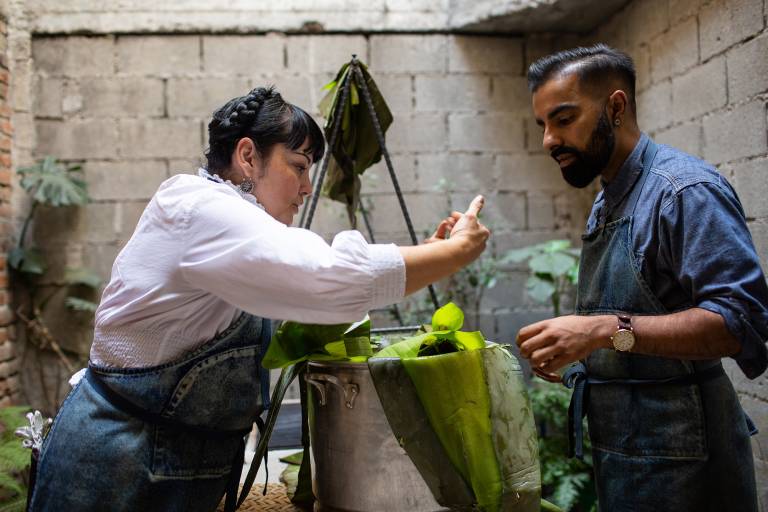
How One of Mexico City’s Most Acclaimed Restaurants Began in Oakland
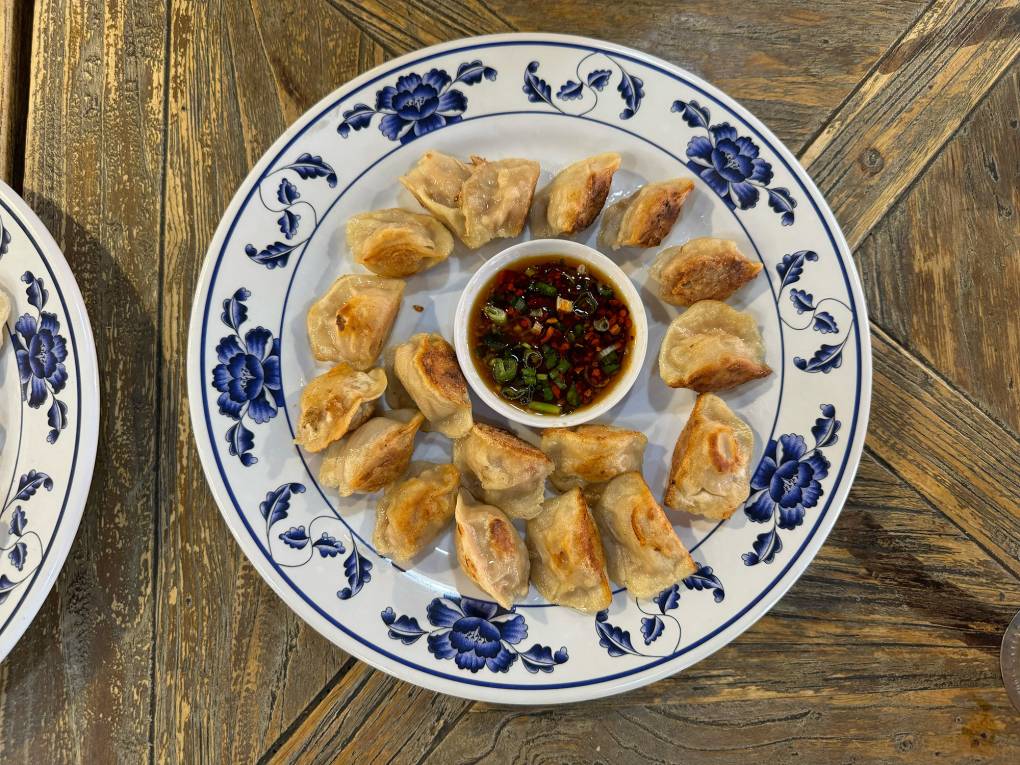
One of Oakland’s Top Noodle Makers Now Runs a Dumpling Shop
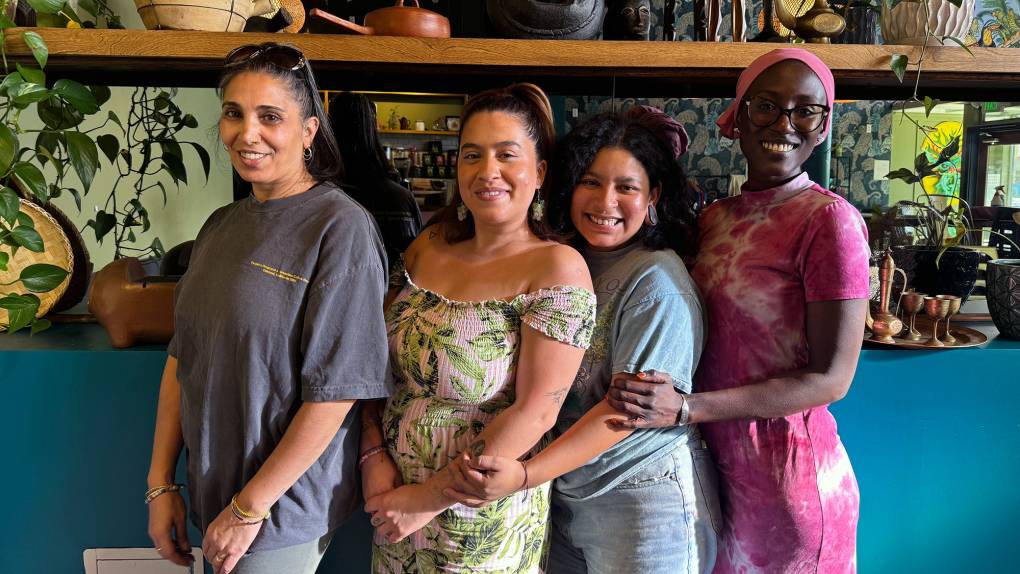
An Immigrant-Focused Kitchen Incubator Opens a Restaurant in Oakland
Beloved African and Caribbean Market Is Opening a New Restaurant in Oakland
How a Chicana-Owned Agency Is Shining a Light on the East Bay’s Diverse Food Scene
Oakland’s First and Only Haitian Restaurant Is a Knockout
This Self-Taught Bay Area Pitmaster Is Slanging Saucy, Hawaiian-Inspired Barbecue
Miss Ollie’s Will Reopen as a Takeout Window in Uptown Oakland
Old Oakland Is Quickly Becoming the East Bay’s Most International Food District
Player sponsored by
window.__IS_SSR__=true
window.__INITIAL_STATE__={
"attachmentsReducer": {
"audio_0": {
"type": "attachments",
"id": "audio_0",
"imgSizes": {
"kqedFullSize": {
"file": "https://ww2.kqed.org/news/wp-content/themes/KQED-unified/img/audio_bgs/background0.jpg"
}
}
},
"audio_1": {
"type": "attachments",
"id": "audio_1",
"imgSizes": {
"kqedFullSize": {
"file": "https://ww2.kqed.org/news/wp-content/themes/KQED-unified/img/audio_bgs/background1.jpg"
}
}
},
"audio_2": {
"type": "attachments",
"id": "audio_2",
"imgSizes": {
"kqedFullSize": {
"file": "https://ww2.kqed.org/news/wp-content/themes/KQED-unified/img/audio_bgs/background2.jpg"
}
}
},
"audio_3": {
"type": "attachments",
"id": "audio_3",
"imgSizes": {
"kqedFullSize": {
"file": "https://ww2.kqed.org/news/wp-content/themes/KQED-unified/img/audio_bgs/background3.jpg"
}
}
},
"audio_4": {
"type": "attachments",
"id": "audio_4",
"imgSizes": {
"kqedFullSize": {
"file": "https://ww2.kqed.org/news/wp-content/themes/KQED-unified/img/audio_bgs/background4.jpg"
}
}
},
"placeholder": {
"type": "attachments",
"id": "placeholder",
"imgSizes": {
"thumbnail": {
"file": "https://cdn.kqed.org/wp-content/uploads/2024/12/KQED-Default-Image-816638274-2000x1333-1-160x107.jpg",
"width": 160,
"height": 107,
"mimeType": "image/jpeg"
},
"medium": {
"file": "https://cdn.kqed.org/wp-content/uploads/2024/12/KQED-Default-Image-816638274-2000x1333-1-800x533.jpg",
"width": 800,
"height": 533,
"mimeType": "image/jpeg"
},
"medium_large": {
"file": "https://cdn.kqed.org/wp-content/uploads/2024/12/KQED-Default-Image-816638274-2000x1333-1-768x512.jpg",
"width": 768,
"height": 512,
"mimeType": "image/jpeg"
},
"large": {
"file": "https://cdn.kqed.org/wp-content/uploads/2024/12/KQED-Default-Image-816638274-2000x1333-1-1020x680.jpg",
"width": 1020,
"height": 680,
"mimeType": "image/jpeg"
},
"1536x1536": {
"file": "https://cdn.kqed.org/wp-content/uploads/2024/12/KQED-Default-Image-816638274-2000x1333-1-1536x1024.jpg",
"width": 1536,
"height": 1024,
"mimeType": "image/jpeg"
},
"fd-lrg": {
"file": "https://cdn.kqed.org/wp-content/uploads/2024/12/KQED-Default-Image-816638274-2000x1333-1-1536x1024.jpg",
"width": 1536,
"height": 1024,
"mimeType": "image/jpeg"
},
"fd-med": {
"file": "https://cdn.kqed.org/wp-content/uploads/2024/12/KQED-Default-Image-816638274-2000x1333-1-1020x680.jpg",
"width": 1020,
"height": 680,
"mimeType": "image/jpeg"
},
"fd-sm": {
"file": "https://cdn.kqed.org/wp-content/uploads/2024/12/KQED-Default-Image-816638274-2000x1333-1-800x533.jpg",
"width": 800,
"height": 533,
"mimeType": "image/jpeg"
},
"post-thumbnail": {
"file": "https://cdn.kqed.org/wp-content/uploads/2024/12/KQED-Default-Image-816638274-2000x1333-1-672x372.jpg",
"width": 672,
"height": 372,
"mimeType": "image/jpeg"
},
"twentyfourteen-full-width": {
"file": "https://cdn.kqed.org/wp-content/uploads/2024/12/KQED-Default-Image-816638274-2000x1333-1-1038x576.jpg",
"width": 1038,
"height": 576,
"mimeType": "image/jpeg"
},
"xxsmall": {
"file": "https://cdn.kqed.org/wp-content/uploads/2024/12/KQED-Default-Image-816638274-2000x1333-1-160x107.jpg",
"width": 160,
"height": 107,
"mimeType": "image/jpeg"
},
"xsmall": {
"file": "https://cdn.kqed.org/wp-content/uploads/2024/12/KQED-Default-Image-816638274-2000x1333-1-672x372.jpg",
"width": 672,
"height": 372,
"mimeType": "image/jpeg"
},
"small": {
"file": "https://cdn.kqed.org/wp-content/uploads/2024/12/KQED-Default-Image-816638274-2000x1333-1-672x372.jpg",
"width": 672,
"height": 372,
"mimeType": "image/jpeg"
},
"xlarge": {
"file": "https://cdn.kqed.org/wp-content/uploads/2024/12/KQED-Default-Image-816638274-2000x1333-1-1020x680.jpg",
"width": 1020,
"height": 680,
"mimeType": "image/jpeg"
},
"full-width": {
"file": "https://cdn.kqed.org/wp-content/uploads/2024/12/KQED-Default-Image-816638274-2000x1333-1-1920x1280.jpg",
"width": 1920,
"height": 1280,
"mimeType": "image/jpeg"
},
"guest-author-32": {
"file": "https://cdn.kqed.org/wp-content/uploads/2025/01/KQED-Default-Image-816638274-1333x1333-1-160x160.jpg",
"width": 32,
"height": 32,
"mimeType": "image/jpeg"
},
"guest-author-50": {
"file": "https://cdn.kqed.org/wp-content/uploads/2025/01/KQED-Default-Image-816638274-1333x1333-1-160x160.jpg",
"width": 50,
"height": 50,
"mimeType": "image/jpeg"
},
"guest-author-64": {
"file": "https://cdn.kqed.org/wp-content/uploads/2025/01/KQED-Default-Image-816638274-1333x1333-1-160x160.jpg",
"width": 64,
"height": 64,
"mimeType": "image/jpeg"
},
"guest-author-96": {
"file": "https://cdn.kqed.org/wp-content/uploads/2025/01/KQED-Default-Image-816638274-1333x1333-1-160x160.jpg",
"width": 96,
"height": 96,
"mimeType": "image/jpeg"
},
"guest-author-128": {
"file": "https://cdn.kqed.org/wp-content/uploads/2025/01/KQED-Default-Image-816638274-1333x1333-1-160x160.jpg",
"width": 128,
"height": 128,
"mimeType": "image/jpeg"
},
"detail": {
"file": "https://cdn.kqed.org/wp-content/uploads/2025/01/KQED-Default-Image-816638274-1333x1333-1-160x160.jpg",
"width": 160,
"height": 160,
"mimeType": "image/jpeg"
},
"kqedFullSize": {
"file": "https://cdn.kqed.org/wp-content/uploads/2024/12/KQED-Default-Image-816638274-2000x1333-1.jpg",
"width": 2000,
"height": 1333
}
}
},
"arts_13987862": {
"type": "attachments",
"id": "arts_13987862",
"meta": {
"index": "attachments_1716263798",
"site": "arts",
"id": "13987862",
"found": true
},
"title": "8_PhotoCredit Sana Javeri Kadri",
"publishDate": 1774298986,
"status": "inherit",
"parent": 13987839,
"modified": 1774314163,
"caption": "Though Norma Listman and Saqib Keval met in Oakland in the late aughts, the couple didn't formally begin cooking together until they arrived in Mexico City, circa 2017. Here they are making tamales rancheros with banana leaves at the inaugural iteration of their restaurant, Masala y Maiz, in the San Miguel Chapultepec district.",
"credit": "Sana Javeri Kadri, courtesy of Masala y Maiz",
"altTag": "In an outdoor courtyard, a man and woman in blue aprons prepare banana-leaf tamales in a large pot.",
"description": null,
"imgSizes": {
"thumbnail": {
"file": "https://cdn.kqed.org/wp-content/uploads/sites/2/2026/03/8_PhotoCredit-Sana-Javeri-Kadri-160x107.jpg",
"width": 160,
"height": 107,
"mimeType": "image/jpeg"
},
"medium_large": {
"file": "https://cdn.kqed.org/wp-content/uploads/sites/2/2026/03/8_PhotoCredit-Sana-Javeri-Kadri-768x512.jpg",
"width": 768,
"height": 512,
"mimeType": "image/jpeg"
},
"1536x1536": {
"file": "https://cdn.kqed.org/wp-content/uploads/sites/2/2026/03/8_PhotoCredit-Sana-Javeri-Kadri-1536x1024.jpg",
"width": 1536,
"height": 1024,
"mimeType": "image/jpeg"
},
"post-thumbnail": {
"file": "https://cdn.kqed.org/wp-content/uploads/sites/2/2026/03/8_PhotoCredit-Sana-Javeri-Kadri-672x372.jpg",
"width": 672,
"height": 372,
"mimeType": "image/jpeg"
},
"twentyfourteen-full-width": {
"file": "https://cdn.kqed.org/wp-content/uploads/sites/2/2026/03/8_PhotoCredit-Sana-Javeri-Kadri-1038x576.jpg",
"width": 1038,
"height": 576,
"mimeType": "image/jpeg"
},
"npr-cds-wide": {
"file": "https://cdn.kqed.org/wp-content/uploads/sites/2/2026/03/8_PhotoCredit-Sana-Javeri-Kadri-1200x675.jpg",
"width": 1200,
"height": 675,
"mimeType": "image/jpeg"
},
"kqedFullSize": {
"file": "https://cdn.kqed.org/wp-content/uploads/sites/2/2026/03/8_PhotoCredit-Sana-Javeri-Kadri.jpg",
"width": 2000,
"height": 1333
}
},
"isLoading": false,
"fetchFailed": false
},
"arts_13966231": {
"type": "attachments",
"id": "arts_13966231",
"meta": {
"index": "attachments_1716263798",
"site": "arts",
"id": "13966231",
"found": true
},
"title": "potstickers overhead",
"publishDate": 1728347207,
"status": "inherit",
"parent": 13966227,
"modified": 1728347350,
"caption": "Potstickers (pictured) and boiled dumplings are the specialty of the house at Huang Cheng Potsticker, a new restaurant in Swan's Market in Oakland that opened in September 2024.",
"credit": "Luke Tsai/KQED",
"altTag": "Overhead view of a plate of potstickers, with a chili-infused dipping sauce.",
"description": null,
"imgSizes": {
"medium": {
"file": "https://cdn.kqed.org/wp-content/uploads/sites/2/2024/10/potstickers-overhead-800x600.jpg",
"width": 800,
"height": 600,
"mimeType": "image/jpeg"
},
"large": {
"file": "https://cdn.kqed.org/wp-content/uploads/sites/2/2024/10/potstickers-overhead-1020x765.jpg",
"width": 1020,
"height": 765,
"mimeType": "image/jpeg"
},
"thumbnail": {
"file": "https://cdn.kqed.org/wp-content/uploads/sites/2/2024/10/potstickers-overhead-160x120.jpg",
"width": 160,
"height": 120,
"mimeType": "image/jpeg"
},
"medium_large": {
"file": "https://cdn.kqed.org/wp-content/uploads/sites/2/2024/10/potstickers-overhead-768x576.jpg",
"width": 768,
"height": 576,
"mimeType": "image/jpeg"
},
"1536x1536": {
"file": "https://cdn.kqed.org/wp-content/uploads/sites/2/2024/10/potstickers-overhead-1536x1152.jpg",
"width": 1536,
"height": 1152,
"mimeType": "image/jpeg"
},
"post-thumbnail": {
"file": "https://cdn.kqed.org/wp-content/uploads/sites/2/2024/10/potstickers-overhead-672x372.jpg",
"width": 672,
"height": 372,
"mimeType": "image/jpeg"
},
"twentyfourteen-full-width": {
"file": "https://cdn.kqed.org/wp-content/uploads/sites/2/2024/10/potstickers-overhead-1038x576.jpg",
"width": 1038,
"height": 576,
"mimeType": "image/jpeg"
},
"full-width": {
"file": "https://cdn.kqed.org/wp-content/uploads/sites/2/2024/10/potstickers-overhead-1920x1440.jpg",
"width": 1920,
"height": 1440,
"mimeType": "image/jpeg"
},
"kqedFullSize": {
"file": "https://cdn.kqed.org/wp-content/uploads/sites/2/2024/10/potstickers-overhead.jpg",
"width": 2000,
"height": 1500
}
},
"isLoading": false,
"fetchFailed": false
},
"arts_13963728": {
"type": "attachments",
"id": "arts_13963728",
"meta": {
"index": "attachments_1716263798",
"site": "arts",
"id": "13963728",
"found": true
},
"title": "open test kitchen lead",
"publishDate": 1725566097,
"status": "inherit",
"parent": 13963726,
"modified": 1725577657,
"caption": "The owners of Asúkar, Café con Cariño and That Hausa Vegan — three of the new Open Test Kitchen restaurant's featured businesses — pose for a portrait inside the Old Oakland restaurant.",
"credit": "Courtesy of Oakland Bloom",
"altTag": "Four female chefs pose for a portrait inside a restaurant.",
"description": null,
"imgSizes": {
"medium": {
"file": "https://cdn.kqed.org/wp-content/uploads/sites/2/2024/09/open-test-kitchen-lead-800x450.jpg",
"width": 800,
"height": 450,
"mimeType": "image/jpeg"
},
"large": {
"file": "https://cdn.kqed.org/wp-content/uploads/sites/2/2024/09/open-test-kitchen-lead-1020x574.jpg",
"width": 1020,
"height": 574,
"mimeType": "image/jpeg"
},
"thumbnail": {
"file": "https://cdn.kqed.org/wp-content/uploads/sites/2/2024/09/open-test-kitchen-lead-160x90.jpg",
"width": 160,
"height": 90,
"mimeType": "image/jpeg"
},
"medium_large": {
"file": "https://cdn.kqed.org/wp-content/uploads/sites/2/2024/09/open-test-kitchen-lead-768x432.jpg",
"width": 768,
"height": 432,
"mimeType": "image/jpeg"
},
"1536x1536": {
"file": "https://cdn.kqed.org/wp-content/uploads/sites/2/2024/09/open-test-kitchen-lead-1536x864.jpg",
"width": 1536,
"height": 864,
"mimeType": "image/jpeg"
},
"post-thumbnail": {
"file": "https://cdn.kqed.org/wp-content/uploads/sites/2/2024/09/open-test-kitchen-lead-672x372.jpg",
"width": 672,
"height": 372,
"mimeType": "image/jpeg"
},
"twentyfourteen-full-width": {
"file": "https://cdn.kqed.org/wp-content/uploads/sites/2/2024/09/open-test-kitchen-lead-1038x576.jpg",
"width": 1038,
"height": 576,
"mimeType": "image/jpeg"
},
"full-width": {
"file": "https://cdn.kqed.org/wp-content/uploads/sites/2/2024/09/open-test-kitchen-lead-1920x1080.jpg",
"width": 1920,
"height": 1080,
"mimeType": "image/jpeg"
},
"kqedFullSize": {
"file": "https://cdn.kqed.org/wp-content/uploads/sites/2/2024/09/open-test-kitchen-lead.jpg",
"width": 2000,
"height": 1125
}
},
"isLoading": false,
"fetchFailed": false
},
"arts_13960943": {
"type": "attachments",
"id": "arts_13960943",
"meta": {
"index": "attachments_1716263798",
"site": "arts",
"id": "13960943",
"found": true
},
"title": "240709-ManMustWak2-45-BL_qed",
"publishDate": 1720644853,
"status": "inherit",
"parent": 0,
"modified": 1720656196,
"caption": "Owner Queenkay Amamgbo at the E. 18th Street location of Man Must Wak, an Afro-Caribbean market, in Oakland on July 9, 2024. Amamgbo opened the second location of the market near Lake Merritt in June of 2024.",
"credit": "Beth LaBerge/KQED",
"altTag": "A woman with long red, white and blue braids poses next to a display of spices and tinned fish inside an African market.",
"description": null,
"imgSizes": {
"medium": {
"file": "https://cdn.kqed.org/wp-content/uploads/sites/2/2024/07/240709-ManMustWak2-45-BL_qed-800x533.jpg",
"width": 800,
"height": 533,
"mimeType": "image/jpeg"
},
"large": {
"file": "https://cdn.kqed.org/wp-content/uploads/sites/2/2024/07/240709-ManMustWak2-45-BL_qed-1020x680.jpg",
"width": 1020,
"height": 680,
"mimeType": "image/jpeg"
},
"thumbnail": {
"file": "https://cdn.kqed.org/wp-content/uploads/sites/2/2024/07/240709-ManMustWak2-45-BL_qed-160x107.jpg",
"width": 160,
"height": 107,
"mimeType": "image/jpeg"
},
"medium_large": {
"file": "https://cdn.kqed.org/wp-content/uploads/sites/2/2024/07/240709-ManMustWak2-45-BL_qed-768x512.jpg",
"width": 768,
"height": 512,
"mimeType": "image/jpeg"
},
"1536x1536": {
"file": "https://cdn.kqed.org/wp-content/uploads/sites/2/2024/07/240709-ManMustWak2-45-BL_qed-1536x1024.jpg",
"width": 1536,
"height": 1024,
"mimeType": "image/jpeg"
},
"post-thumbnail": {
"file": "https://cdn.kqed.org/wp-content/uploads/sites/2/2024/07/240709-ManMustWak2-45-BL_qed-672x372.jpg",
"width": 672,
"height": 372,
"mimeType": "image/jpeg"
},
"twentyfourteen-full-width": {
"file": "https://cdn.kqed.org/wp-content/uploads/sites/2/2024/07/240709-ManMustWak2-45-BL_qed-1038x576.jpg",
"width": 1038,
"height": 576,
"mimeType": "image/jpeg"
},
"full-width": {
"file": "https://cdn.kqed.org/wp-content/uploads/sites/2/2024/07/240709-ManMustWak2-45-BL_qed-1920x1280.jpg",
"width": 1920,
"height": 1280,
"mimeType": "image/jpeg"
},
"kqedFullSize": {
"file": "https://cdn.kqed.org/wp-content/uploads/sites/2/2024/07/240709-ManMustWak2-45-BL_qed.jpg",
"width": 2000,
"height": 1333
}
},
"isLoading": false,
"fetchFailed": false
},
"arts_13955587": {
"type": "attachments",
"id": "arts_13955587",
"meta": {
"index": "attachments_1716263798",
"site": "arts",
"id": "13955587",
"found": true
},
"parent": 13954899,
"imgSizes": {
"twentyfourteen-full-width": {
"file": "https://cdn.kqed.org/wp-content/uploads/sites/2/2024/03/Hella-Hungry-—-Feature-Image-1920x1080-1-1038x576.jpg",
"width": 1038,
"mimeType": "image/jpeg",
"height": 576
},
"thumbnail": {
"file": "https://cdn.kqed.org/wp-content/uploads/sites/2/2024/03/Hella-Hungry-—-Feature-Image-1920x1080-1-160x90.jpg",
"width": 160,
"mimeType": "image/jpeg",
"height": 90
},
"post-thumbnail": {
"file": "https://cdn.kqed.org/wp-content/uploads/sites/2/2024/03/Hella-Hungry-—-Feature-Image-1920x1080-1-672x372.jpg",
"width": 672,
"mimeType": "image/jpeg",
"height": 372
},
"kqedFullSize": {
"file": "https://cdn.kqed.org/wp-content/uploads/sites/2/2024/03/Hella-Hungry-—-Feature-Image-1920x1080-1.jpg",
"width": 1920,
"height": 1080
},
"large": {
"file": "https://cdn.kqed.org/wp-content/uploads/sites/2/2024/03/Hella-Hungry-—-Feature-Image-1920x1080-1-1020x574.jpg",
"width": 1020,
"mimeType": "image/jpeg",
"height": 574
},
"1536x1536": {
"file": "https://cdn.kqed.org/wp-content/uploads/sites/2/2024/03/Hella-Hungry-—-Feature-Image-1920x1080-1-1536x864.jpg",
"width": 1536,
"mimeType": "image/jpeg",
"height": 864
},
"medium": {
"file": "https://cdn.kqed.org/wp-content/uploads/sites/2/2024/03/Hella-Hungry-—-Feature-Image-1920x1080-1-800x450.jpg",
"width": 800,
"mimeType": "image/jpeg",
"height": 450
},
"medium_large": {
"file": "https://cdn.kqed.org/wp-content/uploads/sites/2/2024/03/Hella-Hungry-—-Feature-Image-1920x1080-1-768x432.jpg",
"width": 768,
"mimeType": "image/jpeg",
"height": 432
}
},
"publishDate": 1712602999,
"modified": 1712618646,
"caption": "If Only Creative founder Marisa Sanchez-Dunning poses for a portrait at Popoca in Oakland. The progressive Salvadoran restaurant is one of her agency's clients.",
"description": null,
"title": "Hella Hungry — Feature Image (1920x1080)",
"credit": "Marissa Leshnov for KQED",
"status": "inherit",
"altTag": "A woman smiles sitting a a long wooden table inside a stylish restaurant with a red brick interior.",
"isLoading": false,
"fetchFailed": false
},
"arts_13936339": {
"type": "attachments",
"id": "arts_13936339",
"meta": {
"index": "attachments_1716263798",
"site": "arts",
"id": "13936339",
"found": true
},
"parent": 13936332,
"imgSizes": {
"twentyfourteen-full-width": {
"file": "https://ww2.kqed.org/app/uploads/sites/2/2023/10/tchaka_griot-1038x576.jpg",
"width": 1038,
"mimeType": "image/jpeg",
"height": 576
},
"thumbnail": {
"file": "https://ww2.kqed.org/app/uploads/sites/2/2023/10/tchaka_griot-160x110.jpg",
"width": 160,
"mimeType": "image/jpeg",
"height": 110
},
"post-thumbnail": {
"file": "https://ww2.kqed.org/app/uploads/sites/2/2023/10/tchaka_griot-672x372.jpg",
"width": 672,
"mimeType": "image/jpeg",
"height": 372
},
"kqedFullSize": {
"file": "https://ww2.kqed.org/app/uploads/sites/2/2023/10/tchaka_griot.jpg",
"width": 2000,
"height": 1375
},
"large": {
"file": "https://ww2.kqed.org/app/uploads/sites/2/2023/10/tchaka_griot-1020x701.jpg",
"width": 1020,
"mimeType": "image/jpeg",
"height": 701
},
"1536x1536": {
"file": "https://ww2.kqed.org/app/uploads/sites/2/2023/10/tchaka_griot-1536x1056.jpg",
"width": 1536,
"mimeType": "image/jpeg",
"height": 1056
},
"full-width": {
"file": "https://ww2.kqed.org/app/uploads/sites/2/2023/10/tchaka_griot-1920x1320.jpg",
"width": 1920,
"mimeType": "image/jpeg",
"height": 1320
},
"medium": {
"file": "https://ww2.kqed.org/app/uploads/sites/2/2023/10/tchaka_griot-800x550.jpg",
"width": 800,
"mimeType": "image/jpeg",
"height": 550
},
"medium_large": {
"file": "https://ww2.kqed.org/app/uploads/sites/2/2023/10/tchaka_griot-768x528.jpg",
"width": 768,
"mimeType": "image/jpeg",
"height": 528
}
},
"publishDate": 1697136077,
"modified": 1697136195,
"caption": "Griot, a citrus-marinated fried pork dish, is one of the Haitian specialties served at T'chaka in Old Oakland.",
"description": null,
"title": "tchaka_griot",
"credit": "Luke Tsai/KQED",
"status": "inherit",
"altTag": "Fried pork, rice, plantains and pikliz (pickled cabbage and carrots) on a dark blue plate.",
"isLoading": false,
"fetchFailed": false
},
"arts_13929963": {
"type": "attachments",
"id": "arts_13929963",
"meta": {
"index": "attachments_1716263798",
"site": "arts",
"id": "13929963",
"found": true
},
"parent": 13929869,
"imgSizes": {
"twentyfourteen-full-width": {
"file": "https://ww2.kqed.org/app/uploads/sites/2/2023/05/island-bay-cocina_olivier-1038x576.jpg",
"width": 1038,
"mimeType": "image/jpeg",
"height": 576
},
"thumbnail": {
"file": "https://ww2.kqed.org/app/uploads/sites/2/2023/05/island-bay-cocina_olivier-160x110.jpg",
"width": 160,
"mimeType": "image/jpeg",
"height": 110
},
"post-thumbnail": {
"file": "https://ww2.kqed.org/app/uploads/sites/2/2023/05/island-bay-cocina_olivier-672x372.jpg",
"width": 672,
"mimeType": "image/jpeg",
"height": 372
},
"kqedFullSize": {
"file": "https://ww2.kqed.org/app/uploads/sites/2/2023/05/island-bay-cocina_olivier.jpg",
"width": 1920,
"height": 1320
},
"large": {
"file": "https://ww2.kqed.org/app/uploads/sites/2/2023/05/island-bay-cocina_olivier-1020x701.jpg",
"width": 1020,
"mimeType": "image/jpeg",
"height": 701
},
"1536x1536": {
"file": "https://ww2.kqed.org/app/uploads/sites/2/2023/05/island-bay-cocina_olivier-1536x1056.jpg",
"width": 1536,
"mimeType": "image/jpeg",
"height": 1056
},
"medium": {
"file": "https://ww2.kqed.org/app/uploads/sites/2/2023/05/island-bay-cocina_olivier-800x550.jpg",
"width": 800,
"mimeType": "image/jpeg",
"height": 550
},
"medium_large": {
"file": "https://ww2.kqed.org/app/uploads/sites/2/2023/05/island-bay-cocina_olivier-768x528.jpg",
"width": 768,
"mimeType": "image/jpeg",
"height": 528
}
},
"publishDate": 1685633840,
"modified": 1685634940,
"caption": "Olivier Grandvoinet shows off his signature \"Guavanero\" barbecue sauce. His pop-up, Island Bay Cocina, is selling island-inspired ribs and carnitas around the Bay.",
"description": null,
"title": "island bay cocina_olivier",
"credit": "Sahar Nayrami",
"status": "inherit",
"altTag": "A barbecue pitmaster in a Hawaiian shirt holds up two bottles of his signature sauce.",
"isLoading": false,
"fetchFailed": false
},
"arts_13910460": {
"type": "attachments",
"id": "arts_13910460",
"meta": {
"index": "attachments_1716263798",
"site": "arts",
"id": "13910460",
"found": true
},
"parent": 13910410,
"imgSizes": {
"twentyfourteen-full-width": {
"file": "https://ww2.kqed.org/app/uploads/sites/2/2022/03/015_KQEDArts_MissOllies_03042022-1038x576.jpg",
"width": 1038,
"mimeType": "image/jpeg",
"height": 576
},
"thumbnail": {
"file": "https://ww2.kqed.org/app/uploads/sites/2/2022/03/015_KQEDArts_MissOllies_03042022-160x107.jpg",
"width": 160,
"mimeType": "image/jpeg",
"height": 107
},
"post-thumbnail": {
"file": "https://ww2.kqed.org/app/uploads/sites/2/2022/03/015_KQEDArts_MissOllies_03042022-672x372.jpg",
"width": 672,
"mimeType": "image/jpeg",
"height": 372
},
"kqedFullSize": {
"file": "https://ww2.kqed.org/app/uploads/sites/2/2022/03/015_KQEDArts_MissOllies_03042022.jpg",
"width": 1920,
"height": 1280
},
"large": {
"file": "https://ww2.kqed.org/app/uploads/sites/2/2022/03/015_KQEDArts_MissOllies_03042022-1020x680.jpg",
"width": 1020,
"mimeType": "image/jpeg",
"height": 680
},
"1536x1536": {
"file": "https://ww2.kqed.org/app/uploads/sites/2/2022/03/015_KQEDArts_MissOllies_03042022-1536x1024.jpg",
"width": 1536,
"mimeType": "image/jpeg",
"height": 1024
},
"medium": {
"file": "https://ww2.kqed.org/app/uploads/sites/2/2022/03/015_KQEDArts_MissOllies_03042022-800x533.jpg",
"width": 800,
"mimeType": "image/jpeg",
"height": 533
},
"medium_large": {
"file": "https://ww2.kqed.org/app/uploads/sites/2/2022/03/015_KQEDArts_MissOllies_03042022-768x512.jpg",
"width": 768,
"mimeType": "image/jpeg",
"height": 512
}
},
"publishDate": 1647031177,
"modified": 1650410314,
"caption": "Fans of Sarah Kirnon's Bajan-style fried chicken will now be able to satisfy their craving at the new takeout window outpost of Miss Ollie's.",
"description": null,
"title": "015_KQEDArts_MissOllies_03042022",
"credit": "Beth LaBerge/KQED",
"status": "inherit",
"altTag": "Wearing a face mask, chef Sarah Kirnon holds a plate of fried chicken at Miss Ollie's, her Old Oakland restaurant.",
"isLoading": false,
"fetchFailed": false
},
"arts_13904418": {
"type": "attachments",
"id": "arts_13904418",
"meta": {
"index": "attachments_1716263798",
"site": "arts",
"id": "13904418",
"found": true
},
"parent": 13904416,
"imgSizes": {
"twentyfourteen-full-width": {
"file": "https://ww2.kqed.org/app/uploads/sites/2/2021/10/LaGuerrerasKitchen_tamales-1038x576.jpg",
"width": 1038,
"mimeType": "image/jpeg",
"height": 576
},
"thumbnail": {
"file": "https://ww2.kqed.org/app/uploads/sites/2/2021/10/LaGuerrerasKitchen_tamales-160x110.jpg",
"width": 160,
"mimeType": "image/jpeg",
"height": 110
},
"post-thumbnail": {
"file": "https://ww2.kqed.org/app/uploads/sites/2/2021/10/LaGuerrerasKitchen_tamales-672x372.jpg",
"width": 672,
"mimeType": "image/jpeg",
"height": 372
},
"kqedFullSize": {
"file": "https://ww2.kqed.org/app/uploads/sites/2/2021/10/LaGuerrerasKitchen_tamales-scaled.jpg",
"width": 2560,
"height": 1760
},
"2048x2048": {
"file": "https://ww2.kqed.org/app/uploads/sites/2/2021/10/LaGuerrerasKitchen_tamales-2048x1408.jpg",
"width": 2048,
"mimeType": "image/jpeg",
"height": 1408
},
"large": {
"file": "https://ww2.kqed.org/app/uploads/sites/2/2021/10/LaGuerrerasKitchen_tamales-1020x701.jpg",
"width": 1020,
"mimeType": "image/jpeg",
"height": 701
},
"1536x1536": {
"file": "https://ww2.kqed.org/app/uploads/sites/2/2021/10/LaGuerrerasKitchen_tamales-1536x1056.jpg",
"width": 1536,
"mimeType": "image/jpeg",
"height": 1056
},
"full-width": {
"file": "https://ww2.kqed.org/app/uploads/sites/2/2021/10/LaGuerrerasKitchen_tamales-1920x1320.jpg",
"width": 1920,
"mimeType": "image/jpeg",
"height": 1320
},
"medium": {
"file": "https://ww2.kqed.org/app/uploads/sites/2/2021/10/LaGuerrerasKitchen_tamales-800x550.jpg",
"width": 800,
"mimeType": "image/jpeg",
"height": 550
},
"medium_large": {
"file": "https://ww2.kqed.org/app/uploads/sites/2/2021/10/LaGuerrerasKitchen_tamales-768x528.jpg",
"width": 768,
"mimeType": "image/jpeg",
"height": 528
}
},
"publishDate": 1633653069,
"modified": 1633653164,
"caption": "Tamales from La Guerrera's Kitchen will be one of the many international offerings available at the Old Oakland block party.",
"description": null,
"title": "LaGuerrerasKitchen_tamales",
"credit": "La Guerrera's Kitchen",
"status": "inherit",
"altTag": "Two tamales in their corn husk wrappers on a paper plate, with red and green salsas on the side.",
"isLoading": false,
"fetchFailed": false
}
},
"audioPlayerReducer": {
"postId": "stream_live",
"isPaused": true,
"isPlaying": false,
"pfsActive": false,
"pledgeModalIsOpen": true,
"playerDrawerIsOpen": false,
"liveAudioPlayStartedAt": 0,
"liveAudioPlayContext": ""
},
"authorsReducer": {
"ltsai": {
"type": "authors",
"id": "11743",
"meta": {
"index": "authors_1716337520",
"id": "11743",
"found": true
},
"name": "Luke Tsai",
"firstName": "Luke",
"lastName": "Tsai",
"slug": "ltsai",
"email": "ltsai@kqed.org",
"display_author_email": true,
"staff_mastheads": [
"arts"
],
"title": "Food Editor",
"bio": "Luke Tsai is KQED's food editor and resident stinky tofu connoisseur. Prior to KQED, he was an editor at Eater SF, \u003cem>San Francisco \u003c/em>magazine, and the \u003cem>East Bay Express\u003c/em>, and his work has also appeared in TASTE, the \u003cem>San Francisco Chronicle\u003c/em>, and the \u003cem>Best Food Writing\u003c/em> anthology. When he isn't writing or editing, you'll find him eating most everything he can get his hands on.",
"avatar": "https://secure.gravatar.com/avatar/1e59b45bf191526e7339d6ba46e33a57b2030d25c27660ecc64ea3cb863e34f7?s=600&d=blank&r=g",
"twitter": "theluketsai",
"bluesky": null,
"facebook": null,
"instagram": null,
"linkedin": null,
"sites": [
{
"site": "",
"roles": [
"editor"
]
},
{
"site": "arts",
"roles": [
"administrator"
]
},
{
"site": "news",
"roles": [
"editor",
"contributor"
]
},
{
"site": "bayareabites",
"roles": [
"editor"
]
},
{
"site": "food",
"roles": [
"editor"
]
}
],
"headData": {
"title": "Luke Tsai | KQED",
"description": "Food Editor",
"ogImgSrc": "https://secure.gravatar.com/avatar/1e59b45bf191526e7339d6ba46e33a57b2030d25c27660ecc64ea3cb863e34f7?s=600&d=blank&r=g",
"twImgSrc": "https://secure.gravatar.com/avatar/1e59b45bf191526e7339d6ba46e33a57b2030d25c27660ecc64ea3cb863e34f7?s=600&d=blank&r=g"
},
"isLoading": false,
"link": "/author/ltsai"
},
"achazaro": {
"type": "authors",
"id": "11748",
"meta": {
"index": "authors_1716337520",
"id": "11748",
"found": true
},
"name": "Alan Chazaro",
"firstName": "Alan",
"lastName": "Chazaro",
"slug": "achazaro",
"email": "agchazaro@gmail.com",
"display_author_email": true,
"staff_mastheads": [],
"title": "Food Writer and Reporter",
"bio": "Alan Chazaro is the author of \u003cem>This Is Not a Frank Ocean Cover Album\u003c/em> (Black Lawrence Press, 2019), \u003cem>Piñata Theory\u003c/em> (Black Lawrence Press, 2020), and \u003cem>Notes from the Eastern Span of the Bay Bridge\u003c/em> (Ghost City Press, 2021). He is a graduate of June Jordan’s Poetry for the People program at UC Berkeley and a former Lawrence Ferlinghetti Fellow at the University of San Francisco. He writes about sports, food, art, music, education, and culture while repping the Bay on \u003ca href=\"https://twitter.com/alan_chazaro\">Twitter\u003c/a> and \u003ca href=\"https://www.instagram.com/alan_chazaro/?hl=en\">Instagram\u003c/a> at @alan_chazaro.",
"avatar": "https://secure.gravatar.com/avatar/ea8b6dd970fc5c29e7a188e7d5861df7?s=600&d=blank&r=g",
"twitter": "alan_chazaro",
"facebook": null,
"instagram": null,
"linkedin": null,
"sites": [
{
"site": "arts",
"roles": [
"contributor"
]
},
{
"site": "news",
"roles": [
"editor"
]
}
],
"headData": {
"title": "Alan Chazaro | KQED",
"description": "Food Writer and Reporter",
"ogImgSrc": "https://secure.gravatar.com/avatar/ea8b6dd970fc5c29e7a188e7d5861df7?s=600&d=blank&r=g",
"twImgSrc": "https://secure.gravatar.com/avatar/ea8b6dd970fc5c29e7a188e7d5861df7?s=600&d=blank&r=g"
},
"isLoading": false,
"link": "/author/achazaro"
},
"bduffett": {
"type": "authors",
"id": "11902",
"meta": {
"index": "authors_1716337520",
"id": "11902",
"found": true
},
"name": "Becky Duffett",
"firstName": "Becky",
"lastName": "Duffett",
"slug": "bduffett",
"email": "duffettr@gmail.com",
"display_author_email": false,
"staff_mastheads": [],
"title": "KQED Contributor",
"bio": null,
"avatar": "https://secure.gravatar.com/avatar/e5baf1733e81ecc5f55104a3c095028c?s=600&d=blank&r=g",
"twitter": null,
"facebook": null,
"instagram": null,
"linkedin": null,
"sites": [
{
"site": "arts",
"roles": [
"contributor"
]
}
],
"headData": {
"title": "Becky Duffett | KQED",
"description": "KQED Contributor",
"ogImgSrc": "https://secure.gravatar.com/avatar/e5baf1733e81ecc5f55104a3c095028c?s=600&d=blank&r=g",
"twImgSrc": "https://secure.gravatar.com/avatar/e5baf1733e81ecc5f55104a3c095028c?s=600&d=blank&r=g"
},
"isLoading": false,
"link": "/author/bduffett"
}
},
"pagesReducer": {
"arts_tag_old-oakland": {
"type": "terms",
"id": "arts_15755",
"meta": {
"index": "terms_1716263798",
"site": "arts",
"id": "15755",
"score": 9.895986
},
"featImg": null,
"name": "Old Oakland",
"description": null,
"taxonomy": "tag",
"headData": {
"twImgId": null,
"twTitle": null,
"ogTitle": null,
"ogImgId": null,
"twDescription": null,
"description": null,
"title": "Old Oakland Archives | KQED Arts",
"ogDescription": null
},
"ttid": 15767,
"slug": "old-oakland",
"isLoading": false,
"title": "Old Oakland",
"pageMeta": {
"site": "arts",
"WpPageTemplate": "page-topic-editorial",
"currentPage": 1
},
"blocks": [
{
"blockName": "kqed/post-list",
"attrs": {
"layout": "cardArticle2",
"query": "posts/arts?tag=old-oakland",
"seeMore": false,
"paginated": true,
"page": 1
}
},
{
"blockName": "kqed/ad"
}
]
}
},
"pfsSessionReducer": {},
"postsReducer": {
"stream_live": {
"type": "live",
"id": "stream_live",
"audioUrl": "https://hls.kqed.org/hls/kqed_app/playlist.m3u8",
"title": "Live Stream",
"excerpt": "Live Stream information currently unavailable.",
"link": "/radio",
"featImg": "",
"label": {
"name": "KQED Live",
"link": "/"
}
},
"stream_kqedNewscast": {
"type": "posts",
"id": "stream_kqedNewscast",
"audioUrl": "https://www.kqed.org/.stream/anon/radio/RDnews/newscast.mp3?_=1",
"title": "KQED Newscast",
"featImg": "",
"label": {
"name": "88.5 FM",
"link": "/"
}
},
"arts_13987839": {
"type": "posts",
"id": "arts_13987839",
"meta": {
"index": "posts_1716263798",
"site": "arts",
"id": "13987839",
"score": null,
"sort": [
1774377154000
]
},
"guestAuthors": [],
"slug": "masala-y-maiz-mexico-city-restaurant-oakland-bay-area-roots",
"title": "How One of Mexico City’s Most Acclaimed Restaurants Began in Oakland",
"publishDate": 1774377154,
"format": "standard",
"headTitle": "How One of Mexico City’s Most Acclaimed Restaurants Began in Oakland | KQED",
"labelTerm": {},
"content": "\u003cp>[dropcap]W[/dropcap]hen you first enter Masala y Maiz — a Michelin-starred renegade of a restaurant in Mexico City that has been profiled on Netflix’s “Chef’s Table” — you wouldn’t necessarily know that Oakland is at the heart of its soulful appeal. The concrete, brutalist design of the space denotes an air of Mexican modernism that’s unlike anything you’d find in the Bay Area.\u003c/p>\n\u003cp>Yet according to chef and co-owner Saqib Keval, a Northern California–raised son of Ethiopian and Kenyan immigrants of Indian descent, Oakland is central to the restaurant’s ethos.\u003c/p>\n\u003cp>“The restaurant feels like an extension of Oakland at times, in terms of the music, politics, culture, vibe,” says Keval, who opened Masala y Maiz with his wife Norma Listman in 2017. “It feels like an embassy. Oakland is a place we miss.”\u003c/p>\n\u003cp>Bay Area activists may remember Keval as one of the co-founders of the \u003ca href=\"https://www.instagram.com/peopleskitchencollective/\">People’s Kitchen Collective\u003c/a> (PKC), among Oakland’s most prominent food justice organizations. Listman, meanwhile, was born and raised in Texcoco, Mexico, before she migrated to the Bay in the ’90s to work as a multidisciplinary artist and, eventually, a chef, cutting her teeth at esteemed Oakland restaurants like Tamarindo, Bay Wolf and Camino.\u003c/p>\n\u003cfigure id=\"attachment_13987860\" class=\"wp-caption alignnone\" style=\"max-width: 2000px\">\u003cimg loading=\"lazy\" decoding=\"async\" class=\"size-full wp-image-13987860\" src=\"https://cdn.kqed.org/wp-content/uploads/sites/2/2026/03/Credit_Ana-Lorenzana_OutsideRestaurant.jpg\" alt=\"Two chefs in blue aprons pose in front a restaurant, underneath massive cement columns.\" width=\"2000\" height=\"1333\" srcset=\"https://cdn.kqed.org/wp-content/uploads/sites/2/2026/03/Credit_Ana-Lorenzana_OutsideRestaurant.jpg 2000w, https://cdn.kqed.org/wp-content/uploads/sites/2/2026/03/Credit_Ana-Lorenzana_OutsideRestaurant-160x107.jpg 160w, https://cdn.kqed.org/wp-content/uploads/sites/2/2026/03/Credit_Ana-Lorenzana_OutsideRestaurant-768x512.jpg 768w, https://cdn.kqed.org/wp-content/uploads/sites/2/2026/03/Credit_Ana-Lorenzana_OutsideRestaurant-1536x1024.jpg 1536w\" sizes=\"auto, (max-width: 2000px) 100vw, 2000px\">\u003cfigcaption class=\"wp-caption-text\">Keval and Listman stand in front of the current iteration of Masala y Maiz in Mexico City’s historic centro, where the restaurant relocated in 2024. \u003ccite>(Ana Lorenzana, courtesy of Masala y Maiz)\u003c/cite>\u003c/figcaption>\u003c/figure>\n\u003cp>“I have Oakland tattooed on my leg,” she says. “We hold a romantic idea of the Bay, of Oakland, when we lived there. I was in the Bay for 18 years. I was there during the dot-com boom in ’99. A lot of our communities left because it was impossible to keep going. The restaurants we worked at closed because it wasn’t sustainable. [But] my mentors are still there, and that’s where I came into food.”\u003c/p>\n\u003cp>[ad fullwidth]\u003c/p>\n\u003cp>Oakland’s grassroots influences, along with Listman’s leftist upbringing in Mexico and Keval’s anti-colonial literary acumen from his days at Humboldt State University, are unmistakably baked into Masala y Maiz’s philosophies of collectivism, equity and universal workers rights. A few times a year, the restaurant hosts an “Eat What You Want, Pay What You Can” day, inviting anyone — particularly locals combating the rising cost of living in \u003ca href=\"https://www.cntraveler.com/story/how-gentrification-continues-to-change-mexico-city\">a gentrified Mexico City\u003c/a> — to enjoy a Michelin-starred meal, even if all they can afford to pay for it with is \u003ca href=\"https://www.bbc.com/travel/article/20250825-pay-what-you-can-for-a-michelin-starred-meal\">a piece of original artwork\u003c/a>. The restaurant’s regular menus often feature large, bilingual phrases (“white supremacy is terrorism”; “que vive la lucha femenista”) based on current events.\u003c/p>\n\u003cfigure id=\"attachment_13987864\" class=\"wp-caption alignnone\" style=\"max-width: 1333px\">\u003cimg loading=\"lazy\" decoding=\"async\" class=\"size-full wp-image-13987864\" src=\"https://cdn.kqed.org/wp-content/uploads/sites/2/2026/03/Credit_Ana-Lorenzana_TableSpread.jpg\" alt=\"A spread of dishes on a black tabletop — included is a fried whole fish, head-on shrimp, and salad.\" width=\"1333\" height=\"2000\" srcset=\"https://cdn.kqed.org/wp-content/uploads/sites/2/2026/03/Credit_Ana-Lorenzana_TableSpread.jpg 1333w, https://cdn.kqed.org/wp-content/uploads/sites/2/2026/03/Credit_Ana-Lorenzana_TableSpread-160x240.jpg 160w, https://cdn.kqed.org/wp-content/uploads/sites/2/2026/03/Credit_Ana-Lorenzana_TableSpread-768x1152.jpg 768w, https://cdn.kqed.org/wp-content/uploads/sites/2/2026/03/Credit_Ana-Lorenzana_TableSpread-1024x1536.jpg 1024w\" sizes=\"auto, (max-width: 1333px) 100vw, 1333px\">\u003cfigcaption class=\"wp-caption-text\">An impressive spread of dishes at Masa y Maiz. \u003ccite>(Ana Lorenzana, courtesy of Masala y Maiz)\u003c/cite>\u003c/figcaption>\u003c/figure>\n\u003cp>The messaging isn’t only for show. In 2018, the restaurant boldly \u003ca href=\"https://www.latimes.com/world/la-fg-mexico-city-restaurant-20180512-story.html\">challenged Mexico City’s government officials, citing corruption and bribery\u003c/a> — and somehow came out unscathed. Then, in 2021, the couple rejected a nomination from The World’s 50 Best Restaurants, calling out the foundation’s culture of exploitation and sexism. On Instagram, Masala y Maiz expressed gratitude for the recognition but didn’t yield, sharing a graphic of their invitation with a simple declaration overlaid above it: “\u003ca href=\"https://www.instagram.com/p/CVfYu1rL7oT/?utm_source=ig_embed&ig_rid=128bcd38-88bd-4ee8-a174-fd802ac4baae\">Gracias, no gracias\u003c/a>.”\u003c/p>\n\u003cp>The restaurant has also proven to be far more transcendentally savory than any political statement could ever be on its own. That is to say, the food at Masala y Maiz reflects Oakland’s famously eclectic flavors, too, in its borderless mezcla of dishes: an edible tapestry of Mexican, Indian and East African ingredients. The paratha quesadilla, which uses Indian flatbread in place of traditional corn tortillas, is gooed together with a blend of Oaxacan and mountain cheeses, and served with a side of salsa machaar and herb salad. For the uttapam gordita, a thick South Indian dosa is topped with shredded barbacoa, butternut squash, asparagus and housemade salsa verde. And the esquites makai pakka is a Kenyan remix of Mexico’s beloved street corn dish — a stir of corn kernels, coconut milk, East African masala, in-house mayo and crumbled cotija cheese.\u003c/p>\n\u003cfigure id=\"attachment_13987857\" class=\"wp-caption alignnone\" style=\"max-width: 2000px\">\u003cimg loading=\"lazy\" decoding=\"async\" class=\"size-full wp-image-13987857\" src=\"https://cdn.kqed.org/wp-content/uploads/sites/2/2026/03/36_PhotoCredit-Sana-Javeri-Kadri.jpg\" alt='Jars of spices labeled with blue tape, including dried guajillo chiles, gunpowder pudi, \"Black Power cardamom,\" methi, and maiz morado.' width=\"2000\" height=\"1333\" srcset=\"https://cdn.kqed.org/wp-content/uploads/sites/2/2026/03/36_PhotoCredit-Sana-Javeri-Kadri.jpg 2000w, https://cdn.kqed.org/wp-content/uploads/sites/2/2026/03/36_PhotoCredit-Sana-Javeri-Kadri-160x107.jpg 160w, https://cdn.kqed.org/wp-content/uploads/sites/2/2026/03/36_PhotoCredit-Sana-Javeri-Kadri-768x512.jpg 768w, https://cdn.kqed.org/wp-content/uploads/sites/2/2026/03/36_PhotoCredit-Sana-Javeri-Kadri-1536x1024.jpg 1536w\" sizes=\"auto, (max-width: 2000px) 100vw, 2000px\">\u003cfigcaption class=\"wp-caption-text\">Masala y Maiz is a reflection of the commonalities that can be found across different parts the Global South. Here, a medley of Indian and East African spices sit beside Mexican ingredients like corn and guajillo peppers. \u003ccite>(Sana Javeri Kadri, courtesy of Masala y Maiz)\u003c/cite>\u003c/figcaption>\u003c/figure>\n\u003cp>Now, Oakland’s past is reuniting with the restaurant’s present. This month, the duo is hosting a series of guest chefs from all over the map in honor of International Women’s Month. The series concludes on March 25 with a collaborative dinner featuring the Bay Area’s own Reem Assil and Nite Yun, who both got their starts cooking in Oakland. Yun is the Cambodian American chef behind \u003ca href=\"https://www.instagram.com/lunette_cambodia/?hl=en\">Lunette\u003c/a>, a Khmer gem inside San Francisco’s Ferry Building; Assil is the Palestinian-Syrian culinary icon of \u003ca href=\"https://www.instagram.com/reemscalifornia/?hl=en\">Reem’s California\u003c/a> fame. The Bay Area chefs will join Listman and Keval to create a one-night-only menu centered on their Cambodian, Palestinian, Indian and Mexican backgrounds.\u003c/p>\n\u003cp>But how, exactly, did this internationally renowned hot spot make it all the way down from the East Bay’s shores to the pedestrian-flooded Centro Historico of Mexico’s trending capital to begin with? As it turns out, it all originated as an Oakland love story.\u003c/p>\n\u003ch2>\u003cb>‘Ghetto Gourmet’ and PKC — that’s Oakland, baby\u003c/b>\u003c/h2>\n\u003cp>Before landing in the Bay, Listman had already established herself in the Mexico City art scene. When she came to Oakland in the ’90s, she quickly felt aligned with the city’s unsugared realness, laissez-faire freedoms and artistic energy.\u003c/p>\n\u003cp>“The art scene in Mexico City was very avant garde, very international; it was exhilarating. I felt the same way about Oakland,” she says. “I fell in love with the Bay because of that similarity.”\u003c/p>\n\u003cfigure id=\"attachment_13987856\" class=\"wp-caption alignnone\" style=\"max-width: 2000px\">\u003cimg loading=\"lazy\" decoding=\"async\" class=\"size-full wp-image-13987856\" src=\"https://cdn.kqed.org/wp-content/uploads/sites/2/2026/03/MX14-700-preview.jpg\" alt=\"In a backyard garden setting, a woman holds out a glass while a bottle wine is poured.\" width=\"2000\" height=\"1333\" srcset=\"https://cdn.kqed.org/wp-content/uploads/sites/2/2026/03/MX14-700-preview.jpg 2000w, https://cdn.kqed.org/wp-content/uploads/sites/2/2026/03/MX14-700-preview-160x107.jpg 160w, https://cdn.kqed.org/wp-content/uploads/sites/2/2026/03/MX14-700-preview-768x512.jpg 768w, https://cdn.kqed.org/wp-content/uploads/sites/2/2026/03/MX14-700-preview-1536x1024.jpg 1536w\" sizes=\"auto, (max-width: 2000px) 100vw, 2000px\">\u003cfigcaption class=\"wp-caption-text\">During her time in the Bay Area, Listman brought her expertise and insights as a Mexican-born artist and foodmaker, helping to introduce mezcal to the region when it was relatively unknown. Alice Waters (right), the founder of Berkeley’s Chez Panisse, attended one of her many events. \u003ccite>(Courtesy of Norma Listman)\u003c/cite>\u003c/figcaption>\u003c/figure>\n\u003cp>The Oakland of then was far from the Oakland it would later become. In the mid-to-late aughts, Listman was among the first in the Town to purvey artisanal mezcals, when the libation was more mystery than mainstream. She was invested in fashion, design and art. In 2007, she began working front of house in various Oakland restaurants, eventually finding her way into the kitchen. She independently experimented with food as “a medium to tell a larger story” with a project she titled The Salon Dinners. Listman recalls those times fondly, before tech billionaires and real estate conglomerates completely uprooted artists and storytellers in the region, leaving a profit-driven void in their wake.\u003c/p>\n\u003cp>“In Oakland, there was something called ‘Ghetto Gourmet,’” she says, describing an underground community of Oakland home chefs at the time, not to be confused with the \u003ca href=\"https://www.kqed.org/news/11777049/why-berkeleys-gourmet-ghetto-is-a-problem-for-some\">Berkeley neighborhood nickname\u003c/a>. “People turned their houses into restaurants and began cooking their own food, and it was a really cool time in the Bay to have those experiences and to be experimental. I started doing some of that,” she says. “Where I grew up in Mexico, it’s common that some homes and garages and family dining rooms become restaurants to serve pozole or some other dish that the family matriarch does well. [My dinners] felt like a blend of that, in terms of food, but it was shot down by the health department. It lasted about a year and a half, and it was so cool.”\u003c/p>\n\u003cp>For Listman, these kinds of secretive, word-of-mouth happenings gave Oakland a certain magic in that era: “Everything felt more hidden. Back in the day, nothing was exposed, but if you knocked on a door, it would open, and then another door would appear behind that, and you’d find another world inside.”\u003c/p>\n\u003cfigure id=\"attachment_13987852\" class=\"wp-caption alignnone\" style=\"max-width: 2000px\">\u003cimg loading=\"lazy\" decoding=\"async\" class=\"size-full wp-image-13987852\" src=\"https://cdn.kqed.org/wp-content/uploads/sites/2/2026/03/pkc-founders.jpg\" alt=\"Three smiling people posing for a portrait in front of some kitchen cabinets\" width=\"2000\" height=\"2000\" srcset=\"https://cdn.kqed.org/wp-content/uploads/sites/2/2026/03/pkc-founders.jpg 2000w, https://cdn.kqed.org/wp-content/uploads/sites/2/2026/03/pkc-founders-160x160.jpg 160w, https://cdn.kqed.org/wp-content/uploads/sites/2/2026/03/pkc-founders-768x768.jpg 768w, https://cdn.kqed.org/wp-content/uploads/sites/2/2026/03/pkc-founders-1536x1536.jpg 1536w\" sizes=\"auto, (max-width: 2000px) 100vw, 2000px\">\u003cfigcaption class=\"wp-caption-text\">From left: Keval, Sita Kuratomi Bhaumik and Jocelyn Jackson. The trio co-founded the People’s Kitchen Collective in 2007. \u003ccite>(Courtesy of Saqib Keval)\u003c/cite>\u003c/figcaption>\u003c/figure>\n\u003cp>During that same span, \u003ca href=\"https://edibleeastbay.com/2013/08/15/it-takes-a-grandmother/\">Keval was steadily building up PKC\u003c/a>, a political food program he co-founded in 2007, along with \u003ca href=\"https://www.kqed.org/arts/13923936/moad-new-chef-in-residence-jocelyn-jackson-peoples-kitchen-collective\">Jocelyn Jackson\u003c/a> and Sita Kuratomi Bhaumik, in West Oakland. Keval’s evolving vision for the group was inspired by his involvement in Bay Area restaurants and food nonprofits like Restaurant Opportunities Center of the Bay Area and West Oakland’s People’s Grocery, where he helped start the \u003ca href=\"https://growingjusticeinstitute.wordpress.com/about/\">Growing Justice Institute\u003c/a>, an urban agriculture project.\u003c/p>\n\u003cp>During Keval’s time at PKC, the group held large-scale public meals at Lil Bobby Hutton Park and at urban farms. Keval developed connections with Black Panther Party elders and collaborated with the likes of \u003ca href=\"https://www.kqed.org/arts/13986932/emory-douglas-black-panthers-interview-aaacc-san-francisco\">Emory Douglas\u003c/a>, who created the fliers for the Panthers’ Free Breakfast Program. “It was formative for me as an activist to understand the Black and Brown and South Asian history in the Bay. That was vital,” Keval says of those years.\u003c/p>\n\u003cp>Soon, his path would serendipitously intertwine with Listman’s.\u003c/p>\n\u003cfigure id=\"attachment_13987854\" class=\"wp-caption alignnone\" style=\"max-width: 2000px\">\u003cimg loading=\"lazy\" decoding=\"async\" class=\"size-full wp-image-13987854\" src=\"https://cdn.kqed.org/wp-content/uploads/sites/2/2026/03/kaval-pkc.jpg\" alt=\"A South Asian man holds a microphone as he addresses a gathering. His apron reads, "The People's Kitchen, OAKLAND."\" width=\"2000\" height=\"1336\" srcset=\"https://cdn.kqed.org/wp-content/uploads/sites/2/2026/03/kaval-pkc.jpg 2000w, https://cdn.kqed.org/wp-content/uploads/sites/2/2026/03/kaval-pkc-160x107.jpg 160w, https://cdn.kqed.org/wp-content/uploads/sites/2/2026/03/kaval-pkc-768x513.jpg 768w, https://cdn.kqed.org/wp-content/uploads/sites/2/2026/03/kaval-pkc-1536x1026.jpg 1536w\" sizes=\"auto, (max-width: 2000px) 100vw, 2000px\">\u003cfigcaption class=\"wp-caption-text\">In the late aughts, Keval rallied communities in Oakland and beyond around issues of food justice. \u003ccite>(Courtesy of Saqib Keval)\u003c/cite>\u003c/figcaption>\u003c/figure>\n\u003ch2>\u003cb>The road to Mexico City goes through Old Oakland\u003c/b>\u003c/h2>\n\u003cp>Maybe no neighborhood in Oakland has retained as much of the clandestine enchantment that Listman recalls from the aughts as Old Oakland. In particular, the historic downtown neighborhood — crammed into a quaint, relatively sleepy four-block nook bordered by Highway 880, Broadway and West Oakland — has long been an overlooked bastion of delicious eats.\u003c/p>\n\u003cp>In prior years, you’d find beloved gems like \u003ca href=\"https://www.kqed.org/arts/13910410/miss-ollies-oakland-closing\">Miss Ollie’s\u003c/a>, the Afro-Caribbean staple with out-the-door lines, where Keval once worked. Today, the neighborhood is home to chef Anthony Salguero’s Popoca, a Salvadoran American powerhouse slanging woodfired pupusas, and \u003ca href=\"https://www.kqed.org/arts/13936332/tchaka-haitian-restaurant-oakland\">T’chaka\u003c/a>, Oakland’s first and only Haitian joint (which, poetically, exists in the former Miss Ollie’s space). But arguably no other restaurant in Old Oakland has left more of an imprint than Cosecha. Until it shuttered in 2021, the Mexican eatery inside of Swan Market was one of the most influential restaurants in the Bay Area’s culinary landscape.\u003c/p>\n\u003cp>Coincidentally, Cosecha is also where Listman and Keval first met, around 2013. At that time, Listman was working with the restaurant to host mezcal tastings and community art events; Keval and PKC used Cosecha as a space to provide meals and build a shared foundation.\u003c/p>\n\u003cfigure id=\"attachment_13987858\" class=\"wp-caption alignnone\" style=\"max-width: 2000px\">\u003cimg loading=\"lazy\" decoding=\"async\" class=\"size-full wp-image-13987858\" src=\"https://cdn.kqed.org/wp-content/uploads/sites/2/2026/03/pkc-at-cosecha.jpg\" alt=\"Crowded communal tables inside a food hall.\" width=\"2000\" height=\"1333\" srcset=\"https://cdn.kqed.org/wp-content/uploads/sites/2/2026/03/pkc-at-cosecha.jpg 2000w, https://cdn.kqed.org/wp-content/uploads/sites/2/2026/03/pkc-at-cosecha-160x107.jpg 160w, https://cdn.kqed.org/wp-content/uploads/sites/2/2026/03/pkc-at-cosecha-768x512.jpg 768w, https://cdn.kqed.org/wp-content/uploads/sites/2/2026/03/pkc-at-cosecha-1536x1024.jpg 1536w\" sizes=\"auto, (max-width: 2000px) 100vw, 2000px\">\u003cfigcaption class=\"wp-caption-text\">Old Oakland’s now-shuttered Cosecha was an instrumental space for Keval and Listman, who used it as a venue to build community and inspire change. For a time, the restaurant hosted many of the People’s Kitchen Collective’s pay-what-you-can meals. \u003ccite>(Courtesy of Saqib Keval/People's Kitchen Collective)\u003c/cite>\u003c/figcaption>\u003c/figure>\n\u003cp>In terms of how they started dating? Listman tells it straight: “We never really engaged that much. We were busy in our own worlds.” That changed when the Museum of the African Diaspora in San Francisco began a new residency program and recruited both Listman and PKC to collaborate. Listman smiles: “We worked together on that event, and since then we’ve never stopped working together.”\u003c/p>\n\u003cp>Dominica Rice-Cisneros, Cosecha’s Mexican American chef-owner who currently runs Bombera in the Dimond District, knew the couple long before they were star chefs. Since hosting them in her own restaurant, Rice-Cisneros has gone on to eat at every version of Masala y Maiz (the restaurant has had different locations in Mexico City over the years).\u003c/p>\n\u003cp>“I consider Masala y Maiz to be a Bay Area restaurant, even though they’re in Mexico City. They are an Oakland restaurant, to be exact. True Oakland,” says Rice-Cisneros. “It’s definitely international and could do well everywhere, but first and foremost, it’s Oakland.”\u003c/p>\n\u003cfigure id=\"attachment_13987859\" class=\"wp-caption alignnone\" style=\"max-width: 2000px\">\u003cimg loading=\"lazy\" decoding=\"async\" class=\"size-full wp-image-13987859\" src=\"https://cdn.kqed.org/wp-content/uploads/sites/2/2026/03/PKC25.jpg\" alt=\"A man in a blue apron looking down in front of a restaurant kitchen, where a woman is prepping food.\" width=\"2000\" height=\"1333\" srcset=\"https://cdn.kqed.org/wp-content/uploads/sites/2/2026/03/PKC25.jpg 2000w, https://cdn.kqed.org/wp-content/uploads/sites/2/2026/03/PKC25-160x107.jpg 160w, https://cdn.kqed.org/wp-content/uploads/sites/2/2026/03/PKC25-768x512.jpg 768w, https://cdn.kqed.org/wp-content/uploads/sites/2/2026/03/PKC25-1536x1024.jpg 1536w\" sizes=\"auto, (max-width: 2000px) 100vw, 2000px\">\u003cfigcaption class=\"wp-caption-text\">Keval drew inspiration from Bay Area restaurants like Cosecha, where he is pictured in this photo during his People’s Kitchen Collective years. Behind him, Cosecha chef Dominica Rice-Cisneros prepares a dish. \u003ccite>(Courtesy of Saqib Keval)\u003c/cite>\u003c/figcaption>\u003c/figure>\n\u003cp>This week, Rice-Cisneros will be flying out to attend the International Women’s Month dinner that Listman is hosting along with Assil and Yun. It doesn’t get more Bay Area — in Mexico City — than that.\u003c/p>\n\u003cp>While Rice-Cisneros doesn’t take any credit for uniting Listman and Keval, the couple is quick to point out Cosecha’s importance in their lives. “Masala y Maiz exists because of Dominica. We exist [as a couple] because of PKC,” Keval says.\u003c/p>\n\u003cp>In 2017, Listman moved back to Mexico to research corn foodways. Unexpectedly, she was offered an on-the-spot chance to take over a dining space in the San Miguel Chapultepec neighborhood of Mexico City. She took the risk and invited Keval to join her. The result was Masala y Maiz: a combination of their families’ migratory lineages told through recipes. In that way, the restaurant is an expression of all of the parallels that Listman and Keval have found between the cuisines and cultures across Mexico, India, Kenya and the Global South at large.\u003c/p>\n\u003cfigure id=\"attachment_13987855\" class=\"wp-caption alignnone\" style=\"max-width: 2000px\">\u003cimg loading=\"lazy\" decoding=\"async\" class=\"size-full wp-image-13987855\" src=\"https://cdn.kqed.org/wp-content/uploads/sites/2/2026/03/norma-and-saqib.jpg\" alt=\"A man and a woman, both in sunglasses, sit close together while the woman takes a selfie of the two of them with her phone.\" width=\"2000\" height=\"1337\" srcset=\"https://cdn.kqed.org/wp-content/uploads/sites/2/2026/03/norma-and-saqib.jpg 2000w, https://cdn.kqed.org/wp-content/uploads/sites/2/2026/03/norma-and-saqib-160x107.jpg 160w, https://cdn.kqed.org/wp-content/uploads/sites/2/2026/03/norma-and-saqib-768x513.jpg 768w, https://cdn.kqed.org/wp-content/uploads/sites/2/2026/03/norma-and-saqib-1536x1027.jpg 1536w\" sizes=\"auto, (max-width: 2000px) 100vw, 2000px\">\u003cfigcaption class=\"wp-caption-text\">In 2017, Listman and Keval left the Bay Area, where they had met and began dating, with the shared vision of changing the restaurant industry together. \u003ccite>(Courtesy of Saqib Keval)\u003c/cite>\u003c/figcaption>\u003c/figure>\n\u003cp>The restaurant’s stature has only grown over the years as it moved into larger spaces and solidified itself as a culinary destination and activist force in Mexico City. But even as the couple was building out their restaurant, the Bay Area was always close to their hearts — and the Bay hadn’t forgotten about them, either. Listman notes that her former mentor, the legendary Slanted Door chef Charles Phan (who \u003ca href=\"https://www.kqed.org/arts/13970535/charles-phan-the-innovative-chef-of-sfs-slanted-door-has-died\">passed away last year\u003c/a>), supplied Masala y Maiz with its inaugural set of silverware. Eight years later, it’s still the crown jewel of the restaurant’s collection.\u003c/p>\n\u003cp>\u003cspan style=\"font-weight: 400;\">\u003cspan style=\"color: #2b2b2b; font-weight: 400;\">[aside postID='arts_13960139,arts_13932089,arts_13912706']\u003c/span>\u003c/span>For Listman, the Bay resonates in their work — but it’s not the only factor. “The Bay Area is a very revolutionary place with incredible political movements,” she says. “But it’s not the only thing. A lot of the movements in Mexico and in different communities inform what we do.”\u003c/p>\n\u003cp>Keval is even more effusive in his praise of the Bay. “The thing about the restaurants in the Bay we worked at was that they showed us the possibilities of what a restaurant can be, and the authenticity of each person expressing who they are in their own way,” he says. “We learned what it means to do right by your employees and your team. We worked with chefs who cared, who worked alongside everyone else. That helped me form this idea of what a restaurant could be and how to critique patriarchy, capitalism and so forth. Oakland gave me space to try that out and tweak it and work on service and hospitality from a different point of view, one that was community-based and centered on dignity.”\u003c/p>\n\u003cfigure id=\"attachment_13987861\" class=\"wp-caption alignnone\" style=\"max-width: 1333px\">\u003cimg loading=\"lazy\" decoding=\"async\" class=\"size-full wp-image-13987861\" src=\"https://cdn.kqed.org/wp-content/uploads/sites/2/2026/03/9_PhotoCredit-Sana-Javeri-Kadri.jpg\" alt=\"Two pairs of hands pressing down on banana leaves in a large pot.\" width=\"1333\" height=\"2000\" srcset=\"https://cdn.kqed.org/wp-content/uploads/sites/2/2026/03/9_PhotoCredit-Sana-Javeri-Kadri.jpg 1333w, https://cdn.kqed.org/wp-content/uploads/sites/2/2026/03/9_PhotoCredit-Sana-Javeri-Kadri-160x240.jpg 160w, https://cdn.kqed.org/wp-content/uploads/sites/2/2026/03/9_PhotoCredit-Sana-Javeri-Kadri-768x1152.jpg 768w, https://cdn.kqed.org/wp-content/uploads/sites/2/2026/03/9_PhotoCredit-Sana-Javeri-Kadri-1024x1536.jpg 1024w\" sizes=\"auto, (max-width: 1333px) 100vw, 1333px\">\u003cfigcaption class=\"wp-caption-text\">At Masala y Maiz, Listman and Keval combine culinary traditions from their respective backgrounds. \u003ccite>(Sana Javeri Kadri, courtesy of Masala y Maiz)\u003c/cite>\u003c/figcaption>\u003c/figure>\n\u003cp>In a fine dining industry where headlines about \u003ca href=\"https://www.nytimes.com/2026/03/07/dining/rene-redzepi-noma-abuse-allegations.html\">institutions abusing their workers\u003c/a> are not uncommon, and in which high-end establishments have a reputation of being financially inaccessible to the working class, Masala y Maiz’s egalitarian for-the-people, by-the-people mantras are far from the norm. But they’re deeply rooted in the Bay’s insurgent ecosystem, where Listman and Keval were shaped and influenced for years while also carving out space for themselves, long before Masala y Maiz’s opened its proverbial doors to would-be diners.\u003c/p>\n\u003cp>As Keval puts it, “That’s who we are, and that’s a direct line to the Bay. That won’t ever stop being home.”\u003c/p>\n\u003cp>After all, is there anything more truly Oakland than feeding revolutions, building cross-communal solidarity, and inviting everyone to share in discourse amid today’s hetero-capitalist dystopia — all while eating some of the best meals of your life?\u003c/p>\n\u003cp>\u003cem>Correction: An earlier version of this article credited chef Anthony Strong with providing Masala y Maiz’s first set of silverware. Strong was also a mentor to Listman, but Charles Phan of Slanted Door was the one who gifted them the silverware.\u003c/em>\u003c/p>\n\u003chr>\n\u003cp>[ad floatright]\u003c/p>\n\u003cp>\u003ca href=\"https://www.instagram.com/masalaymaiz/\">\u003ci>Masala y Maiz\u003c/i>\u003c/a>\u003ci> (116 C. Artículo 123, Edificio Humboldt, Mexico City) is open every day from noon to 6 p.m., except on Tuesdays. On Wednesday, March 25 at 7:30 p.m., the restaurant will host its final International Women’s Month series dinner with chefs Reem Assil and Nite Yun. The communal meal will include a six-course collaborative tasting, with a welcome drink and tip included for $2,200 MXN, or roughly $115 USD, per person. \u003c/i>\u003ca href=\"https://www.exploretock.com/masala-y-maiz-mexico-city/event/595460\">\u003ci>Tickets here\u003c/i>\u003c/a>\u003ci>.\u003c/i>\u003c/p>\n\n",
"blocks": [],
"excerpt": "Masala y Maiz is the loving result of two founding chefs who met, and started reimagining the food industry together, in Old Oakland.",
"status": "publish",
"parent": 0,
"modified": 1774377146,
"stats": {
"hasAudio": false,
"hasVideo": false,
"hasChartOrMap": false,
"iframeSrcs": [],
"hasGoogleForm": false,
"hasGallery": false,
"hasHearkenModule": false,
"hasPolis": false,
"paragraphCount": 37,
"wordCount": 2964
},
"headData": {
"title": "One of Mexico City’s Best Restaurants Began in Oakland | KQED",
"description": "Masala y Maiz is the loving result of two founding chefs who met, and started reimagining the food industry together, in Old Oakland.",
"ogTitle": "How One of Mexico City’s Most Acclaimed Restaurants Began in Oakland",
"ogDescription": "",
"ogImgId": "",
"twTitle": "How One of Mexico City’s Most Acclaimed Restaurants Began in Oakland",
"twDescription": "",
"twImgId": "",
"socialTitle": "One of Mexico City’s Best Restaurants Began in Oakland %%page%% %%sep%% KQED",
"schema": {
"@context": "https://schema.org",
"@type": "Article",
"headline": "How One of Mexico City’s Most Acclaimed Restaurants Began in Oakland",
"datePublished": "2026-03-24T11:32:34-07:00",
"dateModified": "2026-03-24T11:32:26-07:00",
"image": "https://cdn.kqed.org/wp-content/uploads/2020/02/KQED-OG-Image@1x.png"
}
},
"primaryCategory": {
"termId": 12276,
"slug": "food",
"name": "Food"
},
"source": "Food",
"sourceUrl": "https://www.kqed.org/food",
"sticky": false,
"nprStoryId": "kqed-13987839",
"templateType": "standard",
"featuredImageType": "standard",
"excludeFromSiteSearch": "Include",
"articleAge": "0",
"path": "/arts/13987839/masala-y-maiz-mexico-city-restaurant-oakland-bay-area-roots",
"audioTrackLength": null,
"parsedContent": [
{
"type": "contentString",
"content": "\u003cdiv class=\"post-body\">\u003cp>\u003cp>\u003c/p>\u003cp>\u003cspan class=\"utils-parseShortcode-shortcodes-__dropcapShortcode__dropcap\">W\u003c/span>\u003c/p>\u003cp>hen you first enter Masala y Maiz — a Michelin-starred renegade of a restaurant in Mexico City that has been profiled on Netflix’s “Chef’s Table” — you wouldn’t necessarily know that Oakland is at the heart of its soulful appeal. The concrete, brutalist design of the space denotes an air of Mexican modernism that’s unlike anything you’d find in the Bay Area.\u003c/p>\n\u003cp>Yet according to chef and co-owner Saqib Keval, a Northern California–raised son of Ethiopian and Kenyan immigrants of Indian descent, Oakland is central to the restaurant’s ethos.\u003c/p>\n\u003cp>“The restaurant feels like an extension of Oakland at times, in terms of the music, politics, culture, vibe,” says Keval, who opened Masala y Maiz with his wife Norma Listman in 2017. “It feels like an embassy. Oakland is a place we miss.”\u003c/p>\n\u003cp>Bay Area activists may remember Keval as one of the co-founders of the \u003ca href=\"https://www.instagram.com/peopleskitchencollective/\">People’s Kitchen Collective\u003c/a> (PKC), among Oakland’s most prominent food justice organizations. Listman, meanwhile, was born and raised in Texcoco, Mexico, before she migrated to the Bay in the ’90s to work as a multidisciplinary artist and, eventually, a chef, cutting her teeth at esteemed Oakland restaurants like Tamarindo, Bay Wolf and Camino.\u003c/p>\n\u003cfigure id=\"attachment_13987860\" class=\"wp-caption alignnone\" style=\"max-width: 2000px\">\u003cimg loading=\"lazy\" decoding=\"async\" class=\"size-full wp-image-13987860\" src=\"https://cdn.kqed.org/wp-content/uploads/sites/2/2026/03/Credit_Ana-Lorenzana_OutsideRestaurant.jpg\" alt=\"Two chefs in blue aprons pose in front a restaurant, underneath massive cement columns.\" width=\"2000\" height=\"1333\" srcset=\"https://cdn.kqed.org/wp-content/uploads/sites/2/2026/03/Credit_Ana-Lorenzana_OutsideRestaurant.jpg 2000w, https://cdn.kqed.org/wp-content/uploads/sites/2/2026/03/Credit_Ana-Lorenzana_OutsideRestaurant-160x107.jpg 160w, https://cdn.kqed.org/wp-content/uploads/sites/2/2026/03/Credit_Ana-Lorenzana_OutsideRestaurant-768x512.jpg 768w, https://cdn.kqed.org/wp-content/uploads/sites/2/2026/03/Credit_Ana-Lorenzana_OutsideRestaurant-1536x1024.jpg 1536w\" sizes=\"auto, (max-width: 2000px) 100vw, 2000px\">\u003cfigcaption class=\"wp-caption-text\">Keval and Listman stand in front of the current iteration of Masala y Maiz in Mexico City’s historic centro, where the restaurant relocated in 2024. \u003ccite>(Ana Lorenzana, courtesy of Masala y Maiz)\u003c/cite>\u003c/figcaption>\u003c/figure>\n\u003cp>“I have Oakland tattooed on my leg,” she says. “We hold a romantic idea of the Bay, of Oakland, when we lived there. I was in the Bay for 18 years. I was there during the dot-com boom in ’99. A lot of our communities left because it was impossible to keep going. The restaurants we worked at closed because it wasn’t sustainable. [But] my mentors are still there, and that’s where I came into food.”\u003c/p>\n\u003cp>\u003c/p>\u003c/div>",
"attributes": {
"named": {},
"numeric": []
}
},
{
"type": "component",
"content": "",
"name": "ad",
"attributes": {
"named": {
"label": "fullwidth"
},
"numeric": [
"fullwidth"
]
}
},
{
"type": "contentString",
"content": "\u003cdiv class=\"post-body\">\u003cp>\u003c/p>\n\u003cp>Oakland’s grassroots influences, along with Listman’s leftist upbringing in Mexico and Keval’s anti-colonial literary acumen from his days at Humboldt State University, are unmistakably baked into Masala y Maiz’s philosophies of collectivism, equity and universal workers rights. A few times a year, the restaurant hosts an “Eat What You Want, Pay What You Can” day, inviting anyone — particularly locals combating the rising cost of living in \u003ca href=\"https://www.cntraveler.com/story/how-gentrification-continues-to-change-mexico-city\">a gentrified Mexico City\u003c/a> — to enjoy a Michelin-starred meal, even if all they can afford to pay for it with is \u003ca href=\"https://www.bbc.com/travel/article/20250825-pay-what-you-can-for-a-michelin-starred-meal\">a piece of original artwork\u003c/a>. The restaurant’s regular menus often feature large, bilingual phrases (“white supremacy is terrorism”; “que vive la lucha femenista”) based on current events.\u003c/p>\n\u003cfigure id=\"attachment_13987864\" class=\"wp-caption alignnone\" style=\"max-width: 1333px\">\u003cimg loading=\"lazy\" decoding=\"async\" class=\"size-full wp-image-13987864\" src=\"https://cdn.kqed.org/wp-content/uploads/sites/2/2026/03/Credit_Ana-Lorenzana_TableSpread.jpg\" alt=\"A spread of dishes on a black tabletop — included is a fried whole fish, head-on shrimp, and salad.\" width=\"1333\" height=\"2000\" srcset=\"https://cdn.kqed.org/wp-content/uploads/sites/2/2026/03/Credit_Ana-Lorenzana_TableSpread.jpg 1333w, https://cdn.kqed.org/wp-content/uploads/sites/2/2026/03/Credit_Ana-Lorenzana_TableSpread-160x240.jpg 160w, https://cdn.kqed.org/wp-content/uploads/sites/2/2026/03/Credit_Ana-Lorenzana_TableSpread-768x1152.jpg 768w, https://cdn.kqed.org/wp-content/uploads/sites/2/2026/03/Credit_Ana-Lorenzana_TableSpread-1024x1536.jpg 1024w\" sizes=\"auto, (max-width: 1333px) 100vw, 1333px\">\u003cfigcaption class=\"wp-caption-text\">An impressive spread of dishes at Masa y Maiz. \u003ccite>(Ana Lorenzana, courtesy of Masala y Maiz)\u003c/cite>\u003c/figcaption>\u003c/figure>\n\u003cp>The messaging isn’t only for show. In 2018, the restaurant boldly \u003ca href=\"https://www.latimes.com/world/la-fg-mexico-city-restaurant-20180512-story.html\">challenged Mexico City’s government officials, citing corruption and bribery\u003c/a> — and somehow came out unscathed. Then, in 2021, the couple rejected a nomination from The World’s 50 Best Restaurants, calling out the foundation’s culture of exploitation and sexism. On Instagram, Masala y Maiz expressed gratitude for the recognition but didn’t yield, sharing a graphic of their invitation with a simple declaration overlaid above it: “\u003ca href=\"https://www.instagram.com/p/CVfYu1rL7oT/?utm_source=ig_embed&ig_rid=128bcd38-88bd-4ee8-a174-fd802ac4baae\">Gracias, no gracias\u003c/a>.”\u003c/p>\n\u003cp>The restaurant has also proven to be far more transcendentally savory than any political statement could ever be on its own. That is to say, the food at Masala y Maiz reflects Oakland’s famously eclectic flavors, too, in its borderless mezcla of dishes: an edible tapestry of Mexican, Indian and East African ingredients. The paratha quesadilla, which uses Indian flatbread in place of traditional corn tortillas, is gooed together with a blend of Oaxacan and mountain cheeses, and served with a side of salsa machaar and herb salad. For the uttapam gordita, a thick South Indian dosa is topped with shredded barbacoa, butternut squash, asparagus and housemade salsa verde. And the esquites makai pakka is a Kenyan remix of Mexico’s beloved street corn dish — a stir of corn kernels, coconut milk, East African masala, in-house mayo and crumbled cotija cheese.\u003c/p>\n\u003cfigure id=\"attachment_13987857\" class=\"wp-caption alignnone\" style=\"max-width: 2000px\">\u003cimg loading=\"lazy\" decoding=\"async\" class=\"size-full wp-image-13987857\" src=\"https://cdn.kqed.org/wp-content/uploads/sites/2/2026/03/36_PhotoCredit-Sana-Javeri-Kadri.jpg\" alt='Jars of spices labeled with blue tape, including dried guajillo chiles, gunpowder pudi, \"Black Power cardamom,\" methi, and maiz morado.' width=\"2000\" height=\"1333\" srcset=\"https://cdn.kqed.org/wp-content/uploads/sites/2/2026/03/36_PhotoCredit-Sana-Javeri-Kadri.jpg 2000w, https://cdn.kqed.org/wp-content/uploads/sites/2/2026/03/36_PhotoCredit-Sana-Javeri-Kadri-160x107.jpg 160w, https://cdn.kqed.org/wp-content/uploads/sites/2/2026/03/36_PhotoCredit-Sana-Javeri-Kadri-768x512.jpg 768w, https://cdn.kqed.org/wp-content/uploads/sites/2/2026/03/36_PhotoCredit-Sana-Javeri-Kadri-1536x1024.jpg 1536w\" sizes=\"auto, (max-width: 2000px) 100vw, 2000px\">\u003cfigcaption class=\"wp-caption-text\">Masala y Maiz is a reflection of the commonalities that can be found across different parts the Global South. Here, a medley of Indian and East African spices sit beside Mexican ingredients like corn and guajillo peppers. \u003ccite>(Sana Javeri Kadri, courtesy of Masala y Maiz)\u003c/cite>\u003c/figcaption>\u003c/figure>\n\u003cp>Now, Oakland’s past is reuniting with the restaurant’s present. This month, the duo is hosting a series of guest chefs from all over the map in honor of International Women’s Month. The series concludes on March 25 with a collaborative dinner featuring the Bay Area’s own Reem Assil and Nite Yun, who both got their starts cooking in Oakland. Yun is the Cambodian American chef behind \u003ca href=\"https://www.instagram.com/lunette_cambodia/?hl=en\">Lunette\u003c/a>, a Khmer gem inside San Francisco’s Ferry Building; Assil is the Palestinian-Syrian culinary icon of \u003ca href=\"https://www.instagram.com/reemscalifornia/?hl=en\">Reem’s California\u003c/a> fame. The Bay Area chefs will join Listman and Keval to create a one-night-only menu centered on their Cambodian, Palestinian, Indian and Mexican backgrounds.\u003c/p>\n\u003cp>But how, exactly, did this internationally renowned hot spot make it all the way down from the East Bay’s shores to the pedestrian-flooded Centro Historico of Mexico’s trending capital to begin with? As it turns out, it all originated as an Oakland love story.\u003c/p>\n\u003ch2>\u003cb>‘Ghetto Gourmet’ and PKC — that’s Oakland, baby\u003c/b>\u003c/h2>\n\u003cp>Before landing in the Bay, Listman had already established herself in the Mexico City art scene. When she came to Oakland in the ’90s, she quickly felt aligned with the city’s unsugared realness, laissez-faire freedoms and artistic energy.\u003c/p>\n\u003cp>“The art scene in Mexico City was very avant garde, very international; it was exhilarating. I felt the same way about Oakland,” she says. “I fell in love with the Bay because of that similarity.”\u003c/p>\n\u003cfigure id=\"attachment_13987856\" class=\"wp-caption alignnone\" style=\"max-width: 2000px\">\u003cimg loading=\"lazy\" decoding=\"async\" class=\"size-full wp-image-13987856\" src=\"https://cdn.kqed.org/wp-content/uploads/sites/2/2026/03/MX14-700-preview.jpg\" alt=\"In a backyard garden setting, a woman holds out a glass while a bottle wine is poured.\" width=\"2000\" height=\"1333\" srcset=\"https://cdn.kqed.org/wp-content/uploads/sites/2/2026/03/MX14-700-preview.jpg 2000w, https://cdn.kqed.org/wp-content/uploads/sites/2/2026/03/MX14-700-preview-160x107.jpg 160w, https://cdn.kqed.org/wp-content/uploads/sites/2/2026/03/MX14-700-preview-768x512.jpg 768w, https://cdn.kqed.org/wp-content/uploads/sites/2/2026/03/MX14-700-preview-1536x1024.jpg 1536w\" sizes=\"auto, (max-width: 2000px) 100vw, 2000px\">\u003cfigcaption class=\"wp-caption-text\">During her time in the Bay Area, Listman brought her expertise and insights as a Mexican-born artist and foodmaker, helping to introduce mezcal to the region when it was relatively unknown. Alice Waters (right), the founder of Berkeley’s Chez Panisse, attended one of her many events. \u003ccite>(Courtesy of Norma Listman)\u003c/cite>\u003c/figcaption>\u003c/figure>\n\u003cp>The Oakland of then was far from the Oakland it would later become. In the mid-to-late aughts, Listman was among the first in the Town to purvey artisanal mezcals, when the libation was more mystery than mainstream. She was invested in fashion, design and art. In 2007, she began working front of house in various Oakland restaurants, eventually finding her way into the kitchen. She independently experimented with food as “a medium to tell a larger story” with a project she titled The Salon Dinners. Listman recalls those times fondly, before tech billionaires and real estate conglomerates completely uprooted artists and storytellers in the region, leaving a profit-driven void in their wake.\u003c/p>\n\u003cp>“In Oakland, there was something called ‘Ghetto Gourmet,’” she says, describing an underground community of Oakland home chefs at the time, not to be confused with the \u003ca href=\"https://www.kqed.org/news/11777049/why-berkeleys-gourmet-ghetto-is-a-problem-for-some\">Berkeley neighborhood nickname\u003c/a>. “People turned their houses into restaurants and began cooking their own food, and it was a really cool time in the Bay to have those experiences and to be experimental. I started doing some of that,” she says. “Where I grew up in Mexico, it’s common that some homes and garages and family dining rooms become restaurants to serve pozole or some other dish that the family matriarch does well. [My dinners] felt like a blend of that, in terms of food, but it was shot down by the health department. It lasted about a year and a half, and it was so cool.”\u003c/p>\n\u003cp>For Listman, these kinds of secretive, word-of-mouth happenings gave Oakland a certain magic in that era: “Everything felt more hidden. Back in the day, nothing was exposed, but if you knocked on a door, it would open, and then another door would appear behind that, and you’d find another world inside.”\u003c/p>\n\u003cfigure id=\"attachment_13987852\" class=\"wp-caption alignnone\" style=\"max-width: 2000px\">\u003cimg loading=\"lazy\" decoding=\"async\" class=\"size-full wp-image-13987852\" src=\"https://cdn.kqed.org/wp-content/uploads/sites/2/2026/03/pkc-founders.jpg\" alt=\"Three smiling people posing for a portrait in front of some kitchen cabinets\" width=\"2000\" height=\"2000\" srcset=\"https://cdn.kqed.org/wp-content/uploads/sites/2/2026/03/pkc-founders.jpg 2000w, https://cdn.kqed.org/wp-content/uploads/sites/2/2026/03/pkc-founders-160x160.jpg 160w, https://cdn.kqed.org/wp-content/uploads/sites/2/2026/03/pkc-founders-768x768.jpg 768w, https://cdn.kqed.org/wp-content/uploads/sites/2/2026/03/pkc-founders-1536x1536.jpg 1536w\" sizes=\"auto, (max-width: 2000px) 100vw, 2000px\">\u003cfigcaption class=\"wp-caption-text\">From left: Keval, Sita Kuratomi Bhaumik and Jocelyn Jackson. The trio co-founded the People’s Kitchen Collective in 2007. \u003ccite>(Courtesy of Saqib Keval)\u003c/cite>\u003c/figcaption>\u003c/figure>\n\u003cp>During that same span, \u003ca href=\"https://edibleeastbay.com/2013/08/15/it-takes-a-grandmother/\">Keval was steadily building up PKC\u003c/a>, a political food program he co-founded in 2007, along with \u003ca href=\"https://www.kqed.org/arts/13923936/moad-new-chef-in-residence-jocelyn-jackson-peoples-kitchen-collective\">Jocelyn Jackson\u003c/a> and Sita Kuratomi Bhaumik, in West Oakland. Keval’s evolving vision for the group was inspired by his involvement in Bay Area restaurants and food nonprofits like Restaurant Opportunities Center of the Bay Area and West Oakland’s People’s Grocery, where he helped start the \u003ca href=\"https://growingjusticeinstitute.wordpress.com/about/\">Growing Justice Institute\u003c/a>, an urban agriculture project.\u003c/p>\n\u003cp>During Keval’s time at PKC, the group held large-scale public meals at Lil Bobby Hutton Park and at urban farms. Keval developed connections with Black Panther Party elders and collaborated with the likes of \u003ca href=\"https://www.kqed.org/arts/13986932/emory-douglas-black-panthers-interview-aaacc-san-francisco\">Emory Douglas\u003c/a>, who created the fliers for the Panthers’ Free Breakfast Program. “It was formative for me as an activist to understand the Black and Brown and South Asian history in the Bay. That was vital,” Keval says of those years.\u003c/p>\n\u003cp>Soon, his path would serendipitously intertwine with Listman’s.\u003c/p>\n\u003cfigure id=\"attachment_13987854\" class=\"wp-caption alignnone\" style=\"max-width: 2000px\">\u003cimg loading=\"lazy\" decoding=\"async\" class=\"size-full wp-image-13987854\" src=\"https://cdn.kqed.org/wp-content/uploads/sites/2/2026/03/kaval-pkc.jpg\" alt=\"A South Asian man holds a microphone as he addresses a gathering. His apron reads, "The People's Kitchen, OAKLAND."\" width=\"2000\" height=\"1336\" srcset=\"https://cdn.kqed.org/wp-content/uploads/sites/2/2026/03/kaval-pkc.jpg 2000w, https://cdn.kqed.org/wp-content/uploads/sites/2/2026/03/kaval-pkc-160x107.jpg 160w, https://cdn.kqed.org/wp-content/uploads/sites/2/2026/03/kaval-pkc-768x513.jpg 768w, https://cdn.kqed.org/wp-content/uploads/sites/2/2026/03/kaval-pkc-1536x1026.jpg 1536w\" sizes=\"auto, (max-width: 2000px) 100vw, 2000px\">\u003cfigcaption class=\"wp-caption-text\">In the late aughts, Keval rallied communities in Oakland and beyond around issues of food justice. \u003ccite>(Courtesy of Saqib Keval)\u003c/cite>\u003c/figcaption>\u003c/figure>\n\u003ch2>\u003cb>The road to Mexico City goes through Old Oakland\u003c/b>\u003c/h2>\n\u003cp>Maybe no neighborhood in Oakland has retained as much of the clandestine enchantment that Listman recalls from the aughts as Old Oakland. In particular, the historic downtown neighborhood — crammed into a quaint, relatively sleepy four-block nook bordered by Highway 880, Broadway and West Oakland — has long been an overlooked bastion of delicious eats.\u003c/p>\n\u003cp>In prior years, you’d find beloved gems like \u003ca href=\"https://www.kqed.org/arts/13910410/miss-ollies-oakland-closing\">Miss Ollie’s\u003c/a>, the Afro-Caribbean staple with out-the-door lines, where Keval once worked. Today, the neighborhood is home to chef Anthony Salguero’s Popoca, a Salvadoran American powerhouse slanging woodfired pupusas, and \u003ca href=\"https://www.kqed.org/arts/13936332/tchaka-haitian-restaurant-oakland\">T’chaka\u003c/a>, Oakland’s first and only Haitian joint (which, poetically, exists in the former Miss Ollie’s space). But arguably no other restaurant in Old Oakland has left more of an imprint than Cosecha. Until it shuttered in 2021, the Mexican eatery inside of Swan Market was one of the most influential restaurants in the Bay Area’s culinary landscape.\u003c/p>\n\u003cp>Coincidentally, Cosecha is also where Listman and Keval first met, around 2013. At that time, Listman was working with the restaurant to host mezcal tastings and community art events; Keval and PKC used Cosecha as a space to provide meals and build a shared foundation.\u003c/p>\n\u003cfigure id=\"attachment_13987858\" class=\"wp-caption alignnone\" style=\"max-width: 2000px\">\u003cimg loading=\"lazy\" decoding=\"async\" class=\"size-full wp-image-13987858\" src=\"https://cdn.kqed.org/wp-content/uploads/sites/2/2026/03/pkc-at-cosecha.jpg\" alt=\"Crowded communal tables inside a food hall.\" width=\"2000\" height=\"1333\" srcset=\"https://cdn.kqed.org/wp-content/uploads/sites/2/2026/03/pkc-at-cosecha.jpg 2000w, https://cdn.kqed.org/wp-content/uploads/sites/2/2026/03/pkc-at-cosecha-160x107.jpg 160w, https://cdn.kqed.org/wp-content/uploads/sites/2/2026/03/pkc-at-cosecha-768x512.jpg 768w, https://cdn.kqed.org/wp-content/uploads/sites/2/2026/03/pkc-at-cosecha-1536x1024.jpg 1536w\" sizes=\"auto, (max-width: 2000px) 100vw, 2000px\">\u003cfigcaption class=\"wp-caption-text\">Old Oakland’s now-shuttered Cosecha was an instrumental space for Keval and Listman, who used it as a venue to build community and inspire change. For a time, the restaurant hosted many of the People’s Kitchen Collective’s pay-what-you-can meals. \u003ccite>(Courtesy of Saqib Keval/People's Kitchen Collective)\u003c/cite>\u003c/figcaption>\u003c/figure>\n\u003cp>In terms of how they started dating? Listman tells it straight: “We never really engaged that much. We were busy in our own worlds.” That changed when the Museum of the African Diaspora in San Francisco began a new residency program and recruited both Listman and PKC to collaborate. Listman smiles: “We worked together on that event, and since then we’ve never stopped working together.”\u003c/p>\n\u003cp>Dominica Rice-Cisneros, Cosecha’s Mexican American chef-owner who currently runs Bombera in the Dimond District, knew the couple long before they were star chefs. Since hosting them in her own restaurant, Rice-Cisneros has gone on to eat at every version of Masala y Maiz (the restaurant has had different locations in Mexico City over the years).\u003c/p>\n\u003cp>“I consider Masala y Maiz to be a Bay Area restaurant, even though they’re in Mexico City. They are an Oakland restaurant, to be exact. True Oakland,” says Rice-Cisneros. “It’s definitely international and could do well everywhere, but first and foremost, it’s Oakland.”\u003c/p>\n\u003cfigure id=\"attachment_13987859\" class=\"wp-caption alignnone\" style=\"max-width: 2000px\">\u003cimg loading=\"lazy\" decoding=\"async\" class=\"size-full wp-image-13987859\" src=\"https://cdn.kqed.org/wp-content/uploads/sites/2/2026/03/PKC25.jpg\" alt=\"A man in a blue apron looking down in front of a restaurant kitchen, where a woman is prepping food.\" width=\"2000\" height=\"1333\" srcset=\"https://cdn.kqed.org/wp-content/uploads/sites/2/2026/03/PKC25.jpg 2000w, https://cdn.kqed.org/wp-content/uploads/sites/2/2026/03/PKC25-160x107.jpg 160w, https://cdn.kqed.org/wp-content/uploads/sites/2/2026/03/PKC25-768x512.jpg 768w, https://cdn.kqed.org/wp-content/uploads/sites/2/2026/03/PKC25-1536x1024.jpg 1536w\" sizes=\"auto, (max-width: 2000px) 100vw, 2000px\">\u003cfigcaption class=\"wp-caption-text\">Keval drew inspiration from Bay Area restaurants like Cosecha, where he is pictured in this photo during his People’s Kitchen Collective years. Behind him, Cosecha chef Dominica Rice-Cisneros prepares a dish. \u003ccite>(Courtesy of Saqib Keval)\u003c/cite>\u003c/figcaption>\u003c/figure>\n\u003cp>This week, Rice-Cisneros will be flying out to attend the International Women’s Month dinner that Listman is hosting along with Assil and Yun. It doesn’t get more Bay Area — in Mexico City — than that.\u003c/p>\n\u003cp>While Rice-Cisneros doesn’t take any credit for uniting Listman and Keval, the couple is quick to point out Cosecha’s importance in their lives. “Masala y Maiz exists because of Dominica. We exist [as a couple] because of PKC,” Keval says.\u003c/p>\n\u003cp>In 2017, Listman moved back to Mexico to research corn foodways. Unexpectedly, she was offered an on-the-spot chance to take over a dining space in the San Miguel Chapultepec neighborhood of Mexico City. She took the risk and invited Keval to join her. The result was Masala y Maiz: a combination of their families’ migratory lineages told through recipes. In that way, the restaurant is an expression of all of the parallels that Listman and Keval have found between the cuisines and cultures across Mexico, India, Kenya and the Global South at large.\u003c/p>\n\u003cfigure id=\"attachment_13987855\" class=\"wp-caption alignnone\" style=\"max-width: 2000px\">\u003cimg loading=\"lazy\" decoding=\"async\" class=\"size-full wp-image-13987855\" src=\"https://cdn.kqed.org/wp-content/uploads/sites/2/2026/03/norma-and-saqib.jpg\" alt=\"A man and a woman, both in sunglasses, sit close together while the woman takes a selfie of the two of them with her phone.\" width=\"2000\" height=\"1337\" srcset=\"https://cdn.kqed.org/wp-content/uploads/sites/2/2026/03/norma-and-saqib.jpg 2000w, https://cdn.kqed.org/wp-content/uploads/sites/2/2026/03/norma-and-saqib-160x107.jpg 160w, https://cdn.kqed.org/wp-content/uploads/sites/2/2026/03/norma-and-saqib-768x513.jpg 768w, https://cdn.kqed.org/wp-content/uploads/sites/2/2026/03/norma-and-saqib-1536x1027.jpg 1536w\" sizes=\"auto, (max-width: 2000px) 100vw, 2000px\">\u003cfigcaption class=\"wp-caption-text\">In 2017, Listman and Keval left the Bay Area, where they had met and began dating, with the shared vision of changing the restaurant industry together. \u003ccite>(Courtesy of Saqib Keval)\u003c/cite>\u003c/figcaption>\u003c/figure>\n\u003cp>The restaurant’s stature has only grown over the years as it moved into larger spaces and solidified itself as a culinary destination and activist force in Mexico City. But even as the couple was building out their restaurant, the Bay Area was always close to their hearts — and the Bay hadn’t forgotten about them, either. Listman notes that her former mentor, the legendary Slanted Door chef Charles Phan (who \u003ca href=\"https://www.kqed.org/arts/13970535/charles-phan-the-innovative-chef-of-sfs-slanted-door-has-died\">passed away last year\u003c/a>), supplied Masala y Maiz with its inaugural set of silverware. Eight years later, it’s still the crown jewel of the restaurant’s collection.\u003c/p>\n\u003cp>\u003cspan style=\"font-weight: 400;\">\u003cspan style=\"color: #2b2b2b; font-weight: 400;\">\u003c/p>\u003c/div>",
"attributes": {
"named": {},
"numeric": []
}
},
{
"type": "component",
"content": "",
"name": "aside",
"attributes": {
"named": {
"postid": "arts_13960139,arts_13932089,arts_13912706",
"label": ""
},
"numeric": []
}
},
{
"type": "contentString",
"content": "\u003cdiv class=\"post-body\">\u003cp>\u003c/span>\u003c/span>For Listman, the Bay resonates in their work — but it’s not the only factor. “The Bay Area is a very revolutionary place with incredible political movements,” she says. “But it’s not the only thing. A lot of the movements in Mexico and in different communities inform what we do.”\u003c/p>\n\u003cp>Keval is even more effusive in his praise of the Bay. “The thing about the restaurants in the Bay we worked at was that they showed us the possibilities of what a restaurant can be, and the authenticity of each person expressing who they are in their own way,” he says. “We learned what it means to do right by your employees and your team. We worked with chefs who cared, who worked alongside everyone else. That helped me form this idea of what a restaurant could be and how to critique patriarchy, capitalism and so forth. Oakland gave me space to try that out and tweak it and work on service and hospitality from a different point of view, one that was community-based and centered on dignity.”\u003c/p>\n\u003cfigure id=\"attachment_13987861\" class=\"wp-caption alignnone\" style=\"max-width: 1333px\">\u003cimg loading=\"lazy\" decoding=\"async\" class=\"size-full wp-image-13987861\" src=\"https://cdn.kqed.org/wp-content/uploads/sites/2/2026/03/9_PhotoCredit-Sana-Javeri-Kadri.jpg\" alt=\"Two pairs of hands pressing down on banana leaves in a large pot.\" width=\"1333\" height=\"2000\" srcset=\"https://cdn.kqed.org/wp-content/uploads/sites/2/2026/03/9_PhotoCredit-Sana-Javeri-Kadri.jpg 1333w, https://cdn.kqed.org/wp-content/uploads/sites/2/2026/03/9_PhotoCredit-Sana-Javeri-Kadri-160x240.jpg 160w, https://cdn.kqed.org/wp-content/uploads/sites/2/2026/03/9_PhotoCredit-Sana-Javeri-Kadri-768x1152.jpg 768w, https://cdn.kqed.org/wp-content/uploads/sites/2/2026/03/9_PhotoCredit-Sana-Javeri-Kadri-1024x1536.jpg 1024w\" sizes=\"auto, (max-width: 1333px) 100vw, 1333px\">\u003cfigcaption class=\"wp-caption-text\">At Masala y Maiz, Listman and Keval combine culinary traditions from their respective backgrounds. \u003ccite>(Sana Javeri Kadri, courtesy of Masala y Maiz)\u003c/cite>\u003c/figcaption>\u003c/figure>\n\u003cp>In a fine dining industry where headlines about \u003ca href=\"https://www.nytimes.com/2026/03/07/dining/rene-redzepi-noma-abuse-allegations.html\">institutions abusing their workers\u003c/a> are not uncommon, and in which high-end establishments have a reputation of being financially inaccessible to the working class, Masala y Maiz’s egalitarian for-the-people, by-the-people mantras are far from the norm. But they’re deeply rooted in the Bay’s insurgent ecosystem, where Listman and Keval were shaped and influenced for years while also carving out space for themselves, long before Masala y Maiz’s opened its proverbial doors to would-be diners.\u003c/p>\n\u003cp>As Keval puts it, “That’s who we are, and that’s a direct line to the Bay. That won’t ever stop being home.”\u003c/p>\n\u003cp>After all, is there anything more truly Oakland than feeding revolutions, building cross-communal solidarity, and inviting everyone to share in discourse amid today’s hetero-capitalist dystopia — all while eating some of the best meals of your life?\u003c/p>\n\u003cp>\u003cem>Correction: An earlier version of this article credited chef Anthony Strong with providing Masala y Maiz’s first set of silverware. Strong was also a mentor to Listman, but Charles Phan of Slanted Door was the one who gifted them the silverware.\u003c/em>\u003c/p>\n\u003chr>\n\u003cp>\u003c/p>\u003c/div>",
"attributes": {
"named": {},
"numeric": []
}
},
{
"type": "component",
"content": "",
"name": "ad",
"attributes": {
"named": {
"label": "floatright"
},
"numeric": [
"floatright"
]
}
},
{
"type": "contentString",
"content": "\u003cdiv class=\"post-body\">\u003cp>\u003c/p>\n\u003cp>\u003ca href=\"https://www.instagram.com/masalaymaiz/\">\u003ci>Masala y Maiz\u003c/i>\u003c/a>\u003ci> (116 C. Artículo 123, Edificio Humboldt, Mexico City) is open every day from noon to 6 p.m., except on Tuesdays. On Wednesday, March 25 at 7:30 p.m., the restaurant will host its final International Women’s Month series dinner with chefs Reem Assil and Nite Yun. The communal meal will include a six-course collaborative tasting, with a welcome drink and tip included for $2,200 MXN, or roughly $115 USD, per person. \u003c/i>\u003ca href=\"https://www.exploretock.com/masala-y-maiz-mexico-city/event/595460\">\u003ci>Tickets here\u003c/i>\u003c/a>\u003ci>.\u003c/i>\u003c/p>\n\n\u003c/div>\u003c/p>",
"attributes": {
"named": {},
"numeric": []
}
}
],
"link": "/arts/13987839/masala-y-maiz-mexico-city-restaurant-oakland-bay-area-roots",
"authors": [
"11748"
],
"programs": [
"arts_140"
],
"categories": [
"arts_1",
"arts_12276",
"arts_235"
],
"tags": [
"arts_4459",
"arts_10278",
"arts_10422",
"arts_1297",
"arts_14985",
"arts_5573",
"arts_1143",
"arts_15755",
"arts_5264",
"arts_585"
],
"featImg": "arts_13987862",
"label": "source_arts_13987839"
},
"arts_13966227": {
"type": "posts",
"id": "arts_13966227",
"meta": {
"index": "posts_1716263798",
"site": "arts",
"id": "13966227",
"score": null,
"sort": [
1728401458000
]
},
"guestAuthors": [],
"slug": "huangcheng-potsticker-dumpling-shop-oakland-swans-market",
"title": "One of Oakland’s Top Noodle Makers Now Runs a Dumpling Shop",
"publishDate": 1728401458,
"format": "standard",
"headTitle": "One of Oakland’s Top Noodle Makers Now Runs a Dumpling Shop | KQED",
"labelTerm": {},
"content": "\u003cp>China’s northern Shanxi province is famous for its wheat-based cuisine, like the knife-shaved noodles that are the particular specialty of \u003ca href=\"https://www.instagram.com/huangchengnoodles/\">Huangcheng Noodle House\u003c/a> in Oakland. But what does a Shanxier eat when he isn’t in the mood for pasta?\u003c/p>\n\u003cp>In those cases, says Huangcheng chef-owner Jimmy Huang, a plate of dumplings is often the go-to meal. Which is why the third-generation noodle maker decided to expand his family’s \u003ca href=\"https://sf.eater.com/2022/10/17/23409456/kaokao-grill-berkeley-new-barbecue-restaurant\">burgeoning East Bay restaurant mini-empire\u003c/a> by opening \u003ca href=\"https://www.huangchengpotsticker.com/\">Huang Cheng Potsticker\u003c/a>, a food stall just down the hall from his \u003ca href=\"https://sf.eater.com/2021/1/25/22245029/huangcheng-noodle-house-opening-photos-oakland-shanxi-knife-cut-noodles\">flagship noodle shop\u003c/a> at \u003ca href=\"https://www.kqed.org/arts/13904416/old-oakland-block-party-international-food-swans-market\">Swan’s Market\u003c/a>. The new restaurant, which took over the old Dela Curo Curry/B-Dama spot, specializes in both boiled and pan-fried dumplings.\u003c/p>\n\u003cp>Huang, whose toothsome, pleasingly ruffle-edged noodles have built a cult following, says he always wanted to serve potstickers but never had the space at the noodle house. So he jumped at the opportunity to open a standalone dumpling shop. The menu is short and sweet: For now, there are only two types of dumplings, pork or shrimp, both available either boiled or pan-fried. As with Huang’s noodles, the foundation of the dumplings is the handmade dough for the wrappers, which is made from scratch in house. The fillings are simple, based on traditional Shanxi recipes — mostly meat, with a bit of very finely minced Napa cabbage and ginger mixed in.\u003c/p>\n\u003cfigure id=\"attachment_13966232\" class=\"wp-caption alignnone\" style=\"max-width: 2000px\">\u003cimg loading=\"lazy\" decoding=\"async\" class=\"size-full wp-image-13966232\" src=\"https://cdn.kqed.org/wp-content/uploads/sites/2/2024/10/overhead-spread.jpg\" alt=\"A spread of dumplings on a wood table.\" width=\"2000\" height=\"1125\" srcset=\"https://cdn.kqed.org/wp-content/uploads/sites/2/2024/10/overhead-spread.jpg 2000w, https://cdn.kqed.org/wp-content/uploads/sites/2/2024/10/overhead-spread-800x450.jpg 800w, https://cdn.kqed.org/wp-content/uploads/sites/2/2024/10/overhead-spread-1020x574.jpg 1020w, https://cdn.kqed.org/wp-content/uploads/sites/2/2024/10/overhead-spread-160x90.jpg 160w, https://cdn.kqed.org/wp-content/uploads/sites/2/2024/10/overhead-spread-768x432.jpg 768w, https://cdn.kqed.org/wp-content/uploads/sites/2/2024/10/overhead-spread-1536x864.jpg 1536w, https://cdn.kqed.org/wp-content/uploads/sites/2/2024/10/overhead-spread-1920x1080.jpg 1920w\" sizes=\"(max-width: 2000px) 100vw, 2000px\">\u003cfigcaption class=\"wp-caption-text\">The menu is simple and concise: two kinds of dumplings, available either boiled or pan-fried. \u003ccite>(Luke Tsai)\u003c/cite>\u003c/figcaption>\u003c/figure>\n\u003cp>[aside postID='arts_13962284,arts_13937806']These are plump little dumplings that come 18 to an order — two-bite dumplings at the most, each one not much larger in size than a fortune cookie. When I visited over the weekend, I was impressed with the pliant, supple texture of the boiled dumplings’ wrappers. When pan-fried in potsticker form, the well-browned, crunchy bottoms were a fantastic counterpoint to the juicy, super savory pork filling. In a bit of interprovincial fusion, Huang — who grew up in Shanxi but also has family roots in Sichuan — serves the potstickers with a spicy, chili- and scallion-infused dipping sauce that’s tasty enough to drink on its own.\u003c/p>\n\u003cp>The only problem with serving such cute little dumplings that are as delicious and light on the palate as they are? I felt like I could have eaten 100 of them. (You might consider ordering one more plate than you think you need.) The restaurant rounds out its concise menu with a refreshing cold cucumber appetizer and a chicken curry rice plate, which Huang makes with his own spice mix instead of a premade curry roux.\u003c/p>\n\u003cfigure id=\"attachment_13966237\" class=\"wp-caption alignnone\" style=\"max-width: 2000px\">\u003cimg loading=\"lazy\" decoding=\"async\" class=\"size-full wp-image-13966237\" src=\"https://cdn.kqed.org/wp-content/uploads/sites/2/2024/10/bitten-potsticker.jpg\" alt=\"A potsticker, bitten so that its meaty filling is visible.\" width=\"2000\" height=\"1375\" srcset=\"https://cdn.kqed.org/wp-content/uploads/sites/2/2024/10/bitten-potsticker.jpg 2000w, https://cdn.kqed.org/wp-content/uploads/sites/2/2024/10/bitten-potsticker-800x550.jpg 800w, https://cdn.kqed.org/wp-content/uploads/sites/2/2024/10/bitten-potsticker-1020x701.jpg 1020w, https://cdn.kqed.org/wp-content/uploads/sites/2/2024/10/bitten-potsticker-160x110.jpg 160w, https://cdn.kqed.org/wp-content/uploads/sites/2/2024/10/bitten-potsticker-768x528.jpg 768w, https://cdn.kqed.org/wp-content/uploads/sites/2/2024/10/bitten-potsticker-1536x1056.jpg 1536w, https://cdn.kqed.org/wp-content/uploads/sites/2/2024/10/bitten-potsticker-1920x1320.jpg 1920w\" sizes=\"(max-width: 2000px) 100vw, 2000px\">\u003cfigcaption class=\"wp-caption-text\">The pork potstickers feature a savory filling and well-browned, crunchy bottoms. \u003ccite>(Luke Tsai/KQED)\u003c/cite>\u003c/figcaption>\u003c/figure>\n\u003cp>Within China, Shanxi’s noodles and other wheat-based dishes are esteemed to be some of the best in the entire country. (One local source documented no fewer than \u003ca href=\"https://www.ft.com/content/86e7d353-27dc-4ce3-a60d-6304fc339571\">\u003ci>890\u003c/i> different “flour foods”\u003c/a> in the province.) In Huang’s view, all of these wheat-based foods, including the dumplings, are the kind of healthy, everyday dishes that make a person’s muscles stronger. In fact, he says matter-of-factly, a diet high in flour foods is why “Shanxi people are stronger than people from the south,” perhaps stoking the flames of China’s long-standing north-south rivalry. (The Guangdong rice-eating side of my family might take issue with this bit of northern folk wisdom, but I’ll grant that the chef’s past life as a \u003ca href=\"https://www.instagram.com/p/CmtBJSlOF4n/\">professional\u003c/a> \u003ca href=\"https://www.instagram.com/p/CBXe5xYBYPP/\">acrobat\u003c/a> lends a certain credibility to his muscle-making theories.)\u003c/p>\n\u003cp>[ad fullwidth]\u003c/p>\n\u003cp>Mostly, though, Huang just wants to introduce his American clientele to the flavors and textures of Shanxi cuisine. “I tell my customers I’m like a doctor for their appetite,” he says. “I open them up so that they can appreciate new tastes.”\u003c/p>\n\u003chr>\n\u003cp>\u003c/p>\n\u003cp>\u003ca href=\"https://www.huangchengpotsticker.com/\">\u003ci>Huang Cheng Potsticker\u003c/i>\u003c/a>\u003ci> is open Monday 11 a.m.–3 p.m. and Tuesday–Saturday 11 a.m.–8 p.m.\u003c/i>\u003c/p>\n\n",
"blocks": [],
"excerpt": "Huang Cheng Potsticker is the newest restaurant to debut at Swan’s Market.",
"status": "publish",
"parent": 0,
"modified": 1728407591,
"stats": {
"hasAudio": false,
"hasVideo": false,
"hasChartOrMap": false,
"iframeSrcs": [],
"hasGoogleForm": false,
"hasGallery": false,
"hasHearkenModule": false,
"hasPolis": false,
"paragraphCount": 10,
"wordCount": 695
},
"headData": {
"title": "One of Oakland’s Top Noodle Makers Now Runs a Dumpling Shop | KQED",
"description": "Huang Cheng Potsticker is the newest restaurant to debut at Swan’s Market.",
"ogTitle": "",
"ogDescription": "",
"ogImgId": "",
"twTitle": "",
"twDescription": "",
"twImgId": "",
"schema": {
"@context": "https://schema.org",
"@type": "Article",
"headline": "One of Oakland’s Top Noodle Makers Now Runs a Dumpling Shop",
"datePublished": "2024-10-08T08:30:58-07:00",
"dateModified": "2024-10-08T10:13:11-07:00",
"image": "https://cdn.kqed.org/wp-content/uploads/2020/02/KQED-OG-Image@1x.png"
}
},
"source": "Food",
"sourceUrl": "https://www.kqed.org/food",
"sticky": false,
"nprStoryId": "kqed-13966227",
"excludeFromSiteSearch": "Include",
"articleAge": "0",
"path": "/arts/13966227/huangcheng-potsticker-dumpling-shop-oakland-swans-market",
"audioTrackLength": null,
"parsedContent": [
{
"type": "contentString",
"content": "\u003cdiv class=\"post-body\">\u003cp>\u003cp>China’s northern Shanxi province is famous for its wheat-based cuisine, like the knife-shaved noodles that are the particular specialty of \u003ca href=\"https://www.instagram.com/huangchengnoodles/\">Huangcheng Noodle House\u003c/a> in Oakland. But what does a Shanxier eat when he isn’t in the mood for pasta?\u003c/p>\n\u003cp>In those cases, says Huangcheng chef-owner Jimmy Huang, a plate of dumplings is often the go-to meal. Which is why the third-generation noodle maker decided to expand his family’s \u003ca href=\"https://sf.eater.com/2022/10/17/23409456/kaokao-grill-berkeley-new-barbecue-restaurant\">burgeoning East Bay restaurant mini-empire\u003c/a> by opening \u003ca href=\"https://www.huangchengpotsticker.com/\">Huang Cheng Potsticker\u003c/a>, a food stall just down the hall from his \u003ca href=\"https://sf.eater.com/2021/1/25/22245029/huangcheng-noodle-house-opening-photos-oakland-shanxi-knife-cut-noodles\">flagship noodle shop\u003c/a> at \u003ca href=\"https://www.kqed.org/arts/13904416/old-oakland-block-party-international-food-swans-market\">Swan’s Market\u003c/a>. The new restaurant, which took over the old Dela Curo Curry/B-Dama spot, specializes in both boiled and pan-fried dumplings.\u003c/p>\n\u003cp>Huang, whose toothsome, pleasingly ruffle-edged noodles have built a cult following, says he always wanted to serve potstickers but never had the space at the noodle house. So he jumped at the opportunity to open a standalone dumpling shop. The menu is short and sweet: For now, there are only two types of dumplings, pork or shrimp, both available either boiled or pan-fried. As with Huang’s noodles, the foundation of the dumplings is the handmade dough for the wrappers, which is made from scratch in house. The fillings are simple, based on traditional Shanxi recipes — mostly meat, with a bit of very finely minced Napa cabbage and ginger mixed in.\u003c/p>\n\u003cfigure id=\"attachment_13966232\" class=\"wp-caption alignnone\" style=\"max-width: 2000px\">\u003cimg loading=\"lazy\" decoding=\"async\" class=\"size-full wp-image-13966232\" src=\"https://cdn.kqed.org/wp-content/uploads/sites/2/2024/10/overhead-spread.jpg\" alt=\"A spread of dumplings on a wood table.\" width=\"2000\" height=\"1125\" srcset=\"https://cdn.kqed.org/wp-content/uploads/sites/2/2024/10/overhead-spread.jpg 2000w, https://cdn.kqed.org/wp-content/uploads/sites/2/2024/10/overhead-spread-800x450.jpg 800w, https://cdn.kqed.org/wp-content/uploads/sites/2/2024/10/overhead-spread-1020x574.jpg 1020w, https://cdn.kqed.org/wp-content/uploads/sites/2/2024/10/overhead-spread-160x90.jpg 160w, https://cdn.kqed.org/wp-content/uploads/sites/2/2024/10/overhead-spread-768x432.jpg 768w, https://cdn.kqed.org/wp-content/uploads/sites/2/2024/10/overhead-spread-1536x864.jpg 1536w, https://cdn.kqed.org/wp-content/uploads/sites/2/2024/10/overhead-spread-1920x1080.jpg 1920w\" sizes=\"(max-width: 2000px) 100vw, 2000px\">\u003cfigcaption class=\"wp-caption-text\">The menu is simple and concise: two kinds of dumplings, available either boiled or pan-fried. \u003ccite>(Luke Tsai)\u003c/cite>\u003c/figcaption>\u003c/figure>\n\u003cp>\u003c/p>\u003c/div>",
"attributes": {
"named": {},
"numeric": []
}
},
{
"type": "component",
"content": "",
"name": "aside",
"attributes": {
"named": {
"postid": "arts_13962284,arts_13937806",
"label": ""
},
"numeric": []
}
},
{
"type": "contentString",
"content": "\u003cdiv class=\"post-body\">\u003cp>These are plump little dumplings that come 18 to an order — two-bite dumplings at the most, each one not much larger in size than a fortune cookie. When I visited over the weekend, I was impressed with the pliant, supple texture of the boiled dumplings’ wrappers. When pan-fried in potsticker form, the well-browned, crunchy bottoms were a fantastic counterpoint to the juicy, super savory pork filling. In a bit of interprovincial fusion, Huang — who grew up in Shanxi but also has family roots in Sichuan — serves the potstickers with a spicy, chili- and scallion-infused dipping sauce that’s tasty enough to drink on its own.\u003c/p>\n\u003cp>The only problem with serving such cute little dumplings that are as delicious and light on the palate as they are? I felt like I could have eaten 100 of them. (You might consider ordering one more plate than you think you need.) The restaurant rounds out its concise menu with a refreshing cold cucumber appetizer and a chicken curry rice plate, which Huang makes with his own spice mix instead of a premade curry roux.\u003c/p>\n\u003cfigure id=\"attachment_13966237\" class=\"wp-caption alignnone\" style=\"max-width: 2000px\">\u003cimg loading=\"lazy\" decoding=\"async\" class=\"size-full wp-image-13966237\" src=\"https://cdn.kqed.org/wp-content/uploads/sites/2/2024/10/bitten-potsticker.jpg\" alt=\"A potsticker, bitten so that its meaty filling is visible.\" width=\"2000\" height=\"1375\" srcset=\"https://cdn.kqed.org/wp-content/uploads/sites/2/2024/10/bitten-potsticker.jpg 2000w, https://cdn.kqed.org/wp-content/uploads/sites/2/2024/10/bitten-potsticker-800x550.jpg 800w, https://cdn.kqed.org/wp-content/uploads/sites/2/2024/10/bitten-potsticker-1020x701.jpg 1020w, https://cdn.kqed.org/wp-content/uploads/sites/2/2024/10/bitten-potsticker-160x110.jpg 160w, https://cdn.kqed.org/wp-content/uploads/sites/2/2024/10/bitten-potsticker-768x528.jpg 768w, https://cdn.kqed.org/wp-content/uploads/sites/2/2024/10/bitten-potsticker-1536x1056.jpg 1536w, https://cdn.kqed.org/wp-content/uploads/sites/2/2024/10/bitten-potsticker-1920x1320.jpg 1920w\" sizes=\"(max-width: 2000px) 100vw, 2000px\">\u003cfigcaption class=\"wp-caption-text\">The pork potstickers feature a savory filling and well-browned, crunchy bottoms. \u003ccite>(Luke Tsai/KQED)\u003c/cite>\u003c/figcaption>\u003c/figure>\n\u003cp>Within China, Shanxi’s noodles and other wheat-based dishes are esteemed to be some of the best in the entire country. (One local source documented no fewer than \u003ca href=\"https://www.ft.com/content/86e7d353-27dc-4ce3-a60d-6304fc339571\">\u003ci>890\u003c/i> different “flour foods”\u003c/a> in the province.) In Huang’s view, all of these wheat-based foods, including the dumplings, are the kind of healthy, everyday dishes that make a person’s muscles stronger. In fact, he says matter-of-factly, a diet high in flour foods is why “Shanxi people are stronger than people from the south,” perhaps stoking the flames of China’s long-standing north-south rivalry. (The Guangdong rice-eating side of my family might take issue with this bit of northern folk wisdom, but I’ll grant that the chef’s past life as a \u003ca href=\"https://www.instagram.com/p/CmtBJSlOF4n/\">professional\u003c/a> \u003ca href=\"https://www.instagram.com/p/CBXe5xYBYPP/\">acrobat\u003c/a> lends a certain credibility to his muscle-making theories.)\u003c/p>\n\u003cp>\u003c/p>\u003c/div>",
"attributes": {
"named": {},
"numeric": []
}
},
{
"type": "component",
"content": "",
"name": "ad",
"attributes": {
"named": {
"label": "fullwidth"
},
"numeric": [
"fullwidth"
]
}
},
{
"type": "contentString",
"content": "\u003cdiv class=\"post-body\">\u003cp>\u003c/p>\n\u003cp>Mostly, though, Huang just wants to introduce his American clientele to the flavors and textures of Shanxi cuisine. “I tell my customers I’m like a doctor for their appetite,” he says. “I open them up so that they can appreciate new tastes.”\u003c/p>\n\u003chr>\n\u003cp>\u003c/p>\n\u003cp>\u003ca href=\"https://www.huangchengpotsticker.com/\">\u003ci>Huang Cheng Potsticker\u003c/i>\u003c/a>\u003ci> is open Monday 11 a.m.–3 p.m. and Tuesday–Saturday 11 a.m.–8 p.m.\u003c/i>\u003c/p>\n\n\u003c/div>\u003c/p>",
"attributes": {
"named": {},
"numeric": []
}
}
],
"link": "/arts/13966227/huangcheng-potsticker-dumpling-shop-oakland-swans-market",
"authors": [
"11743"
],
"categories": [
"arts_1",
"arts_12276"
],
"tags": [
"arts_21727",
"arts_10278",
"arts_1297",
"arts_1143",
"arts_15755",
"arts_15752"
],
"featImg": "arts_13966231",
"label": "source_arts_13966227"
},
"arts_13963726": {
"type": "posts",
"id": "arts_13963726",
"meta": {
"index": "posts_1716263798",
"site": "arts",
"id": "13963726",
"score": null,
"sort": [
1725575103000
]
},
"guestAuthors": [],
"slug": "oakland-bloom-open-test-kitchen-incubator-restaurant-understory",
"title": "An Immigrant-Focused Kitchen Incubator Opens a Restaurant in Oakland",
"publishDate": 1725575103,
"format": "standard",
"headTitle": "An Immigrant-Focused Kitchen Incubator Opens a Restaurant in Oakland | KQED",
"labelTerm": {},
"content": "\u003cp>Oakland’s newest restaurant features a rotating lineup of mostly immigrant and refugee chefs of color. It has a cafe program whose mission is to make specialty coffee more fun and accessible to marginalized communities. And it’s one of the only places in the Bay Area where an adventurous eater can snag vegan Nigerian and Palestinian Cuban fusion dishes on the regular.\u003c/p>\n\u003cp>\u003ca href=\"https://www.instagram.com/otk_eats/?hl=en\">Open Test Kitchen\u003c/a>, or OTK, also isn’t exactly a traditional restaurant. Rather, it’s an expansion on the nonprofit \u003ca href=\"https://oaklandbloom.org/\">Oakland Bloom’s\u003c/a> long-standing Open Test Kitchen incubator program, which has trained dozens of immigrant, refugee and working-class chefs of color over the past 10 years. Starting with a relaunch party on Saturday, Sept. 7, at the nonprofit’s 8th Street kitchen space in Oakland, the incubator will enter a new phase — as a full-fledged restaurant staffed by participants in the training program.\u003c/p>\n\u003cp>Of course, 528 8th St. was recently home to \u003ci>another\u003c/i> prominent social justice–oriented restaurant, \u003ca href=\"https://www.instagram.com/understoryoakland/\">Understory\u003c/a>, a worker-owned spot that operated \u003ca href=\"https://www.kqed.org/arts/13903133/oakland-bloom-understory-primas-corner-asukar-cuban-palestinian-pop-up\">in partnership with Oakland Bloom’s incubator program\u003c/a> and even won a James Beard Award in 2022 for its \u003ca href=\"https://www.sfchronicle.com/food/article/understory-bay-area-radical-restaurant-17314790.php\">radical, worker-friendly business model\u003c/a>. In May, however, Understory \u003ca href=\"https://www.instagram.com/understoryoakland/p/C7VB5Esy4fH/?img_index=1\">announced that it was closing\u003c/a>, and launched a \u003ca href=\"https://www.gofundme.com/f/support-understory-workers-in-transition\">fundraiser\u003c/a> to work toward eventually rebuilding the business at a new location.\u003c/p>\n\u003cp>Diana Wu, Oakland Bloom’s executive director, says that when the nonprofit opened up the 8th Street kitchen space in 2020, Understory was “our first iteration of really thinking about alternative food business models.” During those first few years, Oakland Bloom’s Open Test Kitchen incubator program and Understory \u003ca href=\"https://www.kqed.org/arts/13903133/oakland-bloom-understory-primas-corner-asukar-cuban-palestinian-pop-up\">operated in parallel\u003c/a>: Understory’s worker-owners helped train the kitchen incubator’s aspiring chefs, and then those trainees would take turns holding pop-ups at the restaurant, usually on Saturday nights.\u003c/p>\n\u003cfigure id=\"attachment_13963734\" class=\"wp-caption alignnone\" style=\"max-width: 2000px\">\u003cimg loading=\"lazy\" decoding=\"async\" class=\"size-full wp-image-13963734\" src=\"https://cdn.kqed.org/wp-content/uploads/sites/2/2024/09/azucar-fusion.jpg\" alt=\"A tostone slider on a plate.\" width=\"2000\" height=\"1500\" srcset=\"https://cdn.kqed.org/wp-content/uploads/sites/2/2024/09/azucar-fusion.jpg 2000w, https://cdn.kqed.org/wp-content/uploads/sites/2/2024/09/azucar-fusion-800x600.jpg 800w, https://cdn.kqed.org/wp-content/uploads/sites/2/2024/09/azucar-fusion-1020x765.jpg 1020w, https://cdn.kqed.org/wp-content/uploads/sites/2/2024/09/azucar-fusion-160x120.jpg 160w, https://cdn.kqed.org/wp-content/uploads/sites/2/2024/09/azucar-fusion-768x576.jpg 768w, https://cdn.kqed.org/wp-content/uploads/sites/2/2024/09/azucar-fusion-1536x1152.jpg 1536w, https://cdn.kqed.org/wp-content/uploads/sites/2/2024/09/azucar-fusion-1920x1440.jpg 1920w\" sizes=\"(max-width: 2000px) 100vw, 2000px\">\u003cfigcaption class=\"wp-caption-text\">Asúkar’s Palestian Cuban fusion dishes will be one of the featured cusines. \u003ccite>(Courtesy of Oakland Bloom)\u003c/cite>\u003c/figcaption>\u003c/figure>\n\u003cp>Wu didn’t elaborate on the reason for Understory’s sudden departure, but said it made sense to her that a collective-owned restaurant with a strong identity would want to move into a space that is “wholly their own.” For Oakland Bloom, however, the transition provided an opportunity to rethink its training program’s relationship to the more public-facing restaurant dining room. What would it look like if the Open Test Kitchen program itself operated the restaurant, not just on Saturdays but throughout the week? “I think that’s what is exciting for me, just seeing how Open Test Kitchen is an umbrella under which different chefs can take off and experiment and really showcase their work,” Wu says.\u003c/p>\n\u003cp>[ad fullwidth]\u003c/p>\n\u003cp>And so, after taking the summer off to think it through, Oakland Bloom will relaunch the new restaurant version of Open Test Kitchen this Saturday.\u003c/p>\n\u003cp>\u003cspan style=\"font-weight: 400\">[aside postID='arts_13903133,arts_13960933,news_11988111']\u003c/span>Which isn’t to say that OTK will be a direct replacement for Understory. Rather than a single restaurant concept with one unified menu, the Open Test Kitchen restaurant is still more of a cobbled-together patchwork of distinct food businesses — so, depending on what time or which day of the week a customer comes, they may find a completely different cuisine on the menu. Sitalbanat Muktari, one of the Open Test Kitchen chefs, likened it to a smaller-scale version of the \u003ca href=\"https://www.kqed.org/arts/13895067/la-cocina-municipal-marketplace-food-hall-opening-tenderloin\">food hall\u003c/a> that San Francisco’s La Cocina kitchen incubator ran in the Tenderloin until last fall.\u003c/p>\n\u003cp>“It’s like a mini public market, but because the place isn’t large enough, you’re not going to find all the chefs there at the same time,” Muktari says. “Hopefully in the future, we can get a bigger space.”\u003c/p>\n\u003cp>For the month of September, Muktari’s Northern Nigerian vegan food business, \u003ca href=\"https://www.instagram.com/thathausavegan/\">That Hausa Vegan\u003c/a>, will serve brunch on Sundays and dinner on Thursdays and Fridays, during which time customers will find things like grilled oyster mushroom suya and savory Nigerian hand pies on the menu. Other nights, Palestinian Cuban pop-up \u003ca href=\"https://www.instagram.com/palestinian_cuban_fusion/?hl=en\">Asúkar\u003c/a> will serve fusion dishes like \u003ca href=\"https://www.instagram.com/p/Cxjo-eZLQyZ/?hl=en\">kufta tostone sliders\u003c/a>. And the coffee pop-up \u003ca href=\"https://www.instagram.com/cafeconcarino_oak/\">Café con Cariño\u003c/a> will operate a daily cafe, collaborating with other Open Test Kitchen chefs to offer multicultural lunch options — \u003ca href=\"https://www.instagram.com/primascorner/\">vegan Cuban dishes\u003c/a> and \u003ca href=\"https://www.instagram.com/rufiscacao/\">Oaxacan tamales\u003c/a> to start out. Meanwhile, Saturday nights will be reserved for special events and rotating pop-ups featuring some of the incubator’s \u003ca href=\"https://oaklandbloom.org/chef-stories/\">other vendors\u003c/a>.\u003c/p>\n\u003cfigure id=\"attachment_13963735\" class=\"wp-caption alignnone\" style=\"max-width: 2000px\">\u003cimg loading=\"lazy\" decoding=\"async\" class=\"size-full wp-image-13963735\" src=\"https://cdn.kqed.org/wp-content/uploads/sites/2/2024/09/cafe-con-carino.jpg\" alt=\"A coffee shop owner in a face mask poses for a portrait behind the counter.\" width=\"2000\" height=\"2000\" srcset=\"https://cdn.kqed.org/wp-content/uploads/sites/2/2024/09/cafe-con-carino.jpg 2000w, https://cdn.kqed.org/wp-content/uploads/sites/2/2024/09/cafe-con-carino-800x800.jpg 800w, https://cdn.kqed.org/wp-content/uploads/sites/2/2024/09/cafe-con-carino-1020x1020.jpg 1020w, https://cdn.kqed.org/wp-content/uploads/sites/2/2024/09/cafe-con-carino-160x160.jpg 160w, https://cdn.kqed.org/wp-content/uploads/sites/2/2024/09/cafe-con-carino-768x768.jpg 768w, https://cdn.kqed.org/wp-content/uploads/sites/2/2024/09/cafe-con-carino-1536x1536.jpg 1536w, https://cdn.kqed.org/wp-content/uploads/sites/2/2024/09/cafe-con-carino-1920x1920.jpg 1920w\" sizes=\"(max-width: 2000px) 100vw, 2000px\">\u003cfigcaption class=\"wp-caption-text\">Café con Cariño’s Claudia Luz Suarez will run a coffee shop in the space in the mornings. \u003ccite>(Courtesy of Oakland Bloom)\u003c/cite>\u003c/figcaption>\u003c/figure>\n\u003cp>Saturday’s launch party will spotlight several of those cuisines, with That Hausa Vegan, Asúkar and Café con Cariño providing the food and drink. Even more importantly, though, the Oakland Bloom incubator’s chefs hope to reestablish the restaurant as a real community hub. One of the chefs in the incubator program will perform a ceremonial blessing and limpia on the space. There will also be dancing, a DJ, a poetry reading and a community market.\u003c/p>\n\u003cp>“All of a sudden, this place that people really love [closed], and it’s like, okay, we’re all going through this transition. There’s also just a lot happening in the world, and our communities are really hurting,” says Café con Cariño co-founder Claudia Luz Suarez, who is also Oakland Bloom’s program director.\u003c/p>\n\u003cp>“We wanted to create an opening event that was rooted in really coming together and being intentional about what it means to step into a new era,” Suarez says.\u003c/p>\n\u003chr>\n\u003cp>\u003c/p>\n\u003cp>\u003ca href=\"https://www.instagram.com/p/C-wB85HyLeq/?img_index=1\">\u003ci>Open Test Kitchen’s launch party\u003c/i>\u003c/a>\u003ci> will be on Saturday, Sept. 7, 11 a.m.–4 p.m. at 528 8th St. in Oakland. Moving forward, the restaurant will be open for cafe hours Wednesday through Friday 8 a.m.–2 p.m., for dinner Wednesday–Saturday from 5–9 p.m., and Saturday–Sunday for weekend brunch 11 a.m.–3 p.m. Check the \u003c/i>\u003ca href=\"https://www.instagram.com/oaklandbloom/?hl=en\">\u003ci>Oakland Bloom\u003c/i>\u003c/a>\u003ci> and \u003c/i>\u003ca href=\"https://www.instagram.com/otk_eats/?hl=en\">\u003ci>Open Test Kitchen\u003c/i>\u003c/a>\u003ci> social media pages for updates on the restaurant’s weekly schedule.\u003c/i>\u003c/p>\n\n",
"blocks": [],
"excerpt": "Oakland Bloom is leveling up its Open Test Kitchen pop-up program.",
"status": "publish",
"parent": 0,
"modified": 1725577786,
"stats": {
"hasAudio": false,
"hasVideo": false,
"hasChartOrMap": false,
"iframeSrcs": [],
"hasGoogleForm": false,
"hasGallery": false,
"hasHearkenModule": false,
"hasPolis": false,
"paragraphCount": 15,
"wordCount": 1067
},
"headData": {
"title": "An Immigrant-Focused Kitchen Incubator Opens a Restaurant in Oakland | KQED",
"description": "Oakland Bloom is leveling up its Open Test Kitchen pop-up program.",
"ogTitle": "",
"ogDescription": "",
"ogImgId": "",
"twTitle": "",
"twDescription": "",
"twImgId": "",
"schema": {
"@context": "https://schema.org",
"@type": "Article",
"headline": "An Immigrant-Focused Kitchen Incubator Opens a Restaurant in Oakland",
"datePublished": "2024-09-05T15:25:03-07:00",
"dateModified": "2024-09-05T16:09:46-07:00",
"image": "https://cdn.kqed.org/wp-content/uploads/2020/02/KQED-OG-Image@1x.png"
}
},
"source": "Food",
"sourceUrl": "https://www.kqed.org/food",
"sticky": false,
"nprStoryId": "kqed-13963726",
"templateType": "standard",
"featuredImageType": "standard",
"excludeFromSiteSearch": "Include",
"articleAge": "0",
"path": "/arts/13963726/oakland-bloom-open-test-kitchen-incubator-restaurant-understory",
"audioTrackLength": null,
"parsedContent": [
{
"type": "contentString",
"content": "\u003cdiv class=\"post-body\">\u003cp>\u003cp>Oakland’s newest restaurant features a rotating lineup of mostly immigrant and refugee chefs of color. It has a cafe program whose mission is to make specialty coffee more fun and accessible to marginalized communities. And it’s one of the only places in the Bay Area where an adventurous eater can snag vegan Nigerian and Palestinian Cuban fusion dishes on the regular.\u003c/p>\n\u003cp>\u003ca href=\"https://www.instagram.com/otk_eats/?hl=en\">Open Test Kitchen\u003c/a>, or OTK, also isn’t exactly a traditional restaurant. Rather, it’s an expansion on the nonprofit \u003ca href=\"https://oaklandbloom.org/\">Oakland Bloom’s\u003c/a> long-standing Open Test Kitchen incubator program, which has trained dozens of immigrant, refugee and working-class chefs of color over the past 10 years. Starting with a relaunch party on Saturday, Sept. 7, at the nonprofit’s 8th Street kitchen space in Oakland, the incubator will enter a new phase — as a full-fledged restaurant staffed by participants in the training program.\u003c/p>\n\u003cp>Of course, 528 8th St. was recently home to \u003ci>another\u003c/i> prominent social justice–oriented restaurant, \u003ca href=\"https://www.instagram.com/understoryoakland/\">Understory\u003c/a>, a worker-owned spot that operated \u003ca href=\"https://www.kqed.org/arts/13903133/oakland-bloom-understory-primas-corner-asukar-cuban-palestinian-pop-up\">in partnership with Oakland Bloom’s incubator program\u003c/a> and even won a James Beard Award in 2022 for its \u003ca href=\"https://www.sfchronicle.com/food/article/understory-bay-area-radical-restaurant-17314790.php\">radical, worker-friendly business model\u003c/a>. In May, however, Understory \u003ca href=\"https://www.instagram.com/understoryoakland/p/C7VB5Esy4fH/?img_index=1\">announced that it was closing\u003c/a>, and launched a \u003ca href=\"https://www.gofundme.com/f/support-understory-workers-in-transition\">fundraiser\u003c/a> to work toward eventually rebuilding the business at a new location.\u003c/p>\n\u003cp>Diana Wu, Oakland Bloom’s executive director, says that when the nonprofit opened up the 8th Street kitchen space in 2020, Understory was “our first iteration of really thinking about alternative food business models.” During those first few years, Oakland Bloom’s Open Test Kitchen incubator program and Understory \u003ca href=\"https://www.kqed.org/arts/13903133/oakland-bloom-understory-primas-corner-asukar-cuban-palestinian-pop-up\">operated in parallel\u003c/a>: Understory’s worker-owners helped train the kitchen incubator’s aspiring chefs, and then those trainees would take turns holding pop-ups at the restaurant, usually on Saturday nights.\u003c/p>\n\u003cfigure id=\"attachment_13963734\" class=\"wp-caption alignnone\" style=\"max-width: 2000px\">\u003cimg loading=\"lazy\" decoding=\"async\" class=\"size-full wp-image-13963734\" src=\"https://cdn.kqed.org/wp-content/uploads/sites/2/2024/09/azucar-fusion.jpg\" alt=\"A tostone slider on a plate.\" width=\"2000\" height=\"1500\" srcset=\"https://cdn.kqed.org/wp-content/uploads/sites/2/2024/09/azucar-fusion.jpg 2000w, https://cdn.kqed.org/wp-content/uploads/sites/2/2024/09/azucar-fusion-800x600.jpg 800w, https://cdn.kqed.org/wp-content/uploads/sites/2/2024/09/azucar-fusion-1020x765.jpg 1020w, https://cdn.kqed.org/wp-content/uploads/sites/2/2024/09/azucar-fusion-160x120.jpg 160w, https://cdn.kqed.org/wp-content/uploads/sites/2/2024/09/azucar-fusion-768x576.jpg 768w, https://cdn.kqed.org/wp-content/uploads/sites/2/2024/09/azucar-fusion-1536x1152.jpg 1536w, https://cdn.kqed.org/wp-content/uploads/sites/2/2024/09/azucar-fusion-1920x1440.jpg 1920w\" sizes=\"(max-width: 2000px) 100vw, 2000px\">\u003cfigcaption class=\"wp-caption-text\">Asúkar’s Palestian Cuban fusion dishes will be one of the featured cusines. \u003ccite>(Courtesy of Oakland Bloom)\u003c/cite>\u003c/figcaption>\u003c/figure>\n\u003cp>Wu didn’t elaborate on the reason for Understory’s sudden departure, but said it made sense to her that a collective-owned restaurant with a strong identity would want to move into a space that is “wholly their own.” For Oakland Bloom, however, the transition provided an opportunity to rethink its training program’s relationship to the more public-facing restaurant dining room. What would it look like if the Open Test Kitchen program itself operated the restaurant, not just on Saturdays but throughout the week? “I think that’s what is exciting for me, just seeing how Open Test Kitchen is an umbrella under which different chefs can take off and experiment and really showcase their work,” Wu says.\u003c/p>\n\u003cp>\u003c/p>\u003c/div>",
"attributes": {
"named": {},
"numeric": []
}
},
{
"type": "component",
"content": "",
"name": "ad",
"attributes": {
"named": {
"label": "fullwidth"
},
"numeric": [
"fullwidth"
]
}
},
{
"type": "contentString",
"content": "\u003cdiv class=\"post-body\">\u003cp>\u003c/p>\n\u003cp>And so, after taking the summer off to think it through, Oakland Bloom will relaunch the new restaurant version of Open Test Kitchen this Saturday.\u003c/p>\n\u003cp>\u003cspan style=\"font-weight: 400\">\u003c/p>\u003c/div>",
"attributes": {
"named": {},
"numeric": []
}
},
{
"type": "component",
"content": "",
"name": "aside",
"attributes": {
"named": {
"postid": "arts_13903133,arts_13960933,news_11988111",
"label": ""
},
"numeric": []
}
},
{
"type": "contentString",
"content": "\u003cdiv class=\"post-body\">\u003cp>\u003c/span>Which isn’t to say that OTK will be a direct replacement for Understory. Rather than a single restaurant concept with one unified menu, the Open Test Kitchen restaurant is still more of a cobbled-together patchwork of distinct food businesses — so, depending on what time or which day of the week a customer comes, they may find a completely different cuisine on the menu. Sitalbanat Muktari, one of the Open Test Kitchen chefs, likened it to a smaller-scale version of the \u003ca href=\"https://www.kqed.org/arts/13895067/la-cocina-municipal-marketplace-food-hall-opening-tenderloin\">food hall\u003c/a> that San Francisco’s La Cocina kitchen incubator ran in the Tenderloin until last fall.\u003c/p>\n\u003cp>“It’s like a mini public market, but because the place isn’t large enough, you’re not going to find all the chefs there at the same time,” Muktari says. “Hopefully in the future, we can get a bigger space.”\u003c/p>\n\u003cp>For the month of September, Muktari’s Northern Nigerian vegan food business, \u003ca href=\"https://www.instagram.com/thathausavegan/\">That Hausa Vegan\u003c/a>, will serve brunch on Sundays and dinner on Thursdays and Fridays, during which time customers will find things like grilled oyster mushroom suya and savory Nigerian hand pies on the menu. Other nights, Palestinian Cuban pop-up \u003ca href=\"https://www.instagram.com/palestinian_cuban_fusion/?hl=en\">Asúkar\u003c/a> will serve fusion dishes like \u003ca href=\"https://www.instagram.com/p/Cxjo-eZLQyZ/?hl=en\">kufta tostone sliders\u003c/a>. And the coffee pop-up \u003ca href=\"https://www.instagram.com/cafeconcarino_oak/\">Café con Cariño\u003c/a> will operate a daily cafe, collaborating with other Open Test Kitchen chefs to offer multicultural lunch options — \u003ca href=\"https://www.instagram.com/primascorner/\">vegan Cuban dishes\u003c/a> and \u003ca href=\"https://www.instagram.com/rufiscacao/\">Oaxacan tamales\u003c/a> to start out. Meanwhile, Saturday nights will be reserved for special events and rotating pop-ups featuring some of the incubator’s \u003ca href=\"https://oaklandbloom.org/chef-stories/\">other vendors\u003c/a>.\u003c/p>\n\u003cfigure id=\"attachment_13963735\" class=\"wp-caption alignnone\" style=\"max-width: 2000px\">\u003cimg loading=\"lazy\" decoding=\"async\" class=\"size-full wp-image-13963735\" src=\"https://cdn.kqed.org/wp-content/uploads/sites/2/2024/09/cafe-con-carino.jpg\" alt=\"A coffee shop owner in a face mask poses for a portrait behind the counter.\" width=\"2000\" height=\"2000\" srcset=\"https://cdn.kqed.org/wp-content/uploads/sites/2/2024/09/cafe-con-carino.jpg 2000w, https://cdn.kqed.org/wp-content/uploads/sites/2/2024/09/cafe-con-carino-800x800.jpg 800w, https://cdn.kqed.org/wp-content/uploads/sites/2/2024/09/cafe-con-carino-1020x1020.jpg 1020w, https://cdn.kqed.org/wp-content/uploads/sites/2/2024/09/cafe-con-carino-160x160.jpg 160w, https://cdn.kqed.org/wp-content/uploads/sites/2/2024/09/cafe-con-carino-768x768.jpg 768w, https://cdn.kqed.org/wp-content/uploads/sites/2/2024/09/cafe-con-carino-1536x1536.jpg 1536w, https://cdn.kqed.org/wp-content/uploads/sites/2/2024/09/cafe-con-carino-1920x1920.jpg 1920w\" sizes=\"(max-width: 2000px) 100vw, 2000px\">\u003cfigcaption class=\"wp-caption-text\">Café con Cariño’s Claudia Luz Suarez will run a coffee shop in the space in the mornings. \u003ccite>(Courtesy of Oakland Bloom)\u003c/cite>\u003c/figcaption>\u003c/figure>\n\u003cp>Saturday’s launch party will spotlight several of those cuisines, with That Hausa Vegan, Asúkar and Café con Cariño providing the food and drink. Even more importantly, though, the Oakland Bloom incubator’s chefs hope to reestablish the restaurant as a real community hub. One of the chefs in the incubator program will perform a ceremonial blessing and limpia on the space. There will also be dancing, a DJ, a poetry reading and a community market.\u003c/p>\n\u003cp>“All of a sudden, this place that people really love [closed], and it’s like, okay, we’re all going through this transition. There’s also just a lot happening in the world, and our communities are really hurting,” says Café con Cariño co-founder Claudia Luz Suarez, who is also Oakland Bloom’s program director.\u003c/p>\n\u003cp>“We wanted to create an opening event that was rooted in really coming together and being intentional about what it means to step into a new era,” Suarez says.\u003c/p>\n\u003chr>\n\u003cp>\u003c/p>\n\u003cp>\u003ca href=\"https://www.instagram.com/p/C-wB85HyLeq/?img_index=1\">\u003ci>Open Test Kitchen’s launch party\u003c/i>\u003c/a>\u003ci> will be on Saturday, Sept. 7, 11 a.m.–4 p.m. at 528 8th St. in Oakland. Moving forward, the restaurant will be open for cafe hours Wednesday through Friday 8 a.m.–2 p.m., for dinner Wednesday–Saturday from 5–9 p.m., and Saturday–Sunday for weekend brunch 11 a.m.–3 p.m. Check the \u003c/i>\u003ca href=\"https://www.instagram.com/oaklandbloom/?hl=en\">\u003ci>Oakland Bloom\u003c/i>\u003c/a>\u003ci> and \u003c/i>\u003ca href=\"https://www.instagram.com/otk_eats/?hl=en\">\u003ci>Open Test Kitchen\u003c/i>\u003c/a>\u003ci> social media pages for updates on the restaurant’s weekly schedule.\u003c/i>\u003c/p>\n\n\u003c/div>\u003c/p>",
"attributes": {
"named": {},
"numeric": []
}
}
],
"link": "/arts/13963726/oakland-bloom-open-test-kitchen-incubator-restaurant-understory",
"authors": [
"11743"
],
"programs": [
"arts_140"
],
"categories": [
"arts_1",
"arts_12276"
],
"tags": [
"arts_20950",
"arts_1297",
"arts_1143",
"arts_15755",
"arts_14089",
"arts_5265",
"arts_585"
],
"featImg": "arts_13963728",
"label": "source_arts_13963726"
},
"arts_13960933": {
"type": "posts",
"id": "arts_13960933",
"meta": {
"index": "posts_1716263798",
"site": "arts",
"id": "13960933",
"score": null,
"sort": [
1720711853000
]
},
"guestAuthors": [],
"slug": "man-must-wak-west-african-market-a-new-restaurant-oakland-lake-merritt",
"title": "Beloved African and Caribbean Market Is Opening a New Restaurant in Oakland",
"publishDate": 1720711853,
"format": "standard",
"headTitle": "Beloved African and Caribbean Market Is Opening a New Restaurant in Oakland | KQED",
"labelTerm": {},
"content": "\u003cp>A few weeks ago on a formerly quiet corner near Lake Merritt, anyone buzzing by on 18th Street might have spotted a freshly painted building in juicy mango yellow. A small crowd gathered around a colorful mural while tables and umbrellas spilled across the parking lot and the smoky scent of jollof rice and jerk chicken filled the air.\u003c/p>\n\u003cp>Welcome to the new flagship for \u003ca href=\"https://manmustwak.net\">Man Must Wak\u003c/a>, one of the few African and Caribbean markets in the Bay Area. The store celebrated the grand opening of its new Oakland location on Saturday, June 15, and announced plans to build out a fast-casual restaurant on the premises by summer 2025. “This is a decades-long dream,” says owner Queenkay Amamgbo. “I wanted a place where I could have a kitchen and a parking lot.”\u003c/p>\n\u003cp>Man Must Wak has been serving the community for 26 years. “It’s one of the first African grocery stores in the Bay Area,” says Kemi Tijaniqudus of \u003ca href=\"https://thejollofkitchen.com\">Jollof Kitchen\u003c/a>, the Nigerian food truck. “That’s where I started going since the minute I stepped into this country.” She’s one of many local chefs who are regulars, along with Frantz Felix of \u003ca href=\"https://www.kqed.org/arts/13936332/tchaka-haitian-restaurant-oakland\">T’chaka\u003c/a> and Roxanne Mosley of \u003ca href=\"https://sweetfingersrestaurant.com\">Sweet Fingers\u003c/a>. The original market on 8th Street in Old Oakland is the place to go for hard-to-find ingredients that offer a taste of home, like goat, stockfish, egusi (melon seeds) and plantain chips.\u003c/p>\n\u003cp>Amamgbo, the owner, grew up in Lagos and comes from the Igbo tribe of southeast Nigeria. She moved to the States when she was 18 to live with an aunt in Washington, D.C., before continuing to Hollywood to pursue a career in acting. There she met her first husband Charles Emeka Amamgbo, a businessman headed to Holland or back to Nigeria. The couple compromised and settled in the Bay Area.\u003c/p>\n\u003cfigure id=\"attachment_13960959\" class=\"wp-caption alignnone\" style=\"max-width: 2000px\">\u003cimg loading=\"lazy\" decoding=\"async\" class=\"size-full wp-image-13960959\" src=\"https://cdn.kqed.org/wp-content/uploads/sites/2/2024/07/240709-ManMustWak2-42-BL_qed.jpg\" alt=\"Afro-Caribbean market Man Must Wak's bright yellow storefront with a mural depicting a woman strolling through a bustling African outdoor market.\" width=\"2000\" height=\"1333\" srcset=\"https://cdn.kqed.org/wp-content/uploads/sites/2/2024/07/240709-ManMustWak2-42-BL_qed.jpg 2000w, https://cdn.kqed.org/wp-content/uploads/sites/2/2024/07/240709-ManMustWak2-42-BL_qed-800x533.jpg 800w, https://cdn.kqed.org/wp-content/uploads/sites/2/2024/07/240709-ManMustWak2-42-BL_qed-1020x680.jpg 1020w, https://cdn.kqed.org/wp-content/uploads/sites/2/2024/07/240709-ManMustWak2-42-BL_qed-160x107.jpg 160w, https://cdn.kqed.org/wp-content/uploads/sites/2/2024/07/240709-ManMustWak2-42-BL_qed-768x512.jpg 768w, https://cdn.kqed.org/wp-content/uploads/sites/2/2024/07/240709-ManMustWak2-42-BL_qed-1536x1024.jpg 1536w, https://cdn.kqed.org/wp-content/uploads/sites/2/2024/07/240709-ManMustWak2-42-BL_qed-1920x1280.jpg 1920w\" sizes=\"(max-width: 2000px) 100vw, 2000px\">\u003cfigcaption class=\"wp-caption-text\">The market’s new location — just a couple of blocks away from Lake Merritt — will eventually feature a fast-casual restaurant. \u003ccite>(Beth LaBerge/KQED)\u003c/cite>\u003c/figcaption>\u003c/figure>\n\u003cp>Charles opened the original Man Must Wak in downtown Oakland in 1998. Amamgbo says he was tired of working for European companies and loved serving the West African community. “He liked to help people. People came in for advice and to seek solace,” Amamgbo says. “I learned a lot from him, that you should have a safe space for people to come to.” The name Man Must Wak literally means “man must eat” in Nigerian Pidgin, so it’s slang for a universal truth: “Whether you’re paying with EBT or an Amex Black Card, we’ve all gotta eat.”\u003c/p>\n\u003cp>[ad fullwidth]\u003c/p>\n\u003cp>Charles died from leukemia in 2007 at only 43 years old. Amamgbo became a young widow at 33, with their two little boys then six and three. She had been busy working a corporate job and taking care of a sick husband. She knew the vendors and customers at the market but hadn’t looked at the books. When she inherited Man Must Wak, she realized the business was $100,000 in debt, had not paid taxes for four or five years, and was behind on payments to vendors.\u003c/p>\n\u003cp>\u003cspan style=\"font-weight: 400\">\u003cspan style=\"color: #2b2b2b;font-weight: 400\">[aside postID='arts_13936332,arts_13960580']\u003c/span>\u003c/span>She ran Man Must Wak by herself as a single mom for the next decade, with the support of close family and friends and loyal employees. In the beginning, she heard some people placed bets on how many months she would last before she closed shop and moved back to L.A. “I just went tunnel-vision and focused on survival mode,” Amamgbo says. “It’s through tragedy or loss that you know who really cares about you.”\u003c/p>\n\u003cp>Years later, a lady from church told Amamgbo to get coffee with this “really nice guy.” Amamgbo recognized Dennis Itua, a former customer who had moved away for a few years. She liked his dimples and creative streak as an interior designer, but wasn’t convinced — “he was very quiet.” When they did finally get together, Itua said, “You just be your Oprah, and I’ll be your Stedman,” referring to the TV star’s longtime partner. A couple of years ago, when the real Stedman Graham came into Man Must Wak, Itua happened to be in the shop to casually greet the celebrity. Shoppers in the store were delighted and it blew up on Facebook.\u003c/p>\n\u003cfigure id=\"attachment_13960860\" class=\"wp-caption alignnone\" style=\"max-width: 2000px\">\u003cimg loading=\"lazy\" decoding=\"async\" class=\"size-full wp-image-13960860\" src=\"https://cdn.kqed.org/wp-content/uploads/sites/2/2024/07/240709-ManMustWak2-12-BL.jpg\" alt=\"A married couple shares a laugh while standing behind the counter inside the market they run.\" width=\"2000\" height=\"1333\" srcset=\"https://cdn.kqed.org/wp-content/uploads/sites/2/2024/07/240709-ManMustWak2-12-BL.jpg 2000w, https://cdn.kqed.org/wp-content/uploads/sites/2/2024/07/240709-ManMustWak2-12-BL-800x533.jpg 800w, https://cdn.kqed.org/wp-content/uploads/sites/2/2024/07/240709-ManMustWak2-12-BL-1020x680.jpg 1020w, https://cdn.kqed.org/wp-content/uploads/sites/2/2024/07/240709-ManMustWak2-12-BL-160x107.jpg 160w, https://cdn.kqed.org/wp-content/uploads/sites/2/2024/07/240709-ManMustWak2-12-BL-768x512.jpg 768w, https://cdn.kqed.org/wp-content/uploads/sites/2/2024/07/240709-ManMustWak2-12-BL-1536x1024.jpg 1536w, https://cdn.kqed.org/wp-content/uploads/sites/2/2024/07/240709-ManMustWak2-12-BL-1920x1280.jpg 1920w\" sizes=\"(max-width: 2000px) 100vw, 2000px\">\u003cfigcaption class=\"wp-caption-text\">Amamgbo and husband Dennis Itua stand behind the counter at the E. 18th Street location of Man Must Wak. \u003ccite>(Beth LaBerge/KQED)\u003c/cite>\u003c/figcaption>\u003c/figure>\n\u003cp>The couple got married in 2017, and Itua has been an integral part of the business ever since. Along with their three boys: Chika Amamgbo (22 years old) recently graduated from Howard University, Lota Amamgbo (19) is going to study arts at SF State and Ero Itua (20) is at film school in L.A. They’ve all worked weekends and summers stocking shelves and bagging groceries. “We want to build a strong, solid legacy,” Amamgbo says. “You don’t have to work here, but this is going to be something you can be part of and run.”\u003c/p>\n\u003cp>The new market by Lake Merritt will eventually be triple the size of the original. Amamgbo took out an SBA loan to buy the entire standalone building. The market itself is 7,500 square feet, the parking lot is 2,000 square feet and they plan to build out and up, adding an extension and rooftop deck. For now, they started with a fresh coat of yellow paint and rolled in shelves. Amamgbo’s nephew, the artist Gabriel Olubori Babaoye, painted the mural on the storefront, inspired by an African woman wading through a bustling market. The big renovation is still to come, but the vision for the fast-casual restaurant is a hot bar lined with steaming trays of grilled meats, fried rice and more. So you’ll swing through the door, hit the hot bar right in the center, peruse the market over to the left, and snag a seat at one of the tables outside.\u003c/p>\n\u003cfigure id=\"attachment_13960962\" class=\"wp-caption alignnone\" style=\"max-width: 1600px\">\u003cimg loading=\"lazy\" decoding=\"async\" class=\"size-full wp-image-13960962\" src=\"https://cdn.kqed.org/wp-content/uploads/sites/2/2024/07/A7400282_websize.jpg\" alt=\"Meat cooking on a grill.\" width=\"1600\" height=\"1067\" srcset=\"https://cdn.kqed.org/wp-content/uploads/sites/2/2024/07/A7400282_websize.jpg 1600w, https://cdn.kqed.org/wp-content/uploads/sites/2/2024/07/A7400282_websize-800x534.jpg 800w, https://cdn.kqed.org/wp-content/uploads/sites/2/2024/07/A7400282_websize-1020x680.jpg 1020w, https://cdn.kqed.org/wp-content/uploads/sites/2/2024/07/A7400282_websize-160x107.jpg 160w, https://cdn.kqed.org/wp-content/uploads/sites/2/2024/07/A7400282_websize-768x512.jpg 768w, https://cdn.kqed.org/wp-content/uploads/sites/2/2024/07/A7400282_websize-1536x1024.jpg 1536w\" sizes=\"(max-width: 1600px) 100vw, 1600px\">\u003cfigcaption class=\"wp-caption-text\">Meat sizzling on the grill during Man Must Wak’s grand opening event on June 15, 2024. \u003ccite>(Joseph Sintum Photography, courtesy of Man Must Wak)\u003c/cite>\u003c/figcaption>\u003c/figure>\n\u003cfigure id=\"attachment_13960946\" class=\"wp-caption alignnone\" style=\"max-width: 2000px\">\u003cimg loading=\"lazy\" decoding=\"async\" class=\"size-full wp-image-13960946\" src=\"https://cdn.kqed.org/wp-content/uploads/sites/2/2024/07/240709-ManMustWak2-26-BL_qed.jpg\" alt=\"A woman shows off a bag of Scotch bonnet peppers.\" width=\"2000\" height=\"1333\" srcset=\"https://cdn.kqed.org/wp-content/uploads/sites/2/2024/07/240709-ManMustWak2-26-BL_qed.jpg 2000w, https://cdn.kqed.org/wp-content/uploads/sites/2/2024/07/240709-ManMustWak2-26-BL_qed-800x533.jpg 800w, https://cdn.kqed.org/wp-content/uploads/sites/2/2024/07/240709-ManMustWak2-26-BL_qed-1020x680.jpg 1020w, https://cdn.kqed.org/wp-content/uploads/sites/2/2024/07/240709-ManMustWak2-26-BL_qed-160x107.jpg 160w, https://cdn.kqed.org/wp-content/uploads/sites/2/2024/07/240709-ManMustWak2-26-BL_qed-768x512.jpg 768w, https://cdn.kqed.org/wp-content/uploads/sites/2/2024/07/240709-ManMustWak2-26-BL_qed-1536x1024.jpg 1536w, https://cdn.kqed.org/wp-content/uploads/sites/2/2024/07/240709-ManMustWak2-26-BL_qed-1920x1280.jpg 1920w\" sizes=\"(max-width: 2000px) 100vw, 2000px\">\u003cfigcaption class=\"wp-caption-text\">Amamgbo shows off a package of frozen Scotch bonnet peppers — just one of the many Afro-Caribbean specialty ingredients her market carries. \u003ccite>(Beth LaBerge/KQED)\u003c/cite>\u003c/figcaption>\u003c/figure>\n\u003cp>They plan to add the restaurant by summer 2025. Itua, the chef of the family, grew up in hospitality — his father owned hotels, restaurants and bakeries in Nigeria. He’s been cooking behind the scenes for years, handling all of the prepared foods and catering. “It’ll be a fusion of African and Caribbean cuisine,” Amamgbo says. “The best of both worlds.” She’s already talking big game about their jollof rice. “The best Nigerian jollof rice. Period.” Itua’s specialty is a whole fish which he seasons and grills “to perfection.” Jamaican favorites will include curry goat and jerk chicken, along with spinach sauce, okra sauce and moi moi (bean pudding).\u003c/p>\n\u003cp>For longtime fans of the Man Must Wak, it’ll be exciting to swing by and try hot items for the first time. And for a whole new audience of Oakland diners, it’s a rare opportunity to taste West African home cooking in a central location. Star chef Pierre Thiam, who just made the \u003ca href=\"https://www.instagram.com/p/C8J_y75yhdm/?hl=en&img_index=1\">James Beard Cookbook Hall of Fame\u003c/a>, says he can’t wait. “West African cuisine is finally getting recognized worldwide,” Thiam says. He cites restaurants like \u003ca href=\"https://www.tatiananyc.com\">Tatiana\u003c/a> in New York, an impossible-to-get reservation, and \u003ca href=\"https://guide.michelin.com/us/en/greater-london/london/restaurant/ikoyi\">Ikoyi\u003c/a> and \u003ca href=\"https://guide.michelin.com/us/en/greater-london/london/restaurant/akoko\">Akoko\u003c/a> in London, which finally snagged Michelin stars, and insists it’s just as important to have an accessible market and restaurant in the heart of Oakland.\u003c/p>\n\u003cp>“She’s a strong personality. She’s a queen,” he says of Amamgbo. “You have to respect that … Culture is so powerful, and that really is a blessing for us West Africans to have a place like that, and it’s a blessing for others who haven’t experienced it before.”\u003c/p>\n\u003cfigure id=\"attachment_13960964\" class=\"wp-caption alignnone\" style=\"max-width: 1999px\">\u003cimg loading=\"lazy\" decoding=\"async\" class=\"size-full wp-image-13960964\" src=\"https://cdn.kqed.org/wp-content/uploads/sites/2/2024/07/240709-ManMustWak2-08-BL_qed.jpg\" alt=\"A man and woman stand in front of the yellow mural that decorates the front of their Afro-Caribbean market.\" width=\"1999\" height=\"1333\" srcset=\"https://cdn.kqed.org/wp-content/uploads/sites/2/2024/07/240709-ManMustWak2-08-BL_qed.jpg 1999w, https://cdn.kqed.org/wp-content/uploads/sites/2/2024/07/240709-ManMustWak2-08-BL_qed-800x533.jpg 800w, https://cdn.kqed.org/wp-content/uploads/sites/2/2024/07/240709-ManMustWak2-08-BL_qed-1020x680.jpg 1020w, https://cdn.kqed.org/wp-content/uploads/sites/2/2024/07/240709-ManMustWak2-08-BL_qed-160x107.jpg 160w, https://cdn.kqed.org/wp-content/uploads/sites/2/2024/07/240709-ManMustWak2-08-BL_qed-768x512.jpg 768w, https://cdn.kqed.org/wp-content/uploads/sites/2/2024/07/240709-ManMustWak2-08-BL_qed-1536x1024.jpg 1536w, https://cdn.kqed.org/wp-content/uploads/sites/2/2024/07/240709-ManMustWak2-08-BL_qed-1920x1280.jpg 1920w\" sizes=\"(max-width: 1999px) 100vw, 1999px\">\u003cfigcaption class=\"wp-caption-text\">Amamgbo and Itua stand in front of their new Lake Merritt storefront. The restaurant portion of the business is expected to open in summer 2025. \u003ccite>(Beth LaBerge/KQED)\u003c/cite>\u003c/figcaption>\u003c/figure>\n\u003cp>In the meantime, while the restaurant is still in the works, Amamgbo plans to get this party started. The new market is already fully open for business, and Itua will be firing up the grill for more events in the parking lot this summer.\u003c/p>\n\u003cp>“We are your home away from home, a place where you go to feel loved and accepted,” Amamgbo says. “You’re not judged for being too loud, because we are loud.”\u003c/p>\n\u003chr>\n\u003cp>[ad floatright]\u003c/p>\n\u003cp>\u003ci>Man Must Wak’s new market and forthcoming restaurant is located at 401 E. 18th St. in Oakland, near Lake Merritt; its current hours are 9:30 a.m. to 6:30 p.m. daily. The original Old Oakland location remains open 9:30 a.m. to 6:30 p.m. daily at 547 8th St. Follow the market’s \u003c/i>\u003ca href=\"https://www.instagram.com/manmustwak/?hl=en\">\u003ci>Instagram\u003c/i>\u003c/a>\u003ci> page for updates and details about upcoming events.\u003c/i>\u003c/p>\n\n",
"blocks": [],
"excerpt": "Man Must Wak opened a new market location on June 15 and plans to add a fast-casual restaurant by summer 2025.",
"status": "publish",
"parent": 0,
"modified": 1720802579,
"stats": {
"hasAudio": false,
"hasVideo": false,
"hasChartOrMap": false,
"iframeSrcs": [],
"hasGoogleForm": false,
"hasGallery": false,
"hasHearkenModule": false,
"hasPolis": false,
"paragraphCount": 18,
"wordCount": 1595
},
"headData": {
"title": "Beloved Afro-Caribbean Market Will Open a Restaurant in Oakland | KQED",
"description": "Man Must Wak opened a new market location on June 15 and plans to add a fast-casual restaurant by summer 2025.",
"ogTitle": "Beloved African and Caribbean Market Is Opening a New Restaurant in Oakland",
"ogDescription": "",
"ogImgId": "",
"twTitle": "Beloved African and Caribbean Market Is Opening a New Restaurant in Oakland",
"twDescription": "",
"twImgId": "",
"socialTitle": "Beloved Afro-Caribbean Market Will Open a Restaurant in Oakland %%page%% %%sep%% KQED",
"schema": {
"@context": "https://schema.org",
"@type": "Article",
"headline": "Beloved African and Caribbean Market Is Opening a New Restaurant in Oakland",
"datePublished": "2024-07-11T08:30:53-07:00",
"dateModified": "2024-07-12T09:42:59-07:00",
"image": "https://cdn.kqed.org/wp-content/uploads/2020/02/KQED-OG-Image@1x.png"
}
},
"source": "Food",
"sourceUrl": "https://www.kqed.org/food",
"sticky": false,
"nprStoryId": "kqed-13960933",
"excludeFromSiteSearch": "Include",
"articleAge": "0",
"path": "/arts/13960933/man-must-wak-west-african-market-a-new-restaurant-oakland-lake-merritt",
"audioTrackLength": null,
"parsedContent": [
{
"type": "contentString",
"content": "\u003cdiv class=\"post-body\">\u003cp>\u003cp>A few weeks ago on a formerly quiet corner near Lake Merritt, anyone buzzing by on 18th Street might have spotted a freshly painted building in juicy mango yellow. A small crowd gathered around a colorful mural while tables and umbrellas spilled across the parking lot and the smoky scent of jollof rice and jerk chicken filled the air.\u003c/p>\n\u003cp>Welcome to the new flagship for \u003ca href=\"https://manmustwak.net\">Man Must Wak\u003c/a>, one of the few African and Caribbean markets in the Bay Area. The store celebrated the grand opening of its new Oakland location on Saturday, June 15, and announced plans to build out a fast-casual restaurant on the premises by summer 2025. “This is a decades-long dream,” says owner Queenkay Amamgbo. “I wanted a place where I could have a kitchen and a parking lot.”\u003c/p>\n\u003cp>Man Must Wak has been serving the community for 26 years. “It’s one of the first African grocery stores in the Bay Area,” says Kemi Tijaniqudus of \u003ca href=\"https://thejollofkitchen.com\">Jollof Kitchen\u003c/a>, the Nigerian food truck. “That’s where I started going since the minute I stepped into this country.” She’s one of many local chefs who are regulars, along with Frantz Felix of \u003ca href=\"https://www.kqed.org/arts/13936332/tchaka-haitian-restaurant-oakland\">T’chaka\u003c/a> and Roxanne Mosley of \u003ca href=\"https://sweetfingersrestaurant.com\">Sweet Fingers\u003c/a>. The original market on 8th Street in Old Oakland is the place to go for hard-to-find ingredients that offer a taste of home, like goat, stockfish, egusi (melon seeds) and plantain chips.\u003c/p>\n\u003cp>Amamgbo, the owner, grew up in Lagos and comes from the Igbo tribe of southeast Nigeria. She moved to the States when she was 18 to live with an aunt in Washington, D.C., before continuing to Hollywood to pursue a career in acting. There she met her first husband Charles Emeka Amamgbo, a businessman headed to Holland or back to Nigeria. The couple compromised and settled in the Bay Area.\u003c/p>\n\u003cfigure id=\"attachment_13960959\" class=\"wp-caption alignnone\" style=\"max-width: 2000px\">\u003cimg loading=\"lazy\" decoding=\"async\" class=\"size-full wp-image-13960959\" src=\"https://cdn.kqed.org/wp-content/uploads/sites/2/2024/07/240709-ManMustWak2-42-BL_qed.jpg\" alt=\"Afro-Caribbean market Man Must Wak's bright yellow storefront with a mural depicting a woman strolling through a bustling African outdoor market.\" width=\"2000\" height=\"1333\" srcset=\"https://cdn.kqed.org/wp-content/uploads/sites/2/2024/07/240709-ManMustWak2-42-BL_qed.jpg 2000w, https://cdn.kqed.org/wp-content/uploads/sites/2/2024/07/240709-ManMustWak2-42-BL_qed-800x533.jpg 800w, https://cdn.kqed.org/wp-content/uploads/sites/2/2024/07/240709-ManMustWak2-42-BL_qed-1020x680.jpg 1020w, https://cdn.kqed.org/wp-content/uploads/sites/2/2024/07/240709-ManMustWak2-42-BL_qed-160x107.jpg 160w, https://cdn.kqed.org/wp-content/uploads/sites/2/2024/07/240709-ManMustWak2-42-BL_qed-768x512.jpg 768w, https://cdn.kqed.org/wp-content/uploads/sites/2/2024/07/240709-ManMustWak2-42-BL_qed-1536x1024.jpg 1536w, https://cdn.kqed.org/wp-content/uploads/sites/2/2024/07/240709-ManMustWak2-42-BL_qed-1920x1280.jpg 1920w\" sizes=\"(max-width: 2000px) 100vw, 2000px\">\u003cfigcaption class=\"wp-caption-text\">The market’s new location — just a couple of blocks away from Lake Merritt — will eventually feature a fast-casual restaurant. \u003ccite>(Beth LaBerge/KQED)\u003c/cite>\u003c/figcaption>\u003c/figure>\n\u003cp>Charles opened the original Man Must Wak in downtown Oakland in 1998. Amamgbo says he was tired of working for European companies and loved serving the West African community. “He liked to help people. People came in for advice and to seek solace,” Amamgbo says. “I learned a lot from him, that you should have a safe space for people to come to.” The name Man Must Wak literally means “man must eat” in Nigerian Pidgin, so it’s slang for a universal truth: “Whether you’re paying with EBT or an Amex Black Card, we’ve all gotta eat.”\u003c/p>\n\u003cp>\u003c/p>\u003c/div>",
"attributes": {
"named": {},
"numeric": []
}
},
{
"type": "component",
"content": "",
"name": "ad",
"attributes": {
"named": {
"label": "fullwidth"
},
"numeric": [
"fullwidth"
]
}
},
{
"type": "contentString",
"content": "\u003cdiv class=\"post-body\">\u003cp>\u003c/p>\n\u003cp>Charles died from leukemia in 2007 at only 43 years old. Amamgbo became a young widow at 33, with their two little boys then six and three. She had been busy working a corporate job and taking care of a sick husband. She knew the vendors and customers at the market but hadn’t looked at the books. When she inherited Man Must Wak, she realized the business was $100,000 in debt, had not paid taxes for four or five years, and was behind on payments to vendors.\u003c/p>\n\u003cp>\u003cspan style=\"font-weight: 400\">\u003cspan style=\"color: #2b2b2b;font-weight: 400\">\u003c/p>\u003c/div>",
"attributes": {
"named": {},
"numeric": []
}
},
{
"type": "component",
"content": "",
"name": "aside",
"attributes": {
"named": {
"postid": "arts_13936332,arts_13960580",
"label": ""
},
"numeric": []
}
},
{
"type": "contentString",
"content": "\u003cdiv class=\"post-body\">\u003cp>\u003c/span>\u003c/span>She ran Man Must Wak by herself as a single mom for the next decade, with the support of close family and friends and loyal employees. In the beginning, she heard some people placed bets on how many months she would last before she closed shop and moved back to L.A. “I just went tunnel-vision and focused on survival mode,” Amamgbo says. “It’s through tragedy or loss that you know who really cares about you.”\u003c/p>\n\u003cp>Years later, a lady from church told Amamgbo to get coffee with this “really nice guy.” Amamgbo recognized Dennis Itua, a former customer who had moved away for a few years. She liked his dimples and creative streak as an interior designer, but wasn’t convinced — “he was very quiet.” When they did finally get together, Itua said, “You just be your Oprah, and I’ll be your Stedman,” referring to the TV star’s longtime partner. A couple of years ago, when the real Stedman Graham came into Man Must Wak, Itua happened to be in the shop to casually greet the celebrity. Shoppers in the store were delighted and it blew up on Facebook.\u003c/p>\n\u003cfigure id=\"attachment_13960860\" class=\"wp-caption alignnone\" style=\"max-width: 2000px\">\u003cimg loading=\"lazy\" decoding=\"async\" class=\"size-full wp-image-13960860\" src=\"https://cdn.kqed.org/wp-content/uploads/sites/2/2024/07/240709-ManMustWak2-12-BL.jpg\" alt=\"A married couple shares a laugh while standing behind the counter inside the market they run.\" width=\"2000\" height=\"1333\" srcset=\"https://cdn.kqed.org/wp-content/uploads/sites/2/2024/07/240709-ManMustWak2-12-BL.jpg 2000w, https://cdn.kqed.org/wp-content/uploads/sites/2/2024/07/240709-ManMustWak2-12-BL-800x533.jpg 800w, https://cdn.kqed.org/wp-content/uploads/sites/2/2024/07/240709-ManMustWak2-12-BL-1020x680.jpg 1020w, https://cdn.kqed.org/wp-content/uploads/sites/2/2024/07/240709-ManMustWak2-12-BL-160x107.jpg 160w, https://cdn.kqed.org/wp-content/uploads/sites/2/2024/07/240709-ManMustWak2-12-BL-768x512.jpg 768w, https://cdn.kqed.org/wp-content/uploads/sites/2/2024/07/240709-ManMustWak2-12-BL-1536x1024.jpg 1536w, https://cdn.kqed.org/wp-content/uploads/sites/2/2024/07/240709-ManMustWak2-12-BL-1920x1280.jpg 1920w\" sizes=\"(max-width: 2000px) 100vw, 2000px\">\u003cfigcaption class=\"wp-caption-text\">Amamgbo and husband Dennis Itua stand behind the counter at the E. 18th Street location of Man Must Wak. \u003ccite>(Beth LaBerge/KQED)\u003c/cite>\u003c/figcaption>\u003c/figure>\n\u003cp>The couple got married in 2017, and Itua has been an integral part of the business ever since. Along with their three boys: Chika Amamgbo (22 years old) recently graduated from Howard University, Lota Amamgbo (19) is going to study arts at SF State and Ero Itua (20) is at film school in L.A. They’ve all worked weekends and summers stocking shelves and bagging groceries. “We want to build a strong, solid legacy,” Amamgbo says. “You don’t have to work here, but this is going to be something you can be part of and run.”\u003c/p>\n\u003cp>The new market by Lake Merritt will eventually be triple the size of the original. Amamgbo took out an SBA loan to buy the entire standalone building. The market itself is 7,500 square feet, the parking lot is 2,000 square feet and they plan to build out and up, adding an extension and rooftop deck. For now, they started with a fresh coat of yellow paint and rolled in shelves. Amamgbo’s nephew, the artist Gabriel Olubori Babaoye, painted the mural on the storefront, inspired by an African woman wading through a bustling market. The big renovation is still to come, but the vision for the fast-casual restaurant is a hot bar lined with steaming trays of grilled meats, fried rice and more. So you’ll swing through the door, hit the hot bar right in the center, peruse the market over to the left, and snag a seat at one of the tables outside.\u003c/p>\n\u003cfigure id=\"attachment_13960962\" class=\"wp-caption alignnone\" style=\"max-width: 1600px\">\u003cimg loading=\"lazy\" decoding=\"async\" class=\"size-full wp-image-13960962\" src=\"https://cdn.kqed.org/wp-content/uploads/sites/2/2024/07/A7400282_websize.jpg\" alt=\"Meat cooking on a grill.\" width=\"1600\" height=\"1067\" srcset=\"https://cdn.kqed.org/wp-content/uploads/sites/2/2024/07/A7400282_websize.jpg 1600w, https://cdn.kqed.org/wp-content/uploads/sites/2/2024/07/A7400282_websize-800x534.jpg 800w, https://cdn.kqed.org/wp-content/uploads/sites/2/2024/07/A7400282_websize-1020x680.jpg 1020w, https://cdn.kqed.org/wp-content/uploads/sites/2/2024/07/A7400282_websize-160x107.jpg 160w, https://cdn.kqed.org/wp-content/uploads/sites/2/2024/07/A7400282_websize-768x512.jpg 768w, https://cdn.kqed.org/wp-content/uploads/sites/2/2024/07/A7400282_websize-1536x1024.jpg 1536w\" sizes=\"(max-width: 1600px) 100vw, 1600px\">\u003cfigcaption class=\"wp-caption-text\">Meat sizzling on the grill during Man Must Wak’s grand opening event on June 15, 2024. \u003ccite>(Joseph Sintum Photography, courtesy of Man Must Wak)\u003c/cite>\u003c/figcaption>\u003c/figure>\n\u003cfigure id=\"attachment_13960946\" class=\"wp-caption alignnone\" style=\"max-width: 2000px\">\u003cimg loading=\"lazy\" decoding=\"async\" class=\"size-full wp-image-13960946\" src=\"https://cdn.kqed.org/wp-content/uploads/sites/2/2024/07/240709-ManMustWak2-26-BL_qed.jpg\" alt=\"A woman shows off a bag of Scotch bonnet peppers.\" width=\"2000\" height=\"1333\" srcset=\"https://cdn.kqed.org/wp-content/uploads/sites/2/2024/07/240709-ManMustWak2-26-BL_qed.jpg 2000w, https://cdn.kqed.org/wp-content/uploads/sites/2/2024/07/240709-ManMustWak2-26-BL_qed-800x533.jpg 800w, https://cdn.kqed.org/wp-content/uploads/sites/2/2024/07/240709-ManMustWak2-26-BL_qed-1020x680.jpg 1020w, https://cdn.kqed.org/wp-content/uploads/sites/2/2024/07/240709-ManMustWak2-26-BL_qed-160x107.jpg 160w, https://cdn.kqed.org/wp-content/uploads/sites/2/2024/07/240709-ManMustWak2-26-BL_qed-768x512.jpg 768w, https://cdn.kqed.org/wp-content/uploads/sites/2/2024/07/240709-ManMustWak2-26-BL_qed-1536x1024.jpg 1536w, https://cdn.kqed.org/wp-content/uploads/sites/2/2024/07/240709-ManMustWak2-26-BL_qed-1920x1280.jpg 1920w\" sizes=\"(max-width: 2000px) 100vw, 2000px\">\u003cfigcaption class=\"wp-caption-text\">Amamgbo shows off a package of frozen Scotch bonnet peppers — just one of the many Afro-Caribbean specialty ingredients her market carries. \u003ccite>(Beth LaBerge/KQED)\u003c/cite>\u003c/figcaption>\u003c/figure>\n\u003cp>They plan to add the restaurant by summer 2025. Itua, the chef of the family, grew up in hospitality — his father owned hotels, restaurants and bakeries in Nigeria. He’s been cooking behind the scenes for years, handling all of the prepared foods and catering. “It’ll be a fusion of African and Caribbean cuisine,” Amamgbo says. “The best of both worlds.” She’s already talking big game about their jollof rice. “The best Nigerian jollof rice. Period.” Itua’s specialty is a whole fish which he seasons and grills “to perfection.” Jamaican favorites will include curry goat and jerk chicken, along with spinach sauce, okra sauce and moi moi (bean pudding).\u003c/p>\n\u003cp>For longtime fans of the Man Must Wak, it’ll be exciting to swing by and try hot items for the first time. And for a whole new audience of Oakland diners, it’s a rare opportunity to taste West African home cooking in a central location. Star chef Pierre Thiam, who just made the \u003ca href=\"https://www.instagram.com/p/C8J_y75yhdm/?hl=en&img_index=1\">James Beard Cookbook Hall of Fame\u003c/a>, says he can’t wait. “West African cuisine is finally getting recognized worldwide,” Thiam says. He cites restaurants like \u003ca href=\"https://www.tatiananyc.com\">Tatiana\u003c/a> in New York, an impossible-to-get reservation, and \u003ca href=\"https://guide.michelin.com/us/en/greater-london/london/restaurant/ikoyi\">Ikoyi\u003c/a> and \u003ca href=\"https://guide.michelin.com/us/en/greater-london/london/restaurant/akoko\">Akoko\u003c/a> in London, which finally snagged Michelin stars, and insists it’s just as important to have an accessible market and restaurant in the heart of Oakland.\u003c/p>\n\u003cp>“She’s a strong personality. She’s a queen,” he says of Amamgbo. “You have to respect that … Culture is so powerful, and that really is a blessing for us West Africans to have a place like that, and it’s a blessing for others who haven’t experienced it before.”\u003c/p>\n\u003cfigure id=\"attachment_13960964\" class=\"wp-caption alignnone\" style=\"max-width: 1999px\">\u003cimg loading=\"lazy\" decoding=\"async\" class=\"size-full wp-image-13960964\" src=\"https://cdn.kqed.org/wp-content/uploads/sites/2/2024/07/240709-ManMustWak2-08-BL_qed.jpg\" alt=\"A man and woman stand in front of the yellow mural that decorates the front of their Afro-Caribbean market.\" width=\"1999\" height=\"1333\" srcset=\"https://cdn.kqed.org/wp-content/uploads/sites/2/2024/07/240709-ManMustWak2-08-BL_qed.jpg 1999w, https://cdn.kqed.org/wp-content/uploads/sites/2/2024/07/240709-ManMustWak2-08-BL_qed-800x533.jpg 800w, https://cdn.kqed.org/wp-content/uploads/sites/2/2024/07/240709-ManMustWak2-08-BL_qed-1020x680.jpg 1020w, https://cdn.kqed.org/wp-content/uploads/sites/2/2024/07/240709-ManMustWak2-08-BL_qed-160x107.jpg 160w, https://cdn.kqed.org/wp-content/uploads/sites/2/2024/07/240709-ManMustWak2-08-BL_qed-768x512.jpg 768w, https://cdn.kqed.org/wp-content/uploads/sites/2/2024/07/240709-ManMustWak2-08-BL_qed-1536x1024.jpg 1536w, https://cdn.kqed.org/wp-content/uploads/sites/2/2024/07/240709-ManMustWak2-08-BL_qed-1920x1280.jpg 1920w\" sizes=\"(max-width: 1999px) 100vw, 1999px\">\u003cfigcaption class=\"wp-caption-text\">Amamgbo and Itua stand in front of their new Lake Merritt storefront. The restaurant portion of the business is expected to open in summer 2025. \u003ccite>(Beth LaBerge/KQED)\u003c/cite>\u003c/figcaption>\u003c/figure>\n\u003cp>In the meantime, while the restaurant is still in the works, Amamgbo plans to get this party started. The new market is already fully open for business, and Itua will be firing up the grill for more events in the parking lot this summer.\u003c/p>\n\u003cp>“We are your home away from home, a place where you go to feel loved and accepted,” Amamgbo says. “You’re not judged for being too loud, because we are loud.”\u003c/p>\n\u003chr>\n\u003cp>\u003c/p>\u003c/div>",
"attributes": {
"named": {},
"numeric": []
}
},
{
"type": "component",
"content": "",
"name": "ad",
"attributes": {
"named": {
"label": "floatright"
},
"numeric": [
"floatright"
]
}
},
{
"type": "contentString",
"content": "\u003cdiv class=\"post-body\">\u003cp>\u003c/p>\n\u003cp>\u003ci>Man Must Wak’s new market and forthcoming restaurant is located at 401 E. 18th St. in Oakland, near Lake Merritt; its current hours are 9:30 a.m. to 6:30 p.m. daily. The original Old Oakland location remains open 9:30 a.m. to 6:30 p.m. daily at 547 8th St. Follow the market’s \u003c/i>\u003ca href=\"https://www.instagram.com/manmustwak/?hl=en\">\u003ci>Instagram\u003c/i>\u003c/a>\u003ci> page for updates and details about upcoming events.\u003c/i>\u003c/p>\n\n\u003c/div>\u003c/p>",
"attributes": {
"named": {},
"numeric": []
}
}
],
"link": "/arts/13960933/man-must-wak-west-african-market-a-new-restaurant-oakland-lake-merritt",
"authors": [
"11902"
],
"categories": [
"arts_1",
"arts_12276"
],
"tags": [
"arts_2438",
"arts_21619",
"arts_10278",
"arts_1297",
"arts_1785",
"arts_1143",
"arts_15755",
"arts_21774"
],
"featImg": "arts_13960943",
"label": "source_arts_13960933"
},
"arts_13954899": {
"type": "posts",
"id": "arts_13954899",
"meta": {
"index": "posts_1716263798",
"site": "arts",
"id": "13954899",
"score": null,
"sort": [
1712689827000
]
},
"guestAuthors": [],
"slug": "latina-owned-pr-agency-popoca-oakland-east-bay-if-only-creative",
"title": "How a Chicana-Owned Agency Is Shining a Light on the East Bay’s Diverse Food Scene",
"publishDate": 1712689827,
"format": "standard",
"headTitle": "How a Chicana-Owned Agency Is Shining a Light on the East Bay’s Diverse Food Scene | KQED",
"labelTerm": {},
"content": "\u003cp>\u003cstrong>\u003ci>\u003ca href=\"https://www.kqed.org/hellahungry\">¡Hella Hungry!\u003c/a> is a series of interviews with Bay Area foodmakers exploring the region’s culinary innovations through the mouth of a first-generation local.\u003c/i>\u003c/strong>\u003c/p>\n\u003cp>You’d better make reservations ahead of time at \u003ca href=\"https://www.instagram.com/popoca.oakland/?hl=en\">Popoca\u003c/a>, chef Anthony Salguero’s chic eatery in Old Oakland. The lively Salvadoreño spot has become such a popular hangout that you’ll likely run into friends randomly (hello, Ricky and Olivia) during dinner.\u003c/p>\n\u003cp>The reason is simple: Popoca’s elevated cuisine, cocktails and decor are a reflection of Salguero’s Central American origins, where his parents immigrated from and where he learned how to prepare tamales using freshly made wild duck broth.\u003c/p>\n\u003cp>You can taste Salguero’s expansive love for El Salvador in each decision. It’s in the hint of honey and spice in his naranja y betabel en alguashte. It’s in the lemony butteriness of his wood-fired pupusas de hongo. And it’s in the generous smattering of beans, rice, sour cream and escabeche that you should order to accompany the banana leaf-wrapped vegetarian tamales.\u003c/p>\n\u003cfigure id=\"attachment_13954919\" class=\"wp-caption alignnone\" style=\"max-width: 2000px\">\u003cimg loading=\"lazy\" decoding=\"async\" class=\"wp-image-13954919 size-full\" src=\"https://cdn.kqed.org/wp-content/uploads/sites/2/2024/03/20240322_KQED_HELLA_HUNGRY_POPOCA_ML_0070-KQED.jpg\" alt=\"Thick purple pupusas cooking on the griddle.\" width=\"2000\" height=\"1333\" srcset=\"https://cdn.kqed.org/wp-content/uploads/sites/2/2024/03/20240322_KQED_HELLA_HUNGRY_POPOCA_ML_0070-KQED.jpg 2000w, https://cdn.kqed.org/wp-content/uploads/sites/2/2024/03/20240322_KQED_HELLA_HUNGRY_POPOCA_ML_0070-KQED-800x533.jpg 800w, https://cdn.kqed.org/wp-content/uploads/sites/2/2024/03/20240322_KQED_HELLA_HUNGRY_POPOCA_ML_0070-KQED-1020x680.jpg 1020w, https://cdn.kqed.org/wp-content/uploads/sites/2/2024/03/20240322_KQED_HELLA_HUNGRY_POPOCA_ML_0070-KQED-160x107.jpg 160w, https://cdn.kqed.org/wp-content/uploads/sites/2/2024/03/20240322_KQED_HELLA_HUNGRY_POPOCA_ML_0070-KQED-768x512.jpg 768w, https://cdn.kqed.org/wp-content/uploads/sites/2/2024/03/20240322_KQED_HELLA_HUNGRY_POPOCA_ML_0070-KQED-1536x1024.jpg 1536w, https://cdn.kqed.org/wp-content/uploads/sites/2/2024/03/20240322_KQED_HELLA_HUNGRY_POPOCA_ML_0070-KQED-1920x1280.jpg 1920w\" sizes=\"(max-width: 2000px) 100vw, 2000px\">\u003cfigcaption class=\"wp-caption-text\">Blue corn pupusas fry on the open grill. \u003ccite>(Marissa Leshnov for KQED)\u003c/cite>\u003c/figcaption>\u003c/figure>\n\u003cp>It’s also in the people he has surrounded himself with — the servers, bartenders, kitchen hands. Everything feels intentional, genuine and joyfully interconnected in the service of helping each guest experience Popoca. And that’s exactly what Marisa Sanchez-Dunning is committed to showcasing.\u003c/p>\n\u003cp>[ad fullwidth]\u003c/p>\n\u003cp>As the founder of \u003ca href=\"https://www.instagram.com/ifonlycreative/?hl=en\">If Only Creative\u003c/a> — a Berkeley-based creative agency that supports dope East Bay destinations such as Popoca, \u003ca href=\"https://www.thisisdaytrip.com/\">DAYTRIP\u003c/a> and \u003ca href=\"https://www.burdelloakland.com/\">Burdell\u003c/a> — Sanchez-Dunning is fiercely aligned with those who share her sense of community values. A homegrown Chicana, she predominantly works with small business owners of color. She carved her way into the scene with her relentless hustle, building her studio from the ground up by hiring other women of color that represent the Bay Area she knows. Beyond providing photography, social media management and branding for a handful of local outlets, Sanchez-Dunning \u003ca href=\"https://www.kqed.org/arts/13928459/cinco-de-mayo-vegan-dinner-el-otro-lado-oakland\">hosts events to celebrate the Bay’s rich food traditions\u003c/a>.\u003c/p>\n\u003cfigure id=\"attachment_13954975\" class=\"wp-caption alignnone\" style=\"max-width: 1920px\">\u003cimg loading=\"lazy\" decoding=\"async\" class=\"wp-image-13954975 size-full\" src=\"https://cdn.kqed.org/wp-content/uploads/sites/2/2024/03/20240322_KQED_Hella_Hungry_Popoca_ML_0054_qut.jpg\" alt=\"A restaurant server laughs as she takes an order from two customers sitting inside a sunny restaurant dining room.\" width=\"1920\" height=\"1280\" srcset=\"https://cdn.kqed.org/wp-content/uploads/sites/2/2024/03/20240322_KQED_Hella_Hungry_Popoca_ML_0054_qut.jpg 1920w, https://cdn.kqed.org/wp-content/uploads/sites/2/2024/03/20240322_KQED_Hella_Hungry_Popoca_ML_0054_qut-800x533.jpg 800w, https://cdn.kqed.org/wp-content/uploads/sites/2/2024/03/20240322_KQED_Hella_Hungry_Popoca_ML_0054_qut-1020x680.jpg 1020w, https://cdn.kqed.org/wp-content/uploads/sites/2/2024/03/20240322_KQED_Hella_Hungry_Popoca_ML_0054_qut-160x107.jpg 160w, https://cdn.kqed.org/wp-content/uploads/sites/2/2024/03/20240322_KQED_Hella_Hungry_Popoca_ML_0054_qut-768x512.jpg 768w, https://cdn.kqed.org/wp-content/uploads/sites/2/2024/03/20240322_KQED_Hella_Hungry_Popoca_ML_0054_qut-1536x1024.jpg 1536w\" sizes=\"(max-width: 1920px) 100vw, 1920px\">\u003cfigcaption class=\"wp-caption-text\">KQED reporter Alan Chazaro, left, and Marisa Sanchez-Dunning order their meal. \u003ccite>(Marissa Leshnov for KQED)\u003c/cite>\u003c/figcaption>\u003c/figure>\n\u003cp>On a bustling evening at Popoca, despite a persistent rainstorm, I connected with her to discuss her role as a connector in the East Bay’s diverse food and bev world. I’ll be clear: I don’t typically meet with creative directors, PR flaks or other folks who work on the marketing side of the food scene. But, like Sanchez-Dunning and Salguero, I believe in the importance of nurturing and expanding the local ecosystem, and seeing things from every perspective — and I can appreciate the unseen work that Sanchez-Dunning is doing.\u003c/p>\n\u003cp>In the Bay, sustaining your community can begin by simply sharing a soul-mending plate of pupusas with someone across the table.\u003c/p>\n\u003cp>\u003ci>This interview has been edited for length and clarity.\u003c/i>\u003c/p>\n\u003cp style=\"text-align: center\">\u003ci>********\u003c/i>\u003c/p>\n\u003cp>\u003cb>Alan Chazaro: You’re not a foodmaker, but you work closely with chefs and small business owners throughout the Bay Area’s culinary scene. How did you enter the food world?\u003c/b>\u003c/p>\n\u003cp>\u003cb>Marisa Sanchez-Dunning:\u003c/b> My journey in food and hospitality started with my first job at 15 years old serving ice cream. Being in service, you get an appreciation for the whole spectrum. Eventually, I became a waitress. When I was 20, I worked at Peet’s and Scolari’s. I was working doubles, closing one shop late at night and opening another the next day. It’s all about the people you meet. You become a family, a community, and you realize how small the industry is here. That’s part of the Bay.\u003c/p>\n\u003cp>In college, I entered as a bio major, then I switched to journalism and ended up in marketing. I most enjoyed the creative classes: branding, design, photography. When I entered the 9 to 5 world, I started with branding and design agencies, and then I veered off to start my own agency through trial and error. I learned that my passion thrives the most in the food and bev industry. Bars, cafes, restaurants, CPGs.\u003c/p>\n\u003cp>\u003cb>A CPG?\u003c/b>\u003c/p>\n\u003cp>Oh, my bad. Consumer Packaged Goods. It’s an annoying acronym (laughs).\u003c/p>\n\u003cp>\u003cb>Word. That’s very corporate-y.\u003c/b>\u003c/p>\n\u003cp>I honestly try to stay away from that (laughs). For me, food is where [my agency] thrives creatively. That’s what we’re genuinely passionate about. As far as I know, we’re the only Chicana-owned agency doing this in the Bay. In my industry, I’m kind of like the only one that looks like me doing what I’m doing and supporting the clients that I’m supporting. And I think being in the Bay, there is an appreciation and excitement around seeing a Chicana. There’s a connection to our community.\u003c/p>\n\u003cfigure id=\"attachment_13954974\" class=\"wp-caption alignnone\" style=\"max-width: 1920px\">\u003cimg loading=\"lazy\" decoding=\"async\" class=\"size-full wp-image-13954974\" src=\"https://cdn.kqed.org/wp-content/uploads/sites/2/2024/03/20240322_KQED_Hella_Hungry_Popoca_ML_0112_qut.jpg\" alt=\"\" width=\"1920\" height=\"1280\" srcset=\"https://cdn.kqed.org/wp-content/uploads/sites/2/2024/03/20240322_KQED_Hella_Hungry_Popoca_ML_0112_qut.jpg 1920w, https://cdn.kqed.org/wp-content/uploads/sites/2/2024/03/20240322_KQED_Hella_Hungry_Popoca_ML_0112_qut-800x533.jpg 800w, https://cdn.kqed.org/wp-content/uploads/sites/2/2024/03/20240322_KQED_Hella_Hungry_Popoca_ML_0112_qut-1020x680.jpg 1020w, https://cdn.kqed.org/wp-content/uploads/sites/2/2024/03/20240322_KQED_Hella_Hungry_Popoca_ML_0112_qut-160x107.jpg 160w, https://cdn.kqed.org/wp-content/uploads/sites/2/2024/03/20240322_KQED_Hella_Hungry_Popoca_ML_0112_qut-768x512.jpg 768w, https://cdn.kqed.org/wp-content/uploads/sites/2/2024/03/20240322_KQED_Hella_Hungry_Popoca_ML_0112_qut-1536x1024.jpg 1536w\" sizes=\"(max-width: 1920px) 100vw, 1920px\">\u003cfigcaption class=\"wp-caption-text\">Cara cara orange slices and beets topped alguashte is one of the small plates offered at Popoca in Oakland, Calif., on March 22, 2024.\u003cbr>CREDIT: Marissa Leshnov for KQED \u003ccite>(Marissa Leshnov for KQED)\u003c/cite>\u003c/figcaption>\u003c/figure>\n\u003cp>\u003cb>What have you noticed working in the local food industry? Are there any trends right now?\u003c/b>\u003c/p>\n\u003cp>It’s really a mix, and I love that. One thing is that everyone is working their asses off. Places like Popoca are what I support. There’s a specific group of people in the Bay that don’t have any major investors, who don’t come from tons of privilege and tons of money. That takes a certain amount of working your ass off to get where they’ve gotten, and I see that. Those [business owners] have to think authentically and genuinely about every decision made, from working with me to their hiring practices and their vendor sourcing. They make sure everything is in line with their values. That’s also how I operate, for better or worse. Luckily I have a team of amazing women who are helping me out. It may take longer, and it may be harder, but it’s more gratifying. To be real, as a business owner in the Bay working in food and bev, it’s not easy.\u003c/p>\n\u003cp>\u003cb>We all can only do so much, and it can be draining. Finding that balance and intentionality is crucial. How can we keep our money and time in places that are deserving? And how can we increase access to experiences like Popoca?\u003c/b>\u003c/p>\n\u003cp>100%. I love going to places like this to support them. That’s basically what my entire role is with visual assets, videos, photos of the food and drinks. There’s so much beautiful storytelling on the plate. We’re in a digital world. If someone tells you about a spot they like, you’ll probably pull out your phone and check Instagram. Even just sharing that on social media or sending a text to your friend, it goes a long way.\u003c/p>\n\u003cp>When you realize like, \u003cem>Oh shit, this person is nixtamalizing corn and making their own masa? You’re making your own in-house crema from scratch? And not only that, but it’s also being sourced intentionally?\u003c/em> I fuck with that. I don’t want to take the easy way and work with corporate, and neither do a lot of [the foodmakers]. And there are lots of barriers to that, or even to these businesses being able to hire someone like me. Budget is the biggest one. It’s a Catch-22.\u003c/p>\n\u003cfigure id=\"attachment_13954918\" class=\"wp-caption alignnone\" style=\"max-width: 2000px\">\u003cimg loading=\"lazy\" decoding=\"async\" class=\"wp-image-13954918 size-full\" src=\"https://cdn.kqed.org/wp-content/uploads/sites/2/2024/03/20240322_KQED_HELLA_HUNGRY_POPOCA_ML_0059-KQED.jpg\" alt=\"Hands holding horchata with star anise inside a wooden bowl.\" width=\"2000\" height=\"1333\" srcset=\"https://cdn.kqed.org/wp-content/uploads/sites/2/2024/03/20240322_KQED_HELLA_HUNGRY_POPOCA_ML_0059-KQED.jpg 2000w, https://cdn.kqed.org/wp-content/uploads/sites/2/2024/03/20240322_KQED_HELLA_HUNGRY_POPOCA_ML_0059-KQED-800x533.jpg 800w, https://cdn.kqed.org/wp-content/uploads/sites/2/2024/03/20240322_KQED_HELLA_HUNGRY_POPOCA_ML_0059-KQED-1020x680.jpg 1020w, https://cdn.kqed.org/wp-content/uploads/sites/2/2024/03/20240322_KQED_HELLA_HUNGRY_POPOCA_ML_0059-KQED-160x107.jpg 160w, https://cdn.kqed.org/wp-content/uploads/sites/2/2024/03/20240322_KQED_HELLA_HUNGRY_POPOCA_ML_0059-KQED-768x512.jpg 768w, https://cdn.kqed.org/wp-content/uploads/sites/2/2024/03/20240322_KQED_HELLA_HUNGRY_POPOCA_ML_0059-KQED-1536x1024.jpg 1536w, https://cdn.kqed.org/wp-content/uploads/sites/2/2024/03/20240322_KQED_HELLA_HUNGRY_POPOCA_ML_0059-KQED-1920x1280.jpg 1920w\" sizes=\"(max-width: 2000px) 100vw, 2000px\">\u003cfigcaption class=\"wp-caption-text\">Popoca’s peanut horchata topped with star anise. \u003ccite>(Marissa Leshnov for KQED)\u003c/cite>\u003c/figcaption>\u003c/figure>\n\u003cp>\u003cb>What keeps you going?\u003c/b>\u003c/p>\n\u003cp>The goal is to employ the community. Working with people who may look like me, but more importantly, who think like me and move around the world like me. There’s a secret superpower to thinking that way. And there are certain businesses in the Bay who are doing that and helping to build their communities. Here at Popoca, there’s an intentionality in trying to invest in Old Oakland. I love the dedication and inspiration that they get and give here. Same with Jo’s Modern Thai [in Oakland’s Laurel District]. The owner was born and raised in that neighborhood. They want to get that area popping. It’s not like Temescal, which gets all this attention. But these other areas deserve to have that elevation.\u003c/p>\n\u003cp>\u003cb>Oakland, and the Bay as a whole, can be overwhelming with choices. And there are different perceptions people have about going to certain areas.\u003c/b>\u003c/p>\n\u003cp>\u003cspan style=\"font-weight: 400\">[aside postID='arts_13950866,arts_13950436,arts_13919032']\u003c/span>I had a friend visiting from out of town and told them we were going to eat dinner in Oakland, and they asked, “Is it okay to go?” And that’s sad. It’s a whole thing. The city of Oakland has been branded in an unfair way.\u003c/p>\n\u003cfigure id=\"attachment_13954976\" class=\"wp-caption alignleft\" style=\"max-width: 1920px\">\u003cimg loading=\"lazy\" decoding=\"async\" class=\"size-full wp-image-13954976\" src=\"https://cdn.kqed.org/wp-content/uploads/sites/2/2024/03/20240322_KQED_Hella_Hungry_Popoca_ML_0107_qut.jpg\" alt=\"\" width=\"1920\" height=\"1280\" srcset=\"https://cdn.kqed.org/wp-content/uploads/sites/2/2024/03/20240322_KQED_Hella_Hungry_Popoca_ML_0107_qut.jpg 1920w, https://cdn.kqed.org/wp-content/uploads/sites/2/2024/03/20240322_KQED_Hella_Hungry_Popoca_ML_0107_qut-800x533.jpg 800w, https://cdn.kqed.org/wp-content/uploads/sites/2/2024/03/20240322_KQED_Hella_Hungry_Popoca_ML_0107_qut-1020x680.jpg 1020w, https://cdn.kqed.org/wp-content/uploads/sites/2/2024/03/20240322_KQED_Hella_Hungry_Popoca_ML_0107_qut-160x107.jpg 160w, https://cdn.kqed.org/wp-content/uploads/sites/2/2024/03/20240322_KQED_Hella_Hungry_Popoca_ML_0107_qut-768x512.jpg 768w, https://cdn.kqed.org/wp-content/uploads/sites/2/2024/03/20240322_KQED_Hella_Hungry_Popoca_ML_0107_qut-1536x1024.jpg 1536w\" sizes=\"(max-width: 1920px) 100vw, 1920px\">\u003cfigcaption class=\"wp-caption-text\">Bags of ground corn are seen in stacks near the bar for Popoca’s house-made masa corn flour in Oakland, Calif., on March 22, 2024.\u003cbr>CREDIT: Marissa Leshnov for KQED \u003ccite>(Marissa Leshnov for KQED)\u003c/cite>\u003c/figcaption>\u003c/figure>\n\u003cp>\u003cb>People who have never lived in Oakland always seem to misunderstand it. But part of that intentionality you spoke about is in how you help these businesses get visibility. \u003c/b>\u003c/p>\n\u003cp>I try to always get people to try new spots, to come meet me at this restaurant or that bar or whatever. It’s in my blood to bring people together, and through the studio I’ve found a way to do that in a way that I’m proud of because of the real relationships I’ve built. This isn’t transactional. It’s like having homies with boundaries. It’s nice.\u003c/p>\n\u003cp>\u003cb>What do you have coming up next?\u003c/b>\u003c/p>\n\u003cp>I’m actually working with [Popoca chef] Anthony Salguero to host a Cinco de Mayo dinner in this space in collaboration with chef Jacob from [the Chicano pop-up] \u003ca href=\"https://www.kqed.org/arts/13937851/ofrendas-mexican-immigration-dinner-bolita-masa-sf-ica\">My Friend Fernando\u003c/a>. There’s also \u003ca href=\"https://www.kqed.org/arts/13928562/mission-art-and-comic-expo-chicano-latinx-artists\">a local painter, Alex Sodari\u003c/a>, who will be giving away his prints. It’s a dinner with art and community. Everyone sitting at the same table. I love what I do on a day-to-day, but I’m always thinking of how to drive more impact than just being a creative agency. How can we bring more people together? If we’re not doing that, then what’s the point?\u003c/p>\n\u003cfigure id=\"attachment_13954923\" class=\"wp-caption alignnone\" style=\"max-width: 2000px\">\u003cimg loading=\"lazy\" decoding=\"async\" class=\"wp-image-13954923 size-full\" src=\"https://cdn.kqed.org/wp-content/uploads/sites/2/2024/03/20240322_KQED_HELLA_HUNGRY_POPOCA_ML_0137-KQED.jpg\" alt=\"The exterior facade of the restaurant Popoca, with ornate columns and large windows extending the length of the building.\" width=\"2000\" height=\"1333\" srcset=\"https://cdn.kqed.org/wp-content/uploads/sites/2/2024/03/20240322_KQED_HELLA_HUNGRY_POPOCA_ML_0137-KQED.jpg 2000w, https://cdn.kqed.org/wp-content/uploads/sites/2/2024/03/20240322_KQED_HELLA_HUNGRY_POPOCA_ML_0137-KQED-800x533.jpg 800w, https://cdn.kqed.org/wp-content/uploads/sites/2/2024/03/20240322_KQED_HELLA_HUNGRY_POPOCA_ML_0137-KQED-1020x680.jpg 1020w, https://cdn.kqed.org/wp-content/uploads/sites/2/2024/03/20240322_KQED_HELLA_HUNGRY_POPOCA_ML_0137-KQED-160x107.jpg 160w, https://cdn.kqed.org/wp-content/uploads/sites/2/2024/03/20240322_KQED_HELLA_HUNGRY_POPOCA_ML_0137-KQED-768x512.jpg 768w, https://cdn.kqed.org/wp-content/uploads/sites/2/2024/03/20240322_KQED_HELLA_HUNGRY_POPOCA_ML_0137-KQED-1536x1024.jpg 1536w, https://cdn.kqed.org/wp-content/uploads/sites/2/2024/03/20240322_KQED_HELLA_HUNGRY_POPOCA_ML_0137-KQED-1920x1280.jpg 1920w\" sizes=\"(max-width: 2000px) 100vw, 2000px\">\u003cfigcaption class=\"wp-caption-text\">The exterior of the restaurant. \u003ccite>(Marissa Leshnov for KQED)\u003c/cite>\u003c/figcaption>\u003c/figure>\n\u003chr>\n\u003cp>[ad floatright]\u003c/p>\n\u003cp>\u003cem>If Only Creative’s special Cinco de Mayo dinner will be held at Popoca (906 Washington St., Oakland) on Sunday, May 5. The event is part of If Only’s private dinner series, \u003ca href=\"https://www.ifonly-creative.com/shop-1/p/el-otro-lado\">El Otro Lado\u003c/a>. Tickets are available \u003ca href=\"https://www.ifonly-creative.com/shop-1/p/el-otro-lado\">online\u003c/a>.\u003c/em>\u003c/p>\n\n",
"blocks": [],
"excerpt": "If Only Creative is committed to promoting small, POC-owned food businesses.",
"status": "publish",
"parent": 0,
"modified": 1727131760,
"stats": {
"hasAudio": false,
"hasVideo": false,
"hasChartOrMap": false,
"iframeSrcs": [],
"hasGoogleForm": false,
"hasGallery": false,
"hasHearkenModule": false,
"hasPolis": false,
"paragraphCount": 32,
"wordCount": 1831
},
"headData": {
"title": "The Latina-Owned Agency Promoting the Bay Area’s Diverse Food Brands | KQED",
"description": "If Only Creative is committed to promoting small, POC-owned food businesses.",
"ogTitle": "How a Chicana-Owned Agency Is Shining a Light on the East Bay’s Diverse Food Scene",
"ogDescription": "",
"ogImgId": "",
"twTitle": "How a Chicana-Owned Agency Is Shining a Light on the East Bay’s Diverse Food Scene",
"twDescription": "",
"twImgId": "",
"socialTitle": "The Latina-Owned Agency Promoting the Bay Area’s Diverse Food Brands %%page%% %%sep%% KQED",
"schema": {
"@context": "https://schema.org",
"@type": "Article",
"headline": "How a Chicana-Owned Agency Is Shining a Light on the East Bay’s Diverse Food Scene",
"datePublished": "2024-04-09T12:10:27-07:00",
"dateModified": "2024-09-23T15:49:20-07:00",
"image": "https://cdn.kqed.org/wp-content/uploads/2020/02/KQED-OG-Image@1x.png"
}
},
"source": "Food",
"sourceUrl": "https://www.kqed.org/food",
"sticky": false,
"WpOldSlug": "latinx-pr-agency-popoca-oakland-east-bay-if-only-creative",
"nprStoryId": "kqed-13954899",
"excludeFromSiteSearch": "Include",
"articleAge": "0",
"path": "/arts/13954899/latina-owned-pr-agency-popoca-oakland-east-bay-if-only-creative",
"audioTrackLength": null,
"parsedContent": [
{
"type": "contentString",
"content": "\u003cdiv class=\"post-body\">\u003cp>\u003cp>\u003cstrong>\u003ci>\u003ca href=\"https://www.kqed.org/hellahungry\">¡Hella Hungry!\u003c/a> is a series of interviews with Bay Area foodmakers exploring the region’s culinary innovations through the mouth of a first-generation local.\u003c/i>\u003c/strong>\u003c/p>\n\u003cp>You’d better make reservations ahead of time at \u003ca href=\"https://www.instagram.com/popoca.oakland/?hl=en\">Popoca\u003c/a>, chef Anthony Salguero’s chic eatery in Old Oakland. The lively Salvadoreño spot has become such a popular hangout that you’ll likely run into friends randomly (hello, Ricky and Olivia) during dinner.\u003c/p>\n\u003cp>The reason is simple: Popoca’s elevated cuisine, cocktails and decor are a reflection of Salguero’s Central American origins, where his parents immigrated from and where he learned how to prepare tamales using freshly made wild duck broth.\u003c/p>\n\u003cp>You can taste Salguero’s expansive love for El Salvador in each decision. It’s in the hint of honey and spice in his naranja y betabel en alguashte. It’s in the lemony butteriness of his wood-fired pupusas de hongo. And it’s in the generous smattering of beans, rice, sour cream and escabeche that you should order to accompany the banana leaf-wrapped vegetarian tamales.\u003c/p>\n\u003cfigure id=\"attachment_13954919\" class=\"wp-caption alignnone\" style=\"max-width: 2000px\">\u003cimg loading=\"lazy\" decoding=\"async\" class=\"wp-image-13954919 size-full\" src=\"https://cdn.kqed.org/wp-content/uploads/sites/2/2024/03/20240322_KQED_HELLA_HUNGRY_POPOCA_ML_0070-KQED.jpg\" alt=\"Thick purple pupusas cooking on the griddle.\" width=\"2000\" height=\"1333\" srcset=\"https://cdn.kqed.org/wp-content/uploads/sites/2/2024/03/20240322_KQED_HELLA_HUNGRY_POPOCA_ML_0070-KQED.jpg 2000w, https://cdn.kqed.org/wp-content/uploads/sites/2/2024/03/20240322_KQED_HELLA_HUNGRY_POPOCA_ML_0070-KQED-800x533.jpg 800w, https://cdn.kqed.org/wp-content/uploads/sites/2/2024/03/20240322_KQED_HELLA_HUNGRY_POPOCA_ML_0070-KQED-1020x680.jpg 1020w, https://cdn.kqed.org/wp-content/uploads/sites/2/2024/03/20240322_KQED_HELLA_HUNGRY_POPOCA_ML_0070-KQED-160x107.jpg 160w, https://cdn.kqed.org/wp-content/uploads/sites/2/2024/03/20240322_KQED_HELLA_HUNGRY_POPOCA_ML_0070-KQED-768x512.jpg 768w, https://cdn.kqed.org/wp-content/uploads/sites/2/2024/03/20240322_KQED_HELLA_HUNGRY_POPOCA_ML_0070-KQED-1536x1024.jpg 1536w, https://cdn.kqed.org/wp-content/uploads/sites/2/2024/03/20240322_KQED_HELLA_HUNGRY_POPOCA_ML_0070-KQED-1920x1280.jpg 1920w\" sizes=\"(max-width: 2000px) 100vw, 2000px\">\u003cfigcaption class=\"wp-caption-text\">Blue corn pupusas fry on the open grill. \u003ccite>(Marissa Leshnov for KQED)\u003c/cite>\u003c/figcaption>\u003c/figure>\n\u003cp>It’s also in the people he has surrounded himself with — the servers, bartenders, kitchen hands. Everything feels intentional, genuine and joyfully interconnected in the service of helping each guest experience Popoca. And that’s exactly what Marisa Sanchez-Dunning is committed to showcasing.\u003c/p>\n\u003cp>\u003c/p>\u003c/div>",
"attributes": {
"named": {},
"numeric": []
}
},
{
"type": "component",
"content": "",
"name": "ad",
"attributes": {
"named": {
"label": "fullwidth"
},
"numeric": [
"fullwidth"
]
}
},
{
"type": "contentString",
"content": "\u003cdiv class=\"post-body\">\u003cp>\u003c/p>\n\u003cp>As the founder of \u003ca href=\"https://www.instagram.com/ifonlycreative/?hl=en\">If Only Creative\u003c/a> — a Berkeley-based creative agency that supports dope East Bay destinations such as Popoca, \u003ca href=\"https://www.thisisdaytrip.com/\">DAYTRIP\u003c/a> and \u003ca href=\"https://www.burdelloakland.com/\">Burdell\u003c/a> — Sanchez-Dunning is fiercely aligned with those who share her sense of community values. A homegrown Chicana, she predominantly works with small business owners of color. She carved her way into the scene with her relentless hustle, building her studio from the ground up by hiring other women of color that represent the Bay Area she knows. Beyond providing photography, social media management and branding for a handful of local outlets, Sanchez-Dunning \u003ca href=\"https://www.kqed.org/arts/13928459/cinco-de-mayo-vegan-dinner-el-otro-lado-oakland\">hosts events to celebrate the Bay’s rich food traditions\u003c/a>.\u003c/p>\n\u003cfigure id=\"attachment_13954975\" class=\"wp-caption alignnone\" style=\"max-width: 1920px\">\u003cimg loading=\"lazy\" decoding=\"async\" class=\"wp-image-13954975 size-full\" src=\"https://cdn.kqed.org/wp-content/uploads/sites/2/2024/03/20240322_KQED_Hella_Hungry_Popoca_ML_0054_qut.jpg\" alt=\"A restaurant server laughs as she takes an order from two customers sitting inside a sunny restaurant dining room.\" width=\"1920\" height=\"1280\" srcset=\"https://cdn.kqed.org/wp-content/uploads/sites/2/2024/03/20240322_KQED_Hella_Hungry_Popoca_ML_0054_qut.jpg 1920w, https://cdn.kqed.org/wp-content/uploads/sites/2/2024/03/20240322_KQED_Hella_Hungry_Popoca_ML_0054_qut-800x533.jpg 800w, https://cdn.kqed.org/wp-content/uploads/sites/2/2024/03/20240322_KQED_Hella_Hungry_Popoca_ML_0054_qut-1020x680.jpg 1020w, https://cdn.kqed.org/wp-content/uploads/sites/2/2024/03/20240322_KQED_Hella_Hungry_Popoca_ML_0054_qut-160x107.jpg 160w, https://cdn.kqed.org/wp-content/uploads/sites/2/2024/03/20240322_KQED_Hella_Hungry_Popoca_ML_0054_qut-768x512.jpg 768w, https://cdn.kqed.org/wp-content/uploads/sites/2/2024/03/20240322_KQED_Hella_Hungry_Popoca_ML_0054_qut-1536x1024.jpg 1536w\" sizes=\"(max-width: 1920px) 100vw, 1920px\">\u003cfigcaption class=\"wp-caption-text\">KQED reporter Alan Chazaro, left, and Marisa Sanchez-Dunning order their meal. \u003ccite>(Marissa Leshnov for KQED)\u003c/cite>\u003c/figcaption>\u003c/figure>\n\u003cp>On a bustling evening at Popoca, despite a persistent rainstorm, I connected with her to discuss her role as a connector in the East Bay’s diverse food and bev world. I’ll be clear: I don’t typically meet with creative directors, PR flaks or other folks who work on the marketing side of the food scene. But, like Sanchez-Dunning and Salguero, I believe in the importance of nurturing and expanding the local ecosystem, and seeing things from every perspective — and I can appreciate the unseen work that Sanchez-Dunning is doing.\u003c/p>\n\u003cp>In the Bay, sustaining your community can begin by simply sharing a soul-mending plate of pupusas with someone across the table.\u003c/p>\n\u003cp>\u003ci>This interview has been edited for length and clarity.\u003c/i>\u003c/p>\n\u003cp style=\"text-align: center\">\u003ci>********\u003c/i>\u003c/p>\n\u003cp>\u003cb>Alan Chazaro: You’re not a foodmaker, but you work closely with chefs and small business owners throughout the Bay Area’s culinary scene. How did you enter the food world?\u003c/b>\u003c/p>\n\u003cp>\u003cb>Marisa Sanchez-Dunning:\u003c/b> My journey in food and hospitality started with my first job at 15 years old serving ice cream. Being in service, you get an appreciation for the whole spectrum. Eventually, I became a waitress. When I was 20, I worked at Peet’s and Scolari’s. I was working doubles, closing one shop late at night and opening another the next day. It’s all about the people you meet. You become a family, a community, and you realize how small the industry is here. That’s part of the Bay.\u003c/p>\n\u003cp>In college, I entered as a bio major, then I switched to journalism and ended up in marketing. I most enjoyed the creative classes: branding, design, photography. When I entered the 9 to 5 world, I started with branding and design agencies, and then I veered off to start my own agency through trial and error. I learned that my passion thrives the most in the food and bev industry. Bars, cafes, restaurants, CPGs.\u003c/p>\n\u003cp>\u003cb>A CPG?\u003c/b>\u003c/p>\n\u003cp>Oh, my bad. Consumer Packaged Goods. It’s an annoying acronym (laughs).\u003c/p>\n\u003cp>\u003cb>Word. That’s very corporate-y.\u003c/b>\u003c/p>\n\u003cp>I honestly try to stay away from that (laughs). For me, food is where [my agency] thrives creatively. That’s what we’re genuinely passionate about. As far as I know, we’re the only Chicana-owned agency doing this in the Bay. In my industry, I’m kind of like the only one that looks like me doing what I’m doing and supporting the clients that I’m supporting. And I think being in the Bay, there is an appreciation and excitement around seeing a Chicana. There’s a connection to our community.\u003c/p>\n\u003cfigure id=\"attachment_13954974\" class=\"wp-caption alignnone\" style=\"max-width: 1920px\">\u003cimg loading=\"lazy\" decoding=\"async\" class=\"size-full wp-image-13954974\" src=\"https://cdn.kqed.org/wp-content/uploads/sites/2/2024/03/20240322_KQED_Hella_Hungry_Popoca_ML_0112_qut.jpg\" alt=\"\" width=\"1920\" height=\"1280\" srcset=\"https://cdn.kqed.org/wp-content/uploads/sites/2/2024/03/20240322_KQED_Hella_Hungry_Popoca_ML_0112_qut.jpg 1920w, https://cdn.kqed.org/wp-content/uploads/sites/2/2024/03/20240322_KQED_Hella_Hungry_Popoca_ML_0112_qut-800x533.jpg 800w, https://cdn.kqed.org/wp-content/uploads/sites/2/2024/03/20240322_KQED_Hella_Hungry_Popoca_ML_0112_qut-1020x680.jpg 1020w, https://cdn.kqed.org/wp-content/uploads/sites/2/2024/03/20240322_KQED_Hella_Hungry_Popoca_ML_0112_qut-160x107.jpg 160w, https://cdn.kqed.org/wp-content/uploads/sites/2/2024/03/20240322_KQED_Hella_Hungry_Popoca_ML_0112_qut-768x512.jpg 768w, https://cdn.kqed.org/wp-content/uploads/sites/2/2024/03/20240322_KQED_Hella_Hungry_Popoca_ML_0112_qut-1536x1024.jpg 1536w\" sizes=\"(max-width: 1920px) 100vw, 1920px\">\u003cfigcaption class=\"wp-caption-text\">Cara cara orange slices and beets topped alguashte is one of the small plates offered at Popoca in Oakland, Calif., on March 22, 2024.\u003cbr>CREDIT: Marissa Leshnov for KQED \u003ccite>(Marissa Leshnov for KQED)\u003c/cite>\u003c/figcaption>\u003c/figure>\n\u003cp>\u003cb>What have you noticed working in the local food industry? Are there any trends right now?\u003c/b>\u003c/p>\n\u003cp>It’s really a mix, and I love that. One thing is that everyone is working their asses off. Places like Popoca are what I support. There’s a specific group of people in the Bay that don’t have any major investors, who don’t come from tons of privilege and tons of money. That takes a certain amount of working your ass off to get where they’ve gotten, and I see that. Those [business owners] have to think authentically and genuinely about every decision made, from working with me to their hiring practices and their vendor sourcing. They make sure everything is in line with their values. That’s also how I operate, for better or worse. Luckily I have a team of amazing women who are helping me out. It may take longer, and it may be harder, but it’s more gratifying. To be real, as a business owner in the Bay working in food and bev, it’s not easy.\u003c/p>\n\u003cp>\u003cb>We all can only do so much, and it can be draining. Finding that balance and intentionality is crucial. How can we keep our money and time in places that are deserving? And how can we increase access to experiences like Popoca?\u003c/b>\u003c/p>\n\u003cp>100%. I love going to places like this to support them. That’s basically what my entire role is with visual assets, videos, photos of the food and drinks. There’s so much beautiful storytelling on the plate. We’re in a digital world. If someone tells you about a spot they like, you’ll probably pull out your phone and check Instagram. Even just sharing that on social media or sending a text to your friend, it goes a long way.\u003c/p>\n\u003cp>When you realize like, \u003cem>Oh shit, this person is nixtamalizing corn and making their own masa? You’re making your own in-house crema from scratch? And not only that, but it’s also being sourced intentionally?\u003c/em> I fuck with that. I don’t want to take the easy way and work with corporate, and neither do a lot of [the foodmakers]. And there are lots of barriers to that, or even to these businesses being able to hire someone like me. Budget is the biggest one. It’s a Catch-22.\u003c/p>\n\u003cfigure id=\"attachment_13954918\" class=\"wp-caption alignnone\" style=\"max-width: 2000px\">\u003cimg loading=\"lazy\" decoding=\"async\" class=\"wp-image-13954918 size-full\" src=\"https://cdn.kqed.org/wp-content/uploads/sites/2/2024/03/20240322_KQED_HELLA_HUNGRY_POPOCA_ML_0059-KQED.jpg\" alt=\"Hands holding horchata with star anise inside a wooden bowl.\" width=\"2000\" height=\"1333\" srcset=\"https://cdn.kqed.org/wp-content/uploads/sites/2/2024/03/20240322_KQED_HELLA_HUNGRY_POPOCA_ML_0059-KQED.jpg 2000w, https://cdn.kqed.org/wp-content/uploads/sites/2/2024/03/20240322_KQED_HELLA_HUNGRY_POPOCA_ML_0059-KQED-800x533.jpg 800w, https://cdn.kqed.org/wp-content/uploads/sites/2/2024/03/20240322_KQED_HELLA_HUNGRY_POPOCA_ML_0059-KQED-1020x680.jpg 1020w, https://cdn.kqed.org/wp-content/uploads/sites/2/2024/03/20240322_KQED_HELLA_HUNGRY_POPOCA_ML_0059-KQED-160x107.jpg 160w, https://cdn.kqed.org/wp-content/uploads/sites/2/2024/03/20240322_KQED_HELLA_HUNGRY_POPOCA_ML_0059-KQED-768x512.jpg 768w, https://cdn.kqed.org/wp-content/uploads/sites/2/2024/03/20240322_KQED_HELLA_HUNGRY_POPOCA_ML_0059-KQED-1536x1024.jpg 1536w, https://cdn.kqed.org/wp-content/uploads/sites/2/2024/03/20240322_KQED_HELLA_HUNGRY_POPOCA_ML_0059-KQED-1920x1280.jpg 1920w\" sizes=\"(max-width: 2000px) 100vw, 2000px\">\u003cfigcaption class=\"wp-caption-text\">Popoca’s peanut horchata topped with star anise. \u003ccite>(Marissa Leshnov for KQED)\u003c/cite>\u003c/figcaption>\u003c/figure>\n\u003cp>\u003cb>What keeps you going?\u003c/b>\u003c/p>\n\u003cp>The goal is to employ the community. Working with people who may look like me, but more importantly, who think like me and move around the world like me. There’s a secret superpower to thinking that way. And there are certain businesses in the Bay who are doing that and helping to build their communities. Here at Popoca, there’s an intentionality in trying to invest in Old Oakland. I love the dedication and inspiration that they get and give here. Same with Jo’s Modern Thai [in Oakland’s Laurel District]. The owner was born and raised in that neighborhood. They want to get that area popping. It’s not like Temescal, which gets all this attention. But these other areas deserve to have that elevation.\u003c/p>\n\u003cp>\u003cb>Oakland, and the Bay as a whole, can be overwhelming with choices. And there are different perceptions people have about going to certain areas.\u003c/b>\u003c/p>\n\u003cp>\u003cspan style=\"font-weight: 400\">\u003c/p>\u003c/div>",
"attributes": {
"named": {},
"numeric": []
}
},
{
"type": "component",
"content": "",
"name": "aside",
"attributes": {
"named": {
"postid": "arts_13950866,arts_13950436,arts_13919032",
"label": ""
},
"numeric": []
}
},
{
"type": "contentString",
"content": "\u003cdiv class=\"post-body\">\u003cp>\u003c/span>I had a friend visiting from out of town and told them we were going to eat dinner in Oakland, and they asked, “Is it okay to go?” And that’s sad. It’s a whole thing. The city of Oakland has been branded in an unfair way.\u003c/p>\n\u003cfigure id=\"attachment_13954976\" class=\"wp-caption alignleft\" style=\"max-width: 1920px\">\u003cimg loading=\"lazy\" decoding=\"async\" class=\"size-full wp-image-13954976\" src=\"https://cdn.kqed.org/wp-content/uploads/sites/2/2024/03/20240322_KQED_Hella_Hungry_Popoca_ML_0107_qut.jpg\" alt=\"\" width=\"1920\" height=\"1280\" srcset=\"https://cdn.kqed.org/wp-content/uploads/sites/2/2024/03/20240322_KQED_Hella_Hungry_Popoca_ML_0107_qut.jpg 1920w, https://cdn.kqed.org/wp-content/uploads/sites/2/2024/03/20240322_KQED_Hella_Hungry_Popoca_ML_0107_qut-800x533.jpg 800w, https://cdn.kqed.org/wp-content/uploads/sites/2/2024/03/20240322_KQED_Hella_Hungry_Popoca_ML_0107_qut-1020x680.jpg 1020w, https://cdn.kqed.org/wp-content/uploads/sites/2/2024/03/20240322_KQED_Hella_Hungry_Popoca_ML_0107_qut-160x107.jpg 160w, https://cdn.kqed.org/wp-content/uploads/sites/2/2024/03/20240322_KQED_Hella_Hungry_Popoca_ML_0107_qut-768x512.jpg 768w, https://cdn.kqed.org/wp-content/uploads/sites/2/2024/03/20240322_KQED_Hella_Hungry_Popoca_ML_0107_qut-1536x1024.jpg 1536w\" sizes=\"(max-width: 1920px) 100vw, 1920px\">\u003cfigcaption class=\"wp-caption-text\">Bags of ground corn are seen in stacks near the bar for Popoca’s house-made masa corn flour in Oakland, Calif., on March 22, 2024.\u003cbr>CREDIT: Marissa Leshnov for KQED \u003ccite>(Marissa Leshnov for KQED)\u003c/cite>\u003c/figcaption>\u003c/figure>\n\u003cp>\u003cb>People who have never lived in Oakland always seem to misunderstand it. But part of that intentionality you spoke about is in how you help these businesses get visibility. \u003c/b>\u003c/p>\n\u003cp>I try to always get people to try new spots, to come meet me at this restaurant or that bar or whatever. It’s in my blood to bring people together, and through the studio I’ve found a way to do that in a way that I’m proud of because of the real relationships I’ve built. This isn’t transactional. It’s like having homies with boundaries. It’s nice.\u003c/p>\n\u003cp>\u003cb>What do you have coming up next?\u003c/b>\u003c/p>\n\u003cp>I’m actually working with [Popoca chef] Anthony Salguero to host a Cinco de Mayo dinner in this space in collaboration with chef Jacob from [the Chicano pop-up] \u003ca href=\"https://www.kqed.org/arts/13937851/ofrendas-mexican-immigration-dinner-bolita-masa-sf-ica\">My Friend Fernando\u003c/a>. There’s also \u003ca href=\"https://www.kqed.org/arts/13928562/mission-art-and-comic-expo-chicano-latinx-artists\">a local painter, Alex Sodari\u003c/a>, who will be giving away his prints. It’s a dinner with art and community. Everyone sitting at the same table. I love what I do on a day-to-day, but I’m always thinking of how to drive more impact than just being a creative agency. How can we bring more people together? If we’re not doing that, then what’s the point?\u003c/p>\n\u003cfigure id=\"attachment_13954923\" class=\"wp-caption alignnone\" style=\"max-width: 2000px\">\u003cimg loading=\"lazy\" decoding=\"async\" class=\"wp-image-13954923 size-full\" src=\"https://cdn.kqed.org/wp-content/uploads/sites/2/2024/03/20240322_KQED_HELLA_HUNGRY_POPOCA_ML_0137-KQED.jpg\" alt=\"The exterior facade of the restaurant Popoca, with ornate columns and large windows extending the length of the building.\" width=\"2000\" height=\"1333\" srcset=\"https://cdn.kqed.org/wp-content/uploads/sites/2/2024/03/20240322_KQED_HELLA_HUNGRY_POPOCA_ML_0137-KQED.jpg 2000w, https://cdn.kqed.org/wp-content/uploads/sites/2/2024/03/20240322_KQED_HELLA_HUNGRY_POPOCA_ML_0137-KQED-800x533.jpg 800w, https://cdn.kqed.org/wp-content/uploads/sites/2/2024/03/20240322_KQED_HELLA_HUNGRY_POPOCA_ML_0137-KQED-1020x680.jpg 1020w, https://cdn.kqed.org/wp-content/uploads/sites/2/2024/03/20240322_KQED_HELLA_HUNGRY_POPOCA_ML_0137-KQED-160x107.jpg 160w, https://cdn.kqed.org/wp-content/uploads/sites/2/2024/03/20240322_KQED_HELLA_HUNGRY_POPOCA_ML_0137-KQED-768x512.jpg 768w, https://cdn.kqed.org/wp-content/uploads/sites/2/2024/03/20240322_KQED_HELLA_HUNGRY_POPOCA_ML_0137-KQED-1536x1024.jpg 1536w, https://cdn.kqed.org/wp-content/uploads/sites/2/2024/03/20240322_KQED_HELLA_HUNGRY_POPOCA_ML_0137-KQED-1920x1280.jpg 1920w\" sizes=\"(max-width: 2000px) 100vw, 2000px\">\u003cfigcaption class=\"wp-caption-text\">The exterior of the restaurant. \u003ccite>(Marissa Leshnov for KQED)\u003c/cite>\u003c/figcaption>\u003c/figure>\n\u003chr>\n\u003cp>\u003c/p>\u003c/div>",
"attributes": {
"named": {},
"numeric": []
}
},
{
"type": "component",
"content": "",
"name": "ad",
"attributes": {
"named": {
"label": "floatright"
},
"numeric": [
"floatright"
]
}
},
{
"type": "contentString",
"content": "\u003cdiv class=\"post-body\">\u003cp>\u003c/p>\n\u003cp>\u003cem>If Only Creative’s special Cinco de Mayo dinner will be held at Popoca (906 Washington St., Oakland) on Sunday, May 5. The event is part of If Only’s private dinner series, \u003ca href=\"https://www.ifonly-creative.com/shop-1/p/el-otro-lado\">El Otro Lado\u003c/a>. Tickets are available \u003ca href=\"https://www.ifonly-creative.com/shop-1/p/el-otro-lado\">online\u003c/a>.\u003c/em>\u003c/p>\n\n\u003c/div>\u003c/p>",
"attributes": {
"named": {},
"numeric": []
}
}
],
"link": "/arts/13954899/latina-owned-pr-agency-popoca-oakland-east-bay-if-only-creative",
"authors": [
"11748"
],
"series": [
"arts_22307"
],
"categories": [
"arts_1",
"arts_12276"
],
"tags": [
"arts_1270",
"arts_3419",
"arts_10278",
"arts_1297",
"arts_17573",
"arts_1256",
"arts_5747",
"arts_877",
"arts_1143",
"arts_15755",
"arts_21708",
"arts_22120"
],
"featImg": "arts_13955587",
"label": "source_arts_13954899"
},
"arts_13936332": {
"type": "posts",
"id": "arts_13936332",
"meta": {
"index": "posts_1716263798",
"site": "arts",
"id": "13936332",
"score": null,
"sort": [
1697137205000
]
},
"parent": 0,
"labelTerm": {},
"blocks": [],
"publishDate": 1697137205,
"format": "standard",
"title": "Oakland’s First and Only Haitian Restaurant Is a Knockout",
"headTitle": "Oakland’s First and Only Haitian Restaurant Is a Knockout | KQED",
"content": "\u003cp>Frantz Felix was tired of how the only time Americans ever seemed to talk about Haiti was in connection to some humanitarian disaster: a massive earthquake or mind-boggling act of government malfeasance. He wanted to show another side to his country of birth — the richness of its culture, the deliciousness of its foodways.\u003c/p>\n\u003cp>Last month, Felix opened \u003ca href=\"https://www.tchaka.online/\">T’chaka\u003c/a>, Oakland’s first and only Haitian restaurant, in the former \u003ca href=\"https://www.kqed.org/arts/13910410/miss-ollies-oakland-closing\">Miss Ollie\u003c/a>’s location in Old Oakland. And it only took one bite into a single dish — the unspeakably succulent chunks of fried, citrus-marinated pork known as griot (aka griyo) — for me to fully embrace what appears to be the restaurant’s central thesis: that Haitian food is freaking amazing.\u003c/p>\n\u003cp>For Felix, the path toward opening one of the Bay Area’s most exciting new restaurants started when he was a seven-year-old learning how to cook in his mother’s kitchen in Haiti. For the first 10 years after he relocated to the Bay Area, Felix was the kind of enthusiastic home cook that friends and family were always encouraging to open a restaurant — until finally, in 2009, he started selling Haitian food on weekends on the local festival circuit. Eventually, he parlayed that business into a food truck called Caribbean Spices, and then in 2019, seven months before the COVID lockdown hit, he opened a \u003ca href=\"https://caribbeanspicessanrafael.com/\">restaurant in San Rafael by the same name\u003c/a>.\u003c/p>\n\u003cp>T’chaka, on the other hand, is Felix’s most ambitious project yet. One of the reasons the new restaurant’s arrival is so heartening is because of its specific location: T’chaka’s predecessor at this corner spot at Swan’s Market was Miss Ollie’s, \u003ca href=\"https://www.kqed.org/arts/13910410/miss-ollies-oakland-closing\">a beacon for Afro-Caribbean cooking\u003c/a> until it closed last year. For more than 10 years, Miss Ollie’s was a destination restaurant for Caribbean folks from all over the Bay Area, including Felix, who says he always appreciated the love that the chef, Sarah Kirnon, \u003ca href=\"https://www.splendidtable.org/story/2019/07/24/food-spirituality-and-healing-chef-sarah-kirnons-personal-connection-to-haiti\">showed for Haitian cuisine\u003c/a> in particular.\u003c/p>\n\u003cp>“She’s like a pioneer to us,” he says, noting how few Caribbean restaurants existed locally when Miss Ollie’s first opened 11 years ago. “I take it as an honor to be in that location.”\u003c/p>\n\u003cp>[ad fullwidth]\u003c/p>\n\u003cp>There’s a kind of poetry to the city’s only Haitian restaurant taking up that mantle, but it’d all be for naught if the food didn’t actually hit. And hit it does, again and again. The aforementioned griot is essentially a flawless dish — deeply flavorful, juicy and tender with charred, crispy edges. I consider myself something of a pork connoisseur, and I’d easily put the dish at the very top of the top tier, especially once you factor in the A+ accompaniments. There were excellent rice and peas, sweet and savory plantains, the bright and tangy slaw known as pikliz and a punchy, mustard-hued house-made scotch bonnet hot sauce so delicious you’ll want to drizzle it on everything (and then buy a bottle to bring home).\u003c/p>\n\u003cp>Plainly stated, the dish is a knockout. It’s easy to see why it’s the national dish in Haiti — the first thing they’ll serve you after you get off the plane.\u003c/p>\n\u003cfigure id=\"attachment_13936341\" class=\"wp-caption alignnone\" style=\"max-width: 1920px\">\u003cimg loading=\"lazy\" decoding=\"async\" class=\"size-full wp-image-13936341\" src=\"https://ww2.kqed.org/app/uploads/sites/2/2023/10/tchaka_ackee.jpg\" alt=\"Saltfish and ackee: a scramble of ackee fruit (which looks like scrambled eggs) served on a blue plate with white rice, plantains and pikliz.\" width=\"1920\" height=\"1440\" srcset=\"https://cdn.kqed.org/wp-content/uploads/sites/2/2023/10/tchaka_ackee.jpg 1920w, https://cdn.kqed.org/wp-content/uploads/sites/2/2023/10/tchaka_ackee-800x600.jpg 800w, https://cdn.kqed.org/wp-content/uploads/sites/2/2023/10/tchaka_ackee-1020x765.jpg 1020w, https://cdn.kqed.org/wp-content/uploads/sites/2/2023/10/tchaka_ackee-160x120.jpg 160w, https://cdn.kqed.org/wp-content/uploads/sites/2/2023/10/tchaka_ackee-768x576.jpg 768w, https://cdn.kqed.org/wp-content/uploads/sites/2/2023/10/tchaka_ackee-1536x1152.jpg 1536w\" sizes=\"(max-width: 1920px) 100vw, 1920px\">\u003cfigcaption class=\"wp-caption-text\">Saltfish and ackee, a classic Caribbean brunch staple. \u003ccite>(Luke Tsai/KQED)\u003c/cite>\u003c/figcaption>\u003c/figure>\n\u003cp>For first-timers to the cuisine, Felix explains that all of the Caribbean islands use more or less the same ingredients and spices, but what sets Haitian cooking apart is the marination of the meats and the particulars of the cooking process — which, in Felix’s view, yields a particularly succulent take on jerk chicken and a lighter, more toothsome version of rice and peas.\u003c/p>\n\u003cp>“I’m not going to say the other islands don’t cook well,” he says. “But for sure, Haitian food is one of the best foods in the world.”\u003c/p>\n\u003cp>I wouldn’t even consider wading into the dangerous waters of adjudicating whether Haitian jerk chicken is better than the Jamaican version, or measuring how Haitian curry goat stacks up to its Bajan or Trinidadian counterparts. Suffice it to say that even though the griot ranks up there with the best things I’ve eaten this year, it might not have even been my favorite dish at T’chaka. That honor goes to the braised oxtails, a dish I’ll order anytime I see it on a menu, and this was as good as it gets — meaty beyond expectation, with all of the soft, gelatinous bits cooked to such a state of jiggly lusciousness that sucking on the bones was pure pleasure.\u003c/p>\n\u003cfigure id=\"attachment_13936342\" class=\"wp-caption alignnone\" style=\"max-width: 1920px\">\u003cimg loading=\"lazy\" decoding=\"async\" class=\"size-full wp-image-13936342\" src=\"https://ww2.kqed.org/app/uploads/sites/2/2023/10/tchaka_oxtails.jpg\" alt=\"A plate of Haitian-style braised oxtails, served with a mound of rice and peas, tostones and pikliz.\" width=\"1920\" height=\"1440\" srcset=\"https://cdn.kqed.org/wp-content/uploads/sites/2/2023/10/tchaka_oxtails.jpg 1920w, https://cdn.kqed.org/wp-content/uploads/sites/2/2023/10/tchaka_oxtails-800x600.jpg 800w, https://cdn.kqed.org/wp-content/uploads/sites/2/2023/10/tchaka_oxtails-1020x765.jpg 1020w, https://cdn.kqed.org/wp-content/uploads/sites/2/2023/10/tchaka_oxtails-160x120.jpg 160w, https://cdn.kqed.org/wp-content/uploads/sites/2/2023/10/tchaka_oxtails-768x576.jpg 768w, https://cdn.kqed.org/wp-content/uploads/sites/2/2023/10/tchaka_oxtails-1536x1152.jpg 1536w\" sizes=\"(max-width: 1920px) 100vw, 1920px\">\u003cfigcaption class=\"wp-caption-text\">T’chaka’s take on Caribbean braised oxtails is as good as it gets. \u003ccite>(Luke Tsai/KQED)\u003c/cite>\u003c/figcaption>\u003c/figure>\n\u003cp>There were also piping-hot fritters called akra, which imbued grated taro root with all the comforting qualities of a fast-food hash brown patty, but with no hint of grease. On the Sunday brunch menu, there was the Haitian version of saltfish and ackee, a fruit with the acidity of a tomato and the texture and appearance of scrambled eggs — delicious over plain white rice.\u003c/p>\n\u003cp>\u003cspan style=\"font-weight: 400\">[aside postID='arts_13910410,arts_13931303,arts_13931115']\u003c/span>All that and I haven’t even yet had a chance to try some of the more uniquely Haitian dishes on the menu — the crispy fried goat served on the bone, or the weekend-only t’chaka, the restaurant’s namesake dish, a soup made with beans, corn and salted pork. Felix chose the name to honor his mother, who passed away earlier this year. “My mom taught me pretty much everything,” he says. T’chaka was her favorite dish.\u003c/p>\n\u003cp>As delicious as the food at T’chaka is, Felix says his ambitions go even deeper than that. Every week, he says, it seems like there’s another negative news story about Haiti, and he wants his restaurant’s sun-dappled patio to be an antidote to all of that — a chance for diners in Oakland to get a taste of Haiti’s beautiful culture and amazing history of \u003ca href=\"https://www.newyorker.com/culture/culture-desk/the-haitian-revolution-and-the-hole-in-french-high-school-history\">anti-colonial resistance\u003c/a>.\u003c/p>\n\u003cp>“I consider myself an ambassador for Haiti,” Felix says. “I want to prove to them that Haiti is one of the best countries in the world.”\u003c/p>\n\u003cp>\u003cimg loading=\"lazy\" decoding=\"async\" class=\"alignnone size-full wp-image-12127869\" src=\"https://ww2.kqed.org/app/uploads/sites/2/2016/09/Q.Logo_.Break_.jpg\" alt=\"\" width=\"800\" height=\"78\" srcset=\"https://cdn.kqed.org/wp-content/uploads/sites/2/2016/09/Q.Logo_.Break_.jpg 800w, https://cdn.kqed.org/wp-content/uploads/sites/2/2016/09/Q.Logo_.Break_-400x39.jpg 400w, https://cdn.kqed.org/wp-content/uploads/sites/2/2016/09/Q.Logo_.Break_-768x75.jpg 768w\" sizes=\"(max-width: 800px) 100vw, 800px\">\u003c/p>\n\u003cp>[ad floatright]\u003c/p>\n\u003cp>\u003cem>\u003ca href=\"https://www.tchaka.online/\">T’chaka\u003c/a> is open Wed. through Sat. for lunch and dinner (11 a.m.–3 p.m. and 5–9 p.m.) and Sun. for all-day brunch (11 a.m.–6 p.m.). It’s located at Swan’s Market, 901 Washington St. in Oakland.\u003c/em>\u003c/p>\n\n",
"stats": {
"hasVideo": false,
"hasChartOrMap": false,
"hasAudio": false,
"hasPolis": false,
"wordCount": 1154,
"hasGoogleForm": false,
"hasGallery": false,
"hasHearkenModule": false,
"iframeSrcs": [],
"paragraphCount": 18
},
"modified": 1705003239,
"excerpt": "T’chaka brings soulful oxtails, griots and Caribbean spice to the old Miss Ollie’s location.",
"headData": {
"twImgId": "",
"twTitle": "Oakland’s First and Only Haitian Restaurant Is a Knockout",
"socialTitle": "T'chaka Is Oakland’s First and Only Haitian Restaurant %%page%% %%sep%% KQED",
"ogTitle": "Oakland’s First and Only Haitian Restaurant Is a Knockout",
"ogImgId": "",
"twDescription": "",
"description": "T’chaka brings soulful oxtails, griots and Caribbean spice to the old Miss Ollie’s location.",
"title": "T'chaka Is Oakland’s First and Only Haitian Restaurant | KQED",
"ogDescription": "",
"schema": {
"@context": "https://schema.org",
"@type": "Article",
"headline": "Oakland’s First and Only Haitian Restaurant Is a Knockout",
"datePublished": "2023-10-12T12:00:05-07:00",
"dateModified": "2024-01-11T12:00:39-08:00",
"image": "https://cdn.kqed.org/wp-content/uploads/2020/02/KQED-OG-Image@1x.png"
}
},
"guestAuthors": [],
"slug": "tchaka-haitian-restaurant-oakland",
"status": "publish",
"sourceUrl": "https://www.kqed.org/food",
"excludeFromSiteSearch": "Include",
"sticky": false,
"source": "Food",
"articleAge": "0",
"path": "/arts/13936332/tchaka-haitian-restaurant-oakland",
"audioTrackLength": null,
"parsedContent": [
{
"type": "contentString",
"content": "\u003cdiv class=\"post-body\">\u003cp>\u003cp>Frantz Felix was tired of how the only time Americans ever seemed to talk about Haiti was in connection to some humanitarian disaster: a massive earthquake or mind-boggling act of government malfeasance. He wanted to show another side to his country of birth — the richness of its culture, the deliciousness of its foodways.\u003c/p>\n\u003cp>Last month, Felix opened \u003ca href=\"https://www.tchaka.online/\">T’chaka\u003c/a>, Oakland’s first and only Haitian restaurant, in the former \u003ca href=\"https://www.kqed.org/arts/13910410/miss-ollies-oakland-closing\">Miss Ollie\u003c/a>’s location in Old Oakland. And it only took one bite into a single dish — the unspeakably succulent chunks of fried, citrus-marinated pork known as griot (aka griyo) — for me to fully embrace what appears to be the restaurant’s central thesis: that Haitian food is freaking amazing.\u003c/p>\n\u003cp>For Felix, the path toward opening one of the Bay Area’s most exciting new restaurants started when he was a seven-year-old learning how to cook in his mother’s kitchen in Haiti. For the first 10 years after he relocated to the Bay Area, Felix was the kind of enthusiastic home cook that friends and family were always encouraging to open a restaurant — until finally, in 2009, he started selling Haitian food on weekends on the local festival circuit. Eventually, he parlayed that business into a food truck called Caribbean Spices, and then in 2019, seven months before the COVID lockdown hit, he opened a \u003ca href=\"https://caribbeanspicessanrafael.com/\">restaurant in San Rafael by the same name\u003c/a>.\u003c/p>\n\u003cp>T’chaka, on the other hand, is Felix’s most ambitious project yet. One of the reasons the new restaurant’s arrival is so heartening is because of its specific location: T’chaka’s predecessor at this corner spot at Swan’s Market was Miss Ollie’s, \u003ca href=\"https://www.kqed.org/arts/13910410/miss-ollies-oakland-closing\">a beacon for Afro-Caribbean cooking\u003c/a> until it closed last year. For more than 10 years, Miss Ollie’s was a destination restaurant for Caribbean folks from all over the Bay Area, including Felix, who says he always appreciated the love that the chef, Sarah Kirnon, \u003ca href=\"https://www.splendidtable.org/story/2019/07/24/food-spirituality-and-healing-chef-sarah-kirnons-personal-connection-to-haiti\">showed for Haitian cuisine\u003c/a> in particular.\u003c/p>\n\u003cp>“She’s like a pioneer to us,” he says, noting how few Caribbean restaurants existed locally when Miss Ollie’s first opened 11 years ago. “I take it as an honor to be in that location.”\u003c/p>\n\u003cp>\u003c/p>\u003c/div>",
"attributes": {
"named": {},
"numeric": []
}
},
{
"type": "component",
"content": "",
"name": "ad",
"attributes": {
"named": {
"label": "fullwidth"
},
"numeric": [
"fullwidth"
]
}
},
{
"type": "contentString",
"content": "\u003cdiv class=\"post-body\">\u003cp>\u003c/p>\n\u003cp>There’s a kind of poetry to the city’s only Haitian restaurant taking up that mantle, but it’d all be for naught if the food didn’t actually hit. And hit it does, again and again. The aforementioned griot is essentially a flawless dish — deeply flavorful, juicy and tender with charred, crispy edges. I consider myself something of a pork connoisseur, and I’d easily put the dish at the very top of the top tier, especially once you factor in the A+ accompaniments. There were excellent rice and peas, sweet and savory plantains, the bright and tangy slaw known as pikliz and a punchy, mustard-hued house-made scotch bonnet hot sauce so delicious you’ll want to drizzle it on everything (and then buy a bottle to bring home).\u003c/p>\n\u003cp>Plainly stated, the dish is a knockout. It’s easy to see why it’s the national dish in Haiti — the first thing they’ll serve you after you get off the plane.\u003c/p>\n\u003cfigure id=\"attachment_13936341\" class=\"wp-caption alignnone\" style=\"max-width: 1920px\">\u003cimg loading=\"lazy\" decoding=\"async\" class=\"size-full wp-image-13936341\" src=\"https://ww2.kqed.org/app/uploads/sites/2/2023/10/tchaka_ackee.jpg\" alt=\"Saltfish and ackee: a scramble of ackee fruit (which looks like scrambled eggs) served on a blue plate with white rice, plantains and pikliz.\" width=\"1920\" height=\"1440\" srcset=\"https://cdn.kqed.org/wp-content/uploads/sites/2/2023/10/tchaka_ackee.jpg 1920w, https://cdn.kqed.org/wp-content/uploads/sites/2/2023/10/tchaka_ackee-800x600.jpg 800w, https://cdn.kqed.org/wp-content/uploads/sites/2/2023/10/tchaka_ackee-1020x765.jpg 1020w, https://cdn.kqed.org/wp-content/uploads/sites/2/2023/10/tchaka_ackee-160x120.jpg 160w, https://cdn.kqed.org/wp-content/uploads/sites/2/2023/10/tchaka_ackee-768x576.jpg 768w, https://cdn.kqed.org/wp-content/uploads/sites/2/2023/10/tchaka_ackee-1536x1152.jpg 1536w\" sizes=\"(max-width: 1920px) 100vw, 1920px\">\u003cfigcaption class=\"wp-caption-text\">Saltfish and ackee, a classic Caribbean brunch staple. \u003ccite>(Luke Tsai/KQED)\u003c/cite>\u003c/figcaption>\u003c/figure>\n\u003cp>For first-timers to the cuisine, Felix explains that all of the Caribbean islands use more or less the same ingredients and spices, but what sets Haitian cooking apart is the marination of the meats and the particulars of the cooking process — which, in Felix’s view, yields a particularly succulent take on jerk chicken and a lighter, more toothsome version of rice and peas.\u003c/p>\n\u003cp>“I’m not going to say the other islands don’t cook well,” he says. “But for sure, Haitian food is one of the best foods in the world.”\u003c/p>\n\u003cp>I wouldn’t even consider wading into the dangerous waters of adjudicating whether Haitian jerk chicken is better than the Jamaican version, or measuring how Haitian curry goat stacks up to its Bajan or Trinidadian counterparts. Suffice it to say that even though the griot ranks up there with the best things I’ve eaten this year, it might not have even been my favorite dish at T’chaka. That honor goes to the braised oxtails, a dish I’ll order anytime I see it on a menu, and this was as good as it gets — meaty beyond expectation, with all of the soft, gelatinous bits cooked to such a state of jiggly lusciousness that sucking on the bones was pure pleasure.\u003c/p>\n\u003cfigure id=\"attachment_13936342\" class=\"wp-caption alignnone\" style=\"max-width: 1920px\">\u003cimg loading=\"lazy\" decoding=\"async\" class=\"size-full wp-image-13936342\" src=\"https://ww2.kqed.org/app/uploads/sites/2/2023/10/tchaka_oxtails.jpg\" alt=\"A plate of Haitian-style braised oxtails, served with a mound of rice and peas, tostones and pikliz.\" width=\"1920\" height=\"1440\" srcset=\"https://cdn.kqed.org/wp-content/uploads/sites/2/2023/10/tchaka_oxtails.jpg 1920w, https://cdn.kqed.org/wp-content/uploads/sites/2/2023/10/tchaka_oxtails-800x600.jpg 800w, https://cdn.kqed.org/wp-content/uploads/sites/2/2023/10/tchaka_oxtails-1020x765.jpg 1020w, https://cdn.kqed.org/wp-content/uploads/sites/2/2023/10/tchaka_oxtails-160x120.jpg 160w, https://cdn.kqed.org/wp-content/uploads/sites/2/2023/10/tchaka_oxtails-768x576.jpg 768w, https://cdn.kqed.org/wp-content/uploads/sites/2/2023/10/tchaka_oxtails-1536x1152.jpg 1536w\" sizes=\"(max-width: 1920px) 100vw, 1920px\">\u003cfigcaption class=\"wp-caption-text\">T’chaka’s take on Caribbean braised oxtails is as good as it gets. \u003ccite>(Luke Tsai/KQED)\u003c/cite>\u003c/figcaption>\u003c/figure>\n\u003cp>There were also piping-hot fritters called akra, which imbued grated taro root with all the comforting qualities of a fast-food hash brown patty, but with no hint of grease. On the Sunday brunch menu, there was the Haitian version of saltfish and ackee, a fruit with the acidity of a tomato and the texture and appearance of scrambled eggs — delicious over plain white rice.\u003c/p>\n\u003cp>\u003cspan style=\"font-weight: 400\">\u003c/p>\u003c/div>",
"attributes": {
"named": {},
"numeric": []
}
},
{
"type": "component",
"content": "",
"name": "aside",
"attributes": {
"named": {
"postid": "arts_13910410,arts_13931303,arts_13931115",
"label": ""
},
"numeric": []
}
},
{
"type": "contentString",
"content": "\u003cdiv class=\"post-body\">\u003cp>\u003c/span>All that and I haven’t even yet had a chance to try some of the more uniquely Haitian dishes on the menu — the crispy fried goat served on the bone, or the weekend-only t’chaka, the restaurant’s namesake dish, a soup made with beans, corn and salted pork. Felix chose the name to honor his mother, who passed away earlier this year. “My mom taught me pretty much everything,” he says. T’chaka was her favorite dish.\u003c/p>\n\u003cp>As delicious as the food at T’chaka is, Felix says his ambitions go even deeper than that. Every week, he says, it seems like there’s another negative news story about Haiti, and he wants his restaurant’s sun-dappled patio to be an antidote to all of that — a chance for diners in Oakland to get a taste of Haiti’s beautiful culture and amazing history of \u003ca href=\"https://www.newyorker.com/culture/culture-desk/the-haitian-revolution-and-the-hole-in-french-high-school-history\">anti-colonial resistance\u003c/a>.\u003c/p>\n\u003cp>“I consider myself an ambassador for Haiti,” Felix says. “I want to prove to them that Haiti is one of the best countries in the world.”\u003c/p>\n\u003cp>\u003cimg loading=\"lazy\" decoding=\"async\" class=\"alignnone size-full wp-image-12127869\" src=\"https://ww2.kqed.org/app/uploads/sites/2/2016/09/Q.Logo_.Break_.jpg\" alt=\"\" width=\"800\" height=\"78\" srcset=\"https://cdn.kqed.org/wp-content/uploads/sites/2/2016/09/Q.Logo_.Break_.jpg 800w, https://cdn.kqed.org/wp-content/uploads/sites/2/2016/09/Q.Logo_.Break_-400x39.jpg 400w, https://cdn.kqed.org/wp-content/uploads/sites/2/2016/09/Q.Logo_.Break_-768x75.jpg 768w\" sizes=\"(max-width: 800px) 100vw, 800px\">\u003c/p>\n\u003cp>\u003c/p>\u003c/div>",
"attributes": {
"named": {},
"numeric": []
}
},
{
"type": "component",
"content": "",
"name": "ad",
"attributes": {
"named": {
"label": "floatright"
},
"numeric": [
"floatright"
]
}
},
{
"type": "contentString",
"content": "\u003cdiv class=\"post-body\">\u003cp>\u003c/p>\n\u003cp>\u003cem>\u003ca href=\"https://www.tchaka.online/\">T’chaka\u003c/a> is open Wed. through Sat. for lunch and dinner (11 a.m.–3 p.m. and 5–9 p.m.) and Sun. for all-day brunch (11 a.m.–6 p.m.). It’s located at Swan’s Market, 901 Washington St. in Oakland.\u003c/em>\u003c/p>\n\n\u003c/div>\u003c/p>",
"attributes": {
"named": {},
"numeric": []
}
}
],
"link": "/arts/13936332/tchaka-haitian-restaurant-oakland",
"authors": [
"11743"
],
"categories": [
"arts_1",
"arts_12276"
],
"tags": [
"arts_21619",
"arts_10278",
"arts_1297",
"arts_14354",
"arts_16934",
"arts_1143",
"arts_15755",
"arts_20105",
"arts_3595",
"arts_15752"
],
"featImg": "arts_13936339",
"label": "source_arts_13936332"
},
"arts_13929869": {
"type": "posts",
"id": "arts_13929869",
"meta": {
"index": "posts_1716263798",
"site": "arts",
"id": "13929869",
"score": null,
"sort": [
1685635241000
]
},
"parent": 0,
"labelTerm": {},
"blocks": [],
"publishDate": 1685635241,
"format": "standard",
"title": "This Self-Taught Bay Area Pitmaster Is Slanging Saucy, Hawaiian-Inspired Barbecue",
"headTitle": "This Self-Taught Bay Area Pitmaster Is Slanging Saucy, Hawaiian-Inspired Barbecue | KQED",
"content": "\u003cp>No one has ever gone to Old Oakland’s \u003ca href=\"https://www.instagram.com/rusticales_oaklandarbor/?hl=en\">Sante Adairius\u003c/a> to grub on an island-style carnitas quesadilla. The narrow, wood-laden bar, whose quaint interior somehow reminds me of a scene from \u003ci>The\u003c/i> \u003ci>Lord of the Rings\u003c/i>, is better known for rustic ales.\u003c/p>\n\u003cp>But thanks to Olivier Grandvoinet and his pop-up, \u003ca href=\"https://www.instagram.com/islandbaycocina/\">Island Bay Cocina\u003c/a>, it’ll be possible to combine a German Maibock-style Günther with a bite of wood-smoked, guava-and-habanero-drenched pork this Saturday afternoon.\u003c/p>\n\u003cp>The pairing may sound uncommon. That’s because Grandvoinet — a mixed-race Black man who was born in Oregon, raised in Hawaii and came of age in San Francisco’s North Beach, where he mostly befriended immigrant and first-generation Latinos while attending high school in Potrero Hill — isn’t your average mainland American. His unique upbringing shows in his hard-to-categorize recipes. One thing is consistent, though: The man loves \u003ca href=\"https://www.kqed.org/bbq\">barbecuing\u003c/a>.\u003c/p>\n\u003cp>“I bring that Hawaiian spirit and a love for slow cooking,” says Grandvoinet. “I treat pork like it’s royalty, with the care it needs to be transformed into something special.”\u003c/p>\n\u003cp>After leaving his career in tech to pursue full-time food making during the pandemic, Grandvoinet has committed himself to the pursuit of soulful relaxation and liberated joy through serving his community — literally. And what food provides a more hands-off, share-your-plate, kick-back-and-enjoy-life’s-leisurely-pleasures vibe than wood-smoked barbecue?\u003c/p>\n\u003cfigure id=\"attachment_13929958\" class=\"wp-caption alignnone\" style=\"max-width: 800px\">\u003cimg loading=\"lazy\" decoding=\"async\" class=\"size-medium wp-image-13929958\" src=\"https://ww2.kqed.org/app/uploads/sites/2/2023/05/island-bay-cocina-carnitas-800x600.jpg\" alt=\"a rack of carnitas in the smoker\" width=\"800\" height=\"600\" srcset=\"https://cdn.kqed.org/wp-content/uploads/sites/2/2023/05/island-bay-cocina-carnitas-800x600.jpg 800w, https://cdn.kqed.org/wp-content/uploads/sites/2/2023/05/island-bay-cocina-carnitas-1020x765.jpg 1020w, https://cdn.kqed.org/wp-content/uploads/sites/2/2023/05/island-bay-cocina-carnitas-160x120.jpg 160w, https://cdn.kqed.org/wp-content/uploads/sites/2/2023/05/island-bay-cocina-carnitas-768x576.jpg 768w, https://cdn.kqed.org/wp-content/uploads/sites/2/2023/05/island-bay-cocina-carnitas-1536x1152.jpg 1536w, https://cdn.kqed.org/wp-content/uploads/sites/2/2023/05/island-bay-cocina-carnitas.jpg 1920w\" sizes=\"(max-width: 800px) 100vw, 800px\">\u003cfigcaption class=\"wp-caption-text\">A rack of “carnitas” (which are smoked for 10 hours) being prepared for quesadillas. \u003ccite>(Courtesy of Olivier G.)\u003c/cite>\u003c/figcaption>\u003c/figure>\n\u003cp>“Growing up, I felt a huge lack of barbecue from the Bay. Da’ Pitt on Divisadero was the best back in the day, but then it got replaced by some wack gentrified barbecue. I was bummed. I knew I needed to make some good barbecue,” Grandvoinet says.\u003c/p>\n\u003cp>[ad fullwidth]\u003c/p>\n\u003cp>As someone who grew up in a single-parent home “eating food off EBT in a wealthy San Francisco neighborhood,” Grandvoinet became a tech worker to help his mom keep up with the rising costs of living. But after four years, Grandvoinet felt unfulfilled and tokenized in the industry. After a layoff during the pandemic, he never looked back and dove into life as an aspiring pitmaster. Like many late-twentysomethings, he used YouTube and the internet to learn his new craft. Now, Grandvoinet embraces his non-traditional approach to the pit.\u003c/p>\n\u003cp>\u003cspan style=\"font-weight: 400\">[aside postID='arts_13911062,arts_13915646,arts_13929494']\u003c/span>What does that taste like? Besides his flagship “Fat Daddy Quesadilla” (which includes the aforementioned fat-slicked carnitas, crispy jack cheese, cilantro, onions and homemade guava habanero barbecue sauce), the “Big Kahuna” is Grandvoinet’s signature plate: a grilled all-beef hot dog topped with an intimidating amount of pulled pork, island slaw and barbecue sauce.\u003c/p>\n\u003cp>On other occasions, the chef might cook up Spam musubi (always under $5, he proudly emphasizes) or empanadas filled with chopped 14-hour brisket and diced jalapeños. Or he might serve a kalua pork sando with a side of five-cheese macaroni. And of course, he slangs hella racks of ribs, most notably at the popular San Francisco day party, “\u003ca href=\"https://www.instagram.com/rnbandribs/?hl=en\">R&B and Ribs\u003c/a>,” where he has been one of the rotating chefs since 2022.\u003c/p>\n\u003cp>When he’s not working as a self-taught chef, Grandvoinet tours the Bay Area to amplify other small food businesses through his social media channel, \u003ca href=\"https://www.instagram.com/oli_be_eatin/\">Oli Be Eatin\u003c/a>. His Mexican American sous chef and business partner, \u003ca href=\"https://www.instagram.com/drea.eats_/\">Drea Eats\u003c/a>, also contributes to the brand with her Latinx perspective and flavors. Together, they’re eating and cooking as a way to exchange cultural flavors.\u003c/p>\n\u003cfigure id=\"attachment_13929959\" class=\"wp-caption alignnone\" style=\"max-width: 800px\">\u003cimg loading=\"lazy\" decoding=\"async\" class=\"size-medium wp-image-13929959\" src=\"https://ww2.kqed.org/app/uploads/sites/2/2023/05/island-bay-cocina-hot-dog-800x600.jpg\" alt='a photo of \"the Big Kahuna\" which consists of a beef hot dog topped with pulled pork and island-style coleslaw' width=\"800\" height=\"600\" srcset=\"https://cdn.kqed.org/wp-content/uploads/sites/2/2023/05/island-bay-cocina-hot-dog-800x600.jpg 800w, https://cdn.kqed.org/wp-content/uploads/sites/2/2023/05/island-bay-cocina-hot-dog-1020x765.jpg 1020w, https://cdn.kqed.org/wp-content/uploads/sites/2/2023/05/island-bay-cocina-hot-dog-160x120.jpg 160w, https://cdn.kqed.org/wp-content/uploads/sites/2/2023/05/island-bay-cocina-hot-dog-768x576.jpg 768w, https://cdn.kqed.org/wp-content/uploads/sites/2/2023/05/island-bay-cocina-hot-dog-1536x1152.jpg 1536w, https://cdn.kqed.org/wp-content/uploads/sites/2/2023/05/island-bay-cocina-hot-dog.jpg 1920w\" sizes=\"(max-width: 800px) 100vw, 800px\">\u003cfigcaption class=\"wp-caption-text\">The “Big Kahuna” consists of a beef hot dog topped with pulled pork and island-style slaw. \u003ccite>(Courtesy of Olivier G. )\u003c/cite>\u003c/figcaption>\u003c/figure>\n\u003cp>“When I moved here [from Hawaii], I didn’t have a community to fall into. Most of my friends were Mexican American, Peruvian, Salvadoran. As a non-Latino, I never try to pose as something I’m not. But the cocina is where I learned so much about cooking — in the kitchen of my best friend’s home,” he says. \u003ci>\u003c/i>\u003c/p>\n\u003cp>From starting out in an immigrant’s cocina to supplying his own food concoctions for the Bay Area’s diverse masses at various locations around the region, Grandvoinet is simply on a quest to answer his own question: “Where’s the good barbecue at?”\u003c/p>\n\u003cp>\u003ci>\u003cimg loading=\"lazy\" decoding=\"async\" class=\"size-medium wp-image-12127869 aligncenter\" src=\"https://ww2.kqed.org/app/uploads/sites/2/2016/09/Q.Logo_.Break_-800x78.jpg\" alt=\"\" width=\"800\" height=\"78\" srcset=\"https://cdn.kqed.org/wp-content/uploads/sites/2/2016/09/Q.Logo_.Break_.jpg 800w, https://cdn.kqed.org/wp-content/uploads/sites/2/2016/09/Q.Logo_.Break_-400x39.jpg 400w, https://cdn.kqed.org/wp-content/uploads/sites/2/2016/09/Q.Logo_.Break_-768x75.jpg 768w\" sizes=\"(max-width: 800px) 100vw, 800px\">\u003c/i>\u003c/p>\n\u003cp>\u003c/p>\n\u003cp>\u003ca href=\"https://www.instagram.com/islandbaycocina/\">\u003ci>Island Bay Cocina\u003c/i>\u003c/a>\u003ci> will be at \u003c/i>\u003ca href=\"https://www.instagram.com/rusticales_oaklandarbor/\">\u003ci>Sante Adairius Oakland Arbor\u003c/i>\u003c/a>\u003ci> (460 8th St., Oakland) on Sat., June 3 from 2 p.m. to 8 p.m. or until sold out. Follow on \u003ca href=\"https://www.instagram.com/islandbaycocina/\">Instagram\u003c/a> for more information on future locations and events. For catering services, contact IslandBayCocina@gmail.com.\u003c/i>\u003c/p>\n\n",
"stats": {
"hasVideo": false,
"hasChartOrMap": false,
"hasAudio": false,
"hasPolis": false,
"wordCount": 822,
"hasGoogleForm": false,
"hasGallery": false,
"hasHearkenModule": false,
"iframeSrcs": [],
"paragraphCount": 16
},
"modified": 1705005430,
"excerpt": "Island Bay Cocina will pop up at the Sante Adairius bar in Old Oakland.",
"headData": {
"twImgId": "",
"twTitle": "This Bay Area Pitmaster Is Slanging Saucy, Hawaiian-Inspired Barbecue",
"socialTitle": "This Bay Area BBQ Pop-Up Sells Hawaiian-Inspired Ribs %%page%% %%sep%% KQED",
"ogTitle": "This Bay Area Pitmaster Is Slanging Saucy, Hawaiian-Inspired Barbecue",
"ogImgId": "",
"twDescription": "",
"description": "Island Bay Cocina will pop up at the Sante Adairius bar in Old Oakland.",
"title": "This Bay Area BBQ Pop-Up Sells Hawaiian-Inspired Ribs | KQED",
"ogDescription": "",
"schema": {
"@context": "https://schema.org",
"@type": "Article",
"headline": "This Self-Taught Bay Area Pitmaster Is Slanging Saucy, Hawaiian-Inspired Barbecue",
"datePublished": "2023-06-01T09:00:41-07:00",
"dateModified": "2024-01-11T12:37:10-08:00",
"image": "https://cdn.kqed.org/wp-content/uploads/2020/02/KQED-OG-Image@1x.png"
}
},
"guestAuthors": [],
"slug": "bay-area-hawaiian-barbecue-island-bay-cocina-pop-up-oakland",
"status": "publish",
"sourceUrl": "/food/",
"excludeFromSiteSearch": "Include",
"sticky": false,
"source": "Food",
"articleAge": "0",
"path": "/arts/13929869/bay-area-hawaiian-barbecue-island-bay-cocina-pop-up-oakland",
"audioTrackLength": null,
"parsedContent": [
{
"type": "contentString",
"content": "\u003cdiv class=\"post-body\">\u003cp>\u003cp>No one has ever gone to Old Oakland’s \u003ca href=\"https://www.instagram.com/rusticales_oaklandarbor/?hl=en\">Sante Adairius\u003c/a> to grub on an island-style carnitas quesadilla. The narrow, wood-laden bar, whose quaint interior somehow reminds me of a scene from \u003ci>The\u003c/i> \u003ci>Lord of the Rings\u003c/i>, is better known for rustic ales.\u003c/p>\n\u003cp>But thanks to Olivier Grandvoinet and his pop-up, \u003ca href=\"https://www.instagram.com/islandbaycocina/\">Island Bay Cocina\u003c/a>, it’ll be possible to combine a German Maibock-style Günther with a bite of wood-smoked, guava-and-habanero-drenched pork this Saturday afternoon.\u003c/p>\n\u003cp>The pairing may sound uncommon. That’s because Grandvoinet — a mixed-race Black man who was born in Oregon, raised in Hawaii and came of age in San Francisco’s North Beach, where he mostly befriended immigrant and first-generation Latinos while attending high school in Potrero Hill — isn’t your average mainland American. His unique upbringing shows in his hard-to-categorize recipes. One thing is consistent, though: The man loves \u003ca href=\"https://www.kqed.org/bbq\">barbecuing\u003c/a>.\u003c/p>\n\u003cp>“I bring that Hawaiian spirit and a love for slow cooking,” says Grandvoinet. “I treat pork like it’s royalty, with the care it needs to be transformed into something special.”\u003c/p>\n\u003cp>After leaving his career in tech to pursue full-time food making during the pandemic, Grandvoinet has committed himself to the pursuit of soulful relaxation and liberated joy through serving his community — literally. And what food provides a more hands-off, share-your-plate, kick-back-and-enjoy-life’s-leisurely-pleasures vibe than wood-smoked barbecue?\u003c/p>\n\u003cfigure id=\"attachment_13929958\" class=\"wp-caption alignnone\" style=\"max-width: 800px\">\u003cimg loading=\"lazy\" decoding=\"async\" class=\"size-medium wp-image-13929958\" src=\"https://ww2.kqed.org/app/uploads/sites/2/2023/05/island-bay-cocina-carnitas-800x600.jpg\" alt=\"a rack of carnitas in the smoker\" width=\"800\" height=\"600\" srcset=\"https://cdn.kqed.org/wp-content/uploads/sites/2/2023/05/island-bay-cocina-carnitas-800x600.jpg 800w, https://cdn.kqed.org/wp-content/uploads/sites/2/2023/05/island-bay-cocina-carnitas-1020x765.jpg 1020w, https://cdn.kqed.org/wp-content/uploads/sites/2/2023/05/island-bay-cocina-carnitas-160x120.jpg 160w, https://cdn.kqed.org/wp-content/uploads/sites/2/2023/05/island-bay-cocina-carnitas-768x576.jpg 768w, https://cdn.kqed.org/wp-content/uploads/sites/2/2023/05/island-bay-cocina-carnitas-1536x1152.jpg 1536w, https://cdn.kqed.org/wp-content/uploads/sites/2/2023/05/island-bay-cocina-carnitas.jpg 1920w\" sizes=\"(max-width: 800px) 100vw, 800px\">\u003cfigcaption class=\"wp-caption-text\">A rack of “carnitas” (which are smoked for 10 hours) being prepared for quesadillas. \u003ccite>(Courtesy of Olivier G.)\u003c/cite>\u003c/figcaption>\u003c/figure>\n\u003cp>“Growing up, I felt a huge lack of barbecue from the Bay. Da’ Pitt on Divisadero was the best back in the day, but then it got replaced by some wack gentrified barbecue. I was bummed. I knew I needed to make some good barbecue,” Grandvoinet says.\u003c/p>\n\u003cp>\u003c/p>\u003c/div>",
"attributes": {
"named": {},
"numeric": []
}
},
{
"type": "component",
"content": "",
"name": "ad",
"attributes": {
"named": {
"label": "fullwidth"
},
"numeric": [
"fullwidth"
]
}
},
{
"type": "contentString",
"content": "\u003cdiv class=\"post-body\">\u003cp>\u003c/p>\n\u003cp>As someone who grew up in a single-parent home “eating food off EBT in a wealthy San Francisco neighborhood,” Grandvoinet became a tech worker to help his mom keep up with the rising costs of living. But after four years, Grandvoinet felt unfulfilled and tokenized in the industry. After a layoff during the pandemic, he never looked back and dove into life as an aspiring pitmaster. Like many late-twentysomethings, he used YouTube and the internet to learn his new craft. Now, Grandvoinet embraces his non-traditional approach to the pit.\u003c/p>\n\u003cp>\u003cspan style=\"font-weight: 400\">\u003c/p>\u003c/div>",
"attributes": {
"named": {},
"numeric": []
}
},
{
"type": "component",
"content": "",
"name": "aside",
"attributes": {
"named": {
"postid": "arts_13911062,arts_13915646,arts_13929494",
"label": ""
},
"numeric": []
}
},
{
"type": "contentString",
"content": "\u003cdiv class=\"post-body\">\u003cp>\u003c/span>What does that taste like? Besides his flagship “Fat Daddy Quesadilla” (which includes the aforementioned fat-slicked carnitas, crispy jack cheese, cilantro, onions and homemade guava habanero barbecue sauce), the “Big Kahuna” is Grandvoinet’s signature plate: a grilled all-beef hot dog topped with an intimidating amount of pulled pork, island slaw and barbecue sauce.\u003c/p>\n\u003cp>On other occasions, the chef might cook up Spam musubi (always under $5, he proudly emphasizes) or empanadas filled with chopped 14-hour brisket and diced jalapeños. Or he might serve a kalua pork sando with a side of five-cheese macaroni. And of course, he slangs hella racks of ribs, most notably at the popular San Francisco day party, “\u003ca href=\"https://www.instagram.com/rnbandribs/?hl=en\">R&B and Ribs\u003c/a>,” where he has been one of the rotating chefs since 2022.\u003c/p>\n\u003cp>When he’s not working as a self-taught chef, Grandvoinet tours the Bay Area to amplify other small food businesses through his social media channel, \u003ca href=\"https://www.instagram.com/oli_be_eatin/\">Oli Be Eatin\u003c/a>. His Mexican American sous chef and business partner, \u003ca href=\"https://www.instagram.com/drea.eats_/\">Drea Eats\u003c/a>, also contributes to the brand with her Latinx perspective and flavors. Together, they’re eating and cooking as a way to exchange cultural flavors.\u003c/p>\n\u003cfigure id=\"attachment_13929959\" class=\"wp-caption alignnone\" style=\"max-width: 800px\">\u003cimg loading=\"lazy\" decoding=\"async\" class=\"size-medium wp-image-13929959\" src=\"https://ww2.kqed.org/app/uploads/sites/2/2023/05/island-bay-cocina-hot-dog-800x600.jpg\" alt='a photo of \"the Big Kahuna\" which consists of a beef hot dog topped with pulled pork and island-style coleslaw' width=\"800\" height=\"600\" srcset=\"https://cdn.kqed.org/wp-content/uploads/sites/2/2023/05/island-bay-cocina-hot-dog-800x600.jpg 800w, https://cdn.kqed.org/wp-content/uploads/sites/2/2023/05/island-bay-cocina-hot-dog-1020x765.jpg 1020w, https://cdn.kqed.org/wp-content/uploads/sites/2/2023/05/island-bay-cocina-hot-dog-160x120.jpg 160w, https://cdn.kqed.org/wp-content/uploads/sites/2/2023/05/island-bay-cocina-hot-dog-768x576.jpg 768w, https://cdn.kqed.org/wp-content/uploads/sites/2/2023/05/island-bay-cocina-hot-dog-1536x1152.jpg 1536w, https://cdn.kqed.org/wp-content/uploads/sites/2/2023/05/island-bay-cocina-hot-dog.jpg 1920w\" sizes=\"(max-width: 800px) 100vw, 800px\">\u003cfigcaption class=\"wp-caption-text\">The “Big Kahuna” consists of a beef hot dog topped with pulled pork and island-style slaw. \u003ccite>(Courtesy of Olivier G. )\u003c/cite>\u003c/figcaption>\u003c/figure>\n\u003cp>“When I moved here [from Hawaii], I didn’t have a community to fall into. Most of my friends were Mexican American, Peruvian, Salvadoran. As a non-Latino, I never try to pose as something I’m not. But the cocina is where I learned so much about cooking — in the kitchen of my best friend’s home,” he says. \u003ci>\u003c/i>\u003c/p>\n\u003cp>From starting out in an immigrant’s cocina to supplying his own food concoctions for the Bay Area’s diverse masses at various locations around the region, Grandvoinet is simply on a quest to answer his own question: “Where’s the good barbecue at?”\u003c/p>\n\u003cp>\u003ci>\u003cimg loading=\"lazy\" decoding=\"async\" class=\"size-medium wp-image-12127869 aligncenter\" src=\"https://ww2.kqed.org/app/uploads/sites/2/2016/09/Q.Logo_.Break_-800x78.jpg\" alt=\"\" width=\"800\" height=\"78\" srcset=\"https://cdn.kqed.org/wp-content/uploads/sites/2/2016/09/Q.Logo_.Break_.jpg 800w, https://cdn.kqed.org/wp-content/uploads/sites/2/2016/09/Q.Logo_.Break_-400x39.jpg 400w, https://cdn.kqed.org/wp-content/uploads/sites/2/2016/09/Q.Logo_.Break_-768x75.jpg 768w\" sizes=\"(max-width: 800px) 100vw, 800px\">\u003c/i>\u003c/p>\n\u003cp>\u003c/p>\n\u003cp>\u003ca href=\"https://www.instagram.com/islandbaycocina/\">\u003ci>Island Bay Cocina\u003c/i>\u003c/a>\u003ci> will be at \u003c/i>\u003ca href=\"https://www.instagram.com/rusticales_oaklandarbor/\">\u003ci>Sante Adairius Oakland Arbor\u003c/i>\u003c/a>\u003ci> (460 8th St., Oakland) on Sat., June 3 from 2 p.m. to 8 p.m. or until sold out. Follow on \u003ca href=\"https://www.instagram.com/islandbaycocina/\">Instagram\u003c/a> for more information on future locations and events. For catering services, contact IslandBayCocina@gmail.com.\u003c/i>\u003c/p>\n\n\u003c/div>\u003c/p>",
"attributes": {
"named": {},
"numeric": []
}
}
],
"link": "/arts/13929869/bay-area-hawaiian-barbecue-island-bay-cocina-pop-up-oakland",
"authors": [
"11748"
],
"programs": [
"arts_140"
],
"categories": [
"arts_1",
"arts_12276"
],
"tags": [
"arts_13831",
"arts_1297",
"arts_17041",
"arts_15755",
"arts_1146",
"arts_585"
],
"featImg": "arts_13929963",
"label": "source_arts_13929869"
},
"arts_13912151": {
"type": "posts",
"id": "arts_13912151",
"meta": {
"index": "posts_1716263798",
"site": "arts",
"id": "13912151",
"score": null,
"sort": [
1650410821000
]
},
"parent": 0,
"labelTerm": {},
"blocks": [],
"publishDate": 1650410821,
"format": "standard",
"title": "Miss Ollie’s Will Reopen as a Takeout Window in Uptown Oakland",
"headTitle": "Miss Ollie’s Will Reopen as a Takeout Window in Uptown Oakland | KQED",
"content": "\u003cp>\u003cspan style=\"font-weight: 400\">On its last day of business, longtime customers lined up outside Miss Ollie’s to put in one last order of Bajan-style fried chicken, drink one final rum punch and pay their respects to a restaurant that has been a haven for Afro-Caribbean food lovers in Oakland for the past 10 years—\u003c/span>\u003ca href=\"https://www.kqed.org/arts/13910410/miss-ollies-oakland-closing\">\u003cspan style=\"font-weight: 400\">especially for the city’s Black, brown and queer communities\u003c/span>\u003c/a>\u003cspan style=\"font-weight: 400\">.\u003c/span>\u003c/p>\n\u003cp>\u003cspan style=\"font-weight: 400\">Thankfully, chef-owner Sarah Kirnon made it clear that this wouldn’t be the end of the road for Miss Ollie’s. Though it has been less than a week since she \u003c/span>\u003ca href=\"https://www.instagram.com/p/CcT1R1BoHn4/\">\u003cspan style=\"font-weight: 400\">finished clearing out\u003c/span>\u003c/a>\u003cspan style=\"font-weight: 400\"> the old dining room, Kirnon is already moving on to the next iteration of her business: a takeout window that’ll be run out of a commissary kitchen in Uptown Oakland. \u003c/span>\u003c/p>\n\u003cp>\u003cspan style=\"font-weight: 400\">Once the lease is finalized, Kirnon will announce the exact location, but she says it’s already a “done deal.” The as-yet-unnamed outpost won’t be called Miss Ollie’s—for now, Kirnon is reserving that name for the catering component of her business. But starting in June, the new takeout spot will serve a short, rotating menu of Miss Ollie’s favorites on a to-go basis. Which means devotees of Kirnon’s oxtails and fried chicken will still have a place where they can go to satisfy their craving.\u003c/span>\u003c/p>\n\u003cp>\u003cspan style=\"font-weight: 400\">“People still want Miss Ollie’s in their homes,” Kirnon says. “It’s hard to lay her to rest.” \u003c/span>\u003c/p>\n\u003cfigure id=\"attachment_13912155\" class=\"wp-caption alignnone\" style=\"max-width: 1920px\">\u003cimg loading=\"lazy\" decoding=\"async\" class=\"size-full wp-image-13912155\" src=\"https://ww2.kqed.org/app/uploads/sites/2/2022/04/004_KQEDArts_MissOllies_03042022.jpg\" alt=\"Woman in a face mask takes an order from customers at the bar counter of a restaurant.\" width=\"1920\" height=\"1280\" srcset=\"https://cdn.kqed.org/wp-content/uploads/sites/2/2022/04/004_KQEDArts_MissOllies_03042022.jpg 1920w, https://cdn.kqed.org/wp-content/uploads/sites/2/2022/04/004_KQEDArts_MissOllies_03042022-800x533.jpg 800w, https://cdn.kqed.org/wp-content/uploads/sites/2/2022/04/004_KQEDArts_MissOllies_03042022-1020x680.jpg 1020w, https://cdn.kqed.org/wp-content/uploads/sites/2/2022/04/004_KQEDArts_MissOllies_03042022-160x107.jpg 160w, https://cdn.kqed.org/wp-content/uploads/sites/2/2022/04/004_KQEDArts_MissOllies_03042022-768x512.jpg 768w, https://cdn.kqed.org/wp-content/uploads/sites/2/2022/04/004_KQEDArts_MissOllies_03042022-1536x1024.jpg 1536w\" sizes=\"(max-width: 1920px) 100vw, 1920px\">\u003cfigcaption class=\"wp-caption-text\">Chef Sarah Kirnon takes an order at her Old Oakland restaurant Miss Ollie’s a few weeks before it closed. \u003ccite>(Beth LaBerge/KQED)\u003c/cite>\u003c/figcaption>\u003c/figure>\n\u003cp>\u003cspan style=\"font-weight: 400\">Reached by phone while on vacation in Barbados, Kirnon says one of the lessons she took away from the pandemic is that the sit-down restaurant model in the U.S. is fundamentally broken. She now wants to shift toward “micro spaces” that offer a more sustainable business model. The new takeout spot won’t have dine-in service at all, though it will set up some tables outside on weekends. It’ll open at 11am each morning and close whenever everything sells out. And the menu will be simple and concise—just a daily special plus one or two additional staples. The idea is for customers to be able to swing by on a certain day of the week for saltfish and ackee, and a different day if they want to snag a bucket of fried chicken.\u003c/span>\u003c/p>\n\u003cp>[ad fullwidth]\u003c/p>\n\u003cp>\u003cspan style=\"font-weight: 400\">“What we did for the last 10 years, these are the top dishes that worked for us, and we’re going to showcase them on a daily basis,” Kirnon says.\u003c/span>\u003c/p>\n\u003cp>\u003cspan style=\"font-weight: 400\">For customers who do want more of the intimate, communal experience that Miss Ollie’s used to provide in Old Oakland, Kirnon plans on hosting a chef’s table once a month. For that one night only, the restaurant will open for in-person dining, and Kirnon will put together a tasting menu of, as she puts it, all the “weird Caribbean food” that she was never able to offer on a regular basis—dishes like the sea urchin and Dungeness crab porridge she used to serve when Miss Ollie’s first opened. \u003c/span>\u003c/p>\n\u003cfigure id=\"attachment_13910462\" class=\"wp-caption alignnone\" style=\"max-width: 1920px\">\u003cimg loading=\"lazy\" decoding=\"async\" class=\"size-full wp-image-13910462\" src=\"https://ww2.kqed.org/app/uploads/sites/2/2022/03/002_KQEDArts_MissOllies_03042022.jpg\" alt=\"Chef Sarah Kirnon holds a plate of Caribbean patties.\" width=\"1920\" height=\"1280\" srcset=\"https://cdn.kqed.org/wp-content/uploads/sites/2/2022/03/002_KQEDArts_MissOllies_03042022.jpg 1920w, https://cdn.kqed.org/wp-content/uploads/sites/2/2022/03/002_KQEDArts_MissOllies_03042022-800x533.jpg 800w, https://cdn.kqed.org/wp-content/uploads/sites/2/2022/03/002_KQEDArts_MissOllies_03042022-1020x680.jpg 1020w, https://cdn.kqed.org/wp-content/uploads/sites/2/2022/03/002_KQEDArts_MissOllies_03042022-160x107.jpg 160w, https://cdn.kqed.org/wp-content/uploads/sites/2/2022/03/002_KQEDArts_MissOllies_03042022-768x512.jpg 768w, https://cdn.kqed.org/wp-content/uploads/sites/2/2022/03/002_KQEDArts_MissOllies_03042022-1536x1024.jpg 1536w\" sizes=\"(max-width: 1920px) 100vw, 1920px\">\u003cfigcaption class=\"wp-caption-text\">A new coffee shop would provide a showcase for Miss Ollie’s popular Caribbean patties. \u003ccite>(Beth LaBerge/KQED)\u003c/cite>\u003c/figcaption>\u003c/figure>\n\u003cp>\u003cspan style=\"font-weight: 400\">As challenging as the past three years have been, Kirnon expects the new takeout window to be a big success. There was such an outpouring of support in the weeks after she announced that the restaurant would be closing, Kirnon says, that she already has six big catering gigs lined up. And she feels ready now to explore new ways of creating community that aren’t your traditional full-service restaurant.\u003c/span>\u003c/p>\n\u003cp>\u003cspan style=\"font-weight: 400\">One of those new ventures will be a Caribbean patty and coffee shop that she hopes to open in downtown Oakland, not far from the old Miss Ollie’s location. (She has signed a letter of intent on a space and is now waiting for a response.) The idea, Kirnon says, will be to provide a showcase for her popular Caribbean patties. She’ll also sell her Creole doughnuts and coffee sourced from a company in Haiti—just drip coffee with condensed milk, Kirnon says. (“We’re not trying to do lattes.”) And there will be Caribbean drinks—sorrel, sea moss, tamarind juice and ginger beer—made and bottled at the Uptown commissary kitchen.\u003c/span>\u003c/p>\n\u003cp>\u003cspan style=\"font-weight: 400\">[aside postID='arts_13910410,arts_13904416']The cafe will also offer a selection of the kinds of traditional Caribbean sweet cakes and other sweets that Kirnon’s great-grandmother and grandmother (the original “Miss Ollie”) used to make in Barbados: dense coconut bread sweetened with brown sugar; black cake marinated in rum and molasses to be served during Christmastime; and conkies, a tamale-like steamed sweet made with pumpkin, cassava, yucca and sweet potato.\u003c/span>\u003c/p>\n\u003cp>\u003cspan style=\"font-weight: 400\">Both locations will also sell bottles of Kirnon’s fiery pepper sauce and the green Bajan “seasoning” she uses for her fried chicken.\u003c/span>\u003c/p>\n\u003cp>\u003cspan style=\"font-weight: 400\">Kirnon says the cafe could be ready to open as early as later this summer if she’s able to secure a space for it. But the takeout window should be ready to start slinging fried chicken and oxtails by the beginning of June.\u003c/span>\u003c/p>\n\u003cp>\u003cspan style=\"font-weight: 400\">“We’ll throw a big party for Juneteenth,” Kirnon says.\u003c/span>\u003c/p>\n\u003cp>\u003cimg loading=\"lazy\" decoding=\"async\" class=\"aligncenter size-full wp-image-12904247\" src=\"https://ww2.kqed.org/app/uploads/sites/2/2017/03/Q.Logo_.Break_-400x39.jpg\" alt=\"\" width=\"400\" height=\"39\" srcset=\"https://cdn.kqed.org/wp-content/uploads/sites/2/2017/03/Q.Logo_.Break_-400x39.jpg 400w, https://cdn.kqed.org/wp-content/uploads/sites/2/2017/03/Q.Logo_.Break_-400x39-160x16.jpg 160w, https://cdn.kqed.org/wp-content/uploads/sites/2/2017/03/Q.Logo_.Break_-400x39-240x23.jpg 240w, https://cdn.kqed.org/wp-content/uploads/sites/2/2017/03/Q.Logo_.Break_-400x39-375x37.jpg 375w\" sizes=\"(max-width: 400px) 100vw, 400px\">\u003c/p>\n\u003cp>\u003c/p>\n\u003cp>\u003cem>For updates on both the cafe and takeout window openings, follow Miss Ollie’s on \u003ca href=\"https://www.instagram.com/missolliesoakland/\">Instagram\u003c/a>.\u003c/em>\u003c/p>\n\n",
"stats": {
"hasVideo": false,
"hasChartOrMap": false,
"hasAudio": false,
"hasPolis": false,
"wordCount": 955,
"hasGoogleForm": false,
"hasGallery": false,
"hasHearkenModule": false,
"iframeSrcs": [],
"paragraphCount": 17
},
"modified": 1705006957,
"excerpt": "Sarah Kirnon brings back her famous fried chicken—and plans to open a Caribbean-style coffee and patty shop too.",
"headData": {
"twImgId": "",
"twTitle": "",
"ogTitle": "",
"ogImgId": "",
"twDescription": "",
"description": "Sarah Kirnon brings back her famous fried chicken—and plans to open a Caribbean-style coffee and patty shop too.",
"title": "Miss Ollie’s Will Reopen as a Takeout Window in Uptown Oakland | KQED",
"ogDescription": "",
"schema": {
"@context": "https://schema.org",
"@type": "Article",
"headline": "Miss Ollie’s Will Reopen as a Takeout Window in Uptown Oakland",
"datePublished": "2022-04-19T16:27:01-07:00",
"dateModified": "2024-01-11T13:02:37-08:00",
"image": "https://cdn.kqed.org/wp-content/uploads/2020/02/KQED-OG-Image@1x.png"
}
},
"guestAuthors": [],
"slug": "miss-ollies-reopening-takeout-window-patties-coffee-shop-uptown-oakland",
"status": "publish",
"sourceUrl": "https://www.kqed.org/food/",
"excludeFromSiteSearch": "Include",
"sticky": false,
"source": "Food",
"articleAge": "0",
"path": "/arts/13912151/miss-ollies-reopening-takeout-window-patties-coffee-shop-uptown-oakland",
"audioTrackLength": null,
"parsedContent": [
{
"type": "contentString",
"content": "\u003cdiv class=\"post-body\">\u003cp>\u003cp>\u003cspan style=\"font-weight: 400\">On its last day of business, longtime customers lined up outside Miss Ollie’s to put in one last order of Bajan-style fried chicken, drink one final rum punch and pay their respects to a restaurant that has been a haven for Afro-Caribbean food lovers in Oakland for the past 10 years—\u003c/span>\u003ca href=\"https://www.kqed.org/arts/13910410/miss-ollies-oakland-closing\">\u003cspan style=\"font-weight: 400\">especially for the city’s Black, brown and queer communities\u003c/span>\u003c/a>\u003cspan style=\"font-weight: 400\">.\u003c/span>\u003c/p>\n\u003cp>\u003cspan style=\"font-weight: 400\">Thankfully, chef-owner Sarah Kirnon made it clear that this wouldn’t be the end of the road for Miss Ollie’s. Though it has been less than a week since she \u003c/span>\u003ca href=\"https://www.instagram.com/p/CcT1R1BoHn4/\">\u003cspan style=\"font-weight: 400\">finished clearing out\u003c/span>\u003c/a>\u003cspan style=\"font-weight: 400\"> the old dining room, Kirnon is already moving on to the next iteration of her business: a takeout window that’ll be run out of a commissary kitchen in Uptown Oakland. \u003c/span>\u003c/p>\n\u003cp>\u003cspan style=\"font-weight: 400\">Once the lease is finalized, Kirnon will announce the exact location, but she says it’s already a “done deal.” The as-yet-unnamed outpost won’t be called Miss Ollie’s—for now, Kirnon is reserving that name for the catering component of her business. But starting in June, the new takeout spot will serve a short, rotating menu of Miss Ollie’s favorites on a to-go basis. Which means devotees of Kirnon’s oxtails and fried chicken will still have a place where they can go to satisfy their craving.\u003c/span>\u003c/p>\n\u003cp>\u003cspan style=\"font-weight: 400\">“People still want Miss Ollie’s in their homes,” Kirnon says. “It’s hard to lay her to rest.” \u003c/span>\u003c/p>\n\u003cfigure id=\"attachment_13912155\" class=\"wp-caption alignnone\" style=\"max-width: 1920px\">\u003cimg loading=\"lazy\" decoding=\"async\" class=\"size-full wp-image-13912155\" src=\"https://ww2.kqed.org/app/uploads/sites/2/2022/04/004_KQEDArts_MissOllies_03042022.jpg\" alt=\"Woman in a face mask takes an order from customers at the bar counter of a restaurant.\" width=\"1920\" height=\"1280\" srcset=\"https://cdn.kqed.org/wp-content/uploads/sites/2/2022/04/004_KQEDArts_MissOllies_03042022.jpg 1920w, https://cdn.kqed.org/wp-content/uploads/sites/2/2022/04/004_KQEDArts_MissOllies_03042022-800x533.jpg 800w, https://cdn.kqed.org/wp-content/uploads/sites/2/2022/04/004_KQEDArts_MissOllies_03042022-1020x680.jpg 1020w, https://cdn.kqed.org/wp-content/uploads/sites/2/2022/04/004_KQEDArts_MissOllies_03042022-160x107.jpg 160w, https://cdn.kqed.org/wp-content/uploads/sites/2/2022/04/004_KQEDArts_MissOllies_03042022-768x512.jpg 768w, https://cdn.kqed.org/wp-content/uploads/sites/2/2022/04/004_KQEDArts_MissOllies_03042022-1536x1024.jpg 1536w\" sizes=\"(max-width: 1920px) 100vw, 1920px\">\u003cfigcaption class=\"wp-caption-text\">Chef Sarah Kirnon takes an order at her Old Oakland restaurant Miss Ollie’s a few weeks before it closed. \u003ccite>(Beth LaBerge/KQED)\u003c/cite>\u003c/figcaption>\u003c/figure>\n\u003cp>\u003cspan style=\"font-weight: 400\">Reached by phone while on vacation in Barbados, Kirnon says one of the lessons she took away from the pandemic is that the sit-down restaurant model in the U.S. is fundamentally broken. She now wants to shift toward “micro spaces” that offer a more sustainable business model. The new takeout spot won’t have dine-in service at all, though it will set up some tables outside on weekends. It’ll open at 11am each morning and close whenever everything sells out. And the menu will be simple and concise—just a daily special plus one or two additional staples. The idea is for customers to be able to swing by on a certain day of the week for saltfish and ackee, and a different day if they want to snag a bucket of fried chicken.\u003c/span>\u003c/p>\n\u003cp>\u003c/p>\u003c/div>",
"attributes": {
"named": {},
"numeric": []
}
},
{
"type": "component",
"content": "",
"name": "ad",
"attributes": {
"named": {
"label": "fullwidth"
},
"numeric": [
"fullwidth"
]
}
},
{
"type": "contentString",
"content": "\u003cdiv class=\"post-body\">\u003cp>\u003c/p>\n\u003cp>\u003cspan style=\"font-weight: 400\">“What we did for the last 10 years, these are the top dishes that worked for us, and we’re going to showcase them on a daily basis,” Kirnon says.\u003c/span>\u003c/p>\n\u003cp>\u003cspan style=\"font-weight: 400\">For customers who do want more of the intimate, communal experience that Miss Ollie’s used to provide in Old Oakland, Kirnon plans on hosting a chef’s table once a month. For that one night only, the restaurant will open for in-person dining, and Kirnon will put together a tasting menu of, as she puts it, all the “weird Caribbean food” that she was never able to offer on a regular basis—dishes like the sea urchin and Dungeness crab porridge she used to serve when Miss Ollie’s first opened. \u003c/span>\u003c/p>\n\u003cfigure id=\"attachment_13910462\" class=\"wp-caption alignnone\" style=\"max-width: 1920px\">\u003cimg loading=\"lazy\" decoding=\"async\" class=\"size-full wp-image-13910462\" src=\"https://ww2.kqed.org/app/uploads/sites/2/2022/03/002_KQEDArts_MissOllies_03042022.jpg\" alt=\"Chef Sarah Kirnon holds a plate of Caribbean patties.\" width=\"1920\" height=\"1280\" srcset=\"https://cdn.kqed.org/wp-content/uploads/sites/2/2022/03/002_KQEDArts_MissOllies_03042022.jpg 1920w, https://cdn.kqed.org/wp-content/uploads/sites/2/2022/03/002_KQEDArts_MissOllies_03042022-800x533.jpg 800w, https://cdn.kqed.org/wp-content/uploads/sites/2/2022/03/002_KQEDArts_MissOllies_03042022-1020x680.jpg 1020w, https://cdn.kqed.org/wp-content/uploads/sites/2/2022/03/002_KQEDArts_MissOllies_03042022-160x107.jpg 160w, https://cdn.kqed.org/wp-content/uploads/sites/2/2022/03/002_KQEDArts_MissOllies_03042022-768x512.jpg 768w, https://cdn.kqed.org/wp-content/uploads/sites/2/2022/03/002_KQEDArts_MissOllies_03042022-1536x1024.jpg 1536w\" sizes=\"(max-width: 1920px) 100vw, 1920px\">\u003cfigcaption class=\"wp-caption-text\">A new coffee shop would provide a showcase for Miss Ollie’s popular Caribbean patties. \u003ccite>(Beth LaBerge/KQED)\u003c/cite>\u003c/figcaption>\u003c/figure>\n\u003cp>\u003cspan style=\"font-weight: 400\">As challenging as the past three years have been, Kirnon expects the new takeout window to be a big success. There was such an outpouring of support in the weeks after she announced that the restaurant would be closing, Kirnon says, that she already has six big catering gigs lined up. And she feels ready now to explore new ways of creating community that aren’t your traditional full-service restaurant.\u003c/span>\u003c/p>\n\u003cp>\u003cspan style=\"font-weight: 400\">One of those new ventures will be a Caribbean patty and coffee shop that she hopes to open in downtown Oakland, not far from the old Miss Ollie’s location. (She has signed a letter of intent on a space and is now waiting for a response.) The idea, Kirnon says, will be to provide a showcase for her popular Caribbean patties. She’ll also sell her Creole doughnuts and coffee sourced from a company in Haiti—just drip coffee with condensed milk, Kirnon says. (“We’re not trying to do lattes.”) And there will be Caribbean drinks—sorrel, sea moss, tamarind juice and ginger beer—made and bottled at the Uptown commissary kitchen.\u003c/span>\u003c/p>\n\u003cp>\u003cspan style=\"font-weight: 400\">\u003c/p>\u003c/div>",
"attributes": {
"named": {},
"numeric": []
}
},
{
"type": "component",
"content": "",
"name": "aside",
"attributes": {
"named": {
"postid": "arts_13910410,arts_13904416",
"label": ""
},
"numeric": []
}
},
{
"type": "contentString",
"content": "\u003cdiv class=\"post-body\">\u003cp>The cafe will also offer a selection of the kinds of traditional Caribbean sweet cakes and other sweets that Kirnon’s great-grandmother and grandmother (the original “Miss Ollie”) used to make in Barbados: dense coconut bread sweetened with brown sugar; black cake marinated in rum and molasses to be served during Christmastime; and conkies, a tamale-like steamed sweet made with pumpkin, cassava, yucca and sweet potato.\u003c/span>\u003c/p>\n\u003cp>\u003cspan style=\"font-weight: 400\">Both locations will also sell bottles of Kirnon’s fiery pepper sauce and the green Bajan “seasoning” she uses for her fried chicken.\u003c/span>\u003c/p>\n\u003cp>\u003cspan style=\"font-weight: 400\">Kirnon says the cafe could be ready to open as early as later this summer if she’s able to secure a space for it. But the takeout window should be ready to start slinging fried chicken and oxtails by the beginning of June.\u003c/span>\u003c/p>\n\u003cp>\u003cspan style=\"font-weight: 400\">“We’ll throw a big party for Juneteenth,” Kirnon says.\u003c/span>\u003c/p>\n\u003cp>\u003cimg loading=\"lazy\" decoding=\"async\" class=\"aligncenter size-full wp-image-12904247\" src=\"https://ww2.kqed.org/app/uploads/sites/2/2017/03/Q.Logo_.Break_-400x39.jpg\" alt=\"\" width=\"400\" height=\"39\" srcset=\"https://cdn.kqed.org/wp-content/uploads/sites/2/2017/03/Q.Logo_.Break_-400x39.jpg 400w, https://cdn.kqed.org/wp-content/uploads/sites/2/2017/03/Q.Logo_.Break_-400x39-160x16.jpg 160w, https://cdn.kqed.org/wp-content/uploads/sites/2/2017/03/Q.Logo_.Break_-400x39-240x23.jpg 240w, https://cdn.kqed.org/wp-content/uploads/sites/2/2017/03/Q.Logo_.Break_-400x39-375x37.jpg 375w\" sizes=\"(max-width: 400px) 100vw, 400px\">\u003c/p>\n\u003cp>\u003c/p>\n\u003cp>\u003cem>For updates on both the cafe and takeout window openings, follow Miss Ollie’s on \u003ca href=\"https://www.instagram.com/missolliesoakland/\">Instagram\u003c/a>.\u003c/em>\u003c/p>\n\n\u003c/div>\u003c/p>",
"attributes": {
"named": {},
"numeric": []
}
}
],
"link": "/arts/13912151/miss-ollies-reopening-takeout-window-patties-coffee-shop-uptown-oakland",
"authors": [
"11743"
],
"categories": [
"arts_1",
"arts_12276"
],
"tags": [
"arts_21619",
"arts_10278",
"arts_16934",
"arts_1143",
"arts_15755"
],
"featImg": "arts_13910460",
"label": "source_arts_13912151"
},
"arts_13904416": {
"type": "posts",
"id": "arts_13904416",
"meta": {
"index": "posts_1716263798",
"site": "arts",
"id": "13904416",
"score": null,
"sort": [
1633705209000
]
},
"parent": 0,
"labelTerm": {},
"blocks": [],
"publishDate": 1633705209,
"format": "standard",
"title": "Old Oakland Is Quickly Becoming the East Bay’s Most International Food District",
"headTitle": "Old Oakland Is Quickly Becoming the East Bay’s Most International Food District | KQED",
"content": "\u003cp>\u003cspan style=\"font-weight: 400\">It has been a year and a half since pandemic shutdowns wreaked havoc on Bay Area restaurants—about a year since the restaurants in Old Oakland, specifically, parkleted up in the hopes that outdoor dining might keep their businesses afloat. It hasn’t been easy, but \u003c/span>\u003ca href=\"https://eastbayexpress.com/the-year-of-the-food-court-2-1/\">\u003cspan style=\"font-weight: 400\">the neighborhood’s much-vaunted food scene\u003c/span>\u003c/a>\u003cspan style=\"font-weight: 400\">—centered on the \u003c/span>\u003ca href=\"http://swansmarket.com/\">\u003cspan style=\"font-weight: 400\">Swan’s Market\u003c/span>\u003c/a>\u003cspan style=\"font-weight: 400\"> food hall—has largely survived. \u003c/span>\u003c/p>\n\u003cp>\u003cspan style=\"font-weight: 400\">To commemorate this very coronavirus-era anniversary of sorts, Old Oakland’s restaurants, galleries and other businesses are throwing a big block party, dubbed “\u003ca href=\"https://www.instagram.com/p/CUqiwmWpfZZ/\">Old Oakland Celebrates,\u003c/a>” on Saturday, Oct. 9, from noon–6pm. Many of the neighborhood’s restaurants will set up sidewalk tables to show off a deliciously diverse mix of signature menu items and specials only available that day—everything from tamales and birria tacos to sashimi and omurice. \u003c/span>\u003c/p>\n\u003cp>\u003cspan style=\"font-weight: 400\">According to Tommy Wong, co-founder of the Oakland nonprofit Good Good Eatz, which is helping to organize the event, the goal is to highlight the neighborhood’s international flavors. “Old Oakland is a cultural and creative hub,” he says. And a big part of that, Wong notes, is the global character of the local food scene. That has only become more apparent with the new crop of restaurants that have moved into the neighborhood during the pandemic, including handmade noodle specialist \u003c/span>\u003ca href=\"https://sf.eater.com/2021/1/25/22245029/huangcheng-noodle-house-opening-photos-oakland-shanxi-knife-cut-noodles\">\u003cspan style=\"font-weight: 400\">Huangcheng Noodle House\u003c/span>\u003c/a>\u003cspan style=\"font-weight: 400\">; worker-led \u003c/span>\u003ca href=\"https://www.kqed.org/arts/13903133/oakland-bloom-understory-primas-corner-asukar-cuban-palestinian-pop-up\">\u003cspan style=\"font-weight: 400\">Understory\u003c/span>\u003c/a>\u003cspan style=\"font-weight: 400\">, with its focus on spotlighting immigrant and refugee chefs; and, opening soon, \u003c/span>\u003ca href=\"https://www.laguerreraskitchen.com/\">\u003cspan style=\"font-weight: 400\">La Guerrera’s Kitchen\u003c/span>\u003c/a>\u003cspan style=\"font-weight: 400\">, which specializes in masa-based dishes.\u003c/span>\u003c/p>\n\u003cp>\u003cspan style=\"font-weight: 400\">Add those to the existing businesses at Swan’s Market—where you can eat excellent Afro-Caribbean, Indian, Japanese, Ethiopian and more—and Old Oakland is quickly becoming one of the East Bay’s most international food districts.\u003c/span>\u003c/p>\n\u003cfigure id=\"attachment_13904420\" class=\"wp-caption alignnone\" style=\"max-width: 2560px\">\u003cimg loading=\"lazy\" decoding=\"async\" class=\"size-full wp-image-13904420\" src=\"https://ww2.kqed.org/app/uploads/sites/2/2021/10/SwansMarket_GGE-scaled.jpg\" alt=\"Exterior of the Swan's Market food hall with red tables set up outside for outdoor dining.\" width=\"2560\" height=\"1920\" srcset=\"https://cdn.kqed.org/wp-content/uploads/sites/2/2021/10/SwansMarket_GGE-scaled.jpg 2560w, https://cdn.kqed.org/wp-content/uploads/sites/2/2021/10/SwansMarket_GGE-800x600.jpg 800w, https://cdn.kqed.org/wp-content/uploads/sites/2/2021/10/SwansMarket_GGE-1020x765.jpg 1020w, https://cdn.kqed.org/wp-content/uploads/sites/2/2021/10/SwansMarket_GGE-160x120.jpg 160w, https://cdn.kqed.org/wp-content/uploads/sites/2/2021/10/SwansMarket_GGE-768x576.jpg 768w, https://cdn.kqed.org/wp-content/uploads/sites/2/2021/10/SwansMarket_GGE-1536x1152.jpg 1536w, https://cdn.kqed.org/wp-content/uploads/sites/2/2021/10/SwansMarket_GGE-2048x1536.jpg 2048w, https://cdn.kqed.org/wp-content/uploads/sites/2/2021/10/SwansMarket_GGE-1920x1440.jpg 1920w\" sizes=\"(max-width: 2560px) 100vw, 2560px\">\u003cfigcaption class=\"wp-caption-text\">For the past year, outdoor dining has been the dominant feature at Swan’s Market. \u003ccite>(Good Good Eatz)\u003c/cite>\u003c/figcaption>\u003c/figure>\n\u003cp>\u003cspan style=\"font-weight: 400\">For food lovers who aren’t familiar with the neighborhood, the block party will be a great opportunity to try several of the area’s most exciting restaurants at once. La Guerrera’s Kitchen, which is \u003c/span>\u003ca href=\"https://oaklandside.org/2021/07/12/oaklands-beloved-la-guerreras-kitchen-is-moving-to-swans-market/\">\u003cspan style=\"font-weight: 400\">moving into the former Cosecha space\u003c/span>\u003c/a>\u003cspan style=\"font-weight: 400\"> inside Swan’s, will be on hand not only to sell its signature tamales but also several new specials, including a torta de chicharron en salsa verde and a torta de chilaquiles roja (yes, a chilaquiles \u003c/span>\u003ci>\u003cspan style=\"font-weight: 400\">sandwich\u003c/span>\u003c/i>\u003cspan style=\"font-weight: 400\">). Dela Curo, another relative newcomer, will be selling its signature omucurry—Japanese black curry and rice cradled inside an airy omelet—for a discounted price. Meanwhile, neighborhood staples like Annapurna, Sincere Seafood and Yammy’s Cafe will be out on the street slinging Kashmiri lamb rogan josh, sashimi and Ethiopian chicken doro tibs, respectively.\u003c/span>\u003c/p>\n\u003cp>[ad fullwidth]\u003c/p>\n\u003cp>\u003cspan style=\"font-weight: 400\">[aside postID='arts_1390171,arts_13903133']The celebration won’t only\u003c/span>\u003ci>\u003cspan style=\"font-weight: 400\"> \u003c/span>\u003c/i>\u003cspan style=\"font-weight: 400\">be about food, either. As Wong notes, another thing that’s happened over the past few years is that Old Oakland now has a burgeoning art scene, which will be on full display on Saturday, with augmented-reality murals, gallery exhibits and about 20 different vendors selling their art. In fact, the block party is simply building onto an existing artists’ market that \u003c/span>\u003ca href=\"https://www.e14gallery.com/\">\u003cspan style=\"font-weight: 400\">E14 Gallery\u003c/span>\u003c/a>\u003cspan style=\"font-weight: 400\">—another of the event’s co-organizers—puts on the second Saturday of every month. \u003c/span>\u003c/p>\n\u003cp>\u003cspan style=\"font-weight: 400\">If all goes well, then, there’s potential for the block party to turn into a semi-regular event that happens a few times a year. “This is a kickstarter to just get the recognition out about this, and then we’ll see what the merchants want to do beyond that,” Wong says.\u003c/span>\u003c/p>\n\u003cp>\u003cimg loading=\"lazy\" decoding=\"async\" class=\"aligncenter size-full wp-image-12904247\" src=\"https://ww2.kqed.org/app/uploads/sites/2/2017/03/Q.Logo_.Break_-400x39.jpg\" alt=\"\" width=\"400\" height=\"39\" srcset=\"https://cdn.kqed.org/wp-content/uploads/sites/2/2017/03/Q.Logo_.Break_-400x39.jpg 400w, https://cdn.kqed.org/wp-content/uploads/sites/2/2017/03/Q.Logo_.Break_-400x39-160x16.jpg 160w, https://cdn.kqed.org/wp-content/uploads/sites/2/2017/03/Q.Logo_.Break_-400x39-240x23.jpg 240w, https://cdn.kqed.org/wp-content/uploads/sites/2/2017/03/Q.Logo_.Break_-400x39-375x37.jpg 375w\" sizes=\"(max-width: 400px) 100vw, 400px\">\u003c/p>\n\u003cp>\u003c/p>\n\u003cp>\u003ci>\u003cspan style=\"font-weight: 400\">Old Oakland Celebrates takes place on Saturday, Oct. 9, from noon–6pm throughout Old Oakland (from Broadway to Clay Street between 10th and 7th avenues), with many of the outdoor food options concentrated in the area around Swan’s Market (538 9th St.).\u003c/span>\u003c/i>\u003c/p>\n\n",
"stats": {
"hasVideo": false,
"hasChartOrMap": false,
"hasAudio": false,
"hasPolis": false,
"wordCount": 666,
"hasGoogleForm": false,
"hasGallery": false,
"hasHearkenModule": false,
"iframeSrcs": [],
"paragraphCount": 11
},
"modified": 1705007633,
"excerpt": "After surviving a year of parklets and takeout, Old Oakland throws a big block party with deliciously diverse options.",
"headData": {
"twImgId": "",
"twTitle": "Old Oakland Is Quickly Becoming the East Bay’s Most International Food District",
"socialTitle": "Old Oakland Block Party Will Showcase the Neighborhood's International Food Scene %%page%% %%sep%% KQED",
"ogTitle": "Old Oakland Is Quickly Becoming the East Bay’s Most International Food District",
"ogImgId": "",
"twDescription": "",
"description": "After surviving a year of parklets and takeout, Old Oakland throws a big block party with deliciously diverse options.",
"title": "Old Oakland Block Party Will Showcase the Neighborhood's International Food Scene | KQED",
"ogDescription": "",
"schema": {
"@context": "https://schema.org",
"@type": "Article",
"headline": "Old Oakland Is Quickly Becoming the East Bay’s Most International Food District",
"datePublished": "2021-10-08T08:00:09-07:00",
"dateModified": "2024-01-11T13:13:53-08:00",
"image": "https://cdn.kqed.org/wp-content/uploads/2020/02/KQED-OG-Image@1x.png"
}
},
"guestAuthors": [],
"slug": "old-oakland-block-party-international-food-swans-market",
"status": "publish",
"sourceUrl": "/food/",
"templateType": "standard",
"featuredImageType": "standard",
"sticky": false,
"source": "Food",
"path": "/arts/13904416/old-oakland-block-party-international-food-swans-market",
"audioTrackLength": null,
"parsedContent": [
{
"type": "contentString",
"content": "\u003cdiv class=\"post-body\">\u003cp>\u003cp>\u003cspan style=\"font-weight: 400\">It has been a year and a half since pandemic shutdowns wreaked havoc on Bay Area restaurants—about a year since the restaurants in Old Oakland, specifically, parkleted up in the hopes that outdoor dining might keep their businesses afloat. It hasn’t been easy, but \u003c/span>\u003ca href=\"https://eastbayexpress.com/the-year-of-the-food-court-2-1/\">\u003cspan style=\"font-weight: 400\">the neighborhood’s much-vaunted food scene\u003c/span>\u003c/a>\u003cspan style=\"font-weight: 400\">—centered on the \u003c/span>\u003ca href=\"http://swansmarket.com/\">\u003cspan style=\"font-weight: 400\">Swan’s Market\u003c/span>\u003c/a>\u003cspan style=\"font-weight: 400\"> food hall—has largely survived. \u003c/span>\u003c/p>\n\u003cp>\u003cspan style=\"font-weight: 400\">To commemorate this very coronavirus-era anniversary of sorts, Old Oakland’s restaurants, galleries and other businesses are throwing a big block party, dubbed “\u003ca href=\"https://www.instagram.com/p/CUqiwmWpfZZ/\">Old Oakland Celebrates,\u003c/a>” on Saturday, Oct. 9, from noon–6pm. Many of the neighborhood’s restaurants will set up sidewalk tables to show off a deliciously diverse mix of signature menu items and specials only available that day—everything from tamales and birria tacos to sashimi and omurice. \u003c/span>\u003c/p>\n\u003cp>\u003cspan style=\"font-weight: 400\">According to Tommy Wong, co-founder of the Oakland nonprofit Good Good Eatz, which is helping to organize the event, the goal is to highlight the neighborhood’s international flavors. “Old Oakland is a cultural and creative hub,” he says. And a big part of that, Wong notes, is the global character of the local food scene. That has only become more apparent with the new crop of restaurants that have moved into the neighborhood during the pandemic, including handmade noodle specialist \u003c/span>\u003ca href=\"https://sf.eater.com/2021/1/25/22245029/huangcheng-noodle-house-opening-photos-oakland-shanxi-knife-cut-noodles\">\u003cspan style=\"font-weight: 400\">Huangcheng Noodle House\u003c/span>\u003c/a>\u003cspan style=\"font-weight: 400\">; worker-led \u003c/span>\u003ca href=\"https://www.kqed.org/arts/13903133/oakland-bloom-understory-primas-corner-asukar-cuban-palestinian-pop-up\">\u003cspan style=\"font-weight: 400\">Understory\u003c/span>\u003c/a>\u003cspan style=\"font-weight: 400\">, with its focus on spotlighting immigrant and refugee chefs; and, opening soon, \u003c/span>\u003ca href=\"https://www.laguerreraskitchen.com/\">\u003cspan style=\"font-weight: 400\">La Guerrera’s Kitchen\u003c/span>\u003c/a>\u003cspan style=\"font-weight: 400\">, which specializes in masa-based dishes.\u003c/span>\u003c/p>\n\u003cp>\u003cspan style=\"font-weight: 400\">Add those to the existing businesses at Swan’s Market—where you can eat excellent Afro-Caribbean, Indian, Japanese, Ethiopian and more—and Old Oakland is quickly becoming one of the East Bay’s most international food districts.\u003c/span>\u003c/p>\n\u003cfigure id=\"attachment_13904420\" class=\"wp-caption alignnone\" style=\"max-width: 2560px\">\u003cimg loading=\"lazy\" decoding=\"async\" class=\"size-full wp-image-13904420\" src=\"https://ww2.kqed.org/app/uploads/sites/2/2021/10/SwansMarket_GGE-scaled.jpg\" alt=\"Exterior of the Swan's Market food hall with red tables set up outside for outdoor dining.\" width=\"2560\" height=\"1920\" srcset=\"https://cdn.kqed.org/wp-content/uploads/sites/2/2021/10/SwansMarket_GGE-scaled.jpg 2560w, https://cdn.kqed.org/wp-content/uploads/sites/2/2021/10/SwansMarket_GGE-800x600.jpg 800w, https://cdn.kqed.org/wp-content/uploads/sites/2/2021/10/SwansMarket_GGE-1020x765.jpg 1020w, https://cdn.kqed.org/wp-content/uploads/sites/2/2021/10/SwansMarket_GGE-160x120.jpg 160w, https://cdn.kqed.org/wp-content/uploads/sites/2/2021/10/SwansMarket_GGE-768x576.jpg 768w, https://cdn.kqed.org/wp-content/uploads/sites/2/2021/10/SwansMarket_GGE-1536x1152.jpg 1536w, https://cdn.kqed.org/wp-content/uploads/sites/2/2021/10/SwansMarket_GGE-2048x1536.jpg 2048w, https://cdn.kqed.org/wp-content/uploads/sites/2/2021/10/SwansMarket_GGE-1920x1440.jpg 1920w\" sizes=\"(max-width: 2560px) 100vw, 2560px\">\u003cfigcaption class=\"wp-caption-text\">For the past year, outdoor dining has been the dominant feature at Swan’s Market. \u003ccite>(Good Good Eatz)\u003c/cite>\u003c/figcaption>\u003c/figure>\n\u003cp>\u003cspan style=\"font-weight: 400\">For food lovers who aren’t familiar with the neighborhood, the block party will be a great opportunity to try several of the area’s most exciting restaurants at once. La Guerrera’s Kitchen, which is \u003c/span>\u003ca href=\"https://oaklandside.org/2021/07/12/oaklands-beloved-la-guerreras-kitchen-is-moving-to-swans-market/\">\u003cspan style=\"font-weight: 400\">moving into the former Cosecha space\u003c/span>\u003c/a>\u003cspan style=\"font-weight: 400\"> inside Swan’s, will be on hand not only to sell its signature tamales but also several new specials, including a torta de chicharron en salsa verde and a torta de chilaquiles roja (yes, a chilaquiles \u003c/span>\u003ci>\u003cspan style=\"font-weight: 400\">sandwich\u003c/span>\u003c/i>\u003cspan style=\"font-weight: 400\">). Dela Curo, another relative newcomer, will be selling its signature omucurry—Japanese black curry and rice cradled inside an airy omelet—for a discounted price. Meanwhile, neighborhood staples like Annapurna, Sincere Seafood and Yammy’s Cafe will be out on the street slinging Kashmiri lamb rogan josh, sashimi and Ethiopian chicken doro tibs, respectively.\u003c/span>\u003c/p>\n\u003cp>\u003c/p>\u003c/div>",
"attributes": {
"named": {},
"numeric": []
}
},
{
"type": "component",
"content": "",
"name": "ad",
"attributes": {
"named": {
"label": "fullwidth"
},
"numeric": [
"fullwidth"
]
}
},
{
"type": "contentString",
"content": "\u003cdiv class=\"post-body\">\u003cp>\u003c/p>\n\u003cp>\u003cspan style=\"font-weight: 400\">\u003c/p>\u003c/div>",
"attributes": {
"named": {},
"numeric": []
}
},
{
"type": "component",
"content": "",
"name": "aside",
"attributes": {
"named": {
"postid": "arts_1390171,arts_13903133",
"label": ""
},
"numeric": []
}
},
{
"type": "contentString",
"content": "\u003cdiv class=\"post-body\">\u003cp>The celebration won’t only\u003c/span>\u003ci>\u003cspan style=\"font-weight: 400\"> \u003c/span>\u003c/i>\u003cspan style=\"font-weight: 400\">be about food, either. As Wong notes, another thing that’s happened over the past few years is that Old Oakland now has a burgeoning art scene, which will be on full display on Saturday, with augmented-reality murals, gallery exhibits and about 20 different vendors selling their art. In fact, the block party is simply building onto an existing artists’ market that \u003c/span>\u003ca href=\"https://www.e14gallery.com/\">\u003cspan style=\"font-weight: 400\">E14 Gallery\u003c/span>\u003c/a>\u003cspan style=\"font-weight: 400\">—another of the event’s co-organizers—puts on the second Saturday of every month. \u003c/span>\u003c/p>\n\u003cp>\u003cspan style=\"font-weight: 400\">If all goes well, then, there’s potential for the block party to turn into a semi-regular event that happens a few times a year. “This is a kickstarter to just get the recognition out about this, and then we’ll see what the merchants want to do beyond that,” Wong says.\u003c/span>\u003c/p>\n\u003cp>\u003cimg loading=\"lazy\" decoding=\"async\" class=\"aligncenter size-full wp-image-12904247\" src=\"https://ww2.kqed.org/app/uploads/sites/2/2017/03/Q.Logo_.Break_-400x39.jpg\" alt=\"\" width=\"400\" height=\"39\" srcset=\"https://cdn.kqed.org/wp-content/uploads/sites/2/2017/03/Q.Logo_.Break_-400x39.jpg 400w, https://cdn.kqed.org/wp-content/uploads/sites/2/2017/03/Q.Logo_.Break_-400x39-160x16.jpg 160w, https://cdn.kqed.org/wp-content/uploads/sites/2/2017/03/Q.Logo_.Break_-400x39-240x23.jpg 240w, https://cdn.kqed.org/wp-content/uploads/sites/2/2017/03/Q.Logo_.Break_-400x39-375x37.jpg 375w\" sizes=\"(max-width: 400px) 100vw, 400px\">\u003c/p>\n\u003cp>\u003c/p>\n\u003cp>\u003ci>\u003cspan style=\"font-weight: 400\">Old Oakland Celebrates takes place on Saturday, Oct. 9, from noon–6pm throughout Old Oakland (from Broadway to Clay Street between 10th and 7th avenues), with many of the outdoor food options concentrated in the area around Swan’s Market (538 9th St.).\u003c/span>\u003c/i>\u003c/p>\n\n\u003c/div>\u003c/p>",
"attributes": {
"named": {},
"numeric": []
}
}
],
"link": "/arts/13904416/old-oakland-block-party-international-food-swans-market",
"authors": [
"11743"
],
"programs": [
"arts_140"
],
"categories": [
"arts_1",
"arts_12276"
],
"tags": [
"arts_4435",
"arts_10278",
"arts_1297",
"arts_1143",
"arts_15755",
"arts_15752"
],
"featImg": "arts_13904418",
"label": "source_arts_13904416"
}
},
"podcastsReducer": {
"isFetching": false,
"fetchFailed": false,
"hasFetched": false,
"podcasts": {}
},
"radioProgramsReducer": {
"isFetching": false,
"fetchFailed": false,
"hasFetched": false,
"radioPrograms": {}
},
"radioSearchSegmentsReducer": {},
"programsReducer": {
"all-things-considered": {
"id": "all-things-considered",
"title": "All Things Considered",
"info": "Every weekday, \u003cem>All Things Considered\u003c/em> hosts Robert Siegel, Audie Cornish, Ari Shapiro, and Kelly McEvers present the program's trademark mix of news, interviews, commentaries, reviews, and offbeat features. Michel Martin hosts on the weekends.",
"airtime": "MON-FRI 1pm-2pm, 4:30pm-6:30pm\u003cbr />SAT-SUN 5pm-6pm",
"imageSrc": "https://cdn.kqed.org/wp-content/uploads/2024/04/All-Things-Considered-Podcast-Tile-360x360-1.jpg",
"officialWebsiteLink": "https://www.npr.org/programs/all-things-considered/",
"meta": {
"site": "news",
"source": "npr"
},
"link": "/radio/program/all-things-considered"
},
"american-suburb-podcast": {
"id": "american-suburb-podcast",
"title": "American Suburb: The Podcast",
"tagline": "The flip side of gentrification, told through one town",
"info": "Gentrification is changing cities across America, forcing people from neighborhoods they have long called home. Call them the displaced. Now those priced out of the Bay Area are looking for a better life in an unlikely place. American Suburb follows this migration to one California town along the Delta, 45 miles from San Francisco. But is this once sleepy suburb ready for them?",
"imageSrc": "https://cdn.kqed.org/wp-content/uploads/2024/04/American-Suburb-Podcast-Tile-703x703-1.jpg",
"officialWebsiteLink": "/news/series/american-suburb-podcast",
"meta": {
"site": "news",
"source": "kqed",
"order": 19
},
"link": "/news/series/american-suburb-podcast/",
"subscribe": {
"npr": "https://rpb3r.app.goo.gl/RBrW",
"apple": "https://itunes.apple.com/WebObjects/MZStore.woa/wa/viewPodcast?mt=2&id=1287748328",
"tuneIn": "https://tunein.com/radio/American-Suburb-p1086805/",
"rss": "https://ww2.kqed.org/news/series/american-suburb-podcast/feed/podcast",
"google": "https://podcasts.google.com/feed/aHR0cHM6Ly9mZWVkcy5tZWdhcGhvbmUuZm0vS1FJTkMzMDExODgxNjA5"
}
},
"baycurious": {
"id": "baycurious",
"title": "Bay Curious",
"tagline": "Exploring the Bay Area, one question at a time",
"info": "KQED’s new podcast, Bay Curious, gets to the bottom of the mysteries — both profound and peculiar — that give the Bay Area its unique identity. And we’ll do it with your help! You ask the questions. You decide what Bay Curious investigates. And you join us on the journey to find the answers.",
"imageSrc": "https://cdn.kqed.org/wp-content/uploads/2024/04/Bay-Curious-Podcast-Tile-703x703-1.jpg",
"imageAlt": "KQED Bay Curious",
"officialWebsiteLink": "/news/series/baycurious",
"meta": {
"site": "news",
"source": "kqed",
"order": 3
},
"link": "/podcasts/baycurious",
"subscribe": {
"apple": "https://podcasts.apple.com/us/podcast/bay-curious/id1172473406",
"npr": "https://www.npr.org/podcasts/500557090/bay-curious",
"rss": "https://ww2.kqed.org/news/category/bay-curious-podcast/feed/podcast",
"amazon": "https://music.amazon.com/podcasts/9a90d476-aa04-455d-9a4c-0871ed6216d4/bay-curious",
"stitcher": "https://www.stitcher.com/podcast/kqed/bay-curious",
"spotify": "https://open.spotify.com/show/6O76IdmhixfijmhTZLIJ8k"
}
},
"bbc-world-service": {
"id": "bbc-world-service",
"title": "BBC World Service",
"info": "The day's top stories from BBC News compiled twice daily in the week, once at weekends.",
"airtime": "MON-FRI 9pm-10pm, TUE-FRI 1am-2am",
"imageSrc": "https://cdn.kqed.org/wp-content/uploads/2024/04/BBC-World-Service-Podcast-Tile-360x360-1.jpg",
"officialWebsiteLink": "https://www.bbc.co.uk/sounds/play/live:bbc_world_service",
"meta": {
"site": "news",
"source": "BBC World Service"
},
"link": "/radio/program/bbc-world-service",
"subscribe": {
"apple": "https://itunes.apple.com/us/podcast/global-news-podcast/id135067274?mt=2",
"tuneIn": "https://tunein.com/radio/BBC-World-Service-p455581/",
"rss": "https://podcasts.files.bbci.co.uk/p02nq0gn.rss"
}
},
"californiareport": {
"id": "californiareport",
"title": "The California Report",
"tagline": "California, day by day",
"info": "KQED’s statewide radio news program providing daily coverage of issues, trends and public policy decisions.",
"imageSrc": "https://cdn.kqed.org/wp-content/uploads/2024/04/The-California-Report-Podcast-Tile-703x703-1.jpg",
"imageAlt": "KQED The California Report",
"officialWebsiteLink": "/californiareport",
"meta": {
"site": "news",
"source": "kqed",
"order": 8
},
"link": "/californiareport",
"subscribe": {
"apple": "https://podcasts.apple.com/us/podcast/kqeds-the-california-report/id79681292",
"amazon": "https://music.amazon.com/podcasts/26099305-72af-4542-9dde-ac1807fe36d5/kqed-s-the-california-report",
"npr": "https://www.npr.org/podcasts/432285393/the-california-report",
"stitcher": "https://www.stitcher.com/podcast/kqedfm-kqeds-the-california-report-podcast-8838",
"rss": "https://ww2.kqed.org/news/tag/tcram/feed/podcast"
}
},
"californiareportmagazine": {
"id": "californiareportmagazine",
"title": "The California Report Magazine",
"tagline": "Your state, your stories",
"info": "Every week, The California Report Magazine takes you on a road trip for the ears: to visit the places and meet the people who make California unique. The in-depth storytelling podcast from the California Report.",
"airtime": "FRI 4:30pm-5pm, 6:30pm-7pm, 11pm-11:30pm",
"imageSrc": "https://cdn.kqed.org/wp-content/uploads/2024/04/The-California-Report-Magazine-Podcast-Tile-703x703-1.jpg",
"imageAlt": "KQED The California Report Magazine",
"officialWebsiteLink": "/californiareportmagazine",
"meta": {
"site": "news",
"source": "kqed",
"order": 10
},
"link": "/californiareportmagazine",
"subscribe": {
"apple": "https://podcasts.apple.com/us/podcast/the-california-report-magazine/id1314750545",
"google": "https://podcasts.google.com/feed/aHR0cHM6Ly9mZWVkcy5tZWdhcGhvbmUuZm0vS1FJTkM3NjkwNjk1OTAz",
"npr": "https://www.npr.org/podcasts/564733126/the-california-report-magazine",
"stitcher": "https://www.stitcher.com/podcast/kqed/the-california-report-magazine",
"rss": "https://ww2.kqed.org/news/tag/tcrmag/feed/podcast"
}
},
"city-arts": {
"id": "city-arts",
"title": "City Arts & Lectures",
"info": "A one-hour radio program to hear celebrated writers, artists and thinkers address contemporary ideas and values, often discussing the creative process. Please note: tapes or transcripts are not available",
"imageSrc": "https://ww2.kqed.org/radio/wp-content/uploads/sites/50/2018/05/cityartsandlecture-300x300.jpg",
"officialWebsiteLink": "https://www.cityarts.net/",
"airtime": "SUN 1pm-2pm, TUE 10pm, WED 1am",
"meta": {
"site": "news",
"source": "City Arts & Lectures"
},
"link": "https://www.cityarts.net",
"subscribe": {
"tuneIn": "https://tunein.com/radio/City-Arts-and-Lectures-p692/",
"rss": "https://www.cityarts.net/feed/"
}
},
"closealltabs": {
"id": "closealltabs",
"title": "Close All Tabs",
"tagline": "Your irreverent guide to the trends redefining our world",
"info": "Close All Tabs breaks down how digital culture shapes our world through thoughtful insights and irreverent humor.",
"imageSrc": "https://cdn.kqed.org/wp-content/uploads/2025/02/CAT_2_Tile-scaled.jpg",
"imageAlt": "KQED Close All Tabs",
"officialWebsiteLink": "/podcasts/closealltabs",
"meta": {
"site": "news",
"source": "kqed",
"order": 1
},
"link": "/podcasts/closealltabs",
"subscribe": {
"apple": "https://podcasts.apple.com/us/podcast/close-all-tabs/id214663465",
"rss": "https://feeds.megaphone.fm/KQINC6993880386",
"amazon": "https://music.amazon.com/podcasts/92d9d4ac-67a3-4eed-b10a-fb45d45b1ef2/close-all-tabs",
"spotify": "https://open.spotify.com/show/6LAJFHnGK1pYXYzv6SIol6?si=deb0cae19813417c"
}
},
"code-switch-life-kit": {
"id": "code-switch-life-kit",
"title": "Code Switch / Life Kit",
"info": "\u003cem>Code Switch\u003c/em>, which listeners will hear in the first part of the hour, has fearless and much-needed conversations about race. Hosted by journalists of color, the show tackles the subject of race head-on, exploring how it impacts every part of society — from politics and pop culture to history, sports and more.\u003cbr />\u003cbr />\u003cem>Life Kit\u003c/em>, which will be in the second part of the hour, guides you through spaces and feelings no one prepares you for — from finances to mental health, from workplace microaggressions to imposter syndrome, from relationships to parenting. The show features experts with real world experience and shares their knowledge. Because everyone needs a little help being human.\u003cbr />\u003cbr />\u003ca href=\"https://www.npr.org/podcasts/510312/codeswitch\">\u003cem>Code Switch\u003c/em> offical site and podcast\u003c/a>\u003cbr />\u003ca href=\"https://www.npr.org/lifekit\">\u003cem>Life Kit\u003c/em> offical site and podcast\u003c/a>\u003cbr />",
"airtime": "SUN 9pm-10pm",
"imageSrc": "https://cdn.kqed.org/wp-content/uploads/2024/04/Code-Switch-Life-Kit-Podcast-Tile-360x360-1.jpg",
"meta": {
"site": "radio",
"source": "npr"
},
"link": "/radio/program/code-switch-life-kit",
"subscribe": {
"apple": "https://podcasts.apple.com/podcast/1112190608?mt=2&at=11l79Y&ct=nprdirectory",
"google": "https://podcasts.google.com/feed/aHR0cHM6Ly93d3cubnByLm9yZy9yc3MvcG9kY2FzdC5waHA_aWQ9NTEwMzEy",
"spotify": "https://open.spotify.com/show/3bExJ9JQpkwNhoHvaIIuyV",
"rss": "https://feeds.npr.org/510312/podcast.xml"
}
},
"commonwealth-club": {
"id": "commonwealth-club",
"title": "Commonwealth Club of California Podcast",
"info": "The Commonwealth Club of California is the nation's oldest and largest public affairs forum. As a non-partisan forum, The Club brings to the public airwaves diverse viewpoints on important topics. The Club's weekly radio broadcast - the oldest in the U.S., dating back to 1924 - is carried across the nation on public radio stations and is now podcasting. Our website archive features audio of our recent programs, as well as selected speeches from our long and distinguished history. This podcast feed is usually updated twice a week and is always un-edited.",
"airtime": "THU 10pm, FRI 1am",
"imageSrc": "https://cdn.kqed.org/wp-content/uploads/2024/04/Commonwealth-Club-Podcast-Tile-360x360-1.jpg",
"officialWebsiteLink": "https://www.commonwealthclub.org/podcasts",
"meta": {
"site": "news",
"source": "Commonwealth Club of California"
},
"link": "/radio/program/commonwealth-club",
"subscribe": {
"apple": "https://itunes.apple.com/us/podcast/commonwealth-club-of-california-podcast/id976334034?mt=2",
"google": "https://podcasts.google.com/feed/aHR0cDovL3d3dy5jb21tb253ZWFsdGhjbHViLm9yZy9hdWRpby9wb2RjYXN0L3dlZWtseS54bWw",
"tuneIn": "https://tunein.com/radio/Commonwealth-Club-of-California-p1060/"
}
},
"forum": {
"id": "forum",
"title": "Forum",
"tagline": "The conversation starts here",
"info": "KQED’s live call-in program discussing local, state, national and international issues, as well as in-depth interviews.",
"airtime": "MON-FRI 9am-11am, 10pm-11pm",
"imageSrc": "https://cdn.kqed.org/wp-content/uploads/2024/04/Forum-Podcast-Tile-703x703-1.jpg",
"imageAlt": "KQED Forum with Mina Kim and Alexis Madrigal",
"officialWebsiteLink": "/forum",
"meta": {
"site": "news",
"source": "kqed",
"order": 9
},
"link": "/forum",
"subscribe": {
"apple": "https://podcasts.apple.com/us/podcast/kqeds-forum/id73329719",
"google": "https://podcasts.google.com/feed/aHR0cHM6Ly9mZWVkcy5tZWdhcGhvbmUuZm0vS1FJTkM5NTU3MzgxNjMz",
"npr": "https://www.npr.org/podcasts/432307980/forum",
"stitcher": "https://www.stitcher.com/podcast/kqedfm-kqeds-forum-podcast",
"rss": "https://feeds.megaphone.fm/KQINC9557381633"
}
},
"freakonomics-radio": {
"id": "freakonomics-radio",
"title": "Freakonomics Radio",
"info": "Freakonomics Radio is a one-hour award-winning podcast and public-radio project hosted by Stephen Dubner, with co-author Steve Levitt as a regular guest. It is produced in partnership with WNYC.",
"imageSrc": "https://ww2.kqed.org/news/wp-content/uploads/sites/10/2018/05/freakonomicsRadio.png",
"officialWebsiteLink": "http://freakonomics.com/",
"airtime": "SUN 1am-2am, SAT 3pm-4pm",
"meta": {
"site": "radio",
"source": "WNYC"
},
"link": "/radio/program/freakonomics-radio",
"subscribe": {
"npr": "https://rpb3r.app.goo.gl/4s8b",
"apple": "https://itunes.apple.com/us/podcast/freakonomics-radio/id354668519",
"tuneIn": "https://tunein.com/podcasts/WNYC-Podcasts/Freakonomics-Radio-p272293/",
"rss": "https://feeds.feedburner.com/freakonomicsradio"
}
},
"fresh-air": {
"id": "fresh-air",
"title": "Fresh Air",
"info": "Hosted by Terry Gross, \u003cem>Fresh Air from WHYY\u003c/em> is the Peabody Award-winning weekday magazine of contemporary arts and issues. One of public radio's most popular programs, Fresh Air features intimate conversations with today's biggest luminaries.",
"airtime": "MON-FRI 7pm-8pm",
"imageSrc": "https://cdn.kqed.org/wp-content/uploads/2024/04/Fresh-Air-Podcast-Tile-360x360-1.jpg",
"officialWebsiteLink": "https://www.npr.org/programs/fresh-air/",
"meta": {
"site": "radio",
"source": "npr"
},
"link": "/radio/program/fresh-air",
"subscribe": {
"npr": "https://rpb3r.app.goo.gl/4s8b",
"apple": "https://itunes.apple.com/WebObjects/MZStore.woa/wa/viewPodcast?s=143441&mt=2&id=214089682&at=11l79Y&ct=nprdirectory",
"tuneIn": "https://tunein.com/radio/Fresh-Air-p17/",
"rss": "https://feeds.npr.org/381444908/podcast.xml"
}
},
"here-and-now": {
"id": "here-and-now",
"title": "Here & Now",
"info": "A live production of NPR and WBUR Boston, in collaboration with stations across the country, Here & Now reflects the fluid world of news as it's happening in the middle of the day, with timely, in-depth news, interviews and conversation. Hosted by Robin Young, Jeremy Hobson and Tonya Mosley.",
"airtime": "MON-THU 11am-12pm",
"imageSrc": "https://cdn.kqed.org/wp-content/uploads/2024/04/Here-And-Now-Podcast-Tile-360x360-1.jpg",
"officialWebsiteLink": "http://www.wbur.org/hereandnow",
"meta": {
"site": "news",
"source": "npr"
},
"link": "/radio/program/here-and-now",
"subsdcribe": {
"apple": "https://itunes.apple.com/WebObjects/MZStore.woa/wa/viewPodcast?mt=2&id=426698661",
"tuneIn": "https://tunein.com/radio/Here--Now-p211/",
"rss": "https://feeds.npr.org/510051/podcast.xml"
}
},
"hidden-brain": {
"id": "hidden-brain",
"title": "Hidden Brain",
"info": "Shankar Vedantam uses science and storytelling to reveal the unconscious patterns that drive human behavior, shape our choices and direct our relationships.",
"imageSrc": "https://ww2.kqed.org/radio/wp-content/uploads/sites/50/2018/05/hiddenbrain.jpg",
"officialWebsiteLink": "https://www.npr.org/series/423302056/hidden-brain",
"airtime": "SUN 7pm-8pm",
"meta": {
"site": "news",
"source": "NPR"
},
"link": "/radio/program/hidden-brain",
"subscribe": {
"apple": "https://itunes.apple.com/us/podcast/hidden-brain/id1028908750?mt=2",
"tuneIn": "https://tunein.com/podcasts/Science-Podcasts/Hidden-Brain-p787503/",
"rss": "https://feeds.npr.org/510308/podcast.xml"
}
},
"how-i-built-this": {
"id": "how-i-built-this",
"title": "How I Built This with Guy Raz",
"info": "Guy Raz dives into the stories behind some of the world's best known companies. How I Built This weaves a narrative journey about innovators, entrepreneurs and idealists—and the movements they built.",
"imageSrc": "https://ww2.kqed.org/news/wp-content/uploads/sites/10/2018/05/howIBuiltThis.png",
"officialWebsiteLink": "https://www.npr.org/podcasts/510313/how-i-built-this",
"airtime": "SUN 7:30pm-8pm",
"meta": {
"site": "news",
"source": "npr"
},
"link": "/radio/program/how-i-built-this",
"subscribe": {
"npr": "https://rpb3r.app.goo.gl/3zxy",
"apple": "https://itunes.apple.com/us/podcast/how-i-built-this-with-guy-raz/id1150510297?mt=2",
"tuneIn": "https://tunein.com/podcasts/Arts--Culture-Podcasts/How-I-Built-This-p910896/",
"rss": "https://feeds.npr.org/510313/podcast.xml"
}
},
"hyphenacion": {
"id": "hyphenacion",
"title": "Hyphenación",
"tagline": "Where conversation and cultura meet",
"info": "What kind of no sabo word is Hyphenación? For us, it’s about living within a hyphenation. Like being a third-gen Mexican-American from the Texas border now living that Bay Area Chicano life. Like Xorje! Each week we bring together a couple of hyphenated Latinos to talk all about personal life choices: family, careers, relationships, belonging … everything is on the table. ",
"imageSrc": "https://cdn.kqed.org/wp-content/uploads/2025/03/Hyphenacion_FinalAssets_PodcastTile.png",
"imageAlt": "KQED Hyphenación",
"officialWebsiteLink": "/podcasts/hyphenacion",
"meta": {
"site": "news",
"source": "kqed",
"order": 15
},
"link": "/podcasts/hyphenacion",
"subscribe": {
"apple": "https://podcasts.apple.com/us/podcast/hyphenaci%C3%B3n/id1191591838",
"spotify": "https://open.spotify.com/show/2p3Fifq96nw9BPcmFdIq0o?si=39209f7b25774f38",
"youtube": "https://www.youtube.com/c/kqedarts",
"amazon": "https://music.amazon.com/podcasts/6c3dd23c-93fb-4aab-97ba-1725fa6315f1/hyphenaci%C3%B3n",
"rss": "https://feeds.megaphone.fm/KQINC2275451163"
}
},
"jerrybrown": {
"id": "jerrybrown",
"title": "The Political Mind of Jerry Brown",
"tagline": "Lessons from a lifetime in politics",
"info": "The Political Mind of Jerry Brown brings listeners the wisdom of the former Governor, Mayor, and presidential candidate. Scott Shafer interviewed Brown for more than 40 hours, covering the former governor's life and half-century in the political game – and Brown has some lessons he'd like to share. ",
"imageSrc": "https://cdn.kqed.org/wp-content/uploads/2024/04/The-Political-Mind-of-Jerry-Brown-Podcast-Tile-703x703-1.jpg",
"imageAlt": "KQED The Political Mind of Jerry Brown",
"officialWebsiteLink": "/podcasts/jerrybrown",
"meta": {
"site": "news",
"source": "kqed",
"order": 18
},
"link": "/podcasts/jerrybrown",
"subscribe": {
"npr": "https://www.npr.org/podcasts/790253322/the-political-mind-of-jerry-brown",
"apple": "https://itunes.apple.com/us/podcast/id1492194549",
"rss": "https://ww2.kqed.org/news/series/jerrybrown/feed/podcast/",
"tuneIn": "http://tun.in/pjGcK",
"stitcher": "https://www.stitcher.com/podcast/kqed/the-political-mind-of-jerry-brown",
"spotify": "https://open.spotify.com/show/54C1dmuyFyKMFttY6X2j6r?si=K8SgRCoISNK6ZbjpXrX5-w",
"amazon": "https://music.amazon.com/podcasts/44420f75-3b0e-4301-ab3b-16da6b09e543/the-political-mind-of-jerry-brown"
}
},
"latino-usa": {
"id": "latino-usa",
"title": "Latino USA",
"airtime": "MON 1am-2am, SUN 6pm-7pm",
"info": "Latino USA, the radio journal of news and culture, is the only national, English-language radio program produced from a Latino perspective.",
"imageSrc": "https://ww2.kqed.org/radio/wp-content/uploads/sites/50/2018/04/latinoUsa.jpg",
"officialWebsiteLink": "http://latinousa.org/",
"meta": {
"site": "news",
"source": "npr"
},
"link": "/radio/program/latino-usa",
"subscribe": {
"npr": "https://rpb3r.app.goo.gl/xtTd",
"apple": "https://itunes.apple.com/WebObjects/MZStore.woa/wa/viewPodcast?s=143441&mt=2&id=79681317&at=11l79Y&ct=nprdirectory",
"tuneIn": "https://tunein.com/radio/Latino-USA-p621/",
"rss": "https://feeds.npr.org/510016/podcast.xml"
}
},
"marketplace": {
"id": "marketplace",
"title": "Marketplace",
"info": "Our flagship program, helmed by Kai Ryssdal, examines what the day in money delivered, through stories, conversations, newsworthy numbers and more. Updated Monday through Friday at about 3:30 p.m. PT.",
"airtime": "MON-FRI 4pm-4:30pm, MON-WED 6:30pm-7pm",
"imageSrc": "https://cdn.kqed.org/wp-content/uploads/2024/04/Marketplace-Podcast-Tile-360x360-1.jpg",
"officialWebsiteLink": "https://www.marketplace.org/",
"meta": {
"site": "news",
"source": "American Public Media"
},
"link": "/radio/program/marketplace",
"subscribe": {
"apple": "https://itunes.apple.com/WebObjects/MZStore.woa/wa/viewPodcast?s=143441&mt=2&id=201853034&at=11l79Y&ct=nprdirectory",
"tuneIn": "https://tunein.com/radio/APM-Marketplace-p88/",
"rss": "https://feeds.publicradio.org/public_feeds/marketplace-pm/rss/rss"
}
},
"masters-of-scale": {
"id": "masters-of-scale",
"title": "Masters of Scale",
"info": "Masters of Scale is an original podcast in which LinkedIn co-founder and Greylock Partner Reid Hoffman sets out to describe and prove theories that explain how great entrepreneurs take their companies from zero to a gazillion in ingenious fashion.",
"airtime": "Every other Wednesday June 12 through October 16 at 8pm (repeats Thursdays at 2am)",
"imageSrc": "https://cdn.kqed.org/wp-content/uploads/2024/04/Masters-of-Scale-Podcast-Tile-360x360-1.jpg",
"officialWebsiteLink": "https://mastersofscale.com/",
"meta": {
"site": "radio",
"source": "WaitWhat"
},
"link": "/radio/program/masters-of-scale",
"subscribe": {
"apple": "http://mastersofscale.app.link/",
"rss": "https://rss.art19.com/masters-of-scale"
}
},
"mindshift": {
"id": "mindshift",
"title": "MindShift",
"tagline": "A podcast about the future of learning and how we raise our kids",
"info": "The MindShift podcast explores the innovations in education that are shaping how kids learn. Hosts Ki Sung and Katrina Schwartz introduce listeners to educators, researchers, parents and students who are developing effective ways to improve how kids learn. We cover topics like how fed-up administrators are developing surprising tactics to deal with classroom disruptions; how listening to podcasts are helping kids develop reading skills; the consequences of overparenting; and why interdisciplinary learning can engage students on all ends of the traditional achievement spectrum. This podcast is part of the MindShift education site, a division of KQED News. KQED is an NPR/PBS member station based in San Francisco. You can also visit the MindShift website for episodes and supplemental blog posts or tweet us \u003ca href=\"https://twitter.com/MindShiftKQED\">@MindShiftKQED\u003c/a> or visit us at \u003ca href=\"/mindshift\">MindShift.KQED.org\u003c/a>",
"imageSrc": "https://cdn.kqed.org/wp-content/uploads/2024/04/Mindshift-Podcast-Tile-703x703-1.jpg",
"imageAlt": "KQED MindShift: How We Will Learn",
"officialWebsiteLink": "/mindshift/",
"meta": {
"site": "news",
"source": "kqed",
"order": 12
},
"link": "/podcasts/mindshift",
"subscribe": {
"apple": "https://podcasts.apple.com/us/podcast/mindshift-podcast/id1078765985",
"google": "https://podcasts.google.com/feed/aHR0cHM6Ly9mZWVkcy5tZWdhcGhvbmUuZm0vS1FJTkM1NzY0NjAwNDI5",
"npr": "https://www.npr.org/podcasts/464615685/mind-shift-podcast",
"stitcher": "https://www.stitcher.com/podcast/kqed/stories-teachers-share",
"spotify": "https://open.spotify.com/show/0MxSpNYZKNprFLCl7eEtyx"
}
},
"morning-edition": {
"id": "morning-edition",
"title": "Morning Edition",
"info": "\u003cem>Morning Edition\u003c/em> takes listeners around the country and the world with multi-faceted stories and commentaries every weekday. Hosts Steve Inskeep, David Greene and Rachel Martin bring you the latest breaking news and features to prepare you for the day.",
"airtime": "MON-FRI 3am-9am",
"imageSrc": "https://cdn.kqed.org/wp-content/uploads/2024/04/Morning-Edition-Podcast-Tile-360x360-1.jpg",
"officialWebsiteLink": "https://www.npr.org/programs/morning-edition/",
"meta": {
"site": "news",
"source": "npr"
},
"link": "/radio/program/morning-edition"
},
"onourwatch": {
"id": "onourwatch",
"title": "On Our Watch",
"tagline": "Deeply-reported investigative journalism",
"info": "For decades, the process for how police police themselves has been inconsistent – if not opaque. In some states, like California, these proceedings were completely hidden. After a new police transparency law unsealed scores of internal affairs files, our reporters set out to examine these cases and the shadow world of police discipline. On Our Watch brings listeners into the rooms where officers are questioned and witnesses are interrogated to find out who this system is really protecting. Is it the officers, or the public they've sworn to serve?",
"imageSrc": "https://cdn.kqed.org/wp-content/uploads/2024/04/On-Our-Watch-Podcast-Tile-703x703-1.jpg",
"imageAlt": "On Our Watch from NPR and KQED",
"officialWebsiteLink": "/podcasts/onourwatch",
"meta": {
"site": "news",
"source": "kqed",
"order": 11
},
"link": "/podcasts/onourwatch",
"subscribe": {
"apple": "https://podcasts.apple.com/podcast/id1567098962",
"google": "https://podcasts.google.com/feed/aHR0cHM6Ly9mZWVkcy5ucHIub3JnLzUxMDM2MC9wb2RjYXN0LnhtbD9zYz1nb29nbGVwb2RjYXN0cw",
"npr": "https://rpb3r.app.goo.gl/onourwatch",
"spotify": "https://open.spotify.com/show/0OLWoyizopu6tY1XiuX70x",
"tuneIn": "https://tunein.com/radio/On-Our-Watch-p1436229/",
"stitcher": "https://www.stitcher.com/show/on-our-watch",
"rss": "https://feeds.npr.org/510360/podcast.xml"
}
},
"on-the-media": {
"id": "on-the-media",
"title": "On The Media",
"info": "Our weekly podcast explores how the media 'sausage' is made, casts an incisive eye on fluctuations in the marketplace of ideas, and examines threats to the freedom of information and expression in America and abroad. For one hour a week, the show tries to lift the veil from the process of \"making media,\" especially news media, because it's through that lens that we see the world and the world sees us",
"airtime": "SUN 2pm-3pm, MON 12am-1am",
"imageSrc": "https://ww2.kqed.org/radio/wp-content/uploads/sites/50/2018/04/onTheMedia.png",
"officialWebsiteLink": "https://www.wnycstudios.org/shows/otm",
"meta": {
"site": "news",
"source": "wnyc"
},
"link": "/radio/program/on-the-media",
"subscribe": {
"apple": "https://itunes.apple.com/us/podcast/on-the-media/id73330715?mt=2",
"tuneIn": "https://tunein.com/radio/On-the-Media-p69/",
"rss": "http://feeds.wnyc.org/onthemedia"
}
},
"pbs-newshour": {
"id": "pbs-newshour",
"title": "PBS NewsHour",
"info": "Analysis, background reports and updates from the PBS NewsHour putting today's news in context.",
"airtime": "MON-FRI 3pm-4pm",
"imageSrc": "https://cdn.kqed.org/wp-content/uploads/2024/04/PBS-News-Hour-Podcast-Tile-360x360-1.jpg",
"officialWebsiteLink": "https://www.pbs.org/newshour/",
"meta": {
"site": "news",
"source": "pbs"
},
"link": "/radio/program/pbs-newshour",
"subscribe": {
"apple": "https://itunes.apple.com/us/podcast/pbs-newshour-full-show/id394432287?mt=2",
"tuneIn": "https://tunein.com/radio/PBS-NewsHour---Full-Show-p425698/",
"rss": "https://www.pbs.org/newshour/feeds/rss/podcasts/show"
}
},
"perspectives": {
"id": "perspectives",
"title": "Perspectives",
"tagline": "KQED's series of daily listener commentaries since 1991",
"info": "KQED's series of daily listener commentaries since 1991.",
"imageSrc": "https://cdn.kqed.org/wp-content/uploads/2025/01/Perspectives_Tile_Final.jpg",
"imageAlt": "KQED Perspectives",
"officialWebsiteLink": "/perspectives/",
"meta": {
"site": "radio",
"source": "kqed",
"order": 14
},
"link": "/perspectives",
"subscribe": {
"apple": "https://podcasts.apple.com/us/podcast/id73801135",
"npr": "https://www.npr.org/podcasts/432309616/perspectives",
"rss": "https://ww2.kqed.org/perspectives/category/perspectives/feed/",
"google": "https://podcasts.google.com/feed/aHR0cHM6Ly93dzIua3FlZC5vcmcvcGVyc3BlY3RpdmVzL2NhdGVnb3J5L3BlcnNwZWN0aXZlcy9mZWVkLw"
}
},
"planet-money": {
"id": "planet-money",
"title": "Planet Money",
"info": "The economy explained. Imagine you could call up a friend and say, Meet me at the bar and tell me what's going on with the economy. Now imagine that's actually a fun evening.",
"airtime": "SUN 3pm-4pm",
"imageSrc": "https://ww2.kqed.org/radio/wp-content/uploads/sites/50/2018/04/planetmoney.jpg",
"officialWebsiteLink": "https://www.npr.org/sections/money/",
"meta": {
"site": "news",
"source": "npr"
},
"link": "/radio/program/planet-money",
"subscribe": {
"npr": "https://rpb3r.app.goo.gl/M4f5",
"apple": "https://itunes.apple.com/us/podcast/planet-money/id290783428?mt=2",
"tuneIn": "https://tunein.com/podcasts/Business--Economics-Podcasts/Planet-Money-p164680/",
"rss": "https://feeds.npr.org/510289/podcast.xml"
}
},
"politicalbreakdown": {
"id": "politicalbreakdown",
"title": "Political Breakdown",
"tagline": "Politics from a personal perspective",
"info": "Political Breakdown is a new series that explores the political intersection of California and the nation. Each week hosts Scott Shafer and Marisa Lagos are joined with a new special guest to unpack politics -- with personality — and offer an insider’s glimpse at how politics happens.",
"airtime": "THU 6:30pm-7pm",
"imageSrc": "https://cdn.kqed.org/wp-content/uploads/2024/04/Political-Breakdown-2024-Podcast-Tile-703x703-1.jpg",
"imageAlt": "KQED Political Breakdown",
"officialWebsiteLink": "/podcasts/politicalbreakdown",
"meta": {
"site": "radio",
"source": "kqed",
"order": 5
},
"link": "/podcasts/politicalbreakdown",
"subscribe": {
"apple": "https://podcasts.apple.com/us/podcast/political-breakdown/id1327641087",
"amazon": "https://music.amazon.com/podcasts/e0c2d153-ad36-4c8d-901d-f1da6a724824/political-breakdown",
"npr": "https://www.npr.org/podcasts/572155894/political-breakdown",
"stitcher": "https://www.stitcher.com/podcast/kqed/political-breakdown",
"spotify": "https://open.spotify.com/show/07RVyIjIdk2WDuVehvBMoN",
"rss": "https://ww2.kqed.org/news/tag/political-breakdown/feed/podcast"
}
},
"possible": {
"id": "possible",
"title": "Possible",
"info": "Possible is hosted by entrepreneur Reid Hoffman and writer Aria Finger. Together in Possible, Hoffman and Finger lead enlightening discussions about building a brighter collective future. The show features interviews with visionary guests like Trevor Noah, Sam Altman and Janette Sadik-Khan. Possible paints an optimistic portrait of the world we can create through science, policy, business, art and our shared humanity. It asks: What if everything goes right for once? How can we get there? Each episode also includes a short fiction story generated by advanced AI GPT-4, serving as a thought-provoking springboard to speculate how humanity could leverage technology for good.",
"airtime": "SUN 2pm",
"imageSrc": "https://cdn.kqed.org/wp-content/uploads/2024/04/Possible-Podcast-Tile-360x360-1.jpg",
"officialWebsiteLink": "https://www.possible.fm/",
"meta": {
"site": "news",
"source": "Possible"
},
"link": "/radio/program/possible",
"subscribe": {
"apple": "https://podcasts.apple.com/us/podcast/possible/id1677184070",
"spotify": "https://open.spotify.com/show/730YpdUSNlMyPQwNnyjp4k"
}
},
"pri-the-world": {
"id": "pri-the-world",
"title": "PRI's The World: Latest Edition",
"info": "Each weekday, host Marco Werman and his team of producers bring you the world's most interesting stories in an hour of radio that reminds us just how small our planet really is.",
"airtime": "MON-FRI 2pm-3pm",
"imageSrc": "https://cdn.kqed.org/wp-content/uploads/2024/04/The-World-Podcast-Tile-360x360-1.jpg",
"officialWebsiteLink": "https://www.pri.org/programs/the-world",
"meta": {
"site": "news",
"source": "PRI"
},
"link": "/radio/program/pri-the-world",
"subscribe": {
"apple": "https://itunes.apple.com/us/podcast/pris-the-world-latest-edition/id278196007?mt=2",
"tuneIn": "https://tunein.com/podcasts/News--Politics-Podcasts/PRIs-The-World-p24/",
"rss": "http://feeds.feedburner.com/pri/theworld"
}
},
"radiolab": {
"id": "radiolab",
"title": "Radiolab",
"info": "A two-time Peabody Award-winner, Radiolab is an investigation told through sounds and stories, and centered around one big idea. In the Radiolab world, information sounds like music and science and culture collide. Hosted by Jad Abumrad and Robert Krulwich, the show is designed for listeners who demand skepticism, but appreciate wonder. WNYC Studios is the producer of other leading podcasts including Freakonomics Radio, Death, Sex & Money, On the Media and many more.",
"airtime": "SUN 12am-1am, SAT 2pm-3pm",
"imageSrc": "https://ww2.kqed.org/radio/wp-content/uploads/sites/50/2018/04/radiolab1400.png",
"officialWebsiteLink": "https://www.wnycstudios.org/shows/radiolab/",
"meta": {
"site": "science",
"source": "WNYC"
},
"link": "/radio/program/radiolab",
"subscribe": {
"apple": "https://itunes.apple.com/us/podcast/radiolab/id152249110?mt=2",
"tuneIn": "https://tunein.com/radio/RadioLab-p68032/",
"rss": "https://feeds.wnyc.org/radiolab"
}
},
"reveal": {
"id": "reveal",
"title": "Reveal",
"info": "Created by The Center for Investigative Reporting and PRX, Reveal is public radios first one-hour weekly radio show and podcast dedicated to investigative reporting. Credible, fact based and without a partisan agenda, Reveal combines the power and artistry of driveway moment storytelling with data-rich reporting on critically important issues. The result is stories that inform and inspire, arming our listeners with information to right injustices, hold the powerful accountable and improve lives.Reveal is hosted by Al Letson and showcases the award-winning work of CIR and newsrooms large and small across the nation. In a radio and podcast market crowded with choices, Reveal focuses on important and often surprising stories that illuminate the world for our listeners.",
"airtime": "SAT 4pm-5pm",
"imageSrc": "https://ww2.kqed.org/radio/wp-content/uploads/sites/50/2018/04/reveal300px.png",
"officialWebsiteLink": "https://www.revealnews.org/episodes/",
"meta": {
"site": "news",
"source": "npr"
},
"link": "/radio/program/reveal",
"subscribe": {
"apple": "https://itunes.apple.com/us/podcast/reveal/id886009669",
"tuneIn": "https://tunein.com/radio/Reveal-p679597/",
"rss": "http://feeds.revealradio.org/revealpodcast"
}
},
"rightnowish": {
"id": "rightnowish",
"title": "Rightnowish",
"tagline": "Art is where you find it",
"info": "Rightnowish digs into life in the Bay Area right now… ish. Journalist Pendarvis Harshaw takes us to galleries painted on the sides of liquor stores in West Oakland. We'll dance in warehouses in the Bayview, make smoothies with kids in South Berkeley, and listen to classical music in a 1984 Cutlass Supreme in Richmond. Every week, Pen talks to movers and shakers about how the Bay Area shapes what they create, and how they shape the place we call home.",
"imageSrc": "https://cdn.kqed.org/wp-content/uploads/2024/04/Rightnowish-Podcast-Tile-500x500-1.jpg",
"imageAlt": "KQED Rightnowish with Pendarvis Harshaw",
"officialWebsiteLink": "/podcasts/rightnowish",
"meta": {
"site": "arts",
"source": "kqed",
"order": 16
},
"link": "/podcasts/rightnowish",
"subscribe": {
"npr": "https://www.npr.org/podcasts/721590300/rightnowish",
"rss": "https://ww2.kqed.org/arts/programs/rightnowish/feed/podcast",
"apple": "https://podcasts.apple.com/us/podcast/rightnowish/id1482187648",
"stitcher": "https://www.stitcher.com/podcast/kqed/rightnowish",
"google": "https://podcasts.google.com/feed/aHR0cHM6Ly9mZWVkcy5tZWdhcGhvbmUuZm0vS1FJTkMxMjU5MTY3NDc4",
"spotify": "https://open.spotify.com/show/7kEJuafTzTVan7B78ttz1I"
}
},
"science-friday": {
"id": "science-friday",
"title": "Science Friday",
"info": "Science Friday is a weekly science talk show, broadcast live over public radio stations nationwide. Each week, the show focuses on science topics that are in the news and tries to bring an educated, balanced discussion to bear on the scientific issues at hand. Panels of expert guests join host Ira Flatow, a veteran science journalist, to discuss science and to take questions from listeners during the call-in portion of the program.",
"airtime": "FRI 11am-1pm",
"imageSrc": "https://cdn.kqed.org/wp-content/uploads/2024/04/Science-Friday-Podcast-Tile-360x360-1.jpg",
"officialWebsiteLink": "https://www.wnycstudios.org/shows/science-friday",
"meta": {
"site": "news",
"source": "npr"
},
"link": "/radio/program/science-friday",
"subscribe": {
"apple": "https://itunes.apple.com/WebObjects/MZStore.woa/wa/viewPodcast?s=143441&mt=2&id=73329284&at=11l79Y&ct=nprdirectory",
"tuneIn": "https://tunein.com/radio/Science-Friday-p394/",
"rss": "http://feeds.wnyc.org/science-friday"
}
},
"snap-judgment": {
"id": "snap-judgment",
"title": "Snap Judgment",
"tagline": "Real stories with killer beats",
"info": "The Snap Judgment radio show and podcast mixes real stories with killer beats to produce cinematic, dramatic radio. Snap's musical brand of storytelling dares listeners to see the world through the eyes of another. This is storytelling... with a BEAT!! Snap first aired on public radio stations nationwide in July 2010. Today, Snap Judgment airs on over 450 public radio stations and is brought to the airwaves by KQED & PRX.",
"airtime": "SAT 1pm-2pm, 9pm-10pm",
"imageSrc": "https://cdn.kqed.org/wp-content/uploads/2024/05/Snap-Judgment-Podcast-Tile-703x703-1.jpg",
"imageAlt": "KQED Snap Judgment",
"officialWebsiteLink": "https://snapjudgment.org",
"meta": {
"site": "arts",
"source": "kqed",
"order": 4
},
"link": "https://snapjudgment.org",
"subscribe": {
"apple": "https://podcasts.apple.com/us/podcast/snap-judgment/id283657561",
"npr": "https://www.npr.org/podcasts/449018144/snap-judgment",
"stitcher": "https://www.pandora.com/podcast/snap-judgment/PC:241?source=stitcher-sunset",
"spotify": "https://open.spotify.com/show/3Cct7ZWmxHNAtLgBTqjC5v",
"rss": "https://snap.feed.snapjudgment.org/"
}
},
"soldout": {
"id": "soldout",
"title": "SOLD OUT: Rethinking Housing in America",
"tagline": "A new future for housing",
"info": "Sold Out: Rethinking Housing in America",
"imageSrc": "https://cdn.kqed.org/wp-content/uploads/2024/04/Sold-Out-Podcast-Tile-703x703-1.jpg",
"imageAlt": "KQED Sold Out: Rethinking Housing in America",
"officialWebsiteLink": "/podcasts/soldout",
"meta": {
"site": "news",
"source": "kqed",
"order": 13
},
"link": "/podcasts/soldout",
"subscribe": {
"npr": "https://www.npr.org/podcasts/911586047/s-o-l-d-o-u-t-a-new-future-for-housing",
"apple": "https://podcasts.apple.com/us/podcast/introducing-sold-out-rethinking-housing-in-america/id1531354937",
"rss": "https://feeds.megaphone.fm/soldout",
"spotify": "https://open.spotify.com/show/38dTBSk2ISFoPiyYNoKn1X",
"stitcher": "https://www.stitcher.com/podcast/kqed/sold-out-rethinking-housing-in-america",
"tunein": "https://tunein.com/radio/SOLD-OUT-Rethinking-Housing-in-America-p1365871/"
}
},
"spooked": {
"id": "spooked",
"title": "Spooked",
"tagline": "True-life supernatural stories",
"info": "",
"imageSrc": "https://cdn.kqed.org/wp-content/uploads/2024/10/Spooked-Podcast-Tile-703x703-1.jpg",
"imageAlt": "KQED Spooked",
"officialWebsiteLink": "https://spookedpodcast.org/",
"meta": {
"site": "news",
"source": "kqed",
"order": 7
},
"link": "https://spookedpodcast.org/",
"subscribe": {
"apple": "https://podcasts.apple.com/us/podcast/spooked/id1279361017",
"npr": "https://www.npr.org/podcasts/549547848/snap-judgment-presents-spooked",
"spotify": "https://open.spotify.com/show/76571Rfl3m7PLJQZKQIGCT",
"rss": "https://feeds.simplecast.com/TBotaapn"
}
},
"tech-nation": {
"id": "tech-nation",
"title": "Tech Nation Radio Podcast",
"info": "Tech Nation is a weekly public radio program, hosted by Dr. Moira Gunn. Founded in 1993, it has grown from a simple interview show to a multi-faceted production, featuring conversations with noted technology and science leaders, and a weekly science and technology-related commentary.",
"airtime": "FRI 10pm",
"imageSrc": "https://cdn.kqed.org/wp-content/uploads/2024/04/Tech-Nation-Radio-Podcast-Tile-360x360-1.jpg",
"officialWebsiteLink": "http://technation.podomatic.com/",
"meta": {
"site": "science",
"source": "Tech Nation Media"
},
"link": "/radio/program/tech-nation",
"subscribe": {
"rss": "https://technation.podomatic.com/rss2.xml"
}
},
"ted-radio-hour": {
"id": "ted-radio-hour",
"title": "TED Radio Hour",
"info": "The TED Radio Hour is a journey through fascinating ideas, astonishing inventions, fresh approaches to old problems, and new ways to think and create.",
"airtime": "SUN 3pm-4pm, SAT 10pm-11pm",
"imageSrc": "https://ww2.kqed.org/radio/wp-content/uploads/sites/50/2018/04/tedRadioHour.jpg",
"officialWebsiteLink": "https://www.npr.org/programs/ted-radio-hour/?showDate=2018-06-22",
"meta": {
"site": "news",
"source": "npr"
},
"link": "/radio/program/ted-radio-hour",
"subscribe": {
"npr": "https://rpb3r.app.goo.gl/8vsS",
"apple": "https://itunes.apple.com/WebObjects/MZStore.woa/wa/viewPodcast?s=143441&mt=2&id=523121474&at=11l79Y&ct=nprdirectory",
"tuneIn": "https://tunein.com/radio/TED-Radio-Hour-p418021/",
"rss": "https://feeds.npr.org/510298/podcast.xml"
}
},
"thebay": {
"id": "thebay",
"title": "The Bay",
"tagline": "Local news to keep you rooted",
"info": "Host Devin Katayama walks you through the biggest story of the day with reporters and newsmakers.",
"imageSrc": "https://cdn.kqed.org/wp-content/uploads/2024/04/The-Bay-Podcast-Tile-703x703-1.jpg",
"imageAlt": "KQED The Bay",
"officialWebsiteLink": "/podcasts/thebay",
"meta": {
"site": "radio",
"source": "kqed",
"order": 2
},
"link": "/podcasts/thebay",
"subscribe": {
"apple": "https://podcasts.apple.com/us/podcast/the-bay/id1350043452",
"amazon": "https://music.amazon.com/podcasts/d800ea4c-7a2c-42f2-b861-edaf78a5db0b/the-bay",
"npr": "https://www.npr.org/podcasts/586725995/the-bay",
"stitcher": "https://www.stitcher.com/podcast/kqed/the-bay",
"spotify": "https://open.spotify.com/show/4BIKBKIujizLHlIlBNaAqQ",
"rss": "https://feeds.megaphone.fm/KQINC8259786327"
}
},
"thelatest": {
"id": "thelatest",
"title": "The Latest",
"tagline": "Trusted local news in real time",
"info": "",
"imageSrc": "https://cdn.kqed.org/wp-content/uploads/2025/05/The-Latest-2025-Podcast-Tile-703x703-1.jpg",
"imageAlt": "KQED The Latest",
"officialWebsiteLink": "/thelatest",
"meta": {
"site": "news",
"source": "kqed",
"order": 6
},
"link": "/thelatest",
"subscribe": {
"apple": "https://podcasts.apple.com/us/podcast/the-latest-from-kqed/id1197721799",
"npr": "https://www.npr.org/podcasts/1257949365/the-latest-from-k-q-e-d",
"spotify": "https://open.spotify.com/show/5KIIXMgM9GTi5AepwOYvIZ?si=bd3053fec7244dba",
"rss": "https://feeds.megaphone.fm/KQINC9137121918"
}
},
"theleap": {
"id": "theleap",
"title": "The Leap",
"tagline": "What if you closed your eyes, and jumped?",
"info": "Stories about people making dramatic, risky changes, told by award-winning public radio reporter Judy Campbell.",
"imageSrc": "https://cdn.kqed.org/wp-content/uploads/2024/04/The-Leap-Podcast-Tile-703x703-1.jpg",
"imageAlt": "KQED The Leap",
"officialWebsiteLink": "/podcasts/theleap",
"meta": {
"site": "news",
"source": "kqed",
"order": 17
},
"link": "/podcasts/theleap",
"subscribe": {
"apple": "https://podcasts.apple.com/us/podcast/the-leap/id1046668171",
"npr": "https://www.npr.org/podcasts/447248267/the-leap",
"stitcher": "https://www.stitcher.com/podcast/kqed/the-leap",
"spotify": "https://open.spotify.com/show/3sSlVHHzU0ytLwuGs1SD1U",
"rss": "https://ww2.kqed.org/news/programs/the-leap/feed/podcast"
}
},
"the-moth-radio-hour": {
"id": "the-moth-radio-hour",
"title": "The Moth Radio Hour",
"info": "Since its launch in 1997, The Moth has presented thousands of true stories, told live and without notes, to standing-room-only crowds worldwide. Moth storytellers stand alone, under a spotlight, with only a microphone and a roomful of strangers. The storyteller and the audience embark on a high-wire act of shared experience which is both terrifying and exhilarating. Since 2008, The Moth podcast has featured many of our favorite stories told live on Moth stages around the country. For information on all of our programs and live events, visit themoth.org.",
"airtime": "SAT 8pm-9pm and SUN 11am-12pm",
"imageSrc": "https://ww2.kqed.org/radio/wp-content/uploads/sites/50/2018/04/theMoth.jpg",
"officialWebsiteLink": "https://themoth.org/",
"meta": {
"site": "arts",
"source": "prx"
},
"link": "/radio/program/the-moth-radio-hour",
"subscribe": {
"apple": "https://itunes.apple.com/us/podcast/the-moth-podcast/id275699983?mt=2",
"tuneIn": "https://tunein.com/radio/The-Moth-p273888/",
"rss": "http://feeds.themoth.org/themothpodcast"
}
},
"the-new-yorker-radio-hour": {
"id": "the-new-yorker-radio-hour",
"title": "The New Yorker Radio Hour",
"info": "The New Yorker Radio Hour is a weekly program presented by the magazine's editor, David Remnick, and produced by WNYC Studios and The New Yorker. Each episode features a diverse mix of interviews, profiles, storytelling, and an occasional burst of humor inspired by the magazine, and shaped by its writers, artists, and editors. This isn't a radio version of a magazine, but something all its own, reflecting the rich possibilities of audio storytelling and conversation. Theme music for the show was composed and performed by Merrill Garbus of tUnE-YArDs.",
"airtime": "SAT 10am-11am",
"imageSrc": "https://cdn.kqed.org/wp-content/uploads/2024/04/The-New-Yorker-Podcast-Tile-360x360-1.jpg",
"officialWebsiteLink": "https://www.wnycstudios.org/shows/tnyradiohour",
"meta": {
"site": "arts",
"source": "WNYC"
},
"link": "/radio/program/the-new-yorker-radio-hour",
"subscribe": {
"apple": "https://itunes.apple.com/us/podcast/id1050430296",
"tuneIn": "https://tunein.com/podcasts/WNYC-Podcasts/New-Yorker-Radio-Hour-p803804/",
"rss": "https://feeds.feedburner.com/newyorkerradiohour"
}
},
"the-sam-sanders-show": {
"id": "the-sam-sanders-show",
"title": "The Sam Sanders Show",
"info": "One of public radio's most dynamic voices, Sam Sanders helped launch The NPR Politics Podcast and hosted NPR's hit show It's Been A Minute. Now, the award-winning host returns with something brand new, The Sam Sanders Show. Every week, Sam Sanders and friends dig into the culture that shapes our lives: what's driving the biggest trends, how artists really think, and even the memes you can't stop scrolling past. Sam is beloved for his way of unpacking the world and bringing you up close to fresh currents and engaging conversations. The Sam Sanders Show is smart, funny and always a good time.",
"airtime": "FRI 12-1pm AND SAT 11am-12pm",
"imageSrc": "https://cdn.kqed.org/wp-content/uploads/2025/11/The-Sam-Sanders-Show-Podcast-Tile-400x400-1.jpg",
"officialWebsiteLink": "https://www.kcrw.com/shows/the-sam-sanders-show/latest",
"meta": {
"site": "arts",
"source": "KCRW"
},
"link": "https://www.kcrw.com/shows/the-sam-sanders-show/latest",
"subscribe": {
"rss": "https://feed.cdnstream1.com/zjb/feed/download/ac/28/59/ac28594c-e1d0-4231-8728-61865cdc80e8.xml"
}
},
"the-splendid-table": {
"id": "the-splendid-table",
"title": "The Splendid Table",
"info": "\u003cem>The Splendid Table\u003c/em> hosts our nation's conversations about cooking, sustainability and food culture.",
"imageSrc": "https://cdn.kqed.org/wp-content/uploads/2024/04/The-Splendid-Table-Podcast-Tile-360x360-1.jpg",
"officialWebsiteLink": "https://www.splendidtable.org/",
"airtime": "SUN 10-11 pm",
"meta": {
"site": "radio",
"source": "npr"
},
"link": "/radio/program/the-splendid-table"
},
"this-american-life": {
"id": "this-american-life",
"title": "This American Life",
"info": "This American Life is a weekly public radio show, heard by 2.2 million people on more than 500 stations. Another 2.5 million people download the weekly podcast. It is hosted by Ira Glass, produced in collaboration with Chicago Public Media, delivered to stations by PRX The Public Radio Exchange, and has won all of the major broadcasting awards.",
"airtime": "SAT 12pm-1pm, 7pm-8pm",
"imageSrc": "https://ww2.kqed.org/radio/wp-content/uploads/sites/50/2018/04/thisAmericanLife.png",
"officialWebsiteLink": "https://www.thisamericanlife.org/",
"meta": {
"site": "news",
"source": "wbez"
},
"link": "/radio/program/this-american-life",
"subscribe": {
"apple": "https://itunes.apple.com/WebObjects/MZStore.woa/wa/viewPodcast?s=143441&mt=2&id=201671138&at=11l79Y&ct=nprdirectory",
"rss": "https://www.thisamericanlife.org/podcast/rss.xml"
}
},
"tinydeskradio": {
"id": "tinydeskradio",
"title": "Tiny Desk Radio",
"info": "We're bringing the best of Tiny Desk to the airwaves, only on public radio.",
"airtime": "SUN 8pm and SAT 9pm",
"imageSrc": "https://cdn.kqed.org/wp-content/uploads/2025/04/300x300-For-Member-Station-Logo-Tiny-Desk-Radio-@2x.png",
"officialWebsiteLink": "https://www.npr.org/series/g-s1-52030/tiny-desk-radio",
"meta": {
"site": "news",
"source": "npr"
},
"link": "/radio/program/tinydeskradio",
"subscribe": {
"rss": "https://feeds.npr.org/g-s1-52030/rss.xml"
}
},
"wait-wait-dont-tell-me": {
"id": "wait-wait-dont-tell-me",
"title": "Wait Wait... Don't Tell Me!",
"info": "Peter Sagal and Bill Kurtis host the weekly NPR News quiz show alongside some of the best and brightest news and entertainment personalities.",
"airtime": "SUN 10am-11am, SAT 11am-12pm, SAT 6pm-7pm",
"imageSrc": "https://cdn.kqed.org/wp-content/uploads/2024/04/Wait-Wait-Podcast-Tile-300x300-1.jpg",
"officialWebsiteLink": "https://www.npr.org/programs/wait-wait-dont-tell-me/",
"meta": {
"site": "news",
"source": "npr"
},
"link": "/radio/program/wait-wait-dont-tell-me",
"subscribe": {
"npr": "https://rpb3r.app.goo.gl/Xogv",
"apple": "https://itunes.apple.com/WebObjects/MZStore.woa/wa/viewPodcast?s=143441&mt=2&id=121493804&at=11l79Y&ct=nprdirectory",
"tuneIn": "https://tunein.com/radio/Wait-Wait-Dont-Tell-Me-p46/",
"rss": "https://feeds.npr.org/344098539/podcast.xml"
}
},
"weekend-edition-saturday": {
"id": "weekend-edition-saturday",
"title": "Weekend Edition Saturday",
"info": "Weekend Edition Saturday wraps up the week's news and offers a mix of analysis and features on a wide range of topics, including arts, sports, entertainment, and human interest stories. The two-hour program is hosted by NPR's Peabody Award-winning Scott Simon.",
"airtime": "SAT 5am-10am",
"imageSrc": "https://cdn.kqed.org/wp-content/uploads/2024/04/Weekend-Edition-Podcast-Tile-360x360-1.jpg",
"officialWebsiteLink": "https://www.npr.org/programs/weekend-edition-saturday/",
"meta": {
"site": "news",
"source": "npr"
},
"link": "/radio/program/weekend-edition-saturday"
},
"weekend-edition-sunday": {
"id": "weekend-edition-sunday",
"title": "Weekend Edition Sunday",
"info": "Weekend Edition Sunday features interviews with newsmakers, artists, scientists, politicians, musicians, writers, theologians and historians. The program has covered news events from Nelson Mandela's 1990 release from a South African prison to the capture of Saddam Hussein.",
"airtime": "SUN 5am-10am",
"imageSrc": "https://cdn.kqed.org/wp-content/uploads/2024/04/Weekend-Edition-Podcast-Tile-360x360-1.jpg",
"officialWebsiteLink": "https://www.npr.org/programs/weekend-edition-sunday/",
"meta": {
"site": "news",
"source": "npr"
},
"link": "/radio/program/weekend-edition-sunday"
}
},
"racesReducer": {},
"racesGenElectionReducer": {},
"racesGenElection2026Reducer": {},
"racesGenElection2026PresidentialReducer": {},
"radioSchedulesReducer": {},
"listsReducer": {
"posts/arts?tag=old-oakland": {
"isFetching": false,
"latestQuery": {
"from": 0,
"size": 12
},
"vitalsOnly": false,
"totalRequested": 9,
"isLoading": false,
"isLoadingMore": true,
"total": {
"value": 9,
"relation": "eq"
},
"items": [
"arts_13987839",
"arts_13966227",
"arts_13963726",
"arts_13960933",
"arts_13954899",
"arts_13936332",
"arts_13929869",
"arts_13912151",
"arts_13904416"
],
"complete": true
}
},
"recallGuideReducer": {
"intros": {},
"policy": {},
"candidates": {}
},
"savedArticleReducer": {
"articles": [],
"status": {}
},
"newslettersReducer": {
"isFetching": false,
"fetchFailed": false,
"hasFetched": false,
"newsletters": {},
"isSubscribing": false,
"isUnsubscribing": false,
"subscribedNewsletters": {}
},
"termsReducer": {
"about": {
"name": "About",
"type": "terms",
"id": "about",
"slug": "about",
"link": "/about",
"taxonomy": "site"
},
"arts": {
"name": "Arts & Culture",
"grouping": [
"arts",
"pop",
"trulyca"
],
"description": "KQED Arts provides daily in-depth coverage of the Bay Area's music, art, film, performing arts, literature and arts news, as well as cultural commentary and criticism.",
"type": "terms",
"id": "arts",
"slug": "arts",
"link": "/arts",
"taxonomy": "site"
},
"artschool": {
"name": "Art School",
"parent": "arts",
"type": "terms",
"id": "artschool",
"slug": "artschool",
"link": "/artschool",
"taxonomy": "site"
},
"bayareabites": {
"name": "KQED food",
"grouping": [
"food",
"bayareabites",
"checkplease"
],
"parent": "food",
"type": "terms",
"id": "bayareabites",
"slug": "bayareabites",
"link": "/food",
"taxonomy": "site"
},
"bayareahiphop": {
"name": "Bay Area Hiphop",
"type": "terms",
"id": "bayareahiphop",
"slug": "bayareahiphop",
"link": "/bayareahiphop",
"taxonomy": "site"
},
"campaign21": {
"name": "Campaign 21",
"type": "terms",
"id": "campaign21",
"slug": "campaign21",
"link": "/campaign21",
"taxonomy": "site"
},
"careers": {
"name": "Careers",
"type": "terms",
"id": "careers",
"slug": "careers",
"link": "/careers",
"taxonomy": "site"
},
"checkplease": {
"name": "KQED food",
"grouping": [
"food",
"bayareabites",
"checkplease"
],
"parent": "food",
"type": "terms",
"id": "checkplease",
"slug": "checkplease",
"link": "/food",
"taxonomy": "site"
},
"education": {
"name": "Education",
"grouping": [
"education"
],
"type": "terms",
"id": "education",
"slug": "education",
"link": "/education",
"taxonomy": "site"
},
"elections": {
"name": "Elections",
"type": "terms",
"id": "elections",
"slug": "elections",
"link": "/elections",
"taxonomy": "site"
},
"events": {
"name": "Events",
"type": "terms",
"id": "events",
"slug": "events",
"link": "/events",
"taxonomy": "site"
},
"event": {
"name": "Event",
"alias": "events",
"type": "terms",
"id": "event",
"slug": "event",
"link": "/event",
"taxonomy": "site"
},
"filmschoolshorts": {
"name": "Film School Shorts",
"type": "terms",
"id": "filmschoolshorts",
"slug": "filmschoolshorts",
"link": "/filmschoolshorts",
"taxonomy": "site"
},
"food": {
"name": "KQED food",
"grouping": [
"food",
"bayareabites",
"checkplease"
],
"type": "terms",
"id": "food",
"slug": "food",
"link": "/food",
"taxonomy": "site"
},
"forum": {
"name": "Forum",
"relatedContentQuery": "posts/forum?",
"parent": "news",
"type": "terms",
"id": "forum",
"slug": "forum",
"link": "/forum",
"taxonomy": "site"
},
"futureofyou": {
"name": "Future of You",
"grouping": [
"science",
"futureofyou"
],
"parent": "science",
"type": "terms",
"id": "futureofyou",
"slug": "futureofyou",
"link": "/futureofyou",
"taxonomy": "site"
},
"jpepinheart": {
"name": "KQED food",
"relatedContentQuery": "posts/food,bayareabites,checkplease",
"parent": "food",
"type": "terms",
"id": "jpepinheart",
"slug": "jpepinheart",
"link": "/food",
"taxonomy": "site"
},
"liveblog": {
"name": "Live Blog",
"type": "terms",
"id": "liveblog",
"slug": "liveblog",
"link": "/liveblog",
"taxonomy": "site"
},
"livetv": {
"name": "Live TV",
"parent": "tv",
"type": "terms",
"id": "livetv",
"slug": "livetv",
"link": "/livetv",
"taxonomy": "site"
},
"lowdown": {
"name": "The Lowdown",
"relatedContentQuery": "posts/lowdown?",
"parent": "news",
"type": "terms",
"id": "lowdown",
"slug": "lowdown",
"link": "/lowdown",
"taxonomy": "site"
},
"mindshift": {
"name": "Mindshift",
"parent": "news",
"description": "MindShift explores the future of education by highlighting the innovative – and sometimes counterintuitive – ways educators and parents are helping all children succeed.",
"type": "terms",
"id": "mindshift",
"slug": "mindshift",
"link": "/mindshift",
"taxonomy": "site"
},
"news": {
"name": "News",
"grouping": [
"news",
"forum"
],
"type": "terms",
"id": "news",
"slug": "news",
"link": "/news",
"taxonomy": "site"
},
"newsletters": {
"name": "newsletters",
"type": "terms",
"id": "newsletters",
"slug": "newsletters",
"link": "/newsletters",
"taxonomy": "site"
},
"perspectives": {
"name": "Perspectives",
"parent": "radio",
"type": "terms",
"id": "perspectives",
"slug": "perspectives",
"link": "/perspectives",
"taxonomy": "site"
},
"podcasts": {
"name": "Podcasts",
"type": "terms",
"id": "podcasts",
"slug": "podcasts",
"link": "/podcasts",
"taxonomy": "site"
},
"pop": {
"name": "Pop",
"parent": "arts",
"type": "terms",
"id": "pop",
"slug": "pop",
"link": "/pop",
"taxonomy": "site"
},
"pressroom": {
"name": "Pressroom",
"type": "terms",
"id": "pressroom",
"slug": "pressroom",
"link": "/pressroom",
"taxonomy": "site"
},
"quest": {
"name": "Quest",
"parent": "science",
"type": "terms",
"id": "quest",
"slug": "quest",
"link": "/quest",
"taxonomy": "site"
},
"radio": {
"name": "Radio",
"grouping": [
"forum",
"perspectives"
],
"description": "Listen to KQED Public Radio – home of Forum and The California Report – on 88.5 FM in San Francisco, 89.3 FM in Sacramento, 88.3 FM in Santa Rosa and 88.1 FM in Martinez.",
"type": "terms",
"id": "radio",
"slug": "radio",
"link": "/radio",
"taxonomy": "site"
},
"root": {
"name": "KQED",
"image": "https://ww2.kqed.org/app/uploads/2020/02/KQED-OG-Image@1x.png",
"imageWidth": 1200,
"imageHeight": 630,
"headData": {
"title": "KQED | News, Radio, Podcasts, TV | Public Media for Northern California",
"description": "KQED provides public radio, television, and independent reporting on issues that matter to the Bay Area. We’re the NPR and PBS member station for Northern California."
},
"type": "terms",
"id": "root",
"slug": "root",
"link": "/root",
"taxonomy": "site"
},
"science": {
"name": "Science",
"grouping": [
"science",
"futureofyou"
],
"description": "KQED Science brings you award-winning science and environment coverage from the Bay Area and beyond.",
"type": "terms",
"id": "science",
"slug": "science",
"link": "/science",
"taxonomy": "site"
},
"stateofhealth": {
"name": "State of Health",
"parent": "science",
"type": "terms",
"id": "stateofhealth",
"slug": "stateofhealth",
"link": "/stateofhealth",
"taxonomy": "site"
},
"support": {
"name": "Support",
"type": "terms",
"id": "support",
"slug": "support",
"link": "/support",
"taxonomy": "site"
},
"thedolist": {
"name": "The Do List",
"parent": "arts",
"type": "terms",
"id": "thedolist",
"slug": "thedolist",
"link": "/thedolist",
"taxonomy": "site"
},
"trulyca": {
"name": "Truly CA",
"grouping": [
"arts",
"pop",
"trulyca"
],
"parent": "arts",
"type": "terms",
"id": "trulyca",
"slug": "trulyca",
"link": "/trulyca",
"taxonomy": "site"
},
"tv": {
"name": "TV",
"type": "terms",
"id": "tv",
"slug": "tv",
"link": "/tv",
"taxonomy": "site"
},
"voterguide": {
"name": "Voter Guide",
"parent": "elections",
"alias": "elections",
"type": "terms",
"id": "voterguide",
"slug": "voterguide",
"link": "/voterguide",
"taxonomy": "site"
},
"guiaelectoral": {
"name": "Guia Electoral",
"parent": "elections",
"alias": "elections",
"type": "terms",
"id": "guiaelectoral",
"slug": "guiaelectoral",
"link": "/guiaelectoral",
"taxonomy": "site"
},
"arts_tag_old-oakland": {
"isLoading": true
},
"arts_15755": {
"type": "terms",
"id": "arts_15755",
"meta": {
"index": "terms_1716263798",
"site": "arts",
"id": "15755",
"found": true
},
"relationships": {},
"featImg": null,
"name": "Old Oakland",
"description": null,
"taxonomy": "tag",
"headData": {
"twImgId": null,
"twTitle": null,
"ogTitle": null,
"ogImgId": null,
"twDescription": null,
"description": null,
"title": "Old Oakland Archives | KQED Arts",
"ogDescription": null
},
"ttid": 15767,
"slug": "old-oakland",
"isLoading": false,
"link": "/arts/tag/old-oakland"
},
"source_arts_13987839": {
"type": "terms",
"id": "source_arts_13987839",
"meta": {
"override": true
},
"name": "Food",
"link": "https://www.kqed.org/food",
"isLoading": false
},
"source_arts_13966227": {
"type": "terms",
"id": "source_arts_13966227",
"meta": {
"override": true
},
"name": "Food",
"link": "https://www.kqed.org/food",
"isLoading": false
},
"source_arts_13963726": {
"type": "terms",
"id": "source_arts_13963726",
"meta": {
"override": true
},
"name": "Food",
"link": "https://www.kqed.org/food",
"isLoading": false
},
"source_arts_13960933": {
"type": "terms",
"id": "source_arts_13960933",
"meta": {
"override": true
},
"name": "Food",
"link": "https://www.kqed.org/food",
"isLoading": false
},
"source_arts_13954899": {
"type": "terms",
"id": "source_arts_13954899",
"meta": {
"override": true
},
"name": "Food",
"link": "https://www.kqed.org/food",
"isLoading": false
},
"source_arts_13936332": {
"type": "terms",
"id": "source_arts_13936332",
"meta": {
"override": true
},
"name": "Food",
"link": "https://www.kqed.org/food",
"isLoading": false
},
"source_arts_13929869": {
"type": "terms",
"id": "source_arts_13929869",
"meta": {
"override": true
},
"name": "Food",
"link": "/food/",
"isLoading": false
},
"source_arts_13912151": {
"type": "terms",
"id": "source_arts_13912151",
"meta": {
"override": true
},
"name": "Food",
"link": "https://www.kqed.org/food/",
"isLoading": false
},
"source_arts_13904416": {
"type": "terms",
"id": "source_arts_13904416",
"meta": {
"override": true
},
"name": "Food",
"link": "/food/",
"isLoading": false
},
"arts_140": {
"type": "terms",
"id": "arts_140",
"meta": {
"index": "terms_1716263798",
"site": "arts",
"id": "140",
"found": true
},
"relationships": {},
"name": "The Do List",
"slug": "the-do-list",
"taxonomy": "program",
"description": null,
"featImg": "https://cdn.kqed.org/wp-content/uploads/sites/2/2015/11/The-Do-LIst-logo-2014-horizontal-015.png",
"headData": {
"title": "The Do List Archives | KQED Arts",
"description": null,
"ogTitle": null,
"ogDescription": null,
"ogImgId": null,
"twTitle": null,
"twDescription": null,
"twImgId": null
},
"ttid": 141,
"isLoading": false,
"link": "/arts/program/the-do-list"
},
"arts_1": {
"type": "terms",
"id": "arts_1",
"meta": {
"index": "terms_1716263798",
"site": "arts",
"id": "1",
"found": true
},
"relationships": {},
"featImg": null,
"name": "Arts",
"description": null,
"taxonomy": "category",
"headData": {
"twImgId": null,
"twTitle": null,
"ogTitle": null,
"ogImgId": null,
"twDescription": null,
"description": null,
"title": "Arts Archives | KQED Arts",
"ogDescription": null
},
"ttid": 1,
"slug": "arts",
"isLoading": false,
"link": "/arts/category/arts"
},
"arts_12276": {
"type": "terms",
"id": "arts_12276",
"meta": {
"index": "terms_1716263798",
"site": "arts",
"id": "12276",
"found": true
},
"relationships": {},
"featImg": null,
"name": "Food",
"description": null,
"taxonomy": "category",
"headData": {
"twImgId": null,
"twTitle": null,
"ogTitle": null,
"ogImgId": null,
"twDescription": null,
"description": "Explore the Bay Area culinary scene through KQED's food stories, recipes, dining experiences, and stories from the diverse tastemakers that define the Bay's cuisines.",
"title": "Bay Area Food Archives, Articles, News, and Reviews | KQED",
"ogDescription": null
},
"ttid": 12288,
"slug": "food",
"isLoading": false,
"link": "/arts/category/food"
},
"arts_235": {
"type": "terms",
"id": "arts_235",
"meta": {
"index": "terms_1716263798",
"site": "arts",
"id": "235",
"found": true
},
"relationships": {},
"featImg": null,
"name": "News",
"description": null,
"taxonomy": "category",
"headData": {
"twImgId": null,
"twTitle": null,
"ogTitle": null,
"ogImgId": null,
"twDescription": null,
"description": null,
"title": "News Archives | KQED Arts",
"ogDescription": null
},
"ttid": 236,
"slug": "news",
"isLoading": false,
"link": "/arts/category/news"
},
"arts_4459": {
"type": "terms",
"id": "arts_4459",
"meta": {
"index": "terms_1716263798",
"site": "arts",
"id": "4459",
"found": true
},
"relationships": {},
"featImg": null,
"name": "activism",
"description": null,
"taxonomy": "tag",
"headData": {
"twImgId": null,
"twTitle": null,
"ogTitle": null,
"ogImgId": null,
"twDescription": null,
"description": null,
"title": "activism Archives | KQED Arts",
"ogDescription": null
},
"ttid": 4471,
"slug": "activism",
"isLoading": false,
"link": "/arts/tag/activism"
},
"arts_10278": {
"type": "terms",
"id": "arts_10278",
"meta": {
"index": "terms_1716263798",
"site": "arts",
"id": "10278",
"found": true
},
"relationships": {},
"featImg": null,
"name": "featured-arts",
"description": null,
"taxonomy": "tag",
"headData": {
"twImgId": null,
"twTitle": null,
"ogTitle": null,
"ogImgId": null,
"twDescription": null,
"description": null,
"title": "featured-arts Archives | KQED Arts",
"ogDescription": null
},
"ttid": 10290,
"slug": "featured-arts",
"isLoading": false,
"link": "/arts/tag/featured-arts"
},
"arts_10422": {
"type": "terms",
"id": "arts_10422",
"meta": {
"index": "terms_1716263798",
"site": "arts",
"id": "10422",
"found": true
},
"relationships": {},
"featImg": null,
"name": "featured-news",
"description": null,
"taxonomy": "tag",
"headData": {
"twImgId": null,
"twTitle": null,
"ogTitle": null,
"ogImgId": null,
"twDescription": null,
"description": null,
"title": "featured-news Archives | KQED Arts",
"ogDescription": null
},
"ttid": 10434,
"slug": "featured-news",
"isLoading": false,
"link": "/arts/tag/featured-news"
},
"arts_1297": {
"type": "terms",
"id": "arts_1297",
"meta": {
"index": "terms_1716263798",
"site": "arts",
"id": "1297",
"found": true
},
"relationships": {},
"featImg": null,
"name": "food",
"description": null,
"taxonomy": "tag",
"headData": {
"twImgId": null,
"twTitle": null,
"ogTitle": null,
"ogImgId": null,
"twDescription": null,
"description": null,
"title": "food Archives | KQED Arts",
"ogDescription": null
},
"ttid": 1309,
"slug": "food",
"isLoading": false,
"link": "/arts/tag/food"
},
"arts_14985": {
"type": "terms",
"id": "arts_14985",
"meta": {
"index": "terms_1716263798",
"site": "arts",
"id": "14985",
"found": true
},
"relationships": {},
"featImg": null,
"name": "mexican food",
"description": null,
"taxonomy": "tag",
"headData": {
"twImgId": null,
"twTitle": null,
"ogTitle": null,
"ogImgId": null,
"twDescription": null,
"description": null,
"title": "mexican food Archives | KQED Arts",
"ogDescription": null
},
"ttid": 14997,
"slug": "mexican-food",
"isLoading": false,
"link": "/arts/tag/mexican-food"
},
"arts_5573": {
"type": "terms",
"id": "arts_5573",
"meta": {
"index": "terms_1716263798",
"site": "arts",
"id": "5573",
"found": true
},
"relationships": {},
"featImg": null,
"name": "mexico",
"description": null,
"taxonomy": "tag",
"headData": {
"twImgId": null,
"twTitle": null,
"ogTitle": null,
"ogImgId": null,
"twDescription": null,
"description": null,
"title": "mexico Archives | KQED Arts",
"ogDescription": null
},
"ttid": 5585,
"slug": "mexico",
"isLoading": false,
"link": "/arts/tag/mexico"
},
"arts_1143": {
"type": "terms",
"id": "arts_1143",
"meta": {
"index": "terms_1716263798",
"site": "arts",
"id": "1143",
"found": true
},
"relationships": {},
"featImg": null,
"name": "Oakland",
"description": null,
"taxonomy": "tag",
"headData": {
"twImgId": null,
"twTitle": null,
"ogTitle": null,
"ogImgId": null,
"twDescription": null,
"description": null,
"title": "Oakland Archives | KQED Arts",
"ogDescription": null
},
"ttid": 692,
"slug": "oakland",
"isLoading": false,
"link": "/arts/tag/oakland"
},
"arts_5264": {
"type": "terms",
"id": "arts_5264",
"meta": {
"index": "terms_1716263798",
"site": "arts",
"id": "5264",
"found": true
},
"relationships": {},
"featImg": null,
"name": "People's Kitchen Collective",
"description": null,
"taxonomy": "tag",
"headData": {
"twImgId": null,
"twTitle": null,
"ogTitle": null,
"ogImgId": null,
"twDescription": null,
"description": null,
"title": "People's Kitchen Collective Archives | KQED Arts",
"ogDescription": null
},
"ttid": 5276,
"slug": "peoples-kitchen-collective",
"isLoading": false,
"link": "/arts/tag/peoples-kitchen-collective"
},
"arts_585": {
"type": "terms",
"id": "arts_585",
"meta": {
"index": "terms_1716263798",
"site": "arts",
"id": "585",
"found": true
},
"relationships": {},
"featImg": null,
"name": "thedolist",
"description": null,
"taxonomy": "tag",
"headData": {
"twImgId": null,
"twTitle": null,
"ogTitle": null,
"ogImgId": null,
"twDescription": null,
"description": null,
"title": "thedolist Archives | KQED Arts",
"ogDescription": null
},
"ttid": 590,
"slug": "thedolist",
"isLoading": false,
"link": "/arts/tag/thedolist"
},
"arts_21866": {
"type": "terms",
"id": "arts_21866",
"meta": {
"index": "terms_1716263798",
"site": "arts",
"id": "21866",
"found": true
},
"relationships": {},
"featImg": null,
"name": "Arts and Culture",
"description": null,
"taxonomy": "interest",
"headData": {
"twImgId": null,
"twTitle": null,
"ogTitle": null,
"ogImgId": null,
"twDescription": null,
"description": null,
"title": "Arts and Culture Archives | KQED Arts",
"ogDescription": null
},
"ttid": 21878,
"slug": "arts-and-culture",
"isLoading": false,
"link": "/arts/interest/arts-and-culture"
},
"arts_21865": {
"type": "terms",
"id": "arts_21865",
"meta": {
"index": "terms_1716263798",
"site": "arts",
"id": "21865",
"found": true
},
"relationships": {},
"featImg": null,
"name": "Food and Drink",
"description": null,
"taxonomy": "interest",
"headData": {
"twImgId": null,
"twTitle": null,
"ogTitle": null,
"ogImgId": null,
"twDescription": null,
"description": null,
"title": "Food and Drink Archives | KQED Arts",
"ogDescription": null
},
"ttid": 21877,
"slug": "food-and-drink",
"isLoading": false,
"link": "/arts/interest/food-and-drink"
},
"arts_21860": {
"type": "terms",
"id": "arts_21860",
"meta": {
"index": "terms_1716263798",
"site": "arts",
"id": "21860",
"found": true
},
"relationships": {},
"featImg": null,
"name": "Oakland",
"description": null,
"taxonomy": "interest",
"headData": {
"twImgId": null,
"twTitle": null,
"ogTitle": null,
"ogImgId": null,
"twDescription": null,
"description": null,
"title": "Oakland Archives | KQED Arts",
"ogDescription": null
},
"ttid": 21872,
"slug": "oakland",
"isLoading": false,
"link": "/arts/interest/oakland"
},
"arts_21727": {
"type": "terms",
"id": "arts_21727",
"meta": {
"index": "terms_1716263798",
"site": "arts",
"id": "21727",
"found": true
},
"relationships": {},
"featImg": null,
"name": "chinese food",
"description": null,
"taxonomy": "tag",
"headData": {
"twImgId": null,
"twTitle": null,
"ogTitle": null,
"ogImgId": null,
"twDescription": null,
"description": null,
"title": "chinese food Archives | KQED Arts",
"ogDescription": null
},
"ttid": 21739,
"slug": "chinese-food",
"isLoading": false,
"link": "/arts/tag/chinese-food"
},
"arts_15752": {
"type": "terms",
"id": "arts_15752",
"meta": {
"index": "terms_1716263798",
"site": "arts",
"id": "15752",
"found": true
},
"relationships": {},
"featImg": null,
"name": "Swan's Market",
"description": null,
"taxonomy": "tag",
"headData": {
"twImgId": null,
"twTitle": null,
"ogTitle": null,
"ogImgId": null,
"twDescription": null,
"description": null,
"title": "Swan's Market Archives | KQED Arts",
"ogDescription": null
},
"ttid": 15764,
"slug": "swans-market",
"isLoading": false,
"link": "/arts/tag/swans-market"
},
"arts_21868": {
"type": "terms",
"id": "arts_21868",
"meta": {
"index": "terms_1716263798",
"site": "arts",
"id": "21868",
"found": true
},
"relationships": {},
"featImg": null,
"name": "California",
"description": null,
"taxonomy": "interest",
"headData": {
"twImgId": null,
"twTitle": null,
"ogTitle": null,
"ogImgId": null,
"twDescription": null,
"description": null,
"title": "California Archives | KQED Arts",
"ogDescription": null
},
"ttid": 21880,
"slug": "california",
"isLoading": false,
"link": "/arts/interest/california"
},
"arts_21871": {
"type": "terms",
"id": "arts_21871",
"meta": {
"index": "terms_1716263798",
"site": "arts",
"id": "21871",
"found": true
},
"relationships": {},
"featImg": null,
"name": "East Bay",
"description": null,
"taxonomy": "interest",
"headData": {
"twImgId": null,
"twTitle": null,
"ogTitle": null,
"ogImgId": null,
"twDescription": null,
"description": null,
"title": "East Bay Archives | KQED Arts",
"ogDescription": null
},
"ttid": 21883,
"slug": "east-bay",
"isLoading": false,
"link": "/arts/interest/east-bay"
},
"arts_20950": {
"type": "terms",
"id": "arts_20950",
"meta": {
"index": "terms_1716263798",
"site": "arts",
"id": "20950",
"found": true
},
"relationships": {},
"featImg": null,
"name": "coffee shops",
"description": null,
"taxonomy": "tag",
"headData": {
"twImgId": null,
"twTitle": null,
"ogTitle": null,
"ogImgId": null,
"twDescription": null,
"description": null,
"title": "coffee shops Archives | KQED Arts",
"ogDescription": null
},
"ttid": 20962,
"slug": "coffee-shops",
"isLoading": false,
"link": "/arts/tag/coffee-shops"
},
"arts_14089": {
"type": "terms",
"id": "arts_14089",
"meta": {
"index": "terms_1716263798",
"site": "arts",
"id": "14089",
"found": true
},
"relationships": {},
"featImg": null,
"name": "pop-up",
"description": null,
"taxonomy": "tag",
"headData": {
"twImgId": null,
"twTitle": null,
"ogTitle": null,
"ogImgId": null,
"twDescription": null,
"description": null,
"title": "pop-up Archives | KQED Arts",
"ogDescription": null
},
"ttid": 14101,
"slug": "pop-up",
"isLoading": false,
"link": "/arts/tag/pop-up"
},
"arts_5265": {
"type": "terms",
"id": "arts_5265",
"meta": {
"index": "terms_1716263798",
"site": "arts",
"id": "5265",
"found": true
},
"relationships": {},
"featImg": null,
"name": "social justice",
"description": null,
"taxonomy": "tag",
"headData": {
"twImgId": null,
"twTitle": null,
"ogTitle": null,
"ogImgId": null,
"twDescription": null,
"description": null,
"title": "social justice Archives | KQED Arts",
"ogDescription": null
},
"ttid": 5277,
"slug": "social-justice",
"isLoading": false,
"link": "/arts/tag/social-justice"
},
"arts_21870": {
"type": "terms",
"id": "arts_21870",
"meta": {
"index": "terms_1716263798",
"site": "arts",
"id": "21870",
"found": true
},
"relationships": {},
"featImg": null,
"name": "Events",
"description": null,
"taxonomy": "interest",
"headData": {
"twImgId": null,
"twTitle": null,
"ogTitle": null,
"ogImgId": null,
"twDescription": null,
"description": null,
"title": "Events Archives | KQED Arts",
"ogDescription": null
},
"ttid": 21882,
"slug": "events",
"isLoading": false,
"link": "/arts/interest/events"
},
"arts_21878": {
"type": "terms",
"id": "arts_21878",
"meta": {
"index": "terms_1716263798",
"site": "arts",
"id": "21878",
"found": true
},
"relationships": {},
"featImg": null,
"name": "Immigration",
"description": null,
"taxonomy": "interest",
"headData": {
"twImgId": null,
"twTitle": null,
"ogTitle": null,
"ogImgId": null,
"twDescription": null,
"description": null,
"title": "Immigration Archives | KQED Arts",
"ogDescription": null
},
"ttid": 21890,
"slug": "immigration",
"isLoading": false,
"link": "/arts/interest/immigration"
},
"arts_2438": {
"type": "terms",
"id": "arts_2438",
"meta": {
"index": "terms_1716263798",
"site": "arts",
"id": "2438",
"found": true
},
"relationships": {},
"featImg": null,
"name": "African diaspora",
"description": null,
"taxonomy": "tag",
"headData": {
"twImgId": null,
"twTitle": null,
"ogTitle": null,
"ogImgId": null,
"twDescription": null,
"description": null,
"title": "African diaspora Archives | KQED Arts",
"ogDescription": null
},
"ttid": 2450,
"slug": "african-diaspora",
"isLoading": false,
"link": "/arts/tag/african-diaspora"
},
"arts_21619": {
"type": "terms",
"id": "arts_21619",
"meta": {
"index": "terms_1716263798",
"site": "arts",
"id": "21619",
"found": true
},
"relationships": {},
"featImg": null,
"name": "caribbean food",
"description": null,
"taxonomy": "tag",
"headData": {
"twImgId": null,
"twTitle": null,
"ogTitle": null,
"ogImgId": null,
"twDescription": null,
"description": null,
"title": "caribbean food Archives | KQED Arts",
"ogDescription": null
},
"ttid": 21631,
"slug": "caribbean-food",
"isLoading": false,
"link": "/arts/tag/caribbean-food"
},
"arts_1785": {
"type": "terms",
"id": "arts_1785",
"meta": {
"index": "terms_1716263798",
"site": "arts",
"id": "1785",
"found": true
},
"relationships": {},
"featImg": null,
"name": "lake merritt",
"description": null,
"taxonomy": "tag",
"headData": {
"twImgId": null,
"twTitle": null,
"ogTitle": null,
"ogImgId": null,
"twDescription": null,
"description": null,
"title": "lake merritt Archives | KQED Arts",
"ogDescription": null
},
"ttid": 1797,
"slug": "lake-merritt",
"isLoading": false,
"link": "/arts/tag/lake-merritt"
},
"arts_21774": {
"type": "terms",
"id": "arts_21774",
"meta": {
"index": "terms_1716263798",
"site": "arts",
"id": "21774",
"found": true
},
"relationships": {},
"featImg": null,
"name": "west african",
"description": null,
"taxonomy": "tag",
"headData": {
"twImgId": null,
"twTitle": null,
"ogTitle": null,
"ogImgId": null,
"twDescription": null,
"description": null,
"title": "west african Archives | KQED Arts",
"ogDescription": null
},
"ttid": 21786,
"slug": "west-african",
"isLoading": false,
"link": "/arts/tag/west-african"
},
"arts_21863": {
"type": "terms",
"id": "arts_21863",
"meta": {
"index": "terms_1716263798",
"site": "arts",
"id": "21863",
"found": true
},
"relationships": {},
"featImg": null,
"name": "News",
"description": null,
"taxonomy": "interest",
"headData": {
"twImgId": null,
"twTitle": null,
"ogTitle": null,
"ogImgId": null,
"twDescription": null,
"description": null,
"title": "News Archives | KQED Arts",
"ogDescription": null
},
"ttid": 21875,
"slug": "news",
"isLoading": false,
"link": "/arts/interest/news"
},
"arts_22307": {
"type": "terms",
"id": "arts_22307",
"meta": {
"index": "terms_1716263798",
"site": "arts",
"id": "22307",
"found": true
},
"relationships": {},
"name": "¡Hella Hungry!",
"slug": "hella-hungry",
"taxonomy": "series",
"description": null,
"featImg": null,
"headData": {
"title": "¡Hella Hungry! | KQED Arts",
"description": null,
"ogTitle": null,
"ogDescription": null,
"ogImgId": null,
"twTitle": null,
"twDescription": null,
"twImgId": null
},
"ttid": 22319,
"isLoading": false,
"link": "/arts/series/hella-hungry"
},
"arts_1270": {
"type": "terms",
"id": "arts_1270",
"meta": {
"index": "terms_1716263798",
"site": "arts",
"id": "1270",
"found": true
},
"relationships": {},
"featImg": null,
"name": "Berkeley",
"description": null,
"taxonomy": "tag",
"headData": {
"twImgId": null,
"twTitle": null,
"ogTitle": null,
"ogImgId": null,
"twDescription": null,
"description": null,
"title": "Berkeley Archives | KQED Arts",
"ogDescription": null
},
"ttid": 1282,
"slug": "berkeley",
"isLoading": false,
"link": "/arts/tag/berkeley"
},
"arts_3419": {
"type": "terms",
"id": "arts_3419",
"meta": {
"index": "terms_1716263798",
"site": "arts",
"id": "3419",
"found": true
},
"relationships": {},
"featImg": null,
"name": "Chicano",
"description": null,
"taxonomy": "tag",
"headData": {
"twImgId": null,
"twTitle": null,
"ogTitle": null,
"ogImgId": null,
"twDescription": null,
"description": null,
"title": "Chicano Archives | KQED Arts",
"ogDescription": null
},
"ttid": 3431,
"slug": "chicano",
"isLoading": false,
"link": "/arts/tag/chicano"
},
"arts_17573": {
"type": "terms",
"id": "arts_17573",
"meta": {
"index": "terms_1716263798",
"site": "arts",
"id": "17573",
"found": true
},
"relationships": {},
"featImg": null,
"name": "hella hungry",
"description": null,
"taxonomy": "tag",
"headData": {
"twImgId": null,
"twTitle": null,
"socialTitle": "From Tamales to Trendy Toasts: Hella Hungry Tours Bay Area Flavors",
"ogTitle": null,
"ogImgId": null,
"twDescription": null,
"description": "KQED's food blog, Hella Hungry, dives into the Bay Area's diverse culinary scene. Discover hidden gems, meet passionate chefs, and explore the stories behind the flavors.",
"metaRobotsNoIndex": "index",
"title": "From Tamales to Trendy Toasts: Hella Hungry Tours Bay Area Flavors",
"ogDescription": null
},
"ttid": 17585,
"slug": "hella-hungry",
"isLoading": false,
"link": "/arts/tag/hella-hungry"
},
"arts_1256": {
"type": "terms",
"id": "arts_1256",
"meta": {
"index": "terms_1716263798",
"site": "arts",
"id": "1256",
"found": true
},
"relationships": {},
"featImg": null,
"name": "Latino",
"description": null,
"taxonomy": "tag",
"headData": {
"twImgId": null,
"twTitle": null,
"ogTitle": null,
"ogImgId": null,
"twDescription": null,
"description": null,
"title": "Latino Archives | KQED Arts",
"ogDescription": null
},
"ttid": 1268,
"slug": "latino",
"isLoading": false,
"link": "/arts/tag/latino"
},
"arts_5747": {
"type": "terms",
"id": "arts_5747",
"meta": {
"index": "terms_1716263798",
"site": "arts",
"id": "5747",
"found": true
},
"relationships": {},
"featImg": null,
"name": "latinx",
"description": null,
"taxonomy": "tag",
"headData": {
"twImgId": null,
"twTitle": null,
"ogTitle": null,
"ogImgId": null,
"twDescription": null,
"description": null,
"title": "latinx Archives | KQED Arts",
"ogDescription": null
},
"ttid": 5759,
"slug": "latinx",
"isLoading": false,
"link": "/arts/tag/latinx"
},
"arts_877": {
"type": "terms",
"id": "arts_877",
"meta": {
"index": "terms_1716263798",
"site": "arts",
"id": "877",
"found": true
},
"relationships": {},
"featImg": null,
"name": "Mexican American",
"description": null,
"taxonomy": "tag",
"headData": {
"twImgId": null,
"twTitle": null,
"ogTitle": null,
"ogImgId": null,
"twDescription": null,
"description": null,
"title": "Mexican American Archives | KQED Arts",
"ogDescription": null
},
"ttid": 895,
"slug": "mexican-american",
"isLoading": false,
"link": "/arts/tag/mexican-american"
},
"arts_21708": {
"type": "terms",
"id": "arts_21708",
"meta": {
"index": "terms_1716263798",
"site": "arts",
"id": "21708",
"found": true
},
"relationships": {},
"featImg": null,
"name": "pupusas",
"description": null,
"taxonomy": "tag",
"headData": {
"twImgId": null,
"twTitle": null,
"ogTitle": null,
"ogImgId": null,
"twDescription": null,
"description": null,
"title": "pupusas Archives | KQED Arts",
"ogDescription": null
},
"ttid": 21720,
"slug": "pupusas",
"isLoading": false,
"link": "/arts/tag/pupusas"
},
"arts_22120": {
"type": "terms",
"id": "arts_22120",
"meta": {
"index": "terms_1716263798",
"site": "arts",
"id": "22120",
"found": true
},
"relationships": {},
"featImg": null,
"name": "salvadoran food",
"description": null,
"taxonomy": "tag",
"headData": {
"twImgId": null,
"twTitle": null,
"ogTitle": null,
"ogImgId": null,
"twDescription": null,
"description": null,
"title": "salvadoran food Archives | KQED Arts",
"ogDescription": null
},
"ttid": 22132,
"slug": "salvadoran-food",
"isLoading": false,
"link": "/arts/tag/salvadoran-food"
},
"arts_21872": {
"type": "terms",
"id": "arts_21872",
"meta": {
"index": "terms_1716263798",
"site": "arts",
"id": "21872",
"found": true
},
"relationships": {},
"featImg": null,
"name": "Berkeley",
"description": null,
"taxonomy": "interest",
"headData": {
"twImgId": null,
"twTitle": null,
"ogTitle": null,
"ogImgId": null,
"twDescription": null,
"description": null,
"title": "Berkeley Archives | KQED Arts",
"ogDescription": null
},
"ttid": 21884,
"slug": "berkeley",
"isLoading": false,
"link": "/arts/interest/berkeley"
},
"arts_14354": {
"type": "terms",
"id": "arts_14354",
"meta": {
"index": "terms_1716263798",
"site": "arts",
"id": "14354",
"found": true
},
"relationships": {},
"featImg": null,
"name": "haiti",
"description": null,
"taxonomy": "tag",
"headData": {
"twImgId": null,
"twTitle": null,
"ogTitle": null,
"ogImgId": null,
"twDescription": null,
"description": null,
"title": "haiti Archives | KQED Arts",
"ogDescription": null
},
"ttid": 14366,
"slug": "haiti",
"isLoading": false,
"link": "/arts/tag/haiti"
},
"arts_16934": {
"type": "terms",
"id": "arts_16934",
"meta": {
"index": "terms_1716263798",
"site": "arts",
"id": "16934",
"found": true
},
"relationships": {},
"featImg": null,
"name": "miss ollie's",
"description": null,
"taxonomy": "tag",
"headData": {
"twImgId": null,
"twTitle": null,
"ogTitle": null,
"ogImgId": null,
"twDescription": null,
"description": null,
"title": "miss ollie's Archives | KQED Arts",
"ogDescription": null
},
"ttid": 16946,
"slug": "miss-ollies",
"isLoading": false,
"link": "/arts/tag/miss-ollies"
},
"arts_20105": {
"type": "terms",
"id": "arts_20105",
"meta": {
"index": "terms_1716263798",
"site": "arts",
"id": "20105",
"found": true
},
"relationships": {},
"featImg": null,
"name": "oxtails",
"description": null,
"taxonomy": "tag",
"headData": {
"twImgId": null,
"twTitle": null,
"ogTitle": null,
"ogImgId": null,
"twDescription": null,
"description": null,
"title": "oxtails Archives | KQED Arts",
"ogDescription": null
},
"ttid": 20117,
"slug": "oxtails",
"isLoading": false,
"link": "/arts/tag/oxtails"
},
"arts_3595": {
"type": "terms",
"id": "arts_3595",
"meta": {
"index": "terms_1716263798",
"site": "arts",
"id": "3595",
"found": true
},
"relationships": {},
"featImg": null,
"name": "san rafael",
"description": null,
"taxonomy": "tag",
"headData": {
"twImgId": null,
"twTitle": null,
"ogTitle": null,
"ogImgId": null,
"twDescription": null,
"description": null,
"title": "san rafael Archives | KQED Arts",
"ogDescription": null
},
"ttid": 3607,
"slug": "san-rafael",
"isLoading": false,
"link": "/arts/tag/san-rafael"
},
"arts_13831": {
"type": "terms",
"id": "arts_13831",
"meta": {
"index": "terms_1716263798",
"site": "arts",
"id": "13831",
"found": true
},
"relationships": {},
"featImg": null,
"name": "barbecue",
"description": null,
"taxonomy": "tag",
"headData": {
"twImgId": null,
"twTitle": null,
"ogTitle": null,
"ogImgId": null,
"twDescription": null,
"description": null,
"title": "barbecue Archives | KQED Arts",
"ogDescription": null
},
"ttid": 13843,
"slug": "barbecue",
"isLoading": false,
"link": "/arts/tag/barbecue"
},
"arts_17041": {
"type": "terms",
"id": "arts_17041",
"meta": {
"index": "terms_1716263798",
"site": "arts",
"id": "17041",
"found": true
},
"relationships": {},
"featImg": null,
"name": "hawaiian barbecue",
"description": null,
"taxonomy": "tag",
"headData": {
"twImgId": null,
"twTitle": null,
"ogTitle": null,
"ogImgId": null,
"twDescription": null,
"description": null,
"title": "hawaiian barbecue Archives | KQED Arts",
"ogDescription": null
},
"ttid": 17053,
"slug": "hawaiian-barbecue",
"isLoading": false,
"link": "/arts/tag/hawaiian-barbecue"
},
"arts_1146": {
"type": "terms",
"id": "arts_1146",
"meta": {
"index": "terms_1716263798",
"site": "arts",
"id": "1146",
"found": true
},
"relationships": {},
"featImg": null,
"name": "San Francisco",
"description": null,
"taxonomy": "tag",
"headData": {
"twImgId": null,
"twTitle": null,
"ogTitle": null,
"ogImgId": null,
"twDescription": null,
"description": null,
"title": "San Francisco Archives | KQED Arts",
"ogDescription": null
},
"ttid": 701,
"slug": "san-francisco",
"isLoading": false,
"link": "/arts/tag/san-francisco"
},
"arts_4435": {
"type": "terms",
"id": "arts_4435",
"meta": {
"index": "terms_1716263798",
"site": "arts",
"id": "4435",
"found": true
},
"relationships": {},
"featImg": null,
"name": "Do List",
"description": null,
"taxonomy": "tag",
"headData": {
"twImgId": null,
"twTitle": null,
"ogTitle": null,
"ogImgId": null,
"twDescription": null,
"description": null,
"title": "Do List Archives | KQED Arts",
"ogDescription": null
},
"ttid": 4447,
"slug": "do-list",
"isLoading": false,
"link": "/arts/tag/do-list"
}
},
"userPermissionsReducer": {
"wpLoggedIn": false
},
"eventsReducer": {},
"fssReducer": {},
"tvDailyScheduleReducer": {},
"tvWeeklyScheduleReducer": {},
"tvPrimetimeScheduleReducer": {},
"tvMonthlyScheduleReducer": {},
"userAccountReducer": {
"user": {
"email": null,
"emailStatus": "EMAIL_UNVALIDATED",
"loggedStatus": "LOGGED_OUT",
"loggingChecked": false,
"articles": [],
"firstName": null,
"lastName": null,
"phoneNumber": null,
"fetchingMembership": false,
"membershipError": false,
"memberships": [
{
"id": null,
"startDate": null,
"firstName": null,
"lastName": null,
"familyNumber": null,
"memberNumber": null,
"memberSince": null,
"expirationDate": null,
"pfsEligible": false,
"isSustaining": false,
"membershipLevel": "Prospect",
"membershipStatus": "Non Member",
"lastGiftDate": null,
"renewalDate": null,
"lastDonationAmount": null
}
]
},
"authModal": {
"isOpen": false,
"view": "LANDING_VIEW"
},
"error": null
},
"youthMediaReducer": {},
"checkPleaseReducer": {
"filterData": {
"region": {
"key": "Restaurant Region",
"filters": [
"Any Region"
]
},
"cuisine": {
"key": "Restaurant Cuisine",
"filters": [
"Any Cuisine"
]
}
},
"restaurantDataById": {},
"restaurantIdsSorted": [],
"error": null
},
"userAgentReducer": {
"userAgent": "Mozilla/5.0 AppleWebKit/537.36 (KHTML, like Gecko; compatible; ClaudeBot/1.0; +claudebot@anthropic.com)",
"isBot": true
},
"requestOutcomesReducer": {
"notFound": []
},
"navPromosReducer": {
"isFetching": false,
"fetchFailed": false,
"hasFetched": true,
"promos": {
"news": {
"name": "2026 Voter Guide",
"link": "/voterguide",
"imageURL": "https://cdn.kqed.org/wp-content/uploads/2026/10/Nav-News-Nov2026ElectionCoverage@2x-7bd4aad4.png",
"description": "Get informed in minutes with our Voter Guide for California’s November 3 election."
},
"podcasts-radio": {},
"video-tv": {},
"events": {},
"support": {}
}
}
}