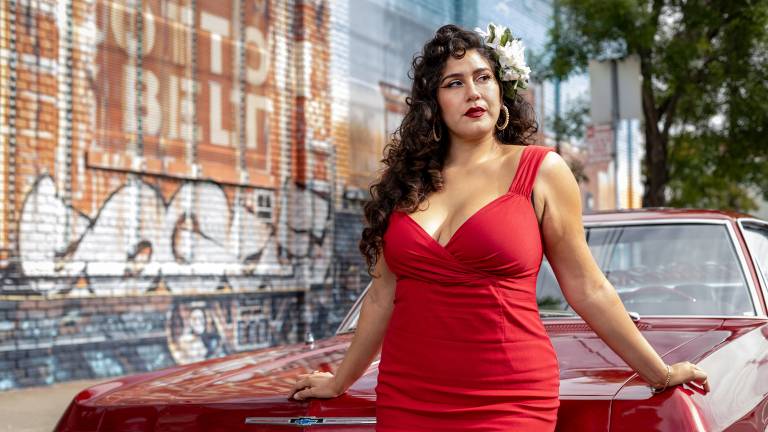
La Doña Traveled to 5 Countries to Make Her Borderless Album, ‘Corrientes’
La Doña Wrote Her New Album for Immigrant, Working-Class San Francisco
Cumbia!@Frost Turns Up the Volume on Afro-Latin Rhythms
For La Doña, SF’s Guaranteed Income Pilot Supports A Rising Music Career
La Doña Serves Dembow With Magic Mushrooms in ‘Penas Con Pan’
De San Francisco Para El Mundo, La Doña’s Star Rises
La Doña, Los Rakas Perform at Estados Unidos De Bass, a Virtual Latin Music Fest
Player sponsored by
window.__IS_SSR__=true
window.__INITIAL_STATE__={
"attachmentsReducer": {
"audio_0": {
"type": "attachments",
"id": "audio_0",
"imgSizes": {
"kqedFullSize": {
"file": "https://ww2.kqed.org/news/wp-content/themes/KQED-unified/img/audio_bgs/background0.jpg"
}
}
},
"audio_1": {
"type": "attachments",
"id": "audio_1",
"imgSizes": {
"kqedFullSize": {
"file": "https://ww2.kqed.org/news/wp-content/themes/KQED-unified/img/audio_bgs/background1.jpg"
}
}
},
"audio_2": {
"type": "attachments",
"id": "audio_2",
"imgSizes": {
"kqedFullSize": {
"file": "https://ww2.kqed.org/news/wp-content/themes/KQED-unified/img/audio_bgs/background2.jpg"
}
}
},
"audio_3": {
"type": "attachments",
"id": "audio_3",
"imgSizes": {
"kqedFullSize": {
"file": "https://ww2.kqed.org/news/wp-content/themes/KQED-unified/img/audio_bgs/background3.jpg"
}
}
},
"audio_4": {
"type": "attachments",
"id": "audio_4",
"imgSizes": {
"kqedFullSize": {
"file": "https://ww2.kqed.org/news/wp-content/themes/KQED-unified/img/audio_bgs/background4.jpg"
}
}
},
"placeholder": {
"type": "attachments",
"id": "placeholder",
"imgSizes": {
"thumbnail": {
"file": "https://cdn.kqed.org/wp-content/uploads/2024/12/KQED-Default-Image-816638274-2000x1333-1-160x107.jpg",
"width": 160,
"height": 107,
"mimeType": "image/jpeg"
},
"medium": {
"file": "https://cdn.kqed.org/wp-content/uploads/2024/12/KQED-Default-Image-816638274-2000x1333-1-800x533.jpg",
"width": 800,
"height": 533,
"mimeType": "image/jpeg"
},
"medium_large": {
"file": "https://cdn.kqed.org/wp-content/uploads/2024/12/KQED-Default-Image-816638274-2000x1333-1-768x512.jpg",
"width": 768,
"height": 512,
"mimeType": "image/jpeg"
},
"large": {
"file": "https://cdn.kqed.org/wp-content/uploads/2024/12/KQED-Default-Image-816638274-2000x1333-1-1020x680.jpg",
"width": 1020,
"height": 680,
"mimeType": "image/jpeg"
},
"1536x1536": {
"file": "https://cdn.kqed.org/wp-content/uploads/2024/12/KQED-Default-Image-816638274-2000x1333-1-1536x1024.jpg",
"width": 1536,
"height": 1024,
"mimeType": "image/jpeg"
},
"fd-lrg": {
"file": "https://cdn.kqed.org/wp-content/uploads/2024/12/KQED-Default-Image-816638274-2000x1333-1-1536x1024.jpg",
"width": 1536,
"height": 1024,
"mimeType": "image/jpeg"
},
"fd-med": {
"file": "https://cdn.kqed.org/wp-content/uploads/2024/12/KQED-Default-Image-816638274-2000x1333-1-1020x680.jpg",
"width": 1020,
"height": 680,
"mimeType": "image/jpeg"
},
"fd-sm": {
"file": "https://cdn.kqed.org/wp-content/uploads/2024/12/KQED-Default-Image-816638274-2000x1333-1-800x533.jpg",
"width": 800,
"height": 533,
"mimeType": "image/jpeg"
},
"post-thumbnail": {
"file": "https://cdn.kqed.org/wp-content/uploads/2024/12/KQED-Default-Image-816638274-2000x1333-1-672x372.jpg",
"width": 672,
"height": 372,
"mimeType": "image/jpeg"
},
"twentyfourteen-full-width": {
"file": "https://cdn.kqed.org/wp-content/uploads/2024/12/KQED-Default-Image-816638274-2000x1333-1-1038x576.jpg",
"width": 1038,
"height": 576,
"mimeType": "image/jpeg"
},
"xxsmall": {
"file": "https://cdn.kqed.org/wp-content/uploads/2024/12/KQED-Default-Image-816638274-2000x1333-1-160x107.jpg",
"width": 160,
"height": 107,
"mimeType": "image/jpeg"
},
"xsmall": {
"file": "https://cdn.kqed.org/wp-content/uploads/2024/12/KQED-Default-Image-816638274-2000x1333-1-672x372.jpg",
"width": 672,
"height": 372,
"mimeType": "image/jpeg"
},
"small": {
"file": "https://cdn.kqed.org/wp-content/uploads/2024/12/KQED-Default-Image-816638274-2000x1333-1-672x372.jpg",
"width": 672,
"height": 372,
"mimeType": "image/jpeg"
},
"xlarge": {
"file": "https://cdn.kqed.org/wp-content/uploads/2024/12/KQED-Default-Image-816638274-2000x1333-1-1020x680.jpg",
"width": 1020,
"height": 680,
"mimeType": "image/jpeg"
},
"full-width": {
"file": "https://cdn.kqed.org/wp-content/uploads/2024/12/KQED-Default-Image-816638274-2000x1333-1-1920x1280.jpg",
"width": 1920,
"height": 1280,
"mimeType": "image/jpeg"
},
"guest-author-32": {
"file": "https://cdn.kqed.org/wp-content/uploads/2025/01/KQED-Default-Image-816638274-1333x1333-1-160x160.jpg",
"width": 32,
"height": 32,
"mimeType": "image/jpeg"
},
"guest-author-50": {
"file": "https://cdn.kqed.org/wp-content/uploads/2025/01/KQED-Default-Image-816638274-1333x1333-1-160x160.jpg",
"width": 50,
"height": 50,
"mimeType": "image/jpeg"
},
"guest-author-64": {
"file": "https://cdn.kqed.org/wp-content/uploads/2025/01/KQED-Default-Image-816638274-1333x1333-1-160x160.jpg",
"width": 64,
"height": 64,
"mimeType": "image/jpeg"
},
"guest-author-96": {
"file": "https://cdn.kqed.org/wp-content/uploads/2025/01/KQED-Default-Image-816638274-1333x1333-1-160x160.jpg",
"width": 96,
"height": 96,
"mimeType": "image/jpeg"
},
"guest-author-128": {
"file": "https://cdn.kqed.org/wp-content/uploads/2025/01/KQED-Default-Image-816638274-1333x1333-1-160x160.jpg",
"width": 128,
"height": 128,
"mimeType": "image/jpeg"
},
"detail": {
"file": "https://cdn.kqed.org/wp-content/uploads/2025/01/KQED-Default-Image-816638274-1333x1333-1-160x160.jpg",
"width": 160,
"height": 160,
"mimeType": "image/jpeg"
},
"kqedFullSize": {
"file": "https://cdn.kqed.org/wp-content/uploads/2024/12/KQED-Default-Image-816638274-2000x1333-1.jpg",
"width": 2000,
"height": 1333
}
}
},
"arts_13988966": {
"type": "attachments",
"id": "arts_13988966",
"meta": {
"index": "attachments_1716263798",
"site": "arts",
"id": "13988966",
"found": true
},
"title": "042406LaDona_GH_004-Edit-cropped",
"publishDate": 1777401032,
"status": "inherit",
"parent": 13988946,
"modified": 1777401049,
"caption": "Cecilia Peña-Govea, known as La Doña, poses on the hood of her vintage Chevrolet Impala coupe in West Oakland on April 24, 2026.",
"credit": "Gustavo Hernandez/KQED",
"altTag": null,
"description": null,
"imgSizes": {
"thumbnail": {
"file": "https://cdn.kqed.org/wp-content/uploads/sites/2/2026/04/042406LaDona_GH_004-Edit-cropped-160x90.jpg",
"width": 160,
"height": 90,
"mimeType": "image/jpeg"
},
"medium_large": {
"file": "https://cdn.kqed.org/wp-content/uploads/sites/2/2026/04/042406LaDona_GH_004-Edit-cropped-768x432.jpg",
"width": 768,
"height": 432,
"mimeType": "image/jpeg"
},
"1536x1536": {
"file": "https://cdn.kqed.org/wp-content/uploads/sites/2/2026/04/042406LaDona_GH_004-Edit-cropped-1536x864.jpg",
"width": 1536,
"height": 864,
"mimeType": "image/jpeg"
},
"post-thumbnail": {
"file": "https://cdn.kqed.org/wp-content/uploads/sites/2/2026/04/042406LaDona_GH_004-Edit-cropped-672x372.jpg",
"width": 672,
"height": 372,
"mimeType": "image/jpeg"
},
"twentyfourteen-full-width": {
"file": "https://cdn.kqed.org/wp-content/uploads/sites/2/2026/04/042406LaDona_GH_004-Edit-cropped-1038x576.jpg",
"width": 1038,
"height": 576,
"mimeType": "image/jpeg"
},
"npr-cds-wide": {
"file": "https://cdn.kqed.org/wp-content/uploads/sites/2/2026/04/042406LaDona_GH_004-Edit-cropped-1200x675.jpg",
"width": 1200,
"height": 675,
"mimeType": "image/jpeg"
},
"npr-cds-square": {
"file": "https://cdn.kqed.org/wp-content/uploads/sites/2/2026/04/042406LaDona_GH_004-Edit-cropped-600x600.jpg",
"width": 600,
"height": 600,
"mimeType": "image/jpeg"
},
"kqedFullSize": {
"file": "https://cdn.kqed.org/wp-content/uploads/sites/2/2026/04/042406LaDona_GH_004-Edit-cropped.jpg",
"width": 2000,
"height": 1125
}
},
"isLoading": false,
"fetchFailed": false
},
"arts_13963790": {
"type": "attachments",
"id": "arts_13963790",
"meta": {
"index": "attachments_1716263798",
"site": "arts",
"id": "13963790",
"found": true
},
"title": "La Doña by Maria del Rio-cropped",
"publishDate": 1725578850,
"status": "inherit",
"parent": 13963789,
"modified": 1725578916,
"caption": "La Doña.",
"credit": "María del Rio",
"altTag": null,
"description": null,
"imgSizes": {
"medium": {
"file": "https://cdn.kqed.org/wp-content/uploads/sites/2/2024/09/La-Doña-by-Maria-del-Rio-cropped-800x533.jpg",
"width": 800,
"height": 533,
"mimeType": "image/jpeg"
},
"large": {
"file": "https://cdn.kqed.org/wp-content/uploads/sites/2/2024/09/La-Doña-by-Maria-del-Rio-cropped-1020x680.jpg",
"width": 1020,
"height": 680,
"mimeType": "image/jpeg"
},
"thumbnail": {
"file": "https://cdn.kqed.org/wp-content/uploads/sites/2/2024/09/La-Doña-by-Maria-del-Rio-cropped-160x107.jpg",
"width": 160,
"height": 107,
"mimeType": "image/jpeg"
},
"medium_large": {
"file": "https://cdn.kqed.org/wp-content/uploads/sites/2/2024/09/La-Doña-by-Maria-del-Rio-cropped-768x512.jpg",
"width": 768,
"height": 512,
"mimeType": "image/jpeg"
},
"1536x1536": {
"file": "https://cdn.kqed.org/wp-content/uploads/sites/2/2024/09/La-Doña-by-Maria-del-Rio-cropped-1536x1024.jpg",
"width": 1536,
"height": 1024,
"mimeType": "image/jpeg"
},
"2048x2048": {
"file": "https://cdn.kqed.org/wp-content/uploads/sites/2/2024/09/La-Doña-by-Maria-del-Rio-cropped-2048x1365.jpg",
"width": 2048,
"height": 1365,
"mimeType": "image/jpeg"
},
"post-thumbnail": {
"file": "https://cdn.kqed.org/wp-content/uploads/sites/2/2024/09/La-Doña-by-Maria-del-Rio-cropped-672x372.jpg",
"width": 672,
"height": 372,
"mimeType": "image/jpeg"
},
"twentyfourteen-full-width": {
"file": "https://cdn.kqed.org/wp-content/uploads/sites/2/2024/09/La-Doña-by-Maria-del-Rio-cropped-1038x576.jpg",
"width": 1038,
"height": 576,
"mimeType": "image/jpeg"
},
"full-width": {
"file": "https://cdn.kqed.org/wp-content/uploads/sites/2/2024/09/La-Doña-by-Maria-del-Rio-cropped-1920x1280.jpg",
"width": 1920,
"height": 1280,
"mimeType": "image/jpeg"
},
"kqedFullSize": {
"file": "https://cdn.kqed.org/wp-content/uploads/sites/2/2024/09/La-Doña-by-Maria-del-Rio-cropped-scaled.jpg",
"width": 2560,
"height": 1707
}
},
"isLoading": false,
"fetchFailed": false
},
"arts_13935418": {
"type": "attachments",
"id": "arts_13935418",
"meta": {
"index": "attachments_1716263798",
"site": "arts",
"id": "13935418",
"found": true
},
"parent": 13935406,
"imgSizes": {
"twentyfourteen-full-width": {
"file": "https://ww2.kqed.org/app/uploads/sites/2/2023/09/KQEDLIVE21LaDona-039-1038x576.jpg",
"width": 1038,
"mimeType": "image/jpeg",
"height": 576
},
"thumbnail": {
"file": "https://ww2.kqed.org/app/uploads/sites/2/2023/09/KQEDLIVE21LaDona-039-160x106.jpg",
"width": 160,
"mimeType": "image/jpeg",
"height": 106
},
"post-thumbnail": {
"file": "https://ww2.kqed.org/app/uploads/sites/2/2023/09/KQEDLIVE21LaDona-039-672x372.jpg",
"width": 672,
"mimeType": "image/jpeg",
"height": 372
},
"kqedFullSize": {
"file": "https://ww2.kqed.org/app/uploads/sites/2/2023/09/KQEDLIVE21LaDona-039-scaled.jpg",
"width": 2560,
"height": 1703
},
"2048x2048": {
"file": "https://ww2.kqed.org/app/uploads/sites/2/2023/09/KQEDLIVE21LaDona-039-2048x1363.jpg",
"width": 2048,
"mimeType": "image/jpeg",
"height": 1363
},
"large": {
"file": "https://ww2.kqed.org/app/uploads/sites/2/2023/09/KQEDLIVE21LaDona-039-1020x679.jpg",
"width": 1020,
"mimeType": "image/jpeg",
"height": 679
},
"1536x1536": {
"file": "https://ww2.kqed.org/app/uploads/sites/2/2023/09/KQEDLIVE21LaDona-039-1536x1022.jpg",
"width": 1536,
"mimeType": "image/jpeg",
"height": 1022
},
"full-width": {
"file": "https://ww2.kqed.org/app/uploads/sites/2/2023/09/KQEDLIVE21LaDona-039-1920x1277.jpg",
"width": 1920,
"mimeType": "image/jpeg",
"height": 1277
},
"medium": {
"file": "https://ww2.kqed.org/app/uploads/sites/2/2023/09/KQEDLIVE21LaDona-039-800x532.jpg",
"width": 800,
"mimeType": "image/jpeg",
"height": 532
},
"medium_large": {
"file": "https://ww2.kqed.org/app/uploads/sites/2/2023/09/KQEDLIVE21LaDona-039-768x511.jpg",
"width": 768,
"mimeType": "image/jpeg",
"height": 511
}
},
"publishDate": 1695768256,
"modified": 1695768355,
"caption": "La Doña performs at The Commons in KQED's headquarters in 2021. ",
"description": null,
"title": "KQEDLIVE21LaDona-039",
"credit": "Alain McLaughlin for KQED",
"status": "inherit",
"altTag": "La Doña sings on stage next to her saxophonist and bassist.",
"isLoading": false,
"fetchFailed": false
},
"arts_13913900": {
"type": "attachments",
"id": "arts_13913900",
"meta": {
"index": "attachments_1716263798",
"site": "arts",
"id": "13913900",
"found": true
},
"parent": 13913890,
"imgSizes": {
"twentyfourteen-full-width": {
"file": "https://ww2.kqed.org/app/uploads/sites/2/2022/05/Our-Creative-Futures-Featured-Image-La-Dona-1038x576.jpg",
"width": 1038,
"mimeType": "image/jpeg",
"height": 576
},
"thumbnail": {
"file": "https://ww2.kqed.org/app/uploads/sites/2/2022/05/Our-Creative-Futures-Featured-Image-La-Dona-160x90.jpg",
"width": 160,
"mimeType": "image/jpeg",
"height": 90
},
"post-thumbnail": {
"file": "https://ww2.kqed.org/app/uploads/sites/2/2022/05/Our-Creative-Futures-Featured-Image-La-Dona-672x372.jpg",
"width": 672,
"mimeType": "image/jpeg",
"height": 372
},
"kqedFullSize": {
"file": "https://ww2.kqed.org/app/uploads/sites/2/2022/05/Our-Creative-Futures-Featured-Image-La-Dona.jpg",
"width": 1920,
"height": 1080
},
"large": {
"file": "https://ww2.kqed.org/app/uploads/sites/2/2022/05/Our-Creative-Futures-Featured-Image-La-Dona-1020x574.jpg",
"width": 1020,
"mimeType": "image/jpeg",
"height": 574
},
"1536x1536": {
"file": "https://ww2.kqed.org/app/uploads/sites/2/2022/05/Our-Creative-Futures-Featured-Image-La-Dona-1536x864.jpg",
"width": 1536,
"mimeType": "image/jpeg",
"height": 864
},
"medium": {
"file": "https://ww2.kqed.org/app/uploads/sites/2/2022/05/Our-Creative-Futures-Featured-Image-La-Dona-800x450.jpg",
"width": 800,
"mimeType": "image/jpeg",
"height": 450
},
"medium_large": {
"file": "https://ww2.kqed.org/app/uploads/sites/2/2022/05/Our-Creative-Futures-Featured-Image-La-Dona-768x432.jpg",
"width": 768,
"mimeType": "image/jpeg",
"height": 432
}
},
"publishDate": 1653425970,
"modified": 1653426039,
"caption": "La Doña's singular blend of Latin musical traditions, reggaeton and hyphy has made her one of San Francisco's biggest breakout stars since the pandemic. YBCA's Guaranteed Income Pilot for Artists is helping fuel her rising career. ",
"description": null,
"title": "Our Creative Futures Featured Image-La Dona",
"credit": "Photos: Beth LaBerge; design: Kelly Heigert",
"status": "inherit",
"altTag": null,
"isLoading": false,
"fetchFailed": false
},
"arts_13913898": {
"type": "attachments",
"id": "arts_13913898",
"meta": {
"index": "attachments_1716263798",
"site": "arts",
"id": "13913898",
"found": true
},
"parent": 13913890,
"imgSizes": {
"twentyfourteen-full-width": {
"file": "https://ww2.kqed.org/app/uploads/sites/2/2022/05/014_KQEDArts_Alameda_LaDona_07202021-1038x576.jpg",
"width": 1038,
"mimeType": "image/jpeg",
"height": 576
},
"thumbnail": {
"file": "https://ww2.kqed.org/app/uploads/sites/2/2022/05/014_KQEDArts_Alameda_LaDona_07202021-160x107.jpg",
"width": 160,
"mimeType": "image/jpeg",
"height": 107
},
"post-thumbnail": {
"file": "https://ww2.kqed.org/app/uploads/sites/2/2022/05/014_KQEDArts_Alameda_LaDona_07202021-672x372.jpg",
"width": 672,
"mimeType": "image/jpeg",
"height": 372
},
"kqedFullSize": {
"file": "https://ww2.kqed.org/app/uploads/sites/2/2022/05/014_KQEDArts_Alameda_LaDona_07202021.jpg",
"width": 1920,
"height": 1280
},
"large": {
"file": "https://ww2.kqed.org/app/uploads/sites/2/2022/05/014_KQEDArts_Alameda_LaDona_07202021-1020x680.jpg",
"width": 1020,
"mimeType": "image/jpeg",
"height": 680
},
"1536x1536": {
"file": "https://ww2.kqed.org/app/uploads/sites/2/2022/05/014_KQEDArts_Alameda_LaDona_07202021-1536x1024.jpg",
"width": 1536,
"mimeType": "image/jpeg",
"height": 1024
},
"medium": {
"file": "https://ww2.kqed.org/app/uploads/sites/2/2022/05/014_KQEDArts_Alameda_LaDona_07202021-800x533.jpg",
"width": 800,
"mimeType": "image/jpeg",
"height": 533
},
"medium_large": {
"file": "https://ww2.kqed.org/app/uploads/sites/2/2022/05/014_KQEDArts_Alameda_LaDona_07202021-768x512.jpg",
"width": 768,
"mimeType": "image/jpeg",
"height": 512
}
},
"publishDate": 1653425673,
"modified": 1653425695,
"caption": "Cecilia Peña-Govea, a.k.a. La Doña.",
"description": null,
"title": "Cecilia Peña-Govea, a.k.a. La Doña, sits at Alameda Beach on July 20, 2021.",
"credit": "Beth LaBerge",
"status": "inherit",
"altTag": null,
"isLoading": false,
"fetchFailed": false
},
"arts_13910569": {
"type": "attachments",
"id": "arts_13910569",
"meta": {
"index": "attachments_1716263798",
"site": "arts",
"id": "13910569",
"found": true
},
"parent": 13910566,
"imgSizes": {
"twentyfourteen-full-width": {
"file": "https://ww2.kqed.org/app/uploads/sites/2/2022/03/Copy-of-Pass-The-Aux-template-16-1038x576.jpg",
"width": 1038,
"mimeType": "image/jpeg",
"height": 576
},
"thumbnail": {
"file": "https://ww2.kqed.org/app/uploads/sites/2/2022/03/Copy-of-Pass-The-Aux-template-16-160x90.jpg",
"width": 160,
"mimeType": "image/jpeg",
"height": 90
},
"post-thumbnail": {
"file": "https://ww2.kqed.org/app/uploads/sites/2/2022/03/Copy-of-Pass-The-Aux-template-16-672x372.jpg",
"width": 672,
"mimeType": "image/jpeg",
"height": 372
},
"kqedFullSize": {
"file": "https://ww2.kqed.org/app/uploads/sites/2/2022/03/Copy-of-Pass-The-Aux-template-16.jpg",
"width": 1920,
"height": 1080
},
"large": {
"file": "https://ww2.kqed.org/app/uploads/sites/2/2022/03/Copy-of-Pass-The-Aux-template-16-1020x574.jpg",
"width": 1020,
"mimeType": "image/jpeg",
"height": 574
},
"1536x1536": {
"file": "https://ww2.kqed.org/app/uploads/sites/2/2022/03/Copy-of-Pass-The-Aux-template-16-1536x864.jpg",
"width": 1536,
"mimeType": "image/jpeg",
"height": 864
},
"medium": {
"file": "https://ww2.kqed.org/app/uploads/sites/2/2022/03/Copy-of-Pass-The-Aux-template-16-800x450.jpg",
"width": 800,
"mimeType": "image/jpeg",
"height": 450
},
"medium_large": {
"file": "https://ww2.kqed.org/app/uploads/sites/2/2022/03/Copy-of-Pass-The-Aux-template-16-768x432.jpg",
"width": 768,
"mimeType": "image/jpeg",
"height": 432
}
},
"publishDate": 1647293498,
"modified": 1647293576,
"caption": "A still from La Doña's music video for 'Penas Con Pan.'",
"description": null,
"title": "Copy of Pass The Aux template (16)",
"credit": "Photo: courtesy of the artist; illustration: Kelly Heigert",
"status": "inherit",
"altTag": "Singer La Doña is in bed in a dark room wearing a chiffon robe.",
"isLoading": false,
"fetchFailed": false
},
"arts_13900317": {
"type": "attachments",
"id": "arts_13900317",
"meta": {
"index": "attachments_1716263798",
"site": "arts",
"id": "13900317",
"found": true
},
"title": "Cecilia Peña-Govea, a.k.a. La Doña, in Alameda on July 20, 2021.",
"publishDate": 1627424310,
"status": "inherit",
"parent": 0,
"modified": 1725579346,
"caption": "Cecilia Peña-Govea, a.k.a. La Doña, in Alameda on July 20, 2021.",
"credit": "Beth LaBerge/KQED",
"altTag": "A Mexican American woman in a red dress and black eyeline holds a trumpet among tropical plants.",
"description": "Cecilia Peña-Govea, a.k.a. La Doña, in Alameda on July 20, 2021.",
"imgSizes": {
"medium": {
"file": "https://cdn.kqed.org/wp-content/uploads/sites/2/2021/07/001_KQEDArts_Alameda_LaDona_07202021-800x533.jpg",
"width": 800,
"height": 533,
"mimeType": "image/jpeg"
},
"large": {
"file": "https://cdn.kqed.org/wp-content/uploads/sites/2/2021/07/001_KQEDArts_Alameda_LaDona_07202021-1020x680.jpg",
"width": 1020,
"height": 680,
"mimeType": "image/jpeg"
},
"thumbnail": {
"file": "https://cdn.kqed.org/wp-content/uploads/sites/2/2021/07/001_KQEDArts_Alameda_LaDona_07202021-160x107.jpg",
"width": 160,
"height": 107,
"mimeType": "image/jpeg"
},
"medium_large": {
"file": "https://cdn.kqed.org/wp-content/uploads/sites/2/2021/07/001_KQEDArts_Alameda_LaDona_07202021-768x512.jpg",
"width": 768,
"height": 512,
"mimeType": "image/jpeg"
},
"1536x1536": {
"file": "https://cdn.kqed.org/wp-content/uploads/sites/2/2021/07/001_KQEDArts_Alameda_LaDona_07202021-1536x1024.jpg",
"width": 1536,
"height": 1024,
"mimeType": "image/jpeg"
},
"post-thumbnail": {
"file": "https://cdn.kqed.org/wp-content/uploads/sites/2/2021/07/001_KQEDArts_Alameda_LaDona_07202021-672x372.jpg",
"width": 672,
"height": 372,
"mimeType": "image/jpeg"
},
"twentyfourteen-full-width": {
"file": "https://cdn.kqed.org/wp-content/uploads/sites/2/2021/07/001_KQEDArts_Alameda_LaDona_07202021-1038x576.jpg",
"width": 1038,
"height": 576,
"mimeType": "image/jpeg"
},
"kqedFullSize": {
"file": "https://cdn.kqed.org/wp-content/uploads/sites/2/2021/07/001_KQEDArts_Alameda_LaDona_07202021.jpg",
"width": 1920,
"height": 1280
}
},
"isLoading": false,
"fetchFailed": false
},
"arts_13889749": {
"type": "attachments",
"id": "arts_13889749",
"meta": {
"index": "attachments_1716263798",
"site": "arts",
"id": "13889749",
"found": true
},
"parent": 13889727,
"imgSizes": {
"thumbnail": {
"file": "https://ww2.kqed.org/app/uploads/sites/2/2020/11/LaDona-by-Natalie-Aleman-160x90.jpg",
"width": 160,
"mimeType": "image/jpeg",
"height": 90
},
"post-thumbnail": {
"file": "https://ww2.kqed.org/app/uploads/sites/2/2020/11/LaDona-by-Natalie-Aleman-672x372.jpg",
"width": 672,
"mimeType": "image/jpeg",
"height": 372
},
"kqedFullSize": {
"file": "https://ww2.kqed.org/app/uploads/sites/2/2020/11/LaDona-by-Natalie-Aleman.jpg",
"width": 1024,
"height": 576
},
"large": {
"file": "https://ww2.kqed.org/app/uploads/sites/2/2020/11/LaDona-by-Natalie-Aleman-1020x574.jpg",
"width": 1020,
"mimeType": "image/jpeg",
"height": 574
},
"medium": {
"file": "https://ww2.kqed.org/app/uploads/sites/2/2020/11/LaDona-by-Natalie-Aleman-800x450.jpg",
"width": 800,
"mimeType": "image/jpeg",
"height": 450
},
"medium_large": {
"file": "https://ww2.kqed.org/app/uploads/sites/2/2020/11/LaDona-by-Natalie-Aleman-768x432.jpg",
"width": 768,
"mimeType": "image/jpeg",
"height": 432
}
},
"publishDate": 1606778722,
"modified": 1606778743,
"caption": "La Doña. ",
"description": null,
"title": "LaDona by Natalie Aleman",
"credit": "Natalie Aleman",
"status": "inherit",
"isLoading": false,
"fetchFailed": false
}
},
"audioPlayerReducer": {
"postId": "stream_live",
"isPaused": true,
"isPlaying": false,
"pfsActive": false,
"pledgeModalIsOpen": true,
"playerDrawerIsOpen": false,
"liveAudioPlayStartedAt": 0,
"liveAudioPlayContext": ""
},
"authorsReducer": {
"byline_arts_13900272": {
"type": "authors",
"id": "byline_arts_13900272",
"meta": {
"override": true
},
"slug": "byline_arts_13900272",
"name": "Montse Reyes",
"isLoading": false
},
"agilbert": {
"type": "authors",
"id": "86",
"meta": {
"index": "authors_1716337520",
"id": "86",
"found": true
},
"name": "Andrew Gilbert",
"firstName": "Andrew",
"lastName": "Gilbert",
"slug": "agilbert",
"email": "jazzscribe@aol.com",
"display_author_email": false,
"staff_mastheads": [],
"title": "KQED Contributor",
"bio": "A Los Angeles native based in the Berkeley area since 1996, Andrew Gilbert covers jazz, international music and dance for KQED's \u003ci>California Report, \u003c/i>the\u003ci> Mercury News\u003c/i>, \u003ci>San Francisco Chronicle\u003c/i>, \u003ci>Berkeleyside.com\u003c/i>, and other publications. He is available for weddings and bar and bat mitzvahs. #jazzscribe",
"avatar": "https://secure.gravatar.com/avatar/d7bcafdbefdd39e9a68f88724ca616eb4e7a5a6bff9cdfb62de652a1e1751471?s=600&d=blank&r=g",
"twitter": null,
"bluesky": null,
"facebook": null,
"instagram": null,
"linkedin": null,
"sites": [
{
"site": "arts",
"roles": [
"Contributor",
"author"
]
},
{
"site": "news",
"roles": [
"author"
]
}
],
"headData": {
"title": "Andrew Gilbert | KQED",
"description": "KQED Contributor",
"ogImgSrc": "https://secure.gravatar.com/avatar/d7bcafdbefdd39e9a68f88724ca616eb4e7a5a6bff9cdfb62de652a1e1751471?s=600&d=blank&r=g",
"twImgSrc": "https://secure.gravatar.com/avatar/d7bcafdbefdd39e9a68f88724ca616eb4e7a5a6bff9cdfb62de652a1e1751471?s=600&d=blank&r=g"
},
"isLoading": false,
"link": "/author/agilbert"
},
"nvoynovskaya": {
"type": "authors",
"id": "11387",
"meta": {
"index": "authors_1716337520",
"id": "11387",
"found": true
},
"name": "Nastia Voynovskaya",
"firstName": "Nastia",
"lastName": "Voynovskaya",
"slug": "nvoynovskaya",
"email": "nvoynovskaya@kqed.org",
"display_author_email": false,
"staff_mastheads": [
"arts"
],
"title": "Editor and reporter",
"bio": "Nastia Voynovskaya is a reporter, editor and host at KQED Arts & Culture. She's been covering the arts in the Bay Area for over a decade, with a focus on music, queer culture, labor issues and grassroots organizing. She has edited KQED story series such as Trans Bay: A History of San Francisco's Gender-Diverse Community, and co-created KQED's Bay Area hip-hop history project, That's My Word. Nastia's work has been recognized by the Society of Professional Journalists and San Francisco Press Club. She regularly appears on podcasts and radio programs, including NPR's All Songs Considered, and hosts live events where music, culture and conversation meet.",
"avatar": "https://secure.gravatar.com/avatar/5025ee460e5a85d69ca20ea6c6f2f80d7e17795c828f61ea3aecfcd924e9042e?s=600&d=blank&r=g",
"twitter": null,
"bluesky": null,
"facebook": null,
"instagram": "https://www.instagram.com/nananastia/",
"linkedin": null,
"sites": [
{
"site": "",
"roles": [
"editor"
]
},
{
"site": "arts",
"roles": [
"administrator"
]
},
{
"site": "news",
"roles": [
"editor"
]
},
{
"site": "pop",
"roles": [
"administrator"
]
},
{
"site": "bayareabites",
"roles": [
"editor"
]
},
{
"site": "podcasts",
"roles": [
"editor"
]
},
{
"site": "hiphop",
"roles": [
"editor"
]
}
],
"headData": {
"title": "Nastia Voynovskaya | KQED",
"description": "Editor and reporter",
"ogImgSrc": "https://secure.gravatar.com/avatar/5025ee460e5a85d69ca20ea6c6f2f80d7e17795c828f61ea3aecfcd924e9042e?s=600&d=blank&r=g",
"twImgSrc": "https://secure.gravatar.com/avatar/5025ee460e5a85d69ca20ea6c6f2f80d7e17795c828f61ea3aecfcd924e9042e?s=600&d=blank&r=g"
},
"isLoading": false,
"link": "/author/nvoynovskaya"
},
"btorres": {
"type": "authors",
"id": "11666",
"meta": {
"index": "authors_1716337520",
"id": "11666",
"found": true
},
"name": "Blanca Torres",
"firstName": "Blanca",
"lastName": "Torres",
"slug": "btorres",
"email": "btorres@kqed.org",
"display_author_email": true,
"staff_mastheads": [
"news"
],
"title": "Producer, Forum",
"bio": "Blanca Torres brings sharp news judgement and keen sense of lively conversation to her work as producer for Forum. She loves producing shows that leave listeners feeling like they heard distinctive voices, learned something new and gained a fresh perspective.\r\n\r\nShe joined KQED in January of 2020 after 16 years of working as a newspaper reporter most recently at the \u003cem>San Francisco Business Times,\u003c/em> where she wrote about real estate and economic development. Before that, she covered a variety of beats including crime, education, retail, workplace, the economy, consumer issues, and small business for the \u003cem>Contra Costa Times, Baltimore Sun\u003c/em> and\u003cem> The Seattle Times\u003c/em>. In addition to reporting, she worked as an editorial writer and columnist for the \u003cem>Seattle Times\u003c/em>. From 2017 to 2020, Blanca won a total of ten awards from the National Association of Real Estate Editors and won first place for land use reporting from the California News Publishers Association two years in a row. She is also a member and former board member for the National Association of Hispanic Journalists.\r\n\r\nA native of the Pacific Northwest, Blanca earned her bachelor's degree from Vanderbilt University in Nashville and a master's in fine arts in creative writing at Mills College. She lives in the East Bay with her family.",
"avatar": "https://secure.gravatar.com/avatar/50b49d19b14a1eed34f26ebf4681152cdd81574ed21851100871ccd29e578cdc?s=600&d=blank&r=g",
"twitter": "@blancawrites",
"bluesky": null,
"facebook": null,
"instagram": null,
"linkedin": null,
"sites": [
{
"site": "arts",
"roles": [
"editor"
]
},
{
"site": "news",
"roles": [
"editor"
]
},
{
"site": "forum",
"roles": [
"editor"
]
}
],
"headData": {
"title": "Blanca Torres | KQED",
"description": "Producer, Forum",
"ogImgSrc": "https://secure.gravatar.com/avatar/50b49d19b14a1eed34f26ebf4681152cdd81574ed21851100871ccd29e578cdc?s=600&d=blank&r=g",
"twImgSrc": "https://secure.gravatar.com/avatar/50b49d19b14a1eed34f26ebf4681152cdd81574ed21851100871ccd29e578cdc?s=600&d=blank&r=g"
},
"isLoading": false,
"link": "/author/btorres"
}
},
"pagesReducer": {
"arts_tag_la-dona": {
"type": "terms",
"id": "arts_22299",
"meta": {
"index": "terms_1716263798",
"site": "arts",
"id": "22299",
"score": 10.407761
},
"name": "La Doña",
"slug": "la-dona",
"taxonomy": "tag",
"description": null,
"featImg": null,
"headData": {
"title": "La Doña | KQED Arts",
"description": null,
"ogTitle": null,
"ogDescription": null,
"ogImgId": null,
"twTitle": null,
"twDescription": null,
"twImgId": null
},
"ttid": 22311,
"isLoading": false,
"title": "La Doña",
"pageMeta": {
"site": "arts",
"WpPageTemplate": "page-topic-editorial",
"currentPage": 1
},
"blocks": [
{
"blockName": "kqed/post-list",
"attrs": {
"layout": "cardArticle2",
"query": "posts/arts?tag=la-dona",
"seeMore": false,
"paginated": true,
"page": 1
}
},
{
"blockName": "kqed/ad"
}
]
}
},
"pfsSessionReducer": {},
"postsReducer": {
"stream_live": {
"type": "live",
"id": "stream_live",
"audioUrl": "https://hls.kqed.org/hls/kqed_app/playlist.m3u8",
"title": "Live Stream",
"excerpt": "Live Stream information currently unavailable.",
"link": "/radio",
"featImg": "",
"label": {
"name": "KQED Live",
"link": "/"
}
},
"stream_kqedNewscast": {
"type": "posts",
"id": "stream_kqedNewscast",
"audioUrl": "https://www.kqed.org/.stream/anon/radio/RDnews/newscast.mp3?_=1",
"title": "KQED Newscast",
"featImg": "",
"label": {
"name": "88.5 FM",
"link": "/"
}
},
"arts_13988946": {
"type": "posts",
"id": "arts_13988946",
"meta": {
"index": "posts_1716263798",
"site": "arts",
"id": "13988946",
"score": null,
"sort": [
1777401550000
]
},
"guestAuthors": [],
"slug": "la-dona-corrientes-album-san-francisco",
"title": "La Doña Traveled to 5 Countries to Make Her Borderless Album, ‘Corrientes’",
"publishDate": 1777401550,
"format": "aside",
"headTitle": "La Doña Traveled to 5 Countries to Make Her Borderless Album, ‘Corrientes’ | KQED",
"labelTerm": {},
"content": "\u003cfigure id=\"attachment_13988957\" class=\"wp-caption aligncenter\" style=\"max-width: 2000px\">\u003cimg loading=\"lazy\" decoding=\"async\" class=\"size-full wp-image-13988957\" src=\"https://cdn.kqed.org/wp-content/uploads/sites/2/2026/04/042406LaDona_GH_004-Edit.jpg\" alt=\"\" width=\"2000\" height=\"1333\" srcset=\"https://cdn.kqed.org/wp-content/uploads/sites/2/2026/04/042406LaDona_GH_004-Edit.jpg 2000w, https://cdn.kqed.org/wp-content/uploads/sites/2/2026/04/042406LaDona_GH_004-Edit-160x107.jpg 160w, https://cdn.kqed.org/wp-content/uploads/sites/2/2026/04/042406LaDona_GH_004-Edit-768x512.jpg 768w, https://cdn.kqed.org/wp-content/uploads/sites/2/2026/04/042406LaDona_GH_004-Edit-1536x1024.jpg 1536w\" sizes=\"auto, (max-width: 2000px) 100vw, 2000px\">\u003cfigcaption class=\"wp-caption-text\">Cecilia Peña-Govea, known as La Doña, poses on the hood of her vintage Chevrolet Impala coupe in West Oakland on April 24, 2026. \u003ccite>(Gustavo Hernandez/KQED)\u003c/cite>\u003c/figcaption>\u003c/figure>\n\u003cp>\u003cstrong>\u003cem>This story was reported for K Onda KQED, a monthly newsletter focused on the Bay Area’s Latinx community. \u003ca href=\"https://www.kqed.org/newsletters/k-onda\">Click here to subscribe\u003c/a>.\u003c/em>\u003c/strong>\u003c/p>\n\u003cp>One of the songs on \u003ca href=\"https://www.kqed.org/arts/tag/la-dona\">La Doña\u003c/a>‘s new album, \u003cem>Corrientes\u003c/em>, tells the story of her parents’ 44-year-long partnership that started with a chance meeting when her dad was an undergraduate at UC Berkeley and her mom was a law student there.\u003c/p>\n\u003cp>That night, \u003ca href=\"https://www.instagram.com/ladona415/\">La Doña\u003c/a>‘s mom pulled a fiddle out of her car and played a song she called the “Jessie Polka,” a rendition of “Jesusita en Chihuahua,” a beloved folk song composed during the Mexican Revolution.\u003c/p>\n\u003cp>“From that moment on, they had this cultural exchange and this language that they shared,” says La Doña, whose real name is Cecilia Peña-Govea. “They were learning about each other and learning about their own roots and practices.”\u003c/p>\n\u003cp>Her song, “La Que Nos Unió” (“The One that United Us”) is set to an uptempo merengue beat, which, like polka, rouses listeners to get up and dance.\u003c/p>\n\u003cp>[ad fullwidth]\u003c/p>\n\u003cp>“[The song] is a celebration of their love and the legacy that I’m walking in and the beauty of the musical traditions that they endowed me with,” the 33-year-old says. “I wanted it to be a party song because they’re fun and they’re party animals.”\u003c/p>\n\u003cp>La Doña’s ethos of paying homage to tradition and history while bringing her own style reverberates throughout the 16 songs on \u003cem>Corrientes\u003c/em>, which comes out April 29. This is the second full-length record for the born-and-raised San Franciscan, who started releasing music in 2018.\u003c/p>\n\u003cp>\u003cem>Corrientes\u003c/em> is La Doña’s most ambitious and comprehensive project yet. She incorporates many genres, including some that are tried-and-true for her: cumbia, reggaeton, ranchera, bolero and salsa. She also branches out further into bachata, merengue, electronic dance music and son jarocho, a folk music style that originated in the Mexican state of Veracruz.\u003c/p>\n\u003cp>\u003cem>Corrientes\u003c/em> shows off La Doña’s deep understanding of music while showcasing her brilliance, versatility and expansive range as a singer and songwriter. The album feels like a multinational tour of Latin America with a passionate guide at the helm; while working on the album, she traveled to five countries and collaborated with 40 musicians. Her sultry vocals fit seamlessly, whether she’s singing in English, Spanish or both.\u003c/p>\n\u003cp>https://youtu.be/93ZK9i1wh5k?si=CcW-XD74gTUCrXqu\u003c/p>\n\u003cp>On the cheeky, “Frisco Hates You Too,” collaborators Jada Imani, Stoni and Qing Qi join La Doña for a delicious clap-back banger that takes aim at outsiders who try to force their aesthetics and preferences on Bay Area culture.\u003c/p>\n\u003cp>“If you were born and raised in San Francisco, you’ve always felt this impending doom, right? If gentrification doesn’t get me, then the earthquake’s going to get me. You always feel like something is going to remove you from your city or your space,” she says. “So ‘Frisco Hates You Too’ is related to a quote that Jimmy Fails says in [the movie] \u003ca href=\"https://www.kqed.org/arts/13858829/the-last-black-man-in-san-francisco-hits-home-in-oakland\">\u003cem>The Last Black Man in San Francisco\u003c/em>\u003c/a>, which is, ‘You can’t hate it unless you love it.’”\u003c/p>\n\u003cp>On the bolero, “Consiénteme,” (“Pamper Me”) she sings poetic stanzas in Spanish about passionate love and then switches to English for a spoken word plea for clarity about the relationship: “Dear redacted, did you mean it when you said you wanted to be my baby daddy?”\u003c/p>\n\u003cp>As an independent artist, La Doña takes risks both in music and activism. Her support of Palestinian people amid the war in Gaza has drawn backlash and cost her opportunities, she says, but silence for her is not an option.\u003c/p>\n\u003cp>https://youtu.be/3F5Jncvig3Y?si=AVUoLZOivTchyz0V\u003c/p>\n\u003cp>In the song, “Mentira y La Verdad,” (“Lies and Truth”) La Doña sings about how people have tried to pressure her to stop speaking out, but she refuses to back down.\u003c/p>\n\u003cp>“They come to my concerts. At night, they write to me always criticizing and demanding apologies, but my song today will sound louder tomorrow,” she sings in Spanish.\u003c/p>\n\u003cp>La Doña has a couple of Northern California performances planned, including a \u003ca href=\"https://www.theuctheatre.org/shows/la-dona-15-may\">release show on May 15 at Berkeley’s UC Theatre\u003c/a>, but has not yet set up a tour. She’s at a crossroads as she decides between different graduate school options for this fall.\u003c/p>\n\u003cp>La Doña sat down with KQED to talk about her artistry, her aesthetics and what might come next for her future.\u003c/p>\n\u003cp>\u003cem>This interview has been edited for length and clarity.\u003c/em>\u003c/p>\n\u003cfigure id=\"attachment_13988958\" class=\"wp-caption aligncenter\" style=\"max-width: 2000px\">\u003cimg loading=\"lazy\" decoding=\"async\" class=\"size-full wp-image-13988958\" src=\"https://cdn.kqed.org/wp-content/uploads/sites/2/2026/04/042406LaDona_GH_008-Edit.jpg\" alt=\"\" width=\"2000\" height=\"1333\" srcset=\"https://cdn.kqed.org/wp-content/uploads/sites/2/2026/04/042406LaDona_GH_008-Edit.jpg 2000w, https://cdn.kqed.org/wp-content/uploads/sites/2/2026/04/042406LaDona_GH_008-Edit-160x107.jpg 160w, https://cdn.kqed.org/wp-content/uploads/sites/2/2026/04/042406LaDona_GH_008-Edit-768x512.jpg 768w, https://cdn.kqed.org/wp-content/uploads/sites/2/2026/04/042406LaDona_GH_008-Edit-1536x1024.jpg 1536w\" sizes=\"auto, (max-width: 2000px) 100vw, 2000px\">\u003cfigcaption class=\"wp-caption-text\">La Doña poses in the inside of her vintage Chevrolet Impala coupe in West Oakland on April 24, 2026. \u003ccite>(Gustavo Hernandez/KQED)\u003c/cite>\u003c/figcaption>\u003c/figure>\n\u003cp>\u003cstrong>Blanca Torres:\u003c/strong> On this album, you have some salsa, you have some reggaeton, you have some banda and then the son jarocho. Is any of that new that you’re trying out, or is it all stuff that you’ve been working on for a while?\u003c/p>\n\u003cp>\u003cstrong>La Doña:\u003c/strong> I have been playing salsa since I was a very young girl, especially playing the trumpet. I also grew up listening to and playing a lot of corridos, rancheras, so that also feels very natural for me. Especially bolero, mambo, salsa, how these genres of music are moving freely between countries and across borders has informed so much of my writing and so much of my understanding, both of self and of genres and music in general. Was a stretch production-wise just because, yeah, there’s like 20 different styles on this album, right? Just the nature of getting together 40 musicians who all are masters in their craft. It was a huge undertaking.\u003c/p>\n\u003cp>\u003cstrong>How do you decide if you want a song in Spanish or in English or both? What’s kind of your creative process since you can access so many styles of music?\u003c/strong>\u003c/p>\n\u003cp>Conversationally, I’m more comfortable in English. Musically, I’m more comfortable in Spanish. When I’m writing lyrics or when the song is really led by a story or narrative, I begin composing in Spanish. Whereas if the material is more conversational, then I tend to lean towards English.\u003c/p>\n\u003cp>https://youtu.be/fokeuzQS4Ac?si=dQD1kudLICbeW7FV\u003c/p>\n\u003cp>\u003cstrong>Can you talk about taking very traditional styles and bringing in modern elements? Is that something intentional that you’re doing?\u003c/strong>\u003c/p>\n\u003cp>Everything that I create, I think about how it’s going to be received and how I’m going be able to present it to people because that’s one of the most special and important parts of music — how it is shared with other people in a live setting.\u003c/p>\n\u003cp>\u003cstrong>“Por Un Amor” starts out as a sad story and then it turns at the end. Where did that inspiration come from?\u003c/strong>\u003c/p>\n\u003cp>“Por Un Amor” is actually about my breakup with my ex. As a songwriter, as a storyteller, I always get to tell my story, and I always take up space. Also, I love him very much and honor his story and his side of the struggle. I definitely see that. So I wanted to represent that as well.\u003c/p>\n\u003cp>\u003cstrong>On “Mentira y La Verdad,” you sing about how people have tried to silence you for sharing political views. Can you talk about that song and this experience that you’ve had the last few years?\u003c/strong>\u003c/p>\n\u003cp>I have a very strong moral compass, and that has made it much harder to exist within the music industry because it is such an exploitative and usurping machine. Unfortunately in this system, in this society, we’re going to be engaging with different oppressive systems and we must maintain our own truths and integrity. That’s really the only way to make it out of it alive with our souls intact.\u003c/p>\n\u003cfigure id=\"attachment_13988959\" class=\"wp-caption aligncenter\" style=\"max-width: 2000px\">\u003cimg loading=\"lazy\" decoding=\"async\" class=\"size-full wp-image-13988959\" src=\"https://cdn.kqed.org/wp-content/uploads/sites/2/2026/04/042406LaDona_GH_016-Edit.jpg\" alt=\"\" width=\"2000\" height=\"1333\" srcset=\"https://cdn.kqed.org/wp-content/uploads/sites/2/2026/04/042406LaDona_GH_016-Edit.jpg 2000w, https://cdn.kqed.org/wp-content/uploads/sites/2/2026/04/042406LaDona_GH_016-Edit-160x107.jpg 160w, https://cdn.kqed.org/wp-content/uploads/sites/2/2026/04/042406LaDona_GH_016-Edit-768x512.jpg 768w, https://cdn.kqed.org/wp-content/uploads/sites/2/2026/04/042406LaDona_GH_016-Edit-1536x1024.jpg 1536w\" sizes=\"auto, (max-width: 2000px) 100vw, 2000px\">\u003cfigcaption class=\"wp-caption-text\">La Doña stands for a portrait against a painted brick wall in West Oakland on April 24, 2026. \u003ccite>(Gustavo Hernandez/KQED)\u003c/cite>\u003c/figcaption>\u003c/figure>\n\u003cp>\u003cstrong>Some people might look at you and say, “You’re living the dream, you’re making music, you’re performing.” Is that how you see your life?\u003c/strong>\u003c/p>\n\u003cp>I never wanted to be a musician. I had been playing music since I was so little and my parents always told me, “Get a union job. Get something that will pay the bills. Get a pension. You need to be able to retire and buy a house in the Bay Area.” I had these very pragmatic goals for my life.\u003c/p>\n\u003cp>When I started making music, all of that changed. I worked really hard, but I didn’t have an end goal of being a professional musician or a lifelong artist. I have maintained it because I do love music and I do love making music and I do love performing, but in terms of, is this my final form? I don’t think so.\u003c/p>\n\u003cp>\u003cstrong>You applied to a wide variety of graduate programs and schools for fall of 2026. Have you decided?\u003c/strong>\u003c/p>\n\u003cp>No, girl, I’m freaking out. I’m really trying to figure it out. And in short, no, I don’t know where I’m going yet.\u003c/p>\n\u003cp>https://youtu.be/y2a-_w4xRPU?si=1Y99SXRdE_WyMCZU\u003c/p>\n\u003cp>\u003cstrong>You’re clearly rooted in your identity as a Latina, as someone of Mexican descent, as someone from San Francisco. How does your look, your aesthetic relate to your artistry?\u003c/strong>\u003c/p>\n\u003cp>I’ve always looked like this. I’ve also acted like this, I’ve always sung like this. I’ve always been this person. Growing up seeing this Frisco-chola aesthetic and knowing that that’s where I feel comfortable, and that’s where I feel safe, and that is where I felt most like myself. But, also having the self-confidence to try new things and to lean into more adventurous styles and by learning how to sew and design at a young age.\u003c/p>\n\u003cp>I grew up in a household where my mom didn’t really buy me dresses. She didn’t buy me anything pink. I wasn’t allowed to have Barbies. I didn’t have dolls. I didn’t watch Disney. I didn’t watch TV. She wanted me to learn about myself outside of these Eurocentric, sexist and misogynistic views of femininity and what it meant to be a woman. I came to this iteration of myself by a lot of choice-making and a lot of research and a lot of conviction around how I want to look and how I want to present and what feels good for me.\u003c/p>\n\u003cfigure id=\"attachment_13988961\" class=\"wp-caption aligncenter\" style=\"max-width: 2000px\">\u003cimg loading=\"lazy\" decoding=\"async\" class=\"size-full wp-image-13988961\" src=\"https://cdn.kqed.org/wp-content/uploads/sites/2/2026/04/042406LaDona_GH_003_qed.jpg\" alt=\"\" width=\"2000\" height=\"1333\" srcset=\"https://cdn.kqed.org/wp-content/uploads/sites/2/2026/04/042406LaDona_GH_003_qed.jpg 2000w, https://cdn.kqed.org/wp-content/uploads/sites/2/2026/04/042406LaDona_GH_003_qed-160x107.jpg 160w, https://cdn.kqed.org/wp-content/uploads/sites/2/2026/04/042406LaDona_GH_003_qed-768x512.jpg 768w, https://cdn.kqed.org/wp-content/uploads/sites/2/2026/04/042406LaDona_GH_003_qed-1536x1024.jpg 1536w\" sizes=\"auto, (max-width: 2000px) 100vw, 2000px\">\u003cfigcaption class=\"wp-caption-text\">La Doña sits behind the wheel of her vintage Chevrolet Impala coupe in West Oakland on April 24, 2026. \u003ccite>(Gustavo Hernandez/KQED)\u003c/cite>\u003c/figcaption>\u003c/figure>\n\u003cp>\u003cstrong>Research and really understanding the history of music is super important to you, can you talk about that?\u003c/strong>\u003c/p>\n\u003cp>I’m already doing deep ethnographic work and auto-ethnographic work. I’m looking for different ways to talk and think about it. For me, this album was definitely about going deeper and not relying on parts of traditional music that have already been utilized or deemed acceptable or palatable by the general public, but looking at things that I am fascinated by, and that I think are important, and that might not really have as much visibility or as much space carved out within the pop canon.\u003c/p>\n\u003cp>\u003cstrong>What’s the best way for fans to support you?\u003c/strong>\u003c/p>\n\u003cp>I need you to listen to the music and I need you to expand your own experience of music, of self, of the world. Listen with an open mind, listen again, listen with a closed mind. I don’t care, just listen. And, come to the show and buy the vinyl.\u003c/p>\n\u003chr>\n\u003cp>[ad floatright]\u003c/p>\n\u003cp>\u003cem>La Doña performs at her \u003ca href=\"https://www.theuctheatre.org/shows/la-dona-15-may\">album release party at the UC Theatre\u003c/a> in Berkeley on May 15, followed by another concert on \u003ca href=\"https://www.harlows.com/event/buscabulla-x-la-do%c3%b1a/harlows/sacramento-california/\">May 17 at Harlow’s in Sacramento\u003c/a>. \u003c/em>\u003c/p>\n\n",
"blocks": [],
"excerpt": "The San Francisco singer-songwriter enlisted 40 master musicians to create a sound that's distinctly her own.",
"status": "publish",
"parent": 0,
"modified": 1778783941,
"stats": {
"hasAudio": false,
"hasVideo": false,
"hasChartOrMap": false,
"iframeSrcs": [],
"hasGoogleForm": false,
"hasGallery": false,
"hasHearkenModule": false,
"hasPolis": false,
"paragraphCount": 43,
"wordCount": 2132
},
"headData": {
"title": "La Doña Traveled to 5 Countries to Make Her Borderless Album, ‘Corrientes’ | KQED",
"description": "The San Francisco singer-songwriter enlisted 40 master musicians to create a sound that's distinctly her own.",
"ogTitle": "",
"ogDescription": "",
"ogImgId": "",
"twTitle": "",
"twDescription": "",
"twImgId": "",
"schema": {
"@context": "https://schema.org",
"@type": "Article",
"headline": "La Doña Traveled to 5 Countries to Make Her Borderless Album, ‘Corrientes’",
"datePublished": "2026-04-28T11:39:10-07:00",
"dateModified": "2026-05-14T11:39:01-07:00",
"image": "https://cdn.kqed.org/wp-content/uploads/2020/02/KQED-OG-Image@1x.png"
}
},
"primaryCategory": {
"termId": 1,
"slug": "arts",
"name": "Arts"
},
"source": "The Do List",
"sourceUrl": "https://www.kqed.org/thedolist",
"audioUrl": "https://traffic.omny.fm/d/clips/0af137ef-751e-4b19-a055-aaef00d2d578/ffca7e9f-6831-41c5-bcaf-aaef00f5a073/d7267425-62b5-4566-930a-b44a012ecbb0/audio.mp3",
"sticky": false,
"nprStoryId": "kqed-13988946",
"templateType": "standard",
"featuredImageType": "standard",
"excludeFromSiteSearch": "Include",
"articleAge": "0",
"path": "/arts/13988946/la-dona-corrientes-album-san-francisco",
"audioTrackLength": null,
"parsedContent": [
{
"type": "contentString",
"content": "\u003cdiv class=\"post-body\">\u003cp>\u003cfigure id=\"attachment_13988957\" class=\"wp-caption aligncenter\" style=\"max-width: 2000px\">\u003cimg loading=\"lazy\" decoding=\"async\" class=\"size-full wp-image-13988957\" src=\"https://cdn.kqed.org/wp-content/uploads/sites/2/2026/04/042406LaDona_GH_004-Edit.jpg\" alt=\"\" width=\"2000\" height=\"1333\" srcset=\"https://cdn.kqed.org/wp-content/uploads/sites/2/2026/04/042406LaDona_GH_004-Edit.jpg 2000w, https://cdn.kqed.org/wp-content/uploads/sites/2/2026/04/042406LaDona_GH_004-Edit-160x107.jpg 160w, https://cdn.kqed.org/wp-content/uploads/sites/2/2026/04/042406LaDona_GH_004-Edit-768x512.jpg 768w, https://cdn.kqed.org/wp-content/uploads/sites/2/2026/04/042406LaDona_GH_004-Edit-1536x1024.jpg 1536w\" sizes=\"auto, (max-width: 2000px) 100vw, 2000px\">\u003cfigcaption class=\"wp-caption-text\">Cecilia Peña-Govea, known as La Doña, poses on the hood of her vintage Chevrolet Impala coupe in West Oakland on April 24, 2026. \u003ccite>(Gustavo Hernandez/KQED)\u003c/cite>\u003c/figcaption>\u003c/figure>\n\u003cp>\u003cstrong>\u003cem>This story was reported for K Onda KQED, a monthly newsletter focused on the Bay Area’s Latinx community. \u003ca href=\"https://www.kqed.org/newsletters/k-onda\">Click here to subscribe\u003c/a>.\u003c/em>\u003c/strong>\u003c/p>\n\u003cp>One of the songs on \u003ca href=\"https://www.kqed.org/arts/tag/la-dona\">La Doña\u003c/a>‘s new album, \u003cem>Corrientes\u003c/em>, tells the story of her parents’ 44-year-long partnership that started with a chance meeting when her dad was an undergraduate at UC Berkeley and her mom was a law student there.\u003c/p>\n\u003cp>That night, \u003ca href=\"https://www.instagram.com/ladona415/\">La Doña\u003c/a>‘s mom pulled a fiddle out of her car and played a song she called the “Jessie Polka,” a rendition of “Jesusita en Chihuahua,” a beloved folk song composed during the Mexican Revolution.\u003c/p>\n\u003cp>“From that moment on, they had this cultural exchange and this language that they shared,” says La Doña, whose real name is Cecilia Peña-Govea. “They were learning about each other and learning about their own roots and practices.”\u003c/p>\n\u003cp>Her song, “La Que Nos Unió” (“The One that United Us”) is set to an uptempo merengue beat, which, like polka, rouses listeners to get up and dance.\u003c/p>\n\u003cp>\u003c/p>\u003c/div>",
"attributes": {
"named": {},
"numeric": []
}
},
{
"type": "component",
"content": "",
"name": "ad",
"attributes": {
"named": {
"label": "fullwidth"
},
"numeric": [
"fullwidth"
]
}
},
{
"type": "contentString",
"content": "\u003cdiv class=\"post-body\">\u003cp>\u003c/p>\n\u003cp>“[The song] is a celebration of their love and the legacy that I’m walking in and the beauty of the musical traditions that they endowed me with,” the 33-year-old says. “I wanted it to be a party song because they’re fun and they’re party animals.”\u003c/p>\n\u003cp>La Doña’s ethos of paying homage to tradition and history while bringing her own style reverberates throughout the 16 songs on \u003cem>Corrientes\u003c/em>, which comes out April 29. This is the second full-length record for the born-and-raised San Franciscan, who started releasing music in 2018.\u003c/p>\n\u003cp>\u003cem>Corrientes\u003c/em> is La Doña’s most ambitious and comprehensive project yet. She incorporates many genres, including some that are tried-and-true for her: cumbia, reggaeton, ranchera, bolero and salsa. She also branches out further into bachata, merengue, electronic dance music and son jarocho, a folk music style that originated in the Mexican state of Veracruz.\u003c/p>\n\u003cp>\u003cem>Corrientes\u003c/em> shows off La Doña’s deep understanding of music while showcasing her brilliance, versatility and expansive range as a singer and songwriter. The album feels like a multinational tour of Latin America with a passionate guide at the helm; while working on the album, she traveled to five countries and collaborated with 40 musicians. Her sultry vocals fit seamlessly, whether she’s singing in English, Spanish or both.\u003c/p>\u003c/p>\u003cp>\u003cspan class='utils-parseShortcode-shortcodes-__youtubeShortcode__embedYoutube'>\n \u003cspan class='utils-parseShortcode-shortcodes-__youtubeShortcode__embedYoutubeInside'>\n \u003ciframe\n loading='lazy'\n class='utils-parseShortcode-shortcodes-__youtubeShortcode__youtubePlayer'\n type='text/html'\n src='//www.youtube.com/embed/93ZK9i1wh5k'\n title='//www.youtube.com/embed/93ZK9i1wh5k'\n allowfullscreen='true'\n style='border:0;'>\u003c/iframe>\n \u003c/span>\n \u003c/span>\u003c/p>\u003cp>\u003cp>On the cheeky, “Frisco Hates You Too,” collaborators Jada Imani, Stoni and Qing Qi join La Doña for a delicious clap-back banger that takes aim at outsiders who try to force their aesthetics and preferences on Bay Area culture.\u003c/p>\n\u003cp>“If you were born and raised in San Francisco, you’ve always felt this impending doom, right? If gentrification doesn’t get me, then the earthquake’s going to get me. You always feel like something is going to remove you from your city or your space,” she says. “So ‘Frisco Hates You Too’ is related to a quote that Jimmy Fails says in [the movie] \u003ca href=\"https://www.kqed.org/arts/13858829/the-last-black-man-in-san-francisco-hits-home-in-oakland\">\u003cem>The Last Black Man in San Francisco\u003c/em>\u003c/a>, which is, ‘You can’t hate it unless you love it.’”\u003c/p>\n\u003cp>On the bolero, “Consiénteme,” (“Pamper Me”) she sings poetic stanzas in Spanish about passionate love and then switches to English for a spoken word plea for clarity about the relationship: “Dear redacted, did you mean it when you said you wanted to be my baby daddy?”\u003c/p>\n\u003cp>As an independent artist, La Doña takes risks both in music and activism. Her support of Palestinian people amid the war in Gaza has drawn backlash and cost her opportunities, she says, but silence for her is not an option.\u003c/p>\u003c/p>\u003cp>\u003cspan class='utils-parseShortcode-shortcodes-__youtubeShortcode__embedYoutube'>\n \u003cspan class='utils-parseShortcode-shortcodes-__youtubeShortcode__embedYoutubeInside'>\n \u003ciframe\n loading='lazy'\n class='utils-parseShortcode-shortcodes-__youtubeShortcode__youtubePlayer'\n type='text/html'\n src='//www.youtube.com/embed/3F5Jncvig3Y'\n title='//www.youtube.com/embed/3F5Jncvig3Y'\n allowfullscreen='true'\n style='border:0;'>\u003c/iframe>\n \u003c/span>\n \u003c/span>\u003c/p>\u003cp>\u003cp>In the song, “Mentira y La Verdad,” (“Lies and Truth”) La Doña sings about how people have tried to pressure her to stop speaking out, but she refuses to back down.\u003c/p>\n\u003cp>“They come to my concerts. At night, they write to me always criticizing and demanding apologies, but my song today will sound louder tomorrow,” she sings in Spanish.\u003c/p>\n\u003cp>La Doña has a couple of Northern California performances planned, including a \u003ca href=\"https://www.theuctheatre.org/shows/la-dona-15-may\">release show on May 15 at Berkeley’s UC Theatre\u003c/a>, but has not yet set up a tour. She’s at a crossroads as she decides between different graduate school options for this fall.\u003c/p>\n\u003cp>La Doña sat down with KQED to talk about her artistry, her aesthetics and what might come next for her future.\u003c/p>\n\u003cp>\u003cem>This interview has been edited for length and clarity.\u003c/em>\u003c/p>\n\u003cfigure id=\"attachment_13988958\" class=\"wp-caption aligncenter\" style=\"max-width: 2000px\">\u003cimg loading=\"lazy\" decoding=\"async\" class=\"size-full wp-image-13988958\" src=\"https://cdn.kqed.org/wp-content/uploads/sites/2/2026/04/042406LaDona_GH_008-Edit.jpg\" alt=\"\" width=\"2000\" height=\"1333\" srcset=\"https://cdn.kqed.org/wp-content/uploads/sites/2/2026/04/042406LaDona_GH_008-Edit.jpg 2000w, https://cdn.kqed.org/wp-content/uploads/sites/2/2026/04/042406LaDona_GH_008-Edit-160x107.jpg 160w, https://cdn.kqed.org/wp-content/uploads/sites/2/2026/04/042406LaDona_GH_008-Edit-768x512.jpg 768w, https://cdn.kqed.org/wp-content/uploads/sites/2/2026/04/042406LaDona_GH_008-Edit-1536x1024.jpg 1536w\" sizes=\"auto, (max-width: 2000px) 100vw, 2000px\">\u003cfigcaption class=\"wp-caption-text\">La Doña poses in the inside of her vintage Chevrolet Impala coupe in West Oakland on April 24, 2026. \u003ccite>(Gustavo Hernandez/KQED)\u003c/cite>\u003c/figcaption>\u003c/figure>\n\u003cp>\u003cstrong>Blanca Torres:\u003c/strong> On this album, you have some salsa, you have some reggaeton, you have some banda and then the son jarocho. Is any of that new that you’re trying out, or is it all stuff that you’ve been working on for a while?\u003c/p>\n\u003cp>\u003cstrong>La Doña:\u003c/strong> I have been playing salsa since I was a very young girl, especially playing the trumpet. I also grew up listening to and playing a lot of corridos, rancheras, so that also feels very natural for me. Especially bolero, mambo, salsa, how these genres of music are moving freely between countries and across borders has informed so much of my writing and so much of my understanding, both of self and of genres and music in general. Was a stretch production-wise just because, yeah, there’s like 20 different styles on this album, right? Just the nature of getting together 40 musicians who all are masters in their craft. It was a huge undertaking.\u003c/p>\n\u003cp>\u003cstrong>How do you decide if you want a song in Spanish or in English or both? What’s kind of your creative process since you can access so many styles of music?\u003c/strong>\u003c/p>\n\u003cp>Conversationally, I’m more comfortable in English. Musically, I’m more comfortable in Spanish. When I’m writing lyrics or when the song is really led by a story or narrative, I begin composing in Spanish. Whereas if the material is more conversational, then I tend to lean towards English.\u003c/p>\u003c/p>\u003cp>\u003cspan class='utils-parseShortcode-shortcodes-__youtubeShortcode__embedYoutube'>\n \u003cspan class='utils-parseShortcode-shortcodes-__youtubeShortcode__embedYoutubeInside'>\n \u003ciframe\n loading='lazy'\n class='utils-parseShortcode-shortcodes-__youtubeShortcode__youtubePlayer'\n type='text/html'\n src='//www.youtube.com/embed/fokeuzQS4Ac'\n title='//www.youtube.com/embed/fokeuzQS4Ac'\n allowfullscreen='true'\n style='border:0;'>\u003c/iframe>\n \u003c/span>\n \u003c/span>\u003c/p>\u003cp>\u003cp>\u003cstrong>Can you talk about taking very traditional styles and bringing in modern elements? Is that something intentional that you’re doing?\u003c/strong>\u003c/p>\n\u003cp>Everything that I create, I think about how it’s going to be received and how I’m going be able to present it to people because that’s one of the most special and important parts of music — how it is shared with other people in a live setting.\u003c/p>\n\u003cp>\u003cstrong>“Por Un Amor” starts out as a sad story and then it turns at the end. Where did that inspiration come from?\u003c/strong>\u003c/p>\n\u003cp>“Por Un Amor” is actually about my breakup with my ex. As a songwriter, as a storyteller, I always get to tell my story, and I always take up space. Also, I love him very much and honor his story and his side of the struggle. I definitely see that. So I wanted to represent that as well.\u003c/p>\n\u003cp>\u003cstrong>On “Mentira y La Verdad,” you sing about how people have tried to silence you for sharing political views. Can you talk about that song and this experience that you’ve had the last few years?\u003c/strong>\u003c/p>\n\u003cp>I have a very strong moral compass, and that has made it much harder to exist within the music industry because it is such an exploitative and usurping machine. Unfortunately in this system, in this society, we’re going to be engaging with different oppressive systems and we must maintain our own truths and integrity. That’s really the only way to make it out of it alive with our souls intact.\u003c/p>\n\u003cfigure id=\"attachment_13988959\" class=\"wp-caption aligncenter\" style=\"max-width: 2000px\">\u003cimg loading=\"lazy\" decoding=\"async\" class=\"size-full wp-image-13988959\" src=\"https://cdn.kqed.org/wp-content/uploads/sites/2/2026/04/042406LaDona_GH_016-Edit.jpg\" alt=\"\" width=\"2000\" height=\"1333\" srcset=\"https://cdn.kqed.org/wp-content/uploads/sites/2/2026/04/042406LaDona_GH_016-Edit.jpg 2000w, https://cdn.kqed.org/wp-content/uploads/sites/2/2026/04/042406LaDona_GH_016-Edit-160x107.jpg 160w, https://cdn.kqed.org/wp-content/uploads/sites/2/2026/04/042406LaDona_GH_016-Edit-768x512.jpg 768w, https://cdn.kqed.org/wp-content/uploads/sites/2/2026/04/042406LaDona_GH_016-Edit-1536x1024.jpg 1536w\" sizes=\"auto, (max-width: 2000px) 100vw, 2000px\">\u003cfigcaption class=\"wp-caption-text\">La Doña stands for a portrait against a painted brick wall in West Oakland on April 24, 2026. \u003ccite>(Gustavo Hernandez/KQED)\u003c/cite>\u003c/figcaption>\u003c/figure>\n\u003cp>\u003cstrong>Some people might look at you and say, “You’re living the dream, you’re making music, you’re performing.” Is that how you see your life?\u003c/strong>\u003c/p>\n\u003cp>I never wanted to be a musician. I had been playing music since I was so little and my parents always told me, “Get a union job. Get something that will pay the bills. Get a pension. You need to be able to retire and buy a house in the Bay Area.” I had these very pragmatic goals for my life.\u003c/p>\n\u003cp>When I started making music, all of that changed. I worked really hard, but I didn’t have an end goal of being a professional musician or a lifelong artist. I have maintained it because I do love music and I do love making music and I do love performing, but in terms of, is this my final form? I don’t think so.\u003c/p>\n\u003cp>\u003cstrong>You applied to a wide variety of graduate programs and schools for fall of 2026. Have you decided?\u003c/strong>\u003c/p>\n\u003cp>No, girl, I’m freaking out. I’m really trying to figure it out. And in short, no, I don’t know where I’m going yet.\u003c/p>\u003c/p>\u003cp>\u003cspan class='utils-parseShortcode-shortcodes-__youtubeShortcode__embedYoutube'>\n \u003cspan class='utils-parseShortcode-shortcodes-__youtubeShortcode__embedYoutubeInside'>\n \u003ciframe\n loading='lazy'\n class='utils-parseShortcode-shortcodes-__youtubeShortcode__youtubePlayer'\n type='text/html'\n src='//www.youtube.com/embed/y2a-_w4xRPU'\n title='//www.youtube.com/embed/y2a-_w4xRPU'\n allowfullscreen='true'\n style='border:0;'>\u003c/iframe>\n \u003c/span>\n \u003c/span>\u003c/p>\u003cp>\u003cp>\u003cstrong>You’re clearly rooted in your identity as a Latina, as someone of Mexican descent, as someone from San Francisco. How does your look, your aesthetic relate to your artistry?\u003c/strong>\u003c/p>\n\u003cp>I’ve always looked like this. I’ve also acted like this, I’ve always sung like this. I’ve always been this person. Growing up seeing this Frisco-chola aesthetic and knowing that that’s where I feel comfortable, and that’s where I feel safe, and that is where I felt most like myself. But, also having the self-confidence to try new things and to lean into more adventurous styles and by learning how to sew and design at a young age.\u003c/p>\n\u003cp>I grew up in a household where my mom didn’t really buy me dresses. She didn’t buy me anything pink. I wasn’t allowed to have Barbies. I didn’t have dolls. I didn’t watch Disney. I didn’t watch TV. She wanted me to learn about myself outside of these Eurocentric, sexist and misogynistic views of femininity and what it meant to be a woman. I came to this iteration of myself by a lot of choice-making and a lot of research and a lot of conviction around how I want to look and how I want to present and what feels good for me.\u003c/p>\n\u003cfigure id=\"attachment_13988961\" class=\"wp-caption aligncenter\" style=\"max-width: 2000px\">\u003cimg loading=\"lazy\" decoding=\"async\" class=\"size-full wp-image-13988961\" src=\"https://cdn.kqed.org/wp-content/uploads/sites/2/2026/04/042406LaDona_GH_003_qed.jpg\" alt=\"\" width=\"2000\" height=\"1333\" srcset=\"https://cdn.kqed.org/wp-content/uploads/sites/2/2026/04/042406LaDona_GH_003_qed.jpg 2000w, https://cdn.kqed.org/wp-content/uploads/sites/2/2026/04/042406LaDona_GH_003_qed-160x107.jpg 160w, https://cdn.kqed.org/wp-content/uploads/sites/2/2026/04/042406LaDona_GH_003_qed-768x512.jpg 768w, https://cdn.kqed.org/wp-content/uploads/sites/2/2026/04/042406LaDona_GH_003_qed-1536x1024.jpg 1536w\" sizes=\"auto, (max-width: 2000px) 100vw, 2000px\">\u003cfigcaption class=\"wp-caption-text\">La Doña sits behind the wheel of her vintage Chevrolet Impala coupe in West Oakland on April 24, 2026. \u003ccite>(Gustavo Hernandez/KQED)\u003c/cite>\u003c/figcaption>\u003c/figure>\n\u003cp>\u003cstrong>Research and really understanding the history of music is super important to you, can you talk about that?\u003c/strong>\u003c/p>\n\u003cp>I’m already doing deep ethnographic work and auto-ethnographic work. I’m looking for different ways to talk and think about it. For me, this album was definitely about going deeper and not relying on parts of traditional music that have already been utilized or deemed acceptable or palatable by the general public, but looking at things that I am fascinated by, and that I think are important, and that might not really have as much visibility or as much space carved out within the pop canon.\u003c/p>\n\u003cp>\u003cstrong>What’s the best way for fans to support you?\u003c/strong>\u003c/p>\n\u003cp>I need you to listen to the music and I need you to expand your own experience of music, of self, of the world. Listen with an open mind, listen again, listen with a closed mind. I don’t care, just listen. And, come to the show and buy the vinyl.\u003c/p>\n\u003chr>\n\u003cp>\u003c/p>\u003c/div>",
"attributes": {
"named": {},
"numeric": []
}
},
{
"type": "component",
"content": "",
"name": "ad",
"attributes": {
"named": {
"label": "floatright"
},
"numeric": [
"floatright"
]
}
},
{
"type": "contentString",
"content": "\u003cdiv class=\"post-body\">\u003cp>\u003c/p>\n\u003cp>\u003cem>La Doña performs at her \u003ca href=\"https://www.theuctheatre.org/shows/la-dona-15-may\">album release party at the UC Theatre\u003c/a> in Berkeley on May 15, followed by another concert on \u003ca href=\"https://www.harlows.com/event/buscabulla-x-la-do%c3%b1a/harlows/sacramento-california/\">May 17 at Harlow’s in Sacramento\u003c/a>. \u003c/em>\u003c/p>\n\n\u003c/div>\u003c/p>",
"attributes": {
"named": {},
"numeric": []
}
}
],
"link": "/arts/13988946/la-dona-corrientes-album-san-francisco",
"authors": [
"11666"
],
"programs": [
"arts_140"
],
"categories": [
"arts_1",
"arts_69",
"arts_22313"
],
"tags": [
"arts_10342",
"arts_10278",
"arts_22299",
"arts_2519",
"arts_5747",
"arts_1146"
],
"featImg": "arts_13988966",
"label": "source_arts_13988946"
},
"arts_13963789": {
"type": "posts",
"id": "arts_13963789",
"meta": {
"index": "posts_1716263798",
"site": "arts",
"id": "13963789",
"score": null,
"sort": [
1725628521000
]
},
"guestAuthors": [],
"slug": "la-dona-los-altos-de-la-soledad",
"title": "La Doña Wrote Her New Album for Immigrant, Working-Class San Francisco",
"publishDate": 1725628521,
"format": "audio",
"headTitle": "La Doña Wrote Her New Album for Immigrant, Working-Class San Francisco | KQED",
"labelTerm": {
"site": "arts"
},
"content": "\u003cp>An independent artist in the middle of a breakthrough might be tempted to contort herself into an industry-approved mold. But \u003ca href=\"https://www.ladona415.com/\">La Doña\u003c/a> isn’t just any artist.\u003c/p>\n\u003cp>The San Francisco singer, producer and bandleader has spent the past few years building her national profile on the festival circuit (\u003ca href=\"https://www.sfchronicle.com/entertainment/article/obama-playlist-la-dona-sf-18253402.php\">even Barack Obama is a fan\u003c/a>). But even as her reach grows, she’s doubled down on her commitment to her working-class, immigrant San Francisco community and liberation politics. When her management team didn’t see her vision, she broke up with them and placed a bet on herself. And while the majority of the music industry stays silent on Gaza, La Doña has spent the past year calling for a ceasefire in the streets and on stage.\u003c/p>\n\u003cp>La Doña’s latest album, \u003ci>Los Altos de la Soledad\u003c/i> (out Sept. 6 via Empire, with support from the California Creative Corps Fellowship), arrives as her most ambitious work yet. The exquisitely layered, deeply collaborative project features contributions from La Doña’s music students, a 23-person orchestra and acclaimed musicians like Berkeley jazz flutist \u003ca href=\"https://www.kqed.org/arts/13931138/liner-notes-flutist-and-vocalist-elena-pinderhughes-is-limitless\">Elena Pinderhughes\u003c/a> and New York Dominican guitarist \u003ca href=\"https://www.youtube.com/watch?v=tajoGudOj70&list=RDEMQOwtQu8ayUXik-X_I2CvLA&start_radio=1\">Yasser Tejeda\u003c/a>, among others. It digs deep into musical styles La Doña has spent a lifetime studying — boleros, corridos, cumbia, reggaeton — and pulls them into a snapshot of love and life during tumultuous times of war, class struggle and gentrification.\u003c/p>\n\u003cp>\u003c!-- iframe plugin v.4.3 wordpress.org/plugins/iframe/ -->\u003cbr>\n\u003ciframe style=\"border-radius:12px\" src=\"https://open.spotify.com/embed/album/4IczTorllzYqLnPNooQeUM?utm_source=generator\" width=\"100%\" height=\"352\" frameborder=\"0\" allowfullscreen allow=\"autoplay; clipboard-write; encrypted-media; fullscreen; picture-in-picture\" loading=\"lazy\" scrolling=\"yes\" class=\"iframe-class\">\u003c/iframe>\u003c/p>\n\u003cp>“I have to follow the music,” says the artist, whose real name is Cecilia Peña-Govea. “I can’t really follow the market or follow an audience or follow what’s expected of me. I have to just follow the creative ideas that come to me, which is really liberating, but also really scary because it’s all on me.”\u003c/p>\n\u003cp>[ad fullwidth]\u003c/p>\n\u003cp>The title track of the album, a lush, symphonic bolero assisted by \u003ca href=\"https://awesomeorchestra.org/\">Awesöme Orchestra\u003c/a>, is a thesis statement on how La Doña leaned into solitude during a time when her personal and professional worlds turned upside down. On top of becoming her own manager, she spent last year navigating the end of a long-term romantic relationship. And for the first time in her life, the youngest child of activists and musicians — who’s accustomed to the happy chaos of collaborators and friends swirling around her — decided to sit with herself and face fear and discomfort head on.\u003c/p>\n\u003cfigure id=\"attachment_13963791\" class=\"wp-caption aligncenter\" style=\"max-width: 1708px\">\u003cimg loading=\"lazy\" decoding=\"async\" class=\"size-full wp-image-13963791\" src=\"https://cdn.kqed.org/wp-content/uploads/sites/2/2024/09/LAD-001-20240205LaDonaTender6080-scaled.jpg\" alt=\"\" width=\"1708\" height=\"2560\" srcset=\"https://cdn.kqed.org/wp-content/uploads/sites/2/2024/09/LAD-001-20240205LaDonaTender6080-scaled.jpg 1708w, https://cdn.kqed.org/wp-content/uploads/sites/2/2024/09/LAD-001-20240205LaDonaTender6080-800x1199.jpg 800w, https://cdn.kqed.org/wp-content/uploads/sites/2/2024/09/LAD-001-20240205LaDonaTender6080-1020x1529.jpg 1020w, https://cdn.kqed.org/wp-content/uploads/sites/2/2024/09/LAD-001-20240205LaDonaTender6080-160x240.jpg 160w, https://cdn.kqed.org/wp-content/uploads/sites/2/2024/09/LAD-001-20240205LaDonaTender6080-768x1151.jpg 768w, https://cdn.kqed.org/wp-content/uploads/sites/2/2024/09/LAD-001-20240205LaDonaTender6080-1025x1536.jpg 1025w, https://cdn.kqed.org/wp-content/uploads/sites/2/2024/09/LAD-001-20240205LaDonaTender6080-1366x2048.jpg 1366w, https://cdn.kqed.org/wp-content/uploads/sites/2/2024/09/LAD-001-20240205LaDonaTender6080-1920x2879.jpg 1920w\" sizes=\"(max-width: 1708px) 100vw, 1708px\">\u003cfigcaption class=\"wp-caption-text\">La Doña leaned into solitude while working on ‘Los Altos de la Soledad.’ \u003ccite>(María del Rio)\u003c/cite>\u003c/figcaption>\u003c/figure>\n\u003cp>La Doña emerged with a profound belief that in order to grow outwardly, she needed to deepen her roots. Those include a political tradition going back more than half a century in San Francisco — of solidarity with Palestinians fighting for rights and self-determination in Gaza and the West Bank.\u003c/p>\n\u003cp>“The struggle for Palestinian sovereignty and liberation has been part of this transnational struggle for the liberation of all Third World people,” says La Doña, noting that she sees it as parallel to the Indigenous Land Back movement.\u003c/p>\n\u003cp>A particularly fiery moment of \u003ci>Los Altos de la Soledad\u003c/i> arrives on “Corrido Palestina.” After protest chants blare in the interlude “El Mundo Se Levanta” (“The World Rises Up”), La Doña’s vocals swell with determination as she calls out the Biden administration for sending arms to Israel. “No se puede silenciar nuestros gritos y canciones” (“They can’t silence our cries and songs”), she affirms as the horn section resolutely marches forward.\u003c/p>\n\u003cfigure id=\"attachment_13900317\" class=\"wp-caption aligncenter\" style=\"max-width: 1920px\">\u003cimg loading=\"lazy\" decoding=\"async\" class=\"size-full wp-image-13900317\" src=\"https://cdn.kqed.org/wp-content/uploads/sites/2/2021/07/001_KQEDArts_Alameda_LaDona_07202021.jpg\" alt=\"A Mexican American woman in a red dress and black eyeline holds a trumpet among tropical plants.\" width=\"1920\" height=\"1280\" srcset=\"https://cdn.kqed.org/wp-content/uploads/sites/2/2021/07/001_KQEDArts_Alameda_LaDona_07202021.jpg 1920w, https://cdn.kqed.org/wp-content/uploads/sites/2/2021/07/001_KQEDArts_Alameda_LaDona_07202021-800x533.jpg 800w, https://cdn.kqed.org/wp-content/uploads/sites/2/2021/07/001_KQEDArts_Alameda_LaDona_07202021-1020x680.jpg 1020w, https://cdn.kqed.org/wp-content/uploads/sites/2/2021/07/001_KQEDArts_Alameda_LaDona_07202021-160x107.jpg 160w, https://cdn.kqed.org/wp-content/uploads/sites/2/2021/07/001_KQEDArts_Alameda_LaDona_07202021-768x512.jpg 768w, https://cdn.kqed.org/wp-content/uploads/sites/2/2021/07/001_KQEDArts_Alameda_LaDona_07202021-1536x1024.jpg 1536w\" sizes=\"(max-width: 1920px) 100vw, 1920px\">\u003cfigcaption class=\"wp-caption-text\">Cecilia Peña-Govea, a.k.a. La Doña, in Alameda on July 20, 2021. \u003ccite>(Beth LaBerge/KQED)\u003c/cite>\u003c/figcaption>\u003c/figure>\n\u003cp>Yet being this outspoken about a war supported by the majority of the U.S. political establishment has its risks, as La Doña experienced firsthand during her summer tour, when a small group of audience members took offense to her activist stance on the stage. “Everybody wants to see an artist because … they’re inviting you into their lives, into their creative process, into their creative output,” she says. “And then all of a sudden they say something that you don’t like, and you feel like you have license to contact promoters, contact agents, contact funders, arts institutions and try and silence me or tell me to apologize for saying ‘free Palestine.’”\u003c/p>\n\u003cp>Instead of shying away from the topic on \u003ci>Los Altos de la Soledad\u003c/i>, La Doña decided to give the people protest anthems. In addition to “Corrido Palestina,” the dark reggaeton track “Córrales” — which takes aim at corrupt police — features a chilling spoken word section by San Francisco Poet Laureate Tongo Eisen-Martin that follows the money from violent oppression at home to U.S.-backed conflicts abroad: “If you turn down the television low enough / You can hear San Francisco begging for more war profiteering,” he deadpans.\u003c/p>\n\u003cp>For La Doña’s collaborators, her willingness to take a stand connects them to a larger purpose. “I think she’s always had a stance that the role of the artist is to say your truth, to stand up for what’s right, to use music — or whatever art you’re doing — for the greater good,” says Naomi Garcia Pasmanick, the saxophonist and backing vocalist in La Doña’s band who also has directed many of her music videos.\u003c/p>\n\u003cp>https://youtu.be/ToxfEeYweW8?si=2mcHR7jLNMJdt7kQ\u003c/p>\n\u003cp>With the heartsick banda track “Confesiones,” reggaeton post-breakup party anthem “Mejor Que Matarte” and symphonic bolero “El Regreso” as lead singles, \u003ci>Los Altos de la Soledad\u003c/i> has serious range, and pushed La Doña to level up her technical abilities. In the studio, she brought together her band, the featured artists and 23 Awesöme Orchestra musicians, plus arrangers and guest producers. She recorded poetry, protests and interviews, and developed lyrical concepts, or “story maps,” with her music students in San Francisco and Oakland classrooms.\u003c/p>\n\u003cp>David Möschler, Awesöme Orchestra’s conductor and founding artistic director, was impressed with how she got so many collaborators on board with her vision. “There’s a lot of intention behind all that detail, and a lot of history and a lot of respect for what came before,” he says, “and then wanting to … lift up her whole community, and everybody in her band and that she works with.”\u003c/p>\n\u003cp>https://youtu.be/h9obw7TiZwY?si=1gy7ecRE41E_k4tL\u003c/p>\n\u003cp>That sense of upliftment comes through most clearly in a pair of tracks that connect the album’s A and B sides: “La Ida de Luisito” and “El Regreso.” The first song features Luis, an 18-year-old music student of La Doña’s, in his own words over a strumming guitar. As he reminisces about his grandfather playing the instrument every morning in his hammock in Guatemala, he also reveals that he’s in the U.S. without his family, unable to return home because of safety concerns. With cinematic strings and vivid lyrics that romanticize the Guatemalan landscape (“El cielo rompe en mil pedazos con la aurora” — “the sky breaks into a thousand pieces with the sunrise”), “El Regreso” beautifully captures a feeling of uprootedness and alienation immigrants and refugees know all too well, and links Luis’ struggle to those fleeing violence in places like Honduras and the Philippines.\u003c/p>\n\u003cp>La Doña concerns herself with “undertold stories,” and this grassroots way of songwriting with community input has been deeply gratifying. Her artistic ambition is steadily expanding, as is her audience, but it’s that bottom-up approach of listening to people, and that deference to tradition in pursuit of a new sound, that has made her music so singularly soulful.\u003c/p>\n\u003cp>As she puts it, “As my project grows, it’s my intention that the roots grow deeper as well.”\u003c/p>\n\u003chr>\n\u003cp>[ad floatright]\u003c/p>\n\u003cp>\u003cem>La Doña celebrates Los Altos de la Soledad with an album release party at Cafe Du Nord in San Francisco on Sept. 30. \u003ca href=\"https://cafedunord.com/tm-event/la-dona-album-release-party/\">Tickets and details here.\u003c/a>\u003c/em>\u003c/p>\n\n",
"blocks": [],
"excerpt": "‘Los Altos de la Soledad’ captures a snapshot of love and life during times of war and class struggle. ",
"status": "publish",
"parent": 0,
"modified": 1726765491,
"stats": {
"hasAudio": false,
"hasVideo": false,
"hasChartOrMap": false,
"iframeSrcs": [],
"hasGoogleForm": false,
"hasGallery": false,
"hasHearkenModule": false,
"hasPolis": false,
"paragraphCount": 20,
"wordCount": 1437
},
"headData": {
"title": "La Doña's Activism Powers 'Los Altos de la Soledad' | KQED",
"description": "‘Los Altos de la Soledad’ captures a snapshot of love and life during times of war and class struggle. ",
"ogTitle": "La Doña Wrote Her New Album for Immigrant, Working-Class San Francisco",
"ogDescription": "",
"ogImgId": "",
"twTitle": "La Doña Wrote Her New Album for Immigrant, Working-Class San Francisco",
"twDescription": "",
"twImgId": "",
"socialTitle": "La Doña's Activism Powers 'Los Altos de la Soledad' %%page%% %%sep%% KQED",
"schema": {
"@context": "https://schema.org",
"@type": "Article",
"headline": "La Doña Wrote Her New Album for Immigrant, Working-Class San Francisco",
"datePublished": "2024-09-06T06:15:21-07:00",
"dateModified": "2024-09-19T10:04:51-07:00",
"image": "https://cdn.kqed.org/wp-content/uploads/2020/02/KQED-OG-Image@1x.png"
}
},
"audioUrl": "https://traffic.omny.fm/d/clips/0af137ef-751e-4b19-a055-aaef00d2d578/ffca7e9f-6831-41c5-bcaf-aaef00f5a073/5ea7306c-11b1-4be8-8b46-b1e3010db80b/audio.mp3",
"sticky": false,
"nprStoryId": "kqed-13963789",
"templateType": "standard",
"featuredImageType": "standard",
"excludeFromSiteSearch": "Include",
"articleAge": "0",
"path": "/arts/13963789/la-dona-los-altos-de-la-soledad",
"audioTrackLength": null,
"parsedContent": [
{
"type": "contentString",
"content": "\u003cdiv class=\"post-body\">\u003cp>\u003cp>An independent artist in the middle of a breakthrough might be tempted to contort herself into an industry-approved mold. But \u003ca href=\"https://www.ladona415.com/\">La Doña\u003c/a> isn’t just any artist.\u003c/p>\n\u003cp>The San Francisco singer, producer and bandleader has spent the past few years building her national profile on the festival circuit (\u003ca href=\"https://www.sfchronicle.com/entertainment/article/obama-playlist-la-dona-sf-18253402.php\">even Barack Obama is a fan\u003c/a>). But even as her reach grows, she’s doubled down on her commitment to her working-class, immigrant San Francisco community and liberation politics. When her management team didn’t see her vision, she broke up with them and placed a bet on herself. And while the majority of the music industry stays silent on Gaza, La Doña has spent the past year calling for a ceasefire in the streets and on stage.\u003c/p>\n\u003cp>La Doña’s latest album, \u003ci>Los Altos de la Soledad\u003c/i> (out Sept. 6 via Empire, with support from the California Creative Corps Fellowship), arrives as her most ambitious work yet. The exquisitely layered, deeply collaborative project features contributions from La Doña’s music students, a 23-person orchestra and acclaimed musicians like Berkeley jazz flutist \u003ca href=\"https://www.kqed.org/arts/13931138/liner-notes-flutist-and-vocalist-elena-pinderhughes-is-limitless\">Elena Pinderhughes\u003c/a> and New York Dominican guitarist \u003ca href=\"https://www.youtube.com/watch?v=tajoGudOj70&list=RDEMQOwtQu8ayUXik-X_I2CvLA&start_radio=1\">Yasser Tejeda\u003c/a>, among others. It digs deep into musical styles La Doña has spent a lifetime studying — boleros, corridos, cumbia, reggaeton — and pulls them into a snapshot of love and life during tumultuous times of war, class struggle and gentrification.\u003c/p>\n\u003cp>\u003c!-- iframe plugin v.4.3 wordpress.org/plugins/iframe/ -->\u003cbr>\n\u003ciframe style=\"border-radius:12px\" src=\"https://open.spotify.com/embed/album/4IczTorllzYqLnPNooQeUM?utm_source=generator\" width=\"100%\" height=\"352\" frameborder=\"0\" allowfullscreen allow=\"autoplay; clipboard-write; encrypted-media; fullscreen; picture-in-picture\" loading=\"lazy\" scrolling=\"yes\" class=\"iframe-class\">\u003c/iframe>\u003c/p>\n\u003cp>“I have to follow the music,” says the artist, whose real name is Cecilia Peña-Govea. “I can’t really follow the market or follow an audience or follow what’s expected of me. I have to just follow the creative ideas that come to me, which is really liberating, but also really scary because it’s all on me.”\u003c/p>\n\u003cp>\u003c/p>\u003c/div>",
"attributes": {
"named": {},
"numeric": []
}
},
{
"type": "component",
"content": "",
"name": "ad",
"attributes": {
"named": {
"label": "fullwidth"
},
"numeric": [
"fullwidth"
]
}
},
{
"type": "contentString",
"content": "\u003cdiv class=\"post-body\">\u003cp>\u003c/p>\n\u003cp>The title track of the album, a lush, symphonic bolero assisted by \u003ca href=\"https://awesomeorchestra.org/\">Awesöme Orchestra\u003c/a>, is a thesis statement on how La Doña leaned into solitude during a time when her personal and professional worlds turned upside down. On top of becoming her own manager, she spent last year navigating the end of a long-term romantic relationship. And for the first time in her life, the youngest child of activists and musicians — who’s accustomed to the happy chaos of collaborators and friends swirling around her — decided to sit with herself and face fear and discomfort head on.\u003c/p>\n\u003cfigure id=\"attachment_13963791\" class=\"wp-caption aligncenter\" style=\"max-width: 1708px\">\u003cimg loading=\"lazy\" decoding=\"async\" class=\"size-full wp-image-13963791\" src=\"https://cdn.kqed.org/wp-content/uploads/sites/2/2024/09/LAD-001-20240205LaDonaTender6080-scaled.jpg\" alt=\"\" width=\"1708\" height=\"2560\" srcset=\"https://cdn.kqed.org/wp-content/uploads/sites/2/2024/09/LAD-001-20240205LaDonaTender6080-scaled.jpg 1708w, https://cdn.kqed.org/wp-content/uploads/sites/2/2024/09/LAD-001-20240205LaDonaTender6080-800x1199.jpg 800w, https://cdn.kqed.org/wp-content/uploads/sites/2/2024/09/LAD-001-20240205LaDonaTender6080-1020x1529.jpg 1020w, https://cdn.kqed.org/wp-content/uploads/sites/2/2024/09/LAD-001-20240205LaDonaTender6080-160x240.jpg 160w, https://cdn.kqed.org/wp-content/uploads/sites/2/2024/09/LAD-001-20240205LaDonaTender6080-768x1151.jpg 768w, https://cdn.kqed.org/wp-content/uploads/sites/2/2024/09/LAD-001-20240205LaDonaTender6080-1025x1536.jpg 1025w, https://cdn.kqed.org/wp-content/uploads/sites/2/2024/09/LAD-001-20240205LaDonaTender6080-1366x2048.jpg 1366w, https://cdn.kqed.org/wp-content/uploads/sites/2/2024/09/LAD-001-20240205LaDonaTender6080-1920x2879.jpg 1920w\" sizes=\"(max-width: 1708px) 100vw, 1708px\">\u003cfigcaption class=\"wp-caption-text\">La Doña leaned into solitude while working on ‘Los Altos de la Soledad.’ \u003ccite>(María del Rio)\u003c/cite>\u003c/figcaption>\u003c/figure>\n\u003cp>La Doña emerged with a profound belief that in order to grow outwardly, she needed to deepen her roots. Those include a political tradition going back more than half a century in San Francisco — of solidarity with Palestinians fighting for rights and self-determination in Gaza and the West Bank.\u003c/p>\n\u003cp>“The struggle for Palestinian sovereignty and liberation has been part of this transnational struggle for the liberation of all Third World people,” says La Doña, noting that she sees it as parallel to the Indigenous Land Back movement.\u003c/p>\n\u003cp>A particularly fiery moment of \u003ci>Los Altos de la Soledad\u003c/i> arrives on “Corrido Palestina.” After protest chants blare in the interlude “El Mundo Se Levanta” (“The World Rises Up”), La Doña’s vocals swell with determination as she calls out the Biden administration for sending arms to Israel. “No se puede silenciar nuestros gritos y canciones” (“They can’t silence our cries and songs”), she affirms as the horn section resolutely marches forward.\u003c/p>\n\u003cfigure id=\"attachment_13900317\" class=\"wp-caption aligncenter\" style=\"max-width: 1920px\">\u003cimg loading=\"lazy\" decoding=\"async\" class=\"size-full wp-image-13900317\" src=\"https://cdn.kqed.org/wp-content/uploads/sites/2/2021/07/001_KQEDArts_Alameda_LaDona_07202021.jpg\" alt=\"A Mexican American woman in a red dress and black eyeline holds a trumpet among tropical plants.\" width=\"1920\" height=\"1280\" srcset=\"https://cdn.kqed.org/wp-content/uploads/sites/2/2021/07/001_KQEDArts_Alameda_LaDona_07202021.jpg 1920w, https://cdn.kqed.org/wp-content/uploads/sites/2/2021/07/001_KQEDArts_Alameda_LaDona_07202021-800x533.jpg 800w, https://cdn.kqed.org/wp-content/uploads/sites/2/2021/07/001_KQEDArts_Alameda_LaDona_07202021-1020x680.jpg 1020w, https://cdn.kqed.org/wp-content/uploads/sites/2/2021/07/001_KQEDArts_Alameda_LaDona_07202021-160x107.jpg 160w, https://cdn.kqed.org/wp-content/uploads/sites/2/2021/07/001_KQEDArts_Alameda_LaDona_07202021-768x512.jpg 768w, https://cdn.kqed.org/wp-content/uploads/sites/2/2021/07/001_KQEDArts_Alameda_LaDona_07202021-1536x1024.jpg 1536w\" sizes=\"(max-width: 1920px) 100vw, 1920px\">\u003cfigcaption class=\"wp-caption-text\">Cecilia Peña-Govea, a.k.a. La Doña, in Alameda on July 20, 2021. \u003ccite>(Beth LaBerge/KQED)\u003c/cite>\u003c/figcaption>\u003c/figure>\n\u003cp>Yet being this outspoken about a war supported by the majority of the U.S. political establishment has its risks, as La Doña experienced firsthand during her summer tour, when a small group of audience members took offense to her activist stance on the stage. “Everybody wants to see an artist because … they’re inviting you into their lives, into their creative process, into their creative output,” she says. “And then all of a sudden they say something that you don’t like, and you feel like you have license to contact promoters, contact agents, contact funders, arts institutions and try and silence me or tell me to apologize for saying ‘free Palestine.’”\u003c/p>\n\u003cp>Instead of shying away from the topic on \u003ci>Los Altos de la Soledad\u003c/i>, La Doña decided to give the people protest anthems. In addition to “Corrido Palestina,” the dark reggaeton track “Córrales” — which takes aim at corrupt police — features a chilling spoken word section by San Francisco Poet Laureate Tongo Eisen-Martin that follows the money from violent oppression at home to U.S.-backed conflicts abroad: “If you turn down the television low enough / You can hear San Francisco begging for more war profiteering,” he deadpans.\u003c/p>\n\u003cp>For La Doña’s collaborators, her willingness to take a stand connects them to a larger purpose. “I think she’s always had a stance that the role of the artist is to say your truth, to stand up for what’s right, to use music — or whatever art you’re doing — for the greater good,” says Naomi Garcia Pasmanick, the saxophonist and backing vocalist in La Doña’s band who also has directed many of her music videos.\u003c/p>\u003c/p>\u003cp>\u003cspan class='utils-parseShortcode-shortcodes-__youtubeShortcode__embedYoutube'>\n \u003cspan class='utils-parseShortcode-shortcodes-__youtubeShortcode__embedYoutubeInside'>\n \u003ciframe\n loading='lazy'\n class='utils-parseShortcode-shortcodes-__youtubeShortcode__youtubePlayer'\n type='text/html'\n src='//www.youtube.com/embed/ToxfEeYweW8'\n title='//www.youtube.com/embed/ToxfEeYweW8'\n allowfullscreen='true'\n style='border:0;'>\u003c/iframe>\n \u003c/span>\n \u003c/span>\u003c/p>\u003cp>\u003cp>With the heartsick banda track “Confesiones,” reggaeton post-breakup party anthem “Mejor Que Matarte” and symphonic bolero “El Regreso” as lead singles, \u003ci>Los Altos de la Soledad\u003c/i> has serious range, and pushed La Doña to level up her technical abilities. In the studio, she brought together her band, the featured artists and 23 Awesöme Orchestra musicians, plus arrangers and guest producers. She recorded poetry, protests and interviews, and developed lyrical concepts, or “story maps,” with her music students in San Francisco and Oakland classrooms.\u003c/p>\n\u003cp>David Möschler, Awesöme Orchestra’s conductor and founding artistic director, was impressed with how she got so many collaborators on board with her vision. “There’s a lot of intention behind all that detail, and a lot of history and a lot of respect for what came before,” he says, “and then wanting to … lift up her whole community, and everybody in her band and that she works with.”\u003c/p>\u003c/p>\u003cp>\u003cspan class='utils-parseShortcode-shortcodes-__youtubeShortcode__embedYoutube'>\n \u003cspan class='utils-parseShortcode-shortcodes-__youtubeShortcode__embedYoutubeInside'>\n \u003ciframe\n loading='lazy'\n class='utils-parseShortcode-shortcodes-__youtubeShortcode__youtubePlayer'\n type='text/html'\n src='//www.youtube.com/embed/h9obw7TiZwY'\n title='//www.youtube.com/embed/h9obw7TiZwY'\n allowfullscreen='true'\n style='border:0;'>\u003c/iframe>\n \u003c/span>\n \u003c/span>\u003c/p>\u003cp>\u003cp>That sense of upliftment comes through most clearly in a pair of tracks that connect the album’s A and B sides: “La Ida de Luisito” and “El Regreso.” The first song features Luis, an 18-year-old music student of La Doña’s, in his own words over a strumming guitar. As he reminisces about his grandfather playing the instrument every morning in his hammock in Guatemala, he also reveals that he’s in the U.S. without his family, unable to return home because of safety concerns. With cinematic strings and vivid lyrics that romanticize the Guatemalan landscape (“El cielo rompe en mil pedazos con la aurora” — “the sky breaks into a thousand pieces with the sunrise”), “El Regreso” beautifully captures a feeling of uprootedness and alienation immigrants and refugees know all too well, and links Luis’ struggle to those fleeing violence in places like Honduras and the Philippines.\u003c/p>\n\u003cp>La Doña concerns herself with “undertold stories,” and this grassroots way of songwriting with community input has been deeply gratifying. Her artistic ambition is steadily expanding, as is her audience, but it’s that bottom-up approach of listening to people, and that deference to tradition in pursuit of a new sound, that has made her music so singularly soulful.\u003c/p>\n\u003cp>As she puts it, “As my project grows, it’s my intention that the roots grow deeper as well.”\u003c/p>\n\u003chr>\n\u003cp>\u003c/p>\u003c/div>",
"attributes": {
"named": {},
"numeric": []
}
},
{
"type": "component",
"content": "",
"name": "ad",
"attributes": {
"named": {
"label": "floatright"
},
"numeric": [
"floatright"
]
}
},
{
"type": "contentString",
"content": "\u003cdiv class=\"post-body\">\u003cp>\u003c/p>\n\u003cp>\u003cem>La Doña celebrates Los Altos de la Soledad with an album release party at Cafe Du Nord in San Francisco on Sept. 30. \u003ca href=\"https://cafedunord.com/tm-event/la-dona-album-release-party/\">Tickets and details here.\u003c/a>\u003c/em>\u003c/p>\n\n\u003c/div>\u003c/p>",
"attributes": {
"named": {},
"numeric": []
}
}
],
"link": "/arts/13963789/la-dona-los-altos-de-la-soledad",
"authors": [
"11387"
],
"categories": [
"arts_1",
"arts_69"
],
"tags": [
"arts_10342",
"arts_10278",
"arts_22299",
"arts_5747"
],
"featImg": "arts_13963790",
"label": "arts"
},
"arts_13961122": {
"type": "posts",
"id": "arts_13961122",
"meta": {
"index": "posts_1716263798",
"site": "arts",
"id": "13961122",
"score": null,
"sort": [
1721076971000
]
},
"guestAuthors": [],
"slug": "cumbia-frost-amphitheater-la-dona-vilma-diaz-y-la-sonora-el-feeling",
"title": "Cumbia!@Frost Turns Up the Volume on Afro-Latin Rhythms",
"publishDate": 1721076971,
"format": "standard",
"headTitle": "Cumbia!@Frost Turns Up the Volume on Afro-Latin Rhythms | KQED",
"labelTerm": {
"term": 140,
"site": "arts"
},
"content": "\u003cp>Born in Colombia and embraced across Latin America, cumbia is the friendliest of African diaspora dance rhythms. It’s infinitely malleable \u003cspan style=\"font-weight: 400\">—\u003c/span> suitable for novice and expert dancers alike \u003cspan style=\"font-weight: 400\">— \u003c/span>and has adapted to local conditions wherever it has landed, from the Andean heights of Peru and Mexico’s Oaxaca Valley to the glittering nightclubs of Los Angeles.\u003c/p>\n\u003cp>It’s a foundational groove at Latin music events across the Bay Area. On July 21, Stanford Live presents \u003ca href=\"https://live.stanford.edu/events/arts-festival-2024/cumbia-frost/?utm_source=facebook&utm_medium=partner&utm_campaign=slaf_cumbia_cumbiambacolombiana\">Cumbia!@Frost\u003c/a>, a triple bill that cogently illustrates why the multifarious form is once again in the midst of a popular resurgence.\u003c/p>\n\u003cp>https://www.youtube.com/watch?v=4PSMrMHLjf4\u003c/p>\n\u003cp>Joining Colombian standard-bearers Vilma Diaz y La Sonora is the Los Angeles electronica-laced band El Feeling, plus Mission District rising star La Doña and DJ Wonway Posibul. The event is designed “to highlight cumbia from different angles,” says Bogotá-born Albert Montanez, who is the Stanford Live producer of artistic programs.\u003c/p>\n\u003cp>A confluence of African, Spanish and Indigenous influences, cumbia was a folkloric dance on Colombia’s Atlantic coast for centuries before emerging as a pervasive form of popular music in the 1950s. While Afro-Cuban and Nuyorican salsa eclipsed cumbia in the 1970s, particularly at home in Colombia, various iterations of the style continued to thrive around Latin America, where its easily danceable \u003cem>chu-chucu-chu \u003c/em>groove made it ideal for multigenerational celebrations.\u003c/p>\n\u003cp>https://www.youtube.com/watch?v=X_FZE8vblJE\u003c/p>\n\u003cp>Shakira helped spark a resurgence with her chart-topping 2006 cumbia-meets-salsa hit “Hips Don’t Lie,” which she performed at the closing of the World Cup, complete with a “video showing what cumbia looks like in the streets of Colombia,” Montanez says. “Now you have all these incredible artists, many Colombian, playing these variations of cumbia, with \u003ca href=\"https://www.youtube.com/watch?v=VBcs8DZxBGc\">Karol G’s hip-hop cumbia\u003c/a> and \u003ca href=\"https://youtu.be/H6SZuAcqeW8?si=iQgd64MiheRfQbeD\">Bomba Estéreo’s psychedelic cumbia\u003c/a>.”\u003c/p>\n\u003cp>Vilma Diaz y La Sonora is a “classic, iconic ensemble that put cumbia on the international map,” Montanez says. “This is a reinterpretation of the original group from the early ’60s,” led by Medellín-reared Diaz, who trained as a nurse before she started performing with the group in the late ’80s. She’s fronted the band intermittently for decades, compiling a catalog of hits such as “\u003ca href=\"https://youtu.be/auG2pj0Mssw?si=rfv3USX0lTyyMGfA\">El Desamor\u003c/a>,” “\u003ca href=\"https://youtu.be/x3bp4FpBiIc?si=0vOx5p4PsO63rT_u\">Ya Para Qué\u003c/a>” and “\u003ca href=\"https://youtu.be/Uj4Rude1ru4?si=pkKpEl6khXJleOkO\">Escándalo\u003c/a>.”\u003c/p>\n\u003cp>One reason for La Sonora’s enduring popularity is the group pays attention to what its fans want to hear, “like a song we did 31 years ago that had rap, but now that segment is reggaetón,” says Diaz, speaking in Spanish, during a recent phone conversation from Los Angeles, the band’s co-home base along with Medellín. “We adapt to what’s current. Reggaeton, rock, hip-hop, rock en español, even one flamenco. The rhythm hasn’t changed. The essence is recognizable.” [aside postid='arts_13900272']\u003c/p>\n\u003cp>El Feeling is a recent addition to the teeming LA cumbia scene, artfully deploying sampling and electronic instruments. And La Doña, who recently announced the Sept. 6 release date of her new album, \u003cem>Los Altos De La Soledad\u003c/em>, has played cumbia since she was a kid performing with her family’s band, \u003ca href=\"https://youtu.be/lg3yPyfEwOo?si=AVvRjwgo1sbMcBNA\">La Familia Peña-Govea\u003c/a>. Mexican cumbia is one of many threads she weaves into her original music these days, which also draws on corridos, bolero, hyphy, son jarocho and reggaeton.\u003c/p>\n\u003cp>If the Bay Area has a cumbia center, it’s Oakland, where the \u003ca href=\"https://www.visitoakland.com/event/cumbia-en-la-fruitvale/32723/\">Cumbia en La Fruitvale\u003c/a> series continues on July 20. Oakland’s seven-piece psychedelic cumbia band Ritmos Tropicosmos represents a new generation picking up the mantle. They celebrate the release of their debut album \u003cem>La Vida es Pa’ Vivir\u003c/em> at the \u003ca href=\"https://www.instagram.com/p/C9QFCrfPrj8/\">Ivy Room July 27\u003c/a> with LA vallenato-cumbia band Very Be Careful.\u003c/p>\n\u003cp>https://www.youtube.com/watch?v=pxs1uvPVqzs\u003c/p>\n\u003cp>That generational dynamic is a major factor in cumbia’s staying power. Young musicians might not set out to play it, but they find their way to cumbia. That’s what happened to Oaxacan-American guitarist and accordionist Marco Polo Santiago, who founded La Misa Negra in Oakland about 15 years ago.\u003c/p>\n\u003cp>“Southern Mexico is a hotspot for cumbia, and I was indoctrinated into it as a kid, though growing up in LA I got into hip-hop and metal,” he says. “I rediscovered cumbia when I was much older listening to the music my parents listened to and finding out its Colombian roots, which led to creating La Misa Negra, a throwback to that Colombian big-band sound.” [aside postid='arts_13961014']\u003c/p>\n\u003cp>“The thing about cumbia is that it’s super popular in the way no other Latin American genre is,” he adds. “So many different countries have their own version or adopt bands from other countries.”\u003c/p>\n\u003cp>For Montanez, Cumbia!@Frost is all about bringing cumbia into the foreground. Vilma Diaz y La Sonora perform regularly around the Bay Area, but many of the shows aren’t well publicized. If you’re not already in the know, you’ll probably miss them. Stanford Live is using the music to reach out to “Latino communities throughout the Bay Area, from Santa Cruz to San Francisco,” he says, including community partners in East Palo Alto.\u003c/p>\n\u003cp>“We have a dance workshop and cumbia class before the music,” he continues. “This is the first time Stanford Live and Stanford is producing an event like this.”\u003c/p>\n\u003chr />\n\u003cp>\u003cem>Cumbia!@Frost takes place at Stanford University’s Frost Amphitheater on July 21 at 5 pm. \u003ca href=\"https://live.stanford.edu/events/arts-festival-2024/cumbia-frost/?utm_source=facebook&utm_medium=partner&utm_campaign=slaf_cumbia_cumbiambacolombiana\">Tickets start at $40; details here\u003c/a>.\u003c/em>\u003c/p>\n",
"blocks": [],
"excerpt": "Colombian luminaries Vilma Diaz y La Sonora join La Doña and El Feeling for a stacked outdoor concert. ",
"status": "publish",
"parent": 0,
"modified": 1793724809,
"stats": {
"hasAudio": false,
"hasVideo": true,
"hasChartOrMap": false,
"iframeSrcs": [],
"hasGoogleForm": false,
"hasGallery": false,
"hasHearkenModule": false,
"hasPolis": false,
"paragraphCount": 15,
"wordCount": 926
},
"headData": {
"title": "Cumbia!@Frost Turns Up the Volume on Afro-Latin Rhythms | KQED",
"description": "Colombian luminaries Vilma Diaz y La Sonora join La Doña and El Feeling for a stacked outdoor concert. ",
"ogTitle": "",
"ogDescription": "",
"ogImgId": "",
"twTitle": "",
"twDescription": "",
"twImgId": "",
"schema": {
"@context": "https://schema.org",
"@type": "Article",
"headline": "Cumbia!@Frost Turns Up the Volume on Afro-Latin Rhythms",
"datePublished": "2024-07-15T13:56:11-07:00",
"dateModified": "2026-11-03T08:53:29-08:00",
"image": "https://cdn.kqed.org/wp-content/uploads/2020/02/KQED-OG-Image@1x.png"
}
},
"primaryCategory": {
"termId": 1,
"slug": "arts",
"name": "Arts"
},
"sticky": false,
"nprStoryId": "kqed-13961122",
"templateType": "standard",
"featuredImageType": "standard",
"excludeFromSiteSearch": "Include",
"articleAge": "0",
"path": "/arts/13961122/cumbia-frost-amphitheater-la-dona-vilma-diaz-y-la-sonora-el-feeling",
"audioTrackLength": null,
"parsedContent": [
{
"type": "contentString",
"content": "\u003cdiv class=\"post-body\">\u003cp>\u003cp>Born in Colombia and embraced across Latin America, cumbia is the friendliest of African diaspora dance rhythms. It’s infinitely malleable \u003cspan style=\"font-weight: 400\">—\u003c/span> suitable for novice and expert dancers alike \u003cspan style=\"font-weight: 400\">— \u003c/span>and has adapted to local conditions wherever it has landed, from the Andean heights of Peru and Mexico’s Oaxaca Valley to the glittering nightclubs of Los Angeles.\u003c/p>\n\u003cp>It’s a foundational groove at Latin music events across the Bay Area. On July 21, Stanford Live presents \u003ca href=\"https://live.stanford.edu/events/arts-festival-2024/cumbia-frost/?utm_source=facebook&utm_medium=partner&utm_campaign=slaf_cumbia_cumbiambacolombiana\">Cumbia!@Frost\u003c/a>, a triple bill that cogently illustrates why the multifarious form is once again in the midst of a popular resurgence.\u003c/p>\u003c/p>\u003cp>\u003cspan class='utils-parseShortcode-shortcodes-__youtubeShortcode__embedYoutube'>\n \u003cspan class='utils-parseShortcode-shortcodes-__youtubeShortcode__embedYoutubeInside'>\n \u003ciframe\n loading='lazy'\n class='utils-parseShortcode-shortcodes-__youtubeShortcode__youtubePlayer'\n type='text/html'\n src='//www.youtube.com/embed/4PSMrMHLjf4'\n title='//www.youtube.com/embed/4PSMrMHLjf4'\n allowfullscreen='true'\n style='border:0;'>\u003c/iframe>\n \u003c/span>\n \u003c/span>\u003c/p>\u003cp>\u003cp>Joining Colombian standard-bearers Vilma Diaz y La Sonora is the Los Angeles electronica-laced band El Feeling, plus Mission District rising star La Doña and DJ Wonway Posibul. The event is designed “to highlight cumbia from different angles,” says Bogotá-born Albert Montanez, who is the Stanford Live producer of artistic programs.\u003c/p>\n\u003cp>A confluence of African, Spanish and Indigenous influences, cumbia was a folkloric dance on Colombia’s Atlantic coast for centuries before emerging as a pervasive form of popular music in the 1950s. While Afro-Cuban and Nuyorican salsa eclipsed cumbia in the 1970s, particularly at home in Colombia, various iterations of the style continued to thrive around Latin America, where its easily danceable \u003cem>chu-chucu-chu \u003c/em>groove made it ideal for multigenerational celebrations.\u003c/p>\u003c/p>\u003cp>\u003cspan class='utils-parseShortcode-shortcodes-__youtubeShortcode__embedYoutube'>\n \u003cspan class='utils-parseShortcode-shortcodes-__youtubeShortcode__embedYoutubeInside'>\n \u003ciframe\n loading='lazy'\n class='utils-parseShortcode-shortcodes-__youtubeShortcode__youtubePlayer'\n type='text/html'\n src='//www.youtube.com/embed/X_FZE8vblJE'\n title='//www.youtube.com/embed/X_FZE8vblJE'\n allowfullscreen='true'\n style='border:0;'>\u003c/iframe>\n \u003c/span>\n \u003c/span>\u003c/p>\u003cp>\u003cp>Shakira helped spark a resurgence with her chart-topping 2006 cumbia-meets-salsa hit “Hips Don’t Lie,” which she performed at the closing of the World Cup, complete with a “video showing what cumbia looks like in the streets of Colombia,” Montanez says. “Now you have all these incredible artists, many Colombian, playing these variations of cumbia, with \u003ca href=\"https://www.youtube.com/watch?v=VBcs8DZxBGc\">Karol G’s hip-hop cumbia\u003c/a> and \u003ca href=\"https://youtu.be/H6SZuAcqeW8?si=iQgd64MiheRfQbeD\">Bomba Estéreo’s psychedelic cumbia\u003c/a>.”\u003c/p>\n\u003cp>Vilma Diaz y La Sonora is a “classic, iconic ensemble that put cumbia on the international map,” Montanez says. “This is a reinterpretation of the original group from the early ’60s,” led by Medellín-reared Diaz, who trained as a nurse before she started performing with the group in the late ’80s. She’s fronted the band intermittently for decades, compiling a catalog of hits such as “\u003ca href=\"https://youtu.be/auG2pj0Mssw?si=rfv3USX0lTyyMGfA\">El Desamor\u003c/a>,” “\u003ca href=\"https://youtu.be/x3bp4FpBiIc?si=0vOx5p4PsO63rT_u\">Ya Para Qué\u003c/a>” and “\u003ca href=\"https://youtu.be/Uj4Rude1ru4?si=pkKpEl6khXJleOkO\">Escándalo\u003c/a>.”\u003c/p>\n\u003cp>One reason for La Sonora’s enduring popularity is the group pays attention to what its fans want to hear, “like a song we did 31 years ago that had rap, but now that segment is reggaetón,” says Diaz, speaking in Spanish, during a recent phone conversation from Los Angeles, the band’s co-home base along with Medellín. “We adapt to what’s current. Reggaeton, rock, hip-hop, rock en español, even one flamenco. The rhythm hasn’t changed. The essence is recognizable.” \u003c/p>\u003c/div>",
"attributes": {
"named": {},
"numeric": []
}
},
{
"type": "component",
"content": "",
"name": "aside",
"attributes": {
"named": {
"postid": "arts_13900272",
"label": ""
},
"numeric": []
}
},
{
"type": "contentString",
"content": "\u003cdiv class=\"post-body\">\u003cp>\u003c/p>\n\u003cp>El Feeling is a recent addition to the teeming LA cumbia scene, artfully deploying sampling and electronic instruments. And La Doña, who recently announced the Sept. 6 release date of her new album, \u003cem>Los Altos De La Soledad\u003c/em>, has played cumbia since she was a kid performing with her family’s band, \u003ca href=\"https://youtu.be/lg3yPyfEwOo?si=AVvRjwgo1sbMcBNA\">La Familia Peña-Govea\u003c/a>. Mexican cumbia is one of many threads she weaves into her original music these days, which also draws on corridos, bolero, hyphy, son jarocho and reggaeton.\u003c/p>\n\u003cp>If the Bay Area has a cumbia center, it’s Oakland, where the \u003ca href=\"https://www.visitoakland.com/event/cumbia-en-la-fruitvale/32723/\">Cumbia en La Fruitvale\u003c/a> series continues on July 20. Oakland’s seven-piece psychedelic cumbia band Ritmos Tropicosmos represents a new generation picking up the mantle. They celebrate the release of their debut album \u003cem>La Vida es Pa’ Vivir\u003c/em> at the \u003ca href=\"https://www.instagram.com/p/C9QFCrfPrj8/\">Ivy Room July 27\u003c/a> with LA vallenato-cumbia band Very Be Careful.\u003c/p>\u003c/p>\u003cp>\u003cspan class='utils-parseShortcode-shortcodes-__youtubeShortcode__embedYoutube'>\n \u003cspan class='utils-parseShortcode-shortcodes-__youtubeShortcode__embedYoutubeInside'>\n \u003ciframe\n loading='lazy'\n class='utils-parseShortcode-shortcodes-__youtubeShortcode__youtubePlayer'\n type='text/html'\n src='//www.youtube.com/embed/pxs1uvPVqzs'\n title='//www.youtube.com/embed/pxs1uvPVqzs'\n allowfullscreen='true'\n style='border:0;'>\u003c/iframe>\n \u003c/span>\n \u003c/span>\u003c/p>\u003cp>\u003cp>That generational dynamic is a major factor in cumbia’s staying power. Young musicians might not set out to play it, but they find their way to cumbia. That’s what happened to Oaxacan-American guitarist and accordionist Marco Polo Santiago, who founded La Misa Negra in Oakland about 15 years ago.\u003c/p>\n\u003cp>“Southern Mexico is a hotspot for cumbia, and I was indoctrinated into it as a kid, though growing up in LA I got into hip-hop and metal,” he says. “I rediscovered cumbia when I was much older listening to the music my parents listened to and finding out its Colombian roots, which led to creating La Misa Negra, a throwback to that Colombian big-band sound.” \u003c/p>\u003c/div>",
"attributes": {
"named": {},
"numeric": []
}
},
{
"type": "component",
"content": "",
"name": "aside",
"attributes": {
"named": {
"postid": "arts_13961014",
"label": ""
},
"numeric": []
}
},
{
"type": "contentString",
"content": "\u003cdiv class=\"post-body\">\u003cp>\u003c/p>\n\u003cp>“The thing about cumbia is that it’s super popular in the way no other Latin American genre is,” he adds. “So many different countries have their own version or adopt bands from other countries.”\u003c/p>\n\u003cp>For Montanez, Cumbia!@Frost is all about bringing cumbia into the foreground. Vilma Diaz y La Sonora perform regularly around the Bay Area, but many of the shows aren’t well publicized. If you’re not already in the know, you’ll probably miss them. Stanford Live is using the music to reach out to “Latino communities throughout the Bay Area, from Santa Cruz to San Francisco,” he says, including community partners in East Palo Alto.\u003c/p>\n\u003cp>“We have a dance workshop and cumbia class before the music,” he continues. “This is the first time Stanford Live and Stanford is producing an event like this.”\u003c/p>\n\u003chr />\n\u003cp>\u003cem>Cumbia!@Frost takes place at Stanford University’s Frost Amphitheater on July 21 at 5 pm. \u003ca href=\"https://live.stanford.edu/events/arts-festival-2024/cumbia-frost/?utm_source=facebook&utm_medium=partner&utm_campaign=slaf_cumbia_cumbiambacolombiana\">Tickets start at $40; details here\u003c/a>.\u003c/em>\u003c/p>\n\u003c/div>\u003c/p>",
"attributes": {
"named": {},
"numeric": []
}
}
],
"link": "/arts/13961122/cumbia-frost-amphitheater-la-dona-vilma-diaz-y-la-sonora-el-feeling",
"authors": [
"86"
],
"programs": [
"arts_140"
],
"categories": [
"arts_1",
"arts_69"
],
"tags": [
"arts_10278",
"arts_22299",
"arts_2519",
"arts_2265",
"arts_585"
],
"featImg": "arts_13935418",
"label": "arts_140"
},
"arts_13913890": {
"type": "posts",
"id": "arts_13913890",
"meta": {
"index": "posts_1716263798",
"site": "arts",
"id": "13913890",
"score": null,
"sort": [
1653508803000
]
},
"guestAuthors": [],
"slug": "la-dona-ybca-san-francisco-guaranteed-income-pilot-artists",
"title": "For La Doña, SF’s Guaranteed Income Pilot Supports A Rising Music Career",
"publishDate": 1653508803,
"format": "standard",
"headTitle": "For La Doña, SF’s Guaranteed Income Pilot Supports A Rising Music Career | KQED",
"labelTerm": {},
"content": "\u003cp>\u003cem>\u003cstrong>Editor’s note:\u003c/strong> Two years into the pandemic, artists are charting new paths forward. Across the Bay Area, they’re advocating for better pay, sharing resources and looking out for their communities’ well-being. Welcome to \u003c/em>\u003ca href=\"http://kqed.org/ourcreativefutures\" target=\"_blank\" rel=\"noopener noreferrer\">Our Creative Futures\u003c/a>\u003cem>, a KQED Arts & Culture series that takes stock of the arts in this unpredictable climate. \u003ca href=\"https://artskqed.typeform.com/Artist2022\" target=\"_blank\" rel=\"noopener noreferrer\">Share your story here\u003c/a>.\u003c/em>\u003c/p>\n\u003cp>It’s no coincidence that \u003ca href=\"https://www.ladona415.com/\" target=\"_blank\" rel=\"noopener noreferrer\">La Doña\u003c/a> has become one of San Francisco’s biggest breakout stars in the past two years. If you’ve been to her concerts or seen her \u003ca href=\"https://www.youtube.com/watch?v=0W-FaXYeHmg\" target=\"_blank\" rel=\"noopener noreferrer\">music videos\u003c/a>, you’ve immediately noticed that she places a premium on \u003ci>craft\u003c/i>. [aside postID=\"arts_13913750\" hero=\"https://ww2.kqed.org/app/uploads/sites/2/2022/05/WORKING-FILE-Our-Creative-Futures-Featured-Image-2-1020x574.jpg\"]\u003c/p>\n\u003cp>On stage last Saturday at Oakland’s Fox Theater, La Doña expertly hyped the crowd while switching from powerful vocal runs to trumpet solos and dance moves, all while leading a six-piece band. She’s currently on tour with soul quintet \u003ca href=\"https://www.instagram.com/p/Cd6CMUblMhf/\" target=\"_blank\" rel=\"noopener noreferrer\">Durand Jones & the Indications\u003c/a>, and juggling a busy schedule of studio sessions (not least a collaboration with fellow San Francisco native \u003ca href=\"https://www.instagram.com/p/CdetN7YLFJh/\" target=\"_blank\" rel=\"noopener noreferrer\">Stunnaman02\u003c/a>).\u003c/p>\n\u003cp>The artist, whose real name is Cecilia Peña-Govea, is in go-mode. Even though the pandemic disrupted the rollout of her highly anticipated debut album, 2020’s \u003ci>Algo Nuevo\u003c/i>, her singular Bay Area blend of rancheras, salsa, reggaeton and hyphy caught the attention of national publications like \u003ci>The New York Times\u003c/i> and \u003ci>Billboard\u003c/i>. This year, she followed up her initial success with a slate of singles, sold-out hometown shows and six performances at South By Southwest. [pullquote size=\"medium\" align=\"right\" citation=\"Stephanie Imah, YBCA\"]‘Artists truly offer unique talent and skill—creativity that fosters social cohesion and belonging, trust, civic engagement. Artists bring so much to a community’s identity.’[/pullquote]\u003c/p>\n\u003cp>But excellence is expensive, and Peña-Govea, who’s not signed to a label, often has to pay out of her own pocket to maintain the momentum of her career. That’s gotten a little easier since she became a recipient of the \u003ca href=\"https://www.guaranteedinc.org/#about\" target=\"_blank\" rel=\"noopener noreferrer\">San Francisco Guaranteed Income Pilot for Artists\u003c/a> (SF-GIPA), a program administered by \u003ca href=\"https://ybca.org/\" target=\"_blank\" rel=\"noopener noreferrer\">Yerba Buena Center for the Arts\u003c/a>. Given \u003ca href=\"https://www.kqed.org/arts/13893952/musicians-demand-better-pay-at-spotify-headquarters-around-the-world\" target=\"_blank\" rel=\"noopener noreferrer\">how little musicians earn from streaming\u003c/a>—coupled with the fact that COVID erased two years of touring revenue—the guaranteed income program is proving to be a crucial support structure for independent artists at a time when the economics of the music industry mostly work against them.\u003c/p>\n\u003cp>“[Independent artists] are always hustling,” says Peña-Govea. “Especially because creating art in the way that it needs to be consumed is super expensive, right? Music videos, photo shoots, mixing and mastering, playlisting, doing publicity, all of these things. It’ll cost you $10,000 to put out one single song if you do it to the industry standard.”\u003c/p>\n\u003cp>https://www.instagram.com/p/Cd4isQmr0_d/\u003c/p>\n\u003ch2>Artists are Essential for Healthy Communities\u003c/h2>\n\u003cp>The 130 artists selected for the SF Guaranteed Income Pilot for Artists, which \u003ca href=\"https://www.kqed.org/news/11874499/san-franciscos-guaranteed-income-for-struggling-artists\" target=\"_blank\" rel=\"noopener noreferrer\">launched in May 2021\u003c/a>, receive $1,000 a month for 18 months, no strings attached. Unlike most grants, which fund specific projects, there’s no requirement for output, and no tracking of expenses. The model operates on the principle that artists are vital components of thriving communities, whether their work is profitable in the commercial market or not. (SF-GIPA hasn’t been without controversy: Some artists and organizers have taken issue with \u003ca class=\"c-link\" href=\"https://www.kqed.org/arts/13897576/sf-sends-1000-in-monthly-relief-to-artists-critics-say-process-inequitable\" target=\"_blank\" rel=\"noopener noreferrer\" data-stringify-link=\"https://www.kqed.org/arts/13897576/sf-sends-1000-in-monthly-relief-to-artists-critics-say-process-inequitable\" data-sk=\"tooltip_parent\" data-remove-tab-index=\"true\">the choice of YBCA to administer the program\u003c/a>, arguing that Mayor London Breed’s office should have selected an organization more embedded in communities of color. Others criticized its \u003ca class=\"c-link\" href=\"https://datebook.sfchronicle.com/entertainment/conflict-over-s-f-and-ybcas-guaranteed-income-for-artists-shows-tension-in-movement-for-racial-equity\" target=\"_blank\" rel=\"noopener noreferrer\" data-stringify-link=\"https://datebook.sfchronicle.com/entertainment/conflict-over-s-f-and-ybcas-guaranteed-income-for-artists-shows-tension-in-movement-for-racial-equity\" data-sk=\"tooltip_parent\" data-remove-tab-index=\"true\">eligibility criteria and selection process\u003c/a>. YBCA addressed some of the concerns \u003ca href=\"https://static1.squarespace.com/static/61520b7a3397d0569808c600/t/61786fe974d2cf2cbe97b109/1635282924074/Guaranteed+Income+Pilot+Report.pdf\" target=\"_blank\" rel=\"noopener noreferrer\">in an Oct. 2021 report\u003c/a>.)\u003c/p>\n\u003cp>“Artists truly offer unique talent and skill—creativity that fosters social cohesion and belonging, trust, civic engagement,” says Stephanie Imah, senior manager of artists investments at YBCA. “Artists bring so much to a community’s identity.” [aside postID=\"arts_13913821\" hero=\"https://ww2.kqed.org/app/uploads/sites/2/2022/05/Our-Creative-Futures-Featured-Image-Endeavors-1020x574.jpg\"]\u003c/p>\n\u003cp>That’s certainly true for Peña-Govea, whose lyrics—among narratives of love, queerness and self-empowerment—give voice to Frisco pride and the grief of gentrification, displacement and cultural loss. Raised by a village of artists, teachers and activists in Bernal Heights, she’s buoyed by a close-knit team that wants to see her shine. That includes her partner, her dad and a handful of childhood friends, all of whom are in her band.\u003c/p>\n\u003cp>Peña-Govea is both a culture keeper and an innovator: Growing up as a member of her family band, \u003ca href=\"https://ww2.kqed.org/spark/la-familia-pea-govea/\" target=\"_blank\" rel=\"noopener noreferrer\">La Familia Peña-Govea\u003c/a>, she honed her trumpet, guitarron and vocal skills and mastered a variety of Latin musical traditions. She does her part to pass them down as a mariachi music teacher in the San Francisco and Oakland Unified School Districts, and is a teaching artist in \u003ca href=\"https://sites.google.com/sfjazz.org/sfjazzeducationonline/jazz-in-the-middle\" target=\"_blank\" rel=\"noopener noreferrer\">SFJAZZ’s Jazz in the Middle\u003c/a> music program. And as La Doña, she pushes these traditions forward by blending them with feminist lyrical concepts and the party energy of rap, dembow and reggaeton.\u003c/p>\n\u003cp>Peña-Govea’s approach is resonating with a new generation, as her 54,573 monthly Spotify listeners can attest. But, because Spotify only pays about $0.0038 per stream (this is an unofficial calculation; the streaming service is notoriously opaque about its finances), she says she only earns about $300 a year from the platform. Her art is clearly impactful, but the commercial market isn’t designed to support it. And as housing in the Bay Area only grows more expensive, and gas prices and inflation mount, guaranteed income could emerge as a permanent strategy of keeping music scenes alive in cities like San Francisco. [pullquote size=\"medium\" align=\"right\" citation=\"La Doña, a.k.a. Cecilia Peña-Govea\"]‘It doesn’t have to be Apple’s featured artist for it to be important and impactful artwork. I think the way that we value different types of artists also definitely has to change.’[/pullquote]\u003c/p>\n\u003cp>“Guaranteed income is rooted in this belief that everyone deserves economic security,” says Imah of YBCA. She says other recipients of the program have used the funds to rent studio spaces, and \u003ca href=\"https://www.kqed.org/arts/13912500/liminal-space-sf-trans-artists\" target=\"_blank\" rel=\"noopener noreferrer\">Liminal Space\u003c/a>, San Francisco’s new trans-centering art gallery, received funding from the program. According to YBCA’s voluntary surveys and informal conversations with recipients, other artists have used the funds to travel and see family for the first time in years, pursue educational opportunities, or simply take better care of themselves.\u003c/p>\n\u003cp>“[There are] improvements to mental to mental and emotional health, less stress,” Imah adds.\u003c/p>\n\u003cp>And less financial stress frees up energy to make better art. For Peña-Govea, the Guaranteed Income Pilot provides much-needed stability. “It’s the end of the month and I’m like, ‘Oh my God, what is happening? How am I going to do this?’ I look at the next tour. I have to book all these things,” she says. “And then it’s the first, and I have this little angel descending a grand into my account, and I’m like, ‘OK, thank God.’”\u003c/p>\n\u003cfigure id=\"attachment_13913897\" class=\"wp-caption aligncenter\" style=\"max-width: 800px\">\u003cimg loading=\"lazy\" decoding=\"async\" class=\"size-medium wp-image-13913897\" src=\"https://ww2.kqed.org/app/uploads/sites/2/2022/05/ybca-800x533.jpg\" alt=\"An exterior shot of Yerba Buena Center for the Arts with visitors lined up outside.\" width=\"800\" height=\"533\" srcset=\"https://cdn.kqed.org/wp-content/uploads/sites/2/2022/05/ybca-800x533.jpg 800w, https://cdn.kqed.org/wp-content/uploads/sites/2/2022/05/ybca-1020x680.jpg 1020w, https://cdn.kqed.org/wp-content/uploads/sites/2/2022/05/ybca-160x107.jpg 160w, https://cdn.kqed.org/wp-content/uploads/sites/2/2022/05/ybca-768x512.jpg 768w, https://cdn.kqed.org/wp-content/uploads/sites/2/2022/05/ybca-1536x1024.jpg 1536w, https://cdn.kqed.org/wp-content/uploads/sites/2/2022/05/ybca-2048x1365.jpg 2048w, https://cdn.kqed.org/wp-content/uploads/sites/2/2022/05/ybca-1920x1280.jpg 1920w\" sizes=\"auto, (max-width: 800px) 100vw, 800px\" />\u003cfigcaption class=\"wp-caption-text\">Yerba Buena Center for the Arts administers the San Francisco Guaranteed Income Pilot for Artists. \u003ccite>(Tommy Lau )\u003c/cite>\u003c/figcaption>\u003c/figure>\n\u003ch2>The Many Jobs of an Independent Artist\u003c/h2>\n\u003cp>Independent artists like Peña-Govea must juggle multiple roles that—in the well-resourced ecosystem of a major label—are each jobs of their own. There are rehearsals with the band; time in the studio crafting new material; creating social media content and monitoring engagement; and managing all the contracts and logistics that go into booking live performances.\u003c/p>\n\u003cp>“I can’t work a nine-to-five if I have to go on tour and if I have to be churning out all this content and going to different sites for gigs and, you know—I mean, it’s an artist’s life,” says Peña-Govea. “It’s not very conducive [to a job] with full benefits and stable income.”\u003c/p>\n\u003cp>Her teaching work—made up of contract gigs—helps her pay the bills, but that comes with its own challenges. Many children are traumatized from pandemic isolation and poverty; some have fallen behind because of distance learning.\u003c/p>\n\u003cp>“Most of the artists I know definitely do teaching work,” she says. “It’s kind of a catch-22. … If I get sick in the classroom, then I can’t play my gig and I miss that income. What happens if \u003ca href=\"https://www.kqed.org/arts/13912324/mask-requirements-touring-musicians-covid-tsa\" target=\"_blank\" rel=\"noopener noreferrer\">I get sick on the road and I have to quarantine\u003c/a>, and I can’t teach when I get home?”\u003c/p>\n\u003cfigure id=\"attachment_13913898\" class=\"wp-caption aligncenter\" style=\"max-width: 800px\">\u003cimg loading=\"lazy\" decoding=\"async\" class=\"size-medium wp-image-13913898\" src=\"https://ww2.kqed.org/app/uploads/sites/2/2022/05/014_KQEDArts_Alameda_LaDona_07202021-800x533.jpg\" alt=\"\" width=\"800\" height=\"533\" srcset=\"https://cdn.kqed.org/wp-content/uploads/sites/2/2022/05/014_KQEDArts_Alameda_LaDona_07202021-800x533.jpg 800w, https://cdn.kqed.org/wp-content/uploads/sites/2/2022/05/014_KQEDArts_Alameda_LaDona_07202021-1020x680.jpg 1020w, https://cdn.kqed.org/wp-content/uploads/sites/2/2022/05/014_KQEDArts_Alameda_LaDona_07202021-160x107.jpg 160w, https://cdn.kqed.org/wp-content/uploads/sites/2/2022/05/014_KQEDArts_Alameda_LaDona_07202021-768x512.jpg 768w, https://cdn.kqed.org/wp-content/uploads/sites/2/2022/05/014_KQEDArts_Alameda_LaDona_07202021-1536x1024.jpg 1536w, https://cdn.kqed.org/wp-content/uploads/sites/2/2022/05/014_KQEDArts_Alameda_LaDona_07202021.jpg 1920w\" sizes=\"auto, (max-width: 800px) 100vw, 800px\" />\u003cfigcaption class=\"wp-caption-text\">Cecilia Peña-Govea, a.k.a. La Doña. \u003ccite>(Beth LaBerge)\u003c/cite>\u003c/figcaption>\u003c/figure>\n\u003cp>The $1,000 a month from the Guaranteed Income Pilot only covers a fraction of Peña-Govea’s expenses. It’s crucial to take her band along on tour to capture the full dimension and energy of her sound, she says, but it’s costly. The South by Southwest trip cost about $5,000, and she crowdfunded to cover costs for her current tour with Durand Jones & the Indications. With the Guaranteed Income Pilot, the regular check on top of earnings from teaching means that she can breathe easier, and spend more time working on her craft instead of constantly hustling for grants.\u003c/p>\n\u003ch2>Taking Guaranteed Income from Pilot to Policy\u003c/h2>\n\u003cp>There’s a lot of need among artists in a gentrified city like San Francisco, which Peña-Govea refers to as a “contested area.” Coming to fill that need is an expanding array of guaranteed income programs, engineered to deal with the realities of rising inequality at a time when wages haven’t increased to keep up with the cost of living.\u003c/p>\n\u003cfigure id=\"attachment_13913912\" class=\"wp-caption aligncenter\" style=\"max-width: 800px\">\u003cimg loading=\"lazy\" decoding=\"async\" class=\"size-medium wp-image-13913912\" src=\"https://ww2.kqed.org/app/uploads/sites/2/2022/05/ybca-artists-composite-800x432.jpg\" alt=\"\" width=\"800\" height=\"432\" srcset=\"https://cdn.kqed.org/wp-content/uploads/sites/2/2022/05/ybca-artists-composite-800x432.jpg 800w, https://cdn.kqed.org/wp-content/uploads/sites/2/2022/05/ybca-artists-composite-1020x551.jpg 1020w, https://cdn.kqed.org/wp-content/uploads/sites/2/2022/05/ybca-artists-composite-160x86.jpg 160w, https://cdn.kqed.org/wp-content/uploads/sites/2/2022/05/ybca-artists-composite-768x415.jpg 768w, https://cdn.kqed.org/wp-content/uploads/sites/2/2022/05/ybca-artists-composite-1536x829.jpg 1536w, https://cdn.kqed.org/wp-content/uploads/sites/2/2022/05/ybca-artists-composite-1920x1037.jpg 1920w, https://cdn.kqed.org/wp-content/uploads/sites/2/2022/05/ybca-artists-composite.jpg 2000w\" sizes=\"auto, (max-width: 800px) 100vw, 800px\" />\u003cfigcaption class=\"wp-caption-text\">Recipients of the San Francisco Guaranteed Income Pilot for Artists include choreographer Marika Brussel, writer and poet Kevin Dublin and dancer Clarissa Dyas. \u003ccite>(Alexa Trevino)\u003c/cite>\u003c/figcaption>\u003c/figure>\n\u003cp>According to the \u003ca href=\"https://sftreasurer.org/pilots-policy-change#1\" target=\"_blank\" rel=\"noopener noreferrer\">San Francisco Guaranteed Income Advisory Group\u003c/a>, there are currently nearly a dozen guaranteed income programs either in practice or development in San Francisco alone, and at least six in neighboring counties. In the city, that includes cash payments for \u003ca href=\"https://www.sfexaminer.com/news/pilot-program-would-provide-basic-income-to-aid-san-franciscos-transgender-community/\" target=\"_blank\" rel=\"noopener noreferrer\">low-income transgender people\u003c/a>, as well as for \u003ca href=\"https://sfmayor.org/article/mayor-london-breed-announces-launch-pilot-program-provide-basic-income-black-and-pacific\" target=\"_blank\" rel=\"noopener noreferrer\">Black and Pacific Islanders during pregnancy and six months post-partum\u003c/a>. Oakland has a program for \u003ca href=\"https://www.oaklandca.gov/news/2021/oakland-guaranteed-income-pilot-now-accepting-applications-for-phase-2\" target=\"_blank\" rel=\"noopener noreferrer\">low-income families\u003c/a>, and the \u003ca href=\"https://www.cdss.ca.gov/inforesources/guaranteed-basic-income-projects\" target=\"_blank\" rel=\"noopener noreferrer\">California Department of Social Services\u003c/a> has announced a 2022 rollout of its own pilot focused on young adults who’ve aged out of foster care, as well as low-income pregnant people.\u003c/p>\n\u003cp>The goal for the Guaranteed Income Pilot for Artists, Imah says, is to take the program from pilot to policy. She wants to see it written into law. “We’re really, truly advocating for the city, state and federal level of guaranteed income implementation,” she says. [aside postID=\"arts_13913584\" hero=\"https://ww2.kqed.org/app/uploads/sites/2/2022/05/WORKING-FILE-Our-Creative-Futures-Featured-Image-1-1020x574.jpg\"]\u003c/p>\n\u003cp>For artists like Peña-Govea, investments in guaranteed income are part of a necessary reexamination of the value of art in society, which isn’t always legible from earnings reports or follower counts. “You’re not going to go see Beyoncé playing at 24th Street BART. What about the people that show up there every single week and are playing for free and vivifying our whole lives?” she says. “It doesn’t have to be Apple’s featured artist for it to be important and impactful artwork. I think the way that we value different types of artists definitely has to change.”\u003c/p>\n\u003cp>\u003cimg loading=\"lazy\" decoding=\"async\" class=\"aligncenter size-medium wp-image-12127869\" src=\"https://ww2.kqed.org/app/uploads/sites/2/2016/09/Q.Logo_.Break_-800x78.jpg\" alt=\"\" width=\"800\" height=\"78\" srcset=\"https://cdn.kqed.org/wp-content/uploads/sites/2/2016/09/Q.Logo_.Break_.jpg 800w, https://cdn.kqed.org/wp-content/uploads/sites/2/2016/09/Q.Logo_.Break_-400x39.jpg 400w, https://cdn.kqed.org/wp-content/uploads/sites/2/2016/09/Q.Logo_.Break_-768x75.jpg 768w\" sizes=\"auto, (max-width: 800px) 100vw, 800px\" />\u003c/p>\n\u003cp>\u003cem>Read more stories from \u003c/em>\u003ca href=\"http://kqed.org/ourcreativefutures\" target=\"_blank\" rel=\"noopener noreferrer\">Our Creative Futures\u003c/a>\u003cem> here. Have something to share? Tell us about how \u003ca href=\"https://artskqed.typeform.com/Artist2022\" target=\"_blank\" rel=\"noopener noreferrer\">the pandemic has impacted your art practice or community\u003c/a>.\u003c/em>\u003c/p>\n\u003cp>[ad fullwidth]\u003c/p>\n",
"blocks": [],
"excerpt": "Streaming pays pennies, and the pandemic disrupted touring. Here's how guaranteed income can sustain music in San Francisco. ",
"status": "publish",
"parent": 0,
"modified": 1793724723,
"stats": {
"hasAudio": false,
"hasVideo": false,
"hasChartOrMap": false,
"iframeSrcs": [],
"hasGoogleForm": false,
"hasGallery": false,
"hasHearkenModule": false,
"hasPolis": false,
"paragraphCount": 26,
"wordCount": 1962
},
"headData": {
"title": "For La Doña, SF’s Guaranteed Income Pilot Supports A Rising Music Career | KQED",
"description": "Streaming pays pennies, and the pandemic disrupted touring. Here's how guaranteed income can sustain music in San Francisco. ",
"ogTitle": "",
"ogDescription": "",
"ogImgId": "arts_13913898",
"twTitle": "",
"twDescription": "",
"twImgId": "arts_13913898",
"schema": {
"@context": "https://schema.org",
"@type": "Article",
"headline": "For La Doña, SF’s Guaranteed Income Pilot Supports A Rising Music Career",
"datePublished": "2022-05-25T13:00:03-07:00",
"dateModified": "2026-11-03T08:52:03-08:00",
"image": "https://cdn.kqed.org/wp-content/uploads/2020/02/KQED-OG-Image@1x.png"
}
},
"primaryCategory": {
"termId": 1,
"slug": "arts",
"name": "Arts"
},
"source": "Our Creative Futures",
"sourceUrl": "http://kqed.org/ourcreativefutures",
"sticky": false,
"templateType": "standard",
"featuredImageType": "standard",
"excludeFromSiteSearch": "Include",
"articleAge": "0",
"path": "/arts/13913890/la-dona-ybca-san-francisco-guaranteed-income-pilot-artists",
"audioTrackLength": null,
"parsedContent": [
{
"type": "contentString",
"content": "\u003cdiv class=\"post-body\">\u003cp>\u003cp>\u003cem>\u003cstrong>Editor’s note:\u003c/strong> Two years into the pandemic, artists are charting new paths forward. Across the Bay Area, they’re advocating for better pay, sharing resources and looking out for their communities’ well-being. Welcome to \u003c/em>\u003ca href=\"http://kqed.org/ourcreativefutures\" target=\"_blank\" rel=\"noopener noreferrer\">Our Creative Futures\u003c/a>\u003cem>, a KQED Arts & Culture series that takes stock of the arts in this unpredictable climate. \u003ca href=\"https://artskqed.typeform.com/Artist2022\" target=\"_blank\" rel=\"noopener noreferrer\">Share your story here\u003c/a>.\u003c/em>\u003c/p>\n\u003cp>It’s no coincidence that \u003ca href=\"https://www.ladona415.com/\" target=\"_blank\" rel=\"noopener noreferrer\">La Doña\u003c/a> has become one of San Francisco’s biggest breakout stars in the past two years. If you’ve been to her concerts or seen her \u003ca href=\"https://www.youtube.com/watch?v=0W-FaXYeHmg\" target=\"_blank\" rel=\"noopener noreferrer\">music videos\u003c/a>, you’ve immediately noticed that she places a premium on \u003ci>craft\u003c/i>. \u003c/p>\u003c/div>",
"attributes": {
"named": {},
"numeric": []
}
},
{
"type": "component",
"content": "",
"name": "aside",
"attributes": {
"named": {
"postid": "arts_13913750",
"hero": "https://ww2.kqed.org/app/uploads/sites/2/2022/05/WORKING-FILE-Our-Creative-Futures-Featured-Image-2-1020x574.jpg",
"label": ""
},
"numeric": []
}
},
{
"type": "contentString",
"content": "\u003cdiv class=\"post-body\">\u003cp>\u003c/p>\n\u003cp>On stage last Saturday at Oakland’s Fox Theater, La Doña expertly hyped the crowd while switching from powerful vocal runs to trumpet solos and dance moves, all while leading a six-piece band. She’s currently on tour with soul quintet \u003ca href=\"https://www.instagram.com/p/Cd6CMUblMhf/\" target=\"_blank\" rel=\"noopener noreferrer\">Durand Jones & the Indications\u003c/a>, and juggling a busy schedule of studio sessions (not least a collaboration with fellow San Francisco native \u003ca href=\"https://www.instagram.com/p/CdetN7YLFJh/\" target=\"_blank\" rel=\"noopener noreferrer\">Stunnaman02\u003c/a>).\u003c/p>\n\u003cp>The artist, whose real name is Cecilia Peña-Govea, is in go-mode. Even though the pandemic disrupted the rollout of her highly anticipated debut album, 2020’s \u003ci>Algo Nuevo\u003c/i>, her singular Bay Area blend of rancheras, salsa, reggaeton and hyphy caught the attention of national publications like \u003ci>The New York Times\u003c/i> and \u003ci>Billboard\u003c/i>. This year, she followed up her initial success with a slate of singles, sold-out hometown shows and six performances at South By Southwest. \u003c/p>\u003c/div>",
"attributes": {
"named": {},
"numeric": []
}
},
{
"type": "component",
"content": "‘Artists truly offer unique talent and skill—creativity that fosters social cohesion and belonging, trust, civic engagement. Artists bring so much to a community’s identity.’",
"name": "pullquote",
"attributes": {
"named": {
"size": "medium",
"align": "right",
"citation": "Stephanie Imah, YBCA",
"label": ""
},
"numeric": []
}
},
{
"type": "contentString",
"content": "\u003cdiv class=\"post-body\">\u003cp>\u003c/p>\n\u003cp>But excellence is expensive, and Peña-Govea, who’s not signed to a label, often has to pay out of her own pocket to maintain the momentum of her career. That’s gotten a little easier since she became a recipient of the \u003ca href=\"https://www.guaranteedinc.org/#about\" target=\"_blank\" rel=\"noopener noreferrer\">San Francisco Guaranteed Income Pilot for Artists\u003c/a> (SF-GIPA), a program administered by \u003ca href=\"https://ybca.org/\" target=\"_blank\" rel=\"noopener noreferrer\">Yerba Buena Center for the Arts\u003c/a>. Given \u003ca href=\"https://www.kqed.org/arts/13893952/musicians-demand-better-pay-at-spotify-headquarters-around-the-world\" target=\"_blank\" rel=\"noopener noreferrer\">how little musicians earn from streaming\u003c/a>—coupled with the fact that COVID erased two years of touring revenue—the guaranteed income program is proving to be a crucial support structure for independent artists at a time when the economics of the music industry mostly work against them.\u003c/p>\n\u003cp>“[Independent artists] are always hustling,” says Peña-Govea. “Especially because creating art in the way that it needs to be consumed is super expensive, right? Music videos, photo shoots, mixing and mastering, playlisting, doing publicity, all of these things. It’ll cost you $10,000 to put out one single song if you do it to the industry standard.”\u003c/p>\u003c/p>\u003c/div>",
"attributes": {
"named": {},
"numeric": []
}
},
{
"type": "component",
"content": "",
"name": "instagramLink",
"attributes": {
"named": {
"instagramUrl": "https://www.instagram.com/p/Cd4isQmr0_d/"
},
"numeric": []
}
},
{
"type": "contentString",
"content": "\u003cdiv class=\"post-body\">\u003cp>\u003ch2>Artists are Essential for Healthy Communities\u003c/h2>\n\u003cp>The 130 artists selected for the SF Guaranteed Income Pilot for Artists, which \u003ca href=\"https://www.kqed.org/news/11874499/san-franciscos-guaranteed-income-for-struggling-artists\" target=\"_blank\" rel=\"noopener noreferrer\">launched in May 2021\u003c/a>, receive $1,000 a month for 18 months, no strings attached. Unlike most grants, which fund specific projects, there’s no requirement for output, and no tracking of expenses. The model operates on the principle that artists are vital components of thriving communities, whether their work is profitable in the commercial market or not. (SF-GIPA hasn’t been without controversy: Some artists and organizers have taken issue with \u003ca class=\"c-link\" href=\"https://www.kqed.org/arts/13897576/sf-sends-1000-in-monthly-relief-to-artists-critics-say-process-inequitable\" target=\"_blank\" rel=\"noopener noreferrer\" data-stringify-link=\"https://www.kqed.org/arts/13897576/sf-sends-1000-in-monthly-relief-to-artists-critics-say-process-inequitable\" data-sk=\"tooltip_parent\" data-remove-tab-index=\"true\">the choice of YBCA to administer the program\u003c/a>, arguing that Mayor London Breed’s office should have selected an organization more embedded in communities of color. Others criticized its \u003ca class=\"c-link\" href=\"https://datebook.sfchronicle.com/entertainment/conflict-over-s-f-and-ybcas-guaranteed-income-for-artists-shows-tension-in-movement-for-racial-equity\" target=\"_blank\" rel=\"noopener noreferrer\" data-stringify-link=\"https://datebook.sfchronicle.com/entertainment/conflict-over-s-f-and-ybcas-guaranteed-income-for-artists-shows-tension-in-movement-for-racial-equity\" data-sk=\"tooltip_parent\" data-remove-tab-index=\"true\">eligibility criteria and selection process\u003c/a>. YBCA addressed some of the concerns \u003ca href=\"https://static1.squarespace.com/static/61520b7a3397d0569808c600/t/61786fe974d2cf2cbe97b109/1635282924074/Guaranteed+Income+Pilot+Report.pdf\" target=\"_blank\" rel=\"noopener noreferrer\">in an Oct. 2021 report\u003c/a>.)\u003c/p>\n\u003cp>“Artists truly offer unique talent and skill—creativity that fosters social cohesion and belonging, trust, civic engagement,” says Stephanie Imah, senior manager of artists investments at YBCA. “Artists bring so much to a community’s identity.” \u003c/p>\u003c/div>",
"attributes": {
"named": {},
"numeric": []
}
},
{
"type": "component",
"content": "",
"name": "aside",
"attributes": {
"named": {
"postid": "arts_13913821",
"hero": "https://ww2.kqed.org/app/uploads/sites/2/2022/05/Our-Creative-Futures-Featured-Image-Endeavors-1020x574.jpg",
"label": ""
},
"numeric": []
}
},
{
"type": "contentString",
"content": "\u003cdiv class=\"post-body\">\u003cp>\u003c/p>\n\u003cp>That’s certainly true for Peña-Govea, whose lyrics—among narratives of love, queerness and self-empowerment—give voice to Frisco pride and the grief of gentrification, displacement and cultural loss. Raised by a village of artists, teachers and activists in Bernal Heights, she’s buoyed by a close-knit team that wants to see her shine. That includes her partner, her dad and a handful of childhood friends, all of whom are in her band.\u003c/p>\n\u003cp>Peña-Govea is both a culture keeper and an innovator: Growing up as a member of her family band, \u003ca href=\"https://ww2.kqed.org/spark/la-familia-pea-govea/\" target=\"_blank\" rel=\"noopener noreferrer\">La Familia Peña-Govea\u003c/a>, she honed her trumpet, guitarron and vocal skills and mastered a variety of Latin musical traditions. She does her part to pass them down as a mariachi music teacher in the San Francisco and Oakland Unified School Districts, and is a teaching artist in \u003ca href=\"https://sites.google.com/sfjazz.org/sfjazzeducationonline/jazz-in-the-middle\" target=\"_blank\" rel=\"noopener noreferrer\">SFJAZZ’s Jazz in the Middle\u003c/a> music program. And as La Doña, she pushes these traditions forward by blending them with feminist lyrical concepts and the party energy of rap, dembow and reggaeton.\u003c/p>\n\u003cp>Peña-Govea’s approach is resonating with a new generation, as her 54,573 monthly Spotify listeners can attest. But, because Spotify only pays about $0.0038 per stream (this is an unofficial calculation; the streaming service is notoriously opaque about its finances), she says she only earns about $300 a year from the platform. Her art is clearly impactful, but the commercial market isn’t designed to support it. And as housing in the Bay Area only grows more expensive, and gas prices and inflation mount, guaranteed income could emerge as a permanent strategy of keeping music scenes alive in cities like San Francisco. \u003c/p>\u003c/div>",
"attributes": {
"named": {},
"numeric": []
}
},
{
"type": "component",
"content": "‘It doesn’t have to be Apple’s featured artist for it to be important and impactful artwork. I think the way that we value different types of artists also definitely has to change.’",
"name": "pullquote",
"attributes": {
"named": {
"size": "medium",
"align": "right",
"citation": "La Doña, a.k.a. Cecilia Peña-Govea",
"label": ""
},
"numeric": []
}
},
{
"type": "contentString",
"content": "\u003cdiv class=\"post-body\">\u003cp>\u003c/p>\n\u003cp>“Guaranteed income is rooted in this belief that everyone deserves economic security,” says Imah of YBCA. She says other recipients of the program have used the funds to rent studio spaces, and \u003ca href=\"https://www.kqed.org/arts/13912500/liminal-space-sf-trans-artists\" target=\"_blank\" rel=\"noopener noreferrer\">Liminal Space\u003c/a>, San Francisco’s new trans-centering art gallery, received funding from the program. According to YBCA’s voluntary surveys and informal conversations with recipients, other artists have used the funds to travel and see family for the first time in years, pursue educational opportunities, or simply take better care of themselves.\u003c/p>\n\u003cp>“[There are] improvements to mental to mental and emotional health, less stress,” Imah adds.\u003c/p>\n\u003cp>And less financial stress frees up energy to make better art. For Peña-Govea, the Guaranteed Income Pilot provides much-needed stability. “It’s the end of the month and I’m like, ‘Oh my God, what is happening? How am I going to do this?’ I look at the next tour. I have to book all these things,” she says. “And then it’s the first, and I have this little angel descending a grand into my account, and I’m like, ‘OK, thank God.’”\u003c/p>\n\u003cfigure id=\"attachment_13913897\" class=\"wp-caption aligncenter\" style=\"max-width: 800px\">\u003cimg loading=\"lazy\" decoding=\"async\" class=\"size-medium wp-image-13913897\" src=\"https://ww2.kqed.org/app/uploads/sites/2/2022/05/ybca-800x533.jpg\" alt=\"An exterior shot of Yerba Buena Center for the Arts with visitors lined up outside.\" width=\"800\" height=\"533\" srcset=\"https://cdn.kqed.org/wp-content/uploads/sites/2/2022/05/ybca-800x533.jpg 800w, https://cdn.kqed.org/wp-content/uploads/sites/2/2022/05/ybca-1020x680.jpg 1020w, https://cdn.kqed.org/wp-content/uploads/sites/2/2022/05/ybca-160x107.jpg 160w, https://cdn.kqed.org/wp-content/uploads/sites/2/2022/05/ybca-768x512.jpg 768w, https://cdn.kqed.org/wp-content/uploads/sites/2/2022/05/ybca-1536x1024.jpg 1536w, https://cdn.kqed.org/wp-content/uploads/sites/2/2022/05/ybca-2048x1365.jpg 2048w, https://cdn.kqed.org/wp-content/uploads/sites/2/2022/05/ybca-1920x1280.jpg 1920w\" sizes=\"auto, (max-width: 800px) 100vw, 800px\" />\u003cfigcaption class=\"wp-caption-text\">Yerba Buena Center for the Arts administers the San Francisco Guaranteed Income Pilot for Artists. \u003ccite>(Tommy Lau )\u003c/cite>\u003c/figcaption>\u003c/figure>\n\u003ch2>The Many Jobs of an Independent Artist\u003c/h2>\n\u003cp>Independent artists like Peña-Govea must juggle multiple roles that—in the well-resourced ecosystem of a major label—are each jobs of their own. There are rehearsals with the band; time in the studio crafting new material; creating social media content and monitoring engagement; and managing all the contracts and logistics that go into booking live performances.\u003c/p>\n\u003cp>“I can’t work a nine-to-five if I have to go on tour and if I have to be churning out all this content and going to different sites for gigs and, you know—I mean, it’s an artist’s life,” says Peña-Govea. “It’s not very conducive [to a job] with full benefits and stable income.”\u003c/p>\n\u003cp>Her teaching work—made up of contract gigs—helps her pay the bills, but that comes with its own challenges. Many children are traumatized from pandemic isolation and poverty; some have fallen behind because of distance learning.\u003c/p>\n\u003cp>“Most of the artists I know definitely do teaching work,” she says. “It’s kind of a catch-22. … If I get sick in the classroom, then I can’t play my gig and I miss that income. What happens if \u003ca href=\"https://www.kqed.org/arts/13912324/mask-requirements-touring-musicians-covid-tsa\" target=\"_blank\" rel=\"noopener noreferrer\">I get sick on the road and I have to quarantine\u003c/a>, and I can’t teach when I get home?”\u003c/p>\n\u003cfigure id=\"attachment_13913898\" class=\"wp-caption aligncenter\" style=\"max-width: 800px\">\u003cimg loading=\"lazy\" decoding=\"async\" class=\"size-medium wp-image-13913898\" src=\"https://ww2.kqed.org/app/uploads/sites/2/2022/05/014_KQEDArts_Alameda_LaDona_07202021-800x533.jpg\" alt=\"\" width=\"800\" height=\"533\" srcset=\"https://cdn.kqed.org/wp-content/uploads/sites/2/2022/05/014_KQEDArts_Alameda_LaDona_07202021-800x533.jpg 800w, https://cdn.kqed.org/wp-content/uploads/sites/2/2022/05/014_KQEDArts_Alameda_LaDona_07202021-1020x680.jpg 1020w, https://cdn.kqed.org/wp-content/uploads/sites/2/2022/05/014_KQEDArts_Alameda_LaDona_07202021-160x107.jpg 160w, https://cdn.kqed.org/wp-content/uploads/sites/2/2022/05/014_KQEDArts_Alameda_LaDona_07202021-768x512.jpg 768w, https://cdn.kqed.org/wp-content/uploads/sites/2/2022/05/014_KQEDArts_Alameda_LaDona_07202021-1536x1024.jpg 1536w, https://cdn.kqed.org/wp-content/uploads/sites/2/2022/05/014_KQEDArts_Alameda_LaDona_07202021.jpg 1920w\" sizes=\"auto, (max-width: 800px) 100vw, 800px\" />\u003cfigcaption class=\"wp-caption-text\">Cecilia Peña-Govea, a.k.a. La Doña. \u003ccite>(Beth LaBerge)\u003c/cite>\u003c/figcaption>\u003c/figure>\n\u003cp>The $1,000 a month from the Guaranteed Income Pilot only covers a fraction of Peña-Govea’s expenses. It’s crucial to take her band along on tour to capture the full dimension and energy of her sound, she says, but it’s costly. The South by Southwest trip cost about $5,000, and she crowdfunded to cover costs for her current tour with Durand Jones & the Indications. With the Guaranteed Income Pilot, the regular check on top of earnings from teaching means that she can breathe easier, and spend more time working on her craft instead of constantly hustling for grants.\u003c/p>\n\u003ch2>Taking Guaranteed Income from Pilot to Policy\u003c/h2>\n\u003cp>There’s a lot of need among artists in a gentrified city like San Francisco, which Peña-Govea refers to as a “contested area.” Coming to fill that need is an expanding array of guaranteed income programs, engineered to deal with the realities of rising inequality at a time when wages haven’t increased to keep up with the cost of living.\u003c/p>\n\u003cfigure id=\"attachment_13913912\" class=\"wp-caption aligncenter\" style=\"max-width: 800px\">\u003cimg loading=\"lazy\" decoding=\"async\" class=\"size-medium wp-image-13913912\" src=\"https://ww2.kqed.org/app/uploads/sites/2/2022/05/ybca-artists-composite-800x432.jpg\" alt=\"\" width=\"800\" height=\"432\" srcset=\"https://cdn.kqed.org/wp-content/uploads/sites/2/2022/05/ybca-artists-composite-800x432.jpg 800w, https://cdn.kqed.org/wp-content/uploads/sites/2/2022/05/ybca-artists-composite-1020x551.jpg 1020w, https://cdn.kqed.org/wp-content/uploads/sites/2/2022/05/ybca-artists-composite-160x86.jpg 160w, https://cdn.kqed.org/wp-content/uploads/sites/2/2022/05/ybca-artists-composite-768x415.jpg 768w, https://cdn.kqed.org/wp-content/uploads/sites/2/2022/05/ybca-artists-composite-1536x829.jpg 1536w, https://cdn.kqed.org/wp-content/uploads/sites/2/2022/05/ybca-artists-composite-1920x1037.jpg 1920w, https://cdn.kqed.org/wp-content/uploads/sites/2/2022/05/ybca-artists-composite.jpg 2000w\" sizes=\"auto, (max-width: 800px) 100vw, 800px\" />\u003cfigcaption class=\"wp-caption-text\">Recipients of the San Francisco Guaranteed Income Pilot for Artists include choreographer Marika Brussel, writer and poet Kevin Dublin and dancer Clarissa Dyas. \u003ccite>(Alexa Trevino)\u003c/cite>\u003c/figcaption>\u003c/figure>\n\u003cp>According to the \u003ca href=\"https://sftreasurer.org/pilots-policy-change#1\" target=\"_blank\" rel=\"noopener noreferrer\">San Francisco Guaranteed Income Advisory Group\u003c/a>, there are currently nearly a dozen guaranteed income programs either in practice or development in San Francisco alone, and at least six in neighboring counties. In the city, that includes cash payments for \u003ca href=\"https://www.sfexaminer.com/news/pilot-program-would-provide-basic-income-to-aid-san-franciscos-transgender-community/\" target=\"_blank\" rel=\"noopener noreferrer\">low-income transgender people\u003c/a>, as well as for \u003ca href=\"https://sfmayor.org/article/mayor-london-breed-announces-launch-pilot-program-provide-basic-income-black-and-pacific\" target=\"_blank\" rel=\"noopener noreferrer\">Black and Pacific Islanders during pregnancy and six months post-partum\u003c/a>. Oakland has a program for \u003ca href=\"https://www.oaklandca.gov/news/2021/oakland-guaranteed-income-pilot-now-accepting-applications-for-phase-2\" target=\"_blank\" rel=\"noopener noreferrer\">low-income families\u003c/a>, and the \u003ca href=\"https://www.cdss.ca.gov/inforesources/guaranteed-basic-income-projects\" target=\"_blank\" rel=\"noopener noreferrer\">California Department of Social Services\u003c/a> has announced a 2022 rollout of its own pilot focused on young adults who’ve aged out of foster care, as well as low-income pregnant people.\u003c/p>\n\u003cp>The goal for the Guaranteed Income Pilot for Artists, Imah says, is to take the program from pilot to policy. She wants to see it written into law. “We’re really, truly advocating for the city, state and federal level of guaranteed income implementation,” she says. \u003c/p>\u003c/div>",
"attributes": {
"named": {},
"numeric": []
}
},
{
"type": "component",
"content": "",
"name": "aside",
"attributes": {
"named": {
"postid": "arts_13913584",
"hero": "https://ww2.kqed.org/app/uploads/sites/2/2022/05/WORKING-FILE-Our-Creative-Futures-Featured-Image-1-1020x574.jpg",
"label": ""
},
"numeric": []
}
},
{
"type": "contentString",
"content": "\u003cdiv class=\"post-body\">\u003cp>\u003c/p>\n\u003cp>For artists like Peña-Govea, investments in guaranteed income are part of a necessary reexamination of the value of art in society, which isn’t always legible from earnings reports or follower counts. “You’re not going to go see Beyoncé playing at 24th Street BART. What about the people that show up there every single week and are playing for free and vivifying our whole lives?” she says. “It doesn’t have to be Apple’s featured artist for it to be important and impactful artwork. I think the way that we value different types of artists definitely has to change.”\u003c/p>\n\u003cp>\u003cimg loading=\"lazy\" decoding=\"async\" class=\"aligncenter size-medium wp-image-12127869\" src=\"https://ww2.kqed.org/app/uploads/sites/2/2016/09/Q.Logo_.Break_-800x78.jpg\" alt=\"\" width=\"800\" height=\"78\" srcset=\"https://cdn.kqed.org/wp-content/uploads/sites/2/2016/09/Q.Logo_.Break_.jpg 800w, https://cdn.kqed.org/wp-content/uploads/sites/2/2016/09/Q.Logo_.Break_-400x39.jpg 400w, https://cdn.kqed.org/wp-content/uploads/sites/2/2016/09/Q.Logo_.Break_-768x75.jpg 768w\" sizes=\"auto, (max-width: 800px) 100vw, 800px\" />\u003c/p>\n\u003cp>\u003cem>Read more stories from \u003c/em>\u003ca href=\"http://kqed.org/ourcreativefutures\" target=\"_blank\" rel=\"noopener noreferrer\">Our Creative Futures\u003c/a>\u003cem> here. Have something to share? Tell us about how \u003ca href=\"https://artskqed.typeform.com/Artist2022\" target=\"_blank\" rel=\"noopener noreferrer\">the pandemic has impacted your art practice or community\u003c/a>.\u003c/em>\u003c/p>\n\u003cp>\u003c/p>\u003c/div>",
"attributes": {
"named": {},
"numeric": []
}
},
{
"type": "component",
"content": "",
"name": "ad",
"attributes": {
"named": {
"label": "fullwidth"
},
"numeric": [
"fullwidth"
]
}
},
{
"type": "contentString",
"content": "\u003cdiv class=\"post-body\">\u003cp>\u003c/p>\n\u003c/div>\u003c/p>",
"attributes": {
"named": {},
"numeric": []
}
}
],
"link": "/arts/13913890/la-dona-ybca-san-francisco-guaranteed-income-pilot-artists",
"authors": [
"11387"
],
"categories": [
"arts_1"
],
"tags": [
"arts_10342",
"arts_10278",
"arts_22299",
"arts_2519",
"arts_1257",
"arts_17542",
"arts_2048",
"arts_6427",
"arts_1040",
"arts_1955"
],
"featImg": "arts_13913900",
"label": "source_arts_13913890"
},
"arts_13910566": {
"type": "posts",
"id": "arts_13910566",
"meta": {
"index": "posts_1716263798",
"site": "arts",
"id": "13910566",
"score": null,
"sort": [
1647297810000
]
},
"guestAuthors": [],
"slug": "la-dona-penas-con-pan-music-video",
"title": "La Doña Serves Dembow With Magic Mushrooms in ‘Penas Con Pan’",
"publishDate": 1647297810,
"format": "standard",
"headTitle": "La Doña Serves Dembow With Magic Mushrooms in ‘Penas Con Pan’ | KQED",
"labelTerm": {
"site": "arts"
},
"content": "\u003cp>\u003cem>Welcome to Pass the Aux, where KQED Arts & Culture brings you our favorite new tracks by Bay Area artists. Check out past entries and submit a song for future coverage \u003ca href=\"https://www.kqed.org/arts/tag/pass-the-aux\" target=\"_blank\" rel=\"noopener noreferrer\">here\u003c/a>.\u003c/em>\u003c/p>\n\u003cp>At just two minutes long, \u003ca href=\"https://www.instagram.com/ladona415/\" target=\"_blank\" rel=\"noopener noreferrer\">La Doña\u003c/a>’s “Penas Con Pan” is a small but addicting dose of dembow and salsa. Its beat is perfect for the dance floor, and when La Doña unleashes her powerful voice in the crescendo—\u003ci>absolute chills\u003c/i>.\u003c/p>\n\u003cp>The San Francisco artist has studied various Latin American musical traditions since starting out in her family band as a child, and this track is a perfect example of how she expertly builds upon her influences to create her own style with vision and intention. There’s an enigmatic aura to how she sings in English and Spanish about unrequited love, using it as a metaphor for survival.\u003c/p>\n\u003cp>https://youtu.be/0W-FaXYeHmg\u003c/p>\n\u003cp>La Doña wrote the lyrics about how “someone is withholding from the singer, but also how we make do with the scraps of what comes,” she told me before she hit the road to South By Southwest in Austin, where she’s performing at not one but \u003ca href=\"https://www.instagram.com/p/Ca8Ep5iPSLA/\" target=\"_blank\" rel=\"noopener noreferrer\">six showcases this week\u003c/a>. [aside postid='arts_13900272']\u003c/p>\n\u003cp>Naomi Garcia Pasmanick, who sings and plays saxophone in La Doña’s band, directed the “Penas Con Pan” music video, and the visuals are just as alluring as the track itself. It opens in a redwood forest, where we see La Doña foraging for lavender-capped mushrooms. She leads us into a cabin where she’s making a potion for the lover in question out of mysterious herbs and fungi. The vintage ’70s aesthetic of the wardrobe and the interior is very Northern California and very \u003ca href=\"https://www.architecturaldigest.com/story/what-exactly-is-cottagecore\" target=\"_blank\" rel=\"noopener noreferrer\">cottagecore\u003c/a>—with some high-femme glamor and sparkle in the mix.\u003c/p>\n\u003cp>[ad fullwidth]\u003c/p>\n",
"blocks": [],
"excerpt": "In her new music video, the San Francisco singer captivates with a secret potion and hypnotizing voice. ",
"status": "publish",
"parent": 0,
"modified": 1793724697,
"stats": {
"hasAudio": false,
"hasVideo": false,
"hasChartOrMap": false,
"iframeSrcs": [],
"hasGoogleForm": false,
"hasGallery": false,
"hasHearkenModule": false,
"hasPolis": false,
"paragraphCount": 6,
"wordCount": 305
},
"headData": {
"title": "La Doña Serves Dembow With Magic Mushrooms in ‘Penas Con Pan’ | KQED",
"description": "In her new music video, the San Francisco singer captivates with a secret potion and hypnotizing voice. ",
"ogTitle": "",
"ogDescription": "",
"ogImgId": "",
"twTitle": "",
"twDescription": "",
"twImgId": "",
"schema": {
"@context": "https://schema.org",
"@type": "Article",
"headline": "La Doña Serves Dembow With Magic Mushrooms in ‘Penas Con Pan’",
"datePublished": "2022-03-14T15:43:30-07:00",
"dateModified": "2026-11-03T08:51:37-08:00",
"image": "https://cdn.kqed.org/wp-content/uploads/2020/02/KQED-OG-Image@1x.png"
}
},
"primaryCategory": {
"termId": 1,
"slug": "arts",
"name": "Arts"
},
"sticky": false,
"templateType": "standard",
"featuredImageType": "standard",
"excludeFromSiteSearch": "Include",
"articleAge": "0",
"path": "/arts/13910566/la-dona-penas-con-pan-music-video",
"audioTrackLength": null,
"parsedContent": [
{
"type": "contentString",
"content": "\u003cdiv class=\"post-body\">\u003cp>\u003cp>\u003cem>Welcome to Pass the Aux, where KQED Arts & Culture brings you our favorite new tracks by Bay Area artists. Check out past entries and submit a song for future coverage \u003ca href=\"https://www.kqed.org/arts/tag/pass-the-aux\" target=\"_blank\" rel=\"noopener noreferrer\">here\u003c/a>.\u003c/em>\u003c/p>\n\u003cp>At just two minutes long, \u003ca href=\"https://www.instagram.com/ladona415/\" target=\"_blank\" rel=\"noopener noreferrer\">La Doña\u003c/a>’s “Penas Con Pan” is a small but addicting dose of dembow and salsa. Its beat is perfect for the dance floor, and when La Doña unleashes her powerful voice in the crescendo—\u003ci>absolute chills\u003c/i>.\u003c/p>\n\u003cp>The San Francisco artist has studied various Latin American musical traditions since starting out in her family band as a child, and this track is a perfect example of how she expertly builds upon her influences to create her own style with vision and intention. There’s an enigmatic aura to how she sings in English and Spanish about unrequited love, using it as a metaphor for survival.\u003c/p>\u003c/p>\u003cp>\u003cspan class='utils-parseShortcode-shortcodes-__youtubeShortcode__embedYoutube'>\n \u003cspan class='utils-parseShortcode-shortcodes-__youtubeShortcode__embedYoutubeInside'>\n \u003ciframe\n loading='lazy'\n class='utils-parseShortcode-shortcodes-__youtubeShortcode__youtubePlayer'\n type='text/html'\n src='//www.youtube.com/embed/0W-FaXYeHmg'\n title='//www.youtube.com/embed/0W-FaXYeHmg'\n allowfullscreen='true'\n style='border:0;'>\u003c/iframe>\n \u003c/span>\n \u003c/span>\u003c/p>\u003cp>\u003cp>La Doña wrote the lyrics about how “someone is withholding from the singer, but also how we make do with the scraps of what comes,” she told me before she hit the road to South By Southwest in Austin, where she’s performing at not one but \u003ca href=\"https://www.instagram.com/p/Ca8Ep5iPSLA/\" target=\"_blank\" rel=\"noopener noreferrer\">six showcases this week\u003c/a>. \u003c/p>\u003c/div>",
"attributes": {
"named": {},
"numeric": []
}
},
{
"type": "component",
"content": "",
"name": "aside",
"attributes": {
"named": {
"postid": "arts_13900272",
"label": ""
},
"numeric": []
}
},
{
"type": "contentString",
"content": "\u003cdiv class=\"post-body\">\u003cp>\u003c/p>\n\u003cp>Naomi Garcia Pasmanick, who sings and plays saxophone in La Doña’s band, directed the “Penas Con Pan” music video, and the visuals are just as alluring as the track itself. It opens in a redwood forest, where we see La Doña foraging for lavender-capped mushrooms. She leads us into a cabin where she’s making a potion for the lover in question out of mysterious herbs and fungi. The vintage ’70s aesthetic of the wardrobe and the interior is very Northern California and very \u003ca href=\"https://www.architecturaldigest.com/story/what-exactly-is-cottagecore\" target=\"_blank\" rel=\"noopener noreferrer\">cottagecore\u003c/a>—with some high-femme glamor and sparkle in the mix.\u003c/p>\n\u003cp>\u003c/p>\u003c/div>",
"attributes": {
"named": {},
"numeric": []
}
},
{
"type": "component",
"content": "",
"name": "ad",
"attributes": {
"named": {
"label": "fullwidth"
},
"numeric": [
"fullwidth"
]
}
},
{
"type": "contentString",
"content": "\u003cdiv class=\"post-body\">\u003cp>\u003c/p>\n\u003c/div>\u003c/p>",
"attributes": {
"named": {},
"numeric": []
}
}
],
"link": "/arts/13910566/la-dona-penas-con-pan-music-video",
"authors": [
"11387"
],
"categories": [
"arts_1"
],
"tags": [
"arts_10278",
"arts_22299",
"arts_2519",
"arts_13240"
],
"featImg": "arts_13910569",
"label": "arts"
},
"arts_13900272": {
"type": "posts",
"id": "arts_13900272",
"meta": {
"index": "posts_1716263798",
"site": "arts",
"id": "13900272",
"score": null,
"sort": [
1627488029000
]
},
"guestAuthors": [],
"slug": "de-san-francisco-para-el-mundo-la-donas-star-rises",
"title": "De San Francisco Para El Mundo, La Doña’s Star Rises",
"publishDate": 1627488029,
"format": "standard",
"headTitle": "De San Francisco Para El Mundo, La Doña’s Star Rises | KQED",
"labelTerm": {
"site": "arts"
},
"content": "\u003cp>[dropcap]T[/dropcap]he beat dropped and the crowd parted, revealing a handful of brave dancers—thumbs hooked under jacket collars, ponytails flying, bodies bouncing, crouching low to the ground and going absolutely dumb.\u003c/p>\n\u003cp>“Frisco bitches ain’t no punks/We talk hella shit and we got hella funk/Starting the argument settling it too/Our heads hella hot and our hearts hella blue,” Cecilia Cassandra Peña-Govea rapped on “\u003ca href=\"https://www.youtube.com/watch?v=wlNUz8tjskA\" target=\"_blank\" rel=\"noopener noreferrer\">Algo Nuevo\u003c/a>.” The chorus hit and an electrified dancer in a 49ers jacket dropped into the splits.\u003c/p>\n\u003cp>It was the first day of Carnaval—San Francisco’s 40-plus year resource fair, parade and celebration—and this was the singer, songwriter and trumpet player’s first show in over a year performing as \u003ca href=\"https://www.instagram.com/ladona415/?hl=en\" target=\"_blank\" rel=\"noopener noreferrer\">La Doña\u003c/a>. “Algo Nuevo,” her encore on the asphalt of John O’Connell High School, was both a mirror and a balm for the crowd who turned out to the neighborhood festival in late May after 14 months of grief and isolation—a distillation of what La Doña offers through her music.\u003c/p>\n\u003cp>“I was terrified,” Peña-Govea says of easing back into life after the pandemic. “But it was like, ‘Are you going to play like Carnaval with everybody who’s known you since you were a baby, and everybody?’ … And after that moment, I was like, ‘Fuck, we’re back in this.’”\u003c/p>\n\u003cp>Like for many artists, the COVID-19 pandemic derailed Peña-Govea’s plans for her career. The early months of 2020 were setting La Doña up to explode. Days before San Francisco announced shelter-in-place orders last March, she was set to celebrate the release of her first album \u003cem>Algo Nuevo\u003c/em> with a party at The Chapel. A big album rollout and national tour were to follow. Then everything was canceled.\u003c/p>\n\u003cp>“It was really heartbreaking,” Peña-Govea says.\u003c/p>\n\u003cp>But even during the Bay Area’s shelter-in-place orders, La Doña did her best to keep up the momentum: she was featured in the \u003ca href=\"https://www.nytimes.com/interactive/2021/03/10/magazine/la-dona.html\" target=\"_blank\" rel=\"noopener noreferrer\">\u003cem>New York Times\u003c/em>\u003c/a> and \u003ca href=\"https://www.billboard.com/articles/business/9590674/la-dona-san-francisco-coronavirus-pandemic-summer-festivals/\" target=\"_blank\" rel=\"noopener noreferrer\">Billboard\u003c/a>, and performed for Red Bull’s virtual festival Estados Unidos de Bass.\u003c/p>\n\u003cp>Now, her career is gaining even more steam. La Doña opened the 89th season of San Francisco’s Stern Grove Festival in June, and is on the bill for Chicago’s RuidoFest, Austin City Limits and other festivals later this year. She even had a \u003ca href=\"https://www.instagram.com/p/CQ_qL2sHyZC/\" target=\"_blank\" rel=\"noopener noreferrer\">mural\u003c/a> painted in her honor outside of Casa Guadalupe Market at 26th and Mission Streets in San Francisco.\u003c/p>\n\u003cfigure id=\"attachment_13900319\" class=\"wp-caption aligncenter\" style=\"max-width: 800px\">\u003cimg loading=\"lazy\" decoding=\"async\" class=\"size-medium wp-image-13900319\" src=\"https://ww2.kqed.org/app/uploads/sites/2/2021/07/023_KQEDArts_Alameda_LaDona_07202021-800x533.jpg\" alt=\"\" width=\"800\" height=\"533\" srcset=\"https://cdn.kqed.org/wp-content/uploads/sites/2/2021/07/023_KQEDArts_Alameda_LaDona_07202021-800x533.jpg 800w, https://cdn.kqed.org/wp-content/uploads/sites/2/2021/07/023_KQEDArts_Alameda_LaDona_07202021-1020x680.jpg 1020w, https://cdn.kqed.org/wp-content/uploads/sites/2/2021/07/023_KQEDArts_Alameda_LaDona_07202021-160x107.jpg 160w, https://cdn.kqed.org/wp-content/uploads/sites/2/2021/07/023_KQEDArts_Alameda_LaDona_07202021-768x512.jpg 768w, https://cdn.kqed.org/wp-content/uploads/sites/2/2021/07/023_KQEDArts_Alameda_LaDona_07202021-1536x1024.jpg 1536w, https://cdn.kqed.org/wp-content/uploads/sites/2/2021/07/023_KQEDArts_Alameda_LaDona_07202021.jpg 1920w\" sizes=\"auto, (max-width: 800px) 100vw, 800px\" />\u003cfigcaption class=\"wp-caption-text\">Cecilia Peña-Govea, a.k.a. La Doña, stands at Alameda Beach on July 20, 2021. \u003ccite>(Beth LaBerge/KQED)\u003c/cite>\u003c/figcaption>\u003c/figure>\n\u003cp>Singing in English and Spanish, the Bernal Heights native makes music that spans Latin American musical traditions. Along with her band—her father Miguel Govea, Sergio Oriache, Esai Salas, Tano Brock and Naomi Garcia Pasmanick—Peña-Govea has been working up to this since the moment her parents ushered her into the family band at age seven.\u003c/p>\n\u003cp>[dropcap]M[/dropcap]usic was the glue in the Peña-Govea household. It was fated from the night Miguel Govea was booked to play a benefit at UC Berkeley’s law school in the 1980s. Musician and then-law student Susan Peña invited Miguel out to her car, pulled out a fiddle and played him “\u003ca href=\"https://www.youtube.com/watch?v=twrkFo_Bfug\" target=\"_blank\" rel=\"noopener noreferrer\">Jesusita en Chihuahua,\u003c/a>” a Mexican polka said to be a favorite of revolutionary Pancho Villa. (The Peña-Govea family has deep roots in San Francisco. Susan represented members of the San Francisco Lowrider Council in the 1980s when they sued the city in response to the over-policing of cruising.)\u003c/p>\n\u003cp>Miguel and Susan’s friends, and their broader community of Bernal Heights and the Mission, were all musicians. When Cecilia Peña-Govea and her older sister were born, it was only a matter of time before they learned to play an instrument.\u003c/p>\n\u003cp>“That’s a way that we connect, through music,” Peña-Govea says. “It wasn’t really a question. It was more like, if I wanted to hang out with my family than I had to play music.”\u003c/p>\n\u003cp>\u003cem>[\u003cstrong>Watch\u003c/strong>: Before she was La Doña, Cecilia Peña-Govea appeared in the below 2007 KQED Spark documentary about her family band.]\u003c/em>\u003c/p>\n\u003cp>https://youtu.be/lg3yPyfEwOo\u003c/p>\n\u003cp>She settled on the trumpet, her dad’s main instrument, and joined her family’s conjunto, eventually singing, too, when her sister left for college. Together they played all kinds of gigs—private parties, festivals, libraries, schools—practicing and memorizing mariachi, ranchera, bolero and son jarocho standards to be ready to play any request that came their way.\u003c/p>\n\u003cp>“You’re like a magician, pulling out new tricks,” Peña-Govea says. “You have to know not only where your strengths lie, but also what is going to make people tick. So I think that’s one of the things that is appealing about my music cross-generationally and across borders. It does integrate a lot of different styles and traditions.”\u003c/p>\n\u003cp>This set Peña-Govea up for the particular kind of alchemy she does as La Doña, weaving together musical traditions from all over the Latin American diaspora.\u003c/p>\n\u003cp>https://youtu.be/xpDmpAZpIGM\u003c/p>\n\u003cp>[dropcap]I[/dropcap]n La Doña’s discography you’ll find it all: the rasp of the guira central to Colombian cumbia; the agile congas that steady Cuban salsa; the sweet vibrato of the accordion of Mexican norteñas; the syncopated dembow of reggaeton from Puerto Rico by way of Jamaica; and the 808 bass drums that direct hyphy.\u003c/p>\n\u003cp>The joy here is that she isn’t following the clumsy, lazy lead of most Western media that seeks to sweep all Latino music and culture under the same restrictive label. Instead, Peña-Govea and her band make art that explores the differences in these deeply-rooted, often liberatory sonic traditions with reverence and curiosity.\u003c/p>\n\u003cfigure id=\"attachment_13900316\" class=\"wp-caption aligncenter\" style=\"max-width: 800px\">\u003cimg loading=\"lazy\" decoding=\"async\" class=\"size-medium wp-image-13900316\" src=\"https://ww2.kqed.org/app/uploads/sites/2/2021/07/002_KQEDArts_Alameda_LaDona_07202021-800x1200.jpg\" alt=\"\" width=\"800\" height=\"1200\" srcset=\"https://cdn.kqed.org/wp-content/uploads/sites/2/2021/07/002_KQEDArts_Alameda_LaDona_07202021-800x1200.jpg 800w, https://cdn.kqed.org/wp-content/uploads/sites/2/2021/07/002_KQEDArts_Alameda_LaDona_07202021-160x240.jpg 160w, https://cdn.kqed.org/wp-content/uploads/sites/2/2021/07/002_KQEDArts_Alameda_LaDona_07202021-768x1152.jpg 768w, https://cdn.kqed.org/wp-content/uploads/sites/2/2021/07/002_KQEDArts_Alameda_LaDona_07202021.jpg 875w\" sizes=\"auto, (max-width: 800px) 100vw, 800px\" />\u003cfigcaption class=\"wp-caption-text\">Cecilia Peña-Govea, a.k.a. La Doña, in Alameda on July 20, 2021. \u003ccite>(Beth LaBerge/KQED)\u003c/cite>\u003c/figcaption>\u003c/figure>\n\u003cp>There are also aspects of tradition that Peña-Govea rejects—namely the misogyny and machismo often embedded in the ranchera classics she and her family played. “In our reproduction of that culture, I think every member of my family felt an urgent responsibility to do work in other ways that would counter that,” Peña-Govea says, adding that these belief systems were so counter to the LGBTQ-inclusive and feminist space she grew up in.\u003c/p>\n\u003cp>Sure, she’ll sing a crowd pleaser that’s dripping in misogyny like Tierra Cali’s “\u003ca href=\"https://www.youtube.com/watch?v=euhOUgvaRuE\" target=\"_blank\" rel=\"noopener noreferrer\">Yo Fui Quien Te Hizo Mujer\u003c/a>,” but the center of power gets flipped when she sings it. And in her capacity as a songwriter, she’ll turn around and write her own song skewering machismo.\u003c/p>\n\u003cp>“I feel a joy engaging with traditional music. And I get even more excited to be appropriated in a way that is radical and true to me,” she says.\u003c/p>\n\u003cp>In that way, La Doña is part of a wave of younger Latino musicians who are upending the strictures placed upon them by outdated conceptions of their identity. Artists like Cuco, San Cha, Combo Chimbita and Reyna Tropical—and even Natanael Cano, with his muddy corridos—are taking the music they grew up on and recontextualizing it. They’re subverting the deep-rooted machismo, probing at power structures or bringing in modern trap into folk ballads. And they’re figuring out ways to do it on their terms.\u003c/p>\n\u003cfigure id=\"attachment_13900318\" class=\"wp-caption aligncenter\" style=\"max-width: 800px\">\u003cimg loading=\"lazy\" decoding=\"async\" class=\"size-medium wp-image-13900318\" src=\"https://ww2.kqed.org/app/uploads/sites/2/2021/07/017_KQEDArts_Alameda_LaDona_07202021-800x533.jpg\" alt=\"\" width=\"800\" height=\"533\" srcset=\"https://cdn.kqed.org/wp-content/uploads/sites/2/2021/07/017_KQEDArts_Alameda_LaDona_07202021-800x533.jpg 800w, https://cdn.kqed.org/wp-content/uploads/sites/2/2021/07/017_KQEDArts_Alameda_LaDona_07202021-1020x680.jpg 1020w, https://cdn.kqed.org/wp-content/uploads/sites/2/2021/07/017_KQEDArts_Alameda_LaDona_07202021-160x107.jpg 160w, https://cdn.kqed.org/wp-content/uploads/sites/2/2021/07/017_KQEDArts_Alameda_LaDona_07202021-768x512.jpg 768w, https://cdn.kqed.org/wp-content/uploads/sites/2/2021/07/017_KQEDArts_Alameda_LaDona_07202021-1536x1024.jpg 1536w, https://cdn.kqed.org/wp-content/uploads/sites/2/2021/07/017_KQEDArts_Alameda_LaDona_07202021.jpg 1920w\" sizes=\"auto, (max-width: 800px) 100vw, 800px\" />\u003cfigcaption class=\"wp-caption-text\">Cecilia Peña-Govea, a.k.a. La Doña, sits at Alameda Beach on July 20, 2021. \u003ccite>(Beth LaBerge/KQED)\u003c/cite>\u003c/figcaption>\u003c/figure>\n\u003cp>For Peña-Govea, her musical upbringing was formative to her conceptualization of her identity as a Mexican American, both revealing the vast and dynamic nature of all it can encompass and the way American culture struggles to see that.\u003c/p>\n\u003cp>“San Francisco and the Mission District is unique in that it’s a hub of a lot of Central and South Americans as well,” Peña-Govea says. “I know I’m Mexican, and I know the food that we’re eating at home is Mexican. I know that a lot of the music that I grew up learning was Mexican, but at the same time, we’re playing nueva cancion, we’re playing vals criollo, we’re playing salsa—we’re playing all different types of music for all different types of people.”\u003c/p>\n\u003cp>[dropcap]L[/dropcap]atinidad as a label is too constricting to be accurate, either for music or as an organizing principle.\u003c/p>\n\u003cp>“Being a working musician, I came to understand my identity first through being consumed,” Peña-Govea says, recalling that at a very early age she was aware that their gigs were an exchange of culture for capital. She had to reconcile the tension between the connection she felt performing Mexican music and the eagerness with which the wealthy white people who booked the band commodified it.\u003c/p>\n\u003cp>She built a self-protective filter. “A way to not endure the heartbreak of that, and the pain of that, is that with this hand I take, and with this hand I give back,” she explains. “What the exchange was here at the white person’s Mexican-themed party means that I get to show out and play at 24th Street BART and play for my people and be celebrated and feel a sense of belonging.”\u003c/p>\n\u003cfigure id=\"attachment_13900315\" class=\"wp-caption aligncenter\" style=\"max-width: 800px\">\u003cimg loading=\"lazy\" decoding=\"async\" class=\"size-medium wp-image-13900315\" src=\"https://ww2.kqed.org/app/uploads/sites/2/2021/07/005_KQEDArts_Alameda_LaDona_07202021-800x533.jpg\" alt=\"\" width=\"800\" height=\"533\" srcset=\"https://cdn.kqed.org/wp-content/uploads/sites/2/2021/07/005_KQEDArts_Alameda_LaDona_07202021-800x533.jpg 800w, https://cdn.kqed.org/wp-content/uploads/sites/2/2021/07/005_KQEDArts_Alameda_LaDona_07202021-1020x680.jpg 1020w, https://cdn.kqed.org/wp-content/uploads/sites/2/2021/07/005_KQEDArts_Alameda_LaDona_07202021-160x107.jpg 160w, https://cdn.kqed.org/wp-content/uploads/sites/2/2021/07/005_KQEDArts_Alameda_LaDona_07202021-768x512.jpg 768w, https://cdn.kqed.org/wp-content/uploads/sites/2/2021/07/005_KQEDArts_Alameda_LaDona_07202021-1536x1024.jpg 1536w, https://cdn.kqed.org/wp-content/uploads/sites/2/2021/07/005_KQEDArts_Alameda_LaDona_07202021.jpg 1920w\" sizes=\"auto, (max-width: 800px) 100vw, 800px\" />\u003cfigcaption class=\"wp-caption-text\">Cecilia Peña-Govea, a.k.a. La Doña, poses for a portrait in Alameda on July 20, 2021. \u003ccite>(Beth LaBerge/KQED)\u003c/cite>\u003c/figcaption>\u003c/figure>\n\u003cp>This dance, of finding ways to pour into yourself and community in the face of a system built on extraction, is one that weighs heavy on Peña-Govea’s mind. She’s been steadily juggling three to four jobs since her graduation from UC Santa Cruz in 2015, following the examples of her parents, family and friends she’s seen all her life, hustling to stay afloat in a city that gets more expensive and more inhospitable over time.\u003c/p>\n\u003cp>“San Francisco is probably [my] biggest influence, besides the extensive study of traditional music,” Peña-Govea says. The city shapes her sound figuratively and literally, because all her collaborators are people from San Francisco.\u003c/p>\n\u003cp>Her hustle has paid off—the 28-year-old recently fulfilled her dream of buying a house in Oakland. But what’s the cost?\u003c/p>\n\u003cp>“I think that part of being a resident or native of a contested area is that you always have a lot of outside forces that are going to be exerting extreme amounts of pressure on you,” Peña-Govea says. “That influences the pervasiveness of gangs and gang violence. It has to do with displacement and hustle culture. It has to do with how you see yourself as worthy, right?”\u003c/p>\n\u003cp>It’s the root of all these symptoms—the crushing and relentless weight of capitalism on working class people of color—that she probes through her music as La Doña. Sure, Peña-Govea is perfectly adept at crafting the kind of anthems about loving and leaving that beckon your homegirls to the dancefloor. But she’s also got the acerbic perspective to articulate the rage and sorrow that displacement and exploitation leave in their wake.\u003c/p>\n\u003cfigure id=\"attachment_13900314\" class=\"wp-caption aligncenter\" style=\"max-width: 800px\">\u003cimg loading=\"lazy\" decoding=\"async\" class=\"size-medium wp-image-13900314\" src=\"https://ww2.kqed.org/app/uploads/sites/2/2021/07/010_KQEDArts_Alameda_LaDona_07202021-800x533.jpg\" alt=\"\" width=\"800\" height=\"533\" srcset=\"https://cdn.kqed.org/wp-content/uploads/sites/2/2021/07/010_KQEDArts_Alameda_LaDona_07202021-800x533.jpg 800w, https://cdn.kqed.org/wp-content/uploads/sites/2/2021/07/010_KQEDArts_Alameda_LaDona_07202021-1020x680.jpg 1020w, https://cdn.kqed.org/wp-content/uploads/sites/2/2021/07/010_KQEDArts_Alameda_LaDona_07202021-160x107.jpg 160w, https://cdn.kqed.org/wp-content/uploads/sites/2/2021/07/010_KQEDArts_Alameda_LaDona_07202021-768x512.jpg 768w, https://cdn.kqed.org/wp-content/uploads/sites/2/2021/07/010_KQEDArts_Alameda_LaDona_07202021-1536x1024.jpg 1536w, https://cdn.kqed.org/wp-content/uploads/sites/2/2021/07/010_KQEDArts_Alameda_LaDona_07202021.jpg 1920w\" sizes=\"auto, (max-width: 800px) 100vw, 800px\" />\u003cfigcaption class=\"wp-caption-text\">Cecilia Peña-Govea, a.k.a. La Doña, sits at Alameda Beach on July 20, 2021. \u003ccite>( Beth LaBerge/KQED)\u003c/cite>\u003c/figcaption>\u003c/figure>\n\u003cp>“De dónde vienen y cuando se van/Ratas que quieren comer nuestro pan,” Peña-Govea muses on the second track of her EP, “\u003ca href=\"https://youtu.be/OBpyW00wsVE\" target=\"_blank\" rel=\"noopener noreferrer\">Cuando Se Van\u003c/a>.” She laments how her beloved city has been transformed into a barely recognizable space by gentrifiers who show up empty-handed, or rats eager to eat the bread of others.\u003c/p>\n\u003cp>The song functions like a protection spell, with a desperation and fervor in Peña-Govea’s voice punctuated by horns that are conjuring up the strength of San Franciscan’s past and present as she calls upon mother nature to do the unthinkable.\u003c/p>\n\u003cp>“Sueño con terremotos, la ciudad pa’ nosotros/Sueño con temblores y ellos se van.” (“I dream of earthquakes, the city for us/I dream of tremors and their departure.”) It almost sounds sinister, if you could ever forget the damage decades of gentrification has wrought on the city and the people who shaped it.\u003c/p>\n\u003cp>“I think that the overall fear of displacement has deeply affected the psyche of every single person from the Bay Area. And that’s just something that my generation has to live with,” Peña-Govea says. “If you are able to stay in the Bay Area, then you hold that as the ejemplo of success, right? And if you leave, then it’s a heartbreak of displacement.”\u003c/p>\n\u003cp>\u003cem>La Doña performs at the \u003ca href=\"https://www.eventbrite.com/e/la-dona-free-concert-at-palo-alto-art-center-auditorium-tickets-162932518549\" target=\"_blank\" rel=\"noopener noreferrer\">Palo Alto Art Center on Aug. 7\u003c/a> and \u003ca href=\"https://stayhappening.com/e/blank-cassette-vol-12-ft-la-do%C3%B1a-E3LUSJ7VSSRH\" target=\"_blank\" rel=\"noopener noreferrer\">111 Minna Gallery\u003c/a> in San Francisco on Sept. 10. \u003c/em>\u003c/p>\n",
"blocks": [],
"excerpt": "Bridging corridos, hyphy and reggaeton, La Doña is creating a new San Francisco sound, and her impact is growing far beyond her hometown. ",
"status": "publish",
"parent": 0,
"modified": 1793724755,
"stats": {
"hasAudio": false,
"hasVideo": false,
"hasChartOrMap": false,
"iframeSrcs": [],
"hasGoogleForm": false,
"hasGallery": false,
"hasHearkenModule": false,
"hasPolis": false,
"paragraphCount": 37,
"wordCount": 2162
},
"headData": {
"title": "De San Francisco Para El Mundo, La Doña’s Star Rises | KQED",
"description": "Bridging corridos, hyphy and reggaeton, La Doña is creating a new San Francisco sound, and her impact is growing far beyond her hometown. ",
"ogTitle": "",
"ogDescription": "",
"ogImgId": "",
"twTitle": "",
"twDescription": "",
"twImgId": "",
"schema": {
"@context": "https://schema.org",
"@type": "Article",
"headline": "De San Francisco Para El Mundo, La Doña’s Star Rises",
"datePublished": "2021-07-28T09:00:29-07:00",
"dateModified": "2026-11-03T08:52:35-08:00",
"image": "https://cdn.kqed.org/wp-content/uploads/2020/02/KQED-OG-Image@1x.png"
}
},
"primaryCategory": {
"termId": 1,
"slug": "arts",
"name": "Arts"
},
"sticky": false,
"nprByline": "Montse Reyes",
"templateType": "standard",
"featuredImageType": "standard",
"excludeFromSiteSearch": "Include",
"showOnAuthorArchivePages": "No",
"articleAge": "0",
"path": "/arts/13900272/de-san-francisco-para-el-mundo-la-donas-star-rises",
"audioTrackLength": null,
"parsedContent": [
{
"type": "contentString",
"content": "\u003cdiv class=\"post-body\">\u003cp>\u003cp>\u003c/p>\u003cp>\u003cspan class=\"utils-parseShortcode-shortcodes-__dropcapShortcode__dropcap\">T\u003c/span>\u003c/p>\u003cp>he beat dropped and the crowd parted, revealing a handful of brave dancers—thumbs hooked under jacket collars, ponytails flying, bodies bouncing, crouching low to the ground and going absolutely dumb.\u003c/p>\n\u003cp>“Frisco bitches ain’t no punks/We talk hella shit and we got hella funk/Starting the argument settling it too/Our heads hella hot and our hearts hella blue,” Cecilia Cassandra Peña-Govea rapped on “\u003ca href=\"https://www.youtube.com/watch?v=wlNUz8tjskA\" target=\"_blank\" rel=\"noopener noreferrer\">Algo Nuevo\u003c/a>.” The chorus hit and an electrified dancer in a 49ers jacket dropped into the splits.\u003c/p>\n\u003cp>It was the first day of Carnaval—San Francisco’s 40-plus year resource fair, parade and celebration—and this was the singer, songwriter and trumpet player’s first show in over a year performing as \u003ca href=\"https://www.instagram.com/ladona415/?hl=en\" target=\"_blank\" rel=\"noopener noreferrer\">La Doña\u003c/a>. “Algo Nuevo,” her encore on the asphalt of John O’Connell High School, was both a mirror and a balm for the crowd who turned out to the neighborhood festival in late May after 14 months of grief and isolation—a distillation of what La Doña offers through her music.\u003c/p>\n\u003cp>“I was terrified,” Peña-Govea says of easing back into life after the pandemic. “But it was like, ‘Are you going to play like Carnaval with everybody who’s known you since you were a baby, and everybody?’ … And after that moment, I was like, ‘Fuck, we’re back in this.’”\u003c/p>\n\u003cp>Like for many artists, the COVID-19 pandemic derailed Peña-Govea’s plans for her career. The early months of 2020 were setting La Doña up to explode. Days before San Francisco announced shelter-in-place orders last March, she was set to celebrate the release of her first album \u003cem>Algo Nuevo\u003c/em> with a party at The Chapel. A big album rollout and national tour were to follow. Then everything was canceled.\u003c/p>\n\u003cp>“It was really heartbreaking,” Peña-Govea says.\u003c/p>\n\u003cp>But even during the Bay Area’s shelter-in-place orders, La Doña did her best to keep up the momentum: she was featured in the \u003ca href=\"https://www.nytimes.com/interactive/2021/03/10/magazine/la-dona.html\" target=\"_blank\" rel=\"noopener noreferrer\">\u003cem>New York Times\u003c/em>\u003c/a> and \u003ca href=\"https://www.billboard.com/articles/business/9590674/la-dona-san-francisco-coronavirus-pandemic-summer-festivals/\" target=\"_blank\" rel=\"noopener noreferrer\">Billboard\u003c/a>, and performed for Red Bull’s virtual festival Estados Unidos de Bass.\u003c/p>\n\u003cp>Now, her career is gaining even more steam. La Doña opened the 89th season of San Francisco’s Stern Grove Festival in June, and is on the bill for Chicago’s RuidoFest, Austin City Limits and other festivals later this year. She even had a \u003ca href=\"https://www.instagram.com/p/CQ_qL2sHyZC/\" target=\"_blank\" rel=\"noopener noreferrer\">mural\u003c/a> painted in her honor outside of Casa Guadalupe Market at 26th and Mission Streets in San Francisco.\u003c/p>\n\u003cfigure id=\"attachment_13900319\" class=\"wp-caption aligncenter\" style=\"max-width: 800px\">\u003cimg loading=\"lazy\" decoding=\"async\" class=\"size-medium wp-image-13900319\" src=\"https://ww2.kqed.org/app/uploads/sites/2/2021/07/023_KQEDArts_Alameda_LaDona_07202021-800x533.jpg\" alt=\"\" width=\"800\" height=\"533\" srcset=\"https://cdn.kqed.org/wp-content/uploads/sites/2/2021/07/023_KQEDArts_Alameda_LaDona_07202021-800x533.jpg 800w, https://cdn.kqed.org/wp-content/uploads/sites/2/2021/07/023_KQEDArts_Alameda_LaDona_07202021-1020x680.jpg 1020w, https://cdn.kqed.org/wp-content/uploads/sites/2/2021/07/023_KQEDArts_Alameda_LaDona_07202021-160x107.jpg 160w, https://cdn.kqed.org/wp-content/uploads/sites/2/2021/07/023_KQEDArts_Alameda_LaDona_07202021-768x512.jpg 768w, https://cdn.kqed.org/wp-content/uploads/sites/2/2021/07/023_KQEDArts_Alameda_LaDona_07202021-1536x1024.jpg 1536w, https://cdn.kqed.org/wp-content/uploads/sites/2/2021/07/023_KQEDArts_Alameda_LaDona_07202021.jpg 1920w\" sizes=\"auto, (max-width: 800px) 100vw, 800px\" />\u003cfigcaption class=\"wp-caption-text\">Cecilia Peña-Govea, a.k.a. La Doña, stands at Alameda Beach on July 20, 2021. \u003ccite>(Beth LaBerge/KQED)\u003c/cite>\u003c/figcaption>\u003c/figure>\n\u003cp>Singing in English and Spanish, the Bernal Heights native makes music that spans Latin American musical traditions. Along with her band—her father Miguel Govea, Sergio Oriache, Esai Salas, Tano Brock and Naomi Garcia Pasmanick—Peña-Govea has been working up to this since the moment her parents ushered her into the family band at age seven.\u003c/p>\n\u003cp>\u003c/p>\u003cp>\u003cspan class=\"utils-parseShortcode-shortcodes-__dropcapShortcode__dropcap\">M\u003c/span>\u003c/p>\u003cp>usic was the glue in the Peña-Govea household. It was fated from the night Miguel Govea was booked to play a benefit at UC Berkeley’s law school in the 1980s. Musician and then-law student Susan Peña invited Miguel out to her car, pulled out a fiddle and played him “\u003ca href=\"https://www.youtube.com/watch?v=twrkFo_Bfug\" target=\"_blank\" rel=\"noopener noreferrer\">Jesusita en Chihuahua,\u003c/a>” a Mexican polka said to be a favorite of revolutionary Pancho Villa. (The Peña-Govea family has deep roots in San Francisco. Susan represented members of the San Francisco Lowrider Council in the 1980s when they sued the city in response to the over-policing of cruising.)\u003c/p>\n\u003cp>Miguel and Susan’s friends, and their broader community of Bernal Heights and the Mission, were all musicians. When Cecilia Peña-Govea and her older sister were born, it was only a matter of time before they learned to play an instrument.\u003c/p>\n\u003cp>“That’s a way that we connect, through music,” Peña-Govea says. “It wasn’t really a question. It was more like, if I wanted to hang out with my family than I had to play music.”\u003c/p>\n\u003cp>\u003cem>[\u003cstrong>Watch\u003c/strong>: Before she was La Doña, Cecilia Peña-Govea appeared in the below 2007 KQED Spark documentary about her family band.]\u003c/em>\u003c/p>\u003c/p>\u003cp>\u003cspan class='utils-parseShortcode-shortcodes-__youtubeShortcode__embedYoutube'>\n \u003cspan class='utils-parseShortcode-shortcodes-__youtubeShortcode__embedYoutubeInside'>\n \u003ciframe\n loading='lazy'\n class='utils-parseShortcode-shortcodes-__youtubeShortcode__youtubePlayer'\n type='text/html'\n src='//www.youtube.com/embed/lg3yPyfEwOo'\n title='//www.youtube.com/embed/lg3yPyfEwOo'\n allowfullscreen='true'\n style='border:0;'>\u003c/iframe>\n \u003c/span>\n \u003c/span>\u003c/p>\u003cp>\u003cp>She settled on the trumpet, her dad’s main instrument, and joined her family’s conjunto, eventually singing, too, when her sister left for college. Together they played all kinds of gigs—private parties, festivals, libraries, schools—practicing and memorizing mariachi, ranchera, bolero and son jarocho standards to be ready to play any request that came their way.\u003c/p>\n\u003cp>“You’re like a magician, pulling out new tricks,” Peña-Govea says. “You have to know not only where your strengths lie, but also what is going to make people tick. So I think that’s one of the things that is appealing about my music cross-generationally and across borders. It does integrate a lot of different styles and traditions.”\u003c/p>\n\u003cp>This set Peña-Govea up for the particular kind of alchemy she does as La Doña, weaving together musical traditions from all over the Latin American diaspora.\u003c/p>\u003c/p>\u003cp>\u003cspan class='utils-parseShortcode-shortcodes-__youtubeShortcode__embedYoutube'>\n \u003cspan class='utils-parseShortcode-shortcodes-__youtubeShortcode__embedYoutubeInside'>\n \u003ciframe\n loading='lazy'\n class='utils-parseShortcode-shortcodes-__youtubeShortcode__youtubePlayer'\n type='text/html'\n src='//www.youtube.com/embed/xpDmpAZpIGM'\n title='//www.youtube.com/embed/xpDmpAZpIGM'\n allowfullscreen='true'\n style='border:0;'>\u003c/iframe>\n \u003c/span>\n \u003c/span>\u003c/p>\u003cp>\u003cp>\u003c/p>\u003cp>\u003cspan class=\"utils-parseShortcode-shortcodes-__dropcapShortcode__dropcap\">I\u003c/span>\u003c/p>\u003cp>n La Doña’s discography you’ll find it all: the rasp of the guira central to Colombian cumbia; the agile congas that steady Cuban salsa; the sweet vibrato of the accordion of Mexican norteñas; the syncopated dembow of reggaeton from Puerto Rico by way of Jamaica; and the 808 bass drums that direct hyphy.\u003c/p>\n\u003cp>The joy here is that she isn’t following the clumsy, lazy lead of most Western media that seeks to sweep all Latino music and culture under the same restrictive label. Instead, Peña-Govea and her band make art that explores the differences in these deeply-rooted, often liberatory sonic traditions with reverence and curiosity.\u003c/p>\n\u003cfigure id=\"attachment_13900316\" class=\"wp-caption aligncenter\" style=\"max-width: 800px\">\u003cimg loading=\"lazy\" decoding=\"async\" class=\"size-medium wp-image-13900316\" src=\"https://ww2.kqed.org/app/uploads/sites/2/2021/07/002_KQEDArts_Alameda_LaDona_07202021-800x1200.jpg\" alt=\"\" width=\"800\" height=\"1200\" srcset=\"https://cdn.kqed.org/wp-content/uploads/sites/2/2021/07/002_KQEDArts_Alameda_LaDona_07202021-800x1200.jpg 800w, https://cdn.kqed.org/wp-content/uploads/sites/2/2021/07/002_KQEDArts_Alameda_LaDona_07202021-160x240.jpg 160w, https://cdn.kqed.org/wp-content/uploads/sites/2/2021/07/002_KQEDArts_Alameda_LaDona_07202021-768x1152.jpg 768w, https://cdn.kqed.org/wp-content/uploads/sites/2/2021/07/002_KQEDArts_Alameda_LaDona_07202021.jpg 875w\" sizes=\"auto, (max-width: 800px) 100vw, 800px\" />\u003cfigcaption class=\"wp-caption-text\">Cecilia Peña-Govea, a.k.a. La Doña, in Alameda on July 20, 2021. \u003ccite>(Beth LaBerge/KQED)\u003c/cite>\u003c/figcaption>\u003c/figure>\n\u003cp>There are also aspects of tradition that Peña-Govea rejects—namely the misogyny and machismo often embedded in the ranchera classics she and her family played. “In our reproduction of that culture, I think every member of my family felt an urgent responsibility to do work in other ways that would counter that,” Peña-Govea says, adding that these belief systems were so counter to the LGBTQ-inclusive and feminist space she grew up in.\u003c/p>\n\u003cp>Sure, she’ll sing a crowd pleaser that’s dripping in misogyny like Tierra Cali’s “\u003ca href=\"https://www.youtube.com/watch?v=euhOUgvaRuE\" target=\"_blank\" rel=\"noopener noreferrer\">Yo Fui Quien Te Hizo Mujer\u003c/a>,” but the center of power gets flipped when she sings it. And in her capacity as a songwriter, she’ll turn around and write her own song skewering machismo.\u003c/p>\n\u003cp>“I feel a joy engaging with traditional music. And I get even more excited to be appropriated in a way that is radical and true to me,” she says.\u003c/p>\n\u003cp>In that way, La Doña is part of a wave of younger Latino musicians who are upending the strictures placed upon them by outdated conceptions of their identity. Artists like Cuco, San Cha, Combo Chimbita and Reyna Tropical—and even Natanael Cano, with his muddy corridos—are taking the music they grew up on and recontextualizing it. They’re subverting the deep-rooted machismo, probing at power structures or bringing in modern trap into folk ballads. And they’re figuring out ways to do it on their terms.\u003c/p>\n\u003cfigure id=\"attachment_13900318\" class=\"wp-caption aligncenter\" style=\"max-width: 800px\">\u003cimg loading=\"lazy\" decoding=\"async\" class=\"size-medium wp-image-13900318\" src=\"https://ww2.kqed.org/app/uploads/sites/2/2021/07/017_KQEDArts_Alameda_LaDona_07202021-800x533.jpg\" alt=\"\" width=\"800\" height=\"533\" srcset=\"https://cdn.kqed.org/wp-content/uploads/sites/2/2021/07/017_KQEDArts_Alameda_LaDona_07202021-800x533.jpg 800w, https://cdn.kqed.org/wp-content/uploads/sites/2/2021/07/017_KQEDArts_Alameda_LaDona_07202021-1020x680.jpg 1020w, https://cdn.kqed.org/wp-content/uploads/sites/2/2021/07/017_KQEDArts_Alameda_LaDona_07202021-160x107.jpg 160w, https://cdn.kqed.org/wp-content/uploads/sites/2/2021/07/017_KQEDArts_Alameda_LaDona_07202021-768x512.jpg 768w, https://cdn.kqed.org/wp-content/uploads/sites/2/2021/07/017_KQEDArts_Alameda_LaDona_07202021-1536x1024.jpg 1536w, https://cdn.kqed.org/wp-content/uploads/sites/2/2021/07/017_KQEDArts_Alameda_LaDona_07202021.jpg 1920w\" sizes=\"auto, (max-width: 800px) 100vw, 800px\" />\u003cfigcaption class=\"wp-caption-text\">Cecilia Peña-Govea, a.k.a. La Doña, sits at Alameda Beach on July 20, 2021. \u003ccite>(Beth LaBerge/KQED)\u003c/cite>\u003c/figcaption>\u003c/figure>\n\u003cp>For Peña-Govea, her musical upbringing was formative to her conceptualization of her identity as a Mexican American, both revealing the vast and dynamic nature of all it can encompass and the way American culture struggles to see that.\u003c/p>\n\u003cp>“San Francisco and the Mission District is unique in that it’s a hub of a lot of Central and South Americans as well,” Peña-Govea says. “I know I’m Mexican, and I know the food that we’re eating at home is Mexican. I know that a lot of the music that I grew up learning was Mexican, but at the same time, we’re playing nueva cancion, we’re playing vals criollo, we’re playing salsa—we’re playing all different types of music for all different types of people.”\u003c/p>\n\u003cp>\u003c/p>\u003cp>\u003cspan class=\"utils-parseShortcode-shortcodes-__dropcapShortcode__dropcap\">L\u003c/span>\u003c/p>\u003cp>atinidad as a label is too constricting to be accurate, either for music or as an organizing principle.\u003c/p>\n\u003cp>“Being a working musician, I came to understand my identity first through being consumed,” Peña-Govea says, recalling that at a very early age she was aware that their gigs were an exchange of culture for capital. She had to reconcile the tension between the connection she felt performing Mexican music and the eagerness with which the wealthy white people who booked the band commodified it.\u003c/p>\n\u003cp>She built a self-protective filter. “A way to not endure the heartbreak of that, and the pain of that, is that with this hand I take, and with this hand I give back,” she explains. “What the exchange was here at the white person’s Mexican-themed party means that I get to show out and play at 24th Street BART and play for my people and be celebrated and feel a sense of belonging.”\u003c/p>\n\u003cfigure id=\"attachment_13900315\" class=\"wp-caption aligncenter\" style=\"max-width: 800px\">\u003cimg loading=\"lazy\" decoding=\"async\" class=\"size-medium wp-image-13900315\" src=\"https://ww2.kqed.org/app/uploads/sites/2/2021/07/005_KQEDArts_Alameda_LaDona_07202021-800x533.jpg\" alt=\"\" width=\"800\" height=\"533\" srcset=\"https://cdn.kqed.org/wp-content/uploads/sites/2/2021/07/005_KQEDArts_Alameda_LaDona_07202021-800x533.jpg 800w, https://cdn.kqed.org/wp-content/uploads/sites/2/2021/07/005_KQEDArts_Alameda_LaDona_07202021-1020x680.jpg 1020w, https://cdn.kqed.org/wp-content/uploads/sites/2/2021/07/005_KQEDArts_Alameda_LaDona_07202021-160x107.jpg 160w, https://cdn.kqed.org/wp-content/uploads/sites/2/2021/07/005_KQEDArts_Alameda_LaDona_07202021-768x512.jpg 768w, https://cdn.kqed.org/wp-content/uploads/sites/2/2021/07/005_KQEDArts_Alameda_LaDona_07202021-1536x1024.jpg 1536w, https://cdn.kqed.org/wp-content/uploads/sites/2/2021/07/005_KQEDArts_Alameda_LaDona_07202021.jpg 1920w\" sizes=\"auto, (max-width: 800px) 100vw, 800px\" />\u003cfigcaption class=\"wp-caption-text\">Cecilia Peña-Govea, a.k.a. La Doña, poses for a portrait in Alameda on July 20, 2021. \u003ccite>(Beth LaBerge/KQED)\u003c/cite>\u003c/figcaption>\u003c/figure>\n\u003cp>This dance, of finding ways to pour into yourself and community in the face of a system built on extraction, is one that weighs heavy on Peña-Govea’s mind. She’s been steadily juggling three to four jobs since her graduation from UC Santa Cruz in 2015, following the examples of her parents, family and friends she’s seen all her life, hustling to stay afloat in a city that gets more expensive and more inhospitable over time.\u003c/p>\n\u003cp>“San Francisco is probably [my] biggest influence, besides the extensive study of traditional music,” Peña-Govea says. The city shapes her sound figuratively and literally, because all her collaborators are people from San Francisco.\u003c/p>\n\u003cp>Her hustle has paid off—the 28-year-old recently fulfilled her dream of buying a house in Oakland. But what’s the cost?\u003c/p>\n\u003cp>“I think that part of being a resident or native of a contested area is that you always have a lot of outside forces that are going to be exerting extreme amounts of pressure on you,” Peña-Govea says. “That influences the pervasiveness of gangs and gang violence. It has to do with displacement and hustle culture. It has to do with how you see yourself as worthy, right?”\u003c/p>\n\u003cp>It’s the root of all these symptoms—the crushing and relentless weight of capitalism on working class people of color—that she probes through her music as La Doña. Sure, Peña-Govea is perfectly adept at crafting the kind of anthems about loving and leaving that beckon your homegirls to the dancefloor. But she’s also got the acerbic perspective to articulate the rage and sorrow that displacement and exploitation leave in their wake.\u003c/p>\n\u003cfigure id=\"attachment_13900314\" class=\"wp-caption aligncenter\" style=\"max-width: 800px\">\u003cimg loading=\"lazy\" decoding=\"async\" class=\"size-medium wp-image-13900314\" src=\"https://ww2.kqed.org/app/uploads/sites/2/2021/07/010_KQEDArts_Alameda_LaDona_07202021-800x533.jpg\" alt=\"\" width=\"800\" height=\"533\" srcset=\"https://cdn.kqed.org/wp-content/uploads/sites/2/2021/07/010_KQEDArts_Alameda_LaDona_07202021-800x533.jpg 800w, https://cdn.kqed.org/wp-content/uploads/sites/2/2021/07/010_KQEDArts_Alameda_LaDona_07202021-1020x680.jpg 1020w, https://cdn.kqed.org/wp-content/uploads/sites/2/2021/07/010_KQEDArts_Alameda_LaDona_07202021-160x107.jpg 160w, https://cdn.kqed.org/wp-content/uploads/sites/2/2021/07/010_KQEDArts_Alameda_LaDona_07202021-768x512.jpg 768w, https://cdn.kqed.org/wp-content/uploads/sites/2/2021/07/010_KQEDArts_Alameda_LaDona_07202021-1536x1024.jpg 1536w, https://cdn.kqed.org/wp-content/uploads/sites/2/2021/07/010_KQEDArts_Alameda_LaDona_07202021.jpg 1920w\" sizes=\"auto, (max-width: 800px) 100vw, 800px\" />\u003cfigcaption class=\"wp-caption-text\">Cecilia Peña-Govea, a.k.a. La Doña, sits at Alameda Beach on July 20, 2021. \u003ccite>( Beth LaBerge/KQED)\u003c/cite>\u003c/figcaption>\u003c/figure>\n\u003cp>“De dónde vienen y cuando se van/Ratas que quieren comer nuestro pan,” Peña-Govea muses on the second track of her EP, “\u003ca href=\"https://youtu.be/OBpyW00wsVE\" target=\"_blank\" rel=\"noopener noreferrer\">Cuando Se Van\u003c/a>.” She laments how her beloved city has been transformed into a barely recognizable space by gentrifiers who show up empty-handed, or rats eager to eat the bread of others.\u003c/p>\n\u003cp>The song functions like a protection spell, with a desperation and fervor in Peña-Govea’s voice punctuated by horns that are conjuring up the strength of San Franciscan’s past and present as she calls upon mother nature to do the unthinkable.\u003c/p>\n\u003cp>“Sueño con terremotos, la ciudad pa’ nosotros/Sueño con temblores y ellos se van.” (“I dream of earthquakes, the city for us/I dream of tremors and their departure.”) It almost sounds sinister, if you could ever forget the damage decades of gentrification has wrought on the city and the people who shaped it.\u003c/p>\n\u003cp>“I think that the overall fear of displacement has deeply affected the psyche of every single person from the Bay Area. And that’s just something that my generation has to live with,” Peña-Govea says. “If you are able to stay in the Bay Area, then you hold that as the ejemplo of success, right? And if you leave, then it’s a heartbreak of displacement.”\u003c/p>\n\u003cp>\u003cem>La Doña performs at the \u003ca href=\"https://www.eventbrite.com/e/la-dona-free-concert-at-palo-alto-art-center-auditorium-tickets-162932518549\" target=\"_blank\" rel=\"noopener noreferrer\">Palo Alto Art Center on Aug. 7\u003c/a> and \u003ca href=\"https://stayhappening.com/e/blank-cassette-vol-12-ft-la-do%C3%B1a-E3LUSJ7VSSRH\" target=\"_blank\" rel=\"noopener noreferrer\">111 Minna Gallery\u003c/a> in San Francisco on Sept. 10. \u003c/em>\u003c/p>\n\u003c/div>\u003c/p>",
"attributes": {
"named": {},
"numeric": []
}
}
],
"link": "/arts/13900272/de-san-francisco-para-el-mundo-la-donas-star-rises",
"authors": [
"byline_arts_13900272"
],
"categories": [
"arts_1"
],
"tags": [
"arts_10342",
"arts_10278",
"arts_22299",
"arts_2519",
"arts_5573",
"arts_1257",
"arts_1146"
],
"featImg": "arts_13900317",
"label": "arts"
},
"arts_13889727": {
"type": "posts",
"id": "arts_13889727",
"meta": {
"index": "posts_1716263798",
"site": "arts",
"id": "13889727",
"score": null,
"sort": [
1606779554000
]
},
"guestAuthors": [],
"slug": "la-dona-los-rakas-perform-at-estados-unidos-de-bass-a-virtual-latin-music-fest",
"title": "La Doña, Los Rakas Perform at Estados Unidos De Bass, a Virtual Latin Music Fest",
"publishDate": 1606779554,
"format": "standard",
"headTitle": "La Doña, Los Rakas Perform at Estados Unidos De Bass, a Virtual Latin Music Fest | KQED",
"labelTerm": {
"term": 140,
"site": "arts"
},
"content": "\u003cp>Even though COVID-19 rates have made it unsafe to experience music in person right now, Red Bull’s \u003ca href=\"https://www.redbull.com/us-en/music/events/estados-unidos-2020/broadcast-schedule\" target=\"_blank\" rel=\"noopener noreferrer\">Estados Unidos de Bass\u003c/a> is bringing live performances from a diverse lineup of Latin artists to our computer screens. Streaming from five cities—San Francisco, Miami, Austin, New York and Los Angeles—the three-week fest stars Colombian-American singer Kali Uchis and spotlights a variety of independent artists from each locale.\u003c/p>\n\u003cp>Representing the Bay Area is La Doña, a singer and rapper recently who stepped out as a solo act after getting her start on trumpet in her family’s band. La Doña’s style is a refreshingly San Francisco mix of reggaeton, rancheras and hyphy. While repping her culture and bringing the party, her songs also give voice to her community’s struggles with gentrification and police brutality—most recently, the Vallejo Police Department’s shooting of Sean Monterrosa, whom she honored in \u003ca href=\"https://www.youtube.com/watch?v=E3ZvKAcdDSc&ab_channel=LaDo%C3%B1a\" target=\"_blank\" rel=\"noopener noreferrer\">a tribute\u003c/a>.\u003c/p>\n\u003cfigure id=\"attachment_13861604\" class=\"wp-caption aligncenter\" style=\"max-width: 800px\">\u003cimg loading=\"lazy\" decoding=\"async\" class=\"size-medium wp-image-13861604\" src=\"https://ww2.kqed.org/app/uploads/sites/2/2019/07/Los-Rakas-800x450.jpg\" alt=\"With 'Manes de Negocio,' Los Rakas position themselves as the heirs of a longstanding Black Panamanian reggaeton tradition.\" width=\"800\" height=\"450\" srcset=\"https://cdn.kqed.org/wp-content/uploads/sites/2/2019/07/Los-Rakas-800x450.jpg 800w, https://cdn.kqed.org/wp-content/uploads/sites/2/2019/07/Los-Rakas-160x90.jpg 160w, https://cdn.kqed.org/wp-content/uploads/sites/2/2019/07/Los-Rakas-768x432.jpg 768w, https://cdn.kqed.org/wp-content/uploads/sites/2/2019/07/Los-Rakas-1020x574.jpg 1020w, https://cdn.kqed.org/wp-content/uploads/sites/2/2019/07/Los-Rakas-1200x675.jpg 1200w, https://cdn.kqed.org/wp-content/uploads/sites/2/2019/07/Los-Rakas.jpg 1920w\" sizes=\"auto, (max-width: 800px) 100vw, 800px\" />\u003cfigcaption class=\"wp-caption-text\">With ‘Manes de Negocio,’ Los Rakas position themselves as the heirs of a longstanding Black Panamanian reggaeton tradition. \u003ccite>(Ghost)\u003c/cite>\u003c/figcaption>\u003c/figure>\n\u003cp>La Doña performs on the Dec. 4 stream along with Turbo Sonidero, a San José DJ and founder of the popular cumbia party and Chicano music festival \u003ca href=\"https://www.kqed.org/arts/13865311/how-sonido-clash-music-fest-became-a-hub-for-forward-thinking-latinx-sounds\" target=\"_blank\" rel=\"noopener noreferrer\">Sonido Clash\u003c/a>. On Dec. 5, Estados Unidos de Bass’ Bay Area features \u003ca href=\"https://www.kqed.org/arts/13861579/before-urbano-took-over-the-airwaves-oakland-had-los-rakas\" target=\"_blank\" rel=\"noopener noreferrer\">Los Rakas\u003c/a>, the Panamanian-American rap duo from Oakland whose genre-mixing, bilingual style was ahead of its time when they emerged in the turfing scene over a decade ago. They perform with the Sazon Libre DJ crew, whose tropical bass party has been going strong \u003ca href=\"https://www.twitch.tv/SAZONLIBRE\" target=\"_blank\" rel=\"noopener noreferrer\">on Twitch\u003c/a> during the pandemic.\u003c/p>\n\u003cp>Details for Estados Unidos de Bass can be found \u003ca href=\"https://www.redbull.com/us-en/music/events/estados-unidos-2020/broadcast-schedule\" target=\"_blank\" rel=\"noopener noreferrer\">here\u003c/a>.\u003c/p>\n",
"blocks": [],
"excerpt": "The virtual festival spotlights tropical bass, cumbia, Latin trap, bilingual pop and more. ",
"status": "publish",
"parent": 0,
"modified": 1793724783,
"stats": {
"hasAudio": false,
"hasVideo": false,
"hasChartOrMap": false,
"iframeSrcs": [],
"hasGoogleForm": false,
"hasGallery": false,
"hasHearkenModule": false,
"hasPolis": false,
"paragraphCount": 4,
"wordCount": 280
},
"headData": {
"title": "La Doña, Los Rakas Perform at Estados Unidos De Bass, a Virtual Latin Music Fest | KQED",
"description": "The virtual festival spotlights tropical bass, cumbia, Latin trap, bilingual pop and more. ",
"ogTitle": "",
"ogDescription": "",
"ogImgId": "",
"twTitle": "",
"twDescription": "",
"twImgId": "",
"schema": {
"@context": "https://schema.org",
"@type": "Article",
"headline": "La Doña, Los Rakas Perform at Estados Unidos De Bass, a Virtual Latin Music Fest",
"datePublished": "2020-11-30T15:39:14-08:00",
"dateModified": "2026-11-03T08:53:03-08:00",
"image": "https://cdn.kqed.org/wp-content/uploads/2020/02/KQED-OG-Image@1x.png"
}
},
"primaryCategory": {
"termId": 1,
"slug": "arts",
"name": "Arts"
},
"sticky": false,
"templateType": "standard",
"featuredImageType": "standard",
"excludeFromSiteSearch": "Include",
"articleAge": "0",
"path": "/arts/13889727/la-dona-los-rakas-perform-at-estados-unidos-de-bass-a-virtual-latin-music-fest",
"audioTrackLength": null,
"parsedContent": [
{
"type": "contentString",
"content": "\u003cdiv class=\"post-body\">\u003cp>\u003cp>Even though COVID-19 rates have made it unsafe to experience music in person right now, Red Bull’s \u003ca href=\"https://www.redbull.com/us-en/music/events/estados-unidos-2020/broadcast-schedule\" target=\"_blank\" rel=\"noopener noreferrer\">Estados Unidos de Bass\u003c/a> is bringing live performances from a diverse lineup of Latin artists to our computer screens. Streaming from five cities—San Francisco, Miami, Austin, New York and Los Angeles—the three-week fest stars Colombian-American singer Kali Uchis and spotlights a variety of independent artists from each locale.\u003c/p>\n\u003cp>Representing the Bay Area is La Doña, a singer and rapper recently who stepped out as a solo act after getting her start on trumpet in her family’s band. La Doña’s style is a refreshingly San Francisco mix of reggaeton, rancheras and hyphy. While repping her culture and bringing the party, her songs also give voice to her community’s struggles with gentrification and police brutality—most recently, the Vallejo Police Department’s shooting of Sean Monterrosa, whom she honored in \u003ca href=\"https://www.youtube.com/watch?v=E3ZvKAcdDSc&ab_channel=LaDo%C3%B1a\" target=\"_blank\" rel=\"noopener noreferrer\">a tribute\u003c/a>.\u003c/p>\n\u003cfigure id=\"attachment_13861604\" class=\"wp-caption aligncenter\" style=\"max-width: 800px\">\u003cimg loading=\"lazy\" decoding=\"async\" class=\"size-medium wp-image-13861604\" src=\"https://ww2.kqed.org/app/uploads/sites/2/2019/07/Los-Rakas-800x450.jpg\" alt=\"With 'Manes de Negocio,' Los Rakas position themselves as the heirs of a longstanding Black Panamanian reggaeton tradition.\" width=\"800\" height=\"450\" srcset=\"https://cdn.kqed.org/wp-content/uploads/sites/2/2019/07/Los-Rakas-800x450.jpg 800w, https://cdn.kqed.org/wp-content/uploads/sites/2/2019/07/Los-Rakas-160x90.jpg 160w, https://cdn.kqed.org/wp-content/uploads/sites/2/2019/07/Los-Rakas-768x432.jpg 768w, https://cdn.kqed.org/wp-content/uploads/sites/2/2019/07/Los-Rakas-1020x574.jpg 1020w, https://cdn.kqed.org/wp-content/uploads/sites/2/2019/07/Los-Rakas-1200x675.jpg 1200w, https://cdn.kqed.org/wp-content/uploads/sites/2/2019/07/Los-Rakas.jpg 1920w\" sizes=\"auto, (max-width: 800px) 100vw, 800px\" />\u003cfigcaption class=\"wp-caption-text\">With ‘Manes de Negocio,’ Los Rakas position themselves as the heirs of a longstanding Black Panamanian reggaeton tradition. \u003ccite>(Ghost)\u003c/cite>\u003c/figcaption>\u003c/figure>\n\u003cp>La Doña performs on the Dec. 4 stream along with Turbo Sonidero, a San José DJ and founder of the popular cumbia party and Chicano music festival \u003ca href=\"https://www.kqed.org/arts/13865311/how-sonido-clash-music-fest-became-a-hub-for-forward-thinking-latinx-sounds\" target=\"_blank\" rel=\"noopener noreferrer\">Sonido Clash\u003c/a>. On Dec. 5, Estados Unidos de Bass’ Bay Area features \u003ca href=\"https://www.kqed.org/arts/13861579/before-urbano-took-over-the-airwaves-oakland-had-los-rakas\" target=\"_blank\" rel=\"noopener noreferrer\">Los Rakas\u003c/a>, the Panamanian-American rap duo from Oakland whose genre-mixing, bilingual style was ahead of its time when they emerged in the turfing scene over a decade ago. They perform with the Sazon Libre DJ crew, whose tropical bass party has been going strong \u003ca href=\"https://www.twitch.tv/SAZONLIBRE\" target=\"_blank\" rel=\"noopener noreferrer\">on Twitch\u003c/a> during the pandemic.\u003c/p>\n\u003cp>Details for Estados Unidos de Bass can be found \u003ca href=\"https://www.redbull.com/us-en/music/events/estados-unidos-2020/broadcast-schedule\" target=\"_blank\" rel=\"noopener noreferrer\">here\u003c/a>.\u003c/p>\n\u003c/div>\u003c/p>",
"attributes": {
"named": {},
"numeric": []
}
}
],
"link": "/arts/13889727/la-dona-los-rakas-perform-at-estados-unidos-de-bass-a-virtual-latin-music-fest",
"authors": [
"11387"
],
"programs": [
"arts_140"
],
"categories": [
"arts_1",
"arts_69"
],
"tags": [
"arts_22299",
"arts_2519",
"arts_2151",
"arts_2238",
"arts_585"
],
"featImg": "arts_13889749",
"label": "arts_140"
}
},
"podcastsReducer": {
"isFetching": false,
"fetchFailed": false,
"hasFetched": false,
"podcasts": {}
},
"radioProgramsReducer": {
"isFetching": false,
"fetchFailed": false,
"hasFetched": false,
"radioPrograms": {}
},
"radioSearchSegmentsReducer": {},
"programsReducer": {
"all-things-considered": {
"id": "all-things-considered",
"title": "All Things Considered",
"info": "Every weekday, \u003cem>All Things Considered\u003c/em> hosts Robert Siegel, Audie Cornish, Ari Shapiro, and Kelly McEvers present the program's trademark mix of news, interviews, commentaries, reviews, and offbeat features. Michel Martin hosts on the weekends.",
"airtime": "MON-FRI 1pm-2pm, 4:30pm-6:30pm\u003cbr />SAT-SUN 5pm-6pm",
"imageSrc": "https://cdn.kqed.org/wp-content/uploads/2024/04/All-Things-Considered-Podcast-Tile-360x360-1.jpg",
"officialWebsiteLink": "https://www.npr.org/programs/all-things-considered/",
"meta": {
"site": "news",
"source": "npr"
},
"link": "/radio/program/all-things-considered"
},
"american-suburb-podcast": {
"id": "american-suburb-podcast",
"title": "American Suburb: The Podcast",
"tagline": "The flip side of gentrification, told through one town",
"info": "Gentrification is changing cities across America, forcing people from neighborhoods they have long called home. Call them the displaced. Now those priced out of the Bay Area are looking for a better life in an unlikely place. American Suburb follows this migration to one California town along the Delta, 45 miles from San Francisco. But is this once sleepy suburb ready for them?",
"imageSrc": "https://cdn.kqed.org/wp-content/uploads/2024/04/American-Suburb-Podcast-Tile-703x703-1.jpg",
"officialWebsiteLink": "/news/series/american-suburb-podcast",
"meta": {
"site": "news",
"source": "kqed",
"order": 19
},
"link": "/news/series/american-suburb-podcast/",
"subscribe": {
"npr": "https://rpb3r.app.goo.gl/RBrW",
"apple": "https://itunes.apple.com/WebObjects/MZStore.woa/wa/viewPodcast?mt=2&id=1287748328",
"tuneIn": "https://tunein.com/radio/American-Suburb-p1086805/",
"rss": "https://ww2.kqed.org/news/series/american-suburb-podcast/feed/podcast",
"google": "https://podcasts.google.com/feed/aHR0cHM6Ly9mZWVkcy5tZWdhcGhvbmUuZm0vS1FJTkMzMDExODgxNjA5"
}
},
"baycurious": {
"id": "baycurious",
"title": "Bay Curious",
"tagline": "Exploring the Bay Area, one question at a time",
"info": "KQED’s new podcast, Bay Curious, gets to the bottom of the mysteries — both profound and peculiar — that give the Bay Area its unique identity. And we’ll do it with your help! You ask the questions. You decide what Bay Curious investigates. And you join us on the journey to find the answers.",
"imageSrc": "https://cdn.kqed.org/wp-content/uploads/2024/04/Bay-Curious-Podcast-Tile-703x703-1.jpg",
"imageAlt": "KQED Bay Curious",
"officialWebsiteLink": "/news/series/baycurious",
"meta": {
"site": "news",
"source": "kqed",
"order": 3
},
"link": "/podcasts/baycurious",
"subscribe": {
"apple": "https://podcasts.apple.com/us/podcast/bay-curious/id1172473406",
"npr": "https://www.npr.org/podcasts/500557090/bay-curious",
"rss": "https://ww2.kqed.org/news/category/bay-curious-podcast/feed/podcast",
"amazon": "https://music.amazon.com/podcasts/9a90d476-aa04-455d-9a4c-0871ed6216d4/bay-curious",
"stitcher": "https://www.stitcher.com/podcast/kqed/bay-curious",
"spotify": "https://open.spotify.com/show/6O76IdmhixfijmhTZLIJ8k"
}
},
"bbc-world-service": {
"id": "bbc-world-service",
"title": "BBC World Service",
"info": "The day's top stories from BBC News compiled twice daily in the week, once at weekends.",
"airtime": "MON-FRI 9pm-10pm, TUE-FRI 1am-2am",
"imageSrc": "https://cdn.kqed.org/wp-content/uploads/2024/04/BBC-World-Service-Podcast-Tile-360x360-1.jpg",
"officialWebsiteLink": "https://www.bbc.co.uk/sounds/play/live:bbc_world_service",
"meta": {
"site": "news",
"source": "BBC World Service"
},
"link": "/radio/program/bbc-world-service",
"subscribe": {
"apple": "https://itunes.apple.com/us/podcast/global-news-podcast/id135067274?mt=2",
"tuneIn": "https://tunein.com/radio/BBC-World-Service-p455581/",
"rss": "https://podcasts.files.bbci.co.uk/p02nq0gn.rss"
}
},
"californiareport": {
"id": "californiareport",
"title": "The California Report",
"tagline": "California, day by day",
"info": "KQED’s statewide radio news program providing daily coverage of issues, trends and public policy decisions.",
"imageSrc": "https://cdn.kqed.org/wp-content/uploads/2024/04/The-California-Report-Podcast-Tile-703x703-1.jpg",
"imageAlt": "KQED The California Report",
"officialWebsiteLink": "/californiareport",
"meta": {
"site": "news",
"source": "kqed",
"order": 8
},
"link": "/californiareport",
"subscribe": {
"apple": "https://podcasts.apple.com/us/podcast/kqeds-the-california-report/id79681292",
"amazon": "https://music.amazon.com/podcasts/26099305-72af-4542-9dde-ac1807fe36d5/kqed-s-the-california-report",
"npr": "https://www.npr.org/podcasts/432285393/the-california-report",
"stitcher": "https://www.stitcher.com/podcast/kqedfm-kqeds-the-california-report-podcast-8838",
"rss": "https://ww2.kqed.org/news/tag/tcram/feed/podcast"
}
},
"californiareportmagazine": {
"id": "californiareportmagazine",
"title": "The California Report Magazine",
"tagline": "Your state, your stories",
"info": "Every week, The California Report Magazine takes you on a road trip for the ears: to visit the places and meet the people who make California unique. The in-depth storytelling podcast from the California Report.",
"airtime": "FRI 4:30pm-5pm, 6:30pm-7pm, 11pm-11:30pm",
"imageSrc": "https://cdn.kqed.org/wp-content/uploads/2024/04/The-California-Report-Magazine-Podcast-Tile-703x703-1.jpg",
"imageAlt": "KQED The California Report Magazine",
"officialWebsiteLink": "/californiareportmagazine",
"meta": {
"site": "news",
"source": "kqed",
"order": 10
},
"link": "/californiareportmagazine",
"subscribe": {
"apple": "https://podcasts.apple.com/us/podcast/the-california-report-magazine/id1314750545",
"google": "https://podcasts.google.com/feed/aHR0cHM6Ly9mZWVkcy5tZWdhcGhvbmUuZm0vS1FJTkM3NjkwNjk1OTAz",
"npr": "https://www.npr.org/podcasts/564733126/the-california-report-magazine",
"stitcher": "https://www.stitcher.com/podcast/kqed/the-california-report-magazine",
"rss": "https://ww2.kqed.org/news/tag/tcrmag/feed/podcast"
}
},
"city-arts": {
"id": "city-arts",
"title": "City Arts & Lectures",
"info": "A one-hour radio program to hear celebrated writers, artists and thinkers address contemporary ideas and values, often discussing the creative process. Please note: tapes or transcripts are not available",
"imageSrc": "https://ww2.kqed.org/radio/wp-content/uploads/sites/50/2018/05/cityartsandlecture-300x300.jpg",
"officialWebsiteLink": "https://www.cityarts.net/",
"airtime": "SUN 1pm-2pm, TUE 10pm, WED 1am",
"meta": {
"site": "news",
"source": "City Arts & Lectures"
},
"link": "https://www.cityarts.net",
"subscribe": {
"tuneIn": "https://tunein.com/radio/City-Arts-and-Lectures-p692/",
"rss": "https://www.cityarts.net/feed/"
}
},
"closealltabs": {
"id": "closealltabs",
"title": "Close All Tabs",
"tagline": "Your irreverent guide to the trends redefining our world",
"info": "Close All Tabs breaks down how digital culture shapes our world through thoughtful insights and irreverent humor.",
"imageSrc": "https://cdn.kqed.org/wp-content/uploads/2025/02/CAT_2_Tile-scaled.jpg",
"imageAlt": "KQED Close All Tabs",
"officialWebsiteLink": "/podcasts/closealltabs",
"meta": {
"site": "news",
"source": "kqed",
"order": 1
},
"link": "/podcasts/closealltabs",
"subscribe": {
"apple": "https://podcasts.apple.com/us/podcast/close-all-tabs/id214663465",
"rss": "https://feeds.megaphone.fm/KQINC6993880386",
"amazon": "https://music.amazon.com/podcasts/92d9d4ac-67a3-4eed-b10a-fb45d45b1ef2/close-all-tabs",
"spotify": "https://open.spotify.com/show/6LAJFHnGK1pYXYzv6SIol6?si=deb0cae19813417c"
}
},
"code-switch-life-kit": {
"id": "code-switch-life-kit",
"title": "Code Switch / Life Kit",
"info": "\u003cem>Code Switch\u003c/em>, which listeners will hear in the first part of the hour, has fearless and much-needed conversations about race. Hosted by journalists of color, the show tackles the subject of race head-on, exploring how it impacts every part of society — from politics and pop culture to history, sports and more.\u003cbr />\u003cbr />\u003cem>Life Kit\u003c/em>, which will be in the second part of the hour, guides you through spaces and feelings no one prepares you for — from finances to mental health, from workplace microaggressions to imposter syndrome, from relationships to parenting. The show features experts with real world experience and shares their knowledge. Because everyone needs a little help being human.\u003cbr />\u003cbr />\u003ca href=\"https://www.npr.org/podcasts/510312/codeswitch\">\u003cem>Code Switch\u003c/em> offical site and podcast\u003c/a>\u003cbr />\u003ca href=\"https://www.npr.org/lifekit\">\u003cem>Life Kit\u003c/em> offical site and podcast\u003c/a>\u003cbr />",
"airtime": "SUN 9pm-10pm",
"imageSrc": "https://cdn.kqed.org/wp-content/uploads/2024/04/Code-Switch-Life-Kit-Podcast-Tile-360x360-1.jpg",
"meta": {
"site": "radio",
"source": "npr"
},
"link": "/radio/program/code-switch-life-kit",
"subscribe": {
"apple": "https://podcasts.apple.com/podcast/1112190608?mt=2&at=11l79Y&ct=nprdirectory",
"google": "https://podcasts.google.com/feed/aHR0cHM6Ly93d3cubnByLm9yZy9yc3MvcG9kY2FzdC5waHA_aWQ9NTEwMzEy",
"spotify": "https://open.spotify.com/show/3bExJ9JQpkwNhoHvaIIuyV",
"rss": "https://feeds.npr.org/510312/podcast.xml"
}
},
"commonwealth-club": {
"id": "commonwealth-club",
"title": "Commonwealth Club of California Podcast",
"info": "The Commonwealth Club of California is the nation's oldest and largest public affairs forum. As a non-partisan forum, The Club brings to the public airwaves diverse viewpoints on important topics. The Club's weekly radio broadcast - the oldest in the U.S., dating back to 1924 - is carried across the nation on public radio stations and is now podcasting. Our website archive features audio of our recent programs, as well as selected speeches from our long and distinguished history. This podcast feed is usually updated twice a week and is always un-edited.",
"airtime": "THU 10pm, FRI 1am",
"imageSrc": "https://cdn.kqed.org/wp-content/uploads/2024/04/Commonwealth-Club-Podcast-Tile-360x360-1.jpg",
"officialWebsiteLink": "https://www.commonwealthclub.org/podcasts",
"meta": {
"site": "news",
"source": "Commonwealth Club of California"
},
"link": "/radio/program/commonwealth-club",
"subscribe": {
"apple": "https://itunes.apple.com/us/podcast/commonwealth-club-of-california-podcast/id976334034?mt=2",
"google": "https://podcasts.google.com/feed/aHR0cDovL3d3dy5jb21tb253ZWFsdGhjbHViLm9yZy9hdWRpby9wb2RjYXN0L3dlZWtseS54bWw",
"tuneIn": "https://tunein.com/radio/Commonwealth-Club-of-California-p1060/"
}
},
"forum": {
"id": "forum",
"title": "Forum",
"tagline": "The conversation starts here",
"info": "KQED’s live call-in program discussing local, state, national and international issues, as well as in-depth interviews.",
"airtime": "MON-FRI 9am-11am, 10pm-11pm",
"imageSrc": "https://cdn.kqed.org/wp-content/uploads/2024/04/Forum-Podcast-Tile-703x703-1.jpg",
"imageAlt": "KQED Forum with Mina Kim and Alexis Madrigal",
"officialWebsiteLink": "/forum",
"meta": {
"site": "news",
"source": "kqed",
"order": 9
},
"link": "/forum",
"subscribe": {
"apple": "https://podcasts.apple.com/us/podcast/kqeds-forum/id73329719",
"google": "https://podcasts.google.com/feed/aHR0cHM6Ly9mZWVkcy5tZWdhcGhvbmUuZm0vS1FJTkM5NTU3MzgxNjMz",
"npr": "https://www.npr.org/podcasts/432307980/forum",
"stitcher": "https://www.stitcher.com/podcast/kqedfm-kqeds-forum-podcast",
"rss": "https://feeds.megaphone.fm/KQINC9557381633"
}
},
"freakonomics-radio": {
"id": "freakonomics-radio",
"title": "Freakonomics Radio",
"info": "Freakonomics Radio is a one-hour award-winning podcast and public-radio project hosted by Stephen Dubner, with co-author Steve Levitt as a regular guest. It is produced in partnership with WNYC.",
"imageSrc": "https://ww2.kqed.org/news/wp-content/uploads/sites/10/2018/05/freakonomicsRadio.png",
"officialWebsiteLink": "http://freakonomics.com/",
"airtime": "SUN 1am-2am, SAT 3pm-4pm",
"meta": {
"site": "radio",
"source": "WNYC"
},
"link": "/radio/program/freakonomics-radio",
"subscribe": {
"npr": "https://rpb3r.app.goo.gl/4s8b",
"apple": "https://itunes.apple.com/us/podcast/freakonomics-radio/id354668519",
"tuneIn": "https://tunein.com/podcasts/WNYC-Podcasts/Freakonomics-Radio-p272293/",
"rss": "https://feeds.feedburner.com/freakonomicsradio"
}
},
"fresh-air": {
"id": "fresh-air",
"title": "Fresh Air",
"info": "Hosted by Terry Gross, \u003cem>Fresh Air from WHYY\u003c/em> is the Peabody Award-winning weekday magazine of contemporary arts and issues. One of public radio's most popular programs, Fresh Air features intimate conversations with today's biggest luminaries.",
"airtime": "MON-FRI 7pm-8pm",
"imageSrc": "https://cdn.kqed.org/wp-content/uploads/2024/04/Fresh-Air-Podcast-Tile-360x360-1.jpg",
"officialWebsiteLink": "https://www.npr.org/programs/fresh-air/",
"meta": {
"site": "radio",
"source": "npr"
},
"link": "/radio/program/fresh-air",
"subscribe": {
"npr": "https://rpb3r.app.goo.gl/4s8b",
"apple": "https://itunes.apple.com/WebObjects/MZStore.woa/wa/viewPodcast?s=143441&mt=2&id=214089682&at=11l79Y&ct=nprdirectory",
"tuneIn": "https://tunein.com/radio/Fresh-Air-p17/",
"rss": "https://feeds.npr.org/381444908/podcast.xml"
}
},
"here-and-now": {
"id": "here-and-now",
"title": "Here & Now",
"info": "A live production of NPR and WBUR Boston, in collaboration with stations across the country, Here & Now reflects the fluid world of news as it's happening in the middle of the day, with timely, in-depth news, interviews and conversation. Hosted by Robin Young, Jeremy Hobson and Tonya Mosley.",
"airtime": "MON-THU 11am-12pm",
"imageSrc": "https://cdn.kqed.org/wp-content/uploads/2024/04/Here-And-Now-Podcast-Tile-360x360-1.jpg",
"officialWebsiteLink": "http://www.wbur.org/hereandnow",
"meta": {
"site": "news",
"source": "npr"
},
"link": "/radio/program/here-and-now",
"subsdcribe": {
"apple": "https://itunes.apple.com/WebObjects/MZStore.woa/wa/viewPodcast?mt=2&id=426698661",
"tuneIn": "https://tunein.com/radio/Here--Now-p211/",
"rss": "https://feeds.npr.org/510051/podcast.xml"
}
},
"hidden-brain": {
"id": "hidden-brain",
"title": "Hidden Brain",
"info": "Shankar Vedantam uses science and storytelling to reveal the unconscious patterns that drive human behavior, shape our choices and direct our relationships.",
"imageSrc": "https://ww2.kqed.org/radio/wp-content/uploads/sites/50/2018/05/hiddenbrain.jpg",
"officialWebsiteLink": "https://www.npr.org/series/423302056/hidden-brain",
"airtime": "SUN 7pm-8pm",
"meta": {
"site": "news",
"source": "NPR"
},
"link": "/radio/program/hidden-brain",
"subscribe": {
"apple": "https://itunes.apple.com/us/podcast/hidden-brain/id1028908750?mt=2",
"tuneIn": "https://tunein.com/podcasts/Science-Podcasts/Hidden-Brain-p787503/",
"rss": "https://feeds.npr.org/510308/podcast.xml"
}
},
"how-i-built-this": {
"id": "how-i-built-this",
"title": "How I Built This with Guy Raz",
"info": "Guy Raz dives into the stories behind some of the world's best known companies. How I Built This weaves a narrative journey about innovators, entrepreneurs and idealists—and the movements they built.",
"imageSrc": "https://ww2.kqed.org/news/wp-content/uploads/sites/10/2018/05/howIBuiltThis.png",
"officialWebsiteLink": "https://www.npr.org/podcasts/510313/how-i-built-this",
"airtime": "SUN 7:30pm-8pm",
"meta": {
"site": "news",
"source": "npr"
},
"link": "/radio/program/how-i-built-this",
"subscribe": {
"npr": "https://rpb3r.app.goo.gl/3zxy",
"apple": "https://itunes.apple.com/us/podcast/how-i-built-this-with-guy-raz/id1150510297?mt=2",
"tuneIn": "https://tunein.com/podcasts/Arts--Culture-Podcasts/How-I-Built-This-p910896/",
"rss": "https://feeds.npr.org/510313/podcast.xml"
}
},
"hyphenacion": {
"id": "hyphenacion",
"title": "Hyphenación",
"tagline": "Where conversation and cultura meet",
"info": "What kind of no sabo word is Hyphenación? For us, it’s about living within a hyphenation. Like being a third-gen Mexican-American from the Texas border now living that Bay Area Chicano life. Like Xorje! Each week we bring together a couple of hyphenated Latinos to talk all about personal life choices: family, careers, relationships, belonging … everything is on the table. ",
"imageSrc": "https://cdn.kqed.org/wp-content/uploads/2025/03/Hyphenacion_FinalAssets_PodcastTile.png",
"imageAlt": "KQED Hyphenación",
"officialWebsiteLink": "/podcasts/hyphenacion",
"meta": {
"site": "news",
"source": "kqed",
"order": 15
},
"link": "/podcasts/hyphenacion",
"subscribe": {
"apple": "https://podcasts.apple.com/us/podcast/hyphenaci%C3%B3n/id1191591838",
"spotify": "https://open.spotify.com/show/2p3Fifq96nw9BPcmFdIq0o?si=39209f7b25774f38",
"youtube": "https://www.youtube.com/c/kqedarts",
"amazon": "https://music.amazon.com/podcasts/6c3dd23c-93fb-4aab-97ba-1725fa6315f1/hyphenaci%C3%B3n",
"rss": "https://feeds.megaphone.fm/KQINC2275451163"
}
},
"jerrybrown": {
"id": "jerrybrown",
"title": "The Political Mind of Jerry Brown",
"tagline": "Lessons from a lifetime in politics",
"info": "The Political Mind of Jerry Brown brings listeners the wisdom of the former Governor, Mayor, and presidential candidate. Scott Shafer interviewed Brown for more than 40 hours, covering the former governor's life and half-century in the political game – and Brown has some lessons he'd like to share. ",
"imageSrc": "https://cdn.kqed.org/wp-content/uploads/2024/04/The-Political-Mind-of-Jerry-Brown-Podcast-Tile-703x703-1.jpg",
"imageAlt": "KQED The Political Mind of Jerry Brown",
"officialWebsiteLink": "/podcasts/jerrybrown",
"meta": {
"site": "news",
"source": "kqed",
"order": 18
},
"link": "/podcasts/jerrybrown",
"subscribe": {
"npr": "https://www.npr.org/podcasts/790253322/the-political-mind-of-jerry-brown",
"apple": "https://itunes.apple.com/us/podcast/id1492194549",
"rss": "https://ww2.kqed.org/news/series/jerrybrown/feed/podcast/",
"tuneIn": "http://tun.in/pjGcK",
"stitcher": "https://www.stitcher.com/podcast/kqed/the-political-mind-of-jerry-brown",
"spotify": "https://open.spotify.com/show/54C1dmuyFyKMFttY6X2j6r?si=K8SgRCoISNK6ZbjpXrX5-w",
"amazon": "https://music.amazon.com/podcasts/44420f75-3b0e-4301-ab3b-16da6b09e543/the-political-mind-of-jerry-brown"
}
},
"latino-usa": {
"id": "latino-usa",
"title": "Latino USA",
"airtime": "MON 1am-2am, SUN 6pm-7pm",
"info": "Latino USA, the radio journal of news and culture, is the only national, English-language radio program produced from a Latino perspective.",
"imageSrc": "https://ww2.kqed.org/radio/wp-content/uploads/sites/50/2018/04/latinoUsa.jpg",
"officialWebsiteLink": "http://latinousa.org/",
"meta": {
"site": "news",
"source": "npr"
},
"link": "/radio/program/latino-usa",
"subscribe": {
"npr": "https://rpb3r.app.goo.gl/xtTd",
"apple": "https://itunes.apple.com/WebObjects/MZStore.woa/wa/viewPodcast?s=143441&mt=2&id=79681317&at=11l79Y&ct=nprdirectory",
"tuneIn": "https://tunein.com/radio/Latino-USA-p621/",
"rss": "https://feeds.npr.org/510016/podcast.xml"
}
},
"marketplace": {
"id": "marketplace",
"title": "Marketplace",
"info": "Our flagship program, helmed by Kai Ryssdal, examines what the day in money delivered, through stories, conversations, newsworthy numbers and more. Updated Monday through Friday at about 3:30 p.m. PT.",
"airtime": "MON-FRI 4pm-4:30pm, MON-WED 6:30pm-7pm",
"imageSrc": "https://cdn.kqed.org/wp-content/uploads/2024/04/Marketplace-Podcast-Tile-360x360-1.jpg",
"officialWebsiteLink": "https://www.marketplace.org/",
"meta": {
"site": "news",
"source": "American Public Media"
},
"link": "/radio/program/marketplace",
"subscribe": {
"apple": "https://itunes.apple.com/WebObjects/MZStore.woa/wa/viewPodcast?s=143441&mt=2&id=201853034&at=11l79Y&ct=nprdirectory",
"tuneIn": "https://tunein.com/radio/APM-Marketplace-p88/",
"rss": "https://feeds.publicradio.org/public_feeds/marketplace-pm/rss/rss"
}
},
"masters-of-scale": {
"id": "masters-of-scale",
"title": "Masters of Scale",
"info": "Masters of Scale is an original podcast in which LinkedIn co-founder and Greylock Partner Reid Hoffman sets out to describe and prove theories that explain how great entrepreneurs take their companies from zero to a gazillion in ingenious fashion.",
"airtime": "Every other Wednesday June 12 through October 16 at 8pm (repeats Thursdays at 2am)",
"imageSrc": "https://cdn.kqed.org/wp-content/uploads/2024/04/Masters-of-Scale-Podcast-Tile-360x360-1.jpg",
"officialWebsiteLink": "https://mastersofscale.com/",
"meta": {
"site": "radio",
"source": "WaitWhat"
},
"link": "/radio/program/masters-of-scale",
"subscribe": {
"apple": "http://mastersofscale.app.link/",
"rss": "https://rss.art19.com/masters-of-scale"
}
},
"mindshift": {
"id": "mindshift",
"title": "MindShift",
"tagline": "A podcast about the future of learning and how we raise our kids",
"info": "The MindShift podcast explores the innovations in education that are shaping how kids learn. Hosts Ki Sung and Katrina Schwartz introduce listeners to educators, researchers, parents and students who are developing effective ways to improve how kids learn. We cover topics like how fed-up administrators are developing surprising tactics to deal with classroom disruptions; how listening to podcasts are helping kids develop reading skills; the consequences of overparenting; and why interdisciplinary learning can engage students on all ends of the traditional achievement spectrum. This podcast is part of the MindShift education site, a division of KQED News. KQED is an NPR/PBS member station based in San Francisco. You can also visit the MindShift website for episodes and supplemental blog posts or tweet us \u003ca href=\"https://twitter.com/MindShiftKQED\">@MindShiftKQED\u003c/a> or visit us at \u003ca href=\"/mindshift\">MindShift.KQED.org\u003c/a>",
"imageSrc": "https://cdn.kqed.org/wp-content/uploads/2024/04/Mindshift-Podcast-Tile-703x703-1.jpg",
"imageAlt": "KQED MindShift: How We Will Learn",
"officialWebsiteLink": "/mindshift/",
"meta": {
"site": "news",
"source": "kqed",
"order": 12
},
"link": "/podcasts/mindshift",
"subscribe": {
"apple": "https://podcasts.apple.com/us/podcast/mindshift-podcast/id1078765985",
"google": "https://podcasts.google.com/feed/aHR0cHM6Ly9mZWVkcy5tZWdhcGhvbmUuZm0vS1FJTkM1NzY0NjAwNDI5",
"npr": "https://www.npr.org/podcasts/464615685/mind-shift-podcast",
"stitcher": "https://www.stitcher.com/podcast/kqed/stories-teachers-share",
"spotify": "https://open.spotify.com/show/0MxSpNYZKNprFLCl7eEtyx"
}
},
"morning-edition": {
"id": "morning-edition",
"title": "Morning Edition",
"info": "\u003cem>Morning Edition\u003c/em> takes listeners around the country and the world with multi-faceted stories and commentaries every weekday. Hosts Steve Inskeep, David Greene and Rachel Martin bring you the latest breaking news and features to prepare you for the day.",
"airtime": "MON-FRI 3am-9am",
"imageSrc": "https://cdn.kqed.org/wp-content/uploads/2024/04/Morning-Edition-Podcast-Tile-360x360-1.jpg",
"officialWebsiteLink": "https://www.npr.org/programs/morning-edition/",
"meta": {
"site": "news",
"source": "npr"
},
"link": "/radio/program/morning-edition"
},
"onourwatch": {
"id": "onourwatch",
"title": "On Our Watch",
"tagline": "Deeply-reported investigative journalism",
"info": "For decades, the process for how police police themselves has been inconsistent – if not opaque. In some states, like California, these proceedings were completely hidden. After a new police transparency law unsealed scores of internal affairs files, our reporters set out to examine these cases and the shadow world of police discipline. On Our Watch brings listeners into the rooms where officers are questioned and witnesses are interrogated to find out who this system is really protecting. Is it the officers, or the public they've sworn to serve?",
"imageSrc": "https://cdn.kqed.org/wp-content/uploads/2024/04/On-Our-Watch-Podcast-Tile-703x703-1.jpg",
"imageAlt": "On Our Watch from NPR and KQED",
"officialWebsiteLink": "/podcasts/onourwatch",
"meta": {
"site": "news",
"source": "kqed",
"order": 11
},
"link": "/podcasts/onourwatch",
"subscribe": {
"apple": "https://podcasts.apple.com/podcast/id1567098962",
"google": "https://podcasts.google.com/feed/aHR0cHM6Ly9mZWVkcy5ucHIub3JnLzUxMDM2MC9wb2RjYXN0LnhtbD9zYz1nb29nbGVwb2RjYXN0cw",
"npr": "https://rpb3r.app.goo.gl/onourwatch",
"spotify": "https://open.spotify.com/show/0OLWoyizopu6tY1XiuX70x",
"tuneIn": "https://tunein.com/radio/On-Our-Watch-p1436229/",
"stitcher": "https://www.stitcher.com/show/on-our-watch",
"rss": "https://feeds.npr.org/510360/podcast.xml"
}
},
"on-the-media": {
"id": "on-the-media",
"title": "On The Media",
"info": "Our weekly podcast explores how the media 'sausage' is made, casts an incisive eye on fluctuations in the marketplace of ideas, and examines threats to the freedom of information and expression in America and abroad. For one hour a week, the show tries to lift the veil from the process of \"making media,\" especially news media, because it's through that lens that we see the world and the world sees us",
"airtime": "SUN 2pm-3pm, MON 12am-1am",
"imageSrc": "https://ww2.kqed.org/radio/wp-content/uploads/sites/50/2018/04/onTheMedia.png",
"officialWebsiteLink": "https://www.wnycstudios.org/shows/otm",
"meta": {
"site": "news",
"source": "wnyc"
},
"link": "/radio/program/on-the-media",
"subscribe": {
"apple": "https://itunes.apple.com/us/podcast/on-the-media/id73330715?mt=2",
"tuneIn": "https://tunein.com/radio/On-the-Media-p69/",
"rss": "http://feeds.wnyc.org/onthemedia"
}
},
"pbs-newshour": {
"id": "pbs-newshour",
"title": "PBS NewsHour",
"info": "Analysis, background reports and updates from the PBS NewsHour putting today's news in context.",
"airtime": "MON-FRI 3pm-4pm",
"imageSrc": "https://cdn.kqed.org/wp-content/uploads/2024/04/PBS-News-Hour-Podcast-Tile-360x360-1.jpg",
"officialWebsiteLink": "https://www.pbs.org/newshour/",
"meta": {
"site": "news",
"source": "pbs"
},
"link": "/radio/program/pbs-newshour",
"subscribe": {
"apple": "https://itunes.apple.com/us/podcast/pbs-newshour-full-show/id394432287?mt=2",
"tuneIn": "https://tunein.com/radio/PBS-NewsHour---Full-Show-p425698/",
"rss": "https://www.pbs.org/newshour/feeds/rss/podcasts/show"
}
},
"perspectives": {
"id": "perspectives",
"title": "Perspectives",
"tagline": "KQED's series of daily listener commentaries since 1991",
"info": "KQED's series of daily listener commentaries since 1991.",
"imageSrc": "https://cdn.kqed.org/wp-content/uploads/2025/01/Perspectives_Tile_Final.jpg",
"imageAlt": "KQED Perspectives",
"officialWebsiteLink": "/perspectives/",
"meta": {
"site": "radio",
"source": "kqed",
"order": 14
},
"link": "/perspectives",
"subscribe": {
"apple": "https://podcasts.apple.com/us/podcast/id73801135",
"npr": "https://www.npr.org/podcasts/432309616/perspectives",
"rss": "https://ww2.kqed.org/perspectives/category/perspectives/feed/",
"google": "https://podcasts.google.com/feed/aHR0cHM6Ly93dzIua3FlZC5vcmcvcGVyc3BlY3RpdmVzL2NhdGVnb3J5L3BlcnNwZWN0aXZlcy9mZWVkLw"
}
},
"planet-money": {
"id": "planet-money",
"title": "Planet Money",
"info": "The economy explained. Imagine you could call up a friend and say, Meet me at the bar and tell me what's going on with the economy. Now imagine that's actually a fun evening.",
"airtime": "SUN 3pm-4pm",
"imageSrc": "https://ww2.kqed.org/radio/wp-content/uploads/sites/50/2018/04/planetmoney.jpg",
"officialWebsiteLink": "https://www.npr.org/sections/money/",
"meta": {
"site": "news",
"source": "npr"
},
"link": "/radio/program/planet-money",
"subscribe": {
"npr": "https://rpb3r.app.goo.gl/M4f5",
"apple": "https://itunes.apple.com/us/podcast/planet-money/id290783428?mt=2",
"tuneIn": "https://tunein.com/podcasts/Business--Economics-Podcasts/Planet-Money-p164680/",
"rss": "https://feeds.npr.org/510289/podcast.xml"
}
},
"politicalbreakdown": {
"id": "politicalbreakdown",
"title": "Political Breakdown",
"tagline": "Politics from a personal perspective",
"info": "Political Breakdown is a new series that explores the political intersection of California and the nation. Each week hosts Scott Shafer and Marisa Lagos are joined with a new special guest to unpack politics -- with personality — and offer an insider’s glimpse at how politics happens.",
"airtime": "THU 6:30pm-7pm",
"imageSrc": "https://cdn.kqed.org/wp-content/uploads/2024/04/Political-Breakdown-2024-Podcast-Tile-703x703-1.jpg",
"imageAlt": "KQED Political Breakdown",
"officialWebsiteLink": "/podcasts/politicalbreakdown",
"meta": {
"site": "radio",
"source": "kqed",
"order": 5
},
"link": "/podcasts/politicalbreakdown",
"subscribe": {
"apple": "https://podcasts.apple.com/us/podcast/political-breakdown/id1327641087",
"amazon": "https://music.amazon.com/podcasts/e0c2d153-ad36-4c8d-901d-f1da6a724824/political-breakdown",
"npr": "https://www.npr.org/podcasts/572155894/political-breakdown",
"stitcher": "https://www.stitcher.com/podcast/kqed/political-breakdown",
"spotify": "https://open.spotify.com/show/07RVyIjIdk2WDuVehvBMoN",
"rss": "https://ww2.kqed.org/news/tag/political-breakdown/feed/podcast"
}
},
"possible": {
"id": "possible",
"title": "Possible",
"info": "Possible is hosted by entrepreneur Reid Hoffman and writer Aria Finger. Together in Possible, Hoffman and Finger lead enlightening discussions about building a brighter collective future. The show features interviews with visionary guests like Trevor Noah, Sam Altman and Janette Sadik-Khan. Possible paints an optimistic portrait of the world we can create through science, policy, business, art and our shared humanity. It asks: What if everything goes right for once? How can we get there? Each episode also includes a short fiction story generated by advanced AI GPT-4, serving as a thought-provoking springboard to speculate how humanity could leverage technology for good.",
"airtime": "SUN 2pm",
"imageSrc": "https://cdn.kqed.org/wp-content/uploads/2024/04/Possible-Podcast-Tile-360x360-1.jpg",
"officialWebsiteLink": "https://www.possible.fm/",
"meta": {
"site": "news",
"source": "Possible"
},
"link": "/radio/program/possible",
"subscribe": {
"apple": "https://podcasts.apple.com/us/podcast/possible/id1677184070",
"spotify": "https://open.spotify.com/show/730YpdUSNlMyPQwNnyjp4k"
}
},
"pri-the-world": {
"id": "pri-the-world",
"title": "PRI's The World: Latest Edition",
"info": "Each weekday, host Marco Werman and his team of producers bring you the world's most interesting stories in an hour of radio that reminds us just how small our planet really is.",
"airtime": "MON-FRI 2pm-3pm",
"imageSrc": "https://cdn.kqed.org/wp-content/uploads/2024/04/The-World-Podcast-Tile-360x360-1.jpg",
"officialWebsiteLink": "https://www.pri.org/programs/the-world",
"meta": {
"site": "news",
"source": "PRI"
},
"link": "/radio/program/pri-the-world",
"subscribe": {
"apple": "https://itunes.apple.com/us/podcast/pris-the-world-latest-edition/id278196007?mt=2",
"tuneIn": "https://tunein.com/podcasts/News--Politics-Podcasts/PRIs-The-World-p24/",
"rss": "http://feeds.feedburner.com/pri/theworld"
}
},
"radiolab": {
"id": "radiolab",
"title": "Radiolab",
"info": "A two-time Peabody Award-winner, Radiolab is an investigation told through sounds and stories, and centered around one big idea. In the Radiolab world, information sounds like music and science and culture collide. Hosted by Jad Abumrad and Robert Krulwich, the show is designed for listeners who demand skepticism, but appreciate wonder. WNYC Studios is the producer of other leading podcasts including Freakonomics Radio, Death, Sex & Money, On the Media and many more.",
"airtime": "SUN 12am-1am, SAT 2pm-3pm",
"imageSrc": "https://ww2.kqed.org/radio/wp-content/uploads/sites/50/2018/04/radiolab1400.png",
"officialWebsiteLink": "https://www.wnycstudios.org/shows/radiolab/",
"meta": {
"site": "science",
"source": "WNYC"
},
"link": "/radio/program/radiolab",
"subscribe": {
"apple": "https://itunes.apple.com/us/podcast/radiolab/id152249110?mt=2",
"tuneIn": "https://tunein.com/radio/RadioLab-p68032/",
"rss": "https://feeds.wnyc.org/radiolab"
}
},
"reveal": {
"id": "reveal",
"title": "Reveal",
"info": "Created by The Center for Investigative Reporting and PRX, Reveal is public radios first one-hour weekly radio show and podcast dedicated to investigative reporting. Credible, fact based and without a partisan agenda, Reveal combines the power and artistry of driveway moment storytelling with data-rich reporting on critically important issues. The result is stories that inform and inspire, arming our listeners with information to right injustices, hold the powerful accountable and improve lives.Reveal is hosted by Al Letson and showcases the award-winning work of CIR and newsrooms large and small across the nation. In a radio and podcast market crowded with choices, Reveal focuses on important and often surprising stories that illuminate the world for our listeners.",
"airtime": "SAT 4pm-5pm",
"imageSrc": "https://ww2.kqed.org/radio/wp-content/uploads/sites/50/2018/04/reveal300px.png",
"officialWebsiteLink": "https://www.revealnews.org/episodes/",
"meta": {
"site": "news",
"source": "npr"
},
"link": "/radio/program/reveal",
"subscribe": {
"apple": "https://itunes.apple.com/us/podcast/reveal/id886009669",
"tuneIn": "https://tunein.com/radio/Reveal-p679597/",
"rss": "http://feeds.revealradio.org/revealpodcast"
}
},
"rightnowish": {
"id": "rightnowish",
"title": "Rightnowish",
"tagline": "Art is where you find it",
"info": "Rightnowish digs into life in the Bay Area right now… ish. Journalist Pendarvis Harshaw takes us to galleries painted on the sides of liquor stores in West Oakland. We'll dance in warehouses in the Bayview, make smoothies with kids in South Berkeley, and listen to classical music in a 1984 Cutlass Supreme in Richmond. Every week, Pen talks to movers and shakers about how the Bay Area shapes what they create, and how they shape the place we call home.",
"imageSrc": "https://cdn.kqed.org/wp-content/uploads/2024/04/Rightnowish-Podcast-Tile-500x500-1.jpg",
"imageAlt": "KQED Rightnowish with Pendarvis Harshaw",
"officialWebsiteLink": "/podcasts/rightnowish",
"meta": {
"site": "arts",
"source": "kqed",
"order": 16
},
"link": "/podcasts/rightnowish",
"subscribe": {
"npr": "https://www.npr.org/podcasts/721590300/rightnowish",
"rss": "https://ww2.kqed.org/arts/programs/rightnowish/feed/podcast",
"apple": "https://podcasts.apple.com/us/podcast/rightnowish/id1482187648",
"stitcher": "https://www.stitcher.com/podcast/kqed/rightnowish",
"google": "https://podcasts.google.com/feed/aHR0cHM6Ly9mZWVkcy5tZWdhcGhvbmUuZm0vS1FJTkMxMjU5MTY3NDc4",
"spotify": "https://open.spotify.com/show/7kEJuafTzTVan7B78ttz1I"
}
},
"science-friday": {
"id": "science-friday",
"title": "Science Friday",
"info": "Science Friday is a weekly science talk show, broadcast live over public radio stations nationwide. Each week, the show focuses on science topics that are in the news and tries to bring an educated, balanced discussion to bear on the scientific issues at hand. Panels of expert guests join host Ira Flatow, a veteran science journalist, to discuss science and to take questions from listeners during the call-in portion of the program.",
"airtime": "FRI 11am-1pm",
"imageSrc": "https://cdn.kqed.org/wp-content/uploads/2024/04/Science-Friday-Podcast-Tile-360x360-1.jpg",
"officialWebsiteLink": "https://www.wnycstudios.org/shows/science-friday",
"meta": {
"site": "news",
"source": "npr"
},
"link": "/radio/program/science-friday",
"subscribe": {
"apple": "https://itunes.apple.com/WebObjects/MZStore.woa/wa/viewPodcast?s=143441&mt=2&id=73329284&at=11l79Y&ct=nprdirectory",
"tuneIn": "https://tunein.com/radio/Science-Friday-p394/",
"rss": "http://feeds.wnyc.org/science-friday"
}
},
"snap-judgment": {
"id": "snap-judgment",
"title": "Snap Judgment",
"tagline": "Real stories with killer beats",
"info": "The Snap Judgment radio show and podcast mixes real stories with killer beats to produce cinematic, dramatic radio. Snap's musical brand of storytelling dares listeners to see the world through the eyes of another. This is storytelling... with a BEAT!! Snap first aired on public radio stations nationwide in July 2010. Today, Snap Judgment airs on over 450 public radio stations and is brought to the airwaves by KQED & PRX.",
"airtime": "SAT 1pm-2pm, 9pm-10pm",
"imageSrc": "https://cdn.kqed.org/wp-content/uploads/2024/05/Snap-Judgment-Podcast-Tile-703x703-1.jpg",
"imageAlt": "KQED Snap Judgment",
"officialWebsiteLink": "https://snapjudgment.org",
"meta": {
"site": "arts",
"source": "kqed",
"order": 4
},
"link": "https://snapjudgment.org",
"subscribe": {
"apple": "https://podcasts.apple.com/us/podcast/snap-judgment/id283657561",
"npr": "https://www.npr.org/podcasts/449018144/snap-judgment",
"stitcher": "https://www.pandora.com/podcast/snap-judgment/PC:241?source=stitcher-sunset",
"spotify": "https://open.spotify.com/show/3Cct7ZWmxHNAtLgBTqjC5v",
"rss": "https://snap.feed.snapjudgment.org/"
}
},
"soldout": {
"id": "soldout",
"title": "SOLD OUT: Rethinking Housing in America",
"tagline": "A new future for housing",
"info": "Sold Out: Rethinking Housing in America",
"imageSrc": "https://cdn.kqed.org/wp-content/uploads/2024/04/Sold-Out-Podcast-Tile-703x703-1.jpg",
"imageAlt": "KQED Sold Out: Rethinking Housing in America",
"officialWebsiteLink": "/podcasts/soldout",
"meta": {
"site": "news",
"source": "kqed",
"order": 13
},
"link": "/podcasts/soldout",
"subscribe": {
"npr": "https://www.npr.org/podcasts/911586047/s-o-l-d-o-u-t-a-new-future-for-housing",
"apple": "https://podcasts.apple.com/us/podcast/introducing-sold-out-rethinking-housing-in-america/id1531354937",
"rss": "https://feeds.megaphone.fm/soldout",
"spotify": "https://open.spotify.com/show/38dTBSk2ISFoPiyYNoKn1X",
"stitcher": "https://www.stitcher.com/podcast/kqed/sold-out-rethinking-housing-in-america",
"tunein": "https://tunein.com/radio/SOLD-OUT-Rethinking-Housing-in-America-p1365871/"
}
},
"spooked": {
"id": "spooked",
"title": "Spooked",
"tagline": "True-life supernatural stories",
"info": "",
"imageSrc": "https://cdn.kqed.org/wp-content/uploads/2024/10/Spooked-Podcast-Tile-703x703-1.jpg",
"imageAlt": "KQED Spooked",
"officialWebsiteLink": "https://spookedpodcast.org/",
"meta": {
"site": "news",
"source": "kqed",
"order": 7
},
"link": "https://spookedpodcast.org/",
"subscribe": {
"apple": "https://podcasts.apple.com/us/podcast/spooked/id1279361017",
"npr": "https://www.npr.org/podcasts/549547848/snap-judgment-presents-spooked",
"spotify": "https://open.spotify.com/show/76571Rfl3m7PLJQZKQIGCT",
"rss": "https://feeds.simplecast.com/TBotaapn"
}
},
"tech-nation": {
"id": "tech-nation",
"title": "Tech Nation Radio Podcast",
"info": "Tech Nation is a weekly public radio program, hosted by Dr. Moira Gunn. Founded in 1993, it has grown from a simple interview show to a multi-faceted production, featuring conversations with noted technology and science leaders, and a weekly science and technology-related commentary.",
"airtime": "FRI 10pm",
"imageSrc": "https://cdn.kqed.org/wp-content/uploads/2024/04/Tech-Nation-Radio-Podcast-Tile-360x360-1.jpg",
"officialWebsiteLink": "http://technation.podomatic.com/",
"meta": {
"site": "science",
"source": "Tech Nation Media"
},
"link": "/radio/program/tech-nation",
"subscribe": {
"rss": "https://technation.podomatic.com/rss2.xml"
}
},
"ted-radio-hour": {
"id": "ted-radio-hour",
"title": "TED Radio Hour",
"info": "The TED Radio Hour is a journey through fascinating ideas, astonishing inventions, fresh approaches to old problems, and new ways to think and create.",
"airtime": "SUN 3pm-4pm, SAT 10pm-11pm",
"imageSrc": "https://ww2.kqed.org/radio/wp-content/uploads/sites/50/2018/04/tedRadioHour.jpg",
"officialWebsiteLink": "https://www.npr.org/programs/ted-radio-hour/?showDate=2018-06-22",
"meta": {
"site": "news",
"source": "npr"
},
"link": "/radio/program/ted-radio-hour",
"subscribe": {
"npr": "https://rpb3r.app.goo.gl/8vsS",
"apple": "https://itunes.apple.com/WebObjects/MZStore.woa/wa/viewPodcast?s=143441&mt=2&id=523121474&at=11l79Y&ct=nprdirectory",
"tuneIn": "https://tunein.com/radio/TED-Radio-Hour-p418021/",
"rss": "https://feeds.npr.org/510298/podcast.xml"
}
},
"thebay": {
"id": "thebay",
"title": "The Bay",
"tagline": "Local news to keep you rooted",
"info": "Host Devin Katayama walks you through the biggest story of the day with reporters and newsmakers.",
"imageSrc": "https://cdn.kqed.org/wp-content/uploads/2024/04/The-Bay-Podcast-Tile-703x703-1.jpg",
"imageAlt": "KQED The Bay",
"officialWebsiteLink": "/podcasts/thebay",
"meta": {
"site": "radio",
"source": "kqed",
"order": 2
},
"link": "/podcasts/thebay",
"subscribe": {
"apple": "https://podcasts.apple.com/us/podcast/the-bay/id1350043452",
"amazon": "https://music.amazon.com/podcasts/d800ea4c-7a2c-42f2-b861-edaf78a5db0b/the-bay",
"npr": "https://www.npr.org/podcasts/586725995/the-bay",
"stitcher": "https://www.stitcher.com/podcast/kqed/the-bay",
"spotify": "https://open.spotify.com/show/4BIKBKIujizLHlIlBNaAqQ",
"rss": "https://feeds.megaphone.fm/KQINC8259786327"
}
},
"thelatest": {
"id": "thelatest",
"title": "The Latest",
"tagline": "Trusted local news in real time",
"info": "",
"imageSrc": "https://cdn.kqed.org/wp-content/uploads/2025/05/The-Latest-2025-Podcast-Tile-703x703-1.jpg",
"imageAlt": "KQED The Latest",
"officialWebsiteLink": "/thelatest",
"meta": {
"site": "news",
"source": "kqed",
"order": 6
},
"link": "/thelatest",
"subscribe": {
"apple": "https://podcasts.apple.com/us/podcast/the-latest-from-kqed/id1197721799",
"npr": "https://www.npr.org/podcasts/1257949365/the-latest-from-k-q-e-d",
"spotify": "https://open.spotify.com/show/5KIIXMgM9GTi5AepwOYvIZ?si=bd3053fec7244dba",
"rss": "https://feeds.megaphone.fm/KQINC9137121918"
}
},
"theleap": {
"id": "theleap",
"title": "The Leap",
"tagline": "What if you closed your eyes, and jumped?",
"info": "Stories about people making dramatic, risky changes, told by award-winning public radio reporter Judy Campbell.",
"imageSrc": "https://cdn.kqed.org/wp-content/uploads/2024/04/The-Leap-Podcast-Tile-703x703-1.jpg",
"imageAlt": "KQED The Leap",
"officialWebsiteLink": "/podcasts/theleap",
"meta": {
"site": "news",
"source": "kqed",
"order": 17
},
"link": "/podcasts/theleap",
"subscribe": {
"apple": "https://podcasts.apple.com/us/podcast/the-leap/id1046668171",
"npr": "https://www.npr.org/podcasts/447248267/the-leap",
"stitcher": "https://www.stitcher.com/podcast/kqed/the-leap",
"spotify": "https://open.spotify.com/show/3sSlVHHzU0ytLwuGs1SD1U",
"rss": "https://ww2.kqed.org/news/programs/the-leap/feed/podcast"
}
},
"the-moth-radio-hour": {
"id": "the-moth-radio-hour",
"title": "The Moth Radio Hour",
"info": "Since its launch in 1997, The Moth has presented thousands of true stories, told live and without notes, to standing-room-only crowds worldwide. Moth storytellers stand alone, under a spotlight, with only a microphone and a roomful of strangers. The storyteller and the audience embark on a high-wire act of shared experience which is both terrifying and exhilarating. Since 2008, The Moth podcast has featured many of our favorite stories told live on Moth stages around the country. For information on all of our programs and live events, visit themoth.org.",
"airtime": "SAT 8pm-9pm and SUN 11am-12pm",
"imageSrc": "https://ww2.kqed.org/radio/wp-content/uploads/sites/50/2018/04/theMoth.jpg",
"officialWebsiteLink": "https://themoth.org/",
"meta": {
"site": "arts",
"source": "prx"
},
"link": "/radio/program/the-moth-radio-hour",
"subscribe": {
"apple": "https://itunes.apple.com/us/podcast/the-moth-podcast/id275699983?mt=2",
"tuneIn": "https://tunein.com/radio/The-Moth-p273888/",
"rss": "http://feeds.themoth.org/themothpodcast"
}
},
"the-new-yorker-radio-hour": {
"id": "the-new-yorker-radio-hour",
"title": "The New Yorker Radio Hour",
"info": "The New Yorker Radio Hour is a weekly program presented by the magazine's editor, David Remnick, and produced by WNYC Studios and The New Yorker. Each episode features a diverse mix of interviews, profiles, storytelling, and an occasional burst of humor inspired by the magazine, and shaped by its writers, artists, and editors. This isn't a radio version of a magazine, but something all its own, reflecting the rich possibilities of audio storytelling and conversation. Theme music for the show was composed and performed by Merrill Garbus of tUnE-YArDs.",
"airtime": "SAT 10am-11am",
"imageSrc": "https://cdn.kqed.org/wp-content/uploads/2024/04/The-New-Yorker-Podcast-Tile-360x360-1.jpg",
"officialWebsiteLink": "https://www.wnycstudios.org/shows/tnyradiohour",
"meta": {
"site": "arts",
"source": "WNYC"
},
"link": "/radio/program/the-new-yorker-radio-hour",
"subscribe": {
"apple": "https://itunes.apple.com/us/podcast/id1050430296",
"tuneIn": "https://tunein.com/podcasts/WNYC-Podcasts/New-Yorker-Radio-Hour-p803804/",
"rss": "https://feeds.feedburner.com/newyorkerradiohour"
}
},
"the-sam-sanders-show": {
"id": "the-sam-sanders-show",
"title": "The Sam Sanders Show",
"info": "One of public radio's most dynamic voices, Sam Sanders helped launch The NPR Politics Podcast and hosted NPR's hit show It's Been A Minute. Now, the award-winning host returns with something brand new, The Sam Sanders Show. Every week, Sam Sanders and friends dig into the culture that shapes our lives: what's driving the biggest trends, how artists really think, and even the memes you can't stop scrolling past. Sam is beloved for his way of unpacking the world and bringing you up close to fresh currents and engaging conversations. The Sam Sanders Show is smart, funny and always a good time.",
"airtime": "FRI 12-1pm AND SAT 11am-12pm",
"imageSrc": "https://cdn.kqed.org/wp-content/uploads/2025/11/The-Sam-Sanders-Show-Podcast-Tile-400x400-1.jpg",
"officialWebsiteLink": "https://www.kcrw.com/shows/the-sam-sanders-show/latest",
"meta": {
"site": "arts",
"source": "KCRW"
},
"link": "https://www.kcrw.com/shows/the-sam-sanders-show/latest",
"subscribe": {
"rss": "https://feed.cdnstream1.com/zjb/feed/download/ac/28/59/ac28594c-e1d0-4231-8728-61865cdc80e8.xml"
}
},
"the-splendid-table": {
"id": "the-splendid-table",
"title": "The Splendid Table",
"info": "\u003cem>The Splendid Table\u003c/em> hosts our nation's conversations about cooking, sustainability and food culture.",
"imageSrc": "https://cdn.kqed.org/wp-content/uploads/2024/04/The-Splendid-Table-Podcast-Tile-360x360-1.jpg",
"officialWebsiteLink": "https://www.splendidtable.org/",
"airtime": "SUN 10-11 pm",
"meta": {
"site": "radio",
"source": "npr"
},
"link": "/radio/program/the-splendid-table"
},
"this-american-life": {
"id": "this-american-life",
"title": "This American Life",
"info": "This American Life is a weekly public radio show, heard by 2.2 million people on more than 500 stations. Another 2.5 million people download the weekly podcast. It is hosted by Ira Glass, produced in collaboration with Chicago Public Media, delivered to stations by PRX The Public Radio Exchange, and has won all of the major broadcasting awards.",
"airtime": "SAT 12pm-1pm, 7pm-8pm",
"imageSrc": "https://ww2.kqed.org/radio/wp-content/uploads/sites/50/2018/04/thisAmericanLife.png",
"officialWebsiteLink": "https://www.thisamericanlife.org/",
"meta": {
"site": "news",
"source": "wbez"
},
"link": "/radio/program/this-american-life",
"subscribe": {
"apple": "https://itunes.apple.com/WebObjects/MZStore.woa/wa/viewPodcast?s=143441&mt=2&id=201671138&at=11l79Y&ct=nprdirectory",
"rss": "https://www.thisamericanlife.org/podcast/rss.xml"
}
},
"tinydeskradio": {
"id": "tinydeskradio",
"title": "Tiny Desk Radio",
"info": "We're bringing the best of Tiny Desk to the airwaves, only on public radio.",
"airtime": "SUN 8pm and SAT 9pm",
"imageSrc": "https://cdn.kqed.org/wp-content/uploads/2025/04/300x300-For-Member-Station-Logo-Tiny-Desk-Radio-@2x.png",
"officialWebsiteLink": "https://www.npr.org/series/g-s1-52030/tiny-desk-radio",
"meta": {
"site": "news",
"source": "npr"
},
"link": "/radio/program/tinydeskradio",
"subscribe": {
"rss": "https://feeds.npr.org/g-s1-52030/rss.xml"
}
},
"wait-wait-dont-tell-me": {
"id": "wait-wait-dont-tell-me",
"title": "Wait Wait... Don't Tell Me!",
"info": "Peter Sagal and Bill Kurtis host the weekly NPR News quiz show alongside some of the best and brightest news and entertainment personalities.",
"airtime": "SUN 10am-11am, SAT 11am-12pm, SAT 6pm-7pm",
"imageSrc": "https://cdn.kqed.org/wp-content/uploads/2024/04/Wait-Wait-Podcast-Tile-300x300-1.jpg",
"officialWebsiteLink": "https://www.npr.org/programs/wait-wait-dont-tell-me/",
"meta": {
"site": "news",
"source": "npr"
},
"link": "/radio/program/wait-wait-dont-tell-me",
"subscribe": {
"npr": "https://rpb3r.app.goo.gl/Xogv",
"apple": "https://itunes.apple.com/WebObjects/MZStore.woa/wa/viewPodcast?s=143441&mt=2&id=121493804&at=11l79Y&ct=nprdirectory",
"tuneIn": "https://tunein.com/radio/Wait-Wait-Dont-Tell-Me-p46/",
"rss": "https://feeds.npr.org/344098539/podcast.xml"
}
},
"weekend-edition-saturday": {
"id": "weekend-edition-saturday",
"title": "Weekend Edition Saturday",
"info": "Weekend Edition Saturday wraps up the week's news and offers a mix of analysis and features on a wide range of topics, including arts, sports, entertainment, and human interest stories. The two-hour program is hosted by NPR's Peabody Award-winning Scott Simon.",
"airtime": "SAT 5am-10am",
"imageSrc": "https://cdn.kqed.org/wp-content/uploads/2024/04/Weekend-Edition-Podcast-Tile-360x360-1.jpg",
"officialWebsiteLink": "https://www.npr.org/programs/weekend-edition-saturday/",
"meta": {
"site": "news",
"source": "npr"
},
"link": "/radio/program/weekend-edition-saturday"
},
"weekend-edition-sunday": {
"id": "weekend-edition-sunday",
"title": "Weekend Edition Sunday",
"info": "Weekend Edition Sunday features interviews with newsmakers, artists, scientists, politicians, musicians, writers, theologians and historians. The program has covered news events from Nelson Mandela's 1990 release from a South African prison to the capture of Saddam Hussein.",
"airtime": "SUN 5am-10am",
"imageSrc": "https://cdn.kqed.org/wp-content/uploads/2024/04/Weekend-Edition-Podcast-Tile-360x360-1.jpg",
"officialWebsiteLink": "https://www.npr.org/programs/weekend-edition-sunday/",
"meta": {
"site": "news",
"source": "npr"
},
"link": "/radio/program/weekend-edition-sunday"
}
},
"racesReducer": {},
"racesGenElectionReducer": {},
"racesGenElection2026Reducer": {},
"racesGeneralEl2026Reducer": {},
"radioSchedulesReducer": {},
"listsReducer": {
"posts/arts?tag=la-dona": {
"isFetching": false,
"latestQuery": {
"from": 0,
"size": 12
},
"vitalsOnly": false,
"totalRequested": 7,
"isLoading": false,
"isLoadingMore": true,
"total": {
"value": 7,
"relation": "eq"
},
"items": [
"arts_13988946",
"arts_13963789",
"arts_13961122",
"arts_13913890",
"arts_13910566",
"arts_13900272",
"arts_13889727"
],
"complete": true
}
},
"recallGuideReducer": {
"intros": {},
"policy": {},
"candidates": {}
},
"savedArticleReducer": {
"articles": [],
"status": {}
},
"newslettersReducer": {
"isFetching": false,
"fetchFailed": false,
"hasFetched": false,
"newsletters": {},
"isSubscribing": false,
"isUnsubscribing": false,
"subscribedNewsletters": {}
},
"termsReducer": {
"about": {
"name": "About",
"type": "terms",
"id": "about",
"slug": "about",
"link": "/about",
"taxonomy": "site"
},
"arts": {
"name": "Arts & Culture",
"grouping": [
"arts",
"pop",
"trulyca"
],
"description": "KQED Arts provides daily in-depth coverage of the Bay Area's music, art, film, performing arts, literature and arts news, as well as cultural commentary and criticism.",
"type": "terms",
"id": "arts",
"slug": "arts",
"link": "/arts",
"taxonomy": "site"
},
"artschool": {
"name": "Art School",
"parent": "arts",
"type": "terms",
"id": "artschool",
"slug": "artschool",
"link": "/artschool",
"taxonomy": "site"
},
"bayareabites": {
"name": "KQED food",
"grouping": [
"food",
"bayareabites",
"checkplease"
],
"parent": "food",
"type": "terms",
"id": "bayareabites",
"slug": "bayareabites",
"link": "/food",
"taxonomy": "site"
},
"bayareahiphop": {
"name": "Bay Area Hiphop",
"type": "terms",
"id": "bayareahiphop",
"slug": "bayareahiphop",
"link": "/bayareahiphop",
"taxonomy": "site"
},
"campaign21": {
"name": "Campaign 21",
"type": "terms",
"id": "campaign21",
"slug": "campaign21",
"link": "/campaign21",
"taxonomy": "site"
},
"careers": {
"name": "Careers",
"type": "terms",
"id": "careers",
"slug": "careers",
"link": "/careers",
"taxonomy": "site"
},
"checkplease": {
"name": "KQED food",
"grouping": [
"food",
"bayareabites",
"checkplease"
],
"parent": "food",
"type": "terms",
"id": "checkplease",
"slug": "checkplease",
"link": "/food",
"taxonomy": "site"
},
"education": {
"name": "Education",
"grouping": [
"education"
],
"type": "terms",
"id": "education",
"slug": "education",
"link": "/education",
"taxonomy": "site"
},
"elections": {
"name": "Elections",
"type": "terms",
"id": "elections",
"slug": "elections",
"link": "/elections",
"taxonomy": "site"
},
"events": {
"name": "Events",
"type": "terms",
"id": "events",
"slug": "events",
"link": "/events",
"taxonomy": "site"
},
"event": {
"name": "Event",
"alias": "events",
"type": "terms",
"id": "event",
"slug": "event",
"link": "/event",
"taxonomy": "site"
},
"filmschoolshorts": {
"name": "Film School Shorts",
"type": "terms",
"id": "filmschoolshorts",
"slug": "filmschoolshorts",
"link": "/filmschoolshorts",
"taxonomy": "site"
},
"food": {
"name": "KQED food",
"grouping": [
"food",
"bayareabites",
"checkplease"
],
"type": "terms",
"id": "food",
"slug": "food",
"link": "/food",
"taxonomy": "site"
},
"forum": {
"name": "Forum",
"relatedContentQuery": "posts/forum?",
"parent": "news",
"type": "terms",
"id": "forum",
"slug": "forum",
"link": "/forum",
"taxonomy": "site"
},
"futureofyou": {
"name": "Future of You",
"grouping": [
"science",
"futureofyou"
],
"parent": "science",
"type": "terms",
"id": "futureofyou",
"slug": "futureofyou",
"link": "/futureofyou",
"taxonomy": "site"
},
"jpepinheart": {
"name": "KQED food",
"relatedContentQuery": "posts/food,bayareabites,checkplease",
"parent": "food",
"type": "terms",
"id": "jpepinheart",
"slug": "jpepinheart",
"link": "/food",
"taxonomy": "site"
},
"liveblog": {
"name": "Live Blog",
"type": "terms",
"id": "liveblog",
"slug": "liveblog",
"link": "/liveblog",
"taxonomy": "site"
},
"livetv": {
"name": "Live TV",
"parent": "tv",
"type": "terms",
"id": "livetv",
"slug": "livetv",
"link": "/livetv",
"taxonomy": "site"
},
"lowdown": {
"name": "The Lowdown",
"relatedContentQuery": "posts/lowdown?",
"parent": "news",
"type": "terms",
"id": "lowdown",
"slug": "lowdown",
"link": "/lowdown",
"taxonomy": "site"
},
"mindshift": {
"name": "Mindshift",
"parent": "news",
"description": "MindShift explores the future of education by highlighting the innovative – and sometimes counterintuitive – ways educators and parents are helping all children succeed.",
"type": "terms",
"id": "mindshift",
"slug": "mindshift",
"link": "/mindshift",
"taxonomy": "site"
},
"news": {
"name": "News",
"grouping": [
"news",
"forum"
],
"type": "terms",
"id": "news",
"slug": "news",
"link": "/news",
"taxonomy": "site"
},
"newsletters": {
"name": "newsletters",
"type": "terms",
"id": "newsletters",
"slug": "newsletters",
"link": "/newsletters",
"taxonomy": "site"
},
"perspectives": {
"name": "Perspectives",
"parent": "radio",
"type": "terms",
"id": "perspectives",
"slug": "perspectives",
"link": "/perspectives",
"taxonomy": "site"
},
"podcasts": {
"name": "Podcasts",
"type": "terms",
"id": "podcasts",
"slug": "podcasts",
"link": "/podcasts",
"taxonomy": "site"
},
"pop": {
"name": "Pop",
"parent": "arts",
"type": "terms",
"id": "pop",
"slug": "pop",
"link": "/pop",
"taxonomy": "site"
},
"pressroom": {
"name": "Pressroom",
"type": "terms",
"id": "pressroom",
"slug": "pressroom",
"link": "/pressroom",
"taxonomy": "site"
},
"quest": {
"name": "Quest",
"parent": "science",
"type": "terms",
"id": "quest",
"slug": "quest",
"link": "/quest",
"taxonomy": "site"
},
"radio": {
"name": "Radio",
"grouping": [
"forum",
"perspectives"
],
"description": "Listen to KQED Public Radio – home of Forum and The California Report – on 88.5 FM in San Francisco, 89.3 FM in Sacramento, 88.3 FM in Santa Rosa and 88.1 FM in Martinez.",
"type": "terms",
"id": "radio",
"slug": "radio",
"link": "/radio",
"taxonomy": "site"
},
"root": {
"name": "KQED",
"image": "https://ww2.kqed.org/app/uploads/2020/02/KQED-OG-Image@1x.png",
"imageWidth": 1200,
"imageHeight": 630,
"headData": {
"title": "KQED | News, Radio, Podcasts, TV | Public Media for Northern California",
"description": "KQED provides public radio, television, and independent reporting on issues that matter to the Bay Area. We’re the NPR and PBS member station for Northern California."
},
"type": "terms",
"id": "root",
"slug": "root",
"link": "/root",
"taxonomy": "site"
},
"science": {
"name": "Science",
"grouping": [
"science",
"futureofyou"
],
"description": "KQED Science brings you award-winning science and environment coverage from the Bay Area and beyond.",
"type": "terms",
"id": "science",
"slug": "science",
"link": "/science",
"taxonomy": "site"
},
"stateofhealth": {
"name": "State of Health",
"parent": "science",
"type": "terms",
"id": "stateofhealth",
"slug": "stateofhealth",
"link": "/stateofhealth",
"taxonomy": "site"
},
"support": {
"name": "Support",
"type": "terms",
"id": "support",
"slug": "support",
"link": "/support",
"taxonomy": "site"
},
"thedolist": {
"name": "The Do List",
"parent": "arts",
"type": "terms",
"id": "thedolist",
"slug": "thedolist",
"link": "/thedolist",
"taxonomy": "site"
},
"trulyca": {
"name": "Truly CA",
"grouping": [
"arts",
"pop",
"trulyca"
],
"parent": "arts",
"type": "terms",
"id": "trulyca",
"slug": "trulyca",
"link": "/trulyca",
"taxonomy": "site"
},
"tv": {
"name": "TV",
"type": "terms",
"id": "tv",
"slug": "tv",
"link": "/tv",
"taxonomy": "site"
},
"voterguide": {
"name": "Voter Guide",
"parent": "elections",
"alias": "elections",
"type": "terms",
"id": "voterguide",
"slug": "voterguide",
"link": "/voterguide",
"taxonomy": "site"
},
"guiaelectoral": {
"name": "Guia Electoral",
"parent": "elections",
"alias": "elections",
"type": "terms",
"id": "guiaelectoral",
"slug": "guiaelectoral",
"link": "/guiaelectoral",
"taxonomy": "site"
},
"arts_tag_la-dona": {
"isLoading": true
},
"arts_22299": {
"type": "terms",
"id": "arts_22299",
"meta": {
"index": "terms_1716263798",
"site": "arts",
"id": "22299",
"found": true
},
"relationships": {},
"name": "La Doña",
"slug": "la-dona",
"taxonomy": "tag",
"description": null,
"featImg": null,
"headData": {
"title": "La Doña | KQED Arts",
"description": null,
"ogTitle": null,
"ogDescription": null,
"ogImgId": null,
"twTitle": null,
"twDescription": null,
"twImgId": null
},
"ttid": 22311,
"isLoading": false,
"link": "/arts/tag/la-dona"
},
"source_arts_13988946": {
"type": "terms",
"id": "source_arts_13988946",
"meta": {
"override": true
},
"name": "The Do List",
"link": "https://www.kqed.org/thedolist",
"isLoading": false
},
"source_arts_13913890": {
"type": "terms",
"id": "source_arts_13913890",
"meta": {
"override": true
},
"name": "Our Creative Futures",
"link": "http://kqed.org/ourcreativefutures",
"isLoading": false
},
"arts_140": {
"type": "terms",
"id": "arts_140",
"meta": {
"index": "terms_1716263798",
"site": "arts",
"id": "140",
"found": true
},
"relationships": {},
"name": "The Do List",
"slug": "the-do-list",
"taxonomy": "program",
"description": null,
"featImg": "https://cdn.kqed.org/wp-content/uploads/sites/2/2015/11/The-Do-LIst-logo-2014-horizontal-015.png",
"headData": {
"title": "The Do List Archives | KQED Arts",
"description": null,
"ogTitle": null,
"ogDescription": null,
"ogImgId": null,
"twTitle": null,
"twDescription": null,
"twImgId": null
},
"ttid": 141,
"isLoading": false,
"link": "/arts/program/the-do-list"
},
"arts_1": {
"type": "terms",
"id": "arts_1",
"meta": {
"index": "terms_1716263798",
"site": "arts",
"id": "1",
"found": true
},
"relationships": {},
"featImg": null,
"name": "Arts",
"description": null,
"taxonomy": "category",
"headData": {
"twImgId": null,
"twTitle": null,
"ogTitle": null,
"ogImgId": null,
"twDescription": null,
"description": null,
"title": "Arts Archives | KQED Arts",
"ogDescription": null
},
"ttid": 1,
"slug": "arts",
"isLoading": false,
"link": "/arts/category/arts"
},
"arts_69": {
"type": "terms",
"id": "arts_69",
"meta": {
"index": "terms_1716263798",
"site": "arts",
"id": "69",
"found": true
},
"relationships": {},
"featImg": null,
"name": "Music",
"description": null,
"taxonomy": "category",
"headData": {
"twImgId": null,
"twTitle": null,
"ogTitle": null,
"ogImgId": null,
"twDescription": null,
"description": null,
"title": "Music Archives | KQED Arts",
"ogDescription": null
},
"ttid": 70,
"slug": "music",
"isLoading": false,
"link": "/arts/category/music"
},
"arts_22313": {
"type": "terms",
"id": "arts_22313",
"meta": {
"index": "terms_1716263798",
"site": "arts",
"id": "22313",
"found": true
},
"relationships": {},
"name": "The Do List",
"slug": "the-do-list",
"taxonomy": "category",
"description": null,
"featImg": null,
"headData": {
"title": "The Do List | KQED Arts",
"description": null,
"ogTitle": null,
"ogDescription": null,
"ogImgId": null,
"twTitle": null,
"twDescription": null,
"twImgId": null
},
"ttid": 22325,
"isLoading": false,
"link": "/arts/category/the-do-list"
},
"arts_10342": {
"type": "terms",
"id": "arts_10342",
"meta": {
"index": "terms_1716263798",
"site": "arts",
"id": "10342",
"found": true
},
"relationships": {},
"featImg": null,
"name": "editorspick",
"description": null,
"taxonomy": "tag",
"headData": {
"twImgId": null,
"twTitle": null,
"ogTitle": null,
"ogImgId": null,
"twDescription": null,
"description": null,
"title": "editorspick Archives | KQED Arts",
"ogDescription": null
},
"ttid": 10354,
"slug": "editorspick",
"isLoading": false,
"link": "/arts/tag/editorspick"
},
"arts_10278": {
"type": "terms",
"id": "arts_10278",
"meta": {
"index": "terms_1716263798",
"site": "arts",
"id": "10278",
"found": true
},
"relationships": {},
"featImg": null,
"name": "featured-arts",
"description": null,
"taxonomy": "tag",
"headData": {
"twImgId": null,
"twTitle": null,
"ogTitle": null,
"ogImgId": null,
"twDescription": null,
"description": null,
"title": "featured-arts Archives | KQED Arts",
"ogDescription": null
},
"ttid": 10290,
"slug": "featured-arts",
"isLoading": false,
"link": "/arts/tag/featured-arts"
},
"arts_2519": {
"type": "terms",
"id": "arts_2519",
"meta": {
"index": "terms_1716263798",
"site": "arts",
"id": "2519",
"found": true
},
"relationships": {},
"featImg": null,
"name": "Latin music",
"description": null,
"taxonomy": "tag",
"headData": {
"twImgId": null,
"twTitle": null,
"ogTitle": null,
"ogImgId": null,
"twDescription": null,
"description": null,
"title": "Latin music Archives | KQED Arts",
"ogDescription": null
},
"ttid": 2531,
"slug": "latin-music",
"isLoading": false,
"link": "/arts/tag/latin-music"
},
"arts_5747": {
"type": "terms",
"id": "arts_5747",
"meta": {
"index": "terms_1716263798",
"site": "arts",
"id": "5747",
"found": true
},
"relationships": {},
"featImg": null,
"name": "latinx",
"description": null,
"taxonomy": "tag",
"headData": {
"twImgId": null,
"twTitle": null,
"ogTitle": null,
"ogImgId": null,
"twDescription": null,
"description": null,
"title": "latinx Archives | KQED Arts",
"ogDescription": null
},
"ttid": 5759,
"slug": "latinx",
"isLoading": false,
"link": "/arts/tag/latinx"
},
"arts_1146": {
"type": "terms",
"id": "arts_1146",
"meta": {
"index": "terms_1716263798",
"site": "arts",
"id": "1146",
"found": true
},
"relationships": {},
"featImg": null,
"name": "San Francisco",
"description": null,
"taxonomy": "tag",
"headData": {
"twImgId": null,
"twTitle": null,
"ogTitle": null,
"ogImgId": null,
"twDescription": null,
"description": null,
"title": "San Francisco Archives | KQED Arts",
"ogDescription": null
},
"ttid": 701,
"slug": "san-francisco",
"isLoading": false,
"link": "/arts/tag/san-francisco"
},
"arts_21866": {
"type": "terms",
"id": "arts_21866",
"meta": {
"index": "terms_1716263798",
"site": "arts",
"id": "21866",
"found": true
},
"relationships": {},
"featImg": null,
"name": "Arts and Culture",
"description": null,
"taxonomy": "interest",
"headData": {
"twImgId": null,
"twTitle": null,
"ogTitle": null,
"ogImgId": null,
"twDescription": null,
"description": null,
"title": "Arts and Culture Archives | KQED Arts",
"ogDescription": null
},
"ttid": 21878,
"slug": "arts-and-culture",
"isLoading": false,
"link": "/arts/interest/arts-and-culture"
},
"arts_21879": {
"type": "terms",
"id": "arts_21879",
"meta": {
"index": "terms_1716263798",
"site": "arts",
"id": "21879",
"found": true
},
"relationships": {},
"featImg": null,
"name": "Entertainment",
"description": null,
"taxonomy": "interest",
"headData": {
"twImgId": null,
"twTitle": null,
"ogTitle": null,
"ogImgId": null,
"twDescription": null,
"description": null,
"title": "Entertainment Archives | KQED Arts",
"ogDescription": null
},
"ttid": 21891,
"slug": "entertainment",
"isLoading": false,
"link": "/arts/interest/entertainment"
},
"arts_21870": {
"type": "terms",
"id": "arts_21870",
"meta": {
"index": "terms_1716263798",
"site": "arts",
"id": "21870",
"found": true
},
"relationships": {},
"featImg": null,
"name": "Events",
"description": null,
"taxonomy": "interest",
"headData": {
"twImgId": null,
"twTitle": null,
"ogTitle": null,
"ogImgId": null,
"twDescription": null,
"description": null,
"title": "Events Archives | KQED Arts",
"ogDescription": null
},
"ttid": 21882,
"slug": "events",
"isLoading": false,
"link": "/arts/interest/events"
},
"arts_21859": {
"type": "terms",
"id": "arts_21859",
"meta": {
"index": "terms_1716263798",
"site": "arts",
"id": "21859",
"found": true
},
"relationships": {},
"featImg": null,
"name": "San Francisco",
"description": null,
"taxonomy": "interest",
"headData": {
"twImgId": null,
"twTitle": null,
"ogTitle": null,
"ogImgId": null,
"twDescription": null,
"description": null,
"title": "San Francisco Archives | KQED Arts",
"ogDescription": null
},
"ttid": 21871,
"slug": "san-francisco",
"isLoading": false,
"link": "/arts/interest/san-francisco"
},
"arts_21860": {
"type": "terms",
"id": "arts_21860",
"meta": {
"index": "terms_1716263798",
"site": "arts",
"id": "21860",
"found": true
},
"relationships": {},
"featImg": null,
"name": "Oakland",
"description": null,
"taxonomy": "interest",
"headData": {
"twImgId": null,
"twTitle": null,
"ogTitle": null,
"ogImgId": null,
"twDescription": null,
"description": null,
"title": "Oakland Archives | KQED Arts",
"ogDescription": null
},
"ttid": 21872,
"slug": "oakland",
"isLoading": false,
"link": "/arts/interest/oakland"
},
"arts_2265": {
"type": "terms",
"id": "arts_2265",
"meta": {
"index": "terms_1716263798",
"site": "arts",
"id": "2265",
"found": true
},
"relationships": {},
"featImg": null,
"name": "Stanford Live",
"description": null,
"taxonomy": "tag",
"headData": {
"twImgId": null,
"twTitle": null,
"ogTitle": null,
"ogImgId": null,
"twDescription": null,
"description": null,
"title": "Stanford Live Archives | KQED Arts",
"ogDescription": null
},
"ttid": 2277,
"slug": "stanford-live",
"isLoading": false,
"link": "/arts/tag/stanford-live"
},
"arts_585": {
"type": "terms",
"id": "arts_585",
"meta": {
"index": "terms_1716263798",
"site": "arts",
"id": "585",
"found": true
},
"relationships": {},
"featImg": null,
"name": "thedolist",
"description": null,
"taxonomy": "tag",
"headData": {
"twImgId": null,
"twTitle": null,
"ogTitle": null,
"ogImgId": null,
"twDescription": null,
"description": null,
"title": "thedolist Archives | KQED Arts",
"ogDescription": null
},
"ttid": 590,
"slug": "thedolist",
"isLoading": false,
"link": "/arts/tag/thedolist"
},
"arts_21861": {
"type": "terms",
"id": "arts_21861",
"meta": {
"index": "terms_1716263798",
"site": "arts",
"id": "21861",
"found": true
},
"relationships": {},
"featImg": null,
"name": "South Bay",
"description": null,
"taxonomy": "interest",
"headData": {
"twImgId": null,
"twTitle": null,
"ogTitle": null,
"ogImgId": null,
"twDescription": null,
"description": null,
"title": "South Bay Archives | KQED Arts",
"ogDescription": null
},
"ttid": 21873,
"slug": "south-bay",
"isLoading": false,
"link": "/arts/interest/south-bay"
},
"arts_1257": {
"type": "terms",
"id": "arts_1257",
"meta": {
"index": "terms_1716263798",
"site": "arts",
"id": "1257",
"found": true
},
"relationships": {},
"featImg": null,
"name": "Mission District",
"description": null,
"taxonomy": "tag",
"headData": {
"twImgId": null,
"twTitle": null,
"ogTitle": null,
"ogImgId": null,
"twDescription": null,
"description": null,
"title": "Mission District Archives | KQED Arts",
"ogDescription": null
},
"ttid": 1269,
"slug": "mission-district",
"isLoading": false,
"link": "/arts/tag/mission-district"
},
"arts_17542": {
"type": "terms",
"id": "arts_17542",
"meta": {
"index": "terms_1716263798",
"site": "arts",
"id": "17542",
"found": true
},
"relationships": {},
"featImg": null,
"name": "Our Creative Futures",
"description": "Two years into the pandemic, artists are charting new paths forward. Across the Bay Area, they’re advocating for better pay, sharing resources and looking out for their communities’ wellbeing. Welcome to \u003ci>Our Creative Futures\u003c/i>, a KQED Arts & Culture series that takes stock of the arts in this unpredictable climate.",
"taxonomy": "tag",
"headData": {
"twImgId": null,
"twTitle": null,
"ogTitle": null,
"ogImgId": null,
"twDescription": null,
"description": "Two years into the pandemic, artists are charting new paths forward. Across the Bay Area, they’re advocating for better pay, sharing resources and looking out for their communities’ wellbeing. Welcome to Our Creative Futures, a KQED Arts & Culture series that takes stock of the arts in this unpredictable climate.",
"title": "Our Creative Futures | KQED Arts",
"ogDescription": null
},
"ttid": 17554,
"slug": "our-creative-futures",
"isLoading": false,
"link": "/arts/tag/our-creative-futures"
},
"arts_2048": {
"type": "terms",
"id": "arts_2048",
"meta": {
"index": "terms_1716263798",
"site": "arts",
"id": "2048",
"found": true
},
"relationships": {},
"featImg": null,
"name": "SFJAZZ",
"description": null,
"taxonomy": "tag",
"headData": {
"twImgId": null,
"twTitle": null,
"ogTitle": null,
"ogImgId": null,
"twDescription": null,
"description": null,
"title": "SFJAZZ Archives | KQED Arts",
"ogDescription": null
},
"ttid": 2060,
"slug": "sfjazz",
"isLoading": false,
"link": "/arts/tag/sfjazz"
},
"arts_6427": {
"type": "terms",
"id": "arts_6427",
"meta": {
"index": "terms_1716263798",
"site": "arts",
"id": "6427",
"found": true
},
"relationships": {},
"featImg": null,
"name": "streaming",
"description": null,
"taxonomy": "tag",
"headData": {
"twImgId": null,
"twTitle": null,
"ogTitle": null,
"ogImgId": null,
"twDescription": null,
"description": null,
"title": "streaming Archives | KQED Arts",
"ogDescription": null
},
"ttid": 6439,
"slug": "streaming",
"isLoading": false,
"link": "/arts/tag/streaming"
},
"arts_1040": {
"type": "terms",
"id": "arts_1040",
"meta": {
"index": "terms_1716263798",
"site": "arts",
"id": "1040",
"found": true
},
"relationships": {},
"featImg": null,
"name": "YBCA",
"description": null,
"taxonomy": "tag",
"headData": {
"twImgId": null,
"twTitle": null,
"ogTitle": null,
"ogImgId": null,
"twDescription": null,
"description": null,
"title": "YBCA Archives | KQED Arts",
"ogDescription": null
},
"ttid": 1057,
"slug": "ybca",
"isLoading": false,
"link": "/arts/tag/ybca"
},
"arts_1955": {
"type": "terms",
"id": "arts_1955",
"meta": {
"index": "terms_1716263798",
"site": "arts",
"id": "1955",
"found": true
},
"relationships": {},
"featImg": null,
"name": "Yerba Buena Center for the Arts",
"description": null,
"taxonomy": "tag",
"headData": {
"twImgId": null,
"twTitle": null,
"ogTitle": null,
"ogImgId": null,
"twDescription": null,
"description": null,
"title": "Yerba Buena Center for the Arts Archives | KQED Arts",
"ogDescription": null
},
"ttid": 1967,
"slug": "yerba-buena-center-for-the-arts",
"isLoading": false,
"link": "/arts/tag/yerba-buena-center-for-the-arts"
},
"arts_13240": {
"type": "terms",
"id": "arts_13240",
"meta": {
"index": "terms_1716263798",
"site": "arts",
"id": "13240",
"found": true
},
"relationships": {},
"featImg": null,
"name": "Pass the Aux",
"description": null,
"taxonomy": "tag",
"headData": {
"twImgId": null,
"twTitle": null,
"socialTitle": "Bay Area Beats: Discover New Music with KQED's Pass the Aux",
"ogTitle": null,
"ogImgId": null,
"twDescription": null,
"description": "Discover rising stars, genre-bending gems, and local legends recommended by our music experts. Tune in, crank it up, and find your next musical obsession.",
"metaRobotsNoIndex": "index",
"title": "Bay Area Beats: Discover New Music with KQED's Pass the Aux",
"ogDescription": null
},
"ttid": 13252,
"slug": "pass-the-aux",
"isLoading": false,
"link": "/arts/tag/pass-the-aux"
},
"arts_5573": {
"type": "terms",
"id": "arts_5573",
"meta": {
"index": "terms_1716263798",
"site": "arts",
"id": "5573",
"found": true
},
"relationships": {},
"featImg": null,
"name": "mexico",
"description": null,
"taxonomy": "tag",
"headData": {
"twImgId": null,
"twTitle": null,
"ogTitle": null,
"ogImgId": null,
"twDescription": null,
"description": null,
"title": "mexico Archives | KQED Arts",
"ogDescription": null
},
"ttid": 5585,
"slug": "mexico",
"isLoading": false,
"link": "/arts/tag/mexico"
},
"arts_2151": {
"type": "terms",
"id": "arts_2151",
"meta": {
"index": "terms_1716263798",
"site": "arts",
"id": "2151",
"found": true
},
"relationships": {},
"featImg": null,
"name": "Los Rakas",
"description": null,
"taxonomy": "tag",
"headData": {
"twImgId": null,
"twTitle": null,
"ogTitle": null,
"ogImgId": null,
"twDescription": null,
"description": null,
"title": "Los Rakas Archives | KQED Arts",
"ogDescription": null
},
"ttid": 2163,
"slug": "los-rakas",
"isLoading": false,
"link": "/arts/tag/los-rakas"
},
"arts_2238": {
"type": "terms",
"id": "arts_2238",
"meta": {
"index": "terms_1716263798",
"site": "arts",
"id": "2238",
"found": true
},
"relationships": {},
"featImg": null,
"name": "sonido clash",
"description": null,
"taxonomy": "tag",
"headData": {
"twImgId": null,
"twTitle": null,
"ogTitle": null,
"ogImgId": null,
"twDescription": null,
"description": null,
"title": "sonido clash Archives | KQED Arts",
"ogDescription": null
},
"ttid": 2250,
"slug": "sonido-clash",
"isLoading": false,
"link": "/arts/tag/sonido-clash"
}
},
"userPermissionsReducer": {
"wpLoggedIn": false
},
"eventsReducer": {},
"fssReducer": {},
"tvDailyScheduleReducer": {},
"tvWeeklyScheduleReducer": {},
"tvPrimetimeScheduleReducer": {},
"tvMonthlyScheduleReducer": {},
"userAccountReducer": {
"user": {
"email": null,
"emailStatus": "EMAIL_UNVALIDATED",
"loggedStatus": "LOGGED_OUT",
"loggingChecked": false,
"articles": [],
"firstName": null,
"lastName": null,
"phoneNumber": null,
"fetchingMembership": false,
"membershipError": false,
"memberships": [
{
"id": null,
"startDate": null,
"firstName": null,
"lastName": null,
"familyNumber": null,
"memberNumber": null,
"memberSince": null,
"expirationDate": null,
"pfsEligible": false,
"isSustaining": false,
"membershipLevel": "Prospect",
"membershipStatus": "Non Member",
"lastGiftDate": null,
"renewalDate": null,
"lastDonationAmount": null
}
]
},
"authModal": {
"isOpen": false,
"view": "LANDING_VIEW"
},
"error": null
},
"youthMediaReducer": {},
"checkPleaseReducer": {
"filterData": {
"region": {
"key": "Restaurant Region",
"filters": [
"Any Region"
]
},
"cuisine": {
"key": "Restaurant Cuisine",
"filters": [
"Any Cuisine"
]
}
},
"restaurantDataById": {},
"restaurantIdsSorted": [],
"error": null
},
"userAgentReducer": {
"userAgent": "Mozilla/5.0 AppleWebKit/537.36 (KHTML, like Gecko; compatible; ClaudeBot/1.0; +claudebot@anthropic.com)",
"isBot": true
},
"requestOutcomesReducer": {
"notFound": []
},
"navPromosReducer": {
"isFetching": false,
"fetchFailed": false,
"hasFetched": true,
"promos": {
"news": {},
"podcasts-radio": {},
"video-tv": {},
"events": {},
"support": {
"name": "Shop exclusive Bay Area offers",
"link": "https://shop.kqed.org/",
"imageURL": "https://cdn.kqed.org/wp-content/uploads/2026/11/Nav-Support-KQED-Marketplace@2x-e29b8111.png",
"description": "100% of net proceeds go to support KQED’s mission."
}
}
}
}