window.__IS_SSR__=true
window.__INITIAL_STATE__={
"attachmentsReducer": {
"audio_0": {
"type": "attachments",
"id": "audio_0",
"imgSizes": {
"kqedFullSize": {
"file": "https://ww2.kqed.org/news/wp-content/themes/KQED-unified/img/audio_bgs/background0.jpg"
}
}
},
"audio_1": {
"type": "attachments",
"id": "audio_1",
"imgSizes": {
"kqedFullSize": {
"file": "https://ww2.kqed.org/news/wp-content/themes/KQED-unified/img/audio_bgs/background1.jpg"
}
}
},
"audio_2": {
"type": "attachments",
"id": "audio_2",
"imgSizes": {
"kqedFullSize": {
"file": "https://ww2.kqed.org/news/wp-content/themes/KQED-unified/img/audio_bgs/background2.jpg"
}
}
},
"audio_3": {
"type": "attachments",
"id": "audio_3",
"imgSizes": {
"kqedFullSize": {
"file": "https://ww2.kqed.org/news/wp-content/themes/KQED-unified/img/audio_bgs/background3.jpg"
}
}
},
"audio_4": {
"type": "attachments",
"id": "audio_4",
"imgSizes": {
"kqedFullSize": {
"file": "https://ww2.kqed.org/news/wp-content/themes/KQED-unified/img/audio_bgs/background4.jpg"
}
}
},
"placeholder": {
"type": "attachments",
"id": "placeholder",
"imgSizes": {
"thumbnail": {
"file": "https://cdn.kqed.org/wp-content/uploads/2024/12/KQED-Default-Image-816638274-2000x1333-1-160x107.jpg",
"width": 160,
"height": 107,
"mimeType": "image/jpeg"
},
"medium": {
"file": "https://cdn.kqed.org/wp-content/uploads/2024/12/KQED-Default-Image-816638274-2000x1333-1-800x533.jpg",
"width": 800,
"height": 533,
"mimeType": "image/jpeg"
},
"medium_large": {
"file": "https://cdn.kqed.org/wp-content/uploads/2024/12/KQED-Default-Image-816638274-2000x1333-1-768x512.jpg",
"width": 768,
"height": 512,
"mimeType": "image/jpeg"
},
"large": {
"file": "https://cdn.kqed.org/wp-content/uploads/2024/12/KQED-Default-Image-816638274-2000x1333-1-1020x680.jpg",
"width": 1020,
"height": 680,
"mimeType": "image/jpeg"
},
"1536x1536": {
"file": "https://cdn.kqed.org/wp-content/uploads/2024/12/KQED-Default-Image-816638274-2000x1333-1-1536x1024.jpg",
"width": 1536,
"height": 1024,
"mimeType": "image/jpeg"
},
"fd-lrg": {
"file": "https://cdn.kqed.org/wp-content/uploads/2024/12/KQED-Default-Image-816638274-2000x1333-1-1536x1024.jpg",
"width": 1536,
"height": 1024,
"mimeType": "image/jpeg"
},
"fd-med": {
"file": "https://cdn.kqed.org/wp-content/uploads/2024/12/KQED-Default-Image-816638274-2000x1333-1-1020x680.jpg",
"width": 1020,
"height": 680,
"mimeType": "image/jpeg"
},
"fd-sm": {
"file": "https://cdn.kqed.org/wp-content/uploads/2024/12/KQED-Default-Image-816638274-2000x1333-1-800x533.jpg",
"width": 800,
"height": 533,
"mimeType": "image/jpeg"
},
"post-thumbnail": {
"file": "https://cdn.kqed.org/wp-content/uploads/2024/12/KQED-Default-Image-816638274-2000x1333-1-672x372.jpg",
"width": 672,
"height": 372,
"mimeType": "image/jpeg"
},
"twentyfourteen-full-width": {
"file": "https://cdn.kqed.org/wp-content/uploads/2024/12/KQED-Default-Image-816638274-2000x1333-1-1038x576.jpg",
"width": 1038,
"height": 576,
"mimeType": "image/jpeg"
},
"xxsmall": {
"file": "https://cdn.kqed.org/wp-content/uploads/2024/12/KQED-Default-Image-816638274-2000x1333-1-160x107.jpg",
"width": 160,
"height": 107,
"mimeType": "image/jpeg"
},
"xsmall": {
"file": "https://cdn.kqed.org/wp-content/uploads/2024/12/KQED-Default-Image-816638274-2000x1333-1-672x372.jpg",
"width": 672,
"height": 372,
"mimeType": "image/jpeg"
},
"small": {
"file": "https://cdn.kqed.org/wp-content/uploads/2024/12/KQED-Default-Image-816638274-2000x1333-1-672x372.jpg",
"width": 672,
"height": 372,
"mimeType": "image/jpeg"
},
"xlarge": {
"file": "https://cdn.kqed.org/wp-content/uploads/2024/12/KQED-Default-Image-816638274-2000x1333-1-1020x680.jpg",
"width": 1020,
"height": 680,
"mimeType": "image/jpeg"
},
"full-width": {
"file": "https://cdn.kqed.org/wp-content/uploads/2024/12/KQED-Default-Image-816638274-2000x1333-1-1920x1280.jpg",
"width": 1920,
"height": 1280,
"mimeType": "image/jpeg"
},
"guest-author-32": {
"file": "https://cdn.kqed.org/wp-content/uploads/2025/01/KQED-Default-Image-816638274-1333x1333-1-160x160.jpg",
"width": 32,
"height": 32,
"mimeType": "image/jpeg"
},
"guest-author-50": {
"file": "https://cdn.kqed.org/wp-content/uploads/2025/01/KQED-Default-Image-816638274-1333x1333-1-160x160.jpg",
"width": 50,
"height": 50,
"mimeType": "image/jpeg"
},
"guest-author-64": {
"file": "https://cdn.kqed.org/wp-content/uploads/2025/01/KQED-Default-Image-816638274-1333x1333-1-160x160.jpg",
"width": 64,
"height": 64,
"mimeType": "image/jpeg"
},
"guest-author-96": {
"file": "https://cdn.kqed.org/wp-content/uploads/2025/01/KQED-Default-Image-816638274-1333x1333-1-160x160.jpg",
"width": 96,
"height": 96,
"mimeType": "image/jpeg"
},
"guest-author-128": {
"file": "https://cdn.kqed.org/wp-content/uploads/2025/01/KQED-Default-Image-816638274-1333x1333-1-160x160.jpg",
"width": 128,
"height": 128,
"mimeType": "image/jpeg"
},
"detail": {
"file": "https://cdn.kqed.org/wp-content/uploads/2025/01/KQED-Default-Image-816638274-1333x1333-1-160x160.jpg",
"width": 160,
"height": 160,
"mimeType": "image/jpeg"
},
"kqedFullSize": {
"file": "https://cdn.kqed.org/wp-content/uploads/2024/12/KQED-Default-Image-816638274-2000x1333-1.jpg",
"width": 2000,
"height": 1333
}
}
},
"arts_13970737": {
"type": "attachments",
"id": "arts_13970737",
"meta": {
"index": "attachments_1716263798",
"site": "arts",
"id": "13970737",
"found": true
},
"title": "Zakir-Hussain-credit-JL-Neveu",
"publishDate": 1737748747,
"status": "inherit",
"parent": 13970736,
"modified": 1737749070,
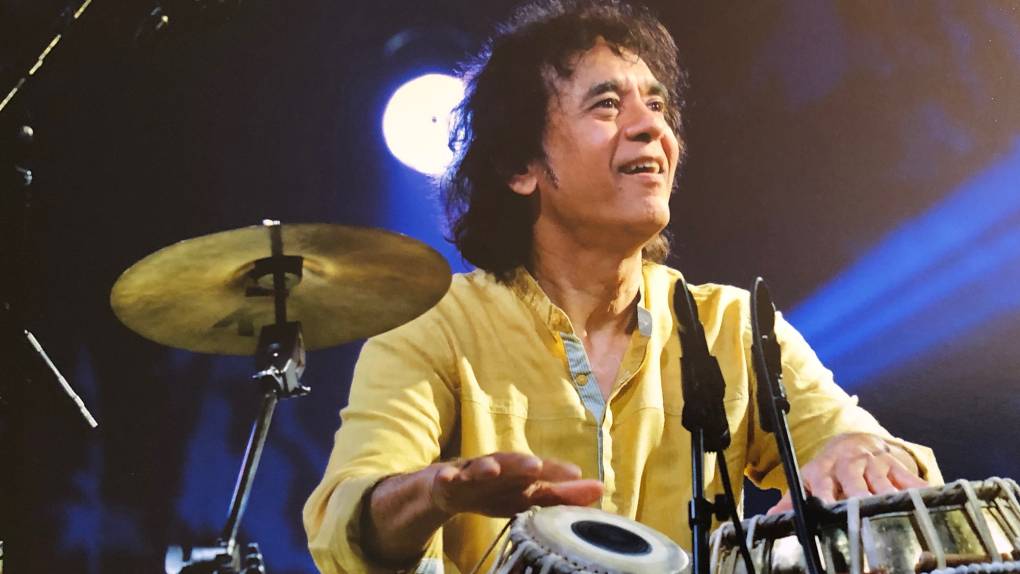
"caption": "Zakir Hussain will be celebrated at Grace Cathedral on Feb. 28 by musicians he performed with and inspired, including Mickey Hart, Charles Lloyd, Joshua Redman, Julian Lage, Bela Fleck and others.",
"credit": "JL Neveu",
"altTag": "A man in a yellow top looks upward while playing round Indian drums",
"description": null,
"imgSizes": {
"medium": {
"file": "https://cdn.kqed.org/wp-content/uploads/sites/2/2025/01/Zakir-Hussain-credit-JL-Neveu-800x450.jpg",
"width": 800,
"height": 450,
"mimeType": "image/jpeg"
},
"large": {
"file": "https://cdn.kqed.org/wp-content/uploads/sites/2/2025/01/Zakir-Hussain-credit-JL-Neveu-1020x574.jpg",
"width": 1020,
"height": 574,
"mimeType": "image/jpeg"
},
"thumbnail": {
"file": "https://cdn.kqed.org/wp-content/uploads/sites/2/2025/01/Zakir-Hussain-credit-JL-Neveu-160x90.jpg",
"width": 160,
"height": 90,
"mimeType": "image/jpeg"
},
"medium_large": {
"file": "https://cdn.kqed.org/wp-content/uploads/sites/2/2025/01/Zakir-Hussain-credit-JL-Neveu-768x432.jpg",
"width": 768,
"height": 432,
"mimeType": "image/jpeg"
},
"1536x1536": {
"file": "https://cdn.kqed.org/wp-content/uploads/sites/2/2025/01/Zakir-Hussain-credit-JL-Neveu-1536x864.jpg",
"width": 1536,
"height": 864,
"mimeType": "image/jpeg"
},
"post-thumbnail": {
"file": "https://cdn.kqed.org/wp-content/uploads/sites/2/2025/01/Zakir-Hussain-credit-JL-Neveu-672x372.jpg",
"width": 672,
"height": 372,
"mimeType": "image/jpeg"
},
"twentyfourteen-full-width": {
"file": "https://cdn.kqed.org/wp-content/uploads/sites/2/2025/01/Zakir-Hussain-credit-JL-Neveu-1038x576.jpg",
"width": 1038,
"height": 576,
"mimeType": "image/jpeg"
},
"full-width": {
"file": "https://cdn.kqed.org/wp-content/uploads/sites/2/2025/01/Zakir-Hussain-credit-JL-Neveu-1920x1080.jpg",
"width": 1920,
"height": 1080,
"mimeType": "image/jpeg"
},
"kqedFullSize": {
"file": "https://cdn.kqed.org/wp-content/uploads/sites/2/2025/01/Zakir-Hussain-credit-JL-Neveu.jpg",
"width": 2000,
"height": 1125
}
},
"isLoading": false,
"fetchFailed": false
},
"arts_13970243": {
"type": "attachments",
"id": "arts_13970243",
"meta": {
"index": "attachments_1716263798",
"site": "arts",
"id": "13970243",
"found": true
},
"title": "MelatiCitrawireja_3",
"publishDate": 1736832872,
"status": "inherit",
"parent": 13970143,
"modified": 1736833013,
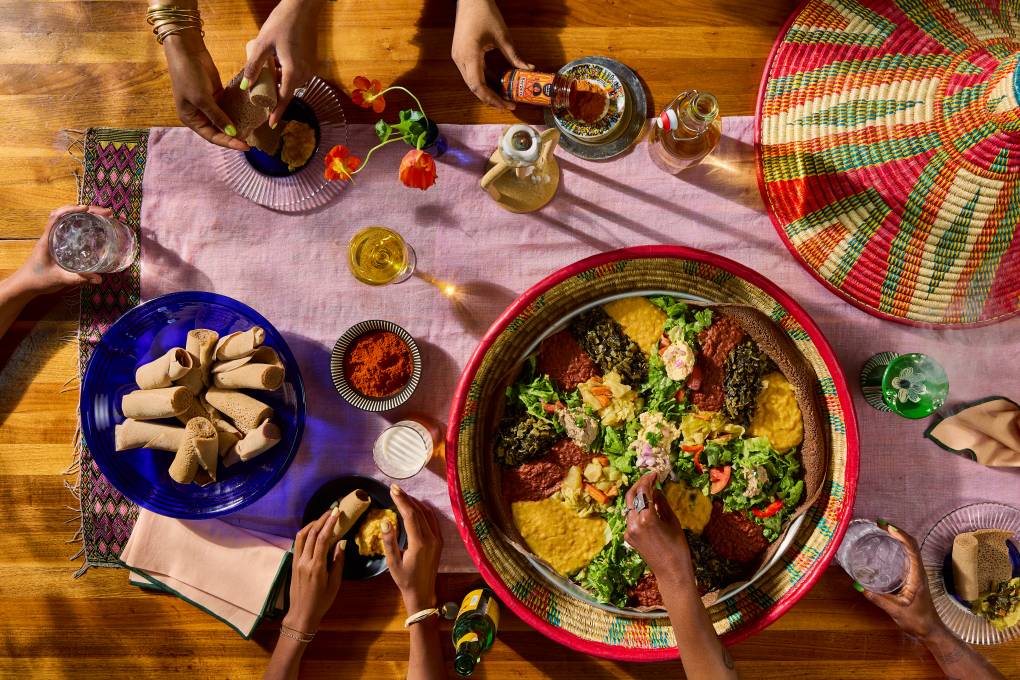
"caption": "A sample of the food offered at Cafe Colucci.",
"credit": "Melati Citrawireja",
"altTag": "A sample of the food offered at Cafe Colucci.",
"description": "A sample of the food offered at Cafe Colucci.",
"imgSizes": {
"medium": {
"file": "https://cdn.kqed.org/wp-content/uploads/sites/2/2025/01/MelatiCitrawireja_3-800x533.jpg",
"width": 800,
"height": 533,
"mimeType": "image/jpeg"
},
"large": {
"file": "https://cdn.kqed.org/wp-content/uploads/sites/2/2025/01/MelatiCitrawireja_3-1020x680.jpg",
"width": 1020,
"height": 680,
"mimeType": "image/jpeg"
},
"thumbnail": {
"file": "https://cdn.kqed.org/wp-content/uploads/sites/2/2025/01/MelatiCitrawireja_3-160x107.jpg",
"width": 160,
"height": 107,
"mimeType": "image/jpeg"
},
"medium_large": {
"file": "https://cdn.kqed.org/wp-content/uploads/sites/2/2025/01/MelatiCitrawireja_3-768x512.jpg",
"width": 768,
"height": 512,
"mimeType": "image/jpeg"
},
"1536x1536": {
"file": "https://cdn.kqed.org/wp-content/uploads/sites/2/2025/01/MelatiCitrawireja_3-1536x1024.jpg",
"width": 1536,
"height": 1024,
"mimeType": "image/jpeg"
},
"2048x2048": {
"file": "https://cdn.kqed.org/wp-content/uploads/sites/2/2025/01/MelatiCitrawireja_3-2048x1366.jpg",
"width": 2048,
"height": 1366,
"mimeType": "image/jpeg"
},
"post-thumbnail": {
"file": "https://cdn.kqed.org/wp-content/uploads/sites/2/2025/01/MelatiCitrawireja_3-672x372.jpg",
"width": 672,
"height": 372,
"mimeType": "image/jpeg"
},
"twentyfourteen-full-width": {
"file": "https://cdn.kqed.org/wp-content/uploads/sites/2/2025/01/MelatiCitrawireja_3-1038x576.jpg",
"width": 1038,
"height": 576,
"mimeType": "image/jpeg"
},
"full-width": {
"file": "https://cdn.kqed.org/wp-content/uploads/sites/2/2025/01/MelatiCitrawireja_3-1920x1280.jpg",
"width": 1920,
"height": 1280,
"mimeType": "image/jpeg"
},
"kqedFullSize": {
"file": "https://cdn.kqed.org/wp-content/uploads/sites/2/2025/01/MelatiCitrawireja_3-scaled.jpg",
"width": 2560,
"height": 1707
}
},
"isLoading": false,
"fetchFailed": false
},
"arts_13969517": {
"type": "attachments",
"id": "arts_13969517",
"meta": {
"index": "attachments_1716263798",
"site": "arts",
"id": "13969517",
"found": true
},
"title": "INDIA-ART-MUSIC-MUSEUM",
"publishDate": 1734313365,
"status": "inherit",
"parent": 13969516,
"modified": 1734313495,
"caption": "Indian tabla virtuoso Ustad Zakir Hussain performs at a concert at the Indian Music Experience (IME), Indias first interactive music museum, in Bangalore on July 27, 2019.",
"credit": "Manjunath Kiran | AFP via Getty Images",
"altTag": null,
"description": "Indian tabala virtuoso Ustad Zakir Hussain performs at a concert at the Indian Music Experience (IME), Indias first interactive music museum, in Bangalore on July 27, 2019.",
"imgSizes": {
"medium": {
"file": "https://cdn.kqed.org/wp-content/uploads/sites/2/2024/12/gettyimages-1158054524-800x533.jpeg",
"width": 800,
"height": 533,
"mimeType": "image/jpeg"
},
"large": {
"file": "https://cdn.kqed.org/wp-content/uploads/sites/2/2024/12/gettyimages-1158054524-1020x680.jpeg",
"width": 1020,
"height": 680,
"mimeType": "image/jpeg"
},
"thumbnail": {
"file": "https://cdn.kqed.org/wp-content/uploads/sites/2/2024/12/gettyimages-1158054524-160x107.jpeg",
"width": 160,
"height": 107,
"mimeType": "image/jpeg"
},
"medium_large": {
"file": "https://cdn.kqed.org/wp-content/uploads/sites/2/2024/12/gettyimages-1158054524-768x512.jpeg",
"width": 768,
"height": 512,
"mimeType": "image/jpeg"
},
"1536x1536": {
"file": "https://cdn.kqed.org/wp-content/uploads/sites/2/2024/12/gettyimages-1158054524-1536x1024.jpeg",
"width": 1536,
"height": 1024,
"mimeType": "image/jpeg"
},
"2048x2048": {
"file": "https://cdn.kqed.org/wp-content/uploads/sites/2/2024/12/gettyimages-1158054524-2048x1365.jpeg",
"width": 2048,
"height": 1365,
"mimeType": "image/jpeg"
},
"post-thumbnail": {
"file": "https://cdn.kqed.org/wp-content/uploads/sites/2/2024/12/gettyimages-1158054524-672x372.jpeg",
"width": 672,
"height": 372,
"mimeType": "image/jpeg"
},
"twentyfourteen-full-width": {
"file": "https://cdn.kqed.org/wp-content/uploads/sites/2/2024/12/gettyimages-1158054524-1038x576.jpeg",
"width": 1038,
"height": 576,
"mimeType": "image/jpeg"
},
"full-width": {
"file": "https://cdn.kqed.org/wp-content/uploads/sites/2/2024/12/gettyimages-1158054524-1920x1280.jpeg",
"width": 1920,
"height": 1280,
"mimeType": "image/jpeg"
},
"kqedFullSize": {
"file": "https://cdn.kqed.org/wp-content/uploads/sites/2/2024/12/gettyimages-1158054524-scaled.jpeg",
"width": 2560,
"height": 1707
}
},
"isLoading": false,
"fetchFailed": false
},
"arts_13969329": {
"type": "attachments",
"id": "arts_13969329",
"meta": {
"index": "attachments_1716263798",
"site": "arts",
"id": "13969329",
"found": true
},
"title": "30_20241207_JazzConservatory_Middleton_256",
"publishDate": 1733934854,
"status": "inherit",
"parent": 0,
"modified": 1733953701,
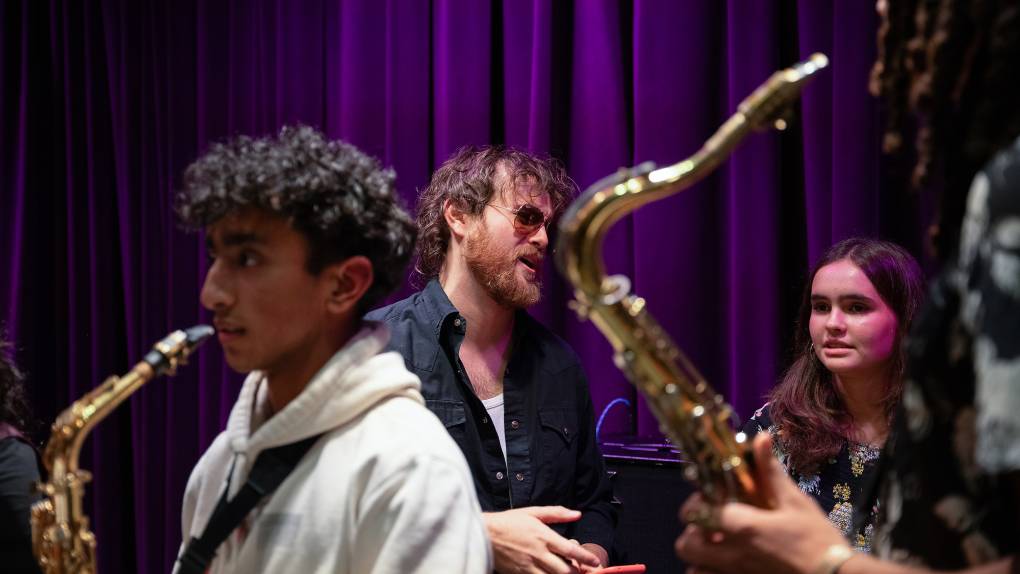
"caption": "Simon Keyser Petty, center, Jazzschool Community Music School professor of funk, on stage at the California Jazz Conservatory’s concert hall in Berkeley, Calif., on Saturday, Dec. 7, 2024, with students Tobey Palathingal, 15, left, and Rea Horgan, 15, before their performance begins. With its degree program ending, the organization is turning its attention to the Jazzschool, a community education program.",
"credit": "Florence Middleton for KQED",
"altTag": "A man in sunglasses and a beard, center, talks with young students holding horns",
"description": null,
"imgSizes": {
"medium": {
"file": "https://cdn.kqed.org/wp-content/uploads/sites/2/2024/12/30_20241207_JazzConservatory_Middleton_256-1-800x450.jpg",
"width": 800,
"height": 450,
"mimeType": "image/jpeg"
},
"large": {
"file": "https://cdn.kqed.org/wp-content/uploads/sites/2/2024/12/30_20241207_JazzConservatory_Middleton_256-1-1020x574.jpg",
"width": 1020,
"height": 574,
"mimeType": "image/jpeg"
},
"thumbnail": {
"file": "https://cdn.kqed.org/wp-content/uploads/sites/2/2024/12/30_20241207_JazzConservatory_Middleton_256-1-160x90.jpg",
"width": 160,
"height": 90,
"mimeType": "image/jpeg"
},
"medium_large": {
"file": "https://cdn.kqed.org/wp-content/uploads/sites/2/2024/12/30_20241207_JazzConservatory_Middleton_256-1-768x432.jpg",
"width": 768,
"height": 432,
"mimeType": "image/jpeg"
},
"1536x1536": {
"file": "https://cdn.kqed.org/wp-content/uploads/sites/2/2024/12/30_20241207_JazzConservatory_Middleton_256-1-1536x864.jpg",
"width": 1536,
"height": 864,
"mimeType": "image/jpeg"
},
"post-thumbnail": {
"file": "https://cdn.kqed.org/wp-content/uploads/sites/2/2024/12/30_20241207_JazzConservatory_Middleton_256-1-672x372.jpg",
"width": 672,
"height": 372,
"mimeType": "image/jpeg"
},
"twentyfourteen-full-width": {
"file": "https://cdn.kqed.org/wp-content/uploads/sites/2/2024/12/30_20241207_JazzConservatory_Middleton_256-1-1038x576.jpg",
"width": 1038,
"height": 576,
"mimeType": "image/jpeg"
},
"full-width": {
"file": "https://cdn.kqed.org/wp-content/uploads/sites/2/2024/12/30_20241207_JazzConservatory_Middleton_256-1-1920x1080.jpg",
"width": 1920,
"height": 1080,
"mimeType": "image/jpeg"
},
"kqedFullSize": {
"file": "https://cdn.kqed.org/wp-content/uploads/sites/2/2024/12/30_20241207_JazzConservatory_Middleton_256-1.jpg",
"width": 2000,
"height": 1125
}
},
"isLoading": false,
"fetchFailed": false
},
"arts_13967971": {
"type": "attachments",
"id": "arts_13967971",
"meta": {
"index": "attachments_1716263798",
"site": "arts",
"id": "13967971",
"found": true
},
"title": "OaktownJazz.16x9",
"publishDate": 1731436071,
"status": "inherit",
"parent": 13967867,
"modified": 1731436183,
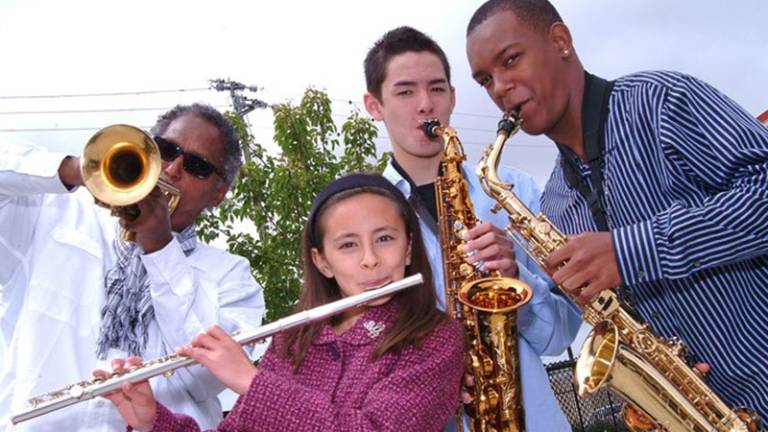
"caption": "Oaktown Jazz Workshops’ late Founding Director Khalil Shaheed poses with students, circa 2008. ",
"credit": "Courtesy of Oaktown Jazz Workshops",
"altTag": "Oaktown Jazz Workshops’ late Founding Director Khalil Shaheed poses next to a handful of students, as they all hold an assortment of instruments, circa 2008.",
"description": null,
"imgSizes": {
"thumbnail": {
"file": "https://cdn.kqed.org/wp-content/uploads/sites/2/2024/11/OaktownJazz.16x9-160x90.jpg",
"width": 160,
"height": 90,
"mimeType": "image/jpeg"
},
"medium_large": {
"file": "https://cdn.kqed.org/wp-content/uploads/sites/2/2024/11/OaktownJazz.16x9-768x432.jpg",
"width": 768,
"height": 432,
"mimeType": "image/jpeg"
},
"post-thumbnail": {
"file": "https://cdn.kqed.org/wp-content/uploads/sites/2/2024/11/OaktownJazz.16x9-672x372.jpg",
"width": 672,
"height": 372,
"mimeType": "image/jpeg"
},
"kqedFullSize": {
"file": "https://cdn.kqed.org/wp-content/uploads/sites/2/2024/11/OaktownJazz.16x9.jpg",
"width": 800,
"height": 450
}
},
"isLoading": false,
"fetchFailed": false
},
"arts_13967634": {
"type": "attachments",
"id": "arts_13967634",
"meta": {
"index": "attachments_1716263798",
"site": "arts",
"id": "13967634",
"found": true
},
"title": "AP24309324453900",
"publishDate": 1730735423,
"status": "inherit",
"parent": 13967633,
"modified": 1730735474,
"caption": "Composer Quincy Jones at his home studio in October 1974 writing music, listening to a recording on his headphones.",
"credit": "AP Photo/George Brich, File",
"altTag": "A black man wearing a sweater and headphones notates music on a music staff at his desk, with vinyl LPs on a shelf in the background",
"description": null,
"imgSizes": {
"medium": {
"file": "https://cdn.kqed.org/wp-content/uploads/sites/2/2024/11/AP24309324453900-800x534.jpg",
"width": 800,
"height": 534,
"mimeType": "image/jpeg"
},
"large": {
"file": "https://cdn.kqed.org/wp-content/uploads/sites/2/2024/11/AP24309324453900-1020x681.jpg",
"width": 1020,
"height": 681,
"mimeType": "image/jpeg"
},
"thumbnail": {
"file": "https://cdn.kqed.org/wp-content/uploads/sites/2/2024/11/AP24309324453900-160x107.jpg",
"width": 160,
"height": 107,
"mimeType": "image/jpeg"
},
"medium_large": {
"file": "https://cdn.kqed.org/wp-content/uploads/sites/2/2024/11/AP24309324453900-768x513.jpg",
"width": 768,
"height": 513,
"mimeType": "image/jpeg"
},
"1536x1536": {
"file": "https://cdn.kqed.org/wp-content/uploads/sites/2/2024/11/AP24309324453900-1536x1026.jpg",
"width": 1536,
"height": 1026,
"mimeType": "image/jpeg"
},
"post-thumbnail": {
"file": "https://cdn.kqed.org/wp-content/uploads/sites/2/2024/11/AP24309324453900-672x372.jpg",
"width": 672,
"height": 372,
"mimeType": "image/jpeg"
},
"twentyfourteen-full-width": {
"file": "https://cdn.kqed.org/wp-content/uploads/sites/2/2024/11/AP24309324453900-1038x576.jpg",
"width": 1038,
"height": 576,
"mimeType": "image/jpeg"
},
"full-width": {
"file": "https://cdn.kqed.org/wp-content/uploads/sites/2/2024/11/AP24309324453900-1920x1283.jpg",
"width": 1920,
"height": 1283,
"mimeType": "image/jpeg"
},
"kqedFullSize": {
"file": "https://cdn.kqed.org/wp-content/uploads/sites/2/2024/11/AP24309324453900.jpg",
"width": 2000,
"height": 1336
}
},
"isLoading": false,
"fetchFailed": false
},
"arts_13967096": {
"type": "attachments",
"id": "arts_13967096",
"meta": {
"index": "attachments_1716263798",
"site": "arts",
"id": "13967096",
"found": true
},
"title": "‘Bird in Kansas City (Live)’ by Charlie Parker.",
"publishDate": 1729703469,
"status": "inherit",
"parent": 13967094,
"modified": 1729703507,
"caption": "‘Bird in Kansas City (Live)’ by Charlie Parker.",
"credit": "Verve Records via AP",
"altTag": "An album cover showing drums and a Black man playing a saxophone.",
"description": null,
"imgSizes": {
"medium": {
"file": "https://cdn.kqed.org/wp-content/uploads/sites/2/2024/10/cp-800x542.png",
"width": 800,
"height": 542,
"mimeType": "image/png"
},
"large": {
"file": "https://cdn.kqed.org/wp-content/uploads/sites/2/2024/10/cp-1020x691.png",
"width": 1020,
"height": 691,
"mimeType": "image/png"
},
"thumbnail": {
"file": "https://cdn.kqed.org/wp-content/uploads/sites/2/2024/10/cp-160x108.png",
"width": 160,
"height": 108,
"mimeType": "image/png"
},
"medium_large": {
"file": "https://cdn.kqed.org/wp-content/uploads/sites/2/2024/10/cp-768x520.png",
"width": 768,
"height": 520,
"mimeType": "image/png"
},
"1536x1536": {
"file": "https://cdn.kqed.org/wp-content/uploads/sites/2/2024/10/cp-1536x1040.png",
"width": 1536,
"height": 1040,
"mimeType": "image/png"
},
"post-thumbnail": {
"file": "https://cdn.kqed.org/wp-content/uploads/sites/2/2024/10/cp-672x372.png",
"width": 672,
"height": 372,
"mimeType": "image/png"
},
"twentyfourteen-full-width": {
"file": "https://cdn.kqed.org/wp-content/uploads/sites/2/2024/10/cp-1038x576.png",
"width": 1038,
"height": 576,
"mimeType": "image/png"
},
"full-width": {
"file": "https://cdn.kqed.org/wp-content/uploads/sites/2/2024/10/cp-1920x1300.png",
"width": 1920,
"height": 1300,
"mimeType": "image/png"
},
"kqedFullSize": {
"file": "https://cdn.kqed.org/wp-content/uploads/sites/2/2024/10/cp.png",
"width": 2000,
"height": 1354
}
},
"isLoading": false,
"fetchFailed": false
},
"arts_13966672": {
"type": "attachments",
"id": "arts_13966672",
"meta": {
"index": "attachments_1716263798",
"site": "arts",
"id": "13966672",
"found": true
},
"title": "meta_eyJzcmNCdWNrZXQiOiJiemdsZmlsZXMifQ==-1",
"publishDate": 1729033699,
"status": "inherit",
"parent": 13966547,
"modified": 1729034375,
"caption": "John Calloway performs with his Afro-FIlipino Project.",
"credit": "Bob Hsiang Photography",
"altTag": null,
"description": null,
"imgSizes": {
"medium": {
"file": "https://cdn.kqed.org/wp-content/uploads/sites/2/2024/10/meta_eyJzcmNCdWNrZXQiOiJiemdsZmlsZXMifQ-1-800x562.jpg",
"width": 800,
"height": 562,
"mimeType": "image/jpeg"
},
"large": {
"file": "https://cdn.kqed.org/wp-content/uploads/sites/2/2024/10/meta_eyJzcmNCdWNrZXQiOiJiemdsZmlsZXMifQ-1-1020x716.jpg",
"width": 1020,
"height": 716,
"mimeType": "image/jpeg"
},
"thumbnail": {
"file": "https://cdn.kqed.org/wp-content/uploads/sites/2/2024/10/meta_eyJzcmNCdWNrZXQiOiJiemdsZmlsZXMifQ-1-160x112.jpg",
"width": 160,
"height": 112,
"mimeType": "image/jpeg"
},
"medium_large": {
"file": "https://cdn.kqed.org/wp-content/uploads/sites/2/2024/10/meta_eyJzcmNCdWNrZXQiOiJiemdsZmlsZXMifQ-1-768x539.jpg",
"width": 768,
"height": 539,
"mimeType": "image/jpeg"
},
"1536x1536": {
"file": "https://cdn.kqed.org/wp-content/uploads/sites/2/2024/10/meta_eyJzcmNCdWNrZXQiOiJiemdsZmlsZXMifQ-1-1536x1078.jpg",
"width": 1536,
"height": 1078,
"mimeType": "image/jpeg"
},
"post-thumbnail": {
"file": "https://cdn.kqed.org/wp-content/uploads/sites/2/2024/10/meta_eyJzcmNCdWNrZXQiOiJiemdsZmlsZXMifQ-1-672x372.jpg",
"width": 672,
"height": 372,
"mimeType": "image/jpeg"
},
"twentyfourteen-full-width": {
"file": "https://cdn.kqed.org/wp-content/uploads/sites/2/2024/10/meta_eyJzcmNCdWNrZXQiOiJiemdsZmlsZXMifQ-1-1038x576.jpg",
"width": 1038,
"height": 576,
"mimeType": "image/jpeg"
},
"full-width": {
"file": "https://cdn.kqed.org/wp-content/uploads/sites/2/2024/10/meta_eyJzcmNCdWNrZXQiOiJiemdsZmlsZXMifQ-1-1920x1348.jpg",
"width": 1920,
"height": 1348,
"mimeType": "image/jpeg"
},
"kqedFullSize": {
"file": "https://cdn.kqed.org/wp-content/uploads/sites/2/2024/10/meta_eyJzcmNCdWNrZXQiOiJiemdsZmlsZXMifQ-1.jpg",
"width": 2000,
"height": 1404
}
},
"isLoading": false,
"fetchFailed": false
},
"arts_13964008": {
"type": "attachments",
"id": "arts_13964008",
"meta": {
"index": "attachments_1716263798",
"site": "arts",
"id": "13964008",
"found": true
},
"title": "WideHive.GregoryHowe",
"publishDate": 1725997737,
"status": "inherit",
"parent": 13963945,
"modified": 1726004998,
"caption": "Gregory Howe pictured at Wide Hive's studio in Berkeley, where he records legendary jazz musicians he likes to describe as ‘soul warriors.’",
"credit": "Steve Veilleux",
"altTag": "A man in a beard, button-down shirt and jeans sits at a mixing console, seen from above",
"description": null,
"imgSizes": {
"medium": {
"file": "https://cdn.kqed.org/wp-content/uploads/sites/2/2024/09/WideHive.GregoryHowe-800x533.jpg",
"width": 800,
"height": 533,
"mimeType": "image/jpeg"
},
"large": {
"file": "https://cdn.kqed.org/wp-content/uploads/sites/2/2024/09/WideHive.GregoryHowe-1020x680.jpg",
"width": 1020,
"height": 680,
"mimeType": "image/jpeg"
},
"thumbnail": {
"file": "https://cdn.kqed.org/wp-content/uploads/sites/2/2024/09/WideHive.GregoryHowe-160x107.jpg",
"width": 160,
"height": 107,
"mimeType": "image/jpeg"
},
"medium_large": {
"file": "https://cdn.kqed.org/wp-content/uploads/sites/2/2024/09/WideHive.GregoryHowe-768x512.jpg",
"width": 768,
"height": 512,
"mimeType": "image/jpeg"
},
"1536x1536": {
"file": "https://cdn.kqed.org/wp-content/uploads/sites/2/2024/09/WideHive.GregoryHowe-1536x1024.jpg",
"width": 1536,
"height": 1024,
"mimeType": "image/jpeg"
},
"post-thumbnail": {
"file": "https://cdn.kqed.org/wp-content/uploads/sites/2/2024/09/WideHive.GregoryHowe-672x372.jpg",
"width": 672,
"height": 372,
"mimeType": "image/jpeg"
},
"twentyfourteen-full-width": {
"file": "https://cdn.kqed.org/wp-content/uploads/sites/2/2024/09/WideHive.GregoryHowe-1038x576.jpg",
"width": 1038,
"height": 576,
"mimeType": "image/jpeg"
},
"kqedFullSize": {
"file": "https://cdn.kqed.org/wp-content/uploads/sites/2/2024/09/WideHive.GregoryHowe.jpg",
"width": 1920,
"height": 1280
}
},
"isLoading": false,
"fetchFailed": false
},
"arts_13963177": {
"type": "attachments",
"id": "arts_13963177",
"meta": {
"index": "attachments_1716263798",
"site": "arts",
"id": "13963177",
"found": true
},
"title": "AminaScott",
"publishDate": 1724632666,
"status": "inherit",
"parent": 13962843,
"modified": 1724695879,
"caption": "Oakland-raised bassist Amina Scott is one of many dynamic jazz performers in the Bay Area this fall, playing the Back Room in Berkeley on Oct. 26.",
"credit": "Artist Photo",
"altTag": null,
"description": null,
"imgSizes": {
"medium": {
"file": "https://cdn.kqed.org/wp-content/uploads/sites/2/2024/08/AminaScott-800x500.jpg",
"width": 800,
"height": 500,
"mimeType": "image/jpeg"
},
"large": {
"file": "https://cdn.kqed.org/wp-content/uploads/sites/2/2024/08/AminaScott-1020x638.jpg",
"width": 1020,
"height": 638,
"mimeType": "image/jpeg"
},
"thumbnail": {
"file": "https://cdn.kqed.org/wp-content/uploads/sites/2/2024/08/AminaScott-160x100.jpg",
"width": 160,
"height": 100,
"mimeType": "image/jpeg"
},
"medium_large": {
"file": "https://cdn.kqed.org/wp-content/uploads/sites/2/2024/08/AminaScott-768x480.jpg",
"width": 768,
"height": 480,
"mimeType": "image/jpeg"
},
"post-thumbnail": {
"file": "https://cdn.kqed.org/wp-content/uploads/sites/2/2024/08/AminaScott-672x372.jpg",
"width": 672,
"height": 372,
"mimeType": "image/jpeg"
},
"twentyfourteen-full-width": {
"file": "https://cdn.kqed.org/wp-content/uploads/sites/2/2024/08/AminaScott-1038x576.jpg",
"width": 1038,
"height": 576,
"mimeType": "image/jpeg"
},
"kqedFullSize": {
"file": "https://cdn.kqed.org/wp-content/uploads/sites/2/2024/08/AminaScott.jpg",
"width": 1536,
"height": 960
}
},
"isLoading": false,
"fetchFailed": false
},
"arts_13960644": {
"type": "attachments",
"id": "arts_13960644",
"meta": {
"index": "attachments_1716263798",
"site": "arts",
"id": "13960644",
"found": true
},
"title": "Standing on the Corner credit Justin French",
"publishDate": 1720204859,
"status": "inherit",
"parent": 13960643,
"modified": 1720205181,
"caption": "An early incarnation of Standing on the Corner, led by Gio Escobar (second from right). ‘Anybody who participates in the meeting of a goal is a member of the ensemble,’ Escobar told the New York Times in 2023. ",
"credit": "Justin French",
"altTag": null,
"description": null,
"imgSizes": {
"medium": {
"file": "https://cdn.kqed.org/wp-content/uploads/sites/2/2024/07/Standing-on-the-Corner-credit-Justin-French-800x800.jpg",
"width": 800,
"height": 800,
"mimeType": "image/jpeg"
},
"large": {
"file": "https://cdn.kqed.org/wp-content/uploads/sites/2/2024/07/Standing-on-the-Corner-credit-Justin-French-1020x1020.jpg",
"width": 1020,
"height": 1020,
"mimeType": "image/jpeg"
},
"thumbnail": {
"file": "https://cdn.kqed.org/wp-content/uploads/sites/2/2024/07/Standing-on-the-Corner-credit-Justin-French-160x160.jpg",
"width": 160,
"height": 160,
"mimeType": "image/jpeg"
},
"medium_large": {
"file": "https://cdn.kqed.org/wp-content/uploads/sites/2/2024/07/Standing-on-the-Corner-credit-Justin-French-768x768.jpg",
"width": 768,
"height": 768,
"mimeType": "image/jpeg"
},
"post-thumbnail": {
"file": "https://cdn.kqed.org/wp-content/uploads/sites/2/2024/07/Standing-on-the-Corner-credit-Justin-French-672x372.jpg",
"width": 672,
"height": 372,
"mimeType": "image/jpeg"
},
"twentyfourteen-full-width": {
"file": "https://cdn.kqed.org/wp-content/uploads/sites/2/2024/07/Standing-on-the-Corner-credit-Justin-French-1038x576.jpg",
"width": 1038,
"height": 576,
"mimeType": "image/jpeg"
},
"kqedFullSize": {
"file": "https://cdn.kqed.org/wp-content/uploads/sites/2/2024/07/Standing-on-the-Corner-credit-Justin-French.jpg",
"width": 1200,
"height": 1200
}
},
"isLoading": false,
"fetchFailed": false
},
"arts_13959906": {
"type": "attachments",
"id": "arts_13959906",
"meta": {
"index": "attachments_1716263798",
"site": "arts",
"id": "13959906",
"found": true
},
"title": "SunRa.London.16x9",
"publishDate": 1718645421,
"status": "inherit",
"parent": 13959879,
"modified": 1718645633,
"caption": "Sun Ra performing at The Venue in London on July 27, 1982. ",
"credit": "David Corio/Redferns",
"altTag": "A Black man in a glittery headpiece and shoulder sash tilts his head back, facing right, seen in profile",
"description": null,
"imgSizes": {
"medium": {
"file": "https://cdn.kqed.org/wp-content/uploads/sites/2/2024/06/SunRa.London.16x9-800x450.jpg",
"width": 800,
"height": 450,
"mimeType": "image/jpeg"
},
"large": {
"file": "https://cdn.kqed.org/wp-content/uploads/sites/2/2024/06/SunRa.London.16x9-1020x574.jpg",
"width": 1020,
"height": 574,
"mimeType": "image/jpeg"
},
"thumbnail": {
"file": "https://cdn.kqed.org/wp-content/uploads/sites/2/2024/06/SunRa.London.16x9-160x90.jpg",
"width": 160,
"height": 90,
"mimeType": "image/jpeg"
},
"medium_large": {
"file": "https://cdn.kqed.org/wp-content/uploads/sites/2/2024/06/SunRa.London.16x9-768x432.jpg",
"width": 768,
"height": 432,
"mimeType": "image/jpeg"
},
"1536x1536": {
"file": "https://cdn.kqed.org/wp-content/uploads/sites/2/2024/06/SunRa.London.16x9-1536x864.jpg",
"width": 1536,
"height": 864,
"mimeType": "image/jpeg"
},
"post-thumbnail": {
"file": "https://cdn.kqed.org/wp-content/uploads/sites/2/2024/06/SunRa.London.16x9-672x372.jpg",
"width": 672,
"height": 372,
"mimeType": "image/jpeg"
},
"twentyfourteen-full-width": {
"file": "https://cdn.kqed.org/wp-content/uploads/sites/2/2024/06/SunRa.London.16x9-1038x576.jpg",
"width": 1038,
"height": 576,
"mimeType": "image/jpeg"
},
"kqedFullSize": {
"file": "https://cdn.kqed.org/wp-content/uploads/sites/2/2024/06/SunRa.London.16x9.jpg",
"width": 1920,
"height": 1080
}
},
"isLoading": false,
"fetchFailed": false
}
},
"audioPlayerReducer": {
"postId": "stream_live",
"isPaused": true,
"isPlaying": false,
"pfsActive": false,
"pledgeModalIsOpen": true,
"playerDrawerIsOpen": false,
"liveAudioPlayStartedAt": 0,
"liveAudioPlayContext": ""
},
"authorsReducer": {
"byline_arts_13969516": {
"type": "authors",
"id": "byline_arts_13969516",
"meta": {
"override": true
},
"slug": "byline_arts_13969516",
"name": "Juliana Kim",
"isLoading": false
},
"byline_arts_13967633": {
"type": "authors",
"id": "byline_arts_13967633",
"meta": {
"override": true
},
"slug": "byline_arts_13967633",
"name": "Hillel Italie, Associated Press",
"isLoading": false
},
"byline_arts_13967094": {
"type": "authors",
"id": "byline_arts_13967094",
"meta": {
"override": true
},
"slug": "byline_arts_13967094",
"name": "Steven Wine, Associated Press",
"isLoading": false
},
"byline_arts_13959879": {
"type": "authors",
"id": "byline_arts_13959879",
"meta": {
"override": true
},
"slug": "byline_arts_13959879",
"name": "Daniel Bromfield",
"isLoading": false
},
"agilbert": {
"type": "authors",
"id": "86",
"meta": {
"index": "authors_1716337520",
"id": "86",
"found": true
},
"name": "Andrew Gilbert",
"firstName": "Andrew",
"lastName": "Gilbert",
"slug": "agilbert",
"email": "jazzscribe@aol.com",
"display_author_email": false,
"staff_mastheads": [],
"title": "KQED Contributor",
"bio": "A Los Angeles native based in the Berkeley area since 1996, Andrew Gilbert covers jazz, international music and dance for KQED's \u003ci>California Report, \u003c/i>the\u003ci> Mercury News\u003c/i>, \u003ci>San Francisco Chronicle\u003c/i>, \u003ci>Berkeleyside.com\u003c/i>, and other publications. He is available for weddings and bar and bat mitzvahs. #jazzscribe",
"avatar": "https://secure.gravatar.com/avatar/d7bcafdbefdd39e9a68f88724ca616eb4e7a5a6bff9cdfb62de652a1e1751471?s=600&d=blank&r=g",
"twitter": null,
"bluesky": null,
"facebook": null,
"instagram": null,
"linkedin": null,
"sites": [
{
"site": "arts",
"roles": [
"Contributor",
"author"
]
},
{
"site": "news",
"roles": [
"author"
]
}
],
"headData": {
"title": "Andrew Gilbert | KQED",
"description": "KQED Contributor",
"ogImgSrc": "https://secure.gravatar.com/avatar/d7bcafdbefdd39e9a68f88724ca616eb4e7a5a6bff9cdfb62de652a1e1751471?s=600&d=blank&r=g",
"twImgSrc": "https://secure.gravatar.com/avatar/d7bcafdbefdd39e9a68f88724ca616eb4e7a5a6bff9cdfb62de652a1e1751471?s=600&d=blank&r=g"
},
"isLoading": false,
"link": "/author/agilbert"
},
"gmeline": {
"type": "authors",
"id": "185",
"meta": {
"index": "authors_1716337520",
"id": "185",
"found": true
},
"name": "Gabe Meline",
"firstName": "Gabe",
"lastName": "Meline",
"slug": "gmeline",
"email": "gmeline@kqed.org",
"display_author_email": true,
"staff_mastheads": [
"arts"
],
"title": "Senior Editor, KQED Arts & Culture",
"bio": "Gabe Meline entered journalism at age 15 making photocopied zines, and has since earned awards from the Edward R. Murrow Awards, the Society for Professional Journalists, the Online Journalism Awards, the Association of Alternative Newsweeklies and the California Newspaper Publishers Association. Prior to KQED, he was the editor of the \u003cem>North Bay Bohemian\u003c/em> and a touring musician. He lives with his wife and daughter in his hometown of Santa Rosa, CA.",
"avatar": "https://secure.gravatar.com/avatar/5bebe57be0d8bc2dd318934feb47299e2d2d10cba28d09d8d7afb389a2ce2bdd?s=600&d=blank&r=g",
"twitter": null,
"bluesky": null,
"facebook": null,
"instagram": null,
"linkedin": null,
"sites": [
{
"site": "",
"roles": [
"editor"
]
},
{
"site": "arts",
"roles": [
"administrator"
]
},
{
"site": "artschool",
"roles": [
"editor"
]
},
{
"site": "news",
"roles": [
"author"
]
},
{
"site": "pop",
"roles": [
"editor"
]
},
{
"site": "bayareabites",
"roles": [
"editor"
]
},
{
"site": "food",
"roles": [
"editor"
]
},
{
"site": "forum",
"roles": [
"administrator"
]
},
{
"site": "liveblog",
"roles": [
"editor"
]
},
{
"site": "hiphop",
"roles": [
"editor"
]
}
],
"headData": {
"title": "Gabe Meline | KQED",
"description": "Senior Editor, KQED Arts & Culture",
"ogImgSrc": "https://secure.gravatar.com/avatar/5bebe57be0d8bc2dd318934feb47299e2d2d10cba28d09d8d7afb389a2ce2bdd?s=600&d=blank&r=g",
"twImgSrc": "https://secure.gravatar.com/avatar/5bebe57be0d8bc2dd318934feb47299e2d2d10cba28d09d8d7afb389a2ce2bdd?s=600&d=blank&r=g"
},
"isLoading": false,
"link": "/author/gmeline"
},
"ogpenn": {
"type": "authors",
"id": "11491",
"meta": {
"index": "authors_1716337520",
"id": "11491",
"found": true
},
"name": "Pendarvis Harshaw",
"firstName": "Pendarvis",
"lastName": "Harshaw",
"slug": "ogpenn",
"email": "ogpenn@gmail.com",
"display_author_email": false,
"staff_mastheads": [
"arts"
],
"title": "Community Engagement Reporter",
"bio": "Pendarvis Harshaw is an educator, host and writer with KQED Arts.",
"avatar": "https://secure.gravatar.com/avatar/972b77ee8e3f346ae2b00622661187fbfabd059b5693bbdc1475ea7a722fd4cd?s=600&d=blank&r=g",
"twitter": null,
"bluesky": null,
"facebook": null,
"instagram": "ogpenn",
"linkedin": null,
"sites": [
{
"site": "arts",
"roles": [
"administrator"
]
},
{
"site": "news",
"roles": [
"editor"
]
},
{
"site": "bayareabites",
"roles": [
"author"
]
},
{
"site": "hiphop",
"roles": [
"editor"
]
}
],
"headData": {
"title": "Pendarvis Harshaw | KQED",
"description": "Community Engagement Reporter",
"ogImgSrc": "https://secure.gravatar.com/avatar/972b77ee8e3f346ae2b00622661187fbfabd059b5693bbdc1475ea7a722fd4cd?s=600&d=blank&r=g",
"twImgSrc": "https://secure.gravatar.com/avatar/972b77ee8e3f346ae2b00622661187fbfabd059b5693bbdc1475ea7a722fd4cd?s=600&d=blank&r=g"
},
"isLoading": false,
"link": "/author/ogpenn"
},
"hmcdede": {
"type": "authors",
"id": "11635",
"meta": {
"index": "authors_1716337520",
"id": "11635",
"found": true
},
"name": "Holly McDede",
"firstName": "Holly",
"lastName": "McDede",
"slug": "hmcdede",
"email": "hmcdede@KQED.org",
"display_author_email": false,
"staff_mastheads": [],
"title": "KQED Contributor",
"bio": null,
"avatar": "https://secure.gravatar.com/avatar/999d9bf31bb3a2f0511932d99526cb3e?s=600&d=blank&r=g",
"twitter": null,
"facebook": null,
"instagram": null,
"linkedin": null,
"sites": [
{
"site": "arts",
"roles": [
"editor"
]
},
{
"site": "news",
"roles": [
"edit_others_posts",
"editor"
]
},
{
"site": "science",
"roles": [
"editor"
]
},
{
"site": "forum",
"roles": [
"editor"
]
},
{
"site": "perspectives",
"roles": [
"administrator"
]
}
],
"headData": {
"title": "Holly McDede | KQED",
"description": "KQED Contributor",
"ogImgSrc": "https://secure.gravatar.com/avatar/999d9bf31bb3a2f0511932d99526cb3e?s=600&d=blank&r=g",
"twImgSrc": "https://secure.gravatar.com/avatar/999d9bf31bb3a2f0511932d99526cb3e?s=600&d=blank&r=g"
},
"isLoading": false,
"link": "/author/hmcdede"
},
"sfaulise": {
"type": "authors",
"id": "11919",
"meta": {
"index": "authors_1716337520",
"id": "11919",
"found": true
},
"name": "Shannon Faulise",
"firstName": "Shannon",
"lastName": "Faulise",
"slug": "sfaulise",
"email": "sfaulise@kqed.org",
"display_author_email": false,
"staff_mastheads": [],
"title": "Contributor, KQED Arts & Culture",
"bio": "Shannon Faulise is a graduate of the UC Berkeley Graduate School of Journalism, where she concentrated on photojournalism and feature writing. Shannon's photos, audio pieces and written stories have appeared in The Oaklandside, The Redwood City Pulse and KALX. Outside of reporting, Shannon loves kpop, women's sports and concerts. She served as an intern for KQED Arts & Culture in 2024–25.",
"avatar": "https://secure.gravatar.com/avatar/76449df2627a603d6b02f0534ec3c913007029bff4f1c0572071401f9a293a02?s=600&d=blank&r=g",
"twitter": null,
"bluesky": null,
"facebook": null,
"instagram": null,
"linkedin": null,
"sites": [
{
"site": "arts",
"roles": [
"subscriber"
]
}
],
"headData": {
"title": "Shannon Faulise | KQED",
"description": "Contributor, KQED Arts & Culture",
"ogImgSrc": "https://secure.gravatar.com/avatar/76449df2627a603d6b02f0534ec3c913007029bff4f1c0572071401f9a293a02?s=600&d=blank&r=g",
"twImgSrc": "https://secure.gravatar.com/avatar/76449df2627a603d6b02f0534ec3c913007029bff4f1c0572071401f9a293a02?s=600&d=blank&r=g"
},
"isLoading": false,
"link": "/author/sfaulise"
}
},
"pagesReducer": {
"arts_tag_jazz": {
"type": "terms",
"id": "arts_1420",
"meta": {
"index": "terms_1716263798",
"site": "arts",
"id": "1420",
"score": 9.104757
},
"featImg": null,
"name": "jazz",
"description": null,
"taxonomy": "tag",
"headData": {
"twImgId": null,
"twTitle": null,
"ogTitle": null,
"ogImgId": null,
"twDescription": null,
"description": null,
"title": "jazz Archives | KQED Arts",
"ogDescription": null
},
"ttid": 1432,
"slug": "jazz",
"isLoading": false,
"title": "jazz",
"pageMeta": {
"site": "arts",
"WpPageTemplate": "page-topic-editorial",
"currentPage": 3
},
"blocks": [
{
"blockName": "kqed/post-list",
"attrs": {
"layout": "cardArticle2",
"query": "posts/arts?tag=jazz",
"seeMore": false,
"paginated": true,
"page": 3
}
},
{
"blockName": "kqed/ad"
}
]
}
},
"pfsSessionReducer": {},
"postsReducer": {
"stream_live": {
"type": "live",
"id": "stream_live",
"audioUrl": "https://streams.kqed.org/kqedradio",
"title": "Live Stream",
"excerpt": "Live Stream information currently unavailable.",
"link": "/radio",
"featImg": "",
"label": {
"name": "KQED Live",
"link": "/"
}
},
"stream_kqedNewscast": {
"type": "posts",
"id": "stream_kqedNewscast",
"audioUrl": "https://www.kqed.org/.stream/anon/radio/RDnews/newscast.mp3?_=1",
"title": "KQED Newscast",
"featImg": "",
"label": {
"name": "88.5 FM",
"link": "/"
}
},
"arts_13970736": {
"type": "posts",
"id": "arts_13970736",
"meta": {
"index": "posts_1716263798",
"site": "arts",
"id": "13970736",
"score": null,
"sort": [
1737750447000
]
},
"guestAuthors": [],
"slug": "zakir-hussain-tribute-concert-grace-cathedral",
"title": "An All-Star Celebration of Life for Zakir Hussain at Grace Cathedral",
"publishDate": 1737750447,
"format": "standard",
"headTitle": "An All-Star Celebration of Life for Zakir Hussain at Grace Cathedral | KQED",
"labelTerm": {
"term": 140,
"site": "arts"
},
"content": "\u003cp>Zakir Hussain, the world-renowned Indian tabla maestro, was known for his unique ability to connect with artists across all types of musical genres like bluegrass, jazz and rock.\u003c/p>\n\u003cp>“His instruments were like the rains, dense sheets of sounds performed like blurs of lightning-fast fingers on small, tuned drums,” Grateful Dead drummer Mickey Hart said \u003ca href=\"https://www.instagram.com/mickeyhart/p/DDplkmjz9qM/?img_index=1\">in a post\u003c/a> about Hussain, who died in December at the age of 73. “With the skill of a surgeon, he weaved a rhythmic spell with each finger at the most rapid speeds that can be imaginable. The world will never be the same without him.”\u003c/p>\n\u003cp>[aside postID='arts_13969516']Now Hart, along with over two dozen prominent artists like Charles Lloyd, Joshua Redman, and Julian Lage, are preparing to gather to pay respects to Hussain through music. The \u003ca href=\"https://buy.acmeticketing.com/events/516/detail/6792e130662efc3b066b1b56?date=2025-02-28T00:00:00-0800\">one-time-only memorial concert\u003c/a>, organized by Hussain’s family, will take place Friday, Feb. 28, at San Francisco’s Grace Cathedral. Also on the lineup are performances by Béla Fleck, Jayanthi Kumaresh, Third Coast Percussion, Anantha Krishnan, Eric Harland, Dave Holland, Chris Potter, John Sanchez and more.\u003c/p>\n\u003cp>The event aims to bring together not only fans of Hussain’s music, but his music industry friends, too. Tickets for the event start at $65, with special ticket options and prices for reserved seating and undergraduate students. All proceeds are being directed to the Zakir Hussain Institute of Music.\u003c/p>\n\u003cp>Hussain lived for decades just north of the Golden Gate Bridge, in the Marin County town of San Anselmo. Every detail of the event, from the lineup of featured artists to the cathedral itself — where Hussain played in years past — has been thoughtfully chosen to honor Hussain’s musical legacy and lasting mark on the Bay Area.\u003c/p>\n\u003chr>\n\u003cp>\u003cem>‘A Celebration of the Life and Music of Zakir Hussain’ takes place on Friday, Feb. 28, at Grace Cathedral in San Francisco. \u003ca href=\"https://buy.acmeticketing.com/events/516/list?date=2025-02-28T00:00:00-0800\">Tickets and details here\u003c/a>. \u003c/em>\u003c/p>\n\u003cp>[ad fullwidth]\u003c/p>\u003cp>\u003c/p>\n",
"blocks": [],
"excerpt": "Mickey Hart, Charles Lloyd, Joshua Redman, Julian Lage and others will honor the beloved tabla maestro.",
"status": "publish",
"parent": 0,
"modified": 1737753204,
"stats": {
"hasAudio": false,
"hasVideo": false,
"hasChartOrMap": false,
"iframeSrcs": [],
"hasGoogleForm": false,
"hasGallery": false,
"hasHearkenModule": false,
"hasPolis": false,
"paragraphCount": 8,
"wordCount": 331
},
"headData": {
"title": "An All-Star Celebration of Life for Zakir Hussain at Grace Cathedral | KQED",
"description": "Mickey Hart, Charles Lloyd, Joshua Redman, Julian Lage and others will honor the beloved tabla maestro.",
"ogTitle": "",
"ogDescription": "",
"ogImgId": "",
"twTitle": "",
"twDescription": "",
"twImgId": "",
"schema": {
"@context": "https://schema.org",
"@type": "Article",
"headline": "An All-Star Celebration of Life for Zakir Hussain at Grace Cathedral",
"datePublished": "2025-01-24T12:27:27-08:00",
"dateModified": "2025-01-24T13:13:24-08:00",
"image": "https://cdn.kqed.org/wp-content/uploads/2020/02/KQED-OG-Image@1x.png"
}
},
"sticky": false,
"nprStoryId": "kqed-13970736",
"templateType": "standard",
"featuredImageType": "standard",
"excludeFromSiteSearch": "Include",
"articleAge": "0",
"path": "/arts/13970736/zakir-hussain-tribute-concert-grace-cathedral",
"audioTrackLength": null,
"parsedContent": [
{
"type": "contentString",
"content": "\u003cdiv class=\"post-body\">\u003cp>\u003cp>Zakir Hussain, the world-renowned Indian tabla maestro, was known for his unique ability to connect with artists across all types of musical genres like bluegrass, jazz and rock.\u003c/p>\n\u003cp>“His instruments were like the rains, dense sheets of sounds performed like blurs of lightning-fast fingers on small, tuned drums,” Grateful Dead drummer Mickey Hart said \u003ca href=\"https://www.instagram.com/mickeyhart/p/DDplkmjz9qM/?img_index=1\">in a post\u003c/a> about Hussain, who died in December at the age of 73. “With the skill of a surgeon, he weaved a rhythmic spell with each finger at the most rapid speeds that can be imaginable. The world will never be the same without him.”\u003c/p>\n\u003cp>\u003c/p>\u003c/div>",
"attributes": {
"named": {},
"numeric": []
}
},
{
"type": "component",
"content": "",
"name": "aside",
"attributes": {
"named": {
"postid": "arts_13969516",
"label": ""
},
"numeric": []
}
},
{
"type": "contentString",
"content": "\u003cdiv class=\"post-body\">\u003cp>Now Hart, along with over two dozen prominent artists like Charles Lloyd, Joshua Redman, and Julian Lage, are preparing to gather to pay respects to Hussain through music. The \u003ca href=\"https://buy.acmeticketing.com/events/516/detail/6792e130662efc3b066b1b56?date=2025-02-28T00:00:00-0800\">one-time-only memorial concert\u003c/a>, organized by Hussain’s family, will take place Friday, Feb. 28, at San Francisco’s Grace Cathedral. Also on the lineup are performances by Béla Fleck, Jayanthi Kumaresh, Third Coast Percussion, Anantha Krishnan, Eric Harland, Dave Holland, Chris Potter, John Sanchez and more.\u003c/p>\n\u003cp>The event aims to bring together not only fans of Hussain’s music, but his music industry friends, too. Tickets for the event start at $65, with special ticket options and prices for reserved seating and undergraduate students. All proceeds are being directed to the Zakir Hussain Institute of Music.\u003c/p>\n\u003cp>Hussain lived for decades just north of the Golden Gate Bridge, in the Marin County town of San Anselmo. Every detail of the event, from the lineup of featured artists to the cathedral itself — where Hussain played in years past — has been thoughtfully chosen to honor Hussain’s musical legacy and lasting mark on the Bay Area.\u003c/p>\n\u003chr>\n\u003cp>\u003cem>‘A Celebration of the Life and Music of Zakir Hussain’ takes place on Friday, Feb. 28, at Grace Cathedral in San Francisco. \u003ca href=\"https://buy.acmeticketing.com/events/516/list?date=2025-02-28T00:00:00-0800\">Tickets and details here\u003c/a>. \u003c/em>\u003c/p>\n\u003cp>\u003c/p>\u003c/div>",
"attributes": {
"named": {},
"numeric": []
}
},
{
"type": "component",
"content": "",
"name": "ad",
"attributes": {
"named": {
"label": "fullwidth"
},
"numeric": [
"fullwidth"
]
}
},
{
"type": "contentString",
"content": "\u003cdiv class=\"post-body\">\u003cp>\u003c/p>\u003cp>\u003c/p>\n\u003c/div>\u003c/p>",
"attributes": {
"named": {},
"numeric": []
}
}
],
"link": "/arts/13970736/zakir-hussain-tribute-concert-grace-cathedral",
"authors": [
"11919"
],
"programs": [
"arts_140"
],
"categories": [
"arts_1",
"arts_69",
"arts_22313"
],
"tags": [
"arts_1626",
"arts_1845",
"arts_8238",
"arts_1420",
"arts_585",
"arts_20228"
],
"featImg": "arts_13970737",
"label": "arts_140"
},
"arts_13970143": {
"type": "posts",
"id": "arts_13970143",
"meta": {
"index": "posts_1716263798",
"site": "arts",
"id": "13970143",
"score": null,
"sort": [
1736889863000
]
},
"guestAuthors": [],
"slug": "cafe-coluccis-east-african-vinyl-dinner-party-couchdate",
"title": "Sambusas Meet Jazz at This Ethiopian Dinner Party in Oakland",
"publishDate": 1736889863,
"format": "standard",
"headTitle": "Sambusas Meet Jazz at This Ethiopian Dinner Party in Oakland | KQED",
"labelTerm": {},
"content": "\u003cp>In the United States, it’s common to get food either before or after a performance. But Daniel Yeshiwas, manager of \u003ca href=\"https://cafecolucci.com/\" target=\"_blank\" rel=\"noopener\">Cafe Colucci\u003c/a> in Oakland, suggests a different approach.\u003c/p>\n\u003cp>“Typically,” Yeshiwas says during a phone call, “if you’re in Ethiopia and you’re going to a concert, you’re also eating at the same time.” Combining the two, Yeshiwas adds, “feels a bit more ancestral to me.”\u003c/p>\n\u003cp>On Saturday, Jan. 25, Cafe Colucci will serve the Ethiopian dishes it’s known for — including freshly made lentils and sambusas — soundtracked by the sounds of Ethiopian jazz at \u003ca href=\"https://www.couchdate.org/events\" target=\"_blank\" rel=\"noopener\">The East African Vinyl Dinner Party\u003c/a>\u003cem>,\u003c/em> the latest iteration of the \u003ca href=\"https://www.couchdate.org/\" target=\"_blank\" rel=\"noopener\">couchdate\u003c/a> event series.\u003c/p>\n\u003cfigure id=\"attachment_13970244\" class=\"wp-caption aligncenter\" style=\"max-width: 1038px\">\u003cimg loading=\"lazy\" decoding=\"async\" class=\"size-full wp-image-13970244\" src=\"https://cdn.kqed.org/wp-content/uploads/sites/2/2025/01/0.jpg\" alt=\"Daniel Aderaw Yeshiwas, manager of Cafe Colucci, poses for a photo in a black jacket in front of a white background.\" width=\"1038\" height=\"1566\" srcset=\"https://cdn.kqed.org/wp-content/uploads/sites/2/2025/01/0.jpg 1038w, https://cdn.kqed.org/wp-content/uploads/sites/2/2025/01/0-800x1207.jpg 800w, https://cdn.kqed.org/wp-content/uploads/sites/2/2025/01/0-1020x1539.jpg 1020w, https://cdn.kqed.org/wp-content/uploads/sites/2/2025/01/0-160x241.jpg 160w, https://cdn.kqed.org/wp-content/uploads/sites/2/2025/01/0-768x1159.jpg 768w, https://cdn.kqed.org/wp-content/uploads/sites/2/2025/01/0-1018x1536.jpg 1018w\" sizes=\"auto, (max-width: 1038px) 100vw, 1038px\">\u003cfigcaption class=\"wp-caption-text\">Daniel Aderaw Yeshiwas, manager of Cafe Colucci. \u003ccite>(Clay Williams)\u003c/cite>\u003c/figcaption>\u003c/figure>\n\u003cp>Founded in 2019 as a social collective and event series centered on vintage furniture and the love of vinyl records, \u003ca href=\"https://www.kqed.org/arts/13952472/couchdate-oakland-community-events-music\" target=\"_blank\" rel=\"noopener\">couchdate\u003c/a> recently opened a vinyl-only soundbar, near Frank Ogawa Plaza in Oakland, complete with custom-made speakers to enhance the listening experience.\u003c/p>\n\u003cp>The Jan. 25 dinner party celebrates their recent launch while highlighting East African culture in the East Bay. As Yeshiwas says, the event is inspired by the Ethiopian custom of being in community while enjoying food and music simultaneously.\u003c/p>\n\u003cp>[ad fullwidth]\u003c/p>\n\u003cp>[aside postID='arts_13968986']Founded by Fetlework Tefferi in 1991, and recently relocated to a larger North Oakland space in 2022, Cafe Colucci serves traditional Ethiopian food prepared with spices fresh from the continent, provided by Colucci’s sister company, \u003ca href=\"https://www.instagram.com/brundospices/\">Brundo Spices\u003c/a>.\u003c/p>\n\u003cp>At this month’s dinner party, couchdate and Brundo Spices will remix drink recipes, as well. “We’re going to try to do some of the drink program that they already have there [at couchdate], infusing some of our spices to make some custom cocktails,” says Yeshiwas.\u003c/p>\n\u003cp>The fusion drinks could be seen as emblems of the event as a whole: full of unique flavors, in a shared space, where cultural customs are valued.\u003c/p>\n\u003chr>\n\u003cp>\u003c/p>\n\u003cp>\u003cem>The East African Vinyl Dinner Party gets underway on Saturday, Jan. 25, at couchdate (102 Frank Ogawa Plaza) in Oakland from 5 p.m. to 10 p.m., Free admission to all ages; food and drinks sold separately. \u003ca href=\"https://www.couchdate.org/events/p/-ethiopian-east-african-vinyl-dinner-party-\">Details here\u003c/a>.\u003c/em>\u003c/p>\n\n",
"blocks": [],
"excerpt": "Cafe Colucci and couchdate team up for a community gathering with spices and syncopation.",
"status": "publish",
"parent": 0,
"modified": 1736959194,
"stats": {
"hasAudio": false,
"hasVideo": false,
"hasChartOrMap": false,
"iframeSrcs": [],
"hasGoogleForm": false,
"hasGallery": false,
"hasHearkenModule": false,
"hasPolis": false,
"paragraphCount": 11,
"wordCount": 377
},
"headData": {
"title": "Sambusas Meet Jazz at This Ethiopian Dinner Party in Oakland | KQED",
"description": "Cafe Colucci and couchdate team up for a community gathering with spices and syncopation.",
"ogTitle": "",
"ogDescription": "",
"ogImgId": "",
"twTitle": "",
"twDescription": "",
"twImgId": "",
"schema": {
"@context": "https://schema.org",
"@type": "Article",
"headline": "Sambusas Meet Jazz at This Ethiopian Dinner Party in Oakland",
"datePublished": "2025-01-14T13:24:23-08:00",
"dateModified": "2025-01-15T08:39:54-08:00",
"image": "https://cdn.kqed.org/wp-content/uploads/2020/02/KQED-OG-Image@1x.png"
}
},
"source": "Food",
"sourceUrl": "https://www.kqed.org/food",
"sticky": false,
"nprStoryId": "kqed-13970143",
"templateType": "standard",
"featuredImageType": "standard",
"excludeFromSiteSearch": "Include",
"articleAge": "0",
"path": "/arts/13970143/cafe-coluccis-east-african-vinyl-dinner-party-couchdate",
"audioTrackLength": null,
"parsedContent": [
{
"type": "contentString",
"content": "\u003cdiv class=\"post-body\">\u003cp>\u003cp>In the United States, it’s common to get food either before or after a performance. But Daniel Yeshiwas, manager of \u003ca href=\"https://cafecolucci.com/\" target=\"_blank\" rel=\"noopener\">Cafe Colucci\u003c/a> in Oakland, suggests a different approach.\u003c/p>\n\u003cp>“Typically,” Yeshiwas says during a phone call, “if you’re in Ethiopia and you’re going to a concert, you’re also eating at the same time.” Combining the two, Yeshiwas adds, “feels a bit more ancestral to me.”\u003c/p>\n\u003cp>On Saturday, Jan. 25, Cafe Colucci will serve the Ethiopian dishes it’s known for — including freshly made lentils and sambusas — soundtracked by the sounds of Ethiopian jazz at \u003ca href=\"https://www.couchdate.org/events\" target=\"_blank\" rel=\"noopener\">The East African Vinyl Dinner Party\u003c/a>\u003cem>,\u003c/em> the latest iteration of the \u003ca href=\"https://www.couchdate.org/\" target=\"_blank\" rel=\"noopener\">couchdate\u003c/a> event series.\u003c/p>\n\u003cfigure id=\"attachment_13970244\" class=\"wp-caption aligncenter\" style=\"max-width: 1038px\">\u003cimg loading=\"lazy\" decoding=\"async\" class=\"size-full wp-image-13970244\" src=\"https://cdn.kqed.org/wp-content/uploads/sites/2/2025/01/0.jpg\" alt=\"Daniel Aderaw Yeshiwas, manager of Cafe Colucci, poses for a photo in a black jacket in front of a white background.\" width=\"1038\" height=\"1566\" srcset=\"https://cdn.kqed.org/wp-content/uploads/sites/2/2025/01/0.jpg 1038w, https://cdn.kqed.org/wp-content/uploads/sites/2/2025/01/0-800x1207.jpg 800w, https://cdn.kqed.org/wp-content/uploads/sites/2/2025/01/0-1020x1539.jpg 1020w, https://cdn.kqed.org/wp-content/uploads/sites/2/2025/01/0-160x241.jpg 160w, https://cdn.kqed.org/wp-content/uploads/sites/2/2025/01/0-768x1159.jpg 768w, https://cdn.kqed.org/wp-content/uploads/sites/2/2025/01/0-1018x1536.jpg 1018w\" sizes=\"auto, (max-width: 1038px) 100vw, 1038px\">\u003cfigcaption class=\"wp-caption-text\">Daniel Aderaw Yeshiwas, manager of Cafe Colucci. \u003ccite>(Clay Williams)\u003c/cite>\u003c/figcaption>\u003c/figure>\n\u003cp>Founded in 2019 as a social collective and event series centered on vintage furniture and the love of vinyl records, \u003ca href=\"https://www.kqed.org/arts/13952472/couchdate-oakland-community-events-music\" target=\"_blank\" rel=\"noopener\">couchdate\u003c/a> recently opened a vinyl-only soundbar, near Frank Ogawa Plaza in Oakland, complete with custom-made speakers to enhance the listening experience.\u003c/p>\n\u003cp>The Jan. 25 dinner party celebrates their recent launch while highlighting East African culture in the East Bay. As Yeshiwas says, the event is inspired by the Ethiopian custom of being in community while enjoying food and music simultaneously.\u003c/p>\n\u003cp>\u003c/p>\u003c/div>",
"attributes": {
"named": {},
"numeric": []
}
},
{
"type": "component",
"content": "",
"name": "ad",
"attributes": {
"named": {
"label": "fullwidth"
},
"numeric": [
"fullwidth"
]
}
},
{
"type": "contentString",
"content": "\u003cdiv class=\"post-body\">\u003cp>\u003c/p>\n\u003cp>\u003c/p>\u003c/div>",
"attributes": {
"named": {},
"numeric": []
}
},
{
"type": "component",
"content": "",
"name": "aside",
"attributes": {
"named": {
"postid": "arts_13968986",
"label": ""
},
"numeric": []
}
},
{
"type": "contentString",
"content": "\u003cdiv class=\"post-body\">\u003cp>Founded by Fetlework Tefferi in 1991, and recently relocated to a larger North Oakland space in 2022, Cafe Colucci serves traditional Ethiopian food prepared with spices fresh from the continent, provided by Colucci’s sister company, \u003ca href=\"https://www.instagram.com/brundospices/\">Brundo Spices\u003c/a>.\u003c/p>\n\u003cp>At this month’s dinner party, couchdate and Brundo Spices will remix drink recipes, as well. “We’re going to try to do some of the drink program that they already have there [at couchdate], infusing some of our spices to make some custom cocktails,” says Yeshiwas.\u003c/p>\n\u003cp>The fusion drinks could be seen as emblems of the event as a whole: full of unique flavors, in a shared space, where cultural customs are valued.\u003c/p>\n\u003chr>\n\u003cp>\u003c/p>\n\u003cp>\u003cem>The East African Vinyl Dinner Party gets underway on Saturday, Jan. 25, at couchdate (102 Frank Ogawa Plaza) in Oakland from 5 p.m. to 10 p.m., Free admission to all ages; food and drinks sold separately. \u003ca href=\"https://www.couchdate.org/events/p/-ethiopian-east-african-vinyl-dinner-party-\">Details here\u003c/a>.\u003c/em>\u003c/p>\n\n\u003c/div>\u003c/p>",
"attributes": {
"named": {},
"numeric": []
}
}
],
"link": "/arts/13970143/cafe-coluccis-east-african-vinyl-dinner-party-couchdate",
"authors": [
"11491"
],
"programs": [
"arts_140"
],
"categories": [
"arts_1",
"arts_12276",
"arts_22313"
],
"tags": [
"arts_21761",
"arts_10278",
"arts_1420",
"arts_1143",
"arts_3741"
],
"featImg": "arts_13970243",
"label": "source_arts_13970143"
},
"arts_13969516": {
"type": "posts",
"id": "arts_13969516",
"meta": {
"index": "posts_1716263798",
"site": "arts",
"id": "13969516",
"score": null,
"sort": [
1734314628000
]
},
"guestAuthors": [],
"slug": "zakir-hussain-dies-at-73",
"title": "Zakir Hussain, Legendary Tabla Virtuoso Who Defied Genres, Dies at 73",
"publishDate": 1734314628,
"format": "standard",
"headTitle": "Zakir Hussain, Legendary Tabla Virtuoso Who Defied Genres, Dies at 73 | KQED",
"labelTerm": {
"site": "arts"
},
"content": "\u003cp>Indian tabla player Zakir Hussain — who united musicians from diverse cultures and by doing so, shaped modern world music — died on Sunday in San Francisco.\u003cstrong> \u003c/strong>He was 73.\u003c/p>\n\u003cp>In a statement, his family said the cause of death was idiopathic pulmonary fibrosis.\u003c/p>\n\u003cp>“His prolific work as a teacher, mentor and educator has left an indelible mark on countless musicians. He hoped to inspire the next generation to go further. He leaves behind an unparalleled legacy as a cultural ambassador and one of the greatest musicians of all time,” his family added.\u003c/p>\n\u003cp>Hussain’s career spanned over five decades, during which he was revered as a national treasure both in India and the United States. He made his Bay Area home in San Anselmo, in Marin County, and was admired worldwide. \u003c/p>\n\u003cp>[aside postID='arts_13891739']\u003c/p>\n\u003cp>He defied genres and collaborated with an impressive range of musicians, including jazz saxophonist Charles Lloyd, bluegrass artists Edgar Meyer and Béla Fleck, as well as rockstars George Harrison and Van Morrison. His versatility earned him the rare distinction of performing twice on NPR’s Tiny Desk — once \u003ca href=\"https://www.npr.org/2010/07/26/128652297/bela-fleck-edgar-meyer-zakir-hussain-tiny-desk-concert\">in 2010\u003c/a> and then \u003ca href=\"https://www.npr.org/2023/10/30/1208837412/shakti-tiny-desk-concert\">in 2023\u003c/a>.\u003c/p>\n\u003cp>[ad fullwidth]\u003c/p>\n\u003cp>“You know, you come from India and you say, ‘OK, I’m representing a 3,000-year-old history,’ so you think you’re gonna teach the world about rhythms and drums and so on,” \u003ca href=\"https://www.npr.org/2015/01/08/375637915/the-tabla-master-who-jammed-with-the-grateful-dead\">he told NPR in 2015\u003c/a>. “And then you arrive here. You suddenly realize that you know nothing. You’re just one little dot in the painting that is the music of the universe.”\u003c/p>\n\u003cp>\u003cem>\u003ca href=\"https://ww2.kqed.org/spark/zakir-hussain/\">\u003cstrong>Watch an episode of KQED’s ‘Spark’ with Zakir Hussain here\u003c/strong>\u003c/a>\u003c/em>.\u003c/p>\n\u003cp>Beyond his performances, Hussain was admired for his passion to teaching Indian drumming, further spreading appreciation for the art form.\u003c/p>\n\u003cp>Hussain often said that his musical journey began soon after he was born in Bombay. In the 2015 NPR interview, he recalled a tradition where a father whispers a prayer into his newborn son’s ear. Instead, his father chose to sing him rhythms. \u003c/p>\n\u003cp>“My mother was very upset and said, ‘Why are you doing this?’ And he said, ‘Because this \u003cem>is\u003c/em> my prayer,'” Hussain said.\u003c/p>\n\u003cp>He told NPR that it was his father’s dream for him to carry on the tradition of being an Indian classical musician. His father, Alla Rakha, was considered one of the world’s greatest player’s of tabla, a centuries-old Indian hand drum. His father taught Hussain how to play the tabla when he was 7 years old. \u003c/p>\n\u003cfigure class=\"wp-block-image size-large\">\u003cimg decoding=\"async\" src=\"https://npr.brightspotcdn.com/dims3/default/strip/false/crop/2048x1437+0+0/resize/1200/quality/75/format/jpeg/?url=http%3A%2F%2Fnpr-brightspot.s3.amazonaws.com%2F4e%2F8f%2F4f0a60b14885b03986cfcda31151%2Fgettyimages-1557479932.jpg\" alt=\"Guitarist John McLaughlin (L) and tabla maestro Zakir Hussain listen to a journalist's question upon arrival at their hotel in Bangalore, India, on Jan. 30, 2003.\">\u003cfigcaption>Guitarist John McLaughlin (L) and tabla maestro Zakir Hussain listen to a journalist’s question upon arrival at their hotel in Bangalore, India, on Jan. 30, 2003. \u003ccite> (Indranil Mukherjee | AFP via Getty Images)\u003c/cite>\u003c/figcaption>\u003c/figure>\n\u003cp>But his father also introduced Hussain to music from around the world, which is how Hussain fell in love with rock and Western music. \u003c/p>\n\u003cp>“I was the only kid on the block who was walking down the street with a boombox on my shoulder, playing as loud as I could ‘Light My Fire,'” Hussain recalled.\u003c/p>\n\u003cp>In 1970, at 19, Hussain traveled to the U.S. where he spent the following years working with rockstars like George Harrison, Van Morrison and Mickey Hart, the drummer from The Grateful Dead. He also played with jazz musician John Handy.\u003c/p>\n\u003cp>In 1973, Hussain formed the Indian jazz fusion band Shakti with jazz guitarist John McLaughlin. With its melodic and rhythm instruments, the band helped American listeners appreciate sounds and instruments beyond Western music. \u003c/p>\n\u003cp>In 2024, Hussain became the first musician from India to receive three Grammy awards in the same year after Shakti won Best Global Music Album, and Hussain’s collaboration with Edgar Meyer and Béla Fleck featuring Rakesh Chaurasia won Best Global Music Performance and Best Contemporary Instrumental Album.\u003c/p>\n\u003cp>[aside postID='news_10780713']\u003c/p>\n\u003cp>Hussain told NPR in 2015 that throughout the course of his career, he has found similarities between rhythmists around the world — regardless of approach or style. \u003c/p>\n\u003cp>“We were all on the same wavelength, the same quest, looking for perfection, which we will never find. But that didn’t matter because it’s all about the journey — not the goal,” he said.\u003c/p>\n\u003cp>\u003c/p>\n\u003cp>\u003cem>NPR’s Felix Contreras contributed reporting.\u003c/em>\u003c/p>\n\n",
"blocks": [],
"excerpt": "Hussain's career spanned over five decades, during which he was revered as both a national treasure in India and admired worldwide. ",
"status": "publish",
"parent": 0,
"modified": 1734314656,
"stats": {
"hasAudio": false,
"hasVideo": false,
"hasChartOrMap": false,
"iframeSrcs": [],
"hasGoogleForm": false,
"hasGallery": false,
"hasHearkenModule": false,
"hasPolis": false,
"paragraphCount": 23,
"wordCount": 738
},
"headData": {
"title": "Zakir Hussain, Legendary Tabla Virtuoso Who Defied Genres, Dies at 73 | KQED",
"description": "Hussain's career spanned over five decades, during which he was revered as both a national treasure in India and admired worldwide. ",
"ogTitle": "",
"ogDescription": "",
"ogImgId": "",
"twTitle": "",
"twDescription": "",
"twImgId": "",
"schema": {
"@context": "https://schema.org",
"@type": "Article",
"headline": "Zakir Hussain, Legendary Tabla Virtuoso Who Defied Genres, Dies at 73",
"datePublished": "2024-12-15T18:03:48-08:00",
"dateModified": "2024-12-15T18:04:16-08:00",
"image": "https://cdn.kqed.org/wp-content/uploads/2020/02/KQED-OG-Image@1x.png"
}
},
"sticky": false,
"WpOldSlug": "zakir-hussain-legendary-tabla-virtuoso-who-defied-genres-dies-at-73",
"nprByline": "Juliana Kim",
"nprStoryId": "nx-s1-5229593",
"nprHtmlLink": "https://www.npr.org/2024/12/15/nx-s1-5229593/zakir-hussain-dead-india-shakti-tabla",
"nprRetrievedStory": "1",
"nprPubDate": "2024-12-15T19:24:09.113-05:00",
"nprStoryDate": "2024-12-15T19:24:09.113-05:00",
"nprLastModifiedDate": "2024-12-15T20:09:55.63-05:00",
"templateType": "standard",
"featuredImageType": "standard",
"excludeFromSiteSearch": "Include",
"showOnAuthorArchivePages": "No",
"articleAge": "0",
"path": "/arts/13969516/zakir-hussain-dies-at-73",
"audioTrackLength": null,
"parsedContent": [
{
"type": "contentString",
"content": "\u003cdiv class=\"post-body\">\u003cp>\u003cp>Indian tabla player Zakir Hussain — who united musicians from diverse cultures and by doing so, shaped modern world music — died on Sunday in San Francisco.\u003cstrong> \u003c/strong>He was 73.\u003c/p>\n\u003cp>In a statement, his family said the cause of death was idiopathic pulmonary fibrosis.\u003c/p>\n\u003cp>“His prolific work as a teacher, mentor and educator has left an indelible mark on countless musicians. He hoped to inspire the next generation to go further. He leaves behind an unparalleled legacy as a cultural ambassador and one of the greatest musicians of all time,” his family added.\u003c/p>\n\u003cp>Hussain’s career spanned over five decades, during which he was revered as a national treasure both in India and the United States. He made his Bay Area home in San Anselmo, in Marin County, and was admired worldwide. \u003c/p>\n\u003cp>\u003c/p>\u003c/div>",
"attributes": {
"named": {},
"numeric": []
}
},
{
"type": "component",
"content": "",
"name": "aside",
"attributes": {
"named": {
"postid": "arts_13891739",
"label": ""
},
"numeric": []
}
},
{
"type": "contentString",
"content": "\u003cdiv class=\"post-body\">\u003cp>\u003c/p>\n\u003cp>He defied genres and collaborated with an impressive range of musicians, including jazz saxophonist Charles Lloyd, bluegrass artists Edgar Meyer and Béla Fleck, as well as rockstars George Harrison and Van Morrison. His versatility earned him the rare distinction of performing twice on NPR’s Tiny Desk — once \u003ca href=\"https://www.npr.org/2010/07/26/128652297/bela-fleck-edgar-meyer-zakir-hussain-tiny-desk-concert\">in 2010\u003c/a> and then \u003ca href=\"https://www.npr.org/2023/10/30/1208837412/shakti-tiny-desk-concert\">in 2023\u003c/a>.\u003c/p>\n\u003cp>\u003c/p>\u003c/div>",
"attributes": {
"named": {},
"numeric": []
}
},
{
"type": "component",
"content": "",
"name": "ad",
"attributes": {
"named": {
"label": "fullwidth"
},
"numeric": [
"fullwidth"
]
}
},
{
"type": "contentString",
"content": "\u003cdiv class=\"post-body\">\u003cp>\u003c/p>\n\u003cp>“You know, you come from India and you say, ‘OK, I’m representing a 3,000-year-old history,’ so you think you’re gonna teach the world about rhythms and drums and so on,” \u003ca href=\"https://www.npr.org/2015/01/08/375637915/the-tabla-master-who-jammed-with-the-grateful-dead\">he told NPR in 2015\u003c/a>. “And then you arrive here. You suddenly realize that you know nothing. You’re just one little dot in the painting that is the music of the universe.”\u003c/p>\n\u003cp>\u003cem>\u003ca href=\"https://ww2.kqed.org/spark/zakir-hussain/\">\u003cstrong>Watch an episode of KQED’s ‘Spark’ with Zakir Hussain here\u003c/strong>\u003c/a>\u003c/em>.\u003c/p>\n\u003cp>Beyond his performances, Hussain was admired for his passion to teaching Indian drumming, further spreading appreciation for the art form.\u003c/p>\n\u003cp>Hussain often said that his musical journey began soon after he was born in Bombay. In the 2015 NPR interview, he recalled a tradition where a father whispers a prayer into his newborn son’s ear. Instead, his father chose to sing him rhythms. \u003c/p>\n\u003cp>“My mother was very upset and said, ‘Why are you doing this?’ And he said, ‘Because this \u003cem>is\u003c/em> my prayer,'” Hussain said.\u003c/p>\n\u003cp>He told NPR that it was his father’s dream for him to carry on the tradition of being an Indian classical musician. His father, Alla Rakha, was considered one of the world’s greatest player’s of tabla, a centuries-old Indian hand drum. His father taught Hussain how to play the tabla when he was 7 years old. \u003c/p>\n\u003cfigure class=\"wp-block-image size-large\">\u003cimg decoding=\"async\" src=\"https://npr.brightspotcdn.com/dims3/default/strip/false/crop/2048x1437+0+0/resize/1200/quality/75/format/jpeg/?url=http%3A%2F%2Fnpr-brightspot.s3.amazonaws.com%2F4e%2F8f%2F4f0a60b14885b03986cfcda31151%2Fgettyimages-1557479932.jpg\" alt=\"Guitarist John McLaughlin (L) and tabla maestro Zakir Hussain listen to a journalist's question upon arrival at their hotel in Bangalore, India, on Jan. 30, 2003.\">\u003cfigcaption>Guitarist John McLaughlin (L) and tabla maestro Zakir Hussain listen to a journalist’s question upon arrival at their hotel in Bangalore, India, on Jan. 30, 2003. \u003ccite> (Indranil Mukherjee | AFP via Getty Images)\u003c/cite>\u003c/figcaption>\u003c/figure>\n\u003cp>But his father also introduced Hussain to music from around the world, which is how Hussain fell in love with rock and Western music. \u003c/p>\n\u003cp>“I was the only kid on the block who was walking down the street with a boombox on my shoulder, playing as loud as I could ‘Light My Fire,'” Hussain recalled.\u003c/p>\n\u003cp>In 1970, at 19, Hussain traveled to the U.S. where he spent the following years working with rockstars like George Harrison, Van Morrison and Mickey Hart, the drummer from The Grateful Dead. He also played with jazz musician John Handy.\u003c/p>\n\u003cp>In 1973, Hussain formed the Indian jazz fusion band Shakti with jazz guitarist John McLaughlin. With its melodic and rhythm instruments, the band helped American listeners appreciate sounds and instruments beyond Western music. \u003c/p>\n\u003cp>In 2024, Hussain became the first musician from India to receive three Grammy awards in the same year after Shakti won Best Global Music Album, and Hussain’s collaboration with Edgar Meyer and Béla Fleck featuring Rakesh Chaurasia won Best Global Music Performance and Best Contemporary Instrumental Album.\u003c/p>\n\u003cp>\u003c/p>\u003c/div>",
"attributes": {
"named": {},
"numeric": []
}
},
{
"type": "component",
"content": "",
"name": "aside",
"attributes": {
"named": {
"postid": "news_10780713",
"label": ""
},
"numeric": []
}
},
{
"type": "contentString",
"content": "\u003cdiv class=\"post-body\">\u003cp>\u003c/p>\n\u003cp>Hussain told NPR in 2015 that throughout the course of his career, he has found similarities between rhythmists around the world — regardless of approach or style. \u003c/p>\n\u003cp>“We were all on the same wavelength, the same quest, looking for perfection, which we will never find. But that didn’t matter because it’s all about the journey — not the goal,” he said.\u003c/p>\n\u003cp>\u003c/p>\n\u003cp>\u003cem>NPR’s Felix Contreras contributed reporting.\u003c/em>\u003c/p>\n\n\u003c/div>\u003c/p>",
"attributes": {
"named": {},
"numeric": []
}
}
],
"link": "/arts/13969516/zakir-hussain-dies-at-73",
"authors": [
"byline_arts_13969516"
],
"categories": [
"arts_1",
"arts_69",
"arts_235",
"arts_1564"
],
"tags": [
"arts_10278",
"arts_1845",
"arts_1420",
"arts_21789",
"arts_20228"
],
"featImg": "arts_13969517",
"label": "arts"
},
"arts_13969281": {
"type": "posts",
"id": "arts_13969281",
"meta": {
"index": "posts_1716263798",
"site": "arts",
"id": "13969281",
"score": null,
"sort": [
1733939822000
]
},
"guestAuthors": [],
"slug": "california-jazz-conservatory-degree-program-ending",
"title": "The California Jazz Conservatory’s Degree Program Comes to an End",
"publishDate": 1733939822,
"format": "aside",
"headTitle": "The California Jazz Conservatory’s Degree Program Comes to an End | KQED",
"labelTerm": {
"site": "arts"
},
"content": "\u003cfigure id=\"attachment_13969326\" class=\"wp-caption aligncenter\" style=\"max-width: 2000px\">\u003cimg loading=\"lazy\" decoding=\"async\" class=\"size-full wp-image-13969326\" src=\"https://cdn.kqed.org/wp-content/uploads/sites/2/2024/12/30_20241207_JazzConservatory_Middleton_256.jpg\" alt=\"\" width=\"2000\" height=\"1332\" srcset=\"https://cdn.kqed.org/wp-content/uploads/sites/2/2024/12/30_20241207_JazzConservatory_Middleton_256.jpg 2000w, https://cdn.kqed.org/wp-content/uploads/sites/2/2024/12/30_20241207_JazzConservatory_Middleton_256-800x533.jpg 800w, https://cdn.kqed.org/wp-content/uploads/sites/2/2024/12/30_20241207_JazzConservatory_Middleton_256-1020x679.jpg 1020w, https://cdn.kqed.org/wp-content/uploads/sites/2/2024/12/30_20241207_JazzConservatory_Middleton_256-160x107.jpg 160w, https://cdn.kqed.org/wp-content/uploads/sites/2/2024/12/30_20241207_JazzConservatory_Middleton_256-768x511.jpg 768w, https://cdn.kqed.org/wp-content/uploads/sites/2/2024/12/30_20241207_JazzConservatory_Middleton_256-1536x1023.jpg 1536w, https://cdn.kqed.org/wp-content/uploads/sites/2/2024/12/30_20241207_JazzConservatory_Middleton_256-1920x1279.jpg 1920w\" sizes=\"auto, (max-width: 2000px) 100vw, 2000px\">\u003cfigcaption class=\"wp-caption-text\">Simon Keyser Petty, center, Jazzschool Community Music School professor of funk, on stage at the California Jazz Conservatory’s concert hall in Berkeley, Calif., on Saturday, Dec. 7, 2024, with students Tobey Palathingal, 15, left, and Rea Horgan, 15, before their performance begins. With its degree program ending, the organization is turning its attention to the Jazzschool, a community education program. \u003ccite>(Florence Middleton for KQED)\u003c/cite>\u003c/figcaption>\u003c/figure>\n\u003cp>Trí Phạm, a 26-year-old guitar player from Vietnam, was falling more and more in love with jazz, and knew he wanted to move to the United States.\u003c/p>\n\u003cp>Other musicians might have been lured to the jazz scene of New York, but Phạm chose Berkeley, home to the California Jazz Conservatory (CJC). His dream came true when he landed a scholarship to study there, and enrolled this fall.\u003c/p>\n\u003cp>“My true love is jazz. I wanted to play it and study it more, but the jazz scene in Vietnam is very, very new. So I felt a bit lonely there,” Phạm said. “All of my musical heroes, they all come from the Bay.”\u003c/p>\n\u003cfigure id=\"attachment_13969324\" class=\"wp-caption aligncenter\" style=\"max-width: 2000px\">\u003ca href=\"https://cdn.kqed.org/wp-content/uploads/sites/2/2024/12/15_20241207_JazzConservatory_Middleton_166.jpg\">\u003cimg loading=\"lazy\" decoding=\"async\" class=\"size-full wp-image-13969324\" src=\"https://cdn.kqed.org/wp-content/uploads/sites/2/2024/12/15_20241207_JazzConservatory_Middleton_166.jpg\" alt='the front of a building is seen from the outside with the word \"jazz\" illuminated' width=\"2000\" height=\"1332\" srcset=\"https://cdn.kqed.org/wp-content/uploads/sites/2/2024/12/15_20241207_JazzConservatory_Middleton_166.jpg 2000w, https://cdn.kqed.org/wp-content/uploads/sites/2/2024/12/15_20241207_JazzConservatory_Middleton_166-800x533.jpg 800w, https://cdn.kqed.org/wp-content/uploads/sites/2/2024/12/15_20241207_JazzConservatory_Middleton_166-1020x679.jpg 1020w, https://cdn.kqed.org/wp-content/uploads/sites/2/2024/12/15_20241207_JazzConservatory_Middleton_166-160x107.jpg 160w, https://cdn.kqed.org/wp-content/uploads/sites/2/2024/12/15_20241207_JazzConservatory_Middleton_166-768x511.jpg 768w, https://cdn.kqed.org/wp-content/uploads/sites/2/2024/12/15_20241207_JazzConservatory_Middleton_166-1536x1023.jpg 1536w, https://cdn.kqed.org/wp-content/uploads/sites/2/2024/12/15_20241207_JazzConservatory_Middleton_166-1920x1279.jpg 1920w\" sizes=\"auto, (max-width: 2000px) 100vw, 2000px\">\u003c/a>\u003cfigcaption class=\"wp-caption-text\">The California Jazz Conservatory in Berkeley, Calif., on Saturday, Dec. 7, 2024. The conservatory is the only private, accredited institution in the country dedicated exclusively to the study of jazz. After this fall semester, the conservatory is permanently closing its degree program. \u003ccite>(Florence Middleton/for KQED)\u003c/cite>\u003c/figcaption>\u003c/figure>\n\u003cp>But Phạm’s first semester will also be his last. Because of declining enrollment, the degree programs at the CJC are ending. Phạm and his cohort will mark the end of their musical journey at CJC during \u003ca href=\"https://concerts.cjc.edu/cjc-degree-program-student-performances\">final concerts on Dec. 16 and 17\u003c/a>.\u003c/p>\n\u003cp>“It’s totally heartbreaking,” Phạm said. “It’s hard to accept because the school is amazing, the program is amazing.”\u003c/p>\n\u003cp>[ad fullwidth]\u003c/p>\n\u003cp>Pham loves the school so much that he enrolled in as many classes as he could, from theory to bebop to jazz history. He’s learned from musicians he admires at the school, including Jeff Denson, Gerald Cleaver, and Mimi Fox, one of his favorite guitarists.\u003c/p>\n\u003cfigure id=\"attachment_13969319\" class=\"wp-caption aligncenter\" style=\"max-width: 2000px\">\u003ca href=\"https://cdn.kqed.org/wp-content/uploads/sites/2/2024/12/21_20241207_JazzConservatory_Middleton_530_tri.jpg\">\u003cimg loading=\"lazy\" decoding=\"async\" class=\"size-full wp-image-13969319\" src=\"https://cdn.kqed.org/wp-content/uploads/sites/2/2024/12/21_20241207_JazzConservatory_Middleton_530_tri.jpg\" alt=\"four students playing instruments\" width=\"2000\" height=\"1334\" srcset=\"https://cdn.kqed.org/wp-content/uploads/sites/2/2024/12/21_20241207_JazzConservatory_Middleton_530_tri.jpg 2000w, https://cdn.kqed.org/wp-content/uploads/sites/2/2024/12/21_20241207_JazzConservatory_Middleton_530_tri-800x534.jpg 800w, https://cdn.kqed.org/wp-content/uploads/sites/2/2024/12/21_20241207_JazzConservatory_Middleton_530_tri-1020x680.jpg 1020w, https://cdn.kqed.org/wp-content/uploads/sites/2/2024/12/21_20241207_JazzConservatory_Middleton_530_tri-160x107.jpg 160w, https://cdn.kqed.org/wp-content/uploads/sites/2/2024/12/21_20241207_JazzConservatory_Middleton_530_tri-768x512.jpg 768w, https://cdn.kqed.org/wp-content/uploads/sites/2/2024/12/21_20241207_JazzConservatory_Middleton_530_tri-1536x1025.jpg 1536w, https://cdn.kqed.org/wp-content/uploads/sites/2/2024/12/21_20241207_JazzConservatory_Middleton_530_tri-1920x1281.jpg 1920w\" sizes=\"auto, (max-width: 2000px) 100vw, 2000px\">\u003c/a>\u003cfigcaption class=\"wp-caption-text\">(clockwise from top left) Nolan Kim, 18, plays the trombone, Ansha Anant, 14, plays the alto saxophone, and Kemet Albasiel, 17, and Jasper Chan, 16, play the tenor saxophone during a rehearsal with the Jazzschool Community Music School youth funk ensemble class before they perform in the California Jazz Conservatory’s concert hall in Berkeley on Dec. 7, 2024. \u003ccite>(Florence Middleton/for KQED)\u003c/cite>\u003c/figcaption>\u003c/figure>\n\u003cp>Students and alumni say the CJC gave them the chance to build a foundation in jazz, play alongside talented faculty, and grow into the musicians they are today.\u003c/p>\n\u003cp>The opportunity to earn a degree at a place like the CJC is rare. The institution is the only private music conservatory in the country solely devoted to the study and performance of jazz. The school, which gained accreditation in 2013, is the vision of Susan Muscarella, an educator and pianist who has sought to establish “the Juilliard of jazz on the West Coast.”\u003c/p>\n\u003cp>But the COVID-19 pandemic lockdowns caused a major dip in enrollment, said Nick Phillips, who became president of the California Jazz Conservatory in October of 2023. The high cost of living in the Bay Area also makes it difficult to recruit students to a smaller California school offering only jazz.\u003c/p>\n\u003cfigure id=\"attachment_13969321\" class=\"wp-caption aligncenter\" style=\"max-width: 2000px\">\u003ca href=\"https://cdn.kqed.org/wp-content/uploads/sites/2/2024/12/43_20241207_JazzConservatory_Middleton_374.jpg\">\u003cimg loading=\"lazy\" decoding=\"async\" class=\"size-full wp-image-13969321\" src=\"https://cdn.kqed.org/wp-content/uploads/sites/2/2024/12/43_20241207_JazzConservatory_Middleton_374.jpg\" alt=\"young people with instruments\" width=\"2000\" height=\"1332\" srcset=\"https://cdn.kqed.org/wp-content/uploads/sites/2/2024/12/43_20241207_JazzConservatory_Middleton_374.jpg 2000w, https://cdn.kqed.org/wp-content/uploads/sites/2/2024/12/43_20241207_JazzConservatory_Middleton_374-800x533.jpg 800w, https://cdn.kqed.org/wp-content/uploads/sites/2/2024/12/43_20241207_JazzConservatory_Middleton_374-1020x679.jpg 1020w, https://cdn.kqed.org/wp-content/uploads/sites/2/2024/12/43_20241207_JazzConservatory_Middleton_374-160x107.jpg 160w, https://cdn.kqed.org/wp-content/uploads/sites/2/2024/12/43_20241207_JazzConservatory_Middleton_374-768x511.jpg 768w, https://cdn.kqed.org/wp-content/uploads/sites/2/2024/12/43_20241207_JazzConservatory_Middleton_374-1536x1023.jpg 1536w, https://cdn.kqed.org/wp-content/uploads/sites/2/2024/12/43_20241207_JazzConservatory_Middleton_374-1920x1279.jpg 1920w\" sizes=\"auto, (max-width: 2000px) 100vw, 2000px\">\u003c/a>\u003cfigcaption class=\"wp-caption-text\">From left, Nolan Kim, 18, Wilder Kagay, 17, Alexander Furber, 17, and Jasper Chan, 16, walk off stage with their Jazzschool Community Music School youth funk ensemble class after they performed in the California Jazz Conservatory’s concert hall in Berkeley on Dec. 7, 2024. \u003ccite>(Florence Middleton/for KQED)\u003c/cite>\u003c/figcaption>\u003c/figure>\n\u003cp>Phillips said in 2014, about 70 students were enrolled in CJC’s degree program. By the fall of 2023, that number had dropped to 20 students.\u003c/p>\n\u003cp>“For a degree program to be sustainable, you need to have students enrolled in it. That’s just the bottom line,” said Phillips.\u003c/p>\n\u003cp>About one university or college per week on average this year has announced that it will close or merge, according to an April report from the Hechinger Report, a nonprofit, independent news organization focused on inequality and innovation in education.\u003c/p>\n\u003cfigure id=\"attachment_13969323\" class=\"wp-caption aligncenter\" style=\"max-width: 1334px\">\u003ca href=\"https://cdn.kqed.org/wp-content/uploads/sites/2/2024/12/06_20241207_JazzConservatory_Middleton_424.jpg\">\u003cimg loading=\"lazy\" decoding=\"async\" class=\"size-full wp-image-13969323\" src=\"https://cdn.kqed.org/wp-content/uploads/sites/2/2024/12/06_20241207_JazzConservatory_Middleton_424.jpg\" alt=\"\" width=\"1334\" height=\"2000\" srcset=\"https://cdn.kqed.org/wp-content/uploads/sites/2/2024/12/06_20241207_JazzConservatory_Middleton_424.jpg 1334w, https://cdn.kqed.org/wp-content/uploads/sites/2/2024/12/06_20241207_JazzConservatory_Middleton_424-800x1199.jpg 800w, https://cdn.kqed.org/wp-content/uploads/sites/2/2024/12/06_20241207_JazzConservatory_Middleton_424-1020x1529.jpg 1020w, https://cdn.kqed.org/wp-content/uploads/sites/2/2024/12/06_20241207_JazzConservatory_Middleton_424-160x240.jpg 160w, https://cdn.kqed.org/wp-content/uploads/sites/2/2024/12/06_20241207_JazzConservatory_Middleton_424-768x1151.jpg 768w, https://cdn.kqed.org/wp-content/uploads/sites/2/2024/12/06_20241207_JazzConservatory_Middleton_424-1025x1536.jpg 1025w\" sizes=\"auto, (max-width: 1334px) 100vw, 1334px\">\u003c/a>\u003cfigcaption class=\"wp-caption-text\">Wilder Kagay, 17, plays the bass during a rehearsal with his California Jazz Conservatory youth funk ensemble class before they perform in the conservatory’s concert hall in Berkeley. \u003ccite>(Florence Middleton/for KQED)\u003c/cite>\u003c/figcaption>\u003c/figure>\n\u003cp>The CJC announced the end of the degree programs in July, but made the decision to offer it one final semester to give students and faculty enough notice. The school is also helping students transfer credits.\u003c/p>\n\u003cp>The organization is also turning its attention to the Jazzschool, the CJC’s community education program, where enrollment numbers are rebounding.\u003c/p>\n\u003cp>“A place where people can explore and learn jazz — that’s what we want to continue,” Phillips said.\u003c/p>\n\u003ch2>The legacy of the jazz program\u003c/h2>\n\u003cp>As the CJC transitions into its next chapter, students and alumni are reflecting on how the degree program shaped their lives as musicians. Ruthie Dineen, a pianist, composer, and the executive director of the East Bay Center for the Performing Arts, was part of the school’s first graduating class.\u003c/p>\n\u003cfigure id=\"attachment_13969318\" class=\"wp-caption aligncenter\" style=\"max-width: 2000px\">\u003ca href=\"https://cdn.kqed.org/wp-content/uploads/sites/2/2024/12/241205-CaliforniaJazzConservatory-08-BL.jpg\">\u003cimg loading=\"lazy\" decoding=\"async\" class=\"size-full wp-image-13969318\" src=\"https://cdn.kqed.org/wp-content/uploads/sites/2/2024/12/241205-CaliforniaJazzConservatory-08-BL.jpg\" alt=\"a woman in a black leather jacket plays the keyboard\" width=\"2000\" height=\"1333\" srcset=\"https://cdn.kqed.org/wp-content/uploads/sites/2/2024/12/241205-CaliforniaJazzConservatory-08-BL.jpg 2000w, https://cdn.kqed.org/wp-content/uploads/sites/2/2024/12/241205-CaliforniaJazzConservatory-08-BL-800x533.jpg 800w, https://cdn.kqed.org/wp-content/uploads/sites/2/2024/12/241205-CaliforniaJazzConservatory-08-BL-1020x680.jpg 1020w, https://cdn.kqed.org/wp-content/uploads/sites/2/2024/12/241205-CaliforniaJazzConservatory-08-BL-160x107.jpg 160w, https://cdn.kqed.org/wp-content/uploads/sites/2/2024/12/241205-CaliforniaJazzConservatory-08-BL-768x512.jpg 768w, https://cdn.kqed.org/wp-content/uploads/sites/2/2024/12/241205-CaliforniaJazzConservatory-08-BL-1536x1024.jpg 1536w, https://cdn.kqed.org/wp-content/uploads/sites/2/2024/12/241205-CaliforniaJazzConservatory-08-BL-1920x1280.jpg 1920w\" sizes=\"auto, (max-width: 2000px) 100vw, 2000px\">\u003c/a>\u003cfigcaption class=\"wp-caption-text\">Ruthie Dineen, executive director for East Bay Center for the Performing Arts, practices with the band Bululú before a KQED live event in San Francisco on Dec. 5, 2024. \u003ccite>(Beth LaBerge/KQED)\u003c/cite>\u003c/figcaption>\u003c/figure>\n\u003cp>“I think about the Bay Area music scene as one large band. I feel like I’m still finding my voice, but that was really how I became part of it,” Dineen said.\u003c/p>\n\u003cp>The CJC made jazz education accessible for students like Dineen. She remembered being awestruck as a kid seeing Berkeley High’s jazz band perform.\u003c/p>\n\u003cp>“The group was so diverse. I vividly remember that, because as a young girl coming from a family from El Salvador, none of this seemed very accessible,” Dineen said. “My mom was a nurse, my dad was a firefighter. So it’s just a whole other world.”\u003c/p>\n\u003cfigure id=\"attachment_13969320\" class=\"wp-caption aligncenter\" style=\"max-width: 2000px\">\u003ca href=\"https://cdn.kqed.org/wp-content/uploads/sites/2/2024/12/22_20241207_JazzConservatory_Middleton_535_duo.jpg\">\u003cimg loading=\"lazy\" decoding=\"async\" class=\"size-full wp-image-13969320\" src=\"https://cdn.kqed.org/wp-content/uploads/sites/2/2024/12/22_20241207_JazzConservatory_Middleton_535_duo.jpg\" alt=\"\" width=\"2000\" height=\"666\" srcset=\"https://cdn.kqed.org/wp-content/uploads/sites/2/2024/12/22_20241207_JazzConservatory_Middleton_535_duo.jpg 2000w, https://cdn.kqed.org/wp-content/uploads/sites/2/2024/12/22_20241207_JazzConservatory_Middleton_535_duo-800x266.jpg 800w, https://cdn.kqed.org/wp-content/uploads/sites/2/2024/12/22_20241207_JazzConservatory_Middleton_535_duo-1020x340.jpg 1020w, https://cdn.kqed.org/wp-content/uploads/sites/2/2024/12/22_20241207_JazzConservatory_Middleton_535_duo-160x53.jpg 160w, https://cdn.kqed.org/wp-content/uploads/sites/2/2024/12/22_20241207_JazzConservatory_Middleton_535_duo-768x256.jpg 768w, https://cdn.kqed.org/wp-content/uploads/sites/2/2024/12/22_20241207_JazzConservatory_Middleton_535_duo-1536x511.jpg 1536w, https://cdn.kqed.org/wp-content/uploads/sites/2/2024/12/22_20241207_JazzConservatory_Middleton_535_duo-1920x639.jpg 1920w\" sizes=\"auto, (max-width: 2000px) 100vw, 2000px\">\u003c/a>\u003cfigcaption class=\"wp-caption-text\">Rea Horgan, 15, plays the bass during a rehearsal with her Jazzschool Community Music School youth funk ensemble class before they perform in the California Jazz Conservatory’s concert hall in Berkeley. \u003ccite>(Florence Middleton/for KQED)\u003c/cite>\u003c/figcaption>\u003c/figure>\n\u003cp>Around 2009, Susan Muscarella asked Dineen if she would attend the new jazz degree program she was starting up in Berkeley.\u003c/p>\n\u003cp>The school offered Dineen a scholarship. She enrolled, taking private piano lessons with Susan, who pushed her hard.\u003c/p>\n\u003cp>“I cared so much about Susan, and I was so grateful to her in particular for providing that education to me,” Dineen said.\u003c/p>\n\u003ch2>Out with a bang\u003c/h2>\n\u003cp>Now the remaining students at the CJC are preparing for their final concerts and next chapters. Phạm, the international student from Vietnam, plans to continue studying in the United States, and wants to be a teacher one day.\u003c/p>\n\u003cp>His classmate, pianist Abner Robles, is determined to go out with a bang. He’s also an apprentice at Callahan Piano Service, a shop offering piano care, tuning, and rebuilding. He’s living the life of a tradesman, a musician and — for now — a student.\u003c/p>\n\u003cfigure id=\"attachment_13969315\" class=\"wp-caption aligncenter\" style=\"max-width: 2000px\">\u003ca href=\"https://cdn.kqed.org/wp-content/uploads/sites/2/2024/12/20241210-CaliforniaJazzConservatory-JY-010.jpg\">\u003cimg loading=\"lazy\" decoding=\"async\" class=\"size-full wp-image-13969315\" src=\"https://cdn.kqed.org/wp-content/uploads/sites/2/2024/12/20241210-CaliforniaJazzConservatory-JY-010.jpg\" alt=\"a young man plays the piano\" width=\"2000\" height=\"1332\" srcset=\"https://cdn.kqed.org/wp-content/uploads/sites/2/2024/12/20241210-CaliforniaJazzConservatory-JY-010.jpg 2000w, https://cdn.kqed.org/wp-content/uploads/sites/2/2024/12/20241210-CaliforniaJazzConservatory-JY-010-800x533.jpg 800w, https://cdn.kqed.org/wp-content/uploads/sites/2/2024/12/20241210-CaliforniaJazzConservatory-JY-010-1020x679.jpg 1020w, https://cdn.kqed.org/wp-content/uploads/sites/2/2024/12/20241210-CaliforniaJazzConservatory-JY-010-160x107.jpg 160w, https://cdn.kqed.org/wp-content/uploads/sites/2/2024/12/20241210-CaliforniaJazzConservatory-JY-010-768x511.jpg 768w, https://cdn.kqed.org/wp-content/uploads/sites/2/2024/12/20241210-CaliforniaJazzConservatory-JY-010-1536x1023.jpg 1536w, https://cdn.kqed.org/wp-content/uploads/sites/2/2024/12/20241210-CaliforniaJazzConservatory-JY-010-1920x1279.jpg 1920w\" sizes=\"auto, (max-width: 2000px) 100vw, 2000px\">\u003c/a>\u003cfigcaption class=\"wp-caption-text\">California Jazz Conservatory student Abner Robles behind the piano. \u003ccite>(Juliana Yamada/KQED)\u003c/cite>\u003c/figcaption>\u003c/figure>\n\u003cp>Robles grew up singing in church choir, and discovered jazz during the pandemic after hanging around musicians in Sacramento who loved to improvise.\u003c/p>\n\u003cp>“Improvising doesn’t have to mean that it’s this crazy advanced thing that only the chosen ones can do. You can boil it down to the simplest thing ever,” Robles said.\u003c/p>\n\u003cp>He has no regrets about taking the leap to study at the CJC.\u003c/p>\n\u003cp>“I knew I wanted to be in a Hogwarts of music,” Robles said. “I enjoy this semester more than the other ones because with the professors, all their focus is on us, and they want to build us up. Now is as intense as it gets and as cool as it gets.”\u003c/p>\n\u003cp>He knows attracting students is a challenge, especially when so many aspiring jazz musicians want to move to New York. But he’s proud he got the chance to study in Berkeley.\u003c/p>\n\u003cp>“What I have learned up to this point, and people that I’ve met, I wouldn’t trade that for anything,” he said. “I have a lot of love for that school.”\u003c/p>\n\u003cp>He’s looking at other schools now, like the San Francisco Conservatory of Music. His friends at CJC are doing the same.\u003c/p>\n\u003cp>Like any good jazz musician, these students know how to improvise.\u003c/p>\n\u003chr>\n\u003cp>[ad floatright]\u003c/p>\n\u003cp>\u003cem>The end-of-semester degree performances are scheduled for Dec. 16 and 17, 2024 at 8 p.m. at the California Jazz Conservatory (2040 Addison St., Berkeley). \u003ca href=\"https://concerts.cjc.edu/cjc-degree-program-student-performances\">Details here\u003c/a>.\u003c/em>\u003c/p>\n\n",
"blocks": [],
"excerpt": "Berkeley’s private music conservatory, dedicated to jazz, will focus on community education.",
"status": "publish",
"parent": 0,
"modified": 1734556653,
"stats": {
"hasAudio": false,
"hasVideo": false,
"hasChartOrMap": false,
"iframeSrcs": [],
"hasGoogleForm": false,
"hasGallery": false,
"hasHearkenModule": false,
"hasPolis": false,
"paragraphCount": 35,
"wordCount": 1501
},
"headData": {
"title": "The California Jazz Conservatory’s Degree Program Comes to an End | KQED",
"description": "Berkeley’s private music conservatory, dedicated to jazz, will focus on community education.",
"ogTitle": "",
"ogDescription": "",
"ogImgId": "",
"twTitle": "",
"twDescription": "",
"twImgId": "",
"schema": {
"@context": "https://schema.org",
"@type": "Article",
"headline": "The California Jazz Conservatory’s Degree Program Comes to an End",
"datePublished": "2024-12-11T09:57:02-08:00",
"dateModified": "2024-12-18T13:17:33-08:00",
"image": "https://cdn.kqed.org/wp-content/uploads/2020/02/KQED-OG-Image@1x.png"
}
},
"audioUrl": "https://traffic.omny.fm/d/clips/0af137ef-751e-4b19-a055-aaef00d2d578/ffca7e9f-6831-41c5-bcaf-aaef00f5a073/84d01c04-31b1-4518-a066-b248011321b2/audio.mp3",
"sticky": false,
"nprStoryId": "kqed-13969281",
"templateType": "standard",
"featuredImageType": "standard",
"excludeFromSiteSearch": "Include",
"articleAge": "0",
"path": "/arts/13969281/california-jazz-conservatory-degree-program-ending",
"audioTrackLength": null,
"parsedContent": [
{
"type": "contentString",
"content": "\u003cdiv class=\"post-body\">\u003cp>\u003cfigure id=\"attachment_13969326\" class=\"wp-caption aligncenter\" style=\"max-width: 2000px\">\u003cimg loading=\"lazy\" decoding=\"async\" class=\"size-full wp-image-13969326\" src=\"https://cdn.kqed.org/wp-content/uploads/sites/2/2024/12/30_20241207_JazzConservatory_Middleton_256.jpg\" alt=\"\" width=\"2000\" height=\"1332\" srcset=\"https://cdn.kqed.org/wp-content/uploads/sites/2/2024/12/30_20241207_JazzConservatory_Middleton_256.jpg 2000w, https://cdn.kqed.org/wp-content/uploads/sites/2/2024/12/30_20241207_JazzConservatory_Middleton_256-800x533.jpg 800w, https://cdn.kqed.org/wp-content/uploads/sites/2/2024/12/30_20241207_JazzConservatory_Middleton_256-1020x679.jpg 1020w, https://cdn.kqed.org/wp-content/uploads/sites/2/2024/12/30_20241207_JazzConservatory_Middleton_256-160x107.jpg 160w, https://cdn.kqed.org/wp-content/uploads/sites/2/2024/12/30_20241207_JazzConservatory_Middleton_256-768x511.jpg 768w, https://cdn.kqed.org/wp-content/uploads/sites/2/2024/12/30_20241207_JazzConservatory_Middleton_256-1536x1023.jpg 1536w, https://cdn.kqed.org/wp-content/uploads/sites/2/2024/12/30_20241207_JazzConservatory_Middleton_256-1920x1279.jpg 1920w\" sizes=\"auto, (max-width: 2000px) 100vw, 2000px\">\u003cfigcaption class=\"wp-caption-text\">Simon Keyser Petty, center, Jazzschool Community Music School professor of funk, on stage at the California Jazz Conservatory’s concert hall in Berkeley, Calif., on Saturday, Dec. 7, 2024, with students Tobey Palathingal, 15, left, and Rea Horgan, 15, before their performance begins. With its degree program ending, the organization is turning its attention to the Jazzschool, a community education program. \u003ccite>(Florence Middleton for KQED)\u003c/cite>\u003c/figcaption>\u003c/figure>\n\u003cp>Trí Phạm, a 26-year-old guitar player from Vietnam, was falling more and more in love with jazz, and knew he wanted to move to the United States.\u003c/p>\n\u003cp>Other musicians might have been lured to the jazz scene of New York, but Phạm chose Berkeley, home to the California Jazz Conservatory (CJC). His dream came true when he landed a scholarship to study there, and enrolled this fall.\u003c/p>\n\u003cp>“My true love is jazz. I wanted to play it and study it more, but the jazz scene in Vietnam is very, very new. So I felt a bit lonely there,” Phạm said. “All of my musical heroes, they all come from the Bay.”\u003c/p>\n\u003cfigure id=\"attachment_13969324\" class=\"wp-caption aligncenter\" style=\"max-width: 2000px\">\u003ca href=\"https://cdn.kqed.org/wp-content/uploads/sites/2/2024/12/15_20241207_JazzConservatory_Middleton_166.jpg\">\u003cimg loading=\"lazy\" decoding=\"async\" class=\"size-full wp-image-13969324\" src=\"https://cdn.kqed.org/wp-content/uploads/sites/2/2024/12/15_20241207_JazzConservatory_Middleton_166.jpg\" alt='the front of a building is seen from the outside with the word \"jazz\" illuminated' width=\"2000\" height=\"1332\" srcset=\"https://cdn.kqed.org/wp-content/uploads/sites/2/2024/12/15_20241207_JazzConservatory_Middleton_166.jpg 2000w, https://cdn.kqed.org/wp-content/uploads/sites/2/2024/12/15_20241207_JazzConservatory_Middleton_166-800x533.jpg 800w, https://cdn.kqed.org/wp-content/uploads/sites/2/2024/12/15_20241207_JazzConservatory_Middleton_166-1020x679.jpg 1020w, https://cdn.kqed.org/wp-content/uploads/sites/2/2024/12/15_20241207_JazzConservatory_Middleton_166-160x107.jpg 160w, https://cdn.kqed.org/wp-content/uploads/sites/2/2024/12/15_20241207_JazzConservatory_Middleton_166-768x511.jpg 768w, https://cdn.kqed.org/wp-content/uploads/sites/2/2024/12/15_20241207_JazzConservatory_Middleton_166-1536x1023.jpg 1536w, https://cdn.kqed.org/wp-content/uploads/sites/2/2024/12/15_20241207_JazzConservatory_Middleton_166-1920x1279.jpg 1920w\" sizes=\"auto, (max-width: 2000px) 100vw, 2000px\">\u003c/a>\u003cfigcaption class=\"wp-caption-text\">The California Jazz Conservatory in Berkeley, Calif., on Saturday, Dec. 7, 2024. The conservatory is the only private, accredited institution in the country dedicated exclusively to the study of jazz. After this fall semester, the conservatory is permanently closing its degree program. \u003ccite>(Florence Middleton/for KQED)\u003c/cite>\u003c/figcaption>\u003c/figure>\n\u003cp>But Phạm’s first semester will also be his last. Because of declining enrollment, the degree programs at the CJC are ending. Phạm and his cohort will mark the end of their musical journey at CJC during \u003ca href=\"https://concerts.cjc.edu/cjc-degree-program-student-performances\">final concerts on Dec. 16 and 17\u003c/a>.\u003c/p>\n\u003cp>“It’s totally heartbreaking,” Phạm said. “It’s hard to accept because the school is amazing, the program is amazing.”\u003c/p>\n\u003cp>\u003c/p>\u003c/div>",
"attributes": {
"named": {},
"numeric": []
}
},
{
"type": "component",
"content": "",
"name": "ad",
"attributes": {
"named": {
"label": "fullwidth"
},
"numeric": [
"fullwidth"
]
}
},
{
"type": "contentString",
"content": "\u003cdiv class=\"post-body\">\u003cp>\u003c/p>\n\u003cp>Pham loves the school so much that he enrolled in as many classes as he could, from theory to bebop to jazz history. He’s learned from musicians he admires at the school, including Jeff Denson, Gerald Cleaver, and Mimi Fox, one of his favorite guitarists.\u003c/p>\n\u003cfigure id=\"attachment_13969319\" class=\"wp-caption aligncenter\" style=\"max-width: 2000px\">\u003ca href=\"https://cdn.kqed.org/wp-content/uploads/sites/2/2024/12/21_20241207_JazzConservatory_Middleton_530_tri.jpg\">\u003cimg loading=\"lazy\" decoding=\"async\" class=\"size-full wp-image-13969319\" src=\"https://cdn.kqed.org/wp-content/uploads/sites/2/2024/12/21_20241207_JazzConservatory_Middleton_530_tri.jpg\" alt=\"four students playing instruments\" width=\"2000\" height=\"1334\" srcset=\"https://cdn.kqed.org/wp-content/uploads/sites/2/2024/12/21_20241207_JazzConservatory_Middleton_530_tri.jpg 2000w, https://cdn.kqed.org/wp-content/uploads/sites/2/2024/12/21_20241207_JazzConservatory_Middleton_530_tri-800x534.jpg 800w, https://cdn.kqed.org/wp-content/uploads/sites/2/2024/12/21_20241207_JazzConservatory_Middleton_530_tri-1020x680.jpg 1020w, https://cdn.kqed.org/wp-content/uploads/sites/2/2024/12/21_20241207_JazzConservatory_Middleton_530_tri-160x107.jpg 160w, https://cdn.kqed.org/wp-content/uploads/sites/2/2024/12/21_20241207_JazzConservatory_Middleton_530_tri-768x512.jpg 768w, https://cdn.kqed.org/wp-content/uploads/sites/2/2024/12/21_20241207_JazzConservatory_Middleton_530_tri-1536x1025.jpg 1536w, https://cdn.kqed.org/wp-content/uploads/sites/2/2024/12/21_20241207_JazzConservatory_Middleton_530_tri-1920x1281.jpg 1920w\" sizes=\"auto, (max-width: 2000px) 100vw, 2000px\">\u003c/a>\u003cfigcaption class=\"wp-caption-text\">(clockwise from top left) Nolan Kim, 18, plays the trombone, Ansha Anant, 14, plays the alto saxophone, and Kemet Albasiel, 17, and Jasper Chan, 16, play the tenor saxophone during a rehearsal with the Jazzschool Community Music School youth funk ensemble class before they perform in the California Jazz Conservatory’s concert hall in Berkeley on Dec. 7, 2024. \u003ccite>(Florence Middleton/for KQED)\u003c/cite>\u003c/figcaption>\u003c/figure>\n\u003cp>Students and alumni say the CJC gave them the chance to build a foundation in jazz, play alongside talented faculty, and grow into the musicians they are today.\u003c/p>\n\u003cp>The opportunity to earn a degree at a place like the CJC is rare. The institution is the only private music conservatory in the country solely devoted to the study and performance of jazz. The school, which gained accreditation in 2013, is the vision of Susan Muscarella, an educator and pianist who has sought to establish “the Juilliard of jazz on the West Coast.”\u003c/p>\n\u003cp>But the COVID-19 pandemic lockdowns caused a major dip in enrollment, said Nick Phillips, who became president of the California Jazz Conservatory in October of 2023. The high cost of living in the Bay Area also makes it difficult to recruit students to a smaller California school offering only jazz.\u003c/p>\n\u003cfigure id=\"attachment_13969321\" class=\"wp-caption aligncenter\" style=\"max-width: 2000px\">\u003ca href=\"https://cdn.kqed.org/wp-content/uploads/sites/2/2024/12/43_20241207_JazzConservatory_Middleton_374.jpg\">\u003cimg loading=\"lazy\" decoding=\"async\" class=\"size-full wp-image-13969321\" src=\"https://cdn.kqed.org/wp-content/uploads/sites/2/2024/12/43_20241207_JazzConservatory_Middleton_374.jpg\" alt=\"young people with instruments\" width=\"2000\" height=\"1332\" srcset=\"https://cdn.kqed.org/wp-content/uploads/sites/2/2024/12/43_20241207_JazzConservatory_Middleton_374.jpg 2000w, https://cdn.kqed.org/wp-content/uploads/sites/2/2024/12/43_20241207_JazzConservatory_Middleton_374-800x533.jpg 800w, https://cdn.kqed.org/wp-content/uploads/sites/2/2024/12/43_20241207_JazzConservatory_Middleton_374-1020x679.jpg 1020w, https://cdn.kqed.org/wp-content/uploads/sites/2/2024/12/43_20241207_JazzConservatory_Middleton_374-160x107.jpg 160w, https://cdn.kqed.org/wp-content/uploads/sites/2/2024/12/43_20241207_JazzConservatory_Middleton_374-768x511.jpg 768w, https://cdn.kqed.org/wp-content/uploads/sites/2/2024/12/43_20241207_JazzConservatory_Middleton_374-1536x1023.jpg 1536w, https://cdn.kqed.org/wp-content/uploads/sites/2/2024/12/43_20241207_JazzConservatory_Middleton_374-1920x1279.jpg 1920w\" sizes=\"auto, (max-width: 2000px) 100vw, 2000px\">\u003c/a>\u003cfigcaption class=\"wp-caption-text\">From left, Nolan Kim, 18, Wilder Kagay, 17, Alexander Furber, 17, and Jasper Chan, 16, walk off stage with their Jazzschool Community Music School youth funk ensemble class after they performed in the California Jazz Conservatory’s concert hall in Berkeley on Dec. 7, 2024. \u003ccite>(Florence Middleton/for KQED)\u003c/cite>\u003c/figcaption>\u003c/figure>\n\u003cp>Phillips said in 2014, about 70 students were enrolled in CJC’s degree program. By the fall of 2023, that number had dropped to 20 students.\u003c/p>\n\u003cp>“For a degree program to be sustainable, you need to have students enrolled in it. That’s just the bottom line,” said Phillips.\u003c/p>\n\u003cp>About one university or college per week on average this year has announced that it will close or merge, according to an April report from the Hechinger Report, a nonprofit, independent news organization focused on inequality and innovation in education.\u003c/p>\n\u003cfigure id=\"attachment_13969323\" class=\"wp-caption aligncenter\" style=\"max-width: 1334px\">\u003ca href=\"https://cdn.kqed.org/wp-content/uploads/sites/2/2024/12/06_20241207_JazzConservatory_Middleton_424.jpg\">\u003cimg loading=\"lazy\" decoding=\"async\" class=\"size-full wp-image-13969323\" src=\"https://cdn.kqed.org/wp-content/uploads/sites/2/2024/12/06_20241207_JazzConservatory_Middleton_424.jpg\" alt=\"\" width=\"1334\" height=\"2000\" srcset=\"https://cdn.kqed.org/wp-content/uploads/sites/2/2024/12/06_20241207_JazzConservatory_Middleton_424.jpg 1334w, https://cdn.kqed.org/wp-content/uploads/sites/2/2024/12/06_20241207_JazzConservatory_Middleton_424-800x1199.jpg 800w, https://cdn.kqed.org/wp-content/uploads/sites/2/2024/12/06_20241207_JazzConservatory_Middleton_424-1020x1529.jpg 1020w, https://cdn.kqed.org/wp-content/uploads/sites/2/2024/12/06_20241207_JazzConservatory_Middleton_424-160x240.jpg 160w, https://cdn.kqed.org/wp-content/uploads/sites/2/2024/12/06_20241207_JazzConservatory_Middleton_424-768x1151.jpg 768w, https://cdn.kqed.org/wp-content/uploads/sites/2/2024/12/06_20241207_JazzConservatory_Middleton_424-1025x1536.jpg 1025w\" sizes=\"auto, (max-width: 1334px) 100vw, 1334px\">\u003c/a>\u003cfigcaption class=\"wp-caption-text\">Wilder Kagay, 17, plays the bass during a rehearsal with his California Jazz Conservatory youth funk ensemble class before they perform in the conservatory’s concert hall in Berkeley. \u003ccite>(Florence Middleton/for KQED)\u003c/cite>\u003c/figcaption>\u003c/figure>\n\u003cp>The CJC announced the end of the degree programs in July, but made the decision to offer it one final semester to give students and faculty enough notice. The school is also helping students transfer credits.\u003c/p>\n\u003cp>The organization is also turning its attention to the Jazzschool, the CJC’s community education program, where enrollment numbers are rebounding.\u003c/p>\n\u003cp>“A place where people can explore and learn jazz — that’s what we want to continue,” Phillips said.\u003c/p>\n\u003ch2>The legacy of the jazz program\u003c/h2>\n\u003cp>As the CJC transitions into its next chapter, students and alumni are reflecting on how the degree program shaped their lives as musicians. Ruthie Dineen, a pianist, composer, and the executive director of the East Bay Center for the Performing Arts, was part of the school’s first graduating class.\u003c/p>\n\u003cfigure id=\"attachment_13969318\" class=\"wp-caption aligncenter\" style=\"max-width: 2000px\">\u003ca href=\"https://cdn.kqed.org/wp-content/uploads/sites/2/2024/12/241205-CaliforniaJazzConservatory-08-BL.jpg\">\u003cimg loading=\"lazy\" decoding=\"async\" class=\"size-full wp-image-13969318\" src=\"https://cdn.kqed.org/wp-content/uploads/sites/2/2024/12/241205-CaliforniaJazzConservatory-08-BL.jpg\" alt=\"a woman in a black leather jacket plays the keyboard\" width=\"2000\" height=\"1333\" srcset=\"https://cdn.kqed.org/wp-content/uploads/sites/2/2024/12/241205-CaliforniaJazzConservatory-08-BL.jpg 2000w, https://cdn.kqed.org/wp-content/uploads/sites/2/2024/12/241205-CaliforniaJazzConservatory-08-BL-800x533.jpg 800w, https://cdn.kqed.org/wp-content/uploads/sites/2/2024/12/241205-CaliforniaJazzConservatory-08-BL-1020x680.jpg 1020w, https://cdn.kqed.org/wp-content/uploads/sites/2/2024/12/241205-CaliforniaJazzConservatory-08-BL-160x107.jpg 160w, https://cdn.kqed.org/wp-content/uploads/sites/2/2024/12/241205-CaliforniaJazzConservatory-08-BL-768x512.jpg 768w, https://cdn.kqed.org/wp-content/uploads/sites/2/2024/12/241205-CaliforniaJazzConservatory-08-BL-1536x1024.jpg 1536w, https://cdn.kqed.org/wp-content/uploads/sites/2/2024/12/241205-CaliforniaJazzConservatory-08-BL-1920x1280.jpg 1920w\" sizes=\"auto, (max-width: 2000px) 100vw, 2000px\">\u003c/a>\u003cfigcaption class=\"wp-caption-text\">Ruthie Dineen, executive director for East Bay Center for the Performing Arts, practices with the band Bululú before a KQED live event in San Francisco on Dec. 5, 2024. \u003ccite>(Beth LaBerge/KQED)\u003c/cite>\u003c/figcaption>\u003c/figure>\n\u003cp>“I think about the Bay Area music scene as one large band. I feel like I’m still finding my voice, but that was really how I became part of it,” Dineen said.\u003c/p>\n\u003cp>The CJC made jazz education accessible for students like Dineen. She remembered being awestruck as a kid seeing Berkeley High’s jazz band perform.\u003c/p>\n\u003cp>“The group was so diverse. I vividly remember that, because as a young girl coming from a family from El Salvador, none of this seemed very accessible,” Dineen said. “My mom was a nurse, my dad was a firefighter. So it’s just a whole other world.”\u003c/p>\n\u003cfigure id=\"attachment_13969320\" class=\"wp-caption aligncenter\" style=\"max-width: 2000px\">\u003ca href=\"https://cdn.kqed.org/wp-content/uploads/sites/2/2024/12/22_20241207_JazzConservatory_Middleton_535_duo.jpg\">\u003cimg loading=\"lazy\" decoding=\"async\" class=\"size-full wp-image-13969320\" src=\"https://cdn.kqed.org/wp-content/uploads/sites/2/2024/12/22_20241207_JazzConservatory_Middleton_535_duo.jpg\" alt=\"\" width=\"2000\" height=\"666\" srcset=\"https://cdn.kqed.org/wp-content/uploads/sites/2/2024/12/22_20241207_JazzConservatory_Middleton_535_duo.jpg 2000w, https://cdn.kqed.org/wp-content/uploads/sites/2/2024/12/22_20241207_JazzConservatory_Middleton_535_duo-800x266.jpg 800w, https://cdn.kqed.org/wp-content/uploads/sites/2/2024/12/22_20241207_JazzConservatory_Middleton_535_duo-1020x340.jpg 1020w, https://cdn.kqed.org/wp-content/uploads/sites/2/2024/12/22_20241207_JazzConservatory_Middleton_535_duo-160x53.jpg 160w, https://cdn.kqed.org/wp-content/uploads/sites/2/2024/12/22_20241207_JazzConservatory_Middleton_535_duo-768x256.jpg 768w, https://cdn.kqed.org/wp-content/uploads/sites/2/2024/12/22_20241207_JazzConservatory_Middleton_535_duo-1536x511.jpg 1536w, https://cdn.kqed.org/wp-content/uploads/sites/2/2024/12/22_20241207_JazzConservatory_Middleton_535_duo-1920x639.jpg 1920w\" sizes=\"auto, (max-width: 2000px) 100vw, 2000px\">\u003c/a>\u003cfigcaption class=\"wp-caption-text\">Rea Horgan, 15, plays the bass during a rehearsal with her Jazzschool Community Music School youth funk ensemble class before they perform in the California Jazz Conservatory’s concert hall in Berkeley. \u003ccite>(Florence Middleton/for KQED)\u003c/cite>\u003c/figcaption>\u003c/figure>\n\u003cp>Around 2009, Susan Muscarella asked Dineen if she would attend the new jazz degree program she was starting up in Berkeley.\u003c/p>\n\u003cp>The school offered Dineen a scholarship. She enrolled, taking private piano lessons with Susan, who pushed her hard.\u003c/p>\n\u003cp>“I cared so much about Susan, and I was so grateful to her in particular for providing that education to me,” Dineen said.\u003c/p>\n\u003ch2>Out with a bang\u003c/h2>\n\u003cp>Now the remaining students at the CJC are preparing for their final concerts and next chapters. Phạm, the international student from Vietnam, plans to continue studying in the United States, and wants to be a teacher one day.\u003c/p>\n\u003cp>His classmate, pianist Abner Robles, is determined to go out with a bang. He’s also an apprentice at Callahan Piano Service, a shop offering piano care, tuning, and rebuilding. He’s living the life of a tradesman, a musician and — for now — a student.\u003c/p>\n\u003cfigure id=\"attachment_13969315\" class=\"wp-caption aligncenter\" style=\"max-width: 2000px\">\u003ca href=\"https://cdn.kqed.org/wp-content/uploads/sites/2/2024/12/20241210-CaliforniaJazzConservatory-JY-010.jpg\">\u003cimg loading=\"lazy\" decoding=\"async\" class=\"size-full wp-image-13969315\" src=\"https://cdn.kqed.org/wp-content/uploads/sites/2/2024/12/20241210-CaliforniaJazzConservatory-JY-010.jpg\" alt=\"a young man plays the piano\" width=\"2000\" height=\"1332\" srcset=\"https://cdn.kqed.org/wp-content/uploads/sites/2/2024/12/20241210-CaliforniaJazzConservatory-JY-010.jpg 2000w, https://cdn.kqed.org/wp-content/uploads/sites/2/2024/12/20241210-CaliforniaJazzConservatory-JY-010-800x533.jpg 800w, https://cdn.kqed.org/wp-content/uploads/sites/2/2024/12/20241210-CaliforniaJazzConservatory-JY-010-1020x679.jpg 1020w, https://cdn.kqed.org/wp-content/uploads/sites/2/2024/12/20241210-CaliforniaJazzConservatory-JY-010-160x107.jpg 160w, https://cdn.kqed.org/wp-content/uploads/sites/2/2024/12/20241210-CaliforniaJazzConservatory-JY-010-768x511.jpg 768w, https://cdn.kqed.org/wp-content/uploads/sites/2/2024/12/20241210-CaliforniaJazzConservatory-JY-010-1536x1023.jpg 1536w, https://cdn.kqed.org/wp-content/uploads/sites/2/2024/12/20241210-CaliforniaJazzConservatory-JY-010-1920x1279.jpg 1920w\" sizes=\"auto, (max-width: 2000px) 100vw, 2000px\">\u003c/a>\u003cfigcaption class=\"wp-caption-text\">California Jazz Conservatory student Abner Robles behind the piano. \u003ccite>(Juliana Yamada/KQED)\u003c/cite>\u003c/figcaption>\u003c/figure>\n\u003cp>Robles grew up singing in church choir, and discovered jazz during the pandemic after hanging around musicians in Sacramento who loved to improvise.\u003c/p>\n\u003cp>“Improvising doesn’t have to mean that it’s this crazy advanced thing that only the chosen ones can do. You can boil it down to the simplest thing ever,” Robles said.\u003c/p>\n\u003cp>He has no regrets about taking the leap to study at the CJC.\u003c/p>\n\u003cp>“I knew I wanted to be in a Hogwarts of music,” Robles said. “I enjoy this semester more than the other ones because with the professors, all their focus is on us, and they want to build us up. Now is as intense as it gets and as cool as it gets.”\u003c/p>\n\u003cp>He knows attracting students is a challenge, especially when so many aspiring jazz musicians want to move to New York. But he’s proud he got the chance to study in Berkeley.\u003c/p>\n\u003cp>“What I have learned up to this point, and people that I’ve met, I wouldn’t trade that for anything,” he said. “I have a lot of love for that school.”\u003c/p>\n\u003cp>He’s looking at other schools now, like the San Francisco Conservatory of Music. His friends at CJC are doing the same.\u003c/p>\n\u003cp>Like any good jazz musician, these students know how to improvise.\u003c/p>\n\u003chr>\n\u003cp>\u003c/p>\u003c/div>",
"attributes": {
"named": {},
"numeric": []
}
},
{
"type": "component",
"content": "",
"name": "ad",
"attributes": {
"named": {
"label": "floatright"
},
"numeric": [
"floatright"
]
}
},
{
"type": "contentString",
"content": "\u003cdiv class=\"post-body\">\u003cp>\u003c/p>\n\u003cp>\u003cem>The end-of-semester degree performances are scheduled for Dec. 16 and 17, 2024 at 8 p.m. at the California Jazz Conservatory (2040 Addison St., Berkeley). \u003ca href=\"https://concerts.cjc.edu/cjc-degree-program-student-performances\">Details here\u003c/a>.\u003c/em>\u003c/p>\n\n\u003c/div>\u003c/p>",
"attributes": {
"named": {},
"numeric": []
}
}
],
"link": "/arts/13969281/california-jazz-conservatory-degree-program-ending",
"authors": [
"11635"
],
"categories": [
"arts_1",
"arts_69",
"arts_235"
],
"tags": [
"arts_1270",
"arts_1420"
],
"featImg": "arts_13969329",
"label": "arts"
},
"arts_13967867": {
"type": "posts",
"id": "arts_13967867",
"meta": {
"index": "posts_1716263798",
"site": "arts",
"id": "13967867",
"score": null,
"sort": [
1731438901000
]
},
"guestAuthors": [],
"slug": "oaktown-jazz-workshops-30th-anniversary-yoshis",
"title": "Oaktown Jazz Workshops Celebrates 30th Anniversary",
"publishDate": 1731438901,
"format": "aside",
"headTitle": "Oaktown Jazz Workshops Celebrates 30th Anniversary | KQED",
"labelTerm": {
"term": 140,
"site": "arts"
},
"content": "\u003cfigure id=\"attachment_13967868\" class=\"wp-caption aligncenter\" style=\"max-width: 700px\">\u003cimg loading=\"lazy\" decoding=\"async\" class=\"size-full wp-image-13967868\" src=\"https://cdn.kqed.org/wp-content/uploads/sites/2/2024/11/579111_316065341800008_155798527826691_764175_524412414_n.jpg\" alt=\"Oaktown Jazz Workshops’ late Founding Director Khalil Shaheed poses next to a handful of students, as they all hold an assortment of instruments, circa 2008.\" width=\"700\" height=\"500\" srcset=\"https://cdn.kqed.org/wp-content/uploads/sites/2/2024/11/579111_316065341800008_155798527826691_764175_524412414_n.jpg 700w, https://cdn.kqed.org/wp-content/uploads/sites/2/2024/11/579111_316065341800008_155798527826691_764175_524412414_n-160x114.jpg 160w\" sizes=\"(max-width: 700px) 100vw, 700px\">\u003cfigcaption class=\"wp-caption-text\">Oaktown Jazz Workshops’ late Founding Director Khalil Shaheed poses with students, circa 2008. \u003ccite>(Courtesy of Oaktown Jazz Workshops)\u003c/cite>\u003c/figcaption>\u003c/figure>\n\u003cp>When Ravi Abcarian, the executive director of \u003ca href=\"https://www.oaktownjazz.org/main/\" target=\"_blank\" rel=\"noopener\">Oaktown Jazz Workshops\u003c/a>, names artists who’ve honed their craft by participating in the program over the years, he unleashes an all-star roster of musicians.\u003c/p>\n\u003cp>\u003cspan style=\"font-weight: 400\">“\u003ca href=\"https://www.ambroseakinmusire.com/\" target=\"_blank\" rel=\"noopener\">Ambrose Akinmusire\u003c/a> was really the first generation, \u003ca href=\"https://www.daynastephens.net/\">Dayna Stephens\u003c/a> along with him,” Abcarian says, on a recent Zoom call. \u003c/span>\u003cspan style=\"font-weight: 400\">He adds acclaimed trumpeter \u003c/span>\u003ca href=\"http://jonathanfinlayson.com/\" target=\"_blank\" rel=\"noopener\">Jonathan Finlayson\u003c/a> and renowned drummer \u003ca href=\"https://www.instagram.com/savvyknows/?hl=en\" target=\"_blank\" rel=\"noopener\">Savannah Harris.\u003c/a> He mentions educator and sound effects specialist for\u003cem> Saturday Night Live, \u003c/em>\u003ca href=\"https://www.geoffcountryman.com/bio\" target=\"_blank\" rel=\"noopener\">Geoffrey Countryman.\u003c/a> There’s \u003ca href=\"https://www.instagram.com/josiahwoodson/\" target=\"_blank\" rel=\"noopener\">Josiah Woodson,\u003c/a> who played trumpet on the song “Love on Top” by Beyoncé.\u003c/p>\n\u003cp>[aside postID='arts_13931138']“And of course, \u003ca href=\"https://www.instagram.com/aneesastrings/\" target=\"_blank\" rel=\"noopener\">Aneesa Strings\u003c/a>,” says Abcarian, adding the superstar upright bassist to the mix.\u003c/p>\n\u003cp>On Saturday, Nov. 16, \u003ca href=\"https://www.etix.com/ticket/p/56930736/oaktown-jazz-30th-anniversary-celebration-oakland-yoshis\" target=\"_blank\" rel=\"noopener\">Oaktown Jazz Workshops will celebrate its 30th anniversary\u003c/a> with a show at Yoshi’s in Oakland. In true Oaktown Jazz Workshops fashion, Abcarian says, the event will have a deep community presence, conversations about ensuring access to jazz music for future generations and guest appearances from artists who’ve come through the program over the past three decades.\u003c/p>\n\u003cfigure id=\"attachment_13967940\" class=\"wp-caption aligncenter\" style=\"max-width: 800px\">\u003cimg loading=\"lazy\" decoding=\"async\" class=\"wp-image-13967940 size-medium\" src=\"https://cdn.kqed.org/wp-content/uploads/sites/2/2024/11/Oaktown-Bandcamp-LIve-3549-800x464.jpg\" alt=\"Oaktown Jazz Workshops' Performance Ensemble at Bandcamp Record Store and Performance Space in Oakland (left to right: Jayla Hernandez, Ayo Brame, Geachi Taylor and Ben Eichel).\" width=\"800\" height=\"464\" srcset=\"https://cdn.kqed.org/wp-content/uploads/sites/2/2024/11/Oaktown-Bandcamp-LIve-3549-800x464.jpg 800w, https://cdn.kqed.org/wp-content/uploads/sites/2/2024/11/Oaktown-Bandcamp-LIve-3549-1020x591.jpg 1020w, https://cdn.kqed.org/wp-content/uploads/sites/2/2024/11/Oaktown-Bandcamp-LIve-3549-160x93.jpg 160w, https://cdn.kqed.org/wp-content/uploads/sites/2/2024/11/Oaktown-Bandcamp-LIve-3549-768x445.jpg 768w, https://cdn.kqed.org/wp-content/uploads/sites/2/2024/11/Oaktown-Bandcamp-LIve-3549.jpg 1280w\" sizes=\"(max-width: 800px) 100vw, 800px\">\u003cfigcaption class=\"wp-caption-text\">Oaktown Jazz Workshops’ Performance Ensemble at Bandcamp in Oakland. Left to right: Jayla Hernandez, Ayo Brame, Geachi Taylor and Ben Eichel. \u003ccite>(David De Hart)\u003c/cite>\u003c/figcaption>\u003c/figure>\n\u003cp>Founded by the late trumpeter and educator Khalil Shaheed, Oaktown Jazz Workshops is a nonprofit originally created in response to the lack of music classes in public schools. An added layer to the organization’s mission: bringing jazz directly to the community.\u003c/p>\n\u003cp>[ad fullwidth]\u003c/p>\n\u003cp>In fact, they were so committed to that idea that at one point they booked artists like \u003ca href=\"https://www.kqed.org/arts/13924370/at-90-bay-area-sax-great-john-handy-is-still-composing-his-legacy\">saxophone legend John Handy\u003c/a> on a flatbed truck to hold live performances at neighborhood parks.\u003c/p>\n\u003cp>“That was the Groovemobile,” says Abcarian of the truck. He explains how artists like a young, soon-to-be Grammy award-winning singer \u003ca href=\"https://www.ledisi.com/\" target=\"_blank\" rel=\"noopener\">Ledisi\u003c/a> or renowned percussionist \u003cspan style=\"font-weight: 400\">\u003ca href=\"https://johnsantosofficial.com/\" target=\"_blank\" rel=\"noopener\">John Santos\u003c/a> (performing at the Yoshi’s show), were conduits, bringing jazz to the community by playing on Saturday mornings at public parks and recreation centers.\u003c/span>\u003c/p>\n\u003cp>\u003cspan style=\"font-weight: 400\">“It brings a tear to my eyes as I think about the infancy of what Khalil was doing,” says tenor saxophonist and educator \u003ca href=\"https://www.richardhowellandsuddenchanges.com/\" target=\"_blank\" rel=\"noopener\">Richard Howell\u003c/a>, also on the Zoom call. \u003c/span>\u003c/p>\n\u003cp>\u003cspan style=\"font-weight: 400\">He\u003c/span>\u003cspan style=\"font-weight: 400\"> and Shaheed were close friends who played in many horn sections together. Shaheed died in 2012 at age 63. \u003c/span>\u003c/p>\n\u003cfigure id=\"attachment_13967949\" class=\"wp-caption aligncenter\" style=\"max-width: 800px\">\u003cimg loading=\"lazy\" decoding=\"async\" class=\"wp-image-13967949 size-medium\" src=\"https://cdn.kqed.org/wp-content/uploads/sites/2/2024/11/Oaktown-Jazz-Benefit-3-800x536.jpg\" alt=\"Oaktown Jazz Workshops' Lead Instructor, Richard Howell and students.\" width=\"800\" height=\"536\" srcset=\"https://cdn.kqed.org/wp-content/uploads/sites/2/2024/11/Oaktown-Jazz-Benefit-3-800x536.jpg 800w, https://cdn.kqed.org/wp-content/uploads/sites/2/2024/11/Oaktown-Jazz-Benefit-3-1020x683.jpg 1020w, https://cdn.kqed.org/wp-content/uploads/sites/2/2024/11/Oaktown-Jazz-Benefit-3-160x107.jpg 160w, https://cdn.kqed.org/wp-content/uploads/sites/2/2024/11/Oaktown-Jazz-Benefit-3-768x514.jpg 768w, https://cdn.kqed.org/wp-content/uploads/sites/2/2024/11/Oaktown-Jazz-Benefit-3.jpg 1280w\" sizes=\"(max-width: 800px) 100vw, 800px\">\u003cfigcaption class=\"wp-caption-text\">Oaktown Jazz Workshops’ Lead Instructor Richard Howell and students. \u003ccite>(David De Hart)\u003c/cite>\u003c/figcaption>\u003c/figure>\n\u003cp>When Shaheed first told Howell about the original idea for Oaktown Jazz Workshops, Howell says, “\u003cspan style=\"font-weight: 400\">I told him ‘I don’t want to teach any kids.’” \u003c/span>\u003cspan style=\"font-weight: 400\">But Howell soon folded, and when he’d step in to teach a class, Shaheed would find a way to step out.\u003c/span>\u003c/p>\n\u003cp>“He would disappear after he asked me to join him,” says Howell with a laugh, noting that it gave him a chance to share with the students the importance of improvisation. Now the program’s lead instructor, Howell says, “I love it with all my heart… This is one of the most rewarding things I’ve been doing for the last 15, 16 years.”\u003c/p>\n\u003cp>[aside postID='arts_13925710']Abcarian says the learning goes both ways in Oaktown Jazz, between students and teachers. Howell adds that being able to bring legendary artists into classes is a bonus.\u003c/p>\n\u003cp>“The great bassist Reggie Workman invited us, and we had the entire class in this one particular room,” says Howell, recalling one lecture where the students were left in disbelief. “The surprise of the day was that Sonny Rollins was on the Zoom call.”\u003c/p>\n\u003cfigure id=\"attachment_13967950\" class=\"wp-caption aligncenter\" style=\"max-width: 800px\">\u003cimg loading=\"lazy\" decoding=\"async\" class=\"wp-image-13967950 size-medium\" src=\"https://cdn.kqed.org/wp-content/uploads/sites/2/2024/11/Oaktown-Hecules-5-23-9217-800x749.jpg\" alt=\"Oaktown Jazz Workshops' Performance Ensemble at the Hercules Public Library (left to right: Jordon Dabney, Teo Quale and Jayla Hernandez).\" width=\"800\" height=\"749\" srcset=\"https://cdn.kqed.org/wp-content/uploads/sites/2/2024/11/Oaktown-Hecules-5-23-9217-800x749.jpg 800w, https://cdn.kqed.org/wp-content/uploads/sites/2/2024/11/Oaktown-Hecules-5-23-9217-1020x954.jpg 1020w, https://cdn.kqed.org/wp-content/uploads/sites/2/2024/11/Oaktown-Hecules-5-23-9217-160x150.jpg 160w, https://cdn.kqed.org/wp-content/uploads/sites/2/2024/11/Oaktown-Hecules-5-23-9217-768x719.jpg 768w, https://cdn.kqed.org/wp-content/uploads/sites/2/2024/11/Oaktown-Hecules-5-23-9217.jpg 1026w\" sizes=\"(max-width: 800px) 100vw, 800px\">\u003cfigcaption class=\"wp-caption-text\">Oaktown Jazz Workshops’ Performance Ensemble at the Hercules Public Library. Left to right: Jordon Dabney, Teo Quale and Jayla Hernandez. \u003ccite>(David De Hart)\u003c/cite>\u003c/figcaption>\u003c/figure>\n\u003cp>The program offers a variety of jazz lessons to students between the ages of 10 and 18, with new classes for young adults as well. Performances are held periodically, including some Sunday shows near their headquarters in Oakland’s Jack London Square.\u003c/p>\n\u003cp>“We get a lot of tourists coming through the area, and they see the kids playing, and the kids sound good,” exclaims Abcarian, “These people that are visiting the Bay Area, they hear it and they start tearing up, and they say ‘This reminds me of my neighborhood when I was growing up.’”\u003c/p>\n\u003cp>With jazz, community and education at the forefront, Oaktown Jazz Workshops looks to continue their work for years to come.\u003c/p>\n\u003chr>\n\u003cp>\u003c/p>\n\u003cp>\u003cem>Oaktown Jazz Workshops’ 30th anniversary event is Saturday, Nov. 16, at Yoshi’s in Oakland. Hosted by KCSM’s Jesse “Chuy” Varela, the evening features live performances by Erika Oba, Jesse Levit, the John Santos Sextet, Richard Howell and more. \u003ca href=\"https://www.instagram.com/oaktownjazz/\" target=\"_blank\" rel=\"noopener\">Details here\u003c/a>. \u003c/em>\u003c/p>\n\n",
"blocks": [],
"excerpt": "Founded to fill the gaps in public music education, the jazz program celebrates with a show at Yoshi's. ",
"status": "publish",
"parent": 0,
"modified": 1731697174,
"stats": {
"hasAudio": false,
"hasVideo": false,
"hasChartOrMap": false,
"iframeSrcs": [],
"hasGoogleForm": false,
"hasGallery": false,
"hasHearkenModule": false,
"hasPolis": false,
"paragraphCount": 19,
"wordCount": 826
},
"headData": {
"title": "Oaktown Jazz Workshops Celebrates 30th Anniversary | KQED",
"description": "Founded to fill the gaps in public music education, the jazz program celebrates with a show at Yoshi's. ",
"ogTitle": "",
"ogDescription": "",
"ogImgId": "",
"twTitle": "",
"twDescription": "",
"twImgId": "",
"schema": {
"@context": "https://schema.org",
"@type": "Article",
"headline": "Oaktown Jazz Workshops Celebrates 30th Anniversary",
"datePublished": "2024-11-12T11:15:01-08:00",
"dateModified": "2024-11-15T10:59:34-08:00",
"image": "https://cdn.kqed.org/wp-content/uploads/2020/02/KQED-OG-Image@1x.png"
}
},
"sticky": false,
"nprStoryId": "kqed-13967867",
"templateType": "standard",
"featuredImageType": "standard",
"excludeFromSiteSearch": "Include",
"articleAge": "0",
"path": "/arts/13967867/oaktown-jazz-workshops-30th-anniversary-yoshis",
"audioTrackLength": null,
"parsedContent": [
{
"type": "contentString",
"content": "\u003cdiv class=\"post-body\">\u003cp>\u003cfigure id=\"attachment_13967868\" class=\"wp-caption aligncenter\" style=\"max-width: 700px\">\u003cimg loading=\"lazy\" decoding=\"async\" class=\"size-full wp-image-13967868\" src=\"https://cdn.kqed.org/wp-content/uploads/sites/2/2024/11/579111_316065341800008_155798527826691_764175_524412414_n.jpg\" alt=\"Oaktown Jazz Workshops’ late Founding Director Khalil Shaheed poses next to a handful of students, as they all hold an assortment of instruments, circa 2008.\" width=\"700\" height=\"500\" srcset=\"https://cdn.kqed.org/wp-content/uploads/sites/2/2024/11/579111_316065341800008_155798527826691_764175_524412414_n.jpg 700w, https://cdn.kqed.org/wp-content/uploads/sites/2/2024/11/579111_316065341800008_155798527826691_764175_524412414_n-160x114.jpg 160w\" sizes=\"(max-width: 700px) 100vw, 700px\">\u003cfigcaption class=\"wp-caption-text\">Oaktown Jazz Workshops’ late Founding Director Khalil Shaheed poses with students, circa 2008. \u003ccite>(Courtesy of Oaktown Jazz Workshops)\u003c/cite>\u003c/figcaption>\u003c/figure>\n\u003cp>When Ravi Abcarian, the executive director of \u003ca href=\"https://www.oaktownjazz.org/main/\" target=\"_blank\" rel=\"noopener\">Oaktown Jazz Workshops\u003c/a>, names artists who’ve honed their craft by participating in the program over the years, he unleashes an all-star roster of musicians.\u003c/p>\n\u003cp>\u003cspan style=\"font-weight: 400\">“\u003ca href=\"https://www.ambroseakinmusire.com/\" target=\"_blank\" rel=\"noopener\">Ambrose Akinmusire\u003c/a> was really the first generation, \u003ca href=\"https://www.daynastephens.net/\">Dayna Stephens\u003c/a> along with him,” Abcarian says, on a recent Zoom call. \u003c/span>\u003cspan style=\"font-weight: 400\">He adds acclaimed trumpeter \u003c/span>\u003ca href=\"http://jonathanfinlayson.com/\" target=\"_blank\" rel=\"noopener\">Jonathan Finlayson\u003c/a> and renowned drummer \u003ca href=\"https://www.instagram.com/savvyknows/?hl=en\" target=\"_blank\" rel=\"noopener\">Savannah Harris.\u003c/a> He mentions educator and sound effects specialist for\u003cem> Saturday Night Live, \u003c/em>\u003ca href=\"https://www.geoffcountryman.com/bio\" target=\"_blank\" rel=\"noopener\">Geoffrey Countryman.\u003c/a> There’s \u003ca href=\"https://www.instagram.com/josiahwoodson/\" target=\"_blank\" rel=\"noopener\">Josiah Woodson,\u003c/a> who played trumpet on the song “Love on Top” by Beyoncé.\u003c/p>\n\u003cp>\u003c/p>\u003c/div>",
"attributes": {
"named": {},
"numeric": []
}
},
{
"type": "component",
"content": "",
"name": "aside",
"attributes": {
"named": {
"postid": "arts_13931138",
"label": ""
},
"numeric": []
}
},
{
"type": "contentString",
"content": "\u003cdiv class=\"post-body\">\u003cp>“And of course, \u003ca href=\"https://www.instagram.com/aneesastrings/\" target=\"_blank\" rel=\"noopener\">Aneesa Strings\u003c/a>,” says Abcarian, adding the superstar upright bassist to the mix.\u003c/p>\n\u003cp>On Saturday, Nov. 16, \u003ca href=\"https://www.etix.com/ticket/p/56930736/oaktown-jazz-30th-anniversary-celebration-oakland-yoshis\" target=\"_blank\" rel=\"noopener\">Oaktown Jazz Workshops will celebrate its 30th anniversary\u003c/a> with a show at Yoshi’s in Oakland. In true Oaktown Jazz Workshops fashion, Abcarian says, the event will have a deep community presence, conversations about ensuring access to jazz music for future generations and guest appearances from artists who’ve come through the program over the past three decades.\u003c/p>\n\u003cfigure id=\"attachment_13967940\" class=\"wp-caption aligncenter\" style=\"max-width: 800px\">\u003cimg loading=\"lazy\" decoding=\"async\" class=\"wp-image-13967940 size-medium\" src=\"https://cdn.kqed.org/wp-content/uploads/sites/2/2024/11/Oaktown-Bandcamp-LIve-3549-800x464.jpg\" alt=\"Oaktown Jazz Workshops' Performance Ensemble at Bandcamp Record Store and Performance Space in Oakland (left to right: Jayla Hernandez, Ayo Brame, Geachi Taylor and Ben Eichel).\" width=\"800\" height=\"464\" srcset=\"https://cdn.kqed.org/wp-content/uploads/sites/2/2024/11/Oaktown-Bandcamp-LIve-3549-800x464.jpg 800w, https://cdn.kqed.org/wp-content/uploads/sites/2/2024/11/Oaktown-Bandcamp-LIve-3549-1020x591.jpg 1020w, https://cdn.kqed.org/wp-content/uploads/sites/2/2024/11/Oaktown-Bandcamp-LIve-3549-160x93.jpg 160w, https://cdn.kqed.org/wp-content/uploads/sites/2/2024/11/Oaktown-Bandcamp-LIve-3549-768x445.jpg 768w, https://cdn.kqed.org/wp-content/uploads/sites/2/2024/11/Oaktown-Bandcamp-LIve-3549.jpg 1280w\" sizes=\"(max-width: 800px) 100vw, 800px\">\u003cfigcaption class=\"wp-caption-text\">Oaktown Jazz Workshops’ Performance Ensemble at Bandcamp in Oakland. Left to right: Jayla Hernandez, Ayo Brame, Geachi Taylor and Ben Eichel. \u003ccite>(David De Hart)\u003c/cite>\u003c/figcaption>\u003c/figure>\n\u003cp>Founded by the late trumpeter and educator Khalil Shaheed, Oaktown Jazz Workshops is a nonprofit originally created in response to the lack of music classes in public schools. An added layer to the organization’s mission: bringing jazz directly to the community.\u003c/p>\n\u003cp>\u003c/p>\u003c/div>",
"attributes": {
"named": {},
"numeric": []
}
},
{
"type": "component",
"content": "",
"name": "ad",
"attributes": {
"named": {
"label": "fullwidth"
},
"numeric": [
"fullwidth"
]
}
},
{
"type": "contentString",
"content": "\u003cdiv class=\"post-body\">\u003cp>\u003c/p>\n\u003cp>In fact, they were so committed to that idea that at one point they booked artists like \u003ca href=\"https://www.kqed.org/arts/13924370/at-90-bay-area-sax-great-john-handy-is-still-composing-his-legacy\">saxophone legend John Handy\u003c/a> on a flatbed truck to hold live performances at neighborhood parks.\u003c/p>\n\u003cp>“That was the Groovemobile,” says Abcarian of the truck. He explains how artists like a young, soon-to-be Grammy award-winning singer \u003ca href=\"https://www.ledisi.com/\" target=\"_blank\" rel=\"noopener\">Ledisi\u003c/a> or renowned percussionist \u003cspan style=\"font-weight: 400\">\u003ca href=\"https://johnsantosofficial.com/\" target=\"_blank\" rel=\"noopener\">John Santos\u003c/a> (performing at the Yoshi’s show), were conduits, bringing jazz to the community by playing on Saturday mornings at public parks and recreation centers.\u003c/span>\u003c/p>\n\u003cp>\u003cspan style=\"font-weight: 400\">“It brings a tear to my eyes as I think about the infancy of what Khalil was doing,” says tenor saxophonist and educator \u003ca href=\"https://www.richardhowellandsuddenchanges.com/\" target=\"_blank\" rel=\"noopener\">Richard Howell\u003c/a>, also on the Zoom call. \u003c/span>\u003c/p>\n\u003cp>\u003cspan style=\"font-weight: 400\">He\u003c/span>\u003cspan style=\"font-weight: 400\"> and Shaheed were close friends who played in many horn sections together. Shaheed died in 2012 at age 63. \u003c/span>\u003c/p>\n\u003cfigure id=\"attachment_13967949\" class=\"wp-caption aligncenter\" style=\"max-width: 800px\">\u003cimg loading=\"lazy\" decoding=\"async\" class=\"wp-image-13967949 size-medium\" src=\"https://cdn.kqed.org/wp-content/uploads/sites/2/2024/11/Oaktown-Jazz-Benefit-3-800x536.jpg\" alt=\"Oaktown Jazz Workshops' Lead Instructor, Richard Howell and students.\" width=\"800\" height=\"536\" srcset=\"https://cdn.kqed.org/wp-content/uploads/sites/2/2024/11/Oaktown-Jazz-Benefit-3-800x536.jpg 800w, https://cdn.kqed.org/wp-content/uploads/sites/2/2024/11/Oaktown-Jazz-Benefit-3-1020x683.jpg 1020w, https://cdn.kqed.org/wp-content/uploads/sites/2/2024/11/Oaktown-Jazz-Benefit-3-160x107.jpg 160w, https://cdn.kqed.org/wp-content/uploads/sites/2/2024/11/Oaktown-Jazz-Benefit-3-768x514.jpg 768w, https://cdn.kqed.org/wp-content/uploads/sites/2/2024/11/Oaktown-Jazz-Benefit-3.jpg 1280w\" sizes=\"(max-width: 800px) 100vw, 800px\">\u003cfigcaption class=\"wp-caption-text\">Oaktown Jazz Workshops’ Lead Instructor Richard Howell and students. \u003ccite>(David De Hart)\u003c/cite>\u003c/figcaption>\u003c/figure>\n\u003cp>When Shaheed first told Howell about the original idea for Oaktown Jazz Workshops, Howell says, “\u003cspan style=\"font-weight: 400\">I told him ‘I don’t want to teach any kids.’” \u003c/span>\u003cspan style=\"font-weight: 400\">But Howell soon folded, and when he’d step in to teach a class, Shaheed would find a way to step out.\u003c/span>\u003c/p>\n\u003cp>“He would disappear after he asked me to join him,” says Howell with a laugh, noting that it gave him a chance to share with the students the importance of improvisation. Now the program’s lead instructor, Howell says, “I love it with all my heart… This is one of the most rewarding things I’ve been doing for the last 15, 16 years.”\u003c/p>\n\u003cp>\u003c/p>\u003c/div>",
"attributes": {
"named": {},
"numeric": []
}
},
{
"type": "component",
"content": "",
"name": "aside",
"attributes": {
"named": {
"postid": "arts_13925710",
"label": ""
},
"numeric": []
}
},
{
"type": "contentString",
"content": "\u003cdiv class=\"post-body\">\u003cp>Abcarian says the learning goes both ways in Oaktown Jazz, between students and teachers. Howell adds that being able to bring legendary artists into classes is a bonus.\u003c/p>\n\u003cp>“The great bassist Reggie Workman invited us, and we had the entire class in this one particular room,” says Howell, recalling one lecture where the students were left in disbelief. “The surprise of the day was that Sonny Rollins was on the Zoom call.”\u003c/p>\n\u003cfigure id=\"attachment_13967950\" class=\"wp-caption aligncenter\" style=\"max-width: 800px\">\u003cimg loading=\"lazy\" decoding=\"async\" class=\"wp-image-13967950 size-medium\" src=\"https://cdn.kqed.org/wp-content/uploads/sites/2/2024/11/Oaktown-Hecules-5-23-9217-800x749.jpg\" alt=\"Oaktown Jazz Workshops' Performance Ensemble at the Hercules Public Library (left to right: Jordon Dabney, Teo Quale and Jayla Hernandez).\" width=\"800\" height=\"749\" srcset=\"https://cdn.kqed.org/wp-content/uploads/sites/2/2024/11/Oaktown-Hecules-5-23-9217-800x749.jpg 800w, https://cdn.kqed.org/wp-content/uploads/sites/2/2024/11/Oaktown-Hecules-5-23-9217-1020x954.jpg 1020w, https://cdn.kqed.org/wp-content/uploads/sites/2/2024/11/Oaktown-Hecules-5-23-9217-160x150.jpg 160w, https://cdn.kqed.org/wp-content/uploads/sites/2/2024/11/Oaktown-Hecules-5-23-9217-768x719.jpg 768w, https://cdn.kqed.org/wp-content/uploads/sites/2/2024/11/Oaktown-Hecules-5-23-9217.jpg 1026w\" sizes=\"(max-width: 800px) 100vw, 800px\">\u003cfigcaption class=\"wp-caption-text\">Oaktown Jazz Workshops’ Performance Ensemble at the Hercules Public Library. Left to right: Jordon Dabney, Teo Quale and Jayla Hernandez. \u003ccite>(David De Hart)\u003c/cite>\u003c/figcaption>\u003c/figure>\n\u003cp>The program offers a variety of jazz lessons to students between the ages of 10 and 18, with new classes for young adults as well. Performances are held periodically, including some Sunday shows near their headquarters in Oakland’s Jack London Square.\u003c/p>\n\u003cp>“We get a lot of tourists coming through the area, and they see the kids playing, and the kids sound good,” exclaims Abcarian, “These people that are visiting the Bay Area, they hear it and they start tearing up, and they say ‘This reminds me of my neighborhood when I was growing up.’”\u003c/p>\n\u003cp>With jazz, community and education at the forefront, Oaktown Jazz Workshops looks to continue their work for years to come.\u003c/p>\n\u003chr>\n\u003cp>\u003c/p>\n\u003cp>\u003cem>Oaktown Jazz Workshops’ 30th anniversary event is Saturday, Nov. 16, at Yoshi’s in Oakland. Hosted by KCSM’s Jesse “Chuy” Varela, the evening features live performances by Erika Oba, Jesse Levit, the John Santos Sextet, Richard Howell and more. \u003ca href=\"https://www.instagram.com/oaktownjazz/\" target=\"_blank\" rel=\"noopener\">Details here\u003c/a>. \u003c/em>\u003c/p>\n\n\u003c/div>\u003c/p>",
"attributes": {
"named": {},
"numeric": []
}
}
],
"link": "/arts/13967867/oaktown-jazz-workshops-30th-anniversary-yoshis",
"authors": [
"11491"
],
"programs": [
"arts_140"
],
"categories": [
"arts_1",
"arts_69",
"arts_22313"
],
"tags": [
"arts_10278",
"arts_1420",
"arts_1143",
"arts_585",
"arts_4107"
],
"featImg": "arts_13967971",
"label": "arts_140"
},
"arts_13967633": {
"type": "posts",
"id": "arts_13967633",
"meta": {
"index": "posts_1716263798",
"site": "arts",
"id": "13967633",
"score": null,
"sort": [
1730735738000
]
},
"guestAuthors": [],
"slug": "quincy-jones-dead-at-91-obituary",
"title": "Quincy Jones, Musical Genius Who Worked With the Greats, Dies at 91",
"publishDate": 1730735738,
"format": "standard",
"headTitle": "Quincy Jones, Musical Genius Who Worked With the Greats, Dies at 91 | KQED",
"labelTerm": {
"site": "arts"
},
"content": "\u003cp>Quincy Jones, the multi-talented music titan whose vast legacy ranged from producing Michael Jackson’s historic \u003cem>Thriller\u003c/em> album to writing prize-winning film and television scores and collaborating with Frank Sinatra, Ray Charles and hundreds of other recording artists, has died at 91.\u003c/p>\n\u003cp>Jones’ publicist, Arnold Robinson, says he died Sunday night at his home in the Bel Air section of Los Angeles, surrounded by his family. Jones was to have received an honorary Academy Award later this month.\u003c/p>\n\u003cp>“Tonight, with full but broken hearts, we must share the news of our father and brother Quincy Jones’ passing,” the family said in a statement. “And although this is an incredible loss for our family, we celebrate the great life that he lived and know there will never be another like him.”\u003c/p>\n\u003cfigure id=\"attachment_13967640\" class=\"wp-caption aligncenter\" style=\"max-width: 2000px\">\u003cimg loading=\"lazy\" decoding=\"async\" src=\"https://cdn.kqed.org/wp-content/uploads/sites/2/2024/11/GettyImages-1183662311.jpg\" alt=\"\" width=\"2000\" height=\"1409\" class=\"size-full wp-image-13967640\" srcset=\"https://cdn.kqed.org/wp-content/uploads/sites/2/2024/11/GettyImages-1183662311.jpg 2000w, https://cdn.kqed.org/wp-content/uploads/sites/2/2024/11/GettyImages-1183662311-800x564.jpg 800w, https://cdn.kqed.org/wp-content/uploads/sites/2/2024/11/GettyImages-1183662311-1020x719.jpg 1020w, https://cdn.kqed.org/wp-content/uploads/sites/2/2024/11/GettyImages-1183662311-160x113.jpg 160w, https://cdn.kqed.org/wp-content/uploads/sites/2/2024/11/GettyImages-1183662311-768x541.jpg 768w, https://cdn.kqed.org/wp-content/uploads/sites/2/2024/11/GettyImages-1183662311-1536x1082.jpg 1536w, https://cdn.kqed.org/wp-content/uploads/sites/2/2024/11/GettyImages-1183662311-1920x1353.jpg 1920w\" sizes=\"(max-width: 2000px) 100vw, 2000px\">\u003cfigcaption class=\"wp-caption-text\">Quincy Jones attends an event for the Netflix film ‘Dolemite Is My Name!’ on October 26, 2019 in West Hollywood, California. \u003ccite>(Arnold Turner/Getty Images for Netflix)\u003c/cite>\u003c/figcaption>\u003c/figure>\n\u003cp>Jones rose from running with gangs on the South Side of Chicago to the very heights of show business, becoming one of the first Black executives to thrive in Hollywood and leaving behind a vast musical catalog that includes some of the richest moments of American song and rhythm. Over the past half century, it was hard to find a music lover who did not own at least one record with Jones’ name on it or someone in the music, television or movie industries who did not have some connection to him.\u003c/p>\n\u003cp>Jones kept company with presidents and foreign leaders, movie stars and musicians, philanthropists and business leaders. He toured with Count Basie and Lionel Hampton, arranged records for Sinatra and Ella Fitzgerald, composed the soundtracks for \u003cem>Roots\u003c/em> and \u003cem>In the Heat of the Night\u003c/em>, organized President Clinton’s first inaugural celebration and oversaw the all-star recording of “We Are the World.”\u003c/p>\n\u003cp>[ad fullwidth]\u003c/p>\n\u003cp>\u003ca href=\"https://www.npr.org/2013/05/27/186052477/quincy-jones-the-man-behind-the-music\">\u003cstrong>\u003cem>Listen to Quincy Jones’ ‘Fresh Air’ interview with Terry Gross\u003c/em>\u003c/strong>\u003c/a>.\u003c/p>\n\u003cp>In a career that began when records were still played on vinyl at 78 rpm, singling out any work seems unfair. But honors likely go to his productions with Jackson on \u003cem>Off the Wall\u003c/em>, \u003cem>Thriller\u003c/em> and \u003cem>Bad\u003c/em>, albums universal in their style and appeal. Jones’ versatility and imagination fit perfectly with the bursting talents of Jackson as he sensationally transformed from child star to the “King of Pop.” \u003c/p>\n\u003cp>On such classic tracks as “Billie Jean” and “Wanna Be Startin’ Somethin’,” Jones and Jackson drew upon disco, funk, rock, pop, R&B and jazz and African chants. For \u003cem>Thriller\u003c/em>, some of the most memorable touches originated with Jones, who recruited Eddie Van Halen for a guitar solo on the genre-defying “Beat It” and brought in Vincent Price for a ghoulish voiceover on the title track.\u003c/p>\n\u003cfigure id=\"attachment_13967639\" class=\"wp-caption aligncenter\" style=\"max-width: 2000px\">\u003cimg loading=\"lazy\" decoding=\"async\" src=\"https://cdn.kqed.org/wp-content/uploads/sites/2/2024/11/GettyImages-88686317.jpg\" alt=\"\" width=\"2000\" height=\"1228\" class=\"size-full wp-image-13967639\" srcset=\"https://cdn.kqed.org/wp-content/uploads/sites/2/2024/11/GettyImages-88686317.jpg 2000w, https://cdn.kqed.org/wp-content/uploads/sites/2/2024/11/GettyImages-88686317-800x491.jpg 800w, https://cdn.kqed.org/wp-content/uploads/sites/2/2024/11/GettyImages-88686317-1020x626.jpg 1020w, https://cdn.kqed.org/wp-content/uploads/sites/2/2024/11/GettyImages-88686317-160x98.jpg 160w, https://cdn.kqed.org/wp-content/uploads/sites/2/2024/11/GettyImages-88686317-768x472.jpg 768w, https://cdn.kqed.org/wp-content/uploads/sites/2/2024/11/GettyImages-88686317-1536x943.jpg 1536w, https://cdn.kqed.org/wp-content/uploads/sites/2/2024/11/GettyImages-88686317-1920x1179.jpg 1920w\" sizes=\"(max-width: 2000px) 100vw, 2000px\">\u003cfigcaption class=\"wp-caption-text\">Quincy Jones, Michael Jackson and David Geffen at a post-concert party at Universal Studios circa 1982 in Los Angeles. \u003ccite>(Brad Elterman/FilmMagic)\u003c/cite>\u003c/figcaption>\u003c/figure>\n\u003cp>\u003cem>Thriller\u003c/em> sold more than 20 million copies in 1983 alone, helped Jackson become the first major Black artist to have a video played on MTV and influenced countless performers.\u003c/p>\n\u003cp>“Michael had the look and the voice, and I had every sound you can think of,” Jones would explain.\u003c/p>\n\u003cp>The list of his honors and awards fills 18 pages in his 2001 autobiography \u003cem>Q\u003c/em>: 28 Grammys (out of 80 nominations), an honorary Academy Award and an Emmy for \u003cem>Roots\u003c/em>. He also received France’s Legion d’Honneur and the Rudolph Valentino Award from the Republic of Italy. In 2001, Jones was named a Kennedy Center Honoree for his contributions to American culture. He was the subject of a 1990 documentary, \u003cem>Listen Up: The Lives of Quincy Jones\u003c/em>, and his memoir made him a best-selling author.\u003c/p>\n\u003cp>[aside postID='arts_13951126']“Despite all the Grammys and the special awards and testimonials that maturity bestows, it will always be the values you carry within yourself — of work, love, and integrity — that carry the greatest worth, because these are what get you through with your dreams intact, your heart held firm and your spirit ready for another day,” he wrote in his book.\u003c/p>\n\u003cp>Born in Chicago in 1933, Jones would cite the hymns his mother sang around the house as the first music he could remember. But he looked back sadly on his childhood, telling Oprah Winfrey that “There are two kinds of people: those who have nurturing parents or caretakers, and those who don’t. Nothing’s in between.” \u003c/p>\n\u003cp>Jones’ mother suffered from emotional problems and was eventually institutionalized, a loss that made the world seem “senseless” for Quincy. He spent much of his time in Chicago on the streets, with gangs, stealing and fighting.\u003c/p>\n\u003cfigure id=\"attachment_13967638\" class=\"wp-caption aligncenter\" style=\"max-width: 2000px\">\u003cimg loading=\"lazy\" decoding=\"async\" src=\"https://cdn.kqed.org/wp-content/uploads/sites/2/2024/11/GettyImages-3031648.jpg\" alt=\"\" width=\"2000\" height=\"1595\" class=\"size-full wp-image-13967638\" srcset=\"https://cdn.kqed.org/wp-content/uploads/sites/2/2024/11/GettyImages-3031648.jpg 2000w, https://cdn.kqed.org/wp-content/uploads/sites/2/2024/11/GettyImages-3031648-800x638.jpg 800w, https://cdn.kqed.org/wp-content/uploads/sites/2/2024/11/GettyImages-3031648-1020x813.jpg 1020w, https://cdn.kqed.org/wp-content/uploads/sites/2/2024/11/GettyImages-3031648-160x128.jpg 160w, https://cdn.kqed.org/wp-content/uploads/sites/2/2024/11/GettyImages-3031648-768x612.jpg 768w, https://cdn.kqed.org/wp-content/uploads/sites/2/2024/11/GettyImages-3031648-1536x1225.jpg 1536w, https://cdn.kqed.org/wp-content/uploads/sites/2/2024/11/GettyImages-3031648-1920x1531.jpg 1920w\" sizes=\"(max-width: 2000px) 100vw, 2000px\">\u003cfigcaption class=\"wp-caption-text\">Composer Quincy Jones and Andre 3000 arrive at the ‘Saks Fifth Avenue’s Unforgettable Evening’ at the Regent Beverly Wilshire on March 1, 2004 in Beverly Hills, California. \u003ccite>(Doug Benc/Getty Images)\u003c/cite>\u003c/figcaption>\u003c/figure>\n\u003cp>Music was his passion, and, almost literally, his salvation. As a boy, he learned that a Chicago neighbor owned a piano and he soon played it constantly himself. His father moved to Washington state when Quincy was 10 and his world changed at a neighborhood recreation center. Jones and some friends had broken into the kitchen and helped themselves to lemon meringue pie when Jones noticed a small room nearby with a stage. On the stage was a piano.\u003c/p>\n\u003cp>“I went up there, paused, stared, and then tinkled on it for a moment,” he wrote in his autobiography. “That’s where I began to find peace. I was 11. I knew this was it for me. Forever.”\u003c/p>\n\u003cp>Within a few years he was playing trumpet and befriending a young blind musician named Ray Charles, who became a lifelong friend. He was gifted enough to win a scholarship at the Berklee College of Music in Boston, but dropped out when Hampton invited him to tour with his band. Jones went on to work as a freelance composer, conductor, arranger and producer. As a teen, he backed Billie Holiday. By his mid-20s, he was touring with his own band.\u003c/p>\n\u003cp>“We had the best jazz band on the planet, and yet we were literally starving,” Jones later told \u003cem>Musician\u003c/em> magazine. “That’s when I discovered that there was music, and there was the music business. If I were to survive, I would have to learn the difference between the two.”\u003c/p>\n\u003cp>His survivors include actor Rashida Jones and five other daughters: Jolie Jones Levine, Rachel Jones, Martina Jones, Kidada Jones and Kenya Kinski-Jones; son Quincy Jones III; brother Richard Jones and sisters Theresa Frank and Margie Jay.\u003c/p>\n\u003cp>[ad floatright]\u003c/p>\n\u003cp>\u003cem>AP Entertainment writer Andrew Dalton and former AP Entertainment Writer Sandy Cohen contributed to this report from Los Angeles.\u003c/em>\u003c/p>\n\n",
"blocks": [],
"excerpt": "The pop mastermind recorded with Michael Jackson, Frank Sinatra, Billie Holiday, Ray Charles and hundreds of others. ",
"status": "publish",
"parent": 0,
"modified": 1730737901,
"stats": {
"hasAudio": false,
"hasVideo": false,
"hasChartOrMap": false,
"iframeSrcs": [],
"hasGoogleForm": false,
"hasGallery": false,
"hasHearkenModule": false,
"hasPolis": false,
"paragraphCount": 22,
"wordCount": 1167
},
"headData": {
"title": "Quincy Jones, Musical Genius Who Worked With the Greats, Dies at 91 | KQED",
"description": "The pop mastermind recorded with Michael Jackson, Frank Sinatra, Billie Holiday, Ray Charles and hundreds of others. ",
"ogTitle": "",
"ogDescription": "",
"ogImgId": "",
"twTitle": "",
"twDescription": "",
"twImgId": "",
"schema": {
"@context": "https://schema.org",
"@type": "Article",
"headline": "Quincy Jones, Musical Genius Who Worked With the Greats, Dies at 91",
"datePublished": "2024-11-04T07:55:38-08:00",
"dateModified": "2024-11-04T08:31:41-08:00",
"image": "https://cdn.kqed.org/wp-content/uploads/2020/02/KQED-OG-Image@1x.png"
}
},
"sticky": false,
"nprByline": "Hillel Italie, Associated Press",
"nprStoryId": "kqed-13967633",
"templateType": "standard",
"featuredImageType": "standard",
"excludeFromSiteSearch": "Include",
"showOnAuthorArchivePages": "No",
"articleAge": "0",
"path": "/arts/13967633/quincy-jones-dead-at-91-obituary",
"audioTrackLength": null,
"parsedContent": [
{
"type": "contentString",
"content": "\u003cdiv class=\"post-body\">\u003cp>\u003cp>Quincy Jones, the multi-talented music titan whose vast legacy ranged from producing Michael Jackson’s historic \u003cem>Thriller\u003c/em> album to writing prize-winning film and television scores and collaborating with Frank Sinatra, Ray Charles and hundreds of other recording artists, has died at 91.\u003c/p>\n\u003cp>Jones’ publicist, Arnold Robinson, says he died Sunday night at his home in the Bel Air section of Los Angeles, surrounded by his family. Jones was to have received an honorary Academy Award later this month.\u003c/p>\n\u003cp>“Tonight, with full but broken hearts, we must share the news of our father and brother Quincy Jones’ passing,” the family said in a statement. “And although this is an incredible loss for our family, we celebrate the great life that he lived and know there will never be another like him.”\u003c/p>\n\u003cfigure id=\"attachment_13967640\" class=\"wp-caption aligncenter\" style=\"max-width: 2000px\">\u003cimg loading=\"lazy\" decoding=\"async\" src=\"https://cdn.kqed.org/wp-content/uploads/sites/2/2024/11/GettyImages-1183662311.jpg\" alt=\"\" width=\"2000\" height=\"1409\" class=\"size-full wp-image-13967640\" srcset=\"https://cdn.kqed.org/wp-content/uploads/sites/2/2024/11/GettyImages-1183662311.jpg 2000w, https://cdn.kqed.org/wp-content/uploads/sites/2/2024/11/GettyImages-1183662311-800x564.jpg 800w, https://cdn.kqed.org/wp-content/uploads/sites/2/2024/11/GettyImages-1183662311-1020x719.jpg 1020w, https://cdn.kqed.org/wp-content/uploads/sites/2/2024/11/GettyImages-1183662311-160x113.jpg 160w, https://cdn.kqed.org/wp-content/uploads/sites/2/2024/11/GettyImages-1183662311-768x541.jpg 768w, https://cdn.kqed.org/wp-content/uploads/sites/2/2024/11/GettyImages-1183662311-1536x1082.jpg 1536w, https://cdn.kqed.org/wp-content/uploads/sites/2/2024/11/GettyImages-1183662311-1920x1353.jpg 1920w\" sizes=\"(max-width: 2000px) 100vw, 2000px\">\u003cfigcaption class=\"wp-caption-text\">Quincy Jones attends an event for the Netflix film ‘Dolemite Is My Name!’ on October 26, 2019 in West Hollywood, California. \u003ccite>(Arnold Turner/Getty Images for Netflix)\u003c/cite>\u003c/figcaption>\u003c/figure>\n\u003cp>Jones rose from running with gangs on the South Side of Chicago to the very heights of show business, becoming one of the first Black executives to thrive in Hollywood and leaving behind a vast musical catalog that includes some of the richest moments of American song and rhythm. Over the past half century, it was hard to find a music lover who did not own at least one record with Jones’ name on it or someone in the music, television or movie industries who did not have some connection to him.\u003c/p>\n\u003cp>Jones kept company with presidents and foreign leaders, movie stars and musicians, philanthropists and business leaders. He toured with Count Basie and Lionel Hampton, arranged records for Sinatra and Ella Fitzgerald, composed the soundtracks for \u003cem>Roots\u003c/em> and \u003cem>In the Heat of the Night\u003c/em>, organized President Clinton’s first inaugural celebration and oversaw the all-star recording of “We Are the World.”\u003c/p>\n\u003cp>\u003c/p>\u003c/div>",
"attributes": {
"named": {},
"numeric": []
}
},
{
"type": "component",
"content": "",
"name": "ad",
"attributes": {
"named": {
"label": "fullwidth"
},
"numeric": [
"fullwidth"
]
}
},
{
"type": "contentString",
"content": "\u003cdiv class=\"post-body\">\u003cp>\u003c/p>\n\u003cp>\u003ca href=\"https://www.npr.org/2013/05/27/186052477/quincy-jones-the-man-behind-the-music\">\u003cstrong>\u003cem>Listen to Quincy Jones’ ‘Fresh Air’ interview with Terry Gross\u003c/em>\u003c/strong>\u003c/a>.\u003c/p>\n\u003cp>In a career that began when records were still played on vinyl at 78 rpm, singling out any work seems unfair. But honors likely go to his productions with Jackson on \u003cem>Off the Wall\u003c/em>, \u003cem>Thriller\u003c/em> and \u003cem>Bad\u003c/em>, albums universal in their style and appeal. Jones’ versatility and imagination fit perfectly with the bursting talents of Jackson as he sensationally transformed from child star to the “King of Pop.” \u003c/p>\n\u003cp>On such classic tracks as “Billie Jean” and “Wanna Be Startin’ Somethin’,” Jones and Jackson drew upon disco, funk, rock, pop, R&B and jazz and African chants. For \u003cem>Thriller\u003c/em>, some of the most memorable touches originated with Jones, who recruited Eddie Van Halen for a guitar solo on the genre-defying “Beat It” and brought in Vincent Price for a ghoulish voiceover on the title track.\u003c/p>\n\u003cfigure id=\"attachment_13967639\" class=\"wp-caption aligncenter\" style=\"max-width: 2000px\">\u003cimg loading=\"lazy\" decoding=\"async\" src=\"https://cdn.kqed.org/wp-content/uploads/sites/2/2024/11/GettyImages-88686317.jpg\" alt=\"\" width=\"2000\" height=\"1228\" class=\"size-full wp-image-13967639\" srcset=\"https://cdn.kqed.org/wp-content/uploads/sites/2/2024/11/GettyImages-88686317.jpg 2000w, https://cdn.kqed.org/wp-content/uploads/sites/2/2024/11/GettyImages-88686317-800x491.jpg 800w, https://cdn.kqed.org/wp-content/uploads/sites/2/2024/11/GettyImages-88686317-1020x626.jpg 1020w, https://cdn.kqed.org/wp-content/uploads/sites/2/2024/11/GettyImages-88686317-160x98.jpg 160w, https://cdn.kqed.org/wp-content/uploads/sites/2/2024/11/GettyImages-88686317-768x472.jpg 768w, https://cdn.kqed.org/wp-content/uploads/sites/2/2024/11/GettyImages-88686317-1536x943.jpg 1536w, https://cdn.kqed.org/wp-content/uploads/sites/2/2024/11/GettyImages-88686317-1920x1179.jpg 1920w\" sizes=\"(max-width: 2000px) 100vw, 2000px\">\u003cfigcaption class=\"wp-caption-text\">Quincy Jones, Michael Jackson and David Geffen at a post-concert party at Universal Studios circa 1982 in Los Angeles. \u003ccite>(Brad Elterman/FilmMagic)\u003c/cite>\u003c/figcaption>\u003c/figure>\n\u003cp>\u003cem>Thriller\u003c/em> sold more than 20 million copies in 1983 alone, helped Jackson become the first major Black artist to have a video played on MTV and influenced countless performers.\u003c/p>\n\u003cp>“Michael had the look and the voice, and I had every sound you can think of,” Jones would explain.\u003c/p>\n\u003cp>The list of his honors and awards fills 18 pages in his 2001 autobiography \u003cem>Q\u003c/em>: 28 Grammys (out of 80 nominations), an honorary Academy Award and an Emmy for \u003cem>Roots\u003c/em>. He also received France’s Legion d’Honneur and the Rudolph Valentino Award from the Republic of Italy. In 2001, Jones was named a Kennedy Center Honoree for his contributions to American culture. He was the subject of a 1990 documentary, \u003cem>Listen Up: The Lives of Quincy Jones\u003c/em>, and his memoir made him a best-selling author.\u003c/p>\n\u003cp>\u003c/p>\u003c/div>",
"attributes": {
"named": {},
"numeric": []
}
},
{
"type": "component",
"content": "",
"name": "aside",
"attributes": {
"named": {
"postid": "arts_13951126",
"label": ""
},
"numeric": []
}
},
{
"type": "contentString",
"content": "\u003cdiv class=\"post-body\">\u003cp>“Despite all the Grammys and the special awards and testimonials that maturity bestows, it will always be the values you carry within yourself — of work, love, and integrity — that carry the greatest worth, because these are what get you through with your dreams intact, your heart held firm and your spirit ready for another day,” he wrote in his book.\u003c/p>\n\u003cp>Born in Chicago in 1933, Jones would cite the hymns his mother sang around the house as the first music he could remember. But he looked back sadly on his childhood, telling Oprah Winfrey that “There are two kinds of people: those who have nurturing parents or caretakers, and those who don’t. Nothing’s in between.” \u003c/p>\n\u003cp>Jones’ mother suffered from emotional problems and was eventually institutionalized, a loss that made the world seem “senseless” for Quincy. He spent much of his time in Chicago on the streets, with gangs, stealing and fighting.\u003c/p>\n\u003cfigure id=\"attachment_13967638\" class=\"wp-caption aligncenter\" style=\"max-width: 2000px\">\u003cimg loading=\"lazy\" decoding=\"async\" src=\"https://cdn.kqed.org/wp-content/uploads/sites/2/2024/11/GettyImages-3031648.jpg\" alt=\"\" width=\"2000\" height=\"1595\" class=\"size-full wp-image-13967638\" srcset=\"https://cdn.kqed.org/wp-content/uploads/sites/2/2024/11/GettyImages-3031648.jpg 2000w, https://cdn.kqed.org/wp-content/uploads/sites/2/2024/11/GettyImages-3031648-800x638.jpg 800w, https://cdn.kqed.org/wp-content/uploads/sites/2/2024/11/GettyImages-3031648-1020x813.jpg 1020w, https://cdn.kqed.org/wp-content/uploads/sites/2/2024/11/GettyImages-3031648-160x128.jpg 160w, https://cdn.kqed.org/wp-content/uploads/sites/2/2024/11/GettyImages-3031648-768x612.jpg 768w, https://cdn.kqed.org/wp-content/uploads/sites/2/2024/11/GettyImages-3031648-1536x1225.jpg 1536w, https://cdn.kqed.org/wp-content/uploads/sites/2/2024/11/GettyImages-3031648-1920x1531.jpg 1920w\" sizes=\"(max-width: 2000px) 100vw, 2000px\">\u003cfigcaption class=\"wp-caption-text\">Composer Quincy Jones and Andre 3000 arrive at the ‘Saks Fifth Avenue’s Unforgettable Evening’ at the Regent Beverly Wilshire on March 1, 2004 in Beverly Hills, California. \u003ccite>(Doug Benc/Getty Images)\u003c/cite>\u003c/figcaption>\u003c/figure>\n\u003cp>Music was his passion, and, almost literally, his salvation. As a boy, he learned that a Chicago neighbor owned a piano and he soon played it constantly himself. His father moved to Washington state when Quincy was 10 and his world changed at a neighborhood recreation center. Jones and some friends had broken into the kitchen and helped themselves to lemon meringue pie when Jones noticed a small room nearby with a stage. On the stage was a piano.\u003c/p>\n\u003cp>“I went up there, paused, stared, and then tinkled on it for a moment,” he wrote in his autobiography. “That’s where I began to find peace. I was 11. I knew this was it for me. Forever.”\u003c/p>\n\u003cp>Within a few years he was playing trumpet and befriending a young blind musician named Ray Charles, who became a lifelong friend. He was gifted enough to win a scholarship at the Berklee College of Music in Boston, but dropped out when Hampton invited him to tour with his band. Jones went on to work as a freelance composer, conductor, arranger and producer. As a teen, he backed Billie Holiday. By his mid-20s, he was touring with his own band.\u003c/p>\n\u003cp>“We had the best jazz band on the planet, and yet we were literally starving,” Jones later told \u003cem>Musician\u003c/em> magazine. “That’s when I discovered that there was music, and there was the music business. If I were to survive, I would have to learn the difference between the two.”\u003c/p>\n\u003cp>His survivors include actor Rashida Jones and five other daughters: Jolie Jones Levine, Rachel Jones, Martina Jones, Kidada Jones and Kenya Kinski-Jones; son Quincy Jones III; brother Richard Jones and sisters Theresa Frank and Margie Jay.\u003c/p>\n\u003cp>\u003c/p>\u003c/div>",
"attributes": {
"named": {},
"numeric": []
}
},
{
"type": "component",
"content": "",
"name": "ad",
"attributes": {
"named": {
"label": "floatright"
},
"numeric": [
"floatright"
]
}
},
{
"type": "contentString",
"content": "\u003cdiv class=\"post-body\">\u003cp>\u003c/p>\n\u003cp>\u003cem>AP Entertainment writer Andrew Dalton and former AP Entertainment Writer Sandy Cohen contributed to this report from Los Angeles.\u003c/em>\u003c/p>\n\n\u003c/div>\u003c/p>",
"attributes": {
"named": {},
"numeric": []
}
}
],
"link": "/arts/13967633/quincy-jones-dead-at-91-obituary",
"authors": [
"byline_arts_13967633"
],
"categories": [
"arts_1",
"arts_69",
"arts_75",
"arts_1564"
],
"tags": [
"arts_10278",
"arts_1420",
"arts_4919",
"arts_1091",
"arts_21789"
],
"featImg": "arts_13967634",
"label": "arts"
},
"arts_13967094": {
"type": "posts",
"id": "arts_13967094",
"meta": {
"index": "posts_1716263798",
"site": "arts",
"id": "13967094",
"score": null,
"sort": [
1729703904000
]
},
"guestAuthors": [],
"slug": "rare-recordings-on-bird-in-kansas-city-capture-charlie-parkers-playful-mood",
"title": "Rare Recordings on ‘Bird in Kansas City’ Capture Charlie Parker’s Playful Mood",
"publishDate": 1729703904,
"format": "aside",
"headTitle": "Rare Recordings on ‘Bird in Kansas City’ Capture Charlie Parker’s Playful Mood | KQED",
"labelTerm": {
"term": 140,
"site": "arts"
},
"content": "\u003cfigure id=\"attachment_13967095\" class=\"wp-caption aligncenter\" style=\"max-width: 2000px\">\u003cimg loading=\"lazy\" decoding=\"async\" class=\"size-full wp-image-13967095\" src=\"https://cdn.kqed.org/wp-content/uploads/sites/2/2024/10/verve-recs-via-ap.png\" alt=\"An album cover showing drums and a Black man playing a saxophone.\" width=\"2000\" height=\"2000\" srcset=\"https://cdn.kqed.org/wp-content/uploads/sites/2/2024/10/verve-recs-via-ap.png 2000w, https://cdn.kqed.org/wp-content/uploads/sites/2/2024/10/verve-recs-via-ap-800x800.png 800w, https://cdn.kqed.org/wp-content/uploads/sites/2/2024/10/verve-recs-via-ap-1020x1020.png 1020w, https://cdn.kqed.org/wp-content/uploads/sites/2/2024/10/verve-recs-via-ap-160x160.png 160w, https://cdn.kqed.org/wp-content/uploads/sites/2/2024/10/verve-recs-via-ap-768x768.png 768w, https://cdn.kqed.org/wp-content/uploads/sites/2/2024/10/verve-recs-via-ap-1536x1536.png 1536w, https://cdn.kqed.org/wp-content/uploads/sites/2/2024/10/verve-recs-via-ap-1920x1920.png 1920w\" sizes=\"(max-width: 2000px) 100vw, 2000px\">\u003cfigcaption class=\"wp-caption-text\">‘Bird in Kansas City (Live)’ by Charlie Parker. \u003ccite>(Verve Records via AP)\u003c/cite>\u003c/figcaption>\u003c/figure>\n\u003cp>Listening to Charlie Parker’s saxophone gymnastics on a new album of rare recordings is like watching Simone Biles stretch during warmups.\u003c/p>\n\u003cp>A new collection, \u003cem>Bird in Kansas City\u003c/em> captures Parker’s grace and greatness in casual settings. On 13 cuts recorded in his hometown from 1941 to 1951, the bebop pioneer’s playing is largely informal and relaxed, yet still Olympian.\u003c/p>\n\u003cp>[aside postid='arts_13966868']The material, much of it never heard before, includes two sets of private recordings with local musicians made during breaks in his travels and concludes with two unreleased songs with the Jay McShann Band. The album will be released Friday.\u003c/p>\n\u003cp>Parker solos from start to finish on each of the private recordings, and he’s in fine form, ideas pouring through the sort of improbable improvisations that tested the limits of his instrument — and jazz. There’s some crackle and hiss in the recordings, and his rhythm section can be difficult to hear, but Bird’s alto sax comes through loud and clear.\u003c/p>\n\u003cp>He experiments with energetic embellishments and long, elaborate phrases never to be repeated. He doesn’t always stick the landing, but it’s virtuosity at high velocity, and his melodic invention still startles.\u003c/p>\n\u003cp>[ad fullwidth]\u003c/p>\n\u003cp>Parker’s playful mood makes the performances especially appealing. He’s liable to insert scale practice or quotes from other tunes. On “Body and Soul (Phil Baxter Version),” he plays the same note 17 times in a row, and leaves others in the room laughing. That performance is one of seven captured via a portable wire recorder in 1951 during a late-night jam session at a friend’s home, with unknown accompanists on bass and drums.\u003c/p>\n\u003cp>[aside postid='arts_13967001']Also included are four cuts from a studio session arranged by a friend in 1944, when Parker was with the Billy Eckstine Band. Bird is joined by drummer Edward “Little Phil” Phillips and guitarist Efferge Ware, and his playing is especially effortless and even mellow. He makes longtime staple “Cherokee” sound new on the album’s Vic Damone version, delves into hot club jazz on “I’ve Found a New Baby,” and renders an especially romantic reading of “My Heart Tells Me.”\u003c/p>\n\u003cp>The cuts with McShann from 1941 seem tacked on. The stodgy performances haven’t aged well, and the band sounds remote, although Parker’s solo on “I’m Getting Sentimental Over You” is worth a careful listen.\u003c/p>\n\u003cp>Judges may not give \u003cem>Bird in Kansas City\u003c/em> a perfect score of 10, but it’s still a welcome addition to Parker’s monumental catalog.\u003c/p>\n\u003chr>\n\u003cp>\u003c/p>\n\u003cp>\u003cem>‘Bird in Kansas City (Live)’ by Charlie Parker is released on Oct. 25, 2024, via Verve.\u003c/em>\u003c/p>\n\n",
"blocks": [],
"excerpt": "A new collection captures Parker’s greatness in casual settings, via 13 cuts recorded in his hometown between 1941 and 1951.",
"status": "publish",
"parent": 0,
"modified": 1729704090,
"stats": {
"hasAudio": false,
"hasVideo": false,
"hasChartOrMap": false,
"iframeSrcs": [],
"hasGoogleForm": false,
"hasGallery": false,
"hasHearkenModule": false,
"hasPolis": false,
"paragraphCount": 12,
"wordCount": 490
},
"headData": {
"title": "Album Review: ‘Bird in Kansas City (Live)’ by Charlie Parker | KQED",
"description": "A new collection captures Parker’s greatness in casual settings, via 13 cuts recorded in his hometown between 1941 and 1951.",
"ogTitle": "Rare Recordings on ‘Bird in Kansas City’ Capture Charlie Parker’s Playful Mood",
"ogDescription": "",
"ogImgId": "",
"twTitle": "Rare Recordings on ‘Bird in Kansas City’ Capture Charlie Parker’s Playful Mood",
"twDescription": "",
"twImgId": "",
"socialTitle": "Album Review: ‘Bird in Kansas City (Live)’ by Charlie Parker %%page%% %%sep%% KQED",
"schema": {
"@context": "https://schema.org",
"@type": "Article",
"headline": "Rare Recordings on ‘Bird in Kansas City’ Capture Charlie Parker’s Playful Mood",
"datePublished": "2024-10-23T10:18:24-07:00",
"dateModified": "2024-10-23T10:21:30-07:00",
"image": "https://cdn.kqed.org/wp-content/uploads/2020/02/KQED-OG-Image@1x.png"
}
},
"sticky": false,
"nprByline": "Steven Wine, Associated Press",
"nprStoryId": "kqed-13967094",
"templateType": "standard",
"featuredImageType": "standard",
"excludeFromSiteSearch": "Include",
"showOnAuthorArchivePages": "No",
"articleAge": "0",
"path": "/arts/13967094/rare-recordings-on-bird-in-kansas-city-capture-charlie-parkers-playful-mood",
"audioTrackLength": null,
"parsedContent": [
{
"type": "contentString",
"content": "\u003cdiv class=\"post-body\">\u003cp>\u003cfigure id=\"attachment_13967095\" class=\"wp-caption aligncenter\" style=\"max-width: 2000px\">\u003cimg loading=\"lazy\" decoding=\"async\" class=\"size-full wp-image-13967095\" src=\"https://cdn.kqed.org/wp-content/uploads/sites/2/2024/10/verve-recs-via-ap.png\" alt=\"An album cover showing drums and a Black man playing a saxophone.\" width=\"2000\" height=\"2000\" srcset=\"https://cdn.kqed.org/wp-content/uploads/sites/2/2024/10/verve-recs-via-ap.png 2000w, https://cdn.kqed.org/wp-content/uploads/sites/2/2024/10/verve-recs-via-ap-800x800.png 800w, https://cdn.kqed.org/wp-content/uploads/sites/2/2024/10/verve-recs-via-ap-1020x1020.png 1020w, https://cdn.kqed.org/wp-content/uploads/sites/2/2024/10/verve-recs-via-ap-160x160.png 160w, https://cdn.kqed.org/wp-content/uploads/sites/2/2024/10/verve-recs-via-ap-768x768.png 768w, https://cdn.kqed.org/wp-content/uploads/sites/2/2024/10/verve-recs-via-ap-1536x1536.png 1536w, https://cdn.kqed.org/wp-content/uploads/sites/2/2024/10/verve-recs-via-ap-1920x1920.png 1920w\" sizes=\"(max-width: 2000px) 100vw, 2000px\">\u003cfigcaption class=\"wp-caption-text\">‘Bird in Kansas City (Live)’ by Charlie Parker. \u003ccite>(Verve Records via AP)\u003c/cite>\u003c/figcaption>\u003c/figure>\n\u003cp>Listening to Charlie Parker’s saxophone gymnastics on a new album of rare recordings is like watching Simone Biles stretch during warmups.\u003c/p>\n\u003cp>A new collection, \u003cem>Bird in Kansas City\u003c/em> captures Parker’s grace and greatness in casual settings. On 13 cuts recorded in his hometown from 1941 to 1951, the bebop pioneer’s playing is largely informal and relaxed, yet still Olympian.\u003c/p>\n\u003cp>\u003c/p>\u003c/div>",
"attributes": {
"named": {},
"numeric": []
}
},
{
"type": "component",
"content": "",
"name": "aside",
"attributes": {
"named": {
"postid": "arts_13966868",
"label": ""
},
"numeric": []
}
},
{
"type": "contentString",
"content": "\u003cdiv class=\"post-body\">\u003cp>The material, much of it never heard before, includes two sets of private recordings with local musicians made during breaks in his travels and concludes with two unreleased songs with the Jay McShann Band. The album will be released Friday.\u003c/p>\n\u003cp>Parker solos from start to finish on each of the private recordings, and he’s in fine form, ideas pouring through the sort of improbable improvisations that tested the limits of his instrument — and jazz. There’s some crackle and hiss in the recordings, and his rhythm section can be difficult to hear, but Bird’s alto sax comes through loud and clear.\u003c/p>\n\u003cp>He experiments with energetic embellishments and long, elaborate phrases never to be repeated. He doesn’t always stick the landing, but it’s virtuosity at high velocity, and his melodic invention still startles.\u003c/p>\n\u003cp>\u003c/p>\u003c/div>",
"attributes": {
"named": {},
"numeric": []
}
},
{
"type": "component",
"content": "",
"name": "ad",
"attributes": {
"named": {
"label": "fullwidth"
},
"numeric": [
"fullwidth"
]
}
},
{
"type": "contentString",
"content": "\u003cdiv class=\"post-body\">\u003cp>\u003c/p>\n\u003cp>Parker’s playful mood makes the performances especially appealing. He’s liable to insert scale practice or quotes from other tunes. On “Body and Soul (Phil Baxter Version),” he plays the same note 17 times in a row, and leaves others in the room laughing. That performance is one of seven captured via a portable wire recorder in 1951 during a late-night jam session at a friend’s home, with unknown accompanists on bass and drums.\u003c/p>\n\u003cp>\u003c/p>\u003c/div>",
"attributes": {
"named": {},
"numeric": []
}
},
{
"type": "component",
"content": "",
"name": "aside",
"attributes": {
"named": {
"postid": "arts_13967001",
"label": ""
},
"numeric": []
}
},
{
"type": "contentString",
"content": "\u003cdiv class=\"post-body\">\u003cp>Also included are four cuts from a studio session arranged by a friend in 1944, when Parker was with the Billy Eckstine Band. Bird is joined by drummer Edward “Little Phil” Phillips and guitarist Efferge Ware, and his playing is especially effortless and even mellow. He makes longtime staple “Cherokee” sound new on the album’s Vic Damone version, delves into hot club jazz on “I’ve Found a New Baby,” and renders an especially romantic reading of “My Heart Tells Me.”\u003c/p>\n\u003cp>The cuts with McShann from 1941 seem tacked on. The stodgy performances haven’t aged well, and the band sounds remote, although Parker’s solo on “I’m Getting Sentimental Over You” is worth a careful listen.\u003c/p>\n\u003cp>Judges may not give \u003cem>Bird in Kansas City\u003c/em> a perfect score of 10, but it’s still a welcome addition to Parker’s monumental catalog.\u003c/p>\n\u003chr>\n\u003cp>\u003c/p>\n\u003cp>\u003cem>‘Bird in Kansas City (Live)’ by Charlie Parker is released on Oct. 25, 2024, via Verve.\u003c/em>\u003c/p>\n\n\u003c/div>\u003c/p>",
"attributes": {
"named": {},
"numeric": []
}
}
],
"link": "/arts/13967094/rare-recordings-on-bird-in-kansas-city-capture-charlie-parkers-playful-mood",
"authors": [
"byline_arts_13967094"
],
"programs": [
"arts_140"
],
"categories": [
"arts_1",
"arts_69",
"arts_75",
"arts_22313"
],
"tags": [
"arts_1420",
"arts_769",
"arts_585"
],
"featImg": "arts_13967096",
"label": "arts_140"
},
"arts_13966547": {
"type": "posts",
"id": "arts_13966547",
"meta": {
"index": "posts_1716263798",
"site": "arts",
"id": "13966547",
"score": null,
"sort": [
1729034520000
]
},
"guestAuthors": [],
"slug": "john-calloway-buffalo-soldier-latin-afro-filipino-jazz",
"title": "How a Buffalo Soldier Changed the Life of Latin Jazz Master John Calloway",
"publishDate": 1729034520,
"format": "standard",
"headTitle": "How a Buffalo Soldier Changed the Life of Latin Jazz Master John Calloway | KQED",
"labelTerm": {
"term": 140,
"site": "arts"
},
"content": "\u003cp>Not many in the 21st century can say their life has been changed by a Buffalo Soldier. Then there’s John Calloway, and an entirely unexpected family tale from the Philippines that reconfigured his identity.\u003c/p>\n\u003cp>In the Bay Area, there’s no mystery around the San Francisco flutist, percussionist and educator. Calloway is a Latin jazz master who’s nurtured generations of young musicians as a professor at San Francisco State and the director of the \u003ca href=\"https://www.kqed.org/arts/10949235/a-new-generation-of-latin-jazz-artists\">Latin Jazz Youth Ensemble of San Francisco\u003c/a>. But as a mixed-race Filipino American, he’s always felt between worlds, beset by questions about how he looks and speaks.\u003c/p>\n\u003cp>“If I’m Filipino, how come I have light skin, don’t speak Tagalog and don’t have a Spanish surname?” he said.\u003c/p>\n\u003cfigure id=\"attachment_13966676\" class=\"wp-caption aligncenter\" style=\"max-width: 2000px\">\u003cimg loading=\"lazy\" decoding=\"async\" src=\"https://cdn.kqed.org/wp-content/uploads/sites/2/2024/10/John-Calloway.jpg\" alt=\"\" width=\"2000\" height=\"938\" class=\"size-full wp-image-13966676\" srcset=\"https://cdn.kqed.org/wp-content/uploads/sites/2/2024/10/John-Calloway.jpg 2000w, https://cdn.kqed.org/wp-content/uploads/sites/2/2024/10/John-Calloway-800x375.jpg 800w, https://cdn.kqed.org/wp-content/uploads/sites/2/2024/10/John-Calloway-1020x478.jpg 1020w, https://cdn.kqed.org/wp-content/uploads/sites/2/2024/10/John-Calloway-160x75.jpg 160w, https://cdn.kqed.org/wp-content/uploads/sites/2/2024/10/John-Calloway-768x360.jpg 768w, https://cdn.kqed.org/wp-content/uploads/sites/2/2024/10/John-Calloway-1536x720.jpg 1536w, https://cdn.kqed.org/wp-content/uploads/sites/2/2024/10/John-Calloway-1920x900.jpg 1920w\" sizes=\"(max-width: 2000px) 100vw, 2000px\">\u003cfigcaption class=\"wp-caption-text\">John Calloway (front row, second from right) and the Afro-Filipino Project. \u003ccite>(Courtesy John Calloway)\u003c/cite>\u003c/figcaption>\u003c/figure>\n\u003cp>The astonishing discovery of the story of his Filipino roots, a saga enmeshed with the advent of United States’ global empire and a campaign of political persecution, fueled his creation of \u003ca href=\"https://johncalloway.com/buffalo-soldier-afro-filipino-project\">John Calloway & the Afro-Filipino Project\u003c/a>, which celebrates Filipino American Heritage Month at Santa Cruz’s \u003ca href=\"https://www.kuumbwajazz.org/calendar/john-calloway-the-afro-filipino-project-filipino-american-heritage-month-celebration/\">Kuumbwa Jazz Center on Oct. 17\u003c/a> and the \u003ca href=\"https://museumca.org/event/spotlight-sundays-buffalo-soldiers-and-the-philippine-american-war-a-multimedia-experience/\">Oakland Museum of California on Oct. 20\u003c/a>.\u003c/p>\n\u003cp>Featuring a stellar cast of African-American, Filipino, and Filipino-American artists, including bassist Ron Belcher, drummer Deszon Claiborne and Conrad Benedicto and Manuel Dragon on kulintang instruments, the ensemble will reprise Calloway’s suite \u003cem>Buffalo Soldiers and the Philippine American War: A Crisis of Conscience\u003c/em> at the Oakland Museum. \u003c/p>\n\u003cp>[ad fullwidth]\u003c/p>\n\u003cp>“The gig at Kuumbwa is the Afro-Filipino Project, which brings together two different worlds with new compositions combining traditional instruments of the Philippines with jazz and blues, as well as Afro-Filipinos and our musical influences,” Calloway explained. “The key thing is that people come together to create meaningful music reflective of their identities.”\u003c/p>\n\u003cp>https://www.youtube.com/watch?v=uO7fWpgmZsI\u003c/p>\n\u003cp>The long-buried answers regarding Calloway’s identity surfaced suddenly about 10 years ago, when he received a copy of the essay anthology \u003cem>Mixed Blessings: The Impact of the Colonial Experience On Politics and Society In the Philippines\u003c/em>. It included a chapter by Australian historian Gill H. Boehringer about a John W. Calloway.\u003c/p>\n\u003cp>Calloway’s paternal grandfather, born in 1872, was a Buffalo Solider, an African-American noncommissioned officer serving in the segregated U.S. Army. He died when Callaway’s father was 13, “and we knew very little about him, but when the book showed up 10 years ago it blew us out of the water,” Calloway said, noting he shares his grandfather’s middle initial.\u003c/p>\n\u003cp>“I have a different middle name, but to see ‘John W. Calloway’ as the first three words of the chapter and to find out about his experience as a Buffalo Solider in the Philippines was more than mind-blowing.”\u003c/p>\n\u003cfigure id=\"attachment_13966671\" class=\"wp-caption aligncenter\" style=\"max-width: 1294px\">\u003cimg loading=\"lazy\" decoding=\"async\" src=\"https://cdn.kqed.org/wp-content/uploads/sites/2/2024/10/meta_eyJzcmNCdWNrZXQiOiJiemdsZmlsZXMifQ-4.jpg\" alt=\"\" width=\"1294\" height=\"2000\" class=\"size-full wp-image-13966671\" srcset=\"https://cdn.kqed.org/wp-content/uploads/sites/2/2024/10/meta_eyJzcmNCdWNrZXQiOiJiemdsZmlsZXMifQ-4.jpg 1294w, https://cdn.kqed.org/wp-content/uploads/sites/2/2024/10/meta_eyJzcmNCdWNrZXQiOiJiemdsZmlsZXMifQ-4-800x1236.jpg 800w, https://cdn.kqed.org/wp-content/uploads/sites/2/2024/10/meta_eyJzcmNCdWNrZXQiOiJiemdsZmlsZXMifQ-4-1020x1577.jpg 1020w, https://cdn.kqed.org/wp-content/uploads/sites/2/2024/10/meta_eyJzcmNCdWNrZXQiOiJiemdsZmlsZXMifQ-4-160x247.jpg 160w, https://cdn.kqed.org/wp-content/uploads/sites/2/2024/10/meta_eyJzcmNCdWNrZXQiOiJiemdsZmlsZXMifQ-4-768x1187.jpg 768w, https://cdn.kqed.org/wp-content/uploads/sites/2/2024/10/meta_eyJzcmNCdWNrZXQiOiJiemdsZmlsZXMifQ-4-994x1536.jpg 994w\" sizes=\"(max-width: 1294px) 100vw, 1294px\">\u003cfigcaption class=\"wp-caption-text\">Dancers Daniel Giray and Marcela Pabros-Clark perform with John Calloway and the Afro-Filipino Project. \u003ccite>(Bob Hsiang Photography)\u003c/cite>\u003c/figcaption>\u003c/figure>\n\u003cp>Among his discoveries was that struggling with identity is something of a Calloway legacy. Before his grandfather was sent to the Philippines, he fought in Cuba during the 1898 Spanish American War, the conflict that turned the U.S. into global imperial power with territories in the Caribbean (Cuba and Puerto Rico) and South Pacific (Guam and the Philippines).\u003c/p>\n\u003cp>In the Philippines, the war against Spain quickly turned into a brutal campaign to suppress the independence of the newly declared Philippine Republic. Many Buffalo Soldiers were sent to fight in a war that was cast in starkly racist terms, as British writer Rudyard Kipling’s poem “The White Man’s Burden” urged the U.S. to replace Spain as a colonial power and uplift “Your new-caught, sullen peoples / Half devil and half child.”\u003c/p>\n\u003cp>Many Buffalo Soldiers wanted to earn credit for the Black community back home by serving with distinction, a dynamic carried over from the thousands of Black men who served in the Union Army during the Civil War (and that was replayed, with disappointment, again in World War I and World War II). That hope often co-existed with sympathy for the Philippine anti-colonial struggle, a sentiment that canny independence activists fed “by scattering leaflets in Central Luzon telling Black soldiers they were fighting and dying in a war for their political masters while their kin were being lynched at home,” writes historian Gill H. Boehringer.\u003c/p>\n\u003cfigure id=\"attachment_13966673\" class=\"wp-caption aligncenter\" style=\"max-width: 2000px\">\u003cimg loading=\"lazy\" decoding=\"async\" src=\"https://cdn.kqed.org/wp-content/uploads/sites/2/2024/10/meta_eyJzcmNCdWNrZXQiOiJiemdsZmlsZXMifQ-3.jpg\" alt=\"\" width=\"2000\" height=\"1353\" class=\"size-full wp-image-13966673\" srcset=\"https://cdn.kqed.org/wp-content/uploads/sites/2/2024/10/meta_eyJzcmNCdWNrZXQiOiJiemdsZmlsZXMifQ-3.jpg 2000w, https://cdn.kqed.org/wp-content/uploads/sites/2/2024/10/meta_eyJzcmNCdWNrZXQiOiJiemdsZmlsZXMifQ-3-800x541.jpg 800w, https://cdn.kqed.org/wp-content/uploads/sites/2/2024/10/meta_eyJzcmNCdWNrZXQiOiJiemdsZmlsZXMifQ-3-1020x690.jpg 1020w, https://cdn.kqed.org/wp-content/uploads/sites/2/2024/10/meta_eyJzcmNCdWNrZXQiOiJiemdsZmlsZXMifQ-3-160x108.jpg 160w, https://cdn.kqed.org/wp-content/uploads/sites/2/2024/10/meta_eyJzcmNCdWNrZXQiOiJiemdsZmlsZXMifQ-3-768x520.jpg 768w, https://cdn.kqed.org/wp-content/uploads/sites/2/2024/10/meta_eyJzcmNCdWNrZXQiOiJiemdsZmlsZXMifQ-3-1536x1039.jpg 1536w, https://cdn.kqed.org/wp-content/uploads/sites/2/2024/10/meta_eyJzcmNCdWNrZXQiOiJiemdsZmlsZXMifQ-3-1920x1299.jpg 1920w\" sizes=\"(max-width: 2000px) 100vw, 2000px\">\u003cfigcaption class=\"wp-caption-text\">Umali Horne performs with John Calloway and the Afro-Filipino Project. \u003ccite>(Bob Hsiang Photography)\u003c/cite>\u003c/figcaption>\u003c/figure>\n\u003cp>Back home, the African-American press was often vocal in opposing U.S. colonial ambitions, and Calloway was a regular correspondent for \u003cem>The Richmond Planet\u003c/em>, a Black newspaper in Virginia. His missives provided “an account of how, and why, some pro-Filipino sentiments were developing amongst the Americans, especially the Black troops,” Boehringer wrote.\u003c/p>\n\u003cp>But one letter in particular, to a Filipino friend who supported the independence movement, derailed Sgt. Major Calloway’s military career. While serving in the 24th infantry, he wrote of being “constantly haunted by the feeling of how wrong morally we Americans are in the present affair with you.” The letter’s discovery by military intelligence led to his court martial; the fact that he’d married a Filipina was considered proof of his treachery.\u003c/p>\n\u003cp>“He was imprisoned at the Presidio, and tried to get the conviction overturned,” Calloway said. Upon his release, he returned to the Philippines, then was deported and returned to the U.S. territory again, “where he spent the rest of his life,” Calloway said. It’s where he and his wife had 14 children, including Calloway’s father, one of the last born, in 1919.\u003c/p>\n\u003cfigure id=\"attachment_13966674\" class=\"wp-caption aligncenter\" style=\"max-width: 1343px\">\u003cimg loading=\"lazy\" decoding=\"async\" src=\"https://cdn.kqed.org/wp-content/uploads/sites/2/2024/10/meta_eyJzcmNCdWNrZXQiOiJiemdsZmlsZXMifQ-2.jpg\" alt=\"\" width=\"1343\" height=\"2000\" class=\"size-full wp-image-13966674\" srcset=\"https://cdn.kqed.org/wp-content/uploads/sites/2/2024/10/meta_eyJzcmNCdWNrZXQiOiJiemdsZmlsZXMifQ-2.jpg 1343w, https://cdn.kqed.org/wp-content/uploads/sites/2/2024/10/meta_eyJzcmNCdWNrZXQiOiJiemdsZmlsZXMifQ-2-800x1191.jpg 800w, https://cdn.kqed.org/wp-content/uploads/sites/2/2024/10/meta_eyJzcmNCdWNrZXQiOiJiemdsZmlsZXMifQ-2-1020x1519.jpg 1020w, https://cdn.kqed.org/wp-content/uploads/sites/2/2024/10/meta_eyJzcmNCdWNrZXQiOiJiemdsZmlsZXMifQ-2-160x238.jpg 160w, https://cdn.kqed.org/wp-content/uploads/sites/2/2024/10/meta_eyJzcmNCdWNrZXQiOiJiemdsZmlsZXMifQ-2-768x1144.jpg 768w, https://cdn.kqed.org/wp-content/uploads/sites/2/2024/10/meta_eyJzcmNCdWNrZXQiOiJiemdsZmlsZXMifQ-2-1031x1536.jpg 1031w\" sizes=\"(max-width: 1343px) 100vw, 1343px\">\u003cfigcaption class=\"wp-caption-text\">Ting Josue Alvarez-Maquinta performs with John Calloway and the Afro-Filipino Project. \u003ccite>(Bob Hsiang Photography)\u003c/cite>\u003c/figcaption>\u003c/figure>\n\u003cp>While learning his new family history, Calloway never thought of exploring it in music. He’d spent his career in Latin jazz and Cuban music, including recordings with Cuban jazz luminaries such as bassist Israel “Cachao” Lopez, conguero Carlos “Patato” Valdez and pianist Omar Sosa. He’s recorded more than a dozen albums with fellow Mission District native John Santos.\u003c/p>\n\u003cp>But when the California Jazz Conservatory asked him to put on a Black History Month concert in 2022, he wrote a grant to develop compositions exploring his Buffalo Solider lineage.\u003c/p>\n\u003cp>“And after a long beautiful journey playing Afro-Latin music, this whole other thing came about, a much deeper project about my inner self and identity,” Calloway said.\u003c/p>\n\u003cp>“At the deepest level, this is something I’ve carried with me since adolescence. But this project is in its infancy. I want to pay homage to all the Afro-Filipinos who play music, like Sugar Pie DeSanto and Joe Bataan.”\u003c/p>\n\u003chr>\n\u003cp>[ad floatright]\u003c/p>\n\u003cp>\u003cem>John Calloway & the Afro-Filipino Project performs Thursday, Oct. 17, at Kuumbwa Jazz Center in Santa Cruz; \u003ca href=\"https://www.kuumbwajazz.org/calendar/john-calloway-the-afro-filipino-project-filipino-american-heritage-month-celebration/\">details here\u003c/a>. The ensemble also performs Sunday, Oct. 20, at the Oakland Museum of California in Oakland; \u003ca href=\"https://museumca.org/event/spotlight-sundays-buffalo-soldiers-and-the-philippine-american-war-a-multimedia-experience/\">details here\u003c/a>.\u003c/em>\u003c/p>\n\n",
"blocks": [],
"excerpt": "An unexpected story from the Philippines reconfigured Calloway's identity — and is now immortalized in music.",
"status": "publish",
"parent": 0,
"modified": 1729197030,
"stats": {
"hasAudio": false,
"hasVideo": true,
"hasChartOrMap": false,
"iframeSrcs": [],
"hasGoogleForm": false,
"hasGallery": false,
"hasHearkenModule": false,
"hasPolis": false,
"paragraphCount": 22,
"wordCount": 1215
},
"headData": {
"title": "How a Buffalo Soldier Changed the Life of Latin Jazz Master John Calloway | KQED",
"description": "An unexpected story from the Philippines reconfigured Calloway's identity — and is now immortalized in music.",
"ogTitle": "",
"ogDescription": "",
"ogImgId": "",
"twTitle": "",
"twDescription": "",
"twImgId": "",
"schema": {
"@context": "https://schema.org",
"@type": "Article",
"headline": "How a Buffalo Soldier Changed the Life of Latin Jazz Master John Calloway",
"datePublished": "2024-10-15T16:22:00-07:00",
"dateModified": "2024-10-17T13:30:30-07:00",
"image": "https://cdn.kqed.org/wp-content/uploads/2020/02/KQED-OG-Image@1x.png"
}
},
"sticky": false,
"nprStoryId": "kqed-13966547",
"templateType": "standard",
"featuredImageType": "standard",
"excludeFromSiteSearch": "Include",
"articleAge": "0",
"path": "/arts/13966547/john-calloway-buffalo-soldier-latin-afro-filipino-jazz",
"audioTrackLength": null,
"parsedContent": [
{
"type": "contentString",
"content": "\u003cdiv class=\"post-body\">\u003cp>\u003cp>Not many in the 21st century can say their life has been changed by a Buffalo Soldier. Then there’s John Calloway, and an entirely unexpected family tale from the Philippines that reconfigured his identity.\u003c/p>\n\u003cp>In the Bay Area, there’s no mystery around the San Francisco flutist, percussionist and educator. Calloway is a Latin jazz master who’s nurtured generations of young musicians as a professor at San Francisco State and the director of the \u003ca href=\"https://www.kqed.org/arts/10949235/a-new-generation-of-latin-jazz-artists\">Latin Jazz Youth Ensemble of San Francisco\u003c/a>. But as a mixed-race Filipino American, he’s always felt between worlds, beset by questions about how he looks and speaks.\u003c/p>\n\u003cp>“If I’m Filipino, how come I have light skin, don’t speak Tagalog and don’t have a Spanish surname?” he said.\u003c/p>\n\u003cfigure id=\"attachment_13966676\" class=\"wp-caption aligncenter\" style=\"max-width: 2000px\">\u003cimg loading=\"lazy\" decoding=\"async\" src=\"https://cdn.kqed.org/wp-content/uploads/sites/2/2024/10/John-Calloway.jpg\" alt=\"\" width=\"2000\" height=\"938\" class=\"size-full wp-image-13966676\" srcset=\"https://cdn.kqed.org/wp-content/uploads/sites/2/2024/10/John-Calloway.jpg 2000w, https://cdn.kqed.org/wp-content/uploads/sites/2/2024/10/John-Calloway-800x375.jpg 800w, https://cdn.kqed.org/wp-content/uploads/sites/2/2024/10/John-Calloway-1020x478.jpg 1020w, https://cdn.kqed.org/wp-content/uploads/sites/2/2024/10/John-Calloway-160x75.jpg 160w, https://cdn.kqed.org/wp-content/uploads/sites/2/2024/10/John-Calloway-768x360.jpg 768w, https://cdn.kqed.org/wp-content/uploads/sites/2/2024/10/John-Calloway-1536x720.jpg 1536w, https://cdn.kqed.org/wp-content/uploads/sites/2/2024/10/John-Calloway-1920x900.jpg 1920w\" sizes=\"(max-width: 2000px) 100vw, 2000px\">\u003cfigcaption class=\"wp-caption-text\">John Calloway (front row, second from right) and the Afro-Filipino Project. \u003ccite>(Courtesy John Calloway)\u003c/cite>\u003c/figcaption>\u003c/figure>\n\u003cp>The astonishing discovery of the story of his Filipino roots, a saga enmeshed with the advent of United States’ global empire and a campaign of political persecution, fueled his creation of \u003ca href=\"https://johncalloway.com/buffalo-soldier-afro-filipino-project\">John Calloway & the Afro-Filipino Project\u003c/a>, which celebrates Filipino American Heritage Month at Santa Cruz’s \u003ca href=\"https://www.kuumbwajazz.org/calendar/john-calloway-the-afro-filipino-project-filipino-american-heritage-month-celebration/\">Kuumbwa Jazz Center on Oct. 17\u003c/a> and the \u003ca href=\"https://museumca.org/event/spotlight-sundays-buffalo-soldiers-and-the-philippine-american-war-a-multimedia-experience/\">Oakland Museum of California on Oct. 20\u003c/a>.\u003c/p>\n\u003cp>Featuring a stellar cast of African-American, Filipino, and Filipino-American artists, including bassist Ron Belcher, drummer Deszon Claiborne and Conrad Benedicto and Manuel Dragon on kulintang instruments, the ensemble will reprise Calloway’s suite \u003cem>Buffalo Soldiers and the Philippine American War: A Crisis of Conscience\u003c/em> at the Oakland Museum. \u003c/p>\n\u003cp>\u003c/p>\u003c/div>",
"attributes": {
"named": {},
"numeric": []
}
},
{
"type": "component",
"content": "",
"name": "ad",
"attributes": {
"named": {
"label": "fullwidth"
},
"numeric": [
"fullwidth"
]
}
},
{
"type": "contentString",
"content": "\u003cdiv class=\"post-body\">\u003cp>\u003c/p>\n\u003cp>“The gig at Kuumbwa is the Afro-Filipino Project, which brings together two different worlds with new compositions combining traditional instruments of the Philippines with jazz and blues, as well as Afro-Filipinos and our musical influences,” Calloway explained. “The key thing is that people come together to create meaningful music reflective of their identities.”\u003c/p>\u003c/p>\u003cp>\u003cspan class='utils-parseShortcode-shortcodes-__youtubeShortcode__embedYoutube'>\n \u003cspan class='utils-parseShortcode-shortcodes-__youtubeShortcode__embedYoutubeInside'>\n \u003ciframe\n loading='lazy'\n class='utils-parseShortcode-shortcodes-__youtubeShortcode__youtubePlayer'\n type='text/html'\n src='//www.youtube.com/embed/uO7fWpgmZsI'\n title='//www.youtube.com/embed/uO7fWpgmZsI'\n allowfullscreen='true'\n style='border:0;'>\u003c/iframe>\n \u003c/span>\n \u003c/span>\u003c/p>\u003cp>\u003cp>The long-buried answers regarding Calloway’s identity surfaced suddenly about 10 years ago, when he received a copy of the essay anthology \u003cem>Mixed Blessings: The Impact of the Colonial Experience On Politics and Society In the Philippines\u003c/em>. It included a chapter by Australian historian Gill H. Boehringer about a John W. Calloway.\u003c/p>\n\u003cp>Calloway’s paternal grandfather, born in 1872, was a Buffalo Solider, an African-American noncommissioned officer serving in the segregated U.S. Army. He died when Callaway’s father was 13, “and we knew very little about him, but when the book showed up 10 years ago it blew us out of the water,” Calloway said, noting he shares his grandfather’s middle initial.\u003c/p>\n\u003cp>“I have a different middle name, but to see ‘John W. Calloway’ as the first three words of the chapter and to find out about his experience as a Buffalo Solider in the Philippines was more than mind-blowing.”\u003c/p>\n\u003cfigure id=\"attachment_13966671\" class=\"wp-caption aligncenter\" style=\"max-width: 1294px\">\u003cimg loading=\"lazy\" decoding=\"async\" src=\"https://cdn.kqed.org/wp-content/uploads/sites/2/2024/10/meta_eyJzcmNCdWNrZXQiOiJiemdsZmlsZXMifQ-4.jpg\" alt=\"\" width=\"1294\" height=\"2000\" class=\"size-full wp-image-13966671\" srcset=\"https://cdn.kqed.org/wp-content/uploads/sites/2/2024/10/meta_eyJzcmNCdWNrZXQiOiJiemdsZmlsZXMifQ-4.jpg 1294w, https://cdn.kqed.org/wp-content/uploads/sites/2/2024/10/meta_eyJzcmNCdWNrZXQiOiJiemdsZmlsZXMifQ-4-800x1236.jpg 800w, https://cdn.kqed.org/wp-content/uploads/sites/2/2024/10/meta_eyJzcmNCdWNrZXQiOiJiemdsZmlsZXMifQ-4-1020x1577.jpg 1020w, https://cdn.kqed.org/wp-content/uploads/sites/2/2024/10/meta_eyJzcmNCdWNrZXQiOiJiemdsZmlsZXMifQ-4-160x247.jpg 160w, https://cdn.kqed.org/wp-content/uploads/sites/2/2024/10/meta_eyJzcmNCdWNrZXQiOiJiemdsZmlsZXMifQ-4-768x1187.jpg 768w, https://cdn.kqed.org/wp-content/uploads/sites/2/2024/10/meta_eyJzcmNCdWNrZXQiOiJiemdsZmlsZXMifQ-4-994x1536.jpg 994w\" sizes=\"(max-width: 1294px) 100vw, 1294px\">\u003cfigcaption class=\"wp-caption-text\">Dancers Daniel Giray and Marcela Pabros-Clark perform with John Calloway and the Afro-Filipino Project. \u003ccite>(Bob Hsiang Photography)\u003c/cite>\u003c/figcaption>\u003c/figure>\n\u003cp>Among his discoveries was that struggling with identity is something of a Calloway legacy. Before his grandfather was sent to the Philippines, he fought in Cuba during the 1898 Spanish American War, the conflict that turned the U.S. into global imperial power with territories in the Caribbean (Cuba and Puerto Rico) and South Pacific (Guam and the Philippines).\u003c/p>\n\u003cp>In the Philippines, the war against Spain quickly turned into a brutal campaign to suppress the independence of the newly declared Philippine Republic. Many Buffalo Soldiers were sent to fight in a war that was cast in starkly racist terms, as British writer Rudyard Kipling’s poem “The White Man’s Burden” urged the U.S. to replace Spain as a colonial power and uplift “Your new-caught, sullen peoples / Half devil and half child.”\u003c/p>\n\u003cp>Many Buffalo Soldiers wanted to earn credit for the Black community back home by serving with distinction, a dynamic carried over from the thousands of Black men who served in the Union Army during the Civil War (and that was replayed, with disappointment, again in World War I and World War II). That hope often co-existed with sympathy for the Philippine anti-colonial struggle, a sentiment that canny independence activists fed “by scattering leaflets in Central Luzon telling Black soldiers they were fighting and dying in a war for their political masters while their kin were being lynched at home,” writes historian Gill H. Boehringer.\u003c/p>\n\u003cfigure id=\"attachment_13966673\" class=\"wp-caption aligncenter\" style=\"max-width: 2000px\">\u003cimg loading=\"lazy\" decoding=\"async\" src=\"https://cdn.kqed.org/wp-content/uploads/sites/2/2024/10/meta_eyJzcmNCdWNrZXQiOiJiemdsZmlsZXMifQ-3.jpg\" alt=\"\" width=\"2000\" height=\"1353\" class=\"size-full wp-image-13966673\" srcset=\"https://cdn.kqed.org/wp-content/uploads/sites/2/2024/10/meta_eyJzcmNCdWNrZXQiOiJiemdsZmlsZXMifQ-3.jpg 2000w, https://cdn.kqed.org/wp-content/uploads/sites/2/2024/10/meta_eyJzcmNCdWNrZXQiOiJiemdsZmlsZXMifQ-3-800x541.jpg 800w, https://cdn.kqed.org/wp-content/uploads/sites/2/2024/10/meta_eyJzcmNCdWNrZXQiOiJiemdsZmlsZXMifQ-3-1020x690.jpg 1020w, https://cdn.kqed.org/wp-content/uploads/sites/2/2024/10/meta_eyJzcmNCdWNrZXQiOiJiemdsZmlsZXMifQ-3-160x108.jpg 160w, https://cdn.kqed.org/wp-content/uploads/sites/2/2024/10/meta_eyJzcmNCdWNrZXQiOiJiemdsZmlsZXMifQ-3-768x520.jpg 768w, https://cdn.kqed.org/wp-content/uploads/sites/2/2024/10/meta_eyJzcmNCdWNrZXQiOiJiemdsZmlsZXMifQ-3-1536x1039.jpg 1536w, https://cdn.kqed.org/wp-content/uploads/sites/2/2024/10/meta_eyJzcmNCdWNrZXQiOiJiemdsZmlsZXMifQ-3-1920x1299.jpg 1920w\" sizes=\"(max-width: 2000px) 100vw, 2000px\">\u003cfigcaption class=\"wp-caption-text\">Umali Horne performs with John Calloway and the Afro-Filipino Project. \u003ccite>(Bob Hsiang Photography)\u003c/cite>\u003c/figcaption>\u003c/figure>\n\u003cp>Back home, the African-American press was often vocal in opposing U.S. colonial ambitions, and Calloway was a regular correspondent for \u003cem>The Richmond Planet\u003c/em>, a Black newspaper in Virginia. His missives provided “an account of how, and why, some pro-Filipino sentiments were developing amongst the Americans, especially the Black troops,” Boehringer wrote.\u003c/p>\n\u003cp>But one letter in particular, to a Filipino friend who supported the independence movement, derailed Sgt. Major Calloway’s military career. While serving in the 24th infantry, he wrote of being “constantly haunted by the feeling of how wrong morally we Americans are in the present affair with you.” The letter’s discovery by military intelligence led to his court martial; the fact that he’d married a Filipina was considered proof of his treachery.\u003c/p>\n\u003cp>“He was imprisoned at the Presidio, and tried to get the conviction overturned,” Calloway said. Upon his release, he returned to the Philippines, then was deported and returned to the U.S. territory again, “where he spent the rest of his life,” Calloway said. It’s where he and his wife had 14 children, including Calloway’s father, one of the last born, in 1919.\u003c/p>\n\u003cfigure id=\"attachment_13966674\" class=\"wp-caption aligncenter\" style=\"max-width: 1343px\">\u003cimg loading=\"lazy\" decoding=\"async\" src=\"https://cdn.kqed.org/wp-content/uploads/sites/2/2024/10/meta_eyJzcmNCdWNrZXQiOiJiemdsZmlsZXMifQ-2.jpg\" alt=\"\" width=\"1343\" height=\"2000\" class=\"size-full wp-image-13966674\" srcset=\"https://cdn.kqed.org/wp-content/uploads/sites/2/2024/10/meta_eyJzcmNCdWNrZXQiOiJiemdsZmlsZXMifQ-2.jpg 1343w, https://cdn.kqed.org/wp-content/uploads/sites/2/2024/10/meta_eyJzcmNCdWNrZXQiOiJiemdsZmlsZXMifQ-2-800x1191.jpg 800w, https://cdn.kqed.org/wp-content/uploads/sites/2/2024/10/meta_eyJzcmNCdWNrZXQiOiJiemdsZmlsZXMifQ-2-1020x1519.jpg 1020w, https://cdn.kqed.org/wp-content/uploads/sites/2/2024/10/meta_eyJzcmNCdWNrZXQiOiJiemdsZmlsZXMifQ-2-160x238.jpg 160w, https://cdn.kqed.org/wp-content/uploads/sites/2/2024/10/meta_eyJzcmNCdWNrZXQiOiJiemdsZmlsZXMifQ-2-768x1144.jpg 768w, https://cdn.kqed.org/wp-content/uploads/sites/2/2024/10/meta_eyJzcmNCdWNrZXQiOiJiemdsZmlsZXMifQ-2-1031x1536.jpg 1031w\" sizes=\"(max-width: 1343px) 100vw, 1343px\">\u003cfigcaption class=\"wp-caption-text\">Ting Josue Alvarez-Maquinta performs with John Calloway and the Afro-Filipino Project. \u003ccite>(Bob Hsiang Photography)\u003c/cite>\u003c/figcaption>\u003c/figure>\n\u003cp>While learning his new family history, Calloway never thought of exploring it in music. He’d spent his career in Latin jazz and Cuban music, including recordings with Cuban jazz luminaries such as bassist Israel “Cachao” Lopez, conguero Carlos “Patato” Valdez and pianist Omar Sosa. He’s recorded more than a dozen albums with fellow Mission District native John Santos.\u003c/p>\n\u003cp>But when the California Jazz Conservatory asked him to put on a Black History Month concert in 2022, he wrote a grant to develop compositions exploring his Buffalo Solider lineage.\u003c/p>\n\u003cp>“And after a long beautiful journey playing Afro-Latin music, this whole other thing came about, a much deeper project about my inner self and identity,” Calloway said.\u003c/p>\n\u003cp>“At the deepest level, this is something I’ve carried with me since adolescence. But this project is in its infancy. I want to pay homage to all the Afro-Filipinos who play music, like Sugar Pie DeSanto and Joe Bataan.”\u003c/p>\n\u003chr>\n\u003cp>\u003c/p>\u003c/div>",
"attributes": {
"named": {},
"numeric": []
}
},
{
"type": "component",
"content": "",
"name": "ad",
"attributes": {
"named": {
"label": "floatright"
},
"numeric": [
"floatright"
]
}
},
{
"type": "contentString",
"content": "\u003cdiv class=\"post-body\">\u003cp>\u003c/p>\n\u003cp>\u003cem>John Calloway & the Afro-Filipino Project performs Thursday, Oct. 17, at Kuumbwa Jazz Center in Santa Cruz; \u003ca href=\"https://www.kuumbwajazz.org/calendar/john-calloway-the-afro-filipino-project-filipino-american-heritage-month-celebration/\">details here\u003c/a>. The ensemble also performs Sunday, Oct. 20, at the Oakland Museum of California in Oakland; \u003ca href=\"https://museumca.org/event/spotlight-sundays-buffalo-soldiers-and-the-philippine-american-war-a-multimedia-experience/\">details here\u003c/a>.\u003c/em>\u003c/p>\n\n\u003c/div>\u003c/p>",
"attributes": {
"named": {},
"numeric": []
}
}
],
"link": "/arts/13966547/john-calloway-buffalo-soldier-latin-afro-filipino-jazz",
"authors": [
"86"
],
"programs": [
"arts_140"
],
"categories": [
"arts_1",
"arts_7862",
"arts_69",
"arts_22313"
],
"tags": [
"arts_2855",
"arts_1420",
"arts_2755",
"arts_585"
],
"featImg": "arts_13966672",
"label": "arts_140"
},
"arts_13963945": {
"type": "posts",
"id": "arts_13963945",
"meta": {
"index": "posts_1716263798",
"site": "arts",
"id": "13963945",
"score": null,
"sort": [
1726005300000
]
},
"guestAuthors": [],
"slug": "wide-hive-records-berkeley-mike-clark-henry-franklin",
"title": "Berkeley’s Wide Hive Records Still Buzzes With Soul After Nearly 25 Years",
"publishDate": 1726005300,
"format": "standard",
"headTitle": "Berkeley’s Wide Hive Records Still Buzzes With Soul After Nearly 25 Years | KQED",
"labelTerm": {
"term": 140,
"site": "arts"
},
"content": "\u003cp>From the outside, the Wide Hive studio looks less than promising, with its battered, nondescript glass door set in an anonymous South Berkeley storefront just off Telegraph Avenue. But to step into the tightly packed space is to enter a sanctuary where some of the world’s greatest jazz musicians have made prized recordings.\u003c/p>\n\u003cp>Sectioned off into three small rooms packed with microphones, keyboards and recording gear, the studio is the primary facility Gregory Howe uses to record sessions for Wide Hive Records. Over the past two decades, it’s served as headquarters for the boutique label documenting revered masters such as the Art Ensemble of Chicago’s Roscoe Mitchell, Los Angeles trombonist Phil Ranelin, Oakland guitar great Calvin Keys, and Larry Coryell, the pioneering fusion guitarist who spans just about every jazz idiom of the past half-century.\u003c/p>\n\u003cp>Punching way above its weight class, Howe’s Wide Hive hasn’t scored a hit (though its four-volume Throttle Elevator Music series found a wide audience by capturing L.A. tenor saxophonist Kamasi Washington in a variety of settings just as his career accelerated). Since founding the label in 1997, Howe’s thoughtfully showcased musicians he likes to describe as “soul warriors.”\u003c/p>\n\u003cp>https://www.youtube.com/watch?v=RixIgKDjVfM\u003c/p>\n\u003cp>“We’re not just paid in money,” he said. “We’re paid in soul, and for me it’s been like trying to collect parts of that soul with these masters like Roscoe, Phil, Calvin, and Henry Franklin.”\u003c/p>\n\u003cp>[ad fullwidth]\u003c/p>\n\u003cp>Franklin, known to friends and colleagues as “The Skipper,” handles bass on the latest Wide Hive gem, \u003cem>Kosen Rufu\u003c/em>, a session led by New York drummer Mike Clark, who attained near-legendary status in funk (and later, hip-hop) circles for his work with Herbie Hancock’s Headhunters on 1974’s \u003cem>Thrust\u003c/em> and 1975’s \u003cem>Man-Child\u003c/em>. In a sign of both Wide Hive’s increasing visibility but below-the-radar status, Clark celebrates the album’s release with four shows at SFJAZZ, in the center’s small side room, the \u003ca href=\"https://www.sfjazz.org/tickets/productions/24-25/mike-clark-eddie-henderson-henry-franklin/\">Joe Henderson Lab\u003c/a>, on Sept. 14 and 15.\u003c/p>\n\u003cp>What’s frustrating is Clark’s prodigious lineup more than merits prime billing in the SFJAZZ Center’s main Miner Auditorium. Except for percussionist Bill Summers, with whom Clark recently recorded a new Headhunters LP \u003cem>The Stunt Man\u003c/em> at Hyde Street Studios, the SFJAZZ gig features the same all-star cast as the \u003cem>Kosen Rufu\u003c/em> album, including trumpet great Eddie Henderson.\u003c/p>\n\u003cp>https://www.youtube.com/watch?v=b1Y9w_sC8Vw\u003c/p>\n\u003cp>Henderson and Clark have played together for over 50 years. In the late 1960s, the Sacramento-reared Clark was a scuffling Bay Area drummer who could usually be found playing jazz and R&B with his best friend, the late bassist Paul Jackson Jr. Henderson had just moved back to the Bay Area after graduating from Howard University to start a psychiatry residency at UCSF’s Langley-Porter Institute. \u003c/p>\n\u003cp>“The first time we played together was at The Both/And on Divisadero around 1969,” Clark recalled. “Ever since then, I’ve called him for gigs and record dates and he’s called me. We’ve got a long history.”\u003c/p>\n\u003cp>[aside postID='arts_13962843']Clark started playing regularly with Franklin in the mid-1990s, when the Riverside-based bassist was already decades into an illustrious career of touring and recording with the likes of Freddie Hubbard, Hampton Hawes, Stevie Wonder and Hugh Masekela. (That was Franklin providing the bounce on the South African trumpet star’s chart-topping 1968 hit “Grazing In the Grass.”)\u003c/p>\n\u003cp>“Henry’s got that post-bop beat, just a great feel,” Clark said. “When I play that ride cymbal, I want the bassist right there with me. He’s got that modern edge.”\u003c/p>\n\u003cp>To the best of his recollection, Franklin hasn’t performed in San Francisco since the mid-1970s. The Wide Hive connection, though, has reintroduced the bassist to the Bay Area. The day before the Joe Henderson Lab gig, Clark will regroup with Henderson and Franklin at Wide Hive to record a quartet session with Patrice Rushen.\u003c/p>\n\u003cp>[aside postID='arts_13955977']“Gregory’s searching for the real deal,” said Franklin, who’s released around two dozen albums on his Skipper Productions label. “He’s got his direction set. And just as importantly, he’s a real sweetheart, just a cool guy to work with.”\u003c/p>\n\u003cp>Rounding out the \u003cem>Kosen Rufu\u003c/em> album and the live quintet at SFJAZZ are two singular players from Seattle, the uncategorizable pianist/keyboardist Wayne Horvitz, best known in some circles for his extensive work with John Zorn, and Critters Buggin saxophonist Skerik, a longtime collaborator with Bay Area bassist Les Claypool.\u003c/p>\n\u003cp>https://www.youtube.com/watch?v=GM8gmSyeEsQ\u003c/p>\n\u003cp>When asked about his musical identity, Clark is quick to declare that “given my druthers, I’m a bebop/post-bop drummer,” inspired by the likes of Philly Joe Jones, Elvin Jones and Tony Williams. But given his Headhunters work — his beats from “Actual Proof” and “Butterfly” have been widely sampled — he often gets calls for funk-related dates.\u003c/p>\n\u003cp>Howe, meanwhile, isn’t looking to put Clark in a particular box with his recordings for Wide Hive — something the drummer appreciates.\u003c/p>\n\u003cp>“In my estimation, Mike is of the 10 greatest drummers,” Howe said. “His discography is scary good, and so much of it was done here [in the Bay Area]; the Headhunters, Vince Guaraldi. He can play anything and you know it’s going to be soulful.”\u003c/p>\n\u003cp>For Howe, it’s another opportunity to capture a jazz original in his prime, surrounded by compatriots with their own musical tales to tell.\u003c/p>\n\u003chr>\n\u003cp>\u003c/p>\n\u003cp>\u003cem>Mike Clark performs with Eddie Henderson, Henry Franklin and Skerik on Sept. 14 and 15 at SFJAZZ’s Joe Henderson Lab in San Francisco. \u003ca href=\"https://www.sfjazz.org/tickets/productions/24-25/mike-clark-eddie-henderson-henry-franklin/\">Details here\u003c/a>. \u003c/em>\u003c/p>\n\n",
"blocks": [],
"excerpt": "A new release from drummer Mike Clark continues the label's dedication to ‘soul warriors.’",
"status": "publish",
"parent": 0,
"modified": 1726005300,
"stats": {
"hasAudio": false,
"hasVideo": true,
"hasChartOrMap": false,
"iframeSrcs": [],
"hasGoogleForm": false,
"hasGallery": false,
"hasHearkenModule": false,
"hasPolis": false,
"paragraphCount": 20,
"wordCount": 1028
},
"headData": {
"title": "Berkeley’s Wide Hive Records Still Buzzes With Soul After Nearly 25 Years | KQED",
"description": "A new release from drummer Mike Clark continues the label's dedication to ‘soul warriors.’",
"ogTitle": "",
"ogDescription": "",
"ogImgId": "",
"twTitle": "",
"twDescription": "",
"twImgId": "",
"schema": {
"@context": "https://schema.org",
"@type": "Article",
"headline": "Berkeley’s Wide Hive Records Still Buzzes With Soul After Nearly 25 Years",
"datePublished": "2024-09-10T14:55:00-07:00",
"dateModified": "2024-09-10T14:55:00-07:00",
"image": "https://cdn.kqed.org/wp-content/uploads/2020/02/KQED-OG-Image@1x.png"
}
},
"sticky": false,
"nprStoryId": "kqed-13963945",
"templateType": "standard",
"featuredImageType": "standard",
"excludeFromSiteSearch": "Include",
"articleAge": "0",
"path": "/arts/13963945/wide-hive-records-berkeley-mike-clark-henry-franklin",
"audioTrackLength": null,
"parsedContent": [
{
"type": "contentString",
"content": "\u003cdiv class=\"post-body\">\u003cp>\u003cp>From the outside, the Wide Hive studio looks less than promising, with its battered, nondescript glass door set in an anonymous South Berkeley storefront just off Telegraph Avenue. But to step into the tightly packed space is to enter a sanctuary where some of the world’s greatest jazz musicians have made prized recordings.\u003c/p>\n\u003cp>Sectioned off into three small rooms packed with microphones, keyboards and recording gear, the studio is the primary facility Gregory Howe uses to record sessions for Wide Hive Records. Over the past two decades, it’s served as headquarters for the boutique label documenting revered masters such as the Art Ensemble of Chicago’s Roscoe Mitchell, Los Angeles trombonist Phil Ranelin, Oakland guitar great Calvin Keys, and Larry Coryell, the pioneering fusion guitarist who spans just about every jazz idiom of the past half-century.\u003c/p>\n\u003cp>Punching way above its weight class, Howe’s Wide Hive hasn’t scored a hit (though its four-volume Throttle Elevator Music series found a wide audience by capturing L.A. tenor saxophonist Kamasi Washington in a variety of settings just as his career accelerated). Since founding the label in 1997, Howe’s thoughtfully showcased musicians he likes to describe as “soul warriors.”\u003c/p>\u003c/p>\u003cp>\u003cspan class='utils-parseShortcode-shortcodes-__youtubeShortcode__embedYoutube'>\n \u003cspan class='utils-parseShortcode-shortcodes-__youtubeShortcode__embedYoutubeInside'>\n \u003ciframe\n loading='lazy'\n class='utils-parseShortcode-shortcodes-__youtubeShortcode__youtubePlayer'\n type='text/html'\n src='//www.youtube.com/embed/RixIgKDjVfM'\n title='//www.youtube.com/embed/RixIgKDjVfM'\n allowfullscreen='true'\n style='border:0;'>\u003c/iframe>\n \u003c/span>\n \u003c/span>\u003c/p>\u003cp>\u003cp>“We’re not just paid in money,” he said. “We’re paid in soul, and for me it’s been like trying to collect parts of that soul with these masters like Roscoe, Phil, Calvin, and Henry Franklin.”\u003c/p>\n\u003cp>\u003c/p>\u003c/div>",
"attributes": {
"named": {},
"numeric": []
}
},
{
"type": "component",
"content": "",
"name": "ad",
"attributes": {
"named": {
"label": "fullwidth"
},
"numeric": [
"fullwidth"
]
}
},
{
"type": "contentString",
"content": "\u003cdiv class=\"post-body\">\u003cp>\u003c/p>\n\u003cp>Franklin, known to friends and colleagues as “The Skipper,” handles bass on the latest Wide Hive gem, \u003cem>Kosen Rufu\u003c/em>, a session led by New York drummer Mike Clark, who attained near-legendary status in funk (and later, hip-hop) circles for his work with Herbie Hancock’s Headhunters on 1974’s \u003cem>Thrust\u003c/em> and 1975’s \u003cem>Man-Child\u003c/em>. In a sign of both Wide Hive’s increasing visibility but below-the-radar status, Clark celebrates the album’s release with four shows at SFJAZZ, in the center’s small side room, the \u003ca href=\"https://www.sfjazz.org/tickets/productions/24-25/mike-clark-eddie-henderson-henry-franklin/\">Joe Henderson Lab\u003c/a>, on Sept. 14 and 15.\u003c/p>\n\u003cp>What’s frustrating is Clark’s prodigious lineup more than merits prime billing in the SFJAZZ Center’s main Miner Auditorium. Except for percussionist Bill Summers, with whom Clark recently recorded a new Headhunters LP \u003cem>The Stunt Man\u003c/em> at Hyde Street Studios, the SFJAZZ gig features the same all-star cast as the \u003cem>Kosen Rufu\u003c/em> album, including trumpet great Eddie Henderson.\u003c/p>\u003c/p>\u003cp>\u003cspan class='utils-parseShortcode-shortcodes-__youtubeShortcode__embedYoutube'>\n \u003cspan class='utils-parseShortcode-shortcodes-__youtubeShortcode__embedYoutubeInside'>\n \u003ciframe\n loading='lazy'\n class='utils-parseShortcode-shortcodes-__youtubeShortcode__youtubePlayer'\n type='text/html'\n src='//www.youtube.com/embed/b1Y9w_sC8Vw'\n title='//www.youtube.com/embed/b1Y9w_sC8Vw'\n allowfullscreen='true'\n style='border:0;'>\u003c/iframe>\n \u003c/span>\n \u003c/span>\u003c/p>\u003cp>\u003cp>Henderson and Clark have played together for over 50 years. In the late 1960s, the Sacramento-reared Clark was a scuffling Bay Area drummer who could usually be found playing jazz and R&B with his best friend, the late bassist Paul Jackson Jr. Henderson had just moved back to the Bay Area after graduating from Howard University to start a psychiatry residency at UCSF’s Langley-Porter Institute. \u003c/p>\n\u003cp>“The first time we played together was at The Both/And on Divisadero around 1969,” Clark recalled. “Ever since then, I’ve called him for gigs and record dates and he’s called me. We’ve got a long history.”\u003c/p>\n\u003cp>\u003c/p>\u003c/div>",
"attributes": {
"named": {},
"numeric": []
}
},
{
"type": "component",
"content": "",
"name": "aside",
"attributes": {
"named": {
"postid": "arts_13962843",
"label": ""
},
"numeric": []
}
},
{
"type": "contentString",
"content": "\u003cdiv class=\"post-body\">\u003cp>Clark started playing regularly with Franklin in the mid-1990s, when the Riverside-based bassist was already decades into an illustrious career of touring and recording with the likes of Freddie Hubbard, Hampton Hawes, Stevie Wonder and Hugh Masekela. (That was Franklin providing the bounce on the South African trumpet star’s chart-topping 1968 hit “Grazing In the Grass.”)\u003c/p>\n\u003cp>“Henry’s got that post-bop beat, just a great feel,” Clark said. “When I play that ride cymbal, I want the bassist right there with me. He’s got that modern edge.”\u003c/p>\n\u003cp>To the best of his recollection, Franklin hasn’t performed in San Francisco since the mid-1970s. The Wide Hive connection, though, has reintroduced the bassist to the Bay Area. The day before the Joe Henderson Lab gig, Clark will regroup with Henderson and Franklin at Wide Hive to record a quartet session with Patrice Rushen.\u003c/p>\n\u003cp>\u003c/p>\u003c/div>",
"attributes": {
"named": {},
"numeric": []
}
},
{
"type": "component",
"content": "",
"name": "aside",
"attributes": {
"named": {
"postid": "arts_13955977",
"label": ""
},
"numeric": []
}
},
{
"type": "contentString",
"content": "\u003cdiv class=\"post-body\">\u003cp>“Gregory’s searching for the real deal,” said Franklin, who’s released around two dozen albums on his Skipper Productions label. “He’s got his direction set. And just as importantly, he’s a real sweetheart, just a cool guy to work with.”\u003c/p>\n\u003cp>Rounding out the \u003cem>Kosen Rufu\u003c/em> album and the live quintet at SFJAZZ are two singular players from Seattle, the uncategorizable pianist/keyboardist Wayne Horvitz, best known in some circles for his extensive work with John Zorn, and Critters Buggin saxophonist Skerik, a longtime collaborator with Bay Area bassist Les Claypool.\u003c/p>\u003c/p>\u003cp>\u003cspan class='utils-parseShortcode-shortcodes-__youtubeShortcode__embedYoutube'>\n \u003cspan class='utils-parseShortcode-shortcodes-__youtubeShortcode__embedYoutubeInside'>\n \u003ciframe\n loading='lazy'\n class='utils-parseShortcode-shortcodes-__youtubeShortcode__youtubePlayer'\n type='text/html'\n src='//www.youtube.com/embed/GM8gmSyeEsQ'\n title='//www.youtube.com/embed/GM8gmSyeEsQ'\n allowfullscreen='true'\n style='border:0;'>\u003c/iframe>\n \u003c/span>\n \u003c/span>\u003c/p>\u003cp>\u003cp>When asked about his musical identity, Clark is quick to declare that “given my druthers, I’m a bebop/post-bop drummer,” inspired by the likes of Philly Joe Jones, Elvin Jones and Tony Williams. But given his Headhunters work — his beats from “Actual Proof” and “Butterfly” have been widely sampled — he often gets calls for funk-related dates.\u003c/p>\n\u003cp>Howe, meanwhile, isn’t looking to put Clark in a particular box with his recordings for Wide Hive — something the drummer appreciates.\u003c/p>\n\u003cp>“In my estimation, Mike is of the 10 greatest drummers,” Howe said. “His discography is scary good, and so much of it was done here [in the Bay Area]; the Headhunters, Vince Guaraldi. He can play anything and you know it’s going to be soulful.”\u003c/p>\n\u003cp>For Howe, it’s another opportunity to capture a jazz original in his prime, surrounded by compatriots with their own musical tales to tell.\u003c/p>\n\u003chr>\n\u003cp>\u003c/p>\n\u003cp>\u003cem>Mike Clark performs with Eddie Henderson, Henry Franklin and Skerik on Sept. 14 and 15 at SFJAZZ’s Joe Henderson Lab in San Francisco. \u003ca href=\"https://www.sfjazz.org/tickets/productions/24-25/mike-clark-eddie-henderson-henry-franklin/\">Details here\u003c/a>. \u003c/em>\u003c/p>\n\n\u003c/div>\u003c/p>",
"attributes": {
"named": {},
"numeric": []
}
}
],
"link": "/arts/13963945/wide-hive-records-berkeley-mike-clark-henry-franklin",
"authors": [
"86"
],
"programs": [
"arts_140"
],
"categories": [
"arts_1",
"arts_69"
],
"tags": [
"arts_1270",
"arts_10278",
"arts_1420",
"arts_2048",
"arts_585"
],
"featImg": "arts_13964008",
"label": "arts_140"
},
"arts_13962843": {
"type": "posts",
"id": "arts_13962843",
"meta": {
"index": "posts_1716263798",
"site": "arts",
"id": "13962843",
"score": null,
"sort": [
1724770833000
]
},
"guestAuthors": [],
"slug": "the-10-best-jazz-shows-in-the-bay-area-this-fall",
"title": "The 10 Best Jazz Shows in the Bay Area This Fall",
"publishDate": 1724770833,
"format": "standard",
"headTitle": "The 10 Best Jazz Shows in the Bay Area This Fall | KQED",
"labelTerm": {},
"content": "\u003cp>You’re probably read reports about “\u003ca href=\"https://www.axios.com/2024/01/10/gen-z-jazz-comeback-trend\">the jazz revival\u003c/a>” every year for the past 10 years, with a different framing each time. Millennials! Kendrick! London! Spiritual jazz! Chicago! Robert Glasper! Japan! Laufey! Gen Z!\u003c/p>\n\u003cp>The fact is, in the Bay Area (\u003cem>as in every major city in the world\u003c/em>), jazz has never gone away. The mainstream pokes its head in every once in a while and goes, “huh, cool,” and \u003ca href=\"https://business.pinterest.com/pinterest-predicts/2024/jazz-revival/\">Pinterest mood boards light up for a while\u003c/a>. But you can’t revive something that’s already alive and well.\u003c/p>\n\u003cp>For proof, look no further than the variety of venues hosting jazz in the Bay Area this fall: rock clubs, folk havens, big theaters, back rooms, basements and concert halls. Read on for our picks of the next few months’ best jazz shows.\u003c/p>\n\u003cfigure id=\"attachment_13963173\" class=\"wp-caption aligncenter\" style=\"max-width: 1920px\">\u003cimg loading=\"lazy\" decoding=\"async\" class=\"size-full wp-image-13963173\" src=\"https://cdn.kqed.org/wp-content/uploads/sites/2/2024/08/messthetics_-shervin-lainez-1.jpg\" alt=\"\" width=\"1920\" height=\"1371\" srcset=\"https://cdn.kqed.org/wp-content/uploads/sites/2/2024/08/messthetics_-shervin-lainez-1.jpg 1920w, https://cdn.kqed.org/wp-content/uploads/sites/2/2024/08/messthetics_-shervin-lainez-1-800x571.jpg 800w, https://cdn.kqed.org/wp-content/uploads/sites/2/2024/08/messthetics_-shervin-lainez-1-1020x728.jpg 1020w, https://cdn.kqed.org/wp-content/uploads/sites/2/2024/08/messthetics_-shervin-lainez-1-160x114.jpg 160w, https://cdn.kqed.org/wp-content/uploads/sites/2/2024/08/messthetics_-shervin-lainez-1-768x548.jpg 768w, https://cdn.kqed.org/wp-content/uploads/sites/2/2024/08/messthetics_-shervin-lainez-1-1536x1097.jpg 1536w\" sizes=\"auto, (max-width: 1920px) 100vw, 1920px\">\u003cfigcaption class=\"wp-caption-text\">James Brandon Lewis (at right) and the Messthetics. \u003ccite>(Shervin Lainez)\u003c/cite>\u003c/figcaption>\u003c/figure>\n\u003ch2>\u003ca href=\"https://wl.seetickets.us/event/the-messthetics-and-james-brandon-lewis/601914?afflky=RickshawStop\">The Messthetics with James Brandon Lewis\u003c/a>\u003c/h2>\n\u003cp>\u003cem>Sept. 10, 2024\u003c/em>\u003cbr>\n\u003cem>Rickshaw Stop, San Francisco\u003c/em>\u003c/p>\n\u003cp>They’re one of the all-time great punk rhythm sections: former Fugazi bassist Joe Lally and drummer Brendan Canty. Throw in a guitarist equally adept at angular solos as \u003ca href=\"https://www.youtube.com/watch?v=QMsT4KoWWHs\">noisy chords and melodic riffs\u003c/a>, and a saxophonist known for avant-garde live sets, and you’ve got a quartet ready to take you on an unforgettable ride. I routinely advocate for jazz getting into non-jazz spaces like rock clubs — this may be the first time a group signed to Impulse Records plays at the Rickshaw Stop.\u003c/p>\n\u003cfigure id=\"attachment_13963168\" class=\"wp-caption aligncenter\" style=\"max-width: 2000px\">\u003cimg loading=\"lazy\" decoding=\"async\" class=\"size-full wp-image-13963168\" src=\"https://cdn.kqed.org/wp-content/uploads/sites/2/2024/08/jazzmeia.Drew_.Bordeaux.jpg\" alt=\"\" width=\"2000\" height=\"1428\" srcset=\"https://cdn.kqed.org/wp-content/uploads/sites/2/2024/08/jazzmeia.Drew_.Bordeaux.jpg 2000w, https://cdn.kqed.org/wp-content/uploads/sites/2/2024/08/jazzmeia.Drew_.Bordeaux-800x571.jpg 800w, https://cdn.kqed.org/wp-content/uploads/sites/2/2024/08/jazzmeia.Drew_.Bordeaux-1020x728.jpg 1020w, https://cdn.kqed.org/wp-content/uploads/sites/2/2024/08/jazzmeia.Drew_.Bordeaux-160x114.jpg 160w, https://cdn.kqed.org/wp-content/uploads/sites/2/2024/08/jazzmeia.Drew_.Bordeaux-768x548.jpg 768w, https://cdn.kqed.org/wp-content/uploads/sites/2/2024/08/jazzmeia.Drew_.Bordeaux-1536x1097.jpg 1536w, https://cdn.kqed.org/wp-content/uploads/sites/2/2024/08/jazzmeia.Drew_.Bordeaux-1920x1371.jpg 1920w\" sizes=\"auto, (max-width: 2000px) 100vw, 2000px\">\u003cfigcaption class=\"wp-caption-text\">Jazzmeia Horn. \u003ccite>(Drew Bordeaux)\u003c/cite>\u003c/figcaption>\u003c/figure>\n\u003ch2>\u003ca href=\"https://yoshis.com/events/buy-tickets/jazzmeia-horn/detail\">Jazzmeia Horn\u003c/a>\u003c/h2>\n\u003cp>\u003cem>Sept. 10, 2024\u003c/em>\u003cbr>\n\u003cem>Yoshi’s, Oakland \u003c/em>\u003c/p>\n\u003cp>[ad fullwidth]\u003c/p>\n\u003cp>Yoshi’s may have a reputation for \u003ca href=\"https://yoshis.com/events/buy-tickets/freddie-jackson-8/detail\">R&B\u003c/a> and \u003ca href=\"https://yoshis.com/events/buy-tickets/spyro-gyra-50th-anniversary/detail\">fusion\u003c/a> these days (and, increasingly, the occasional \u003ca href=\"https://yoshis.com/events/buy-tickets/doug-e-fresh/detail\">hip-hop veteran\u003c/a>), but straight-ahead jazz still has a cozy home at the venerable club. As examples, see upcoming shows by saxophonist \u003ca href=\"https://yoshis.com/events/buy-tickets/kenny-garrett-2/detail\">Kenny Garrett (Nov. 1)\u003c/a> or pianist \u003ca href=\"https://yoshis.com/events/buy-tickets/benny-green-1/detail\">Benny Green (Nov. 20)\u003c/a> — or, this Monday night show with rising phenomenon Jazzmeia Horn, a dazzling singer who delivers full-throated belters and hushed ballads with emotional precision.\u003c/p>\n\u003cfigure id=\"attachment_13963167\" class=\"wp-caption aligncenter\" style=\"max-width: 1024px\">\u003cimg loading=\"lazy\" decoding=\"async\" class=\"size-full wp-image-13963167\" src=\"https://cdn.kqed.org/wp-content/uploads/sites/2/2024/08/ezgif-5-dc0df115fa.jpg\" alt=\"\" width=\"1024\" height=\"684\" srcset=\"https://cdn.kqed.org/wp-content/uploads/sites/2/2024/08/ezgif-5-dc0df115fa.jpg 1024w, https://cdn.kqed.org/wp-content/uploads/sites/2/2024/08/ezgif-5-dc0df115fa-800x534.jpg 800w, https://cdn.kqed.org/wp-content/uploads/sites/2/2024/08/ezgif-5-dc0df115fa-1020x681.jpg 1020w, https://cdn.kqed.org/wp-content/uploads/sites/2/2024/08/ezgif-5-dc0df115fa-160x107.jpg 160w, https://cdn.kqed.org/wp-content/uploads/sites/2/2024/08/ezgif-5-dc0df115fa-768x513.jpg 768w\" sizes=\"auto, (max-width: 1024px) 100vw, 1024px\">\u003cfigcaption class=\"wp-caption-text\">Khalil El’Zabar. \u003ccite>(Artist Photo)\u003c/cite>\u003c/figcaption>\u003c/figure>\n\u003ch2>\u003ca href=\"https://www.tixr.com/groups/cornerstoneberkeley/events/kahil-elzabar-ethnic-heritage-ensemble-106300\">Khalil El’Zabar and the Ethnic Heritage Ensemble\u003c/a>\u003c/h2>\n\u003cp>\u003cem>Sept. 17, 2024\u003c/em>\u003cbr>\n\u003cem>Cornerstone, Berkeley\u003c/em>\u003c/p>\n\u003cp>If you’re already plotting to see the \u003ca href=\"https://www.instagram.com/greatamericanmusichall/p/C--7F80NpiI/\">Sun Ra Arkestra’s three-night residency\u003c/a> at the Great American Music Hall in November, consider this a nearly required pre-game. Performing what he calls “improvised soul,” Khalil El’Zabar formed the Ethnic Heritage Ensemble in the 1970s and has spread its soothing musical balm ever since. Most recently seen in the Bay Area for a duo performance with saxman David Murray, El’Zabar returns to do what he’s done best for over 50 years.\u003c/p>\n\u003cfigure id=\"attachment_13963169\" class=\"wp-caption aligncenter\" style=\"max-width: 1440px\">\u003cimg loading=\"lazy\" decoding=\"async\" class=\"size-full wp-image-13963169\" src=\"https://cdn.kqed.org/wp-content/uploads/sites/2/2024/08/kenneth.whalum.crwed_.broken.land_.jpg\" alt=\"\" width=\"1440\" height=\"1029\" srcset=\"https://cdn.kqed.org/wp-content/uploads/sites/2/2024/08/kenneth.whalum.crwed_.broken.land_.jpg 1440w, https://cdn.kqed.org/wp-content/uploads/sites/2/2024/08/kenneth.whalum.crwed_.broken.land_-800x572.jpg 800w, https://cdn.kqed.org/wp-content/uploads/sites/2/2024/08/kenneth.whalum.crwed_.broken.land_-1020x729.jpg 1020w, https://cdn.kqed.org/wp-content/uploads/sites/2/2024/08/kenneth.whalum.crwed_.broken.land_-160x114.jpg 160w, https://cdn.kqed.org/wp-content/uploads/sites/2/2024/08/kenneth.whalum.crwed_.broken.land_-768x549.jpg 768w\" sizes=\"auto, (max-width: 1440px) 100vw, 1440px\">\u003cfigcaption class=\"wp-caption-text\">Kenneth Whalum. \u003ccite>(Secretly Canadian Records)\u003c/cite>\u003c/figcaption>\u003c/figure>\n\u003ch2>\u003ca href=\"https://blackcatsf.turntabletickets.com/r/kenneth-whalum\">Kenneth Whalum\u003c/a>\u003c/h2>\n\u003cp>\u003cem>Sept. 19-22, 2024\u003c/em>\u003cbr>\n\u003cem>Black Cat, San Francisco\u003c/em>\u003c/p>\n\u003cp>Hot on the heels of an \u003ca href=\"https://blackcatsf.turntabletickets.com/r/isaiah-collier-the-chosen-few\">Isaiah Collier residency\u003c/a> (Sept. 12–15), the Black Cat brings back Kenneth Whalum for four sure-to-be-packed nights. A saxophonist and former backup singer for Maxwell, Kenneth Whalum has carved his own path of modern, off-kilter soul. Skittering drum patterns and effective loops underpin his heart-on-the-sleeve songwriting, and in a small basement club like the Black Cat, the effect is mesmerizing.\u003c/p>\n\u003cfigure id=\"attachment_13963172\" class=\"wp-caption aligncenter\" style=\"max-width: 2000px\">\u003cimg loading=\"lazy\" decoding=\"async\" class=\"size-full wp-image-13963172\" src=\"https://cdn.kqed.org/wp-content/uploads/sites/2/2024/08/Marcos-Valle.jpg\" alt=\"\" width=\"2000\" height=\"1429\" srcset=\"https://cdn.kqed.org/wp-content/uploads/sites/2/2024/08/Marcos-Valle.jpg 2000w, https://cdn.kqed.org/wp-content/uploads/sites/2/2024/08/Marcos-Valle-800x572.jpg 800w, https://cdn.kqed.org/wp-content/uploads/sites/2/2024/08/Marcos-Valle-1020x729.jpg 1020w, https://cdn.kqed.org/wp-content/uploads/sites/2/2024/08/Marcos-Valle-160x114.jpg 160w, https://cdn.kqed.org/wp-content/uploads/sites/2/2024/08/Marcos-Valle-768x549.jpg 768w, https://cdn.kqed.org/wp-content/uploads/sites/2/2024/08/Marcos-Valle-1536x1097.jpg 1536w, https://cdn.kqed.org/wp-content/uploads/sites/2/2024/08/Marcos-Valle-1920x1372.jpg 1920w\" sizes=\"auto, (max-width: 2000px) 100vw, 2000px\">\u003cfigcaption class=\"wp-caption-text\">Marcos Valle. \u003ccite>(Artist Photo)\u003c/cite>\u003c/figcaption>\u003c/figure>\n\u003ch2>\u003ca href=\"https://theuctheatre.org/events/buy-tickets/jazz-is-dead-marcos-valle/detail\">Marcos Valle and Azymuth\u003c/a>\u003c/h2>\n\u003cp>\u003cem>Sept. 22, 2024\u003c/em>\u003cbr>\n\u003cem>UC Theatre, Berkeley\u003c/em>\u003c/p>\n\u003cp>Once the haven for midnight screenings of \u003cem>The Rocky Horror Picture Show\u003c/em> as well as the site of film director Werner Herzog’s famous \u003ca href=\"https://en.wikipedia.org/wiki/Werner_Herzog_Eats_His_Shoe\">shoe-eating\u003c/a>, the UC Theatre has of late become a home for international musicians making rare appearances on U.S. shores. After exciting bookings of Ethiopian jazz master Mulatu Astatke and Brazilian legend Arthur Verocai, the University Avenue landmark hosts Brazilian artist Marcos Valle, whose fluency in bossa nova, samba and pop is augmented by Brazilian jazz fusion trio Azymuth on this singular double bill.\u003c/p>\n\u003cfigure id=\"attachment_13963171\" class=\"wp-caption aligncenter\" style=\"max-width: 1920px\">\u003cimg loading=\"lazy\" decoding=\"async\" class=\"size-full wp-image-13963171\" src=\"https://cdn.kqed.org/wp-content/uploads/sites/2/2024/08/marc_ribot_photo_by_sandlin_gaither.jpg\" alt=\"\" width=\"1920\" height=\"1280\" srcset=\"https://cdn.kqed.org/wp-content/uploads/sites/2/2024/08/marc_ribot_photo_by_sandlin_gaither.jpg 1920w, https://cdn.kqed.org/wp-content/uploads/sites/2/2024/08/marc_ribot_photo_by_sandlin_gaither-800x533.jpg 800w, https://cdn.kqed.org/wp-content/uploads/sites/2/2024/08/marc_ribot_photo_by_sandlin_gaither-1020x680.jpg 1020w, https://cdn.kqed.org/wp-content/uploads/sites/2/2024/08/marc_ribot_photo_by_sandlin_gaither-160x107.jpg 160w, https://cdn.kqed.org/wp-content/uploads/sites/2/2024/08/marc_ribot_photo_by_sandlin_gaither-768x512.jpg 768w, https://cdn.kqed.org/wp-content/uploads/sites/2/2024/08/marc_ribot_photo_by_sandlin_gaither-1536x1024.jpg 1536w\" sizes=\"auto, (max-width: 1920px) 100vw, 1920px\">\u003cfigcaption class=\"wp-caption-text\">Marc Ribot. \u003ccite>(Sandlin Gaither)\u003c/cite>\u003c/figcaption>\u003c/figure>\n\u003ch2>\u003ca href=\"https://www.sfjazz.org/tickets/productions/24-25/marc-ribot-70th-birthday-celebration/\">Marc Ribot 70th Birthday with Mary Halvorsen\u003c/a>\u003c/h2>\n\u003cp>\u003cem>Sept. 22, 2024 at SFJAZZ, San Francisco\u003c/em>\u003cbr>\n\u003cem>Sept. 23, 2024 at Kwuumba Jazz Center, Santa Cruz\u003c/em>\u003c/p>\n\u003cp>Marc Ribot is the original snake-charmer guitarist, having added just the right Eric Dolphy-coded textures to Tom Waits’ 1980s work in New York City. In the years since, whether as a member of John Zorn’s Electric Masada or \u003ca href=\"https://www.youtube.com/watch?v=GALmP_PxzAI\">leading a trio at the Village Vanguard\u003c/a>, he’s shown that his enduring well of ideas has no bottom. For these shows, with a group including the exceptionally gifted guitarist Mary Halvorsen, Ribot celebrates his 70th birthday in style.\u003c/p>\n\u003cfigure id=\"attachment_13963174\" class=\"wp-caption aligncenter\" style=\"max-width: 1366px\">\u003cimg loading=\"lazy\" decoding=\"async\" class=\"size-full wp-image-13963174\" src=\"https://cdn.kqed.org/wp-content/uploads/sites/2/2024/08/michael.feinstein.art_.streiber.jpg\" alt=\"\" width=\"1366\" height=\"976\" srcset=\"https://cdn.kqed.org/wp-content/uploads/sites/2/2024/08/michael.feinstein.art_.streiber.jpg 1366w, https://cdn.kqed.org/wp-content/uploads/sites/2/2024/08/michael.feinstein.art_.streiber-800x572.jpg 800w, https://cdn.kqed.org/wp-content/uploads/sites/2/2024/08/michael.feinstein.art_.streiber-1020x729.jpg 1020w, https://cdn.kqed.org/wp-content/uploads/sites/2/2024/08/michael.feinstein.art_.streiber-160x114.jpg 160w, https://cdn.kqed.org/wp-content/uploads/sites/2/2024/08/michael.feinstein.art_.streiber-768x549.jpg 768w\" sizes=\"auto, (max-width: 1366px) 100vw, 1366px\">\u003cfigcaption class=\"wp-caption-text\">Michael Feinstein. \u003ccite>(Art Streiber)\u003c/cite>\u003c/figcaption>\u003c/figure>\n\u003ch2>\u003ca href=\"https://gmc.sonoma.edu/michael-feinstein/\">Michael Feinstein: A Tribute to Tony Bennett\u003c/a>\u003c/h2>\n\u003cp>\u003cem>Oct. 6, 2024\u003c/em>\u003cbr>\n\u003cem>Green Music Center, Rohnert Park\u003c/em>\u003c/p>\n\u003cp>A cabaret legend whose San Francisco club \u003ca href=\"https://www.feinsteinssf.com/\">Feinstein’s at the Nikko\u003c/a> is an oasis for the Great American Songbook, Michael Feinstein has been missing Tony Bennett. (\u003ca href=\"https://www.kqed.org/arts/13931922/tony-bennett-san-francisco-remembrance\">Haven’t we all?\u003c/a>) In this tribute to his friend, who died last year at 96, Feinstein sings Bennett’s classics — “Fly Me to the Moon,” “The Best Is Yet to Come” — backed by the Carnegie Hall Jazz Ensemble and interspersed with his own remembrances and anecdotes of the man.\u003c/p>\n\u003cfigure id=\"attachment_13963165\" class=\"wp-caption aligncenter\" style=\"max-width: 1365px\">\u003cimg loading=\"lazy\" decoding=\"async\" class=\"size-full wp-image-13963165\" src=\"https://cdn.kqed.org/wp-content/uploads/sites/2/2024/08/Amina.Scott_.Camille.Lenain.jpg\" alt=\"\" width=\"1365\" height=\"1365\" srcset=\"https://cdn.kqed.org/wp-content/uploads/sites/2/2024/08/Amina.Scott_.Camille.Lenain.jpg 1365w, https://cdn.kqed.org/wp-content/uploads/sites/2/2024/08/Amina.Scott_.Camille.Lenain-800x800.jpg 800w, https://cdn.kqed.org/wp-content/uploads/sites/2/2024/08/Amina.Scott_.Camille.Lenain-1020x1020.jpg 1020w, https://cdn.kqed.org/wp-content/uploads/sites/2/2024/08/Amina.Scott_.Camille.Lenain-160x160.jpg 160w, https://cdn.kqed.org/wp-content/uploads/sites/2/2024/08/Amina.Scott_.Camille.Lenain-768x768.jpg 768w\" sizes=\"auto, (max-width: 1365px) 100vw, 1365px\">\u003cfigcaption class=\"wp-caption-text\">Amina Scott. \u003ccite>(Camille Lenain)\u003c/cite>\u003c/figcaption>\u003c/figure>\n\u003ch2>\u003ca href=\"https://www.eventbrite.com/e/amina-scott-debut-album-tour-where-the-wild-seed-grows-tickets-912255489727?aff=odcleoeventsincollection\">Amina Scott\u003c/a>\u003c/h2>\n\u003cp>\u003cem>Oct. 26, 2024\u003c/em>\u003cbr>\n\u003cem>The Back Room, Berkeley\u003c/em>\u003c/p>\n\u003cp>Amina Scott may live in New Orleans now, but like \u003ca href=\"https://www.kqed.org/news/11996974/lateefah-simon-on-kamala-harris-bay-area-roots\">a certain presidential candidate\u003c/a>, the bassist hasn’t forgotten her Oakland roots. Last seen in the Bay Area holding down the low end for Howard Wiley’s set of Gospel-influenced numbers, Scott returns to lead her own group on a tour for her debut album, \u003cem>Where the Wild Seed Grows\u003c/em> — at the cozy and intimate Back Room, no less.\u003c/p>\n\u003cfigure id=\"attachment_13963166\" class=\"wp-caption aligncenter\" style=\"max-width: 1436px\">\u003cimg loading=\"lazy\" decoding=\"async\" class=\"size-full wp-image-13963166\" src=\"https://cdn.kqed.org/wp-content/uploads/sites/2/2024/08/blade.perez_.patitucci.mack_.avenue.jpg\" alt=\"\" width=\"1436\" height=\"809\" srcset=\"https://cdn.kqed.org/wp-content/uploads/sites/2/2024/08/blade.perez_.patitucci.mack_.avenue.jpg 1436w, https://cdn.kqed.org/wp-content/uploads/sites/2/2024/08/blade.perez_.patitucci.mack_.avenue-800x451.jpg 800w, https://cdn.kqed.org/wp-content/uploads/sites/2/2024/08/blade.perez_.patitucci.mack_.avenue-1020x575.jpg 1020w, https://cdn.kqed.org/wp-content/uploads/sites/2/2024/08/blade.perez_.patitucci.mack_.avenue-160x90.jpg 160w, https://cdn.kqed.org/wp-content/uploads/sites/2/2024/08/blade.perez_.patitucci.mack_.avenue-768x433.jpg 768w\" sizes=\"auto, (max-width: 1436px) 100vw, 1436px\">\u003cfigcaption class=\"wp-caption-text\">(L–R) Brian Blade, Danilo Pérez and John Patitucci. \u003ccite>(Mack Avenue Records)\u003c/cite>\u003c/figcaption>\u003c/figure>\n\u003ch2>\u003ca href=\"https://www.sfjazz.org/tickets/productions/24-25/danilo-perez-john-patitucci-brian-blade-mark-turner/\">Danilo Pérez, John Patitucci, Brian Blade\u003c/a>\u003c/h2>\n\u003cp>\u003cem>Oct. 28, 2024 at Kwuumba Jazz Center, Santa Cruz\u003c/em>\u003cbr>\n\u003cem>Oct. 31-Nov. 1 at SFJAZZ, San Francisco\u003c/em>\u003c/p>\n\u003cp>As Wayne Shorter’s longtime working unit, there is no better group to honor the late saxophonist and composer than Danilo Pérez, John Patitucci and Brian Blade. Shorter’s compositions offer so much space for exploration, and with the addition of Mark Turner on saxophone to fill Shorter’s huge shoes, expect a journey that’ll leave many footprints. (The following week at SFJAZZ on Nov. 2 and 3, the \u003ca href=\"https://www.sfjazz.org/tickets/productions/24-25/vijay-iyer-trio/\">trio of Vijay Iyer, Tyshawn Storey and Linda May Han Oh\u003c/a> leads some deep explorations of their own.)\u003c/p>\n\u003cfigure id=\"attachment_13963170\" class=\"wp-caption aligncenter\" style=\"max-width: 1365px\">\u003cimg loading=\"lazy\" decoding=\"async\" class=\"size-full wp-image-13963170\" src=\"https://cdn.kqed.org/wp-content/uploads/sites/2/2024/08/lizzwright.hollisking.jpg\" alt=\"\" width=\"1365\" height=\"975\" srcset=\"https://cdn.kqed.org/wp-content/uploads/sites/2/2024/08/lizzwright.hollisking.jpg 1365w, https://cdn.kqed.org/wp-content/uploads/sites/2/2024/08/lizzwright.hollisking-800x571.jpg 800w, https://cdn.kqed.org/wp-content/uploads/sites/2/2024/08/lizzwright.hollisking-1020x729.jpg 1020w, https://cdn.kqed.org/wp-content/uploads/sites/2/2024/08/lizzwright.hollisking-160x114.jpg 160w, https://cdn.kqed.org/wp-content/uploads/sites/2/2024/08/lizzwright.hollisking-768x549.jpg 768w\" sizes=\"auto, (max-width: 1365px) 100vw, 1365px\">\u003cfigcaption class=\"wp-caption-text\">Lizz Wright. \u003ccite>(Hollis King.)\u003c/cite>\u003c/figcaption>\u003c/figure>\n\u003ch2>\u003ca href=\"https://secure.thefreight.org/14382/lizz-wright-1115\">Lizz Wright\u003c/a>\u003c/h2>\n\u003cp>\u003cem>Nov. 15, 2024\u003c/em>\u003cbr>\n\u003cem>Freight & Salvage, Berkeley\u003c/em>\u003c/p>\n\u003cp>[ad floatright]\u003c/p>\n\u003cp>As a listening room in the folk tradition, Freight & Salvage isn’t exactly famous for jazz. But Lizz Wright has also proven to be a shapeshifter: raised in the church in Georgia, she moves between styles fluidly with her beautiful voice. The twangy “Sweet Feeling,” from her latest album \u003cem>Shadow\u003c/em>, could fit right in on any acoustic setlist at the Freight on your average weekend. This marks an opportunity to see her in an intimate, quiet setting.\u003c/p>\n\n",
"blocks": [],
"excerpt": "Jazz takes over rock clubs, theaters, basements and concert halls in the Bay Area this fall. ",
"status": "publish",
"parent": 0,
"modified": 1743093872,
"stats": {
"hasAudio": false,
"hasVideo": false,
"hasChartOrMap": false,
"iframeSrcs": [],
"hasGoogleForm": false,
"hasGallery": false,
"hasHearkenModule": false,
"hasPolis": false,
"paragraphCount": 25,
"wordCount": 1183
},
"headData": {
"title": "The 10 Best Jazz Shows in the Bay Area This Fall | KQED",
"description": "Jazz takes over rock clubs, theaters, basements and concert halls in the Bay Area this fall. ",
"ogTitle": "",
"ogDescription": "",
"ogImgId": "",
"twTitle": "",
"twDescription": "",
"twImgId": "",
"schema": {
"@context": "https://schema.org",
"@type": "Article",
"headline": "The 10 Best Jazz Shows in the Bay Area This Fall",
"datePublished": "2024-08-27T08:00:33-07:00",
"dateModified": "2025-03-27T09:44:32-07:00",
"image": "https://cdn.kqed.org/wp-content/uploads/2020/02/KQED-OG-Image@1x.png"
}
},
"source": "Fall Guide 2024",
"sourceUrl": "https://www.kqed.org/arts/tag/fall-guide-2024",
"sticky": false,
"nprStoryId": "kqed-13962843",
"templateType": "standard",
"featuredImageType": "standard",
"excludeFromSiteSearch": "Include",
"articleAge": "0",
"path": "/arts/13962843/the-10-best-jazz-shows-in-the-bay-area-this-fall",
"audioTrackLength": null,
"parsedContent": [
{
"type": "contentString",
"content": "\u003cdiv class=\"post-body\">\u003cp>\u003cp>You’re probably read reports about “\u003ca href=\"https://www.axios.com/2024/01/10/gen-z-jazz-comeback-trend\">the jazz revival\u003c/a>” every year for the past 10 years, with a different framing each time. Millennials! Kendrick! London! Spiritual jazz! Chicago! Robert Glasper! Japan! Laufey! Gen Z!\u003c/p>\n\u003cp>The fact is, in the Bay Area (\u003cem>as in every major city in the world\u003c/em>), jazz has never gone away. The mainstream pokes its head in every once in a while and goes, “huh, cool,” and \u003ca href=\"https://business.pinterest.com/pinterest-predicts/2024/jazz-revival/\">Pinterest mood boards light up for a while\u003c/a>. But you can’t revive something that’s already alive and well.\u003c/p>\n\u003cp>For proof, look no further than the variety of venues hosting jazz in the Bay Area this fall: rock clubs, folk havens, big theaters, back rooms, basements and concert halls. Read on for our picks of the next few months’ best jazz shows.\u003c/p>\n\u003cfigure id=\"attachment_13963173\" class=\"wp-caption aligncenter\" style=\"max-width: 1920px\">\u003cimg loading=\"lazy\" decoding=\"async\" class=\"size-full wp-image-13963173\" src=\"https://cdn.kqed.org/wp-content/uploads/sites/2/2024/08/messthetics_-shervin-lainez-1.jpg\" alt=\"\" width=\"1920\" height=\"1371\" srcset=\"https://cdn.kqed.org/wp-content/uploads/sites/2/2024/08/messthetics_-shervin-lainez-1.jpg 1920w, https://cdn.kqed.org/wp-content/uploads/sites/2/2024/08/messthetics_-shervin-lainez-1-800x571.jpg 800w, https://cdn.kqed.org/wp-content/uploads/sites/2/2024/08/messthetics_-shervin-lainez-1-1020x728.jpg 1020w, https://cdn.kqed.org/wp-content/uploads/sites/2/2024/08/messthetics_-shervin-lainez-1-160x114.jpg 160w, https://cdn.kqed.org/wp-content/uploads/sites/2/2024/08/messthetics_-shervin-lainez-1-768x548.jpg 768w, https://cdn.kqed.org/wp-content/uploads/sites/2/2024/08/messthetics_-shervin-lainez-1-1536x1097.jpg 1536w\" sizes=\"auto, (max-width: 1920px) 100vw, 1920px\">\u003cfigcaption class=\"wp-caption-text\">James Brandon Lewis (at right) and the Messthetics. \u003ccite>(Shervin Lainez)\u003c/cite>\u003c/figcaption>\u003c/figure>\n\u003ch2>\u003ca href=\"https://wl.seetickets.us/event/the-messthetics-and-james-brandon-lewis/601914?afflky=RickshawStop\">The Messthetics with James Brandon Lewis\u003c/a>\u003c/h2>\n\u003cp>\u003cem>Sept. 10, 2024\u003c/em>\u003cbr>\n\u003cem>Rickshaw Stop, San Francisco\u003c/em>\u003c/p>\n\u003cp>They’re one of the all-time great punk rhythm sections: former Fugazi bassist Joe Lally and drummer Brendan Canty. Throw in a guitarist equally adept at angular solos as \u003ca href=\"https://www.youtube.com/watch?v=QMsT4KoWWHs\">noisy chords and melodic riffs\u003c/a>, and a saxophonist known for avant-garde live sets, and you’ve got a quartet ready to take you on an unforgettable ride. I routinely advocate for jazz getting into non-jazz spaces like rock clubs — this may be the first time a group signed to Impulse Records plays at the Rickshaw Stop.\u003c/p>\n\u003cfigure id=\"attachment_13963168\" class=\"wp-caption aligncenter\" style=\"max-width: 2000px\">\u003cimg loading=\"lazy\" decoding=\"async\" class=\"size-full wp-image-13963168\" src=\"https://cdn.kqed.org/wp-content/uploads/sites/2/2024/08/jazzmeia.Drew_.Bordeaux.jpg\" alt=\"\" width=\"2000\" height=\"1428\" srcset=\"https://cdn.kqed.org/wp-content/uploads/sites/2/2024/08/jazzmeia.Drew_.Bordeaux.jpg 2000w, https://cdn.kqed.org/wp-content/uploads/sites/2/2024/08/jazzmeia.Drew_.Bordeaux-800x571.jpg 800w, https://cdn.kqed.org/wp-content/uploads/sites/2/2024/08/jazzmeia.Drew_.Bordeaux-1020x728.jpg 1020w, https://cdn.kqed.org/wp-content/uploads/sites/2/2024/08/jazzmeia.Drew_.Bordeaux-160x114.jpg 160w, https://cdn.kqed.org/wp-content/uploads/sites/2/2024/08/jazzmeia.Drew_.Bordeaux-768x548.jpg 768w, https://cdn.kqed.org/wp-content/uploads/sites/2/2024/08/jazzmeia.Drew_.Bordeaux-1536x1097.jpg 1536w, https://cdn.kqed.org/wp-content/uploads/sites/2/2024/08/jazzmeia.Drew_.Bordeaux-1920x1371.jpg 1920w\" sizes=\"auto, (max-width: 2000px) 100vw, 2000px\">\u003cfigcaption class=\"wp-caption-text\">Jazzmeia Horn. \u003ccite>(Drew Bordeaux)\u003c/cite>\u003c/figcaption>\u003c/figure>\n\u003ch2>\u003ca href=\"https://yoshis.com/events/buy-tickets/jazzmeia-horn/detail\">Jazzmeia Horn\u003c/a>\u003c/h2>\n\u003cp>\u003cem>Sept. 10, 2024\u003c/em>\u003cbr>\n\u003cem>Yoshi’s, Oakland \u003c/em>\u003c/p>\n\u003cp>\u003c/p>\u003c/div>",
"attributes": {
"named": {},
"numeric": []
}
},
{
"type": "component",
"content": "",
"name": "ad",
"attributes": {
"named": {
"label": "fullwidth"
},
"numeric": [
"fullwidth"
]
}
},
{
"type": "contentString",
"content": "\u003cdiv class=\"post-body\">\u003cp>\u003c/p>\n\u003cp>Yoshi’s may have a reputation for \u003ca href=\"https://yoshis.com/events/buy-tickets/freddie-jackson-8/detail\">R&B\u003c/a> and \u003ca href=\"https://yoshis.com/events/buy-tickets/spyro-gyra-50th-anniversary/detail\">fusion\u003c/a> these days (and, increasingly, the occasional \u003ca href=\"https://yoshis.com/events/buy-tickets/doug-e-fresh/detail\">hip-hop veteran\u003c/a>), but straight-ahead jazz still has a cozy home at the venerable club. As examples, see upcoming shows by saxophonist \u003ca href=\"https://yoshis.com/events/buy-tickets/kenny-garrett-2/detail\">Kenny Garrett (Nov. 1)\u003c/a> or pianist \u003ca href=\"https://yoshis.com/events/buy-tickets/benny-green-1/detail\">Benny Green (Nov. 20)\u003c/a> — or, this Monday night show with rising phenomenon Jazzmeia Horn, a dazzling singer who delivers full-throated belters and hushed ballads with emotional precision.\u003c/p>\n\u003cfigure id=\"attachment_13963167\" class=\"wp-caption aligncenter\" style=\"max-width: 1024px\">\u003cimg loading=\"lazy\" decoding=\"async\" class=\"size-full wp-image-13963167\" src=\"https://cdn.kqed.org/wp-content/uploads/sites/2/2024/08/ezgif-5-dc0df115fa.jpg\" alt=\"\" width=\"1024\" height=\"684\" srcset=\"https://cdn.kqed.org/wp-content/uploads/sites/2/2024/08/ezgif-5-dc0df115fa.jpg 1024w, https://cdn.kqed.org/wp-content/uploads/sites/2/2024/08/ezgif-5-dc0df115fa-800x534.jpg 800w, https://cdn.kqed.org/wp-content/uploads/sites/2/2024/08/ezgif-5-dc0df115fa-1020x681.jpg 1020w, https://cdn.kqed.org/wp-content/uploads/sites/2/2024/08/ezgif-5-dc0df115fa-160x107.jpg 160w, https://cdn.kqed.org/wp-content/uploads/sites/2/2024/08/ezgif-5-dc0df115fa-768x513.jpg 768w\" sizes=\"auto, (max-width: 1024px) 100vw, 1024px\">\u003cfigcaption class=\"wp-caption-text\">Khalil El’Zabar. \u003ccite>(Artist Photo)\u003c/cite>\u003c/figcaption>\u003c/figure>\n\u003ch2>\u003ca href=\"https://www.tixr.com/groups/cornerstoneberkeley/events/kahil-elzabar-ethnic-heritage-ensemble-106300\">Khalil El’Zabar and the Ethnic Heritage Ensemble\u003c/a>\u003c/h2>\n\u003cp>\u003cem>Sept. 17, 2024\u003c/em>\u003cbr>\n\u003cem>Cornerstone, Berkeley\u003c/em>\u003c/p>\n\u003cp>If you’re already plotting to see the \u003ca href=\"https://www.instagram.com/greatamericanmusichall/p/C--7F80NpiI/\">Sun Ra Arkestra’s three-night residency\u003c/a> at the Great American Music Hall in November, consider this a nearly required pre-game. Performing what he calls “improvised soul,” Khalil El’Zabar formed the Ethnic Heritage Ensemble in the 1970s and has spread its soothing musical balm ever since. Most recently seen in the Bay Area for a duo performance with saxman David Murray, El’Zabar returns to do what he’s done best for over 50 years.\u003c/p>\n\u003cfigure id=\"attachment_13963169\" class=\"wp-caption aligncenter\" style=\"max-width: 1440px\">\u003cimg loading=\"lazy\" decoding=\"async\" class=\"size-full wp-image-13963169\" src=\"https://cdn.kqed.org/wp-content/uploads/sites/2/2024/08/kenneth.whalum.crwed_.broken.land_.jpg\" alt=\"\" width=\"1440\" height=\"1029\" srcset=\"https://cdn.kqed.org/wp-content/uploads/sites/2/2024/08/kenneth.whalum.crwed_.broken.land_.jpg 1440w, https://cdn.kqed.org/wp-content/uploads/sites/2/2024/08/kenneth.whalum.crwed_.broken.land_-800x572.jpg 800w, https://cdn.kqed.org/wp-content/uploads/sites/2/2024/08/kenneth.whalum.crwed_.broken.land_-1020x729.jpg 1020w, https://cdn.kqed.org/wp-content/uploads/sites/2/2024/08/kenneth.whalum.crwed_.broken.land_-160x114.jpg 160w, https://cdn.kqed.org/wp-content/uploads/sites/2/2024/08/kenneth.whalum.crwed_.broken.land_-768x549.jpg 768w\" sizes=\"auto, (max-width: 1440px) 100vw, 1440px\">\u003cfigcaption class=\"wp-caption-text\">Kenneth Whalum. \u003ccite>(Secretly Canadian Records)\u003c/cite>\u003c/figcaption>\u003c/figure>\n\u003ch2>\u003ca href=\"https://blackcatsf.turntabletickets.com/r/kenneth-whalum\">Kenneth Whalum\u003c/a>\u003c/h2>\n\u003cp>\u003cem>Sept. 19-22, 2024\u003c/em>\u003cbr>\n\u003cem>Black Cat, San Francisco\u003c/em>\u003c/p>\n\u003cp>Hot on the heels of an \u003ca href=\"https://blackcatsf.turntabletickets.com/r/isaiah-collier-the-chosen-few\">Isaiah Collier residency\u003c/a> (Sept. 12–15), the Black Cat brings back Kenneth Whalum for four sure-to-be-packed nights. A saxophonist and former backup singer for Maxwell, Kenneth Whalum has carved his own path of modern, off-kilter soul. Skittering drum patterns and effective loops underpin his heart-on-the-sleeve songwriting, and in a small basement club like the Black Cat, the effect is mesmerizing.\u003c/p>\n\u003cfigure id=\"attachment_13963172\" class=\"wp-caption aligncenter\" style=\"max-width: 2000px\">\u003cimg loading=\"lazy\" decoding=\"async\" class=\"size-full wp-image-13963172\" src=\"https://cdn.kqed.org/wp-content/uploads/sites/2/2024/08/Marcos-Valle.jpg\" alt=\"\" width=\"2000\" height=\"1429\" srcset=\"https://cdn.kqed.org/wp-content/uploads/sites/2/2024/08/Marcos-Valle.jpg 2000w, https://cdn.kqed.org/wp-content/uploads/sites/2/2024/08/Marcos-Valle-800x572.jpg 800w, https://cdn.kqed.org/wp-content/uploads/sites/2/2024/08/Marcos-Valle-1020x729.jpg 1020w, https://cdn.kqed.org/wp-content/uploads/sites/2/2024/08/Marcos-Valle-160x114.jpg 160w, https://cdn.kqed.org/wp-content/uploads/sites/2/2024/08/Marcos-Valle-768x549.jpg 768w, https://cdn.kqed.org/wp-content/uploads/sites/2/2024/08/Marcos-Valle-1536x1097.jpg 1536w, https://cdn.kqed.org/wp-content/uploads/sites/2/2024/08/Marcos-Valle-1920x1372.jpg 1920w\" sizes=\"auto, (max-width: 2000px) 100vw, 2000px\">\u003cfigcaption class=\"wp-caption-text\">Marcos Valle. \u003ccite>(Artist Photo)\u003c/cite>\u003c/figcaption>\u003c/figure>\n\u003ch2>\u003ca href=\"https://theuctheatre.org/events/buy-tickets/jazz-is-dead-marcos-valle/detail\">Marcos Valle and Azymuth\u003c/a>\u003c/h2>\n\u003cp>\u003cem>Sept. 22, 2024\u003c/em>\u003cbr>\n\u003cem>UC Theatre, Berkeley\u003c/em>\u003c/p>\n\u003cp>Once the haven for midnight screenings of \u003cem>The Rocky Horror Picture Show\u003c/em> as well as the site of film director Werner Herzog’s famous \u003ca href=\"https://en.wikipedia.org/wiki/Werner_Herzog_Eats_His_Shoe\">shoe-eating\u003c/a>, the UC Theatre has of late become a home for international musicians making rare appearances on U.S. shores. After exciting bookings of Ethiopian jazz master Mulatu Astatke and Brazilian legend Arthur Verocai, the University Avenue landmark hosts Brazilian artist Marcos Valle, whose fluency in bossa nova, samba and pop is augmented by Brazilian jazz fusion trio Azymuth on this singular double bill.\u003c/p>\n\u003cfigure id=\"attachment_13963171\" class=\"wp-caption aligncenter\" style=\"max-width: 1920px\">\u003cimg loading=\"lazy\" decoding=\"async\" class=\"size-full wp-image-13963171\" src=\"https://cdn.kqed.org/wp-content/uploads/sites/2/2024/08/marc_ribot_photo_by_sandlin_gaither.jpg\" alt=\"\" width=\"1920\" height=\"1280\" srcset=\"https://cdn.kqed.org/wp-content/uploads/sites/2/2024/08/marc_ribot_photo_by_sandlin_gaither.jpg 1920w, https://cdn.kqed.org/wp-content/uploads/sites/2/2024/08/marc_ribot_photo_by_sandlin_gaither-800x533.jpg 800w, https://cdn.kqed.org/wp-content/uploads/sites/2/2024/08/marc_ribot_photo_by_sandlin_gaither-1020x680.jpg 1020w, https://cdn.kqed.org/wp-content/uploads/sites/2/2024/08/marc_ribot_photo_by_sandlin_gaither-160x107.jpg 160w, https://cdn.kqed.org/wp-content/uploads/sites/2/2024/08/marc_ribot_photo_by_sandlin_gaither-768x512.jpg 768w, https://cdn.kqed.org/wp-content/uploads/sites/2/2024/08/marc_ribot_photo_by_sandlin_gaither-1536x1024.jpg 1536w\" sizes=\"auto, (max-width: 1920px) 100vw, 1920px\">\u003cfigcaption class=\"wp-caption-text\">Marc Ribot. \u003ccite>(Sandlin Gaither)\u003c/cite>\u003c/figcaption>\u003c/figure>\n\u003ch2>\u003ca href=\"https://www.sfjazz.org/tickets/productions/24-25/marc-ribot-70th-birthday-celebration/\">Marc Ribot 70th Birthday with Mary Halvorsen\u003c/a>\u003c/h2>\n\u003cp>\u003cem>Sept. 22, 2024 at SFJAZZ, San Francisco\u003c/em>\u003cbr>\n\u003cem>Sept. 23, 2024 at Kwuumba Jazz Center, Santa Cruz\u003c/em>\u003c/p>\n\u003cp>Marc Ribot is the original snake-charmer guitarist, having added just the right Eric Dolphy-coded textures to Tom Waits’ 1980s work in New York City. In the years since, whether as a member of John Zorn’s Electric Masada or \u003ca href=\"https://www.youtube.com/watch?v=GALmP_PxzAI\">leading a trio at the Village Vanguard\u003c/a>, he’s shown that his enduring well of ideas has no bottom. For these shows, with a group including the exceptionally gifted guitarist Mary Halvorsen, Ribot celebrates his 70th birthday in style.\u003c/p>\n\u003cfigure id=\"attachment_13963174\" class=\"wp-caption aligncenter\" style=\"max-width: 1366px\">\u003cimg loading=\"lazy\" decoding=\"async\" class=\"size-full wp-image-13963174\" src=\"https://cdn.kqed.org/wp-content/uploads/sites/2/2024/08/michael.feinstein.art_.streiber.jpg\" alt=\"\" width=\"1366\" height=\"976\" srcset=\"https://cdn.kqed.org/wp-content/uploads/sites/2/2024/08/michael.feinstein.art_.streiber.jpg 1366w, https://cdn.kqed.org/wp-content/uploads/sites/2/2024/08/michael.feinstein.art_.streiber-800x572.jpg 800w, https://cdn.kqed.org/wp-content/uploads/sites/2/2024/08/michael.feinstein.art_.streiber-1020x729.jpg 1020w, https://cdn.kqed.org/wp-content/uploads/sites/2/2024/08/michael.feinstein.art_.streiber-160x114.jpg 160w, https://cdn.kqed.org/wp-content/uploads/sites/2/2024/08/michael.feinstein.art_.streiber-768x549.jpg 768w\" sizes=\"auto, (max-width: 1366px) 100vw, 1366px\">\u003cfigcaption class=\"wp-caption-text\">Michael Feinstein. \u003ccite>(Art Streiber)\u003c/cite>\u003c/figcaption>\u003c/figure>\n\u003ch2>\u003ca href=\"https://gmc.sonoma.edu/michael-feinstein/\">Michael Feinstein: A Tribute to Tony Bennett\u003c/a>\u003c/h2>\n\u003cp>\u003cem>Oct. 6, 2024\u003c/em>\u003cbr>\n\u003cem>Green Music Center, Rohnert Park\u003c/em>\u003c/p>\n\u003cp>A cabaret legend whose San Francisco club \u003ca href=\"https://www.feinsteinssf.com/\">Feinstein’s at the Nikko\u003c/a> is an oasis for the Great American Songbook, Michael Feinstein has been missing Tony Bennett. (\u003ca href=\"https://www.kqed.org/arts/13931922/tony-bennett-san-francisco-remembrance\">Haven’t we all?\u003c/a>) In this tribute to his friend, who died last year at 96, Feinstein sings Bennett’s classics — “Fly Me to the Moon,” “The Best Is Yet to Come” — backed by the Carnegie Hall Jazz Ensemble and interspersed with his own remembrances and anecdotes of the man.\u003c/p>\n\u003cfigure id=\"attachment_13963165\" class=\"wp-caption aligncenter\" style=\"max-width: 1365px\">\u003cimg loading=\"lazy\" decoding=\"async\" class=\"size-full wp-image-13963165\" src=\"https://cdn.kqed.org/wp-content/uploads/sites/2/2024/08/Amina.Scott_.Camille.Lenain.jpg\" alt=\"\" width=\"1365\" height=\"1365\" srcset=\"https://cdn.kqed.org/wp-content/uploads/sites/2/2024/08/Amina.Scott_.Camille.Lenain.jpg 1365w, https://cdn.kqed.org/wp-content/uploads/sites/2/2024/08/Amina.Scott_.Camille.Lenain-800x800.jpg 800w, https://cdn.kqed.org/wp-content/uploads/sites/2/2024/08/Amina.Scott_.Camille.Lenain-1020x1020.jpg 1020w, https://cdn.kqed.org/wp-content/uploads/sites/2/2024/08/Amina.Scott_.Camille.Lenain-160x160.jpg 160w, https://cdn.kqed.org/wp-content/uploads/sites/2/2024/08/Amina.Scott_.Camille.Lenain-768x768.jpg 768w\" sizes=\"auto, (max-width: 1365px) 100vw, 1365px\">\u003cfigcaption class=\"wp-caption-text\">Amina Scott. \u003ccite>(Camille Lenain)\u003c/cite>\u003c/figcaption>\u003c/figure>\n\u003ch2>\u003ca href=\"https://www.eventbrite.com/e/amina-scott-debut-album-tour-where-the-wild-seed-grows-tickets-912255489727?aff=odcleoeventsincollection\">Amina Scott\u003c/a>\u003c/h2>\n\u003cp>\u003cem>Oct. 26, 2024\u003c/em>\u003cbr>\n\u003cem>The Back Room, Berkeley\u003c/em>\u003c/p>\n\u003cp>Amina Scott may live in New Orleans now, but like \u003ca href=\"https://www.kqed.org/news/11996974/lateefah-simon-on-kamala-harris-bay-area-roots\">a certain presidential candidate\u003c/a>, the bassist hasn’t forgotten her Oakland roots. Last seen in the Bay Area holding down the low end for Howard Wiley’s set of Gospel-influenced numbers, Scott returns to lead her own group on a tour for her debut album, \u003cem>Where the Wild Seed Grows\u003c/em> — at the cozy and intimate Back Room, no less.\u003c/p>\n\u003cfigure id=\"attachment_13963166\" class=\"wp-caption aligncenter\" style=\"max-width: 1436px\">\u003cimg loading=\"lazy\" decoding=\"async\" class=\"size-full wp-image-13963166\" src=\"https://cdn.kqed.org/wp-content/uploads/sites/2/2024/08/blade.perez_.patitucci.mack_.avenue.jpg\" alt=\"\" width=\"1436\" height=\"809\" srcset=\"https://cdn.kqed.org/wp-content/uploads/sites/2/2024/08/blade.perez_.patitucci.mack_.avenue.jpg 1436w, https://cdn.kqed.org/wp-content/uploads/sites/2/2024/08/blade.perez_.patitucci.mack_.avenue-800x451.jpg 800w, https://cdn.kqed.org/wp-content/uploads/sites/2/2024/08/blade.perez_.patitucci.mack_.avenue-1020x575.jpg 1020w, https://cdn.kqed.org/wp-content/uploads/sites/2/2024/08/blade.perez_.patitucci.mack_.avenue-160x90.jpg 160w, https://cdn.kqed.org/wp-content/uploads/sites/2/2024/08/blade.perez_.patitucci.mack_.avenue-768x433.jpg 768w\" sizes=\"auto, (max-width: 1436px) 100vw, 1436px\">\u003cfigcaption class=\"wp-caption-text\">(L–R) Brian Blade, Danilo Pérez and John Patitucci. \u003ccite>(Mack Avenue Records)\u003c/cite>\u003c/figcaption>\u003c/figure>\n\u003ch2>\u003ca href=\"https://www.sfjazz.org/tickets/productions/24-25/danilo-perez-john-patitucci-brian-blade-mark-turner/\">Danilo Pérez, John Patitucci, Brian Blade\u003c/a>\u003c/h2>\n\u003cp>\u003cem>Oct. 28, 2024 at Kwuumba Jazz Center, Santa Cruz\u003c/em>\u003cbr>\n\u003cem>Oct. 31-Nov. 1 at SFJAZZ, San Francisco\u003c/em>\u003c/p>\n\u003cp>As Wayne Shorter’s longtime working unit, there is no better group to honor the late saxophonist and composer than Danilo Pérez, John Patitucci and Brian Blade. Shorter’s compositions offer so much space for exploration, and with the addition of Mark Turner on saxophone to fill Shorter’s huge shoes, expect a journey that’ll leave many footprints. (The following week at SFJAZZ on Nov. 2 and 3, the \u003ca href=\"https://www.sfjazz.org/tickets/productions/24-25/vijay-iyer-trio/\">trio of Vijay Iyer, Tyshawn Storey and Linda May Han Oh\u003c/a> leads some deep explorations of their own.)\u003c/p>\n\u003cfigure id=\"attachment_13963170\" class=\"wp-caption aligncenter\" style=\"max-width: 1365px\">\u003cimg loading=\"lazy\" decoding=\"async\" class=\"size-full wp-image-13963170\" src=\"https://cdn.kqed.org/wp-content/uploads/sites/2/2024/08/lizzwright.hollisking.jpg\" alt=\"\" width=\"1365\" height=\"975\" srcset=\"https://cdn.kqed.org/wp-content/uploads/sites/2/2024/08/lizzwright.hollisking.jpg 1365w, https://cdn.kqed.org/wp-content/uploads/sites/2/2024/08/lizzwright.hollisking-800x571.jpg 800w, https://cdn.kqed.org/wp-content/uploads/sites/2/2024/08/lizzwright.hollisking-1020x729.jpg 1020w, https://cdn.kqed.org/wp-content/uploads/sites/2/2024/08/lizzwright.hollisking-160x114.jpg 160w, https://cdn.kqed.org/wp-content/uploads/sites/2/2024/08/lizzwright.hollisking-768x549.jpg 768w\" sizes=\"auto, (max-width: 1365px) 100vw, 1365px\">\u003cfigcaption class=\"wp-caption-text\">Lizz Wright. \u003ccite>(Hollis King.)\u003c/cite>\u003c/figcaption>\u003c/figure>\n\u003ch2>\u003ca href=\"https://secure.thefreight.org/14382/lizz-wright-1115\">Lizz Wright\u003c/a>\u003c/h2>\n\u003cp>\u003cem>Nov. 15, 2024\u003c/em>\u003cbr>\n\u003cem>Freight & Salvage, Berkeley\u003c/em>\u003c/p>\n\u003cp>\u003c/p>\u003c/div>",
"attributes": {
"named": {},
"numeric": []
}
},
{
"type": "component",
"content": "",
"name": "ad",
"attributes": {
"named": {
"label": "floatright"
},
"numeric": [
"floatright"
]
}
},
{
"type": "contentString",
"content": "\u003cdiv class=\"post-body\">\u003cp>\u003c/p>\n\u003cp>As a listening room in the folk tradition, Freight & Salvage isn’t exactly famous for jazz. But Lizz Wright has also proven to be a shapeshifter: raised in the church in Georgia, she moves between styles fluidly with her beautiful voice. The twangy “Sweet Feeling,” from her latest album \u003cem>Shadow\u003c/em>, could fit right in on any acoustic setlist at the Freight on your average weekend. This marks an opportunity to see her in an intimate, quiet setting.\u003c/p>\n\n\u003c/div>\u003c/p>",
"attributes": {
"named": {},
"numeric": []
}
}
],
"link": "/arts/13962843/the-10-best-jazz-shows-in-the-bay-area-this-fall",
"authors": [
"185"
],
"programs": [
"arts_140"
],
"categories": [
"arts_1",
"arts_69",
"arts_235"
],
"tags": [
"arts_22281",
"arts_10278",
"arts_2520",
"arts_1420",
"arts_22274",
"arts_2048",
"arts_22188",
"arts_585",
"arts_2093",
"arts_4107"
],
"featImg": "arts_13963177",
"label": "source_arts_13962843"
},
"arts_13960643": {
"type": "posts",
"id": "arts_13960643",
"meta": {
"index": "posts_1716263798",
"site": "arts",
"id": "13960643",
"score": null,
"sort": [
1720205936000
]
},
"guestAuthors": [],
"slug": "standing-on-the-corner-smartbomb-sfjazz",
"title": "Standing on the Corner, a Shapeshifting New York Ensemble, Makes Return to SF",
"publishDate": 1720205936,
"format": "standard",
"headTitle": "Standing on the Corner, a Shapeshifting New York Ensemble, Makes Return to SF | KQED",
"labelTerm": {
"term": 140,
"site": "arts"
},
"content": "\u003cp>The only guarantee about the Brooklyn-based musical ensemble Standing on the Corner is that there are no guarantees. \u003c/p>\n\u003cp>The group, founded nearly a decade ago, has played both avant-garde jazz sets and lo-fi beat sets. They’ve soundtracked afrofuturist films. They’ve performed at radio station benefits, and even acupuncture sessions. \u003c/p>\n\u003cp>On Saturday, the group, led on organ by Puerto Rican multidisciplinarian Gio Escobar, headlines a half-day festival at SFJAZZ while a who’s-who of Bay Area grassroots collectives and artists take over the building’s side rooms and upstairs lobby.\u003c/p>\n\u003cp>It’s the first time Standing on the Corner has played the Bay Area since 2017, opening for King Krule at the Fillmore and performing molasses-slathered renditions of “Body and Soul” and “My Funny Valentine” that handily predated the \u003ca href=\"https://pitchfork.com/thepitch/how-slowed-reverb-remixes-became-the-melancholy-heart-of-music-youtube/\">slowed ‘n’ reverbed TikTok trend\u003c/a>.\u003c/p>\n\u003cfigure id=\"attachment_13960645\" class=\"wp-caption aligncenter\" style=\"max-width: 1920px\">\u003cimg loading=\"lazy\" decoding=\"async\" src=\"https://cdn.kqed.org/wp-content/uploads/sites/2/2024/07/zachary.maylee.jpg\" alt=\"\" width=\"1920\" height=\"890\" class=\"size-full wp-image-13960645\" srcset=\"https://cdn.kqed.org/wp-content/uploads/sites/2/2024/07/zachary.maylee.jpg 1920w, https://cdn.kqed.org/wp-content/uploads/sites/2/2024/07/zachary.maylee-800x371.jpg 800w, https://cdn.kqed.org/wp-content/uploads/sites/2/2024/07/zachary.maylee-1020x473.jpg 1020w, https://cdn.kqed.org/wp-content/uploads/sites/2/2024/07/zachary.maylee-160x74.jpg 160w, https://cdn.kqed.org/wp-content/uploads/sites/2/2024/07/zachary.maylee-768x356.jpg 768w, https://cdn.kqed.org/wp-content/uploads/sites/2/2024/07/zachary.maylee-1536x712.jpg 1536w\" sizes=\"(max-width: 1920px) 100vw, 1920px\">\u003cfigcaption class=\"wp-caption-text\">(L–R) Zachary James Watkins and Maylee Todd also perform at Saturday’s mini-festival, coproduced by the Bay Area collective Smartbomb. \u003ccite>(Courtesy Smartbomb / Brittany Carmichael )\u003c/cite>\u003c/figcaption>\u003c/figure>\n\u003cp>In the seven years since, the group has collaborated with film director \u003ca href=\"https://www.youtube.com/watch?v=PEwQV6RRrzQ\">Melvin Van Peebles\u003c/a>, the rapper \u003ca href=\"https://www.youtube.com/watch?v=5vVHPRZ21iE\">Earl Sweatshirt\u003c/a>, hip-hop pioneers the Last Poets and the singer \u003ca href=\"https://www.youtube.com/watch?v=wrrjls-oxFo\">Solange\u003c/a>. After two dizzyingly creative independent releases, Standing on the Corner signed a record contract with XL Recordings but have not released a proper album since, preferring instead to self-release live cassettes and stage elaborate installations. \u003c/p>\n\u003cp>[ad fullwidth]\u003c/p>\n\u003cp>Saturday’s show, co-produced by the Bay’s \u003ca href=\"https://www.kqed.org/arts/13837846/oaklands-experimental-hip-hop-party-smart-bomb-is-blowing-up\">Smartbomb\u003c/a> collective, also features live sets by \u003ca href=\"https://www.kqed.org/arts/11864342/the-time-traversing-sound-of-oaklands-black-spirituals\">Zachary James Watkins\u003c/a>, Maylee Todd, Musele Project and Diego Gaeta, and an art market with Smartbomb DJs and vendors from \u003ca href=\"https://www.kqed.org/arts/13919544/eternal-now-west-oakland-store-will-bundy-ali-madigan\">Eternal Now\u003c/a>, \u003ca href=\"https://www.kqed.org/arts/13931586/discodelic-brings-latin-vinyl-home-to-the-mission-district\">Discodelic Records\u003c/a>, \u003ca href=\"https://www.kqed.org/arts/13926316/hydefm-lower-grand-diy-internet-radio-stations-bay-area-music\">Lower Grand Radio\u003c/a> and more. \u003c/p>\n\u003chr>\n\u003cp>\u003c/p>\n\u003cp>\u003cem>Standing on the Corner plays Saturday, July 6, at SFJAZZ. \u003ca href=\"https://www.sfjazz.org/tickets/productions/sfjazz-x-smartbomb/\">Details here\u003c/a>. \u003c/em>\u003c/p>\n\n",
"blocks": [],
"excerpt": "The Brooklyn group headlines a mini-festival coproduced by Smartbomb, with live music, DJs and an art market.",
"status": "publish",
"parent": 0,
"modified": 1720206328,
"stats": {
"hasAudio": false,
"hasVideo": false,
"hasChartOrMap": false,
"iframeSrcs": [],
"hasGoogleForm": false,
"hasGallery": false,
"hasHearkenModule": false,
"hasPolis": false,
"paragraphCount": 9,
"wordCount": 306
},
"headData": {
"title": "Standing on the Corner, a Shapeshifting New York Ensemble, Makes Return to SF | KQED",
"description": "The Brooklyn group headlines a mini-festival coproduced by Smartbomb, with live music, DJs and an art market.",
"ogTitle": "",
"ogDescription": "",
"ogImgId": "",
"twTitle": "",
"twDescription": "",
"twImgId": "",
"schema": {
"@context": "https://schema.org",
"@type": "Article",
"headline": "Standing on the Corner, a Shapeshifting New York Ensemble, Makes Return to SF",
"datePublished": "2024-07-05T11:58:56-07:00",
"dateModified": "2024-07-05T12:05:28-07:00",
"image": "https://cdn.kqed.org/wp-content/uploads/2020/02/KQED-OG-Image@1x.png"
}
},
"sticky": false,
"nprStoryId": "kqed-13960643",
"templateType": "standard",
"featuredImageType": "standard",
"excludeFromSiteSearch": "Include",
"articleAge": "0",
"path": "/arts/13960643/standing-on-the-corner-smartbomb-sfjazz",
"audioTrackLength": null,
"parsedContent": [
{
"type": "contentString",
"content": "\u003cdiv class=\"post-body\">\u003cp>\u003cp>The only guarantee about the Brooklyn-based musical ensemble Standing on the Corner is that there are no guarantees. \u003c/p>\n\u003cp>The group, founded nearly a decade ago, has played both avant-garde jazz sets and lo-fi beat sets. They’ve soundtracked afrofuturist films. They’ve performed at radio station benefits, and even acupuncture sessions. \u003c/p>\n\u003cp>On Saturday, the group, led on organ by Puerto Rican multidisciplinarian Gio Escobar, headlines a half-day festival at SFJAZZ while a who’s-who of Bay Area grassroots collectives and artists take over the building’s side rooms and upstairs lobby.\u003c/p>\n\u003cp>It’s the first time Standing on the Corner has played the Bay Area since 2017, opening for King Krule at the Fillmore and performing molasses-slathered renditions of “Body and Soul” and “My Funny Valentine” that handily predated the \u003ca href=\"https://pitchfork.com/thepitch/how-slowed-reverb-remixes-became-the-melancholy-heart-of-music-youtube/\">slowed ‘n’ reverbed TikTok trend\u003c/a>.\u003c/p>\n\u003cfigure id=\"attachment_13960645\" class=\"wp-caption aligncenter\" style=\"max-width: 1920px\">\u003cimg loading=\"lazy\" decoding=\"async\" src=\"https://cdn.kqed.org/wp-content/uploads/sites/2/2024/07/zachary.maylee.jpg\" alt=\"\" width=\"1920\" height=\"890\" class=\"size-full wp-image-13960645\" srcset=\"https://cdn.kqed.org/wp-content/uploads/sites/2/2024/07/zachary.maylee.jpg 1920w, https://cdn.kqed.org/wp-content/uploads/sites/2/2024/07/zachary.maylee-800x371.jpg 800w, https://cdn.kqed.org/wp-content/uploads/sites/2/2024/07/zachary.maylee-1020x473.jpg 1020w, https://cdn.kqed.org/wp-content/uploads/sites/2/2024/07/zachary.maylee-160x74.jpg 160w, https://cdn.kqed.org/wp-content/uploads/sites/2/2024/07/zachary.maylee-768x356.jpg 768w, https://cdn.kqed.org/wp-content/uploads/sites/2/2024/07/zachary.maylee-1536x712.jpg 1536w\" sizes=\"(max-width: 1920px) 100vw, 1920px\">\u003cfigcaption class=\"wp-caption-text\">(L–R) Zachary James Watkins and Maylee Todd also perform at Saturday’s mini-festival, coproduced by the Bay Area collective Smartbomb. \u003ccite>(Courtesy Smartbomb / Brittany Carmichael )\u003c/cite>\u003c/figcaption>\u003c/figure>\n\u003cp>In the seven years since, the group has collaborated with film director \u003ca href=\"https://www.youtube.com/watch?v=PEwQV6RRrzQ\">Melvin Van Peebles\u003c/a>, the rapper \u003ca href=\"https://www.youtube.com/watch?v=5vVHPRZ21iE\">Earl Sweatshirt\u003c/a>, hip-hop pioneers the Last Poets and the singer \u003ca href=\"https://www.youtube.com/watch?v=wrrjls-oxFo\">Solange\u003c/a>. After two dizzyingly creative independent releases, Standing on the Corner signed a record contract with XL Recordings but have not released a proper album since, preferring instead to self-release live cassettes and stage elaborate installations. \u003c/p>\n\u003cp>\u003c/p>\u003c/div>",
"attributes": {
"named": {},
"numeric": []
}
},
{
"type": "component",
"content": "",
"name": "ad",
"attributes": {
"named": {
"label": "fullwidth"
},
"numeric": [
"fullwidth"
]
}
},
{
"type": "contentString",
"content": "\u003cdiv class=\"post-body\">\u003cp>\u003c/p>\n\u003cp>Saturday’s show, co-produced by the Bay’s \u003ca href=\"https://www.kqed.org/arts/13837846/oaklands-experimental-hip-hop-party-smart-bomb-is-blowing-up\">Smartbomb\u003c/a> collective, also features live sets by \u003ca href=\"https://www.kqed.org/arts/11864342/the-time-traversing-sound-of-oaklands-black-spirituals\">Zachary James Watkins\u003c/a>, Maylee Todd, Musele Project and Diego Gaeta, and an art market with Smartbomb DJs and vendors from \u003ca href=\"https://www.kqed.org/arts/13919544/eternal-now-west-oakland-store-will-bundy-ali-madigan\">Eternal Now\u003c/a>, \u003ca href=\"https://www.kqed.org/arts/13931586/discodelic-brings-latin-vinyl-home-to-the-mission-district\">Discodelic Records\u003c/a>, \u003ca href=\"https://www.kqed.org/arts/13926316/hydefm-lower-grand-diy-internet-radio-stations-bay-area-music\">Lower Grand Radio\u003c/a> and more. \u003c/p>\n\u003chr>\n\u003cp>\u003c/p>\n\u003cp>\u003cem>Standing on the Corner plays Saturday, July 6, at SFJAZZ. \u003ca href=\"https://www.sfjazz.org/tickets/productions/sfjazz-x-smartbomb/\">Details here\u003c/a>. \u003c/em>\u003c/p>\n\n\u003c/div>\u003c/p>",
"attributes": {
"named": {},
"numeric": []
}
}
],
"link": "/arts/13960643/standing-on-the-corner-smartbomb-sfjazz",
"authors": [
"185"
],
"programs": [
"arts_140"
],
"categories": [
"arts_1",
"arts_69"
],
"tags": [
"arts_1420",
"arts_2048",
"arts_585"
],
"featImg": "arts_13960644",
"label": "arts_140"
},
"arts_13959879": {
"type": "posts",
"id": "arts_13959879",
"meta": {
"index": "posts_1716263798",
"site": "arts",
"id": "13959879",
"score": null,
"sort": [
1718645755000
]
},
"guestAuthors": [],
"slug": "sun-ra-kronos-quartet-outer-spaceways-incorporated-festival",
"title": "Sun Ra and Kronos Quartet Collide in the Spaceways",
"publishDate": 1718645755,
"format": "standard",
"headTitle": "Sun Ra and Kronos Quartet Collide in the Spaceways | KQED",
"labelTerm": {
"term": 140,
"site": "arts"
},
"content": "\u003cp>“The outer space beings are my brothers. They sent me here.”\u003c/p>\n\u003cp>So spoke the composer and pianist Sun Ra, who famously claimed to have traveled from Saturn to bring a message of peace and love to Earth. Having first emerged in the Chicago jazz scene of the 1940s, Ra swiftly gained notoriety for his self-created sci-fi mythology, theatrical live shows and experimental musical instincts. Often in resplendent headgear suggestive of an Egyptian god, Ra was as gifted at writing indelible melodies (“Outer Spaceways Incorporated,” “Space is the Place”) as leading his “Arkestra” in freakouts like “Atlantis” and “The Magic City.”\u003c/p>\n\u003cp>Sooner or later, a composer with such an illustrious and eccentric career will cross paths with the \u003ca href=\"https://www.kqed.org/arts/tag/kronos-quartet\">Kronos Quartet\u003c/a>. Ra died in 1993, and never collaborated with the quartet during his lifetime. But his music fits perfectly with the avant-garde repertoire of the long-running San Francisco ensemble.\u003c/p>\n\u003cfigure id=\"attachment_13959893\" class=\"wp-caption aligncenter\" style=\"max-width: 1920px\">\u003cimg loading=\"lazy\" decoding=\"async\" src=\"https://cdn.kqed.org/wp-content/uploads/sites/2/2024/06/Kronos-Quartet-04-Guadalajara-Mexico-credit-Nacio%CC%81n-Imago-1.jpg\" alt=\"\" width=\"1920\" height=\"1280\" class=\"size-full wp-image-13959893\" srcset=\"https://cdn.kqed.org/wp-content/uploads/sites/2/2024/06/Kronos-Quartet-04-Guadalajara-Mexico-credit-Nación-Imago-1.jpg 1920w, https://cdn.kqed.org/wp-content/uploads/sites/2/2024/06/Kronos-Quartet-04-Guadalajara-Mexico-credit-Nación-Imago-1-800x533.jpg 800w, https://cdn.kqed.org/wp-content/uploads/sites/2/2024/06/Kronos-Quartet-04-Guadalajara-Mexico-credit-Nación-Imago-1-1020x680.jpg 1020w, https://cdn.kqed.org/wp-content/uploads/sites/2/2024/06/Kronos-Quartet-04-Guadalajara-Mexico-credit-Nación-Imago-1-160x107.jpg 160w, https://cdn.kqed.org/wp-content/uploads/sites/2/2024/06/Kronos-Quartet-04-Guadalajara-Mexico-credit-Nación-Imago-1-768x512.jpg 768w, https://cdn.kqed.org/wp-content/uploads/sites/2/2024/06/Kronos-Quartet-04-Guadalajara-Mexico-credit-Nación-Imago-1-1536x1024.jpg 1536w\" sizes=\"(max-width: 1920px) 100vw, 1920px\">\u003cfigcaption class=\"wp-caption-text\">A Kronos Quartet performance in Guadalajara, Mexico. \u003ccite>(Nación Imago)\u003c/cite>\u003c/figcaption>\u003c/figure>\n\u003cp>“He feels like part of our posse of composers,” says founding Kronos member and first violinist David Harrington. “It feels very natural to be a part of his music and to create new limbs in the tree of our work. If he were around today, he would be in a Kronos rehearsal without any question, or we would be in a Sun Ra rehearsal without question.”\u003c/p>\n\u003cp>Ra’s compositions and Kronos’s strings form the core of \u003cem>Outer Spaceways Incorporated: Kronos Quartet & Friends Meet Sun Ra\u003c/em>, a collaboration with a host of guests from throughout the spectra of jazz, new music, and even EDM. The album includes interpretations of Ra’s compositions, pieces inspired by Ra written by other composers, and new works that use samples of Ra’s original recordings provided by Ra’s archivist, the outré-music scholar Irwin Chusid. \u003c/p>\n\u003cp>[ad fullwidth]\u003c/p>\n\u003cp>[aside postID='news_11941785']The project was organized by John Carlin, founder of Red Hot, a New York-based nonprofit founded in 1990 known for organizing high-profile tribute albums to raise awareness of issues such as AIDS and climate change. This is Carlin’s fourth album honoring Ra, and the only one entirely in collaboration with Kronos, who first worked with Red Hot on the 2009 compilation \u003cem>Dark Was the Night\u003c/em>.\u003c/p>\n\u003cp>“David [Harrington] and I had a very particular agenda, which was to make sure that Sun Ra was thought of as a significant 20th century American composer,” says Carlin.\u003c/p>\n\u003cp>Carlin believes Ra’s emphasis on “the collective” rather than individual ego is one of the most important qualities in his work. As such, Carlin and the Quartet tapped a vast swath of collaborators from across the left-field music world to appear on the album.\u003c/p>\n\u003cfigure id=\"attachment_13959897\" class=\"wp-caption aligncenter\" style=\"max-width: 1200px\">\u003cimg loading=\"lazy\" decoding=\"async\" src=\"https://cdn.kqed.org/wp-content/uploads/sites/2/2024/06/Kronos.OuterSpaceways.jpg\" alt=\"A composite image of a man, seen from behind, walking into the galaxy of stars and nebulae\" width=\"1200\" height=\"1200\" class=\"size-full wp-image-13959897\" srcset=\"https://cdn.kqed.org/wp-content/uploads/sites/2/2024/06/Kronos.OuterSpaceways.jpg 1200w, https://cdn.kqed.org/wp-content/uploads/sites/2/2024/06/Kronos.OuterSpaceways-800x800.jpg 800w, https://cdn.kqed.org/wp-content/uploads/sites/2/2024/06/Kronos.OuterSpaceways-1020x1020.jpg 1020w, https://cdn.kqed.org/wp-content/uploads/sites/2/2024/06/Kronos.OuterSpaceways-160x160.jpg 160w, https://cdn.kqed.org/wp-content/uploads/sites/2/2024/06/Kronos.OuterSpaceways-768x768.jpg 768w\" sizes=\"(max-width: 1200px) 100vw, 1200px\">\u003cfigcaption class=\"wp-caption-text\">Cover art for ‘Outer Spaceways Incorporated: Kronos Quartet & Friends Meet Sun Ra.’ \u003ccite>(Red Hot)\u003c/cite>\u003c/figcaption>\u003c/figure>\n\u003cp>Marshall Allen, the saxophonist who at the age of 100 continues to lead Ra’s Arkestra with vigor and enthusiasm, appears. So do art-music legends Laurie Anderson and Terry Riley; electronic producers Jlin and RP Boo from the Chicago area’s highly experimental footwork scene; and Laraaji, who released some of the earliest ambient recordings in the 1970s and early 1980s both solo and in collaboration with Brian Eno.\u003c/p>\n\u003cp>Laraaji, who shared a bill with the Arkestra at Children’s Fairyland in Oakland last year, had the chance to see Sun Ra perform twice in the early 1980s. \u003c/p>\n\u003cp>“The dancers and the musicians all wore very bright, resplendent, cosmic-centric outfits,” the New York-based composer recalls. “And the music was nothing I could hum. It relaxed me from the rather straight, rigid Western compositional space that I had been educated in.”\u003c/p>\n\u003cp>\u003ciframe style=\"border: 0; width: 100%; height: 42px;\" src=\"https://bandcamp.com/EmbeddedPlayer/album=1852828604/size=small/bgcol=ffffff/linkcol=0687f5/track=1836229666/transparent=true/\" seamless>\u003ca href=\"https://redhot.bandcamp.com/album/outer-spaceways-incorporated-kronos-quartet-friends-meet-sun-ra\">Outer Spaceways Incorporated : Kronos Quartet & Friends Meet Sun Ra by Georgia Anne Muldrow, Jacob Garchik\u003c/a>\u003c/iframe>\u003c/p>\n\u003cp>Laraaji, like most of the album’s participants, did not work directly in person with the quartet. Rather, he sent his own remix of the Sun Ra track “Daddy’s Gonna Tell You No Lie” to Red Hot, who then sent it to the Quartet for further overdubbing. \u003c/p>\n\u003cp>The release, which also features Bay Area-based experimentalists Victoria Shen and Zachary James Watkins, comes at a transitional time for the quartet. Violinist John Sherba and violist Hank Dutt, the two other original members besides Harrington, will retire at the end of this month. The quartet has more albums recorded featuring the two departing members, so \u003cem>Outer Spaceways Incorporated\u003c/em> is not their final album together.\u003c/p>\n\u003cp>This year’s installment of the quartet’s annual Kronos Festival will, however, represent Sherba and Dutt’s final performances with the group. In addition to several pieces from \u003cem>Outer Spaceways Incorporated\u003c/em>, the program features works from new-music royalty like Riley, Philip Glass and Yoko Ono, plus collaborations with artists like Chinese pipa player Wu Man and Inuit throat singer Tanya Tagaq.\u003c/p>\n\u003cfigure id=\"attachment_13959896\" class=\"wp-caption aligncenter\" style=\"max-width: 1920px\">\u003cimg loading=\"lazy\" decoding=\"async\" src=\"https://cdn.kqed.org/wp-content/uploads/sites/2/2024/06/Kronos-Quartet-03-Musical-Instrument-Museum-credit-Musical-Instrument-Museum-1.jpg\" alt=\"\" width=\"1920\" height=\"1282\" class=\"size-full wp-image-13959896\" srcset=\"https://cdn.kqed.org/wp-content/uploads/sites/2/2024/06/Kronos-Quartet-03-Musical-Instrument-Museum-credit-Musical-Instrument-Museum-1.jpg 1920w, https://cdn.kqed.org/wp-content/uploads/sites/2/2024/06/Kronos-Quartet-03-Musical-Instrument-Museum-credit-Musical-Instrument-Museum-1-800x534.jpg 800w, https://cdn.kqed.org/wp-content/uploads/sites/2/2024/06/Kronos-Quartet-03-Musical-Instrument-Museum-credit-Musical-Instrument-Museum-1-1020x681.jpg 1020w, https://cdn.kqed.org/wp-content/uploads/sites/2/2024/06/Kronos-Quartet-03-Musical-Instrument-Museum-credit-Musical-Instrument-Museum-1-160x107.jpg 160w, https://cdn.kqed.org/wp-content/uploads/sites/2/2024/06/Kronos-Quartet-03-Musical-Instrument-Museum-credit-Musical-Instrument-Museum-1-768x513.jpg 768w, https://cdn.kqed.org/wp-content/uploads/sites/2/2024/06/Kronos-Quartet-03-Musical-Instrument-Museum-credit-Musical-Instrument-Museum-1-1536x1026.jpg 1536w\" sizes=\"(max-width: 1920px) 100vw, 1920px\">\u003cfigcaption class=\"wp-caption-text\">Kronos Quartet perform at the Musical instrument Museum in Phoenix, Ariz. in 2020. \u003ccite>(Musical Instrument Museum)\u003c/cite>\u003c/figcaption>\u003c/figure>\n\u003cp>Meanwhile, Harrington and cellist Paul Wiancko have been hard at work bringing the two new members, violinist Gabriela Díaz and violist Ayane Kozasa, on board. Rehearsals will continue through the summer and into the fall before the quartet resumes performing.\u003c/p>\n\u003cp>While a gig with one of America’s most prestigious musical ensembles is no easy task, Harrington says the two new recruits are more than a match for the challenge.\u003c/p>\n\u003cp>“It’s not a matter of bringing them up to speed,” says Harrington. “It’s a matter of keeping up with \u003cem>them\u003c/em>.”\u003c/p>\n\u003chr>\n\u003cp>\u003cem>‘Outer Spaceways Incorporated: Kronos Quartet & Friends Meet Sun Ra’ will be released on June 21. \u003ca href=\"https://redhot.bandcamp.com/album/outer-spaceways-incorporated-kronos-quartet-friends-meet-sun-ra\">Details here\u003c/a>.\u003c/em>\u003c/p>\n\u003cp>\u003c/p>\n\u003cp>\u003cem>This year’s Kronos Festival runs four nights, June 20–23, at SFJAZZ in San Francisco. \u003ca href=\"https://kronosquartet.org/kronos-festival-2024/\">Details here\u003c/a>.\u003c/em>\u003c/p>\n\n",
"blocks": [],
"excerpt": "With guests Terry Riley, Laraaji, RP Boo and others, Kronos Quartet honor the afrofuturist jazz visionary. ",
"status": "publish",
"parent": 0,
"modified": 1718737818,
"stats": {
"hasAudio": false,
"hasVideo": false,
"hasChartOrMap": true,
"iframeSrcs": [
"https://bandcamp.com/EmbeddedPlayer/album=1852828604/size=small/bgcol=ffffff/linkcol=0687f5/track=1836229666/transparent=true/"
],
"hasGoogleForm": false,
"hasGallery": false,
"hasHearkenModule": false,
"hasPolis": false,
"paragraphCount": 22,
"wordCount": 1005
},
"headData": {
"title": "Sun Ra and Kronos Quartet Collide in the Spaceways | KQED",
"description": "With guests Terry Riley, Laraaji, RP Boo and others, Kronos Quartet honor the afrofuturist jazz visionary. ",
"ogTitle": "",
"ogDescription": "",
"ogImgId": "",
"twTitle": "",
"twDescription": "",
"twImgId": "",
"schema": {
"@context": "https://schema.org",
"@type": "Article",
"headline": "Sun Ra and Kronos Quartet Collide in the Spaceways",
"datePublished": "2024-06-17T10:35:55-07:00",
"dateModified": "2024-06-18T12:10:18-07:00",
"image": "https://cdn.kqed.org/wp-content/uploads/2020/02/KQED-OG-Image@1x.png"
}
},
"sticky": false,
"nprByline": "Daniel Bromfield",
"nprStoryId": "kqed-13959879",
"templateType": "standard",
"featuredImageType": "standard",
"excludeFromSiteSearch": "Include",
"showOnAuthorArchivePages": "No",
"articleAge": "0",
"path": "/arts/13959879/sun-ra-kronos-quartet-outer-spaceways-incorporated-festival",
"audioTrackLength": null,
"parsedContent": [
{
"type": "contentString",
"content": "\u003cdiv class=\"post-body\">\u003cp>\u003cp>“The outer space beings are my brothers. They sent me here.”\u003c/p>\n\u003cp>So spoke the composer and pianist Sun Ra, who famously claimed to have traveled from Saturn to bring a message of peace and love to Earth. Having first emerged in the Chicago jazz scene of the 1940s, Ra swiftly gained notoriety for his self-created sci-fi mythology, theatrical live shows and experimental musical instincts. Often in resplendent headgear suggestive of an Egyptian god, Ra was as gifted at writing indelible melodies (“Outer Spaceways Incorporated,” “Space is the Place”) as leading his “Arkestra” in freakouts like “Atlantis” and “The Magic City.”\u003c/p>\n\u003cp>Sooner or later, a composer with such an illustrious and eccentric career will cross paths with the \u003ca href=\"https://www.kqed.org/arts/tag/kronos-quartet\">Kronos Quartet\u003c/a>. Ra died in 1993, and never collaborated with the quartet during his lifetime. But his music fits perfectly with the avant-garde repertoire of the long-running San Francisco ensemble.\u003c/p>\n\u003cfigure id=\"attachment_13959893\" class=\"wp-caption aligncenter\" style=\"max-width: 1920px\">\u003cimg loading=\"lazy\" decoding=\"async\" src=\"https://cdn.kqed.org/wp-content/uploads/sites/2/2024/06/Kronos-Quartet-04-Guadalajara-Mexico-credit-Nacio%CC%81n-Imago-1.jpg\" alt=\"\" width=\"1920\" height=\"1280\" class=\"size-full wp-image-13959893\" srcset=\"https://cdn.kqed.org/wp-content/uploads/sites/2/2024/06/Kronos-Quartet-04-Guadalajara-Mexico-credit-Nación-Imago-1.jpg 1920w, https://cdn.kqed.org/wp-content/uploads/sites/2/2024/06/Kronos-Quartet-04-Guadalajara-Mexico-credit-Nación-Imago-1-800x533.jpg 800w, https://cdn.kqed.org/wp-content/uploads/sites/2/2024/06/Kronos-Quartet-04-Guadalajara-Mexico-credit-Nación-Imago-1-1020x680.jpg 1020w, https://cdn.kqed.org/wp-content/uploads/sites/2/2024/06/Kronos-Quartet-04-Guadalajara-Mexico-credit-Nación-Imago-1-160x107.jpg 160w, https://cdn.kqed.org/wp-content/uploads/sites/2/2024/06/Kronos-Quartet-04-Guadalajara-Mexico-credit-Nación-Imago-1-768x512.jpg 768w, https://cdn.kqed.org/wp-content/uploads/sites/2/2024/06/Kronos-Quartet-04-Guadalajara-Mexico-credit-Nación-Imago-1-1536x1024.jpg 1536w\" sizes=\"(max-width: 1920px) 100vw, 1920px\">\u003cfigcaption class=\"wp-caption-text\">A Kronos Quartet performance in Guadalajara, Mexico. \u003ccite>(Nación Imago)\u003c/cite>\u003c/figcaption>\u003c/figure>\n\u003cp>“He feels like part of our posse of composers,” says founding Kronos member and first violinist David Harrington. “It feels very natural to be a part of his music and to create new limbs in the tree of our work. If he were around today, he would be in a Kronos rehearsal without any question, or we would be in a Sun Ra rehearsal without question.”\u003c/p>\n\u003cp>Ra’s compositions and Kronos’s strings form the core of \u003cem>Outer Spaceways Incorporated: Kronos Quartet & Friends Meet Sun Ra\u003c/em>, a collaboration with a host of guests from throughout the spectra of jazz, new music, and even EDM. The album includes interpretations of Ra’s compositions, pieces inspired by Ra written by other composers, and new works that use samples of Ra’s original recordings provided by Ra’s archivist, the outré-music scholar Irwin Chusid. \u003c/p>\n\u003cp>\u003c/p>\u003c/div>",
"attributes": {
"named": {},
"numeric": []
}
},
{
"type": "component",
"content": "",
"name": "ad",
"attributes": {
"named": {
"label": "fullwidth"
},
"numeric": [
"fullwidth"
]
}
},
{
"type": "contentString",
"content": "\u003cdiv class=\"post-body\">\u003cp>\u003c/p>\n\u003cp>\u003c/p>\u003c/div>",
"attributes": {
"named": {},
"numeric": []
}
},
{
"type": "component",
"content": "",
"name": "aside",
"attributes": {
"named": {
"postid": "news_11941785",
"label": ""
},
"numeric": []
}
},
{
"type": "contentString",
"content": "\u003cdiv class=\"post-body\">\u003cp>The project was organized by John Carlin, founder of Red Hot, a New York-based nonprofit founded in 1990 known for organizing high-profile tribute albums to raise awareness of issues such as AIDS and climate change. This is Carlin’s fourth album honoring Ra, and the only one entirely in collaboration with Kronos, who first worked with Red Hot on the 2009 compilation \u003cem>Dark Was the Night\u003c/em>.\u003c/p>\n\u003cp>“David [Harrington] and I had a very particular agenda, which was to make sure that Sun Ra was thought of as a significant 20th century American composer,” says Carlin.\u003c/p>\n\u003cp>Carlin believes Ra’s emphasis on “the collective” rather than individual ego is one of the most important qualities in his work. As such, Carlin and the Quartet tapped a vast swath of collaborators from across the left-field music world to appear on the album.\u003c/p>\n\u003cfigure id=\"attachment_13959897\" class=\"wp-caption aligncenter\" style=\"max-width: 1200px\">\u003cimg loading=\"lazy\" decoding=\"async\" src=\"https://cdn.kqed.org/wp-content/uploads/sites/2/2024/06/Kronos.OuterSpaceways.jpg\" alt=\"A composite image of a man, seen from behind, walking into the galaxy of stars and nebulae\" width=\"1200\" height=\"1200\" class=\"size-full wp-image-13959897\" srcset=\"https://cdn.kqed.org/wp-content/uploads/sites/2/2024/06/Kronos.OuterSpaceways.jpg 1200w, https://cdn.kqed.org/wp-content/uploads/sites/2/2024/06/Kronos.OuterSpaceways-800x800.jpg 800w, https://cdn.kqed.org/wp-content/uploads/sites/2/2024/06/Kronos.OuterSpaceways-1020x1020.jpg 1020w, https://cdn.kqed.org/wp-content/uploads/sites/2/2024/06/Kronos.OuterSpaceways-160x160.jpg 160w, https://cdn.kqed.org/wp-content/uploads/sites/2/2024/06/Kronos.OuterSpaceways-768x768.jpg 768w\" sizes=\"(max-width: 1200px) 100vw, 1200px\">\u003cfigcaption class=\"wp-caption-text\">Cover art for ‘Outer Spaceways Incorporated: Kronos Quartet & Friends Meet Sun Ra.’ \u003ccite>(Red Hot)\u003c/cite>\u003c/figcaption>\u003c/figure>\n\u003cp>Marshall Allen, the saxophonist who at the age of 100 continues to lead Ra’s Arkestra with vigor and enthusiasm, appears. So do art-music legends Laurie Anderson and Terry Riley; electronic producers Jlin and RP Boo from the Chicago area’s highly experimental footwork scene; and Laraaji, who released some of the earliest ambient recordings in the 1970s and early 1980s both solo and in collaboration with Brian Eno.\u003c/p>\n\u003cp>Laraaji, who shared a bill with the Arkestra at Children’s Fairyland in Oakland last year, had the chance to see Sun Ra perform twice in the early 1980s. \u003c/p>\n\u003cp>“The dancers and the musicians all wore very bright, resplendent, cosmic-centric outfits,” the New York-based composer recalls. “And the music was nothing I could hum. It relaxed me from the rather straight, rigid Western compositional space that I had been educated in.”\u003c/p>\n\u003cp>\u003ciframe style=\"border: 0; width: 100%; height: 42px;\" src=\"https://bandcamp.com/EmbeddedPlayer/album=1852828604/size=small/bgcol=ffffff/linkcol=0687f5/track=1836229666/transparent=true/\" seamless>\u003ca href=\"https://redhot.bandcamp.com/album/outer-spaceways-incorporated-kronos-quartet-friends-meet-sun-ra\">Outer Spaceways Incorporated : Kronos Quartet & Friends Meet Sun Ra by Georgia Anne Muldrow, Jacob Garchik\u003c/a>\u003c/iframe>\u003c/p>\n\u003cp>Laraaji, like most of the album’s participants, did not work directly in person with the quartet. Rather, he sent his own remix of the Sun Ra track “Daddy’s Gonna Tell You No Lie” to Red Hot, who then sent it to the Quartet for further overdubbing. \u003c/p>\n\u003cp>The release, which also features Bay Area-based experimentalists Victoria Shen and Zachary James Watkins, comes at a transitional time for the quartet. Violinist John Sherba and violist Hank Dutt, the two other original members besides Harrington, will retire at the end of this month. The quartet has more albums recorded featuring the two departing members, so \u003cem>Outer Spaceways Incorporated\u003c/em> is not their final album together.\u003c/p>\n\u003cp>This year’s installment of the quartet’s annual Kronos Festival will, however, represent Sherba and Dutt’s final performances with the group. In addition to several pieces from \u003cem>Outer Spaceways Incorporated\u003c/em>, the program features works from new-music royalty like Riley, Philip Glass and Yoko Ono, plus collaborations with artists like Chinese pipa player Wu Man and Inuit throat singer Tanya Tagaq.\u003c/p>\n\u003cfigure id=\"attachment_13959896\" class=\"wp-caption aligncenter\" style=\"max-width: 1920px\">\u003cimg loading=\"lazy\" decoding=\"async\" src=\"https://cdn.kqed.org/wp-content/uploads/sites/2/2024/06/Kronos-Quartet-03-Musical-Instrument-Museum-credit-Musical-Instrument-Museum-1.jpg\" alt=\"\" width=\"1920\" height=\"1282\" class=\"size-full wp-image-13959896\" srcset=\"https://cdn.kqed.org/wp-content/uploads/sites/2/2024/06/Kronos-Quartet-03-Musical-Instrument-Museum-credit-Musical-Instrument-Museum-1.jpg 1920w, https://cdn.kqed.org/wp-content/uploads/sites/2/2024/06/Kronos-Quartet-03-Musical-Instrument-Museum-credit-Musical-Instrument-Museum-1-800x534.jpg 800w, https://cdn.kqed.org/wp-content/uploads/sites/2/2024/06/Kronos-Quartet-03-Musical-Instrument-Museum-credit-Musical-Instrument-Museum-1-1020x681.jpg 1020w, https://cdn.kqed.org/wp-content/uploads/sites/2/2024/06/Kronos-Quartet-03-Musical-Instrument-Museum-credit-Musical-Instrument-Museum-1-160x107.jpg 160w, https://cdn.kqed.org/wp-content/uploads/sites/2/2024/06/Kronos-Quartet-03-Musical-Instrument-Museum-credit-Musical-Instrument-Museum-1-768x513.jpg 768w, https://cdn.kqed.org/wp-content/uploads/sites/2/2024/06/Kronos-Quartet-03-Musical-Instrument-Museum-credit-Musical-Instrument-Museum-1-1536x1026.jpg 1536w\" sizes=\"(max-width: 1920px) 100vw, 1920px\">\u003cfigcaption class=\"wp-caption-text\">Kronos Quartet perform at the Musical instrument Museum in Phoenix, Ariz. in 2020. \u003ccite>(Musical Instrument Museum)\u003c/cite>\u003c/figcaption>\u003c/figure>\n\u003cp>Meanwhile, Harrington and cellist Paul Wiancko have been hard at work bringing the two new members, violinist Gabriela Díaz and violist Ayane Kozasa, on board. Rehearsals will continue through the summer and into the fall before the quartet resumes performing.\u003c/p>\n\u003cp>While a gig with one of America’s most prestigious musical ensembles is no easy task, Harrington says the two new recruits are more than a match for the challenge.\u003c/p>\n\u003cp>“It’s not a matter of bringing them up to speed,” says Harrington. “It’s a matter of keeping up with \u003cem>them\u003c/em>.”\u003c/p>\n\u003chr>\n\u003cp>\u003cem>‘Outer Spaceways Incorporated: Kronos Quartet & Friends Meet Sun Ra’ will be released on June 21. \u003ca href=\"https://redhot.bandcamp.com/album/outer-spaceways-incorporated-kronos-quartet-friends-meet-sun-ra\">Details here\u003c/a>.\u003c/em>\u003c/p>\n\u003cp>\u003c/p>\n\u003cp>\u003cem>This year’s Kronos Festival runs four nights, June 20–23, at SFJAZZ in San Francisco. \u003ca href=\"https://kronosquartet.org/kronos-festival-2024/\">Details here\u003c/a>.\u003c/em>\u003c/p>\n\n\u003c/div>\u003c/p>",
"attributes": {
"named": {},
"numeric": []
}
}
],
"link": "/arts/13959879/sun-ra-kronos-quartet-outer-spaceways-incorporated-festival",
"authors": [
"byline_arts_13959879"
],
"programs": [
"arts_140"
],
"categories": [
"arts_1",
"arts_69"
],
"tags": [
"arts_4003",
"arts_1312",
"arts_10278",
"arts_1420",
"arts_2244",
"arts_22188",
"arts_585"
],
"featImg": "arts_13959906",
"label": "arts_140"
}
},
"podcastsReducer": {
"isFetching": false,
"fetchFailed": false,
"hasFetched": false,
"podcasts": {}
},
"radioProgramsReducer": {
"isFetching": false,
"fetchFailed": false,
"hasFetched": false,
"radioPrograms": {}
},
"radioSearchSegmentsReducer": {},
"programsReducer": {
"all-things-considered": {
"id": "all-things-considered",
"title": "All Things Considered",
"info": "Every weekday, \u003cem>All Things Considered\u003c/em> hosts Robert Siegel, Audie Cornish, Ari Shapiro, and Kelly McEvers present the program's trademark mix of news, interviews, commentaries, reviews, and offbeat features. Michel Martin hosts on the weekends.",
"airtime": "MON-FRI 1pm-2pm, 4:30pm-6:30pm\u003cbr />SAT-SUN 5pm-6pm",
"imageSrc": "https://cdn.kqed.org/wp-content/uploads/2024/04/All-Things-Considered-Podcast-Tile-360x360-1.jpg",
"officialWebsiteLink": "https://www.npr.org/programs/all-things-considered/",
"meta": {
"site": "news",
"source": "npr"
},
"link": "/radio/program/all-things-considered"
},
"american-suburb-podcast": {
"id": "american-suburb-podcast",
"title": "American Suburb: The Podcast",
"tagline": "The flip side of gentrification, told through one town",
"info": "Gentrification is changing cities across America, forcing people from neighborhoods they have long called home. Call them the displaced. Now those priced out of the Bay Area are looking for a better life in an unlikely place. American Suburb follows this migration to one California town along the Delta, 45 miles from San Francisco. But is this once sleepy suburb ready for them?",
"imageSrc": "https://cdn.kqed.org/wp-content/uploads/2024/04/American-Suburb-Podcast-Tile-703x703-1.jpg",
"officialWebsiteLink": "/news/series/american-suburb-podcast",
"meta": {
"site": "news",
"source": "kqed",
"order": 19
},
"link": "/news/series/american-suburb-podcast/",
"subscribe": {
"npr": "https://rpb3r.app.goo.gl/RBrW",
"apple": "https://itunes.apple.com/WebObjects/MZStore.woa/wa/viewPodcast?mt=2&id=1287748328",
"tuneIn": "https://tunein.com/radio/American-Suburb-p1086805/",
"rss": "https://ww2.kqed.org/news/series/american-suburb-podcast/feed/podcast",
"google": "https://podcasts.google.com/feed/aHR0cHM6Ly9mZWVkcy5tZWdhcGhvbmUuZm0vS1FJTkMzMDExODgxNjA5"
}
},
"baycurious": {
"id": "baycurious",
"title": "Bay Curious",
"tagline": "Exploring the Bay Area, one question at a time",
"info": "KQED’s new podcast, Bay Curious, gets to the bottom of the mysteries — both profound and peculiar — that give the Bay Area its unique identity. And we’ll do it with your help! You ask the questions. You decide what Bay Curious investigates. And you join us on the journey to find the answers.",
"imageSrc": "https://cdn.kqed.org/wp-content/uploads/2024/04/Bay-Curious-Podcast-Tile-703x703-1.jpg",
"imageAlt": "KQED Bay Curious",
"officialWebsiteLink": "/news/series/baycurious",
"meta": {
"site": "news",
"source": "kqed",
"order": 3
},
"link": "/podcasts/baycurious",
"subscribe": {
"apple": "https://podcasts.apple.com/us/podcast/bay-curious/id1172473406",
"npr": "https://www.npr.org/podcasts/500557090/bay-curious",
"rss": "https://ww2.kqed.org/news/category/bay-curious-podcast/feed/podcast",
"amazon": "https://music.amazon.com/podcasts/9a90d476-aa04-455d-9a4c-0871ed6216d4/bay-curious",
"stitcher": "https://www.stitcher.com/podcast/kqed/bay-curious",
"spotify": "https://open.spotify.com/show/6O76IdmhixfijmhTZLIJ8k"
}
},
"bbc-world-service": {
"id": "bbc-world-service",
"title": "BBC World Service",
"info": "The day's top stories from BBC News compiled twice daily in the week, once at weekends.",
"airtime": "MON-FRI 9pm-10pm, TUE-FRI 1am-2am",
"imageSrc": "https://cdn.kqed.org/wp-content/uploads/2024/04/BBC-World-Service-Podcast-Tile-360x360-1.jpg",
"officialWebsiteLink": "https://www.bbc.co.uk/sounds/play/live:bbc_world_service",
"meta": {
"site": "news",
"source": "BBC World Service"
},
"link": "/radio/program/bbc-world-service",
"subscribe": {
"apple": "https://itunes.apple.com/us/podcast/global-news-podcast/id135067274?mt=2",
"tuneIn": "https://tunein.com/radio/BBC-World-Service-p455581/",
"rss": "https://podcasts.files.bbci.co.uk/p02nq0gn.rss"
}
},
"californiareport": {
"id": "californiareport",
"title": "The California Report",
"tagline": "California, day by day",
"info": "KQED’s statewide radio news program providing daily coverage of issues, trends and public policy decisions.",
"imageSrc": "https://cdn.kqed.org/wp-content/uploads/2024/04/The-California-Report-Podcast-Tile-703x703-1.jpg",
"imageAlt": "KQED The California Report",
"officialWebsiteLink": "/californiareport",
"meta": {
"site": "news",
"source": "kqed",
"order": 8
},
"link": "/californiareport",
"subscribe": {
"apple": "https://podcasts.apple.com/us/podcast/kqeds-the-california-report/id79681292",
"amazon": "https://music.amazon.com/podcasts/26099305-72af-4542-9dde-ac1807fe36d5/kqed-s-the-california-report",
"npr": "https://www.npr.org/podcasts/432285393/the-california-report",
"stitcher": "https://www.stitcher.com/podcast/kqedfm-kqeds-the-california-report-podcast-8838",
"rss": "https://ww2.kqed.org/news/tag/tcram/feed/podcast"
}
},
"californiareportmagazine": {
"id": "californiareportmagazine",
"title": "The California Report Magazine",
"tagline": "Your state, your stories",
"info": "Every week, The California Report Magazine takes you on a road trip for the ears: to visit the places and meet the people who make California unique. The in-depth storytelling podcast from the California Report.",
"airtime": "FRI 4:30pm-5pm, 6:30pm-7pm, 11pm-11:30pm",
"imageSrc": "https://cdn.kqed.org/wp-content/uploads/2024/04/The-California-Report-Magazine-Podcast-Tile-703x703-1.jpg",
"imageAlt": "KQED The California Report Magazine",
"officialWebsiteLink": "/californiareportmagazine",
"meta": {
"site": "news",
"source": "kqed",
"order": 10
},
"link": "/californiareportmagazine",
"subscribe": {
"apple": "https://podcasts.apple.com/us/podcast/the-california-report-magazine/id1314750545",
"google": "https://podcasts.google.com/feed/aHR0cHM6Ly9mZWVkcy5tZWdhcGhvbmUuZm0vS1FJTkM3NjkwNjk1OTAz",
"npr": "https://www.npr.org/podcasts/564733126/the-california-report-magazine",
"stitcher": "https://www.stitcher.com/podcast/kqed/the-california-report-magazine",
"rss": "https://ww2.kqed.org/news/tag/tcrmag/feed/podcast"
}
},
"city-arts": {
"id": "city-arts",
"title": "City Arts & Lectures",
"info": "A one-hour radio program to hear celebrated writers, artists and thinkers address contemporary ideas and values, often discussing the creative process. Please note: tapes or transcripts are not available",
"imageSrc": "https://ww2.kqed.org/radio/wp-content/uploads/sites/50/2018/05/cityartsandlecture-300x300.jpg",
"officialWebsiteLink": "https://www.cityarts.net/",
"airtime": "SUN 1pm-2pm, TUE 10pm, WED 1am",
"meta": {
"site": "news",
"source": "City Arts & Lectures"
},
"link": "https://www.cityarts.net",
"subscribe": {
"tuneIn": "https://tunein.com/radio/City-Arts-and-Lectures-p692/",
"rss": "https://www.cityarts.net/feed/"
}
},
"closealltabs": {
"id": "closealltabs",
"title": "Close All Tabs",
"tagline": "Your irreverent guide to the trends redefining our world",
"info": "Close All Tabs breaks down how digital culture shapes our world through thoughtful insights and irreverent humor.",
"imageSrc": "https://cdn.kqed.org/wp-content/uploads/2025/02/CAT_2_Tile-scaled.jpg",
"imageAlt": "KQED Close All Tabs",
"officialWebsiteLink": "/podcasts/closealltabs",
"meta": {
"site": "news",
"source": "kqed",
"order": 1
},
"link": "/podcasts/closealltabs",
"subscribe": {
"apple": "https://podcasts.apple.com/us/podcast/close-all-tabs/id214663465",
"rss": "https://feeds.megaphone.fm/KQINC6993880386",
"amazon": "https://music.amazon.com/podcasts/92d9d4ac-67a3-4eed-b10a-fb45d45b1ef2/close-all-tabs",
"spotify": "https://open.spotify.com/show/6LAJFHnGK1pYXYzv6SIol6?si=deb0cae19813417c"
}
},
"code-switch-life-kit": {
"id": "code-switch-life-kit",
"title": "Code Switch / Life Kit",
"info": "\u003cem>Code Switch\u003c/em>, which listeners will hear in the first part of the hour, has fearless and much-needed conversations about race. Hosted by journalists of color, the show tackles the subject of race head-on, exploring how it impacts every part of society — from politics and pop culture to history, sports and more.\u003cbr />\u003cbr />\u003cem>Life Kit\u003c/em>, which will be in the second part of the hour, guides you through spaces and feelings no one prepares you for — from finances to mental health, from workplace microaggressions to imposter syndrome, from relationships to parenting. The show features experts with real world experience and shares their knowledge. Because everyone needs a little help being human.\u003cbr />\u003cbr />\u003ca href=\"https://www.npr.org/podcasts/510312/codeswitch\">\u003cem>Code Switch\u003c/em> offical site and podcast\u003c/a>\u003cbr />\u003ca href=\"https://www.npr.org/lifekit\">\u003cem>Life Kit\u003c/em> offical site and podcast\u003c/a>\u003cbr />",
"airtime": "SUN 9pm-10pm",
"imageSrc": "https://cdn.kqed.org/wp-content/uploads/2024/04/Code-Switch-Life-Kit-Podcast-Tile-360x360-1.jpg",
"meta": {
"site": "radio",
"source": "npr"
},
"link": "/radio/program/code-switch-life-kit",
"subscribe": {
"apple": "https://podcasts.apple.com/podcast/1112190608?mt=2&at=11l79Y&ct=nprdirectory",
"google": "https://podcasts.google.com/feed/aHR0cHM6Ly93d3cubnByLm9yZy9yc3MvcG9kY2FzdC5waHA_aWQ9NTEwMzEy",
"spotify": "https://open.spotify.com/show/3bExJ9JQpkwNhoHvaIIuyV",
"rss": "https://feeds.npr.org/510312/podcast.xml"
}
},
"commonwealth-club": {
"id": "commonwealth-club",
"title": "Commonwealth Club of California Podcast",
"info": "The Commonwealth Club of California is the nation's oldest and largest public affairs forum. As a non-partisan forum, The Club brings to the public airwaves diverse viewpoints on important topics. The Club's weekly radio broadcast - the oldest in the U.S., dating back to 1924 - is carried across the nation on public radio stations and is now podcasting. Our website archive features audio of our recent programs, as well as selected speeches from our long and distinguished history. This podcast feed is usually updated twice a week and is always un-edited.",
"airtime": "THU 10pm, FRI 1am",
"imageSrc": "https://cdn.kqed.org/wp-content/uploads/2024/04/Commonwealth-Club-Podcast-Tile-360x360-1.jpg",
"officialWebsiteLink": "https://www.commonwealthclub.org/podcasts",
"meta": {
"site": "news",
"source": "Commonwealth Club of California"
},
"link": "/radio/program/commonwealth-club",
"subscribe": {
"apple": "https://itunes.apple.com/us/podcast/commonwealth-club-of-california-podcast/id976334034?mt=2",
"google": "https://podcasts.google.com/feed/aHR0cDovL3d3dy5jb21tb253ZWFsdGhjbHViLm9yZy9hdWRpby9wb2RjYXN0L3dlZWtseS54bWw",
"tuneIn": "https://tunein.com/radio/Commonwealth-Club-of-California-p1060/"
}
},
"forum": {
"id": "forum",
"title": "Forum",
"tagline": "The conversation starts here",
"info": "KQED’s live call-in program discussing local, state, national and international issues, as well as in-depth interviews.",
"airtime": "MON-FRI 9am-11am, 10pm-11pm",
"imageSrc": "https://cdn.kqed.org/wp-content/uploads/2024/04/Forum-Podcast-Tile-703x703-1.jpg",
"imageAlt": "KQED Forum with Mina Kim and Alexis Madrigal",
"officialWebsiteLink": "/forum",
"meta": {
"site": "news",
"source": "kqed",
"order": 9
},
"link": "/forum",
"subscribe": {
"apple": "https://podcasts.apple.com/us/podcast/kqeds-forum/id73329719",
"google": "https://podcasts.google.com/feed/aHR0cHM6Ly9mZWVkcy5tZWdhcGhvbmUuZm0vS1FJTkM5NTU3MzgxNjMz",
"npr": "https://www.npr.org/podcasts/432307980/forum",
"stitcher": "https://www.stitcher.com/podcast/kqedfm-kqeds-forum-podcast",
"rss": "https://feeds.megaphone.fm/KQINC9557381633"
}
},
"freakonomics-radio": {
"id": "freakonomics-radio",
"title": "Freakonomics Radio",
"info": "Freakonomics Radio is a one-hour award-winning podcast and public-radio project hosted by Stephen Dubner, with co-author Steve Levitt as a regular guest. It is produced in partnership with WNYC.",
"imageSrc": "https://ww2.kqed.org/news/wp-content/uploads/sites/10/2018/05/freakonomicsRadio.png",
"officialWebsiteLink": "http://freakonomics.com/",
"airtime": "SUN 1am-2am, SAT 3pm-4pm",
"meta": {
"site": "radio",
"source": "WNYC"
},
"link": "/radio/program/freakonomics-radio",
"subscribe": {
"npr": "https://rpb3r.app.goo.gl/4s8b",
"apple": "https://itunes.apple.com/us/podcast/freakonomics-radio/id354668519",
"tuneIn": "https://tunein.com/podcasts/WNYC-Podcasts/Freakonomics-Radio-p272293/",
"rss": "https://feeds.feedburner.com/freakonomicsradio"
}
},
"fresh-air": {
"id": "fresh-air",
"title": "Fresh Air",
"info": "Hosted by Terry Gross, \u003cem>Fresh Air from WHYY\u003c/em> is the Peabody Award-winning weekday magazine of contemporary arts and issues. One of public radio's most popular programs, Fresh Air features intimate conversations with today's biggest luminaries.",
"airtime": "MON-FRI 7pm-8pm",
"imageSrc": "https://cdn.kqed.org/wp-content/uploads/2024/04/Fresh-Air-Podcast-Tile-360x360-1.jpg",
"officialWebsiteLink": "https://www.npr.org/programs/fresh-air/",
"meta": {
"site": "radio",
"source": "npr"
},
"link": "/radio/program/fresh-air",
"subscribe": {
"npr": "https://rpb3r.app.goo.gl/4s8b",
"apple": "https://itunes.apple.com/WebObjects/MZStore.woa/wa/viewPodcast?s=143441&mt=2&id=214089682&at=11l79Y&ct=nprdirectory",
"tuneIn": "https://tunein.com/radio/Fresh-Air-p17/",
"rss": "https://feeds.npr.org/381444908/podcast.xml"
}
},
"here-and-now": {
"id": "here-and-now",
"title": "Here & Now",
"info": "A live production of NPR and WBUR Boston, in collaboration with stations across the country, Here & Now reflects the fluid world of news as it's happening in the middle of the day, with timely, in-depth news, interviews and conversation. Hosted by Robin Young, Jeremy Hobson and Tonya Mosley.",
"airtime": "MON-THU 11am-12pm",
"imageSrc": "https://cdn.kqed.org/wp-content/uploads/2024/04/Here-And-Now-Podcast-Tile-360x360-1.jpg",
"officialWebsiteLink": "http://www.wbur.org/hereandnow",
"meta": {
"site": "news",
"source": "npr"
},
"link": "/radio/program/here-and-now",
"subsdcribe": {
"apple": "https://itunes.apple.com/WebObjects/MZStore.woa/wa/viewPodcast?mt=2&id=426698661",
"tuneIn": "https://tunein.com/radio/Here--Now-p211/",
"rss": "https://feeds.npr.org/510051/podcast.xml"
}
},
"hidden-brain": {
"id": "hidden-brain",
"title": "Hidden Brain",
"info": "Shankar Vedantam uses science and storytelling to reveal the unconscious patterns that drive human behavior, shape our choices and direct our relationships.",
"imageSrc": "https://ww2.kqed.org/radio/wp-content/uploads/sites/50/2018/05/hiddenbrain.jpg",
"officialWebsiteLink": "https://www.npr.org/series/423302056/hidden-brain",
"airtime": "SUN 7pm-8pm",
"meta": {
"site": "news",
"source": "NPR"
},
"link": "/radio/program/hidden-brain",
"subscribe": {
"apple": "https://itunes.apple.com/us/podcast/hidden-brain/id1028908750?mt=2",
"tuneIn": "https://tunein.com/podcasts/Science-Podcasts/Hidden-Brain-p787503/",
"rss": "https://feeds.npr.org/510308/podcast.xml"
}
},
"how-i-built-this": {
"id": "how-i-built-this",
"title": "How I Built This with Guy Raz",
"info": "Guy Raz dives into the stories behind some of the world's best known companies. How I Built This weaves a narrative journey about innovators, entrepreneurs and idealists—and the movements they built.",
"imageSrc": "https://ww2.kqed.org/news/wp-content/uploads/sites/10/2018/05/howIBuiltThis.png",
"officialWebsiteLink": "https://www.npr.org/podcasts/510313/how-i-built-this",
"airtime": "SUN 7:30pm-8pm",
"meta": {
"site": "news",
"source": "npr"
},
"link": "/radio/program/how-i-built-this",
"subscribe": {
"npr": "https://rpb3r.app.goo.gl/3zxy",
"apple": "https://itunes.apple.com/us/podcast/how-i-built-this-with-guy-raz/id1150510297?mt=2",
"tuneIn": "https://tunein.com/podcasts/Arts--Culture-Podcasts/How-I-Built-This-p910896/",
"rss": "https://feeds.npr.org/510313/podcast.xml"
}
},
"hyphenacion": {
"id": "hyphenacion",
"title": "Hyphenación",
"tagline": "Where conversation and cultura meet",
"info": "What kind of no sabo word is Hyphenación? For us, it’s about living within a hyphenation. Like being a third-gen Mexican-American from the Texas border now living that Bay Area Chicano life. Like Xorje! Each week we bring together a couple of hyphenated Latinos to talk all about personal life choices: family, careers, relationships, belonging … everything is on the table. ",
"imageSrc": "https://cdn.kqed.org/wp-content/uploads/2025/03/Hyphenacion_FinalAssets_PodcastTile.png",
"imageAlt": "KQED Hyphenación",
"officialWebsiteLink": "/podcasts/hyphenacion",
"meta": {
"site": "news",
"source": "kqed",
"order": 15
},
"link": "/podcasts/hyphenacion",
"subscribe": {
"apple": "https://podcasts.apple.com/us/podcast/hyphenaci%C3%B3n/id1191591838",
"spotify": "https://open.spotify.com/show/2p3Fifq96nw9BPcmFdIq0o?si=39209f7b25774f38",
"youtube": "https://www.youtube.com/c/kqedarts",
"amazon": "https://music.amazon.com/podcasts/6c3dd23c-93fb-4aab-97ba-1725fa6315f1/hyphenaci%C3%B3n",
"rss": "https://feeds.megaphone.fm/KQINC2275451163"
}
},
"jerrybrown": {
"id": "jerrybrown",
"title": "The Political Mind of Jerry Brown",
"tagline": "Lessons from a lifetime in politics",
"info": "The Political Mind of Jerry Brown brings listeners the wisdom of the former Governor, Mayor, and presidential candidate. Scott Shafer interviewed Brown for more than 40 hours, covering the former governor's life and half-century in the political game – and Brown has some lessons he'd like to share. ",
"imageSrc": "https://cdn.kqed.org/wp-content/uploads/2024/04/The-Political-Mind-of-Jerry-Brown-Podcast-Tile-703x703-1.jpg",
"imageAlt": "KQED The Political Mind of Jerry Brown",
"officialWebsiteLink": "/podcasts/jerrybrown",
"meta": {
"site": "news",
"source": "kqed",
"order": 18
},
"link": "/podcasts/jerrybrown",
"subscribe": {
"npr": "https://www.npr.org/podcasts/790253322/the-political-mind-of-jerry-brown",
"apple": "https://itunes.apple.com/us/podcast/id1492194549",
"rss": "https://ww2.kqed.org/news/series/jerrybrown/feed/podcast/",
"tuneIn": "http://tun.in/pjGcK",
"stitcher": "https://www.stitcher.com/podcast/kqed/the-political-mind-of-jerry-brown",
"spotify": "https://open.spotify.com/show/54C1dmuyFyKMFttY6X2j6r?si=K8SgRCoISNK6ZbjpXrX5-w",
"amazon": "https://music.amazon.com/podcasts/44420f75-3b0e-4301-ab3b-16da6b09e543/the-political-mind-of-jerry-brown"
}
},
"latino-usa": {
"id": "latino-usa",
"title": "Latino USA",
"airtime": "MON 1am-2am, SUN 6pm-7pm",
"info": "Latino USA, the radio journal of news and culture, is the only national, English-language radio program produced from a Latino perspective.",
"imageSrc": "https://ww2.kqed.org/radio/wp-content/uploads/sites/50/2018/04/latinoUsa.jpg",
"officialWebsiteLink": "http://latinousa.org/",
"meta": {
"site": "news",
"source": "npr"
},
"link": "/radio/program/latino-usa",
"subscribe": {
"npr": "https://rpb3r.app.goo.gl/xtTd",
"apple": "https://itunes.apple.com/WebObjects/MZStore.woa/wa/viewPodcast?s=143441&mt=2&id=79681317&at=11l79Y&ct=nprdirectory",
"tuneIn": "https://tunein.com/radio/Latino-USA-p621/",
"rss": "https://feeds.npr.org/510016/podcast.xml"
}
},
"marketplace": {
"id": "marketplace",
"title": "Marketplace",
"info": "Our flagship program, helmed by Kai Ryssdal, examines what the day in money delivered, through stories, conversations, newsworthy numbers and more. Updated Monday through Friday at about 3:30 p.m. PT.",
"airtime": "MON-FRI 4pm-4:30pm, MON-WED 6:30pm-7pm",
"imageSrc": "https://cdn.kqed.org/wp-content/uploads/2024/04/Marketplace-Podcast-Tile-360x360-1.jpg",
"officialWebsiteLink": "https://www.marketplace.org/",
"meta": {
"site": "news",
"source": "American Public Media"
},
"link": "/radio/program/marketplace",
"subscribe": {
"apple": "https://itunes.apple.com/WebObjects/MZStore.woa/wa/viewPodcast?s=143441&mt=2&id=201853034&at=11l79Y&ct=nprdirectory",
"tuneIn": "https://tunein.com/radio/APM-Marketplace-p88/",
"rss": "https://feeds.publicradio.org/public_feeds/marketplace-pm/rss/rss"
}
},
"masters-of-scale": {
"id": "masters-of-scale",
"title": "Masters of Scale",
"info": "Masters of Scale is an original podcast in which LinkedIn co-founder and Greylock Partner Reid Hoffman sets out to describe and prove theories that explain how great entrepreneurs take their companies from zero to a gazillion in ingenious fashion.",
"airtime": "Every other Wednesday June 12 through October 16 at 8pm (repeats Thursdays at 2am)",
"imageSrc": "https://cdn.kqed.org/wp-content/uploads/2024/04/Masters-of-Scale-Podcast-Tile-360x360-1.jpg",
"officialWebsiteLink": "https://mastersofscale.com/",
"meta": {
"site": "radio",
"source": "WaitWhat"
},
"link": "/radio/program/masters-of-scale",
"subscribe": {
"apple": "http://mastersofscale.app.link/",
"rss": "https://rss.art19.com/masters-of-scale"
}
},
"mindshift": {
"id": "mindshift",
"title": "MindShift",
"tagline": "A podcast about the future of learning and how we raise our kids",
"info": "The MindShift podcast explores the innovations in education that are shaping how kids learn. Hosts Ki Sung and Katrina Schwartz introduce listeners to educators, researchers, parents and students who are developing effective ways to improve how kids learn. We cover topics like how fed-up administrators are developing surprising tactics to deal with classroom disruptions; how listening to podcasts are helping kids develop reading skills; the consequences of overparenting; and why interdisciplinary learning can engage students on all ends of the traditional achievement spectrum. This podcast is part of the MindShift education site, a division of KQED News. KQED is an NPR/PBS member station based in San Francisco. You can also visit the MindShift website for episodes and supplemental blog posts or tweet us \u003ca href=\"https://twitter.com/MindShiftKQED\">@MindShiftKQED\u003c/a> or visit us at \u003ca href=\"/mindshift\">MindShift.KQED.org\u003c/a>",
"imageSrc": "https://cdn.kqed.org/wp-content/uploads/2024/04/Mindshift-Podcast-Tile-703x703-1.jpg",
"imageAlt": "KQED MindShift: How We Will Learn",
"officialWebsiteLink": "/mindshift/",
"meta": {
"site": "news",
"source": "kqed",
"order": 12
},
"link": "/podcasts/mindshift",
"subscribe": {
"apple": "https://podcasts.apple.com/us/podcast/mindshift-podcast/id1078765985",
"google": "https://podcasts.google.com/feed/aHR0cHM6Ly9mZWVkcy5tZWdhcGhvbmUuZm0vS1FJTkM1NzY0NjAwNDI5",
"npr": "https://www.npr.org/podcasts/464615685/mind-shift-podcast",
"stitcher": "https://www.stitcher.com/podcast/kqed/stories-teachers-share",
"spotify": "https://open.spotify.com/show/0MxSpNYZKNprFLCl7eEtyx"
}
},
"morning-edition": {
"id": "morning-edition",
"title": "Morning Edition",
"info": "\u003cem>Morning Edition\u003c/em> takes listeners around the country and the world with multi-faceted stories and commentaries every weekday. Hosts Steve Inskeep, David Greene and Rachel Martin bring you the latest breaking news and features to prepare you for the day.",
"airtime": "MON-FRI 3am-9am",
"imageSrc": "https://cdn.kqed.org/wp-content/uploads/2024/04/Morning-Edition-Podcast-Tile-360x360-1.jpg",
"officialWebsiteLink": "https://www.npr.org/programs/morning-edition/",
"meta": {
"site": "news",
"source": "npr"
},
"link": "/radio/program/morning-edition"
},
"onourwatch": {
"id": "onourwatch",
"title": "On Our Watch",
"tagline": "Deeply-reported investigative journalism",
"info": "For decades, the process for how police police themselves has been inconsistent – if not opaque. In some states, like California, these proceedings were completely hidden. After a new police transparency law unsealed scores of internal affairs files, our reporters set out to examine these cases and the shadow world of police discipline. On Our Watch brings listeners into the rooms where officers are questioned and witnesses are interrogated to find out who this system is really protecting. Is it the officers, or the public they've sworn to serve?",
"imageSrc": "https://cdn.kqed.org/wp-content/uploads/2024/04/On-Our-Watch-Podcast-Tile-703x703-1.jpg",
"imageAlt": "On Our Watch from NPR and KQED",
"officialWebsiteLink": "/podcasts/onourwatch",
"meta": {
"site": "news",
"source": "kqed",
"order": 11
},
"link": "/podcasts/onourwatch",
"subscribe": {
"apple": "https://podcasts.apple.com/podcast/id1567098962",
"google": "https://podcasts.google.com/feed/aHR0cHM6Ly9mZWVkcy5ucHIub3JnLzUxMDM2MC9wb2RjYXN0LnhtbD9zYz1nb29nbGVwb2RjYXN0cw",
"npr": "https://rpb3r.app.goo.gl/onourwatch",
"spotify": "https://open.spotify.com/show/0OLWoyizopu6tY1XiuX70x",
"tuneIn": "https://tunein.com/radio/On-Our-Watch-p1436229/",
"stitcher": "https://www.stitcher.com/show/on-our-watch",
"rss": "https://feeds.npr.org/510360/podcast.xml"
}
},
"on-the-media": {
"id": "on-the-media",
"title": "On The Media",
"info": "Our weekly podcast explores how the media 'sausage' is made, casts an incisive eye on fluctuations in the marketplace of ideas, and examines threats to the freedom of information and expression in America and abroad. For one hour a week, the show tries to lift the veil from the process of \"making media,\" especially news media, because it's through that lens that we see the world and the world sees us",
"airtime": "SUN 2pm-3pm, MON 12am-1am",
"imageSrc": "https://ww2.kqed.org/radio/wp-content/uploads/sites/50/2018/04/onTheMedia.png",
"officialWebsiteLink": "https://www.wnycstudios.org/shows/otm",
"meta": {
"site": "news",
"source": "wnyc"
},
"link": "/radio/program/on-the-media",
"subscribe": {
"apple": "https://itunes.apple.com/us/podcast/on-the-media/id73330715?mt=2",
"tuneIn": "https://tunein.com/radio/On-the-Media-p69/",
"rss": "http://feeds.wnyc.org/onthemedia"
}
},
"pbs-newshour": {
"id": "pbs-newshour",
"title": "PBS NewsHour",
"info": "Analysis, background reports and updates from the PBS NewsHour putting today's news in context.",
"airtime": "MON-FRI 3pm-4pm",
"imageSrc": "https://cdn.kqed.org/wp-content/uploads/2024/04/PBS-News-Hour-Podcast-Tile-360x360-1.jpg",
"officialWebsiteLink": "https://www.pbs.org/newshour/",
"meta": {
"site": "news",
"source": "pbs"
},
"link": "/radio/program/pbs-newshour",
"subscribe": {
"apple": "https://itunes.apple.com/us/podcast/pbs-newshour-full-show/id394432287?mt=2",
"tuneIn": "https://tunein.com/radio/PBS-NewsHour---Full-Show-p425698/",
"rss": "https://www.pbs.org/newshour/feeds/rss/podcasts/show"
}
},
"perspectives": {
"id": "perspectives",
"title": "Perspectives",
"tagline": "KQED's series of daily listener commentaries since 1991",
"info": "KQED's series of daily listener commentaries since 1991.",
"imageSrc": "https://cdn.kqed.org/wp-content/uploads/2025/01/Perspectives_Tile_Final.jpg",
"imageAlt": "KQED Perspectives",
"officialWebsiteLink": "/perspectives/",
"meta": {
"site": "radio",
"source": "kqed",
"order": 14
},
"link": "/perspectives",
"subscribe": {
"apple": "https://podcasts.apple.com/us/podcast/id73801135",
"npr": "https://www.npr.org/podcasts/432309616/perspectives",
"rss": "https://ww2.kqed.org/perspectives/category/perspectives/feed/",
"google": "https://podcasts.google.com/feed/aHR0cHM6Ly93dzIua3FlZC5vcmcvcGVyc3BlY3RpdmVzL2NhdGVnb3J5L3BlcnNwZWN0aXZlcy9mZWVkLw"
}
},
"planet-money": {
"id": "planet-money",
"title": "Planet Money",
"info": "The economy explained. Imagine you could call up a friend and say, Meet me at the bar and tell me what's going on with the economy. Now imagine that's actually a fun evening.",
"airtime": "SUN 3pm-4pm",
"imageSrc": "https://ww2.kqed.org/radio/wp-content/uploads/sites/50/2018/04/planetmoney.jpg",
"officialWebsiteLink": "https://www.npr.org/sections/money/",
"meta": {
"site": "news",
"source": "npr"
},
"link": "/radio/program/planet-money",
"subscribe": {
"npr": "https://rpb3r.app.goo.gl/M4f5",
"apple": "https://itunes.apple.com/us/podcast/planet-money/id290783428?mt=2",
"tuneIn": "https://tunein.com/podcasts/Business--Economics-Podcasts/Planet-Money-p164680/",
"rss": "https://feeds.npr.org/510289/podcast.xml"
}
},
"politicalbreakdown": {
"id": "politicalbreakdown",
"title": "Political Breakdown",
"tagline": "Politics from a personal perspective",
"info": "Political Breakdown is a new series that explores the political intersection of California and the nation. Each week hosts Scott Shafer and Marisa Lagos are joined with a new special guest to unpack politics -- with personality — and offer an insider’s glimpse at how politics happens.",
"airtime": "THU 6:30pm-7pm",
"imageSrc": "https://cdn.kqed.org/wp-content/uploads/2024/04/Political-Breakdown-2024-Podcast-Tile-703x703-1.jpg",
"imageAlt": "KQED Political Breakdown",
"officialWebsiteLink": "/podcasts/politicalbreakdown",
"meta": {
"site": "radio",
"source": "kqed",
"order": 5
},
"link": "/podcasts/politicalbreakdown",
"subscribe": {
"apple": "https://podcasts.apple.com/us/podcast/political-breakdown/id1327641087",
"amazon": "https://music.amazon.com/podcasts/e0c2d153-ad36-4c8d-901d-f1da6a724824/political-breakdown",
"npr": "https://www.npr.org/podcasts/572155894/political-breakdown",
"stitcher": "https://www.stitcher.com/podcast/kqed/political-breakdown",
"spotify": "https://open.spotify.com/show/07RVyIjIdk2WDuVehvBMoN",
"rss": "https://ww2.kqed.org/news/tag/political-breakdown/feed/podcast"
}
},
"possible": {
"id": "possible",
"title": "Possible",
"info": "Possible is hosted by entrepreneur Reid Hoffman and writer Aria Finger. Together in Possible, Hoffman and Finger lead enlightening discussions about building a brighter collective future. The show features interviews with visionary guests like Trevor Noah, Sam Altman and Janette Sadik-Khan. Possible paints an optimistic portrait of the world we can create through science, policy, business, art and our shared humanity. It asks: What if everything goes right for once? How can we get there? Each episode also includes a short fiction story generated by advanced AI GPT-4, serving as a thought-provoking springboard to speculate how humanity could leverage technology for good.",
"airtime": "SUN 2pm",
"imageSrc": "https://cdn.kqed.org/wp-content/uploads/2024/04/Possible-Podcast-Tile-360x360-1.jpg",
"officialWebsiteLink": "https://www.possible.fm/",
"meta": {
"site": "news",
"source": "Possible"
},
"link": "/radio/program/possible",
"subscribe": {
"apple": "https://podcasts.apple.com/us/podcast/possible/id1677184070",
"spotify": "https://open.spotify.com/show/730YpdUSNlMyPQwNnyjp4k"
}
},
"pri-the-world": {
"id": "pri-the-world",
"title": "PRI's The World: Latest Edition",
"info": "Each weekday, host Marco Werman and his team of producers bring you the world's most interesting stories in an hour of radio that reminds us just how small our planet really is.",
"airtime": "MON-FRI 2pm-3pm",
"imageSrc": "https://cdn.kqed.org/wp-content/uploads/2024/04/The-World-Podcast-Tile-360x360-1.jpg",
"officialWebsiteLink": "https://www.pri.org/programs/the-world",
"meta": {
"site": "news",
"source": "PRI"
},
"link": "/radio/program/pri-the-world",
"subscribe": {
"apple": "https://itunes.apple.com/us/podcast/pris-the-world-latest-edition/id278196007?mt=2",
"tuneIn": "https://tunein.com/podcasts/News--Politics-Podcasts/PRIs-The-World-p24/",
"rss": "http://feeds.feedburner.com/pri/theworld"
}
},
"radiolab": {
"id": "radiolab",
"title": "Radiolab",
"info": "A two-time Peabody Award-winner, Radiolab is an investigation told through sounds and stories, and centered around one big idea. In the Radiolab world, information sounds like music and science and culture collide. Hosted by Jad Abumrad and Robert Krulwich, the show is designed for listeners who demand skepticism, but appreciate wonder. WNYC Studios is the producer of other leading podcasts including Freakonomics Radio, Death, Sex & Money, On the Media and many more.",
"airtime": "SUN 12am-1am, SAT 2pm-3pm",
"imageSrc": "https://ww2.kqed.org/radio/wp-content/uploads/sites/50/2018/04/radiolab1400.png",
"officialWebsiteLink": "https://www.wnycstudios.org/shows/radiolab/",
"meta": {
"site": "science",
"source": "WNYC"
},
"link": "/radio/program/radiolab",
"subscribe": {
"apple": "https://itunes.apple.com/us/podcast/radiolab/id152249110?mt=2",
"tuneIn": "https://tunein.com/radio/RadioLab-p68032/",
"rss": "https://feeds.wnyc.org/radiolab"
}
},
"reveal": {
"id": "reveal",
"title": "Reveal",
"info": "Created by The Center for Investigative Reporting and PRX, Reveal is public radios first one-hour weekly radio show and podcast dedicated to investigative reporting. Credible, fact based and without a partisan agenda, Reveal combines the power and artistry of driveway moment storytelling with data-rich reporting on critically important issues. The result is stories that inform and inspire, arming our listeners with information to right injustices, hold the powerful accountable and improve lives.Reveal is hosted by Al Letson and showcases the award-winning work of CIR and newsrooms large and small across the nation. In a radio and podcast market crowded with choices, Reveal focuses on important and often surprising stories that illuminate the world for our listeners.",
"airtime": "SAT 4pm-5pm",
"imageSrc": "https://ww2.kqed.org/radio/wp-content/uploads/sites/50/2018/04/reveal300px.png",
"officialWebsiteLink": "https://www.revealnews.org/episodes/",
"meta": {
"site": "news",
"source": "npr"
},
"link": "/radio/program/reveal",
"subscribe": {
"apple": "https://itunes.apple.com/us/podcast/reveal/id886009669",
"tuneIn": "https://tunein.com/radio/Reveal-p679597/",
"rss": "http://feeds.revealradio.org/revealpodcast"
}
},
"rightnowish": {
"id": "rightnowish",
"title": "Rightnowish",
"tagline": "Art is where you find it",
"info": "Rightnowish digs into life in the Bay Area right now… ish. Journalist Pendarvis Harshaw takes us to galleries painted on the sides of liquor stores in West Oakland. We'll dance in warehouses in the Bayview, make smoothies with kids in South Berkeley, and listen to classical music in a 1984 Cutlass Supreme in Richmond. Every week, Pen talks to movers and shakers about how the Bay Area shapes what they create, and how they shape the place we call home.",
"imageSrc": "https://cdn.kqed.org/wp-content/uploads/2024/04/Rightnowish-Podcast-Tile-500x500-1.jpg",
"imageAlt": "KQED Rightnowish with Pendarvis Harshaw",
"officialWebsiteLink": "/podcasts/rightnowish",
"meta": {
"site": "arts",
"source": "kqed",
"order": 16
},
"link": "/podcasts/rightnowish",
"subscribe": {
"npr": "https://www.npr.org/podcasts/721590300/rightnowish",
"rss": "https://ww2.kqed.org/arts/programs/rightnowish/feed/podcast",
"apple": "https://podcasts.apple.com/us/podcast/rightnowish/id1482187648",
"stitcher": "https://www.stitcher.com/podcast/kqed/rightnowish",
"google": "https://podcasts.google.com/feed/aHR0cHM6Ly9mZWVkcy5tZWdhcGhvbmUuZm0vS1FJTkMxMjU5MTY3NDc4",
"spotify": "https://open.spotify.com/show/7kEJuafTzTVan7B78ttz1I"
}
},
"science-friday": {
"id": "science-friday",
"title": "Science Friday",
"info": "Science Friday is a weekly science talk show, broadcast live over public radio stations nationwide. Each week, the show focuses on science topics that are in the news and tries to bring an educated, balanced discussion to bear on the scientific issues at hand. Panels of expert guests join host Ira Flatow, a veteran science journalist, to discuss science and to take questions from listeners during the call-in portion of the program.",
"airtime": "FRI 11am-1pm",
"imageSrc": "https://cdn.kqed.org/wp-content/uploads/2024/04/Science-Friday-Podcast-Tile-360x360-1.jpg",
"officialWebsiteLink": "https://www.wnycstudios.org/shows/science-friday",
"meta": {
"site": "news",
"source": "npr"
},
"link": "/radio/program/science-friday",
"subscribe": {
"apple": "https://itunes.apple.com/WebObjects/MZStore.woa/wa/viewPodcast?s=143441&mt=2&id=73329284&at=11l79Y&ct=nprdirectory",
"tuneIn": "https://tunein.com/radio/Science-Friday-p394/",
"rss": "http://feeds.wnyc.org/science-friday"
}
},
"snap-judgment": {
"id": "snap-judgment",
"title": "Snap Judgment",
"tagline": "Real stories with killer beats",
"info": "The Snap Judgment radio show and podcast mixes real stories with killer beats to produce cinematic, dramatic radio. Snap's musical brand of storytelling dares listeners to see the world through the eyes of another. This is storytelling... with a BEAT!! Snap first aired on public radio stations nationwide in July 2010. Today, Snap Judgment airs on over 450 public radio stations and is brought to the airwaves by KQED & PRX.",
"airtime": "SAT 1pm-2pm, 9pm-10pm",
"imageSrc": "https://cdn.kqed.org/wp-content/uploads/2024/05/Snap-Judgment-Podcast-Tile-703x703-1.jpg",
"imageAlt": "KQED Snap Judgment",
"officialWebsiteLink": "https://snapjudgment.org",
"meta": {
"site": "arts",
"source": "kqed",
"order": 4
},
"link": "https://snapjudgment.org",
"subscribe": {
"apple": "https://podcasts.apple.com/us/podcast/snap-judgment/id283657561",
"npr": "https://www.npr.org/podcasts/449018144/snap-judgment",
"stitcher": "https://www.pandora.com/podcast/snap-judgment/PC:241?source=stitcher-sunset",
"spotify": "https://open.spotify.com/show/3Cct7ZWmxHNAtLgBTqjC5v",
"rss": "https://snap.feed.snapjudgment.org/"
}
},
"soldout": {
"id": "soldout",
"title": "SOLD OUT: Rethinking Housing in America",
"tagline": "A new future for housing",
"info": "Sold Out: Rethinking Housing in America",
"imageSrc": "https://cdn.kqed.org/wp-content/uploads/2024/04/Sold-Out-Podcast-Tile-703x703-1.jpg",
"imageAlt": "KQED Sold Out: Rethinking Housing in America",
"officialWebsiteLink": "/podcasts/soldout",
"meta": {
"site": "news",
"source": "kqed",
"order": 13
},
"link": "/podcasts/soldout",
"subscribe": {
"npr": "https://www.npr.org/podcasts/911586047/s-o-l-d-o-u-t-a-new-future-for-housing",
"apple": "https://podcasts.apple.com/us/podcast/introducing-sold-out-rethinking-housing-in-america/id1531354937",
"rss": "https://feeds.megaphone.fm/soldout",
"spotify": "https://open.spotify.com/show/38dTBSk2ISFoPiyYNoKn1X",
"stitcher": "https://www.stitcher.com/podcast/kqed/sold-out-rethinking-housing-in-america",
"tunein": "https://tunein.com/radio/SOLD-OUT-Rethinking-Housing-in-America-p1365871/"
}
},
"spooked": {
"id": "spooked",
"title": "Spooked",
"tagline": "True-life supernatural stories",
"info": "",
"imageSrc": "https://cdn.kqed.org/wp-content/uploads/2024/10/Spooked-Podcast-Tile-703x703-1.jpg",
"imageAlt": "KQED Spooked",
"officialWebsiteLink": "https://spookedpodcast.org/",
"meta": {
"site": "news",
"source": "kqed",
"order": 7
},
"link": "https://spookedpodcast.org/",
"subscribe": {
"apple": "https://podcasts.apple.com/us/podcast/spooked/id1279361017",
"npr": "https://www.npr.org/podcasts/549547848/snap-judgment-presents-spooked",
"spotify": "https://open.spotify.com/show/76571Rfl3m7PLJQZKQIGCT",
"rss": "https://feeds.simplecast.com/TBotaapn"
}
},
"tech-nation": {
"id": "tech-nation",
"title": "Tech Nation Radio Podcast",
"info": "Tech Nation is a weekly public radio program, hosted by Dr. Moira Gunn. Founded in 1993, it has grown from a simple interview show to a multi-faceted production, featuring conversations with noted technology and science leaders, and a weekly science and technology-related commentary.",
"airtime": "FRI 10pm",
"imageSrc": "https://cdn.kqed.org/wp-content/uploads/2024/04/Tech-Nation-Radio-Podcast-Tile-360x360-1.jpg",
"officialWebsiteLink": "http://technation.podomatic.com/",
"meta": {
"site": "science",
"source": "Tech Nation Media"
},
"link": "/radio/program/tech-nation",
"subscribe": {
"rss": "https://technation.podomatic.com/rss2.xml"
}
},
"ted-radio-hour": {
"id": "ted-radio-hour",
"title": "TED Radio Hour",
"info": "The TED Radio Hour is a journey through fascinating ideas, astonishing inventions, fresh approaches to old problems, and new ways to think and create.",
"airtime": "SUN 3pm-4pm, SAT 10pm-11pm",
"imageSrc": "https://ww2.kqed.org/radio/wp-content/uploads/sites/50/2018/04/tedRadioHour.jpg",
"officialWebsiteLink": "https://www.npr.org/programs/ted-radio-hour/?showDate=2018-06-22",
"meta": {
"site": "news",
"source": "npr"
},
"link": "/radio/program/ted-radio-hour",
"subscribe": {
"npr": "https://rpb3r.app.goo.gl/8vsS",
"apple": "https://itunes.apple.com/WebObjects/MZStore.woa/wa/viewPodcast?s=143441&mt=2&id=523121474&at=11l79Y&ct=nprdirectory",
"tuneIn": "https://tunein.com/radio/TED-Radio-Hour-p418021/",
"rss": "https://feeds.npr.org/510298/podcast.xml"
}
},
"thebay": {
"id": "thebay",
"title": "The Bay",
"tagline": "Local news to keep you rooted",
"info": "Host Devin Katayama walks you through the biggest story of the day with reporters and newsmakers.",
"imageSrc": "https://cdn.kqed.org/wp-content/uploads/2024/04/The-Bay-Podcast-Tile-703x703-1.jpg",
"imageAlt": "KQED The Bay",
"officialWebsiteLink": "/podcasts/thebay",
"meta": {
"site": "radio",
"source": "kqed",
"order": 2
},
"link": "/podcasts/thebay",
"subscribe": {
"apple": "https://podcasts.apple.com/us/podcast/the-bay/id1350043452",
"amazon": "https://music.amazon.com/podcasts/d800ea4c-7a2c-42f2-b861-edaf78a5db0b/the-bay",
"npr": "https://www.npr.org/podcasts/586725995/the-bay",
"stitcher": "https://www.stitcher.com/podcast/kqed/the-bay",
"spotify": "https://open.spotify.com/show/4BIKBKIujizLHlIlBNaAqQ",
"rss": "https://feeds.megaphone.fm/KQINC8259786327"
}
},
"thelatest": {
"id": "thelatest",
"title": "The Latest",
"tagline": "Trusted local news in real time",
"info": "",
"imageSrc": "https://cdn.kqed.org/wp-content/uploads/2025/05/The-Latest-2025-Podcast-Tile-703x703-1.jpg",
"imageAlt": "KQED The Latest",
"officialWebsiteLink": "/thelatest",
"meta": {
"site": "news",
"source": "kqed",
"order": 6
},
"link": "/thelatest",
"subscribe": {
"apple": "https://podcasts.apple.com/us/podcast/the-latest-from-kqed/id1197721799",
"npr": "https://www.npr.org/podcasts/1257949365/the-latest-from-k-q-e-d",
"spotify": "https://open.spotify.com/show/5KIIXMgM9GTi5AepwOYvIZ?si=bd3053fec7244dba",
"rss": "https://feeds.megaphone.fm/KQINC9137121918"
}
},
"theleap": {
"id": "theleap",
"title": "The Leap",
"tagline": "What if you closed your eyes, and jumped?",
"info": "Stories about people making dramatic, risky changes, told by award-winning public radio reporter Judy Campbell.",
"imageSrc": "https://cdn.kqed.org/wp-content/uploads/2024/04/The-Leap-Podcast-Tile-703x703-1.jpg",
"imageAlt": "KQED The Leap",
"officialWebsiteLink": "/podcasts/theleap",
"meta": {
"site": "news",
"source": "kqed",
"order": 17
},
"link": "/podcasts/theleap",
"subscribe": {
"apple": "https://podcasts.apple.com/us/podcast/the-leap/id1046668171",
"npr": "https://www.npr.org/podcasts/447248267/the-leap",
"stitcher": "https://www.stitcher.com/podcast/kqed/the-leap",
"spotify": "https://open.spotify.com/show/3sSlVHHzU0ytLwuGs1SD1U",
"rss": "https://ww2.kqed.org/news/programs/the-leap/feed/podcast"
}
},
"the-moth-radio-hour": {
"id": "the-moth-radio-hour",
"title": "The Moth Radio Hour",
"info": "Since its launch in 1997, The Moth has presented thousands of true stories, told live and without notes, to standing-room-only crowds worldwide. Moth storytellers stand alone, under a spotlight, with only a microphone and a roomful of strangers. The storyteller and the audience embark on a high-wire act of shared experience which is both terrifying and exhilarating. Since 2008, The Moth podcast has featured many of our favorite stories told live on Moth stages around the country. For information on all of our programs and live events, visit themoth.org.",
"airtime": "SAT 8pm-9pm and SUN 11am-12pm",
"imageSrc": "https://ww2.kqed.org/radio/wp-content/uploads/sites/50/2018/04/theMoth.jpg",
"officialWebsiteLink": "https://themoth.org/",
"meta": {
"site": "arts",
"source": "prx"
},
"link": "/radio/program/the-moth-radio-hour",
"subscribe": {
"apple": "https://itunes.apple.com/us/podcast/the-moth-podcast/id275699983?mt=2",
"tuneIn": "https://tunein.com/radio/The-Moth-p273888/",
"rss": "http://feeds.themoth.org/themothpodcast"
}
},
"the-new-yorker-radio-hour": {
"id": "the-new-yorker-radio-hour",
"title": "The New Yorker Radio Hour",
"info": "The New Yorker Radio Hour is a weekly program presented by the magazine's editor, David Remnick, and produced by WNYC Studios and The New Yorker. Each episode features a diverse mix of interviews, profiles, storytelling, and an occasional burst of humor inspired by the magazine, and shaped by its writers, artists, and editors. This isn't a radio version of a magazine, but something all its own, reflecting the rich possibilities of audio storytelling and conversation. Theme music for the show was composed and performed by Merrill Garbus of tUnE-YArDs.",
"airtime": "SAT 10am-11am",
"imageSrc": "https://cdn.kqed.org/wp-content/uploads/2024/04/The-New-Yorker-Podcast-Tile-360x360-1.jpg",
"officialWebsiteLink": "https://www.wnycstudios.org/shows/tnyradiohour",
"meta": {
"site": "arts",
"source": "WNYC"
},
"link": "/radio/program/the-new-yorker-radio-hour",
"subscribe": {
"apple": "https://itunes.apple.com/us/podcast/id1050430296",
"tuneIn": "https://tunein.com/podcasts/WNYC-Podcasts/New-Yorker-Radio-Hour-p803804/",
"rss": "https://feeds.feedburner.com/newyorkerradiohour"
}
},
"the-sam-sanders-show": {
"id": "the-sam-sanders-show",
"title": "The Sam Sanders Show",
"info": "One of public radio's most dynamic voices, Sam Sanders helped launch The NPR Politics Podcast and hosted NPR's hit show It's Been A Minute. Now, the award-winning host returns with something brand new, The Sam Sanders Show. Every week, Sam Sanders and friends dig into the culture that shapes our lives: what's driving the biggest trends, how artists really think, and even the memes you can't stop scrolling past. Sam is beloved for his way of unpacking the world and bringing you up close to fresh currents and engaging conversations. The Sam Sanders Show is smart, funny and always a good time.",
"airtime": "FRI 12-1pm AND SAT 11am-12pm",
"imageSrc": "https://cdn.kqed.org/wp-content/uploads/2025/11/The-Sam-Sanders-Show-Podcast-Tile-400x400-1.jpg",
"officialWebsiteLink": "https://www.kcrw.com/shows/the-sam-sanders-show/latest",
"meta": {
"site": "arts",
"source": "KCRW"
},
"link": "https://www.kcrw.com/shows/the-sam-sanders-show/latest",
"subscribe": {
"rss": "https://feed.cdnstream1.com/zjb/feed/download/ac/28/59/ac28594c-e1d0-4231-8728-61865cdc80e8.xml"
}
},
"the-splendid-table": {
"id": "the-splendid-table",
"title": "The Splendid Table",
"info": "\u003cem>The Splendid Table\u003c/em> hosts our nation's conversations about cooking, sustainability and food culture.",
"imageSrc": "https://cdn.kqed.org/wp-content/uploads/2024/04/The-Splendid-Table-Podcast-Tile-360x360-1.jpg",
"officialWebsiteLink": "https://www.splendidtable.org/",
"airtime": "SUN 10-11 pm",
"meta": {
"site": "radio",
"source": "npr"
},
"link": "/radio/program/the-splendid-table"
},
"this-american-life": {
"id": "this-american-life",
"title": "This American Life",
"info": "This American Life is a weekly public radio show, heard by 2.2 million people on more than 500 stations. Another 2.5 million people download the weekly podcast. It is hosted by Ira Glass, produced in collaboration with Chicago Public Media, delivered to stations by PRX The Public Radio Exchange, and has won all of the major broadcasting awards.",
"airtime": "SAT 12pm-1pm, 7pm-8pm",
"imageSrc": "https://ww2.kqed.org/radio/wp-content/uploads/sites/50/2018/04/thisAmericanLife.png",
"officialWebsiteLink": "https://www.thisamericanlife.org/",
"meta": {
"site": "news",
"source": "wbez"
},
"link": "/radio/program/this-american-life",
"subscribe": {
"apple": "https://itunes.apple.com/WebObjects/MZStore.woa/wa/viewPodcast?s=143441&mt=2&id=201671138&at=11l79Y&ct=nprdirectory",
"rss": "https://www.thisamericanlife.org/podcast/rss.xml"
}
},
"tinydeskradio": {
"id": "tinydeskradio",
"title": "Tiny Desk Radio",
"info": "We're bringing the best of Tiny Desk to the airwaves, only on public radio.",
"airtime": "SUN 8pm and SAT 9pm",
"imageSrc": "https://cdn.kqed.org/wp-content/uploads/2025/04/300x300-For-Member-Station-Logo-Tiny-Desk-Radio-@2x.png",
"officialWebsiteLink": "https://www.npr.org/series/g-s1-52030/tiny-desk-radio",
"meta": {
"site": "news",
"source": "npr"
},
"link": "/radio/program/tinydeskradio",
"subscribe": {
"rss": "https://feeds.npr.org/g-s1-52030/rss.xml"
}
},
"wait-wait-dont-tell-me": {
"id": "wait-wait-dont-tell-me",
"title": "Wait Wait... Don't Tell Me!",
"info": "Peter Sagal and Bill Kurtis host the weekly NPR News quiz show alongside some of the best and brightest news and entertainment personalities.",
"airtime": "SUN 10am-11am, SAT 11am-12pm, SAT 6pm-7pm",
"imageSrc": "https://cdn.kqed.org/wp-content/uploads/2024/04/Wait-Wait-Podcast-Tile-300x300-1.jpg",
"officialWebsiteLink": "https://www.npr.org/programs/wait-wait-dont-tell-me/",
"meta": {
"site": "news",
"source": "npr"
},
"link": "/radio/program/wait-wait-dont-tell-me",
"subscribe": {
"npr": "https://rpb3r.app.goo.gl/Xogv",
"apple": "https://itunes.apple.com/WebObjects/MZStore.woa/wa/viewPodcast?s=143441&mt=2&id=121493804&at=11l79Y&ct=nprdirectory",
"tuneIn": "https://tunein.com/radio/Wait-Wait-Dont-Tell-Me-p46/",
"rss": "https://feeds.npr.org/344098539/podcast.xml"
}
},
"weekend-edition-saturday": {
"id": "weekend-edition-saturday",
"title": "Weekend Edition Saturday",
"info": "Weekend Edition Saturday wraps up the week's news and offers a mix of analysis and features on a wide range of topics, including arts, sports, entertainment, and human interest stories. The two-hour program is hosted by NPR's Peabody Award-winning Scott Simon.",
"airtime": "SAT 5am-10am",
"imageSrc": "https://cdn.kqed.org/wp-content/uploads/2024/04/Weekend-Edition-Podcast-Tile-360x360-1.jpg",
"officialWebsiteLink": "https://www.npr.org/programs/weekend-edition-saturday/",
"meta": {
"site": "news",
"source": "npr"
},
"link": "/radio/program/weekend-edition-saturday"
},
"weekend-edition-sunday": {
"id": "weekend-edition-sunday",
"title": "Weekend Edition Sunday",
"info": "Weekend Edition Sunday features interviews with newsmakers, artists, scientists, politicians, musicians, writers, theologians and historians. The program has covered news events from Nelson Mandela's 1990 release from a South African prison to the capture of Saddam Hussein.",
"airtime": "SUN 5am-10am",
"imageSrc": "https://cdn.kqed.org/wp-content/uploads/2024/04/Weekend-Edition-Podcast-Tile-360x360-1.jpg",
"officialWebsiteLink": "https://www.npr.org/programs/weekend-edition-sunday/",
"meta": {
"site": "news",
"source": "npr"
},
"link": "/radio/program/weekend-edition-sunday"
}
},
"racesReducer": {},
"racesGenElectionReducer": {},
"racesGenElection2026Reducer": {},
"radioSchedulesReducer": {},
"listsReducer": {
"posts/arts?tag=jazz": {
"isFetching": false,
"latestQuery": {
"from": 24,
"size": 12
},
"vitalsOnly": false,
"totalRequested": 12,
"isLoading": false,
"isLoadingMore": true,
"total": {
"value": 236,
"relation": "eq"
},
"items": [
"arts_13970736",
"arts_13970143",
"arts_13969516",
"arts_13969281",
"arts_13967867",
"arts_13967633",
"arts_13967094",
"arts_13966547",
"arts_13963945",
"arts_13962843",
"arts_13960643",
"arts_13959879"
],
"complete": true
}
},
"recallGuideReducer": {
"intros": {},
"policy": {},
"candidates": {}
},
"savedArticleReducer": {
"articles": [],
"status": {}
},
"newslettersReducer": {
"isFetching": false,
"fetchFailed": false,
"hasFetched": false,
"newsletters": {},
"isSubscribing": false,
"isUnsubscribing": false,
"subscribedNewsletters": {}
},
"termsReducer": {
"about": {
"name": "About",
"type": "terms",
"id": "about",
"slug": "about",
"link": "/about",
"taxonomy": "site"
},
"arts": {
"name": "Arts & Culture",
"grouping": [
"arts",
"pop",
"trulyca"
],
"description": "KQED Arts provides daily in-depth coverage of the Bay Area's music, art, film, performing arts, literature and arts news, as well as cultural commentary and criticism.",
"type": "terms",
"id": "arts",
"slug": "arts",
"link": "/arts",
"taxonomy": "site"
},
"artschool": {
"name": "Art School",
"parent": "arts",
"type": "terms",
"id": "artschool",
"slug": "artschool",
"link": "/artschool",
"taxonomy": "site"
},
"bayareabites": {
"name": "KQED food",
"grouping": [
"food",
"bayareabites",
"checkplease"
],
"parent": "food",
"type": "terms",
"id": "bayareabites",
"slug": "bayareabites",
"link": "/food",
"taxonomy": "site"
},
"bayareahiphop": {
"name": "Bay Area Hiphop",
"type": "terms",
"id": "bayareahiphop",
"slug": "bayareahiphop",
"link": "/bayareahiphop",
"taxonomy": "site"
},
"campaign21": {
"name": "Campaign 21",
"type": "terms",
"id": "campaign21",
"slug": "campaign21",
"link": "/campaign21",
"taxonomy": "site"
},
"careers": {
"name": "Careers",
"type": "terms",
"id": "careers",
"slug": "careers",
"link": "/careers",
"taxonomy": "site"
},
"checkplease": {
"name": "KQED food",
"grouping": [
"food",
"bayareabites",
"checkplease"
],
"parent": "food",
"type": "terms",
"id": "checkplease",
"slug": "checkplease",
"link": "/food",
"taxonomy": "site"
},
"education": {
"name": "Education",
"grouping": [
"education"
],
"type": "terms",
"id": "education",
"slug": "education",
"link": "/education",
"taxonomy": "site"
},
"elections": {
"name": "Elections",
"type": "terms",
"id": "elections",
"slug": "elections",
"link": "/elections",
"taxonomy": "site"
},
"events": {
"name": "Events",
"type": "terms",
"id": "events",
"slug": "events",
"link": "/events",
"taxonomy": "site"
},
"event": {
"name": "Event",
"alias": "events",
"type": "terms",
"id": "event",
"slug": "event",
"link": "/event",
"taxonomy": "site"
},
"filmschoolshorts": {
"name": "Film School Shorts",
"type": "terms",
"id": "filmschoolshorts",
"slug": "filmschoolshorts",
"link": "/filmschoolshorts",
"taxonomy": "site"
},
"food": {
"name": "KQED food",
"grouping": [
"food",
"bayareabites",
"checkplease"
],
"type": "terms",
"id": "food",
"slug": "food",
"link": "/food",
"taxonomy": "site"
},
"forum": {
"name": "Forum",
"relatedContentQuery": "posts/forum?",
"parent": "news",
"type": "terms",
"id": "forum",
"slug": "forum",
"link": "/forum",
"taxonomy": "site"
},
"futureofyou": {
"name": "Future of You",
"grouping": [
"science",
"futureofyou"
],
"parent": "science",
"type": "terms",
"id": "futureofyou",
"slug": "futureofyou",
"link": "/futureofyou",
"taxonomy": "site"
},
"jpepinheart": {
"name": "KQED food",
"relatedContentQuery": "posts/food,bayareabites,checkplease",
"parent": "food",
"type": "terms",
"id": "jpepinheart",
"slug": "jpepinheart",
"link": "/food",
"taxonomy": "site"
},
"liveblog": {
"name": "Live Blog",
"type": "terms",
"id": "liveblog",
"slug": "liveblog",
"link": "/liveblog",
"taxonomy": "site"
},
"livetv": {
"name": "Live TV",
"parent": "tv",
"type": "terms",
"id": "livetv",
"slug": "livetv",
"link": "/livetv",
"taxonomy": "site"
},
"lowdown": {
"name": "The Lowdown",
"relatedContentQuery": "posts/lowdown?",
"parent": "news",
"type": "terms",
"id": "lowdown",
"slug": "lowdown",
"link": "/lowdown",
"taxonomy": "site"
},
"mindshift": {
"name": "Mindshift",
"parent": "news",
"description": "MindShift explores the future of education by highlighting the innovative – and sometimes counterintuitive – ways educators and parents are helping all children succeed.",
"type": "terms",
"id": "mindshift",
"slug": "mindshift",
"link": "/mindshift",
"taxonomy": "site"
},
"news": {
"name": "News",
"grouping": [
"news",
"forum"
],
"type": "terms",
"id": "news",
"slug": "news",
"link": "/news",
"taxonomy": "site"
},
"newsletters": {
"name": "newsletters",
"type": "terms",
"id": "newsletters",
"slug": "newsletters",
"link": "/newsletters",
"taxonomy": "site"
},
"perspectives": {
"name": "Perspectives",
"parent": "radio",
"type": "terms",
"id": "perspectives",
"slug": "perspectives",
"link": "/perspectives",
"taxonomy": "site"
},
"podcasts": {
"name": "Podcasts",
"type": "terms",
"id": "podcasts",
"slug": "podcasts",
"link": "/podcasts",
"taxonomy": "site"
},
"pop": {
"name": "Pop",
"parent": "arts",
"type": "terms",
"id": "pop",
"slug": "pop",
"link": "/pop",
"taxonomy": "site"
},
"pressroom": {
"name": "Pressroom",
"type": "terms",
"id": "pressroom",
"slug": "pressroom",
"link": "/pressroom",
"taxonomy": "site"
},
"quest": {
"name": "Quest",
"parent": "science",
"type": "terms",
"id": "quest",
"slug": "quest",
"link": "/quest",
"taxonomy": "site"
},
"radio": {
"name": "Radio",
"grouping": [
"forum",
"perspectives"
],
"description": "Listen to KQED Public Radio – home of Forum and The California Report – on 88.5 FM in San Francisco, 89.3 FM in Sacramento, 88.3 FM in Santa Rosa and 88.1 FM in Martinez.",
"type": "terms",
"id": "radio",
"slug": "radio",
"link": "/radio",
"taxonomy": "site"
},
"root": {
"name": "KQED",
"image": "https://ww2.kqed.org/app/uploads/2020/02/KQED-OG-Image@1x.png",
"imageWidth": 1200,
"imageHeight": 630,
"headData": {
"title": "KQED | News, Radio, Podcasts, TV | Public Media for Northern California",
"description": "KQED provides public radio, television, and independent reporting on issues that matter to the Bay Area. We’re the NPR and PBS member station for Northern California."
},
"type": "terms",
"id": "root",
"slug": "root",
"link": "/root",
"taxonomy": "site"
},
"science": {
"name": "Science",
"grouping": [
"science",
"futureofyou"
],
"description": "KQED Science brings you award-winning science and environment coverage from the Bay Area and beyond.",
"type": "terms",
"id": "science",
"slug": "science",
"link": "/science",
"taxonomy": "site"
},
"stateofhealth": {
"name": "State of Health",
"parent": "science",
"type": "terms",
"id": "stateofhealth",
"slug": "stateofhealth",
"link": "/stateofhealth",
"taxonomy": "site"
},
"support": {
"name": "Support",
"type": "terms",
"id": "support",
"slug": "support",
"link": "/support",
"taxonomy": "site"
},
"thedolist": {
"name": "The Do List",
"parent": "arts",
"type": "terms",
"id": "thedolist",
"slug": "thedolist",
"link": "/thedolist",
"taxonomy": "site"
},
"trulyca": {
"name": "Truly CA",
"grouping": [
"arts",
"pop",
"trulyca"
],
"parent": "arts",
"type": "terms",
"id": "trulyca",
"slug": "trulyca",
"link": "/trulyca",
"taxonomy": "site"
},
"tv": {
"name": "TV",
"type": "terms",
"id": "tv",
"slug": "tv",
"link": "/tv",
"taxonomy": "site"
},
"voterguide": {
"name": "Voter Guide",
"parent": "elections",
"alias": "elections",
"type": "terms",
"id": "voterguide",
"slug": "voterguide",
"link": "/voterguide",
"taxonomy": "site"
},
"guiaelectoral": {
"name": "Guia Electoral",
"parent": "elections",
"alias": "elections",
"type": "terms",
"id": "guiaelectoral",
"slug": "guiaelectoral",
"link": "/guiaelectoral",
"taxonomy": "site"
},
"arts_tag_jazz": {
"isLoading": true
},
"arts_1420": {
"type": "terms",
"id": "arts_1420",
"meta": {
"index": "terms_1716263798",
"site": "arts",
"id": "1420",
"found": true
},
"relationships": {},
"featImg": null,
"name": "jazz",
"description": null,
"taxonomy": "tag",
"headData": {
"twImgId": null,
"twTitle": null,
"ogTitle": null,
"ogImgId": null,
"twDescription": null,
"description": null,
"title": "jazz Archives | KQED Arts",
"ogDescription": null
},
"ttid": 1432,
"slug": "jazz",
"isLoading": false,
"link": "/arts/tag/jazz"
},
"source_arts_13970143": {
"type": "terms",
"id": "source_arts_13970143",
"meta": {
"override": true
},
"name": "Food",
"link": "https://www.kqed.org/food",
"isLoading": false
},
"source_arts_13962843": {
"type": "terms",
"id": "source_arts_13962843",
"meta": {
"override": true
},
"name": "Fall Guide 2024",
"link": "https://www.kqed.org/arts/tag/fall-guide-2024",
"isLoading": false
},
"arts_140": {
"type": "terms",
"id": "arts_140",
"meta": {
"index": "terms_1716263798",
"site": "arts",
"id": "140",
"found": true
},
"relationships": {},
"name": "The Do List",
"slug": "the-do-list",
"taxonomy": "program",
"description": null,
"featImg": "https://cdn.kqed.org/wp-content/uploads/sites/2/2015/11/The-Do-LIst-logo-2014-horizontal-015.png",
"headData": {
"title": "The Do List Archives | KQED Arts",
"description": null,
"ogTitle": null,
"ogDescription": null,
"ogImgId": null,
"twTitle": null,
"twDescription": null,
"twImgId": null
},
"ttid": 141,
"isLoading": false,
"link": "/arts/program/the-do-list"
},
"arts_1": {
"type": "terms",
"id": "arts_1",
"meta": {
"index": "terms_1716263798",
"site": "arts",
"id": "1",
"found": true
},
"relationships": {},
"featImg": null,
"name": "Arts",
"description": null,
"taxonomy": "category",
"headData": {
"twImgId": null,
"twTitle": null,
"ogTitle": null,
"ogImgId": null,
"twDescription": null,
"description": null,
"title": "Arts Archives | KQED Arts",
"ogDescription": null
},
"ttid": 1,
"slug": "arts",
"isLoading": false,
"link": "/arts/category/arts"
},
"arts_69": {
"type": "terms",
"id": "arts_69",
"meta": {
"index": "terms_1716263798",
"site": "arts",
"id": "69",
"found": true
},
"relationships": {},
"featImg": null,
"name": "Music",
"description": null,
"taxonomy": "category",
"headData": {
"twImgId": null,
"twTitle": null,
"ogTitle": null,
"ogImgId": null,
"twDescription": null,
"description": null,
"title": "Music Archives | KQED Arts",
"ogDescription": null
},
"ttid": 70,
"slug": "music",
"isLoading": false,
"link": "/arts/category/music"
},
"arts_22313": {
"type": "terms",
"id": "arts_22313",
"meta": {
"index": "terms_1716263798",
"site": "arts",
"id": "22313",
"found": true
},
"relationships": {},
"name": "The Do List",
"slug": "the-do-list",
"taxonomy": "category",
"description": null,
"featImg": null,
"headData": {
"title": "The Do List | KQED Arts",
"description": null,
"ogTitle": null,
"ogDescription": null,
"ogImgId": null,
"twTitle": null,
"twDescription": null,
"twImgId": null
},
"ttid": 22325,
"isLoading": false,
"link": "/arts/category/the-do-list"
},
"arts_1626": {
"type": "terms",
"id": "arts_1626",
"meta": {
"index": "terms_1716263798",
"site": "arts",
"id": "1626",
"found": true
},
"relationships": {},
"featImg": null,
"name": "Grace Cathedral",
"description": null,
"taxonomy": "tag",
"headData": {
"twImgId": null,
"twTitle": null,
"ogTitle": null,
"ogImgId": null,
"twDescription": null,
"description": null,
"title": "Grace Cathedral Archives | KQED Arts",
"ogDescription": null
},
"ttid": 1638,
"slug": "grace-cathedral",
"isLoading": false,
"link": "/arts/tag/grace-cathedral"
},
"arts_1845": {
"type": "terms",
"id": "arts_1845",
"meta": {
"index": "terms_1716263798",
"site": "arts",
"id": "1845",
"found": true
},
"relationships": {},
"featImg": null,
"name": "Grateful Dead",
"description": null,
"taxonomy": "tag",
"headData": {
"twImgId": null,
"twTitle": null,
"ogTitle": null,
"ogImgId": null,
"twDescription": null,
"description": null,
"title": "Grateful Dead Archives | KQED Arts",
"ogDescription": null
},
"ttid": 1857,
"slug": "grateful-dead",
"isLoading": false,
"link": "/arts/tag/grateful-dead"
},
"arts_8238": {
"type": "terms",
"id": "arts_8238",
"meta": {
"index": "terms_1716263798",
"site": "arts",
"id": "8238",
"found": true
},
"relationships": {},
"featImg": null,
"name": "India",
"description": null,
"taxonomy": "tag",
"headData": {
"twImgId": null,
"twTitle": null,
"ogTitle": null,
"ogImgId": null,
"twDescription": null,
"description": null,
"title": "India Archives | KQED Arts",
"ogDescription": null
},
"ttid": 8250,
"slug": "india",
"isLoading": false,
"link": "/arts/tag/india"
},
"arts_585": {
"type": "terms",
"id": "arts_585",
"meta": {
"index": "terms_1716263798",
"site": "arts",
"id": "585",
"found": true
},
"relationships": {},
"featImg": null,
"name": "thedolist",
"description": null,
"taxonomy": "tag",
"headData": {
"twImgId": null,
"twTitle": null,
"ogTitle": null,
"ogImgId": null,
"twDescription": null,
"description": null,
"title": "thedolist Archives | KQED Arts",
"ogDescription": null
},
"ttid": 590,
"slug": "thedolist",
"isLoading": false,
"link": "/arts/tag/thedolist"
},
"arts_20228": {
"type": "terms",
"id": "arts_20228",
"meta": {
"index": "terms_1716263798",
"site": "arts",
"id": "20228",
"found": true
},
"relationships": {},
"featImg": null,
"name": "world music",
"description": null,
"taxonomy": "tag",
"headData": {
"twImgId": null,
"twTitle": null,
"ogTitle": null,
"ogImgId": null,
"twDescription": null,
"description": null,
"title": "world music Archives | KQED Arts",
"ogDescription": null
},
"ttid": 20240,
"slug": "world-music",
"isLoading": false,
"link": "/arts/tag/world-music"
},
"arts_21866": {
"type": "terms",
"id": "arts_21866",
"meta": {
"index": "terms_1716263798",
"site": "arts",
"id": "21866",
"found": true
},
"relationships": {},
"featImg": null,
"name": "Arts and Culture",
"description": null,
"taxonomy": "interest",
"headData": {
"twImgId": null,
"twTitle": null,
"ogTitle": null,
"ogImgId": null,
"twDescription": null,
"description": null,
"title": "Arts and Culture Archives | KQED Arts",
"ogDescription": null
},
"ttid": 21878,
"slug": "arts-and-culture",
"isLoading": false,
"link": "/arts/interest/arts-and-culture"
},
"arts_21879": {
"type": "terms",
"id": "arts_21879",
"meta": {
"index": "terms_1716263798",
"site": "arts",
"id": "21879",
"found": true
},
"relationships": {},
"featImg": null,
"name": "Entertainment",
"description": null,
"taxonomy": "interest",
"headData": {
"twImgId": null,
"twTitle": null,
"ogTitle": null,
"ogImgId": null,
"twDescription": null,
"description": null,
"title": "Entertainment Archives | KQED Arts",
"ogDescription": null
},
"ttid": 21891,
"slug": "entertainment",
"isLoading": false,
"link": "/arts/interest/entertainment"
},
"arts_21870": {
"type": "terms",
"id": "arts_21870",
"meta": {
"index": "terms_1716263798",
"site": "arts",
"id": "21870",
"found": true
},
"relationships": {},
"featImg": null,
"name": "Events",
"description": null,
"taxonomy": "interest",
"headData": {
"twImgId": null,
"twTitle": null,
"ogTitle": null,
"ogImgId": null,
"twDescription": null,
"description": null,
"title": "Events Archives | KQED Arts",
"ogDescription": null
},
"ttid": 21882,
"slug": "events",
"isLoading": false,
"link": "/arts/interest/events"
},
"arts_21873": {
"type": "terms",
"id": "arts_21873",
"meta": {
"index": "terms_1716263798",
"site": "arts",
"id": "21873",
"found": true
},
"relationships": {},
"featImg": null,
"name": "North Bay",
"description": null,
"taxonomy": "interest",
"headData": {
"twImgId": null,
"twTitle": null,
"ogTitle": null,
"ogImgId": null,
"twDescription": null,
"description": null,
"title": "North Bay Archives | KQED Arts",
"ogDescription": null
},
"ttid": 21885,
"slug": "north-bay",
"isLoading": false,
"link": "/arts/interest/north-bay"
},
"arts_21859": {
"type": "terms",
"id": "arts_21859",
"meta": {
"index": "terms_1716263798",
"site": "arts",
"id": "21859",
"found": true
},
"relationships": {},
"featImg": null,
"name": "San Francisco",
"description": null,
"taxonomy": "interest",
"headData": {
"twImgId": null,
"twTitle": null,
"ogTitle": null,
"ogImgId": null,
"twDescription": null,
"description": null,
"title": "San Francisco Archives | KQED Arts",
"ogDescription": null
},
"ttid": 21871,
"slug": "san-francisco",
"isLoading": false,
"link": "/arts/interest/san-francisco"
},
"arts_12276": {
"type": "terms",
"id": "arts_12276",
"meta": {
"index": "terms_1716263798",
"site": "arts",
"id": "12276",
"found": true
},
"relationships": {},
"featImg": null,
"name": "Food",
"description": null,
"taxonomy": "category",
"headData": {
"twImgId": null,
"twTitle": null,
"ogTitle": null,
"ogImgId": null,
"twDescription": null,
"description": "Explore the Bay Area culinary scene through KQED's food stories, recipes, dining experiences, and stories from the diverse tastemakers that define the Bay's cuisines.",
"title": "Bay Area Food Archives, Articles, News, and Reviews | KQED",
"ogDescription": null
},
"ttid": 12288,
"slug": "food",
"isLoading": false,
"link": "/arts/category/food"
},
"arts_21761": {
"type": "terms",
"id": "arts_21761",
"meta": {
"index": "terms_1716263798",
"site": "arts",
"id": "21761",
"found": true
},
"relationships": {},
"featImg": null,
"name": "ethiopian food",
"description": null,
"taxonomy": "tag",
"headData": {
"twImgId": null,
"twTitle": null,
"ogTitle": null,
"ogImgId": null,
"twDescription": null,
"description": null,
"title": "ethiopian food Archives | KQED Arts",
"ogDescription": null
},
"ttid": 21773,
"slug": "ethiopian-food",
"isLoading": false,
"link": "/arts/tag/ethiopian-food"
},
"arts_10278": {
"type": "terms",
"id": "arts_10278",
"meta": {
"index": "terms_1716263798",
"site": "arts",
"id": "10278",
"found": true
},
"relationships": {},
"featImg": null,
"name": "featured-arts",
"description": null,
"taxonomy": "tag",
"headData": {
"twImgId": null,
"twTitle": null,
"ogTitle": null,
"ogImgId": null,
"twDescription": null,
"description": null,
"title": "featured-arts Archives | KQED Arts",
"ogDescription": null
},
"ttid": 10290,
"slug": "featured-arts",
"isLoading": false,
"link": "/arts/tag/featured-arts"
},
"arts_1143": {
"type": "terms",
"id": "arts_1143",
"meta": {
"index": "terms_1716263798",
"site": "arts",
"id": "1143",
"found": true
},
"relationships": {},
"featImg": null,
"name": "Oakland",
"description": null,
"taxonomy": "tag",
"headData": {
"twImgId": null,
"twTitle": null,
"ogTitle": null,
"ogImgId": null,
"twDescription": null,
"description": null,
"title": "Oakland Archives | KQED Arts",
"ogDescription": null
},
"ttid": 692,
"slug": "oakland",
"isLoading": false,
"link": "/arts/tag/oakland"
},
"arts_3741": {
"type": "terms",
"id": "arts_3741",
"meta": {
"index": "terms_1716263798",
"site": "arts",
"id": "3741",
"found": true
},
"relationships": {},
"featImg": null,
"name": "Vinyl",
"description": null,
"taxonomy": "tag",
"headData": {
"twImgId": null,
"twTitle": null,
"ogTitle": null,
"ogImgId": null,
"twDescription": null,
"description": null,
"title": "Vinyl Archives | KQED Arts",
"ogDescription": null
},
"ttid": 3753,
"slug": "vinyl",
"isLoading": false,
"link": "/arts/tag/vinyl"
},
"arts_21871": {
"type": "terms",
"id": "arts_21871",
"meta": {
"index": "terms_1716263798",
"site": "arts",
"id": "21871",
"found": true
},
"relationships": {},
"featImg": null,
"name": "East Bay",
"description": null,
"taxonomy": "interest",
"headData": {
"twImgId": null,
"twTitle": null,
"ogTitle": null,
"ogImgId": null,
"twDescription": null,
"description": null,
"title": "East Bay Archives | KQED Arts",
"ogDescription": null
},
"ttid": 21883,
"slug": "east-bay",
"isLoading": false,
"link": "/arts/interest/east-bay"
},
"arts_21865": {
"type": "terms",
"id": "arts_21865",
"meta": {
"index": "terms_1716263798",
"site": "arts",
"id": "21865",
"found": true
},
"relationships": {},
"featImg": null,
"name": "Food and Drink",
"description": null,
"taxonomy": "interest",
"headData": {
"twImgId": null,
"twTitle": null,
"ogTitle": null,
"ogImgId": null,
"twDescription": null,
"description": null,
"title": "Food and Drink Archives | KQED Arts",
"ogDescription": null
},
"ttid": 21877,
"slug": "food-and-drink",
"isLoading": false,
"link": "/arts/interest/food-and-drink"
},
"arts_21860": {
"type": "terms",
"id": "arts_21860",
"meta": {
"index": "terms_1716263798",
"site": "arts",
"id": "21860",
"found": true
},
"relationships": {},
"featImg": null,
"name": "Oakland",
"description": null,
"taxonomy": "interest",
"headData": {
"twImgId": null,
"twTitle": null,
"ogTitle": null,
"ogImgId": null,
"twDescription": null,
"description": null,
"title": "Oakland Archives | KQED Arts",
"ogDescription": null
},
"ttid": 21872,
"slug": "oakland",
"isLoading": false,
"link": "/arts/interest/oakland"
},
"arts_235": {
"type": "terms",
"id": "arts_235",
"meta": {
"index": "terms_1716263798",
"site": "arts",
"id": "235",
"found": true
},
"relationships": {},
"featImg": null,
"name": "News",
"description": null,
"taxonomy": "category",
"headData": {
"twImgId": null,
"twTitle": null,
"ogTitle": null,
"ogImgId": null,
"twDescription": null,
"description": null,
"title": "News Archives | KQED Arts",
"ogDescription": null
},
"ttid": 236,
"slug": "news",
"isLoading": false,
"link": "/arts/category/news"
},
"arts_1564": {
"type": "terms",
"id": "arts_1564",
"meta": {
"index": "terms_1716263798",
"site": "arts",
"id": "1564",
"found": true
},
"relationships": {},
"featImg": null,
"name": "Remembrance",
"description": null,
"taxonomy": "category",
"headData": {
"twImgId": null,
"twTitle": null,
"ogTitle": null,
"ogImgId": null,
"twDescription": null,
"description": null,
"title": "Remembrance Archives | KQED Arts",
"ogDescription": null
},
"ttid": 1576,
"slug": "remembrance",
"isLoading": false,
"link": "/arts/category/remembrance"
},
"arts_21789": {
"type": "terms",
"id": "arts_21789",
"meta": {
"index": "terms_1716263798",
"site": "arts",
"id": "21789",
"found": true
},
"relationships": {},
"featImg": null,
"name": "obituary",
"description": null,
"taxonomy": "tag",
"headData": {
"twImgId": null,
"twTitle": null,
"ogTitle": null,
"ogImgId": null,
"twDescription": null,
"description": null,
"title": "obituary Archives | KQED Arts",
"ogDescription": null
},
"ttid": 21801,
"slug": "obituary",
"isLoading": false,
"link": "/arts/tag/obituary"
},
"arts_1270": {
"type": "terms",
"id": "arts_1270",
"meta": {
"index": "terms_1716263798",
"site": "arts",
"id": "1270",
"found": true
},
"relationships": {},
"featImg": null,
"name": "Berkeley",
"description": null,
"taxonomy": "tag",
"headData": {
"twImgId": null,
"twTitle": null,
"ogTitle": null,
"ogImgId": null,
"twDescription": null,
"description": null,
"title": "Berkeley Archives | KQED Arts",
"ogDescription": null
},
"ttid": 1282,
"slug": "berkeley",
"isLoading": false,
"link": "/arts/tag/berkeley"
},
"arts_21872": {
"type": "terms",
"id": "arts_21872",
"meta": {
"index": "terms_1716263798",
"site": "arts",
"id": "21872",
"found": true
},
"relationships": {},
"featImg": null,
"name": "Berkeley",
"description": null,
"taxonomy": "interest",
"headData": {
"twImgId": null,
"twTitle": null,
"ogTitle": null,
"ogImgId": null,
"twDescription": null,
"description": null,
"title": "Berkeley Archives | KQED Arts",
"ogDescription": null
},
"ttid": 21884,
"slug": "berkeley",
"isLoading": false,
"link": "/arts/interest/berkeley"
},
"arts_21876": {
"type": "terms",
"id": "arts_21876",
"meta": {
"index": "terms_1716263798",
"site": "arts",
"id": "21876",
"found": true
},
"relationships": {},
"featImg": null,
"name": "Education",
"description": null,
"taxonomy": "interest",
"headData": {
"twImgId": null,
"twTitle": null,
"ogTitle": null,
"ogImgId": null,
"twDescription": null,
"description": null,
"title": "Education Archives | KQED Arts",
"ogDescription": null
},
"ttid": 21888,
"slug": "education",
"isLoading": false,
"link": "/arts/interest/education"
},
"arts_21863": {
"type": "terms",
"id": "arts_21863",
"meta": {
"index": "terms_1716263798",
"site": "arts",
"id": "21863",
"found": true
},
"relationships": {},
"featImg": null,
"name": "News",
"description": null,
"taxonomy": "interest",
"headData": {
"twImgId": null,
"twTitle": null,
"ogTitle": null,
"ogImgId": null,
"twDescription": null,
"description": null,
"title": "News Archives | KQED Arts",
"ogDescription": null
},
"ttid": 21875,
"slug": "news",
"isLoading": false,
"link": "/arts/interest/news"
},
"arts_4107": {
"type": "terms",
"id": "arts_4107",
"meta": {
"index": "terms_1716263798",
"site": "arts",
"id": "4107",
"found": true
},
"relationships": {},
"featImg": null,
"name": "Yoshis",
"description": null,
"taxonomy": "tag",
"headData": {
"twImgId": null,
"twTitle": null,
"ogTitle": null,
"ogImgId": null,
"twDescription": null,
"description": null,
"title": "Yoshis Archives | KQED Arts",
"ogDescription": null
},
"ttid": 4119,
"slug": "yoshis",
"isLoading": false,
"link": "/arts/tag/yoshis"
},
"arts_75": {
"type": "terms",
"id": "arts_75",
"meta": {
"index": "terms_1716263798",
"site": "arts",
"id": "75",
"found": true
},
"relationships": {},
"featImg": null,
"name": "Pop Culture",
"description": null,
"taxonomy": "category",
"headData": {
"twImgId": null,
"twTitle": null,
"ogTitle": null,
"ogImgId": null,
"twDescription": null,
"description": null,
"title": "Pop Culture Archives | KQED Arts",
"ogDescription": null
},
"ttid": 76,
"slug": "popculture",
"isLoading": false,
"link": "/arts/category/popculture"
},
"arts_4919": {
"type": "terms",
"id": "arts_4919",
"meta": {
"index": "terms_1716263798",
"site": "arts",
"id": "4919",
"found": true
},
"relationships": {},
"featImg": null,
"name": "Michael Jackson",
"description": null,
"taxonomy": "tag",
"headData": {
"twImgId": null,
"twTitle": null,
"ogTitle": null,
"ogImgId": null,
"twDescription": null,
"description": null,
"title": "Michael Jackson Archives | KQED Arts",
"ogDescription": null
},
"ttid": 4931,
"slug": "michael-jackson",
"isLoading": false,
"link": "/arts/tag/michael-jackson"
},
"arts_1091": {
"type": "terms",
"id": "arts_1091",
"meta": {
"index": "terms_1716263798",
"site": "arts",
"id": "1091",
"found": true
},
"relationships": {},
"featImg": null,
"name": "obit",
"description": null,
"taxonomy": "tag",
"headData": {
"twImgId": null,
"twTitle": null,
"ogTitle": null,
"ogImgId": null,
"twDescription": null,
"description": null,
"title": "obit Archives | KQED Arts",
"ogDescription": null
},
"ttid": 1108,
"slug": "obit",
"isLoading": false,
"link": "/arts/tag/obit"
},
"arts_769": {
"type": "terms",
"id": "arts_769",
"meta": {
"index": "terms_1716263798",
"site": "arts",
"id": "769",
"found": true
},
"relationships": {},
"featImg": null,
"name": "review",
"description": null,
"taxonomy": "tag",
"headData": {
"twImgId": null,
"twTitle": null,
"ogTitle": null,
"ogImgId": null,
"twDescription": null,
"description": null,
"title": "review Archives | KQED Arts",
"ogDescription": null
},
"ttid": 787,
"slug": "review",
"isLoading": false,
"link": "/arts/tag/review"
},
"arts_7862": {
"type": "terms",
"id": "arts_7862",
"meta": {
"index": "terms_1716263798",
"site": "arts",
"id": "7862",
"found": true
},
"relationships": {},
"featImg": null,
"name": "History",
"description": null,
"taxonomy": "category",
"headData": {
"twImgId": null,
"twTitle": null,
"ogTitle": null,
"ogImgId": null,
"twDescription": null,
"description": null,
"title": "History Archives | KQED Arts",
"ogDescription": null
},
"ttid": 7874,
"slug": "history",
"isLoading": false,
"link": "/arts/category/history"
},
"arts_2855": {
"type": "terms",
"id": "arts_2855",
"meta": {
"index": "terms_1716263798",
"site": "arts",
"id": "2855",
"found": true
},
"relationships": {},
"featImg": null,
"name": "Filipino",
"description": null,
"taxonomy": "tag",
"headData": {
"twImgId": null,
"twTitle": null,
"ogTitle": null,
"ogImgId": null,
"twDescription": null,
"description": null,
"title": "Filipino Archives | KQED Arts",
"ogDescription": null
},
"ttid": 2867,
"slug": "filipino",
"isLoading": false,
"link": "/arts/tag/filipino"
},
"arts_2755": {
"type": "terms",
"id": "arts_2755",
"meta": {
"index": "terms_1716263798",
"site": "arts",
"id": "2755",
"found": true
},
"relationships": {},
"featImg": null,
"name": "Oakland Museum of California",
"description": null,
"taxonomy": "tag",
"headData": {
"twImgId": null,
"twTitle": null,
"ogTitle": null,
"ogImgId": null,
"twDescription": null,
"description": null,
"title": "Oakland Museum of California Archives | KQED Arts",
"ogDescription": null
},
"ttid": 2767,
"slug": "oakland-museum-of-california",
"isLoading": false,
"link": "/arts/tag/oakland-museum-of-california"
},
"arts_21861": {
"type": "terms",
"id": "arts_21861",
"meta": {
"index": "terms_1716263798",
"site": "arts",
"id": "21861",
"found": true
},
"relationships": {},
"featImg": null,
"name": "South Bay",
"description": null,
"taxonomy": "interest",
"headData": {
"twImgId": null,
"twTitle": null,
"ogTitle": null,
"ogImgId": null,
"twDescription": null,
"description": null,
"title": "South Bay Archives | KQED Arts",
"ogDescription": null
},
"ttid": 21873,
"slug": "south-bay",
"isLoading": false,
"link": "/arts/interest/south-bay"
},
"arts_2048": {
"type": "terms",
"id": "arts_2048",
"meta": {
"index": "terms_1716263798",
"site": "arts",
"id": "2048",
"found": true
},
"relationships": {},
"featImg": null,
"name": "SFJAZZ",
"description": null,
"taxonomy": "tag",
"headData": {
"twImgId": null,
"twTitle": null,
"ogTitle": null,
"ogImgId": null,
"twDescription": null,
"description": null,
"title": "SFJAZZ Archives | KQED Arts",
"ogDescription": null
},
"ttid": 2060,
"slug": "sfjazz",
"isLoading": false,
"link": "/arts/tag/sfjazz"
},
"arts_22281": {
"type": "terms",
"id": "arts_22281",
"meta": {
"index": "terms_1716263798",
"site": "arts",
"id": "22281",
"found": true
},
"relationships": {
"ogImgId": {
"data": {
"type": "attachments",
"id": "arts_13963291"
}
},
"twImgId": {
"data": {
"type": "attachments",
"id": "arts_13963291"
}
}
},
"name": "Fall Guide 2024",
"slug": "fall-guide-2024",
"taxonomy": "tag",
"description": "Your guide to the best concerts, exhibits, plays and movies in the Bay Area this fall.",
"featImg": null,
"headData": {
"title": "Fall Guide 2024 | KQED Arts",
"description": "Your guide to the best concerts, exhibits, plays and movies in the Bay Area this fall.",
"ogTitle": null,
"ogDescription": null,
"ogImgId": "arts_13963291",
"twTitle": null,
"twDescription": null,
"twImgId": "arts_13963291"
},
"ttid": 22293,
"isLoading": false,
"link": "/arts/tag/fall-guide-2024"
},
"arts_2520": {
"type": "terms",
"id": "arts_2520",
"meta": {
"index": "terms_1716263798",
"site": "arts",
"id": "2520",
"found": true
},
"relationships": {},
"featImg": null,
"name": "green music center",
"description": null,
"taxonomy": "tag",
"headData": {
"twImgId": null,
"twTitle": null,
"ogTitle": null,
"ogImgId": null,
"twDescription": null,
"description": null,
"title": "green music center Archives | KQED Arts",
"ogDescription": null
},
"ttid": 2532,
"slug": "green-music-center",
"isLoading": false,
"link": "/arts/tag/green-music-center"
},
"arts_22274": {
"type": "terms",
"id": "arts_22274",
"meta": {
"index": "terms_1716263798",
"site": "arts",
"id": "22274",
"found": true
},
"relationships": {},
"name": "rickshaw stop",
"slug": "rickshaw-stop",
"taxonomy": "tag",
"description": null,
"featImg": null,
"headData": {
"title": "rickshaw stop | KQED Arts",
"description": null,
"ogTitle": null,
"ogDescription": null,
"ogImgId": null,
"twTitle": null,
"twDescription": null,
"twImgId": null
},
"ttid": 22286,
"isLoading": false,
"link": "/arts/tag/rickshaw-stop"
},
"arts_22188": {
"type": "terms",
"id": "arts_22188",
"meta": {
"index": "terms_1716263798",
"site": "arts",
"id": "22188",
"found": true
},
"relationships": {},
"name": "sun ra",
"slug": "sun-ra",
"taxonomy": "tag",
"description": null,
"featImg": null,
"headData": {
"title": "sun ra Archives | KQED Arts",
"description": null,
"ogTitle": null,
"ogDescription": null,
"ogImgId": null,
"twTitle": null,
"twDescription": null,
"twImgId": null
},
"ttid": 22200,
"isLoading": false,
"link": "/arts/tag/sun-ra"
},
"arts_2093": {
"type": "terms",
"id": "arts_2093",
"meta": {
"index": "terms_1716263798",
"site": "arts",
"id": "2093",
"found": true
},
"relationships": {},
"featImg": null,
"name": "uc theatre",
"description": null,
"taxonomy": "tag",
"headData": {
"twImgId": null,
"twTitle": null,
"ogTitle": null,
"ogImgId": null,
"twDescription": null,
"description": null,
"title": "uc theatre Archives | KQED Arts",
"ogDescription": null
},
"ttid": 2105,
"slug": "uc-theatre",
"isLoading": false,
"link": "/arts/tag/uc-theatre"
},
"arts_4003": {
"type": "terms",
"id": "arts_4003",
"meta": {
"index": "terms_1716263798",
"site": "arts",
"id": "4003",
"found": true
},
"relationships": {},
"featImg": null,
"name": "afrofuturism",
"description": null,
"taxonomy": "tag",
"headData": {
"twImgId": null,
"twTitle": null,
"ogTitle": null,
"ogImgId": null,
"twDescription": null,
"description": null,
"title": "afrofuturism Archives | KQED Arts",
"ogDescription": null
},
"ttid": 4015,
"slug": "afrofuturism",
"isLoading": false,
"link": "/arts/tag/afrofuturism"
},
"arts_1312": {
"type": "terms",
"id": "arts_1312",
"meta": {
"index": "terms_1716263798",
"site": "arts",
"id": "1312",
"found": true
},
"relationships": {},
"featImg": null,
"name": "classical music",
"description": null,
"taxonomy": "tag",
"headData": {
"twImgId": null,
"twTitle": null,
"socialTitle": "From Symphony Hall to Hidden Gems: Bay Area's Classical Music Stories",
"ogTitle": null,
"ogImgId": null,
"twDescription": null,
"description": "Immerse yourself in the Bay Area's rich classical music world! KQED brings you news, educational resources, and event listings.",
"metaRobotsNoIndex": "index",
"title": "From Symphony Hall to Hidden Gems: Bay Area's Classical Music Stories",
"ogDescription": null
},
"ttid": 1324,
"slug": "classical-music",
"isLoading": false,
"link": "/arts/tag/classical-music"
},
"arts_2244": {
"type": "terms",
"id": "arts_2244",
"meta": {
"index": "terms_1716263798",
"site": "arts",
"id": "2244",
"found": true
},
"relationships": {},
"featImg": null,
"name": "Kronos Quartet",
"description": null,
"taxonomy": "tag",
"headData": {
"twImgId": null,
"twTitle": null,
"ogTitle": null,
"ogImgId": null,
"twDescription": null,
"description": null,
"title": "Kronos Quartet Archives | KQED Arts",
"ogDescription": null
},
"ttid": 2256,
"slug": "kronos-quartet",
"isLoading": false,
"link": "/arts/tag/kronos-quartet"
}
},
"userPermissionsReducer": {
"wpLoggedIn": false
},
"eventsReducer": {},
"fssReducer": {},
"tvDailyScheduleReducer": {},
"tvWeeklyScheduleReducer": {},
"tvPrimetimeScheduleReducer": {},
"tvMonthlyScheduleReducer": {},
"userAccountReducer": {
"user": {
"email": null,
"emailStatus": "EMAIL_UNVALIDATED",
"loggedStatus": "LOGGED_OUT",
"loggingChecked": false,
"articles": [],
"firstName": null,
"lastName": null,
"phoneNumber": null,
"fetchingMembership": false,
"membershipError": false,
"memberships": [
{
"id": null,
"startDate": null,
"firstName": null,
"lastName": null,
"familyNumber": null,
"memberNumber": null,
"memberSince": null,
"expirationDate": null,
"pfsEligible": false,
"isSustaining": false,
"membershipLevel": "Prospect",
"membershipStatus": "Non Member",
"lastGiftDate": null,
"renewalDate": null,
"lastDonationAmount": null
}
]
},
"authModal": {
"isOpen": false,
"view": "LANDING_VIEW"
},
"error": null
},
"youthMediaReducer": {},
"checkPleaseReducer": {
"filterData": {
"region": {
"key": "Restaurant Region",
"filters": [
"Any Region"
]
},
"cuisine": {
"key": "Restaurant Cuisine",
"filters": [
"Any Cuisine"
]
}
},
"restaurantDataById": {},
"restaurantIdsSorted": [],
"error": null
},
"userAgentReducer": {
"userAgent": "Mozilla/5.0 AppleWebKit/537.36 (KHTML, like Gecko; compatible; ClaudeBot/1.0; +claudebot@anthropic.com)",
"isBot": true
},
"requestOutcomesReducer": {
"notFound": []
}
}