window.__IS_SSR__=true
window.__INITIAL_STATE__={
"attachmentsReducer": {
"audio_0": {
"type": "attachments",
"id": "audio_0",
"imgSizes": {
"kqedFullSize": {
"file": "https://ww2.kqed.org/news/wp-content/themes/KQED-unified/img/audio_bgs/background0.jpg"
}
}
},
"audio_1": {
"type": "attachments",
"id": "audio_1",
"imgSizes": {
"kqedFullSize": {
"file": "https://ww2.kqed.org/news/wp-content/themes/KQED-unified/img/audio_bgs/background1.jpg"
}
}
},
"audio_2": {
"type": "attachments",
"id": "audio_2",
"imgSizes": {
"kqedFullSize": {
"file": "https://ww2.kqed.org/news/wp-content/themes/KQED-unified/img/audio_bgs/background2.jpg"
}
}
},
"audio_3": {
"type": "attachments",
"id": "audio_3",
"imgSizes": {
"kqedFullSize": {
"file": "https://ww2.kqed.org/news/wp-content/themes/KQED-unified/img/audio_bgs/background3.jpg"
}
}
},
"audio_4": {
"type": "attachments",
"id": "audio_4",
"imgSizes": {
"kqedFullSize": {
"file": "https://ww2.kqed.org/news/wp-content/themes/KQED-unified/img/audio_bgs/background4.jpg"
}
}
},
"placeholder": {
"type": "attachments",
"id": "placeholder",
"imgSizes": {
"thumbnail": {
"file": "https://cdn.kqed.org/wp-content/uploads/2024/12/KQED-Default-Image-816638274-2000x1333-1-160x107.jpg",
"width": 160,
"height": 107,
"mimeType": "image/jpeg"
},
"medium": {
"file": "https://cdn.kqed.org/wp-content/uploads/2024/12/KQED-Default-Image-816638274-2000x1333-1-800x533.jpg",
"width": 800,
"height": 533,
"mimeType": "image/jpeg"
},
"medium_large": {
"file": "https://cdn.kqed.org/wp-content/uploads/2024/12/KQED-Default-Image-816638274-2000x1333-1-768x512.jpg",
"width": 768,
"height": 512,
"mimeType": "image/jpeg"
},
"large": {
"file": "https://cdn.kqed.org/wp-content/uploads/2024/12/KQED-Default-Image-816638274-2000x1333-1-1020x680.jpg",
"width": 1020,
"height": 680,
"mimeType": "image/jpeg"
},
"1536x1536": {
"file": "https://cdn.kqed.org/wp-content/uploads/2024/12/KQED-Default-Image-816638274-2000x1333-1-1536x1024.jpg",
"width": 1536,
"height": 1024,
"mimeType": "image/jpeg"
},
"fd-lrg": {
"file": "https://cdn.kqed.org/wp-content/uploads/2024/12/KQED-Default-Image-816638274-2000x1333-1-1536x1024.jpg",
"width": 1536,
"height": 1024,
"mimeType": "image/jpeg"
},
"fd-med": {
"file": "https://cdn.kqed.org/wp-content/uploads/2024/12/KQED-Default-Image-816638274-2000x1333-1-1020x680.jpg",
"width": 1020,
"height": 680,
"mimeType": "image/jpeg"
},
"fd-sm": {
"file": "https://cdn.kqed.org/wp-content/uploads/2024/12/KQED-Default-Image-816638274-2000x1333-1-800x533.jpg",
"width": 800,
"height": 533,
"mimeType": "image/jpeg"
},
"post-thumbnail": {
"file": "https://cdn.kqed.org/wp-content/uploads/2024/12/KQED-Default-Image-816638274-2000x1333-1-672x372.jpg",
"width": 672,
"height": 372,
"mimeType": "image/jpeg"
},
"twentyfourteen-full-width": {
"file": "https://cdn.kqed.org/wp-content/uploads/2024/12/KQED-Default-Image-816638274-2000x1333-1-1038x576.jpg",
"width": 1038,
"height": 576,
"mimeType": "image/jpeg"
},
"xxsmall": {
"file": "https://cdn.kqed.org/wp-content/uploads/2024/12/KQED-Default-Image-816638274-2000x1333-1-160x107.jpg",
"width": 160,
"height": 107,
"mimeType": "image/jpeg"
},
"xsmall": {
"file": "https://cdn.kqed.org/wp-content/uploads/2024/12/KQED-Default-Image-816638274-2000x1333-1-672x372.jpg",
"width": 672,
"height": 372,
"mimeType": "image/jpeg"
},
"small": {
"file": "https://cdn.kqed.org/wp-content/uploads/2024/12/KQED-Default-Image-816638274-2000x1333-1-672x372.jpg",
"width": 672,
"height": 372,
"mimeType": "image/jpeg"
},
"xlarge": {
"file": "https://cdn.kqed.org/wp-content/uploads/2024/12/KQED-Default-Image-816638274-2000x1333-1-1020x680.jpg",
"width": 1020,
"height": 680,
"mimeType": "image/jpeg"
},
"full-width": {
"file": "https://cdn.kqed.org/wp-content/uploads/2024/12/KQED-Default-Image-816638274-2000x1333-1-1920x1280.jpg",
"width": 1920,
"height": 1280,
"mimeType": "image/jpeg"
},
"guest-author-32": {
"file": "https://cdn.kqed.org/wp-content/uploads/2025/01/KQED-Default-Image-816638274-1333x1333-1-160x160.jpg",
"width": 32,
"height": 32,
"mimeType": "image/jpeg"
},
"guest-author-50": {
"file": "https://cdn.kqed.org/wp-content/uploads/2025/01/KQED-Default-Image-816638274-1333x1333-1-160x160.jpg",
"width": 50,
"height": 50,
"mimeType": "image/jpeg"
},
"guest-author-64": {
"file": "https://cdn.kqed.org/wp-content/uploads/2025/01/KQED-Default-Image-816638274-1333x1333-1-160x160.jpg",
"width": 64,
"height": 64,
"mimeType": "image/jpeg"
},
"guest-author-96": {
"file": "https://cdn.kqed.org/wp-content/uploads/2025/01/KQED-Default-Image-816638274-1333x1333-1-160x160.jpg",
"width": 96,
"height": 96,
"mimeType": "image/jpeg"
},
"guest-author-128": {
"file": "https://cdn.kqed.org/wp-content/uploads/2025/01/KQED-Default-Image-816638274-1333x1333-1-160x160.jpg",
"width": 128,
"height": 128,
"mimeType": "image/jpeg"
},
"detail": {
"file": "https://cdn.kqed.org/wp-content/uploads/2025/01/KQED-Default-Image-816638274-1333x1333-1-160x160.jpg",
"width": 160,
"height": 160,
"mimeType": "image/jpeg"
},
"kqedFullSize": {
"file": "https://cdn.kqed.org/wp-content/uploads/2024/12/KQED-Default-Image-816638274-2000x1333-1.jpg",
"width": 2000,
"height": 1333
}
}
},
"arts_13854187": {
"type": "attachments",
"id": "arts_13854187",
"meta": {
"index": "attachments_1716263798",
"site": "arts",
"id": "13854187",
"found": true
},
"parent": 13854186,
"imgSizes": {
"twentyfourteen-full-width": {
"file": "https://ww2.kqed.org/app/uploads/sites/2/2019/04/mz_md-1038x576.png",
"width": 1038,
"mimeType": "image/png",
"height": 576
},
"thumbnail": {
"file": "https://ww2.kqed.org/app/uploads/sites/2/2019/04/mz_md-160x89.png",
"width": 160,
"mimeType": "image/png",
"height": 89
},
"post-thumbnail": {
"file": "https://ww2.kqed.org/app/uploads/sites/2/2019/04/mz_md-672x372.png",
"width": 672,
"mimeType": "image/png",
"height": 372
},
"kqedFullSize": {
"file": "https://ww2.kqed.org/app/uploads/sites/2/2019/04/mz_md.png",
"width": 1918,
"height": 1072
},
"large": {
"file": "https://ww2.kqed.org/app/uploads/sites/2/2019/04/mz_md-1020x570.png",
"width": 1020,
"mimeType": "image/png",
"height": 570
},
"complete_open_graph": {
"file": "https://ww2.kqed.org/app/uploads/sites/2/2019/04/mz_md-1200x671.png",
"width": 1200,
"mimeType": "image/png",
"height": 671
},
"guest-author-50": {
"file": "https://ww2.kqed.org/app/uploads/sites/2/2019/04/mz_md-50x50.png",
"width": 50,
"mimeType": "image/png",
"height": 50
},
"guest-author-96": {
"file": "https://ww2.kqed.org/app/uploads/sites/2/2019/04/mz_md-96x96.png",
"width": 96,
"mimeType": "image/png",
"height": 96
},
"medium": {
"file": "https://ww2.kqed.org/app/uploads/sites/2/2019/04/mz_md-800x447.png",
"width": 800,
"mimeType": "image/png",
"height": 447
},
"guest-author-64": {
"file": "https://ww2.kqed.org/app/uploads/sites/2/2019/04/mz_md-64x64.png",
"width": 64,
"mimeType": "image/png",
"height": 64
},
"guest-author-32": {
"file": "https://ww2.kqed.org/app/uploads/sites/2/2019/04/mz_md-32x32.png",
"width": 32,
"mimeType": "image/png",
"height": 32
},
"medium_large": {
"file": "https://ww2.kqed.org/app/uploads/sites/2/2019/04/mz_md-768x429.png",
"width": 768,
"mimeType": "image/png",
"height": 429
},
"guest-author-128": {
"file": "https://ww2.kqed.org/app/uploads/sites/2/2019/04/mz_md-128x128.png",
"width": 128,
"mimeType": "image/png",
"height": 128
}
},
"publishDate": 1554239453,
"modified": 1554239491,
"caption": "Mark Zuckerberg’s new series of “public discussions” is attracting a lot of buzz. And for good reason. In his latest sit down with the head of Europe’s biggest news publisher, Zuckerberg revealed Facebook is toying with yet another way to direct traffic to news, and might even pay publishers. ",
"description": "Mark Zuckerberg’s new series of “public discussions” is attracting a lot of buzz. And for good reason. In his latest sit down with the head of Europe’s biggest news publisher, Zuckerberg revealed Facebook is toying with yet another way to direct traffic to news, and might even pay publishers. ",
"title": "mz_md",
"credit": "Photo: Courtesy of Facebook",
"status": "inherit",
"isLoading": false,
"fetchFailed": false
},
"arts_13835603": {
"type": "attachments",
"id": "arts_13835603",
"meta": {
"index": "attachments_1716263798",
"site": "arts",
"id": "13835603",
"found": true
},
"parent": 13835599,
"imgSizes": {
"small": {
"file": "https://ww2.kqed.org/app/uploads/sites/2/2018/06/RS31523_Screen-Shot-2018-06-20-at-1.14.09-PM-qut-520x342.jpg",
"width": 520,
"mimeType": "image/jpeg",
"height": 342
},
"twentyfourteen-full-width": {
"file": "https://ww2.kqed.org/app/uploads/sites/2/2018/06/RS31523_Screen-Shot-2018-06-20-at-1.14.09-PM-qut-1038x576.jpg",
"width": 1038,
"mimeType": "image/jpeg",
"height": 576
},
"thumbnail": {
"file": "https://ww2.kqed.org/app/uploads/sites/2/2018/06/RS31523_Screen-Shot-2018-06-20-at-1.14.09-PM-qut-160x105.jpg",
"width": 160,
"mimeType": "image/jpeg",
"height": 105
},
"fd-sm": {
"file": "https://ww2.kqed.org/app/uploads/sites/2/2018/06/RS31523_Screen-Shot-2018-06-20-at-1.14.09-PM-qut-960x632.jpg",
"width": 960,
"mimeType": "image/jpeg",
"height": 632
},
"post-thumbnail": {
"file": "https://ww2.kqed.org/app/uploads/sites/2/2018/06/RS31523_Screen-Shot-2018-06-20-at-1.14.09-PM-qut-672x372.jpg",
"width": 672,
"mimeType": "image/jpeg",
"height": 372
},
"xsmall": {
"file": "https://ww2.kqed.org/app/uploads/sites/2/2018/06/RS31523_Screen-Shot-2018-06-20-at-1.14.09-PM-qut-375x247.jpg",
"width": 375,
"mimeType": "image/jpeg",
"height": 247
},
"kqedFullSize": {
"file": "https://ww2.kqed.org/app/uploads/sites/2/2018/06/RS31523_Screen-Shot-2018-06-20-at-1.14.09-PM-qut.jpg",
"width": 1920,
"height": 1264
},
"large": {
"file": "https://ww2.kqed.org/app/uploads/sites/2/2018/06/RS31523_Screen-Shot-2018-06-20-at-1.14.09-PM-qut-1020x672.jpg",
"width": 1020,
"mimeType": "image/jpeg",
"height": 672
},
"xlarge": {
"file": "https://ww2.kqed.org/app/uploads/sites/2/2018/06/RS31523_Screen-Shot-2018-06-20-at-1.14.09-PM-qut-1180x777.jpg",
"width": 1180,
"mimeType": "image/jpeg",
"height": 777
},
"complete_open_graph": {
"file": "https://ww2.kqed.org/app/uploads/sites/2/2018/06/RS31523_Screen-Shot-2018-06-20-at-1.14.09-PM-qut-1200x790.jpg",
"width": 1200,
"mimeType": "image/jpeg",
"height": 790
},
"guest-author-50": {
"file": "https://ww2.kqed.org/app/uploads/sites/2/2018/06/RS31523_Screen-Shot-2018-06-20-at-1.14.09-PM-qut-50x50.jpg",
"width": 50,
"mimeType": "image/jpeg",
"height": 50
},
"guest-author-96": {
"file": "https://ww2.kqed.org/app/uploads/sites/2/2018/06/RS31523_Screen-Shot-2018-06-20-at-1.14.09-PM-qut-96x96.jpg",
"width": 96,
"mimeType": "image/jpeg",
"height": 96
},
"medium": {
"file": "https://ww2.kqed.org/app/uploads/sites/2/2018/06/RS31523_Screen-Shot-2018-06-20-at-1.14.09-PM-qut-800x527.jpg",
"width": 800,
"mimeType": "image/jpeg",
"height": 527
},
"guest-author-64": {
"file": "https://ww2.kqed.org/app/uploads/sites/2/2018/06/RS31523_Screen-Shot-2018-06-20-at-1.14.09-PM-qut-64x64.jpg",
"width": 64,
"mimeType": "image/jpeg",
"height": 64
},
"guest-author-32": {
"file": "https://ww2.kqed.org/app/uploads/sites/2/2018/06/RS31523_Screen-Shot-2018-06-20-at-1.14.09-PM-qut-32x32.jpg",
"width": 32,
"mimeType": "image/jpeg",
"height": 32
},
"fd-lrg": {
"file": "https://ww2.kqed.org/app/uploads/sites/2/2018/06/RS31523_Screen-Shot-2018-06-20-at-1.14.09-PM-qut-1920x1264.jpg",
"width": 1920,
"mimeType": "image/jpeg",
"height": 1264
},
"fd-med": {
"file": "https://ww2.kqed.org/app/uploads/sites/2/2018/06/RS31523_Screen-Shot-2018-06-20-at-1.14.09-PM-qut-1180x777.jpg",
"width": 1180,
"mimeType": "image/jpeg",
"height": 777
},
"full-width": {
"file": "https://ww2.kqed.org/app/uploads/sites/2/2018/06/RS31523_Screen-Shot-2018-06-20-at-1.14.09-PM-qut-1920x1264.jpg",
"width": 1920,
"mimeType": "image/jpeg",
"height": 1264
},
"detail": {
"file": "https://ww2.kqed.org/app/uploads/sites/2/2018/06/RS31523_Screen-Shot-2018-06-20-at-1.14.09-PM-qut-150x150.jpg",
"width": 150,
"mimeType": "image/jpeg",
"height": 150
},
"medium_large": {
"file": "https://ww2.kqed.org/app/uploads/sites/2/2018/06/RS31523_Screen-Shot-2018-06-20-at-1.14.09-PM-qut-768x506.jpg",
"width": 768,
"mimeType": "image/jpeg",
"height": 506
},
"guest-author-128": {
"file": "https://ww2.kqed.org/app/uploads/sites/2/2018/06/RS31523_Screen-Shot-2018-06-20-at-1.14.09-PM-qut-128x128.jpg",
"width": 128,
"mimeType": "image/jpeg",
"height": 128
},
"xxsmall": {
"file": "https://ww2.kqed.org/app/uploads/sites/2/2018/06/RS31523_Screen-Shot-2018-06-20-at-1.14.09-PM-qut-240x158.jpg",
"width": 240,
"mimeType": "image/jpeg",
"height": 158
}
},
"publishDate": 1529528489,
"modified": 1529530535,
"caption": "Lele Pons is already posting a lot of video on Instagram for her more than 25 million followers. Now, she'll be a featured creature for IGTV. \"I've been creating comedy skits, dance videos, music with my friends for years. I've perfected the one-minute sketch on Instagram, but get ready to see what I have in store for you with IGTV,\" she says. ",
"description": "Lele Pons is already posting a lot of video on Instagram for her more than 25 million followers. Now, she'll be a featured creature for IGTV. \"I've been creating comedy skits, dance videos, music with my friends for years. I've perfected the one-minute sketch on Instagram, but get ready to see what I have in store for you with IGTV,\" she says. ",
"title": "RS31523_Screen Shot 2018-06-20 at 1.14.09 PM-qut",
"credit": "Photo: Courtesy of Instagram",
"status": "inherit",
"isLoading": false,
"fetchFailed": false
},
"arts_13830424": {
"type": "attachments",
"id": "arts_13830424",
"meta": {
"index": "attachments_1716263798",
"site": "arts",
"id": "13830424",
"found": true
},
"parent": 13830386,
"imgSizes": {
"small": {
"file": "https://ww2.kqed.org/app/uploads/sites/2/2018/04/Facebook-illustration-520x293.jpg",
"width": 520,
"mimeType": "image/jpeg",
"height": 293
},
"twentyfourteen-full-width": {
"file": "https://ww2.kqed.org/app/uploads/sites/2/2018/04/Facebook-illustration-1038x576.jpg",
"width": 1038,
"mimeType": "image/jpeg",
"height": 576
},
"thumbnail": {
"file": "https://ww2.kqed.org/app/uploads/sites/2/2018/04/Facebook-illustration-160x90.jpg",
"width": 160,
"mimeType": "image/jpeg",
"height": 90
},
"fd-sm": {
"file": "https://ww2.kqed.org/app/uploads/sites/2/2018/04/Facebook-illustration-960x540.jpg",
"width": 960,
"mimeType": "image/jpeg",
"height": 540
},
"post-thumbnail": {
"file": "https://ww2.kqed.org/app/uploads/sites/2/2018/04/Facebook-illustration-672x372.jpg",
"width": 672,
"mimeType": "image/jpeg",
"height": 372
},
"xsmall": {
"file": "https://ww2.kqed.org/app/uploads/sites/2/2018/04/Facebook-illustration-375x211.jpg",
"width": 375,
"mimeType": "image/jpeg",
"height": 211
},
"kqedFullSize": {
"file": "https://ww2.kqed.org/app/uploads/sites/2/2018/04/Facebook-illustration.jpg",
"width": 1920,
"height": 1080
},
"large": {
"file": "https://ww2.kqed.org/app/uploads/sites/2/2018/04/Facebook-illustration-1020x574.jpg",
"width": 1020,
"mimeType": "image/jpeg",
"height": 574
},
"xlarge": {
"file": "https://ww2.kqed.org/app/uploads/sites/2/2018/04/Facebook-illustration-1180x664.jpg",
"width": 1180,
"mimeType": "image/jpeg",
"height": 664
},
"complete_open_graph": {
"file": "https://ww2.kqed.org/app/uploads/sites/2/2018/04/Facebook-illustration-1200x675.jpg",
"width": 1200,
"mimeType": "image/jpeg",
"height": 675
},
"guest-author-50": {
"file": "https://ww2.kqed.org/app/uploads/sites/2/2018/04/Facebook-illustration-50x50.jpg",
"width": 50,
"mimeType": "image/jpeg",
"height": 50
},
"guest-author-96": {
"file": "https://ww2.kqed.org/app/uploads/sites/2/2018/04/Facebook-illustration-96x96.jpg",
"width": 96,
"mimeType": "image/jpeg",
"height": 96
},
"medium": {
"file": "https://ww2.kqed.org/app/uploads/sites/2/2018/04/Facebook-illustration-800x450.jpg",
"width": 800,
"mimeType": "image/jpeg",
"height": 450
},
"guest-author-64": {
"file": "https://ww2.kqed.org/app/uploads/sites/2/2018/04/Facebook-illustration-64x64.jpg",
"width": 64,
"mimeType": "image/jpeg",
"height": 64
},
"guest-author-32": {
"file": "https://ww2.kqed.org/app/uploads/sites/2/2018/04/Facebook-illustration-32x32.jpg",
"width": 32,
"mimeType": "image/jpeg",
"height": 32
},
"fd-lrg": {
"file": "https://ww2.kqed.org/app/uploads/sites/2/2018/04/Facebook-illustration-1920x1080.jpg",
"width": 1920,
"mimeType": "image/jpeg",
"height": 1080
},
"fd-med": {
"file": "https://ww2.kqed.org/app/uploads/sites/2/2018/04/Facebook-illustration-1180x664.jpg",
"width": 1180,
"mimeType": "image/jpeg",
"height": 664
},
"full-width": {
"file": "https://ww2.kqed.org/app/uploads/sites/2/2018/04/Facebook-illustration-1920x1080.jpg",
"width": 1920,
"mimeType": "image/jpeg",
"height": 1080
},
"detail": {
"file": "https://ww2.kqed.org/app/uploads/sites/2/2018/04/Facebook-illustration-150x150.jpg",
"width": 150,
"mimeType": "image/jpeg",
"height": 150
},
"medium_large": {
"file": "https://ww2.kqed.org/app/uploads/sites/2/2018/04/Facebook-illustration-768x432.jpg",
"width": 768,
"mimeType": "image/jpeg",
"height": 432
},
"guest-author-128": {
"file": "https://ww2.kqed.org/app/uploads/sites/2/2018/04/Facebook-illustration-128x128.jpg",
"width": 128,
"mimeType": "image/jpeg",
"height": 128
},
"xxsmall": {
"file": "https://ww2.kqed.org/app/uploads/sites/2/2018/04/Facebook-illustration-240x135.jpg",
"width": 240,
"mimeType": "image/jpeg",
"height": 135
}
},
"publishDate": 1524686627,
"modified": 1524687527,
"caption": "An illustration picture shows a person posing during a photo session showing the social platform Facebook logo reflected in the pupil of an eye on April 25, 2018, in Paris. ",
"description": "An illustration picture shows a person posing during a photo session showing the social platform Facebook logo reflected in the pupil of an eye on April 25, 2018, in Paris. ",
"title": "FRANCE-TECHNOLOGY-SOCIETY-FACEBOOK",
"credit": "Christophe Simon / AFP/Getty Images",
"status": "inherit",
"isLoading": false,
"fetchFailed": false
},
"arts_13812803": {
"type": "attachments",
"id": "arts_13812803",
"meta": {
"index": "attachments_1716263798",
"site": "arts",
"id": "13812803",
"found": true
},
"parent": 13812802,
"imgSizes": {
"small": {
"file": "https://ww2.kqed.org/app/uploads/sites/2/2017/10/DSC_0295-520x293.jpg",
"width": 520,
"mimeType": "image/jpeg",
"height": 293
},
"twentyfourteen-full-width": {
"file": "https://ww2.kqed.org/app/uploads/sites/2/2017/10/DSC_0295-1038x576.jpg",
"width": 1038,
"mimeType": "image/jpeg",
"height": 576
},
"thumbnail": {
"file": "https://ww2.kqed.org/app/uploads/sites/2/2017/10/DSC_0295-160x90.jpg",
"width": 160,
"mimeType": "image/jpeg",
"height": 90
},
"fd-sm": {
"file": "https://ww2.kqed.org/app/uploads/sites/2/2017/10/DSC_0295-960x540.jpg",
"width": 960,
"mimeType": "image/jpeg",
"height": 540
},
"post-thumbnail": {
"file": "https://ww2.kqed.org/app/uploads/sites/2/2017/10/DSC_0295-672x372.jpg",
"width": 672,
"mimeType": "image/jpeg",
"height": 372
},
"xsmall": {
"file": "https://ww2.kqed.org/app/uploads/sites/2/2017/10/DSC_0295-375x211.jpg",
"width": 375,
"mimeType": "image/jpeg",
"height": 211
},
"kqedFullSize": {
"file": "https://ww2.kqed.org/app/uploads/sites/2/2017/10/DSC_0295.jpg",
"width": 1920,
"height": 1080
},
"large": {
"file": "https://ww2.kqed.org/app/uploads/sites/2/2017/10/DSC_0295-1020x574.jpg",
"width": 1020,
"mimeType": "image/jpeg",
"height": 574
},
"xlarge": {
"file": "https://ww2.kqed.org/app/uploads/sites/2/2017/10/DSC_0295-1180x664.jpg",
"width": 1180,
"mimeType": "image/jpeg",
"height": 664
},
"guest-author-50": {
"file": "https://ww2.kqed.org/app/uploads/sites/2/2017/10/DSC_0295-50x50.jpg",
"width": 50,
"mimeType": "image/jpeg",
"height": 50
},
"guest-author-96": {
"file": "https://ww2.kqed.org/app/uploads/sites/2/2017/10/DSC_0295-96x96.jpg",
"width": 96,
"mimeType": "image/jpeg",
"height": 96
},
"medium": {
"file": "https://ww2.kqed.org/app/uploads/sites/2/2017/10/DSC_0295-800x450.jpg",
"width": 800,
"mimeType": "image/jpeg",
"height": 450
},
"guest-author-64": {
"file": "https://ww2.kqed.org/app/uploads/sites/2/2017/10/DSC_0295-64x64.jpg",
"width": 64,
"mimeType": "image/jpeg",
"height": 64
},
"guest-author-32": {
"file": "https://ww2.kqed.org/app/uploads/sites/2/2017/10/DSC_0295-32x32.jpg",
"width": 32,
"mimeType": "image/jpeg",
"height": 32
},
"fd-lrg": {
"file": "https://ww2.kqed.org/app/uploads/sites/2/2017/10/DSC_0295-1920x1080.jpg",
"width": 1920,
"mimeType": "image/jpeg",
"height": 1080
},
"fd-med": {
"file": "https://ww2.kqed.org/app/uploads/sites/2/2017/10/DSC_0295-1180x664.jpg",
"width": 1180,
"mimeType": "image/jpeg",
"height": 664
},
"full-width": {
"file": "https://ww2.kqed.org/app/uploads/sites/2/2017/10/DSC_0295-1920x1080.jpg",
"width": 1920,
"mimeType": "image/jpeg",
"height": 1080
},
"detail": {
"file": "https://ww2.kqed.org/app/uploads/sites/2/2017/10/DSC_0295-150x150.jpg",
"width": 150,
"mimeType": "image/jpeg",
"height": 150
},
"medium_large": {
"file": "https://ww2.kqed.org/app/uploads/sites/2/2017/10/DSC_0295-768x432.jpg",
"width": 768,
"mimeType": "image/jpeg",
"height": 432
},
"guest-author-128": {
"file": "https://ww2.kqed.org/app/uploads/sites/2/2017/10/DSC_0295-128x128.jpg",
"width": 128,
"mimeType": "image/jpeg",
"height": 128
},
"xxsmall": {
"file": "https://ww2.kqed.org/app/uploads/sites/2/2017/10/DSC_0295-240x135.jpg",
"width": 240,
"mimeType": "image/jpeg",
"height": 135
}
},
"publishDate": 1509044280,
"modified": 1509044576,
"caption": "Lil B, a rapper who preaches peace and love, was banned from Facebook for hate speech earlier this month. ",
"description": "Lil B, a rapper who preaches peace and love, was banned from Facebook for hate speech earlier this month. ",
"title": "DSC_0295",
"credit": "Nastia Voynvoskaya",
"status": "inherit",
"isLoading": false,
"fetchFailed": false
},
"arts_13807671": {
"type": "attachments",
"id": "arts_13807671",
"meta": {
"index": "attachments_1716263798",
"site": "arts",
"id": "13807671",
"found": true
},
"parent": 13807566,
"imgSizes": {
"small": {
"file": "https://ww2.kqed.org/app/uploads/sites/2/2017/09/Screen-Shot-2017-09-06-at-10.07.02-AM-1-520x292.jpg",
"width": 520,
"mimeType": "image/jpeg",
"height": 292
},
"twentyfourteen-full-width": {
"file": "https://ww2.kqed.org/app/uploads/sites/2/2017/09/Screen-Shot-2017-09-06-at-10.07.02-AM-1-1038x576.jpg",
"width": 1038,
"mimeType": "image/jpeg",
"height": 576
},
"thumbnail": {
"file": "https://ww2.kqed.org/app/uploads/sites/2/2017/09/Screen-Shot-2017-09-06-at-10.07.02-AM-1-160x90.jpg",
"width": 160,
"mimeType": "image/jpeg",
"height": 90
},
"fd-sm": {
"file": "https://ww2.kqed.org/app/uploads/sites/2/2017/09/Screen-Shot-2017-09-06-at-10.07.02-AM-1-960x540.jpg",
"width": 960,
"mimeType": "image/jpeg",
"height": 540
},
"post-thumbnail": {
"file": "https://ww2.kqed.org/app/uploads/sites/2/2017/09/Screen-Shot-2017-09-06-at-10.07.02-AM-1-672x372.jpg",
"width": 672,
"mimeType": "image/jpeg",
"height": 372
},
"xsmall": {
"file": "https://ww2.kqed.org/app/uploads/sites/2/2017/09/Screen-Shot-2017-09-06-at-10.07.02-AM-1-375x211.jpg",
"width": 375,
"mimeType": "image/jpeg",
"height": 211
},
"kqedFullSize": {
"file": "https://ww2.kqed.org/app/uploads/sites/2/2017/09/Screen-Shot-2017-09-06-at-10.07.02-AM-1.jpg",
"width": 1673,
"height": 941
},
"large": {
"file": "https://ww2.kqed.org/app/uploads/sites/2/2017/09/Screen-Shot-2017-09-06-at-10.07.02-AM-1-1020x574.jpg",
"width": 1020,
"mimeType": "image/jpeg",
"height": 574
},
"xlarge": {
"file": "https://ww2.kqed.org/app/uploads/sites/2/2017/09/Screen-Shot-2017-09-06-at-10.07.02-AM-1-1180x664.jpg",
"width": 1180,
"mimeType": "image/jpeg",
"height": 664
},
"guest-author-50": {
"file": "https://ww2.kqed.org/app/uploads/sites/2/2017/09/Screen-Shot-2017-09-06-at-10.07.02-AM-1-50x50.jpg",
"width": 50,
"mimeType": "image/jpeg",
"height": 50
},
"guest-author-96": {
"file": "https://ww2.kqed.org/app/uploads/sites/2/2017/09/Screen-Shot-2017-09-06-at-10.07.02-AM-1-96x96.jpg",
"width": 96,
"mimeType": "image/jpeg",
"height": 96
},
"medium": {
"file": "https://ww2.kqed.org/app/uploads/sites/2/2017/09/Screen-Shot-2017-09-06-at-10.07.02-AM-1-800x450.jpg",
"width": 800,
"mimeType": "image/jpeg",
"height": 450
},
"guest-author-64": {
"file": "https://ww2.kqed.org/app/uploads/sites/2/2017/09/Screen-Shot-2017-09-06-at-10.07.02-AM-1-64x64.jpg",
"width": 64,
"mimeType": "image/jpeg",
"height": 64
},
"guest-author-32": {
"file": "https://ww2.kqed.org/app/uploads/sites/2/2017/09/Screen-Shot-2017-09-06-at-10.07.02-AM-1-32x32.jpg",
"width": 32,
"mimeType": "image/jpeg",
"height": 32
},
"fd-med": {
"file": "https://ww2.kqed.org/app/uploads/sites/2/2017/09/Screen-Shot-2017-09-06-at-10.07.02-AM-1-1180x664.jpg",
"width": 1180,
"mimeType": "image/jpeg",
"height": 664
},
"detail": {
"file": "https://ww2.kqed.org/app/uploads/sites/2/2017/09/Screen-Shot-2017-09-06-at-10.07.02-AM-1-150x150.jpg",
"width": 150,
"mimeType": "image/jpeg",
"height": 150
},
"medium_large": {
"file": "https://ww2.kqed.org/app/uploads/sites/2/2017/09/Screen-Shot-2017-09-06-at-10.07.02-AM-1-768x432.jpg",
"width": 768,
"mimeType": "image/jpeg",
"height": 432
},
"guest-author-128": {
"file": "https://ww2.kqed.org/app/uploads/sites/2/2017/09/Screen-Shot-2017-09-06-at-10.07.02-AM-1-128x128.jpg",
"width": 128,
"mimeType": "image/jpeg",
"height": 128
},
"xxsmall": {
"file": "https://ww2.kqed.org/app/uploads/sites/2/2017/09/Screen-Shot-2017-09-06-at-10.07.02-AM-1-240x135.jpg",
"width": 240,
"mimeType": "image/jpeg",
"height": 135
}
},
"publishDate": 1504738246,
"modified": 1504739798,
"caption": "Posting YouTube videos? You’re probably breaking copyright law unless you got permission. ",
"description": "Posting YouTube videos? You’re probably breaking copyright law unless you got permission. ",
"title": null,
"credit": "(Photo: Courtesy of YouTube)",
"status": "inherit",
"isLoading": false,
"fetchFailed": false
},
"arts_13805069": {
"type": "attachments",
"id": "arts_13805069",
"meta": {
"index": "attachments_1716263798",
"site": "arts",
"id": "13805069",
"found": true
},
"parent": 13805013,
"imgSizes": {
"small": {
"file": "https://ww2.kqed.org/app/uploads/sites/2/2017/08/Introducing-520x292.jpg",
"width": 520,
"mimeType": "image/jpeg",
"height": 292
},
"twentyfourteen-full-width": {
"file": "https://ww2.kqed.org/app/uploads/sites/2/2017/08/Introducing-1038x576.jpg",
"width": 1038,
"mimeType": "image/jpeg",
"height": 576
},
"thumbnail": {
"file": "https://ww2.kqed.org/app/uploads/sites/2/2017/08/Introducing-160x90.jpg",
"width": 160,
"mimeType": "image/jpeg",
"height": 90
},
"fd-sm": {
"file": "https://ww2.kqed.org/app/uploads/sites/2/2017/08/Introducing-960x540.jpg",
"width": 960,
"mimeType": "image/jpeg",
"height": 540
},
"post-thumbnail": {
"file": "https://ww2.kqed.org/app/uploads/sites/2/2017/08/Introducing-672x372.jpg",
"width": 672,
"mimeType": "image/jpeg",
"height": 372
},
"xsmall": {
"file": "https://ww2.kqed.org/app/uploads/sites/2/2017/08/Introducing-375x211.jpg",
"width": 375,
"mimeType": "image/jpeg",
"height": 211
},
"kqedFullSize": {
"file": "https://ww2.kqed.org/app/uploads/sites/2/2017/08/Introducing.jpg",
"width": 1675,
"height": 942
},
"large": {
"file": "https://ww2.kqed.org/app/uploads/sites/2/2017/08/Introducing-1020x574.jpg",
"width": 1020,
"mimeType": "image/jpeg",
"height": 574
},
"xlarge": {
"file": "https://ww2.kqed.org/app/uploads/sites/2/2017/08/Introducing-1180x664.jpg",
"width": 1180,
"mimeType": "image/jpeg",
"height": 664
},
"guest-author-50": {
"file": "https://ww2.kqed.org/app/uploads/sites/2/2017/08/Introducing-50x50.jpg",
"width": 50,
"mimeType": "image/jpeg",
"height": 50
},
"guest-author-96": {
"file": "https://ww2.kqed.org/app/uploads/sites/2/2017/08/Introducing-96x96.jpg",
"width": 96,
"mimeType": "image/jpeg",
"height": 96
},
"medium": {
"file": "https://ww2.kqed.org/app/uploads/sites/2/2017/08/Introducing-800x450.jpg",
"width": 800,
"mimeType": "image/jpeg",
"height": 450
},
"guest-author-64": {
"file": "https://ww2.kqed.org/app/uploads/sites/2/2017/08/Introducing-64x64.jpg",
"width": 64,
"mimeType": "image/jpeg",
"height": 64
},
"guest-author-32": {
"file": "https://ww2.kqed.org/app/uploads/sites/2/2017/08/Introducing-32x32.jpg",
"width": 32,
"mimeType": "image/jpeg",
"height": 32
},
"fd-med": {
"file": "https://ww2.kqed.org/app/uploads/sites/2/2017/08/Introducing-1180x664.jpg",
"width": 1180,
"mimeType": "image/jpeg",
"height": 664
},
"detail": {
"file": "https://ww2.kqed.org/app/uploads/sites/2/2017/08/Introducing-150x150.jpg",
"width": 150,
"mimeType": "image/jpeg",
"height": 150
},
"medium_large": {
"file": "https://ww2.kqed.org/app/uploads/sites/2/2017/08/Introducing-768x432.jpg",
"width": 768,
"mimeType": "image/jpeg",
"height": 432
},
"guest-author-128": {
"file": "https://ww2.kqed.org/app/uploads/sites/2/2017/08/Introducing-128x128.jpg",
"width": 128,
"mimeType": "image/jpeg",
"height": 128
},
"xxsmall": {
"file": "https://ww2.kqed.org/app/uploads/sites/2/2017/08/Introducing-240x135.jpg",
"width": 240,
"mimeType": "image/jpeg",
"height": 135
}
},
"publishDate": 1502402284,
"modified": 1502402352,
"caption": "Facebook Watch’s programming will run the gamut from live event coverage to reality TV to scripted programs to professional sports. ",
"description": "Facebook Watch’s programming will run the gamut from live event coverage to reality TV to scripted programs to professional sports. ",
"title": "Introducing",
"credit": "Photo: Courtesy of Facebook",
"status": "inherit",
"isLoading": false,
"fetchFailed": false
},
"arts_13633630": {
"type": "attachments",
"id": "arts_13633630",
"meta": {
"index": "attachments_1716263798",
"site": "arts",
"id": "13633630",
"found": true
},
"parent": 13630407,
"imgSizes": {
"small": {
"file": "https://ww2.kqed.org/app/uploads/sites/2/2017/07/MusicMenlo.MAIN_-520x293.jpg",
"width": 520,
"mimeType": "image/jpeg",
"height": 293
},
"twentyfourteen-full-width": {
"file": "https://ww2.kqed.org/app/uploads/sites/2/2017/07/MusicMenlo.MAIN_-1038x576.jpg",
"width": 1038,
"mimeType": "image/jpeg",
"height": 576
},
"thumbnail": {
"file": "https://ww2.kqed.org/app/uploads/sites/2/2017/07/MusicMenlo.MAIN_-160x90.jpg",
"width": 160,
"mimeType": "image/jpeg",
"height": 90
},
"fd-sm": {
"file": "https://ww2.kqed.org/app/uploads/sites/2/2017/07/MusicMenlo.MAIN_-960x540.jpg",
"width": 960,
"mimeType": "image/jpeg",
"height": 540
},
"post-thumbnail": {
"file": "https://ww2.kqed.org/app/uploads/sites/2/2017/07/MusicMenlo.MAIN_-672x372.jpg",
"width": 672,
"mimeType": "image/jpeg",
"height": 372
},
"xsmall": {
"file": "https://ww2.kqed.org/app/uploads/sites/2/2017/07/MusicMenlo.MAIN_-375x211.jpg",
"width": 375,
"mimeType": "image/jpeg",
"height": 211
},
"kqedFullSize": {
"file": "https://ww2.kqed.org/app/uploads/sites/2/2017/07/MusicMenlo.MAIN_.jpg",
"width": 1920,
"height": 1080
},
"large": {
"file": "https://ww2.kqed.org/app/uploads/sites/2/2017/07/MusicMenlo.MAIN_-1020x574.jpg",
"width": 1020,
"mimeType": "image/jpeg",
"height": 574
},
"xlarge": {
"file": "https://ww2.kqed.org/app/uploads/sites/2/2017/07/MusicMenlo.MAIN_-1180x664.jpg",
"width": 1180,
"mimeType": "image/jpeg",
"height": 664
},
"guest-author-50": {
"file": "https://ww2.kqed.org/app/uploads/sites/2/2017/07/MusicMenlo.MAIN_-50x50.jpg",
"width": 50,
"mimeType": "image/jpeg",
"height": 50
},
"guest-author-96": {
"file": "https://ww2.kqed.org/app/uploads/sites/2/2017/07/MusicMenlo.MAIN_-96x96.jpg",
"width": 96,
"mimeType": "image/jpeg",
"height": 96
},
"medium": {
"file": "https://ww2.kqed.org/app/uploads/sites/2/2017/07/MusicMenlo.MAIN_-800x450.jpg",
"width": 800,
"mimeType": "image/jpeg",
"height": 450
},
"guest-author-64": {
"file": "https://ww2.kqed.org/app/uploads/sites/2/2017/07/MusicMenlo.MAIN_-64x64.jpg",
"width": 64,
"mimeType": "image/jpeg",
"height": 64
},
"guest-author-32": {
"file": "https://ww2.kqed.org/app/uploads/sites/2/2017/07/MusicMenlo.MAIN_-32x32.jpg",
"width": 32,
"mimeType": "image/jpeg",
"height": 32
},
"fd-lrg": {
"file": "https://ww2.kqed.org/app/uploads/sites/2/2017/07/MusicMenlo.MAIN_-1920x1080.jpg",
"width": 1920,
"mimeType": "image/jpeg",
"height": 1080
},
"fd-med": {
"file": "https://ww2.kqed.org/app/uploads/sites/2/2017/07/MusicMenlo.MAIN_-1180x664.jpg",
"width": 1180,
"mimeType": "image/jpeg",
"height": 664
},
"full-width": {
"file": "https://ww2.kqed.org/app/uploads/sites/2/2017/07/MusicMenlo.MAIN_-1920x1080.jpg",
"width": 1920,
"mimeType": "image/jpeg",
"height": 1080
},
"detail": {
"file": "https://ww2.kqed.org/app/uploads/sites/2/2017/07/MusicMenlo.MAIN_-150x150.jpg",
"width": 150,
"mimeType": "image/jpeg",
"height": 150
},
"medium_large": {
"file": "https://ww2.kqed.org/app/uploads/sites/2/2017/07/MusicMenlo.MAIN_-768x432.jpg",
"width": 768,
"mimeType": "image/jpeg",
"height": 432
},
"guest-author-128": {
"file": "https://ww2.kqed.org/app/uploads/sites/2/2017/07/MusicMenlo.MAIN_-128x128.jpg",
"width": 128,
"mimeType": "image/jpeg",
"height": 128
},
"xxsmall": {
"file": "https://ww2.kqed.org/app/uploads/sites/2/2017/07/MusicMenlo.MAIN_-240x135.jpg",
"width": 240,
"mimeType": "image/jpeg",
"height": 135
}
},
"publishDate": 1499750639,
"modified": 1499751049,
"caption": "Alexander Sitkovetsky performs at 2016's Music@Menlo festival. Despite close proximity to Facebook and other tech giants, the chamber music festival's audience still skews older.",
"description": "Alexander Sitkovetsky performs at 2016's Music@Menlo festival. Despite close proximity to Facebook and other tech giants, the chamber music festival's audience still skews older.",
"title": "MusicMenlo.MAIN",
"credit": "Carlin Ma Photography",
"status": "inherit",
"isLoading": false,
"fetchFailed": false
}
},
"audioPlayerReducer": {
"postId": "stream_live",
"isPaused": true,
"isPlaying": false,
"pfsActive": false,
"pledgeModalIsOpen": true,
"playerDrawerIsOpen": false,
"liveAudioPlayStartedAt": 0,
"liveAudioPlayContext": ""
},
"authorsReducer": {
"byline_arts_13630407": {
"type": "authors",
"id": "byline_arts_13630407",
"meta": {
"override": true
},
"slug": "byline_arts_13630407",
"name": "Elijah Ho",
"isLoading": false
},
"kjones": {
"type": "authors",
"id": "93",
"meta": {
"index": "authors_1716337520",
"id": "93",
"found": true
},
"name": "Kevin L. Jones",
"firstName": "Kevin",
"lastName": "Jones",
"slug": "kjones",
"email": "kjones@kqed.org",
"display_author_email": false,
"staff_mastheads": [],
"title": null,
"bio": null,
"avatar": "https://secure.gravatar.com/avatar/12c65b5633ed39d0a59bb7f497eff645?s=600&d=blank&r=g",
"twitter": null,
"facebook": null,
"instagram": null,
"linkedin": null,
"sites": [
{
"site": "arts",
"roles": [
"subscriber"
]
},
{
"site": "styleguide",
"roles": [
"contributor"
]
},
{
"site": "artschool",
"roles": [
"subscriber"
]
},
{
"site": "news",
"roles": [
"subscriber"
]
},
{
"site": "pop",
"roles": [
"subscriber"
]
}
],
"headData": {
"title": "Kevin L. Jones | KQED",
"description": null,
"ogImgSrc": "https://secure.gravatar.com/avatar/12c65b5633ed39d0a59bb7f497eff645?s=600&d=blank&r=g",
"twImgSrc": "https://secure.gravatar.com/avatar/12c65b5633ed39d0a59bb7f497eff645?s=600&d=blank&r=g"
},
"isLoading": false,
"link": "/author/kjones"
},
"rachael-myrow": {
"type": "authors",
"id": "251",
"meta": {
"index": "authors_1716337520",
"id": "251",
"found": true
},
"name": "Rachael Myrow",
"firstName": "Rachael",
"lastName": "Myrow",
"slug": "rachael-myrow",
"email": "rmyrow@kqed.org",
"display_author_email": true,
"staff_mastheads": [
"news"
],
"title": "Senior Editor of KQED's Silicon Valley News Desk",
"bio": "• I write and edit stories about how Silicon Valley power and policies shape everyday life in California. I’m also passionate about making Bay Area history and culture more accessible to a broad public. • I’ve been a journalist for most of my life, starting in high school with The Franklin Press in Los Angeles, where I grew up. While earning my first degree in English at UC Berkeley, I got my start in public radio at KALX-FM. After completing a second degree in journalism at Cal, I landed my first professional job at Marketplace, then moved on to KPCC (now LAist), and then KQED, where I hosted The California Report for more than seven years. • My reporting has appeared on NPR, The World, WBUR’s \u003ci>Here & Now\u003c/i>, and the BBC. I also guest host for KQED’s \u003ci>Forum\u003c/i>, as well as the Commonwealth Club in San Francisco. • I speak periodically on media, democracy and technology issues, and do voiceover work for documentaries and educational video projects. • Outside of the studio, you'll find me hiking Bay Area trails and whipping up Insta-ready meals in my kitchen. • I do not accept gifts, money, or favors from anyone connected to my reporting, I don't pay people for information, and I do not support or donate to political causes. • I strive to treat the people I report on with fairness, honesty, and respect. I also recognize there are often multiple sides to a story and work to verify information through multiple sources and documentation. If I get something wrong, I correct it.",
"avatar": "https://secure.gravatar.com/avatar/3ed8a3c5f26025e4a805ba634cda8cd764906b97438a6d9ce216b044e340da4e?s=600&d=blank&r=g",
"twitter": "rachaelmyrow",
"bluesky": null,
"facebook": null,
"instagram": null,
"linkedin": "https://www.linkedin.com/in/rachaelmyrow/",
"sites": [
{
"site": "arts",
"roles": [
"administrator"
]
},
{
"site": "news",
"roles": [
"edit_others_posts",
"editor"
]
},
{
"site": "futureofyou",
"roles": [
"editor"
]
},
{
"site": "bayareabites",
"roles": [
"editor"
]
},
{
"site": "stateofhealth",
"roles": [
"editor"
]
},
{
"site": "science",
"roles": [
"editor"
]
},
{
"site": "food",
"roles": [
"editor"
]
},
{
"site": "forum",
"roles": [
"editor"
]
},
{
"site": "liveblog",
"roles": [
"author"
]
}
],
"headData": {
"title": "Rachael Myrow | KQED",
"description": "Senior Editor of KQED's Silicon Valley News Desk",
"ogImgSrc": "https://secure.gravatar.com/avatar/3ed8a3c5f26025e4a805ba634cda8cd764906b97438a6d9ce216b044e340da4e?s=600&d=blank&r=g",
"twImgSrc": "https://secure.gravatar.com/avatar/3ed8a3c5f26025e4a805ba634cda8cd764906b97438a6d9ce216b044e340da4e?s=600&d=blank&r=g"
},
"isLoading": false,
"link": "/author/rachael-myrow"
},
"nvoynovskaya": {
"type": "authors",
"id": "11387",
"meta": {
"index": "authors_1716337520",
"id": "11387",
"found": true
},
"name": "Nastia Voynovskaya",
"firstName": "Nastia",
"lastName": "Voynovskaya",
"slug": "nvoynovskaya",
"email": "nvoynovskaya@kqed.org",
"display_author_email": false,
"staff_mastheads": [
"arts"
],
"title": "Editor and reporter",
"bio": "Nastia Voynovskaya is a reporter, editor and host at KQED Arts & Culture. She's been covering the arts in the Bay Area for over a decade, with a focus on music, queer culture, labor issues and grassroots organizing. She has edited KQED story series such as Trans Bay: A History of San Francisco's Gender-Diverse Community, and co-created KQED's Bay Area hip-hop history project, That's My Word. Nastia's work has been recognized by the Society of Professional Journalists and San Francisco Press Club. She regularly appears on podcasts and radio programs, including NPR's All Songs Considered, and hosts live events where music, culture and conversation meet.",
"avatar": "https://secure.gravatar.com/avatar/5025ee460e5a85d69ca20ea6c6f2f80d7e17795c828f61ea3aecfcd924e9042e?s=600&d=blank&r=g",
"twitter": null,
"bluesky": null,
"facebook": null,
"instagram": "https://www.instagram.com/nananastia/",
"linkedin": null,
"sites": [
{
"site": "",
"roles": [
"editor"
]
},
{
"site": "arts",
"roles": [
"administrator"
]
},
{
"site": "news",
"roles": [
"editor"
]
},
{
"site": "pop",
"roles": [
"administrator"
]
},
{
"site": "bayareabites",
"roles": [
"editor"
]
},
{
"site": "podcasts",
"roles": [
"editor"
]
},
{
"site": "hiphop",
"roles": [
"editor"
]
}
],
"headData": {
"title": "Nastia Voynovskaya | KQED",
"description": "Editor and reporter",
"ogImgSrc": "https://secure.gravatar.com/avatar/5025ee460e5a85d69ca20ea6c6f2f80d7e17795c828f61ea3aecfcd924e9042e?s=600&d=blank&r=g",
"twImgSrc": "https://secure.gravatar.com/avatar/5025ee460e5a85d69ca20ea6c6f2f80d7e17795c828f61ea3aecfcd924e9042e?s=600&d=blank&r=g"
},
"isLoading": false,
"link": "/author/nvoynovskaya"
}
},
"pagesReducer": {
"arts_tag_facebook": {
"type": "terms",
"id": "arts_1934",
"meta": {
"index": "terms_1716263798",
"site": "arts",
"id": "1934",
"score": 8.458575
},
"featImg": null,
"name": "facebook",
"description": null,
"taxonomy": "tag",
"headData": {
"twImgId": null,
"twTitle": null,
"ogTitle": null,
"ogImgId": null,
"twDescription": null,
"description": null,
"title": "facebook Archives | KQED Arts",
"ogDescription": null
},
"ttid": 1946,
"slug": "facebook",
"isLoading": false,
"title": "facebook",
"pageMeta": {
"site": "arts",
"WpPageTemplate": "page-topic-editorial",
"currentPage": 2
},
"blocks": [
{
"blockName": "kqed/post-list",
"attrs": {
"layout": "cardArticle2",
"query": "posts/arts?tag=facebook",
"seeMore": false,
"paginated": true,
"page": 2
}
},
{
"blockName": "kqed/ad"
}
]
}
},
"pfsSessionReducer": {},
"postsReducer": {
"stream_live": {
"type": "live",
"id": "stream_live",
"audioUrl": "https://streams.kqed.org/kqedradio",
"title": "Live Stream",
"excerpt": "Live Stream information currently unavailable.",
"link": "/radio",
"featImg": "",
"label": {
"name": "KQED Live",
"link": "/"
}
},
"stream_kqedNewscast": {
"type": "posts",
"id": "stream_kqedNewscast",
"audioUrl": "https://www.kqed.org/.stream/anon/radio/RDnews/newscast.mp3?_=1",
"title": "KQED Newscast",
"featImg": "",
"label": {
"name": "88.5 FM",
"link": "/"
}
},
"arts_13854186": {
"type": "posts",
"id": "arts_13854186",
"meta": {
"index": "posts_1716263798",
"site": "arts",
"id": "13854186",
"score": null,
"sort": [
1554249565000
]
},
"guestAuthors": [],
"slug": "does-facebook-want-to-make-friends-with-the-news-business-again",
"title": "Does Facebook Want to Make Friends With the News Business? Again?",
"publishDate": 1554249565,
"format": "standard",
"headTitle": "Does Facebook Want to Make Friends With the News Business? Again? | KQED",
"labelTerm": {
"site": "arts"
},
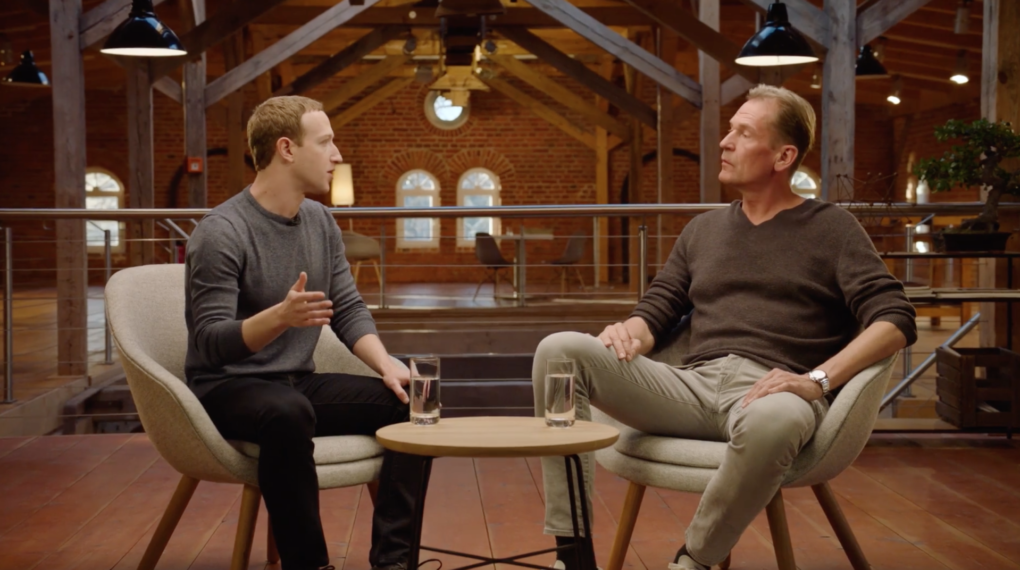
"content": "\u003cp>In his\u003ca href=\"https://newsroom.fb.com/news/2019/04/marks-challenge-mathias-dopfner/\" target=\"_blank\" rel=\"noopener\"> latest sit-down\u003c/a> with the head of Europe’s biggest news publisher, Zuckerberg revealed Facebook is toying with yet another way to direct traffic to news in the form of a new, dedicated tab, and might even \u003cem>pay\u003c/em> publishers.\u003cspan class=\"Apple-converted-space\"> \u003c/span>\u003c/p>\n\u003cp>“Facebook could have a direct relationship with publishers order to make sure their content is available, if it’s really high quality content. So, there’s a whole set of questions around how do we build a service that is contributing to high quality journalism through increasing monetization,” Zuckerberg floated.\u003c/p>\n\u003cp>[aside postID='arts_13850292,arts_13853671,arts_13836539' label='Related Coverage']\u003c/p>\n\u003cp>The thing is, Facebook’s behavior towards the news business has fluctuated wildly in recent years. The social media giant keeps tweaking its relationship with news media, as if the problem is buggy software code instead of an algorithmic preference for “content” that garners maximal ad-generating views.\u003c/p>\n\u003cp>It was only in February of 2018 that the social media giant cut 20 percent of news out of users’ “news” feeds. Another experiment with a standalone news tab \u003ca href=\"https://newsroom.fb.com/news/2018/03/news-feed-fyi-ending-the-explore-feed-test/\" target=\"_blank\" rel=\"noopener noreferrer\">died a quick death\u003c/a>, in large part because it failed with readers. Between Instant Articles, Facebook Watch for news, and the close hold Facebook keeps on its data, many news publishers have developed a jaundiced attitude.\u003c/p>\n\u003cp>[ad fullwidth]\u003c/p>\n\u003cp>And what does Facebook think is “high quality,” \u003ci>exactly\u003c/i>? Axel Springer SE CEO Mathias Döpfner echoed the skepticism of many media outlets and, these days, politicians and regulators, too.\u003c/p>\n\u003cp>“The more you start to curate, and to select, and to make choices, the more you automatically, and even involuntarily, transform into a publication house, into a media company. And then, honestly, you’re just too big. Sooner or later, you will be split up by regulators because they will say, ‘There cannot be so much dominance in one company that makes the decisions globally who reads what.’ So you have to keep a degree of neutrality,” Döpfner said.\u003c/p>\n\u003cp>Honestly, the same concern applies to Google and Apple. And they, too, have put forward initiatives that look like peace offerings to the news media.\u003c/p>\n\u003cp>But Facebook may be committed to give the new idea a try, regardless of Döpfner’s doubts. According to \u003ca href=\"https://www.recode.net/2019/4/1/18290330/facebook-news-tab-mark-zuckerberg-license-fee-axel-springer-mathias-dopfner\" target=\"_blank\" rel=\"noopener\">Recode\u003c/a>, Zuckerberg’s video is the only the first public acknowledgement of an idea Facebook has been tinkering with for months.\u003c/p>\n\u003cp id=\"tiOuMt\">Recode quotes an unnamed source within the company saying Facebook hasn’t committed to the idea of paying publishers directly, and may still end up trying to entice publishers with ad revenue, bolstered by minimum guarantees. That source also says the company expects to have the news tab up and running by the end of 2019.\u003c/p>\n\u003cp>\u003c/p>\n\u003cp>The European publisher offered another nugget of wisdom for Zuckerberg:\u003c/p>\n\u003cblockquote>\u003cp>The better the business model is that Facebook provides for publishers, the more professional journalists you will attract. If it’s only about reach and popularity, only about audience, the seduction to be a platform for manipulation is so high because people want to make a business. We have to make a business in order to finance investigative journalists and correspondents, and big foreign networks. They cannot afford to do that for free. But manipulators, governments from Russia to China, other sinister sources, they can all use it, abuse it, and then you have an image problem for Facebook, but also a structure problem for journalism. So I would focus on making sure what makes the offering and it’s structuring on Facebook attractive for the hundreds of thousands of journalists, bloggers, digital native publishers, legacy publishers. And that will automatically resolve the quality issue.\u003c/p>\u003c/blockquote>\n\n",
"blocks": [],
"excerpt": "Mark Zuckerberg toys with a standalone news tab on Facebook, with monetization for publishers—but haven't we been down this road before?",
"status": "publish",
"parent": 0,
"modified": 1726767131,
"stats": {
"hasAudio": false,
"hasVideo": false,
"hasChartOrMap": false,
"iframeSrcs": [],
"hasGoogleForm": false,
"hasGallery": false,
"hasHearkenModule": false,
"hasPolis": false,
"paragraphCount": 13,
"wordCount": 632
},
"headData": {
"title": "Does Facebook Want to Make Friends With the News Business? Again? | KQED",
"description": "Mark Zuckerberg toys with a standalone news tab on Facebook, with monetization for publishers—but haven't we been down this road before?",
"ogTitle": "",
"ogDescription": "",
"ogImgId": "",
"twTitle": "",
"twDescription": "",
"twImgId": "",
"schema": {
"@context": "https://schema.org",
"@type": "Article",
"headline": "Does Facebook Want to Make Friends With the News Business? Again?",
"datePublished": "2019-04-02T16:59:25-07:00",
"dateModified": "2024-09-19T10:32:11-07:00",
"image": "https://cdn.kqed.org/wp-content/uploads/2020/02/KQED-OG-Image@1x.png"
}
},
"sticky": false,
"path": "/arts/13854186/does-facebook-want-to-make-friends-with-the-news-business-again",
"audioTrackLength": null,
"parsedContent": [
{
"type": "contentString",
"content": "\u003cdiv class=\"post-body\">\u003cp>\u003cp>In his\u003ca href=\"https://newsroom.fb.com/news/2019/04/marks-challenge-mathias-dopfner/\" target=\"_blank\" rel=\"noopener\"> latest sit-down\u003c/a> with the head of Europe’s biggest news publisher, Zuckerberg revealed Facebook is toying with yet another way to direct traffic to news in the form of a new, dedicated tab, and might even \u003cem>pay\u003c/em> publishers.\u003cspan class=\"Apple-converted-space\"> \u003c/span>\u003c/p>\n\u003cp>“Facebook could have a direct relationship with publishers order to make sure their content is available, if it’s really high quality content. So, there’s a whole set of questions around how do we build a service that is contributing to high quality journalism through increasing monetization,” Zuckerberg floated.\u003c/p>\n\u003cp>\u003c/p>\u003c/div>",
"attributes": {
"named": {},
"numeric": []
}
},
{
"type": "component",
"content": "",
"name": "aside",
"attributes": {
"named": {
"postid": "arts_13850292,arts_13853671,arts_13836539",
"label": "Related Coverage "
},
"numeric": []
}
},
{
"type": "contentString",
"content": "\u003cdiv class=\"post-body\">\u003cp>\u003c/p>\n\u003cp>The thing is, Facebook’s behavior towards the news business has fluctuated wildly in recent years. The social media giant keeps tweaking its relationship with news media, as if the problem is buggy software code instead of an algorithmic preference for “content” that garners maximal ad-generating views.\u003c/p>\n\u003cp>It was only in February of 2018 that the social media giant cut 20 percent of news out of users’ “news” feeds. Another experiment with a standalone news tab \u003ca href=\"https://newsroom.fb.com/news/2018/03/news-feed-fyi-ending-the-explore-feed-test/\" target=\"_blank\" rel=\"noopener noreferrer\">died a quick death\u003c/a>, in large part because it failed with readers. Between Instant Articles, Facebook Watch for news, and the close hold Facebook keeps on its data, many news publishers have developed a jaundiced attitude.\u003c/p>\n\u003cp>\u003c/p>\u003c/div>",
"attributes": {
"named": {},
"numeric": []
}
},
{
"type": "component",
"content": "",
"name": "ad",
"attributes": {
"named": {
"label": "fullwidth"
},
"numeric": [
"fullwidth"
]
}
},
{
"type": "contentString",
"content": "\u003cdiv class=\"post-body\">\u003cp>\u003c/p>\n\u003cp>And what does Facebook think is “high quality,” \u003ci>exactly\u003c/i>? Axel Springer SE CEO Mathias Döpfner echoed the skepticism of many media outlets and, these days, politicians and regulators, too.\u003c/p>\n\u003cp>“The more you start to curate, and to select, and to make choices, the more you automatically, and even involuntarily, transform into a publication house, into a media company. And then, honestly, you’re just too big. Sooner or later, you will be split up by regulators because they will say, ‘There cannot be so much dominance in one company that makes the decisions globally who reads what.’ So you have to keep a degree of neutrality,” Döpfner said.\u003c/p>\n\u003cp>Honestly, the same concern applies to Google and Apple. And they, too, have put forward initiatives that look like peace offerings to the news media.\u003c/p>\n\u003cp>But Facebook may be committed to give the new idea a try, regardless of Döpfner’s doubts. According to \u003ca href=\"https://www.recode.net/2019/4/1/18290330/facebook-news-tab-mark-zuckerberg-license-fee-axel-springer-mathias-dopfner\" target=\"_blank\" rel=\"noopener\">Recode\u003c/a>, Zuckerberg’s video is the only the first public acknowledgement of an idea Facebook has been tinkering with for months.\u003c/p>\n\u003cp id=\"tiOuMt\">Recode quotes an unnamed source within the company saying Facebook hasn’t committed to the idea of paying publishers directly, and may still end up trying to entice publishers with ad revenue, bolstered by minimum guarantees. That source also says the company expects to have the news tab up and running by the end of 2019.\u003c/p>\n\u003cp>\u003c/p>\n\u003cp>The European publisher offered another nugget of wisdom for Zuckerberg:\u003c/p>\n\u003cblockquote>\u003cp>The better the business model is that Facebook provides for publishers, the more professional journalists you will attract. If it’s only about reach and popularity, only about audience, the seduction to be a platform for manipulation is so high because people want to make a business. We have to make a business in order to finance investigative journalists and correspondents, and big foreign networks. They cannot afford to do that for free. But manipulators, governments from Russia to China, other sinister sources, they can all use it, abuse it, and then you have an image problem for Facebook, but also a structure problem for journalism. So I would focus on making sure what makes the offering and it’s structuring on Facebook attractive for the hundreds of thousands of journalists, bloggers, digital native publishers, legacy publishers. And that will automatically resolve the quality issue.\u003c/p>\u003c/blockquote>\n\n\u003c/div>\u003c/p>",
"attributes": {
"named": {},
"numeric": []
}
}
],
"link": "/arts/13854186/does-facebook-want-to-make-friends-with-the-news-business-again",
"authors": [
"251"
],
"categories": [
"arts_235"
],
"tags": [
"arts_1934",
"arts_2304",
"arts_4642",
"arts_3001",
"arts_1935"
],
"featImg": "arts_13854187",
"label": "arts"
},
"arts_13835599": {
"type": "posts",
"id": "arts_13835599",
"meta": {
"index": "posts_1716263798",
"site": "arts",
"id": "13835599",
"score": null,
"sort": [
1529538903000
]
},
"guestAuthors": [],
"slug": "no-more-turning-your-phone-sideways-instagram-bets-on-vertical-video-app-igtv",
"title": "No More Turning Your Phone Sideways: Instagram Bets on Vertical Video App IGTV",
"publishDate": 1529538903,
"format": "standard",
"headTitle": "No More Turning Your Phone Sideways: Instagram Bets on Vertical Video App IGTV | KQED",
"labelTerm": {
"site": "arts"
},
"content": "\u003cp>“Think about it. Today, we still watch videos formatted for a TV on a vertical screen,” Instagram CEO Kevin Systrom said this morning, \u003ca href=\"https://instagram-press.com/blog/2018/06/20/welcome-to-igtv/\" target=\"_blank\" rel=\"noopener\">unveiling IGTV\u003c/a> five years to the day after launching video on Instagram.\u003c/p>\n\u003cp>IGTV is a new, separate app for creating and watching long-form, vertical video—although you’ll also be able to watch from within the Instagram app.\u003c/p>\n\u003cp>Was this a thing you didn’t realize you need? Yes, at least, according to Systrom. “We either have to rotate our phone awkwardly,” she said, “or watch a tiny version, and that doesn’t make much sense, does it?”\u003c/p>\n\u003cp>Call it a legacy issue, so broadly acknowledged you can watch video of rapper Childish Gambino walking up to a fan in the front row recording his show to turn the phone sideways.\u003c/p>\n\u003cp>[youtube https://www.youtube.com/watch?v=WP97zvva98s]\u003c/p>\n\u003cp>Systrom also takes issue with having to search a directory to find what we want to watch … on say, YouTube. In fact, IGTV looks very much like an attempt at direct competition to YouTube, not unlike the way Instagram Stories directly copied one of the most popular features of Snapchat.\u003c/p>\n\u003cp>[ad fullwidth]\u003c/p>\n\u003cp>IGTV videos won’t be limited to one minute, but rather, ten—unless you’re a wildly popular creator, in which case, you get a full hour. That’s just at launch. Eventually, the plan is to scale up capacity so that everyone has access to unlimited video.\u003c/p>\n\u003cp>As with all social media, anyone can be a creator, but some are better at it than others. Instagram has made sure to pre-populate IGTV’s offerings with power users on Instagram like \u003ca href=\"https://www.instagram.com/brycexavier/\">Bryce Xavier \u003c/a>(287,000 followers) and \u003ca href=\"https://www.instagram.com/lelepons/\">Lele Pons\u003c/a> (25.1 million followers). Instagram itself now boasts one billion monthly active users.\u003c/p>\n\u003cp>“I’ve been creating comedy skits, dance videos, music with my friends for years. I’ve perfected the one-minute sketch on Instagram, but get ready to see what I have in store for you with IGTV,” Pons said. (For one thing, she’s starting her own cooking show.)\u003c/p>\n\u003cfigure id=\"attachment_13835605\" class=\"wp-caption aligncenter\" style=\"max-width: 800px\">\u003cimg loading=\"lazy\" decoding=\"async\" class=\"size-medium wp-image-13835605\" src=\"https://ww2.kqed.org/arts/wp-content/uploads/sites/2/2018/06/RS31522_Screen-Shot-2018-06-20-at-1.05.52-PM-qut-800x539.jpg\" alt=\"Instagram CEO Kevin Systrom unveiling IGTV in San Francisco.\" width=\"800\" height=\"539\" srcset=\"https://cdn.kqed.org/wp-content/uploads/sites/2/2018/06/RS31522_Screen-Shot-2018-06-20-at-1.05.52-PM-qut-800x539.jpg 800w, https://cdn.kqed.org/wp-content/uploads/sites/2/2018/06/RS31522_Screen-Shot-2018-06-20-at-1.05.52-PM-qut-160x108.jpg 160w, https://cdn.kqed.org/wp-content/uploads/sites/2/2018/06/RS31522_Screen-Shot-2018-06-20-at-1.05.52-PM-qut-768x517.jpg 768w, https://cdn.kqed.org/wp-content/uploads/sites/2/2018/06/RS31522_Screen-Shot-2018-06-20-at-1.05.52-PM-qut-1020x687.jpg 1020w, https://cdn.kqed.org/wp-content/uploads/sites/2/2018/06/RS31522_Screen-Shot-2018-06-20-at-1.05.52-PM-qut-1200x809.jpg 1200w, https://cdn.kqed.org/wp-content/uploads/sites/2/2018/06/RS31522_Screen-Shot-2018-06-20-at-1.05.52-PM-qut-1180x795.jpg 1180w, https://cdn.kqed.org/wp-content/uploads/sites/2/2018/06/RS31522_Screen-Shot-2018-06-20-at-1.05.52-PM-qut-960x647.jpg 960w, https://cdn.kqed.org/wp-content/uploads/sites/2/2018/06/RS31522_Screen-Shot-2018-06-20-at-1.05.52-PM-qut-240x162.jpg 240w, https://cdn.kqed.org/wp-content/uploads/sites/2/2018/06/RS31522_Screen-Shot-2018-06-20-at-1.05.52-PM-qut-375x253.jpg 375w, https://cdn.kqed.org/wp-content/uploads/sites/2/2018/06/RS31522_Screen-Shot-2018-06-20-at-1.05.52-PM-qut-520x350.jpg 520w, https://cdn.kqed.org/wp-content/uploads/sites/2/2018/06/RS31522_Screen-Shot-2018-06-20-at-1.05.52-PM-qut.jpg 1496w\" sizes=\"(max-width: 800px) 100vw, 800px\">\u003cfigcaption class=\"wp-caption-text\">Instagram CEO Kevin Systrom unveiling IGTV in San Francisco. \u003ccite>(Photo: Courtesy of Instagram)\u003c/cite>\u003c/figcaption>\u003c/figure>\n\u003cp>So naturally, with longer video, you’re wondering what/where/when the advertising will show up. Systrom says there are no ads in IGTV because “right now, we’re focused on building engagement,” but “that [ads] is obviously a very reasonable way to end up,” adding that creators want to make a living. By that, Systrom does not mean Instagram directly paying creators. Translation: influencers will make their own brand deals.\u003c/p>\n\u003cp>Nothing stops advertisers from creating their own content, and indeed, within hours of the announcement, at least one advertiser sent out a press release announcing its IGTV channel: Benefit Cosmetics, the San Francisco-based beauty brand.\u003c/p>\n\u003cp>National Geographic has also already announced its plans to engage on IGTV, which raises the question: Is IGTV open to news producers?\u003c/p>\n\u003cp>“Anyone is welcome to become a creator,” said Instagram product manager Ashley Yuki. (There appears to be no kind of partnership or sponsorship with news organizations, which Instagram parent Facebook has experimented with in the past.)\u003c/p>\n\u003cp>Is IGTV the YouTube killer in what is clearly a proxy war between Facebook (which owns Instagram) and Google (which owns YouTube)? Don’t order flowers just yet. With more than 1.9 billion monthly users, YouTube reaches viewers on mobile as well as larger screens.\u003c/p>\n\u003cfigure id=\"attachment_13835614\" class=\"wp-caption aligncenter\" style=\"max-width: 800px\">\u003cimg loading=\"lazy\" decoding=\"async\" class=\"size-medium wp-image-13835614\" src=\"https://ww2.kqed.org/arts/wp-content/uploads/sites/2/2018/06/RS31521_Screen-Shot-2018-06-20-at-1.05.35-PM-qut-800x677.jpg\" alt=\"Imagine an app that loads @jiffpom straightaway when you launch. There's no need to scroll through options, or tap on the search bar. That's IGTV: more like TV than "legacy" social media.\" width=\"800\" height=\"677\" srcset=\"https://cdn.kqed.org/wp-content/uploads/sites/2/2018/06/RS31521_Screen-Shot-2018-06-20-at-1.05.35-PM-qut-800x677.jpg 800w, https://cdn.kqed.org/wp-content/uploads/sites/2/2018/06/RS31521_Screen-Shot-2018-06-20-at-1.05.35-PM-qut-160x135.jpg 160w, https://cdn.kqed.org/wp-content/uploads/sites/2/2018/06/RS31521_Screen-Shot-2018-06-20-at-1.05.35-PM-qut-768x650.jpg 768w, https://cdn.kqed.org/wp-content/uploads/sites/2/2018/06/RS31521_Screen-Shot-2018-06-20-at-1.05.35-PM-qut-1020x864.jpg 1020w, https://cdn.kqed.org/wp-content/uploads/sites/2/2018/06/RS31521_Screen-Shot-2018-06-20-at-1.05.35-PM-qut-1200x1016.jpg 1200w, https://cdn.kqed.org/wp-content/uploads/sites/2/2018/06/RS31521_Screen-Shot-2018-06-20-at-1.05.35-PM-qut-1180x999.jpg 1180w, https://cdn.kqed.org/wp-content/uploads/sites/2/2018/06/RS31521_Screen-Shot-2018-06-20-at-1.05.35-PM-qut-960x813.jpg 960w, https://cdn.kqed.org/wp-content/uploads/sites/2/2018/06/RS31521_Screen-Shot-2018-06-20-at-1.05.35-PM-qut-240x203.jpg 240w, https://cdn.kqed.org/wp-content/uploads/sites/2/2018/06/RS31521_Screen-Shot-2018-06-20-at-1.05.35-PM-qut-375x318.jpg 375w, https://cdn.kqed.org/wp-content/uploads/sites/2/2018/06/RS31521_Screen-Shot-2018-06-20-at-1.05.35-PM-qut-520x440.jpg 520w, https://cdn.kqed.org/wp-content/uploads/sites/2/2018/06/RS31521_Screen-Shot-2018-06-20-at-1.05.35-PM-qut.jpg 1396w\" sizes=\"(max-width: 800px) 100vw, 800px\">\u003cfigcaption class=\"wp-caption-text\">Imagine an app that loads @jiffpom straightaway when you launch. There’s no need to scroll through options, or tap on the search bar. That’s IGTV: more like TV than “legacy” social media. \u003ccite>(Photo: Courtesy of Instagram)\u003c/cite>\u003c/figcaption>\u003c/figure>\n\u003cp>\u003c/p>\n\u003cp>But who’s to say viewers will stay stuck on horizontal when they could be watching and creating video that’s vertical and filling the screen—as if that’s just the new natural order of the universe?\u003c/p>\n\n",
"blocks": [],
"excerpt": "First, Instagram Stories took over—and today, Instagram took aim at YouTube with an app of longer, vertical video capabilities.",
"status": "publish",
"parent": 0,
"modified": 1726771073,
"stats": {
"hasAudio": false,
"hasVideo": true,
"hasChartOrMap": false,
"iframeSrcs": [],
"hasGoogleForm": false,
"hasGallery": false,
"hasHearkenModule": false,
"hasPolis": false,
"paragraphCount": 17,
"wordCount": 692
},
"headData": {
"title": "No More Turning Your Phone Sideways: Instagram Bets on Vertical Video App IGTV | KQED",
"description": "First, Instagram Stories took over—and today, Instagram took aim at YouTube with an app of longer, vertical video capabilities.",
"ogTitle": "",
"ogDescription": "",
"ogImgId": "",
"twTitle": "",
"twDescription": "",
"twImgId": "",
"schema": {
"@context": "https://schema.org",
"@type": "Article",
"headline": "No More Turning Your Phone Sideways: Instagram Bets on Vertical Video App IGTV",
"datePublished": "2018-06-20T16:55:03-07:00",
"dateModified": "2024-09-19T11:37:53-07:00",
"image": "https://cdn.kqed.org/wp-content/uploads/2020/02/KQED-OG-Image@1x.png"
}
},
"sticky": false,
"path": "/arts/13835599/no-more-turning-your-phone-sideways-instagram-bets-on-vertical-video-app-igtv",
"audioTrackLength": null,
"parsedContent": [
{
"type": "contentString",
"content": "\u003cdiv class=\"post-body\">\u003cp>\u003cp>“Think about it. Today, we still watch videos formatted for a TV on a vertical screen,” Instagram CEO Kevin Systrom said this morning, \u003ca href=\"https://instagram-press.com/blog/2018/06/20/welcome-to-igtv/\" target=\"_blank\" rel=\"noopener\">unveiling IGTV\u003c/a> five years to the day after launching video on Instagram.\u003c/p>\n\u003cp>IGTV is a new, separate app for creating and watching long-form, vertical video—although you’ll also be able to watch from within the Instagram app.\u003c/p>\n\u003cp>Was this a thing you didn’t realize you need? Yes, at least, according to Systrom. “We either have to rotate our phone awkwardly,” she said, “or watch a tiny version, and that doesn’t make much sense, does it?”\u003c/p>\n\u003cp>Call it a legacy issue, so broadly acknowledged you can watch video of rapper Childish Gambino walking up to a fan in the front row recording his show to turn the phone sideways.\u003c/p>\n\u003cp>\u003c/p>\u003cp>\u003cspan class='utils-parseShortcode-shortcodes-__youtubeShortcode__embedYoutube'>\n \u003cspan class='utils-parseShortcode-shortcodes-__youtubeShortcode__embedYoutubeInside'>\n \u003ciframe\n loading='lazy'\n class='utils-parseShortcode-shortcodes-__youtubeShortcode__youtubePlayer'\n type='text/html'\n src='//www.youtube.com/embed/WP97zvva98s'\n title='//www.youtube.com/embed/WP97zvva98s'\n allowfullscreen='true'\n style='border:0;'>\u003c/iframe>\n \u003c/span>\n \u003c/span>\u003c/p>\u003cp>\u003c/p>\n\u003cp>Systrom also takes issue with having to search a directory to find what we want to watch … on say, YouTube. In fact, IGTV looks very much like an attempt at direct competition to YouTube, not unlike the way Instagram Stories directly copied one of the most popular features of Snapchat.\u003c/p>\n\u003cp>\u003c/p>\u003c/div>",
"attributes": {
"named": {},
"numeric": []
}
},
{
"type": "component",
"content": "",
"name": "ad",
"attributes": {
"named": {
"label": "fullwidth"
},
"numeric": [
"fullwidth"
]
}
},
{
"type": "contentString",
"content": "\u003cdiv class=\"post-body\">\u003cp>\u003c/p>\n\u003cp>IGTV videos won’t be limited to one minute, but rather, ten—unless you’re a wildly popular creator, in which case, you get a full hour. That’s just at launch. Eventually, the plan is to scale up capacity so that everyone has access to unlimited video.\u003c/p>\n\u003cp>As with all social media, anyone can be a creator, but some are better at it than others. Instagram has made sure to pre-populate IGTV’s offerings with power users on Instagram like \u003ca href=\"https://www.instagram.com/brycexavier/\">Bryce Xavier \u003c/a>(287,000 followers) and \u003ca href=\"https://www.instagram.com/lelepons/\">Lele Pons\u003c/a> (25.1 million followers). Instagram itself now boasts one billion monthly active users.\u003c/p>\n\u003cp>“I’ve been creating comedy skits, dance videos, music with my friends for years. I’ve perfected the one-minute sketch on Instagram, but get ready to see what I have in store for you with IGTV,” Pons said. (For one thing, she’s starting her own cooking show.)\u003c/p>\n\u003cfigure id=\"attachment_13835605\" class=\"wp-caption aligncenter\" style=\"max-width: 800px\">\u003cimg loading=\"lazy\" decoding=\"async\" class=\"size-medium wp-image-13835605\" src=\"https://ww2.kqed.org/arts/wp-content/uploads/sites/2/2018/06/RS31522_Screen-Shot-2018-06-20-at-1.05.52-PM-qut-800x539.jpg\" alt=\"Instagram CEO Kevin Systrom unveiling IGTV in San Francisco.\" width=\"800\" height=\"539\" srcset=\"https://cdn.kqed.org/wp-content/uploads/sites/2/2018/06/RS31522_Screen-Shot-2018-06-20-at-1.05.52-PM-qut-800x539.jpg 800w, https://cdn.kqed.org/wp-content/uploads/sites/2/2018/06/RS31522_Screen-Shot-2018-06-20-at-1.05.52-PM-qut-160x108.jpg 160w, https://cdn.kqed.org/wp-content/uploads/sites/2/2018/06/RS31522_Screen-Shot-2018-06-20-at-1.05.52-PM-qut-768x517.jpg 768w, https://cdn.kqed.org/wp-content/uploads/sites/2/2018/06/RS31522_Screen-Shot-2018-06-20-at-1.05.52-PM-qut-1020x687.jpg 1020w, https://cdn.kqed.org/wp-content/uploads/sites/2/2018/06/RS31522_Screen-Shot-2018-06-20-at-1.05.52-PM-qut-1200x809.jpg 1200w, https://cdn.kqed.org/wp-content/uploads/sites/2/2018/06/RS31522_Screen-Shot-2018-06-20-at-1.05.52-PM-qut-1180x795.jpg 1180w, https://cdn.kqed.org/wp-content/uploads/sites/2/2018/06/RS31522_Screen-Shot-2018-06-20-at-1.05.52-PM-qut-960x647.jpg 960w, https://cdn.kqed.org/wp-content/uploads/sites/2/2018/06/RS31522_Screen-Shot-2018-06-20-at-1.05.52-PM-qut-240x162.jpg 240w, https://cdn.kqed.org/wp-content/uploads/sites/2/2018/06/RS31522_Screen-Shot-2018-06-20-at-1.05.52-PM-qut-375x253.jpg 375w, https://cdn.kqed.org/wp-content/uploads/sites/2/2018/06/RS31522_Screen-Shot-2018-06-20-at-1.05.52-PM-qut-520x350.jpg 520w, https://cdn.kqed.org/wp-content/uploads/sites/2/2018/06/RS31522_Screen-Shot-2018-06-20-at-1.05.52-PM-qut.jpg 1496w\" sizes=\"(max-width: 800px) 100vw, 800px\">\u003cfigcaption class=\"wp-caption-text\">Instagram CEO Kevin Systrom unveiling IGTV in San Francisco. \u003ccite>(Photo: Courtesy of Instagram)\u003c/cite>\u003c/figcaption>\u003c/figure>\n\u003cp>So naturally, with longer video, you’re wondering what/where/when the advertising will show up. Systrom says there are no ads in IGTV because “right now, we’re focused on building engagement,” but “that [ads] is obviously a very reasonable way to end up,” adding that creators want to make a living. By that, Systrom does not mean Instagram directly paying creators. Translation: influencers will make their own brand deals.\u003c/p>\n\u003cp>Nothing stops advertisers from creating their own content, and indeed, within hours of the announcement, at least one advertiser sent out a press release announcing its IGTV channel: Benefit Cosmetics, the San Francisco-based beauty brand.\u003c/p>\n\u003cp>National Geographic has also already announced its plans to engage on IGTV, which raises the question: Is IGTV open to news producers?\u003c/p>\n\u003cp>“Anyone is welcome to become a creator,” said Instagram product manager Ashley Yuki. (There appears to be no kind of partnership or sponsorship with news organizations, which Instagram parent Facebook has experimented with in the past.)\u003c/p>\n\u003cp>Is IGTV the YouTube killer in what is clearly a proxy war between Facebook (which owns Instagram) and Google (which owns YouTube)? Don’t order flowers just yet. With more than 1.9 billion monthly users, YouTube reaches viewers on mobile as well as larger screens.\u003c/p>\n\u003cfigure id=\"attachment_13835614\" class=\"wp-caption aligncenter\" style=\"max-width: 800px\">\u003cimg loading=\"lazy\" decoding=\"async\" class=\"size-medium wp-image-13835614\" src=\"https://ww2.kqed.org/arts/wp-content/uploads/sites/2/2018/06/RS31521_Screen-Shot-2018-06-20-at-1.05.35-PM-qut-800x677.jpg\" alt=\"Imagine an app that loads @jiffpom straightaway when you launch. There's no need to scroll through options, or tap on the search bar. That's IGTV: more like TV than "legacy" social media.\" width=\"800\" height=\"677\" srcset=\"https://cdn.kqed.org/wp-content/uploads/sites/2/2018/06/RS31521_Screen-Shot-2018-06-20-at-1.05.35-PM-qut-800x677.jpg 800w, https://cdn.kqed.org/wp-content/uploads/sites/2/2018/06/RS31521_Screen-Shot-2018-06-20-at-1.05.35-PM-qut-160x135.jpg 160w, https://cdn.kqed.org/wp-content/uploads/sites/2/2018/06/RS31521_Screen-Shot-2018-06-20-at-1.05.35-PM-qut-768x650.jpg 768w, https://cdn.kqed.org/wp-content/uploads/sites/2/2018/06/RS31521_Screen-Shot-2018-06-20-at-1.05.35-PM-qut-1020x864.jpg 1020w, https://cdn.kqed.org/wp-content/uploads/sites/2/2018/06/RS31521_Screen-Shot-2018-06-20-at-1.05.35-PM-qut-1200x1016.jpg 1200w, https://cdn.kqed.org/wp-content/uploads/sites/2/2018/06/RS31521_Screen-Shot-2018-06-20-at-1.05.35-PM-qut-1180x999.jpg 1180w, https://cdn.kqed.org/wp-content/uploads/sites/2/2018/06/RS31521_Screen-Shot-2018-06-20-at-1.05.35-PM-qut-960x813.jpg 960w, https://cdn.kqed.org/wp-content/uploads/sites/2/2018/06/RS31521_Screen-Shot-2018-06-20-at-1.05.35-PM-qut-240x203.jpg 240w, https://cdn.kqed.org/wp-content/uploads/sites/2/2018/06/RS31521_Screen-Shot-2018-06-20-at-1.05.35-PM-qut-375x318.jpg 375w, https://cdn.kqed.org/wp-content/uploads/sites/2/2018/06/RS31521_Screen-Shot-2018-06-20-at-1.05.35-PM-qut-520x440.jpg 520w, https://cdn.kqed.org/wp-content/uploads/sites/2/2018/06/RS31521_Screen-Shot-2018-06-20-at-1.05.35-PM-qut.jpg 1396w\" sizes=\"(max-width: 800px) 100vw, 800px\">\u003cfigcaption class=\"wp-caption-text\">Imagine an app that loads @jiffpom straightaway when you launch. There’s no need to scroll through options, or tap on the search bar. That’s IGTV: more like TV than “legacy” social media. \u003ccite>(Photo: Courtesy of Instagram)\u003c/cite>\u003c/figcaption>\u003c/figure>\n\u003cp>\u003c/p>\n\u003cp>But who’s to say viewers will stay stuck on horizontal when they could be watching and creating video that’s vertical and filling the screen—as if that’s just the new natural order of the universe?\u003c/p>\n\n\u003c/div>\u003c/p>",
"attributes": {
"named": {},
"numeric": []
}
}
],
"link": "/arts/13835599/no-more-turning-your-phone-sideways-instagram-bets-on-vertical-video-app-igtv",
"authors": [
"251"
],
"categories": [
"arts_235"
],
"tags": [
"arts_1934",
"arts_2098",
"arts_4642",
"arts_3001",
"arts_5166",
"arts_5165",
"arts_5164",
"arts_4554"
],
"featImg": "arts_13835603",
"label": "arts"
},
"arts_13830386": {
"type": "posts",
"id": "arts_13830386",
"meta": {
"index": "posts_1716263798",
"site": "arts",
"id": "13830386",
"score": null,
"sort": [
1524703664000
]
},
"guestAuthors": [],
"slug": "censored-artists-bristle-after-facebook-enforcement-guidelines-released",
"title": "Censored Artists Bristle After Facebook Enforcement Guidelines Released",
"publishDate": 1524703664,
"format": "standard",
"headTitle": "Censored Artists Bristle After Facebook Enforcement Guidelines Released | KQED",
"labelTerm": {
"site": "arts"
},
"content": "\u003cp>After years of keeping its content review guidelines internal, Facebook on Tuesday suddenly decided to \u003ca href=\"https://www.kqed.org/news/11664398/facebook-updates-community-standards-expands-appeals-process\" rel=\"noopener\" target=\"_blank\">make them public\u003c/a>. And while the \u003ca href=\"https://www.facebook.com/communitystandards/introduction/\" rel=\"noopener\" target=\"_blank\">27 pages of guidelines\u003c/a> clear up some questions about what constitutes offensive content, many artists who previously had their work removed by Facebook say the company’s transparency is a case of too little, too late.\u003c/p>\n\u003cp>“What’s frustrating is that the policies are administered by people who do not seem to have a grasp on what is or isn’t actually ‘offensive,'” Christopher Bickel said.\u003c/p>\n\u003cp>Bickel, a musician, writer and director of the film \u003ca href=\"https://www.facebook.com/thethetagirl/\" rel=\"noopener\" target=\"_blank\">\u003ci>The Theta Girl,\u003c/i>\u003c/a> used to run the popular Facebook group Too Soon. He and four other friends started the page two years ago to share dark, funny memes, often original creations “poking fun at the cult of celebrity whenever a celebrity died.” Bickel says it was immediately popular, and quickly grew to about 500,000 users.\u003c/p>\n\u003cp>But the page came down this past March, after Bickel posted an image marking the death of Stephen Hawking: it consisted of a picture of Mark E. Smith, the late singer of the post punk band The Fall, with the words “RIP Stephen Hawking.” \u003c/p>\n\u003cfigure id=\"attachment_13830449\" class=\"wp-caption aligncenter\" style=\"max-width: 800px\">\u003cimg loading=\"lazy\" decoding=\"async\" src=\"https://ww2.kqed.org/arts/wp-content/uploads/sites/2/2018/04/MES-meme-800x450.jpg\" alt='The meme featuring Fall singer Mark E. Smith that ended the Facebook group \"Too Soon\"' width=\"800\" height=\"450\" class=\"size-medium wp-image-13830449\" srcset=\"https://cdn.kqed.org/wp-content/uploads/sites/2/2018/04/MES-meme-800x450.jpg 800w, https://cdn.kqed.org/wp-content/uploads/sites/2/2018/04/MES-meme-160x90.jpg 160w, https://cdn.kqed.org/wp-content/uploads/sites/2/2018/04/MES-meme-768x432.jpg 768w, https://cdn.kqed.org/wp-content/uploads/sites/2/2018/04/MES-meme-240x135.jpg 240w, https://cdn.kqed.org/wp-content/uploads/sites/2/2018/04/MES-meme-375x211.jpg 375w, https://cdn.kqed.org/wp-content/uploads/sites/2/2018/04/MES-meme-520x292.jpg 520w, https://cdn.kqed.org/wp-content/uploads/sites/2/2018/04/MES-meme.jpg 888w\" sizes=\"(max-width: 800px) 100vw, 800px\">\u003cfigcaption class=\"wp-caption-text\">The meme featuring Fall singer Mark E. Smith that ended the Facebook group “Too Soon” \u003ccite>(Christopher Bickel)\u003c/cite>\u003c/figcaption>\u003c/figure>\n\u003cp>Bickel says Too Soon appealed to Facebook, but administrators stood by their decision.\u003c/p>\n\u003cp>[ad fullwidth]\u003c/p>\n\u003cp>Bickel says his page’s memes had been reported before, but they were always anti-Trump. This meme, featuring an obscure musician, was “too random to violate any kind of community standard,” Bickel says.\u003c/p>\n\u003cp>“Compare this to one of the few times I ever reported anything as ‘offensive’: some white-power person had posted a cartoon drawing of a Klansman in full robes, laying in a hammock comprised of the bodies of two lynched black men,” Bickel messaged on Facebook. “My report of this image was responded to the following day with a note that the image did not violate Facebook’s community standards. Go figure.”\u003c/p>\n\u003ch3>It’s Instagram, too\u003c/h3>\n\u003cp>Facebook’s guidelines and subjective policing \u003ca href=\"https://www.theverge.com/2018/4/24/17270910/facebook-community-guidelines-appeals-process\" rel=\"noopener\" target=\"_blank\">apply to Instagram \u003c/a>as well. But before Facebook bought Instagram in \u003ca href=\"https://dealbook.nytimes.com/2012/04/09/facebook-buys-instagram-for-1-billion/\" rel=\"noopener\" target=\"_blank\">2012 for $1 billion\u003c/a>, the photo-centric app was a refuge for edgy artists like photographer Brian Henderson. Though Henderson’s creepy, horror-themed photos are not erotic, they do feature nudity, which proved to be a problem for Facebook.\u003c/p>\n\u003cp>“I used to post on FB a lot but photos would get removed from time to time. It was usually when I would post an image of a nude male,” Henderson wrote in an email. “I would post nude females all the time and then one penis shows up and boom, they would remove it. I contested a few times but just gave up because I heard nothing back.”\u003c/p>\n\u003cfigure id=\"attachment_13830461\" class=\"wp-caption alignright\" style=\"max-width: 800px\">\u003cimg loading=\"lazy\" decoding=\"async\" src=\"https://ww2.kqed.org/arts/wp-content/uploads/sites/2/2018/04/Death-Museum-example-800x800.jpg\" alt=\"An example of Brian Henderson's work\" width=\"800\" height=\"800\" class=\"size-medium wp-image-13830461\" srcset=\"https://cdn.kqed.org/wp-content/uploads/sites/2/2018/04/Death-Museum-example-800x800.jpg 800w, https://cdn.kqed.org/wp-content/uploads/sites/2/2018/04/Death-Museum-example-160x160.jpg 160w, https://cdn.kqed.org/wp-content/uploads/sites/2/2018/04/Death-Museum-example-768x768.jpg 768w, https://cdn.kqed.org/wp-content/uploads/sites/2/2018/04/Death-Museum-example-1020x1020.jpg 1020w, https://cdn.kqed.org/wp-content/uploads/sites/2/2018/04/Death-Museum-example-1200x1200.jpg 1200w, https://cdn.kqed.org/wp-content/uploads/sites/2/2018/04/Death-Museum-example.jpg 1920w, https://cdn.kqed.org/wp-content/uploads/sites/2/2018/04/Death-Museum-example-1180x1180.jpg 1180w, https://cdn.kqed.org/wp-content/uploads/sites/2/2018/04/Death-Museum-example-960x960.jpg 960w, https://cdn.kqed.org/wp-content/uploads/sites/2/2018/04/Death-Museum-example-240x240.jpg 240w, https://cdn.kqed.org/wp-content/uploads/sites/2/2018/04/Death-Museum-example-375x375.jpg 375w, https://cdn.kqed.org/wp-content/uploads/sites/2/2018/04/Death-Museum-example-520x520.jpg 520w, https://cdn.kqed.org/wp-content/uploads/sites/2/2018/04/Death-Museum-example-32x32.jpg 32w, https://cdn.kqed.org/wp-content/uploads/sites/2/2018/04/Death-Museum-example-50x50.jpg 50w, https://cdn.kqed.org/wp-content/uploads/sites/2/2018/04/Death-Museum-example-64x64.jpg 64w, https://cdn.kqed.org/wp-content/uploads/sites/2/2018/04/Death-Museum-example-96x96.jpg 96w, https://cdn.kqed.org/wp-content/uploads/sites/2/2018/04/Death-Museum-example-128x128.jpg 128w, https://cdn.kqed.org/wp-content/uploads/sites/2/2018/04/Death-Museum-example-150x150.jpg 150w\" sizes=\"(max-width: 800px) 100vw, 800px\">\u003cfigcaption class=\"wp-caption-text\">An example of Brian Henderson’s work. \u003ccite>(Brian Henderson)\u003c/cite>\u003c/figcaption>\u003c/figure>\n\u003cp>When Instagram launched, Henderson started an account and found he could post without scrutiny. That changed after Facebook bought the app, when his photos began to be removed without warning and, he said, without explanation — “usually just threats that I would lose my account.” Then, in one day, all three of his Instagram accounts were taken down. He received a notice for only one of them.\u003c/p>\n\u003cp>The only site where Henderson’s photos can live now is on Flickr, he said. \u003c/p>\n\u003cp>“As an artist, if you do anything edgy or push any kind of boundary you won’t have a platform on FB or Instagram. But for some weird reason you can search through FB and Instagram and see that photos of a woman breastfeeding are being censored, yet very sexual nude imagery is left alone,” Henderson wrote. “The whole thing seems very random and based on the opinions of whoever is heading up the witch hunt that day or time.”\u003c/p>\n\u003ch3>The Appeals Process\u003c/h3>\n\u003cp>In what appears to be an attempt to assuage criticism over its subjective censorship policies, Facebook also announced Tuesday that it would set up an appeals process for removed posts. Previously, users could only appeal the removal of groups and pages. \u003c/p>\n\u003cp>But painter Kevin Davidson says he already found an appeals process outside of Facebook: the media. \u003c/p>\n\u003cp>Earlier this month, Davidson attempted to take out a Facebook ad featuring a painting he made in response to the Parkland shooting in February. Religious in tone, the painting “Parkland Pieta in Stained Glass” shows a mother praying over a gunshot victim that looks like Jesus Christ, with the faces of 17 victims of the massacre in the background.\u003c/p>\n\u003cfigure id=\"attachment_13830486\" class=\"wp-caption aligncenter\" style=\"max-width: 800px\">\u003cimg loading=\"lazy\" decoding=\"async\" src=\"https://ww2.kqed.org/arts/wp-content/uploads/sites/2/2018/04/PArkland-painting-800x413.jpg\" alt='\"Parkland Pieta in Stained Glass\" by Kevin Davidson' width=\"800\" height=\"413\" class=\"size-medium wp-image-13830486\" srcset=\"https://cdn.kqed.org/wp-content/uploads/sites/2/2018/04/PArkland-painting-800x413.jpg 800w, https://cdn.kqed.org/wp-content/uploads/sites/2/2018/04/PArkland-painting-160x83.jpg 160w, https://cdn.kqed.org/wp-content/uploads/sites/2/2018/04/PArkland-painting-768x396.jpg 768w, https://cdn.kqed.org/wp-content/uploads/sites/2/2018/04/PArkland-painting-1020x526.jpg 1020w, https://cdn.kqed.org/wp-content/uploads/sites/2/2018/04/PArkland-painting-1200x619.jpg 1200w, https://cdn.kqed.org/wp-content/uploads/sites/2/2018/04/PArkland-painting.jpg 1920w, https://cdn.kqed.org/wp-content/uploads/sites/2/2018/04/PArkland-painting-1180x609.jpg 1180w, https://cdn.kqed.org/wp-content/uploads/sites/2/2018/04/PArkland-painting-960x496.jpg 960w, https://cdn.kqed.org/wp-content/uploads/sites/2/2018/04/PArkland-painting-240x124.jpg 240w, https://cdn.kqed.org/wp-content/uploads/sites/2/2018/04/PArkland-painting-375x194.jpg 375w, https://cdn.kqed.org/wp-content/uploads/sites/2/2018/04/PArkland-painting-520x268.jpg 520w\" sizes=\"(max-width: 800px) 100vw, 800px\">\u003cfigcaption class=\"wp-caption-text\">“Parkland Pieta in Stained Glass” by Kevin Davidson. \u003ccite>(Courtesy of Kevin Davidson)\u003c/cite>\u003c/figcaption>\u003c/figure>\n\u003cp>Facebook denied the ad, telling Davidson that the picture was “too violent, too controversial, stuff like that.” Davidson appealed to Facebook, and then he contacted Fox 40 News in Sacramento. On his way to the station for an interview, Davidson received an email saying his ad had been approved. \u003c/p>\n\u003cp>At the station, Davidson learned that a \u003ca href=\"http://fox40.com/2018/04/10/local-artists-religious-painting-depicting-parkland-victims-rejected-on-facebook/\" rel=\"noopener\" target=\"_blank\">Fox 40 reporter, Nicole Comstock,\u003c/a> had contacted Facebook, who responded quickly and informed her that the employee who denied Davidson’s ad had made a mistake.\u003c/p>\n\u003cp>Davidson is convinced that Comstock’s inquiry is what changed the administrators decision.\u003c/p>\n\u003cp>“If they truly believed it was offensive, they would’ve stuck with it,” Davidson said in a phone call Wednesday.\u003c/p>\n\u003cp>Two weeks later, Facebook released its guidelines, which Davidson interprets as the social media site saying, “We can do whatever we want.” He’s also convinced that the proposed appeal process is to stem bad publicity at a time when Facebook is still dealing with the fallout from having \u003ca href=\"https://www.nytimes.com/2018/03/19/technology/facebook-cambridge-analytica-explained.html\" rel=\"noopener\" target=\"_blank\">Cambridge Analytica access its users’ data\u003c/a>. \u003c/p>\n\u003cp>As far as Facebook’s censorship problems go, Davidson has no grand solutions for the company, nor does he want the government to step in. He thinks the website just needs to be smarter.\u003c/p>\n\u003cp>“If Facebook was smart, I don’t think it would be a problem. It’s common-sense stuff,” Davidson said. “Just be transparent about it.”\u003c/p>\n\u003cp>\u003c/p>\n\u003cp>\u003cimg loading=\"lazy\" decoding=\"async\" src=\"https://ww2.kqed.org/arts/wp-content/uploads/sites/2/2017/03/Q.Logo_.Break_-400x39.jpg\" alt=\"\" width=\"400\" height=\"39\" class=\"aligncenter size-full wp-image-12904247\" srcset=\"https://cdn.kqed.org/wp-content/uploads/sites/2/2017/03/Q.Logo_.Break_-400x39.jpg 400w, https://cdn.kqed.org/wp-content/uploads/sites/2/2017/03/Q.Logo_.Break_-400x39-160x16.jpg 160w, https://cdn.kqed.org/wp-content/uploads/sites/2/2017/03/Q.Logo_.Break_-400x39-240x23.jpg 240w, https://cdn.kqed.org/wp-content/uploads/sites/2/2017/03/Q.Logo_.Break_-400x39-375x37.jpg 375w\" sizes=\"(max-width: 400px) 100vw, 400px\">\u003c/p>\n\n",
"blocks": [],
"excerpt": "Although Facebook announced detailed guidelines on offensive content, some artists say, \"too little, too late.\"",
"status": "publish",
"parent": 0,
"modified": 1726705208,
"stats": {
"hasAudio": false,
"hasVideo": false,
"hasChartOrMap": false,
"iframeSrcs": [],
"hasGoogleForm": false,
"hasGallery": false,
"hasHearkenModule": false,
"hasPolis": false,
"paragraphCount": 25,
"wordCount": 1055
},
"headData": {
"title": "Censored Artists Bristle After Facebook Enforcement Guidelines Released | KQED",
"description": "Although Facebook announced detailed guidelines on offensive content, some artists say, "too little, too late."",
"ogTitle": "",
"ogDescription": "",
"ogImgId": "",
"twTitle": "",
"twDescription": "",
"twImgId": "",
"schema": {
"@context": "https://schema.org",
"@type": "Article",
"headline": "Censored Artists Bristle After Facebook Enforcement Guidelines Released",
"datePublished": "2018-04-25T17:47:44-07:00",
"dateModified": "2024-09-18T17:20:08-07:00",
"image": "https://cdn.kqed.org/wp-content/uploads/2020/02/KQED-OG-Image@1x.png"
}
},
"sticky": false,
"path": "/arts/13830386/censored-artists-bristle-after-facebook-enforcement-guidelines-released",
"audioTrackLength": null,
"parsedContent": [
{
"type": "contentString",
"content": "\u003cdiv class=\"post-body\">\u003cp>\u003cp>After years of keeping its content review guidelines internal, Facebook on Tuesday suddenly decided to \u003ca href=\"https://www.kqed.org/news/11664398/facebook-updates-community-standards-expands-appeals-process\" rel=\"noopener\" target=\"_blank\">make them public\u003c/a>. And while the \u003ca href=\"https://www.facebook.com/communitystandards/introduction/\" rel=\"noopener\" target=\"_blank\">27 pages of guidelines\u003c/a> clear up some questions about what constitutes offensive content, many artists who previously had their work removed by Facebook say the company’s transparency is a case of too little, too late.\u003c/p>\n\u003cp>“What’s frustrating is that the policies are administered by people who do not seem to have a grasp on what is or isn’t actually ‘offensive,'” Christopher Bickel said.\u003c/p>\n\u003cp>Bickel, a musician, writer and director of the film \u003ca href=\"https://www.facebook.com/thethetagirl/\" rel=\"noopener\" target=\"_blank\">\u003ci>The Theta Girl,\u003c/i>\u003c/a> used to run the popular Facebook group Too Soon. He and four other friends started the page two years ago to share dark, funny memes, often original creations “poking fun at the cult of celebrity whenever a celebrity died.” Bickel says it was immediately popular, and quickly grew to about 500,000 users.\u003c/p>\n\u003cp>But the page came down this past March, after Bickel posted an image marking the death of Stephen Hawking: it consisted of a picture of Mark E. Smith, the late singer of the post punk band The Fall, with the words “RIP Stephen Hawking.” \u003c/p>\n\u003cfigure id=\"attachment_13830449\" class=\"wp-caption aligncenter\" style=\"max-width: 800px\">\u003cimg loading=\"lazy\" decoding=\"async\" src=\"https://ww2.kqed.org/arts/wp-content/uploads/sites/2/2018/04/MES-meme-800x450.jpg\" alt='The meme featuring Fall singer Mark E. Smith that ended the Facebook group \"Too Soon\"' width=\"800\" height=\"450\" class=\"size-medium wp-image-13830449\" srcset=\"https://cdn.kqed.org/wp-content/uploads/sites/2/2018/04/MES-meme-800x450.jpg 800w, https://cdn.kqed.org/wp-content/uploads/sites/2/2018/04/MES-meme-160x90.jpg 160w, https://cdn.kqed.org/wp-content/uploads/sites/2/2018/04/MES-meme-768x432.jpg 768w, https://cdn.kqed.org/wp-content/uploads/sites/2/2018/04/MES-meme-240x135.jpg 240w, https://cdn.kqed.org/wp-content/uploads/sites/2/2018/04/MES-meme-375x211.jpg 375w, https://cdn.kqed.org/wp-content/uploads/sites/2/2018/04/MES-meme-520x292.jpg 520w, https://cdn.kqed.org/wp-content/uploads/sites/2/2018/04/MES-meme.jpg 888w\" sizes=\"(max-width: 800px) 100vw, 800px\">\u003cfigcaption class=\"wp-caption-text\">The meme featuring Fall singer Mark E. Smith that ended the Facebook group “Too Soon” \u003ccite>(Christopher Bickel)\u003c/cite>\u003c/figcaption>\u003c/figure>\n\u003cp>Bickel says Too Soon appealed to Facebook, but administrators stood by their decision.\u003c/p>\n\u003cp>\u003c/p>\u003c/div>",
"attributes": {
"named": {},
"numeric": []
}
},
{
"type": "component",
"content": "",
"name": "ad",
"attributes": {
"named": {
"label": "fullwidth"
},
"numeric": [
"fullwidth"
]
}
},
{
"type": "contentString",
"content": "\u003cdiv class=\"post-body\">\u003cp>\u003c/p>\n\u003cp>Bickel says his page’s memes had been reported before, but they were always anti-Trump. This meme, featuring an obscure musician, was “too random to violate any kind of community standard,” Bickel says.\u003c/p>\n\u003cp>“Compare this to one of the few times I ever reported anything as ‘offensive’: some white-power person had posted a cartoon drawing of a Klansman in full robes, laying in a hammock comprised of the bodies of two lynched black men,” Bickel messaged on Facebook. “My report of this image was responded to the following day with a note that the image did not violate Facebook’s community standards. Go figure.”\u003c/p>\n\u003ch3>It’s Instagram, too\u003c/h3>\n\u003cp>Facebook’s guidelines and subjective policing \u003ca href=\"https://www.theverge.com/2018/4/24/17270910/facebook-community-guidelines-appeals-process\" rel=\"noopener\" target=\"_blank\">apply to Instagram \u003c/a>as well. But before Facebook bought Instagram in \u003ca href=\"https://dealbook.nytimes.com/2012/04/09/facebook-buys-instagram-for-1-billion/\" rel=\"noopener\" target=\"_blank\">2012 for $1 billion\u003c/a>, the photo-centric app was a refuge for edgy artists like photographer Brian Henderson. Though Henderson’s creepy, horror-themed photos are not erotic, they do feature nudity, which proved to be a problem for Facebook.\u003c/p>\n\u003cp>“I used to post on FB a lot but photos would get removed from time to time. It was usually when I would post an image of a nude male,” Henderson wrote in an email. “I would post nude females all the time and then one penis shows up and boom, they would remove it. I contested a few times but just gave up because I heard nothing back.”\u003c/p>\n\u003cfigure id=\"attachment_13830461\" class=\"wp-caption alignright\" style=\"max-width: 800px\">\u003cimg loading=\"lazy\" decoding=\"async\" src=\"https://ww2.kqed.org/arts/wp-content/uploads/sites/2/2018/04/Death-Museum-example-800x800.jpg\" alt=\"An example of Brian Henderson's work\" width=\"800\" height=\"800\" class=\"size-medium wp-image-13830461\" srcset=\"https://cdn.kqed.org/wp-content/uploads/sites/2/2018/04/Death-Museum-example-800x800.jpg 800w, https://cdn.kqed.org/wp-content/uploads/sites/2/2018/04/Death-Museum-example-160x160.jpg 160w, https://cdn.kqed.org/wp-content/uploads/sites/2/2018/04/Death-Museum-example-768x768.jpg 768w, https://cdn.kqed.org/wp-content/uploads/sites/2/2018/04/Death-Museum-example-1020x1020.jpg 1020w, https://cdn.kqed.org/wp-content/uploads/sites/2/2018/04/Death-Museum-example-1200x1200.jpg 1200w, https://cdn.kqed.org/wp-content/uploads/sites/2/2018/04/Death-Museum-example.jpg 1920w, https://cdn.kqed.org/wp-content/uploads/sites/2/2018/04/Death-Museum-example-1180x1180.jpg 1180w, https://cdn.kqed.org/wp-content/uploads/sites/2/2018/04/Death-Museum-example-960x960.jpg 960w, https://cdn.kqed.org/wp-content/uploads/sites/2/2018/04/Death-Museum-example-240x240.jpg 240w, https://cdn.kqed.org/wp-content/uploads/sites/2/2018/04/Death-Museum-example-375x375.jpg 375w, https://cdn.kqed.org/wp-content/uploads/sites/2/2018/04/Death-Museum-example-520x520.jpg 520w, https://cdn.kqed.org/wp-content/uploads/sites/2/2018/04/Death-Museum-example-32x32.jpg 32w, https://cdn.kqed.org/wp-content/uploads/sites/2/2018/04/Death-Museum-example-50x50.jpg 50w, https://cdn.kqed.org/wp-content/uploads/sites/2/2018/04/Death-Museum-example-64x64.jpg 64w, https://cdn.kqed.org/wp-content/uploads/sites/2/2018/04/Death-Museum-example-96x96.jpg 96w, https://cdn.kqed.org/wp-content/uploads/sites/2/2018/04/Death-Museum-example-128x128.jpg 128w, https://cdn.kqed.org/wp-content/uploads/sites/2/2018/04/Death-Museum-example-150x150.jpg 150w\" sizes=\"(max-width: 800px) 100vw, 800px\">\u003cfigcaption class=\"wp-caption-text\">An example of Brian Henderson’s work. \u003ccite>(Brian Henderson)\u003c/cite>\u003c/figcaption>\u003c/figure>\n\u003cp>When Instagram launched, Henderson started an account and found he could post without scrutiny. That changed after Facebook bought the app, when his photos began to be removed without warning and, he said, without explanation — “usually just threats that I would lose my account.” Then, in one day, all three of his Instagram accounts were taken down. He received a notice for only one of them.\u003c/p>\n\u003cp>The only site where Henderson’s photos can live now is on Flickr, he said. \u003c/p>\n\u003cp>“As an artist, if you do anything edgy or push any kind of boundary you won’t have a platform on FB or Instagram. But for some weird reason you can search through FB and Instagram and see that photos of a woman breastfeeding are being censored, yet very sexual nude imagery is left alone,” Henderson wrote. “The whole thing seems very random and based on the opinions of whoever is heading up the witch hunt that day or time.”\u003c/p>\n\u003ch3>The Appeals Process\u003c/h3>\n\u003cp>In what appears to be an attempt to assuage criticism over its subjective censorship policies, Facebook also announced Tuesday that it would set up an appeals process for removed posts. Previously, users could only appeal the removal of groups and pages. \u003c/p>\n\u003cp>But painter Kevin Davidson says he already found an appeals process outside of Facebook: the media. \u003c/p>\n\u003cp>Earlier this month, Davidson attempted to take out a Facebook ad featuring a painting he made in response to the Parkland shooting in February. Religious in tone, the painting “Parkland Pieta in Stained Glass” shows a mother praying over a gunshot victim that looks like Jesus Christ, with the faces of 17 victims of the massacre in the background.\u003c/p>\n\u003cfigure id=\"attachment_13830486\" class=\"wp-caption aligncenter\" style=\"max-width: 800px\">\u003cimg loading=\"lazy\" decoding=\"async\" src=\"https://ww2.kqed.org/arts/wp-content/uploads/sites/2/2018/04/PArkland-painting-800x413.jpg\" alt='\"Parkland Pieta in Stained Glass\" by Kevin Davidson' width=\"800\" height=\"413\" class=\"size-medium wp-image-13830486\" srcset=\"https://cdn.kqed.org/wp-content/uploads/sites/2/2018/04/PArkland-painting-800x413.jpg 800w, https://cdn.kqed.org/wp-content/uploads/sites/2/2018/04/PArkland-painting-160x83.jpg 160w, https://cdn.kqed.org/wp-content/uploads/sites/2/2018/04/PArkland-painting-768x396.jpg 768w, https://cdn.kqed.org/wp-content/uploads/sites/2/2018/04/PArkland-painting-1020x526.jpg 1020w, https://cdn.kqed.org/wp-content/uploads/sites/2/2018/04/PArkland-painting-1200x619.jpg 1200w, https://cdn.kqed.org/wp-content/uploads/sites/2/2018/04/PArkland-painting.jpg 1920w, https://cdn.kqed.org/wp-content/uploads/sites/2/2018/04/PArkland-painting-1180x609.jpg 1180w, https://cdn.kqed.org/wp-content/uploads/sites/2/2018/04/PArkland-painting-960x496.jpg 960w, https://cdn.kqed.org/wp-content/uploads/sites/2/2018/04/PArkland-painting-240x124.jpg 240w, https://cdn.kqed.org/wp-content/uploads/sites/2/2018/04/PArkland-painting-375x194.jpg 375w, https://cdn.kqed.org/wp-content/uploads/sites/2/2018/04/PArkland-painting-520x268.jpg 520w\" sizes=\"(max-width: 800px) 100vw, 800px\">\u003cfigcaption class=\"wp-caption-text\">“Parkland Pieta in Stained Glass” by Kevin Davidson. \u003ccite>(Courtesy of Kevin Davidson)\u003c/cite>\u003c/figcaption>\u003c/figure>\n\u003cp>Facebook denied the ad, telling Davidson that the picture was “too violent, too controversial, stuff like that.” Davidson appealed to Facebook, and then he contacted Fox 40 News in Sacramento. On his way to the station for an interview, Davidson received an email saying his ad had been approved. \u003c/p>\n\u003cp>At the station, Davidson learned that a \u003ca href=\"http://fox40.com/2018/04/10/local-artists-religious-painting-depicting-parkland-victims-rejected-on-facebook/\" rel=\"noopener\" target=\"_blank\">Fox 40 reporter, Nicole Comstock,\u003c/a> had contacted Facebook, who responded quickly and informed her that the employee who denied Davidson’s ad had made a mistake.\u003c/p>\n\u003cp>Davidson is convinced that Comstock’s inquiry is what changed the administrators decision.\u003c/p>\n\u003cp>“If they truly believed it was offensive, they would’ve stuck with it,” Davidson said in a phone call Wednesday.\u003c/p>\n\u003cp>Two weeks later, Facebook released its guidelines, which Davidson interprets as the social media site saying, “We can do whatever we want.” He’s also convinced that the proposed appeal process is to stem bad publicity at a time when Facebook is still dealing with the fallout from having \u003ca href=\"https://www.nytimes.com/2018/03/19/technology/facebook-cambridge-analytica-explained.html\" rel=\"noopener\" target=\"_blank\">Cambridge Analytica access its users’ data\u003c/a>. \u003c/p>\n\u003cp>As far as Facebook’s censorship problems go, Davidson has no grand solutions for the company, nor does he want the government to step in. He thinks the website just needs to be smarter.\u003c/p>\n\u003cp>“If Facebook was smart, I don’t think it would be a problem. It’s common-sense stuff,” Davidson said. “Just be transparent about it.”\u003c/p>\n\u003cp>\u003c/p>\n\u003cp>\u003cimg loading=\"lazy\" decoding=\"async\" src=\"https://ww2.kqed.org/arts/wp-content/uploads/sites/2/2017/03/Q.Logo_.Break_-400x39.jpg\" alt=\"\" width=\"400\" height=\"39\" class=\"aligncenter size-full wp-image-12904247\" srcset=\"https://cdn.kqed.org/wp-content/uploads/sites/2/2017/03/Q.Logo_.Break_-400x39.jpg 400w, https://cdn.kqed.org/wp-content/uploads/sites/2/2017/03/Q.Logo_.Break_-400x39-160x16.jpg 160w, https://cdn.kqed.org/wp-content/uploads/sites/2/2017/03/Q.Logo_.Break_-400x39-240x23.jpg 240w, https://cdn.kqed.org/wp-content/uploads/sites/2/2017/03/Q.Logo_.Break_-400x39-375x37.jpg 375w\" sizes=\"(max-width: 400px) 100vw, 400px\">\u003c/p>\n\n\u003c/div>\u003c/p>",
"attributes": {
"named": {},
"numeric": []
}
}
],
"link": "/arts/13830386/censored-artists-bristle-after-facebook-enforcement-guidelines-released",
"authors": [
"93"
],
"categories": [
"arts_235"
],
"tags": [
"arts_1934",
"arts_596"
],
"featImg": "arts_13830424",
"label": "arts"
},
"arts_13812802": {
"type": "posts",
"id": "arts_13812802",
"meta": {
"index": "posts_1716263798",
"site": "arts",
"id": "13812802",
"score": null,
"sort": [
1509057253000
]
},
"parent": 0,
"labelTerm": {
"site": "arts"
},
"blocks": [],
"publishDate": 1509057253,
"format": "image",
"title": "Why Lil B's Facebook Ban Is Bigger Than Just Lil B",
"headTitle": "Why Lil B’s Facebook Ban Is Bigger Than Just Lil B | KQED",
"content": "\u003cp>Why is Lil B \u003ca href=\"https://motherboard.vice.com/en_us/article/zm3dew/facebook-confirms-it-has-banned-rapper-lil-b-for-hate-speech\" target=\"_blank\" rel=\"noopener noreferrer\">banned from Facebook\u003c/a> for calling out white supremacy when dozens of \u003cem>actual\u003c/em> white supremacists roam free on the platform?\u003c/p>\n\u003cp>That’s the question many have asked in the weeks since the East Bay rapper was temporarily booted from his own Facebook page — and the answer reveals what the current free-speech debate gets wrong.\u003c/p>\n\u003cp>Free speech is the right to say what we want without fear of government censorship, but the term is becoming polarized with the recent rise of white supremacists and neo-Nazis on the far right. In response to liberal outrage against these hate groups, many people and institutions — like the \u003ca href=\"https://www.aclu.org/blog/free-speech/how-could-you-represent-someone-milo-yiannopoulos?redirect=blog/speak-freely/how-could-you-represent-someone-milo-yiannopoulos\" target=\"_blank\" rel=\"noopener noreferrer\">ACLU\u003c/a> — have become concerned with defending extreme right-wing speech to preserve the sanctity of free speech for all.\u003c/p>\n\u003cp>But what separates free speech from hate speech is the intent to incite violence: In September, for example, Milo Yiannopolous posted photos and identifying information of two UC Berkeley students who vocally opposed his campus appearance, exposing them to \u003ca href=\"http://www.dailycal.org/2017/09/21/uc-berkeley-students-harassed-after-milo-yiannopoulos-publicly-identifies-them/\" target=\"_blank\" rel=\"noopener noreferrer\">death threats from his supporters\u003c/a>.\u003c/p>\n\u003cp>That’s disconcerting enough. But as Joseph Bernstein revealed in his Buzzfeed report, “\u003ca href=\"https://www.buzzfeed.com/josephbernstein/heres-how-breitbart-and-milo-smuggled-white-nationalism?utm_term=.ymY5Jq0YB#.xprqLdKBZ\" target=\"_blank\" rel=\"noopener noreferrer\">Here’s How Breitbart and Milo Smuggled Nazi and White Nationalist Ideas Into The Mainstream\u003c/a>,” even while Yiannopoulos may not explicitly call for violence against minorities himself, he sources his ideology directly from white supremacists and neo-Nazis who advocate for ethnic cleansing. It follows, then, that violence seems to trail Yiannopoulos wherever he goes: For the past month since his Sept. 24 appearance in Berkeley, for instance, his supporters have \u003ca href=\"https://www.publishersweekly.com/pw/by-topic/industry-news/bookselling/article/75137-revolution-books-confronted-by-conservative-activists.html\" target=\"_blank\" rel=\"noopener noreferrer\">led a harassment campaign\u003c/a> against Berkeley’s Revolution Books, at one point elbowing a bookstore supporter in the face and breaking his glasses.\u003c/p>\n\u003cp>[ad fullwidth]\u003c/p>\n\u003cp>It’s ironic that while well-meaning liberals and moderates rally around protecting neo-Nazis’ free speech, people like Lil B who are most vulnerable to real-life ramifications of hate speech are censored on social media platforms for speaking out.\u003c/p>\n\u003cblockquote class=\"twitter-tweet\">\n\u003cp dir=\"ltr\" lang=\"en\">Do the white nationalist or the kkk or Neo nazis really hate me? I don’t belive it and I love them ! I’m serious I love all humans – Lil B\u003c/p>\n\u003cp>— Lil B THE BASEDGOD (@LILBTHEBASEDGOD) \u003ca href=\"https://twitter.com/LILBTHEBASEDGOD/status/915662818065752066?ref_src=twsrc%5Etfw\">October 4, 2017\u003c/a>\u003c/p>\u003c/blockquote>\n\u003cp>Facebook operates from the “\u003ca href=\"https://motherboard.vice.com/en_us/article/59dvxb/rapper-lil-b-sent-us-the-posts-facebook-calls-hate-speech-ban\" target=\"_blank\" rel=\"noopener noreferrer\">race neutral\u003c/a>” point of view that all speech is created equal, so arguments against white supremacy — especially ones that use generalizations about whiteness or white people — get swept into the same category as racists’ posts that target marginalized groups. Lil B sent \u003ca href=\"https://motherboard.vice.com/en_us/article/59dvxb/rapper-lil-b-sent-us-the-posts-facebook-calls-hate-speech-ban\" target=\"_blank\" rel=\"noopener noreferrer\">Motherboard\u003c/a> a photo of the Facebook posts that got him banned for 30 days: “White people are the only ones who really love they guns U can tell they are violent people! I don’t live in fear I don’t have a gun,” he wrote in the wake of the Las Vegas shooting.\u003c/p>\n\u003cp>“WHITE PEOPLE SO SCARED THEY THE REASON GUNS ARE A PROBLEM,” reads his other post. “IF WHITE PEOPLE PUT DOWN THE GUNZ WE ALL BE SAFE BUT NOPE! THEY VILENT [sic].”\u003c/p>\n\u003cfigure id=\"attachment_13812805\" class=\"wp-caption alignright\" style=\"max-width: 800px\">\u003cimg loading=\"lazy\" decoding=\"async\" class=\"size-medium wp-image-13812805\" src=\"https://ww2.kqed.org/arts/wp-content/uploads/sites/2/2017/10/1507752742421-vyYqURi1-800x1066.jpeg\" alt=\"Lil B sent Motherboard photos of the posts that got him banned from Facebook. \" width=\"800\" height=\"1066\" srcset=\"https://cdn.kqed.org/wp-content/uploads/sites/2/2017/10/1507752742421-vyYqURi1-800x1066.jpeg 800w, https://cdn.kqed.org/wp-content/uploads/sites/2/2017/10/1507752742421-vyYqURi1-160x213.jpeg 160w, https://cdn.kqed.org/wp-content/uploads/sites/2/2017/10/1507752742421-vyYqURi1-768x1024.jpeg 768w, https://cdn.kqed.org/wp-content/uploads/sites/2/2017/10/1507752742421-vyYqURi1-1020x1360.jpeg 1020w, https://cdn.kqed.org/wp-content/uploads/sites/2/2017/10/1507752742421-vyYqURi1-960x1280.jpeg 960w, https://cdn.kqed.org/wp-content/uploads/sites/2/2017/10/1507752742421-vyYqURi1-240x320.jpeg 240w, https://cdn.kqed.org/wp-content/uploads/sites/2/2017/10/1507752742421-vyYqURi1-375x500.jpeg 375w, https://cdn.kqed.org/wp-content/uploads/sites/2/2017/10/1507752742421-vyYqURi1-520x693.jpeg 520w, https://cdn.kqed.org/wp-content/uploads/sites/2/2017/10/1507752742421-vyYqURi1.jpeg 1024w\" sizes=\"(max-width: 800px) 100vw, 800px\">\u003cfigcaption class=\"wp-caption-text\">Lil B sent Motherboard photos of the posts that got him banned from Facebook. \u003ccite>(Lil B/Motherboard )\u003c/cite>\u003c/figcaption>\u003c/figure>\n\u003cp>Anyone who’s followed Lil B on either Facebook or Twitter knows that he has an eccentric way of expressing himself online, but that he gears his posts towards promoting understanding across race, class, and gender lines. He often writes as if he’s thinking through controversial issues aloud in real time, and up until the Facebook ban, he had been posting prolifically about systemic racism and racial divisions in the current political climate. Someone who’s followed him for more than a few months would be able to tell that his posts about white people and guns were hyperbolic — and a legitimate reaction to the Las Vegas shooting and the oft-ignored issue of white terrorism in America. But Facebook’s content monitors clearly missed the nuance of his message and banned him based on two posts without considering their context.\u003c/p>\n\u003cp>The ban for hate speech is particularly ironic given that Lil B is most famous using his social media platforms to preach positivity. As I’ve observed through following him on social media for nearly ten years, he mostly uses his platforms to advocate for human rights, \u003ca href=\"https://ww2.kqed.org/arts/2014/12/17/thank-you-based-god-10-reasons-why-you-should-see-lil-b-this-weekend/\" target=\"_blank\" rel=\"noopener noreferrer\">animal rights, and the environment\u003c/a> and promote peace. For instance, after A Boogie wit da Hoodie and his crew jumped Lil B at the \u003ca href=\"https://www.thefader.com/2017/10/23/lil-b-a-boogie-squashed-beef-after-rolling-loud\" target=\"_blank\" rel=\"noopener noreferrer\">Rolling Loud\u003c/a> festival last weekend, Lil B took to social media to preach a message of forgiveness instead of retaliating. Nothing about his social media presence — including those posts that got him banned — could be construed as inciting violence, which is the true definition of hate speech.\u003c/p>\n\u003cp>According to a \u003ca href=\"https://www.propublica.org/article/facebook-hate-speech-censorship-internal-documents-algorithms\" target=\"_blank\" rel=\"noopener noreferrer\">ProPublica report\u003c/a> detailing Facebook’s hate speech policy, hate speech is defined on the platform as an attack against a “protected category” of people, which includes race, gender, and religious affiliation. But the policy — which has been widely criticized as convoluted and inconsistently enforced — doesn’t protect “subsets” of people. One training document showed that according to Facebook’s content moderators, making posts about “white men” is out, but “black doctors” or “female employees” don’t get the same protections.\u003c/p>\n\u003cp>In practice, this policy plays out counterintuitively: White supremacists have found ways to veil their hate speech — justifying posts of anti-black racism with crime statistics, for instance — to evade Facebook’s content monitors. Black Lives Matter activist \u003ca href=\"https://medium.com/@thedididelgado/mark-zuckerberg-hates-black-people-ae65426e3d2a\" target=\"_blank\" rel=\"noopener noreferrer\">Didi Delgado\u003c/a> was banned from Facebook for a week for writing “White people are racist,” while \u003ca href=\"https://www.facebook.com/search/str/clay+higgins+kill+them+all/keywords_blended_featured_posts?esd=eyJlc2lkIjoiUzpfSTU4MTQzNjU0MTk1OTM2MjpWSzo5OTc4NzgwMTAzMTUyMTEiLCJwc2lkIjp7IjU4MTQzNjU0MTk1OTM2Mjo5OTc4NzgwMTAzMTUyMTEiOiJVenBmU1RVNE1UUXpOalUwTVRrMU9UTTJNanBXU3pvNU9UYzROemd3TVRBek1UVXlNVEU9In0sImNyY3QiOiJ0ZXh0IiwiY3NpZCI6IjNiMTk0M2ZiYTE5MGYwMzMxZjRjYjlkMjE0OGMzOGI1In0%3D\" target=\"_blank\" rel=\"noopener noreferrer\">Congressman Clay Higgins\u003c/a>, a Republican from Louisiana, received no repercussions from the company for advocating for the deaths of radicalized Muslims, posting “Hunt them, identify them, and kill them. Kill them all.”\u003c/p>\n\u003cp>“I report neo-Nazis all the time,” says Olga Tomchin, an Oakland activist and human rights lawyer who recently \u003ca href=\"https://medium.com/@olgatomchin/open-letter-from-a-jewish-refugee-resignation-from-the-aclu-of-northern-california-board-of-a2a4cfdfa614\" target=\"_blank\" rel=\"noopener noreferrer\">resigned\u003c/a> from Northern California’s ACLU board following the organization’s decision to represent \u003ca href=\"https://www.cnbc.com/2017/08/17/aclu-condemned-for-defending-charlottesville-white-nationalist-protest.html\" target=\"_blank\" rel=\"noopener noreferrer\">a white supremacist from the Charlottesville protest\u003c/a> in a lawsuit. “They still get to keep their pages. There’s a page on Facebook called ‘Jewish Ritual Murder’ and that page gets to stay on.”\u003c/p>\n\u003cp>\u003ca href=\"https://twitter.com/anthoknees\" target=\"_blank\" rel=\"noopener noreferrer\">Anthony Williams\u003c/a>, a Bay Area activist with a large Twitter presence, quit Facebook last December because he received repeated penalties for violating community guidelines for posts critiquing white supremacy and racism. He believes that Facebook disproportionately censors black activists. “It’s not like they’re banning Lil B \u003cem>and\u003c/em> banning Richard Spencer,” he says. “You’re letting all these people say, ‘Let’s do ethnic cleansing.’ But if someone critiques it in self-defense, they’re banned.”\u003c/p>\n\u003cp>“I don’t think the first amendment has ever applied to black people,” says Berkeley activist \u003ca href=\"https://twitter.com/BlakeDontCrack\" target=\"_blank\" rel=\"noopener noreferrer\">Blake Simons\u003c/a>, a prominent Twitter user who is currently banned from the platform for a \u003ca href=\"https://twitter.com/HellaBlackPod/status/923578481849507840\" target=\"_blank\" rel=\"noopener noreferrer\">tweet\u003c/a> that critically discussed a racialized trope.\u003c/p>\n\u003cp>If anything, Facebook’s disproportionate enforcement of its policies echoes the discrepancies in free speech protection we see in real life. Case in point: over the past several years, police across the country have responded forcefully \u003ca href=\"https://www.huffingtonpost.com/entry/st-louis-police-protestors-clash-jason-stockley-acquittal_us_59bd0ceae4b086432b076f18\" target=\"_blank\" rel=\"noopener noreferrer\">against Black Lives Matter protests\u003c/a> but sat back and watched as white supremacists assaulted counter-protesters in Berkeley in April and at the more recent September demonstration. Similarly, \u003ca href=\"https://www.nytimes.com/2017/08/25/us/charlottesville-protest-police.html\" target=\"_blank\" rel=\"noopener noreferrer\">police watched\u003c/a> as white supremacists marched at the Charlottesville protest where Heather Heyer was murdered.\u003c/p>\n\u003cp>“There’s no such thing as free speech in the first place,” says writer and activist \u003ca href=\"https://twitter.com/ztsamudzi\" target=\"_blank\" rel=\"noopener noreferrer\">Zoé Szamudzi\u003c/a>. “Look how the state sides with fascists in these protests, giving them protection, but violently arrests counter-protesters.”\u003c/p>\n\u003cp>Ironically, Berkeley Mayor Jesse Arreguin advocated for labeling Antifa, a leaderless coalition of anti-fascists, \u003ca href=\"http://www.berkeleyside.com/2017/08/31/heels-rally-berkeley-mayor-jesse-arreguin-condemns-violent-extremism/\" target=\"_blank\" rel=\"noopener noreferrer\">a street gang\u003c/a>, but didn’t advocate the same label for highly organized white supremacist groups like Identity Evropa, whose uniformed leader \u003ca href=\"https://ww2.kqed.org/news/2017/08/14/californian-who-helped-organize-charlottesville-protests-used-berkeley-as-a-test-run/\" target=\"_blank\" rel=\"noopener noreferrer\">Nathan Damigo\u003c/a> assaulted a woman on video at the April Berkeley protest.\u003c/p>\n\u003cp>Meanwhile, Lil B, a black artist famous for his pacifist message, is currently banned from the platform for “hate speech” — demonstrating how lopsided the free speech debate has become.\u003c/p>\n\u003cp>\u003cimg loading=\"lazy\" decoding=\"async\" class=\"alignright size-medium wp-image-12127869\" src=\"https://ww2.kqed.org/arts/wp-content/uploads/sites/2/2016/09/Q.Logo_.Break_-800x78.jpg\" alt=\"\" width=\"800\" height=\"78\" srcset=\"https://cdn.kqed.org/wp-content/uploads/sites/2/2016/09/Q.Logo_.Break_.jpg 800w, https://cdn.kqed.org/wp-content/uploads/sites/2/2016/09/Q.Logo_.Break_-400x39.jpg 400w, https://cdn.kqed.org/wp-content/uploads/sites/2/2016/09/Q.Logo_.Break_-768x75.jpg 768w\" sizes=\"(max-width: 800px) 100vw, 800px\">\u003c/p>\n\u003cp>[ad floatright]\u003c/p>\n\u003cp>\u003cimg loading=\"lazy\" decoding=\"async\" class=\"size-medium wp-image-13812803\" src=\"https://ww2.kqed.org/arts/wp-content/uploads/sites/2/2017/10/DSC_0295-800x450.jpg\" alt=\"Lil B, a rapper who preaches peace and love, was banned from Facebook for hate speech earlier this month.\" width=\"0\" height=\"0\" srcset=\"https://cdn.kqed.org/wp-content/uploads/sites/2/2017/10/DSC_0295-800x450.jpg 800w, https://cdn.kqed.org/wp-content/uploads/sites/2/2017/10/DSC_0295-160x90.jpg 160w, https://cdn.kqed.org/wp-content/uploads/sites/2/2017/10/DSC_0295-768x432.jpg 768w, https://cdn.kqed.org/wp-content/uploads/sites/2/2017/10/DSC_0295-1020x574.jpg 1020w, https://cdn.kqed.org/wp-content/uploads/sites/2/2017/10/DSC_0295.jpg 1920w, https://cdn.kqed.org/wp-content/uploads/sites/2/2017/10/DSC_0295-1180x664.jpg 1180w, https://cdn.kqed.org/wp-content/uploads/sites/2/2017/10/DSC_0295-960x540.jpg 960w, https://cdn.kqed.org/wp-content/uploads/sites/2/2017/10/DSC_0295-240x135.jpg 240w, https://cdn.kqed.org/wp-content/uploads/sites/2/2017/10/DSC_0295-375x211.jpg 375w, https://cdn.kqed.org/wp-content/uploads/sites/2/2017/10/DSC_0295-520x293.jpg 520w\" sizes=\"(max-width: 800px) 100vw, 800px\">\u003c/p>\n\n",
"stats": {
"hasVideo": false,
"hasChartOrMap": false,
"hasAudio": false,
"hasPolis": false,
"wordCount": 1408,
"hasGoogleForm": false,
"hasGallery": false,
"hasHearkenModule": false,
"iframeSrcs": [],
"paragraphCount": 24
},
"modified": 1705029236,
"excerpt": "Our free speech debate coddles white supremacists while leaving their targets vulnerable. ",
"headData": {
"twImgId": "",
"twTitle": "",
"ogTitle": "",
"ogImgId": "",
"twDescription": "",
"description": "Our free speech debate coddles white supremacists while leaving their targets vulnerable. ",
"title": "Why Lil B's Facebook Ban Is Bigger Than Just Lil B | KQED",
"ogDescription": "",
"schema": {
"@context": "https://schema.org",
"@type": "Article",
"headline": "Why Lil B's Facebook Ban Is Bigger Than Just Lil B",
"datePublished": "2017-10-26T15:34:13-07:00",
"dateModified": "2024-01-11T19:13:56-08:00",
"image": "https://cdn.kqed.org/wp-content/uploads/2020/02/KQED-OG-Image@1x.png"
}
},
"guestAuthors": [],
"slug": "why-lil-bs-facebook-ban-is-bigger-than-just-lil-b",
"status": "publish",
"excludeFromSiteSearch": "Include",
"sticky": false,
"articleAge": "0",
"path": "/arts/13812802/why-lil-bs-facebook-ban-is-bigger-than-just-lil-b",
"audioTrackLength": null,
"parsedContent": [
{
"type": "contentString",
"content": "\u003cdiv class=\"post-body\">\u003cp>\u003cp>Why is Lil B \u003ca href=\"https://motherboard.vice.com/en_us/article/zm3dew/facebook-confirms-it-has-banned-rapper-lil-b-for-hate-speech\" target=\"_blank\" rel=\"noopener noreferrer\">banned from Facebook\u003c/a> for calling out white supremacy when dozens of \u003cem>actual\u003c/em> white supremacists roam free on the platform?\u003c/p>\n\u003cp>That’s the question many have asked in the weeks since the East Bay rapper was temporarily booted from his own Facebook page — and the answer reveals what the current free-speech debate gets wrong.\u003c/p>\n\u003cp>Free speech is the right to say what we want without fear of government censorship, but the term is becoming polarized with the recent rise of white supremacists and neo-Nazis on the far right. In response to liberal outrage against these hate groups, many people and institutions — like the \u003ca href=\"https://www.aclu.org/blog/free-speech/how-could-you-represent-someone-milo-yiannopoulos?redirect=blog/speak-freely/how-could-you-represent-someone-milo-yiannopoulos\" target=\"_blank\" rel=\"noopener noreferrer\">ACLU\u003c/a> — have become concerned with defending extreme right-wing speech to preserve the sanctity of free speech for all.\u003c/p>\n\u003cp>But what separates free speech from hate speech is the intent to incite violence: In September, for example, Milo Yiannopolous posted photos and identifying information of two UC Berkeley students who vocally opposed his campus appearance, exposing them to \u003ca href=\"http://www.dailycal.org/2017/09/21/uc-berkeley-students-harassed-after-milo-yiannopoulos-publicly-identifies-them/\" target=\"_blank\" rel=\"noopener noreferrer\">death threats from his supporters\u003c/a>.\u003c/p>\n\u003cp>That’s disconcerting enough. But as Joseph Bernstein revealed in his Buzzfeed report, “\u003ca href=\"https://www.buzzfeed.com/josephbernstein/heres-how-breitbart-and-milo-smuggled-white-nationalism?utm_term=.ymY5Jq0YB#.xprqLdKBZ\" target=\"_blank\" rel=\"noopener noreferrer\">Here’s How Breitbart and Milo Smuggled Nazi and White Nationalist Ideas Into The Mainstream\u003c/a>,” even while Yiannopoulos may not explicitly call for violence against minorities himself, he sources his ideology directly from white supremacists and neo-Nazis who advocate for ethnic cleansing. It follows, then, that violence seems to trail Yiannopoulos wherever he goes: For the past month since his Sept. 24 appearance in Berkeley, for instance, his supporters have \u003ca href=\"https://www.publishersweekly.com/pw/by-topic/industry-news/bookselling/article/75137-revolution-books-confronted-by-conservative-activists.html\" target=\"_blank\" rel=\"noopener noreferrer\">led a harassment campaign\u003c/a> against Berkeley’s Revolution Books, at one point elbowing a bookstore supporter in the face and breaking his glasses.\u003c/p>\n\u003cp>\u003c/p>\u003c/div>",
"attributes": {
"named": {},
"numeric": []
}
},
{
"type": "component",
"content": "",
"name": "ad",
"attributes": {
"named": {
"label": "fullwidth"
},
"numeric": [
"fullwidth"
]
}
},
{
"type": "contentString",
"content": "\u003cdiv class=\"post-body\">\u003cp>\u003c/p>\n\u003cp>It’s ironic that while well-meaning liberals and moderates rally around protecting neo-Nazis’ free speech, people like Lil B who are most vulnerable to real-life ramifications of hate speech are censored on social media platforms for speaking out.\u003c/p>\n\u003cblockquote class=\"twitter-tweet\">\n\u003cp dir=\"ltr\" lang=\"en\">Do the white nationalist or the kkk or Neo nazis really hate me? I don’t belive it and I love them ! I’m serious I love all humans – Lil B\u003c/p>\n\u003cp>— Lil B THE BASEDGOD (@LILBTHEBASEDGOD) \u003ca href=\"https://twitter.com/LILBTHEBASEDGOD/status/915662818065752066?ref_src=twsrc%5Etfw\">October 4, 2017\u003c/a>\u003c/p>\u003c/blockquote>\n\u003cp>Facebook operates from the “\u003ca href=\"https://motherboard.vice.com/en_us/article/59dvxb/rapper-lil-b-sent-us-the-posts-facebook-calls-hate-speech-ban\" target=\"_blank\" rel=\"noopener noreferrer\">race neutral\u003c/a>” point of view that all speech is created equal, so arguments against white supremacy — especially ones that use generalizations about whiteness or white people — get swept into the same category as racists’ posts that target marginalized groups. Lil B sent \u003ca href=\"https://motherboard.vice.com/en_us/article/59dvxb/rapper-lil-b-sent-us-the-posts-facebook-calls-hate-speech-ban\" target=\"_blank\" rel=\"noopener noreferrer\">Motherboard\u003c/a> a photo of the Facebook posts that got him banned for 30 days: “White people are the only ones who really love they guns U can tell they are violent people! I don’t live in fear I don’t have a gun,” he wrote in the wake of the Las Vegas shooting.\u003c/p>\n\u003cp>“WHITE PEOPLE SO SCARED THEY THE REASON GUNS ARE A PROBLEM,” reads his other post. “IF WHITE PEOPLE PUT DOWN THE GUNZ WE ALL BE SAFE BUT NOPE! THEY VILENT [sic].”\u003c/p>\n\u003cfigure id=\"attachment_13812805\" class=\"wp-caption alignright\" style=\"max-width: 800px\">\u003cimg loading=\"lazy\" decoding=\"async\" class=\"size-medium wp-image-13812805\" src=\"https://ww2.kqed.org/arts/wp-content/uploads/sites/2/2017/10/1507752742421-vyYqURi1-800x1066.jpeg\" alt=\"Lil B sent Motherboard photos of the posts that got him banned from Facebook. \" width=\"800\" height=\"1066\" srcset=\"https://cdn.kqed.org/wp-content/uploads/sites/2/2017/10/1507752742421-vyYqURi1-800x1066.jpeg 800w, https://cdn.kqed.org/wp-content/uploads/sites/2/2017/10/1507752742421-vyYqURi1-160x213.jpeg 160w, https://cdn.kqed.org/wp-content/uploads/sites/2/2017/10/1507752742421-vyYqURi1-768x1024.jpeg 768w, https://cdn.kqed.org/wp-content/uploads/sites/2/2017/10/1507752742421-vyYqURi1-1020x1360.jpeg 1020w, https://cdn.kqed.org/wp-content/uploads/sites/2/2017/10/1507752742421-vyYqURi1-960x1280.jpeg 960w, https://cdn.kqed.org/wp-content/uploads/sites/2/2017/10/1507752742421-vyYqURi1-240x320.jpeg 240w, https://cdn.kqed.org/wp-content/uploads/sites/2/2017/10/1507752742421-vyYqURi1-375x500.jpeg 375w, https://cdn.kqed.org/wp-content/uploads/sites/2/2017/10/1507752742421-vyYqURi1-520x693.jpeg 520w, https://cdn.kqed.org/wp-content/uploads/sites/2/2017/10/1507752742421-vyYqURi1.jpeg 1024w\" sizes=\"(max-width: 800px) 100vw, 800px\">\u003cfigcaption class=\"wp-caption-text\">Lil B sent Motherboard photos of the posts that got him banned from Facebook. \u003ccite>(Lil B/Motherboard )\u003c/cite>\u003c/figcaption>\u003c/figure>\n\u003cp>Anyone who’s followed Lil B on either Facebook or Twitter knows that he has an eccentric way of expressing himself online, but that he gears his posts towards promoting understanding across race, class, and gender lines. He often writes as if he’s thinking through controversial issues aloud in real time, and up until the Facebook ban, he had been posting prolifically about systemic racism and racial divisions in the current political climate. Someone who’s followed him for more than a few months would be able to tell that his posts about white people and guns were hyperbolic — and a legitimate reaction to the Las Vegas shooting and the oft-ignored issue of white terrorism in America. But Facebook’s content monitors clearly missed the nuance of his message and banned him based on two posts without considering their context.\u003c/p>\n\u003cp>The ban for hate speech is particularly ironic given that Lil B is most famous using his social media platforms to preach positivity. As I’ve observed through following him on social media for nearly ten years, he mostly uses his platforms to advocate for human rights, \u003ca href=\"https://ww2.kqed.org/arts/2014/12/17/thank-you-based-god-10-reasons-why-you-should-see-lil-b-this-weekend/\" target=\"_blank\" rel=\"noopener noreferrer\">animal rights, and the environment\u003c/a> and promote peace. For instance, after A Boogie wit da Hoodie and his crew jumped Lil B at the \u003ca href=\"https://www.thefader.com/2017/10/23/lil-b-a-boogie-squashed-beef-after-rolling-loud\" target=\"_blank\" rel=\"noopener noreferrer\">Rolling Loud\u003c/a> festival last weekend, Lil B took to social media to preach a message of forgiveness instead of retaliating. Nothing about his social media presence — including those posts that got him banned — could be construed as inciting violence, which is the true definition of hate speech.\u003c/p>\n\u003cp>According to a \u003ca href=\"https://www.propublica.org/article/facebook-hate-speech-censorship-internal-documents-algorithms\" target=\"_blank\" rel=\"noopener noreferrer\">ProPublica report\u003c/a> detailing Facebook’s hate speech policy, hate speech is defined on the platform as an attack against a “protected category” of people, which includes race, gender, and religious affiliation. But the policy — which has been widely criticized as convoluted and inconsistently enforced — doesn’t protect “subsets” of people. One training document showed that according to Facebook’s content moderators, making posts about “white men” is out, but “black doctors” or “female employees” don’t get the same protections.\u003c/p>\n\u003cp>In practice, this policy plays out counterintuitively: White supremacists have found ways to veil their hate speech — justifying posts of anti-black racism with crime statistics, for instance — to evade Facebook’s content monitors. Black Lives Matter activist \u003ca href=\"https://medium.com/@thedididelgado/mark-zuckerberg-hates-black-people-ae65426e3d2a\" target=\"_blank\" rel=\"noopener noreferrer\">Didi Delgado\u003c/a> was banned from Facebook for a week for writing “White people are racist,” while \u003ca href=\"https://www.facebook.com/search/str/clay+higgins+kill+them+all/keywords_blended_featured_posts?esd=eyJlc2lkIjoiUzpfSTU4MTQzNjU0MTk1OTM2MjpWSzo5OTc4NzgwMTAzMTUyMTEiLCJwc2lkIjp7IjU4MTQzNjU0MTk1OTM2Mjo5OTc4NzgwMTAzMTUyMTEiOiJVenBmU1RVNE1UUXpOalUwTVRrMU9UTTJNanBXU3pvNU9UYzROemd3TVRBek1UVXlNVEU9In0sImNyY3QiOiJ0ZXh0IiwiY3NpZCI6IjNiMTk0M2ZiYTE5MGYwMzMxZjRjYjlkMjE0OGMzOGI1In0%3D\" target=\"_blank\" rel=\"noopener noreferrer\">Congressman Clay Higgins\u003c/a>, a Republican from Louisiana, received no repercussions from the company for advocating for the deaths of radicalized Muslims, posting “Hunt them, identify them, and kill them. Kill them all.”\u003c/p>\n\u003cp>“I report neo-Nazis all the time,” says Olga Tomchin, an Oakland activist and human rights lawyer who recently \u003ca href=\"https://medium.com/@olgatomchin/open-letter-from-a-jewish-refugee-resignation-from-the-aclu-of-northern-california-board-of-a2a4cfdfa614\" target=\"_blank\" rel=\"noopener noreferrer\">resigned\u003c/a> from Northern California’s ACLU board following the organization’s decision to represent \u003ca href=\"https://www.cnbc.com/2017/08/17/aclu-condemned-for-defending-charlottesville-white-nationalist-protest.html\" target=\"_blank\" rel=\"noopener noreferrer\">a white supremacist from the Charlottesville protest\u003c/a> in a lawsuit. “They still get to keep their pages. There’s a page on Facebook called ‘Jewish Ritual Murder’ and that page gets to stay on.”\u003c/p>\n\u003cp>\u003ca href=\"https://twitter.com/anthoknees\" target=\"_blank\" rel=\"noopener noreferrer\">Anthony Williams\u003c/a>, a Bay Area activist with a large Twitter presence, quit Facebook last December because he received repeated penalties for violating community guidelines for posts critiquing white supremacy and racism. He believes that Facebook disproportionately censors black activists. “It’s not like they’re banning Lil B \u003cem>and\u003c/em> banning Richard Spencer,” he says. “You’re letting all these people say, ‘Let’s do ethnic cleansing.’ But if someone critiques it in self-defense, they’re banned.”\u003c/p>\n\u003cp>“I don’t think the first amendment has ever applied to black people,” says Berkeley activist \u003ca href=\"https://twitter.com/BlakeDontCrack\" target=\"_blank\" rel=\"noopener noreferrer\">Blake Simons\u003c/a>, a prominent Twitter user who is currently banned from the platform for a \u003ca href=\"https://twitter.com/HellaBlackPod/status/923578481849507840\" target=\"_blank\" rel=\"noopener noreferrer\">tweet\u003c/a> that critically discussed a racialized trope.\u003c/p>\n\u003cp>If anything, Facebook’s disproportionate enforcement of its policies echoes the discrepancies in free speech protection we see in real life. Case in point: over the past several years, police across the country have responded forcefully \u003ca href=\"https://www.huffingtonpost.com/entry/st-louis-police-protestors-clash-jason-stockley-acquittal_us_59bd0ceae4b086432b076f18\" target=\"_blank\" rel=\"noopener noreferrer\">against Black Lives Matter protests\u003c/a> but sat back and watched as white supremacists assaulted counter-protesters in Berkeley in April and at the more recent September demonstration. Similarly, \u003ca href=\"https://www.nytimes.com/2017/08/25/us/charlottesville-protest-police.html\" target=\"_blank\" rel=\"noopener noreferrer\">police watched\u003c/a> as white supremacists marched at the Charlottesville protest where Heather Heyer was murdered.\u003c/p>\n\u003cp>“There’s no such thing as free speech in the first place,” says writer and activist \u003ca href=\"https://twitter.com/ztsamudzi\" target=\"_blank\" rel=\"noopener noreferrer\">Zoé Szamudzi\u003c/a>. “Look how the state sides with fascists in these protests, giving them protection, but violently arrests counter-protesters.”\u003c/p>\n\u003cp>Ironically, Berkeley Mayor Jesse Arreguin advocated for labeling Antifa, a leaderless coalition of anti-fascists, \u003ca href=\"http://www.berkeleyside.com/2017/08/31/heels-rally-berkeley-mayor-jesse-arreguin-condemns-violent-extremism/\" target=\"_blank\" rel=\"noopener noreferrer\">a street gang\u003c/a>, but didn’t advocate the same label for highly organized white supremacist groups like Identity Evropa, whose uniformed leader \u003ca href=\"https://ww2.kqed.org/news/2017/08/14/californian-who-helped-organize-charlottesville-protests-used-berkeley-as-a-test-run/\" target=\"_blank\" rel=\"noopener noreferrer\">Nathan Damigo\u003c/a> assaulted a woman on video at the April Berkeley protest.\u003c/p>\n\u003cp>Meanwhile, Lil B, a black artist famous for his pacifist message, is currently banned from the platform for “hate speech” — demonstrating how lopsided the free speech debate has become.\u003c/p>\n\u003cp>\u003cimg loading=\"lazy\" decoding=\"async\" class=\"alignright size-medium wp-image-12127869\" src=\"https://ww2.kqed.org/arts/wp-content/uploads/sites/2/2016/09/Q.Logo_.Break_-800x78.jpg\" alt=\"\" width=\"800\" height=\"78\" srcset=\"https://cdn.kqed.org/wp-content/uploads/sites/2/2016/09/Q.Logo_.Break_.jpg 800w, https://cdn.kqed.org/wp-content/uploads/sites/2/2016/09/Q.Logo_.Break_-400x39.jpg 400w, https://cdn.kqed.org/wp-content/uploads/sites/2/2016/09/Q.Logo_.Break_-768x75.jpg 768w\" sizes=\"(max-width: 800px) 100vw, 800px\">\u003c/p>\n\u003cp>\u003c/p>\u003c/div>",
"attributes": {
"named": {},
"numeric": []
}
},
{
"type": "component",
"content": "",
"name": "ad",
"attributes": {
"named": {
"label": "floatright"
},
"numeric": [
"floatright"
]
}
},
{
"type": "contentString",
"content": "\u003cdiv class=\"post-body\">\u003cp>\u003c/p>\n\u003cp>\u003cimg loading=\"lazy\" decoding=\"async\" class=\"size-medium wp-image-13812803\" src=\"https://ww2.kqed.org/arts/wp-content/uploads/sites/2/2017/10/DSC_0295-800x450.jpg\" alt=\"Lil B, a rapper who preaches peace and love, was banned from Facebook for hate speech earlier this month.\" width=\"0\" height=\"0\" srcset=\"https://cdn.kqed.org/wp-content/uploads/sites/2/2017/10/DSC_0295-800x450.jpg 800w, https://cdn.kqed.org/wp-content/uploads/sites/2/2017/10/DSC_0295-160x90.jpg 160w, https://cdn.kqed.org/wp-content/uploads/sites/2/2017/10/DSC_0295-768x432.jpg 768w, https://cdn.kqed.org/wp-content/uploads/sites/2/2017/10/DSC_0295-1020x574.jpg 1020w, https://cdn.kqed.org/wp-content/uploads/sites/2/2017/10/DSC_0295.jpg 1920w, https://cdn.kqed.org/wp-content/uploads/sites/2/2017/10/DSC_0295-1180x664.jpg 1180w, https://cdn.kqed.org/wp-content/uploads/sites/2/2017/10/DSC_0295-960x540.jpg 960w, https://cdn.kqed.org/wp-content/uploads/sites/2/2017/10/DSC_0295-240x135.jpg 240w, https://cdn.kqed.org/wp-content/uploads/sites/2/2017/10/DSC_0295-375x211.jpg 375w, https://cdn.kqed.org/wp-content/uploads/sites/2/2017/10/DSC_0295-520x293.jpg 520w\" sizes=\"(max-width: 800px) 100vw, 800px\">\u003c/p>\n\n\u003c/div>\u003c/p>",
"attributes": {
"named": {},
"numeric": []
}
}
],
"link": "/arts/13812802/why-lil-bs-facebook-ban-is-bigger-than-just-lil-b",
"authors": [
"11387"
],
"categories": [
"arts_2303",
"arts_69",
"arts_235"
],
"tags": [
"arts_7573",
"arts_2767",
"arts_1934",
"arts_1118",
"arts_831",
"arts_596"
],
"featImg": "arts_13812803",
"label": "arts"
},
"arts_13807566": {
"type": "posts",
"id": "arts_13807566",
"meta": {
"index": "posts_1716263798",
"site": "arts",
"id": "13807566",
"score": null,
"sort": [
1504737218000
]
},
"guestAuthors": [],
"slug": "your-despacito-upload-just-cost-facebook-millions",
"title": "Your 'Despacito' Upload Just Cost Facebook Millions",
"publishDate": 1504737218,
"format": "standard",
"headTitle": "Your ‘Despacito’ Upload Just Cost Facebook Millions | KQED",
"labelTerm": {
"site": "arts"
},
"content": "\u003cp>Facebook is reportedly offering major record labels and music publishers hundreds of millions of dollars so its users can legally include songs in videos they upload, according to \u003ca href=\"https://www.bloomberg.com/news/articles/2017-09-05/facebook-said-to-offer-hundreds-of-millions-for-music-rights\" target=\"_blank\" rel=\"noopener noreferrer\">Bloomberg\u003c/a>.\u003c/p>\n\u003cp>The online social media giant declined to comment on what it terms “rumors and speculation.”\u003c/p>\n\u003cp>“Music to my ears,” Peter Menell writes KQED\u003cstrong>.\u003c/strong> He directs the \u003ca href=\"https://www.law.berkeley.edu/research/bclt/\" target=\"_blank\" rel=\"noopener noreferrer\">UC Berkeley Center for Law & Technology\u003c/a>. He adds, “It does not solve the problem of how much gets back to composers/artists, but it is good to see the music and technology sectors working together to improve user experience and enjoyment of music.”\u003c/p>\n\u003cp>Apparently, many of us have been breaking copyright law uploading videos on Facebook, unless we only post videos where the copyright owner of the music used has given us permission. It’s not just music videos we’re posting, but also other videos that happen to feature music for which we and Facebook do not have the rights.\u003c/p>\n\u003cp>Most of the videos embedded on Facebook are uploaded by individuals. But in recent days, Facebook has rolled out a new video hub known as “\u003ca href=\"https://www.facebook.com/watch/?from=bookmark\" target=\"_blank\" rel=\"noopener noreferrer\">Watch\u003c/a>” through which the company curates content, including original video series financed by Facebook. That means more videos, many of them with music included. Think about it: there’s music under so much news and \u003ca href=\"https://www.facebook.com/whatsgoodinyourhood/videos/259913081186920/\" target=\"_blank\" rel=\"noopener noreferrer\">entertainment\u003c/a> we like to watch.\u003c/p>\n\u003cp>[ad fullwidth]\u003c/p>\n\u003cp>Music copyright owners have been negotiating with Facebook in recent years, and they can ask Facebook to\u003ca href=\"https://www.facebook.com/help/1020633957973118?helpref=hc_global_nav\" target=\"_blank\" rel=\"noopener noreferrer\"> take down videos\u003c/a> with infringing material. Facebook is also working on developing tools to identify and tag music that fails to meet copyright standards.\u003c/p>\n\u003cp>Facebook’s deeper move into the world of video looks like an overt \u003cspan style=\"font-weight: 400\">attempt to rival YouTube for video traffic. \u003c/span>\u003c/p>\n\u003cp>Since 2014, users of Google’s immensely popular online video platform have been able to preemptively \u003ca href=\"http://youtubecreator.blogspot.com/2014/12/mystery-solved-what-happens-when-you.html\" target=\"_blank\" rel=\"noopener noreferrer\">anticipate\u003c/a> what will happen to their videos if they include copyrighted music. Artists and labels can a) block a video, b) mute the music, or c) run ads to make money from a video.\u003c/p>\n\u003cp>\u003c/p>\n\u003cp>YouTube also offers a large selection of \u003ca href=\"https://support.google.com/youtube/answer/3376882\" target=\"_blank\" rel=\"noopener noreferrer\">royalty-free tracks.\u003c/a>\u003c/p>\n\n",
"blocks": [],
"excerpt": "The deal appears to be temporary, as Facebook develops a way to tag copyrighted content as YouTube does. ",
"status": "publish",
"parent": 0,
"modified": 1726782082,
"stats": {
"hasAudio": false,
"hasVideo": false,
"hasChartOrMap": false,
"iframeSrcs": [],
"hasGoogleForm": false,
"hasGallery": false,
"hasHearkenModule": false,
"hasPolis": false,
"paragraphCount": 11,
"wordCount": 384
},
"headData": {
"title": "Your 'Despacito' Upload Just Cost Facebook Millions | KQED",
"description": "The deal appears to be temporary, as Facebook develops a way to tag copyrighted content as YouTube does. ",
"ogTitle": "",
"ogDescription": "",
"ogImgId": "",
"twTitle": "",
"twDescription": "",
"twImgId": "",
"schema": {
"@context": "https://schema.org",
"@type": "Article",
"headline": "Your 'Despacito' Upload Just Cost Facebook Millions",
"datePublished": "2017-09-06T15:33:38-07:00",
"dateModified": "2024-09-19T14:41:22-07:00",
"image": "https://cdn.kqed.org/wp-content/uploads/2020/02/KQED-OG-Image@1x.png"
}
},
"sticky": false,
"path": "/arts/13807566/your-despacito-upload-just-cost-facebook-millions",
"audioTrackLength": null,
"parsedContent": [
{
"type": "contentString",
"content": "\u003cdiv class=\"post-body\">\u003cp>\u003cp>Facebook is reportedly offering major record labels and music publishers hundreds of millions of dollars so its users can legally include songs in videos they upload, according to \u003ca href=\"https://www.bloomberg.com/news/articles/2017-09-05/facebook-said-to-offer-hundreds-of-millions-for-music-rights\" target=\"_blank\" rel=\"noopener noreferrer\">Bloomberg\u003c/a>.\u003c/p>\n\u003cp>The online social media giant declined to comment on what it terms “rumors and speculation.”\u003c/p>\n\u003cp>“Music to my ears,” Peter Menell writes KQED\u003cstrong>.\u003c/strong> He directs the \u003ca href=\"https://www.law.berkeley.edu/research/bclt/\" target=\"_blank\" rel=\"noopener noreferrer\">UC Berkeley Center for Law & Technology\u003c/a>. He adds, “It does not solve the problem of how much gets back to composers/artists, but it is good to see the music and technology sectors working together to improve user experience and enjoyment of music.”\u003c/p>\n\u003cp>Apparently, many of us have been breaking copyright law uploading videos on Facebook, unless we only post videos where the copyright owner of the music used has given us permission. It’s not just music videos we’re posting, but also other videos that happen to feature music for which we and Facebook do not have the rights.\u003c/p>\n\u003cp>Most of the videos embedded on Facebook are uploaded by individuals. But in recent days, Facebook has rolled out a new video hub known as “\u003ca href=\"https://www.facebook.com/watch/?from=bookmark\" target=\"_blank\" rel=\"noopener noreferrer\">Watch\u003c/a>” through which the company curates content, including original video series financed by Facebook. That means more videos, many of them with music included. Think about it: there’s music under so much news and \u003ca href=\"https://www.facebook.com/whatsgoodinyourhood/videos/259913081186920/\" target=\"_blank\" rel=\"noopener noreferrer\">entertainment\u003c/a> we like to watch.\u003c/p>\n\u003cp>\u003c/p>\u003c/div>",
"attributes": {
"named": {},
"numeric": []
}
},
{
"type": "component",
"content": "",
"name": "ad",
"attributes": {
"named": {
"label": "fullwidth"
},
"numeric": [
"fullwidth"
]
}
},
{
"type": "contentString",
"content": "\u003cdiv class=\"post-body\">\u003cp>\u003c/p>\n\u003cp>Music copyright owners have been negotiating with Facebook in recent years, and they can ask Facebook to\u003ca href=\"https://www.facebook.com/help/1020633957973118?helpref=hc_global_nav\" target=\"_blank\" rel=\"noopener noreferrer\"> take down videos\u003c/a> with infringing material. Facebook is also working on developing tools to identify and tag music that fails to meet copyright standards.\u003c/p>\n\u003cp>Facebook’s deeper move into the world of video looks like an overt \u003cspan style=\"font-weight: 400\">attempt to rival YouTube for video traffic. \u003c/span>\u003c/p>\n\u003cp>Since 2014, users of Google’s immensely popular online video platform have been able to preemptively \u003ca href=\"http://youtubecreator.blogspot.com/2014/12/mystery-solved-what-happens-when-you.html\" target=\"_blank\" rel=\"noopener noreferrer\">anticipate\u003c/a> what will happen to their videos if they include copyrighted music. Artists and labels can a) block a video, b) mute the music, or c) run ads to make money from a video.\u003c/p>\n\u003cp>\u003c/p>\n\u003cp>YouTube also offers a large selection of \u003ca href=\"https://support.google.com/youtube/answer/3376882\" target=\"_blank\" rel=\"noopener noreferrer\">royalty-free tracks.\u003c/a>\u003c/p>\n\n\u003c/div>\u003c/p>",
"attributes": {
"named": {},
"numeric": []
}
}
],
"link": "/arts/13807566/your-despacito-upload-just-cost-facebook-millions",
"authors": [
"251"
],
"categories": [
"arts_69",
"arts_235"
],
"tags": [
"arts_1934"
],
"featImg": "arts_13807671",
"label": "arts"
},
"arts_13805013": {
"type": "posts",
"id": "arts_13805013",
"meta": {
"index": "posts_1716263798",
"site": "arts",
"id": "13805013",
"score": null,
"sort": [
1502404606000
]
},
"guestAuthors": [],
"slug": "facebook-watch-the-youtube-killer-facebook-has-been-waiting-for",
"title": "Facebook Watch: The YouTube Killer Facebook Has Been Waiting For?",
"publishDate": 1502404606,
"format": "standard",
"headTitle": "Facebook Watch: The YouTube Killer Facebook Has Been Waiting For? | KQED",
"labelTerm": {
"site": "arts"
},
"content": "\u003cp>Facebook began rolling out a new video service Thursday called \u003ca href=\"https://newsroom.fb.com/news/2017/08/introducing-watch-a-new-platform-for-shows-on-facebook/\" target=\"_blank\" rel=\"noopener noreferrer\">Facebook Watch\u003c/a>. It’s a calculated attempt to expand the amount of eyeball time we give the world’s dominant social media platform.\u003c/p>\n\u003cp>The idea is to get you watching and subscribing to high-quality feeds of everything from live videos of your favorite celebrities, to episodic television like National Geographic’s “\u003ca href=\"http://www.nationalgeographic.com/video/safari-live/\" target=\"_blank\" rel=\"noopener noreferrer\">Safari Live\u003c/a>,” to \u003ca href=\"https://www.mlb.com/\" target=\"_blank\" rel=\"noopener noreferrer\">Major League Baseball\u003c/a>. Of course, your engagement becomes yet another thing your friends see in their Facebook feeds.\u003c/p>\n\u003cp>Ian Scherr, executive editor at the online tech news outlet \u003ca href=\"https://www.cnet.com/news/\" target=\"_blank\" rel=\"noopener noreferrer\">CNET News\u003c/a>, says Facebook wants ever more advertising revenue. “There’s definitely a correlation between the amount of time I’m watching and the amount of time I’m spending on Facebook. The real question is whether it’s going to be good enough to draw my attention away from all the big ones,” Scherr says.\u003c/p>\n\u003cp>By that, Scherr means \u003ca href=\"https://www.youtube.com/\" target=\"_blank\" rel=\"noopener noreferrer\">YouTube\u003c/a>, \u003ca href=\"http://www.hbo.com/\" target=\"_blank\" rel=\"noopener noreferrer\">HBO \u003c/a>and \u003ca href=\"http://www.espn.com/\" target=\"_blank\" rel=\"noopener noreferrer\">ESPN\u003c/a>: you know, the only things that would cause you to peel away from your Facebook feed now. With the launch of Facebook Watch, the tech giant is moving into broadcasting in a big way.\u003c/p>\n\u003cp>Facebook Watch has already lined up established producers to develop original video content. These partners will earn 55 percent of ad break revenue; Facebook will keep the rest. The “Watch” tab and several dozen original shows will pop up for a small subset of U.S. users, rolling out more widely as time goes on.\u003c/p>\n\u003cfigure id=\"attachment_13805071\" class=\"wp-caption aligncenter\" style=\"max-width: 800px\">\u003cimg loading=\"lazy\" decoding=\"async\" class=\"size-medium wp-image-13805071\" src=\"https://ww2.kqed.org/arts/wp-content/uploads/sites/2/2017/08/Join-800x450.jpg\" alt=\"Even though this looks more like television, Facebook watchers say this medium still favors short lengths.\" width=\"800\" height=\"450\" srcset=\"https://cdn.kqed.org/wp-content/uploads/sites/2/2017/08/Join-800x450.jpg 800w, https://cdn.kqed.org/wp-content/uploads/sites/2/2017/08/Join-160x90.jpg 160w, https://cdn.kqed.org/wp-content/uploads/sites/2/2017/08/Join-768x432.jpg 768w, https://cdn.kqed.org/wp-content/uploads/sites/2/2017/08/Join-1020x574.jpg 1020w, https://cdn.kqed.org/wp-content/uploads/sites/2/2017/08/Join-1180x663.jpg 1180w, https://cdn.kqed.org/wp-content/uploads/sites/2/2017/08/Join-960x540.jpg 960w, https://cdn.kqed.org/wp-content/uploads/sites/2/2017/08/Join-240x135.jpg 240w, https://cdn.kqed.org/wp-content/uploads/sites/2/2017/08/Join-375x211.jpg 375w, https://cdn.kqed.org/wp-content/uploads/sites/2/2017/08/Join-520x292.jpg 520w, https://cdn.kqed.org/wp-content/uploads/sites/2/2017/08/Join.jpg 1670w\" sizes=\"(max-width: 800px) 100vw, 800px\">\u003cfigcaption class=\"wp-caption-text\">Even though this looks more like television, Facebook watchers say this medium still favors short lengths. \u003ccite>(Photo: Courtesy of Facebook)\u003c/cite>\u003c/figcaption>\u003c/figure>\n\u003cp>This is all about making the Facebook experience stickier than it is already for its two billion-plus users now. That said, Scherr warns, “It’s not a guaranteed success. Especially at this time, when the quality of TV is so high. You have to prove yourself. Tech companies are not experts at media, and so the question is can you find the right people to run this program for you.”\u003c/p>\n\u003cp>[ad fullwidth]\u003c/p>\n\u003cp>\u003c/p>\n\u003cp>Facebook says it plans to roll out access to Watch to more users and more content creators soon, starting with the rest of the U.S. before expanding internationally. Users with access will see a TV-shaped Watch button in the bottom navigation bar of Facebook’s main app that opens the new video hub.\u003c/p>\n\n",
"blocks": [],
"excerpt": "Facebook introduces a new streaming-video platform to win over TV, Cable TV and YouTube watchers",
"status": "publish",
"parent": 0,
"modified": 1726707203,
"stats": {
"hasAudio": false,
"hasVideo": false,
"hasChartOrMap": false,
"iframeSrcs": [],
"hasGoogleForm": false,
"hasGallery": false,
"hasHearkenModule": false,
"hasPolis": false,
"paragraphCount": 9,
"wordCount": 421
},
"headData": {
"title": "Facebook Watch: The YouTube Killer Facebook Has Been Waiting For? | KQED",
"description": "Facebook introduces a new streaming-video platform to win over TV, Cable TV and YouTube watchers",
"ogTitle": "",
"ogDescription": "",
"ogImgId": "",
"twTitle": "",
"twDescription": "",
"twImgId": "",
"schema": {
"@context": "https://schema.org",
"@type": "Article",
"headline": "Facebook Watch: The YouTube Killer Facebook Has Been Waiting For?",
"datePublished": "2017-08-10T15:36:46-07:00",
"dateModified": "2024-09-18T17:53:23-07:00",
"image": "https://cdn.kqed.org/wp-content/uploads/2020/02/KQED-OG-Image@1x.png"
}
},
"sticky": false,
"path": "/arts/13805013/facebook-watch-the-youtube-killer-facebook-has-been-waiting-for",
"audioTrackLength": null,
"parsedContent": [
{
"type": "contentString",
"content": "\u003cdiv class=\"post-body\">\u003cp>\u003cp>Facebook began rolling out a new video service Thursday called \u003ca href=\"https://newsroom.fb.com/news/2017/08/introducing-watch-a-new-platform-for-shows-on-facebook/\" target=\"_blank\" rel=\"noopener noreferrer\">Facebook Watch\u003c/a>. It’s a calculated attempt to expand the amount of eyeball time we give the world’s dominant social media platform.\u003c/p>\n\u003cp>The idea is to get you watching and subscribing to high-quality feeds of everything from live videos of your favorite celebrities, to episodic television like National Geographic’s “\u003ca href=\"http://www.nationalgeographic.com/video/safari-live/\" target=\"_blank\" rel=\"noopener noreferrer\">Safari Live\u003c/a>,” to \u003ca href=\"https://www.mlb.com/\" target=\"_blank\" rel=\"noopener noreferrer\">Major League Baseball\u003c/a>. Of course, your engagement becomes yet another thing your friends see in their Facebook feeds.\u003c/p>\n\u003cp>Ian Scherr, executive editor at the online tech news outlet \u003ca href=\"https://www.cnet.com/news/\" target=\"_blank\" rel=\"noopener noreferrer\">CNET News\u003c/a>, says Facebook wants ever more advertising revenue. “There’s definitely a correlation between the amount of time I’m watching and the amount of time I’m spending on Facebook. The real question is whether it’s going to be good enough to draw my attention away from all the big ones,” Scherr says.\u003c/p>\n\u003cp>By that, Scherr means \u003ca href=\"https://www.youtube.com/\" target=\"_blank\" rel=\"noopener noreferrer\">YouTube\u003c/a>, \u003ca href=\"http://www.hbo.com/\" target=\"_blank\" rel=\"noopener noreferrer\">HBO \u003c/a>and \u003ca href=\"http://www.espn.com/\" target=\"_blank\" rel=\"noopener noreferrer\">ESPN\u003c/a>: you know, the only things that would cause you to peel away from your Facebook feed now. With the launch of Facebook Watch, the tech giant is moving into broadcasting in a big way.\u003c/p>\n\u003cp>Facebook Watch has already lined up established producers to develop original video content. These partners will earn 55 percent of ad break revenue; Facebook will keep the rest. The “Watch” tab and several dozen original shows will pop up for a small subset of U.S. users, rolling out more widely as time goes on.\u003c/p>\n\u003cfigure id=\"attachment_13805071\" class=\"wp-caption aligncenter\" style=\"max-width: 800px\">\u003cimg loading=\"lazy\" decoding=\"async\" class=\"size-medium wp-image-13805071\" src=\"https://ww2.kqed.org/arts/wp-content/uploads/sites/2/2017/08/Join-800x450.jpg\" alt=\"Even though this looks more like television, Facebook watchers say this medium still favors short lengths.\" width=\"800\" height=\"450\" srcset=\"https://cdn.kqed.org/wp-content/uploads/sites/2/2017/08/Join-800x450.jpg 800w, https://cdn.kqed.org/wp-content/uploads/sites/2/2017/08/Join-160x90.jpg 160w, https://cdn.kqed.org/wp-content/uploads/sites/2/2017/08/Join-768x432.jpg 768w, https://cdn.kqed.org/wp-content/uploads/sites/2/2017/08/Join-1020x574.jpg 1020w, https://cdn.kqed.org/wp-content/uploads/sites/2/2017/08/Join-1180x663.jpg 1180w, https://cdn.kqed.org/wp-content/uploads/sites/2/2017/08/Join-960x540.jpg 960w, https://cdn.kqed.org/wp-content/uploads/sites/2/2017/08/Join-240x135.jpg 240w, https://cdn.kqed.org/wp-content/uploads/sites/2/2017/08/Join-375x211.jpg 375w, https://cdn.kqed.org/wp-content/uploads/sites/2/2017/08/Join-520x292.jpg 520w, https://cdn.kqed.org/wp-content/uploads/sites/2/2017/08/Join.jpg 1670w\" sizes=\"(max-width: 800px) 100vw, 800px\">\u003cfigcaption class=\"wp-caption-text\">Even though this looks more like television, Facebook watchers say this medium still favors short lengths. \u003ccite>(Photo: Courtesy of Facebook)\u003c/cite>\u003c/figcaption>\u003c/figure>\n\u003cp>This is all about making the Facebook experience stickier than it is already for its two billion-plus users now. That said, Scherr warns, “It’s not a guaranteed success. Especially at this time, when the quality of TV is so high. You have to prove yourself. Tech companies are not experts at media, and so the question is can you find the right people to run this program for you.”\u003c/p>\n\u003cp>\u003c/p>\u003c/div>",
"attributes": {
"named": {},
"numeric": []
}
},
{
"type": "component",
"content": "",
"name": "ad",
"attributes": {
"named": {
"label": "fullwidth"
},
"numeric": [
"fullwidth"
]
}
},
{
"type": "contentString",
"content": "\u003cdiv class=\"post-body\">\u003cp>\u003c/p>\n\u003cp>\u003c/p>\n\u003cp>Facebook says it plans to roll out access to Watch to more users and more content creators soon, starting with the rest of the U.S. before expanding internationally. Users with access will see a TV-shaped Watch button in the bottom navigation bar of Facebook’s main app that opens the new video hub.\u003c/p>\n\n\u003c/div>\u003c/p>",
"attributes": {
"named": {},
"numeric": []
}
}
],
"link": "/arts/13805013/facebook-watch-the-youtube-killer-facebook-has-been-waiting-for",
"authors": [
"251"
],
"categories": [
"arts_235",
"arts_990"
],
"tags": [
"arts_1448",
"arts_1934",
"arts_596"
],
"featImg": "arts_13805069",
"label": "arts"
},
"arts_13630407": {
"type": "posts",
"id": "arts_13630407",
"meta": {
"index": "posts_1716263798",
"site": "arts",
"id": "13630407",
"score": null,
"sort": [
1499785206000
]
},
"parent": 0,
"labelTerm": {
"site": "arts"
},
"blocks": [],
"publishDate": 1499785206,
"format": "image",
"title": "For Chamber Music in Silicon Valley, Hoodies and Haydn Don't Mix",
"headTitle": "For Chamber Music in Silicon Valley, Hoodies and Haydn Don’t Mix | KQED",
"content": "\u003cp>During a casual conversation several years ago, one of the great musicians of our time once assured me that the future of classical music was nothing to worry about. “There will always be people who want what this is,” he reasoned. “The people who normally want this kind of experience are usually very intense, very demanding, and usually very educated.”\u003c/p>\n\u003cp>I should have asked him if the intense, demanding and educated young professionals of Silicon Valley were an exception to this rule. \u003c/p>\n\u003cp>Classical music has never been more accessible. Streaming apps and sites like YouTube are a trove of newest releases, historical masterclasses, and glorious bootlegged performances of yesteryear. Today’s maestros can be found on Facebook, Instagram and Twitter. Yet the advantages of technology haven’t resulted in widespread interest among younger ages, and nowhere is this more apparent than the region where that technology is developed.\u003c/p>\n\u003cp>Take, for example, Music@Menlo, whose fifteenth season “The Glorious Violin” begins July 14 at the Menlo School in Atherton, a 10-minute drive from Facebook headquarters in Menlo Park. \u003c/p>\n\u003cfigure id=\"attachment_13633791\" class=\"wp-caption aligncenter\" style=\"max-width: 1100px\">\u003cimg loading=\"lazy\" decoding=\"async\" src=\"https://ww2.kqed.org/arts/wp-content/uploads/sites/2/2017/07/Theater.Menlo_.jpg\" alt=\"Martin Family Hall at Menlo School, Home to Music@Menlo.\" width=\"1100\" height=\"733\" class=\"size-full wp-image-13633791\" srcset=\"https://cdn.kqed.org/wp-content/uploads/sites/2/2017/07/Theater.Menlo_.jpg 1100w, https://cdn.kqed.org/wp-content/uploads/sites/2/2017/07/Theater.Menlo_-160x107.jpg 160w, https://cdn.kqed.org/wp-content/uploads/sites/2/2017/07/Theater.Menlo_-800x533.jpg 800w, https://cdn.kqed.org/wp-content/uploads/sites/2/2017/07/Theater.Menlo_-768x512.jpg 768w, https://cdn.kqed.org/wp-content/uploads/sites/2/2017/07/Theater.Menlo_-1020x680.jpg 1020w, https://cdn.kqed.org/wp-content/uploads/sites/2/2017/07/Theater.Menlo_-960x640.jpg 960w, https://cdn.kqed.org/wp-content/uploads/sites/2/2017/07/Theater.Menlo_-240x160.jpg 240w, https://cdn.kqed.org/wp-content/uploads/sites/2/2017/07/Theater.Menlo_-375x250.jpg 375w, https://cdn.kqed.org/wp-content/uploads/sites/2/2017/07/Theater.Menlo_-520x347.jpg 520w\" sizes=\"(max-width: 1100px) 100vw, 1100px\">\u003cfigcaption class=\"wp-caption-text\">Martin Family Hall at Menlo School, Home to Music@Menlo. \u003ccite>(Joel Simon Images)\u003c/cite>\u003c/figcaption>\u003c/figure>\n\u003cp>Nestled among the makers and movers of Silicon Valley, Music@Menlo is hailed as the Bay Area’s most glamorous chamber music festival. Nearly every concert is packed. It exhibits a healthy communion between musicians and receptive patrons in an area of digitized “connection,” and includes world-class musicians, editors, writers, directors — on a first-name basis with many subscribers. \u003c/p>\n\u003cp>[ad fullwidth]\u003c/p>\n\u003cp>There is one thorny issue, though: the young makers and movers of the neighboring tech world aren’t exactly tuning in. \u003c/p>\n\u003cp>According to research company PayScale, the median age of Facebook employees is 29; it’s 30 at Google, and 31 at Apple. Music@Menlo’s last comprehensive study found that only 7 percent of its audience was under the age of 35; 60 percent was accounted for by those 65 and over. \u003c/p>\n\u003caside class=\"pullquote alignright\">\n‘We did a lunchtime performance at the Google campus, but did not see much return in the way of new festival attendees.’ \u003ccite>Edward Sweeney \u003c/cite> \u003c/aside>\n\u003cp>In an area teeming with creativity and highly educated, high-income types, one would think that a festival offering some of the most talented, vibrant young stars in the industry, performing tried-tested-and-true repertoire at a world-class clip, might be of more interest. \u003c/p>\n\u003cp>“Several years ago, we did a lunchtime performance at the Google campus, but did not see much return in the way of new festival attendees,” says Edward Sweeney, Music@Menlo’s Executive Director. “Some of the challenges we have observed include the fact that many Silicon Valley tech workers actually live up in San Francisco. The peninsula does not necessarily have the active nightlife that would be a draw for the 25-35 demographic. There is tremendous competition for entertainment alternatives for these younger audiences.” \u003c/p>\n\u003cp>Unfortunately, low turnout of the hoodie-wearing hipster type is actually consistent throughout the Bay Area. I asked several Bay Area institutions about the matter, and they generously shared some of their figures:\u003c/p>\n\u003cul>\n\u003cli>San Francisco Opera reports that for the 2015-16 season, 7 percent of the total audience was accounted for by the age 26-35 group; the figure rises for single-ticket buyers, and lowers for subscribers.\u003c/li>\n\u003cli>Stanford Live reports student attendance at 12-15 percent of total tickets sold over the past few seasons.\u003c/li>\n\u003cli>Cal Performances reported 10 percent student attendance for main-stage events at UC Berkeley for their 2016-2017 season.\u003c/li>\n\u003cli>Is Symphony Silicon Valley faring any better in San Jose? “The simple answer is no,” says general director Andrew Bales. “We are not drawing a significant crowd from the millennial crowd. It is very sparse in terms of core-classics attendance by that group.”\u003c/li>\n\u003c/ul>\n\u003cp>In fact, the concept of enjoying performance art in a darkened room, communally, isn’t challenged only in classical music. Hollywood and movie theaters have already felt the pinch of streaming apps like Netflix, Amazon, and mobile devices. \u003ca href=\"https://www.theatlantic.com/business/archive/2016/06/hollywood-has-a-huge-millennial-problem/486209/\" target=\"_blank\" rel=\"noopener\">According to \u003cem>The Atlantic\u003c/em>\u003c/a>, “In 2016, the film industry is on pace to sell the fewest U.S. tickets per person of any year since perhaps before the 1920s and the fewest total tickets in two decades… the most important demographic to Hollywood, 18-to-24-year-olds, is also abandoning movies faster than any other group…”\u003c/p>\n\u003cp>That’s not to say millennials are done with music and storytelling. Their attention is simply being diverted to different mediums. \u003c/p>\n\u003cfigure id=\"attachment_13633792\" class=\"wp-caption alignright\" style=\"max-width: 640px\">\u003cimg loading=\"lazy\" decoding=\"async\" src=\"https://ww2.kqed.org/arts/wp-content/uploads/sites/2/2017/07/WuHan.Class_-1020x677.jpg\" alt=\"Artistic co-director Wu Han leads a master class at Music@Menlo.\" width=\"640\" height=\"425\" class=\"size-large wp-image-13633792\" srcset=\"https://cdn.kqed.org/wp-content/uploads/sites/2/2017/07/WuHan.Class_-1020x677.jpg 1020w, https://cdn.kqed.org/wp-content/uploads/sites/2/2017/07/WuHan.Class_-160x106.jpg 160w, https://cdn.kqed.org/wp-content/uploads/sites/2/2017/07/WuHan.Class_-800x531.jpg 800w, https://cdn.kqed.org/wp-content/uploads/sites/2/2017/07/WuHan.Class_-768x510.jpg 768w, https://cdn.kqed.org/wp-content/uploads/sites/2/2017/07/WuHan.Class_.jpg 1920w, https://cdn.kqed.org/wp-content/uploads/sites/2/2017/07/WuHan.Class_-1180x784.jpg 1180w, https://cdn.kqed.org/wp-content/uploads/sites/2/2017/07/WuHan.Class_-960x638.jpg 960w, https://cdn.kqed.org/wp-content/uploads/sites/2/2017/07/WuHan.Class_-240x159.jpg 240w, https://cdn.kqed.org/wp-content/uploads/sites/2/2017/07/WuHan.Class_-375x249.jpg 375w, https://cdn.kqed.org/wp-content/uploads/sites/2/2017/07/WuHan.Class_-520x345.jpg 520w\" sizes=\"(max-width: 640px) 100vw, 640px\">\u003cfigcaption class=\"wp-caption-text\">Artistic co-director Wu Han leads a master class at Music@Menlo. \u003ccite>(Courtesy Music@Menlo)\u003c/cite>\u003c/figcaption>\u003c/figure>\n\u003cp>Likewise, perhaps the one exception to the Bay Area’s trend is the San Francisco Symphony’s \u003ca href=\"https://ww2.kqed.org/arts/2014/12/15/live-review-soundbox-classical-goes-clubbing/\" target=\"_blank\" rel=\"noopener\">SoundBox\u003c/a> concerts. While the average age of Symphony attendees is 55-56, SoundBox — which experiments boldly with programming and allows cocktails and smartphones — has specifically targeted the age 22-35 demographic. The success has been resounding, with tickets selling out in as quickly as 10 minutes. A ripple effect is that 1,800 more ‘College Nights’ tickets and 2,200 more student rush tickets were reportedly sold at the Symphony than in the previous year. \u003c/p>\n\u003cp>All of which brings us back to Music@Menlo. The festival is in an interesting position, both geographically and in terms of the future. Its venues are small, seating just 160 to 500, and while most of their concerts often sell out, ticket sales account for just 15 percent of its overall budget. Like most not-for-profits, the majority of their income is contributed. \u003c/p>\n\u003cp>So why change anything if it appears to be working so well?\u003c/p>\n\u003cp>“I don’t want to spend any more breath on saying ‘How come people don’t come in?’ It’s actually not true. I know a lot of interesting young people in my audience,” says Wu Han, Music@Menlo’s founder and director. “You always remember the power of the music. If you have unwavering belief in it, it attracts people.”\u003c/p>\n\u003cp>Along with a welcoming community of which Wu Han speaks, there’s something about the cauldron of creativity, the speed and intensity of Silicon Valley that mirrors the developments that occurred in classical music generations ago. \u003c/p>\n\u003cp>“There was a succession of artists in the 19th century, each one who reinvented the wheel for themselves,” says David Finckel, Music@Menlo’s other founder and co-director. “The developments of the violin that took off with Paganini, Wieniawski, Sarasatre, Ysaye, Kreisler, etc. — it’s the attention to details of nuance and color, the crescendo of expressive technique that allowed this thing to reach its peak.”\u003c/p>\n\u003cfigure id=\"attachment_13633793\" class=\"wp-caption aligncenter\" style=\"max-width: 800px\">\u003cimg loading=\"lazy\" decoding=\"async\" src=\"https://ww2.kqed.org/arts/wp-content/uploads/sites/2/2017/07/Finckel.Han_-800x536.jpg\" alt=\"Artistic Directors of Music@Menlo, David Finckel and Wu Han.\" width=\"800\" height=\"536\" class=\"size-medium wp-image-13633793\" srcset=\"https://cdn.kqed.org/wp-content/uploads/sites/2/2017/07/Finckel.Han_-800x536.jpg 800w, https://cdn.kqed.org/wp-content/uploads/sites/2/2017/07/Finckel.Han_-160x107.jpg 160w, https://cdn.kqed.org/wp-content/uploads/sites/2/2017/07/Finckel.Han_-768x514.jpg 768w, https://cdn.kqed.org/wp-content/uploads/sites/2/2017/07/Finckel.Han_-1020x683.jpg 1020w, https://cdn.kqed.org/wp-content/uploads/sites/2/2017/07/Finckel.Han_.jpg 1920w, https://cdn.kqed.org/wp-content/uploads/sites/2/2017/07/Finckel.Han_-1180x790.jpg 1180w, https://cdn.kqed.org/wp-content/uploads/sites/2/2017/07/Finckel.Han_-960x643.jpg 960w, https://cdn.kqed.org/wp-content/uploads/sites/2/2017/07/Finckel.Han_-240x161.jpg 240w, https://cdn.kqed.org/wp-content/uploads/sites/2/2017/07/Finckel.Han_-375x251.jpg 375w, https://cdn.kqed.org/wp-content/uploads/sites/2/2017/07/Finckel.Han_-520x348.jpg 520w\" sizes=\"(max-width: 800px) 100vw, 800px\">\u003cfigcaption class=\"wp-caption-text\">Artistic Directors of Music@Menlo, David Finckel and Wu Han.\u003cbr> \u003ccite>(Lisa-Marie Mazzucco)\u003c/cite>\u003c/figcaption>\u003c/figure>\n\u003cp>This summer’s programming at Music@Menlo aims to track that progression of the violin, and in Silicon Valley, its features may seem familiar. A communicative instrument once favored because of its compact, transportable nature and its uncanny ability to grab the attention of the senses, the violin reminds me of one of Silicon Valley’s most famous creations: the iPhone. \u003c/p>\n\u003cp>There will likely come a day when the iPhone is nothing more than a collectible for an older generation, replaced by something more attention-grabbing, more scintillating, the “next big thing.” Yet “there will always be people who want what this is,” be they Apple collectors or classical music enthusiasts, to track the developments of human endeavor at their highest peaks.\u003c/p>\n\u003cp>But while a smartphone can rob one of time and attention, great music operates in reverse. \u003c/p>\n\u003cp>“Music has been co-opted by convenience industries: background music, exercise machines, etc. But truly great music is packed with information, and it demands time,” Finckel says. “Time is at a premium in the Silicon Valley, like real estate. What we offer, for a very reasonable price, is an escape, something that provides a possibility of deeper contemplation.” \u003c/p>\n\u003cp>The maestro referenced at the beginning of this piece was right. Perhaps the question I should have asked was clarification of “what this is.” In parallel with film’s new platforms for distribution, is the future of classical music truly tied to the idea of sitting in a large, darkened room with groups of strangers? Can musical experiences embrace technology and changing habits the way other art forms have?\u003c/p>\n\u003cp>Only time will tell. And in the Silicon Valley, apparently, there isn’t much of it left. \u003c/p>\n\u003cp>\u003cimg loading=\"lazy\" decoding=\"async\" src=\"https://ww2.kqed.org/arts/wp-content/uploads/sites/2/2016/09/Q.Logo_.Break_-800x78.jpg\" alt=\"\" width=\"800\" height=\"78\" class=\"aligncenter size-medium wp-image-12127869\" srcset=\"https://cdn.kqed.org/wp-content/uploads/sites/2/2016/09/Q.Logo_.Break_.jpg 800w, https://cdn.kqed.org/wp-content/uploads/sites/2/2016/09/Q.Logo_.Break_-400x39.jpg 400w, https://cdn.kqed.org/wp-content/uploads/sites/2/2016/09/Q.Logo_.Break_-768x75.jpg 768w\" sizes=\"(max-width: 800px) 100vw, 800px\">\u003c/p>\n\u003cp>[ad floatright]\u003c/p>\n\u003cp>\u003cem>Elijah Ho covers classical music for the \u003c/em>San Jose Mercury News\u003cem>, the \u003c/em>San Francisco Examiner\u003cem>, and KQED. His writing can be found at thecounterpoints.com, and you can follow him on Twitter at @elijahho.\u003c/em>\u003c/p>\n\n",
"stats": {
"hasVideo": false,
"hasChartOrMap": false,
"hasAudio": false,
"hasPolis": false,
"wordCount": 1496,
"hasGoogleForm": false,
"hasGallery": false,
"hasHearkenModule": false,
"iframeSrcs": [],
"paragraphCount": 28
},
"modified": 1705030099,
"excerpt": "Just 10 minutes away from Facebook HQ, there's one thing conspicuously missing from a world-renowned chamber music festival: tech employees.",
"headData": {
"twImgId": "",
"twTitle": "",
"ogTitle": "",
"ogImgId": "",
"twDescription": "",
"description": "Just 10 minutes away from Facebook HQ, there's one thing conspicuously missing from a world-renowned chamber music festival: tech employees.",
"title": "For Chamber Music in Silicon Valley, Hoodies and Haydn Don't Mix | KQED",
"ogDescription": "",
"schema": {
"@context": "https://schema.org",
"@type": "Article",
"headline": "For Chamber Music in Silicon Valley, Hoodies and Haydn Don't Mix",
"datePublished": "2017-07-11T08:00:06-07:00",
"dateModified": "2024-01-11T19:28:19-08:00",
"image": "https://cdn.kqed.org/wp-content/uploads/2020/02/KQED-OG-Image@1x.png"
}
},
"guestAuthors": [],
"slug": "for-chamber-music-in-silicon-valley-hoodies-and-haydn-dont-mix",
"status": "publish",
"nprByline": "Elijah Ho",
"sticky": false,
"path": "/arts/13630407/for-chamber-music-in-silicon-valley-hoodies-and-haydn-dont-mix",
"audioTrackLength": null,
"parsedContent": [
{
"type": "contentString",
"content": "\u003cdiv class=\"post-body\">\u003cp>\u003cp>During a casual conversation several years ago, one of the great musicians of our time once assured me that the future of classical music was nothing to worry about. “There will always be people who want what this is,” he reasoned. “The people who normally want this kind of experience are usually very intense, very demanding, and usually very educated.”\u003c/p>\n\u003cp>I should have asked him if the intense, demanding and educated young professionals of Silicon Valley were an exception to this rule. \u003c/p>\n\u003cp>Classical music has never been more accessible. Streaming apps and sites like YouTube are a trove of newest releases, historical masterclasses, and glorious bootlegged performances of yesteryear. Today’s maestros can be found on Facebook, Instagram and Twitter. Yet the advantages of technology haven’t resulted in widespread interest among younger ages, and nowhere is this more apparent than the region where that technology is developed.\u003c/p>\n\u003cp>Take, for example, Music@Menlo, whose fifteenth season “The Glorious Violin” begins July 14 at the Menlo School in Atherton, a 10-minute drive from Facebook headquarters in Menlo Park. \u003c/p>\n\u003cfigure id=\"attachment_13633791\" class=\"wp-caption aligncenter\" style=\"max-width: 1100px\">\u003cimg loading=\"lazy\" decoding=\"async\" src=\"https://ww2.kqed.org/arts/wp-content/uploads/sites/2/2017/07/Theater.Menlo_.jpg\" alt=\"Martin Family Hall at Menlo School, Home to Music@Menlo.\" width=\"1100\" height=\"733\" class=\"size-full wp-image-13633791\" srcset=\"https://cdn.kqed.org/wp-content/uploads/sites/2/2017/07/Theater.Menlo_.jpg 1100w, https://cdn.kqed.org/wp-content/uploads/sites/2/2017/07/Theater.Menlo_-160x107.jpg 160w, https://cdn.kqed.org/wp-content/uploads/sites/2/2017/07/Theater.Menlo_-800x533.jpg 800w, https://cdn.kqed.org/wp-content/uploads/sites/2/2017/07/Theater.Menlo_-768x512.jpg 768w, https://cdn.kqed.org/wp-content/uploads/sites/2/2017/07/Theater.Menlo_-1020x680.jpg 1020w, https://cdn.kqed.org/wp-content/uploads/sites/2/2017/07/Theater.Menlo_-960x640.jpg 960w, https://cdn.kqed.org/wp-content/uploads/sites/2/2017/07/Theater.Menlo_-240x160.jpg 240w, https://cdn.kqed.org/wp-content/uploads/sites/2/2017/07/Theater.Menlo_-375x250.jpg 375w, https://cdn.kqed.org/wp-content/uploads/sites/2/2017/07/Theater.Menlo_-520x347.jpg 520w\" sizes=\"(max-width: 1100px) 100vw, 1100px\">\u003cfigcaption class=\"wp-caption-text\">Martin Family Hall at Menlo School, Home to Music@Menlo. \u003ccite>(Joel Simon Images)\u003c/cite>\u003c/figcaption>\u003c/figure>\n\u003cp>Nestled among the makers and movers of Silicon Valley, Music@Menlo is hailed as the Bay Area’s most glamorous chamber music festival. Nearly every concert is packed. It exhibits a healthy communion between musicians and receptive patrons in an area of digitized “connection,” and includes world-class musicians, editors, writers, directors — on a first-name basis with many subscribers. \u003c/p>\n\u003cp>\u003c/p>\u003c/div>",
"attributes": {
"named": {},
"numeric": []
}
},
{
"type": "component",
"content": "",
"name": "ad",
"attributes": {
"named": {
"label": "fullwidth"
},
"numeric": [
"fullwidth"
]
}
},
{
"type": "contentString",
"content": "\u003cdiv class=\"post-body\">\u003cp>\u003c/p>\n\u003cp>There is one thorny issue, though: the young makers and movers of the neighboring tech world aren’t exactly tuning in. \u003c/p>\n\u003cp>According to research company PayScale, the median age of Facebook employees is 29; it’s 30 at Google, and 31 at Apple. Music@Menlo’s last comprehensive study found that only 7 percent of its audience was under the age of 35; 60 percent was accounted for by those 65 and over. \u003c/p>\n\u003caside class=\"pullquote alignright\">\n‘We did a lunchtime performance at the Google campus, but did not see much return in the way of new festival attendees.’ \u003ccite>Edward Sweeney \u003c/cite> \u003c/aside>\n\u003cp>In an area teeming with creativity and highly educated, high-income types, one would think that a festival offering some of the most talented, vibrant young stars in the industry, performing tried-tested-and-true repertoire at a world-class clip, might be of more interest. \u003c/p>\n\u003cp>“Several years ago, we did a lunchtime performance at the Google campus, but did not see much return in the way of new festival attendees,” says Edward Sweeney, Music@Menlo’s Executive Director. “Some of the challenges we have observed include the fact that many Silicon Valley tech workers actually live up in San Francisco. The peninsula does not necessarily have the active nightlife that would be a draw for the 25-35 demographic. There is tremendous competition for entertainment alternatives for these younger audiences.” \u003c/p>\n\u003cp>Unfortunately, low turnout of the hoodie-wearing hipster type is actually consistent throughout the Bay Area. I asked several Bay Area institutions about the matter, and they generously shared some of their figures:\u003c/p>\n\u003cul>\n\u003cli>San Francisco Opera reports that for the 2015-16 season, 7 percent of the total audience was accounted for by the age 26-35 group; the figure rises for single-ticket buyers, and lowers for subscribers.\u003c/li>\n\u003cli>Stanford Live reports student attendance at 12-15 percent of total tickets sold over the past few seasons.\u003c/li>\n\u003cli>Cal Performances reported 10 percent student attendance for main-stage events at UC Berkeley for their 2016-2017 season.\u003c/li>\n\u003cli>Is Symphony Silicon Valley faring any better in San Jose? “The simple answer is no,” says general director Andrew Bales. “We are not drawing a significant crowd from the millennial crowd. It is very sparse in terms of core-classics attendance by that group.”\u003c/li>\n\u003c/ul>\n\u003cp>In fact, the concept of enjoying performance art in a darkened room, communally, isn’t challenged only in classical music. Hollywood and movie theaters have already felt the pinch of streaming apps like Netflix, Amazon, and mobile devices. \u003ca href=\"https://www.theatlantic.com/business/archive/2016/06/hollywood-has-a-huge-millennial-problem/486209/\" target=\"_blank\" rel=\"noopener\">According to \u003cem>The Atlantic\u003c/em>\u003c/a>, “In 2016, the film industry is on pace to sell the fewest U.S. tickets per person of any year since perhaps before the 1920s and the fewest total tickets in two decades… the most important demographic to Hollywood, 18-to-24-year-olds, is also abandoning movies faster than any other group…”\u003c/p>\n\u003cp>That’s not to say millennials are done with music and storytelling. Their attention is simply being diverted to different mediums. \u003c/p>\n\u003cfigure id=\"attachment_13633792\" class=\"wp-caption alignright\" style=\"max-width: 640px\">\u003cimg loading=\"lazy\" decoding=\"async\" src=\"https://ww2.kqed.org/arts/wp-content/uploads/sites/2/2017/07/WuHan.Class_-1020x677.jpg\" alt=\"Artistic co-director Wu Han leads a master class at Music@Menlo.\" width=\"640\" height=\"425\" class=\"size-large wp-image-13633792\" srcset=\"https://cdn.kqed.org/wp-content/uploads/sites/2/2017/07/WuHan.Class_-1020x677.jpg 1020w, https://cdn.kqed.org/wp-content/uploads/sites/2/2017/07/WuHan.Class_-160x106.jpg 160w, https://cdn.kqed.org/wp-content/uploads/sites/2/2017/07/WuHan.Class_-800x531.jpg 800w, https://cdn.kqed.org/wp-content/uploads/sites/2/2017/07/WuHan.Class_-768x510.jpg 768w, https://cdn.kqed.org/wp-content/uploads/sites/2/2017/07/WuHan.Class_.jpg 1920w, https://cdn.kqed.org/wp-content/uploads/sites/2/2017/07/WuHan.Class_-1180x784.jpg 1180w, https://cdn.kqed.org/wp-content/uploads/sites/2/2017/07/WuHan.Class_-960x638.jpg 960w, https://cdn.kqed.org/wp-content/uploads/sites/2/2017/07/WuHan.Class_-240x159.jpg 240w, https://cdn.kqed.org/wp-content/uploads/sites/2/2017/07/WuHan.Class_-375x249.jpg 375w, https://cdn.kqed.org/wp-content/uploads/sites/2/2017/07/WuHan.Class_-520x345.jpg 520w\" sizes=\"(max-width: 640px) 100vw, 640px\">\u003cfigcaption class=\"wp-caption-text\">Artistic co-director Wu Han leads a master class at Music@Menlo. \u003ccite>(Courtesy Music@Menlo)\u003c/cite>\u003c/figcaption>\u003c/figure>\n\u003cp>Likewise, perhaps the one exception to the Bay Area’s trend is the San Francisco Symphony’s \u003ca href=\"https://ww2.kqed.org/arts/2014/12/15/live-review-soundbox-classical-goes-clubbing/\" target=\"_blank\" rel=\"noopener\">SoundBox\u003c/a> concerts. While the average age of Symphony attendees is 55-56, SoundBox — which experiments boldly with programming and allows cocktails and smartphones — has specifically targeted the age 22-35 demographic. The success has been resounding, with tickets selling out in as quickly as 10 minutes. A ripple effect is that 1,800 more ‘College Nights’ tickets and 2,200 more student rush tickets were reportedly sold at the Symphony than in the previous year. \u003c/p>\n\u003cp>All of which brings us back to Music@Menlo. The festival is in an interesting position, both geographically and in terms of the future. Its venues are small, seating just 160 to 500, and while most of their concerts often sell out, ticket sales account for just 15 percent of its overall budget. Like most not-for-profits, the majority of their income is contributed. \u003c/p>\n\u003cp>So why change anything if it appears to be working so well?\u003c/p>\n\u003cp>“I don’t want to spend any more breath on saying ‘How come people don’t come in?’ It’s actually not true. I know a lot of interesting young people in my audience,” says Wu Han, Music@Menlo’s founder and director. “You always remember the power of the music. If you have unwavering belief in it, it attracts people.”\u003c/p>\n\u003cp>Along with a welcoming community of which Wu Han speaks, there’s something about the cauldron of creativity, the speed and intensity of Silicon Valley that mirrors the developments that occurred in classical music generations ago. \u003c/p>\n\u003cp>“There was a succession of artists in the 19th century, each one who reinvented the wheel for themselves,” says David Finckel, Music@Menlo’s other founder and co-director. “The developments of the violin that took off with Paganini, Wieniawski, Sarasatre, Ysaye, Kreisler, etc. — it’s the attention to details of nuance and color, the crescendo of expressive technique that allowed this thing to reach its peak.”\u003c/p>\n\u003cfigure id=\"attachment_13633793\" class=\"wp-caption aligncenter\" style=\"max-width: 800px\">\u003cimg loading=\"lazy\" decoding=\"async\" src=\"https://ww2.kqed.org/arts/wp-content/uploads/sites/2/2017/07/Finckel.Han_-800x536.jpg\" alt=\"Artistic Directors of Music@Menlo, David Finckel and Wu Han.\" width=\"800\" height=\"536\" class=\"size-medium wp-image-13633793\" srcset=\"https://cdn.kqed.org/wp-content/uploads/sites/2/2017/07/Finckel.Han_-800x536.jpg 800w, https://cdn.kqed.org/wp-content/uploads/sites/2/2017/07/Finckel.Han_-160x107.jpg 160w, https://cdn.kqed.org/wp-content/uploads/sites/2/2017/07/Finckel.Han_-768x514.jpg 768w, https://cdn.kqed.org/wp-content/uploads/sites/2/2017/07/Finckel.Han_-1020x683.jpg 1020w, https://cdn.kqed.org/wp-content/uploads/sites/2/2017/07/Finckel.Han_.jpg 1920w, https://cdn.kqed.org/wp-content/uploads/sites/2/2017/07/Finckel.Han_-1180x790.jpg 1180w, https://cdn.kqed.org/wp-content/uploads/sites/2/2017/07/Finckel.Han_-960x643.jpg 960w, https://cdn.kqed.org/wp-content/uploads/sites/2/2017/07/Finckel.Han_-240x161.jpg 240w, https://cdn.kqed.org/wp-content/uploads/sites/2/2017/07/Finckel.Han_-375x251.jpg 375w, https://cdn.kqed.org/wp-content/uploads/sites/2/2017/07/Finckel.Han_-520x348.jpg 520w\" sizes=\"(max-width: 800px) 100vw, 800px\">\u003cfigcaption class=\"wp-caption-text\">Artistic Directors of Music@Menlo, David Finckel and Wu Han.\u003cbr> \u003ccite>(Lisa-Marie Mazzucco)\u003c/cite>\u003c/figcaption>\u003c/figure>\n\u003cp>This summer’s programming at Music@Menlo aims to track that progression of the violin, and in Silicon Valley, its features may seem familiar. A communicative instrument once favored because of its compact, transportable nature and its uncanny ability to grab the attention of the senses, the violin reminds me of one of Silicon Valley’s most famous creations: the iPhone. \u003c/p>\n\u003cp>There will likely come a day when the iPhone is nothing more than a collectible for an older generation, replaced by something more attention-grabbing, more scintillating, the “next big thing.” Yet “there will always be people who want what this is,” be they Apple collectors or classical music enthusiasts, to track the developments of human endeavor at their highest peaks.\u003c/p>\n\u003cp>But while a smartphone can rob one of time and attention, great music operates in reverse. \u003c/p>\n\u003cp>“Music has been co-opted by convenience industries: background music, exercise machines, etc. But truly great music is packed with information, and it demands time,” Finckel says. “Time is at a premium in the Silicon Valley, like real estate. What we offer, for a very reasonable price, is an escape, something that provides a possibility of deeper contemplation.” \u003c/p>\n\u003cp>The maestro referenced at the beginning of this piece was right. Perhaps the question I should have asked was clarification of “what this is.” In parallel with film’s new platforms for distribution, is the future of classical music truly tied to the idea of sitting in a large, darkened room with groups of strangers? Can musical experiences embrace technology and changing habits the way other art forms have?\u003c/p>\n\u003cp>Only time will tell. And in the Silicon Valley, apparently, there isn’t much of it left. \u003c/p>\n\u003cp>\u003cimg loading=\"lazy\" decoding=\"async\" src=\"https://ww2.kqed.org/arts/wp-content/uploads/sites/2/2016/09/Q.Logo_.Break_-800x78.jpg\" alt=\"\" width=\"800\" height=\"78\" class=\"aligncenter size-medium wp-image-12127869\" srcset=\"https://cdn.kqed.org/wp-content/uploads/sites/2/2016/09/Q.Logo_.Break_.jpg 800w, https://cdn.kqed.org/wp-content/uploads/sites/2/2016/09/Q.Logo_.Break_-400x39.jpg 400w, https://cdn.kqed.org/wp-content/uploads/sites/2/2016/09/Q.Logo_.Break_-768x75.jpg 768w\" sizes=\"(max-width: 800px) 100vw, 800px\">\u003c/p>\n\u003cp>\u003c/p>\u003c/div>",
"attributes": {
"named": {},
"numeric": []
}
},
{
"type": "component",
"content": "",
"name": "ad",
"attributes": {
"named": {
"label": "floatright"
},
"numeric": [
"floatright"
]
}
},
{
"type": "contentString",
"content": "\u003cdiv class=\"post-body\">\u003cp>\u003c/p>\n\u003cp>\u003cem>Elijah Ho covers classical music for the \u003c/em>San Jose Mercury News\u003cem>, the \u003c/em>San Francisco Examiner\u003cem>, and KQED. His writing can be found at thecounterpoints.com, and you can follow him on Twitter at @elijahho.\u003c/em>\u003c/p>\n\n\u003c/div>\u003c/p>",
"attributes": {
"named": {},
"numeric": []
}
}
],
"link": "/arts/13630407/for-chamber-music-in-silicon-valley-hoodies-and-haydn-dont-mix",
"authors": [
"byline_arts_13630407"
],
"categories": [
"arts_69"
],
"tags": [
"arts_15393",
"arts_1934",
"arts_1118",
"arts_596",
"arts_1935"
],
"featImg": "arts_13633630",
"label": "arts"
}
},
"podcastsReducer": {
"isFetching": false,
"fetchFailed": false,
"hasFetched": false,
"podcasts": {}
},
"radioProgramsReducer": {
"isFetching": false,
"fetchFailed": false,
"hasFetched": false,
"radioPrograms": {}
},
"radioSearchSegmentsReducer": {},
"programsReducer": {
"all-things-considered": {
"id": "all-things-considered",
"title": "All Things Considered",
"info": "Every weekday, \u003cem>All Things Considered\u003c/em> hosts Robert Siegel, Audie Cornish, Ari Shapiro, and Kelly McEvers present the program's trademark mix of news, interviews, commentaries, reviews, and offbeat features. Michel Martin hosts on the weekends.",
"airtime": "MON-FRI 1pm-2pm, 4:30pm-6:30pm\u003cbr />SAT-SUN 5pm-6pm",
"imageSrc": "https://cdn.kqed.org/wp-content/uploads/2024/04/All-Things-Considered-Podcast-Tile-360x360-1.jpg",
"officialWebsiteLink": "https://www.npr.org/programs/all-things-considered/",
"meta": {
"site": "news",
"source": "npr"
},
"link": "/radio/program/all-things-considered"
},
"american-suburb-podcast": {
"id": "american-suburb-podcast",
"title": "American Suburb: The Podcast",
"tagline": "The flip side of gentrification, told through one town",
"info": "Gentrification is changing cities across America, forcing people from neighborhoods they have long called home. Call them the displaced. Now those priced out of the Bay Area are looking for a better life in an unlikely place. American Suburb follows this migration to one California town along the Delta, 45 miles from San Francisco. But is this once sleepy suburb ready for them?",
"imageSrc": "https://cdn.kqed.org/wp-content/uploads/2024/04/American-Suburb-Podcast-Tile-703x703-1.jpg",
"officialWebsiteLink": "/news/series/american-suburb-podcast",
"meta": {
"site": "news",
"source": "kqed",
"order": 19
},
"link": "/news/series/american-suburb-podcast/",
"subscribe": {
"npr": "https://rpb3r.app.goo.gl/RBrW",
"apple": "https://itunes.apple.com/WebObjects/MZStore.woa/wa/viewPodcast?mt=2&id=1287748328",
"tuneIn": "https://tunein.com/radio/American-Suburb-p1086805/",
"rss": "https://ww2.kqed.org/news/series/american-suburb-podcast/feed/podcast",
"google": "https://podcasts.google.com/feed/aHR0cHM6Ly9mZWVkcy5tZWdhcGhvbmUuZm0vS1FJTkMzMDExODgxNjA5"
}
},
"baycurious": {
"id": "baycurious",
"title": "Bay Curious",
"tagline": "Exploring the Bay Area, one question at a time",
"info": "KQED’s new podcast, Bay Curious, gets to the bottom of the mysteries — both profound and peculiar — that give the Bay Area its unique identity. And we’ll do it with your help! You ask the questions. You decide what Bay Curious investigates. And you join us on the journey to find the answers.",
"imageSrc": "https://cdn.kqed.org/wp-content/uploads/2024/04/Bay-Curious-Podcast-Tile-703x703-1.jpg",
"imageAlt": "KQED Bay Curious",
"officialWebsiteLink": "/news/series/baycurious",
"meta": {
"site": "news",
"source": "kqed",
"order": 3
},
"link": "/podcasts/baycurious",
"subscribe": {
"apple": "https://podcasts.apple.com/us/podcast/bay-curious/id1172473406",
"npr": "https://www.npr.org/podcasts/500557090/bay-curious",
"rss": "https://ww2.kqed.org/news/category/bay-curious-podcast/feed/podcast",
"amazon": "https://music.amazon.com/podcasts/9a90d476-aa04-455d-9a4c-0871ed6216d4/bay-curious",
"stitcher": "https://www.stitcher.com/podcast/kqed/bay-curious",
"spotify": "https://open.spotify.com/show/6O76IdmhixfijmhTZLIJ8k"
}
},
"bbc-world-service": {
"id": "bbc-world-service",
"title": "BBC World Service",
"info": "The day's top stories from BBC News compiled twice daily in the week, once at weekends.",
"airtime": "MON-FRI 9pm-10pm, TUE-FRI 1am-2am",
"imageSrc": "https://cdn.kqed.org/wp-content/uploads/2024/04/BBC-World-Service-Podcast-Tile-360x360-1.jpg",
"officialWebsiteLink": "https://www.bbc.co.uk/sounds/play/live:bbc_world_service",
"meta": {
"site": "news",
"source": "BBC World Service"
},
"link": "/radio/program/bbc-world-service",
"subscribe": {
"apple": "https://itunes.apple.com/us/podcast/global-news-podcast/id135067274?mt=2",
"tuneIn": "https://tunein.com/radio/BBC-World-Service-p455581/",
"rss": "https://podcasts.files.bbci.co.uk/p02nq0gn.rss"
}
},
"californiareport": {
"id": "californiareport",
"title": "The California Report",
"tagline": "California, day by day",
"info": "KQED’s statewide radio news program providing daily coverage of issues, trends and public policy decisions.",
"imageSrc": "https://cdn.kqed.org/wp-content/uploads/2024/04/The-California-Report-Podcast-Tile-703x703-1.jpg",
"imageAlt": "KQED The California Report",
"officialWebsiteLink": "/californiareport",
"meta": {
"site": "news",
"source": "kqed",
"order": 8
},
"link": "/californiareport",
"subscribe": {
"apple": "https://podcasts.apple.com/us/podcast/kqeds-the-california-report/id79681292",
"amazon": "https://music.amazon.com/podcasts/26099305-72af-4542-9dde-ac1807fe36d5/kqed-s-the-california-report",
"npr": "https://www.npr.org/podcasts/432285393/the-california-report",
"stitcher": "https://www.stitcher.com/podcast/kqedfm-kqeds-the-california-report-podcast-8838",
"rss": "https://ww2.kqed.org/news/tag/tcram/feed/podcast"
}
},
"californiareportmagazine": {
"id": "californiareportmagazine",
"title": "The California Report Magazine",
"tagline": "Your state, your stories",
"info": "Every week, The California Report Magazine takes you on a road trip for the ears: to visit the places and meet the people who make California unique. The in-depth storytelling podcast from the California Report.",
"airtime": "FRI 4:30pm-5pm, 6:30pm-7pm, 11pm-11:30pm",
"imageSrc": "https://cdn.kqed.org/wp-content/uploads/2024/04/The-California-Report-Magazine-Podcast-Tile-703x703-1.jpg",
"imageAlt": "KQED The California Report Magazine",
"officialWebsiteLink": "/californiareportmagazine",
"meta": {
"site": "news",
"source": "kqed",
"order": 10
},
"link": "/californiareportmagazine",
"subscribe": {
"apple": "https://podcasts.apple.com/us/podcast/the-california-report-magazine/id1314750545",
"google": "https://podcasts.google.com/feed/aHR0cHM6Ly9mZWVkcy5tZWdhcGhvbmUuZm0vS1FJTkM3NjkwNjk1OTAz",
"npr": "https://www.npr.org/podcasts/564733126/the-california-report-magazine",
"stitcher": "https://www.stitcher.com/podcast/kqed/the-california-report-magazine",
"rss": "https://ww2.kqed.org/news/tag/tcrmag/feed/podcast"
}
},
"city-arts": {
"id": "city-arts",
"title": "City Arts & Lectures",
"info": "A one-hour radio program to hear celebrated writers, artists and thinkers address contemporary ideas and values, often discussing the creative process. Please note: tapes or transcripts are not available",
"imageSrc": "https://ww2.kqed.org/radio/wp-content/uploads/sites/50/2018/05/cityartsandlecture-300x300.jpg",
"officialWebsiteLink": "https://www.cityarts.net/",
"airtime": "SUN 1pm-2pm, TUE 10pm, WED 1am",
"meta": {
"site": "news",
"source": "City Arts & Lectures"
},
"link": "https://www.cityarts.net",
"subscribe": {
"tuneIn": "https://tunein.com/radio/City-Arts-and-Lectures-p692/",
"rss": "https://www.cityarts.net/feed/"
}
},
"closealltabs": {
"id": "closealltabs",
"title": "Close All Tabs",
"tagline": "Your irreverent guide to the trends redefining our world",
"info": "Close All Tabs breaks down how digital culture shapes our world through thoughtful insights and irreverent humor.",
"imageSrc": "https://cdn.kqed.org/wp-content/uploads/2025/02/CAT_2_Tile-scaled.jpg",
"imageAlt": "KQED Close All Tabs",
"officialWebsiteLink": "/podcasts/closealltabs",
"meta": {
"site": "news",
"source": "kqed",
"order": 1
},
"link": "/podcasts/closealltabs",
"subscribe": {
"apple": "https://podcasts.apple.com/us/podcast/close-all-tabs/id214663465",
"rss": "https://feeds.megaphone.fm/KQINC6993880386",
"amazon": "https://music.amazon.com/podcasts/92d9d4ac-67a3-4eed-b10a-fb45d45b1ef2/close-all-tabs",
"spotify": "https://open.spotify.com/show/6LAJFHnGK1pYXYzv6SIol6?si=deb0cae19813417c"
}
},
"code-switch-life-kit": {
"id": "code-switch-life-kit",
"title": "Code Switch / Life Kit",
"info": "\u003cem>Code Switch\u003c/em>, which listeners will hear in the first part of the hour, has fearless and much-needed conversations about race. Hosted by journalists of color, the show tackles the subject of race head-on, exploring how it impacts every part of society — from politics and pop culture to history, sports and more.\u003cbr />\u003cbr />\u003cem>Life Kit\u003c/em>, which will be in the second part of the hour, guides you through spaces and feelings no one prepares you for — from finances to mental health, from workplace microaggressions to imposter syndrome, from relationships to parenting. The show features experts with real world experience and shares their knowledge. Because everyone needs a little help being human.\u003cbr />\u003cbr />\u003ca href=\"https://www.npr.org/podcasts/510312/codeswitch\">\u003cem>Code Switch\u003c/em> offical site and podcast\u003c/a>\u003cbr />\u003ca href=\"https://www.npr.org/lifekit\">\u003cem>Life Kit\u003c/em> offical site and podcast\u003c/a>\u003cbr />",
"airtime": "SUN 9pm-10pm",
"imageSrc": "https://cdn.kqed.org/wp-content/uploads/2024/04/Code-Switch-Life-Kit-Podcast-Tile-360x360-1.jpg",
"meta": {
"site": "radio",
"source": "npr"
},
"link": "/radio/program/code-switch-life-kit",
"subscribe": {
"apple": "https://podcasts.apple.com/podcast/1112190608?mt=2&at=11l79Y&ct=nprdirectory",
"google": "https://podcasts.google.com/feed/aHR0cHM6Ly93d3cubnByLm9yZy9yc3MvcG9kY2FzdC5waHA_aWQ9NTEwMzEy",
"spotify": "https://open.spotify.com/show/3bExJ9JQpkwNhoHvaIIuyV",
"rss": "https://feeds.npr.org/510312/podcast.xml"
}
},
"commonwealth-club": {
"id": "commonwealth-club",
"title": "Commonwealth Club of California Podcast",
"info": "The Commonwealth Club of California is the nation's oldest and largest public affairs forum. As a non-partisan forum, The Club brings to the public airwaves diverse viewpoints on important topics. The Club's weekly radio broadcast - the oldest in the U.S., dating back to 1924 - is carried across the nation on public radio stations and is now podcasting. Our website archive features audio of our recent programs, as well as selected speeches from our long and distinguished history. This podcast feed is usually updated twice a week and is always un-edited.",
"airtime": "THU 10pm, FRI 1am",
"imageSrc": "https://cdn.kqed.org/wp-content/uploads/2024/04/Commonwealth-Club-Podcast-Tile-360x360-1.jpg",
"officialWebsiteLink": "https://www.commonwealthclub.org/podcasts",
"meta": {
"site": "news",
"source": "Commonwealth Club of California"
},
"link": "/radio/program/commonwealth-club",
"subscribe": {
"apple": "https://itunes.apple.com/us/podcast/commonwealth-club-of-california-podcast/id976334034?mt=2",
"google": "https://podcasts.google.com/feed/aHR0cDovL3d3dy5jb21tb253ZWFsdGhjbHViLm9yZy9hdWRpby9wb2RjYXN0L3dlZWtseS54bWw",
"tuneIn": "https://tunein.com/radio/Commonwealth-Club-of-California-p1060/"
}
},
"forum": {
"id": "forum",
"title": "Forum",
"tagline": "The conversation starts here",
"info": "KQED’s live call-in program discussing local, state, national and international issues, as well as in-depth interviews.",
"airtime": "MON-FRI 9am-11am, 10pm-11pm",
"imageSrc": "https://cdn.kqed.org/wp-content/uploads/2024/04/Forum-Podcast-Tile-703x703-1.jpg",
"imageAlt": "KQED Forum with Mina Kim and Alexis Madrigal",
"officialWebsiteLink": "/forum",
"meta": {
"site": "news",
"source": "kqed",
"order": 9
},
"link": "/forum",
"subscribe": {
"apple": "https://podcasts.apple.com/us/podcast/kqeds-forum/id73329719",
"google": "https://podcasts.google.com/feed/aHR0cHM6Ly9mZWVkcy5tZWdhcGhvbmUuZm0vS1FJTkM5NTU3MzgxNjMz",
"npr": "https://www.npr.org/podcasts/432307980/forum",
"stitcher": "https://www.stitcher.com/podcast/kqedfm-kqeds-forum-podcast",
"rss": "https://feeds.megaphone.fm/KQINC9557381633"
}
},
"freakonomics-radio": {
"id": "freakonomics-radio",
"title": "Freakonomics Radio",
"info": "Freakonomics Radio is a one-hour award-winning podcast and public-radio project hosted by Stephen Dubner, with co-author Steve Levitt as a regular guest. It is produced in partnership with WNYC.",
"imageSrc": "https://ww2.kqed.org/news/wp-content/uploads/sites/10/2018/05/freakonomicsRadio.png",
"officialWebsiteLink": "http://freakonomics.com/",
"airtime": "SUN 1am-2am, SAT 3pm-4pm",
"meta": {
"site": "radio",
"source": "WNYC"
},
"link": "/radio/program/freakonomics-radio",
"subscribe": {
"npr": "https://rpb3r.app.goo.gl/4s8b",
"apple": "https://itunes.apple.com/us/podcast/freakonomics-radio/id354668519",
"tuneIn": "https://tunein.com/podcasts/WNYC-Podcasts/Freakonomics-Radio-p272293/",
"rss": "https://feeds.feedburner.com/freakonomicsradio"
}
},
"fresh-air": {
"id": "fresh-air",
"title": "Fresh Air",
"info": "Hosted by Terry Gross, \u003cem>Fresh Air from WHYY\u003c/em> is the Peabody Award-winning weekday magazine of contemporary arts and issues. One of public radio's most popular programs, Fresh Air features intimate conversations with today's biggest luminaries.",
"airtime": "MON-FRI 7pm-8pm",
"imageSrc": "https://cdn.kqed.org/wp-content/uploads/2024/04/Fresh-Air-Podcast-Tile-360x360-1.jpg",
"officialWebsiteLink": "https://www.npr.org/programs/fresh-air/",
"meta": {
"site": "radio",
"source": "npr"
},
"link": "/radio/program/fresh-air",
"subscribe": {
"npr": "https://rpb3r.app.goo.gl/4s8b",
"apple": "https://itunes.apple.com/WebObjects/MZStore.woa/wa/viewPodcast?s=143441&mt=2&id=214089682&at=11l79Y&ct=nprdirectory",
"tuneIn": "https://tunein.com/radio/Fresh-Air-p17/",
"rss": "https://feeds.npr.org/381444908/podcast.xml"
}
},
"here-and-now": {
"id": "here-and-now",
"title": "Here & Now",
"info": "A live production of NPR and WBUR Boston, in collaboration with stations across the country, Here & Now reflects the fluid world of news as it's happening in the middle of the day, with timely, in-depth news, interviews and conversation. Hosted by Robin Young, Jeremy Hobson and Tonya Mosley.",
"airtime": "MON-THU 11am-12pm",
"imageSrc": "https://cdn.kqed.org/wp-content/uploads/2024/04/Here-And-Now-Podcast-Tile-360x360-1.jpg",
"officialWebsiteLink": "http://www.wbur.org/hereandnow",
"meta": {
"site": "news",
"source": "npr"
},
"link": "/radio/program/here-and-now",
"subsdcribe": {
"apple": "https://itunes.apple.com/WebObjects/MZStore.woa/wa/viewPodcast?mt=2&id=426698661",
"tuneIn": "https://tunein.com/radio/Here--Now-p211/",
"rss": "https://feeds.npr.org/510051/podcast.xml"
}
},
"hidden-brain": {
"id": "hidden-brain",
"title": "Hidden Brain",
"info": "Shankar Vedantam uses science and storytelling to reveal the unconscious patterns that drive human behavior, shape our choices and direct our relationships.",
"imageSrc": "https://ww2.kqed.org/radio/wp-content/uploads/sites/50/2018/05/hiddenbrain.jpg",
"officialWebsiteLink": "https://www.npr.org/series/423302056/hidden-brain",
"airtime": "SUN 7pm-8pm",
"meta": {
"site": "news",
"source": "NPR"
},
"link": "/radio/program/hidden-brain",
"subscribe": {
"apple": "https://itunes.apple.com/us/podcast/hidden-brain/id1028908750?mt=2",
"tuneIn": "https://tunein.com/podcasts/Science-Podcasts/Hidden-Brain-p787503/",
"rss": "https://feeds.npr.org/510308/podcast.xml"
}
},
"how-i-built-this": {
"id": "how-i-built-this",
"title": "How I Built This with Guy Raz",
"info": "Guy Raz dives into the stories behind some of the world's best known companies. How I Built This weaves a narrative journey about innovators, entrepreneurs and idealists—and the movements they built.",
"imageSrc": "https://ww2.kqed.org/news/wp-content/uploads/sites/10/2018/05/howIBuiltThis.png",
"officialWebsiteLink": "https://www.npr.org/podcasts/510313/how-i-built-this",
"airtime": "SUN 7:30pm-8pm",
"meta": {
"site": "news",
"source": "npr"
},
"link": "/radio/program/how-i-built-this",
"subscribe": {
"npr": "https://rpb3r.app.goo.gl/3zxy",
"apple": "https://itunes.apple.com/us/podcast/how-i-built-this-with-guy-raz/id1150510297?mt=2",
"tuneIn": "https://tunein.com/podcasts/Arts--Culture-Podcasts/How-I-Built-This-p910896/",
"rss": "https://feeds.npr.org/510313/podcast.xml"
}
},
"hyphenacion": {
"id": "hyphenacion",
"title": "Hyphenación",
"tagline": "Where conversation and cultura meet",
"info": "What kind of no sabo word is Hyphenación? For us, it’s about living within a hyphenation. Like being a third-gen Mexican-American from the Texas border now living that Bay Area Chicano life. Like Xorje! Each week we bring together a couple of hyphenated Latinos to talk all about personal life choices: family, careers, relationships, belonging … everything is on the table. ",
"imageSrc": "https://cdn.kqed.org/wp-content/uploads/2025/03/Hyphenacion_FinalAssets_PodcastTile.png",
"imageAlt": "KQED Hyphenación",
"officialWebsiteLink": "/podcasts/hyphenacion",
"meta": {
"site": "news",
"source": "kqed",
"order": 15
},
"link": "/podcasts/hyphenacion",
"subscribe": {
"apple": "https://podcasts.apple.com/us/podcast/hyphenaci%C3%B3n/id1191591838",
"spotify": "https://open.spotify.com/show/2p3Fifq96nw9BPcmFdIq0o?si=39209f7b25774f38",
"youtube": "https://www.youtube.com/c/kqedarts",
"amazon": "https://music.amazon.com/podcasts/6c3dd23c-93fb-4aab-97ba-1725fa6315f1/hyphenaci%C3%B3n",
"rss": "https://feeds.megaphone.fm/KQINC2275451163"
}
},
"jerrybrown": {
"id": "jerrybrown",
"title": "The Political Mind of Jerry Brown",
"tagline": "Lessons from a lifetime in politics",
"info": "The Political Mind of Jerry Brown brings listeners the wisdom of the former Governor, Mayor, and presidential candidate. Scott Shafer interviewed Brown for more than 40 hours, covering the former governor's life and half-century in the political game – and Brown has some lessons he'd like to share. ",
"imageSrc": "https://cdn.kqed.org/wp-content/uploads/2024/04/The-Political-Mind-of-Jerry-Brown-Podcast-Tile-703x703-1.jpg",
"imageAlt": "KQED The Political Mind of Jerry Brown",
"officialWebsiteLink": "/podcasts/jerrybrown",
"meta": {
"site": "news",
"source": "kqed",
"order": 18
},
"link": "/podcasts/jerrybrown",
"subscribe": {
"npr": "https://www.npr.org/podcasts/790253322/the-political-mind-of-jerry-brown",
"apple": "https://itunes.apple.com/us/podcast/id1492194549",
"rss": "https://ww2.kqed.org/news/series/jerrybrown/feed/podcast/",
"tuneIn": "http://tun.in/pjGcK",
"stitcher": "https://www.stitcher.com/podcast/kqed/the-political-mind-of-jerry-brown",
"spotify": "https://open.spotify.com/show/54C1dmuyFyKMFttY6X2j6r?si=K8SgRCoISNK6ZbjpXrX5-w",
"amazon": "https://music.amazon.com/podcasts/44420f75-3b0e-4301-ab3b-16da6b09e543/the-political-mind-of-jerry-brown"
}
},
"latino-usa": {
"id": "latino-usa",
"title": "Latino USA",
"airtime": "MON 1am-2am, SUN 6pm-7pm",
"info": "Latino USA, the radio journal of news and culture, is the only national, English-language radio program produced from a Latino perspective.",
"imageSrc": "https://ww2.kqed.org/radio/wp-content/uploads/sites/50/2018/04/latinoUsa.jpg",
"officialWebsiteLink": "http://latinousa.org/",
"meta": {
"site": "news",
"source": "npr"
},
"link": "/radio/program/latino-usa",
"subscribe": {
"npr": "https://rpb3r.app.goo.gl/xtTd",
"apple": "https://itunes.apple.com/WebObjects/MZStore.woa/wa/viewPodcast?s=143441&mt=2&id=79681317&at=11l79Y&ct=nprdirectory",
"tuneIn": "https://tunein.com/radio/Latino-USA-p621/",
"rss": "https://feeds.npr.org/510016/podcast.xml"
}
},
"marketplace": {
"id": "marketplace",
"title": "Marketplace",
"info": "Our flagship program, helmed by Kai Ryssdal, examines what the day in money delivered, through stories, conversations, newsworthy numbers and more. Updated Monday through Friday at about 3:30 p.m. PT.",
"airtime": "MON-FRI 4pm-4:30pm, MON-WED 6:30pm-7pm",
"imageSrc": "https://cdn.kqed.org/wp-content/uploads/2024/04/Marketplace-Podcast-Tile-360x360-1.jpg",
"officialWebsiteLink": "https://www.marketplace.org/",
"meta": {
"site": "news",
"source": "American Public Media"
},
"link": "/radio/program/marketplace",
"subscribe": {
"apple": "https://itunes.apple.com/WebObjects/MZStore.woa/wa/viewPodcast?s=143441&mt=2&id=201853034&at=11l79Y&ct=nprdirectory",
"tuneIn": "https://tunein.com/radio/APM-Marketplace-p88/",
"rss": "https://feeds.publicradio.org/public_feeds/marketplace-pm/rss/rss"
}
},
"masters-of-scale": {
"id": "masters-of-scale",
"title": "Masters of Scale",
"info": "Masters of Scale is an original podcast in which LinkedIn co-founder and Greylock Partner Reid Hoffman sets out to describe and prove theories that explain how great entrepreneurs take their companies from zero to a gazillion in ingenious fashion.",
"airtime": "Every other Wednesday June 12 through October 16 at 8pm (repeats Thursdays at 2am)",
"imageSrc": "https://cdn.kqed.org/wp-content/uploads/2024/04/Masters-of-Scale-Podcast-Tile-360x360-1.jpg",
"officialWebsiteLink": "https://mastersofscale.com/",
"meta": {
"site": "radio",
"source": "WaitWhat"
},
"link": "/radio/program/masters-of-scale",
"subscribe": {
"apple": "http://mastersofscale.app.link/",
"rss": "https://rss.art19.com/masters-of-scale"
}
},
"mindshift": {
"id": "mindshift",
"title": "MindShift",
"tagline": "A podcast about the future of learning and how we raise our kids",
"info": "The MindShift podcast explores the innovations in education that are shaping how kids learn. Hosts Ki Sung and Katrina Schwartz introduce listeners to educators, researchers, parents and students who are developing effective ways to improve how kids learn. We cover topics like how fed-up administrators are developing surprising tactics to deal with classroom disruptions; how listening to podcasts are helping kids develop reading skills; the consequences of overparenting; and why interdisciplinary learning can engage students on all ends of the traditional achievement spectrum. This podcast is part of the MindShift education site, a division of KQED News. KQED is an NPR/PBS member station based in San Francisco. You can also visit the MindShift website for episodes and supplemental blog posts or tweet us \u003ca href=\"https://twitter.com/MindShiftKQED\">@MindShiftKQED\u003c/a> or visit us at \u003ca href=\"/mindshift\">MindShift.KQED.org\u003c/a>",
"imageSrc": "https://cdn.kqed.org/wp-content/uploads/2024/04/Mindshift-Podcast-Tile-703x703-1.jpg",
"imageAlt": "KQED MindShift: How We Will Learn",
"officialWebsiteLink": "/mindshift/",
"meta": {
"site": "news",
"source": "kqed",
"order": 12
},
"link": "/podcasts/mindshift",
"subscribe": {
"apple": "https://podcasts.apple.com/us/podcast/mindshift-podcast/id1078765985",
"google": "https://podcasts.google.com/feed/aHR0cHM6Ly9mZWVkcy5tZWdhcGhvbmUuZm0vS1FJTkM1NzY0NjAwNDI5",
"npr": "https://www.npr.org/podcasts/464615685/mind-shift-podcast",
"stitcher": "https://www.stitcher.com/podcast/kqed/stories-teachers-share",
"spotify": "https://open.spotify.com/show/0MxSpNYZKNprFLCl7eEtyx"
}
},
"morning-edition": {
"id": "morning-edition",
"title": "Morning Edition",
"info": "\u003cem>Morning Edition\u003c/em> takes listeners around the country and the world with multi-faceted stories and commentaries every weekday. Hosts Steve Inskeep, David Greene and Rachel Martin bring you the latest breaking news and features to prepare you for the day.",
"airtime": "MON-FRI 3am-9am",
"imageSrc": "https://cdn.kqed.org/wp-content/uploads/2024/04/Morning-Edition-Podcast-Tile-360x360-1.jpg",
"officialWebsiteLink": "https://www.npr.org/programs/morning-edition/",
"meta": {
"site": "news",
"source": "npr"
},
"link": "/radio/program/morning-edition"
},
"onourwatch": {
"id": "onourwatch",
"title": "On Our Watch",
"tagline": "Deeply-reported investigative journalism",
"info": "For decades, the process for how police police themselves has been inconsistent – if not opaque. In some states, like California, these proceedings were completely hidden. After a new police transparency law unsealed scores of internal affairs files, our reporters set out to examine these cases and the shadow world of police discipline. On Our Watch brings listeners into the rooms where officers are questioned and witnesses are interrogated to find out who this system is really protecting. Is it the officers, or the public they've sworn to serve?",
"imageSrc": "https://cdn.kqed.org/wp-content/uploads/2024/04/On-Our-Watch-Podcast-Tile-703x703-1.jpg",
"imageAlt": "On Our Watch from NPR and KQED",
"officialWebsiteLink": "/podcasts/onourwatch",
"meta": {
"site": "news",
"source": "kqed",
"order": 11
},
"link": "/podcasts/onourwatch",
"subscribe": {
"apple": "https://podcasts.apple.com/podcast/id1567098962",
"google": "https://podcasts.google.com/feed/aHR0cHM6Ly9mZWVkcy5ucHIub3JnLzUxMDM2MC9wb2RjYXN0LnhtbD9zYz1nb29nbGVwb2RjYXN0cw",
"npr": "https://rpb3r.app.goo.gl/onourwatch",
"spotify": "https://open.spotify.com/show/0OLWoyizopu6tY1XiuX70x",
"tuneIn": "https://tunein.com/radio/On-Our-Watch-p1436229/",
"stitcher": "https://www.stitcher.com/show/on-our-watch",
"rss": "https://feeds.npr.org/510360/podcast.xml"
}
},
"on-the-media": {
"id": "on-the-media",
"title": "On The Media",
"info": "Our weekly podcast explores how the media 'sausage' is made, casts an incisive eye on fluctuations in the marketplace of ideas, and examines threats to the freedom of information and expression in America and abroad. For one hour a week, the show tries to lift the veil from the process of \"making media,\" especially news media, because it's through that lens that we see the world and the world sees us",
"airtime": "SUN 2pm-3pm, MON 12am-1am",
"imageSrc": "https://ww2.kqed.org/radio/wp-content/uploads/sites/50/2018/04/onTheMedia.png",
"officialWebsiteLink": "https://www.wnycstudios.org/shows/otm",
"meta": {
"site": "news",
"source": "wnyc"
},
"link": "/radio/program/on-the-media",
"subscribe": {
"apple": "https://itunes.apple.com/us/podcast/on-the-media/id73330715?mt=2",
"tuneIn": "https://tunein.com/radio/On-the-Media-p69/",
"rss": "http://feeds.wnyc.org/onthemedia"
}
},
"pbs-newshour": {
"id": "pbs-newshour",
"title": "PBS NewsHour",
"info": "Analysis, background reports and updates from the PBS NewsHour putting today's news in context.",
"airtime": "MON-FRI 3pm-4pm",
"imageSrc": "https://cdn.kqed.org/wp-content/uploads/2024/04/PBS-News-Hour-Podcast-Tile-360x360-1.jpg",
"officialWebsiteLink": "https://www.pbs.org/newshour/",
"meta": {
"site": "news",
"source": "pbs"
},
"link": "/radio/program/pbs-newshour",
"subscribe": {
"apple": "https://itunes.apple.com/us/podcast/pbs-newshour-full-show/id394432287?mt=2",
"tuneIn": "https://tunein.com/radio/PBS-NewsHour---Full-Show-p425698/",
"rss": "https://www.pbs.org/newshour/feeds/rss/podcasts/show"
}
},
"perspectives": {
"id": "perspectives",
"title": "Perspectives",
"tagline": "KQED's series of daily listener commentaries since 1991",
"info": "KQED's series of daily listener commentaries since 1991.",
"imageSrc": "https://cdn.kqed.org/wp-content/uploads/2025/01/Perspectives_Tile_Final.jpg",
"imageAlt": "KQED Perspectives",
"officialWebsiteLink": "/perspectives/",
"meta": {
"site": "radio",
"source": "kqed",
"order": 14
},
"link": "/perspectives",
"subscribe": {
"apple": "https://podcasts.apple.com/us/podcast/id73801135",
"npr": "https://www.npr.org/podcasts/432309616/perspectives",
"rss": "https://ww2.kqed.org/perspectives/category/perspectives/feed/",
"google": "https://podcasts.google.com/feed/aHR0cHM6Ly93dzIua3FlZC5vcmcvcGVyc3BlY3RpdmVzL2NhdGVnb3J5L3BlcnNwZWN0aXZlcy9mZWVkLw"
}
},
"planet-money": {
"id": "planet-money",
"title": "Planet Money",
"info": "The economy explained. Imagine you could call up a friend and say, Meet me at the bar and tell me what's going on with the economy. Now imagine that's actually a fun evening.",
"airtime": "SUN 3pm-4pm",
"imageSrc": "https://ww2.kqed.org/radio/wp-content/uploads/sites/50/2018/04/planetmoney.jpg",
"officialWebsiteLink": "https://www.npr.org/sections/money/",
"meta": {
"site": "news",
"source": "npr"
},
"link": "/radio/program/planet-money",
"subscribe": {
"npr": "https://rpb3r.app.goo.gl/M4f5",
"apple": "https://itunes.apple.com/us/podcast/planet-money/id290783428?mt=2",
"tuneIn": "https://tunein.com/podcasts/Business--Economics-Podcasts/Planet-Money-p164680/",
"rss": "https://feeds.npr.org/510289/podcast.xml"
}
},
"politicalbreakdown": {
"id": "politicalbreakdown",
"title": "Political Breakdown",
"tagline": "Politics from a personal perspective",
"info": "Political Breakdown is a new series that explores the political intersection of California and the nation. Each week hosts Scott Shafer and Marisa Lagos are joined with a new special guest to unpack politics -- with personality — and offer an insider’s glimpse at how politics happens.",
"airtime": "THU 6:30pm-7pm",
"imageSrc": "https://cdn.kqed.org/wp-content/uploads/2024/04/Political-Breakdown-2024-Podcast-Tile-703x703-1.jpg",
"imageAlt": "KQED Political Breakdown",
"officialWebsiteLink": "/podcasts/politicalbreakdown",
"meta": {
"site": "radio",
"source": "kqed",
"order": 5
},
"link": "/podcasts/politicalbreakdown",
"subscribe": {
"apple": "https://podcasts.apple.com/us/podcast/political-breakdown/id1327641087",
"amazon": "https://music.amazon.com/podcasts/e0c2d153-ad36-4c8d-901d-f1da6a724824/political-breakdown",
"npr": "https://www.npr.org/podcasts/572155894/political-breakdown",
"stitcher": "https://www.stitcher.com/podcast/kqed/political-breakdown",
"spotify": "https://open.spotify.com/show/07RVyIjIdk2WDuVehvBMoN",
"rss": "https://ww2.kqed.org/news/tag/political-breakdown/feed/podcast"
}
},
"possible": {
"id": "possible",
"title": "Possible",
"info": "Possible is hosted by entrepreneur Reid Hoffman and writer Aria Finger. Together in Possible, Hoffman and Finger lead enlightening discussions about building a brighter collective future. The show features interviews with visionary guests like Trevor Noah, Sam Altman and Janette Sadik-Khan. Possible paints an optimistic portrait of the world we can create through science, policy, business, art and our shared humanity. It asks: What if everything goes right for once? How can we get there? Each episode also includes a short fiction story generated by advanced AI GPT-4, serving as a thought-provoking springboard to speculate how humanity could leverage technology for good.",
"airtime": "SUN 2pm",
"imageSrc": "https://cdn.kqed.org/wp-content/uploads/2024/04/Possible-Podcast-Tile-360x360-1.jpg",
"officialWebsiteLink": "https://www.possible.fm/",
"meta": {
"site": "news",
"source": "Possible"
},
"link": "/radio/program/possible",
"subscribe": {
"apple": "https://podcasts.apple.com/us/podcast/possible/id1677184070",
"spotify": "https://open.spotify.com/show/730YpdUSNlMyPQwNnyjp4k"
}
},
"pri-the-world": {
"id": "pri-the-world",
"title": "PRI's The World: Latest Edition",
"info": "Each weekday, host Marco Werman and his team of producers bring you the world's most interesting stories in an hour of radio that reminds us just how small our planet really is.",
"airtime": "MON-FRI 2pm-3pm",
"imageSrc": "https://cdn.kqed.org/wp-content/uploads/2024/04/The-World-Podcast-Tile-360x360-1.jpg",
"officialWebsiteLink": "https://www.pri.org/programs/the-world",
"meta": {
"site": "news",
"source": "PRI"
},
"link": "/radio/program/pri-the-world",
"subscribe": {
"apple": "https://itunes.apple.com/us/podcast/pris-the-world-latest-edition/id278196007?mt=2",
"tuneIn": "https://tunein.com/podcasts/News--Politics-Podcasts/PRIs-The-World-p24/",
"rss": "http://feeds.feedburner.com/pri/theworld"
}
},
"radiolab": {
"id": "radiolab",
"title": "Radiolab",
"info": "A two-time Peabody Award-winner, Radiolab is an investigation told through sounds and stories, and centered around one big idea. In the Radiolab world, information sounds like music and science and culture collide. Hosted by Jad Abumrad and Robert Krulwich, the show is designed for listeners who demand skepticism, but appreciate wonder. WNYC Studios is the producer of other leading podcasts including Freakonomics Radio, Death, Sex & Money, On the Media and many more.",
"airtime": "SUN 12am-1am, SAT 2pm-3pm",
"imageSrc": "https://ww2.kqed.org/radio/wp-content/uploads/sites/50/2018/04/radiolab1400.png",
"officialWebsiteLink": "https://www.wnycstudios.org/shows/radiolab/",
"meta": {
"site": "science",
"source": "WNYC"
},
"link": "/radio/program/radiolab",
"subscribe": {
"apple": "https://itunes.apple.com/us/podcast/radiolab/id152249110?mt=2",
"tuneIn": "https://tunein.com/radio/RadioLab-p68032/",
"rss": "https://feeds.wnyc.org/radiolab"
}
},
"reveal": {
"id": "reveal",
"title": "Reveal",
"info": "Created by The Center for Investigative Reporting and PRX, Reveal is public radios first one-hour weekly radio show and podcast dedicated to investigative reporting. Credible, fact based and without a partisan agenda, Reveal combines the power and artistry of driveway moment storytelling with data-rich reporting on critically important issues. The result is stories that inform and inspire, arming our listeners with information to right injustices, hold the powerful accountable and improve lives.Reveal is hosted by Al Letson and showcases the award-winning work of CIR and newsrooms large and small across the nation. In a radio and podcast market crowded with choices, Reveal focuses on important and often surprising stories that illuminate the world for our listeners.",
"airtime": "SAT 4pm-5pm",
"imageSrc": "https://ww2.kqed.org/radio/wp-content/uploads/sites/50/2018/04/reveal300px.png",
"officialWebsiteLink": "https://www.revealnews.org/episodes/",
"meta": {
"site": "news",
"source": "npr"
},
"link": "/radio/program/reveal",
"subscribe": {
"apple": "https://itunes.apple.com/us/podcast/reveal/id886009669",
"tuneIn": "https://tunein.com/radio/Reveal-p679597/",
"rss": "http://feeds.revealradio.org/revealpodcast"
}
},
"rightnowish": {
"id": "rightnowish",
"title": "Rightnowish",
"tagline": "Art is where you find it",
"info": "Rightnowish digs into life in the Bay Area right now… ish. Journalist Pendarvis Harshaw takes us to galleries painted on the sides of liquor stores in West Oakland. We'll dance in warehouses in the Bayview, make smoothies with kids in South Berkeley, and listen to classical music in a 1984 Cutlass Supreme in Richmond. Every week, Pen talks to movers and shakers about how the Bay Area shapes what they create, and how they shape the place we call home.",
"imageSrc": "https://cdn.kqed.org/wp-content/uploads/2024/04/Rightnowish-Podcast-Tile-500x500-1.jpg",
"imageAlt": "KQED Rightnowish with Pendarvis Harshaw",
"officialWebsiteLink": "/podcasts/rightnowish",
"meta": {
"site": "arts",
"source": "kqed",
"order": 16
},
"link": "/podcasts/rightnowish",
"subscribe": {
"npr": "https://www.npr.org/podcasts/721590300/rightnowish",
"rss": "https://ww2.kqed.org/arts/programs/rightnowish/feed/podcast",
"apple": "https://podcasts.apple.com/us/podcast/rightnowish/id1482187648",
"stitcher": "https://www.stitcher.com/podcast/kqed/rightnowish",
"google": "https://podcasts.google.com/feed/aHR0cHM6Ly9mZWVkcy5tZWdhcGhvbmUuZm0vS1FJTkMxMjU5MTY3NDc4",
"spotify": "https://open.spotify.com/show/7kEJuafTzTVan7B78ttz1I"
}
},
"science-friday": {
"id": "science-friday",
"title": "Science Friday",
"info": "Science Friday is a weekly science talk show, broadcast live over public radio stations nationwide. Each week, the show focuses on science topics that are in the news and tries to bring an educated, balanced discussion to bear on the scientific issues at hand. Panels of expert guests join host Ira Flatow, a veteran science journalist, to discuss science and to take questions from listeners during the call-in portion of the program.",
"airtime": "FRI 11am-1pm",
"imageSrc": "https://cdn.kqed.org/wp-content/uploads/2024/04/Science-Friday-Podcast-Tile-360x360-1.jpg",
"officialWebsiteLink": "https://www.wnycstudios.org/shows/science-friday",
"meta": {
"site": "news",
"source": "npr"
},
"link": "/radio/program/science-friday",
"subscribe": {
"apple": "https://itunes.apple.com/WebObjects/MZStore.woa/wa/viewPodcast?s=143441&mt=2&id=73329284&at=11l79Y&ct=nprdirectory",
"tuneIn": "https://tunein.com/radio/Science-Friday-p394/",
"rss": "http://feeds.wnyc.org/science-friday"
}
},
"snap-judgment": {
"id": "snap-judgment",
"title": "Snap Judgment",
"tagline": "Real stories with killer beats",
"info": "The Snap Judgment radio show and podcast mixes real stories with killer beats to produce cinematic, dramatic radio. Snap's musical brand of storytelling dares listeners to see the world through the eyes of another. This is storytelling... with a BEAT!! Snap first aired on public radio stations nationwide in July 2010. Today, Snap Judgment airs on over 450 public radio stations and is brought to the airwaves by KQED & PRX.",
"airtime": "SAT 1pm-2pm, 9pm-10pm",
"imageSrc": "https://cdn.kqed.org/wp-content/uploads/2024/05/Snap-Judgment-Podcast-Tile-703x703-1.jpg",
"imageAlt": "KQED Snap Judgment",
"officialWebsiteLink": "https://snapjudgment.org",
"meta": {
"site": "arts",
"source": "kqed",
"order": 4
},
"link": "https://snapjudgment.org",
"subscribe": {
"apple": "https://podcasts.apple.com/us/podcast/snap-judgment/id283657561",
"npr": "https://www.npr.org/podcasts/449018144/snap-judgment",
"stitcher": "https://www.pandora.com/podcast/snap-judgment/PC:241?source=stitcher-sunset",
"spotify": "https://open.spotify.com/show/3Cct7ZWmxHNAtLgBTqjC5v",
"rss": "https://snap.feed.snapjudgment.org/"
}
},
"soldout": {
"id": "soldout",
"title": "SOLD OUT: Rethinking Housing in America",
"tagline": "A new future for housing",
"info": "Sold Out: Rethinking Housing in America",
"imageSrc": "https://cdn.kqed.org/wp-content/uploads/2024/04/Sold-Out-Podcast-Tile-703x703-1.jpg",
"imageAlt": "KQED Sold Out: Rethinking Housing in America",
"officialWebsiteLink": "/podcasts/soldout",
"meta": {
"site": "news",
"source": "kqed",
"order": 13
},
"link": "/podcasts/soldout",
"subscribe": {
"npr": "https://www.npr.org/podcasts/911586047/s-o-l-d-o-u-t-a-new-future-for-housing",
"apple": "https://podcasts.apple.com/us/podcast/introducing-sold-out-rethinking-housing-in-america/id1531354937",
"rss": "https://feeds.megaphone.fm/soldout",
"spotify": "https://open.spotify.com/show/38dTBSk2ISFoPiyYNoKn1X",
"stitcher": "https://www.stitcher.com/podcast/kqed/sold-out-rethinking-housing-in-america",
"tunein": "https://tunein.com/radio/SOLD-OUT-Rethinking-Housing-in-America-p1365871/"
}
},
"spooked": {
"id": "spooked",
"title": "Spooked",
"tagline": "True-life supernatural stories",
"info": "",
"imageSrc": "https://cdn.kqed.org/wp-content/uploads/2024/10/Spooked-Podcast-Tile-703x703-1.jpg",
"imageAlt": "KQED Spooked",
"officialWebsiteLink": "https://spookedpodcast.org/",
"meta": {
"site": "news",
"source": "kqed",
"order": 7
},
"link": "https://spookedpodcast.org/",
"subscribe": {
"apple": "https://podcasts.apple.com/us/podcast/spooked/id1279361017",
"npr": "https://www.npr.org/podcasts/549547848/snap-judgment-presents-spooked",
"spotify": "https://open.spotify.com/show/76571Rfl3m7PLJQZKQIGCT",
"rss": "https://feeds.simplecast.com/TBotaapn"
}
},
"tech-nation": {
"id": "tech-nation",
"title": "Tech Nation Radio Podcast",
"info": "Tech Nation is a weekly public radio program, hosted by Dr. Moira Gunn. Founded in 1993, it has grown from a simple interview show to a multi-faceted production, featuring conversations with noted technology and science leaders, and a weekly science and technology-related commentary.",
"airtime": "FRI 10pm",
"imageSrc": "https://cdn.kqed.org/wp-content/uploads/2024/04/Tech-Nation-Radio-Podcast-Tile-360x360-1.jpg",
"officialWebsiteLink": "http://technation.podomatic.com/",
"meta": {
"site": "science",
"source": "Tech Nation Media"
},
"link": "/radio/program/tech-nation",
"subscribe": {
"rss": "https://technation.podomatic.com/rss2.xml"
}
},
"ted-radio-hour": {
"id": "ted-radio-hour",
"title": "TED Radio Hour",
"info": "The TED Radio Hour is a journey through fascinating ideas, astonishing inventions, fresh approaches to old problems, and new ways to think and create.",
"airtime": "SUN 3pm-4pm, SAT 10pm-11pm",
"imageSrc": "https://ww2.kqed.org/radio/wp-content/uploads/sites/50/2018/04/tedRadioHour.jpg",
"officialWebsiteLink": "https://www.npr.org/programs/ted-radio-hour/?showDate=2018-06-22",
"meta": {
"site": "news",
"source": "npr"
},
"link": "/radio/program/ted-radio-hour",
"subscribe": {
"npr": "https://rpb3r.app.goo.gl/8vsS",
"apple": "https://itunes.apple.com/WebObjects/MZStore.woa/wa/viewPodcast?s=143441&mt=2&id=523121474&at=11l79Y&ct=nprdirectory",
"tuneIn": "https://tunein.com/radio/TED-Radio-Hour-p418021/",
"rss": "https://feeds.npr.org/510298/podcast.xml"
}
},
"thebay": {
"id": "thebay",
"title": "The Bay",
"tagline": "Local news to keep you rooted",
"info": "Host Devin Katayama walks you through the biggest story of the day with reporters and newsmakers.",
"imageSrc": "https://cdn.kqed.org/wp-content/uploads/2024/04/The-Bay-Podcast-Tile-703x703-1.jpg",
"imageAlt": "KQED The Bay",
"officialWebsiteLink": "/podcasts/thebay",
"meta": {
"site": "radio",
"source": "kqed",
"order": 2
},
"link": "/podcasts/thebay",
"subscribe": {
"apple": "https://podcasts.apple.com/us/podcast/the-bay/id1350043452",
"amazon": "https://music.amazon.com/podcasts/d800ea4c-7a2c-42f2-b861-edaf78a5db0b/the-bay",
"npr": "https://www.npr.org/podcasts/586725995/the-bay",
"stitcher": "https://www.stitcher.com/podcast/kqed/the-bay",
"spotify": "https://open.spotify.com/show/4BIKBKIujizLHlIlBNaAqQ",
"rss": "https://feeds.megaphone.fm/KQINC8259786327"
}
},
"thelatest": {
"id": "thelatest",
"title": "The Latest",
"tagline": "Trusted local news in real time",
"info": "",
"imageSrc": "https://cdn.kqed.org/wp-content/uploads/2025/05/The-Latest-2025-Podcast-Tile-703x703-1.jpg",
"imageAlt": "KQED The Latest",
"officialWebsiteLink": "/thelatest",
"meta": {
"site": "news",
"source": "kqed",
"order": 6
},
"link": "/thelatest",
"subscribe": {
"apple": "https://podcasts.apple.com/us/podcast/the-latest-from-kqed/id1197721799",
"npr": "https://www.npr.org/podcasts/1257949365/the-latest-from-k-q-e-d",
"spotify": "https://open.spotify.com/show/5KIIXMgM9GTi5AepwOYvIZ?si=bd3053fec7244dba",
"rss": "https://feeds.megaphone.fm/KQINC9137121918"
}
},
"theleap": {
"id": "theleap",
"title": "The Leap",
"tagline": "What if you closed your eyes, and jumped?",
"info": "Stories about people making dramatic, risky changes, told by award-winning public radio reporter Judy Campbell.",
"imageSrc": "https://cdn.kqed.org/wp-content/uploads/2024/04/The-Leap-Podcast-Tile-703x703-1.jpg",
"imageAlt": "KQED The Leap",
"officialWebsiteLink": "/podcasts/theleap",
"meta": {
"site": "news",
"source": "kqed",
"order": 17
},
"link": "/podcasts/theleap",
"subscribe": {
"apple": "https://podcasts.apple.com/us/podcast/the-leap/id1046668171",
"npr": "https://www.npr.org/podcasts/447248267/the-leap",
"stitcher": "https://www.stitcher.com/podcast/kqed/the-leap",
"spotify": "https://open.spotify.com/show/3sSlVHHzU0ytLwuGs1SD1U",
"rss": "https://ww2.kqed.org/news/programs/the-leap/feed/podcast"
}
},
"the-moth-radio-hour": {
"id": "the-moth-radio-hour",
"title": "The Moth Radio Hour",
"info": "Since its launch in 1997, The Moth has presented thousands of true stories, told live and without notes, to standing-room-only crowds worldwide. Moth storytellers stand alone, under a spotlight, with only a microphone and a roomful of strangers. The storyteller and the audience embark on a high-wire act of shared experience which is both terrifying and exhilarating. Since 2008, The Moth podcast has featured many of our favorite stories told live on Moth stages around the country. For information on all of our programs and live events, visit themoth.org.",
"airtime": "SAT 8pm-9pm and SUN 11am-12pm",
"imageSrc": "https://ww2.kqed.org/radio/wp-content/uploads/sites/50/2018/04/theMoth.jpg",
"officialWebsiteLink": "https://themoth.org/",
"meta": {
"site": "arts",
"source": "prx"
},
"link": "/radio/program/the-moth-radio-hour",
"subscribe": {
"apple": "https://itunes.apple.com/us/podcast/the-moth-podcast/id275699983?mt=2",
"tuneIn": "https://tunein.com/radio/The-Moth-p273888/",
"rss": "http://feeds.themoth.org/themothpodcast"
}
},
"the-new-yorker-radio-hour": {
"id": "the-new-yorker-radio-hour",
"title": "The New Yorker Radio Hour",
"info": "The New Yorker Radio Hour is a weekly program presented by the magazine's editor, David Remnick, and produced by WNYC Studios and The New Yorker. Each episode features a diverse mix of interviews, profiles, storytelling, and an occasional burst of humor inspired by the magazine, and shaped by its writers, artists, and editors. This isn't a radio version of a magazine, but something all its own, reflecting the rich possibilities of audio storytelling and conversation. Theme music for the show was composed and performed by Merrill Garbus of tUnE-YArDs.",
"airtime": "SAT 10am-11am",
"imageSrc": "https://cdn.kqed.org/wp-content/uploads/2024/04/The-New-Yorker-Podcast-Tile-360x360-1.jpg",
"officialWebsiteLink": "https://www.wnycstudios.org/shows/tnyradiohour",
"meta": {
"site": "arts",
"source": "WNYC"
},
"link": "/radio/program/the-new-yorker-radio-hour",
"subscribe": {
"apple": "https://itunes.apple.com/us/podcast/id1050430296",
"tuneIn": "https://tunein.com/podcasts/WNYC-Podcasts/New-Yorker-Radio-Hour-p803804/",
"rss": "https://feeds.feedburner.com/newyorkerradiohour"
}
},
"the-sam-sanders-show": {
"id": "the-sam-sanders-show",
"title": "The Sam Sanders Show",
"info": "One of public radio's most dynamic voices, Sam Sanders helped launch The NPR Politics Podcast and hosted NPR's hit show It's Been A Minute. Now, the award-winning host returns with something brand new, The Sam Sanders Show. Every week, Sam Sanders and friends dig into the culture that shapes our lives: what's driving the biggest trends, how artists really think, and even the memes you can't stop scrolling past. Sam is beloved for his way of unpacking the world and bringing you up close to fresh currents and engaging conversations. The Sam Sanders Show is smart, funny and always a good time.",
"airtime": "FRI 12-1pm AND SAT 11am-12pm",
"imageSrc": "https://cdn.kqed.org/wp-content/uploads/2025/11/The-Sam-Sanders-Show-Podcast-Tile-400x400-1.jpg",
"officialWebsiteLink": "https://www.kcrw.com/shows/the-sam-sanders-show/latest",
"meta": {
"site": "arts",
"source": "KCRW"
},
"link": "https://www.kcrw.com/shows/the-sam-sanders-show/latest",
"subscribe": {
"rss": "https://feed.cdnstream1.com/zjb/feed/download/ac/28/59/ac28594c-e1d0-4231-8728-61865cdc80e8.xml"
}
},
"the-splendid-table": {
"id": "the-splendid-table",
"title": "The Splendid Table",
"info": "\u003cem>The Splendid Table\u003c/em> hosts our nation's conversations about cooking, sustainability and food culture.",
"imageSrc": "https://cdn.kqed.org/wp-content/uploads/2024/04/The-Splendid-Table-Podcast-Tile-360x360-1.jpg",
"officialWebsiteLink": "https://www.splendidtable.org/",
"airtime": "SUN 10-11 pm",
"meta": {
"site": "radio",
"source": "npr"
},
"link": "/radio/program/the-splendid-table"
},
"this-american-life": {
"id": "this-american-life",
"title": "This American Life",
"info": "This American Life is a weekly public radio show, heard by 2.2 million people on more than 500 stations. Another 2.5 million people download the weekly podcast. It is hosted by Ira Glass, produced in collaboration with Chicago Public Media, delivered to stations by PRX The Public Radio Exchange, and has won all of the major broadcasting awards.",
"airtime": "SAT 12pm-1pm, 7pm-8pm",
"imageSrc": "https://ww2.kqed.org/radio/wp-content/uploads/sites/50/2018/04/thisAmericanLife.png",
"officialWebsiteLink": "https://www.thisamericanlife.org/",
"meta": {
"site": "news",
"source": "wbez"
},
"link": "/radio/program/this-american-life",
"subscribe": {
"apple": "https://itunes.apple.com/WebObjects/MZStore.woa/wa/viewPodcast?s=143441&mt=2&id=201671138&at=11l79Y&ct=nprdirectory",
"rss": "https://www.thisamericanlife.org/podcast/rss.xml"
}
},
"tinydeskradio": {
"id": "tinydeskradio",
"title": "Tiny Desk Radio",
"info": "We're bringing the best of Tiny Desk to the airwaves, only on public radio.",
"airtime": "SUN 8pm and SAT 9pm",
"imageSrc": "https://cdn.kqed.org/wp-content/uploads/2025/04/300x300-For-Member-Station-Logo-Tiny-Desk-Radio-@2x.png",
"officialWebsiteLink": "https://www.npr.org/series/g-s1-52030/tiny-desk-radio",
"meta": {
"site": "news",
"source": "npr"
},
"link": "/radio/program/tinydeskradio",
"subscribe": {
"rss": "https://feeds.npr.org/g-s1-52030/rss.xml"
}
},
"wait-wait-dont-tell-me": {
"id": "wait-wait-dont-tell-me",
"title": "Wait Wait... Don't Tell Me!",
"info": "Peter Sagal and Bill Kurtis host the weekly NPR News quiz show alongside some of the best and brightest news and entertainment personalities.",
"airtime": "SUN 10am-11am, SAT 11am-12pm, SAT 6pm-7pm",
"imageSrc": "https://cdn.kqed.org/wp-content/uploads/2024/04/Wait-Wait-Podcast-Tile-300x300-1.jpg",
"officialWebsiteLink": "https://www.npr.org/programs/wait-wait-dont-tell-me/",
"meta": {
"site": "news",
"source": "npr"
},
"link": "/radio/program/wait-wait-dont-tell-me",
"subscribe": {
"npr": "https://rpb3r.app.goo.gl/Xogv",
"apple": "https://itunes.apple.com/WebObjects/MZStore.woa/wa/viewPodcast?s=143441&mt=2&id=121493804&at=11l79Y&ct=nprdirectory",
"tuneIn": "https://tunein.com/radio/Wait-Wait-Dont-Tell-Me-p46/",
"rss": "https://feeds.npr.org/344098539/podcast.xml"
}
},
"weekend-edition-saturday": {
"id": "weekend-edition-saturday",
"title": "Weekend Edition Saturday",
"info": "Weekend Edition Saturday wraps up the week's news and offers a mix of analysis and features on a wide range of topics, including arts, sports, entertainment, and human interest stories. The two-hour program is hosted by NPR's Peabody Award-winning Scott Simon.",
"airtime": "SAT 5am-10am",
"imageSrc": "https://cdn.kqed.org/wp-content/uploads/2024/04/Weekend-Edition-Podcast-Tile-360x360-1.jpg",
"officialWebsiteLink": "https://www.npr.org/programs/weekend-edition-saturday/",
"meta": {
"site": "news",
"source": "npr"
},
"link": "/radio/program/weekend-edition-saturday"
},
"weekend-edition-sunday": {
"id": "weekend-edition-sunday",
"title": "Weekend Edition Sunday",
"info": "Weekend Edition Sunday features interviews with newsmakers, artists, scientists, politicians, musicians, writers, theologians and historians. The program has covered news events from Nelson Mandela's 1990 release from a South African prison to the capture of Saddam Hussein.",
"airtime": "SUN 5am-10am",
"imageSrc": "https://cdn.kqed.org/wp-content/uploads/2024/04/Weekend-Edition-Podcast-Tile-360x360-1.jpg",
"officialWebsiteLink": "https://www.npr.org/programs/weekend-edition-sunday/",
"meta": {
"site": "news",
"source": "npr"
},
"link": "/radio/program/weekend-edition-sunday"
}
},
"racesReducer": {},
"racesGenElectionReducer": {},
"racesGenElection2026Reducer": {},
"racesGenElection2026PresidentialReducer": {},
"radioSchedulesReducer": {},
"listsReducer": {
"posts/arts?tag=facebook": {
"isFetching": false,
"latestQuery": {
"from": 12,
"size": 12
},
"vitalsOnly": false,
"totalRequested": 7,
"isLoading": false,
"isLoadingMore": true,
"total": {
"value": 19,
"relation": "eq"
},
"items": [
"arts_13854186",
"arts_13835599",
"arts_13830386",
"arts_13812802",
"arts_13807566",
"arts_13805013",
"arts_13630407"
],
"complete": true
}
},
"recallGuideReducer": {
"intros": {},
"policy": {},
"candidates": {}
},
"savedArticleReducer": {
"articles": [],
"status": {}
},
"newslettersReducer": {
"isFetching": false,
"fetchFailed": false,
"hasFetched": false,
"newsletters": {},
"isSubscribing": false,
"isUnsubscribing": false,
"subscribedNewsletters": {}
},
"termsReducer": {
"about": {
"name": "About",
"type": "terms",
"id": "about",
"slug": "about",
"link": "/about",
"taxonomy": "site"
},
"arts": {
"name": "Arts & Culture",
"grouping": [
"arts",
"pop",
"trulyca"
],
"description": "KQED Arts provides daily in-depth coverage of the Bay Area's music, art, film, performing arts, literature and arts news, as well as cultural commentary and criticism.",
"type": "terms",
"id": "arts",
"slug": "arts",
"link": "/arts",
"taxonomy": "site"
},
"artschool": {
"name": "Art School",
"parent": "arts",
"type": "terms",
"id": "artschool",
"slug": "artschool",
"link": "/artschool",
"taxonomy": "site"
},
"bayareabites": {
"name": "KQED food",
"grouping": [
"food",
"bayareabites",
"checkplease"
],
"parent": "food",
"type": "terms",
"id": "bayareabites",
"slug": "bayareabites",
"link": "/food",
"taxonomy": "site"
},
"bayareahiphop": {
"name": "Bay Area Hiphop",
"type": "terms",
"id": "bayareahiphop",
"slug": "bayareahiphop",
"link": "/bayareahiphop",
"taxonomy": "site"
},
"campaign21": {
"name": "Campaign 21",
"type": "terms",
"id": "campaign21",
"slug": "campaign21",
"link": "/campaign21",
"taxonomy": "site"
},
"careers": {
"name": "Careers",
"type": "terms",
"id": "careers",
"slug": "careers",
"link": "/careers",
"taxonomy": "site"
},
"checkplease": {
"name": "KQED food",
"grouping": [
"food",
"bayareabites",
"checkplease"
],
"parent": "food",
"type": "terms",
"id": "checkplease",
"slug": "checkplease",
"link": "/food",
"taxonomy": "site"
},
"education": {
"name": "Education",
"grouping": [
"education"
],
"type": "terms",
"id": "education",
"slug": "education",
"link": "/education",
"taxonomy": "site"
},
"elections": {
"name": "Elections",
"type": "terms",
"id": "elections",
"slug": "elections",
"link": "/elections",
"taxonomy": "site"
},
"events": {
"name": "Events",
"type": "terms",
"id": "events",
"slug": "events",
"link": "/events",
"taxonomy": "site"
},
"event": {
"name": "Event",
"alias": "events",
"type": "terms",
"id": "event",
"slug": "event",
"link": "/event",
"taxonomy": "site"
},
"filmschoolshorts": {
"name": "Film School Shorts",
"type": "terms",
"id": "filmschoolshorts",
"slug": "filmschoolshorts",
"link": "/filmschoolshorts",
"taxonomy": "site"
},
"food": {
"name": "KQED food",
"grouping": [
"food",
"bayareabites",
"checkplease"
],
"type": "terms",
"id": "food",
"slug": "food",
"link": "/food",
"taxonomy": "site"
},
"forum": {
"name": "Forum",
"relatedContentQuery": "posts/forum?",
"parent": "news",
"type": "terms",
"id": "forum",
"slug": "forum",
"link": "/forum",
"taxonomy": "site"
},
"futureofyou": {
"name": "Future of You",
"grouping": [
"science",
"futureofyou"
],
"parent": "science",
"type": "terms",
"id": "futureofyou",
"slug": "futureofyou",
"link": "/futureofyou",
"taxonomy": "site"
},
"jpepinheart": {
"name": "KQED food",
"relatedContentQuery": "posts/food,bayareabites,checkplease",
"parent": "food",
"type": "terms",
"id": "jpepinheart",
"slug": "jpepinheart",
"link": "/food",
"taxonomy": "site"
},
"liveblog": {
"name": "Live Blog",
"type": "terms",
"id": "liveblog",
"slug": "liveblog",
"link": "/liveblog",
"taxonomy": "site"
},
"livetv": {
"name": "Live TV",
"parent": "tv",
"type": "terms",
"id": "livetv",
"slug": "livetv",
"link": "/livetv",
"taxonomy": "site"
},
"lowdown": {
"name": "The Lowdown",
"relatedContentQuery": "posts/lowdown?",
"parent": "news",
"type": "terms",
"id": "lowdown",
"slug": "lowdown",
"link": "/lowdown",
"taxonomy": "site"
},
"mindshift": {
"name": "Mindshift",
"parent": "news",
"description": "MindShift explores the future of education by highlighting the innovative – and sometimes counterintuitive – ways educators and parents are helping all children succeed.",
"type": "terms",
"id": "mindshift",
"slug": "mindshift",
"link": "/mindshift",
"taxonomy": "site"
},
"news": {
"name": "News",
"grouping": [
"news",
"forum"
],
"type": "terms",
"id": "news",
"slug": "news",
"link": "/news",
"taxonomy": "site"
},
"newsletters": {
"name": "newsletters",
"type": "terms",
"id": "newsletters",
"slug": "newsletters",
"link": "/newsletters",
"taxonomy": "site"
},
"perspectives": {
"name": "Perspectives",
"parent": "radio",
"type": "terms",
"id": "perspectives",
"slug": "perspectives",
"link": "/perspectives",
"taxonomy": "site"
},
"podcasts": {
"name": "Podcasts",
"type": "terms",
"id": "podcasts",
"slug": "podcasts",
"link": "/podcasts",
"taxonomy": "site"
},
"pop": {
"name": "Pop",
"parent": "arts",
"type": "terms",
"id": "pop",
"slug": "pop",
"link": "/pop",
"taxonomy": "site"
},
"pressroom": {
"name": "Pressroom",
"type": "terms",
"id": "pressroom",
"slug": "pressroom",
"link": "/pressroom",
"taxonomy": "site"
},
"quest": {
"name": "Quest",
"parent": "science",
"type": "terms",
"id": "quest",
"slug": "quest",
"link": "/quest",
"taxonomy": "site"
},
"radio": {
"name": "Radio",
"grouping": [
"forum",
"perspectives"
],
"description": "Listen to KQED Public Radio – home of Forum and The California Report – on 88.5 FM in San Francisco, 89.3 FM in Sacramento, 88.3 FM in Santa Rosa and 88.1 FM in Martinez.",
"type": "terms",
"id": "radio",
"slug": "radio",
"link": "/radio",
"taxonomy": "site"
},
"root": {
"name": "KQED",
"image": "https://ww2.kqed.org/app/uploads/2020/02/KQED-OG-Image@1x.png",
"imageWidth": 1200,
"imageHeight": 630,
"headData": {
"title": "KQED | News, Radio, Podcasts, TV | Public Media for Northern California",
"description": "KQED provides public radio, television, and independent reporting on issues that matter to the Bay Area. We’re the NPR and PBS member station for Northern California."
},
"type": "terms",
"id": "root",
"slug": "root",
"link": "/root",
"taxonomy": "site"
},
"science": {
"name": "Science",
"grouping": [
"science",
"futureofyou"
],
"description": "KQED Science brings you award-winning science and environment coverage from the Bay Area and beyond.",
"type": "terms",
"id": "science",
"slug": "science",
"link": "/science",
"taxonomy": "site"
},
"stateofhealth": {
"name": "State of Health",
"parent": "science",
"type": "terms",
"id": "stateofhealth",
"slug": "stateofhealth",
"link": "/stateofhealth",
"taxonomy": "site"
},
"support": {
"name": "Support",
"type": "terms",
"id": "support",
"slug": "support",
"link": "/support",
"taxonomy": "site"
},
"thedolist": {
"name": "The Do List",
"parent": "arts",
"type": "terms",
"id": "thedolist",
"slug": "thedolist",
"link": "/thedolist",
"taxonomy": "site"
},
"trulyca": {
"name": "Truly CA",
"grouping": [
"arts",
"pop",
"trulyca"
],
"parent": "arts",
"type": "terms",
"id": "trulyca",
"slug": "trulyca",
"link": "/trulyca",
"taxonomy": "site"
},
"tv": {
"name": "TV",
"type": "terms",
"id": "tv",
"slug": "tv",
"link": "/tv",
"taxonomy": "site"
},
"voterguide": {
"name": "Voter Guide",
"parent": "elections",
"alias": "elections",
"type": "terms",
"id": "voterguide",
"slug": "voterguide",
"link": "/voterguide",
"taxonomy": "site"
},
"guiaelectoral": {
"name": "Guia Electoral",
"parent": "elections",
"alias": "elections",
"type": "terms",
"id": "guiaelectoral",
"slug": "guiaelectoral",
"link": "/guiaelectoral",
"taxonomy": "site"
},
"arts_tag_facebook": {
"isLoading": true
},
"arts_1934": {
"type": "terms",
"id": "arts_1934",
"meta": {
"index": "terms_1716263798",
"site": "arts",
"id": "1934",
"found": true
},
"relationships": {},
"featImg": null,
"name": "facebook",
"description": null,
"taxonomy": "tag",
"headData": {
"twImgId": null,
"twTitle": null,
"ogTitle": null,
"ogImgId": null,
"twDescription": null,
"description": null,
"title": "facebook Archives | KQED Arts",
"ogDescription": null
},
"ttid": 1946,
"slug": "facebook",
"isLoading": false,
"link": "/arts/tag/facebook"
},
"arts_235": {
"type": "terms",
"id": "arts_235",
"meta": {
"index": "terms_1716263798",
"site": "arts",
"id": "235",
"found": true
},
"relationships": {},
"featImg": null,
"name": "News",
"description": null,
"taxonomy": "category",
"headData": {
"twImgId": null,
"twTitle": null,
"ogTitle": null,
"ogImgId": null,
"twDescription": null,
"description": null,
"title": "News Archives | KQED Arts",
"ogDescription": null
},
"ttid": 236,
"slug": "news",
"isLoading": false,
"link": "/arts/category/news"
},
"arts_2304": {
"type": "terms",
"id": "arts_2304",
"meta": {
"index": "terms_1716263798",
"site": "arts",
"id": "2304",
"found": true
},
"relationships": {},
"featImg": null,
"name": "Google",
"description": null,
"taxonomy": "tag",
"headData": {
"twImgId": null,
"twTitle": null,
"ogTitle": null,
"ogImgId": null,
"twDescription": null,
"description": null,
"title": "Google Archives | KQED Arts",
"ogDescription": null
},
"ttid": 2316,
"slug": "google",
"isLoading": false,
"link": "/arts/tag/google"
},
"arts_4642": {
"type": "terms",
"id": "arts_4642",
"meta": {
"index": "terms_1716263798",
"site": "arts",
"id": "4642",
"found": true
},
"relationships": {},
"featImg": null,
"name": "Rachael Myrow",
"description": null,
"taxonomy": "tag",
"headData": {
"twImgId": null,
"twTitle": null,
"ogTitle": null,
"ogImgId": null,
"twDescription": null,
"description": null,
"title": "Rachael Myrow Archives | KQED Arts",
"ogDescription": null
},
"ttid": 4654,
"slug": "rachael-myrow",
"isLoading": false,
"link": "/arts/tag/rachael-myrow"
},
"arts_3001": {
"type": "terms",
"id": "arts_3001",
"meta": {
"index": "terms_1716263798",
"site": "arts",
"id": "3001",
"found": true
},
"relationships": {},
"featImg": null,
"name": "silicon valley",
"description": null,
"taxonomy": "tag",
"headData": {
"twImgId": null,
"twTitle": null,
"ogTitle": null,
"ogImgId": null,
"twDescription": null,
"description": null,
"title": "silicon valley Archives | KQED Arts",
"ogDescription": null
},
"ttid": 3013,
"slug": "silicon-valley",
"isLoading": false,
"link": "/arts/tag/silicon-valley"
},
"arts_1935": {
"type": "terms",
"id": "arts_1935",
"meta": {
"index": "terms_1716263798",
"site": "arts",
"id": "1935",
"found": true
},
"relationships": {},
"featImg": null,
"name": "tech",
"description": null,
"taxonomy": "tag",
"headData": {
"twImgId": null,
"twTitle": null,
"ogTitle": null,
"ogImgId": null,
"twDescription": null,
"description": null,
"title": "tech Archives | KQED Arts",
"ogDescription": null
},
"ttid": 1947,
"slug": "tech",
"isLoading": false,
"link": "/arts/tag/tech"
},
"arts_2098": {
"type": "terms",
"id": "arts_2098",
"meta": {
"index": "terms_1716263798",
"site": "arts",
"id": "2098",
"found": true
},
"relationships": {},
"featImg": null,
"name": "instagram",
"description": null,
"taxonomy": "tag",
"headData": {
"twImgId": null,
"twTitle": null,
"ogTitle": null,
"ogImgId": null,
"twDescription": null,
"description": null,
"title": "instagram Archives | KQED Arts",
"ogDescription": null
},
"ttid": 2110,
"slug": "instagram",
"isLoading": false,
"link": "/arts/tag/instagram"
},
"arts_5166": {
"type": "terms",
"id": "arts_5166",
"meta": {
"index": "terms_1716263798",
"site": "arts",
"id": "5166",
"found": true
},
"relationships": {},
"featImg": null,
"name": "SiliconValley",
"description": null,
"taxonomy": "tag",
"headData": {
"twImgId": null,
"twTitle": null,
"ogTitle": null,
"ogImgId": null,
"twDescription": null,
"description": null,
"title": "SiliconValley Archives | KQED Arts",
"ogDescription": null
},
"ttid": 5178,
"slug": "siliconvalley",
"isLoading": false,
"link": "/arts/tag/siliconvalley"
},
"arts_5165": {
"type": "terms",
"id": "arts_5165",
"meta": {
"index": "terms_1716263798",
"site": "arts",
"id": "5165",
"found": true
},
"relationships": {},
"featImg": null,
"name": "SV Feature",
"description": null,
"taxonomy": "tag",
"headData": {
"twImgId": null,
"twTitle": null,
"ogTitle": null,
"ogImgId": null,
"twDescription": null,
"description": null,
"title": "SV Feature Archives | KQED Arts",
"ogDescription": null
},
"ttid": 5177,
"slug": "sv-feature",
"isLoading": false,
"link": "/arts/tag/sv-feature"
},
"arts_5164": {
"type": "terms",
"id": "arts_5164",
"meta": {
"index": "terms_1716263798",
"site": "arts",
"id": "5164",
"found": true
},
"relationships": {},
"featImg": null,
"name": "SVCulture",
"description": null,
"taxonomy": "tag",
"headData": {
"twImgId": null,
"twTitle": null,
"ogTitle": null,
"ogImgId": null,
"twDescription": null,
"description": null,
"title": "SVCulture Archives | KQED Arts",
"ogDescription": null
},
"ttid": 5176,
"slug": "svculture",
"isLoading": false,
"link": "/arts/tag/svculture"
},
"arts_4554": {
"type": "terms",
"id": "arts_4554",
"meta": {
"index": "terms_1716263798",
"site": "arts",
"id": "4554",
"found": true
},
"relationships": {},
"featImg": null,
"name": "youtube",
"description": null,
"taxonomy": "tag",
"headData": {
"twImgId": null,
"twTitle": null,
"ogTitle": null,
"ogImgId": null,
"twDescription": null,
"description": null,
"title": "youtube Archives | KQED Arts",
"ogDescription": null
},
"ttid": 4566,
"slug": "youtube",
"isLoading": false,
"link": "/arts/tag/youtube"
},
"arts_596": {
"type": "terms",
"id": "arts_596",
"meta": {
"index": "terms_1716263798",
"site": "arts",
"id": "596",
"found": true
},
"relationships": {},
"featImg": null,
"name": "ntv",
"description": null,
"taxonomy": "tag",
"headData": {
"twImgId": null,
"twTitle": null,
"ogTitle": null,
"ogImgId": null,
"twDescription": null,
"description": null,
"title": "ntv Archives | KQED Arts",
"ogDescription": null
},
"ttid": 602,
"slug": "ntv",
"isLoading": false,
"link": "/arts/tag/ntv"
},
"arts_2303": {
"type": "terms",
"id": "arts_2303",
"meta": {
"index": "terms_1716263798",
"site": "arts",
"id": "2303",
"found": true
},
"relationships": {},
"featImg": null,
"name": "Commentary",
"description": null,
"taxonomy": "category",
"headData": {
"twImgId": null,
"twTitle": null,
"ogTitle": null,
"ogImgId": null,
"twDescription": null,
"description": null,
"title": "Commentary Archives | KQED Arts",
"ogDescription": null
},
"ttid": 2315,
"slug": "commentary",
"isLoading": false,
"link": "/arts/category/commentary"
},
"arts_69": {
"type": "terms",
"id": "arts_69",
"meta": {
"index": "terms_1716263798",
"site": "arts",
"id": "69",
"found": true
},
"relationships": {},
"featImg": null,
"name": "Music",
"description": null,
"taxonomy": "category",
"headData": {
"twImgId": null,
"twTitle": null,
"ogTitle": null,
"ogImgId": null,
"twDescription": null,
"description": null,
"title": "Music Archives | KQED Arts",
"ogDescription": null
},
"ttid": 70,
"slug": "music",
"isLoading": false,
"link": "/arts/category/music"
},
"arts_7573": {
"type": "terms",
"id": "arts_7573",
"meta": {
"index": "terms_1716263798",
"site": "arts",
"id": "7573",
"found": true
},
"relationships": {},
"featImg": null,
"name": "censorship",
"description": null,
"taxonomy": "tag",
"headData": {
"twImgId": null,
"twTitle": null,
"ogTitle": null,
"ogImgId": null,
"twDescription": null,
"description": null,
"title": "censorship Archives | KQED Arts",
"ogDescription": null
},
"ttid": 7585,
"slug": "censorship",
"isLoading": false,
"link": "/arts/tag/censorship"
},
"arts_2767": {
"type": "terms",
"id": "arts_2767",
"meta": {
"index": "terms_1716263798",
"site": "arts",
"id": "2767",
"found": true
},
"relationships": {},
"featImg": null,
"name": "commentary",
"description": null,
"taxonomy": "tag",
"headData": {
"twImgId": null,
"twTitle": null,
"ogTitle": null,
"ogImgId": null,
"twDescription": null,
"description": null,
"title": "commentary Archives | KQED Arts",
"ogDescription": null
},
"ttid": 2779,
"slug": "commentary",
"isLoading": false,
"link": "/arts/tag/commentary"
},
"arts_1118": {
"type": "terms",
"id": "arts_1118",
"meta": {
"index": "terms_1716263798",
"site": "arts",
"id": "1118",
"found": true
},
"relationships": {},
"featImg": null,
"name": "featured",
"description": null,
"taxonomy": "tag",
"headData": {
"twImgId": null,
"twTitle": null,
"ogTitle": null,
"ogImgId": null,
"twDescription": null,
"description": null,
"title": "featured Archives | KQED Arts",
"ogDescription": null
},
"ttid": 1135,
"slug": "featured",
"isLoading": false,
"link": "/arts/tag/featured"
},
"arts_831": {
"type": "terms",
"id": "arts_831",
"meta": {
"index": "terms_1716263798",
"site": "arts",
"id": "831",
"found": true
},
"relationships": {},
"featImg": null,
"name": "Hip Hop",
"description": null,
"taxonomy": "tag",
"headData": {
"twImgId": null,
"twTitle": null,
"socialTitle": "Fresh Off the Streets: Get Amped by the Bay's Hottest Hip-Hop Stories",
"ogTitle": null,
"ogImgId": null,
"twDescription": null,
"description": "Discover rising stars, hidden gems, and live events that'll keep your head nodding. Find your next favorite local hip hop artist right here.",
"metaRobotsNoIndex": "index",
"title": "Fresh Off the Streets: Get Amped by the Bay's Hottest Hip-Hop Stories",
"ogDescription": null
},
"ttid": 849,
"slug": "hip-hop",
"isLoading": false,
"link": "/arts/tag/hip-hop"
},
"arts_990": {
"type": "terms",
"id": "arts_990",
"meta": {
"index": "terms_1716263798",
"site": "arts",
"id": "990",
"found": true
},
"relationships": {},
"featImg": null,
"name": "TV",
"description": null,
"taxonomy": "category",
"headData": {
"twImgId": null,
"twTitle": null,
"ogTitle": null,
"ogImgId": null,
"twDescription": null,
"description": null,
"title": "TV Archives | KQED Arts",
"ogDescription": null
},
"ttid": 1008,
"slug": "tv",
"isLoading": false,
"link": "/arts/category/tv"
},
"arts_1448": {
"type": "terms",
"id": "arts_1448",
"meta": {
"index": "terms_1716263798",
"site": "arts",
"id": "1448",
"found": true
},
"relationships": {},
"featImg": null,
"name": "art wire",
"description": null,
"taxonomy": "tag",
"headData": {
"twImgId": null,
"twTitle": null,
"ogTitle": null,
"ogImgId": null,
"twDescription": null,
"description": null,
"title": "art wire Archives | KQED Arts",
"ogDescription": null
},
"ttid": 1460,
"slug": "art-wire",
"isLoading": false,
"link": "/arts/tag/art-wire"
},
"arts_15393": {
"type": "terms",
"id": "arts_15393",
"meta": {
"index": "terms_1716263798",
"site": "arts",
"id": "15393",
"found": true
},
"relationships": {},
"featImg": null,
"name": "classical",
"description": null,
"taxonomy": "tag",
"headData": {
"twImgId": null,
"twTitle": null,
"ogTitle": null,
"ogImgId": null,
"twDescription": null,
"description": null,
"title": "classical Archives | KQED Arts",
"ogDescription": null
},
"ttid": 15405,
"slug": "classical",
"isLoading": false,
"link": "/arts/tag/classical"
}
},
"userPermissionsReducer": {
"wpLoggedIn": false
},
"eventsReducer": {},
"fssReducer": {},
"tvDailyScheduleReducer": {},
"tvWeeklyScheduleReducer": {},
"tvPrimetimeScheduleReducer": {},
"tvMonthlyScheduleReducer": {},
"userAccountReducer": {
"user": {
"email": null,
"emailStatus": "EMAIL_UNVALIDATED",
"loggedStatus": "LOGGED_OUT",
"loggingChecked": false,
"articles": [],
"firstName": null,
"lastName": null,
"phoneNumber": null,
"fetchingMembership": false,
"membershipError": false,
"memberships": [
{
"id": null,
"startDate": null,
"firstName": null,
"lastName": null,
"familyNumber": null,
"memberNumber": null,
"memberSince": null,
"expirationDate": null,
"pfsEligible": false,
"isSustaining": false,
"membershipLevel": "Prospect",
"membershipStatus": "Non Member",
"lastGiftDate": null,
"renewalDate": null,
"lastDonationAmount": null
}
]
},
"authModal": {
"isOpen": false,
"view": "LANDING_VIEW"
},
"error": null
},
"youthMediaReducer": {},
"checkPleaseReducer": {
"filterData": {
"region": {
"key": "Restaurant Region",
"filters": [
"Any Region"
]
},
"cuisine": {
"key": "Restaurant Cuisine",
"filters": [
"Any Cuisine"
]
}
},
"restaurantDataById": {},
"restaurantIdsSorted": [],
"error": null
},
"userAgentReducer": {
"userAgent": "Mozilla/5.0 AppleWebKit/537.36 (KHTML, like Gecko; compatible; ClaudeBot/1.0; +claudebot@anthropic.com)",
"isBot": true
},
"requestOutcomesReducer": {
"notFound": []
}
}