window.__IS_SSR__=true
window.__INITIAL_STATE__={
"attachmentsReducer": {
"audio_0": {
"type": "attachments",
"id": "audio_0",
"imgSizes": {
"kqedFullSize": {
"file": "https://ww2.kqed.org/news/wp-content/themes/KQED-unified/img/audio_bgs/background0.jpg"
}
}
},
"audio_1": {
"type": "attachments",
"id": "audio_1",
"imgSizes": {
"kqedFullSize": {
"file": "https://ww2.kqed.org/news/wp-content/themes/KQED-unified/img/audio_bgs/background1.jpg"
}
}
},
"audio_2": {
"type": "attachments",
"id": "audio_2",
"imgSizes": {
"kqedFullSize": {
"file": "https://ww2.kqed.org/news/wp-content/themes/KQED-unified/img/audio_bgs/background2.jpg"
}
}
},
"audio_3": {
"type": "attachments",
"id": "audio_3",
"imgSizes": {
"kqedFullSize": {
"file": "https://ww2.kqed.org/news/wp-content/themes/KQED-unified/img/audio_bgs/background3.jpg"
}
}
},
"audio_4": {
"type": "attachments",
"id": "audio_4",
"imgSizes": {
"kqedFullSize": {
"file": "https://ww2.kqed.org/news/wp-content/themes/KQED-unified/img/audio_bgs/background4.jpg"
}
}
},
"placeholder": {
"type": "attachments",
"id": "placeholder",
"imgSizes": {
"thumbnail": {
"file": "https://cdn.kqed.org/wp-content/uploads/2024/12/KQED-Default-Image-816638274-2000x1333-1-160x107.jpg",
"width": 160,
"height": 107,
"mimeType": "image/jpeg"
},
"medium": {
"file": "https://cdn.kqed.org/wp-content/uploads/2024/12/KQED-Default-Image-816638274-2000x1333-1-800x533.jpg",
"width": 800,
"height": 533,
"mimeType": "image/jpeg"
},
"medium_large": {
"file": "https://cdn.kqed.org/wp-content/uploads/2024/12/KQED-Default-Image-816638274-2000x1333-1-768x512.jpg",
"width": 768,
"height": 512,
"mimeType": "image/jpeg"
},
"large": {
"file": "https://cdn.kqed.org/wp-content/uploads/2024/12/KQED-Default-Image-816638274-2000x1333-1-1020x680.jpg",
"width": 1020,
"height": 680,
"mimeType": "image/jpeg"
},
"1536x1536": {
"file": "https://cdn.kqed.org/wp-content/uploads/2024/12/KQED-Default-Image-816638274-2000x1333-1-1536x1024.jpg",
"width": 1536,
"height": 1024,
"mimeType": "image/jpeg"
},
"fd-lrg": {
"file": "https://cdn.kqed.org/wp-content/uploads/2024/12/KQED-Default-Image-816638274-2000x1333-1-1536x1024.jpg",
"width": 1536,
"height": 1024,
"mimeType": "image/jpeg"
},
"fd-med": {
"file": "https://cdn.kqed.org/wp-content/uploads/2024/12/KQED-Default-Image-816638274-2000x1333-1-1020x680.jpg",
"width": 1020,
"height": 680,
"mimeType": "image/jpeg"
},
"fd-sm": {
"file": "https://cdn.kqed.org/wp-content/uploads/2024/12/KQED-Default-Image-816638274-2000x1333-1-800x533.jpg",
"width": 800,
"height": 533,
"mimeType": "image/jpeg"
},
"post-thumbnail": {
"file": "https://cdn.kqed.org/wp-content/uploads/2024/12/KQED-Default-Image-816638274-2000x1333-1-672x372.jpg",
"width": 672,
"height": 372,
"mimeType": "image/jpeg"
},
"twentyfourteen-full-width": {
"file": "https://cdn.kqed.org/wp-content/uploads/2024/12/KQED-Default-Image-816638274-2000x1333-1-1038x576.jpg",
"width": 1038,
"height": 576,
"mimeType": "image/jpeg"
},
"xxsmall": {
"file": "https://cdn.kqed.org/wp-content/uploads/2024/12/KQED-Default-Image-816638274-2000x1333-1-160x107.jpg",
"width": 160,
"height": 107,
"mimeType": "image/jpeg"
},
"xsmall": {
"file": "https://cdn.kqed.org/wp-content/uploads/2024/12/KQED-Default-Image-816638274-2000x1333-1-672x372.jpg",
"width": 672,
"height": 372,
"mimeType": "image/jpeg"
},
"small": {
"file": "https://cdn.kqed.org/wp-content/uploads/2024/12/KQED-Default-Image-816638274-2000x1333-1-672x372.jpg",
"width": 672,
"height": 372,
"mimeType": "image/jpeg"
},
"xlarge": {
"file": "https://cdn.kqed.org/wp-content/uploads/2024/12/KQED-Default-Image-816638274-2000x1333-1-1020x680.jpg",
"width": 1020,
"height": 680,
"mimeType": "image/jpeg"
},
"full-width": {
"file": "https://cdn.kqed.org/wp-content/uploads/2024/12/KQED-Default-Image-816638274-2000x1333-1-1920x1280.jpg",
"width": 1920,
"height": 1280,
"mimeType": "image/jpeg"
},
"guest-author-32": {
"file": "https://cdn.kqed.org/wp-content/uploads/2025/01/KQED-Default-Image-816638274-1333x1333-1-160x160.jpg",
"width": 32,
"height": 32,
"mimeType": "image/jpeg"
},
"guest-author-50": {
"file": "https://cdn.kqed.org/wp-content/uploads/2025/01/KQED-Default-Image-816638274-1333x1333-1-160x160.jpg",
"width": 50,
"height": 50,
"mimeType": "image/jpeg"
},
"guest-author-64": {
"file": "https://cdn.kqed.org/wp-content/uploads/2025/01/KQED-Default-Image-816638274-1333x1333-1-160x160.jpg",
"width": 64,
"height": 64,
"mimeType": "image/jpeg"
},
"guest-author-96": {
"file": "https://cdn.kqed.org/wp-content/uploads/2025/01/KQED-Default-Image-816638274-1333x1333-1-160x160.jpg",
"width": 96,
"height": 96,
"mimeType": "image/jpeg"
},
"guest-author-128": {
"file": "https://cdn.kqed.org/wp-content/uploads/2025/01/KQED-Default-Image-816638274-1333x1333-1-160x160.jpg",
"width": 128,
"height": 128,
"mimeType": "image/jpeg"
},
"detail": {
"file": "https://cdn.kqed.org/wp-content/uploads/2025/01/KQED-Default-Image-816638274-1333x1333-1-160x160.jpg",
"width": 160,
"height": 160,
"mimeType": "image/jpeg"
},
"kqedFullSize": {
"file": "https://cdn.kqed.org/wp-content/uploads/2024/12/KQED-Default-Image-816638274-2000x1333-1.jpg",
"width": 2000,
"height": 1333
}
}
},
"arts_13837274": {
"type": "attachments",
"id": "arts_13837274",
"meta": {
"index": "attachments_1716263798",
"site": "arts",
"id": "13837274",
"found": true
},
"parent": 13837219,
"imgSizes": {
"small": {
"file": "https://ww2.kqed.org/app/uploads/sites/2/2018/07/3_Candy-Darling-on-her-Deathbed_COVER-520x293.jpg",
"width": 520,
"mimeType": "image/jpeg",
"height": 293
},
"twentyfourteen-full-width": {
"file": "https://ww2.kqed.org/app/uploads/sites/2/2018/07/3_Candy-Darling-on-her-Deathbed_COVER-1038x576.jpg",
"width": 1038,
"mimeType": "image/jpeg",
"height": 576
},
"thumbnail": {
"file": "https://ww2.kqed.org/app/uploads/sites/2/2018/07/3_Candy-Darling-on-her-Deathbed_COVER-160x90.jpg",
"width": 160,
"mimeType": "image/jpeg",
"height": 90
},
"fd-sm": {
"file": "https://ww2.kqed.org/app/uploads/sites/2/2018/07/3_Candy-Darling-on-her-Deathbed_COVER-960x540.jpg",
"width": 960,
"mimeType": "image/jpeg",
"height": 540
},
"post-thumbnail": {
"file": "https://ww2.kqed.org/app/uploads/sites/2/2018/07/3_Candy-Darling-on-her-Deathbed_COVER-672x372.jpg",
"width": 672,
"mimeType": "image/jpeg",
"height": 372
},
"xsmall": {
"file": "https://ww2.kqed.org/app/uploads/sites/2/2018/07/3_Candy-Darling-on-her-Deathbed_COVER-375x211.jpg",
"width": 375,
"mimeType": "image/jpeg",
"height": 211
},
"kqedFullSize": {
"file": "https://ww2.kqed.org/app/uploads/sites/2/2018/07/3_Candy-Darling-on-her-Deathbed_COVER.jpg",
"width": 1920,
"height": 1080
},
"large": {
"file": "https://ww2.kqed.org/app/uploads/sites/2/2018/07/3_Candy-Darling-on-her-Deathbed_COVER-1020x574.jpg",
"width": 1020,
"mimeType": "image/jpeg",
"height": 574
},
"xlarge": {
"file": "https://ww2.kqed.org/app/uploads/sites/2/2018/07/3_Candy-Darling-on-her-Deathbed_COVER-1180x664.jpg",
"width": 1180,
"mimeType": "image/jpeg",
"height": 664
},
"complete_open_graph": {
"file": "https://ww2.kqed.org/app/uploads/sites/2/2018/07/3_Candy-Darling-on-her-Deathbed_COVER-1200x675.jpg",
"width": 1200,
"mimeType": "image/jpeg",
"height": 675
},
"guest-author-50": {
"file": "https://ww2.kqed.org/app/uploads/sites/2/2018/07/3_Candy-Darling-on-her-Deathbed_COVER-50x50.jpg",
"width": 50,
"mimeType": "image/jpeg",
"height": 50
},
"guest-author-96": {
"file": "https://ww2.kqed.org/app/uploads/sites/2/2018/07/3_Candy-Darling-on-her-Deathbed_COVER-96x96.jpg",
"width": 96,
"mimeType": "image/jpeg",
"height": 96
},
"medium": {
"file": "https://ww2.kqed.org/app/uploads/sites/2/2018/07/3_Candy-Darling-on-her-Deathbed_COVER-800x450.jpg",
"width": 800,
"mimeType": "image/jpeg",
"height": 450
},
"guest-author-64": {
"file": "https://ww2.kqed.org/app/uploads/sites/2/2018/07/3_Candy-Darling-on-her-Deathbed_COVER-64x64.jpg",
"width": 64,
"mimeType": "image/jpeg",
"height": 64
},
"guest-author-32": {
"file": "https://ww2.kqed.org/app/uploads/sites/2/2018/07/3_Candy-Darling-on-her-Deathbed_COVER-32x32.jpg",
"width": 32,
"mimeType": "image/jpeg",
"height": 32
},
"fd-lrg": {
"file": "https://ww2.kqed.org/app/uploads/sites/2/2018/07/3_Candy-Darling-on-her-Deathbed_COVER-1920x1080.jpg",
"width": 1920,
"mimeType": "image/jpeg",
"height": 1080
},
"fd-med": {
"file": "https://ww2.kqed.org/app/uploads/sites/2/2018/07/3_Candy-Darling-on-her-Deathbed_COVER-1180x664.jpg",
"width": 1180,
"mimeType": "image/jpeg",
"height": 664
},
"full-width": {
"file": "https://ww2.kqed.org/app/uploads/sites/2/2018/07/3_Candy-Darling-on-her-Deathbed_COVER-1920x1080.jpg",
"width": 1920,
"mimeType": "image/jpeg",
"height": 1080
},
"detail": {
"file": "https://ww2.kqed.org/app/uploads/sites/2/2018/07/3_Candy-Darling-on-her-Deathbed_COVER-150x150.jpg",
"width": 150,
"mimeType": "image/jpeg",
"height": 150
},
"medium_large": {
"file": "https://ww2.kqed.org/app/uploads/sites/2/2018/07/3_Candy-Darling-on-her-Deathbed_COVER-768x432.jpg",
"width": 768,
"mimeType": "image/jpeg",
"height": 432
},
"guest-author-128": {
"file": "https://ww2.kqed.org/app/uploads/sites/2/2018/07/3_Candy-Darling-on-her-Deathbed_COVER-128x128.jpg",
"width": 128,
"mimeType": "image/jpeg",
"height": 128
},
"xxsmall": {
"file": "https://ww2.kqed.org/app/uploads/sites/2/2018/07/3_Candy-Darling-on-her-Deathbed_COVER-240x135.jpg",
"width": 240,
"mimeType": "image/jpeg",
"height": 135
}
},
"publishDate": 1531871843,
"modified": 1531871924,
"caption": "Peter Hujar, 'Candy Darling on Her Deathbed,' 1973.",
"description": "Peter Hujar, 'Candy Darling on Her Deathbed,' 1973.",
"title": "3_Candy-Darling-on-her-Deathbed_COVER",
"credit": "Courtesy of Pace/MacGill Gallery, New York, and Fraenkel Gallery, San Francisco",
"status": "inherit",
"isLoading": false,
"fetchFailed": false
},
"arts_13836388": {
"type": "attachments",
"id": "arts_13836388",
"meta": {
"index": "attachments_1716263798",
"site": "arts",
"id": "13836388",
"found": true
},
"parent": 13836373,
"imgSizes": {
"small": {
"file": "https://ww2.kqed.org/app/uploads/sites/2/2018/07/Kaurismaki_Le-Havre-004-520x293.jpg",
"width": 520,
"mimeType": "image/jpeg",
"height": 293
},
"twentyfourteen-full-width": {
"file": "https://ww2.kqed.org/app/uploads/sites/2/2018/07/Kaurismaki_Le-Havre-004-1038x576.jpg",
"width": 1038,
"mimeType": "image/jpeg",
"height": 576
},
"thumbnail": {
"file": "https://ww2.kqed.org/app/uploads/sites/2/2018/07/Kaurismaki_Le-Havre-004-160x90.jpg",
"width": 160,
"mimeType": "image/jpeg",
"height": 90
},
"fd-sm": {
"file": "https://ww2.kqed.org/app/uploads/sites/2/2018/07/Kaurismaki_Le-Havre-004-960x540.jpg",
"width": 960,
"mimeType": "image/jpeg",
"height": 540
},
"post-thumbnail": {
"file": "https://ww2.kqed.org/app/uploads/sites/2/2018/07/Kaurismaki_Le-Havre-004-672x372.jpg",
"width": 672,
"mimeType": "image/jpeg",
"height": 372
},
"xsmall": {
"file": "https://ww2.kqed.org/app/uploads/sites/2/2018/07/Kaurismaki_Le-Havre-004-375x211.jpg",
"width": 375,
"mimeType": "image/jpeg",
"height": 211
},
"kqedFullSize": {
"file": "https://ww2.kqed.org/app/uploads/sites/2/2018/07/Kaurismaki_Le-Havre-004.jpg",
"width": 1920,
"height": 1080
},
"large": {
"file": "https://ww2.kqed.org/app/uploads/sites/2/2018/07/Kaurismaki_Le-Havre-004-1020x574.jpg",
"width": 1020,
"mimeType": "image/jpeg",
"height": 574
},
"xlarge": {
"file": "https://ww2.kqed.org/app/uploads/sites/2/2018/07/Kaurismaki_Le-Havre-004-1180x664.jpg",
"width": 1180,
"mimeType": "image/jpeg",
"height": 664
},
"complete_open_graph": {
"file": "https://ww2.kqed.org/app/uploads/sites/2/2018/07/Kaurismaki_Le-Havre-004-1200x675.jpg",
"width": 1200,
"mimeType": "image/jpeg",
"height": 675
},
"guest-author-50": {
"file": "https://ww2.kqed.org/app/uploads/sites/2/2018/07/Kaurismaki_Le-Havre-004-50x50.jpg",
"width": 50,
"mimeType": "image/jpeg",
"height": 50
},
"guest-author-96": {
"file": "https://ww2.kqed.org/app/uploads/sites/2/2018/07/Kaurismaki_Le-Havre-004-96x96.jpg",
"width": 96,
"mimeType": "image/jpeg",
"height": 96
},
"medium": {
"file": "https://ww2.kqed.org/app/uploads/sites/2/2018/07/Kaurismaki_Le-Havre-004-800x450.jpg",
"width": 800,
"mimeType": "image/jpeg",
"height": 450
},
"guest-author-64": {
"file": "https://ww2.kqed.org/app/uploads/sites/2/2018/07/Kaurismaki_Le-Havre-004-64x64.jpg",
"width": 64,
"mimeType": "image/jpeg",
"height": 64
},
"guest-author-32": {
"file": "https://ww2.kqed.org/app/uploads/sites/2/2018/07/Kaurismaki_Le-Havre-004-32x32.jpg",
"width": 32,
"mimeType": "image/jpeg",
"height": 32
},
"fd-lrg": {
"file": "https://ww2.kqed.org/app/uploads/sites/2/2018/07/Kaurismaki_Le-Havre-004-1920x1080.jpg",
"width": 1920,
"mimeType": "image/jpeg",
"height": 1080
},
"fd-med": {
"file": "https://ww2.kqed.org/app/uploads/sites/2/2018/07/Kaurismaki_Le-Havre-004-1180x664.jpg",
"width": 1180,
"mimeType": "image/jpeg",
"height": 664
},
"full-width": {
"file": "https://ww2.kqed.org/app/uploads/sites/2/2018/07/Kaurismaki_Le-Havre-004-1920x1080.jpg",
"width": 1920,
"mimeType": "image/jpeg",
"height": 1080
},
"detail": {
"file": "https://ww2.kqed.org/app/uploads/sites/2/2018/07/Kaurismaki_Le-Havre-004-150x150.jpg",
"width": 150,
"mimeType": "image/jpeg",
"height": 150
},
"medium_large": {
"file": "https://ww2.kqed.org/app/uploads/sites/2/2018/07/Kaurismaki_Le-Havre-004-768x432.jpg",
"width": 768,
"mimeType": "image/jpeg",
"height": 432
},
"guest-author-128": {
"file": "https://ww2.kqed.org/app/uploads/sites/2/2018/07/Kaurismaki_Le-Havre-004-128x128.jpg",
"width": 128,
"mimeType": "image/jpeg",
"height": 128
},
"xxsmall": {
"file": "https://ww2.kqed.org/app/uploads/sites/2/2018/07/Kaurismaki_Le-Havre-004-240x135.jpg",
"width": 240,
"mimeType": "image/jpeg",
"height": 135
}
},
"publishDate": 1530560378,
"modified": 1530560617,
"caption": "A scene from Aki Kaurismaki's 'Le Havre,' screening Aug. 5 at BAMPFA.",
"description": "A scene from Aki Kaurismaki's 'Le Havre,' screening Aug. 5 at BAMPFA.",
"title": "Kaurismaki_Le-Havre-004",
"credit": "Courtesy BAMPFA",
"status": "inherit",
"isLoading": false,
"fetchFailed": false
},
"arts_13835717": {
"type": "attachments",
"id": "arts_13835717",
"meta": {
"index": "attachments_1716263798",
"site": "arts",
"id": "13835717",
"found": true
},
"parent": 13835688,
"imgSizes": {
"small": {
"file": "https://ww2.kqed.org/app/uploads/sites/2/2018/06/Moore_Patti-Smith_1979_COVER-520x292.jpg",
"width": 520,
"mimeType": "image/jpeg",
"height": 292
},
"twentyfourteen-full-width": {
"file": "https://ww2.kqed.org/app/uploads/sites/2/2018/06/Moore_Patti-Smith_1979_COVER-1026x576.jpg",
"width": 1026,
"mimeType": "image/jpeg",
"height": 576
},
"thumbnail": {
"file": "https://ww2.kqed.org/app/uploads/sites/2/2018/06/Moore_Patti-Smith_1979_COVER-160x90.jpg",
"width": 160,
"mimeType": "image/jpeg",
"height": 90
},
"fd-sm": {
"file": "https://ww2.kqed.org/app/uploads/sites/2/2018/06/Moore_Patti-Smith_1979_COVER-960x540.jpg",
"width": 960,
"mimeType": "image/jpeg",
"height": 540
},
"post-thumbnail": {
"file": "https://ww2.kqed.org/app/uploads/sites/2/2018/06/Moore_Patti-Smith_1979_COVER-672x372.jpg",
"width": 672,
"mimeType": "image/jpeg",
"height": 372
},
"xsmall": {
"file": "https://ww2.kqed.org/app/uploads/sites/2/2018/06/Moore_Patti-Smith_1979_COVER-375x211.jpg",
"width": 375,
"mimeType": "image/jpeg",
"height": 211
},
"kqedFullSize": {
"file": "https://ww2.kqed.org/app/uploads/sites/2/2018/06/Moore_Patti-Smith_1979_COVER.jpg",
"width": 1026,
"height": 577
},
"large": {
"file": "https://ww2.kqed.org/app/uploads/sites/2/2018/06/Moore_Patti-Smith_1979_COVER-1020x574.jpg",
"width": 1020,
"mimeType": "image/jpeg",
"height": 574
},
"guest-author-50": {
"file": "https://ww2.kqed.org/app/uploads/sites/2/2018/06/Moore_Patti-Smith_1979_COVER-50x50.jpg",
"width": 50,
"mimeType": "image/jpeg",
"height": 50
},
"guest-author-96": {
"file": "https://ww2.kqed.org/app/uploads/sites/2/2018/06/Moore_Patti-Smith_1979_COVER-96x96.jpg",
"width": 96,
"mimeType": "image/jpeg",
"height": 96
},
"medium": {
"file": "https://ww2.kqed.org/app/uploads/sites/2/2018/06/Moore_Patti-Smith_1979_COVER-800x450.jpg",
"width": 800,
"mimeType": "image/jpeg",
"height": 450
},
"guest-author-64": {
"file": "https://ww2.kqed.org/app/uploads/sites/2/2018/06/Moore_Patti-Smith_1979_COVER-64x64.jpg",
"width": 64,
"mimeType": "image/jpeg",
"height": 64
},
"guest-author-32": {
"file": "https://ww2.kqed.org/app/uploads/sites/2/2018/06/Moore_Patti-Smith_1979_COVER-32x32.jpg",
"width": 32,
"mimeType": "image/jpeg",
"height": 32
},
"detail": {
"file": "https://ww2.kqed.org/app/uploads/sites/2/2018/06/Moore_Patti-Smith_1979_COVER-150x150.jpg",
"width": 150,
"mimeType": "image/jpeg",
"height": 150
},
"medium_large": {
"file": "https://ww2.kqed.org/app/uploads/sites/2/2018/06/Moore_Patti-Smith_1979_COVER-768x432.jpg",
"width": 768,
"mimeType": "image/jpeg",
"height": 432
},
"guest-author-128": {
"file": "https://ww2.kqed.org/app/uploads/sites/2/2018/06/Moore_Patti-Smith_1979_COVER-128x128.jpg",
"width": 128,
"mimeType": "image/jpeg",
"height": 128
},
"xxsmall": {
"file": "https://ww2.kqed.org/app/uploads/sites/2/2018/06/Moore_Patti-Smith_1979_COVER-240x135.jpg",
"width": 240,
"mimeType": "image/jpeg",
"height": 135
}
},
"publishDate": 1529627549,
"modified": 1529627699,
"caption": "Frank Moore, Detail of 'Patti Smith,' 1979; Gift of Linda Mac and Michael LaBash, Inter-Relations.",
"description": "Frank Moore, Detail of 'Patti Smith,' 1979; Gift of Linda Mac and Michael LaBash, Inter-Relations.",
"title": "Moore_Patti-Smith_1979_COVER",
"credit": "Courtesy of University of California, Berkeley Art Museum and Pacific Film Archive",
"status": "inherit",
"isLoading": false,
"fetchFailed": false
},
"arts_13829730": {
"type": "attachments",
"id": "arts_13829730",
"meta": {
"index": "attachments_1716263798",
"site": "arts",
"id": "13829730",
"found": true
},
"parent": 13829726,
"imgSizes": {
"small": {
"file": "https://ww2.kqed.org/app/uploads/sites/2/2018/04/ZAM-still-004-520x293.jpg",
"width": 520,
"mimeType": "image/jpeg",
"height": 293
},
"twentyfourteen-full-width": {
"file": "https://ww2.kqed.org/app/uploads/sites/2/2018/04/ZAM-still-004-1038x576.jpg",
"width": 1038,
"mimeType": "image/jpeg",
"height": 576
},
"thumbnail": {
"file": "https://ww2.kqed.org/app/uploads/sites/2/2018/04/ZAM-still-004-160x90.jpg",
"width": 160,
"mimeType": "image/jpeg",
"height": 90
},
"fd-sm": {
"file": "https://ww2.kqed.org/app/uploads/sites/2/2018/04/ZAM-still-004-960x540.jpg",
"width": 960,
"mimeType": "image/jpeg",
"height": 540
},
"post-thumbnail": {
"file": "https://ww2.kqed.org/app/uploads/sites/2/2018/04/ZAM-still-004-672x372.jpg",
"width": 672,
"mimeType": "image/jpeg",
"height": 372
},
"xsmall": {
"file": "https://ww2.kqed.org/app/uploads/sites/2/2018/04/ZAM-still-004-375x211.jpg",
"width": 375,
"mimeType": "image/jpeg",
"height": 211
},
"kqedFullSize": {
"file": "https://ww2.kqed.org/app/uploads/sites/2/2018/04/ZAM-still-004.jpg",
"width": 1920,
"height": 1080
},
"large": {
"file": "https://ww2.kqed.org/app/uploads/sites/2/2018/04/ZAM-still-004-1020x574.jpg",
"width": 1020,
"mimeType": "image/jpeg",
"height": 574
},
"xlarge": {
"file": "https://ww2.kqed.org/app/uploads/sites/2/2018/04/ZAM-still-004-1180x664.jpg",
"width": 1180,
"mimeType": "image/jpeg",
"height": 664
},
"complete_open_graph": {
"file": "https://ww2.kqed.org/app/uploads/sites/2/2018/04/ZAM-still-004-1200x675.jpg",
"width": 1200,
"mimeType": "image/jpeg",
"height": 675
},
"guest-author-50": {
"file": "https://ww2.kqed.org/app/uploads/sites/2/2018/04/ZAM-still-004-50x50.jpg",
"width": 50,
"mimeType": "image/jpeg",
"height": 50
},
"guest-author-96": {
"file": "https://ww2.kqed.org/app/uploads/sites/2/2018/04/ZAM-still-004-96x96.jpg",
"width": 96,
"mimeType": "image/jpeg",
"height": 96
},
"medium": {
"file": "https://ww2.kqed.org/app/uploads/sites/2/2018/04/ZAM-still-004-800x450.jpg",
"width": 800,
"mimeType": "image/jpeg",
"height": 450
},
"guest-author-64": {
"file": "https://ww2.kqed.org/app/uploads/sites/2/2018/04/ZAM-still-004-64x64.jpg",
"width": 64,
"mimeType": "image/jpeg",
"height": 64
},
"guest-author-32": {
"file": "https://ww2.kqed.org/app/uploads/sites/2/2018/04/ZAM-still-004-32x32.jpg",
"width": 32,
"mimeType": "image/jpeg",
"height": 32
},
"fd-lrg": {
"file": "https://ww2.kqed.org/app/uploads/sites/2/2018/04/ZAM-still-004-1920x1080.jpg",
"width": 1920,
"mimeType": "image/jpeg",
"height": 1080
},
"fd-med": {
"file": "https://ww2.kqed.org/app/uploads/sites/2/2018/04/ZAM-still-004-1180x664.jpg",
"width": 1180,
"mimeType": "image/jpeg",
"height": 664
},
"full-width": {
"file": "https://ww2.kqed.org/app/uploads/sites/2/2018/04/ZAM-still-004-1920x1080.jpg",
"width": 1920,
"mimeType": "image/jpeg",
"height": 1080
},
"detail": {
"file": "https://ww2.kqed.org/app/uploads/sites/2/2018/04/ZAM-still-004-150x150.jpg",
"width": 150,
"mimeType": "image/jpeg",
"height": 150
},
"medium_large": {
"file": "https://ww2.kqed.org/app/uploads/sites/2/2018/04/ZAM-still-004-768x432.jpg",
"width": 768,
"mimeType": "image/jpeg",
"height": 432
},
"guest-author-128": {
"file": "https://ww2.kqed.org/app/uploads/sites/2/2018/04/ZAM-still-004-128x128.jpg",
"width": 128,
"mimeType": "image/jpeg",
"height": 128
},
"xxsmall": {
"file": "https://ww2.kqed.org/app/uploads/sites/2/2018/04/ZAM-still-004-240x135.jpg",
"width": 240,
"mimeType": "image/jpeg",
"height": 135
}
},
"publishDate": 1524030738,
"modified": 1524031548,
"caption": "Lola Dueñas as Luciana Piñares de Luenga in Lucrecia Martel's 'Zama.'",
"description": "Lola Dueñas as Luciana Piñares de Luenga in Lucrecia Martel's 'Zama.'",
"title": "ZAM-still-004",
"credit": "Strand Releasing",
"status": "inherit",
"isLoading": false,
"fetchFailed": false
},
"arts_13829093": {
"type": "attachments",
"id": "arts_13829093",
"meta": {
"index": "attachments_1716263798",
"site": "arts",
"id": "13829093",
"found": true
},
"parent": 13829045,
"imgSizes": {
"small": {
"file": "https://ww2.kqed.org/app/uploads/sites/2/2018/04/spellling-at-feels-bampfa-520x293.jpg",
"width": 520,
"mimeType": "image/jpeg",
"height": 293
},
"twentyfourteen-full-width": {
"file": "https://ww2.kqed.org/app/uploads/sites/2/2018/04/spellling-at-feels-bampfa-1038x576.jpg",
"width": 1038,
"mimeType": "image/jpeg",
"height": 576
},
"thumbnail": {
"file": "https://ww2.kqed.org/app/uploads/sites/2/2018/04/spellling-at-feels-bampfa-160x90.jpg",
"width": 160,
"mimeType": "image/jpeg",
"height": 90
},
"fd-sm": {
"file": "https://ww2.kqed.org/app/uploads/sites/2/2018/04/spellling-at-feels-bampfa-960x540.jpg",
"width": 960,
"mimeType": "image/jpeg",
"height": 540
},
"post-thumbnail": {
"file": "https://ww2.kqed.org/app/uploads/sites/2/2018/04/spellling-at-feels-bampfa-672x372.jpg",
"width": 672,
"mimeType": "image/jpeg",
"height": 372
},
"xsmall": {
"file": "https://ww2.kqed.org/app/uploads/sites/2/2018/04/spellling-at-feels-bampfa-375x211.jpg",
"width": 375,
"mimeType": "image/jpeg",
"height": 211
},
"kqedFullSize": {
"file": "https://ww2.kqed.org/app/uploads/sites/2/2018/04/spellling-at-feels-bampfa.jpg",
"width": 1920,
"height": 1080
},
"large": {
"file": "https://ww2.kqed.org/app/uploads/sites/2/2018/04/spellling-at-feels-bampfa-1020x574.jpg",
"width": 1020,
"mimeType": "image/jpeg",
"height": 574
},
"xlarge": {
"file": "https://ww2.kqed.org/app/uploads/sites/2/2018/04/spellling-at-feels-bampfa-1180x664.jpg",
"width": 1180,
"mimeType": "image/jpeg",
"height": 664
},
"guest-author-50": {
"file": "https://ww2.kqed.org/app/uploads/sites/2/2018/04/spellling-at-feels-bampfa-50x50.jpg",
"width": 50,
"mimeType": "image/jpeg",
"height": 50
},
"guest-author-96": {
"file": "https://ww2.kqed.org/app/uploads/sites/2/2018/04/spellling-at-feels-bampfa-96x96.jpg",
"width": 96,
"mimeType": "image/jpeg",
"height": 96
},
"medium": {
"file": "https://ww2.kqed.org/app/uploads/sites/2/2018/04/spellling-at-feels-bampfa-800x450.jpg",
"width": 800,
"mimeType": "image/jpeg",
"height": 450
},
"guest-author-64": {
"file": "https://ww2.kqed.org/app/uploads/sites/2/2018/04/spellling-at-feels-bampfa-64x64.jpg",
"width": 64,
"mimeType": "image/jpeg",
"height": 64
},
"guest-author-32": {
"file": "https://ww2.kqed.org/app/uploads/sites/2/2018/04/spellling-at-feels-bampfa-32x32.jpg",
"width": 32,
"mimeType": "image/jpeg",
"height": 32
},
"fd-lrg": {
"file": "https://ww2.kqed.org/app/uploads/sites/2/2018/04/spellling-at-feels-bampfa-1920x1080.jpg",
"width": 1920,
"mimeType": "image/jpeg",
"height": 1080
},
"fd-med": {
"file": "https://ww2.kqed.org/app/uploads/sites/2/2018/04/spellling-at-feels-bampfa-1180x664.jpg",
"width": 1180,
"mimeType": "image/jpeg",
"height": 664
},
"full-width": {
"file": "https://ww2.kqed.org/app/uploads/sites/2/2018/04/spellling-at-feels-bampfa-1920x1080.jpg",
"width": 1920,
"mimeType": "image/jpeg",
"height": 1080
},
"detail": {
"file": "https://ww2.kqed.org/app/uploads/sites/2/2018/04/spellling-at-feels-bampfa-150x150.jpg",
"width": 150,
"mimeType": "image/jpeg",
"height": 150
},
"medium_large": {
"file": "https://ww2.kqed.org/app/uploads/sites/2/2018/04/spellling-at-feels-bampfa-768x432.jpg",
"width": 768,
"mimeType": "image/jpeg",
"height": 432
},
"guest-author-128": {
"file": "https://ww2.kqed.org/app/uploads/sites/2/2018/04/spellling-at-feels-bampfa-128x128.jpg",
"width": 128,
"mimeType": "image/jpeg",
"height": 128
},
"xxsmall": {
"file": "https://ww2.kqed.org/app/uploads/sites/2/2018/04/spellling-at-feels-bampfa-240x135.jpg",
"width": 240,
"mimeType": "image/jpeg",
"height": 135
}
},
"publishDate": 1523429009,
"modified": 1540407530,
"caption": "Spellling performs at Wine & Bowties' Feels 6 announcement party at the Berkeley Art Museum and Pacific Film Archive on Apr. 10, 2018.",
"description": "Spellling performs at Wine & Bowties' Feels 6 announcement party at the Berkeley Art Museum and Pacific Film Archive on Apr. 10, 2018.",
"title": "spellling at feels bampfa",
"credit": "Nastia Voynovskaya",
"status": "inherit",
"isLoading": false,
"fetchFailed": false
},
"arts_13823276": {
"type": "attachments",
"id": "arts_13823276",
"meta": {
"index": "attachments_1716263798",
"site": "arts",
"id": "13823276",
"found": true
},
"parent": 13823239,
"imgSizes": {
"small": {
"file": "https://ww2.kqed.org/app/uploads/sites/2/2018/01/Bergman_Saraband_003_COVER-520x293.jpg",
"width": 520,
"mimeType": "image/jpeg",
"height": 293
},
"twentyfourteen-full-width": {
"file": "https://ww2.kqed.org/app/uploads/sites/2/2018/01/Bergman_Saraband_003_COVER-1038x576.jpg",
"width": 1038,
"mimeType": "image/jpeg",
"height": 576
},
"thumbnail": {
"file": "https://ww2.kqed.org/app/uploads/sites/2/2018/01/Bergman_Saraband_003_COVER-160x90.jpg",
"width": 160,
"mimeType": "image/jpeg",
"height": 90
},
"fd-sm": {
"file": "https://ww2.kqed.org/app/uploads/sites/2/2018/01/Bergman_Saraband_003_COVER-960x540.jpg",
"width": 960,
"mimeType": "image/jpeg",
"height": 540
},
"post-thumbnail": {
"file": "https://ww2.kqed.org/app/uploads/sites/2/2018/01/Bergman_Saraband_003_COVER-672x372.jpg",
"width": 672,
"mimeType": "image/jpeg",
"height": 372
},
"xsmall": {
"file": "https://ww2.kqed.org/app/uploads/sites/2/2018/01/Bergman_Saraband_003_COVER-375x211.jpg",
"width": 375,
"mimeType": "image/jpeg",
"height": 211
},
"kqedFullSize": {
"file": "https://ww2.kqed.org/app/uploads/sites/2/2018/01/Bergman_Saraband_003_COVER.jpg",
"width": 1920,
"height": 1080
},
"large": {
"file": "https://ww2.kqed.org/app/uploads/sites/2/2018/01/Bergman_Saraband_003_COVER-1020x574.jpg",
"width": 1020,
"mimeType": "image/jpeg",
"height": 574
},
"xlarge": {
"file": "https://ww2.kqed.org/app/uploads/sites/2/2018/01/Bergman_Saraband_003_COVER-1180x664.jpg",
"width": 1180,
"mimeType": "image/jpeg",
"height": 664
},
"guest-author-50": {
"file": "https://ww2.kqed.org/app/uploads/sites/2/2018/01/Bergman_Saraband_003_COVER-50x50.jpg",
"width": 50,
"mimeType": "image/jpeg",
"height": 50
},
"guest-author-96": {
"file": "https://ww2.kqed.org/app/uploads/sites/2/2018/01/Bergman_Saraband_003_COVER-96x96.jpg",
"width": 96,
"mimeType": "image/jpeg",
"height": 96
},
"medium": {
"file": "https://ww2.kqed.org/app/uploads/sites/2/2018/01/Bergman_Saraband_003_COVER-800x450.jpg",
"width": 800,
"mimeType": "image/jpeg",
"height": 450
},
"guest-author-64": {
"file": "https://ww2.kqed.org/app/uploads/sites/2/2018/01/Bergman_Saraband_003_COVER-64x64.jpg",
"width": 64,
"mimeType": "image/jpeg",
"height": 64
},
"guest-author-32": {
"file": "https://ww2.kqed.org/app/uploads/sites/2/2018/01/Bergman_Saraband_003_COVER-32x32.jpg",
"width": 32,
"mimeType": "image/jpeg",
"height": 32
},
"fd-lrg": {
"file": "https://ww2.kqed.org/app/uploads/sites/2/2018/01/Bergman_Saraband_003_COVER-1920x1080.jpg",
"width": 1920,
"mimeType": "image/jpeg",
"height": 1080
},
"fd-med": {
"file": "https://ww2.kqed.org/app/uploads/sites/2/2018/01/Bergman_Saraband_003_COVER-1180x664.jpg",
"width": 1180,
"mimeType": "image/jpeg",
"height": 664
},
"full-width": {
"file": "https://ww2.kqed.org/app/uploads/sites/2/2018/01/Bergman_Saraband_003_COVER-1920x1080.jpg",
"width": 1920,
"mimeType": "image/jpeg",
"height": 1080
},
"detail": {
"file": "https://ww2.kqed.org/app/uploads/sites/2/2018/01/Bergman_Saraband_003_COVER-150x150.jpg",
"width": 150,
"mimeType": "image/jpeg",
"height": 150
},
"medium_large": {
"file": "https://ww2.kqed.org/app/uploads/sites/2/2018/01/Bergman_Saraband_003_COVER-768x432.jpg",
"width": 768,
"mimeType": "image/jpeg",
"height": 432
},
"guest-author-128": {
"file": "https://ww2.kqed.org/app/uploads/sites/2/2018/01/Bergman_Saraband_003_COVER-128x128.jpg",
"width": 128,
"mimeType": "image/jpeg",
"height": 128
},
"xxsmall": {
"file": "https://ww2.kqed.org/app/uploads/sites/2/2018/01/Bergman_Saraband_003_COVER-240x135.jpg",
"width": 240,
"mimeType": "image/jpeg",
"height": 135
}
},
"publishDate": 1517428171,
"modified": 1517428310,
"caption": "Liv Ullmann, Julia Dufvenius and Ingmar Bergman on the set of 'Saraband'",
"description": "Liv Ullmann, Julia Dufvenius and Ingmar Bergman on the set of 'Saraband'",
"title": "Bergman_Saraband_003_COVER",
"credit": "Photo by Bengt Wanselius; Courtesy of Sony Pictures Classics",
"status": "inherit",
"isLoading": false,
"fetchFailed": false
},
"arts_13819945": {
"type": "attachments",
"id": "arts_13819945",
"meta": {
"index": "attachments_1716263798",
"site": "arts",
"id": "13819945",
"found": true
},
"parent": 13819924,
"imgSizes": {
"small": {
"file": "https://ww2.kqed.org/app/uploads/sites/2/2018/01/Miles-Brothers_Trip-Down-Market-Street-COVER-520x293.png",
"width": 520,
"mimeType": "image/png",
"height": 293
},
"twentyfourteen-full-width": {
"file": "https://ww2.kqed.org/app/uploads/sites/2/2018/01/Miles-Brothers_Trip-Down-Market-Street-COVER-1038x576.png",
"width": 1038,
"mimeType": "image/png",
"height": 576
},
"thumbnail": {
"file": "https://ww2.kqed.org/app/uploads/sites/2/2018/01/Miles-Brothers_Trip-Down-Market-Street-COVER-160x90.png",
"width": 160,
"mimeType": "image/png",
"height": 90
},
"fd-sm": {
"file": "https://ww2.kqed.org/app/uploads/sites/2/2018/01/Miles-Brothers_Trip-Down-Market-Street-COVER-960x541.png",
"width": 960,
"mimeType": "image/png",
"height": 541
},
"post-thumbnail": {
"file": "https://ww2.kqed.org/app/uploads/sites/2/2018/01/Miles-Brothers_Trip-Down-Market-Street-COVER-672x372.png",
"width": 672,
"mimeType": "image/png",
"height": 372
},
"xsmall": {
"file": "https://ww2.kqed.org/app/uploads/sites/2/2018/01/Miles-Brothers_Trip-Down-Market-Street-COVER-375x211.png",
"width": 375,
"mimeType": "image/png",
"height": 211
},
"kqedFullSize": {
"file": "https://ww2.kqed.org/app/uploads/sites/2/2018/01/Miles-Brothers_Trip-Down-Market-Street-COVER.png",
"width": 1920,
"height": 1081
},
"large": {
"file": "https://ww2.kqed.org/app/uploads/sites/2/2018/01/Miles-Brothers_Trip-Down-Market-Street-COVER-1020x574.png",
"width": 1020,
"mimeType": "image/png",
"height": 574
},
"xlarge": {
"file": "https://ww2.kqed.org/app/uploads/sites/2/2018/01/Miles-Brothers_Trip-Down-Market-Street-COVER-1180x664.png",
"width": 1180,
"mimeType": "image/png",
"height": 664
},
"guest-author-50": {
"file": "https://ww2.kqed.org/app/uploads/sites/2/2018/01/Miles-Brothers_Trip-Down-Market-Street-COVER-50x50.png",
"width": 50,
"mimeType": "image/png",
"height": 50
},
"guest-author-96": {
"file": "https://ww2.kqed.org/app/uploads/sites/2/2018/01/Miles-Brothers_Trip-Down-Market-Street-COVER-96x96.png",
"width": 96,
"mimeType": "image/png",
"height": 96
},
"medium": {
"file": "https://ww2.kqed.org/app/uploads/sites/2/2018/01/Miles-Brothers_Trip-Down-Market-Street-COVER-800x450.png",
"width": 800,
"mimeType": "image/png",
"height": 450
},
"guest-author-64": {
"file": "https://ww2.kqed.org/app/uploads/sites/2/2018/01/Miles-Brothers_Trip-Down-Market-Street-COVER-64x64.png",
"width": 64,
"mimeType": "image/png",
"height": 64
},
"guest-author-32": {
"file": "https://ww2.kqed.org/app/uploads/sites/2/2018/01/Miles-Brothers_Trip-Down-Market-Street-COVER-32x32.png",
"width": 32,
"mimeType": "image/png",
"height": 32
},
"fd-lrg": {
"file": "https://ww2.kqed.org/app/uploads/sites/2/2018/01/Miles-Brothers_Trip-Down-Market-Street-COVER-1920x1081.png",
"width": 1920,
"mimeType": "image/png",
"height": 1081
},
"fd-med": {
"file": "https://ww2.kqed.org/app/uploads/sites/2/2018/01/Miles-Brothers_Trip-Down-Market-Street-COVER-1180x664.png",
"width": 1180,
"mimeType": "image/png",
"height": 664
},
"full-width": {
"file": "https://ww2.kqed.org/app/uploads/sites/2/2018/01/Miles-Brothers_Trip-Down-Market-Street-COVER-1920x1081.png",
"width": 1920,
"mimeType": "image/png",
"height": 1081
},
"detail": {
"file": "https://ww2.kqed.org/app/uploads/sites/2/2018/01/Miles-Brothers_Trip-Down-Market-Street-COVER-150x150.png",
"width": 150,
"mimeType": "image/png",
"height": 150
},
"medium_large": {
"file": "https://ww2.kqed.org/app/uploads/sites/2/2018/01/Miles-Brothers_Trip-Down-Market-Street-COVER-768x432.png",
"width": 768,
"mimeType": "image/png",
"height": 432
},
"guest-author-128": {
"file": "https://ww2.kqed.org/app/uploads/sites/2/2018/01/Miles-Brothers_Trip-Down-Market-Street-COVER-128x128.png",
"width": 128,
"mimeType": "image/png",
"height": 128
},
"xxsmall": {
"file": "https://ww2.kqed.org/app/uploads/sites/2/2018/01/Miles-Brothers_Trip-Down-Market-Street-COVER-240x135.png",
"width": 240,
"mimeType": "image/png",
"height": 135
}
},
"publishDate": 1516840489,
"modified": 1516840659,
"caption": "The Miles Brothers, Still from 'A Trip Down Market Street,' 1906.",
"description": "The Miles Brothers, Still from 'A Trip Down Market Street,' 1906.",
"title": "Miles Brothers_Trip Down Market Street COVER",
"credit": "Courtesy of Rick Prelinger",
"status": "inherit",
"isLoading": false,
"fetchFailed": false
},
"arts_13818804": {
"type": "attachments",
"id": "arts_13818804",
"meta": {
"index": "attachments_1716263798",
"site": "arts",
"id": "13818804",
"found": true
},
"parent": 13818779,
"imgSizes": {
"small": {
"file": "https://ww2.kqed.org/app/uploads/sites/2/2018/01/Walsh_High-Sierra_001_COVER-520x293.jpg",
"width": 520,
"mimeType": "image/jpeg",
"height": 293
},
"twentyfourteen-full-width": {
"file": "https://ww2.kqed.org/app/uploads/sites/2/2018/01/Walsh_High-Sierra_001_COVER-1038x576.jpg",
"width": 1038,
"mimeType": "image/jpeg",
"height": 576
},
"thumbnail": {
"file": "https://ww2.kqed.org/app/uploads/sites/2/2018/01/Walsh_High-Sierra_001_COVER-160x90.jpg",
"width": 160,
"mimeType": "image/jpeg",
"height": 90
},
"fd-sm": {
"file": "https://ww2.kqed.org/app/uploads/sites/2/2018/01/Walsh_High-Sierra_001_COVER-960x540.jpg",
"width": 960,
"mimeType": "image/jpeg",
"height": 540
},
"post-thumbnail": {
"file": "https://ww2.kqed.org/app/uploads/sites/2/2018/01/Walsh_High-Sierra_001_COVER-672x372.jpg",
"width": 672,
"mimeType": "image/jpeg",
"height": 372
},
"xsmall": {
"file": "https://ww2.kqed.org/app/uploads/sites/2/2018/01/Walsh_High-Sierra_001_COVER-375x211.jpg",
"width": 375,
"mimeType": "image/jpeg",
"height": 211
},
"kqedFullSize": {
"file": "https://ww2.kqed.org/app/uploads/sites/2/2018/01/Walsh_High-Sierra_001_COVER.jpg",
"width": 1920,
"height": 1080
},
"large": {
"file": "https://ww2.kqed.org/app/uploads/sites/2/2018/01/Walsh_High-Sierra_001_COVER-1020x574.jpg",
"width": 1020,
"mimeType": "image/jpeg",
"height": 574
},
"xlarge": {
"file": "https://ww2.kqed.org/app/uploads/sites/2/2018/01/Walsh_High-Sierra_001_COVER-1180x664.jpg",
"width": 1180,
"mimeType": "image/jpeg",
"height": 664
},
"guest-author-50": {
"file": "https://ww2.kqed.org/app/uploads/sites/2/2018/01/Walsh_High-Sierra_001_COVER-50x50.jpg",
"width": 50,
"mimeType": "image/jpeg",
"height": 50
},
"guest-author-96": {
"file": "https://ww2.kqed.org/app/uploads/sites/2/2018/01/Walsh_High-Sierra_001_COVER-96x96.jpg",
"width": 96,
"mimeType": "image/jpeg",
"height": 96
},
"medium": {
"file": "https://ww2.kqed.org/app/uploads/sites/2/2018/01/Walsh_High-Sierra_001_COVER-800x450.jpg",
"width": 800,
"mimeType": "image/jpeg",
"height": 450
},
"guest-author-64": {
"file": "https://ww2.kqed.org/app/uploads/sites/2/2018/01/Walsh_High-Sierra_001_COVER-64x64.jpg",
"width": 64,
"mimeType": "image/jpeg",
"height": 64
},
"guest-author-32": {
"file": "https://ww2.kqed.org/app/uploads/sites/2/2018/01/Walsh_High-Sierra_001_COVER-32x32.jpg",
"width": 32,
"mimeType": "image/jpeg",
"height": 32
},
"fd-lrg": {
"file": "https://ww2.kqed.org/app/uploads/sites/2/2018/01/Walsh_High-Sierra_001_COVER-1920x1080.jpg",
"width": 1920,
"mimeType": "image/jpeg",
"height": 1080
},
"fd-med": {
"file": "https://ww2.kqed.org/app/uploads/sites/2/2018/01/Walsh_High-Sierra_001_COVER-1180x664.jpg",
"width": 1180,
"mimeType": "image/jpeg",
"height": 664
},
"full-width": {
"file": "https://ww2.kqed.org/app/uploads/sites/2/2018/01/Walsh_High-Sierra_001_COVER-1920x1080.jpg",
"width": 1920,
"mimeType": "image/jpeg",
"height": 1080
},
"detail": {
"file": "https://ww2.kqed.org/app/uploads/sites/2/2018/01/Walsh_High-Sierra_001_COVER-150x150.jpg",
"width": 150,
"mimeType": "image/jpeg",
"height": 150
},
"medium_large": {
"file": "https://ww2.kqed.org/app/uploads/sites/2/2018/01/Walsh_High-Sierra_001_COVER-768x432.jpg",
"width": 768,
"mimeType": "image/jpeg",
"height": 432
},
"guest-author-128": {
"file": "https://ww2.kqed.org/app/uploads/sites/2/2018/01/Walsh_High-Sierra_001_COVER-128x128.jpg",
"width": 128,
"mimeType": "image/jpeg",
"height": 128
},
"xxsmall": {
"file": "https://ww2.kqed.org/app/uploads/sites/2/2018/01/Walsh_High-Sierra_001_COVER-240x135.jpg",
"width": 240,
"mimeType": "image/jpeg",
"height": 135
}
},
"publishDate": 1515611149,
"modified": 1515611360,
"caption": "Still from Raoul Walsh's 'High Sierra,' 1941.",
"description": "Still from Raoul Walsh's 'High Sierra,' 1941.",
"title": "Walsh_High-Sierra_001_COVER",
"credit": "Courtesy of BAMPFA",
"status": "inherit",
"isLoading": false,
"fetchFailed": false
},
"arts_13818684": {
"type": "attachments",
"id": "arts_13818684",
"meta": {
"index": "attachments_1716263798",
"site": "arts",
"id": "13818684",
"found": true
},
"parent": 13818564,
"imgSizes": {
"small": {
"file": "https://ww2.kqed.org/app/uploads/sites/2/2018/01/Tarkovsky_Sacrifice_020_COVER-520x293.jpg",
"width": 520,
"mimeType": "image/jpeg",
"height": 293
},
"twentyfourteen-full-width": {
"file": "https://ww2.kqed.org/app/uploads/sites/2/2018/01/Tarkovsky_Sacrifice_020_COVER-1024x576.jpg",
"width": 1024,
"mimeType": "image/jpeg",
"height": 576
},
"thumbnail": {
"file": "https://ww2.kqed.org/app/uploads/sites/2/2018/01/Tarkovsky_Sacrifice_020_COVER-160x90.jpg",
"width": 160,
"mimeType": "image/jpeg",
"height": 90
},
"fd-sm": {
"file": "https://ww2.kqed.org/app/uploads/sites/2/2018/01/Tarkovsky_Sacrifice_020_COVER-960x540.jpg",
"width": 960,
"mimeType": "image/jpeg",
"height": 540
},
"post-thumbnail": {
"file": "https://ww2.kqed.org/app/uploads/sites/2/2018/01/Tarkovsky_Sacrifice_020_COVER-672x372.jpg",
"width": 672,
"mimeType": "image/jpeg",
"height": 372
},
"xsmall": {
"file": "https://ww2.kqed.org/app/uploads/sites/2/2018/01/Tarkovsky_Sacrifice_020_COVER-375x211.jpg",
"width": 375,
"mimeType": "image/jpeg",
"height": 211
},
"kqedFullSize": {
"file": "https://ww2.kqed.org/app/uploads/sites/2/2018/01/Tarkovsky_Sacrifice_020_COVER.jpg",
"width": 1024,
"height": 576
},
"large": {
"file": "https://ww2.kqed.org/app/uploads/sites/2/2018/01/Tarkovsky_Sacrifice_020_COVER-1020x574.jpg",
"width": 1020,
"mimeType": "image/jpeg",
"height": 574
},
"guest-author-50": {
"file": "https://ww2.kqed.org/app/uploads/sites/2/2018/01/Tarkovsky_Sacrifice_020_COVER-50x50.jpg",
"width": 50,
"mimeType": "image/jpeg",
"height": 50
},
"guest-author-96": {
"file": "https://ww2.kqed.org/app/uploads/sites/2/2018/01/Tarkovsky_Sacrifice_020_COVER-96x96.jpg",
"width": 96,
"mimeType": "image/jpeg",
"height": 96
},
"medium": {
"file": "https://ww2.kqed.org/app/uploads/sites/2/2018/01/Tarkovsky_Sacrifice_020_COVER-800x450.jpg",
"width": 800,
"mimeType": "image/jpeg",
"height": 450
},
"guest-author-64": {
"file": "https://ww2.kqed.org/app/uploads/sites/2/2018/01/Tarkovsky_Sacrifice_020_COVER-64x64.jpg",
"width": 64,
"mimeType": "image/jpeg",
"height": 64
},
"guest-author-32": {
"file": "https://ww2.kqed.org/app/uploads/sites/2/2018/01/Tarkovsky_Sacrifice_020_COVER-32x32.jpg",
"width": 32,
"mimeType": "image/jpeg",
"height": 32
},
"detail": {
"file": "https://ww2.kqed.org/app/uploads/sites/2/2018/01/Tarkovsky_Sacrifice_020_COVER-150x150.jpg",
"width": 150,
"mimeType": "image/jpeg",
"height": 150
},
"medium_large": {
"file": "https://ww2.kqed.org/app/uploads/sites/2/2018/01/Tarkovsky_Sacrifice_020_COVER-768x432.jpg",
"width": 768,
"mimeType": "image/jpeg",
"height": 432
},
"guest-author-128": {
"file": "https://ww2.kqed.org/app/uploads/sites/2/2018/01/Tarkovsky_Sacrifice_020_COVER-128x128.jpg",
"width": 128,
"mimeType": "image/jpeg",
"height": 128
},
"xxsmall": {
"file": "https://ww2.kqed.org/app/uploads/sites/2/2018/01/Tarkovsky_Sacrifice_020_COVER-240x135.jpg",
"width": 240,
"mimeType": "image/jpeg",
"height": 135
}
},
"publishDate": 1515440671,
"modified": 1515440725,
"caption": "Still from Andrei Takovsky's 'The Sacrifice,' 1986.",
"description": "Still from Andrei Takovsky's 'The Sacrifice,' 1986.",
"title": "Tarkovsky_Sacrifice_020_COVER",
"credit": "Courtesy of BAMPFA",
"status": "inherit",
"isLoading": false,
"fetchFailed": false
},
"arts_13818587": {
"type": "attachments",
"id": "arts_13818587",
"meta": {
"index": "attachments_1716263798",
"site": "arts",
"id": "13818587",
"found": true
},
"parent": 13818573,
"imgSizes": {
"small": {
"file": "https://ww2.kqed.org/app/uploads/sites/2/2018/01/BAMPFA_Mural_12-5-17_01-520x240.jpg",
"width": 520,
"mimeType": "image/jpeg",
"height": 240
},
"twentyfourteen-full-width": {
"file": "https://ww2.kqed.org/app/uploads/sites/2/2018/01/BAMPFA_Mural_12-5-17_01-1038x576.jpg",
"width": 1038,
"mimeType": "image/jpeg",
"height": 576
},
"thumbnail": {
"file": "https://ww2.kqed.org/app/uploads/sites/2/2018/01/BAMPFA_Mural_12-5-17_01-160x74.jpg",
"width": 160,
"mimeType": "image/jpeg",
"height": 74
},
"fd-sm": {
"file": "https://ww2.kqed.org/app/uploads/sites/2/2018/01/BAMPFA_Mural_12-5-17_01-960x443.jpg",
"width": 960,
"mimeType": "image/jpeg",
"height": 443
},
"post-thumbnail": {
"file": "https://ww2.kqed.org/app/uploads/sites/2/2018/01/BAMPFA_Mural_12-5-17_01-672x372.jpg",
"width": 672,
"mimeType": "image/jpeg",
"height": 372
},
"xsmall": {
"file": "https://ww2.kqed.org/app/uploads/sites/2/2018/01/BAMPFA_Mural_12-5-17_01-375x173.jpg",
"width": 375,
"mimeType": "image/jpeg",
"height": 173
},
"kqedFullSize": {
"file": "https://ww2.kqed.org/app/uploads/sites/2/2018/01/BAMPFA_Mural_12-5-17_01.jpg",
"width": 2000,
"height": 922
},
"large": {
"file": "https://ww2.kqed.org/app/uploads/sites/2/2018/01/BAMPFA_Mural_12-5-17_01-1020x470.jpg",
"width": 1020,
"mimeType": "image/jpeg",
"height": 470
},
"xlarge": {
"file": "https://ww2.kqed.org/app/uploads/sites/2/2018/01/BAMPFA_Mural_12-5-17_01-1180x544.jpg",
"width": 1180,
"mimeType": "image/jpeg",
"height": 544
},
"guest-author-50": {
"file": "https://ww2.kqed.org/app/uploads/sites/2/2018/01/BAMPFA_Mural_12-5-17_01-50x50.jpg",
"width": 50,
"mimeType": "image/jpeg",
"height": 50
},
"guest-author-96": {
"file": "https://ww2.kqed.org/app/uploads/sites/2/2018/01/BAMPFA_Mural_12-5-17_01-96x96.jpg",
"width": 96,
"mimeType": "image/jpeg",
"height": 96
},
"medium": {
"file": "https://ww2.kqed.org/app/uploads/sites/2/2018/01/BAMPFA_Mural_12-5-17_01-800x369.jpg",
"width": 800,
"mimeType": "image/jpeg",
"height": 369
},
"guest-author-64": {
"file": "https://ww2.kqed.org/app/uploads/sites/2/2018/01/BAMPFA_Mural_12-5-17_01-64x64.jpg",
"width": 64,
"mimeType": "image/jpeg",
"height": 64
},
"guest-author-32": {
"file": "https://ww2.kqed.org/app/uploads/sites/2/2018/01/BAMPFA_Mural_12-5-17_01-32x32.jpg",
"width": 32,
"mimeType": "image/jpeg",
"height": 32
},
"fd-lrg": {
"file": "https://ww2.kqed.org/app/uploads/sites/2/2018/01/BAMPFA_Mural_12-5-17_01-1920x885.jpg",
"width": 1920,
"mimeType": "image/jpeg",
"height": 885
},
"fd-med": {
"file": "https://ww2.kqed.org/app/uploads/sites/2/2018/01/BAMPFA_Mural_12-5-17_01-1180x544.jpg",
"width": 1180,
"mimeType": "image/jpeg",
"height": 544
},
"full-width": {
"file": "https://ww2.kqed.org/app/uploads/sites/2/2018/01/BAMPFA_Mural_12-5-17_01-1920x885.jpg",
"width": 1920,
"mimeType": "image/jpeg",
"height": 885
},
"detail": {
"file": "https://ww2.kqed.org/app/uploads/sites/2/2018/01/BAMPFA_Mural_12-5-17_01-150x150.jpg",
"width": 150,
"mimeType": "image/jpeg",
"height": 150
},
"medium_large": {
"file": "https://ww2.kqed.org/app/uploads/sites/2/2018/01/BAMPFA_Mural_12-5-17_01-768x354.jpg",
"width": 768,
"mimeType": "image/jpeg",
"height": 354
},
"guest-author-128": {
"file": "https://ww2.kqed.org/app/uploads/sites/2/2018/01/BAMPFA_Mural_12-5-17_01-128x128.jpg",
"width": 128,
"mimeType": "image/jpeg",
"height": 128
},
"xxsmall": {
"file": "https://ww2.kqed.org/app/uploads/sites/2/2018/01/BAMPFA_Mural_12-5-17_01-240x111.jpg",
"width": 240,
"mimeType": "image/jpeg",
"height": 111
}
},
"publishDate": 1515176273,
"modified": 1515176332,
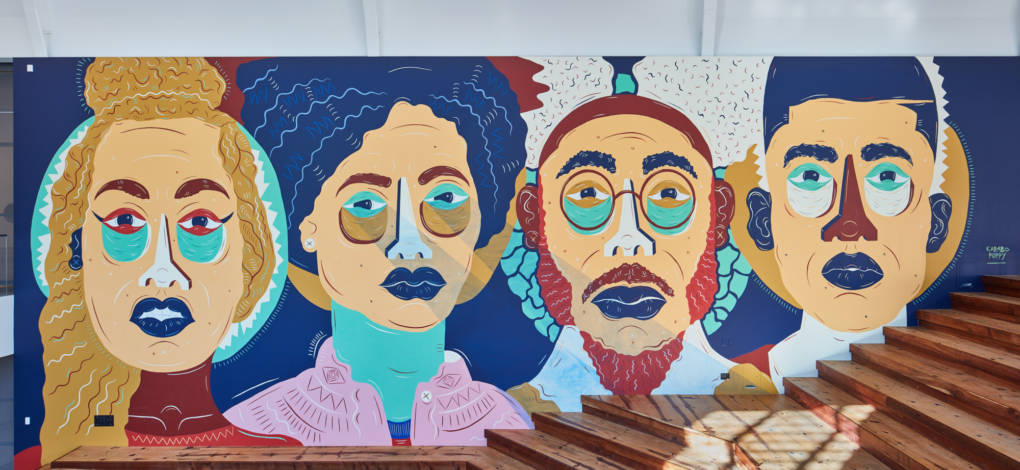
"caption": "Karabo Poppy Moletsane's Art Wall, 2017.",
"description": "Karabo Poppy Moletsane's Art Wall, 2017.",
"title": "BAMPFA_Mural_12-5-17_01",
"credit": "Courtesy of BAMPFA",
"status": "inherit",
"isLoading": false,
"fetchFailed": false
},
"arts_13814704": {
"type": "attachments",
"id": "arts_13814704",
"meta": {
"index": "attachments_1716263798",
"site": "arts",
"id": "13814704",
"found": true
},
"parent": 13814686,
"imgSizes": {
"small": {
"file": "https://ww2.kqed.org/app/uploads/sites/2/2017/11/TonguesUntied-520x293.jpg",
"width": 520,
"mimeType": "image/jpeg",
"height": 293
},
"twentyfourteen-full-width": {
"file": "https://ww2.kqed.org/app/uploads/sites/2/2017/11/TonguesUntied-1024x576.jpg",
"width": 1024,
"mimeType": "image/jpeg",
"height": 576
},
"thumbnail": {
"file": "https://ww2.kqed.org/app/uploads/sites/2/2017/11/TonguesUntied-160x90.jpg",
"width": 160,
"mimeType": "image/jpeg",
"height": 90
},
"fd-sm": {
"file": "https://ww2.kqed.org/app/uploads/sites/2/2017/11/TonguesUntied-960x540.jpg",
"width": 960,
"mimeType": "image/jpeg",
"height": 540
},
"post-thumbnail": {
"file": "https://ww2.kqed.org/app/uploads/sites/2/2017/11/TonguesUntied-672x372.jpg",
"width": 672,
"mimeType": "image/jpeg",
"height": 372
},
"xsmall": {
"file": "https://ww2.kqed.org/app/uploads/sites/2/2017/11/TonguesUntied-375x211.jpg",
"width": 375,
"mimeType": "image/jpeg",
"height": 211
},
"kqedFullSize": {
"file": "https://ww2.kqed.org/app/uploads/sites/2/2017/11/TonguesUntied.jpg",
"width": 1024,
"height": 576
},
"large": {
"file": "https://ww2.kqed.org/app/uploads/sites/2/2017/11/TonguesUntied-1020x574.jpg",
"width": 1020,
"mimeType": "image/jpeg",
"height": 574
},
"guest-author-50": {
"file": "https://ww2.kqed.org/app/uploads/sites/2/2017/11/TonguesUntied-50x50.jpg",
"width": 50,
"mimeType": "image/jpeg",
"height": 50
},
"guest-author-96": {
"file": "https://ww2.kqed.org/app/uploads/sites/2/2017/11/TonguesUntied-96x96.jpg",
"width": 96,
"mimeType": "image/jpeg",
"height": 96
},
"medium": {
"file": "https://ww2.kqed.org/app/uploads/sites/2/2017/11/TonguesUntied-800x450.jpg",
"width": 800,
"mimeType": "image/jpeg",
"height": 450
},
"guest-author-64": {
"file": "https://ww2.kqed.org/app/uploads/sites/2/2017/11/TonguesUntied-64x64.jpg",
"width": 64,
"mimeType": "image/jpeg",
"height": 64
},
"guest-author-32": {
"file": "https://ww2.kqed.org/app/uploads/sites/2/2017/11/TonguesUntied-32x32.jpg",
"width": 32,
"mimeType": "image/jpeg",
"height": 32
},
"detail": {
"file": "https://ww2.kqed.org/app/uploads/sites/2/2017/11/TonguesUntied-150x150.jpg",
"width": 150,
"mimeType": "image/jpeg",
"height": 150
},
"medium_large": {
"file": "https://ww2.kqed.org/app/uploads/sites/2/2017/11/TonguesUntied-768x432.jpg",
"width": 768,
"mimeType": "image/jpeg",
"height": 432
},
"guest-author-128": {
"file": "https://ww2.kqed.org/app/uploads/sites/2/2017/11/TonguesUntied-128x128.jpg",
"width": 128,
"mimeType": "image/jpeg",
"height": 128
},
"xxsmall": {
"file": "https://ww2.kqed.org/app/uploads/sites/2/2017/11/TonguesUntied-240x135.jpg",
"width": 240,
"mimeType": "image/jpeg",
"height": 135
}
},
"publishDate": 1510556646,
"modified": 1510556685,
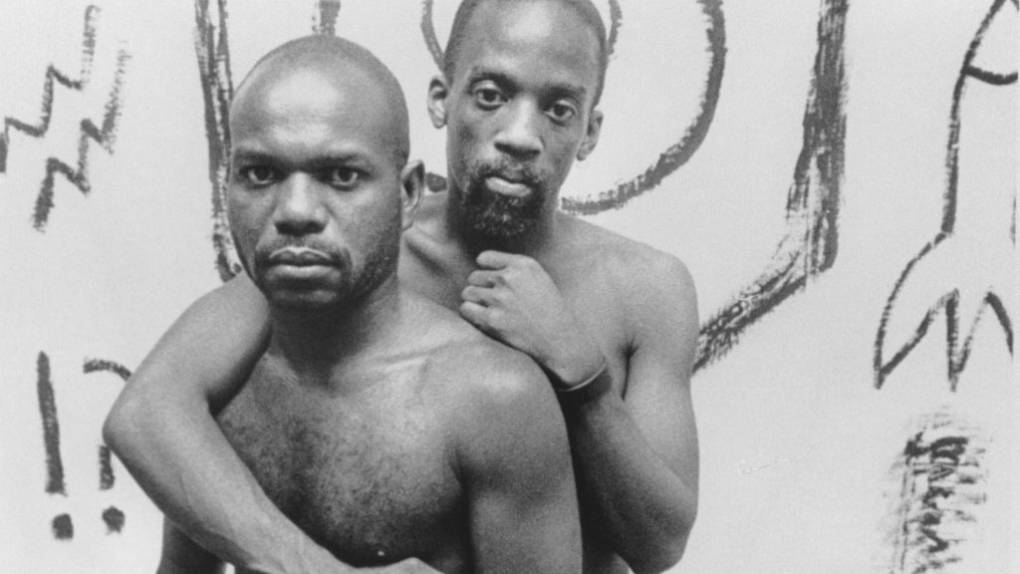
"caption": "From 'Tongues Untied,' a film by Marlon Riggs.",
"description": "From 'Tongues Untied,' a film by Marlon Riggs.",
"title": "TonguesUntied",
"credit": null,
"status": "inherit",
"isLoading": false,
"fetchFailed": false
}
},
"audioPlayerReducer": {
"postId": "stream_live",
"isPaused": true,
"isPlaying": false,
"pfsActive": false,
"pledgeModalIsOpen": true,
"playerDrawerIsOpen": false,
"liveAudioPlayStartedAt": 0,
"liveAudioPlayContext": ""
},
"authorsReducer": {
"byline_arts_13829726": {
"type": "authors",
"id": "byline_arts_13829726",
"meta": {
"override": true
},
"slug": "byline_arts_13829726",
"name": "Max Goldberg",
"isLoading": false
},
"byline_arts_13818779": {
"type": "authors",
"id": "byline_arts_13818779",
"meta": {
"override": true
},
"slug": "byline_arts_13818779",
"name": "Max Goldberg",
"isLoading": false
},
"mfox": {
"type": "authors",
"id": "22",
"meta": {
"index": "authors_1716337520",
"id": "22",
"found": true
},
"name": "Michael Fox",
"firstName": "Michael",
"lastName": "Fox",
"slug": "mfox",
"email": "foxonfilm@yahoo.com",
"display_author_email": false,
"staff_mastheads": [],
"title": "KQED Contributor",
"bio": "Michael Fox has written about film for dozens of publications since 1987. He is a founding member of the San Francisco Bay Area Film Critics Circle.",
"avatar": "https://secure.gravatar.com/avatar/d9849d6c659c41414795c471d907bb97b396e2a32b88e20e6ff66f65fbdd6dcd?s=600&d=blank&r=g",
"twitter": null,
"bluesky": null,
"facebook": null,
"instagram": null,
"linkedin": null,
"sites": [
{
"site": "arts",
"roles": [
"Contributor",
"contributor"
]
}
],
"headData": {
"title": "Michael Fox | KQED",
"description": "KQED Contributor",
"ogImgSrc": "https://secure.gravatar.com/avatar/d9849d6c659c41414795c471d907bb97b396e2a32b88e20e6ff66f65fbdd6dcd?s=600&d=blank&r=g",
"twImgSrc": "https://secure.gravatar.com/avatar/d9849d6c659c41414795c471d907bb97b396e2a32b88e20e6ff66f65fbdd6dcd?s=600&d=blank&r=g"
},
"isLoading": false,
"link": "/author/mfox"
},
"cmusiker": {
"type": "authors",
"id": "32",
"meta": {
"index": "authors_1716337520",
"id": "32",
"found": true
},
"name": "Cy Musiker",
"firstName": "Cy",
"lastName": "Musiker",
"slug": "cmusiker",
"email": "cmusiker@kqed.org",
"display_author_email": false,
"staff_mastheads": [],
"title": "KQED Contributor",
"bio": "Cy Musiker is a former co-host of The Do List and a former reporter covering the arts for KQED News and The California Report. He loves live performance, especially great theater, jazz, roots music, anything by Mahler. Cy has an MJ from UC Berkeley's School of Journalism, and got his BA from Hampshire College. His work has been recognized by the Society for Professional Journalists with their Sigma Delta Chi Award for Public Service in Journalism. When he can, Cy likes to swim in Tomales Bay, run with his dog in the East Bay Hills, and hike the Sierra.",
"avatar": "https://secure.gravatar.com/avatar/05eaba5c5696ce8f062e4ea2df428a43?s=600&d=blank&r=g",
"twitter": null,
"facebook": null,
"instagram": null,
"linkedin": null,
"sites": [
{
"site": "arts",
"roles": [
"Contributor",
"subscriber"
]
},
{
"site": "news",
"roles": [
"author"
]
},
{
"site": "bayareabites",
"roles": [
"contributor"
]
}
],
"headData": {
"title": "Cy Musiker | KQED",
"description": "KQED Contributor",
"ogImgSrc": "https://secure.gravatar.com/avatar/05eaba5c5696ce8f062e4ea2df428a43?s=600&d=blank&r=g",
"twImgSrc": "https://secure.gravatar.com/avatar/05eaba5c5696ce8f062e4ea2df428a43?s=600&d=blank&r=g"
},
"isLoading": false,
"link": "/author/cmusiker"
},
"shotchkiss": {
"type": "authors",
"id": "61",
"meta": {
"index": "authors_1716337520",
"id": "61",
"found": true
},
"name": "Sarah Hotchkiss",
"firstName": "Sarah",
"lastName": "Hotchkiss",
"slug": "shotchkiss",
"email": "shotchkiss@kqed.org",
"display_author_email": true,
"staff_mastheads": [
"arts"
],
"title": "Senior Editor",
"bio": "Sarah Hotchkiss is a San Francisco \u003ca href=\"http://www.sarahhotchkiss.com\">artist\u003c/a> and arts writer. In 2019, she received the Dorothea & Leo Rabkin Foundation grant for visual art journalism and in 2020 she received a Society of Professional Journalists, Northern California award for excellence in arts and culture reporting.",
"avatar": "https://secure.gravatar.com/avatar/bc662df144b3d27fd8b1b6f1c2a420d34e91e53154d411bb7ad353cc8b6cea8d?s=600&d=blank&r=g",
"twitter": null,
"bluesky": null,
"facebook": null,
"instagram": null,
"linkedin": null,
"sites": [
{
"site": "",
"roles": [
"editor"
]
},
{
"site": "arts",
"roles": [
"Contributor",
"administrator"
]
},
{
"site": "artschool",
"roles": [
"administrator"
]
},
{
"site": "news",
"roles": [
"editor"
]
},
{
"site": "pop",
"roles": [
"administrator"
]
},
{
"site": "bayareabites",
"roles": [
"editor"
]
},
{
"site": "spark",
"roles": [
"editor"
]
},
{
"site": "checkplease",
"roles": [
"editor"
]
}
],
"headData": {
"title": "Sarah Hotchkiss | KQED",
"description": "Senior Editor",
"ogImgSrc": "https://secure.gravatar.com/avatar/bc662df144b3d27fd8b1b6f1c2a420d34e91e53154d411bb7ad353cc8b6cea8d?s=600&d=blank&r=g",
"twImgSrc": "https://secure.gravatar.com/avatar/bc662df144b3d27fd8b1b6f1c2a420d34e91e53154d411bb7ad353cc8b6cea8d?s=600&d=blank&r=g"
},
"isLoading": false,
"link": "/author/shotchkiss"
},
"rseikaly": {
"type": "authors",
"id": "77",
"meta": {
"index": "authors_1716337520",
"id": "77",
"found": true
},
"name": "Roula Seikaly",
"firstName": "Roula",
"lastName": "Seikaly",
"slug": "rseikaly",
"email": "roula@roulaseikaly.com",
"display_author_email": false,
"staff_mastheads": [],
"title": "KQED Contributor",
"bio": "Roula Seikaly in an independent writer and curator based in Berkeley, California, and Senior Editor at \u003ca href=\"http://hafny.org/\">Humble Arts Foundation\u003c/a>. She has curated exhibitions at Colorado Photographic Arts Center, Filter Photo Festival, Blue Sky Gallery, SF Camerawork, SOMArts, and the Utah Museum of Arts. She is a regular contributor to Photograph, Hyerallergic, BOMB Magazine, and KQED Arts.",
"avatar": "https://secure.gravatar.com/avatar/771cde409896af1326a07050f2e4e489?s=600&d=blank&r=g",
"twitter": null,
"facebook": null,
"instagram": null,
"linkedin": null,
"sites": [
{
"site": "arts",
"roles": [
"Contributor",
"contributor"
]
}
],
"headData": {
"title": "Roula Seikaly | KQED",
"description": "KQED Contributor",
"ogImgSrc": "https://secure.gravatar.com/avatar/771cde409896af1326a07050f2e4e489?s=600&d=blank&r=g",
"twImgSrc": "https://secure.gravatar.com/avatar/771cde409896af1326a07050f2e4e489?s=600&d=blank&r=g"
},
"isLoading": false,
"link": "/author/rseikaly"
},
"ahenderson": {
"type": "authors",
"id": "11272",
"meta": {
"index": "authors_1716337520",
"id": "11272",
"found": true
},
"name": "Aine Henderson",
"firstName": "Aine",
"lastName": "Henderson",
"slug": "ahenderson",
"email": "ahenderson@KQED.org",
"display_author_email": false,
"staff_mastheads": [],
"title": "KQED Contributor",
"bio": null,
"avatar": "https://secure.gravatar.com/avatar/52eb8bcbf0bb97068e4ad609525e763c?s=600&d=blank&r=g",
"twitter": null,
"facebook": null,
"instagram": null,
"linkedin": null,
"sites": [
{
"site": "arts",
"roles": [
"editor"
]
},
{
"site": "about",
"roles": [
"editor"
]
},
{
"site": "trulyca",
"roles": [
"administrator",
"author",
"editor"
]
},
{
"site": "pressroom",
"roles": [
"editor"
]
},
{
"site": "filmschoolshorts",
"roles": [
"editor"
]
}
],
"headData": {
"title": "Aine Henderson | KQED",
"description": "KQED Contributor",
"ogImgSrc": "https://secure.gravatar.com/avatar/52eb8bcbf0bb97068e4ad609525e763c?s=600&d=blank&r=g",
"twImgSrc": "https://secure.gravatar.com/avatar/52eb8bcbf0bb97068e4ad609525e763c?s=600&d=blank&r=g"
},
"isLoading": false,
"link": "/author/ahenderson"
},
"nvoynovskaya": {
"type": "authors",
"id": "11387",
"meta": {
"index": "authors_1716337520",
"id": "11387",
"found": true
},
"name": "Nastia Voynovskaya",
"firstName": "Nastia",
"lastName": "Voynovskaya",
"slug": "nvoynovskaya",
"email": "nvoynovskaya@kqed.org",
"display_author_email": false,
"staff_mastheads": [
"arts"
],
"title": "Editor and reporter",
"bio": "Nastia Voynovskaya is a reporter and editor at KQED Arts & Culture. She's been covering the arts in the Bay Area for over a decade, with a focus on music, queer culture, labor issues and grassroots organizing. She has edited KQED story series such as Trans Bay: A History of San Francisco's Gender-Diverse Community, and co-created KQED's Bay Area hip-hop history project, That's My Word. Nastia's work has been recognized by the Society of Professional Journalists and San Francisco Press Club. She holds a BA in comparative literature from UC Berkeley.",
"avatar": "https://secure.gravatar.com/avatar/5025ee460e5a85d69ca20ea6c6f2f80d7e17795c828f61ea3aecfcd924e9042e?s=600&d=blank&r=g",
"twitter": null,
"bluesky": null,
"facebook": null,
"instagram": "https://www.instagram.com/nananastia/",
"linkedin": null,
"sites": [
{
"site": "arts",
"roles": [
"administrator"
]
},
{
"site": "news",
"roles": [
"editor"
]
},
{
"site": "pop",
"roles": [
"administrator"
]
},
{
"site": "bayareabites",
"roles": [
"editor"
]
},
{
"site": "podcasts",
"roles": [
"editor"
]
},
{
"site": "hiphop",
"roles": [
"editor"
]
}
],
"headData": {
"title": "Nastia Voynovskaya | KQED",
"description": "Editor and reporter",
"ogImgSrc": "https://secure.gravatar.com/avatar/5025ee460e5a85d69ca20ea6c6f2f80d7e17795c828f61ea3aecfcd924e9042e?s=600&d=blank&r=g",
"twImgSrc": "https://secure.gravatar.com/avatar/5025ee460e5a85d69ca20ea6c6f2f80d7e17795c828f61ea3aecfcd924e9042e?s=600&d=blank&r=g"
},
"isLoading": false,
"link": "/author/nvoynovskaya"
},
"rgebreyesus": {
"type": "authors",
"id": "11625",
"meta": {
"index": "authors_1716337520",
"id": "11625",
"found": true
},
"name": "Ruth Gebreyesus",
"firstName": "Ruth",
"lastName": "Gebreyesus",
"slug": "rgebreyesus",
"email": "rgebreyesus@KQED.org",
"display_author_email": false,
"staff_mastheads": [],
"title": "Food Writer",
"bio": "Ruth Gebreyesus is a freelance writer and producer based in the Bay Area. Through stories across various mediums, Ruth explores the creation and consumption of cultural products. You can find more of her work \u003ca href=\"https://www.kotetakotet.com/\">here\u003c/a>.",
"avatar": "https://secure.gravatar.com/avatar/68980beab511750abbb1a58f1c768b45?s=600&d=mm&r=g",
"twitter": "root_g",
"facebook": null,
"instagram": null,
"linkedin": null,
"sites": [
{
"site": "arts",
"roles": [
"subscriber"
]
},
{
"site": "bayareabites",
"roles": [
"subscriber"
]
},
{
"site": "checkplease",
"roles": [
"editor"
]
},
{
"site": "food",
"roles": []
}
],
"headData": {
"title": "Ruth Gebreyesus | KQED",
"description": "Food Writer",
"ogImgSrc": "https://secure.gravatar.com/avatar/68980beab511750abbb1a58f1c768b45?s=600&d=mm&r=g",
"twImgSrc": "https://secure.gravatar.com/avatar/68980beab511750abbb1a58f1c768b45?s=600&d=mm&r=g"
},
"isLoading": false,
"link": "/author/rgebreyesus"
}
},
"pagesReducer": {
"arts_tag_bampfa": {
"type": "terms",
"id": "arts_2227",
"meta": {
"index": "terms_1716263798",
"site": "arts",
"id": "2227",
"score": 9.890152
},
"featImg": null,
"name": "BAMPFA",
"description": null,
"taxonomy": "tag",
"headData": {
"twImgId": null,
"twTitle": null,
"ogTitle": null,
"ogImgId": null,
"twDescription": null,
"description": null,
"title": "BAMPFA Archives | KQED Arts",
"ogDescription": null
},
"ttid": 2239,
"slug": "bampfa",
"isLoading": false,
"title": "BAMPFA",
"pageMeta": {
"site": "arts",
"WpPageTemplate": "page-topic-editorial",
"currentPage": 8
},
"blocks": [
{
"blockName": "kqed/post-list",
"attrs": {
"layout": "cardArticle2",
"query": "posts/arts?tag=bampfa",
"seeMore": false,
"paginated": true,
"page": 8
}
},
{
"blockName": "kqed/ad"
}
]
}
},
"pfsSessionReducer": {},
"postsReducer": {
"stream_live": {
"type": "live",
"id": "stream_live",
"audioUrl": "https://streams.kqed.org/kqedradio",
"title": "Live Stream",
"excerpt": "Live Stream information currently unavailable.",
"link": "/radio",
"featImg": "",
"label": {
"name": "KQED Live",
"link": "/"
}
},
"stream_kqedNewscast": {
"type": "posts",
"id": "stream_kqedNewscast",
"audioUrl": "https://www.kqed.org/.stream/anon/radio/RDnews/newscast.mp3?_=1",
"title": "KQED Newscast",
"featImg": "",
"label": {
"name": "88.5 FM",
"link": "/"
}
},
"arts_13837219": {
"type": "posts",
"id": "arts_13837219",
"meta": {
"index": "posts_1716263798",
"site": "arts",
"id": "13837219",
"score": null,
"sort": [
1531872130000
]
},
"parent": 0,
"labelTerm": {
"site": "arts"
},
"blocks": [],
"publishDate": 1531872130,
"format": "standard",
"title": "Peter Hujar Slows Down the 'Speed of Life' at BAMPFA",
"headTitle": "Peter Hujar Slows Down the ‘Speed of Life’ at BAMPFA | KQED",
"content": "\u003cp>\u003ca href=\"https://bampfa.org/program/peter-hujar-speed-life\">\u003ci>Peter Hujar: Speed of Life\u003c/i>\u003c/a>, the elegantly staged photography retrospective recently landed in Berkeley, bears a poignant misnomer. For Hujar (1934-1987), portraying landscapes, animal studies and the personalities that lit up his professional and personal galaxy as they approached stardom was a way to slow, not accelerate, life’s heady pace amidst radical change in 1970s and ’80s New York. On view through mid-November at its only West Coast venue, the exhibition speaks to the singularity of artistic vision and the power of institutional influence to make, or break, a career.\u003c/p>\n\u003cp>Descending the museum’s wooden platform steps, viewers encounter the first suite of Hujar’s black-and-white photographs. Two rows of 12 images each feature the subjects that shaped the artist’s body of work—landscapes and cityscapes, portraiture, nudes, animal studies and still lifes—and recreate Hujar’s 1986 installation at Gracie Mansion Gallery in New York, the last presented in his lifetime. \u003c/p>\n\u003cp>Dividing an exhibition in this way, especially on the museum’s lower level, is a risk. As audiences wander through the museum’s rabbit-warren galleries, it’s possible to lose the visual thread that is first introduced. Curator Apsara DiQuinzio’s choice to isolate the first 24 photographs, however, is strategic: It presents the work as the artist preferred it to be seen, and introduces sequence as the force that guides the exhibition throughout. \u003c/p>\n\u003cfigure id=\"attachment_13837225\" class=\"wp-caption aligncenter\" style=\"max-width: 1022px\">\u003cimg loading=\"lazy\" decoding=\"async\" src=\"https://ww2.kqed.org/arts/wp-content/uploads/sites/2/2018/07/4_Cockette-John-Rothermel-in-Fashion-Pose.jpg\" alt=\"Peter Hujar, 'Cockette John Rothermel in a Fashion Pose,' 1971.\" width=\"1022\" height=\"1024\" class=\"size-full wp-image-13837225\" srcset=\"https://cdn.kqed.org/wp-content/uploads/sites/2/2018/07/4_Cockette-John-Rothermel-in-Fashion-Pose.jpg 1022w, https://cdn.kqed.org/wp-content/uploads/sites/2/2018/07/4_Cockette-John-Rothermel-in-Fashion-Pose-160x160.jpg 160w, https://cdn.kqed.org/wp-content/uploads/sites/2/2018/07/4_Cockette-John-Rothermel-in-Fashion-Pose-800x802.jpg 800w, https://cdn.kqed.org/wp-content/uploads/sites/2/2018/07/4_Cockette-John-Rothermel-in-Fashion-Pose-768x770.jpg 768w, https://cdn.kqed.org/wp-content/uploads/sites/2/2018/07/4_Cockette-John-Rothermel-in-Fashion-Pose-1020x1022.jpg 1020w, https://cdn.kqed.org/wp-content/uploads/sites/2/2018/07/4_Cockette-John-Rothermel-in-Fashion-Pose-960x962.jpg 960w, https://cdn.kqed.org/wp-content/uploads/sites/2/2018/07/4_Cockette-John-Rothermel-in-Fashion-Pose-240x240.jpg 240w, https://cdn.kqed.org/wp-content/uploads/sites/2/2018/07/4_Cockette-John-Rothermel-in-Fashion-Pose-375x376.jpg 375w, https://cdn.kqed.org/wp-content/uploads/sites/2/2018/07/4_Cockette-John-Rothermel-in-Fashion-Pose-520x521.jpg 520w, https://cdn.kqed.org/wp-content/uploads/sites/2/2018/07/4_Cockette-John-Rothermel-in-Fashion-Pose-32x32.jpg 32w, https://cdn.kqed.org/wp-content/uploads/sites/2/2018/07/4_Cockette-John-Rothermel-in-Fashion-Pose-50x50.jpg 50w, https://cdn.kqed.org/wp-content/uploads/sites/2/2018/07/4_Cockette-John-Rothermel-in-Fashion-Pose-64x64.jpg 64w, https://cdn.kqed.org/wp-content/uploads/sites/2/2018/07/4_Cockette-John-Rothermel-in-Fashion-Pose-96x96.jpg 96w, https://cdn.kqed.org/wp-content/uploads/sites/2/2018/07/4_Cockette-John-Rothermel-in-Fashion-Pose-128x128.jpg 128w, https://cdn.kqed.org/wp-content/uploads/sites/2/2018/07/4_Cockette-John-Rothermel-in-Fashion-Pose-150x150.jpg 150w\" sizes=\"(max-width: 1022px) 100vw, 1022px\">\u003cfigcaption class=\"wp-caption-text\">Peter Hujar, ‘Cockette John Rothermel in a Fashion Pose,’ 1971. \u003ccite>(Courtesy of Pace/MacGill Gallery, New York, and Fraenkel Gallery, San Francisco)\u003c/cite>\u003c/figcaption>\u003c/figure>\n\u003cp>The span is engaging and daunting. What are we to make of a West Virginia draft horse paired with a portrait of photographer \u003ca href=\"https://www.themorgan.org/photographs/374587\" target=\"_blank\" rel=\"noopener\">Lynn Davis\u003c/a>, or an image of a severed bovine head coupled with an portrait of the late singer \u003ca href=\"http://peterhujararchive.com/images/epson-scanner-image-2/\" target=\"_blank\" rel=\"noopener\">Peggy Lee\u003c/a>? No discernible rhythm is evident, but a powerful sense of potential energy is.\u003c/p>\n\u003cp>Stepping into the primary installation, alternating grids and rows of images pick up the presentation scheme introduced in the museum’s atrium. Other than the labels that report basic information about each piece (title, date, dimensions, lending institution), there is little text provided. When it is present, often in the form of extended didactic labels, the text reveals important notes about Hujar’s practice. \u003c/p>\n\u003cfigure id=\"attachment_13837226\" class=\"wp-caption aligncenter\" style=\"max-width: 1024px\">\u003cimg loading=\"lazy\" decoding=\"async\" src=\"https://ww2.kqed.org/arts/wp-content/uploads/sites/2/2018/07/5_From-Rockefeller-Center-The-Equitable-Building.jpg\" alt=\"Peter Hujar, 'From Rockefeller Center: The Equitable Building,' 1976.\" width=\"1024\" height=\"1010\" class=\"size-full wp-image-13837226\" srcset=\"https://cdn.kqed.org/wp-content/uploads/sites/2/2018/07/5_From-Rockefeller-Center-The-Equitable-Building.jpg 1024w, https://cdn.kqed.org/wp-content/uploads/sites/2/2018/07/5_From-Rockefeller-Center-The-Equitable-Building-160x158.jpg 160w, https://cdn.kqed.org/wp-content/uploads/sites/2/2018/07/5_From-Rockefeller-Center-The-Equitable-Building-800x789.jpg 800w, https://cdn.kqed.org/wp-content/uploads/sites/2/2018/07/5_From-Rockefeller-Center-The-Equitable-Building-768x758.jpg 768w, https://cdn.kqed.org/wp-content/uploads/sites/2/2018/07/5_From-Rockefeller-Center-The-Equitable-Building-1020x1006.jpg 1020w, https://cdn.kqed.org/wp-content/uploads/sites/2/2018/07/5_From-Rockefeller-Center-The-Equitable-Building-960x947.jpg 960w, https://cdn.kqed.org/wp-content/uploads/sites/2/2018/07/5_From-Rockefeller-Center-The-Equitable-Building-240x237.jpg 240w, https://cdn.kqed.org/wp-content/uploads/sites/2/2018/07/5_From-Rockefeller-Center-The-Equitable-Building-375x370.jpg 375w, https://cdn.kqed.org/wp-content/uploads/sites/2/2018/07/5_From-Rockefeller-Center-The-Equitable-Building-520x513.jpg 520w, https://cdn.kqed.org/wp-content/uploads/sites/2/2018/07/5_From-Rockefeller-Center-The-Equitable-Building-32x32.jpg 32w, https://cdn.kqed.org/wp-content/uploads/sites/2/2018/07/5_From-Rockefeller-Center-The-Equitable-Building-50x50.jpg 50w, https://cdn.kqed.org/wp-content/uploads/sites/2/2018/07/5_From-Rockefeller-Center-The-Equitable-Building-64x64.jpg 64w, https://cdn.kqed.org/wp-content/uploads/sites/2/2018/07/5_From-Rockefeller-Center-The-Equitable-Building-96x96.jpg 96w\" sizes=\"(max-width: 1024px) 100vw, 1024px\">\u003cfigcaption class=\"wp-caption-text\">Peter Hujar, ‘From Rockefeller Center: The Equitable Building,’ 1976. \u003ccite>(Courtesy of Pace/MacGill Gallery, New York, and Fraenkel Gallery, San Francisco)\u003c/cite>\u003c/figcaption>\u003c/figure>\n\u003cp>In one example, DiQuinzio draws our attention to the artist’s appreciation for diagonal (top left to bottom right corner) compositions in a four-image arrangement at the center of the gallery’s long left wall. Dancer \u003ca href=\"https://www.themorgan.org/photographs/374591\" target=\"_blank\" rel=\"noopener\">Sheryl Sutton\u003c/a>’s powerful forward pose resonates with an intimate portrait of \u003ca href=\"https://www.themorgan.org/photographs/374625\" target=\"_blank\" rel=\"noopener\">David Levithan\u003c/a> in bed and a \u003ca href=\"http://peterhujararchive.com/images/eph_0752-2/\" target=\"_blank\" rel=\"noopener\">mountainous landscape\u003c/a> scene captured during his travels throughout Italy.\u003c/p>\n\u003cp>[ad fullwidth]\u003c/p>\n\u003cp>Along the gallery’s anterior wall, a group of six photographs convey Hujar’s attention to what is hidden, and what is revealed. Portraits of artists Gary Indiana and \u003ca href=\"http://peterhujararchive.com/images/eph_1488-1/\" target=\"_blank\" rel=\"noopener\">Stephen Varble\u003c/a>, adorned respectively with a sheer sequined scarf and chicken wire laden with money, imperfectly obscure their identities. Simultaneously, these adornments expose the repressive cultural biases relating to gender and sexual identity that Hujar and fellow artists openly challenged in their work. \u003c/p>\n\u003cfigure id=\"attachment_13837227\" class=\"wp-caption aligncenter\" style=\"max-width: 2048px\">\u003cimg loading=\"lazy\" decoding=\"async\" src=\"https://ww2.kqed.org/arts/wp-content/uploads/sites/2/2018/07/6_Gary-Indiana-Veiled.jpg\" alt=\"Peter Hujar, 'Gary Indiana Veiled,' 1981.\" width=\"2048\" height=\"2036\" class=\"size-full wp-image-13837227\" srcset=\"https://cdn.kqed.org/wp-content/uploads/sites/2/2018/07/6_Gary-Indiana-Veiled.jpg 2048w, https://cdn.kqed.org/wp-content/uploads/sites/2/2018/07/6_Gary-Indiana-Veiled-160x159.jpg 160w, https://cdn.kqed.org/wp-content/uploads/sites/2/2018/07/6_Gary-Indiana-Veiled-800x795.jpg 800w, https://cdn.kqed.org/wp-content/uploads/sites/2/2018/07/6_Gary-Indiana-Veiled-768x764.jpg 768w, https://cdn.kqed.org/wp-content/uploads/sites/2/2018/07/6_Gary-Indiana-Veiled-1020x1014.jpg 1020w, https://cdn.kqed.org/wp-content/uploads/sites/2/2018/07/6_Gary-Indiana-Veiled-1200x1193.jpg 1200w, https://cdn.kqed.org/wp-content/uploads/sites/2/2018/07/6_Gary-Indiana-Veiled-1920x1909.jpg 1920w, https://cdn.kqed.org/wp-content/uploads/sites/2/2018/07/6_Gary-Indiana-Veiled-1180x1173.jpg 1180w, https://cdn.kqed.org/wp-content/uploads/sites/2/2018/07/6_Gary-Indiana-Veiled-960x954.jpg 960w, https://cdn.kqed.org/wp-content/uploads/sites/2/2018/07/6_Gary-Indiana-Veiled-240x239.jpg 240w, https://cdn.kqed.org/wp-content/uploads/sites/2/2018/07/6_Gary-Indiana-Veiled-375x373.jpg 375w, https://cdn.kqed.org/wp-content/uploads/sites/2/2018/07/6_Gary-Indiana-Veiled-520x517.jpg 520w, https://cdn.kqed.org/wp-content/uploads/sites/2/2018/07/6_Gary-Indiana-Veiled-32x32.jpg 32w, https://cdn.kqed.org/wp-content/uploads/sites/2/2018/07/6_Gary-Indiana-Veiled-50x50.jpg 50w, https://cdn.kqed.org/wp-content/uploads/sites/2/2018/07/6_Gary-Indiana-Veiled-64x64.jpg 64w, https://cdn.kqed.org/wp-content/uploads/sites/2/2018/07/6_Gary-Indiana-Veiled-96x96.jpg 96w, https://cdn.kqed.org/wp-content/uploads/sites/2/2018/07/6_Gary-Indiana-Veiled-128x128.jpg 128w, https://cdn.kqed.org/wp-content/uploads/sites/2/2018/07/6_Gary-Indiana-Veiled-150x150.jpg 150w\" sizes=\"(max-width: 2048px) 100vw, 2048px\">\u003cfigcaption class=\"wp-caption-text\">Peter Hujar, ‘Gary Indiana Veiled,’ 1981. \u003ccite>(Courtesy of Pace/MacGill Gallery, New York, and Fraenkel Gallery, San Francisco)\u003c/cite>\u003c/figcaption>\u003c/figure>\n\u003cp>Encountered individually, each photograph in a respective groups stands on its own aesthetic merit. Seen in groupings, however, the images offer greater insight to Hujar’s compositional methodology and interests. If groupings and the attendant didactic labels were offered throughout the exhibition, there would be little for viewers to discover on their own in Hujar’s work. DiQuinzio’s economic use of supplemental text opens a door just wide enough for curious viewers to step into Hujar’s creative realm.\u003c/p>\n\u003cp>If you’re wondering why you don’t know more about Peter Hujar, you’re on the right track. Hujar came of age professionally at a pivotal point in his chosen medium’s 20-century history. More than a century after the first photographic processes were invented, photography in the 1970s languished in the commercial art market as inferior to painting and sculpture. That status shifted just as Hujar hit his creative stride, when influential curators, art dealers and collectors advanced the medium’s cause through now-historic exhibitions and notable private and public sales.\u003c/p>\n\u003cfigure id=\"attachment_13837223\" class=\"wp-caption aligncenter\" style=\"max-width: 2005px\">\u003cimg loading=\"lazy\" decoding=\"async\" src=\"https://ww2.kqed.org/arts/wp-content/uploads/sites/2/2018/07/1_Fran-Lebowitz-at-Home-in-Morristown-New-Jersey.jpg\" alt=\"Peter Hujar, 'Fran Lebowitz at Home in Morristown, New Jersey,' 1974.\" width=\"2005\" height=\"2048\" class=\"size-full wp-image-13837223\" srcset=\"https://cdn.kqed.org/wp-content/uploads/sites/2/2018/07/1_Fran-Lebowitz-at-Home-in-Morristown-New-Jersey.jpg 2005w, https://cdn.kqed.org/wp-content/uploads/sites/2/2018/07/1_Fran-Lebowitz-at-Home-in-Morristown-New-Jersey-160x163.jpg 160w, https://cdn.kqed.org/wp-content/uploads/sites/2/2018/07/1_Fran-Lebowitz-at-Home-in-Morristown-New-Jersey-800x817.jpg 800w, https://cdn.kqed.org/wp-content/uploads/sites/2/2018/07/1_Fran-Lebowitz-at-Home-in-Morristown-New-Jersey-768x785.jpg 768w, https://cdn.kqed.org/wp-content/uploads/sites/2/2018/07/1_Fran-Lebowitz-at-Home-in-Morristown-New-Jersey-1020x1042.jpg 1020w, https://cdn.kqed.org/wp-content/uploads/sites/2/2018/07/1_Fran-Lebowitz-at-Home-in-Morristown-New-Jersey-1175x1200.jpg 1175w, https://cdn.kqed.org/wp-content/uploads/sites/2/2018/07/1_Fran-Lebowitz-at-Home-in-Morristown-New-Jersey-1920x1962.jpg 1920w, https://cdn.kqed.org/wp-content/uploads/sites/2/2018/07/1_Fran-Lebowitz-at-Home-in-Morristown-New-Jersey-1180x1206.jpg 1180w, https://cdn.kqed.org/wp-content/uploads/sites/2/2018/07/1_Fran-Lebowitz-at-Home-in-Morristown-New-Jersey-960x981.jpg 960w, https://cdn.kqed.org/wp-content/uploads/sites/2/2018/07/1_Fran-Lebowitz-at-Home-in-Morristown-New-Jersey-240x245.jpg 240w, https://cdn.kqed.org/wp-content/uploads/sites/2/2018/07/1_Fran-Lebowitz-at-Home-in-Morristown-New-Jersey-375x383.jpg 375w, https://cdn.kqed.org/wp-content/uploads/sites/2/2018/07/1_Fran-Lebowitz-at-Home-in-Morristown-New-Jersey-520x531.jpg 520w, https://cdn.kqed.org/wp-content/uploads/sites/2/2018/07/1_Fran-Lebowitz-at-Home-in-Morristown-New-Jersey-32x32.jpg 32w, https://cdn.kqed.org/wp-content/uploads/sites/2/2018/07/1_Fran-Lebowitz-at-Home-in-Morristown-New-Jersey-50x50.jpg 50w, https://cdn.kqed.org/wp-content/uploads/sites/2/2018/07/1_Fran-Lebowitz-at-Home-in-Morristown-New-Jersey-64x64.jpg 64w\" sizes=\"(max-width: 2005px) 100vw, 2005px\">\u003cfigcaption class=\"wp-caption-text\">Peter Hujar, ‘Fran Lebowitz at Home in Morristown, New Jersey,’ 1974. \u003ccite>(Courtesy of Pace/MacGill Gallery, New York, and Fraenkel Gallery, San Francisco)\u003c/cite>\u003c/figcaption>\u003c/figure>\n\u003cp>This sea change ultimately elevated the work of Hujar’s contemporaries—Nan Goldin and Robert Mapplethorpe most notably—as \u003cem>the\u003c/em> visual statements about life on the gritty and glorious edges of American society. During our interview, Apsara DiQuinzio noted that Hujar was notoriously combative, and shared writer Fran Lebowitz’s quote that the artist had “hung up on every important photography dealer in the western world.” Though the allure of institutional support and fame, not to mention financial stability, was potent, Hujar preferred to nurture on his own terms the creative fire that sustained him from the late 1950s on.\u003c/p>\n\u003cp>Rigorously researched and organized by the Morgan Library & Museum, \u003cem>Peter Hujar: The Speed of Life\u003c/em> is a welcome and long overdue account of a life dedicated to the perfection of personal vision. Once appreciated only by photography devotees, this exhibition situates Hujar and his singular work in the creative milieu that left him behind four decades ago.\u003c/p>\n\u003cp>\u003cimg loading=\"lazy\" decoding=\"async\" src=\"https://ww2.kqed.org/arts/wp-content/uploads/sites/2/2016/09/Q.Logo_.Break_.jpg\" alt=\"\" width=\"800\" height=\"78\" class=\"aligncenter size-full wp-image-12127869\" srcset=\"https://cdn.kqed.org/wp-content/uploads/sites/2/2016/09/Q.Logo_.Break_.jpg 800w, https://cdn.kqed.org/wp-content/uploads/sites/2/2016/09/Q.Logo_.Break_-400x39.jpg 400w, https://cdn.kqed.org/wp-content/uploads/sites/2/2016/09/Q.Logo_.Break_-768x75.jpg 768w\" sizes=\"(max-width: 800px) 100vw, 800px\">\u003c/p>\n\u003cp>\u003c/p>\n\u003cp>\u003cem>‘Peter Hujar: The Speed of Life’\u003c/em> is on view at the Berkeley Art Museum and Pacific Film Archive through Nov. 18, 2018. \u003ca href=\"https://bampfa.org/program/peter-hujar-speed-life\" target=\"_blank\" rel=\"noopener\">Details here\u003c/a>.\u003c/p>\n\n",
"stats": {
"hasVideo": false,
"hasChartOrMap": false,
"hasAudio": false,
"hasPolis": false,
"wordCount": 976,
"hasGoogleForm": false,
"hasGallery": false,
"hasHearkenModule": false,
"iframeSrcs": [],
"paragraphCount": 15
},
"modified": 1705027481,
"excerpt": "A welcome and long overdue retrospective of the late artist situates Hujar and his singular work in the creative milieu that left him behind four decades ago.",
"headData": {
"twImgId": "",
"twTitle": "",
"ogTitle": "",
"ogImgId": "",
"twDescription": "",
"description": "A welcome and long overdue retrospective of the late artist situates Hujar and his singular work in the creative milieu that left him behind four decades ago.",
"title": "Peter Hujar Slows Down the 'Speed of Life' at BAMPFA | KQED",
"ogDescription": "",
"schema": {
"@context": "https://schema.org",
"@type": "Article",
"headline": "Peter Hujar Slows Down the 'Speed of Life' at BAMPFA",
"datePublished": "2018-07-17T17:02:10-07:00",
"dateModified": "2024-01-11T18:44:41-08:00",
"image": "https://cdn.kqed.org/wp-content/uploads/2020/02/KQED-OG-Image@1x.png"
}
},
"guestAuthors": [],
"slug": "peter-hujar-slows-down-the-speed-of-life-at-bampfa",
"status": "publish",
"sticky": false,
"path": "/arts/13837219/peter-hujar-slows-down-the-speed-of-life-at-bampfa",
"audioTrackLength": null,
"parsedContent": [
{
"type": "contentString",
"content": "\u003cdiv class=\"post-body\">\u003cp>\u003cp>\u003ca href=\"https://bampfa.org/program/peter-hujar-speed-life\">\u003ci>Peter Hujar: Speed of Life\u003c/i>\u003c/a>, the elegantly staged photography retrospective recently landed in Berkeley, bears a poignant misnomer. For Hujar (1934-1987), portraying landscapes, animal studies and the personalities that lit up his professional and personal galaxy as they approached stardom was a way to slow, not accelerate, life’s heady pace amidst radical change in 1970s and ’80s New York. On view through mid-November at its only West Coast venue, the exhibition speaks to the singularity of artistic vision and the power of institutional influence to make, or break, a career.\u003c/p>\n\u003cp>Descending the museum’s wooden platform steps, viewers encounter the first suite of Hujar’s black-and-white photographs. Two rows of 12 images each feature the subjects that shaped the artist’s body of work—landscapes and cityscapes, portraiture, nudes, animal studies and still lifes—and recreate Hujar’s 1986 installation at Gracie Mansion Gallery in New York, the last presented in his lifetime. \u003c/p>\n\u003cp>Dividing an exhibition in this way, especially on the museum’s lower level, is a risk. As audiences wander through the museum’s rabbit-warren galleries, it’s possible to lose the visual thread that is first introduced. Curator Apsara DiQuinzio’s choice to isolate the first 24 photographs, however, is strategic: It presents the work as the artist preferred it to be seen, and introduces sequence as the force that guides the exhibition throughout. \u003c/p>\n\u003cfigure id=\"attachment_13837225\" class=\"wp-caption aligncenter\" style=\"max-width: 1022px\">\u003cimg loading=\"lazy\" decoding=\"async\" src=\"https://ww2.kqed.org/arts/wp-content/uploads/sites/2/2018/07/4_Cockette-John-Rothermel-in-Fashion-Pose.jpg\" alt=\"Peter Hujar, 'Cockette John Rothermel in a Fashion Pose,' 1971.\" width=\"1022\" height=\"1024\" class=\"size-full wp-image-13837225\" srcset=\"https://cdn.kqed.org/wp-content/uploads/sites/2/2018/07/4_Cockette-John-Rothermel-in-Fashion-Pose.jpg 1022w, https://cdn.kqed.org/wp-content/uploads/sites/2/2018/07/4_Cockette-John-Rothermel-in-Fashion-Pose-160x160.jpg 160w, https://cdn.kqed.org/wp-content/uploads/sites/2/2018/07/4_Cockette-John-Rothermel-in-Fashion-Pose-800x802.jpg 800w, https://cdn.kqed.org/wp-content/uploads/sites/2/2018/07/4_Cockette-John-Rothermel-in-Fashion-Pose-768x770.jpg 768w, https://cdn.kqed.org/wp-content/uploads/sites/2/2018/07/4_Cockette-John-Rothermel-in-Fashion-Pose-1020x1022.jpg 1020w, https://cdn.kqed.org/wp-content/uploads/sites/2/2018/07/4_Cockette-John-Rothermel-in-Fashion-Pose-960x962.jpg 960w, https://cdn.kqed.org/wp-content/uploads/sites/2/2018/07/4_Cockette-John-Rothermel-in-Fashion-Pose-240x240.jpg 240w, https://cdn.kqed.org/wp-content/uploads/sites/2/2018/07/4_Cockette-John-Rothermel-in-Fashion-Pose-375x376.jpg 375w, https://cdn.kqed.org/wp-content/uploads/sites/2/2018/07/4_Cockette-John-Rothermel-in-Fashion-Pose-520x521.jpg 520w, https://cdn.kqed.org/wp-content/uploads/sites/2/2018/07/4_Cockette-John-Rothermel-in-Fashion-Pose-32x32.jpg 32w, https://cdn.kqed.org/wp-content/uploads/sites/2/2018/07/4_Cockette-John-Rothermel-in-Fashion-Pose-50x50.jpg 50w, https://cdn.kqed.org/wp-content/uploads/sites/2/2018/07/4_Cockette-John-Rothermel-in-Fashion-Pose-64x64.jpg 64w, https://cdn.kqed.org/wp-content/uploads/sites/2/2018/07/4_Cockette-John-Rothermel-in-Fashion-Pose-96x96.jpg 96w, https://cdn.kqed.org/wp-content/uploads/sites/2/2018/07/4_Cockette-John-Rothermel-in-Fashion-Pose-128x128.jpg 128w, https://cdn.kqed.org/wp-content/uploads/sites/2/2018/07/4_Cockette-John-Rothermel-in-Fashion-Pose-150x150.jpg 150w\" sizes=\"(max-width: 1022px) 100vw, 1022px\">\u003cfigcaption class=\"wp-caption-text\">Peter Hujar, ‘Cockette John Rothermel in a Fashion Pose,’ 1971. \u003ccite>(Courtesy of Pace/MacGill Gallery, New York, and Fraenkel Gallery, San Francisco)\u003c/cite>\u003c/figcaption>\u003c/figure>\n\u003cp>The span is engaging and daunting. What are we to make of a West Virginia draft horse paired with a portrait of photographer \u003ca href=\"https://www.themorgan.org/photographs/374587\" target=\"_blank\" rel=\"noopener\">Lynn Davis\u003c/a>, or an image of a severed bovine head coupled with an portrait of the late singer \u003ca href=\"http://peterhujararchive.com/images/epson-scanner-image-2/\" target=\"_blank\" rel=\"noopener\">Peggy Lee\u003c/a>? No discernible rhythm is evident, but a powerful sense of potential energy is.\u003c/p>\n\u003cp>Stepping into the primary installation, alternating grids and rows of images pick up the presentation scheme introduced in the museum’s atrium. Other than the labels that report basic information about each piece (title, date, dimensions, lending institution), there is little text provided. When it is present, often in the form of extended didactic labels, the text reveals important notes about Hujar’s practice. \u003c/p>\n\u003cfigure id=\"attachment_13837226\" class=\"wp-caption aligncenter\" style=\"max-width: 1024px\">\u003cimg loading=\"lazy\" decoding=\"async\" src=\"https://ww2.kqed.org/arts/wp-content/uploads/sites/2/2018/07/5_From-Rockefeller-Center-The-Equitable-Building.jpg\" alt=\"Peter Hujar, 'From Rockefeller Center: The Equitable Building,' 1976.\" width=\"1024\" height=\"1010\" class=\"size-full wp-image-13837226\" srcset=\"https://cdn.kqed.org/wp-content/uploads/sites/2/2018/07/5_From-Rockefeller-Center-The-Equitable-Building.jpg 1024w, https://cdn.kqed.org/wp-content/uploads/sites/2/2018/07/5_From-Rockefeller-Center-The-Equitable-Building-160x158.jpg 160w, https://cdn.kqed.org/wp-content/uploads/sites/2/2018/07/5_From-Rockefeller-Center-The-Equitable-Building-800x789.jpg 800w, https://cdn.kqed.org/wp-content/uploads/sites/2/2018/07/5_From-Rockefeller-Center-The-Equitable-Building-768x758.jpg 768w, https://cdn.kqed.org/wp-content/uploads/sites/2/2018/07/5_From-Rockefeller-Center-The-Equitable-Building-1020x1006.jpg 1020w, https://cdn.kqed.org/wp-content/uploads/sites/2/2018/07/5_From-Rockefeller-Center-The-Equitable-Building-960x947.jpg 960w, https://cdn.kqed.org/wp-content/uploads/sites/2/2018/07/5_From-Rockefeller-Center-The-Equitable-Building-240x237.jpg 240w, https://cdn.kqed.org/wp-content/uploads/sites/2/2018/07/5_From-Rockefeller-Center-The-Equitable-Building-375x370.jpg 375w, https://cdn.kqed.org/wp-content/uploads/sites/2/2018/07/5_From-Rockefeller-Center-The-Equitable-Building-520x513.jpg 520w, https://cdn.kqed.org/wp-content/uploads/sites/2/2018/07/5_From-Rockefeller-Center-The-Equitable-Building-32x32.jpg 32w, https://cdn.kqed.org/wp-content/uploads/sites/2/2018/07/5_From-Rockefeller-Center-The-Equitable-Building-50x50.jpg 50w, https://cdn.kqed.org/wp-content/uploads/sites/2/2018/07/5_From-Rockefeller-Center-The-Equitable-Building-64x64.jpg 64w, https://cdn.kqed.org/wp-content/uploads/sites/2/2018/07/5_From-Rockefeller-Center-The-Equitable-Building-96x96.jpg 96w\" sizes=\"(max-width: 1024px) 100vw, 1024px\">\u003cfigcaption class=\"wp-caption-text\">Peter Hujar, ‘From Rockefeller Center: The Equitable Building,’ 1976. \u003ccite>(Courtesy of Pace/MacGill Gallery, New York, and Fraenkel Gallery, San Francisco)\u003c/cite>\u003c/figcaption>\u003c/figure>\n\u003cp>In one example, DiQuinzio draws our attention to the artist’s appreciation for diagonal (top left to bottom right corner) compositions in a four-image arrangement at the center of the gallery’s long left wall. Dancer \u003ca href=\"https://www.themorgan.org/photographs/374591\" target=\"_blank\" rel=\"noopener\">Sheryl Sutton\u003c/a>’s powerful forward pose resonates with an intimate portrait of \u003ca href=\"https://www.themorgan.org/photographs/374625\" target=\"_blank\" rel=\"noopener\">David Levithan\u003c/a> in bed and a \u003ca href=\"http://peterhujararchive.com/images/eph_0752-2/\" target=\"_blank\" rel=\"noopener\">mountainous landscape\u003c/a> scene captured during his travels throughout Italy.\u003c/p>\n\u003cp>\u003c/p>\u003c/div>",
"attributes": {
"named": {},
"numeric": []
}
},
{
"type": "component",
"content": "",
"name": "ad",
"attributes": {
"named": {
"label": "fullwidth"
},
"numeric": [
"fullwidth"
]
}
},
{
"type": "contentString",
"content": "\u003cdiv class=\"post-body\">\u003cp>\u003c/p>\n\u003cp>Along the gallery’s anterior wall, a group of six photographs convey Hujar’s attention to what is hidden, and what is revealed. Portraits of artists Gary Indiana and \u003ca href=\"http://peterhujararchive.com/images/eph_1488-1/\" target=\"_blank\" rel=\"noopener\">Stephen Varble\u003c/a>, adorned respectively with a sheer sequined scarf and chicken wire laden with money, imperfectly obscure their identities. Simultaneously, these adornments expose the repressive cultural biases relating to gender and sexual identity that Hujar and fellow artists openly challenged in their work. \u003c/p>\n\u003cfigure id=\"attachment_13837227\" class=\"wp-caption aligncenter\" style=\"max-width: 2048px\">\u003cimg loading=\"lazy\" decoding=\"async\" src=\"https://ww2.kqed.org/arts/wp-content/uploads/sites/2/2018/07/6_Gary-Indiana-Veiled.jpg\" alt=\"Peter Hujar, 'Gary Indiana Veiled,' 1981.\" width=\"2048\" height=\"2036\" class=\"size-full wp-image-13837227\" srcset=\"https://cdn.kqed.org/wp-content/uploads/sites/2/2018/07/6_Gary-Indiana-Veiled.jpg 2048w, https://cdn.kqed.org/wp-content/uploads/sites/2/2018/07/6_Gary-Indiana-Veiled-160x159.jpg 160w, https://cdn.kqed.org/wp-content/uploads/sites/2/2018/07/6_Gary-Indiana-Veiled-800x795.jpg 800w, https://cdn.kqed.org/wp-content/uploads/sites/2/2018/07/6_Gary-Indiana-Veiled-768x764.jpg 768w, https://cdn.kqed.org/wp-content/uploads/sites/2/2018/07/6_Gary-Indiana-Veiled-1020x1014.jpg 1020w, https://cdn.kqed.org/wp-content/uploads/sites/2/2018/07/6_Gary-Indiana-Veiled-1200x1193.jpg 1200w, https://cdn.kqed.org/wp-content/uploads/sites/2/2018/07/6_Gary-Indiana-Veiled-1920x1909.jpg 1920w, https://cdn.kqed.org/wp-content/uploads/sites/2/2018/07/6_Gary-Indiana-Veiled-1180x1173.jpg 1180w, https://cdn.kqed.org/wp-content/uploads/sites/2/2018/07/6_Gary-Indiana-Veiled-960x954.jpg 960w, https://cdn.kqed.org/wp-content/uploads/sites/2/2018/07/6_Gary-Indiana-Veiled-240x239.jpg 240w, https://cdn.kqed.org/wp-content/uploads/sites/2/2018/07/6_Gary-Indiana-Veiled-375x373.jpg 375w, https://cdn.kqed.org/wp-content/uploads/sites/2/2018/07/6_Gary-Indiana-Veiled-520x517.jpg 520w, https://cdn.kqed.org/wp-content/uploads/sites/2/2018/07/6_Gary-Indiana-Veiled-32x32.jpg 32w, https://cdn.kqed.org/wp-content/uploads/sites/2/2018/07/6_Gary-Indiana-Veiled-50x50.jpg 50w, https://cdn.kqed.org/wp-content/uploads/sites/2/2018/07/6_Gary-Indiana-Veiled-64x64.jpg 64w, https://cdn.kqed.org/wp-content/uploads/sites/2/2018/07/6_Gary-Indiana-Veiled-96x96.jpg 96w, https://cdn.kqed.org/wp-content/uploads/sites/2/2018/07/6_Gary-Indiana-Veiled-128x128.jpg 128w, https://cdn.kqed.org/wp-content/uploads/sites/2/2018/07/6_Gary-Indiana-Veiled-150x150.jpg 150w\" sizes=\"(max-width: 2048px) 100vw, 2048px\">\u003cfigcaption class=\"wp-caption-text\">Peter Hujar, ‘Gary Indiana Veiled,’ 1981. \u003ccite>(Courtesy of Pace/MacGill Gallery, New York, and Fraenkel Gallery, San Francisco)\u003c/cite>\u003c/figcaption>\u003c/figure>\n\u003cp>Encountered individually, each photograph in a respective groups stands on its own aesthetic merit. Seen in groupings, however, the images offer greater insight to Hujar’s compositional methodology and interests. If groupings and the attendant didactic labels were offered throughout the exhibition, there would be little for viewers to discover on their own in Hujar’s work. DiQuinzio’s economic use of supplemental text opens a door just wide enough for curious viewers to step into Hujar’s creative realm.\u003c/p>\n\u003cp>If you’re wondering why you don’t know more about Peter Hujar, you’re on the right track. Hujar came of age professionally at a pivotal point in his chosen medium’s 20-century history. More than a century after the first photographic processes were invented, photography in the 1970s languished in the commercial art market as inferior to painting and sculpture. That status shifted just as Hujar hit his creative stride, when influential curators, art dealers and collectors advanced the medium’s cause through now-historic exhibitions and notable private and public sales.\u003c/p>\n\u003cfigure id=\"attachment_13837223\" class=\"wp-caption aligncenter\" style=\"max-width: 2005px\">\u003cimg loading=\"lazy\" decoding=\"async\" src=\"https://ww2.kqed.org/arts/wp-content/uploads/sites/2/2018/07/1_Fran-Lebowitz-at-Home-in-Morristown-New-Jersey.jpg\" alt=\"Peter Hujar, 'Fran Lebowitz at Home in Morristown, New Jersey,' 1974.\" width=\"2005\" height=\"2048\" class=\"size-full wp-image-13837223\" srcset=\"https://cdn.kqed.org/wp-content/uploads/sites/2/2018/07/1_Fran-Lebowitz-at-Home-in-Morristown-New-Jersey.jpg 2005w, https://cdn.kqed.org/wp-content/uploads/sites/2/2018/07/1_Fran-Lebowitz-at-Home-in-Morristown-New-Jersey-160x163.jpg 160w, https://cdn.kqed.org/wp-content/uploads/sites/2/2018/07/1_Fran-Lebowitz-at-Home-in-Morristown-New-Jersey-800x817.jpg 800w, https://cdn.kqed.org/wp-content/uploads/sites/2/2018/07/1_Fran-Lebowitz-at-Home-in-Morristown-New-Jersey-768x785.jpg 768w, https://cdn.kqed.org/wp-content/uploads/sites/2/2018/07/1_Fran-Lebowitz-at-Home-in-Morristown-New-Jersey-1020x1042.jpg 1020w, https://cdn.kqed.org/wp-content/uploads/sites/2/2018/07/1_Fran-Lebowitz-at-Home-in-Morristown-New-Jersey-1175x1200.jpg 1175w, https://cdn.kqed.org/wp-content/uploads/sites/2/2018/07/1_Fran-Lebowitz-at-Home-in-Morristown-New-Jersey-1920x1962.jpg 1920w, https://cdn.kqed.org/wp-content/uploads/sites/2/2018/07/1_Fran-Lebowitz-at-Home-in-Morristown-New-Jersey-1180x1206.jpg 1180w, https://cdn.kqed.org/wp-content/uploads/sites/2/2018/07/1_Fran-Lebowitz-at-Home-in-Morristown-New-Jersey-960x981.jpg 960w, https://cdn.kqed.org/wp-content/uploads/sites/2/2018/07/1_Fran-Lebowitz-at-Home-in-Morristown-New-Jersey-240x245.jpg 240w, https://cdn.kqed.org/wp-content/uploads/sites/2/2018/07/1_Fran-Lebowitz-at-Home-in-Morristown-New-Jersey-375x383.jpg 375w, https://cdn.kqed.org/wp-content/uploads/sites/2/2018/07/1_Fran-Lebowitz-at-Home-in-Morristown-New-Jersey-520x531.jpg 520w, https://cdn.kqed.org/wp-content/uploads/sites/2/2018/07/1_Fran-Lebowitz-at-Home-in-Morristown-New-Jersey-32x32.jpg 32w, https://cdn.kqed.org/wp-content/uploads/sites/2/2018/07/1_Fran-Lebowitz-at-Home-in-Morristown-New-Jersey-50x50.jpg 50w, https://cdn.kqed.org/wp-content/uploads/sites/2/2018/07/1_Fran-Lebowitz-at-Home-in-Morristown-New-Jersey-64x64.jpg 64w\" sizes=\"(max-width: 2005px) 100vw, 2005px\">\u003cfigcaption class=\"wp-caption-text\">Peter Hujar, ‘Fran Lebowitz at Home in Morristown, New Jersey,’ 1974. \u003ccite>(Courtesy of Pace/MacGill Gallery, New York, and Fraenkel Gallery, San Francisco)\u003c/cite>\u003c/figcaption>\u003c/figure>\n\u003cp>This sea change ultimately elevated the work of Hujar’s contemporaries—Nan Goldin and Robert Mapplethorpe most notably—as \u003cem>the\u003c/em> visual statements about life on the gritty and glorious edges of American society. During our interview, Apsara DiQuinzio noted that Hujar was notoriously combative, and shared writer Fran Lebowitz’s quote that the artist had “hung up on every important photography dealer in the western world.” Though the allure of institutional support and fame, not to mention financial stability, was potent, Hujar preferred to nurture on his own terms the creative fire that sustained him from the late 1950s on.\u003c/p>\n\u003cp>Rigorously researched and organized by the Morgan Library & Museum, \u003cem>Peter Hujar: The Speed of Life\u003c/em> is a welcome and long overdue account of a life dedicated to the perfection of personal vision. Once appreciated only by photography devotees, this exhibition situates Hujar and his singular work in the creative milieu that left him behind four decades ago.\u003c/p>\n\u003cp>\u003cimg loading=\"lazy\" decoding=\"async\" src=\"https://ww2.kqed.org/arts/wp-content/uploads/sites/2/2016/09/Q.Logo_.Break_.jpg\" alt=\"\" width=\"800\" height=\"78\" class=\"aligncenter size-full wp-image-12127869\" srcset=\"https://cdn.kqed.org/wp-content/uploads/sites/2/2016/09/Q.Logo_.Break_.jpg 800w, https://cdn.kqed.org/wp-content/uploads/sites/2/2016/09/Q.Logo_.Break_-400x39.jpg 400w, https://cdn.kqed.org/wp-content/uploads/sites/2/2016/09/Q.Logo_.Break_-768x75.jpg 768w\" sizes=\"(max-width: 800px) 100vw, 800px\">\u003c/p>\n\u003cp>\u003c/p>\n\u003cp>\u003cem>‘Peter Hujar: The Speed of Life’\u003c/em> is on view at the Berkeley Art Museum and Pacific Film Archive through Nov. 18, 2018. \u003ca href=\"https://bampfa.org/program/peter-hujar-speed-life\" target=\"_blank\" rel=\"noopener\">Details here\u003c/a>.\u003c/p>\n\n\u003c/div>\u003c/p>",
"attributes": {
"named": {},
"numeric": []
}
}
],
"link": "/arts/13837219/peter-hujar-slows-down-the-speed-of-life-at-bampfa",
"authors": [
"77"
],
"categories": [
"arts_70"
],
"tags": [
"arts_2227",
"arts_1118",
"arts_596",
"arts_822",
"arts_769"
],
"featImg": "arts_13837274",
"label": "arts"
},
"arts_13836373": {
"type": "posts",
"id": "arts_13836373",
"meta": {
"index": "posts_1716263798",
"site": "arts",
"id": "13836373",
"score": null,
"sort": [
1530561080000
]
},
"parent": 0,
"labelTerm": {
"site": "arts"
},
"blocks": [],
"publishDate": 1530561080,
"format": "standard",
"title": "Now Playing! Aki Kaurismäki’s Droll Scandinavian Fables at BAMPFA",
"headTitle": "Now Playing! Aki Kaurismäki’s Droll Scandinavian Fables at BAMPFA | KQED",
"content": "\u003cp>Turning people on to great movies made before they were born can be frustrating. ‘Twas ever thus that young people gravitate to the new and now, and disdain the “old stuff.” But as everybody over 14 realizes, Hollywood’s “new” sequels—like this summer’s revamps of \u003cem>Jurassic Park\u003c/em>, \u003cem>The Incredibles\u003c/em>, \u003cem>Ant-Man\u003c/em>, \u003cem>The Purge\u003c/em>, \u003cem>Mission: Impossible\u003c/em>, \u003cem>The Equalizer\u003c/em> and \u003cem>Mamma Mia\u003c/em>—are rehashes and revivals of familiar stories. Ah, the irony.\u003c/p>\n\u003cp>So let the kids have the multiplexes, and slip into the pool of cool films from the past that Bay Area film programmers have compiled in July: A free outdoor screening of the 1948 Powell-Pressburger masterpiece \u003cem>The Red Shoes\u003c/em> (at BAMPFA this Sunday, July 8), the Beatles’ 1968 animated \u003cem>Yellow Submarine\u003c/em> (Castro, July 15-18), 1984’s immortal rock satire \u003cem>This Is Spinal Tap\u003c/em> (Paramount, July 26) and a double bill of 1946 French crime dramas featuring Andree Clement (Roxie, July 26). For those prone to submersion (and perhaps immersion), BAMPFA unspools a slate of top-shelf retrospectives: revered French classicist Jacques Becker (starting July 12), “Bergman 100: An Emerging Style” (July 20) and ’70s-’80s Swiss director Alain Tanner (July 26).\u003c/p>\n\u003cfigure id=\"attachment_13836389\" class=\"wp-caption aligncenter\" style=\"max-width: 800px\">\u003cimg loading=\"lazy\" decoding=\"async\" src=\"https://ww2.kqed.org/arts/wp-content/uploads/sites/2/2018/07/Kaurismaki_Match-Factory-Gi-800x450.jpg\" alt=\"A scene from Aki Kaurismaki's 'The Match Factory Girl.'\" width=\"800\" height=\"450\" class=\"size-medium wp-image-13836389\" srcset=\"https://cdn.kqed.org/wp-content/uploads/sites/2/2018/07/Kaurismaki_Match-Factory-Gi.jpg 800w, https://cdn.kqed.org/wp-content/uploads/sites/2/2018/07/Kaurismaki_Match-Factory-Gi-160x90.jpg 160w, https://cdn.kqed.org/wp-content/uploads/sites/2/2018/07/Kaurismaki_Match-Factory-Gi-768x432.jpg 768w, https://cdn.kqed.org/wp-content/uploads/sites/2/2018/07/Kaurismaki_Match-Factory-Gi-240x135.jpg 240w, https://cdn.kqed.org/wp-content/uploads/sites/2/2018/07/Kaurismaki_Match-Factory-Gi-375x211.jpg 375w, https://cdn.kqed.org/wp-content/uploads/sites/2/2018/07/Kaurismaki_Match-Factory-Gi-520x293.jpg 520w\" sizes=\"(max-width: 800px) 100vw, 800px\">\u003cfigcaption class=\"wp-caption-text\">A scene from Aki Kaurismäki’s ‘The Match Factory Girl.’ \u003ccite>(Courtesy BAMPFA)\u003c/cite>\u003c/figcaption>\u003c/figure>\n\u003cp>A fourth BAMPFA series, \u003ca href=\"https://bampfa.org/program/aki-kaurism%C3%A4ki-films-other-side-hope\" rel=\"noopener\" target=\"_blank\">Aki Kaurismäki: Films from the Other Side of Hope\u003c/a> (July 6-Aug. 5), salutes the unique sensibility of the droll Finnish writer-director. I’d add “sensitivity,” but that was not always the case. Moviegoers who caught \u003cem>The Match Factory Girl\u003c/em> (this Sunday, July 8) at the 1991 S.F. International Film Festival heatedly debated whether that minimalist portrait of a working-class woman with depressingly bad luck and judgement was an unsentimental economic critique or a study in directorial cruelty.\u003c/p>\n\u003cp>Kaurismäki’s compassion has become apparent over the years, particularly through the two immigrant tales that bookend the series. \u003cem>Le Havre\u003c/em> (2011, Aug. 5) traces the deepening bond between an older Frenchman and a newly arrived boy from Gabon on the run from the authorities. Last year’s \u003cem>The Other Side of Hope\u003c/em> (Friday, July 6) imagined the connection between a Syrian refugee at loose ends and a Helsinki restaurateur. (Kati Outinen, the downcast lead of \u003cem>The Match Factory Girl\u003c/em>, played supporting roles in both films.)\u003c/p>\n\u003cp>Understated and unassuming, Kaurismäki’s films are pitched precisely on the border of weary skepticism and wary optimism. I used to mistake austerity for aloofness in Kaurismäki’s work. Now I realize that watchfulness is the better part of ardor.\u003c/p>\n\u003cp>[ad fullwidth]\u003c/p>\u003cp>\u003c/p>\n",
"stats": {
"hasVideo": false,
"hasChartOrMap": false,
"hasAudio": false,
"hasPolis": false,
"wordCount": 455,
"hasGoogleForm": false,
"hasGallery": false,
"hasHearkenModule": false,
"iframeSrcs": [],
"paragraphCount": 7
},
"modified": 1705027543,
"excerpt": "Among the cool films from the past that Bay Area film programmers have compiled in July comes a series on Kaurismaki.",
"headData": {
"twImgId": "",
"twTitle": "",
"ogTitle": "",
"ogImgId": "",
"twDescription": "",
"description": "Among the cool films from the past that Bay Area film programmers have compiled in July comes a series on Kaurismaki.",
"title": "Now Playing! Aki Kaurismäki’s Droll Scandinavian Fables at BAMPFA | KQED",
"ogDescription": "",
"schema": {
"@context": "https://schema.org",
"@type": "Article",
"headline": "Now Playing! Aki Kaurismäki’s Droll Scandinavian Fables at BAMPFA",
"datePublished": "2018-07-02T12:51:20-07:00",
"dateModified": "2024-01-11T18:45:43-08:00",
"image": "https://cdn.kqed.org/wp-content/uploads/2020/02/KQED-OG-Image@1x.png"
}
},
"guestAuthors": [],
"slug": "now-playing-aki-kaurismakis-droll-scandinavian-fables-at-bampfa",
"status": "publish",
"sticky": false,
"path": "/arts/13836373/now-playing-aki-kaurismakis-droll-scandinavian-fables-at-bampfa",
"audioTrackLength": null,
"parsedContent": [
{
"type": "contentString",
"content": "\u003cdiv class=\"post-body\">\u003cp>\u003cp>Turning people on to great movies made before they were born can be frustrating. ‘Twas ever thus that young people gravitate to the new and now, and disdain the “old stuff.” But as everybody over 14 realizes, Hollywood’s “new” sequels—like this summer’s revamps of \u003cem>Jurassic Park\u003c/em>, \u003cem>The Incredibles\u003c/em>, \u003cem>Ant-Man\u003c/em>, \u003cem>The Purge\u003c/em>, \u003cem>Mission: Impossible\u003c/em>, \u003cem>The Equalizer\u003c/em> and \u003cem>Mamma Mia\u003c/em>—are rehashes and revivals of familiar stories. Ah, the irony.\u003c/p>\n\u003cp>So let the kids have the multiplexes, and slip into the pool of cool films from the past that Bay Area film programmers have compiled in July: A free outdoor screening of the 1948 Powell-Pressburger masterpiece \u003cem>The Red Shoes\u003c/em> (at BAMPFA this Sunday, July 8), the Beatles’ 1968 animated \u003cem>Yellow Submarine\u003c/em> (Castro, July 15-18), 1984’s immortal rock satire \u003cem>This Is Spinal Tap\u003c/em> (Paramount, July 26) and a double bill of 1946 French crime dramas featuring Andree Clement (Roxie, July 26). For those prone to submersion (and perhaps immersion), BAMPFA unspools a slate of top-shelf retrospectives: revered French classicist Jacques Becker (starting July 12), “Bergman 100: An Emerging Style” (July 20) and ’70s-’80s Swiss director Alain Tanner (July 26).\u003c/p>\n\u003cfigure id=\"attachment_13836389\" class=\"wp-caption aligncenter\" style=\"max-width: 800px\">\u003cimg loading=\"lazy\" decoding=\"async\" src=\"https://ww2.kqed.org/arts/wp-content/uploads/sites/2/2018/07/Kaurismaki_Match-Factory-Gi-800x450.jpg\" alt=\"A scene from Aki Kaurismaki's 'The Match Factory Girl.'\" width=\"800\" height=\"450\" class=\"size-medium wp-image-13836389\" srcset=\"https://cdn.kqed.org/wp-content/uploads/sites/2/2018/07/Kaurismaki_Match-Factory-Gi.jpg 800w, https://cdn.kqed.org/wp-content/uploads/sites/2/2018/07/Kaurismaki_Match-Factory-Gi-160x90.jpg 160w, https://cdn.kqed.org/wp-content/uploads/sites/2/2018/07/Kaurismaki_Match-Factory-Gi-768x432.jpg 768w, https://cdn.kqed.org/wp-content/uploads/sites/2/2018/07/Kaurismaki_Match-Factory-Gi-240x135.jpg 240w, https://cdn.kqed.org/wp-content/uploads/sites/2/2018/07/Kaurismaki_Match-Factory-Gi-375x211.jpg 375w, https://cdn.kqed.org/wp-content/uploads/sites/2/2018/07/Kaurismaki_Match-Factory-Gi-520x293.jpg 520w\" sizes=\"(max-width: 800px) 100vw, 800px\">\u003cfigcaption class=\"wp-caption-text\">A scene from Aki Kaurismäki’s ‘The Match Factory Girl.’ \u003ccite>(Courtesy BAMPFA)\u003c/cite>\u003c/figcaption>\u003c/figure>\n\u003cp>A fourth BAMPFA series, \u003ca href=\"https://bampfa.org/program/aki-kaurism%C3%A4ki-films-other-side-hope\" rel=\"noopener\" target=\"_blank\">Aki Kaurismäki: Films from the Other Side of Hope\u003c/a> (July 6-Aug. 5), salutes the unique sensibility of the droll Finnish writer-director. I’d add “sensitivity,” but that was not always the case. Moviegoers who caught \u003cem>The Match Factory Girl\u003c/em> (this Sunday, July 8) at the 1991 S.F. International Film Festival heatedly debated whether that minimalist portrait of a working-class woman with depressingly bad luck and judgement was an unsentimental economic critique or a study in directorial cruelty.\u003c/p>\n\u003cp>Kaurismäki’s compassion has become apparent over the years, particularly through the two immigrant tales that bookend the series. \u003cem>Le Havre\u003c/em> (2011, Aug. 5) traces the deepening bond between an older Frenchman and a newly arrived boy from Gabon on the run from the authorities. Last year’s \u003cem>The Other Side of Hope\u003c/em> (Friday, July 6) imagined the connection between a Syrian refugee at loose ends and a Helsinki restaurateur. (Kati Outinen, the downcast lead of \u003cem>The Match Factory Girl\u003c/em>, played supporting roles in both films.)\u003c/p>\n\u003cp>Understated and unassuming, Kaurismäki’s films are pitched precisely on the border of weary skepticism and wary optimism. I used to mistake austerity for aloofness in Kaurismäki’s work. Now I realize that watchfulness is the better part of ardor.\u003c/p>\n\u003cp>\u003c/p>\u003c/div>",
"attributes": {
"named": {},
"numeric": []
}
},
{
"type": "component",
"content": "",
"name": "ad",
"attributes": {
"named": {
"label": "fullwidth"
},
"numeric": [
"fullwidth"
]
}
},
{
"type": "contentString",
"content": "\u003cdiv class=\"post-body\">\u003cp>\u003c/p>\u003cp>\u003c/p>\n\u003c/div>\u003c/p>",
"attributes": {
"named": {},
"numeric": []
}
}
],
"link": "/arts/13836373/now-playing-aki-kaurismakis-droll-scandinavian-fables-at-bampfa",
"authors": [
"22"
],
"categories": [
"arts_74"
],
"tags": [
"arts_2227",
"arts_1118",
"arts_596"
],
"featImg": "arts_13836388",
"label": "arts"
},
"arts_13835688": {
"type": "posts",
"id": "arts_13835688",
"meta": {
"index": "posts_1716263798",
"site": "arts",
"id": "13835688",
"score": null,
"sort": [
1529672421000
]
},
"guestAuthors": [],
"slug": "frank-moore-berkeley-bampfa-way-bay-2",
"title": "Amidst 'Way Bay 2,' Rediscovering the Audacious Life of Frank Moore",
"publishDate": 1529672421,
"format": "standard",
"headTitle": "Amidst ‘Way Bay 2,’ Rediscovering the Audacious Life of Frank Moore | KQED",
"labelTerm": {
"site": "arts"
},
"content": "\u003cp>\u003cem>Way Bay 2\u003c/em>, the second installment of the Berkeley Art Museum and Pacific Film Archive’s Bay Area survey, opened on June 13 with some changes to the \u003ca href=\"https://www.kqed.org/arts/13819924/200-years-of-eclectic-bay-area-art-at-bampfa\" rel=\"noopener\" target=\"_blank\">previous show\u003c/a>. Part California history lesson and part fine art exhibit, the exhibition offers a marriage of known and unknown Bay Area artists, with nods to underground art trends and moving pictures from the museum’s film archives. \u003c/p>\n\u003cp>Highlights include a loudly ringing bell encased in plastic, silencing it for the outside world (Zarouhie Abdalian’s \u003cem>As a Demonstration\u003c/em>) and a painting portraying the impending extinction of the white rhino (William T. Wiley’s 1966 piece \u003cem>The White Rhino Injured\u003c/em>), a work that takes on special meaning now, a mere month after the last white male rhino died. In fact, much of \u003cem>Way Bay 2\u003c/em> is about preservation of memory, both past and present. \u003c/p>\n\u003cp>The show also features one of the late artist Frank Moore’s paintings, an aggressively abstract and eponymously titled portrait of \u003cem>Patti Smith\u003c/em>. BAMPFA director and Way Bay curator Larry Rinder sought out Moore’s paintings last year, securing a promised gift from the estate. But \u003cem>Patti Smith\u003c/em> arrived at BAMPFA earlier than planned; the estate needed to send the painting over post haste, they were moving. Frank Moore’s Berkeley home had gone on the market. \u003c/p>\n\u003cfigure id=\"attachment_13835718\" class=\"wp-caption aligncenter\" style=\"max-width: 756px\">\u003cimg loading=\"lazy\" decoding=\"async\" src=\"https://ww2.kqed.org/arts/wp-content/uploads/sites/2/2018/06/FrankBedroom.jpg\" alt=\"Moore and Linda Mac in front of their purple Berkeley home; the bedroom gallery, featuring many of Moore's paintings.\" width=\"756\" height=\"500\" class=\"size-full wp-image-13835718\" srcset=\"https://cdn.kqed.org/wp-content/uploads/sites/2/2018/06/FrankBedroom.jpg 756w, https://cdn.kqed.org/wp-content/uploads/sites/2/2018/06/FrankBedroom-160x106.jpg 160w, https://cdn.kqed.org/wp-content/uploads/sites/2/2018/06/FrankBedroom-240x159.jpg 240w, https://cdn.kqed.org/wp-content/uploads/sites/2/2018/06/FrankBedroom-375x248.jpg 375w, https://cdn.kqed.org/wp-content/uploads/sites/2/2018/06/FrankBedroom-520x344.jpg 520w\" sizes=\"(max-width: 756px) 100vw, 756px\">\u003cfigcaption class=\"wp-caption-text\">Moore and Linda Mac in front of their purple Berkeley home; the bedroom gallery, featuring many of Moore’s paintings. \u003ccite>(Courtesy of Inter-Relations)\u003c/cite>\u003c/figcaption>\u003c/figure>\n\u003cp>Born with cerebral palsy in 1946, Moore was unable to communicate without the assistance of a family member until age 17, when he invented his own speech board. Known for his exhibitionism and performance art pieces, rumors of him traveling the streets of Berkeley followed by naked women come up at the very mention of his name. \u003c/p>\n\u003cp>Moore, who passed away in 2013, led such an audacious life he is now the subject of a new documentary by local filmmaker Keith Wilson. \u003cem>\u003ca href=\"http://www.thefilmcollaborative.org/fiscalsponsorship/projects/deepinsidetheshamansden\" rel=\"noopener\" target=\"_blank\">Deep inside the Shaman’s Den\u003c/a>\u003c/em> is set to release in the summer of 2019 with support from the Bay Area Video Coalition. \u003c/p>\n\u003cp>[ad fullwidth]\u003c/p>\n\u003cp>Moore was many things—a shaman, a punk singer, a radio DJ, a writer, director and a \u003ca href=\"http://www.frankmooreforpresident08.com/\" rel=\"noopener\" target=\"_blank\">2008 write-in presidential candidate\u003c/a> whose platform called for a minimum monthly income, universal health care and a ban on international arms sales. \u003c/p>\n\u003cfigure id=\"attachment_13835720\" class=\"wp-caption aligncenter\" style=\"max-width: 500px\">\u003cimg loading=\"lazy\" decoding=\"async\" src=\"https://ww2.kqed.org/arts/wp-content/uploads/sites/2/2018/06/streetnumbers.jpg\" alt=\"The street number at Moore's former home.\" width=\"500\" height=\"375\" class=\"size-full wp-image-13835720\" srcset=\"https://cdn.kqed.org/wp-content/uploads/sites/2/2018/06/streetnumbers.jpg 500w, https://cdn.kqed.org/wp-content/uploads/sites/2/2018/06/streetnumbers-160x120.jpg 160w, https://cdn.kqed.org/wp-content/uploads/sites/2/2018/06/streetnumbers-240x180.jpg 240w, https://cdn.kqed.org/wp-content/uploads/sites/2/2018/06/streetnumbers-375x281.jpg 375w\" sizes=\"(max-width: 500px) 100vw, 500px\">\u003cfigcaption class=\"wp-caption-text\">The street number at Moore’s colorful home (inside and out). \u003ccite>(Courtesy of Inter-Relations)\u003c/cite>\u003c/figcaption>\u003c/figure>\n\u003cp>With so much character to explore, Wilson aims to tell his story in a “Frank Moore” style: fast paced and colorful. Reflecting on his documentary, Wilson says, “I don’t plan on providing simple answers or easy takeaways for an artist who himself refused to be pigeon-holed. I want viewers to question their relationship to (dis)ability.” \u003c/p>\n\u003cp>“Easy was never an option for Frank,” says Wilson. Moore spent most of his daily life fighting against the limitations of an ableist society. Moore described himself as “spastic and lucky”—lucky to be born into a body fit for performance art with an extroverted personality ready to push boundaries. He even went so far as to express remorse for those born with the burden of being non-disabled. \u003c/p>\n\u003cp>Wilson first became aware of Moore during a working lunch with documentarian and performance artist \u003ca href=\"https://www.kqed.org/arts/11662657/ecosex-artists-transform-mother-earth-into-lover-earth\" rel=\"noopener\" target=\"_blank\">Annie Sprinkle\u003c/a>; she recalled the spectacle that dining with Moore always offered. Vaguely aware of Moore’s name, Wilson dug deeper and soon found himself spelunking, as he says, “deep into a cave of long and lusty performance videos that were both disturbing and alluring.”\u003c/p>\n\u003cfigure id=\"attachment_13835719\" class=\"wp-caption aligncenter\" style=\"max-width: 1133px\">\u003cimg loading=\"lazy\" decoding=\"async\" src=\"https://ww2.kqed.org/arts/wp-content/uploads/sites/2/2018/06/FrontDoor.jpg\" alt=\"The front door of Moore's home before and after renovations to facilitate the sale of the house.\" width=\"1133\" height=\"500\" class=\"size-full wp-image-13835719\" srcset=\"https://cdn.kqed.org/wp-content/uploads/sites/2/2018/06/FrontDoor.jpg 1133w, https://cdn.kqed.org/wp-content/uploads/sites/2/2018/06/FrontDoor-160x71.jpg 160w, https://cdn.kqed.org/wp-content/uploads/sites/2/2018/06/FrontDoor-800x353.jpg 800w, https://cdn.kqed.org/wp-content/uploads/sites/2/2018/06/FrontDoor-768x339.jpg 768w, https://cdn.kqed.org/wp-content/uploads/sites/2/2018/06/FrontDoor-1020x450.jpg 1020w, https://cdn.kqed.org/wp-content/uploads/sites/2/2018/06/FrontDoor-960x424.jpg 960w, https://cdn.kqed.org/wp-content/uploads/sites/2/2018/06/FrontDoor-240x106.jpg 240w, https://cdn.kqed.org/wp-content/uploads/sites/2/2018/06/FrontDoor-375x165.jpg 375w, https://cdn.kqed.org/wp-content/uploads/sites/2/2018/06/FrontDoor-520x229.jpg 520w\" sizes=\"(max-width: 1133px) 100vw, 1133px\">\u003cfigcaption class=\"wp-caption-text\">The front door of Moore’s home before and after renovations to facilitate the sale of the house. \u003ccite>(Courtesy of Inter-Relations and Keith Wilson)\u003c/cite>\u003c/figcaption>\u003c/figure>\n\u003cp>“Frank’s life and work comes from his boundless and contagious belief in possibilities,” Wilson says. “Much of his work is about dismissing the limitations placed on us by society and by ourselves.” In his self-published 2011 autobiography, Moore recalls hitchhiking cross-country, executing “non-film productions” and performance art pieces that lasted through the night. \u003c/p>\n\u003cp>The plan to sell Moore’s house rattled Wilson at first. The house served as a character in both Moore’s life and Wilson’s documentary—it was a connection to the fading free love movement of the 1960s and Frank Moore’s creativity. Moore’s home was also his work space; subjects sat for paintings there, disciples arrived to study his spiritual teachings. The walls of the house were covered in large canvases, all painted by Moore with a brush affixed to his head. The house served as \u003ca href=\"http://quirkyberkeley.com/curtis-street-the-wounded-heros-home/\" rel=\"noopener\" target=\"_blank\">a museum\u003c/a> dedicated to a man who lived to overcome. \u003c/p>\n\u003cp>But Wilson took the sale of the house in stride. He’s now in the process of creating a virtual reality project where viewers will be able to interact with Moore’s work. Of this project, Wilson says, “It will serve as a new model for experiencing and researching archives.” \u003c/p>\n\u003cp>\u003cimg loading=\"lazy\" decoding=\"async\" src=\"https://ww2.kqed.org/arts/wp-content/uploads/sites/2/2016/09/Q.Logo_.Break_.jpg\" alt=\"\" width=\"800\" height=\"78\" class=\"aligncenter size-full wp-image-12127869\" srcset=\"https://cdn.kqed.org/wp-content/uploads/sites/2/2016/09/Q.Logo_.Break_.jpg 800w, https://cdn.kqed.org/wp-content/uploads/sites/2/2016/09/Q.Logo_.Break_-400x39.jpg 400w, https://cdn.kqed.org/wp-content/uploads/sites/2/2016/09/Q.Logo_.Break_-768x75.jpg 768w\" sizes=\"(max-width: 800px) 100vw, 800px\">\u003c/p>\n\u003cp>\u003c/p>\n\u003cp>\u003ci>Frank Moore’s work is on view at the Berkeley Art Museum and Pacific Film Archive in ‘Way Bay 2’ through Sept. 2, \u003ca href=\"https://bampfa.org/program/way-bay-2\" rel=\"noopener\" target=\"_blank\">details here\u003c/a>. Keith Wilson speaks on Frank Moore’s life at 1:30pm on June 30 at BAMPFA, \u003ca href=\"https://bampfa.org/event/way-bay-days-tom-di-maria-sandra-phillips-keith-wilson-brett-goodroad-terry-cannon\" rel=\"noopener\" target=\"_blank\">details here\u003c/a>.\u003c/i>\u003c/p>\n\n",
"blocks": [],
"excerpt": "The late Berkeley artist—a shaman, punk singer, radio DJ, writer, director and 2008 write-in presidential candidate—is now the subject of a forthcoming documentary.",
"status": "publish",
"parent": 0,
"modified": 1726771068,
"stats": {
"hasAudio": false,
"hasVideo": false,
"hasChartOrMap": false,
"iframeSrcs": [],
"hasGoogleForm": false,
"hasGallery": false,
"hasHearkenModule": false,
"hasPolis": false,
"paragraphCount": 16,
"wordCount": 912
},
"headData": {
"title": "Amidst 'Way Bay 2,' Rediscovering the Audacious Life of Frank Moore | KQED",
"description": "The late Berkeley artist—a shaman, punk singer, radio DJ, writer, director and 2008 write-in presidential candidate—is now the subject of a forthcoming documentary.",
"ogTitle": "",
"ogDescription": "",
"ogImgId": "",
"twTitle": "",
"twDescription": "",
"twImgId": "",
"schema": {
"@context": "https://schema.org",
"@type": "Article",
"headline": "Amidst 'Way Bay 2,' Rediscovering the Audacious Life of Frank Moore",
"datePublished": "2018-06-22T06:00:21-07:00",
"dateModified": "2024-09-19T11:37:48-07:00",
"image": "https://cdn.kqed.org/wp-content/uploads/2020/02/KQED-OG-Image@1x.png"
}
},
"sticky": false,
"path": "/arts/13835688/frank-moore-berkeley-bampfa-way-bay-2",
"audioTrackLength": null,
"parsedContent": [
{
"type": "contentString",
"content": "\u003cdiv class=\"post-body\">\u003cp>\u003cp>\u003cem>Way Bay 2\u003c/em>, the second installment of the Berkeley Art Museum and Pacific Film Archive’s Bay Area survey, opened on June 13 with some changes to the \u003ca href=\"https://www.kqed.org/arts/13819924/200-years-of-eclectic-bay-area-art-at-bampfa\" rel=\"noopener\" target=\"_blank\">previous show\u003c/a>. Part California history lesson and part fine art exhibit, the exhibition offers a marriage of known and unknown Bay Area artists, with nods to underground art trends and moving pictures from the museum’s film archives. \u003c/p>\n\u003cp>Highlights include a loudly ringing bell encased in plastic, silencing it for the outside world (Zarouhie Abdalian’s \u003cem>As a Demonstration\u003c/em>) and a painting portraying the impending extinction of the white rhino (William T. Wiley’s 1966 piece \u003cem>The White Rhino Injured\u003c/em>), a work that takes on special meaning now, a mere month after the last white male rhino died. In fact, much of \u003cem>Way Bay 2\u003c/em> is about preservation of memory, both past and present. \u003c/p>\n\u003cp>The show also features one of the late artist Frank Moore’s paintings, an aggressively abstract and eponymously titled portrait of \u003cem>Patti Smith\u003c/em>. BAMPFA director and Way Bay curator Larry Rinder sought out Moore’s paintings last year, securing a promised gift from the estate. But \u003cem>Patti Smith\u003c/em> arrived at BAMPFA earlier than planned; the estate needed to send the painting over post haste, they were moving. Frank Moore’s Berkeley home had gone on the market. \u003c/p>\n\u003cfigure id=\"attachment_13835718\" class=\"wp-caption aligncenter\" style=\"max-width: 756px\">\u003cimg loading=\"lazy\" decoding=\"async\" src=\"https://ww2.kqed.org/arts/wp-content/uploads/sites/2/2018/06/FrankBedroom.jpg\" alt=\"Moore and Linda Mac in front of their purple Berkeley home; the bedroom gallery, featuring many of Moore's paintings.\" width=\"756\" height=\"500\" class=\"size-full wp-image-13835718\" srcset=\"https://cdn.kqed.org/wp-content/uploads/sites/2/2018/06/FrankBedroom.jpg 756w, https://cdn.kqed.org/wp-content/uploads/sites/2/2018/06/FrankBedroom-160x106.jpg 160w, https://cdn.kqed.org/wp-content/uploads/sites/2/2018/06/FrankBedroom-240x159.jpg 240w, https://cdn.kqed.org/wp-content/uploads/sites/2/2018/06/FrankBedroom-375x248.jpg 375w, https://cdn.kqed.org/wp-content/uploads/sites/2/2018/06/FrankBedroom-520x344.jpg 520w\" sizes=\"(max-width: 756px) 100vw, 756px\">\u003cfigcaption class=\"wp-caption-text\">Moore and Linda Mac in front of their purple Berkeley home; the bedroom gallery, featuring many of Moore’s paintings. \u003ccite>(Courtesy of Inter-Relations)\u003c/cite>\u003c/figcaption>\u003c/figure>\n\u003cp>Born with cerebral palsy in 1946, Moore was unable to communicate without the assistance of a family member until age 17, when he invented his own speech board. Known for his exhibitionism and performance art pieces, rumors of him traveling the streets of Berkeley followed by naked women come up at the very mention of his name. \u003c/p>\n\u003cp>Moore, who passed away in 2013, led such an audacious life he is now the subject of a new documentary by local filmmaker Keith Wilson. \u003cem>\u003ca href=\"http://www.thefilmcollaborative.org/fiscalsponsorship/projects/deepinsidetheshamansden\" rel=\"noopener\" target=\"_blank\">Deep inside the Shaman’s Den\u003c/a>\u003c/em> is set to release in the summer of 2019 with support from the Bay Area Video Coalition. \u003c/p>\n\u003cp>\u003c/p>\u003c/div>",
"attributes": {
"named": {},
"numeric": []
}
},
{
"type": "component",
"content": "",
"name": "ad",
"attributes": {
"named": {
"label": "fullwidth"
},
"numeric": [
"fullwidth"
]
}
},
{
"type": "contentString",
"content": "\u003cdiv class=\"post-body\">\u003cp>\u003c/p>\n\u003cp>Moore was many things—a shaman, a punk singer, a radio DJ, a writer, director and a \u003ca href=\"http://www.frankmooreforpresident08.com/\" rel=\"noopener\" target=\"_blank\">2008 write-in presidential candidate\u003c/a> whose platform called for a minimum monthly income, universal health care and a ban on international arms sales. \u003c/p>\n\u003cfigure id=\"attachment_13835720\" class=\"wp-caption aligncenter\" style=\"max-width: 500px\">\u003cimg loading=\"lazy\" decoding=\"async\" src=\"https://ww2.kqed.org/arts/wp-content/uploads/sites/2/2018/06/streetnumbers.jpg\" alt=\"The street number at Moore's former home.\" width=\"500\" height=\"375\" class=\"size-full wp-image-13835720\" srcset=\"https://cdn.kqed.org/wp-content/uploads/sites/2/2018/06/streetnumbers.jpg 500w, https://cdn.kqed.org/wp-content/uploads/sites/2/2018/06/streetnumbers-160x120.jpg 160w, https://cdn.kqed.org/wp-content/uploads/sites/2/2018/06/streetnumbers-240x180.jpg 240w, https://cdn.kqed.org/wp-content/uploads/sites/2/2018/06/streetnumbers-375x281.jpg 375w\" sizes=\"(max-width: 500px) 100vw, 500px\">\u003cfigcaption class=\"wp-caption-text\">The street number at Moore’s colorful home (inside and out). \u003ccite>(Courtesy of Inter-Relations)\u003c/cite>\u003c/figcaption>\u003c/figure>\n\u003cp>With so much character to explore, Wilson aims to tell his story in a “Frank Moore” style: fast paced and colorful. Reflecting on his documentary, Wilson says, “I don’t plan on providing simple answers or easy takeaways for an artist who himself refused to be pigeon-holed. I want viewers to question their relationship to (dis)ability.” \u003c/p>\n\u003cp>“Easy was never an option for Frank,” says Wilson. Moore spent most of his daily life fighting against the limitations of an ableist society. Moore described himself as “spastic and lucky”—lucky to be born into a body fit for performance art with an extroverted personality ready to push boundaries. He even went so far as to express remorse for those born with the burden of being non-disabled. \u003c/p>\n\u003cp>Wilson first became aware of Moore during a working lunch with documentarian and performance artist \u003ca href=\"https://www.kqed.org/arts/11662657/ecosex-artists-transform-mother-earth-into-lover-earth\" rel=\"noopener\" target=\"_blank\">Annie Sprinkle\u003c/a>; she recalled the spectacle that dining with Moore always offered. Vaguely aware of Moore’s name, Wilson dug deeper and soon found himself spelunking, as he says, “deep into a cave of long and lusty performance videos that were both disturbing and alluring.”\u003c/p>\n\u003cfigure id=\"attachment_13835719\" class=\"wp-caption aligncenter\" style=\"max-width: 1133px\">\u003cimg loading=\"lazy\" decoding=\"async\" src=\"https://ww2.kqed.org/arts/wp-content/uploads/sites/2/2018/06/FrontDoor.jpg\" alt=\"The front door of Moore's home before and after renovations to facilitate the sale of the house.\" width=\"1133\" height=\"500\" class=\"size-full wp-image-13835719\" srcset=\"https://cdn.kqed.org/wp-content/uploads/sites/2/2018/06/FrontDoor.jpg 1133w, https://cdn.kqed.org/wp-content/uploads/sites/2/2018/06/FrontDoor-160x71.jpg 160w, https://cdn.kqed.org/wp-content/uploads/sites/2/2018/06/FrontDoor-800x353.jpg 800w, https://cdn.kqed.org/wp-content/uploads/sites/2/2018/06/FrontDoor-768x339.jpg 768w, https://cdn.kqed.org/wp-content/uploads/sites/2/2018/06/FrontDoor-1020x450.jpg 1020w, https://cdn.kqed.org/wp-content/uploads/sites/2/2018/06/FrontDoor-960x424.jpg 960w, https://cdn.kqed.org/wp-content/uploads/sites/2/2018/06/FrontDoor-240x106.jpg 240w, https://cdn.kqed.org/wp-content/uploads/sites/2/2018/06/FrontDoor-375x165.jpg 375w, https://cdn.kqed.org/wp-content/uploads/sites/2/2018/06/FrontDoor-520x229.jpg 520w\" sizes=\"(max-width: 1133px) 100vw, 1133px\">\u003cfigcaption class=\"wp-caption-text\">The front door of Moore’s home before and after renovations to facilitate the sale of the house. \u003ccite>(Courtesy of Inter-Relations and Keith Wilson)\u003c/cite>\u003c/figcaption>\u003c/figure>\n\u003cp>“Frank’s life and work comes from his boundless and contagious belief in possibilities,” Wilson says. “Much of his work is about dismissing the limitations placed on us by society and by ourselves.” In his self-published 2011 autobiography, Moore recalls hitchhiking cross-country, executing “non-film productions” and performance art pieces that lasted through the night. \u003c/p>\n\u003cp>The plan to sell Moore’s house rattled Wilson at first. The house served as a character in both Moore’s life and Wilson’s documentary—it was a connection to the fading free love movement of the 1960s and Frank Moore’s creativity. Moore’s home was also his work space; subjects sat for paintings there, disciples arrived to study his spiritual teachings. The walls of the house were covered in large canvases, all painted by Moore with a brush affixed to his head. The house served as \u003ca href=\"http://quirkyberkeley.com/curtis-street-the-wounded-heros-home/\" rel=\"noopener\" target=\"_blank\">a museum\u003c/a> dedicated to a man who lived to overcome. \u003c/p>\n\u003cp>But Wilson took the sale of the house in stride. He’s now in the process of creating a virtual reality project where viewers will be able to interact with Moore’s work. Of this project, Wilson says, “It will serve as a new model for experiencing and researching archives.” \u003c/p>\n\u003cp>\u003cimg loading=\"lazy\" decoding=\"async\" src=\"https://ww2.kqed.org/arts/wp-content/uploads/sites/2/2016/09/Q.Logo_.Break_.jpg\" alt=\"\" width=\"800\" height=\"78\" class=\"aligncenter size-full wp-image-12127869\" srcset=\"https://cdn.kqed.org/wp-content/uploads/sites/2/2016/09/Q.Logo_.Break_.jpg 800w, https://cdn.kqed.org/wp-content/uploads/sites/2/2016/09/Q.Logo_.Break_-400x39.jpg 400w, https://cdn.kqed.org/wp-content/uploads/sites/2/2016/09/Q.Logo_.Break_-768x75.jpg 768w\" sizes=\"(max-width: 800px) 100vw, 800px\">\u003c/p>\n\u003cp>\u003c/p>\n\u003cp>\u003ci>Frank Moore’s work is on view at the Berkeley Art Museum and Pacific Film Archive in ‘Way Bay 2’ through Sept. 2, \u003ca href=\"https://bampfa.org/program/way-bay-2\" rel=\"noopener\" target=\"_blank\">details here\u003c/a>. Keith Wilson speaks on Frank Moore’s life at 1:30pm on June 30 at BAMPFA, \u003ca href=\"https://bampfa.org/event/way-bay-days-tom-di-maria-sandra-phillips-keith-wilson-brett-goodroad-terry-cannon\" rel=\"noopener\" target=\"_blank\">details here\u003c/a>.\u003c/i>\u003c/p>\n\n\u003c/div>\u003c/p>",
"attributes": {
"named": {},
"numeric": []
}
}
],
"link": "/arts/13835688/frank-moore-berkeley-bampfa-way-bay-2",
"authors": [
"11272"
],
"categories": [
"arts_70"
],
"tags": [
"arts_2227",
"arts_1119",
"arts_1118",
"arts_596"
],
"featImg": "arts_13835717",
"label": "arts"
},
"arts_13829726": {
"type": "posts",
"id": "arts_13829726",
"meta": {
"index": "posts_1716263798",
"site": "arts",
"id": "13829726",
"score": null,
"sort": [
1524063630000
]
},
"parent": 0,
"labelTerm": {
"site": "arts"
},
"blocks": [],
"publishDate": 1524063630,
"format": "image",
"title": "Out of the Past With Lucrecia Martel",
"headTitle": "Out of the Past With Lucrecia Martel | KQED",
"content": "\u003cp>Every now and then, there emerges a film director who seems almost helplessly original, for whom making movies means reinventing the most basic elements of film grammar. One thinks of Orson Welles, Chantal Ackerman, Stanley Kubrick, and, more recently, Lucrecia Martel. It may have taken the New Argentine Cinema luminary a decade to follow \u003cem>The Headless Woman\u003c/em> (2008), but her latest film \u003cem>Zama\u003c/em> marks a brilliant advance for one of contemporary cinema’s most distinctive stylists. She appears in person multiple times in the Bay Area this weekend, at BAMPFA in Berkeley (April 22) and YBCA in San Francisco (April 23).\u003c/p>\n\u003cp>Martel’s earlier films—all of which screen in 35mm at BAMPFA over the coming weeks—burrow deeply into the Argentine bourgeoisie’s psyche, with characters drifting through threshold states of adolescence and midlife crisis. Not since Michelangelo Antonioni’s prime has disaffection seemed so perilously seductive, with a pervasive sense of decay felt at every level of composition. Indeed, Martel displays an almost preternatural sense for the way sounds and images can be combined and pulled apart to activate and envelope the audience’s affective experience, such that story comes to seem ancillary to the raw stuff of curiosity, dread, confusion, and desire.\u003c/p>\n\u003cfigure id=\"attachment_13829729\" class=\"wp-caption aligncenter\" style=\"max-width: 800px\">\u003cimg loading=\"lazy\" decoding=\"async\" src=\"https://ww2.kqed.org/arts/wp-content/uploads/sites/2/2018/04/ZAM-still-003-800x450.jpg\" alt=\"Daniel Giménez Cacho as Don Diego de Zama in Lucrecia Martel's 'Zama.'\" width=\"800\" height=\"450\" class=\"size-medium wp-image-13829729\" srcset=\"https://cdn.kqed.org/wp-content/uploads/sites/2/2018/04/ZAM-still-003-800x450.jpg 800w, https://cdn.kqed.org/wp-content/uploads/sites/2/2018/04/ZAM-still-003-160x90.jpg 160w, https://cdn.kqed.org/wp-content/uploads/sites/2/2018/04/ZAM-still-003-768x432.jpg 768w, https://cdn.kqed.org/wp-content/uploads/sites/2/2018/04/ZAM-still-003-1020x574.jpg 1020w, https://cdn.kqed.org/wp-content/uploads/sites/2/2018/04/ZAM-still-003-1200x675.jpg 1200w, https://cdn.kqed.org/wp-content/uploads/sites/2/2018/04/ZAM-still-003.jpg 1920w, https://cdn.kqed.org/wp-content/uploads/sites/2/2018/04/ZAM-still-003-1180x664.jpg 1180w, https://cdn.kqed.org/wp-content/uploads/sites/2/2018/04/ZAM-still-003-960x540.jpg 960w, https://cdn.kqed.org/wp-content/uploads/sites/2/2018/04/ZAM-still-003-240x135.jpg 240w, https://cdn.kqed.org/wp-content/uploads/sites/2/2018/04/ZAM-still-003-375x211.jpg 375w, https://cdn.kqed.org/wp-content/uploads/sites/2/2018/04/ZAM-still-003-520x293.jpg 520w\" sizes=\"(max-width: 800px) 100vw, 800px\">\u003cfigcaption class=\"wp-caption-text\">Daniel Giménez Cacho as Don Diego de Zama in Lucrecia Martel’s ‘Zama.’ \u003ccite>(Strand Releasing )\u003c/cite>\u003c/figcaption>\u003c/figure>\n\u003cp>In a 2005 profile fittingly titled “In the Thick of It,” critic Kent Jones tempered his admiration for Martel’s filmmaking chops by noting that the self-contained quality of her first two films made it difficult to see her next move. As the 18th century-set \u003cem>Zama\u003c/em> amply demonstrates, however, the hermetic style lends itself to distant imaginings. More particularly, Martel’s poetics of dislocation are well suited to a corrosive historical account of colonialism.\u003c/p>\n\u003cp>The locus of this malaise is Don Diego de Zama, a magistrate for the Spanish crown pining to be transferred from his backwater post in present-day Paraguay. The plot is the unraveling of his plot, with Zama biding his time in a series of increasingly hopeless ploys for promotion. A supremely slippery antihero, by turns pathetic and tragic, reticent and cruel, morally compromised and most assuredly not “relatable” in the Hollywood style, actor Daniel Giménez Cacho nonetheless evokes the character’s all-too-human desperation. Marked as a voyeur from the first scene, Zama’s power is inseparable from his impotence.\u003c/p>\n\u003cp>Martel adapted the script from Antonio Di Benedetto’s 1953 novel, a modernist landmark only recently published in English translation. The novel would seem unpromising material for a film given its densely matted first-person narration (notions of unreliable narrators and dramatic irony don’t even begin to suggest the chasm that Di Benedetto opens between reader and character). Remarkably, though, Martel achieves the same kind of disjunctive effects in the eccentric framing and cryptic details that make every shot its own mystery.\u003c/p>\n\u003cfigure id=\"attachment_13829728\" class=\"wp-caption aligncenter\" style=\"max-width: 800px\">\u003cimg loading=\"lazy\" decoding=\"async\" src=\"https://ww2.kqed.org/arts/wp-content/uploads/sites/2/2018/04/ZAM-still-002-800x450.jpg\" alt=\"A scene from Lucrecia Martel's 'Zama.'\" width=\"800\" height=\"450\" class=\"size-medium wp-image-13829728\" srcset=\"https://cdn.kqed.org/wp-content/uploads/sites/2/2018/04/ZAM-still-002-800x450.jpg 800w, https://cdn.kqed.org/wp-content/uploads/sites/2/2018/04/ZAM-still-002-160x90.jpg 160w, https://cdn.kqed.org/wp-content/uploads/sites/2/2018/04/ZAM-still-002-768x432.jpg 768w, https://cdn.kqed.org/wp-content/uploads/sites/2/2018/04/ZAM-still-002-1020x574.jpg 1020w, https://cdn.kqed.org/wp-content/uploads/sites/2/2018/04/ZAM-still-002-1200x675.jpg 1200w, https://cdn.kqed.org/wp-content/uploads/sites/2/2018/04/ZAM-still-002.jpg 1920w, https://cdn.kqed.org/wp-content/uploads/sites/2/2018/04/ZAM-still-002-1180x664.jpg 1180w, https://cdn.kqed.org/wp-content/uploads/sites/2/2018/04/ZAM-still-002-960x540.jpg 960w, https://cdn.kqed.org/wp-content/uploads/sites/2/2018/04/ZAM-still-002-240x135.jpg 240w, https://cdn.kqed.org/wp-content/uploads/sites/2/2018/04/ZAM-still-002-375x211.jpg 375w, https://cdn.kqed.org/wp-content/uploads/sites/2/2018/04/ZAM-still-002-520x293.jpg 520w\" sizes=\"(max-width: 800px) 100vw, 800px\">\u003cfigcaption class=\"wp-caption-text\">A scene from Lucrecia Martel’s ‘Zama.’ \u003ccite>(Strand Releasing)\u003c/cite>\u003c/figcaption>\u003c/figure>\n\u003cp>From a governor’s bright nail polish to a whining drone periodically heard on the soundtrack, Zama is freely anachronistic. In one scene, we unexpectedly find ourselves granted access to a minor character’s thoughts. In another, the camera is momentarily fixated on a horse’s mute gaze. As a result of these peculiar distancing effects, we are neither identified with Zama’s plight nor free of its foreboding. The character’s final descent is no less harrowing for its eerie calm, as if several Werner Herzog movies’ worth of lunacy had been distilled into a few spare sequences.\u003c/p>\n\u003cp>[ad fullwidth]\u003c/p>\n\u003cp>One wishes Hollywood’s revisionists might study \u003cem>Zama\u003c/em> for its implicit recognition that repudiating history’s myths requires a strong formal commitment. A period piece that seeks to redress past wrongs while maintaining clear lines of cause and effect—to say nothing of heroes and villains—can only take us so far. \u003cem>Zama\u003c/em> undermines teleology at every level, in the process suggesting that colonialism’s destiny is madness and that it enfolds us still. In this sense, Zama’s final line of dialogue insinuates the viewer as well: “I do for you what no one did for me. I say no to your hopes.”\u003c/p>\n\u003cp>\u003cimg loading=\"lazy\" decoding=\"async\" src=\"https://ww2.kqed.org/arts/wp-content/uploads/sites/2/2016/09/Q.Logo_.Break_-800x78.jpg\" alt=\"\" width=\"800\" height=\"78\" class=\"aligncenter size-medium wp-image-12127869\" srcset=\"https://cdn.kqed.org/wp-content/uploads/sites/2/2016/09/Q.Logo_.Break_.jpg 800w, https://cdn.kqed.org/wp-content/uploads/sites/2/2016/09/Q.Logo_.Break_-400x39.jpg 400w, https://cdn.kqed.org/wp-content/uploads/sites/2/2016/09/Q.Logo_.Break_-768x75.jpg 768w\" sizes=\"(max-width: 800px) 100vw, 800px\">\u003c/p>\n\u003cp>\u003c/p>\n\u003cp>\u003cem>Lucrecia Martel appears Sunday, April 22, at BAMPFA’s screenings of ‘Zama’ and ‘The Headless Woman’; \u003ca href=\"https://bampfa.org/program/anxiety-identity-films-lucrecia-martel\" rel=\"noopener\" target=\"_blank\">details here\u003c/a>. Martel also appears at the Yerba Buena Center for the Arts’ screening of ‘Zama’ in San Francisco on Monday, April 23; \u003ca href=\"https://www.ybca.org/whats-on/zama\" rel=\"noopener\" target=\"_blank\">details here\u003c/a>.\u003c/em>\u003c/p>\n\n",
"stats": {
"hasVideo": false,
"hasChartOrMap": false,
"hasAudio": false,
"hasPolis": false,
"wordCount": 785,
"hasGoogleForm": false,
"hasGallery": false,
"hasHearkenModule": false,
"iframeSrcs": [],
"paragraphCount": 11
},
"modified": 1705028063,
"excerpt": "The Argentine director visits the Bay Area with her masterful new film, 'Zama.'",
"headData": {
"twImgId": "",
"twTitle": "",
"ogTitle": "",
"ogImgId": "",
"twDescription": "",
"description": "The Argentine director visits the Bay Area with her masterful new film, 'Zama.'",
"title": "Out of the Past With Lucrecia Martel | KQED",
"ogDescription": "",
"schema": {
"@context": "https://schema.org",
"@type": "Article",
"headline": "Out of the Past With Lucrecia Martel",
"datePublished": "2018-04-18T08:00:30-07:00",
"dateModified": "2024-01-11T18:54:23-08:00",
"image": "https://cdn.kqed.org/wp-content/uploads/2020/02/KQED-OG-Image@1x.png"
}
},
"guestAuthors": [],
"slug": "out-of-the-past-with-lucrecia-martel",
"status": "publish",
"nprByline": "Max Goldberg",
"sticky": false,
"path": "/arts/13829726/out-of-the-past-with-lucrecia-martel",
"audioTrackLength": null,
"parsedContent": [
{
"type": "contentString",
"content": "\u003cdiv class=\"post-body\">\u003cp>\u003cp>Every now and then, there emerges a film director who seems almost helplessly original, for whom making movies means reinventing the most basic elements of film grammar. One thinks of Orson Welles, Chantal Ackerman, Stanley Kubrick, and, more recently, Lucrecia Martel. It may have taken the New Argentine Cinema luminary a decade to follow \u003cem>The Headless Woman\u003c/em> (2008), but her latest film \u003cem>Zama\u003c/em> marks a brilliant advance for one of contemporary cinema’s most distinctive stylists. She appears in person multiple times in the Bay Area this weekend, at BAMPFA in Berkeley (April 22) and YBCA in San Francisco (April 23).\u003c/p>\n\u003cp>Martel’s earlier films—all of which screen in 35mm at BAMPFA over the coming weeks—burrow deeply into the Argentine bourgeoisie’s psyche, with characters drifting through threshold states of adolescence and midlife crisis. Not since Michelangelo Antonioni’s prime has disaffection seemed so perilously seductive, with a pervasive sense of decay felt at every level of composition. Indeed, Martel displays an almost preternatural sense for the way sounds and images can be combined and pulled apart to activate and envelope the audience’s affective experience, such that story comes to seem ancillary to the raw stuff of curiosity, dread, confusion, and desire.\u003c/p>\n\u003cfigure id=\"attachment_13829729\" class=\"wp-caption aligncenter\" style=\"max-width: 800px\">\u003cimg loading=\"lazy\" decoding=\"async\" src=\"https://ww2.kqed.org/arts/wp-content/uploads/sites/2/2018/04/ZAM-still-003-800x450.jpg\" alt=\"Daniel Giménez Cacho as Don Diego de Zama in Lucrecia Martel's 'Zama.'\" width=\"800\" height=\"450\" class=\"size-medium wp-image-13829729\" srcset=\"https://cdn.kqed.org/wp-content/uploads/sites/2/2018/04/ZAM-still-003-800x450.jpg 800w, https://cdn.kqed.org/wp-content/uploads/sites/2/2018/04/ZAM-still-003-160x90.jpg 160w, https://cdn.kqed.org/wp-content/uploads/sites/2/2018/04/ZAM-still-003-768x432.jpg 768w, https://cdn.kqed.org/wp-content/uploads/sites/2/2018/04/ZAM-still-003-1020x574.jpg 1020w, https://cdn.kqed.org/wp-content/uploads/sites/2/2018/04/ZAM-still-003-1200x675.jpg 1200w, https://cdn.kqed.org/wp-content/uploads/sites/2/2018/04/ZAM-still-003.jpg 1920w, https://cdn.kqed.org/wp-content/uploads/sites/2/2018/04/ZAM-still-003-1180x664.jpg 1180w, https://cdn.kqed.org/wp-content/uploads/sites/2/2018/04/ZAM-still-003-960x540.jpg 960w, https://cdn.kqed.org/wp-content/uploads/sites/2/2018/04/ZAM-still-003-240x135.jpg 240w, https://cdn.kqed.org/wp-content/uploads/sites/2/2018/04/ZAM-still-003-375x211.jpg 375w, https://cdn.kqed.org/wp-content/uploads/sites/2/2018/04/ZAM-still-003-520x293.jpg 520w\" sizes=\"(max-width: 800px) 100vw, 800px\">\u003cfigcaption class=\"wp-caption-text\">Daniel Giménez Cacho as Don Diego de Zama in Lucrecia Martel’s ‘Zama.’ \u003ccite>(Strand Releasing )\u003c/cite>\u003c/figcaption>\u003c/figure>\n\u003cp>In a 2005 profile fittingly titled “In the Thick of It,” critic Kent Jones tempered his admiration for Martel’s filmmaking chops by noting that the self-contained quality of her first two films made it difficult to see her next move. As the 18th century-set \u003cem>Zama\u003c/em> amply demonstrates, however, the hermetic style lends itself to distant imaginings. More particularly, Martel’s poetics of dislocation are well suited to a corrosive historical account of colonialism.\u003c/p>\n\u003cp>The locus of this malaise is Don Diego de Zama, a magistrate for the Spanish crown pining to be transferred from his backwater post in present-day Paraguay. The plot is the unraveling of his plot, with Zama biding his time in a series of increasingly hopeless ploys for promotion. A supremely slippery antihero, by turns pathetic and tragic, reticent and cruel, morally compromised and most assuredly not “relatable” in the Hollywood style, actor Daniel Giménez Cacho nonetheless evokes the character’s all-too-human desperation. Marked as a voyeur from the first scene, Zama’s power is inseparable from his impotence.\u003c/p>\n\u003cp>Martel adapted the script from Antonio Di Benedetto’s 1953 novel, a modernist landmark only recently published in English translation. The novel would seem unpromising material for a film given its densely matted first-person narration (notions of unreliable narrators and dramatic irony don’t even begin to suggest the chasm that Di Benedetto opens between reader and character). Remarkably, though, Martel achieves the same kind of disjunctive effects in the eccentric framing and cryptic details that make every shot its own mystery.\u003c/p>\n\u003cfigure id=\"attachment_13829728\" class=\"wp-caption aligncenter\" style=\"max-width: 800px\">\u003cimg loading=\"lazy\" decoding=\"async\" src=\"https://ww2.kqed.org/arts/wp-content/uploads/sites/2/2018/04/ZAM-still-002-800x450.jpg\" alt=\"A scene from Lucrecia Martel's 'Zama.'\" width=\"800\" height=\"450\" class=\"size-medium wp-image-13829728\" srcset=\"https://cdn.kqed.org/wp-content/uploads/sites/2/2018/04/ZAM-still-002-800x450.jpg 800w, https://cdn.kqed.org/wp-content/uploads/sites/2/2018/04/ZAM-still-002-160x90.jpg 160w, https://cdn.kqed.org/wp-content/uploads/sites/2/2018/04/ZAM-still-002-768x432.jpg 768w, https://cdn.kqed.org/wp-content/uploads/sites/2/2018/04/ZAM-still-002-1020x574.jpg 1020w, https://cdn.kqed.org/wp-content/uploads/sites/2/2018/04/ZAM-still-002-1200x675.jpg 1200w, https://cdn.kqed.org/wp-content/uploads/sites/2/2018/04/ZAM-still-002.jpg 1920w, https://cdn.kqed.org/wp-content/uploads/sites/2/2018/04/ZAM-still-002-1180x664.jpg 1180w, https://cdn.kqed.org/wp-content/uploads/sites/2/2018/04/ZAM-still-002-960x540.jpg 960w, https://cdn.kqed.org/wp-content/uploads/sites/2/2018/04/ZAM-still-002-240x135.jpg 240w, https://cdn.kqed.org/wp-content/uploads/sites/2/2018/04/ZAM-still-002-375x211.jpg 375w, https://cdn.kqed.org/wp-content/uploads/sites/2/2018/04/ZAM-still-002-520x293.jpg 520w\" sizes=\"(max-width: 800px) 100vw, 800px\">\u003cfigcaption class=\"wp-caption-text\">A scene from Lucrecia Martel’s ‘Zama.’ \u003ccite>(Strand Releasing)\u003c/cite>\u003c/figcaption>\u003c/figure>\n\u003cp>From a governor’s bright nail polish to a whining drone periodically heard on the soundtrack, Zama is freely anachronistic. In one scene, we unexpectedly find ourselves granted access to a minor character’s thoughts. In another, the camera is momentarily fixated on a horse’s mute gaze. As a result of these peculiar distancing effects, we are neither identified with Zama’s plight nor free of its foreboding. The character’s final descent is no less harrowing for its eerie calm, as if several Werner Herzog movies’ worth of lunacy had been distilled into a few spare sequences.\u003c/p>\n\u003cp>\u003c/p>\u003c/div>",
"attributes": {
"named": {},
"numeric": []
}
},
{
"type": "component",
"content": "",
"name": "ad",
"attributes": {
"named": {
"label": "fullwidth"
},
"numeric": [
"fullwidth"
]
}
},
{
"type": "contentString",
"content": "\u003cdiv class=\"post-body\">\u003cp>\u003c/p>\n\u003cp>One wishes Hollywood’s revisionists might study \u003cem>Zama\u003c/em> for its implicit recognition that repudiating history’s myths requires a strong formal commitment. A period piece that seeks to redress past wrongs while maintaining clear lines of cause and effect—to say nothing of heroes and villains—can only take us so far. \u003cem>Zama\u003c/em> undermines teleology at every level, in the process suggesting that colonialism’s destiny is madness and that it enfolds us still. In this sense, Zama’s final line of dialogue insinuates the viewer as well: “I do for you what no one did for me. I say no to your hopes.”\u003c/p>\n\u003cp>\u003cimg loading=\"lazy\" decoding=\"async\" src=\"https://ww2.kqed.org/arts/wp-content/uploads/sites/2/2016/09/Q.Logo_.Break_-800x78.jpg\" alt=\"\" width=\"800\" height=\"78\" class=\"aligncenter size-medium wp-image-12127869\" srcset=\"https://cdn.kqed.org/wp-content/uploads/sites/2/2016/09/Q.Logo_.Break_.jpg 800w, https://cdn.kqed.org/wp-content/uploads/sites/2/2016/09/Q.Logo_.Break_-400x39.jpg 400w, https://cdn.kqed.org/wp-content/uploads/sites/2/2016/09/Q.Logo_.Break_-768x75.jpg 768w\" sizes=\"(max-width: 800px) 100vw, 800px\">\u003c/p>\n\u003cp>\u003c/p>\n\u003cp>\u003cem>Lucrecia Martel appears Sunday, April 22, at BAMPFA’s screenings of ‘Zama’ and ‘The Headless Woman’; \u003ca href=\"https://bampfa.org/program/anxiety-identity-films-lucrecia-martel\" rel=\"noopener\" target=\"_blank\">details here\u003c/a>. Martel also appears at the Yerba Buena Center for the Arts’ screening of ‘Zama’ in San Francisco on Monday, April 23; \u003ca href=\"https://www.ybca.org/whats-on/zama\" rel=\"noopener\" target=\"_blank\">details here\u003c/a>.\u003c/em>\u003c/p>\n\n\u003c/div>\u003c/p>",
"attributes": {
"named": {},
"numeric": []
}
}
],
"link": "/arts/13829726/out-of-the-past-with-lucrecia-martel",
"authors": [
"byline_arts_13829726"
],
"categories": [
"arts_74"
],
"tags": [
"arts_2227",
"arts_1118",
"arts_596",
"arts_1040"
],
"featImg": "arts_13829730",
"label": "arts"
},
"arts_13829045": {
"type": "posts",
"id": "arts_13829045",
"meta": {
"index": "posts_1716263798",
"site": "arts",
"id": "13829045",
"score": null,
"sort": [
1523458844000
]
},
"parent": 0,
"labelTerm": {
"site": "arts"
},
"blocks": [],
"publishDate": 1523458844,
"format": "standard",
"title": "Wine & Bowties to Bring Back ‘Feels’—With Stacked Lineup",
"headTitle": "Wine & Bowties to Bring Back ‘Feels’—With Stacked Lineup | KQED",
"content": "\u003cp>\u003cem>\u003cstrong>UPDATE [May 24, 2018]\u003c/strong>: Wine & Bowties \u003ca href=\"https://twitter.com/thefader/status/999731573141499905\" target=\"_blank\" rel=\"noopener\">announced\u003c/a> on May 24 that “Bossy” hitmaker Kelis will headline Feels 6.\u003c/em>\u003c/p>\n\u003cp>Tuesday night at the \u003ca href=\"https://bampfa.org/\" target=\"_blank\" rel=\"noopener\">Berkeley Art Museum and Pacific Film Archive\u003c/a> looked more like a party than a night at the museum. A young, hip crowd packed into the sleek, spacious building to celebrate Oakland creative collective \u003ca href=\"http://wineandbowties.com/\" target=\"_blank\" rel=\"noopener\">Wine & Bowties\u003c/a>‘ latest announcement: The sixth edition of their mini-festival, \u003ca href=\"https://www.feels6.tv/\" target=\"_blank\" rel=\"noopener\">Feels\u003c/a>, taking place June 15-16 at Richmond’s \u003ca href=\"http://www.craneway.com/\" target=\"_blank\" rel=\"noopener\">Craneway Pavilion\u003c/a>.\u003c/p>\n\u003cp>Feels, a hugely popular, homegrown event, has been on hiatus for two years, but Wine & Bowties — a culture blog and event collective with Max Gibson and Will Bundy at the helm — has kept its momentum going with smaller events, like their Jungle Pussy-fronted New Year’s Eve party at Geoffrey’s Inner Circle.\u003c/p>\n\u003cfigure id=\"attachment_11629036\" class=\"wp-caption aligncenter\" style=\"max-width: 800px\">\u003cimg loading=\"lazy\" decoding=\"async\" class=\"size-medium wp-image-11629036\" src=\"https://ww2.kqed.org/arts/wp-content/uploads/sites/2/2016/05/IMG_5220-800x533.jpg\" alt=\"Lil' B performs at Feels V in Oakland, May 28, 2016.\" width=\"800\" height=\"533\" srcset=\"https://cdn.kqed.org/wp-content/uploads/sites/2/2016/05/IMG_5220-800x533.jpg 800w, https://cdn.kqed.org/wp-content/uploads/sites/2/2016/05/IMG_5220-400x266.jpg 400w, https://cdn.kqed.org/wp-content/uploads/sites/2/2016/05/IMG_5220-768x511.jpg 768w, https://cdn.kqed.org/wp-content/uploads/sites/2/2016/05/IMG_5220-1180x785.jpg 1180w, https://cdn.kqed.org/wp-content/uploads/sites/2/2016/05/IMG_5220.jpg 1920w, https://cdn.kqed.org/wp-content/uploads/sites/2/2016/05/IMG_5220-960x639.jpg 960w\" sizes=\"(max-width: 800px) 100vw, 800px\">\u003cfigcaption class=\"wp-caption-text\">Lil B performs at Feels V in Oakland, May 28, 2016. \u003ccite>(Gabe Meline)\u003c/cite>\u003c/figcaption>\u003c/figure>\n\u003cp>Tuesday night, experimental singer Spellling, indie producer \u003ca href=\"https://www.kqed.org/arts/13817018/the-10-best-bay-area-albums-of-2017-toro-y-moi-boo-boo\" target=\"_blank\" rel=\"noopener\">Toro y Moi\u003c/a>, and DJ Fela Kutchii made museum-goers dance at the BAMPFA between screenings of experimental short films by local artists like Yetunde Olagbaju and House of Malico. Attendees also got first dibs on the Feels 6 lineup, which was printed on postcard flyers scattered about the space.\u003c/p>\n\u003cp>The BAMPFA party was a sneak peek of what’s to come at Feels 6: Spellling, Fela Kutchii, and Queens D.Light (whose ritualistic short films screened at the museum) are all included on the upcoming musical lineup.\u003c/p>\n\u003cp>[ad fullwidth]\u003c/p>\n\u003cp>Refreshingly, as other Bay Area festivals draw criticism for their \u003ca href=\"https://www.kqed.org/arts/13828348\" target=\"_blank\" rel=\"noopener\">male-dominated booking\u003c/a>, the Feels bill skews heavily towards female and LGBTQ hip-hop artists. “Bossy” rapper Kelis; outspoken New Yorker Princess Nokia; performance art rapper \u003ca href=\"https://www.kqed.org/arts/13812070\" target=\"_blank\" rel=\"noopener\">Mykki Blanco\u003c/a>; sex-positive firecracker bbymutha; and the soulful Oakland native Siri are all included, in addition to rising East Bay stars AllBlack and \u003ca href=\"https://www.kqed.org/arts/13817414\" target=\"_blank\" rel=\"noopener\">Rexx Life Raj\u003c/a>.\u003c/p>\n\u003cfigure id=\"attachment_11629019\" class=\"wp-caption aligncenter\" style=\"max-width: 800px\">\u003cimg loading=\"lazy\" decoding=\"async\" class=\"size-medium wp-image-11629019\" src=\"https://ww2.kqed.org/arts/wp-content/uploads/sites/2/2016/05/IMG_5058-800x533.jpg\" alt=\"Georgia Anne Muldrow performs at Feels V in Oakland, May 28, 2016.\" width=\"800\" height=\"533\" srcset=\"https://cdn.kqed.org/wp-content/uploads/sites/2/2016/05/IMG_5058-800x533.jpg 800w, https://cdn.kqed.org/wp-content/uploads/sites/2/2016/05/IMG_5058-400x267.jpg 400w, https://cdn.kqed.org/wp-content/uploads/sites/2/2016/05/IMG_5058-768x512.jpg 768w, https://cdn.kqed.org/wp-content/uploads/sites/2/2016/05/IMG_5058-1180x787.jpg 1180w, https://cdn.kqed.org/wp-content/uploads/sites/2/2016/05/IMG_5058.jpg 1920w, https://cdn.kqed.org/wp-content/uploads/sites/2/2016/05/IMG_5058-960x640.jpg 960w\" sizes=\"(max-width: 800px) 100vw, 800px\">\u003cfigcaption class=\"wp-caption-text\">Georgia Anne Muldrow performs at Feels V in Oakland, May 28, 2016. \u003ccite>(Gabe Meline)\u003c/cite>\u003c/figcaption>\u003c/figure>\n\u003cp>Outside of hip-hop, enigmatic composer Yves Tumor and experimental singer and “outsider artist” Lonnie Holley — who exhibited at museums nationwide before becoming recording artist at age 62 — round out the bill, in addition to DJs Namaste Shawty and Shruggs.\u003c/p>\n\u003cp>\u003ca href=\"https://www.kqed.org/arts/11628892/photos-feels-v-oaklands-hottest-underground-warehouse-party\" target=\"_blank\" rel=\"noopener\">Previous editions\u003c/a> of Feels at American Steel Studios in West Oakland have drawn out upwards of 2,000 attendees. The Craneway Pavillion, a 45,000-square-foot waterfront venue with glass walls and a capacity of 6,500, is certainly a step up from the festival’s warehouse-party beginnings.\u003c/p>\n\u003cp>“In terms of the evolution from the first Feels to now, it’s been growing in leaps and bounds in someways,” said Bundy, adding that Jesse Sachs, a childhood friend who previously worked at South by Southwest, was instrumental to planning the festival’s expansion. “But the key has been trying to aim for sustainable growth, taking some risks and trying out new things.”\u003c/p>\n\u003cp>Even in scaling up, Feels has managed to keep its homegrown charm by cross-pollenating Oakland’s various art and music scenes through its diverse musical and visual art lineups. The BAMPFA party was a clear illustration of this, with artists of many different ethnicities, gender expressions, and disciplines enjoying themselves together on the dance floor.\u003c/p>\n\u003cp>“Maintaining that frame of eclecticism on everything we do has always been a central point, even if you go back to our old Blogspot,” said Gibson, referring to Wine & Bowties’ beginnings on the blogging platform in 2009.\u003c/p>\n\u003cfigure id=\"attachment_11109594\" class=\"wp-caption alignright\" style=\"max-width: 600px\">\u003cimg loading=\"lazy\" decoding=\"async\" class=\"size-medium wp-image-11109594\" src=\"https://ww2.kqed.org/arts/wp-content/uploads/sites/2/2015/11/Feels1-600x600.jpg\" alt=\"Feels III, at American Steel Studios.\" width=\"600\" height=\"600\" srcset=\"https://cdn.kqed.org/wp-content/uploads/sites/2/2015/11/Feels1-600x600.jpg 600w, https://cdn.kqed.org/wp-content/uploads/sites/2/2015/11/Feels1-400x400.jpg 400w, https://cdn.kqed.org/wp-content/uploads/sites/2/2015/11/Feels1-32x32.jpg 32w, https://cdn.kqed.org/wp-content/uploads/sites/2/2015/11/Feels1-64x64.jpg 64w, https://cdn.kqed.org/wp-content/uploads/sites/2/2015/11/Feels1-96x96.jpg 96w, https://cdn.kqed.org/wp-content/uploads/sites/2/2015/11/Feels1-128x128.jpg 128w, https://cdn.kqed.org/wp-content/uploads/sites/2/2015/11/Feels1-75x75.jpg 75w, https://cdn.kqed.org/wp-content/uploads/sites/2/2015/11/Feels1.jpg 800w\" sizes=\"(max-width: 600px) 100vw, 600px\">\u003cfigcaption class=\"wp-caption-text\">Feels III, at American Steel Studios, July 2015. \u003ccite>(Gabe Meline)\u003c/cite>\u003c/figcaption>\u003c/figure>\n\u003cp>Discussing the hiatus, Gibson and Bundy say that the two-year break was due to trouble finding a venue following the sale of West Oakland artist warehouse American Steel. The struggles of Oakland’s underground music scene, with rampant venue closures and evictions, have been well-documented \u003ca href=\"https://www.kqed.org/arts/13816440/warehouse-coalition-admonishes-oakland-inspectors-over-evictions\" target=\"_blank\" rel=\"noopener\">since the 2016 Ghost Ship fire\u003c/a>, and Bundy and Gibson say they had difficulty finding a new, sizable location.\u003c/p>\n\u003cp>“It was a real uphill battle trying to keep this thing alive,” said Bundy.\u003c/p>\n\u003cp>Visual art has been a major aspect of Feels from the beginning, and now that Wine & Bowties have landed on a much larger venue, they plan to feature more ambitious artworks, says lead curator Ali Madigan, whose geometric installation work will be featured in the show.\u003c/p>\n\u003cp>“Building out a gallery space in a 45,000-square-foot glass box on the water is an inspiring place to put some beautiful things,” she said. “What we’re showing is really a direct reflection of Oakland.”\u003c/p>\n\u003cp>\u003cimg loading=\"lazy\" decoding=\"async\" class=\"aligncenter size-medium wp-image-12127869\" src=\"https://ww2.kqed.org/arts/wp-content/uploads/sites/2/2016/09/Q.Logo_.Break_-800x78.jpg\" alt=\"\" width=\"800\" height=\"78\" srcset=\"https://cdn.kqed.org/wp-content/uploads/sites/2/2016/09/Q.Logo_.Break_.jpg 800w, https://cdn.kqed.org/wp-content/uploads/sites/2/2016/09/Q.Logo_.Break_-400x39.jpg 400w, https://cdn.kqed.org/wp-content/uploads/sites/2/2016/09/Q.Logo_.Break_-768x75.jpg 768w\" sizes=\"(max-width: 800px) 100vw, 800px\">\u003c/p>\n\u003cp>\u003c/p>\n\u003cp>\u003cem>For more information and tickets for Feels 6, click \u003ca href=\"http://feels6.tv\" target=\"_blank\" rel=\"noopener\">here\u003c/a>.\u003c/em>\u003c/p>\n\n",
"stats": {
"hasVideo": false,
"hasChartOrMap": false,
"hasAudio": false,
"hasPolis": false,
"wordCount": 789,
"hasGoogleForm": false,
"hasGallery": false,
"hasHearkenModule": false,
"iframeSrcs": [],
"paragraphCount": 19
},
"modified": 1705028107,
"excerpt": "After a two-year hiatus, the festival returns in Richmond with headliners Princess Nokia, Mykki Blanco, and bbymutha. ",
"headData": {
"twImgId": "",
"twTitle": "",
"ogTitle": "",
"ogImgId": "",
"twDescription": "",
"description": "After a two-year hiatus, the festival returns in Richmond with headliners Princess Nokia, Mykki Blanco, and bbymutha. ",
"title": "Wine & Bowties to Bring Back ‘Feels’—With Stacked Lineup | KQED",
"ogDescription": "",
"schema": {
"@context": "https://schema.org",
"@type": "Article",
"headline": "Wine & Bowties to Bring Back ‘Feels’—With Stacked Lineup",
"datePublished": "2018-04-11T08:00:44-07:00",
"dateModified": "2024-01-11T18:55:07-08:00",
"image": "https://cdn.kqed.org/wp-content/uploads/2020/02/KQED-OG-Image@1x.png"
}
},
"guestAuthors": [],
"slug": "feels-returns-from-hiatus-with-stacked-lineup-and-impressive-venue",
"status": "publish",
"sticky": false,
"path": "/arts/13829045/feels-returns-from-hiatus-with-stacked-lineup-and-impressive-venue",
"audioTrackLength": null,
"parsedContent": [
{
"type": "contentString",
"content": "\u003cdiv class=\"post-body\">\u003cp>\u003cp>\u003cem>\u003cstrong>UPDATE [May 24, 2018]\u003c/strong>: Wine & Bowties \u003ca href=\"https://twitter.com/thefader/status/999731573141499905\" target=\"_blank\" rel=\"noopener\">announced\u003c/a> on May 24 that “Bossy” hitmaker Kelis will headline Feels 6.\u003c/em>\u003c/p>\n\u003cp>Tuesday night at the \u003ca href=\"https://bampfa.org/\" target=\"_blank\" rel=\"noopener\">Berkeley Art Museum and Pacific Film Archive\u003c/a> looked more like a party than a night at the museum. A young, hip crowd packed into the sleek, spacious building to celebrate Oakland creative collective \u003ca href=\"http://wineandbowties.com/\" target=\"_blank\" rel=\"noopener\">Wine & Bowties\u003c/a>‘ latest announcement: The sixth edition of their mini-festival, \u003ca href=\"https://www.feels6.tv/\" target=\"_blank\" rel=\"noopener\">Feels\u003c/a>, taking place June 15-16 at Richmond’s \u003ca href=\"http://www.craneway.com/\" target=\"_blank\" rel=\"noopener\">Craneway Pavilion\u003c/a>.\u003c/p>\n\u003cp>Feels, a hugely popular, homegrown event, has been on hiatus for two years, but Wine & Bowties — a culture blog and event collective with Max Gibson and Will Bundy at the helm — has kept its momentum going with smaller events, like their Jungle Pussy-fronted New Year’s Eve party at Geoffrey’s Inner Circle.\u003c/p>\n\u003cfigure id=\"attachment_11629036\" class=\"wp-caption aligncenter\" style=\"max-width: 800px\">\u003cimg loading=\"lazy\" decoding=\"async\" class=\"size-medium wp-image-11629036\" src=\"https://ww2.kqed.org/arts/wp-content/uploads/sites/2/2016/05/IMG_5220-800x533.jpg\" alt=\"Lil' B performs at Feels V in Oakland, May 28, 2016.\" width=\"800\" height=\"533\" srcset=\"https://cdn.kqed.org/wp-content/uploads/sites/2/2016/05/IMG_5220-800x533.jpg 800w, https://cdn.kqed.org/wp-content/uploads/sites/2/2016/05/IMG_5220-400x266.jpg 400w, https://cdn.kqed.org/wp-content/uploads/sites/2/2016/05/IMG_5220-768x511.jpg 768w, https://cdn.kqed.org/wp-content/uploads/sites/2/2016/05/IMG_5220-1180x785.jpg 1180w, https://cdn.kqed.org/wp-content/uploads/sites/2/2016/05/IMG_5220.jpg 1920w, https://cdn.kqed.org/wp-content/uploads/sites/2/2016/05/IMG_5220-960x639.jpg 960w\" sizes=\"(max-width: 800px) 100vw, 800px\">\u003cfigcaption class=\"wp-caption-text\">Lil B performs at Feels V in Oakland, May 28, 2016. \u003ccite>(Gabe Meline)\u003c/cite>\u003c/figcaption>\u003c/figure>\n\u003cp>Tuesday night, experimental singer Spellling, indie producer \u003ca href=\"https://www.kqed.org/arts/13817018/the-10-best-bay-area-albums-of-2017-toro-y-moi-boo-boo\" target=\"_blank\" rel=\"noopener\">Toro y Moi\u003c/a>, and DJ Fela Kutchii made museum-goers dance at the BAMPFA between screenings of experimental short films by local artists like Yetunde Olagbaju and House of Malico. Attendees also got first dibs on the Feels 6 lineup, which was printed on postcard flyers scattered about the space.\u003c/p>\n\u003cp>The BAMPFA party was a sneak peek of what’s to come at Feels 6: Spellling, Fela Kutchii, and Queens D.Light (whose ritualistic short films screened at the museum) are all included on the upcoming musical lineup.\u003c/p>\n\u003cp>\u003c/p>\u003c/div>",
"attributes": {
"named": {},
"numeric": []
}
},
{
"type": "component",
"content": "",
"name": "ad",
"attributes": {
"named": {
"label": "fullwidth"
},
"numeric": [
"fullwidth"
]
}
},
{
"type": "contentString",
"content": "\u003cdiv class=\"post-body\">\u003cp>\u003c/p>\n\u003cp>Refreshingly, as other Bay Area festivals draw criticism for their \u003ca href=\"https://www.kqed.org/arts/13828348\" target=\"_blank\" rel=\"noopener\">male-dominated booking\u003c/a>, the Feels bill skews heavily towards female and LGBTQ hip-hop artists. “Bossy” rapper Kelis; outspoken New Yorker Princess Nokia; performance art rapper \u003ca href=\"https://www.kqed.org/arts/13812070\" target=\"_blank\" rel=\"noopener\">Mykki Blanco\u003c/a>; sex-positive firecracker bbymutha; and the soulful Oakland native Siri are all included, in addition to rising East Bay stars AllBlack and \u003ca href=\"https://www.kqed.org/arts/13817414\" target=\"_blank\" rel=\"noopener\">Rexx Life Raj\u003c/a>.\u003c/p>\n\u003cfigure id=\"attachment_11629019\" class=\"wp-caption aligncenter\" style=\"max-width: 800px\">\u003cimg loading=\"lazy\" decoding=\"async\" class=\"size-medium wp-image-11629019\" src=\"https://ww2.kqed.org/arts/wp-content/uploads/sites/2/2016/05/IMG_5058-800x533.jpg\" alt=\"Georgia Anne Muldrow performs at Feels V in Oakland, May 28, 2016.\" width=\"800\" height=\"533\" srcset=\"https://cdn.kqed.org/wp-content/uploads/sites/2/2016/05/IMG_5058-800x533.jpg 800w, https://cdn.kqed.org/wp-content/uploads/sites/2/2016/05/IMG_5058-400x267.jpg 400w, https://cdn.kqed.org/wp-content/uploads/sites/2/2016/05/IMG_5058-768x512.jpg 768w, https://cdn.kqed.org/wp-content/uploads/sites/2/2016/05/IMG_5058-1180x787.jpg 1180w, https://cdn.kqed.org/wp-content/uploads/sites/2/2016/05/IMG_5058.jpg 1920w, https://cdn.kqed.org/wp-content/uploads/sites/2/2016/05/IMG_5058-960x640.jpg 960w\" sizes=\"(max-width: 800px) 100vw, 800px\">\u003cfigcaption class=\"wp-caption-text\">Georgia Anne Muldrow performs at Feels V in Oakland, May 28, 2016. \u003ccite>(Gabe Meline)\u003c/cite>\u003c/figcaption>\u003c/figure>\n\u003cp>Outside of hip-hop, enigmatic composer Yves Tumor and experimental singer and “outsider artist” Lonnie Holley — who exhibited at museums nationwide before becoming recording artist at age 62 — round out the bill, in addition to DJs Namaste Shawty and Shruggs.\u003c/p>\n\u003cp>\u003ca href=\"https://www.kqed.org/arts/11628892/photos-feels-v-oaklands-hottest-underground-warehouse-party\" target=\"_blank\" rel=\"noopener\">Previous editions\u003c/a> of Feels at American Steel Studios in West Oakland have drawn out upwards of 2,000 attendees. The Craneway Pavillion, a 45,000-square-foot waterfront venue with glass walls and a capacity of 6,500, is certainly a step up from the festival’s warehouse-party beginnings.\u003c/p>\n\u003cp>“In terms of the evolution from the first Feels to now, it’s been growing in leaps and bounds in someways,” said Bundy, adding that Jesse Sachs, a childhood friend who previously worked at South by Southwest, was instrumental to planning the festival’s expansion. “But the key has been trying to aim for sustainable growth, taking some risks and trying out new things.”\u003c/p>\n\u003cp>Even in scaling up, Feels has managed to keep its homegrown charm by cross-pollenating Oakland’s various art and music scenes through its diverse musical and visual art lineups. The BAMPFA party was a clear illustration of this, with artists of many different ethnicities, gender expressions, and disciplines enjoying themselves together on the dance floor.\u003c/p>\n\u003cp>“Maintaining that frame of eclecticism on everything we do has always been a central point, even if you go back to our old Blogspot,” said Gibson, referring to Wine & Bowties’ beginnings on the blogging platform in 2009.\u003c/p>\n\u003cfigure id=\"attachment_11109594\" class=\"wp-caption alignright\" style=\"max-width: 600px\">\u003cimg loading=\"lazy\" decoding=\"async\" class=\"size-medium wp-image-11109594\" src=\"https://ww2.kqed.org/arts/wp-content/uploads/sites/2/2015/11/Feels1-600x600.jpg\" alt=\"Feels III, at American Steel Studios.\" width=\"600\" height=\"600\" srcset=\"https://cdn.kqed.org/wp-content/uploads/sites/2/2015/11/Feels1-600x600.jpg 600w, https://cdn.kqed.org/wp-content/uploads/sites/2/2015/11/Feels1-400x400.jpg 400w, https://cdn.kqed.org/wp-content/uploads/sites/2/2015/11/Feels1-32x32.jpg 32w, https://cdn.kqed.org/wp-content/uploads/sites/2/2015/11/Feels1-64x64.jpg 64w, https://cdn.kqed.org/wp-content/uploads/sites/2/2015/11/Feels1-96x96.jpg 96w, https://cdn.kqed.org/wp-content/uploads/sites/2/2015/11/Feels1-128x128.jpg 128w, https://cdn.kqed.org/wp-content/uploads/sites/2/2015/11/Feels1-75x75.jpg 75w, https://cdn.kqed.org/wp-content/uploads/sites/2/2015/11/Feels1.jpg 800w\" sizes=\"(max-width: 600px) 100vw, 600px\">\u003cfigcaption class=\"wp-caption-text\">Feels III, at American Steel Studios, July 2015. \u003ccite>(Gabe Meline)\u003c/cite>\u003c/figcaption>\u003c/figure>\n\u003cp>Discussing the hiatus, Gibson and Bundy say that the two-year break was due to trouble finding a venue following the sale of West Oakland artist warehouse American Steel. The struggles of Oakland’s underground music scene, with rampant venue closures and evictions, have been well-documented \u003ca href=\"https://www.kqed.org/arts/13816440/warehouse-coalition-admonishes-oakland-inspectors-over-evictions\" target=\"_blank\" rel=\"noopener\">since the 2016 Ghost Ship fire\u003c/a>, and Bundy and Gibson say they had difficulty finding a new, sizable location.\u003c/p>\n\u003cp>“It was a real uphill battle trying to keep this thing alive,” said Bundy.\u003c/p>\n\u003cp>Visual art has been a major aspect of Feels from the beginning, and now that Wine & Bowties have landed on a much larger venue, they plan to feature more ambitious artworks, says lead curator Ali Madigan, whose geometric installation work will be featured in the show.\u003c/p>\n\u003cp>“Building out a gallery space in a 45,000-square-foot glass box on the water is an inspiring place to put some beautiful things,” she said. “What we’re showing is really a direct reflection of Oakland.”\u003c/p>\n\u003cp>\u003cimg loading=\"lazy\" decoding=\"async\" class=\"aligncenter size-medium wp-image-12127869\" src=\"https://ww2.kqed.org/arts/wp-content/uploads/sites/2/2016/09/Q.Logo_.Break_-800x78.jpg\" alt=\"\" width=\"800\" height=\"78\" srcset=\"https://cdn.kqed.org/wp-content/uploads/sites/2/2016/09/Q.Logo_.Break_.jpg 800w, https://cdn.kqed.org/wp-content/uploads/sites/2/2016/09/Q.Logo_.Break_-400x39.jpg 400w, https://cdn.kqed.org/wp-content/uploads/sites/2/2016/09/Q.Logo_.Break_-768x75.jpg 768w\" sizes=\"(max-width: 800px) 100vw, 800px\">\u003c/p>\n\u003cp>\u003c/p>\n\u003cp>\u003cem>For more information and tickets for Feels 6, click \u003ca href=\"http://feels6.tv\" target=\"_blank\" rel=\"noopener\">here\u003c/a>.\u003c/em>\u003c/p>\n\n\u003c/div>\u003c/p>",
"attributes": {
"named": {},
"numeric": []
}
}
],
"link": "/arts/13829045/feels-returns-from-hiatus-with-stacked-lineup-and-impressive-venue",
"authors": [
"11387"
],
"categories": [
"arts_69"
],
"tags": [
"arts_2227",
"arts_1118",
"arts_596"
],
"featImg": "arts_13829093",
"label": "arts"
},
"arts_13823239": {
"type": "posts",
"id": "arts_13823239",
"meta": {
"index": "posts_1716263798",
"site": "arts",
"id": "13823239",
"score": null,
"sort": [
1517430262000
]
},
"parent": 0,
"labelTerm": {
"site": "arts"
},
"blocks": [],
"publishDate": 1517430262,
"format": "standard",
"title": "Whose 'Muse?' Liv Ullmann Talks Bergman and Beyond",
"headTitle": "Whose ‘Muse?’ Liv Ullmann Talks Bergman and Beyond | KQED",
"content": "\u003cp>As my phone interview with Liv Ullmann draws to a close, I hear papers rustling in her New York hotel room. “I had all these notes about Bergman,” she confides with a laugh, she never referred to them. So much the better, for the great actress (and accomplished director, in her own right) had been wondrously in the moment, drawing on a pinpoint memory to elucidate the essence of her alliance with the Swedish icon Ingmar Bergman.\u003c/p>\n\u003cp>“I had been an actress for seven years, [and] I felt that I had been an actress my whole life,” Ullmann says, recounting their meeting in the mid-1960s. “I had worked with one of his closest collaborators, Bibi Andersson, and I came to Stockholm to visit her. He was an incredible filmmaker in my mind already then. I met him on the street and he had heard about me and seen my films, and he said immediately, ‘I would like to work with you.’ Though that movie never happened, \u003cem>Persona\u003c/em> happened because of that meeting. I think he was very struck, standing there on the street with Bibi and with me, by our alikeness in the way we looked and in the way we talked.\u003c/p>\n\u003cfigure id=\"attachment_13823278\" class=\"wp-caption aligncenter\" style=\"max-width: 1200px\">\u003cimg loading=\"lazy\" decoding=\"async\" class=\"size-full wp-image-13823278\" src=\"https://ww2.kqed.org/arts/wp-content/uploads/sites/2/2018/01/Bergman_Shame_002_12-.jpg\" alt=\"Liv Ullmann and Max Von Sydow in 'Shame,' 1968.\" width=\"1200\" height=\"962\" srcset=\"https://cdn.kqed.org/wp-content/uploads/sites/2/2018/01/Bergman_Shame_002_12-.jpg 1200w, https://cdn.kqed.org/wp-content/uploads/sites/2/2018/01/Bergman_Shame_002_12--160x128.jpg 160w, https://cdn.kqed.org/wp-content/uploads/sites/2/2018/01/Bergman_Shame_002_12--800x641.jpg 800w, https://cdn.kqed.org/wp-content/uploads/sites/2/2018/01/Bergman_Shame_002_12--768x616.jpg 768w, https://cdn.kqed.org/wp-content/uploads/sites/2/2018/01/Bergman_Shame_002_12--1020x818.jpg 1020w, https://cdn.kqed.org/wp-content/uploads/sites/2/2018/01/Bergman_Shame_002_12--1180x946.jpg 1180w, https://cdn.kqed.org/wp-content/uploads/sites/2/2018/01/Bergman_Shame_002_12--960x770.jpg 960w, https://cdn.kqed.org/wp-content/uploads/sites/2/2018/01/Bergman_Shame_002_12--240x192.jpg 240w, https://cdn.kqed.org/wp-content/uploads/sites/2/2018/01/Bergman_Shame_002_12--375x301.jpg 375w, https://cdn.kqed.org/wp-content/uploads/sites/2/2018/01/Bergman_Shame_002_12--520x417.jpg 520w\" sizes=\"(max-width: 1200px) 100vw, 1200px\">\u003cfigcaption class=\"wp-caption-text\">Liv Ullmann and Max Von Sydow in ‘Shame,’ 1968. \u003ccite>(Courtesy of BAMPFA)\u003c/cite>\u003c/figcaption>\u003c/figure>\n\u003cp>“When the picture I was supposed to be in was cancelled, Bibi and I went on a cultural tour to Poland and Czechoslovakia. We were told that Ingmar was ill and was in the hospital. But he always became ill when he didn’t want to do something. [In] Czechoslovakia we were told by the embassy that we had to come back to Sweden because he was well again and he had made a new script in the hospital, and that was \u003cem>Persona\u003c/em>.”\u003c/p>\n\u003cp>A harrowing portrayal of the identity and power dynamics between an actress who’s stopped speaking (Ullmann) and her nurse (Andersson), \u003cem>Persona\u003c/em> (1966) made international stars out of both actresses. It’s the natural choice to open \u003ca href=\"https://bampfa.org/program/bergman-100-tribute-liv-ullmann\" target=\"_blank\" rel=\"noopener\">Bergman 100: A Tribute to Liv Ullmann\u003c/a> on Thursday, Feb. 1, the first of five programs in BAMPFA’s year-long celebration of Bergman’s centennial.\u003c/p>\n\u003cp>Ullmann’s in-person appearances at BAMPFA, at this show and for \u003cem>Shame\u003c/em> (1968) on Feb. 3, are both sold out. Screenings have been added on Feb. 3 and 4, respectively, but she won’t be present. The \u003ca href=\"https://rafaelfilm.cafilm.org/liv-ullmann/\" target=\"_blank\" rel=\"noopener\">Smith Rafael Film Center\u003c/a> in San Rafael hosts Ullmann for an evening of conversation and clips on Feb. 2, and a discussion following \u003cem>Autumn Sonata\u003c/em> (1978) on Feb. 4. Ullmann will then introduce \u003cem>Faithless\u003c/em>, the 2000 film she directed from Bergman’s screenplay.\u003c/p>\n\u003cfigure id=\"attachment_13823284\" class=\"wp-caption aligncenter\" style=\"max-width: 1200px\">\u003cimg loading=\"lazy\" decoding=\"async\" class=\"size-full wp-image-13823284\" src=\"https://ww2.kqed.org/arts/wp-content/uploads/sites/2/2018/01/Bergman_Autumn-Sonata_002_1200.jpg\" alt=\"Liv Ullmann and Ingrid Bergman in 'Autumn Sonata,' 1978.\" width=\"1200\" height=\"804\" srcset=\"https://cdn.kqed.org/wp-content/uploads/sites/2/2018/01/Bergman_Autumn-Sonata_002_1200.jpg 1200w, https://cdn.kqed.org/wp-content/uploads/sites/2/2018/01/Bergman_Autumn-Sonata_002_1200-160x107.jpg 160w, https://cdn.kqed.org/wp-content/uploads/sites/2/2018/01/Bergman_Autumn-Sonata_002_1200-800x536.jpg 800w, https://cdn.kqed.org/wp-content/uploads/sites/2/2018/01/Bergman_Autumn-Sonata_002_1200-768x515.jpg 768w, https://cdn.kqed.org/wp-content/uploads/sites/2/2018/01/Bergman_Autumn-Sonata_002_1200-1020x683.jpg 1020w, https://cdn.kqed.org/wp-content/uploads/sites/2/2018/01/Bergman_Autumn-Sonata_002_1200-1180x791.jpg 1180w, https://cdn.kqed.org/wp-content/uploads/sites/2/2018/01/Bergman_Autumn-Sonata_002_1200-960x643.jpg 960w, https://cdn.kqed.org/wp-content/uploads/sites/2/2018/01/Bergman_Autumn-Sonata_002_1200-240x161.jpg 240w, https://cdn.kqed.org/wp-content/uploads/sites/2/2018/01/Bergman_Autumn-Sonata_002_1200-375x251.jpg 375w, https://cdn.kqed.org/wp-content/uploads/sites/2/2018/01/Bergman_Autumn-Sonata_002_1200-520x348.jpg 520w\" sizes=\"(max-width: 1200px) 100vw, 1200px\">\u003cfigcaption class=\"wp-caption-text\">Liv Ullmann and Ingrid Bergman in ‘Autumn Sonata,’ 1978. \u003ccite>(Courtesy of BAMPFA )\u003c/cite>\u003c/figcaption>\u003c/figure>\n\u003cp>“He was struck by something that he had seen with Bibi and me, and he built \u003cem>Persona\u003c/em> on that thing,” Ullmann says. “We never saw it as an incredible movie at the time. I was 25 years old, I didn’t really understand it and neither did Bibi, but we understood the feelings. I knew one thing very well, and that I was him. Not that I could verbalize what I knew or understood about him but I recognized him, and I think he recognized me. He was almost 50, he had come to a sad moment where he wanted to isolate and not talk and turn away from society and people and love and everything. And he put all of that into my part. Bibi was the other part — maybe she was him, too — that wanted to connect, to understand.”\u003c/p>\n\u003cp>[ad fullwidth]\u003c/p>\n\u003cp>A small film but a penetrating character study, \u003cem>Persona\u003c/em> marked a change in Bergman’s moviemaking as well as Ullmann’s breakthrough. While the director advised his stock company of Max von Sydow, Erland Josephson and Bibi and Harriet Andersson not to travel or take roles in big films, he wasn’t opposed when Ullmann did it.\u003c/p>\n\u003cp>“Ingmar would sometimes be asked, ‘What about Liv, and all this world fame she got suddenly?’ ‘Well, it doesn’t matter for her because she’ll always be this girl from Norway. That’s who she is,’” Ullmann recalls. “I think what we recognized in each other was that I was doing things that he would have liked to do but he just couldn’t. That’s why very quickly after I met him he decided to live on [the island of] Gotland.”\u003c/p>\n\u003cfigure id=\"attachment_13823282\" class=\"wp-caption aligncenter\" style=\"max-width: 1200px\">\u003cimg loading=\"lazy\" decoding=\"async\" class=\"size-full wp-image-13823282\" src=\"https://ww2.kqed.org/arts/wp-content/uploads/sites/2/2018/01/Bergman_Hour-of-the-Wolf_003_1200.jpg\" alt=\"Liv Ullmann, Max von Sydow and Gertrud Fridh in 'Hour of the Wolf,' 1968.\" width=\"1200\" height=\"940\" srcset=\"https://cdn.kqed.org/wp-content/uploads/sites/2/2018/01/Bergman_Hour-of-the-Wolf_003_1200.jpg 1200w, https://cdn.kqed.org/wp-content/uploads/sites/2/2018/01/Bergman_Hour-of-the-Wolf_003_1200-160x125.jpg 160w, https://cdn.kqed.org/wp-content/uploads/sites/2/2018/01/Bergman_Hour-of-the-Wolf_003_1200-800x627.jpg 800w, https://cdn.kqed.org/wp-content/uploads/sites/2/2018/01/Bergman_Hour-of-the-Wolf_003_1200-768x602.jpg 768w, https://cdn.kqed.org/wp-content/uploads/sites/2/2018/01/Bergman_Hour-of-the-Wolf_003_1200-1020x799.jpg 1020w, https://cdn.kqed.org/wp-content/uploads/sites/2/2018/01/Bergman_Hour-of-the-Wolf_003_1200-1180x924.jpg 1180w, https://cdn.kqed.org/wp-content/uploads/sites/2/2018/01/Bergman_Hour-of-the-Wolf_003_1200-960x752.jpg 960w, https://cdn.kqed.org/wp-content/uploads/sites/2/2018/01/Bergman_Hour-of-the-Wolf_003_1200-240x188.jpg 240w, https://cdn.kqed.org/wp-content/uploads/sites/2/2018/01/Bergman_Hour-of-the-Wolf_003_1200-375x294.jpg 375w, https://cdn.kqed.org/wp-content/uploads/sites/2/2018/01/Bergman_Hour-of-the-Wolf_003_1200-520x407.jpg 520w\" sizes=\"(max-width: 1200px) 100vw, 1200px\">\u003cfigcaption class=\"wp-caption-text\">Liv Ullmann, Max von Sydow and Gertrud Fridh in ‘Hour of the Wolf,’ 1968. \u003ccite>(Courtesy of BAMPFA)\u003c/cite>\u003c/figcaption>\u003c/figure>\n\u003cp>Ullmann describes Bergman and his wife jetting to New York for one night in 1975 to see her play Nora onstage in Henrik Ibsen’s \u003cem>A Doll’s House\u003c/em>, which prompts a singularly incongruous anecdote.\u003c/p>\n\u003cp>“He came once to Los Angeles and thought maybe he would do a movie there, but he packed up immediately,” Ullmann says. “Barbra Streisand called him and said, ‘I’m having a swimming pool party tomorrow, just bring your bathing suit and come over.’ That’s when he decided he had to go home very, very, very quickly. Home, and to his island. That would have never happened to me, because I would have thought, ‘Oh, what fun. I’m going to do that.’”\u003c/p>\n\u003cp>The power of Ullmann’s acting derives from her bravery — her willingness to explore raw, painful situations — matched by an ability to express thoughts and emotions with extraordinary immediacy and transparency.\u003c/p>\n\u003cfigure id=\"attachment_13823288\" class=\"wp-caption aligncenter\" style=\"max-width: 1200px\">\u003cimg loading=\"lazy\" decoding=\"async\" src=\"https://ww2.kqed.org/arts/wp-content/uploads/sites/2/2018/01/Bergman_Saraband_008_1200.jpg\" alt=\"Liv Ullmann in 'Saraband,' 2003.\" width=\"1200\" height=\"801\" class=\"size-full wp-image-13823288\" srcset=\"https://cdn.kqed.org/wp-content/uploads/sites/2/2018/01/Bergman_Saraband_008_1200.jpg 1200w, https://cdn.kqed.org/wp-content/uploads/sites/2/2018/01/Bergman_Saraband_008_1200-160x107.jpg 160w, https://cdn.kqed.org/wp-content/uploads/sites/2/2018/01/Bergman_Saraband_008_1200-800x534.jpg 800w, https://cdn.kqed.org/wp-content/uploads/sites/2/2018/01/Bergman_Saraband_008_1200-768x513.jpg 768w, https://cdn.kqed.org/wp-content/uploads/sites/2/2018/01/Bergman_Saraband_008_1200-1020x681.jpg 1020w, https://cdn.kqed.org/wp-content/uploads/sites/2/2018/01/Bergman_Saraband_008_1200-1180x788.jpg 1180w, https://cdn.kqed.org/wp-content/uploads/sites/2/2018/01/Bergman_Saraband_008_1200-960x641.jpg 960w, https://cdn.kqed.org/wp-content/uploads/sites/2/2018/01/Bergman_Saraband_008_1200-240x160.jpg 240w, https://cdn.kqed.org/wp-content/uploads/sites/2/2018/01/Bergman_Saraband_008_1200-375x250.jpg 375w, https://cdn.kqed.org/wp-content/uploads/sites/2/2018/01/Bergman_Saraband_008_1200-520x347.jpg 520w\" sizes=\"(max-width: 1200px) 100vw, 1200px\">\u003cfigcaption class=\"wp-caption-text\">Liv Ullmann in ‘Saraband,’ 2003. \u003ccite>(Photo by Bengt Wanselius; Courtesy of Sony Pictures Classics)\u003c/cite>\u003c/figcaption>\u003c/figure>\n\u003cp>“I’m not a character actor, because I can’t do this wonderful thing that [Gary Oldman], who played Churchill [in \u003cem>Darkest Hour\u003c/em>] did. But whoever I’m supposed to be, I can let the feelings of that person go through me but it all goes through Liv. It goes through the face. I don’t have to act. I can be, and that’s my way of being an actress,” she says.\u003c/p>\n\u003cp>Bergman certainly recognized, and appreciated, that quality in Ullmann over the course of the dozen films that they made together. But she suggests that it was her ability to recognize Bergman in her characters, without their discussing it, that he appreciated the most.\u003c/p>\n\u003cp>“Like all great directors, he doesn’t tell you what you’re feeling and where you came from and your background and all those things,” Ullmann says, referring to the late director in the present tense. “But you are never allowed to change the words, and he gave you wonderful blocking without explaining too much why you get up from the chair and you walk a little here, and there, and [say] these lines, and then you end up sitting in another corner on another chair. I would always think, ‘It’s not about [my character]. This is something about Ingmar.’”\u003c/p>\n\u003cp>A related memory comes unbid to Ullmann, making her pages of notes superfluous.\u003c/p>\n\u003cfigure id=\"attachment_13823283\" class=\"wp-caption aligncenter\" style=\"max-width: 1200px\">\u003cimg loading=\"lazy\" decoding=\"async\" class=\"size-full wp-image-13823283\" src=\"https://ww2.kqed.org/arts/wp-content/uploads/sites/2/2018/01/Bergman_Saraband_007_1200.jpg\" alt=\"Ingmar Bergman on the set of 'Saraband,' 2003.\" width=\"1200\" height=\"801\" srcset=\"https://cdn.kqed.org/wp-content/uploads/sites/2/2018/01/Bergman_Saraband_007_1200.jpg 1200w, https://cdn.kqed.org/wp-content/uploads/sites/2/2018/01/Bergman_Saraband_007_1200-160x107.jpg 160w, https://cdn.kqed.org/wp-content/uploads/sites/2/2018/01/Bergman_Saraband_007_1200-800x534.jpg 800w, https://cdn.kqed.org/wp-content/uploads/sites/2/2018/01/Bergman_Saraband_007_1200-768x513.jpg 768w, https://cdn.kqed.org/wp-content/uploads/sites/2/2018/01/Bergman_Saraband_007_1200-1020x681.jpg 1020w, https://cdn.kqed.org/wp-content/uploads/sites/2/2018/01/Bergman_Saraband_007_1200-1180x788.jpg 1180w, https://cdn.kqed.org/wp-content/uploads/sites/2/2018/01/Bergman_Saraband_007_1200-960x641.jpg 960w, https://cdn.kqed.org/wp-content/uploads/sites/2/2018/01/Bergman_Saraband_007_1200-240x160.jpg 240w, https://cdn.kqed.org/wp-content/uploads/sites/2/2018/01/Bergman_Saraband_007_1200-375x250.jpg 375w, https://cdn.kqed.org/wp-content/uploads/sites/2/2018/01/Bergman_Saraband_007_1200-520x347.jpg 520w\" sizes=\"(max-width: 1200px) 100vw, 1200px\">\u003cfigcaption class=\"wp-caption-text\">Ingmar Bergman on the set of ‘Saraband,’ 2003. \u003ccite>(Photo by Bengt Wanselius; Courtesy of Sony Pictures Classics)\u003c/cite>\u003c/figcaption>\u003c/figure>\n\u003cp>“I did a suicide scene in \u003cem>Face to Face\u003c/em> (1976) and he never told me what to do, except to take a lot of pills and end up on the bed where I was sitting and more or less die. The only thing he did was I heard him say to somebody, ‘Did you take away the sleeping pills and put sugar pills?’ He knew I heard it. So he gave me that private fantasy: ‘Oh, maybe they didn’t.’ But I was thinking, this is a suicide that Ingmar really would like to do. And that he would do in his mother’s home.”\u003c/p>\n\u003cp>Ullmann adds, “He never said, ‘thank you, thank you,’ so I just had to invent new things. But it was all in the framework of Ingmar. It’s very hard to explain, but that’s how it was.”\u003c/p>\n\u003cp>\u003cimg loading=\"lazy\" decoding=\"async\" class=\"aligncenter size-full wp-image-12127869\" src=\"https://ww2.kqed.org/arts/wp-content/uploads/sites/2/2016/09/Q.Logo_.Break_.jpg\" alt=\"\" width=\"800\" height=\"78\" srcset=\"https://cdn.kqed.org/wp-content/uploads/sites/2/2016/09/Q.Logo_.Break_.jpg 800w, https://cdn.kqed.org/wp-content/uploads/sites/2/2016/09/Q.Logo_.Break_-400x39.jpg 400w, https://cdn.kqed.org/wp-content/uploads/sites/2/2016/09/Q.Logo_.Break_-768x75.jpg 768w\" sizes=\"(max-width: 800px) 100vw, 800px\">\u003c/p>\n\u003cp>[ad floatright]\u003c/p>\n\u003cp>\u003cem>Bergman 100: A Tribute to Liv Ullmann runs Feb. 1—24, 2018 at the Berkeley Art Museum and Pacific Film Archive. For more information, \u003ca href=\"https://bampfa.org/program/bergman-100-tribute-liv-ullmann\" target=\"_blank\" rel=\"noopener\">click here\u003c/a>. \u003c/em>\u003c/p>\n\n",
"stats": {
"hasVideo": false,
"hasChartOrMap": false,
"hasAudio": false,
"hasPolis": false,
"wordCount": 1436,
"hasGoogleForm": false,
"hasGallery": false,
"hasHearkenModule": false,
"iframeSrcs": [],
"paragraphCount": 21
},
"modified": 1705028638,
"excerpt": "The great actress and director discusses Ingmar Bergman's influence on her career — and his aversion to Barbara Streisand's pool parties.",
"headData": {
"twImgId": "",
"twTitle": "",
"ogTitle": "",
"ogImgId": "",
"twDescription": "",
"description": "The great actress and director discusses Ingmar Bergman's influence on her career — and his aversion to Barbara Streisand's pool parties.",
"title": "Whose 'Muse?' Liv Ullmann Talks Bergman and Beyond | KQED",
"ogDescription": "",
"schema": {
"@context": "https://schema.org",
"@type": "Article",
"headline": "Whose 'Muse?' Liv Ullmann Talks Bergman and Beyond",
"datePublished": "2018-01-31T12:24:22-08:00",
"dateModified": "2024-01-11T19:03:58-08:00",
"image": "https://cdn.kqed.org/wp-content/uploads/2020/02/KQED-OG-Image@1x.png"
}
},
"guestAuthors": [],
"slug": "whose-muse-liv-ullmann-talks-bergman-and-beyond",
"status": "publish",
"sticky": false,
"path": "/arts/13823239/whose-muse-liv-ullmann-talks-bergman-and-beyond",
"audioTrackLength": null,
"parsedContent": [
{
"type": "contentString",
"content": "\u003cdiv class=\"post-body\">\u003cp>\u003cp>As my phone interview with Liv Ullmann draws to a close, I hear papers rustling in her New York hotel room. “I had all these notes about Bergman,” she confides with a laugh, she never referred to them. So much the better, for the great actress (and accomplished director, in her own right) had been wondrously in the moment, drawing on a pinpoint memory to elucidate the essence of her alliance with the Swedish icon Ingmar Bergman.\u003c/p>\n\u003cp>“I had been an actress for seven years, [and] I felt that I had been an actress my whole life,” Ullmann says, recounting their meeting in the mid-1960s. “I had worked with one of his closest collaborators, Bibi Andersson, and I came to Stockholm to visit her. He was an incredible filmmaker in my mind already then. I met him on the street and he had heard about me and seen my films, and he said immediately, ‘I would like to work with you.’ Though that movie never happened, \u003cem>Persona\u003c/em> happened because of that meeting. I think he was very struck, standing there on the street with Bibi and with me, by our alikeness in the way we looked and in the way we talked.\u003c/p>\n\u003cfigure id=\"attachment_13823278\" class=\"wp-caption aligncenter\" style=\"max-width: 1200px\">\u003cimg loading=\"lazy\" decoding=\"async\" class=\"size-full wp-image-13823278\" src=\"https://ww2.kqed.org/arts/wp-content/uploads/sites/2/2018/01/Bergman_Shame_002_12-.jpg\" alt=\"Liv Ullmann and Max Von Sydow in 'Shame,' 1968.\" width=\"1200\" height=\"962\" srcset=\"https://cdn.kqed.org/wp-content/uploads/sites/2/2018/01/Bergman_Shame_002_12-.jpg 1200w, https://cdn.kqed.org/wp-content/uploads/sites/2/2018/01/Bergman_Shame_002_12--160x128.jpg 160w, https://cdn.kqed.org/wp-content/uploads/sites/2/2018/01/Bergman_Shame_002_12--800x641.jpg 800w, https://cdn.kqed.org/wp-content/uploads/sites/2/2018/01/Bergman_Shame_002_12--768x616.jpg 768w, https://cdn.kqed.org/wp-content/uploads/sites/2/2018/01/Bergman_Shame_002_12--1020x818.jpg 1020w, https://cdn.kqed.org/wp-content/uploads/sites/2/2018/01/Bergman_Shame_002_12--1180x946.jpg 1180w, https://cdn.kqed.org/wp-content/uploads/sites/2/2018/01/Bergman_Shame_002_12--960x770.jpg 960w, https://cdn.kqed.org/wp-content/uploads/sites/2/2018/01/Bergman_Shame_002_12--240x192.jpg 240w, https://cdn.kqed.org/wp-content/uploads/sites/2/2018/01/Bergman_Shame_002_12--375x301.jpg 375w, https://cdn.kqed.org/wp-content/uploads/sites/2/2018/01/Bergman_Shame_002_12--520x417.jpg 520w\" sizes=\"(max-width: 1200px) 100vw, 1200px\">\u003cfigcaption class=\"wp-caption-text\">Liv Ullmann and Max Von Sydow in ‘Shame,’ 1968. \u003ccite>(Courtesy of BAMPFA)\u003c/cite>\u003c/figcaption>\u003c/figure>\n\u003cp>“When the picture I was supposed to be in was cancelled, Bibi and I went on a cultural tour to Poland and Czechoslovakia. We were told that Ingmar was ill and was in the hospital. But he always became ill when he didn’t want to do something. [In] Czechoslovakia we were told by the embassy that we had to come back to Sweden because he was well again and he had made a new script in the hospital, and that was \u003cem>Persona\u003c/em>.”\u003c/p>\n\u003cp>A harrowing portrayal of the identity and power dynamics between an actress who’s stopped speaking (Ullmann) and her nurse (Andersson), \u003cem>Persona\u003c/em> (1966) made international stars out of both actresses. It’s the natural choice to open \u003ca href=\"https://bampfa.org/program/bergman-100-tribute-liv-ullmann\" target=\"_blank\" rel=\"noopener\">Bergman 100: A Tribute to Liv Ullmann\u003c/a> on Thursday, Feb. 1, the first of five programs in BAMPFA’s year-long celebration of Bergman’s centennial.\u003c/p>\n\u003cp>Ullmann’s in-person appearances at BAMPFA, at this show and for \u003cem>Shame\u003c/em> (1968) on Feb. 3, are both sold out. Screenings have been added on Feb. 3 and 4, respectively, but she won’t be present. The \u003ca href=\"https://rafaelfilm.cafilm.org/liv-ullmann/\" target=\"_blank\" rel=\"noopener\">Smith Rafael Film Center\u003c/a> in San Rafael hosts Ullmann for an evening of conversation and clips on Feb. 2, and a discussion following \u003cem>Autumn Sonata\u003c/em> (1978) on Feb. 4. Ullmann will then introduce \u003cem>Faithless\u003c/em>, the 2000 film she directed from Bergman’s screenplay.\u003c/p>\n\u003cfigure id=\"attachment_13823284\" class=\"wp-caption aligncenter\" style=\"max-width: 1200px\">\u003cimg loading=\"lazy\" decoding=\"async\" class=\"size-full wp-image-13823284\" src=\"https://ww2.kqed.org/arts/wp-content/uploads/sites/2/2018/01/Bergman_Autumn-Sonata_002_1200.jpg\" alt=\"Liv Ullmann and Ingrid Bergman in 'Autumn Sonata,' 1978.\" width=\"1200\" height=\"804\" srcset=\"https://cdn.kqed.org/wp-content/uploads/sites/2/2018/01/Bergman_Autumn-Sonata_002_1200.jpg 1200w, https://cdn.kqed.org/wp-content/uploads/sites/2/2018/01/Bergman_Autumn-Sonata_002_1200-160x107.jpg 160w, https://cdn.kqed.org/wp-content/uploads/sites/2/2018/01/Bergman_Autumn-Sonata_002_1200-800x536.jpg 800w, https://cdn.kqed.org/wp-content/uploads/sites/2/2018/01/Bergman_Autumn-Sonata_002_1200-768x515.jpg 768w, https://cdn.kqed.org/wp-content/uploads/sites/2/2018/01/Bergman_Autumn-Sonata_002_1200-1020x683.jpg 1020w, https://cdn.kqed.org/wp-content/uploads/sites/2/2018/01/Bergman_Autumn-Sonata_002_1200-1180x791.jpg 1180w, https://cdn.kqed.org/wp-content/uploads/sites/2/2018/01/Bergman_Autumn-Sonata_002_1200-960x643.jpg 960w, https://cdn.kqed.org/wp-content/uploads/sites/2/2018/01/Bergman_Autumn-Sonata_002_1200-240x161.jpg 240w, https://cdn.kqed.org/wp-content/uploads/sites/2/2018/01/Bergman_Autumn-Sonata_002_1200-375x251.jpg 375w, https://cdn.kqed.org/wp-content/uploads/sites/2/2018/01/Bergman_Autumn-Sonata_002_1200-520x348.jpg 520w\" sizes=\"(max-width: 1200px) 100vw, 1200px\">\u003cfigcaption class=\"wp-caption-text\">Liv Ullmann and Ingrid Bergman in ‘Autumn Sonata,’ 1978. \u003ccite>(Courtesy of BAMPFA )\u003c/cite>\u003c/figcaption>\u003c/figure>\n\u003cp>“He was struck by something that he had seen with Bibi and me, and he built \u003cem>Persona\u003c/em> on that thing,” Ullmann says. “We never saw it as an incredible movie at the time. I was 25 years old, I didn’t really understand it and neither did Bibi, but we understood the feelings. I knew one thing very well, and that I was him. Not that I could verbalize what I knew or understood about him but I recognized him, and I think he recognized me. He was almost 50, he had come to a sad moment where he wanted to isolate and not talk and turn away from society and people and love and everything. And he put all of that into my part. Bibi was the other part — maybe she was him, too — that wanted to connect, to understand.”\u003c/p>\n\u003cp>\u003c/p>\u003c/div>",
"attributes": {
"named": {},
"numeric": []
}
},
{
"type": "component",
"content": "",
"name": "ad",
"attributes": {
"named": {
"label": "fullwidth"
},
"numeric": [
"fullwidth"
]
}
},
{
"type": "contentString",
"content": "\u003cdiv class=\"post-body\">\u003cp>\u003c/p>\n\u003cp>A small film but a penetrating character study, \u003cem>Persona\u003c/em> marked a change in Bergman’s moviemaking as well as Ullmann’s breakthrough. While the director advised his stock company of Max von Sydow, Erland Josephson and Bibi and Harriet Andersson not to travel or take roles in big films, he wasn’t opposed when Ullmann did it.\u003c/p>\n\u003cp>“Ingmar would sometimes be asked, ‘What about Liv, and all this world fame she got suddenly?’ ‘Well, it doesn’t matter for her because she’ll always be this girl from Norway. That’s who she is,’” Ullmann recalls. “I think what we recognized in each other was that I was doing things that he would have liked to do but he just couldn’t. That’s why very quickly after I met him he decided to live on [the island of] Gotland.”\u003c/p>\n\u003cfigure id=\"attachment_13823282\" class=\"wp-caption aligncenter\" style=\"max-width: 1200px\">\u003cimg loading=\"lazy\" decoding=\"async\" class=\"size-full wp-image-13823282\" src=\"https://ww2.kqed.org/arts/wp-content/uploads/sites/2/2018/01/Bergman_Hour-of-the-Wolf_003_1200.jpg\" alt=\"Liv Ullmann, Max von Sydow and Gertrud Fridh in 'Hour of the Wolf,' 1968.\" width=\"1200\" height=\"940\" srcset=\"https://cdn.kqed.org/wp-content/uploads/sites/2/2018/01/Bergman_Hour-of-the-Wolf_003_1200.jpg 1200w, https://cdn.kqed.org/wp-content/uploads/sites/2/2018/01/Bergman_Hour-of-the-Wolf_003_1200-160x125.jpg 160w, https://cdn.kqed.org/wp-content/uploads/sites/2/2018/01/Bergman_Hour-of-the-Wolf_003_1200-800x627.jpg 800w, https://cdn.kqed.org/wp-content/uploads/sites/2/2018/01/Bergman_Hour-of-the-Wolf_003_1200-768x602.jpg 768w, https://cdn.kqed.org/wp-content/uploads/sites/2/2018/01/Bergman_Hour-of-the-Wolf_003_1200-1020x799.jpg 1020w, https://cdn.kqed.org/wp-content/uploads/sites/2/2018/01/Bergman_Hour-of-the-Wolf_003_1200-1180x924.jpg 1180w, https://cdn.kqed.org/wp-content/uploads/sites/2/2018/01/Bergman_Hour-of-the-Wolf_003_1200-960x752.jpg 960w, https://cdn.kqed.org/wp-content/uploads/sites/2/2018/01/Bergman_Hour-of-the-Wolf_003_1200-240x188.jpg 240w, https://cdn.kqed.org/wp-content/uploads/sites/2/2018/01/Bergman_Hour-of-the-Wolf_003_1200-375x294.jpg 375w, https://cdn.kqed.org/wp-content/uploads/sites/2/2018/01/Bergman_Hour-of-the-Wolf_003_1200-520x407.jpg 520w\" sizes=\"(max-width: 1200px) 100vw, 1200px\">\u003cfigcaption class=\"wp-caption-text\">Liv Ullmann, Max von Sydow and Gertrud Fridh in ‘Hour of the Wolf,’ 1968. \u003ccite>(Courtesy of BAMPFA)\u003c/cite>\u003c/figcaption>\u003c/figure>\n\u003cp>Ullmann describes Bergman and his wife jetting to New York for one night in 1975 to see her play Nora onstage in Henrik Ibsen’s \u003cem>A Doll’s House\u003c/em>, which prompts a singularly incongruous anecdote.\u003c/p>\n\u003cp>“He came once to Los Angeles and thought maybe he would do a movie there, but he packed up immediately,” Ullmann says. “Barbra Streisand called him and said, ‘I’m having a swimming pool party tomorrow, just bring your bathing suit and come over.’ That’s when he decided he had to go home very, very, very quickly. Home, and to his island. That would have never happened to me, because I would have thought, ‘Oh, what fun. I’m going to do that.’”\u003c/p>\n\u003cp>The power of Ullmann’s acting derives from her bravery — her willingness to explore raw, painful situations — matched by an ability to express thoughts and emotions with extraordinary immediacy and transparency.\u003c/p>\n\u003cfigure id=\"attachment_13823288\" class=\"wp-caption aligncenter\" style=\"max-width: 1200px\">\u003cimg loading=\"lazy\" decoding=\"async\" src=\"https://ww2.kqed.org/arts/wp-content/uploads/sites/2/2018/01/Bergman_Saraband_008_1200.jpg\" alt=\"Liv Ullmann in 'Saraband,' 2003.\" width=\"1200\" height=\"801\" class=\"size-full wp-image-13823288\" srcset=\"https://cdn.kqed.org/wp-content/uploads/sites/2/2018/01/Bergman_Saraband_008_1200.jpg 1200w, https://cdn.kqed.org/wp-content/uploads/sites/2/2018/01/Bergman_Saraband_008_1200-160x107.jpg 160w, https://cdn.kqed.org/wp-content/uploads/sites/2/2018/01/Bergman_Saraband_008_1200-800x534.jpg 800w, https://cdn.kqed.org/wp-content/uploads/sites/2/2018/01/Bergman_Saraband_008_1200-768x513.jpg 768w, https://cdn.kqed.org/wp-content/uploads/sites/2/2018/01/Bergman_Saraband_008_1200-1020x681.jpg 1020w, https://cdn.kqed.org/wp-content/uploads/sites/2/2018/01/Bergman_Saraband_008_1200-1180x788.jpg 1180w, https://cdn.kqed.org/wp-content/uploads/sites/2/2018/01/Bergman_Saraband_008_1200-960x641.jpg 960w, https://cdn.kqed.org/wp-content/uploads/sites/2/2018/01/Bergman_Saraband_008_1200-240x160.jpg 240w, https://cdn.kqed.org/wp-content/uploads/sites/2/2018/01/Bergman_Saraband_008_1200-375x250.jpg 375w, https://cdn.kqed.org/wp-content/uploads/sites/2/2018/01/Bergman_Saraband_008_1200-520x347.jpg 520w\" sizes=\"(max-width: 1200px) 100vw, 1200px\">\u003cfigcaption class=\"wp-caption-text\">Liv Ullmann in ‘Saraband,’ 2003. \u003ccite>(Photo by Bengt Wanselius; Courtesy of Sony Pictures Classics)\u003c/cite>\u003c/figcaption>\u003c/figure>\n\u003cp>“I’m not a character actor, because I can’t do this wonderful thing that [Gary Oldman], who played Churchill [in \u003cem>Darkest Hour\u003c/em>] did. But whoever I’m supposed to be, I can let the feelings of that person go through me but it all goes through Liv. It goes through the face. I don’t have to act. I can be, and that’s my way of being an actress,” she says.\u003c/p>\n\u003cp>Bergman certainly recognized, and appreciated, that quality in Ullmann over the course of the dozen films that they made together. But she suggests that it was her ability to recognize Bergman in her characters, without their discussing it, that he appreciated the most.\u003c/p>\n\u003cp>“Like all great directors, he doesn’t tell you what you’re feeling and where you came from and your background and all those things,” Ullmann says, referring to the late director in the present tense. “But you are never allowed to change the words, and he gave you wonderful blocking without explaining too much why you get up from the chair and you walk a little here, and there, and [say] these lines, and then you end up sitting in another corner on another chair. I would always think, ‘It’s not about [my character]. This is something about Ingmar.’”\u003c/p>\n\u003cp>A related memory comes unbid to Ullmann, making her pages of notes superfluous.\u003c/p>\n\u003cfigure id=\"attachment_13823283\" class=\"wp-caption aligncenter\" style=\"max-width: 1200px\">\u003cimg loading=\"lazy\" decoding=\"async\" class=\"size-full wp-image-13823283\" src=\"https://ww2.kqed.org/arts/wp-content/uploads/sites/2/2018/01/Bergman_Saraband_007_1200.jpg\" alt=\"Ingmar Bergman on the set of 'Saraband,' 2003.\" width=\"1200\" height=\"801\" srcset=\"https://cdn.kqed.org/wp-content/uploads/sites/2/2018/01/Bergman_Saraband_007_1200.jpg 1200w, https://cdn.kqed.org/wp-content/uploads/sites/2/2018/01/Bergman_Saraband_007_1200-160x107.jpg 160w, https://cdn.kqed.org/wp-content/uploads/sites/2/2018/01/Bergman_Saraband_007_1200-800x534.jpg 800w, https://cdn.kqed.org/wp-content/uploads/sites/2/2018/01/Bergman_Saraband_007_1200-768x513.jpg 768w, https://cdn.kqed.org/wp-content/uploads/sites/2/2018/01/Bergman_Saraband_007_1200-1020x681.jpg 1020w, https://cdn.kqed.org/wp-content/uploads/sites/2/2018/01/Bergman_Saraband_007_1200-1180x788.jpg 1180w, https://cdn.kqed.org/wp-content/uploads/sites/2/2018/01/Bergman_Saraband_007_1200-960x641.jpg 960w, https://cdn.kqed.org/wp-content/uploads/sites/2/2018/01/Bergman_Saraband_007_1200-240x160.jpg 240w, https://cdn.kqed.org/wp-content/uploads/sites/2/2018/01/Bergman_Saraband_007_1200-375x250.jpg 375w, https://cdn.kqed.org/wp-content/uploads/sites/2/2018/01/Bergman_Saraband_007_1200-520x347.jpg 520w\" sizes=\"(max-width: 1200px) 100vw, 1200px\">\u003cfigcaption class=\"wp-caption-text\">Ingmar Bergman on the set of ‘Saraband,’ 2003. \u003ccite>(Photo by Bengt Wanselius; Courtesy of Sony Pictures Classics)\u003c/cite>\u003c/figcaption>\u003c/figure>\n\u003cp>“I did a suicide scene in \u003cem>Face to Face\u003c/em> (1976) and he never told me what to do, except to take a lot of pills and end up on the bed where I was sitting and more or less die. The only thing he did was I heard him say to somebody, ‘Did you take away the sleeping pills and put sugar pills?’ He knew I heard it. So he gave me that private fantasy: ‘Oh, maybe they didn’t.’ But I was thinking, this is a suicide that Ingmar really would like to do. And that he would do in his mother’s home.”\u003c/p>\n\u003cp>Ullmann adds, “He never said, ‘thank you, thank you,’ so I just had to invent new things. But it was all in the framework of Ingmar. It’s very hard to explain, but that’s how it was.”\u003c/p>\n\u003cp>\u003cimg loading=\"lazy\" decoding=\"async\" class=\"aligncenter size-full wp-image-12127869\" src=\"https://ww2.kqed.org/arts/wp-content/uploads/sites/2/2016/09/Q.Logo_.Break_.jpg\" alt=\"\" width=\"800\" height=\"78\" srcset=\"https://cdn.kqed.org/wp-content/uploads/sites/2/2016/09/Q.Logo_.Break_.jpg 800w, https://cdn.kqed.org/wp-content/uploads/sites/2/2016/09/Q.Logo_.Break_-400x39.jpg 400w, https://cdn.kqed.org/wp-content/uploads/sites/2/2016/09/Q.Logo_.Break_-768x75.jpg 768w\" sizes=\"(max-width: 800px) 100vw, 800px\">\u003c/p>\n\u003cp>\u003c/p>\u003c/div>",
"attributes": {
"named": {},
"numeric": []
}
},
{
"type": "component",
"content": "",
"name": "ad",
"attributes": {
"named": {
"label": "floatright"
},
"numeric": [
"floatright"
]
}
},
{
"type": "contentString",
"content": "\u003cdiv class=\"post-body\">\u003cp>\u003c/p>\n\u003cp>\u003cem>Bergman 100: A Tribute to Liv Ullmann runs Feb. 1—24, 2018 at the Berkeley Art Museum and Pacific Film Archive. For more information, \u003ca href=\"https://bampfa.org/program/bergman-100-tribute-liv-ullmann\" target=\"_blank\" rel=\"noopener\">click here\u003c/a>. \u003c/em>\u003c/p>\n\n\u003c/div>\u003c/p>",
"attributes": {
"named": {},
"numeric": []
}
}
],
"link": "/arts/13823239/whose-muse-liv-ullmann-talks-bergman-and-beyond",
"authors": [
"22"
],
"categories": [
"arts_74"
],
"tags": [
"arts_2227",
"arts_1118",
"arts_977",
"arts_1050",
"arts_596"
],
"featImg": "arts_13823276",
"label": "arts"
},
"arts_13819924": {
"type": "posts",
"id": "arts_13819924",
"meta": {
"index": "posts_1716263798",
"site": "arts",
"id": "13819924",
"score": null,
"sort": [
1516842093000
]
},
"parent": 0,
"labelTerm": {
"site": "arts"
},
"blocks": [],
"publishDate": 1516842093,
"format": "image",
"title": "200 Years of Eclectic Bay Area Art at BAMPFA",
"headTitle": "200 Years of Eclectic Bay Area Art at BAMPFA | KQED",
"content": "\u003cp>If BAMPFA’s grand coming-out party in their now two-year-old Center Street location \u003ca href=\"https://ww2.kqed.org/arts/2016/01/29/architecture-of-life-an-optimistic-start-for-new-bampfa/\" rel=\"noopener noreferrer\" target=\"_blank\">addressed their immediate surroundings\u003c/a> (new building, who dis?), their latest foray into large-scale group exhibition-making expands that area of self-reflection to encompass the entire Bay Area.\u003c/p>\n\u003cp>\u003ci>Way Bay\u003c/i>, an wide-ranging retrospective of Bay Area art running through June 3, is smaller in square footage than \u003ci>Architecture of Life\u003c/i>, but packed full, salon-style, with objects from the museum’s collection (along with a few pieces from the Phoebe A. Hearst Museum of Anthropology and the Bancroft Library).\u003c/p>\n\u003cp>The result is (way) overwhelming and (way) exhilarating. Instead of identifying artworks with wall labels, the exhibition relies on a 36-page gallery guide, complete with diagrams that indicate pieces by the black vinyl numbers mounted discretely near them. Those groupings aren’t chronological or media-specific, but poetic — literally. Lines written by Bay Area poets appear as headings for works related to categories which could be loosely interpreted as “light,” “gesture” and “interior spaces,” to name a few.\u003c/p>\n\u003cfigure id=\"attachment_13819948\" class=\"wp-caption aligncenter\" style=\"max-width: 1200px\">\u003cimg loading=\"lazy\" decoding=\"async\" src=\"https://ww2.kqed.org/arts/wp-content/uploads/sites/2/2018/01/Williams_Untitled_1200.jpg\" alt=\"Franklin Williams, 'Untitled,' 1968.\" width=\"1200\" height=\"1039\" class=\"size-full wp-image-13819948\" srcset=\"https://cdn.kqed.org/wp-content/uploads/sites/2/2018/01/Williams_Untitled_1200.jpg 1200w, https://cdn.kqed.org/wp-content/uploads/sites/2/2018/01/Williams_Untitled_1200-160x139.jpg 160w, https://cdn.kqed.org/wp-content/uploads/sites/2/2018/01/Williams_Untitled_1200-800x693.jpg 800w, https://cdn.kqed.org/wp-content/uploads/sites/2/2018/01/Williams_Untitled_1200-768x665.jpg 768w, https://cdn.kqed.org/wp-content/uploads/sites/2/2018/01/Williams_Untitled_1200-1020x883.jpg 1020w, https://cdn.kqed.org/wp-content/uploads/sites/2/2018/01/Williams_Untitled_1200-1180x1022.jpg 1180w, https://cdn.kqed.org/wp-content/uploads/sites/2/2018/01/Williams_Untitled_1200-960x831.jpg 960w, https://cdn.kqed.org/wp-content/uploads/sites/2/2018/01/Williams_Untitled_1200-240x208.jpg 240w, https://cdn.kqed.org/wp-content/uploads/sites/2/2018/01/Williams_Untitled_1200-375x325.jpg 375w, https://cdn.kqed.org/wp-content/uploads/sites/2/2018/01/Williams_Untitled_1200-520x450.jpg 520w\" sizes=\"(max-width: 1200px) 100vw, 1200px\">\u003cfigcaption class=\"wp-caption-text\">Franklin Williams, ‘Untitled,’ 1968. \u003ccite>(Courtesy of BAMPFA)\u003c/cite>\u003c/figcaption>\u003c/figure>\n\u003cp>Hearing BAMPFA director Larry Rinder announce this system of organization at the press preview, one couldn’t help but recall the scene from \u003ci>High Fidelity\u003c/i> when John Cusack’s character describes his efforts to reorganize his record collection “autobiographically.”\u003c/p>\n\u003cp>“It sounds…” says one character. “Comforting,” Cusack finishes.\u003c/p>\n\u003cp>[ad fullwidth]\u003c/p>\n\u003cp>\u003ci>Way Bay\u003c/i> is also comforting. The Bay Area art scene has a tendency to feel insular — often proudly so — especially when compared to cities with larger commercial markets, higher-profile gallery scenes and moneyed populations that actually buy art. What we find at BAMPFA is 200 years’ worth of artmaking that doesn’t necessarily ignore those concerns, but also buttresses itself. The exhibition’s groupings, enigmatic as they might be, support the premise that across centuries Bay Area artists have engaged with common ideas and themes, building on the work of their predecessors in endlessly generative cycles.\u003c/p>\n\u003cfigure id=\"attachment_13819947\" class=\"wp-caption alignright\" style=\"max-width: 640px\">\u003cimg loading=\"lazy\" decoding=\"async\" src=\"https://ww2.kqed.org/arts/wp-content/uploads/sites/2/2018/01/NickMakanna_640.jpg\" alt=\"Nick Makanna, 'Rune XX,' 2017.\" width=\"640\" height=\"985\" class=\"size-full wp-image-13819947\" srcset=\"https://cdn.kqed.org/wp-content/uploads/sites/2/2018/01/NickMakanna_640.jpg 640w, https://cdn.kqed.org/wp-content/uploads/sites/2/2018/01/NickMakanna_640-160x246.jpg 160w, https://cdn.kqed.org/wp-content/uploads/sites/2/2018/01/NickMakanna_640-240x369.jpg 240w, https://cdn.kqed.org/wp-content/uploads/sites/2/2018/01/NickMakanna_640-375x577.jpg 375w, https://cdn.kqed.org/wp-content/uploads/sites/2/2018/01/NickMakanna_640-520x800.jpg 520w\" sizes=\"(max-width: 640px) 100vw, 640px\">\u003cfigcaption class=\"wp-caption-text\">Nick Makanna, ‘Rune XX,’ 2017. \u003ccite>(Courtesy of Andres Guerrero Gallery)\u003c/cite>\u003c/figcaption>\u003c/figure>\n\u003cp>Juxtapositions within groupings create those moments of exhilaration. In the very first gallery of the show, Alice Anne Parker’s \u003ci>Riverbody\u003c/i>, a 16mm print (digitally presented) fades between short clips of nude men and women standing squarely before the camera. The sound of lapping water creates a soothing soundtrack. Their identities fade into one another, finding a nice analog a little way up the wall in Carina Baumann’s \u003ci>Untitled\u003c/i>, an almost-invisible self portrait taken under the light of the moon. \u003c/p>\n\u003cp>Later in the show, a hulking bronze vessel made by Bay Area ceramics legend Peter Voulkos sits opposite newcomer Nick Makanna’s more delicate ceramic armature of \u003ci>Rune XX\u003c/i>, a few generations between them. \u003c/p>\n\u003cp>While some of the more formal and abstract pieces feel as if they could have been made anywhere, anchors dotted throughout the exhibition squarely locate the show in Bay Area history, many of them photographs: Ruth-Marion Baruch’s shot from a 1968 Free Huey Rally, Imogen Cunningham’s \u003ci>Coffee Gallery\u003c/i>, Christopher Russell’s rushed and blurry images of men cruising in San Francisco’s Buena Vista Park. Scott Stark’s 1982 film \u003ci>Degrees of Limitation\u003c/i> captures the artist running up a steep San Francisco hill. It’s part conceptual art piece, part Chaplin-esque comedy, and wholly relatable. \u003c/p>\n\u003cfigure id=\"attachment_13819943\" class=\"wp-caption aligncenter\" style=\"max-width: 1200px\">\u003cimg loading=\"lazy\" decoding=\"async\" src=\"https://ww2.kqed.org/arts/wp-content/uploads/sites/2/2018/01/Baillie_All-My-Life_1200.jpg\" alt=\"Bruce Baillie, Still from 'All My Life,' 1966.\" width=\"1200\" height=\"894\" class=\"size-full wp-image-13819943\" srcset=\"https://cdn.kqed.org/wp-content/uploads/sites/2/2018/01/Baillie_All-My-Life_1200.jpg 1200w, https://cdn.kqed.org/wp-content/uploads/sites/2/2018/01/Baillie_All-My-Life_1200-160x119.jpg 160w, https://cdn.kqed.org/wp-content/uploads/sites/2/2018/01/Baillie_All-My-Life_1200-800x596.jpg 800w, https://cdn.kqed.org/wp-content/uploads/sites/2/2018/01/Baillie_All-My-Life_1200-768x572.jpg 768w, https://cdn.kqed.org/wp-content/uploads/sites/2/2018/01/Baillie_All-My-Life_1200-1020x760.jpg 1020w, https://cdn.kqed.org/wp-content/uploads/sites/2/2018/01/Baillie_All-My-Life_1200-1180x879.jpg 1180w, https://cdn.kqed.org/wp-content/uploads/sites/2/2018/01/Baillie_All-My-Life_1200-960x715.jpg 960w, https://cdn.kqed.org/wp-content/uploads/sites/2/2018/01/Baillie_All-My-Life_1200-240x179.jpg 240w, https://cdn.kqed.org/wp-content/uploads/sites/2/2018/01/Baillie_All-My-Life_1200-375x279.jpg 375w, https://cdn.kqed.org/wp-content/uploads/sites/2/2018/01/Baillie_All-My-Life_1200-520x387.jpg 520w\" sizes=\"(max-width: 1200px) 100vw, 1200px\">\u003cfigcaption class=\"wp-caption-text\">Bruce Baillie, Still from ‘All My Life,’ 1966. \u003ccite>(Courtesy of BAMPFA)\u003c/cite>\u003c/figcaption>\u003c/figure>\n\u003cp>The inclusion of moving images alongside static pieces give the exhibition a wonderful liveliness. Unlike one-off screenings, the curators hope these looping digitized films will provide visitors with the chance to return for repeat viewings — and to see the films in the context of other Bay Area art. \u003c/p>\n\u003cp>The standouts of these are two films projected on opposite sides of a hanging wall in the exhibition’s rear corner. \u003ci>Tribune-American Dream Picture\u003c/i>, a 7-minute silent film produced by the \u003ci>Oakland Tribune\u003c/i> in 1924, reenacts a dream submitted by Mrs. L.L. Nicholson (of Oakland) as a photoplay — starring Mrs. Nicholson herself. The dream, which involves a lost baby, a rowboat trip across the Bay, a found fish and a police officer, is like all dreams — illogical, personal, inchoate, like an episode of \u003ci>Drunk History\u003c/i> based on a made-up incident. It’s hilarious.\u003c/p>\n\u003cp>On the back of that wall is an equally strange journey. \u003ci>Simulated Marin Tour\u003c/i>, a 1973 film made at UC Berkeley’s Environmental Simulation Laboratory, captures the experience of a drive through San Rafael. You think. You soon realize that the other cars aren’t moving, the lights aren’t changing, and all the scenery, though meticulously rendered, has the appearance of being slightly “off.” What we’re seeing isn’t 1973 Marin, but a model of 1973 Marin — trees included — captured by a camera on a moving crane.\u003c/p>\n\u003cfigure id=\"attachment_13819944\" class=\"wp-caption aligncenter\" style=\"max-width: 1200px\">\u003cimg loading=\"lazy\" decoding=\"async\" src=\"https://ww2.kqed.org/arts/wp-content/uploads/sites/2/2018/01/Laurie-Reid_1200.jpg\" alt=\"Laurie Reid, 'Up the stairs into the warm night,' 2016.\" width=\"1200\" height=\"1000\" class=\"size-full wp-image-13819944\" srcset=\"https://cdn.kqed.org/wp-content/uploads/sites/2/2018/01/Laurie-Reid_1200.jpg 1200w, https://cdn.kqed.org/wp-content/uploads/sites/2/2018/01/Laurie-Reid_1200-160x133.jpg 160w, https://cdn.kqed.org/wp-content/uploads/sites/2/2018/01/Laurie-Reid_1200-800x667.jpg 800w, https://cdn.kqed.org/wp-content/uploads/sites/2/2018/01/Laurie-Reid_1200-768x640.jpg 768w, https://cdn.kqed.org/wp-content/uploads/sites/2/2018/01/Laurie-Reid_1200-1020x850.jpg 1020w, https://cdn.kqed.org/wp-content/uploads/sites/2/2018/01/Laurie-Reid_1200-1180x983.jpg 1180w, https://cdn.kqed.org/wp-content/uploads/sites/2/2018/01/Laurie-Reid_1200-960x800.jpg 960w, https://cdn.kqed.org/wp-content/uploads/sites/2/2018/01/Laurie-Reid_1200-240x200.jpg 240w, https://cdn.kqed.org/wp-content/uploads/sites/2/2018/01/Laurie-Reid_1200-375x313.jpg 375w, https://cdn.kqed.org/wp-content/uploads/sites/2/2018/01/Laurie-Reid_1200-520x433.jpg 520w\" sizes=\"(max-width: 1200px) 100vw, 1200px\">\u003cfigcaption class=\"wp-caption-text\">Laurie Reid, ‘Up the stairs into the warm night,’ 2016. \u003ccite>(Courtesy of BAMPFA)\u003c/cite>\u003c/figcaption>\u003c/figure>\n\u003cp>\u003ci>Way Bay\u003c/i> shares qualities with both of these films. The exhibition is a mixture of the familiar and the unknown, all organized in a free-associative, dream-like way.\u003c/p>\n\u003cp>The museum made significant acquisitions — with a focus on work by women and artists of color — to fill gaps leading up to this exhibition. And what comforted and exhilarated me the most in all of \u003ci>Way Bay\u003c/i>’s meanderings were the new names and heretofore unseen artworks to which the Bay Area can now lay claim.\u003c/p>\n\u003cp>\u003cimg loading=\"lazy\" decoding=\"async\" src=\"https://ww2.kqed.org/arts/wp-content/uploads/sites/2/2016/09/Q.Logo_.Break_-800x78.jpg\" alt=\"\" width=\"800\" height=\"78\" class=\"aligncenter size-medium wp-image-12127869\" srcset=\"https://cdn.kqed.org/wp-content/uploads/sites/2/2016/09/Q.Logo_.Break_.jpg 800w, https://cdn.kqed.org/wp-content/uploads/sites/2/2016/09/Q.Logo_.Break_-400x39.jpg 400w, https://cdn.kqed.org/wp-content/uploads/sites/2/2016/09/Q.Logo_.Break_-768x75.jpg 768w\" sizes=\"(max-width: 800px) 100vw, 800px\">\u003c/p>\n\u003cp>\u003c/p>\n\u003cp>\u003ci>‘Way Bay’ is on view at the Berkeley Art Museum and Pacific Film Archive thorugh June 3, 2018, with a second iteration of the exhibition running June 13—Sep. 2, 2018. For more information, \u003ca href=\"https://bampfa.org/program/way-bay\" rel=\"noopener noreferrer\" target=\"_blank\">click here\u003c/a>.\u003c/i>\u003c/p>\n\n",
"stats": {
"hasVideo": false,
"hasChartOrMap": false,
"hasAudio": false,
"hasPolis": false,
"wordCount": 995,
"hasGoogleForm": false,
"hasGallery": false,
"hasHearkenModule": false,
"iframeSrcs": [],
"paragraphCount": 18
},
"modified": 1705028709,
"excerpt": "The large-scale retrospective 'Way Bay' gathers work by Bay Area artists into poetic groupings both overwhelming and exhilarating.",
"headData": {
"twImgId": "",
"twTitle": "",
"ogTitle": "",
"ogImgId": "",
"twDescription": "",
"description": "The large-scale retrospective 'Way Bay' gathers work by Bay Area artists into poetic groupings both overwhelming and exhilarating.",
"title": "200 Years of Eclectic Bay Area Art at BAMPFA | KQED",
"ogDescription": "",
"schema": {
"@context": "https://schema.org",
"@type": "Article",
"headline": "200 Years of Eclectic Bay Area Art at BAMPFA",
"datePublished": "2018-01-24T17:01:33-08:00",
"dateModified": "2024-01-11T19:05:09-08:00",
"image": "https://cdn.kqed.org/wp-content/uploads/2020/02/KQED-OG-Image@1x.png"
}
},
"guestAuthors": [],
"slug": "200-years-of-eclectic-bay-area-art-at-bampfa",
"status": "publish",
"templateType": "standard",
"featuredImageType": "standard",
"sticky": false,
"path": "/arts/13819924/200-years-of-eclectic-bay-area-art-at-bampfa",
"audioTrackLength": null,
"parsedContent": [
{
"type": "contentString",
"content": "\u003cdiv class=\"post-body\">\u003cp>\u003cp>If BAMPFA’s grand coming-out party in their now two-year-old Center Street location \u003ca href=\"https://ww2.kqed.org/arts/2016/01/29/architecture-of-life-an-optimistic-start-for-new-bampfa/\" rel=\"noopener noreferrer\" target=\"_blank\">addressed their immediate surroundings\u003c/a> (new building, who dis?), their latest foray into large-scale group exhibition-making expands that area of self-reflection to encompass the entire Bay Area.\u003c/p>\n\u003cp>\u003ci>Way Bay\u003c/i>, an wide-ranging retrospective of Bay Area art running through June 3, is smaller in square footage than \u003ci>Architecture of Life\u003c/i>, but packed full, salon-style, with objects from the museum’s collection (along with a few pieces from the Phoebe A. Hearst Museum of Anthropology and the Bancroft Library).\u003c/p>\n\u003cp>The result is (way) overwhelming and (way) exhilarating. Instead of identifying artworks with wall labels, the exhibition relies on a 36-page gallery guide, complete with diagrams that indicate pieces by the black vinyl numbers mounted discretely near them. Those groupings aren’t chronological or media-specific, but poetic — literally. Lines written by Bay Area poets appear as headings for works related to categories which could be loosely interpreted as “light,” “gesture” and “interior spaces,” to name a few.\u003c/p>\n\u003cfigure id=\"attachment_13819948\" class=\"wp-caption aligncenter\" style=\"max-width: 1200px\">\u003cimg loading=\"lazy\" decoding=\"async\" src=\"https://ww2.kqed.org/arts/wp-content/uploads/sites/2/2018/01/Williams_Untitled_1200.jpg\" alt=\"Franklin Williams, 'Untitled,' 1968.\" width=\"1200\" height=\"1039\" class=\"size-full wp-image-13819948\" srcset=\"https://cdn.kqed.org/wp-content/uploads/sites/2/2018/01/Williams_Untitled_1200.jpg 1200w, https://cdn.kqed.org/wp-content/uploads/sites/2/2018/01/Williams_Untitled_1200-160x139.jpg 160w, https://cdn.kqed.org/wp-content/uploads/sites/2/2018/01/Williams_Untitled_1200-800x693.jpg 800w, https://cdn.kqed.org/wp-content/uploads/sites/2/2018/01/Williams_Untitled_1200-768x665.jpg 768w, https://cdn.kqed.org/wp-content/uploads/sites/2/2018/01/Williams_Untitled_1200-1020x883.jpg 1020w, https://cdn.kqed.org/wp-content/uploads/sites/2/2018/01/Williams_Untitled_1200-1180x1022.jpg 1180w, https://cdn.kqed.org/wp-content/uploads/sites/2/2018/01/Williams_Untitled_1200-960x831.jpg 960w, https://cdn.kqed.org/wp-content/uploads/sites/2/2018/01/Williams_Untitled_1200-240x208.jpg 240w, https://cdn.kqed.org/wp-content/uploads/sites/2/2018/01/Williams_Untitled_1200-375x325.jpg 375w, https://cdn.kqed.org/wp-content/uploads/sites/2/2018/01/Williams_Untitled_1200-520x450.jpg 520w\" sizes=\"(max-width: 1200px) 100vw, 1200px\">\u003cfigcaption class=\"wp-caption-text\">Franklin Williams, ‘Untitled,’ 1968. \u003ccite>(Courtesy of BAMPFA)\u003c/cite>\u003c/figcaption>\u003c/figure>\n\u003cp>Hearing BAMPFA director Larry Rinder announce this system of organization at the press preview, one couldn’t help but recall the scene from \u003ci>High Fidelity\u003c/i> when John Cusack’s character describes his efforts to reorganize his record collection “autobiographically.”\u003c/p>\n\u003cp>“It sounds…” says one character. “Comforting,” Cusack finishes.\u003c/p>\n\u003cp>\u003c/p>\u003c/div>",
"attributes": {
"named": {},
"numeric": []
}
},
{
"type": "component",
"content": "",
"name": "ad",
"attributes": {
"named": {
"label": "fullwidth"
},
"numeric": [
"fullwidth"
]
}
},
{
"type": "contentString",
"content": "\u003cdiv class=\"post-body\">\u003cp>\u003c/p>\n\u003cp>\u003ci>Way Bay\u003c/i> is also comforting. The Bay Area art scene has a tendency to feel insular — often proudly so — especially when compared to cities with larger commercial markets, higher-profile gallery scenes and moneyed populations that actually buy art. What we find at BAMPFA is 200 years’ worth of artmaking that doesn’t necessarily ignore those concerns, but also buttresses itself. The exhibition’s groupings, enigmatic as they might be, support the premise that across centuries Bay Area artists have engaged with common ideas and themes, building on the work of their predecessors in endlessly generative cycles.\u003c/p>\n\u003cfigure id=\"attachment_13819947\" class=\"wp-caption alignright\" style=\"max-width: 640px\">\u003cimg loading=\"lazy\" decoding=\"async\" src=\"https://ww2.kqed.org/arts/wp-content/uploads/sites/2/2018/01/NickMakanna_640.jpg\" alt=\"Nick Makanna, 'Rune XX,' 2017.\" width=\"640\" height=\"985\" class=\"size-full wp-image-13819947\" srcset=\"https://cdn.kqed.org/wp-content/uploads/sites/2/2018/01/NickMakanna_640.jpg 640w, https://cdn.kqed.org/wp-content/uploads/sites/2/2018/01/NickMakanna_640-160x246.jpg 160w, https://cdn.kqed.org/wp-content/uploads/sites/2/2018/01/NickMakanna_640-240x369.jpg 240w, https://cdn.kqed.org/wp-content/uploads/sites/2/2018/01/NickMakanna_640-375x577.jpg 375w, https://cdn.kqed.org/wp-content/uploads/sites/2/2018/01/NickMakanna_640-520x800.jpg 520w\" sizes=\"(max-width: 640px) 100vw, 640px\">\u003cfigcaption class=\"wp-caption-text\">Nick Makanna, ‘Rune XX,’ 2017. \u003ccite>(Courtesy of Andres Guerrero Gallery)\u003c/cite>\u003c/figcaption>\u003c/figure>\n\u003cp>Juxtapositions within groupings create those moments of exhilaration. In the very first gallery of the show, Alice Anne Parker’s \u003ci>Riverbody\u003c/i>, a 16mm print (digitally presented) fades between short clips of nude men and women standing squarely before the camera. The sound of lapping water creates a soothing soundtrack. Their identities fade into one another, finding a nice analog a little way up the wall in Carina Baumann’s \u003ci>Untitled\u003c/i>, an almost-invisible self portrait taken under the light of the moon. \u003c/p>\n\u003cp>Later in the show, a hulking bronze vessel made by Bay Area ceramics legend Peter Voulkos sits opposite newcomer Nick Makanna’s more delicate ceramic armature of \u003ci>Rune XX\u003c/i>, a few generations between them. \u003c/p>\n\u003cp>While some of the more formal and abstract pieces feel as if they could have been made anywhere, anchors dotted throughout the exhibition squarely locate the show in Bay Area history, many of them photographs: Ruth-Marion Baruch’s shot from a 1968 Free Huey Rally, Imogen Cunningham’s \u003ci>Coffee Gallery\u003c/i>, Christopher Russell’s rushed and blurry images of men cruising in San Francisco’s Buena Vista Park. Scott Stark’s 1982 film \u003ci>Degrees of Limitation\u003c/i> captures the artist running up a steep San Francisco hill. It’s part conceptual art piece, part Chaplin-esque comedy, and wholly relatable. \u003c/p>\n\u003cfigure id=\"attachment_13819943\" class=\"wp-caption aligncenter\" style=\"max-width: 1200px\">\u003cimg loading=\"lazy\" decoding=\"async\" src=\"https://ww2.kqed.org/arts/wp-content/uploads/sites/2/2018/01/Baillie_All-My-Life_1200.jpg\" alt=\"Bruce Baillie, Still from 'All My Life,' 1966.\" width=\"1200\" height=\"894\" class=\"size-full wp-image-13819943\" srcset=\"https://cdn.kqed.org/wp-content/uploads/sites/2/2018/01/Baillie_All-My-Life_1200.jpg 1200w, https://cdn.kqed.org/wp-content/uploads/sites/2/2018/01/Baillie_All-My-Life_1200-160x119.jpg 160w, https://cdn.kqed.org/wp-content/uploads/sites/2/2018/01/Baillie_All-My-Life_1200-800x596.jpg 800w, https://cdn.kqed.org/wp-content/uploads/sites/2/2018/01/Baillie_All-My-Life_1200-768x572.jpg 768w, https://cdn.kqed.org/wp-content/uploads/sites/2/2018/01/Baillie_All-My-Life_1200-1020x760.jpg 1020w, https://cdn.kqed.org/wp-content/uploads/sites/2/2018/01/Baillie_All-My-Life_1200-1180x879.jpg 1180w, https://cdn.kqed.org/wp-content/uploads/sites/2/2018/01/Baillie_All-My-Life_1200-960x715.jpg 960w, https://cdn.kqed.org/wp-content/uploads/sites/2/2018/01/Baillie_All-My-Life_1200-240x179.jpg 240w, https://cdn.kqed.org/wp-content/uploads/sites/2/2018/01/Baillie_All-My-Life_1200-375x279.jpg 375w, https://cdn.kqed.org/wp-content/uploads/sites/2/2018/01/Baillie_All-My-Life_1200-520x387.jpg 520w\" sizes=\"(max-width: 1200px) 100vw, 1200px\">\u003cfigcaption class=\"wp-caption-text\">Bruce Baillie, Still from ‘All My Life,’ 1966. \u003ccite>(Courtesy of BAMPFA)\u003c/cite>\u003c/figcaption>\u003c/figure>\n\u003cp>The inclusion of moving images alongside static pieces give the exhibition a wonderful liveliness. Unlike one-off screenings, the curators hope these looping digitized films will provide visitors with the chance to return for repeat viewings — and to see the films in the context of other Bay Area art. \u003c/p>\n\u003cp>The standouts of these are two films projected on opposite sides of a hanging wall in the exhibition’s rear corner. \u003ci>Tribune-American Dream Picture\u003c/i>, a 7-minute silent film produced by the \u003ci>Oakland Tribune\u003c/i> in 1924, reenacts a dream submitted by Mrs. L.L. Nicholson (of Oakland) as a photoplay — starring Mrs. Nicholson herself. The dream, which involves a lost baby, a rowboat trip across the Bay, a found fish and a police officer, is like all dreams — illogical, personal, inchoate, like an episode of \u003ci>Drunk History\u003c/i> based on a made-up incident. It’s hilarious.\u003c/p>\n\u003cp>On the back of that wall is an equally strange journey. \u003ci>Simulated Marin Tour\u003c/i>, a 1973 film made at UC Berkeley’s Environmental Simulation Laboratory, captures the experience of a drive through San Rafael. You think. You soon realize that the other cars aren’t moving, the lights aren’t changing, and all the scenery, though meticulously rendered, has the appearance of being slightly “off.” What we’re seeing isn’t 1973 Marin, but a model of 1973 Marin — trees included — captured by a camera on a moving crane.\u003c/p>\n\u003cfigure id=\"attachment_13819944\" class=\"wp-caption aligncenter\" style=\"max-width: 1200px\">\u003cimg loading=\"lazy\" decoding=\"async\" src=\"https://ww2.kqed.org/arts/wp-content/uploads/sites/2/2018/01/Laurie-Reid_1200.jpg\" alt=\"Laurie Reid, 'Up the stairs into the warm night,' 2016.\" width=\"1200\" height=\"1000\" class=\"size-full wp-image-13819944\" srcset=\"https://cdn.kqed.org/wp-content/uploads/sites/2/2018/01/Laurie-Reid_1200.jpg 1200w, https://cdn.kqed.org/wp-content/uploads/sites/2/2018/01/Laurie-Reid_1200-160x133.jpg 160w, https://cdn.kqed.org/wp-content/uploads/sites/2/2018/01/Laurie-Reid_1200-800x667.jpg 800w, https://cdn.kqed.org/wp-content/uploads/sites/2/2018/01/Laurie-Reid_1200-768x640.jpg 768w, https://cdn.kqed.org/wp-content/uploads/sites/2/2018/01/Laurie-Reid_1200-1020x850.jpg 1020w, https://cdn.kqed.org/wp-content/uploads/sites/2/2018/01/Laurie-Reid_1200-1180x983.jpg 1180w, https://cdn.kqed.org/wp-content/uploads/sites/2/2018/01/Laurie-Reid_1200-960x800.jpg 960w, https://cdn.kqed.org/wp-content/uploads/sites/2/2018/01/Laurie-Reid_1200-240x200.jpg 240w, https://cdn.kqed.org/wp-content/uploads/sites/2/2018/01/Laurie-Reid_1200-375x313.jpg 375w, https://cdn.kqed.org/wp-content/uploads/sites/2/2018/01/Laurie-Reid_1200-520x433.jpg 520w\" sizes=\"(max-width: 1200px) 100vw, 1200px\">\u003cfigcaption class=\"wp-caption-text\">Laurie Reid, ‘Up the stairs into the warm night,’ 2016. \u003ccite>(Courtesy of BAMPFA)\u003c/cite>\u003c/figcaption>\u003c/figure>\n\u003cp>\u003ci>Way Bay\u003c/i> shares qualities with both of these films. The exhibition is a mixture of the familiar and the unknown, all organized in a free-associative, dream-like way.\u003c/p>\n\u003cp>The museum made significant acquisitions — with a focus on work by women and artists of color — to fill gaps leading up to this exhibition. And what comforted and exhilarated me the most in all of \u003ci>Way Bay\u003c/i>’s meanderings were the new names and heretofore unseen artworks to which the Bay Area can now lay claim.\u003c/p>\n\u003cp>\u003cimg loading=\"lazy\" decoding=\"async\" src=\"https://ww2.kqed.org/arts/wp-content/uploads/sites/2/2016/09/Q.Logo_.Break_-800x78.jpg\" alt=\"\" width=\"800\" height=\"78\" class=\"aligncenter size-medium wp-image-12127869\" srcset=\"https://cdn.kqed.org/wp-content/uploads/sites/2/2016/09/Q.Logo_.Break_.jpg 800w, https://cdn.kqed.org/wp-content/uploads/sites/2/2016/09/Q.Logo_.Break_-400x39.jpg 400w, https://cdn.kqed.org/wp-content/uploads/sites/2/2016/09/Q.Logo_.Break_-768x75.jpg 768w\" sizes=\"(max-width: 800px) 100vw, 800px\">\u003c/p>\n\u003cp>\u003c/p>\n\u003cp>\u003ci>‘Way Bay’ is on view at the Berkeley Art Museum and Pacific Film Archive thorugh June 3, 2018, with a second iteration of the exhibition running June 13—Sep. 2, 2018. For more information, \u003ca href=\"https://bampfa.org/program/way-bay\" rel=\"noopener noreferrer\" target=\"_blank\">click here\u003c/a>.\u003c/i>\u003c/p>\n\n\u003c/div>\u003c/p>",
"attributes": {
"named": {},
"numeric": []
}
}
],
"link": "/arts/13819924/200-years-of-eclectic-bay-area-art-at-bampfa",
"authors": [
"61"
],
"categories": [
"arts_70"
],
"tags": [
"arts_2227",
"arts_1118",
"arts_596",
"arts_769"
],
"featImg": "arts_13819945",
"label": "arts"
},
"arts_13818779": {
"type": "posts",
"id": "arts_13818779",
"meta": {
"index": "posts_1716263798",
"site": "arts",
"id": "13818779",
"score": null,
"sort": [
1515686429000
]
},
"parent": 0,
"labelTerm": {
"site": "arts"
},
"blocks": [],
"publishDate": 1515686429,
"format": "standard",
"title": "At BAMPFA, Ida Lupino Gets Her Due as Actor and Auteur",
"headTitle": "At BAMPFA, Ida Lupino Gets Her Due as Actor and Auteur | KQED",
"content": "\u003cp>Smart money says Ida Lupino never fell for a Hollywood ending. Acting was her family’s trade, and she was pushed into movies early, cast as an adolescent minx in a few British productions before getting gobbled up by Paramount and Warner Brothers as the “poor man’s Bette Davis” — her words, and the kind of ostensibly self-deprecating remark that threatens to give the whole game away. \u003c/p>\n\u003cp>Of Hollywood’s factory line, she reported: “Boredom sets in, which is a bad thing.” Remarkably, she did something about it: first turning down a long-term acting contract and then striking out with husband Collier Young to form the independent production venture for which she would direct a handful of fine-tuned variations on the social-problem formula. \u003c/p>\n\u003cp>A \u003ca href=\"https://bampfa.org/program/ida-lupino-hard-fast-and-beautiful\" rel=\"noopener\" target=\"_blank\">BAMPFA retrospective\u003c/a> on this month and next illuminates both sides of Lupino’s extraordinary life in movies. “Bored” certainly isn’t the word for her glowering onscreen presence, though something of her confessed impatience is evident in her knack for turning a film inside out. The whole center of gravity of Raoul Walsh’s \u003cem>\u003ca href=\"https://bampfa.org/event/high-sierra-2\" rel=\"noopener\" target=\"_blank\">High Sierra\u003c/a>\u003c/em> (1941) seems to shift the moment her character imposes herself on Bogart’s seasoned stickup man in a dingy motel room. A gritty striver on the run from her ordinary, awful life as a dancer, she sizes up the heist group’s dynamics faster than any of the men, grabbing at her best chance for escape and making it stick. \u003c/p>\n\u003cfigure id=\"attachment_13818805\" class=\"wp-caption aligncenter\" style=\"max-width: 1200px\">\u003cimg loading=\"lazy\" decoding=\"async\" src=\"https://ww2.kqed.org/arts/wp-content/uploads/sites/2/2018/01/Walsh_They-Drive-by-Night_001_1200.jpg\" alt=\"Still from Raoul Walsh's 'They Drive by Night,' 1940.\" width=\"1200\" height=\"890\" class=\"size-full wp-image-13818805\" srcset=\"https://cdn.kqed.org/wp-content/uploads/sites/2/2018/01/Walsh_They-Drive-by-Night_001_1200.jpg 1200w, https://cdn.kqed.org/wp-content/uploads/sites/2/2018/01/Walsh_They-Drive-by-Night_001_1200-160x119.jpg 160w, https://cdn.kqed.org/wp-content/uploads/sites/2/2018/01/Walsh_They-Drive-by-Night_001_1200-800x593.jpg 800w, https://cdn.kqed.org/wp-content/uploads/sites/2/2018/01/Walsh_They-Drive-by-Night_001_1200-768x570.jpg 768w, https://cdn.kqed.org/wp-content/uploads/sites/2/2018/01/Walsh_They-Drive-by-Night_001_1200-1020x757.jpg 1020w, https://cdn.kqed.org/wp-content/uploads/sites/2/2018/01/Walsh_They-Drive-by-Night_001_1200-1180x875.jpg 1180w, https://cdn.kqed.org/wp-content/uploads/sites/2/2018/01/Walsh_They-Drive-by-Night_001_1200-960x712.jpg 960w, https://cdn.kqed.org/wp-content/uploads/sites/2/2018/01/Walsh_They-Drive-by-Night_001_1200-240x178.jpg 240w, https://cdn.kqed.org/wp-content/uploads/sites/2/2018/01/Walsh_They-Drive-by-Night_001_1200-375x278.jpg 375w, https://cdn.kqed.org/wp-content/uploads/sites/2/2018/01/Walsh_They-Drive-by-Night_001_1200-520x386.jpg 520w\" sizes=\"(max-width: 1200px) 100vw, 1200px\">\u003cfigcaption class=\"wp-caption-text\">Still from Raoul Walsh’s ‘They Drive by Night,’ 1940. \u003ccite>(Courtesy of BAMPFA)\u003c/cite>\u003c/figcaption>\u003c/figure>\n\u003cp>Lupino’s role as a blind recluse who redeems Robert Ryan’s raging cop in Nicholas Ray’s imperishable \u003cem>\u003ca href=\"https://bampfa.org/event/dangerous-ground-2\" rel=\"noopener\" target=\"_blank\">On Dangerous Ground\u003c/a>\u003c/em> (1951) looks hopeless on paper, but she finds a dozen clever ways to shade the character’s self-reliance with stubborn pride, thereby mirroring the Ryan character’s alienation rather than offsetting it. And then there is her star-making performance in Walsh’s \u003cem>\u003ca href=\"https://bampfa.org/event/they-drive-night-3\" rel=\"noopener\" target=\"_blank\">They Drive By Night\u003c/a>\u003c/em> (1940), where Lupino singlehandedly — and joyously — throws a wrench into a rollicking proletarian drama. Her low-rent Lady Macbeth first appears draped across her husband’s desk, playing different registers for the two men present and plainly relishing her character’s self-regard. In all Hollywood villainy, there is little to compare with the devious look her character shoots the camera after getting away with murder. Walsh sensibly cedes the entire screen to this magnificent touch of evil. \u003c/p>\n\u003cp>The critic Manny Farber, always attuned to the pleasure of a scene-stealing actor, applauded Lupino’s penchant for working from “the basic realization that life is hard, severe and bitter,” and this same cutting intelligence is evident in her work as a director. Lupino found freedom in constraint, working fast and cheap off the bounce of a hot-button issue or ripped-from-the-headlines yarn. \u003c/p>\n\u003cp>[ad fullwidth]\u003c/p>\n\u003cp>\u003cem>\u003ca href=\"https://bampfa.org/event/outrage-1\" rel=\"noopener\" target=\"_blank\">Outrage\u003c/a>\u003c/em> (1950), the first of Lupino’s own films showing in the BAMPFA series — and in a rare print from the British Film Archive at that — is a fine place to start. Tiptoeing around the Hays Code, this 75-minute programmer patiently details a rape victim’s psychological unraveling. The assault itself is done in heavy shades of German expressionism, as if the film’s all-American gal had suddenly been dropped in Fritz Lang’s \u003cem>M\u003c/em> (1931). The geometric rendering is classic noir and cues the audience’s expectation for an investigation, but Lupino steers away from the thrill of the chase. To the contrary, \u003cem>Outrage\u003c/em> works against the whole premise that such an attack can ever be set right. A key sequence deploys a slow camera movement to register every passing glance tracking the girl’s initial reentry back into her anodyne middle class milieu. Whether pitied or scorned, she is every bit the outcast, a precursor to the drifter figures found in Barbara Loden’s \u003cem>Wanda\u003c/em> (1970), Agnès Varda’s \u003cem>Vagabond\u003c/em> (1985), and Kelly Reichardt’s \u003cem>Wendy and Lucy\u003c/em> (2008). \u003c/p>\n\u003cfigure id=\"attachment_13818802\" class=\"wp-caption aligncenter\" style=\"max-width: 1200px\">\u003cimg loading=\"lazy\" decoding=\"async\" src=\"https://ww2.kqed.org/arts/wp-content/uploads/sites/2/2018/01/Lupino_Bigamist_001_1200.jpg\" alt=\"Still from Ida Lupino's 'The Bigamist,' 1953.\" width=\"1200\" height=\"864\" class=\"size-full wp-image-13818802\" srcset=\"https://cdn.kqed.org/wp-content/uploads/sites/2/2018/01/Lupino_Bigamist_001_1200.jpg 1200w, https://cdn.kqed.org/wp-content/uploads/sites/2/2018/01/Lupino_Bigamist_001_1200-160x115.jpg 160w, https://cdn.kqed.org/wp-content/uploads/sites/2/2018/01/Lupino_Bigamist_001_1200-800x576.jpg 800w, https://cdn.kqed.org/wp-content/uploads/sites/2/2018/01/Lupino_Bigamist_001_1200-768x553.jpg 768w, https://cdn.kqed.org/wp-content/uploads/sites/2/2018/01/Lupino_Bigamist_001_1200-1020x734.jpg 1020w, https://cdn.kqed.org/wp-content/uploads/sites/2/2018/01/Lupino_Bigamist_001_1200-1180x850.jpg 1180w, https://cdn.kqed.org/wp-content/uploads/sites/2/2018/01/Lupino_Bigamist_001_1200-960x691.jpg 960w, https://cdn.kqed.org/wp-content/uploads/sites/2/2018/01/Lupino_Bigamist_001_1200-240x173.jpg 240w, https://cdn.kqed.org/wp-content/uploads/sites/2/2018/01/Lupino_Bigamist_001_1200-375x270.jpg 375w, https://cdn.kqed.org/wp-content/uploads/sites/2/2018/01/Lupino_Bigamist_001_1200-520x374.jpg 520w\" sizes=\"(max-width: 1200px) 100vw, 1200px\">\u003cfigcaption class=\"wp-caption-text\">Still from Ida Lupino’s ‘The Bigamist,’ 1953. \u003ccite>(Courtesy of BAMPFA)\u003c/cite>\u003c/figcaption>\u003c/figure>\n\u003cp>Another highlight in the BAMPFA series is \u003ca href=\"https://bampfa.org/event/bigamist-4\" rel=\"noopener\" target=\"_blank\">The Bigamist\u003c/a> (1953), a film that shows off Lupino’s adroitness in simultaneously capitalizing on and undercutting a salacious premise. Edmond O’Brien is the titular two-timer, an everyman so accustomed to being passed over that he looks as if he might not recognize himself in the mirror. The character splits his life between an entrepreneurial marriage and a working-class romance, with the big reveal coming when an investigator espies O’Brien shushing a baby to sleep because his second wife (played by Lupino) is sick in bed — hardly the stuff of a torrid potboiler. \u003c/p>\n\u003cp>Among other things, \u003cem>The Bigamist\u003c/em> suggests that classical Hollywood would have produced more tough-minded, unsentimental melodramas if only more women had been asked to direct.\u003c/p>\n\u003cp>\u003cimg loading=\"lazy\" decoding=\"async\" src=\"https://ww2.kqed.org/arts/wp-content/uploads/sites/2/2016/09/Q.Logo_.Break_.jpg\" alt=\"\" width=\"800\" height=\"78\" class=\"aligncenter size-full wp-image-12127869\" srcset=\"https://cdn.kqed.org/wp-content/uploads/sites/2/2016/09/Q.Logo_.Break_.jpg 800w, https://cdn.kqed.org/wp-content/uploads/sites/2/2016/09/Q.Logo_.Break_-400x39.jpg 400w, https://cdn.kqed.org/wp-content/uploads/sites/2/2016/09/Q.Logo_.Break_-768x75.jpg 768w\" sizes=\"(max-width: 800px) 100vw, 800px\">\u003c/p>\n\u003cp>\u003c/p>\n\u003cp>\u003ci>‘Ida Lupino: Hard, Fast, and Beautiful’ plays at the Berkeley Art Museum and Pacific Film Archive Jan. 13 – Feb. 24, 2018. For tickets and more information, \u003ca href=\"https://bampfa.org/program/ida-lupino-hard-fast-and-beautiful\" rel=\"noopener\" target=\"_blank\">click here\u003c/a>.\u003c/i>\u003c/p>\n\n",
"stats": {
"hasVideo": false,
"hasChartOrMap": false,
"hasAudio": false,
"hasPolis": false,
"wordCount": 880,
"hasGoogleForm": false,
"hasGallery": false,
"hasHearkenModule": false,
"iframeSrcs": [],
"paragraphCount": 12
},
"modified": 1705028791,
"excerpt": "A month-long retrospective honors Ida Lupino as a scene-stealing actor who carried the same cutting intelligence into her work as a director.",
"headData": {
"twImgId": "",
"twTitle": "",
"ogTitle": "",
"ogImgId": "",
"twDescription": "",
"description": "A month-long retrospective honors Ida Lupino as a scene-stealing actor who carried the same cutting intelligence into her work as a director.",
"title": "At BAMPFA, Ida Lupino Gets Her Due as Actor and Auteur | KQED",
"ogDescription": "",
"schema": {
"@context": "https://schema.org",
"@type": "Article",
"headline": "At BAMPFA, Ida Lupino Gets Her Due as Actor and Auteur",
"datePublished": "2018-01-11T08:00:29-08:00",
"dateModified": "2024-01-11T19:06:31-08:00",
"image": "https://cdn.kqed.org/wp-content/uploads/2020/02/KQED-OG-Image@1x.png"
}
},
"guestAuthors": [],
"slug": "at-bampfa-leading-lady-ida-lupino-gets-her-due-as-actor-and-auteur",
"status": "publish",
"nprByline": "Max Goldberg",
"sticky": false,
"path": "/arts/13818779/at-bampfa-leading-lady-ida-lupino-gets-her-due-as-actor-and-auteur",
"audioTrackLength": null,
"parsedContent": [
{
"type": "contentString",
"content": "\u003cdiv class=\"post-body\">\u003cp>\u003cp>Smart money says Ida Lupino never fell for a Hollywood ending. Acting was her family’s trade, and she was pushed into movies early, cast as an adolescent minx in a few British productions before getting gobbled up by Paramount and Warner Brothers as the “poor man’s Bette Davis” — her words, and the kind of ostensibly self-deprecating remark that threatens to give the whole game away. \u003c/p>\n\u003cp>Of Hollywood’s factory line, she reported: “Boredom sets in, which is a bad thing.” Remarkably, she did something about it: first turning down a long-term acting contract and then striking out with husband Collier Young to form the independent production venture for which she would direct a handful of fine-tuned variations on the social-problem formula. \u003c/p>\n\u003cp>A \u003ca href=\"https://bampfa.org/program/ida-lupino-hard-fast-and-beautiful\" rel=\"noopener\" target=\"_blank\">BAMPFA retrospective\u003c/a> on this month and next illuminates both sides of Lupino’s extraordinary life in movies. “Bored” certainly isn’t the word for her glowering onscreen presence, though something of her confessed impatience is evident in her knack for turning a film inside out. The whole center of gravity of Raoul Walsh’s \u003cem>\u003ca href=\"https://bampfa.org/event/high-sierra-2\" rel=\"noopener\" target=\"_blank\">High Sierra\u003c/a>\u003c/em> (1941) seems to shift the moment her character imposes herself on Bogart’s seasoned stickup man in a dingy motel room. A gritty striver on the run from her ordinary, awful life as a dancer, she sizes up the heist group’s dynamics faster than any of the men, grabbing at her best chance for escape and making it stick. \u003c/p>\n\u003cfigure id=\"attachment_13818805\" class=\"wp-caption aligncenter\" style=\"max-width: 1200px\">\u003cimg loading=\"lazy\" decoding=\"async\" src=\"https://ww2.kqed.org/arts/wp-content/uploads/sites/2/2018/01/Walsh_They-Drive-by-Night_001_1200.jpg\" alt=\"Still from Raoul Walsh's 'They Drive by Night,' 1940.\" width=\"1200\" height=\"890\" class=\"size-full wp-image-13818805\" srcset=\"https://cdn.kqed.org/wp-content/uploads/sites/2/2018/01/Walsh_They-Drive-by-Night_001_1200.jpg 1200w, https://cdn.kqed.org/wp-content/uploads/sites/2/2018/01/Walsh_They-Drive-by-Night_001_1200-160x119.jpg 160w, https://cdn.kqed.org/wp-content/uploads/sites/2/2018/01/Walsh_They-Drive-by-Night_001_1200-800x593.jpg 800w, https://cdn.kqed.org/wp-content/uploads/sites/2/2018/01/Walsh_They-Drive-by-Night_001_1200-768x570.jpg 768w, https://cdn.kqed.org/wp-content/uploads/sites/2/2018/01/Walsh_They-Drive-by-Night_001_1200-1020x757.jpg 1020w, https://cdn.kqed.org/wp-content/uploads/sites/2/2018/01/Walsh_They-Drive-by-Night_001_1200-1180x875.jpg 1180w, https://cdn.kqed.org/wp-content/uploads/sites/2/2018/01/Walsh_They-Drive-by-Night_001_1200-960x712.jpg 960w, https://cdn.kqed.org/wp-content/uploads/sites/2/2018/01/Walsh_They-Drive-by-Night_001_1200-240x178.jpg 240w, https://cdn.kqed.org/wp-content/uploads/sites/2/2018/01/Walsh_They-Drive-by-Night_001_1200-375x278.jpg 375w, https://cdn.kqed.org/wp-content/uploads/sites/2/2018/01/Walsh_They-Drive-by-Night_001_1200-520x386.jpg 520w\" sizes=\"(max-width: 1200px) 100vw, 1200px\">\u003cfigcaption class=\"wp-caption-text\">Still from Raoul Walsh’s ‘They Drive by Night,’ 1940. \u003ccite>(Courtesy of BAMPFA)\u003c/cite>\u003c/figcaption>\u003c/figure>\n\u003cp>Lupino’s role as a blind recluse who redeems Robert Ryan’s raging cop in Nicholas Ray’s imperishable \u003cem>\u003ca href=\"https://bampfa.org/event/dangerous-ground-2\" rel=\"noopener\" target=\"_blank\">On Dangerous Ground\u003c/a>\u003c/em> (1951) looks hopeless on paper, but she finds a dozen clever ways to shade the character’s self-reliance with stubborn pride, thereby mirroring the Ryan character’s alienation rather than offsetting it. And then there is her star-making performance in Walsh’s \u003cem>\u003ca href=\"https://bampfa.org/event/they-drive-night-3\" rel=\"noopener\" target=\"_blank\">They Drive By Night\u003c/a>\u003c/em> (1940), where Lupino singlehandedly — and joyously — throws a wrench into a rollicking proletarian drama. Her low-rent Lady Macbeth first appears draped across her husband’s desk, playing different registers for the two men present and plainly relishing her character’s self-regard. In all Hollywood villainy, there is little to compare with the devious look her character shoots the camera after getting away with murder. Walsh sensibly cedes the entire screen to this magnificent touch of evil. \u003c/p>\n\u003cp>The critic Manny Farber, always attuned to the pleasure of a scene-stealing actor, applauded Lupino’s penchant for working from “the basic realization that life is hard, severe and bitter,” and this same cutting intelligence is evident in her work as a director. Lupino found freedom in constraint, working fast and cheap off the bounce of a hot-button issue or ripped-from-the-headlines yarn. \u003c/p>\n\u003cp>\u003c/p>\u003c/div>",
"attributes": {
"named": {},
"numeric": []
}
},
{
"type": "component",
"content": "",
"name": "ad",
"attributes": {
"named": {
"label": "fullwidth"
},
"numeric": [
"fullwidth"
]
}
},
{
"type": "contentString",
"content": "\u003cdiv class=\"post-body\">\u003cp>\u003c/p>\n\u003cp>\u003cem>\u003ca href=\"https://bampfa.org/event/outrage-1\" rel=\"noopener\" target=\"_blank\">Outrage\u003c/a>\u003c/em> (1950), the first of Lupino’s own films showing in the BAMPFA series — and in a rare print from the British Film Archive at that — is a fine place to start. Tiptoeing around the Hays Code, this 75-minute programmer patiently details a rape victim’s psychological unraveling. The assault itself is done in heavy shades of German expressionism, as if the film’s all-American gal had suddenly been dropped in Fritz Lang’s \u003cem>M\u003c/em> (1931). The geometric rendering is classic noir and cues the audience’s expectation for an investigation, but Lupino steers away from the thrill of the chase. To the contrary, \u003cem>Outrage\u003c/em> works against the whole premise that such an attack can ever be set right. A key sequence deploys a slow camera movement to register every passing glance tracking the girl’s initial reentry back into her anodyne middle class milieu. Whether pitied or scorned, she is every bit the outcast, a precursor to the drifter figures found in Barbara Loden’s \u003cem>Wanda\u003c/em> (1970), Agnès Varda’s \u003cem>Vagabond\u003c/em> (1985), and Kelly Reichardt’s \u003cem>Wendy and Lucy\u003c/em> (2008). \u003c/p>\n\u003cfigure id=\"attachment_13818802\" class=\"wp-caption aligncenter\" style=\"max-width: 1200px\">\u003cimg loading=\"lazy\" decoding=\"async\" src=\"https://ww2.kqed.org/arts/wp-content/uploads/sites/2/2018/01/Lupino_Bigamist_001_1200.jpg\" alt=\"Still from Ida Lupino's 'The Bigamist,' 1953.\" width=\"1200\" height=\"864\" class=\"size-full wp-image-13818802\" srcset=\"https://cdn.kqed.org/wp-content/uploads/sites/2/2018/01/Lupino_Bigamist_001_1200.jpg 1200w, https://cdn.kqed.org/wp-content/uploads/sites/2/2018/01/Lupino_Bigamist_001_1200-160x115.jpg 160w, https://cdn.kqed.org/wp-content/uploads/sites/2/2018/01/Lupino_Bigamist_001_1200-800x576.jpg 800w, https://cdn.kqed.org/wp-content/uploads/sites/2/2018/01/Lupino_Bigamist_001_1200-768x553.jpg 768w, https://cdn.kqed.org/wp-content/uploads/sites/2/2018/01/Lupino_Bigamist_001_1200-1020x734.jpg 1020w, https://cdn.kqed.org/wp-content/uploads/sites/2/2018/01/Lupino_Bigamist_001_1200-1180x850.jpg 1180w, https://cdn.kqed.org/wp-content/uploads/sites/2/2018/01/Lupino_Bigamist_001_1200-960x691.jpg 960w, https://cdn.kqed.org/wp-content/uploads/sites/2/2018/01/Lupino_Bigamist_001_1200-240x173.jpg 240w, https://cdn.kqed.org/wp-content/uploads/sites/2/2018/01/Lupino_Bigamist_001_1200-375x270.jpg 375w, https://cdn.kqed.org/wp-content/uploads/sites/2/2018/01/Lupino_Bigamist_001_1200-520x374.jpg 520w\" sizes=\"(max-width: 1200px) 100vw, 1200px\">\u003cfigcaption class=\"wp-caption-text\">Still from Ida Lupino’s ‘The Bigamist,’ 1953. \u003ccite>(Courtesy of BAMPFA)\u003c/cite>\u003c/figcaption>\u003c/figure>\n\u003cp>Another highlight in the BAMPFA series is \u003ca href=\"https://bampfa.org/event/bigamist-4\" rel=\"noopener\" target=\"_blank\">The Bigamist\u003c/a> (1953), a film that shows off Lupino’s adroitness in simultaneously capitalizing on and undercutting a salacious premise. Edmond O’Brien is the titular two-timer, an everyman so accustomed to being passed over that he looks as if he might not recognize himself in the mirror. The character splits his life between an entrepreneurial marriage and a working-class romance, with the big reveal coming when an investigator espies O’Brien shushing a baby to sleep because his second wife (played by Lupino) is sick in bed — hardly the stuff of a torrid potboiler. \u003c/p>\n\u003cp>Among other things, \u003cem>The Bigamist\u003c/em> suggests that classical Hollywood would have produced more tough-minded, unsentimental melodramas if only more women had been asked to direct.\u003c/p>\n\u003cp>\u003cimg loading=\"lazy\" decoding=\"async\" src=\"https://ww2.kqed.org/arts/wp-content/uploads/sites/2/2016/09/Q.Logo_.Break_.jpg\" alt=\"\" width=\"800\" height=\"78\" class=\"aligncenter size-full wp-image-12127869\" srcset=\"https://cdn.kqed.org/wp-content/uploads/sites/2/2016/09/Q.Logo_.Break_.jpg 800w, https://cdn.kqed.org/wp-content/uploads/sites/2/2016/09/Q.Logo_.Break_-400x39.jpg 400w, https://cdn.kqed.org/wp-content/uploads/sites/2/2016/09/Q.Logo_.Break_-768x75.jpg 768w\" sizes=\"(max-width: 800px) 100vw, 800px\">\u003c/p>\n\u003cp>\u003c/p>\n\u003cp>\u003ci>‘Ida Lupino: Hard, Fast, and Beautiful’ plays at the Berkeley Art Museum and Pacific Film Archive Jan. 13 – Feb. 24, 2018. For tickets and more information, \u003ca href=\"https://bampfa.org/program/ida-lupino-hard-fast-and-beautiful\" rel=\"noopener\" target=\"_blank\">click here\u003c/a>.\u003c/i>\u003c/p>\n\n\u003c/div>\u003c/p>",
"attributes": {
"named": {},
"numeric": []
}
}
],
"link": "/arts/13818779/at-bampfa-leading-lady-ida-lupino-gets-her-due-as-actor-and-auteur",
"authors": [
"byline_arts_13818779"
],
"categories": [
"arts_74"
],
"tags": [
"arts_2227",
"arts_1118",
"arts_977",
"arts_596"
],
"featImg": "arts_13818804",
"label": "arts"
},
"arts_13818564": {
"type": "posts",
"id": "arts_13818564",
"meta": {
"index": "posts_1716263798",
"site": "arts",
"id": "13818564",
"score": null,
"sort": [
1515441609000
]
},
"parent": 0,
"labelTerm": {
"site": "arts"
},
"blocks": [],
"publishDate": 1515441609,
"format": "standard",
"title": "Now Playing! A Trio of Revivals Guides Us Through Rocky Days",
"headTitle": "Now Playing! A Trio of Revivals Guides Us Through Rocky Days | KQED",
"content": "\u003cp>Here’s hoping one of your New Year’s resolutions is to get out to the movies more often in 2018. Sure, streaming is convenient, but it’s not the same as watching a film with a theater full of people. (Oh? How big \u003cem>is\u003c/em> your living room?) So while the rest of the country is digging out and thawing out, bask in our temperate cultural clime by partaking of this week’s bevy of 20th-century masterpieces. Not one, not two, but \u003cem>three\u003c/em> outstanding revivals brighten local screens and set a tone for the rocky days ahead.\u003c/p>\n\u003cp>\u003ca href=\"https://bampfa.org/program/limited-engagements-special-screenings\" rel=\"noopener\" target=\"_blank\">BAMPFA\u003c/a> reaches back to the 1930s for two of the beloved Jean Renoir’s humanist classics. The scintillating digital restoration of \u003cem>The Crime of Monsieur Lange\u003c/em> (Jan. 13, repeats Jan. 21), a left-of-center study of a publishing house’s employees after their heinous boss leaves the scene of \u003cem>his\u003c/em> crimes, allows for a clearer-than-ever appreciation of the director’s seamless technique. If you’ve never seen \u003cem>The Rules of the Game\u003c/em> (Jan. 14 and 19), Renoir’s empathetic, amusing and ultimately devastating takedown of class privilege and hollow social etiquette, now’s the time to treat yourself to a peak cinema experience.\u003c/p>\n\u003cfigure id=\"attachment_13818683\" class=\"wp-caption aligncenter\" style=\"max-width: 1200px\">\u003cimg loading=\"lazy\" decoding=\"async\" src=\"https://ww2.kqed.org/arts/wp-content/uploads/sites/2/2018/01/Renoir_Crime-M_Lange_001_COVER.jpg\" alt=\"Still from Jean Renoir's 'The Crime of Monsieur Lange,' 1936.\" width=\"1200\" height=\"804\" class=\"size-full wp-image-13818683\" srcset=\"https://cdn.kqed.org/wp-content/uploads/sites/2/2018/01/Renoir_Crime-M_Lange_001_COVER.jpg 1200w, https://cdn.kqed.org/wp-content/uploads/sites/2/2018/01/Renoir_Crime-M_Lange_001_COVER-160x107.jpg 160w, https://cdn.kqed.org/wp-content/uploads/sites/2/2018/01/Renoir_Crime-M_Lange_001_COVER-800x536.jpg 800w, https://cdn.kqed.org/wp-content/uploads/sites/2/2018/01/Renoir_Crime-M_Lange_001_COVER-768x515.jpg 768w, https://cdn.kqed.org/wp-content/uploads/sites/2/2018/01/Renoir_Crime-M_Lange_001_COVER-1020x683.jpg 1020w, https://cdn.kqed.org/wp-content/uploads/sites/2/2018/01/Renoir_Crime-M_Lange_001_COVER-1180x791.jpg 1180w, https://cdn.kqed.org/wp-content/uploads/sites/2/2018/01/Renoir_Crime-M_Lange_001_COVER-960x643.jpg 960w, https://cdn.kqed.org/wp-content/uploads/sites/2/2018/01/Renoir_Crime-M_Lange_001_COVER-240x161.jpg 240w, https://cdn.kqed.org/wp-content/uploads/sites/2/2018/01/Renoir_Crime-M_Lange_001_COVER-375x251.jpg 375w, https://cdn.kqed.org/wp-content/uploads/sites/2/2018/01/Renoir_Crime-M_Lange_001_COVER-520x348.jpg 520w\" sizes=\"(max-width: 1200px) 100vw, 1200px\">\u003cfigcaption class=\"wp-caption-text\">Still from Jean Renoir’s ‘The Crime of Monsieur Lange,’ 1936. \u003ccite>(Courtesy of BAMPFA)\u003c/cite>\u003c/figcaption>\u003c/figure>\n\u003cp>The two most brilliant — and savagely satiric — movies ever made about Hollywood, Billy Wilder’s \u003cem>Sunset Boulevard\u003c/em> (1950) and Robert Altman’s \u003cem>The Player\u003c/em> (1992), grace the \u003ca href=\"http://www.castrotheatre.com/p-list.html#jan10\" rel=\"noopener\" target=\"_blank\">Castro\u003c/a> screen on Jan. 10. The former depicts, among other things, how thoroughly the stars of the past (the silent era, in this case) are forgotten in their own lifetimes. The contemporary irony is that \u003cem>Sunset Boulevard\u003c/em> was shot in black-and-white, a format that many younger moviegoers find as anachronistic and artificial as silent movies were to their grandparents.\u003c/p>\n\u003cp>\u003cem>The Player\u003c/em>, adapted from Michael Tolkin’s ruthlessly funny novel, is a beautifully conceived and wittily staged portrait of a studio executive’s ambition, ego, libido and power. The movie smacks Hollywood with both hands, to be sure, but its richest enmity is reserved for the kind of people who are attracted to the visual entertainment business, and who have no interest in or respect for art or artists. \u003c/p>\n\u003cp>The filmmaker of the moment, though, is Andrei Tarkovsky. The late Soviet director’s existential fascination with our species’ impulse toward self-destruction and apocalypse is always timely, though never more than when nuclear-button ravings and offshore-drilling announcements are emanating from the White House. Tarkovsky wasn’t a nihilist, however, and his films are philosophical battlegrounds where the protagonist labors to identify and act in accord with his innate humanity. The director’s haunting 1986 fade-out, \u003cem>The Sacrifice\u003c/em> (Jan. 11, 13 and 14 at the \u003ca href=\"http://www.roxie.com/ai1ec_event/the-sacrifice/?instance_id=25085\" rel=\"noopener\" target=\"_blank\">Roxie\u003c/a> and Jan. 12 at \u003ca href=\"https://bampfa.org/event/sacrifice-1\" rel=\"noopener\" target=\"_blank\">BAMPFA\u003c/a>), is some combination of terrifying and cathartic, and just may propel you back onto your couch. Or under it.\u003c/p>\n\u003cp>[ad fullwidth]\u003c/p>\n\u003cp>\u003c/p>\n\u003cp>\u003cimg loading=\"lazy\" decoding=\"async\" src=\"https://ww2.kqed.org/arts/wp-content/uploads/sites/2/2016/09/Q.Logo_.Break_.jpg\" alt=\"\" width=\"800\" height=\"78\" class=\"aligncenter size-full wp-image-12127869\" srcset=\"https://cdn.kqed.org/wp-content/uploads/sites/2/2016/09/Q.Logo_.Break_.jpg 800w, https://cdn.kqed.org/wp-content/uploads/sites/2/2016/09/Q.Logo_.Break_-400x39.jpg 400w, https://cdn.kqed.org/wp-content/uploads/sites/2/2016/09/Q.Logo_.Break_-768x75.jpg 768w\" sizes=\"(max-width: 800px) 100vw, 800px\">\u003c/p>\n\n",
"stats": {
"hasVideo": false,
"hasChartOrMap": false,
"hasAudio": false,
"hasPolis": false,
"wordCount": 513,
"hasGoogleForm": false,
"hasGallery": false,
"hasHearkenModule": false,
"iframeSrcs": [],
"paragraphCount": 8
},
"modified": 1705028811,
"excerpt": "Inaugurate the filmgoing year with a bevy of 20th-century masterpieces.",
"headData": {
"twImgId": "",
"twTitle": "",
"ogTitle": "",
"ogImgId": "",
"twDescription": "",
"description": "Inaugurate the filmgoing year with a bevy of 20th-century masterpieces.",
"title": "Now Playing! A Trio of Revivals Guides Us Through Rocky Days | KQED",
"ogDescription": "",
"schema": {
"@context": "https://schema.org",
"@type": "Article",
"headline": "Now Playing! A Trio of Revivals Guides Us Through Rocky Days",
"datePublished": "2018-01-08T12:00:09-08:00",
"dateModified": "2024-01-11T19:06:51-08:00",
"image": "https://cdn.kqed.org/wp-content/uploads/2020/02/KQED-OG-Image@1x.png"
}
},
"guestAuthors": [],
"slug": "now-playing-a-trio-of-revivals-guides-us-through-rocky-days",
"status": "publish",
"sticky": false,
"path": "/arts/13818564/now-playing-a-trio-of-revivals-guides-us-through-rocky-days",
"audioTrackLength": null,
"parsedContent": [
{
"type": "contentString",
"content": "\u003cdiv class=\"post-body\">\u003cp>\u003cp>Here’s hoping one of your New Year’s resolutions is to get out to the movies more often in 2018. Sure, streaming is convenient, but it’s not the same as watching a film with a theater full of people. (Oh? How big \u003cem>is\u003c/em> your living room?) So while the rest of the country is digging out and thawing out, bask in our temperate cultural clime by partaking of this week’s bevy of 20th-century masterpieces. Not one, not two, but \u003cem>three\u003c/em> outstanding revivals brighten local screens and set a tone for the rocky days ahead.\u003c/p>\n\u003cp>\u003ca href=\"https://bampfa.org/program/limited-engagements-special-screenings\" rel=\"noopener\" target=\"_blank\">BAMPFA\u003c/a> reaches back to the 1930s for two of the beloved Jean Renoir’s humanist classics. The scintillating digital restoration of \u003cem>The Crime of Monsieur Lange\u003c/em> (Jan. 13, repeats Jan. 21), a left-of-center study of a publishing house’s employees after their heinous boss leaves the scene of \u003cem>his\u003c/em> crimes, allows for a clearer-than-ever appreciation of the director’s seamless technique. If you’ve never seen \u003cem>The Rules of the Game\u003c/em> (Jan. 14 and 19), Renoir’s empathetic, amusing and ultimately devastating takedown of class privilege and hollow social etiquette, now’s the time to treat yourself to a peak cinema experience.\u003c/p>\n\u003cfigure id=\"attachment_13818683\" class=\"wp-caption aligncenter\" style=\"max-width: 1200px\">\u003cimg loading=\"lazy\" decoding=\"async\" src=\"https://ww2.kqed.org/arts/wp-content/uploads/sites/2/2018/01/Renoir_Crime-M_Lange_001_COVER.jpg\" alt=\"Still from Jean Renoir's 'The Crime of Monsieur Lange,' 1936.\" width=\"1200\" height=\"804\" class=\"size-full wp-image-13818683\" srcset=\"https://cdn.kqed.org/wp-content/uploads/sites/2/2018/01/Renoir_Crime-M_Lange_001_COVER.jpg 1200w, https://cdn.kqed.org/wp-content/uploads/sites/2/2018/01/Renoir_Crime-M_Lange_001_COVER-160x107.jpg 160w, https://cdn.kqed.org/wp-content/uploads/sites/2/2018/01/Renoir_Crime-M_Lange_001_COVER-800x536.jpg 800w, https://cdn.kqed.org/wp-content/uploads/sites/2/2018/01/Renoir_Crime-M_Lange_001_COVER-768x515.jpg 768w, https://cdn.kqed.org/wp-content/uploads/sites/2/2018/01/Renoir_Crime-M_Lange_001_COVER-1020x683.jpg 1020w, https://cdn.kqed.org/wp-content/uploads/sites/2/2018/01/Renoir_Crime-M_Lange_001_COVER-1180x791.jpg 1180w, https://cdn.kqed.org/wp-content/uploads/sites/2/2018/01/Renoir_Crime-M_Lange_001_COVER-960x643.jpg 960w, https://cdn.kqed.org/wp-content/uploads/sites/2/2018/01/Renoir_Crime-M_Lange_001_COVER-240x161.jpg 240w, https://cdn.kqed.org/wp-content/uploads/sites/2/2018/01/Renoir_Crime-M_Lange_001_COVER-375x251.jpg 375w, https://cdn.kqed.org/wp-content/uploads/sites/2/2018/01/Renoir_Crime-M_Lange_001_COVER-520x348.jpg 520w\" sizes=\"(max-width: 1200px) 100vw, 1200px\">\u003cfigcaption class=\"wp-caption-text\">Still from Jean Renoir’s ‘The Crime of Monsieur Lange,’ 1936. \u003ccite>(Courtesy of BAMPFA)\u003c/cite>\u003c/figcaption>\u003c/figure>\n\u003cp>The two most brilliant — and savagely satiric — movies ever made about Hollywood, Billy Wilder’s \u003cem>Sunset Boulevard\u003c/em> (1950) and Robert Altman’s \u003cem>The Player\u003c/em> (1992), grace the \u003ca href=\"http://www.castrotheatre.com/p-list.html#jan10\" rel=\"noopener\" target=\"_blank\">Castro\u003c/a> screen on Jan. 10. The former depicts, among other things, how thoroughly the stars of the past (the silent era, in this case) are forgotten in their own lifetimes. The contemporary irony is that \u003cem>Sunset Boulevard\u003c/em> was shot in black-and-white, a format that many younger moviegoers find as anachronistic and artificial as silent movies were to their grandparents.\u003c/p>\n\u003cp>\u003cem>The Player\u003c/em>, adapted from Michael Tolkin’s ruthlessly funny novel, is a beautifully conceived and wittily staged portrait of a studio executive’s ambition, ego, libido and power. The movie smacks Hollywood with both hands, to be sure, but its richest enmity is reserved for the kind of people who are attracted to the visual entertainment business, and who have no interest in or respect for art or artists. \u003c/p>\n\u003cp>The filmmaker of the moment, though, is Andrei Tarkovsky. The late Soviet director’s existential fascination with our species’ impulse toward self-destruction and apocalypse is always timely, though never more than when nuclear-button ravings and offshore-drilling announcements are emanating from the White House. Tarkovsky wasn’t a nihilist, however, and his films are philosophical battlegrounds where the protagonist labors to identify and act in accord with his innate humanity. The director’s haunting 1986 fade-out, \u003cem>The Sacrifice\u003c/em> (Jan. 11, 13 and 14 at the \u003ca href=\"http://www.roxie.com/ai1ec_event/the-sacrifice/?instance_id=25085\" rel=\"noopener\" target=\"_blank\">Roxie\u003c/a> and Jan. 12 at \u003ca href=\"https://bampfa.org/event/sacrifice-1\" rel=\"noopener\" target=\"_blank\">BAMPFA\u003c/a>), is some combination of terrifying and cathartic, and just may propel you back onto your couch. Or under it.\u003c/p>\n\u003cp>\u003c/p>\u003c/div>",
"attributes": {
"named": {},
"numeric": []
}
},
{
"type": "component",
"content": "",
"name": "ad",
"attributes": {
"named": {
"label": "fullwidth"
},
"numeric": [
"fullwidth"
]
}
},
{
"type": "contentString",
"content": "\u003cdiv class=\"post-body\">\u003cp>\u003c/p>\n\u003cp>\u003c/p>\n\u003cp>\u003cimg loading=\"lazy\" decoding=\"async\" src=\"https://ww2.kqed.org/arts/wp-content/uploads/sites/2/2016/09/Q.Logo_.Break_.jpg\" alt=\"\" width=\"800\" height=\"78\" class=\"aligncenter size-full wp-image-12127869\" srcset=\"https://cdn.kqed.org/wp-content/uploads/sites/2/2016/09/Q.Logo_.Break_.jpg 800w, https://cdn.kqed.org/wp-content/uploads/sites/2/2016/09/Q.Logo_.Break_-400x39.jpg 400w, https://cdn.kqed.org/wp-content/uploads/sites/2/2016/09/Q.Logo_.Break_-768x75.jpg 768w\" sizes=\"(max-width: 800px) 100vw, 800px\">\u003c/p>\n\n\u003c/div>\u003c/p>",
"attributes": {
"named": {},
"numeric": []
}
}
],
"link": "/arts/13818564/now-playing-a-trio-of-revivals-guides-us-through-rocky-days",
"authors": [
"22"
],
"categories": [
"arts_74"
],
"tags": [
"arts_2227",
"arts_3547",
"arts_1118",
"arts_1006",
"arts_1690",
"arts_596"
],
"featImg": "arts_13818684",
"label": "arts"
},
"arts_13818573": {
"type": "posts",
"id": "arts_13818573",
"meta": {
"index": "posts_1716263798",
"site": "arts",
"id": "13818573",
"score": null,
"sort": [
1515168054000
]
},
"parent": 0,
"labelTerm": {
"site": "arts"
},
"blocks": [],
"publishDate": 1515168054,
"format": "image",
"title": "At BAMPFA, Portraits Tell a Story of South Africa's Past and Future",
"headTitle": "At BAMPFA, Portraits Tell a Story of South Africa’s Past and Future | KQED",
"content": "\u003cp>A newfound treat of walking up Berkeley’s three-block-short Center Street is the probability of peeking through BAMPFA’s large south-facing windows to see what’s up on the museum’s art wall. Taking up the entire first floor and dipping into the graded amphitheater of its basement, the art wall hosts commissioned murals and installations by artists from around the globe. \u003c/p>\n\u003cp>What you’ll find if you stroll by the museum until July of 2018 is a mural of four riveting larger-than-life portraits by South African illustrator and street artist Karabo Poppy Moletsane. At 25, Moletsane is the youngest artist yet to take up space on the art wall, which has featured projects by Qiu Zhijie, Lawrence Weiner and Terri Friedman.\u003c/p>\n\u003cfigure id=\"attachment_13818574\" class=\"wp-caption alignright\" style=\"max-width: 413px\">\u003cimg loading=\"lazy\" decoding=\"async\" src=\"https://ww2.kqed.org/arts/wp-content/uploads/sites/2/2018/01/Event_Moletsane_2017-11-29_Karabo-Poppy_Moletsane_001crop.jpg\" alt=\"Karabo Poppy Moletsane\" width=\"413\" height=\"420\" class=\"size-full wp-image-13818574\" srcset=\"https://cdn.kqed.org/wp-content/uploads/sites/2/2018/01/Event_Moletsane_2017-11-29_Karabo-Poppy_Moletsane_001crop.jpg 413w, https://cdn.kqed.org/wp-content/uploads/sites/2/2018/01/Event_Moletsane_2017-11-29_Karabo-Poppy_Moletsane_001crop-160x163.jpg 160w, https://cdn.kqed.org/wp-content/uploads/sites/2/2018/01/Event_Moletsane_2017-11-29_Karabo-Poppy_Moletsane_001crop-240x244.jpg 240w, https://cdn.kqed.org/wp-content/uploads/sites/2/2018/01/Event_Moletsane_2017-11-29_Karabo-Poppy_Moletsane_001crop-375x381.jpg 375w, https://cdn.kqed.org/wp-content/uploads/sites/2/2018/01/Event_Moletsane_2017-11-29_Karabo-Poppy_Moletsane_001crop-32x32.jpg 32w, https://cdn.kqed.org/wp-content/uploads/sites/2/2018/01/Event_Moletsane_2017-11-29_Karabo-Poppy_Moletsane_001crop-50x50.jpg 50w, https://cdn.kqed.org/wp-content/uploads/sites/2/2018/01/Event_Moletsane_2017-11-29_Karabo-Poppy_Moletsane_001crop-64x64.jpg 64w\" sizes=\"(max-width: 413px) 100vw, 413px\">\u003cfigcaption class=\"wp-caption-text\">Karabo Poppy Moletsane \u003ccite>(Courtesy of BAMPFA)\u003c/cite>\u003c/figcaption>\u003c/figure>\n\u003cp>In late November, the artist completed her portraits in warm mustards and rich blues, with a motif of organic lines that vibrate around the curves of her subject’s faces, the kinks of their hair and the folds of their clothes. “The theme that I take whenever I take photographs of people is just people I think are a good representation of where South Africa is now and where South Africa is headed as well aesthetically,” she says. \u003c/p>\n\u003cp>As such, the artist has found subjects in a fashion blogger in Johannesburg, a parishioner of the Zionist Christian Church in Pretoria, a skhothane (a member of a sartorially inclined subculture with pyromaniac tendencies who burn their barely worn designer clothes) and a sharply coiffed young man fresh out of the barbershop. Occupying most of the 60-by-25-foot wall, each of the four faces wears a focused stare, the kind demanded by an afternoon sun. \u003c/p>\n\u003cp>Moletsane explains the colorful bags under the eyes of her subjects draw a focus to their gaze and represent South Africa’s grave history of institutionalized racism and segregation. “We’re not pretending that apartheid didn’t happen,” she says, “but we’re trying to consciously be aware of the effect that it had and trying to look at a positive way to use that to then build the country as strong as it could be.” To that end, beams of light and halo-like effects emanate from her mural’s subjects.\u003c/p>\n\u003cfigure id=\"attachment_13818575\" class=\"wp-caption aligncenter\" style=\"max-width: 600px\">\u003cimg loading=\"lazy\" decoding=\"async\" src=\"https://ww2.kqed.org/arts/wp-content/uploads/sites/2/2018/01/faf6dc13957023.5627aed2bd3fd.jpg\" alt=\"A spread from Karabo Poppy Moletsane's 'Sho't Left,' 2014.\" width=\"600\" height=\"426\" class=\"size-full wp-image-13818575\" srcset=\"https://cdn.kqed.org/wp-content/uploads/sites/2/2018/01/faf6dc13957023.5627aed2bd3fd.jpg 600w, https://cdn.kqed.org/wp-content/uploads/sites/2/2018/01/faf6dc13957023.5627aed2bd3fd-160x114.jpg 160w, https://cdn.kqed.org/wp-content/uploads/sites/2/2018/01/faf6dc13957023.5627aed2bd3fd-240x170.jpg 240w, https://cdn.kqed.org/wp-content/uploads/sites/2/2018/01/faf6dc13957023.5627aed2bd3fd-375x266.jpg 375w, https://cdn.kqed.org/wp-content/uploads/sites/2/2018/01/faf6dc13957023.5627aed2bd3fd-520x369.jpg 520w\" sizes=\"(max-width: 600px) 100vw, 600px\">\u003cfigcaption class=\"wp-caption-text\">A spread from Karabo Poppy Moletsane’s ‘Sho’t Left,’ 2014. \u003ccite>(Courtesy of the artist)\u003c/cite>\u003c/figcaption>\u003c/figure>\n\u003cp>Moletsane’s South African identity, along with the scale and contrast required by street art, shape a great part of her work. But the root of her style lies in her fascination with the idea of an African aesthetic. She admits this is not a singular concept but rather, she explains, a collection of hybridized visual vocabularies that centralize native African culture. \u003c/p>\n\u003cp>[ad fullwidth]\u003c/p>\n\u003cp>“I can’t say these are the characteristics of an African aesthetic but there’s one common thread and it’s being able to hybridize cultures in an authentic way and in an honoring way,” she says. Her portraits at BAMPFA are evidence of this hybridity. The images are reminiscent of barbershop and hair salon signage ubiquitous across Africa, while the halos and beams come from Christian art. \u003c/p>\n\u003cp>“I was always fascinated by the Byzantine era and a lot of the saints were show with the halos behind them,” Moletsane explains. “A lot of the people that I interviewed, I draw them because I want to be able to celebrate them. This was the way to honor the saint, so I’m doing the same thing.”\u003c/p>\n\u003cfigure id=\"attachment_13818576\" class=\"wp-caption aligncenter\" style=\"max-width: 600px\">\u003cimg loading=\"lazy\" decoding=\"async\" src=\"https://ww2.kqed.org/arts/wp-content/uploads/sites/2/2018/01/ee199013957023.5627af22281f0.jpg\" alt=\"A spread from Karabo Poppy Moletsane's 'Sho't Left,' 2014.\" width=\"600\" height=\"426\" class=\"size-full wp-image-13818576\" srcset=\"https://cdn.kqed.org/wp-content/uploads/sites/2/2018/01/ee199013957023.5627af22281f0.jpg 600w, https://cdn.kqed.org/wp-content/uploads/sites/2/2018/01/ee199013957023.5627af22281f0-160x114.jpg 160w, https://cdn.kqed.org/wp-content/uploads/sites/2/2018/01/ee199013957023.5627af22281f0-240x170.jpg 240w, https://cdn.kqed.org/wp-content/uploads/sites/2/2018/01/ee199013957023.5627af22281f0-375x266.jpg 375w, https://cdn.kqed.org/wp-content/uploads/sites/2/2018/01/ee199013957023.5627af22281f0-520x369.jpg 520w\" sizes=\"(max-width: 600px) 100vw, 600px\">\u003cfigcaption class=\"wp-caption-text\">A spread from Karabo Poppy Moletsane’s ‘Sho’t Left,’ 2014. \u003ccite>(Courtesy of the artist)\u003c/cite>\u003c/figcaption>\u003c/figure>\n\u003cp>Moletsane has made a career out of projects that center on and celebrate the people of South Africa. After completing studies in illustration and visual communication, Moletsane started her own creative house, Mother Tongue in 2014. \u003c/p>\n\u003cp>“I thought if I do the norm and go into an agency, I don’t think I’m changing [the field], I don’t think I’m adding to it. I’m just doing what every person in my position would have done,” she says. One of her first projects, a 2014 zine titled \u003ci>Sho’t Left\u003c/i>, features digitally illustrated portraits of average South African citizens — from taxi drivers and hairdressers to skhothanes.\u003c/p>\n\u003cp>The mural at BAMPFA has much in common with the images in \u003ci>Sho’t Left\u003c/i>, including a new portrait of a peacekeeper, a member South Africa’s Zion Christian Church, whose striking khaki uniforms are a common sight in the country. “It’s the most beautiful uniform that I’ve ever seen and it’s something that I’ve pretty much only seen in South Africa,” Moletsane explains. “This is a group of people I’ve never seen represented in art ever. I think this is an iconic thing to South Africa that I also wanted to celebrate.” \u003c/p>\n\u003cp>Moletsane speaks about her country with devotion — the words “honor” and “celebrate” come to her easily and in succession when talking about South Africa. That devotion radiates from her mural at BAMPFA, inspiring in both its stature and details. \u003c/p>\n\u003cp>To tell the story of South Africa, Moletsane has chosen to depict the ordinary folks. Her mural holds many lessons: authenticity can permit inspiration, the ordinary citizen is an icon worthy of celebration, and most relevant for a nation like the United States, acknowledging a national past, no matter how horrific, doesn’t impede a country’s progress or pride. In fact, it just might be essential.\u003c/p>\n\u003cp>\u003cimg loading=\"lazy\" decoding=\"async\" src=\"https://ww2.kqed.org/arts/wp-content/uploads/sites/2/2016/09/Q.Logo_.Break_.jpg\" alt=\"\" width=\"800\" height=\"78\" class=\"aligncenter size-full wp-image-12127869\" srcset=\"https://cdn.kqed.org/wp-content/uploads/sites/2/2016/09/Q.Logo_.Break_.jpg 800w, https://cdn.kqed.org/wp-content/uploads/sites/2/2016/09/Q.Logo_.Break_-400x39.jpg 400w, https://cdn.kqed.org/wp-content/uploads/sites/2/2016/09/Q.Logo_.Break_-768x75.jpg 768w\" sizes=\"(max-width: 800px) 100vw, 800px\">\u003c/p>\n\u003cp>\u003c/p>\n\u003cp>\u003ci>‘Art Wall: Karabo Poppy Moletsane’ is on view at the Berkeley Art Museum and Pacific Film Archive through July 15, 2018. For more information, \u003ca href=\"https://bampfa.org/program/art-wall-karabo-poppy-moletsane\" rel=\"noopener\" target=\"_blank\">click here\u003c/a>.\u003c/i>\u003c/p>\n\n",
"stats": {
"hasVideo": false,
"hasChartOrMap": false,
"hasAudio": false,
"hasPolis": false,
"wordCount": 1004,
"hasGoogleForm": false,
"hasGallery": false,
"hasHearkenModule": false,
"iframeSrcs": [],
"paragraphCount": 17
},
"modified": 1705028817,
"excerpt": "Karabo Poppy Moletsane honors the everyday people of her homeland on the museum's large-scale art wall.",
"headData": {
"twImgId": "",
"twTitle": "",
"ogTitle": "",
"ogImgId": "",
"twDescription": "",
"description": "Karabo Poppy Moletsane honors the everyday people of her homeland on the museum's large-scale art wall.",
"title": "At BAMPFA, Portraits Tell a Story of South Africa's Past and Future | KQED",
"ogDescription": "",
"schema": {
"@context": "https://schema.org",
"@type": "Article",
"headline": "At BAMPFA, Portraits Tell a Story of South Africa's Past and Future",
"datePublished": "2018-01-05T08:00:54-08:00",
"dateModified": "2024-01-11T19:06:57-08:00",
"image": "https://cdn.kqed.org/wp-content/uploads/2020/02/KQED-OG-Image@1x.png"
}
},
"guestAuthors": [],
"slug": "at-bampfa-colorful-portraits-tell-a-story-of-south-africa",
"status": "publish",
"templateType": "standard",
"featuredImageType": "standard",
"sticky": false,
"path": "/arts/13818573/at-bampfa-colorful-portraits-tell-a-story-of-south-africa",
"audioTrackLength": null,
"parsedContent": [
{
"type": "contentString",
"content": "\u003cdiv class=\"post-body\">\u003cp>\u003cp>A newfound treat of walking up Berkeley’s three-block-short Center Street is the probability of peeking through BAMPFA’s large south-facing windows to see what’s up on the museum’s art wall. Taking up the entire first floor and dipping into the graded amphitheater of its basement, the art wall hosts commissioned murals and installations by artists from around the globe. \u003c/p>\n\u003cp>What you’ll find if you stroll by the museum until July of 2018 is a mural of four riveting larger-than-life portraits by South African illustrator and street artist Karabo Poppy Moletsane. At 25, Moletsane is the youngest artist yet to take up space on the art wall, which has featured projects by Qiu Zhijie, Lawrence Weiner and Terri Friedman.\u003c/p>\n\u003cfigure id=\"attachment_13818574\" class=\"wp-caption alignright\" style=\"max-width: 413px\">\u003cimg loading=\"lazy\" decoding=\"async\" src=\"https://ww2.kqed.org/arts/wp-content/uploads/sites/2/2018/01/Event_Moletsane_2017-11-29_Karabo-Poppy_Moletsane_001crop.jpg\" alt=\"Karabo Poppy Moletsane\" width=\"413\" height=\"420\" class=\"size-full wp-image-13818574\" srcset=\"https://cdn.kqed.org/wp-content/uploads/sites/2/2018/01/Event_Moletsane_2017-11-29_Karabo-Poppy_Moletsane_001crop.jpg 413w, https://cdn.kqed.org/wp-content/uploads/sites/2/2018/01/Event_Moletsane_2017-11-29_Karabo-Poppy_Moletsane_001crop-160x163.jpg 160w, https://cdn.kqed.org/wp-content/uploads/sites/2/2018/01/Event_Moletsane_2017-11-29_Karabo-Poppy_Moletsane_001crop-240x244.jpg 240w, https://cdn.kqed.org/wp-content/uploads/sites/2/2018/01/Event_Moletsane_2017-11-29_Karabo-Poppy_Moletsane_001crop-375x381.jpg 375w, https://cdn.kqed.org/wp-content/uploads/sites/2/2018/01/Event_Moletsane_2017-11-29_Karabo-Poppy_Moletsane_001crop-32x32.jpg 32w, https://cdn.kqed.org/wp-content/uploads/sites/2/2018/01/Event_Moletsane_2017-11-29_Karabo-Poppy_Moletsane_001crop-50x50.jpg 50w, https://cdn.kqed.org/wp-content/uploads/sites/2/2018/01/Event_Moletsane_2017-11-29_Karabo-Poppy_Moletsane_001crop-64x64.jpg 64w\" sizes=\"(max-width: 413px) 100vw, 413px\">\u003cfigcaption class=\"wp-caption-text\">Karabo Poppy Moletsane \u003ccite>(Courtesy of BAMPFA)\u003c/cite>\u003c/figcaption>\u003c/figure>\n\u003cp>In late November, the artist completed her portraits in warm mustards and rich blues, with a motif of organic lines that vibrate around the curves of her subject’s faces, the kinks of their hair and the folds of their clothes. “The theme that I take whenever I take photographs of people is just people I think are a good representation of where South Africa is now and where South Africa is headed as well aesthetically,” she says. \u003c/p>\n\u003cp>As such, the artist has found subjects in a fashion blogger in Johannesburg, a parishioner of the Zionist Christian Church in Pretoria, a skhothane (a member of a sartorially inclined subculture with pyromaniac tendencies who burn their barely worn designer clothes) and a sharply coiffed young man fresh out of the barbershop. Occupying most of the 60-by-25-foot wall, each of the four faces wears a focused stare, the kind demanded by an afternoon sun. \u003c/p>\n\u003cp>Moletsane explains the colorful bags under the eyes of her subjects draw a focus to their gaze and represent South Africa’s grave history of institutionalized racism and segregation. “We’re not pretending that apartheid didn’t happen,” she says, “but we’re trying to consciously be aware of the effect that it had and trying to look at a positive way to use that to then build the country as strong as it could be.” To that end, beams of light and halo-like effects emanate from her mural’s subjects.\u003c/p>\n\u003cfigure id=\"attachment_13818575\" class=\"wp-caption aligncenter\" style=\"max-width: 600px\">\u003cimg loading=\"lazy\" decoding=\"async\" src=\"https://ww2.kqed.org/arts/wp-content/uploads/sites/2/2018/01/faf6dc13957023.5627aed2bd3fd.jpg\" alt=\"A spread from Karabo Poppy Moletsane's 'Sho't Left,' 2014.\" width=\"600\" height=\"426\" class=\"size-full wp-image-13818575\" srcset=\"https://cdn.kqed.org/wp-content/uploads/sites/2/2018/01/faf6dc13957023.5627aed2bd3fd.jpg 600w, https://cdn.kqed.org/wp-content/uploads/sites/2/2018/01/faf6dc13957023.5627aed2bd3fd-160x114.jpg 160w, https://cdn.kqed.org/wp-content/uploads/sites/2/2018/01/faf6dc13957023.5627aed2bd3fd-240x170.jpg 240w, https://cdn.kqed.org/wp-content/uploads/sites/2/2018/01/faf6dc13957023.5627aed2bd3fd-375x266.jpg 375w, https://cdn.kqed.org/wp-content/uploads/sites/2/2018/01/faf6dc13957023.5627aed2bd3fd-520x369.jpg 520w\" sizes=\"(max-width: 600px) 100vw, 600px\">\u003cfigcaption class=\"wp-caption-text\">A spread from Karabo Poppy Moletsane’s ‘Sho’t Left,’ 2014. \u003ccite>(Courtesy of the artist)\u003c/cite>\u003c/figcaption>\u003c/figure>\n\u003cp>Moletsane’s South African identity, along with the scale and contrast required by street art, shape a great part of her work. But the root of her style lies in her fascination with the idea of an African aesthetic. She admits this is not a singular concept but rather, she explains, a collection of hybridized visual vocabularies that centralize native African culture. \u003c/p>\n\u003cp>\u003c/p>\u003c/div>",
"attributes": {
"named": {},
"numeric": []
}
},
{
"type": "component",
"content": "",
"name": "ad",
"attributes": {
"named": {
"label": "fullwidth"
},
"numeric": [
"fullwidth"
]
}
},
{
"type": "contentString",
"content": "\u003cdiv class=\"post-body\">\u003cp>\u003c/p>\n\u003cp>“I can’t say these are the characteristics of an African aesthetic but there’s one common thread and it’s being able to hybridize cultures in an authentic way and in an honoring way,” she says. Her portraits at BAMPFA are evidence of this hybridity. The images are reminiscent of barbershop and hair salon signage ubiquitous across Africa, while the halos and beams come from Christian art. \u003c/p>\n\u003cp>“I was always fascinated by the Byzantine era and a lot of the saints were show with the halos behind them,” Moletsane explains. “A lot of the people that I interviewed, I draw them because I want to be able to celebrate them. This was the way to honor the saint, so I’m doing the same thing.”\u003c/p>\n\u003cfigure id=\"attachment_13818576\" class=\"wp-caption aligncenter\" style=\"max-width: 600px\">\u003cimg loading=\"lazy\" decoding=\"async\" src=\"https://ww2.kqed.org/arts/wp-content/uploads/sites/2/2018/01/ee199013957023.5627af22281f0.jpg\" alt=\"A spread from Karabo Poppy Moletsane's 'Sho't Left,' 2014.\" width=\"600\" height=\"426\" class=\"size-full wp-image-13818576\" srcset=\"https://cdn.kqed.org/wp-content/uploads/sites/2/2018/01/ee199013957023.5627af22281f0.jpg 600w, https://cdn.kqed.org/wp-content/uploads/sites/2/2018/01/ee199013957023.5627af22281f0-160x114.jpg 160w, https://cdn.kqed.org/wp-content/uploads/sites/2/2018/01/ee199013957023.5627af22281f0-240x170.jpg 240w, https://cdn.kqed.org/wp-content/uploads/sites/2/2018/01/ee199013957023.5627af22281f0-375x266.jpg 375w, https://cdn.kqed.org/wp-content/uploads/sites/2/2018/01/ee199013957023.5627af22281f0-520x369.jpg 520w\" sizes=\"(max-width: 600px) 100vw, 600px\">\u003cfigcaption class=\"wp-caption-text\">A spread from Karabo Poppy Moletsane’s ‘Sho’t Left,’ 2014. \u003ccite>(Courtesy of the artist)\u003c/cite>\u003c/figcaption>\u003c/figure>\n\u003cp>Moletsane has made a career out of projects that center on and celebrate the people of South Africa. After completing studies in illustration and visual communication, Moletsane started her own creative house, Mother Tongue in 2014. \u003c/p>\n\u003cp>“I thought if I do the norm and go into an agency, I don’t think I’m changing [the field], I don’t think I’m adding to it. I’m just doing what every person in my position would have done,” she says. One of her first projects, a 2014 zine titled \u003ci>Sho’t Left\u003c/i>, features digitally illustrated portraits of average South African citizens — from taxi drivers and hairdressers to skhothanes.\u003c/p>\n\u003cp>The mural at BAMPFA has much in common with the images in \u003ci>Sho’t Left\u003c/i>, including a new portrait of a peacekeeper, a member South Africa’s Zion Christian Church, whose striking khaki uniforms are a common sight in the country. “It’s the most beautiful uniform that I’ve ever seen and it’s something that I’ve pretty much only seen in South Africa,” Moletsane explains. “This is a group of people I’ve never seen represented in art ever. I think this is an iconic thing to South Africa that I also wanted to celebrate.” \u003c/p>\n\u003cp>Moletsane speaks about her country with devotion — the words “honor” and “celebrate” come to her easily and in succession when talking about South Africa. That devotion radiates from her mural at BAMPFA, inspiring in both its stature and details. \u003c/p>\n\u003cp>To tell the story of South Africa, Moletsane has chosen to depict the ordinary folks. Her mural holds many lessons: authenticity can permit inspiration, the ordinary citizen is an icon worthy of celebration, and most relevant for a nation like the United States, acknowledging a national past, no matter how horrific, doesn’t impede a country’s progress or pride. In fact, it just might be essential.\u003c/p>\n\u003cp>\u003cimg loading=\"lazy\" decoding=\"async\" src=\"https://ww2.kqed.org/arts/wp-content/uploads/sites/2/2016/09/Q.Logo_.Break_.jpg\" alt=\"\" width=\"800\" height=\"78\" class=\"aligncenter size-full wp-image-12127869\" srcset=\"https://cdn.kqed.org/wp-content/uploads/sites/2/2016/09/Q.Logo_.Break_.jpg 800w, https://cdn.kqed.org/wp-content/uploads/sites/2/2016/09/Q.Logo_.Break_-400x39.jpg 400w, https://cdn.kqed.org/wp-content/uploads/sites/2/2016/09/Q.Logo_.Break_-768x75.jpg 768w\" sizes=\"(max-width: 800px) 100vw, 800px\">\u003c/p>\n\u003cp>\u003c/p>\n\u003cp>\u003ci>‘Art Wall: Karabo Poppy Moletsane’ is on view at the Berkeley Art Museum and Pacific Film Archive through July 15, 2018. For more information, \u003ca href=\"https://bampfa.org/program/art-wall-karabo-poppy-moletsane\" rel=\"noopener\" target=\"_blank\">click here\u003c/a>.\u003c/i>\u003c/p>\n\n\u003c/div>\u003c/p>",
"attributes": {
"named": {},
"numeric": []
}
}
],
"link": "/arts/13818573/at-bampfa-colorful-portraits-tell-a-story-of-south-africa",
"authors": [
"11625"
],
"categories": [
"arts_70"
],
"tags": [
"arts_2227",
"arts_1118",
"arts_596",
"arts_769",
"arts_3539"
],
"featImg": "arts_13818587",
"label": "arts"
},
"arts_13814686": {
"type": "posts",
"id": "arts_13814686",
"meta": {
"index": "posts_1716263798",
"site": "arts",
"id": "13814686",
"score": null,
"sort": [
1510588836000
]
},
"parent": 0,
"labelTerm": {
"site": "arts"
},
"blocks": [],
"publishDate": 1510588836,
"format": "standard",
"title": "Now Playing! James Baldwin and Marlon Riggs at BAMPFA",
"headTitle": "Now Playing! James Baldwin and Marlon Riggs at BAMPFA | KQED",
"content": "\u003cp>A little history: In 1989, Bay Area filmmaker Marlon Riggs took one of the biggest, bravest risks in the history of cinema. He made a poetic, experimental, first-person documentary about being black and gay, and loving black gay men. Not one to hide his face or his feelings, Riggs combined wrenching testimony and blistering manifesto into a confrontational and beautiful work of art. \u003cem>Tongues Untied\u003c/em> won a prize at Berlin, played countless festivals and aired on PBS’ \u003cem>P.O.V.\u003c/em> series in 1991.\u003c/p>\n\u003cp>Regrettably, it achieved its greatest notoriety on the floor of the U.S. Senate, where Sen. Jesse Helms (R-North Carolina) used \u003cem>Tongues Untied\u003c/em> to attack one of its funders, the National Endowment of the Arts. An out and proud racist and homophobe, Helms stoked the “culture wars” that roused the Religious Right and contributed in no small measure to bringing us to the present political moment. Riggs, a Harvard-educated professor in U.C. Berkeley’s Graduate School of Journalism, wrote a fiery, fearless \u003ca href=\"https://current.org/1991/08/tongues-re-tied-filmmaker-marlon-riggs-speaks-for-a-group-mainstream-america-would-prefer-to-erase/?wallit_nosession=1\" target=\"_blank\" rel=\"noopener\">essay\u003c/a> in response to the controversy that is well worth a read today.\u003c/p>\n\u003cp>Riggs cited James Baldwin in that op-ed, and BAMPFA hits the bulls-eye by including \u003cem>Tongues Untied\u003c/em> in its \u003ca href=\"https://bampfa.org/program/reflection-and-resistance-james-baldwin-and-cinema\" target=\"_blank\" rel=\"noopener\">Reflection and Resistance: James Baldwin and Cinema\u003c/a> series. \u003c/p>\n\u003cp>The \u003ca href=\"https://bampfa.org/event/tongues-untied-2\" target=\"_blank\" rel=\"noopener\">program\u003c/a> on Thursday, Nov. 16 also includes a rarely seen, one-hour film directed by Richard O. Moore and shot by Irving Saraf for KQED. \u003cem>Take This Hammer\u003c/em> documents Baldwin’s 1963 visit to San Francisco and his encounters with community leaders, as well as the young black people he sought to inspire. Two films, two courageous black artists, 25 years apart.\u003c/p>\n\u003cp>\u003cimg loading=\"lazy\" decoding=\"async\" class=\"aligncenter size-full wp-image-12127869\" src=\"https://ww2.kqed.org/arts/wp-content/uploads/sites/2/2016/09/Q.Logo_.Break_.jpg\" alt=\"\" width=\"800\" height=\"78\" srcset=\"https://cdn.kqed.org/wp-content/uploads/sites/2/2016/09/Q.Logo_.Break_.jpg 800w, https://cdn.kqed.org/wp-content/uploads/sites/2/2016/09/Q.Logo_.Break_-400x39.jpg 400w, https://cdn.kqed.org/wp-content/uploads/sites/2/2016/09/Q.Logo_.Break_-768x75.jpg 768w\" sizes=\"(max-width: 800px) 100vw, 800px\">\u003c/p>\n\u003cp>[ad fullwidth]\u003c/p>\u003cp>\u003c/p>\n",
"stats": {
"hasVideo": false,
"hasChartOrMap": false,
"hasAudio": false,
"hasPolis": false,
"wordCount": 280,
"hasGoogleForm": false,
"hasGallery": false,
"hasHearkenModule": false,
"iframeSrcs": [],
"paragraphCount": 7
},
"modified": 1705029129,
"excerpt": "Two films, two courageous black artists, 25 years apart.",
"headData": {
"twImgId": "",
"twTitle": "",
"ogTitle": "",
"ogImgId": "",
"twDescription": "",
"description": "Two films, two courageous black artists, 25 years apart.",
"title": "Now Playing! James Baldwin and Marlon Riggs at BAMPFA | KQED",
"ogDescription": "",
"schema": {
"@context": "https://schema.org",
"@type": "Article",
"headline": "Now Playing! James Baldwin and Marlon Riggs at BAMPFA",
"datePublished": "2017-11-13T08:00:36-08:00",
"dateModified": "2024-01-11T19:12:09-08:00",
"image": "https://cdn.kqed.org/wp-content/uploads/2020/02/KQED-OG-Image@1x.png"
}
},
"guestAuthors": [],
"slug": "now-playing-james-baldwin-and-marlon-riggs-at-bampfa",
"status": "publish",
"sticky": false,
"path": "/arts/13814686/now-playing-james-baldwin-and-marlon-riggs-at-bampfa",
"audioTrackLength": null,
"parsedContent": [
{
"type": "contentString",
"content": "\u003cdiv class=\"post-body\">\u003cp>\u003cp>A little history: In 1989, Bay Area filmmaker Marlon Riggs took one of the biggest, bravest risks in the history of cinema. He made a poetic, experimental, first-person documentary about being black and gay, and loving black gay men. Not one to hide his face or his feelings, Riggs combined wrenching testimony and blistering manifesto into a confrontational and beautiful work of art. \u003cem>Tongues Untied\u003c/em> won a prize at Berlin, played countless festivals and aired on PBS’ \u003cem>P.O.V.\u003c/em> series in 1991.\u003c/p>\n\u003cp>Regrettably, it achieved its greatest notoriety on the floor of the U.S. Senate, where Sen. Jesse Helms (R-North Carolina) used \u003cem>Tongues Untied\u003c/em> to attack one of its funders, the National Endowment of the Arts. An out and proud racist and homophobe, Helms stoked the “culture wars” that roused the Religious Right and contributed in no small measure to bringing us to the present political moment. Riggs, a Harvard-educated professor in U.C. Berkeley’s Graduate School of Journalism, wrote a fiery, fearless \u003ca href=\"https://current.org/1991/08/tongues-re-tied-filmmaker-marlon-riggs-speaks-for-a-group-mainstream-america-would-prefer-to-erase/?wallit_nosession=1\" target=\"_blank\" rel=\"noopener\">essay\u003c/a> in response to the controversy that is well worth a read today.\u003c/p>\n\u003cp>Riggs cited James Baldwin in that op-ed, and BAMPFA hits the bulls-eye by including \u003cem>Tongues Untied\u003c/em> in its \u003ca href=\"https://bampfa.org/program/reflection-and-resistance-james-baldwin-and-cinema\" target=\"_blank\" rel=\"noopener\">Reflection and Resistance: James Baldwin and Cinema\u003c/a> series. \u003c/p>\n\u003cp>The \u003ca href=\"https://bampfa.org/event/tongues-untied-2\" target=\"_blank\" rel=\"noopener\">program\u003c/a> on Thursday, Nov. 16 also includes a rarely seen, one-hour film directed by Richard O. Moore and shot by Irving Saraf for KQED. \u003cem>Take This Hammer\u003c/em> documents Baldwin’s 1963 visit to San Francisco and his encounters with community leaders, as well as the young black people he sought to inspire. Two films, two courageous black artists, 25 years apart.\u003c/p>\n\u003cp>\u003cimg loading=\"lazy\" decoding=\"async\" class=\"aligncenter size-full wp-image-12127869\" src=\"https://ww2.kqed.org/arts/wp-content/uploads/sites/2/2016/09/Q.Logo_.Break_.jpg\" alt=\"\" width=\"800\" height=\"78\" srcset=\"https://cdn.kqed.org/wp-content/uploads/sites/2/2016/09/Q.Logo_.Break_.jpg 800w, https://cdn.kqed.org/wp-content/uploads/sites/2/2016/09/Q.Logo_.Break_-400x39.jpg 400w, https://cdn.kqed.org/wp-content/uploads/sites/2/2016/09/Q.Logo_.Break_-768x75.jpg 768w\" sizes=\"(max-width: 800px) 100vw, 800px\">\u003c/p>\n\u003cp>\u003c/p>\u003c/div>",
"attributes": {
"named": {},
"numeric": []
}
},
{
"type": "component",
"content": "",
"name": "ad",
"attributes": {
"named": {
"label": "fullwidth"
},
"numeric": [
"fullwidth"
]
}
},
{
"type": "contentString",
"content": "\u003cdiv class=\"post-body\">\u003cp>\u003c/p>\u003cp>\u003c/p>\n\u003c/div>\u003c/p>",
"attributes": {
"named": {},
"numeric": []
}
}
],
"link": "/arts/13814686/now-playing-james-baldwin-and-marlon-riggs-at-bampfa",
"authors": [
"22"
],
"categories": [
"arts_74"
],
"tags": [
"arts_2227",
"arts_1118",
"arts_1006",
"arts_3087",
"arts_596"
],
"featImg": "arts_13814704",
"label": "arts"
},
"arts_13814086": {
"type": "posts",
"id": "arts_13814086",
"meta": {
"index": "posts_1716263798",
"site": "arts",
"id": "13814086",
"score": null,
"sort": [
1510214417000
]
},
"guestAuthors": [],
"slug": "on-the-air-cy-and-sarahs-do-list-picks-for-nov-10-2017",
"title": "On the Air: Cy and Sarah's Do List Picks for Nov. 10, 2017",
"publishDate": 1510214417,
"format": "audio",
"headTitle": "On the Air: Cy and Sarah’s Do List Picks for Nov. 10, 2017 | KQED",
"labelTerm": {
"term": 140,
"site": "arts"
},
"content": "\u003cp>This week we’re featuring a number of museum and gallery shows worth taking in now or during the holidays, when we all have a bit more time to get out and possibly need to escape our families. My co-host KQED Arts Editor Sarah Hotchkiss is the perfect guide for this endeavor, as she frequently escapes to local art exhibits.\u003c/p>\n\u003cp>Plus we talk about a country music ballet, an anniversary music festival and North Bay fire benefits.\u003c/p>\n\u003cp>\u003cstrong>Ongoing:\u003c/strong>\u003ca href=\"https://wp.me/p4oi3Y-VXGh\" target=\"_blank\" rel=\"noopener\"> Our favorite museum shows for the holidays\u003c/a>\u003c/p>\n\u003cp>\u003cstrong>Nov. 16-18:\u003c/strong> \u003ca href=\"https://wp.me/p4oi3Y-VXGb\" target=\"_blank\" rel=\"noopener\">The Del Sol Quartet celebrates 25 years with world premieres and an audience ukulele choir\u003c/a>\u003c/p>\n\u003cp>Nov. 17-18: \u003ca href=\"https://wp.me/p4oi3Y-VXGW\" target=\"_blank\" rel=\"noopener\">Post:Ballet sets a dance to music by America’s first gay country band, Lavender Country\u003c/a>\u003c/p>\n\u003cp>[ad fullwidth]\u003c/p>\n\u003cp>Nov. 12: \u003ca href=\"https://wp.me/p4oi3Y-VXGA\" target=\"_blank\" rel=\"noopener\">Signs of normalcy at Sonoma’s Gundlach Bundschu, a winery touched by the North Bay Fires\u003c/a>\u003c/p>\n\u003cp>\u003cstrong>Nov. 19:\u003c/strong> \u003ca href=\"http://www.slimspresents.com/event/fire-relief-benefit-show-featuring-rupa-and-the-april-fishes-slims-w-the-sam-chase-down-dirty-shake-presented-by-seaweed-sway-friends/\" target=\"_blank\" rel=\"noopener\">Rupa and the April Fishes andThe Sam Chase in a benefit for North Bay Fire relief\u003c/a>\u003c/p>\n\u003cp>\u003cstrong>Nov. 19:\u003c/strong> \u003ca href=\"https://www.youtube.com/watch?time_continue=2&v=R4zu3TegSFI\" target=\"_blank\" rel=\"noopener\">The San Francisco Symphony schedules a special benefit concert for North Bay Fire Relief\u003c/a>\u003c/p>\n\u003cp>\u003c/p>\n\u003cp>https://www.youtube.com/watch?time_continue=2&v=R4zu3TegSFI\u003c/p>\n\n",
"blocks": [],
"excerpt": "On the Do LIst this week, our favorite museum shows for the holidays, a lavender ballet, and fire relief",
"status": "publish",
"parent": 0,
"modified": 1753208810,
"stats": {
"hasAudio": false,
"hasVideo": true,
"hasChartOrMap": false,
"iframeSrcs": [],
"hasGoogleForm": false,
"hasGallery": false,
"hasHearkenModule": false,
"hasPolis": false,
"paragraphCount": 10,
"wordCount": 191
},
"headData": {
"title": "On the Air: Cy and Sarah's Do List Picks for Nov. 10, 2017 | KQED",
"description": "On the Do LIst this week, our favorite museum shows for the holidays, a lavender ballet, and fire relief",
"ogTitle": "",
"ogDescription": "",
"ogImgId": "",
"twTitle": "",
"twDescription": "",
"twImgId": "",
"schema": {
"@context": "https://schema.org",
"@type": "Article",
"headline": "On the Air: Cy and Sarah's Do List Picks for Nov. 10, 2017",
"datePublished": "2017-11-09T00:00:17-08:00",
"dateModified": "2025-07-22T11:26:50-07:00",
"image": "https://cdn.kqed.org/wp-content/uploads/2020/02/KQED-OG-Image@1x.png"
}
},
"audioUrl": "https://www.kqed.org/.stream/anon/radio/thedolist/2017/11/TheDoListPodcastFINALNov102017.mp3",
"sticky": false,
"path": "/arts/13814086/on-the-air-cy-and-sarahs-do-list-picks-for-nov-10-2017",
"audioTrackLength": null,
"parsedContent": [
{
"type": "contentString",
"content": "\u003cdiv class=\"post-body\">\u003cp>\u003cp>This week we’re featuring a number of museum and gallery shows worth taking in now or during the holidays, when we all have a bit more time to get out and possibly need to escape our families. My co-host KQED Arts Editor Sarah Hotchkiss is the perfect guide for this endeavor, as she frequently escapes to local art exhibits.\u003c/p>\n\u003cp>Plus we talk about a country music ballet, an anniversary music festival and North Bay fire benefits.\u003c/p>\n\u003cp>\u003cstrong>Ongoing:\u003c/strong>\u003ca href=\"https://wp.me/p4oi3Y-VXGh\" target=\"_blank\" rel=\"noopener\"> Our favorite museum shows for the holidays\u003c/a>\u003c/p>\n\u003cp>\u003cstrong>Nov. 16-18:\u003c/strong> \u003ca href=\"https://wp.me/p4oi3Y-VXGb\" target=\"_blank\" rel=\"noopener\">The Del Sol Quartet celebrates 25 years with world premieres and an audience ukulele choir\u003c/a>\u003c/p>\n\u003cp>Nov. 17-18: \u003ca href=\"https://wp.me/p4oi3Y-VXGW\" target=\"_blank\" rel=\"noopener\">Post:Ballet sets a dance to music by America’s first gay country band, Lavender Country\u003c/a>\u003c/p>\n\u003cp>\u003c/p>\u003c/div>",
"attributes": {
"named": {},
"numeric": []
}
},
{
"type": "component",
"content": "",
"name": "ad",
"attributes": {
"named": {
"label": "fullwidth"
},
"numeric": [
"fullwidth"
]
}
},
{
"type": "contentString",
"content": "\u003cdiv class=\"post-body\">\u003cp>\u003c/p>\n\u003cp>Nov. 12: \u003ca href=\"https://wp.me/p4oi3Y-VXGA\" target=\"_blank\" rel=\"noopener\">Signs of normalcy at Sonoma’s Gundlach Bundschu, a winery touched by the North Bay Fires\u003c/a>\u003c/p>\n\u003cp>\u003cstrong>Nov. 19:\u003c/strong> \u003ca href=\"http://www.slimspresents.com/event/fire-relief-benefit-show-featuring-rupa-and-the-april-fishes-slims-w-the-sam-chase-down-dirty-shake-presented-by-seaweed-sway-friends/\" target=\"_blank\" rel=\"noopener\">Rupa and the April Fishes andThe Sam Chase in a benefit for North Bay Fire relief\u003c/a>\u003c/p>\n\u003cp>\u003cstrong>Nov. 19:\u003c/strong> \u003ca href=\"https://www.youtube.com/watch?time_continue=2&v=R4zu3TegSFI\" target=\"_blank\" rel=\"noopener\">The San Francisco Symphony schedules a special benefit concert for North Bay Fire Relief\u003c/a>\u003c/p>\n\u003cp>\u003c/p>\u003c/p>\u003cp>\u003cspan class='utils-parseShortcode-shortcodes-__youtubeShortcode__embedYoutube'>\n \u003cspan class='utils-parseShortcode-shortcodes-__youtubeShortcode__embedYoutubeInside'>\n \u003ciframe\n loading='lazy'\n class='utils-parseShortcode-shortcodes-__youtubeShortcode__youtubePlayer'\n type='text/html'\n src='//www.youtube.com/embed/R4zu3TegSFI'\n title='//www.youtube.com/embed/R4zu3TegSFI'\n allowfullscreen='true'\n style='border:0;'>\u003c/iframe>\n \u003c/span>\n \u003c/span>\u003c/p>\u003cp>\n\u003c/div>\u003c/p>",
"attributes": {
"named": {},
"numeric": []
}
}
],
"link": "/arts/13814086/on-the-air-cy-and-sarahs-do-list-picks-for-nov-10-2017",
"authors": [
"32"
],
"programs": [
"arts_140"
],
"categories": [
"arts_1",
"arts_968",
"arts_966",
"arts_69",
"arts_235",
"arts_75",
"arts_967",
"arts_70"
],
"tags": [
"arts_2227",
"arts_15393",
"arts_1118",
"arts_3649",
"arts_1006",
"arts_1956",
"arts_3050",
"arts_3648",
"arts_596",
"arts_1367",
"arts_1187",
"arts_626",
"arts_901"
],
"label": "arts_140"
}
},
"podcastsReducer": {
"isFetching": false,
"fetchFailed": false,
"hasFetched": false,
"podcasts": {}
},
"radioProgramsReducer": {
"isFetching": false,
"fetchFailed": false,
"hasFetched": false,
"radioPrograms": {}
},
"programsReducer": {
"all-things-considered": {
"id": "all-things-considered",
"title": "All Things Considered",
"info": "Every weekday, \u003cem>All Things Considered\u003c/em> hosts Robert Siegel, Audie Cornish, Ari Shapiro, and Kelly McEvers present the program's trademark mix of news, interviews, commentaries, reviews, and offbeat features. Michel Martin hosts on the weekends.",
"airtime": "MON-FRI 1pm-2pm, 4:30pm-6:30pm\u003cbr />SAT-SUN 5pm-6pm",
"imageSrc": "https://cdn.kqed.org/wp-content/uploads/2024/04/All-Things-Considered-Podcast-Tile-360x360-1.jpg",
"officialWebsiteLink": "https://www.npr.org/programs/all-things-considered/",
"meta": {
"site": "news",
"source": "npr"
},
"link": "/radio/program/all-things-considered"
},
"american-suburb-podcast": {
"id": "american-suburb-podcast",
"title": "American Suburb: The Podcast",
"tagline": "The flip side of gentrification, told through one town",
"info": "Gentrification is changing cities across America, forcing people from neighborhoods they have long called home. Call them the displaced. Now those priced out of the Bay Area are looking for a better life in an unlikely place. American Suburb follows this migration to one California town along the Delta, 45 miles from San Francisco. But is this once sleepy suburb ready for them?",
"imageSrc": "https://cdn.kqed.org/wp-content/uploads/2024/04/American-Suburb-Podcast-Tile-703x703-1.jpg",
"officialWebsiteLink": "/news/series/american-suburb-podcast",
"meta": {
"site": "news",
"source": "kqed",
"order": 19
},
"link": "/news/series/american-suburb-podcast/",
"subscribe": {
"npr": "https://rpb3r.app.goo.gl/RBrW",
"apple": "https://itunes.apple.com/WebObjects/MZStore.woa/wa/viewPodcast?mt=2&id=1287748328",
"tuneIn": "https://tunein.com/radio/American-Suburb-p1086805/",
"rss": "https://ww2.kqed.org/news/series/american-suburb-podcast/feed/podcast",
"google": "https://podcasts.google.com/feed/aHR0cHM6Ly9mZWVkcy5tZWdhcGhvbmUuZm0vS1FJTkMzMDExODgxNjA5"
}
},
"baycurious": {
"id": "baycurious",
"title": "Bay Curious",
"tagline": "Exploring the Bay Area, one question at a time",
"info": "KQED’s new podcast, Bay Curious, gets to the bottom of the mysteries — both profound and peculiar — that give the Bay Area its unique identity. And we’ll do it with your help! You ask the questions. You decide what Bay Curious investigates. And you join us on the journey to find the answers.",
"imageSrc": "https://cdn.kqed.org/wp-content/uploads/2024/04/Bay-Curious-Podcast-Tile-703x703-1.jpg",
"imageAlt": "KQED Bay Curious",
"officialWebsiteLink": "/news/series/baycurious",
"meta": {
"site": "news",
"source": "kqed",
"order": 3
},
"link": "/podcasts/baycurious",
"subscribe": {
"apple": "https://podcasts.apple.com/us/podcast/bay-curious/id1172473406",
"npr": "https://www.npr.org/podcasts/500557090/bay-curious",
"rss": "https://ww2.kqed.org/news/category/bay-curious-podcast/feed/podcast",
"amazon": "https://music.amazon.com/podcasts/9a90d476-aa04-455d-9a4c-0871ed6216d4/bay-curious",
"stitcher": "https://www.stitcher.com/podcast/kqed/bay-curious",
"spotify": "https://open.spotify.com/show/6O76IdmhixfijmhTZLIJ8k"
}
},
"bbc-world-service": {
"id": "bbc-world-service",
"title": "BBC World Service",
"info": "The day's top stories from BBC News compiled twice daily in the week, once at weekends.",
"airtime": "MON-FRI 9pm-10pm, TUE-FRI 1am-2am",
"imageSrc": "https://cdn.kqed.org/wp-content/uploads/2024/04/BBC-World-Service-Podcast-Tile-360x360-1.jpg",
"officialWebsiteLink": "https://www.bbc.co.uk/sounds/play/live:bbc_world_service",
"meta": {
"site": "news",
"source": "BBC World Service"
},
"link": "/radio/program/bbc-world-service",
"subscribe": {
"apple": "https://itunes.apple.com/us/podcast/global-news-podcast/id135067274?mt=2",
"tuneIn": "https://tunein.com/radio/BBC-World-Service-p455581/",
"rss": "https://podcasts.files.bbci.co.uk/p02nq0gn.rss"
}
},
"californiareport": {
"id": "californiareport",
"title": "The California Report",
"tagline": "California, day by day",
"info": "KQED’s statewide radio news program providing daily coverage of issues, trends and public policy decisions.",
"imageSrc": "https://cdn.kqed.org/wp-content/uploads/2024/04/The-California-Report-Podcast-Tile-703x703-1.jpg",
"imageAlt": "KQED The California Report",
"officialWebsiteLink": "/californiareport",
"meta": {
"site": "news",
"source": "kqed",
"order": 8
},
"link": "/californiareport",
"subscribe": {
"apple": "https://podcasts.apple.com/us/podcast/kqeds-the-california-report/id79681292",
"amazon": "https://music.amazon.com/podcasts/26099305-72af-4542-9dde-ac1807fe36d5/kqed-s-the-california-report",
"npr": "https://www.npr.org/podcasts/432285393/the-california-report",
"stitcher": "https://www.stitcher.com/podcast/kqedfm-kqeds-the-california-report-podcast-8838",
"rss": "https://ww2.kqed.org/news/tag/tcram/feed/podcast"
}
},
"californiareportmagazine": {
"id": "californiareportmagazine",
"title": "The California Report Magazine",
"tagline": "Your state, your stories",
"info": "Every week, The California Report Magazine takes you on a road trip for the ears: to visit the places and meet the people who make California unique. The in-depth storytelling podcast from the California Report.",
"airtime": "FRI 4:30pm-5pm, 6:30pm-7pm, 11pm-11:30pm",
"imageSrc": "https://cdn.kqed.org/wp-content/uploads/2024/04/The-California-Report-Magazine-Podcast-Tile-703x703-1.jpg",
"imageAlt": "KQED The California Report Magazine",
"officialWebsiteLink": "/californiareportmagazine",
"meta": {
"site": "news",
"source": "kqed",
"order": 10
},
"link": "/californiareportmagazine",
"subscribe": {
"apple": "https://podcasts.apple.com/us/podcast/the-california-report-magazine/id1314750545",
"google": "https://podcasts.google.com/feed/aHR0cHM6Ly9mZWVkcy5tZWdhcGhvbmUuZm0vS1FJTkM3NjkwNjk1OTAz",
"npr": "https://www.npr.org/podcasts/564733126/the-california-report-magazine",
"stitcher": "https://www.stitcher.com/podcast/kqed/the-california-report-magazine",
"rss": "https://ww2.kqed.org/news/tag/tcrmag/feed/podcast"
}
},
"city-arts": {
"id": "city-arts",
"title": "City Arts & Lectures",
"info": "A one-hour radio program to hear celebrated writers, artists and thinkers address contemporary ideas and values, often discussing the creative process. Please note: tapes or transcripts are not available",
"imageSrc": "https://ww2.kqed.org/radio/wp-content/uploads/sites/50/2018/05/cityartsandlecture-300x300.jpg",
"officialWebsiteLink": "https://www.cityarts.net/",
"airtime": "SUN 1pm-2pm, TUE 10pm, WED 1am",
"meta": {
"site": "news",
"source": "City Arts & Lectures"
},
"link": "https://www.cityarts.net",
"subscribe": {
"tuneIn": "https://tunein.com/radio/City-Arts-and-Lectures-p692/",
"rss": "https://www.cityarts.net/feed/"
}
},
"closealltabs": {
"id": "closealltabs",
"title": "Close All Tabs",
"tagline": "Your irreverent guide to the trends redefining our world",
"info": "Close All Tabs breaks down how digital culture shapes our world through thoughtful insights and irreverent humor.",
"imageSrc": "https://cdn.kqed.org/wp-content/uploads/2025/02/CAT_2_Tile-scaled.jpg",
"imageAlt": "KQED Close All Tabs",
"officialWebsiteLink": "/podcasts/closealltabs",
"meta": {
"site": "news",
"source": "kqed",
"order": 1
},
"link": "/podcasts/closealltabs",
"subscribe": {
"apple": "https://podcasts.apple.com/us/podcast/close-all-tabs/id214663465",
"rss": "https://feeds.megaphone.fm/KQINC6993880386",
"amazon": "https://music.amazon.com/podcasts/92d9d4ac-67a3-4eed-b10a-fb45d45b1ef2/close-all-tabs",
"spotify": "https://open.spotify.com/show/6LAJFHnGK1pYXYzv6SIol6?si=deb0cae19813417c"
}
},
"code-switch-life-kit": {
"id": "code-switch-life-kit",
"title": "Code Switch / Life Kit",
"info": "\u003cem>Code Switch\u003c/em>, which listeners will hear in the first part of the hour, has fearless and much-needed conversations about race. Hosted by journalists of color, the show tackles the subject of race head-on, exploring how it impacts every part of society — from politics and pop culture to history, sports and more.\u003cbr />\u003cbr />\u003cem>Life Kit\u003c/em>, which will be in the second part of the hour, guides you through spaces and feelings no one prepares you for — from finances to mental health, from workplace microaggressions to imposter syndrome, from relationships to parenting. The show features experts with real world experience and shares their knowledge. Because everyone needs a little help being human.\u003cbr />\u003cbr />\u003ca href=\"https://www.npr.org/podcasts/510312/codeswitch\">\u003cem>Code Switch\u003c/em> offical site and podcast\u003c/a>\u003cbr />\u003ca href=\"https://www.npr.org/lifekit\">\u003cem>Life Kit\u003c/em> offical site and podcast\u003c/a>\u003cbr />",
"airtime": "SUN 9pm-10pm",
"imageSrc": "https://cdn.kqed.org/wp-content/uploads/2024/04/Code-Switch-Life-Kit-Podcast-Tile-360x360-1.jpg",
"meta": {
"site": "radio",
"source": "npr"
},
"link": "/radio/program/code-switch-life-kit",
"subscribe": {
"apple": "https://podcasts.apple.com/podcast/1112190608?mt=2&at=11l79Y&ct=nprdirectory",
"google": "https://podcasts.google.com/feed/aHR0cHM6Ly93d3cubnByLm9yZy9yc3MvcG9kY2FzdC5waHA_aWQ9NTEwMzEy",
"spotify": "https://open.spotify.com/show/3bExJ9JQpkwNhoHvaIIuyV",
"rss": "https://feeds.npr.org/510312/podcast.xml"
}
},
"commonwealth-club": {
"id": "commonwealth-club",
"title": "Commonwealth Club of California Podcast",
"info": "The Commonwealth Club of California is the nation's oldest and largest public affairs forum. As a non-partisan forum, The Club brings to the public airwaves diverse viewpoints on important topics. The Club's weekly radio broadcast - the oldest in the U.S., dating back to 1924 - is carried across the nation on public radio stations and is now podcasting. Our website archive features audio of our recent programs, as well as selected speeches from our long and distinguished history. This podcast feed is usually updated twice a week and is always un-edited.",
"airtime": "THU 10pm, FRI 1am",
"imageSrc": "https://cdn.kqed.org/wp-content/uploads/2024/04/Commonwealth-Club-Podcast-Tile-360x360-1.jpg",
"officialWebsiteLink": "https://www.commonwealthclub.org/podcasts",
"meta": {
"site": "news",
"source": "Commonwealth Club of California"
},
"link": "/radio/program/commonwealth-club",
"subscribe": {
"apple": "https://itunes.apple.com/us/podcast/commonwealth-club-of-california-podcast/id976334034?mt=2",
"google": "https://podcasts.google.com/feed/aHR0cDovL3d3dy5jb21tb253ZWFsdGhjbHViLm9yZy9hdWRpby9wb2RjYXN0L3dlZWtseS54bWw",
"tuneIn": "https://tunein.com/radio/Commonwealth-Club-of-California-p1060/"
}
},
"forum": {
"id": "forum",
"title": "Forum",
"tagline": "The conversation starts here",
"info": "KQED’s live call-in program discussing local, state, national and international issues, as well as in-depth interviews.",
"airtime": "MON-FRI 9am-11am, 10pm-11pm",
"imageSrc": "https://cdn.kqed.org/wp-content/uploads/2024/04/Forum-Podcast-Tile-703x703-1.jpg",
"imageAlt": "KQED Forum with Mina Kim and Alexis Madrigal",
"officialWebsiteLink": "/forum",
"meta": {
"site": "news",
"source": "kqed",
"order": 9
},
"link": "/forum",
"subscribe": {
"apple": "https://podcasts.apple.com/us/podcast/kqeds-forum/id73329719",
"google": "https://podcasts.google.com/feed/aHR0cHM6Ly9mZWVkcy5tZWdhcGhvbmUuZm0vS1FJTkM5NTU3MzgxNjMz",
"npr": "https://www.npr.org/podcasts/432307980/forum",
"stitcher": "https://www.stitcher.com/podcast/kqedfm-kqeds-forum-podcast",
"rss": "https://feeds.megaphone.fm/KQINC9557381633"
}
},
"freakonomics-radio": {
"id": "freakonomics-radio",
"title": "Freakonomics Radio",
"info": "Freakonomics Radio is a one-hour award-winning podcast and public-radio project hosted by Stephen Dubner, with co-author Steve Levitt as a regular guest. It is produced in partnership with WNYC.",
"imageSrc": "https://ww2.kqed.org/news/wp-content/uploads/sites/10/2018/05/freakonomicsRadio.png",
"officialWebsiteLink": "http://freakonomics.com/",
"airtime": "SUN 1am-2am, SAT 3pm-4pm",
"meta": {
"site": "radio",
"source": "WNYC"
},
"link": "/radio/program/freakonomics-radio",
"subscribe": {
"npr": "https://rpb3r.app.goo.gl/4s8b",
"apple": "https://itunes.apple.com/us/podcast/freakonomics-radio/id354668519",
"tuneIn": "https://tunein.com/podcasts/WNYC-Podcasts/Freakonomics-Radio-p272293/",
"rss": "https://feeds.feedburner.com/freakonomicsradio"
}
},
"fresh-air": {
"id": "fresh-air",
"title": "Fresh Air",
"info": "Hosted by Terry Gross, \u003cem>Fresh Air from WHYY\u003c/em> is the Peabody Award-winning weekday magazine of contemporary arts and issues. One of public radio's most popular programs, Fresh Air features intimate conversations with today's biggest luminaries.",
"airtime": "MON-FRI 7pm-8pm",
"imageSrc": "https://cdn.kqed.org/wp-content/uploads/2024/04/Fresh-Air-Podcast-Tile-360x360-1.jpg",
"officialWebsiteLink": "https://www.npr.org/programs/fresh-air/",
"meta": {
"site": "radio",
"source": "npr"
},
"link": "/radio/program/fresh-air",
"subscribe": {
"npr": "https://rpb3r.app.goo.gl/4s8b",
"apple": "https://itunes.apple.com/WebObjects/MZStore.woa/wa/viewPodcast?s=143441&mt=2&id=214089682&at=11l79Y&ct=nprdirectory",
"tuneIn": "https://tunein.com/radio/Fresh-Air-p17/",
"rss": "https://feeds.npr.org/381444908/podcast.xml"
}
},
"here-and-now": {
"id": "here-and-now",
"title": "Here & Now",
"info": "A live production of NPR and WBUR Boston, in collaboration with stations across the country, Here & Now reflects the fluid world of news as it's happening in the middle of the day, with timely, in-depth news, interviews and conversation. Hosted by Robin Young, Jeremy Hobson and Tonya Mosley.",
"airtime": "MON-THU 11am-12pm",
"imageSrc": "https://cdn.kqed.org/wp-content/uploads/2024/04/Here-And-Now-Podcast-Tile-360x360-1.jpg",
"officialWebsiteLink": "http://www.wbur.org/hereandnow",
"meta": {
"site": "news",
"source": "npr"
},
"link": "/radio/program/here-and-now",
"subsdcribe": {
"apple": "https://itunes.apple.com/WebObjects/MZStore.woa/wa/viewPodcast?mt=2&id=426698661",
"tuneIn": "https://tunein.com/radio/Here--Now-p211/",
"rss": "https://feeds.npr.org/510051/podcast.xml"
}
},
"hidden-brain": {
"id": "hidden-brain",
"title": "Hidden Brain",
"info": "Shankar Vedantam uses science and storytelling to reveal the unconscious patterns that drive human behavior, shape our choices and direct our relationships.",
"imageSrc": "https://ww2.kqed.org/radio/wp-content/uploads/sites/50/2018/05/hiddenbrain.jpg",
"officialWebsiteLink": "https://www.npr.org/series/423302056/hidden-brain",
"airtime": "SUN 7pm-8pm",
"meta": {
"site": "news",
"source": "NPR"
},
"link": "/radio/program/hidden-brain",
"subscribe": {
"apple": "https://itunes.apple.com/us/podcast/hidden-brain/id1028908750?mt=2",
"tuneIn": "https://tunein.com/podcasts/Science-Podcasts/Hidden-Brain-p787503/",
"rss": "https://feeds.npr.org/510308/podcast.xml"
}
},
"how-i-built-this": {
"id": "how-i-built-this",
"title": "How I Built This with Guy Raz",
"info": "Guy Raz dives into the stories behind some of the world's best known companies. How I Built This weaves a narrative journey about innovators, entrepreneurs and idealists—and the movements they built.",
"imageSrc": "https://ww2.kqed.org/news/wp-content/uploads/sites/10/2018/05/howIBuiltThis.png",
"officialWebsiteLink": "https://www.npr.org/podcasts/510313/how-i-built-this",
"airtime": "SUN 7:30pm-8pm",
"meta": {
"site": "news",
"source": "npr"
},
"link": "/radio/program/how-i-built-this",
"subscribe": {
"npr": "https://rpb3r.app.goo.gl/3zxy",
"apple": "https://itunes.apple.com/us/podcast/how-i-built-this-with-guy-raz/id1150510297?mt=2",
"tuneIn": "https://tunein.com/podcasts/Arts--Culture-Podcasts/How-I-Built-This-p910896/",
"rss": "https://feeds.npr.org/510313/podcast.xml"
}
},
"hyphenacion": {
"id": "hyphenacion",
"title": "Hyphenación",
"tagline": "Where conversation and cultura meet",
"info": "What kind of no sabo word is Hyphenación? For us, it’s about living within a hyphenation. Like being a third-gen Mexican-American from the Texas border now living that Bay Area Chicano life. Like Xorje! Each week we bring together a couple of hyphenated Latinos to talk all about personal life choices: family, careers, relationships, belonging … everything is on the table. ",
"imageSrc": "https://cdn.kqed.org/wp-content/uploads/2025/03/Hyphenacion_FinalAssets_PodcastTile.png",
"imageAlt": "KQED Hyphenación",
"officialWebsiteLink": "/podcasts/hyphenacion",
"meta": {
"site": "news",
"source": "kqed",
"order": 15
},
"link": "/podcasts/hyphenacion",
"subscribe": {
"apple": "https://podcasts.apple.com/us/podcast/hyphenaci%C3%B3n/id1191591838",
"spotify": "https://open.spotify.com/show/2p3Fifq96nw9BPcmFdIq0o?si=39209f7b25774f38",
"youtube": "https://www.youtube.com/c/kqedarts",
"amazon": "https://music.amazon.com/podcasts/6c3dd23c-93fb-4aab-97ba-1725fa6315f1/hyphenaci%C3%B3n",
"rss": "https://feeds.megaphone.fm/KQINC2275451163"
}
},
"jerrybrown": {
"id": "jerrybrown",
"title": "The Political Mind of Jerry Brown",
"tagline": "Lessons from a lifetime in politics",
"info": "The Political Mind of Jerry Brown brings listeners the wisdom of the former Governor, Mayor, and presidential candidate. Scott Shafer interviewed Brown for more than 40 hours, covering the former governor's life and half-century in the political game – and Brown has some lessons he'd like to share. ",
"imageSrc": "https://cdn.kqed.org/wp-content/uploads/2024/04/The-Political-Mind-of-Jerry-Brown-Podcast-Tile-703x703-1.jpg",
"imageAlt": "KQED The Political Mind of Jerry Brown",
"officialWebsiteLink": "/podcasts/jerrybrown",
"meta": {
"site": "news",
"source": "kqed",
"order": 18
},
"link": "/podcasts/jerrybrown",
"subscribe": {
"npr": "https://www.npr.org/podcasts/790253322/the-political-mind-of-jerry-brown",
"apple": "https://itunes.apple.com/us/podcast/id1492194549",
"rss": "https://ww2.kqed.org/news/series/jerrybrown/feed/podcast/",
"tuneIn": "http://tun.in/pjGcK",
"stitcher": "https://www.stitcher.com/podcast/kqed/the-political-mind-of-jerry-brown",
"spotify": "https://open.spotify.com/show/54C1dmuyFyKMFttY6X2j6r?si=K8SgRCoISNK6ZbjpXrX5-w",
"amazon": "https://music.amazon.com/podcasts/44420f75-3b0e-4301-ab3b-16da6b09e543/the-political-mind-of-jerry-brown"
}
},
"latino-usa": {
"id": "latino-usa",
"title": "Latino USA",
"airtime": "MON 1am-2am, SUN 6pm-7pm",
"info": "Latino USA, the radio journal of news and culture, is the only national, English-language radio program produced from a Latino perspective.",
"imageSrc": "https://ww2.kqed.org/radio/wp-content/uploads/sites/50/2018/04/latinoUsa.jpg",
"officialWebsiteLink": "http://latinousa.org/",
"meta": {
"site": "news",
"source": "npr"
},
"link": "/radio/program/latino-usa",
"subscribe": {
"npr": "https://rpb3r.app.goo.gl/xtTd",
"apple": "https://itunes.apple.com/WebObjects/MZStore.woa/wa/viewPodcast?s=143441&mt=2&id=79681317&at=11l79Y&ct=nprdirectory",
"tuneIn": "https://tunein.com/radio/Latino-USA-p621/",
"rss": "https://feeds.npr.org/510016/podcast.xml"
}
},
"marketplace": {
"id": "marketplace",
"title": "Marketplace",
"info": "Our flagship program, helmed by Kai Ryssdal, examines what the day in money delivered, through stories, conversations, newsworthy numbers and more. Updated Monday through Friday at about 3:30 p.m. PT.",
"airtime": "MON-FRI 4pm-4:30pm, MON-WED 6:30pm-7pm",
"imageSrc": "https://cdn.kqed.org/wp-content/uploads/2024/04/Marketplace-Podcast-Tile-360x360-1.jpg",
"officialWebsiteLink": "https://www.marketplace.org/",
"meta": {
"site": "news",
"source": "American Public Media"
},
"link": "/radio/program/marketplace",
"subscribe": {
"apple": "https://itunes.apple.com/WebObjects/MZStore.woa/wa/viewPodcast?s=143441&mt=2&id=201853034&at=11l79Y&ct=nprdirectory",
"tuneIn": "https://tunein.com/radio/APM-Marketplace-p88/",
"rss": "https://feeds.publicradio.org/public_feeds/marketplace-pm/rss/rss"
}
},
"masters-of-scale": {
"id": "masters-of-scale",
"title": "Masters of Scale",
"info": "Masters of Scale is an original podcast in which LinkedIn co-founder and Greylock Partner Reid Hoffman sets out to describe and prove theories that explain how great entrepreneurs take their companies from zero to a gazillion in ingenious fashion.",
"airtime": "Every other Wednesday June 12 through October 16 at 8pm (repeats Thursdays at 2am)",
"imageSrc": "https://cdn.kqed.org/wp-content/uploads/2024/04/Masters-of-Scale-Podcast-Tile-360x360-1.jpg",
"officialWebsiteLink": "https://mastersofscale.com/",
"meta": {
"site": "radio",
"source": "WaitWhat"
},
"link": "/radio/program/masters-of-scale",
"subscribe": {
"apple": "http://mastersofscale.app.link/",
"rss": "https://rss.art19.com/masters-of-scale"
}
},
"mindshift": {
"id": "mindshift",
"title": "MindShift",
"tagline": "A podcast about the future of learning and how we raise our kids",
"info": "The MindShift podcast explores the innovations in education that are shaping how kids learn. Hosts Ki Sung and Katrina Schwartz introduce listeners to educators, researchers, parents and students who are developing effective ways to improve how kids learn. We cover topics like how fed-up administrators are developing surprising tactics to deal with classroom disruptions; how listening to podcasts are helping kids develop reading skills; the consequences of overparenting; and why interdisciplinary learning can engage students on all ends of the traditional achievement spectrum. This podcast is part of the MindShift education site, a division of KQED News. KQED is an NPR/PBS member station based in San Francisco. You can also visit the MindShift website for episodes and supplemental blog posts or tweet us \u003ca href=\"https://twitter.com/MindShiftKQED\">@MindShiftKQED\u003c/a> or visit us at \u003ca href=\"/mindshift\">MindShift.KQED.org\u003c/a>",
"imageSrc": "https://cdn.kqed.org/wp-content/uploads/2024/04/Mindshift-Podcast-Tile-703x703-1.jpg",
"imageAlt": "KQED MindShift: How We Will Learn",
"officialWebsiteLink": "/mindshift/",
"meta": {
"site": "news",
"source": "kqed",
"order": 12
},
"link": "/podcasts/mindshift",
"subscribe": {
"apple": "https://podcasts.apple.com/us/podcast/mindshift-podcast/id1078765985",
"google": "https://podcasts.google.com/feed/aHR0cHM6Ly9mZWVkcy5tZWdhcGhvbmUuZm0vS1FJTkM1NzY0NjAwNDI5",
"npr": "https://www.npr.org/podcasts/464615685/mind-shift-podcast",
"stitcher": "https://www.stitcher.com/podcast/kqed/stories-teachers-share",
"spotify": "https://open.spotify.com/show/0MxSpNYZKNprFLCl7eEtyx"
}
},
"morning-edition": {
"id": "morning-edition",
"title": "Morning Edition",
"info": "\u003cem>Morning Edition\u003c/em> takes listeners around the country and the world with multi-faceted stories and commentaries every weekday. Hosts Steve Inskeep, David Greene and Rachel Martin bring you the latest breaking news and features to prepare you for the day.",
"airtime": "MON-FRI 3am-9am",
"imageSrc": "https://cdn.kqed.org/wp-content/uploads/2024/04/Morning-Edition-Podcast-Tile-360x360-1.jpg",
"officialWebsiteLink": "https://www.npr.org/programs/morning-edition/",
"meta": {
"site": "news",
"source": "npr"
},
"link": "/radio/program/morning-edition"
},
"onourwatch": {
"id": "onourwatch",
"title": "On Our Watch",
"tagline": "Deeply-reported investigative journalism",
"info": "For decades, the process for how police police themselves has been inconsistent – if not opaque. In some states, like California, these proceedings were completely hidden. After a new police transparency law unsealed scores of internal affairs files, our reporters set out to examine these cases and the shadow world of police discipline. On Our Watch brings listeners into the rooms where officers are questioned and witnesses are interrogated to find out who this system is really protecting. Is it the officers, or the public they've sworn to serve?",
"imageSrc": "https://cdn.kqed.org/wp-content/uploads/2024/04/On-Our-Watch-Podcast-Tile-703x703-1.jpg",
"imageAlt": "On Our Watch from NPR and KQED",
"officialWebsiteLink": "/podcasts/onourwatch",
"meta": {
"site": "news",
"source": "kqed",
"order": 11
},
"link": "/podcasts/onourwatch",
"subscribe": {
"apple": "https://podcasts.apple.com/podcast/id1567098962",
"google": "https://podcasts.google.com/feed/aHR0cHM6Ly9mZWVkcy5ucHIub3JnLzUxMDM2MC9wb2RjYXN0LnhtbD9zYz1nb29nbGVwb2RjYXN0cw",
"npr": "https://rpb3r.app.goo.gl/onourwatch",
"spotify": "https://open.spotify.com/show/0OLWoyizopu6tY1XiuX70x",
"tuneIn": "https://tunein.com/radio/On-Our-Watch-p1436229/",
"stitcher": "https://www.stitcher.com/show/on-our-watch",
"rss": "https://feeds.npr.org/510360/podcast.xml"
}
},
"on-the-media": {
"id": "on-the-media",
"title": "On The Media",
"info": "Our weekly podcast explores how the media 'sausage' is made, casts an incisive eye on fluctuations in the marketplace of ideas, and examines threats to the freedom of information and expression in America and abroad. For one hour a week, the show tries to lift the veil from the process of \"making media,\" especially news media, because it's through that lens that we see the world and the world sees us",
"airtime": "SUN 2pm-3pm, MON 12am-1am",
"imageSrc": "https://ww2.kqed.org/radio/wp-content/uploads/sites/50/2018/04/onTheMedia.png",
"officialWebsiteLink": "https://www.wnycstudios.org/shows/otm",
"meta": {
"site": "news",
"source": "wnyc"
},
"link": "/radio/program/on-the-media",
"subscribe": {
"apple": "https://itunes.apple.com/us/podcast/on-the-media/id73330715?mt=2",
"tuneIn": "https://tunein.com/radio/On-the-Media-p69/",
"rss": "http://feeds.wnyc.org/onthemedia"
}
},
"pbs-newshour": {
"id": "pbs-newshour",
"title": "PBS NewsHour",
"info": "Analysis, background reports and updates from the PBS NewsHour putting today's news in context.",
"airtime": "MON-FRI 3pm-4pm",
"imageSrc": "https://cdn.kqed.org/wp-content/uploads/2024/04/PBS-News-Hour-Podcast-Tile-360x360-1.jpg",
"officialWebsiteLink": "https://www.pbs.org/newshour/",
"meta": {
"site": "news",
"source": "pbs"
},
"link": "/radio/program/pbs-newshour",
"subscribe": {
"apple": "https://itunes.apple.com/us/podcast/pbs-newshour-full-show/id394432287?mt=2",
"tuneIn": "https://tunein.com/radio/PBS-NewsHour---Full-Show-p425698/",
"rss": "https://www.pbs.org/newshour/feeds/rss/podcasts/show"
}
},
"perspectives": {
"id": "perspectives",
"title": "Perspectives",
"tagline": "KQED's series of daily listener commentaries since 1991",
"info": "KQED's series of daily listener commentaries since 1991.",
"imageSrc": "https://cdn.kqed.org/wp-content/uploads/2025/01/Perspectives_Tile_Final.jpg",
"imageAlt": "KQED Perspectives",
"officialWebsiteLink": "/perspectives/",
"meta": {
"site": "radio",
"source": "kqed",
"order": 14
},
"link": "/perspectives",
"subscribe": {
"apple": "https://podcasts.apple.com/us/podcast/id73801135",
"npr": "https://www.npr.org/podcasts/432309616/perspectives",
"rss": "https://ww2.kqed.org/perspectives/category/perspectives/feed/",
"google": "https://podcasts.google.com/feed/aHR0cHM6Ly93dzIua3FlZC5vcmcvcGVyc3BlY3RpdmVzL2NhdGVnb3J5L3BlcnNwZWN0aXZlcy9mZWVkLw"
}
},
"planet-money": {
"id": "planet-money",
"title": "Planet Money",
"info": "The economy explained. Imagine you could call up a friend and say, Meet me at the bar and tell me what's going on with the economy. Now imagine that's actually a fun evening.",
"airtime": "SUN 3pm-4pm",
"imageSrc": "https://ww2.kqed.org/radio/wp-content/uploads/sites/50/2018/04/planetmoney.jpg",
"officialWebsiteLink": "https://www.npr.org/sections/money/",
"meta": {
"site": "news",
"source": "npr"
},
"link": "/radio/program/planet-money",
"subscribe": {
"npr": "https://rpb3r.app.goo.gl/M4f5",
"apple": "https://itunes.apple.com/us/podcast/planet-money/id290783428?mt=2",
"tuneIn": "https://tunein.com/podcasts/Business--Economics-Podcasts/Planet-Money-p164680/",
"rss": "https://feeds.npr.org/510289/podcast.xml"
}
},
"politicalbreakdown": {
"id": "politicalbreakdown",
"title": "Political Breakdown",
"tagline": "Politics from a personal perspective",
"info": "Political Breakdown is a new series that explores the political intersection of California and the nation. Each week hosts Scott Shafer and Marisa Lagos are joined with a new special guest to unpack politics -- with personality — and offer an insider’s glimpse at how politics happens.",
"airtime": "THU 6:30pm-7pm",
"imageSrc": "https://cdn.kqed.org/wp-content/uploads/2024/04/Political-Breakdown-2024-Podcast-Tile-703x703-1.jpg",
"imageAlt": "KQED Political Breakdown",
"officialWebsiteLink": "/podcasts/politicalbreakdown",
"meta": {
"site": "radio",
"source": "kqed",
"order": 5
},
"link": "/podcasts/politicalbreakdown",
"subscribe": {
"apple": "https://podcasts.apple.com/us/podcast/political-breakdown/id1327641087",
"amazon": "https://music.amazon.com/podcasts/e0c2d153-ad36-4c8d-901d-f1da6a724824/political-breakdown",
"npr": "https://www.npr.org/podcasts/572155894/political-breakdown",
"stitcher": "https://www.stitcher.com/podcast/kqed/political-breakdown",
"spotify": "https://open.spotify.com/show/07RVyIjIdk2WDuVehvBMoN",
"rss": "https://ww2.kqed.org/news/tag/political-breakdown/feed/podcast"
}
},
"possible": {
"id": "possible",
"title": "Possible",
"info": "Possible is hosted by entrepreneur Reid Hoffman and writer Aria Finger. Together in Possible, Hoffman and Finger lead enlightening discussions about building a brighter collective future. The show features interviews with visionary guests like Trevor Noah, Sam Altman and Janette Sadik-Khan. Possible paints an optimistic portrait of the world we can create through science, policy, business, art and our shared humanity. It asks: What if everything goes right for once? How can we get there? Each episode also includes a short fiction story generated by advanced AI GPT-4, serving as a thought-provoking springboard to speculate how humanity could leverage technology for good.",
"airtime": "SUN 2pm",
"imageSrc": "https://cdn.kqed.org/wp-content/uploads/2024/04/Possible-Podcast-Tile-360x360-1.jpg",
"officialWebsiteLink": "https://www.possible.fm/",
"meta": {
"site": "news",
"source": "Possible"
},
"link": "/radio/program/possible",
"subscribe": {
"apple": "https://podcasts.apple.com/us/podcast/possible/id1677184070",
"spotify": "https://open.spotify.com/show/730YpdUSNlMyPQwNnyjp4k"
}
},
"pri-the-world": {
"id": "pri-the-world",
"title": "PRI's The World: Latest Edition",
"info": "Each weekday, host Marco Werman and his team of producers bring you the world's most interesting stories in an hour of radio that reminds us just how small our planet really is.",
"airtime": "MON-FRI 2pm-3pm",
"imageSrc": "https://cdn.kqed.org/wp-content/uploads/2024/04/The-World-Podcast-Tile-360x360-1.jpg",
"officialWebsiteLink": "https://www.pri.org/programs/the-world",
"meta": {
"site": "news",
"source": "PRI"
},
"link": "/radio/program/pri-the-world",
"subscribe": {
"apple": "https://itunes.apple.com/us/podcast/pris-the-world-latest-edition/id278196007?mt=2",
"tuneIn": "https://tunein.com/podcasts/News--Politics-Podcasts/PRIs-The-World-p24/",
"rss": "http://feeds.feedburner.com/pri/theworld"
}
},
"radiolab": {
"id": "radiolab",
"title": "Radiolab",
"info": "A two-time Peabody Award-winner, Radiolab is an investigation told through sounds and stories, and centered around one big idea. In the Radiolab world, information sounds like music and science and culture collide. Hosted by Jad Abumrad and Robert Krulwich, the show is designed for listeners who demand skepticism, but appreciate wonder. WNYC Studios is the producer of other leading podcasts including Freakonomics Radio, Death, Sex & Money, On the Media and many more.",
"airtime": "SUN 12am-1am, SAT 2pm-3pm",
"imageSrc": "https://ww2.kqed.org/radio/wp-content/uploads/sites/50/2018/04/radiolab1400.png",
"officialWebsiteLink": "https://www.wnycstudios.org/shows/radiolab/",
"meta": {
"site": "science",
"source": "WNYC"
},
"link": "/radio/program/radiolab",
"subscribe": {
"apple": "https://itunes.apple.com/us/podcast/radiolab/id152249110?mt=2",
"tuneIn": "https://tunein.com/radio/RadioLab-p68032/",
"rss": "https://feeds.wnyc.org/radiolab"
}
},
"reveal": {
"id": "reveal",
"title": "Reveal",
"info": "Created by The Center for Investigative Reporting and PRX, Reveal is public radios first one-hour weekly radio show and podcast dedicated to investigative reporting. Credible, fact based and without a partisan agenda, Reveal combines the power and artistry of driveway moment storytelling with data-rich reporting on critically important issues. The result is stories that inform and inspire, arming our listeners with information to right injustices, hold the powerful accountable and improve lives.Reveal is hosted by Al Letson and showcases the award-winning work of CIR and newsrooms large and small across the nation. In a radio and podcast market crowded with choices, Reveal focuses on important and often surprising stories that illuminate the world for our listeners.",
"airtime": "SAT 4pm-5pm",
"imageSrc": "https://ww2.kqed.org/radio/wp-content/uploads/sites/50/2018/04/reveal300px.png",
"officialWebsiteLink": "https://www.revealnews.org/episodes/",
"meta": {
"site": "news",
"source": "npr"
},
"link": "/radio/program/reveal",
"subscribe": {
"apple": "https://itunes.apple.com/us/podcast/reveal/id886009669",
"tuneIn": "https://tunein.com/radio/Reveal-p679597/",
"rss": "http://feeds.revealradio.org/revealpodcast"
}
},
"rightnowish": {
"id": "rightnowish",
"title": "Rightnowish",
"tagline": "Art is where you find it",
"info": "Rightnowish digs into life in the Bay Area right now… ish. Journalist Pendarvis Harshaw takes us to galleries painted on the sides of liquor stores in West Oakland. We'll dance in warehouses in the Bayview, make smoothies with kids in South Berkeley, and listen to classical music in a 1984 Cutlass Supreme in Richmond. Every week, Pen talks to movers and shakers about how the Bay Area shapes what they create, and how they shape the place we call home.",
"imageSrc": "https://cdn.kqed.org/wp-content/uploads/2024/04/Rightnowish-Podcast-Tile-500x500-1.jpg",
"imageAlt": "KQED Rightnowish with Pendarvis Harshaw",
"officialWebsiteLink": "/podcasts/rightnowish",
"meta": {
"site": "arts",
"source": "kqed",
"order": 16
},
"link": "/podcasts/rightnowish",
"subscribe": {
"npr": "https://www.npr.org/podcasts/721590300/rightnowish",
"rss": "https://ww2.kqed.org/arts/programs/rightnowish/feed/podcast",
"apple": "https://podcasts.apple.com/us/podcast/rightnowish/id1482187648",
"stitcher": "https://www.stitcher.com/podcast/kqed/rightnowish",
"google": "https://podcasts.google.com/feed/aHR0cHM6Ly9mZWVkcy5tZWdhcGhvbmUuZm0vS1FJTkMxMjU5MTY3NDc4",
"spotify": "https://open.spotify.com/show/7kEJuafTzTVan7B78ttz1I"
}
},
"science-friday": {
"id": "science-friday",
"title": "Science Friday",
"info": "Science Friday is a weekly science talk show, broadcast live over public radio stations nationwide. Each week, the show focuses on science topics that are in the news and tries to bring an educated, balanced discussion to bear on the scientific issues at hand. Panels of expert guests join host Ira Flatow, a veteran science journalist, to discuss science and to take questions from listeners during the call-in portion of the program.",
"airtime": "FRI 11am-1pm",
"imageSrc": "https://cdn.kqed.org/wp-content/uploads/2024/04/Science-Friday-Podcast-Tile-360x360-1.jpg",
"officialWebsiteLink": "https://www.wnycstudios.org/shows/science-friday",
"meta": {
"site": "news",
"source": "npr"
},
"link": "/radio/program/science-friday",
"subscribe": {
"apple": "https://itunes.apple.com/WebObjects/MZStore.woa/wa/viewPodcast?s=143441&mt=2&id=73329284&at=11l79Y&ct=nprdirectory",
"tuneIn": "https://tunein.com/radio/Science-Friday-p394/",
"rss": "http://feeds.wnyc.org/science-friday"
}
},
"snap-judgment": {
"id": "snap-judgment",
"title": "Snap Judgment",
"tagline": "Real stories with killer beats",
"info": "The Snap Judgment radio show and podcast mixes real stories with killer beats to produce cinematic, dramatic radio. Snap's musical brand of storytelling dares listeners to see the world through the eyes of another. This is storytelling... with a BEAT!! Snap first aired on public radio stations nationwide in July 2010. Today, Snap Judgment airs on over 450 public radio stations and is brought to the airwaves by KQED & PRX.",
"airtime": "SAT 1pm-2pm, 9pm-10pm",
"imageSrc": "https://cdn.kqed.org/wp-content/uploads/2024/05/Snap-Judgment-Podcast-Tile-703x703-1.jpg",
"imageAlt": "KQED Snap Judgment",
"officialWebsiteLink": "https://snapjudgment.org",
"meta": {
"site": "arts",
"source": "kqed",
"order": 4
},
"link": "https://snapjudgment.org",
"subscribe": {
"apple": "https://podcasts.apple.com/us/podcast/snap-judgment/id283657561",
"npr": "https://www.npr.org/podcasts/449018144/snap-judgment",
"stitcher": "https://www.pandora.com/podcast/snap-judgment/PC:241?source=stitcher-sunset",
"spotify": "https://open.spotify.com/show/3Cct7ZWmxHNAtLgBTqjC5v",
"rss": "https://snap.feed.snapjudgment.org/"
}
},
"soldout": {
"id": "soldout",
"title": "SOLD OUT: Rethinking Housing in America",
"tagline": "A new future for housing",
"info": "Sold Out: Rethinking Housing in America",
"imageSrc": "https://cdn.kqed.org/wp-content/uploads/2024/04/Sold-Out-Podcast-Tile-703x703-1.jpg",
"imageAlt": "KQED Sold Out: Rethinking Housing in America",
"officialWebsiteLink": "/podcasts/soldout",
"meta": {
"site": "news",
"source": "kqed",
"order": 13
},
"link": "/podcasts/soldout",
"subscribe": {
"npr": "https://www.npr.org/podcasts/911586047/s-o-l-d-o-u-t-a-new-future-for-housing",
"apple": "https://podcasts.apple.com/us/podcast/introducing-sold-out-rethinking-housing-in-america/id1531354937",
"rss": "https://feeds.megaphone.fm/soldout",
"spotify": "https://open.spotify.com/show/38dTBSk2ISFoPiyYNoKn1X",
"stitcher": "https://www.stitcher.com/podcast/kqed/sold-out-rethinking-housing-in-america",
"tunein": "https://tunein.com/radio/SOLD-OUT-Rethinking-Housing-in-America-p1365871/"
}
},
"spooked": {
"id": "spooked",
"title": "Spooked",
"tagline": "True-life supernatural stories",
"info": "",
"imageSrc": "https://cdn.kqed.org/wp-content/uploads/2024/10/Spooked-Podcast-Tile-703x703-1.jpg",
"imageAlt": "KQED Spooked",
"officialWebsiteLink": "https://spookedpodcast.org/",
"meta": {
"site": "news",
"source": "kqed",
"order": 7
},
"link": "https://spookedpodcast.org/",
"subscribe": {
"apple": "https://podcasts.apple.com/us/podcast/spooked/id1279361017",
"npr": "https://www.npr.org/podcasts/549547848/snap-judgment-presents-spooked",
"spotify": "https://open.spotify.com/show/76571Rfl3m7PLJQZKQIGCT",
"rss": "https://feeds.simplecast.com/TBotaapn"
}
},
"tech-nation": {
"id": "tech-nation",
"title": "Tech Nation Radio Podcast",
"info": "Tech Nation is a weekly public radio program, hosted by Dr. Moira Gunn. Founded in 1993, it has grown from a simple interview show to a multi-faceted production, featuring conversations with noted technology and science leaders, and a weekly science and technology-related commentary.",
"airtime": "FRI 10pm",
"imageSrc": "https://cdn.kqed.org/wp-content/uploads/2024/04/Tech-Nation-Radio-Podcast-Tile-360x360-1.jpg",
"officialWebsiteLink": "http://technation.podomatic.com/",
"meta": {
"site": "science",
"source": "Tech Nation Media"
},
"link": "/radio/program/tech-nation",
"subscribe": {
"rss": "https://technation.podomatic.com/rss2.xml"
}
},
"ted-radio-hour": {
"id": "ted-radio-hour",
"title": "TED Radio Hour",
"info": "The TED Radio Hour is a journey through fascinating ideas, astonishing inventions, fresh approaches to old problems, and new ways to think and create.",
"airtime": "SUN 3pm-4pm, SAT 10pm-11pm",
"imageSrc": "https://ww2.kqed.org/radio/wp-content/uploads/sites/50/2018/04/tedRadioHour.jpg",
"officialWebsiteLink": "https://www.npr.org/programs/ted-radio-hour/?showDate=2018-06-22",
"meta": {
"site": "news",
"source": "npr"
},
"link": "/radio/program/ted-radio-hour",
"subscribe": {
"npr": "https://rpb3r.app.goo.gl/8vsS",
"apple": "https://itunes.apple.com/WebObjects/MZStore.woa/wa/viewPodcast?s=143441&mt=2&id=523121474&at=11l79Y&ct=nprdirectory",
"tuneIn": "https://tunein.com/radio/TED-Radio-Hour-p418021/",
"rss": "https://feeds.npr.org/510298/podcast.xml"
}
},
"thebay": {
"id": "thebay",
"title": "The Bay",
"tagline": "Local news to keep you rooted",
"info": "Host Devin Katayama walks you through the biggest story of the day with reporters and newsmakers.",
"imageSrc": "https://cdn.kqed.org/wp-content/uploads/2024/04/The-Bay-Podcast-Tile-703x703-1.jpg",
"imageAlt": "KQED The Bay",
"officialWebsiteLink": "/podcasts/thebay",
"meta": {
"site": "radio",
"source": "kqed",
"order": 2
},
"link": "/podcasts/thebay",
"subscribe": {
"apple": "https://podcasts.apple.com/us/podcast/the-bay/id1350043452",
"amazon": "https://music.amazon.com/podcasts/d800ea4c-7a2c-42f2-b861-edaf78a5db0b/the-bay",
"npr": "https://www.npr.org/podcasts/586725995/the-bay",
"stitcher": "https://www.stitcher.com/podcast/kqed/the-bay",
"spotify": "https://open.spotify.com/show/4BIKBKIujizLHlIlBNaAqQ",
"rss": "https://feeds.megaphone.fm/KQINC8259786327"
}
},
"thelatest": {
"id": "thelatest",
"title": "The Latest",
"tagline": "Trusted local news in real time",
"info": "",
"imageSrc": "https://cdn.kqed.org/wp-content/uploads/2025/05/The-Latest-2025-Podcast-Tile-703x703-1.jpg",
"imageAlt": "KQED The Latest",
"officialWebsiteLink": "/thelatest",
"meta": {
"site": "news",
"source": "kqed",
"order": 6
},
"link": "/thelatest",
"subscribe": {
"apple": "https://podcasts.apple.com/us/podcast/the-latest-from-kqed/id1197721799",
"npr": "https://www.npr.org/podcasts/1257949365/the-latest-from-k-q-e-d",
"spotify": "https://open.spotify.com/show/5KIIXMgM9GTi5AepwOYvIZ?si=bd3053fec7244dba",
"rss": "https://feeds.megaphone.fm/KQINC9137121918"
}
},
"theleap": {
"id": "theleap",
"title": "The Leap",
"tagline": "What if you closed your eyes, and jumped?",
"info": "Stories about people making dramatic, risky changes, told by award-winning public radio reporter Judy Campbell.",
"imageSrc": "https://cdn.kqed.org/wp-content/uploads/2024/04/The-Leap-Podcast-Tile-703x703-1.jpg",
"imageAlt": "KQED The Leap",
"officialWebsiteLink": "/podcasts/theleap",
"meta": {
"site": "news",
"source": "kqed",
"order": 17
},
"link": "/podcasts/theleap",
"subscribe": {
"apple": "https://podcasts.apple.com/us/podcast/the-leap/id1046668171",
"npr": "https://www.npr.org/podcasts/447248267/the-leap",
"stitcher": "https://www.stitcher.com/podcast/kqed/the-leap",
"spotify": "https://open.spotify.com/show/3sSlVHHzU0ytLwuGs1SD1U",
"rss": "https://ww2.kqed.org/news/programs/the-leap/feed/podcast"
}
},
"the-moth-radio-hour": {
"id": "the-moth-radio-hour",
"title": "The Moth Radio Hour",
"info": "Since its launch in 1997, The Moth has presented thousands of true stories, told live and without notes, to standing-room-only crowds worldwide. Moth storytellers stand alone, under a spotlight, with only a microphone and a roomful of strangers. The storyteller and the audience embark on a high-wire act of shared experience which is both terrifying and exhilarating. Since 2008, The Moth podcast has featured many of our favorite stories told live on Moth stages around the country. For information on all of our programs and live events, visit themoth.org.",
"airtime": "SAT 8pm-9pm and SUN 11am-12pm",
"imageSrc": "https://ww2.kqed.org/radio/wp-content/uploads/sites/50/2018/04/theMoth.jpg",
"officialWebsiteLink": "https://themoth.org/",
"meta": {
"site": "arts",
"source": "prx"
},
"link": "/radio/program/the-moth-radio-hour",
"subscribe": {
"apple": "https://itunes.apple.com/us/podcast/the-moth-podcast/id275699983?mt=2",
"tuneIn": "https://tunein.com/radio/The-Moth-p273888/",
"rss": "http://feeds.themoth.org/themothpodcast"
}
},
"the-new-yorker-radio-hour": {
"id": "the-new-yorker-radio-hour",
"title": "The New Yorker Radio Hour",
"info": "The New Yorker Radio Hour is a weekly program presented by the magazine's editor, David Remnick, and produced by WNYC Studios and The New Yorker. Each episode features a diverse mix of interviews, profiles, storytelling, and an occasional burst of humor inspired by the magazine, and shaped by its writers, artists, and editors. This isn't a radio version of a magazine, but something all its own, reflecting the rich possibilities of audio storytelling and conversation. Theme music for the show was composed and performed by Merrill Garbus of tUnE-YArDs.",
"airtime": "SAT 10am-11am",
"imageSrc": "https://cdn.kqed.org/wp-content/uploads/2024/04/The-New-Yorker-Podcast-Tile-360x360-1.jpg",
"officialWebsiteLink": "https://www.wnycstudios.org/shows/tnyradiohour",
"meta": {
"site": "arts",
"source": "WNYC"
},
"link": "/radio/program/the-new-yorker-radio-hour",
"subscribe": {
"apple": "https://itunes.apple.com/us/podcast/id1050430296",
"tuneIn": "https://tunein.com/podcasts/WNYC-Podcasts/New-Yorker-Radio-Hour-p803804/",
"rss": "https://feeds.feedburner.com/newyorkerradiohour"
}
},
"the-sam-sanders-show": {
"id": "the-sam-sanders-show",
"title": "The Sam Sanders Show",
"info": "One of public radio's most dynamic voices, Sam Sanders helped launch The NPR Politics Podcast and hosted NPR's hit show It's Been A Minute. Now, the award-winning host returns with something brand new, The Sam Sanders Show. Every week, Sam Sanders and friends dig into the culture that shapes our lives: what's driving the biggest trends, how artists really think, and even the memes you can't stop scrolling past. Sam is beloved for his way of unpacking the world and bringing you up close to fresh currents and engaging conversations. The Sam Sanders Show is smart, funny and always a good time.",
"airtime": "FRI 12-1pm AND SAT 11am-12pm",
"imageSrc": "https://cdn.kqed.org/wp-content/uploads/2025/11/The-Sam-Sanders-Show-Podcast-Tile-400x400-1.jpg",
"officialWebsiteLink": "https://www.kcrw.com/shows/the-sam-sanders-show/latest",
"meta": {
"site": "arts",
"source": "KCRW"
},
"link": "https://www.kcrw.com/shows/the-sam-sanders-show/latest",
"subscribe": {
"rss": "https://feed.cdnstream1.com/zjb/feed/download/ac/28/59/ac28594c-e1d0-4231-8728-61865cdc80e8.xml"
}
},
"the-splendid-table": {
"id": "the-splendid-table",
"title": "The Splendid Table",
"info": "\u003cem>The Splendid Table\u003c/em> hosts our nation's conversations about cooking, sustainability and food culture.",
"imageSrc": "https://cdn.kqed.org/wp-content/uploads/2024/04/The-Splendid-Table-Podcast-Tile-360x360-1.jpg",
"officialWebsiteLink": "https://www.splendidtable.org/",
"airtime": "SUN 10-11 pm",
"meta": {
"site": "radio",
"source": "npr"
},
"link": "/radio/program/the-splendid-table"
},
"this-american-life": {
"id": "this-american-life",
"title": "This American Life",
"info": "This American Life is a weekly public radio show, heard by 2.2 million people on more than 500 stations. Another 2.5 million people download the weekly podcast. It is hosted by Ira Glass, produced in collaboration with Chicago Public Media, delivered to stations by PRX The Public Radio Exchange, and has won all of the major broadcasting awards.",
"airtime": "SAT 12pm-1pm, 7pm-8pm",
"imageSrc": "https://ww2.kqed.org/radio/wp-content/uploads/sites/50/2018/04/thisAmericanLife.png",
"officialWebsiteLink": "https://www.thisamericanlife.org/",
"meta": {
"site": "news",
"source": "wbez"
},
"link": "/radio/program/this-american-life",
"subscribe": {
"apple": "https://itunes.apple.com/WebObjects/MZStore.woa/wa/viewPodcast?s=143441&mt=2&id=201671138&at=11l79Y&ct=nprdirectory",
"rss": "https://www.thisamericanlife.org/podcast/rss.xml"
}
},
"tinydeskradio": {
"id": "tinydeskradio",
"title": "Tiny Desk Radio",
"info": "We're bringing the best of Tiny Desk to the airwaves, only on public radio.",
"airtime": "SUN 8pm and SAT 9pm",
"imageSrc": "https://cdn.kqed.org/wp-content/uploads/2025/04/300x300-For-Member-Station-Logo-Tiny-Desk-Radio-@2x.png",
"officialWebsiteLink": "https://www.npr.org/series/g-s1-52030/tiny-desk-radio",
"meta": {
"site": "news",
"source": "npr"
},
"link": "/radio/program/tinydeskradio",
"subscribe": {
"rss": "https://feeds.npr.org/g-s1-52030/rss.xml"
}
},
"wait-wait-dont-tell-me": {
"id": "wait-wait-dont-tell-me",
"title": "Wait Wait... Don't Tell Me!",
"info": "Peter Sagal and Bill Kurtis host the weekly NPR News quiz show alongside some of the best and brightest news and entertainment personalities.",
"airtime": "SUN 10am-11am, SAT 11am-12pm, SAT 6pm-7pm",
"imageSrc": "https://cdn.kqed.org/wp-content/uploads/2024/04/Wait-Wait-Podcast-Tile-300x300-1.jpg",
"officialWebsiteLink": "https://www.npr.org/programs/wait-wait-dont-tell-me/",
"meta": {
"site": "news",
"source": "npr"
},
"link": "/radio/program/wait-wait-dont-tell-me",
"subscribe": {
"npr": "https://rpb3r.app.goo.gl/Xogv",
"apple": "https://itunes.apple.com/WebObjects/MZStore.woa/wa/viewPodcast?s=143441&mt=2&id=121493804&at=11l79Y&ct=nprdirectory",
"tuneIn": "https://tunein.com/radio/Wait-Wait-Dont-Tell-Me-p46/",
"rss": "https://feeds.npr.org/344098539/podcast.xml"
}
},
"weekend-edition-saturday": {
"id": "weekend-edition-saturday",
"title": "Weekend Edition Saturday",
"info": "Weekend Edition Saturday wraps up the week's news and offers a mix of analysis and features on a wide range of topics, including arts, sports, entertainment, and human interest stories. The two-hour program is hosted by NPR's Peabody Award-winning Scott Simon.",
"airtime": "SAT 5am-10am",
"imageSrc": "https://cdn.kqed.org/wp-content/uploads/2024/04/Weekend-Edition-Podcast-Tile-360x360-1.jpg",
"officialWebsiteLink": "https://www.npr.org/programs/weekend-edition-saturday/",
"meta": {
"site": "news",
"source": "npr"
},
"link": "/radio/program/weekend-edition-saturday"
},
"weekend-edition-sunday": {
"id": "weekend-edition-sunday",
"title": "Weekend Edition Sunday",
"info": "Weekend Edition Sunday features interviews with newsmakers, artists, scientists, politicians, musicians, writers, theologians and historians. The program has covered news events from Nelson Mandela's 1990 release from a South African prison to the capture of Saddam Hussein.",
"airtime": "SUN 5am-10am",
"imageSrc": "https://cdn.kqed.org/wp-content/uploads/2024/04/Weekend-Edition-Podcast-Tile-360x360-1.jpg",
"officialWebsiteLink": "https://www.npr.org/programs/weekend-edition-sunday/",
"meta": {
"site": "news",
"source": "npr"
},
"link": "/radio/program/weekend-edition-sunday"
}
},
"racesReducer": {},
"racesGenElectionReducer": {},
"racesGenElection2026Reducer": {},
"radioSchedulesReducer": {},
"listsReducer": {
"posts/arts?tag=bampfa": {
"isFetching": false,
"latestQuery": {
"from": 84,
"size": 12
},
"vitalsOnly": false,
"totalRequested": 12,
"isLoading": false,
"isLoadingMore": true,
"total": {
"value": 103,
"relation": "eq"
},
"items": [
"arts_13837219",
"arts_13836373",
"arts_13835688",
"arts_13829726",
"arts_13829045",
"arts_13823239",
"arts_13819924",
"arts_13818779",
"arts_13818564",
"arts_13818573",
"arts_13814686",
"arts_13814086"
],
"complete": true
}
},
"recallGuideReducer": {
"intros": {},
"policy": {},
"candidates": {}
},
"savedArticleReducer": {
"articles": [],
"status": {}
},
"newslettersReducer": {
"isFetching": false,
"fetchFailed": false,
"hasFetched": false,
"newsletters": {},
"isSubscribing": false,
"isUnsubscribing": false,
"subscribedNewsletters": {}
},
"termsReducer": {
"about": {
"name": "About",
"type": "terms",
"id": "about",
"slug": "about",
"link": "/about",
"taxonomy": "site"
},
"arts": {
"name": "Arts & Culture",
"grouping": [
"arts",
"pop",
"trulyca"
],
"description": "KQED Arts provides daily in-depth coverage of the Bay Area's music, art, film, performing arts, literature and arts news, as well as cultural commentary and criticism.",
"type": "terms",
"id": "arts",
"slug": "arts",
"link": "/arts",
"taxonomy": "site"
},
"artschool": {
"name": "Art School",
"parent": "arts",
"type": "terms",
"id": "artschool",
"slug": "artschool",
"link": "/artschool",
"taxonomy": "site"
},
"bayareabites": {
"name": "KQED food",
"grouping": [
"food",
"bayareabites",
"checkplease"
],
"parent": "food",
"type": "terms",
"id": "bayareabites",
"slug": "bayareabites",
"link": "/food",
"taxonomy": "site"
},
"bayareahiphop": {
"name": "Bay Area Hiphop",
"type": "terms",
"id": "bayareahiphop",
"slug": "bayareahiphop",
"link": "/bayareahiphop",
"taxonomy": "site"
},
"campaign21": {
"name": "Campaign 21",
"type": "terms",
"id": "campaign21",
"slug": "campaign21",
"link": "/campaign21",
"taxonomy": "site"
},
"careers": {
"name": "Careers",
"type": "terms",
"id": "careers",
"slug": "careers",
"link": "/careers",
"taxonomy": "site"
},
"checkplease": {
"name": "KQED food",
"grouping": [
"food",
"bayareabites",
"checkplease"
],
"parent": "food",
"type": "terms",
"id": "checkplease",
"slug": "checkplease",
"link": "/food",
"taxonomy": "site"
},
"education": {
"name": "Education",
"grouping": [
"education"
],
"type": "terms",
"id": "education",
"slug": "education",
"link": "/education",
"taxonomy": "site"
},
"elections": {
"name": "Elections",
"type": "terms",
"id": "elections",
"slug": "elections",
"link": "/elections",
"taxonomy": "site"
},
"events": {
"name": "Events",
"type": "terms",
"id": "events",
"slug": "events",
"link": "/events",
"taxonomy": "site"
},
"event": {
"name": "Event",
"alias": "events",
"type": "terms",
"id": "event",
"slug": "event",
"link": "/event",
"taxonomy": "site"
},
"filmschoolshorts": {
"name": "Film School Shorts",
"type": "terms",
"id": "filmschoolshorts",
"slug": "filmschoolshorts",
"link": "/filmschoolshorts",
"taxonomy": "site"
},
"food": {
"name": "KQED food",
"grouping": [
"food",
"bayareabites",
"checkplease"
],
"type": "terms",
"id": "food",
"slug": "food",
"link": "/food",
"taxonomy": "site"
},
"forum": {
"name": "Forum",
"relatedContentQuery": "posts/forum?",
"parent": "news",
"type": "terms",
"id": "forum",
"slug": "forum",
"link": "/forum",
"taxonomy": "site"
},
"futureofyou": {
"name": "Future of You",
"grouping": [
"science",
"futureofyou"
],
"parent": "science",
"type": "terms",
"id": "futureofyou",
"slug": "futureofyou",
"link": "/futureofyou",
"taxonomy": "site"
},
"jpepinheart": {
"name": "KQED food",
"relatedContentQuery": "posts/food,bayareabites,checkplease",
"parent": "food",
"type": "terms",
"id": "jpepinheart",
"slug": "jpepinheart",
"link": "/food",
"taxonomy": "site"
},
"liveblog": {
"name": "Live Blog",
"type": "terms",
"id": "liveblog",
"slug": "liveblog",
"link": "/liveblog",
"taxonomy": "site"
},
"livetv": {
"name": "Live TV",
"parent": "tv",
"type": "terms",
"id": "livetv",
"slug": "livetv",
"link": "/livetv",
"taxonomy": "site"
},
"lowdown": {
"name": "The Lowdown",
"relatedContentQuery": "posts/lowdown?",
"parent": "news",
"type": "terms",
"id": "lowdown",
"slug": "lowdown",
"link": "/lowdown",
"taxonomy": "site"
},
"mindshift": {
"name": "Mindshift",
"parent": "news",
"description": "MindShift explores the future of education by highlighting the innovative – and sometimes counterintuitive – ways educators and parents are helping all children succeed.",
"type": "terms",
"id": "mindshift",
"slug": "mindshift",
"link": "/mindshift",
"taxonomy": "site"
},
"news": {
"name": "News",
"grouping": [
"news",
"forum"
],
"type": "terms",
"id": "news",
"slug": "news",
"link": "/news",
"taxonomy": "site"
},
"newsletters": {
"name": "newsletters",
"type": "terms",
"id": "newsletters",
"slug": "newsletters",
"link": "/newsletters",
"taxonomy": "site"
},
"perspectives": {
"name": "Perspectives",
"parent": "radio",
"type": "terms",
"id": "perspectives",
"slug": "perspectives",
"link": "/perspectives",
"taxonomy": "site"
},
"podcasts": {
"name": "Podcasts",
"type": "terms",
"id": "podcasts",
"slug": "podcasts",
"link": "/podcasts",
"taxonomy": "site"
},
"pop": {
"name": "Pop",
"parent": "arts",
"type": "terms",
"id": "pop",
"slug": "pop",
"link": "/pop",
"taxonomy": "site"
},
"pressroom": {
"name": "Pressroom",
"type": "terms",
"id": "pressroom",
"slug": "pressroom",
"link": "/pressroom",
"taxonomy": "site"
},
"quest": {
"name": "Quest",
"parent": "science",
"type": "terms",
"id": "quest",
"slug": "quest",
"link": "/quest",
"taxonomy": "site"
},
"radio": {
"name": "Radio",
"grouping": [
"forum",
"perspectives"
],
"description": "Listen to KQED Public Radio – home of Forum and The California Report – on 88.5 FM in San Francisco, 89.3 FM in Sacramento, 88.3 FM in Santa Rosa and 88.1 FM in Martinez.",
"type": "terms",
"id": "radio",
"slug": "radio",
"link": "/radio",
"taxonomy": "site"
},
"root": {
"name": "KQED",
"image": "https://ww2.kqed.org/app/uploads/2020/02/KQED-OG-Image@1x.png",
"imageWidth": 1200,
"imageHeight": 630,
"headData": {
"title": "KQED | News, Radio, Podcasts, TV | Public Media for Northern California",
"description": "KQED provides public radio, television, and independent reporting on issues that matter to the Bay Area. We’re the NPR and PBS member station for Northern California."
},
"type": "terms",
"id": "root",
"slug": "root",
"link": "/root",
"taxonomy": "site"
},
"science": {
"name": "Science",
"grouping": [
"science",
"futureofyou"
],
"description": "KQED Science brings you award-winning science and environment coverage from the Bay Area and beyond.",
"type": "terms",
"id": "science",
"slug": "science",
"link": "/science",
"taxonomy": "site"
},
"stateofhealth": {
"name": "State of Health",
"parent": "science",
"type": "terms",
"id": "stateofhealth",
"slug": "stateofhealth",
"link": "/stateofhealth",
"taxonomy": "site"
},
"support": {
"name": "Support",
"type": "terms",
"id": "support",
"slug": "support",
"link": "/support",
"taxonomy": "site"
},
"thedolist": {
"name": "The Do List",
"parent": "arts",
"type": "terms",
"id": "thedolist",
"slug": "thedolist",
"link": "/thedolist",
"taxonomy": "site"
},
"trulyca": {
"name": "Truly CA",
"grouping": [
"arts",
"pop",
"trulyca"
],
"parent": "arts",
"type": "terms",
"id": "trulyca",
"slug": "trulyca",
"link": "/trulyca",
"taxonomy": "site"
},
"tv": {
"name": "TV",
"type": "terms",
"id": "tv",
"slug": "tv",
"link": "/tv",
"taxonomy": "site"
},
"voterguide": {
"name": "Voter Guide",
"parent": "elections",
"alias": "elections",
"type": "terms",
"id": "voterguide",
"slug": "voterguide",
"link": "/voterguide",
"taxonomy": "site"
},
"guiaelectoral": {
"name": "Guia Electoral",
"parent": "elections",
"alias": "elections",
"type": "terms",
"id": "guiaelectoral",
"slug": "guiaelectoral",
"link": "/guiaelectoral",
"taxonomy": "site"
},
"arts_tag_bampfa": {
"isLoading": true
},
"arts_2227": {
"type": "terms",
"id": "arts_2227",
"meta": {
"index": "terms_1716263798",
"site": "arts",
"id": "2227",
"found": true
},
"relationships": {},
"featImg": null,
"name": "BAMPFA",
"description": null,
"taxonomy": "tag",
"headData": {
"twImgId": null,
"twTitle": null,
"ogTitle": null,
"ogImgId": null,
"twDescription": null,
"description": null,
"title": "BAMPFA Archives | KQED Arts",
"ogDescription": null
},
"ttid": 2239,
"slug": "bampfa",
"isLoading": false,
"link": "/arts/tag/bampfa"
},
"arts_70": {
"type": "terms",
"id": "arts_70",
"meta": {
"index": "terms_1716263798",
"site": "arts",
"id": "70",
"found": true
},
"relationships": {},
"featImg": null,
"name": "Visual Arts",
"description": null,
"taxonomy": "category",
"headData": {
"twImgId": null,
"twTitle": null,
"ogTitle": null,
"ogImgId": null,
"twDescription": null,
"description": null,
"title": "Visual Arts Archives | KQED Arts",
"ogDescription": null
},
"ttid": 71,
"slug": "visualarts",
"isLoading": false,
"link": "/arts/category/visualarts"
},
"arts_1118": {
"type": "terms",
"id": "arts_1118",
"meta": {
"index": "terms_1716263798",
"site": "arts",
"id": "1118",
"found": true
},
"relationships": {},
"featImg": null,
"name": "featured",
"description": null,
"taxonomy": "tag",
"headData": {
"twImgId": null,
"twTitle": null,
"ogTitle": null,
"ogImgId": null,
"twDescription": null,
"description": null,
"title": "featured Archives | KQED Arts",
"ogDescription": null
},
"ttid": 1135,
"slug": "featured",
"isLoading": false,
"link": "/arts/tag/featured"
},
"arts_596": {
"type": "terms",
"id": "arts_596",
"meta": {
"index": "terms_1716263798",
"site": "arts",
"id": "596",
"found": true
},
"relationships": {},
"featImg": null,
"name": "ntv",
"description": null,
"taxonomy": "tag",
"headData": {
"twImgId": null,
"twTitle": null,
"ogTitle": null,
"ogImgId": null,
"twDescription": null,
"description": null,
"title": "ntv Archives | KQED Arts",
"ogDescription": null
},
"ttid": 602,
"slug": "ntv",
"isLoading": false,
"link": "/arts/tag/ntv"
},
"arts_822": {
"type": "terms",
"id": "arts_822",
"meta": {
"index": "terms_1716263798",
"site": "arts",
"id": "822",
"found": true
},
"relationships": {},
"featImg": null,
"name": "photography",
"description": null,
"taxonomy": "tag",
"headData": {
"twImgId": null,
"twTitle": null,
"ogTitle": null,
"ogImgId": null,
"twDescription": null,
"description": null,
"title": "photography Archives | KQED Arts",
"ogDescription": null
},
"ttid": 840,
"slug": "photography",
"isLoading": false,
"link": "/arts/tag/photography"
},
"arts_769": {
"type": "terms",
"id": "arts_769",
"meta": {
"index": "terms_1716263798",
"site": "arts",
"id": "769",
"found": true
},
"relationships": {},
"featImg": null,
"name": "review",
"description": null,
"taxonomy": "tag",
"headData": {
"twImgId": null,
"twTitle": null,
"ogTitle": null,
"ogImgId": null,
"twDescription": null,
"description": null,
"title": "review Archives | KQED Arts",
"ogDescription": null
},
"ttid": 787,
"slug": "review",
"isLoading": false,
"link": "/arts/tag/review"
},
"arts_74": {
"type": "terms",
"id": "arts_74",
"meta": {
"index": "terms_1716263798",
"site": "arts",
"id": "74",
"found": true
},
"relationships": {},
"featImg": null,
"name": "Movies",
"description": null,
"taxonomy": "category",
"headData": {
"twImgId": null,
"twTitle": null,
"ogTitle": null,
"ogImgId": null,
"twDescription": null,
"description": null,
"title": "Movies Archives | KQED Arts",
"ogDescription": null
},
"ttid": 75,
"slug": "movies",
"isLoading": false,
"link": "/arts/category/movies"
},
"arts_1119": {
"type": "terms",
"id": "arts_1119",
"meta": {
"index": "terms_1716263798",
"site": "arts",
"id": "1119",
"found": true
},
"relationships": {},
"featImg": null,
"name": "feature",
"description": null,
"taxonomy": "tag",
"headData": {
"twImgId": null,
"twTitle": null,
"ogTitle": null,
"ogImgId": null,
"twDescription": null,
"description": null,
"title": "feature Archives | KQED Arts",
"ogDescription": null
},
"ttid": 1136,
"slug": "feature",
"isLoading": false,
"link": "/arts/tag/feature"
},
"arts_1040": {
"type": "terms",
"id": "arts_1040",
"meta": {
"index": "terms_1716263798",
"site": "arts",
"id": "1040",
"found": true
},
"relationships": {},
"featImg": null,
"name": "YBCA",
"description": null,
"taxonomy": "tag",
"headData": {
"twImgId": null,
"twTitle": null,
"ogTitle": null,
"ogImgId": null,
"twDescription": null,
"description": null,
"title": "YBCA Archives | KQED Arts",
"ogDescription": null
},
"ttid": 1057,
"slug": "ybca",
"isLoading": false,
"link": "/arts/tag/ybca"
},
"arts_69": {
"type": "terms",
"id": "arts_69",
"meta": {
"index": "terms_1716263798",
"site": "arts",
"id": "69",
"found": true
},
"relationships": {},
"featImg": null,
"name": "Music",
"description": null,
"taxonomy": "category",
"headData": {
"twImgId": null,
"twTitle": null,
"ogTitle": null,
"ogImgId": null,
"twDescription": null,
"description": null,
"title": "Music Archives | KQED Arts",
"ogDescription": null
},
"ttid": 70,
"slug": "music",
"isLoading": false,
"link": "/arts/category/music"
},
"arts_977": {
"type": "terms",
"id": "arts_977",
"meta": {
"index": "terms_1716263798",
"site": "arts",
"id": "977",
"found": true
},
"relationships": {},
"name": "Film",
"slug": "film",
"taxonomy": "tag",
"description": null,
"featImg": null,
"headData": {
"title": "Film Archives | KQED Arts",
"description": null,
"ogTitle": null,
"ogDescription": null,
"ogImgId": null,
"twTitle": null,
"twDescription": null,
"twImgId": null
},
"ttid": 995,
"isLoading": false,
"link": "/arts/tag/film"
},
"arts_1050": {
"type": "terms",
"id": "arts_1050",
"meta": {
"index": "terms_1716263798",
"site": "arts",
"id": "1050",
"found": true
},
"relationships": {},
"featImg": null,
"name": "interview",
"description": null,
"taxonomy": "tag",
"headData": {
"twImgId": null,
"twTitle": null,
"ogTitle": null,
"ogImgId": null,
"twDescription": null,
"description": null,
"title": "interview Archives | KQED Arts",
"ogDescription": null
},
"ttid": 1067,
"slug": "interview",
"isLoading": false,
"link": "/arts/tag/interview"
},
"arts_3547": {
"type": "terms",
"id": "arts_3547",
"meta": {
"index": "terms_1716263798",
"site": "arts",
"id": "3547",
"found": true
},
"relationships": {},
"featImg": null,
"name": "castro",
"description": null,
"taxonomy": "tag",
"headData": {
"twImgId": null,
"twTitle": null,
"ogTitle": null,
"ogImgId": null,
"twDescription": null,
"description": null,
"title": "castro Archives | KQED Arts",
"ogDescription": null
},
"ttid": 3559,
"slug": "castro",
"isLoading": false,
"link": "/arts/tag/castro"
},
"arts_1006": {
"type": "terms",
"id": "arts_1006",
"meta": {
"index": "terms_1716263798",
"site": "arts",
"id": "1006",
"found": true
},
"relationships": {},
"featImg": null,
"name": "guide",
"description": null,
"taxonomy": "tag",
"headData": {
"twImgId": null,
"twTitle": null,
"ogTitle": null,
"ogImgId": null,
"twDescription": null,
"description": null,
"title": "guide Archives | KQED Arts",
"ogDescription": null
},
"ttid": 1023,
"slug": "guide",
"isLoading": false,
"link": "/arts/tag/guide"
},
"arts_1690": {
"type": "terms",
"id": "arts_1690",
"meta": {
"index": "terms_1716263798",
"site": "arts",
"id": "1690",
"found": true
},
"relationships": {},
"featImg": null,
"name": "now playing",
"description": null,
"taxonomy": "tag",
"headData": {
"twImgId": null,
"twTitle": null,
"ogTitle": null,
"ogImgId": null,
"twDescription": null,
"description": null,
"title": "now playing Archives | KQED Arts",
"ogDescription": null
},
"ttid": 1702,
"slug": "now-playing",
"isLoading": false,
"link": "/arts/tag/now-playing"
},
"arts_3539": {
"type": "terms",
"id": "arts_3539",
"meta": {
"index": "terms_1716263798",
"site": "arts",
"id": "3539",
"found": true
},
"relationships": {},
"featImg": null,
"name": "south africa",
"description": null,
"taxonomy": "tag",
"headData": {
"twImgId": null,
"twTitle": null,
"ogTitle": null,
"ogImgId": null,
"twDescription": null,
"description": null,
"title": "south africa Archives | KQED Arts",
"ogDescription": null
},
"ttid": 3551,
"slug": "south-africa",
"isLoading": false,
"link": "/arts/tag/south-africa"
},
"arts_3087": {
"type": "terms",
"id": "arts_3087",
"meta": {
"index": "terms_1716263798",
"site": "arts",
"id": "3087",
"found": true
},
"relationships": {},
"featImg": null,
"name": "james baldwin",
"description": null,
"taxonomy": "tag",
"headData": {
"twImgId": null,
"twTitle": null,
"ogTitle": null,
"ogImgId": null,
"twDescription": null,
"description": null,
"title": "james baldwin Archives | KQED Arts",
"ogDescription": null
},
"ttid": 3099,
"slug": "james-baldwin",
"isLoading": false,
"link": "/arts/tag/james-baldwin"
},
"arts_140": {
"type": "terms",
"id": "arts_140",
"meta": {
"index": "terms_1716263798",
"site": "arts",
"id": "140",
"found": true
},
"relationships": {},
"name": "The Do List",
"slug": "the-do-list",
"taxonomy": "program",
"description": null,
"featImg": "https://cdn.kqed.org/wp-content/uploads/sites/2/2015/11/The-Do-LIst-logo-2014-horizontal-015.png",
"headData": {
"title": "The Do List Archives | KQED Arts",
"description": null,
"ogTitle": null,
"ogDescription": null,
"ogImgId": null,
"twTitle": null,
"twDescription": null,
"twImgId": null
},
"ttid": 141,
"isLoading": false,
"link": "/arts/program/the-do-list"
},
"arts_1": {
"type": "terms",
"id": "arts_1",
"meta": {
"index": "terms_1716263798",
"site": "arts",
"id": "1",
"found": true
},
"relationships": {},
"featImg": null,
"name": "Arts",
"description": null,
"taxonomy": "category",
"headData": {
"twImgId": null,
"twTitle": null,
"ogTitle": null,
"ogImgId": null,
"twDescription": null,
"description": null,
"title": "Arts Archives | KQED Arts",
"ogDescription": null
},
"ttid": 1,
"slug": "arts",
"isLoading": false,
"link": "/arts/category/arts"
},
"arts_968": {
"type": "terms",
"id": "arts_968",
"meta": {
"index": "terms_1716263798",
"site": "arts",
"id": "968",
"found": true
},
"relationships": {},
"featImg": null,
"name": "Comedy",
"description": null,
"taxonomy": "category",
"headData": {
"twImgId": null,
"twTitle": null,
"ogTitle": null,
"ogImgId": null,
"twDescription": null,
"description": null,
"title": "Comedy Archives | KQED Arts",
"ogDescription": null
},
"ttid": 986,
"slug": "comedy",
"isLoading": false,
"link": "/arts/category/comedy"
},
"arts_966": {
"type": "terms",
"id": "arts_966",
"meta": {
"index": "terms_1716263798",
"site": "arts",
"id": "966",
"found": true
},
"relationships": {},
"featImg": null,
"name": "Dance",
"description": null,
"taxonomy": "category",
"headData": {
"twImgId": null,
"twTitle": null,
"ogTitle": null,
"ogImgId": null,
"twDescription": null,
"description": null,
"title": "Dance Archives | KQED Arts",
"ogDescription": null
},
"ttid": 984,
"slug": "dance",
"isLoading": false,
"link": "/arts/category/dance"
},
"arts_235": {
"type": "terms",
"id": "arts_235",
"meta": {
"index": "terms_1716263798",
"site": "arts",
"id": "235",
"found": true
},
"relationships": {},
"featImg": null,
"name": "News",
"description": null,
"taxonomy": "category",
"headData": {
"twImgId": null,
"twTitle": null,
"ogTitle": null,
"ogImgId": null,
"twDescription": null,
"description": null,
"title": "News Archives | KQED Arts",
"ogDescription": null
},
"ttid": 236,
"slug": "news",
"isLoading": false,
"link": "/arts/category/news"
},
"arts_75": {
"type": "terms",
"id": "arts_75",
"meta": {
"index": "terms_1716263798",
"site": "arts",
"id": "75",
"found": true
},
"relationships": {},
"featImg": null,
"name": "Pop Culture",
"description": null,
"taxonomy": "category",
"headData": {
"twImgId": null,
"twTitle": null,
"ogTitle": null,
"ogImgId": null,
"twDescription": null,
"description": null,
"title": "Pop Culture Archives | KQED Arts",
"ogDescription": null
},
"ttid": 76,
"slug": "popculture",
"isLoading": false,
"link": "/arts/category/popculture"
},
"arts_967": {
"type": "terms",
"id": "arts_967",
"meta": {
"index": "terms_1716263798",
"site": "arts",
"id": "967",
"found": true
},
"relationships": {},
"featImg": null,
"name": "Theater",
"description": null,
"taxonomy": "category",
"headData": {
"twImgId": null,
"twTitle": null,
"ogTitle": null,
"ogImgId": null,
"twDescription": null,
"description": null,
"title": "Theater Archives | KQED Arts",
"ogDescription": null
},
"ttid": 985,
"slug": "theater",
"isLoading": false,
"link": "/arts/category/theater"
},
"arts_15393": {
"type": "terms",
"id": "arts_15393",
"meta": {
"index": "terms_1716263798",
"site": "arts",
"id": "15393",
"found": true
},
"relationships": {},
"featImg": null,
"name": "classical",
"description": null,
"taxonomy": "tag",
"headData": {
"twImgId": null,
"twTitle": null,
"ogTitle": null,
"ogImgId": null,
"twDescription": null,
"description": null,
"title": "classical Archives | KQED Arts",
"ogDescription": null
},
"ttid": 15405,
"slug": "classical",
"isLoading": false,
"link": "/arts/tag/classical"
},
"arts_3649": {
"type": "terms",
"id": "arts_3649",
"meta": {
"index": "terms_1716263798",
"site": "arts",
"id": "3649",
"found": true
},
"relationships": {},
"featImg": null,
"name": "galleries",
"description": null,
"taxonomy": "tag",
"headData": {
"twImgId": null,
"twTitle": null,
"ogTitle": null,
"ogImgId": null,
"twDescription": null,
"description": null,
"title": "galleries Archives | KQED Arts",
"ogDescription": null
},
"ttid": 3661,
"slug": "galleries",
"isLoading": false,
"link": "/arts/tag/galleries"
},
"arts_1956": {
"type": "terms",
"id": "arts_1956",
"meta": {
"index": "terms_1716263798",
"site": "arts",
"id": "1956",
"found": true
},
"relationships": {},
"name": "Legion of Honor",
"slug": "legion-of-honor",
"taxonomy": "tag",
"description": null,
"featImg": null,
"headData": {
"title": "Legion of Honor | KQED Arts",
"description": null,
"ogTitle": null,
"ogDescription": null,
"ogImgId": null,
"twTitle": null,
"twDescription": null,
"twImgId": null
},
"ttid": 1968,
"isLoading": false,
"link": "/arts/tag/legion-of-honor"
},
"arts_3050": {
"type": "terms",
"id": "arts_3050",
"meta": {
"index": "terms_1716263798",
"site": "arts",
"id": "3050",
"found": true
},
"relationships": {},
"featImg": null,
"name": "Mandolin Orange",
"description": null,
"taxonomy": "tag",
"headData": {
"twImgId": null,
"twTitle": null,
"ogTitle": null,
"ogImgId": null,
"twDescription": null,
"description": null,
"title": "Mandolin Orange Archives | KQED Arts",
"ogDescription": null
},
"ttid": 3062,
"slug": "mandolin-orange",
"isLoading": false,
"link": "/arts/tag/mandolin-orange"
},
"arts_3648": {
"type": "terms",
"id": "arts_3648",
"meta": {
"index": "terms_1716263798",
"site": "arts",
"id": "3648",
"found": true
},
"relationships": {},
"featImg": null,
"name": "museums",
"description": null,
"taxonomy": "tag",
"headData": {
"twImgId": null,
"twTitle": null,
"ogTitle": null,
"ogImgId": null,
"twDescription": null,
"description": null,
"title": "museums Archives | KQED Arts",
"ogDescription": null
},
"ttid": 3660,
"slug": "museums",
"isLoading": false,
"link": "/arts/tag/museums"
},
"arts_1367": {
"type": "terms",
"id": "arts_1367",
"meta": {
"index": "terms_1716263798",
"site": "arts",
"id": "1367",
"found": true
},
"relationships": {},
"featImg": null,
"name": "San Francisco Symphony",
"description": null,
"taxonomy": "tag",
"headData": {
"twImgId": null,
"twTitle": null,
"ogTitle": null,
"ogImgId": null,
"twDescription": null,
"description": null,
"title": "San Francisco Symphony Archives | KQED Arts",
"ogDescription": null
},
"ttid": 1379,
"slug": "san-francisco-symphony",
"isLoading": false,
"link": "/arts/tag/san-francisco-symphony"
},
"arts_1187": {
"type": "terms",
"id": "arts_1187",
"meta": {
"index": "terms_1716263798",
"site": "arts",
"id": "1187",
"found": true
},
"relationships": {},
"name": "San José Museum of Art",
"slug": "san-jose-museum-of-art",
"taxonomy": "tag",
"description": null,
"featImg": null,
"headData": {
"title": "San José Museum of Art | KQED Arts",
"description": null,
"ogTitle": null,
"ogDescription": null,
"ogImgId": null,
"twTitle": null,
"twDescription": null,
"twImgId": null
},
"ttid": 1199,
"isLoading": false,
"link": "/arts/tag/san-jose-museum-of-art"
},
"arts_626": {
"type": "terms",
"id": "arts_626",
"meta": {
"index": "terms_1716263798",
"site": "arts",
"id": "626",
"found": true
},
"relationships": {},
"featImg": null,
"name": "the-do-list-featured",
"description": null,
"taxonomy": "tag",
"headData": {
"twImgId": null,
"twTitle": null,
"ogTitle": null,
"ogImgId": null,
"twDescription": null,
"description": null,
"title": "the-do-list-featured Archives | KQED Arts",
"ogDescription": null
},
"ttid": 634,
"slug": "the-do-list-featured",
"isLoading": false,
"link": "/arts/tag/the-do-list-featured"
},
"arts_901": {
"type": "terms",
"id": "arts_901",
"meta": {
"index": "terms_1716263798",
"site": "arts",
"id": "901",
"found": true
},
"relationships": {},
"featImg": null,
"name": "visual art",
"description": null,
"taxonomy": "tag",
"headData": {
"twImgId": null,
"twTitle": null,
"ogTitle": null,
"ogImgId": null,
"twDescription": null,
"description": null,
"title": "visual art Archives | KQED Arts",
"ogDescription": null
},
"ttid": 919,
"slug": "visual-art",
"isLoading": false,
"link": "/arts/tag/visual-art"
}
},
"userPermissionsReducer": {
"wpLoggedIn": false
},
"eventsReducer": {},
"fssReducer": {},
"tvDailyScheduleReducer": {},
"tvWeeklyScheduleReducer": {},
"tvPrimetimeScheduleReducer": {},
"tvMonthlyScheduleReducer": {},
"userAccountReducer": {
"user": {
"email": null,
"emailStatus": "EMAIL_UNVALIDATED",
"loggedStatus": "LOGGED_OUT",
"loggingChecked": false,
"articles": [],
"firstName": null,
"lastName": null,
"phoneNumber": null,
"fetchingMembership": false,
"membershipError": false,
"memberships": [
{
"id": null,
"startDate": null,
"firstName": null,
"lastName": null,
"familyNumber": null,
"memberNumber": null,
"memberSince": null,
"expirationDate": null,
"pfsEligible": false,
"isSustaining": false,
"membershipLevel": "Prospect",
"membershipStatus": "Non Member",
"lastGiftDate": null,
"renewalDate": null,
"lastDonationAmount": null
}
]
},
"authModal": {
"isOpen": false,
"view": "LANDING_VIEW"
},
"error": null
},
"youthMediaReducer": {},
"checkPleaseReducer": {
"filterData": {
"region": {
"key": "Restaurant Region",
"filters": [
"Any Region"
]
},
"cuisine": {
"key": "Restaurant Cuisine",
"filters": [
"Any Cuisine"
]
}
},
"restaurantDataById": {},
"restaurantIdsSorted": [],
"error": null
},
"userAgentReducer": {
"userAgent": "Mozilla/5.0 AppleWebKit/537.36 (KHTML, like Gecko; compatible; ClaudeBot/1.0; +claudebot@anthropic.com)",
"isBot": true
}
}