window.__IS_SSR__=true
window.__INITIAL_STATE__={
"attachmentsReducer": {
"audio_0": {
"type": "attachments",
"id": "audio_0",
"imgSizes": {
"kqedFullSize": {
"file": "https://ww2.kqed.org/news/wp-content/themes/KQED-unified/img/audio_bgs/background0.jpg"
}
}
},
"audio_1": {
"type": "attachments",
"id": "audio_1",
"imgSizes": {
"kqedFullSize": {
"file": "https://ww2.kqed.org/news/wp-content/themes/KQED-unified/img/audio_bgs/background1.jpg"
}
}
},
"audio_2": {
"type": "attachments",
"id": "audio_2",
"imgSizes": {
"kqedFullSize": {
"file": "https://ww2.kqed.org/news/wp-content/themes/KQED-unified/img/audio_bgs/background2.jpg"
}
}
},
"audio_3": {
"type": "attachments",
"id": "audio_3",
"imgSizes": {
"kqedFullSize": {
"file": "https://ww2.kqed.org/news/wp-content/themes/KQED-unified/img/audio_bgs/background3.jpg"
}
}
},
"audio_4": {
"type": "attachments",
"id": "audio_4",
"imgSizes": {
"kqedFullSize": {
"file": "https://ww2.kqed.org/news/wp-content/themes/KQED-unified/img/audio_bgs/background4.jpg"
}
}
},
"placeholder": {
"type": "attachments",
"id": "placeholder",
"imgSizes": {
"thumbnail": {
"file": "https://cdn.kqed.org/wp-content/uploads/2024/12/KQED-Default-Image-816638274-2000x1333-1-160x107.jpg",
"width": 160,
"height": 107,
"mimeType": "image/jpeg"
},
"medium": {
"file": "https://cdn.kqed.org/wp-content/uploads/2024/12/KQED-Default-Image-816638274-2000x1333-1-800x533.jpg",
"width": 800,
"height": 533,
"mimeType": "image/jpeg"
},
"medium_large": {
"file": "https://cdn.kqed.org/wp-content/uploads/2024/12/KQED-Default-Image-816638274-2000x1333-1-768x512.jpg",
"width": 768,
"height": 512,
"mimeType": "image/jpeg"
},
"large": {
"file": "https://cdn.kqed.org/wp-content/uploads/2024/12/KQED-Default-Image-816638274-2000x1333-1-1020x680.jpg",
"width": 1020,
"height": 680,
"mimeType": "image/jpeg"
},
"1536x1536": {
"file": "https://cdn.kqed.org/wp-content/uploads/2024/12/KQED-Default-Image-816638274-2000x1333-1-1536x1024.jpg",
"width": 1536,
"height": 1024,
"mimeType": "image/jpeg"
},
"fd-lrg": {
"file": "https://cdn.kqed.org/wp-content/uploads/2024/12/KQED-Default-Image-816638274-2000x1333-1-1536x1024.jpg",
"width": 1536,
"height": 1024,
"mimeType": "image/jpeg"
},
"fd-med": {
"file": "https://cdn.kqed.org/wp-content/uploads/2024/12/KQED-Default-Image-816638274-2000x1333-1-1020x680.jpg",
"width": 1020,
"height": 680,
"mimeType": "image/jpeg"
},
"fd-sm": {
"file": "https://cdn.kqed.org/wp-content/uploads/2024/12/KQED-Default-Image-816638274-2000x1333-1-800x533.jpg",
"width": 800,
"height": 533,
"mimeType": "image/jpeg"
},
"post-thumbnail": {
"file": "https://cdn.kqed.org/wp-content/uploads/2024/12/KQED-Default-Image-816638274-2000x1333-1-672x372.jpg",
"width": 672,
"height": 372,
"mimeType": "image/jpeg"
},
"twentyfourteen-full-width": {
"file": "https://cdn.kqed.org/wp-content/uploads/2024/12/KQED-Default-Image-816638274-2000x1333-1-1038x576.jpg",
"width": 1038,
"height": 576,
"mimeType": "image/jpeg"
},
"xxsmall": {
"file": "https://cdn.kqed.org/wp-content/uploads/2024/12/KQED-Default-Image-816638274-2000x1333-1-160x107.jpg",
"width": 160,
"height": 107,
"mimeType": "image/jpeg"
},
"xsmall": {
"file": "https://cdn.kqed.org/wp-content/uploads/2024/12/KQED-Default-Image-816638274-2000x1333-1-672x372.jpg",
"width": 672,
"height": 372,
"mimeType": "image/jpeg"
},
"small": {
"file": "https://cdn.kqed.org/wp-content/uploads/2024/12/KQED-Default-Image-816638274-2000x1333-1-672x372.jpg",
"width": 672,
"height": 372,
"mimeType": "image/jpeg"
},
"xlarge": {
"file": "https://cdn.kqed.org/wp-content/uploads/2024/12/KQED-Default-Image-816638274-2000x1333-1-1020x680.jpg",
"width": 1020,
"height": 680,
"mimeType": "image/jpeg"
},
"full-width": {
"file": "https://cdn.kqed.org/wp-content/uploads/2024/12/KQED-Default-Image-816638274-2000x1333-1-1920x1280.jpg",
"width": 1920,
"height": 1280,
"mimeType": "image/jpeg"
},
"guest-author-32": {
"file": "https://cdn.kqed.org/wp-content/uploads/2025/01/KQED-Default-Image-816638274-1333x1333-1-160x160.jpg",
"width": 32,
"height": 32,
"mimeType": "image/jpeg"
},
"guest-author-50": {
"file": "https://cdn.kqed.org/wp-content/uploads/2025/01/KQED-Default-Image-816638274-1333x1333-1-160x160.jpg",
"width": 50,
"height": 50,
"mimeType": "image/jpeg"
},
"guest-author-64": {
"file": "https://cdn.kqed.org/wp-content/uploads/2025/01/KQED-Default-Image-816638274-1333x1333-1-160x160.jpg",
"width": 64,
"height": 64,
"mimeType": "image/jpeg"
},
"guest-author-96": {
"file": "https://cdn.kqed.org/wp-content/uploads/2025/01/KQED-Default-Image-816638274-1333x1333-1-160x160.jpg",
"width": 96,
"height": 96,
"mimeType": "image/jpeg"
},
"guest-author-128": {
"file": "https://cdn.kqed.org/wp-content/uploads/2025/01/KQED-Default-Image-816638274-1333x1333-1-160x160.jpg",
"width": 128,
"height": 128,
"mimeType": "image/jpeg"
},
"detail": {
"file": "https://cdn.kqed.org/wp-content/uploads/2025/01/KQED-Default-Image-816638274-1333x1333-1-160x160.jpg",
"width": 160,
"height": 160,
"mimeType": "image/jpeg"
},
"kqedFullSize": {
"file": "https://cdn.kqed.org/wp-content/uploads/2024/12/KQED-Default-Image-816638274-2000x1333-1.jpg",
"width": 2000,
"height": 1333
}
}
},
"arts_13824117": {
"type": "attachments",
"id": "arts_13824117",
"meta": {
"index": "attachments_1716263798",
"site": "arts",
"id": "13824117",
"found": true
},
"parent": 13824100,
"imgSizes": {
"small": {
"file": "https://ww2.kqed.org/app/uploads/sites/2/2018/02/1266josue-520x335.jpg",
"width": 520,
"mimeType": "image/jpeg",
"height": 335
},
"twentyfourteen-full-width": {
"file": "https://ww2.kqed.org/app/uploads/sites/2/2018/02/1266josue-1038x576.jpg",
"width": 1038,
"mimeType": "image/jpeg",
"height": 576
},
"thumbnail": {
"file": "https://ww2.kqed.org/app/uploads/sites/2/2018/02/1266josue-160x103.jpg",
"width": 160,
"mimeType": "image/jpeg",
"height": 103
},
"fd-sm": {
"file": "https://ww2.kqed.org/app/uploads/sites/2/2018/02/1266josue-960x618.jpg",
"width": 960,
"mimeType": "image/jpeg",
"height": 618
},
"post-thumbnail": {
"file": "https://ww2.kqed.org/app/uploads/sites/2/2018/02/1266josue-672x372.jpg",
"width": 672,
"mimeType": "image/jpeg",
"height": 372
},
"xsmall": {
"file": "https://ww2.kqed.org/app/uploads/sites/2/2018/02/1266josue-375x241.jpg",
"width": 375,
"mimeType": "image/jpeg",
"height": 241
},
"kqedFullSize": {
"file": "https://ww2.kqed.org/app/uploads/sites/2/2018/02/1266josue.jpg",
"width": 1920,
"height": 1236
},
"large": {
"file": "https://ww2.kqed.org/app/uploads/sites/2/2018/02/1266josue-1020x657.jpg",
"width": 1020,
"mimeType": "image/jpeg",
"height": 657
},
"xlarge": {
"file": "https://ww2.kqed.org/app/uploads/sites/2/2018/02/1266josue-1180x760.jpg",
"width": 1180,
"mimeType": "image/jpeg",
"height": 760
},
"guest-author-50": {
"file": "https://ww2.kqed.org/app/uploads/sites/2/2018/02/1266josue-50x50.jpg",
"width": 50,
"mimeType": "image/jpeg",
"height": 50
},
"guest-author-96": {
"file": "https://ww2.kqed.org/app/uploads/sites/2/2018/02/1266josue-96x96.jpg",
"width": 96,
"mimeType": "image/jpeg",
"height": 96
},
"medium": {
"file": "https://ww2.kqed.org/app/uploads/sites/2/2018/02/1266josue-800x515.jpg",
"width": 800,
"mimeType": "image/jpeg",
"height": 515
},
"guest-author-64": {
"file": "https://ww2.kqed.org/app/uploads/sites/2/2018/02/1266josue-64x64.jpg",
"width": 64,
"mimeType": "image/jpeg",
"height": 64
},
"guest-author-32": {
"file": "https://ww2.kqed.org/app/uploads/sites/2/2018/02/1266josue-32x32.jpg",
"width": 32,
"mimeType": "image/jpeg",
"height": 32
},
"fd-lrg": {
"file": "https://ww2.kqed.org/app/uploads/sites/2/2018/02/1266josue-1920x1236.jpg",
"width": 1920,
"mimeType": "image/jpeg",
"height": 1236
},
"fd-med": {
"file": "https://ww2.kqed.org/app/uploads/sites/2/2018/02/1266josue-1180x760.jpg",
"width": 1180,
"mimeType": "image/jpeg",
"height": 760
},
"full-width": {
"file": "https://ww2.kqed.org/app/uploads/sites/2/2018/02/1266josue-1920x1236.jpg",
"width": 1920,
"mimeType": "image/jpeg",
"height": 1236
},
"detail": {
"file": "https://ww2.kqed.org/app/uploads/sites/2/2018/02/1266josue-150x150.jpg",
"width": 150,
"mimeType": "image/jpeg",
"height": 150
},
"medium_large": {
"file": "https://ww2.kqed.org/app/uploads/sites/2/2018/02/1266josue-768x494.jpg",
"width": 768,
"mimeType": "image/jpeg",
"height": 494
},
"guest-author-128": {
"file": "https://ww2.kqed.org/app/uploads/sites/2/2018/02/1266josue-128x128.jpg",
"width": 128,
"mimeType": "image/jpeg",
"height": 128
},
"xxsmall": {
"file": "https://ww2.kqed.org/app/uploads/sites/2/2018/02/1266josue-240x155.jpg",
"width": 240,
"mimeType": "image/jpeg",
"height": 155
}
},
"publishDate": 1518223143,
"modified": 1518475574,
"caption": "One of Ted Pushinsky's photos of the Mission District",
"description": "One of Ted Pushinsky's photos of the Mission District",
"title": "1266josue",
"credit": "Ted Pushinsky",
"status": "inherit",
"isLoading": false,
"fetchFailed": false
},
"arts_13824318": {
"type": "attachments",
"id": "arts_13824318",
"meta": {
"index": "attachments_1716263798",
"site": "arts",
"id": "13824318",
"found": true
},
"parent": 13824315,
"imgSizes": {
"small": {
"file": "https://ww2.kqed.org/app/uploads/sites/2/2018/02/L.58.1.2017_Minaya_COVER-520x293.jpg",
"width": 520,
"mimeType": "image/jpeg",
"height": 293
},
"twentyfourteen-full-width": {
"file": "https://ww2.kqed.org/app/uploads/sites/2/2018/02/L.58.1.2017_Minaya_COVER-1038x576.jpg",
"width": 1038,
"mimeType": "image/jpeg",
"height": 576
},
"thumbnail": {
"file": "https://ww2.kqed.org/app/uploads/sites/2/2018/02/L.58.1.2017_Minaya_COVER-160x90.jpg",
"width": 160,
"mimeType": "image/jpeg",
"height": 90
},
"fd-sm": {
"file": "https://ww2.kqed.org/app/uploads/sites/2/2018/02/L.58.1.2017_Minaya_COVER-960x540.jpg",
"width": 960,
"mimeType": "image/jpeg",
"height": 540
},
"post-thumbnail": {
"file": "https://ww2.kqed.org/app/uploads/sites/2/2018/02/L.58.1.2017_Minaya_COVER-672x372.jpg",
"width": 672,
"mimeType": "image/jpeg",
"height": 372
},
"xsmall": {
"file": "https://ww2.kqed.org/app/uploads/sites/2/2018/02/L.58.1.2017_Minaya_COVER-375x211.jpg",
"width": 375,
"mimeType": "image/jpeg",
"height": 211
},
"kqedFullSize": {
"file": "https://ww2.kqed.org/app/uploads/sites/2/2018/02/L.58.1.2017_Minaya_COVER.jpg",
"width": 1400,
"height": 788
},
"large": {
"file": "https://ww2.kqed.org/app/uploads/sites/2/2018/02/L.58.1.2017_Minaya_COVER-1020x574.jpg",
"width": 1020,
"mimeType": "image/jpeg",
"height": 574
},
"xlarge": {
"file": "https://ww2.kqed.org/app/uploads/sites/2/2018/02/L.58.1.2017_Minaya_COVER-1180x664.jpg",
"width": 1180,
"mimeType": "image/jpeg",
"height": 664
},
"guest-author-50": {
"file": "https://ww2.kqed.org/app/uploads/sites/2/2018/02/L.58.1.2017_Minaya_COVER-50x50.jpg",
"width": 50,
"mimeType": "image/jpeg",
"height": 50
},
"guest-author-96": {
"file": "https://ww2.kqed.org/app/uploads/sites/2/2018/02/L.58.1.2017_Minaya_COVER-96x96.jpg",
"width": 96,
"mimeType": "image/jpeg",
"height": 96
},
"medium": {
"file": "https://ww2.kqed.org/app/uploads/sites/2/2018/02/L.58.1.2017_Minaya_COVER-800x450.jpg",
"width": 800,
"mimeType": "image/jpeg",
"height": 450
},
"guest-author-64": {
"file": "https://ww2.kqed.org/app/uploads/sites/2/2018/02/L.58.1.2017_Minaya_COVER-64x64.jpg",
"width": 64,
"mimeType": "image/jpeg",
"height": 64
},
"guest-author-32": {
"file": "https://ww2.kqed.org/app/uploads/sites/2/2018/02/L.58.1.2017_Minaya_COVER-32x32.jpg",
"width": 32,
"mimeType": "image/jpeg",
"height": 32
},
"fd-med": {
"file": "https://ww2.kqed.org/app/uploads/sites/2/2018/02/L.58.1.2017_Minaya_COVER-1180x664.jpg",
"width": 1180,
"mimeType": "image/jpeg",
"height": 664
},
"detail": {
"file": "https://ww2.kqed.org/app/uploads/sites/2/2018/02/L.58.1.2017_Minaya_COVER-150x150.jpg",
"width": 150,
"mimeType": "image/jpeg",
"height": 150
},
"medium_large": {
"file": "https://ww2.kqed.org/app/uploads/sites/2/2018/02/L.58.1.2017_Minaya_COVER-768x432.jpg",
"width": 768,
"mimeType": "image/jpeg",
"height": 432
},
"guest-author-128": {
"file": "https://ww2.kqed.org/app/uploads/sites/2/2018/02/L.58.1.2017_Minaya_COVER-128x128.jpg",
"width": 128,
"mimeType": "image/jpeg",
"height": 128
},
"xxsmall": {
"file": "https://ww2.kqed.org/app/uploads/sites/2/2018/02/L.58.1.2017_Minaya_COVER-240x135.jpg",
"width": 240,
"mimeType": "image/jpeg",
"height": 135
}
},
"publishDate": 1518485762,
"modified": 1518485885,
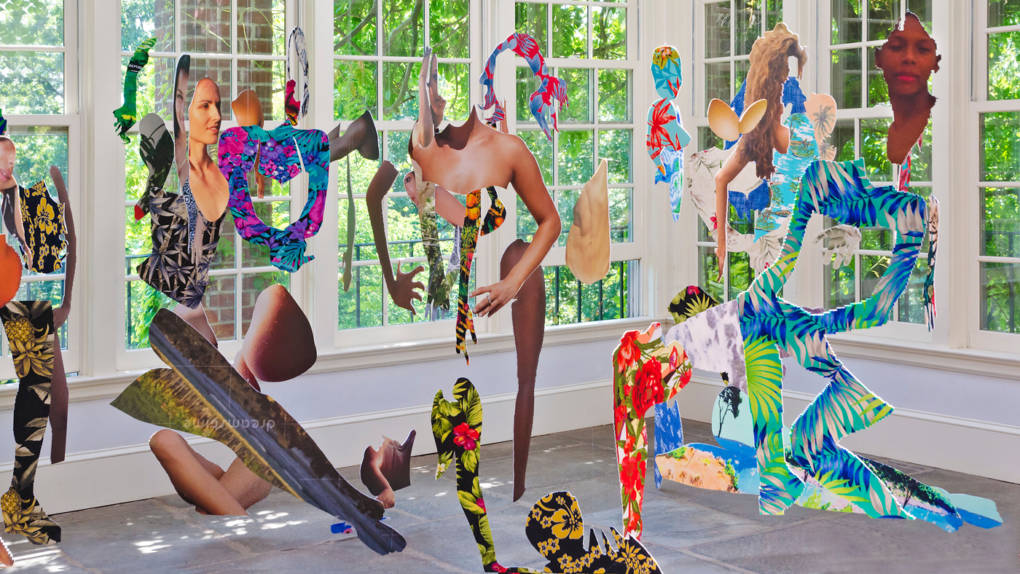
"caption": "Joiri Minaya, '#dominicanwomengooglesearch,' 2016. Installation view at Wave Hill Sunroom Project Space, 2016.",
"description": "Joiri Minaya, '#dominicanwomengooglesearch,' 2016. Installation view at Wave Hill Sunroom Project Space, 2016.",
"title": "L.58.1.2017_Minaya_COVER",
"credit": "Photo by Stefan Hagen; Collection of the artist",
"status": "inherit",
"isLoading": false,
"fetchFailed": false
},
"arts_13820099": {
"type": "attachments",
"id": "arts_13820099",
"meta": {
"index": "attachments_1716263798",
"site": "arts",
"id": "13820099",
"found": true
},
"parent": 13820065,
"imgSizes": {
"small": {
"file": "https://ww2.kqed.org/app/uploads/sites/2/2018/01/students-and-mural-1-e1516927295771-520x293.jpg",
"width": 520,
"mimeType": "image/jpeg",
"height": 293
},
"twentyfourteen-full-width": {
"file": "https://ww2.kqed.org/app/uploads/sites/2/2018/01/students-and-mural-1-e1516927295771-1038x576.jpg",
"width": 1038,
"mimeType": "image/jpeg",
"height": 576
},
"thumbnail": {
"file": "https://ww2.kqed.org/app/uploads/sites/2/2018/01/students-and-mural-1-e1516927295771-160x90.jpg",
"width": 160,
"mimeType": "image/jpeg",
"height": 90
},
"fd-sm": {
"file": "https://ww2.kqed.org/app/uploads/sites/2/2018/01/students-and-mural-1-e1516927295771-960x542.jpg",
"width": 960,
"mimeType": "image/jpeg",
"height": 542
},
"post-thumbnail": {
"file": "https://ww2.kqed.org/app/uploads/sites/2/2018/01/students-and-mural-1-e1516927295771-672x372.jpg",
"width": 672,
"mimeType": "image/jpeg",
"height": 372
},
"xsmall": {
"file": "https://ww2.kqed.org/app/uploads/sites/2/2018/01/students-and-mural-1-e1516927295771-375x212.jpg",
"width": 375,
"mimeType": "image/jpeg",
"height": 212
},
"kqedFullSize": {
"file": "https://ww2.kqed.org/app/uploads/sites/2/2018/01/students-and-mural-1-e1516927295771.jpg",
"width": 2022,
"height": 1141
},
"large": {
"file": "https://ww2.kqed.org/app/uploads/sites/2/2018/01/students-and-mural-1-e1516927295771-1020x576.jpg",
"width": 1020,
"mimeType": "image/jpeg",
"height": 576
},
"xlarge": {
"file": "https://ww2.kqed.org/app/uploads/sites/2/2018/01/students-and-mural-1-e1516927295771-1180x666.jpg",
"width": 1180,
"mimeType": "image/jpeg",
"height": 666
},
"guest-author-50": {
"file": "https://ww2.kqed.org/app/uploads/sites/2/2018/01/students-and-mural-1-e1516927295771-50x50.jpg",
"width": 50,
"mimeType": "image/jpeg",
"height": 50
},
"guest-author-96": {
"file": "https://ww2.kqed.org/app/uploads/sites/2/2018/01/students-and-mural-1-e1516927295771-96x96.jpg",
"width": 96,
"mimeType": "image/jpeg",
"height": 96
},
"medium": {
"file": "https://ww2.kqed.org/app/uploads/sites/2/2018/01/students-and-mural-1-e1516927295771-800x451.jpg",
"width": 800,
"mimeType": "image/jpeg",
"height": 451
},
"guest-author-64": {
"file": "https://ww2.kqed.org/app/uploads/sites/2/2018/01/students-and-mural-1-e1516927295771-64x64.jpg",
"width": 64,
"mimeType": "image/jpeg",
"height": 64
},
"guest-author-32": {
"file": "https://ww2.kqed.org/app/uploads/sites/2/2018/01/students-and-mural-1-e1516927295771-32x32.jpg",
"width": 32,
"mimeType": "image/jpeg",
"height": 32
},
"fd-lrg": {
"file": "https://ww2.kqed.org/app/uploads/sites/2/2018/01/students-and-mural-1-e1516927295771-1920x1083.jpg",
"width": 1920,
"mimeType": "image/jpeg",
"height": 1083
},
"fd-med": {
"file": "https://ww2.kqed.org/app/uploads/sites/2/2018/01/students-and-mural-1-e1516927295771-1180x666.jpg",
"width": 1180,
"mimeType": "image/jpeg",
"height": 666
},
"full-width": {
"file": "https://ww2.kqed.org/app/uploads/sites/2/2018/01/students-and-mural-1-e1516927295771-1920x1083.jpg",
"width": 1920,
"mimeType": "image/jpeg",
"height": 1083
},
"detail": {
"file": "https://ww2.kqed.org/app/uploads/sites/2/2018/01/students-and-mural-1-e1516927295771-150x150.jpg",
"width": 150,
"mimeType": "image/jpeg",
"height": 150
},
"medium_large": {
"file": "https://ww2.kqed.org/app/uploads/sites/2/2018/01/students-and-mural-1-e1516927295771-768x433.jpg",
"width": 768,
"mimeType": "image/jpeg",
"height": 433
},
"guest-author-128": {
"file": "https://ww2.kqed.org/app/uploads/sites/2/2018/01/students-and-mural-1-e1516927295771-128x128.jpg",
"width": 128,
"mimeType": "image/jpeg",
"height": 128
},
"xxsmall": {
"file": "https://ww2.kqed.org/app/uploads/sites/2/2018/01/students-and-mural-1-e1516927295771-240x135.jpg",
"width": 240,
"mimeType": "image/jpeg",
"height": 135
}
},
"publishDate": 1516927108,
"modified": 1516927184,
"caption": "Pinole Valley High students take a break from working on their mural.",
"description": "Pinole Valley High students take a break from working on their mural.",
"title": "students and mural 1",
"credit": "Photo: Chloe Veltman/KQED",
"status": "inherit",
"isLoading": false,
"fetchFailed": false
},
"arts_13824322": {
"type": "attachments",
"id": "arts_13824322",
"meta": {
"index": "attachments_1716263798",
"site": "arts",
"id": "13824322",
"found": true
},
"parent": 13824319,
"imgSizes": {
"small": {
"file": "https://ww2.kqed.org/app/uploads/sites/2/2018/02/5Pointz--520x293.jpg",
"width": 520,
"mimeType": "image/jpeg",
"height": 293
},
"twentyfourteen-full-width": {
"file": "https://ww2.kqed.org/app/uploads/sites/2/2018/02/5Pointz--1038x576.jpg",
"width": 1038,
"mimeType": "image/jpeg",
"height": 576
},
"thumbnail": {
"file": "https://ww2.kqed.org/app/uploads/sites/2/2018/02/5Pointz--160x90.jpg",
"width": 160,
"mimeType": "image/jpeg",
"height": 90
},
"fd-sm": {
"file": "https://ww2.kqed.org/app/uploads/sites/2/2018/02/5Pointz--960x540.jpg",
"width": 960,
"mimeType": "image/jpeg",
"height": 540
},
"post-thumbnail": {
"file": "https://ww2.kqed.org/app/uploads/sites/2/2018/02/5Pointz--672x372.jpg",
"width": 672,
"mimeType": "image/jpeg",
"height": 372
},
"xsmall": {
"file": "https://ww2.kqed.org/app/uploads/sites/2/2018/02/5Pointz--375x211.jpg",
"width": 375,
"mimeType": "image/jpeg",
"height": 211
},
"kqedFullSize": {
"file": "https://ww2.kqed.org/app/uploads/sites/2/2018/02/5Pointz-.jpg",
"width": 1920,
"height": 1080
},
"large": {
"file": "https://ww2.kqed.org/app/uploads/sites/2/2018/02/5Pointz--1020x574.jpg",
"width": 1020,
"mimeType": "image/jpeg",
"height": 574
},
"xlarge": {
"file": "https://ww2.kqed.org/app/uploads/sites/2/2018/02/5Pointz--1180x664.jpg",
"width": 1180,
"mimeType": "image/jpeg",
"height": 664
},
"guest-author-50": {
"file": "https://ww2.kqed.org/app/uploads/sites/2/2018/02/5Pointz--50x50.jpg",
"width": 50,
"mimeType": "image/jpeg",
"height": 50
},
"guest-author-96": {
"file": "https://ww2.kqed.org/app/uploads/sites/2/2018/02/5Pointz--96x96.jpg",
"width": 96,
"mimeType": "image/jpeg",
"height": 96
},
"medium": {
"file": "https://ww2.kqed.org/app/uploads/sites/2/2018/02/5Pointz--800x450.jpg",
"width": 800,
"mimeType": "image/jpeg",
"height": 450
},
"guest-author-64": {
"file": "https://ww2.kqed.org/app/uploads/sites/2/2018/02/5Pointz--64x64.jpg",
"width": 64,
"mimeType": "image/jpeg",
"height": 64
},
"guest-author-32": {
"file": "https://ww2.kqed.org/app/uploads/sites/2/2018/02/5Pointz--32x32.jpg",
"width": 32,
"mimeType": "image/jpeg",
"height": 32
},
"fd-lrg": {
"file": "https://ww2.kqed.org/app/uploads/sites/2/2018/02/5Pointz--1920x1080.jpg",
"width": 1920,
"mimeType": "image/jpeg",
"height": 1080
},
"fd-med": {
"file": "https://ww2.kqed.org/app/uploads/sites/2/2018/02/5Pointz--1180x664.jpg",
"width": 1180,
"mimeType": "image/jpeg",
"height": 664
},
"full-width": {
"file": "https://ww2.kqed.org/app/uploads/sites/2/2018/02/5Pointz--1920x1080.jpg",
"width": 1920,
"mimeType": "image/jpeg",
"height": 1080
},
"detail": {
"file": "https://ww2.kqed.org/app/uploads/sites/2/2018/02/5Pointz--150x150.jpg",
"width": 150,
"mimeType": "image/jpeg",
"height": 150
},
"medium_large": {
"file": "https://ww2.kqed.org/app/uploads/sites/2/2018/02/5Pointz--768x432.jpg",
"width": 768,
"mimeType": "image/jpeg",
"height": 432
},
"guest-author-128": {
"file": "https://ww2.kqed.org/app/uploads/sites/2/2018/02/5Pointz--128x128.jpg",
"width": 128,
"mimeType": "image/jpeg",
"height": 128
},
"xxsmall": {
"file": "https://ww2.kqed.org/app/uploads/sites/2/2018/02/5Pointz--240x135.jpg",
"width": 240,
"mimeType": "image/jpeg",
"height": 135
}
},
"publishDate": 1518486195,
"modified": 1518486250,
"caption": "A graffiti artist makes a new creation in front of New York's iconic graffiti spot \"5Pointz\" as it stands defaced with white paint covering most of the art work, after the building was painted white in New York, November 19, 2013. 5Pointz, a renowned heaven for urban graffiti artists, is set to be demolished by the end of the year to make way for luxury apartments.",
"description": "A graffiti artist makes a new creation in front of New York's iconic graffiti spot \"5Pointz\" as it stands defaced with white paint covering most of the art work, after the building was painted white in New York, November 19, 2013. 5Pointz, a renowned heaven for urban graffiti artists, is set to be demolished by the end of the year to make way for luxury apartments.",
"title": "US-ART-GRAFFITI",
"credit": "Emmanuel Dunand/AFP/Getty Images",
"status": "inherit",
"isLoading": false,
"fetchFailed": false
},
"arts_13824292": {
"type": "attachments",
"id": "arts_13824292",
"meta": {
"index": "attachments_1716263798",
"site": "arts",
"id": "13824292",
"found": true
},
"parent": 13824286,
"imgSizes": {
"small": {
"file": "https://ww2.kqed.org/app/uploads/sites/2/2018/02/Beach-Study-6_COVER-520x293.jpg",
"width": 520,
"mimeType": "image/jpeg",
"height": 293
},
"twentyfourteen-full-width": {
"file": "https://ww2.kqed.org/app/uploads/sites/2/2018/02/Beach-Study-6_COVER-1038x576.jpg",
"width": 1038,
"mimeType": "image/jpeg",
"height": 576
},
"thumbnail": {
"file": "https://ww2.kqed.org/app/uploads/sites/2/2018/02/Beach-Study-6_COVER-160x90.jpg",
"width": 160,
"mimeType": "image/jpeg",
"height": 90
},
"fd-sm": {
"file": "https://ww2.kqed.org/app/uploads/sites/2/2018/02/Beach-Study-6_COVER-960x540.jpg",
"width": 960,
"mimeType": "image/jpeg",
"height": 540
},
"post-thumbnail": {
"file": "https://ww2.kqed.org/app/uploads/sites/2/2018/02/Beach-Study-6_COVER-672x372.jpg",
"width": 672,
"mimeType": "image/jpeg",
"height": 372
},
"xsmall": {
"file": "https://ww2.kqed.org/app/uploads/sites/2/2018/02/Beach-Study-6_COVER-375x211.jpg",
"width": 375,
"mimeType": "image/jpeg",
"height": 211
},
"kqedFullSize": {
"file": "https://ww2.kqed.org/app/uploads/sites/2/2018/02/Beach-Study-6_COVER.jpg",
"width": 1400,
"height": 788
},
"large": {
"file": "https://ww2.kqed.org/app/uploads/sites/2/2018/02/Beach-Study-6_COVER-1020x574.jpg",
"width": 1020,
"mimeType": "image/jpeg",
"height": 574
},
"xlarge": {
"file": "https://ww2.kqed.org/app/uploads/sites/2/2018/02/Beach-Study-6_COVER-1180x664.jpg",
"width": 1180,
"mimeType": "image/jpeg",
"height": 664
},
"guest-author-50": {
"file": "https://ww2.kqed.org/app/uploads/sites/2/2018/02/Beach-Study-6_COVER-50x50.jpg",
"width": 50,
"mimeType": "image/jpeg",
"height": 50
},
"guest-author-96": {
"file": "https://ww2.kqed.org/app/uploads/sites/2/2018/02/Beach-Study-6_COVER-96x96.jpg",
"width": 96,
"mimeType": "image/jpeg",
"height": 96
},
"medium": {
"file": "https://ww2.kqed.org/app/uploads/sites/2/2018/02/Beach-Study-6_COVER-800x450.jpg",
"width": 800,
"mimeType": "image/jpeg",
"height": 450
},
"guest-author-64": {
"file": "https://ww2.kqed.org/app/uploads/sites/2/2018/02/Beach-Study-6_COVER-64x64.jpg",
"width": 64,
"mimeType": "image/jpeg",
"height": 64
},
"guest-author-32": {
"file": "https://ww2.kqed.org/app/uploads/sites/2/2018/02/Beach-Study-6_COVER-32x32.jpg",
"width": 32,
"mimeType": "image/jpeg",
"height": 32
},
"fd-med": {
"file": "https://ww2.kqed.org/app/uploads/sites/2/2018/02/Beach-Study-6_COVER-1180x664.jpg",
"width": 1180,
"mimeType": "image/jpeg",
"height": 664
},
"detail": {
"file": "https://ww2.kqed.org/app/uploads/sites/2/2018/02/Beach-Study-6_COVER-150x150.jpg",
"width": 150,
"mimeType": "image/jpeg",
"height": 150
},
"medium_large": {
"file": "https://ww2.kqed.org/app/uploads/sites/2/2018/02/Beach-Study-6_COVER-768x432.jpg",
"width": 768,
"mimeType": "image/jpeg",
"height": 432
},
"guest-author-128": {
"file": "https://ww2.kqed.org/app/uploads/sites/2/2018/02/Beach-Study-6_COVER-128x128.jpg",
"width": 128,
"mimeType": "image/jpeg",
"height": 128
},
"xxsmall": {
"file": "https://ww2.kqed.org/app/uploads/sites/2/2018/02/Beach-Study-6_COVER-240x135.jpg",
"width": 240,
"mimeType": "image/jpeg",
"height": 135
}
},
"publishDate": 1518481182,
"modified": 1518481271,
"caption": "Sriwhana Spong, Still from 'Beach Study,' 2012.",
"description": "Sriwhana Spong, Still from 'Beach Study,' 2012.",
"title": "Beach Study 6_COVER",
"credit": "Courtesy of the artist; Collection of KADIST",
"status": "inherit",
"isLoading": false,
"fetchFailed": false
},
"arts_13824275": {
"type": "attachments",
"id": "arts_13824275",
"meta": {
"index": "attachments_1716263798",
"site": "arts",
"id": "13824275",
"found": true
},
"parent": 13824236,
"imgSizes": {
"small": {
"file": "https://ww2.kqed.org/app/uploads/sites/2/2018/02/Valentines.2018.MAIN_-520x293.jpg",
"width": 520,
"mimeType": "image/jpeg",
"height": 293
},
"thumbnail": {
"file": "https://ww2.kqed.org/app/uploads/sites/2/2018/02/Valentines.2018.MAIN_-160x90.jpg",
"width": 160,
"mimeType": "image/jpeg",
"height": 90
},
"post-thumbnail": {
"file": "https://ww2.kqed.org/app/uploads/sites/2/2018/02/Valentines.2018.MAIN_-672x372.jpg",
"width": 672,
"mimeType": "image/jpeg",
"height": 372
},
"xsmall": {
"file": "https://ww2.kqed.org/app/uploads/sites/2/2018/02/Valentines.2018.MAIN_-375x211.jpg",
"width": 375,
"mimeType": "image/jpeg",
"height": 211
},
"kqedFullSize": {
"file": "https://ww2.kqed.org/app/uploads/sites/2/2018/02/Valentines.2018.MAIN_.jpg",
"width": 800,
"height": 450
},
"guest-author-50": {
"file": "https://ww2.kqed.org/app/uploads/sites/2/2018/02/Valentines.2018.MAIN_-50x50.jpg",
"width": 50,
"mimeType": "image/jpeg",
"height": 50
},
"guest-author-96": {
"file": "https://ww2.kqed.org/app/uploads/sites/2/2018/02/Valentines.2018.MAIN_-96x96.jpg",
"width": 96,
"mimeType": "image/jpeg",
"height": 96
},
"medium": {
"file": "https://ww2.kqed.org/app/uploads/sites/2/2018/02/Valentines.2018.MAIN_-800x450.jpg",
"width": 800,
"mimeType": "image/jpeg",
"height": 450
},
"guest-author-64": {
"file": "https://ww2.kqed.org/app/uploads/sites/2/2018/02/Valentines.2018.MAIN_-64x64.jpg",
"width": 64,
"mimeType": "image/jpeg",
"height": 64
},
"guest-author-32": {
"file": "https://ww2.kqed.org/app/uploads/sites/2/2018/02/Valentines.2018.MAIN_-32x32.jpg",
"width": 32,
"mimeType": "image/jpeg",
"height": 32
},
"detail": {
"file": "https://ww2.kqed.org/app/uploads/sites/2/2018/02/Valentines.2018.MAIN_-150x150.jpg",
"width": 150,
"mimeType": "image/jpeg",
"height": 150
},
"medium_large": {
"file": "https://ww2.kqed.org/app/uploads/sites/2/2018/02/Valentines.2018.MAIN_-768x432.jpg",
"width": 768,
"mimeType": "image/jpeg",
"height": 432
},
"guest-author-128": {
"file": "https://ww2.kqed.org/app/uploads/sites/2/2018/02/Valentines.2018.MAIN_-128x128.jpg",
"width": 128,
"mimeType": "image/jpeg",
"height": 128
},
"xxsmall": {
"file": "https://ww2.kqed.org/app/uploads/sites/2/2018/02/Valentines.2018.MAIN_-240x135.jpg",
"width": 240,
"mimeType": "image/jpeg",
"height": 135
}
},
"publishDate": 1518469730,
"modified": 1518469730,
"caption": null,
"description": null,
"title": "Valentines.2018.MAIN",
"credit": null,
"status": "inherit",
"isLoading": false,
"fetchFailed": false
},
"arts_13824231": {
"type": "attachments",
"id": "arts_13824231",
"meta": {
"index": "attachments_1716263798",
"site": "arts",
"id": "13824231",
"found": true
},
"parent": 13824229,
"imgSizes": {
"small": {
"file": "https://ww2.kqed.org/app/uploads/sites/2/2018/02/gettyimages-917394792_custom-03c5f91f83de84d63f429e7dc4f919dbd15396eb-520x355.jpg",
"width": 520,
"mimeType": "image/jpeg",
"height": 355
},
"twentyfourteen-full-width": {
"file": "https://ww2.kqed.org/app/uploads/sites/2/2018/02/gettyimages-917394792_custom-03c5f91f83de84d63f429e7dc4f919dbd15396eb-1038x576.jpg",
"width": 1038,
"mimeType": "image/jpeg",
"height": 576
},
"thumbnail": {
"file": "https://ww2.kqed.org/app/uploads/sites/2/2018/02/gettyimages-917394792_custom-03c5f91f83de84d63f429e7dc4f919dbd15396eb-160x109.jpg",
"width": 160,
"mimeType": "image/jpeg",
"height": 109
},
"fd-sm": {
"file": "https://ww2.kqed.org/app/uploads/sites/2/2018/02/gettyimages-917394792_custom-03c5f91f83de84d63f429e7dc4f919dbd15396eb-960x656.jpg",
"width": 960,
"mimeType": "image/jpeg",
"height": 656
},
"post-thumbnail": {
"file": "https://ww2.kqed.org/app/uploads/sites/2/2018/02/gettyimages-917394792_custom-03c5f91f83de84d63f429e7dc4f919dbd15396eb-672x372.jpg",
"width": 672,
"mimeType": "image/jpeg",
"height": 372
},
"xsmall": {
"file": "https://ww2.kqed.org/app/uploads/sites/2/2018/02/gettyimages-917394792_custom-03c5f91f83de84d63f429e7dc4f919dbd15396eb-375x256.jpg",
"width": 375,
"mimeType": "image/jpeg",
"height": 256
},
"kqedFullSize": {
"file": "https://ww2.kqed.org/app/uploads/sites/2/2018/02/gettyimages-917394792_custom-03c5f91f83de84d63f429e7dc4f919dbd15396eb.jpg",
"width": 2048,
"height": 1399
},
"large": {
"file": "https://ww2.kqed.org/app/uploads/sites/2/2018/02/gettyimages-917394792_custom-03c5f91f83de84d63f429e7dc4f919dbd15396eb-1020x697.jpg",
"width": 1020,
"mimeType": "image/jpeg",
"height": 697
},
"xlarge": {
"file": "https://ww2.kqed.org/app/uploads/sites/2/2018/02/gettyimages-917394792_custom-03c5f91f83de84d63f429e7dc4f919dbd15396eb-1180x806.jpg",
"width": 1180,
"mimeType": "image/jpeg",
"height": 806
},
"guest-author-50": {
"file": "https://ww2.kqed.org/app/uploads/sites/2/2018/02/gettyimages-917394792_custom-03c5f91f83de84d63f429e7dc4f919dbd15396eb-50x50.jpg",
"width": 50,
"mimeType": "image/jpeg",
"height": 50
},
"guest-author-96": {
"file": "https://ww2.kqed.org/app/uploads/sites/2/2018/02/gettyimages-917394792_custom-03c5f91f83de84d63f429e7dc4f919dbd15396eb-96x96.jpg",
"width": 96,
"mimeType": "image/jpeg",
"height": 96
},
"medium": {
"file": "https://ww2.kqed.org/app/uploads/sites/2/2018/02/gettyimages-917394792_custom-03c5f91f83de84d63f429e7dc4f919dbd15396eb-800x546.jpg",
"width": 800,
"mimeType": "image/jpeg",
"height": 546
},
"guest-author-64": {
"file": "https://ww2.kqed.org/app/uploads/sites/2/2018/02/gettyimages-917394792_custom-03c5f91f83de84d63f429e7dc4f919dbd15396eb-64x64.jpg",
"width": 64,
"mimeType": "image/jpeg",
"height": 64
},
"guest-author-32": {
"file": "https://ww2.kqed.org/app/uploads/sites/2/2018/02/gettyimages-917394792_custom-03c5f91f83de84d63f429e7dc4f919dbd15396eb-32x32.jpg",
"width": 32,
"mimeType": "image/jpeg",
"height": 32
},
"fd-lrg": {
"file": "https://ww2.kqed.org/app/uploads/sites/2/2018/02/gettyimages-917394792_custom-03c5f91f83de84d63f429e7dc4f919dbd15396eb-1920x1311.jpg",
"width": 1920,
"mimeType": "image/jpeg",
"height": 1311
},
"fd-med": {
"file": "https://ww2.kqed.org/app/uploads/sites/2/2018/02/gettyimages-917394792_custom-03c5f91f83de84d63f429e7dc4f919dbd15396eb-1180x806.jpg",
"width": 1180,
"mimeType": "image/jpeg",
"height": 806
},
"full-width": {
"file": "https://ww2.kqed.org/app/uploads/sites/2/2018/02/gettyimages-917394792_custom-03c5f91f83de84d63f429e7dc4f919dbd15396eb-1920x1311.jpg",
"width": 1920,
"mimeType": "image/jpeg",
"height": 1311
},
"detail": {
"file": "https://ww2.kqed.org/app/uploads/sites/2/2018/02/gettyimages-917394792_custom-03c5f91f83de84d63f429e7dc4f919dbd15396eb-150x150.jpg",
"width": 150,
"mimeType": "image/jpeg",
"height": 150
},
"medium_large": {
"file": "https://ww2.kqed.org/app/uploads/sites/2/2018/02/gettyimages-917394792_custom-03c5f91f83de84d63f429e7dc4f919dbd15396eb-768x525.jpg",
"width": 768,
"mimeType": "image/jpeg",
"height": 525
},
"guest-author-128": {
"file": "https://ww2.kqed.org/app/uploads/sites/2/2018/02/gettyimages-917394792_custom-03c5f91f83de84d63f429e7dc4f919dbd15396eb-128x128.jpg",
"width": 128,
"mimeType": "image/jpeg",
"height": 128
},
"xxsmall": {
"file": "https://ww2.kqed.org/app/uploads/sites/2/2018/02/gettyimages-917394792_custom-03c5f91f83de84d63f429e7dc4f919dbd15396eb-240x164.jpg",
"width": 240,
"mimeType": "image/jpeg",
"height": 164
}
},
"publishDate": 1518456601,
"modified": 1518457133,
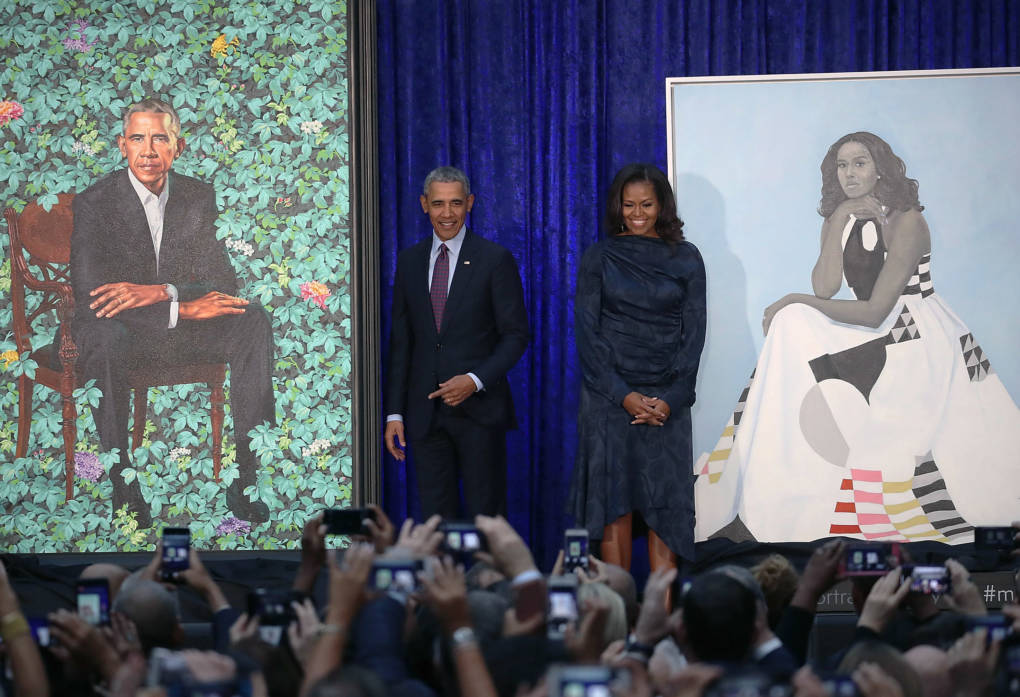
"caption": "Former U.S. President Barack Obama and former first lady Michelle Obama stand next to their newly unveiled portraits during a ceremony at the Smithsonian's National Portrait Gallery.",
"description": "Former U.S. President Barack Obama and former first lady Michelle Obama stand next to their newly unveiled portraits during a ceremony at the Smithsonian's National Portrait Gallery.",
"title": "Former U.S. President Barack Obama and former first lady Michelle Obama stand next to their newly unveiled portraits during a ceremony at the Smithsonian's National Portrait Gallery.",
"credit": "Mark Wilson/Getty Images",
"status": "inherit",
"isLoading": false,
"fetchFailed": false
},
"arts_13823996": {
"type": "attachments",
"id": "arts_13823996",
"meta": {
"index": "attachments_1716263798",
"site": "arts",
"id": "13823996",
"found": true
},
"parent": 13823866,
"imgSizes": {
"small": {
"file": "https://ww2.kqed.org/app/uploads/sites/2/2018/02/ViewFromPeopleWall-520x293.jpg",
"width": 520,
"mimeType": "image/jpeg",
"height": 293
},
"twentyfourteen-full-width": {
"file": "https://ww2.kqed.org/app/uploads/sites/2/2018/02/ViewFromPeopleWall-1038x576.jpg",
"width": 1038,
"mimeType": "image/jpeg",
"height": 576
},
"thumbnail": {
"file": "https://ww2.kqed.org/app/uploads/sites/2/2018/02/ViewFromPeopleWall-160x90.jpg",
"width": 160,
"mimeType": "image/jpeg",
"height": 90
},
"fd-sm": {
"file": "https://ww2.kqed.org/app/uploads/sites/2/2018/02/ViewFromPeopleWall-960x540.jpg",
"width": 960,
"mimeType": "image/jpeg",
"height": 540
},
"post-thumbnail": {
"file": "https://ww2.kqed.org/app/uploads/sites/2/2018/02/ViewFromPeopleWall-672x372.jpg",
"width": 672,
"mimeType": "image/jpeg",
"height": 372
},
"xsmall": {
"file": "https://ww2.kqed.org/app/uploads/sites/2/2018/02/ViewFromPeopleWall-375x211.jpg",
"width": 375,
"mimeType": "image/jpeg",
"height": 211
},
"kqedFullSize": {
"file": "https://ww2.kqed.org/app/uploads/sites/2/2018/02/ViewFromPeopleWall.jpg",
"width": 1100,
"height": 619
},
"large": {
"file": "https://ww2.kqed.org/app/uploads/sites/2/2018/02/ViewFromPeopleWall-1020x574.jpg",
"width": 1020,
"mimeType": "image/jpeg",
"height": 574
},
"guest-author-50": {
"file": "https://ww2.kqed.org/app/uploads/sites/2/2018/02/ViewFromPeopleWall-50x50.jpg",
"width": 50,
"mimeType": "image/jpeg",
"height": 50
},
"guest-author-96": {
"file": "https://ww2.kqed.org/app/uploads/sites/2/2018/02/ViewFromPeopleWall-96x96.jpg",
"width": 96,
"mimeType": "image/jpeg",
"height": 96
},
"medium": {
"file": "https://ww2.kqed.org/app/uploads/sites/2/2018/02/ViewFromPeopleWall-800x450.jpg",
"width": 800,
"mimeType": "image/jpeg",
"height": 450
},
"guest-author-64": {
"file": "https://ww2.kqed.org/app/uploads/sites/2/2018/02/ViewFromPeopleWall-64x64.jpg",
"width": 64,
"mimeType": "image/jpeg",
"height": 64
},
"guest-author-32": {
"file": "https://ww2.kqed.org/app/uploads/sites/2/2018/02/ViewFromPeopleWall-32x32.jpg",
"width": 32,
"mimeType": "image/jpeg",
"height": 32
},
"detail": {
"file": "https://ww2.kqed.org/app/uploads/sites/2/2018/02/ViewFromPeopleWall-150x150.jpg",
"width": 150,
"mimeType": "image/jpeg",
"height": 150
},
"medium_large": {
"file": "https://ww2.kqed.org/app/uploads/sites/2/2018/02/ViewFromPeopleWall-768x432.jpg",
"width": 768,
"mimeType": "image/jpeg",
"height": 432
},
"guest-author-128": {
"file": "https://ww2.kqed.org/app/uploads/sites/2/2018/02/ViewFromPeopleWall-128x128.jpg",
"width": 128,
"mimeType": "image/jpeg",
"height": 128
},
"xxsmall": {
"file": "https://ww2.kqed.org/app/uploads/sites/2/2018/02/ViewFromPeopleWall-240x135.jpg",
"width": 240,
"mimeType": "image/jpeg",
"height": 135
}
},
"publishDate": 1518080626,
"modified": 1518080922,
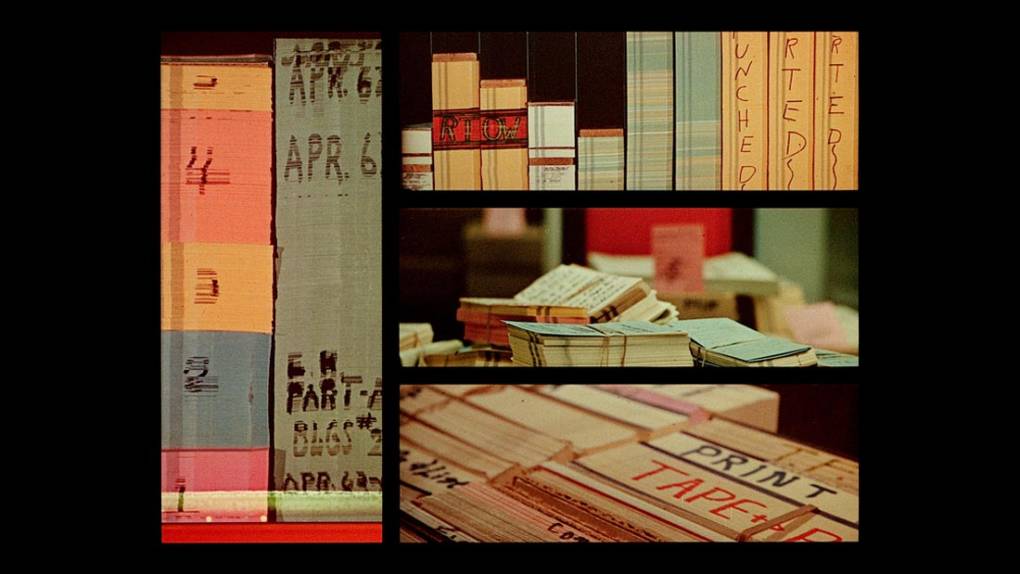
"caption": "Charles and Ray Eames, ‘View From the People Wall,’ 1966 (still).",
"description": "Charles and Ray Eames, ‘View From the People Wall,’ 1966 (still).",
"title": "ViewFromPeopleWall",
"credit": "Courtesy Eames Office / Library of Congress",
"status": "inherit",
"isLoading": false,
"fetchFailed": false
},
"arts_13823827": {
"type": "attachments",
"id": "arts_13823827",
"meta": {
"index": "attachments_1716263798",
"site": "arts",
"id": "13823827",
"found": true
},
"parent": 13823815,
"imgSizes": {
"small": {
"file": "https://ww2.kqed.org/app/uploads/sites/2/2018/02/RK043_LG_COVER-520x293.jpg",
"width": 520,
"mimeType": "image/jpeg",
"height": 293
},
"twentyfourteen-full-width": {
"file": "https://ww2.kqed.org/app/uploads/sites/2/2018/02/RK043_LG_COVER-1038x576.jpg",
"width": 1038,
"mimeType": "image/jpeg",
"height": 576
},
"thumbnail": {
"file": "https://ww2.kqed.org/app/uploads/sites/2/2018/02/RK043_LG_COVER-160x90.jpg",
"width": 160,
"mimeType": "image/jpeg",
"height": 90
},
"fd-sm": {
"file": "https://ww2.kqed.org/app/uploads/sites/2/2018/02/RK043_LG_COVER-960x540.jpg",
"width": 960,
"mimeType": "image/jpeg",
"height": 540
},
"post-thumbnail": {
"file": "https://ww2.kqed.org/app/uploads/sites/2/2018/02/RK043_LG_COVER-672x372.jpg",
"width": 672,
"mimeType": "image/jpeg",
"height": 372
},
"xsmall": {
"file": "https://ww2.kqed.org/app/uploads/sites/2/2018/02/RK043_LG_COVER-375x211.jpg",
"width": 375,
"mimeType": "image/jpeg",
"height": 211
},
"kqedFullSize": {
"file": "https://ww2.kqed.org/app/uploads/sites/2/2018/02/RK043_LG_COVER.jpg",
"width": 1920,
"height": 1080
},
"large": {
"file": "https://ww2.kqed.org/app/uploads/sites/2/2018/02/RK043_LG_COVER-1020x574.jpg",
"width": 1020,
"mimeType": "image/jpeg",
"height": 574
},
"xlarge": {
"file": "https://ww2.kqed.org/app/uploads/sites/2/2018/02/RK043_LG_COVER-1180x664.jpg",
"width": 1180,
"mimeType": "image/jpeg",
"height": 664
},
"guest-author-50": {
"file": "https://ww2.kqed.org/app/uploads/sites/2/2018/02/RK043_LG_COVER-50x50.jpg",
"width": 50,
"mimeType": "image/jpeg",
"height": 50
},
"guest-author-96": {
"file": "https://ww2.kqed.org/app/uploads/sites/2/2018/02/RK043_LG_COVER-96x96.jpg",
"width": 96,
"mimeType": "image/jpeg",
"height": 96
},
"medium": {
"file": "https://ww2.kqed.org/app/uploads/sites/2/2018/02/RK043_LG_COVER-800x450.jpg",
"width": 800,
"mimeType": "image/jpeg",
"height": 450
},
"guest-author-64": {
"file": "https://ww2.kqed.org/app/uploads/sites/2/2018/02/RK043_LG_COVER-64x64.jpg",
"width": 64,
"mimeType": "image/jpeg",
"height": 64
},
"guest-author-32": {
"file": "https://ww2.kqed.org/app/uploads/sites/2/2018/02/RK043_LG_COVER-32x32.jpg",
"width": 32,
"mimeType": "image/jpeg",
"height": 32
},
"fd-lrg": {
"file": "https://ww2.kqed.org/app/uploads/sites/2/2018/02/RK043_LG_COVER-1920x1080.jpg",
"width": 1920,
"mimeType": "image/jpeg",
"height": 1080
},
"fd-med": {
"file": "https://ww2.kqed.org/app/uploads/sites/2/2018/02/RK043_LG_COVER-1180x664.jpg",
"width": 1180,
"mimeType": "image/jpeg",
"height": 664
},
"full-width": {
"file": "https://ww2.kqed.org/app/uploads/sites/2/2018/02/RK043_LG_COVER-1920x1080.jpg",
"width": 1920,
"mimeType": "image/jpeg",
"height": 1080
},
"detail": {
"file": "https://ww2.kqed.org/app/uploads/sites/2/2018/02/RK043_LG_COVER-150x150.jpg",
"width": 150,
"mimeType": "image/jpeg",
"height": 150
},
"medium_large": {
"file": "https://ww2.kqed.org/app/uploads/sites/2/2018/02/RK043_LG_COVER-768x432.jpg",
"width": 768,
"mimeType": "image/jpeg",
"height": 432
},
"guest-author-128": {
"file": "https://ww2.kqed.org/app/uploads/sites/2/2018/02/RK043_LG_COVER-128x128.jpg",
"width": 128,
"mimeType": "image/jpeg",
"height": 128
},
"xxsmall": {
"file": "https://ww2.kqed.org/app/uploads/sites/2/2018/02/RK043_LG_COVER-240x135.jpg",
"width": 240,
"mimeType": "image/jpeg",
"height": 135
}
},
"publishDate": 1517964246,
"modified": 1517966056,
"caption": "Rainen Knecht, Detail of 'Frog Eater,' 2018.",
"description": "Rainen Knecht, Detail of 'Frog Eater,' 2018.",
"title": "RK043_LG_COVER",
"credit": "Courtesy of CAPITAL",
"status": "inherit",
"isLoading": false,
"fetchFailed": false
},
"arts_13823580": {
"type": "attachments",
"id": "arts_13823580",
"meta": {
"index": "attachments_1716263798",
"site": "arts",
"id": "13823580",
"found": true
},
"parent": 13823511,
"imgSizes": {
"small": {
"file": "https://ww2.kqed.org/app/uploads/sites/2/2018/02/sonny1-520x293.jpg",
"width": 520,
"mimeType": "image/jpeg",
"height": 293
},
"twentyfourteen-full-width": {
"file": "https://ww2.kqed.org/app/uploads/sites/2/2018/02/sonny1-1038x576.jpg",
"width": 1038,
"mimeType": "image/jpeg",
"height": 576
},
"thumbnail": {
"file": "https://ww2.kqed.org/app/uploads/sites/2/2018/02/sonny1-160x90.jpg",
"width": 160,
"mimeType": "image/jpeg",
"height": 90
},
"fd-sm": {
"file": "https://ww2.kqed.org/app/uploads/sites/2/2018/02/sonny1-960x540.jpg",
"width": 960,
"mimeType": "image/jpeg",
"height": 540
},
"post-thumbnail": {
"file": "https://ww2.kqed.org/app/uploads/sites/2/2018/02/sonny1-672x372.jpg",
"width": 672,
"mimeType": "image/jpeg",
"height": 372
},
"xsmall": {
"file": "https://ww2.kqed.org/app/uploads/sites/2/2018/02/sonny1-375x211.jpg",
"width": 375,
"mimeType": "image/jpeg",
"height": 211
},
"kqedFullSize": {
"file": "https://ww2.kqed.org/app/uploads/sites/2/2018/02/sonny1.jpg",
"width": 1920,
"height": 1080
},
"large": {
"file": "https://ww2.kqed.org/app/uploads/sites/2/2018/02/sonny1-1020x574.jpg",
"width": 1020,
"mimeType": "image/jpeg",
"height": 574
},
"xlarge": {
"file": "https://ww2.kqed.org/app/uploads/sites/2/2018/02/sonny1-1180x664.jpg",
"width": 1180,
"mimeType": "image/jpeg",
"height": 664
},
"guest-author-50": {
"file": "https://ww2.kqed.org/app/uploads/sites/2/2018/02/sonny1-50x50.jpg",
"width": 50,
"mimeType": "image/jpeg",
"height": 50
},
"guest-author-96": {
"file": "https://ww2.kqed.org/app/uploads/sites/2/2018/02/sonny1-96x96.jpg",
"width": 96,
"mimeType": "image/jpeg",
"height": 96
},
"medium": {
"file": "https://ww2.kqed.org/app/uploads/sites/2/2018/02/sonny1-800x450.jpg",
"width": 800,
"mimeType": "image/jpeg",
"height": 450
},
"guest-author-64": {
"file": "https://ww2.kqed.org/app/uploads/sites/2/2018/02/sonny1-64x64.jpg",
"width": 64,
"mimeType": "image/jpeg",
"height": 64
},
"guest-author-32": {
"file": "https://ww2.kqed.org/app/uploads/sites/2/2018/02/sonny1-32x32.jpg",
"width": 32,
"mimeType": "image/jpeg",
"height": 32
},
"fd-lrg": {
"file": "https://ww2.kqed.org/app/uploads/sites/2/2018/02/sonny1-1920x1080.jpg",
"width": 1920,
"mimeType": "image/jpeg",
"height": 1080
},
"fd-med": {
"file": "https://ww2.kqed.org/app/uploads/sites/2/2018/02/sonny1-1180x664.jpg",
"width": 1180,
"mimeType": "image/jpeg",
"height": 664
},
"full-width": {
"file": "https://ww2.kqed.org/app/uploads/sites/2/2018/02/sonny1-1920x1080.jpg",
"width": 1920,
"mimeType": "image/jpeg",
"height": 1080
},
"detail": {
"file": "https://ww2.kqed.org/app/uploads/sites/2/2018/02/sonny1-150x150.jpg",
"width": 150,
"mimeType": "image/jpeg",
"height": 150
},
"medium_large": {
"file": "https://ww2.kqed.org/app/uploads/sites/2/2018/02/sonny1-768x432.jpg",
"width": 768,
"mimeType": "image/jpeg",
"height": 432
},
"guest-author-128": {
"file": "https://ww2.kqed.org/app/uploads/sites/2/2018/02/sonny1-128x128.jpg",
"width": 128,
"mimeType": "image/jpeg",
"height": 128
},
"xxsmall": {
"file": "https://ww2.kqed.org/app/uploads/sites/2/2018/02/sonny1-240x135.jpg",
"width": 240,
"mimeType": "image/jpeg",
"height": 135
}
},
"publishDate": 1517613790,
"modified": 1517616763,
"caption": "San Francisco indie rock vet Sonny Smith reimagines bizarre tour experiences as a hero's journey in his new exhibition at Gallery 16.",
"description": "San Francisco indie rock vet Sonny Smith reimagines bizarre tour experiences as a hero's journey in his new exhibition at Gallery 16.",
"title": "sonny1",
"credit": "Nastia Voynovskaya",
"status": "inherit",
"isLoading": false,
"fetchFailed": false
},
"arts_13823734": {
"type": "attachments",
"id": "arts_13823734",
"meta": {
"index": "attachments_1716263798",
"site": "arts",
"id": "13823734",
"found": true
},
"parent": 13823720,
"imgSizes": {
"small": {
"file": "https://ww2.kqed.org/app/uploads/sites/2/2018/02/Paul-Clipson-shooting-520x390.jpg",
"width": 520,
"mimeType": "image/jpeg",
"height": 390
},
"twentyfourteen-full-width": {
"file": "https://ww2.kqed.org/app/uploads/sites/2/2018/02/Paul-Clipson-shooting-960x576.jpg",
"width": 960,
"mimeType": "image/jpeg",
"height": 576
},
"thumbnail": {
"file": "https://ww2.kqed.org/app/uploads/sites/2/2018/02/Paul-Clipson-shooting-160x120.jpg",
"width": 160,
"mimeType": "image/jpeg",
"height": 120
},
"fd-sm": {
"file": "https://ww2.kqed.org/app/uploads/sites/2/2018/02/Paul-Clipson-shooting-960x720.jpg",
"width": 960,
"mimeType": "image/jpeg",
"height": 720
},
"post-thumbnail": {
"file": "https://ww2.kqed.org/app/uploads/sites/2/2018/02/Paul-Clipson-shooting-672x372.jpg",
"width": 672,
"mimeType": "image/jpeg",
"height": 372
},
"xsmall": {
"file": "https://ww2.kqed.org/app/uploads/sites/2/2018/02/Paul-Clipson-shooting-375x281.jpg",
"width": 375,
"mimeType": "image/jpeg",
"height": 281
},
"kqedFullSize": {
"file": "https://ww2.kqed.org/app/uploads/sites/2/2018/02/Paul-Clipson-shooting.jpg",
"width": 960,
"height": 720
},
"guest-author-50": {
"file": "https://ww2.kqed.org/app/uploads/sites/2/2018/02/Paul-Clipson-shooting-50x50.jpg",
"width": 50,
"mimeType": "image/jpeg",
"height": 50
},
"guest-author-96": {
"file": "https://ww2.kqed.org/app/uploads/sites/2/2018/02/Paul-Clipson-shooting-96x96.jpg",
"width": 96,
"mimeType": "image/jpeg",
"height": 96
},
"medium": {
"file": "https://ww2.kqed.org/app/uploads/sites/2/2018/02/Paul-Clipson-shooting-800x600.jpg",
"width": 800,
"mimeType": "image/jpeg",
"height": 600
},
"guest-author-64": {
"file": "https://ww2.kqed.org/app/uploads/sites/2/2018/02/Paul-Clipson-shooting-64x64.jpg",
"width": 64,
"mimeType": "image/jpeg",
"height": 64
},
"guest-author-32": {
"file": "https://ww2.kqed.org/app/uploads/sites/2/2018/02/Paul-Clipson-shooting-32x32.jpg",
"width": 32,
"mimeType": "image/jpeg",
"height": 32
},
"detail": {
"file": "https://ww2.kqed.org/app/uploads/sites/2/2018/02/Paul-Clipson-shooting-150x150.jpg",
"width": 150,
"mimeType": "image/jpeg",
"height": 150
},
"medium_large": {
"file": "https://ww2.kqed.org/app/uploads/sites/2/2018/02/Paul-Clipson-shooting-768x576.jpg",
"width": 768,
"mimeType": "image/jpeg",
"height": 576
},
"guest-author-128": {
"file": "https://ww2.kqed.org/app/uploads/sites/2/2018/02/Paul-Clipson-shooting-128x128.jpg",
"width": 128,
"mimeType": "image/jpeg",
"height": 128
},
"xxsmall": {
"file": "https://ww2.kqed.org/app/uploads/sites/2/2018/02/Paul-Clipson-shooting-240x180.jpg",
"width": 240,
"mimeType": "image/jpeg",
"height": 180
}
},
"publishDate": 1517867215,
"modified": 1517877567,
"caption": "Paul Clipson.",
"description": "Paul Clipson .",
"title": "Paul Clipson shooting",
"credit": "Courtesy of Sylvia Schedelbauer ",
"status": "inherit",
"isLoading": false,
"fetchFailed": false
},
"arts_13823523": {
"type": "attachments",
"id": "arts_13823523",
"meta": {
"index": "attachments_1716263798",
"site": "arts",
"id": "13823523",
"found": true
},
"parent": 0,
"imgSizes": {
"small": {
"file": "https://ww2.kqed.org/app/uploads/sites/2/2018/02/Rigo23_in-progress1_COVER-520x293.jpg",
"width": 520,
"mimeType": "image/jpeg",
"height": 293
},
"twentyfourteen-full-width": {
"file": "https://ww2.kqed.org/app/uploads/sites/2/2018/02/Rigo23_in-progress1_COVER-1038x576.jpg",
"width": 1038,
"mimeType": "image/jpeg",
"height": 576
},
"thumbnail": {
"file": "https://ww2.kqed.org/app/uploads/sites/2/2018/02/Rigo23_in-progress1_COVER-160x90.jpg",
"width": 160,
"mimeType": "image/jpeg",
"height": 90
},
"fd-sm": {
"file": "https://ww2.kqed.org/app/uploads/sites/2/2018/02/Rigo23_in-progress1_COVER-960x540.jpg",
"width": 960,
"mimeType": "image/jpeg",
"height": 540
},
"post-thumbnail": {
"file": "https://ww2.kqed.org/app/uploads/sites/2/2018/02/Rigo23_in-progress1_COVER-672x372.jpg",
"width": 672,
"mimeType": "image/jpeg",
"height": 372
},
"xsmall": {
"file": "https://ww2.kqed.org/app/uploads/sites/2/2018/02/Rigo23_in-progress1_COVER-375x211.jpg",
"width": 375,
"mimeType": "image/jpeg",
"height": 211
},
"kqedFullSize": {
"file": "https://ww2.kqed.org/app/uploads/sites/2/2018/02/Rigo23_in-progress1_COVER.jpg",
"width": 1920,
"height": 1080
},
"large": {
"file": "https://ww2.kqed.org/app/uploads/sites/2/2018/02/Rigo23_in-progress1_COVER-1020x574.jpg",
"width": 1020,
"mimeType": "image/jpeg",
"height": 574
},
"xlarge": {
"file": "https://ww2.kqed.org/app/uploads/sites/2/2018/02/Rigo23_in-progress1_COVER-1180x664.jpg",
"width": 1180,
"mimeType": "image/jpeg",
"height": 664
},
"guest-author-50": {
"file": "https://ww2.kqed.org/app/uploads/sites/2/2018/02/Rigo23_in-progress1_COVER-50x50.jpg",
"width": 50,
"mimeType": "image/jpeg",
"height": 50
},
"guest-author-96": {
"file": "https://ww2.kqed.org/app/uploads/sites/2/2018/02/Rigo23_in-progress1_COVER-96x96.jpg",
"width": 96,
"mimeType": "image/jpeg",
"height": 96
},
"medium": {
"file": "https://ww2.kqed.org/app/uploads/sites/2/2018/02/Rigo23_in-progress1_COVER-800x450.jpg",
"width": 800,
"mimeType": "image/jpeg",
"height": 450
},
"guest-author-64": {
"file": "https://ww2.kqed.org/app/uploads/sites/2/2018/02/Rigo23_in-progress1_COVER-64x64.jpg",
"width": 64,
"mimeType": "image/jpeg",
"height": 64
},
"guest-author-32": {
"file": "https://ww2.kqed.org/app/uploads/sites/2/2018/02/Rigo23_in-progress1_COVER-32x32.jpg",
"width": 32,
"mimeType": "image/jpeg",
"height": 32
},
"fd-lrg": {
"file": "https://ww2.kqed.org/app/uploads/sites/2/2018/02/Rigo23_in-progress1_COVER-1920x1080.jpg",
"width": 1920,
"mimeType": "image/jpeg",
"height": 1080
},
"fd-med": {
"file": "https://ww2.kqed.org/app/uploads/sites/2/2018/02/Rigo23_in-progress1_COVER-1180x664.jpg",
"width": 1180,
"mimeType": "image/jpeg",
"height": 664
},
"full-width": {
"file": "https://ww2.kqed.org/app/uploads/sites/2/2018/02/Rigo23_in-progress1_COVER-1920x1080.jpg",
"width": 1920,
"mimeType": "image/jpeg",
"height": 1080
},
"detail": {
"file": "https://ww2.kqed.org/app/uploads/sites/2/2018/02/Rigo23_in-progress1_COVER-150x150.jpg",
"width": 150,
"mimeType": "image/jpeg",
"height": 150
},
"medium_large": {
"file": "https://ww2.kqed.org/app/uploads/sites/2/2018/02/Rigo23_in-progress1_COVER-768x432.jpg",
"width": 768,
"mimeType": "image/jpeg",
"height": 432
},
"guest-author-128": {
"file": "https://ww2.kqed.org/app/uploads/sites/2/2018/02/Rigo23_in-progress1_COVER-128x128.jpg",
"width": 128,
"mimeType": "image/jpeg",
"height": 128
},
"xxsmall": {
"file": "https://ww2.kqed.org/app/uploads/sites/2/2018/02/Rigo23_in-progress1_COVER-240x135.jpg",
"width": 240,
"mimeType": "image/jpeg",
"height": 135
}
},
"publishDate": 1517532269,
"modified": 1517532556,
"caption": "Rigo 23, In progress view of 'Madre Tierra (Mother Earth),' 2018. ",
"description": "Rigo 23, In progress view of 'Madre Tierra (Mother Earth),' 2018. ",
"title": "Rigo23_in-progress1_COVER",
"credit": "Courtesy of the artist and di Rosa Center for Contemporary Art, Napa",
"status": "inherit",
"isLoading": false,
"fetchFailed": false
}
},
"audioPlayerReducer": {
"postId": "stream_live",
"isPaused": true,
"isPlaying": false,
"pfsActive": false,
"pledgeModalIsOpen": true,
"playerDrawerIsOpen": false,
"liveAudioPlayStartedAt": 0,
"liveAudioPlayContext": ""
},
"authorsReducer": {
"byline_arts_13824319": {
"type": "authors",
"id": "byline_arts_13824319",
"meta": {
"override": true
},
"slug": "byline_arts_13824319",
"name": "Larry Neumeister and Karen Matthews, Associated Press",
"isLoading": false
},
"byline_arts_13824229": {
"type": "authors",
"id": "byline_arts_13824229",
"meta": {
"override": true
},
"slug": "byline_arts_13824229",
"name": "Camila Domonoske",
"isLoading": false
},
"shotchkiss": {
"type": "authors",
"id": "61",
"meta": {
"index": "authors_1716337520",
"id": "61",
"found": true
},
"name": "Sarah Hotchkiss",
"firstName": "Sarah",
"lastName": "Hotchkiss",
"slug": "shotchkiss",
"email": "shotchkiss@kqed.org",
"display_author_email": true,
"staff_mastheads": [
"arts"
],
"title": "Senior Editor",
"bio": "Sarah Hotchkiss is a San Francisco \u003ca href=\"http://www.sarahhotchkiss.com\">artist\u003c/a> and arts writer. In 2019, she received the Dorothea & Leo Rabkin Foundation grant for visual art journalism and in 2020 she received a Society of Professional Journalists, Northern California award for excellence in arts and culture reporting.",
"avatar": "https://secure.gravatar.com/avatar/bc662df144b3d27fd8b1b6f1c2a420d34e91e53154d411bb7ad353cc8b6cea8d?s=600&d=blank&r=g",
"twitter": null,
"bluesky": null,
"facebook": null,
"instagram": null,
"linkedin": null,
"sites": [
{
"site": "",
"roles": [
"editor"
]
},
{
"site": "arts",
"roles": [
"Contributor",
"administrator"
]
},
{
"site": "artschool",
"roles": [
"administrator"
]
},
{
"site": "news",
"roles": [
"editor"
]
},
{
"site": "pop",
"roles": [
"administrator"
]
},
{
"site": "bayareabites",
"roles": [
"editor"
]
},
{
"site": "spark",
"roles": [
"editor"
]
},
{
"site": "checkplease",
"roles": [
"editor"
]
}
],
"headData": {
"title": "Sarah Hotchkiss | KQED",
"description": "Senior Editor",
"ogImgSrc": "https://secure.gravatar.com/avatar/bc662df144b3d27fd8b1b6f1c2a420d34e91e53154d411bb7ad353cc8b6cea8d?s=600&d=blank&r=g",
"twImgSrc": "https://secure.gravatar.com/avatar/bc662df144b3d27fd8b1b6f1c2a420d34e91e53154d411bb7ad353cc8b6cea8d?s=600&d=blank&r=g"
},
"isLoading": false,
"link": "/author/shotchkiss"
},
"kjones": {
"type": "authors",
"id": "93",
"meta": {
"index": "authors_1716337520",
"id": "93",
"found": true
},
"name": "Kevin L. Jones",
"firstName": "Kevin",
"lastName": "Jones",
"slug": "kjones",
"email": "kjones@kqed.org",
"display_author_email": false,
"staff_mastheads": [],
"title": null,
"bio": null,
"avatar": "https://secure.gravatar.com/avatar/12c65b5633ed39d0a59bb7f497eff645?s=600&d=blank&r=g",
"twitter": null,
"facebook": null,
"instagram": null,
"linkedin": null,
"sites": [
{
"site": "arts",
"roles": [
"subscriber"
]
},
{
"site": "styleguide",
"roles": [
"contributor"
]
},
{
"site": "artschool",
"roles": [
"subscriber"
]
},
{
"site": "news",
"roles": [
"subscriber"
]
},
{
"site": "pop",
"roles": [
"subscriber"
]
}
],
"headData": {
"title": "Kevin L. Jones | KQED",
"description": null,
"ogImgSrc": "https://secure.gravatar.com/avatar/12c65b5633ed39d0a59bb7f497eff645?s=600&d=blank&r=g",
"twImgSrc": "https://secure.gravatar.com/avatar/12c65b5633ed39d0a59bb7f497eff645?s=600&d=blank&r=g"
},
"isLoading": false,
"link": "/author/kjones"
},
"gmeline": {
"type": "authors",
"id": "185",
"meta": {
"index": "authors_1716337520",
"id": "185",
"found": true
},
"name": "Gabe Meline",
"firstName": "Gabe",
"lastName": "Meline",
"slug": "gmeline",
"email": "gmeline@kqed.org",
"display_author_email": true,
"staff_mastheads": [
"arts"
],
"title": "Senior Editor, KQED Arts & Culture",
"bio": "Gabe Meline entered journalism at age 15 making photocopied zines, and has since earned awards from the Edward R. Murrow Awards, the Society for Professional Journalists, the Online Journalism Awards, the Association of Alternative Newsweeklies and the California Newspaper Publishers Association. Prior to KQED, he was the editor of the \u003cem>North Bay Bohemian\u003c/em> and a touring musician. He lives with his wife and daughter in his hometown of Santa Rosa, CA.",
"avatar": "https://secure.gravatar.com/avatar/5bebe57be0d8bc2dd318934feb47299e2d2d10cba28d09d8d7afb389a2ce2bdd?s=600&d=blank&r=g",
"twitter": null,
"bluesky": null,
"facebook": null,
"instagram": null,
"linkedin": null,
"sites": [
{
"site": "",
"roles": [
"editor"
]
},
{
"site": "arts",
"roles": [
"administrator"
]
},
{
"site": "artschool",
"roles": [
"editor"
]
},
{
"site": "news",
"roles": [
"author"
]
},
{
"site": "pop",
"roles": [
"editor"
]
},
{
"site": "bayareabites",
"roles": [
"editor"
]
},
{
"site": "food",
"roles": [
"editor"
]
},
{
"site": "forum",
"roles": [
"administrator"
]
},
{
"site": "liveblog",
"roles": [
"editor"
]
},
{
"site": "hiphop",
"roles": [
"editor"
]
}
],
"headData": {
"title": "Gabe Meline | KQED",
"description": "Senior Editor, KQED Arts & Culture",
"ogImgSrc": "https://secure.gravatar.com/avatar/5bebe57be0d8bc2dd318934feb47299e2d2d10cba28d09d8d7afb389a2ce2bdd?s=600&d=blank&r=g",
"twImgSrc": "https://secure.gravatar.com/avatar/5bebe57be0d8bc2dd318934feb47299e2d2d10cba28d09d8d7afb389a2ce2bdd?s=600&d=blank&r=g"
},
"isLoading": false,
"link": "/author/gmeline"
},
"cveltman": {
"type": "authors",
"id": "8608",
"meta": {
"index": "authors_1716337520",
"id": "8608",
"found": true
},
"name": "Chloe Veltman",
"firstName": "Chloe",
"lastName": "Veltman",
"slug": "cveltman",
"email": "cveltman@kqed.org",
"display_author_email": true,
"staff_mastheads": [],
"title": "Arts and Culture Reporter",
"bio": "Chloe Veltman is a former arts and culture reporter for KQED. Prior to joining the organization, she launched and led the arts bureau at Colorado Public Radio, served as the Bay Area's culture columnist for the New York Times, and was the founder, host and executive producer of VoiceBox, a national award-winning weekly podcast/radio show and live events series all about the human voice. Chloe is the recipient of numerous prizes, grants and fellowships including a Webby Award for her work on interactive storytelling, both the John S Knight Journalism Fellowship and Humanities Center Fellowship at Stanford University, the Sundance Arts Writing Fellowship and a Library of Congress Research Fellowship. She is the author of the book \"On Acting\" and has appeared as a guest lecturer at Yale University and the San Francisco Conservatory of Music among other institutions. She holds a BA in english literature from King's College, Cambridge, and a Masters in Dramaturgy from the Central School of Speech and Drama/Harvard Institute for Advanced Theater Training.\r\n\u003ca href=\"https://www.chloeveltman.com\">www.chloeveltman.com\u003c/a>",
"avatar": "https://secure.gravatar.com/avatar/55403394b00a1ddab683952c2eb2cf85?s=600&d=blank&r=g",
"twitter": "chloeveltman",
"facebook": null,
"instagram": null,
"linkedin": null,
"sites": [
{
"site": "arts",
"roles": []
},
{
"site": "news",
"roles": [
"author"
]
},
{
"site": "pop",
"roles": [
"editor"
]
},
{
"site": "science",
"roles": []
}
],
"headData": {
"title": "Chloe Veltman | KQED",
"description": "Arts and Culture Reporter",
"ogImgSrc": "https://secure.gravatar.com/avatar/55403394b00a1ddab683952c2eb2cf85?s=600&d=blank&r=g",
"twImgSrc": "https://secure.gravatar.com/avatar/55403394b00a1ddab683952c2eb2cf85?s=600&d=blank&r=g"
},
"isLoading": false,
"link": "/author/cveltman"
},
"nvoynovskaya": {
"type": "authors",
"id": "11387",
"meta": {
"index": "authors_1716337520",
"id": "11387",
"found": true
},
"name": "Nastia Voynovskaya",
"firstName": "Nastia",
"lastName": "Voynovskaya",
"slug": "nvoynovskaya",
"email": "nvoynovskaya@kqed.org",
"display_author_email": false,
"staff_mastheads": [
"arts"
],
"title": "Editor and reporter",
"bio": "Nastia Voynovskaya is a reporter, editor and host at KQED Arts & Culture. She's been covering the arts in the Bay Area for over a decade, with a focus on music, queer culture, labor issues and grassroots organizing. She has edited KQED story series such as Trans Bay: A History of San Francisco's Gender-Diverse Community, and co-created KQED's Bay Area hip-hop history project, That's My Word. Nastia's work has been recognized by the Society of Professional Journalists and San Francisco Press Club. She regularly appears on podcasts and radio programs, including NPR's All Songs Considered, and hosts live events where music, culture and conversation meet.",
"avatar": "https://secure.gravatar.com/avatar/5025ee460e5a85d69ca20ea6c6f2f80d7e17795c828f61ea3aecfcd924e9042e?s=600&d=blank&r=g",
"twitter": null,
"bluesky": null,
"facebook": null,
"instagram": "https://www.instagram.com/nananastia/",
"linkedin": null,
"sites": [
{
"site": "",
"roles": [
"editor"
]
},
{
"site": "arts",
"roles": [
"administrator"
]
},
{
"site": "news",
"roles": [
"editor"
]
},
{
"site": "pop",
"roles": [
"administrator"
]
},
{
"site": "bayareabites",
"roles": [
"editor"
]
},
{
"site": "podcasts",
"roles": [
"editor"
]
},
{
"site": "hiphop",
"roles": [
"editor"
]
}
],
"headData": {
"title": "Nastia Voynovskaya | KQED",
"description": "Editor and reporter",
"ogImgSrc": "https://secure.gravatar.com/avatar/5025ee460e5a85d69ca20ea6c6f2f80d7e17795c828f61ea3aecfcd924e9042e?s=600&d=blank&r=g",
"twImgSrc": "https://secure.gravatar.com/avatar/5025ee460e5a85d69ca20ea6c6f2f80d7e17795c828f61ea3aecfcd924e9042e?s=600&d=blank&r=g"
},
"isLoading": false,
"link": "/author/nvoynovskaya"
}
},
"pagesReducer": {
"arts_category_visualarts": {
"type": "terms",
"id": "arts_70",
"meta": {
"index": "terms_1716263798",
"site": "arts",
"id": "70",
"score": 14.4071665
},
"featImg": null,
"name": "Visual Arts",
"description": null,
"taxonomy": "category",
"headData": {
"twImgId": null,
"twTitle": null,
"ogTitle": null,
"ogImgId": null,
"twDescription": null,
"description": null,
"title": "Visual Arts Archives | KQED Arts",
"ogDescription": null
},
"ttid": 71,
"slug": "visualarts",
"isLoading": false,
"title": "Visual Arts",
"pageMeta": {
"site": "arts",
"WpPageTemplate": "page-topic-editorial",
"currentPage": 86
},
"blocks": [
{
"blockName": "kqed/post-list",
"attrs": {
"layout": "cardArticle2",
"query": "posts/arts?category=visualarts",
"seeMore": false,
"paginated": true,
"page": 86
}
},
{
"blockName": "kqed/ad"
}
]
}
},
"pfsSessionReducer": {},
"postsReducer": {
"stream_live": {
"type": "live",
"id": "stream_live",
"audioUrl": "https://streams.kqed.org/kqedradio",
"title": "Live Stream",
"excerpt": "Live Stream information currently unavailable.",
"link": "/radio",
"featImg": "",
"label": {
"name": "KQED Live",
"link": "/"
}
},
"stream_kqedNewscast": {
"type": "posts",
"id": "stream_kqedNewscast",
"audioUrl": "https://www.kqed.org/.stream/anon/radio/RDnews/newscast.mp3?_=1",
"title": "KQED Newscast",
"featImg": "",
"label": {
"name": "88.5 FM",
"link": "/"
}
},
"arts_13824100": {
"type": "posts",
"id": "arts_13824100",
"meta": {
"index": "posts_1716263798",
"site": "arts",
"id": "13824100",
"score": null,
"sort": [
1518557197000
]
},
"parent": 0,
"labelTerm": {
"site": "arts"
},
"blocks": [],
"publishDate": 1518557197,
"format": "standard",
"title": "Mission District Photographer's Final Show Becomes a Memorial",
"headTitle": "Mission District Photographer’s Final Show Becomes a Memorial | KQED",
"content": "\u003cp>In a fitting tribute to recently-passed photographer Ted Pushinsky, his memorial will be held the night his final exhibit closes.\u003c/p>\n\u003cp>\u003ci>Local Stories: Photos of San Francisco\u003c/i> ends its run at Acción Latina’s Juan R. Fuentes Gallery on Feb. 24. That night, the gallery \u003ca href=\"http://accionlatina.org/en/ted-pushinsky-community-memorial/\" rel=\"noopener\" target=\"_blank\">hosts a public memorial\u003c/a> for the 71-year-old photographer who died last month of prostate cancer.\u003c/p>\n\u003cp>Pushinsky, who documented life in San Francisco’s Mission District for decades, died on Jan. 23 — nine days after \u003ci>Local Stories\u003c/i> opened. The opening of the exhibit, which features photos from his 30 years in the neighborhood, had been the “most well attended exhibition opening ever” at the gallery, according to \u003ca href=\"https://www.instagram.com/p/Bd8A4fojbe7\" rel=\"noopener\" target=\"_blank\">Acción Latina\u003c/a>.\u003c/p>\n\u003cp>“We broke every attendance record we’ve had. Ever,” Acción Latina co-curator Josue Rojas said. “People have made pilgrimages from far and wide to come see his work.”\u003c/p>\n\u003cp>\u003cimg loading=\"lazy\" decoding=\"async\" src=\"https://ww2.kqed.org/arts/wp-content/uploads/sites/2/2018/02/56popo1ak1-800x571.jpg\" alt=\"\" width=\"800\" height=\"571\" class=\"aligncenter size-medium wp-image-13824116\" srcset=\"https://cdn.kqed.org/wp-content/uploads/sites/2/2018/02/56popo1ak1-800x571.jpg 800w, https://cdn.kqed.org/wp-content/uploads/sites/2/2018/02/56popo1ak1-160x114.jpg 160w, https://cdn.kqed.org/wp-content/uploads/sites/2/2018/02/56popo1ak1-768x548.jpg 768w, https://cdn.kqed.org/wp-content/uploads/sites/2/2018/02/56popo1ak1-1020x728.jpg 1020w, https://cdn.kqed.org/wp-content/uploads/sites/2/2018/02/56popo1ak1.jpg 1920w, https://cdn.kqed.org/wp-content/uploads/sites/2/2018/02/56popo1ak1-1180x843.jpg 1180w, https://cdn.kqed.org/wp-content/uploads/sites/2/2018/02/56popo1ak1-960x686.jpg 960w, https://cdn.kqed.org/wp-content/uploads/sites/2/2018/02/56popo1ak1-240x171.jpg 240w, https://cdn.kqed.org/wp-content/uploads/sites/2/2018/02/56popo1ak1-375x268.jpg 375w, https://cdn.kqed.org/wp-content/uploads/sites/2/2018/02/56popo1ak1-520x371.jpg 520w\" sizes=\"(max-width: 800px) 100vw, 800px\">\u003c/p>\n\u003cp>[ad fullwidth]\u003c/p>\n\u003cp>Born in Queens, New York, in 1946, Pushinsky moved to San Francisco in 1969. There, he hustled photography work, landing gigs with the San Francisco Ballet, the boxing magazine \u003ci>Ring\u003c/i> and whatever else came his way. \u003c/p>\n\u003cp>But his love was street photography. His wife and son say Pushinsky always had a camera on him and that he frequented the streets of the Mission District, which was nearby his house on Potrero Hill. He could be seen often cruising up and down 24th Street, talking with people and taking their photos. \u003c/p>\n\u003cp>\u003cimg loading=\"lazy\" decoding=\"async\" src=\"https://ww2.kqed.org/arts/wp-content/uploads/sites/2/2018/02/P1050403-copy-800x533.jpg\" alt=\"\" width=\"800\" height=\"533\" class=\"aligncenter size-medium wp-image-13824112\" srcset=\"https://cdn.kqed.org/wp-content/uploads/sites/2/2018/02/P1050403-copy-800x533.jpg 800w, https://cdn.kqed.org/wp-content/uploads/sites/2/2018/02/P1050403-copy-160x107.jpg 160w, https://cdn.kqed.org/wp-content/uploads/sites/2/2018/02/P1050403-copy-768x512.jpg 768w, https://cdn.kqed.org/wp-content/uploads/sites/2/2018/02/P1050403-copy-1020x680.jpg 1020w, https://cdn.kqed.org/wp-content/uploads/sites/2/2018/02/P1050403-copy.jpg 1920w, https://cdn.kqed.org/wp-content/uploads/sites/2/2018/02/P1050403-copy-1180x787.jpg 1180w, https://cdn.kqed.org/wp-content/uploads/sites/2/2018/02/P1050403-copy-960x640.jpg 960w, https://cdn.kqed.org/wp-content/uploads/sites/2/2018/02/P1050403-copy-240x160.jpg 240w, https://cdn.kqed.org/wp-content/uploads/sites/2/2018/02/P1050403-copy-375x250.jpg 375w, https://cdn.kqed.org/wp-content/uploads/sites/2/2018/02/P1050403-copy-520x347.jpg 520w\" sizes=\"(max-width: 800px) 100vw, 800px\">\u003c/p>\n\u003cp>“He created a unique community by walking the streets of SF and meeting and talking with people on the way,” Pushinsky’s wife Kathy Katz said.\u003c/p>\n\u003cp>Pushinsky said that he spent so much time in the Mission because it felt like being in another country. \u003c/p>\n\u003cp>“When I was still a teenager, I lived in Mexico City and it was a real revelation for me, I was mad for it. I never wanted to close my eyes. Not too long after that, I moved to San Francisco and I moved into the neighborhood and, oh my God, I was back in Mexico,” Pushinsky told \u003ca href=\"http://eltecolote.org/content/en/arts_culture/mad-for-the-mission-ted-pushinsky-talks-documenting-the-mission-over-30-years/\" rel=\"noopener\" target=\"_blank\">El Tecolote last month\u003c/a>. \u003c/p>\n\u003cp>\u003cimg loading=\"lazy\" decoding=\"async\" src=\"https://ww2.kqed.org/arts/wp-content/uploads/sites/2/2018/02/49-800x533.jpg\" alt=\"\" width=\"800\" height=\"533\" class=\"aligncenter size-medium wp-image-13824115\" srcset=\"https://cdn.kqed.org/wp-content/uploads/sites/2/2018/02/49-800x533.jpg 800w, https://cdn.kqed.org/wp-content/uploads/sites/2/2018/02/49-160x107.jpg 160w, https://cdn.kqed.org/wp-content/uploads/sites/2/2018/02/49-768x512.jpg 768w, https://cdn.kqed.org/wp-content/uploads/sites/2/2018/02/49-1020x680.jpg 1020w, https://cdn.kqed.org/wp-content/uploads/sites/2/2018/02/49.jpg 1920w, https://cdn.kqed.org/wp-content/uploads/sites/2/2018/02/49-1180x787.jpg 1180w, https://cdn.kqed.org/wp-content/uploads/sites/2/2018/02/49-960x640.jpg 960w, https://cdn.kqed.org/wp-content/uploads/sites/2/2018/02/49-240x160.jpg 240w, https://cdn.kqed.org/wp-content/uploads/sites/2/2018/02/49-375x250.jpg 375w, https://cdn.kqed.org/wp-content/uploads/sites/2/2018/02/49-520x347.jpg 520w\" sizes=\"(max-width: 800px) 100vw, 800px\">\u003c/p>\n\u003cp>In later years, Pushinsky became a mentor of sorts. He began contributing to Ray Potes’s \u003ci>Hamburger Eyes\u003c/i> photography zine in the early 2000s, and when Potes opened the Photo Epicenter gallery on 24th Street, Pushinsky spent hours there, hanging out and giving advice to the young photogs that began congregating there. \u003c/p>\n\u003cp>“It was huge because were were young and didn’t know what we were doing, so to have him want to hang out with us meant a lot,” Potes says.\u003c/p>\n\u003cp>\u003ca href=\"https://www.motherjones.com/author/mark-murrmann/\" rel=\"noopener\" target=\"_blank\">Mark Murrmann\u003c/a>, photo editor at \u003cem>Mother Jones\u003c/em> magazine, says that \u003ci>Hamburger Eyes\u003c/i> and its gallery helped ignite a new generation of street photographers, and that Pushinsky’s influence on that scene “can’t be overstated.”\u003c/p>\n\u003cp>“He was always so enthusiastic and supportive of other people’s work. And even though he’d been shooting for years before most of the younger people were even born, he was so humble and helpful,” Murrmann said.\u003c/p>\n\u003cp>\u003cimg loading=\"lazy\" decoding=\"async\" src=\"https://ww2.kqed.org/arts/wp-content/uploads/sites/2/2018/02/boysgirlsa.jpg--800x570.jpg\" alt=\"\" width=\"800\" height=\"570\" class=\"aligncenter size-medium wp-image-13824114\" srcset=\"https://cdn.kqed.org/wp-content/uploads/sites/2/2018/02/boysgirlsa.jpg--800x570.jpg 800w, https://cdn.kqed.org/wp-content/uploads/sites/2/2018/02/boysgirlsa.jpg--160x114.jpg 160w, https://cdn.kqed.org/wp-content/uploads/sites/2/2018/02/boysgirlsa.jpg--768x547.jpg 768w, https://cdn.kqed.org/wp-content/uploads/sites/2/2018/02/boysgirlsa.jpg--1020x726.jpg 1020w, https://cdn.kqed.org/wp-content/uploads/sites/2/2018/02/boysgirlsa.jpg-.jpg 1920w, https://cdn.kqed.org/wp-content/uploads/sites/2/2018/02/boysgirlsa.jpg--1180x840.jpg 1180w, https://cdn.kqed.org/wp-content/uploads/sites/2/2018/02/boysgirlsa.jpg--960x684.jpg 960w, https://cdn.kqed.org/wp-content/uploads/sites/2/2018/02/boysgirlsa.jpg--240x171.jpg 240w, https://cdn.kqed.org/wp-content/uploads/sites/2/2018/02/boysgirlsa.jpg--375x267.jpg 375w, https://cdn.kqed.org/wp-content/uploads/sites/2/2018/02/boysgirlsa.jpg--520x370.jpg 520w\" sizes=\"(max-width: 800px) 100vw, 800px\">\u003c/p>\n\u003cp>Pushinsky’s son Jake says he doesn’t think his father saw himself as a mentor because “he was always young at heart.”\u003c/p>\n\u003cp>“When he talked about younger photographers, he called them his peers,” Jake Pushinsky said.\u003c/p>\n\u003cp>Rojas says Pushinsky will continue to inspire other photogs with the large body of work he left behind.\u003c/p>\n\u003cp>“It makes you want to carry a camera around your neck and go out and experience something,” Rojas said. \u003c/p>\n\u003cfigure id=\"attachment_13824302\" class=\"wp-caption aligncenter\" style=\"max-width: 612px\">\u003cimg loading=\"lazy\" decoding=\"async\" src=\"https://ww2.kqed.org/arts/wp-content/uploads/sites/2/2018/02/TEd-Pushinsky-in-NY.jpg\" alt=\"Ted Pushinsky in 2014, in front of his childhood apartment building in Woodside, Queens, NY where he lived until he was about 9 or 10 years old. \" width=\"612\" height=\"612\" class=\"size-full wp-image-13824302\" srcset=\"https://cdn.kqed.org/wp-content/uploads/sites/2/2018/02/TEd-Pushinsky-in-NY.jpg 612w, https://cdn.kqed.org/wp-content/uploads/sites/2/2018/02/TEd-Pushinsky-in-NY-160x160.jpg 160w, https://cdn.kqed.org/wp-content/uploads/sites/2/2018/02/TEd-Pushinsky-in-NY-240x240.jpg 240w, https://cdn.kqed.org/wp-content/uploads/sites/2/2018/02/TEd-Pushinsky-in-NY-375x375.jpg 375w, https://cdn.kqed.org/wp-content/uploads/sites/2/2018/02/TEd-Pushinsky-in-NY-520x520.jpg 520w, https://cdn.kqed.org/wp-content/uploads/sites/2/2018/02/TEd-Pushinsky-in-NY-32x32.jpg 32w, https://cdn.kqed.org/wp-content/uploads/sites/2/2018/02/TEd-Pushinsky-in-NY-50x50.jpg 50w, https://cdn.kqed.org/wp-content/uploads/sites/2/2018/02/TEd-Pushinsky-in-NY-64x64.jpg 64w, https://cdn.kqed.org/wp-content/uploads/sites/2/2018/02/TEd-Pushinsky-in-NY-96x96.jpg 96w, https://cdn.kqed.org/wp-content/uploads/sites/2/2018/02/TEd-Pushinsky-in-NY-128x128.jpg 128w, https://cdn.kqed.org/wp-content/uploads/sites/2/2018/02/TEd-Pushinsky-in-NY-150x150.jpg 150w\" sizes=\"(max-width: 612px) 100vw, 612px\">\u003cfigcaption class=\"wp-caption-text\">Ted Pushinsky in 2014, in front of his childhood apartment building in Woodside, Queens, NY where he lived until he was about 9 or 10 years old. \u003ccite>(Courtesy of Jake Pushinsky)\u003c/cite>\u003c/figcaption>\u003c/figure>\n\u003cp>Pushinsky was diagnosed with prostate cancer in 2009. His family said he had been unwell and “had used up all of his treatment options.” He leaves behind his wife of 45 years, a son, a daughter and two grandsons.\u003c/p>\n\u003cp>\u003cimg loading=\"lazy\" decoding=\"async\" src=\"https://ww2.kqed.org/arts/wp-content/uploads/sites/2/2016/09/Q.Logo_.Break_.jpg\" alt=\"\" width=\"800\" height=\"78\" class=\"aligncenter size-full wp-image-12127869\" srcset=\"https://cdn.kqed.org/wp-content/uploads/sites/2/2016/09/Q.Logo_.Break_.jpg 800w, https://cdn.kqed.org/wp-content/uploads/sites/2/2016/09/Q.Logo_.Break_-400x39.jpg 400w, https://cdn.kqed.org/wp-content/uploads/sites/2/2016/09/Q.Logo_.Break_-768x75.jpg 768w\" sizes=\"(max-width: 800px) 100vw, 800px\">\u003c/p>\n\u003cp>\u003c/p>\n\u003cp>\u003ci>‘Local Stories: Photos of San Francisco’ runs through Feb. 24 at Acción Latina’s Juan R. Fuentes Gallery (2958 24th Street). A memorial for Ted Pushinsky will be held closing night, Feb. 24, from 3–6pm.\u003c/i>\u003c/p>\n\n",
"stats": {
"hasVideo": false,
"hasChartOrMap": false,
"hasAudio": false,
"hasPolis": false,
"wordCount": 727,
"hasGoogleForm": false,
"hasGallery": false,
"hasHearkenModule": false,
"iframeSrcs": [],
"paragraphCount": 26
},
"modified": 1705028520,
"excerpt": "Ted Pushinsky, who mentored a generation and documented the Mission District for 30 years before his death Jan. 23, will be remembered at his final exhibit.",
"headData": {
"twImgId": "",
"twTitle": "",
"ogTitle": "",
"ogImgId": "",
"twDescription": "",
"description": "Ted Pushinsky, who mentored a generation and documented the Mission District for 30 years before his death Jan. 23, will be remembered at his final exhibit.",
"title": "Mission District Photographer's Final Show Becomes a Memorial | KQED",
"ogDescription": "",
"schema": {
"@context": "https://schema.org",
"@type": "Article",
"headline": "Mission District Photographer's Final Show Becomes a Memorial",
"datePublished": "2018-02-13T13:26:37-08:00",
"dateModified": "2024-01-11T19:02:00-08:00",
"image": "https://cdn.kqed.org/wp-content/uploads/2020/02/KQED-OG-Image@1x.png"
}
},
"guestAuthors": [],
"slug": "mission-district-photographers-final-show-becomes-a-memorial",
"status": "publish",
"sticky": false,
"path": "/arts/13824100/mission-district-photographers-final-show-becomes-a-memorial",
"audioTrackLength": null,
"parsedContent": [
{
"type": "contentString",
"content": "\u003cdiv class=\"post-body\">\u003cp>\u003cp>In a fitting tribute to recently-passed photographer Ted Pushinsky, his memorial will be held the night his final exhibit closes.\u003c/p>\n\u003cp>\u003ci>Local Stories: Photos of San Francisco\u003c/i> ends its run at Acción Latina’s Juan R. Fuentes Gallery on Feb. 24. That night, the gallery \u003ca href=\"http://accionlatina.org/en/ted-pushinsky-community-memorial/\" rel=\"noopener\" target=\"_blank\">hosts a public memorial\u003c/a> for the 71-year-old photographer who died last month of prostate cancer.\u003c/p>\n\u003cp>Pushinsky, who documented life in San Francisco’s Mission District for decades, died on Jan. 23 — nine days after \u003ci>Local Stories\u003c/i> opened. The opening of the exhibit, which features photos from his 30 years in the neighborhood, had been the “most well attended exhibition opening ever” at the gallery, according to \u003ca href=\"https://www.instagram.com/p/Bd8A4fojbe7\" rel=\"noopener\" target=\"_blank\">Acción Latina\u003c/a>.\u003c/p>\n\u003cp>“We broke every attendance record we’ve had. Ever,” Acción Latina co-curator Josue Rojas said. “People have made pilgrimages from far and wide to come see his work.”\u003c/p>\n\u003cp>\u003cimg loading=\"lazy\" decoding=\"async\" src=\"https://ww2.kqed.org/arts/wp-content/uploads/sites/2/2018/02/56popo1ak1-800x571.jpg\" alt=\"\" width=\"800\" height=\"571\" class=\"aligncenter size-medium wp-image-13824116\" srcset=\"https://cdn.kqed.org/wp-content/uploads/sites/2/2018/02/56popo1ak1-800x571.jpg 800w, https://cdn.kqed.org/wp-content/uploads/sites/2/2018/02/56popo1ak1-160x114.jpg 160w, https://cdn.kqed.org/wp-content/uploads/sites/2/2018/02/56popo1ak1-768x548.jpg 768w, https://cdn.kqed.org/wp-content/uploads/sites/2/2018/02/56popo1ak1-1020x728.jpg 1020w, https://cdn.kqed.org/wp-content/uploads/sites/2/2018/02/56popo1ak1.jpg 1920w, https://cdn.kqed.org/wp-content/uploads/sites/2/2018/02/56popo1ak1-1180x843.jpg 1180w, https://cdn.kqed.org/wp-content/uploads/sites/2/2018/02/56popo1ak1-960x686.jpg 960w, https://cdn.kqed.org/wp-content/uploads/sites/2/2018/02/56popo1ak1-240x171.jpg 240w, https://cdn.kqed.org/wp-content/uploads/sites/2/2018/02/56popo1ak1-375x268.jpg 375w, https://cdn.kqed.org/wp-content/uploads/sites/2/2018/02/56popo1ak1-520x371.jpg 520w\" sizes=\"(max-width: 800px) 100vw, 800px\">\u003c/p>\n\u003cp>\u003c/p>\u003c/div>",
"attributes": {
"named": {},
"numeric": []
}
},
{
"type": "component",
"content": "",
"name": "ad",
"attributes": {
"named": {
"label": "fullwidth"
},
"numeric": [
"fullwidth"
]
}
},
{
"type": "contentString",
"content": "\u003cdiv class=\"post-body\">\u003cp>\u003c/p>\n\u003cp>Born in Queens, New York, in 1946, Pushinsky moved to San Francisco in 1969. There, he hustled photography work, landing gigs with the San Francisco Ballet, the boxing magazine \u003ci>Ring\u003c/i> and whatever else came his way. \u003c/p>\n\u003cp>But his love was street photography. His wife and son say Pushinsky always had a camera on him and that he frequented the streets of the Mission District, which was nearby his house on Potrero Hill. He could be seen often cruising up and down 24th Street, talking with people and taking their photos. \u003c/p>\n\u003cp>\u003cimg loading=\"lazy\" decoding=\"async\" src=\"https://ww2.kqed.org/arts/wp-content/uploads/sites/2/2018/02/P1050403-copy-800x533.jpg\" alt=\"\" width=\"800\" height=\"533\" class=\"aligncenter size-medium wp-image-13824112\" srcset=\"https://cdn.kqed.org/wp-content/uploads/sites/2/2018/02/P1050403-copy-800x533.jpg 800w, https://cdn.kqed.org/wp-content/uploads/sites/2/2018/02/P1050403-copy-160x107.jpg 160w, https://cdn.kqed.org/wp-content/uploads/sites/2/2018/02/P1050403-copy-768x512.jpg 768w, https://cdn.kqed.org/wp-content/uploads/sites/2/2018/02/P1050403-copy-1020x680.jpg 1020w, https://cdn.kqed.org/wp-content/uploads/sites/2/2018/02/P1050403-copy.jpg 1920w, https://cdn.kqed.org/wp-content/uploads/sites/2/2018/02/P1050403-copy-1180x787.jpg 1180w, https://cdn.kqed.org/wp-content/uploads/sites/2/2018/02/P1050403-copy-960x640.jpg 960w, https://cdn.kqed.org/wp-content/uploads/sites/2/2018/02/P1050403-copy-240x160.jpg 240w, https://cdn.kqed.org/wp-content/uploads/sites/2/2018/02/P1050403-copy-375x250.jpg 375w, https://cdn.kqed.org/wp-content/uploads/sites/2/2018/02/P1050403-copy-520x347.jpg 520w\" sizes=\"(max-width: 800px) 100vw, 800px\">\u003c/p>\n\u003cp>“He created a unique community by walking the streets of SF and meeting and talking with people on the way,” Pushinsky’s wife Kathy Katz said.\u003c/p>\n\u003cp>Pushinsky said that he spent so much time in the Mission because it felt like being in another country. \u003c/p>\n\u003cp>“When I was still a teenager, I lived in Mexico City and it was a real revelation for me, I was mad for it. I never wanted to close my eyes. Not too long after that, I moved to San Francisco and I moved into the neighborhood and, oh my God, I was back in Mexico,” Pushinsky told \u003ca href=\"http://eltecolote.org/content/en/arts_culture/mad-for-the-mission-ted-pushinsky-talks-documenting-the-mission-over-30-years/\" rel=\"noopener\" target=\"_blank\">El Tecolote last month\u003c/a>. \u003c/p>\n\u003cp>\u003cimg loading=\"lazy\" decoding=\"async\" src=\"https://ww2.kqed.org/arts/wp-content/uploads/sites/2/2018/02/49-800x533.jpg\" alt=\"\" width=\"800\" height=\"533\" class=\"aligncenter size-medium wp-image-13824115\" srcset=\"https://cdn.kqed.org/wp-content/uploads/sites/2/2018/02/49-800x533.jpg 800w, https://cdn.kqed.org/wp-content/uploads/sites/2/2018/02/49-160x107.jpg 160w, https://cdn.kqed.org/wp-content/uploads/sites/2/2018/02/49-768x512.jpg 768w, https://cdn.kqed.org/wp-content/uploads/sites/2/2018/02/49-1020x680.jpg 1020w, https://cdn.kqed.org/wp-content/uploads/sites/2/2018/02/49.jpg 1920w, https://cdn.kqed.org/wp-content/uploads/sites/2/2018/02/49-1180x787.jpg 1180w, https://cdn.kqed.org/wp-content/uploads/sites/2/2018/02/49-960x640.jpg 960w, https://cdn.kqed.org/wp-content/uploads/sites/2/2018/02/49-240x160.jpg 240w, https://cdn.kqed.org/wp-content/uploads/sites/2/2018/02/49-375x250.jpg 375w, https://cdn.kqed.org/wp-content/uploads/sites/2/2018/02/49-520x347.jpg 520w\" sizes=\"(max-width: 800px) 100vw, 800px\">\u003c/p>\n\u003cp>In later years, Pushinsky became a mentor of sorts. He began contributing to Ray Potes’s \u003ci>Hamburger Eyes\u003c/i> photography zine in the early 2000s, and when Potes opened the Photo Epicenter gallery on 24th Street, Pushinsky spent hours there, hanging out and giving advice to the young photogs that began congregating there. \u003c/p>\n\u003cp>“It was huge because were were young and didn’t know what we were doing, so to have him want to hang out with us meant a lot,” Potes says.\u003c/p>\n\u003cp>\u003ca href=\"https://www.motherjones.com/author/mark-murrmann/\" rel=\"noopener\" target=\"_blank\">Mark Murrmann\u003c/a>, photo editor at \u003cem>Mother Jones\u003c/em> magazine, says that \u003ci>Hamburger Eyes\u003c/i> and its gallery helped ignite a new generation of street photographers, and that Pushinsky’s influence on that scene “can’t be overstated.”\u003c/p>\n\u003cp>“He was always so enthusiastic and supportive of other people’s work. And even though he’d been shooting for years before most of the younger people were even born, he was so humble and helpful,” Murrmann said.\u003c/p>\n\u003cp>\u003cimg loading=\"lazy\" decoding=\"async\" src=\"https://ww2.kqed.org/arts/wp-content/uploads/sites/2/2018/02/boysgirlsa.jpg--800x570.jpg\" alt=\"\" width=\"800\" height=\"570\" class=\"aligncenter size-medium wp-image-13824114\" srcset=\"https://cdn.kqed.org/wp-content/uploads/sites/2/2018/02/boysgirlsa.jpg--800x570.jpg 800w, https://cdn.kqed.org/wp-content/uploads/sites/2/2018/02/boysgirlsa.jpg--160x114.jpg 160w, https://cdn.kqed.org/wp-content/uploads/sites/2/2018/02/boysgirlsa.jpg--768x547.jpg 768w, https://cdn.kqed.org/wp-content/uploads/sites/2/2018/02/boysgirlsa.jpg--1020x726.jpg 1020w, https://cdn.kqed.org/wp-content/uploads/sites/2/2018/02/boysgirlsa.jpg-.jpg 1920w, https://cdn.kqed.org/wp-content/uploads/sites/2/2018/02/boysgirlsa.jpg--1180x840.jpg 1180w, https://cdn.kqed.org/wp-content/uploads/sites/2/2018/02/boysgirlsa.jpg--960x684.jpg 960w, https://cdn.kqed.org/wp-content/uploads/sites/2/2018/02/boysgirlsa.jpg--240x171.jpg 240w, https://cdn.kqed.org/wp-content/uploads/sites/2/2018/02/boysgirlsa.jpg--375x267.jpg 375w, https://cdn.kqed.org/wp-content/uploads/sites/2/2018/02/boysgirlsa.jpg--520x370.jpg 520w\" sizes=\"(max-width: 800px) 100vw, 800px\">\u003c/p>\n\u003cp>Pushinsky’s son Jake says he doesn’t think his father saw himself as a mentor because “he was always young at heart.”\u003c/p>\n\u003cp>“When he talked about younger photographers, he called them his peers,” Jake Pushinsky said.\u003c/p>\n\u003cp>Rojas says Pushinsky will continue to inspire other photogs with the large body of work he left behind.\u003c/p>\n\u003cp>“It makes you want to carry a camera around your neck and go out and experience something,” Rojas said. \u003c/p>\n\u003cfigure id=\"attachment_13824302\" class=\"wp-caption aligncenter\" style=\"max-width: 612px\">\u003cimg loading=\"lazy\" decoding=\"async\" src=\"https://ww2.kqed.org/arts/wp-content/uploads/sites/2/2018/02/TEd-Pushinsky-in-NY.jpg\" alt=\"Ted Pushinsky in 2014, in front of his childhood apartment building in Woodside, Queens, NY where he lived until he was about 9 or 10 years old. \" width=\"612\" height=\"612\" class=\"size-full wp-image-13824302\" srcset=\"https://cdn.kqed.org/wp-content/uploads/sites/2/2018/02/TEd-Pushinsky-in-NY.jpg 612w, https://cdn.kqed.org/wp-content/uploads/sites/2/2018/02/TEd-Pushinsky-in-NY-160x160.jpg 160w, https://cdn.kqed.org/wp-content/uploads/sites/2/2018/02/TEd-Pushinsky-in-NY-240x240.jpg 240w, https://cdn.kqed.org/wp-content/uploads/sites/2/2018/02/TEd-Pushinsky-in-NY-375x375.jpg 375w, https://cdn.kqed.org/wp-content/uploads/sites/2/2018/02/TEd-Pushinsky-in-NY-520x520.jpg 520w, https://cdn.kqed.org/wp-content/uploads/sites/2/2018/02/TEd-Pushinsky-in-NY-32x32.jpg 32w, https://cdn.kqed.org/wp-content/uploads/sites/2/2018/02/TEd-Pushinsky-in-NY-50x50.jpg 50w, https://cdn.kqed.org/wp-content/uploads/sites/2/2018/02/TEd-Pushinsky-in-NY-64x64.jpg 64w, https://cdn.kqed.org/wp-content/uploads/sites/2/2018/02/TEd-Pushinsky-in-NY-96x96.jpg 96w, https://cdn.kqed.org/wp-content/uploads/sites/2/2018/02/TEd-Pushinsky-in-NY-128x128.jpg 128w, https://cdn.kqed.org/wp-content/uploads/sites/2/2018/02/TEd-Pushinsky-in-NY-150x150.jpg 150w\" sizes=\"(max-width: 612px) 100vw, 612px\">\u003cfigcaption class=\"wp-caption-text\">Ted Pushinsky in 2014, in front of his childhood apartment building in Woodside, Queens, NY where he lived until he was about 9 or 10 years old. \u003ccite>(Courtesy of Jake Pushinsky)\u003c/cite>\u003c/figcaption>\u003c/figure>\n\u003cp>Pushinsky was diagnosed with prostate cancer in 2009. His family said he had been unwell and “had used up all of his treatment options.” He leaves behind his wife of 45 years, a son, a daughter and two grandsons.\u003c/p>\n\u003cp>\u003cimg loading=\"lazy\" decoding=\"async\" src=\"https://ww2.kqed.org/arts/wp-content/uploads/sites/2/2016/09/Q.Logo_.Break_.jpg\" alt=\"\" width=\"800\" height=\"78\" class=\"aligncenter size-full wp-image-12127869\" srcset=\"https://cdn.kqed.org/wp-content/uploads/sites/2/2016/09/Q.Logo_.Break_.jpg 800w, https://cdn.kqed.org/wp-content/uploads/sites/2/2016/09/Q.Logo_.Break_-400x39.jpg 400w, https://cdn.kqed.org/wp-content/uploads/sites/2/2016/09/Q.Logo_.Break_-768x75.jpg 768w\" sizes=\"(max-width: 800px) 100vw, 800px\">\u003c/p>\n\u003cp>\u003c/p>\n\u003cp>\u003ci>‘Local Stories: Photos of San Francisco’ runs through Feb. 24 at Acción Latina’s Juan R. Fuentes Gallery (2958 24th Street). A memorial for Ted Pushinsky will be held closing night, Feb. 24, from 3–6pm.\u003c/i>\u003c/p>\n\n\u003c/div>\u003c/p>",
"attributes": {
"named": {},
"numeric": []
}
}
],
"link": "/arts/13824100/mission-district-photographers-final-show-becomes-a-memorial",
"authors": [
"93"
],
"categories": [
"arts_235",
"arts_70"
],
"tags": [
"arts_1448",
"arts_596",
"arts_1091"
],
"featImg": "arts_13824117",
"label": "arts"
},
"arts_13824315": {
"type": "posts",
"id": "arts_13824315",
"meta": {
"index": "posts_1716263798",
"site": "arts",
"id": "13824315",
"score": null,
"sort": [
1518552042000
]
},
"parent": 0,
"labelTerm": {
"site": "arts",
"term": 140
},
"blocks": [],
"publishDate": 1518552042,
"format": "standard",
"title": "'Photography in the Americas' Yields Much More Than Documentary",
"headTitle": "‘Photography in the Americas’ Yields Much More Than Documentary | KQED",
"content": "\u003cp>Did you feel left out while \u003ci>\u003ca href=\"http://www.pacificstandardtime.org/\" target=\"_blank\" rel=\"noopener\">Pacific Standard Time: LA/LA\u003c/a>\u003c/i> took over nearly every Southern California arts institution last year? Led by the Getty, \u003ci>LA/LA\u003c/i> brought Latin American and Latino art into dialogue with the city of Los Angeles and its artists. Our southern neighbors got so many amazing exhibitions — among them, shows of radical women, photographs from the archives of \u003ci>La Raza\u003c/i> and works from the queer scene of 1960s-90s LA.\u003c/p>\n\u003cp>But wait! Before you drown yourself in the tears of missed road trip opportunities and Latin American art not seen, the Cantor Arts Center is here for you.\u003c/p>\n\u003cp>The rather academically titled \u003ci>The Matter of Photography in the Americas\u003c/i> features artists from Latin America, the Caribbean and Latino communities in the United States — all using photography not just for documentary purposes, but to question the very nature of image-making as a truthful medium.\u003c/p>\n\u003cfigure id=\"attachment_13824317\" class=\"wp-caption aligncenter\" style=\"max-width: 1200px\">\u003cimg loading=\"lazy\" decoding=\"async\" class=\"size-full wp-image-13824317\" src=\"https://ww2.kqed.org/arts/wp-content/uploads/sites/2/2018/02/L.50.1.2017_Joskowicz_ladder_1200.jpg\" alt=\"Claudia Joskowicz, Still from 'Every Building on Avenida Alfonso Ugarte—After Ruscha,' 2011. \" width=\"1200\" height=\"803\" srcset=\"https://cdn.kqed.org/wp-content/uploads/sites/2/2018/02/L.50.1.2017_Joskowicz_ladder_1200.jpg 1200w, https://cdn.kqed.org/wp-content/uploads/sites/2/2018/02/L.50.1.2017_Joskowicz_ladder_1200-160x107.jpg 160w, https://cdn.kqed.org/wp-content/uploads/sites/2/2018/02/L.50.1.2017_Joskowicz_ladder_1200-800x535.jpg 800w, https://cdn.kqed.org/wp-content/uploads/sites/2/2018/02/L.50.1.2017_Joskowicz_ladder_1200-768x514.jpg 768w, https://cdn.kqed.org/wp-content/uploads/sites/2/2018/02/L.50.1.2017_Joskowicz_ladder_1200-1020x683.jpg 1020w, https://cdn.kqed.org/wp-content/uploads/sites/2/2018/02/L.50.1.2017_Joskowicz_ladder_1200-1180x790.jpg 1180w, https://cdn.kqed.org/wp-content/uploads/sites/2/2018/02/L.50.1.2017_Joskowicz_ladder_1200-960x642.jpg 960w, https://cdn.kqed.org/wp-content/uploads/sites/2/2018/02/L.50.1.2017_Joskowicz_ladder_1200-240x161.jpg 240w, https://cdn.kqed.org/wp-content/uploads/sites/2/2018/02/L.50.1.2017_Joskowicz_ladder_1200-375x251.jpg 375w, https://cdn.kqed.org/wp-content/uploads/sites/2/2018/02/L.50.1.2017_Joskowicz_ladder_1200-520x348.jpg 520w\" sizes=\"(max-width: 1200px) 100vw, 1200px\">\u003cfigcaption class=\"wp-caption-text\">Claudia Joskowicz, Still from ‘Every Building on Avenida Alfonso Ugarte—After Ruscha,’ 2011. \u003ccite>(Courtesy of the artist and LMAK gallery, NY)\u003c/cite>\u003c/figcaption>\u003c/figure>\n\u003cp>Works in the show include installations (Dominican artist Joiri Minaya’s fragmented and expansive \u003ci>#dominicanwomengoogleresearch\u003c/i>), a conceptual project borrowed from Ed Ruscha (Bolivian artist Claudia Joskowicz’s video \u003ci>Every Building on Avenida Alfonso Ugarte—After Ruscha\u003c/i>) and vibrant combinations of materials (Mexican artist José León Merrillo’s \u003ci>Untitled\u003c/i> cyanotype).\u003c/p>\n\u003cp>The artists in \u003ci>The Matter of Photography\u003c/i> question how photography has distorted and perpetuated conceptions of Latin America, ponder whether the many images in our lives help or hinder our ability to empathize, and demonstrate what photographic practices that are neither documentary nor ethnographic can look like. And on top of all of that, the work looks stunning.\u003c/p>\n\u003cp>[ad fullwidth]\u003c/p>\n\u003cp> \u003c/p>\n\u003cp>\u003c/p>\n\u003cp>\u003ci>‘The Matter of Photography in the Americas’ is on view at the Cantor Arts Center at Stanford University through April 30, 2018. For more information, \u003ca href=\"https://museum.stanford.edu/exhibitions/matter-photography-americas\" target=\"_blank\" rel=\"noopener\">click here\u003c/a>.\u003c/i>\u003c/p>\n\n",
"stats": {
"hasVideo": false,
"hasChartOrMap": false,
"hasAudio": false,
"hasPolis": false,
"wordCount": 321,
"hasGoogleForm": false,
"hasGallery": false,
"hasHearkenModule": false,
"iframeSrcs": [],
"paragraphCount": 8
},
"modified": 1705028523,
"excerpt": "The Cantor Arts Center highlights photography from Latin America, the Caribbean and Latino communities in the United States that goes beyond an ethnographic survey.",
"headData": {
"twImgId": "",
"twTitle": "",
"ogTitle": "",
"ogImgId": "",
"twDescription": "",
"description": "The Cantor Arts Center highlights photography from Latin America, the Caribbean and Latino communities in the United States that goes beyond an ethnographic survey.",
"title": "'Photography in the Americas' Yields Much More Than Documentary | KQED",
"ogDescription": "",
"schema": {
"@context": "https://schema.org",
"@type": "Article",
"headline": "'Photography in the Americas' Yields Much More Than Documentary",
"datePublished": "2018-02-13T12:00:42-08:00",
"dateModified": "2024-01-11T19:02:03-08:00",
"image": "https://cdn.kqed.org/wp-content/uploads/2020/02/KQED-OG-Image@1x.png"
}
},
"guestAuthors": [],
"slug": "photography-in-the-americas-yields-much-more-than-documentary",
"status": "publish",
"sticky": false,
"path": "/arts/13824315/photography-in-the-americas-yields-much-more-than-documentary",
"audioTrackLength": null,
"parsedContent": [
{
"type": "contentString",
"content": "\u003cdiv class=\"post-body\">\u003cp>\u003cp>Did you feel left out while \u003ci>\u003ca href=\"http://www.pacificstandardtime.org/\" target=\"_blank\" rel=\"noopener\">Pacific Standard Time: LA/LA\u003c/a>\u003c/i> took over nearly every Southern California arts institution last year? Led by the Getty, \u003ci>LA/LA\u003c/i> brought Latin American and Latino art into dialogue with the city of Los Angeles and its artists. Our southern neighbors got so many amazing exhibitions — among them, shows of radical women, photographs from the archives of \u003ci>La Raza\u003c/i> and works from the queer scene of 1960s-90s LA.\u003c/p>\n\u003cp>But wait! Before you drown yourself in the tears of missed road trip opportunities and Latin American art not seen, the Cantor Arts Center is here for you.\u003c/p>\n\u003cp>The rather academically titled \u003ci>The Matter of Photography in the Americas\u003c/i> features artists from Latin America, the Caribbean and Latino communities in the United States — all using photography not just for documentary purposes, but to question the very nature of image-making as a truthful medium.\u003c/p>\n\u003cfigure id=\"attachment_13824317\" class=\"wp-caption aligncenter\" style=\"max-width: 1200px\">\u003cimg loading=\"lazy\" decoding=\"async\" class=\"size-full wp-image-13824317\" src=\"https://ww2.kqed.org/arts/wp-content/uploads/sites/2/2018/02/L.50.1.2017_Joskowicz_ladder_1200.jpg\" alt=\"Claudia Joskowicz, Still from 'Every Building on Avenida Alfonso Ugarte—After Ruscha,' 2011. \" width=\"1200\" height=\"803\" srcset=\"https://cdn.kqed.org/wp-content/uploads/sites/2/2018/02/L.50.1.2017_Joskowicz_ladder_1200.jpg 1200w, https://cdn.kqed.org/wp-content/uploads/sites/2/2018/02/L.50.1.2017_Joskowicz_ladder_1200-160x107.jpg 160w, https://cdn.kqed.org/wp-content/uploads/sites/2/2018/02/L.50.1.2017_Joskowicz_ladder_1200-800x535.jpg 800w, https://cdn.kqed.org/wp-content/uploads/sites/2/2018/02/L.50.1.2017_Joskowicz_ladder_1200-768x514.jpg 768w, https://cdn.kqed.org/wp-content/uploads/sites/2/2018/02/L.50.1.2017_Joskowicz_ladder_1200-1020x683.jpg 1020w, https://cdn.kqed.org/wp-content/uploads/sites/2/2018/02/L.50.1.2017_Joskowicz_ladder_1200-1180x790.jpg 1180w, https://cdn.kqed.org/wp-content/uploads/sites/2/2018/02/L.50.1.2017_Joskowicz_ladder_1200-960x642.jpg 960w, https://cdn.kqed.org/wp-content/uploads/sites/2/2018/02/L.50.1.2017_Joskowicz_ladder_1200-240x161.jpg 240w, https://cdn.kqed.org/wp-content/uploads/sites/2/2018/02/L.50.1.2017_Joskowicz_ladder_1200-375x251.jpg 375w, https://cdn.kqed.org/wp-content/uploads/sites/2/2018/02/L.50.1.2017_Joskowicz_ladder_1200-520x348.jpg 520w\" sizes=\"(max-width: 1200px) 100vw, 1200px\">\u003cfigcaption class=\"wp-caption-text\">Claudia Joskowicz, Still from ‘Every Building on Avenida Alfonso Ugarte—After Ruscha,’ 2011. \u003ccite>(Courtesy of the artist and LMAK gallery, NY)\u003c/cite>\u003c/figcaption>\u003c/figure>\n\u003cp>Works in the show include installations (Dominican artist Joiri Minaya’s fragmented and expansive \u003ci>#dominicanwomengoogleresearch\u003c/i>), a conceptual project borrowed from Ed Ruscha (Bolivian artist Claudia Joskowicz’s video \u003ci>Every Building on Avenida Alfonso Ugarte—After Ruscha\u003c/i>) and vibrant combinations of materials (Mexican artist José León Merrillo’s \u003ci>Untitled\u003c/i> cyanotype).\u003c/p>\n\u003cp>The artists in \u003ci>The Matter of Photography\u003c/i> question how photography has distorted and perpetuated conceptions of Latin America, ponder whether the many images in our lives help or hinder our ability to empathize, and demonstrate what photographic practices that are neither documentary nor ethnographic can look like. And on top of all of that, the work looks stunning.\u003c/p>\n\u003cp>\u003c/p>\u003c/div>",
"attributes": {
"named": {},
"numeric": []
}
},
{
"type": "component",
"content": "",
"name": "ad",
"attributes": {
"named": {
"label": "fullwidth"
},
"numeric": [
"fullwidth"
]
}
},
{
"type": "contentString",
"content": "\u003cdiv class=\"post-body\">\u003cp>\u003c/p>\n\u003cp> \u003c/p>\n\u003cp>\u003c/p>\n\u003cp>\u003ci>‘The Matter of Photography in the Americas’ is on view at the Cantor Arts Center at Stanford University through April 30, 2018. For more information, \u003ca href=\"https://museum.stanford.edu/exhibitions/matter-photography-americas\" target=\"_blank\" rel=\"noopener\">click here\u003c/a>.\u003c/i>\u003c/p>\n\n\u003c/div>\u003c/p>",
"attributes": {
"named": {},
"numeric": []
}
}
],
"link": "/arts/13824315/photography-in-the-americas-yields-much-more-than-documentary",
"authors": [
"61"
],
"programs": [
"arts_140"
],
"categories": [
"arts_70"
],
"tags": [
"arts_3935",
"arts_1006",
"arts_596",
"arts_822"
],
"featImg": "arts_13824318",
"label": "arts_140"
},
"arts_13820065": {
"type": "posts",
"id": "arts_13820065",
"meta": {
"index": "posts_1716263798",
"site": "arts",
"id": "13820065",
"score": null,
"sort": [
1518530429000
]
},
"parent": 0,
"labelTerm": {
"site": "arts"
},
"blocks": [],
"publishDate": 1518530429,
"format": "audio",
"title": "Reproductions of Famous Paintings Cover Former Green Day High School",
"headTitle": "Reproductions of Famous Paintings Cover Former Green Day High School | KQED",
"content": "\u003cp>\u003ca href=\"https://www.wccusd.net/pinolevalley\" target=\"_blank\" rel=\"noopener\">Pinole Valley High School\u003c/a> in the East Bay already has one big claim to fame: t\u003cspan style=\"font-weight: 400\">wo members of the rock band \u003ca href=\"http://www.greenday.com/\" target=\"_blank\" rel=\"noopener\">Green Day\u003c/a> were students there before they made it big. Now the school is earning a reputation for a different type of art, as its fast-growing collection of outdoor murals is transforming the campus — and the lives of its students.\u003c/span>\u003c/p>\n\u003cp>But to newcomers, Pinole Valley High doesn’t look much like a hotbed of artistic creativity. \u003cspan style=\"font-weight: 400\">Half the campus is a building site. The other half is a sprawl of squat mobile buildings. Principal Kibby Kleiman says his students and staff are stuck in the temporary structures for at least five years while the school undergoes renovations.\u003c/span>\u003c/p>\n\u003cfigure id=\"attachment_13820103\" class=\"wp-caption aligncenter\" style=\"max-width: 800px\">\u003cimg loading=\"lazy\" decoding=\"async\" class=\"size-medium wp-image-13820103\" src=\"https://ww2.kqed.org/arts/wp-content/uploads/sites/2/2018/01/campus-800x600.jpg\" alt=\"A part of the Pinole Valley High School campus that isn’t yet adorned with art.\" width=\"800\" height=\"600\" srcset=\"https://cdn.kqed.org/wp-content/uploads/sites/2/2018/01/campus-800x600.jpg 800w, https://cdn.kqed.org/wp-content/uploads/sites/2/2018/01/campus-160x120.jpg 160w, https://cdn.kqed.org/wp-content/uploads/sites/2/2018/01/campus-768x576.jpg 768w, https://cdn.kqed.org/wp-content/uploads/sites/2/2018/01/campus-1020x765.jpg 1020w, https://cdn.kqed.org/wp-content/uploads/sites/2/2018/01/campus-1920x1440.jpg 1920w, https://cdn.kqed.org/wp-content/uploads/sites/2/2018/01/campus-1180x885.jpg 1180w, https://cdn.kqed.org/wp-content/uploads/sites/2/2018/01/campus-960x720.jpg 960w, https://cdn.kqed.org/wp-content/uploads/sites/2/2018/01/campus-240x180.jpg 240w, https://cdn.kqed.org/wp-content/uploads/sites/2/2018/01/campus-375x281.jpg 375w, https://cdn.kqed.org/wp-content/uploads/sites/2/2018/01/campus-520x390.jpg 520w, https://cdn.kqed.org/wp-content/uploads/sites/2/2018/01/campus.jpg 2048w\" sizes=\"(max-width: 800px) 100vw, 800px\">\u003cfigcaption class=\"wp-caption-text\">A part of the Pinole Valley High School campus that isn’t yet completely adorned with art. \u003ccite>(Photo: Chloe Veltman/KQED)\u003c/cite>\u003c/figcaption>\u003c/figure>\n\u003cp>“Everything is in a portable,” Kleiman says. “My office is a portable. The bathrooms are portables. This book room, that library, are portable. There’s a multipurpose room that’s just kind of a bigger portable.”\u003c/p>\n\u003cp>When the school moved into the mobiles in 2014, Kleiman feared the uninspiring environment would lower morale, and even cause dropouts. Then art teacher Jan Barzottini came along, with bright ideas and a great sense of humor.\u003c/p>\n\u003cfigure id=\"attachment_13820102\" class=\"wp-caption aligncenter\" style=\"max-width: 800px\">\u003cimg loading=\"lazy\" decoding=\"async\" class=\"size-medium wp-image-13820102\" src=\"https://ww2.kqed.org/arts/wp-content/uploads/sites/2/2018/01/jan-and-shaye-800x600.jpg\" alt=\"Art teacher Jan Barzottini right) poses with recent grad Shaye Maxey. Maxey won a full ride scholarship to the Academy of Art University, partly for her work on the mural project.\" width=\"800\" height=\"600\" srcset=\"https://cdn.kqed.org/wp-content/uploads/sites/2/2018/01/jan-and-shaye-800x600.jpg 800w, https://cdn.kqed.org/wp-content/uploads/sites/2/2018/01/jan-and-shaye-160x120.jpg 160w, https://cdn.kqed.org/wp-content/uploads/sites/2/2018/01/jan-and-shaye-768x576.jpg 768w, https://cdn.kqed.org/wp-content/uploads/sites/2/2018/01/jan-and-shaye-1020x765.jpg 1020w, https://cdn.kqed.org/wp-content/uploads/sites/2/2018/01/jan-and-shaye-1920x1440.jpg 1920w, https://cdn.kqed.org/wp-content/uploads/sites/2/2018/01/jan-and-shaye-1180x885.jpg 1180w, https://cdn.kqed.org/wp-content/uploads/sites/2/2018/01/jan-and-shaye-960x720.jpg 960w, https://cdn.kqed.org/wp-content/uploads/sites/2/2018/01/jan-and-shaye-240x180.jpg 240w, https://cdn.kqed.org/wp-content/uploads/sites/2/2018/01/jan-and-shaye-375x281.jpg 375w, https://cdn.kqed.org/wp-content/uploads/sites/2/2018/01/jan-and-shaye-520x390.jpg 520w, https://cdn.kqed.org/wp-content/uploads/sites/2/2018/01/jan-and-shaye.jpg 2048w\" sizes=\"(max-width: 800px) 100vw, 800px\">\u003cfigcaption class=\"wp-caption-text\">Art teacher Jan Barzottini (right) poses with recent grad Shaye Maxey. Maxey won a full ride scholarship to the Academy of Art University, partly for her work on the mural project. \u003ccite>(Photo: Chloe Veltman/KQED)\u003c/cite>\u003c/figcaption>\u003c/figure>\n\u003cp>“There’s one kid this year who calls me Miss Fettuccini,” Barzottini jokes. “He has a whole realm of Italian foods that he calls me.”\u003c/p>\n\u003cp>[ad fullwidth]\u003c/p>\n\u003cp>Where most of her colleagues and students saw nothing but cheaply-constructed, cookie-cutter portables with walls the color of sludge, Barzottini saw a big, open canvas. She recruited students to cover the brown facades with reproductions of famous works of art.\u003c/p>\n\u003cp>“You see Roy De Forest on the right, you see a glimpse of Jasper Johns on the left, and you’ve got Diego Rivera right next to you,” Barzottini says as we tour the campus, checking out the many student murals that adorn the mobile walls. “So every time you turn a corner, there should be something that catches your eye and either identifies where you are or adds a little bit of color to your day.”\u003c/p>\n\u003cfigure id=\"attachment_13820101\" class=\"wp-caption aligncenter\" style=\"max-width: 800px\">\u003cimg loading=\"lazy\" decoding=\"async\" class=\"size-medium wp-image-13820101\" src=\"https://ww2.kqed.org/arts/wp-content/uploads/sites/2/2018/01/students-and-mural-2-800x600.jpg\" alt=\"Pinole Valley High students pose in front of their work.\" width=\"800\" height=\"600\" srcset=\"https://cdn.kqed.org/wp-content/uploads/sites/2/2018/01/students-and-mural-2-800x600.jpg 800w, https://cdn.kqed.org/wp-content/uploads/sites/2/2018/01/students-and-mural-2-160x120.jpg 160w, https://cdn.kqed.org/wp-content/uploads/sites/2/2018/01/students-and-mural-2-768x576.jpg 768w, https://cdn.kqed.org/wp-content/uploads/sites/2/2018/01/students-and-mural-2-1020x765.jpg 1020w, https://cdn.kqed.org/wp-content/uploads/sites/2/2018/01/students-and-mural-2-1920x1440.jpg 1920w, https://cdn.kqed.org/wp-content/uploads/sites/2/2018/01/students-and-mural-2-1180x885.jpg 1180w, https://cdn.kqed.org/wp-content/uploads/sites/2/2018/01/students-and-mural-2-960x720.jpg 960w, https://cdn.kqed.org/wp-content/uploads/sites/2/2018/01/students-and-mural-2-240x180.jpg 240w, https://cdn.kqed.org/wp-content/uploads/sites/2/2018/01/students-and-mural-2-375x281.jpg 375w, https://cdn.kqed.org/wp-content/uploads/sites/2/2018/01/students-and-mural-2-520x390.jpg 520w, https://cdn.kqed.org/wp-content/uploads/sites/2/2018/01/students-and-mural-2.jpg 2048w\" sizes=\"(max-width: 800px) 100vw, 800px\">\u003cfigcaption class=\"wp-caption-text\">Pinole Valley High students pose in front of their work. \u003ccite>(Photo: Chloe Veltman/KQED)\u003c/cite>\u003c/figcaption>\u003c/figure>\n\u003cp>Even though the students are working with fairly rudimentary tools — house paint, brushes and canvases made out of wooden boards — Barzottini is proud of the care they have taken to recreate the masterworks.\u003c/p>\n\u003cp>“This is Diego Rivera,” Barzottini says as we pause in front of a student reproduction of the artist’s painting depicting two girls washing their hair outdoors in front of a field of sunflowers. “A lot of different blending techniques to get all the ripples in their skirts.”\u003c/p>\n\u003cp>At first, Barzottini focused on 20th century masterworks because they’re bold, colorful and relatively easy to paint. “And that gave the kids confidence,” she says.\u003c/p>\n\u003cfigure id=\"attachment_13820100\" class=\"wp-caption aligncenter\" style=\"max-width: 800px\">\u003cimg loading=\"lazy\" decoding=\"async\" class=\"size-medium wp-image-13820100\" src=\"https://ww2.kqed.org/arts/wp-content/uploads/sites/2/2018/01/Jason-Capuyan-800x600.jpg\" alt=\"Student Jason Capuyan works on his mural -- the cover art for Green Days 1994 album ‘Dookie’.\" width=\"800\" height=\"600\" srcset=\"https://cdn.kqed.org/wp-content/uploads/sites/2/2018/01/Jason-Capuyan-800x600.jpg 800w, https://cdn.kqed.org/wp-content/uploads/sites/2/2018/01/Jason-Capuyan-160x120.jpg 160w, https://cdn.kqed.org/wp-content/uploads/sites/2/2018/01/Jason-Capuyan-768x576.jpg 768w, https://cdn.kqed.org/wp-content/uploads/sites/2/2018/01/Jason-Capuyan-1020x765.jpg 1020w, https://cdn.kqed.org/wp-content/uploads/sites/2/2018/01/Jason-Capuyan-1920x1440.jpg 1920w, https://cdn.kqed.org/wp-content/uploads/sites/2/2018/01/Jason-Capuyan-1180x885.jpg 1180w, https://cdn.kqed.org/wp-content/uploads/sites/2/2018/01/Jason-Capuyan-960x720.jpg 960w, https://cdn.kqed.org/wp-content/uploads/sites/2/2018/01/Jason-Capuyan-240x180.jpg 240w, https://cdn.kqed.org/wp-content/uploads/sites/2/2018/01/Jason-Capuyan-375x281.jpg 375w, https://cdn.kqed.org/wp-content/uploads/sites/2/2018/01/Jason-Capuyan-520x390.jpg 520w, https://cdn.kqed.org/wp-content/uploads/sites/2/2018/01/Jason-Capuyan.jpg 2048w\" sizes=\"(max-width: 800px) 100vw, 800px\">\u003cfigcaption class=\"wp-caption-text\">Student Jason Capuyan works on his mural — the cover art for Green Days 1994 album ‘Dookie’. \u003ccite>(Photo: Chloe Veltman/KQED)\u003c/cite>\u003c/figcaption>\u003c/figure>\n\u003cp>Soon the students started seeking inspiration outside the realm of traditional museum art.\u003c/p>\n\u003cp>When I visit Barzottini’s classroom, I chat with 18-year-old student Jason Capuyan as he painstakingly recreates the intricate cover art from Green Day’s 1994 album \u003cem>Dookie. \u003c/em>It’s a tribute to his musical heroes. “I listen to them a lot,” Capuyan says.\u003c/p>\n\u003cp>Capuyan spends his lunch breaks working on his mural and loves how art is transforming the campus. “The environment is a little more vivid now because we have more murals and bright colors popping up,” Capuyan says.\u003c/p>\n\u003cp>Principal Kleiman says around 150 students have participated in the project, including students who don’t even take art class.\u003c/p>\n\u003cfigure id=\"attachment_13820097\" class=\"wp-caption aligncenter\" style=\"max-width: 800px\">\u003cimg loading=\"lazy\" decoding=\"async\" class=\"size-medium wp-image-13820097\" src=\"https://ww2.kqed.org/arts/wp-content/uploads/sites/2/2018/01/shaye-maxey-800x600.jpg\" alt=\"Pinole Valley High School grad Shaye Maxey poses with her mural, a reproduction of Modigliani's 'Alice'.\" width=\"800\" height=\"600\" srcset=\"https://cdn.kqed.org/wp-content/uploads/sites/2/2018/01/shaye-maxey-800x600.jpg 800w, https://cdn.kqed.org/wp-content/uploads/sites/2/2018/01/shaye-maxey-160x120.jpg 160w, https://cdn.kqed.org/wp-content/uploads/sites/2/2018/01/shaye-maxey-768x576.jpg 768w, https://cdn.kqed.org/wp-content/uploads/sites/2/2018/01/shaye-maxey-1020x765.jpg 1020w, https://cdn.kqed.org/wp-content/uploads/sites/2/2018/01/shaye-maxey-1920x1440.jpg 1920w, https://cdn.kqed.org/wp-content/uploads/sites/2/2018/01/shaye-maxey-1180x885.jpg 1180w, https://cdn.kqed.org/wp-content/uploads/sites/2/2018/01/shaye-maxey-960x720.jpg 960w, https://cdn.kqed.org/wp-content/uploads/sites/2/2018/01/shaye-maxey-240x180.jpg 240w, https://cdn.kqed.org/wp-content/uploads/sites/2/2018/01/shaye-maxey-375x281.jpg 375w, https://cdn.kqed.org/wp-content/uploads/sites/2/2018/01/shaye-maxey-520x390.jpg 520w, https://cdn.kqed.org/wp-content/uploads/sites/2/2018/01/shaye-maxey.jpg 2048w\" sizes=\"(max-width: 800px) 100vw, 800px\">\u003cfigcaption class=\"wp-caption-text\">Pinole Valley High School grad Shaye Maxey poses with her mural, a reproduction of Modigliani’s ‘Alice’. \u003ccite>(Photo: Chloe Veltman/KQED)\u003c/cite>\u003c/figcaption>\u003c/figure>\n\u003cp>One recent grad, Shaye Maxey, won a full ride scholarship to San Francisco’s \u003ca href=\"https://www.academyart.edu/\" target=\"_blank\" rel=\"noopener\">Academy of Art University\u003c/a>, partly as a result of her take on “Alice,” a famous 1915 portrait of a young girl by the Italian artist Amedeo Modigliani.\u003c/p>\n\u003cp>“This mural made me feel like I could accomplish a lot more than I thought I could beforehand,” Maxey says.\u003c/p>\n\u003cp>And in the ultimate sign of teen approval, students are snapping selfies in front of the murals and sharing them on \u003ca href=\"https://www.instagram.com/pvhsamazingart/?hl=en\" target=\"_blank\" rel=\"noopener\">Instagram\u003c/a>.\u003c/p>\n\u003cp>\u003ca href=\"https://www.instagram.com/p/BcLcq0jhx2W/?hl=en&taken-by=pvhsamazingart\">https://www.instagram.com/p/BcLcq0jhx2W/?hl=en&taken-by=pvhsamazingart\u003c/a>\u003c/p>\n\u003cp>Barzottini says there are around 40 works of art up right now and many more to come.\u003c/p>\n\u003cp>I ask the art teacher when she plans to finish the project.\u003c/p>\n\u003cp>\u003c/p>\n\u003cp>“When there’s not another speck to fill when you turn a corner,” she responds. “I still see a million corners as we’re walking around. I think it’s going to be a while.”\u003c/p>\n\u003cfigure id=\"attachment_13820105\" class=\"wp-caption aligncenter\" style=\"max-width: 800px\">\u003cimg loading=\"lazy\" decoding=\"async\" class=\"size-medium wp-image-13820105\" src=\"https://ww2.kqed.org/arts/wp-content/uploads/sites/2/2018/01/gumball-mural-thiebaud-800x600.jpg\" alt=\"A student reproduction of Wayne Thiebaud’s ‘Three Machines’. The original hangs in the de Young Museum in San Francisco.\" width=\"800\" height=\"600\" srcset=\"https://cdn.kqed.org/wp-content/uploads/sites/2/2018/01/gumball-mural-thiebaud-800x600.jpg 800w, https://cdn.kqed.org/wp-content/uploads/sites/2/2018/01/gumball-mural-thiebaud-160x120.jpg 160w, https://cdn.kqed.org/wp-content/uploads/sites/2/2018/01/gumball-mural-thiebaud-768x576.jpg 768w, https://cdn.kqed.org/wp-content/uploads/sites/2/2018/01/gumball-mural-thiebaud-1020x765.jpg 1020w, https://cdn.kqed.org/wp-content/uploads/sites/2/2018/01/gumball-mural-thiebaud-1920x1440.jpg 1920w, https://cdn.kqed.org/wp-content/uploads/sites/2/2018/01/gumball-mural-thiebaud-1180x885.jpg 1180w, https://cdn.kqed.org/wp-content/uploads/sites/2/2018/01/gumball-mural-thiebaud-960x720.jpg 960w, https://cdn.kqed.org/wp-content/uploads/sites/2/2018/01/gumball-mural-thiebaud-240x180.jpg 240w, https://cdn.kqed.org/wp-content/uploads/sites/2/2018/01/gumball-mural-thiebaud-375x281.jpg 375w, https://cdn.kqed.org/wp-content/uploads/sites/2/2018/01/gumball-mural-thiebaud-520x390.jpg 520w, https://cdn.kqed.org/wp-content/uploads/sites/2/2018/01/gumball-mural-thiebaud.jpg 2048w\" sizes=\"(max-width: 800px) 100vw, 800px\">\u003cfigcaption class=\"wp-caption-text\">A student reproduction of Wayne Thiebaud’s ‘Three Machines’. The original hangs in the de Young Museum in San Francisco. \u003ccite>(Photo: Chloe Veltman/KQED)\u003c/cite>\u003c/figcaption>\u003c/figure>\n\n",
"stats": {
"hasVideo": false,
"hasChartOrMap": false,
"hasAudio": false,
"hasPolis": false,
"wordCount": 916,
"hasGoogleForm": false,
"hasGallery": false,
"hasHearkenModule": false,
"iframeSrcs": [],
"paragraphCount": 22
},
"modified": 1705028530,
"excerpt": "Pinole Valley High School already has a musical claim to fame. Now the East Bay school is earning a reputation for a different type of art. ",
"headData": {
"twImgId": "",
"twTitle": "",
"ogTitle": "",
"ogImgId": "",
"twDescription": "",
"description": "Pinole Valley High School already has a musical claim to fame. Now the East Bay school is earning a reputation for a different type of art. ",
"title": "Reproductions of Famous Paintings Cover Former Green Day High School | KQED",
"ogDescription": "",
"schema": {
"@context": "https://schema.org",
"@type": "Article",
"headline": "Reproductions of Famous Paintings Cover Former Green Day High School",
"datePublished": "2018-02-13T06:00:29-08:00",
"dateModified": "2024-01-11T19:02:10-08:00",
"image": "https://cdn.kqed.org/wp-content/uploads/2020/02/KQED-OG-Image@1x.png"
}
},
"guestAuthors": [],
"slug": "reproductions-of-famous-paintings-cover-former-green-day-high-school",
"status": "publish",
"audioUrl": "https://www.kqed.org/.stream/anon/radio/RDnews/2018/02/VeltmanPinoleSchoolMurals.mp3",
"sticky": false,
"path": "/arts/13820065/reproductions-of-famous-paintings-cover-former-green-day-high-school",
"audioDuration": 230000,
"audioTrackLength": null,
"parsedContent": [
{
"type": "contentString",
"content": "\u003cdiv class=\"post-body\">\u003cp>\u003cp>\u003ca href=\"https://www.wccusd.net/pinolevalley\" target=\"_blank\" rel=\"noopener\">Pinole Valley High School\u003c/a> in the East Bay already has one big claim to fame: t\u003cspan style=\"font-weight: 400\">wo members of the rock band \u003ca href=\"http://www.greenday.com/\" target=\"_blank\" rel=\"noopener\">Green Day\u003c/a> were students there before they made it big. Now the school is earning a reputation for a different type of art, as its fast-growing collection of outdoor murals is transforming the campus — and the lives of its students.\u003c/span>\u003c/p>\n\u003cp>But to newcomers, Pinole Valley High doesn’t look much like a hotbed of artistic creativity. \u003cspan style=\"font-weight: 400\">Half the campus is a building site. The other half is a sprawl of squat mobile buildings. Principal Kibby Kleiman says his students and staff are stuck in the temporary structures for at least five years while the school undergoes renovations.\u003c/span>\u003c/p>\n\u003cfigure id=\"attachment_13820103\" class=\"wp-caption aligncenter\" style=\"max-width: 800px\">\u003cimg loading=\"lazy\" decoding=\"async\" class=\"size-medium wp-image-13820103\" src=\"https://ww2.kqed.org/arts/wp-content/uploads/sites/2/2018/01/campus-800x600.jpg\" alt=\"A part of the Pinole Valley High School campus that isn’t yet adorned with art.\" width=\"800\" height=\"600\" srcset=\"https://cdn.kqed.org/wp-content/uploads/sites/2/2018/01/campus-800x600.jpg 800w, https://cdn.kqed.org/wp-content/uploads/sites/2/2018/01/campus-160x120.jpg 160w, https://cdn.kqed.org/wp-content/uploads/sites/2/2018/01/campus-768x576.jpg 768w, https://cdn.kqed.org/wp-content/uploads/sites/2/2018/01/campus-1020x765.jpg 1020w, https://cdn.kqed.org/wp-content/uploads/sites/2/2018/01/campus-1920x1440.jpg 1920w, https://cdn.kqed.org/wp-content/uploads/sites/2/2018/01/campus-1180x885.jpg 1180w, https://cdn.kqed.org/wp-content/uploads/sites/2/2018/01/campus-960x720.jpg 960w, https://cdn.kqed.org/wp-content/uploads/sites/2/2018/01/campus-240x180.jpg 240w, https://cdn.kqed.org/wp-content/uploads/sites/2/2018/01/campus-375x281.jpg 375w, https://cdn.kqed.org/wp-content/uploads/sites/2/2018/01/campus-520x390.jpg 520w, https://cdn.kqed.org/wp-content/uploads/sites/2/2018/01/campus.jpg 2048w\" sizes=\"(max-width: 800px) 100vw, 800px\">\u003cfigcaption class=\"wp-caption-text\">A part of the Pinole Valley High School campus that isn’t yet completely adorned with art. \u003ccite>(Photo: Chloe Veltman/KQED)\u003c/cite>\u003c/figcaption>\u003c/figure>\n\u003cp>“Everything is in a portable,” Kleiman says. “My office is a portable. The bathrooms are portables. This book room, that library, are portable. There’s a multipurpose room that’s just kind of a bigger portable.”\u003c/p>\n\u003cp>When the school moved into the mobiles in 2014, Kleiman feared the uninspiring environment would lower morale, and even cause dropouts. Then art teacher Jan Barzottini came along, with bright ideas and a great sense of humor.\u003c/p>\n\u003cfigure id=\"attachment_13820102\" class=\"wp-caption aligncenter\" style=\"max-width: 800px\">\u003cimg loading=\"lazy\" decoding=\"async\" class=\"size-medium wp-image-13820102\" src=\"https://ww2.kqed.org/arts/wp-content/uploads/sites/2/2018/01/jan-and-shaye-800x600.jpg\" alt=\"Art teacher Jan Barzottini right) poses with recent grad Shaye Maxey. Maxey won a full ride scholarship to the Academy of Art University, partly for her work on the mural project.\" width=\"800\" height=\"600\" srcset=\"https://cdn.kqed.org/wp-content/uploads/sites/2/2018/01/jan-and-shaye-800x600.jpg 800w, https://cdn.kqed.org/wp-content/uploads/sites/2/2018/01/jan-and-shaye-160x120.jpg 160w, https://cdn.kqed.org/wp-content/uploads/sites/2/2018/01/jan-and-shaye-768x576.jpg 768w, https://cdn.kqed.org/wp-content/uploads/sites/2/2018/01/jan-and-shaye-1020x765.jpg 1020w, https://cdn.kqed.org/wp-content/uploads/sites/2/2018/01/jan-and-shaye-1920x1440.jpg 1920w, https://cdn.kqed.org/wp-content/uploads/sites/2/2018/01/jan-and-shaye-1180x885.jpg 1180w, https://cdn.kqed.org/wp-content/uploads/sites/2/2018/01/jan-and-shaye-960x720.jpg 960w, https://cdn.kqed.org/wp-content/uploads/sites/2/2018/01/jan-and-shaye-240x180.jpg 240w, https://cdn.kqed.org/wp-content/uploads/sites/2/2018/01/jan-and-shaye-375x281.jpg 375w, https://cdn.kqed.org/wp-content/uploads/sites/2/2018/01/jan-and-shaye-520x390.jpg 520w, https://cdn.kqed.org/wp-content/uploads/sites/2/2018/01/jan-and-shaye.jpg 2048w\" sizes=\"(max-width: 800px) 100vw, 800px\">\u003cfigcaption class=\"wp-caption-text\">Art teacher Jan Barzottini (right) poses with recent grad Shaye Maxey. Maxey won a full ride scholarship to the Academy of Art University, partly for her work on the mural project. \u003ccite>(Photo: Chloe Veltman/KQED)\u003c/cite>\u003c/figcaption>\u003c/figure>\n\u003cp>“There’s one kid this year who calls me Miss Fettuccini,” Barzottini jokes. “He has a whole realm of Italian foods that he calls me.”\u003c/p>\n\u003cp>\u003c/p>\u003c/div>",
"attributes": {
"named": {},
"numeric": []
}
},
{
"type": "component",
"content": "",
"name": "ad",
"attributes": {
"named": {
"label": "fullwidth"
},
"numeric": [
"fullwidth"
]
}
},
{
"type": "contentString",
"content": "\u003cdiv class=\"post-body\">\u003cp>\u003c/p>\n\u003cp>Where most of her colleagues and students saw nothing but cheaply-constructed, cookie-cutter portables with walls the color of sludge, Barzottini saw a big, open canvas. She recruited students to cover the brown facades with reproductions of famous works of art.\u003c/p>\n\u003cp>“You see Roy De Forest on the right, you see a glimpse of Jasper Johns on the left, and you’ve got Diego Rivera right next to you,” Barzottini says as we tour the campus, checking out the many student murals that adorn the mobile walls. “So every time you turn a corner, there should be something that catches your eye and either identifies where you are or adds a little bit of color to your day.”\u003c/p>\n\u003cfigure id=\"attachment_13820101\" class=\"wp-caption aligncenter\" style=\"max-width: 800px\">\u003cimg loading=\"lazy\" decoding=\"async\" class=\"size-medium wp-image-13820101\" src=\"https://ww2.kqed.org/arts/wp-content/uploads/sites/2/2018/01/students-and-mural-2-800x600.jpg\" alt=\"Pinole Valley High students pose in front of their work.\" width=\"800\" height=\"600\" srcset=\"https://cdn.kqed.org/wp-content/uploads/sites/2/2018/01/students-and-mural-2-800x600.jpg 800w, https://cdn.kqed.org/wp-content/uploads/sites/2/2018/01/students-and-mural-2-160x120.jpg 160w, https://cdn.kqed.org/wp-content/uploads/sites/2/2018/01/students-and-mural-2-768x576.jpg 768w, https://cdn.kqed.org/wp-content/uploads/sites/2/2018/01/students-and-mural-2-1020x765.jpg 1020w, https://cdn.kqed.org/wp-content/uploads/sites/2/2018/01/students-and-mural-2-1920x1440.jpg 1920w, https://cdn.kqed.org/wp-content/uploads/sites/2/2018/01/students-and-mural-2-1180x885.jpg 1180w, https://cdn.kqed.org/wp-content/uploads/sites/2/2018/01/students-and-mural-2-960x720.jpg 960w, https://cdn.kqed.org/wp-content/uploads/sites/2/2018/01/students-and-mural-2-240x180.jpg 240w, https://cdn.kqed.org/wp-content/uploads/sites/2/2018/01/students-and-mural-2-375x281.jpg 375w, https://cdn.kqed.org/wp-content/uploads/sites/2/2018/01/students-and-mural-2-520x390.jpg 520w, https://cdn.kqed.org/wp-content/uploads/sites/2/2018/01/students-and-mural-2.jpg 2048w\" sizes=\"(max-width: 800px) 100vw, 800px\">\u003cfigcaption class=\"wp-caption-text\">Pinole Valley High students pose in front of their work. \u003ccite>(Photo: Chloe Veltman/KQED)\u003c/cite>\u003c/figcaption>\u003c/figure>\n\u003cp>Even though the students are working with fairly rudimentary tools — house paint, brushes and canvases made out of wooden boards — Barzottini is proud of the care they have taken to recreate the masterworks.\u003c/p>\n\u003cp>“This is Diego Rivera,” Barzottini says as we pause in front of a student reproduction of the artist’s painting depicting two girls washing their hair outdoors in front of a field of sunflowers. “A lot of different blending techniques to get all the ripples in their skirts.”\u003c/p>\n\u003cp>At first, Barzottini focused on 20th century masterworks because they’re bold, colorful and relatively easy to paint. “And that gave the kids confidence,” she says.\u003c/p>\n\u003cfigure id=\"attachment_13820100\" class=\"wp-caption aligncenter\" style=\"max-width: 800px\">\u003cimg loading=\"lazy\" decoding=\"async\" class=\"size-medium wp-image-13820100\" src=\"https://ww2.kqed.org/arts/wp-content/uploads/sites/2/2018/01/Jason-Capuyan-800x600.jpg\" alt=\"Student Jason Capuyan works on his mural -- the cover art for Green Days 1994 album ‘Dookie’.\" width=\"800\" height=\"600\" srcset=\"https://cdn.kqed.org/wp-content/uploads/sites/2/2018/01/Jason-Capuyan-800x600.jpg 800w, https://cdn.kqed.org/wp-content/uploads/sites/2/2018/01/Jason-Capuyan-160x120.jpg 160w, https://cdn.kqed.org/wp-content/uploads/sites/2/2018/01/Jason-Capuyan-768x576.jpg 768w, https://cdn.kqed.org/wp-content/uploads/sites/2/2018/01/Jason-Capuyan-1020x765.jpg 1020w, https://cdn.kqed.org/wp-content/uploads/sites/2/2018/01/Jason-Capuyan-1920x1440.jpg 1920w, https://cdn.kqed.org/wp-content/uploads/sites/2/2018/01/Jason-Capuyan-1180x885.jpg 1180w, https://cdn.kqed.org/wp-content/uploads/sites/2/2018/01/Jason-Capuyan-960x720.jpg 960w, https://cdn.kqed.org/wp-content/uploads/sites/2/2018/01/Jason-Capuyan-240x180.jpg 240w, https://cdn.kqed.org/wp-content/uploads/sites/2/2018/01/Jason-Capuyan-375x281.jpg 375w, https://cdn.kqed.org/wp-content/uploads/sites/2/2018/01/Jason-Capuyan-520x390.jpg 520w, https://cdn.kqed.org/wp-content/uploads/sites/2/2018/01/Jason-Capuyan.jpg 2048w\" sizes=\"(max-width: 800px) 100vw, 800px\">\u003cfigcaption class=\"wp-caption-text\">Student Jason Capuyan works on his mural — the cover art for Green Days 1994 album ‘Dookie’. \u003ccite>(Photo: Chloe Veltman/KQED)\u003c/cite>\u003c/figcaption>\u003c/figure>\n\u003cp>Soon the students started seeking inspiration outside the realm of traditional museum art.\u003c/p>\n\u003cp>When I visit Barzottini’s classroom, I chat with 18-year-old student Jason Capuyan as he painstakingly recreates the intricate cover art from Green Day’s 1994 album \u003cem>Dookie. \u003c/em>It’s a tribute to his musical heroes. “I listen to them a lot,” Capuyan says.\u003c/p>\n\u003cp>Capuyan spends his lunch breaks working on his mural and loves how art is transforming the campus. “The environment is a little more vivid now because we have more murals and bright colors popping up,” Capuyan says.\u003c/p>\n\u003cp>Principal Kleiman says around 150 students have participated in the project, including students who don’t even take art class.\u003c/p>\n\u003cfigure id=\"attachment_13820097\" class=\"wp-caption aligncenter\" style=\"max-width: 800px\">\u003cimg loading=\"lazy\" decoding=\"async\" class=\"size-medium wp-image-13820097\" src=\"https://ww2.kqed.org/arts/wp-content/uploads/sites/2/2018/01/shaye-maxey-800x600.jpg\" alt=\"Pinole Valley High School grad Shaye Maxey poses with her mural, a reproduction of Modigliani's 'Alice'.\" width=\"800\" height=\"600\" srcset=\"https://cdn.kqed.org/wp-content/uploads/sites/2/2018/01/shaye-maxey-800x600.jpg 800w, https://cdn.kqed.org/wp-content/uploads/sites/2/2018/01/shaye-maxey-160x120.jpg 160w, https://cdn.kqed.org/wp-content/uploads/sites/2/2018/01/shaye-maxey-768x576.jpg 768w, https://cdn.kqed.org/wp-content/uploads/sites/2/2018/01/shaye-maxey-1020x765.jpg 1020w, https://cdn.kqed.org/wp-content/uploads/sites/2/2018/01/shaye-maxey-1920x1440.jpg 1920w, https://cdn.kqed.org/wp-content/uploads/sites/2/2018/01/shaye-maxey-1180x885.jpg 1180w, https://cdn.kqed.org/wp-content/uploads/sites/2/2018/01/shaye-maxey-960x720.jpg 960w, https://cdn.kqed.org/wp-content/uploads/sites/2/2018/01/shaye-maxey-240x180.jpg 240w, https://cdn.kqed.org/wp-content/uploads/sites/2/2018/01/shaye-maxey-375x281.jpg 375w, https://cdn.kqed.org/wp-content/uploads/sites/2/2018/01/shaye-maxey-520x390.jpg 520w, https://cdn.kqed.org/wp-content/uploads/sites/2/2018/01/shaye-maxey.jpg 2048w\" sizes=\"(max-width: 800px) 100vw, 800px\">\u003cfigcaption class=\"wp-caption-text\">Pinole Valley High School grad Shaye Maxey poses with her mural, a reproduction of Modigliani’s ‘Alice’. \u003ccite>(Photo: Chloe Veltman/KQED)\u003c/cite>\u003c/figcaption>\u003c/figure>\n\u003cp>One recent grad, Shaye Maxey, won a full ride scholarship to San Francisco’s \u003ca href=\"https://www.academyart.edu/\" target=\"_blank\" rel=\"noopener\">Academy of Art University\u003c/a>, partly as a result of her take on “Alice,” a famous 1915 portrait of a young girl by the Italian artist Amedeo Modigliani.\u003c/p>\n\u003cp>“This mural made me feel like I could accomplish a lot more than I thought I could beforehand,” Maxey says.\u003c/p>\n\u003cp>And in the ultimate sign of teen approval, students are snapping selfies in front of the murals and sharing them on \u003ca href=\"https://www.instagram.com/pvhsamazingart/?hl=en\" target=\"_blank\" rel=\"noopener\">Instagram\u003c/a>.\u003c/p>\n\u003cp>\u003ca href=\"https://www.instagram.com/p/BcLcq0jhx2W/?hl=en&taken-by=pvhsamazingart\">https://www.instagram.com/p/BcLcq0jhx2W/?hl=en&taken-by=pvhsamazingart\u003c/a>\u003c/p>\n\u003cp>Barzottini says there are around 40 works of art up right now and many more to come.\u003c/p>\n\u003cp>I ask the art teacher when she plans to finish the project.\u003c/p>\n\u003cp>\u003c/p>\n\u003cp>“When there’s not another speck to fill when you turn a corner,” she responds. “I still see a million corners as we’re walking around. I think it’s going to be a while.”\u003c/p>\n\u003cfigure id=\"attachment_13820105\" class=\"wp-caption aligncenter\" style=\"max-width: 800px\">\u003cimg loading=\"lazy\" decoding=\"async\" class=\"size-medium wp-image-13820105\" src=\"https://ww2.kqed.org/arts/wp-content/uploads/sites/2/2018/01/gumball-mural-thiebaud-800x600.jpg\" alt=\"A student reproduction of Wayne Thiebaud’s ‘Three Machines’. The original hangs in the de Young Museum in San Francisco.\" width=\"800\" height=\"600\" srcset=\"https://cdn.kqed.org/wp-content/uploads/sites/2/2018/01/gumball-mural-thiebaud-800x600.jpg 800w, https://cdn.kqed.org/wp-content/uploads/sites/2/2018/01/gumball-mural-thiebaud-160x120.jpg 160w, https://cdn.kqed.org/wp-content/uploads/sites/2/2018/01/gumball-mural-thiebaud-768x576.jpg 768w, https://cdn.kqed.org/wp-content/uploads/sites/2/2018/01/gumball-mural-thiebaud-1020x765.jpg 1020w, https://cdn.kqed.org/wp-content/uploads/sites/2/2018/01/gumball-mural-thiebaud-1920x1440.jpg 1920w, https://cdn.kqed.org/wp-content/uploads/sites/2/2018/01/gumball-mural-thiebaud-1180x885.jpg 1180w, https://cdn.kqed.org/wp-content/uploads/sites/2/2018/01/gumball-mural-thiebaud-960x720.jpg 960w, https://cdn.kqed.org/wp-content/uploads/sites/2/2018/01/gumball-mural-thiebaud-240x180.jpg 240w, https://cdn.kqed.org/wp-content/uploads/sites/2/2018/01/gumball-mural-thiebaud-375x281.jpg 375w, https://cdn.kqed.org/wp-content/uploads/sites/2/2018/01/gumball-mural-thiebaud-520x390.jpg 520w, https://cdn.kqed.org/wp-content/uploads/sites/2/2018/01/gumball-mural-thiebaud.jpg 2048w\" sizes=\"(max-width: 800px) 100vw, 800px\">\u003cfigcaption class=\"wp-caption-text\">A student reproduction of Wayne Thiebaud’s ‘Three Machines’. The original hangs in the de Young Museum in San Francisco. \u003ccite>(Photo: Chloe Veltman/KQED)\u003c/cite>\u003c/figcaption>\u003c/figure>\n\n\u003c/div>\u003c/p>",
"attributes": {
"named": {},
"numeric": []
}
}
],
"link": "/arts/13820065/reproductions-of-famous-paintings-cover-former-green-day-high-school",
"authors": [
"8608"
],
"categories": [
"arts_235",
"arts_70"
],
"tags": [
"arts_1448",
"arts_1118",
"arts_1543",
"arts_596"
],
"featImg": "arts_13820099",
"label": "arts"
},
"arts_13824319": {
"type": "posts",
"id": "arts_13824319",
"meta": {
"index": "posts_1716263798",
"site": "arts",
"id": "13824319",
"score": null,
"sort": [
1518486265000
]
},
"guestAuthors": [],
"slug": "judge-awards-graffiti-artists-6-7m-after-works-destroyed",
"title": "Judge Awards Graffiti Artists $6.7M After Works Destroyed",
"publishDate": 1518486265,
"format": "standard",
"headTitle": "Judge Awards Graffiti Artists $6.7M After Works Destroyed | KQED",
"labelTerm": {
"site": "arts"
},
"content": "\u003cp>A judge awarded $6.7 million Monday to graffiti artists who sued after dozens of spray paintings were destroyed on the walls of dilapidated warehouse buildings torn down to make room for high-rise luxury residences.\u003c/p>\n\u003cp>U.S. District Judge Frederic Block in Brooklyn said 45 of the 49 paintings were recognized works of art “wrongfully and willfully destroyed” by a remorseless landlord.\u003c/p>\n\u003cp>Twenty-one aerosol artists had sued the owner of a Long Island City, Queens, site known as 5Pointz under the Visual Rights Act, a 1990 federal law that protects artists’ rights even if someone else owns the physical artwork. Their graffiti was painted over in 2013, and the buildings were torn down a year later.\u003c/p>\n\u003cp>Before they vanished, the graffiti artworks became a tourist attraction, drawing thousands of spectators daily and forming a backdrop to the 2013 movie, “Now You See Me,” and a site for an Usher tour, the judge noted.\u003c/p>\n\u003cp>All the while, the crime-ridden neighborhood gradually improved and it became the “world’s largest collection of quality outdoor aerosol art,” though a system set up by the artists meant some paintings were temporary while others were given permanent status, Block wrote.\u003c/p>\n\u003cp>[ad fullwidth]\u003c/p>\n\u003cp>The ruling followed a three-week trial in November, when Block said the “respectful, articulate and credible” artists testified about “striking technical and artistic mastery and vision worthy of display in prominent museums if not on the walls of 5Pointz.”\u003c/p>\n\u003cp>He noted one artist came from London, another from rural West Virginia, while others were products of prestigious art schools. Some were self-taught.\u003c/p>\n\u003cp>He said he was impressed with the breadth of the artists’ works and how many works “spoke to the social issues of our times.”\u003c/p>\n\u003cp>Jerry Wolkoff, who owned the buildings, had conceded he allowed the spray-paint artists to use the buildings as a canvas for decades but said they always knew they would be torn down someday. His lawyer, David Ebert, did not immediately respond to a message seeking comment.\u003c/p>\n\u003cp>The artists had once hoped to buy the properties, before their value soared to over $200 million.\u003c/p>\n\u003cp>Block said he hoped the award would give teeth to a federal law that should have kept Wolkoff from demolishing them for at least 10 months, when he had all his permits.\u003cbr>\nArtists then could have easily rescued some paintings from siding, plywood or sheet-rock before the rollers, spray machines and buckets of white paint arrived.\u003c/p>\n\u003cp>“Wolkoff has been singularly unrepentant. He was given multiple opportunities to admit the whitewashing was a mistake, show remorse, or suggest he would do things differently if he had another chance,” Block said.\u003c/p>\n\u003cp>\u003c/p>\n\u003cp>“Wolkoff could care less. As he callously testified,” the judge said. “The sloppy, half-hearted nature of the whitewashing left the works easily visible under thin layers of cheap, white paint, reminding the plaintiffs on a daily basis what had happened. The mutilated works were visible by millions of people on the passing 7 train.”\u003c/p>\n\n",
"blocks": [],
"excerpt": "The artists sued the owner of a Long Island City, Queens, site known as 5Pointz under the Visual Rights Act",
"status": "publish",
"parent": 0,
"modified": 1726706731,
"stats": {
"hasAudio": false,
"hasVideo": false,
"hasChartOrMap": false,
"iframeSrcs": [],
"hasGoogleForm": false,
"hasGallery": false,
"hasHearkenModule": false,
"hasPolis": false,
"paragraphCount": 15,
"wordCount": 518
},
"headData": {
"title": "Judge Awards Graffiti Artists $6.7M After Works Destroyed | KQED",
"description": "The artists sued the owner of a Long Island City, Queens, site known as 5Pointz under the Visual Rights Act",
"ogTitle": "",
"ogDescription": "",
"ogImgId": "",
"twTitle": "",
"twDescription": "",
"twImgId": "",
"schema": {
"@context": "https://schema.org",
"@type": "Article",
"headline": "Judge Awards Graffiti Artists $6.7M After Works Destroyed",
"datePublished": "2018-02-12T17:44:25-08:00",
"dateModified": "2024-09-18T17:45:31-07:00",
"image": "https://cdn.kqed.org/wp-content/uploads/2020/02/KQED-OG-Image@1x.png"
}
},
"sticky": false,
"nprByline": "Larry Neumeister and Karen Matthews, Associated Press",
"path": "/arts/13824319/judge-awards-graffiti-artists-6-7m-after-works-destroyed",
"audioTrackLength": null,
"parsedContent": [
{
"type": "contentString",
"content": "\u003cdiv class=\"post-body\">\u003cp>\u003cp>A judge awarded $6.7 million Monday to graffiti artists who sued after dozens of spray paintings were destroyed on the walls of dilapidated warehouse buildings torn down to make room for high-rise luxury residences.\u003c/p>\n\u003cp>U.S. District Judge Frederic Block in Brooklyn said 45 of the 49 paintings were recognized works of art “wrongfully and willfully destroyed” by a remorseless landlord.\u003c/p>\n\u003cp>Twenty-one aerosol artists had sued the owner of a Long Island City, Queens, site known as 5Pointz under the Visual Rights Act, a 1990 federal law that protects artists’ rights even if someone else owns the physical artwork. Their graffiti was painted over in 2013, and the buildings were torn down a year later.\u003c/p>\n\u003cp>Before they vanished, the graffiti artworks became a tourist attraction, drawing thousands of spectators daily and forming a backdrop to the 2013 movie, “Now You See Me,” and a site for an Usher tour, the judge noted.\u003c/p>\n\u003cp>All the while, the crime-ridden neighborhood gradually improved and it became the “world’s largest collection of quality outdoor aerosol art,” though a system set up by the artists meant some paintings were temporary while others were given permanent status, Block wrote.\u003c/p>\n\u003cp>\u003c/p>\u003c/div>",
"attributes": {
"named": {},
"numeric": []
}
},
{
"type": "component",
"content": "",
"name": "ad",
"attributes": {
"named": {
"label": "fullwidth"
},
"numeric": [
"fullwidth"
]
}
},
{
"type": "contentString",
"content": "\u003cdiv class=\"post-body\">\u003cp>\u003c/p>\n\u003cp>The ruling followed a three-week trial in November, when Block said the “respectful, articulate and credible” artists testified about “striking technical and artistic mastery and vision worthy of display in prominent museums if not on the walls of 5Pointz.”\u003c/p>\n\u003cp>He noted one artist came from London, another from rural West Virginia, while others were products of prestigious art schools. Some were self-taught.\u003c/p>\n\u003cp>He said he was impressed with the breadth of the artists’ works and how many works “spoke to the social issues of our times.”\u003c/p>\n\u003cp>Jerry Wolkoff, who owned the buildings, had conceded he allowed the spray-paint artists to use the buildings as a canvas for decades but said they always knew they would be torn down someday. His lawyer, David Ebert, did not immediately respond to a message seeking comment.\u003c/p>\n\u003cp>The artists had once hoped to buy the properties, before their value soared to over $200 million.\u003c/p>\n\u003cp>Block said he hoped the award would give teeth to a federal law that should have kept Wolkoff from demolishing them for at least 10 months, when he had all his permits.\u003cbr>\nArtists then could have easily rescued some paintings from siding, plywood or sheet-rock before the rollers, spray machines and buckets of white paint arrived.\u003c/p>\n\u003cp>“Wolkoff has been singularly unrepentant. He was given multiple opportunities to admit the whitewashing was a mistake, show remorse, or suggest he would do things differently if he had another chance,” Block said.\u003c/p>\n\u003cp>\u003c/p>\n\u003cp>“Wolkoff could care less. As he callously testified,” the judge said. “The sloppy, half-hearted nature of the whitewashing left the works easily visible under thin layers of cheap, white paint, reminding the plaintiffs on a daily basis what had happened. The mutilated works were visible by millions of people on the passing 7 train.”\u003c/p>\n\n\u003c/div>\u003c/p>",
"attributes": {
"named": {},
"numeric": []
}
}
],
"link": "/arts/13824319/judge-awards-graffiti-artists-6-7m-after-works-destroyed",
"authors": [
"byline_arts_13824319"
],
"categories": [
"arts_235",
"arts_70"
],
"tags": [
"arts_1448",
"arts_903",
"arts_596"
],
"featImg": "arts_13824322",
"label": "arts"
},
"arts_13824286": {
"type": "posts",
"id": "arts_13824286",
"meta": {
"index": "posts_1716263798",
"site": "arts",
"id": "13824286",
"score": null,
"sort": [
1518484149000
]
},
"parent": 0,
"labelTerm": {
"site": "arts"
},
"blocks": [],
"publishDate": 1518484149,
"format": "standard",
"title": "Kadist Exhibition Asks: What if Monuments Were More Like Bodies?",
"headTitle": "Kadist Exhibition Asks: What if Monuments Were More Like Bodies? | KQED",
"content": "\u003cp>American exceptionalism has two sides — a belief not only in the moral infallibility of our country’s founding principles, but that our problems, as a result, are uniquely ours. In KADIST’s current group exhibition \u003ci>\u003ca href=\"http://kadist.org/program/if-these-stones-could-sing/\" target=\"_blank\" rel=\"noopener\">If These Stones Could Sing\u003c/a>\u003c/i>, the ongoing conversation around historical monuments gets some global perspective, thanks to works by six artists based in six different countries.\u003c/p>\n\u003cp>Central to the exhibition’s organizing principle is a comparison between monuments and bodies. Despite their many differences — monuments are solid, unyielding and seen either upright or toppled, while bodies are fragile, pliable and full of incessant motion — curator Marie Martraire argues that both are capable of memorializing. Perhaps, the show posits, monuments could be more like human bodies.\u003c/p>\n\u003cfigure id=\"attachment_13824294\" class=\"wp-caption aligncenter\" style=\"max-width: 1200px\">\u003cimg loading=\"lazy\" decoding=\"async\" class=\"size-full wp-image-13824294\" src=\"https://ww2.kqed.org/arts/wp-content/uploads/sites/2/2018/02/IMG_Shitamichi-Motoyuki_torii_taichung_1200.jpg\" alt=\"Shitamichi Motoyuki, 'Taichung, Taiwan' from the 'torii' series, 2006-12.\" width=\"1200\" height=\"808\" srcset=\"https://cdn.kqed.org/wp-content/uploads/sites/2/2018/02/IMG_Shitamichi-Motoyuki_torii_taichung_1200.jpg 1200w, https://cdn.kqed.org/wp-content/uploads/sites/2/2018/02/IMG_Shitamichi-Motoyuki_torii_taichung_1200-160x108.jpg 160w, https://cdn.kqed.org/wp-content/uploads/sites/2/2018/02/IMG_Shitamichi-Motoyuki_torii_taichung_1200-800x539.jpg 800w, https://cdn.kqed.org/wp-content/uploads/sites/2/2018/02/IMG_Shitamichi-Motoyuki_torii_taichung_1200-768x517.jpg 768w, https://cdn.kqed.org/wp-content/uploads/sites/2/2018/02/IMG_Shitamichi-Motoyuki_torii_taichung_1200-1020x687.jpg 1020w, https://cdn.kqed.org/wp-content/uploads/sites/2/2018/02/IMG_Shitamichi-Motoyuki_torii_taichung_1200-1180x795.jpg 1180w, https://cdn.kqed.org/wp-content/uploads/sites/2/2018/02/IMG_Shitamichi-Motoyuki_torii_taichung_1200-960x646.jpg 960w, https://cdn.kqed.org/wp-content/uploads/sites/2/2018/02/IMG_Shitamichi-Motoyuki_torii_taichung_1200-240x162.jpg 240w, https://cdn.kqed.org/wp-content/uploads/sites/2/2018/02/IMG_Shitamichi-Motoyuki_torii_taichung_1200-375x253.jpg 375w, https://cdn.kqed.org/wp-content/uploads/sites/2/2018/02/IMG_Shitamichi-Motoyuki_torii_taichung_1200-520x350.jpg 520w\" sizes=\"(max-width: 1200px) 100vw, 1200px\">\u003cfigcaption class=\"wp-caption-text\">Shitamichi Motoyuki, ‘Taichung, Taiwan’ from the ‘torii’ series, 2006-12.\u003c/figcaption>\u003c/figure>\n\u003cp>This idea reminds me of a story told about \u003ca href=\"https://en.wikipedia.org/wiki/Human_Interference_Task_Force\" target=\"_blank\" rel=\"noopener\">a U.S. task force convened in the early 1980s\u003c/a>, which explored how to keep future humans away from nuclear waste repositories. The trick was to devise a method that could last over 10,000 years. Among suggestions for signs in many languages and the breeding of color-changing cats, linguist Thomas Sebeok proposed the creation of an “atomic priesthood” — an order of people who would pass down information through generations, fashioning rituals and myths to warn future humans away from radioactive sites. Human bodies don’t last as long as stone monuments, but without humans there to interpret, stones cease to be meaningful.\u003c/p>\n\u003cp>Throughout \u003ci>If These Stones Could Sing\u003c/i>, artists document once-triumphant monuments in their contemporary reduced states. Shitamichi Motoyuki’s three photographs show torii (Shinto gates) erected in places occupied by Japan during World War II. One stands almost completely concealed in a jungle, another unvisited on a grassy hillside, the third toppled and turned into seating. Through human inattention, the torii have become unmonumental. Once representing gateways between the sacred and mundane, they are now simply mundane.\u003c/p>\n\u003cfigure id=\"attachment_13824291\" class=\"wp-caption aligncenter\" style=\"max-width: 1200px\">\u003cimg loading=\"lazy\" decoding=\"async\" class=\"size-full wp-image-13824291\" src=\"https://ww2.kqed.org/arts/wp-content/uploads/sites/2/2018/02/Aldona_1200.jpg\" alt=\"Emilija Škarnulytė, Still from 'Aldona,' 2013.\" width=\"1200\" height=\"800\" srcset=\"https://cdn.kqed.org/wp-content/uploads/sites/2/2018/02/Aldona_1200.jpg 1200w, https://cdn.kqed.org/wp-content/uploads/sites/2/2018/02/Aldona_1200-160x107.jpg 160w, https://cdn.kqed.org/wp-content/uploads/sites/2/2018/02/Aldona_1200-800x533.jpg 800w, https://cdn.kqed.org/wp-content/uploads/sites/2/2018/02/Aldona_1200-768x512.jpg 768w, https://cdn.kqed.org/wp-content/uploads/sites/2/2018/02/Aldona_1200-1020x680.jpg 1020w, https://cdn.kqed.org/wp-content/uploads/sites/2/2018/02/Aldona_1200-1180x787.jpg 1180w, https://cdn.kqed.org/wp-content/uploads/sites/2/2018/02/Aldona_1200-960x640.jpg 960w, https://cdn.kqed.org/wp-content/uploads/sites/2/2018/02/Aldona_1200-240x160.jpg 240w, https://cdn.kqed.org/wp-content/uploads/sites/2/2018/02/Aldona_1200-375x250.jpg 375w, https://cdn.kqed.org/wp-content/uploads/sites/2/2018/02/Aldona_1200-520x347.jpg 520w\" sizes=\"(max-width: 1200px) 100vw, 1200px\">\u003cfigcaption class=\"wp-caption-text\">Emilija Škarnulytė, Still from ‘Aldona,’ 2013. \u003ccite>(Courtesy of the artist)\u003c/cite>\u003c/figcaption>\u003c/figure>\n\u003cp>Emilija Škarnulytė’s 2013 video \u003ci>Aldona\u003c/i> follows the artist’s grandmother through daily rituals, including a walk in Lithuania’s Grūtas Park. This privately owned outdoor sculpture park contains 86 Soviet-era statues gathered from all over the country. Neither museum nor destruction, the park offers \u003ca href=\"https://www.economist.com/blogs/prospero/2017/08/not-set-stone\" target=\"_blank\" rel=\"noopener\">an alternative destination for markers of a painful past\u003c/a>. With the statues no longer occupying places of prominence in city centers, Škarnulytė highlights their accessibility as Aldona interacts with them by running her hands across their surfaces.\u003c/p>\n\u003cp>[ad fullwidth]\u003c/p>\n\u003cp>A similar activity of scanning takes place in two other videos in the show: Bangkok-based artist Arin Rungjang’s \u003ci>246247596248914102516 … And then there were none\u003c/i> and Amsterdam-based Milena Bonilla’s \u003ci>Stone Deaf\u003c/i>. In the former, a worker uses a 3D scanner to map the surface of the military junta-erected \u003ca href=\"https://en.wikipedia.org/wiki/Democracy_Monument\" target=\"_blank\" rel=\"noopener\">Democracy Monument\u003c/a> in Bangkok. And in the latter, snails, ants and other insects crawl across the cracked surface of an engraved stone, a marker of Karl Marx’s former gravesite in Highgate Cemetery, London. (The cemetery moved the family’s remains to a more prominent spot in 1954; two years later it added a 12-foot-high bust of Marx.)\u003c/p>\n\u003cfigure id=\"attachment_13824293\" class=\"wp-caption aligncenter\" style=\"max-width: 1200px\">\u003cimg loading=\"lazy\" decoding=\"async\" class=\"size-full wp-image-13824293\" src=\"https://ww2.kqed.org/arts/wp-content/uploads/sites/2/2018/02/IMG_And-Then-There-Were-None_1200.jpg\" alt=\"Arin Rungjang, Still from '246247596248914102516 ... And then there were none,' 2017.\" width=\"1200\" height=\"745\" srcset=\"https://cdn.kqed.org/wp-content/uploads/sites/2/2018/02/IMG_And-Then-There-Were-None_1200.jpg 1200w, https://cdn.kqed.org/wp-content/uploads/sites/2/2018/02/IMG_And-Then-There-Were-None_1200-160x99.jpg 160w, https://cdn.kqed.org/wp-content/uploads/sites/2/2018/02/IMG_And-Then-There-Were-None_1200-800x497.jpg 800w, https://cdn.kqed.org/wp-content/uploads/sites/2/2018/02/IMG_And-Then-There-Were-None_1200-768x477.jpg 768w, https://cdn.kqed.org/wp-content/uploads/sites/2/2018/02/IMG_And-Then-There-Were-None_1200-1020x633.jpg 1020w, https://cdn.kqed.org/wp-content/uploads/sites/2/2018/02/IMG_And-Then-There-Were-None_1200-1180x733.jpg 1180w, https://cdn.kqed.org/wp-content/uploads/sites/2/2018/02/IMG_And-Then-There-Were-None_1200-960x596.jpg 960w, https://cdn.kqed.org/wp-content/uploads/sites/2/2018/02/IMG_And-Then-There-Were-None_1200-240x149.jpg 240w, https://cdn.kqed.org/wp-content/uploads/sites/2/2018/02/IMG_And-Then-There-Were-None_1200-375x233.jpg 375w, https://cdn.kqed.org/wp-content/uploads/sites/2/2018/02/IMG_And-Then-There-Were-None_1200-520x323.jpg 520w\" sizes=\"(max-width: 1200px) 100vw, 1200px\">\u003cfigcaption class=\"wp-caption-text\">Arin Rungjang, Still from ‘246247596248914102516 … And then there were none,’ 2017. \u003ccite>(Courtesy of the artist; Collection of KADIST)\u003c/cite>\u003c/figcaption>\u003c/figure>\n\u003cp>These fragmented, close-up views of the two monuments deny the objects their full power, complicating the notion that history can be summed up by a single statue or a piece of text — even if that text is etched in stone.\u003c/p>\n\u003cp>While presenting alternative modes of engaging with history, the exhibition itself departs from traditional presentations. Purposefully, works about monuments — the things we normally look up to — hang or sit below eye level. And New Zealand artist Sriwhana Spong’s \u003ci>Beach Study\u003c/i>, a film centered on a precarious human body, gets projected on an angled surface where wall meets ceiling. Even within the confines of KADIST’s usually right-angled walls, viewers must shift their bodies into unorthodox positions.\u003c/p>\n\u003cfigure id=\"attachment_13824296\" class=\"wp-caption aligncenter\" style=\"max-width: 1200px\">\u003cimg loading=\"lazy\" decoding=\"async\" class=\"size-full wp-image-13824296\" src=\"https://ww2.kqed.org/arts/wp-content/uploads/sites/2/2018/02/wasp_1200.jpg\" alt=\"Milena Bonilla, Still from 'Stone Deaf,' 2009.\" width=\"1200\" height=\"669\" srcset=\"https://cdn.kqed.org/wp-content/uploads/sites/2/2018/02/wasp_1200.jpg 1200w, https://cdn.kqed.org/wp-content/uploads/sites/2/2018/02/wasp_1200-160x89.jpg 160w, https://cdn.kqed.org/wp-content/uploads/sites/2/2018/02/wasp_1200-800x446.jpg 800w, https://cdn.kqed.org/wp-content/uploads/sites/2/2018/02/wasp_1200-768x428.jpg 768w, https://cdn.kqed.org/wp-content/uploads/sites/2/2018/02/wasp_1200-1020x569.jpg 1020w, https://cdn.kqed.org/wp-content/uploads/sites/2/2018/02/wasp_1200-1180x658.jpg 1180w, https://cdn.kqed.org/wp-content/uploads/sites/2/2018/02/wasp_1200-960x535.jpg 960w, https://cdn.kqed.org/wp-content/uploads/sites/2/2018/02/wasp_1200-240x134.jpg 240w, https://cdn.kqed.org/wp-content/uploads/sites/2/2018/02/wasp_1200-375x209.jpg 375w, https://cdn.kqed.org/wp-content/uploads/sites/2/2018/02/wasp_1200-520x290.jpg 520w\" sizes=\"(max-width: 1200px) 100vw, 1200px\">\u003cfigcaption class=\"wp-caption-text\">Milena Bonilla, Still from ‘Stone Deaf,’ 2009. \u003ccite>(Courtesy of the artist; Collection of KADIST)\u003c/cite>\u003c/figcaption>\u003c/figure>\n\u003cp>It’s the bodily activation of a wall itself that serves as the exhibition’s most dramatic gesture. A piece by the Tel Aviv-based performative research group Public Movement occupies the entirety of KADIST’s front gallery. Performed twice during the opening night, \u003ci>Falling Wall\u003c/i> takes four women wearing all-white uniforms through a tightly choreographed routine that treads the line between military formation and reckless danger. The performance will be repeated twice more during the run of the exhibition (March 3 and once again in April), creating a new monthly ritual in honor of toppling walls.\u003c/p>\n\u003cp>\u003ci>If These Stones Could Sing\u003c/i> is \u003ca href=\"https://ww2.kqed.org/arts/2018/02/01/di-rosa-hands-programming-over-to-artists-in-uncertain-times/\" target=\"_blank\" rel=\"noopener\">another prime example\u003c/a> of a small arts organization nimbly responding to its time and location in a way that larger institutions simply cannot. (That is, unless you count the very small but wonderful showcases of protest posters in SFMOMA’s \u003ci>\u003ca href=\"https://www.sfmoma.org/exhibition/get-action/\" target=\"_blank\" rel=\"noopener\">Get with the Action\u003c/a>\u003c/i> series.)\u003c/p>\n\u003cp>KADIST’s show reminds us, most importantly, that grappling with the cultural, historical and emotional significance of monuments is not an experience limited to the United States. That there are options that lie somewhere between upright and toppled (the only options usually presented in recent conversations about Confederate statues of the American South). And that people — especially artists — may offer the most thoughtful ways to address these monoliths in the current day.\u003c/p>\n\u003cp>\u003cimg loading=\"lazy\" decoding=\"async\" class=\"aligncenter size-full wp-image-12127869\" src=\"https://ww2.kqed.org/arts/wp-content/uploads/sites/2/2016/09/Q.Logo_.Break_.jpg\" alt=\"\" width=\"800\" height=\"78\" srcset=\"https://cdn.kqed.org/wp-content/uploads/sites/2/2016/09/Q.Logo_.Break_.jpg 800w, https://cdn.kqed.org/wp-content/uploads/sites/2/2016/09/Q.Logo_.Break_-400x39.jpg 400w, https://cdn.kqed.org/wp-content/uploads/sites/2/2016/09/Q.Logo_.Break_-768x75.jpg 768w\" sizes=\"(max-width: 800px) 100vw, 800px\">\u003c/p>\n\u003cp>\u003c/p>\n\u003cp>\u003ci>‘If These Stones Could Sing’ is on view at San Francisco’s KADIST through April 21, 2018. For more information, \u003ca href=\"http://kadist.org/program/if-these-stones-could-sing/\" target=\"_blank\" rel=\"noopener\">click here\u003c/a>.\u003c/i>\u003c/p>\n\n",
"stats": {
"hasVideo": false,
"hasChartOrMap": false,
"hasAudio": false,
"hasPolis": false,
"wordCount": 976,
"hasGoogleForm": false,
"hasGallery": false,
"hasHearkenModule": false,
"iframeSrcs": [],
"paragraphCount": 15
},
"modified": 1705028534,
"excerpt": "A group exhibition of six artists based in six different countries grapples with the significance of monuments to painful pasts. ",
"headData": {
"twImgId": "",
"twTitle": "",
"ogTitle": "",
"ogImgId": "",
"twDescription": "",
"description": "A group exhibition of six artists based in six different countries grapples with the significance of monuments to painful pasts. ",
"title": "Kadist Exhibition Asks: What if Monuments Were More Like Bodies? | KQED",
"ogDescription": "",
"schema": {
"@context": "https://schema.org",
"@type": "Article",
"headline": "Kadist Exhibition Asks: What if Monuments Were More Like Bodies?",
"datePublished": "2018-02-12T17:09:09-08:00",
"dateModified": "2024-01-11T19:02:14-08:00",
"image": "https://cdn.kqed.org/wp-content/uploads/2020/02/KQED-OG-Image@1x.png"
}
},
"guestAuthors": [],
"slug": "kadist-if-these-stones-could-sing",
"status": "publish",
"sticky": false,
"path": "/arts/13824286/kadist-if-these-stones-could-sing",
"audioTrackLength": null,
"parsedContent": [
{
"type": "contentString",
"content": "\u003cdiv class=\"post-body\">\u003cp>\u003cp>American exceptionalism has two sides — a belief not only in the moral infallibility of our country’s founding principles, but that our problems, as a result, are uniquely ours. In KADIST’s current group exhibition \u003ci>\u003ca href=\"http://kadist.org/program/if-these-stones-could-sing/\" target=\"_blank\" rel=\"noopener\">If These Stones Could Sing\u003c/a>\u003c/i>, the ongoing conversation around historical monuments gets some global perspective, thanks to works by six artists based in six different countries.\u003c/p>\n\u003cp>Central to the exhibition’s organizing principle is a comparison between monuments and bodies. Despite their many differences — monuments are solid, unyielding and seen either upright or toppled, while bodies are fragile, pliable and full of incessant motion — curator Marie Martraire argues that both are capable of memorializing. Perhaps, the show posits, monuments could be more like human bodies.\u003c/p>\n\u003cfigure id=\"attachment_13824294\" class=\"wp-caption aligncenter\" style=\"max-width: 1200px\">\u003cimg loading=\"lazy\" decoding=\"async\" class=\"size-full wp-image-13824294\" src=\"https://ww2.kqed.org/arts/wp-content/uploads/sites/2/2018/02/IMG_Shitamichi-Motoyuki_torii_taichung_1200.jpg\" alt=\"Shitamichi Motoyuki, 'Taichung, Taiwan' from the 'torii' series, 2006-12.\" width=\"1200\" height=\"808\" srcset=\"https://cdn.kqed.org/wp-content/uploads/sites/2/2018/02/IMG_Shitamichi-Motoyuki_torii_taichung_1200.jpg 1200w, https://cdn.kqed.org/wp-content/uploads/sites/2/2018/02/IMG_Shitamichi-Motoyuki_torii_taichung_1200-160x108.jpg 160w, https://cdn.kqed.org/wp-content/uploads/sites/2/2018/02/IMG_Shitamichi-Motoyuki_torii_taichung_1200-800x539.jpg 800w, https://cdn.kqed.org/wp-content/uploads/sites/2/2018/02/IMG_Shitamichi-Motoyuki_torii_taichung_1200-768x517.jpg 768w, https://cdn.kqed.org/wp-content/uploads/sites/2/2018/02/IMG_Shitamichi-Motoyuki_torii_taichung_1200-1020x687.jpg 1020w, https://cdn.kqed.org/wp-content/uploads/sites/2/2018/02/IMG_Shitamichi-Motoyuki_torii_taichung_1200-1180x795.jpg 1180w, https://cdn.kqed.org/wp-content/uploads/sites/2/2018/02/IMG_Shitamichi-Motoyuki_torii_taichung_1200-960x646.jpg 960w, https://cdn.kqed.org/wp-content/uploads/sites/2/2018/02/IMG_Shitamichi-Motoyuki_torii_taichung_1200-240x162.jpg 240w, https://cdn.kqed.org/wp-content/uploads/sites/2/2018/02/IMG_Shitamichi-Motoyuki_torii_taichung_1200-375x253.jpg 375w, https://cdn.kqed.org/wp-content/uploads/sites/2/2018/02/IMG_Shitamichi-Motoyuki_torii_taichung_1200-520x350.jpg 520w\" sizes=\"(max-width: 1200px) 100vw, 1200px\">\u003cfigcaption class=\"wp-caption-text\">Shitamichi Motoyuki, ‘Taichung, Taiwan’ from the ‘torii’ series, 2006-12.\u003c/figcaption>\u003c/figure>\n\u003cp>This idea reminds me of a story told about \u003ca href=\"https://en.wikipedia.org/wiki/Human_Interference_Task_Force\" target=\"_blank\" rel=\"noopener\">a U.S. task force convened in the early 1980s\u003c/a>, which explored how to keep future humans away from nuclear waste repositories. The trick was to devise a method that could last over 10,000 years. Among suggestions for signs in many languages and the breeding of color-changing cats, linguist Thomas Sebeok proposed the creation of an “atomic priesthood” — an order of people who would pass down information through generations, fashioning rituals and myths to warn future humans away from radioactive sites. Human bodies don’t last as long as stone monuments, but without humans there to interpret, stones cease to be meaningful.\u003c/p>\n\u003cp>Throughout \u003ci>If These Stones Could Sing\u003c/i>, artists document once-triumphant monuments in their contemporary reduced states. Shitamichi Motoyuki’s three photographs show torii (Shinto gates) erected in places occupied by Japan during World War II. One stands almost completely concealed in a jungle, another unvisited on a grassy hillside, the third toppled and turned into seating. Through human inattention, the torii have become unmonumental. Once representing gateways between the sacred and mundane, they are now simply mundane.\u003c/p>\n\u003cfigure id=\"attachment_13824291\" class=\"wp-caption aligncenter\" style=\"max-width: 1200px\">\u003cimg loading=\"lazy\" decoding=\"async\" class=\"size-full wp-image-13824291\" src=\"https://ww2.kqed.org/arts/wp-content/uploads/sites/2/2018/02/Aldona_1200.jpg\" alt=\"Emilija Škarnulytė, Still from 'Aldona,' 2013.\" width=\"1200\" height=\"800\" srcset=\"https://cdn.kqed.org/wp-content/uploads/sites/2/2018/02/Aldona_1200.jpg 1200w, https://cdn.kqed.org/wp-content/uploads/sites/2/2018/02/Aldona_1200-160x107.jpg 160w, https://cdn.kqed.org/wp-content/uploads/sites/2/2018/02/Aldona_1200-800x533.jpg 800w, https://cdn.kqed.org/wp-content/uploads/sites/2/2018/02/Aldona_1200-768x512.jpg 768w, https://cdn.kqed.org/wp-content/uploads/sites/2/2018/02/Aldona_1200-1020x680.jpg 1020w, https://cdn.kqed.org/wp-content/uploads/sites/2/2018/02/Aldona_1200-1180x787.jpg 1180w, https://cdn.kqed.org/wp-content/uploads/sites/2/2018/02/Aldona_1200-960x640.jpg 960w, https://cdn.kqed.org/wp-content/uploads/sites/2/2018/02/Aldona_1200-240x160.jpg 240w, https://cdn.kqed.org/wp-content/uploads/sites/2/2018/02/Aldona_1200-375x250.jpg 375w, https://cdn.kqed.org/wp-content/uploads/sites/2/2018/02/Aldona_1200-520x347.jpg 520w\" sizes=\"(max-width: 1200px) 100vw, 1200px\">\u003cfigcaption class=\"wp-caption-text\">Emilija Škarnulytė, Still from ‘Aldona,’ 2013. \u003ccite>(Courtesy of the artist)\u003c/cite>\u003c/figcaption>\u003c/figure>\n\u003cp>Emilija Škarnulytė’s 2013 video \u003ci>Aldona\u003c/i> follows the artist’s grandmother through daily rituals, including a walk in Lithuania’s Grūtas Park. This privately owned outdoor sculpture park contains 86 Soviet-era statues gathered from all over the country. Neither museum nor destruction, the park offers \u003ca href=\"https://www.economist.com/blogs/prospero/2017/08/not-set-stone\" target=\"_blank\" rel=\"noopener\">an alternative destination for markers of a painful past\u003c/a>. With the statues no longer occupying places of prominence in city centers, Škarnulytė highlights their accessibility as Aldona interacts with them by running her hands across their surfaces.\u003c/p>\n\u003cp>\u003c/p>\u003c/div>",
"attributes": {
"named": {},
"numeric": []
}
},
{
"type": "component",
"content": "",
"name": "ad",
"attributes": {
"named": {
"label": "fullwidth"
},
"numeric": [
"fullwidth"
]
}
},
{
"type": "contentString",
"content": "\u003cdiv class=\"post-body\">\u003cp>\u003c/p>\n\u003cp>A similar activity of scanning takes place in two other videos in the show: Bangkok-based artist Arin Rungjang’s \u003ci>246247596248914102516 … And then there were none\u003c/i> and Amsterdam-based Milena Bonilla’s \u003ci>Stone Deaf\u003c/i>. In the former, a worker uses a 3D scanner to map the surface of the military junta-erected \u003ca href=\"https://en.wikipedia.org/wiki/Democracy_Monument\" target=\"_blank\" rel=\"noopener\">Democracy Monument\u003c/a> in Bangkok. And in the latter, snails, ants and other insects crawl across the cracked surface of an engraved stone, a marker of Karl Marx’s former gravesite in Highgate Cemetery, London. (The cemetery moved the family’s remains to a more prominent spot in 1954; two years later it added a 12-foot-high bust of Marx.)\u003c/p>\n\u003cfigure id=\"attachment_13824293\" class=\"wp-caption aligncenter\" style=\"max-width: 1200px\">\u003cimg loading=\"lazy\" decoding=\"async\" class=\"size-full wp-image-13824293\" src=\"https://ww2.kqed.org/arts/wp-content/uploads/sites/2/2018/02/IMG_And-Then-There-Were-None_1200.jpg\" alt=\"Arin Rungjang, Still from '246247596248914102516 ... And then there were none,' 2017.\" width=\"1200\" height=\"745\" srcset=\"https://cdn.kqed.org/wp-content/uploads/sites/2/2018/02/IMG_And-Then-There-Were-None_1200.jpg 1200w, https://cdn.kqed.org/wp-content/uploads/sites/2/2018/02/IMG_And-Then-There-Were-None_1200-160x99.jpg 160w, https://cdn.kqed.org/wp-content/uploads/sites/2/2018/02/IMG_And-Then-There-Were-None_1200-800x497.jpg 800w, https://cdn.kqed.org/wp-content/uploads/sites/2/2018/02/IMG_And-Then-There-Were-None_1200-768x477.jpg 768w, https://cdn.kqed.org/wp-content/uploads/sites/2/2018/02/IMG_And-Then-There-Were-None_1200-1020x633.jpg 1020w, https://cdn.kqed.org/wp-content/uploads/sites/2/2018/02/IMG_And-Then-There-Were-None_1200-1180x733.jpg 1180w, https://cdn.kqed.org/wp-content/uploads/sites/2/2018/02/IMG_And-Then-There-Were-None_1200-960x596.jpg 960w, https://cdn.kqed.org/wp-content/uploads/sites/2/2018/02/IMG_And-Then-There-Were-None_1200-240x149.jpg 240w, https://cdn.kqed.org/wp-content/uploads/sites/2/2018/02/IMG_And-Then-There-Were-None_1200-375x233.jpg 375w, https://cdn.kqed.org/wp-content/uploads/sites/2/2018/02/IMG_And-Then-There-Were-None_1200-520x323.jpg 520w\" sizes=\"(max-width: 1200px) 100vw, 1200px\">\u003cfigcaption class=\"wp-caption-text\">Arin Rungjang, Still from ‘246247596248914102516 … And then there were none,’ 2017. \u003ccite>(Courtesy of the artist; Collection of KADIST)\u003c/cite>\u003c/figcaption>\u003c/figure>\n\u003cp>These fragmented, close-up views of the two monuments deny the objects their full power, complicating the notion that history can be summed up by a single statue or a piece of text — even if that text is etched in stone.\u003c/p>\n\u003cp>While presenting alternative modes of engaging with history, the exhibition itself departs from traditional presentations. Purposefully, works about monuments — the things we normally look up to — hang or sit below eye level. And New Zealand artist Sriwhana Spong’s \u003ci>Beach Study\u003c/i>, a film centered on a precarious human body, gets projected on an angled surface where wall meets ceiling. Even within the confines of KADIST’s usually right-angled walls, viewers must shift their bodies into unorthodox positions.\u003c/p>\n\u003cfigure id=\"attachment_13824296\" class=\"wp-caption aligncenter\" style=\"max-width: 1200px\">\u003cimg loading=\"lazy\" decoding=\"async\" class=\"size-full wp-image-13824296\" src=\"https://ww2.kqed.org/arts/wp-content/uploads/sites/2/2018/02/wasp_1200.jpg\" alt=\"Milena Bonilla, Still from 'Stone Deaf,' 2009.\" width=\"1200\" height=\"669\" srcset=\"https://cdn.kqed.org/wp-content/uploads/sites/2/2018/02/wasp_1200.jpg 1200w, https://cdn.kqed.org/wp-content/uploads/sites/2/2018/02/wasp_1200-160x89.jpg 160w, https://cdn.kqed.org/wp-content/uploads/sites/2/2018/02/wasp_1200-800x446.jpg 800w, https://cdn.kqed.org/wp-content/uploads/sites/2/2018/02/wasp_1200-768x428.jpg 768w, https://cdn.kqed.org/wp-content/uploads/sites/2/2018/02/wasp_1200-1020x569.jpg 1020w, https://cdn.kqed.org/wp-content/uploads/sites/2/2018/02/wasp_1200-1180x658.jpg 1180w, https://cdn.kqed.org/wp-content/uploads/sites/2/2018/02/wasp_1200-960x535.jpg 960w, https://cdn.kqed.org/wp-content/uploads/sites/2/2018/02/wasp_1200-240x134.jpg 240w, https://cdn.kqed.org/wp-content/uploads/sites/2/2018/02/wasp_1200-375x209.jpg 375w, https://cdn.kqed.org/wp-content/uploads/sites/2/2018/02/wasp_1200-520x290.jpg 520w\" sizes=\"(max-width: 1200px) 100vw, 1200px\">\u003cfigcaption class=\"wp-caption-text\">Milena Bonilla, Still from ‘Stone Deaf,’ 2009. \u003ccite>(Courtesy of the artist; Collection of KADIST)\u003c/cite>\u003c/figcaption>\u003c/figure>\n\u003cp>It’s the bodily activation of a wall itself that serves as the exhibition’s most dramatic gesture. A piece by the Tel Aviv-based performative research group Public Movement occupies the entirety of KADIST’s front gallery. Performed twice during the opening night, \u003ci>Falling Wall\u003c/i> takes four women wearing all-white uniforms through a tightly choreographed routine that treads the line between military formation and reckless danger. The performance will be repeated twice more during the run of the exhibition (March 3 and once again in April), creating a new monthly ritual in honor of toppling walls.\u003c/p>\n\u003cp>\u003ci>If These Stones Could Sing\u003c/i> is \u003ca href=\"https://ww2.kqed.org/arts/2018/02/01/di-rosa-hands-programming-over-to-artists-in-uncertain-times/\" target=\"_blank\" rel=\"noopener\">another prime example\u003c/a> of a small arts organization nimbly responding to its time and location in a way that larger institutions simply cannot. (That is, unless you count the very small but wonderful showcases of protest posters in SFMOMA’s \u003ci>\u003ca href=\"https://www.sfmoma.org/exhibition/get-action/\" target=\"_blank\" rel=\"noopener\">Get with the Action\u003c/a>\u003c/i> series.)\u003c/p>\n\u003cp>KADIST’s show reminds us, most importantly, that grappling with the cultural, historical and emotional significance of monuments is not an experience limited to the United States. That there are options that lie somewhere between upright and toppled (the only options usually presented in recent conversations about Confederate statues of the American South). And that people — especially artists — may offer the most thoughtful ways to address these monoliths in the current day.\u003c/p>\n\u003cp>\u003cimg loading=\"lazy\" decoding=\"async\" class=\"aligncenter size-full wp-image-12127869\" src=\"https://ww2.kqed.org/arts/wp-content/uploads/sites/2/2016/09/Q.Logo_.Break_.jpg\" alt=\"\" width=\"800\" height=\"78\" srcset=\"https://cdn.kqed.org/wp-content/uploads/sites/2/2016/09/Q.Logo_.Break_.jpg 800w, https://cdn.kqed.org/wp-content/uploads/sites/2/2016/09/Q.Logo_.Break_-400x39.jpg 400w, https://cdn.kqed.org/wp-content/uploads/sites/2/2016/09/Q.Logo_.Break_-768x75.jpg 768w\" sizes=\"(max-width: 800px) 100vw, 800px\">\u003c/p>\n\u003cp>\u003c/p>\n\u003cp>\u003ci>‘If These Stones Could Sing’ is on view at San Francisco’s KADIST through April 21, 2018. For more information, \u003ca href=\"http://kadist.org/program/if-these-stones-could-sing/\" target=\"_blank\" rel=\"noopener\">click here\u003c/a>.\u003c/i>\u003c/p>\n\n\u003c/div>\u003c/p>",
"attributes": {
"named": {},
"numeric": []
}
}
],
"link": "/arts/13824286/kadist-if-these-stones-could-sing",
"authors": [
"61"
],
"categories": [
"arts_70"
],
"tags": [
"arts_1118",
"arts_3649",
"arts_596",
"arts_769"
],
"featImg": "arts_13824292",
"label": "arts"
},
"arts_13824236": {
"type": "posts",
"id": "arts_13824236",
"meta": {
"index": "posts_1716263798",
"site": "arts",
"id": "13824236",
"score": null,
"sort": [
1518476457000
]
},
"parent": 0,
"labelTerm": {
"site": "arts"
},
"blocks": [],
"publishDate": 1518476457,
"format": "standard",
"title": "Bay Area-Themed Valentines for 2018, From SF With Love",
"headTitle": "Bay Area-Themed Valentines for 2018, From SF With Love | KQED",
"content": "\u003cp>We know how it is. Maybe the fog has rolled in on your relationship. Or maybe you’ve had you eye on that special someone but, like the coin-op binoculars at the Cliff House, it never seems to come into focus. Or maybe your chances of a successful second date seem as backed-up and slow-moving as the approach to the Bay Bridge.\u003c/p>\n\u003cp>[contextly_sidebar id=”v4BKw3jTQXzpoZ5GYR7u1TeLIqWn9gO3″]\u003c/p>\n\u003cp>Fellow lovelorn Bay Area residents, we are here for you! Each year, KQED Arts commissions Bay Area-themed valentines from local artists and, just like a Buster Posey home run, they’ve hit it out of the park again. \u003c/p>\n\u003cp>Of course, these valentines work for happy couples too — those canoodling in the balcony of the Castro Theater, or strolling hand-in-hand through the de Young — or, really, just about anyone. Feel free to send, text, post or share these far and wide, \u003ca href=\"https://en.wikipedia.org/wiki/Frank_Chu\" rel=\"noopener\" target=\"_blank\">across the 12 Galaxies\u003c/a>, with the special people in your life.\u003c/p>\n\u003cp>\u003cimg loading=\"lazy\" decoding=\"async\" src=\"https://ww2.kqed.org/arts/wp-content/uploads/sites/2/2018/02/Valentine.MikaylaButchart.jpg\" alt=\"\" width=\"1100\" height=\"1100\" class=\"aligncenter size-full wp-image-13824251\" srcset=\"https://cdn.kqed.org/wp-content/uploads/sites/2/2018/02/Valentine.MikaylaButchart.jpg 1100w, https://cdn.kqed.org/wp-content/uploads/sites/2/2018/02/Valentine.MikaylaButchart-160x160.jpg 160w, https://cdn.kqed.org/wp-content/uploads/sites/2/2018/02/Valentine.MikaylaButchart-800x800.jpg 800w, https://cdn.kqed.org/wp-content/uploads/sites/2/2018/02/Valentine.MikaylaButchart-768x768.jpg 768w, https://cdn.kqed.org/wp-content/uploads/sites/2/2018/02/Valentine.MikaylaButchart-1020x1020.jpg 1020w, https://cdn.kqed.org/wp-content/uploads/sites/2/2018/02/Valentine.MikaylaButchart-960x960.jpg 960w, https://cdn.kqed.org/wp-content/uploads/sites/2/2018/02/Valentine.MikaylaButchart-240x240.jpg 240w, https://cdn.kqed.org/wp-content/uploads/sites/2/2018/02/Valentine.MikaylaButchart-375x375.jpg 375w, https://cdn.kqed.org/wp-content/uploads/sites/2/2018/02/Valentine.MikaylaButchart-520x520.jpg 520w, https://cdn.kqed.org/wp-content/uploads/sites/2/2018/02/Valentine.MikaylaButchart-32x32.jpg 32w, https://cdn.kqed.org/wp-content/uploads/sites/2/2018/02/Valentine.MikaylaButchart-50x50.jpg 50w, https://cdn.kqed.org/wp-content/uploads/sites/2/2018/02/Valentine.MikaylaButchart-64x64.jpg 64w, https://cdn.kqed.org/wp-content/uploads/sites/2/2018/02/Valentine.MikaylaButchart-96x96.jpg 96w, https://cdn.kqed.org/wp-content/uploads/sites/2/2018/02/Valentine.MikaylaButchart-128x128.jpg 128w, https://cdn.kqed.org/wp-content/uploads/sites/2/2018/02/Valentine.MikaylaButchart-150x150.jpg 150w\" sizes=\"(max-width: 1100px) 100vw, 1100px\">\u003c/p>\n\u003cp>[ad fullwidth]\u003c/p>\n\u003cp>First up is Mikalya Butchart, whose earthquake valentine gets an 8.6 on the Richter scale. Butchart, a designer and illustrator born and raised in Santa Rosa, recently raised over $20,000 for fire relief with her popular \u003ca href=\"https://ww2.kqed.org/arts/2017/11/01/after-the-fire-a-simple-rose-speaks-a-thousand-words/\" rel=\"noopener\" target=\"_blank\">rose-themed “rose-ilience” design\u003c/a>. See more of her work \u003ca href=\"http://www.mikaylabutchart.com/\" rel=\"noopener\" target=\"_blank\">here\u003c/a>.\u003c/p>\n\u003cp>\u003cimg loading=\"lazy\" decoding=\"async\" src=\"https://ww2.kqed.org/arts/wp-content/uploads/sites/2/2018/02/ValentineSarahThibault.jpg\" alt=\"\" width=\"1100\" height=\"1100\" class=\"aligncenter size-full wp-image-13824253\" srcset=\"https://cdn.kqed.org/wp-content/uploads/sites/2/2018/02/ValentineSarahThibault.jpg 1100w, https://cdn.kqed.org/wp-content/uploads/sites/2/2018/02/ValentineSarahThibault-160x160.jpg 160w, https://cdn.kqed.org/wp-content/uploads/sites/2/2018/02/ValentineSarahThibault-800x800.jpg 800w, https://cdn.kqed.org/wp-content/uploads/sites/2/2018/02/ValentineSarahThibault-768x768.jpg 768w, https://cdn.kqed.org/wp-content/uploads/sites/2/2018/02/ValentineSarahThibault-1020x1020.jpg 1020w, https://cdn.kqed.org/wp-content/uploads/sites/2/2018/02/ValentineSarahThibault-960x960.jpg 960w, https://cdn.kqed.org/wp-content/uploads/sites/2/2018/02/ValentineSarahThibault-240x240.jpg 240w, https://cdn.kqed.org/wp-content/uploads/sites/2/2018/02/ValentineSarahThibault-375x375.jpg 375w, https://cdn.kqed.org/wp-content/uploads/sites/2/2018/02/ValentineSarahThibault-520x520.jpg 520w, https://cdn.kqed.org/wp-content/uploads/sites/2/2018/02/ValentineSarahThibault-32x32.jpg 32w, https://cdn.kqed.org/wp-content/uploads/sites/2/2018/02/ValentineSarahThibault-50x50.jpg 50w, https://cdn.kqed.org/wp-content/uploads/sites/2/2018/02/ValentineSarahThibault-64x64.jpg 64w, https://cdn.kqed.org/wp-content/uploads/sites/2/2018/02/ValentineSarahThibault-96x96.jpg 96w, https://cdn.kqed.org/wp-content/uploads/sites/2/2018/02/ValentineSarahThibault-128x128.jpg 128w, https://cdn.kqed.org/wp-content/uploads/sites/2/2018/02/ValentineSarahThibault-150x150.jpg 150w\" sizes=\"(max-width: 1100px) 100vw, 1100px\">\u003c/p>\n\u003cp>San Francisco artist Sarah Thibault immediately claimed a phrase related to Bernal Heights, site of many a romantic hike and home to one of the best views of her city. (Remember when someone \u003ca href=\"https://vimeo.com/75202578\" rel=\"noopener\" target=\"_blank\">dragged a piano up there\u003c/a>?) Thibault has exhibited her work at BAM/PFA, Interface Gallery, City Limits and more. See more of her work \u003ca href=\"http://www.sarahthibault.com/\" rel=\"noopener\" target=\"_blank\">here\u003c/a>.\u003c/p>\n\u003cp>\u003cimg loading=\"lazy\" decoding=\"async\" src=\"https://ww2.kqed.org/arts/wp-content/uploads/sites/2/2018/02/Valentine.AlyssaBlock.jpg\" alt=\"\" width=\"1100\" height=\"1100\" class=\"aligncenter size-full wp-image-13824249\" srcset=\"https://cdn.kqed.org/wp-content/uploads/sites/2/2018/02/Valentine.AlyssaBlock.jpg 1100w, https://cdn.kqed.org/wp-content/uploads/sites/2/2018/02/Valentine.AlyssaBlock-160x160.jpg 160w, https://cdn.kqed.org/wp-content/uploads/sites/2/2018/02/Valentine.AlyssaBlock-800x800.jpg 800w, https://cdn.kqed.org/wp-content/uploads/sites/2/2018/02/Valentine.AlyssaBlock-768x768.jpg 768w, https://cdn.kqed.org/wp-content/uploads/sites/2/2018/02/Valentine.AlyssaBlock-1020x1020.jpg 1020w, https://cdn.kqed.org/wp-content/uploads/sites/2/2018/02/Valentine.AlyssaBlock-960x960.jpg 960w, https://cdn.kqed.org/wp-content/uploads/sites/2/2018/02/Valentine.AlyssaBlock-240x240.jpg 240w, https://cdn.kqed.org/wp-content/uploads/sites/2/2018/02/Valentine.AlyssaBlock-375x375.jpg 375w, https://cdn.kqed.org/wp-content/uploads/sites/2/2018/02/Valentine.AlyssaBlock-520x520.jpg 520w, https://cdn.kqed.org/wp-content/uploads/sites/2/2018/02/Valentine.AlyssaBlock-32x32.jpg 32w, https://cdn.kqed.org/wp-content/uploads/sites/2/2018/02/Valentine.AlyssaBlock-50x50.jpg 50w, https://cdn.kqed.org/wp-content/uploads/sites/2/2018/02/Valentine.AlyssaBlock-64x64.jpg 64w, https://cdn.kqed.org/wp-content/uploads/sites/2/2018/02/Valentine.AlyssaBlock-96x96.jpg 96w, https://cdn.kqed.org/wp-content/uploads/sites/2/2018/02/Valentine.AlyssaBlock-128x128.jpg 128w, https://cdn.kqed.org/wp-content/uploads/sites/2/2018/02/Valentine.AlyssaBlock-150x150.jpg 150w\" sizes=\"(max-width: 1100px) 100vw, 1100px\">\u003c/p>\n\u003cp>Alyssa Block takes her Valentine inspiration this year from those little cable cars that \u003ca href=\"https://www.youtube.com/watch?v=SC73kdOL5hk\" rel=\"noopener\" target=\"_blank\">climb halfway to the stars\u003c/a>. Living in San Francisco, Block’s illustrations find their way onto books, drawings, sculptures, and designed objects. See more of her work \u003ca href=\"https://www.alyssablock.com/\" rel=\"noopener\" target=\"_blank\">here\u003c/a>.\u003c/p>\n\u003cp>\u003cimg loading=\"lazy\" decoding=\"async\" src=\"https://ww2.kqed.org/arts/wp-content/uploads/sites/2/2018/02/Valentine.JanelleHessig.jpg\" alt=\"\" width=\"1100\" height=\"1142\" class=\"aligncenter size-full wp-image-13824250\" srcset=\"https://cdn.kqed.org/wp-content/uploads/sites/2/2018/02/Valentine.JanelleHessig.jpg 1100w, https://cdn.kqed.org/wp-content/uploads/sites/2/2018/02/Valentine.JanelleHessig-160x166.jpg 160w, https://cdn.kqed.org/wp-content/uploads/sites/2/2018/02/Valentine.JanelleHessig-800x831.jpg 800w, https://cdn.kqed.org/wp-content/uploads/sites/2/2018/02/Valentine.JanelleHessig-768x797.jpg 768w, https://cdn.kqed.org/wp-content/uploads/sites/2/2018/02/Valentine.JanelleHessig-1020x1059.jpg 1020w, https://cdn.kqed.org/wp-content/uploads/sites/2/2018/02/Valentine.JanelleHessig-960x997.jpg 960w, https://cdn.kqed.org/wp-content/uploads/sites/2/2018/02/Valentine.JanelleHessig-240x249.jpg 240w, https://cdn.kqed.org/wp-content/uploads/sites/2/2018/02/Valentine.JanelleHessig-375x389.jpg 375w, https://cdn.kqed.org/wp-content/uploads/sites/2/2018/02/Valentine.JanelleHessig-520x540.jpg 520w, https://cdn.kqed.org/wp-content/uploads/sites/2/2018/02/Valentine.JanelleHessig-32x32.jpg 32w\" sizes=\"(max-width: 1100px) 100vw, 1100px\">\u003c/p>\n\u003cp>Oakland artist Janelle Hessig is one of our favorite cartoonists in the world — of course, we’re a bit biased, since she works with us at KQED. But we also knew she’d tackle her Valentine with trademark humor, and, well, who else could take an \u003ca href=\"https://www.npr.org/2017/01/04/508241969/san-franciscos-leaning-tower-has-residents-fuming\" rel=\"noopener\" target=\"_blank\">engineering debacle\u003c/a> and turn it into a romantic overture? See more of her work \u003ca href=\"http://www.gimmeaction.com/\" rel=\"noopener\" target=\"_blank\">here\u003c/a>.\u003c/p>\n\u003cp>\u003cimg loading=\"lazy\" decoding=\"async\" src=\"https://ww2.kqed.org/arts/wp-content/uploads/sites/2/2018/02/Valentine.SpencerHicks.jpg\" alt=\"\" width=\"1100\" height=\"1100\" class=\"aligncenter size-full wp-image-13824252\" srcset=\"https://cdn.kqed.org/wp-content/uploads/sites/2/2018/02/Valentine.SpencerHicks.jpg 1100w, https://cdn.kqed.org/wp-content/uploads/sites/2/2018/02/Valentine.SpencerHicks-160x160.jpg 160w, https://cdn.kqed.org/wp-content/uploads/sites/2/2018/02/Valentine.SpencerHicks-800x800.jpg 800w, https://cdn.kqed.org/wp-content/uploads/sites/2/2018/02/Valentine.SpencerHicks-768x768.jpg 768w, https://cdn.kqed.org/wp-content/uploads/sites/2/2018/02/Valentine.SpencerHicks-1020x1020.jpg 1020w, https://cdn.kqed.org/wp-content/uploads/sites/2/2018/02/Valentine.SpencerHicks-960x960.jpg 960w, https://cdn.kqed.org/wp-content/uploads/sites/2/2018/02/Valentine.SpencerHicks-240x240.jpg 240w, https://cdn.kqed.org/wp-content/uploads/sites/2/2018/02/Valentine.SpencerHicks-375x375.jpg 375w, https://cdn.kqed.org/wp-content/uploads/sites/2/2018/02/Valentine.SpencerHicks-520x520.jpg 520w, https://cdn.kqed.org/wp-content/uploads/sites/2/2018/02/Valentine.SpencerHicks-32x32.jpg 32w, https://cdn.kqed.org/wp-content/uploads/sites/2/2018/02/Valentine.SpencerHicks-50x50.jpg 50w, https://cdn.kqed.org/wp-content/uploads/sites/2/2018/02/Valentine.SpencerHicks-64x64.jpg 64w, https://cdn.kqed.org/wp-content/uploads/sites/2/2018/02/Valentine.SpencerHicks-96x96.jpg 96w, https://cdn.kqed.org/wp-content/uploads/sites/2/2018/02/Valentine.SpencerHicks-128x128.jpg 128w, https://cdn.kqed.org/wp-content/uploads/sites/2/2018/02/Valentine.SpencerHicks-150x150.jpg 150w\" sizes=\"(max-width: 1100px) 100vw, 1100px\">\u003c/p>\n\u003cp>Oakland artist Spencer Hicks gives us a valentine you won’t find at the Hallmark store — a tribute to one of the best only-in-San-Francisco events, the \u003ca href=\"https://ww2.kqed.org/news/2017/08/24/the-history-of-nudity-in-san-francisco-uncovered/\" rel=\"noopener\" target=\"_blank\">Folsom Street Fair\u003c/a>. What’s Valentine’s Day, after all, if not a celebration of the ties that bind? Hicks is the author of several mini-comics; see more of his work \u003ca href=\"http://www.californiaclap.com/comics\" rel=\"noopener\" target=\"_blank\">here\u003c/a>.\u003c/p>\n\u003cp>\u003cimg loading=\"lazy\" decoding=\"async\" src=\"https://ww2.kqed.org/arts/wp-content/uploads/sites/2/2018/02/Valentines.Nanosaur.jpg\" alt=\"\" width=\"1100\" height=\"1100\" class=\"aligncenter size-full wp-image-13824264\" srcset=\"https://cdn.kqed.org/wp-content/uploads/sites/2/2018/02/Valentines.Nanosaur.jpg 1100w, https://cdn.kqed.org/wp-content/uploads/sites/2/2018/02/Valentines.Nanosaur-160x160.jpg 160w, https://cdn.kqed.org/wp-content/uploads/sites/2/2018/02/Valentines.Nanosaur-800x800.jpg 800w, https://cdn.kqed.org/wp-content/uploads/sites/2/2018/02/Valentines.Nanosaur-768x768.jpg 768w, https://cdn.kqed.org/wp-content/uploads/sites/2/2018/02/Valentines.Nanosaur-1020x1020.jpg 1020w, https://cdn.kqed.org/wp-content/uploads/sites/2/2018/02/Valentines.Nanosaur-960x960.jpg 960w, https://cdn.kqed.org/wp-content/uploads/sites/2/2018/02/Valentines.Nanosaur-240x240.jpg 240w, https://cdn.kqed.org/wp-content/uploads/sites/2/2018/02/Valentines.Nanosaur-375x375.jpg 375w, https://cdn.kqed.org/wp-content/uploads/sites/2/2018/02/Valentines.Nanosaur-520x520.jpg 520w, https://cdn.kqed.org/wp-content/uploads/sites/2/2018/02/Valentines.Nanosaur-32x32.jpg 32w, https://cdn.kqed.org/wp-content/uploads/sites/2/2018/02/Valentines.Nanosaur-50x50.jpg 50w, https://cdn.kqed.org/wp-content/uploads/sites/2/2018/02/Valentines.Nanosaur-64x64.jpg 64w, https://cdn.kqed.org/wp-content/uploads/sites/2/2018/02/Valentines.Nanosaur-96x96.jpg 96w, https://cdn.kqed.org/wp-content/uploads/sites/2/2018/02/Valentines.Nanosaur-128x128.jpg 128w, https://cdn.kqed.org/wp-content/uploads/sites/2/2018/02/Valentines.Nanosaur-150x150.jpg 150w\" sizes=\"(max-width: 1100px) 100vw, 1100px\">\u003c/p>\n\u003cp>Finally there’s Oakland illustrator Nanosaur, who takes us to Alamo Square and the opening scene of \u003ca href=\"https://www.youtube.com/watch?v=2EL65KLdEHE\" rel=\"noopener\" target=\"_blank\">our favorite San Francisco sitcom\u003c/a>. An artist who as a teenager once \u003ca href=\"https://www.instagram.com/p/4w5_I-OhZ9/\" rel=\"noopener\" target=\"_blank\">ran into Mac Dre with his dad at a car show\u003c/a>, Nanosaur is also a producer, DJ, and \u003cem>Bob’s Burgers\u003c/em> fan; find him on Instagram \u003ca href=\"https://www.instagram.com/nanosaur/\" rel=\"noopener\" target=\"_blank\">here\u003c/a>.\u003c/p>\n\u003cp>\u003c/p>\n\u003cp>\u003cimg loading=\"lazy\" decoding=\"async\" src=\"https://ww2.kqed.org/arts/wp-content/uploads/sites/2/2016/09/Q.Logo_.Break_.jpg\" alt=\"\" width=\"800\" height=\"78\" class=\"aligncenter size-full wp-image-12127869\" srcset=\"https://cdn.kqed.org/wp-content/uploads/sites/2/2016/09/Q.Logo_.Break_.jpg 800w, https://cdn.kqed.org/wp-content/uploads/sites/2/2016/09/Q.Logo_.Break_-400x39.jpg 400w, https://cdn.kqed.org/wp-content/uploads/sites/2/2016/09/Q.Logo_.Break_-768x75.jpg 768w\" sizes=\"(max-width: 800px) 100vw, 800px\">\u003c/p>\n\n",
"stats": {
"hasVideo": false,
"hasChartOrMap": false,
"hasAudio": false,
"hasPolis": false,
"wordCount": 511,
"hasGoogleForm": false,
"hasGallery": false,
"hasHearkenModule": false,
"iframeSrcs": [],
"paragraphCount": 19
},
"modified": 1705028535,
"excerpt": "Bernal Heights, the Millennium Tower, and even the Folsom Street Fair inspire this year's Bay Area valentines.",
"headData": {
"twImgId": "",
"twTitle": "",
"ogTitle": "",
"ogImgId": "",
"twDescription": "",
"description": "Bernal Heights, the Millennium Tower, and even the Folsom Street Fair inspire this year's Bay Area valentines.",
"title": "Bay Area-Themed Valentines for 2018, From SF With Love | KQED",
"ogDescription": "",
"schema": {
"@context": "https://schema.org",
"@type": "Article",
"headline": "Bay Area-Themed Valentines for 2018, From SF With Love",
"datePublished": "2018-02-12T15:00:57-08:00",
"dateModified": "2024-01-11T19:02:15-08:00",
"image": "https://cdn.kqed.org/wp-content/uploads/2020/02/KQED-OG-Image@1x.png"
}
},
"guestAuthors": [],
"slug": "bay-area-themed-valentines-for-2018-from-sf-with-love",
"status": "publish",
"sticky": false,
"path": "/arts/13824236/bay-area-themed-valentines-for-2018-from-sf-with-love",
"audioTrackLength": null,
"parsedContent": [
{
"type": "contentString",
"content": "\u003cdiv class=\"post-body\">\u003cp>\u003cp>We know how it is. Maybe the fog has rolled in on your relationship. Or maybe you’ve had you eye on that special someone but, like the coin-op binoculars at the Cliff House, it never seems to come into focus. Or maybe your chances of a successful second date seem as backed-up and slow-moving as the approach to the Bay Bridge.\u003c/p>\n\u003cp>\u003c/p>\u003cp>\u003c/p>\u003cp>\u003c/p>\n\u003cp>Fellow lovelorn Bay Area residents, we are here for you! Each year, KQED Arts commissions Bay Area-themed valentines from local artists and, just like a Buster Posey home run, they’ve hit it out of the park again. \u003c/p>\n\u003cp>Of course, these valentines work for happy couples too — those canoodling in the balcony of the Castro Theater, or strolling hand-in-hand through the de Young — or, really, just about anyone. Feel free to send, text, post or share these far and wide, \u003ca href=\"https://en.wikipedia.org/wiki/Frank_Chu\" rel=\"noopener\" target=\"_blank\">across the 12 Galaxies\u003c/a>, with the special people in your life.\u003c/p>\n\u003cp>\u003cimg loading=\"lazy\" decoding=\"async\" src=\"https://ww2.kqed.org/arts/wp-content/uploads/sites/2/2018/02/Valentine.MikaylaButchart.jpg\" alt=\"\" width=\"1100\" height=\"1100\" class=\"aligncenter size-full wp-image-13824251\" srcset=\"https://cdn.kqed.org/wp-content/uploads/sites/2/2018/02/Valentine.MikaylaButchart.jpg 1100w, https://cdn.kqed.org/wp-content/uploads/sites/2/2018/02/Valentine.MikaylaButchart-160x160.jpg 160w, https://cdn.kqed.org/wp-content/uploads/sites/2/2018/02/Valentine.MikaylaButchart-800x800.jpg 800w, https://cdn.kqed.org/wp-content/uploads/sites/2/2018/02/Valentine.MikaylaButchart-768x768.jpg 768w, https://cdn.kqed.org/wp-content/uploads/sites/2/2018/02/Valentine.MikaylaButchart-1020x1020.jpg 1020w, https://cdn.kqed.org/wp-content/uploads/sites/2/2018/02/Valentine.MikaylaButchart-960x960.jpg 960w, https://cdn.kqed.org/wp-content/uploads/sites/2/2018/02/Valentine.MikaylaButchart-240x240.jpg 240w, https://cdn.kqed.org/wp-content/uploads/sites/2/2018/02/Valentine.MikaylaButchart-375x375.jpg 375w, https://cdn.kqed.org/wp-content/uploads/sites/2/2018/02/Valentine.MikaylaButchart-520x520.jpg 520w, https://cdn.kqed.org/wp-content/uploads/sites/2/2018/02/Valentine.MikaylaButchart-32x32.jpg 32w, https://cdn.kqed.org/wp-content/uploads/sites/2/2018/02/Valentine.MikaylaButchart-50x50.jpg 50w, https://cdn.kqed.org/wp-content/uploads/sites/2/2018/02/Valentine.MikaylaButchart-64x64.jpg 64w, https://cdn.kqed.org/wp-content/uploads/sites/2/2018/02/Valentine.MikaylaButchart-96x96.jpg 96w, https://cdn.kqed.org/wp-content/uploads/sites/2/2018/02/Valentine.MikaylaButchart-128x128.jpg 128w, https://cdn.kqed.org/wp-content/uploads/sites/2/2018/02/Valentine.MikaylaButchart-150x150.jpg 150w\" sizes=\"(max-width: 1100px) 100vw, 1100px\">\u003c/p>\n\u003cp>\u003c/p>\u003c/div>",
"attributes": {
"named": {},
"numeric": []
}
},
{
"type": "component",
"content": "",
"name": "ad",
"attributes": {
"named": {
"label": "fullwidth"
},
"numeric": [
"fullwidth"
]
}
},
{
"type": "contentString",
"content": "\u003cdiv class=\"post-body\">\u003cp>\u003c/p>\n\u003cp>First up is Mikalya Butchart, whose earthquake valentine gets an 8.6 on the Richter scale. Butchart, a designer and illustrator born and raised in Santa Rosa, recently raised over $20,000 for fire relief with her popular \u003ca href=\"https://ww2.kqed.org/arts/2017/11/01/after-the-fire-a-simple-rose-speaks-a-thousand-words/\" rel=\"noopener\" target=\"_blank\">rose-themed “rose-ilience” design\u003c/a>. See more of her work \u003ca href=\"http://www.mikaylabutchart.com/\" rel=\"noopener\" target=\"_blank\">here\u003c/a>.\u003c/p>\n\u003cp>\u003cimg loading=\"lazy\" decoding=\"async\" src=\"https://ww2.kqed.org/arts/wp-content/uploads/sites/2/2018/02/ValentineSarahThibault.jpg\" alt=\"\" width=\"1100\" height=\"1100\" class=\"aligncenter size-full wp-image-13824253\" srcset=\"https://cdn.kqed.org/wp-content/uploads/sites/2/2018/02/ValentineSarahThibault.jpg 1100w, https://cdn.kqed.org/wp-content/uploads/sites/2/2018/02/ValentineSarahThibault-160x160.jpg 160w, https://cdn.kqed.org/wp-content/uploads/sites/2/2018/02/ValentineSarahThibault-800x800.jpg 800w, https://cdn.kqed.org/wp-content/uploads/sites/2/2018/02/ValentineSarahThibault-768x768.jpg 768w, https://cdn.kqed.org/wp-content/uploads/sites/2/2018/02/ValentineSarahThibault-1020x1020.jpg 1020w, https://cdn.kqed.org/wp-content/uploads/sites/2/2018/02/ValentineSarahThibault-960x960.jpg 960w, https://cdn.kqed.org/wp-content/uploads/sites/2/2018/02/ValentineSarahThibault-240x240.jpg 240w, https://cdn.kqed.org/wp-content/uploads/sites/2/2018/02/ValentineSarahThibault-375x375.jpg 375w, https://cdn.kqed.org/wp-content/uploads/sites/2/2018/02/ValentineSarahThibault-520x520.jpg 520w, https://cdn.kqed.org/wp-content/uploads/sites/2/2018/02/ValentineSarahThibault-32x32.jpg 32w, https://cdn.kqed.org/wp-content/uploads/sites/2/2018/02/ValentineSarahThibault-50x50.jpg 50w, https://cdn.kqed.org/wp-content/uploads/sites/2/2018/02/ValentineSarahThibault-64x64.jpg 64w, https://cdn.kqed.org/wp-content/uploads/sites/2/2018/02/ValentineSarahThibault-96x96.jpg 96w, https://cdn.kqed.org/wp-content/uploads/sites/2/2018/02/ValentineSarahThibault-128x128.jpg 128w, https://cdn.kqed.org/wp-content/uploads/sites/2/2018/02/ValentineSarahThibault-150x150.jpg 150w\" sizes=\"(max-width: 1100px) 100vw, 1100px\">\u003c/p>\n\u003cp>San Francisco artist Sarah Thibault immediately claimed a phrase related to Bernal Heights, site of many a romantic hike and home to one of the best views of her city. (Remember when someone \u003ca href=\"https://vimeo.com/75202578\" rel=\"noopener\" target=\"_blank\">dragged a piano up there\u003c/a>?) Thibault has exhibited her work at BAM/PFA, Interface Gallery, City Limits and more. See more of her work \u003ca href=\"http://www.sarahthibault.com/\" rel=\"noopener\" target=\"_blank\">here\u003c/a>.\u003c/p>\n\u003cp>\u003cimg loading=\"lazy\" decoding=\"async\" src=\"https://ww2.kqed.org/arts/wp-content/uploads/sites/2/2018/02/Valentine.AlyssaBlock.jpg\" alt=\"\" width=\"1100\" height=\"1100\" class=\"aligncenter size-full wp-image-13824249\" srcset=\"https://cdn.kqed.org/wp-content/uploads/sites/2/2018/02/Valentine.AlyssaBlock.jpg 1100w, https://cdn.kqed.org/wp-content/uploads/sites/2/2018/02/Valentine.AlyssaBlock-160x160.jpg 160w, https://cdn.kqed.org/wp-content/uploads/sites/2/2018/02/Valentine.AlyssaBlock-800x800.jpg 800w, https://cdn.kqed.org/wp-content/uploads/sites/2/2018/02/Valentine.AlyssaBlock-768x768.jpg 768w, https://cdn.kqed.org/wp-content/uploads/sites/2/2018/02/Valentine.AlyssaBlock-1020x1020.jpg 1020w, https://cdn.kqed.org/wp-content/uploads/sites/2/2018/02/Valentine.AlyssaBlock-960x960.jpg 960w, https://cdn.kqed.org/wp-content/uploads/sites/2/2018/02/Valentine.AlyssaBlock-240x240.jpg 240w, https://cdn.kqed.org/wp-content/uploads/sites/2/2018/02/Valentine.AlyssaBlock-375x375.jpg 375w, https://cdn.kqed.org/wp-content/uploads/sites/2/2018/02/Valentine.AlyssaBlock-520x520.jpg 520w, https://cdn.kqed.org/wp-content/uploads/sites/2/2018/02/Valentine.AlyssaBlock-32x32.jpg 32w, https://cdn.kqed.org/wp-content/uploads/sites/2/2018/02/Valentine.AlyssaBlock-50x50.jpg 50w, https://cdn.kqed.org/wp-content/uploads/sites/2/2018/02/Valentine.AlyssaBlock-64x64.jpg 64w, https://cdn.kqed.org/wp-content/uploads/sites/2/2018/02/Valentine.AlyssaBlock-96x96.jpg 96w, https://cdn.kqed.org/wp-content/uploads/sites/2/2018/02/Valentine.AlyssaBlock-128x128.jpg 128w, https://cdn.kqed.org/wp-content/uploads/sites/2/2018/02/Valentine.AlyssaBlock-150x150.jpg 150w\" sizes=\"(max-width: 1100px) 100vw, 1100px\">\u003c/p>\n\u003cp>Alyssa Block takes her Valentine inspiration this year from those little cable cars that \u003ca href=\"https://www.youtube.com/watch?v=SC73kdOL5hk\" rel=\"noopener\" target=\"_blank\">climb halfway to the stars\u003c/a>. Living in San Francisco, Block’s illustrations find their way onto books, drawings, sculptures, and designed objects. See more of her work \u003ca href=\"https://www.alyssablock.com/\" rel=\"noopener\" target=\"_blank\">here\u003c/a>.\u003c/p>\n\u003cp>\u003cimg loading=\"lazy\" decoding=\"async\" src=\"https://ww2.kqed.org/arts/wp-content/uploads/sites/2/2018/02/Valentine.JanelleHessig.jpg\" alt=\"\" width=\"1100\" height=\"1142\" class=\"aligncenter size-full wp-image-13824250\" srcset=\"https://cdn.kqed.org/wp-content/uploads/sites/2/2018/02/Valentine.JanelleHessig.jpg 1100w, https://cdn.kqed.org/wp-content/uploads/sites/2/2018/02/Valentine.JanelleHessig-160x166.jpg 160w, https://cdn.kqed.org/wp-content/uploads/sites/2/2018/02/Valentine.JanelleHessig-800x831.jpg 800w, https://cdn.kqed.org/wp-content/uploads/sites/2/2018/02/Valentine.JanelleHessig-768x797.jpg 768w, https://cdn.kqed.org/wp-content/uploads/sites/2/2018/02/Valentine.JanelleHessig-1020x1059.jpg 1020w, https://cdn.kqed.org/wp-content/uploads/sites/2/2018/02/Valentine.JanelleHessig-960x997.jpg 960w, https://cdn.kqed.org/wp-content/uploads/sites/2/2018/02/Valentine.JanelleHessig-240x249.jpg 240w, https://cdn.kqed.org/wp-content/uploads/sites/2/2018/02/Valentine.JanelleHessig-375x389.jpg 375w, https://cdn.kqed.org/wp-content/uploads/sites/2/2018/02/Valentine.JanelleHessig-520x540.jpg 520w, https://cdn.kqed.org/wp-content/uploads/sites/2/2018/02/Valentine.JanelleHessig-32x32.jpg 32w\" sizes=\"(max-width: 1100px) 100vw, 1100px\">\u003c/p>\n\u003cp>Oakland artist Janelle Hessig is one of our favorite cartoonists in the world — of course, we’re a bit biased, since she works with us at KQED. But we also knew she’d tackle her Valentine with trademark humor, and, well, who else could take an \u003ca href=\"https://www.npr.org/2017/01/04/508241969/san-franciscos-leaning-tower-has-residents-fuming\" rel=\"noopener\" target=\"_blank\">engineering debacle\u003c/a> and turn it into a romantic overture? See more of her work \u003ca href=\"http://www.gimmeaction.com/\" rel=\"noopener\" target=\"_blank\">here\u003c/a>.\u003c/p>\n\u003cp>\u003cimg loading=\"lazy\" decoding=\"async\" src=\"https://ww2.kqed.org/arts/wp-content/uploads/sites/2/2018/02/Valentine.SpencerHicks.jpg\" alt=\"\" width=\"1100\" height=\"1100\" class=\"aligncenter size-full wp-image-13824252\" srcset=\"https://cdn.kqed.org/wp-content/uploads/sites/2/2018/02/Valentine.SpencerHicks.jpg 1100w, https://cdn.kqed.org/wp-content/uploads/sites/2/2018/02/Valentine.SpencerHicks-160x160.jpg 160w, https://cdn.kqed.org/wp-content/uploads/sites/2/2018/02/Valentine.SpencerHicks-800x800.jpg 800w, https://cdn.kqed.org/wp-content/uploads/sites/2/2018/02/Valentine.SpencerHicks-768x768.jpg 768w, https://cdn.kqed.org/wp-content/uploads/sites/2/2018/02/Valentine.SpencerHicks-1020x1020.jpg 1020w, https://cdn.kqed.org/wp-content/uploads/sites/2/2018/02/Valentine.SpencerHicks-960x960.jpg 960w, https://cdn.kqed.org/wp-content/uploads/sites/2/2018/02/Valentine.SpencerHicks-240x240.jpg 240w, https://cdn.kqed.org/wp-content/uploads/sites/2/2018/02/Valentine.SpencerHicks-375x375.jpg 375w, https://cdn.kqed.org/wp-content/uploads/sites/2/2018/02/Valentine.SpencerHicks-520x520.jpg 520w, https://cdn.kqed.org/wp-content/uploads/sites/2/2018/02/Valentine.SpencerHicks-32x32.jpg 32w, https://cdn.kqed.org/wp-content/uploads/sites/2/2018/02/Valentine.SpencerHicks-50x50.jpg 50w, https://cdn.kqed.org/wp-content/uploads/sites/2/2018/02/Valentine.SpencerHicks-64x64.jpg 64w, https://cdn.kqed.org/wp-content/uploads/sites/2/2018/02/Valentine.SpencerHicks-96x96.jpg 96w, https://cdn.kqed.org/wp-content/uploads/sites/2/2018/02/Valentine.SpencerHicks-128x128.jpg 128w, https://cdn.kqed.org/wp-content/uploads/sites/2/2018/02/Valentine.SpencerHicks-150x150.jpg 150w\" sizes=\"(max-width: 1100px) 100vw, 1100px\">\u003c/p>\n\u003cp>Oakland artist Spencer Hicks gives us a valentine you won’t find at the Hallmark store — a tribute to one of the best only-in-San-Francisco events, the \u003ca href=\"https://ww2.kqed.org/news/2017/08/24/the-history-of-nudity-in-san-francisco-uncovered/\" rel=\"noopener\" target=\"_blank\">Folsom Street Fair\u003c/a>. What’s Valentine’s Day, after all, if not a celebration of the ties that bind? Hicks is the author of several mini-comics; see more of his work \u003ca href=\"http://www.californiaclap.com/comics\" rel=\"noopener\" target=\"_blank\">here\u003c/a>.\u003c/p>\n\u003cp>\u003cimg loading=\"lazy\" decoding=\"async\" src=\"https://ww2.kqed.org/arts/wp-content/uploads/sites/2/2018/02/Valentines.Nanosaur.jpg\" alt=\"\" width=\"1100\" height=\"1100\" class=\"aligncenter size-full wp-image-13824264\" srcset=\"https://cdn.kqed.org/wp-content/uploads/sites/2/2018/02/Valentines.Nanosaur.jpg 1100w, https://cdn.kqed.org/wp-content/uploads/sites/2/2018/02/Valentines.Nanosaur-160x160.jpg 160w, https://cdn.kqed.org/wp-content/uploads/sites/2/2018/02/Valentines.Nanosaur-800x800.jpg 800w, https://cdn.kqed.org/wp-content/uploads/sites/2/2018/02/Valentines.Nanosaur-768x768.jpg 768w, https://cdn.kqed.org/wp-content/uploads/sites/2/2018/02/Valentines.Nanosaur-1020x1020.jpg 1020w, https://cdn.kqed.org/wp-content/uploads/sites/2/2018/02/Valentines.Nanosaur-960x960.jpg 960w, https://cdn.kqed.org/wp-content/uploads/sites/2/2018/02/Valentines.Nanosaur-240x240.jpg 240w, https://cdn.kqed.org/wp-content/uploads/sites/2/2018/02/Valentines.Nanosaur-375x375.jpg 375w, https://cdn.kqed.org/wp-content/uploads/sites/2/2018/02/Valentines.Nanosaur-520x520.jpg 520w, https://cdn.kqed.org/wp-content/uploads/sites/2/2018/02/Valentines.Nanosaur-32x32.jpg 32w, https://cdn.kqed.org/wp-content/uploads/sites/2/2018/02/Valentines.Nanosaur-50x50.jpg 50w, https://cdn.kqed.org/wp-content/uploads/sites/2/2018/02/Valentines.Nanosaur-64x64.jpg 64w, https://cdn.kqed.org/wp-content/uploads/sites/2/2018/02/Valentines.Nanosaur-96x96.jpg 96w, https://cdn.kqed.org/wp-content/uploads/sites/2/2018/02/Valentines.Nanosaur-128x128.jpg 128w, https://cdn.kqed.org/wp-content/uploads/sites/2/2018/02/Valentines.Nanosaur-150x150.jpg 150w\" sizes=\"(max-width: 1100px) 100vw, 1100px\">\u003c/p>\n\u003cp>Finally there’s Oakland illustrator Nanosaur, who takes us to Alamo Square and the opening scene of \u003ca href=\"https://www.youtube.com/watch?v=2EL65KLdEHE\" rel=\"noopener\" target=\"_blank\">our favorite San Francisco sitcom\u003c/a>. An artist who as a teenager once \u003ca href=\"https://www.instagram.com/p/4w5_I-OhZ9/\" rel=\"noopener\" target=\"_blank\">ran into Mac Dre with his dad at a car show\u003c/a>, Nanosaur is also a producer, DJ, and \u003cem>Bob’s Burgers\u003c/em> fan; find him on Instagram \u003ca href=\"https://www.instagram.com/nanosaur/\" rel=\"noopener\" target=\"_blank\">here\u003c/a>.\u003c/p>\n\u003cp>\u003c/p>\n\u003cp>\u003cimg loading=\"lazy\" decoding=\"async\" src=\"https://ww2.kqed.org/arts/wp-content/uploads/sites/2/2016/09/Q.Logo_.Break_.jpg\" alt=\"\" width=\"800\" height=\"78\" class=\"aligncenter size-full wp-image-12127869\" srcset=\"https://cdn.kqed.org/wp-content/uploads/sites/2/2016/09/Q.Logo_.Break_.jpg 800w, https://cdn.kqed.org/wp-content/uploads/sites/2/2016/09/Q.Logo_.Break_-400x39.jpg 400w, https://cdn.kqed.org/wp-content/uploads/sites/2/2016/09/Q.Logo_.Break_-768x75.jpg 768w\" sizes=\"(max-width: 800px) 100vw, 800px\">\u003c/p>\n\n\u003c/div>\u003c/p>",
"attributes": {
"named": {},
"numeric": []
}
}
],
"link": "/arts/13824236/bay-area-themed-valentines-for-2018-from-sf-with-love",
"authors": [
"185"
],
"categories": [
"arts_70"
],
"tags": [
"arts_1118",
"arts_3931",
"arts_3930",
"arts_3923"
],
"featImg": "arts_13824275",
"label": "arts"
},
"arts_13824229": {
"type": "posts",
"id": "arts_13824229",
"meta": {
"index": "posts_1716263798",
"site": "arts",
"id": "13824229",
"score": null,
"sort": [
1518457142000
]
},
"guestAuthors": [],
"slug": "paintings-of-barack-and-michelle-obama-unveiled-at-portrait-gallery",
"title": "Paintings of Barack and Michelle Obama Unveiled at Portrait Gallery",
"publishDate": 1518457142,
"format": "standard",
"headTitle": "Paintings of Barack and Michelle Obama Unveiled at Portrait Gallery | KQED",
"labelTerm": {
"term": 137,
"site": "arts"
},
"content": "\u003cp>Brand new portraits of former president Barack Obama and former first lady Michelle Obama — wearing matching calm, strong expressions — were revealed on Monday at the National Portrait Gallery in Washington, D.C.\u003c/p>\n\u003cp>Kehinde Wiley painted Barack Obama sitting in a chair, elbows in his knees, leaning forward with an intense expression. The background, typical of a Wiley painting, is a riotous pattern of intense greens.\u003c/p>\n\u003cp>“Pretty sharp,” Obama said with a grin.\u003c/p>\n\u003cp>Amy Sherald, a Baltimore-based artist, painted Michelle Obama sitting in a floor-length gown, chin on her hand, looking directly at the viewer with a calm, level gaze.\u003c/p>\n\u003cp>The paintings, like the presidency they honor, are a historic first. Wiley and Sherald — both already famous for their portraits of black Americans — are the first black painters to receive a presidential portrait commission from the museum.\u003c/p>\n\u003cp>[ad fullwidth]\u003c/p>\n\u003cp>Celebrities from Shonda Rimes to Steven Spielberg, former administration officials from Josh Earnest to Eric Holder, and members of the media filed into the Portrait Gallery’s expansive, glass-covered central courtyard for the ceremony. Kim Sajet, the director of the gallery, told the audience that a portrait was not truly finished until a viewer, a member of the public, had a personal encounter with it.\u003c/p>\n\u003cp>Then came the unveiling — quite literally, as fabric covers were pulled off the portraits on a small stage.\u003c/p>\n\u003cfigure id=\"attachment_13824232\" class=\"wp-caption aligncenter\" style=\"max-width: 800px\">\u003cimg loading=\"lazy\" decoding=\"async\" src=\"https://ww2.kqed.org/arts/wp-content/uploads/sites/2/2018/02/gettyimages-917394226_custom-33ddc0358dbc3e52104e113b239e67f185b74b35-800x617.jpg\" alt=\"Former U.S. President Barack Obama looks at former first lady Michelle Obama's newly unveiled portrait during a ceremony at the Smithsonian's National Portrait Gallery.\" width=\"800\" height=\"617\" class=\"size-medium wp-image-13824232\" srcset=\"https://cdn.kqed.org/wp-content/uploads/sites/2/2018/02/gettyimages-917394226_custom-33ddc0358dbc3e52104e113b239e67f185b74b35-800x617.jpg 800w, https://cdn.kqed.org/wp-content/uploads/sites/2/2018/02/gettyimages-917394226_custom-33ddc0358dbc3e52104e113b239e67f185b74b35-160x123.jpg 160w, https://cdn.kqed.org/wp-content/uploads/sites/2/2018/02/gettyimages-917394226_custom-33ddc0358dbc3e52104e113b239e67f185b74b35-768x593.jpg 768w, https://cdn.kqed.org/wp-content/uploads/sites/2/2018/02/gettyimages-917394226_custom-33ddc0358dbc3e52104e113b239e67f185b74b35-1020x787.jpg 1020w, https://cdn.kqed.org/wp-content/uploads/sites/2/2018/02/gettyimages-917394226_custom-33ddc0358dbc3e52104e113b239e67f185b74b35-1920x1481.jpg 1920w, https://cdn.kqed.org/wp-content/uploads/sites/2/2018/02/gettyimages-917394226_custom-33ddc0358dbc3e52104e113b239e67f185b74b35-1180x910.jpg 1180w, https://cdn.kqed.org/wp-content/uploads/sites/2/2018/02/gettyimages-917394226_custom-33ddc0358dbc3e52104e113b239e67f185b74b35-960x741.jpg 960w, https://cdn.kqed.org/wp-content/uploads/sites/2/2018/02/gettyimages-917394226_custom-33ddc0358dbc3e52104e113b239e67f185b74b35-240x185.jpg 240w, https://cdn.kqed.org/wp-content/uploads/sites/2/2018/02/gettyimages-917394226_custom-33ddc0358dbc3e52104e113b239e67f185b74b35-375x289.jpg 375w, https://cdn.kqed.org/wp-content/uploads/sites/2/2018/02/gettyimages-917394226_custom-33ddc0358dbc3e52104e113b239e67f185b74b35-520x401.jpg 520w, https://cdn.kqed.org/wp-content/uploads/sites/2/2018/02/gettyimages-917394226_custom-33ddc0358dbc3e52104e113b239e67f185b74b35.jpg 2048w\" sizes=\"(max-width: 800px) 100vw, 800px\">\u003cfigcaption class=\"wp-caption-text\">Former U.S. President Barack Obama looks at former first lady Michelle Obama’s newly unveiled portrait during a ceremony at the Smithsonian’s National Portrait Gallery. \u003ccite>(Mark Wilson/Getty Images)\u003c/cite>\u003c/figcaption>\u003c/figure>\n\u003cp>The paintings exemplify the two artists’ trademark styles.\u003c/p>\n\u003cp>“Wiley typically portrays people of color posing as famous figures in Western art,” the Portrait Gallery writes. “Through this practice, he challenges the visual rhetoric of power that is dominated by elite white men.”\u003c/p>\n\u003cp>Sherald, “known for her stylized, archetypal portrayals of African Americans,” survived a heart transplant in 2012, the museum notes. “A personification of resilience herself, Sherald conveys the inner strength of her subjects through a combination of calm expressions and confrontational poses,” the gallery writes.\u003c/p>\n\u003cp>“I am a little overwhelmed, to say the least,” Michelle Obama said in a speech, after helping Sherald reveal her work. “As you may have guessed, I don’t think there is anybody in my family who has ever had a portrait done, let alone a portrait that will be hanging in the National Gallery — at least as far as I know, Mom,” she said. “But all those folks who helped me be here today, they are with us physically and they are with us in spirit.”\u003c/p>\n\u003cp>“I’m also thinking of all the young people, particularly girls and girls of color, who … will see an image of someone who looks like them hanging on the wall of this great American institution,” she said. “I know the kind of impact that will have on their lives, because I was one of those girls.”\u003c/p>\n\u003cp>It was a point Sherald echoed minutes later, when she emphasized that her portrait of Obama was conceptual and archetypal, bigger than just one model.\u003c/p>\n\u003cp>“You exist in our minds and our hearts in the way that we do because we can see ourselves in you,” she said, turning toward Michelle Obama.\u003c/p>\n\u003cp>Barack Obama, for his part, said he admired how Wiley’s photos “challenge our conventional views of power and privilege.”\u003c/p>\n\u003cp>But he said he rejected Wiley’s ideas that involved him, for instance, riding a horse.\u003c/p>\n\u003cp>“‘I’ve got enough political problems without you making me look like Napoleon,'” he remembered telling Wiley. “‘You’ve got to bring it down a touch.’ And that’s what he did.”\u003c/p>\n\u003cp>“How do you explain that a lot of that is just simply not true?” Wiley said, when he took to the lectern. Then he got more serious.\u003c/p>\n\u003cfigure id=\"attachment_13824230\" class=\"wp-caption aligncenter\" style=\"max-width: 800px\">\u003cimg loading=\"lazy\" decoding=\"async\" src=\"https://ww2.kqed.org/arts/wp-content/uploads/sites/2/2018/02/gettyimages-917389206_custom-176652404f95f8d0b43d8ee6ef7c9cd06cbe223e-800x546.jpg\" alt=\"Former President Barack Obama stands with his and former first lady Michelle Obama's newly unveiled portraits during a ceremony at the Smithsonian's National Portrait Gallery in Washington, D.C.\" width=\"800\" height=\"546\" class=\"size-medium wp-image-13824230\" srcset=\"https://cdn.kqed.org/wp-content/uploads/sites/2/2018/02/gettyimages-917389206_custom-176652404f95f8d0b43d8ee6ef7c9cd06cbe223e-800x546.jpg 800w, https://cdn.kqed.org/wp-content/uploads/sites/2/2018/02/gettyimages-917389206_custom-176652404f95f8d0b43d8ee6ef7c9cd06cbe223e-160x109.jpg 160w, https://cdn.kqed.org/wp-content/uploads/sites/2/2018/02/gettyimages-917389206_custom-176652404f95f8d0b43d8ee6ef7c9cd06cbe223e-768x524.jpg 768w, https://cdn.kqed.org/wp-content/uploads/sites/2/2018/02/gettyimages-917389206_custom-176652404f95f8d0b43d8ee6ef7c9cd06cbe223e-1020x696.jpg 1020w, https://cdn.kqed.org/wp-content/uploads/sites/2/2018/02/gettyimages-917389206_custom-176652404f95f8d0b43d8ee6ef7c9cd06cbe223e-1920x1309.jpg 1920w, https://cdn.kqed.org/wp-content/uploads/sites/2/2018/02/gettyimages-917389206_custom-176652404f95f8d0b43d8ee6ef7c9cd06cbe223e-1180x805.jpg 1180w, https://cdn.kqed.org/wp-content/uploads/sites/2/2018/02/gettyimages-917389206_custom-176652404f95f8d0b43d8ee6ef7c9cd06cbe223e-960x655.jpg 960w, https://cdn.kqed.org/wp-content/uploads/sites/2/2018/02/gettyimages-917389206_custom-176652404f95f8d0b43d8ee6ef7c9cd06cbe223e-240x164.jpg 240w, https://cdn.kqed.org/wp-content/uploads/sites/2/2018/02/gettyimages-917389206_custom-176652404f95f8d0b43d8ee6ef7c9cd06cbe223e-375x256.jpg 375w, https://cdn.kqed.org/wp-content/uploads/sites/2/2018/02/gettyimages-917389206_custom-176652404f95f8d0b43d8ee6ef7c9cd06cbe223e-520x355.jpg 520w, https://cdn.kqed.org/wp-content/uploads/sites/2/2018/02/gettyimages-917389206_custom-176652404f95f8d0b43d8ee6ef7c9cd06cbe223e.jpg 2048w\" sizes=\"(max-width: 800px) 100vw, 800px\">\u003cfigcaption class=\"wp-caption-text\">Former President Barack Obama stands with his and former first lady Michelle Obama’s newly unveiled portraits during a ceremony at the Smithsonian’s National Portrait Gallery in Washington, D.C. \u003ccite>(Mark Wilson/Getty Images)\u003c/cite>\u003c/figcaption>\u003c/figure>\n\u003cp>“The ability to be the first African-American painter to paint the first African-American president of the United States is absolutely overwhelming,” Wiley said. “It doesn’t get any better than that. I was humbled by this invitation but I was also inspired by Barack Obama’s personal story.”\u003c/p>\n\u003cp>The National Portrait Gallery, a member of the Smithsonian Institution, has worked with outgoing presidents to commission a new portrait of each one since 1962.\u003c/p>\n\u003cp>More recently it began collecting portraits of first ladies as well. The Portrait Gallery, a member of the Smithsonian Institution, \u003ca href=\"http://npg.si.edu/blog/people-presidential-portraits-national-portrait-gallery\" target->writes\u003c/a>:\u003c/p>\n\u003cblockquote>\n\u003cp>“Official portraits are interesting beasts because they are, of course official: they signify the status and attainments of the person portrayed. But they also are deeply personal, even revelatory, portrayals that say something of the character of the man or woman who shows their face to the public. The style of the portrait – the pose, the colors, the setting, as well as facial features (in the 19th century stern and forbidding was definitely the default expression) – all convey a measure of the sitter.”\u003c/p>\n\u003c/blockquote>\n\u003cp>The official National Portrait Gallery \u003ca href=\"https://www.smithsonianmag.com/smithsonian-institution/george-w-bushs-portrait-at-national-portrait-gallery-34317269/\" target->paintings\u003c/a> of George and Laura Bush both featured relatively casual, relaxed poses, with small smiles.\u003c/p>\n\u003cp>The gallery’s portrait of Bill Clinton, by Nelson Shanks, was controversial after Shanks \u003ca href=\"https://www.theatlantic.com/entertainment/archive/2015/03/the-subtle-satire-of-a-bill-clinton-portrait/386558/\">said\u003c/a> he’d hidden a reference to the Monica Lewinsky scandal in the canvas. A different portrait of Clinton, a Chuck Close \u003ca href=\"http://npg.si.edu/blog/now-on-view-bill-clinton-chuck-close\">painting\u003c/a> of the former president’s grin, is on display in the museum.\u003c/p>\n\u003cp>The new paintings of the Obamas will be on view to the public beginning Tuesday.\u003c/p>\n\u003cp>Wiley’s painting of former President Obama will be permanently installed in the “America’s Presidents” exhibit (The Portrait Gallery has the “only complete collection of presidential portraits outside the White House,” the museum said in a statement.)\u003c/p>\n\u003cp>\u003c/p>\n\u003cp>Sherald’s painting of Michelle Obama will be on display through November in the museum’s “Recent Acquisitions” section. \u003c/p>\n\u003cdiv class=\"fullattribution\">Copyright 2018 NPR. To see more, visit http://www.npr.org/.\u003cimg decoding=\"async\" src=\"https://www.google-analytics.com/__utm.gif?utmac=UA-5828686-4&utmdt=Paintings+Of+Barack+And+Michelle+Obama+Unveiled+At+Portrait+Gallery&utme=8(APIKey)9(MDAxOTAwOTE4MDEyMTkxMDAzNjczZDljZA004)\">\u003c/div>\n\n",
"blocks": [],
"excerpt": "The former president and first lady chose artists Kehinde Wiley and Amy Sherald — the first African-American artists to receive such a commission — to paint them for the museum's collection.",
"status": "publish",
"parent": 0,
"modified": 1726781884,
"stats": {
"hasAudio": false,
"hasVideo": false,
"hasChartOrMap": false,
"iframeSrcs": [],
"hasGoogleForm": false,
"hasGallery": false,
"hasHearkenModule": false,
"hasPolis": false,
"paragraphCount": 29,
"wordCount": 1073
},
"headData": {
"title": "Paintings of Barack and Michelle Obama Unveiled at Portrait Gallery | KQED",
"description": "The former president and first lady chose artists Kehinde Wiley and Amy Sherald — the first African-American artists to receive such a commission — to paint them for the museum's collection.",
"ogTitle": "",
"ogDescription": "",
"ogImgId": "",
"twTitle": "",
"twDescription": "",
"twImgId": "",
"schema": {
"@context": "https://schema.org",
"@type": "Article",
"headline": "Paintings of Barack and Michelle Obama Unveiled at Portrait Gallery",
"datePublished": "2018-02-12T09:39:02-08:00",
"dateModified": "2024-09-19T14:38:04-07:00",
"image": "https://cdn.kqed.org/wp-content/uploads/2020/02/KQED-OG-Image@1x.png"
}
},
"sticky": false,
"nprImageCredit": "Mark Wilson",
"nprByline": "Camila Domonoske",
"nprImageAgency": "Getty Images",
"nprStoryId": "585066637",
"nprApiLink": "http://api.npr.org/query?id=585066637&apiKey=MDAxOTAwOTE4MDEyMTkxMDAzNjczZDljZA004",
"nprHtmlLink": "https://www.npr.org/sections/thetwo-way/2018/02/12/585066637/paintings-of-barack-and-michelle-obama-unveiled-at-portrait-gallery?ft=nprml&f=585066637",
"nprRetrievedStory": "1",
"nprPubDate": "Mon, 12 Feb 2018 12:25:00 -0500",
"nprStoryDate": "Mon, 12 Feb 2018 09:23:00 -0500",
"nprLastModifiedDate": "Mon, 12 Feb 2018 12:25:22 -0500",
"path": "/arts/13824229/paintings-of-barack-and-michelle-obama-unveiled-at-portrait-gallery",
"audioTrackLength": null,
"parsedContent": [
{
"type": "contentString",
"content": "\u003cdiv class=\"post-body\">\u003cp>\u003cp>Brand new portraits of former president Barack Obama and former first lady Michelle Obama — wearing matching calm, strong expressions — were revealed on Monday at the National Portrait Gallery in Washington, D.C.\u003c/p>\n\u003cp>Kehinde Wiley painted Barack Obama sitting in a chair, elbows in his knees, leaning forward with an intense expression. The background, typical of a Wiley painting, is a riotous pattern of intense greens.\u003c/p>\n\u003cp>“Pretty sharp,” Obama said with a grin.\u003c/p>\n\u003cp>Amy Sherald, a Baltimore-based artist, painted Michelle Obama sitting in a floor-length gown, chin on her hand, looking directly at the viewer with a calm, level gaze.\u003c/p>\n\u003cp>The paintings, like the presidency they honor, are a historic first. Wiley and Sherald — both already famous for their portraits of black Americans — are the first black painters to receive a presidential portrait commission from the museum.\u003c/p>\n\u003cp>\u003c/p>\u003c/div>",
"attributes": {
"named": {},
"numeric": []
}
},
{
"type": "component",
"content": "",
"name": "ad",
"attributes": {
"named": {
"label": "fullwidth"
},
"numeric": [
"fullwidth"
]
}
},
{
"type": "contentString",
"content": "\u003cdiv class=\"post-body\">\u003cp>\u003c/p>\n\u003cp>Celebrities from Shonda Rimes to Steven Spielberg, former administration officials from Josh Earnest to Eric Holder, and members of the media filed into the Portrait Gallery’s expansive, glass-covered central courtyard for the ceremony. Kim Sajet, the director of the gallery, told the audience that a portrait was not truly finished until a viewer, a member of the public, had a personal encounter with it.\u003c/p>\n\u003cp>Then came the unveiling — quite literally, as fabric covers were pulled off the portraits on a small stage.\u003c/p>\n\u003cfigure id=\"attachment_13824232\" class=\"wp-caption aligncenter\" style=\"max-width: 800px\">\u003cimg loading=\"lazy\" decoding=\"async\" src=\"https://ww2.kqed.org/arts/wp-content/uploads/sites/2/2018/02/gettyimages-917394226_custom-33ddc0358dbc3e52104e113b239e67f185b74b35-800x617.jpg\" alt=\"Former U.S. President Barack Obama looks at former first lady Michelle Obama's newly unveiled portrait during a ceremony at the Smithsonian's National Portrait Gallery.\" width=\"800\" height=\"617\" class=\"size-medium wp-image-13824232\" srcset=\"https://cdn.kqed.org/wp-content/uploads/sites/2/2018/02/gettyimages-917394226_custom-33ddc0358dbc3e52104e113b239e67f185b74b35-800x617.jpg 800w, https://cdn.kqed.org/wp-content/uploads/sites/2/2018/02/gettyimages-917394226_custom-33ddc0358dbc3e52104e113b239e67f185b74b35-160x123.jpg 160w, https://cdn.kqed.org/wp-content/uploads/sites/2/2018/02/gettyimages-917394226_custom-33ddc0358dbc3e52104e113b239e67f185b74b35-768x593.jpg 768w, https://cdn.kqed.org/wp-content/uploads/sites/2/2018/02/gettyimages-917394226_custom-33ddc0358dbc3e52104e113b239e67f185b74b35-1020x787.jpg 1020w, https://cdn.kqed.org/wp-content/uploads/sites/2/2018/02/gettyimages-917394226_custom-33ddc0358dbc3e52104e113b239e67f185b74b35-1920x1481.jpg 1920w, https://cdn.kqed.org/wp-content/uploads/sites/2/2018/02/gettyimages-917394226_custom-33ddc0358dbc3e52104e113b239e67f185b74b35-1180x910.jpg 1180w, https://cdn.kqed.org/wp-content/uploads/sites/2/2018/02/gettyimages-917394226_custom-33ddc0358dbc3e52104e113b239e67f185b74b35-960x741.jpg 960w, https://cdn.kqed.org/wp-content/uploads/sites/2/2018/02/gettyimages-917394226_custom-33ddc0358dbc3e52104e113b239e67f185b74b35-240x185.jpg 240w, https://cdn.kqed.org/wp-content/uploads/sites/2/2018/02/gettyimages-917394226_custom-33ddc0358dbc3e52104e113b239e67f185b74b35-375x289.jpg 375w, https://cdn.kqed.org/wp-content/uploads/sites/2/2018/02/gettyimages-917394226_custom-33ddc0358dbc3e52104e113b239e67f185b74b35-520x401.jpg 520w, https://cdn.kqed.org/wp-content/uploads/sites/2/2018/02/gettyimages-917394226_custom-33ddc0358dbc3e52104e113b239e67f185b74b35.jpg 2048w\" sizes=\"(max-width: 800px) 100vw, 800px\">\u003cfigcaption class=\"wp-caption-text\">Former U.S. President Barack Obama looks at former first lady Michelle Obama’s newly unveiled portrait during a ceremony at the Smithsonian’s National Portrait Gallery. \u003ccite>(Mark Wilson/Getty Images)\u003c/cite>\u003c/figcaption>\u003c/figure>\n\u003cp>The paintings exemplify the two artists’ trademark styles.\u003c/p>\n\u003cp>“Wiley typically portrays people of color posing as famous figures in Western art,” the Portrait Gallery writes. “Through this practice, he challenges the visual rhetoric of power that is dominated by elite white men.”\u003c/p>\n\u003cp>Sherald, “known for her stylized, archetypal portrayals of African Americans,” survived a heart transplant in 2012, the museum notes. “A personification of resilience herself, Sherald conveys the inner strength of her subjects through a combination of calm expressions and confrontational poses,” the gallery writes.\u003c/p>\n\u003cp>“I am a little overwhelmed, to say the least,” Michelle Obama said in a speech, after helping Sherald reveal her work. “As you may have guessed, I don’t think there is anybody in my family who has ever had a portrait done, let alone a portrait that will be hanging in the National Gallery — at least as far as I know, Mom,” she said. “But all those folks who helped me be here today, they are with us physically and they are with us in spirit.”\u003c/p>\n\u003cp>“I’m also thinking of all the young people, particularly girls and girls of color, who … will see an image of someone who looks like them hanging on the wall of this great American institution,” she said. “I know the kind of impact that will have on their lives, because I was one of those girls.”\u003c/p>\n\u003cp>It was a point Sherald echoed minutes later, when she emphasized that her portrait of Obama was conceptual and archetypal, bigger than just one model.\u003c/p>\n\u003cp>“You exist in our minds and our hearts in the way that we do because we can see ourselves in you,” she said, turning toward Michelle Obama.\u003c/p>\n\u003cp>Barack Obama, for his part, said he admired how Wiley’s photos “challenge our conventional views of power and privilege.”\u003c/p>\n\u003cp>But he said he rejected Wiley’s ideas that involved him, for instance, riding a horse.\u003c/p>\n\u003cp>“‘I’ve got enough political problems without you making me look like Napoleon,'” he remembered telling Wiley. “‘You’ve got to bring it down a touch.’ And that’s what he did.”\u003c/p>\n\u003cp>“How do you explain that a lot of that is just simply not true?” Wiley said, when he took to the lectern. Then he got more serious.\u003c/p>\n\u003cfigure id=\"attachment_13824230\" class=\"wp-caption aligncenter\" style=\"max-width: 800px\">\u003cimg loading=\"lazy\" decoding=\"async\" src=\"https://ww2.kqed.org/arts/wp-content/uploads/sites/2/2018/02/gettyimages-917389206_custom-176652404f95f8d0b43d8ee6ef7c9cd06cbe223e-800x546.jpg\" alt=\"Former President Barack Obama stands with his and former first lady Michelle Obama's newly unveiled portraits during a ceremony at the Smithsonian's National Portrait Gallery in Washington, D.C.\" width=\"800\" height=\"546\" class=\"size-medium wp-image-13824230\" srcset=\"https://cdn.kqed.org/wp-content/uploads/sites/2/2018/02/gettyimages-917389206_custom-176652404f95f8d0b43d8ee6ef7c9cd06cbe223e-800x546.jpg 800w, https://cdn.kqed.org/wp-content/uploads/sites/2/2018/02/gettyimages-917389206_custom-176652404f95f8d0b43d8ee6ef7c9cd06cbe223e-160x109.jpg 160w, https://cdn.kqed.org/wp-content/uploads/sites/2/2018/02/gettyimages-917389206_custom-176652404f95f8d0b43d8ee6ef7c9cd06cbe223e-768x524.jpg 768w, https://cdn.kqed.org/wp-content/uploads/sites/2/2018/02/gettyimages-917389206_custom-176652404f95f8d0b43d8ee6ef7c9cd06cbe223e-1020x696.jpg 1020w, https://cdn.kqed.org/wp-content/uploads/sites/2/2018/02/gettyimages-917389206_custom-176652404f95f8d0b43d8ee6ef7c9cd06cbe223e-1920x1309.jpg 1920w, https://cdn.kqed.org/wp-content/uploads/sites/2/2018/02/gettyimages-917389206_custom-176652404f95f8d0b43d8ee6ef7c9cd06cbe223e-1180x805.jpg 1180w, https://cdn.kqed.org/wp-content/uploads/sites/2/2018/02/gettyimages-917389206_custom-176652404f95f8d0b43d8ee6ef7c9cd06cbe223e-960x655.jpg 960w, https://cdn.kqed.org/wp-content/uploads/sites/2/2018/02/gettyimages-917389206_custom-176652404f95f8d0b43d8ee6ef7c9cd06cbe223e-240x164.jpg 240w, https://cdn.kqed.org/wp-content/uploads/sites/2/2018/02/gettyimages-917389206_custom-176652404f95f8d0b43d8ee6ef7c9cd06cbe223e-375x256.jpg 375w, https://cdn.kqed.org/wp-content/uploads/sites/2/2018/02/gettyimages-917389206_custom-176652404f95f8d0b43d8ee6ef7c9cd06cbe223e-520x355.jpg 520w, https://cdn.kqed.org/wp-content/uploads/sites/2/2018/02/gettyimages-917389206_custom-176652404f95f8d0b43d8ee6ef7c9cd06cbe223e.jpg 2048w\" sizes=\"(max-width: 800px) 100vw, 800px\">\u003cfigcaption class=\"wp-caption-text\">Former President Barack Obama stands with his and former first lady Michelle Obama’s newly unveiled portraits during a ceremony at the Smithsonian’s National Portrait Gallery in Washington, D.C. \u003ccite>(Mark Wilson/Getty Images)\u003c/cite>\u003c/figcaption>\u003c/figure>\n\u003cp>“The ability to be the first African-American painter to paint the first African-American president of the United States is absolutely overwhelming,” Wiley said. “It doesn’t get any better than that. I was humbled by this invitation but I was also inspired by Barack Obama’s personal story.”\u003c/p>\n\u003cp>The National Portrait Gallery, a member of the Smithsonian Institution, has worked with outgoing presidents to commission a new portrait of each one since 1962.\u003c/p>\n\u003cp>More recently it began collecting portraits of first ladies as well. The Portrait Gallery, a member of the Smithsonian Institution, \u003ca href=\"http://npg.si.edu/blog/people-presidential-portraits-national-portrait-gallery\" target->writes\u003c/a>:\u003c/p>\n\u003cblockquote>\n\u003cp>“Official portraits are interesting beasts because they are, of course official: they signify the status and attainments of the person portrayed. But they also are deeply personal, even revelatory, portrayals that say something of the character of the man or woman who shows their face to the public. The style of the portrait – the pose, the colors, the setting, as well as facial features (in the 19th century stern and forbidding was definitely the default expression) – all convey a measure of the sitter.”\u003c/p>\n\u003c/blockquote>\n\u003cp>The official National Portrait Gallery \u003ca href=\"https://www.smithsonianmag.com/smithsonian-institution/george-w-bushs-portrait-at-national-portrait-gallery-34317269/\" target->paintings\u003c/a> of George and Laura Bush both featured relatively casual, relaxed poses, with small smiles.\u003c/p>\n\u003cp>The gallery’s portrait of Bill Clinton, by Nelson Shanks, was controversial after Shanks \u003ca href=\"https://www.theatlantic.com/entertainment/archive/2015/03/the-subtle-satire-of-a-bill-clinton-portrait/386558/\">said\u003c/a> he’d hidden a reference to the Monica Lewinsky scandal in the canvas. A different portrait of Clinton, a Chuck Close \u003ca href=\"http://npg.si.edu/blog/now-on-view-bill-clinton-chuck-close\">painting\u003c/a> of the former president’s grin, is on display in the museum.\u003c/p>\n\u003cp>The new paintings of the Obamas will be on view to the public beginning Tuesday.\u003c/p>\n\u003cp>Wiley’s painting of former President Obama will be permanently installed in the “America’s Presidents” exhibit (The Portrait Gallery has the “only complete collection of presidential portraits outside the White House,” the museum said in a statement.)\u003c/p>\n\u003cp>\u003c/p>\n\u003cp>Sherald’s painting of Michelle Obama will be on display through November in the museum’s “Recent Acquisitions” section. \u003c/p>\n\u003cdiv class=\"fullattribution\">Copyright 2018 NPR. To see more, visit http://www.npr.org/.\u003cimg decoding=\"async\" src=\"https://www.google-analytics.com/__utm.gif?utmac=UA-5828686-4&utmdt=Paintings+Of+Barack+And+Michelle+Obama+Unveiled+At+Portrait+Gallery&utme=8(APIKey)9(MDAxOTAwOTE4MDEyMTkxMDAzNjczZDljZA004)\">\u003c/div>\n\n\u003c/div>\u003c/p>",
"attributes": {
"named": {},
"numeric": []
}
}
],
"link": "/arts/13824229/paintings-of-barack-and-michelle-obama-unveiled-at-portrait-gallery",
"authors": [
"byline_arts_13824229"
],
"categories": [
"arts_235",
"arts_70"
],
"tags": [
"arts_1448",
"arts_3675",
"arts_596",
"arts_5826"
],
"affiliates": [
"arts_137"
],
"featImg": "arts_13824231",
"label": "arts_137"
},
"arts_13823866": {
"type": "posts",
"id": "arts_13823866",
"meta": {
"index": "posts_1716263798",
"site": "arts",
"id": "13823866",
"score": null,
"sort": [
1518120002000
]
},
"parent": 0,
"labelTerm": {
"site": "arts"
},
"blocks": [],
"publishDate": 1518120002,
"format": "standard",
"title": "'OK Google, Tell Me About 'Designed in California' at SFMOMA.'",
"headTitle": "‘OK Google, Tell Me About ‘Designed in California’ at SFMOMA.’ | KQED",
"content": "\u003cp>If you visit the latest architecture and design exhibit at SFMOMA and begin to wonder if you accidentally stumbled into an electronics show, you’re probably in the right place.\u003c/p>\n\u003cp>To the left near the gallery entrance stands a large white Tesla Powerwall, bearing a prominent Tesla logo. On the adjacent shelf is a Google Nest thermostat and, above it, a 3DR Solo quadcopter drone with an attached camera. \u003c/p>\n\u003cp>Such tech devices — all \u003cem>Designed in California\u003c/em>, the exhibit’s title — are a peculiar greeting to a show at an art museum. That’s partially because they’re all commercially available products, some of which are very new. Case in point: also near the entrance, under plexiglass and with title card, is a Google Home Mini, the tech giant’s virtual assistant unveiled for public sale just three months ago.\u003c/p>\n\u003cfigure id=\"attachment_13823992\" class=\"wp-caption aligncenter\" style=\"max-width: 600px\">\u003cimg loading=\"lazy\" decoding=\"async\" src=\"https://ww2.kqed.org/arts/wp-content/uploads/sites/2/2018/02/GoogleHomeMini.jpg\" alt=\"Google Home Mini, 2017.\" width=\"600\" height=\"337\" class=\"size-full wp-image-13823992\" srcset=\"https://cdn.kqed.org/wp-content/uploads/sites/2/2018/02/GoogleHomeMini.jpg 600w, https://cdn.kqed.org/wp-content/uploads/sites/2/2018/02/GoogleHomeMini-160x90.jpg 160w, https://cdn.kqed.org/wp-content/uploads/sites/2/2018/02/GoogleHomeMini-240x135.jpg 240w, https://cdn.kqed.org/wp-content/uploads/sites/2/2018/02/GoogleHomeMini-375x211.jpg 375w, https://cdn.kqed.org/wp-content/uploads/sites/2/2018/02/GoogleHomeMini-520x292.jpg 520w\" sizes=\"(max-width: 600px) 100vw, 600px\">\u003cfigcaption class=\"wp-caption-text\">Google Home Mini, 2017. \u003ccite>(Courtesy Google)\u003c/cite>\u003c/figcaption>\u003c/figure>\n\u003cp>Is this art? Even if it is, it also feels like SFMOMA is signaling something. Much has been made in the past five years about tech workers’ lack of engagement with the arts in the Bay Area, and specifically about tech companies’ apparent reluctance to support arts organizations financially. Every arts organization in the Bay Area has wondered, in boardrooms and annual reports, how to turn this around. \u003c/p>\n\u003cp>I won’t go so far as to say that \u003cem>Designed in California\u003c/em> is an advertisement for tech — there’s more to the exhibit than the designs of Silicon Valley — but the three-month-old Google Home Mini, especially, feels like a signifier, a willingness to engage. (Were a curious CEO wondering how their company’s contribution might manifest at the museum, they’d need look no further than the large North Face tent prominently positioned in the center of the exhibit’s room. The North Face, visitors will note at the entrance, is a corporate sponsor of \u003cem>Designed in California\u003c/em>.)\u003c/p>\n\u003cfigure id=\"attachment_13823991\" class=\"wp-caption aligncenter\" style=\"max-width: 800px\">\u003cimg loading=\"lazy\" decoding=\"async\" src=\"https://ww2.kqed.org/arts/wp-content/uploads/sites/2/2018/02/The-North-Face_Oval-Intention-tent-800x547.jpg\" alt=\"The North Face, Oval Intention tent, 1976.\" width=\"800\" height=\"547\" class=\"size-medium wp-image-13823991\" srcset=\"https://cdn.kqed.org/wp-content/uploads/sites/2/2018/02/The-North-Face_Oval-Intention-tent-800x547.jpg 800w, https://cdn.kqed.org/wp-content/uploads/sites/2/2018/02/The-North-Face_Oval-Intention-tent-160x109.jpg 160w, https://cdn.kqed.org/wp-content/uploads/sites/2/2018/02/The-North-Face_Oval-Intention-tent-768x525.jpg 768w, https://cdn.kqed.org/wp-content/uploads/sites/2/2018/02/The-North-Face_Oval-Intention-tent-240x164.jpg 240w, https://cdn.kqed.org/wp-content/uploads/sites/2/2018/02/The-North-Face_Oval-Intention-tent-375x256.jpg 375w, https://cdn.kqed.org/wp-content/uploads/sites/2/2018/02/The-North-Face_Oval-Intention-tent-520x355.jpg 520w, https://cdn.kqed.org/wp-content/uploads/sites/2/2018/02/The-North-Face_Oval-Intention-tent.jpg 900w\" sizes=\"(max-width: 800px) 100vw, 800px\">\u003cfigcaption class=\"wp-caption-text\">The North Face, Oval Intention tent, 1976. \u003ccite>(Don Ross)\u003c/cite>\u003c/figcaption>\u003c/figure>\n\u003cp>What I will say is that \u003cem>Designed in California\u003c/em> is a fun, jagged whisk through some of the state’s innovations of the past half-century. There is a fascinating through-line to be drawn from mid-century design concepts to the tech of today, but with a non-chronological layout, the exhibit leaves it largely up to the viewer to connect the dots between Ray and Charles Eames, the Ant Farm Collective, the Whole Earth Catalog and the 1973 how-to bible \u003cem>Nomadic Furniture\u003c/em> on up to the tech devices of the 1980s and today.\u003c/p>\n\u003cp>[ad fullwidth]\u003c/p>\n\u003cp>My advice is to start your visit diagonally opposite of the entrance, where a 1966 film by the Eames, commissioned by IBM, plays above a recreation of the Eames’ boardroom, a long table with walls busily decorated with prints of seashells, photos of ships and other errata. Vacuum tubes and a Super 8 camera linger nearby, with an intercom system that looks like it was assembled from a DIY Sears kit beneath a shelf. \u003c/p>\n\u003cfigure id=\"attachment_13824012\" class=\"wp-caption aligncenter\" style=\"max-width: 800px\">\u003cimg loading=\"lazy\" decoding=\"async\" src=\"https://ww2.kqed.org/arts/wp-content/uploads/sites/2/2018/02/EamesConfRoom-800x633.jpg\" alt=\"Charles and Ray Eames, Eames Office conference room, 1944–89. \" width=\"800\" height=\"633\" class=\"size-medium wp-image-13824012\" srcset=\"https://cdn.kqed.org/wp-content/uploads/sites/2/2018/02/EamesConfRoom-800x633.jpg 800w, https://cdn.kqed.org/wp-content/uploads/sites/2/2018/02/EamesConfRoom-160x127.jpg 160w, https://cdn.kqed.org/wp-content/uploads/sites/2/2018/02/EamesConfRoom-768x608.jpg 768w, https://cdn.kqed.org/wp-content/uploads/sites/2/2018/02/EamesConfRoom-1020x808.jpg 1020w, https://cdn.kqed.org/wp-content/uploads/sites/2/2018/02/EamesConfRoom-960x760.jpg 960w, https://cdn.kqed.org/wp-content/uploads/sites/2/2018/02/EamesConfRoom-240x190.jpg 240w, https://cdn.kqed.org/wp-content/uploads/sites/2/2018/02/EamesConfRoom-375x297.jpg 375w, https://cdn.kqed.org/wp-content/uploads/sites/2/2018/02/EamesConfRoom-520x412.jpg 520w, https://cdn.kqed.org/wp-content/uploads/sites/2/2018/02/EamesConfRoom.jpg 1100w\" sizes=\"(max-width: 800px) 100vw, 800px\">\u003cfigcaption class=\"wp-caption-text\">Charles and Ray Eames, Eames Office conference room, 1944–89. \u003ccite>(Tom Bonner)\u003c/cite>\u003c/figcaption>\u003c/figure>\n\u003cp>The film, \u003cem>View From the People Wall\u003c/em>, is a delight. Screened through a viewer’s frame of shelving, on which sit old slide projectors, darkroom timers, mixers and reel-to-reel tape players, its editing is as aesthetically pleasing as any design in the show. More importantly, it’s a fantastic time capsule of an era when those creating code not only thought deeply about how to feed real-world problems into a computer (city planning, balancing a checkbook), but also bothered to explain to the public their reasons for doing so. There’s a wistful bygone feeling to IBM’s patient explanation, now, in the era of Facebook, Apple and Google secretly gaming algorithms and shrouding the private-information–gathering intentions of their global human experiment from its billions of test subjects. \u003c/p>\n\u003cp>For a somewhat more innocent look at personal computing, one wall is dedicated to early prototypes: for Apple’s early mouse (1980), the Macintosh touchscreen tablet (1984), the NeXT Cube desktop computer (1986), the first iPod (2001). There’s an instantly fun familiarity here, especially in the work of Susan Kare, who designed early icons for Macintosh that we still use today. \u003c/p>\n\u003cfigure id=\"attachment_13817888\" class=\"wp-caption aligncenter\" style=\"max-width: 800px\">\u003cimg loading=\"lazy\" decoding=\"async\" src=\"https://ww2.kqed.org/arts/wp-content/uploads/sites/2/2017/12/Kare_Cover-800x450.png\" alt=\"Susan Kare, 'Sketch for Magic Cap graphical user interface,' c. 1992.\" width=\"800\" height=\"450\" class=\"size-medium wp-image-13817888\" srcset=\"https://cdn.kqed.org/wp-content/uploads/sites/2/2017/12/Kare_Cover-800x450.png 800w, https://cdn.kqed.org/wp-content/uploads/sites/2/2017/12/Kare_Cover-160x90.png 160w, https://cdn.kqed.org/wp-content/uploads/sites/2/2017/12/Kare_Cover-768x432.png 768w, https://cdn.kqed.org/wp-content/uploads/sites/2/2017/12/Kare_Cover-1020x574.png 1020w, https://cdn.kqed.org/wp-content/uploads/sites/2/2017/12/Kare_Cover-1180x664.png 1180w, https://cdn.kqed.org/wp-content/uploads/sites/2/2017/12/Kare_Cover-960x540.png 960w, https://cdn.kqed.org/wp-content/uploads/sites/2/2017/12/Kare_Cover-240x135.png 240w, https://cdn.kqed.org/wp-content/uploads/sites/2/2017/12/Kare_Cover-375x211.png 375w, https://cdn.kqed.org/wp-content/uploads/sites/2/2017/12/Kare_Cover-520x293.png 520w, https://cdn.kqed.org/wp-content/uploads/sites/2/2017/12/Kare_Cover.png 1500w\" sizes=\"(max-width: 800px) 100vw, 800px\">\u003cfigcaption class=\"wp-caption-text\">Susan Kare, ‘Sketch for Magic Cap graphical user interface,’ c. 1992. \u003ccite>(Courtesy the designer)\u003c/cite>\u003c/figcaption>\u003c/figure>\n\u003cp>But the connection between IBM’s concepts in the ’60s and Silicon Valley’s in the ’80s isn’t clear — that is, until one walks around the North Face’s Oval Intention tent (1976) to the opposite wall, where photos and materials from the Ant Farm collective and the Whole Earth catalog fill in pieces of the story. (Wooden furniture from the Baulines Craft Guild and dishware from Heath Ceramics stick out as worthy anomalies; products of California, yes, but famous as handcrafted objects and not design solutions.)\u003c/p>\n\u003cp>And where are we now, as Californians, in our relationship with design? A phrase on the cover of a pamphlet from the Farallones Design Group surfaces a hint: “Our theory is pretty simple,” it reads. “Change your surroundings and you change yourself.”\u003c/p>\n\u003cfigure id=\"attachment_13823989\" class=\"wp-caption aligncenter\" style=\"max-width: 800px\">\u003cimg loading=\"lazy\" decoding=\"async\" src=\"https://ww2.kqed.org/arts/wp-content/uploads/sites/2/2018/02/Hartmut-Esslinger_Prototype-for-Apple-Macintosh-touch-screen-tablet-800x639.jpg\" alt=\"Hartmut Esslinger, Apple Macintosh touch-screen tablet prototype, 1984\" width=\"800\" height=\"639\" class=\"size-medium wp-image-13823989\" srcset=\"https://cdn.kqed.org/wp-content/uploads/sites/2/2018/02/Hartmut-Esslinger_Prototype-for-Apple-Macintosh-touch-screen-tablet-800x639.jpg 800w, https://cdn.kqed.org/wp-content/uploads/sites/2/2018/02/Hartmut-Esslinger_Prototype-for-Apple-Macintosh-touch-screen-tablet-160x128.jpg 160w, https://cdn.kqed.org/wp-content/uploads/sites/2/2018/02/Hartmut-Esslinger_Prototype-for-Apple-Macintosh-touch-screen-tablet-768x614.jpg 768w, https://cdn.kqed.org/wp-content/uploads/sites/2/2018/02/Hartmut-Esslinger_Prototype-for-Apple-Macintosh-touch-screen-tablet-240x192.jpg 240w, https://cdn.kqed.org/wp-content/uploads/sites/2/2018/02/Hartmut-Esslinger_Prototype-for-Apple-Macintosh-touch-screen-tablet-375x300.jpg 375w, https://cdn.kqed.org/wp-content/uploads/sites/2/2018/02/Hartmut-Esslinger_Prototype-for-Apple-Macintosh-touch-screen-tablet-520x415.jpg 520w, https://cdn.kqed.org/wp-content/uploads/sites/2/2018/02/Hartmut-Esslinger_Prototype-for-Apple-Macintosh-touch-screen-tablet.jpg 900w\" sizes=\"(max-width: 800px) 100vw, 800px\">\u003cfigcaption class=\"wp-caption-text\">Hartmut Esslinger, Apple Macintosh touch-screen tablet prototype, 1984. \u003ccite>(Collection SFMOMA)\u003c/cite>\u003c/figcaption>\u003c/figure>\n\u003cp>\u003cem>Designed in California\u003c/em> shows that our surroundings have changed from building furniture from scrap material ourselves to ordering a mass-produced tent from REI through our wearable computer eyeglasses; from checking on our sleeping babies by feeling their foreheads and soft breath with our palms to monitoring their vital signs from across the hall on a downloadable app connected to their crib; from actively choosing a record to play by the crackle of the fireplace to asking that our wireless AI assistant execute an .mp3 file while digitally raising the room temperature. \u003c/p>\n\u003cp>Are we racing toward the future, or stumbling? According to Google Home Mini, “I’m not sure how to help you with that.”\u003c/p>\n\u003cp>\u003cimg loading=\"lazy\" decoding=\"async\" src=\"https://ww2.kqed.org/arts/wp-content/uploads/sites/2/2016/09/Q.Logo_.Break_-800x78.jpg\" alt=\"\" width=\"800\" height=\"78\" class=\"aligncenter size-medium wp-image-12127869\" srcset=\"https://cdn.kqed.org/wp-content/uploads/sites/2/2016/09/Q.Logo_.Break_.jpg 800w, https://cdn.kqed.org/wp-content/uploads/sites/2/2016/09/Q.Logo_.Break_-400x39.jpg 400w, https://cdn.kqed.org/wp-content/uploads/sites/2/2016/09/Q.Logo_.Break_-768x75.jpg 768w\" sizes=\"(max-width: 800px) 100vw, 800px\">\u003c/p>\n\u003cp>\u003c/p>\n\u003cp>\u003cem>‘Designed in California’ runs through May 27 at SFMOMA in San Francisco. For more information, \u003ca href=\"https://www.sfmoma.org/exhibition/designed-california/\" rel=\"noopener\" target=\"_blank\">click here\u003c/a>.\u003c/em>\u003c/p>\n\n",
"stats": {
"hasVideo": false,
"hasChartOrMap": false,
"hasAudio": false,
"hasPolis": false,
"wordCount": 1033,
"hasGoogleForm": false,
"hasGallery": false,
"hasHearkenModule": false,
"iframeSrcs": [],
"paragraphCount": 17
},
"modified": 1705028558,
"excerpt": "The evolution of design in the Golden State runs from DIY furniture to consumer tech devices in this quick, jumbled show.",
"headData": {
"twImgId": "",
"twTitle": "",
"ogTitle": "",
"ogImgId": "",
"twDescription": "",
"description": "The evolution of design in the Golden State runs from DIY furniture to consumer tech devices in this quick, jumbled show.",
"title": "'OK Google, Tell Me About 'Designed in California' at SFMOMA.' | KQED",
"ogDescription": "",
"schema": {
"@context": "https://schema.org",
"@type": "Article",
"headline": "'OK Google, Tell Me About 'Designed in California' at SFMOMA.'",
"datePublished": "2018-02-08T12:00:02-08:00",
"dateModified": "2024-01-11T19:02:38-08:00",
"image": "https://cdn.kqed.org/wp-content/uploads/2020/02/KQED-OG-Image@1x.png"
}
},
"guestAuthors": [],
"slug": "google-tell-me-about-the-exhibit-designed-in-california-at-sfmoma",
"status": "publish",
"sticky": false,
"path": "/arts/13823866/google-tell-me-about-the-exhibit-designed-in-california-at-sfmoma",
"audioTrackLength": null,
"parsedContent": [
{
"type": "contentString",
"content": "\u003cdiv class=\"post-body\">\u003cp>\u003cp>If you visit the latest architecture and design exhibit at SFMOMA and begin to wonder if you accidentally stumbled into an electronics show, you’re probably in the right place.\u003c/p>\n\u003cp>To the left near the gallery entrance stands a large white Tesla Powerwall, bearing a prominent Tesla logo. On the adjacent shelf is a Google Nest thermostat and, above it, a 3DR Solo quadcopter drone with an attached camera. \u003c/p>\n\u003cp>Such tech devices — all \u003cem>Designed in California\u003c/em>, the exhibit’s title — are a peculiar greeting to a show at an art museum. That’s partially because they’re all commercially available products, some of which are very new. Case in point: also near the entrance, under plexiglass and with title card, is a Google Home Mini, the tech giant’s virtual assistant unveiled for public sale just three months ago.\u003c/p>\n\u003cfigure id=\"attachment_13823992\" class=\"wp-caption aligncenter\" style=\"max-width: 600px\">\u003cimg loading=\"lazy\" decoding=\"async\" src=\"https://ww2.kqed.org/arts/wp-content/uploads/sites/2/2018/02/GoogleHomeMini.jpg\" alt=\"Google Home Mini, 2017.\" width=\"600\" height=\"337\" class=\"size-full wp-image-13823992\" srcset=\"https://cdn.kqed.org/wp-content/uploads/sites/2/2018/02/GoogleHomeMini.jpg 600w, https://cdn.kqed.org/wp-content/uploads/sites/2/2018/02/GoogleHomeMini-160x90.jpg 160w, https://cdn.kqed.org/wp-content/uploads/sites/2/2018/02/GoogleHomeMini-240x135.jpg 240w, https://cdn.kqed.org/wp-content/uploads/sites/2/2018/02/GoogleHomeMini-375x211.jpg 375w, https://cdn.kqed.org/wp-content/uploads/sites/2/2018/02/GoogleHomeMini-520x292.jpg 520w\" sizes=\"(max-width: 600px) 100vw, 600px\">\u003cfigcaption class=\"wp-caption-text\">Google Home Mini, 2017. \u003ccite>(Courtesy Google)\u003c/cite>\u003c/figcaption>\u003c/figure>\n\u003cp>Is this art? Even if it is, it also feels like SFMOMA is signaling something. Much has been made in the past five years about tech workers’ lack of engagement with the arts in the Bay Area, and specifically about tech companies’ apparent reluctance to support arts organizations financially. Every arts organization in the Bay Area has wondered, in boardrooms and annual reports, how to turn this around. \u003c/p>\n\u003cp>I won’t go so far as to say that \u003cem>Designed in California\u003c/em> is an advertisement for tech — there’s more to the exhibit than the designs of Silicon Valley — but the three-month-old Google Home Mini, especially, feels like a signifier, a willingness to engage. (Were a curious CEO wondering how their company’s contribution might manifest at the museum, they’d need look no further than the large North Face tent prominently positioned in the center of the exhibit’s room. The North Face, visitors will note at the entrance, is a corporate sponsor of \u003cem>Designed in California\u003c/em>.)\u003c/p>\n\u003cfigure id=\"attachment_13823991\" class=\"wp-caption aligncenter\" style=\"max-width: 800px\">\u003cimg loading=\"lazy\" decoding=\"async\" src=\"https://ww2.kqed.org/arts/wp-content/uploads/sites/2/2018/02/The-North-Face_Oval-Intention-tent-800x547.jpg\" alt=\"The North Face, Oval Intention tent, 1976.\" width=\"800\" height=\"547\" class=\"size-medium wp-image-13823991\" srcset=\"https://cdn.kqed.org/wp-content/uploads/sites/2/2018/02/The-North-Face_Oval-Intention-tent-800x547.jpg 800w, https://cdn.kqed.org/wp-content/uploads/sites/2/2018/02/The-North-Face_Oval-Intention-tent-160x109.jpg 160w, https://cdn.kqed.org/wp-content/uploads/sites/2/2018/02/The-North-Face_Oval-Intention-tent-768x525.jpg 768w, https://cdn.kqed.org/wp-content/uploads/sites/2/2018/02/The-North-Face_Oval-Intention-tent-240x164.jpg 240w, https://cdn.kqed.org/wp-content/uploads/sites/2/2018/02/The-North-Face_Oval-Intention-tent-375x256.jpg 375w, https://cdn.kqed.org/wp-content/uploads/sites/2/2018/02/The-North-Face_Oval-Intention-tent-520x355.jpg 520w, https://cdn.kqed.org/wp-content/uploads/sites/2/2018/02/The-North-Face_Oval-Intention-tent.jpg 900w\" sizes=\"(max-width: 800px) 100vw, 800px\">\u003cfigcaption class=\"wp-caption-text\">The North Face, Oval Intention tent, 1976. \u003ccite>(Don Ross)\u003c/cite>\u003c/figcaption>\u003c/figure>\n\u003cp>What I will say is that \u003cem>Designed in California\u003c/em> is a fun, jagged whisk through some of the state’s innovations of the past half-century. There is a fascinating through-line to be drawn from mid-century design concepts to the tech of today, but with a non-chronological layout, the exhibit leaves it largely up to the viewer to connect the dots between Ray and Charles Eames, the Ant Farm Collective, the Whole Earth Catalog and the 1973 how-to bible \u003cem>Nomadic Furniture\u003c/em> on up to the tech devices of the 1980s and today.\u003c/p>\n\u003cp>\u003c/p>\u003c/div>",
"attributes": {
"named": {},
"numeric": []
}
},
{
"type": "component",
"content": "",
"name": "ad",
"attributes": {
"named": {
"label": "fullwidth"
},
"numeric": [
"fullwidth"
]
}
},
{
"type": "contentString",
"content": "\u003cdiv class=\"post-body\">\u003cp>\u003c/p>\n\u003cp>My advice is to start your visit diagonally opposite of the entrance, where a 1966 film by the Eames, commissioned by IBM, plays above a recreation of the Eames’ boardroom, a long table with walls busily decorated with prints of seashells, photos of ships and other errata. Vacuum tubes and a Super 8 camera linger nearby, with an intercom system that looks like it was assembled from a DIY Sears kit beneath a shelf. \u003c/p>\n\u003cfigure id=\"attachment_13824012\" class=\"wp-caption aligncenter\" style=\"max-width: 800px\">\u003cimg loading=\"lazy\" decoding=\"async\" src=\"https://ww2.kqed.org/arts/wp-content/uploads/sites/2/2018/02/EamesConfRoom-800x633.jpg\" alt=\"Charles and Ray Eames, Eames Office conference room, 1944–89. \" width=\"800\" height=\"633\" class=\"size-medium wp-image-13824012\" srcset=\"https://cdn.kqed.org/wp-content/uploads/sites/2/2018/02/EamesConfRoom-800x633.jpg 800w, https://cdn.kqed.org/wp-content/uploads/sites/2/2018/02/EamesConfRoom-160x127.jpg 160w, https://cdn.kqed.org/wp-content/uploads/sites/2/2018/02/EamesConfRoom-768x608.jpg 768w, https://cdn.kqed.org/wp-content/uploads/sites/2/2018/02/EamesConfRoom-1020x808.jpg 1020w, https://cdn.kqed.org/wp-content/uploads/sites/2/2018/02/EamesConfRoom-960x760.jpg 960w, https://cdn.kqed.org/wp-content/uploads/sites/2/2018/02/EamesConfRoom-240x190.jpg 240w, https://cdn.kqed.org/wp-content/uploads/sites/2/2018/02/EamesConfRoom-375x297.jpg 375w, https://cdn.kqed.org/wp-content/uploads/sites/2/2018/02/EamesConfRoom-520x412.jpg 520w, https://cdn.kqed.org/wp-content/uploads/sites/2/2018/02/EamesConfRoom.jpg 1100w\" sizes=\"(max-width: 800px) 100vw, 800px\">\u003cfigcaption class=\"wp-caption-text\">Charles and Ray Eames, Eames Office conference room, 1944–89. \u003ccite>(Tom Bonner)\u003c/cite>\u003c/figcaption>\u003c/figure>\n\u003cp>The film, \u003cem>View From the People Wall\u003c/em>, is a delight. Screened through a viewer’s frame of shelving, on which sit old slide projectors, darkroom timers, mixers and reel-to-reel tape players, its editing is as aesthetically pleasing as any design in the show. More importantly, it’s a fantastic time capsule of an era when those creating code not only thought deeply about how to feed real-world problems into a computer (city planning, balancing a checkbook), but also bothered to explain to the public their reasons for doing so. There’s a wistful bygone feeling to IBM’s patient explanation, now, in the era of Facebook, Apple and Google secretly gaming algorithms and shrouding the private-information–gathering intentions of their global human experiment from its billions of test subjects. \u003c/p>\n\u003cp>For a somewhat more innocent look at personal computing, one wall is dedicated to early prototypes: for Apple’s early mouse (1980), the Macintosh touchscreen tablet (1984), the NeXT Cube desktop computer (1986), the first iPod (2001). There’s an instantly fun familiarity here, especially in the work of Susan Kare, who designed early icons for Macintosh that we still use today. \u003c/p>\n\u003cfigure id=\"attachment_13817888\" class=\"wp-caption aligncenter\" style=\"max-width: 800px\">\u003cimg loading=\"lazy\" decoding=\"async\" src=\"https://ww2.kqed.org/arts/wp-content/uploads/sites/2/2017/12/Kare_Cover-800x450.png\" alt=\"Susan Kare, 'Sketch for Magic Cap graphical user interface,' c. 1992.\" width=\"800\" height=\"450\" class=\"size-medium wp-image-13817888\" srcset=\"https://cdn.kqed.org/wp-content/uploads/sites/2/2017/12/Kare_Cover-800x450.png 800w, https://cdn.kqed.org/wp-content/uploads/sites/2/2017/12/Kare_Cover-160x90.png 160w, https://cdn.kqed.org/wp-content/uploads/sites/2/2017/12/Kare_Cover-768x432.png 768w, https://cdn.kqed.org/wp-content/uploads/sites/2/2017/12/Kare_Cover-1020x574.png 1020w, https://cdn.kqed.org/wp-content/uploads/sites/2/2017/12/Kare_Cover-1180x664.png 1180w, https://cdn.kqed.org/wp-content/uploads/sites/2/2017/12/Kare_Cover-960x540.png 960w, https://cdn.kqed.org/wp-content/uploads/sites/2/2017/12/Kare_Cover-240x135.png 240w, https://cdn.kqed.org/wp-content/uploads/sites/2/2017/12/Kare_Cover-375x211.png 375w, https://cdn.kqed.org/wp-content/uploads/sites/2/2017/12/Kare_Cover-520x293.png 520w, https://cdn.kqed.org/wp-content/uploads/sites/2/2017/12/Kare_Cover.png 1500w\" sizes=\"(max-width: 800px) 100vw, 800px\">\u003cfigcaption class=\"wp-caption-text\">Susan Kare, ‘Sketch for Magic Cap graphical user interface,’ c. 1992. \u003ccite>(Courtesy the designer)\u003c/cite>\u003c/figcaption>\u003c/figure>\n\u003cp>But the connection between IBM’s concepts in the ’60s and Silicon Valley’s in the ’80s isn’t clear — that is, until one walks around the North Face’s Oval Intention tent (1976) to the opposite wall, where photos and materials from the Ant Farm collective and the Whole Earth catalog fill in pieces of the story. (Wooden furniture from the Baulines Craft Guild and dishware from Heath Ceramics stick out as worthy anomalies; products of California, yes, but famous as handcrafted objects and not design solutions.)\u003c/p>\n\u003cp>And where are we now, as Californians, in our relationship with design? A phrase on the cover of a pamphlet from the Farallones Design Group surfaces a hint: “Our theory is pretty simple,” it reads. “Change your surroundings and you change yourself.”\u003c/p>\n\u003cfigure id=\"attachment_13823989\" class=\"wp-caption aligncenter\" style=\"max-width: 800px\">\u003cimg loading=\"lazy\" decoding=\"async\" src=\"https://ww2.kqed.org/arts/wp-content/uploads/sites/2/2018/02/Hartmut-Esslinger_Prototype-for-Apple-Macintosh-touch-screen-tablet-800x639.jpg\" alt=\"Hartmut Esslinger, Apple Macintosh touch-screen tablet prototype, 1984\" width=\"800\" height=\"639\" class=\"size-medium wp-image-13823989\" srcset=\"https://cdn.kqed.org/wp-content/uploads/sites/2/2018/02/Hartmut-Esslinger_Prototype-for-Apple-Macintosh-touch-screen-tablet-800x639.jpg 800w, https://cdn.kqed.org/wp-content/uploads/sites/2/2018/02/Hartmut-Esslinger_Prototype-for-Apple-Macintosh-touch-screen-tablet-160x128.jpg 160w, https://cdn.kqed.org/wp-content/uploads/sites/2/2018/02/Hartmut-Esslinger_Prototype-for-Apple-Macintosh-touch-screen-tablet-768x614.jpg 768w, https://cdn.kqed.org/wp-content/uploads/sites/2/2018/02/Hartmut-Esslinger_Prototype-for-Apple-Macintosh-touch-screen-tablet-240x192.jpg 240w, https://cdn.kqed.org/wp-content/uploads/sites/2/2018/02/Hartmut-Esslinger_Prototype-for-Apple-Macintosh-touch-screen-tablet-375x300.jpg 375w, https://cdn.kqed.org/wp-content/uploads/sites/2/2018/02/Hartmut-Esslinger_Prototype-for-Apple-Macintosh-touch-screen-tablet-520x415.jpg 520w, https://cdn.kqed.org/wp-content/uploads/sites/2/2018/02/Hartmut-Esslinger_Prototype-for-Apple-Macintosh-touch-screen-tablet.jpg 900w\" sizes=\"(max-width: 800px) 100vw, 800px\">\u003cfigcaption class=\"wp-caption-text\">Hartmut Esslinger, Apple Macintosh touch-screen tablet prototype, 1984. \u003ccite>(Collection SFMOMA)\u003c/cite>\u003c/figcaption>\u003c/figure>\n\u003cp>\u003cem>Designed in California\u003c/em> shows that our surroundings have changed from building furniture from scrap material ourselves to ordering a mass-produced tent from REI through our wearable computer eyeglasses; from checking on our sleeping babies by feeling their foreheads and soft breath with our palms to monitoring their vital signs from across the hall on a downloadable app connected to their crib; from actively choosing a record to play by the crackle of the fireplace to asking that our wireless AI assistant execute an .mp3 file while digitally raising the room temperature. \u003c/p>\n\u003cp>Are we racing toward the future, or stumbling? According to Google Home Mini, “I’m not sure how to help you with that.”\u003c/p>\n\u003cp>\u003cimg loading=\"lazy\" decoding=\"async\" src=\"https://ww2.kqed.org/arts/wp-content/uploads/sites/2/2016/09/Q.Logo_.Break_-800x78.jpg\" alt=\"\" width=\"800\" height=\"78\" class=\"aligncenter size-medium wp-image-12127869\" srcset=\"https://cdn.kqed.org/wp-content/uploads/sites/2/2016/09/Q.Logo_.Break_.jpg 800w, https://cdn.kqed.org/wp-content/uploads/sites/2/2016/09/Q.Logo_.Break_-400x39.jpg 400w, https://cdn.kqed.org/wp-content/uploads/sites/2/2016/09/Q.Logo_.Break_-768x75.jpg 768w\" sizes=\"(max-width: 800px) 100vw, 800px\">\u003c/p>\n\u003cp>\u003c/p>\n\u003cp>\u003cem>‘Designed in California’ runs through May 27 at SFMOMA in San Francisco. For more information, \u003ca href=\"https://www.sfmoma.org/exhibition/designed-california/\" rel=\"noopener\" target=\"_blank\">click here\u003c/a>.\u003c/em>\u003c/p>\n\n\u003c/div>\u003c/p>",
"attributes": {
"named": {},
"numeric": []
}
}
],
"link": "/arts/13823866/google-tell-me-about-the-exhibit-designed-in-california-at-sfmoma",
"authors": [
"185"
],
"categories": [
"arts_70"
],
"tags": [
"arts_3397",
"arts_1118",
"arts_2304",
"arts_596",
"arts_1381",
"arts_3901"
],
"featImg": "arts_13823996",
"label": "arts"
},
"arts_13823815": {
"type": "posts",
"id": "arts_13823815",
"meta": {
"index": "posts_1716263798",
"site": "arts",
"id": "13823815",
"score": null,
"sort": [
1518019201000
]
},
"parent": 0,
"labelTerm": {
"site": "arts"
},
"blocks": [],
"publishDate": 1518019201,
"format": "standard",
"title": "Rainen Knecht's Painted Ladies Have a Devilishly Fun 'Attitude Problem'",
"headTitle": "Rainen Knecht’s Painted Ladies Have a Devilishly Fun ‘Attitude Problem’ | KQED",
"content": "\u003cp>Maybe you’ve heard of \u003ca href=\"http://minnesotastreetproject.com/\" rel=\"noopener\" target=\"_blank\">Minnesota Street Project\u003c/a> (MSP, for those fond of acronyms), the warehouses of art spaces, studios and services in San Francisco’s Dogpatch neighborhood. But have you heard of the \u003ci>other\u003c/i> MSP — Mission Street project?\u003c/p>\n\u003cp>It’s not really called that, but together, with a persistent disregard for confused gallery-goers, we could try to make the nickname stick. The three-gallery cluster at 24th and Mission Streets — \u003ca href=\"http://www.ratio3.org/\" rel=\"noopener\" target=\"_blank\">Ratio 3\u003c/a>, \u003ca href=\"http://etaletc.com/#/galleries/2\" rel=\"noopener\" target=\"_blank\">Et al. etc.\u003c/a> and \u003ca href=\"http://www.capital.gallery/index.html\" rel=\"noopener\" target=\"_blank\">CAPITAL\u003c/a> (technically on Lilac Street, but bear with me) — provide a new hub for coordinated openings and Friday/Saturday art-viewing-time well spent. Friday and Saturday being the only days of the week the trifecta of art spaces are all open.\u003c/p>\n\u003cfigure id=\"attachment_13823826\" class=\"wp-caption aligncenter\" style=\"max-width: 1200px\">\u003cimg loading=\"lazy\" decoding=\"async\" src=\"https://ww2.kqed.org/arts/wp-content/uploads/sites/2/2018/02/RK039_LG_1200-1.jpg\" alt=\"Rainen Knecht, 'Girl & Bones,' 2017.\" width=\"1200\" height=\"1468\" class=\"size-full wp-image-13823826\" srcset=\"https://cdn.kqed.org/wp-content/uploads/sites/2/2018/02/RK039_LG_1200-1.jpg 1200w, https://cdn.kqed.org/wp-content/uploads/sites/2/2018/02/RK039_LG_1200-1-160x196.jpg 160w, https://cdn.kqed.org/wp-content/uploads/sites/2/2018/02/RK039_LG_1200-1-800x979.jpg 800w, https://cdn.kqed.org/wp-content/uploads/sites/2/2018/02/RK039_LG_1200-1-768x940.jpg 768w, https://cdn.kqed.org/wp-content/uploads/sites/2/2018/02/RK039_LG_1200-1-1020x1248.jpg 1020w, https://cdn.kqed.org/wp-content/uploads/sites/2/2018/02/RK039_LG_1200-1-1180x1444.jpg 1180w, https://cdn.kqed.org/wp-content/uploads/sites/2/2018/02/RK039_LG_1200-1-960x1174.jpg 960w, https://cdn.kqed.org/wp-content/uploads/sites/2/2018/02/RK039_LG_1200-1-240x294.jpg 240w, https://cdn.kqed.org/wp-content/uploads/sites/2/2018/02/RK039_LG_1200-1-375x459.jpg 375w, https://cdn.kqed.org/wp-content/uploads/sites/2/2018/02/RK039_LG_1200-1-520x636.jpg 520w\" sizes=\"(max-width: 1200px) 100vw, 1200px\">\u003cfigcaption class=\"wp-caption-text\">Rainen Knecht, ‘Girl & Bones,’ 2017. \u003ccite>(Courtesy of CAPITAL)\u003c/cite>\u003c/figcaption>\u003c/figure>\n\u003cp>Especially not to be missed in the most recent crop of shows is Portland-based artist Rainen Knecht’s \u003ci>Attitude Problem\u003c/i>, on view at CAPITAL through Feb. 24. Female figures and animals gaze out of her canvases, rendered with an economy of fat brushstrokes in lurid greens, bright yellows and murky, gooey browns. Some of these women cradle animals in their arms or hide them in their hair, seemingly communing peacefully with nature. Other women pose in more ominous settings. One stands in front of a felled forest. And another eats her animal friend, green frog legs sticking out between green lips. \u003c/p>\n\u003cp>All of Knecht’s women bear toothy, menacing grins.\u003c/p>\n\u003cp>The portraits of these wild women and their familiars assemble a cast of characters befitting a fairy-tale land — without a damsel in distress in sight. Eyebrows arched, these adventurous, devious, evil, crafty creatures stare back at viewers, daring them to join whatever fun or danger awaits.\u003c/p>\n\u003cp>[ad fullwidth]\u003c/p>\n\u003cp>\u003cimg loading=\"lazy\" decoding=\"async\" src=\"https://ww2.kqed.org/arts/wp-content/uploads/sites/2/2016/09/Q.Logo_.Break_.jpg\" alt=\"\" width=\"800\" height=\"78\" class=\"aligncenter size-full wp-image-12127869\" srcset=\"https://cdn.kqed.org/wp-content/uploads/sites/2/2016/09/Q.Logo_.Break_.jpg 800w, https://cdn.kqed.org/wp-content/uploads/sites/2/2016/09/Q.Logo_.Break_-400x39.jpg 400w, https://cdn.kqed.org/wp-content/uploads/sites/2/2016/09/Q.Logo_.Break_-768x75.jpg 768w\" sizes=\"(max-width: 800px) 100vw, 800px\">\u003c/p>\n\u003cp>\u003c/p>\n\u003cp>\u003ci>‘Attitude Problem’ is on view at San Francisco’s CAPITAL (26 Lilac Street) through Feb. 24, 2018. For more information and gallery hours, \u003ca href=\"http://www.capital.gallery/index.html\" rel=\"noopener\" target=\"_blank\">click here\u003c/a>.\u003c/i>\u003c/p>\n\n",
"stats": {
"hasVideo": false,
"hasChartOrMap": false,
"hasAudio": false,
"hasPolis": false,
"wordCount": 328,
"hasGoogleForm": false,
"hasGallery": false,
"hasHearkenModule": false,
"iframeSrcs": [],
"paragraphCount": 9
},
"modified": 1705028581,
"excerpt": "The Portland-based artist's second solo show at CAPITAL is full of wild women and animal sidekicks.",
"headData": {
"twImgId": "",
"twTitle": "",
"ogTitle": "",
"ogImgId": "",
"twDescription": "",
"description": "The Portland-based artist's second solo show at CAPITAL is full of wild women and animal sidekicks.",
"title": "Rainen Knecht's Painted Ladies Have a Devilishly Fun 'Attitude Problem' | KQED",
"ogDescription": "",
"schema": {
"@context": "https://schema.org",
"@type": "Article",
"headline": "Rainen Knecht's Painted Ladies Have a Devilishly Fun 'Attitude Problem'",
"datePublished": "2018-02-07T08:00:01-08:00",
"dateModified": "2024-01-11T19:03:01-08:00",
"image": "https://cdn.kqed.org/wp-content/uploads/2020/02/KQED-OG-Image@1x.png"
}
},
"guestAuthors": [],
"slug": "rainen-knechts-painted-ladies-have-a-devilish-attitude-problem",
"status": "publish",
"sticky": false,
"path": "/arts/13823815/rainen-knechts-painted-ladies-have-a-devilish-attitude-problem",
"audioTrackLength": null,
"parsedContent": [
{
"type": "contentString",
"content": "\u003cdiv class=\"post-body\">\u003cp>\u003cp>Maybe you’ve heard of \u003ca href=\"http://minnesotastreetproject.com/\" rel=\"noopener\" target=\"_blank\">Minnesota Street Project\u003c/a> (MSP, for those fond of acronyms), the warehouses of art spaces, studios and services in San Francisco’s Dogpatch neighborhood. But have you heard of the \u003ci>other\u003c/i> MSP — Mission Street project?\u003c/p>\n\u003cp>It’s not really called that, but together, with a persistent disregard for confused gallery-goers, we could try to make the nickname stick. The three-gallery cluster at 24th and Mission Streets — \u003ca href=\"http://www.ratio3.org/\" rel=\"noopener\" target=\"_blank\">Ratio 3\u003c/a>, \u003ca href=\"http://etaletc.com/#/galleries/2\" rel=\"noopener\" target=\"_blank\">Et al. etc.\u003c/a> and \u003ca href=\"http://www.capital.gallery/index.html\" rel=\"noopener\" target=\"_blank\">CAPITAL\u003c/a> (technically on Lilac Street, but bear with me) — provide a new hub for coordinated openings and Friday/Saturday art-viewing-time well spent. Friday and Saturday being the only days of the week the trifecta of art spaces are all open.\u003c/p>\n\u003cfigure id=\"attachment_13823826\" class=\"wp-caption aligncenter\" style=\"max-width: 1200px\">\u003cimg loading=\"lazy\" decoding=\"async\" src=\"https://ww2.kqed.org/arts/wp-content/uploads/sites/2/2018/02/RK039_LG_1200-1.jpg\" alt=\"Rainen Knecht, 'Girl & Bones,' 2017.\" width=\"1200\" height=\"1468\" class=\"size-full wp-image-13823826\" srcset=\"https://cdn.kqed.org/wp-content/uploads/sites/2/2018/02/RK039_LG_1200-1.jpg 1200w, https://cdn.kqed.org/wp-content/uploads/sites/2/2018/02/RK039_LG_1200-1-160x196.jpg 160w, https://cdn.kqed.org/wp-content/uploads/sites/2/2018/02/RK039_LG_1200-1-800x979.jpg 800w, https://cdn.kqed.org/wp-content/uploads/sites/2/2018/02/RK039_LG_1200-1-768x940.jpg 768w, https://cdn.kqed.org/wp-content/uploads/sites/2/2018/02/RK039_LG_1200-1-1020x1248.jpg 1020w, https://cdn.kqed.org/wp-content/uploads/sites/2/2018/02/RK039_LG_1200-1-1180x1444.jpg 1180w, https://cdn.kqed.org/wp-content/uploads/sites/2/2018/02/RK039_LG_1200-1-960x1174.jpg 960w, https://cdn.kqed.org/wp-content/uploads/sites/2/2018/02/RK039_LG_1200-1-240x294.jpg 240w, https://cdn.kqed.org/wp-content/uploads/sites/2/2018/02/RK039_LG_1200-1-375x459.jpg 375w, https://cdn.kqed.org/wp-content/uploads/sites/2/2018/02/RK039_LG_1200-1-520x636.jpg 520w\" sizes=\"(max-width: 1200px) 100vw, 1200px\">\u003cfigcaption class=\"wp-caption-text\">Rainen Knecht, ‘Girl & Bones,’ 2017. \u003ccite>(Courtesy of CAPITAL)\u003c/cite>\u003c/figcaption>\u003c/figure>\n\u003cp>Especially not to be missed in the most recent crop of shows is Portland-based artist Rainen Knecht’s \u003ci>Attitude Problem\u003c/i>, on view at CAPITAL through Feb. 24. Female figures and animals gaze out of her canvases, rendered with an economy of fat brushstrokes in lurid greens, bright yellows and murky, gooey browns. Some of these women cradle animals in their arms or hide them in their hair, seemingly communing peacefully with nature. Other women pose in more ominous settings. One stands in front of a felled forest. And another eats her animal friend, green frog legs sticking out between green lips. \u003c/p>\n\u003cp>All of Knecht’s women bear toothy, menacing grins.\u003c/p>\n\u003cp>The portraits of these wild women and their familiars assemble a cast of characters befitting a fairy-tale land — without a damsel in distress in sight. Eyebrows arched, these adventurous, devious, evil, crafty creatures stare back at viewers, daring them to join whatever fun or danger awaits.\u003c/p>\n\u003cp>\u003c/p>\u003c/div>",
"attributes": {
"named": {},
"numeric": []
}
},
{
"type": "component",
"content": "",
"name": "ad",
"attributes": {
"named": {
"label": "fullwidth"
},
"numeric": [
"fullwidth"
]
}
},
{
"type": "contentString",
"content": "\u003cdiv class=\"post-body\">\u003cp>\u003c/p>\n\u003cp>\u003cimg loading=\"lazy\" decoding=\"async\" src=\"https://ww2.kqed.org/arts/wp-content/uploads/sites/2/2016/09/Q.Logo_.Break_.jpg\" alt=\"\" width=\"800\" height=\"78\" class=\"aligncenter size-full wp-image-12127869\" srcset=\"https://cdn.kqed.org/wp-content/uploads/sites/2/2016/09/Q.Logo_.Break_.jpg 800w, https://cdn.kqed.org/wp-content/uploads/sites/2/2016/09/Q.Logo_.Break_-400x39.jpg 400w, https://cdn.kqed.org/wp-content/uploads/sites/2/2016/09/Q.Logo_.Break_-768x75.jpg 768w\" sizes=\"(max-width: 800px) 100vw, 800px\">\u003c/p>\n\u003cp>\u003c/p>\n\u003cp>\u003ci>‘Attitude Problem’ is on view at San Francisco’s CAPITAL (26 Lilac Street) through Feb. 24, 2018. For more information and gallery hours, \u003ca href=\"http://www.capital.gallery/index.html\" rel=\"noopener\" target=\"_blank\">click here\u003c/a>.\u003c/i>\u003c/p>\n\n\u003c/div>\u003c/p>",
"attributes": {
"named": {},
"numeric": []
}
}
],
"link": "/arts/13823815/rainen-knechts-painted-ladies-have-a-devilish-attitude-problem",
"authors": [
"61"
],
"categories": [
"arts_70"
],
"tags": [
"arts_1118",
"arts_596",
"arts_2636"
],
"featImg": "arts_13823827",
"label": "arts"
},
"arts_13823511": {
"type": "posts",
"id": "arts_13823511",
"meta": {
"index": "posts_1716263798",
"site": "arts",
"id": "13823511",
"score": null,
"sort": [
1517947257000
]
},
"parent": 0,
"labelTerm": {
"site": "arts"
},
"blocks": [],
"publishDate": 1517947257,
"format": "image",
"title": "'Tour' is a Twisted Place in Sonny & the Sunsets Frontman's Art Show",
"headTitle": "‘Tour’ is a Twisted Place in Sonny & the Sunsets Frontman’s Art Show | KQED",
"content": "\u003cp>To the outside observer, touring as a professional musician is all sex, drugs, and rock ‘n’ roll. But in reality, it’s full of long drives, meals at Waffle House, and the inevitable in-fighting that comes when several humans are trapped in a tight space together for long periods of time.\u003c/p>\n\u003cp>That weird, unpredictable, and less glamorous side of life on the road is what \u003ca href=\"http://www.sonnysmith.com/\" target=\"_blank\" rel=\"noopener\">Sonny Smith\u003c/a> — bandleader of San Francisco garage-pop mainstay \u003ca href=\"https://sonnyandthesunsets.bandcamp.com/\" target=\"_blank\" rel=\"noopener\">Sonny & the Sunsets\u003c/a> — explores in his solo exhibition, \u003cem>Tour\u003c/em>, an installation-heavy, mixed-media art show at San Francisco’s \u003ca href=\"https://gallery16.com/\" target=\"_blank\" rel=\"noopener\">Gallery 16\u003c/a> that translates the highs and lows of tour life into an interactive experience that feels like walking through Smith’s diary.\u003c/p>\n\u003cp>“People don’t wanna hear that rock ‘n’ roll could suck, but the truth is that it’s bizarre out there sometimes, and it’s creepy, and it’s kind of going upstream, because the world doesn’t always want you to pull into Columbus, Ohio and play at a club,” says Smith. “There can be a lot of forces against that.”\u003c/p>\n\u003cfigure id=\"attachment_13823612\" class=\"wp-caption aligncenter\" style=\"max-width: 800px\">\u003cimg loading=\"lazy\" decoding=\"async\" class=\"size-medium wp-image-13823612\" src=\"https://ww2.kqed.org/arts/wp-content/uploads/sites/2/2018/02/sonny-5-800x536.jpg\" alt=\"Sonny Smith's mixed-media works reflect on the strange characters and places the musician has encountered on the road.\" width=\"800\" height=\"536\" srcset=\"https://cdn.kqed.org/wp-content/uploads/sites/2/2018/02/sonny-5.jpg 800w, https://cdn.kqed.org/wp-content/uploads/sites/2/2018/02/sonny-5-160x107.jpg 160w, https://cdn.kqed.org/wp-content/uploads/sites/2/2018/02/sonny-5-768x515.jpg 768w, https://cdn.kqed.org/wp-content/uploads/sites/2/2018/02/sonny-5-240x161.jpg 240w, https://cdn.kqed.org/wp-content/uploads/sites/2/2018/02/sonny-5-375x251.jpg 375w, https://cdn.kqed.org/wp-content/uploads/sites/2/2018/02/sonny-5-520x348.jpg 520w\" sizes=\"(max-width: 800px) 100vw, 800px\">\u003cfigcaption class=\"wp-caption-text\">Sonny Smith’s mixed-media works reflect on the strange characters and places the musician has encountered on the road. \u003ccite>(Nastia Voynovskaya)\u003c/cite>\u003c/figcaption>\u003c/figure>\n\u003cp>True to Sonny & the Sunsets’ lo-fi musical aesthetic, Smith’s painting style is unvarnished, rife with stream-of-consciousness abstraction and cartoony silhouettes that evoke Mission School artists like Margaret Kilgallen and \u003ca href=\"https://ww2.kqed.org/artschool/2014/02/22/at-adobe-books-with-chris-johanson/\" rel=\"noopener\" target=\"_blank\">Chris Johanson\u003c/a>. As viewers move through the gallery space, which includes two funhouse-like installations, they embark on a hero’s journey that begins with creepy motels and shady nightclub crowds and ends in a cyclone of sensory overload, existential dread, and cynical humor.\u003c/p>\n\u003cp>Smith’s peppy soundtrack — which plays from a custom-painted jukebox — and goofy painting style keep the exhibit from feeling dour. Instead, it offers a realistic perspective on an experience which movies and pop culture often glamorize and mythologize.\u003c/p>\n\u003cfigure id=\"attachment_13823582\" class=\"wp-caption aligncenter\" style=\"max-width: 800px\">\u003cimg loading=\"lazy\" decoding=\"async\" class=\"size-medium wp-image-13823582\" src=\"https://ww2.kqed.org/arts/wp-content/uploads/sites/2/2018/02/sonny-2-800x536.jpg\" alt=\"Smith recorded an original soundtrack for 'Tour' that plays from the jukebox to the right.\" width=\"800\" height=\"536\" srcset=\"https://cdn.kqed.org/wp-content/uploads/sites/2/2018/02/sonny-2.jpg 800w, https://cdn.kqed.org/wp-content/uploads/sites/2/2018/02/sonny-2-160x107.jpg 160w, https://cdn.kqed.org/wp-content/uploads/sites/2/2018/02/sonny-2-768x515.jpg 768w, https://cdn.kqed.org/wp-content/uploads/sites/2/2018/02/sonny-2-240x161.jpg 240w, https://cdn.kqed.org/wp-content/uploads/sites/2/2018/02/sonny-2-375x251.jpg 375w, https://cdn.kqed.org/wp-content/uploads/sites/2/2018/02/sonny-2-520x348.jpg 520w\" sizes=\"(max-width: 800px) 100vw, 800px\">\u003cfigcaption class=\"wp-caption-text\">Smith recorded an original soundtrack for ‘Tour’ that plays from the jukebox to the right. \u003ccite>(Nastia Voynovskaya)\u003c/cite>\u003c/figcaption>\u003c/figure>\n\u003cp>Smith says that creating the work in the show was a way for him to process the burnout he began to feel after a decade of regularly going on the road; eventually, he says, he felt like he was losing his purpose.\u003c/p>\n\u003cp>[ad fullwidth]\u003c/p>\n\u003cp>“It wasn’t that touring was easier back then and got harder,” he says as he switches on the jukebox. “But if you didn’t have that kind of heartfelt power behind it and reason for doing it, then it does get harder. I think other people see it as a job and go out there, but for me, I needed to have some sort of deeper value towards what I was doing.”\u003c/p>\n\u003cp>What might seem fun to an emerging musician eventually becomes commonplace for an indie-rock vet, and with the show, Smith transforms the temptations of tour life into something darker and more twisted. One mural-scale painting depicts a row of strangers at a bar with their heads turned away from the viewer. Each one has an offering in their hand — one of the phases of a classic hero’s journey, when the protagonist meets potential allies and enemies, Smith explains. Some offer love and commitment; others offer drugs; some offer shelter.\u003c/p>\n\u003cfigure id=\"attachment_13823613\" class=\"wp-caption alignright\" style=\"max-width: 800px\">\u003cimg loading=\"lazy\" decoding=\"async\" class=\"size-medium wp-image-13823613\" src=\"https://ww2.kqed.org/arts/wp-content/uploads/sites/2/2018/02/sonny-4-800x1195.jpg\" alt=\"A mirrored room in the gallery gives insight to Smith's struggles with self-doubt.\" width=\"800\" height=\"1195\" srcset=\"https://cdn.kqed.org/wp-content/uploads/sites/2/2018/02/sonny-4.jpg 800w, https://cdn.kqed.org/wp-content/uploads/sites/2/2018/02/sonny-4-160x239.jpg 160w, https://cdn.kqed.org/wp-content/uploads/sites/2/2018/02/sonny-4-768x1147.jpg 768w, https://cdn.kqed.org/wp-content/uploads/sites/2/2018/02/sonny-4-240x359.jpg 240w, https://cdn.kqed.org/wp-content/uploads/sites/2/2018/02/sonny-4-375x560.jpg 375w, https://cdn.kqed.org/wp-content/uploads/sites/2/2018/02/sonny-4-520x777.jpg 520w\" sizes=\"(max-width: 800px) 100vw, 800px\">\u003cfigcaption class=\"wp-caption-text\">A mirrored room in the gallery gives insight to Smith’s struggles with self-doubt. \u003ccite>(Nastia Voynovskaya)\u003c/cite>\u003c/figcaption>\u003c/figure>\n\u003cp>There’s a lot of sexuality in \u003cem>Tour\u003c/em>, but with his characters’ noodley bodies and leering glances, Smith presents it as surreal and offputting more than erotic. “Especially the realm of sex and drugs, all that stuff is fun at first but then it gets gnarly and real dark,” he says.\u003c/p>\n\u003cp>\u003cem>Tour\u003c/em> is a bit raunchy, a bit pessimistic, but mostly whimsical and fun. And despite his somewhat jaded outlook on touring, Smith isn’t giving up anytime soon: On Mar. 2, halfway into the show’s run, he’s releasing his next album, \u003cem>Rod for Your Love\u003c/em>, produced by the Black Keys’ Dan Auerbach. Then he’s hitting the road this spring. He’s also considering putting out the \u003cem>Tour\u003c/em> soundtrack, which is full of springy, surfy guitar jams, as its own release down the line.\u003c/p>\n\u003cp>In a lot of ways, the exhibition is like Smith’s music, which envelops complicated life experiences in humor, jovial major chords, and nostalgia. “I’ve always liked talking about minor-key themes with major-key music,” he says. “I don’t like to make sad music. I like to make life-affirming music.”\u003c/p>\n\u003cp>\u003cimg loading=\"lazy\" decoding=\"async\" class=\"aligncenter size-medium wp-image-12127869\" src=\"https://ww2.kqed.org/arts/wp-content/uploads/sites/2/2016/09/Q.Logo_.Break_-800x78.jpg\" alt=\"\" width=\"800\" height=\"78\" srcset=\"https://cdn.kqed.org/wp-content/uploads/sites/2/2016/09/Q.Logo_.Break_.jpg 800w, https://cdn.kqed.org/wp-content/uploads/sites/2/2016/09/Q.Logo_.Break_-400x39.jpg 400w, https://cdn.kqed.org/wp-content/uploads/sites/2/2016/09/Q.Logo_.Break_-768x75.jpg 768w\" sizes=\"(max-width: 800px) 100vw, 800px\">\u003c/p>\n\u003cp>\u003c/p>\n\u003cp>\u003cem>‘Tour’ runs through Mar. 31 at Gallery 16 in San Francisco. More info \u003ca href=\"https://gallery16.com/exhibitions/tour\" target=\"_blank\" rel=\"noopener\">here\u003c/a>. Sonny Smith’s next album, ‘Rod for Your Love,’ is released on Easy Eye Sound on Mar. 2. More info \u003ca href=\"https://itunes.apple.com/us/album/rod-for-your-love/1305914394\" target=\"_blank\" rel=\"noopener\">here\u003c/a>.\u003c/em>\u003c/p>\n\n",
"stats": {
"hasVideo": false,
"hasChartOrMap": false,
"hasAudio": false,
"hasPolis": false,
"wordCount": 849,
"hasGoogleForm": false,
"hasGallery": false,
"hasHearkenModule": false,
"iframeSrcs": [],
"paragraphCount": 15
},
"modified": 1705028587,
"excerpt": "Sonny Smith's solo show at Gallery 16, 'Tour,' feels like walking through the indie-rock vet's diary of the road. ",
"headData": {
"twImgId": "",
"twTitle": "",
"ogTitle": "",
"ogImgId": "",
"twDescription": "",
"description": "Sonny Smith's solo show at Gallery 16, 'Tour,' feels like walking through the indie-rock vet's diary of the road. ",
"title": "'Tour' is a Twisted Place in Sonny & the Sunsets Frontman's Art Show | KQED",
"ogDescription": "",
"schema": {
"@context": "https://schema.org",
"@type": "Article",
"headline": "'Tour' is a Twisted Place in Sonny & the Sunsets Frontman's Art Show",
"datePublished": "2018-02-06T12:00:57-08:00",
"dateModified": "2024-01-11T19:03:07-08:00",
"image": "https://cdn.kqed.org/wp-content/uploads/2020/02/KQED-OG-Image@1x.png"
}
},
"guestAuthors": [],
"slug": "tour-is-a-twisted-place-in-sonny-the-sunsets-frontmans-art-show",
"status": "publish",
"sticky": false,
"path": "/arts/13823511/tour-is-a-twisted-place-in-sonny-the-sunsets-frontmans-art-show",
"audioTrackLength": null,
"parsedContent": [
{
"type": "contentString",
"content": "\u003cdiv class=\"post-body\">\u003cp>\u003cp>To the outside observer, touring as a professional musician is all sex, drugs, and rock ‘n’ roll. But in reality, it’s full of long drives, meals at Waffle House, and the inevitable in-fighting that comes when several humans are trapped in a tight space together for long periods of time.\u003c/p>\n\u003cp>That weird, unpredictable, and less glamorous side of life on the road is what \u003ca href=\"http://www.sonnysmith.com/\" target=\"_blank\" rel=\"noopener\">Sonny Smith\u003c/a> — bandleader of San Francisco garage-pop mainstay \u003ca href=\"https://sonnyandthesunsets.bandcamp.com/\" target=\"_blank\" rel=\"noopener\">Sonny & the Sunsets\u003c/a> — explores in his solo exhibition, \u003cem>Tour\u003c/em>, an installation-heavy, mixed-media art show at San Francisco’s \u003ca href=\"https://gallery16.com/\" target=\"_blank\" rel=\"noopener\">Gallery 16\u003c/a> that translates the highs and lows of tour life into an interactive experience that feels like walking through Smith’s diary.\u003c/p>\n\u003cp>“People don’t wanna hear that rock ‘n’ roll could suck, but the truth is that it’s bizarre out there sometimes, and it’s creepy, and it’s kind of going upstream, because the world doesn’t always want you to pull into Columbus, Ohio and play at a club,” says Smith. “There can be a lot of forces against that.”\u003c/p>\n\u003cfigure id=\"attachment_13823612\" class=\"wp-caption aligncenter\" style=\"max-width: 800px\">\u003cimg loading=\"lazy\" decoding=\"async\" class=\"size-medium wp-image-13823612\" src=\"https://ww2.kqed.org/arts/wp-content/uploads/sites/2/2018/02/sonny-5-800x536.jpg\" alt=\"Sonny Smith's mixed-media works reflect on the strange characters and places the musician has encountered on the road.\" width=\"800\" height=\"536\" srcset=\"https://cdn.kqed.org/wp-content/uploads/sites/2/2018/02/sonny-5.jpg 800w, https://cdn.kqed.org/wp-content/uploads/sites/2/2018/02/sonny-5-160x107.jpg 160w, https://cdn.kqed.org/wp-content/uploads/sites/2/2018/02/sonny-5-768x515.jpg 768w, https://cdn.kqed.org/wp-content/uploads/sites/2/2018/02/sonny-5-240x161.jpg 240w, https://cdn.kqed.org/wp-content/uploads/sites/2/2018/02/sonny-5-375x251.jpg 375w, https://cdn.kqed.org/wp-content/uploads/sites/2/2018/02/sonny-5-520x348.jpg 520w\" sizes=\"(max-width: 800px) 100vw, 800px\">\u003cfigcaption class=\"wp-caption-text\">Sonny Smith’s mixed-media works reflect on the strange characters and places the musician has encountered on the road. \u003ccite>(Nastia Voynovskaya)\u003c/cite>\u003c/figcaption>\u003c/figure>\n\u003cp>True to Sonny & the Sunsets’ lo-fi musical aesthetic, Smith’s painting style is unvarnished, rife with stream-of-consciousness abstraction and cartoony silhouettes that evoke Mission School artists like Margaret Kilgallen and \u003ca href=\"https://ww2.kqed.org/artschool/2014/02/22/at-adobe-books-with-chris-johanson/\" rel=\"noopener\" target=\"_blank\">Chris Johanson\u003c/a>. As viewers move through the gallery space, which includes two funhouse-like installations, they embark on a hero’s journey that begins with creepy motels and shady nightclub crowds and ends in a cyclone of sensory overload, existential dread, and cynical humor.\u003c/p>\n\u003cp>Smith’s peppy soundtrack — which plays from a custom-painted jukebox — and goofy painting style keep the exhibit from feeling dour. Instead, it offers a realistic perspective on an experience which movies and pop culture often glamorize and mythologize.\u003c/p>\n\u003cfigure id=\"attachment_13823582\" class=\"wp-caption aligncenter\" style=\"max-width: 800px\">\u003cimg loading=\"lazy\" decoding=\"async\" class=\"size-medium wp-image-13823582\" src=\"https://ww2.kqed.org/arts/wp-content/uploads/sites/2/2018/02/sonny-2-800x536.jpg\" alt=\"Smith recorded an original soundtrack for 'Tour' that plays from the jukebox to the right.\" width=\"800\" height=\"536\" srcset=\"https://cdn.kqed.org/wp-content/uploads/sites/2/2018/02/sonny-2.jpg 800w, https://cdn.kqed.org/wp-content/uploads/sites/2/2018/02/sonny-2-160x107.jpg 160w, https://cdn.kqed.org/wp-content/uploads/sites/2/2018/02/sonny-2-768x515.jpg 768w, https://cdn.kqed.org/wp-content/uploads/sites/2/2018/02/sonny-2-240x161.jpg 240w, https://cdn.kqed.org/wp-content/uploads/sites/2/2018/02/sonny-2-375x251.jpg 375w, https://cdn.kqed.org/wp-content/uploads/sites/2/2018/02/sonny-2-520x348.jpg 520w\" sizes=\"(max-width: 800px) 100vw, 800px\">\u003cfigcaption class=\"wp-caption-text\">Smith recorded an original soundtrack for ‘Tour’ that plays from the jukebox to the right. \u003ccite>(Nastia Voynovskaya)\u003c/cite>\u003c/figcaption>\u003c/figure>\n\u003cp>Smith says that creating the work in the show was a way for him to process the burnout he began to feel after a decade of regularly going on the road; eventually, he says, he felt like he was losing his purpose.\u003c/p>\n\u003cp>\u003c/p>\u003c/div>",
"attributes": {
"named": {},
"numeric": []
}
},
{
"type": "component",
"content": "",
"name": "ad",
"attributes": {
"named": {
"label": "fullwidth"
},
"numeric": [
"fullwidth"
]
}
},
{
"type": "contentString",
"content": "\u003cdiv class=\"post-body\">\u003cp>\u003c/p>\n\u003cp>“It wasn’t that touring was easier back then and got harder,” he says as he switches on the jukebox. “But if you didn’t have that kind of heartfelt power behind it and reason for doing it, then it does get harder. I think other people see it as a job and go out there, but for me, I needed to have some sort of deeper value towards what I was doing.”\u003c/p>\n\u003cp>What might seem fun to an emerging musician eventually becomes commonplace for an indie-rock vet, and with the show, Smith transforms the temptations of tour life into something darker and more twisted. One mural-scale painting depicts a row of strangers at a bar with their heads turned away from the viewer. Each one has an offering in their hand — one of the phases of a classic hero’s journey, when the protagonist meets potential allies and enemies, Smith explains. Some offer love and commitment; others offer drugs; some offer shelter.\u003c/p>\n\u003cfigure id=\"attachment_13823613\" class=\"wp-caption alignright\" style=\"max-width: 800px\">\u003cimg loading=\"lazy\" decoding=\"async\" class=\"size-medium wp-image-13823613\" src=\"https://ww2.kqed.org/arts/wp-content/uploads/sites/2/2018/02/sonny-4-800x1195.jpg\" alt=\"A mirrored room in the gallery gives insight to Smith's struggles with self-doubt.\" width=\"800\" height=\"1195\" srcset=\"https://cdn.kqed.org/wp-content/uploads/sites/2/2018/02/sonny-4.jpg 800w, https://cdn.kqed.org/wp-content/uploads/sites/2/2018/02/sonny-4-160x239.jpg 160w, https://cdn.kqed.org/wp-content/uploads/sites/2/2018/02/sonny-4-768x1147.jpg 768w, https://cdn.kqed.org/wp-content/uploads/sites/2/2018/02/sonny-4-240x359.jpg 240w, https://cdn.kqed.org/wp-content/uploads/sites/2/2018/02/sonny-4-375x560.jpg 375w, https://cdn.kqed.org/wp-content/uploads/sites/2/2018/02/sonny-4-520x777.jpg 520w\" sizes=\"(max-width: 800px) 100vw, 800px\">\u003cfigcaption class=\"wp-caption-text\">A mirrored room in the gallery gives insight to Smith’s struggles with self-doubt. \u003ccite>(Nastia Voynovskaya)\u003c/cite>\u003c/figcaption>\u003c/figure>\n\u003cp>There’s a lot of sexuality in \u003cem>Tour\u003c/em>, but with his characters’ noodley bodies and leering glances, Smith presents it as surreal and offputting more than erotic. “Especially the realm of sex and drugs, all that stuff is fun at first but then it gets gnarly and real dark,” he says.\u003c/p>\n\u003cp>\u003cem>Tour\u003c/em> is a bit raunchy, a bit pessimistic, but mostly whimsical and fun. And despite his somewhat jaded outlook on touring, Smith isn’t giving up anytime soon: On Mar. 2, halfway into the show’s run, he’s releasing his next album, \u003cem>Rod for Your Love\u003c/em>, produced by the Black Keys’ Dan Auerbach. Then he’s hitting the road this spring. He’s also considering putting out the \u003cem>Tour\u003c/em> soundtrack, which is full of springy, surfy guitar jams, as its own release down the line.\u003c/p>\n\u003cp>In a lot of ways, the exhibition is like Smith’s music, which envelops complicated life experiences in humor, jovial major chords, and nostalgia. “I’ve always liked talking about minor-key themes with major-key music,” he says. “I don’t like to make sad music. I like to make life-affirming music.”\u003c/p>\n\u003cp>\u003cimg loading=\"lazy\" decoding=\"async\" class=\"aligncenter size-medium wp-image-12127869\" src=\"https://ww2.kqed.org/arts/wp-content/uploads/sites/2/2016/09/Q.Logo_.Break_-800x78.jpg\" alt=\"\" width=\"800\" height=\"78\" srcset=\"https://cdn.kqed.org/wp-content/uploads/sites/2/2016/09/Q.Logo_.Break_.jpg 800w, https://cdn.kqed.org/wp-content/uploads/sites/2/2016/09/Q.Logo_.Break_-400x39.jpg 400w, https://cdn.kqed.org/wp-content/uploads/sites/2/2016/09/Q.Logo_.Break_-768x75.jpg 768w\" sizes=\"(max-width: 800px) 100vw, 800px\">\u003c/p>\n\u003cp>\u003c/p>\n\u003cp>\u003cem>‘Tour’ runs through Mar. 31 at Gallery 16 in San Francisco. More info \u003ca href=\"https://gallery16.com/exhibitions/tour\" target=\"_blank\" rel=\"noopener\">here\u003c/a>. Sonny Smith’s next album, ‘Rod for Your Love,’ is released on Easy Eye Sound on Mar. 2. More info \u003ca href=\"https://itunes.apple.com/us/album/rod-for-your-love/1305914394\" target=\"_blank\" rel=\"noopener\">here\u003c/a>.\u003c/em>\u003c/p>\n\n\u003c/div>\u003c/p>",
"attributes": {
"named": {},
"numeric": []
}
}
],
"link": "/arts/13823511/tour-is-a-twisted-place-in-sonny-the-sunsets-frontmans-art-show",
"authors": [
"11387"
],
"categories": [
"arts_69",
"arts_70"
],
"tags": [
"arts_1118",
"arts_3649",
"arts_596"
],
"featImg": "arts_13823580",
"label": "arts"
},
"arts_13823720": {
"type": "posts",
"id": "arts_13823720",
"meta": {
"index": "posts_1716263798",
"site": "arts",
"id": "13823720",
"score": null,
"sort": [
1517877967000
]
},
"guestAuthors": [],
"slug": "paul-clipson-visionary-filmmaker-and-projectionist-dies-at-53",
"title": "Paul Clipson, Visionary Filmmaker and Projectionist, Dies at 53",
"publishDate": 1517877967,
"format": "standard",
"headTitle": "Paul Clipson, Visionary Filmmaker and Projectionist, Dies at 53 | KQED",
"labelTerm": {
"site": "arts"
},
"content": "\u003cp>Paul Clipson, the San Francisco-based experimental filmmaker once described as a “poet of cinema,” died unexpectedly Saturday at the age of 53.\u003c/p>\n\u003cp>Clipson made dozens of short films and collaborated frequently with experimental musicians like Grouper, Maggi Payne and Black Spirituals. His psychedelic, non-narrative work brought him international acclaim, with his films appearing at several festivals, including the New York Film Festival, Edinburgh Film Festival, and the Rotterdam International Film Festival.\u003c/p>\n\u003cp>“Paul Clipson — a criminally unsung luminary of the moving image — has died. His images, layers upon layers of light and energy and feeling has been an inspiration,” filmmaker Scott Barely wrote \u003ca href=\"https://twitter.com/ScottBarleyFilm/status/960474340541255682\" rel=\"noopener\" target=\"_blank\">on Twitter\u003c/a>. \u003c/p>\n\u003caside class=\"aligncenter noborder\">\nhttps://vimeo.com/109943175\u003cbr>\n\u003c/aside>\n\u003cp>Born in 1965, Clipson grew up in Michigan as a film fanatic and began making movies as a teenager.\u003c/p>\n\u003cp>“I love film — just the history, everything. As soon as I could get a Super 8 camera, I was making films where I grew up in Michigan,” Clipson told writer \u003ca href=\"https://medium.com/@geetadayal/interview-with-paul-clipson-8ea786a20f29\" rel=\"noopener\" target=\"_blank\">Geeta Dayal in 2015\u003c/a>.\u003c/p>\n\u003cp>[ad fullwidth]\u003c/p>\n\u003cp>[contextly_sidebar id=”hPBxVtlxY9ajfWZ54q20IoVDOanjDizb”]\u003c/p>\n\u003cp>Clipson later moved to San Francisco and in the ’90s, he made a series of Super 8 films with guerrilla performance artist Adam Heavenrich called the \u003ca href=\"https://openspace.sfmoma.org/2010/06/paul-clipson-and-adam-heavenrichs-super-8-bucky-cycle/\" rel=\"noopener\" target=\"_blank\">\u003cem>BUCKY\u003c/em> cycle\u003c/a>. Each \u003cem>BUCKY\u003c/em> film — eight in total — ran about two minutes long and were edited in-camera, which would become a principal aspect of Clipson’s process.\u003c/p>\n\u003cp>The style that Clipson became known for didn’t develop until 2006, when he began working with musicians like Jefre Cantu-Ledesma, who at the time played in the local band Tarentel. Clipson later said he appreciated musicians’ freedom to create on a whim, so he jettisoned scripts and narratives to create his own form of improvised film. Using a mix of Super 8 and 16mm projectors, Clipson developed a way to layer and “play” the films live.\u003c/p>\n\u003caside class=\"aligncenter noborder\">\nhttps://vimeo.com/39011646\u003cbr>\n\u003c/aside>\n\u003cp>“As a filmmaker I had been trained to plan and wait — and have a script, and raise money. I wanted to work more like a musician, or a painter or a writer, where you just write whenever, at 3 in the morning,” Clipson told Dayal. “But I just started to work more rapidly — it made me incredibly productive in a different way, and [I was] also showing work in the way that music is presented. Not always as a finalized thing.”\u003c/p>\n\u003cp>Clipson’s revelation led to a prolific period of creativity. He began collaborating with Tarentel, providing visuals for their live performances. He then went on to collaborate with other experimental musicians, for both live performances and his own shorts. In the past few years, Clipson received several commissions for work from organizations like the Exploratorium, and his films would be often compared to the work of Stan Brakhage. \u003c/p>\n\u003cp>https://twitter.com/thomaslogoreci/status/960661729373052928\u003c/p>\n\u003cp>But Clipson’s creativity wasn’t limited to film. A projectionist by trade, Clipson released a book titled \u003ca href=\"https://mubi.com/notebook/posts/paul-clipsons-reel--2\" rel=\"noopener\" target=\"_blank\">\u003ci>REEL\u003c/i>\u003c/a> with local publishers LAND AND SEA. It featured diagrams and instructions he drew for his fellow projectionists at SFMOMA, where Clipson worked for over a decade.\u003c/p>\n\u003cfigure id=\"attachment_13823754\" class=\"wp-caption aligncenter\" style=\"max-width: 800px\">\u003cimg loading=\"lazy\" decoding=\"async\" src=\"https://ww2.kqed.org/arts/wp-content/uploads/sites/2/2018/02/Paul-Clipson-sitting-800x533.jpeg\" alt=\"Paul Clipson\" width=\"800\" height=\"533\" class=\"size-medium wp-image-13823754\" srcset=\"https://cdn.kqed.org/wp-content/uploads/sites/2/2018/02/Paul-Clipson-sitting-800x533.jpeg 800w, https://cdn.kqed.org/wp-content/uploads/sites/2/2018/02/Paul-Clipson-sitting-160x107.jpeg 160w, https://cdn.kqed.org/wp-content/uploads/sites/2/2018/02/Paul-Clipson-sitting-768x512.jpeg 768w, https://cdn.kqed.org/wp-content/uploads/sites/2/2018/02/Paul-Clipson-sitting-1020x680.jpeg 1020w, https://cdn.kqed.org/wp-content/uploads/sites/2/2018/02/Paul-Clipson-sitting-1180x787.jpeg 1180w, https://cdn.kqed.org/wp-content/uploads/sites/2/2018/02/Paul-Clipson-sitting-960x640.jpeg 960w, https://cdn.kqed.org/wp-content/uploads/sites/2/2018/02/Paul-Clipson-sitting-240x160.jpeg 240w, https://cdn.kqed.org/wp-content/uploads/sites/2/2018/02/Paul-Clipson-sitting-375x250.jpeg 375w, https://cdn.kqed.org/wp-content/uploads/sites/2/2018/02/Paul-Clipson-sitting-520x347.jpeg 520w, https://cdn.kqed.org/wp-content/uploads/sites/2/2018/02/Paul-Clipson-sitting.jpeg 1200w\" sizes=\"(max-width: 800px) 100vw, 800px\">\u003cfigcaption class=\"wp-caption-text\">Paul Clipson. \u003ccite>(Courtesy of Maxwell August Croy )\u003c/cite>\u003c/figcaption>\u003c/figure>\n\u003cp>Though friends and family confirmed he died Saturday, details surrounding his passing were not released. What’s known is that he performed the night before at the \u003ca href=\"http://landandseaeditions.virb.com/\" rel=\"noopener\" target=\"_blank\">LAND AND SEA gallery\u003c/a> in Oakland with Byron Westbrook and Zachary James Watkins. \u003c/p>\n\u003cp>A \u003ca href=\"https://www.gofundme.com/paul-clipson-family-memorial-fund\">GoFundMe page\u003c/a> is raising funding for his memorial and to help support his family.\u003c/p>\n\u003cp>\u003c/p>\n\u003cp>\u003ci>This story will be updated.\u003c/i>\u003c/p>\n\n",
"blocks": [],
"excerpt": "A projectionist and film artist who collaborated with several experimental musicians died unexpectedly on Saturday.",
"status": "publish",
"parent": 0,
"modified": 1726706749,
"stats": {
"hasAudio": false,
"hasVideo": false,
"hasChartOrMap": false,
"iframeSrcs": [],
"hasGoogleForm": false,
"hasGallery": false,
"hasHearkenModule": false,
"hasPolis": false,
"paragraphCount": 16,
"wordCount": 606
},
"headData": {
"title": "Paul Clipson, Visionary Filmmaker and Projectionist, Dies at 53 | KQED",
"description": "A projectionist and film artist who collaborated with several experimental musicians died unexpectedly on Saturday.",
"ogTitle": "",
"ogDescription": "",
"ogImgId": "",
"twTitle": "",
"twDescription": "",
"twImgId": "",
"schema": {
"@context": "https://schema.org",
"@type": "Article",
"headline": "Paul Clipson, Visionary Filmmaker and Projectionist, Dies at 53",
"datePublished": "2018-02-05T16:46:07-08:00",
"dateModified": "2024-09-18T17:45:49-07:00",
"image": "https://cdn.kqed.org/wp-content/uploads/2020/02/KQED-OG-Image@1x.png"
}
},
"sticky": false,
"path": "/arts/13823720/paul-clipson-visionary-filmmaker-and-projectionist-dies-at-53",
"audioTrackLength": null,
"parsedContent": [
{
"type": "contentString",
"content": "\u003cdiv class=\"post-body\">\u003cp>\u003cp>Paul Clipson, the San Francisco-based experimental filmmaker once described as a “poet of cinema,” died unexpectedly Saturday at the age of 53.\u003c/p>\n\u003cp>Clipson made dozens of short films and collaborated frequently with experimental musicians like Grouper, Maggi Payne and Black Spirituals. His psychedelic, non-narrative work brought him international acclaim, with his films appearing at several festivals, including the New York Film Festival, Edinburgh Film Festival, and the Rotterdam International Film Festival.\u003c/p>\n\u003cp>“Paul Clipson — a criminally unsung luminary of the moving image — has died. His images, layers upon layers of light and energy and feeling has been an inspiration,” filmmaker Scott Barely wrote \u003ca href=\"https://twitter.com/ScottBarleyFilm/status/960474340541255682\" rel=\"noopener\" target=\"_blank\">on Twitter\u003c/a>. \u003c/p>\n\u003caside class=\"aligncenter noborder\">\nhttps://vimeo.com/109943175\u003cbr>\n\u003c/aside>\n\u003cp>Born in 1965, Clipson grew up in Michigan as a film fanatic and began making movies as a teenager.\u003c/p>\n\u003cp>“I love film — just the history, everything. As soon as I could get a Super 8 camera, I was making films where I grew up in Michigan,” Clipson told writer \u003ca href=\"https://medium.com/@geetadayal/interview-with-paul-clipson-8ea786a20f29\" rel=\"noopener\" target=\"_blank\">Geeta Dayal in 2015\u003c/a>.\u003c/p>\n\u003cp>\u003c/p>\u003c/div>",
"attributes": {
"named": {},
"numeric": []
}
},
{
"type": "component",
"content": "",
"name": "ad",
"attributes": {
"named": {
"label": "fullwidth"
},
"numeric": [
"fullwidth"
]
}
},
{
"type": "contentString",
"content": "\u003cdiv class=\"post-body\">\u003cp>\u003c/p>\n\u003cp>\u003c/p>\u003cp>\u003c/p>\u003cp>\u003c/p>\n\u003cp>Clipson later moved to San Francisco and in the ’90s, he made a series of Super 8 films with guerrilla performance artist Adam Heavenrich called the \u003ca href=\"https://openspace.sfmoma.org/2010/06/paul-clipson-and-adam-heavenrichs-super-8-bucky-cycle/\" rel=\"noopener\" target=\"_blank\">\u003cem>BUCKY\u003c/em> cycle\u003c/a>. Each \u003cem>BUCKY\u003c/em> film — eight in total — ran about two minutes long and were edited in-camera, which would become a principal aspect of Clipson’s process.\u003c/p>\n\u003cp>The style that Clipson became known for didn’t develop until 2006, when he began working with musicians like Jefre Cantu-Ledesma, who at the time played in the local band Tarentel. Clipson later said he appreciated musicians’ freedom to create on a whim, so he jettisoned scripts and narratives to create his own form of improvised film. Using a mix of Super 8 and 16mm projectors, Clipson developed a way to layer and “play” the films live.\u003c/p>\n\u003caside class=\"aligncenter noborder\">\nhttps://vimeo.com/39011646\u003cbr>\n\u003c/aside>\n\u003cp>“As a filmmaker I had been trained to plan and wait — and have a script, and raise money. I wanted to work more like a musician, or a painter or a writer, where you just write whenever, at 3 in the morning,” Clipson told Dayal. “But I just started to work more rapidly — it made me incredibly productive in a different way, and [I was] also showing work in the way that music is presented. Not always as a finalized thing.”\u003c/p>\n\u003cp>Clipson’s revelation led to a prolific period of creativity. He began collaborating with Tarentel, providing visuals for their live performances. He then went on to collaborate with other experimental musicians, for both live performances and his own shorts. In the past few years, Clipson received several commissions for work from organizations like the Exploratorium, and his films would be often compared to the work of Stan Brakhage. \u003c/p>\u003c/p>\u003c/div>",
"attributes": {
"named": {},
"numeric": []
}
},
{
"type": "component",
"content": "",
"name": "singleTwitterStatus",
"attributes": {
"named": {
"id": "960661729373052928"
},
"numeric": []
}
},
{
"type": "contentString",
"content": "\u003cdiv class=\"post-body\">\u003cp>\n\u003cp>But Clipson’s creativity wasn’t limited to film. A projectionist by trade, Clipson released a book titled \u003ca href=\"https://mubi.com/notebook/posts/paul-clipsons-reel--2\" rel=\"noopener\" target=\"_blank\">\u003ci>REEL\u003c/i>\u003c/a> with local publishers LAND AND SEA. It featured diagrams and instructions he drew for his fellow projectionists at SFMOMA, where Clipson worked for over a decade.\u003c/p>\n\u003cfigure id=\"attachment_13823754\" class=\"wp-caption aligncenter\" style=\"max-width: 800px\">\u003cimg loading=\"lazy\" decoding=\"async\" src=\"https://ww2.kqed.org/arts/wp-content/uploads/sites/2/2018/02/Paul-Clipson-sitting-800x533.jpeg\" alt=\"Paul Clipson\" width=\"800\" height=\"533\" class=\"size-medium wp-image-13823754\" srcset=\"https://cdn.kqed.org/wp-content/uploads/sites/2/2018/02/Paul-Clipson-sitting-800x533.jpeg 800w, https://cdn.kqed.org/wp-content/uploads/sites/2/2018/02/Paul-Clipson-sitting-160x107.jpeg 160w, https://cdn.kqed.org/wp-content/uploads/sites/2/2018/02/Paul-Clipson-sitting-768x512.jpeg 768w, https://cdn.kqed.org/wp-content/uploads/sites/2/2018/02/Paul-Clipson-sitting-1020x680.jpeg 1020w, https://cdn.kqed.org/wp-content/uploads/sites/2/2018/02/Paul-Clipson-sitting-1180x787.jpeg 1180w, https://cdn.kqed.org/wp-content/uploads/sites/2/2018/02/Paul-Clipson-sitting-960x640.jpeg 960w, https://cdn.kqed.org/wp-content/uploads/sites/2/2018/02/Paul-Clipson-sitting-240x160.jpeg 240w, https://cdn.kqed.org/wp-content/uploads/sites/2/2018/02/Paul-Clipson-sitting-375x250.jpeg 375w, https://cdn.kqed.org/wp-content/uploads/sites/2/2018/02/Paul-Clipson-sitting-520x347.jpeg 520w, https://cdn.kqed.org/wp-content/uploads/sites/2/2018/02/Paul-Clipson-sitting.jpeg 1200w\" sizes=\"(max-width: 800px) 100vw, 800px\">\u003cfigcaption class=\"wp-caption-text\">Paul Clipson. \u003ccite>(Courtesy of Maxwell August Croy )\u003c/cite>\u003c/figcaption>\u003c/figure>\n\u003cp>Though friends and family confirmed he died Saturday, details surrounding his passing were not released. What’s known is that he performed the night before at the \u003ca href=\"http://landandseaeditions.virb.com/\" rel=\"noopener\" target=\"_blank\">LAND AND SEA gallery\u003c/a> in Oakland with Byron Westbrook and Zachary James Watkins. \u003c/p>\n\u003cp>A \u003ca href=\"https://www.gofundme.com/paul-clipson-family-memorial-fund\">GoFundMe page\u003c/a> is raising funding for his memorial and to help support his family.\u003c/p>\n\u003cp>\u003c/p>\n\u003cp>\u003ci>This story will be updated.\u003c/i>\u003c/p>\n\n\u003c/div>\u003c/p>",
"attributes": {
"named": {},
"numeric": []
}
}
],
"link": "/arts/13823720/paul-clipson-visionary-filmmaker-and-projectionist-dies-at-53",
"authors": [
"93"
],
"categories": [
"arts_74",
"arts_235",
"arts_70"
],
"tags": [
"arts_596",
"arts_1091",
"arts_1381"
],
"featImg": "arts_13823734",
"label": "arts"
},
"arts_13823502": {
"type": "posts",
"id": "arts_13823502",
"meta": {
"index": "posts_1716263798",
"site": "arts",
"id": "13823502",
"score": null,
"sort": [
1517534919000
]
},
"parent": 0,
"labelTerm": {
"site": "arts"
},
"blocks": [],
"publishDate": 1517534919,
"format": "standard",
"title": "di Rosa Hands Programming Over to Artists in 'Uncertain Times'",
"headTitle": "di Rosa Hands Programming Over to Artists in ‘Uncertain Times’ | KQED",
"content": "\u003cp>I will freely admit to accidentally driving past di Rosa’s unassuming Carneros Highway driveway on more than one occasion — at 50mph and on a long stretch of rural sameness, it was easy to miss. But that was before the Napa-area art destination rebranded as \u003ca href=\"http://www.dirosaart.org/\" rel=\"noopener\" target=\"_blank\">di Rosa Center for Contemporary Art\u003c/a>, got a new sign and painted their gate a bright, eye-catching blue.\u003c/p>\n\u003cp>The entrance isn’t the only thing that’s new. \u003ci>Be Not Still: Living in Uncertain Times\u003c/i> is the first exhibition in the newest chapter of di Rosa’s long and colorful existence — one no longer soley focused on its namesake’s extensive collection, but on artist-driven collaborations and social engagement. Gone are the metal sheep on the hillside, gone are the funk art assemblages, the massive William T. Wiley canvases, and, really, most of the collection formerly on view in the giant space of Gallery 2. (Before you panic, all that art’s not \u003ci>gone\u003c/i> gone, it’s just in storage.) \u003c/p>\n\u003cfigure id=\"attachment_13823522\" class=\"wp-caption aligncenter\" style=\"max-width: 1200px\">\u003cimg loading=\"lazy\" decoding=\"async\" src=\"https://ww2.kqed.org/arts/wp-content/uploads/sites/2/2018/02/Gallery1_install2_1200.jpg\" alt=\"Installation view of 'There's a Dark Secret in Me: Precarity, Exposure, Camouflage.'\" width=\"1200\" height=\"844\" class=\"size-full wp-image-13823522\" srcset=\"https://cdn.kqed.org/wp-content/uploads/sites/2/2018/02/Gallery1_install2_1200.jpg 1200w, https://cdn.kqed.org/wp-content/uploads/sites/2/2018/02/Gallery1_install2_1200-160x113.jpg 160w, https://cdn.kqed.org/wp-content/uploads/sites/2/2018/02/Gallery1_install2_1200-800x563.jpg 800w, https://cdn.kqed.org/wp-content/uploads/sites/2/2018/02/Gallery1_install2_1200-768x540.jpg 768w, https://cdn.kqed.org/wp-content/uploads/sites/2/2018/02/Gallery1_install2_1200-1020x717.jpg 1020w, https://cdn.kqed.org/wp-content/uploads/sites/2/2018/02/Gallery1_install2_1200-1180x830.jpg 1180w, https://cdn.kqed.org/wp-content/uploads/sites/2/2018/02/Gallery1_install2_1200-960x675.jpg 960w, https://cdn.kqed.org/wp-content/uploads/sites/2/2018/02/Gallery1_install2_1200-240x169.jpg 240w, https://cdn.kqed.org/wp-content/uploads/sites/2/2018/02/Gallery1_install2_1200-375x264.jpg 375w, https://cdn.kqed.org/wp-content/uploads/sites/2/2018/02/Gallery1_install2_1200-520x366.jpg 520w\" sizes=\"(max-width: 1200px) 100vw, 1200px\">\u003cfigcaption class=\"wp-caption-text\">Installation view of ‘There’s a Dark Secret in Me: Precarity, Exposure, Camouflage.’ \u003ccite>(di Rosa Center for Contemporary Art)\u003c/cite>\u003c/figcaption>\u003c/figure>\n\u003cp>All this cleaning house makes way for a guest-curated exhibition on surveillance and three new artist commissions from Ala Ebtekar, Allison Smith and Rigo 23, addressing ideas of citizenship, the rise of white nationalism and the fallacy of American exceptionalism, respectively.\u003c/p>\n\u003cp>If those seem like big ideas, that’s the point. \u003c/p>\n\u003cp>But is it all too much “new” all at once? Regular and longtime visitors to the di Rosa may feel this way. (I overheard a surprised “Where’s \u003ca href=\"https://media-cdn.tripadvisor.com/media/photo-s/0c/df/51/7f/art-car.jpg\" rel=\"noopener\" target=\"_blank\">the car\u003c/a>?” at the exhibition’s press preview, likely not the first nor the last such inquiry.) But times being what they are — confusing, dystopic, fractured, rife with conflict — it’s crucial for smaller, more nimble arts spaces to address the morass of current politics and culture in their programming. \u003c/p>\n\u003cfigure id=\"attachment_13823521\" class=\"wp-caption alignright\" style=\"max-width: 640px\">\u003cimg loading=\"lazy\" decoding=\"async\" src=\"https://ww2.kqed.org/arts/wp-content/uploads/sites/2/2018/02/BellamyKillian-2_640.jpg\" alt=\"Lynn Hershman Leeson, 'Constructing Roberta Breitmore,' 1975.\" width=\"640\" height=\"828\" class=\"size-full wp-image-13823521\" srcset=\"https://cdn.kqed.org/wp-content/uploads/sites/2/2018/02/BellamyKillian-2_640.jpg 640w, https://cdn.kqed.org/wp-content/uploads/sites/2/2018/02/BellamyKillian-2_640-160x207.jpg 160w, https://cdn.kqed.org/wp-content/uploads/sites/2/2018/02/BellamyKillian-2_640-240x311.jpg 240w, https://cdn.kqed.org/wp-content/uploads/sites/2/2018/02/BellamyKillian-2_640-375x485.jpg 375w, https://cdn.kqed.org/wp-content/uploads/sites/2/2018/02/BellamyKillian-2_640-520x673.jpg 520w\" sizes=\"(max-width: 640px) 100vw, 640px\">\u003cfigcaption class=\"wp-caption-text\">Lynn Hershman Leeson, ‘Constructing Roberta Breitmore,’ 1975. \u003ccite>(di Rosa Collection, Napa)\u003c/cite>\u003c/figcaption>\u003c/figure>\n\u003cp>\u003ci>Be Not Still\u003c/i> gently guides visitors from the familiar to the new. In Gallery 1, authors Dodie Bellamy and Kevin Killian sifted through works collected by Rene di Rosa himself (between 1950 and 2010), assembling a group show titled \u003ci>There’s a Dark Secret in Me\u003c/i>, named after a lyric in Kylie Minogue’s 2001 song “Can’t Get You Out of My Head.” \u003c/p>\n\u003cp>[ad fullwidth]\u003c/p>\n\u003cp>Across a variety of media, their selections touch on observation, vulnerable bodies and attempts at camouflage. In Bill Owens’ photograph \u003ci>Untitled\u003c/i>, he captures a Christmas living room scene; Reagan’s face beams out of the television set, a government intruding into private space. In Carlos Villa’s \u003ci>Blue Piece\u003c/i>, figures emerge from a field of blue paper pulp, crawling out of anonymity and into individual focus. Catherine Wagner’s \u003ci>7th and 8th Grade Science Classroom, Moss Landing Elementary School\u003c/i> captures a lesson on the anatomy of an eyeball, stuffed and segmented specimens of birds on display above the blackboard.\u003c/p>\n\u003cp>“We went searching for artworks that spoke to us of unease and dispossession, tragedy and loss,” Bellamy and Killian write in their exhibition essay. The result is unsettling, possibly anxiety-inducing, but ultimately a testament to the depths of di Rosa’s collection — that the “uncertain times” of 2018 can be channeled through a group of works sometimes over half a century old.\u003c/p>\n\u003cp>Gallery 2 leaves the collection behind, but maintains the feeling of unease, rendering it contemporary. \u003c/p>\n\u003cfigure id=\"attachment_13823520\" class=\"wp-caption aligncenter\" style=\"max-width: 1200px\">\u003cimg loading=\"lazy\" decoding=\"async\" src=\"https://ww2.kqed.org/arts/wp-content/uploads/sites/2/2018/02/AllisonSmith_in-progress3_1200.jpg\" alt=\"Allison Smith, 'Untitled (many sides, many sides)' and 'Untitled (blunt instruments)' in progress, 2018.\" width=\"1200\" height=\"900\" class=\"size-full wp-image-13823520\" srcset=\"https://cdn.kqed.org/wp-content/uploads/sites/2/2018/02/AllisonSmith_in-progress3_1200.jpg 1200w, https://cdn.kqed.org/wp-content/uploads/sites/2/2018/02/AllisonSmith_in-progress3_1200-160x120.jpg 160w, https://cdn.kqed.org/wp-content/uploads/sites/2/2018/02/AllisonSmith_in-progress3_1200-800x600.jpg 800w, https://cdn.kqed.org/wp-content/uploads/sites/2/2018/02/AllisonSmith_in-progress3_1200-768x576.jpg 768w, https://cdn.kqed.org/wp-content/uploads/sites/2/2018/02/AllisonSmith_in-progress3_1200-1020x765.jpg 1020w, https://cdn.kqed.org/wp-content/uploads/sites/2/2018/02/AllisonSmith_in-progress3_1200-1180x885.jpg 1180w, https://cdn.kqed.org/wp-content/uploads/sites/2/2018/02/AllisonSmith_in-progress3_1200-960x720.jpg 960w, https://cdn.kqed.org/wp-content/uploads/sites/2/2018/02/AllisonSmith_in-progress3_1200-240x180.jpg 240w, https://cdn.kqed.org/wp-content/uploads/sites/2/2018/02/AllisonSmith_in-progress3_1200-375x281.jpg 375w, https://cdn.kqed.org/wp-content/uploads/sites/2/2018/02/AllisonSmith_in-progress3_1200-520x390.jpg 520w\" sizes=\"(max-width: 1200px) 100vw, 1200px\">\u003cfigcaption class=\"wp-caption-text\">Allison Smith, ‘Untitled (many sides, many sides)’ and ‘Untitled (blunt instruments)’ in progress, 2018. \u003ccite>(Courtesy of the artist and di Rosa Center for Contemporary Art, Napa)\u003c/cite>\u003c/figcaption>\u003c/figure>\n\u003cp>In the original promotional materials for \u003ci>Be Not Still\u003c/i>, issued long before the North Bay fires delayed the exhibition’s opening by almost four months, Allison Smith’s chosen focus was listed as “North American fundamentalism,” in keeping with her practice of engaging with history through performative objects and traditional crafts. But after the violent August 2017 “Unite the Right” rally in Charlottesville and the death of counter-protester Heather Heyer, Smith turned her focus to the symbolic objects of the present.\u003c/p>\n\u003cp>In her piece \u003ci>Untitled (blunt instruments)\u003c/i>, cast bronze tiki torches lay horizontally around the base of a large-scale white pedestal. The pedestal sits statue-less, a black tarp draped over its top, just as the Robert E. Lee statue in Charlottesville is currently concealed. It’s a difficult piece to look at, and a difficult moment in recent history to attempt to contextualize, either as a viewer or an artist. “Smith aspires to historicize the present moment,” the exhibition guide says, “as a strategy to move beyond it.”\u003c/p>\n\u003cfigure id=\"attachment_13823519\" class=\"wp-caption aligncenter\" style=\"max-width: 1200px\">\u003cimg loading=\"lazy\" decoding=\"async\" src=\"https://ww2.kqed.org/arts/wp-content/uploads/sites/2/2018/02/AllisonSmith_in-progress2_1200.jpg\" alt=\"Allison Smith, Detail of 'Untitled (blunt instruments),' 2018.\" width=\"1200\" height=\"900\" class=\"size-full wp-image-13823519\" srcset=\"https://cdn.kqed.org/wp-content/uploads/sites/2/2018/02/AllisonSmith_in-progress2_1200.jpg 1200w, https://cdn.kqed.org/wp-content/uploads/sites/2/2018/02/AllisonSmith_in-progress2_1200-160x120.jpg 160w, https://cdn.kqed.org/wp-content/uploads/sites/2/2018/02/AllisonSmith_in-progress2_1200-800x600.jpg 800w, https://cdn.kqed.org/wp-content/uploads/sites/2/2018/02/AllisonSmith_in-progress2_1200-768x576.jpg 768w, https://cdn.kqed.org/wp-content/uploads/sites/2/2018/02/AllisonSmith_in-progress2_1200-1020x765.jpg 1020w, https://cdn.kqed.org/wp-content/uploads/sites/2/2018/02/AllisonSmith_in-progress2_1200-1180x885.jpg 1180w, https://cdn.kqed.org/wp-content/uploads/sites/2/2018/02/AllisonSmith_in-progress2_1200-960x720.jpg 960w, https://cdn.kqed.org/wp-content/uploads/sites/2/2018/02/AllisonSmith_in-progress2_1200-240x180.jpg 240w, https://cdn.kqed.org/wp-content/uploads/sites/2/2018/02/AllisonSmith_in-progress2_1200-375x281.jpg 375w, https://cdn.kqed.org/wp-content/uploads/sites/2/2018/02/AllisonSmith_in-progress2_1200-520x390.jpg 520w\" sizes=\"(max-width: 1200px) 100vw, 1200px\">\u003cfigcaption class=\"wp-caption-text\">Allison Smith, Detail of ‘Untitled (blunt instruments),’ 2018. \u003ccite>(Courtesy of the artist and di Rosa Center for Contemporary Art, Napa)\u003c/cite>\u003c/figcaption>\u003c/figure>\n\u003cp>Rigo 23’s \u003ci>Madre Tierra (Mother Earth)\u003c/i> heightens the tension by encouraging viewers to pass through narrow passageways created by his towering white walls — vertical extrusions from a gigantic version of the American flag spread across the floor. Along one of the white walls, handwritten facts and figures chart the United States’ endless involvement in international conflict. These are the facts Rigo finds “exceptional”: the ability for a country to preach peace, equality and democracy while practicing none of the above. \u003c/p>\n\u003cp>Ala Ebtekar’s contribution to the exhibition expands the concept of “citizenship” beyond national boundaries, asking viewers to consider their roles as global citizens. In \u003ci>Luminous Ground\u003c/i>, he transfers the first ultra-deep wide field image of the universe, taken by the Hubble Space Telescope, onto square tiles made from California soil. Rendered in a cyanotype process, the field of stars shifts between macro and micro scales, sometimes resembling a Pollock-esque action painting instead of the distant night sky. It’s a hopeful, more optimistic note to end on, as long as you don’t dwell too much on the distance between an embrace of global citizenship and the current state of the world.\u003c/p>\n\u003cfigure id=\"attachment_13823518\" class=\"wp-caption aligncenter\" style=\"max-width: 1200px\">\u003cimg loading=\"lazy\" decoding=\"async\" src=\"https://ww2.kqed.org/arts/wp-content/uploads/sites/2/2018/02/AlaEbtekar_in-progress_1200.jpg\" alt=\"'Luminous Ground' in progress by Ala Ebtekar.\" width=\"1200\" height=\"1200\" class=\"size-full wp-image-13823518\" srcset=\"https://cdn.kqed.org/wp-content/uploads/sites/2/2018/02/AlaEbtekar_in-progress_1200.jpg 1200w, https://cdn.kqed.org/wp-content/uploads/sites/2/2018/02/AlaEbtekar_in-progress_1200-160x160.jpg 160w, https://cdn.kqed.org/wp-content/uploads/sites/2/2018/02/AlaEbtekar_in-progress_1200-800x800.jpg 800w, https://cdn.kqed.org/wp-content/uploads/sites/2/2018/02/AlaEbtekar_in-progress_1200-768x768.jpg 768w, https://cdn.kqed.org/wp-content/uploads/sites/2/2018/02/AlaEbtekar_in-progress_1200-1020x1020.jpg 1020w, https://cdn.kqed.org/wp-content/uploads/sites/2/2018/02/AlaEbtekar_in-progress_1200-1180x1180.jpg 1180w, https://cdn.kqed.org/wp-content/uploads/sites/2/2018/02/AlaEbtekar_in-progress_1200-960x960.jpg 960w, https://cdn.kqed.org/wp-content/uploads/sites/2/2018/02/AlaEbtekar_in-progress_1200-240x240.jpg 240w, https://cdn.kqed.org/wp-content/uploads/sites/2/2018/02/AlaEbtekar_in-progress_1200-375x375.jpg 375w, https://cdn.kqed.org/wp-content/uploads/sites/2/2018/02/AlaEbtekar_in-progress_1200-520x520.jpg 520w, https://cdn.kqed.org/wp-content/uploads/sites/2/2018/02/AlaEbtekar_in-progress_1200-32x32.jpg 32w, https://cdn.kqed.org/wp-content/uploads/sites/2/2018/02/AlaEbtekar_in-progress_1200-50x50.jpg 50w, https://cdn.kqed.org/wp-content/uploads/sites/2/2018/02/AlaEbtekar_in-progress_1200-64x64.jpg 64w, https://cdn.kqed.org/wp-content/uploads/sites/2/2018/02/AlaEbtekar_in-progress_1200-96x96.jpg 96w, https://cdn.kqed.org/wp-content/uploads/sites/2/2018/02/AlaEbtekar_in-progress_1200-128x128.jpg 128w, https://cdn.kqed.org/wp-content/uploads/sites/2/2018/02/AlaEbtekar_in-progress_1200-150x150.jpg 150w\" sizes=\"(max-width: 1200px) 100vw, 1200px\">\u003cfigcaption class=\"wp-caption-text\">‘Luminous Ground’ in progress by Ala Ebtekar. \u003ccite>(Courtesy of the artist and di Rosa Center for Contemporary Art, Napa)\u003c/cite>\u003c/figcaption>\u003c/figure>\n\u003cp>The fact that the projects in \u003ci>Be Not Still\u003c/i> come from the artists themselves is a rare kind of institutional generosity. The structure of the year-long exhibition series (Part 2 opens with four new artists in June) places trust in visual art and artists — to address difficult issues and to spark generative conversations. These are the kinds of encounters that might bring us to a greater understanding of our own convictions, even in the midst of uncertain times.\u003c/p>\n\u003cp>\u003cimg loading=\"lazy\" decoding=\"async\" src=\"https://ww2.kqed.org/arts/wp-content/uploads/sites/2/2016/09/Q.Logo_.Break_.jpg\" alt=\"\" width=\"800\" height=\"78\" class=\"aligncenter size-full wp-image-12127869\" srcset=\"https://cdn.kqed.org/wp-content/uploads/sites/2/2016/09/Q.Logo_.Break_.jpg 800w, https://cdn.kqed.org/wp-content/uploads/sites/2/2016/09/Q.Logo_.Break_-400x39.jpg 400w, https://cdn.kqed.org/wp-content/uploads/sites/2/2016/09/Q.Logo_.Break_-768x75.jpg 768w\" sizes=\"(max-width: 800px) 100vw, 800px\">\u003c/p>\n\u003cp>[ad floatright]\u003c/p>\n\u003cp>\u003ci>‘Be Not Still: Living in Uncertain Times, Part 1’ is on view at the di Rosa Center for Contemporary Art through May 27, 2018. For more information, \u003ca href=\"http://www.dirosaart.org/be-not-still/\" rel=\"noopener\" target=\"_blank\">click here\u003c/a>.\u003c/i> \u003c/p>\n\n",
"stats": {
"hasVideo": false,
"hasChartOrMap": false,
"hasAudio": false,
"hasPolis": false,
"wordCount": 1184,
"hasGoogleForm": false,
"hasGallery": false,
"hasHearkenModule": false,
"iframeSrcs": [],
"paragraphCount": 18
},
"modified": 1705028617,
"excerpt": "With an updated mission and year-long program dedicated to tackling big ideas, di Rosa becomes a new center for artist-directed projects.",
"headData": {
"twImgId": "",
"twTitle": "",
"ogTitle": "",
"ogImgId": "",
"twDescription": "",
"description": "With an updated mission and year-long program dedicated to tackling big ideas, di Rosa becomes a new center for artist-directed projects.",
"title": "di Rosa Hands Programming Over to Artists in 'Uncertain Times' | KQED",
"ogDescription": "",
"schema": {
"@context": "https://schema.org",
"@type": "Article",
"headline": "di Rosa Hands Programming Over to Artists in 'Uncertain Times'",
"datePublished": "2018-02-01T17:28:39-08:00",
"dateModified": "2024-01-11T19:03:37-08:00",
"image": "https://cdn.kqed.org/wp-content/uploads/2020/02/KQED-OG-Image@1x.png"
}
},
"guestAuthors": [],
"slug": "di-rosa-hands-programming-over-to-artists-in-uncertain-times",
"status": "publish",
"sticky": false,
"path": "/arts/13823502/di-rosa-hands-programming-over-to-artists-in-uncertain-times",
"audioTrackLength": null,
"parsedContent": [
{
"type": "contentString",
"content": "\u003cdiv class=\"post-body\">\u003cp>\u003cp>I will freely admit to accidentally driving past di Rosa’s unassuming Carneros Highway driveway on more than one occasion — at 50mph and on a long stretch of rural sameness, it was easy to miss. But that was before the Napa-area art destination rebranded as \u003ca href=\"http://www.dirosaart.org/\" rel=\"noopener\" target=\"_blank\">di Rosa Center for Contemporary Art\u003c/a>, got a new sign and painted their gate a bright, eye-catching blue.\u003c/p>\n\u003cp>The entrance isn’t the only thing that’s new. \u003ci>Be Not Still: Living in Uncertain Times\u003c/i> is the first exhibition in the newest chapter of di Rosa’s long and colorful existence — one no longer soley focused on its namesake’s extensive collection, but on artist-driven collaborations and social engagement. Gone are the metal sheep on the hillside, gone are the funk art assemblages, the massive William T. Wiley canvases, and, really, most of the collection formerly on view in the giant space of Gallery 2. (Before you panic, all that art’s not \u003ci>gone\u003c/i> gone, it’s just in storage.) \u003c/p>\n\u003cfigure id=\"attachment_13823522\" class=\"wp-caption aligncenter\" style=\"max-width: 1200px\">\u003cimg loading=\"lazy\" decoding=\"async\" src=\"https://ww2.kqed.org/arts/wp-content/uploads/sites/2/2018/02/Gallery1_install2_1200.jpg\" alt=\"Installation view of 'There's a Dark Secret in Me: Precarity, Exposure, Camouflage.'\" width=\"1200\" height=\"844\" class=\"size-full wp-image-13823522\" srcset=\"https://cdn.kqed.org/wp-content/uploads/sites/2/2018/02/Gallery1_install2_1200.jpg 1200w, https://cdn.kqed.org/wp-content/uploads/sites/2/2018/02/Gallery1_install2_1200-160x113.jpg 160w, https://cdn.kqed.org/wp-content/uploads/sites/2/2018/02/Gallery1_install2_1200-800x563.jpg 800w, https://cdn.kqed.org/wp-content/uploads/sites/2/2018/02/Gallery1_install2_1200-768x540.jpg 768w, https://cdn.kqed.org/wp-content/uploads/sites/2/2018/02/Gallery1_install2_1200-1020x717.jpg 1020w, https://cdn.kqed.org/wp-content/uploads/sites/2/2018/02/Gallery1_install2_1200-1180x830.jpg 1180w, https://cdn.kqed.org/wp-content/uploads/sites/2/2018/02/Gallery1_install2_1200-960x675.jpg 960w, https://cdn.kqed.org/wp-content/uploads/sites/2/2018/02/Gallery1_install2_1200-240x169.jpg 240w, https://cdn.kqed.org/wp-content/uploads/sites/2/2018/02/Gallery1_install2_1200-375x264.jpg 375w, https://cdn.kqed.org/wp-content/uploads/sites/2/2018/02/Gallery1_install2_1200-520x366.jpg 520w\" sizes=\"(max-width: 1200px) 100vw, 1200px\">\u003cfigcaption class=\"wp-caption-text\">Installation view of ‘There’s a Dark Secret in Me: Precarity, Exposure, Camouflage.’ \u003ccite>(di Rosa Center for Contemporary Art)\u003c/cite>\u003c/figcaption>\u003c/figure>\n\u003cp>All this cleaning house makes way for a guest-curated exhibition on surveillance and three new artist commissions from Ala Ebtekar, Allison Smith and Rigo 23, addressing ideas of citizenship, the rise of white nationalism and the fallacy of American exceptionalism, respectively.\u003c/p>\n\u003cp>If those seem like big ideas, that’s the point. \u003c/p>\n\u003cp>But is it all too much “new” all at once? Regular and longtime visitors to the di Rosa may feel this way. (I overheard a surprised “Where’s \u003ca href=\"https://media-cdn.tripadvisor.com/media/photo-s/0c/df/51/7f/art-car.jpg\" rel=\"noopener\" target=\"_blank\">the car\u003c/a>?” at the exhibition’s press preview, likely not the first nor the last such inquiry.) But times being what they are — confusing, dystopic, fractured, rife with conflict — it’s crucial for smaller, more nimble arts spaces to address the morass of current politics and culture in their programming. \u003c/p>\n\u003cfigure id=\"attachment_13823521\" class=\"wp-caption alignright\" style=\"max-width: 640px\">\u003cimg loading=\"lazy\" decoding=\"async\" src=\"https://ww2.kqed.org/arts/wp-content/uploads/sites/2/2018/02/BellamyKillian-2_640.jpg\" alt=\"Lynn Hershman Leeson, 'Constructing Roberta Breitmore,' 1975.\" width=\"640\" height=\"828\" class=\"size-full wp-image-13823521\" srcset=\"https://cdn.kqed.org/wp-content/uploads/sites/2/2018/02/BellamyKillian-2_640.jpg 640w, https://cdn.kqed.org/wp-content/uploads/sites/2/2018/02/BellamyKillian-2_640-160x207.jpg 160w, https://cdn.kqed.org/wp-content/uploads/sites/2/2018/02/BellamyKillian-2_640-240x311.jpg 240w, https://cdn.kqed.org/wp-content/uploads/sites/2/2018/02/BellamyKillian-2_640-375x485.jpg 375w, https://cdn.kqed.org/wp-content/uploads/sites/2/2018/02/BellamyKillian-2_640-520x673.jpg 520w\" sizes=\"(max-width: 640px) 100vw, 640px\">\u003cfigcaption class=\"wp-caption-text\">Lynn Hershman Leeson, ‘Constructing Roberta Breitmore,’ 1975. \u003ccite>(di Rosa Collection, Napa)\u003c/cite>\u003c/figcaption>\u003c/figure>\n\u003cp>\u003ci>Be Not Still\u003c/i> gently guides visitors from the familiar to the new. In Gallery 1, authors Dodie Bellamy and Kevin Killian sifted through works collected by Rene di Rosa himself (between 1950 and 2010), assembling a group show titled \u003ci>There’s a Dark Secret in Me\u003c/i>, named after a lyric in Kylie Minogue’s 2001 song “Can’t Get You Out of My Head.” \u003c/p>\n\u003cp>\u003c/p>\u003c/div>",
"attributes": {
"named": {},
"numeric": []
}
},
{
"type": "component",
"content": "",
"name": "ad",
"attributes": {
"named": {
"label": "fullwidth"
},
"numeric": [
"fullwidth"
]
}
},
{
"type": "contentString",
"content": "\u003cdiv class=\"post-body\">\u003cp>\u003c/p>\n\u003cp>Across a variety of media, their selections touch on observation, vulnerable bodies and attempts at camouflage. In Bill Owens’ photograph \u003ci>Untitled\u003c/i>, he captures a Christmas living room scene; Reagan’s face beams out of the television set, a government intruding into private space. In Carlos Villa’s \u003ci>Blue Piece\u003c/i>, figures emerge from a field of blue paper pulp, crawling out of anonymity and into individual focus. Catherine Wagner’s \u003ci>7th and 8th Grade Science Classroom, Moss Landing Elementary School\u003c/i> captures a lesson on the anatomy of an eyeball, stuffed and segmented specimens of birds on display above the blackboard.\u003c/p>\n\u003cp>“We went searching for artworks that spoke to us of unease and dispossession, tragedy and loss,” Bellamy and Killian write in their exhibition essay. The result is unsettling, possibly anxiety-inducing, but ultimately a testament to the depths of di Rosa’s collection — that the “uncertain times” of 2018 can be channeled through a group of works sometimes over half a century old.\u003c/p>\n\u003cp>Gallery 2 leaves the collection behind, but maintains the feeling of unease, rendering it contemporary. \u003c/p>\n\u003cfigure id=\"attachment_13823520\" class=\"wp-caption aligncenter\" style=\"max-width: 1200px\">\u003cimg loading=\"lazy\" decoding=\"async\" src=\"https://ww2.kqed.org/arts/wp-content/uploads/sites/2/2018/02/AllisonSmith_in-progress3_1200.jpg\" alt=\"Allison Smith, 'Untitled (many sides, many sides)' and 'Untitled (blunt instruments)' in progress, 2018.\" width=\"1200\" height=\"900\" class=\"size-full wp-image-13823520\" srcset=\"https://cdn.kqed.org/wp-content/uploads/sites/2/2018/02/AllisonSmith_in-progress3_1200.jpg 1200w, https://cdn.kqed.org/wp-content/uploads/sites/2/2018/02/AllisonSmith_in-progress3_1200-160x120.jpg 160w, https://cdn.kqed.org/wp-content/uploads/sites/2/2018/02/AllisonSmith_in-progress3_1200-800x600.jpg 800w, https://cdn.kqed.org/wp-content/uploads/sites/2/2018/02/AllisonSmith_in-progress3_1200-768x576.jpg 768w, https://cdn.kqed.org/wp-content/uploads/sites/2/2018/02/AllisonSmith_in-progress3_1200-1020x765.jpg 1020w, https://cdn.kqed.org/wp-content/uploads/sites/2/2018/02/AllisonSmith_in-progress3_1200-1180x885.jpg 1180w, https://cdn.kqed.org/wp-content/uploads/sites/2/2018/02/AllisonSmith_in-progress3_1200-960x720.jpg 960w, https://cdn.kqed.org/wp-content/uploads/sites/2/2018/02/AllisonSmith_in-progress3_1200-240x180.jpg 240w, https://cdn.kqed.org/wp-content/uploads/sites/2/2018/02/AllisonSmith_in-progress3_1200-375x281.jpg 375w, https://cdn.kqed.org/wp-content/uploads/sites/2/2018/02/AllisonSmith_in-progress3_1200-520x390.jpg 520w\" sizes=\"(max-width: 1200px) 100vw, 1200px\">\u003cfigcaption class=\"wp-caption-text\">Allison Smith, ‘Untitled (many sides, many sides)’ and ‘Untitled (blunt instruments)’ in progress, 2018. \u003ccite>(Courtesy of the artist and di Rosa Center for Contemporary Art, Napa)\u003c/cite>\u003c/figcaption>\u003c/figure>\n\u003cp>In the original promotional materials for \u003ci>Be Not Still\u003c/i>, issued long before the North Bay fires delayed the exhibition’s opening by almost four months, Allison Smith’s chosen focus was listed as “North American fundamentalism,” in keeping with her practice of engaging with history through performative objects and traditional crafts. But after the violent August 2017 “Unite the Right” rally in Charlottesville and the death of counter-protester Heather Heyer, Smith turned her focus to the symbolic objects of the present.\u003c/p>\n\u003cp>In her piece \u003ci>Untitled (blunt instruments)\u003c/i>, cast bronze tiki torches lay horizontally around the base of a large-scale white pedestal. The pedestal sits statue-less, a black tarp draped over its top, just as the Robert E. Lee statue in Charlottesville is currently concealed. It’s a difficult piece to look at, and a difficult moment in recent history to attempt to contextualize, either as a viewer or an artist. “Smith aspires to historicize the present moment,” the exhibition guide says, “as a strategy to move beyond it.”\u003c/p>\n\u003cfigure id=\"attachment_13823519\" class=\"wp-caption aligncenter\" style=\"max-width: 1200px\">\u003cimg loading=\"lazy\" decoding=\"async\" src=\"https://ww2.kqed.org/arts/wp-content/uploads/sites/2/2018/02/AllisonSmith_in-progress2_1200.jpg\" alt=\"Allison Smith, Detail of 'Untitled (blunt instruments),' 2018.\" width=\"1200\" height=\"900\" class=\"size-full wp-image-13823519\" srcset=\"https://cdn.kqed.org/wp-content/uploads/sites/2/2018/02/AllisonSmith_in-progress2_1200.jpg 1200w, https://cdn.kqed.org/wp-content/uploads/sites/2/2018/02/AllisonSmith_in-progress2_1200-160x120.jpg 160w, https://cdn.kqed.org/wp-content/uploads/sites/2/2018/02/AllisonSmith_in-progress2_1200-800x600.jpg 800w, https://cdn.kqed.org/wp-content/uploads/sites/2/2018/02/AllisonSmith_in-progress2_1200-768x576.jpg 768w, https://cdn.kqed.org/wp-content/uploads/sites/2/2018/02/AllisonSmith_in-progress2_1200-1020x765.jpg 1020w, https://cdn.kqed.org/wp-content/uploads/sites/2/2018/02/AllisonSmith_in-progress2_1200-1180x885.jpg 1180w, https://cdn.kqed.org/wp-content/uploads/sites/2/2018/02/AllisonSmith_in-progress2_1200-960x720.jpg 960w, https://cdn.kqed.org/wp-content/uploads/sites/2/2018/02/AllisonSmith_in-progress2_1200-240x180.jpg 240w, https://cdn.kqed.org/wp-content/uploads/sites/2/2018/02/AllisonSmith_in-progress2_1200-375x281.jpg 375w, https://cdn.kqed.org/wp-content/uploads/sites/2/2018/02/AllisonSmith_in-progress2_1200-520x390.jpg 520w\" sizes=\"(max-width: 1200px) 100vw, 1200px\">\u003cfigcaption class=\"wp-caption-text\">Allison Smith, Detail of ‘Untitled (blunt instruments),’ 2018. \u003ccite>(Courtesy of the artist and di Rosa Center for Contemporary Art, Napa)\u003c/cite>\u003c/figcaption>\u003c/figure>\n\u003cp>Rigo 23’s \u003ci>Madre Tierra (Mother Earth)\u003c/i> heightens the tension by encouraging viewers to pass through narrow passageways created by his towering white walls — vertical extrusions from a gigantic version of the American flag spread across the floor. Along one of the white walls, handwritten facts and figures chart the United States’ endless involvement in international conflict. These are the facts Rigo finds “exceptional”: the ability for a country to preach peace, equality and democracy while practicing none of the above. \u003c/p>\n\u003cp>Ala Ebtekar’s contribution to the exhibition expands the concept of “citizenship” beyond national boundaries, asking viewers to consider their roles as global citizens. In \u003ci>Luminous Ground\u003c/i>, he transfers the first ultra-deep wide field image of the universe, taken by the Hubble Space Telescope, onto square tiles made from California soil. Rendered in a cyanotype process, the field of stars shifts between macro and micro scales, sometimes resembling a Pollock-esque action painting instead of the distant night sky. It’s a hopeful, more optimistic note to end on, as long as you don’t dwell too much on the distance between an embrace of global citizenship and the current state of the world.\u003c/p>\n\u003cfigure id=\"attachment_13823518\" class=\"wp-caption aligncenter\" style=\"max-width: 1200px\">\u003cimg loading=\"lazy\" decoding=\"async\" src=\"https://ww2.kqed.org/arts/wp-content/uploads/sites/2/2018/02/AlaEbtekar_in-progress_1200.jpg\" alt=\"'Luminous Ground' in progress by Ala Ebtekar.\" width=\"1200\" height=\"1200\" class=\"size-full wp-image-13823518\" srcset=\"https://cdn.kqed.org/wp-content/uploads/sites/2/2018/02/AlaEbtekar_in-progress_1200.jpg 1200w, https://cdn.kqed.org/wp-content/uploads/sites/2/2018/02/AlaEbtekar_in-progress_1200-160x160.jpg 160w, https://cdn.kqed.org/wp-content/uploads/sites/2/2018/02/AlaEbtekar_in-progress_1200-800x800.jpg 800w, https://cdn.kqed.org/wp-content/uploads/sites/2/2018/02/AlaEbtekar_in-progress_1200-768x768.jpg 768w, https://cdn.kqed.org/wp-content/uploads/sites/2/2018/02/AlaEbtekar_in-progress_1200-1020x1020.jpg 1020w, https://cdn.kqed.org/wp-content/uploads/sites/2/2018/02/AlaEbtekar_in-progress_1200-1180x1180.jpg 1180w, https://cdn.kqed.org/wp-content/uploads/sites/2/2018/02/AlaEbtekar_in-progress_1200-960x960.jpg 960w, https://cdn.kqed.org/wp-content/uploads/sites/2/2018/02/AlaEbtekar_in-progress_1200-240x240.jpg 240w, https://cdn.kqed.org/wp-content/uploads/sites/2/2018/02/AlaEbtekar_in-progress_1200-375x375.jpg 375w, https://cdn.kqed.org/wp-content/uploads/sites/2/2018/02/AlaEbtekar_in-progress_1200-520x520.jpg 520w, https://cdn.kqed.org/wp-content/uploads/sites/2/2018/02/AlaEbtekar_in-progress_1200-32x32.jpg 32w, https://cdn.kqed.org/wp-content/uploads/sites/2/2018/02/AlaEbtekar_in-progress_1200-50x50.jpg 50w, https://cdn.kqed.org/wp-content/uploads/sites/2/2018/02/AlaEbtekar_in-progress_1200-64x64.jpg 64w, https://cdn.kqed.org/wp-content/uploads/sites/2/2018/02/AlaEbtekar_in-progress_1200-96x96.jpg 96w, https://cdn.kqed.org/wp-content/uploads/sites/2/2018/02/AlaEbtekar_in-progress_1200-128x128.jpg 128w, https://cdn.kqed.org/wp-content/uploads/sites/2/2018/02/AlaEbtekar_in-progress_1200-150x150.jpg 150w\" sizes=\"(max-width: 1200px) 100vw, 1200px\">\u003cfigcaption class=\"wp-caption-text\">‘Luminous Ground’ in progress by Ala Ebtekar. \u003ccite>(Courtesy of the artist and di Rosa Center for Contemporary Art, Napa)\u003c/cite>\u003c/figcaption>\u003c/figure>\n\u003cp>The fact that the projects in \u003ci>Be Not Still\u003c/i> come from the artists themselves is a rare kind of institutional generosity. The structure of the year-long exhibition series (Part 2 opens with four new artists in June) places trust in visual art and artists — to address difficult issues and to spark generative conversations. These are the kinds of encounters that might bring us to a greater understanding of our own convictions, even in the midst of uncertain times.\u003c/p>\n\u003cp>\u003cimg loading=\"lazy\" decoding=\"async\" src=\"https://ww2.kqed.org/arts/wp-content/uploads/sites/2/2016/09/Q.Logo_.Break_.jpg\" alt=\"\" width=\"800\" height=\"78\" class=\"aligncenter size-full wp-image-12127869\" srcset=\"https://cdn.kqed.org/wp-content/uploads/sites/2/2016/09/Q.Logo_.Break_.jpg 800w, https://cdn.kqed.org/wp-content/uploads/sites/2/2016/09/Q.Logo_.Break_-400x39.jpg 400w, https://cdn.kqed.org/wp-content/uploads/sites/2/2016/09/Q.Logo_.Break_-768x75.jpg 768w\" sizes=\"(max-width: 800px) 100vw, 800px\">\u003c/p>\n\u003cp>\u003c/p>\u003c/div>",
"attributes": {
"named": {},
"numeric": []
}
},
{
"type": "component",
"content": "",
"name": "ad",
"attributes": {
"named": {
"label": "floatright"
},
"numeric": [
"floatright"
]
}
},
{
"type": "contentString",
"content": "\u003cdiv class=\"post-body\">\u003cp>\u003c/p>\n\u003cp>\u003ci>‘Be Not Still: Living in Uncertain Times, Part 1’ is on view at the di Rosa Center for Contemporary Art through May 27, 2018. For more information, \u003ca href=\"http://www.dirosaart.org/be-not-still/\" rel=\"noopener\" target=\"_blank\">click here\u003c/a>.\u003c/i> \u003c/p>\n\n\u003c/div>\u003c/p>",
"attributes": {
"named": {},
"numeric": []
}
}
],
"link": "/arts/13823502/di-rosa-hands-programming-over-to-artists-in-uncertain-times",
"authors": [
"61"
],
"categories": [
"arts_235",
"arts_70"
],
"tags": [
"arts_2225",
"arts_1118",
"arts_596",
"arts_769",
"arts_901"
],
"featImg": "arts_13823523",
"label": "arts"
}
},
"podcastsReducer": {
"isFetching": false,
"fetchFailed": false,
"hasFetched": false,
"podcasts": {}
},
"radioProgramsReducer": {
"isFetching": false,
"fetchFailed": false,
"hasFetched": false,
"radioPrograms": {}
},
"radioSearchSegmentsReducer": {},
"programsReducer": {
"all-things-considered": {
"id": "all-things-considered",
"title": "All Things Considered",
"info": "Every weekday, \u003cem>All Things Considered\u003c/em> hosts Robert Siegel, Audie Cornish, Ari Shapiro, and Kelly McEvers present the program's trademark mix of news, interviews, commentaries, reviews, and offbeat features. Michel Martin hosts on the weekends.",
"airtime": "MON-FRI 1pm-2pm, 4:30pm-6:30pm\u003cbr />SAT-SUN 5pm-6pm",
"imageSrc": "https://cdn.kqed.org/wp-content/uploads/2024/04/All-Things-Considered-Podcast-Tile-360x360-1.jpg",
"officialWebsiteLink": "https://www.npr.org/programs/all-things-considered/",
"meta": {
"site": "news",
"source": "npr"
},
"link": "/radio/program/all-things-considered"
},
"american-suburb-podcast": {
"id": "american-suburb-podcast",
"title": "American Suburb: The Podcast",
"tagline": "The flip side of gentrification, told through one town",
"info": "Gentrification is changing cities across America, forcing people from neighborhoods they have long called home. Call them the displaced. Now those priced out of the Bay Area are looking for a better life in an unlikely place. American Suburb follows this migration to one California town along the Delta, 45 miles from San Francisco. But is this once sleepy suburb ready for them?",
"imageSrc": "https://cdn.kqed.org/wp-content/uploads/2024/04/American-Suburb-Podcast-Tile-703x703-1.jpg",
"officialWebsiteLink": "/news/series/american-suburb-podcast",
"meta": {
"site": "news",
"source": "kqed",
"order": 19
},
"link": "/news/series/american-suburb-podcast/",
"subscribe": {
"npr": "https://rpb3r.app.goo.gl/RBrW",
"apple": "https://itunes.apple.com/WebObjects/MZStore.woa/wa/viewPodcast?mt=2&id=1287748328",
"tuneIn": "https://tunein.com/radio/American-Suburb-p1086805/",
"rss": "https://ww2.kqed.org/news/series/american-suburb-podcast/feed/podcast",
"google": "https://podcasts.google.com/feed/aHR0cHM6Ly9mZWVkcy5tZWdhcGhvbmUuZm0vS1FJTkMzMDExODgxNjA5"
}
},
"baycurious": {
"id": "baycurious",
"title": "Bay Curious",
"tagline": "Exploring the Bay Area, one question at a time",
"info": "KQED’s new podcast, Bay Curious, gets to the bottom of the mysteries — both profound and peculiar — that give the Bay Area its unique identity. And we’ll do it with your help! You ask the questions. You decide what Bay Curious investigates. And you join us on the journey to find the answers.",
"imageSrc": "https://cdn.kqed.org/wp-content/uploads/2024/04/Bay-Curious-Podcast-Tile-703x703-1.jpg",
"imageAlt": "KQED Bay Curious",
"officialWebsiteLink": "/news/series/baycurious",
"meta": {
"site": "news",
"source": "kqed",
"order": 3
},
"link": "/podcasts/baycurious",
"subscribe": {
"apple": "https://podcasts.apple.com/us/podcast/bay-curious/id1172473406",
"npr": "https://www.npr.org/podcasts/500557090/bay-curious",
"rss": "https://ww2.kqed.org/news/category/bay-curious-podcast/feed/podcast",
"amazon": "https://music.amazon.com/podcasts/9a90d476-aa04-455d-9a4c-0871ed6216d4/bay-curious",
"stitcher": "https://www.stitcher.com/podcast/kqed/bay-curious",
"spotify": "https://open.spotify.com/show/6O76IdmhixfijmhTZLIJ8k"
}
},
"bbc-world-service": {
"id": "bbc-world-service",
"title": "BBC World Service",
"info": "The day's top stories from BBC News compiled twice daily in the week, once at weekends.",
"airtime": "MON-FRI 9pm-10pm, TUE-FRI 1am-2am",
"imageSrc": "https://cdn.kqed.org/wp-content/uploads/2024/04/BBC-World-Service-Podcast-Tile-360x360-1.jpg",
"officialWebsiteLink": "https://www.bbc.co.uk/sounds/play/live:bbc_world_service",
"meta": {
"site": "news",
"source": "BBC World Service"
},
"link": "/radio/program/bbc-world-service",
"subscribe": {
"apple": "https://itunes.apple.com/us/podcast/global-news-podcast/id135067274?mt=2",
"tuneIn": "https://tunein.com/radio/BBC-World-Service-p455581/",
"rss": "https://podcasts.files.bbci.co.uk/p02nq0gn.rss"
}
},
"californiareport": {
"id": "californiareport",
"title": "The California Report",
"tagline": "California, day by day",
"info": "KQED’s statewide radio news program providing daily coverage of issues, trends and public policy decisions.",
"imageSrc": "https://cdn.kqed.org/wp-content/uploads/2024/04/The-California-Report-Podcast-Tile-703x703-1.jpg",
"imageAlt": "KQED The California Report",
"officialWebsiteLink": "/californiareport",
"meta": {
"site": "news",
"source": "kqed",
"order": 8
},
"link": "/californiareport",
"subscribe": {
"apple": "https://podcasts.apple.com/us/podcast/kqeds-the-california-report/id79681292",
"amazon": "https://music.amazon.com/podcasts/26099305-72af-4542-9dde-ac1807fe36d5/kqed-s-the-california-report",
"npr": "https://www.npr.org/podcasts/432285393/the-california-report",
"stitcher": "https://www.stitcher.com/podcast/kqedfm-kqeds-the-california-report-podcast-8838",
"rss": "https://ww2.kqed.org/news/tag/tcram/feed/podcast"
}
},
"californiareportmagazine": {
"id": "californiareportmagazine",
"title": "The California Report Magazine",
"tagline": "Your state, your stories",
"info": "Every week, The California Report Magazine takes you on a road trip for the ears: to visit the places and meet the people who make California unique. The in-depth storytelling podcast from the California Report.",
"airtime": "FRI 4:30pm-5pm, 6:30pm-7pm, 11pm-11:30pm",
"imageSrc": "https://cdn.kqed.org/wp-content/uploads/2024/04/The-California-Report-Magazine-Podcast-Tile-703x703-1.jpg",
"imageAlt": "KQED The California Report Magazine",
"officialWebsiteLink": "/californiareportmagazine",
"meta": {
"site": "news",
"source": "kqed",
"order": 10
},
"link": "/californiareportmagazine",
"subscribe": {
"apple": "https://podcasts.apple.com/us/podcast/the-california-report-magazine/id1314750545",
"google": "https://podcasts.google.com/feed/aHR0cHM6Ly9mZWVkcy5tZWdhcGhvbmUuZm0vS1FJTkM3NjkwNjk1OTAz",
"npr": "https://www.npr.org/podcasts/564733126/the-california-report-magazine",
"stitcher": "https://www.stitcher.com/podcast/kqed/the-california-report-magazine",
"rss": "https://ww2.kqed.org/news/tag/tcrmag/feed/podcast"
}
},
"city-arts": {
"id": "city-arts",
"title": "City Arts & Lectures",
"info": "A one-hour radio program to hear celebrated writers, artists and thinkers address contemporary ideas and values, often discussing the creative process. Please note: tapes or transcripts are not available",
"imageSrc": "https://ww2.kqed.org/radio/wp-content/uploads/sites/50/2018/05/cityartsandlecture-300x300.jpg",
"officialWebsiteLink": "https://www.cityarts.net/",
"airtime": "SUN 1pm-2pm, TUE 10pm, WED 1am",
"meta": {
"site": "news",
"source": "City Arts & Lectures"
},
"link": "https://www.cityarts.net",
"subscribe": {
"tuneIn": "https://tunein.com/radio/City-Arts-and-Lectures-p692/",
"rss": "https://www.cityarts.net/feed/"
}
},
"closealltabs": {
"id": "closealltabs",
"title": "Close All Tabs",
"tagline": "Your irreverent guide to the trends redefining our world",
"info": "Close All Tabs breaks down how digital culture shapes our world through thoughtful insights and irreverent humor.",
"imageSrc": "https://cdn.kqed.org/wp-content/uploads/2025/02/CAT_2_Tile-scaled.jpg",
"imageAlt": "KQED Close All Tabs",
"officialWebsiteLink": "/podcasts/closealltabs",
"meta": {
"site": "news",
"source": "kqed",
"order": 1
},
"link": "/podcasts/closealltabs",
"subscribe": {
"apple": "https://podcasts.apple.com/us/podcast/close-all-tabs/id214663465",
"rss": "https://feeds.megaphone.fm/KQINC6993880386",
"amazon": "https://music.amazon.com/podcasts/92d9d4ac-67a3-4eed-b10a-fb45d45b1ef2/close-all-tabs",
"spotify": "https://open.spotify.com/show/6LAJFHnGK1pYXYzv6SIol6?si=deb0cae19813417c"
}
},
"code-switch-life-kit": {
"id": "code-switch-life-kit",
"title": "Code Switch / Life Kit",
"info": "\u003cem>Code Switch\u003c/em>, which listeners will hear in the first part of the hour, has fearless and much-needed conversations about race. Hosted by journalists of color, the show tackles the subject of race head-on, exploring how it impacts every part of society — from politics and pop culture to history, sports and more.\u003cbr />\u003cbr />\u003cem>Life Kit\u003c/em>, which will be in the second part of the hour, guides you through spaces and feelings no one prepares you for — from finances to mental health, from workplace microaggressions to imposter syndrome, from relationships to parenting. The show features experts with real world experience and shares their knowledge. Because everyone needs a little help being human.\u003cbr />\u003cbr />\u003ca href=\"https://www.npr.org/podcasts/510312/codeswitch\">\u003cem>Code Switch\u003c/em> offical site and podcast\u003c/a>\u003cbr />\u003ca href=\"https://www.npr.org/lifekit\">\u003cem>Life Kit\u003c/em> offical site and podcast\u003c/a>\u003cbr />",
"airtime": "SUN 9pm-10pm",
"imageSrc": "https://cdn.kqed.org/wp-content/uploads/2024/04/Code-Switch-Life-Kit-Podcast-Tile-360x360-1.jpg",
"meta": {
"site": "radio",
"source": "npr"
},
"link": "/radio/program/code-switch-life-kit",
"subscribe": {
"apple": "https://podcasts.apple.com/podcast/1112190608?mt=2&at=11l79Y&ct=nprdirectory",
"google": "https://podcasts.google.com/feed/aHR0cHM6Ly93d3cubnByLm9yZy9yc3MvcG9kY2FzdC5waHA_aWQ9NTEwMzEy",
"spotify": "https://open.spotify.com/show/3bExJ9JQpkwNhoHvaIIuyV",
"rss": "https://feeds.npr.org/510312/podcast.xml"
}
},
"commonwealth-club": {
"id": "commonwealth-club",
"title": "Commonwealth Club of California Podcast",
"info": "The Commonwealth Club of California is the nation's oldest and largest public affairs forum. As a non-partisan forum, The Club brings to the public airwaves diverse viewpoints on important topics. The Club's weekly radio broadcast - the oldest in the U.S., dating back to 1924 - is carried across the nation on public radio stations and is now podcasting. Our website archive features audio of our recent programs, as well as selected speeches from our long and distinguished history. This podcast feed is usually updated twice a week and is always un-edited.",
"airtime": "THU 10pm, FRI 1am",
"imageSrc": "https://cdn.kqed.org/wp-content/uploads/2024/04/Commonwealth-Club-Podcast-Tile-360x360-1.jpg",
"officialWebsiteLink": "https://www.commonwealthclub.org/podcasts",
"meta": {
"site": "news",
"source": "Commonwealth Club of California"
},
"link": "/radio/program/commonwealth-club",
"subscribe": {
"apple": "https://itunes.apple.com/us/podcast/commonwealth-club-of-california-podcast/id976334034?mt=2",
"google": "https://podcasts.google.com/feed/aHR0cDovL3d3dy5jb21tb253ZWFsdGhjbHViLm9yZy9hdWRpby9wb2RjYXN0L3dlZWtseS54bWw",
"tuneIn": "https://tunein.com/radio/Commonwealth-Club-of-California-p1060/"
}
},
"forum": {
"id": "forum",
"title": "Forum",
"tagline": "The conversation starts here",
"info": "KQED’s live call-in program discussing local, state, national and international issues, as well as in-depth interviews.",
"airtime": "MON-FRI 9am-11am, 10pm-11pm",
"imageSrc": "https://cdn.kqed.org/wp-content/uploads/2024/04/Forum-Podcast-Tile-703x703-1.jpg",
"imageAlt": "KQED Forum with Mina Kim and Alexis Madrigal",
"officialWebsiteLink": "/forum",
"meta": {
"site": "news",
"source": "kqed",
"order": 9
},
"link": "/forum",
"subscribe": {
"apple": "https://podcasts.apple.com/us/podcast/kqeds-forum/id73329719",
"google": "https://podcasts.google.com/feed/aHR0cHM6Ly9mZWVkcy5tZWdhcGhvbmUuZm0vS1FJTkM5NTU3MzgxNjMz",
"npr": "https://www.npr.org/podcasts/432307980/forum",
"stitcher": "https://www.stitcher.com/podcast/kqedfm-kqeds-forum-podcast",
"rss": "https://feeds.megaphone.fm/KQINC9557381633"
}
},
"freakonomics-radio": {
"id": "freakonomics-radio",
"title": "Freakonomics Radio",
"info": "Freakonomics Radio is a one-hour award-winning podcast and public-radio project hosted by Stephen Dubner, with co-author Steve Levitt as a regular guest. It is produced in partnership with WNYC.",
"imageSrc": "https://ww2.kqed.org/news/wp-content/uploads/sites/10/2018/05/freakonomicsRadio.png",
"officialWebsiteLink": "http://freakonomics.com/",
"airtime": "SUN 1am-2am, SAT 3pm-4pm",
"meta": {
"site": "radio",
"source": "WNYC"
},
"link": "/radio/program/freakonomics-radio",
"subscribe": {
"npr": "https://rpb3r.app.goo.gl/4s8b",
"apple": "https://itunes.apple.com/us/podcast/freakonomics-radio/id354668519",
"tuneIn": "https://tunein.com/podcasts/WNYC-Podcasts/Freakonomics-Radio-p272293/",
"rss": "https://feeds.feedburner.com/freakonomicsradio"
}
},
"fresh-air": {
"id": "fresh-air",
"title": "Fresh Air",
"info": "Hosted by Terry Gross, \u003cem>Fresh Air from WHYY\u003c/em> is the Peabody Award-winning weekday magazine of contemporary arts and issues. One of public radio's most popular programs, Fresh Air features intimate conversations with today's biggest luminaries.",
"airtime": "MON-FRI 7pm-8pm",
"imageSrc": "https://cdn.kqed.org/wp-content/uploads/2024/04/Fresh-Air-Podcast-Tile-360x360-1.jpg",
"officialWebsiteLink": "https://www.npr.org/programs/fresh-air/",
"meta": {
"site": "radio",
"source": "npr"
},
"link": "/radio/program/fresh-air",
"subscribe": {
"npr": "https://rpb3r.app.goo.gl/4s8b",
"apple": "https://itunes.apple.com/WebObjects/MZStore.woa/wa/viewPodcast?s=143441&mt=2&id=214089682&at=11l79Y&ct=nprdirectory",
"tuneIn": "https://tunein.com/radio/Fresh-Air-p17/",
"rss": "https://feeds.npr.org/381444908/podcast.xml"
}
},
"here-and-now": {
"id": "here-and-now",
"title": "Here & Now",
"info": "A live production of NPR and WBUR Boston, in collaboration with stations across the country, Here & Now reflects the fluid world of news as it's happening in the middle of the day, with timely, in-depth news, interviews and conversation. Hosted by Robin Young, Jeremy Hobson and Tonya Mosley.",
"airtime": "MON-THU 11am-12pm",
"imageSrc": "https://cdn.kqed.org/wp-content/uploads/2024/04/Here-And-Now-Podcast-Tile-360x360-1.jpg",
"officialWebsiteLink": "http://www.wbur.org/hereandnow",
"meta": {
"site": "news",
"source": "npr"
},
"link": "/radio/program/here-and-now",
"subsdcribe": {
"apple": "https://itunes.apple.com/WebObjects/MZStore.woa/wa/viewPodcast?mt=2&id=426698661",
"tuneIn": "https://tunein.com/radio/Here--Now-p211/",
"rss": "https://feeds.npr.org/510051/podcast.xml"
}
},
"hidden-brain": {
"id": "hidden-brain",
"title": "Hidden Brain",
"info": "Shankar Vedantam uses science and storytelling to reveal the unconscious patterns that drive human behavior, shape our choices and direct our relationships.",
"imageSrc": "https://ww2.kqed.org/radio/wp-content/uploads/sites/50/2018/05/hiddenbrain.jpg",
"officialWebsiteLink": "https://www.npr.org/series/423302056/hidden-brain",
"airtime": "SUN 7pm-8pm",
"meta": {
"site": "news",
"source": "NPR"
},
"link": "/radio/program/hidden-brain",
"subscribe": {
"apple": "https://itunes.apple.com/us/podcast/hidden-brain/id1028908750?mt=2",
"tuneIn": "https://tunein.com/podcasts/Science-Podcasts/Hidden-Brain-p787503/",
"rss": "https://feeds.npr.org/510308/podcast.xml"
}
},
"how-i-built-this": {
"id": "how-i-built-this",
"title": "How I Built This with Guy Raz",
"info": "Guy Raz dives into the stories behind some of the world's best known companies. How I Built This weaves a narrative journey about innovators, entrepreneurs and idealists—and the movements they built.",
"imageSrc": "https://ww2.kqed.org/news/wp-content/uploads/sites/10/2018/05/howIBuiltThis.png",
"officialWebsiteLink": "https://www.npr.org/podcasts/510313/how-i-built-this",
"airtime": "SUN 7:30pm-8pm",
"meta": {
"site": "news",
"source": "npr"
},
"link": "/radio/program/how-i-built-this",
"subscribe": {
"npr": "https://rpb3r.app.goo.gl/3zxy",
"apple": "https://itunes.apple.com/us/podcast/how-i-built-this-with-guy-raz/id1150510297?mt=2",
"tuneIn": "https://tunein.com/podcasts/Arts--Culture-Podcasts/How-I-Built-This-p910896/",
"rss": "https://feeds.npr.org/510313/podcast.xml"
}
},
"hyphenacion": {
"id": "hyphenacion",
"title": "Hyphenación",
"tagline": "Where conversation and cultura meet",
"info": "What kind of no sabo word is Hyphenación? For us, it’s about living within a hyphenation. Like being a third-gen Mexican-American from the Texas border now living that Bay Area Chicano life. Like Xorje! Each week we bring together a couple of hyphenated Latinos to talk all about personal life choices: family, careers, relationships, belonging … everything is on the table. ",
"imageSrc": "https://cdn.kqed.org/wp-content/uploads/2025/03/Hyphenacion_FinalAssets_PodcastTile.png",
"imageAlt": "KQED Hyphenación",
"officialWebsiteLink": "/podcasts/hyphenacion",
"meta": {
"site": "news",
"source": "kqed",
"order": 15
},
"link": "/podcasts/hyphenacion",
"subscribe": {
"apple": "https://podcasts.apple.com/us/podcast/hyphenaci%C3%B3n/id1191591838",
"spotify": "https://open.spotify.com/show/2p3Fifq96nw9BPcmFdIq0o?si=39209f7b25774f38",
"youtube": "https://www.youtube.com/c/kqedarts",
"amazon": "https://music.amazon.com/podcasts/6c3dd23c-93fb-4aab-97ba-1725fa6315f1/hyphenaci%C3%B3n",
"rss": "https://feeds.megaphone.fm/KQINC2275451163"
}
},
"jerrybrown": {
"id": "jerrybrown",
"title": "The Political Mind of Jerry Brown",
"tagline": "Lessons from a lifetime in politics",
"info": "The Political Mind of Jerry Brown brings listeners the wisdom of the former Governor, Mayor, and presidential candidate. Scott Shafer interviewed Brown for more than 40 hours, covering the former governor's life and half-century in the political game – and Brown has some lessons he'd like to share. ",
"imageSrc": "https://cdn.kqed.org/wp-content/uploads/2024/04/The-Political-Mind-of-Jerry-Brown-Podcast-Tile-703x703-1.jpg",
"imageAlt": "KQED The Political Mind of Jerry Brown",
"officialWebsiteLink": "/podcasts/jerrybrown",
"meta": {
"site": "news",
"source": "kqed",
"order": 18
},
"link": "/podcasts/jerrybrown",
"subscribe": {
"npr": "https://www.npr.org/podcasts/790253322/the-political-mind-of-jerry-brown",
"apple": "https://itunes.apple.com/us/podcast/id1492194549",
"rss": "https://ww2.kqed.org/news/series/jerrybrown/feed/podcast/",
"tuneIn": "http://tun.in/pjGcK",
"stitcher": "https://www.stitcher.com/podcast/kqed/the-political-mind-of-jerry-brown",
"spotify": "https://open.spotify.com/show/54C1dmuyFyKMFttY6X2j6r?si=K8SgRCoISNK6ZbjpXrX5-w",
"amazon": "https://music.amazon.com/podcasts/44420f75-3b0e-4301-ab3b-16da6b09e543/the-political-mind-of-jerry-brown"
}
},
"latino-usa": {
"id": "latino-usa",
"title": "Latino USA",
"airtime": "MON 1am-2am, SUN 6pm-7pm",
"info": "Latino USA, the radio journal of news and culture, is the only national, English-language radio program produced from a Latino perspective.",
"imageSrc": "https://ww2.kqed.org/radio/wp-content/uploads/sites/50/2018/04/latinoUsa.jpg",
"officialWebsiteLink": "http://latinousa.org/",
"meta": {
"site": "news",
"source": "npr"
},
"link": "/radio/program/latino-usa",
"subscribe": {
"npr": "https://rpb3r.app.goo.gl/xtTd",
"apple": "https://itunes.apple.com/WebObjects/MZStore.woa/wa/viewPodcast?s=143441&mt=2&id=79681317&at=11l79Y&ct=nprdirectory",
"tuneIn": "https://tunein.com/radio/Latino-USA-p621/",
"rss": "https://feeds.npr.org/510016/podcast.xml"
}
},
"marketplace": {
"id": "marketplace",
"title": "Marketplace",
"info": "Our flagship program, helmed by Kai Ryssdal, examines what the day in money delivered, through stories, conversations, newsworthy numbers and more. Updated Monday through Friday at about 3:30 p.m. PT.",
"airtime": "MON-FRI 4pm-4:30pm, MON-WED 6:30pm-7pm",
"imageSrc": "https://cdn.kqed.org/wp-content/uploads/2024/04/Marketplace-Podcast-Tile-360x360-1.jpg",
"officialWebsiteLink": "https://www.marketplace.org/",
"meta": {
"site": "news",
"source": "American Public Media"
},
"link": "/radio/program/marketplace",
"subscribe": {
"apple": "https://itunes.apple.com/WebObjects/MZStore.woa/wa/viewPodcast?s=143441&mt=2&id=201853034&at=11l79Y&ct=nprdirectory",
"tuneIn": "https://tunein.com/radio/APM-Marketplace-p88/",
"rss": "https://feeds.publicradio.org/public_feeds/marketplace-pm/rss/rss"
}
},
"masters-of-scale": {
"id": "masters-of-scale",
"title": "Masters of Scale",
"info": "Masters of Scale is an original podcast in which LinkedIn co-founder and Greylock Partner Reid Hoffman sets out to describe and prove theories that explain how great entrepreneurs take their companies from zero to a gazillion in ingenious fashion.",
"airtime": "Every other Wednesday June 12 through October 16 at 8pm (repeats Thursdays at 2am)",
"imageSrc": "https://cdn.kqed.org/wp-content/uploads/2024/04/Masters-of-Scale-Podcast-Tile-360x360-1.jpg",
"officialWebsiteLink": "https://mastersofscale.com/",
"meta": {
"site": "radio",
"source": "WaitWhat"
},
"link": "/radio/program/masters-of-scale",
"subscribe": {
"apple": "http://mastersofscale.app.link/",
"rss": "https://rss.art19.com/masters-of-scale"
}
},
"mindshift": {
"id": "mindshift",
"title": "MindShift",
"tagline": "A podcast about the future of learning and how we raise our kids",
"info": "The MindShift podcast explores the innovations in education that are shaping how kids learn. Hosts Ki Sung and Katrina Schwartz introduce listeners to educators, researchers, parents and students who are developing effective ways to improve how kids learn. We cover topics like how fed-up administrators are developing surprising tactics to deal with classroom disruptions; how listening to podcasts are helping kids develop reading skills; the consequences of overparenting; and why interdisciplinary learning can engage students on all ends of the traditional achievement spectrum. This podcast is part of the MindShift education site, a division of KQED News. KQED is an NPR/PBS member station based in San Francisco. You can also visit the MindShift website for episodes and supplemental blog posts or tweet us \u003ca href=\"https://twitter.com/MindShiftKQED\">@MindShiftKQED\u003c/a> or visit us at \u003ca href=\"/mindshift\">MindShift.KQED.org\u003c/a>",
"imageSrc": "https://cdn.kqed.org/wp-content/uploads/2024/04/Mindshift-Podcast-Tile-703x703-1.jpg",
"imageAlt": "KQED MindShift: How We Will Learn",
"officialWebsiteLink": "/mindshift/",
"meta": {
"site": "news",
"source": "kqed",
"order": 12
},
"link": "/podcasts/mindshift",
"subscribe": {
"apple": "https://podcasts.apple.com/us/podcast/mindshift-podcast/id1078765985",
"google": "https://podcasts.google.com/feed/aHR0cHM6Ly9mZWVkcy5tZWdhcGhvbmUuZm0vS1FJTkM1NzY0NjAwNDI5",
"npr": "https://www.npr.org/podcasts/464615685/mind-shift-podcast",
"stitcher": "https://www.stitcher.com/podcast/kqed/stories-teachers-share",
"spotify": "https://open.spotify.com/show/0MxSpNYZKNprFLCl7eEtyx"
}
},
"morning-edition": {
"id": "morning-edition",
"title": "Morning Edition",
"info": "\u003cem>Morning Edition\u003c/em> takes listeners around the country and the world with multi-faceted stories and commentaries every weekday. Hosts Steve Inskeep, David Greene and Rachel Martin bring you the latest breaking news and features to prepare you for the day.",
"airtime": "MON-FRI 3am-9am",
"imageSrc": "https://cdn.kqed.org/wp-content/uploads/2024/04/Morning-Edition-Podcast-Tile-360x360-1.jpg",
"officialWebsiteLink": "https://www.npr.org/programs/morning-edition/",
"meta": {
"site": "news",
"source": "npr"
},
"link": "/radio/program/morning-edition"
},
"onourwatch": {
"id": "onourwatch",
"title": "On Our Watch",
"tagline": "Deeply-reported investigative journalism",
"info": "For decades, the process for how police police themselves has been inconsistent – if not opaque. In some states, like California, these proceedings were completely hidden. After a new police transparency law unsealed scores of internal affairs files, our reporters set out to examine these cases and the shadow world of police discipline. On Our Watch brings listeners into the rooms where officers are questioned and witnesses are interrogated to find out who this system is really protecting. Is it the officers, or the public they've sworn to serve?",
"imageSrc": "https://cdn.kqed.org/wp-content/uploads/2024/04/On-Our-Watch-Podcast-Tile-703x703-1.jpg",
"imageAlt": "On Our Watch from NPR and KQED",
"officialWebsiteLink": "/podcasts/onourwatch",
"meta": {
"site": "news",
"source": "kqed",
"order": 11
},
"link": "/podcasts/onourwatch",
"subscribe": {
"apple": "https://podcasts.apple.com/podcast/id1567098962",
"google": "https://podcasts.google.com/feed/aHR0cHM6Ly9mZWVkcy5ucHIub3JnLzUxMDM2MC9wb2RjYXN0LnhtbD9zYz1nb29nbGVwb2RjYXN0cw",
"npr": "https://rpb3r.app.goo.gl/onourwatch",
"spotify": "https://open.spotify.com/show/0OLWoyizopu6tY1XiuX70x",
"tuneIn": "https://tunein.com/radio/On-Our-Watch-p1436229/",
"stitcher": "https://www.stitcher.com/show/on-our-watch",
"rss": "https://feeds.npr.org/510360/podcast.xml"
}
},
"on-the-media": {
"id": "on-the-media",
"title": "On The Media",
"info": "Our weekly podcast explores how the media 'sausage' is made, casts an incisive eye on fluctuations in the marketplace of ideas, and examines threats to the freedom of information and expression in America and abroad. For one hour a week, the show tries to lift the veil from the process of \"making media,\" especially news media, because it's through that lens that we see the world and the world sees us",
"airtime": "SUN 2pm-3pm, MON 12am-1am",
"imageSrc": "https://ww2.kqed.org/radio/wp-content/uploads/sites/50/2018/04/onTheMedia.png",
"officialWebsiteLink": "https://www.wnycstudios.org/shows/otm",
"meta": {
"site": "news",
"source": "wnyc"
},
"link": "/radio/program/on-the-media",
"subscribe": {
"apple": "https://itunes.apple.com/us/podcast/on-the-media/id73330715?mt=2",
"tuneIn": "https://tunein.com/radio/On-the-Media-p69/",
"rss": "http://feeds.wnyc.org/onthemedia"
}
},
"pbs-newshour": {
"id": "pbs-newshour",
"title": "PBS NewsHour",
"info": "Analysis, background reports and updates from the PBS NewsHour putting today's news in context.",
"airtime": "MON-FRI 3pm-4pm",
"imageSrc": "https://cdn.kqed.org/wp-content/uploads/2024/04/PBS-News-Hour-Podcast-Tile-360x360-1.jpg",
"officialWebsiteLink": "https://www.pbs.org/newshour/",
"meta": {
"site": "news",
"source": "pbs"
},
"link": "/radio/program/pbs-newshour",
"subscribe": {
"apple": "https://itunes.apple.com/us/podcast/pbs-newshour-full-show/id394432287?mt=2",
"tuneIn": "https://tunein.com/radio/PBS-NewsHour---Full-Show-p425698/",
"rss": "https://www.pbs.org/newshour/feeds/rss/podcasts/show"
}
},
"perspectives": {
"id": "perspectives",
"title": "Perspectives",
"tagline": "KQED's series of daily listener commentaries since 1991",
"info": "KQED's series of daily listener commentaries since 1991.",
"imageSrc": "https://cdn.kqed.org/wp-content/uploads/2025/01/Perspectives_Tile_Final.jpg",
"imageAlt": "KQED Perspectives",
"officialWebsiteLink": "/perspectives/",
"meta": {
"site": "radio",
"source": "kqed",
"order": 14
},
"link": "/perspectives",
"subscribe": {
"apple": "https://podcasts.apple.com/us/podcast/id73801135",
"npr": "https://www.npr.org/podcasts/432309616/perspectives",
"rss": "https://ww2.kqed.org/perspectives/category/perspectives/feed/",
"google": "https://podcasts.google.com/feed/aHR0cHM6Ly93dzIua3FlZC5vcmcvcGVyc3BlY3RpdmVzL2NhdGVnb3J5L3BlcnNwZWN0aXZlcy9mZWVkLw"
}
},
"planet-money": {
"id": "planet-money",
"title": "Planet Money",
"info": "The economy explained. Imagine you could call up a friend and say, Meet me at the bar and tell me what's going on with the economy. Now imagine that's actually a fun evening.",
"airtime": "SUN 3pm-4pm",
"imageSrc": "https://ww2.kqed.org/radio/wp-content/uploads/sites/50/2018/04/planetmoney.jpg",
"officialWebsiteLink": "https://www.npr.org/sections/money/",
"meta": {
"site": "news",
"source": "npr"
},
"link": "/radio/program/planet-money",
"subscribe": {
"npr": "https://rpb3r.app.goo.gl/M4f5",
"apple": "https://itunes.apple.com/us/podcast/planet-money/id290783428?mt=2",
"tuneIn": "https://tunein.com/podcasts/Business--Economics-Podcasts/Planet-Money-p164680/",
"rss": "https://feeds.npr.org/510289/podcast.xml"
}
},
"politicalbreakdown": {
"id": "politicalbreakdown",
"title": "Political Breakdown",
"tagline": "Politics from a personal perspective",
"info": "Political Breakdown is a new series that explores the political intersection of California and the nation. Each week hosts Scott Shafer and Marisa Lagos are joined with a new special guest to unpack politics -- with personality — and offer an insider’s glimpse at how politics happens.",
"airtime": "THU 6:30pm-7pm",
"imageSrc": "https://cdn.kqed.org/wp-content/uploads/2024/04/Political-Breakdown-2024-Podcast-Tile-703x703-1.jpg",
"imageAlt": "KQED Political Breakdown",
"officialWebsiteLink": "/podcasts/politicalbreakdown",
"meta": {
"site": "radio",
"source": "kqed",
"order": 5
},
"link": "/podcasts/politicalbreakdown",
"subscribe": {
"apple": "https://podcasts.apple.com/us/podcast/political-breakdown/id1327641087",
"amazon": "https://music.amazon.com/podcasts/e0c2d153-ad36-4c8d-901d-f1da6a724824/political-breakdown",
"npr": "https://www.npr.org/podcasts/572155894/political-breakdown",
"stitcher": "https://www.stitcher.com/podcast/kqed/political-breakdown",
"spotify": "https://open.spotify.com/show/07RVyIjIdk2WDuVehvBMoN",
"rss": "https://ww2.kqed.org/news/tag/political-breakdown/feed/podcast"
}
},
"possible": {
"id": "possible",
"title": "Possible",
"info": "Possible is hosted by entrepreneur Reid Hoffman and writer Aria Finger. Together in Possible, Hoffman and Finger lead enlightening discussions about building a brighter collective future. The show features interviews with visionary guests like Trevor Noah, Sam Altman and Janette Sadik-Khan. Possible paints an optimistic portrait of the world we can create through science, policy, business, art and our shared humanity. It asks: What if everything goes right for once? How can we get there? Each episode also includes a short fiction story generated by advanced AI GPT-4, serving as a thought-provoking springboard to speculate how humanity could leverage technology for good.",
"airtime": "SUN 2pm",
"imageSrc": "https://cdn.kqed.org/wp-content/uploads/2024/04/Possible-Podcast-Tile-360x360-1.jpg",
"officialWebsiteLink": "https://www.possible.fm/",
"meta": {
"site": "news",
"source": "Possible"
},
"link": "/radio/program/possible",
"subscribe": {
"apple": "https://podcasts.apple.com/us/podcast/possible/id1677184070",
"spotify": "https://open.spotify.com/show/730YpdUSNlMyPQwNnyjp4k"
}
},
"pri-the-world": {
"id": "pri-the-world",
"title": "PRI's The World: Latest Edition",
"info": "Each weekday, host Marco Werman and his team of producers bring you the world's most interesting stories in an hour of radio that reminds us just how small our planet really is.",
"airtime": "MON-FRI 2pm-3pm",
"imageSrc": "https://cdn.kqed.org/wp-content/uploads/2024/04/The-World-Podcast-Tile-360x360-1.jpg",
"officialWebsiteLink": "https://www.pri.org/programs/the-world",
"meta": {
"site": "news",
"source": "PRI"
},
"link": "/radio/program/pri-the-world",
"subscribe": {
"apple": "https://itunes.apple.com/us/podcast/pris-the-world-latest-edition/id278196007?mt=2",
"tuneIn": "https://tunein.com/podcasts/News--Politics-Podcasts/PRIs-The-World-p24/",
"rss": "http://feeds.feedburner.com/pri/theworld"
}
},
"radiolab": {
"id": "radiolab",
"title": "Radiolab",
"info": "A two-time Peabody Award-winner, Radiolab is an investigation told through sounds and stories, and centered around one big idea. In the Radiolab world, information sounds like music and science and culture collide. Hosted by Jad Abumrad and Robert Krulwich, the show is designed for listeners who demand skepticism, but appreciate wonder. WNYC Studios is the producer of other leading podcasts including Freakonomics Radio, Death, Sex & Money, On the Media and many more.",
"airtime": "SUN 12am-1am, SAT 2pm-3pm",
"imageSrc": "https://ww2.kqed.org/radio/wp-content/uploads/sites/50/2018/04/radiolab1400.png",
"officialWebsiteLink": "https://www.wnycstudios.org/shows/radiolab/",
"meta": {
"site": "science",
"source": "WNYC"
},
"link": "/radio/program/radiolab",
"subscribe": {
"apple": "https://itunes.apple.com/us/podcast/radiolab/id152249110?mt=2",
"tuneIn": "https://tunein.com/radio/RadioLab-p68032/",
"rss": "https://feeds.wnyc.org/radiolab"
}
},
"reveal": {
"id": "reveal",
"title": "Reveal",
"info": "Created by The Center for Investigative Reporting and PRX, Reveal is public radios first one-hour weekly radio show and podcast dedicated to investigative reporting. Credible, fact based and without a partisan agenda, Reveal combines the power and artistry of driveway moment storytelling with data-rich reporting on critically important issues. The result is stories that inform and inspire, arming our listeners with information to right injustices, hold the powerful accountable and improve lives.Reveal is hosted by Al Letson and showcases the award-winning work of CIR and newsrooms large and small across the nation. In a radio and podcast market crowded with choices, Reveal focuses on important and often surprising stories that illuminate the world for our listeners.",
"airtime": "SAT 4pm-5pm",
"imageSrc": "https://ww2.kqed.org/radio/wp-content/uploads/sites/50/2018/04/reveal300px.png",
"officialWebsiteLink": "https://www.revealnews.org/episodes/",
"meta": {
"site": "news",
"source": "npr"
},
"link": "/radio/program/reveal",
"subscribe": {
"apple": "https://itunes.apple.com/us/podcast/reveal/id886009669",
"tuneIn": "https://tunein.com/radio/Reveal-p679597/",
"rss": "http://feeds.revealradio.org/revealpodcast"
}
},
"rightnowish": {
"id": "rightnowish",
"title": "Rightnowish",
"tagline": "Art is where you find it",
"info": "Rightnowish digs into life in the Bay Area right now… ish. Journalist Pendarvis Harshaw takes us to galleries painted on the sides of liquor stores in West Oakland. We'll dance in warehouses in the Bayview, make smoothies with kids in South Berkeley, and listen to classical music in a 1984 Cutlass Supreme in Richmond. Every week, Pen talks to movers and shakers about how the Bay Area shapes what they create, and how they shape the place we call home.",
"imageSrc": "https://cdn.kqed.org/wp-content/uploads/2024/04/Rightnowish-Podcast-Tile-500x500-1.jpg",
"imageAlt": "KQED Rightnowish with Pendarvis Harshaw",
"officialWebsiteLink": "/podcasts/rightnowish",
"meta": {
"site": "arts",
"source": "kqed",
"order": 16
},
"link": "/podcasts/rightnowish",
"subscribe": {
"npr": "https://www.npr.org/podcasts/721590300/rightnowish",
"rss": "https://ww2.kqed.org/arts/programs/rightnowish/feed/podcast",
"apple": "https://podcasts.apple.com/us/podcast/rightnowish/id1482187648",
"stitcher": "https://www.stitcher.com/podcast/kqed/rightnowish",
"google": "https://podcasts.google.com/feed/aHR0cHM6Ly9mZWVkcy5tZWdhcGhvbmUuZm0vS1FJTkMxMjU5MTY3NDc4",
"spotify": "https://open.spotify.com/show/7kEJuafTzTVan7B78ttz1I"
}
},
"science-friday": {
"id": "science-friday",
"title": "Science Friday",
"info": "Science Friday is a weekly science talk show, broadcast live over public radio stations nationwide. Each week, the show focuses on science topics that are in the news and tries to bring an educated, balanced discussion to bear on the scientific issues at hand. Panels of expert guests join host Ira Flatow, a veteran science journalist, to discuss science and to take questions from listeners during the call-in portion of the program.",
"airtime": "FRI 11am-1pm",
"imageSrc": "https://cdn.kqed.org/wp-content/uploads/2024/04/Science-Friday-Podcast-Tile-360x360-1.jpg",
"officialWebsiteLink": "https://www.wnycstudios.org/shows/science-friday",
"meta": {
"site": "news",
"source": "npr"
},
"link": "/radio/program/science-friday",
"subscribe": {
"apple": "https://itunes.apple.com/WebObjects/MZStore.woa/wa/viewPodcast?s=143441&mt=2&id=73329284&at=11l79Y&ct=nprdirectory",
"tuneIn": "https://tunein.com/radio/Science-Friday-p394/",
"rss": "http://feeds.wnyc.org/science-friday"
}
},
"snap-judgment": {
"id": "snap-judgment",
"title": "Snap Judgment",
"tagline": "Real stories with killer beats",
"info": "The Snap Judgment radio show and podcast mixes real stories with killer beats to produce cinematic, dramatic radio. Snap's musical brand of storytelling dares listeners to see the world through the eyes of another. This is storytelling... with a BEAT!! Snap first aired on public radio stations nationwide in July 2010. Today, Snap Judgment airs on over 450 public radio stations and is brought to the airwaves by KQED & PRX.",
"airtime": "SAT 1pm-2pm, 9pm-10pm",
"imageSrc": "https://cdn.kqed.org/wp-content/uploads/2024/05/Snap-Judgment-Podcast-Tile-703x703-1.jpg",
"imageAlt": "KQED Snap Judgment",
"officialWebsiteLink": "https://snapjudgment.org",
"meta": {
"site": "arts",
"source": "kqed",
"order": 4
},
"link": "https://snapjudgment.org",
"subscribe": {
"apple": "https://podcasts.apple.com/us/podcast/snap-judgment/id283657561",
"npr": "https://www.npr.org/podcasts/449018144/snap-judgment",
"stitcher": "https://www.pandora.com/podcast/snap-judgment/PC:241?source=stitcher-sunset",
"spotify": "https://open.spotify.com/show/3Cct7ZWmxHNAtLgBTqjC5v",
"rss": "https://snap.feed.snapjudgment.org/"
}
},
"soldout": {
"id": "soldout",
"title": "SOLD OUT: Rethinking Housing in America",
"tagline": "A new future for housing",
"info": "Sold Out: Rethinking Housing in America",
"imageSrc": "https://cdn.kqed.org/wp-content/uploads/2024/04/Sold-Out-Podcast-Tile-703x703-1.jpg",
"imageAlt": "KQED Sold Out: Rethinking Housing in America",
"officialWebsiteLink": "/podcasts/soldout",
"meta": {
"site": "news",
"source": "kqed",
"order": 13
},
"link": "/podcasts/soldout",
"subscribe": {
"npr": "https://www.npr.org/podcasts/911586047/s-o-l-d-o-u-t-a-new-future-for-housing",
"apple": "https://podcasts.apple.com/us/podcast/introducing-sold-out-rethinking-housing-in-america/id1531354937",
"rss": "https://feeds.megaphone.fm/soldout",
"spotify": "https://open.spotify.com/show/38dTBSk2ISFoPiyYNoKn1X",
"stitcher": "https://www.stitcher.com/podcast/kqed/sold-out-rethinking-housing-in-america",
"tunein": "https://tunein.com/radio/SOLD-OUT-Rethinking-Housing-in-America-p1365871/"
}
},
"spooked": {
"id": "spooked",
"title": "Spooked",
"tagline": "True-life supernatural stories",
"info": "",
"imageSrc": "https://cdn.kqed.org/wp-content/uploads/2024/10/Spooked-Podcast-Tile-703x703-1.jpg",
"imageAlt": "KQED Spooked",
"officialWebsiteLink": "https://spookedpodcast.org/",
"meta": {
"site": "news",
"source": "kqed",
"order": 7
},
"link": "https://spookedpodcast.org/",
"subscribe": {
"apple": "https://podcasts.apple.com/us/podcast/spooked/id1279361017",
"npr": "https://www.npr.org/podcasts/549547848/snap-judgment-presents-spooked",
"spotify": "https://open.spotify.com/show/76571Rfl3m7PLJQZKQIGCT",
"rss": "https://feeds.simplecast.com/TBotaapn"
}
},
"tech-nation": {
"id": "tech-nation",
"title": "Tech Nation Radio Podcast",
"info": "Tech Nation is a weekly public radio program, hosted by Dr. Moira Gunn. Founded in 1993, it has grown from a simple interview show to a multi-faceted production, featuring conversations with noted technology and science leaders, and a weekly science and technology-related commentary.",
"airtime": "FRI 10pm",
"imageSrc": "https://cdn.kqed.org/wp-content/uploads/2024/04/Tech-Nation-Radio-Podcast-Tile-360x360-1.jpg",
"officialWebsiteLink": "http://technation.podomatic.com/",
"meta": {
"site": "science",
"source": "Tech Nation Media"
},
"link": "/radio/program/tech-nation",
"subscribe": {
"rss": "https://technation.podomatic.com/rss2.xml"
}
},
"ted-radio-hour": {
"id": "ted-radio-hour",
"title": "TED Radio Hour",
"info": "The TED Radio Hour is a journey through fascinating ideas, astonishing inventions, fresh approaches to old problems, and new ways to think and create.",
"airtime": "SUN 3pm-4pm, SAT 10pm-11pm",
"imageSrc": "https://ww2.kqed.org/radio/wp-content/uploads/sites/50/2018/04/tedRadioHour.jpg",
"officialWebsiteLink": "https://www.npr.org/programs/ted-radio-hour/?showDate=2018-06-22",
"meta": {
"site": "news",
"source": "npr"
},
"link": "/radio/program/ted-radio-hour",
"subscribe": {
"npr": "https://rpb3r.app.goo.gl/8vsS",
"apple": "https://itunes.apple.com/WebObjects/MZStore.woa/wa/viewPodcast?s=143441&mt=2&id=523121474&at=11l79Y&ct=nprdirectory",
"tuneIn": "https://tunein.com/radio/TED-Radio-Hour-p418021/",
"rss": "https://feeds.npr.org/510298/podcast.xml"
}
},
"thebay": {
"id": "thebay",
"title": "The Bay",
"tagline": "Local news to keep you rooted",
"info": "Host Devin Katayama walks you through the biggest story of the day with reporters and newsmakers.",
"imageSrc": "https://cdn.kqed.org/wp-content/uploads/2024/04/The-Bay-Podcast-Tile-703x703-1.jpg",
"imageAlt": "KQED The Bay",
"officialWebsiteLink": "/podcasts/thebay",
"meta": {
"site": "radio",
"source": "kqed",
"order": 2
},
"link": "/podcasts/thebay",
"subscribe": {
"apple": "https://podcasts.apple.com/us/podcast/the-bay/id1350043452",
"amazon": "https://music.amazon.com/podcasts/d800ea4c-7a2c-42f2-b861-edaf78a5db0b/the-bay",
"npr": "https://www.npr.org/podcasts/586725995/the-bay",
"stitcher": "https://www.stitcher.com/podcast/kqed/the-bay",
"spotify": "https://open.spotify.com/show/4BIKBKIujizLHlIlBNaAqQ",
"rss": "https://feeds.megaphone.fm/KQINC8259786327"
}
},
"thelatest": {
"id": "thelatest",
"title": "The Latest",
"tagline": "Trusted local news in real time",
"info": "",
"imageSrc": "https://cdn.kqed.org/wp-content/uploads/2025/05/The-Latest-2025-Podcast-Tile-703x703-1.jpg",
"imageAlt": "KQED The Latest",
"officialWebsiteLink": "/thelatest",
"meta": {
"site": "news",
"source": "kqed",
"order": 6
},
"link": "/thelatest",
"subscribe": {
"apple": "https://podcasts.apple.com/us/podcast/the-latest-from-kqed/id1197721799",
"npr": "https://www.npr.org/podcasts/1257949365/the-latest-from-k-q-e-d",
"spotify": "https://open.spotify.com/show/5KIIXMgM9GTi5AepwOYvIZ?si=bd3053fec7244dba",
"rss": "https://feeds.megaphone.fm/KQINC9137121918"
}
},
"theleap": {
"id": "theleap",
"title": "The Leap",
"tagline": "What if you closed your eyes, and jumped?",
"info": "Stories about people making dramatic, risky changes, told by award-winning public radio reporter Judy Campbell.",
"imageSrc": "https://cdn.kqed.org/wp-content/uploads/2024/04/The-Leap-Podcast-Tile-703x703-1.jpg",
"imageAlt": "KQED The Leap",
"officialWebsiteLink": "/podcasts/theleap",
"meta": {
"site": "news",
"source": "kqed",
"order": 17
},
"link": "/podcasts/theleap",
"subscribe": {
"apple": "https://podcasts.apple.com/us/podcast/the-leap/id1046668171",
"npr": "https://www.npr.org/podcasts/447248267/the-leap",
"stitcher": "https://www.stitcher.com/podcast/kqed/the-leap",
"spotify": "https://open.spotify.com/show/3sSlVHHzU0ytLwuGs1SD1U",
"rss": "https://ww2.kqed.org/news/programs/the-leap/feed/podcast"
}
},
"the-moth-radio-hour": {
"id": "the-moth-radio-hour",
"title": "The Moth Radio Hour",
"info": "Since its launch in 1997, The Moth has presented thousands of true stories, told live and without notes, to standing-room-only crowds worldwide. Moth storytellers stand alone, under a spotlight, with only a microphone and a roomful of strangers. The storyteller and the audience embark on a high-wire act of shared experience which is both terrifying and exhilarating. Since 2008, The Moth podcast has featured many of our favorite stories told live on Moth stages around the country. For information on all of our programs and live events, visit themoth.org.",
"airtime": "SAT 8pm-9pm and SUN 11am-12pm",
"imageSrc": "https://ww2.kqed.org/radio/wp-content/uploads/sites/50/2018/04/theMoth.jpg",
"officialWebsiteLink": "https://themoth.org/",
"meta": {
"site": "arts",
"source": "prx"
},
"link": "/radio/program/the-moth-radio-hour",
"subscribe": {
"apple": "https://itunes.apple.com/us/podcast/the-moth-podcast/id275699983?mt=2",
"tuneIn": "https://tunein.com/radio/The-Moth-p273888/",
"rss": "http://feeds.themoth.org/themothpodcast"
}
},
"the-new-yorker-radio-hour": {
"id": "the-new-yorker-radio-hour",
"title": "The New Yorker Radio Hour",
"info": "The New Yorker Radio Hour is a weekly program presented by the magazine's editor, David Remnick, and produced by WNYC Studios and The New Yorker. Each episode features a diverse mix of interviews, profiles, storytelling, and an occasional burst of humor inspired by the magazine, and shaped by its writers, artists, and editors. This isn't a radio version of a magazine, but something all its own, reflecting the rich possibilities of audio storytelling and conversation. Theme music for the show was composed and performed by Merrill Garbus of tUnE-YArDs.",
"airtime": "SAT 10am-11am",
"imageSrc": "https://cdn.kqed.org/wp-content/uploads/2024/04/The-New-Yorker-Podcast-Tile-360x360-1.jpg",
"officialWebsiteLink": "https://www.wnycstudios.org/shows/tnyradiohour",
"meta": {
"site": "arts",
"source": "WNYC"
},
"link": "/radio/program/the-new-yorker-radio-hour",
"subscribe": {
"apple": "https://itunes.apple.com/us/podcast/id1050430296",
"tuneIn": "https://tunein.com/podcasts/WNYC-Podcasts/New-Yorker-Radio-Hour-p803804/",
"rss": "https://feeds.feedburner.com/newyorkerradiohour"
}
},
"the-sam-sanders-show": {
"id": "the-sam-sanders-show",
"title": "The Sam Sanders Show",
"info": "One of public radio's most dynamic voices, Sam Sanders helped launch The NPR Politics Podcast and hosted NPR's hit show It's Been A Minute. Now, the award-winning host returns with something brand new, The Sam Sanders Show. Every week, Sam Sanders and friends dig into the culture that shapes our lives: what's driving the biggest trends, how artists really think, and even the memes you can't stop scrolling past. Sam is beloved for his way of unpacking the world and bringing you up close to fresh currents and engaging conversations. The Sam Sanders Show is smart, funny and always a good time.",
"airtime": "FRI 12-1pm AND SAT 11am-12pm",
"imageSrc": "https://cdn.kqed.org/wp-content/uploads/2025/11/The-Sam-Sanders-Show-Podcast-Tile-400x400-1.jpg",
"officialWebsiteLink": "https://www.kcrw.com/shows/the-sam-sanders-show/latest",
"meta": {
"site": "arts",
"source": "KCRW"
},
"link": "https://www.kcrw.com/shows/the-sam-sanders-show/latest",
"subscribe": {
"rss": "https://feed.cdnstream1.com/zjb/feed/download/ac/28/59/ac28594c-e1d0-4231-8728-61865cdc80e8.xml"
}
},
"the-splendid-table": {
"id": "the-splendid-table",
"title": "The Splendid Table",
"info": "\u003cem>The Splendid Table\u003c/em> hosts our nation's conversations about cooking, sustainability and food culture.",
"imageSrc": "https://cdn.kqed.org/wp-content/uploads/2024/04/The-Splendid-Table-Podcast-Tile-360x360-1.jpg",
"officialWebsiteLink": "https://www.splendidtable.org/",
"airtime": "SUN 10-11 pm",
"meta": {
"site": "radio",
"source": "npr"
},
"link": "/radio/program/the-splendid-table"
},
"this-american-life": {
"id": "this-american-life",
"title": "This American Life",
"info": "This American Life is a weekly public radio show, heard by 2.2 million people on more than 500 stations. Another 2.5 million people download the weekly podcast. It is hosted by Ira Glass, produced in collaboration with Chicago Public Media, delivered to stations by PRX The Public Radio Exchange, and has won all of the major broadcasting awards.",
"airtime": "SAT 12pm-1pm, 7pm-8pm",
"imageSrc": "https://ww2.kqed.org/radio/wp-content/uploads/sites/50/2018/04/thisAmericanLife.png",
"officialWebsiteLink": "https://www.thisamericanlife.org/",
"meta": {
"site": "news",
"source": "wbez"
},
"link": "/radio/program/this-american-life",
"subscribe": {
"apple": "https://itunes.apple.com/WebObjects/MZStore.woa/wa/viewPodcast?s=143441&mt=2&id=201671138&at=11l79Y&ct=nprdirectory",
"rss": "https://www.thisamericanlife.org/podcast/rss.xml"
}
},
"tinydeskradio": {
"id": "tinydeskradio",
"title": "Tiny Desk Radio",
"info": "We're bringing the best of Tiny Desk to the airwaves, only on public radio.",
"airtime": "SUN 8pm and SAT 9pm",
"imageSrc": "https://cdn.kqed.org/wp-content/uploads/2025/04/300x300-For-Member-Station-Logo-Tiny-Desk-Radio-@2x.png",
"officialWebsiteLink": "https://www.npr.org/series/g-s1-52030/tiny-desk-radio",
"meta": {
"site": "news",
"source": "npr"
},
"link": "/radio/program/tinydeskradio",
"subscribe": {
"rss": "https://feeds.npr.org/g-s1-52030/rss.xml"
}
},
"wait-wait-dont-tell-me": {
"id": "wait-wait-dont-tell-me",
"title": "Wait Wait... Don't Tell Me!",
"info": "Peter Sagal and Bill Kurtis host the weekly NPR News quiz show alongside some of the best and brightest news and entertainment personalities.",
"airtime": "SUN 10am-11am, SAT 11am-12pm, SAT 6pm-7pm",
"imageSrc": "https://cdn.kqed.org/wp-content/uploads/2024/04/Wait-Wait-Podcast-Tile-300x300-1.jpg",
"officialWebsiteLink": "https://www.npr.org/programs/wait-wait-dont-tell-me/",
"meta": {
"site": "news",
"source": "npr"
},
"link": "/radio/program/wait-wait-dont-tell-me",
"subscribe": {
"npr": "https://rpb3r.app.goo.gl/Xogv",
"apple": "https://itunes.apple.com/WebObjects/MZStore.woa/wa/viewPodcast?s=143441&mt=2&id=121493804&at=11l79Y&ct=nprdirectory",
"tuneIn": "https://tunein.com/radio/Wait-Wait-Dont-Tell-Me-p46/",
"rss": "https://feeds.npr.org/344098539/podcast.xml"
}
},
"weekend-edition-saturday": {
"id": "weekend-edition-saturday",
"title": "Weekend Edition Saturday",
"info": "Weekend Edition Saturday wraps up the week's news and offers a mix of analysis and features on a wide range of topics, including arts, sports, entertainment, and human interest stories. The two-hour program is hosted by NPR's Peabody Award-winning Scott Simon.",
"airtime": "SAT 5am-10am",
"imageSrc": "https://cdn.kqed.org/wp-content/uploads/2024/04/Weekend-Edition-Podcast-Tile-360x360-1.jpg",
"officialWebsiteLink": "https://www.npr.org/programs/weekend-edition-saturday/",
"meta": {
"site": "news",
"source": "npr"
},
"link": "/radio/program/weekend-edition-saturday"
},
"weekend-edition-sunday": {
"id": "weekend-edition-sunday",
"title": "Weekend Edition Sunday",
"info": "Weekend Edition Sunday features interviews with newsmakers, artists, scientists, politicians, musicians, writers, theologians and historians. The program has covered news events from Nelson Mandela's 1990 release from a South African prison to the capture of Saddam Hussein.",
"airtime": "SUN 5am-10am",
"imageSrc": "https://cdn.kqed.org/wp-content/uploads/2024/04/Weekend-Edition-Podcast-Tile-360x360-1.jpg",
"officialWebsiteLink": "https://www.npr.org/programs/weekend-edition-sunday/",
"meta": {
"site": "news",
"source": "npr"
},
"link": "/radio/program/weekend-edition-sunday"
}
},
"racesReducer": {},
"racesGenElectionReducer": {},
"racesGenElection2026Reducer": {},
"racesGenElection2026PresidentialReducer": {},
"radioSchedulesReducer": {},
"listsReducer": {
"posts/arts?category=visualarts": {
"isFetching": false,
"latestQuery": {
"from": 1020,
"size": 12
},
"vitalsOnly": false,
"totalRequested": 12,
"isLoading": false,
"isLoadingMore": true,
"total": {
"value": 2494,
"relation": "eq"
},
"items": [
"arts_13824100",
"arts_13824315",
"arts_13820065",
"arts_13824319",
"arts_13824286",
"arts_13824236",
"arts_13824229",
"arts_13823866",
"arts_13823815",
"arts_13823511",
"arts_13823720",
"arts_13823502"
],
"complete": true
}
},
"recallGuideReducer": {
"intros": {},
"policy": {},
"candidates": {}
},
"savedArticleReducer": {
"articles": [],
"status": {}
},
"newslettersReducer": {
"isFetching": false,
"fetchFailed": false,
"hasFetched": false,
"newsletters": {},
"isSubscribing": false,
"isUnsubscribing": false,
"subscribedNewsletters": {}
},
"termsReducer": {
"about": {
"name": "About",
"type": "terms",
"id": "about",
"slug": "about",
"link": "/about",
"taxonomy": "site"
},
"arts": {
"name": "Arts & Culture",
"grouping": [
"arts",
"pop",
"trulyca"
],
"description": "KQED Arts provides daily in-depth coverage of the Bay Area's music, art, film, performing arts, literature and arts news, as well as cultural commentary and criticism.",
"type": "terms",
"id": "arts",
"slug": "arts",
"link": "/arts",
"taxonomy": "site"
},
"artschool": {
"name": "Art School",
"parent": "arts",
"type": "terms",
"id": "artschool",
"slug": "artschool",
"link": "/artschool",
"taxonomy": "site"
},
"bayareabites": {
"name": "KQED food",
"grouping": [
"food",
"bayareabites",
"checkplease"
],
"parent": "food",
"type": "terms",
"id": "bayareabites",
"slug": "bayareabites",
"link": "/food",
"taxonomy": "site"
},
"bayareahiphop": {
"name": "Bay Area Hiphop",
"type": "terms",
"id": "bayareahiphop",
"slug": "bayareahiphop",
"link": "/bayareahiphop",
"taxonomy": "site"
},
"campaign21": {
"name": "Campaign 21",
"type": "terms",
"id": "campaign21",
"slug": "campaign21",
"link": "/campaign21",
"taxonomy": "site"
},
"careers": {
"name": "Careers",
"type": "terms",
"id": "careers",
"slug": "careers",
"link": "/careers",
"taxonomy": "site"
},
"checkplease": {
"name": "KQED food",
"grouping": [
"food",
"bayareabites",
"checkplease"
],
"parent": "food",
"type": "terms",
"id": "checkplease",
"slug": "checkplease",
"link": "/food",
"taxonomy": "site"
},
"education": {
"name": "Education",
"grouping": [
"education"
],
"type": "terms",
"id": "education",
"slug": "education",
"link": "/education",
"taxonomy": "site"
},
"elections": {
"name": "Elections",
"type": "terms",
"id": "elections",
"slug": "elections",
"link": "/elections",
"taxonomy": "site"
},
"events": {
"name": "Events",
"type": "terms",
"id": "events",
"slug": "events",
"link": "/events",
"taxonomy": "site"
},
"event": {
"name": "Event",
"alias": "events",
"type": "terms",
"id": "event",
"slug": "event",
"link": "/event",
"taxonomy": "site"
},
"filmschoolshorts": {
"name": "Film School Shorts",
"type": "terms",
"id": "filmschoolshorts",
"slug": "filmschoolshorts",
"link": "/filmschoolshorts",
"taxonomy": "site"
},
"food": {
"name": "KQED food",
"grouping": [
"food",
"bayareabites",
"checkplease"
],
"type": "terms",
"id": "food",
"slug": "food",
"link": "/food",
"taxonomy": "site"
},
"forum": {
"name": "Forum",
"relatedContentQuery": "posts/forum?",
"parent": "news",
"type": "terms",
"id": "forum",
"slug": "forum",
"link": "/forum",
"taxonomy": "site"
},
"futureofyou": {
"name": "Future of You",
"grouping": [
"science",
"futureofyou"
],
"parent": "science",
"type": "terms",
"id": "futureofyou",
"slug": "futureofyou",
"link": "/futureofyou",
"taxonomy": "site"
},
"jpepinheart": {
"name": "KQED food",
"relatedContentQuery": "posts/food,bayareabites,checkplease",
"parent": "food",
"type": "terms",
"id": "jpepinheart",
"slug": "jpepinheart",
"link": "/food",
"taxonomy": "site"
},
"liveblog": {
"name": "Live Blog",
"type": "terms",
"id": "liveblog",
"slug": "liveblog",
"link": "/liveblog",
"taxonomy": "site"
},
"livetv": {
"name": "Live TV",
"parent": "tv",
"type": "terms",
"id": "livetv",
"slug": "livetv",
"link": "/livetv",
"taxonomy": "site"
},
"lowdown": {
"name": "The Lowdown",
"relatedContentQuery": "posts/lowdown?",
"parent": "news",
"type": "terms",
"id": "lowdown",
"slug": "lowdown",
"link": "/lowdown",
"taxonomy": "site"
},
"mindshift": {
"name": "Mindshift",
"parent": "news",
"description": "MindShift explores the future of education by highlighting the innovative – and sometimes counterintuitive – ways educators and parents are helping all children succeed.",
"type": "terms",
"id": "mindshift",
"slug": "mindshift",
"link": "/mindshift",
"taxonomy": "site"
},
"news": {
"name": "News",
"grouping": [
"news",
"forum"
],
"type": "terms",
"id": "news",
"slug": "news",
"link": "/news",
"taxonomy": "site"
},
"newsletters": {
"name": "newsletters",
"type": "terms",
"id": "newsletters",
"slug": "newsletters",
"link": "/newsletters",
"taxonomy": "site"
},
"perspectives": {
"name": "Perspectives",
"parent": "radio",
"type": "terms",
"id": "perspectives",
"slug": "perspectives",
"link": "/perspectives",
"taxonomy": "site"
},
"podcasts": {
"name": "Podcasts",
"type": "terms",
"id": "podcasts",
"slug": "podcasts",
"link": "/podcasts",
"taxonomy": "site"
},
"pop": {
"name": "Pop",
"parent": "arts",
"type": "terms",
"id": "pop",
"slug": "pop",
"link": "/pop",
"taxonomy": "site"
},
"pressroom": {
"name": "Pressroom",
"type": "terms",
"id": "pressroom",
"slug": "pressroom",
"link": "/pressroom",
"taxonomy": "site"
},
"quest": {
"name": "Quest",
"parent": "science",
"type": "terms",
"id": "quest",
"slug": "quest",
"link": "/quest",
"taxonomy": "site"
},
"radio": {
"name": "Radio",
"grouping": [
"forum",
"perspectives"
],
"description": "Listen to KQED Public Radio – home of Forum and The California Report – on 88.5 FM in San Francisco, 89.3 FM in Sacramento, 88.3 FM in Santa Rosa and 88.1 FM in Martinez.",
"type": "terms",
"id": "radio",
"slug": "radio",
"link": "/radio",
"taxonomy": "site"
},
"root": {
"name": "KQED",
"image": "https://ww2.kqed.org/app/uploads/2020/02/KQED-OG-Image@1x.png",
"imageWidth": 1200,
"imageHeight": 630,
"headData": {
"title": "KQED | News, Radio, Podcasts, TV | Public Media for Northern California",
"description": "KQED provides public radio, television, and independent reporting on issues that matter to the Bay Area. We’re the NPR and PBS member station for Northern California."
},
"type": "terms",
"id": "root",
"slug": "root",
"link": "/root",
"taxonomy": "site"
},
"science": {
"name": "Science",
"grouping": [
"science",
"futureofyou"
],
"description": "KQED Science brings you award-winning science and environment coverage from the Bay Area and beyond.",
"type": "terms",
"id": "science",
"slug": "science",
"link": "/science",
"taxonomy": "site"
},
"stateofhealth": {
"name": "State of Health",
"parent": "science",
"type": "terms",
"id": "stateofhealth",
"slug": "stateofhealth",
"link": "/stateofhealth",
"taxonomy": "site"
},
"support": {
"name": "Support",
"type": "terms",
"id": "support",
"slug": "support",
"link": "/support",
"taxonomy": "site"
},
"thedolist": {
"name": "The Do List",
"parent": "arts",
"type": "terms",
"id": "thedolist",
"slug": "thedolist",
"link": "/thedolist",
"taxonomy": "site"
},
"trulyca": {
"name": "Truly CA",
"grouping": [
"arts",
"pop",
"trulyca"
],
"parent": "arts",
"type": "terms",
"id": "trulyca",
"slug": "trulyca",
"link": "/trulyca",
"taxonomy": "site"
},
"tv": {
"name": "TV",
"type": "terms",
"id": "tv",
"slug": "tv",
"link": "/tv",
"taxonomy": "site"
},
"voterguide": {
"name": "Voter Guide",
"parent": "elections",
"alias": "elections",
"type": "terms",
"id": "voterguide",
"slug": "voterguide",
"link": "/voterguide",
"taxonomy": "site"
},
"guiaelectoral": {
"name": "Guia Electoral",
"parent": "elections",
"alias": "elections",
"type": "terms",
"id": "guiaelectoral",
"slug": "guiaelectoral",
"link": "/guiaelectoral",
"taxonomy": "site"
},
"arts_category_visualarts": {
"isLoading": true
},
"arts_70": {
"type": "terms",
"id": "arts_70",
"meta": {
"index": "terms_1716263798",
"site": "arts",
"id": "70",
"found": true
},
"relationships": {},
"featImg": null,
"name": "Visual Arts",
"description": null,
"taxonomy": "category",
"headData": {
"twImgId": null,
"twTitle": null,
"ogTitle": null,
"ogImgId": null,
"twDescription": null,
"description": null,
"title": "Visual Arts Archives | KQED Arts",
"ogDescription": null
},
"ttid": 71,
"slug": "visualarts",
"isLoading": false,
"link": "/arts/category/visualarts"
},
"arts_235": {
"type": "terms",
"id": "arts_235",
"meta": {
"index": "terms_1716263798",
"site": "arts",
"id": "235",
"found": true
},
"relationships": {},
"featImg": null,
"name": "News",
"description": null,
"taxonomy": "category",
"headData": {
"twImgId": null,
"twTitle": null,
"ogTitle": null,
"ogImgId": null,
"twDescription": null,
"description": null,
"title": "News Archives | KQED Arts",
"ogDescription": null
},
"ttid": 236,
"slug": "news",
"isLoading": false,
"link": "/arts/category/news"
},
"arts_1448": {
"type": "terms",
"id": "arts_1448",
"meta": {
"index": "terms_1716263798",
"site": "arts",
"id": "1448",
"found": true
},
"relationships": {},
"featImg": null,
"name": "art wire",
"description": null,
"taxonomy": "tag",
"headData": {
"twImgId": null,
"twTitle": null,
"ogTitle": null,
"ogImgId": null,
"twDescription": null,
"description": null,
"title": "art wire Archives | KQED Arts",
"ogDescription": null
},
"ttid": 1460,
"slug": "art-wire",
"isLoading": false,
"link": "/arts/tag/art-wire"
},
"arts_596": {
"type": "terms",
"id": "arts_596",
"meta": {
"index": "terms_1716263798",
"site": "arts",
"id": "596",
"found": true
},
"relationships": {},
"featImg": null,
"name": "ntv",
"description": null,
"taxonomy": "tag",
"headData": {
"twImgId": null,
"twTitle": null,
"ogTitle": null,
"ogImgId": null,
"twDescription": null,
"description": null,
"title": "ntv Archives | KQED Arts",
"ogDescription": null
},
"ttid": 602,
"slug": "ntv",
"isLoading": false,
"link": "/arts/tag/ntv"
},
"arts_1091": {
"type": "terms",
"id": "arts_1091",
"meta": {
"index": "terms_1716263798",
"site": "arts",
"id": "1091",
"found": true
},
"relationships": {},
"featImg": null,
"name": "obit",
"description": null,
"taxonomy": "tag",
"headData": {
"twImgId": null,
"twTitle": null,
"ogTitle": null,
"ogImgId": null,
"twDescription": null,
"description": null,
"title": "obit Archives | KQED Arts",
"ogDescription": null
},
"ttid": 1108,
"slug": "obit",
"isLoading": false,
"link": "/arts/tag/obit"
},
"arts_140": {
"type": "terms",
"id": "arts_140",
"meta": {
"index": "terms_1716263798",
"site": "arts",
"id": "140",
"found": true
},
"relationships": {},
"name": "The Do List",
"slug": "the-do-list",
"taxonomy": "program",
"description": null,
"featImg": "https://cdn.kqed.org/wp-content/uploads/sites/2/2015/11/The-Do-LIst-logo-2014-horizontal-015.png",
"headData": {
"title": "The Do List Archives | KQED Arts",
"description": null,
"ogTitle": null,
"ogDescription": null,
"ogImgId": null,
"twTitle": null,
"twDescription": null,
"twImgId": null
},
"ttid": 141,
"isLoading": false,
"link": "/arts/program/the-do-list"
},
"arts_3935": {
"type": "terms",
"id": "arts_3935",
"meta": {
"index": "terms_1716263798",
"site": "arts",
"id": "3935",
"found": true
},
"relationships": {},
"featImg": null,
"name": "cantor arts center",
"description": null,
"taxonomy": "tag",
"headData": {
"twImgId": null,
"twTitle": null,
"ogTitle": null,
"ogImgId": null,
"twDescription": null,
"description": null,
"title": "cantor arts center Archives | KQED Arts",
"ogDescription": null
},
"ttid": 3947,
"slug": "cantor-arts-center",
"isLoading": false,
"link": "/arts/tag/cantor-arts-center"
},
"arts_1006": {
"type": "terms",
"id": "arts_1006",
"meta": {
"index": "terms_1716263798",
"site": "arts",
"id": "1006",
"found": true
},
"relationships": {},
"featImg": null,
"name": "guide",
"description": null,
"taxonomy": "tag",
"headData": {
"twImgId": null,
"twTitle": null,
"ogTitle": null,
"ogImgId": null,
"twDescription": null,
"description": null,
"title": "guide Archives | KQED Arts",
"ogDescription": null
},
"ttid": 1023,
"slug": "guide",
"isLoading": false,
"link": "/arts/tag/guide"
},
"arts_822": {
"type": "terms",
"id": "arts_822",
"meta": {
"index": "terms_1716263798",
"site": "arts",
"id": "822",
"found": true
},
"relationships": {},
"featImg": null,
"name": "photography",
"description": null,
"taxonomy": "tag",
"headData": {
"twImgId": null,
"twTitle": null,
"ogTitle": null,
"ogImgId": null,
"twDescription": null,
"description": null,
"title": "photography Archives | KQED Arts",
"ogDescription": null
},
"ttid": 840,
"slug": "photography",
"isLoading": false,
"link": "/arts/tag/photography"
},
"arts_1118": {
"type": "terms",
"id": "arts_1118",
"meta": {
"index": "terms_1716263798",
"site": "arts",
"id": "1118",
"found": true
},
"relationships": {},
"featImg": null,
"name": "featured",
"description": null,
"taxonomy": "tag",
"headData": {
"twImgId": null,
"twTitle": null,
"ogTitle": null,
"ogImgId": null,
"twDescription": null,
"description": null,
"title": "featured Archives | KQED Arts",
"ogDescription": null
},
"ttid": 1135,
"slug": "featured",
"isLoading": false,
"link": "/arts/tag/featured"
},
"arts_1543": {
"type": "terms",
"id": "arts_1543",
"meta": {
"index": "terms_1716263798",
"site": "arts",
"id": "1543",
"found": true
},
"relationships": {},
"featImg": null,
"name": "green day",
"description": null,
"taxonomy": "tag",
"headData": {
"twImgId": null,
"twTitle": null,
"ogTitle": null,
"ogImgId": null,
"twDescription": null,
"description": null,
"title": "green day Archives | KQED Arts",
"ogDescription": null
},
"ttid": 1555,
"slug": "green-day",
"isLoading": false,
"link": "/arts/tag/green-day"
},
"arts_903": {
"type": "terms",
"id": "arts_903",
"meta": {
"index": "terms_1716263798",
"site": "arts",
"id": "903",
"found": true
},
"relationships": {},
"featImg": null,
"name": "graffiti",
"description": null,
"taxonomy": "tag",
"headData": {
"twImgId": null,
"twTitle": null,
"ogTitle": null,
"ogImgId": null,
"twDescription": null,
"description": null,
"title": "graffiti Archives | KQED Arts",
"ogDescription": null
},
"ttid": 921,
"slug": "graffiti",
"isLoading": false,
"link": "/arts/tag/graffiti"
},
"arts_3649": {
"type": "terms",
"id": "arts_3649",
"meta": {
"index": "terms_1716263798",
"site": "arts",
"id": "3649",
"found": true
},
"relationships": {},
"featImg": null,
"name": "galleries",
"description": null,
"taxonomy": "tag",
"headData": {
"twImgId": null,
"twTitle": null,
"ogTitle": null,
"ogImgId": null,
"twDescription": null,
"description": null,
"title": "galleries Archives | KQED Arts",
"ogDescription": null
},
"ttid": 3661,
"slug": "galleries",
"isLoading": false,
"link": "/arts/tag/galleries"
},
"arts_769": {
"type": "terms",
"id": "arts_769",
"meta": {
"index": "terms_1716263798",
"site": "arts",
"id": "769",
"found": true
},
"relationships": {},
"featImg": null,
"name": "review",
"description": null,
"taxonomy": "tag",
"headData": {
"twImgId": null,
"twTitle": null,
"ogTitle": null,
"ogImgId": null,
"twDescription": null,
"description": null,
"title": "review Archives | KQED Arts",
"ogDescription": null
},
"ttid": 787,
"slug": "review",
"isLoading": false,
"link": "/arts/tag/review"
},
"arts_3931": {
"type": "terms",
"id": "arts_3931",
"meta": {
"index": "terms_1716263798",
"site": "arts",
"id": "3931",
"found": true
},
"relationships": {},
"featImg": null,
"name": "love",
"description": null,
"taxonomy": "tag",
"headData": {
"twImgId": null,
"twTitle": null,
"ogTitle": null,
"ogImgId": null,
"twDescription": null,
"description": null,
"title": "love Archives | KQED Arts",
"ogDescription": null
},
"ttid": 3943,
"slug": "love",
"isLoading": false,
"link": "/arts/tag/love"
},
"arts_3930": {
"type": "terms",
"id": "arts_3930",
"meta": {
"index": "terms_1716263798",
"site": "arts",
"id": "3930",
"found": true
},
"relationships": {},
"featImg": null,
"name": "romance",
"description": null,
"taxonomy": "tag",
"headData": {
"twImgId": null,
"twTitle": null,
"ogTitle": null,
"ogImgId": null,
"twDescription": null,
"description": null,
"title": "romance Archives | KQED Arts",
"ogDescription": null
},
"ttid": 3942,
"slug": "romance",
"isLoading": false,
"link": "/arts/tag/romance"
},
"arts_3923": {
"type": "terms",
"id": "arts_3923",
"meta": {
"index": "terms_1716263798",
"site": "arts",
"id": "3923",
"found": true
},
"relationships": {},
"featImg": null,
"name": "valentines day",
"description": null,
"taxonomy": "tag",
"headData": {
"twImgId": null,
"twTitle": null,
"ogTitle": null,
"ogImgId": null,
"twDescription": null,
"description": null,
"title": "valentines day Archives | KQED Arts",
"ogDescription": null
},
"ttid": 3935,
"slug": "valentines-day",
"isLoading": false,
"link": "/arts/tag/valentines-day"
},
"arts_3675": {
"type": "terms",
"id": "arts_3675",
"meta": {
"index": "terms_1716263798",
"site": "arts",
"id": "3675",
"found": true
},
"relationships": {},
"featImg": null,
"name": "barack obama",
"description": null,
"taxonomy": "tag",
"headData": {
"twImgId": null,
"twTitle": null,
"ogTitle": null,
"ogImgId": null,
"twDescription": null,
"description": null,
"title": "barack obama Archives | KQED Arts",
"ogDescription": null
},
"ttid": 3687,
"slug": "barack-obama",
"isLoading": false,
"link": "/arts/tag/barack-obama"
},
"arts_5826": {
"type": "terms",
"id": "arts_5826",
"meta": {
"index": "terms_1716263798",
"site": "arts",
"id": "5826",
"found": true
},
"relationships": {},
"featImg": null,
"name": "politics",
"description": null,
"taxonomy": "tag",
"headData": {
"twImgId": null,
"twTitle": null,
"ogTitle": null,
"ogImgId": null,
"twDescription": null,
"description": null,
"title": "politics Archives | KQED Arts",
"ogDescription": null
},
"ttid": 5838,
"slug": "politics",
"isLoading": false,
"link": "/arts/tag/politics"
},
"arts_137": {
"type": "terms",
"id": "arts_137",
"meta": {
"index": "terms_1716263798",
"site": "arts",
"id": "137",
"found": true
},
"relationships": {},
"featImg": "https://ww2.kqed.org/app/uploads/sites/2/2014/04/logo-npr-lg1.png",
"name": "NPR",
"description": null,
"taxonomy": "affiliate",
"headData": {
"twImgId": null,
"twTitle": null,
"ogTitle": null,
"ogImgId": null,
"twDescription": null,
"description": null,
"title": "NPR Archives | KQED Arts",
"ogDescription": null
},
"ttid": 138,
"slug": "npr",
"isLoading": false,
"link": "/arts/affiliate/npr"
},
"arts_3397": {
"type": "terms",
"id": "arts_3397",
"meta": {
"index": "terms_1716263798",
"site": "arts",
"id": "3397",
"found": true
},
"relationships": {},
"featImg": null,
"name": "Apple",
"description": null,
"taxonomy": "tag",
"headData": {
"twImgId": null,
"twTitle": null,
"ogTitle": null,
"ogImgId": null,
"twDescription": null,
"description": null,
"title": "Apple Archives | KQED Arts",
"ogDescription": null
},
"ttid": 3409,
"slug": "apple",
"isLoading": false,
"link": "/arts/tag/apple"
},
"arts_2304": {
"type": "terms",
"id": "arts_2304",
"meta": {
"index": "terms_1716263798",
"site": "arts",
"id": "2304",
"found": true
},
"relationships": {},
"featImg": null,
"name": "Google",
"description": null,
"taxonomy": "tag",
"headData": {
"twImgId": null,
"twTitle": null,
"ogTitle": null,
"ogImgId": null,
"twDescription": null,
"description": null,
"title": "Google Archives | KQED Arts",
"ogDescription": null
},
"ttid": 2316,
"slug": "google",
"isLoading": false,
"link": "/arts/tag/google"
},
"arts_1381": {
"type": "terms",
"id": "arts_1381",
"meta": {
"index": "terms_1716263798",
"site": "arts",
"id": "1381",
"found": true
},
"relationships": {},
"featImg": null,
"name": "SFMOMA",
"description": null,
"taxonomy": "tag",
"headData": {
"twImgId": null,
"twTitle": null,
"ogTitle": null,
"ogImgId": null,
"twDescription": null,
"description": null,
"title": "SFMOMA Archives | KQED Arts",
"ogDescription": null
},
"ttid": 1393,
"slug": "sfmoma",
"isLoading": false,
"link": "/arts/tag/sfmoma"
},
"arts_3901": {
"type": "terms",
"id": "arts_3901",
"meta": {
"index": "terms_1716263798",
"site": "arts",
"id": "3901",
"found": true
},
"relationships": {},
"featImg": null,
"name": "tesla",
"description": null,
"taxonomy": "tag",
"headData": {
"twImgId": null,
"twTitle": null,
"ogTitle": null,
"ogImgId": null,
"twDescription": null,
"description": null,
"title": "tesla Archives | KQED Arts",
"ogDescription": null
},
"ttid": 3913,
"slug": "tesla",
"isLoading": false,
"link": "/arts/tag/tesla"
},
"arts_2636": {
"type": "terms",
"id": "arts_2636",
"meta": {
"index": "terms_1716263798",
"site": "arts",
"id": "2636",
"found": true
},
"relationships": {},
"featImg": null,
"name": "painting",
"description": null,
"taxonomy": "tag",
"headData": {
"twImgId": null,
"twTitle": null,
"ogTitle": null,
"ogImgId": null,
"twDescription": null,
"description": null,
"title": "painting Archives | KQED Arts",
"ogDescription": null
},
"ttid": 2648,
"slug": "painting",
"isLoading": false,
"link": "/arts/tag/painting"
},
"arts_69": {
"type": "terms",
"id": "arts_69",
"meta": {
"index": "terms_1716263798",
"site": "arts",
"id": "69",
"found": true
},
"relationships": {},
"featImg": null,
"name": "Music",
"description": null,
"taxonomy": "category",
"headData": {
"twImgId": null,
"twTitle": null,
"ogTitle": null,
"ogImgId": null,
"twDescription": null,
"description": null,
"title": "Music Archives | KQED Arts",
"ogDescription": null
},
"ttid": 70,
"slug": "music",
"isLoading": false,
"link": "/arts/category/music"
},
"arts_74": {
"type": "terms",
"id": "arts_74",
"meta": {
"index": "terms_1716263798",
"site": "arts",
"id": "74",
"found": true
},
"relationships": {},
"featImg": null,
"name": "Movies",
"description": null,
"taxonomy": "category",
"headData": {
"twImgId": null,
"twTitle": null,
"ogTitle": null,
"ogImgId": null,
"twDescription": null,
"description": null,
"title": "Movies Archives | KQED Arts",
"ogDescription": null
},
"ttid": 75,
"slug": "movies",
"isLoading": false,
"link": "/arts/category/movies"
},
"arts_2225": {
"type": "terms",
"id": "arts_2225",
"meta": {
"index": "terms_1716263798",
"site": "arts",
"id": "2225",
"found": true
},
"relationships": {},
"featImg": null,
"name": "di Rosa",
"description": null,
"taxonomy": "tag",
"headData": {
"twImgId": null,
"twTitle": null,
"ogTitle": null,
"ogImgId": null,
"twDescription": null,
"description": null,
"title": "di Rosa Archives | KQED Arts",
"ogDescription": null
},
"ttid": 2237,
"slug": "di-rosa",
"isLoading": false,
"link": "/arts/tag/di-rosa"
},
"arts_901": {
"type": "terms",
"id": "arts_901",
"meta": {
"index": "terms_1716263798",
"site": "arts",
"id": "901",
"found": true
},
"relationships": {},
"featImg": null,
"name": "visual art",
"description": null,
"taxonomy": "tag",
"headData": {
"twImgId": null,
"twTitle": null,
"ogTitle": null,
"ogImgId": null,
"twDescription": null,
"description": null,
"title": "visual art Archives | KQED Arts",
"ogDescription": null
},
"ttid": 919,
"slug": "visual-art",
"isLoading": false,
"link": "/arts/tag/visual-art"
}
},
"userPermissionsReducer": {
"wpLoggedIn": false
},
"eventsReducer": {},
"fssReducer": {},
"tvDailyScheduleReducer": {},
"tvWeeklyScheduleReducer": {},
"tvPrimetimeScheduleReducer": {},
"tvMonthlyScheduleReducer": {},
"userAccountReducer": {
"user": {
"email": null,
"emailStatus": "EMAIL_UNVALIDATED",
"loggedStatus": "LOGGED_OUT",
"loggingChecked": false,
"articles": [],
"firstName": null,
"lastName": null,
"phoneNumber": null,
"fetchingMembership": false,
"membershipError": false,
"memberships": [
{
"id": null,
"startDate": null,
"firstName": null,
"lastName": null,
"familyNumber": null,
"memberNumber": null,
"memberSince": null,
"expirationDate": null,
"pfsEligible": false,
"isSustaining": false,
"membershipLevel": "Prospect",
"membershipStatus": "Non Member",
"lastGiftDate": null,
"renewalDate": null,
"lastDonationAmount": null
}
]
},
"authModal": {
"isOpen": false,
"view": "LANDING_VIEW"
},
"error": null
},
"youthMediaReducer": {},
"checkPleaseReducer": {
"filterData": {
"region": {
"key": "Restaurant Region",
"filters": [
"Any Region"
]
},
"cuisine": {
"key": "Restaurant Cuisine",
"filters": [
"Any Cuisine"
]
}
},
"restaurantDataById": {},
"restaurantIdsSorted": [],
"error": null
},
"userAgentReducer": {
"userAgent": "Mozilla/5.0 AppleWebKit/537.36 (KHTML, like Gecko; compatible; ClaudeBot/1.0; +claudebot@anthropic.com)",
"isBot": true
},
"requestOutcomesReducer": {
"notFound": []
}
}