window.__IS_SSR__=true
window.__INITIAL_STATE__={
"attachmentsReducer": {
"audio_0": {
"type": "attachments",
"id": "audio_0",
"imgSizes": {
"kqedFullSize": {
"file": "https://ww2.kqed.org/news/wp-content/themes/KQED-unified/img/audio_bgs/background0.jpg"
}
}
},
"audio_1": {
"type": "attachments",
"id": "audio_1",
"imgSizes": {
"kqedFullSize": {
"file": "https://ww2.kqed.org/news/wp-content/themes/KQED-unified/img/audio_bgs/background1.jpg"
}
}
},
"audio_2": {
"type": "attachments",
"id": "audio_2",
"imgSizes": {
"kqedFullSize": {
"file": "https://ww2.kqed.org/news/wp-content/themes/KQED-unified/img/audio_bgs/background2.jpg"
}
}
},
"audio_3": {
"type": "attachments",
"id": "audio_3",
"imgSizes": {
"kqedFullSize": {
"file": "https://ww2.kqed.org/news/wp-content/themes/KQED-unified/img/audio_bgs/background3.jpg"
}
}
},
"audio_4": {
"type": "attachments",
"id": "audio_4",
"imgSizes": {
"kqedFullSize": {
"file": "https://ww2.kqed.org/news/wp-content/themes/KQED-unified/img/audio_bgs/background4.jpg"
}
}
},
"placeholder": {
"type": "attachments",
"id": "placeholder",
"imgSizes": {
"thumbnail": {
"file": "https://cdn.kqed.org/wp-content/uploads/2024/12/KQED-Default-Image-816638274-2000x1333-1-160x107.jpg",
"width": 160,
"height": 107,
"mimeType": "image/jpeg"
},
"medium": {
"file": "https://cdn.kqed.org/wp-content/uploads/2024/12/KQED-Default-Image-816638274-2000x1333-1-800x533.jpg",
"width": 800,
"height": 533,
"mimeType": "image/jpeg"
},
"medium_large": {
"file": "https://cdn.kqed.org/wp-content/uploads/2024/12/KQED-Default-Image-816638274-2000x1333-1-768x512.jpg",
"width": 768,
"height": 512,
"mimeType": "image/jpeg"
},
"large": {
"file": "https://cdn.kqed.org/wp-content/uploads/2024/12/KQED-Default-Image-816638274-2000x1333-1-1020x680.jpg",
"width": 1020,
"height": 680,
"mimeType": "image/jpeg"
},
"1536x1536": {
"file": "https://cdn.kqed.org/wp-content/uploads/2024/12/KQED-Default-Image-816638274-2000x1333-1-1536x1024.jpg",
"width": 1536,
"height": 1024,
"mimeType": "image/jpeg"
},
"fd-lrg": {
"file": "https://cdn.kqed.org/wp-content/uploads/2024/12/KQED-Default-Image-816638274-2000x1333-1-1536x1024.jpg",
"width": 1536,
"height": 1024,
"mimeType": "image/jpeg"
},
"fd-med": {
"file": "https://cdn.kqed.org/wp-content/uploads/2024/12/KQED-Default-Image-816638274-2000x1333-1-1020x680.jpg",
"width": 1020,
"height": 680,
"mimeType": "image/jpeg"
},
"fd-sm": {
"file": "https://cdn.kqed.org/wp-content/uploads/2024/12/KQED-Default-Image-816638274-2000x1333-1-800x533.jpg",
"width": 800,
"height": 533,
"mimeType": "image/jpeg"
},
"post-thumbnail": {
"file": "https://cdn.kqed.org/wp-content/uploads/2024/12/KQED-Default-Image-816638274-2000x1333-1-672x372.jpg",
"width": 672,
"height": 372,
"mimeType": "image/jpeg"
},
"twentyfourteen-full-width": {
"file": "https://cdn.kqed.org/wp-content/uploads/2024/12/KQED-Default-Image-816638274-2000x1333-1-1038x576.jpg",
"width": 1038,
"height": 576,
"mimeType": "image/jpeg"
},
"xxsmall": {
"file": "https://cdn.kqed.org/wp-content/uploads/2024/12/KQED-Default-Image-816638274-2000x1333-1-160x107.jpg",
"width": 160,
"height": 107,
"mimeType": "image/jpeg"
},
"xsmall": {
"file": "https://cdn.kqed.org/wp-content/uploads/2024/12/KQED-Default-Image-816638274-2000x1333-1-672x372.jpg",
"width": 672,
"height": 372,
"mimeType": "image/jpeg"
},
"small": {
"file": "https://cdn.kqed.org/wp-content/uploads/2024/12/KQED-Default-Image-816638274-2000x1333-1-672x372.jpg",
"width": 672,
"height": 372,
"mimeType": "image/jpeg"
},
"xlarge": {
"file": "https://cdn.kqed.org/wp-content/uploads/2024/12/KQED-Default-Image-816638274-2000x1333-1-1020x680.jpg",
"width": 1020,
"height": 680,
"mimeType": "image/jpeg"
},
"full-width": {
"file": "https://cdn.kqed.org/wp-content/uploads/2024/12/KQED-Default-Image-816638274-2000x1333-1-1920x1280.jpg",
"width": 1920,
"height": 1280,
"mimeType": "image/jpeg"
},
"guest-author-32": {
"file": "https://cdn.kqed.org/wp-content/uploads/2025/01/KQED-Default-Image-816638274-1333x1333-1-160x160.jpg",
"width": 32,
"height": 32,
"mimeType": "image/jpeg"
},
"guest-author-50": {
"file": "https://cdn.kqed.org/wp-content/uploads/2025/01/KQED-Default-Image-816638274-1333x1333-1-160x160.jpg",
"width": 50,
"height": 50,
"mimeType": "image/jpeg"
},
"guest-author-64": {
"file": "https://cdn.kqed.org/wp-content/uploads/2025/01/KQED-Default-Image-816638274-1333x1333-1-160x160.jpg",
"width": 64,
"height": 64,
"mimeType": "image/jpeg"
},
"guest-author-96": {
"file": "https://cdn.kqed.org/wp-content/uploads/2025/01/KQED-Default-Image-816638274-1333x1333-1-160x160.jpg",
"width": 96,
"height": 96,
"mimeType": "image/jpeg"
},
"guest-author-128": {
"file": "https://cdn.kqed.org/wp-content/uploads/2025/01/KQED-Default-Image-816638274-1333x1333-1-160x160.jpg",
"width": 128,
"height": 128,
"mimeType": "image/jpeg"
},
"detail": {
"file": "https://cdn.kqed.org/wp-content/uploads/2025/01/KQED-Default-Image-816638274-1333x1333-1-160x160.jpg",
"width": 160,
"height": 160,
"mimeType": "image/jpeg"
},
"kqedFullSize": {
"file": "https://cdn.kqed.org/wp-content/uploads/2024/12/KQED-Default-Image-816638274-2000x1333-1.jpg",
"width": 2000,
"height": 1333
}
}
},
"arts_13957283": {
"type": "attachments",
"id": "arts_13957283",
"meta": {
"index": "attachments_1716263798",
"site": "arts",
"id": "13957283",
"found": true
},
"parent": 13957282,
"imgSizes": {
"twentyfourteen-full-width": {
"file": "https://cdn.kqed.org/wp-content/uploads/sites/2/2024/05/ZachRodell-photo-by-Adrian-Spinelli-1038x576.jpg",
"width": 1038,
"mimeType": "image/jpeg",
"height": 576
},
"thumbnail": {
"file": "https://cdn.kqed.org/wp-content/uploads/sites/2/2024/05/ZachRodell-photo-by-Adrian-Spinelli-160x112.jpg",
"width": 160,
"mimeType": "image/jpeg",
"height": 112
},
"post-thumbnail": {
"file": "https://cdn.kqed.org/wp-content/uploads/sites/2/2024/05/ZachRodell-photo-by-Adrian-Spinelli-672x372.jpg",
"width": 672,
"mimeType": "image/jpeg",
"height": 372
},
"kqedFullSize": {
"file": "https://cdn.kqed.org/wp-content/uploads/sites/2/2024/05/ZachRodell-photo-by-Adrian-Spinelli-scaled.jpg",
"width": 2560,
"height": 1797
},
"2048x2048": {
"file": "https://cdn.kqed.org/wp-content/uploads/sites/2/2024/05/ZachRodell-photo-by-Adrian-Spinelli-2048x1437.jpg",
"width": 2048,
"mimeType": "image/jpeg",
"height": 1437
},
"large": {
"file": "https://cdn.kqed.org/wp-content/uploads/sites/2/2024/05/ZachRodell-photo-by-Adrian-Spinelli-1020x716.jpg",
"width": 1020,
"mimeType": "image/jpeg",
"height": 716
},
"1536x1536": {
"file": "https://cdn.kqed.org/wp-content/uploads/sites/2/2024/05/ZachRodell-photo-by-Adrian-Spinelli-1536x1078.jpg",
"width": 1536,
"mimeType": "image/jpeg",
"height": 1078
},
"full-width": {
"file": "https://cdn.kqed.org/wp-content/uploads/sites/2/2024/05/ZachRodell-photo-by-Adrian-Spinelli-1920x1348.jpg",
"width": 1920,
"mimeType": "image/jpeg",
"height": 1348
},
"medium": {
"file": "https://cdn.kqed.org/wp-content/uploads/sites/2/2024/05/ZachRodell-photo-by-Adrian-Spinelli-800x562.jpg",
"width": 800,
"mimeType": "image/jpeg",
"height": 562
},
"medium_large": {
"file": "https://cdn.kqed.org/wp-content/uploads/sites/2/2024/05/ZachRodell-photo-by-Adrian-Spinelli-768x539.jpg",
"width": 768,
"mimeType": "image/jpeg",
"height": 539
}
},
"publishDate": 1715022034,
"modified": 1715022155,
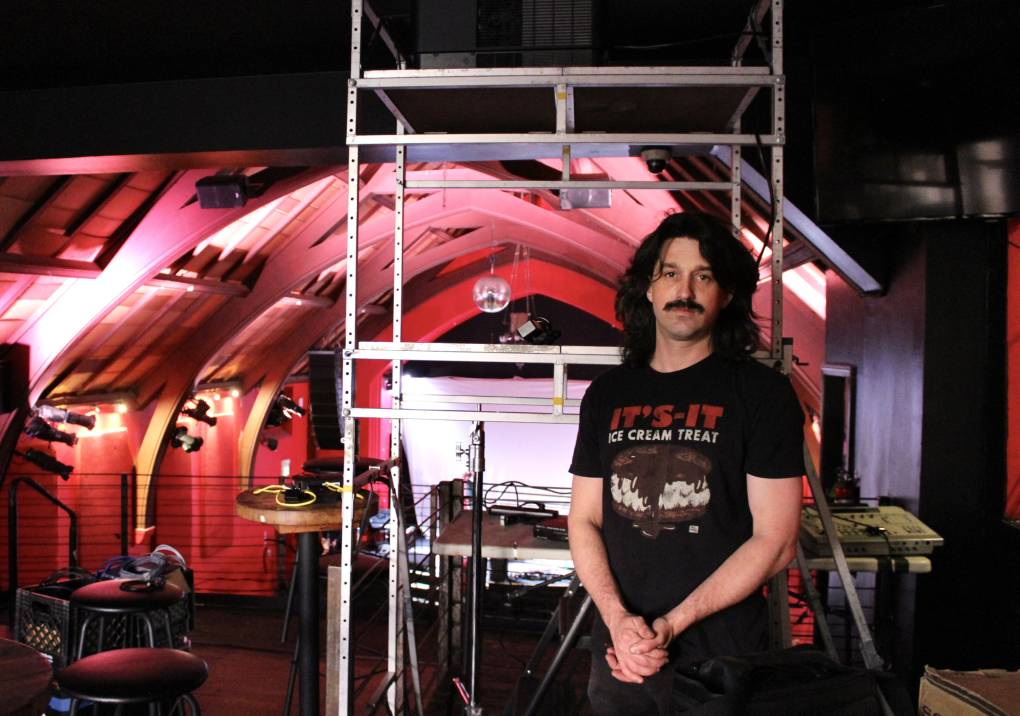
"caption": "Zach Rodell envelops SF venues like The Chapel and Rickshaw Stop with his psychedelic projections. ",
"description": null,
"title": "ZachRodell photo by Adrian Spinelli",
"credit": "Adrian Spinelli ",
"status": "inherit",
"altTag": "An artist poses in the south booth of a concert hall with a disco ball.",
"isLoading": false,
"fetchFailed": false
},
"arts_13957253": {
"type": "attachments",
"id": "arts_13957253",
"meta": {
"index": "attachments_1716263798",
"site": "arts",
"id": "13957253",
"found": true
},
"parent": 13957242,
"imgSizes": {
"twentyfourteen-full-width": {
"file": "https://cdn.kqed.org/wp-content/uploads/sites/2/2024/05/Screenshot-2024-05-06-at-8.39.52 AM-1038x576.png",
"width": 1038,
"mimeType": "image/png",
"height": 576
},
"thumbnail": {
"file": "https://cdn.kqed.org/wp-content/uploads/sites/2/2024/05/Screenshot-2024-05-06-at-8.39.52 AM-160x177.png",
"width": 160,
"mimeType": "image/png",
"height": 177
},
"post-thumbnail": {
"file": "https://cdn.kqed.org/wp-content/uploads/sites/2/2024/05/Screenshot-2024-05-06-at-8.39.52 AM-672x372.png",
"width": 672,
"mimeType": "image/png",
"height": 372
},
"kqedFullSize": {
"file": "https://cdn.kqed.org/wp-content/uploads/sites/2/2024/05/Screenshot-2024-05-06-at-8.39.52 AM.png",
"width": 1238,
"height": 1366
},
"large": {
"file": "https://cdn.kqed.org/wp-content/uploads/sites/2/2024/05/Screenshot-2024-05-06-at-8.39.52 AM-1020x1125.png",
"width": 1020,
"mimeType": "image/png",
"height": 1125
},
"medium": {
"file": "https://cdn.kqed.org/wp-content/uploads/sites/2/2024/05/Screenshot-2024-05-06-at-8.39.52 AM-800x883.png",
"width": 800,
"mimeType": "image/png",
"height": 883
},
"medium_large": {
"file": "https://cdn.kqed.org/wp-content/uploads/sites/2/2024/05/Screenshot-2024-05-06-at-8.39.52 AM-768x847.png",
"width": 768,
"mimeType": "image/png",
"height": 847
}
},
"publishDate": 1715010266,
"modified": 1715028492,
"caption": "Rachel Wolfe-Goldsmith at work inside of Wolfe Pack Studios in Oakland.",
"description": "Rachel Wolfe-Goldsmith at work inside of Wolfe Pack Studios in Oakland.",
"title": "Rachel Wolfe-Goldsmith at work.",
"credit": "Pendarvis Harshaw/KQED",
"status": "inherit",
"altTag": "Woman with a paintbrush working on a painting.",
"isLoading": false,
"fetchFailed": false
},
"arts_13957127": {
"type": "attachments",
"id": "arts_13957127",
"meta": {
"index": "attachments_1716263798",
"site": "arts",
"id": "13957127",
"found": true
},
"parent": 13956990,
"imgSizes": {
"twentyfourteen-full-width": {
"file": "https://cdn.kqed.org/wp-content/uploads/sites/2/2024/05/Rojas_Clare-Rojas-Clares-Balls-2024_Jessica-Silverman-Gallery-San-Francisco-California_Installation-view-02_Phillip-Maisel_2000-1038x576.jpg",
"width": 1038,
"mimeType": "image/jpeg",
"height": 576
},
"thumbnail": {
"file": "https://cdn.kqed.org/wp-content/uploads/sites/2/2024/05/Rojas_Clare-Rojas-Clares-Balls-2024_Jessica-Silverman-Gallery-San-Francisco-California_Installation-view-02_Phillip-Maisel_2000-160x107.jpg",
"width": 160,
"mimeType": "image/jpeg",
"height": 107
},
"post-thumbnail": {
"file": "https://cdn.kqed.org/wp-content/uploads/sites/2/2024/05/Rojas_Clare-Rojas-Clares-Balls-2024_Jessica-Silverman-Gallery-San-Francisco-California_Installation-view-02_Phillip-Maisel_2000-672x372.jpg",
"width": 672,
"mimeType": "image/jpeg",
"height": 372
},
"kqedFullSize": {
"file": "https://cdn.kqed.org/wp-content/uploads/sites/2/2024/05/Rojas_Clare-Rojas-Clares-Balls-2024_Jessica-Silverman-Gallery-San-Francisco-California_Installation-view-02_Phillip-Maisel_2000.jpg",
"width": 2000,
"height": 1333
},
"large": {
"file": "https://cdn.kqed.org/wp-content/uploads/sites/2/2024/05/Rojas_Clare-Rojas-Clares-Balls-2024_Jessica-Silverman-Gallery-San-Francisco-California_Installation-view-02_Phillip-Maisel_2000-1020x680.jpg",
"width": 1020,
"mimeType": "image/jpeg",
"height": 680
},
"1536x1536": {
"file": "https://cdn.kqed.org/wp-content/uploads/sites/2/2024/05/Rojas_Clare-Rojas-Clares-Balls-2024_Jessica-Silverman-Gallery-San-Francisco-California_Installation-view-02_Phillip-Maisel_2000-1536x1024.jpg",
"width": 1536,
"mimeType": "image/jpeg",
"height": 1024
},
"full-width": {
"file": "https://cdn.kqed.org/wp-content/uploads/sites/2/2024/05/Rojas_Clare-Rojas-Clares-Balls-2024_Jessica-Silverman-Gallery-San-Francisco-California_Installation-view-02_Phillip-Maisel_2000-1920x1280.jpg",
"width": 1920,
"mimeType": "image/jpeg",
"height": 1280
},
"medium": {
"file": "https://cdn.kqed.org/wp-content/uploads/sites/2/2024/05/Rojas_Clare-Rojas-Clares-Balls-2024_Jessica-Silverman-Gallery-San-Francisco-California_Installation-view-02_Phillip-Maisel_2000-800x533.jpg",
"width": 800,
"mimeType": "image/jpeg",
"height": 533
},
"medium_large": {
"file": "https://cdn.kqed.org/wp-content/uploads/sites/2/2024/05/Rojas_Clare-Rojas-Clares-Balls-2024_Jessica-Silverman-Gallery-San-Francisco-California_Installation-view-02_Phillip-Maisel_2000-768x512.jpg",
"width": 768,
"mimeType": "image/jpeg",
"height": 512
}
},
"publishDate": 1714682908,
"modified": 1714682956,
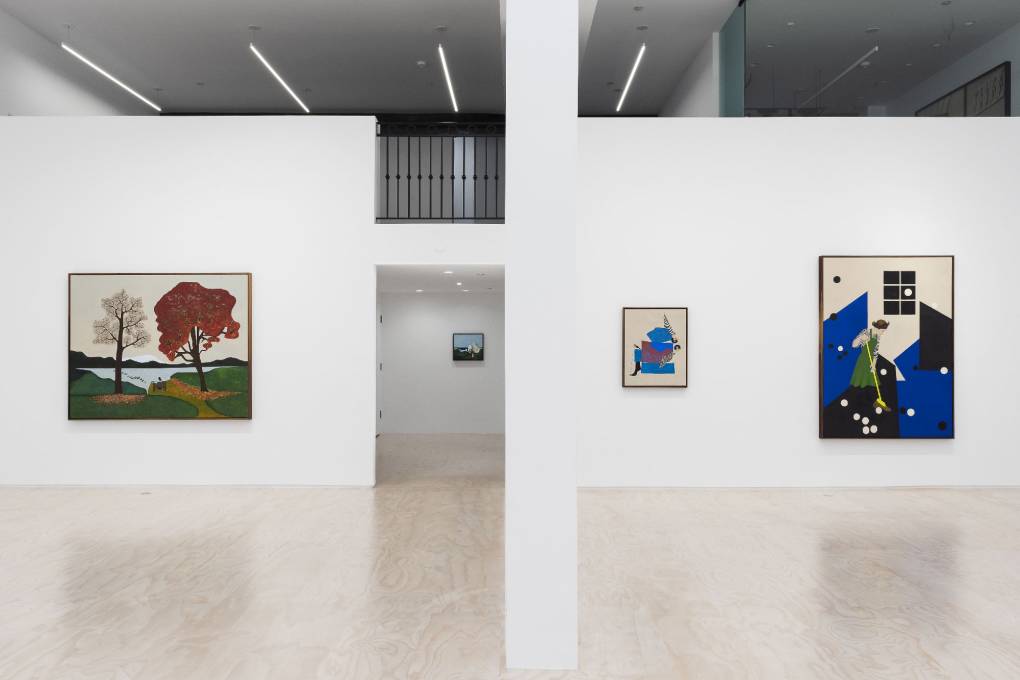
"caption": "Installation view of 'Clare's Balls' at Jessica Silverman, San Francisco.",
"description": null,
"title": "Rojas_Clare-Rojas--Clare's-Balls,-2024_Jessica-Silverman-Gallery,-San-Francisco,-California_Installation-view-02_Phillip-Maisel_2000",
"credit": "Courtesy of the artist and Jessica Silverman, San Francisco; Photo by Phillip Maisel",
"status": "inherit",
"altTag": "White walled gallery install with paintings on walls",
"isLoading": false,
"fetchFailed": false
},
"arts_13957027": {
"type": "attachments",
"id": "arts_13957027",
"meta": {
"index": "attachments_1716263798",
"site": "arts",
"id": "13957027",
"found": true
},
"parent": 0,
"imgSizes": {
"twentyfourteen-full-width": {
"file": "https://cdn.kqed.org/wp-content/uploads/sites/2/2024/05/07.-Achille-and-Piergiacomo-Castiglioni-RR126-Stereo-System-1038x576.jpg",
"width": 1038,
"mimeType": "image/jpeg",
"height": 576
},
"thumbnail": {
"file": "https://cdn.kqed.org/wp-content/uploads/sites/2/2024/05/07.-Achille-and-Piergiacomo-Castiglioni-RR126-Stereo-System-160x111.jpg",
"width": 160,
"mimeType": "image/jpeg",
"height": 111
},
"post-thumbnail": {
"file": "https://cdn.kqed.org/wp-content/uploads/sites/2/2024/05/07.-Achille-and-Piergiacomo-Castiglioni-RR126-Stereo-System-672x372.jpg",
"width": 672,
"mimeType": "image/jpeg",
"height": 372
},
"kqedFullSize": {
"file": "https://cdn.kqed.org/wp-content/uploads/sites/2/2024/05/07.-Achille-and-Piergiacomo-Castiglioni-RR126-Stereo-System.jpg",
"width": 1920,
"height": 1326
},
"large": {
"file": "https://cdn.kqed.org/wp-content/uploads/sites/2/2024/05/07.-Achille-and-Piergiacomo-Castiglioni-RR126-Stereo-System-1020x704.jpg",
"width": 1020,
"mimeType": "image/jpeg",
"height": 704
},
"1536x1536": {
"file": "https://cdn.kqed.org/wp-content/uploads/sites/2/2024/05/07.-Achille-and-Piergiacomo-Castiglioni-RR126-Stereo-System-1536x1061.jpg",
"width": 1536,
"mimeType": "image/jpeg",
"height": 1061
},
"medium": {
"file": "https://cdn.kqed.org/wp-content/uploads/sites/2/2024/05/07.-Achille-and-Piergiacomo-Castiglioni-RR126-Stereo-System-800x553.jpg",
"width": 800,
"mimeType": "image/jpeg",
"height": 553
},
"medium_large": {
"file": "https://cdn.kqed.org/wp-content/uploads/sites/2/2024/05/07.-Achille-and-Piergiacomo-Castiglioni-RR126-Stereo-System-768x530.jpg",
"width": 768,
"mimeType": "image/jpeg",
"height": 530
}
},
"publishDate": 1714611495,
"modified": 1714611637,
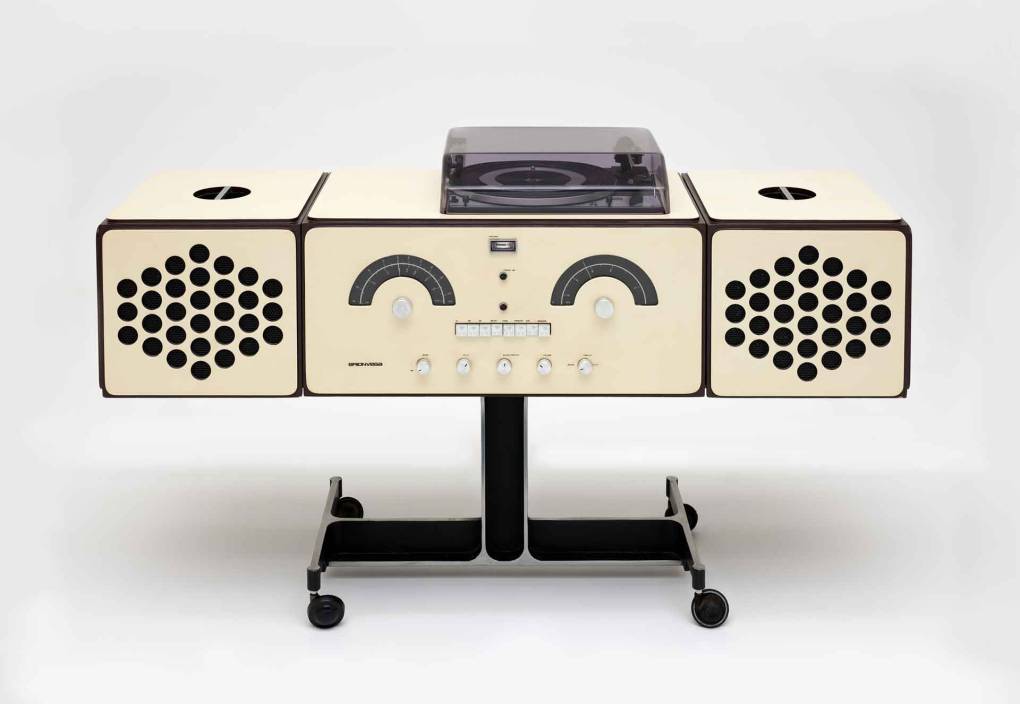
"caption": "Achille and Piergiacomo Castiglioni, RR126 Stereo System, manufactured by Brionvega, 1965.",
"description": null,
"title": "07.-Achille-and-Piergiacomo-Castiglioni,-RR126-Stereo-System",
"credit": "Don Ross",
"status": "inherit",
"altTag": null,
"isLoading": false,
"fetchFailed": false
},
"arts_13956621": {
"type": "attachments",
"id": "arts_13956621",
"meta": {
"index": "attachments_1716263798",
"site": "arts",
"id": "13956621",
"found": true
},
"parent": 13956615,
"imgSizes": {
"twentyfourteen-full-width": {
"file": "https://cdn.kqed.org/wp-content/uploads/sites/2/2024/04/EBCO-FEB-127-1038x576.jpg",
"width": 1038,
"mimeType": "image/jpeg",
"height": 576
},
"thumbnail": {
"file": "https://cdn.kqed.org/wp-content/uploads/sites/2/2024/04/EBCO-FEB-127-160x107.jpg",
"width": 160,
"mimeType": "image/jpeg",
"height": 107
},
"post-thumbnail": {
"file": "https://cdn.kqed.org/wp-content/uploads/sites/2/2024/04/EBCO-FEB-127-672x372.jpg",
"width": 672,
"mimeType": "image/jpeg",
"height": 372
},
"kqedFullSize": {
"file": "https://cdn.kqed.org/wp-content/uploads/sites/2/2024/04/EBCO-FEB-127-scaled.jpg",
"width": 2560,
"height": 1707
},
"2048x2048": {
"file": "https://cdn.kqed.org/wp-content/uploads/sites/2/2024/04/EBCO-FEB-127-2048x1365.jpg",
"width": 2048,
"mimeType": "image/jpeg",
"height": 1365
},
"large": {
"file": "https://cdn.kqed.org/wp-content/uploads/sites/2/2024/04/EBCO-FEB-127-1020x680.jpg",
"width": 1020,
"mimeType": "image/jpeg",
"height": 680
},
"1536x1536": {
"file": "https://cdn.kqed.org/wp-content/uploads/sites/2/2024/04/EBCO-FEB-127-1536x1024.jpg",
"width": 1536,
"mimeType": "image/jpeg",
"height": 1024
},
"full-width": {
"file": "https://cdn.kqed.org/wp-content/uploads/sites/2/2024/04/EBCO-FEB-127-1920x1280.jpg",
"width": 1920,
"mimeType": "image/jpeg",
"height": 1280
},
"medium": {
"file": "https://cdn.kqed.org/wp-content/uploads/sites/2/2024/04/EBCO-FEB-127-800x533.jpg",
"width": 800,
"mimeType": "image/jpeg",
"height": 533
},
"medium_large": {
"file": "https://cdn.kqed.org/wp-content/uploads/sites/2/2024/04/EBCO-FEB-127-768x512.jpg",
"width": 768,
"mimeType": "image/jpeg",
"height": 512
}
},
"publishDate": 1713993873,
"modified": 1713995612,
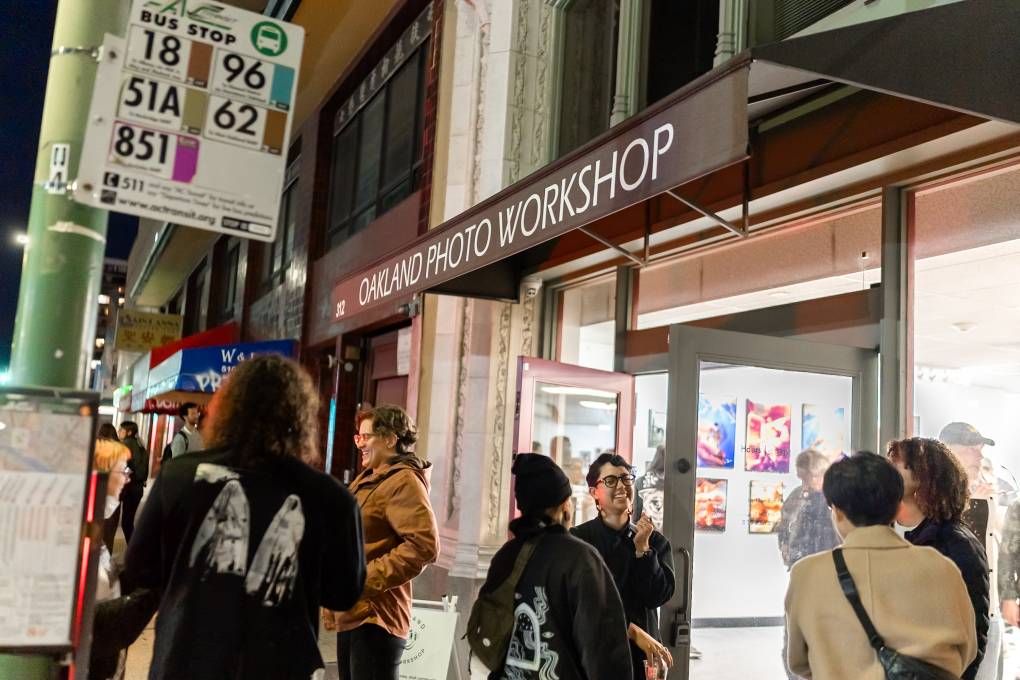
"caption": "People gather outside of an event at the Oakland Photo Workshop headquarters in Oakland's Chinatown. ",
"description": "People gather outside of an event at the Oakland Photo Workshop headquarters in Oakland's Chinatown. ",
"title": "People gather outside of an event at the Oakland Photo Workshop headquarters in Oakland's Chinatown.",
"credit": "Malcolm Wallace",
"status": "inherit",
"altTag": "People gather outside of an event at the Oakland Photo Workshop headquarters in Oakland's Chinatown.",
"isLoading": false,
"fetchFailed": false
},
"arts_13956649": {
"type": "attachments",
"id": "arts_13956649",
"meta": {
"index": "attachments_1716263798",
"site": "arts",
"id": "13956649",
"found": true
},
"parent": 13956575,
"imgSizes": {
"twentyfourteen-full-width": {
"file": "https://cdn.kqed.org/wp-content/uploads/sites/2/2024/04/240327-MUSEUM-MUGS-KSM-21-KQED-1-1-1038x576.jpg",
"width": 1038,
"mimeType": "image/jpeg",
"height": 576
},
"thumbnail": {
"file": "https://cdn.kqed.org/wp-content/uploads/sites/2/2024/04/240327-MUSEUM-MUGS-KSM-21-KQED-1-1-160x107.jpg",
"width": 160,
"mimeType": "image/jpeg",
"height": 107
},
"post-thumbnail": {
"file": "https://cdn.kqed.org/wp-content/uploads/sites/2/2024/04/240327-MUSEUM-MUGS-KSM-21-KQED-1-1-672x372.jpg",
"width": 672,
"mimeType": "image/jpeg",
"height": 372
},
"kqedFullSize": {
"file": "https://cdn.kqed.org/wp-content/uploads/sites/2/2024/04/240327-MUSEUM-MUGS-KSM-21-KQED-1-1.jpg",
"width": 2000,
"height": 1333
},
"large": {
"file": "https://cdn.kqed.org/wp-content/uploads/sites/2/2024/04/240327-MUSEUM-MUGS-KSM-21-KQED-1-1-1020x680.jpg",
"width": 1020,
"mimeType": "image/jpeg",
"height": 680
},
"1536x1536": {
"file": "https://cdn.kqed.org/wp-content/uploads/sites/2/2024/04/240327-MUSEUM-MUGS-KSM-21-KQED-1-1-1536x1024.jpg",
"width": 1536,
"mimeType": "image/jpeg",
"height": 1024
},
"full-width": {
"file": "https://cdn.kqed.org/wp-content/uploads/sites/2/2024/04/240327-MUSEUM-MUGS-KSM-21-KQED-1-1-1920x1280.jpg",
"width": 1920,
"mimeType": "image/jpeg",
"height": 1280
},
"medium": {
"file": "https://cdn.kqed.org/wp-content/uploads/sites/2/2024/04/240327-MUSEUM-MUGS-KSM-21-KQED-1-1-800x533.jpg",
"width": 800,
"mimeType": "image/jpeg",
"height": 533
},
"medium_large": {
"file": "https://cdn.kqed.org/wp-content/uploads/sites/2/2024/04/240327-MUSEUM-MUGS-KSM-21-KQED-1-1-768x512.jpg",
"width": 768,
"mimeType": "image/jpeg",
"height": 512
}
},
"publishDate": 1714002350,
"modified": 1714002409,
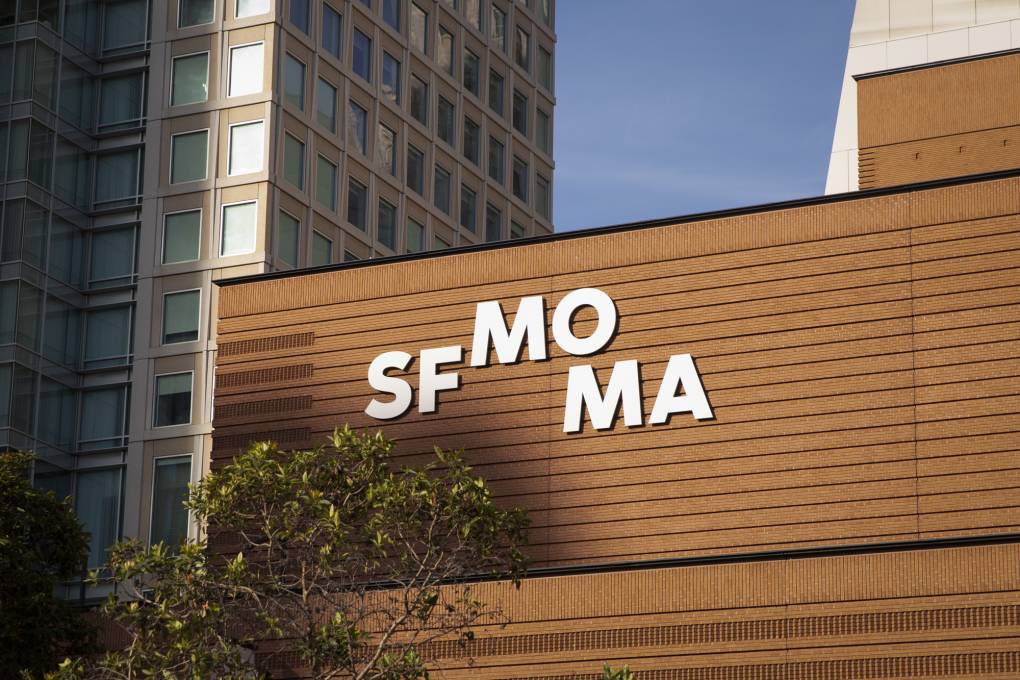
"caption": "The San Francisco Museum of Modern Art on March 26, 2024.",
"description": null,
"title": "The San Francisco Museum of Modern Art on Mar. 26, 2024.",
"credit": "Kathryn Styer Martinez for KQED",
"status": "inherit",
"altTag": null,
"isLoading": false,
"fetchFailed": false
},
"arts_13956434": {
"type": "attachments",
"id": "arts_13956434",
"meta": {
"index": "attachments_1716263798",
"site": "arts",
"id": "13956434",
"found": true
},
"parent": 13956359,
"imgSizes": {
"twentyfourteen-full-width": {
"file": "https://cdn.kqed.org/wp-content/uploads/sites/2/2024/04/025_KQEDArts_Oakland_AyodeleNzinga_07192021-1038x576.jpg",
"width": 1038,
"mimeType": "image/jpeg",
"height": 576
},
"thumbnail": {
"file": "https://cdn.kqed.org/wp-content/uploads/sites/2/2024/04/025_KQEDArts_Oakland_AyodeleNzinga_07192021-160x107.jpg",
"width": 160,
"mimeType": "image/jpeg",
"height": 107
},
"post-thumbnail": {
"file": "https://cdn.kqed.org/wp-content/uploads/sites/2/2024/04/025_KQEDArts_Oakland_AyodeleNzinga_07192021-672x372.jpg",
"width": 672,
"mimeType": "image/jpeg",
"height": 372
},
"kqedFullSize": {
"file": "https://cdn.kqed.org/wp-content/uploads/sites/2/2024/04/025_KQEDArts_Oakland_AyodeleNzinga_07192021.jpg",
"width": 1920,
"height": 1280
},
"large": {
"file": "https://cdn.kqed.org/wp-content/uploads/sites/2/2024/04/025_KQEDArts_Oakland_AyodeleNzinga_07192021-1020x680.jpg",
"width": 1020,
"mimeType": "image/jpeg",
"height": 680
},
"1536x1536": {
"file": "https://cdn.kqed.org/wp-content/uploads/sites/2/2024/04/025_KQEDArts_Oakland_AyodeleNzinga_07192021-1536x1024.jpg",
"width": 1536,
"mimeType": "image/jpeg",
"height": 1024
},
"medium": {
"file": "https://cdn.kqed.org/wp-content/uploads/sites/2/2024/04/025_KQEDArts_Oakland_AyodeleNzinga_07192021-800x533.jpg",
"width": 800,
"mimeType": "image/jpeg",
"height": 533
},
"medium_large": {
"file": "https://cdn.kqed.org/wp-content/uploads/sites/2/2024/04/025_KQEDArts_Oakland_AyodeleNzinga_07192021-768x512.jpg",
"width": 768,
"mimeType": "image/jpeg",
"height": 512
}
},
"publishDate": 1713902958,
"modified": 1713903009,
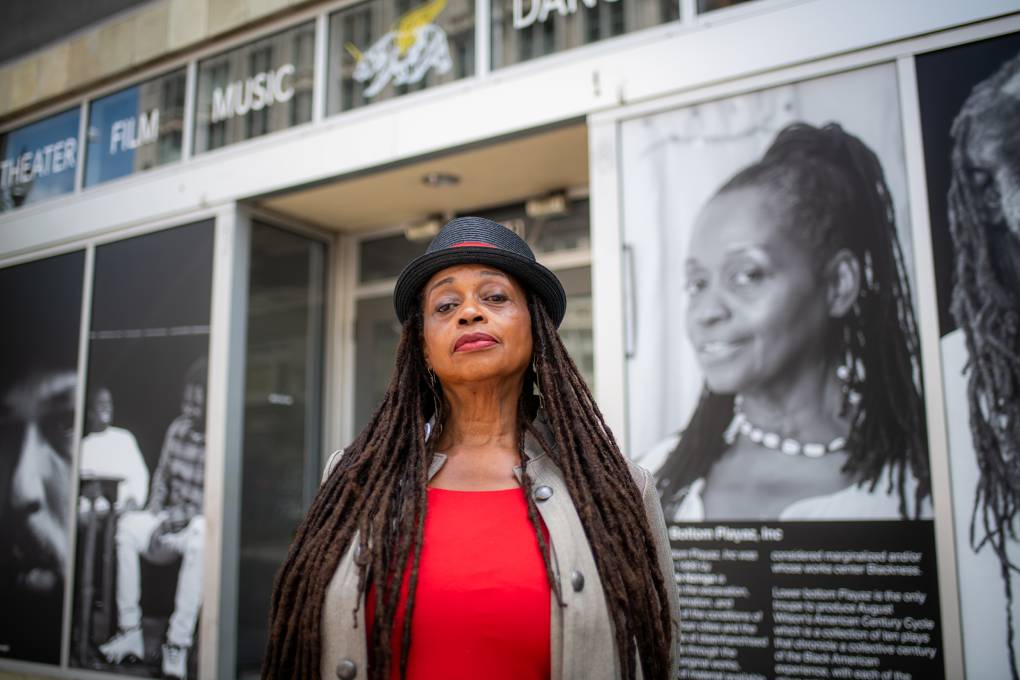
"caption": "Ayodele Nzinga stands in front of a photo of herself, a part of the project Story Windows, at PianoFight theater in Oakland on July 19, 2021.",
"description": "Ayodele Nzinga stands in front of a photo of herself, a part of the project Story Windows, at PianoFight theater in Oakland on July 19, 2021.",
"title": "Ayodele Nzinga stands in front of a photo of herself, a part of the project Story Windows, at PianoFight theater in Oakland on July 19, 2021.",
"credit": "(Beth LaBerge/KQED)",
"status": "inherit",
"altTag": "Ayodele Nzinga stands in front of a photo of herself, a part of the project Story Windows, at PianoFight theater in Oakland on July 19, 2021.",
"isLoading": false,
"fetchFailed": false
},
"arts_13956507": {
"type": "attachments",
"id": "arts_13956507",
"meta": {
"index": "attachments_1716263798",
"site": "arts",
"id": "13956507",
"found": true
},
"parent": 13956493,
"imgSizes": {
"twentyfourteen-full-width": {
"file": "https://cdn.kqed.org/wp-content/uploads/sites/2/2024/04/GWN_3-7-24_010-1038x576.jpg",
"width": 1038,
"mimeType": "image/jpeg",
"height": 576
},
"thumbnail": {
"file": "https://cdn.kqed.org/wp-content/uploads/sites/2/2024/04/GWN_3-7-24_010-160x107.jpg",
"width": 160,
"mimeType": "image/jpeg",
"height": 107
},
"post-thumbnail": {
"file": "https://cdn.kqed.org/wp-content/uploads/sites/2/2024/04/GWN_3-7-24_010-672x372.jpg",
"width": 672,
"mimeType": "image/jpeg",
"height": 372
},
"kqedFullSize": {
"file": "https://cdn.kqed.org/wp-content/uploads/sites/2/2024/04/GWN_3-7-24_010.jpg",
"width": 2000,
"height": 1333
},
"large": {
"file": "https://cdn.kqed.org/wp-content/uploads/sites/2/2024/04/GWN_3-7-24_010-1020x680.jpg",
"width": 1020,
"mimeType": "image/jpeg",
"height": 680
},
"1536x1536": {
"file": "https://cdn.kqed.org/wp-content/uploads/sites/2/2024/04/GWN_3-7-24_010-1536x1024.jpg",
"width": 1536,
"mimeType": "image/jpeg",
"height": 1024
},
"full-width": {
"file": "https://cdn.kqed.org/wp-content/uploads/sites/2/2024/04/GWN_3-7-24_010-1920x1280.jpg",
"width": 1920,
"mimeType": "image/jpeg",
"height": 1280
},
"medium": {
"file": "https://cdn.kqed.org/wp-content/uploads/sites/2/2024/04/GWN_3-7-24_010-800x533.jpg",
"width": 800,
"mimeType": "image/jpeg",
"height": 533
},
"medium_large": {
"file": "https://cdn.kqed.org/wp-content/uploads/sites/2/2024/04/GWN_3-7-24_010-768x512.jpg",
"width": 768,
"mimeType": "image/jpeg",
"height": 512
}
},
"publishDate": 1713912876,
"modified": 1713918320,
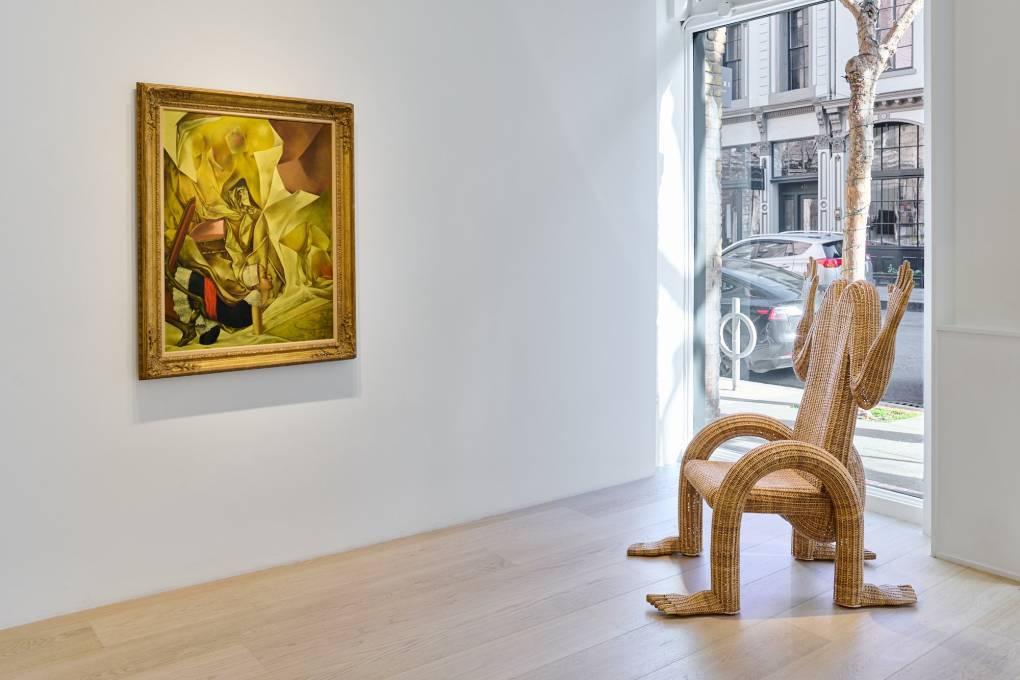
"caption": "Installation view of 'Musical Chairs' at Gallery Wendi Norris, San Francisco. Dorothea Tanning's painting 'Musical Chairs,' 1951 is at left.",
"description": null,
"title": "GWN_3-7-24_010",
"credit": "Glen Cheriton",
"status": "inherit",
"altTag": "Framed abstract painting on wall, wicker hair with human-like arms and legs in front of it",
"isLoading": false,
"fetchFailed": false
},
"arts_13956447": {
"type": "attachments",
"id": "arts_13956447",
"meta": {
"index": "attachments_1716263798",
"site": "arts",
"id": "13956447",
"found": true
},
"parent": 13956354,
"imgSizes": {
"twentyfourteen-full-width": {
"file": "https://cdn.kqed.org/wp-content/uploads/sites/2/2024/04/2024-03_Day-Jobs_GC-012-web-1038x576.jpg",
"width": 1038,
"mimeType": "image/jpeg",
"height": 576
},
"thumbnail": {
"file": "https://cdn.kqed.org/wp-content/uploads/sites/2/2024/04/2024-03_Day-Jobs_GC-012-web-160x107.jpg",
"width": 160,
"mimeType": "image/jpeg",
"height": 107
},
"post-thumbnail": {
"file": "https://cdn.kqed.org/wp-content/uploads/sites/2/2024/04/2024-03_Day-Jobs_GC-012-web-672x372.jpg",
"width": 672,
"mimeType": "image/jpeg",
"height": 372
},
"kqedFullSize": {
"file": "https://cdn.kqed.org/wp-content/uploads/sites/2/2024/04/2024-03_Day-Jobs_GC-012-web.jpg",
"width": 2000,
"height": 1333
},
"large": {
"file": "https://cdn.kqed.org/wp-content/uploads/sites/2/2024/04/2024-03_Day-Jobs_GC-012-web-1020x680.jpg",
"width": 1020,
"mimeType": "image/jpeg",
"height": 680
},
"1536x1536": {
"file": "https://cdn.kqed.org/wp-content/uploads/sites/2/2024/04/2024-03_Day-Jobs_GC-012-web-1536x1024.jpg",
"width": 1536,
"mimeType": "image/jpeg",
"height": 1024
},
"full-width": {
"file": "https://cdn.kqed.org/wp-content/uploads/sites/2/2024/04/2024-03_Day-Jobs_GC-012-web-1920x1280.jpg",
"width": 1920,
"mimeType": "image/jpeg",
"height": 1280
},
"medium": {
"file": "https://cdn.kqed.org/wp-content/uploads/sites/2/2024/04/2024-03_Day-Jobs_GC-012-web-800x533.jpg",
"width": 800,
"mimeType": "image/jpeg",
"height": 533
},
"medium_large": {
"file": "https://cdn.kqed.org/wp-content/uploads/sites/2/2024/04/2024-03_Day-Jobs_GC-012-web-768x512.jpg",
"width": 768,
"mimeType": "image/jpeg",
"height": 512
}
},
"publishDate": 1713905017,
"modified": 1713905154,
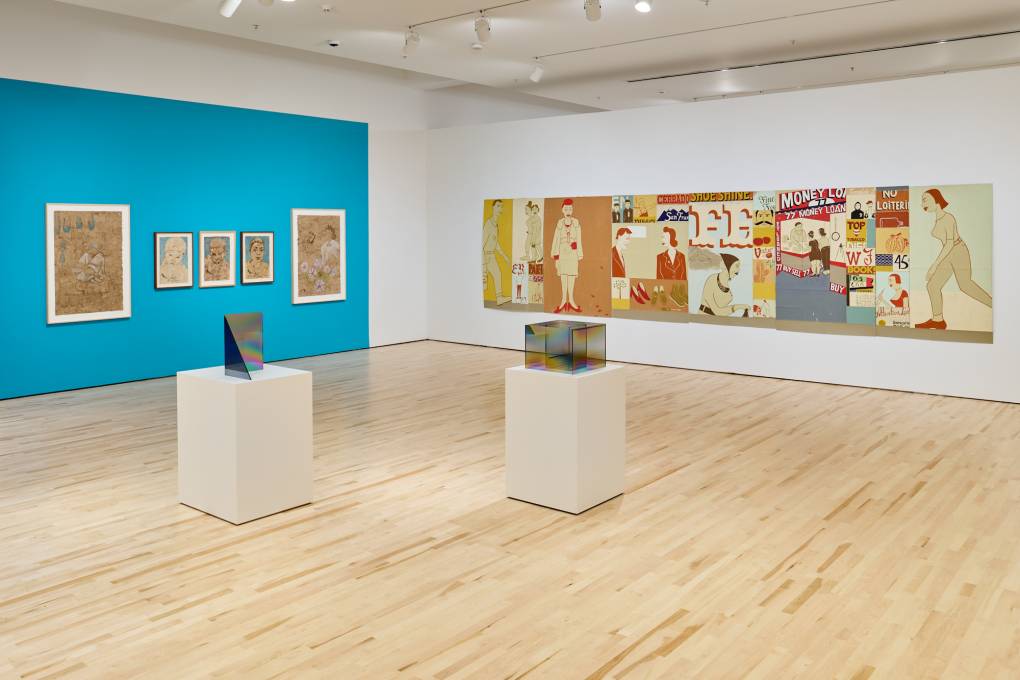
"caption": "Installation view of 'Day Jobs' at Cantor Arts Center at Stanford University. From L to R: Work by Sandy Rodriguez, Larry Bell and Margaret Kilgallen.",
"description": null,
"title": "2024-03_Day Jobs_GC-012-web",
"credit": "Glen C. Cheriton",
"status": "inherit",
"altTag": "Gallery with watercolors on paper on a blue wall, two glass sculptures on pedestals and a wide painting",
"isLoading": false,
"fetchFailed": false
},
"arts_13956234": {
"type": "attachments",
"id": "arts_13956234",
"meta": {
"index": "attachments_1716263798",
"site": "arts",
"id": "13956234",
"found": true
},
"parent": 13956215,
"imgSizes": {
"twentyfourteen-full-width": {
"file": "https://cdn.kqed.org/wp-content/uploads/sites/2/2024/04/720p-25fps-master-edit.00_23_03_21.Still035-1038x576.png",
"width": 1038,
"mimeType": "image/png",
"height": 576
},
"thumbnail": {
"file": "https://cdn.kqed.org/wp-content/uploads/sites/2/2024/04/720p-25fps-master-edit.00_23_03_21.Still035-160x90.png",
"width": 160,
"mimeType": "image/png",
"height": 90
},
"post-thumbnail": {
"file": "https://cdn.kqed.org/wp-content/uploads/sites/2/2024/04/720p-25fps-master-edit.00_23_03_21.Still035-672x372.png",
"width": 672,
"mimeType": "image/png",
"height": 372
},
"kqedFullSize": {
"file": "https://cdn.kqed.org/wp-content/uploads/sites/2/2024/04/720p-25fps-master-edit.00_23_03_21.Still035.png",
"width": 1280,
"height": 720
},
"large": {
"file": "https://cdn.kqed.org/wp-content/uploads/sites/2/2024/04/720p-25fps-master-edit.00_23_03_21.Still035-1020x574.png",
"width": 1020,
"mimeType": "image/png",
"height": 574
},
"medium": {
"file": "https://cdn.kqed.org/wp-content/uploads/sites/2/2024/04/720p-25fps-master-edit.00_23_03_21.Still035-800x450.png",
"width": 800,
"mimeType": "image/png",
"height": 450
},
"medium_large": {
"file": "https://cdn.kqed.org/wp-content/uploads/sites/2/2024/04/720p-25fps-master-edit.00_23_03_21.Still035-768x432.png",
"width": 768,
"mimeType": "image/png",
"height": 432
}
},
"publishDate": 1713543118,
"modified": 1713543233,
"caption": "A still from Jen Liu’s ‘PINK SLIME CAESAR SHIFT: GOLD LOOP,’ 2020–2021; Single-channel HD video with sound, 27:58 minutes on infinite loop.",
"description": null,
"title": "720p 25fps master edit.00_23_03_21.Still035",
"credit": "Courtesy of the artist; Blindspot Gallery, Hong Kong; Upstream Gallery, Amsterdam",
"status": "inherit",
"altTag": "Person stands looking at phone, text below reads \"2: Be formless, shapeless, like water.\"",
"isLoading": false,
"fetchFailed": false
},
"arts_13955501": {
"type": "attachments",
"id": "arts_13955501",
"meta": {
"index": "attachments_1716263798",
"site": "arts",
"id": "13955501",
"found": true
},
"parent": 0,
"imgSizes": {
"twentyfourteen-full-width": {
"file": "https://cdn.kqed.org/wp-content/uploads/sites/2/2024/04/240404-JONATHANCARVERMOORE-034-BL-KQED-1038x576.jpg",
"width": 1038,
"mimeType": "image/jpeg",
"height": 576
},
"thumbnail": {
"file": "https://cdn.kqed.org/wp-content/uploads/sites/2/2024/04/240404-JONATHANCARVERMOORE-034-BL-KQED-160x107.jpg",
"width": 160,
"mimeType": "image/jpeg",
"height": 107
},
"post-thumbnail": {
"file": "https://cdn.kqed.org/wp-content/uploads/sites/2/2024/04/240404-JONATHANCARVERMOORE-034-BL-KQED-672x372.jpg",
"width": 672,
"mimeType": "image/jpeg",
"height": 372
},
"kqedFullSize": {
"file": "https://cdn.kqed.org/wp-content/uploads/sites/2/2024/04/240404-JONATHANCARVERMOORE-034-BL-KQED.jpg",
"width": 2000,
"height": 1333
},
"large": {
"file": "https://cdn.kqed.org/wp-content/uploads/sites/2/2024/04/240404-JONATHANCARVERMOORE-034-BL-KQED-1020x680.jpg",
"width": 1020,
"mimeType": "image/jpeg",
"height": 680
},
"1536x1536": {
"file": "https://cdn.kqed.org/wp-content/uploads/sites/2/2024/04/240404-JONATHANCARVERMOORE-034-BL-KQED-1536x1024.jpg",
"width": 1536,
"mimeType": "image/jpeg",
"height": 1024
},
"full-width": {
"file": "https://cdn.kqed.org/wp-content/uploads/sites/2/2024/04/240404-JONATHANCARVERMOORE-034-BL-KQED-1920x1280.jpg",
"width": 1920,
"mimeType": "image/jpeg",
"height": 1280
},
"medium": {
"file": "https://cdn.kqed.org/wp-content/uploads/sites/2/2024/04/240404-JONATHANCARVERMOORE-034-BL-KQED-800x533.jpg",
"width": 800,
"mimeType": "image/jpeg",
"height": 533
},
"medium_large": {
"file": "https://cdn.kqed.org/wp-content/uploads/sites/2/2024/04/240404-JONATHANCARVERMOORE-034-BL-KQED-768x512.jpg",
"width": 768,
"mimeType": "image/jpeg",
"height": 512
}
},
"publishDate": 1712271115,
"modified": 1713291135,
"caption": "Jonathan Carver Moore poses for a portrait at his eponymous gallery on Market Street in San Francisco on April 4, 2024. 'BOLD,' a solo show by artist Aplerh-Doku Borlabi, is on view behind him.",
"description": null,
"title": "240404-JONATHANCARVERMOORE-034-BL-KQED",
"credit": "Beth LaBerge/KQED",
"status": "inherit",
"altTag": "Black man stands with hands in pockets smiling in gallery space, two large paintings behind",
"isLoading": false,
"fetchFailed": false
},
"arts_13955980": {
"type": "attachments",
"id": "arts_13955980",
"meta": {
"index": "attachments_1716263798",
"site": "arts",
"id": "13955980",
"found": true
},
"parent": 13955870,
"imgSizes": {
"twentyfourteen-full-width": {
"file": "https://cdn.kqed.org/wp-content/uploads/sites/2/2024/04/Screen-Shot-2024-04-15-at-11.55.40-AM-1004x576.png",
"width": 1004,
"mimeType": "image/png",
"height": 576
},
"thumbnail": {
"file": "https://cdn.kqed.org/wp-content/uploads/sites/2/2024/04/Screen-Shot-2024-04-15-at-11.55.40-AM-160x115.png",
"width": 160,
"mimeType": "image/png",
"height": 115
},
"post-thumbnail": {
"file": "https://cdn.kqed.org/wp-content/uploads/sites/2/2024/04/Screen-Shot-2024-04-15-at-11.55.40-AM-672x372.png",
"width": 672,
"mimeType": "image/png",
"height": 372
},
"kqedFullSize": {
"file": "https://cdn.kqed.org/wp-content/uploads/sites/2/2024/04/Screen-Shot-2024-04-15-at-11.55.40-AM.png",
"width": 1004,
"height": 720
},
"medium": {
"file": "https://cdn.kqed.org/wp-content/uploads/sites/2/2024/04/Screen-Shot-2024-04-15-at-11.55.40-AM-800x574.png",
"width": 800,
"mimeType": "image/png",
"height": 574
},
"medium_large": {
"file": "https://cdn.kqed.org/wp-content/uploads/sites/2/2024/04/Screen-Shot-2024-04-15-at-11.55.40-AM-768x551.png",
"width": 768,
"mimeType": "image/png",
"height": 551
}
},
"publishDate": 1713207392,
"modified": 1713221190,
"caption": "‘Communication is Key’ by Mike Davis.",
"description": null,
"title": "‘Communication is Key’ by Mike Davis.",
"credit": "Mike Davis/111 Minna",
"status": "inherit",
"altTag": "A human skull lies on its side in the dirt, covered in cockroaches. Behind stand two electrical pylons and wires while a flying saucer hovers in the sky.",
"isLoading": false,
"fetchFailed": false
}
},
"audioPlayerReducer": {
"postId": "stream_live",
"isPaused": true,
"isPlaying": false,
"pfsActive": false,
"pledgeModalIsOpen": true,
"playerDrawerIsOpen": false,
"liveAudioPlayStartedAt": 0,
"liveAudioPlayContext": ""
},
"authorsReducer": {
"byline_arts_13957282": {
"type": "authors",
"id": "byline_arts_13957282",
"meta": {
"override": true
},
"slug": "byline_arts_13957282",
"name": "Adrian Spinelli ",
"isLoading": false
},
"byline_arts_13956990": {
"type": "authors",
"id": "byline_arts_13956990",
"meta": {
"override": true
},
"slug": "byline_arts_13956990",
"name": "Champe Barton",
"isLoading": false
},
"byline_arts_13956354": {
"type": "authors",
"id": "byline_arts_13956354",
"meta": {
"override": true
},
"slug": "byline_arts_13956354",
"name": "Quintessa Matranga",
"isLoading": false
},
"byline_arts_13955879": {
"type": "authors",
"id": "byline_arts_13955879",
"meta": {
"override": true
},
"slug": "byline_arts_13955879",
"name": "Emily Wilson",
"isLoading": false
},
"shotchkiss": {
"type": "authors",
"id": "61",
"meta": {
"index": "authors_1716337520",
"id": "61",
"found": true
},
"name": "Sarah Hotchkiss",
"firstName": "Sarah",
"lastName": "Hotchkiss",
"slug": "shotchkiss",
"email": "shotchkiss@kqed.org",
"display_author_email": true,
"staff_mastheads": [
"arts"
],
"title": "Senior Editor",
"bio": "Sarah Hotchkiss is a San Francisco \u003ca href=\"http://www.sarahhotchkiss.com\">artist\u003c/a> and arts writer. In 2019, she received the Dorothea & Leo Rabkin Foundation grant for visual art journalism and in 2020 she received a Society of Professional Journalists, Northern California award for excellence in arts and culture reporting.",
"avatar": "https://secure.gravatar.com/avatar/bc662df144b3d27fd8b1b6f1c2a420d34e91e53154d411bb7ad353cc8b6cea8d?s=600&d=blank&r=g",
"twitter": null,
"bluesky": null,
"facebook": null,
"instagram": null,
"linkedin": null,
"sites": [
{
"site": "",
"roles": [
"editor"
]
},
{
"site": "arts",
"roles": [
"Contributor",
"administrator"
]
},
{
"site": "artschool",
"roles": [
"administrator"
]
},
{
"site": "news",
"roles": [
"editor"
]
},
{
"site": "pop",
"roles": [
"administrator"
]
},
{
"site": "bayareabites",
"roles": [
"editor"
]
},
{
"site": "spark",
"roles": [
"editor"
]
},
{
"site": "checkplease",
"roles": [
"editor"
]
}
],
"headData": {
"title": "Sarah Hotchkiss | KQED",
"description": "Senior Editor",
"ogImgSrc": "https://secure.gravatar.com/avatar/bc662df144b3d27fd8b1b6f1c2a420d34e91e53154d411bb7ad353cc8b6cea8d?s=600&d=blank&r=g",
"twImgSrc": "https://secure.gravatar.com/avatar/bc662df144b3d27fd8b1b6f1c2a420d34e91e53154d411bb7ad353cc8b6cea8d?s=600&d=blank&r=g"
},
"isLoading": false,
"link": "/author/shotchkiss"
},
"gmeline": {
"type": "authors",
"id": "185",
"meta": {
"index": "authors_1716337520",
"id": "185",
"found": true
},
"name": "Gabe Meline",
"firstName": "Gabe",
"lastName": "Meline",
"slug": "gmeline",
"email": "gmeline@kqed.org",
"display_author_email": true,
"staff_mastheads": [
"arts"
],
"title": "Senior Editor, KQED Arts & Culture",
"bio": "Gabe Meline entered journalism at age 15 making photocopied zines, and has since earned awards from the Edward R. Murrow Awards, the Society for Professional Journalists, the Online Journalism Awards, the Association of Alternative Newsweeklies and the California Newspaper Publishers Association. Prior to KQED, he was the editor of the \u003cem>North Bay Bohemian\u003c/em> and a touring musician. He lives with his wife and daughter in his hometown of Santa Rosa, CA.",
"avatar": "https://secure.gravatar.com/avatar/5bebe57be0d8bc2dd318934feb47299e2d2d10cba28d09d8d7afb389a2ce2bdd?s=600&d=blank&r=g",
"twitter": null,
"bluesky": null,
"facebook": null,
"instagram": null,
"linkedin": null,
"sites": [
{
"site": "",
"roles": [
"editor"
]
},
{
"site": "arts",
"roles": [
"administrator"
]
},
{
"site": "artschool",
"roles": [
"editor"
]
},
{
"site": "news",
"roles": [
"author"
]
},
{
"site": "pop",
"roles": [
"editor"
]
},
{
"site": "bayareabites",
"roles": [
"editor"
]
},
{
"site": "food",
"roles": [
"editor"
]
},
{
"site": "forum",
"roles": [
"administrator"
]
},
{
"site": "liveblog",
"roles": [
"editor"
]
},
{
"site": "hiphop",
"roles": [
"editor"
]
}
],
"headData": {
"title": "Gabe Meline | KQED",
"description": "Senior Editor, KQED Arts & Culture",
"ogImgSrc": "https://secure.gravatar.com/avatar/5bebe57be0d8bc2dd318934feb47299e2d2d10cba28d09d8d7afb389a2ce2bdd?s=600&d=blank&r=g",
"twImgSrc": "https://secure.gravatar.com/avatar/5bebe57be0d8bc2dd318934feb47299e2d2d10cba28d09d8d7afb389a2ce2bdd?s=600&d=blank&r=g"
},
"isLoading": false,
"link": "/author/gmeline"
},
"ralexandra": {
"type": "authors",
"id": "11242",
"meta": {
"index": "authors_1716337520",
"id": "11242",
"found": true
},
"name": "Rae Alexandra",
"firstName": "Rae",
"lastName": "Alexandra",
"slug": "ralexandra",
"email": "ralexandra@kqed.org",
"display_author_email": true,
"staff_mastheads": [],
"title": "Reporter/Producer",
"bio": "Rae Alexandra is a Reporter/Producer for KQED Arts & Culture, and the creator/author of the \u003ca href=\"https://www.kqed.org/arts/program/rebel-girls-from-bay-area-history\">Rebel Girls From Bay Area History\u003c/a> and \u003ca href=\"https://www.kqed.org/bizarrebayarea\">Bizarre Bay Area\u003c/a> series. Her debut book, \u003ca href=\"https://citylights.com/politics-current-events-history/unsung-heroines35-women-who-changed/\">Unsung Heroines: 35 Women Who Changed the Bay Area\u003c/a> was published by City Lights in March 2026. In 2023, Rae was awarded an SPJ Excellence in Journalism Award for Arts & Culture. Rae was born and raised in Wales and subsequently — even after two decades in Northern California — still uses phrases that regularly baffle her coworkers.",
"avatar": "https://secure.gravatar.com/avatar/edfee8176c80cc0a382b051190f5341997df378a934a5774dcb0977732dfd401?s=600&d=blank&r=g",
"twitter": null,
"bluesky": null,
"facebook": null,
"instagram": null,
"linkedin": null,
"sites": [
{
"site": "arts",
"roles": [
"subscriber"
]
},
{
"site": "news",
"roles": [
"subscriber"
]
},
{
"site": "pop",
"roles": [
"subscriber"
]
},
{
"site": "bayareabites",
"roles": [
"subscriber"
]
},
{
"site": "science",
"roles": [
"subscriber"
]
}
],
"headData": {
"title": "Rae Alexandra | KQED",
"description": "Reporter/Producer",
"ogImgSrc": "https://secure.gravatar.com/avatar/edfee8176c80cc0a382b051190f5341997df378a934a5774dcb0977732dfd401?s=600&d=blank&r=g",
"twImgSrc": "https://secure.gravatar.com/avatar/edfee8176c80cc0a382b051190f5341997df378a934a5774dcb0977732dfd401?s=600&d=blank&r=g"
},
"isLoading": false,
"link": "/author/ralexandra"
},
"nvoynovskaya": {
"type": "authors",
"id": "11387",
"meta": {
"index": "authors_1716337520",
"id": "11387",
"found": true
},
"name": "Nastia Voynovskaya",
"firstName": "Nastia",
"lastName": "Voynovskaya",
"slug": "nvoynovskaya",
"email": "nvoynovskaya@kqed.org",
"display_author_email": false,
"staff_mastheads": [
"arts"
],
"title": "Editor and reporter",
"bio": "Nastia Voynovskaya is a reporter, editor and host at KQED Arts & Culture. She's been covering the arts in the Bay Area for over a decade, with a focus on music, queer culture, labor issues and grassroots organizing. She has edited KQED story series such as Trans Bay: A History of San Francisco's Gender-Diverse Community, and co-created KQED's Bay Area hip-hop history project, That's My Word. Nastia's work has been recognized by the Society of Professional Journalists and San Francisco Press Club. She regularly appears on podcasts and radio programs, including NPR's All Songs Considered, and hosts live events where music, culture and conversation meet.",
"avatar": "https://secure.gravatar.com/avatar/5025ee460e5a85d69ca20ea6c6f2f80d7e17795c828f61ea3aecfcd924e9042e?s=600&d=blank&r=g",
"twitter": null,
"bluesky": null,
"facebook": null,
"instagram": "https://www.instagram.com/nananastia/",
"linkedin": null,
"sites": [
{
"site": "",
"roles": [
"editor"
]
},
{
"site": "arts",
"roles": [
"administrator"
]
},
{
"site": "news",
"roles": [
"editor"
]
},
{
"site": "pop",
"roles": [
"administrator"
]
},
{
"site": "bayareabites",
"roles": [
"editor"
]
},
{
"site": "podcasts",
"roles": [
"editor"
]
},
{
"site": "hiphop",
"roles": [
"editor"
]
}
],
"headData": {
"title": "Nastia Voynovskaya | KQED",
"description": "Editor and reporter",
"ogImgSrc": "https://secure.gravatar.com/avatar/5025ee460e5a85d69ca20ea6c6f2f80d7e17795c828f61ea3aecfcd924e9042e?s=600&d=blank&r=g",
"twImgSrc": "https://secure.gravatar.com/avatar/5025ee460e5a85d69ca20ea6c6f2f80d7e17795c828f61ea3aecfcd924e9042e?s=600&d=blank&r=g"
},
"isLoading": false,
"link": "/author/nvoynovskaya"
},
"ogpenn": {
"type": "authors",
"id": "11491",
"meta": {
"index": "authors_1716337520",
"id": "11491",
"found": true
},
"name": "Pendarvis Harshaw",
"firstName": "Pendarvis",
"lastName": "Harshaw",
"slug": "ogpenn",
"email": "ogpenn@gmail.com",
"display_author_email": false,
"staff_mastheads": [
"arts"
],
"title": "Community Engagement Reporter",
"bio": "Pendarvis Harshaw is an educator, host and writer with KQED Arts.",
"avatar": "https://secure.gravatar.com/avatar/972b77ee8e3f346ae2b00622661187fbfabd059b5693bbdc1475ea7a722fd4cd?s=600&d=blank&r=g",
"twitter": null,
"bluesky": null,
"facebook": null,
"instagram": "ogpenn",
"linkedin": null,
"sites": [
{
"site": "arts",
"roles": [
"administrator"
]
},
{
"site": "news",
"roles": [
"editor"
]
},
{
"site": "bayareabites",
"roles": [
"author"
]
},
{
"site": "hiphop",
"roles": [
"editor"
]
}
],
"headData": {
"title": "Pendarvis Harshaw | KQED",
"description": "Community Engagement Reporter",
"ogImgSrc": "https://secure.gravatar.com/avatar/972b77ee8e3f346ae2b00622661187fbfabd059b5693bbdc1475ea7a722fd4cd?s=600&d=blank&r=g",
"twImgSrc": "https://secure.gravatar.com/avatar/972b77ee8e3f346ae2b00622661187fbfabd059b5693bbdc1475ea7a722fd4cd?s=600&d=blank&r=g"
},
"isLoading": false,
"link": "/author/ogpenn"
},
"mblue": {
"type": "authors",
"id": "11917",
"meta": {
"index": "authors_1716337520",
"id": "11917",
"found": true
},
"name": "Max Blue",
"firstName": "Max",
"lastName": "Blue",
"slug": "mblue",
"email": "maxbluewriter@gmail.com",
"display_author_email": false,
"staff_mastheads": [],
"title": "KQED Contributor",
"bio": "Max Blue has contributed art criticism and reporting to Artsy, Cultured and Hyperallergic, among others. His short fiction has appeared in The MacGuffin and North Dakota Quarterly, among others. He lives in San Francisco.",
"avatar": "https://secure.gravatar.com/avatar/cf3bc08316ae54aaf34b606edc5721301b3306703234df5bee49a54e69d29843?s=600&d=blank&r=g",
"twitter": null,
"bluesky": null,
"facebook": null,
"instagram": "maxblueofficial",
"linkedin": null,
"sites": [
{
"site": "arts",
"roles": [
"contributor"
]
}
],
"headData": {
"title": "Max Blue | KQED",
"description": "KQED Contributor",
"ogImgSrc": "https://secure.gravatar.com/avatar/cf3bc08316ae54aaf34b606edc5721301b3306703234df5bee49a54e69d29843?s=600&d=blank&r=g",
"twImgSrc": "https://secure.gravatar.com/avatar/cf3bc08316ae54aaf34b606edc5721301b3306703234df5bee49a54e69d29843?s=600&d=blank&r=g"
},
"isLoading": false,
"link": "/author/mblue"
}
},
"pagesReducer": {
"arts_category_visualarts": {
"type": "terms",
"id": "arts_70",
"meta": {
"index": "terms_1716263798",
"site": "arts",
"id": "70",
"score": 14.406956
},
"featImg": null,
"name": "Visual Arts",
"description": null,
"taxonomy": "category",
"headData": {
"twImgId": null,
"twTitle": null,
"ogTitle": null,
"ogImgId": null,
"twDescription": null,
"description": null,
"title": "Visual Arts Archives | KQED Arts",
"ogDescription": null
},
"ttid": 71,
"slug": "visualarts",
"isLoading": false,
"title": "Visual Arts",
"pageMeta": {
"site": "arts",
"WpPageTemplate": "page-topic-editorial",
"currentPage": 24
},
"blocks": [
{
"blockName": "kqed/post-list",
"attrs": {
"layout": "cardArticle2",
"query": "posts/arts?category=visualarts",
"seeMore": false,
"paginated": true,
"page": 24
}
},
{
"blockName": "kqed/ad"
}
]
}
},
"pfsSessionReducer": {},
"postsReducer": {
"stream_live": {
"type": "live",
"id": "stream_live",
"audioUrl": "https://streams.kqed.org/kqedradio",
"title": "Live Stream",
"excerpt": "Live Stream information currently unavailable.",
"link": "/radio",
"featImg": "",
"label": {
"name": "KQED Live",
"link": "/"
}
},
"stream_kqedNewscast": {
"type": "posts",
"id": "stream_kqedNewscast",
"audioUrl": "https://www.kqed.org/.stream/anon/radio/RDnews/newscast.mp3?_=1",
"title": "KQED Newscast",
"featImg": "",
"label": {
"name": "88.5 FM",
"link": "/"
}
},
"arts_13957282": {
"type": "posts",
"id": "arts_13957282",
"meta": {
"index": "posts_1716263798",
"site": "arts",
"id": "13957282",
"score": null,
"sort": [
1715029250000
]
},
"parent": 0,
"labelTerm": {
"site": "arts"
},
"blocks": [],
"publishDate": 1715029250,
"format": "standard",
"title": "SF’s Zach Rodell Is a Go-To Artist for Tripped-Out Concert Visuals",
"headTitle": "SF’s Zach Rodell Is a Go-To Artist for Tripped-Out Concert Visuals | KQED",
"content": "\u003cp>Moments before Panchiko takes the stage at their sold-out UC Theatre show in April, \u003ca href=\"https://www.instagram.com/zackr_thx_1138/?hl=en\">Zach Rodell\u003c/a> is plotting a visual projection display he’s never done before. He’s just gotten back from doing visuals at Coachella with LA psych rockers Jjuujjuu. And while Panchiko’s Berkeley tour stop might be Rodell’s first time working with the British indie band, he’s doing anything but playing it safe.\u003c/p>\n\u003cp>“You always want to envelop the audience so there’s visuals in your peripheral,” Rodell says as he juggles software platforms on his computer, which is connected to different MIDI controllers and analog hardware. “Lose your senses. Get lost in a show. … So I’m gonna try something really risky.”\u003c/p>\n\u003cp>The show is about to start, yet Rodell — who lives in San Francisco’s Sunset district — is still downloading new digital art code packets from his command center next to the sound booth. He wants to project a deep-cut Sega Saturn warning graphic to make it look like the band is playing inside of an old video game — a fitting decision given that Panchiko’s young, internet-obsessed fanbase \u003ca href=\"https://www.34st.com/article/2024/04/resurrection-of-panchiko-lost-wave-band-comeback\">unearthed their music online\u003c/a> almost 20 years after it was first released.\u003c/p>\n\u003cfigure id=\"attachment_13957285\" class=\"wp-caption aligncenter\" style=\"max-width: 2300px\">\u003cimg loading=\"lazy\" decoding=\"async\" class=\"size-full wp-image-13957285\" src=\"https://cdn.kqed.org/wp-content/uploads/sites/2/2024/05/chokecherryat-The-Chapel_photo-by-Greg-Chow-_-visuals-by-Zach-Rodell.jpg\" alt=\"\" width=\"2300\" height=\"1533\" srcset=\"https://cdn.kqed.org/wp-content/uploads/sites/2/2024/05/chokecherryat-The-Chapel_photo-by-Greg-Chow-_-visuals-by-Zach-Rodell.jpg 2300w, https://cdn.kqed.org/wp-content/uploads/sites/2/2024/05/chokecherryat-The-Chapel_photo-by-Greg-Chow-_-visuals-by-Zach-Rodell-800x533.jpg 800w, https://cdn.kqed.org/wp-content/uploads/sites/2/2024/05/chokecherryat-The-Chapel_photo-by-Greg-Chow-_-visuals-by-Zach-Rodell-1020x680.jpg 1020w, https://cdn.kqed.org/wp-content/uploads/sites/2/2024/05/chokecherryat-The-Chapel_photo-by-Greg-Chow-_-visuals-by-Zach-Rodell-160x107.jpg 160w, https://cdn.kqed.org/wp-content/uploads/sites/2/2024/05/chokecherryat-The-Chapel_photo-by-Greg-Chow-_-visuals-by-Zach-Rodell-768x512.jpg 768w, https://cdn.kqed.org/wp-content/uploads/sites/2/2024/05/chokecherryat-The-Chapel_photo-by-Greg-Chow-_-visuals-by-Zach-Rodell-1536x1024.jpg 1536w, https://cdn.kqed.org/wp-content/uploads/sites/2/2024/05/chokecherryat-The-Chapel_photo-by-Greg-Chow-_-visuals-by-Zach-Rodell-2048x1365.jpg 2048w, https://cdn.kqed.org/wp-content/uploads/sites/2/2024/05/chokecherryat-The-Chapel_photo-by-Greg-Chow-_-visuals-by-Zach-Rodell-1920x1280.jpg 1920w\" sizes=\"(max-width: 2300px) 100vw, 2300px\">\u003cfigcaption class=\"wp-caption-text\">Chokecherry performs at the Chapel in San Francisco on April 12, surrounded by Zach Rodell’s visuals. \u003ccite>(Greg Chow)\u003c/cite>\u003c/figcaption>\u003c/figure>\n\u003cp>Rodell typically begins his process by recording a band on stage, then projecting that footage live onto a venue’s walls while layering it with fuzzed-out graphics and trippy, distorted colors. It creates a kind of living, breathing visual companion to the music, whose metamorphosis unfolds before the audience.\u003c/p>\n\u003cp>Panchiko’s performance feels like a full-on audiovisual ecosystem. The band plays in front of a live superimposition of themselves soaked in Rodell’s digital watercolors, layered atop anime and gaming graphics. At the end of the night, Rodell is pleased with himself, even though he says wi-fi issues prevented him from executing all the “risks” he wanted to take, including a live AI art projection.\u003c/p>\n\u003cp>[ad fullwidth]\u003c/p>\n\u003cp>Regardless, the band is stoked, and Rodell gets confirmed to work with Panchiko for their next seven tour dates. Not to mention, he still has the second weekend of Coachella to head down to.\u003c/p>\n\u003ch2>Elevating the concert experience\u003c/h2>\n\u003cp>Coupled with his regular lighting and visual technician gigs at San Francisco rooms like Rickshaw Stop, Great American Music Hall and The Chapel, Rodell’s work is in demand. He was in talks to do visuals for André 3000’s Big Sur show this past April at Henry Miller Library, before road closures on Highway 1 forced a postponement.\u003c/p>\n\u003cp>When Oakland band \u003ca href=\"https://www.kqed.org/arts/13928718/fake-fruit-is-the-best-emerging-band-in-the-bay-is-the-universe-conspiring-against-them\">Fake Fruit\u003c/a> headlined a bill at Rickshaw Stop earlier this year, Rodell wrapped a canvas around the entire room to create 360-degree projections. At one point, it felt like the band and audience were inside a psychedelic aquarium. It was sick.\u003c/p>\n\u003cp>“Every show that Zach works, he elevates,” says Rickshaw Stop Head of Operations Dan Strachota.\u003c/p>\n\u003cp>https://youtu.be/ui5I-YwbaKs?si=VuF6UBb71BqsTMnr&t=155\u003c/p>\n\u003cp>Rodell’s rise comes at a fortuitous time in the live music industry, where promoters and consumers are swarming over the idea of concerts that are visually enhanced. Look no further than the Sphere in Las Vegas for the alpha example of this: It’s an immersive, 18,600-person concert hall where attendees are inside of a live music snow globe of sorts, featuring a 360-degree 16K LED visual display, spatial audio and 4D effects. U2 and Phish played widely publicized residencies since it opened last September, and Dead & Company have a 24-show run starting this month.\u003c/p>\n\u003ch2>Continuing a psychedelic SF legacy\u003c/h2>\n\u003cp>When it comes to Dead & Co especially, it’s hard to not think about how this represents an evolution of the ’60s Grateful Dead shows in SF venues like the Avalon and Carousel Ballroom. Visual artists like Bill Ham and Glenn McKay created psychedelic, oil-spinning light shows, making venues feel like the inside of a lava lamp — a perfect place to indulge in hallucinogens. Rodell is friends with the 92-year old Ham, and his work builds upon that ’60s San Francisco tradition. Even if it happened by accident.\u003c/p>\n\u003cp>Rodell grew up in the Inland Empire city of Rancho Cucamonga. “I love that it’s my hometown. Frank Zappa got arrested here,” he says with a smile. [aside postid='arts_13956541']\u003c/p>\n\u003cp>He went to school for airplane mechanics and made a move to East Palo Alto in 2012 to live with a girl he met on a Coachella message board. (“I ran into Mark Zuckerberg once, and he wouldn’t let me pet his dog,” he quips.) He was working at a startup that made oil-less generators, and immersed himself in live music and festival culture.\u003c/p>\n\u003cp>While volunteering at Sonoma County’s psych-rock staple, Huichica Festival, in 2015, Rodell found himself backstage talking to — of all people — Dead Kennedys frontman and SF political jester Jello Biafra.\u003c/p>\n\u003cp>“We were talking about how Bernie [Sanders] just lost the primary, and Jello was like, ‘I can’t talk about this stuff ’cause the Green Party will be all up on me,’” Rodell recalls. “So he changes the subject and was like, ‘Look at all this lighting stuff!’”\u003c/p>\n\u003cp>Biafra was referencing the spinning platters adorned with oils, dyes and inks that Mad Alchemy Liquid Light Show’s Lance Gordon began making in the ’70s and revived in the late aughts after a decades-long hiatus.\u003c/p>\n\u003cp>Gordon was inspired by the likes of Ham, McKay and Brotherhood of Light, artists who helped cement the live legacies of the Grateful Dead, Big Brother and the Holding Company and The Allman Brothers Band. These acts were seen as truly psychedelic performers. Today, Mad Alchemy is, by all accounts, the modern day benchmark for psychedelic light shows.\u003c/p>\n\u003cfigure id=\"attachment_13957284\" class=\"wp-caption aligncenter\" style=\"max-width: 2300px\">\u003cimg loading=\"lazy\" decoding=\"async\" class=\"size-full wp-image-13957284\" src=\"https://cdn.kqed.org/wp-content/uploads/sites/2/2024/05/JJuujjuu_CHapel_Photo-by-greg-CHow_Visuals-by-Zach-Rodell.jpg\" alt=\"\" width=\"2300\" height=\"1533\" srcset=\"https://cdn.kqed.org/wp-content/uploads/sites/2/2024/05/JJuujjuu_CHapel_Photo-by-greg-CHow_Visuals-by-Zach-Rodell.jpg 2300w, https://cdn.kqed.org/wp-content/uploads/sites/2/2024/05/JJuujjuu_CHapel_Photo-by-greg-CHow_Visuals-by-Zach-Rodell-800x533.jpg 800w, https://cdn.kqed.org/wp-content/uploads/sites/2/2024/05/JJuujjuu_CHapel_Photo-by-greg-CHow_Visuals-by-Zach-Rodell-1020x680.jpg 1020w, https://cdn.kqed.org/wp-content/uploads/sites/2/2024/05/JJuujjuu_CHapel_Photo-by-greg-CHow_Visuals-by-Zach-Rodell-160x107.jpg 160w, https://cdn.kqed.org/wp-content/uploads/sites/2/2024/05/JJuujjuu_CHapel_Photo-by-greg-CHow_Visuals-by-Zach-Rodell-768x512.jpg 768w, https://cdn.kqed.org/wp-content/uploads/sites/2/2024/05/JJuujjuu_CHapel_Photo-by-greg-CHow_Visuals-by-Zach-Rodell-1536x1024.jpg 1536w, https://cdn.kqed.org/wp-content/uploads/sites/2/2024/05/JJuujjuu_CHapel_Photo-by-greg-CHow_Visuals-by-Zach-Rodell-2048x1365.jpg 2048w, https://cdn.kqed.org/wp-content/uploads/sites/2/2024/05/JJuujjuu_CHapel_Photo-by-greg-CHow_Visuals-by-Zach-Rodell-1920x1280.jpg 1920w\" sizes=\"(max-width: 2300px) 100vw, 2300px\">\u003cfigcaption class=\"wp-caption-text\">JJuujjuu performs at the Chapel in San Francisco, surrounded by Zach Rodell’s visuals. \u003ccite>(Greg Chow)\u003c/cite>\u003c/figcaption>\u003c/figure>\n\u003cp>Intrigued, Rodell got Gordon’s card, followed up and was soon working with him as an assistant. He broke up with the girl and dove deeper into his work with Mad Alchemy, including a yearly stint at Desert Daze festival in Joshua Tree, which has grown into the nation’s premier psych music fest. (He’s worked Desert Daze seven times, creating visuals for over 100 artists in the process.) Rodell gleaned much from Gordon, but the pair had a falling out in 2018. They briefly came back together during the pandemic in 2020, and Rodell set off on his own for good in 2021.\u003c/p>\n\u003cp>“Mad Alchemy is only liquids — it’s beautiful — but I want to do all types of visuals. I’m not trying to copy his stuff,” Rodell says. “I like cam footage and repurposing the footage of the band into art, and it’s mostly improv. The more I have to put thought into something or worry about it, I find myself not having as much fun.”\u003c/p>\n\u003cp>He learns new techniques online, watching YouTube videos, staying active on forums, always looking for new modes to add to his arsenal. Over the years, he’s worked with bands from all over the world, in all edges of psychedelia, pushing the envelope of the complete experience. Australia’s Surprise Chef, Afro-soul collective Budos Band, New Zealand psych-folk singer Aldous Harding, LA dreamy indie outfit The Marías, Bronx funk legends ESG, Zamrock pioneers W.I.T.C.H., local luminary \u003ca href=\"https://www.kqed.org/arts/13956541/shannon-shaw-the-clams-the-moon-is-in-the-wrong-place\">Shannon Shaw\u003c/a>, Stereolab’s Laetitia Sadier and so forth.\u003c/p>\n\u003ch2>Trippy visuals for a new generation\u003c/h2>\n\u003cp>Fast forward to a recent Friday night at The Chapel in San Francisco’s Mission District, and Rodell is erecting scaffolding to mount his enormous, 65-pound projector to do visuals for SF shoegaze band LSD and the Search For God, along with Jjuujjuu and Chokecherry. Jjuujjuu is bringing Rodell to Coachella with them later that weekend. Bandleader Phil Pirrone — who also happens to have founded the Desert Daze festival — knows exactly why Rodell is the artist he wants to accompany the band on music’s biggest stage at Coachella.\u003c/p>\n\u003cp>“Our show is less about us and more about you,” Pirrone says. “He helps facilitate that. For our kind of band, and for Zach as the kind of projection artist he is, it always feels like it completes the intention of it to be an out-of-body experience.” [aside postid='arts_13957227']\u003c/p>\n\u003cp>With Rodell’s help, a band can have this living organism behind them, almost like a kinetic, phonetic embodiment of the music. Just as Bill Ham and Glenn McKay intended in the ’60s, the visuals help audiences let go of their inhibitions and feel more alive. For Rodell — who enjoys his morning coffee while looking out at Ocean Beach, and drives his gear solo to gigs, even Coachella — his art is an extension of a deeply personal connection to live music. One that he hopes to pass on to others.\u003c/p>\n\u003cp>[ad floatright]\u003c/p>\n\u003cp>“I’m just hoping down the line I’m gonna meet some kid who was like, ‘I tripped balls to your shows in high school!’” he exclaims. “I wanna hear that, that someone had an amazing time at a show, and the visuals helped it out and made the band look cool.”\u003c/p>\n\n",
"stats": {
"hasVideo": false,
"hasChartOrMap": false,
"hasAudio": false,
"hasPolis": false,
"wordCount": 1639,
"hasGoogleForm": false,
"hasGallery": false,
"hasHearkenModule": false,
"iframeSrcs": [],
"paragraphCount": 26
},
"modified": 1715877623,
"excerpt": "His kaleidoscopic projections have taken him from Bay Area clubs to Coachella. ",
"headData": {
"twImgId": "",
"twTitle": "",
"ogTitle": "",
"ogImgId": "",
"twDescription": "",
"description": "His kaleidoscopic projections have taken him from Bay Area clubs to Coachella. ",
"title": "SF’s Zach Rodell Is a Go-To Artist for Tripped-Out Concert Visuals | KQED",
"ogDescription": "",
"schema": {
"@context": "https://schema.org",
"@type": "Article",
"headline": "SF’s Zach Rodell Is a Go-To Artist for Tripped-Out Concert Visuals",
"datePublished": "2024-05-06T14:00:50-07:00",
"dateModified": "2024-05-16T09:40:23-07:00",
"image": "https://cdn.kqed.org/wp-content/uploads/2020/02/KQED-OG-Image@1x.png"
}
},
"guestAuthors": [],
"slug": "zach-rodell-concert-visual-projection-artist-sf",
"status": "publish",
"templateType": "standard",
"nprByline": "Adrian Spinelli ",
"excludeFromSiteSearch": "Include",
"featuredImageType": "standard",
"sticky": false,
"showOnAuthorArchivePages": "No",
"articleAge": "0",
"nprStoryId": "kqed-13957282",
"path": "/arts/13957282/zach-rodell-concert-visual-projection-artist-sf",
"audioTrackLength": null,
"parsedContent": [
{
"type": "contentString",
"content": "\u003cdiv class=\"post-body\">\u003cp>\u003cp>Moments before Panchiko takes the stage at their sold-out UC Theatre show in April, \u003ca href=\"https://www.instagram.com/zackr_thx_1138/?hl=en\">Zach Rodell\u003c/a> is plotting a visual projection display he’s never done before. He’s just gotten back from doing visuals at Coachella with LA psych rockers Jjuujjuu. And while Panchiko’s Berkeley tour stop might be Rodell’s first time working with the British indie band, he’s doing anything but playing it safe.\u003c/p>\n\u003cp>“You always want to envelop the audience so there’s visuals in your peripheral,” Rodell says as he juggles software platforms on his computer, which is connected to different MIDI controllers and analog hardware. “Lose your senses. Get lost in a show. … So I’m gonna try something really risky.”\u003c/p>\n\u003cp>The show is about to start, yet Rodell — who lives in San Francisco’s Sunset district — is still downloading new digital art code packets from his command center next to the sound booth. He wants to project a deep-cut Sega Saturn warning graphic to make it look like the band is playing inside of an old video game — a fitting decision given that Panchiko’s young, internet-obsessed fanbase \u003ca href=\"https://www.34st.com/article/2024/04/resurrection-of-panchiko-lost-wave-band-comeback\">unearthed their music online\u003c/a> almost 20 years after it was first released.\u003c/p>\n\u003cfigure id=\"attachment_13957285\" class=\"wp-caption aligncenter\" style=\"max-width: 2300px\">\u003cimg loading=\"lazy\" decoding=\"async\" class=\"size-full wp-image-13957285\" src=\"https://cdn.kqed.org/wp-content/uploads/sites/2/2024/05/chokecherryat-The-Chapel_photo-by-Greg-Chow-_-visuals-by-Zach-Rodell.jpg\" alt=\"\" width=\"2300\" height=\"1533\" srcset=\"https://cdn.kqed.org/wp-content/uploads/sites/2/2024/05/chokecherryat-The-Chapel_photo-by-Greg-Chow-_-visuals-by-Zach-Rodell.jpg 2300w, https://cdn.kqed.org/wp-content/uploads/sites/2/2024/05/chokecherryat-The-Chapel_photo-by-Greg-Chow-_-visuals-by-Zach-Rodell-800x533.jpg 800w, https://cdn.kqed.org/wp-content/uploads/sites/2/2024/05/chokecherryat-The-Chapel_photo-by-Greg-Chow-_-visuals-by-Zach-Rodell-1020x680.jpg 1020w, https://cdn.kqed.org/wp-content/uploads/sites/2/2024/05/chokecherryat-The-Chapel_photo-by-Greg-Chow-_-visuals-by-Zach-Rodell-160x107.jpg 160w, https://cdn.kqed.org/wp-content/uploads/sites/2/2024/05/chokecherryat-The-Chapel_photo-by-Greg-Chow-_-visuals-by-Zach-Rodell-768x512.jpg 768w, https://cdn.kqed.org/wp-content/uploads/sites/2/2024/05/chokecherryat-The-Chapel_photo-by-Greg-Chow-_-visuals-by-Zach-Rodell-1536x1024.jpg 1536w, https://cdn.kqed.org/wp-content/uploads/sites/2/2024/05/chokecherryat-The-Chapel_photo-by-Greg-Chow-_-visuals-by-Zach-Rodell-2048x1365.jpg 2048w, https://cdn.kqed.org/wp-content/uploads/sites/2/2024/05/chokecherryat-The-Chapel_photo-by-Greg-Chow-_-visuals-by-Zach-Rodell-1920x1280.jpg 1920w\" sizes=\"(max-width: 2300px) 100vw, 2300px\">\u003cfigcaption class=\"wp-caption-text\">Chokecherry performs at the Chapel in San Francisco on April 12, surrounded by Zach Rodell’s visuals. \u003ccite>(Greg Chow)\u003c/cite>\u003c/figcaption>\u003c/figure>\n\u003cp>Rodell typically begins his process by recording a band on stage, then projecting that footage live onto a venue’s walls while layering it with fuzzed-out graphics and trippy, distorted colors. It creates a kind of living, breathing visual companion to the music, whose metamorphosis unfolds before the audience.\u003c/p>\n\u003cp>Panchiko’s performance feels like a full-on audiovisual ecosystem. The band plays in front of a live superimposition of themselves soaked in Rodell’s digital watercolors, layered atop anime and gaming graphics. At the end of the night, Rodell is pleased with himself, even though he says wi-fi issues prevented him from executing all the “risks” he wanted to take, including a live AI art projection.\u003c/p>\n\u003cp>\u003c/p>\u003c/div>",
"attributes": {
"named": {},
"numeric": []
}
},
{
"type": "component",
"content": "",
"name": "ad",
"attributes": {
"named": {
"label": "fullwidth"
},
"numeric": [
"fullwidth"
]
}
},
{
"type": "contentString",
"content": "\u003cdiv class=\"post-body\">\u003cp>\u003c/p>\n\u003cp>Regardless, the band is stoked, and Rodell gets confirmed to work with Panchiko for their next seven tour dates. Not to mention, he still has the second weekend of Coachella to head down to.\u003c/p>\n\u003ch2>Elevating the concert experience\u003c/h2>\n\u003cp>Coupled with his regular lighting and visual technician gigs at San Francisco rooms like Rickshaw Stop, Great American Music Hall and The Chapel, Rodell’s work is in demand. He was in talks to do visuals for André 3000’s Big Sur show this past April at Henry Miller Library, before road closures on Highway 1 forced a postponement.\u003c/p>\n\u003cp>When Oakland band \u003ca href=\"https://www.kqed.org/arts/13928718/fake-fruit-is-the-best-emerging-band-in-the-bay-is-the-universe-conspiring-against-them\">Fake Fruit\u003c/a> headlined a bill at Rickshaw Stop earlier this year, Rodell wrapped a canvas around the entire room to create 360-degree projections. At one point, it felt like the band and audience were inside a psychedelic aquarium. It was sick.\u003c/p>\n\u003cp>“Every show that Zach works, he elevates,” says Rickshaw Stop Head of Operations Dan Strachota.\u003c/p>\u003c/p>\u003cp>\u003cspan class='utils-parseShortcode-shortcodes-__youtubeShortcode__embedYoutube'>\n \u003cspan class='utils-parseShortcode-shortcodes-__youtubeShortcode__embedYoutubeInside'>\n \u003ciframe\n loading='lazy'\n class='utils-parseShortcode-shortcodes-__youtubeShortcode__youtubePlayer'\n type='text/html'\n src='//www.youtube.com/embed/ui5I-YwbaKs'\n title='//www.youtube.com/embed/ui5I-YwbaKs'\n allowfullscreen='true'\n style='border:0;'>\u003c/iframe>\n \u003c/span>\n \u003c/span>\u003c/p>\u003cp>\u003cp>Rodell’s rise comes at a fortuitous time in the live music industry, where promoters and consumers are swarming over the idea of concerts that are visually enhanced. Look no further than the Sphere in Las Vegas for the alpha example of this: It’s an immersive, 18,600-person concert hall where attendees are inside of a live music snow globe of sorts, featuring a 360-degree 16K LED visual display, spatial audio and 4D effects. U2 and Phish played widely publicized residencies since it opened last September, and Dead & Company have a 24-show run starting this month.\u003c/p>\n\u003ch2>Continuing a psychedelic SF legacy\u003c/h2>\n\u003cp>When it comes to Dead & Co especially, it’s hard to not think about how this represents an evolution of the ’60s Grateful Dead shows in SF venues like the Avalon and Carousel Ballroom. Visual artists like Bill Ham and Glenn McKay created psychedelic, oil-spinning light shows, making venues feel like the inside of a lava lamp — a perfect place to indulge in hallucinogens. Rodell is friends with the 92-year old Ham, and his work builds upon that ’60s San Francisco tradition. Even if it happened by accident.\u003c/p>\n\u003cp>Rodell grew up in the Inland Empire city of Rancho Cucamonga. “I love that it’s my hometown. Frank Zappa got arrested here,” he says with a smile. \u003c/p>\u003c/div>",
"attributes": {
"named": {},
"numeric": []
}
},
{
"type": "component",
"content": "",
"name": "aside",
"attributes": {
"named": {
"postid": "arts_13956541",
"label": ""
},
"numeric": []
}
},
{
"type": "contentString",
"content": "\u003cdiv class=\"post-body\">\u003cp>\u003c/p>\n\u003cp>He went to school for airplane mechanics and made a move to East Palo Alto in 2012 to live with a girl he met on a Coachella message board. (“I ran into Mark Zuckerberg once, and he wouldn’t let me pet his dog,” he quips.) He was working at a startup that made oil-less generators, and immersed himself in live music and festival culture.\u003c/p>\n\u003cp>While volunteering at Sonoma County’s psych-rock staple, Huichica Festival, in 2015, Rodell found himself backstage talking to — of all people — Dead Kennedys frontman and SF political jester Jello Biafra.\u003c/p>\n\u003cp>“We were talking about how Bernie [Sanders] just lost the primary, and Jello was like, ‘I can’t talk about this stuff ’cause the Green Party will be all up on me,’” Rodell recalls. “So he changes the subject and was like, ‘Look at all this lighting stuff!’”\u003c/p>\n\u003cp>Biafra was referencing the spinning platters adorned with oils, dyes and inks that Mad Alchemy Liquid Light Show’s Lance Gordon began making in the ’70s and revived in the late aughts after a decades-long hiatus.\u003c/p>\n\u003cp>Gordon was inspired by the likes of Ham, McKay and Brotherhood of Light, artists who helped cement the live legacies of the Grateful Dead, Big Brother and the Holding Company and The Allman Brothers Band. These acts were seen as truly psychedelic performers. Today, Mad Alchemy is, by all accounts, the modern day benchmark for psychedelic light shows.\u003c/p>\n\u003cfigure id=\"attachment_13957284\" class=\"wp-caption aligncenter\" style=\"max-width: 2300px\">\u003cimg loading=\"lazy\" decoding=\"async\" class=\"size-full wp-image-13957284\" src=\"https://cdn.kqed.org/wp-content/uploads/sites/2/2024/05/JJuujjuu_CHapel_Photo-by-greg-CHow_Visuals-by-Zach-Rodell.jpg\" alt=\"\" width=\"2300\" height=\"1533\" srcset=\"https://cdn.kqed.org/wp-content/uploads/sites/2/2024/05/JJuujjuu_CHapel_Photo-by-greg-CHow_Visuals-by-Zach-Rodell.jpg 2300w, https://cdn.kqed.org/wp-content/uploads/sites/2/2024/05/JJuujjuu_CHapel_Photo-by-greg-CHow_Visuals-by-Zach-Rodell-800x533.jpg 800w, https://cdn.kqed.org/wp-content/uploads/sites/2/2024/05/JJuujjuu_CHapel_Photo-by-greg-CHow_Visuals-by-Zach-Rodell-1020x680.jpg 1020w, https://cdn.kqed.org/wp-content/uploads/sites/2/2024/05/JJuujjuu_CHapel_Photo-by-greg-CHow_Visuals-by-Zach-Rodell-160x107.jpg 160w, https://cdn.kqed.org/wp-content/uploads/sites/2/2024/05/JJuujjuu_CHapel_Photo-by-greg-CHow_Visuals-by-Zach-Rodell-768x512.jpg 768w, https://cdn.kqed.org/wp-content/uploads/sites/2/2024/05/JJuujjuu_CHapel_Photo-by-greg-CHow_Visuals-by-Zach-Rodell-1536x1024.jpg 1536w, https://cdn.kqed.org/wp-content/uploads/sites/2/2024/05/JJuujjuu_CHapel_Photo-by-greg-CHow_Visuals-by-Zach-Rodell-2048x1365.jpg 2048w, https://cdn.kqed.org/wp-content/uploads/sites/2/2024/05/JJuujjuu_CHapel_Photo-by-greg-CHow_Visuals-by-Zach-Rodell-1920x1280.jpg 1920w\" sizes=\"(max-width: 2300px) 100vw, 2300px\">\u003cfigcaption class=\"wp-caption-text\">JJuujjuu performs at the Chapel in San Francisco, surrounded by Zach Rodell’s visuals. \u003ccite>(Greg Chow)\u003c/cite>\u003c/figcaption>\u003c/figure>\n\u003cp>Intrigued, Rodell got Gordon’s card, followed up and was soon working with him as an assistant. He broke up with the girl and dove deeper into his work with Mad Alchemy, including a yearly stint at Desert Daze festival in Joshua Tree, which has grown into the nation’s premier psych music fest. (He’s worked Desert Daze seven times, creating visuals for over 100 artists in the process.) Rodell gleaned much from Gordon, but the pair had a falling out in 2018. They briefly came back together during the pandemic in 2020, and Rodell set off on his own for good in 2021.\u003c/p>\n\u003cp>“Mad Alchemy is only liquids — it’s beautiful — but I want to do all types of visuals. I’m not trying to copy his stuff,” Rodell says. “I like cam footage and repurposing the footage of the band into art, and it’s mostly improv. The more I have to put thought into something or worry about it, I find myself not having as much fun.”\u003c/p>\n\u003cp>He learns new techniques online, watching YouTube videos, staying active on forums, always looking for new modes to add to his arsenal. Over the years, he’s worked with bands from all over the world, in all edges of psychedelia, pushing the envelope of the complete experience. Australia’s Surprise Chef, Afro-soul collective Budos Band, New Zealand psych-folk singer Aldous Harding, LA dreamy indie outfit The Marías, Bronx funk legends ESG, Zamrock pioneers W.I.T.C.H., local luminary \u003ca href=\"https://www.kqed.org/arts/13956541/shannon-shaw-the-clams-the-moon-is-in-the-wrong-place\">Shannon Shaw\u003c/a>, Stereolab’s Laetitia Sadier and so forth.\u003c/p>\n\u003ch2>Trippy visuals for a new generation\u003c/h2>\n\u003cp>Fast forward to a recent Friday night at The Chapel in San Francisco’s Mission District, and Rodell is erecting scaffolding to mount his enormous, 65-pound projector to do visuals for SF shoegaze band LSD and the Search For God, along with Jjuujjuu and Chokecherry. Jjuujjuu is bringing Rodell to Coachella with them later that weekend. Bandleader Phil Pirrone — who also happens to have founded the Desert Daze festival — knows exactly why Rodell is the artist he wants to accompany the band on music’s biggest stage at Coachella.\u003c/p>\n\u003cp>“Our show is less about us and more about you,” Pirrone says. “He helps facilitate that. For our kind of band, and for Zach as the kind of projection artist he is, it always feels like it completes the intention of it to be an out-of-body experience.” \u003c/p>\u003c/div>",
"attributes": {
"named": {},
"numeric": []
}
},
{
"type": "component",
"content": "",
"name": "aside",
"attributes": {
"named": {
"postid": "arts_13957227",
"label": ""
},
"numeric": []
}
},
{
"type": "contentString",
"content": "\u003cdiv class=\"post-body\">\u003cp>\u003c/p>\n\u003cp>With Rodell’s help, a band can have this living organism behind them, almost like a kinetic, phonetic embodiment of the music. Just as Bill Ham and Glenn McKay intended in the ’60s, the visuals help audiences let go of their inhibitions and feel more alive. For Rodell — who enjoys his morning coffee while looking out at Ocean Beach, and drives his gear solo to gigs, even Coachella — his art is an extension of a deeply personal connection to live music. One that he hopes to pass on to others.\u003c/p>\n\u003cp>\u003c/p>\u003c/div>",
"attributes": {
"named": {},
"numeric": []
}
},
{
"type": "component",
"content": "",
"name": "ad",
"attributes": {
"named": {
"label": "floatright"
},
"numeric": [
"floatright"
]
}
},
{
"type": "contentString",
"content": "\u003cdiv class=\"post-body\">\u003cp>\u003c/p>\n\u003cp>“I’m just hoping down the line I’m gonna meet some kid who was like, ‘I tripped balls to your shows in high school!’” he exclaims. “I wanna hear that, that someone had an amazing time at a show, and the visuals helped it out and made the band look cool.”\u003c/p>\n\n\u003c/div>\u003c/p>",
"attributes": {
"named": {},
"numeric": []
}
}
],
"link": "/arts/13957282/zach-rodell-concert-visual-projection-artist-sf",
"authors": [
"byline_arts_13957282"
],
"categories": [
"arts_1",
"arts_69",
"arts_70"
],
"tags": [
"arts_10278",
"arts_681",
"arts_1146"
],
"featImg": "arts_13957283",
"label": "arts"
},
"arts_13957242": {
"type": "posts",
"id": "arts_13957242",
"meta": {
"index": "posts_1716263798",
"site": "arts",
"id": "13957242",
"score": null,
"sort": [
1715028532000
]
},
"parent": 0,
"labelTerm": {
"site": "arts",
"term": 140
},
"blocks": [],
"publishDate": 1715028532,
"format": "standard",
"title": "Wolfe Pack Studios’ Final Show Isn’t Bad News",
"headTitle": "Wolfe Pack Studios’ Final Show Isn’t Bad News | KQED",
"content": "\u003cp>Even when venues close and galleries shutter, the idea that led to the creation of the space can remain; sometimes that idea can grow.\u003c/p>\n\u003cp>This is true for Oakland-based painter \u003ca href=\"https://www.instagram.com/rachelwolfepack/\" target=\"_blank\" rel=\"noopener\">Rachel Wolfe-Goldsmith,\u003c/a> whose event space, studio and gallery\u003ca href=\"https://www.instagram.com/wolfepack_studios/\" target=\"_blank\" rel=\"noopener\"> Wolfe Pack Studios\u003c/a> is set to host its final exhibition May 9 through May 18.\u003c/p>\n\u003cfigure id=\"attachment_13957251\" class=\"wp-caption aligncenter\" style=\"max-width: 1226px\">\u003cimg loading=\"lazy\" decoding=\"async\" src=\"https://cdn.kqed.org/wp-content/uploads/sites/2/2024/05/Screenshot-2024-05-06-at-8.40.07%E2%80%AFAM.png\" alt=\"Woman wearing clothes covered in different colors of paint standing in front of a studio-gallery space.\" width=\"1226\" height=\"1570\" class=\"size-full wp-image-13957251\" srcset=\"https://cdn.kqed.org/wp-content/uploads/sites/2/2024/05/Screenshot-2024-05-06-at-8.40.07 AM.png 1226w, https://cdn.kqed.org/wp-content/uploads/sites/2/2024/05/Screenshot-2024-05-06-at-8.40.07 AM-800x1024.png 800w, https://cdn.kqed.org/wp-content/uploads/sites/2/2024/05/Screenshot-2024-05-06-at-8.40.07 AM-1020x1306.png 1020w, https://cdn.kqed.org/wp-content/uploads/sites/2/2024/05/Screenshot-2024-05-06-at-8.40.07 AM-160x205.png 160w, https://cdn.kqed.org/wp-content/uploads/sites/2/2024/05/Screenshot-2024-05-06-at-8.40.07 AM-768x983.png 768w, https://cdn.kqed.org/wp-content/uploads/sites/2/2024/05/Screenshot-2024-05-06-at-8.40.07 AM-1199x1536.png 1199w\" sizes=\"(max-width: 1226px) 100vw, 1226px\">\u003cfigcaption class=\"wp-caption-text\">Rachel Wolfe-Goldsmith in front of Wolfe Pack Studios in downtown Oakland. \u003ccite>(Pendarvis Harshaw/KQED)\u003c/cite>\u003c/figcaption>\u003c/figure>\n\u003cp>\u003cem>Unfinished Business\u003c/em>, a solo show of Wolfe-Goldsmith’s latest work, is a series of sandy golden-brown painted canvases, each based on a photograph of Wolfe-Goldsmith’s recent lived experiences. Those include a scene of West Oakland’s Wood Street, an image from a trip Wolfe-Goldsmith took to Morocco last year, and a silhouette of Wolfe-Goldsmith in a harness while rock climbing, made to look as if she’s flying.\u003c/p>\n\u003cp>The artwork flows beyond the borders of the canvases, with lines and shapes enveloping the entire gallery as one big continuous piece. Within that, there’s a metaphor: when the canvases come down, blank spaces will remain where the images once hung.\u003c/p>\n\u003cp>“I’m working on a story based on myself,” says Wolfe-Goldsmith of the exhibition, while sitting on a couch in her studio-gallery. She adds that the driving notion behind her latest work is “death and transition — whether that be in a spiritual form or in a real world of things changing, dying and moving into a new form.”\u003c/p>\n\u003cp>[ad fullwidth]\u003c/p>\n\u003cp>The title \u003cem>Unfinished Business\u003c/em> was inspired by a 2018 fire at the \u003ca href=\"https://www.kqed.org/arts/13864120/m0xy-warehouse-artists-in-oakland-plot-recovery-from-fire\" target=\"_blank\" rel=\"noopener\">M0xy Warehouse\u003c/a> in Oakland, in which Wolfe-Goldsmith lost all of her paintings. \u003c/p>\n\u003cp>She’s since gained recognition for her large-scale murals that span multiple stories on the exteriors of huge buildings. Her work can be seen all around downtown Oakland, as well on walls in Sacramento, Detroit and Washington D.C. “I was mostly a canvas painter at that time,” Wolfe-Goldsmith reflects about the 2018 fire. “I lost everything, and that was kind of the time where I transitioned toward mural paintings.”\u003c/p>\n\u003cfigure id=\"attachment_13957252\" class=\"wp-caption aligncenter\" style=\"max-width: 1096px\">\u003cimg loading=\"lazy\" decoding=\"async\" src=\"https://cdn.kqed.org/wp-content/uploads/sites/2/2024/05/Screenshot-2024-05-06-at-8.34.56%E2%80%AFAM.png\" alt=\"Woman with her back to the camera holds a canvas painting.\" width=\"1096\" height=\"1654\" class=\"size-full wp-image-13957252\" srcset=\"https://cdn.kqed.org/wp-content/uploads/sites/2/2024/05/Screenshot-2024-05-06-at-8.34.56 AM.png 1096w, https://cdn.kqed.org/wp-content/uploads/sites/2/2024/05/Screenshot-2024-05-06-at-8.34.56 AM-800x1207.png 800w, https://cdn.kqed.org/wp-content/uploads/sites/2/2024/05/Screenshot-2024-05-06-at-8.34.56 AM-1020x1539.png 1020w, https://cdn.kqed.org/wp-content/uploads/sites/2/2024/05/Screenshot-2024-05-06-at-8.34.56 AM-160x241.png 160w, https://cdn.kqed.org/wp-content/uploads/sites/2/2024/05/Screenshot-2024-05-06-at-8.34.56 AM-768x1159.png 768w, https://cdn.kqed.org/wp-content/uploads/sites/2/2024/05/Screenshot-2024-05-06-at-8.34.56 AM-1018x1536.png 1018w\" sizes=\"(max-width: 1096px) 100vw, 1096px\">\u003cfigcaption class=\"wp-caption-text\">Rachel Wolfe-Goldsmith mounts her exhibition ‘Unfinished Business’ at Wolfe Pack Studios. \u003ccite>(Deej Letemps)\u003c/cite>\u003c/figcaption>\u003c/figure>\n\u003cp>In addition to making murals, she’s been holding events at her Wolfe Pack Studios. Since \u003ca href=\"https://www.kqed.org/arts/13927149/welcome-to-wolfe-pack-studios-a-new-creative-clubhouse-in-oakland\" target=\"_blank\" rel=\"noopener\">opening in October of 2022\u003c/a>, Wolfe Pack has regularly hosted comedy showcases with \u003ca href=\"https://www.instagram.com/kinglangbang/?hl=en\">Langstyn Avery\u003c/a>, as well as events like Writer’s Block, a gathering for wordsmiths led by Deej Letemps.\u003c/p>\n\u003cp>But her fondest memory? “The feeling of standing in an idea,” Wolfe-Goldsmith says, without hesitation. Looking around her space, she adds, “It’s not just thinking about it or praying for it, it’s coming in everyday and doing a little bit, and doing a little bit more.”\u003c/p>\n\u003cp>Standing in your own idea is one thing, but seeing its impact on others takes it to the next level. “This wouldn’t be possible without everyone else,” says Wolfe-Goldsmith. “Standing in an idea, and watching other people be a part of it… Seeing that infectious creative energy take with other people — it’s really dope.”\u003c/p>\n\u003cfigure id=\"attachment_13957250\" class=\"wp-caption aligncenter\" style=\"max-width: 1232px\">\u003cimg loading=\"lazy\" decoding=\"async\" src=\"https://cdn.kqed.org/wp-content/uploads/sites/2/2024/05/Screenshot-2024-05-06-at-8.35.28%E2%80%AFAM.png\" alt=\"Woman with blue hat on paints a brown and gold image on a canvas.\" width=\"1232\" height=\"1644\" class=\"size-full wp-image-13957250\" srcset=\"https://cdn.kqed.org/wp-content/uploads/sites/2/2024/05/Screenshot-2024-05-06-at-8.35.28 AM.png 1232w, https://cdn.kqed.org/wp-content/uploads/sites/2/2024/05/Screenshot-2024-05-06-at-8.35.28 AM-800x1068.png 800w, https://cdn.kqed.org/wp-content/uploads/sites/2/2024/05/Screenshot-2024-05-06-at-8.35.28 AM-1020x1361.png 1020w, https://cdn.kqed.org/wp-content/uploads/sites/2/2024/05/Screenshot-2024-05-06-at-8.35.28 AM-160x214.png 160w, https://cdn.kqed.org/wp-content/uploads/sites/2/2024/05/Screenshot-2024-05-06-at-8.35.28 AM-768x1025.png 768w, https://cdn.kqed.org/wp-content/uploads/sites/2/2024/05/Screenshot-2024-05-06-at-8.35.28 AM-1151x1536.png 1151w\" sizes=\"(max-width: 1232px) 100vw, 1232px\">\u003cfigcaption class=\"wp-caption-text\">Rachel Wolfe-Goldsmith putting the final touches on her exhibition ‘Unfinished Business.’ \u003ccite>(Deej Letemps)\u003c/cite>\u003c/figcaption>\u003c/figure>\n\u003cp>There’s good news for anyone who’s benefited from that infectious energy: the idea isn’t ending, it’s growing.\u003c/p>\n\u003cp>Without yet going into details on what’s next for Wolfe Pack Studios, Wolfe-Goldsmith says the closure isn’t altogether bad. The idea behind the gallery-studio is moving to a bigger shared space, she explains, that will still be accessible to the public.\u003c/p>\n\u003chr>\n\u003cp>\u003c/p>\n\u003cp>\u003cem>‘Unfinished Business’ is on view at Wolfe Pack Studios (306 13th St., Oakland) from May 9–18. \u003ca href=\"https://www.instagram.com/p/C6cfso-PbQg/\">Details here\u003c/a>.\u003c/em>\u003c/p>\n\n",
"stats": {
"hasVideo": false,
"hasChartOrMap": false,
"hasAudio": false,
"hasPolis": false,
"wordCount": 657,
"hasGoogleForm": false,
"hasGallery": false,
"hasHearkenModule": false,
"iframeSrcs": [],
"paragraphCount": 15
},
"modified": 1715028584,
"excerpt": "Artist Rachel Wolfe-Goldsmith reflects on 'Unfinished Business' — and looks to the future.",
"headData": {
"twImgId": "",
"twTitle": "",
"ogTitle": "",
"ogImgId": "",
"twDescription": "",
"description": "Artist Rachel Wolfe-Goldsmith reflects on 'Unfinished Business' — and looks to the future.",
"title": "Wolfe Pack Studios’ Final Show Isn’t Bad News | KQED",
"ogDescription": "",
"schema": {
"@context": "https://schema.org",
"@type": "Article",
"headline": "Wolfe Pack Studios’ Final Show Isn’t Bad News",
"datePublished": "2024-05-06T13:48:52-07:00",
"dateModified": "2024-05-06T13:49:44-07:00",
"image": "https://cdn.kqed.org/wp-content/uploads/2020/02/KQED-OG-Image@1x.png"
}
},
"guestAuthors": [],
"slug": "wolfe-pack-studios-final-show-unfinished-business-rachel-wolfe-goldsmith",
"status": "publish",
"templateType": "standard",
"excludeFromSiteSearch": "Include",
"featuredImageType": "standard",
"sticky": false,
"WpOldSlug": "wolfe-pack-studios-final-show-isnt-bad-news",
"articleAge": "0",
"nprStoryId": "kqed-13957242",
"path": "/arts/13957242/wolfe-pack-studios-final-show-unfinished-business-rachel-wolfe-goldsmith",
"audioTrackLength": null,
"parsedContent": [
{
"type": "contentString",
"content": "\u003cdiv class=\"post-body\">\u003cp>\u003cp>Even when venues close and galleries shutter, the idea that led to the creation of the space can remain; sometimes that idea can grow.\u003c/p>\n\u003cp>This is true for Oakland-based painter \u003ca href=\"https://www.instagram.com/rachelwolfepack/\" target=\"_blank\" rel=\"noopener\">Rachel Wolfe-Goldsmith,\u003c/a> whose event space, studio and gallery\u003ca href=\"https://www.instagram.com/wolfepack_studios/\" target=\"_blank\" rel=\"noopener\"> Wolfe Pack Studios\u003c/a> is set to host its final exhibition May 9 through May 18.\u003c/p>\n\u003cfigure id=\"attachment_13957251\" class=\"wp-caption aligncenter\" style=\"max-width: 1226px\">\u003cimg loading=\"lazy\" decoding=\"async\" src=\"https://cdn.kqed.org/wp-content/uploads/sites/2/2024/05/Screenshot-2024-05-06-at-8.40.07%E2%80%AFAM.png\" alt=\"Woman wearing clothes covered in different colors of paint standing in front of a studio-gallery space.\" width=\"1226\" height=\"1570\" class=\"size-full wp-image-13957251\" srcset=\"https://cdn.kqed.org/wp-content/uploads/sites/2/2024/05/Screenshot-2024-05-06-at-8.40.07 AM.png 1226w, https://cdn.kqed.org/wp-content/uploads/sites/2/2024/05/Screenshot-2024-05-06-at-8.40.07 AM-800x1024.png 800w, https://cdn.kqed.org/wp-content/uploads/sites/2/2024/05/Screenshot-2024-05-06-at-8.40.07 AM-1020x1306.png 1020w, https://cdn.kqed.org/wp-content/uploads/sites/2/2024/05/Screenshot-2024-05-06-at-8.40.07 AM-160x205.png 160w, https://cdn.kqed.org/wp-content/uploads/sites/2/2024/05/Screenshot-2024-05-06-at-8.40.07 AM-768x983.png 768w, https://cdn.kqed.org/wp-content/uploads/sites/2/2024/05/Screenshot-2024-05-06-at-8.40.07 AM-1199x1536.png 1199w\" sizes=\"(max-width: 1226px) 100vw, 1226px\">\u003cfigcaption class=\"wp-caption-text\">Rachel Wolfe-Goldsmith in front of Wolfe Pack Studios in downtown Oakland. \u003ccite>(Pendarvis Harshaw/KQED)\u003c/cite>\u003c/figcaption>\u003c/figure>\n\u003cp>\u003cem>Unfinished Business\u003c/em>, a solo show of Wolfe-Goldsmith’s latest work, is a series of sandy golden-brown painted canvases, each based on a photograph of Wolfe-Goldsmith’s recent lived experiences. Those include a scene of West Oakland’s Wood Street, an image from a trip Wolfe-Goldsmith took to Morocco last year, and a silhouette of Wolfe-Goldsmith in a harness while rock climbing, made to look as if she’s flying.\u003c/p>\n\u003cp>The artwork flows beyond the borders of the canvases, with lines and shapes enveloping the entire gallery as one big continuous piece. Within that, there’s a metaphor: when the canvases come down, blank spaces will remain where the images once hung.\u003c/p>\n\u003cp>“I’m working on a story based on myself,” says Wolfe-Goldsmith of the exhibition, while sitting on a couch in her studio-gallery. She adds that the driving notion behind her latest work is “death and transition — whether that be in a spiritual form or in a real world of things changing, dying and moving into a new form.”\u003c/p>\n\u003cp>\u003c/p>\u003c/div>",
"attributes": {
"named": {},
"numeric": []
}
},
{
"type": "component",
"content": "",
"name": "ad",
"attributes": {
"named": {
"label": "fullwidth"
},
"numeric": [
"fullwidth"
]
}
},
{
"type": "contentString",
"content": "\u003cdiv class=\"post-body\">\u003cp>\u003c/p>\n\u003cp>The title \u003cem>Unfinished Business\u003c/em> was inspired by a 2018 fire at the \u003ca href=\"https://www.kqed.org/arts/13864120/m0xy-warehouse-artists-in-oakland-plot-recovery-from-fire\" target=\"_blank\" rel=\"noopener\">M0xy Warehouse\u003c/a> in Oakland, in which Wolfe-Goldsmith lost all of her paintings. \u003c/p>\n\u003cp>She’s since gained recognition for her large-scale murals that span multiple stories on the exteriors of huge buildings. Her work can be seen all around downtown Oakland, as well on walls in Sacramento, Detroit and Washington D.C. “I was mostly a canvas painter at that time,” Wolfe-Goldsmith reflects about the 2018 fire. “I lost everything, and that was kind of the time where I transitioned toward mural paintings.”\u003c/p>\n\u003cfigure id=\"attachment_13957252\" class=\"wp-caption aligncenter\" style=\"max-width: 1096px\">\u003cimg loading=\"lazy\" decoding=\"async\" src=\"https://cdn.kqed.org/wp-content/uploads/sites/2/2024/05/Screenshot-2024-05-06-at-8.34.56%E2%80%AFAM.png\" alt=\"Woman with her back to the camera holds a canvas painting.\" width=\"1096\" height=\"1654\" class=\"size-full wp-image-13957252\" srcset=\"https://cdn.kqed.org/wp-content/uploads/sites/2/2024/05/Screenshot-2024-05-06-at-8.34.56 AM.png 1096w, https://cdn.kqed.org/wp-content/uploads/sites/2/2024/05/Screenshot-2024-05-06-at-8.34.56 AM-800x1207.png 800w, https://cdn.kqed.org/wp-content/uploads/sites/2/2024/05/Screenshot-2024-05-06-at-8.34.56 AM-1020x1539.png 1020w, https://cdn.kqed.org/wp-content/uploads/sites/2/2024/05/Screenshot-2024-05-06-at-8.34.56 AM-160x241.png 160w, https://cdn.kqed.org/wp-content/uploads/sites/2/2024/05/Screenshot-2024-05-06-at-8.34.56 AM-768x1159.png 768w, https://cdn.kqed.org/wp-content/uploads/sites/2/2024/05/Screenshot-2024-05-06-at-8.34.56 AM-1018x1536.png 1018w\" sizes=\"(max-width: 1096px) 100vw, 1096px\">\u003cfigcaption class=\"wp-caption-text\">Rachel Wolfe-Goldsmith mounts her exhibition ‘Unfinished Business’ at Wolfe Pack Studios. \u003ccite>(Deej Letemps)\u003c/cite>\u003c/figcaption>\u003c/figure>\n\u003cp>In addition to making murals, she’s been holding events at her Wolfe Pack Studios. Since \u003ca href=\"https://www.kqed.org/arts/13927149/welcome-to-wolfe-pack-studios-a-new-creative-clubhouse-in-oakland\" target=\"_blank\" rel=\"noopener\">opening in October of 2022\u003c/a>, Wolfe Pack has regularly hosted comedy showcases with \u003ca href=\"https://www.instagram.com/kinglangbang/?hl=en\">Langstyn Avery\u003c/a>, as well as events like Writer’s Block, a gathering for wordsmiths led by Deej Letemps.\u003c/p>\n\u003cp>But her fondest memory? “The feeling of standing in an idea,” Wolfe-Goldsmith says, without hesitation. Looking around her space, she adds, “It’s not just thinking about it or praying for it, it’s coming in everyday and doing a little bit, and doing a little bit more.”\u003c/p>\n\u003cp>Standing in your own idea is one thing, but seeing its impact on others takes it to the next level. “This wouldn’t be possible without everyone else,” says Wolfe-Goldsmith. “Standing in an idea, and watching other people be a part of it… Seeing that infectious creative energy take with other people — it’s really dope.”\u003c/p>\n\u003cfigure id=\"attachment_13957250\" class=\"wp-caption aligncenter\" style=\"max-width: 1232px\">\u003cimg loading=\"lazy\" decoding=\"async\" src=\"https://cdn.kqed.org/wp-content/uploads/sites/2/2024/05/Screenshot-2024-05-06-at-8.35.28%E2%80%AFAM.png\" alt=\"Woman with blue hat on paints a brown and gold image on a canvas.\" width=\"1232\" height=\"1644\" class=\"size-full wp-image-13957250\" srcset=\"https://cdn.kqed.org/wp-content/uploads/sites/2/2024/05/Screenshot-2024-05-06-at-8.35.28 AM.png 1232w, https://cdn.kqed.org/wp-content/uploads/sites/2/2024/05/Screenshot-2024-05-06-at-8.35.28 AM-800x1068.png 800w, https://cdn.kqed.org/wp-content/uploads/sites/2/2024/05/Screenshot-2024-05-06-at-8.35.28 AM-1020x1361.png 1020w, https://cdn.kqed.org/wp-content/uploads/sites/2/2024/05/Screenshot-2024-05-06-at-8.35.28 AM-160x214.png 160w, https://cdn.kqed.org/wp-content/uploads/sites/2/2024/05/Screenshot-2024-05-06-at-8.35.28 AM-768x1025.png 768w, https://cdn.kqed.org/wp-content/uploads/sites/2/2024/05/Screenshot-2024-05-06-at-8.35.28 AM-1151x1536.png 1151w\" sizes=\"(max-width: 1232px) 100vw, 1232px\">\u003cfigcaption class=\"wp-caption-text\">Rachel Wolfe-Goldsmith putting the final touches on her exhibition ‘Unfinished Business.’ \u003ccite>(Deej Letemps)\u003c/cite>\u003c/figcaption>\u003c/figure>\n\u003cp>There’s good news for anyone who’s benefited from that infectious energy: the idea isn’t ending, it’s growing.\u003c/p>\n\u003cp>Without yet going into details on what’s next for Wolfe Pack Studios, Wolfe-Goldsmith says the closure isn’t altogether bad. The idea behind the gallery-studio is moving to a bigger shared space, she explains, that will still be accessible to the public.\u003c/p>\n\u003chr>\n\u003cp>\u003c/p>\n\u003cp>\u003cem>‘Unfinished Business’ is on view at Wolfe Pack Studios (306 13th St., Oakland) from May 9–18. \u003ca href=\"https://www.instagram.com/p/C6cfso-PbQg/\">Details here\u003c/a>.\u003c/em>\u003c/p>\n\n\u003c/div>\u003c/p>",
"attributes": {
"named": {},
"numeric": []
}
}
],
"link": "/arts/13957242/wolfe-pack-studios-final-show-unfinished-business-rachel-wolfe-goldsmith",
"authors": [
"11491"
],
"programs": [
"arts_140"
],
"categories": [
"arts_1",
"arts_70"
],
"tags": [
"arts_3649",
"arts_1737",
"arts_1143",
"arts_585"
],
"featImg": "arts_13957253",
"label": "arts_140"
},
"arts_13956990": {
"type": "posts",
"id": "arts_13956990",
"meta": {
"index": "posts_1716263798",
"site": "arts",
"id": "13956990",
"score": null,
"sort": [
1714685513000
]
},
"parent": 0,
"labelTerm": {
"site": "arts",
"term": 140
},
"blocks": [],
"publishDate": 1714685513,
"format": "standard",
"title": "Clare Rojas’ New Paintings Depict the Rich Inner Lives of Women",
"headTitle": "Clare Rojas’ New Paintings Depict the Rich Inner Lives of Women | KQED",
"content": "\u003cp>A single painting greets visitors in the entryway of \u003ca href=\"https://jessicasilvermangallery.com/online-shows/clare-rojas-clares-balls/\">Clare Rojas’ latest exhibition\u003c/a> at Jessica Silverman.\u003c/p>\n\u003cp>In it, a man sits in the corner booth of a diner with his legs spread wide and his elbows splayed wider. One protruding arm crumples the flowers in a nearby vase. A woman stares past him down the length of the table looking dejected, maybe a little bored. Her shoulders are hunched and her hands are in her lap. A painting on the wall above depicts a bird, contorted awkwardly, as if pressed against the glass of the frame. It seems stuck. So does she.\u003c/p>\n\u003cp>If something feels a little hackneyed about this piece, titled \u003cem>The Stallion\u003c/em> (the “manspreader” is a well-known trope at this point), head on into the gallery. You’ll find that the painting is better read as a preamble than an opening jab.\u003c/p>\n\u003cfigure id=\"attachment_13957081\" class=\"wp-caption aligncenter\" style=\"max-width: 2000px\">\u003cimg loading=\"lazy\" decoding=\"async\" src=\"https://cdn.kqed.org/wp-content/uploads/sites/2/2024/05/Rojas_The-Stallion-2024_CR00385PNT_Phillip-Maisel_2000.jpg\" alt=\"painting of woman and man seated at diner booth\" width=\"2000\" height=\"1464\" class=\"size-full wp-image-13957081\" srcset=\"https://cdn.kqed.org/wp-content/uploads/sites/2/2024/05/Rojas_The-Stallion-2024_CR00385PNT_Phillip-Maisel_2000.jpg 2000w, https://cdn.kqed.org/wp-content/uploads/sites/2/2024/05/Rojas_The-Stallion-2024_CR00385PNT_Phillip-Maisel_2000-800x586.jpg 800w, https://cdn.kqed.org/wp-content/uploads/sites/2/2024/05/Rojas_The-Stallion-2024_CR00385PNT_Phillip-Maisel_2000-1020x747.jpg 1020w, https://cdn.kqed.org/wp-content/uploads/sites/2/2024/05/Rojas_The-Stallion-2024_CR00385PNT_Phillip-Maisel_2000-160x117.jpg 160w, https://cdn.kqed.org/wp-content/uploads/sites/2/2024/05/Rojas_The-Stallion-2024_CR00385PNT_Phillip-Maisel_2000-768x562.jpg 768w, https://cdn.kqed.org/wp-content/uploads/sites/2/2024/05/Rojas_The-Stallion-2024_CR00385PNT_Phillip-Maisel_2000-1536x1124.jpg 1536w, https://cdn.kqed.org/wp-content/uploads/sites/2/2024/05/Rojas_The-Stallion-2024_CR00385PNT_Phillip-Maisel_2000-1920x1405.jpg 1920w\" sizes=\"(max-width: 2000px) 100vw, 2000px\">\u003cfigcaption class=\"wp-caption-text\">Clare Rojas, ‘The Stallion,’ 2024; oil on linen. \u003ccite>(Courtesy of the artist and Jessica Silverman, San Francisco; Photo by Phillip Maisel)\u003c/cite>\u003c/figcaption>\u003c/figure>\n\u003cp>The rest of the show — 22 works in Rojas’ distinctive abstract figurative style, full of sharp lines and flat planes of color — plumbs the psyche of that woman bottled up at the diner. Rojas is interested in her alienation, her relationship to her body, how she must ache to breathe something fresher than the fumes wafting from her companion’s comically large coffee mug. \u003c/p>\n\u003cp>Rojas was born in Columbus, Ohio, but moved to San Francisco in the early aughts, where she became part of the \u003ca href=\"https://en.wikipedia.org/wiki/Mission_School\">Mission School\u003c/a>, a group of artists working in and around the city’s Mission District. The movement engaged in a kind of renegade street art, employing non-traditional materials like spray paint, correction fluid and found objects to make folk-art inspired compositions.\u003c/p>\n\u003cp>[ad fullwidth]\u003c/p>\n\u003cp>[aside postID='arts_13956493']Rojas spent much of this time painting playful, stylized animals amid folksy quilt patterns, often with a feminist bent. Around 2011 she abruptly overhauled her practice, swapping the fairytale figurativism of her early work for straight abstraction. Lately, the two styles have begun to merge. \u003c/p>\n\u003cp>Several of the paintings in the present exhibition feature characters whose bodies have been partially replaced with geometric abstractions: black circles floating on alabaster backgrounds over disembodied legs, or piles of brightly colored shapes arranged to suggest supine women. Rendered with graphic precision and not a small amount of whimsy, they evoke a kind of \u003cem>Alice in Wonderland\u003c/em> discombobulation. \u003c/p>\n\u003cfigure id=\"attachment_13957120\" class=\"wp-caption aligncenter\" style=\"max-width: 2000px\">\u003cimg loading=\"lazy\" decoding=\"async\" src=\"https://cdn.kqed.org/wp-content/uploads/sites/2/2024/05/Rojas_Night-Rocks-2024_CR00403PNT_Phillip-Maisel.jpg\" alt=\"painting of figure balancing on three spheres at edge of sea cliff\" width=\"2000\" height=\"1796\" class=\"size-full wp-image-13957120\" srcset=\"https://cdn.kqed.org/wp-content/uploads/sites/2/2024/05/Rojas_Night-Rocks-2024_CR00403PNT_Phillip-Maisel.jpg 2000w, https://cdn.kqed.org/wp-content/uploads/sites/2/2024/05/Rojas_Night-Rocks-2024_CR00403PNT_Phillip-Maisel-800x718.jpg 800w, https://cdn.kqed.org/wp-content/uploads/sites/2/2024/05/Rojas_Night-Rocks-2024_CR00403PNT_Phillip-Maisel-1020x916.jpg 1020w, https://cdn.kqed.org/wp-content/uploads/sites/2/2024/05/Rojas_Night-Rocks-2024_CR00403PNT_Phillip-Maisel-160x144.jpg 160w, https://cdn.kqed.org/wp-content/uploads/sites/2/2024/05/Rojas_Night-Rocks-2024_CR00403PNT_Phillip-Maisel-768x690.jpg 768w, https://cdn.kqed.org/wp-content/uploads/sites/2/2024/05/Rojas_Night-Rocks-2024_CR00403PNT_Phillip-Maisel-1536x1379.jpg 1536w, https://cdn.kqed.org/wp-content/uploads/sites/2/2024/05/Rojas_Night-Rocks-2024_CR00403PNT_Phillip-Maisel-1920x1724.jpg 1920w\" sizes=\"(max-width: 2000px) 100vw, 2000px\">\u003cfigcaption class=\"wp-caption-text\">Clare Rojas, ‘Night Rocks,’ 2024; oil on linen. \u003ccite>(Courtesy of the artist and Jessica Silverman, San Francisco; Photo by Phillip Maisel)\u003c/cite>\u003c/figcaption>\u003c/figure>\n\u003cp>Other paintings depict women alone in sprawling picturesque landscapes. In \u003cem>Night Rocks\u003c/em>, a woman wanders a cliffside plateau overlooking a swirling black-blue ocean. In \u003cem>Ducks in a Row\u003c/em>, a lone figure sits along the bank of a pale blue lake, nestled between two majestic trees — one bare down to its capillary branches, the other just beginning to shed. The women are painted with their backs to us and at a distance, giving the compositions a protective quality, as if to say: \u003cem>let them not be disturbed\u003c/em>.\u003c/p>\n\u003cp>Somewhat perplexingly, Rojas has titled the exhibition \u003cem>Clare’s Balls\u003c/em>. This literally refers to a recurring motif in the show of solid-colored circles and spheres, which substitute for eyes, moons, heads, bodies and voids. But the name promises an irreverence better suited to the artist’s earlier work — and her penchant for tongue-in-cheek male nudes — than to the actual paintings on display. \u003c/p>\n\u003cp>Rather than irreverence, Rojas’ show evinces an almost tragic yearning. It is full of women anxious to locate themselves within that diner booth, seeking or savoring respite from \u003cem>The Stallion\u003c/em>’s suffocating encroachment. \u003c/p>\n\u003cfigure id=\"attachment_13957119\" class=\"wp-caption aligncenter\" style=\"max-width: 2000px\">\u003cimg loading=\"lazy\" decoding=\"async\" src=\"https://cdn.kqed.org/wp-content/uploads/sites/2/2024/05/Rojas_Clare-Rojas-Clares-Balls-2024_Jessica-Silverman-Gallery-San-Francisco-California_Installation-view-03_Phillip-Maisel.jpg\" alt=\"White-walled gallery with one large and three smaller paintings hanging\" width=\"2000\" height=\"1335\" class=\"size-full wp-image-13957119\" srcset=\"https://cdn.kqed.org/wp-content/uploads/sites/2/2024/05/Rojas_Clare-Rojas-Clares-Balls-2024_Jessica-Silverman-Gallery-San-Francisco-California_Installation-view-03_Phillip-Maisel.jpg 2000w, https://cdn.kqed.org/wp-content/uploads/sites/2/2024/05/Rojas_Clare-Rojas-Clares-Balls-2024_Jessica-Silverman-Gallery-San-Francisco-California_Installation-view-03_Phillip-Maisel-800x534.jpg 800w, https://cdn.kqed.org/wp-content/uploads/sites/2/2024/05/Rojas_Clare-Rojas-Clares-Balls-2024_Jessica-Silverman-Gallery-San-Francisco-California_Installation-view-03_Phillip-Maisel-1020x681.jpg 1020w, https://cdn.kqed.org/wp-content/uploads/sites/2/2024/05/Rojas_Clare-Rojas-Clares-Balls-2024_Jessica-Silverman-Gallery-San-Francisco-California_Installation-view-03_Phillip-Maisel-160x107.jpg 160w, https://cdn.kqed.org/wp-content/uploads/sites/2/2024/05/Rojas_Clare-Rojas-Clares-Balls-2024_Jessica-Silverman-Gallery-San-Francisco-California_Installation-view-03_Phillip-Maisel-768x513.jpg 768w, https://cdn.kqed.org/wp-content/uploads/sites/2/2024/05/Rojas_Clare-Rojas-Clares-Balls-2024_Jessica-Silverman-Gallery-San-Francisco-California_Installation-view-03_Phillip-Maisel-1536x1025.jpg 1536w, https://cdn.kqed.org/wp-content/uploads/sites/2/2024/05/Rojas_Clare-Rojas-Clares-Balls-2024_Jessica-Silverman-Gallery-San-Francisco-California_Installation-view-03_Phillip-Maisel-1920x1282.jpg 1920w\" sizes=\"(max-width: 2000px) 100vw, 2000px\">\u003cfigcaption class=\"wp-caption-text\">Installation view of ‘Clare’s Balls’ at Jessica Silverman. \u003ccite>(Courtesy of the artist and Jessica Silverman, San Francisco; Photo by Phillip Maisel)\u003c/cite>\u003c/figcaption>\u003c/figure>\n\u003cp>Their malaise produces fantasies, like the red-faced, seafoam-haired woman who roams an otherworldly wild in \u003cem>Blue Boot Bonnie\u003c/em>. And it produces horrors, like the pair of disembodied arms raising eyeballs to a nonexistent head in \u003cem>I Can’t Believe My Eyes\u003c/em>. Birds, those symbols of flight, abound. The longing is palpable even in Rojas’ technique, like how she layers a milky autumnal red over a patchwork of cornflower and lime green in the one lush tree from \u003cem>Ducks in a Row\u003c/em>. The undertones peek out from between brushstrokes, giving the mixture a dazzling richness. You want to submerge yourself in its blaze. You should.\u003c/p>\n\u003cp>This is the real achievement of Rojas’ show: not its balls, but its empathy. Her paintings reflect an insistence on considering the interior life of that woman in the diner — a richer and more interesting project than simply condemning the treatment she endures. The show reminds us that it is possible, when making political art, to make our discontent a means, not an end. In Rojas’ case, it becomes a prism through which to refract herself, 20 times over.\u003c/p>\n\u003chr>\n\u003cp>\u003c/p>\n\u003cp>\u003ci>‘\u003ca href=\"https://jessicasilvermangallery.com/online-shows/clare-rojas-clares-balls/\">Clare’s Balls\u003c/a>’ is on view at Jessica Silverman (621 Grant Ave., San Francisco) through June 1, 2024.\u003c/i>\u003c/p>\n\n",
"stats": {
"hasVideo": false,
"hasChartOrMap": false,
"hasAudio": false,
"hasPolis": false,
"wordCount": 865,
"hasGoogleForm": false,
"hasGallery": false,
"hasHearkenModule": false,
"iframeSrcs": [],
"paragraphCount": 15
},
"modified": 1714688757,
"excerpt": "In her solo show at Jessica Silverman, the artist places women in fantastical landscapes and scenarios.",
"headData": {
"twImgId": "",
"twTitle": "Clare Rojas’ New Paintings Depict the Rich Inner Lives of Women",
"socialTitle": "Clare Rojas at Jessica Silverman: Women’s Fantastical Inner Lives %%page%% %%sep%% KQED",
"ogTitle": "Clare Rojas’ New Paintings Depict the Rich Inner Lives of Women",
"ogImgId": "",
"twDescription": "",
"description": "In her solo show at Jessica Silverman, the artist places women in fantastical landscapes and scenarios.",
"title": "Clare Rojas at Jessica Silverman: Women’s Fantastical Inner Lives | KQED",
"ogDescription": "",
"schema": {
"@context": "https://schema.org",
"@type": "Article",
"headline": "Clare Rojas’ New Paintings Depict the Rich Inner Lives of Women",
"datePublished": "2024-05-02T14:31:53-07:00",
"dateModified": "2024-05-02T15:25:57-07:00",
"image": "https://cdn.kqed.org/wp-content/uploads/2020/02/KQED-OG-Image@1x.png"
}
},
"guestAuthors": [],
"slug": "clare-rojas-jessica-silverman-clares-balls-review",
"status": "publish",
"templateType": "standard",
"nprByline": "Champe Barton",
"excludeFromSiteSearch": "Include",
"featuredImageType": "standard",
"sticky": false,
"showOnAuthorArchivePages": "No",
"articleAge": "0",
"nprStoryId": "kqed-13956990",
"path": "/arts/13956990/clare-rojas-jessica-silverman-clares-balls-review",
"audioTrackLength": null,
"parsedContent": [
{
"type": "contentString",
"content": "\u003cdiv class=\"post-body\">\u003cp>\u003cp>A single painting greets visitors in the entryway of \u003ca href=\"https://jessicasilvermangallery.com/online-shows/clare-rojas-clares-balls/\">Clare Rojas’ latest exhibition\u003c/a> at Jessica Silverman.\u003c/p>\n\u003cp>In it, a man sits in the corner booth of a diner with his legs spread wide and his elbows splayed wider. One protruding arm crumples the flowers in a nearby vase. A woman stares past him down the length of the table looking dejected, maybe a little bored. Her shoulders are hunched and her hands are in her lap. A painting on the wall above depicts a bird, contorted awkwardly, as if pressed against the glass of the frame. It seems stuck. So does she.\u003c/p>\n\u003cp>If something feels a little hackneyed about this piece, titled \u003cem>The Stallion\u003c/em> (the “manspreader” is a well-known trope at this point), head on into the gallery. You’ll find that the painting is better read as a preamble than an opening jab.\u003c/p>\n\u003cfigure id=\"attachment_13957081\" class=\"wp-caption aligncenter\" style=\"max-width: 2000px\">\u003cimg loading=\"lazy\" decoding=\"async\" src=\"https://cdn.kqed.org/wp-content/uploads/sites/2/2024/05/Rojas_The-Stallion-2024_CR00385PNT_Phillip-Maisel_2000.jpg\" alt=\"painting of woman and man seated at diner booth\" width=\"2000\" height=\"1464\" class=\"size-full wp-image-13957081\" srcset=\"https://cdn.kqed.org/wp-content/uploads/sites/2/2024/05/Rojas_The-Stallion-2024_CR00385PNT_Phillip-Maisel_2000.jpg 2000w, https://cdn.kqed.org/wp-content/uploads/sites/2/2024/05/Rojas_The-Stallion-2024_CR00385PNT_Phillip-Maisel_2000-800x586.jpg 800w, https://cdn.kqed.org/wp-content/uploads/sites/2/2024/05/Rojas_The-Stallion-2024_CR00385PNT_Phillip-Maisel_2000-1020x747.jpg 1020w, https://cdn.kqed.org/wp-content/uploads/sites/2/2024/05/Rojas_The-Stallion-2024_CR00385PNT_Phillip-Maisel_2000-160x117.jpg 160w, https://cdn.kqed.org/wp-content/uploads/sites/2/2024/05/Rojas_The-Stallion-2024_CR00385PNT_Phillip-Maisel_2000-768x562.jpg 768w, https://cdn.kqed.org/wp-content/uploads/sites/2/2024/05/Rojas_The-Stallion-2024_CR00385PNT_Phillip-Maisel_2000-1536x1124.jpg 1536w, https://cdn.kqed.org/wp-content/uploads/sites/2/2024/05/Rojas_The-Stallion-2024_CR00385PNT_Phillip-Maisel_2000-1920x1405.jpg 1920w\" sizes=\"(max-width: 2000px) 100vw, 2000px\">\u003cfigcaption class=\"wp-caption-text\">Clare Rojas, ‘The Stallion,’ 2024; oil on linen. \u003ccite>(Courtesy of the artist and Jessica Silverman, San Francisco; Photo by Phillip Maisel)\u003c/cite>\u003c/figcaption>\u003c/figure>\n\u003cp>The rest of the show — 22 works in Rojas’ distinctive abstract figurative style, full of sharp lines and flat planes of color — plumbs the psyche of that woman bottled up at the diner. Rojas is interested in her alienation, her relationship to her body, how she must ache to breathe something fresher than the fumes wafting from her companion’s comically large coffee mug. \u003c/p>\n\u003cp>Rojas was born in Columbus, Ohio, but moved to San Francisco in the early aughts, where she became part of the \u003ca href=\"https://en.wikipedia.org/wiki/Mission_School\">Mission School\u003c/a>, a group of artists working in and around the city’s Mission District. The movement engaged in a kind of renegade street art, employing non-traditional materials like spray paint, correction fluid and found objects to make folk-art inspired compositions.\u003c/p>\n\u003cp>\u003c/p>\u003c/div>",
"attributes": {
"named": {},
"numeric": []
}
},
{
"type": "component",
"content": "",
"name": "ad",
"attributes": {
"named": {
"label": "fullwidth"
},
"numeric": [
"fullwidth"
]
}
},
{
"type": "contentString",
"content": "\u003cdiv class=\"post-body\">\u003cp>\u003c/p>\n\u003cp>\u003c/p>\u003c/div>",
"attributes": {
"named": {},
"numeric": []
}
},
{
"type": "component",
"content": "",
"name": "aside",
"attributes": {
"named": {
"postid": "arts_13956493",
"label": ""
},
"numeric": []
}
},
{
"type": "contentString",
"content": "\u003cdiv class=\"post-body\">\u003cp>Rojas spent much of this time painting playful, stylized animals amid folksy quilt patterns, often with a feminist bent. Around 2011 she abruptly overhauled her practice, swapping the fairytale figurativism of her early work for straight abstraction. Lately, the two styles have begun to merge. \u003c/p>\n\u003cp>Several of the paintings in the present exhibition feature characters whose bodies have been partially replaced with geometric abstractions: black circles floating on alabaster backgrounds over disembodied legs, or piles of brightly colored shapes arranged to suggest supine women. Rendered with graphic precision and not a small amount of whimsy, they evoke a kind of \u003cem>Alice in Wonderland\u003c/em> discombobulation. \u003c/p>\n\u003cfigure id=\"attachment_13957120\" class=\"wp-caption aligncenter\" style=\"max-width: 2000px\">\u003cimg loading=\"lazy\" decoding=\"async\" src=\"https://cdn.kqed.org/wp-content/uploads/sites/2/2024/05/Rojas_Night-Rocks-2024_CR00403PNT_Phillip-Maisel.jpg\" alt=\"painting of figure balancing on three spheres at edge of sea cliff\" width=\"2000\" height=\"1796\" class=\"size-full wp-image-13957120\" srcset=\"https://cdn.kqed.org/wp-content/uploads/sites/2/2024/05/Rojas_Night-Rocks-2024_CR00403PNT_Phillip-Maisel.jpg 2000w, https://cdn.kqed.org/wp-content/uploads/sites/2/2024/05/Rojas_Night-Rocks-2024_CR00403PNT_Phillip-Maisel-800x718.jpg 800w, https://cdn.kqed.org/wp-content/uploads/sites/2/2024/05/Rojas_Night-Rocks-2024_CR00403PNT_Phillip-Maisel-1020x916.jpg 1020w, https://cdn.kqed.org/wp-content/uploads/sites/2/2024/05/Rojas_Night-Rocks-2024_CR00403PNT_Phillip-Maisel-160x144.jpg 160w, https://cdn.kqed.org/wp-content/uploads/sites/2/2024/05/Rojas_Night-Rocks-2024_CR00403PNT_Phillip-Maisel-768x690.jpg 768w, https://cdn.kqed.org/wp-content/uploads/sites/2/2024/05/Rojas_Night-Rocks-2024_CR00403PNT_Phillip-Maisel-1536x1379.jpg 1536w, https://cdn.kqed.org/wp-content/uploads/sites/2/2024/05/Rojas_Night-Rocks-2024_CR00403PNT_Phillip-Maisel-1920x1724.jpg 1920w\" sizes=\"(max-width: 2000px) 100vw, 2000px\">\u003cfigcaption class=\"wp-caption-text\">Clare Rojas, ‘Night Rocks,’ 2024; oil on linen. \u003ccite>(Courtesy of the artist and Jessica Silverman, San Francisco; Photo by Phillip Maisel)\u003c/cite>\u003c/figcaption>\u003c/figure>\n\u003cp>Other paintings depict women alone in sprawling picturesque landscapes. In \u003cem>Night Rocks\u003c/em>, a woman wanders a cliffside plateau overlooking a swirling black-blue ocean. In \u003cem>Ducks in a Row\u003c/em>, a lone figure sits along the bank of a pale blue lake, nestled between two majestic trees — one bare down to its capillary branches, the other just beginning to shed. The women are painted with their backs to us and at a distance, giving the compositions a protective quality, as if to say: \u003cem>let them not be disturbed\u003c/em>.\u003c/p>\n\u003cp>Somewhat perplexingly, Rojas has titled the exhibition \u003cem>Clare’s Balls\u003c/em>. This literally refers to a recurring motif in the show of solid-colored circles and spheres, which substitute for eyes, moons, heads, bodies and voids. But the name promises an irreverence better suited to the artist’s earlier work — and her penchant for tongue-in-cheek male nudes — than to the actual paintings on display. \u003c/p>\n\u003cp>Rather than irreverence, Rojas’ show evinces an almost tragic yearning. It is full of women anxious to locate themselves within that diner booth, seeking or savoring respite from \u003cem>The Stallion\u003c/em>’s suffocating encroachment. \u003c/p>\n\u003cfigure id=\"attachment_13957119\" class=\"wp-caption aligncenter\" style=\"max-width: 2000px\">\u003cimg loading=\"lazy\" decoding=\"async\" src=\"https://cdn.kqed.org/wp-content/uploads/sites/2/2024/05/Rojas_Clare-Rojas-Clares-Balls-2024_Jessica-Silverman-Gallery-San-Francisco-California_Installation-view-03_Phillip-Maisel.jpg\" alt=\"White-walled gallery with one large and three smaller paintings hanging\" width=\"2000\" height=\"1335\" class=\"size-full wp-image-13957119\" srcset=\"https://cdn.kqed.org/wp-content/uploads/sites/2/2024/05/Rojas_Clare-Rojas-Clares-Balls-2024_Jessica-Silverman-Gallery-San-Francisco-California_Installation-view-03_Phillip-Maisel.jpg 2000w, https://cdn.kqed.org/wp-content/uploads/sites/2/2024/05/Rojas_Clare-Rojas-Clares-Balls-2024_Jessica-Silverman-Gallery-San-Francisco-California_Installation-view-03_Phillip-Maisel-800x534.jpg 800w, https://cdn.kqed.org/wp-content/uploads/sites/2/2024/05/Rojas_Clare-Rojas-Clares-Balls-2024_Jessica-Silverman-Gallery-San-Francisco-California_Installation-view-03_Phillip-Maisel-1020x681.jpg 1020w, https://cdn.kqed.org/wp-content/uploads/sites/2/2024/05/Rojas_Clare-Rojas-Clares-Balls-2024_Jessica-Silverman-Gallery-San-Francisco-California_Installation-view-03_Phillip-Maisel-160x107.jpg 160w, https://cdn.kqed.org/wp-content/uploads/sites/2/2024/05/Rojas_Clare-Rojas-Clares-Balls-2024_Jessica-Silverman-Gallery-San-Francisco-California_Installation-view-03_Phillip-Maisel-768x513.jpg 768w, https://cdn.kqed.org/wp-content/uploads/sites/2/2024/05/Rojas_Clare-Rojas-Clares-Balls-2024_Jessica-Silverman-Gallery-San-Francisco-California_Installation-view-03_Phillip-Maisel-1536x1025.jpg 1536w, https://cdn.kqed.org/wp-content/uploads/sites/2/2024/05/Rojas_Clare-Rojas-Clares-Balls-2024_Jessica-Silverman-Gallery-San-Francisco-California_Installation-view-03_Phillip-Maisel-1920x1282.jpg 1920w\" sizes=\"(max-width: 2000px) 100vw, 2000px\">\u003cfigcaption class=\"wp-caption-text\">Installation view of ‘Clare’s Balls’ at Jessica Silverman. \u003ccite>(Courtesy of the artist and Jessica Silverman, San Francisco; Photo by Phillip Maisel)\u003c/cite>\u003c/figcaption>\u003c/figure>\n\u003cp>Their malaise produces fantasies, like the red-faced, seafoam-haired woman who roams an otherworldly wild in \u003cem>Blue Boot Bonnie\u003c/em>. And it produces horrors, like the pair of disembodied arms raising eyeballs to a nonexistent head in \u003cem>I Can’t Believe My Eyes\u003c/em>. Birds, those symbols of flight, abound. The longing is palpable even in Rojas’ technique, like how she layers a milky autumnal red over a patchwork of cornflower and lime green in the one lush tree from \u003cem>Ducks in a Row\u003c/em>. The undertones peek out from between brushstrokes, giving the mixture a dazzling richness. You want to submerge yourself in its blaze. You should.\u003c/p>\n\u003cp>This is the real achievement of Rojas’ show: not its balls, but its empathy. Her paintings reflect an insistence on considering the interior life of that woman in the diner — a richer and more interesting project than simply condemning the treatment she endures. The show reminds us that it is possible, when making political art, to make our discontent a means, not an end. In Rojas’ case, it becomes a prism through which to refract herself, 20 times over.\u003c/p>\n\u003chr>\n\u003cp>\u003c/p>\n\u003cp>\u003ci>‘\u003ca href=\"https://jessicasilvermangallery.com/online-shows/clare-rojas-clares-balls/\">Clare’s Balls\u003c/a>’ is on view at Jessica Silverman (621 Grant Ave., San Francisco) through June 1, 2024.\u003c/i>\u003c/p>\n\n\u003c/div>\u003c/p>",
"attributes": {
"named": {},
"numeric": []
}
}
],
"link": "/arts/13956990/clare-rojas-jessica-silverman-clares-balls-review",
"authors": [
"byline_arts_13956990"
],
"programs": [
"arts_140"
],
"categories": [
"arts_1",
"arts_70"
],
"tags": [
"arts_10278",
"arts_769",
"arts_585"
],
"featImg": "arts_13957127",
"label": "arts_140"
},
"arts_13956979": {
"type": "posts",
"id": "arts_13956979",
"meta": {
"index": "posts_1716263798",
"site": "arts",
"id": "13956979",
"score": null,
"sort": [
1714670010000
]
},
"parent": 0,
"labelTerm": {
"site": "arts",
"term": 140
},
"blocks": [],
"publishDate": 1714670010,
"format": "standard",
"title": "‘Art of Noise’ at SFMOMA Celebrates the Weird Ways We Listen to Music",
"headTitle": "‘Art of Noise’ at SFMOMA Celebrates the Weird Ways We Listen to Music | KQED",
"content": "\u003cp>For what’s essentially \u003ca href=\"https://www.reddit.com/media?url=https%3A%2F%2Fi.redd.it%2Fuloa32ec6ej11.jpg\">a bunch of wiggly air\u003c/a>, music plays a fascinating and outsized role in civilization. The methods humans have devised to deliver sound waves to our ears are as varied as they are ubiquitous, from \u003ca href=\"https://www.youtube.com/watch?v=Rfsmj_OzdO8\">AirPods vibrating to Tommy Richman\u003c/a> to that tinny P.A. speaker at the DMV bleating out “A43, Window 8.”\u003c/p>\n\u003cp>Some of these innovations, like the Sony Walkman, changed the world. Many more were flops. Still others benefitted from being conceived as works of art.\u003c/p>\n\u003cp>The more fascinating of these wiggly-air delivery systems (or “weird stereos,” as one overheard visitor put it) make up the most compelling portion of \u003cem>Art of Noise\u003c/em>, on view at the San Francisco Museum of Modern Art, May 4–Aug. 16. The show, taking up the entire seventh floor of the museum, also includes two listening rooms, interactive displays, and collections of the artistic two-dimensional ways that music has been marketed and sold over the past 75 years.\u003c/p>\n\u003cfigure id=\"attachment_13957025\" class=\"wp-caption aligncenter\" style=\"max-width: 1440px\">\u003cimg loading=\"lazy\" decoding=\"async\" class=\"size-full wp-image-13957025\" src=\"https://cdn.kqed.org/wp-content/uploads/sites/2/2024/05/12.-Mathieu-Lehanneur-Power-of-Love-music-player.jpg\" alt=\"\" width=\"1440\" height=\"1920\" srcset=\"https://cdn.kqed.org/wp-content/uploads/sites/2/2024/05/12.-Mathieu-Lehanneur-Power-of-Love-music-player.jpg 1440w, https://cdn.kqed.org/wp-content/uploads/sites/2/2024/05/12.-Mathieu-Lehanneur-Power-of-Love-music-player-800x1067.jpg 800w, https://cdn.kqed.org/wp-content/uploads/sites/2/2024/05/12.-Mathieu-Lehanneur-Power-of-Love-music-player-1020x1360.jpg 1020w, https://cdn.kqed.org/wp-content/uploads/sites/2/2024/05/12.-Mathieu-Lehanneur-Power-of-Love-music-player-160x213.jpg 160w, https://cdn.kqed.org/wp-content/uploads/sites/2/2024/05/12.-Mathieu-Lehanneur-Power-of-Love-music-player-768x1024.jpg 768w, https://cdn.kqed.org/wp-content/uploads/sites/2/2024/05/12.-Mathieu-Lehanneur-Power-of-Love-music-player-1152x1536.jpg 1152w\" sizes=\"(max-width: 1440px) 100vw, 1440px\">\u003cfigcaption class=\"wp-caption-text\">Mathieu Lehanneur, ‘Power of Love,’ 2009. \u003ccite>(Don Ross)\u003c/cite>\u003c/figcaption>\u003c/figure>\n\u003cp>The show’s main flaw is also its saving grace. \u003cem>Art of Noise\u003c/em> is a hodgepodge collection of stuff related to music, with no connecting thread or narrative, and little context. And yet, because it contains over 800 pieces on display, the visitor is sure to stumble on something interesting, nostalgic or even profound.\u003c/p>\n\u003cp>[aside postID='arts_13414955']The bulk of those pieces are Fillmore-style posters, which greet visitors at the show’s entrance: colorful 11-by-17-inch posters for the Fillmore Ballroom, the Avalon Ballroom, the Matrix, the Scottish Rite Temple and other late-1960s venues that hosted bands such as Jefferson Airplane, Big Brother and the Holding Company and the Grateful Dead.\u003c/p>\n\u003cp>[ad fullwidth]\u003c/p>\n\u003cp>For those who grew up in the the shadow of the Bay Area’s hippie generation and its adroit marketing of its own importance, this might warrant a shrug. But the design has obviously captured the contemporary imagination, as evidenced by an opposing corner of the exhibition with similar-looking posters, bubbly writing and all, for more recent bands like Comets on Fire, the Coachwhips and Panty Raid.\u003c/p>\n\u003cfigure id=\"attachment_13957023\" class=\"wp-caption aligncenter\" style=\"max-width: 1258px\">\u003cimg loading=\"lazy\" decoding=\"async\" class=\"size-full wp-image-13957023\" src=\"https://cdn.kqed.org/wp-content/uploads/sites/2/2024/05/03.-Bonnie-MacLean-The-Yardbirds-and-The-Doors-at-the-Fillmore-Auditorium-San-Francisco-July-25-30-1967-1.jpg\" alt=\"\" width=\"1258\" height=\"1920\" srcset=\"https://cdn.kqed.org/wp-content/uploads/sites/2/2024/05/03.-Bonnie-MacLean-The-Yardbirds-and-The-Doors-at-the-Fillmore-Auditorium-San-Francisco-July-25-30-1967-1.jpg 1258w, https://cdn.kqed.org/wp-content/uploads/sites/2/2024/05/03.-Bonnie-MacLean-The-Yardbirds-and-The-Doors-at-the-Fillmore-Auditorium-San-Francisco-July-25-30-1967-1-800x1221.jpg 800w, https://cdn.kqed.org/wp-content/uploads/sites/2/2024/05/03.-Bonnie-MacLean-The-Yardbirds-and-The-Doors-at-the-Fillmore-Auditorium-San-Francisco-July-25-30-1967-1-1020x1557.jpg 1020w, https://cdn.kqed.org/wp-content/uploads/sites/2/2024/05/03.-Bonnie-MacLean-The-Yardbirds-and-The-Doors-at-the-Fillmore-Auditorium-San-Francisco-July-25-30-1967-1-160x244.jpg 160w, https://cdn.kqed.org/wp-content/uploads/sites/2/2024/05/03.-Bonnie-MacLean-The-Yardbirds-and-The-Doors-at-the-Fillmore-Auditorium-San-Francisco-July-25-30-1967-1-768x1172.jpg 768w, https://cdn.kqed.org/wp-content/uploads/sites/2/2024/05/03.-Bonnie-MacLean-The-Yardbirds-and-The-Doors-at-the-Fillmore-Auditorium-San-Francisco-July-25-30-1967-1-1006x1536.jpg 1006w\" sizes=\"(max-width: 1258px) 100vw, 1258px\">\u003cfigcaption class=\"wp-caption-text\">Bonnie MacLean, The Yardbirds and The Doors at the Fillmore Auditorium, San Francisco, July 25–30, 1967.\u003c/figcaption>\u003c/figure>\n\u003cp>The posters come from a large collection donated to SFMOMA in the 1990s, and curators Joseph Becker with Divya Saraf seem to have thought it best to display as many as possible — satisfying for the completist, but to the detriment of context or visibility. Hung in a static grid, floor to tall ceiling, they simultaneously overwhelm and bleed together.\u003c/p>\n\u003cp>(Side note: the sanctioned \u003ca href=\"https://www.kqed.org/news/11825401/how-urban-renewal-decimated-the-fillmore-district-and-took-jazz-with-it\">decimation of the Fillmore’s Black community\u003c/a> is well-known, and it would be nice to see posters from \u003ca href=\"https://www.kqed.org/arts/13414955/without-charles-sullivan-thered-be-no-fillmore-as-we-know-it\">the earlier years of the Fillmore Auditorium\u003c/a> — which hosted artists like Duke Ellington, Ike & Tina Turner and the Temptations — before Bill Graham took over the venue’s dance permit.)\u003c/p>\n\u003cfigure id=\"attachment_13957022\" class=\"wp-caption aligncenter\" style=\"max-width: 1454px\">\u003cimg loading=\"lazy\" decoding=\"async\" class=\"size-full wp-image-13957022\" src=\"https://cdn.kqed.org/wp-content/uploads/sites/2/2024/05/02.-Joy-Division-Unknown-Pleasures-poster.jpg\" alt=\"\" width=\"1454\" height=\"1920\" srcset=\"https://cdn.kqed.org/wp-content/uploads/sites/2/2024/05/02.-Joy-Division-Unknown-Pleasures-poster.jpg 1454w, https://cdn.kqed.org/wp-content/uploads/sites/2/2024/05/02.-Joy-Division-Unknown-Pleasures-poster-800x1056.jpg 800w, https://cdn.kqed.org/wp-content/uploads/sites/2/2024/05/02.-Joy-Division-Unknown-Pleasures-poster-1020x1347.jpg 1020w, https://cdn.kqed.org/wp-content/uploads/sites/2/2024/05/02.-Joy-Division-Unknown-Pleasures-poster-160x211.jpg 160w, https://cdn.kqed.org/wp-content/uploads/sites/2/2024/05/02.-Joy-Division-Unknown-Pleasures-poster-768x1014.jpg 768w, https://cdn.kqed.org/wp-content/uploads/sites/2/2024/05/02.-Joy-Division-Unknown-Pleasures-poster-1163x1536.jpg 1163w\" sizes=\"(max-width: 1454px) 100vw, 1454px\">\u003cfigcaption class=\"wp-caption-text\">Joy Division, ‘Unknown Pleasures.’ Poster. 1979. Designed by Factory Records after Peter Saville. \u003ccite>(Tenari Tuatagaloa)\u003c/cite>\u003c/figcaption>\u003c/figure>\n\u003cp>On another wall, various posters and flyers run chronologically from 1955 to 2015, with a number of dorm room standbys: posters for Woodstock, Bob Dylan as imagined by Milton Glaser, Joy Division’s \u003cem>Unknown Pleasures\u003c/em>. Early computer-designed rave flyers and photocopied punk flyers, plus block-lettered cardstock posters for ’80s and ’90s hip-hop shows, are a welcome addition.\u003c/p>\n\u003cp>Meanwhile, posters of Apple’s silhouette and neon 2003 iPod campaign feel off somehow; not that they’re too recent, but perhaps too tied to a \u003cem>product\u003c/em> instead of more directly to music. For that, you can pivot to a nearby wall of aesthetically designed LP covers — some original issues, some modern reprints — from labels like Blue Note, Verve and Columbia.\u003c/p>\n\u003cfigure id=\"attachment_13957056\" class=\"wp-caption aligncenter\" style=\"max-width: 1920px\">\u003cimg loading=\"lazy\" decoding=\"async\" class=\"size-full wp-image-13957056\" src=\"https://cdn.kqed.org/wp-content/uploads/sites/2/2024/05/08.-Devon-Turnbull-Hifi-Pursuit-Listening-Room-Dream-No.-1-2022-photo-Michael-Lavorgna.jpg\" alt=\"\" width=\"1920\" height=\"1280\" srcset=\"https://cdn.kqed.org/wp-content/uploads/sites/2/2024/05/08.-Devon-Turnbull-Hifi-Pursuit-Listening-Room-Dream-No.-1-2022-photo-Michael-Lavorgna.jpg 1920w, https://cdn.kqed.org/wp-content/uploads/sites/2/2024/05/08.-Devon-Turnbull-Hifi-Pursuit-Listening-Room-Dream-No.-1-2022-photo-Michael-Lavorgna-800x533.jpg 800w, https://cdn.kqed.org/wp-content/uploads/sites/2/2024/05/08.-Devon-Turnbull-Hifi-Pursuit-Listening-Room-Dream-No.-1-2022-photo-Michael-Lavorgna-1020x680.jpg 1020w, https://cdn.kqed.org/wp-content/uploads/sites/2/2024/05/08.-Devon-Turnbull-Hifi-Pursuit-Listening-Room-Dream-No.-1-2022-photo-Michael-Lavorgna-160x107.jpg 160w, https://cdn.kqed.org/wp-content/uploads/sites/2/2024/05/08.-Devon-Turnbull-Hifi-Pursuit-Listening-Room-Dream-No.-1-2022-photo-Michael-Lavorgna-768x512.jpg 768w, https://cdn.kqed.org/wp-content/uploads/sites/2/2024/05/08.-Devon-Turnbull-Hifi-Pursuit-Listening-Room-Dream-No.-1-2022-photo-Michael-Lavorgna-1536x1024.jpg 1536w\" sizes=\"(max-width: 1920px) 100vw, 1920px\">\u003cfigcaption class=\"wp-caption-text\">Devon Turnbull, ‘HiFi Pursuit Listening Room Dream No. 1,’ 2022. \u003ccite>(Michael Lavorgna)\u003c/cite>\u003c/figcaption>\u003c/figure>\n\u003cp>A small listening room offers the strange experience of hearing eight wooden sculptures sing songs like “Sweet Adeline” and “The Darktown Strutter’s Ball” in oddly disembodied voices reminiscent of \u003ca href=\"https://www.youtube.com/watch?v=41U78QP8nBk\">the IBM 7094 singing “Daisy Bell” in 1961\u003c/a>. Another side room contains a sound system designed by \u003ca href=\"https://www.nytimes.com/2022/07/25/style/devon-turnbull-ojas-speakers.html\">Devon Turnbull\u003c/a>, programmed live throughout the exhibition by Turnbull himself and a \u003ca href=\"https://www.sfmoma.org/devon-turnbull-listening-room-schedule/\">rotating schedule\u003c/a> of guest DJs.\u003c/p>\n\u003cp>On to the large room of weird stereos, where the music of New Order, Kraftwerk, Santana, Miles Davis and Grandmaster Flash softly emanates in an ambient din. Here’s where my imagination ran free, thinking of the vision necessary to design a turntable that looks like it was salvaged from the Starship Enterprise, or embedded in demolished concrete rubble, or meant to double as a waffle maker.\u003c/p>\n\u003cfigure id=\"attachment_13957024\" class=\"wp-caption aligncenter\" style=\"max-width: 1920px\">\u003cimg loading=\"lazy\" decoding=\"async\" class=\"size-full wp-image-13957024\" src=\"https://cdn.kqed.org/wp-content/uploads/sites/2/2024/05/16.-Thilo-Oerke-and-Rosita-Tonmo%CC%88bel-Rosita-Vision-2000.jpg\" alt=\"\" width=\"1920\" height=\"1588\" srcset=\"https://cdn.kqed.org/wp-content/uploads/sites/2/2024/05/16.-Thilo-Oerke-and-Rosita-Tonmöbel-Rosita-Vision-2000.jpg 1920w, https://cdn.kqed.org/wp-content/uploads/sites/2/2024/05/16.-Thilo-Oerke-and-Rosita-Tonmöbel-Rosita-Vision-2000-800x662.jpg 800w, https://cdn.kqed.org/wp-content/uploads/sites/2/2024/05/16.-Thilo-Oerke-and-Rosita-Tonmöbel-Rosita-Vision-2000-1020x844.jpg 1020w, https://cdn.kqed.org/wp-content/uploads/sites/2/2024/05/16.-Thilo-Oerke-and-Rosita-Tonmöbel-Rosita-Vision-2000-160x132.jpg 160w, https://cdn.kqed.org/wp-content/uploads/sites/2/2024/05/16.-Thilo-Oerke-and-Rosita-Tonmöbel-Rosita-Vision-2000-768x635.jpg 768w, https://cdn.kqed.org/wp-content/uploads/sites/2/2024/05/16.-Thilo-Oerke-and-Rosita-Tonmöbel-Rosita-Vision-2000-1536x1270.jpg 1536w\" sizes=\"(max-width: 1920px) 100vw, 1920px\">\u003cfigcaption class=\"wp-caption-text\">Thilo Oerke and Rosita Tonmöbel, ‘Rosita Vision 2000,’ 1971. \u003ccite>(Don Ross)\u003c/cite>\u003c/figcaption>\u003c/figure>\n\u003cp>The big hits are here: Bang & Olufsen’s sleek stereo components, Dieter Ram’s marvelous midcentury designs for Braun. An early Edison wax cylinder player sits near one of the first-ever widely marketed Rock-ola jukeboxes. 1980s boomboxes, 1990s CD players and various MP3 gizmos trip through time; there’s even a \u003ca href=\"https://www.youtube.com/watch?v=OvliFN893GA\">My First Sony\u003c/a>.\u003c/p>\n\u003cp>But the really marvelous additions are aggressively unfamiliar, such as Mathieu Lehanneur’s \u003cem>Power of Love music player\u003c/em>, or Hugh Spencer’s \u003cem>Project G\u003c/em>. In a utilitarian world, these reimagine everyday objects as transporters for the divine.\u003c/p>\n\u003cp>Why do we want to make a music player that looks like gilded flame? Or that resembles a space helmet? Perhaps, in designing its vessel, we want to create something as beautiful as music itself.\u003c/p>\n\u003cp>Not too shabby for a bunch of wiggly air.\u003c/p>\n\u003chr>\n\u003cp>\u003c/p>\n\u003cp>\u003cem>‘\u003ca href=\"https://www.sfmoma.org/exhibition/art-of-noise/\">Art of Noise\u003c/a>’ is on view at the San Francisco Museum of Modern Art, May 4–Aug. 16, 2024.\u003c/em>\u003c/p>\n\n",
"stats": {
"hasVideo": false,
"hasChartOrMap": false,
"hasAudio": false,
"hasPolis": false,
"wordCount": 979,
"hasGoogleForm": false,
"hasGallery": false,
"hasHearkenModule": false,
"iframeSrcs": [],
"paragraphCount": 19
},
"modified": 1715815294,
"excerpt": "Elegant design, strange stereos and hundreds of music posters make up this scattershot but fun exhibition.",
"headData": {
"twImgId": "",
"twTitle": "‘Art of Noise’ at SFMOMA Celebrates the Weird Ways We Listen to Music",
"socialTitle": "Review: ‘Art of Noise’ at SFMOMA Explores Our Weird Musical Ways %%page%% %%sep%% KQED",
"ogTitle": "‘Art of Noise’ at SFMOMA Celebrates the Weird Ways We Listen to Music",
"ogImgId": "",
"twDescription": "",
"description": "Elegant design, strange stereos and hundreds of music posters make up this scattershot but fun exhibition.",
"title": "Review: ‘Art of Noise’ at SFMOMA Explores Our Weird Musical Ways | KQED",
"ogDescription": "",
"schema": {
"@context": "https://schema.org",
"@type": "Article",
"headline": "‘Art of Noise’ at SFMOMA Celebrates the Weird Ways We Listen to Music",
"datePublished": "2024-05-02T10:13:30-07:00",
"dateModified": "2024-05-15T16:21:34-07:00",
"image": "https://cdn.kqed.org/wp-content/uploads/2020/02/KQED-OG-Image@1x.png"
}
},
"guestAuthors": [],
"slug": "art-of-noise-sfmoma-music-fillmore-stereo-review",
"status": "publish",
"templateType": "standard",
"audioUrl": "https://traffic.omny.fm/d/clips/0af137ef-751e-4b19-a055-aaef00d2d578/ffca7e9f-6831-41c5-bcaf-aaef00f5a073/7e63983b-66ec-40b8-8745-b16b0174d4eb/audio.mp3",
"excludeFromSiteSearch": "Include",
"featuredImageType": "standard",
"sticky": false,
"articleAge": "0",
"nprStoryId": "kqed-13956979",
"path": "/arts/13956979/art-of-noise-sfmoma-music-fillmore-stereo-review",
"audioTrackLength": null,
"parsedContent": [
{
"type": "contentString",
"content": "\u003cdiv class=\"post-body\">\u003cp>\u003cp>For what’s essentially \u003ca href=\"https://www.reddit.com/media?url=https%3A%2F%2Fi.redd.it%2Fuloa32ec6ej11.jpg\">a bunch of wiggly air\u003c/a>, music plays a fascinating and outsized role in civilization. The methods humans have devised to deliver sound waves to our ears are as varied as they are ubiquitous, from \u003ca href=\"https://www.youtube.com/watch?v=Rfsmj_OzdO8\">AirPods vibrating to Tommy Richman\u003c/a> to that tinny P.A. speaker at the DMV bleating out “A43, Window 8.”\u003c/p>\n\u003cp>Some of these innovations, like the Sony Walkman, changed the world. Many more were flops. Still others benefitted from being conceived as works of art.\u003c/p>\n\u003cp>The more fascinating of these wiggly-air delivery systems (or “weird stereos,” as one overheard visitor put it) make up the most compelling portion of \u003cem>Art of Noise\u003c/em>, on view at the San Francisco Museum of Modern Art, May 4–Aug. 16. The show, taking up the entire seventh floor of the museum, also includes two listening rooms, interactive displays, and collections of the artistic two-dimensional ways that music has been marketed and sold over the past 75 years.\u003c/p>\n\u003cfigure id=\"attachment_13957025\" class=\"wp-caption aligncenter\" style=\"max-width: 1440px\">\u003cimg loading=\"lazy\" decoding=\"async\" class=\"size-full wp-image-13957025\" src=\"https://cdn.kqed.org/wp-content/uploads/sites/2/2024/05/12.-Mathieu-Lehanneur-Power-of-Love-music-player.jpg\" alt=\"\" width=\"1440\" height=\"1920\" srcset=\"https://cdn.kqed.org/wp-content/uploads/sites/2/2024/05/12.-Mathieu-Lehanneur-Power-of-Love-music-player.jpg 1440w, https://cdn.kqed.org/wp-content/uploads/sites/2/2024/05/12.-Mathieu-Lehanneur-Power-of-Love-music-player-800x1067.jpg 800w, https://cdn.kqed.org/wp-content/uploads/sites/2/2024/05/12.-Mathieu-Lehanneur-Power-of-Love-music-player-1020x1360.jpg 1020w, https://cdn.kqed.org/wp-content/uploads/sites/2/2024/05/12.-Mathieu-Lehanneur-Power-of-Love-music-player-160x213.jpg 160w, https://cdn.kqed.org/wp-content/uploads/sites/2/2024/05/12.-Mathieu-Lehanneur-Power-of-Love-music-player-768x1024.jpg 768w, https://cdn.kqed.org/wp-content/uploads/sites/2/2024/05/12.-Mathieu-Lehanneur-Power-of-Love-music-player-1152x1536.jpg 1152w\" sizes=\"(max-width: 1440px) 100vw, 1440px\">\u003cfigcaption class=\"wp-caption-text\">Mathieu Lehanneur, ‘Power of Love,’ 2009. \u003ccite>(Don Ross)\u003c/cite>\u003c/figcaption>\u003c/figure>\n\u003cp>The show’s main flaw is also its saving grace. \u003cem>Art of Noise\u003c/em> is a hodgepodge collection of stuff related to music, with no connecting thread or narrative, and little context. And yet, because it contains over 800 pieces on display, the visitor is sure to stumble on something interesting, nostalgic or even profound.\u003c/p>\n\u003cp>\u003c/p>\u003c/div>",
"attributes": {
"named": {},
"numeric": []
}
},
{
"type": "component",
"content": "",
"name": "aside",
"attributes": {
"named": {
"postid": "arts_13414955",
"label": ""
},
"numeric": []
}
},
{
"type": "contentString",
"content": "\u003cdiv class=\"post-body\">\u003cp>The bulk of those pieces are Fillmore-style posters, which greet visitors at the show’s entrance: colorful 11-by-17-inch posters for the Fillmore Ballroom, the Avalon Ballroom, the Matrix, the Scottish Rite Temple and other late-1960s venues that hosted bands such as Jefferson Airplane, Big Brother and the Holding Company and the Grateful Dead.\u003c/p>\n\u003cp>\u003c/p>\u003c/div>",
"attributes": {
"named": {},
"numeric": []
}
},
{
"type": "component",
"content": "",
"name": "ad",
"attributes": {
"named": {
"label": "fullwidth"
},
"numeric": [
"fullwidth"
]
}
},
{
"type": "contentString",
"content": "\u003cdiv class=\"post-body\">\u003cp>\u003c/p>\n\u003cp>For those who grew up in the the shadow of the Bay Area’s hippie generation and its adroit marketing of its own importance, this might warrant a shrug. But the design has obviously captured the contemporary imagination, as evidenced by an opposing corner of the exhibition with similar-looking posters, bubbly writing and all, for more recent bands like Comets on Fire, the Coachwhips and Panty Raid.\u003c/p>\n\u003cfigure id=\"attachment_13957023\" class=\"wp-caption aligncenter\" style=\"max-width: 1258px\">\u003cimg loading=\"lazy\" decoding=\"async\" class=\"size-full wp-image-13957023\" src=\"https://cdn.kqed.org/wp-content/uploads/sites/2/2024/05/03.-Bonnie-MacLean-The-Yardbirds-and-The-Doors-at-the-Fillmore-Auditorium-San-Francisco-July-25-30-1967-1.jpg\" alt=\"\" width=\"1258\" height=\"1920\" srcset=\"https://cdn.kqed.org/wp-content/uploads/sites/2/2024/05/03.-Bonnie-MacLean-The-Yardbirds-and-The-Doors-at-the-Fillmore-Auditorium-San-Francisco-July-25-30-1967-1.jpg 1258w, https://cdn.kqed.org/wp-content/uploads/sites/2/2024/05/03.-Bonnie-MacLean-The-Yardbirds-and-The-Doors-at-the-Fillmore-Auditorium-San-Francisco-July-25-30-1967-1-800x1221.jpg 800w, https://cdn.kqed.org/wp-content/uploads/sites/2/2024/05/03.-Bonnie-MacLean-The-Yardbirds-and-The-Doors-at-the-Fillmore-Auditorium-San-Francisco-July-25-30-1967-1-1020x1557.jpg 1020w, https://cdn.kqed.org/wp-content/uploads/sites/2/2024/05/03.-Bonnie-MacLean-The-Yardbirds-and-The-Doors-at-the-Fillmore-Auditorium-San-Francisco-July-25-30-1967-1-160x244.jpg 160w, https://cdn.kqed.org/wp-content/uploads/sites/2/2024/05/03.-Bonnie-MacLean-The-Yardbirds-and-The-Doors-at-the-Fillmore-Auditorium-San-Francisco-July-25-30-1967-1-768x1172.jpg 768w, https://cdn.kqed.org/wp-content/uploads/sites/2/2024/05/03.-Bonnie-MacLean-The-Yardbirds-and-The-Doors-at-the-Fillmore-Auditorium-San-Francisco-July-25-30-1967-1-1006x1536.jpg 1006w\" sizes=\"(max-width: 1258px) 100vw, 1258px\">\u003cfigcaption class=\"wp-caption-text\">Bonnie MacLean, The Yardbirds and The Doors at the Fillmore Auditorium, San Francisco, July 25–30, 1967.\u003c/figcaption>\u003c/figure>\n\u003cp>The posters come from a large collection donated to SFMOMA in the 1990s, and curators Joseph Becker with Divya Saraf seem to have thought it best to display as many as possible — satisfying for the completist, but to the detriment of context or visibility. Hung in a static grid, floor to tall ceiling, they simultaneously overwhelm and bleed together.\u003c/p>\n\u003cp>(Side note: the sanctioned \u003ca href=\"https://www.kqed.org/news/11825401/how-urban-renewal-decimated-the-fillmore-district-and-took-jazz-with-it\">decimation of the Fillmore’s Black community\u003c/a> is well-known, and it would be nice to see posters from \u003ca href=\"https://www.kqed.org/arts/13414955/without-charles-sullivan-thered-be-no-fillmore-as-we-know-it\">the earlier years of the Fillmore Auditorium\u003c/a> — which hosted artists like Duke Ellington, Ike & Tina Turner and the Temptations — before Bill Graham took over the venue’s dance permit.)\u003c/p>\n\u003cfigure id=\"attachment_13957022\" class=\"wp-caption aligncenter\" style=\"max-width: 1454px\">\u003cimg loading=\"lazy\" decoding=\"async\" class=\"size-full wp-image-13957022\" src=\"https://cdn.kqed.org/wp-content/uploads/sites/2/2024/05/02.-Joy-Division-Unknown-Pleasures-poster.jpg\" alt=\"\" width=\"1454\" height=\"1920\" srcset=\"https://cdn.kqed.org/wp-content/uploads/sites/2/2024/05/02.-Joy-Division-Unknown-Pleasures-poster.jpg 1454w, https://cdn.kqed.org/wp-content/uploads/sites/2/2024/05/02.-Joy-Division-Unknown-Pleasures-poster-800x1056.jpg 800w, https://cdn.kqed.org/wp-content/uploads/sites/2/2024/05/02.-Joy-Division-Unknown-Pleasures-poster-1020x1347.jpg 1020w, https://cdn.kqed.org/wp-content/uploads/sites/2/2024/05/02.-Joy-Division-Unknown-Pleasures-poster-160x211.jpg 160w, https://cdn.kqed.org/wp-content/uploads/sites/2/2024/05/02.-Joy-Division-Unknown-Pleasures-poster-768x1014.jpg 768w, https://cdn.kqed.org/wp-content/uploads/sites/2/2024/05/02.-Joy-Division-Unknown-Pleasures-poster-1163x1536.jpg 1163w\" sizes=\"(max-width: 1454px) 100vw, 1454px\">\u003cfigcaption class=\"wp-caption-text\">Joy Division, ‘Unknown Pleasures.’ Poster. 1979. Designed by Factory Records after Peter Saville. \u003ccite>(Tenari Tuatagaloa)\u003c/cite>\u003c/figcaption>\u003c/figure>\n\u003cp>On another wall, various posters and flyers run chronologically from 1955 to 2015, with a number of dorm room standbys: posters for Woodstock, Bob Dylan as imagined by Milton Glaser, Joy Division’s \u003cem>Unknown Pleasures\u003c/em>. Early computer-designed rave flyers and photocopied punk flyers, plus block-lettered cardstock posters for ’80s and ’90s hip-hop shows, are a welcome addition.\u003c/p>\n\u003cp>Meanwhile, posters of Apple’s silhouette and neon 2003 iPod campaign feel off somehow; not that they’re too recent, but perhaps too tied to a \u003cem>product\u003c/em> instead of more directly to music. For that, you can pivot to a nearby wall of aesthetically designed LP covers — some original issues, some modern reprints — from labels like Blue Note, Verve and Columbia.\u003c/p>\n\u003cfigure id=\"attachment_13957056\" class=\"wp-caption aligncenter\" style=\"max-width: 1920px\">\u003cimg loading=\"lazy\" decoding=\"async\" class=\"size-full wp-image-13957056\" src=\"https://cdn.kqed.org/wp-content/uploads/sites/2/2024/05/08.-Devon-Turnbull-Hifi-Pursuit-Listening-Room-Dream-No.-1-2022-photo-Michael-Lavorgna.jpg\" alt=\"\" width=\"1920\" height=\"1280\" srcset=\"https://cdn.kqed.org/wp-content/uploads/sites/2/2024/05/08.-Devon-Turnbull-Hifi-Pursuit-Listening-Room-Dream-No.-1-2022-photo-Michael-Lavorgna.jpg 1920w, https://cdn.kqed.org/wp-content/uploads/sites/2/2024/05/08.-Devon-Turnbull-Hifi-Pursuit-Listening-Room-Dream-No.-1-2022-photo-Michael-Lavorgna-800x533.jpg 800w, https://cdn.kqed.org/wp-content/uploads/sites/2/2024/05/08.-Devon-Turnbull-Hifi-Pursuit-Listening-Room-Dream-No.-1-2022-photo-Michael-Lavorgna-1020x680.jpg 1020w, https://cdn.kqed.org/wp-content/uploads/sites/2/2024/05/08.-Devon-Turnbull-Hifi-Pursuit-Listening-Room-Dream-No.-1-2022-photo-Michael-Lavorgna-160x107.jpg 160w, https://cdn.kqed.org/wp-content/uploads/sites/2/2024/05/08.-Devon-Turnbull-Hifi-Pursuit-Listening-Room-Dream-No.-1-2022-photo-Michael-Lavorgna-768x512.jpg 768w, https://cdn.kqed.org/wp-content/uploads/sites/2/2024/05/08.-Devon-Turnbull-Hifi-Pursuit-Listening-Room-Dream-No.-1-2022-photo-Michael-Lavorgna-1536x1024.jpg 1536w\" sizes=\"(max-width: 1920px) 100vw, 1920px\">\u003cfigcaption class=\"wp-caption-text\">Devon Turnbull, ‘HiFi Pursuit Listening Room Dream No. 1,’ 2022. \u003ccite>(Michael Lavorgna)\u003c/cite>\u003c/figcaption>\u003c/figure>\n\u003cp>A small listening room offers the strange experience of hearing eight wooden sculptures sing songs like “Sweet Adeline” and “The Darktown Strutter’s Ball” in oddly disembodied voices reminiscent of \u003ca href=\"https://www.youtube.com/watch?v=41U78QP8nBk\">the IBM 7094 singing “Daisy Bell” in 1961\u003c/a>. Another side room contains a sound system designed by \u003ca href=\"https://www.nytimes.com/2022/07/25/style/devon-turnbull-ojas-speakers.html\">Devon Turnbull\u003c/a>, programmed live throughout the exhibition by Turnbull himself and a \u003ca href=\"https://www.sfmoma.org/devon-turnbull-listening-room-schedule/\">rotating schedule\u003c/a> of guest DJs.\u003c/p>\n\u003cp>On to the large room of weird stereos, where the music of New Order, Kraftwerk, Santana, Miles Davis and Grandmaster Flash softly emanates in an ambient din. Here’s where my imagination ran free, thinking of the vision necessary to design a turntable that looks like it was salvaged from the Starship Enterprise, or embedded in demolished concrete rubble, or meant to double as a waffle maker.\u003c/p>\n\u003cfigure id=\"attachment_13957024\" class=\"wp-caption aligncenter\" style=\"max-width: 1920px\">\u003cimg loading=\"lazy\" decoding=\"async\" class=\"size-full wp-image-13957024\" src=\"https://cdn.kqed.org/wp-content/uploads/sites/2/2024/05/16.-Thilo-Oerke-and-Rosita-Tonmo%CC%88bel-Rosita-Vision-2000.jpg\" alt=\"\" width=\"1920\" height=\"1588\" srcset=\"https://cdn.kqed.org/wp-content/uploads/sites/2/2024/05/16.-Thilo-Oerke-and-Rosita-Tonmöbel-Rosita-Vision-2000.jpg 1920w, https://cdn.kqed.org/wp-content/uploads/sites/2/2024/05/16.-Thilo-Oerke-and-Rosita-Tonmöbel-Rosita-Vision-2000-800x662.jpg 800w, https://cdn.kqed.org/wp-content/uploads/sites/2/2024/05/16.-Thilo-Oerke-and-Rosita-Tonmöbel-Rosita-Vision-2000-1020x844.jpg 1020w, https://cdn.kqed.org/wp-content/uploads/sites/2/2024/05/16.-Thilo-Oerke-and-Rosita-Tonmöbel-Rosita-Vision-2000-160x132.jpg 160w, https://cdn.kqed.org/wp-content/uploads/sites/2/2024/05/16.-Thilo-Oerke-and-Rosita-Tonmöbel-Rosita-Vision-2000-768x635.jpg 768w, https://cdn.kqed.org/wp-content/uploads/sites/2/2024/05/16.-Thilo-Oerke-and-Rosita-Tonmöbel-Rosita-Vision-2000-1536x1270.jpg 1536w\" sizes=\"(max-width: 1920px) 100vw, 1920px\">\u003cfigcaption class=\"wp-caption-text\">Thilo Oerke and Rosita Tonmöbel, ‘Rosita Vision 2000,’ 1971. \u003ccite>(Don Ross)\u003c/cite>\u003c/figcaption>\u003c/figure>\n\u003cp>The big hits are here: Bang & Olufsen’s sleek stereo components, Dieter Ram’s marvelous midcentury designs for Braun. An early Edison wax cylinder player sits near one of the first-ever widely marketed Rock-ola jukeboxes. 1980s boomboxes, 1990s CD players and various MP3 gizmos trip through time; there’s even a \u003ca href=\"https://www.youtube.com/watch?v=OvliFN893GA\">My First Sony\u003c/a>.\u003c/p>\n\u003cp>But the really marvelous additions are aggressively unfamiliar, such as Mathieu Lehanneur’s \u003cem>Power of Love music player\u003c/em>, or Hugh Spencer’s \u003cem>Project G\u003c/em>. In a utilitarian world, these reimagine everyday objects as transporters for the divine.\u003c/p>\n\u003cp>Why do we want to make a music player that looks like gilded flame? Or that resembles a space helmet? Perhaps, in designing its vessel, we want to create something as beautiful as music itself.\u003c/p>\n\u003cp>Not too shabby for a bunch of wiggly air.\u003c/p>\n\u003chr>\n\u003cp>\u003c/p>\n\u003cp>\u003cem>‘\u003ca href=\"https://www.sfmoma.org/exhibition/art-of-noise/\">Art of Noise\u003c/a>’ is on view at the San Francisco Museum of Modern Art, May 4–Aug. 16, 2024.\u003c/em>\u003c/p>\n\n\u003c/div>\u003c/p>",
"attributes": {
"named": {},
"numeric": []
}
}
],
"link": "/arts/13956979/art-of-noise-sfmoma-music-fillmore-stereo-review",
"authors": [
"185"
],
"programs": [
"arts_140"
],
"categories": [
"arts_1",
"arts_76",
"arts_69",
"arts_235",
"arts_70"
],
"tags": [
"arts_10278",
"arts_1806",
"arts_831",
"arts_1420",
"arts_769",
"arts_22122",
"arts_1146",
"arts_1381",
"arts_585"
],
"featImg": "arts_13957027",
"label": "arts_140"
},
"arts_13956615": {
"type": "posts",
"id": "arts_13956615",
"meta": {
"index": "posts_1716263798",
"site": "arts",
"id": "13956615",
"score": null,
"sort": [
1714072236000
]
},
"guestAuthors": [],
"slug": "east-bay-street-photographers-want-you-to-take-notice",
"title": "East Bay Street Photographers Want You to Take ‘Notice’",
"publishDate": 1714072236,
"format": "standard",
"headTitle": "East Bay Street Photographers Want You to Take ‘Notice’ | KQED",
"labelTerm": {},
"content": "\u003cp>When photographers come together to show their work, the stories flow.\u003c/p>\n\u003cp>That’s sure to be the case at the Oakland Photo Workshop on Friday, May 3, as \u003ca href=\"https://www.instagram.com/camerasandcoffeeclub/\">the Oakland Street Photography Collective \u003c/a>and the \u003ca href=\"https://www.instagram.com/eastbayphotocollective/\">East Bay Photo Collective\u003c/a> host “NOTICE.” The event will feature work from top-tier Bay Area street photographers from the Oakland Street Photography Collective, and is curated by pablo circa and Demondre Ward (who are also members of the Oakland Street Photography Collective).\u003c/p>\n\u003cp>In addition to celebrating the visual art mounted on the walls of the community gallery space in Oakland’s Chinatown, the event will see the group releasing a new zine and partying to the sounds of a DJ set from \u003ca href=\"https://www.instagram.com/ovrkast/\" target=\"_blank\" rel=\"noopener\">OVRKAST\u003c/a>.\u003c/p>\n\u003cp>A social media post describing the show explains, “Through the lens of talented photographers, ‘NOTICE’ prompts us to reconsider our perspectives and appreciate the intricate details that often elude our attention.”\u003c/p>\n\u003cfigure id=\"attachment_13956624\" class=\"wp-caption aligncenter\" style=\"max-width: 800px\">\u003cimg loading=\"lazy\" decoding=\"async\" class=\"wp-image-13956624 size-medium\" src=\"https://cdn.kqed.org/wp-content/uploads/sites/2/2024/04/EB-34-800x800.jpg\" alt=\"A person in a bucket hat and dress shirt hold up a printed photo of themselves. \" width=\"800\" height=\"800\" srcset=\"https://cdn.kqed.org/wp-content/uploads/sites/2/2024/04/EB-34-800x800.jpg 800w, https://cdn.kqed.org/wp-content/uploads/sites/2/2024/04/EB-34-1020x1020.jpg 1020w, https://cdn.kqed.org/wp-content/uploads/sites/2/2024/04/EB-34-160x160.jpg 160w, https://cdn.kqed.org/wp-content/uploads/sites/2/2024/04/EB-34-768x768.jpg 768w, https://cdn.kqed.org/wp-content/uploads/sites/2/2024/04/EB-34-1536x1536.jpg 1536w, https://cdn.kqed.org/wp-content/uploads/sites/2/2024/04/EB-34-2048x2048.jpg 2048w, https://cdn.kqed.org/wp-content/uploads/sites/2/2024/04/EB-34-1920x1920.jpg 1920w\" sizes=\"(max-width: 800px) 100vw, 800px\">\u003cfigcaption class=\"wp-caption-text\">An attendee at an East Bay Photo Collective event called “Swaptastic,” holds up a printed portrait of themselves. \u003ccite>(Malcolm Wallace)\u003c/cite>\u003c/figcaption>\u003c/figure>\n\u003cp>On display that evening will be the artwork of photographers\u003ca href=\"https://www.instagram.com/rough_thesis/\" target=\"_blank\" rel=\"noopener\">\u003cspan style=\"font-weight: 400\"> \u003c/span>\u003c/a>\u003ca href=\"https://www.instagram.com/pablocirca/\" target=\"_blank\" rel=\"noopener\">pablo circa\u003c/a>, \u003ca href=\"https://www.instagram.com/ruffdraft/\" target=\"_blank\" rel=\"noopener\">Brandon Ruffin\u003c/a>, \u003ca href=\"https://www.instagram.com/ariel_mason_/\" target=\"_blank\" rel=\"noopener\">Ariel Mason\u003c/a>, \u003ca href=\"https://www.instagram.com/bradleyfowl/\" target=\"_blank\" rel=\"noopener\">Bradley Fowl\u003c/a>, \u003ca href=\"https://www.instagram.com/elbooi/\" target=\"_blank\" rel=\"noopener\">Elvin Catley\u003c/a> \u003ca href=\"https://www.instagram.com/tareweezy/\" target=\"_blank\" rel=\"noopener\">Tare Sang\u003c/a>, \u003ca href=\"https://www.instagram.com/rudimarr/\" target=\"_blank\" rel=\"noopener\">Rudi Tcruz\u003c/a>, \u003ca href=\"https://www.instagram.com/dre.wick/\" target=\"_blank\" rel=\"noopener\">Demondre Ward \u003c/a>and \u003ca href=\"https://www.instagram.com/00hsh00t/\" target=\"_blank\" rel=\"noopener\">Kristian Salum\u003c/a>.\u003c/p>\n\u003cp>[ad fullwidth]\u003c/p>\n\u003cp>\u003ca href=\"https://www.instagram.com/rough_thesis/\" target=\"_blank\" rel=\"noopener\">\u003cspan style=\"font-weight: 400\">Najee Tobin\u003c/span>\u003c/a>, whose art will also be showing, is part of the East Bay Photo Collective’s gallery team. A Vallejo-raised artist who focuses on portrait photography with elements of fine art, Tobin says the group’s work is an important part of the landscape for local photographers.\u003c/p>\n\u003cfigure id=\"attachment_13956623\" class=\"wp-caption aligncenter\" style=\"max-width: 800px\">\u003cimg loading=\"lazy\" decoding=\"async\" class=\"wp-image-13956623 size-medium\" src=\"https://cdn.kqed.org/wp-content/uploads/sites/2/2024/04/EBCO-FEB-141-800x533.jpg\" alt=\"The five members of the East Bay Photo Collective pose for a photograph. \" width=\"800\" height=\"533\" srcset=\"https://cdn.kqed.org/wp-content/uploads/sites/2/2024/04/EBCO-FEB-141-800x533.jpg 800w, https://cdn.kqed.org/wp-content/uploads/sites/2/2024/04/EBCO-FEB-141-1020x680.jpg 1020w, https://cdn.kqed.org/wp-content/uploads/sites/2/2024/04/EBCO-FEB-141-160x107.jpg 160w, https://cdn.kqed.org/wp-content/uploads/sites/2/2024/04/EBCO-FEB-141-768x512.jpg 768w, https://cdn.kqed.org/wp-content/uploads/sites/2/2024/04/EBCO-FEB-141-1536x1024.jpg 1536w, https://cdn.kqed.org/wp-content/uploads/sites/2/2024/04/EBCO-FEB-141-2048x1365.jpg 2048w, https://cdn.kqed.org/wp-content/uploads/sites/2/2024/04/EBCO-FEB-141-1920x1280.jpg 1920w\" sizes=\"(max-width: 800px) 100vw, 800px\">\u003cfigcaption class=\"wp-caption-text\">The East Bay Photo Collective (left to right: Jenny Sampson, Anita Gay, Najee Tobin, Jyoti Liggin, and Vince Donavan ). \u003ccite>(Malcolm Wallace)\u003c/cite>\u003c/figcaption>\u003c/figure>\n\u003cp>“\u003cspan style=\"font-weight: 400\">It’s an easygoing, supportive space where you’re allowed to experiment,” Tobin says of the collective, pointing out the frequent barriers to entry — financial or otherwise — when it comes to doing photography in academia or the world of fine art. ” They just want to see the work, that’s what’s important to me.”\u003c/span>\u003c/p>\n\u003cp>The East Bay Photo Collective hosts workshops on specific photography topics throughout the year. The group also holds an annual gear sale, where cameras and accessories are donated, cleaned up and sold for a low price to aspiring photographers.\u003c/p>\n\u003cfigure id=\"attachment_13956622\" class=\"wp-caption aligncenter\" style=\"max-width: 800px\">\u003cimg loading=\"lazy\" decoding=\"async\" class=\"wp-image-13956622 size-medium\" src=\"https://cdn.kqed.org/wp-content/uploads/sites/2/2024/04/EBCO-FEB-24-800x533.jpg\" alt=\"a black and white photo of a woman standing in a gallery looking at framed images mounted on a wall. \" width=\"800\" height=\"533\" srcset=\"https://cdn.kqed.org/wp-content/uploads/sites/2/2024/04/EBCO-FEB-24-800x533.jpg 800w, https://cdn.kqed.org/wp-content/uploads/sites/2/2024/04/EBCO-FEB-24-1020x680.jpg 1020w, https://cdn.kqed.org/wp-content/uploads/sites/2/2024/04/EBCO-FEB-24-160x107.jpg 160w, https://cdn.kqed.org/wp-content/uploads/sites/2/2024/04/EBCO-FEB-24-768x512.jpg 768w, https://cdn.kqed.org/wp-content/uploads/sites/2/2024/04/EBCO-FEB-24-1536x1024.jpg 1536w, https://cdn.kqed.org/wp-content/uploads/sites/2/2024/04/EBCO-FEB-24-2048x1365.jpg 2048w, https://cdn.kqed.org/wp-content/uploads/sites/2/2024/04/EBCO-FEB-24-1920x1280.jpg 1920w\" sizes=\"(max-width: 800px) 100vw, 800px\">\u003cfigcaption class=\"wp-caption-text\">Aja Cooper, daughter of the late photographer Raymond Cooper, takes a look at her dad’s work. \u003ccite>(Malcolm Wallace)\u003c/cite>\u003c/figcaption>\u003c/figure>\n\u003cp>Earlier this month the collective held a closing reception for an exhibition that featured photos from the archives of Raymond Cooper, the late Oakland photographer whose images of the Town during the ’70s and ’80s were \u003ca href=\"https://www.kqed.org/arts/13953013/raymond-cooper-oakland-photography-1970s-east-bay-photo-collective\" target=\"_blank\" rel=\"noopener\">rescued from a trash can in 2021\u003c/a>.\u003c/p>\n\u003cp>“I see a lot of my friends and fellow photographers in his archives,” says Tobin, reflecting on the event and Cooper’s work. “It was nice to see somebody celebrated for doing what we do.”\u003c/p>\n\u003chr>\n\u003cp>\u003c/p>\n\u003cp>\u003cem>‘NOTICE,’ a show highlighting the work of the Oakland Street Photography Collective, takes place on Friday, May 3, from 6 p.m. to 9 p.m. at the Oakland Photo Workshop (312 8th Street, Oakland).\u003c/em>\u003c/p>\n\n",
"blocks": [],
"excerpt": "With a new show, a collective of Oakland's top-tier lens artists invites viewers to see beauty in the mundane.",
"status": "publish",
"parent": 0,
"modified": 1726701632,
"stats": {
"hasAudio": false,
"hasVideo": false,
"hasChartOrMap": false,
"iframeSrcs": [],
"hasGoogleForm": false,
"hasGallery": false,
"hasHearkenModule": false,
"hasPolis": false,
"paragraphCount": 13,
"wordCount": 530
},
"headData": {
"title": "East Bay Street Photographers Want You to Take ‘Notice’ | KQED",
"description": "With a new show, a collective of Oakland's top-tier lens artists invites viewers to see beauty in the mundane.",
"ogTitle": "",
"ogDescription": "",
"ogImgId": "",
"twTitle": "",
"twDescription": "",
"twImgId": "",
"schema": {
"@context": "https://schema.org",
"@type": "Article",
"headline": "East Bay Street Photographers Want You to Take ‘Notice’",
"datePublished": "2024-04-25T12:10:36-07:00",
"dateModified": "2024-09-18T16:20:32-07:00",
"image": "https://cdn.kqed.org/wp-content/uploads/2020/02/KQED-OG-Image@1x.png"
}
},
"source": "Food",
"sourceUrl": "https://www.kqed.org/food",
"sticky": false,
"nprStoryId": "kqed-13956615",
"templateType": "standard",
"featuredImageType": "standard",
"excludeFromSiteSearch": "Include",
"articleAge": "0",
"path": "/arts/13956615/east-bay-street-photographers-want-you-to-take-notice",
"audioTrackLength": null,
"parsedContent": [
{
"type": "contentString",
"content": "\u003cdiv class=\"post-body\">\u003cp>\u003cp>When photographers come together to show their work, the stories flow.\u003c/p>\n\u003cp>That’s sure to be the case at the Oakland Photo Workshop on Friday, May 3, as \u003ca href=\"https://www.instagram.com/camerasandcoffeeclub/\">the Oakland Street Photography Collective \u003c/a>and the \u003ca href=\"https://www.instagram.com/eastbayphotocollective/\">East Bay Photo Collective\u003c/a> host “NOTICE.” The event will feature work from top-tier Bay Area street photographers from the Oakland Street Photography Collective, and is curated by pablo circa and Demondre Ward (who are also members of the Oakland Street Photography Collective).\u003c/p>\n\u003cp>In addition to celebrating the visual art mounted on the walls of the community gallery space in Oakland’s Chinatown, the event will see the group releasing a new zine and partying to the sounds of a DJ set from \u003ca href=\"https://www.instagram.com/ovrkast/\" target=\"_blank\" rel=\"noopener\">OVRKAST\u003c/a>.\u003c/p>\n\u003cp>A social media post describing the show explains, “Through the lens of talented photographers, ‘NOTICE’ prompts us to reconsider our perspectives and appreciate the intricate details that often elude our attention.”\u003c/p>\n\u003cfigure id=\"attachment_13956624\" class=\"wp-caption aligncenter\" style=\"max-width: 800px\">\u003cimg loading=\"lazy\" decoding=\"async\" class=\"wp-image-13956624 size-medium\" src=\"https://cdn.kqed.org/wp-content/uploads/sites/2/2024/04/EB-34-800x800.jpg\" alt=\"A person in a bucket hat and dress shirt hold up a printed photo of themselves. \" width=\"800\" height=\"800\" srcset=\"https://cdn.kqed.org/wp-content/uploads/sites/2/2024/04/EB-34-800x800.jpg 800w, https://cdn.kqed.org/wp-content/uploads/sites/2/2024/04/EB-34-1020x1020.jpg 1020w, https://cdn.kqed.org/wp-content/uploads/sites/2/2024/04/EB-34-160x160.jpg 160w, https://cdn.kqed.org/wp-content/uploads/sites/2/2024/04/EB-34-768x768.jpg 768w, https://cdn.kqed.org/wp-content/uploads/sites/2/2024/04/EB-34-1536x1536.jpg 1536w, https://cdn.kqed.org/wp-content/uploads/sites/2/2024/04/EB-34-2048x2048.jpg 2048w, https://cdn.kqed.org/wp-content/uploads/sites/2/2024/04/EB-34-1920x1920.jpg 1920w\" sizes=\"(max-width: 800px) 100vw, 800px\">\u003cfigcaption class=\"wp-caption-text\">An attendee at an East Bay Photo Collective event called “Swaptastic,” holds up a printed portrait of themselves. \u003ccite>(Malcolm Wallace)\u003c/cite>\u003c/figcaption>\u003c/figure>\n\u003cp>On display that evening will be the artwork of photographers\u003ca href=\"https://www.instagram.com/rough_thesis/\" target=\"_blank\" rel=\"noopener\">\u003cspan style=\"font-weight: 400\"> \u003c/span>\u003c/a>\u003ca href=\"https://www.instagram.com/pablocirca/\" target=\"_blank\" rel=\"noopener\">pablo circa\u003c/a>, \u003ca href=\"https://www.instagram.com/ruffdraft/\" target=\"_blank\" rel=\"noopener\">Brandon Ruffin\u003c/a>, \u003ca href=\"https://www.instagram.com/ariel_mason_/\" target=\"_blank\" rel=\"noopener\">Ariel Mason\u003c/a>, \u003ca href=\"https://www.instagram.com/bradleyfowl/\" target=\"_blank\" rel=\"noopener\">Bradley Fowl\u003c/a>, \u003ca href=\"https://www.instagram.com/elbooi/\" target=\"_blank\" rel=\"noopener\">Elvin Catley\u003c/a> \u003ca href=\"https://www.instagram.com/tareweezy/\" target=\"_blank\" rel=\"noopener\">Tare Sang\u003c/a>, \u003ca href=\"https://www.instagram.com/rudimarr/\" target=\"_blank\" rel=\"noopener\">Rudi Tcruz\u003c/a>, \u003ca href=\"https://www.instagram.com/dre.wick/\" target=\"_blank\" rel=\"noopener\">Demondre Ward \u003c/a>and \u003ca href=\"https://www.instagram.com/00hsh00t/\" target=\"_blank\" rel=\"noopener\">Kristian Salum\u003c/a>.\u003c/p>\n\u003cp>\u003c/p>\u003c/div>",
"attributes": {
"named": {},
"numeric": []
}
},
{
"type": "component",
"content": "",
"name": "ad",
"attributes": {
"named": {
"label": "fullwidth"
},
"numeric": [
"fullwidth"
]
}
},
{
"type": "contentString",
"content": "\u003cdiv class=\"post-body\">\u003cp>\u003c/p>\n\u003cp>\u003ca href=\"https://www.instagram.com/rough_thesis/\" target=\"_blank\" rel=\"noopener\">\u003cspan style=\"font-weight: 400\">Najee Tobin\u003c/span>\u003c/a>, whose art will also be showing, is part of the East Bay Photo Collective’s gallery team. A Vallejo-raised artist who focuses on portrait photography with elements of fine art, Tobin says the group’s work is an important part of the landscape for local photographers.\u003c/p>\n\u003cfigure id=\"attachment_13956623\" class=\"wp-caption aligncenter\" style=\"max-width: 800px\">\u003cimg loading=\"lazy\" decoding=\"async\" class=\"wp-image-13956623 size-medium\" src=\"https://cdn.kqed.org/wp-content/uploads/sites/2/2024/04/EBCO-FEB-141-800x533.jpg\" alt=\"The five members of the East Bay Photo Collective pose for a photograph. \" width=\"800\" height=\"533\" srcset=\"https://cdn.kqed.org/wp-content/uploads/sites/2/2024/04/EBCO-FEB-141-800x533.jpg 800w, https://cdn.kqed.org/wp-content/uploads/sites/2/2024/04/EBCO-FEB-141-1020x680.jpg 1020w, https://cdn.kqed.org/wp-content/uploads/sites/2/2024/04/EBCO-FEB-141-160x107.jpg 160w, https://cdn.kqed.org/wp-content/uploads/sites/2/2024/04/EBCO-FEB-141-768x512.jpg 768w, https://cdn.kqed.org/wp-content/uploads/sites/2/2024/04/EBCO-FEB-141-1536x1024.jpg 1536w, https://cdn.kqed.org/wp-content/uploads/sites/2/2024/04/EBCO-FEB-141-2048x1365.jpg 2048w, https://cdn.kqed.org/wp-content/uploads/sites/2/2024/04/EBCO-FEB-141-1920x1280.jpg 1920w\" sizes=\"(max-width: 800px) 100vw, 800px\">\u003cfigcaption class=\"wp-caption-text\">The East Bay Photo Collective (left to right: Jenny Sampson, Anita Gay, Najee Tobin, Jyoti Liggin, and Vince Donavan ). \u003ccite>(Malcolm Wallace)\u003c/cite>\u003c/figcaption>\u003c/figure>\n\u003cp>“\u003cspan style=\"font-weight: 400\">It’s an easygoing, supportive space where you’re allowed to experiment,” Tobin says of the collective, pointing out the frequent barriers to entry — financial or otherwise — when it comes to doing photography in academia or the world of fine art. ” They just want to see the work, that’s what’s important to me.”\u003c/span>\u003c/p>\n\u003cp>The East Bay Photo Collective hosts workshops on specific photography topics throughout the year. The group also holds an annual gear sale, where cameras and accessories are donated, cleaned up and sold for a low price to aspiring photographers.\u003c/p>\n\u003cfigure id=\"attachment_13956622\" class=\"wp-caption aligncenter\" style=\"max-width: 800px\">\u003cimg loading=\"lazy\" decoding=\"async\" class=\"wp-image-13956622 size-medium\" src=\"https://cdn.kqed.org/wp-content/uploads/sites/2/2024/04/EBCO-FEB-24-800x533.jpg\" alt=\"a black and white photo of a woman standing in a gallery looking at framed images mounted on a wall. \" width=\"800\" height=\"533\" srcset=\"https://cdn.kqed.org/wp-content/uploads/sites/2/2024/04/EBCO-FEB-24-800x533.jpg 800w, https://cdn.kqed.org/wp-content/uploads/sites/2/2024/04/EBCO-FEB-24-1020x680.jpg 1020w, https://cdn.kqed.org/wp-content/uploads/sites/2/2024/04/EBCO-FEB-24-160x107.jpg 160w, https://cdn.kqed.org/wp-content/uploads/sites/2/2024/04/EBCO-FEB-24-768x512.jpg 768w, https://cdn.kqed.org/wp-content/uploads/sites/2/2024/04/EBCO-FEB-24-1536x1024.jpg 1536w, https://cdn.kqed.org/wp-content/uploads/sites/2/2024/04/EBCO-FEB-24-2048x1365.jpg 2048w, https://cdn.kqed.org/wp-content/uploads/sites/2/2024/04/EBCO-FEB-24-1920x1280.jpg 1920w\" sizes=\"(max-width: 800px) 100vw, 800px\">\u003cfigcaption class=\"wp-caption-text\">Aja Cooper, daughter of the late photographer Raymond Cooper, takes a look at her dad’s work. \u003ccite>(Malcolm Wallace)\u003c/cite>\u003c/figcaption>\u003c/figure>\n\u003cp>Earlier this month the collective held a closing reception for an exhibition that featured photos from the archives of Raymond Cooper, the late Oakland photographer whose images of the Town during the ’70s and ’80s were \u003ca href=\"https://www.kqed.org/arts/13953013/raymond-cooper-oakland-photography-1970s-east-bay-photo-collective\" target=\"_blank\" rel=\"noopener\">rescued from a trash can in 2021\u003c/a>.\u003c/p>\n\u003cp>“I see a lot of my friends and fellow photographers in his archives,” says Tobin, reflecting on the event and Cooper’s work. “It was nice to see somebody celebrated for doing what we do.”\u003c/p>\n\u003chr>\n\u003cp>\u003c/p>\n\u003cp>\u003cem>‘NOTICE,’ a show highlighting the work of the Oakland Street Photography Collective, takes place on Friday, May 3, from 6 p.m. to 9 p.m. at the Oakland Photo Workshop (312 8th Street, Oakland).\u003c/em>\u003c/p>\n\n\u003c/div>\u003c/p>",
"attributes": {
"named": {},
"numeric": []
}
}
],
"link": "/arts/13956615/east-bay-street-photographers-want-you-to-take-notice",
"authors": [
"11491"
],
"programs": [
"arts_140"
],
"categories": [
"arts_1",
"arts_70"
],
"tags": [
"arts_820",
"arts_11374",
"arts_8167",
"arts_10278",
"arts_1143",
"arts_822",
"arts_585"
],
"featImg": "arts_13956621",
"label": "source_arts_13956615"
},
"arts_13956575": {
"type": "posts",
"id": "arts_13956575",
"meta": {
"index": "posts_1716263798",
"site": "arts",
"id": "13956575",
"score": null,
"sort": [
1713983603000
]
},
"parent": 0,
"labelTerm": {
"site": "arts"
},
"blocks": [],
"publishDate": 1713983603,
"format": "standard",
"title": "SFMOMA Workers Urge the Museum to Support Palestinians in an Open Letter",
"headTitle": "SFMOMA Workers Urge the Museum to Support Palestinians in an Open Letter | KQED",
"content": "\u003cp>On Wednesday morning, a group of workers at the San Francisco Museum of Modern Art (SFMOMA) published \u003ca href=\"https://dearsfmoma.com/\">an open letter\u003c/a> to museum leadership, urging them to take a public stance in solidarity with Palestinians and join a boycott of Israeli institutions.\u003c/p>\n\u003cp>“We write as San Francisco Museum of Modern Art employees, in the absence of any statement from our institution’s leadership, to affirm our solidarity with the Palestinian people as they confront decades of violent oppression and apartheid and to condemn Israel’s devastating and ongoing siege of Gaza,” opens the letter addressed to Director Chris Bedford, the board of trustees and the executive committee.\u003c/p>\n\u003cp>The letter cites SFMOMA’s previous statements on diversity, equity and inclusion; in 2021, the museum published a statement that reads “museums and cultural organizations are not (and shout not be) neutral.” Arguing that SFMOMA leadership’s silence on the humanitarian crisis in Gaza undermines their stated values, the employees wrote, “We believe the museum is losing credibility and relevance as a result.”\u003c/p>\n\u003cp>The letter asks SFMOMA to adopt four commitments: give a platform to Palestinian voices in commissions, collaborations and exhibitions, and vow not to censor pro-Palestinian work; create space for internal dialogue; call for an immediate and permanent ceasefire; and join the \u003ca href=\"https://bdsmovement.net/pacbi\">Palestinian Campaign for the Academic and Cultural Boycott of Israel\u003c/a> (PACBI).\u003c/p>\n\u003cp>PACBI is part of the Boycott, Divestment, Sanctions movement, which calls for a boycott of Israeli institutions until its government ends its siege and occupation of Gaza and the West Bank, gives equal rights to ethnically Palestinian citizens of Israel and allows Palestinian refugees to return to their homelands. The SFMOMA workers’ letter underscores that PACBI is not a boycott of individuals based on their identity, and that the workers also stand against antisemitism.\u003c/p>\n\u003cp>[ad fullwidth]\u003c/p>\n\u003cp>KQED spoke with an SFMOMA worker who contributed to the letter, who asked that their name be withheld out of retaliation concerns. “We have been seeing unprecedented levels of censorship and cancellation across the art world,” the employee said. “We’ve seen shows of Palestinian artists canceled. We’ve seen shows and talks and panels of those supporting Palestinian resistance canceled. This quashes the opportunity for public to hear a diversity of perspectives, and I think it’s the duty of cultural workers to question why that is happening and then push back against it.”\u003c/p>\n\u003cp>SFMOMA’s director of communications did not respond to KQED’s requests for comment as of publication time.\u003c/p>\n\u003cp>SFMOMA workers are joining an international wave of artists and arts workers protesting in solidarity with Palestinians. In New York, Museum of Modern Art workers sent a similar letter to their leadership in February, as did those at the Met and the Brooklyn Museum. [aside postid='arts_13955613,arts_13954119']\u003c/p>\n\u003cp>Earlier this month, a block away from SFMOMA at the Contemporary Jewish Museum, a group of \u003ca href=\"https://www.kqed.org/arts/13955613/pro-palestinian-jewish-artists-withdraw-from-contemporary-jewish-museum-exhibit\">pro-Palestinian Jewish artists pulled out of a group exhibition\u003c/a> in protest after museum leaders declined to join PACBI and meet other demands. Yerba Buena Center for the Arts, across the street from SFMOMA, has been \u003ca href=\"https://www.kqed.org/arts/13954119/an-embattled-ybca-to-reopen-amid-censorship-accusations-ceos-resignation\">embroiled in censorship accusations\u003c/a> ever since the museum shut down for a month following a \u003ca href=\"https://www.kqed.org/arts/13952460/artists-deface-work-ybca-pro-palestine-protest\">February pro-Palestinian demonstration\u003c/a>, during which artists added protest messages to their exhibited works.\u003c/p>\n\u003cp>While most large arts institutions in the Bay Area and nationwide have been hesitant to make statements on the humanitarian crisis Gaza, several smaller organizations have \u003ca href=\"https://docs.google.com/document/d/1VZAto1GFIWTYvyrxsXymfvQpmADtHAH_RwsSc5JXNk4/edit\">vowed to join PACBI\u003c/a>, including experimental music venue The Lab and art space Galería de la Raza in San Francisco, and drag festival Oaklash and art center Eastside Arts Alliance in Oakland.\u003c/p>\n\u003cp>\u003c/p>\n\u003cp>As of publication time, nearly 200 people have signed the SFMOMA workers’ letter, including artists, museum patrons and 50 current employees.\u003c/p>\n\n",
"stats": {
"hasVideo": false,
"hasChartOrMap": false,
"hasAudio": false,
"hasPolis": false,
"wordCount": 642,
"hasGoogleForm": false,
"hasGallery": false,
"hasHearkenModule": false,
"iframeSrcs": [],
"paragraphCount": 13
},
"modified": 1714494975,
"excerpt": "The letter calls on the museum to join an academic and cultural boycott of Israeli institutions. ",
"headData": {
"twImgId": "",
"twTitle": "",
"socialTitle": "SFMOMA Workers Urge Museum to Support Palestinians in Letter %%page%% %%sep%% KQED",
"ogTitle": "",
"ogImgId": "",
"twDescription": "",
"description": "The letter calls on the museum to join an academic and cultural boycott of Israeli institutions. ",
"title": "SFMOMA Workers Urge Museum to Support Palestinians in Letter | KQED",
"ogDescription": "",
"schema": {
"@context": "https://schema.org",
"@type": "Article",
"headline": "SFMOMA Workers Urge the Museum to Support Palestinians in an Open Letter",
"datePublished": "2024-04-24T11:33:23-07:00",
"dateModified": "2024-04-30T09:36:15-07:00",
"image": "https://cdn.kqed.org/wp-content/uploads/2020/02/KQED-OG-Image@1x.png"
}
},
"guestAuthors": [],
"slug": "sfmoma-workers-open-letter-palestinians-gaza-pacbi",
"status": "publish",
"templateType": "standard",
"excludeFromSiteSearch": "Include",
"featuredImageType": "standard",
"sticky": false,
"articleAge": "0",
"nprStoryId": "kqed-13956575",
"path": "/arts/13956575/sfmoma-workers-open-letter-palestinians-gaza-pacbi",
"audioTrackLength": null,
"parsedContent": [
{
"type": "contentString",
"content": "\u003cdiv class=\"post-body\">\u003cp>\u003cp>On Wednesday morning, a group of workers at the San Francisco Museum of Modern Art (SFMOMA) published \u003ca href=\"https://dearsfmoma.com/\">an open letter\u003c/a> to museum leadership, urging them to take a public stance in solidarity with Palestinians and join a boycott of Israeli institutions.\u003c/p>\n\u003cp>“We write as San Francisco Museum of Modern Art employees, in the absence of any statement from our institution’s leadership, to affirm our solidarity with the Palestinian people as they confront decades of violent oppression and apartheid and to condemn Israel’s devastating and ongoing siege of Gaza,” opens the letter addressed to Director Chris Bedford, the board of trustees and the executive committee.\u003c/p>\n\u003cp>The letter cites SFMOMA’s previous statements on diversity, equity and inclusion; in 2021, the museum published a statement that reads “museums and cultural organizations are not (and shout not be) neutral.” Arguing that SFMOMA leadership’s silence on the humanitarian crisis in Gaza undermines their stated values, the employees wrote, “We believe the museum is losing credibility and relevance as a result.”\u003c/p>\n\u003cp>The letter asks SFMOMA to adopt four commitments: give a platform to Palestinian voices in commissions, collaborations and exhibitions, and vow not to censor pro-Palestinian work; create space for internal dialogue; call for an immediate and permanent ceasefire; and join the \u003ca href=\"https://bdsmovement.net/pacbi\">Palestinian Campaign for the Academic and Cultural Boycott of Israel\u003c/a> (PACBI).\u003c/p>\n\u003cp>PACBI is part of the Boycott, Divestment, Sanctions movement, which calls for a boycott of Israeli institutions until its government ends its siege and occupation of Gaza and the West Bank, gives equal rights to ethnically Palestinian citizens of Israel and allows Palestinian refugees to return to their homelands. The SFMOMA workers’ letter underscores that PACBI is not a boycott of individuals based on their identity, and that the workers also stand against antisemitism.\u003c/p>\n\u003cp>\u003c/p>\u003c/div>",
"attributes": {
"named": {},
"numeric": []
}
},
{
"type": "component",
"content": "",
"name": "ad",
"attributes": {
"named": {
"label": "fullwidth"
},
"numeric": [
"fullwidth"
]
}
},
{
"type": "contentString",
"content": "\u003cdiv class=\"post-body\">\u003cp>\u003c/p>\n\u003cp>KQED spoke with an SFMOMA worker who contributed to the letter, who asked that their name be withheld out of retaliation concerns. “We have been seeing unprecedented levels of censorship and cancellation across the art world,” the employee said. “We’ve seen shows of Palestinian artists canceled. We’ve seen shows and talks and panels of those supporting Palestinian resistance canceled. This quashes the opportunity for public to hear a diversity of perspectives, and I think it’s the duty of cultural workers to question why that is happening and then push back against it.”\u003c/p>\n\u003cp>SFMOMA’s director of communications did not respond to KQED’s requests for comment as of publication time.\u003c/p>\n\u003cp>SFMOMA workers are joining an international wave of artists and arts workers protesting in solidarity with Palestinians. In New York, Museum of Modern Art workers sent a similar letter to their leadership in February, as did those at the Met and the Brooklyn Museum. \u003c/p>\u003c/div>",
"attributes": {
"named": {},
"numeric": []
}
},
{
"type": "component",
"content": "",
"name": "aside",
"attributes": {
"named": {
"postid": "arts_13955613,arts_13954119",
"label": ""
},
"numeric": []
}
},
{
"type": "contentString",
"content": "\u003cdiv class=\"post-body\">\u003cp>\u003c/p>\n\u003cp>Earlier this month, a block away from SFMOMA at the Contemporary Jewish Museum, a group of \u003ca href=\"https://www.kqed.org/arts/13955613/pro-palestinian-jewish-artists-withdraw-from-contemporary-jewish-museum-exhibit\">pro-Palestinian Jewish artists pulled out of a group exhibition\u003c/a> in protest after museum leaders declined to join PACBI and meet other demands. Yerba Buena Center for the Arts, across the street from SFMOMA, has been \u003ca href=\"https://www.kqed.org/arts/13954119/an-embattled-ybca-to-reopen-amid-censorship-accusations-ceos-resignation\">embroiled in censorship accusations\u003c/a> ever since the museum shut down for a month following a \u003ca href=\"https://www.kqed.org/arts/13952460/artists-deface-work-ybca-pro-palestine-protest\">February pro-Palestinian demonstration\u003c/a>, during which artists added protest messages to their exhibited works.\u003c/p>\n\u003cp>While most large arts institutions in the Bay Area and nationwide have been hesitant to make statements on the humanitarian crisis Gaza, several smaller organizations have \u003ca href=\"https://docs.google.com/document/d/1VZAto1GFIWTYvyrxsXymfvQpmADtHAH_RwsSc5JXNk4/edit\">vowed to join PACBI\u003c/a>, including experimental music venue The Lab and art space Galería de la Raza in San Francisco, and drag festival Oaklash and art center Eastside Arts Alliance in Oakland.\u003c/p>\n\u003cp>\u003c/p>\n\u003cp>As of publication time, nearly 200 people have signed the SFMOMA workers’ letter, including artists, museum patrons and 50 current employees.\u003c/p>\n\n\u003c/div>\u003c/p>",
"attributes": {
"named": {},
"numeric": []
}
}
],
"link": "/arts/13956575/sfmoma-workers-open-letter-palestinians-gaza-pacbi",
"authors": [
"11387"
],
"categories": [
"arts_1",
"arts_235",
"arts_70"
],
"tags": [
"arts_10342",
"arts_10278",
"arts_10422",
"arts_8838",
"arts_1381"
],
"featImg": "arts_13956649",
"label": "arts"
},
"arts_13956359": {
"type": "posts",
"id": "arts_13956359",
"meta": {
"index": "posts_1716263798",
"site": "arts",
"id": "13956359",
"score": null,
"sort": [
1713982102000
]
},
"guestAuthors": [],
"slug": "rainin-grants-ayodele-nzinga-antoine-hunter-adrian-burrell-tnt-traysikel",
"title": "The Rainin Foundation Announces Its 2024 Fellows, Receiving $100,000 Each",
"publishDate": 1713982102,
"format": "standard",
"headTitle": "The Rainin Foundation Announces Its 2024 Fellows, Receiving $100,000 Each | KQED",
"labelTerm": {
"site": "arts"
},
"content": "\u003cp>The Kenneth Rainin Foundation announced its 2024 class of fellows on Wednesday, giving unrestricted grants of $100,000 each to three individual artists and one trio of creatives.\u003c/p>\n\u003cp>The list includes filmmaker \u003ca href=\"https://www.instagram.com/adrianlburrell/\" target=\"_blank\" rel=\"noopener\">Adrian L. Burrell\u003c/a>, dancer \u003ca href=\"https://www.danceforallbodies.org/antoinehunter\" target=\"_blank\" rel=\"noopener noreferrer\">Antoine Hunter, a.k.a. Purple Fire Crow\u003c/a>, poet and thespian \u003ca href=\"https://www.ayodelenzinga.com/\" target=\"_blank\" rel=\"noopener noreferrer\">Ayodele ‘WordSlanger’ Nzinga\u003c/a>, and the trio of Mike Arcega, Paolo Asuncion, and Rachel Lastimosa of the \u003ca href=\"https://arcega.us/section/501274-TNT%20Traysikel.html\" target=\"_blank\" rel=\"noopener\">TNT Traysikel\u003c/a> mobile art exhibition.\u003c/p>\n\u003cfigure id=\"attachment_13956437\" class=\"wp-caption aligncenter\" style=\"max-width: 800px\">\u003cimg loading=\"lazy\" decoding=\"async\" class=\"size-medium wp-image-13956437\" src=\"https://cdn.kqed.org/wp-content/uploads/sites/2/2024/04/b46deecd95380203a29c0adb7ee6ec25-800x621.jpg\" alt=\"TNT Traysikel, a roaming sculpture that represents the Filipino-American community, parked in front of the Golden Gate Bridge. \" width=\"800\" height=\"621\" srcset=\"https://cdn.kqed.org/wp-content/uploads/sites/2/2024/04/b46deecd95380203a29c0adb7ee6ec25-800x621.jpg 800w, https://cdn.kqed.org/wp-content/uploads/sites/2/2024/04/b46deecd95380203a29c0adb7ee6ec25-1020x792.jpg 1020w, https://cdn.kqed.org/wp-content/uploads/sites/2/2024/04/b46deecd95380203a29c0adb7ee6ec25-160x124.jpg 160w, https://cdn.kqed.org/wp-content/uploads/sites/2/2024/04/b46deecd95380203a29c0adb7ee6ec25-768x596.jpg 768w, https://cdn.kqed.org/wp-content/uploads/sites/2/2024/04/b46deecd95380203a29c0adb7ee6ec25-1536x1192.jpg 1536w, https://cdn.kqed.org/wp-content/uploads/sites/2/2024/04/b46deecd95380203a29c0adb7ee6ec25.jpg 1572w\" sizes=\"(max-width: 800px) 100vw, 800px\">\u003cfigcaption class=\"wp-caption-text\">TNT Traysikel, a roaming sculpture that represents the Filipino-American community, seen parked in front of the Golden Gate Bridge. \u003ccite>(Mark Baugh-Sasaki)\u003c/cite>\u003c/figcaption>\u003c/figure>\n\u003cp>When asked what it feels like to receive the award, Oakland Poet Laureate Ayodele Nzinga says: “Liberated… It affords me a tiny bit of security here in the Bay.”\u003c/p>\n\u003cp>A playwright and owner of the \u003ca href=\"https://www.kqed.org/arts/13933205/ayodele-nzinga-opens-curtain-at-bam-house-a-new-home-for-black-arts\" target=\"_blank\" rel=\"noopener\">BAM House\u003c/a> theatre, Nzinga has produced shows in Oakland for more than two decades. She founded the theatre company the Lower Bottom Playaz in 1999, and in 2021 was awarded the title of \u003ca href=\"https://www.npr.org/2021/07/15/1013730633/meet-oaklands-first-poet-laureate-dr-ayodele-wordslanger-nzinga\" target=\"_blank\" rel=\"noopener\">Oakland’s first Poet Laureate.\u003c/a>\u003c/p>\n\u003cp>“I spent most of the time as Poet Laureate hoping that I could stay in Oakland for the term of laureatecy,” says Nzinga, adding that the ability to “root” both personally and professionally is her biggest takeaway from the grant.\u003c/p>\n\u003cfigure id=\"attachment_13956481\" class=\"wp-caption aligncenter\" style=\"max-width: 1000px\">\u003cimg loading=\"lazy\" decoding=\"async\" class=\"size-full wp-image-13956481\" src=\"https://cdn.kqed.org/wp-content/uploads/sites/2/2024/04/0.jpg\" alt=\"\" width=\"1000\" height=\"1250\" srcset=\"https://cdn.kqed.org/wp-content/uploads/sites/2/2024/04/0.jpg 1000w, https://cdn.kqed.org/wp-content/uploads/sites/2/2024/04/0-800x1000.jpg 800w, https://cdn.kqed.org/wp-content/uploads/sites/2/2024/04/0-160x200.jpg 160w, https://cdn.kqed.org/wp-content/uploads/sites/2/2024/04/0-768x960.jpg 768w\" sizes=\"(max-width: 1000px) 100vw, 1000px\">\u003cfigcaption class=\"wp-caption-text\">Adrian L. Burrell. \u003ccite>(Dondre Stutley )\u003c/cite>\u003c/figcaption>\u003c/figure>\n\u003cp>Adrian L. Burrell echoes Nzinga’s plan to invest the funds into personal and professional development.\u003c/p>\n\u003cp>[ad fullwidth]\u003c/p>\n\u003cp>Burrell is a filmmaker, photographer and proud third-generation Oakland representative. He makes multimedia works comprised of his personal sojourns, family video archives and elements of Afrocentric spirituality. His work has received national acclaim; earlier this year, he was the recipient of \u003ca href=\"https://thegrio.com/2024/02/27/meet-adrian-burrell-the-first-recipient-of-thegrios-emerging-filmmaker-fellowship/\" target=\"_blank\" rel=\"noopener\">TheGrio’s Emerging Filmmaker Fellowship\u003c/a>.\u003c/p>\n\u003cp>But the Rainin Fellowship has special meaning to him. “It feels good to be supported by the soil,” Burrell says. As an independent artist, with no official gallery representation, he knows such recognition is rare.\u003c/p>\n\u003cp>“It’s been cool to be in a position where I can make my work and it touches people,” says Burrell, who will be at the \u003ca href=\"https://museumca.org/event/book-release-and-conversation-with-filmmaker-artist-and-author-adrian-burrell/\" target=\"_blank\" rel=\"noopener\">Oakland Museum of California\u003c/a> on May 4 for a Q&A about his book, \u003cem>Sugarcane & Lighting\u003c/em>, and a screening of his short film, \u003cem>The Saints Step in Kongo Time\u003c/em>. Burrell says support from local institutions is important: “That allows me to grow my practice, and continue to try to grow toward being a practicing sustainable artist.”\u003c/p>\n\u003cfigure id=\"attachment_13956558\" class=\"wp-caption aligncenter\" style=\"max-width: 1170px\">\u003cimg loading=\"lazy\" decoding=\"async\" class=\"wp-image-13956558 size-full\" src=\"https://cdn.kqed.org/wp-content/uploads/sites/2/2024/04/unnamed-1.jpg\" alt=\"Antoine Hunter (Purple Fire Crow) poses for a photo while wearing a golden-brown cloth draped over his upper body. \" width=\"1170\" height=\"1476\" srcset=\"https://cdn.kqed.org/wp-content/uploads/sites/2/2024/04/unnamed-1.jpg 1170w, https://cdn.kqed.org/wp-content/uploads/sites/2/2024/04/unnamed-1-800x1009.jpg 800w, https://cdn.kqed.org/wp-content/uploads/sites/2/2024/04/unnamed-1-1020x1287.jpg 1020w, https://cdn.kqed.org/wp-content/uploads/sites/2/2024/04/unnamed-1-160x202.jpg 160w, https://cdn.kqed.org/wp-content/uploads/sites/2/2024/04/unnamed-1-768x969.jpg 768w\" sizes=\"(max-width: 1170px) 100vw, 1170px\">\u003cfigcaption class=\"wp-caption-text\">Award-winning dancer Antoine ‘Purple Fire Crow’ Hunter. \u003ccite>(Mark Kitoaka)\u003c/cite>\u003c/figcaption>\u003c/figure>\n\u003cp>Sustainability, for self and community, are on the mind of dancer Antoine Hunter as he receives the fellowship. Hunter, also known as Purple Fire Crow, says when he learned about the award, he was hit with a mixture of emotion — joy and gratitude, as well as the “stress to stay the best human being I can be to support my community.” He was reminded, he says, of how there’s more work to do, as his goal is to open more doors for people to come after him.\u003c/p>\n\u003cp>An award winning-dancer and choreographer from Oakland, Hunter is Deaf and creates work for people living with disabilities. “This award is a milestone blessing that adds on the layer to the story of my career with the \u003ca href=\"https://www.realurbanjazzdance.com/\" target=\"_blank\" rel=\"noopener\">Urban Jazz Dance Company\u003c/a> (UJDC),” Hunter writes in an email. He adds that the fellowship is a way of recognizing the challenges faced by members of the Deaf and Disabled communities who are working to overcome ableism, and that it will deepen the impact of his work in the Bay Area arts community — “particularly in advocating for Deaf (and) Disabled folks of many kinds of artists, and promoting inclusivity in dance.”\u003c/p>\n\u003cfigure id=\"attachment_13956574\" class=\"wp-caption aligncenter\" style=\"max-width: 800px\">\u003cimg loading=\"lazy\" decoding=\"async\" class=\"wp-image-13956574 size-medium\" src=\"https://cdn.kqed.org/wp-content/uploads/sites/2/2024/04/unnamed-800x450.jpg\" alt=\"The TNT Traysikel trio and their three-wheeled vehicle. \" width=\"800\" height=\"450\" srcset=\"https://cdn.kqed.org/wp-content/uploads/sites/2/2024/04/unnamed-800x450.jpg 800w, https://cdn.kqed.org/wp-content/uploads/sites/2/2024/04/unnamed-1020x574.jpg 1020w, https://cdn.kqed.org/wp-content/uploads/sites/2/2024/04/unnamed-160x90.jpg 160w, https://cdn.kqed.org/wp-content/uploads/sites/2/2024/04/unnamed-768x432.jpg 768w, https://cdn.kqed.org/wp-content/uploads/sites/2/2024/04/unnamed-1536x864.jpg 1536w, https://cdn.kqed.org/wp-content/uploads/sites/2/2024/04/unnamed-2048x1152.jpg 2048w, https://cdn.kqed.org/wp-content/uploads/sites/2/2024/04/unnamed-1920x1080.jpg 1920w\" sizes=\"(max-width: 800px) 100vw, 800px\">\u003cfigcaption class=\"wp-caption-text\">The TNT Traysikel trio and their three-wheeled vehicle. \u003ccite>(Alvin Dizon)\u003c/cite>\u003c/figcaption>\u003c/figure>\n\u003cp>Mike Arcega of TNT Traysikel says the fellowship feels like validation for the group’s work. They created a vehicle that speaks to the culture of the Philippines and connects Filipino community members here in the Bay, and it’s paying off.\u003c/p>\n\u003cp>TNT Traysikel’s Rachel Lastimosa says the stipulation-free grant “signals that artists know what they’re doing, and that they know how to get the job done.” She adds that “the job” isn’t always about producing. “There’s more parts to being an artist that are very human — like housing, healthcare, childcare for example — that contribute to the work we do,” says Lastimosa. “It’s validating to get this sense of self-determination.” \u003c/p>\n\u003cp>Paolo Asuncion, the third member of TNT Traysikel, says the group plans on taking their vehicle on the road, connecting with Filipino communities in Stockton, Morro Bay and as far as \u003ca href=\"https://filipinola.com/st-malo/\" target=\"_blank\" rel=\"noopener\">Bayou St. Malo in Louisiana\u003c/a>.\u003c/p>\n\u003cp>\u003c/p>\n\u003cp>“The plan is to ride TNT across the states,” Asuncion says, “to collect stories from all of these people and to spread the joy outward from San Francisco Bay.” \u003c/p>\n\n",
"blocks": [],
"excerpt": "Three artists and one trio will receive the unrestricted grants, which one calls 'a milestone blessing.'",
"status": "publish",
"parent": 0,
"modified": 1726792398,
"stats": {
"hasAudio": false,
"hasVideo": false,
"hasChartOrMap": false,
"iframeSrcs": [],
"hasGoogleForm": false,
"hasGallery": false,
"hasHearkenModule": false,
"hasPolis": false,
"paragraphCount": 17,
"wordCount": 847
},
"headData": {
"title": "The Rainin Foundation Announces Its 2024 Fellows, Receiving $100,000 Each | KQED",
"description": "Three artists and one trio will receive the unrestricted grants, which one calls 'a milestone blessing.'",
"ogTitle": "",
"ogDescription": "",
"ogImgId": "",
"twTitle": "",
"twDescription": "",
"twImgId": "",
"schema": {
"@context": "https://schema.org",
"@type": "Article",
"headline": "The Rainin Foundation Announces Its 2024 Fellows, Receiving $100,000 Each",
"datePublished": "2024-04-24T11:08:22-07:00",
"dateModified": "2024-09-19T17:33:18-07:00",
"image": "https://cdn.kqed.org/wp-content/uploads/2020/02/KQED-OG-Image@1x.png"
}
},
"sticky": false,
"nprStoryId": "kqed-13956359",
"templateType": "standard",
"featuredImageType": "standard",
"excludeFromSiteSearch": "Include",
"articleAge": "0",
"path": "/arts/13956359/rainin-grants-ayodele-nzinga-antoine-hunter-adrian-burrell-tnt-traysikel",
"audioTrackLength": null,
"parsedContent": [
{
"type": "contentString",
"content": "\u003cdiv class=\"post-body\">\u003cp>\u003cp>The Kenneth Rainin Foundation announced its 2024 class of fellows on Wednesday, giving unrestricted grants of $100,000 each to three individual artists and one trio of creatives.\u003c/p>\n\u003cp>The list includes filmmaker \u003ca href=\"https://www.instagram.com/adrianlburrell/\" target=\"_blank\" rel=\"noopener\">Adrian L. Burrell\u003c/a>, dancer \u003ca href=\"https://www.danceforallbodies.org/antoinehunter\" target=\"_blank\" rel=\"noopener noreferrer\">Antoine Hunter, a.k.a. Purple Fire Crow\u003c/a>, poet and thespian \u003ca href=\"https://www.ayodelenzinga.com/\" target=\"_blank\" rel=\"noopener noreferrer\">Ayodele ‘WordSlanger’ Nzinga\u003c/a>, and the trio of Mike Arcega, Paolo Asuncion, and Rachel Lastimosa of the \u003ca href=\"https://arcega.us/section/501274-TNT%20Traysikel.html\" target=\"_blank\" rel=\"noopener\">TNT Traysikel\u003c/a> mobile art exhibition.\u003c/p>\n\u003cfigure id=\"attachment_13956437\" class=\"wp-caption aligncenter\" style=\"max-width: 800px\">\u003cimg loading=\"lazy\" decoding=\"async\" class=\"size-medium wp-image-13956437\" src=\"https://cdn.kqed.org/wp-content/uploads/sites/2/2024/04/b46deecd95380203a29c0adb7ee6ec25-800x621.jpg\" alt=\"TNT Traysikel, a roaming sculpture that represents the Filipino-American community, parked in front of the Golden Gate Bridge. \" width=\"800\" height=\"621\" srcset=\"https://cdn.kqed.org/wp-content/uploads/sites/2/2024/04/b46deecd95380203a29c0adb7ee6ec25-800x621.jpg 800w, https://cdn.kqed.org/wp-content/uploads/sites/2/2024/04/b46deecd95380203a29c0adb7ee6ec25-1020x792.jpg 1020w, https://cdn.kqed.org/wp-content/uploads/sites/2/2024/04/b46deecd95380203a29c0adb7ee6ec25-160x124.jpg 160w, https://cdn.kqed.org/wp-content/uploads/sites/2/2024/04/b46deecd95380203a29c0adb7ee6ec25-768x596.jpg 768w, https://cdn.kqed.org/wp-content/uploads/sites/2/2024/04/b46deecd95380203a29c0adb7ee6ec25-1536x1192.jpg 1536w, https://cdn.kqed.org/wp-content/uploads/sites/2/2024/04/b46deecd95380203a29c0adb7ee6ec25.jpg 1572w\" sizes=\"(max-width: 800px) 100vw, 800px\">\u003cfigcaption class=\"wp-caption-text\">TNT Traysikel, a roaming sculpture that represents the Filipino-American community, seen parked in front of the Golden Gate Bridge. \u003ccite>(Mark Baugh-Sasaki)\u003c/cite>\u003c/figcaption>\u003c/figure>\n\u003cp>When asked what it feels like to receive the award, Oakland Poet Laureate Ayodele Nzinga says: “Liberated… It affords me a tiny bit of security here in the Bay.”\u003c/p>\n\u003cp>A playwright and owner of the \u003ca href=\"https://www.kqed.org/arts/13933205/ayodele-nzinga-opens-curtain-at-bam-house-a-new-home-for-black-arts\" target=\"_blank\" rel=\"noopener\">BAM House\u003c/a> theatre, Nzinga has produced shows in Oakland for more than two decades. She founded the theatre company the Lower Bottom Playaz in 1999, and in 2021 was awarded the title of \u003ca href=\"https://www.npr.org/2021/07/15/1013730633/meet-oaklands-first-poet-laureate-dr-ayodele-wordslanger-nzinga\" target=\"_blank\" rel=\"noopener\">Oakland’s first Poet Laureate.\u003c/a>\u003c/p>\n\u003cp>“I spent most of the time as Poet Laureate hoping that I could stay in Oakland for the term of laureatecy,” says Nzinga, adding that the ability to “root” both personally and professionally is her biggest takeaway from the grant.\u003c/p>\n\u003cfigure id=\"attachment_13956481\" class=\"wp-caption aligncenter\" style=\"max-width: 1000px\">\u003cimg loading=\"lazy\" decoding=\"async\" class=\"size-full wp-image-13956481\" src=\"https://cdn.kqed.org/wp-content/uploads/sites/2/2024/04/0.jpg\" alt=\"\" width=\"1000\" height=\"1250\" srcset=\"https://cdn.kqed.org/wp-content/uploads/sites/2/2024/04/0.jpg 1000w, https://cdn.kqed.org/wp-content/uploads/sites/2/2024/04/0-800x1000.jpg 800w, https://cdn.kqed.org/wp-content/uploads/sites/2/2024/04/0-160x200.jpg 160w, https://cdn.kqed.org/wp-content/uploads/sites/2/2024/04/0-768x960.jpg 768w\" sizes=\"(max-width: 1000px) 100vw, 1000px\">\u003cfigcaption class=\"wp-caption-text\">Adrian L. Burrell. \u003ccite>(Dondre Stutley )\u003c/cite>\u003c/figcaption>\u003c/figure>\n\u003cp>Adrian L. Burrell echoes Nzinga’s plan to invest the funds into personal and professional development.\u003c/p>\n\u003cp>\u003c/p>\u003c/div>",
"attributes": {
"named": {},
"numeric": []
}
},
{
"type": "component",
"content": "",
"name": "ad",
"attributes": {
"named": {
"label": "fullwidth"
},
"numeric": [
"fullwidth"
]
}
},
{
"type": "contentString",
"content": "\u003cdiv class=\"post-body\">\u003cp>\u003c/p>\n\u003cp>Burrell is a filmmaker, photographer and proud third-generation Oakland representative. He makes multimedia works comprised of his personal sojourns, family video archives and elements of Afrocentric spirituality. His work has received national acclaim; earlier this year, he was the recipient of \u003ca href=\"https://thegrio.com/2024/02/27/meet-adrian-burrell-the-first-recipient-of-thegrios-emerging-filmmaker-fellowship/\" target=\"_blank\" rel=\"noopener\">TheGrio’s Emerging Filmmaker Fellowship\u003c/a>.\u003c/p>\n\u003cp>But the Rainin Fellowship has special meaning to him. “It feels good to be supported by the soil,” Burrell says. As an independent artist, with no official gallery representation, he knows such recognition is rare.\u003c/p>\n\u003cp>“It’s been cool to be in a position where I can make my work and it touches people,” says Burrell, who will be at the \u003ca href=\"https://museumca.org/event/book-release-and-conversation-with-filmmaker-artist-and-author-adrian-burrell/\" target=\"_blank\" rel=\"noopener\">Oakland Museum of California\u003c/a> on May 4 for a Q&A about his book, \u003cem>Sugarcane & Lighting\u003c/em>, and a screening of his short film, \u003cem>The Saints Step in Kongo Time\u003c/em>. Burrell says support from local institutions is important: “That allows me to grow my practice, and continue to try to grow toward being a practicing sustainable artist.”\u003c/p>\n\u003cfigure id=\"attachment_13956558\" class=\"wp-caption aligncenter\" style=\"max-width: 1170px\">\u003cimg loading=\"lazy\" decoding=\"async\" class=\"wp-image-13956558 size-full\" src=\"https://cdn.kqed.org/wp-content/uploads/sites/2/2024/04/unnamed-1.jpg\" alt=\"Antoine Hunter (Purple Fire Crow) poses for a photo while wearing a golden-brown cloth draped over his upper body. \" width=\"1170\" height=\"1476\" srcset=\"https://cdn.kqed.org/wp-content/uploads/sites/2/2024/04/unnamed-1.jpg 1170w, https://cdn.kqed.org/wp-content/uploads/sites/2/2024/04/unnamed-1-800x1009.jpg 800w, https://cdn.kqed.org/wp-content/uploads/sites/2/2024/04/unnamed-1-1020x1287.jpg 1020w, https://cdn.kqed.org/wp-content/uploads/sites/2/2024/04/unnamed-1-160x202.jpg 160w, https://cdn.kqed.org/wp-content/uploads/sites/2/2024/04/unnamed-1-768x969.jpg 768w\" sizes=\"(max-width: 1170px) 100vw, 1170px\">\u003cfigcaption class=\"wp-caption-text\">Award-winning dancer Antoine ‘Purple Fire Crow’ Hunter. \u003ccite>(Mark Kitoaka)\u003c/cite>\u003c/figcaption>\u003c/figure>\n\u003cp>Sustainability, for self and community, are on the mind of dancer Antoine Hunter as he receives the fellowship. Hunter, also known as Purple Fire Crow, says when he learned about the award, he was hit with a mixture of emotion — joy and gratitude, as well as the “stress to stay the best human being I can be to support my community.” He was reminded, he says, of how there’s more work to do, as his goal is to open more doors for people to come after him.\u003c/p>\n\u003cp>An award winning-dancer and choreographer from Oakland, Hunter is Deaf and creates work for people living with disabilities. “This award is a milestone blessing that adds on the layer to the story of my career with the \u003ca href=\"https://www.realurbanjazzdance.com/\" target=\"_blank\" rel=\"noopener\">Urban Jazz Dance Company\u003c/a> (UJDC),” Hunter writes in an email. He adds that the fellowship is a way of recognizing the challenges faced by members of the Deaf and Disabled communities who are working to overcome ableism, and that it will deepen the impact of his work in the Bay Area arts community — “particularly in advocating for Deaf (and) Disabled folks of many kinds of artists, and promoting inclusivity in dance.”\u003c/p>\n\u003cfigure id=\"attachment_13956574\" class=\"wp-caption aligncenter\" style=\"max-width: 800px\">\u003cimg loading=\"lazy\" decoding=\"async\" class=\"wp-image-13956574 size-medium\" src=\"https://cdn.kqed.org/wp-content/uploads/sites/2/2024/04/unnamed-800x450.jpg\" alt=\"The TNT Traysikel trio and their three-wheeled vehicle. \" width=\"800\" height=\"450\" srcset=\"https://cdn.kqed.org/wp-content/uploads/sites/2/2024/04/unnamed-800x450.jpg 800w, https://cdn.kqed.org/wp-content/uploads/sites/2/2024/04/unnamed-1020x574.jpg 1020w, https://cdn.kqed.org/wp-content/uploads/sites/2/2024/04/unnamed-160x90.jpg 160w, https://cdn.kqed.org/wp-content/uploads/sites/2/2024/04/unnamed-768x432.jpg 768w, https://cdn.kqed.org/wp-content/uploads/sites/2/2024/04/unnamed-1536x864.jpg 1536w, https://cdn.kqed.org/wp-content/uploads/sites/2/2024/04/unnamed-2048x1152.jpg 2048w, https://cdn.kqed.org/wp-content/uploads/sites/2/2024/04/unnamed-1920x1080.jpg 1920w\" sizes=\"(max-width: 800px) 100vw, 800px\">\u003cfigcaption class=\"wp-caption-text\">The TNT Traysikel trio and their three-wheeled vehicle. \u003ccite>(Alvin Dizon)\u003c/cite>\u003c/figcaption>\u003c/figure>\n\u003cp>Mike Arcega of TNT Traysikel says the fellowship feels like validation for the group’s work. They created a vehicle that speaks to the culture of the Philippines and connects Filipino community members here in the Bay, and it’s paying off.\u003c/p>\n\u003cp>TNT Traysikel’s Rachel Lastimosa says the stipulation-free grant “signals that artists know what they’re doing, and that they know how to get the job done.” She adds that “the job” isn’t always about producing. “There’s more parts to being an artist that are very human — like housing, healthcare, childcare for example — that contribute to the work we do,” says Lastimosa. “It’s validating to get this sense of self-determination.” \u003c/p>\n\u003cp>Paolo Asuncion, the third member of TNT Traysikel, says the group plans on taking their vehicle on the road, connecting with Filipino communities in Stockton, Morro Bay and as far as \u003ca href=\"https://filipinola.com/st-malo/\" target=\"_blank\" rel=\"noopener\">Bayou St. Malo in Louisiana\u003c/a>.\u003c/p>\n\u003cp>\u003c/p>\n\u003cp>“The plan is to ride TNT across the states,” Asuncion says, “to collect stories from all of these people and to spread the joy outward from San Francisco Bay.” \u003c/p>\n\n\u003c/div>\u003c/p>",
"attributes": {
"named": {},
"numeric": []
}
}
],
"link": "/arts/13956359/rainin-grants-ayodele-nzinga-antoine-hunter-adrian-burrell-tnt-traysikel",
"authors": [
"11491"
],
"categories": [
"arts_1",
"arts_73",
"arts_966",
"arts_74",
"arts_967",
"arts_70"
],
"tags": [
"arts_7624",
"arts_10278",
"arts_3590",
"arts_22105"
],
"featImg": "arts_13956434",
"label": "arts"
},
"arts_13956493": {
"type": "posts",
"id": "arts_13956493",
"meta": {
"index": "posts_1716263798",
"site": "arts",
"id": "13956493",
"score": null,
"sort": [
1713970852000
]
},
"guestAuthors": [],
"slug": "musical-chairs-dorothea-tanning-gallery-wendi-norris-surrealism",
"title": "Dorothea Tanning’s Surrealism Invites Us to Sit With Uncertainty",
"publishDate": 1713970852,
"format": "standard",
"headTitle": "Dorothea Tanning’s Surrealism Invites Us to Sit With Uncertainty | KQED",
"labelTerm": {
"term": 140,
"site": "arts"
},
"content": "\u003cp>“Please don’t ask me to explain them,” Dorothea Tanning \u003ca href=\"https://www.youtube.com/watch?v=92LvYigLMLc\">once said\u003c/a> of her paintings. “I just don’t think it’s possible.”\u003c/p>\n\u003cp>Tanning, who died in 2012 at the age of 101, had a career in the arts that spanned several movements, but Surrealism was always close to her heart. She was working as a commercial artist in New York when the Museum of Modern Art mounted its influential 1936 exhibition \u003cem>\u003ca href=\"https://www.moma.org/calendar/exhibitions/2823\">Fantastic Art, Dada and Surrealism\u003c/a>\u003c/em>, a show that had a lasting impact on the young painter’s aesthetic interests and style. She would become known, for the next seven decades, for her figurative paintings, which often portrayed women and girls navigating labyrinths of doorways.\u003c/p>\n\u003cp>[aside postID='arts_13956354']Tanning’s love of Surrealism was also personal. Her introduction to the circle of émigré Surrealists in New York segued into a 30-year marriage to the German painter and sculptor Max Ernst. Tanning too experimented with sculpture, as well as writing fiction and \u003ca href=\"https://www.poetryfoundation.org/poets/dorothea-tanning\">poetry\u003c/a>.\u003c/p>\n\u003cp>Following a 2018 retrospective that traveled from Madrid’s \u003ca href=\"https://www.museoreinasofia.es/en/exhibitions/dorothea-tanning\">Museo Reina Sofía\u003c/a> to London’s Tate Modern, Tanning’s latest posthumous exhibition is \u003cem>\u003ca href=\"https://www.gallerywendinorris.com/exhibitions-collection/dorothea-tanning-musical-chairs\">Musical Chairs\u003c/a>\u003c/em>, at Gallery Wendi Norris in San Francisco. The show, which includes a handful of works by Tanning alongside real chairs (not made by Tanning), centers on the exhibition’s namesake, a painting that’s on view for the first time in the United States in over 70 years.\u003c/p>\n\u003cp>The 1951 canvas shows a female figure bent in a contortionist’s pose as she slides off the red velvet upholstery of a tilting chair. The background is a torrent of yellow and green fabric, another chair partially obscured. While essentially Surrealist, the picture also boasts elements of Futurism — a movement that preceded Surrealism and prioritized capturing a sense of motion — and even Cubism, the crumpled fabric evoking a sense of fractured space. Perpetual motion and shifting vantages would remain hallmarks of the painter’s career.\u003c/p>\n\u003cfigure id=\"attachment_13956509\" class=\"wp-caption aligncenter\" style=\"max-width: 1280px\">\u003cimg loading=\"lazy\" decoding=\"async\" src=\"https://cdn.kqed.org/wp-content/uploads/sites/2/2024/04/Door-84-UNCROPPED-copy.jpeg\" alt=\"Painting of two figures pushing against central door with hands and feet\" width=\"1280\" height=\"853\" class=\"size-full wp-image-13956509\" srcset=\"https://cdn.kqed.org/wp-content/uploads/sites/2/2024/04/Door-84-UNCROPPED-copy.jpeg 1280w, https://cdn.kqed.org/wp-content/uploads/sites/2/2024/04/Door-84-UNCROPPED-copy-800x533.jpeg 800w, https://cdn.kqed.org/wp-content/uploads/sites/2/2024/04/Door-84-UNCROPPED-copy-1020x680.jpeg 1020w, https://cdn.kqed.org/wp-content/uploads/sites/2/2024/04/Door-84-UNCROPPED-copy-160x107.jpeg 160w, https://cdn.kqed.org/wp-content/uploads/sites/2/2024/04/Door-84-UNCROPPED-copy-768x512.jpeg 768w\" sizes=\"(max-width: 1280px) 100vw, 1280px\">\u003cfigcaption class=\"wp-caption-text\">Dorothea Tanning, ‘Door 84,’ 1984; oil on canvas with found door. \u003ccite>(Courtesy of The Destina Foundation)\u003c/cite>\u003c/figcaption>\u003c/figure>\n\u003cp>The broad range of influences on Tanning’s practice are even more apparent in the juxtaposition of \u003cem>Musical Chairs\u003c/em> with \u003cem>Door 84\u003c/em>, which Tanning painted 33 years later in 1984. The piece consists of two canvases bisected by a wooden door protruding vertically from the wall. Each canvas contains a colorful, expressionistic rendering of a female figure straining to keep the door closed from either side. The diptych merges assemblage, an Abstract Expressionist painting style and Pop sensibilities, something like a hybrid of Jasper Johns, Joan Mitchell and Lisa Yuskavage. Clearly, in the decades after \u003cem>Musical Chairs\u003c/em>, Tanning incorporated even more artistic influences into her repertoire, synthesizing them all through a Surrealist lens.\u003c/p>\n\u003cp>[ad fullwidth]\u003c/p>\n\u003cp>In addition to these major works, the exhibition consists of three smaller, early pieces — one painting and two ink drawings — as well as a rare portfolio of seven lithographs.\u003c/p>\n\u003cp>The two small drawings, of women in ball gowns, show Tanning’s segue from commercial illustration into fine art painting. In the oil-on-canvas \u003cem>Fatala\u003c/em>, she has arrived. A waifish woman embraces a door which is also the cover of a book, her hand slipping through the hole where the doorknob ought to be. The inside pages are revealed to contain wigs and tassels, all easily confusable for each other. Looking at the painting is necessarily disorienting, and makes you wonder what actually setting foot in such a landscape would be like, until you remember that, for the Surrealists, these eerie, dream-like settings already were examinations of the strangeness of lived experience.\u003c/p>\n\u003cfigure id=\"attachment_13956510\" class=\"wp-caption aligncenter\" style=\"max-width: 1780px\">\u003cimg loading=\"lazy\" decoding=\"async\" src=\"https://cdn.kqed.org/wp-content/uploads/sites/2/2024/04/DT0007-FatalaPeril.jpg\" alt=\"Two images, one a painting of woman reaching hand through doorknob, the other print of a woman hanging upside down\" width=\"1780\" height=\"1280\" class=\"size-full wp-image-13956510\" srcset=\"https://cdn.kqed.org/wp-content/uploads/sites/2/2024/04/DT0007-FatalaPeril.jpg 1780w, https://cdn.kqed.org/wp-content/uploads/sites/2/2024/04/DT0007-FatalaPeril-800x575.jpg 800w, https://cdn.kqed.org/wp-content/uploads/sites/2/2024/04/DT0007-FatalaPeril-1020x733.jpg 1020w, https://cdn.kqed.org/wp-content/uploads/sites/2/2024/04/DT0007-FatalaPeril-160x115.jpg 160w, https://cdn.kqed.org/wp-content/uploads/sites/2/2024/04/DT0007-FatalaPeril-768x552.jpg 768w, https://cdn.kqed.org/wp-content/uploads/sites/2/2024/04/DT0007-FatalaPeril-1536x1105.jpg 1536w\" sizes=\"(max-width: 1780px) 100vw, 1780px\">\u003cfigcaption class=\"wp-caption-text\">L: Dorothea Tanning, ‘Fatala,’ 1947, oil on canvas, 10 x 7 inches; R: ‘Septième péril (Seventh Peril)’ from ‘Les 7 périls spectraux,’ 1950, color lithographs on paper. \u003ccite>(Courtesy of Gallery Wendi Norris, San Francisco)\u003c/cite>\u003c/figcaption>\u003c/figure>\n\u003cp>In partnership with contemporary design gallery \u003ca href=\"https://www.thefutureperfect.com/\">The Future Perfect\u003c/a>, Tanning’s work here has been paired with a selection of chairs by five designers and design studios. The assortment is fittingly whimsical, including a woven wicker seat that itself resembles a seated figure, and a wooden construction similar to an easel.\u003c/p>\n\u003cp>The inclusion of chairs in the exhibition alludes to Tanning’s own mid-career divergence into sculpture. In the 1970s, while living in Paris, she created what today might be called an “immersive” installation. \u003cem>\u003ca href=\"https://www.dorotheatanning.org/life-and-work/view/132/\">Hôtel du Pavot, Chambre 202\u003c/a>\u003c/em> was a hotel room filled with life-sized dolls bursting through the walls and melting into the furniture, like one of her own paintings brought to life. \u003cem>Chambre 202\u003c/em> had more to do with psychological interiority than interior design, bringing the surreal into reality. Here, the chairs pad an otherwise spare exhibition, but the depth of Tanning’s works more than make up for their small number.\u003c/p>\n\u003cp>The metaphor of musical chairs also extends to Tanning herself. She occupied several artistic roles during her long lifetime, and uncertainty was perhaps her only constant. In the epigraph to Tanning’s first poetry collection, \u003cem>\u003ca href=\"https://www.graywolfpress.org/books/table-content\">A Table of Content\u003c/a>\u003c/em> she wrote, “It’s hard to be always the same person.” Her \u003ca href=\"https://50wattsbooks.com/products/chasm-a-weekend\">only novel\u003c/a> was about a masquerade ball.\u003c/p>\n\u003cp>[aside postID='arts_13956215']Tanning’s apparent persistent, personal bewilderment — unable to explain her work, unsure of who she was — is reflective of the radical uncertainty foundational to the Surrealist sensibility. For these artists, Surrealism was not about disorientation but rather the embrace of cognitive dissonance, something realer than real in the context of postwar life.\u003c/p>\n\u003cp>While Tanning \u003ca href=\"https://bombmagazine.org/articles/1990/10/01/dorothea-tanning/\">resisted a feminist interpretation\u003c/a> of her art, her female subjects seem to oscillate between being at the mercy of the surreal and assuming agency in their navigation of it. Tanning was a woman always on the move, reconfiguring her conceptual position and stylistic approach to best suit her ongoing exploration of the unknown. \u003c/p>\n\u003cp>And maybe that’s the point. The only constant is change; the only sure thing is that which is unsure, unfixed and unreal. \u003cem>Musical Chairs\u003c/em> invites us to sit with that uncertainty.\u003c/p>\n\u003chr>\n\u003cp>\u003c/p>\n\u003cp>\u003ci>‘\u003ca href=\"https://www.gallerywendinorris.com/exhibitions-collection/dorothea-tanning-musical-chairs\">Musical Chairs\u003c/a>’ is on view at Gallery Wendi Norris (436 Jackson St., San Francisco) through May 4, 2024.\u003c/i>\u003c/p>\n\n",
"blocks": [],
"excerpt": "‘Musical Chairs’ pairs evocative work by the late painter with whimsical, high-design chairs. ",
"status": "publish",
"parent": 0,
"modified": 1721076482,
"stats": {
"hasAudio": false,
"hasVideo": false,
"hasChartOrMap": false,
"iframeSrcs": [],
"hasGoogleForm": false,
"hasGallery": false,
"hasHearkenModule": false,
"hasPolis": false,
"paragraphCount": 17,
"wordCount": 1065
},
"headData": {
"title": "Dorothea Tanning’s Surrealism Invites Us to Sit With Uncertainty | KQED",
"description": "‘Musical Chairs’ pairs evocative work by the late painter with whimsical, high-design chairs. ",
"ogTitle": "",
"ogDescription": "",
"ogImgId": "",
"twTitle": "",
"twDescription": "",
"twImgId": "",
"schema": {
"@context": "https://schema.org",
"@type": "Article",
"headline": "Dorothea Tanning’s Surrealism Invites Us to Sit With Uncertainty",
"datePublished": "2024-04-24T08:00:52-07:00",
"dateModified": "2024-07-15T13:48:02-07:00",
"image": "https://cdn.kqed.org/wp-content/uploads/2020/02/KQED-OG-Image@1x.png"
}
},
"sticky": false,
"nprStoryId": "kqed-13956493",
"templateType": "standard",
"featuredImageType": "standard",
"excludeFromSiteSearch": "Include",
"showOnAuthorArchivePages": "No",
"articleAge": "0",
"path": "/arts/13956493/musical-chairs-dorothea-tanning-gallery-wendi-norris-surrealism",
"audioTrackLength": null,
"parsedContent": [
{
"type": "contentString",
"content": "\u003cdiv class=\"post-body\">\u003cp>\u003cp>“Please don’t ask me to explain them,” Dorothea Tanning \u003ca href=\"https://www.youtube.com/watch?v=92LvYigLMLc\">once said\u003c/a> of her paintings. “I just don’t think it’s possible.”\u003c/p>\n\u003cp>Tanning, who died in 2012 at the age of 101, had a career in the arts that spanned several movements, but Surrealism was always close to her heart. She was working as a commercial artist in New York when the Museum of Modern Art mounted its influential 1936 exhibition \u003cem>\u003ca href=\"https://www.moma.org/calendar/exhibitions/2823\">Fantastic Art, Dada and Surrealism\u003c/a>\u003c/em>, a show that had a lasting impact on the young painter’s aesthetic interests and style. She would become known, for the next seven decades, for her figurative paintings, which often portrayed women and girls navigating labyrinths of doorways.\u003c/p>\n\u003cp>\u003c/p>\u003c/div>",
"attributes": {
"named": {},
"numeric": []
}
},
{
"type": "component",
"content": "",
"name": "aside",
"attributes": {
"named": {
"postid": "arts_13956354",
"label": ""
},
"numeric": []
}
},
{
"type": "contentString",
"content": "\u003cdiv class=\"post-body\">\u003cp>Tanning’s love of Surrealism was also personal. Her introduction to the circle of émigré Surrealists in New York segued into a 30-year marriage to the German painter and sculptor Max Ernst. Tanning too experimented with sculpture, as well as writing fiction and \u003ca href=\"https://www.poetryfoundation.org/poets/dorothea-tanning\">poetry\u003c/a>.\u003c/p>\n\u003cp>Following a 2018 retrospective that traveled from Madrid’s \u003ca href=\"https://www.museoreinasofia.es/en/exhibitions/dorothea-tanning\">Museo Reina Sofía\u003c/a> to London’s Tate Modern, Tanning’s latest posthumous exhibition is \u003cem>\u003ca href=\"https://www.gallerywendinorris.com/exhibitions-collection/dorothea-tanning-musical-chairs\">Musical Chairs\u003c/a>\u003c/em>, at Gallery Wendi Norris in San Francisco. The show, which includes a handful of works by Tanning alongside real chairs (not made by Tanning), centers on the exhibition’s namesake, a painting that’s on view for the first time in the United States in over 70 years.\u003c/p>\n\u003cp>The 1951 canvas shows a female figure bent in a contortionist’s pose as she slides off the red velvet upholstery of a tilting chair. The background is a torrent of yellow and green fabric, another chair partially obscured. While essentially Surrealist, the picture also boasts elements of Futurism — a movement that preceded Surrealism and prioritized capturing a sense of motion — and even Cubism, the crumpled fabric evoking a sense of fractured space. Perpetual motion and shifting vantages would remain hallmarks of the painter’s career.\u003c/p>\n\u003cfigure id=\"attachment_13956509\" class=\"wp-caption aligncenter\" style=\"max-width: 1280px\">\u003cimg loading=\"lazy\" decoding=\"async\" src=\"https://cdn.kqed.org/wp-content/uploads/sites/2/2024/04/Door-84-UNCROPPED-copy.jpeg\" alt=\"Painting of two figures pushing against central door with hands and feet\" width=\"1280\" height=\"853\" class=\"size-full wp-image-13956509\" srcset=\"https://cdn.kqed.org/wp-content/uploads/sites/2/2024/04/Door-84-UNCROPPED-copy.jpeg 1280w, https://cdn.kqed.org/wp-content/uploads/sites/2/2024/04/Door-84-UNCROPPED-copy-800x533.jpeg 800w, https://cdn.kqed.org/wp-content/uploads/sites/2/2024/04/Door-84-UNCROPPED-copy-1020x680.jpeg 1020w, https://cdn.kqed.org/wp-content/uploads/sites/2/2024/04/Door-84-UNCROPPED-copy-160x107.jpeg 160w, https://cdn.kqed.org/wp-content/uploads/sites/2/2024/04/Door-84-UNCROPPED-copy-768x512.jpeg 768w\" sizes=\"(max-width: 1280px) 100vw, 1280px\">\u003cfigcaption class=\"wp-caption-text\">Dorothea Tanning, ‘Door 84,’ 1984; oil on canvas with found door. \u003ccite>(Courtesy of The Destina Foundation)\u003c/cite>\u003c/figcaption>\u003c/figure>\n\u003cp>The broad range of influences on Tanning’s practice are even more apparent in the juxtaposition of \u003cem>Musical Chairs\u003c/em> with \u003cem>Door 84\u003c/em>, which Tanning painted 33 years later in 1984. The piece consists of two canvases bisected by a wooden door protruding vertically from the wall. Each canvas contains a colorful, expressionistic rendering of a female figure straining to keep the door closed from either side. The diptych merges assemblage, an Abstract Expressionist painting style and Pop sensibilities, something like a hybrid of Jasper Johns, Joan Mitchell and Lisa Yuskavage. Clearly, in the decades after \u003cem>Musical Chairs\u003c/em>, Tanning incorporated even more artistic influences into her repertoire, synthesizing them all through a Surrealist lens.\u003c/p>\n\u003cp>\u003c/p>\u003c/div>",
"attributes": {
"named": {},
"numeric": []
}
},
{
"type": "component",
"content": "",
"name": "ad",
"attributes": {
"named": {
"label": "fullwidth"
},
"numeric": [
"fullwidth"
]
}
},
{
"type": "contentString",
"content": "\u003cdiv class=\"post-body\">\u003cp>\u003c/p>\n\u003cp>In addition to these major works, the exhibition consists of three smaller, early pieces — one painting and two ink drawings — as well as a rare portfolio of seven lithographs.\u003c/p>\n\u003cp>The two small drawings, of women in ball gowns, show Tanning’s segue from commercial illustration into fine art painting. In the oil-on-canvas \u003cem>Fatala\u003c/em>, she has arrived. A waifish woman embraces a door which is also the cover of a book, her hand slipping through the hole where the doorknob ought to be. The inside pages are revealed to contain wigs and tassels, all easily confusable for each other. Looking at the painting is necessarily disorienting, and makes you wonder what actually setting foot in such a landscape would be like, until you remember that, for the Surrealists, these eerie, dream-like settings already were examinations of the strangeness of lived experience.\u003c/p>\n\u003cfigure id=\"attachment_13956510\" class=\"wp-caption aligncenter\" style=\"max-width: 1780px\">\u003cimg loading=\"lazy\" decoding=\"async\" src=\"https://cdn.kqed.org/wp-content/uploads/sites/2/2024/04/DT0007-FatalaPeril.jpg\" alt=\"Two images, one a painting of woman reaching hand through doorknob, the other print of a woman hanging upside down\" width=\"1780\" height=\"1280\" class=\"size-full wp-image-13956510\" srcset=\"https://cdn.kqed.org/wp-content/uploads/sites/2/2024/04/DT0007-FatalaPeril.jpg 1780w, https://cdn.kqed.org/wp-content/uploads/sites/2/2024/04/DT0007-FatalaPeril-800x575.jpg 800w, https://cdn.kqed.org/wp-content/uploads/sites/2/2024/04/DT0007-FatalaPeril-1020x733.jpg 1020w, https://cdn.kqed.org/wp-content/uploads/sites/2/2024/04/DT0007-FatalaPeril-160x115.jpg 160w, https://cdn.kqed.org/wp-content/uploads/sites/2/2024/04/DT0007-FatalaPeril-768x552.jpg 768w, https://cdn.kqed.org/wp-content/uploads/sites/2/2024/04/DT0007-FatalaPeril-1536x1105.jpg 1536w\" sizes=\"(max-width: 1780px) 100vw, 1780px\">\u003cfigcaption class=\"wp-caption-text\">L: Dorothea Tanning, ‘Fatala,’ 1947, oil on canvas, 10 x 7 inches; R: ‘Septième péril (Seventh Peril)’ from ‘Les 7 périls spectraux,’ 1950, color lithographs on paper. \u003ccite>(Courtesy of Gallery Wendi Norris, San Francisco)\u003c/cite>\u003c/figcaption>\u003c/figure>\n\u003cp>In partnership with contemporary design gallery \u003ca href=\"https://www.thefutureperfect.com/\">The Future Perfect\u003c/a>, Tanning’s work here has been paired with a selection of chairs by five designers and design studios. The assortment is fittingly whimsical, including a woven wicker seat that itself resembles a seated figure, and a wooden construction similar to an easel.\u003c/p>\n\u003cp>The inclusion of chairs in the exhibition alludes to Tanning’s own mid-career divergence into sculpture. In the 1970s, while living in Paris, she created what today might be called an “immersive” installation. \u003cem>\u003ca href=\"https://www.dorotheatanning.org/life-and-work/view/132/\">Hôtel du Pavot, Chambre 202\u003c/a>\u003c/em> was a hotel room filled with life-sized dolls bursting through the walls and melting into the furniture, like one of her own paintings brought to life. \u003cem>Chambre 202\u003c/em> had more to do with psychological interiority than interior design, bringing the surreal into reality. Here, the chairs pad an otherwise spare exhibition, but the depth of Tanning’s works more than make up for their small number.\u003c/p>\n\u003cp>The metaphor of musical chairs also extends to Tanning herself. She occupied several artistic roles during her long lifetime, and uncertainty was perhaps her only constant. In the epigraph to Tanning’s first poetry collection, \u003cem>\u003ca href=\"https://www.graywolfpress.org/books/table-content\">A Table of Content\u003c/a>\u003c/em> she wrote, “It’s hard to be always the same person.” Her \u003ca href=\"https://50wattsbooks.com/products/chasm-a-weekend\">only novel\u003c/a> was about a masquerade ball.\u003c/p>\n\u003cp>\u003c/p>\u003c/div>",
"attributes": {
"named": {},
"numeric": []
}
},
{
"type": "component",
"content": "",
"name": "aside",
"attributes": {
"named": {
"postid": "arts_13956215",
"label": ""
},
"numeric": []
}
},
{
"type": "contentString",
"content": "\u003cdiv class=\"post-body\">\u003cp>Tanning’s apparent persistent, personal bewilderment — unable to explain her work, unsure of who she was — is reflective of the radical uncertainty foundational to the Surrealist sensibility. For these artists, Surrealism was not about disorientation but rather the embrace of cognitive dissonance, something realer than real in the context of postwar life.\u003c/p>\n\u003cp>While Tanning \u003ca href=\"https://bombmagazine.org/articles/1990/10/01/dorothea-tanning/\">resisted a feminist interpretation\u003c/a> of her art, her female subjects seem to oscillate between being at the mercy of the surreal and assuming agency in their navigation of it. Tanning was a woman always on the move, reconfiguring her conceptual position and stylistic approach to best suit her ongoing exploration of the unknown. \u003c/p>\n\u003cp>And maybe that’s the point. The only constant is change; the only sure thing is that which is unsure, unfixed and unreal. \u003cem>Musical Chairs\u003c/em> invites us to sit with that uncertainty.\u003c/p>\n\u003chr>\n\u003cp>\u003c/p>\n\u003cp>\u003ci>‘\u003ca href=\"https://www.gallerywendinorris.com/exhibitions-collection/dorothea-tanning-musical-chairs\">Musical Chairs\u003c/a>’ is on view at Gallery Wendi Norris (436 Jackson St., San Francisco) through May 4, 2024.\u003c/i>\u003c/p>\n\n\u003c/div>\u003c/p>",
"attributes": {
"named": {},
"numeric": []
}
}
],
"link": "/arts/13956493/musical-chairs-dorothea-tanning-gallery-wendi-norris-surrealism",
"authors": [
"11917"
],
"programs": [
"arts_140"
],
"categories": [
"arts_1",
"arts_70"
],
"tags": [
"arts_10278",
"arts_769",
"arts_585"
],
"featImg": "arts_13956507",
"label": "arts_140"
},
"arts_13956354": {
"type": "posts",
"id": "arts_13956354",
"meta": {
"index": "posts_1716263798",
"site": "arts",
"id": "13956354",
"score": null,
"sort": [
1713913255000
]
},
"parent": 0,
"labelTerm": {
"site": "arts",
"term": 140
},
"blocks": [],
"publishDate": 1713913255,
"format": "standard",
"title": "‘Day Jobs’ Wants to Dispel Romantic Notions of Art Making",
"headTitle": "‘Day Jobs’ Wants to Dispel Romantic Notions of Art Making | KQED",
"content": "\u003cp>The premise of the Cantor Arts Center’s newest exhibition paints an optimistic and uniquely American portrait: artists can be inspired by their day jobs. Not only are they earning a steady income, \u003cem>\u003ca href=\"https://museum.stanford.edu/exhibitions/day-jobs\">Day Jobs\u003c/a>\u003c/em> argues, artists can also mine those jobs for materials, know-how and access to specific industries. Structure can spark spontaneity and creativity. \u003c/p>\n\u003cp>In this vein, it’s encouraging to see Larry Bell’s sculptures and hear that he was first struck with the idea to use glass as a material while working in a frame shop. That through line is as clear as one of the sides of his transparent glass cubes. \u003c/p>\n\u003cp>We can look back at Bell’s origin story wistfully, the way we get a thrill looking at the prices on a menu from 1966. (Coffee for 15¢!) But according to the curatorial framework of \u003cem>Day Jobs\u003c/em>, this kind of sentimentality is exactly what the show means to push against. The exhibition, according to its press release, “seeks to demystify artistic production and overturn the romanticized concept of the artist sequestered in their studio, waiting for inspiration to strike.” Yet I’d argue that hitting upon a career-defining idea while working as a humble frame shop technician \u003cem>is\u003c/em> romantic, especially now.\u003c/p>\n\u003cfigure id=\"attachment_13956449\" class=\"wp-caption aligncenter\" style=\"max-width: 2000px\">\u003cimg loading=\"lazy\" decoding=\"async\" src=\"https://cdn.kqed.org/wp-content/uploads/sites/2/2024/04/2024-03_Day-Jobs_GC-021-web.jpg\" alt=\"Beige wall with six Nefertiti statues in different skin tones on small shelves, light yellow abstract painting at right\" width=\"2000\" height=\"1333\" class=\"size-full wp-image-13956449\" srcset=\"https://cdn.kqed.org/wp-content/uploads/sites/2/2024/04/2024-03_Day-Jobs_GC-021-web.jpg 2000w, https://cdn.kqed.org/wp-content/uploads/sites/2/2024/04/2024-03_Day-Jobs_GC-021-web-800x533.jpg 800w, https://cdn.kqed.org/wp-content/uploads/sites/2/2024/04/2024-03_Day-Jobs_GC-021-web-1020x680.jpg 1020w, https://cdn.kqed.org/wp-content/uploads/sites/2/2024/04/2024-03_Day-Jobs_GC-021-web-160x107.jpg 160w, https://cdn.kqed.org/wp-content/uploads/sites/2/2024/04/2024-03_Day-Jobs_GC-021-web-768x512.jpg 768w, https://cdn.kqed.org/wp-content/uploads/sites/2/2024/04/2024-03_Day-Jobs_GC-021-web-1536x1024.jpg 1536w, https://cdn.kqed.org/wp-content/uploads/sites/2/2024/04/2024-03_Day-Jobs_GC-021-web-1920x1280.jpg 1920w\" sizes=\"(max-width: 2000px) 100vw, 2000px\">\u003cfigcaption class=\"wp-caption-text\">Fred Wilson, ‘Grey Area (Brown version),’ 1993 at left and Howardena Pindell, ‘Untitled #16,’ 1976 at right. \u003ccite>(Glen C. Cheriton)\u003c/cite>\u003c/figcaption>\u003c/figure>\n\u003cp>\u003cem>Day Jobs\u003c/em>, curated by Cantor director Veronica Roberts and curatorial assistant Jorge Sibaja, was first presented at Austin’s \u003ca href=\"https://blantonmuseum.org/exhibition/day-jobs/\">Blanton Museum of Art\u003c/a> in 2023. It’s been refigured here to feature a larger selection of works by California artists like Margaret Kilgallen and Barbara Kruger.\u003c/p>\n\u003cp>It’s a big show, comprising more than 90 works by 36 established and emerging artists. A forthcoming catalog will include firsthand accounts about the impact money-jobs had on the included artists’ careers. The exhibition is divided by the different fields the artists worked in: service industry, media and advertising, art world, design and fashion, caregivers, technology and law.\u003c/p>\n\u003cp>[ad fullwidth]\u003c/p>\n\u003cp>\u003ci>Day Jobs\u003c/i> includes some great works. Fred Wilson’s \u003cem>Grey Area (Brown version)\u003c/em>, a series of Nefertiti heads painted in varying skin tones, is a standout. Richard Artschwager’s \u003cem>Mirror/Mirror – Table/Table\u003c/em> from 1964, a set of formica on wood sculptures that playact as home furnishings, is another. But it’s Tishan Hsu’s biomorphic wall relief, \u003cem>Outer Banks of Memory\u003c/em>, that arguably steals the show. \u003c/p>\n\u003cp>The Cronenberg-esque painting from 1984 mimics a modern-day laptop or smartphone screen. Fleshy ripples, bruised areas of color and screaming orifices accumulate on a surface that resembles the blue static glow of a vintage television set. Hsu studied environmental science and architecture at MIT, and worked in the technology sector in 1980s New York before taking a position teaching studio art at Sarah Lawrence College, where he stayed up until he retired from teaching in 2019. \u003c/p>\n\u003cfigure id=\"attachment_13956451\" class=\"wp-caption aligncenter\" style=\"max-width: 2000px\">\u003cimg loading=\"lazy\" decoding=\"async\" src=\"https://cdn.kqed.org/wp-content/uploads/sites/2/2024/04/2024-03_Day-Jobs_GC-089-web.jpg\" alt=\"Large square relief with rounded corners, painted abstractly\" width=\"2000\" height=\"1333\" class=\"size-full wp-image-13956451\" srcset=\"https://cdn.kqed.org/wp-content/uploads/sites/2/2024/04/2024-03_Day-Jobs_GC-089-web.jpg 2000w, https://cdn.kqed.org/wp-content/uploads/sites/2/2024/04/2024-03_Day-Jobs_GC-089-web-800x533.jpg 800w, https://cdn.kqed.org/wp-content/uploads/sites/2/2024/04/2024-03_Day-Jobs_GC-089-web-1020x680.jpg 1020w, https://cdn.kqed.org/wp-content/uploads/sites/2/2024/04/2024-03_Day-Jobs_GC-089-web-160x107.jpg 160w, https://cdn.kqed.org/wp-content/uploads/sites/2/2024/04/2024-03_Day-Jobs_GC-089-web-768x512.jpg 768w, https://cdn.kqed.org/wp-content/uploads/sites/2/2024/04/2024-03_Day-Jobs_GC-089-web-1536x1024.jpg 1536w, https://cdn.kqed.org/wp-content/uploads/sites/2/2024/04/2024-03_Day-Jobs_GC-089-web-1920x1280.jpg 1920w\" sizes=\"(max-width: 2000px) 100vw, 2000px\">\u003cfigcaption class=\"wp-caption-text\">Tishan Hsu, ‘Outer Banks of Memory,’ 1984; Acrylic, concrete, Styrofoam, oil and enamel on wood in three parts. \u003ccite>(Glen C. Cheriton)\u003c/cite>\u003c/figcaption>\u003c/figure>\n\u003cp>Ensconced in this museum context, the roadmap to success appears less treacherous than it really is. From a contemporary artist’s perspective, working and making art in the United States is a bleak, sometimes impossible balance. In an \u003ca href=\"https://thebaffler.com/odds-and-ends/its-not-what-the-world-needs-right-now-norman-wilson\">entertainingly raw piece\u003c/a> published this month in The Baffler, artist Andrew Norman Wilson recounts the past eight years of his career: “It’s 2016. I’m a contemporary artist and have been living off of Medicaid, food stamps, and $20k annually since graduating from art school five years ago.” The essay, which ends with Wilson ostensibly exiting the art world for the film industry, has been going somewhat viral since it was published.\u003c/p>\n\u003cp>How much artists should be paid for their work — or their participation in shows — is very much part of the \u003ca href=\"https://www.theartnewspaper.com/2024/03/13/how-much-should-museums-pay-artists#\">contemporary conversation\u003c/a> around artists’ economic prospects. But museums often appear to operate outside of commercial reality — a useful, if fictional vantage point from which to consider these questions. \u003c/p>\n\u003cp>Rarely, the wall text points out, do artists’ biographies include information about how they’ve supported themselves. By adding this information back into the narrative surrounding well-known artists, the show models how we might remove associations of shame and disgrace from the subject. \u003c/p>\n\u003cp>The premise of \u003ci>Day Jobs\u003c/i> is important and interesting, but it’s only a step in the right direction. Thirty of the 36 artists in the show were born before 1980. Without significantly addressing the current economic landscape for emerging artists, we get an oversimplified version of present-day reality.\u003c/p>\n\u003cfigure id=\"attachment_13956450\" class=\"wp-caption aligncenter\" style=\"max-width: 2000px\">\u003cimg loading=\"lazy\" decoding=\"async\" src=\"https://cdn.kqed.org/wp-content/uploads/sites/2/2024/04/2024-03_Day-Jobs_GC-029-web.jpg\" alt=\"Grid of four framed colorful prints featuring products next to tall black and white print\" width=\"2000\" height=\"1333\" class=\"size-full wp-image-13956450\" srcset=\"https://cdn.kqed.org/wp-content/uploads/sites/2/2024/04/2024-03_Day-Jobs_GC-029-web.jpg 2000w, https://cdn.kqed.org/wp-content/uploads/sites/2/2024/04/2024-03_Day-Jobs_GC-029-web-800x533.jpg 800w, https://cdn.kqed.org/wp-content/uploads/sites/2/2024/04/2024-03_Day-Jobs_GC-029-web-1020x680.jpg 1020w, https://cdn.kqed.org/wp-content/uploads/sites/2/2024/04/2024-03_Day-Jobs_GC-029-web-160x107.jpg 160w, https://cdn.kqed.org/wp-content/uploads/sites/2/2024/04/2024-03_Day-Jobs_GC-029-web-768x512.jpg 768w, https://cdn.kqed.org/wp-content/uploads/sites/2/2024/04/2024-03_Day-Jobs_GC-029-web-1536x1024.jpg 1536w, https://cdn.kqed.org/wp-content/uploads/sites/2/2024/04/2024-03_Day-Jobs_GC-029-web-1920x1280.jpg 1920w\" sizes=\"(max-width: 2000px) 100vw, 2000px\">\u003cfigcaption class=\"wp-caption-text\">Installation view of ‘Day Jobs’ at Cantor Arts Center with screenprints from Andy Warhol’s 1985 series ‘Ads’ at left and Barbara Kruger’s ‘Untitled (Your fact is stranger than fiction),’ 1983, at right. \u003ccite>(Glen C. Cheriton)\u003c/cite>\u003c/figcaption>\u003c/figure>\n\u003cp>We can look at postwar case studies like Andy Warhol (commercial illustrator and window display designer) and Sol LeWitt (museum security guard) and see prime examples of artists whose day jobs directly and successfully contributed to the content and context of their work. But that trajectory has become less and less relatable. In the 2000s, Margaret Kilgallen was a library page and book repairer at the San Francisco Public Library, but even that was two decades ago, in a very different version of the city. Is it realistic to look to the past as proof of the current options available?\u003c/p>\n\u003cp>The question of how artists can make time for their practice and survive financially is always critical. And the topic is particularly relevant in a time of ramped-up economic insecurity. In the Bay Area we ask ourselves all the time: How do you find the energy to work full time and have a life in the studio in one of the most expensive cities in the country? \u003c/p>\n\u003cp>\u003cem>Day Jobs\u003c/em> presents strategies some artists have used in the past to find a way forward. It’s now up to the next generations to figure out how those strategies will map onto the art world of today.\u003c/p>\n\u003chr>\n\u003cp>\u003c/p>\n\u003cp>\u003ci>‘\u003ca href=\"https://museum.stanford.edu/exhibitions/day-jobs\">Day Jobs\u003c/a>’ is on view at the Cantor Arts Center (328 Lomita Drive, Stanford) through July 21, 2024.\u003c/i>\u003c/p>\n\n",
"stats": {
"hasVideo": false,
"hasChartOrMap": false,
"hasAudio": false,
"hasPolis": false,
"wordCount": 1065,
"hasGoogleForm": false,
"hasGallery": false,
"hasHearkenModule": false,
"iframeSrcs": [],
"paragraphCount": 17
},
"modified": 1713910437,
"excerpt": "A group show at the Cantor Arts Center examines the overlooked influence of artists’ day jobs on their art.",
"headData": {
"twImgId": "",
"twTitle": "",
"ogTitle": "",
"ogImgId": "",
"twDescription": "",
"description": "A group show at the Cantor Arts Center examines the overlooked influence of artists’ day jobs on their art.",
"title": "‘Day Jobs’ Wants to Dispel Romantic Notions of Art Making | KQED",
"ogDescription": "",
"schema": {
"@context": "https://schema.org",
"@type": "Article",
"headline": "‘Day Jobs’ Wants to Dispel Romantic Notions of Art Making",
"datePublished": "2024-04-23T16:00:55-07:00",
"dateModified": "2024-04-23T15:13:57-07:00",
"image": "https://cdn.kqed.org/wp-content/uploads/2020/02/KQED-OG-Image@1x.png"
}
},
"guestAuthors": [],
"slug": "day-jobs-cantor-arts-center-review",
"status": "publish",
"templateType": "standard",
"nprByline": "Quintessa Matranga",
"excludeFromSiteSearch": "Include",
"featuredImageType": "standard",
"sticky": false,
"showOnAuthorArchivePages": "No",
"articleAge": "0",
"path": "/arts/13956354/day-jobs-cantor-arts-center-review",
"audioTrackLength": null,
"parsedContent": [
{
"type": "contentString",
"content": "\u003cdiv class=\"post-body\">\u003cp>\u003cp>The premise of the Cantor Arts Center’s newest exhibition paints an optimistic and uniquely American portrait: artists can be inspired by their day jobs. Not only are they earning a steady income, \u003cem>\u003ca href=\"https://museum.stanford.edu/exhibitions/day-jobs\">Day Jobs\u003c/a>\u003c/em> argues, artists can also mine those jobs for materials, know-how and access to specific industries. Structure can spark spontaneity and creativity. \u003c/p>\n\u003cp>In this vein, it’s encouraging to see Larry Bell’s sculptures and hear that he was first struck with the idea to use glass as a material while working in a frame shop. That through line is as clear as one of the sides of his transparent glass cubes. \u003c/p>\n\u003cp>We can look back at Bell’s origin story wistfully, the way we get a thrill looking at the prices on a menu from 1966. (Coffee for 15¢!) But according to the curatorial framework of \u003cem>Day Jobs\u003c/em>, this kind of sentimentality is exactly what the show means to push against. The exhibition, according to its press release, “seeks to demystify artistic production and overturn the romanticized concept of the artist sequestered in their studio, waiting for inspiration to strike.” Yet I’d argue that hitting upon a career-defining idea while working as a humble frame shop technician \u003cem>is\u003c/em> romantic, especially now.\u003c/p>\n\u003cfigure id=\"attachment_13956449\" class=\"wp-caption aligncenter\" style=\"max-width: 2000px\">\u003cimg loading=\"lazy\" decoding=\"async\" src=\"https://cdn.kqed.org/wp-content/uploads/sites/2/2024/04/2024-03_Day-Jobs_GC-021-web.jpg\" alt=\"Beige wall with six Nefertiti statues in different skin tones on small shelves, light yellow abstract painting at right\" width=\"2000\" height=\"1333\" class=\"size-full wp-image-13956449\" srcset=\"https://cdn.kqed.org/wp-content/uploads/sites/2/2024/04/2024-03_Day-Jobs_GC-021-web.jpg 2000w, https://cdn.kqed.org/wp-content/uploads/sites/2/2024/04/2024-03_Day-Jobs_GC-021-web-800x533.jpg 800w, https://cdn.kqed.org/wp-content/uploads/sites/2/2024/04/2024-03_Day-Jobs_GC-021-web-1020x680.jpg 1020w, https://cdn.kqed.org/wp-content/uploads/sites/2/2024/04/2024-03_Day-Jobs_GC-021-web-160x107.jpg 160w, https://cdn.kqed.org/wp-content/uploads/sites/2/2024/04/2024-03_Day-Jobs_GC-021-web-768x512.jpg 768w, https://cdn.kqed.org/wp-content/uploads/sites/2/2024/04/2024-03_Day-Jobs_GC-021-web-1536x1024.jpg 1536w, https://cdn.kqed.org/wp-content/uploads/sites/2/2024/04/2024-03_Day-Jobs_GC-021-web-1920x1280.jpg 1920w\" sizes=\"(max-width: 2000px) 100vw, 2000px\">\u003cfigcaption class=\"wp-caption-text\">Fred Wilson, ‘Grey Area (Brown version),’ 1993 at left and Howardena Pindell, ‘Untitled #16,’ 1976 at right. \u003ccite>(Glen C. Cheriton)\u003c/cite>\u003c/figcaption>\u003c/figure>\n\u003cp>\u003cem>Day Jobs\u003c/em>, curated by Cantor director Veronica Roberts and curatorial assistant Jorge Sibaja, was first presented at Austin’s \u003ca href=\"https://blantonmuseum.org/exhibition/day-jobs/\">Blanton Museum of Art\u003c/a> in 2023. It’s been refigured here to feature a larger selection of works by California artists like Margaret Kilgallen and Barbara Kruger.\u003c/p>\n\u003cp>It’s a big show, comprising more than 90 works by 36 established and emerging artists. A forthcoming catalog will include firsthand accounts about the impact money-jobs had on the included artists’ careers. The exhibition is divided by the different fields the artists worked in: service industry, media and advertising, art world, design and fashion, caregivers, technology and law.\u003c/p>\n\u003cp>\u003c/p>\u003c/div>",
"attributes": {
"named": {},
"numeric": []
}
},
{
"type": "component",
"content": "",
"name": "ad",
"attributes": {
"named": {
"label": "fullwidth"
},
"numeric": [
"fullwidth"
]
}
},
{
"type": "contentString",
"content": "\u003cdiv class=\"post-body\">\u003cp>\u003c/p>\n\u003cp>\u003ci>Day Jobs\u003c/i> includes some great works. Fred Wilson’s \u003cem>Grey Area (Brown version)\u003c/em>, a series of Nefertiti heads painted in varying skin tones, is a standout. Richard Artschwager’s \u003cem>Mirror/Mirror – Table/Table\u003c/em> from 1964, a set of formica on wood sculptures that playact as home furnishings, is another. But it’s Tishan Hsu’s biomorphic wall relief, \u003cem>Outer Banks of Memory\u003c/em>, that arguably steals the show. \u003c/p>\n\u003cp>The Cronenberg-esque painting from 1984 mimics a modern-day laptop or smartphone screen. Fleshy ripples, bruised areas of color and screaming orifices accumulate on a surface that resembles the blue static glow of a vintage television set. Hsu studied environmental science and architecture at MIT, and worked in the technology sector in 1980s New York before taking a position teaching studio art at Sarah Lawrence College, where he stayed up until he retired from teaching in 2019. \u003c/p>\n\u003cfigure id=\"attachment_13956451\" class=\"wp-caption aligncenter\" style=\"max-width: 2000px\">\u003cimg loading=\"lazy\" decoding=\"async\" src=\"https://cdn.kqed.org/wp-content/uploads/sites/2/2024/04/2024-03_Day-Jobs_GC-089-web.jpg\" alt=\"Large square relief with rounded corners, painted abstractly\" width=\"2000\" height=\"1333\" class=\"size-full wp-image-13956451\" srcset=\"https://cdn.kqed.org/wp-content/uploads/sites/2/2024/04/2024-03_Day-Jobs_GC-089-web.jpg 2000w, https://cdn.kqed.org/wp-content/uploads/sites/2/2024/04/2024-03_Day-Jobs_GC-089-web-800x533.jpg 800w, https://cdn.kqed.org/wp-content/uploads/sites/2/2024/04/2024-03_Day-Jobs_GC-089-web-1020x680.jpg 1020w, https://cdn.kqed.org/wp-content/uploads/sites/2/2024/04/2024-03_Day-Jobs_GC-089-web-160x107.jpg 160w, https://cdn.kqed.org/wp-content/uploads/sites/2/2024/04/2024-03_Day-Jobs_GC-089-web-768x512.jpg 768w, https://cdn.kqed.org/wp-content/uploads/sites/2/2024/04/2024-03_Day-Jobs_GC-089-web-1536x1024.jpg 1536w, https://cdn.kqed.org/wp-content/uploads/sites/2/2024/04/2024-03_Day-Jobs_GC-089-web-1920x1280.jpg 1920w\" sizes=\"(max-width: 2000px) 100vw, 2000px\">\u003cfigcaption class=\"wp-caption-text\">Tishan Hsu, ‘Outer Banks of Memory,’ 1984; Acrylic, concrete, Styrofoam, oil and enamel on wood in three parts. \u003ccite>(Glen C. Cheriton)\u003c/cite>\u003c/figcaption>\u003c/figure>\n\u003cp>Ensconced in this museum context, the roadmap to success appears less treacherous than it really is. From a contemporary artist’s perspective, working and making art in the United States is a bleak, sometimes impossible balance. In an \u003ca href=\"https://thebaffler.com/odds-and-ends/its-not-what-the-world-needs-right-now-norman-wilson\">entertainingly raw piece\u003c/a> published this month in The Baffler, artist Andrew Norman Wilson recounts the past eight years of his career: “It’s 2016. I’m a contemporary artist and have been living off of Medicaid, food stamps, and $20k annually since graduating from art school five years ago.” The essay, which ends with Wilson ostensibly exiting the art world for the film industry, has been going somewhat viral since it was published.\u003c/p>\n\u003cp>How much artists should be paid for their work — or their participation in shows — is very much part of the \u003ca href=\"https://www.theartnewspaper.com/2024/03/13/how-much-should-museums-pay-artists#\">contemporary conversation\u003c/a> around artists’ economic prospects. But museums often appear to operate outside of commercial reality — a useful, if fictional vantage point from which to consider these questions. \u003c/p>\n\u003cp>Rarely, the wall text points out, do artists’ biographies include information about how they’ve supported themselves. By adding this information back into the narrative surrounding well-known artists, the show models how we might remove associations of shame and disgrace from the subject. \u003c/p>\n\u003cp>The premise of \u003ci>Day Jobs\u003c/i> is important and interesting, but it’s only a step in the right direction. Thirty of the 36 artists in the show were born before 1980. Without significantly addressing the current economic landscape for emerging artists, we get an oversimplified version of present-day reality.\u003c/p>\n\u003cfigure id=\"attachment_13956450\" class=\"wp-caption aligncenter\" style=\"max-width: 2000px\">\u003cimg loading=\"lazy\" decoding=\"async\" src=\"https://cdn.kqed.org/wp-content/uploads/sites/2/2024/04/2024-03_Day-Jobs_GC-029-web.jpg\" alt=\"Grid of four framed colorful prints featuring products next to tall black and white print\" width=\"2000\" height=\"1333\" class=\"size-full wp-image-13956450\" srcset=\"https://cdn.kqed.org/wp-content/uploads/sites/2/2024/04/2024-03_Day-Jobs_GC-029-web.jpg 2000w, https://cdn.kqed.org/wp-content/uploads/sites/2/2024/04/2024-03_Day-Jobs_GC-029-web-800x533.jpg 800w, https://cdn.kqed.org/wp-content/uploads/sites/2/2024/04/2024-03_Day-Jobs_GC-029-web-1020x680.jpg 1020w, https://cdn.kqed.org/wp-content/uploads/sites/2/2024/04/2024-03_Day-Jobs_GC-029-web-160x107.jpg 160w, https://cdn.kqed.org/wp-content/uploads/sites/2/2024/04/2024-03_Day-Jobs_GC-029-web-768x512.jpg 768w, https://cdn.kqed.org/wp-content/uploads/sites/2/2024/04/2024-03_Day-Jobs_GC-029-web-1536x1024.jpg 1536w, https://cdn.kqed.org/wp-content/uploads/sites/2/2024/04/2024-03_Day-Jobs_GC-029-web-1920x1280.jpg 1920w\" sizes=\"(max-width: 2000px) 100vw, 2000px\">\u003cfigcaption class=\"wp-caption-text\">Installation view of ‘Day Jobs’ at Cantor Arts Center with screenprints from Andy Warhol’s 1985 series ‘Ads’ at left and Barbara Kruger’s ‘Untitled (Your fact is stranger than fiction),’ 1983, at right. \u003ccite>(Glen C. Cheriton)\u003c/cite>\u003c/figcaption>\u003c/figure>\n\u003cp>We can look at postwar case studies like Andy Warhol (commercial illustrator and window display designer) and Sol LeWitt (museum security guard) and see prime examples of artists whose day jobs directly and successfully contributed to the content and context of their work. But that trajectory has become less and less relatable. In the 2000s, Margaret Kilgallen was a library page and book repairer at the San Francisco Public Library, but even that was two decades ago, in a very different version of the city. Is it realistic to look to the past as proof of the current options available?\u003c/p>\n\u003cp>The question of how artists can make time for their practice and survive financially is always critical. And the topic is particularly relevant in a time of ramped-up economic insecurity. In the Bay Area we ask ourselves all the time: How do you find the energy to work full time and have a life in the studio in one of the most expensive cities in the country? \u003c/p>\n\u003cp>\u003cem>Day Jobs\u003c/em> presents strategies some artists have used in the past to find a way forward. It’s now up to the next generations to figure out how those strategies will map onto the art world of today.\u003c/p>\n\u003chr>\n\u003cp>\u003c/p>\n\u003cp>\u003ci>‘\u003ca href=\"https://museum.stanford.edu/exhibitions/day-jobs\">Day Jobs\u003c/a>’ is on view at the Cantor Arts Center (328 Lomita Drive, Stanford) through July 21, 2024.\u003c/i>\u003c/p>\n\n\u003c/div>\u003c/p>",
"attributes": {
"named": {},
"numeric": []
}
}
],
"link": "/arts/13956354/day-jobs-cantor-arts-center-review",
"authors": [
"byline_arts_13956354"
],
"programs": [
"arts_140"
],
"categories": [
"arts_1",
"arts_70"
],
"tags": [
"arts_3935",
"arts_10278",
"arts_769",
"arts_585"
],
"featImg": "arts_13956447",
"label": "arts_140"
},
"arts_13956215": {
"type": "posts",
"id": "arts_13956215",
"meta": {
"index": "posts_1716263798",
"site": "arts",
"id": "13956215",
"score": null,
"sort": [
1713544938000
]
},
"parent": 0,
"labelTerm": {
"site": "arts",
"term": 140
},
"blocks": [],
"publishDate": 1713544938,
"format": "standard",
"title": "Your Phone is Haunted",
"headTitle": "Your Phone is Haunted | KQED",
"content": "\u003cp>Distance doesn’t really make the heart grow fonder. It makes it colder and harder. We can calculate that distance by our waning attention on events in faraway places, or our lack of curiosity about them. It’s present in our relationship to the objects that surround us, all of which have come \u003ci>from\u003c/i> somewhere and been made \u003ci>by\u003c/i> someone, but which we regard with indifference, as if they blipped into existence just for our use.\u003c/p>\n\u003cp>It’s this distance that artist \u003ca href=\"https://jenliu.info/\">Jen Liu\u003c/a> is trying to bridge — through video work, sculpture, painting, augmented reality and dance — by summoning the ghostly presence of South China’s labor activists and female electronics workers. “If you don’t see the labor, they don’t exist,” she said at \u003ca href=\"https://vimeo.com/886619818\">a recent screening\u003c/a> at California College of the Arts. “And then they don’t suffer and you don’t have to fight for them.”\u003c/p>\n\u003cfigure id=\"attachment_13956235\" class=\"wp-caption aligncenter\" style=\"max-width: 2500px\">\u003cimg loading=\"lazy\" decoding=\"async\" src=\"https://cdn.kqed.org/wp-content/uploads/sites/2/2024/04/2024_04_15_Slash4487.jpg\" alt=\"White gallery with large painting, sculptures in back and freestanding wall with embedded video screen\" width=\"2500\" height=\"1875\" class=\"size-full wp-image-13956235\" srcset=\"https://cdn.kqed.org/wp-content/uploads/sites/2/2024/04/2024_04_15_Slash4487.jpg 2500w, https://cdn.kqed.org/wp-content/uploads/sites/2/2024/04/2024_04_15_Slash4487-800x600.jpg 800w, https://cdn.kqed.org/wp-content/uploads/sites/2/2024/04/2024_04_15_Slash4487-1020x765.jpg 1020w, https://cdn.kqed.org/wp-content/uploads/sites/2/2024/04/2024_04_15_Slash4487-160x120.jpg 160w, https://cdn.kqed.org/wp-content/uploads/sites/2/2024/04/2024_04_15_Slash4487-768x576.jpg 768w, https://cdn.kqed.org/wp-content/uploads/sites/2/2024/04/2024_04_15_Slash4487-1536x1152.jpg 1536w, https://cdn.kqed.org/wp-content/uploads/sites/2/2024/04/2024_04_15_Slash4487-2048x1536.jpg 2048w, https://cdn.kqed.org/wp-content/uploads/sites/2/2024/04/2024_04_15_Slash4487-1920x1440.jpg 1920w\" sizes=\"(max-width: 2500px) 100vw, 2500px\">\u003cfigcaption class=\"wp-caption-text\">Installation view of ‘Jen Liu: GHOST__WORLD’ at / (Slash) in San Francisco. \u003ccite>(Courtesy of the artist; Blindspot Gallery, Hong Kong; Upstream Gallery, Amsterdam)\u003c/cite>\u003c/figcaption>\u003c/figure>\n\u003cp>Liu’s newest body of work, \u003ci>GHOST__WORLD\u003c/i>, has arrived in San Francisco as a Tanya Zimbardo-curated \u003ca href=\"https://www.slashart.org/ghost__world/\">solo show at /\u003c/a> (Slash) and two upcoming nights of \u003ca href=\"https://www.thelab.org/projects/2024/4/27/jen-liu-ghostworld\">dance performances at The Lab\u003c/a>. Informing each are Liu’s primary sources: first-hand interviews with electronics and e-waste workers, and a mixture of articles and documents, like “Precious Metals Investment Terms A to Z” and “Health Consequences of Exposure to E-Waste: A Systematic Review.”\u003c/p>\n\u003cp>If this all sounds heavy, well, it \u003ci>is\u003c/i>. But Liu also skillfully deploys tactics of humor and beauty. The / show, for instance, is filled with frogs. Last summer, people wearing inflatable “\u003ca href=\"https://knowyourmeme.com/memes/chinese-frog-mascot\">frog mother\u003c/a>” costumes began appearing in the streets of China, selling frog balloons, issuing crisp military salutes and performing Buster Keaton-esque acts of physical comedy, both for the benefit of in-person audiences and viral online shares. \u003c/p>\n\u003cp>Designed by an artist frustrated with her job prospects, the frog costume appealed to Liu as a way of tying together multiple interests: the trend of “\u003ca href=\"https://en.wiktionary.org/wiki/%E8%BA%BA%E5%B9%B3\">lying flat\u003c/a>,” China’s youth opting out of over-work and ambition; the precarity of economic prospects outside of factory work; and previous incarnations of political performance art. \u003c/p>\n\u003cfigure id=\"attachment_13956236\" class=\"wp-caption aligncenter\" style=\"max-width: 2000px\">\u003cimg loading=\"lazy\" decoding=\"async\" src=\"https://cdn.kqed.org/wp-content/uploads/sites/2/2024/04/AR_Glass_comp_2000.jpg\" alt=\"L: Image of hand holding phone in front of QR code, showing video on screen; R: blown glass on pedestal connected to glass on floor through black tube\" width=\"2000\" height=\"1316\" class=\"size-full wp-image-13956236\" srcset=\"https://cdn.kqed.org/wp-content/uploads/sites/2/2024/04/AR_Glass_comp_2000.jpg 2000w, https://cdn.kqed.org/wp-content/uploads/sites/2/2024/04/AR_Glass_comp_2000-800x526.jpg 800w, https://cdn.kqed.org/wp-content/uploads/sites/2/2024/04/AR_Glass_comp_2000-1020x671.jpg 1020w, https://cdn.kqed.org/wp-content/uploads/sites/2/2024/04/AR_Glass_comp_2000-160x105.jpg 160w, https://cdn.kqed.org/wp-content/uploads/sites/2/2024/04/AR_Glass_comp_2000-768x505.jpg 768w, https://cdn.kqed.org/wp-content/uploads/sites/2/2024/04/AR_Glass_comp_2000-1536x1011.jpg 1536w, https://cdn.kqed.org/wp-content/uploads/sites/2/2024/04/AR_Glass_comp_2000-1920x1263.jpg 1920w\" sizes=\"(max-width: 2000px) 100vw, 2000px\">\u003cfigcaption class=\"wp-caption-text\">L: Jen Liu, ‘GHOST__WORLD: AUGMENTED REALITY,’ 2024; R: Jen Liu, ‘GHOST__WORLD: FROGS,’ 2024. \u003ccite>(Courtesy of the artist; Blindspot Gallery, Hong Kong; Upstream Gallery, Amsterdam)\u003c/cite>\u003c/figcaption>\u003c/figure>\n\u003cp>QR codes on the show’s walls activate “embedded” videos with found social media footage of the frog mothers. (You may find yourself developing a different relationship to your phone during this show.) On the exhibition’s largest screen, a looping video cycles through several days in a CG marshland, frogs bobbing between air and water, one jumping onto the back of a plane before it flies off. Large-scale, wonderfully textured and loopily cartoonish paintings on paper merge all the imagery of the show into surreal depictions of frog eyes, an unfortunate Clippy, office-appropriate pumps and manicured nails. \u003c/p>\n\u003cp>[ad fullwidth]\u003c/p>\n\u003cp>In the back of the gallery, blown glass blobs resembling frog heads are linked with tubes that release atomized scents (“marshy swamp, popcorn, green apple, chainsaw, exhaust, etc.”). While I didn’t catch a whiff during my opening night visit, the gently steaming arrangement did suggest a science lab gone wrong. It’s an off-kilter tone that carries through to the show’s central work, the half-hour video \u003ci>PINK SLIME CAESAR SHIFT: GOLD LOOP\u003c/i>.\u003c/p>\n\u003cp>Made with a combination of CG animation and live action, \u003ci>GOLD LOOP\u003c/i> was filmed in futuristic settings in Dishui, China (about an hour outside of Shanghai), and Birmingham, UK. “In my head, they became like sister cities,” Liu says. “Again, development for who? For what? Beautiful geometric structures down to perfectly circular lakes, circular economies and circular design. But then it’s serving a kind of ghost population and creating all this toxicity for the real people.”\u003c/p>\n\u003cp>The video is haunted by circles and spheres. Chemicals depicted as gold balls are pulled out of mouths; other, larger spheres roll eerily across emptied-out architectural spaces. A woman lectures fellow workers about “circular economics” as they spin their pens. Throughout, heightened sound effects and pop songs lend the entire video a jokey edge that keeps viewers entranced, chuckling with both delight and discomfort.\u003c/p>\n\u003cfigure id=\"attachment_13956242\" class=\"wp-caption aligncenter\" style=\"max-width: 2560px\">\u003cimg loading=\"lazy\" decoding=\"async\" src=\"https://cdn.kqed.org/wp-content/uploads/sites/2/2024/04/Book_2-scaled.jpg\" alt=\"Two hands with green nails hold open a book against red surface\" width=\"2560\" height=\"1920\" class=\"size-full wp-image-13956242\" srcset=\"https://cdn.kqed.org/wp-content/uploads/sites/2/2024/04/Book_2-scaled.jpg 2560w, https://cdn.kqed.org/wp-content/uploads/sites/2/2024/04/Book_2-800x600.jpg 800w, https://cdn.kqed.org/wp-content/uploads/sites/2/2024/04/Book_2-1020x765.jpg 1020w, https://cdn.kqed.org/wp-content/uploads/sites/2/2024/04/Book_2-160x120.jpg 160w, https://cdn.kqed.org/wp-content/uploads/sites/2/2024/04/Book_2-768x576.jpg 768w, https://cdn.kqed.org/wp-content/uploads/sites/2/2024/04/Book_2-1536x1152.jpg 1536w, https://cdn.kqed.org/wp-content/uploads/sites/2/2024/04/Book_2-2048x1536.jpg 2048w, https://cdn.kqed.org/wp-content/uploads/sites/2/2024/04/Book_2-1920x1440.jpg 1920w\" sizes=\"(max-width: 2560px) 100vw, 2560px\">\u003cfigcaption class=\"wp-caption-text\">‘A BETTER LIFE FOR THE WORKERS (I),’ 2021. The book is a translation of Hong Kong-based NGO Worker Empowerment’s publication of the same title. Proceeds from sales go to Chinese labor organizers and activists. \u003ccite>(Courtesy of the artist; Blindspot Gallery, Hong Kong; Upstream Gallery, Amsterdam)\u003c/cite>\u003c/figcaption>\u003c/figure>\n\u003cp>My advice for all of the above is to block off a solid hour to spend looking at, listening to and thinking about \u003ci>GHOST__WORLD\u003c/i>. Be sure not to miss a shiny pink-covered copy of \u003ci>A Better Life for the Workers (1)\u003c/i>, a translated 2013 text that came out of discussions in a workers’ center in Shenzhen.\u003c/p>\n\u003cp>Then, you’ll be well-primed for The Lab on either April 27 or 28, when \u003ci>GHOST__WORLD: a performance for 4 dancers\u003c/i>, featuring Tracey Lindsay Chan, SanSan Kwan, Miche Wong and Áine Dorman, takes place. The performance touches on Chinese Lion Dance, the frog mothers’ synchronized routines, worker interviews and (wildcard!) those \u003ca href=\"https://www.youtube.com/watch?v=0eEG5LVXdKo&ab_channel=AngusLo\">Apple versus PC ads\u003c/a> from the mid-2000s.\u003c/p>\n\u003cp>Liu says the choreography, which she developed with the dancers, is driven by the sense that the body is missing from every stage of technology’s creation, production and use. “The body has been deeply sidelined, which leaves it open to exploitation,” she says. “These languages never leave the body. It’s just deeply repressed.”\u003c/p>\n\u003cp>\u003cem>GHOST__WORLD\u003c/em> asks: Once that repression creates enough distance, how do our hearts react? \u003c/p>\n\u003chr>\n\u003cp>\u003c/p>\n\u003cp>\u003ci>‘\u003ca href=\"https://www.slashart.org/ghost__world/\">Jen Liu: GHOST__WORLD\u003c/a>’ is on view at / (Slash, 1150 25th St., Building B, San Francisco) through Aug. 24, 2024. ‘\u003ca href=\"https://www.thelab.org/projects/2024/4/27/jen-liu-ghostworld\">GHOST__WORLD: a performance for 4 dancers\u003c/a>’ takes place at The Lab (2948 16th St., San Francisco) on April 27 at 7 p.m. and April 28 at 5 p.m.\u003c/i>\u003c/p>\n\n",
"stats": {
"hasVideo": false,
"hasChartOrMap": false,
"hasAudio": false,
"hasPolis": false,
"wordCount": 1057,
"hasGoogleForm": false,
"hasGallery": false,
"hasHearkenModule": false,
"iframeSrcs": [],
"paragraphCount": 16
},
"modified": 1713544938,
"excerpt": "In ‘GHOST__WORLD,’ Jen Liu summons the voices of China’s labor activists and electronics workers.",
"headData": {
"twImgId": "",
"twTitle": "Your Phone is Haunted",
"socialTitle": "Jen Liu’s ‘GHOST__WORLD’ Haunts Slash and The Lab %%page%% %%sep%% KQED",
"ogTitle": "Your Phone is Haunted",
"ogImgId": "",
"twDescription": "",
"description": "In ‘GHOST__WORLD,’ Jen Liu summons the voices of China’s labor activists and electronics workers.",
"title": "Jen Liu’s ‘GHOST__WORLD’ Haunts Slash and The Lab | KQED",
"ogDescription": "",
"schema": {
"@context": "https://schema.org",
"@type": "Article",
"headline": "Your Phone is Haunted",
"datePublished": "2024-04-19T09:42:18-07:00",
"dateModified": "2024-04-19T09:42:18-07:00",
"image": "https://cdn.kqed.org/wp-content/uploads/2020/02/KQED-OG-Image@1x.png"
}
},
"guestAuthors": [],
"slug": "jen-liu-ghost-world-slash-the-lab-review",
"status": "publish",
"templateType": "standard",
"excludeFromSiteSearch": "Include",
"featuredImageType": "standard",
"sticky": false,
"articleAge": "0",
"path": "/arts/13956215/jen-liu-ghost-world-slash-the-lab-review",
"audioTrackLength": null,
"parsedContent": [
{
"type": "contentString",
"content": "\u003cdiv class=\"post-body\">\u003cp>\u003cp>Distance doesn’t really make the heart grow fonder. It makes it colder and harder. We can calculate that distance by our waning attention on events in faraway places, or our lack of curiosity about them. It’s present in our relationship to the objects that surround us, all of which have come \u003ci>from\u003c/i> somewhere and been made \u003ci>by\u003c/i> someone, but which we regard with indifference, as if they blipped into existence just for our use.\u003c/p>\n\u003cp>It’s this distance that artist \u003ca href=\"https://jenliu.info/\">Jen Liu\u003c/a> is trying to bridge — through video work, sculpture, painting, augmented reality and dance — by summoning the ghostly presence of South China’s labor activists and female electronics workers. “If you don’t see the labor, they don’t exist,” she said at \u003ca href=\"https://vimeo.com/886619818\">a recent screening\u003c/a> at California College of the Arts. “And then they don’t suffer and you don’t have to fight for them.”\u003c/p>\n\u003cfigure id=\"attachment_13956235\" class=\"wp-caption aligncenter\" style=\"max-width: 2500px\">\u003cimg loading=\"lazy\" decoding=\"async\" src=\"https://cdn.kqed.org/wp-content/uploads/sites/2/2024/04/2024_04_15_Slash4487.jpg\" alt=\"White gallery with large painting, sculptures in back and freestanding wall with embedded video screen\" width=\"2500\" height=\"1875\" class=\"size-full wp-image-13956235\" srcset=\"https://cdn.kqed.org/wp-content/uploads/sites/2/2024/04/2024_04_15_Slash4487.jpg 2500w, https://cdn.kqed.org/wp-content/uploads/sites/2/2024/04/2024_04_15_Slash4487-800x600.jpg 800w, https://cdn.kqed.org/wp-content/uploads/sites/2/2024/04/2024_04_15_Slash4487-1020x765.jpg 1020w, https://cdn.kqed.org/wp-content/uploads/sites/2/2024/04/2024_04_15_Slash4487-160x120.jpg 160w, https://cdn.kqed.org/wp-content/uploads/sites/2/2024/04/2024_04_15_Slash4487-768x576.jpg 768w, https://cdn.kqed.org/wp-content/uploads/sites/2/2024/04/2024_04_15_Slash4487-1536x1152.jpg 1536w, https://cdn.kqed.org/wp-content/uploads/sites/2/2024/04/2024_04_15_Slash4487-2048x1536.jpg 2048w, https://cdn.kqed.org/wp-content/uploads/sites/2/2024/04/2024_04_15_Slash4487-1920x1440.jpg 1920w\" sizes=\"(max-width: 2500px) 100vw, 2500px\">\u003cfigcaption class=\"wp-caption-text\">Installation view of ‘Jen Liu: GHOST__WORLD’ at / (Slash) in San Francisco. \u003ccite>(Courtesy of the artist; Blindspot Gallery, Hong Kong; Upstream Gallery, Amsterdam)\u003c/cite>\u003c/figcaption>\u003c/figure>\n\u003cp>Liu’s newest body of work, \u003ci>GHOST__WORLD\u003c/i>, has arrived in San Francisco as a Tanya Zimbardo-curated \u003ca href=\"https://www.slashart.org/ghost__world/\">solo show at /\u003c/a> (Slash) and two upcoming nights of \u003ca href=\"https://www.thelab.org/projects/2024/4/27/jen-liu-ghostworld\">dance performances at The Lab\u003c/a>. Informing each are Liu’s primary sources: first-hand interviews with electronics and e-waste workers, and a mixture of articles and documents, like “Precious Metals Investment Terms A to Z” and “Health Consequences of Exposure to E-Waste: A Systematic Review.”\u003c/p>\n\u003cp>If this all sounds heavy, well, it \u003ci>is\u003c/i>. But Liu also skillfully deploys tactics of humor and beauty. The / show, for instance, is filled with frogs. Last summer, people wearing inflatable “\u003ca href=\"https://knowyourmeme.com/memes/chinese-frog-mascot\">frog mother\u003c/a>” costumes began appearing in the streets of China, selling frog balloons, issuing crisp military salutes and performing Buster Keaton-esque acts of physical comedy, both for the benefit of in-person audiences and viral online shares. \u003c/p>\n\u003cp>Designed by an artist frustrated with her job prospects, the frog costume appealed to Liu as a way of tying together multiple interests: the trend of “\u003ca href=\"https://en.wiktionary.org/wiki/%E8%BA%BA%E5%B9%B3\">lying flat\u003c/a>,” China’s youth opting out of over-work and ambition; the precarity of economic prospects outside of factory work; and previous incarnations of political performance art. \u003c/p>\n\u003cfigure id=\"attachment_13956236\" class=\"wp-caption aligncenter\" style=\"max-width: 2000px\">\u003cimg loading=\"lazy\" decoding=\"async\" src=\"https://cdn.kqed.org/wp-content/uploads/sites/2/2024/04/AR_Glass_comp_2000.jpg\" alt=\"L: Image of hand holding phone in front of QR code, showing video on screen; R: blown glass on pedestal connected to glass on floor through black tube\" width=\"2000\" height=\"1316\" class=\"size-full wp-image-13956236\" srcset=\"https://cdn.kqed.org/wp-content/uploads/sites/2/2024/04/AR_Glass_comp_2000.jpg 2000w, https://cdn.kqed.org/wp-content/uploads/sites/2/2024/04/AR_Glass_comp_2000-800x526.jpg 800w, https://cdn.kqed.org/wp-content/uploads/sites/2/2024/04/AR_Glass_comp_2000-1020x671.jpg 1020w, https://cdn.kqed.org/wp-content/uploads/sites/2/2024/04/AR_Glass_comp_2000-160x105.jpg 160w, https://cdn.kqed.org/wp-content/uploads/sites/2/2024/04/AR_Glass_comp_2000-768x505.jpg 768w, https://cdn.kqed.org/wp-content/uploads/sites/2/2024/04/AR_Glass_comp_2000-1536x1011.jpg 1536w, https://cdn.kqed.org/wp-content/uploads/sites/2/2024/04/AR_Glass_comp_2000-1920x1263.jpg 1920w\" sizes=\"(max-width: 2000px) 100vw, 2000px\">\u003cfigcaption class=\"wp-caption-text\">L: Jen Liu, ‘GHOST__WORLD: AUGMENTED REALITY,’ 2024; R: Jen Liu, ‘GHOST__WORLD: FROGS,’ 2024. \u003ccite>(Courtesy of the artist; Blindspot Gallery, Hong Kong; Upstream Gallery, Amsterdam)\u003c/cite>\u003c/figcaption>\u003c/figure>\n\u003cp>QR codes on the show’s walls activate “embedded” videos with found social media footage of the frog mothers. (You may find yourself developing a different relationship to your phone during this show.) On the exhibition’s largest screen, a looping video cycles through several days in a CG marshland, frogs bobbing between air and water, one jumping onto the back of a plane before it flies off. Large-scale, wonderfully textured and loopily cartoonish paintings on paper merge all the imagery of the show into surreal depictions of frog eyes, an unfortunate Clippy, office-appropriate pumps and manicured nails. \u003c/p>\n\u003cp>\u003c/p>\u003c/div>",
"attributes": {
"named": {},
"numeric": []
}
},
{
"type": "component",
"content": "",
"name": "ad",
"attributes": {
"named": {
"label": "fullwidth"
},
"numeric": [
"fullwidth"
]
}
},
{
"type": "contentString",
"content": "\u003cdiv class=\"post-body\">\u003cp>\u003c/p>\n\u003cp>In the back of the gallery, blown glass blobs resembling frog heads are linked with tubes that release atomized scents (“marshy swamp, popcorn, green apple, chainsaw, exhaust, etc.”). While I didn’t catch a whiff during my opening night visit, the gently steaming arrangement did suggest a science lab gone wrong. It’s an off-kilter tone that carries through to the show’s central work, the half-hour video \u003ci>PINK SLIME CAESAR SHIFT: GOLD LOOP\u003c/i>.\u003c/p>\n\u003cp>Made with a combination of CG animation and live action, \u003ci>GOLD LOOP\u003c/i> was filmed in futuristic settings in Dishui, China (about an hour outside of Shanghai), and Birmingham, UK. “In my head, they became like sister cities,” Liu says. “Again, development for who? For what? Beautiful geometric structures down to perfectly circular lakes, circular economies and circular design. But then it’s serving a kind of ghost population and creating all this toxicity for the real people.”\u003c/p>\n\u003cp>The video is haunted by circles and spheres. Chemicals depicted as gold balls are pulled out of mouths; other, larger spheres roll eerily across emptied-out architectural spaces. A woman lectures fellow workers about “circular economics” as they spin their pens. Throughout, heightened sound effects and pop songs lend the entire video a jokey edge that keeps viewers entranced, chuckling with both delight and discomfort.\u003c/p>\n\u003cfigure id=\"attachment_13956242\" class=\"wp-caption aligncenter\" style=\"max-width: 2560px\">\u003cimg loading=\"lazy\" decoding=\"async\" src=\"https://cdn.kqed.org/wp-content/uploads/sites/2/2024/04/Book_2-scaled.jpg\" alt=\"Two hands with green nails hold open a book against red surface\" width=\"2560\" height=\"1920\" class=\"size-full wp-image-13956242\" srcset=\"https://cdn.kqed.org/wp-content/uploads/sites/2/2024/04/Book_2-scaled.jpg 2560w, https://cdn.kqed.org/wp-content/uploads/sites/2/2024/04/Book_2-800x600.jpg 800w, https://cdn.kqed.org/wp-content/uploads/sites/2/2024/04/Book_2-1020x765.jpg 1020w, https://cdn.kqed.org/wp-content/uploads/sites/2/2024/04/Book_2-160x120.jpg 160w, https://cdn.kqed.org/wp-content/uploads/sites/2/2024/04/Book_2-768x576.jpg 768w, https://cdn.kqed.org/wp-content/uploads/sites/2/2024/04/Book_2-1536x1152.jpg 1536w, https://cdn.kqed.org/wp-content/uploads/sites/2/2024/04/Book_2-2048x1536.jpg 2048w, https://cdn.kqed.org/wp-content/uploads/sites/2/2024/04/Book_2-1920x1440.jpg 1920w\" sizes=\"(max-width: 2560px) 100vw, 2560px\">\u003cfigcaption class=\"wp-caption-text\">‘A BETTER LIFE FOR THE WORKERS (I),’ 2021. The book is a translation of Hong Kong-based NGO Worker Empowerment’s publication of the same title. Proceeds from sales go to Chinese labor organizers and activists. \u003ccite>(Courtesy of the artist; Blindspot Gallery, Hong Kong; Upstream Gallery, Amsterdam)\u003c/cite>\u003c/figcaption>\u003c/figure>\n\u003cp>My advice for all of the above is to block off a solid hour to spend looking at, listening to and thinking about \u003ci>GHOST__WORLD\u003c/i>. Be sure not to miss a shiny pink-covered copy of \u003ci>A Better Life for the Workers (1)\u003c/i>, a translated 2013 text that came out of discussions in a workers’ center in Shenzhen.\u003c/p>\n\u003cp>Then, you’ll be well-primed for The Lab on either April 27 or 28, when \u003ci>GHOST__WORLD: a performance for 4 dancers\u003c/i>, featuring Tracey Lindsay Chan, SanSan Kwan, Miche Wong and Áine Dorman, takes place. The performance touches on Chinese Lion Dance, the frog mothers’ synchronized routines, worker interviews and (wildcard!) those \u003ca href=\"https://www.youtube.com/watch?v=0eEG5LVXdKo&ab_channel=AngusLo\">Apple versus PC ads\u003c/a> from the mid-2000s.\u003c/p>\n\u003cp>Liu says the choreography, which she developed with the dancers, is driven by the sense that the body is missing from every stage of technology’s creation, production and use. “The body has been deeply sidelined, which leaves it open to exploitation,” she says. “These languages never leave the body. It’s just deeply repressed.”\u003c/p>\n\u003cp>\u003cem>GHOST__WORLD\u003c/em> asks: Once that repression creates enough distance, how do our hearts react? \u003c/p>\n\u003chr>\n\u003cp>\u003c/p>\n\u003cp>\u003ci>‘\u003ca href=\"https://www.slashart.org/ghost__world/\">Jen Liu: GHOST__WORLD\u003c/a>’ is on view at / (Slash, 1150 25th St., Building B, San Francisco) through Aug. 24, 2024. ‘\u003ca href=\"https://www.thelab.org/projects/2024/4/27/jen-liu-ghostworld\">GHOST__WORLD: a performance for 4 dancers\u003c/a>’ takes place at The Lab (2948 16th St., San Francisco) on April 27 at 7 p.m. and April 28 at 5 p.m.\u003c/i>\u003c/p>\n\n\u003c/div>\u003c/p>",
"attributes": {
"named": {},
"numeric": []
}
}
],
"link": "/arts/13956215/jen-liu-ghost-world-slash-the-lab-review",
"authors": [
"61"
],
"programs": [
"arts_140"
],
"categories": [
"arts_1",
"arts_966",
"arts_70"
],
"tags": [
"arts_5391",
"arts_879",
"arts_10278",
"arts_769",
"arts_585",
"arts_901"
],
"featImg": "arts_13956234",
"label": "arts_140"
},
"arts_13955879": {
"type": "posts",
"id": "arts_13955879",
"meta": {
"index": "posts_1716263798",
"site": "arts",
"id": "13955879",
"score": null,
"sort": [
1713292416000
]
},
"parent": 0,
"labelTerm": {
"site": "arts"
},
"blocks": [],
"publishDate": 1713292416,
"format": "standard",
"title": "A Gallery Owner With a ‘Let’s-Do-This Attitude’ Launches a Residency on Market Street",
"headTitle": "A Gallery Owner With a ‘Let’s-Do-This Attitude’ Launches a Residency on Market Street | KQED",
"content": "\u003cp>Jonathan Carver Moore is not one to rest on his laurels. Less than a year after opening his \u003ca href=\"https://www.jonathancarvermoore.com/\">eponymous gallery\u003c/a> on Market Street, he has launched a residency program in the empty 2,600-square-foot retail space next door. Now, Aplerh-Doku Borlabi’s \u003cem>\u003ca href=\"https://www.jonathancarvermoore.com/exhibitions/13-bold-solo-presentation-from-aplerh-doku-borlabi/installation_shots/\">BOLD\u003c/a>\u003c/em>, on view through June 8, is Moore’s inaugural artist-in-residency exhibition. The \u003ca href=\"https://www.instagram.com/dokuborlabi/\">Ghanaian artist\u003c/a> created all the work for the show — large-scale portraits using coconut sheafs to depict skin — during the seven weeks he spent in San Francisco. \u003c/p>\n\u003cp>[aside postID='arts_13952117']Since he opened the gallery in March 2023, Moore has brought the work of several international artists into the space, including South African photographer \u003ca href=\"https://www.kqed.org/arts/13952117/zanele-muholi-sfmoma-eye-me-queer-south-african-photography\">Zanele Muholi\u003c/a> and their Cape Town students, Nigerian painter \u003ca href=\"https://www.instagram.com/odinakachi_okoroafor/?hl=en\">Odinakachi Okoroafor\u003c/a> and Cameroonian artist \u003ca href=\"https://www.instagram.com/sesseelangwe/?hl=en\">Sesse Elangwe\u003c/a>. \u003c/p>\n\u003cp>Alongside this international roster, Moore has shown work by a textile artist from Atlanta, a Los Angeles photographer and an Oaklander who now lives in Detroit. He hopes this mingling of local, national and international artists will create a network of its own, with relationships forming that might bring American artists out-of-country opportunities, in turn.\u003c/p>\n\u003cfigure id=\"attachment_13955499\" class=\"wp-caption aligncenter\" style=\"max-width: 2000px\">\u003cimg loading=\"lazy\" decoding=\"async\" src=\"https://cdn.kqed.org/wp-content/uploads/sites/2/2024/04/240404-JONATHANCARVERMOORE-010-BL-KQED.jpg\" alt=\"Person shifting an artwork on bare drywall in large street-facing space\" width=\"2000\" height=\"1333\" class=\"size-full wp-image-13955499\" srcset=\"https://cdn.kqed.org/wp-content/uploads/sites/2/2024/04/240404-JONATHANCARVERMOORE-010-BL-KQED.jpg 2000w, https://cdn.kqed.org/wp-content/uploads/sites/2/2024/04/240404-JONATHANCARVERMOORE-010-BL-KQED-800x533.jpg 800w, https://cdn.kqed.org/wp-content/uploads/sites/2/2024/04/240404-JONATHANCARVERMOORE-010-BL-KQED-1020x680.jpg 1020w, https://cdn.kqed.org/wp-content/uploads/sites/2/2024/04/240404-JONATHANCARVERMOORE-010-BL-KQED-160x107.jpg 160w, https://cdn.kqed.org/wp-content/uploads/sites/2/2024/04/240404-JONATHANCARVERMOORE-010-BL-KQED-768x512.jpg 768w, https://cdn.kqed.org/wp-content/uploads/sites/2/2024/04/240404-JONATHANCARVERMOORE-010-BL-KQED-1536x1024.jpg 1536w, https://cdn.kqed.org/wp-content/uploads/sites/2/2024/04/240404-JONATHANCARVERMOORE-010-BL-KQED-1920x1280.jpg 1920w\" sizes=\"(max-width: 2000px) 100vw, 2000px\">\u003cfigcaption class=\"wp-caption-text\">Moore adjusts Aplerh-Doku Borlabi’s artwork in the residency’s studio space next door to his gallery. \u003ccite>(Beth LaBerge/KQED)\u003c/cite>\u003c/figcaption>\u003c/figure>\n\u003cp>It was only a few months after opening the gallery that Moore started thinking about running a residency. He wanted to give some of those more far-flung artists the experience of working in a different space, and to give Bay Area audiences the chance to see what and how they created. (Moving forward, he plans to invite local artists to the residency as well.) \u003c/p>\n\u003cp>“I wasn’t sure how it was all going to come together, but I think that sometimes, when you support the community, the community in turn supports you,” he says. “It took a couple of minds coming together to make this happen.”\u003c/p>\n\u003cp>[ad fullwidth]\u003c/p>\n\u003cp>One of those minds belongs to Joy Ou, a designer, developer and landlord of 960 Market St., the building that houses the gallery and residency. Another belongs to Michelle Mansour, the director of nearby \u003ca href=\"https://rootdivision.org/\">Root Division\u003c/a> (where Moore is on the board), who recently announced \u003ca href=\"https://rootdivision.org/apply/executive-director/\">she’s leaving the arts nonprofit\u003c/a> after 20 years. \u003c/p>\n\u003cp>With all the hype around San Francisco’s “doom loop,” you might think people wouldn’t be interested in heading to mid-Market to see art. But Ou saw that Moore could pack the gallery.\u003c/p>\n\u003cfigure id=\"attachment_13955502\" class=\"wp-caption aligncenter\" style=\"max-width: 2000px\">\u003cimg loading=\"lazy\" decoding=\"async\" src=\"https://cdn.kqed.org/wp-content/uploads/sites/2/2024/04/240404-JONATHANCARVERMOORE-042-BL-KQED.jpg\" alt=\"Black man leans against doorframe, windows facing street, red-painted gallery walls behind\" width=\"2000\" height=\"1333\" class=\"size-full wp-image-13955502\" srcset=\"https://cdn.kqed.org/wp-content/uploads/sites/2/2024/04/240404-JONATHANCARVERMOORE-042-BL-KQED.jpg 2000w, https://cdn.kqed.org/wp-content/uploads/sites/2/2024/04/240404-JONATHANCARVERMOORE-042-BL-KQED-800x533.jpg 800w, https://cdn.kqed.org/wp-content/uploads/sites/2/2024/04/240404-JONATHANCARVERMOORE-042-BL-KQED-1020x680.jpg 1020w, https://cdn.kqed.org/wp-content/uploads/sites/2/2024/04/240404-JONATHANCARVERMOORE-042-BL-KQED-160x107.jpg 160w, https://cdn.kqed.org/wp-content/uploads/sites/2/2024/04/240404-JONATHANCARVERMOORE-042-BL-KQED-768x512.jpg 768w, https://cdn.kqed.org/wp-content/uploads/sites/2/2024/04/240404-JONATHANCARVERMOORE-042-BL-KQED-1536x1024.jpg 1536w, https://cdn.kqed.org/wp-content/uploads/sites/2/2024/04/240404-JONATHANCARVERMOORE-042-BL-KQED-1920x1280.jpg 1920w\" sizes=\"(max-width: 2000px) 100vw, 2000px\">\u003cfigcaption class=\"wp-caption-text\">Moore stands in the doorway of his Market Street gallery. \u003ccite>(Beth LaBerge/KQED)\u003c/cite>\u003c/figcaption>\u003c/figure>\n\u003cp>“When he had his opening, he had a line down the block,” she says. “I was like, ‘Who is this guy that he can have this kind of draw?’”\u003c/p>\n\u003cp>Moore, Ou and Mansour had dinner last summer to talk about the neighborhood and what they could create together. \u003c/p>\n\u003cp>[pullquote size='medium' align='right' citation='Michelle Mansour, Root Division']‘You can also just do the things, and Jonathan is very much that kind of person.’[/pullquote]“Then fast forward to January, and I was like, ‘Hey, what’s happening with this space next door?’” Moore remembers asking Ou. “She said, ‘It’s vacant. What are you seeing happen?’ And the three of us got on the Zoom, and I swear, within an hour, we had a plan.”\u003c/p>\n\u003cp>Mansour helped Moore put together a budget, factoring in art materials, travel from Ghana and a $5,000 stipend. Ou donated the space for the artist’s ground-floor studio, as well as an apartment upstairs for the residency. Moore called Borlabi to confirm timing and bought the artist a plane ticket. \u003c/p>\n\u003cp>Like Ou, Mansour appreciates Moore’s focus and determination. \u003c/p>\n\u003cp>“The idea of just making something happen, a let’s-do-this attitude, as opposed to, ‘We could talk about it or set up meetings to talk about what we’re going to talk about in the next meeting,’” Mansour says. “You can also just do the things, and Jonathan is very much that kind of person.”\u003c/p>\n\u003cfigure id=\"attachment_13955500\" class=\"wp-caption aligncenter\" style=\"max-width: 2000px\">\u003cimg loading=\"lazy\" decoding=\"async\" src=\"https://cdn.kqed.org/wp-content/uploads/sites/2/2024/04/240404-JONATHANCARVERMOORE-028-BL-KQED.jpg\" alt=\"Small figure looks at large-scale portrait paintings in gallery space\" width=\"2000\" height=\"1333\" class=\"size-full wp-image-13955500\" srcset=\"https://cdn.kqed.org/wp-content/uploads/sites/2/2024/04/240404-JONATHANCARVERMOORE-028-BL-KQED.jpg 2000w, https://cdn.kqed.org/wp-content/uploads/sites/2/2024/04/240404-JONATHANCARVERMOORE-028-BL-KQED-800x533.jpg 800w, https://cdn.kqed.org/wp-content/uploads/sites/2/2024/04/240404-JONATHANCARVERMOORE-028-BL-KQED-1020x680.jpg 1020w, https://cdn.kqed.org/wp-content/uploads/sites/2/2024/04/240404-JONATHANCARVERMOORE-028-BL-KQED-160x107.jpg 160w, https://cdn.kqed.org/wp-content/uploads/sites/2/2024/04/240404-JONATHANCARVERMOORE-028-BL-KQED-768x512.jpg 768w, https://cdn.kqed.org/wp-content/uploads/sites/2/2024/04/240404-JONATHANCARVERMOORE-028-BL-KQED-1536x1024.jpg 1536w, https://cdn.kqed.org/wp-content/uploads/sites/2/2024/04/240404-JONATHANCARVERMOORE-028-BL-KQED-1920x1280.jpg 1920w\" sizes=\"(max-width: 2000px) 100vw, 2000px\">\u003cfigcaption class=\"wp-caption-text\">Aplerh-Doku Borlabi’s exhibition ‘BOLD’ is on view at Jonathan Carver Moore Gallery through June 8, 2024. \u003ccite>(Beth LaBerge/KQED)\u003c/cite>\u003c/figcaption>\u003c/figure>\n\u003cp>Moore, who has a master’s in public relations from George Washington University, reached out to organizations in the Tenderloin and beyond to bolster Borlabi’s residency. He hired a photographer and a videographer to document the artist in the studio and hosted several events in both spaces, including the gallery’s one-year anniversary party and the opening of \u003cem>BOLD\u003c/em>. Grants from the \u003ca href=\"https://www.nclfinc.org/\">New Community Leadership Foundation\u003c/a> and \u003ca href=\"https://www.marketstreetarts.org/\">Market Street Arts\u003c/a> helped pay for those events. \u003c/p>\n\u003cp>Pamela Hornik, a Bay Area arts supporter and collector of Borlabi’s work, also organized a breakfast at the gallery. Hornik says artists working in empty spaces brings vitality to the area, but organizing that activity requires follow-through.\u003c/p>\n\u003cp>“It seems like such a simple idea, but nothing is easy. You can’t just use spaces because you have to be able to turn on the heat and turn on the lights,” Hornik says. “The fact that they were able to make this happen is pretty amazing, but Jonathan just makes things happen.”\u003c/p>\n\u003cfigure id=\"attachment_13956066\" class=\"wp-caption aligncenter\" style=\"max-width: 1920px\">\u003cimg loading=\"lazy\" decoding=\"async\" src=\"https://cdn.kqed.org/wp-content/uploads/sites/2/2024/04/240404-JonathanCarverMoore-001-BL_qut.jpg\" alt=\"\" width=\"1920\" height=\"1280\" class=\"size-full wp-image-13956066\" srcset=\"https://cdn.kqed.org/wp-content/uploads/sites/2/2024/04/240404-JonathanCarverMoore-001-BL_qut.jpg 1920w, https://cdn.kqed.org/wp-content/uploads/sites/2/2024/04/240404-JonathanCarverMoore-001-BL_qut-800x533.jpg 800w, https://cdn.kqed.org/wp-content/uploads/sites/2/2024/04/240404-JonathanCarverMoore-001-BL_qut-1020x680.jpg 1020w, https://cdn.kqed.org/wp-content/uploads/sites/2/2024/04/240404-JonathanCarverMoore-001-BL_qut-160x107.jpg 160w, https://cdn.kqed.org/wp-content/uploads/sites/2/2024/04/240404-JonathanCarverMoore-001-BL_qut-768x512.jpg 768w, https://cdn.kqed.org/wp-content/uploads/sites/2/2024/04/240404-JonathanCarverMoore-001-BL_qut-1536x1024.jpg 1536w\" sizes=\"(max-width: 1920px) 100vw, 1920px\">\u003cfigcaption class=\"wp-caption-text\">Moore carries a ladder through the 2,600-square-foot space he’s annexed as a studio for artists in residence. \u003ccite>(Beth LaBerge/KQED)\u003c/cite>\u003c/figcaption>\u003c/figure>\n\u003cp>In the fall, Moore plans to bring in Sesse Elangwe who, like Borlabi, was one of six men from throughout the African diaspora featured in Moore’s second exhibition, \u003ci>\u003ca href=\"https://www.jonathancarvermoore.com/exhibitions/7-black-as-an-experience-not-as-a-color-a-group-exhibition/overview/\">Black as an Experience, Not as a Color\u003c/a>\u003c/i>. Coming up, Moore plans to host a local LGBTQ+ artist in the residency, with the goal of having their work on view when the Pride Parade goes down Market Street in late June. \u003c/p>\n\u003cp>He says with Borlabi, he saw the difference a residency can make for an artists. \u003c/p>\n\u003cp>“I think Doku told me that his studio that he works out of and shares with Amoako Boafo is maybe a half the size of the gallery,” Moore says. “So, to have almost 3,000 square feet just for him meant he was able to spread out and just let his mind wander and create.”\u003c/p>\n\u003chr>\n\u003cp>[ad floatright]\u003c/p>\n\u003cp>\u003ci>‘BOLD’ is on view at \u003ca href=\"https://www.jonathancarvermoore.com/\">Jonathan Carver Moore\u003c/a> (966 Market St., San Francisco) through June 8, 2024.\u003c/i>\u003c/p>\n\n",
"stats": {
"hasVideo": false,
"hasChartOrMap": false,
"hasAudio": false,
"hasPolis": false,
"wordCount": 1101,
"hasGoogleForm": false,
"hasGallery": false,
"hasHearkenModule": false,
"iframeSrcs": [],
"paragraphCount": 22
},
"modified": 1713292416,
"excerpt": "Less than a year after he opened his gallery, Jonathan Carver Moore has expanded to host visiting artists.",
"headData": {
"twImgId": "",
"twTitle": "A Gallery Owner With a ‘Let’s-Do-This Attitude’ Launches a Residency on Market Street",
"socialTitle": "Jonathan Carver Moore Adds a Residency Program to His Gallery %%page%% %%sep%% KQED",
"ogTitle": "A Gallery Owner With a ‘Let’s-Do-This Attitude’ Launches a Residency on Market Street",
"ogImgId": "",
"twDescription": "",
"description": "Less than a year after he opened his gallery, Jonathan Carver Moore has expanded to host visiting artists.",
"title": "Jonathan Carver Moore Adds a Residency Program to His Gallery | KQED",
"ogDescription": "",
"schema": {
"@context": "https://schema.org",
"@type": "Article",
"headline": "A Gallery Owner With a ‘Let’s-Do-This Attitude’ Launches a Residency on Market Street",
"datePublished": "2024-04-16T11:33:36-07:00",
"dateModified": "2024-04-16T11:33:36-07:00",
"image": "https://cdn.kqed.org/wp-content/uploads/2020/02/KQED-OG-Image@1x.png"
}
},
"guestAuthors": [],
"slug": "jonathan-carver-moore-gallery-residency-market-street",
"status": "publish",
"templateType": "standard",
"nprByline": "Emily Wilson",
"excludeFromSiteSearch": "Include",
"featuredImageType": "standard",
"sticky": false,
"showOnAuthorArchivePages": "No",
"articleAge": "0",
"path": "/arts/13955879/jonathan-carver-moore-gallery-residency-market-street",
"audioTrackLength": null,
"parsedContent": [
{
"type": "contentString",
"content": "\u003cdiv class=\"post-body\">\u003cp>\u003cp>Jonathan Carver Moore is not one to rest on his laurels. Less than a year after opening his \u003ca href=\"https://www.jonathancarvermoore.com/\">eponymous gallery\u003c/a> on Market Street, he has launched a residency program in the empty 2,600-square-foot retail space next door. Now, Aplerh-Doku Borlabi’s \u003cem>\u003ca href=\"https://www.jonathancarvermoore.com/exhibitions/13-bold-solo-presentation-from-aplerh-doku-borlabi/installation_shots/\">BOLD\u003c/a>\u003c/em>, on view through June 8, is Moore’s inaugural artist-in-residency exhibition. The \u003ca href=\"https://www.instagram.com/dokuborlabi/\">Ghanaian artist\u003c/a> created all the work for the show — large-scale portraits using coconut sheafs to depict skin — during the seven weeks he spent in San Francisco. \u003c/p>\n\u003cp>\u003c/p>\u003c/div>",
"attributes": {
"named": {},
"numeric": []
}
},
{
"type": "component",
"content": "",
"name": "aside",
"attributes": {
"named": {
"postid": "arts_13952117",
"label": ""
},
"numeric": []
}
},
{
"type": "contentString",
"content": "\u003cdiv class=\"post-body\">\u003cp>Since he opened the gallery in March 2023, Moore has brought the work of several international artists into the space, including South African photographer \u003ca href=\"https://www.kqed.org/arts/13952117/zanele-muholi-sfmoma-eye-me-queer-south-african-photography\">Zanele Muholi\u003c/a> and their Cape Town students, Nigerian painter \u003ca href=\"https://www.instagram.com/odinakachi_okoroafor/?hl=en\">Odinakachi Okoroafor\u003c/a> and Cameroonian artist \u003ca href=\"https://www.instagram.com/sesseelangwe/?hl=en\">Sesse Elangwe\u003c/a>. \u003c/p>\n\u003cp>Alongside this international roster, Moore has shown work by a textile artist from Atlanta, a Los Angeles photographer and an Oaklander who now lives in Detroit. He hopes this mingling of local, national and international artists will create a network of its own, with relationships forming that might bring American artists out-of-country opportunities, in turn.\u003c/p>\n\u003cfigure id=\"attachment_13955499\" class=\"wp-caption aligncenter\" style=\"max-width: 2000px\">\u003cimg loading=\"lazy\" decoding=\"async\" src=\"https://cdn.kqed.org/wp-content/uploads/sites/2/2024/04/240404-JONATHANCARVERMOORE-010-BL-KQED.jpg\" alt=\"Person shifting an artwork on bare drywall in large street-facing space\" width=\"2000\" height=\"1333\" class=\"size-full wp-image-13955499\" srcset=\"https://cdn.kqed.org/wp-content/uploads/sites/2/2024/04/240404-JONATHANCARVERMOORE-010-BL-KQED.jpg 2000w, https://cdn.kqed.org/wp-content/uploads/sites/2/2024/04/240404-JONATHANCARVERMOORE-010-BL-KQED-800x533.jpg 800w, https://cdn.kqed.org/wp-content/uploads/sites/2/2024/04/240404-JONATHANCARVERMOORE-010-BL-KQED-1020x680.jpg 1020w, https://cdn.kqed.org/wp-content/uploads/sites/2/2024/04/240404-JONATHANCARVERMOORE-010-BL-KQED-160x107.jpg 160w, https://cdn.kqed.org/wp-content/uploads/sites/2/2024/04/240404-JONATHANCARVERMOORE-010-BL-KQED-768x512.jpg 768w, https://cdn.kqed.org/wp-content/uploads/sites/2/2024/04/240404-JONATHANCARVERMOORE-010-BL-KQED-1536x1024.jpg 1536w, https://cdn.kqed.org/wp-content/uploads/sites/2/2024/04/240404-JONATHANCARVERMOORE-010-BL-KQED-1920x1280.jpg 1920w\" sizes=\"(max-width: 2000px) 100vw, 2000px\">\u003cfigcaption class=\"wp-caption-text\">Moore adjusts Aplerh-Doku Borlabi’s artwork in the residency’s studio space next door to his gallery. \u003ccite>(Beth LaBerge/KQED)\u003c/cite>\u003c/figcaption>\u003c/figure>\n\u003cp>It was only a few months after opening the gallery that Moore started thinking about running a residency. He wanted to give some of those more far-flung artists the experience of working in a different space, and to give Bay Area audiences the chance to see what and how they created. (Moving forward, he plans to invite local artists to the residency as well.) \u003c/p>\n\u003cp>“I wasn’t sure how it was all going to come together, but I think that sometimes, when you support the community, the community in turn supports you,” he says. “It took a couple of minds coming together to make this happen.”\u003c/p>\n\u003cp>\u003c/p>\u003c/div>",
"attributes": {
"named": {},
"numeric": []
}
},
{
"type": "component",
"content": "",
"name": "ad",
"attributes": {
"named": {
"label": "fullwidth"
},
"numeric": [
"fullwidth"
]
}
},
{
"type": "contentString",
"content": "\u003cdiv class=\"post-body\">\u003cp>\u003c/p>\n\u003cp>One of those minds belongs to Joy Ou, a designer, developer and landlord of 960 Market St., the building that houses the gallery and residency. Another belongs to Michelle Mansour, the director of nearby \u003ca href=\"https://rootdivision.org/\">Root Division\u003c/a> (where Moore is on the board), who recently announced \u003ca href=\"https://rootdivision.org/apply/executive-director/\">she’s leaving the arts nonprofit\u003c/a> after 20 years. \u003c/p>\n\u003cp>With all the hype around San Francisco’s “doom loop,” you might think people wouldn’t be interested in heading to mid-Market to see art. But Ou saw that Moore could pack the gallery.\u003c/p>\n\u003cfigure id=\"attachment_13955502\" class=\"wp-caption aligncenter\" style=\"max-width: 2000px\">\u003cimg loading=\"lazy\" decoding=\"async\" src=\"https://cdn.kqed.org/wp-content/uploads/sites/2/2024/04/240404-JONATHANCARVERMOORE-042-BL-KQED.jpg\" alt=\"Black man leans against doorframe, windows facing street, red-painted gallery walls behind\" width=\"2000\" height=\"1333\" class=\"size-full wp-image-13955502\" srcset=\"https://cdn.kqed.org/wp-content/uploads/sites/2/2024/04/240404-JONATHANCARVERMOORE-042-BL-KQED.jpg 2000w, https://cdn.kqed.org/wp-content/uploads/sites/2/2024/04/240404-JONATHANCARVERMOORE-042-BL-KQED-800x533.jpg 800w, https://cdn.kqed.org/wp-content/uploads/sites/2/2024/04/240404-JONATHANCARVERMOORE-042-BL-KQED-1020x680.jpg 1020w, https://cdn.kqed.org/wp-content/uploads/sites/2/2024/04/240404-JONATHANCARVERMOORE-042-BL-KQED-160x107.jpg 160w, https://cdn.kqed.org/wp-content/uploads/sites/2/2024/04/240404-JONATHANCARVERMOORE-042-BL-KQED-768x512.jpg 768w, https://cdn.kqed.org/wp-content/uploads/sites/2/2024/04/240404-JONATHANCARVERMOORE-042-BL-KQED-1536x1024.jpg 1536w, https://cdn.kqed.org/wp-content/uploads/sites/2/2024/04/240404-JONATHANCARVERMOORE-042-BL-KQED-1920x1280.jpg 1920w\" sizes=\"(max-width: 2000px) 100vw, 2000px\">\u003cfigcaption class=\"wp-caption-text\">Moore stands in the doorway of his Market Street gallery. \u003ccite>(Beth LaBerge/KQED)\u003c/cite>\u003c/figcaption>\u003c/figure>\n\u003cp>“When he had his opening, he had a line down the block,” she says. “I was like, ‘Who is this guy that he can have this kind of draw?’”\u003c/p>\n\u003cp>Moore, Ou and Mansour had dinner last summer to talk about the neighborhood and what they could create together. \u003c/p>\n\u003cp>\u003c/p>\u003c/div>",
"attributes": {
"named": {},
"numeric": []
}
},
{
"type": "component",
"content": "‘You can also just do the things, and Jonathan is very much that kind of person.’",
"name": "pullquote",
"attributes": {
"named": {
"size": "medium",
"align": "right",
"citation": "Michelle Mansour, Root Division",
"label": ""
},
"numeric": []
}
},
{
"type": "contentString",
"content": "\u003cdiv class=\"post-body\">\u003cp>“Then fast forward to January, and I was like, ‘Hey, what’s happening with this space next door?’” Moore remembers asking Ou. “She said, ‘It’s vacant. What are you seeing happen?’ And the three of us got on the Zoom, and I swear, within an hour, we had a plan.”\u003c/p>\n\u003cp>Mansour helped Moore put together a budget, factoring in art materials, travel from Ghana and a $5,000 stipend. Ou donated the space for the artist’s ground-floor studio, as well as an apartment upstairs for the residency. Moore called Borlabi to confirm timing and bought the artist a plane ticket. \u003c/p>\n\u003cp>Like Ou, Mansour appreciates Moore’s focus and determination. \u003c/p>\n\u003cp>“The idea of just making something happen, a let’s-do-this attitude, as opposed to, ‘We could talk about it or set up meetings to talk about what we’re going to talk about in the next meeting,’” Mansour says. “You can also just do the things, and Jonathan is very much that kind of person.”\u003c/p>\n\u003cfigure id=\"attachment_13955500\" class=\"wp-caption aligncenter\" style=\"max-width: 2000px\">\u003cimg loading=\"lazy\" decoding=\"async\" src=\"https://cdn.kqed.org/wp-content/uploads/sites/2/2024/04/240404-JONATHANCARVERMOORE-028-BL-KQED.jpg\" alt=\"Small figure looks at large-scale portrait paintings in gallery space\" width=\"2000\" height=\"1333\" class=\"size-full wp-image-13955500\" srcset=\"https://cdn.kqed.org/wp-content/uploads/sites/2/2024/04/240404-JONATHANCARVERMOORE-028-BL-KQED.jpg 2000w, https://cdn.kqed.org/wp-content/uploads/sites/2/2024/04/240404-JONATHANCARVERMOORE-028-BL-KQED-800x533.jpg 800w, https://cdn.kqed.org/wp-content/uploads/sites/2/2024/04/240404-JONATHANCARVERMOORE-028-BL-KQED-1020x680.jpg 1020w, https://cdn.kqed.org/wp-content/uploads/sites/2/2024/04/240404-JONATHANCARVERMOORE-028-BL-KQED-160x107.jpg 160w, https://cdn.kqed.org/wp-content/uploads/sites/2/2024/04/240404-JONATHANCARVERMOORE-028-BL-KQED-768x512.jpg 768w, https://cdn.kqed.org/wp-content/uploads/sites/2/2024/04/240404-JONATHANCARVERMOORE-028-BL-KQED-1536x1024.jpg 1536w, https://cdn.kqed.org/wp-content/uploads/sites/2/2024/04/240404-JONATHANCARVERMOORE-028-BL-KQED-1920x1280.jpg 1920w\" sizes=\"(max-width: 2000px) 100vw, 2000px\">\u003cfigcaption class=\"wp-caption-text\">Aplerh-Doku Borlabi’s exhibition ‘BOLD’ is on view at Jonathan Carver Moore Gallery through June 8, 2024. \u003ccite>(Beth LaBerge/KQED)\u003c/cite>\u003c/figcaption>\u003c/figure>\n\u003cp>Moore, who has a master’s in public relations from George Washington University, reached out to organizations in the Tenderloin and beyond to bolster Borlabi’s residency. He hired a photographer and a videographer to document the artist in the studio and hosted several events in both spaces, including the gallery’s one-year anniversary party and the opening of \u003cem>BOLD\u003c/em>. Grants from the \u003ca href=\"https://www.nclfinc.org/\">New Community Leadership Foundation\u003c/a> and \u003ca href=\"https://www.marketstreetarts.org/\">Market Street Arts\u003c/a> helped pay for those events. \u003c/p>\n\u003cp>Pamela Hornik, a Bay Area arts supporter and collector of Borlabi’s work, also organized a breakfast at the gallery. Hornik says artists working in empty spaces brings vitality to the area, but organizing that activity requires follow-through.\u003c/p>\n\u003cp>“It seems like such a simple idea, but nothing is easy. You can’t just use spaces because you have to be able to turn on the heat and turn on the lights,” Hornik says. “The fact that they were able to make this happen is pretty amazing, but Jonathan just makes things happen.”\u003c/p>\n\u003cfigure id=\"attachment_13956066\" class=\"wp-caption aligncenter\" style=\"max-width: 1920px\">\u003cimg loading=\"lazy\" decoding=\"async\" src=\"https://cdn.kqed.org/wp-content/uploads/sites/2/2024/04/240404-JonathanCarverMoore-001-BL_qut.jpg\" alt=\"\" width=\"1920\" height=\"1280\" class=\"size-full wp-image-13956066\" srcset=\"https://cdn.kqed.org/wp-content/uploads/sites/2/2024/04/240404-JonathanCarverMoore-001-BL_qut.jpg 1920w, https://cdn.kqed.org/wp-content/uploads/sites/2/2024/04/240404-JonathanCarverMoore-001-BL_qut-800x533.jpg 800w, https://cdn.kqed.org/wp-content/uploads/sites/2/2024/04/240404-JonathanCarverMoore-001-BL_qut-1020x680.jpg 1020w, https://cdn.kqed.org/wp-content/uploads/sites/2/2024/04/240404-JonathanCarverMoore-001-BL_qut-160x107.jpg 160w, https://cdn.kqed.org/wp-content/uploads/sites/2/2024/04/240404-JonathanCarverMoore-001-BL_qut-768x512.jpg 768w, https://cdn.kqed.org/wp-content/uploads/sites/2/2024/04/240404-JonathanCarverMoore-001-BL_qut-1536x1024.jpg 1536w\" sizes=\"(max-width: 1920px) 100vw, 1920px\">\u003cfigcaption class=\"wp-caption-text\">Moore carries a ladder through the 2,600-square-foot space he’s annexed as a studio for artists in residence. \u003ccite>(Beth LaBerge/KQED)\u003c/cite>\u003c/figcaption>\u003c/figure>\n\u003cp>In the fall, Moore plans to bring in Sesse Elangwe who, like Borlabi, was one of six men from throughout the African diaspora featured in Moore’s second exhibition, \u003ci>\u003ca href=\"https://www.jonathancarvermoore.com/exhibitions/7-black-as-an-experience-not-as-a-color-a-group-exhibition/overview/\">Black as an Experience, Not as a Color\u003c/a>\u003c/i>. Coming up, Moore plans to host a local LGBTQ+ artist in the residency, with the goal of having their work on view when the Pride Parade goes down Market Street in late June. \u003c/p>\n\u003cp>He says with Borlabi, he saw the difference a residency can make for an artists. \u003c/p>\n\u003cp>“I think Doku told me that his studio that he works out of and shares with Amoako Boafo is maybe a half the size of the gallery,” Moore says. “So, to have almost 3,000 square feet just for him meant he was able to spread out and just let his mind wander and create.”\u003c/p>\n\u003chr>\n\u003cp>\u003c/p>\u003c/div>",
"attributes": {
"named": {},
"numeric": []
}
},
{
"type": "component",
"content": "",
"name": "ad",
"attributes": {
"named": {
"label": "floatright"
},
"numeric": [
"floatright"
]
}
},
{
"type": "contentString",
"content": "\u003cdiv class=\"post-body\">\u003cp>\u003c/p>\n\u003cp>\u003ci>‘BOLD’ is on view at \u003ca href=\"https://www.jonathancarvermoore.com/\">Jonathan Carver Moore\u003c/a> (966 Market St., San Francisco) through June 8, 2024.\u003c/i>\u003c/p>\n\n\u003c/div>\u003c/p>",
"attributes": {
"named": {},
"numeric": []
}
}
],
"link": "/arts/13955879/jonathan-carver-moore-gallery-residency-market-street",
"authors": [
"byline_arts_13955879"
],
"categories": [
"arts_1",
"arts_70"
],
"tags": [
"arts_10278",
"arts_1020",
"arts_901"
],
"featImg": "arts_13955501",
"label": "arts"
},
"arts_13955870": {
"type": "posts",
"id": "arts_13955870",
"meta": {
"index": "posts_1716263798",
"site": "arts",
"id": "13955870",
"score": null,
"sort": [
1713222798000
]
},
"guestAuthors": [],
"slug": "post-apocalyptic-paintings-111-minna-dinosaurs-michael-kerbow-mike-davis-fortune-plague",
"title": "Post-Apocalyptic Visions of Earth Aren’t So Far-Fetched at 111 Minna Gallery",
"publishDate": 1713222798,
"format": "aside",
"headTitle": "Post-Apocalyptic Visions of Earth Aren’t So Far-Fetched at 111 Minna Gallery | KQED",
"labelTerm": {
"term": 140,
"site": "arts"
},
"content": "\u003cfigure id=\"attachment_13955981\" class=\"wp-caption aligncenter\" style=\"max-width: 1010px\">\u003cimg loading=\"lazy\" decoding=\"async\" class=\"size-full wp-image-13955981\" src=\"https://cdn.kqed.org/wp-content/uploads/sites/2/2024/04/Screen-Shot-2024-04-15-at-11.55.58-AM.png\" alt=\"A human skull lies on its side in the dirt, covered in cockroaches. Behind stand two electrical pylons and wires while a flying saucer hovers in the sky.\" width=\"1010\" height=\"1226\" srcset=\"https://cdn.kqed.org/wp-content/uploads/sites/2/2024/04/Screen-Shot-2024-04-15-at-11.55.58-AM.png 1010w, https://cdn.kqed.org/wp-content/uploads/sites/2/2024/04/Screen-Shot-2024-04-15-at-11.55.58-AM-800x971.png 800w, https://cdn.kqed.org/wp-content/uploads/sites/2/2024/04/Screen-Shot-2024-04-15-at-11.55.58-AM-160x194.png 160w, https://cdn.kqed.org/wp-content/uploads/sites/2/2024/04/Screen-Shot-2024-04-15-at-11.55.58-AM-768x932.png 768w\" sizes=\"auto, (max-width: 1010px) 100vw, 1010px\">\u003cfigcaption class=\"wp-caption-text\">‘Communication is Key’ by Mike Davis. \u003ccite>(Mike Davis/111 Minna)\u003c/cite>\u003c/figcaption>\u003c/figure>\n\u003cp>Picture if you will, a very large painting (4 by 5 feet, to be precise) that acts a little bit like a \u003cem>Where’s Waldo\u003c/em> scene for adults. Except, instead of Waldo and friends, the image is one of debauched, unchecked anarchy. \u003c/p>\n\u003cp>Men vomit, boys pee in corners, women are caught in moments of sexual congress, drunks are pickpocketed, small children ready themselves to set off firecrackers and attack people with raised knives. Making this \u003ca href=\"https://en.wikipedia.org/wiki/Pieter_Bruegel_the_Elder#/media/File:Pieter_Bruegel_the_Elder_-_The_Wedding_Dance_-_30.374_-_Detroit_Institute_of_Arts.jpg\">Breugel-esque scene\u003c/a> even stranger? The time period would appear entirely medieval if not for a banner displaying a UFO and Saturn.\u003c/p>\n\u003cp>[aside postid='arts_13951379']This is \u003cem>The Wedding Party\u003c/em> by \u003ca href=\"https://www.mikedavisfineart.com/\">Mike Davis\u003c/a>, the natural end point of a compelling and disturbing exhibit titled \u003ca href=\"https://111minnagallery.com/product-category/exhibit/survivors-of-the-plague/\">\u003cem>Surviving the Plague\u003c/em>\u003c/a>. The paintings, currently hanging in San Francisco’s 111 Minna Gallery, depict a version of humanity that has been plunged back to the Dark Ages, save for a few surviving cell phones. Alien overlords lurk overhead in flying saucers and artwork hanging around what’s left of humanity. In this new old world, civilization as we know it is gone — and with it, modern social mores.\u003c/p>\n\u003cfigure id=\"attachment_13955968\" class=\"wp-caption aligncenter\" style=\"max-width: 1690px\">\u003cimg loading=\"lazy\" decoding=\"async\" class=\"size-full wp-image-13955968\" src=\"https://cdn.kqed.org/wp-content/uploads/sites/2/2024/04/Screen-Shot-2024-04-15-at-10.19.38-AM.png\" alt=\"A painting depicting a medieval scene of chaotic revelry.\" width=\"1690\" height=\"1382\" srcset=\"https://cdn.kqed.org/wp-content/uploads/sites/2/2024/04/Screen-Shot-2024-04-15-at-10.19.38-AM.png 1690w, https://cdn.kqed.org/wp-content/uploads/sites/2/2024/04/Screen-Shot-2024-04-15-at-10.19.38-AM-800x654.png 800w, https://cdn.kqed.org/wp-content/uploads/sites/2/2024/04/Screen-Shot-2024-04-15-at-10.19.38-AM-1020x834.png 1020w, https://cdn.kqed.org/wp-content/uploads/sites/2/2024/04/Screen-Shot-2024-04-15-at-10.19.38-AM-160x131.png 160w, https://cdn.kqed.org/wp-content/uploads/sites/2/2024/04/Screen-Shot-2024-04-15-at-10.19.38-AM-768x628.png 768w, https://cdn.kqed.org/wp-content/uploads/sites/2/2024/04/Screen-Shot-2024-04-15-at-10.19.38-AM-1536x1256.png 1536w\" sizes=\"auto, (max-width: 1690px) 100vw, 1690px\">\u003cfigcaption class=\"wp-caption-text\">‘The Wedding Party’ by Mike Davis. \u003ccite>(Mike Davis/111 Minna)\u003c/cite>\u003c/figcaption>\u003c/figure>\n\u003cp>Davis, the owner of San Francisco’s \u003ca href=\"https://www.everlastingtattoo.com/\">Everlasting Tattoo\u003c/a> shop, unabashedly embraces the bleak in this series of paintings, but never once loses his sense of humor. And the devil is in the details.\u003c/p>\n\u003cp>On first glance, \u003cem>\u003ca href=\"https://111minnagallery.com/shop/always-looking-the-other-way/\">Always Looking the Other Way\u003c/a>\u003c/em>, for example, is simply a gathering of tired-looking souls outside a tavern. On closer inspection, they’re all going out of their way to ignore the fiery flying saucer that has crash-landed nearby. \u003c/p>\n\u003cp>[ad fullwidth]\u003c/p>\n\u003cp>In \u003ca href=\"https://111minnagallery.com/shop/no-time-to-lose-2/\">\u003cem>No Time to Lose\u003c/em>\u003c/a>, a man is pinned down by a giant red scorpion and forced to sketch explanatory diagrams of every day objects. He is drawing with a feather quill despite the fact that a functioning laptop lies open on the ground before him.\u003c/p>\n\u003cfigure id=\"attachment_13955975\" class=\"wp-caption aligncenter\" style=\"max-width: 1460px\">\u003cimg loading=\"lazy\" decoding=\"async\" class=\"size-full wp-image-13955975\" src=\"https://cdn.kqed.org/wp-content/uploads/sites/2/2024/04/Screen-Shot-2024-04-15-at-11.02.29-AM.png\" alt=\"A dark medieval tavern with gathered drinkers. One, with a bandaged face, holds a glowing model of Saturn. Another sits in front of a waving skeleton with oversized head.\" width=\"1460\" height=\"1228\" srcset=\"https://cdn.kqed.org/wp-content/uploads/sites/2/2024/04/Screen-Shot-2024-04-15-at-11.02.29-AM.png 1460w, https://cdn.kqed.org/wp-content/uploads/sites/2/2024/04/Screen-Shot-2024-04-15-at-11.02.29-AM-800x673.png 800w, https://cdn.kqed.org/wp-content/uploads/sites/2/2024/04/Screen-Shot-2024-04-15-at-11.02.29-AM-1020x858.png 1020w, https://cdn.kqed.org/wp-content/uploads/sites/2/2024/04/Screen-Shot-2024-04-15-at-11.02.29-AM-160x135.png 160w, https://cdn.kqed.org/wp-content/uploads/sites/2/2024/04/Screen-Shot-2024-04-15-at-11.02.29-AM-768x646.png 768w\" sizes=\"auto, (max-width: 1460px) 100vw, 1460px\">\u003cfigcaption class=\"wp-caption-text\">‘Plots and Skullduggery’ by Mike Davis. \u003ccite>(Mike Davis/111 Minna)\u003c/cite>\u003c/figcaption>\u003c/figure>\n\u003cp>The clashing visual time cues inherent across \u003cem>Surviving the Plague\u003c/em> are mirrored by the other exhibit currently on display at 111 Minna. In \u003ca href=\"https://www.michaelkerbow.com/\">Michael Kerbow\u003c/a>’s \u003cem>Reversal of Fortune\u003c/em>, dinosaurs have reclaimed the Earth after a series of climate disasters that are hinted at by obscured sunlight, floods and erupting volcanoes on the horizon. These post-historic monsters wade through flooded cities, around plastic detritus, over rusting car piles and underneath dilapidated fast food signs.\u003c/p>\n\u003cp>The wastefulness of modern comfort is writ large throughout.\u003c/p>\n\u003cfigure id=\"attachment_13955882\" class=\"wp-caption aligncenter\" style=\"max-width: 1470px\">\u003cimg loading=\"lazy\" decoding=\"async\" class=\"size-full wp-image-13955882\" src=\"https://cdn.kqed.org/wp-content/uploads/sites/2/2024/04/Screen-Shot-2024-04-11-at-5.38.43-PM.png\" alt=\"A painting of a group of wooly mammoth congregating outside a Wal-Mart in the snow.\" width=\"1470\" height=\"1118\" srcset=\"https://cdn.kqed.org/wp-content/uploads/sites/2/2024/04/Screen-Shot-2024-04-11-at-5.38.43-PM.png 1470w, https://cdn.kqed.org/wp-content/uploads/sites/2/2024/04/Screen-Shot-2024-04-11-at-5.38.43-PM-800x608.png 800w, https://cdn.kqed.org/wp-content/uploads/sites/2/2024/04/Screen-Shot-2024-04-11-at-5.38.43-PM-1020x776.png 1020w, https://cdn.kqed.org/wp-content/uploads/sites/2/2024/04/Screen-Shot-2024-04-11-at-5.38.43-PM-160x122.png 160w, https://cdn.kqed.org/wp-content/uploads/sites/2/2024/04/Screen-Shot-2024-04-11-at-5.38.43-PM-768x584.png 768w\" sizes=\"auto, (max-width: 1470px) 100vw, 1470px\">\u003cfigcaption class=\"wp-caption-text\">‘Frozen Markets’ by Michael Kerbow. \u003ccite>(Michael Kerbow/111 Minna)\u003c/cite>\u003c/figcaption>\u003c/figure>\n\u003cp>The most disquieting aspect of Kerbow’s work is just how natural it all seems. In Kerbow’s hands, a herd of woolly mammoths outside a Walmart (\u003ca href=\"https://111minnagallery.com/shop/frozen-markets/\">\u003cem>Frozen Markets\u003c/em>\u003c/a>) looks eerily at home. In \u003ca href=\"https://111minnagallery.com/shop/highwater/\">\u003cem>Highwater\u003c/em>\u003c/a>, a trio of brachiosauruses wading through a flooded downtown full of high-rises reclaimed by nature feels somehow … inevitable.\u003c/p>\n\u003cp>More than anything, Kerbow reminds us that humanity’s waste will be around on Earth eons after we’re gone. Whomever — or whatever — comes next will be left to deal with our marriage to convenience over self preservation.\u003c/p>\n\u003cfigure id=\"attachment_13955878\" class=\"wp-caption aligncenter\" style=\"max-width: 1798px\">\u003cimg loading=\"lazy\" decoding=\"async\" class=\"size-full wp-image-13955878\" src=\"https://cdn.kqed.org/wp-content/uploads/sites/2/2024/04/Screen-Shot-2024-04-11-at-5.30.21-PM.png\" alt=\"A painting of three long necked dinosaur wading through a flooded city. Under the water, cars are scattered.\" width=\"1798\" height=\"1082\" srcset=\"https://cdn.kqed.org/wp-content/uploads/sites/2/2024/04/Screen-Shot-2024-04-11-at-5.30.21-PM.png 1798w, https://cdn.kqed.org/wp-content/uploads/sites/2/2024/04/Screen-Shot-2024-04-11-at-5.30.21-PM-800x481.png 800w, https://cdn.kqed.org/wp-content/uploads/sites/2/2024/04/Screen-Shot-2024-04-11-at-5.30.21-PM-1020x614.png 1020w, https://cdn.kqed.org/wp-content/uploads/sites/2/2024/04/Screen-Shot-2024-04-11-at-5.30.21-PM-160x96.png 160w, https://cdn.kqed.org/wp-content/uploads/sites/2/2024/04/Screen-Shot-2024-04-11-at-5.30.21-PM-768x462.png 768w, https://cdn.kqed.org/wp-content/uploads/sites/2/2024/04/Screen-Shot-2024-04-11-at-5.30.21-PM-1536x924.png 1536w\" sizes=\"auto, (max-width: 1798px) 100vw, 1798px\">\u003cfigcaption class=\"wp-caption-text\">‘Highwater’ by Michael Kerbow. \u003ccite>(Michael Kerbow/111 Minna)\u003c/cite>\u003c/figcaption>\u003c/figure>\n\u003cp>Looking at Kerbow’s work, one can’t help but think about the fact that the dinosaurs were meteor-ed into extinction while living in ecological harmony with the planet. If that’s the fate that befell them, what the hell is humanity lining up for itself?\u003c/p>\n\u003chr>\n\u003cp>\u003c/p>\n\u003cp>\u003cem>‘Survivors of the Plague x Reversal of Fortune’ is on display at \u003ca href=\"https://111minnagallery.com/\">111 Minna Gallery\u003c/a> through June 20, 2024. Viewing appointments can be made by emailing David Young at \u003ca href=\"mailto:dyoungv@111minnagallery.com\">dyoungv@111minnagallery.com\u003c/a>.\u003c/em>\u003c/p>\n\n",
"blocks": [],
"excerpt": "Paintings by Mike Davis and Michael Kerbow predict what happens to Earth when humans are no longer in charge.",
"status": "publish",
"parent": 0,
"modified": 1755536532,
"stats": {
"hasAudio": false,
"hasVideo": false,
"hasChartOrMap": false,
"iframeSrcs": [],
"hasGoogleForm": false,
"hasGallery": false,
"hasHearkenModule": false,
"hasPolis": false,
"paragraphCount": 14,
"wordCount": 644
},
"headData": {
"title": "Post-Apocalyptic Paintings Inspire Awe at 111 Minna Gallery in SF | KQED",
"description": "Paintings by Mike Davis and Michael Kerbow predict what happens to Earth when humans are no longer in charge.",
"ogTitle": "Post-Apocalyptic Visions of Earth Aren’t So Far-Fetched at 111 Minna Gallery",
"ogDescription": "",
"ogImgId": "",
"twTitle": "Post-Apocalyptic Visions of Earth Aren’t So Far-Fetched at 111 Minna Gallery",
"twDescription": "",
"twImgId": "",
"socialTitle": "Post-Apocalyptic Paintings Inspire Awe at 111 Minna Gallery in SF %%page%% %%sep%% KQED",
"schema": {
"@context": "https://schema.org",
"@type": "Article",
"headline": "Post-Apocalyptic Visions of Earth Aren’t So Far-Fetched at 111 Minna Gallery",
"datePublished": "2024-04-15T16:13:18-07:00",
"dateModified": "2025-08-18T10:02:12-07:00",
"image": "https://cdn.kqed.org/wp-content/uploads/2020/02/KQED-OG-Image@1x.png"
}
},
"primaryCategory": {
"termId": 70,
"slug": "visualarts",
"name": "Visual Arts"
},
"sticky": false,
"templateType": "standard",
"featuredImageType": "standard",
"excludeFromSiteSearch": "Include",
"articleAge": "0",
"path": "/arts/13955870/post-apocalyptic-paintings-111-minna-dinosaurs-michael-kerbow-mike-davis-fortune-plague",
"audioTrackLength": null,
"parsedContent": [
{
"type": "contentString",
"content": "\u003cdiv class=\"post-body\">\u003cp>\u003cfigure id=\"attachment_13955981\" class=\"wp-caption aligncenter\" style=\"max-width: 1010px\">\u003cimg loading=\"lazy\" decoding=\"async\" class=\"size-full wp-image-13955981\" src=\"https://cdn.kqed.org/wp-content/uploads/sites/2/2024/04/Screen-Shot-2024-04-15-at-11.55.58-AM.png\" alt=\"A human skull lies on its side in the dirt, covered in cockroaches. Behind stand two electrical pylons and wires while a flying saucer hovers in the sky.\" width=\"1010\" height=\"1226\" srcset=\"https://cdn.kqed.org/wp-content/uploads/sites/2/2024/04/Screen-Shot-2024-04-15-at-11.55.58-AM.png 1010w, https://cdn.kqed.org/wp-content/uploads/sites/2/2024/04/Screen-Shot-2024-04-15-at-11.55.58-AM-800x971.png 800w, https://cdn.kqed.org/wp-content/uploads/sites/2/2024/04/Screen-Shot-2024-04-15-at-11.55.58-AM-160x194.png 160w, https://cdn.kqed.org/wp-content/uploads/sites/2/2024/04/Screen-Shot-2024-04-15-at-11.55.58-AM-768x932.png 768w\" sizes=\"auto, (max-width: 1010px) 100vw, 1010px\">\u003cfigcaption class=\"wp-caption-text\">‘Communication is Key’ by Mike Davis. \u003ccite>(Mike Davis/111 Minna)\u003c/cite>\u003c/figcaption>\u003c/figure>\n\u003cp>Picture if you will, a very large painting (4 by 5 feet, to be precise) that acts a little bit like a \u003cem>Where’s Waldo\u003c/em> scene for adults. Except, instead of Waldo and friends, the image is one of debauched, unchecked anarchy. \u003c/p>\n\u003cp>Men vomit, boys pee in corners, women are caught in moments of sexual congress, drunks are pickpocketed, small children ready themselves to set off firecrackers and attack people with raised knives. Making this \u003ca href=\"https://en.wikipedia.org/wiki/Pieter_Bruegel_the_Elder#/media/File:Pieter_Bruegel_the_Elder_-_The_Wedding_Dance_-_30.374_-_Detroit_Institute_of_Arts.jpg\">Breugel-esque scene\u003c/a> even stranger? The time period would appear entirely medieval if not for a banner displaying a UFO and Saturn.\u003c/p>\n\u003cp>\u003c/p>\u003c/div>",
"attributes": {
"named": {},
"numeric": []
}
},
{
"type": "component",
"content": "",
"name": "aside",
"attributes": {
"named": {
"postid": "arts_13951379",
"label": ""
},
"numeric": []
}
},
{
"type": "contentString",
"content": "\u003cdiv class=\"post-body\">\u003cp>This is \u003cem>The Wedding Party\u003c/em> by \u003ca href=\"https://www.mikedavisfineart.com/\">Mike Davis\u003c/a>, the natural end point of a compelling and disturbing exhibit titled \u003ca href=\"https://111minnagallery.com/product-category/exhibit/survivors-of-the-plague/\">\u003cem>Surviving the Plague\u003c/em>\u003c/a>. The paintings, currently hanging in San Francisco’s 111 Minna Gallery, depict a version of humanity that has been plunged back to the Dark Ages, save for a few surviving cell phones. Alien overlords lurk overhead in flying saucers and artwork hanging around what’s left of humanity. In this new old world, civilization as we know it is gone — and with it, modern social mores.\u003c/p>\n\u003cfigure id=\"attachment_13955968\" class=\"wp-caption aligncenter\" style=\"max-width: 1690px\">\u003cimg loading=\"lazy\" decoding=\"async\" class=\"size-full wp-image-13955968\" src=\"https://cdn.kqed.org/wp-content/uploads/sites/2/2024/04/Screen-Shot-2024-04-15-at-10.19.38-AM.png\" alt=\"A painting depicting a medieval scene of chaotic revelry.\" width=\"1690\" height=\"1382\" srcset=\"https://cdn.kqed.org/wp-content/uploads/sites/2/2024/04/Screen-Shot-2024-04-15-at-10.19.38-AM.png 1690w, https://cdn.kqed.org/wp-content/uploads/sites/2/2024/04/Screen-Shot-2024-04-15-at-10.19.38-AM-800x654.png 800w, https://cdn.kqed.org/wp-content/uploads/sites/2/2024/04/Screen-Shot-2024-04-15-at-10.19.38-AM-1020x834.png 1020w, https://cdn.kqed.org/wp-content/uploads/sites/2/2024/04/Screen-Shot-2024-04-15-at-10.19.38-AM-160x131.png 160w, https://cdn.kqed.org/wp-content/uploads/sites/2/2024/04/Screen-Shot-2024-04-15-at-10.19.38-AM-768x628.png 768w, https://cdn.kqed.org/wp-content/uploads/sites/2/2024/04/Screen-Shot-2024-04-15-at-10.19.38-AM-1536x1256.png 1536w\" sizes=\"auto, (max-width: 1690px) 100vw, 1690px\">\u003cfigcaption class=\"wp-caption-text\">‘The Wedding Party’ by Mike Davis. \u003ccite>(Mike Davis/111 Minna)\u003c/cite>\u003c/figcaption>\u003c/figure>\n\u003cp>Davis, the owner of San Francisco’s \u003ca href=\"https://www.everlastingtattoo.com/\">Everlasting Tattoo\u003c/a> shop, unabashedly embraces the bleak in this series of paintings, but never once loses his sense of humor. And the devil is in the details.\u003c/p>\n\u003cp>On first glance, \u003cem>\u003ca href=\"https://111minnagallery.com/shop/always-looking-the-other-way/\">Always Looking the Other Way\u003c/a>\u003c/em>, for example, is simply a gathering of tired-looking souls outside a tavern. On closer inspection, they’re all going out of their way to ignore the fiery flying saucer that has crash-landed nearby. \u003c/p>\n\u003cp>\u003c/p>\u003c/div>",
"attributes": {
"named": {},
"numeric": []
}
},
{
"type": "component",
"content": "",
"name": "ad",
"attributes": {
"named": {
"label": "fullwidth"
},
"numeric": [
"fullwidth"
]
}
},
{
"type": "contentString",
"content": "\u003cdiv class=\"post-body\">\u003cp>\u003c/p>\n\u003cp>In \u003ca href=\"https://111minnagallery.com/shop/no-time-to-lose-2/\">\u003cem>No Time to Lose\u003c/em>\u003c/a>, a man is pinned down by a giant red scorpion and forced to sketch explanatory diagrams of every day objects. He is drawing with a feather quill despite the fact that a functioning laptop lies open on the ground before him.\u003c/p>\n\u003cfigure id=\"attachment_13955975\" class=\"wp-caption aligncenter\" style=\"max-width: 1460px\">\u003cimg loading=\"lazy\" decoding=\"async\" class=\"size-full wp-image-13955975\" src=\"https://cdn.kqed.org/wp-content/uploads/sites/2/2024/04/Screen-Shot-2024-04-15-at-11.02.29-AM.png\" alt=\"A dark medieval tavern with gathered drinkers. One, with a bandaged face, holds a glowing model of Saturn. Another sits in front of a waving skeleton with oversized head.\" width=\"1460\" height=\"1228\" srcset=\"https://cdn.kqed.org/wp-content/uploads/sites/2/2024/04/Screen-Shot-2024-04-15-at-11.02.29-AM.png 1460w, https://cdn.kqed.org/wp-content/uploads/sites/2/2024/04/Screen-Shot-2024-04-15-at-11.02.29-AM-800x673.png 800w, https://cdn.kqed.org/wp-content/uploads/sites/2/2024/04/Screen-Shot-2024-04-15-at-11.02.29-AM-1020x858.png 1020w, https://cdn.kqed.org/wp-content/uploads/sites/2/2024/04/Screen-Shot-2024-04-15-at-11.02.29-AM-160x135.png 160w, https://cdn.kqed.org/wp-content/uploads/sites/2/2024/04/Screen-Shot-2024-04-15-at-11.02.29-AM-768x646.png 768w\" sizes=\"auto, (max-width: 1460px) 100vw, 1460px\">\u003cfigcaption class=\"wp-caption-text\">‘Plots and Skullduggery’ by Mike Davis. \u003ccite>(Mike Davis/111 Minna)\u003c/cite>\u003c/figcaption>\u003c/figure>\n\u003cp>The clashing visual time cues inherent across \u003cem>Surviving the Plague\u003c/em> are mirrored by the other exhibit currently on display at 111 Minna. In \u003ca href=\"https://www.michaelkerbow.com/\">Michael Kerbow\u003c/a>’s \u003cem>Reversal of Fortune\u003c/em>, dinosaurs have reclaimed the Earth after a series of climate disasters that are hinted at by obscured sunlight, floods and erupting volcanoes on the horizon. These post-historic monsters wade through flooded cities, around plastic detritus, over rusting car piles and underneath dilapidated fast food signs.\u003c/p>\n\u003cp>The wastefulness of modern comfort is writ large throughout.\u003c/p>\n\u003cfigure id=\"attachment_13955882\" class=\"wp-caption aligncenter\" style=\"max-width: 1470px\">\u003cimg loading=\"lazy\" decoding=\"async\" class=\"size-full wp-image-13955882\" src=\"https://cdn.kqed.org/wp-content/uploads/sites/2/2024/04/Screen-Shot-2024-04-11-at-5.38.43-PM.png\" alt=\"A painting of a group of wooly mammoth congregating outside a Wal-Mart in the snow.\" width=\"1470\" height=\"1118\" srcset=\"https://cdn.kqed.org/wp-content/uploads/sites/2/2024/04/Screen-Shot-2024-04-11-at-5.38.43-PM.png 1470w, https://cdn.kqed.org/wp-content/uploads/sites/2/2024/04/Screen-Shot-2024-04-11-at-5.38.43-PM-800x608.png 800w, https://cdn.kqed.org/wp-content/uploads/sites/2/2024/04/Screen-Shot-2024-04-11-at-5.38.43-PM-1020x776.png 1020w, https://cdn.kqed.org/wp-content/uploads/sites/2/2024/04/Screen-Shot-2024-04-11-at-5.38.43-PM-160x122.png 160w, https://cdn.kqed.org/wp-content/uploads/sites/2/2024/04/Screen-Shot-2024-04-11-at-5.38.43-PM-768x584.png 768w\" sizes=\"auto, (max-width: 1470px) 100vw, 1470px\">\u003cfigcaption class=\"wp-caption-text\">‘Frozen Markets’ by Michael Kerbow. \u003ccite>(Michael Kerbow/111 Minna)\u003c/cite>\u003c/figcaption>\u003c/figure>\n\u003cp>The most disquieting aspect of Kerbow’s work is just how natural it all seems. In Kerbow’s hands, a herd of woolly mammoths outside a Walmart (\u003ca href=\"https://111minnagallery.com/shop/frozen-markets/\">\u003cem>Frozen Markets\u003c/em>\u003c/a>) looks eerily at home. In \u003ca href=\"https://111minnagallery.com/shop/highwater/\">\u003cem>Highwater\u003c/em>\u003c/a>, a trio of brachiosauruses wading through a flooded downtown full of high-rises reclaimed by nature feels somehow … inevitable.\u003c/p>\n\u003cp>More than anything, Kerbow reminds us that humanity’s waste will be around on Earth eons after we’re gone. Whomever — or whatever — comes next will be left to deal with our marriage to convenience over self preservation.\u003c/p>\n\u003cfigure id=\"attachment_13955878\" class=\"wp-caption aligncenter\" style=\"max-width: 1798px\">\u003cimg loading=\"lazy\" decoding=\"async\" class=\"size-full wp-image-13955878\" src=\"https://cdn.kqed.org/wp-content/uploads/sites/2/2024/04/Screen-Shot-2024-04-11-at-5.30.21-PM.png\" alt=\"A painting of three long necked dinosaur wading through a flooded city. Under the water, cars are scattered.\" width=\"1798\" height=\"1082\" srcset=\"https://cdn.kqed.org/wp-content/uploads/sites/2/2024/04/Screen-Shot-2024-04-11-at-5.30.21-PM.png 1798w, https://cdn.kqed.org/wp-content/uploads/sites/2/2024/04/Screen-Shot-2024-04-11-at-5.30.21-PM-800x481.png 800w, https://cdn.kqed.org/wp-content/uploads/sites/2/2024/04/Screen-Shot-2024-04-11-at-5.30.21-PM-1020x614.png 1020w, https://cdn.kqed.org/wp-content/uploads/sites/2/2024/04/Screen-Shot-2024-04-11-at-5.30.21-PM-160x96.png 160w, https://cdn.kqed.org/wp-content/uploads/sites/2/2024/04/Screen-Shot-2024-04-11-at-5.30.21-PM-768x462.png 768w, https://cdn.kqed.org/wp-content/uploads/sites/2/2024/04/Screen-Shot-2024-04-11-at-5.30.21-PM-1536x924.png 1536w\" sizes=\"auto, (max-width: 1798px) 100vw, 1798px\">\u003cfigcaption class=\"wp-caption-text\">‘Highwater’ by Michael Kerbow. \u003ccite>(Michael Kerbow/111 Minna)\u003c/cite>\u003c/figcaption>\u003c/figure>\n\u003cp>Looking at Kerbow’s work, one can’t help but think about the fact that the dinosaurs were meteor-ed into extinction while living in ecological harmony with the planet. If that’s the fate that befell them, what the hell is humanity lining up for itself?\u003c/p>\n\u003chr>\n\u003cp>\u003c/p>\n\u003cp>\u003cem>‘Survivors of the Plague x Reversal of Fortune’ is on display at \u003ca href=\"https://111minnagallery.com/\">111 Minna Gallery\u003c/a> through June 20, 2024. Viewing appointments can be made by emailing David Young at \u003ca href=\"mailto:dyoungv@111minnagallery.com\">dyoungv@111minnagallery.com\u003c/a>.\u003c/em>\u003c/p>\n\n\u003c/div>\u003c/p>",
"attributes": {
"named": {},
"numeric": []
}
}
],
"link": "/arts/13955870/post-apocalyptic-paintings-111-minna-dinosaurs-michael-kerbow-mike-davis-fortune-plague",
"authors": [
"11242"
],
"programs": [
"arts_140"
],
"categories": [
"arts_1",
"arts_70"
],
"tags": [
"arts_22553",
"arts_769",
"arts_1146",
"arts_585"
],
"featImg": "arts_13955980",
"label": "arts_140"
}
},
"podcastsReducer": {
"isFetching": false,
"fetchFailed": false,
"hasFetched": false,
"podcasts": {}
},
"radioProgramsReducer": {
"isFetching": false,
"fetchFailed": false,
"hasFetched": false,
"radioPrograms": {}
},
"radioSearchSegmentsReducer": {},
"programsReducer": {
"all-things-considered": {
"id": "all-things-considered",
"title": "All Things Considered",
"info": "Every weekday, \u003cem>All Things Considered\u003c/em> hosts Robert Siegel, Audie Cornish, Ari Shapiro, and Kelly McEvers present the program's trademark mix of news, interviews, commentaries, reviews, and offbeat features. Michel Martin hosts on the weekends.",
"airtime": "MON-FRI 1pm-2pm, 4:30pm-6:30pm\u003cbr />SAT-SUN 5pm-6pm",
"imageSrc": "https://cdn.kqed.org/wp-content/uploads/2024/04/All-Things-Considered-Podcast-Tile-360x360-1.jpg",
"officialWebsiteLink": "https://www.npr.org/programs/all-things-considered/",
"meta": {
"site": "news",
"source": "npr"
},
"link": "/radio/program/all-things-considered"
},
"american-suburb-podcast": {
"id": "american-suburb-podcast",
"title": "American Suburb: The Podcast",
"tagline": "The flip side of gentrification, told through one town",
"info": "Gentrification is changing cities across America, forcing people from neighborhoods they have long called home. Call them the displaced. Now those priced out of the Bay Area are looking for a better life in an unlikely place. American Suburb follows this migration to one California town along the Delta, 45 miles from San Francisco. But is this once sleepy suburb ready for them?",
"imageSrc": "https://cdn.kqed.org/wp-content/uploads/2024/04/American-Suburb-Podcast-Tile-703x703-1.jpg",
"officialWebsiteLink": "/news/series/american-suburb-podcast",
"meta": {
"site": "news",
"source": "kqed",
"order": 19
},
"link": "/news/series/american-suburb-podcast/",
"subscribe": {
"npr": "https://rpb3r.app.goo.gl/RBrW",
"apple": "https://itunes.apple.com/WebObjects/MZStore.woa/wa/viewPodcast?mt=2&id=1287748328",
"tuneIn": "https://tunein.com/radio/American-Suburb-p1086805/",
"rss": "https://ww2.kqed.org/news/series/american-suburb-podcast/feed/podcast",
"google": "https://podcasts.google.com/feed/aHR0cHM6Ly9mZWVkcy5tZWdhcGhvbmUuZm0vS1FJTkMzMDExODgxNjA5"
}
},
"baycurious": {
"id": "baycurious",
"title": "Bay Curious",
"tagline": "Exploring the Bay Area, one question at a time",
"info": "KQED’s new podcast, Bay Curious, gets to the bottom of the mysteries — both profound and peculiar — that give the Bay Area its unique identity. And we’ll do it with your help! You ask the questions. You decide what Bay Curious investigates. And you join us on the journey to find the answers.",
"imageSrc": "https://cdn.kqed.org/wp-content/uploads/2024/04/Bay-Curious-Podcast-Tile-703x703-1.jpg",
"imageAlt": "KQED Bay Curious",
"officialWebsiteLink": "/news/series/baycurious",
"meta": {
"site": "news",
"source": "kqed",
"order": 3
},
"link": "/podcasts/baycurious",
"subscribe": {
"apple": "https://podcasts.apple.com/us/podcast/bay-curious/id1172473406",
"npr": "https://www.npr.org/podcasts/500557090/bay-curious",
"rss": "https://ww2.kqed.org/news/category/bay-curious-podcast/feed/podcast",
"amazon": "https://music.amazon.com/podcasts/9a90d476-aa04-455d-9a4c-0871ed6216d4/bay-curious",
"stitcher": "https://www.stitcher.com/podcast/kqed/bay-curious",
"spotify": "https://open.spotify.com/show/6O76IdmhixfijmhTZLIJ8k"
}
},
"bbc-world-service": {
"id": "bbc-world-service",
"title": "BBC World Service",
"info": "The day's top stories from BBC News compiled twice daily in the week, once at weekends.",
"airtime": "MON-FRI 9pm-10pm, TUE-FRI 1am-2am",
"imageSrc": "https://cdn.kqed.org/wp-content/uploads/2024/04/BBC-World-Service-Podcast-Tile-360x360-1.jpg",
"officialWebsiteLink": "https://www.bbc.co.uk/sounds/play/live:bbc_world_service",
"meta": {
"site": "news",
"source": "BBC World Service"
},
"link": "/radio/program/bbc-world-service",
"subscribe": {
"apple": "https://itunes.apple.com/us/podcast/global-news-podcast/id135067274?mt=2",
"tuneIn": "https://tunein.com/radio/BBC-World-Service-p455581/",
"rss": "https://podcasts.files.bbci.co.uk/p02nq0gn.rss"
}
},
"californiareport": {
"id": "californiareport",
"title": "The California Report",
"tagline": "California, day by day",
"info": "KQED’s statewide radio news program providing daily coverage of issues, trends and public policy decisions.",
"imageSrc": "https://cdn.kqed.org/wp-content/uploads/2024/04/The-California-Report-Podcast-Tile-703x703-1.jpg",
"imageAlt": "KQED The California Report",
"officialWebsiteLink": "/californiareport",
"meta": {
"site": "news",
"source": "kqed",
"order": 8
},
"link": "/californiareport",
"subscribe": {
"apple": "https://podcasts.apple.com/us/podcast/kqeds-the-california-report/id79681292",
"amazon": "https://music.amazon.com/podcasts/26099305-72af-4542-9dde-ac1807fe36d5/kqed-s-the-california-report",
"npr": "https://www.npr.org/podcasts/432285393/the-california-report",
"stitcher": "https://www.stitcher.com/podcast/kqedfm-kqeds-the-california-report-podcast-8838",
"rss": "https://ww2.kqed.org/news/tag/tcram/feed/podcast"
}
},
"californiareportmagazine": {
"id": "californiareportmagazine",
"title": "The California Report Magazine",
"tagline": "Your state, your stories",
"info": "Every week, The California Report Magazine takes you on a road trip for the ears: to visit the places and meet the people who make California unique. The in-depth storytelling podcast from the California Report.",
"airtime": "FRI 4:30pm-5pm, 6:30pm-7pm, 11pm-11:30pm",
"imageSrc": "https://cdn.kqed.org/wp-content/uploads/2024/04/The-California-Report-Magazine-Podcast-Tile-703x703-1.jpg",
"imageAlt": "KQED The California Report Magazine",
"officialWebsiteLink": "/californiareportmagazine",
"meta": {
"site": "news",
"source": "kqed",
"order": 10
},
"link": "/californiareportmagazine",
"subscribe": {
"apple": "https://podcasts.apple.com/us/podcast/the-california-report-magazine/id1314750545",
"google": "https://podcasts.google.com/feed/aHR0cHM6Ly9mZWVkcy5tZWdhcGhvbmUuZm0vS1FJTkM3NjkwNjk1OTAz",
"npr": "https://www.npr.org/podcasts/564733126/the-california-report-magazine",
"stitcher": "https://www.stitcher.com/podcast/kqed/the-california-report-magazine",
"rss": "https://ww2.kqed.org/news/tag/tcrmag/feed/podcast"
}
},
"city-arts": {
"id": "city-arts",
"title": "City Arts & Lectures",
"info": "A one-hour radio program to hear celebrated writers, artists and thinkers address contemporary ideas and values, often discussing the creative process. Please note: tapes or transcripts are not available",
"imageSrc": "https://ww2.kqed.org/radio/wp-content/uploads/sites/50/2018/05/cityartsandlecture-300x300.jpg",
"officialWebsiteLink": "https://www.cityarts.net/",
"airtime": "SUN 1pm-2pm, TUE 10pm, WED 1am",
"meta": {
"site": "news",
"source": "City Arts & Lectures"
},
"link": "https://www.cityarts.net",
"subscribe": {
"tuneIn": "https://tunein.com/radio/City-Arts-and-Lectures-p692/",
"rss": "https://www.cityarts.net/feed/"
}
},
"closealltabs": {
"id": "closealltabs",
"title": "Close All Tabs",
"tagline": "Your irreverent guide to the trends redefining our world",
"info": "Close All Tabs breaks down how digital culture shapes our world through thoughtful insights and irreverent humor.",
"imageSrc": "https://cdn.kqed.org/wp-content/uploads/2025/02/CAT_2_Tile-scaled.jpg",
"imageAlt": "KQED Close All Tabs",
"officialWebsiteLink": "/podcasts/closealltabs",
"meta": {
"site": "news",
"source": "kqed",
"order": 1
},
"link": "/podcasts/closealltabs",
"subscribe": {
"apple": "https://podcasts.apple.com/us/podcast/close-all-tabs/id214663465",
"rss": "https://feeds.megaphone.fm/KQINC6993880386",
"amazon": "https://music.amazon.com/podcasts/92d9d4ac-67a3-4eed-b10a-fb45d45b1ef2/close-all-tabs",
"spotify": "https://open.spotify.com/show/6LAJFHnGK1pYXYzv6SIol6?si=deb0cae19813417c"
}
},
"code-switch-life-kit": {
"id": "code-switch-life-kit",
"title": "Code Switch / Life Kit",
"info": "\u003cem>Code Switch\u003c/em>, which listeners will hear in the first part of the hour, has fearless and much-needed conversations about race. Hosted by journalists of color, the show tackles the subject of race head-on, exploring how it impacts every part of society — from politics and pop culture to history, sports and more.\u003cbr />\u003cbr />\u003cem>Life Kit\u003c/em>, which will be in the second part of the hour, guides you through spaces and feelings no one prepares you for — from finances to mental health, from workplace microaggressions to imposter syndrome, from relationships to parenting. The show features experts with real world experience and shares their knowledge. Because everyone needs a little help being human.\u003cbr />\u003cbr />\u003ca href=\"https://www.npr.org/podcasts/510312/codeswitch\">\u003cem>Code Switch\u003c/em> offical site and podcast\u003c/a>\u003cbr />\u003ca href=\"https://www.npr.org/lifekit\">\u003cem>Life Kit\u003c/em> offical site and podcast\u003c/a>\u003cbr />",
"airtime": "SUN 9pm-10pm",
"imageSrc": "https://cdn.kqed.org/wp-content/uploads/2024/04/Code-Switch-Life-Kit-Podcast-Tile-360x360-1.jpg",
"meta": {
"site": "radio",
"source": "npr"
},
"link": "/radio/program/code-switch-life-kit",
"subscribe": {
"apple": "https://podcasts.apple.com/podcast/1112190608?mt=2&at=11l79Y&ct=nprdirectory",
"google": "https://podcasts.google.com/feed/aHR0cHM6Ly93d3cubnByLm9yZy9yc3MvcG9kY2FzdC5waHA_aWQ9NTEwMzEy",
"spotify": "https://open.spotify.com/show/3bExJ9JQpkwNhoHvaIIuyV",
"rss": "https://feeds.npr.org/510312/podcast.xml"
}
},
"commonwealth-club": {
"id": "commonwealth-club",
"title": "Commonwealth Club of California Podcast",
"info": "The Commonwealth Club of California is the nation's oldest and largest public affairs forum. As a non-partisan forum, The Club brings to the public airwaves diverse viewpoints on important topics. The Club's weekly radio broadcast - the oldest in the U.S., dating back to 1924 - is carried across the nation on public radio stations and is now podcasting. Our website archive features audio of our recent programs, as well as selected speeches from our long and distinguished history. This podcast feed is usually updated twice a week and is always un-edited.",
"airtime": "THU 10pm, FRI 1am",
"imageSrc": "https://cdn.kqed.org/wp-content/uploads/2024/04/Commonwealth-Club-Podcast-Tile-360x360-1.jpg",
"officialWebsiteLink": "https://www.commonwealthclub.org/podcasts",
"meta": {
"site": "news",
"source": "Commonwealth Club of California"
},
"link": "/radio/program/commonwealth-club",
"subscribe": {
"apple": "https://itunes.apple.com/us/podcast/commonwealth-club-of-california-podcast/id976334034?mt=2",
"google": "https://podcasts.google.com/feed/aHR0cDovL3d3dy5jb21tb253ZWFsdGhjbHViLm9yZy9hdWRpby9wb2RjYXN0L3dlZWtseS54bWw",
"tuneIn": "https://tunein.com/radio/Commonwealth-Club-of-California-p1060/"
}
},
"forum": {
"id": "forum",
"title": "Forum",
"tagline": "The conversation starts here",
"info": "KQED’s live call-in program discussing local, state, national and international issues, as well as in-depth interviews.",
"airtime": "MON-FRI 9am-11am, 10pm-11pm",
"imageSrc": "https://cdn.kqed.org/wp-content/uploads/2024/04/Forum-Podcast-Tile-703x703-1.jpg",
"imageAlt": "KQED Forum with Mina Kim and Alexis Madrigal",
"officialWebsiteLink": "/forum",
"meta": {
"site": "news",
"source": "kqed",
"order": 9
},
"link": "/forum",
"subscribe": {
"apple": "https://podcasts.apple.com/us/podcast/kqeds-forum/id73329719",
"google": "https://podcasts.google.com/feed/aHR0cHM6Ly9mZWVkcy5tZWdhcGhvbmUuZm0vS1FJTkM5NTU3MzgxNjMz",
"npr": "https://www.npr.org/podcasts/432307980/forum",
"stitcher": "https://www.stitcher.com/podcast/kqedfm-kqeds-forum-podcast",
"rss": "https://feeds.megaphone.fm/KQINC9557381633"
}
},
"freakonomics-radio": {
"id": "freakonomics-radio",
"title": "Freakonomics Radio",
"info": "Freakonomics Radio is a one-hour award-winning podcast and public-radio project hosted by Stephen Dubner, with co-author Steve Levitt as a regular guest. It is produced in partnership with WNYC.",
"imageSrc": "https://ww2.kqed.org/news/wp-content/uploads/sites/10/2018/05/freakonomicsRadio.png",
"officialWebsiteLink": "http://freakonomics.com/",
"airtime": "SUN 1am-2am, SAT 3pm-4pm",
"meta": {
"site": "radio",
"source": "WNYC"
},
"link": "/radio/program/freakonomics-radio",
"subscribe": {
"npr": "https://rpb3r.app.goo.gl/4s8b",
"apple": "https://itunes.apple.com/us/podcast/freakonomics-radio/id354668519",
"tuneIn": "https://tunein.com/podcasts/WNYC-Podcasts/Freakonomics-Radio-p272293/",
"rss": "https://feeds.feedburner.com/freakonomicsradio"
}
},
"fresh-air": {
"id": "fresh-air",
"title": "Fresh Air",
"info": "Hosted by Terry Gross, \u003cem>Fresh Air from WHYY\u003c/em> is the Peabody Award-winning weekday magazine of contemporary arts and issues. One of public radio's most popular programs, Fresh Air features intimate conversations with today's biggest luminaries.",
"airtime": "MON-FRI 7pm-8pm",
"imageSrc": "https://cdn.kqed.org/wp-content/uploads/2024/04/Fresh-Air-Podcast-Tile-360x360-1.jpg",
"officialWebsiteLink": "https://www.npr.org/programs/fresh-air/",
"meta": {
"site": "radio",
"source": "npr"
},
"link": "/radio/program/fresh-air",
"subscribe": {
"npr": "https://rpb3r.app.goo.gl/4s8b",
"apple": "https://itunes.apple.com/WebObjects/MZStore.woa/wa/viewPodcast?s=143441&mt=2&id=214089682&at=11l79Y&ct=nprdirectory",
"tuneIn": "https://tunein.com/radio/Fresh-Air-p17/",
"rss": "https://feeds.npr.org/381444908/podcast.xml"
}
},
"here-and-now": {
"id": "here-and-now",
"title": "Here & Now",
"info": "A live production of NPR and WBUR Boston, in collaboration with stations across the country, Here & Now reflects the fluid world of news as it's happening in the middle of the day, with timely, in-depth news, interviews and conversation. Hosted by Robin Young, Jeremy Hobson and Tonya Mosley.",
"airtime": "MON-THU 11am-12pm",
"imageSrc": "https://cdn.kqed.org/wp-content/uploads/2024/04/Here-And-Now-Podcast-Tile-360x360-1.jpg",
"officialWebsiteLink": "http://www.wbur.org/hereandnow",
"meta": {
"site": "news",
"source": "npr"
},
"link": "/radio/program/here-and-now",
"subsdcribe": {
"apple": "https://itunes.apple.com/WebObjects/MZStore.woa/wa/viewPodcast?mt=2&id=426698661",
"tuneIn": "https://tunein.com/radio/Here--Now-p211/",
"rss": "https://feeds.npr.org/510051/podcast.xml"
}
},
"hidden-brain": {
"id": "hidden-brain",
"title": "Hidden Brain",
"info": "Shankar Vedantam uses science and storytelling to reveal the unconscious patterns that drive human behavior, shape our choices and direct our relationships.",
"imageSrc": "https://ww2.kqed.org/radio/wp-content/uploads/sites/50/2018/05/hiddenbrain.jpg",
"officialWebsiteLink": "https://www.npr.org/series/423302056/hidden-brain",
"airtime": "SUN 7pm-8pm",
"meta": {
"site": "news",
"source": "NPR"
},
"link": "/radio/program/hidden-brain",
"subscribe": {
"apple": "https://itunes.apple.com/us/podcast/hidden-brain/id1028908750?mt=2",
"tuneIn": "https://tunein.com/podcasts/Science-Podcasts/Hidden-Brain-p787503/",
"rss": "https://feeds.npr.org/510308/podcast.xml"
}
},
"how-i-built-this": {
"id": "how-i-built-this",
"title": "How I Built This with Guy Raz",
"info": "Guy Raz dives into the stories behind some of the world's best known companies. How I Built This weaves a narrative journey about innovators, entrepreneurs and idealists—and the movements they built.",
"imageSrc": "https://ww2.kqed.org/news/wp-content/uploads/sites/10/2018/05/howIBuiltThis.png",
"officialWebsiteLink": "https://www.npr.org/podcasts/510313/how-i-built-this",
"airtime": "SUN 7:30pm-8pm",
"meta": {
"site": "news",
"source": "npr"
},
"link": "/radio/program/how-i-built-this",
"subscribe": {
"npr": "https://rpb3r.app.goo.gl/3zxy",
"apple": "https://itunes.apple.com/us/podcast/how-i-built-this-with-guy-raz/id1150510297?mt=2",
"tuneIn": "https://tunein.com/podcasts/Arts--Culture-Podcasts/How-I-Built-This-p910896/",
"rss": "https://feeds.npr.org/510313/podcast.xml"
}
},
"hyphenacion": {
"id": "hyphenacion",
"title": "Hyphenación",
"tagline": "Where conversation and cultura meet",
"info": "What kind of no sabo word is Hyphenación? For us, it’s about living within a hyphenation. Like being a third-gen Mexican-American from the Texas border now living that Bay Area Chicano life. Like Xorje! Each week we bring together a couple of hyphenated Latinos to talk all about personal life choices: family, careers, relationships, belonging … everything is on the table. ",
"imageSrc": "https://cdn.kqed.org/wp-content/uploads/2025/03/Hyphenacion_FinalAssets_PodcastTile.png",
"imageAlt": "KQED Hyphenación",
"officialWebsiteLink": "/podcasts/hyphenacion",
"meta": {
"site": "news",
"source": "kqed",
"order": 15
},
"link": "/podcasts/hyphenacion",
"subscribe": {
"apple": "https://podcasts.apple.com/us/podcast/hyphenaci%C3%B3n/id1191591838",
"spotify": "https://open.spotify.com/show/2p3Fifq96nw9BPcmFdIq0o?si=39209f7b25774f38",
"youtube": "https://www.youtube.com/c/kqedarts",
"amazon": "https://music.amazon.com/podcasts/6c3dd23c-93fb-4aab-97ba-1725fa6315f1/hyphenaci%C3%B3n",
"rss": "https://feeds.megaphone.fm/KQINC2275451163"
}
},
"jerrybrown": {
"id": "jerrybrown",
"title": "The Political Mind of Jerry Brown",
"tagline": "Lessons from a lifetime in politics",
"info": "The Political Mind of Jerry Brown brings listeners the wisdom of the former Governor, Mayor, and presidential candidate. Scott Shafer interviewed Brown for more than 40 hours, covering the former governor's life and half-century in the political game – and Brown has some lessons he'd like to share. ",
"imageSrc": "https://cdn.kqed.org/wp-content/uploads/2024/04/The-Political-Mind-of-Jerry-Brown-Podcast-Tile-703x703-1.jpg",
"imageAlt": "KQED The Political Mind of Jerry Brown",
"officialWebsiteLink": "/podcasts/jerrybrown",
"meta": {
"site": "news",
"source": "kqed",
"order": 18
},
"link": "/podcasts/jerrybrown",
"subscribe": {
"npr": "https://www.npr.org/podcasts/790253322/the-political-mind-of-jerry-brown",
"apple": "https://itunes.apple.com/us/podcast/id1492194549",
"rss": "https://ww2.kqed.org/news/series/jerrybrown/feed/podcast/",
"tuneIn": "http://tun.in/pjGcK",
"stitcher": "https://www.stitcher.com/podcast/kqed/the-political-mind-of-jerry-brown",
"spotify": "https://open.spotify.com/show/54C1dmuyFyKMFttY6X2j6r?si=K8SgRCoISNK6ZbjpXrX5-w",
"amazon": "https://music.amazon.com/podcasts/44420f75-3b0e-4301-ab3b-16da6b09e543/the-political-mind-of-jerry-brown"
}
},
"latino-usa": {
"id": "latino-usa",
"title": "Latino USA",
"airtime": "MON 1am-2am, SUN 6pm-7pm",
"info": "Latino USA, the radio journal of news and culture, is the only national, English-language radio program produced from a Latino perspective.",
"imageSrc": "https://ww2.kqed.org/radio/wp-content/uploads/sites/50/2018/04/latinoUsa.jpg",
"officialWebsiteLink": "http://latinousa.org/",
"meta": {
"site": "news",
"source": "npr"
},
"link": "/radio/program/latino-usa",
"subscribe": {
"npr": "https://rpb3r.app.goo.gl/xtTd",
"apple": "https://itunes.apple.com/WebObjects/MZStore.woa/wa/viewPodcast?s=143441&mt=2&id=79681317&at=11l79Y&ct=nprdirectory",
"tuneIn": "https://tunein.com/radio/Latino-USA-p621/",
"rss": "https://feeds.npr.org/510016/podcast.xml"
}
},
"marketplace": {
"id": "marketplace",
"title": "Marketplace",
"info": "Our flagship program, helmed by Kai Ryssdal, examines what the day in money delivered, through stories, conversations, newsworthy numbers and more. Updated Monday through Friday at about 3:30 p.m. PT.",
"airtime": "MON-FRI 4pm-4:30pm, MON-WED 6:30pm-7pm",
"imageSrc": "https://cdn.kqed.org/wp-content/uploads/2024/04/Marketplace-Podcast-Tile-360x360-1.jpg",
"officialWebsiteLink": "https://www.marketplace.org/",
"meta": {
"site": "news",
"source": "American Public Media"
},
"link": "/radio/program/marketplace",
"subscribe": {
"apple": "https://itunes.apple.com/WebObjects/MZStore.woa/wa/viewPodcast?s=143441&mt=2&id=201853034&at=11l79Y&ct=nprdirectory",
"tuneIn": "https://tunein.com/radio/APM-Marketplace-p88/",
"rss": "https://feeds.publicradio.org/public_feeds/marketplace-pm/rss/rss"
}
},
"masters-of-scale": {
"id": "masters-of-scale",
"title": "Masters of Scale",
"info": "Masters of Scale is an original podcast in which LinkedIn co-founder and Greylock Partner Reid Hoffman sets out to describe and prove theories that explain how great entrepreneurs take their companies from zero to a gazillion in ingenious fashion.",
"airtime": "Every other Wednesday June 12 through October 16 at 8pm (repeats Thursdays at 2am)",
"imageSrc": "https://cdn.kqed.org/wp-content/uploads/2024/04/Masters-of-Scale-Podcast-Tile-360x360-1.jpg",
"officialWebsiteLink": "https://mastersofscale.com/",
"meta": {
"site": "radio",
"source": "WaitWhat"
},
"link": "/radio/program/masters-of-scale",
"subscribe": {
"apple": "http://mastersofscale.app.link/",
"rss": "https://rss.art19.com/masters-of-scale"
}
},
"mindshift": {
"id": "mindshift",
"title": "MindShift",
"tagline": "A podcast about the future of learning and how we raise our kids",
"info": "The MindShift podcast explores the innovations in education that are shaping how kids learn. Hosts Ki Sung and Katrina Schwartz introduce listeners to educators, researchers, parents and students who are developing effective ways to improve how kids learn. We cover topics like how fed-up administrators are developing surprising tactics to deal with classroom disruptions; how listening to podcasts are helping kids develop reading skills; the consequences of overparenting; and why interdisciplinary learning can engage students on all ends of the traditional achievement spectrum. This podcast is part of the MindShift education site, a division of KQED News. KQED is an NPR/PBS member station based in San Francisco. You can also visit the MindShift website for episodes and supplemental blog posts or tweet us \u003ca href=\"https://twitter.com/MindShiftKQED\">@MindShiftKQED\u003c/a> or visit us at \u003ca href=\"/mindshift\">MindShift.KQED.org\u003c/a>",
"imageSrc": "https://cdn.kqed.org/wp-content/uploads/2024/04/Mindshift-Podcast-Tile-703x703-1.jpg",
"imageAlt": "KQED MindShift: How We Will Learn",
"officialWebsiteLink": "/mindshift/",
"meta": {
"site": "news",
"source": "kqed",
"order": 12
},
"link": "/podcasts/mindshift",
"subscribe": {
"apple": "https://podcasts.apple.com/us/podcast/mindshift-podcast/id1078765985",
"google": "https://podcasts.google.com/feed/aHR0cHM6Ly9mZWVkcy5tZWdhcGhvbmUuZm0vS1FJTkM1NzY0NjAwNDI5",
"npr": "https://www.npr.org/podcasts/464615685/mind-shift-podcast",
"stitcher": "https://www.stitcher.com/podcast/kqed/stories-teachers-share",
"spotify": "https://open.spotify.com/show/0MxSpNYZKNprFLCl7eEtyx"
}
},
"morning-edition": {
"id": "morning-edition",
"title": "Morning Edition",
"info": "\u003cem>Morning Edition\u003c/em> takes listeners around the country and the world with multi-faceted stories and commentaries every weekday. Hosts Steve Inskeep, David Greene and Rachel Martin bring you the latest breaking news and features to prepare you for the day.",
"airtime": "MON-FRI 3am-9am",
"imageSrc": "https://cdn.kqed.org/wp-content/uploads/2024/04/Morning-Edition-Podcast-Tile-360x360-1.jpg",
"officialWebsiteLink": "https://www.npr.org/programs/morning-edition/",
"meta": {
"site": "news",
"source": "npr"
},
"link": "/radio/program/morning-edition"
},
"onourwatch": {
"id": "onourwatch",
"title": "On Our Watch",
"tagline": "Deeply-reported investigative journalism",
"info": "For decades, the process for how police police themselves has been inconsistent – if not opaque. In some states, like California, these proceedings were completely hidden. After a new police transparency law unsealed scores of internal affairs files, our reporters set out to examine these cases and the shadow world of police discipline. On Our Watch brings listeners into the rooms where officers are questioned and witnesses are interrogated to find out who this system is really protecting. Is it the officers, or the public they've sworn to serve?",
"imageSrc": "https://cdn.kqed.org/wp-content/uploads/2024/04/On-Our-Watch-Podcast-Tile-703x703-1.jpg",
"imageAlt": "On Our Watch from NPR and KQED",
"officialWebsiteLink": "/podcasts/onourwatch",
"meta": {
"site": "news",
"source": "kqed",
"order": 11
},
"link": "/podcasts/onourwatch",
"subscribe": {
"apple": "https://podcasts.apple.com/podcast/id1567098962",
"google": "https://podcasts.google.com/feed/aHR0cHM6Ly9mZWVkcy5ucHIub3JnLzUxMDM2MC9wb2RjYXN0LnhtbD9zYz1nb29nbGVwb2RjYXN0cw",
"npr": "https://rpb3r.app.goo.gl/onourwatch",
"spotify": "https://open.spotify.com/show/0OLWoyizopu6tY1XiuX70x",
"tuneIn": "https://tunein.com/radio/On-Our-Watch-p1436229/",
"stitcher": "https://www.stitcher.com/show/on-our-watch",
"rss": "https://feeds.npr.org/510360/podcast.xml"
}
},
"on-the-media": {
"id": "on-the-media",
"title": "On The Media",
"info": "Our weekly podcast explores how the media 'sausage' is made, casts an incisive eye on fluctuations in the marketplace of ideas, and examines threats to the freedom of information and expression in America and abroad. For one hour a week, the show tries to lift the veil from the process of \"making media,\" especially news media, because it's through that lens that we see the world and the world sees us",
"airtime": "SUN 2pm-3pm, MON 12am-1am",
"imageSrc": "https://ww2.kqed.org/radio/wp-content/uploads/sites/50/2018/04/onTheMedia.png",
"officialWebsiteLink": "https://www.wnycstudios.org/shows/otm",
"meta": {
"site": "news",
"source": "wnyc"
},
"link": "/radio/program/on-the-media",
"subscribe": {
"apple": "https://itunes.apple.com/us/podcast/on-the-media/id73330715?mt=2",
"tuneIn": "https://tunein.com/radio/On-the-Media-p69/",
"rss": "http://feeds.wnyc.org/onthemedia"
}
},
"pbs-newshour": {
"id": "pbs-newshour",
"title": "PBS NewsHour",
"info": "Analysis, background reports and updates from the PBS NewsHour putting today's news in context.",
"airtime": "MON-FRI 3pm-4pm",
"imageSrc": "https://cdn.kqed.org/wp-content/uploads/2024/04/PBS-News-Hour-Podcast-Tile-360x360-1.jpg",
"officialWebsiteLink": "https://www.pbs.org/newshour/",
"meta": {
"site": "news",
"source": "pbs"
},
"link": "/radio/program/pbs-newshour",
"subscribe": {
"apple": "https://itunes.apple.com/us/podcast/pbs-newshour-full-show/id394432287?mt=2",
"tuneIn": "https://tunein.com/radio/PBS-NewsHour---Full-Show-p425698/",
"rss": "https://www.pbs.org/newshour/feeds/rss/podcasts/show"
}
},
"perspectives": {
"id": "perspectives",
"title": "Perspectives",
"tagline": "KQED's series of daily listener commentaries since 1991",
"info": "KQED's series of daily listener commentaries since 1991.",
"imageSrc": "https://cdn.kqed.org/wp-content/uploads/2025/01/Perspectives_Tile_Final.jpg",
"imageAlt": "KQED Perspectives",
"officialWebsiteLink": "/perspectives/",
"meta": {
"site": "radio",
"source": "kqed",
"order": 14
},
"link": "/perspectives",
"subscribe": {
"apple": "https://podcasts.apple.com/us/podcast/id73801135",
"npr": "https://www.npr.org/podcasts/432309616/perspectives",
"rss": "https://ww2.kqed.org/perspectives/category/perspectives/feed/",
"google": "https://podcasts.google.com/feed/aHR0cHM6Ly93dzIua3FlZC5vcmcvcGVyc3BlY3RpdmVzL2NhdGVnb3J5L3BlcnNwZWN0aXZlcy9mZWVkLw"
}
},
"planet-money": {
"id": "planet-money",
"title": "Planet Money",
"info": "The economy explained. Imagine you could call up a friend and say, Meet me at the bar and tell me what's going on with the economy. Now imagine that's actually a fun evening.",
"airtime": "SUN 3pm-4pm",
"imageSrc": "https://ww2.kqed.org/radio/wp-content/uploads/sites/50/2018/04/planetmoney.jpg",
"officialWebsiteLink": "https://www.npr.org/sections/money/",
"meta": {
"site": "news",
"source": "npr"
},
"link": "/radio/program/planet-money",
"subscribe": {
"npr": "https://rpb3r.app.goo.gl/M4f5",
"apple": "https://itunes.apple.com/us/podcast/planet-money/id290783428?mt=2",
"tuneIn": "https://tunein.com/podcasts/Business--Economics-Podcasts/Planet-Money-p164680/",
"rss": "https://feeds.npr.org/510289/podcast.xml"
}
},
"politicalbreakdown": {
"id": "politicalbreakdown",
"title": "Political Breakdown",
"tagline": "Politics from a personal perspective",
"info": "Political Breakdown is a new series that explores the political intersection of California and the nation. Each week hosts Scott Shafer and Marisa Lagos are joined with a new special guest to unpack politics -- with personality — and offer an insider’s glimpse at how politics happens.",
"airtime": "THU 6:30pm-7pm",
"imageSrc": "https://cdn.kqed.org/wp-content/uploads/2024/04/Political-Breakdown-2024-Podcast-Tile-703x703-1.jpg",
"imageAlt": "KQED Political Breakdown",
"officialWebsiteLink": "/podcasts/politicalbreakdown",
"meta": {
"site": "radio",
"source": "kqed",
"order": 5
},
"link": "/podcasts/politicalbreakdown",
"subscribe": {
"apple": "https://podcasts.apple.com/us/podcast/political-breakdown/id1327641087",
"amazon": "https://music.amazon.com/podcasts/e0c2d153-ad36-4c8d-901d-f1da6a724824/political-breakdown",
"npr": "https://www.npr.org/podcasts/572155894/political-breakdown",
"stitcher": "https://www.stitcher.com/podcast/kqed/political-breakdown",
"spotify": "https://open.spotify.com/show/07RVyIjIdk2WDuVehvBMoN",
"rss": "https://ww2.kqed.org/news/tag/political-breakdown/feed/podcast"
}
},
"possible": {
"id": "possible",
"title": "Possible",
"info": "Possible is hosted by entrepreneur Reid Hoffman and writer Aria Finger. Together in Possible, Hoffman and Finger lead enlightening discussions about building a brighter collective future. The show features interviews with visionary guests like Trevor Noah, Sam Altman and Janette Sadik-Khan. Possible paints an optimistic portrait of the world we can create through science, policy, business, art and our shared humanity. It asks: What if everything goes right for once? How can we get there? Each episode also includes a short fiction story generated by advanced AI GPT-4, serving as a thought-provoking springboard to speculate how humanity could leverage technology for good.",
"airtime": "SUN 2pm",
"imageSrc": "https://cdn.kqed.org/wp-content/uploads/2024/04/Possible-Podcast-Tile-360x360-1.jpg",
"officialWebsiteLink": "https://www.possible.fm/",
"meta": {
"site": "news",
"source": "Possible"
},
"link": "/radio/program/possible",
"subscribe": {
"apple": "https://podcasts.apple.com/us/podcast/possible/id1677184070",
"spotify": "https://open.spotify.com/show/730YpdUSNlMyPQwNnyjp4k"
}
},
"pri-the-world": {
"id": "pri-the-world",
"title": "PRI's The World: Latest Edition",
"info": "Each weekday, host Marco Werman and his team of producers bring you the world's most interesting stories in an hour of radio that reminds us just how small our planet really is.",
"airtime": "MON-FRI 2pm-3pm",
"imageSrc": "https://cdn.kqed.org/wp-content/uploads/2024/04/The-World-Podcast-Tile-360x360-1.jpg",
"officialWebsiteLink": "https://www.pri.org/programs/the-world",
"meta": {
"site": "news",
"source": "PRI"
},
"link": "/radio/program/pri-the-world",
"subscribe": {
"apple": "https://itunes.apple.com/us/podcast/pris-the-world-latest-edition/id278196007?mt=2",
"tuneIn": "https://tunein.com/podcasts/News--Politics-Podcasts/PRIs-The-World-p24/",
"rss": "http://feeds.feedburner.com/pri/theworld"
}
},
"radiolab": {
"id": "radiolab",
"title": "Radiolab",
"info": "A two-time Peabody Award-winner, Radiolab is an investigation told through sounds and stories, and centered around one big idea. In the Radiolab world, information sounds like music and science and culture collide. Hosted by Jad Abumrad and Robert Krulwich, the show is designed for listeners who demand skepticism, but appreciate wonder. WNYC Studios is the producer of other leading podcasts including Freakonomics Radio, Death, Sex & Money, On the Media and many more.",
"airtime": "SUN 12am-1am, SAT 2pm-3pm",
"imageSrc": "https://ww2.kqed.org/radio/wp-content/uploads/sites/50/2018/04/radiolab1400.png",
"officialWebsiteLink": "https://www.wnycstudios.org/shows/radiolab/",
"meta": {
"site": "science",
"source": "WNYC"
},
"link": "/radio/program/radiolab",
"subscribe": {
"apple": "https://itunes.apple.com/us/podcast/radiolab/id152249110?mt=2",
"tuneIn": "https://tunein.com/radio/RadioLab-p68032/",
"rss": "https://feeds.wnyc.org/radiolab"
}
},
"reveal": {
"id": "reveal",
"title": "Reveal",
"info": "Created by The Center for Investigative Reporting and PRX, Reveal is public radios first one-hour weekly radio show and podcast dedicated to investigative reporting. Credible, fact based and without a partisan agenda, Reveal combines the power and artistry of driveway moment storytelling with data-rich reporting on critically important issues. The result is stories that inform and inspire, arming our listeners with information to right injustices, hold the powerful accountable and improve lives.Reveal is hosted by Al Letson and showcases the award-winning work of CIR and newsrooms large and small across the nation. In a radio and podcast market crowded with choices, Reveal focuses on important and often surprising stories that illuminate the world for our listeners.",
"airtime": "SAT 4pm-5pm",
"imageSrc": "https://ww2.kqed.org/radio/wp-content/uploads/sites/50/2018/04/reveal300px.png",
"officialWebsiteLink": "https://www.revealnews.org/episodes/",
"meta": {
"site": "news",
"source": "npr"
},
"link": "/radio/program/reveal",
"subscribe": {
"apple": "https://itunes.apple.com/us/podcast/reveal/id886009669",
"tuneIn": "https://tunein.com/radio/Reveal-p679597/",
"rss": "http://feeds.revealradio.org/revealpodcast"
}
},
"rightnowish": {
"id": "rightnowish",
"title": "Rightnowish",
"tagline": "Art is where you find it",
"info": "Rightnowish digs into life in the Bay Area right now… ish. Journalist Pendarvis Harshaw takes us to galleries painted on the sides of liquor stores in West Oakland. We'll dance in warehouses in the Bayview, make smoothies with kids in South Berkeley, and listen to classical music in a 1984 Cutlass Supreme in Richmond. Every week, Pen talks to movers and shakers about how the Bay Area shapes what they create, and how they shape the place we call home.",
"imageSrc": "https://cdn.kqed.org/wp-content/uploads/2024/04/Rightnowish-Podcast-Tile-500x500-1.jpg",
"imageAlt": "KQED Rightnowish with Pendarvis Harshaw",
"officialWebsiteLink": "/podcasts/rightnowish",
"meta": {
"site": "arts",
"source": "kqed",
"order": 16
},
"link": "/podcasts/rightnowish",
"subscribe": {
"npr": "https://www.npr.org/podcasts/721590300/rightnowish",
"rss": "https://ww2.kqed.org/arts/programs/rightnowish/feed/podcast",
"apple": "https://podcasts.apple.com/us/podcast/rightnowish/id1482187648",
"stitcher": "https://www.stitcher.com/podcast/kqed/rightnowish",
"google": "https://podcasts.google.com/feed/aHR0cHM6Ly9mZWVkcy5tZWdhcGhvbmUuZm0vS1FJTkMxMjU5MTY3NDc4",
"spotify": "https://open.spotify.com/show/7kEJuafTzTVan7B78ttz1I"
}
},
"science-friday": {
"id": "science-friday",
"title": "Science Friday",
"info": "Science Friday is a weekly science talk show, broadcast live over public radio stations nationwide. Each week, the show focuses on science topics that are in the news and tries to bring an educated, balanced discussion to bear on the scientific issues at hand. Panels of expert guests join host Ira Flatow, a veteran science journalist, to discuss science and to take questions from listeners during the call-in portion of the program.",
"airtime": "FRI 11am-1pm",
"imageSrc": "https://cdn.kqed.org/wp-content/uploads/2024/04/Science-Friday-Podcast-Tile-360x360-1.jpg",
"officialWebsiteLink": "https://www.wnycstudios.org/shows/science-friday",
"meta": {
"site": "news",
"source": "npr"
},
"link": "/radio/program/science-friday",
"subscribe": {
"apple": "https://itunes.apple.com/WebObjects/MZStore.woa/wa/viewPodcast?s=143441&mt=2&id=73329284&at=11l79Y&ct=nprdirectory",
"tuneIn": "https://tunein.com/radio/Science-Friday-p394/",
"rss": "http://feeds.wnyc.org/science-friday"
}
},
"snap-judgment": {
"id": "snap-judgment",
"title": "Snap Judgment",
"tagline": "Real stories with killer beats",
"info": "The Snap Judgment radio show and podcast mixes real stories with killer beats to produce cinematic, dramatic radio. Snap's musical brand of storytelling dares listeners to see the world through the eyes of another. This is storytelling... with a BEAT!! Snap first aired on public radio stations nationwide in July 2010. Today, Snap Judgment airs on over 450 public radio stations and is brought to the airwaves by KQED & PRX.",
"airtime": "SAT 1pm-2pm, 9pm-10pm",
"imageSrc": "https://cdn.kqed.org/wp-content/uploads/2024/05/Snap-Judgment-Podcast-Tile-703x703-1.jpg",
"imageAlt": "KQED Snap Judgment",
"officialWebsiteLink": "https://snapjudgment.org",
"meta": {
"site": "arts",
"source": "kqed",
"order": 4
},
"link": "https://snapjudgment.org",
"subscribe": {
"apple": "https://podcasts.apple.com/us/podcast/snap-judgment/id283657561",
"npr": "https://www.npr.org/podcasts/449018144/snap-judgment",
"stitcher": "https://www.pandora.com/podcast/snap-judgment/PC:241?source=stitcher-sunset",
"spotify": "https://open.spotify.com/show/3Cct7ZWmxHNAtLgBTqjC5v",
"rss": "https://snap.feed.snapjudgment.org/"
}
},
"soldout": {
"id": "soldout",
"title": "SOLD OUT: Rethinking Housing in America",
"tagline": "A new future for housing",
"info": "Sold Out: Rethinking Housing in America",
"imageSrc": "https://cdn.kqed.org/wp-content/uploads/2024/04/Sold-Out-Podcast-Tile-703x703-1.jpg",
"imageAlt": "KQED Sold Out: Rethinking Housing in America",
"officialWebsiteLink": "/podcasts/soldout",
"meta": {
"site": "news",
"source": "kqed",
"order": 13
},
"link": "/podcasts/soldout",
"subscribe": {
"npr": "https://www.npr.org/podcasts/911586047/s-o-l-d-o-u-t-a-new-future-for-housing",
"apple": "https://podcasts.apple.com/us/podcast/introducing-sold-out-rethinking-housing-in-america/id1531354937",
"rss": "https://feeds.megaphone.fm/soldout",
"spotify": "https://open.spotify.com/show/38dTBSk2ISFoPiyYNoKn1X",
"stitcher": "https://www.stitcher.com/podcast/kqed/sold-out-rethinking-housing-in-america",
"tunein": "https://tunein.com/radio/SOLD-OUT-Rethinking-Housing-in-America-p1365871/"
}
},
"spooked": {
"id": "spooked",
"title": "Spooked",
"tagline": "True-life supernatural stories",
"info": "",
"imageSrc": "https://cdn.kqed.org/wp-content/uploads/2024/10/Spooked-Podcast-Tile-703x703-1.jpg",
"imageAlt": "KQED Spooked",
"officialWebsiteLink": "https://spookedpodcast.org/",
"meta": {
"site": "news",
"source": "kqed",
"order": 7
},
"link": "https://spookedpodcast.org/",
"subscribe": {
"apple": "https://podcasts.apple.com/us/podcast/spooked/id1279361017",
"npr": "https://www.npr.org/podcasts/549547848/snap-judgment-presents-spooked",
"spotify": "https://open.spotify.com/show/76571Rfl3m7PLJQZKQIGCT",
"rss": "https://feeds.simplecast.com/TBotaapn"
}
},
"tech-nation": {
"id": "tech-nation",
"title": "Tech Nation Radio Podcast",
"info": "Tech Nation is a weekly public radio program, hosted by Dr. Moira Gunn. Founded in 1993, it has grown from a simple interview show to a multi-faceted production, featuring conversations with noted technology and science leaders, and a weekly science and technology-related commentary.",
"airtime": "FRI 10pm",
"imageSrc": "https://cdn.kqed.org/wp-content/uploads/2024/04/Tech-Nation-Radio-Podcast-Tile-360x360-1.jpg",
"officialWebsiteLink": "http://technation.podomatic.com/",
"meta": {
"site": "science",
"source": "Tech Nation Media"
},
"link": "/radio/program/tech-nation",
"subscribe": {
"rss": "https://technation.podomatic.com/rss2.xml"
}
},
"ted-radio-hour": {
"id": "ted-radio-hour",
"title": "TED Radio Hour",
"info": "The TED Radio Hour is a journey through fascinating ideas, astonishing inventions, fresh approaches to old problems, and new ways to think and create.",
"airtime": "SUN 3pm-4pm, SAT 10pm-11pm",
"imageSrc": "https://ww2.kqed.org/radio/wp-content/uploads/sites/50/2018/04/tedRadioHour.jpg",
"officialWebsiteLink": "https://www.npr.org/programs/ted-radio-hour/?showDate=2018-06-22",
"meta": {
"site": "news",
"source": "npr"
},
"link": "/radio/program/ted-radio-hour",
"subscribe": {
"npr": "https://rpb3r.app.goo.gl/8vsS",
"apple": "https://itunes.apple.com/WebObjects/MZStore.woa/wa/viewPodcast?s=143441&mt=2&id=523121474&at=11l79Y&ct=nprdirectory",
"tuneIn": "https://tunein.com/radio/TED-Radio-Hour-p418021/",
"rss": "https://feeds.npr.org/510298/podcast.xml"
}
},
"thebay": {
"id": "thebay",
"title": "The Bay",
"tagline": "Local news to keep you rooted",
"info": "Host Devin Katayama walks you through the biggest story of the day with reporters and newsmakers.",
"imageSrc": "https://cdn.kqed.org/wp-content/uploads/2024/04/The-Bay-Podcast-Tile-703x703-1.jpg",
"imageAlt": "KQED The Bay",
"officialWebsiteLink": "/podcasts/thebay",
"meta": {
"site": "radio",
"source": "kqed",
"order": 2
},
"link": "/podcasts/thebay",
"subscribe": {
"apple": "https://podcasts.apple.com/us/podcast/the-bay/id1350043452",
"amazon": "https://music.amazon.com/podcasts/d800ea4c-7a2c-42f2-b861-edaf78a5db0b/the-bay",
"npr": "https://www.npr.org/podcasts/586725995/the-bay",
"stitcher": "https://www.stitcher.com/podcast/kqed/the-bay",
"spotify": "https://open.spotify.com/show/4BIKBKIujizLHlIlBNaAqQ",
"rss": "https://feeds.megaphone.fm/KQINC8259786327"
}
},
"thelatest": {
"id": "thelatest",
"title": "The Latest",
"tagline": "Trusted local news in real time",
"info": "",
"imageSrc": "https://cdn.kqed.org/wp-content/uploads/2025/05/The-Latest-2025-Podcast-Tile-703x703-1.jpg",
"imageAlt": "KQED The Latest",
"officialWebsiteLink": "/thelatest",
"meta": {
"site": "news",
"source": "kqed",
"order": 6
},
"link": "/thelatest",
"subscribe": {
"apple": "https://podcasts.apple.com/us/podcast/the-latest-from-kqed/id1197721799",
"npr": "https://www.npr.org/podcasts/1257949365/the-latest-from-k-q-e-d",
"spotify": "https://open.spotify.com/show/5KIIXMgM9GTi5AepwOYvIZ?si=bd3053fec7244dba",
"rss": "https://feeds.megaphone.fm/KQINC9137121918"
}
},
"theleap": {
"id": "theleap",
"title": "The Leap",
"tagline": "What if you closed your eyes, and jumped?",
"info": "Stories about people making dramatic, risky changes, told by award-winning public radio reporter Judy Campbell.",
"imageSrc": "https://cdn.kqed.org/wp-content/uploads/2024/04/The-Leap-Podcast-Tile-703x703-1.jpg",
"imageAlt": "KQED The Leap",
"officialWebsiteLink": "/podcasts/theleap",
"meta": {
"site": "news",
"source": "kqed",
"order": 17
},
"link": "/podcasts/theleap",
"subscribe": {
"apple": "https://podcasts.apple.com/us/podcast/the-leap/id1046668171",
"npr": "https://www.npr.org/podcasts/447248267/the-leap",
"stitcher": "https://www.stitcher.com/podcast/kqed/the-leap",
"spotify": "https://open.spotify.com/show/3sSlVHHzU0ytLwuGs1SD1U",
"rss": "https://ww2.kqed.org/news/programs/the-leap/feed/podcast"
}
},
"the-moth-radio-hour": {
"id": "the-moth-radio-hour",
"title": "The Moth Radio Hour",
"info": "Since its launch in 1997, The Moth has presented thousands of true stories, told live and without notes, to standing-room-only crowds worldwide. Moth storytellers stand alone, under a spotlight, with only a microphone and a roomful of strangers. The storyteller and the audience embark on a high-wire act of shared experience which is both terrifying and exhilarating. Since 2008, The Moth podcast has featured many of our favorite stories told live on Moth stages around the country. For information on all of our programs and live events, visit themoth.org.",
"airtime": "SAT 8pm-9pm and SUN 11am-12pm",
"imageSrc": "https://ww2.kqed.org/radio/wp-content/uploads/sites/50/2018/04/theMoth.jpg",
"officialWebsiteLink": "https://themoth.org/",
"meta": {
"site": "arts",
"source": "prx"
},
"link": "/radio/program/the-moth-radio-hour",
"subscribe": {
"apple": "https://itunes.apple.com/us/podcast/the-moth-podcast/id275699983?mt=2",
"tuneIn": "https://tunein.com/radio/The-Moth-p273888/",
"rss": "http://feeds.themoth.org/themothpodcast"
}
},
"the-new-yorker-radio-hour": {
"id": "the-new-yorker-radio-hour",
"title": "The New Yorker Radio Hour",
"info": "The New Yorker Radio Hour is a weekly program presented by the magazine's editor, David Remnick, and produced by WNYC Studios and The New Yorker. Each episode features a diverse mix of interviews, profiles, storytelling, and an occasional burst of humor inspired by the magazine, and shaped by its writers, artists, and editors. This isn't a radio version of a magazine, but something all its own, reflecting the rich possibilities of audio storytelling and conversation. Theme music for the show was composed and performed by Merrill Garbus of tUnE-YArDs.",
"airtime": "SAT 10am-11am",
"imageSrc": "https://cdn.kqed.org/wp-content/uploads/2024/04/The-New-Yorker-Podcast-Tile-360x360-1.jpg",
"officialWebsiteLink": "https://www.wnycstudios.org/shows/tnyradiohour",
"meta": {
"site": "arts",
"source": "WNYC"
},
"link": "/radio/program/the-new-yorker-radio-hour",
"subscribe": {
"apple": "https://itunes.apple.com/us/podcast/id1050430296",
"tuneIn": "https://tunein.com/podcasts/WNYC-Podcasts/New-Yorker-Radio-Hour-p803804/",
"rss": "https://feeds.feedburner.com/newyorkerradiohour"
}
},
"the-sam-sanders-show": {
"id": "the-sam-sanders-show",
"title": "The Sam Sanders Show",
"info": "One of public radio's most dynamic voices, Sam Sanders helped launch The NPR Politics Podcast and hosted NPR's hit show It's Been A Minute. Now, the award-winning host returns with something brand new, The Sam Sanders Show. Every week, Sam Sanders and friends dig into the culture that shapes our lives: what's driving the biggest trends, how artists really think, and even the memes you can't stop scrolling past. Sam is beloved for his way of unpacking the world and bringing you up close to fresh currents and engaging conversations. The Sam Sanders Show is smart, funny and always a good time.",
"airtime": "FRI 12-1pm AND SAT 11am-12pm",
"imageSrc": "https://cdn.kqed.org/wp-content/uploads/2025/11/The-Sam-Sanders-Show-Podcast-Tile-400x400-1.jpg",
"officialWebsiteLink": "https://www.kcrw.com/shows/the-sam-sanders-show/latest",
"meta": {
"site": "arts",
"source": "KCRW"
},
"link": "https://www.kcrw.com/shows/the-sam-sanders-show/latest",
"subscribe": {
"rss": "https://feed.cdnstream1.com/zjb/feed/download/ac/28/59/ac28594c-e1d0-4231-8728-61865cdc80e8.xml"
}
},
"the-splendid-table": {
"id": "the-splendid-table",
"title": "The Splendid Table",
"info": "\u003cem>The Splendid Table\u003c/em> hosts our nation's conversations about cooking, sustainability and food culture.",
"imageSrc": "https://cdn.kqed.org/wp-content/uploads/2024/04/The-Splendid-Table-Podcast-Tile-360x360-1.jpg",
"officialWebsiteLink": "https://www.splendidtable.org/",
"airtime": "SUN 10-11 pm",
"meta": {
"site": "radio",
"source": "npr"
},
"link": "/radio/program/the-splendid-table"
},
"this-american-life": {
"id": "this-american-life",
"title": "This American Life",
"info": "This American Life is a weekly public radio show, heard by 2.2 million people on more than 500 stations. Another 2.5 million people download the weekly podcast. It is hosted by Ira Glass, produced in collaboration with Chicago Public Media, delivered to stations by PRX The Public Radio Exchange, and has won all of the major broadcasting awards.",
"airtime": "SAT 12pm-1pm, 7pm-8pm",
"imageSrc": "https://ww2.kqed.org/radio/wp-content/uploads/sites/50/2018/04/thisAmericanLife.png",
"officialWebsiteLink": "https://www.thisamericanlife.org/",
"meta": {
"site": "news",
"source": "wbez"
},
"link": "/radio/program/this-american-life",
"subscribe": {
"apple": "https://itunes.apple.com/WebObjects/MZStore.woa/wa/viewPodcast?s=143441&mt=2&id=201671138&at=11l79Y&ct=nprdirectory",
"rss": "https://www.thisamericanlife.org/podcast/rss.xml"
}
},
"tinydeskradio": {
"id": "tinydeskradio",
"title": "Tiny Desk Radio",
"info": "We're bringing the best of Tiny Desk to the airwaves, only on public radio.",
"airtime": "SUN 8pm and SAT 9pm",
"imageSrc": "https://cdn.kqed.org/wp-content/uploads/2025/04/300x300-For-Member-Station-Logo-Tiny-Desk-Radio-@2x.png",
"officialWebsiteLink": "https://www.npr.org/series/g-s1-52030/tiny-desk-radio",
"meta": {
"site": "news",
"source": "npr"
},
"link": "/radio/program/tinydeskradio",
"subscribe": {
"rss": "https://feeds.npr.org/g-s1-52030/rss.xml"
}
},
"wait-wait-dont-tell-me": {
"id": "wait-wait-dont-tell-me",
"title": "Wait Wait... Don't Tell Me!",
"info": "Peter Sagal and Bill Kurtis host the weekly NPR News quiz show alongside some of the best and brightest news and entertainment personalities.",
"airtime": "SUN 10am-11am, SAT 11am-12pm, SAT 6pm-7pm",
"imageSrc": "https://cdn.kqed.org/wp-content/uploads/2024/04/Wait-Wait-Podcast-Tile-300x300-1.jpg",
"officialWebsiteLink": "https://www.npr.org/programs/wait-wait-dont-tell-me/",
"meta": {
"site": "news",
"source": "npr"
},
"link": "/radio/program/wait-wait-dont-tell-me",
"subscribe": {
"npr": "https://rpb3r.app.goo.gl/Xogv",
"apple": "https://itunes.apple.com/WebObjects/MZStore.woa/wa/viewPodcast?s=143441&mt=2&id=121493804&at=11l79Y&ct=nprdirectory",
"tuneIn": "https://tunein.com/radio/Wait-Wait-Dont-Tell-Me-p46/",
"rss": "https://feeds.npr.org/344098539/podcast.xml"
}
},
"weekend-edition-saturday": {
"id": "weekend-edition-saturday",
"title": "Weekend Edition Saturday",
"info": "Weekend Edition Saturday wraps up the week's news and offers a mix of analysis and features on a wide range of topics, including arts, sports, entertainment, and human interest stories. The two-hour program is hosted by NPR's Peabody Award-winning Scott Simon.",
"airtime": "SAT 5am-10am",
"imageSrc": "https://cdn.kqed.org/wp-content/uploads/2024/04/Weekend-Edition-Podcast-Tile-360x360-1.jpg",
"officialWebsiteLink": "https://www.npr.org/programs/weekend-edition-saturday/",
"meta": {
"site": "news",
"source": "npr"
},
"link": "/radio/program/weekend-edition-saturday"
},
"weekend-edition-sunday": {
"id": "weekend-edition-sunday",
"title": "Weekend Edition Sunday",
"info": "Weekend Edition Sunday features interviews with newsmakers, artists, scientists, politicians, musicians, writers, theologians and historians. The program has covered news events from Nelson Mandela's 1990 release from a South African prison to the capture of Saddam Hussein.",
"airtime": "SUN 5am-10am",
"imageSrc": "https://cdn.kqed.org/wp-content/uploads/2024/04/Weekend-Edition-Podcast-Tile-360x360-1.jpg",
"officialWebsiteLink": "https://www.npr.org/programs/weekend-edition-sunday/",
"meta": {
"site": "news",
"source": "npr"
},
"link": "/radio/program/weekend-edition-sunday"
}
},
"racesReducer": {},
"racesGenElectionReducer": {},
"racesGenElection2026Reducer": {},
"racesGenElection2026PresidentialReducer": {},
"radioSchedulesReducer": {},
"listsReducer": {
"posts/arts?category=visualarts": {
"isFetching": false,
"latestQuery": {
"from": 276,
"size": 12
},
"vitalsOnly": false,
"totalRequested": 12,
"isLoading": false,
"isLoadingMore": true,
"total": {
"value": 2494,
"relation": "eq"
},
"items": [
"arts_13957282",
"arts_13957242",
"arts_13956990",
"arts_13956979",
"arts_13956615",
"arts_13956575",
"arts_13956359",
"arts_13956493",
"arts_13956354",
"arts_13956215",
"arts_13955879",
"arts_13955870"
],
"complete": true
}
},
"recallGuideReducer": {
"intros": {},
"policy": {},
"candidates": {}
},
"savedArticleReducer": {
"articles": [],
"status": {}
},
"newslettersReducer": {
"isFetching": false,
"fetchFailed": false,
"hasFetched": false,
"newsletters": {},
"isSubscribing": false,
"isUnsubscribing": false,
"subscribedNewsletters": {}
},
"termsReducer": {
"about": {
"name": "About",
"type": "terms",
"id": "about",
"slug": "about",
"link": "/about",
"taxonomy": "site"
},
"arts": {
"name": "Arts & Culture",
"grouping": [
"arts",
"pop",
"trulyca"
],
"description": "KQED Arts provides daily in-depth coverage of the Bay Area's music, art, film, performing arts, literature and arts news, as well as cultural commentary and criticism.",
"type": "terms",
"id": "arts",
"slug": "arts",
"link": "/arts",
"taxonomy": "site"
},
"artschool": {
"name": "Art School",
"parent": "arts",
"type": "terms",
"id": "artschool",
"slug": "artschool",
"link": "/artschool",
"taxonomy": "site"
},
"bayareabites": {
"name": "KQED food",
"grouping": [
"food",
"bayareabites",
"checkplease"
],
"parent": "food",
"type": "terms",
"id": "bayareabites",
"slug": "bayareabites",
"link": "/food",
"taxonomy": "site"
},
"bayareahiphop": {
"name": "Bay Area Hiphop",
"type": "terms",
"id": "bayareahiphop",
"slug": "bayareahiphop",
"link": "/bayareahiphop",
"taxonomy": "site"
},
"campaign21": {
"name": "Campaign 21",
"type": "terms",
"id": "campaign21",
"slug": "campaign21",
"link": "/campaign21",
"taxonomy": "site"
},
"careers": {
"name": "Careers",
"type": "terms",
"id": "careers",
"slug": "careers",
"link": "/careers",
"taxonomy": "site"
},
"checkplease": {
"name": "KQED food",
"grouping": [
"food",
"bayareabites",
"checkplease"
],
"parent": "food",
"type": "terms",
"id": "checkplease",
"slug": "checkplease",
"link": "/food",
"taxonomy": "site"
},
"education": {
"name": "Education",
"grouping": [
"education"
],
"type": "terms",
"id": "education",
"slug": "education",
"link": "/education",
"taxonomy": "site"
},
"elections": {
"name": "Elections",
"type": "terms",
"id": "elections",
"slug": "elections",
"link": "/elections",
"taxonomy": "site"
},
"events": {
"name": "Events",
"type": "terms",
"id": "events",
"slug": "events",
"link": "/events",
"taxonomy": "site"
},
"event": {
"name": "Event",
"alias": "events",
"type": "terms",
"id": "event",
"slug": "event",
"link": "/event",
"taxonomy": "site"
},
"filmschoolshorts": {
"name": "Film School Shorts",
"type": "terms",
"id": "filmschoolshorts",
"slug": "filmschoolshorts",
"link": "/filmschoolshorts",
"taxonomy": "site"
},
"food": {
"name": "KQED food",
"grouping": [
"food",
"bayareabites",
"checkplease"
],
"type": "terms",
"id": "food",
"slug": "food",
"link": "/food",
"taxonomy": "site"
},
"forum": {
"name": "Forum",
"relatedContentQuery": "posts/forum?",
"parent": "news",
"type": "terms",
"id": "forum",
"slug": "forum",
"link": "/forum",
"taxonomy": "site"
},
"futureofyou": {
"name": "Future of You",
"grouping": [
"science",
"futureofyou"
],
"parent": "science",
"type": "terms",
"id": "futureofyou",
"slug": "futureofyou",
"link": "/futureofyou",
"taxonomy": "site"
},
"jpepinheart": {
"name": "KQED food",
"relatedContentQuery": "posts/food,bayareabites,checkplease",
"parent": "food",
"type": "terms",
"id": "jpepinheart",
"slug": "jpepinheart",
"link": "/food",
"taxonomy": "site"
},
"liveblog": {
"name": "Live Blog",
"type": "terms",
"id": "liveblog",
"slug": "liveblog",
"link": "/liveblog",
"taxonomy": "site"
},
"livetv": {
"name": "Live TV",
"parent": "tv",
"type": "terms",
"id": "livetv",
"slug": "livetv",
"link": "/livetv",
"taxonomy": "site"
},
"lowdown": {
"name": "The Lowdown",
"relatedContentQuery": "posts/lowdown?",
"parent": "news",
"type": "terms",
"id": "lowdown",
"slug": "lowdown",
"link": "/lowdown",
"taxonomy": "site"
},
"mindshift": {
"name": "Mindshift",
"parent": "news",
"description": "MindShift explores the future of education by highlighting the innovative – and sometimes counterintuitive – ways educators and parents are helping all children succeed.",
"type": "terms",
"id": "mindshift",
"slug": "mindshift",
"link": "/mindshift",
"taxonomy": "site"
},
"news": {
"name": "News",
"grouping": [
"news",
"forum"
],
"type": "terms",
"id": "news",
"slug": "news",
"link": "/news",
"taxonomy": "site"
},
"newsletters": {
"name": "newsletters",
"type": "terms",
"id": "newsletters",
"slug": "newsletters",
"link": "/newsletters",
"taxonomy": "site"
},
"perspectives": {
"name": "Perspectives",
"parent": "radio",
"type": "terms",
"id": "perspectives",
"slug": "perspectives",
"link": "/perspectives",
"taxonomy": "site"
},
"podcasts": {
"name": "Podcasts",
"type": "terms",
"id": "podcasts",
"slug": "podcasts",
"link": "/podcasts",
"taxonomy": "site"
},
"pop": {
"name": "Pop",
"parent": "arts",
"type": "terms",
"id": "pop",
"slug": "pop",
"link": "/pop",
"taxonomy": "site"
},
"pressroom": {
"name": "Pressroom",
"type": "terms",
"id": "pressroom",
"slug": "pressroom",
"link": "/pressroom",
"taxonomy": "site"
},
"quest": {
"name": "Quest",
"parent": "science",
"type": "terms",
"id": "quest",
"slug": "quest",
"link": "/quest",
"taxonomy": "site"
},
"radio": {
"name": "Radio",
"grouping": [
"forum",
"perspectives"
],
"description": "Listen to KQED Public Radio – home of Forum and The California Report – on 88.5 FM in San Francisco, 89.3 FM in Sacramento, 88.3 FM in Santa Rosa and 88.1 FM in Martinez.",
"type": "terms",
"id": "radio",
"slug": "radio",
"link": "/radio",
"taxonomy": "site"
},
"root": {
"name": "KQED",
"image": "https://ww2.kqed.org/app/uploads/2020/02/KQED-OG-Image@1x.png",
"imageWidth": 1200,
"imageHeight": 630,
"headData": {
"title": "KQED | News, Radio, Podcasts, TV | Public Media for Northern California",
"description": "KQED provides public radio, television, and independent reporting on issues that matter to the Bay Area. We’re the NPR and PBS member station for Northern California."
},
"type": "terms",
"id": "root",
"slug": "root",
"link": "/root",
"taxonomy": "site"
},
"science": {
"name": "Science",
"grouping": [
"science",
"futureofyou"
],
"description": "KQED Science brings you award-winning science and environment coverage from the Bay Area and beyond.",
"type": "terms",
"id": "science",
"slug": "science",
"link": "/science",
"taxonomy": "site"
},
"stateofhealth": {
"name": "State of Health",
"parent": "science",
"type": "terms",
"id": "stateofhealth",
"slug": "stateofhealth",
"link": "/stateofhealth",
"taxonomy": "site"
},
"support": {
"name": "Support",
"type": "terms",
"id": "support",
"slug": "support",
"link": "/support",
"taxonomy": "site"
},
"thedolist": {
"name": "The Do List",
"parent": "arts",
"type": "terms",
"id": "thedolist",
"slug": "thedolist",
"link": "/thedolist",
"taxonomy": "site"
},
"trulyca": {
"name": "Truly CA",
"grouping": [
"arts",
"pop",
"trulyca"
],
"parent": "arts",
"type": "terms",
"id": "trulyca",
"slug": "trulyca",
"link": "/trulyca",
"taxonomy": "site"
},
"tv": {
"name": "TV",
"type": "terms",
"id": "tv",
"slug": "tv",
"link": "/tv",
"taxonomy": "site"
},
"voterguide": {
"name": "Voter Guide",
"parent": "elections",
"alias": "elections",
"type": "terms",
"id": "voterguide",
"slug": "voterguide",
"link": "/voterguide",
"taxonomy": "site"
},
"guiaelectoral": {
"name": "Guia Electoral",
"parent": "elections",
"alias": "elections",
"type": "terms",
"id": "guiaelectoral",
"slug": "guiaelectoral",
"link": "/guiaelectoral",
"taxonomy": "site"
},
"arts_category_visualarts": {
"isLoading": true
},
"arts_70": {
"type": "terms",
"id": "arts_70",
"meta": {
"index": "terms_1716263798",
"site": "arts",
"id": "70",
"found": true
},
"relationships": {},
"featImg": null,
"name": "Visual Arts",
"description": null,
"taxonomy": "category",
"headData": {
"twImgId": null,
"twTitle": null,
"ogTitle": null,
"ogImgId": null,
"twDescription": null,
"description": null,
"title": "Visual Arts Archives | KQED Arts",
"ogDescription": null
},
"ttid": 71,
"slug": "visualarts",
"isLoading": false,
"link": "/arts/category/visualarts"
},
"source_arts_13956615": {
"type": "terms",
"id": "source_arts_13956615",
"meta": {
"override": true
},
"name": "Food",
"link": "https://www.kqed.org/food",
"isLoading": false
},
"arts_1": {
"type": "terms",
"id": "arts_1",
"meta": {
"index": "terms_1716263798",
"site": "arts",
"id": "1",
"found": true
},
"relationships": {},
"featImg": null,
"name": "Arts",
"description": null,
"taxonomy": "category",
"headData": {
"twImgId": null,
"twTitle": null,
"ogTitle": null,
"ogImgId": null,
"twDescription": null,
"description": null,
"title": "Arts Archives | KQED Arts",
"ogDescription": null
},
"ttid": 1,
"slug": "arts",
"isLoading": false,
"link": "/arts/category/arts"
},
"arts_69": {
"type": "terms",
"id": "arts_69",
"meta": {
"index": "terms_1716263798",
"site": "arts",
"id": "69",
"found": true
},
"relationships": {},
"featImg": null,
"name": "Music",
"description": null,
"taxonomy": "category",
"headData": {
"twImgId": null,
"twTitle": null,
"ogTitle": null,
"ogImgId": null,
"twDescription": null,
"description": null,
"title": "Music Archives | KQED Arts",
"ogDescription": null
},
"ttid": 70,
"slug": "music",
"isLoading": false,
"link": "/arts/category/music"
},
"arts_10278": {
"type": "terms",
"id": "arts_10278",
"meta": {
"index": "terms_1716263798",
"site": "arts",
"id": "10278",
"found": true
},
"relationships": {},
"featImg": null,
"name": "featured-arts",
"description": null,
"taxonomy": "tag",
"headData": {
"twImgId": null,
"twTitle": null,
"ogTitle": null,
"ogImgId": null,
"twDescription": null,
"description": null,
"title": "featured-arts Archives | KQED Arts",
"ogDescription": null
},
"ttid": 10290,
"slug": "featured-arts",
"isLoading": false,
"link": "/arts/tag/featured-arts"
},
"arts_681": {
"type": "terms",
"id": "arts_681",
"meta": {
"index": "terms_1716263798",
"site": "arts",
"id": "681",
"found": true
},
"relationships": {},
"featImg": null,
"name": "music",
"description": null,
"taxonomy": "tag",
"headData": {
"twImgId": null,
"twTitle": null,
"ogTitle": null,
"ogImgId": null,
"twDescription": null,
"description": null,
"title": "music Archives | KQED Arts",
"ogDescription": null
},
"ttid": 690,
"slug": "music-2",
"isLoading": false,
"link": "/arts/tag/music-2"
},
"arts_1146": {
"type": "terms",
"id": "arts_1146",
"meta": {
"index": "terms_1716263798",
"site": "arts",
"id": "1146",
"found": true
},
"relationships": {},
"featImg": null,
"name": "San Francisco",
"description": null,
"taxonomy": "tag",
"headData": {
"twImgId": null,
"twTitle": null,
"ogTitle": null,
"ogImgId": null,
"twDescription": null,
"description": null,
"title": "San Francisco Archives | KQED Arts",
"ogDescription": null
},
"ttid": 701,
"slug": "san-francisco",
"isLoading": false,
"link": "/arts/tag/san-francisco"
},
"arts_21866": {
"type": "terms",
"id": "arts_21866",
"meta": {
"index": "terms_1716263798",
"site": "arts",
"id": "21866",
"found": true
},
"relationships": {},
"featImg": null,
"name": "Arts and Culture",
"description": null,
"taxonomy": "interest",
"headData": {
"twImgId": null,
"twTitle": null,
"ogTitle": null,
"ogImgId": null,
"twDescription": null,
"description": null,
"title": "Arts and Culture Archives | KQED Arts",
"ogDescription": null
},
"ttid": 21878,
"slug": "arts-and-culture",
"isLoading": false,
"link": "/arts/interest/arts-and-culture"
},
"arts_21859": {
"type": "terms",
"id": "arts_21859",
"meta": {
"index": "terms_1716263798",
"site": "arts",
"id": "21859",
"found": true
},
"relationships": {},
"featImg": null,
"name": "San Francisco",
"description": null,
"taxonomy": "interest",
"headData": {
"twImgId": null,
"twTitle": null,
"ogTitle": null,
"ogImgId": null,
"twDescription": null,
"description": null,
"title": "San Francisco Archives | KQED Arts",
"ogDescription": null
},
"ttid": 21871,
"slug": "san-francisco",
"isLoading": false,
"link": "/arts/interest/san-francisco"
},
"arts_140": {
"type": "terms",
"id": "arts_140",
"meta": {
"index": "terms_1716263798",
"site": "arts",
"id": "140",
"found": true
},
"relationships": {},
"name": "The Do List",
"slug": "the-do-list",
"taxonomy": "program",
"description": null,
"featImg": "https://cdn.kqed.org/wp-content/uploads/sites/2/2015/11/The-Do-LIst-logo-2014-horizontal-015.png",
"headData": {
"title": "The Do List Archives | KQED Arts",
"description": null,
"ogTitle": null,
"ogDescription": null,
"ogImgId": null,
"twTitle": null,
"twDescription": null,
"twImgId": null
},
"ttid": 141,
"isLoading": false,
"link": "/arts/program/the-do-list"
},
"arts_3649": {
"type": "terms",
"id": "arts_3649",
"meta": {
"index": "terms_1716263798",
"site": "arts",
"id": "3649",
"found": true
},
"relationships": {},
"featImg": null,
"name": "galleries",
"description": null,
"taxonomy": "tag",
"headData": {
"twImgId": null,
"twTitle": null,
"ogTitle": null,
"ogImgId": null,
"twDescription": null,
"description": null,
"title": "galleries Archives | KQED Arts",
"ogDescription": null
},
"ttid": 3661,
"slug": "galleries",
"isLoading": false,
"link": "/arts/tag/galleries"
},
"arts_1737": {
"type": "terms",
"id": "arts_1737",
"meta": {
"index": "terms_1716263798",
"site": "arts",
"id": "1737",
"found": true
},
"relationships": {},
"featImg": null,
"name": "murals",
"description": null,
"taxonomy": "tag",
"headData": {
"twImgId": null,
"twTitle": null,
"ogTitle": null,
"ogImgId": null,
"twDescription": null,
"description": null,
"title": "murals Archives | KQED Arts",
"ogDescription": null
},
"ttid": 1749,
"slug": "murals",
"isLoading": false,
"link": "/arts/tag/murals"
},
"arts_1143": {
"type": "terms",
"id": "arts_1143",
"meta": {
"index": "terms_1716263798",
"site": "arts",
"id": "1143",
"found": true
},
"relationships": {},
"featImg": null,
"name": "Oakland",
"description": null,
"taxonomy": "tag",
"headData": {
"twImgId": null,
"twTitle": null,
"ogTitle": null,
"ogImgId": null,
"twDescription": null,
"description": null,
"title": "Oakland Archives | KQED Arts",
"ogDescription": null
},
"ttid": 692,
"slug": "oakland",
"isLoading": false,
"link": "/arts/tag/oakland"
},
"arts_585": {
"type": "terms",
"id": "arts_585",
"meta": {
"index": "terms_1716263798",
"site": "arts",
"id": "585",
"found": true
},
"relationships": {},
"featImg": null,
"name": "thedolist",
"description": null,
"taxonomy": "tag",
"headData": {
"twImgId": null,
"twTitle": null,
"ogTitle": null,
"ogImgId": null,
"twDescription": null,
"description": null,
"title": "thedolist Archives | KQED Arts",
"ogDescription": null
},
"ttid": 590,
"slug": "thedolist",
"isLoading": false,
"link": "/arts/tag/thedolist"
},
"arts_21860": {
"type": "terms",
"id": "arts_21860",
"meta": {
"index": "terms_1716263798",
"site": "arts",
"id": "21860",
"found": true
},
"relationships": {},
"featImg": null,
"name": "Oakland",
"description": null,
"taxonomy": "interest",
"headData": {
"twImgId": null,
"twTitle": null,
"ogTitle": null,
"ogImgId": null,
"twDescription": null,
"description": null,
"title": "Oakland Archives | KQED Arts",
"ogDescription": null
},
"ttid": 21872,
"slug": "oakland",
"isLoading": false,
"link": "/arts/interest/oakland"
},
"arts_769": {
"type": "terms",
"id": "arts_769",
"meta": {
"index": "terms_1716263798",
"site": "arts",
"id": "769",
"found": true
},
"relationships": {},
"featImg": null,
"name": "review",
"description": null,
"taxonomy": "tag",
"headData": {
"twImgId": null,
"twTitle": null,
"ogTitle": null,
"ogImgId": null,
"twDescription": null,
"description": null,
"title": "review Archives | KQED Arts",
"ogDescription": null
},
"ttid": 787,
"slug": "review",
"isLoading": false,
"link": "/arts/tag/review"
},
"arts_76": {
"type": "terms",
"id": "arts_76",
"meta": {
"index": "terms_1716263798",
"site": "arts",
"id": "76",
"found": true
},
"relationships": {},
"featImg": null,
"name": "Fashion/Design",
"description": null,
"taxonomy": "category",
"headData": {
"twImgId": null,
"twTitle": null,
"ogTitle": null,
"ogImgId": null,
"twDescription": null,
"description": null,
"title": "Fashion/Design Archives | KQED Arts",
"ogDescription": null
},
"ttid": 77,
"slug": "design",
"isLoading": false,
"link": "/arts/category/design"
},
"arts_235": {
"type": "terms",
"id": "arts_235",
"meta": {
"index": "terms_1716263798",
"site": "arts",
"id": "235",
"found": true
},
"relationships": {},
"featImg": null,
"name": "News",
"description": null,
"taxonomy": "category",
"headData": {
"twImgId": null,
"twTitle": null,
"ogTitle": null,
"ogImgId": null,
"twDescription": null,
"description": null,
"title": "News Archives | KQED Arts",
"ogDescription": null
},
"ttid": 236,
"slug": "news",
"isLoading": false,
"link": "/arts/category/news"
},
"arts_1806": {
"type": "terms",
"id": "arts_1806",
"meta": {
"index": "terms_1716263798",
"site": "arts",
"id": "1806",
"found": true
},
"relationships": {},
"featImg": null,
"name": "fillmore",
"description": null,
"taxonomy": "tag",
"headData": {
"twImgId": null,
"twTitle": null,
"ogTitle": null,
"ogImgId": null,
"twDescription": null,
"description": null,
"title": "fillmore Archives | KQED Arts",
"ogDescription": null
},
"ttid": 1818,
"slug": "fillmore",
"isLoading": false,
"link": "/arts/tag/fillmore"
},
"arts_831": {
"type": "terms",
"id": "arts_831",
"meta": {
"index": "terms_1716263798",
"site": "arts",
"id": "831",
"found": true
},
"relationships": {},
"featImg": null,
"name": "Hip Hop",
"description": null,
"taxonomy": "tag",
"headData": {
"twImgId": null,
"twTitle": null,
"socialTitle": "Fresh Off the Streets: Get Amped by the Bay's Hottest Hip-Hop Stories",
"ogTitle": null,
"ogImgId": null,
"twDescription": null,
"description": "Discover rising stars, hidden gems, and live events that'll keep your head nodding. Find your next favorite local hip hop artist right here.",
"metaRobotsNoIndex": "index",
"title": "Fresh Off the Streets: Get Amped by the Bay's Hottest Hip-Hop Stories",
"ogDescription": null
},
"ttid": 849,
"slug": "hip-hop",
"isLoading": false,
"link": "/arts/tag/hip-hop"
},
"arts_1420": {
"type": "terms",
"id": "arts_1420",
"meta": {
"index": "terms_1716263798",
"site": "arts",
"id": "1420",
"found": true
},
"relationships": {},
"featImg": null,
"name": "jazz",
"description": null,
"taxonomy": "tag",
"headData": {
"twImgId": null,
"twTitle": null,
"ogTitle": null,
"ogImgId": null,
"twDescription": null,
"description": null,
"title": "jazz Archives | KQED Arts",
"ogDescription": null
},
"ttid": 1432,
"slug": "jazz",
"isLoading": false,
"link": "/arts/tag/jazz"
},
"arts_22122": {
"type": "terms",
"id": "arts_22122",
"meta": {
"index": "terms_1716263798",
"site": "arts",
"id": "22122",
"found": true
},
"relationships": {},
"featImg": null,
"name": "rock music",
"description": null,
"taxonomy": "tag",
"headData": {
"twImgId": null,
"twTitle": null,
"ogTitle": null,
"ogImgId": null,
"twDescription": null,
"description": null,
"title": "rock music Archives | KQED Arts",
"ogDescription": null
},
"ttid": 22134,
"slug": "rock-music",
"isLoading": false,
"link": "/arts/tag/rock-music"
},
"arts_1381": {
"type": "terms",
"id": "arts_1381",
"meta": {
"index": "terms_1716263798",
"site": "arts",
"id": "1381",
"found": true
},
"relationships": {},
"featImg": null,
"name": "SFMOMA",
"description": null,
"taxonomy": "tag",
"headData": {
"twImgId": null,
"twTitle": null,
"ogTitle": null,
"ogImgId": null,
"twDescription": null,
"description": null,
"title": "SFMOMA Archives | KQED Arts",
"ogDescription": null
},
"ttid": 1393,
"slug": "sfmoma",
"isLoading": false,
"link": "/arts/tag/sfmoma"
},
"arts_21879": {
"type": "terms",
"id": "arts_21879",
"meta": {
"index": "terms_1716263798",
"site": "arts",
"id": "21879",
"found": true
},
"relationships": {},
"featImg": null,
"name": "Entertainment",
"description": null,
"taxonomy": "interest",
"headData": {
"twImgId": null,
"twTitle": null,
"ogTitle": null,
"ogImgId": null,
"twDescription": null,
"description": null,
"title": "Entertainment Archives | KQED Arts",
"ogDescription": null
},
"ttid": 21891,
"slug": "entertainment",
"isLoading": false,
"link": "/arts/interest/entertainment"
},
"arts_820": {
"type": "terms",
"id": "arts_820",
"meta": {
"index": "terms_1716263798",
"site": "arts",
"id": "820",
"found": true
},
"relationships": {},
"featImg": null,
"name": "art",
"description": null,
"taxonomy": "tag",
"headData": {
"twImgId": null,
"twTitle": null,
"ogTitle": null,
"ogImgId": null,
"twDescription": null,
"description": null,
"title": "art Archives | KQED Arts",
"ogDescription": null
},
"ttid": 838,
"slug": "art",
"isLoading": false,
"link": "/arts/tag/art"
},
"arts_11374": {
"type": "terms",
"id": "arts_11374",
"meta": {
"index": "terms_1716263798",
"site": "arts",
"id": "11374",
"found": true
},
"relationships": {},
"featImg": null,
"name": "arts-featured",
"description": null,
"taxonomy": "tag",
"headData": {
"twImgId": null,
"twTitle": null,
"ogTitle": null,
"ogImgId": null,
"twDescription": null,
"description": null,
"title": "arts-featured Archives | KQED Arts",
"ogDescription": null
},
"ttid": 11386,
"slug": "arts-featured",
"isLoading": false,
"link": "/arts/tag/arts-featured"
},
"arts_8167": {
"type": "terms",
"id": "arts_8167",
"meta": {
"index": "terms_1716263798",
"site": "arts",
"id": "8167",
"found": true
},
"relationships": {},
"featImg": null,
"name": "community",
"description": null,
"taxonomy": "tag",
"headData": {
"twImgId": null,
"twTitle": null,
"ogTitle": null,
"ogImgId": null,
"twDescription": null,
"description": null,
"title": "community Archives | KQED Arts",
"ogDescription": null
},
"ttid": 8179,
"slug": "community",
"isLoading": false,
"link": "/arts/tag/community"
},
"arts_822": {
"type": "terms",
"id": "arts_822",
"meta": {
"index": "terms_1716263798",
"site": "arts",
"id": "822",
"found": true
},
"relationships": {},
"featImg": null,
"name": "photography",
"description": null,
"taxonomy": "tag",
"headData": {
"twImgId": null,
"twTitle": null,
"ogTitle": null,
"ogImgId": null,
"twDescription": null,
"description": null,
"title": "photography Archives | KQED Arts",
"ogDescription": null
},
"ttid": 840,
"slug": "photography",
"isLoading": false,
"link": "/arts/tag/photography"
},
"arts_10342": {
"type": "terms",
"id": "arts_10342",
"meta": {
"index": "terms_1716263798",
"site": "arts",
"id": "10342",
"found": true
},
"relationships": {},
"featImg": null,
"name": "editorspick",
"description": null,
"taxonomy": "tag",
"headData": {
"twImgId": null,
"twTitle": null,
"ogTitle": null,
"ogImgId": null,
"twDescription": null,
"description": null,
"title": "editorspick Archives | KQED Arts",
"ogDescription": null
},
"ttid": 10354,
"slug": "editorspick",
"isLoading": false,
"link": "/arts/tag/editorspick"
},
"arts_10422": {
"type": "terms",
"id": "arts_10422",
"meta": {
"index": "terms_1716263798",
"site": "arts",
"id": "10422",
"found": true
},
"relationships": {},
"featImg": null,
"name": "featured-news",
"description": null,
"taxonomy": "tag",
"headData": {
"twImgId": null,
"twTitle": null,
"ogTitle": null,
"ogImgId": null,
"twDescription": null,
"description": null,
"title": "featured-news Archives | KQED Arts",
"ogDescription": null
},
"ttid": 10434,
"slug": "featured-news",
"isLoading": false,
"link": "/arts/tag/featured-news"
},
"arts_8838": {
"type": "terms",
"id": "arts_8838",
"meta": {
"index": "terms_1716263798",
"site": "arts",
"id": "8838",
"found": true
},
"relationships": {},
"featImg": null,
"name": "gaza",
"description": null,
"taxonomy": "tag",
"headData": {
"twImgId": null,
"twTitle": null,
"ogTitle": null,
"ogImgId": null,
"twDescription": null,
"description": null,
"title": "gaza Archives | KQED Arts",
"ogDescription": null
},
"ttid": 8850,
"slug": "gaza",
"isLoading": false,
"link": "/arts/tag/gaza"
},
"arts_73": {
"type": "terms",
"id": "arts_73",
"meta": {
"index": "terms_1716263798",
"site": "arts",
"id": "73",
"found": true
},
"relationships": {},
"featImg": null,
"name": "Books",
"description": null,
"taxonomy": "category",
"headData": {
"twImgId": null,
"twTitle": null,
"ogTitle": null,
"ogImgId": null,
"twDescription": null,
"description": null,
"title": "Books Archives | KQED Arts",
"ogDescription": null
},
"ttid": 74,
"slug": "literature",
"isLoading": false,
"link": "/arts/category/literature"
},
"arts_966": {
"type": "terms",
"id": "arts_966",
"meta": {
"index": "terms_1716263798",
"site": "arts",
"id": "966",
"found": true
},
"relationships": {},
"featImg": null,
"name": "Dance",
"description": null,
"taxonomy": "category",
"headData": {
"twImgId": null,
"twTitle": null,
"ogTitle": null,
"ogImgId": null,
"twDescription": null,
"description": null,
"title": "Dance Archives | KQED Arts",
"ogDescription": null
},
"ttid": 984,
"slug": "dance",
"isLoading": false,
"link": "/arts/category/dance"
},
"arts_74": {
"type": "terms",
"id": "arts_74",
"meta": {
"index": "terms_1716263798",
"site": "arts",
"id": "74",
"found": true
},
"relationships": {},
"featImg": null,
"name": "Movies",
"description": null,
"taxonomy": "category",
"headData": {
"twImgId": null,
"twTitle": null,
"ogTitle": null,
"ogImgId": null,
"twDescription": null,
"description": null,
"title": "Movies Archives | KQED Arts",
"ogDescription": null
},
"ttid": 75,
"slug": "movies",
"isLoading": false,
"link": "/arts/category/movies"
},
"arts_967": {
"type": "terms",
"id": "arts_967",
"meta": {
"index": "terms_1716263798",
"site": "arts",
"id": "967",
"found": true
},
"relationships": {},
"featImg": null,
"name": "Theater",
"description": null,
"taxonomy": "category",
"headData": {
"twImgId": null,
"twTitle": null,
"ogTitle": null,
"ogImgId": null,
"twDescription": null,
"description": null,
"title": "Theater Archives | KQED Arts",
"ogDescription": null
},
"ttid": 985,
"slug": "theater",
"isLoading": false,
"link": "/arts/category/theater"
},
"arts_7624": {
"type": "terms",
"id": "arts_7624",
"meta": {
"index": "terms_1716263798",
"site": "arts",
"id": "7624",
"found": true
},
"relationships": {},
"featImg": null,
"name": "ayodele nzinga",
"description": null,
"taxonomy": "tag",
"headData": {
"twImgId": null,
"twTitle": null,
"ogTitle": null,
"ogImgId": null,
"twDescription": null,
"description": null,
"title": "ayodele nzinga Archives | KQED Arts",
"ogDescription": null
},
"ttid": 7636,
"slug": "ayodele-nzinga",
"isLoading": false,
"link": "/arts/tag/ayodele-nzinga"
},
"arts_3590": {
"type": "terms",
"id": "arts_3590",
"meta": {
"index": "terms_1716263798",
"site": "arts",
"id": "3590",
"found": true
},
"relationships": {},
"featImg": null,
"name": "grants",
"description": null,
"taxonomy": "tag",
"headData": {
"twImgId": null,
"twTitle": null,
"ogTitle": null,
"ogImgId": null,
"twDescription": null,
"description": null,
"title": "grants Archives | KQED Arts",
"ogDescription": null
},
"ttid": 3602,
"slug": "grants",
"isLoading": false,
"link": "/arts/tag/grants"
},
"arts_22105": {
"type": "terms",
"id": "arts_22105",
"meta": {
"index": "terms_1716263798",
"site": "arts",
"id": "22105",
"found": true
},
"relationships": {},
"featImg": null,
"name": "Rainin Foundation",
"description": null,
"taxonomy": "tag",
"headData": {
"twImgId": null,
"twTitle": null,
"ogTitle": null,
"ogImgId": null,
"twDescription": null,
"description": null,
"title": "Rainin Foundation Archives | KQED Arts",
"ogDescription": null
},
"ttid": 22117,
"slug": "rainin-foundation",
"isLoading": false,
"link": "/arts/tag/rainin-foundation"
},
"arts_21872": {
"type": "terms",
"id": "arts_21872",
"meta": {
"index": "terms_1716263798",
"site": "arts",
"id": "21872",
"found": true
},
"relationships": {},
"featImg": null,
"name": "Berkeley",
"description": null,
"taxonomy": "interest",
"headData": {
"twImgId": null,
"twTitle": null,
"ogTitle": null,
"ogImgId": null,
"twDescription": null,
"description": null,
"title": "Berkeley Archives | KQED Arts",
"ogDescription": null
},
"ttid": 21884,
"slug": "berkeley",
"isLoading": false,
"link": "/arts/interest/berkeley"
},
"arts_21871": {
"type": "terms",
"id": "arts_21871",
"meta": {
"index": "terms_1716263798",
"site": "arts",
"id": "21871",
"found": true
},
"relationships": {},
"featImg": null,
"name": "East Bay",
"description": null,
"taxonomy": "interest",
"headData": {
"twImgId": null,
"twTitle": null,
"ogTitle": null,
"ogImgId": null,
"twDescription": null,
"description": null,
"title": "East Bay Archives | KQED Arts",
"ogDescription": null
},
"ttid": 21883,
"slug": "east-bay",
"isLoading": false,
"link": "/arts/interest/east-bay"
},
"arts_3935": {
"type": "terms",
"id": "arts_3935",
"meta": {
"index": "terms_1716263798",
"site": "arts",
"id": "3935",
"found": true
},
"relationships": {},
"featImg": null,
"name": "cantor arts center",
"description": null,
"taxonomy": "tag",
"headData": {
"twImgId": null,
"twTitle": null,
"ogTitle": null,
"ogImgId": null,
"twDescription": null,
"description": null,
"title": "cantor arts center Archives | KQED Arts",
"ogDescription": null
},
"ttid": 3947,
"slug": "cantor-arts-center",
"isLoading": false,
"link": "/arts/tag/cantor-arts-center"
},
"arts_21874": {
"type": "terms",
"id": "arts_21874",
"meta": {
"index": "terms_1716263798",
"site": "arts",
"id": "21874",
"found": true
},
"relationships": {},
"featImg": null,
"name": "Peninsula",
"description": null,
"taxonomy": "interest",
"headData": {
"twImgId": null,
"twTitle": null,
"ogTitle": null,
"ogImgId": null,
"twDescription": null,
"description": null,
"title": "Peninsula Archives | KQED Arts",
"ogDescription": null
},
"ttid": 21886,
"slug": "peninsula",
"isLoading": false,
"link": "/arts/interest/peninsula"
},
"arts_5391": {
"type": "terms",
"id": "arts_5391",
"meta": {
"index": "terms_1716263798",
"site": "arts",
"id": "5391",
"found": true
},
"relationships": {},
"featImg": null,
"name": "china",
"description": null,
"taxonomy": "tag",
"headData": {
"twImgId": null,
"twTitle": null,
"ogTitle": null,
"ogImgId": null,
"twDescription": null,
"description": null,
"title": "china Archives | KQED Arts",
"ogDescription": null
},
"ttid": 5403,
"slug": "china",
"isLoading": false,
"link": "/arts/tag/china"
},
"arts_879": {
"type": "terms",
"id": "arts_879",
"meta": {
"index": "terms_1716263798",
"site": "arts",
"id": "879",
"found": true
},
"relationships": {},
"featImg": null,
"name": "dance",
"description": "Covering dance events in the Bay Area and more.",
"taxonomy": "tag",
"headData": {
"twImgId": null,
"twTitle": null,
"ogTitle": null,
"ogImgId": null,
"twDescription": null,
"description": "Covering dance events in the Bay Area and more.",
"title": "dance Archives | KQED Arts",
"ogDescription": null
},
"ttid": 897,
"slug": "dance",
"isLoading": false,
"link": "/arts/tag/dance"
},
"arts_901": {
"type": "terms",
"id": "arts_901",
"meta": {
"index": "terms_1716263798",
"site": "arts",
"id": "901",
"found": true
},
"relationships": {},
"featImg": null,
"name": "visual art",
"description": null,
"taxonomy": "tag",
"headData": {
"twImgId": null,
"twTitle": null,
"ogTitle": null,
"ogImgId": null,
"twDescription": null,
"description": null,
"title": "visual art Archives | KQED Arts",
"ogDescription": null
},
"ttid": 919,
"slug": "visual-art",
"isLoading": false,
"link": "/arts/tag/visual-art"
},
"arts_21870": {
"type": "terms",
"id": "arts_21870",
"meta": {
"index": "terms_1716263798",
"site": "arts",
"id": "21870",
"found": true
},
"relationships": {},
"featImg": null,
"name": "Events",
"description": null,
"taxonomy": "interest",
"headData": {
"twImgId": null,
"twTitle": null,
"ogTitle": null,
"ogImgId": null,
"twDescription": null,
"description": null,
"title": "Events Archives | KQED Arts",
"ogDescription": null
},
"ttid": 21882,
"slug": "events",
"isLoading": false,
"link": "/arts/interest/events"
},
"arts_1020": {
"type": "terms",
"id": "arts_1020",
"meta": {
"index": "terms_1716263798",
"site": "arts",
"id": "1020",
"found": true
},
"relationships": {},
"featImg": null,
"name": "Tenderloin",
"description": null,
"taxonomy": "tag",
"headData": {
"twImgId": null,
"twTitle": null,
"ogTitle": null,
"ogImgId": null,
"twDescription": null,
"description": null,
"title": "Tenderloin Archives | KQED Arts",
"ogDescription": null
},
"ttid": 1037,
"slug": "tenderloin",
"isLoading": false,
"link": "/arts/tag/tenderloin"
},
"arts_22553": {
"type": "terms",
"id": "arts_22553",
"meta": {
"index": "terms_1716263798",
"site": "arts",
"id": "22553",
"found": true
},
"relationships": {},
"name": "111 Minna",
"slug": "111-minna",
"taxonomy": "tag",
"description": null,
"featImg": null,
"headData": {
"title": "111 Minna | KQED Arts",
"description": null,
"ogTitle": null,
"ogDescription": null,
"ogImgId": null,
"twTitle": null,
"twDescription": null,
"twImgId": null
},
"ttid": 22565,
"isLoading": false,
"link": "/arts/tag/111-minna"
}
},
"userPermissionsReducer": {
"wpLoggedIn": false
},
"eventsReducer": {},
"fssReducer": {},
"tvDailyScheduleReducer": {},
"tvWeeklyScheduleReducer": {},
"tvPrimetimeScheduleReducer": {},
"tvMonthlyScheduleReducer": {},
"userAccountReducer": {
"user": {
"email": null,
"emailStatus": "EMAIL_UNVALIDATED",
"loggedStatus": "LOGGED_OUT",
"loggingChecked": false,
"articles": [],
"firstName": null,
"lastName": null,
"phoneNumber": null,
"fetchingMembership": false,
"membershipError": false,
"memberships": [
{
"id": null,
"startDate": null,
"firstName": null,
"lastName": null,
"familyNumber": null,
"memberNumber": null,
"memberSince": null,
"expirationDate": null,
"pfsEligible": false,
"isSustaining": false,
"membershipLevel": "Prospect",
"membershipStatus": "Non Member",
"lastGiftDate": null,
"renewalDate": null,
"lastDonationAmount": null
}
]
},
"authModal": {
"isOpen": false,
"view": "LANDING_VIEW"
},
"error": null
},
"youthMediaReducer": {},
"checkPleaseReducer": {
"filterData": {
"region": {
"key": "Restaurant Region",
"filters": [
"Any Region"
]
},
"cuisine": {
"key": "Restaurant Cuisine",
"filters": [
"Any Cuisine"
]
}
},
"restaurantDataById": {},
"restaurantIdsSorted": [],
"error": null
},
"userAgentReducer": {
"userAgent": "Mozilla/5.0 AppleWebKit/537.36 (KHTML, like Gecko; compatible; ClaudeBot/1.0; +claudebot@anthropic.com)",
"isBot": true
},
"requestOutcomesReducer": {
"notFound": []
}
}