window.__IS_SSR__=true
window.__INITIAL_STATE__={
"attachmentsReducer": {
"audio_0": {
"type": "attachments",
"id": "audio_0",
"imgSizes": {
"kqedFullSize": {
"file": "https://ww2.kqed.org/news/wp-content/themes/KQED-unified/img/audio_bgs/background0.jpg"
}
}
},
"audio_1": {
"type": "attachments",
"id": "audio_1",
"imgSizes": {
"kqedFullSize": {
"file": "https://ww2.kqed.org/news/wp-content/themes/KQED-unified/img/audio_bgs/background1.jpg"
}
}
},
"audio_2": {
"type": "attachments",
"id": "audio_2",
"imgSizes": {
"kqedFullSize": {
"file": "https://ww2.kqed.org/news/wp-content/themes/KQED-unified/img/audio_bgs/background2.jpg"
}
}
},
"audio_3": {
"type": "attachments",
"id": "audio_3",
"imgSizes": {
"kqedFullSize": {
"file": "https://ww2.kqed.org/news/wp-content/themes/KQED-unified/img/audio_bgs/background3.jpg"
}
}
},
"audio_4": {
"type": "attachments",
"id": "audio_4",
"imgSizes": {
"kqedFullSize": {
"file": "https://ww2.kqed.org/news/wp-content/themes/KQED-unified/img/audio_bgs/background4.jpg"
}
}
},
"placeholder": {
"type": "attachments",
"id": "placeholder",
"imgSizes": {
"thumbnail": {
"file": "https://cdn.kqed.org/wp-content/uploads/2024/12/KQED-Default-Image-816638274-2000x1333-1-160x107.jpg",
"width": 160,
"height": 107,
"mimeType": "image/jpeg"
},
"medium": {
"file": "https://cdn.kqed.org/wp-content/uploads/2024/12/KQED-Default-Image-816638274-2000x1333-1-800x533.jpg",
"width": 800,
"height": 533,
"mimeType": "image/jpeg"
},
"medium_large": {
"file": "https://cdn.kqed.org/wp-content/uploads/2024/12/KQED-Default-Image-816638274-2000x1333-1-768x512.jpg",
"width": 768,
"height": 512,
"mimeType": "image/jpeg"
},
"large": {
"file": "https://cdn.kqed.org/wp-content/uploads/2024/12/KQED-Default-Image-816638274-2000x1333-1-1020x680.jpg",
"width": 1020,
"height": 680,
"mimeType": "image/jpeg"
},
"1536x1536": {
"file": "https://cdn.kqed.org/wp-content/uploads/2024/12/KQED-Default-Image-816638274-2000x1333-1-1536x1024.jpg",
"width": 1536,
"height": 1024,
"mimeType": "image/jpeg"
},
"fd-lrg": {
"file": "https://cdn.kqed.org/wp-content/uploads/2024/12/KQED-Default-Image-816638274-2000x1333-1-1536x1024.jpg",
"width": 1536,
"height": 1024,
"mimeType": "image/jpeg"
},
"fd-med": {
"file": "https://cdn.kqed.org/wp-content/uploads/2024/12/KQED-Default-Image-816638274-2000x1333-1-1020x680.jpg",
"width": 1020,
"height": 680,
"mimeType": "image/jpeg"
},
"fd-sm": {
"file": "https://cdn.kqed.org/wp-content/uploads/2024/12/KQED-Default-Image-816638274-2000x1333-1-800x533.jpg",
"width": 800,
"height": 533,
"mimeType": "image/jpeg"
},
"post-thumbnail": {
"file": "https://cdn.kqed.org/wp-content/uploads/2024/12/KQED-Default-Image-816638274-2000x1333-1-672x372.jpg",
"width": 672,
"height": 372,
"mimeType": "image/jpeg"
},
"twentyfourteen-full-width": {
"file": "https://cdn.kqed.org/wp-content/uploads/2024/12/KQED-Default-Image-816638274-2000x1333-1-1038x576.jpg",
"width": 1038,
"height": 576,
"mimeType": "image/jpeg"
},
"xxsmall": {
"file": "https://cdn.kqed.org/wp-content/uploads/2024/12/KQED-Default-Image-816638274-2000x1333-1-160x107.jpg",
"width": 160,
"height": 107,
"mimeType": "image/jpeg"
},
"xsmall": {
"file": "https://cdn.kqed.org/wp-content/uploads/2024/12/KQED-Default-Image-816638274-2000x1333-1-672x372.jpg",
"width": 672,
"height": 372,
"mimeType": "image/jpeg"
},
"small": {
"file": "https://cdn.kqed.org/wp-content/uploads/2024/12/KQED-Default-Image-816638274-2000x1333-1-672x372.jpg",
"width": 672,
"height": 372,
"mimeType": "image/jpeg"
},
"xlarge": {
"file": "https://cdn.kqed.org/wp-content/uploads/2024/12/KQED-Default-Image-816638274-2000x1333-1-1020x680.jpg",
"width": 1020,
"height": 680,
"mimeType": "image/jpeg"
},
"full-width": {
"file": "https://cdn.kqed.org/wp-content/uploads/2024/12/KQED-Default-Image-816638274-2000x1333-1-1920x1280.jpg",
"width": 1920,
"height": 1280,
"mimeType": "image/jpeg"
},
"guest-author-32": {
"file": "https://cdn.kqed.org/wp-content/uploads/2025/01/KQED-Default-Image-816638274-1333x1333-1-160x160.jpg",
"width": 32,
"height": 32,
"mimeType": "image/jpeg"
},
"guest-author-50": {
"file": "https://cdn.kqed.org/wp-content/uploads/2025/01/KQED-Default-Image-816638274-1333x1333-1-160x160.jpg",
"width": 50,
"height": 50,
"mimeType": "image/jpeg"
},
"guest-author-64": {
"file": "https://cdn.kqed.org/wp-content/uploads/2025/01/KQED-Default-Image-816638274-1333x1333-1-160x160.jpg",
"width": 64,
"height": 64,
"mimeType": "image/jpeg"
},
"guest-author-96": {
"file": "https://cdn.kqed.org/wp-content/uploads/2025/01/KQED-Default-Image-816638274-1333x1333-1-160x160.jpg",
"width": 96,
"height": 96,
"mimeType": "image/jpeg"
},
"guest-author-128": {
"file": "https://cdn.kqed.org/wp-content/uploads/2025/01/KQED-Default-Image-816638274-1333x1333-1-160x160.jpg",
"width": 128,
"height": 128,
"mimeType": "image/jpeg"
},
"detail": {
"file": "https://cdn.kqed.org/wp-content/uploads/2025/01/KQED-Default-Image-816638274-1333x1333-1-160x160.jpg",
"width": 160,
"height": 160,
"mimeType": "image/jpeg"
},
"kqedFullSize": {
"file": "https://cdn.kqed.org/wp-content/uploads/2024/12/KQED-Default-Image-816638274-2000x1333-1.jpg",
"width": 2000,
"height": 1333
}
}
},
"arts_10606344": {
"type": "attachments",
"id": "arts_10606344",
"meta": {
"index": "attachments_1716263798",
"site": "arts",
"id": "10606344",
"found": true
},
"parent": 10605752,
"imgSizes": {
"twentyfourteen-full-width": {
"file": "https://ww2.kqed.org/app/uploads/sites/2/2015/04/Antiprism-Residency-e1430354905463-1038x576.jpg",
"width": 1038,
"mimeType": "image/jpeg",
"height": 576
},
"thumbnail": {
"file": "https://ww2.kqed.org/app/uploads/sites/2/2015/04/Antiprism-Residency-e1430354905463-400x226.jpg",
"width": 400,
"mimeType": "image/jpeg",
"height": 226
},
"fd-sm": {
"file": "https://ww2.kqed.org/app/uploads/sites/2/2015/04/Antiprism-Residency-e1430354905463-960x543.jpg",
"width": 960,
"mimeType": "image/jpeg",
"height": 543
},
"post-thumbnail": {
"file": "https://ww2.kqed.org/app/uploads/sites/2/2015/04/Antiprism-Residency-e1430354905463-672x372.jpg",
"width": 672,
"mimeType": "image/jpeg",
"height": 372
},
"kqedFullSize": {
"file": "https://ww2.kqed.org/app/uploads/sites/2/2015/04/Antiprism-Residency-e1430354921222.jpg",
"width": 1920,
"height": 1085
},
"large": {
"file": "https://ww2.kqed.org/app/uploads/sites/2/2015/04/Antiprism-Residency-e1430354905463-1180x667.jpg",
"width": 1180,
"mimeType": "image/jpeg",
"height": 667
},
"guest-author-96": {
"file": "https://ww2.kqed.org/app/uploads/sites/2/2015/04/Antiprism-Residency-e1430354905463-96x96.jpg",
"width": 96,
"mimeType": "image/jpeg",
"height": 96
},
"medium": {
"file": "https://ww2.kqed.org/app/uploads/sites/2/2015/04/Antiprism-Residency-e1430354905463-800x452.jpg",
"width": 800,
"mimeType": "image/jpeg",
"height": 452
},
"guest-author-64": {
"file": "https://ww2.kqed.org/app/uploads/sites/2/2015/04/Antiprism-Residency-e1430354905463-64x64.jpg",
"width": 64,
"mimeType": "image/jpeg",
"height": 64
},
"guest-author-32": {
"file": "https://ww2.kqed.org/app/uploads/sites/2/2015/04/Antiprism-Residency-e1430354905463-32x32.jpg",
"width": 32,
"mimeType": "image/jpeg",
"height": 32
},
"fd-med": {
"file": "https://ww2.kqed.org/app/uploads/sites/2/2015/04/Antiprism-Residency-e1430354905463-1180x667.jpg",
"width": 1180,
"mimeType": "image/jpeg",
"height": 667
},
"detail": {
"file": "https://ww2.kqed.org/app/uploads/sites/2/2015/04/Antiprism-Residency-e1430354905463-75x75.jpg",
"width": 75,
"mimeType": "image/jpeg",
"height": 75
},
"guest-author-128": {
"file": "https://ww2.kqed.org/app/uploads/sites/2/2015/04/Antiprism-Residency-e1430354905463-128x128.jpg",
"width": 128,
"mimeType": "image/jpeg",
"height": 128
}
},
"publishDate": 1430354853,
"modified": 1430355369,
"caption": "Image from \u003ci>Antiprism\u003c/i> installation, 2015. (Courtesy of Jon Bernson)",
"description": null,
"title": "de_young_flyer_temp",
"credit": null,
"status": "inherit",
"isLoading": false,
"fetchFailed": false
},
"arts_10602557": {
"type": "attachments",
"id": "arts_10602557",
"meta": {
"index": "attachments_1716263798",
"site": "arts",
"id": "10602557",
"found": true
},
"parent": 10602269,
"imgSizes": {
"thumbnail": {
"file": "https://ww2.kqed.org/app/uploads/sites/2/2015/04/br1-crop-400x225.jpg",
"width": 400,
"mimeType": "image/jpeg",
"height": 225
},
"post-thumbnail": {
"file": "https://ww2.kqed.org/app/uploads/sites/2/2015/04/br1-crop-672x372.jpg",
"width": 672,
"mimeType": "image/jpeg",
"height": 372
},
"kqedFullSize": {
"file": "https://ww2.kqed.org/app/uploads/sites/2/2015/04/br1-crop.jpg",
"width": 800,
"height": 450
},
"guest-author-96": {
"file": "https://ww2.kqed.org/app/uploads/sites/2/2015/04/br1-crop-96x96.jpg",
"width": 96,
"mimeType": "image/jpeg",
"height": 96
},
"medium": {
"file": "https://ww2.kqed.org/app/uploads/sites/2/2015/04/br1-crop-800x450.jpg",
"width": 800,
"mimeType": "image/jpeg",
"height": 450
},
"guest-author-64": {
"file": "https://ww2.kqed.org/app/uploads/sites/2/2015/04/br1-crop-64x64.jpg",
"width": 64,
"mimeType": "image/jpeg",
"height": 64
},
"detail": {
"file": "https://ww2.kqed.org/app/uploads/sites/2/2015/04/br1-crop-75x75.jpg",
"width": 75,
"mimeType": "image/jpeg",
"height": 75
},
"guest-author-32": {
"file": "https://ww2.kqed.org/app/uploads/sites/2/2015/04/br1-crop-32x32.jpg",
"width": 32,
"mimeType": "image/jpeg",
"height": 32
},
"guest-author-128": {
"file": "https://ww2.kqed.org/app/uploads/sites/2/2015/04/br1-crop-128x128.jpg",
"width": 128,
"mimeType": "image/jpeg",
"height": 128
}
},
"publishDate": 1430257142,
"modified": 1430257167,
"caption": "Image from \"Business Reply\" by Packard Jennings (Courtesy of the artist)",
"description": "Image from \"Business Reply\" by Packard Jennings (Courtesy of the artist)",
"title": "br1 crop",
"credit": null,
"status": "inherit",
"isLoading": false,
"fetchFailed": false
},
"arts_10599409": {
"type": "attachments",
"id": "arts_10599409",
"meta": {
"index": "attachments_1716263798",
"site": "arts",
"id": "10599409",
"found": true
},
"parent": 10599408,
"imgSizes": {
"thumbnail": {
"file": "https://ww2.kqed.org/app/uploads/sites/2/2015/04/BR2tall-400x225.jpg",
"width": 400,
"mimeType": "image/jpeg",
"height": 225
},
"post-thumbnail": {
"file": "https://ww2.kqed.org/app/uploads/sites/2/2015/04/BR2tall-672x372.jpg",
"width": 672,
"mimeType": "image/jpeg",
"height": 372
},
"kqedFullSize": {
"file": "https://ww2.kqed.org/app/uploads/sites/2/2015/04/BR2tall.jpg",
"width": 800,
"height": 450
},
"guest-author-96": {
"file": "https://ww2.kqed.org/app/uploads/sites/2/2015/04/BR2tall-96x96.jpg",
"width": 96,
"mimeType": "image/jpeg",
"height": 96
},
"medium": {
"file": "https://ww2.kqed.org/app/uploads/sites/2/2015/04/BR2tall-800x450.jpg",
"width": 800,
"mimeType": "image/jpeg",
"height": 450
},
"guest-author-64": {
"file": "https://ww2.kqed.org/app/uploads/sites/2/2015/04/BR2tall-64x64.jpg",
"width": 64,
"mimeType": "image/jpeg",
"height": 64
},
"detail": {
"file": "https://ww2.kqed.org/app/uploads/sites/2/2015/04/BR2tall-75x75.jpg",
"width": 75,
"mimeType": "image/jpeg",
"height": 75
},
"guest-author-32": {
"file": "https://ww2.kqed.org/app/uploads/sites/2/2015/04/BR2tall-32x32.jpg",
"width": 32,
"mimeType": "image/jpeg",
"height": 32
},
"guest-author-128": {
"file": "https://ww2.kqed.org/app/uploads/sites/2/2015/04/BR2tall-128x128.jpg",
"width": 128,
"mimeType": "image/jpeg",
"height": 128
}
},
"publishDate": 1430175983,
"modified": 1430176097,
"caption": "A page from Packard Jennings' \u003ci>Business Reply\u003c/i> pamphlet (Image used with permission from artist) ",
"description": "A page from Packard Jennings' \u003ci>Business Reply\u003c/i> pamphlet (Image used with permission from artist) ",
"title": "BR2tall",
"credit": null,
"status": "inherit",
"isLoading": false,
"fetchFailed": false
},
"news_10500417": {
"type": "attachments",
"id": "news_10500417",
"meta": {
"index": "attachments_1716263798",
"site": "news",
"id": "10500417",
"found": true
},
"parent": 10500416,
"imgSizes": {
"twentyfourteen-full-width": {
"file": "https://ww2.kqed.org/app/uploads/sites/10/2015/04/AG-1915-mural-1038x576.jpg",
"width": 1038,
"mimeType": "image/jpeg",
"height": 576
},
"thumbnail": {
"file": "https://ww2.kqed.org/app/uploads/sites/10/2015/04/AG-1915-mural-400x204.jpg",
"width": 400,
"mimeType": "image/jpeg",
"height": 204
},
"fd-sm": {
"file": "https://ww2.kqed.org/app/uploads/sites/10/2015/04/AG-1915-mural-960x490.jpg",
"width": 960,
"mimeType": "image/jpeg",
"height": 490
},
"post-thumbnail": {
"file": "https://ww2.kqed.org/app/uploads/sites/10/2015/04/AG-1915-mural-672x372.jpg",
"width": 672,
"mimeType": "image/jpeg",
"height": 372
},
"kqedFullSize": {
"file": "https://ww2.kqed.org/app/uploads/sites/10/2015/04/AG-1915-mural.jpg",
"width": 1920,
"height": 980
},
"large": {
"file": "https://ww2.kqed.org/app/uploads/sites/10/2015/04/AG-1915-mural-1440x735.jpg",
"width": 1440,
"mimeType": "image/jpeg",
"height": 735
},
"guest-author-96": {
"file": "https://ww2.kqed.org/app/uploads/sites/10/2015/04/AG-1915-mural-96x96.jpg",
"width": 96,
"mimeType": "image/jpeg",
"height": 96
},
"medium": {
"file": "https://ww2.kqed.org/app/uploads/sites/10/2015/04/AG-1915-mural-800x408.jpg",
"width": 800,
"mimeType": "image/jpeg",
"height": 408
},
"guest-author-64": {
"file": "https://ww2.kqed.org/app/uploads/sites/10/2015/04/AG-1915-mural-64x64.jpg",
"width": 64,
"mimeType": "image/jpeg",
"height": 64
},
"guest-author-32": {
"file": "https://ww2.kqed.org/app/uploads/sites/10/2015/04/AG-1915-mural-32x32.jpg",
"width": 32,
"mimeType": "image/jpeg",
"height": 32
},
"fd-med": {
"file": "https://ww2.kqed.org/app/uploads/sites/10/2015/04/AG-1915-mural-1180x602.jpg",
"width": 1180,
"mimeType": "image/jpeg",
"height": 602
},
"detail": {
"file": "https://ww2.kqed.org/app/uploads/sites/10/2015/04/AG-1915-mural-75x75.jpg",
"width": 75,
"mimeType": "image/jpeg",
"height": 75
},
"guest-author-128": {
"file": "https://ww2.kqed.org/app/uploads/sites/10/2015/04/AG-1915-mural-128x128.jpg",
"width": 128,
"mimeType": "image/jpeg",
"height": 128
}
},
"publishDate": 1429837917,
"modified": 1429891904,
"caption": "ArtViaArt’s mural in L.A.’s Little Armenia commemorating the 100th anniversary of the Armenian genocide. The woman depicted in the mural is the artist’s grandmother, whose parents narrowly survived the genocide. ",
"description": null,
"title": "AG 1915 mural",
"credit": "Steven Cuevas/KQED",
"status": "inherit",
"isLoading": false,
"fetchFailed": false
},
"artschool_607": {
"type": "attachments",
"id": "artschool_607",
"meta": {
"index": "attachments_1716263798",
"site": "artschool",
"id": "607",
"found": true
},
"parent": 606,
"imgSizes": {
"thumbnail": {
"file": "https://ww2.kqed.org/app/uploads/sites/4/2015/04/20-crop-400x225.jpg",
"width": 400,
"mimeType": "image/jpeg",
"height": 225
},
"post-thumbnail": {
"file": "https://ww2.kqed.org/app/uploads/sites/4/2015/04/20-crop-672x372.jpg",
"width": 672,
"mimeType": "image/jpeg",
"height": 372
},
"kqedFullSize": {
"file": "https://ww2.kqed.org/app/uploads/sites/4/2015/04/20-crop.jpg",
"width": 800,
"height": 450
},
"guest-author-96": {
"file": "https://ww2.kqed.org/app/uploads/sites/4/2015/04/20-crop-96x96.jpg",
"width": 96,
"mimeType": "image/jpeg",
"height": 96
},
"medium": {
"file": "https://ww2.kqed.org/app/uploads/sites/4/2015/04/20-crop-800x450.jpg",
"width": 800,
"mimeType": "image/jpeg",
"height": 450
},
"guest-author-64": {
"file": "https://ww2.kqed.org/app/uploads/sites/4/2015/04/20-crop-64x64.jpg",
"width": 64,
"mimeType": "image/jpeg",
"height": 64
},
"detail": {
"file": "https://ww2.kqed.org/app/uploads/sites/4/2015/04/20-crop-75x75.jpg",
"width": 75,
"mimeType": "image/jpeg",
"height": 75
},
"guest-author-32": {
"file": "https://ww2.kqed.org/app/uploads/sites/4/2015/04/20-crop-32x32.jpg",
"width": 32,
"mimeType": "image/jpeg",
"height": 32
},
"guest-author-128": {
"file": "https://ww2.kqed.org/app/uploads/sites/4/2015/04/20-crop-128x128.jpg",
"width": 128,
"mimeType": "image/jpeg",
"height": 128
}
},
"publishDate": 1429725460,
"modified": 1429725480,
"caption": null,
"description": null,
"title": "Tu y Yo",
"credit": "Paccarik Orue",
"status": "inherit",
"isLoading": false,
"fetchFailed": false
},
"arts_10577920": {
"type": "attachments",
"id": "arts_10577920",
"meta": {
"index": "attachments_1716263798",
"site": "arts",
"id": "10577920",
"found": true
},
"parent": 10577919,
"imgSizes": {
"thumbnail": {
"file": "https://ww2.kqed.org/app/uploads/sites/2/2015/04/watch-the-cop-Still001_lead-size-400x225.jpg",
"width": 400,
"mimeType": "image/jpeg",
"height": 225
},
"fd-sm": {
"file": "https://ww2.kqed.org/app/uploads/sites/2/2015/04/watch-the-cop-Still001_lead-size-320x180.jpg",
"width": 320,
"mimeType": "image/jpeg",
"height": 180
},
"post-thumbnail": {
"file": "https://ww2.kqed.org/app/uploads/sites/2/2015/04/watch-the-cop-Still001_lead-size-672x372.jpg",
"width": 672,
"mimeType": "image/jpeg",
"height": 372
},
"kqedFullSize": {
"file": "https://ww2.kqed.org/app/uploads/sites/2/2015/04/watch-the-cop-Still001_lead-size.jpg",
"width": 800,
"height": 450
},
"fd-med": {
"file": "https://ww2.kqed.org/app/uploads/sites/2/2015/04/watch-the-cop-Still001_lead-size-768x432.jpg",
"width": 768,
"mimeType": "image/jpeg",
"height": 432
},
"guest-author-96": {
"file": "https://ww2.kqed.org/app/uploads/sites/2/2015/04/watch-the-cop-Still001_lead-size-96x96.jpg",
"width": 96,
"mimeType": "image/jpeg",
"height": 96
},
"medium": {
"file": "https://ww2.kqed.org/app/uploads/sites/2/2015/04/watch-the-cop-Still001_lead-size-800x450.jpg",
"width": 800,
"mimeType": "image/jpeg",
"height": 450
},
"guest-author-64": {
"file": "https://ww2.kqed.org/app/uploads/sites/2/2015/04/watch-the-cop-Still001_lead-size-64x64.jpg",
"width": 64,
"mimeType": "image/jpeg",
"height": 64
},
"detail": {
"file": "https://ww2.kqed.org/app/uploads/sites/2/2015/04/watch-the-cop-Still001_lead-size-75x75.jpg",
"width": 75,
"mimeType": "image/jpeg",
"height": 75
},
"guest-author-32": {
"file": "https://ww2.kqed.org/app/uploads/sites/2/2015/04/watch-the-cop-Still001_lead-size-32x32.jpg",
"width": 32,
"mimeType": "image/jpeg",
"height": 32
},
"guest-author-128": {
"file": "https://ww2.kqed.org/app/uploads/sites/2/2015/04/watch-the-cop-Still001_lead-size-128x128.jpg",
"width": 128,
"mimeType": "image/jpeg",
"height": 128
}
},
"publishDate": 1429581097,
"modified": 1429581097,
"caption": null,
"description": null,
"title": "watch-the-cop-Still001_lead-size",
"credit": null,
"status": "inherit",
"isLoading": false,
"fetchFailed": false
},
"arts_10563429": {
"type": "attachments",
"id": "arts_10563429",
"meta": {
"index": "attachments_1716263798",
"site": "arts",
"id": "10563429",
"found": true
},
"parent": 10563428,
"imgSizes": {
"thumbnail": {
"file": "https://ww2.kqed.org/app/uploads/sites/2/2015/04/feature-400x225.jpg",
"width": 400,
"mimeType": "image/jpeg",
"height": 225
},
"fd-sm": {
"file": "https://ww2.kqed.org/app/uploads/sites/2/2015/04/feature-320x180.jpg",
"width": 320,
"mimeType": "image/jpeg",
"height": 180
},
"post-thumbnail": {
"file": "https://ww2.kqed.org/app/uploads/sites/2/2015/04/feature-672x372.jpg",
"width": 672,
"mimeType": "image/jpeg",
"height": 372
},
"kqedFullSize": {
"file": "https://ww2.kqed.org/app/uploads/sites/2/2015/04/feature.jpg",
"width": 800,
"height": 450
},
"fd-med": {
"file": "https://ww2.kqed.org/app/uploads/sites/2/2015/04/feature-768x432.jpg",
"width": 768,
"mimeType": "image/jpeg",
"height": 432
},
"guest-author-96": {
"file": "https://ww2.kqed.org/app/uploads/sites/2/2015/04/feature-96x96.jpg",
"width": 96,
"mimeType": "image/jpeg",
"height": 96
},
"medium": {
"file": "https://ww2.kqed.org/app/uploads/sites/2/2015/04/feature-800x450.jpg",
"width": 800,
"mimeType": "image/jpeg",
"height": 450
},
"guest-author-64": {
"file": "https://ww2.kqed.org/app/uploads/sites/2/2015/04/feature-64x64.jpg",
"width": 64,
"mimeType": "image/jpeg",
"height": 64
},
"detail": {
"file": "https://ww2.kqed.org/app/uploads/sites/2/2015/04/feature-75x75.jpg",
"width": 75,
"mimeType": "image/jpeg",
"height": 75
},
"guest-author-32": {
"file": "https://ww2.kqed.org/app/uploads/sites/2/2015/04/feature-32x32.jpg",
"width": 32,
"mimeType": "image/jpeg",
"height": 32
},
"guest-author-128": {
"file": "https://ww2.kqed.org/app/uploads/sites/2/2015/04/feature-128x128.jpg",
"width": 128,
"mimeType": "image/jpeg",
"height": 128
}
},
"publishDate": 1429152391,
"modified": 1429572936,
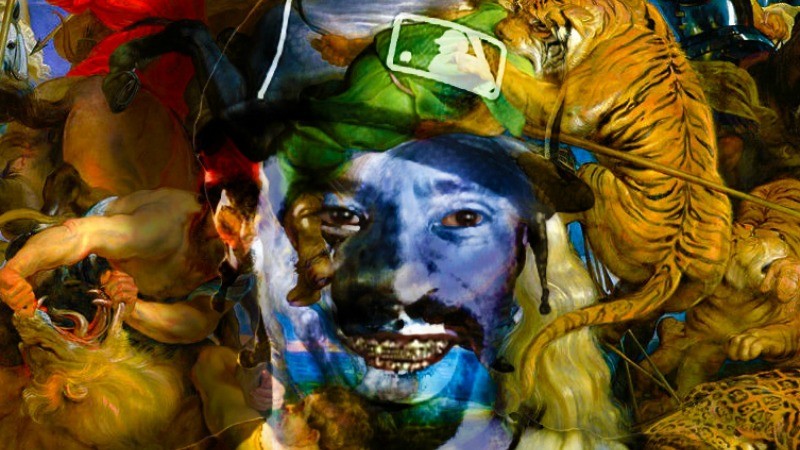
"caption": "One of Maxwell Sage's pieces featuring Mac Dre. (Image courtesy Maxwell Sage)",
"description": null,
"title": "feature",
"credit": null,
"status": "inherit",
"isLoading": false,
"fetchFailed": false
},
"arts_10568430": {
"type": "attachments",
"id": "arts_10568430",
"meta": {
"index": "attachments_1716263798",
"site": "arts",
"id": "10568430",
"found": true
},
"parent": 10568280,
"imgSizes": {
"twentyfourteen-full-width": {
"file": "https://ww2.kqed.org/app/uploads/sites/2/2015/04/FramingSelmaPoster-1038x576.jpg",
"width": 1038,
"mimeType": "image/jpeg",
"height": 576
},
"thumbnail": {
"file": "https://ww2.kqed.org/app/uploads/sites/2/2015/04/FramingSelmaPoster-400x225.jpg",
"width": 400,
"mimeType": "image/jpeg",
"height": 225
},
"fd-sm": {
"file": "https://ww2.kqed.org/app/uploads/sites/2/2015/04/FramingSelmaPoster-320x180.jpg",
"width": 320,
"mimeType": "image/jpeg",
"height": 180
},
"post-thumbnail": {
"file": "https://ww2.kqed.org/app/uploads/sites/2/2015/04/FramingSelmaPoster-672x372.jpg",
"width": 672,
"mimeType": "image/jpeg",
"height": 372
},
"kqedFullSize": {
"file": "https://ww2.kqed.org/app/uploads/sites/2/2015/04/FramingSelmaPoster.jpg",
"width": 1920,
"height": 1080
},
"large": {
"file": "https://ww2.kqed.org/app/uploads/sites/2/2015/04/FramingSelmaPoster-1180x664.jpg",
"width": 1180,
"mimeType": "image/jpeg",
"height": 664
},
"guest-author-96": {
"file": "https://ww2.kqed.org/app/uploads/sites/2/2015/04/FramingSelmaPoster-96x96.jpg",
"width": 96,
"mimeType": "image/jpeg",
"height": 96
},
"medium": {
"file": "https://ww2.kqed.org/app/uploads/sites/2/2015/04/FramingSelmaPoster-800x450.jpg",
"width": 800,
"mimeType": "image/jpeg",
"height": 450
},
"guest-author-64": {
"file": "https://ww2.kqed.org/app/uploads/sites/2/2015/04/FramingSelmaPoster-64x64.jpg",
"width": 64,
"mimeType": "image/jpeg",
"height": 64
},
"guest-author-32": {
"file": "https://ww2.kqed.org/app/uploads/sites/2/2015/04/FramingSelmaPoster-32x32.jpg",
"width": 32,
"mimeType": "image/jpeg",
"height": 32
},
"fd-lrg": {
"file": "https://ww2.kqed.org/app/uploads/sites/2/2015/04/FramingSelmaPoster-1180x664.jpg",
"width": 1180,
"mimeType": "image/jpeg",
"height": 664
},
"fd-med": {
"file": "https://ww2.kqed.org/app/uploads/sites/2/2015/04/FramingSelmaPoster-768x432.jpg",
"width": 768,
"mimeType": "image/jpeg",
"height": 432
},
"detail": {
"file": "https://ww2.kqed.org/app/uploads/sites/2/2015/04/FramingSelmaPoster-75x75.jpg",
"width": 75,
"mimeType": "image/jpeg",
"height": 75
},
"guest-author-128": {
"file": "https://ww2.kqed.org/app/uploads/sites/2/2015/04/FramingSelmaPoster-128x128.jpg",
"width": 128,
"mimeType": "image/jpeg",
"height": 128
}
},
"publishDate": 1429298328,
"modified": 1429298328,
"caption": null,
"description": null,
"title": "FramingSelmaPoster",
"credit": null,
"status": "inherit",
"isLoading": false,
"fetchFailed": false
},
"arts_10567055": {
"type": "attachments",
"id": "arts_10567055",
"meta": {
"index": "attachments_1716263798",
"site": "arts",
"id": "10567055",
"found": true
},
"parent": 10567053,
"imgSizes": {
"twentyfourteen-full-width": {
"file": "https://ww2.kqed.org/app/uploads/sites/2/2015/04/Redlick-1038x576.jpg",
"width": 1038,
"mimeType": "image/jpeg",
"height": 576
},
"thumbnail": {
"file": "https://ww2.kqed.org/app/uploads/sites/2/2015/04/Redlick-400x225.jpg",
"width": 400,
"mimeType": "image/jpeg",
"height": 225
},
"fd-sm": {
"file": "https://ww2.kqed.org/app/uploads/sites/2/2015/04/Redlick-320x180.jpg",
"width": 320,
"mimeType": "image/jpeg",
"height": 180
},
"post-thumbnail": {
"file": "https://ww2.kqed.org/app/uploads/sites/2/2015/04/Redlick-672x372.jpg",
"width": 672,
"mimeType": "image/jpeg",
"height": 372
},
"kqedFullSize": {
"file": "https://ww2.kqed.org/app/uploads/sites/2/2015/04/Redlick.jpg",
"width": 1920,
"height": 1080
},
"large": {
"file": "https://ww2.kqed.org/app/uploads/sites/2/2015/04/Redlick-1180x664.jpg",
"width": 1180,
"mimeType": "image/jpeg",
"height": 664
},
"guest-author-96": {
"file": "https://ww2.kqed.org/app/uploads/sites/2/2015/04/Redlick-96x96.jpg",
"width": 96,
"mimeType": "image/jpeg",
"height": 96
},
"medium": {
"file": "https://ww2.kqed.org/app/uploads/sites/2/2015/04/Redlick-800x450.jpg",
"width": 800,
"mimeType": "image/jpeg",
"height": 450
},
"guest-author-64": {
"file": "https://ww2.kqed.org/app/uploads/sites/2/2015/04/Redlick-64x64.jpg",
"width": 64,
"mimeType": "image/jpeg",
"height": 64
},
"guest-author-32": {
"file": "https://ww2.kqed.org/app/uploads/sites/2/2015/04/Redlick-32x32.jpg",
"width": 32,
"mimeType": "image/jpeg",
"height": 32
},
"fd-lrg": {
"file": "https://ww2.kqed.org/app/uploads/sites/2/2015/04/Redlick-1180x664.jpg",
"width": 1180,
"mimeType": "image/jpeg",
"height": 664
},
"fd-med": {
"file": "https://ww2.kqed.org/app/uploads/sites/2/2015/04/Redlick-768x432.jpg",
"width": 768,
"mimeType": "image/jpeg",
"height": 432
},
"detail": {
"file": "https://ww2.kqed.org/app/uploads/sites/2/2015/04/Redlick-75x75.jpg",
"width": 75,
"mimeType": "image/jpeg",
"height": 75
},
"guest-author-128": {
"file": "https://ww2.kqed.org/app/uploads/sites/2/2015/04/Redlick-128x128.jpg",
"width": 128,
"mimeType": "image/jpeg",
"height": 128
}
},
"publishDate": 1429260356,
"modified": 1429260367,
"caption": "The Redlick Building at 17th and Capp. (Courtesy of Studio 17)",
"description": null,
"title": "Redlick",
"credit": null,
"status": "inherit",
"isLoading": false,
"fetchFailed": false
},
"arts_10565461": {
"type": "attachments",
"id": "arts_10565461",
"meta": {
"index": "attachments_1716263798",
"site": "arts",
"id": "10565461",
"found": true
},
"parent": 10563032,
"imgSizes": {
"thumbnail": {
"file": "https://ww2.kqed.org/app/uploads/sites/2/2015/04/passes-400x225.jpg",
"width": 400,
"mimeType": "image/jpeg",
"height": 225
},
"fd-sm": {
"file": "https://ww2.kqed.org/app/uploads/sites/2/2015/04/passes-320x180.jpg",
"width": 320,
"mimeType": "image/jpeg",
"height": 180
},
"post-thumbnail": {
"file": "https://ww2.kqed.org/app/uploads/sites/2/2015/04/passes-672x372.jpg",
"width": 672,
"mimeType": "image/jpeg",
"height": 372
},
"kqedFullSize": {
"file": "https://ww2.kqed.org/app/uploads/sites/2/2015/04/passes.jpg",
"width": 800,
"height": 450
},
"fd-med": {
"file": "https://ww2.kqed.org/app/uploads/sites/2/2015/04/passes-768x432.jpg",
"width": 768,
"mimeType": "image/jpeg",
"height": 432
},
"guest-author-96": {
"file": "https://ww2.kqed.org/app/uploads/sites/2/2015/04/passes-96x96.jpg",
"width": 96,
"mimeType": "image/jpeg",
"height": 96
},
"medium": {
"file": "https://ww2.kqed.org/app/uploads/sites/2/2015/04/passes-800x450.jpg",
"width": 800,
"mimeType": "image/jpeg",
"height": 450
},
"guest-author-64": {
"file": "https://ww2.kqed.org/app/uploads/sites/2/2015/04/passes-64x64.jpg",
"width": 64,
"mimeType": "image/jpeg",
"height": 64
},
"detail": {
"file": "https://ww2.kqed.org/app/uploads/sites/2/2015/04/passes-75x75.jpg",
"width": 75,
"mimeType": "image/jpeg",
"height": 75
},
"guest-author-32": {
"file": "https://ww2.kqed.org/app/uploads/sites/2/2015/04/passes-32x32.jpg",
"width": 32,
"mimeType": "image/jpeg",
"height": 32
},
"guest-author-128": {
"file": "https://ww2.kqed.org/app/uploads/sites/2/2015/04/passes-128x128.jpg",
"width": 128,
"mimeType": "image/jpeg",
"height": 128
}
},
"publishDate": 1429212291,
"modified": 1429218585,
"caption": "Cheryl Lynn Bruce stars in the West Coast premiere of Tarell Alvin McCraney’s 'Head of Passes' at the Berkeley Rep. (Photo: Kevin Berne)",
"description": null,
"title": "passes",
"credit": null,
"status": "inherit",
"isLoading": false,
"fetchFailed": false
},
"arts_10560294": {
"type": "attachments",
"id": "arts_10560294",
"meta": {
"index": "attachments_1716263798",
"site": "arts",
"id": "10560294",
"found": true
},
"parent": 10560144,
"imgSizes": {
"twentyfourteen-full-width": {
"file": "https://ww2.kqed.org/app/uploads/sites/2/2015/04/100_0039-1038x576.jpg",
"width": 1038,
"mimeType": "image/jpeg",
"height": 576
},
"thumbnail": {
"file": "https://ww2.kqed.org/app/uploads/sites/2/2015/04/100_0039-400x285.jpg",
"width": 400,
"mimeType": "image/jpeg",
"height": 285
},
"fd-sm": {
"file": "https://ww2.kqed.org/app/uploads/sites/2/2015/04/100_0039-320x228.jpg",
"width": 320,
"mimeType": "image/jpeg",
"height": 228
},
"post-thumbnail": {
"file": "https://ww2.kqed.org/app/uploads/sites/2/2015/04/100_0039-672x372.jpg",
"width": 672,
"mimeType": "image/jpeg",
"height": 372
},
"kqedFullSize": {
"file": "https://ww2.kqed.org/app/uploads/sites/2/2015/04/100_0039.jpg",
"width": 3072,
"height": 2189
},
"large": {
"file": "https://ww2.kqed.org/app/uploads/sites/2/2015/04/100_0039-1180x841.jpg",
"width": 1180,
"mimeType": "image/jpeg",
"height": 841
},
"guest-author-96": {
"file": "https://ww2.kqed.org/app/uploads/sites/2/2015/04/100_0039-96x96.jpg",
"width": 96,
"mimeType": "image/jpeg",
"height": 96
},
"medium": {
"file": "https://ww2.kqed.org/app/uploads/sites/2/2015/04/100_0039-800x570.jpg",
"width": 800,
"mimeType": "image/jpeg",
"height": 570
},
"guest-author-64": {
"file": "https://ww2.kqed.org/app/uploads/sites/2/2015/04/100_0039-64x64.jpg",
"width": 64,
"mimeType": "image/jpeg",
"height": 64
},
"guest-author-32": {
"file": "https://ww2.kqed.org/app/uploads/sites/2/2015/04/100_0039-32x32.jpg",
"width": 32,
"mimeType": "image/jpeg",
"height": 32
},
"fd-lrg": {
"file": "https://ww2.kqed.org/app/uploads/sites/2/2015/04/100_0039-1180x841.jpg",
"width": 1180,
"mimeType": "image/jpeg",
"height": 841
},
"fd-med": {
"file": "https://ww2.kqed.org/app/uploads/sites/2/2015/04/100_0039-768x547.jpg",
"width": 768,
"mimeType": "image/jpeg",
"height": 547
},
"detail": {
"file": "https://ww2.kqed.org/app/uploads/sites/2/2015/04/100_0039-75x75.jpg",
"width": 75,
"mimeType": "image/jpeg",
"height": 75
},
"guest-author-128": {
"file": "https://ww2.kqed.org/app/uploads/sites/2/2015/04/100_0039-128x128.jpg",
"width": 128,
"mimeType": "image/jpeg",
"height": 128
}
},
"publishDate": 1429057322,
"modified": 1429061356,
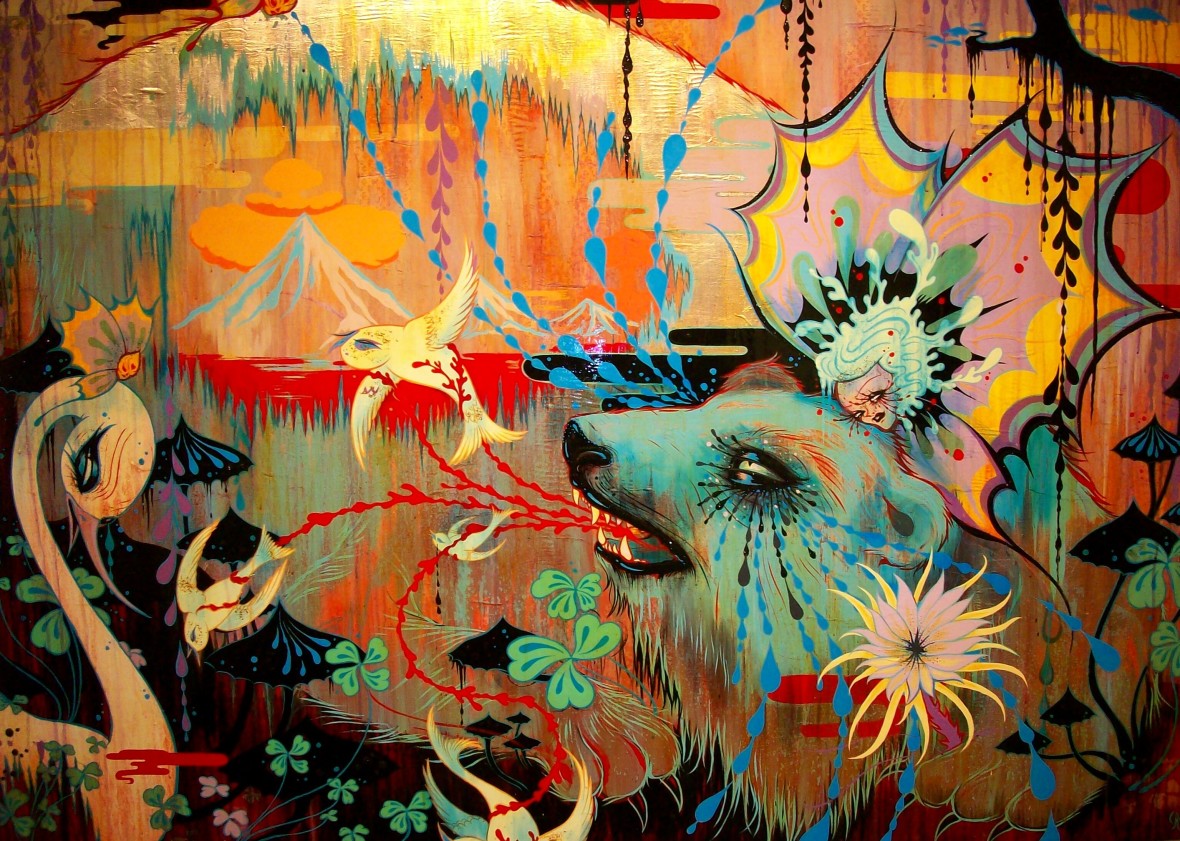
"caption": "\"Dreamtime Spring Hijack\" from Camille Rose Garcia's new book \u003cem>Mirror, Black Mirror\u003c/em>.",
"description": null,
"title": "100_0039",
"credit": null,
"status": "inherit",
"isLoading": false,
"fetchFailed": false
},
"arts_10462913": {
"type": "attachments",
"id": "arts_10462913",
"meta": {
"index": "attachments_1716263798",
"site": "arts",
"id": "10462913",
"found": true
},
"parent": 10406015,
"imgSizes": {
"thumbnail": {
"file": "https://ww2.kqed.org/app/uploads/sites/2/2015/02/SonjaNoskowiak_california-landscape-400x225.jpg",
"width": 400,
"mimeType": "image/jpeg",
"height": 225
},
"fd-sm": {
"file": "https://ww2.kqed.org/app/uploads/sites/2/2015/02/SonjaNoskowiak_california-landscape-320x180.jpg",
"width": 320,
"mimeType": "image/jpeg",
"height": 180
},
"post-thumbnail": {
"file": "https://ww2.kqed.org/app/uploads/sites/2/2015/02/SonjaNoskowiak_california-landscape-672x372.jpg",
"width": 672,
"mimeType": "image/jpeg",
"height": 372
},
"kqedFullSize": {
"file": "https://ww2.kqed.org/app/uploads/sites/2/2015/02/SonjaNoskowiak_california-landscape.jpg",
"width": 800,
"height": 450
},
"fd-med": {
"file": "https://ww2.kqed.org/app/uploads/sites/2/2015/02/SonjaNoskowiak_california-landscape-768x432.jpg",
"width": 768,
"mimeType": "image/jpeg",
"height": 432
},
"guest-author-96": {
"file": "https://ww2.kqed.org/app/uploads/sites/2/2015/02/SonjaNoskowiak_california-landscape-96x96.jpg",
"width": 96,
"mimeType": "image/jpeg",
"height": 96
},
"medium": {
"file": "https://ww2.kqed.org/app/uploads/sites/2/2015/02/SonjaNoskowiak_california-landscape-800x450.jpg",
"width": 800,
"mimeType": "image/jpeg",
"height": 450
},
"guest-author-64": {
"file": "https://ww2.kqed.org/app/uploads/sites/2/2015/02/SonjaNoskowiak_california-landscape-64x64.jpg",
"width": 64,
"mimeType": "image/jpeg",
"height": 64
},
"detail": {
"file": "https://ww2.kqed.org/app/uploads/sites/2/2015/02/SonjaNoskowiak_california-landscape-75x75.jpg",
"width": 75,
"mimeType": "image/jpeg",
"height": 75
},
"guest-author-32": {
"file": "https://ww2.kqed.org/app/uploads/sites/2/2015/02/SonjaNoskowiak_california-landscape-32x32.jpg",
"width": 32,
"mimeType": "image/jpeg",
"height": 32
},
"guest-author-128": {
"file": "https://ww2.kqed.org/app/uploads/sites/2/2015/02/SonjaNoskowiak_california-landscape-128x128.jpg",
"width": 128,
"mimeType": "image/jpeg",
"height": 128
}
},
"publishDate": 1426128849,
"modified": 1426128983,
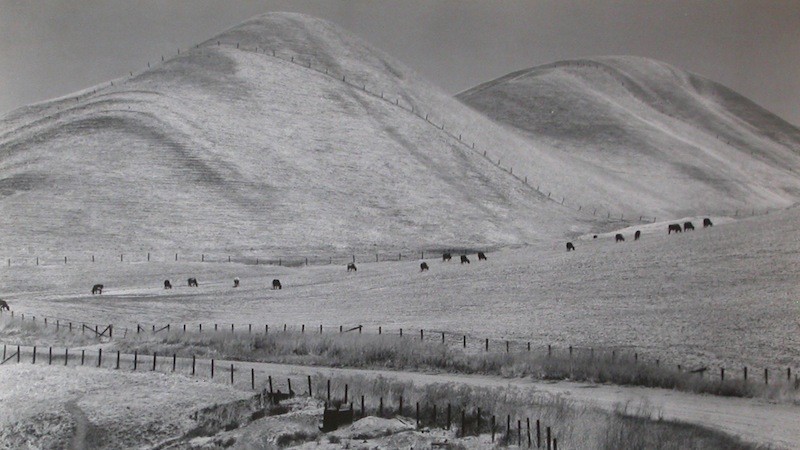
"caption": "Sonya Noskowiak, \u003ci>California Landscape\u003c/i> (detail), 1937. (Courtesy Weston Gallery, Carmel)",
"description": null,
"title": "SonjaNoskowiak_california-landscape",
"credit": null,
"status": "inherit",
"isLoading": false,
"fetchFailed": false
}
},
"audioPlayerReducer": {
"postId": "stream_live",
"isPaused": true,
"isPlaying": false,
"pfsActive": false,
"pledgeModalIsOpen": true,
"playerDrawerIsOpen": false,
"liveAudioPlayStartedAt": 0,
"liveAudioPlayContext": ""
},
"authorsReducer": {
"shotchkiss": {
"type": "authors",
"id": "61",
"meta": {
"index": "authors_1716337520",
"id": "61",
"found": true
},
"name": "Sarah Hotchkiss",
"firstName": "Sarah",
"lastName": "Hotchkiss",
"slug": "shotchkiss",
"email": "shotchkiss@kqed.org",
"display_author_email": true,
"staff_mastheads": [
"arts"
],
"title": "Senior Editor",
"bio": "Sarah Hotchkiss is a San Francisco \u003ca href=\"http://www.sarahhotchkiss.com\">artist\u003c/a> and arts writer. In 2019, she received the Dorothea & Leo Rabkin Foundation grant for visual art journalism and in 2020 she received a Society of Professional Journalists, Northern California award for excellence in arts and culture reporting.",
"avatar": "https://secure.gravatar.com/avatar/bc662df144b3d27fd8b1b6f1c2a420d34e91e53154d411bb7ad353cc8b6cea8d?s=600&d=blank&r=g",
"twitter": null,
"bluesky": null,
"facebook": null,
"instagram": null,
"linkedin": null,
"sites": [
{
"site": "",
"roles": [
"editor"
]
},
{
"site": "arts",
"roles": [
"Contributor",
"administrator"
]
},
{
"site": "artschool",
"roles": [
"administrator"
]
},
{
"site": "news",
"roles": [
"editor"
]
},
{
"site": "pop",
"roles": [
"administrator"
]
},
{
"site": "bayareabites",
"roles": [
"editor"
]
},
{
"site": "spark",
"roles": [
"editor"
]
},
{
"site": "checkplease",
"roles": [
"editor"
]
}
],
"headData": {
"title": "Sarah Hotchkiss | KQED",
"description": "Senior Editor",
"ogImgSrc": "https://secure.gravatar.com/avatar/bc662df144b3d27fd8b1b6f1c2a420d34e91e53154d411bb7ad353cc8b6cea8d?s=600&d=blank&r=g",
"twImgSrc": "https://secure.gravatar.com/avatar/bc662df144b3d27fd8b1b6f1c2a420d34e91e53154d411bb7ad353cc8b6cea8d?s=600&d=blank&r=g"
},
"isLoading": false,
"link": "/author/shotchkiss"
},
"cstone": {
"type": "authors",
"id": "90",
"meta": {
"index": "authors_1716337520",
"id": "90",
"found": true
},
"name": "Cynthia Stone",
"firstName": "Cynthia",
"lastName": "Stone",
"slug": "cstone",
"email": "cynthiamstone@hotmail.com",
"display_author_email": false,
"staff_mastheads": [],
"title": null,
"bio": "Cynthia Stone is an Emmy Award winning writer and producer dedicated to telling the stories of people and programs making a difference. Her television and radio documentary and feature work has focused on a variety of issues including education, the environment, trafficking, transformative programs that help children at risk, science and the arts. In addition to here at KQED, her work has appeared on Discovery, PBS, CNBC, Public Radio International/BBC among others.",
"avatar": "https://secure.gravatar.com/avatar/c0481a3d0e38bbaf8851acf123a78f38?s=600&d=blank&r=g",
"twitter": null,
"facebook": null,
"instagram": null,
"linkedin": null,
"sites": [
{
"site": "arts",
"roles": [
"Contributor",
"contributor"
]
}
],
"headData": {
"title": "Cynthia Stone | KQED",
"description": null,
"ogImgSrc": "https://secure.gravatar.com/avatar/c0481a3d0e38bbaf8851acf123a78f38?s=600&d=blank&r=g",
"twImgSrc": "https://secure.gravatar.com/avatar/c0481a3d0e38bbaf8851acf123a78f38?s=600&d=blank&r=g"
},
"isLoading": false,
"link": "/author/cstone"
},
"kjones": {
"type": "authors",
"id": "93",
"meta": {
"index": "authors_1716337520",
"id": "93",
"found": true
},
"name": "Kevin L. Jones",
"firstName": "Kevin",
"lastName": "Jones",
"slug": "kjones",
"email": "kjones@kqed.org",
"display_author_email": false,
"staff_mastheads": [],
"title": null,
"bio": null,
"avatar": "https://secure.gravatar.com/avatar/12c65b5633ed39d0a59bb7f497eff645?s=600&d=blank&r=g",
"twitter": null,
"facebook": null,
"instagram": null,
"linkedin": null,
"sites": [
{
"site": "arts",
"roles": [
"subscriber"
]
},
{
"site": "styleguide",
"roles": [
"contributor"
]
},
{
"site": "artschool",
"roles": [
"subscriber"
]
},
{
"site": "news",
"roles": [
"subscriber"
]
},
{
"site": "pop",
"roles": [
"subscriber"
]
}
],
"headData": {
"title": "Kevin L. Jones | KQED",
"description": null,
"ogImgSrc": "https://secure.gravatar.com/avatar/12c65b5633ed39d0a59bb7f497eff645?s=600&d=blank&r=g",
"twImgSrc": "https://secure.gravatar.com/avatar/12c65b5633ed39d0a59bb7f497eff645?s=600&d=blank&r=g"
},
"isLoading": false,
"link": "/author/kjones"
},
"jmatazzoni": {
"type": "authors",
"id": "95",
"meta": {
"index": "authors_1716337520",
"id": "95",
"found": true
},
"name": "Joe Matazzoni",
"firstName": "Joe",
"lastName": "Matazzoni",
"slug": "jmatazzoni",
"email": "jmatazzoni@KQED.org",
"display_author_email": false,
"staff_mastheads": [],
"title": null,
"bio": null,
"avatar": "https://secure.gravatar.com/avatar/612b57343775c9005e47f117262c3e94?s=600&d=blank&r=g",
"twitter": null,
"facebook": null,
"instagram": null,
"linkedin": null,
"sites": [
{
"site": "arts",
"roles": [
"subscriber"
]
}
],
"headData": {
"title": "Joe Matazzoni | KQED",
"description": null,
"ogImgSrc": "https://secure.gravatar.com/avatar/612b57343775c9005e47f117262c3e94?s=600&d=blank&r=g",
"twImgSrc": "https://secure.gravatar.com/avatar/612b57343775c9005e47f117262c3e94?s=600&d=blank&r=g"
},
"isLoading": false,
"link": "/author/jmatazzoni"
},
"jwanek": {
"type": "authors",
"id": "97",
"meta": {
"index": "authors_1716337520",
"id": "97",
"found": true
},
"name": "Joel Wanek",
"firstName": "Joel",
"lastName": "Wanek",
"slug": "jwanek",
"email": "jwanek@kqed.org",
"display_author_email": false,
"staff_mastheads": [],
"title": "KQED Contributor",
"bio": null,
"avatar": "https://secure.gravatar.com/avatar/d2a3949750a996b6d9f110582a5259711c707df009b12dc2179084c5349f542b?s=600&d=blank&r=g",
"twitter": null,
"bluesky": null,
"facebook": null,
"instagram": null,
"linkedin": null,
"sites": [
{
"site": "arts",
"roles": [
"subscriber"
]
},
{
"site": "artschool",
"roles": [
"subscriber"
]
}
],
"headData": {
"title": "Joel Wanek | KQED",
"description": "KQED Contributor",
"ogImgSrc": "https://secure.gravatar.com/avatar/d2a3949750a996b6d9f110582a5259711c707df009b12dc2179084c5349f542b?s=600&d=blank&r=g",
"twImgSrc": "https://secure.gravatar.com/avatar/d2a3949750a996b6d9f110582a5259711c707df009b12dc2179084c5349f542b?s=600&d=blank&r=g"
},
"isLoading": false,
"link": "/author/jwanek"
},
"mtedford": {
"type": "authors",
"id": "187",
"meta": {
"index": "authors_1716337520",
"id": "187",
"found": true
},
"name": "Matthew Harrison Tedford",
"firstName": "Matthew Harrison",
"lastName": "Tedford",
"slug": "mtedford",
"email": "mhtedford@gmail.com",
"display_author_email": false,
"staff_mastheads": [],
"title": null,
"bio": "\u003ca href=\"http://www.mhtedford.com\">Matthew Harrison Tedford\u003c/a> is a writer whose work focuses on contemporary art, film, and California history. His writing has appeared in \u003cem id=\"yui_3_17_2_1_1403197832753_7692\">Art Practical\u003c/em>, \u003cem>Daily Serving\u003c/em>, \u003cem>Glance\u003c/em> (California College of the Arts), the \u003cem>Huffington Post\u003c/em>, \u003cem>Oakland Standard\u003c/em> (Oakland Museum of California), \u003cem>Open Space\u003c/em> (SFMOMA), \u003cem>Poor Taste Magazine\u003c/em>, \u003cem>SF Weekly\u003c/em>, and \u003cem>Wilder Quarterly\u003c/em>.",
"avatar": "https://secure.gravatar.com/avatar/f6ae15e4c10b73a2ee9215e669ca0328?s=600&d=blank&r=g",
"twitter": null,
"facebook": null,
"instagram": null,
"linkedin": null,
"sites": [
{
"site": "arts",
"roles": [
"contributor"
]
}
],
"headData": {
"title": "Matthew Harrison Tedford | KQED",
"description": null,
"ogImgSrc": "https://secure.gravatar.com/avatar/f6ae15e4c10b73a2ee9215e669ca0328?s=600&d=blank&r=g",
"twImgSrc": "https://secure.gravatar.com/avatar/f6ae15e4c10b73a2ee9215e669ca0328?s=600&d=blank&r=g"
},
"isLoading": false,
"link": "/author/mtedford"
},
"scuevas": {
"type": "authors",
"id": "2600",
"meta": {
"index": "authors_1716337520",
"id": "2600",
"found": true
},
"name": "Steven Cuevas",
"firstName": "Steven",
"lastName": "Cuevas",
"slug": "scuevas",
"email": "scuevas@kqed.org",
"display_author_email": false,
"staff_mastheads": [],
"title": "KQED Contributor",
"bio": "Steven is a former Los Angeles bureau chief for The California Report.\r\n\r\nHe reports on an array of issues across the Southland, from immigration and regional politics to religion, the performing arts and pop culture.\r\n\r\nPrior to joining KQED in 2012, Steven covered Inland southern California for KPCC in Pasadena. He also helped establish the first newsroom at \u003ca href=\"http://kut.org/\">KUT\u003c/a> in Austin, Texas where he was a general assignment reporter.\r\n\r\nSteven has received numerous awards for his reporting including an RTNDA Edward R. Murrow Award for investigative reporting in addition to awards from the LA Press Club, the Associated Press and the Society for Professional Journalists.\r\n\r\nSteven grew up in and around San Francisco and now lives in Pasadena just a short jog from the foot of the San Gabriel Mountains.",
"avatar": "https://secure.gravatar.com/avatar/2d253580794f8e026100fae05cfabbbd4889b4fe15146146cacb82a01974c538?s=600&d=blank&r=g",
"twitter": null,
"bluesky": null,
"facebook": null,
"instagram": null,
"linkedin": null,
"sites": [
{
"site": "news",
"roles": [
"subscriber"
]
}
],
"headData": {
"title": "Steven Cuevas | KQED",
"description": "KQED Contributor",
"ogImgSrc": "https://secure.gravatar.com/avatar/2d253580794f8e026100fae05cfabbbd4889b4fe15146146cacb82a01974c538?s=600&d=blank&r=g",
"twImgSrc": "https://secure.gravatar.com/avatar/2d253580794f8e026100fae05cfabbbd4889b4fe15146146cacb82a01974c538?s=600&d=blank&r=g"
},
"isLoading": false,
"link": "/author/scuevas"
},
"thedolist": {
"type": "authors",
"id": "3215",
"meta": {
"index": "authors_1716337520",
"id": "3215",
"found": true
},
"name": "The Do List",
"firstName": "Do",
"lastName": "List",
"slug": "thedolist",
"email": "harold.check+dolist@gmail.com",
"display_author_email": false,
"staff_mastheads": [],
"title": null,
"bio": "The Do List scours the Bay Area for superb and surprising performing arts events, with an eye for local talent, new discoveries, and fun opportunities across the price spectrum. Every Friday morning at 6:23 and 8:23am on KQED Radio, you can hear Do List regulars Cy Musiker and David Wiegand discuss the upcoming week's best picks.",
"avatar": "https://secure.gravatar.com/avatar/25ef8068d096493f649195742621360d?s=600&d=blank&r=g",
"twitter": null,
"facebook": null,
"instagram": null,
"linkedin": null,
"sites": [
{
"site": "arts",
"roles": [
"contributor"
]
}
],
"headData": {
"title": "The Do List | KQED",
"description": null,
"ogImgSrc": "https://secure.gravatar.com/avatar/25ef8068d096493f649195742621360d?s=600&d=blank&r=g",
"twImgSrc": "https://secure.gravatar.com/avatar/25ef8068d096493f649195742621360d?s=600&d=blank&r=g"
},
"isLoading": false,
"link": "/author/thedolist"
},
"lclark": {
"type": "authors",
"id": "3224",
"meta": {
"index": "authors_1716337520",
"id": "3224",
"found": true
},
"name": "Leilani Clark",
"firstName": "Leilani",
"lastName": "Clark",
"slug": "lclark",
"email": "clark.leil@gmail.com",
"display_author_email": false,
"staff_mastheads": [],
"title": null,
"bio": "Leilani Clark writes about books for KQED Arts. Her writing has been published at Mother Jones, The Guardian, Civil Eats, Time Magazine, Food & Wine, Edible Marin & Wine Country, and The Rumpus. She is the editor of Made Local magazine in Sonoma County. Find her on Twitter \u003ca href=\"https://twitter.com/leilclark\">@leilclark\u003c/a>.",
"avatar": "https://secure.gravatar.com/avatar/7f691fdc52ed2e3f4cf164d1f4ec0889?s=600&d=blank&r=g",
"twitter": null,
"facebook": null,
"instagram": null,
"linkedin": null,
"sites": [
{
"site": "arts",
"roles": [
"contributor"
]
},
{
"site": "bayareabites",
"roles": [
"contributor"
]
},
{
"site": "food",
"roles": [
"contributor"
]
}
],
"headData": {
"title": "Leilani Clark | KQED",
"description": null,
"ogImgSrc": "https://secure.gravatar.com/avatar/7f691fdc52ed2e3f4cf164d1f4ec0889?s=600&d=blank&r=g",
"twImgSrc": "https://secure.gravatar.com/avatar/7f691fdc52ed2e3f4cf164d1f4ec0889?s=600&d=blank&r=g"
},
"isLoading": false,
"link": "/author/lclark"
},
"shelbypope": {
"type": "authors",
"id": "5566",
"meta": {
"index": "authors_1716337520",
"id": "5566",
"found": true
},
"name": "Shelby Pope",
"firstName": "Shelby",
"lastName": "Pope",
"slug": "shelbypope",
"email": "shelbylpope@gmail.com",
"display_author_email": false,
"staff_mastheads": [],
"title": "KQED Contributor",
"bio": "Shelby Pope is a freelance writer living and eating her way through the East Bay. She’s written about food, art and science for publications including the Smithsonian, Lucky Peach, and the Washington Post's pet blog. When she’s not taste testing sourdough bread to find the Bay Area’s best loaf, you can find her on Twitter \u003ca href=\"https://twitter.com/shelbylpope\">@shelbylpope\u003c/a> or at \u003ca href=\"https://shelbypope.com/\">shelbypope.com\u003c/a>",
"avatar": "https://secure.gravatar.com/avatar/df74e904399e45720e48e36c6e1ae7a90c32216eb2c9c82f3b2e1a9641b507d3?s=600&d=blank&r=g",
"twitter": "shelbylpope",
"bluesky": null,
"facebook": null,
"instagram": null,
"linkedin": null,
"sites": [
{
"site": "arts",
"roles": [
"subscriber"
]
},
{
"site": "food",
"roles": [
"subscriber"
]
}
],
"headData": {
"title": "Shelby Pope | KQED",
"description": "KQED Contributor",
"ogImgSrc": "https://secure.gravatar.com/avatar/df74e904399e45720e48e36c6e1ae7a90c32216eb2c9c82f3b2e1a9641b507d3?s=600&d=blank&r=g",
"twImgSrc": "https://secure.gravatar.com/avatar/df74e904399e45720e48e36c6e1ae7a90c32216eb2c9c82f3b2e1a9641b507d3?s=600&d=blank&r=g"
},
"isLoading": false,
"link": "/author/shelbypope"
},
"asingh": {
"type": "authors",
"id": "7235",
"meta": {
"index": "authors_1716337520",
"id": "7235",
"found": true
},
"name": "Abhi Singh",
"firstName": "Abhi",
"lastName": "Singh",
"slug": "asingh",
"email": "asingh@KQED.org",
"display_author_email": false,
"staff_mastheads": [],
"title": null,
"bio": null,
"avatar": "https://secure.gravatar.com/avatar/0a221f8ba680e55e147ee49e20fb590e?s=600&d=blank&r=g",
"twitter": null,
"facebook": null,
"instagram": null,
"linkedin": null,
"sites": [
{
"site": "arts",
"roles": [
"contributor"
]
}
],
"headData": {
"title": "Abhi Singh | KQED",
"description": null,
"ogImgSrc": "https://secure.gravatar.com/avatar/0a221f8ba680e55e147ee49e20fb590e?s=600&d=blank&r=g",
"twImgSrc": "https://secure.gravatar.com/avatar/0a221f8ba680e55e147ee49e20fb590e?s=600&d=blank&r=g"
},
"isLoading": false,
"link": "/author/asingh"
}
},
"pagesReducer": {
"arts_category_visualarts": {
"type": "terms",
"id": "arts_70",
"meta": {
"index": "terms_1716263798",
"site": "arts",
"id": "70",
"score": 14.407927
},
"featImg": null,
"name": "Visual Arts",
"description": null,
"taxonomy": "category",
"headData": {
"twImgId": null,
"twTitle": null,
"ogTitle": null,
"ogImgId": null,
"twDescription": null,
"description": null,
"title": "Visual Arts Archives | KQED Arts",
"ogDescription": null
},
"ttid": 71,
"slug": "visualarts",
"isLoading": false,
"title": "Visual Arts",
"pageMeta": {
"site": "arts",
"WpPageTemplate": "page-topic-editorial",
"currentPage": 156
},
"blocks": [
{
"blockName": "kqed/post-list",
"attrs": {
"layout": "cardArticle2",
"query": "posts/arts?category=visualarts",
"seeMore": false,
"paginated": true,
"page": 156
}
},
{
"blockName": "kqed/ad"
}
]
}
},
"pfsSessionReducer": {},
"postsReducer": {
"stream_live": {
"type": "live",
"id": "stream_live",
"audioUrl": "https://streams.kqed.org/kqedradio",
"title": "Live Stream",
"excerpt": "Live Stream information currently unavailable.",
"link": "/radio",
"featImg": "",
"label": {
"name": "KQED Live",
"link": "/"
}
},
"stream_kqedNewscast": {
"type": "posts",
"id": "stream_kqedNewscast",
"audioUrl": "https://www.kqed.org/.stream/anon/radio/RDnews/newscast.mp3?_=1",
"title": "KQED Newscast",
"featImg": "",
"label": {
"name": "88.5 FM",
"link": "/"
}
},
"arts_10605752": {
"type": "posts",
"id": "arts_10605752",
"meta": {
"index": "posts_1716263798",
"site": "arts",
"id": "10605752",
"score": null,
"sort": [
1430445633000
]
},
"parent": 0,
"labelTerm": {
"site": "arts"
},
"blocks": [],
"publishDate": 1430445633,
"format": "image",
"title": "The Vessel XII Controversy: An Otherworldly Tale",
"headTitle": "The Vessel XII Controversy: An Otherworldly Tale | KQED",
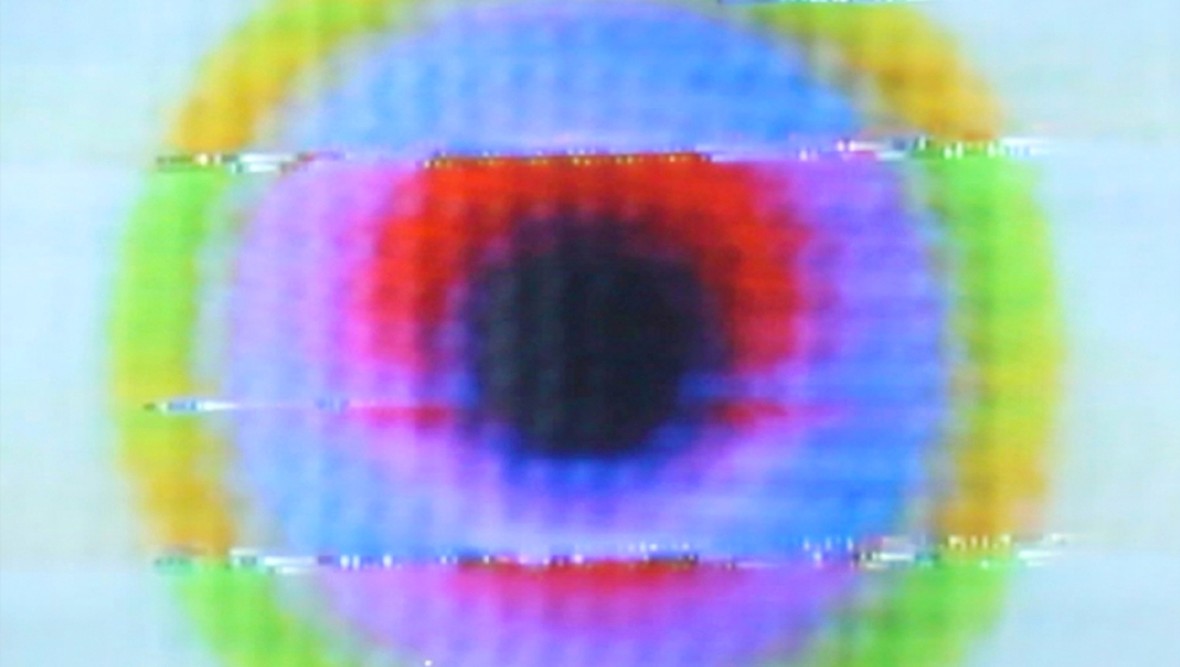
"content": "\u003cp>In the de Young Museum’s Kimball Education Gallery, an investigation of intergalactic proportions is underway. During a month-long residency at the museum, artist, playwright and musician Jon Bernson and collaborators have explored the \u003ci>Vessel XII\u003c/i> controversy, described as a series of 12 unexplained broadcasts that interrupted television sets around the world over a period of 23 years. The transmissions mysteriously end in 2009, the year digital conversion rendered our old cathode ray tube sets obsolete.\u003c/p>\n\u003cp>\u003ci>Antiprism\u003c/i>, as the residency is titled, inhabits a strange and nebulous place on the space–time continuum. Antiquated technology like VHS tapes and turtlenecks sit alongside talk of time travel. Playing with sound, image, object and narrative, Bernson and co. craft an otherworldly tale of distant journeys, complete with words of advice from a wiser, post-Earthly future.\u003c/p>\n\u003cfigure id=\"attachment_10606345\" class=\"wp-caption alignright\" style=\"max-width: 640px\">\u003cimg loading=\"lazy\" decoding=\"async\" class=\"wp-image-10606345 size-large\" src=\"http://ww2.kqed.org/arts/wp-content/uploads/sites/2/2015/04/Theoretical-Physicist-Carol-C.-Sydney-1180x857.jpg\" alt='Image from Antiprism of \"Theoretical Physicist - Carol C. Sydney,\" 2015. Courtesy of ' width=\"640\" height=\"465\">\u003cfigcaption class=\"wp-caption-text\">Image from \u003ci>Antiprism\u003c/i> of “Theoretical Physicist – Carol C. Sydney,” 2015. (Courtesy of Jon Bernson)\u003c/figcaption>\u003c/figure>\n\u003cp>According to Bernson and project co-creator Michael Falsetto-Mapp, expert (and amateur) opinions on the source of the \u003ci>Vessel XII\u003c/i> broadcasts differ widely. Are they from a distant spacecraft? An alternate dimension? The future? Or can they be explained away as \u003ca href=\"http://en.wikipedia.org/wiki/Broadcast_signal_intrusion#Max_Headroom_incident\" target=\"_blank\" rel=\"noopener\">sophisticated signal hacks\u003c/a>?\u003c/p>\n\u003cp>In the Kimball Gallery, research into these competing claims takes an aesthetic turn. Video projections of the colorful broadcasts fit well on the gallery’s spacey floor-to-ceiling glass panels. On two opposite walls, a map of the vessel’s path through the universe matches perfectly with a view of the broadcasts’ appearances around an inverted globe. Irregular geometric shapes scattered around the room are sculptural approximations of the “vessel” itself. And in one corner, a mirrored sculpture by Andy Diaz Hope replicates the \u003ci>Antiprism\u003c/i>, a mystical navigational device discovered and used by \u003ci>Vessel XII\u003c/i> on its travels.\u003c/p>\n\u003cp>https://vimeo.com/109508608\u003c/p>\n\u003cp>[ad fullwidth]\u003c/p>\n\u003cp>Friday, May 1, 6-8pm marks the \u003ca href=\"http://deyoung.famsf.org/calendar/antiprism-artist-residence-jon-bernson-1\" target=\"_blank\" rel=\"noopener\">third and final live performance\u003c/a> of \u003ci>Antiprism\u003c/i> at the de Young, an event that melds documentary film, theater, live music and academic conference into a disorienting and imaginative production. The night includes a reenactment of the Distant Future Symposium (directed by Jennifer Welch), a chance for the minds behind the \u003ci>Vessel XII\u003c/i> theories to make and stake various claims of authenticity, attacks and counterattacks. Their drama is often contentious.\u003c/p>\n\u003cp>Again, the high- and lo-fi binary is wonderfully blurred. Panelists make allusions to string theory while an assistant offers visual aids in the form of black-and-white images on letter-sized paper. In the background, the musical group Exray’s (Bernson, Michael Falsetto-Mapp and Jason Kick) provide a live soundtrack of deadpan electronic tunes and spoken passages from the vessel’s logbook. An EP inspired by their investigations into \u003ci>Vessel XII\u003c/i> is available as a \u003ca href=\"http://exrays.bandcamp.com/album/the-dome\" target=\"_blank\" rel=\"noopener\">limited edition cassette or digital download\u003c/a>.\u003c/p>\n\u003cp>\u003c/p>\n\u003cp>Only one of \u003ci>Vessel XII\u003c/i>’s broadcasts interrupted U.S. airwaves, landing in Reno, Nev. in 1994. In a short documentary, resident witnesses describe the experience as sounding “like a very very slow nature program.” In this surreal vein, Bernson’s project creates an alternate dimension of its own. Delving into the tropes of fringe science, New Age mysticism and conspiracy theory, Bernson renders a living theater of spooky uncertainty, inviting Kimball Gallery visitors to open their minds to the inexplicable — and all the creative possibilities therein.\u003c/p>\n\n",
"stats": {
"hasVideo": false,
"hasChartOrMap": false,
"hasAudio": false,
"hasPolis": false,
"wordCount": 565,
"hasGoogleForm": false,
"hasGallery": false,
"hasHearkenModule": false,
"iframeSrcs": [],
"paragraphCount": 9
},
"modified": 1705047192,
"excerpt": "A residency at the de Young investigates mysterious broadcasts through video, performance and sound.",
"headData": {
"twImgId": "",
"twTitle": "",
"ogTitle": "",
"ogImgId": "",
"twDescription": "",
"description": "A residency at the de Young investigates mysterious broadcasts through video, performance and sound.",
"title": "The Vessel XII Controversy: An Otherworldly Tale | KQED",
"ogDescription": "",
"schema": {
"@context": "https://schema.org",
"@type": "Article",
"headline": "The Vessel XII Controversy: An Otherworldly Tale",
"datePublished": "2015-04-30T19:00:33-07:00",
"dateModified": "2024-01-12T00:13:12-08:00",
"image": "https://cdn.kqed.org/wp-content/uploads/2020/02/KQED-OG-Image@1x.png"
}
},
"guestAuthors": [],
"slug": "the-vessel-xii-controversy-an-otherworldly-tale",
"status": "publish",
"sticky": false,
"path": "/arts/10605752/the-vessel-xii-controversy-an-otherworldly-tale",
"audioTrackLength": null,
"parsedContent": [
{
"type": "contentString",
"content": "\u003cdiv class=\"post-body\">\u003cp>\u003cp>In the de Young Museum’s Kimball Education Gallery, an investigation of intergalactic proportions is underway. During a month-long residency at the museum, artist, playwright and musician Jon Bernson and collaborators have explored the \u003ci>Vessel XII\u003c/i> controversy, described as a series of 12 unexplained broadcasts that interrupted television sets around the world over a period of 23 years. The transmissions mysteriously end in 2009, the year digital conversion rendered our old cathode ray tube sets obsolete.\u003c/p>\n\u003cp>\u003ci>Antiprism\u003c/i>, as the residency is titled, inhabits a strange and nebulous place on the space–time continuum. Antiquated technology like VHS tapes and turtlenecks sit alongside talk of time travel. Playing with sound, image, object and narrative, Bernson and co. craft an otherworldly tale of distant journeys, complete with words of advice from a wiser, post-Earthly future.\u003c/p>\n\u003cfigure id=\"attachment_10606345\" class=\"wp-caption alignright\" style=\"max-width: 640px\">\u003cimg loading=\"lazy\" decoding=\"async\" class=\"wp-image-10606345 size-large\" src=\"http://ww2.kqed.org/arts/wp-content/uploads/sites/2/2015/04/Theoretical-Physicist-Carol-C.-Sydney-1180x857.jpg\" alt='Image from Antiprism of \"Theoretical Physicist - Carol C. Sydney,\" 2015. Courtesy of ' width=\"640\" height=\"465\">\u003cfigcaption class=\"wp-caption-text\">Image from \u003ci>Antiprism\u003c/i> of “Theoretical Physicist – Carol C. Sydney,” 2015. (Courtesy of Jon Bernson)\u003c/figcaption>\u003c/figure>\n\u003cp>According to Bernson and project co-creator Michael Falsetto-Mapp, expert (and amateur) opinions on the source of the \u003ci>Vessel XII\u003c/i> broadcasts differ widely. Are they from a distant spacecraft? An alternate dimension? The future? Or can they be explained away as \u003ca href=\"http://en.wikipedia.org/wiki/Broadcast_signal_intrusion#Max_Headroom_incident\" target=\"_blank\" rel=\"noopener\">sophisticated signal hacks\u003c/a>?\u003c/p>\n\u003cp>In the Kimball Gallery, research into these competing claims takes an aesthetic turn. Video projections of the colorful broadcasts fit well on the gallery’s spacey floor-to-ceiling glass panels. On two opposite walls, a map of the vessel’s path through the universe matches perfectly with a view of the broadcasts’ appearances around an inverted globe. Irregular geometric shapes scattered around the room are sculptural approximations of the “vessel” itself. And in one corner, a mirrored sculpture by Andy Diaz Hope replicates the \u003ci>Antiprism\u003c/i>, a mystical navigational device discovered and used by \u003ci>Vessel XII\u003c/i> on its travels.\u003c/p>\u003c/p>\u003c/div>",
"attributes": {
"named": {},
"numeric": []
}
},
{
"type": "component",
"content": "",
"name": "vimeoLink",
"attributes": {
"named": {
"vimeoId": "109508608"
},
"numeric": []
}
},
{
"type": "contentString",
"content": "\u003cdiv class=\"post-body\">\u003cp>\u003cp>\u003c/p>\u003c/div>",
"attributes": {
"named": {},
"numeric": []
}
},
{
"type": "component",
"content": "",
"name": "ad",
"attributes": {
"named": {
"label": "fullwidth"
},
"numeric": [
"fullwidth"
]
}
},
{
"type": "contentString",
"content": "\u003cdiv class=\"post-body\">\u003cp>\u003c/p>\n\u003cp>Friday, May 1, 6-8pm marks the \u003ca href=\"http://deyoung.famsf.org/calendar/antiprism-artist-residence-jon-bernson-1\" target=\"_blank\" rel=\"noopener\">third and final live performance\u003c/a> of \u003ci>Antiprism\u003c/i> at the de Young, an event that melds documentary film, theater, live music and academic conference into a disorienting and imaginative production. The night includes a reenactment of the Distant Future Symposium (directed by Jennifer Welch), a chance for the minds behind the \u003ci>Vessel XII\u003c/i> theories to make and stake various claims of authenticity, attacks and counterattacks. Their drama is often contentious.\u003c/p>\n\u003cp>Again, the high- and lo-fi binary is wonderfully blurred. Panelists make allusions to string theory while an assistant offers visual aids in the form of black-and-white images on letter-sized paper. In the background, the musical group Exray’s (Bernson, Michael Falsetto-Mapp and Jason Kick) provide a live soundtrack of deadpan electronic tunes and spoken passages from the vessel’s logbook. An EP inspired by their investigations into \u003ci>Vessel XII\u003c/i> is available as a \u003ca href=\"http://exrays.bandcamp.com/album/the-dome\" target=\"_blank\" rel=\"noopener\">limited edition cassette or digital download\u003c/a>.\u003c/p>\n\u003cp>\u003c/p>\n\u003cp>Only one of \u003ci>Vessel XII\u003c/i>’s broadcasts interrupted U.S. airwaves, landing in Reno, Nev. in 1994. In a short documentary, resident witnesses describe the experience as sounding “like a very very slow nature program.” In this surreal vein, Bernson’s project creates an alternate dimension of its own. Delving into the tropes of fringe science, New Age mysticism and conspiracy theory, Bernson renders a living theater of spooky uncertainty, inviting Kimball Gallery visitors to open their minds to the inexplicable — and all the creative possibilities therein.\u003c/p>\n\n\u003c/div>\u003c/p>",
"attributes": {
"named": {},
"numeric": []
}
}
],
"link": "/arts/10605752/the-vessel-xii-controversy-an-otherworldly-tale",
"authors": [
"61"
],
"categories": [
"arts_70"
],
"tags": [
"arts_596"
],
"featImg": "arts_10606344",
"label": "arts"
},
"arts_10602269": {
"type": "posts",
"id": "arts_10602269",
"meta": {
"index": "posts_1716263798",
"site": "arts",
"id": "10602269",
"score": null,
"sort": [
1430258786000
]
},
"parent": 0,
"labelTerm": {
"site": "arts"
},
"blocks": [],
"publishDate": 1430258786,
"format": "standard",
"title": "Oakland Artist Talks About his Battle with Tech Exec Over Image",
"headTitle": "Oakland Artist Talks About his Battle with Tech Exec Over Image | KQED",
"content": "\u003cp>Oakland artist \u003ca href=\"http://packardjennings.com/\" target=\"_blank\" rel=\"noopener\">Packard Jennings\u003c/a> is no stranger to the press. His politically-conscious artwork has been covered by the \u003cem>New York Times\u003c/em>, the \u003cem>Washington Post\u003c/em>, A\u003cem>rtforum\u003c/em>, and many other publications. But he’s currently receiving media attention for a Craigslist post he had nothing to do with — \u003ca href=\"http://ww2.kqed.org/arts/2015/04/27/oakland-artist-smacks-down-tech-exec-for-using-image-in-viral-job-ad/\" target=\"_blank\" rel=\"noopener\">a San Diego tech executive used an image of Jennings’ without permission\u003c/a> for a “developers wanted” ad, which went viral. Now, instead of concentrating solely on his next work, Jennings is having to get “medieval” on Chatmeter CTO Paul Koch for the exec’s copyright infringement.\u003c/p>\n\u003cp>Jennings took a few minutes to answer some questions from KQED Arts about the situation and what he plans to do next. \u003c/p>\n\u003cp>\u003cstrong>How did you learn about your pic being used in the ad?\u003c/strong>\u003cbr>\nThis Craigslist post went viral. Beyond the attention on news sites, it blew up on social media. Several people recognized my work when it was posted on both Facebook and on the \u003cem>San Francisco Chronicle\u003c/em>’s site. I was contacted about it by three separate people.\u003c/p>\n\u003cfigure id=\"attachment_10602567\" class=\"wp-caption alignright\" style=\"max-width: 604px\">\u003ca href=\"http://ww2.kqed.org/arts/wp-content/uploads/sites/2/2015/04/PAckard-Switzerland.jpg\">\u003cimg loading=\"lazy\" decoding=\"async\" src=\"http://ww2.kqed.org/arts/wp-content/uploads/sites/2/2015/04/PAckard-Switzerland.jpg\" alt=\"Jennings in Switzerland back in 2006. (Courtesy of Jennings)\" width=\"604\" height=\"453\" class=\"size-full wp-image-10602567\" srcset=\"https://cdn.kqed.org/wp-content/uploads/sites/2/2015/04/PAckard-Switzerland.jpg 604w, https://cdn.kqed.org/wp-content/uploads/sites/2/2015/04/PAckard-Switzerland-400x300.jpg 400w\" sizes=\"(max-width: 604px) 100vw, 604px\">\u003c/a>\u003cfigcaption class=\"wp-caption-text\">Jennings in Switzerland back in 2006. (Courtesy of Jennings)\u003c/figcaption>\u003c/figure>\n\u003cp>\u003cstrong>How far are you willing to take this?\u003c/strong>\u003cbr>\nI’m willing take this as far as it needs to go. I’d rather it didn’t get to the point of needing to go to court, but I have been consulting several copyright lawyers and the California Lawyers for the Arts, in case it goes there. If it goes to court, it goes to court. It is a pretty cut-and-dry case of copyright infringement. They don’t have a leg to stand on, really.\u003c/p>\n\u003cp>\u003cstrong>What would be proper compensation?\u003c/strong>\u003cbr>\nIf he comes to me with a sincere offer that seems adequate I will consider it, but that could be a question for lawyers. The standard ranges of fines for copyright infringement are laid out in my first letter.\u003c/p>\n\u003cp>[ad fullwidth]\u003c/p>\n\u003cp>\u003cstrong>Has this happened to you before?\u003c/strong>\u003cbr>\nI had someone selling a copy of my Bible Sticker, which I give away for free. It is based on stickers in Georgia biology school textbooks in 2005, which warned: “Evolution is a theory, not a fact, regarding the origin of living things. It should be read with an open mind and critically considered.” The Bible Sticker is given away for free with the instructions: “Keep this sticker in your wallet. When you stay in a motel, adhere your sticker to the inside jacket of the Bible.” Someone directed me to a person selling it on some site that custom prints T-shirts and stickers to order for vendors who have “stores” on the site. I contacted them and they took it down. It was made to be given away, not sold.\u003c/p>\n\u003cfigure id=\"attachment_10602568\" class=\"wp-caption alignright\" style=\"max-width: 640px\">\u003ca href=\"http://ww2.kqed.org/arts/wp-content/uploads/sites/2/2015/04/Jennings-Round-2.jpg\">\u003cimg loading=\"lazy\" decoding=\"async\" src=\"http://ww2.kqed.org/arts/wp-content/uploads/sites/2/2015/04/Jennings-Round-2-912x1180.jpg\" alt=\"Jennings' second letter to Paul Koch\" width=\"640\" height=\"828\" class=\"size-large wp-image-10602568\" srcset=\"https://cdn.kqed.org/wp-content/uploads/sites/2/2015/04/Jennings-Round-2-912x1180.jpg 912w, https://cdn.kqed.org/wp-content/uploads/sites/2/2015/04/Jennings-Round-2-400x518.jpg 400w, https://cdn.kqed.org/wp-content/uploads/sites/2/2015/04/Jennings-Round-2-463x600.jpg 463w, https://cdn.kqed.org/wp-content/uploads/sites/2/2015/04/Jennings-Round-2-1180x1528.jpg 1180w, https://cdn.kqed.org/wp-content/uploads/sites/2/2015/04/Jennings-Round-2-960x1243.jpg 960w, https://cdn.kqed.org/wp-content/uploads/sites/2/2015/04/Jennings-Round-2.jpg 1582w\" sizes=\"(max-width: 640px) 100vw, 640px\">\u003c/a>\u003cfigcaption class=\"wp-caption-text\">Jennings’ second letter to Paul Koch\u003c/figcaption>\u003c/figure>\n\u003cp>\u003cstrong>Does it matter if what he did was just a mistake?\u003c/strong>\u003cbr>\nI understand that people slip up and show a lapse in judgement. If he were just some guy trying to sell a bike, I wouldn’t sweat it. Everyone knows when they are using copyrighted artwork. In this case, he used it for an advertisement to gain publicity and recruit employees. In his own words (see the \u003ca href=\"http://nextshark.com/paul-koch-craigslist-job-ad-great-developers-startup/\" target=\"_blank\" rel=\"noopener\">Netshark interview\u003c/a>) he set out to create a viral campaign. He very purposely constructed the ad to cause a stir. He chose to ignore copyright because my image somehow resonated with him for this; I suppose the idea is that his tech company is somehow a radical place to work. In this, he was very purposefully using my image to help brand his company. Top this off with his casual dismissal of my grievance and you may see why this is not a simple mistake. \u003c/p>\n\u003cp>\u003cstrong>Do you think his apology was genuine?\u003c/strong>\u003cbr>\nI really can’t say. I didn’t speak to him in person and tone is impossible in text form.\u003c/p>\n\u003cp>\u003cstrong>Do you think if he knew what the picture was from or anything about you, that he would still use it?\u003c/strong>\u003cbr>\nI’m obviously speculating, but he still seems cavalier about his breach of copyright law. He offered $500, not for past usage or restitution, but to be able to use it legally for the ad going forward. After I told him why that was not OK (see my 2nd letter), he sent a response: \u003c/p>\n\u003cp>“Thank you for taking the time to give me your full perspective on the situation. In case you missed my earlier communications I would like to make sure you’re aware that I’ve already removed the image from the ad. Again I apologize for the oversight, as you can see I responded immediately to your request and did my best to rectify the situation.”\u003c/p>\n\u003cp>So offering to pay for it going forward is his “best” at rectifying the situation. This casual disregard of artist’s rights is not uncommon. I imagine if I was Lars from Metallica he would be a bit more responsive. With the current steamrolling of the Bay Area’s cultural heritage, I caught myself wondering if this is just an attitude that is endemic within tech culture, then realized that it is simply corporate culture. Tech companies have done a pretty good job selling us on the idea that they are different from regular corporate culture. Maybe they even believe it themselves.\u003c/p>\n\u003cp>[ad floatright]\u003c/p>\n\u003cp>\u003cstrong>Is this kind of image appropriation a growing problem? Do you know of other artists that have had similar struggles?\u003c/strong>\u003cbr>\nI’m not sure about current appropriation cases. A copyright lawyer or California Lawyers for the Arts would be able to tell you about current cases. I can tell you that artists being taken advantage of is continuing problem. Whether it is low paying commercial work where you are “lucky to have a job in your chosen field,” or art organizations that offer shows that don’t pay for shipping or provide a stipend for a “great opportunity,” or the troubles surrounding wages and retention for adjunct art teachers, or the rising cost of tuition for an arts education. Students are coming out of schools today with an undergrad degree in painting and $80,000 of debt. Sometimes you want to take that opportunity or you can afford to pay that tuition, but at times you feel like you just have to do it. There is tremendous competition in the arts. I don’t know about students today, but I didn’t have any idea how hard it is to pay back even $10,000 as an artist. A lot of American society thinks being an artist is a way to be a slacker, it’s the opposite. Being an artist is a tough road filled with low wages and a lot of struggle. We could use a break once in a while.\u003c/p>\n\n",
"stats": {
"hasVideo": false,
"hasChartOrMap": false,
"hasAudio": false,
"hasPolis": false,
"wordCount": 1166,
"hasGoogleForm": false,
"hasGallery": false,
"hasHearkenModule": false,
"iframeSrcs": [],
"paragraphCount": 14
},
"modified": 1705047206,
"excerpt": "Packard Jennings is really angry at a San Diego tech executive for using an image of his without permission. After sending two expletive-filled letters to the tech exec admonishing him for his actions, Jennings explains why he's so ticked off. ",
"headData": {
"twImgId": "",
"twTitle": "",
"ogTitle": "",
"ogImgId": "",
"twDescription": "",
"description": "Packard Jennings is really angry at a San Diego tech executive for using an image of his without permission. After sending two expletive-filled letters to the tech exec admonishing him for his actions, Jennings explains why he's so ticked off. ",
"title": "Oakland Artist Talks About his Battle with Tech Exec Over Image | KQED",
"ogDescription": "",
"schema": {
"@context": "https://schema.org",
"@type": "Article",
"headline": "Oakland Artist Talks About his Battle with Tech Exec Over Image",
"datePublished": "2015-04-28T15:06:26-07:00",
"dateModified": "2024-01-12T00:13:26-08:00",
"image": "https://cdn.kqed.org/wp-content/uploads/2020/02/KQED-OG-Image@1x.png"
}
},
"guestAuthors": [],
"slug": "oakland-artist-talks-about-his-battle-with-tech-exec-over-image",
"status": "publish",
"sticky": false,
"path": "/arts/10602269/oakland-artist-talks-about-his-battle-with-tech-exec-over-image",
"audioTrackLength": null,
"parsedContent": [
{
"type": "contentString",
"content": "\u003cdiv class=\"post-body\">\u003cp>\u003cp>Oakland artist \u003ca href=\"http://packardjennings.com/\" target=\"_blank\" rel=\"noopener\">Packard Jennings\u003c/a> is no stranger to the press. His politically-conscious artwork has been covered by the \u003cem>New York Times\u003c/em>, the \u003cem>Washington Post\u003c/em>, A\u003cem>rtforum\u003c/em>, and many other publications. But he’s currently receiving media attention for a Craigslist post he had nothing to do with — \u003ca href=\"http://ww2.kqed.org/arts/2015/04/27/oakland-artist-smacks-down-tech-exec-for-using-image-in-viral-job-ad/\" target=\"_blank\" rel=\"noopener\">a San Diego tech executive used an image of Jennings’ without permission\u003c/a> for a “developers wanted” ad, which went viral. Now, instead of concentrating solely on his next work, Jennings is having to get “medieval” on Chatmeter CTO Paul Koch for the exec’s copyright infringement.\u003c/p>\n\u003cp>Jennings took a few minutes to answer some questions from KQED Arts about the situation and what he plans to do next. \u003c/p>\n\u003cp>\u003cstrong>How did you learn about your pic being used in the ad?\u003c/strong>\u003cbr>\nThis Craigslist post went viral. Beyond the attention on news sites, it blew up on social media. Several people recognized my work when it was posted on both Facebook and on the \u003cem>San Francisco Chronicle\u003c/em>’s site. I was contacted about it by three separate people.\u003c/p>\n\u003cfigure id=\"attachment_10602567\" class=\"wp-caption alignright\" style=\"max-width: 604px\">\u003ca href=\"http://ww2.kqed.org/arts/wp-content/uploads/sites/2/2015/04/PAckard-Switzerland.jpg\">\u003cimg loading=\"lazy\" decoding=\"async\" src=\"http://ww2.kqed.org/arts/wp-content/uploads/sites/2/2015/04/PAckard-Switzerland.jpg\" alt=\"Jennings in Switzerland back in 2006. (Courtesy of Jennings)\" width=\"604\" height=\"453\" class=\"size-full wp-image-10602567\" srcset=\"https://cdn.kqed.org/wp-content/uploads/sites/2/2015/04/PAckard-Switzerland.jpg 604w, https://cdn.kqed.org/wp-content/uploads/sites/2/2015/04/PAckard-Switzerland-400x300.jpg 400w\" sizes=\"(max-width: 604px) 100vw, 604px\">\u003c/a>\u003cfigcaption class=\"wp-caption-text\">Jennings in Switzerland back in 2006. (Courtesy of Jennings)\u003c/figcaption>\u003c/figure>\n\u003cp>\u003cstrong>How far are you willing to take this?\u003c/strong>\u003cbr>\nI’m willing take this as far as it needs to go. I’d rather it didn’t get to the point of needing to go to court, but I have been consulting several copyright lawyers and the California Lawyers for the Arts, in case it goes there. If it goes to court, it goes to court. It is a pretty cut-and-dry case of copyright infringement. They don’t have a leg to stand on, really.\u003c/p>\n\u003cp>\u003cstrong>What would be proper compensation?\u003c/strong>\u003cbr>\nIf he comes to me with a sincere offer that seems adequate I will consider it, but that could be a question for lawyers. The standard ranges of fines for copyright infringement are laid out in my first letter.\u003c/p>\n\u003cp>\u003c/p>\u003c/div>",
"attributes": {
"named": {},
"numeric": []
}
},
{
"type": "component",
"content": "",
"name": "ad",
"attributes": {
"named": {
"label": "fullwidth"
},
"numeric": [
"fullwidth"
]
}
},
{
"type": "contentString",
"content": "\u003cdiv class=\"post-body\">\u003cp>\u003c/p>\n\u003cp>\u003cstrong>Has this happened to you before?\u003c/strong>\u003cbr>\nI had someone selling a copy of my Bible Sticker, which I give away for free. It is based on stickers in Georgia biology school textbooks in 2005, which warned: “Evolution is a theory, not a fact, regarding the origin of living things. It should be read with an open mind and critically considered.” The Bible Sticker is given away for free with the instructions: “Keep this sticker in your wallet. When you stay in a motel, adhere your sticker to the inside jacket of the Bible.” Someone directed me to a person selling it on some site that custom prints T-shirts and stickers to order for vendors who have “stores” on the site. I contacted them and they took it down. It was made to be given away, not sold.\u003c/p>\n\u003cfigure id=\"attachment_10602568\" class=\"wp-caption alignright\" style=\"max-width: 640px\">\u003ca href=\"http://ww2.kqed.org/arts/wp-content/uploads/sites/2/2015/04/Jennings-Round-2.jpg\">\u003cimg loading=\"lazy\" decoding=\"async\" src=\"http://ww2.kqed.org/arts/wp-content/uploads/sites/2/2015/04/Jennings-Round-2-912x1180.jpg\" alt=\"Jennings' second letter to Paul Koch\" width=\"640\" height=\"828\" class=\"size-large wp-image-10602568\" srcset=\"https://cdn.kqed.org/wp-content/uploads/sites/2/2015/04/Jennings-Round-2-912x1180.jpg 912w, https://cdn.kqed.org/wp-content/uploads/sites/2/2015/04/Jennings-Round-2-400x518.jpg 400w, https://cdn.kqed.org/wp-content/uploads/sites/2/2015/04/Jennings-Round-2-463x600.jpg 463w, https://cdn.kqed.org/wp-content/uploads/sites/2/2015/04/Jennings-Round-2-1180x1528.jpg 1180w, https://cdn.kqed.org/wp-content/uploads/sites/2/2015/04/Jennings-Round-2-960x1243.jpg 960w, https://cdn.kqed.org/wp-content/uploads/sites/2/2015/04/Jennings-Round-2.jpg 1582w\" sizes=\"(max-width: 640px) 100vw, 640px\">\u003c/a>\u003cfigcaption class=\"wp-caption-text\">Jennings’ second letter to Paul Koch\u003c/figcaption>\u003c/figure>\n\u003cp>\u003cstrong>Does it matter if what he did was just a mistake?\u003c/strong>\u003cbr>\nI understand that people slip up and show a lapse in judgement. If he were just some guy trying to sell a bike, I wouldn’t sweat it. Everyone knows when they are using copyrighted artwork. In this case, he used it for an advertisement to gain publicity and recruit employees. In his own words (see the \u003ca href=\"http://nextshark.com/paul-koch-craigslist-job-ad-great-developers-startup/\" target=\"_blank\" rel=\"noopener\">Netshark interview\u003c/a>) he set out to create a viral campaign. He very purposely constructed the ad to cause a stir. He chose to ignore copyright because my image somehow resonated with him for this; I suppose the idea is that his tech company is somehow a radical place to work. In this, he was very purposefully using my image to help brand his company. Top this off with his casual dismissal of my grievance and you may see why this is not a simple mistake. \u003c/p>\n\u003cp>\u003cstrong>Do you think his apology was genuine?\u003c/strong>\u003cbr>\nI really can’t say. I didn’t speak to him in person and tone is impossible in text form.\u003c/p>\n\u003cp>\u003cstrong>Do you think if he knew what the picture was from or anything about you, that he would still use it?\u003c/strong>\u003cbr>\nI’m obviously speculating, but he still seems cavalier about his breach of copyright law. He offered $500, not for past usage or restitution, but to be able to use it legally for the ad going forward. After I told him why that was not OK (see my 2nd letter), he sent a response: \u003c/p>\n\u003cp>“Thank you for taking the time to give me your full perspective on the situation. In case you missed my earlier communications I would like to make sure you’re aware that I’ve already removed the image from the ad. Again I apologize for the oversight, as you can see I responded immediately to your request and did my best to rectify the situation.”\u003c/p>\n\u003cp>So offering to pay for it going forward is his “best” at rectifying the situation. This casual disregard of artist’s rights is not uncommon. I imagine if I was Lars from Metallica he would be a bit more responsive. With the current steamrolling of the Bay Area’s cultural heritage, I caught myself wondering if this is just an attitude that is endemic within tech culture, then realized that it is simply corporate culture. Tech companies have done a pretty good job selling us on the idea that they are different from regular corporate culture. Maybe they even believe it themselves.\u003c/p>\n\u003cp>\u003c/p>\u003c/div>",
"attributes": {
"named": {},
"numeric": []
}
},
{
"type": "component",
"content": "",
"name": "ad",
"attributes": {
"named": {
"label": "floatright"
},
"numeric": [
"floatright"
]
}
},
{
"type": "contentString",
"content": "\u003cdiv class=\"post-body\">\u003cp>\u003c/p>\n\u003cp>\u003cstrong>Is this kind of image appropriation a growing problem? Do you know of other artists that have had similar struggles?\u003c/strong>\u003cbr>\nI’m not sure about current appropriation cases. A copyright lawyer or California Lawyers for the Arts would be able to tell you about current cases. I can tell you that artists being taken advantage of is continuing problem. Whether it is low paying commercial work where you are “lucky to have a job in your chosen field,” or art organizations that offer shows that don’t pay for shipping or provide a stipend for a “great opportunity,” or the troubles surrounding wages and retention for adjunct art teachers, or the rising cost of tuition for an arts education. Students are coming out of schools today with an undergrad degree in painting and $80,000 of debt. Sometimes you want to take that opportunity or you can afford to pay that tuition, but at times you feel like you just have to do it. There is tremendous competition in the arts. I don’t know about students today, but I didn’t have any idea how hard it is to pay back even $10,000 as an artist. A lot of American society thinks being an artist is a way to be a slacker, it’s the opposite. Being an artist is a tough road filled with low wages and a lot of struggle. We could use a break once in a while.\u003c/p>\n\n\u003c/div>\u003c/p>",
"attributes": {
"named": {},
"numeric": []
}
}
],
"link": "/arts/10602269/oakland-artist-talks-about-his-battle-with-tech-exec-over-image",
"authors": [
"93"
],
"categories": [
"arts_235",
"arts_70"
],
"tags": [
"arts_596"
],
"featImg": "arts_10602557",
"label": "arts"
},
"arts_10599408": {
"type": "posts",
"id": "arts_10599408",
"meta": {
"index": "posts_1716263798",
"site": "arts",
"id": "10599408",
"score": null,
"sort": [
1430185112000
]
},
"parent": 0,
"labelTerm": {
"site": "arts"
},
"blocks": [],
"publishDate": 1430185112,
"format": "standard",
"title": "Oakland Artist Smacks Down Tech Exec for Using Image in Viral Job Ad",
"headTitle": "Oakland Artist Smacks Down Tech Exec for Using Image in Viral Job Ad | KQED",
"content": "\u003cp>An Oakland artist smacked down an executive at a San Diego tech company in a “Cease and F**king Desist” letter after the exec used one of the artist’s images without providing payment or even asking if it was okay to use in a Craigslist ad.\u003c/p>\n\u003cp>Paul Koch, CTO of Chatmeter, received major kudos last week for his job ad titled “\u003ca href=\"http://sfbay.craigslist.org/sfc/sof/4982493312.html\" target=\"_blank\" rel=\"noopener\">Searching for 2 F**king Great Developers,\u003c/a>” which included expletives and a funny picture of a man pushing over his desk. News outlets such as \u003cem>\u003ca href=\"http://nextshark.com/paul-koch-craigslist-job-ad-great-developers-startup/\" target=\"_blank\" rel=\"noopener\">Nextshark\u003c/a>\u003c/em> and \u003ca href=\"http://www.10news.com/news/local-startups-use-of-f-word-in-job-ad-goes-viral-turns-into-recruiting-gold\" target=\"_blank\" rel=\"noopener\">ABC 10 in San Diego\u003c/a> published articles on the ad, praising it for its unique take on a job listing.\u003c/p>\n\u003cfigure id=\"attachment_10599680\" class=\"wp-caption alignright\" style=\"max-width: 640px\">\u003ca href=\"http://ww2.kqed.org/arts/wp-content/uploads/sites/2/2015/04/Jennings-ad.jpg\">\u003cimg loading=\"lazy\" decoding=\"async\" src=\"http://ww2.kqed.org/arts/wp-content/uploads/sites/2/2015/04/Jennings-ad.jpg\" alt=\"Snippet of Paul Koch's Craigslist ad (Courtesy of Packard Jennings)\" width=\"640\" height=\"360\" class=\"size-full wp-image-10599680\" srcset=\"https://cdn.kqed.org/wp-content/uploads/sites/2/2015/04/Jennings-ad.jpg 640w, https://cdn.kqed.org/wp-content/uploads/sites/2/2015/04/Jennings-ad-400x225.jpg 400w\" sizes=\"(max-width: 640px) 100vw, 640px\">\u003c/a>\u003cfigcaption class=\"wp-caption-text\">Snippet of Paul Koch’s Craigslist ad (Courtesy of Packard Jennings)\u003c/figcaption>\u003c/figure>\n\u003cp>But Oakland artist Packard Jennings did not find Koch’s ad funny at all. The picture Koch used was from Jennings’ “Business Reply,” a 16-page pamphlet containing a series of images portraying an office during worker upheaval. Koch not only didn’t pay Jennings for use of the image, which the artist claims is his most recognizable work; he didn’t even ask permission to post it.\u003c/p>\n\u003cp>As a matter of fact, if Koch knew the purpose of the work beforehand, he might not have used it. Jennings described the pamphlet \u003ca href=\"http://packardjennings.com/?page_id=2\" target=\"_blank\" rel=\"noopener\">on his website\u003c/a> as being for putting “inside the postage-paid, business-reply envelopes that come with junk mail offers and mailed back to the company of origin.”\u003c/p>\n\u003cp>Jennings’ most notable works are political by nature, including his “Anarchist Action Figure,” which he placed \u003ca href=\"http://www.nytimes.com/2007/12/24/us/24shopdrop.html\" target=\"_blank\" rel=\"noopener\">inside box stores in 2007 \u003c/a>and then filmed customers as they tried to purchase the toy.\u003c/p>\n\u003cp>[ad fullwidth]\u003c/p>\n\u003cp>Late Sunday night, Jennings fired off a cease and desist letter to Koch, stating that if the exec did not remove the picture from the ad within 10 days, it would be taken as “willful infringement,” which could lead up to $150,000 in fines if Koch was found guilty in court.\u003c/p>\n\u003cfigure id=\"attachment_10599815\" class=\"wp-caption alignright\" style=\"max-width: 640px\">\u003ca href=\"http://ww2.kqed.org/arts/wp-content/uploads/sites/2/2015/04/Jennings-Round-1.jpg\">\u003cimg loading=\"lazy\" decoding=\"async\" src=\"http://ww2.kqed.org/arts/wp-content/uploads/sites/2/2015/04/Jennings-Round-1.jpg\" alt=\"Packard Jennings' Cease and Desist letter (Courtesy of Jennings)\" width=\"640\" height=\"829\" class=\"size-full wp-image-10599815\" srcset=\"https://cdn.kqed.org/wp-content/uploads/sites/2/2015/04/Jennings-Round-1.jpg 640w, https://cdn.kqed.org/wp-content/uploads/sites/2/2015/04/Jennings-Round-1-400x518.jpg 400w, https://cdn.kqed.org/wp-content/uploads/sites/2/2015/04/Jennings-Round-1-463x600.jpg 463w\" sizes=\"(max-width: 640px) 100vw, 640px\">\u003c/a>\u003cfigcaption class=\"wp-caption-text\">Packard Jennings’ Cease and Desist letter (Courtesy of Jennings)\u003c/figcaption>\u003c/figure>\n\u003cp>“As a f**king tech company, I would think that you could stop playing Mortal Kombat for one f**king minute to do an on-line search and discover the artwork,” wrote Jennings in his letter. “Your bulls**t corporate image is now associated with my artwork, which is in essence anti-corporate. Can you see how we have a f**king problem here?”\u003c/p>\n\u003cp>According to Jennings, Koch responded to the cease and desist letter with an email Monday morning. In it, Koch apologized to the artist for not reaching out, stating that he didn’t think anyone would want to have their names associated with such a profane ad. He also promised to pull the image from the ad and offered Jennings a one-time use fee of $500 for his troubles.\u003c/p>\n\u003cp>The image was removed from the ad before noon Monday.\u003c/p>\n\u003cp>Despite Koch’s offer, Jennings isn’t done going after the tech exec. In his response to Koch’s apology, Jennings made it clear that he never wants Koch to use his work again and that $500 is not enough to “rectify the situation.” \u003c/p>\n\u003cp>“If you look at my artwork, much of its content has an anti-corporate sentiment. I would never license my artwork for commercial purposes,” wrote Jennings in his response. “When you used my artwork in affiliation with your business, you altered the narrative about that work.”\u003c/p>\n\u003cp>\u003c/p>\n\u003cp>\u003ci>We will continue to follow this story and update it when we learn new details.\u003c/i>\u003c/p>\n\n",
"stats": {
"hasVideo": false,
"hasChartOrMap": false,
"hasAudio": false,
"hasPolis": false,
"wordCount": 617,
"hasGoogleForm": false,
"hasGallery": false,
"hasHearkenModule": false,
"iframeSrcs": [],
"paragraphCount": 14
},
"modified": 1705047213,
"excerpt": "An Oakland artist smacked down an executive at a San Diego tech company in a \"Cease and F**king Desist\" letter after the exec used one of the artist's images without providing payment or even asking if it was okay to use in a Craigslist ad.",
"headData": {
"twImgId": "",
"twTitle": "",
"ogTitle": "",
"ogImgId": "",
"twDescription": "",
"description": "An Oakland artist smacked down an executive at a San Diego tech company in a "Cease and F**king Desist" letter after the exec used one of the artist's images without providing payment or even asking if it was okay to use in a Craigslist ad.",
"title": "Oakland Artist Smacks Down Tech Exec for Using Image in Viral Job Ad | KQED",
"ogDescription": "",
"schema": {
"@context": "https://schema.org",
"@type": "Article",
"headline": "Oakland Artist Smacks Down Tech Exec for Using Image in Viral Job Ad",
"datePublished": "2015-04-27T18:38:32-07:00",
"dateModified": "2024-01-12T00:13:33-08:00",
"image": "https://cdn.kqed.org/wp-content/uploads/2020/02/KQED-OG-Image@1x.png"
}
},
"guestAuthors": [],
"slug": "oakland-artist-smacks-down-tech-exec-for-using-image-in-viral-job-ad",
"status": "publish",
"sticky": false,
"path": "/arts/10599408/oakland-artist-smacks-down-tech-exec-for-using-image-in-viral-job-ad",
"audioTrackLength": null,
"parsedContent": [
{
"type": "contentString",
"content": "\u003cdiv class=\"post-body\">\u003cp>\u003cp>An Oakland artist smacked down an executive at a San Diego tech company in a “Cease and F**king Desist” letter after the exec used one of the artist’s images without providing payment or even asking if it was okay to use in a Craigslist ad.\u003c/p>\n\u003cp>Paul Koch, CTO of Chatmeter, received major kudos last week for his job ad titled “\u003ca href=\"http://sfbay.craigslist.org/sfc/sof/4982493312.html\" target=\"_blank\" rel=\"noopener\">Searching for 2 F**king Great Developers,\u003c/a>” which included expletives and a funny picture of a man pushing over his desk. News outlets such as \u003cem>\u003ca href=\"http://nextshark.com/paul-koch-craigslist-job-ad-great-developers-startup/\" target=\"_blank\" rel=\"noopener\">Nextshark\u003c/a>\u003c/em> and \u003ca href=\"http://www.10news.com/news/local-startups-use-of-f-word-in-job-ad-goes-viral-turns-into-recruiting-gold\" target=\"_blank\" rel=\"noopener\">ABC 10 in San Diego\u003c/a> published articles on the ad, praising it for its unique take on a job listing.\u003c/p>\n\u003cfigure id=\"attachment_10599680\" class=\"wp-caption alignright\" style=\"max-width: 640px\">\u003ca href=\"http://ww2.kqed.org/arts/wp-content/uploads/sites/2/2015/04/Jennings-ad.jpg\">\u003cimg loading=\"lazy\" decoding=\"async\" src=\"http://ww2.kqed.org/arts/wp-content/uploads/sites/2/2015/04/Jennings-ad.jpg\" alt=\"Snippet of Paul Koch's Craigslist ad (Courtesy of Packard Jennings)\" width=\"640\" height=\"360\" class=\"size-full wp-image-10599680\" srcset=\"https://cdn.kqed.org/wp-content/uploads/sites/2/2015/04/Jennings-ad.jpg 640w, https://cdn.kqed.org/wp-content/uploads/sites/2/2015/04/Jennings-ad-400x225.jpg 400w\" sizes=\"(max-width: 640px) 100vw, 640px\">\u003c/a>\u003cfigcaption class=\"wp-caption-text\">Snippet of Paul Koch’s Craigslist ad (Courtesy of Packard Jennings)\u003c/figcaption>\u003c/figure>\n\u003cp>But Oakland artist Packard Jennings did not find Koch’s ad funny at all. The picture Koch used was from Jennings’ “Business Reply,” a 16-page pamphlet containing a series of images portraying an office during worker upheaval. Koch not only didn’t pay Jennings for use of the image, which the artist claims is his most recognizable work; he didn’t even ask permission to post it.\u003c/p>\n\u003cp>As a matter of fact, if Koch knew the purpose of the work beforehand, he might not have used it. Jennings described the pamphlet \u003ca href=\"http://packardjennings.com/?page_id=2\" target=\"_blank\" rel=\"noopener\">on his website\u003c/a> as being for putting “inside the postage-paid, business-reply envelopes that come with junk mail offers and mailed back to the company of origin.”\u003c/p>\n\u003cp>Jennings’ most notable works are political by nature, including his “Anarchist Action Figure,” which he placed \u003ca href=\"http://www.nytimes.com/2007/12/24/us/24shopdrop.html\" target=\"_blank\" rel=\"noopener\">inside box stores in 2007 \u003c/a>and then filmed customers as they tried to purchase the toy.\u003c/p>\n\u003cp>\u003c/p>\u003c/div>",
"attributes": {
"named": {},
"numeric": []
}
},
{
"type": "component",
"content": "",
"name": "ad",
"attributes": {
"named": {
"label": "fullwidth"
},
"numeric": [
"fullwidth"
]
}
},
{
"type": "contentString",
"content": "\u003cdiv class=\"post-body\">\u003cp>\u003c/p>\n\u003cp>Late Sunday night, Jennings fired off a cease and desist letter to Koch, stating that if the exec did not remove the picture from the ad within 10 days, it would be taken as “willful infringement,” which could lead up to $150,000 in fines if Koch was found guilty in court.\u003c/p>\n\u003cfigure id=\"attachment_10599815\" class=\"wp-caption alignright\" style=\"max-width: 640px\">\u003ca href=\"http://ww2.kqed.org/arts/wp-content/uploads/sites/2/2015/04/Jennings-Round-1.jpg\">\u003cimg loading=\"lazy\" decoding=\"async\" src=\"http://ww2.kqed.org/arts/wp-content/uploads/sites/2/2015/04/Jennings-Round-1.jpg\" alt=\"Packard Jennings' Cease and Desist letter (Courtesy of Jennings)\" width=\"640\" height=\"829\" class=\"size-full wp-image-10599815\" srcset=\"https://cdn.kqed.org/wp-content/uploads/sites/2/2015/04/Jennings-Round-1.jpg 640w, https://cdn.kqed.org/wp-content/uploads/sites/2/2015/04/Jennings-Round-1-400x518.jpg 400w, https://cdn.kqed.org/wp-content/uploads/sites/2/2015/04/Jennings-Round-1-463x600.jpg 463w\" sizes=\"(max-width: 640px) 100vw, 640px\">\u003c/a>\u003cfigcaption class=\"wp-caption-text\">Packard Jennings’ Cease and Desist letter (Courtesy of Jennings)\u003c/figcaption>\u003c/figure>\n\u003cp>“As a f**king tech company, I would think that you could stop playing Mortal Kombat for one f**king minute to do an on-line search and discover the artwork,” wrote Jennings in his letter. “Your bulls**t corporate image is now associated with my artwork, which is in essence anti-corporate. Can you see how we have a f**king problem here?”\u003c/p>\n\u003cp>According to Jennings, Koch responded to the cease and desist letter with an email Monday morning. In it, Koch apologized to the artist for not reaching out, stating that he didn’t think anyone would want to have their names associated with such a profane ad. He also promised to pull the image from the ad and offered Jennings a one-time use fee of $500 for his troubles.\u003c/p>\n\u003cp>The image was removed from the ad before noon Monday.\u003c/p>\n\u003cp>Despite Koch’s offer, Jennings isn’t done going after the tech exec. In his response to Koch’s apology, Jennings made it clear that he never wants Koch to use his work again and that $500 is not enough to “rectify the situation.” \u003c/p>\n\u003cp>“If you look at my artwork, much of its content has an anti-corporate sentiment. I would never license my artwork for commercial purposes,” wrote Jennings in his response. “When you used my artwork in affiliation with your business, you altered the narrative about that work.”\u003c/p>\n\u003cp>\u003c/p>\n\u003cp>\u003ci>We will continue to follow this story and update it when we learn new details.\u003c/i>\u003c/p>\n\n\u003c/div>\u003c/p>",
"attributes": {
"named": {},
"numeric": []
}
}
],
"link": "/arts/10599408/oakland-artist-smacks-down-tech-exec-for-using-image-in-viral-job-ad",
"authors": [
"93"
],
"categories": [
"arts_235",
"arts_70"
],
"tags": [
"arts_596"
],
"featImg": "arts_10599409",
"label": "arts"
},
"news_10500416": {
"type": "posts",
"id": "news_10500416",
"meta": {
"index": "posts_1716263798",
"site": "news",
"id": "10500416",
"score": null,
"sort": [
1429899897000
]
},
"parent": 0,
"labelTerm": {
"site": "news",
"term": 72
},
"blocks": [],
"publishDate": 1429899897,
"format": "standard",
"disqusTitle": "Armenian Genocide Anniversary Sparks Fiery Art in Los Angeles",
"title": "Armenian Genocide Anniversary Sparks Fiery Art in Los Angeles",
"headTitle": "The California Report | KQED News",
"content": "\u003cp>A lot of Armenian-Americans of a certain age can relate to L.A. actress and comedienne Lory Tatoulian.\u003c/p>\n\u003cp>“I remember when my grandfather would come and visit us, he would share a room with me and he would wake up in the middle of the night screaming,” recalls Tatoulian, sitting beside her mother, Araxy Tatoulian, in the kitchen of Lory's home in downtown Pasadena.\u003c/p>\n\u003cp>“And I remember getting scared and running to my mom’s bedroom, and I didn’t understand what was happening,” she says.\u003c/p>\n\u003cp>Lory's mother would try to calm her down.\u003c/p>\n\u003cp>“And I would say, 'Lory, he has a pain, and later on when you grow up I’m going to tell you the story,' ” Araxy Tatoulian says.\u003c/p>\n\u003cp>[ad fullwidth]\u003c/p>\n\u003cp>Araxy Tatoulian's parents survived the Armenian genocide, barely.\u003c/p>\n\u003cp>Her mother was wounded by Ottoman soldiers while she fought alongside men in the Armenian resistance.\u003c/p>\n\u003cp>She lived with the bullet until her death 30 years ago. The bullet is now part of a museum collection of genocide-related material in Armenia.\u003c/p>\n\u003cp>Araxy’s father, at the age of 8, was taken in by Arab Bedouins after his family was butchered. He was later reunited with surviving family in Lebanon.\u003c/p>\n\u003cfigure id=\"attachment_10500418\" class=\"wp-caption alignright\" style=\"max-width: 1920px\">\u003ca href=\"http://ww2.kqed.org/news/wp-content/uploads/sites/10/2015/04/AG-Tatoulians.jpg\">\u003cimg class=\"wp-image-10500418 size-full\" src=\"http://ww2.kqed.org/news/wp-content/uploads/sites/10/2015/04/AG-Tatoulians.jpg\" alt=\" Araxy Tataloulian (L) and her daughter Lory with pictures of Araxy’s mother and father, survivors of the Armenian genocide. \" width=\"1920\" height=\"1544\" srcset=\"https://ww2.kqed.org/app/uploads/sites/10/2015/04/AG-Tatoulians.jpg 1920w, https://ww2.kqed.org/app/uploads/sites/10/2015/04/AG-Tatoulians-400x322.jpg 400w, https://ww2.kqed.org/app/uploads/sites/10/2015/04/AG-Tatoulians-800x643.jpg 800w, https://ww2.kqed.org/app/uploads/sites/10/2015/04/AG-Tatoulians-1440x1158.jpg 1440w, https://ww2.kqed.org/app/uploads/sites/10/2015/04/AG-Tatoulians-1180x949.jpg 1180w, https://ww2.kqed.org/app/uploads/sites/10/2015/04/AG-Tatoulians-960x772.jpg 960w\" sizes=\"(max-width: 1920px) 100vw, 1920px\">\u003c/a>\u003cfigcaption class=\"wp-caption-text\"> Araxy Tataloulian (L) and her daughter, Lory, with pictures of Araxy’s mother and father, survivors of the Armenian genocide. \u003ccite>(Steven Cuevas/KQED)\u003c/cite>\u003c/figcaption>\u003c/figure>\n\u003cp>Lory Tatoulian says her grandparents rarely spoke of their experiences.\u003c/p>\n\u003cp>“But you just felt it in their eyes. It was manifest in the way they raised us with this underlying anxiety that something horrible could always happen,” Lory Tatoulian says. “That was an energy that was always present.”\u003c/p>\n\u003cp>But family life was also filled with a great deal of laughter and creativity. Her grandmother was also a stage actress and writer. Her mother, Araxy, is a teacher and poet.\u003c/p>\n\u003cp>“This is my story. This is a burden I also carry, and what am I to do with this pain?” Lory Tatoulian asks. “What am I to do with those stories, with those nightmares?”\u003c/p>\n\u003cp>Around 200 people crowded into \u003ca title=\"Abril Books\" href=\"http://www.abrilbooks.com/\">Abril Bookstore \u003c/a>in Glendale recently to hear Araxy and Lory Tatoulian sing traditional Armenian songs and share stories and photos of their family’s survival.\u003c/p>\n\u003cp>Araxy Tatoulian says her generation also kept stories of the genocide alive through art. But it’s younger generations who have really thrust it into the pop culture mainstream.\u003c/p>\n\u003cp>“This new generation, second and third generation, they feel like there’s a still a pain,\" says Araxy Tatoulian. \"So that’s why this year is very special. It’s a sacred centennial.\"\u003c/p>\n\u003cp>Hundreds of people also attended last week’s L.A. premiere of \u003ca title=\"1915: THE MOVIE\" href=\"http://www.1915themovie.com/\">\"1915: The Movie,\"\u003c/a> the first American feature film to explore how the anguish of the Armenian genocide continues to ripple across the generations.\u003c/p>\n\u003cp>“One hundred years after the Armenian genocide, this rather obsessed and haunted theater director is staging a play, which he believes will bring the ghosts of this forgotten crime back to life,” co-director and screenwriter Alec Mouhibian explains.\u003c/p>\n\u003cp>“And it turns out that personal confrontations with the truth need to be made before the historic confrontations can be made on the stage for the play to work,” Mouhibian says.\u003c/p>\n\u003cp>Both historic and contemporary confrontations must deal with the executions, death marches and land seizures of 100 years ago. Turkey concedes atrocities were committed against Christian Armenians under Ottoman rule during World War I. But it insists they occurred during wartime, when many Turks also perished.\u003c/p>\n\u003cp>To this day Turkey denies there was ever a systematic plan to wipe out Armenians, or that as many as 1.5 million Armenian men, woman and children perished.\u003c/p>\n\u003cp>“1915” co-director Garin Hovannisian, whose father, Raffi Hovannisian, is the first foreign minister of \u003ca href=\"http://en.wikipedia.org/wiki/Armenia\">Armenia\u003c/a>, says that as long as the denial persists, so, too, will the protests.\u003c/p>\n\u003cp>“If you’re aware as an Armenian, you’re also aware of the fact that Turkey’s denial is just not passive denial. It’s aggressive denial,” Hovannisian says. “So the battle is ongoing, and that’s why I think we have no opportunity to back down.”\u003c/p>\n\u003cp>One of the loudest voices in the call for genocide recognition is the Grammy Award-winning L.A. metal band \u003ca title=\"System of a Down\" href=\"http://www.systemofadown.com/\">System of a Down\u003c/a>.\u003c/p>\n\u003cp>All four members are also descendants of Armenian genocide survivors. This week System of a Down wrapped up an international tour commemorating the genocide’s centennial with its first-ever performance in Armenia, in a massive \u003ca title=\"System of a Down in Armenia\" href=\"https://www.youtube.com/watch?v=NYblpyVo_cc\">outdoor concert in the capital city, Yerevan. \u003c/a>\u003c/p>\n\u003cfigure id=\"attachment_10500460\" class=\"wp-caption aligncenter\" style=\"max-width: 1920px\">\u003ca href=\"http://ww2.kqed.org/news/wp-content/uploads/sites/10/2015/04/AG-SOAD-Yerevan.jpg\">\u003cimg class=\"wp-image-10500460 size-full\" src=\"http://ww2.kqed.org/news/wp-content/uploads/sites/10/2015/04/AG-SOAD-Yerevan.jpg\" alt=\"Screen shot from the web simulcast of System of a Down’s April 23 outdoor performance in Yerevan, Armenia’s capital. It was the band’s first ever performance in Armenia. \" width=\"1920\" height=\"1220\" srcset=\"https://ww2.kqed.org/app/uploads/sites/10/2015/04/AG-SOAD-Yerevan.jpg 1920w, https://ww2.kqed.org/app/uploads/sites/10/2015/04/AG-SOAD-Yerevan-400x254.jpg 400w, https://ww2.kqed.org/app/uploads/sites/10/2015/04/AG-SOAD-Yerevan-800x508.jpg 800w, https://ww2.kqed.org/app/uploads/sites/10/2015/04/AG-SOAD-Yerevan-1440x915.jpg 1440w, https://ww2.kqed.org/app/uploads/sites/10/2015/04/AG-SOAD-Yerevan-1180x750.jpg 1180w, https://ww2.kqed.org/app/uploads/sites/10/2015/04/AG-SOAD-Yerevan-960x610.jpg 960w\" sizes=\"(max-width: 1920px) 100vw, 1920px\">\u003c/a>\u003cfigcaption class=\"wp-caption-text\">Screen shot from the web simulcast of System of a Down’s April 23 outdoor performance in Yerevan, Armenia’s capital. It was the band’s first-ever performance in Armenia. \u003ccite>(System of a Down)\u003c/cite>\u003c/figcaption>\u003c/figure>\n\u003cp>“The important thing is justice,” said vocalist Serj Tankian, speaking about the band’s 20-year crusade in a video statement at the start of its \"Wake up the Souls\" tour.\u003c/p>\n\u003cp>“If someone killed my family and burned my house down and I’m running after them for 100 years, you have to have incrimination, you have to courts involved, etc,” Tankian says.\u003c/p>\n\u003cp>An online campaign launched this year by Glendale rapper R-Mean to raise awareness of the genocide sums it up in its slogan: \"\u003ca title=\"R-Mean Open Wounds video\" href=\"https://www.youtube.com/watch?v=0qDVkXKfm1M\">Our Wounds Are Still Open\u003c/a>.\"\u003c/p>\n\u003cp>Open wounds is also the theme of a street mural painted last year in L.A.’s Little Armenia neighborhood by artist Arutyun Gozukuchikyan, who goes by the name \u003ca title=\"ArtViaArt\" href=\"http://www.artviaart.com/\">ArtViaArt\u003c/a>.\u003c/p>\n\u003cp>The mural shows a forearm sliced open by a dagger, the year 1915 exposed beneath the skin. \"Our Wounds are Still Open\" is painted in letters that look as if they were carved into the concrete.\u003c/p>\n\u003cp>\"As for why and what difference this will make, it’s just documenting,” Gozukuchikyan says. “I don’t know what the next generation will do, but you’re kind of just painting history.”\u003c/p>\n\u003cfigure id=\"attachment_10500461\" class=\"wp-caption aligncenter\" style=\"max-width: 1920px\">\u003ca href=\"http://ww2.kqed.org/news/wp-content/uploads/sites/10/2015/04/AG-ArtG.jpg\">\u003cimg class=\"wp-image-10500461 size-full\" src=\"http://ww2.kqed.org/news/wp-content/uploads/sites/10/2015/04/AG-ArtG.jpg\" alt=\"Arutyun Gozukuchikyan otherwise known as ArtViaArt and his recent street mural in L.A.’s Little Armenia commemorating the Armenian genocide. \" width=\"1920\" height=\"1280\" srcset=\"https://ww2.kqed.org/app/uploads/sites/10/2015/04/AG-ArtG.jpg 1920w, https://ww2.kqed.org/app/uploads/sites/10/2015/04/AG-ArtG-400x267.jpg 400w, https://ww2.kqed.org/app/uploads/sites/10/2015/04/AG-ArtG-800x533.jpg 800w, https://ww2.kqed.org/app/uploads/sites/10/2015/04/AG-ArtG-1440x960.jpg 1440w, https://ww2.kqed.org/app/uploads/sites/10/2015/04/AG-ArtG-1180x787.jpg 1180w, https://ww2.kqed.org/app/uploads/sites/10/2015/04/AG-ArtG-960x640.jpg 960w\" sizes=\"(max-width: 1920px) 100vw, 1920px\">\u003c/a>\u003cfigcaption class=\"wp-caption-text\">Arutyun Gozukuchikyan, otherwise known as ArtViaArt, and his recent street mural in L.A.’s Little Armenia commemorating the Armenian genocide. \u003ccite>(Steven Cuevas/KQED)\u003c/cite>\u003c/figcaption>\u003c/figure>\n\u003cp>A second mural completed a few months ago shows an elderly Armenian woman, Gozukuchikyan’s grandmother, her mouth bound with a cloth that's again inscribed with the year 1915.\u003c/p>\n\u003cp>Gozukuchikyan says a lot of older Armenians were hesitant to ever talk about the genocide, let alone to protest.\u003c/p>\n\u003cp>“This generation’s different, this generation’s stepping up,” Gozukuchikyan says. “This is our way of saying: No one wants to recognize this? We’ll recognize it ourselves.\"\u003c/p>\n\u003cp>Gozukuchikyan says he’s done with the genocide as a subject, for now anyway. All he could say is right up there on the walls.\u003c/p>\n\u003cp>It’s a sentiment that “1915” co-director Garvin Hovannissian can relate to.\u003c/p>\n\u003cp>“When we were making this film I’d always been thinking of April 24 as our last chance of telling the world what happened to us,” Hovannissian says.\u003c/p>\n\u003cp>“But it’s really the first time that many people are going to hear about (the genocide). And that’s another way of saying our work and struggle are still ahead of us.”\u003c/p>\n\u003cp>[ad floatright]\u003c/p>\n\u003cp>And maybe through a film, song or street mural, the Armenian genocide will remain burnished in people’s memories for another hundred years.\u003c/p>\n\n",
"disqusIdentifier": "10500416 http://ww2.kqed.org/news/?p=10500416",
"disqusUrl": "https://ww2.kqed.org/news/2015/04/24/armenian-genocide-anniversary-sparks-fiery-art-in-los-angeles/",
"stats": {
"hasVideo": false,
"hasChartOrMap": false,
"hasAudio": false,
"hasPolis": false,
"wordCount": 1292,
"hasGoogleForm": false,
"hasGallery": false,
"hasHearkenModule": false,
"iframeSrcs": [],
"paragraphCount": 41
},
"modified": 1430155803,
"excerpt": "Turkey still denies there was a systematic plan to wipe out Armenians or that 1.5 million died.",
"headData": {
"twImgId": "",
"twTitle": "",
"ogTitle": "",
"ogImgId": "",
"twDescription": "",
"description": "Turkey still denies there was a systematic plan to wipe out Armenians or that 1.5 million died.",
"title": "Armenian Genocide Anniversary Sparks Fiery Art in Los Angeles | KQED",
"ogDescription": "",
"schema": {
"@context": "https://schema.org",
"@type": "NewsArticle",
"headline": "Armenian Genocide Anniversary Sparks Fiery Art in Los Angeles",
"datePublished": "2015-04-24T11:24:57-07:00",
"dateModified": "2015-04-27T10:30:03-07:00",
"image": "https://cdn.kqed.org/wp-content/uploads/2020/02/KQED-OG-Image@1x.png",
"isAccessibleForFree": "True",
"publisher": {
"@type": "NewsMediaOrganization",
"@id": "https://www.kqed.org/#organization",
"name": "KQED",
"logo": "https://cdn.kqed.org/wp-content/uploads/2020/02/KQED-OG-Image@1x.png",
"url": "https://www.kqed.org",
"sameAs": [
"https://www.facebook.com/KQED",
"https://twitter.com/KQED",
"https://www.instagram.com/kqed/",
"https://www.tiktok.com/@kqedofficial",
"https://www.linkedin.com/company/kqed",
"https://www.youtube.com/channel/UCeC0IOo7i1P_61zVUWbJ4nw"
]
}
}
},
"guestAuthors": [],
"slug": "armenian-genocide-anniversary-sparks-fiery-art-in-los-angeles",
"status": "publish",
"path": "/news/10500416/armenian-genocide-anniversary-sparks-fiery-art-in-los-angeles",
"audioTrackLength": null,
"parsedContent": [
{
"type": "contentString",
"content": "\u003cdiv class=\"post-body\">\u003cp>\u003cp>A lot of Armenian-Americans of a certain age can relate to L.A. actress and comedienne Lory Tatoulian.\u003c/p>\n\u003cp>“I remember when my grandfather would come and visit us, he would share a room with me and he would wake up in the middle of the night screaming,” recalls Tatoulian, sitting beside her mother, Araxy Tatoulian, in the kitchen of Lory's home in downtown Pasadena.\u003c/p>\n\u003cp>“And I remember getting scared and running to my mom’s bedroom, and I didn’t understand what was happening,” she says.\u003c/p>\n\u003cp>Lory's mother would try to calm her down.\u003c/p>\n\u003cp>“And I would say, 'Lory, he has a pain, and later on when you grow up I’m going to tell you the story,' ” Araxy Tatoulian says.\u003c/p>\n\u003cp>\u003c/p>\u003c/div>",
"attributes": {
"named": {},
"numeric": []
}
},
{
"type": "component",
"content": "",
"name": "ad",
"attributes": {
"named": {
"label": "fullwidth"
},
"numeric": [
"fullwidth"
]
}
},
{
"type": "contentString",
"content": "\u003cdiv class=\"post-body\">\u003cp>\u003c/p>\n\u003cp>Araxy Tatoulian's parents survived the Armenian genocide, barely.\u003c/p>\n\u003cp>Her mother was wounded by Ottoman soldiers while she fought alongside men in the Armenian resistance.\u003c/p>\n\u003cp>She lived with the bullet until her death 30 years ago. The bullet is now part of a museum collection of genocide-related material in Armenia.\u003c/p>\n\u003cp>Araxy’s father, at the age of 8, was taken in by Arab Bedouins after his family was butchered. He was later reunited with surviving family in Lebanon.\u003c/p>\n\u003cfigure id=\"attachment_10500418\" class=\"wp-caption alignright\" style=\"max-width: 1920px\">\u003ca href=\"http://ww2.kqed.org/news/wp-content/uploads/sites/10/2015/04/AG-Tatoulians.jpg\">\u003cimg class=\"wp-image-10500418 size-full\" src=\"http://ww2.kqed.org/news/wp-content/uploads/sites/10/2015/04/AG-Tatoulians.jpg\" alt=\" Araxy Tataloulian (L) and her daughter Lory with pictures of Araxy’s mother and father, survivors of the Armenian genocide. \" width=\"1920\" height=\"1544\" srcset=\"https://ww2.kqed.org/app/uploads/sites/10/2015/04/AG-Tatoulians.jpg 1920w, https://ww2.kqed.org/app/uploads/sites/10/2015/04/AG-Tatoulians-400x322.jpg 400w, https://ww2.kqed.org/app/uploads/sites/10/2015/04/AG-Tatoulians-800x643.jpg 800w, https://ww2.kqed.org/app/uploads/sites/10/2015/04/AG-Tatoulians-1440x1158.jpg 1440w, https://ww2.kqed.org/app/uploads/sites/10/2015/04/AG-Tatoulians-1180x949.jpg 1180w, https://ww2.kqed.org/app/uploads/sites/10/2015/04/AG-Tatoulians-960x772.jpg 960w\" sizes=\"(max-width: 1920px) 100vw, 1920px\">\u003c/a>\u003cfigcaption class=\"wp-caption-text\"> Araxy Tataloulian (L) and her daughter, Lory, with pictures of Araxy’s mother and father, survivors of the Armenian genocide. \u003ccite>(Steven Cuevas/KQED)\u003c/cite>\u003c/figcaption>\u003c/figure>\n\u003cp>Lory Tatoulian says her grandparents rarely spoke of their experiences.\u003c/p>\n\u003cp>“But you just felt it in their eyes. It was manifest in the way they raised us with this underlying anxiety that something horrible could always happen,” Lory Tatoulian says. “That was an energy that was always present.”\u003c/p>\n\u003cp>But family life was also filled with a great deal of laughter and creativity. Her grandmother was also a stage actress and writer. Her mother, Araxy, is a teacher and poet.\u003c/p>\n\u003cp>“This is my story. This is a burden I also carry, and what am I to do with this pain?” Lory Tatoulian asks. “What am I to do with those stories, with those nightmares?”\u003c/p>\n\u003cp>Around 200 people crowded into \u003ca title=\"Abril Books\" href=\"http://www.abrilbooks.com/\">Abril Bookstore \u003c/a>in Glendale recently to hear Araxy and Lory Tatoulian sing traditional Armenian songs and share stories and photos of their family’s survival.\u003c/p>\n\u003cp>Araxy Tatoulian says her generation also kept stories of the genocide alive through art. But it’s younger generations who have really thrust it into the pop culture mainstream.\u003c/p>\n\u003cp>“This new generation, second and third generation, they feel like there’s a still a pain,\" says Araxy Tatoulian. \"So that’s why this year is very special. It’s a sacred centennial.\"\u003c/p>\n\u003cp>Hundreds of people also attended last week’s L.A. premiere of \u003ca title=\"1915: THE MOVIE\" href=\"http://www.1915themovie.com/\">\"1915: The Movie,\"\u003c/a> the first American feature film to explore how the anguish of the Armenian genocide continues to ripple across the generations.\u003c/p>\n\u003cp>“One hundred years after the Armenian genocide, this rather obsessed and haunted theater director is staging a play, which he believes will bring the ghosts of this forgotten crime back to life,” co-director and screenwriter Alec Mouhibian explains.\u003c/p>\n\u003cp>“And it turns out that personal confrontations with the truth need to be made before the historic confrontations can be made on the stage for the play to work,” Mouhibian says.\u003c/p>\n\u003cp>Both historic and contemporary confrontations must deal with the executions, death marches and land seizures of 100 years ago. Turkey concedes atrocities were committed against Christian Armenians under Ottoman rule during World War I. But it insists they occurred during wartime, when many Turks also perished.\u003c/p>\n\u003cp>To this day Turkey denies there was ever a systematic plan to wipe out Armenians, or that as many as 1.5 million Armenian men, woman and children perished.\u003c/p>\n\u003cp>“1915” co-director Garin Hovannisian, whose father, Raffi Hovannisian, is the first foreign minister of \u003ca href=\"http://en.wikipedia.org/wiki/Armenia\">Armenia\u003c/a>, says that as long as the denial persists, so, too, will the protests.\u003c/p>\n\u003cp>“If you’re aware as an Armenian, you’re also aware of the fact that Turkey’s denial is just not passive denial. It’s aggressive denial,” Hovannisian says. “So the battle is ongoing, and that’s why I think we have no opportunity to back down.”\u003c/p>\n\u003cp>One of the loudest voices in the call for genocide recognition is the Grammy Award-winning L.A. metal band \u003ca title=\"System of a Down\" href=\"http://www.systemofadown.com/\">System of a Down\u003c/a>.\u003c/p>\n\u003cp>All four members are also descendants of Armenian genocide survivors. This week System of a Down wrapped up an international tour commemorating the genocide’s centennial with its first-ever performance in Armenia, in a massive \u003ca title=\"System of a Down in Armenia\" href=\"https://www.youtube.com/watch?v=NYblpyVo_cc\">outdoor concert in the capital city, Yerevan. \u003c/a>\u003c/p>\n\u003cfigure id=\"attachment_10500460\" class=\"wp-caption aligncenter\" style=\"max-width: 1920px\">\u003ca href=\"http://ww2.kqed.org/news/wp-content/uploads/sites/10/2015/04/AG-SOAD-Yerevan.jpg\">\u003cimg class=\"wp-image-10500460 size-full\" src=\"http://ww2.kqed.org/news/wp-content/uploads/sites/10/2015/04/AG-SOAD-Yerevan.jpg\" alt=\"Screen shot from the web simulcast of System of a Down’s April 23 outdoor performance in Yerevan, Armenia’s capital. It was the band’s first ever performance in Armenia. \" width=\"1920\" height=\"1220\" srcset=\"https://ww2.kqed.org/app/uploads/sites/10/2015/04/AG-SOAD-Yerevan.jpg 1920w, https://ww2.kqed.org/app/uploads/sites/10/2015/04/AG-SOAD-Yerevan-400x254.jpg 400w, https://ww2.kqed.org/app/uploads/sites/10/2015/04/AG-SOAD-Yerevan-800x508.jpg 800w, https://ww2.kqed.org/app/uploads/sites/10/2015/04/AG-SOAD-Yerevan-1440x915.jpg 1440w, https://ww2.kqed.org/app/uploads/sites/10/2015/04/AG-SOAD-Yerevan-1180x750.jpg 1180w, https://ww2.kqed.org/app/uploads/sites/10/2015/04/AG-SOAD-Yerevan-960x610.jpg 960w\" sizes=\"(max-width: 1920px) 100vw, 1920px\">\u003c/a>\u003cfigcaption class=\"wp-caption-text\">Screen shot from the web simulcast of System of a Down’s April 23 outdoor performance in Yerevan, Armenia’s capital. It was the band’s first-ever performance in Armenia. \u003ccite>(System of a Down)\u003c/cite>\u003c/figcaption>\u003c/figure>\n\u003cp>“The important thing is justice,” said vocalist Serj Tankian, speaking about the band’s 20-year crusade in a video statement at the start of its \"Wake up the Souls\" tour.\u003c/p>\n\u003cp>“If someone killed my family and burned my house down and I’m running after them for 100 years, you have to have incrimination, you have to courts involved, etc,” Tankian says.\u003c/p>\n\u003cp>An online campaign launched this year by Glendale rapper R-Mean to raise awareness of the genocide sums it up in its slogan: \"\u003ca title=\"R-Mean Open Wounds video\" href=\"https://www.youtube.com/watch?v=0qDVkXKfm1M\">Our Wounds Are Still Open\u003c/a>.\"\u003c/p>\n\u003cp>Open wounds is also the theme of a street mural painted last year in L.A.’s Little Armenia neighborhood by artist Arutyun Gozukuchikyan, who goes by the name \u003ca title=\"ArtViaArt\" href=\"http://www.artviaart.com/\">ArtViaArt\u003c/a>.\u003c/p>\n\u003cp>The mural shows a forearm sliced open by a dagger, the year 1915 exposed beneath the skin. \"Our Wounds are Still Open\" is painted in letters that look as if they were carved into the concrete.\u003c/p>\n\u003cp>\"As for why and what difference this will make, it’s just documenting,” Gozukuchikyan says. “I don’t know what the next generation will do, but you’re kind of just painting history.”\u003c/p>\n\u003cfigure id=\"attachment_10500461\" class=\"wp-caption aligncenter\" style=\"max-width: 1920px\">\u003ca href=\"http://ww2.kqed.org/news/wp-content/uploads/sites/10/2015/04/AG-ArtG.jpg\">\u003cimg class=\"wp-image-10500461 size-full\" src=\"http://ww2.kqed.org/news/wp-content/uploads/sites/10/2015/04/AG-ArtG.jpg\" alt=\"Arutyun Gozukuchikyan otherwise known as ArtViaArt and his recent street mural in L.A.’s Little Armenia commemorating the Armenian genocide. \" width=\"1920\" height=\"1280\" srcset=\"https://ww2.kqed.org/app/uploads/sites/10/2015/04/AG-ArtG.jpg 1920w, https://ww2.kqed.org/app/uploads/sites/10/2015/04/AG-ArtG-400x267.jpg 400w, https://ww2.kqed.org/app/uploads/sites/10/2015/04/AG-ArtG-800x533.jpg 800w, https://ww2.kqed.org/app/uploads/sites/10/2015/04/AG-ArtG-1440x960.jpg 1440w, https://ww2.kqed.org/app/uploads/sites/10/2015/04/AG-ArtG-1180x787.jpg 1180w, https://ww2.kqed.org/app/uploads/sites/10/2015/04/AG-ArtG-960x640.jpg 960w\" sizes=\"(max-width: 1920px) 100vw, 1920px\">\u003c/a>\u003cfigcaption class=\"wp-caption-text\">Arutyun Gozukuchikyan, otherwise known as ArtViaArt, and his recent street mural in L.A.’s Little Armenia commemorating the Armenian genocide. \u003ccite>(Steven Cuevas/KQED)\u003c/cite>\u003c/figcaption>\u003c/figure>\n\u003cp>A second mural completed a few months ago shows an elderly Armenian woman, Gozukuchikyan’s grandmother, her mouth bound with a cloth that's again inscribed with the year 1915.\u003c/p>\n\u003cp>Gozukuchikyan says a lot of older Armenians were hesitant to ever talk about the genocide, let alone to protest.\u003c/p>\n\u003cp>“This generation’s different, this generation’s stepping up,” Gozukuchikyan says. “This is our way of saying: No one wants to recognize this? We’ll recognize it ourselves.\"\u003c/p>\n\u003cp>Gozukuchikyan says he’s done with the genocide as a subject, for now anyway. All he could say is right up there on the walls.\u003c/p>\n\u003cp>It’s a sentiment that “1915” co-director Garvin Hovannissian can relate to.\u003c/p>\n\u003cp>“When we were making this film I’d always been thinking of April 24 as our last chance of telling the world what happened to us,” Hovannissian says.\u003c/p>\n\u003cp>“But it’s really the first time that many people are going to hear about (the genocide). And that’s another way of saying our work and struggle are still ahead of us.”\u003c/p>\n\u003cp>\u003c/p>\u003c/div>",
"attributes": {
"named": {},
"numeric": []
}
},
{
"type": "component",
"content": "",
"name": "ad",
"attributes": {
"named": {
"label": "floatright"
},
"numeric": [
"floatright"
]
}
},
{
"type": "contentString",
"content": "\u003cdiv class=\"post-body\">\u003cp>\u003c/p>\n\u003cp>And maybe through a film, song or street mural, the Armenian genocide will remain burnished in people’s memories for another hundred years.\u003c/p>\n\n\u003c/div>\u003c/p>",
"attributes": {
"named": {},
"numeric": []
}
}
],
"link": "/news/10500416/armenian-genocide-anniversary-sparks-fiery-art-in-los-angeles",
"authors": [
"2600"
],
"programs": [
"news_72"
],
"categories": [
"news_223",
"news_8"
],
"tags": [
"news_17909",
"news_17286",
"news_17041"
],
"featImg": "news_10500417",
"label": "news_72"
},
"artschool_606": {
"type": "posts",
"id": "artschool_606",
"meta": {
"index": "posts_1716263798",
"site": "artschool",
"id": "606",
"score": null,
"sort": [
1429735112000
]
},
"parent": 0,
"labelTerm": {
"site": "artschool"
},
"blocks": [],
"publishDate": 1429735112,
"format": "video",
"disqusTitle": "Documentary Photography with Paccarik Orue",
"title": "Documentary Photography with Paccarik Orue",
"headTitle": "KQED Art School | KQED Arts",
"content": "\u003cp>Photographer \u003ca href=\"http://www.paccarik.com\">Paccarik Orue\u003c/a> moved to San Francisco in 2008 after struggling for a handful of years in Miami, Florida as a recent immigrant to the United States. Far from his birthplace in Lima, Peru, Orue found solace in and forged a connection to some of the Bay Area's most neglected neighborhoods: Bayview-Hunter's Point and Richmond.\u003c/p>\n\u003cp>\"Because of my own immigrant experience, I seek communities that may be struggling and experiencing things that I can relate to because of my background,\" Orue said.\u003c/p>\n\u003cp>\u003ca href=\"http://ww2.kqed.org/artschool/wp-content/uploads/sites/4/2015/04/Sequence-01.00_01_34_19.Still001.png\">\u003cimg class=\"alignnone size-full wp-image-609\" src=\"http://ww2.kqed.org/artschool/wp-content/uploads/sites/4/2015/04/Sequence-01.00_01_34_19.Still001.png\" alt=\"Paccarik Orue making a portrait in Richmond, California.\" width=\"800\" height=\"450\" srcset=\"https://ww2.kqed.org/app/uploads/sites/4/2015/04/Sequence-01.00_01_34_19.Still001.png 800w, https://ww2.kqed.org/app/uploads/sites/4/2015/04/Sequence-01.00_01_34_19.Still001-400x225.png 400w\" sizes=\"(max-width: 800px) 100vw, 800px\">\u003c/a>\u003c/p>\n\u003cp>In this episode of Art School we visit Paccarik in the studios of \u003ca href=\"http://raykophotocenter.com/\">Rayko Photo Center\u003c/a> where he is currently an Artist-In-Residence. We also tag along as he makes photographs in the Iron Triangle neighborhood of Richmond, California. From 2009-2011, Orue photographed residents and structures there for his book titled, \u003ca href=\"http://www.owlandtiger.com/books/there-is-nothing-beautiful-around-here\">\u003cem>There Is Nothing Beautiful Around Here.\u003c/em>\u003c/a>\u003c/p>\n\u003cp>Orue also introduces us to his latest body of work which is centered in the city of \u003ca href=\"http://en.wikipedia.org/wiki/Cerro_de_Pasco\">Cerro de Pasco\u003c/a> in his home country of Peru. Cerro de Pasco is one of the highest cities in the world, perched atop the Andean Mountains. Even though he has returned to his homeland, Orue feels like an outsider.\u003c/p>\n\u003cp>[ad fullwidth]\u003c/p>\n\u003cp>He said, \"People pick up right away that I've been away for so long. Because you are from another place, they are willing to share their culture and invite you to experience things that you might not be able to come across. I like to think of the camera as the connecting point that takes me there to live those experiences and create the images I do.\"\u003c/p>\n\u003cp>At Rayko Photo Center where he is an artist-in-residence, Orue also demonstrated how to scan, clean, color-correct and print photographs from medium-format film cameras.\u003c/p>\n\u003cp>\u003c/p>\n\u003cp>[youtube http://www.youtube.com/watch?v=6uoKw5CljEU&w=640&h=360]\u003c/p>\n\n",
"disqusIdentifier": "606 http://ww2.kqed.org/artschool/?p=606",
"disqusUrl": "https://ww2.kqed.org/artschool/2015/04/22/the-camera-as-connector-photographer-paccarik-orue/",
"stats": {
"hasVideo": true,
"hasChartOrMap": false,
"hasAudio": false,
"hasPolis": false,
"wordCount": 312,
"hasGoogleForm": false,
"hasGallery": false,
"hasHearkenModule": false,
"iframeSrcs": [],
"paragraphCount": 10
},
"modified": 1430331854,
"excerpt": "Peruvian photographer Paccarik Orue finds beauty in some of Bay Area's most neglected communities.",
"headData": {
"twImgId": "",
"twTitle": "",
"ogTitle": "",
"ogImgId": "",
"twDescription": "",
"description": "Peruvian photographer Paccarik Orue finds beauty in some of Bay Area's most neglected communities.",
"title": "Documentary Photography with Paccarik Orue | KQED",
"ogDescription": "",
"schema": {
"@context": "https://schema.org",
"@type": "Article",
"headline": "Documentary Photography with Paccarik Orue",
"datePublished": "2015-04-22T13:38:32-07:00",
"dateModified": "2015-04-29T11:24:14-07:00",
"image": "https://cdn.kqed.org/wp-content/uploads/2020/02/KQED-OG-Image@1x.png"
}
},
"guestAuthors": [],
"slug": "the-camera-as-connector-photographer-paccarik-orue",
"status": "publish",
"videoEmbed": "https://www.youtube.com/watch?v=n16hfWLLo9w",
"path": "/artschool/606/the-camera-as-connector-photographer-paccarik-orue",
"audioTrackLength": null,
"parsedContent": [
{
"type": "contentString",
"content": "\u003cdiv class=\"post-body\">\u003cp>\u003cp>Photographer \u003ca href=\"http://www.paccarik.com\">Paccarik Orue\u003c/a> moved to San Francisco in 2008 after struggling for a handful of years in Miami, Florida as a recent immigrant to the United States. Far from his birthplace in Lima, Peru, Orue found solace in and forged a connection to some of the Bay Area's most neglected neighborhoods: Bayview-Hunter's Point and Richmond.\u003c/p>\n\u003cp>\"Because of my own immigrant experience, I seek communities that may be struggling and experiencing things that I can relate to because of my background,\" Orue said.\u003c/p>\n\u003cp>\u003ca href=\"http://ww2.kqed.org/artschool/wp-content/uploads/sites/4/2015/04/Sequence-01.00_01_34_19.Still001.png\">\u003cimg class=\"alignnone size-full wp-image-609\" src=\"http://ww2.kqed.org/artschool/wp-content/uploads/sites/4/2015/04/Sequence-01.00_01_34_19.Still001.png\" alt=\"Paccarik Orue making a portrait in Richmond, California.\" width=\"800\" height=\"450\" srcset=\"https://ww2.kqed.org/app/uploads/sites/4/2015/04/Sequence-01.00_01_34_19.Still001.png 800w, https://ww2.kqed.org/app/uploads/sites/4/2015/04/Sequence-01.00_01_34_19.Still001-400x225.png 400w\" sizes=\"(max-width: 800px) 100vw, 800px\">\u003c/a>\u003c/p>\n\u003cp>In this episode of Art School we visit Paccarik in the studios of \u003ca href=\"http://raykophotocenter.com/\">Rayko Photo Center\u003c/a> where he is currently an Artist-In-Residence. We also tag along as he makes photographs in the Iron Triangle neighborhood of Richmond, California. From 2009-2011, Orue photographed residents and structures there for his book titled, \u003ca href=\"http://www.owlandtiger.com/books/there-is-nothing-beautiful-around-here\">\u003cem>There Is Nothing Beautiful Around Here.\u003c/em>\u003c/a>\u003c/p>\n\u003cp>Orue also introduces us to his latest body of work which is centered in the city of \u003ca href=\"http://en.wikipedia.org/wiki/Cerro_de_Pasco\">Cerro de Pasco\u003c/a> in his home country of Peru. Cerro de Pasco is one of the highest cities in the world, perched atop the Andean Mountains. Even though he has returned to his homeland, Orue feels like an outsider.\u003c/p>\n\u003cp>\u003c/p>\u003c/div>",
"attributes": {
"named": {},
"numeric": []
}
},
{
"type": "component",
"content": "",
"name": "ad",
"attributes": {
"named": {
"label": "fullwidth"
},
"numeric": [
"fullwidth"
]
}
},
{
"type": "contentString",
"content": "\u003cdiv class=\"post-body\">\u003cp>\u003c/p>\n\u003cp>He said, \"People pick up right away that I've been away for so long. Because you are from another place, they are willing to share their culture and invite you to experience things that you might not be able to come across. I like to think of the camera as the connecting point that takes me there to live those experiences and create the images I do.\"\u003c/p>\n\u003cp>At Rayko Photo Center where he is an artist-in-residence, Orue also demonstrated how to scan, clean, color-correct and print photographs from medium-format film cameras.\u003c/p>\n\u003cp>\u003c/p>\n\u003cp>\u003c/p>\u003cp>\u003cspan class='utils-parseShortcode-shortcodes-__youtubeShortcode__embedYoutube'>\n \u003cspan class='utils-parseShortcode-shortcodes-__youtubeShortcode__embedYoutubeInside'>\n \u003ciframe\n loading='lazy'\n class='utils-parseShortcode-shortcodes-__youtubeShortcode__youtubePlayer'\n type='text/html'\n src='//www.youtube.com/embed/6uoKw5CljEU'\n title='//www.youtube.com/embed/6uoKw5CljEU'\n allowfullscreen='true'\n style='border:0;'>\u003c/iframe>\n \u003c/span>\n \u003c/span>\u003c/p>\u003cp>\u003c/p>\n\n\u003c/div>\u003c/p>",
"attributes": {
"named": {},
"numeric": []
}
}
],
"link": "/artschool/606/the-camera-as-connector-photographer-paccarik-orue",
"authors": [
"97"
],
"categories": [
"artschool_7",
"artschool_21"
],
"tags": [
"artschool_11"
],
"featImg": "artschool_607",
"label": "artschool"
},
"arts_10577919": {
"type": "posts",
"id": "arts_10577919",
"meta": {
"index": "posts_1716263798",
"site": "arts",
"id": "10577919",
"score": null,
"sort": [
1429711259000
]
},
"guestAuthors": [],
"slug": "reframed-artists-seeking-social-change-bring-the-public-into-the-picture",
"title": "Reframed: Artists Seeking Social Change Bring the Public into the Picture",
"publishDate": 1429711259,
"format": "video",
"headTitle": "Reframed: Artists Seeking Social Change Bring the Public into the Picture | KQED",
"labelTerm": {
"site": "arts"
},
"content": "\u003cp>There’s an art of conversation, to be sure, but can conversations themselves \u003cem>be\u003c/em> art? They can, when the artists involved are engaging in what’s known as social practice.\u003c/p>\n\u003cp>Social practice projects might look like just about anything — journalism, community organizing, even a shop. The goal is to create social change by staging actions that engage people and make them think – and talk. “For me,” says social-practice artist and professor Stephanie Syjuco, “the best social practice projects actually try to attract people to join a conversation.”\u003c/p>\n\u003cp>Two artists, Chris Treggiari and Chris Johnson, recently went into the streets of Oakland to record conversations and make art (see their projects in the \u003ca href=\"https://youtu.be/ocCsQpnjNrw\" target=\"_blank\" rel=\"noopener\">video on this page\u003c/a>). Treggiari and partner Peter Foucault, working with the Center for Investigative Reporting, built an interactive “news” van that they used to collect stories of people they met. “We really want to get a feel for what a community is going through,” Treggiari says, “what is changing and how is it changing and what’s [their] opinion on it.”\u003c/p>\n\u003cp>Chris Johnson’s project, “The Best Way to Find a Hero,” focuses on acts of everyday heroism – or, as Johnson puts it, “people who are surviving and thriving and raising families against adversity.” For the work, he made a map of Oakland that includes the parts of the city that are “defined as troubled neighborhoods by developers.” Johnson threw darts at the map and then went to those addresses, video camera in hand, to document the heroic stories of the people he encountered.\u003c/p>\n\u003cp>Today’s social practice projects have art historical roots in participatory works from earlier eras. In \u003cem>\u003ca href=\"http://www.jonrubin.net/museum-visitor-wallet-photos/\">Pictures Collected from Museum Visitors Wallets\u003c/a>\u003c/em>, Harrell Fletcher and Jon Rubin interviewed SFMOMA museum visitors about the photographs they happened to carry with them. Ten were enlarged and became part of the museum’s permanent collection. \u003cem>\u003ca href=\"http://www.learningtoloveyoumore.com/\">Learning to Love You More,\u003c/a>\u003c/em> by Harrell Fletcher and Miranda July, was an early, pre-social-media website where participants completed assignments — such as “Draw a scene from a movie that made you cry” — and viewed each other’s’ submissions. In her commission \u003cem>\u003ca href=\"http://www.sfmoma.org/exhib_events/events/series/1337\">Shadowshop,\u003c/a>\u003c/em> Stephanie Syjuco turned an SFMOMA gallery into a store in which local artists and museum visitors were invited to explore themes of capitalism, commodity and counterfeit.\u003c/p>\n\u003cp>[ad fullwidth]\u003c/p>\n\u003cp>Syjuco understands that this type of art can be difficult for people to comprehend at first. “If it’s in a museum or a gallery, people seem to understand, ‘Well, that’s where art belongs.’ But when it goes out into the world and is sometimes indistinguishable from other things that happen, I think that can be really beautiful.”\u003c/p>\n\u003cp>“The challenge,” says Johnson, “is how do you get people to care about social issues?” For these artists, finding the answer often starts with asking the right questions.\u003c/p>\n\u003cp>\u003c/p>\n\u003cp>\u003cem> Chris Treggiari and Chris Johnson’s projects can both be seen in the exhibit\u003c/em> \u003ca href=\"http://www.museumca.org/exhibit/who-is-oakland\">Who Is Oakland\u003c/a>, \u003cem>at the Oakland Museum of California,\u003c/em> \u003cem>April 11–July 12, 2015. Learn more about participatory and social practice works at \u003ca href=\"http://www.sfmoma.org/exhib_events/exhibitions/306\">SFMOMA.com\u003c/a>.\u003c/em>\u003c/p>\n\n",
"blocks": [],
"excerpt": "Social-practice art can look like just about anything: journalism, community organizing, even a shop. The goal is to engage the audience and help people think about social issues in new ways. ",
"status": "publish",
"parent": 0,
"modified": 1726700334,
"stats": {
"hasAudio": false,
"hasVideo": false,
"hasChartOrMap": false,
"iframeSrcs": [],
"hasGoogleForm": false,
"hasGallery": false,
"hasHearkenModule": false,
"hasPolis": false,
"paragraphCount": 9,
"wordCount": 566
},
"headData": {
"title": "Reframed: Artists Seeking Social Change Bring the Public into the Picture | KQED",
"description": "Social-practice art can look like just about anything: journalism, community organizing, even a shop. The goal is to engage the audience and help people think about social issues in new ways. ",
"ogTitle": "",
"ogDescription": "",
"ogImgId": "",
"twTitle": "",
"twDescription": "",
"twImgId": "",
"schema": {
"@context": "https://schema.org",
"@type": "Article",
"headline": "Reframed: Artists Seeking Social Change Bring the Public into the Picture",
"datePublished": "2015-04-22T07:00:59-07:00",
"dateModified": "2024-09-18T15:58:54-07:00",
"image": "https://cdn.kqed.org/wp-content/uploads/2020/02/KQED-OG-Image@1x.png"
}
},
"videoEmbed": "https://youtu.be/ocCsQpnjNrw",
"sticky": false,
"nprStoryId": "463483281",
"path": "/arts/10577919/reframed-artists-seeking-social-change-bring-the-public-into-the-picture",
"audioTrackLength": null,
"parsedContent": [
{
"type": "contentString",
"content": "\u003cdiv class=\"post-body\">\u003cp>\u003cp>There’s an art of conversation, to be sure, but can conversations themselves \u003cem>be\u003c/em> art? They can, when the artists involved are engaging in what’s known as social practice.\u003c/p>\n\u003cp>Social practice projects might look like just about anything — journalism, community organizing, even a shop. The goal is to create social change by staging actions that engage people and make them think – and talk. “For me,” says social-practice artist and professor Stephanie Syjuco, “the best social practice projects actually try to attract people to join a conversation.”\u003c/p>\n\u003cp>Two artists, Chris Treggiari and Chris Johnson, recently went into the streets of Oakland to record conversations and make art (see their projects in the \u003ca href=\"https://youtu.be/ocCsQpnjNrw\" target=\"_blank\" rel=\"noopener\">video on this page\u003c/a>). Treggiari and partner Peter Foucault, working with the Center for Investigative Reporting, built an interactive “news” van that they used to collect stories of people they met. “We really want to get a feel for what a community is going through,” Treggiari says, “what is changing and how is it changing and what’s [their] opinion on it.”\u003c/p>\n\u003cp>Chris Johnson’s project, “The Best Way to Find a Hero,” focuses on acts of everyday heroism – or, as Johnson puts it, “people who are surviving and thriving and raising families against adversity.” For the work, he made a map of Oakland that includes the parts of the city that are “defined as troubled neighborhoods by developers.” Johnson threw darts at the map and then went to those addresses, video camera in hand, to document the heroic stories of the people he encountered.\u003c/p>\n\u003cp>Today’s social practice projects have art historical roots in participatory works from earlier eras. In \u003cem>\u003ca href=\"http://www.jonrubin.net/museum-visitor-wallet-photos/\">Pictures Collected from Museum Visitors Wallets\u003c/a>\u003c/em>, Harrell Fletcher and Jon Rubin interviewed SFMOMA museum visitors about the photographs they happened to carry with them. Ten were enlarged and became part of the museum’s permanent collection. \u003cem>\u003ca href=\"http://www.learningtoloveyoumore.com/\">Learning to Love You More,\u003c/a>\u003c/em> by Harrell Fletcher and Miranda July, was an early, pre-social-media website where participants completed assignments — such as “Draw a scene from a movie that made you cry” — and viewed each other’s’ submissions. In her commission \u003cem>\u003ca href=\"http://www.sfmoma.org/exhib_events/events/series/1337\">Shadowshop,\u003c/a>\u003c/em> Stephanie Syjuco turned an SFMOMA gallery into a store in which local artists and museum visitors were invited to explore themes of capitalism, commodity and counterfeit.\u003c/p>\n\u003cp>\u003c/p>\u003c/div>",
"attributes": {
"named": {},
"numeric": []
}
},
{
"type": "component",
"content": "",
"name": "ad",
"attributes": {
"named": {
"label": "fullwidth"
},
"numeric": [
"fullwidth"
]
}
},
{
"type": "contentString",
"content": "\u003cdiv class=\"post-body\">\u003cp>\u003c/p>\n\u003cp>Syjuco understands that this type of art can be difficult for people to comprehend at first. “If it’s in a museum or a gallery, people seem to understand, ‘Well, that’s where art belongs.’ But when it goes out into the world and is sometimes indistinguishable from other things that happen, I think that can be really beautiful.”\u003c/p>\n\u003cp>“The challenge,” says Johnson, “is how do you get people to care about social issues?” For these artists, finding the answer often starts with asking the right questions.\u003c/p>\n\u003cp>\u003c/p>\n\u003cp>\u003cem> Chris Treggiari and Chris Johnson’s projects can both be seen in the exhibit\u003c/em> \u003ca href=\"http://www.museumca.org/exhibit/who-is-oakland\">Who Is Oakland\u003c/a>, \u003cem>at the Oakland Museum of California,\u003c/em> \u003cem>April 11–July 12, 2015. Learn more about participatory and social practice works at \u003ca href=\"http://www.sfmoma.org/exhib_events/exhibitions/306\">SFMOMA.com\u003c/a>.\u003c/em>\u003c/p>\n\n\u003c/div>\u003c/p>",
"attributes": {
"named": {},
"numeric": []
}
}
],
"link": "/arts/10577919/reframed-artists-seeking-social-change-bring-the-public-into-the-picture",
"authors": [
"90",
"95"
],
"categories": [
"arts_235",
"arts_70"
],
"tags": [
"arts_596"
],
"featImg": "arts_10577920",
"label": "arts"
},
"arts_10563428": {
"type": "posts",
"id": "arts_10563428",
"meta": {
"index": "posts_1716263798",
"site": "arts",
"id": "10563428",
"score": null,
"sort": [
1429642818000
]
},
"guestAuthors": [],
"slug": "feelin-like-yeeee-oakland-art-show-honors-mac-dre",
"title": "Feelin' Like Yeeee: Oakland Art Show Honors Mac Dre",
"publishDate": 1429642818,
"format": "standard",
"headTitle": "Feelin’ Like Yeeee: Oakland Art Show Honors Mac Dre | KQED",
"labelTerm": {
"term": 140,
"site": "arts"
},
"content": "\u003caside class=\"event-info alignright\">\n\u003cfigure>\u003ca href=\"http://ww2.kqed.org/arts/programs/the-do-list/\">\u003cimg decoding=\"async\" src=\"http://ww2.kqed.org/wp-content/themes/KQED-unified/img/thedolist_icon.png\" alt=\"\" width=\"100\">\u003c/a>\u003c/figure>\n\u003ch3>\u003ca href=\"http://ww2.kqed.org/arts/the-do-list/mac-dre-art-show/\" target=\"_blank\" rel=\"noopener\">Event Information\u003c/a>\u003c/h3>\n\u003ch2>‘Dre Area’\u003c/h2>\n\u003cdiv class=\"event-desc\">Art show dedicated to Mac Dre.\u003c/div>\n\u003cdiv class=\"event-dates\">\n\u003ch4>Apr. 25, 2015\u003c/h4>\n\u003c/div>\n\u003cdiv class=\"event-venue\">347 13th St., Oakland\u003c/div>\n\u003cul>\n\u003cli>\u003ca href=\"http://ww2.kqed.org/arts/the-do-list/mac-dre-art-show/\" target=\"_blank\" rel=\"noopener\">Details and tickets\u003c/a>\u003c/li>\n\u003c/ul>\n\u003c/aside>\n\u003cp>In the years since his 2004 death, iconic Bay Area rapper Mac Dre has been immortalized in \u003ca href=\"http://www.eastbayexpress.com/oakland/bay-area-on-your-feet/Content?oid=1082756\" target=\"_blank\" rel=\"noopener\">sneakers\u003c/a>, \u003ca href=\"http://genius.com/425311/Drake-the-motto/Im-in-the-building-and-im-feeling-myself-rest-in-peace-mac-dre-im-a-do-it-for-the-bay\" target=\"_blank\" rel=\"noopener\">Drake shout-outs\u003c/a> and murals from \u003ca href=\"http://www.yelp.com/biz/mac-dre-memorial-san-francisco\" target=\"_blank\" rel=\"noopener\">San Francisco\u003c/a> to \u003ca href=\"https://www.flickr.com/photos/la-rue/4874544957/\" target=\"_blank\" rel=\"noopener\">Vallejo\u003c/a>.\u003c/p>\n\u003cp>And now, a devoted fan and local artist is arranging a more traditional artistic tribute: an Oakland art show, ‘\u003ca href=\"https://www.facebook.com/events/511231955681643/\" target=\"_blank\" rel=\"noopener\">Dre Area\u003c/a>,’ featuring a selection of works in several mediums celebrating the rapper’s life, whose journey from Vallejo’s rough Crest neighborhood to local stardom helped shape the hyphy movement of the early- to mid-2000s.\u003c/p>\n\u003cp>But the artist curating the show wasn’t always a Mac Dre fan. The first time Alameda artist \u003ca href=\"http://streetbleach.tumblr.com/\" target=\"_blank\" rel=\"noopener\">Maxwell Sage\u003c/a> heard Dre’s music, he wasn’t impressed. Dre’s bouncy anthems celebrating drugs, partying and the occasional crime rubbed Sage these wrong way. (“I was going through my backpack hip-hop phase,” he notes.)\u003c/p>\n\u003cfigure id=\"attachment_10579660\" class=\"wp-caption alignright\" style=\"max-width: 526px\">\u003cimg loading=\"lazy\" decoding=\"async\" src=\"http://ww2.kqed.org/arts/wp-content/uploads/sites/2/2015/04/MacDre.MichaelBoyle.jpg\" alt=\"(Illustration by Michael Boyle)\" width=\"526\" height=\"640\" class=\"size-full wp-image-10579660\" srcset=\"https://cdn.kqed.org/wp-content/uploads/sites/2/2015/04/MacDre.MichaelBoyle.jpg 526w, https://cdn.kqed.org/wp-content/uploads/sites/2/2015/04/MacDre.MichaelBoyle-400x487.jpg 400w, https://cdn.kqed.org/wp-content/uploads/sites/2/2015/04/MacDre.MichaelBoyle-493x600.jpg 493w, https://cdn.kqed.org/wp-content/uploads/sites/2/2015/04/MacDre.MichaelBoyle-320x389.jpg 320w\" sizes=\"(max-width: 526px) 100vw, 526px\">\u003cfigcaption class=\"wp-caption-text\">(Illustration by Michael Boyle)\u003c/figcaption>\u003c/figure>\n\u003cp>Yet after friends pressured him to give Dre’s music another chance, he eventually became a huge fan, not only of his music, but of the man himself. It was the early 2000s, and Dre was an omnipresent figure in the Bay Area rap community, out of prison and eager to build a unified local rap scene. Like so many others, Sage got swept up in the new, positive energy trickling around the Bay Area. “I made hyphy music, I thizzed, wore the stunna shades and everything,” he said. “The hyphy movement, from my perspective, was a whole generation of Bay Area youth trying to emulate Mac Dre.”\u003c/p>\n\u003cp>More than a decade after he was fatally shot in Kansas City, Mac Dre is still an influence. Recently, Sage started posting Photoshop art featuring the rapper on Instagram, where it was reposted by Thizz Entertainment, the label Dre founded that helped launch the careers of Mistah F.A.B and Keak da Sneak.\u003c/p>\n\u003cp>[ad fullwidth]\u003c/p>\n\u003cp>Sage quickly noticed that he wasn’t the only one creating Mac Dre-inspired art. Thizz’s \u003ca href=\"https://instagram.com/thizznationbiz/\" target=\"_blank\" rel=\"noopener\">Instagram\u003c/a> is \u003ca href=\"https://instagram.com/explore/tags/macdreart/\" target=\"_blank\" rel=\"noopener\">filled with\u003c/a> depictions of Dre: his thizz face adorning a snowboard, drawn as “Macio Andretti” and the subject of countless tattoos. Sage realized that there was a ton of material, enough to warrant an art show.\u003c/p>\n\u003cp>With Thizz’s blessing, he started talking to artists and gathering pieces for the April 25 show in downtown Oakland, where a portion of the show’s $5 entrance fee will go to Dre’s family. Pieces include several canvas portraits, electrical art, and a barber who will shave a portrait of Dre into someone’s head. With Thizz’s promotion and Dre’s enduring popularity, the show quickly filled up.\u003c/p>\n\u003cfigure id=\"attachment_10579661\" class=\"wp-caption alignright\" style=\"max-width: 640px\">\u003cimg loading=\"lazy\" decoding=\"async\" src=\"http://ww2.kqed.org/arts/wp-content/uploads/sites/2/2015/04/MacDre.FernandoGarcia.jpg\" alt=\"(Artwork by Fernando Garcia)\" width=\"640\" height=\"647\" class=\"size-full wp-image-10579661\" srcset=\"https://cdn.kqed.org/wp-content/uploads/sites/2/2015/04/MacDre.FernandoGarcia.jpg 640w, https://cdn.kqed.org/wp-content/uploads/sites/2/2015/04/MacDre.FernandoGarcia-400x404.jpg 400w, https://cdn.kqed.org/wp-content/uploads/sites/2/2015/04/MacDre.FernandoGarcia-594x600.jpg 594w, https://cdn.kqed.org/wp-content/uploads/sites/2/2015/04/MacDre.FernandoGarcia-320x324.jpg 320w, https://cdn.kqed.org/wp-content/uploads/sites/2/2015/04/MacDre.FernandoGarcia-32x32.jpg 32w, https://cdn.kqed.org/wp-content/uploads/sites/2/2015/04/MacDre.FernandoGarcia-64x64.jpg 64w, https://cdn.kqed.org/wp-content/uploads/sites/2/2015/04/MacDre.FernandoGarcia-96x96.jpg 96w, https://cdn.kqed.org/wp-content/uploads/sites/2/2015/04/MacDre.FernandoGarcia-128x128.jpg 128w, https://cdn.kqed.org/wp-content/uploads/sites/2/2015/04/MacDre.FernandoGarcia-75x75.jpg 75w\" sizes=\"(max-width: 640px) 100vw, 640px\">\u003cfigcaption class=\"wp-caption-text\">(Artwork by Fernando Garcia)\u003c/figcaption>\u003c/figure>\n\u003cp>“Mac Dre was there for me,” said Alameda artist Rebel Stilskin, who’s working on a large piece depicting Dre in space, incorporating imagery of the Hindu deity Ganesha. “I’d look to his songs, and he’s been through a lot of different things and he was just talking to me like a father. I really looked up to him.”\u003c/p>\n\u003cp>For Sage, that kind of formative impact Dre had on Bay Area youth is why he remains such an important figure, one that still looms large in the Bay Area musical landscape, deserving of an art show more than 10 years after his death.\u003c/p>\n\u003cp>\u003c/p>\n\u003cp>“I have two heroes, Mac Dre [and] Nikola Tesla. Tesla is my hero because he tuned out everything else and changed the world with his drive to do the thing he wanted to do, which was create technology that bettered the world,” Sage said. “Mac Dre is my hero because just by Mac Dre being himself, having the personality he had, doing the thing that he liked to do, he transformed a whole generation. He created a whole era of Bay Area youth culture, just around his personality.”\u003c/p>\n\n",
"blocks": [],
"excerpt": "Despite his enduring influence, iconic Vallejo rap artist Mac Dre has never been the central subject of a themed art show -- until now.",
"status": "publish",
"parent": 0,
"modified": 1720818509,
"stats": {
"hasAudio": false,
"hasVideo": false,
"hasChartOrMap": false,
"iframeSrcs": [],
"hasGoogleForm": false,
"hasGallery": false,
"hasHearkenModule": false,
"hasPolis": false,
"paragraphCount": 12,
"wordCount": 689
},
"headData": {
"title": "Feelin' Like Yeeee: Oakland Art Show Honors Mac Dre | KQED",
"description": "Despite his enduring influence, iconic Vallejo rap artist Mac Dre has never been the central subject of a themed art show -- until now.",
"ogTitle": "",
"ogDescription": "",
"ogImgId": "",
"twTitle": "",
"twDescription": "",
"twImgId": "",
"schema": {
"@context": "https://schema.org",
"@type": "Article",
"headline": "Feelin' Like Yeeee: Oakland Art Show Honors Mac Dre",
"datePublished": "2015-04-21T12:00:18-07:00",
"dateModified": "2024-07-12T14:08:29-07:00",
"image": "https://cdn.kqed.org/wp-content/uploads/2020/02/KQED-OG-Image@1x.png"
}
},
"sticky": false,
"nprStoryId": "kqed-10563428",
"excludeFromSiteSearch": "Include",
"articleAge": "0",
"path": "/arts/10563428/feelin-like-yeeee-oakland-art-show-honors-mac-dre",
"audioTrackLength": null,
"parsedContent": [
{
"type": "contentString",
"content": "\u003cdiv class=\"post-body\">\u003cp>\u003caside class=\"event-info alignright\">\n\u003cfigure>\u003ca href=\"http://ww2.kqed.org/arts/programs/the-do-list/\">\u003cimg decoding=\"async\" src=\"http://ww2.kqed.org/wp-content/themes/KQED-unified/img/thedolist_icon.png\" alt=\"\" width=\"100\">\u003c/a>\u003c/figure>\n\u003ch3>\u003ca href=\"http://ww2.kqed.org/arts/the-do-list/mac-dre-art-show/\" target=\"_blank\" rel=\"noopener\">Event Information\u003c/a>\u003c/h3>\n\u003ch2>‘Dre Area’\u003c/h2>\n\u003cdiv class=\"event-desc\">Art show dedicated to Mac Dre.\u003c/div>\n\u003cdiv class=\"event-dates\">\n\u003ch4>Apr. 25, 2015\u003c/h4>\n\u003c/div>\n\u003cdiv class=\"event-venue\">347 13th St., Oakland\u003c/div>\n\u003cul>\n\u003cli>\u003ca href=\"http://ww2.kqed.org/arts/the-do-list/mac-dre-art-show/\" target=\"_blank\" rel=\"noopener\">Details and tickets\u003c/a>\u003c/li>\n\u003c/ul>\n\u003c/aside>\n\u003cp>In the years since his 2004 death, iconic Bay Area rapper Mac Dre has been immortalized in \u003ca href=\"http://www.eastbayexpress.com/oakland/bay-area-on-your-feet/Content?oid=1082756\" target=\"_blank\" rel=\"noopener\">sneakers\u003c/a>, \u003ca href=\"http://genius.com/425311/Drake-the-motto/Im-in-the-building-and-im-feeling-myself-rest-in-peace-mac-dre-im-a-do-it-for-the-bay\" target=\"_blank\" rel=\"noopener\">Drake shout-outs\u003c/a> and murals from \u003ca href=\"http://www.yelp.com/biz/mac-dre-memorial-san-francisco\" target=\"_blank\" rel=\"noopener\">San Francisco\u003c/a> to \u003ca href=\"https://www.flickr.com/photos/la-rue/4874544957/\" target=\"_blank\" rel=\"noopener\">Vallejo\u003c/a>.\u003c/p>\n\u003cp>And now, a devoted fan and local artist is arranging a more traditional artistic tribute: an Oakland art show, ‘\u003ca href=\"https://www.facebook.com/events/511231955681643/\" target=\"_blank\" rel=\"noopener\">Dre Area\u003c/a>,’ featuring a selection of works in several mediums celebrating the rapper’s life, whose journey from Vallejo’s rough Crest neighborhood to local stardom helped shape the hyphy movement of the early- to mid-2000s.\u003c/p>\n\u003cp>But the artist curating the show wasn’t always a Mac Dre fan. The first time Alameda artist \u003ca href=\"http://streetbleach.tumblr.com/\" target=\"_blank\" rel=\"noopener\">Maxwell Sage\u003c/a> heard Dre’s music, he wasn’t impressed. Dre’s bouncy anthems celebrating drugs, partying and the occasional crime rubbed Sage these wrong way. (“I was going through my backpack hip-hop phase,” he notes.)\u003c/p>\n\u003cfigure id=\"attachment_10579660\" class=\"wp-caption alignright\" style=\"max-width: 526px\">\u003cimg loading=\"lazy\" decoding=\"async\" src=\"http://ww2.kqed.org/arts/wp-content/uploads/sites/2/2015/04/MacDre.MichaelBoyle.jpg\" alt=\"(Illustration by Michael Boyle)\" width=\"526\" height=\"640\" class=\"size-full wp-image-10579660\" srcset=\"https://cdn.kqed.org/wp-content/uploads/sites/2/2015/04/MacDre.MichaelBoyle.jpg 526w, https://cdn.kqed.org/wp-content/uploads/sites/2/2015/04/MacDre.MichaelBoyle-400x487.jpg 400w, https://cdn.kqed.org/wp-content/uploads/sites/2/2015/04/MacDre.MichaelBoyle-493x600.jpg 493w, https://cdn.kqed.org/wp-content/uploads/sites/2/2015/04/MacDre.MichaelBoyle-320x389.jpg 320w\" sizes=\"(max-width: 526px) 100vw, 526px\">\u003cfigcaption class=\"wp-caption-text\">(Illustration by Michael Boyle)\u003c/figcaption>\u003c/figure>\n\u003cp>Yet after friends pressured him to give Dre’s music another chance, he eventually became a huge fan, not only of his music, but of the man himself. It was the early 2000s, and Dre was an omnipresent figure in the Bay Area rap community, out of prison and eager to build a unified local rap scene. Like so many others, Sage got swept up in the new, positive energy trickling around the Bay Area. “I made hyphy music, I thizzed, wore the stunna shades and everything,” he said. “The hyphy movement, from my perspective, was a whole generation of Bay Area youth trying to emulate Mac Dre.”\u003c/p>\n\u003cp>More than a decade after he was fatally shot in Kansas City, Mac Dre is still an influence. Recently, Sage started posting Photoshop art featuring the rapper on Instagram, where it was reposted by Thizz Entertainment, the label Dre founded that helped launch the careers of Mistah F.A.B and Keak da Sneak.\u003c/p>\n\u003cp>\u003c/p>\u003c/div>",
"attributes": {
"named": {},
"numeric": []
}
},
{
"type": "component",
"content": "",
"name": "ad",
"attributes": {
"named": {
"label": "fullwidth"
},
"numeric": [
"fullwidth"
]
}
},
{
"type": "contentString",
"content": "\u003cdiv class=\"post-body\">\u003cp>\u003c/p>\n\u003cp>Sage quickly noticed that he wasn’t the only one creating Mac Dre-inspired art. Thizz’s \u003ca href=\"https://instagram.com/thizznationbiz/\" target=\"_blank\" rel=\"noopener\">Instagram\u003c/a> is \u003ca href=\"https://instagram.com/explore/tags/macdreart/\" target=\"_blank\" rel=\"noopener\">filled with\u003c/a> depictions of Dre: his thizz face adorning a snowboard, drawn as “Macio Andretti” and the subject of countless tattoos. Sage realized that there was a ton of material, enough to warrant an art show.\u003c/p>\n\u003cp>With Thizz’s blessing, he started talking to artists and gathering pieces for the April 25 show in downtown Oakland, where a portion of the show’s $5 entrance fee will go to Dre’s family. Pieces include several canvas portraits, electrical art, and a barber who will shave a portrait of Dre into someone’s head. With Thizz’s promotion and Dre’s enduring popularity, the show quickly filled up.\u003c/p>\n\u003cfigure id=\"attachment_10579661\" class=\"wp-caption alignright\" style=\"max-width: 640px\">\u003cimg loading=\"lazy\" decoding=\"async\" src=\"http://ww2.kqed.org/arts/wp-content/uploads/sites/2/2015/04/MacDre.FernandoGarcia.jpg\" alt=\"(Artwork by Fernando Garcia)\" width=\"640\" height=\"647\" class=\"size-full wp-image-10579661\" srcset=\"https://cdn.kqed.org/wp-content/uploads/sites/2/2015/04/MacDre.FernandoGarcia.jpg 640w, https://cdn.kqed.org/wp-content/uploads/sites/2/2015/04/MacDre.FernandoGarcia-400x404.jpg 400w, https://cdn.kqed.org/wp-content/uploads/sites/2/2015/04/MacDre.FernandoGarcia-594x600.jpg 594w, https://cdn.kqed.org/wp-content/uploads/sites/2/2015/04/MacDre.FernandoGarcia-320x324.jpg 320w, https://cdn.kqed.org/wp-content/uploads/sites/2/2015/04/MacDre.FernandoGarcia-32x32.jpg 32w, https://cdn.kqed.org/wp-content/uploads/sites/2/2015/04/MacDre.FernandoGarcia-64x64.jpg 64w, https://cdn.kqed.org/wp-content/uploads/sites/2/2015/04/MacDre.FernandoGarcia-96x96.jpg 96w, https://cdn.kqed.org/wp-content/uploads/sites/2/2015/04/MacDre.FernandoGarcia-128x128.jpg 128w, https://cdn.kqed.org/wp-content/uploads/sites/2/2015/04/MacDre.FernandoGarcia-75x75.jpg 75w\" sizes=\"(max-width: 640px) 100vw, 640px\">\u003cfigcaption class=\"wp-caption-text\">(Artwork by Fernando Garcia)\u003c/figcaption>\u003c/figure>\n\u003cp>“Mac Dre was there for me,” said Alameda artist Rebel Stilskin, who’s working on a large piece depicting Dre in space, incorporating imagery of the Hindu deity Ganesha. “I’d look to his songs, and he’s been through a lot of different things and he was just talking to me like a father. I really looked up to him.”\u003c/p>\n\u003cp>For Sage, that kind of formative impact Dre had on Bay Area youth is why he remains such an important figure, one that still looms large in the Bay Area musical landscape, deserving of an art show more than 10 years after his death.\u003c/p>\n\u003cp>\u003c/p>\n\u003cp>“I have two heroes, Mac Dre [and] Nikola Tesla. Tesla is my hero because he tuned out everything else and changed the world with his drive to do the thing he wanted to do, which was create technology that bettered the world,” Sage said. “Mac Dre is my hero because just by Mac Dre being himself, having the personality he had, doing the thing that he liked to do, he transformed a whole generation. He created a whole era of Bay Area youth culture, just around his personality.”\u003c/p>\n\n\u003c/div>\u003c/p>",
"attributes": {
"named": {},
"numeric": []
}
}
],
"link": "/arts/10563428/feelin-like-yeeee-oakland-art-show-honors-mac-dre",
"authors": [
"5566"
],
"programs": [
"arts_140"
],
"categories": [
"arts_69",
"arts_70"
],
"tags": [
"arts_596",
"arts_626"
],
"featImg": "arts_10563429",
"label": "arts_140"
},
"arts_10568280": {
"type": "posts",
"id": "arts_10568280",
"meta": {
"index": "posts_1716263798",
"site": "arts",
"id": "10568280",
"score": null,
"sort": [
1429298466000
]
},
"parent": 0,
"labelTerm": {
"site": "arts"
},
"blocks": [],
"publishDate": 1429298466,
"format": "video",
"title": "50 Years Later, SF Photographer Reveals Story Behind his Iconic Selma Photos",
"headTitle": "50 Years Later, SF Photographer Reveals Story Behind his Iconic Selma Photos | KQED",
"content": "\u003cp>While major newspapers and magazines nationwide sent professional staff to document the historic Selma to Montgomery march in 1965, some of the most iconic images of the march were taken by an aspiring young college photographer.\u003c/p>\n\u003cp>Today, Stephen Somerstein is a 75-year-old retired physicist living in San Francisco. But in March of 1965, he was part of the civil rights march in Selma as a photographer on assignment for his college paper. Having left New York with only 13 rolls of film, he knew he had to make each shot count.\u003c/p>\n\u003cp>Several of Somerstein’s photographs were used to frame shots in the 2014 movie \u003cem>Selma\u003c/em>, and the film’s official poster draws direct inspiration from a Somerstein image. Upon discovering the use of his work after the movie’s release, Somerstein contacted Paramount Studios, who he says were “quite amenable to work[ing] out an arrangement.”\u003c/p>\n\u003cp>While Somerstein’s photograph of Dr. King speaking to the gathered crowd during his historic speech at Montgomery is his best-known photograph, his work in Selma largely focused on the everyday people who had come to attend the march. As Somerstein puts it, “I wanted my photographs to represent the best of people.”\u003c/p>\n\u003cp>Somerstein’s work can be viewed in \u003cem>Stephen Somerstein: March for Freedom, Selma to Montgomery, 1965\u003c/em> at Modernism art gallery in San Francisco. The show runs through April 25.\u003c/p>\n\u003cp>[ad fullwidth]\u003c/p>\n\u003cp>\u003c/p>\n\u003cp>And although Somerstein spent his career as a physicist, he has never stopped taking photographs.\u003c/p>\n\n",
"stats": {
"hasVideo": false,
"hasChartOrMap": false,
"hasAudio": false,
"hasPolis": false,
"wordCount": 258,
"hasGoogleForm": false,
"hasGallery": false,
"hasHearkenModule": false,
"iframeSrcs": [],
"paragraphCount": 8
},
"modified": 1705047266,
"excerpt": "Watch Stephen Somerstein as he recalls photographing the historic 1965 march in Alabama and his now-famous images that helped frame the film \u003cem>Selma\u003c/em>.",
"headData": {
"twImgId": "",
"twTitle": "",
"ogTitle": "",
"ogImgId": "",
"twDescription": "",
"description": "Watch Stephen Somerstein as he recalls photographing the historic 1965 march in Alabama and his now-famous images that helped frame the film Selma.",
"title": "50 Years Later, SF Photographer Reveals Story Behind his Iconic Selma Photos | KQED",
"ogDescription": "",
"schema": {
"@context": "https://schema.org",
"@type": "Article",
"headline": "50 Years Later, SF Photographer Reveals Story Behind his Iconic Selma Photos",
"datePublished": "2015-04-17T12:21:06-07:00",
"dateModified": "2024-01-12T00:14:26-08:00",
"image": "https://cdn.kqed.org/wp-content/uploads/2020/02/KQED-OG-Image@1x.png"
}
},
"guestAuthors": [],
"slug": "framing-selma",
"status": "publish",
"videoEmbed": "https://youtu.be/u07V257qaRg",
"sticky": false,
"path": "/arts/10568280/framing-selma",
"audioTrackLength": null,
"parsedContent": [
{
"type": "contentString",
"content": "\u003cdiv class=\"post-body\">\u003cp>\u003cp>While major newspapers and magazines nationwide sent professional staff to document the historic Selma to Montgomery march in 1965, some of the most iconic images of the march were taken by an aspiring young college photographer.\u003c/p>\n\u003cp>Today, Stephen Somerstein is a 75-year-old retired physicist living in San Francisco. But in March of 1965, he was part of the civil rights march in Selma as a photographer on assignment for his college paper. Having left New York with only 13 rolls of film, he knew he had to make each shot count.\u003c/p>\n\u003cp>Several of Somerstein’s photographs were used to frame shots in the 2014 movie \u003cem>Selma\u003c/em>, and the film’s official poster draws direct inspiration from a Somerstein image. Upon discovering the use of his work after the movie’s release, Somerstein contacted Paramount Studios, who he says were “quite amenable to work[ing] out an arrangement.”\u003c/p>\n\u003cp>While Somerstein’s photograph of Dr. King speaking to the gathered crowd during his historic speech at Montgomery is his best-known photograph, his work in Selma largely focused on the everyday people who had come to attend the march. As Somerstein puts it, “I wanted my photographs to represent the best of people.”\u003c/p>\n\u003cp>Somerstein’s work can be viewed in \u003cem>Stephen Somerstein: March for Freedom, Selma to Montgomery, 1965\u003c/em> at Modernism art gallery in San Francisco. The show runs through April 25.\u003c/p>\n\u003cp>\u003c/p>\u003c/div>",
"attributes": {
"named": {},
"numeric": []
}
},
{
"type": "component",
"content": "",
"name": "ad",
"attributes": {
"named": {
"label": "fullwidth"
},
"numeric": [
"fullwidth"
]
}
},
{
"type": "contentString",
"content": "\u003cdiv class=\"post-body\">\u003cp>\u003c/p>\n\u003cp>\u003c/p>\n\u003cp>And although Somerstein spent his career as a physicist, he has never stopped taking photographs.\u003c/p>\n\n\u003c/div>\u003c/p>",
"attributes": {
"named": {},
"numeric": []
}
}
],
"link": "/arts/10568280/framing-selma",
"authors": [
"7235"
],
"categories": [
"arts_70"
],
"tags": [
"arts_596"
],
"featImg": "arts_10568430",
"label": "arts"
},
"arts_10567053": {
"type": "posts",
"id": "arts_10567053",
"meta": {
"index": "posts_1716263798",
"site": "arts",
"id": "10567053",
"score": null,
"sort": [
1429294538000
]
},
"parent": 0,
"labelTerm": {
"site": "arts"
},
"blocks": [],
"publishDate": 1429294538,
"format": "standard",
"title": "Without New Lease, More Than 70 Mission Dist. Artists Face Displacement",
"headTitle": "Without New Lease, More Than 70 Mission Dist. Artists Face Displacement | KQED",
"content": "\u003cp>\u003ca href=\"http://www.studio17artists.com\" target=\"_blank\" rel=\"noopener\">Studio 17\u003c/a>, a group of over 70 artists in San Francisco’s historic Redlick Building, is facing displacement because their landlord is currently not taking any steps to allow them to renew their lease.\u003c/p>\n\u003cp>This is a different story than the eviction tale we’re used to, a bit quieter than an invocation of the Ellis Act or suddenly quadrupled rents. The story of Studio 17 involves a lease’s looming end without explicit discussions of renewal. Artists who have worked in the building for years must now choose between leaving for new spaces (if they can find them), or counting down the days till June 30 and facing a sudden – and potentially final – exit from the premises.\u003c/p>\n\u003cp>The Redlick Building at the corner of 17th and Mission, which houses Thrift Town, Fabric Outlet and a number of small businesses in addition to artist studios, was purchased by Rick Holman, Managing Partner of Asher Insights, Inc., in 2013. Initial fears that the building (once known for its enigmatic “17 Reasons Why!” sign) would turn into condos or evict its tenants were temporarily assuaged by \u003ca href=\"//www.missionmission.org/2013/05/02/owner-of-the-redlick-building-responds/\" target=\"_blank\" rel=\"noopener\">an open letter from Holman\u003c/a> in May 2013.\u003c/p>\n\u003cp>“We have no intention to tear down the building, convert the building to lofts or condos, or otherwise change its fundamental character or use,” he wrote. He pointed to the building’s seismic issues and his desire to make the building safe for its tenants.\u003c/p>\n\u003cfigure id=\"attachment_10567056\" class=\"wp-caption alignright\" style=\"max-width: 640px\">\u003cimg loading=\"lazy\" decoding=\"async\" class=\"size-full wp-image-10567056\" src=\"http://ww2.kqed.org/arts/wp-content/uploads/sites/2/2015/04/People_at_Open_Studio-063.jpg\" alt=\"Visitors during an open studios event at Studio 17. (Courtesy of Studio 17)\" width=\"640\" height=\"427\" srcset=\"https://cdn.kqed.org/wp-content/uploads/sites/2/2015/04/People_at_Open_Studio-063.jpg 640w, https://cdn.kqed.org/wp-content/uploads/sites/2/2015/04/People_at_Open_Studio-063-400x267.jpg 400w, https://cdn.kqed.org/wp-content/uploads/sites/2/2015/04/People_at_Open_Studio-063-320x214.jpg 320w\" sizes=\"(max-width: 640px) 100vw, 640px\">\u003cfigcaption class=\"wp-caption-text\">Visitors during an open studios event at Studio 17. (Courtesy of Studio 17)\u003c/figcaption>\u003c/figure>\n\u003cp>On April 15, Studio 17, which occupies most of the building’s fourth floor and some of the third, issued a press release to publicize \u003ca href=\"http://www.studio17artists.com/#!displacement/ck0q\" target=\"_blank\" rel=\"noopener\">their state of limbo\u003c/a>. “With no word of a lease renewal and no word of our fate in the existing space, I am assuming that we will be displaced at the expiration of our lease,” says artist and Studio 17 member Truong Tran.\u003c/p>\n\u003cp>[ad fullwidth]\u003c/p>\n\u003cp>Other leases within the building have been renewed, leaving questions as to why Studio 17 is different.\u003c/p>\n\u003cp>Holman asserts his plans for the building have not changed. “We continue to be committed to provide substantial space to artists in the Mission at a discount to the going market rates. We have recently renewed leases with existing artists in ~6,000 square feet at a substantial discount to market spaces. In May, we plan to meet with and directly negotiate additional new leases with artists for a total of ~20,000 square feet in the building.”\u003c/p>\n\u003cp>Prominent local photographer Jim Goldberg, one of the “existing artists” with a renewed lease on his Redlick Building studio, says he feels the stress of the Studio 17 situation “all around me.” He also says the changing atmosphere is also palpable: while the top floors of the building were always artists, “everything around them and below them has changed,” he recalls, even down to the smells. Instead of homemade Chinese food in sewing factories, there is now the scent of neighbors’ catered lunches.\u003c/p>\n\u003cp>Since his initial lease, Goldberg’s rent has increased over 250 percent.\u003c/p>\n\u003cp>“We can’t afford to move or slow down,” he says, acknowledging he has more space and stability than most of the artists in the building. “I feel lucky for that… but I don’t know how long I can afford to hold out as the rents go up. I am grateful to be able to stay, at least for now. I think about it every day.”\u003c/p>\n\u003cp>The situation is complicated by differing claims with regards to zoning issues. An original 2003 Conditional Use Authorization allowed “trade shop” use of 10,000 square feet of the building’s top floor, the San Francisco Planning Department’s designation for “art activities.”\u003c/p>\n\u003cfigure id=\"attachment_10567057\" class=\"wp-caption alignright\" style=\"max-width: 640px\">\u003cimg loading=\"lazy\" decoding=\"async\" class=\"size-full wp-image-10567057\" src=\"http://ww2.kqed.org/arts/wp-content/uploads/sites/2/2015/04/STUDIO17_artists-2.jpg\" alt=\"Members of Studio 17. (Courtesy of Studio 17)\" width=\"640\" height=\"353\" srcset=\"https://cdn.kqed.org/wp-content/uploads/sites/2/2015/04/STUDIO17_artists-2.jpg 640w, https://cdn.kqed.org/wp-content/uploads/sites/2/2015/04/STUDIO17_artists-2-400x221.jpg 400w, https://cdn.kqed.org/wp-content/uploads/sites/2/2015/04/STUDIO17_artists-2-320x177.jpg 320w\" sizes=\"(max-width: 640px) 100vw, 640px\">\u003cfigcaption class=\"wp-caption-text\">Members of Studio 17. (Courtesy of Studio 17)\u003c/figcaption>\u003c/figure>\n\u003cp>Studio 17 currently occupies approximately 21,000 square feet of the Redlick Building. According to Gina Simi, the Planning Department’s Communications Manager, Studio 17 is now part of an active Conditional Use case “to legalize the expansion of the trade shop and also add an Administrative Services Use to this tenant space, as well as the others.”\u003c/p>\n\u003cp>Administrative Services use is defined as “a non-retail use which provides executive, management, administrative, clerical and other services exclusively to the business community and not to the general public.” This designation would allow greater flexibility for uses within the space beyond art studios.\u003c/p>\n\u003cp>Holman points out that Robert Donald, master leaseholder of the Studio 17 spaces, already rents some of his space to “not only to artists, but also entrepreneurs, tech firms and other office uses.”\u003c/p>\n\u003cp>Donald, in turn, has levied a zoning violation claim against Holman that the Planning Department is now investigating. The Homeless Children’s Network (a nonprofit that did not respond to a request for a comment), once occupied a fourth floor space within the Redlick Building that is now rented to PlanGrid, a blueprint app for contractors and architects, bringing the pejorative “tech” into the conversation.\u003c/p>\n\u003cp>“We became aware of the Plangrid.com lease yesterday,” says Simi, “and are pursuing further enforcement action, as it would have required Planning Department review and approval.”\u003c/p>\n\u003cp>The Redlick Building is located in the Mission Street Neighborhood Commercial Transit Zoning District, which encourages neighborhood-serving commercial development at street level, allowing “offices and general retail sales at the second story, and in some cases at the third floor and above,” explains Simi.\u003c/p>\n\u003cp>To compound matters further, the 99-year-old building is due for a major seismic upgrade, which Holman confirmed is “moving forward.” Donald and the other members of Studio 17 are unsure as to whether such upgrades will necessitate their evacuation from the building. A general confusion and lack of definitive dates or answers drives their frustration.\u003c/p>\n\u003cp>“I would like to know what Mr. Holman’s intentions are as it pertains to the existing studio space,” Tran says. “Will it stay as artists’ studio spaces upon completion of the seismic retrofits? Or will it become high end office spaces?”\u003c/p>\n\u003cp>Based on the math in his plans for the building’s future, it appears Holman will sign leases for 14,000 square feet of studio space in the coming month. The question of what discounted market rates really look like and just how affordable they are remains. If the members of Studio 17 are able to stay, their space will be cut by one third, their unified lease will likely dissolve and their location within the building may change altogether.\u003c/p>\n\u003cp>“We are doing our best,” Holman writes, “but understand we cannot satisfy everyone.”\u003c/p>\n\u003cp>Some members of the studio have already moved out. Those who remain are organizing to make their situation as visible as possible, enlisting the help of Rahel Marsie-Hazen, a PR professional. “Too many artist studios, small businesses, working class people are being ousted from this city and they are leaving silently,” Marsie-Hazen wrote in an email. “In order for the community and policy makers to realize this is an issue, they need to be aware of it.”\u003c/p>\n\u003cp>Nearly 20 members of Studio 17 will participate in \u003ca href=\"//www.missionartistsunited.org/open_studios%E2%80%9D\" target=\"_blank\" rel=\"noopener\">Mission Artists United’s Spring Open Studios\u003c/a> on Apr. 18 and 19 in what they are already saying “could be the last opportunity” for the public to visit their collective spaces.\u003c/p>\n\u003cp>[ad floatright]\u003c/p>\n\u003cp>“Many of us came to San Francisco to be part of a community, a community that was open to ideas and diverse ways of thinking,” says Tran. For him, the open studios is a rallying cry and an opportunity for others to show their support: “Support the community and the culture that makes this city so unique and welcoming.”\u003c/p>\n\n",
"stats": {
"hasVideo": false,
"hasChartOrMap": false,
"hasAudio": false,
"hasPolis": false,
"wordCount": 1353,
"hasGoogleForm": false,
"hasGallery": false,
"hasHearkenModule": false,
"iframeSrcs": [],
"paragraphCount": 26
},
"modified": 1705047268,
"excerpt": "Some San Francisco artists pack up and others remain as the lack of a new lease or even plans for renewal make Studio 17's future uncertain.",
"headData": {
"twImgId": "",
"twTitle": "",
"ogTitle": "",
"ogImgId": "",
"twDescription": "",
"description": "Some San Francisco artists pack up and others remain as the lack of a new lease or even plans for renewal make Studio 17's future uncertain.",
"title": "Without New Lease, More Than 70 Mission Dist. Artists Face Displacement | KQED",
"ogDescription": "",
"schema": {
"@context": "https://schema.org",
"@type": "Article",
"headline": "Without New Lease, More Than 70 Mission Dist. Artists Face Displacement",
"datePublished": "2015-04-17T11:15:38-07:00",
"dateModified": "2024-01-12T00:14:28-08:00",
"image": "https://cdn.kqed.org/wp-content/uploads/2020/02/KQED-OG-Image@1x.png"
}
},
"guestAuthors": [],
"slug": "without-a-renewed-lease-studio-17-artists-face-unsure-future-in-redlick-building",
"status": "publish",
"sticky": false,
"path": "/arts/10567053/without-a-renewed-lease-studio-17-artists-face-unsure-future-in-redlick-building",
"audioTrackLength": null,
"parsedContent": [
{
"type": "contentString",
"content": "\u003cdiv class=\"post-body\">\u003cp>\u003cp>\u003ca href=\"http://www.studio17artists.com\" target=\"_blank\" rel=\"noopener\">Studio 17\u003c/a>, a group of over 70 artists in San Francisco’s historic Redlick Building, is facing displacement because their landlord is currently not taking any steps to allow them to renew their lease.\u003c/p>\n\u003cp>This is a different story than the eviction tale we’re used to, a bit quieter than an invocation of the Ellis Act or suddenly quadrupled rents. The story of Studio 17 involves a lease’s looming end without explicit discussions of renewal. Artists who have worked in the building for years must now choose between leaving for new spaces (if they can find them), or counting down the days till June 30 and facing a sudden – and potentially final – exit from the premises.\u003c/p>\n\u003cp>The Redlick Building at the corner of 17th and Mission, which houses Thrift Town, Fabric Outlet and a number of small businesses in addition to artist studios, was purchased by Rick Holman, Managing Partner of Asher Insights, Inc., in 2013. Initial fears that the building (once known for its enigmatic “17 Reasons Why!” sign) would turn into condos or evict its tenants were temporarily assuaged by \u003ca href=\"//www.missionmission.org/2013/05/02/owner-of-the-redlick-building-responds/\" target=\"_blank\" rel=\"noopener\">an open letter from Holman\u003c/a> in May 2013.\u003c/p>\n\u003cp>“We have no intention to tear down the building, convert the building to lofts or condos, or otherwise change its fundamental character or use,” he wrote. He pointed to the building’s seismic issues and his desire to make the building safe for its tenants.\u003c/p>\n\u003cfigure id=\"attachment_10567056\" class=\"wp-caption alignright\" style=\"max-width: 640px\">\u003cimg loading=\"lazy\" decoding=\"async\" class=\"size-full wp-image-10567056\" src=\"http://ww2.kqed.org/arts/wp-content/uploads/sites/2/2015/04/People_at_Open_Studio-063.jpg\" alt=\"Visitors during an open studios event at Studio 17. (Courtesy of Studio 17)\" width=\"640\" height=\"427\" srcset=\"https://cdn.kqed.org/wp-content/uploads/sites/2/2015/04/People_at_Open_Studio-063.jpg 640w, https://cdn.kqed.org/wp-content/uploads/sites/2/2015/04/People_at_Open_Studio-063-400x267.jpg 400w, https://cdn.kqed.org/wp-content/uploads/sites/2/2015/04/People_at_Open_Studio-063-320x214.jpg 320w\" sizes=\"(max-width: 640px) 100vw, 640px\">\u003cfigcaption class=\"wp-caption-text\">Visitors during an open studios event at Studio 17. (Courtesy of Studio 17)\u003c/figcaption>\u003c/figure>\n\u003cp>On April 15, Studio 17, which occupies most of the building’s fourth floor and some of the third, issued a press release to publicize \u003ca href=\"http://www.studio17artists.com/#!displacement/ck0q\" target=\"_blank\" rel=\"noopener\">their state of limbo\u003c/a>. “With no word of a lease renewal and no word of our fate in the existing space, I am assuming that we will be displaced at the expiration of our lease,” says artist and Studio 17 member Truong Tran.\u003c/p>\n\u003cp>\u003c/p>\u003c/div>",
"attributes": {
"named": {},
"numeric": []
}
},
{
"type": "component",
"content": "",
"name": "ad",
"attributes": {
"named": {
"label": "fullwidth"
},
"numeric": [
"fullwidth"
]
}
},
{
"type": "contentString",
"content": "\u003cdiv class=\"post-body\">\u003cp>\u003c/p>\n\u003cp>Other leases within the building have been renewed, leaving questions as to why Studio 17 is different.\u003c/p>\n\u003cp>Holman asserts his plans for the building have not changed. “We continue to be committed to provide substantial space to artists in the Mission at a discount to the going market rates. We have recently renewed leases with existing artists in ~6,000 square feet at a substantial discount to market spaces. In May, we plan to meet with and directly negotiate additional new leases with artists for a total of ~20,000 square feet in the building.”\u003c/p>\n\u003cp>Prominent local photographer Jim Goldberg, one of the “existing artists” with a renewed lease on his Redlick Building studio, says he feels the stress of the Studio 17 situation “all around me.” He also says the changing atmosphere is also palpable: while the top floors of the building were always artists, “everything around them and below them has changed,” he recalls, even down to the smells. Instead of homemade Chinese food in sewing factories, there is now the scent of neighbors’ catered lunches.\u003c/p>\n\u003cp>Since his initial lease, Goldberg’s rent has increased over 250 percent.\u003c/p>\n\u003cp>“We can’t afford to move or slow down,” he says, acknowledging he has more space and stability than most of the artists in the building. “I feel lucky for that… but I don’t know how long I can afford to hold out as the rents go up. I am grateful to be able to stay, at least for now. I think about it every day.”\u003c/p>\n\u003cp>The situation is complicated by differing claims with regards to zoning issues. An original 2003 Conditional Use Authorization allowed “trade shop” use of 10,000 square feet of the building’s top floor, the San Francisco Planning Department’s designation for “art activities.”\u003c/p>\n\u003cfigure id=\"attachment_10567057\" class=\"wp-caption alignright\" style=\"max-width: 640px\">\u003cimg loading=\"lazy\" decoding=\"async\" class=\"size-full wp-image-10567057\" src=\"http://ww2.kqed.org/arts/wp-content/uploads/sites/2/2015/04/STUDIO17_artists-2.jpg\" alt=\"Members of Studio 17. (Courtesy of Studio 17)\" width=\"640\" height=\"353\" srcset=\"https://cdn.kqed.org/wp-content/uploads/sites/2/2015/04/STUDIO17_artists-2.jpg 640w, https://cdn.kqed.org/wp-content/uploads/sites/2/2015/04/STUDIO17_artists-2-400x221.jpg 400w, https://cdn.kqed.org/wp-content/uploads/sites/2/2015/04/STUDIO17_artists-2-320x177.jpg 320w\" sizes=\"(max-width: 640px) 100vw, 640px\">\u003cfigcaption class=\"wp-caption-text\">Members of Studio 17. (Courtesy of Studio 17)\u003c/figcaption>\u003c/figure>\n\u003cp>Studio 17 currently occupies approximately 21,000 square feet of the Redlick Building. According to Gina Simi, the Planning Department’s Communications Manager, Studio 17 is now part of an active Conditional Use case “to legalize the expansion of the trade shop and also add an Administrative Services Use to this tenant space, as well as the others.”\u003c/p>\n\u003cp>Administrative Services use is defined as “a non-retail use which provides executive, management, administrative, clerical and other services exclusively to the business community and not to the general public.” This designation would allow greater flexibility for uses within the space beyond art studios.\u003c/p>\n\u003cp>Holman points out that Robert Donald, master leaseholder of the Studio 17 spaces, already rents some of his space to “not only to artists, but also entrepreneurs, tech firms and other office uses.”\u003c/p>\n\u003cp>Donald, in turn, has levied a zoning violation claim against Holman that the Planning Department is now investigating. The Homeless Children’s Network (a nonprofit that did not respond to a request for a comment), once occupied a fourth floor space within the Redlick Building that is now rented to PlanGrid, a blueprint app for contractors and architects, bringing the pejorative “tech” into the conversation.\u003c/p>\n\u003cp>“We became aware of the Plangrid.com lease yesterday,” says Simi, “and are pursuing further enforcement action, as it would have required Planning Department review and approval.”\u003c/p>\n\u003cp>The Redlick Building is located in the Mission Street Neighborhood Commercial Transit Zoning District, which encourages neighborhood-serving commercial development at street level, allowing “offices and general retail sales at the second story, and in some cases at the third floor and above,” explains Simi.\u003c/p>\n\u003cp>To compound matters further, the 99-year-old building is due for a major seismic upgrade, which Holman confirmed is “moving forward.” Donald and the other members of Studio 17 are unsure as to whether such upgrades will necessitate their evacuation from the building. A general confusion and lack of definitive dates or answers drives their frustration.\u003c/p>\n\u003cp>“I would like to know what Mr. Holman’s intentions are as it pertains to the existing studio space,” Tran says. “Will it stay as artists’ studio spaces upon completion of the seismic retrofits? Or will it become high end office spaces?”\u003c/p>\n\u003cp>Based on the math in his plans for the building’s future, it appears Holman will sign leases for 14,000 square feet of studio space in the coming month. The question of what discounted market rates really look like and just how affordable they are remains. If the members of Studio 17 are able to stay, their space will be cut by one third, their unified lease will likely dissolve and their location within the building may change altogether.\u003c/p>\n\u003cp>“We are doing our best,” Holman writes, “but understand we cannot satisfy everyone.”\u003c/p>\n\u003cp>Some members of the studio have already moved out. Those who remain are organizing to make their situation as visible as possible, enlisting the help of Rahel Marsie-Hazen, a PR professional. “Too many artist studios, small businesses, working class people are being ousted from this city and they are leaving silently,” Marsie-Hazen wrote in an email. “In order for the community and policy makers to realize this is an issue, they need to be aware of it.”\u003c/p>\n\u003cp>Nearly 20 members of Studio 17 will participate in \u003ca href=\"//www.missionartistsunited.org/open_studios%E2%80%9D\" target=\"_blank\" rel=\"noopener\">Mission Artists United’s Spring Open Studios\u003c/a> on Apr. 18 and 19 in what they are already saying “could be the last opportunity” for the public to visit their collective spaces.\u003c/p>\n\u003cp>\u003c/p>\u003c/div>",
"attributes": {
"named": {},
"numeric": []
}
},
{
"type": "component",
"content": "",
"name": "ad",
"attributes": {
"named": {
"label": "floatright"
},
"numeric": [
"floatright"
]
}
},
{
"type": "contentString",
"content": "\u003cdiv class=\"post-body\">\u003cp>\u003c/p>\n\u003cp>“Many of us came to San Francisco to be part of a community, a community that was open to ideas and diverse ways of thinking,” says Tran. For him, the open studios is a rallying cry and an opportunity for others to show their support: “Support the community and the culture that makes this city so unique and welcoming.”\u003c/p>\n\n\u003c/div>\u003c/p>",
"attributes": {
"named": {},
"numeric": []
}
}
],
"link": "/arts/10567053/without-a-renewed-lease-studio-17-artists-face-unsure-future-in-redlick-building",
"authors": [
"61"
],
"categories": [
"arts_235",
"arts_70"
],
"tags": [
"arts_596"
],
"featImg": "arts_10567055",
"label": "arts"
},
"arts_10563032": {
"type": "posts",
"id": "arts_10563032",
"meta": {
"index": "posts_1716263798",
"site": "arts",
"id": "10563032",
"score": null,
"sort": [
1429236019000
]
},
"guestAuthors": [],
"slug": "a-prodigy-playwright-a-fantastic-funkster-and-daring-dancers",
"title": "A Prodigy Playwright, a Fantastic Funkster, and Daring Dancers",
"publishDate": 1429236019,
"format": "audio",
"headTitle": "A Prodigy Playwright, a Fantastic Funkster, and Daring Dancers | KQED",
"labelTerm": {
"term": 140,
"site": "arts"
},
"content": "\u003caside class=\"aligncenter\">\n\u003ch4>Cy Musiker and David Wiegand share their picks for great events around the Bay Area this week, including a jazz master’s premiere, the return of a Macarthur Genius playwright, a visual trip to the promised land and more.\u003c/h4>\n\u003cp>http://www.kqed.org/.stream/anon/radio/thedolist/2015/04/20150417tdl.mp3\u003c/p>\n\u003c/aside>\n\u003cdiv class=\"callout aligncenter noborder\">\n\u003ch3>\u003ca href=\"http://ww2.kqed.org/arts/wp-content/uploads/sites/2/2015/04/Charles-Lloyd_2_Credit-D.-Darr-thumb.jpg\">\u003cimg loading=\"lazy\" decoding=\"async\" class=\"alignright wp-image-10565202 size-thumbnail\" src=\"http://ww2.kqed.org/arts/wp-content/uploads/sites/2/2015/04/Charles-Lloyd_2_Credit-D.-Darr-thumb-400x225.jpg\" alt=\"Charles Lloyd (Photo: D. Darr) \" width=\"400\" height=\"225\" srcset=\"https://cdn.kqed.org/wp-content/uploads/sites/2/2015/04/Charles-Lloyd_2_Credit-D.-Darr-thumb.jpg 400w, https://cdn.kqed.org/wp-content/uploads/sites/2/2015/04/Charles-Lloyd_2_Credit-D.-Darr-thumb-320x180.jpg 320w\" sizes=\"(max-width: 400px) 100vw, 400px\">\u003c/a>Charles Lloyd\u003c/h3>\n\u003cp>Ever since his early gigs as a bandleader playing Bill Graham-produced shows at the Fillmore — as well as his star-making \u003ca href=\"https://www.youtube.com/watch?v=qOGqAvElCAs\" target=\"_blank\" rel=\"noopener\">1966 appearance at the Monterey Jazz Festival\u003c/a> (with his epochal quartet featuring pianist Keith Jarrett, bassist Cecil McBee and drummer Jack DeJohnette) — tenor saxophonist and flutist Charles Lloyd has found an avid audience in the Bay Area. At 77, he’s as passionately expressive as ever, and still forging creative ties with artists who can take him into uncharted realms. Opening a four-night run at SFJAZZ, Lloyd celebrates the release of a stellar new album \u003cem>Wild Man Dance Suite\u003c/em> (Blue Note). On April 23 and 24, his New Quartet is joined by lyra virtuoso Sokratis Sinopoulos and Miklos Lucacs on the Hungarian Gypsy cimbalom (hammered dulcimer), who help bring to life music inspired by Lloyd’s encounter with these Greek musicians several years ago. On Friday, April 25, Lloyd performs with his New Quartet (drummer Eric Harland, pianist Gerald Clayton, and bassist Reuben Rogers), and on Saturday, April 26 with Harland, Rogers, guitarist Bill Frisell, and Greg Leisz on lap steel guitar and dobro. \u003ca href=\"http://ww2.kqed.org/arts/the-do-list/a-wild-man-in-winter/\" target=\"_blank\" rel=\"noopener\">Details and ticket information here. \u003c/a>\u003c/p>\n\u003c/div>\n\u003cdiv class=\"callout aligncenter noborder\">\n\u003ch3>\u003ca href=\"http://ww2.kqed.org/arts/wp-content/uploads/sites/2/2015/04/headofpassesthumb.jpg\">\u003cimg loading=\"lazy\" decoding=\"async\" class=\"alignright size-full wp-image-10563161\" src=\"http://ww2.kqed.org/arts/wp-content/uploads/sites/2/2015/04/headofpassesthumb.jpg\" alt=\"Head of Passes\" width=\"400\" height=\"225\" srcset=\"https://cdn.kqed.org/wp-content/uploads/sites/2/2015/04/headofpassesthumb.jpg 400w, https://cdn.kqed.org/wp-content/uploads/sites/2/2015/04/headofpassesthumb-320x180.jpg 320w\" sizes=\"(max-width: 400px) 100vw, 400px\">\u003c/a>\u003c/h3>\n\u003ch3>‘Head of Passes’\u003c/h3>\n\u003cp>Before he’d even turned 30, playwright Tarell Alvin McCraney made a huge splash in the Bay Area in 2010 with the West Coast premiere of his trilogy, \u003cem>The Brother/Sister Plays \u003c/em> — one of them at Marin Theatre Company, one at Magic Theatre and one at American Conservatory Theater in an unprecedented cross-company collaboration. Five years later, McCraney is a MacArthur “Genius” grantee and a member of Chicago’s Steppenwolf Theatre Company, and he’s back with the West Coast premiere of \u003cem>Head of Passes\u003c/em>, which debuted at the latter theater in 2013. On a stormy night at the mouth of the Mississippi River, the troubled matriarch Shelah gathers her family for a birthday celebration that turns to catastrophe when the roof caves in. McCraney has a second production, \u003cem>Choir Boy\u003c/em>, premiering June 4 at the Marin Theatre Company. \u003ca href=\"http://ww2.kqed.org/arts/2015/04/11/asking-why-bad-things-happen-to-good-people/\" target=\"_blank\" rel=\"noopener\">Read more from Cy Musiker on the playwright here\u003c/a>, and find \u003ca href=\"http://ww2.kqed.org/arts/the-do-list/head-of-passes/\">details and ticket information here\u003c/a>.\u003c/p>\n\u003c/div>\n\u003cdiv class=\"callout aligncenter noborder\">\n\u003ch3>\u003ca href=\"http://ww2.kqed.org/arts/wp-content/uploads/sites/2/2015/04/fantastic-negritothumb.jpg\">\u003cimg loading=\"lazy\" decoding=\"async\" class=\"alignright wp-image-10563300\" src=\"http://ww2.kqed.org/arts/wp-content/uploads/sites/2/2015/04/fantastic-negritothumb-400x225.jpg\" alt=\"Fantastic Negrito (Photo: Eric Taylor, courtesy of the artist)\" width=\"400\" height=\"225\" srcset=\"https://cdn.kqed.org/wp-content/uploads/sites/2/2015/04/fantastic-negritothumb.jpg 400w, https://cdn.kqed.org/wp-content/uploads/sites/2/2015/04/fantastic-negritothumb-320x180.jpg 320w\" sizes=\"(max-width: 400px) 100vw, 400px\">\u003c/a>Fantastic Negrito\u003c/h3>\n\u003cp>Talk about your fresh starts. Fantastic Negrito, the stage name for the musical output of Oakland’s Xavier Dphrepaulezz, could teach a master class on self-reinvention: One of 15 children, the singer and musician bounced between foster homes as a teenager, and as an adult has bounced back from near-death experiences, car crashes, a $1 million major-label record deal gone awry, you name it. His latest rebirth? After winning NPR’s first-ever Tiny Desk Concert contest, Fantastic Negrito continues to live up to the considerable hype, wowing crowds at South by Southwest with his wholly unique blend of Delta blues, Memphis soul, and Oakland funk — so it’s no wonder he’s graduated from street busking (though Colonial Donuts on Grand in Oakland is still a favorite spot) to headlining stages. This show’s pre-sale is long sold out, but there will be tickets at the door for those who want to see a rising star on his way to the top. \u003ca href=\"http://ww2.kqed.org/arts/2015/02/12/fantastic-negrito-xavier-dphrepaulezz-second-act/\" target=\"_blank\" rel=\"noopener\">Read more on Fantastic Negrito from Max Savage Levenson here\u003c/a>, and find \u003ca href=\"http://ww2.kqed.org/arts/the-do-list/fantastic-negrito/\" target=\"_blank\" rel=\"noopener\">details and ticket information here\u003c/a>.\u003c/p>\n\u003c/div>\n\u003cdiv class=\"callout aligncenter noborder\">\n\u003ch3>\u003ca href=\"http://ww2.kqed.org/arts/wp-content/uploads/sites/2/2015/04/Lawrence-thumb.jpg\">\u003cimg loading=\"lazy\" decoding=\"async\" class=\" size-full wp-image-10563294 alignright\" src=\"http://ww2.kqed.org/arts/wp-content/uploads/sites/2/2015/04/Lawrence-thumb.jpg\" alt=\"Lawrence-thumb\" width=\"400\" height=\"225\" srcset=\"https://cdn.kqed.org/wp-content/uploads/sites/2/2015/04/Lawrence-thumb.jpg 400w, https://cdn.kqed.org/wp-content/uploads/sites/2/2015/04/Lawrence-thumb-320x180.jpg 320w\" sizes=\"(max-width: 400px) 100vw, 400px\">\u003c/a>Journey to Jacob Lawrence’s ‘Promised Land’ at the Cantor\u003c/h3>\n\u003cp>Marking a gift to the Cantor from the Kayden Family, \u003ci>Promised Land\u003c/i> celebrates the life and work of Jacob Lawrence, leading painter of the 20th-century African American experience. The exhibition showcases paintings, drawings, prints and an illustrated book spanning over fifty years of Lawrence’s career. This collection, made public and exhibited together for the first time, represents a major resource for the research, study and appreciation of Lawrence’s dynamic and commanding work. \u003ca href=\"http://ww2.kqed.org/arts/2015/03/28/the-strange-and-beautiful-world-of-jacob-lawrence/\" target=\"_blank\" rel=\"noopener\">Read more from Sarah Hotchkiss on the exhibit here\u003c/a>, and find \u003ca href=\"http://ww2.kqed.org/arts/the-do-list/promised-land-jacob-lawrence-at-the-cantor-2/\" target=\"_blank\" rel=\"noopener\">details and ticket information here. \u003c/a>\u003c/p>\n\u003c/div>\n\u003cdiv class=\"callout aligncenter noborder\">\n\u003ch3>\u003ca href=\"http://ww2.kqed.org/arts/wp-content/uploads/sites/2/2015/04/mikal_cronin1_by_myles_pettengill_thumb.jpg\">\u003cimg loading=\"lazy\" decoding=\"async\" class=\"alignright wp-image-10563168\" src=\"http://ww2.kqed.org/arts/wp-content/uploads/sites/2/2015/04/mikal_cronin1_by_myles_pettengill_thumb-400x225.jpg\" alt=\"Mikal Cronin \" width=\"400\" height=\"225\" srcset=\"https://cdn.kqed.org/wp-content/uploads/sites/2/2015/04/mikal_cronin1_by_myles_pettengill_thumb.jpg 400w, https://cdn.kqed.org/wp-content/uploads/sites/2/2015/04/mikal_cronin1_by_myles_pettengill_thumb-320x180.jpg 320w\" sizes=\"(max-width: 400px) 100vw, 400px\">\u003c/a>Mikal Cronin\u003c/h3>\n\u003cp>The next time someone tells you San Francisco’s garage-rock scene ain’t what it used to be, point them toward \u003ca href=\"https://www.facebook.com/Music.MikalCronin\" target=\"_blank\" rel=\"noopener\">Mikal Cronin\u003c/a>. Sure, it may be nearly impossible for a musician to afford a place with an actual garage in the city these days, but that hasn’t stopped Cronin, a multi-instrumentalist with an ear for grungey power-pop tinged with psychedelic and punk hues, from crafting the kind of songs that get into your head and don’t leave for hours. Once known mainly as Ty Segall’s sideman, Cronin — who played nearly everything on his forthcoming album, \u003cem>MCIII\u003c/em>, including guitar, bass, drums, piano, organs, tzouras, and saxophone, in addition to arranging the strings — has earned his spot in the limelight over the past five years with his earnest brand of songwriting and dynamic live performances. This hometown show at the Independent kicks off a West Coast tour leading up to the record’s May 5 release, after which we can only expect Cronin to play bigger venues here in the Bay. Catch him in a cozy room while you can. \u003ca href=\"http://ww2.kqed.org/arts/the-do-list/mikal-cronin/\">Details and ticket information here\u003c/a>.\u003c/p>\n\u003c/div>\n\u003cdiv class=\"callout aligncenter noborder\">\n\u003ch3>\u003ca href=\"http://ww2.kqed.org/arts/wp-content/uploads/sites/2/2015/04/bandaloop-e1429151901808.jpg\">\u003cimg loading=\"lazy\" decoding=\"async\" class=\" alignright wp-image-10563423 \" src=\"http://ww2.kqed.org/arts/wp-content/uploads/sites/2/2015/04/bandaloop-400x225.jpg\" alt=\"bandaloop\" width=\"400\" height=\"225\">\u003c/a>Campanile Centennial: Bandaloop Performance\u003c/h3>\n\u003cp>When it comes to instantly-recognizable Berkeley figures, few stand as tall — or as stoically — as UC Berkeley’s famed Campanile, whose full name is the Jane K. Sather Tower. In recognition of the 307-foot campus icon’s 100th birthday, the university is throwing a yearlong party, with events throughout 2015. This weekend, daring vertical dancers from local aerial performance company Bandaloop will turn the bell tower’s surfaces into a stage as they leap, pirouette, and careen through the air during two free afternoon performances, at 2:00 and 4:00pm. Leave this one to the pros — especially if you get vertigo. \u003ca href=\"http://ww2.kqed.org/arts/2015/01/20/dancing-on-the-edge-a-secret-performance-by-bandaloop-on-the-marin-coast/\" target=\"_blank\" rel=\"noopener\">Watch Bandaloop on the cliffs of Marin here\u003c/a>, and find \u003ca href=\"http://ww2.kqed.org/arts/the-do-list/campanile-centennial-bandaloop-performance/\">details on the Sather Tower performance here\u003c/a>.\u003c/p>\n\u003c/div>\n\u003cdiv class=\"callout aligncenter noborder\">\n\u003ch3>\u003ca href=\"http://ww2.kqed.org/arts/wp-content/uploads/sites/2/2015/04/omar-sosa-thumb.jpg\">\u003cimg loading=\"lazy\" decoding=\"async\" class=\"alignright wp-image-10565341 size-thumbnail\" src=\"http://ww2.kqed.org/arts/wp-content/uploads/sites/2/2015/04/omar-sosa-thumb-400x225.jpg\" alt=\"omar sosa thumb\" width=\"400\" height=\"225\" srcset=\"https://cdn.kqed.org/wp-content/uploads/sites/2/2015/04/omar-sosa-thumb.jpg 400w, https://cdn.kqed.org/wp-content/uploads/sites/2/2015/04/omar-sosa-thumb-320x180.jpg 320w\" sizes=\"(max-width: 400px) 100vw, 400px\">\u003c/a>Omar Sosa\u003c/h3>\n\u003cp>With a jazz background that touches on the African diaspora worldwide — from Cuba to Brazil, from Ecuador to Barcelona — seven-time Grammy Award-winning pianist-composer-bandleader Omar Sosa embodies the spirit of global music. Blending modern electronic elements with the soulful sounds born of his formative years in Havana in the late ’80s and early ’90s, his Quarteto Afro-Cubano weaves an exhilarating path through geography, history and culture. They’ll perform twice each evening (at 8pm and 10pm) on both Friday, April 17 and Saturday, April 18. \u003ca href=\"http://ww2.kqed.org/arts/the-do-list/omar-sosa/\" target=\"_blank\" rel=\"noopener\">Details and ticket information here. \u003c/a>\u003c/p>\n\u003c/div>\n\u003cp>[ad fullwidth]\u003c/p>\u003cp>[ad floatright]\u003c/p>\n",
"blocks": [],
"excerpt": "Cy Musiker and David Wiegand share their picks for great events around the Bay Area this week, including a jazz master's premiere, the return of a Macarthur Genius playwright, a visual trip to the promised land and more.",
"status": "publish",
"parent": 0,
"modified": 1726781915,
"stats": {
"hasAudio": true,
"hasVideo": false,
"hasChartOrMap": false,
"iframeSrcs": [],
"hasGoogleForm": false,
"hasGallery": false,
"hasHearkenModule": false,
"hasPolis": false,
"paragraphCount": 9,
"wordCount": 1193
},
"headData": {
"title": "A Prodigy Playwright, a Fantastic Funkster, and Daring Dancers | KQED",
"description": "Cy Musiker and David Wiegand share their picks for great events around the Bay Area this week, including a jazz master's premiere, the return of a Macarthur Genius playwright, a visual trip to the promised land and more.",
"ogTitle": "",
"ogDescription": "",
"ogImgId": "",
"twTitle": "",
"twDescription": "",
"twImgId": "",
"schema": {
"@context": "https://schema.org",
"@type": "Article",
"headline": "A Prodigy Playwright, a Fantastic Funkster, and Daring Dancers",
"datePublished": "2015-04-16T19:00:19-07:00",
"dateModified": "2024-09-19T14:38:35-07:00",
"image": "https://cdn.kqed.org/wp-content/uploads/2020/02/KQED-OG-Image@1x.png"
}
},
"sticky": false,
"path": "/arts/10563032/a-prodigy-playwright-a-fantastic-funkster-and-daring-dancers",
"audioUrl": "http://www.kqed.org/.stream/anon/radio/thedolist/2015/04/20150417tdl.mp3",
"audioDuration": null,
"audioTrackLength": null,
"parsedContent": [
{
"type": "contentString",
"content": "\u003cdiv class=\"post-body\">\u003cp>\u003caside class=\"aligncenter\">\n\u003ch4>Cy Musiker and David Wiegand share their picks for great events around the Bay Area this week, including a jazz master’s premiere, the return of a Macarthur Genius playwright, a visual trip to the promised land and more.\u003c/h4>\u003c/p>\u003c/div>",
"attributes": {
"named": {},
"numeric": []
}
},
{
"type": "component",
"content": "",
"name": "audioLink",
"attributes": {
"named": {
"src": "http://www.kqed.org/.stream/anon/radio/thedolist/2015/04/20150417tdl.mp3"
},
"numeric": []
}
},
{
"type": "contentString",
"content": "\u003cdiv class=\"post-body\">\u003cp>\u003c/aside>\n\u003cdiv class=\"callout aligncenter noborder\">\n\u003ch3>\u003ca href=\"http://ww2.kqed.org/arts/wp-content/uploads/sites/2/2015/04/Charles-Lloyd_2_Credit-D.-Darr-thumb.jpg\">\u003cimg loading=\"lazy\" decoding=\"async\" class=\"alignright wp-image-10565202 size-thumbnail\" src=\"http://ww2.kqed.org/arts/wp-content/uploads/sites/2/2015/04/Charles-Lloyd_2_Credit-D.-Darr-thumb-400x225.jpg\" alt=\"Charles Lloyd (Photo: D. Darr) \" width=\"400\" height=\"225\" srcset=\"https://cdn.kqed.org/wp-content/uploads/sites/2/2015/04/Charles-Lloyd_2_Credit-D.-Darr-thumb.jpg 400w, https://cdn.kqed.org/wp-content/uploads/sites/2/2015/04/Charles-Lloyd_2_Credit-D.-Darr-thumb-320x180.jpg 320w\" sizes=\"(max-width: 400px) 100vw, 400px\">\u003c/a>Charles Lloyd\u003c/h3>\n\u003cp>Ever since his early gigs as a bandleader playing Bill Graham-produced shows at the Fillmore — as well as his star-making \u003ca href=\"https://www.youtube.com/watch?v=qOGqAvElCAs\" target=\"_blank\" rel=\"noopener\">1966 appearance at the Monterey Jazz Festival\u003c/a> (with his epochal quartet featuring pianist Keith Jarrett, bassist Cecil McBee and drummer Jack DeJohnette) — tenor saxophonist and flutist Charles Lloyd has found an avid audience in the Bay Area. At 77, he’s as passionately expressive as ever, and still forging creative ties with artists who can take him into uncharted realms. Opening a four-night run at SFJAZZ, Lloyd celebrates the release of a stellar new album \u003cem>Wild Man Dance Suite\u003c/em> (Blue Note). On April 23 and 24, his New Quartet is joined by lyra virtuoso Sokratis Sinopoulos and Miklos Lucacs on the Hungarian Gypsy cimbalom (hammered dulcimer), who help bring to life music inspired by Lloyd’s encounter with these Greek musicians several years ago. On Friday, April 25, Lloyd performs with his New Quartet (drummer Eric Harland, pianist Gerald Clayton, and bassist Reuben Rogers), and on Saturday, April 26 with Harland, Rogers, guitarist Bill Frisell, and Greg Leisz on lap steel guitar and dobro. \u003ca href=\"http://ww2.kqed.org/arts/the-do-list/a-wild-man-in-winter/\" target=\"_blank\" rel=\"noopener\">Details and ticket information here. \u003c/a>\u003c/p>\n\u003c/div>\n\u003cdiv class=\"callout aligncenter noborder\">\n\u003ch3>\u003ca href=\"http://ww2.kqed.org/arts/wp-content/uploads/sites/2/2015/04/headofpassesthumb.jpg\">\u003cimg loading=\"lazy\" decoding=\"async\" class=\"alignright size-full wp-image-10563161\" src=\"http://ww2.kqed.org/arts/wp-content/uploads/sites/2/2015/04/headofpassesthumb.jpg\" alt=\"Head of Passes\" width=\"400\" height=\"225\" srcset=\"https://cdn.kqed.org/wp-content/uploads/sites/2/2015/04/headofpassesthumb.jpg 400w, https://cdn.kqed.org/wp-content/uploads/sites/2/2015/04/headofpassesthumb-320x180.jpg 320w\" sizes=\"(max-width: 400px) 100vw, 400px\">\u003c/a>\u003c/h3>\n\u003ch3>‘Head of Passes’\u003c/h3>\n\u003cp>Before he’d even turned 30, playwright Tarell Alvin McCraney made a huge splash in the Bay Area in 2010 with the West Coast premiere of his trilogy, \u003cem>The Brother/Sister Plays \u003c/em> — one of them at Marin Theatre Company, one at Magic Theatre and one at American Conservatory Theater in an unprecedented cross-company collaboration. Five years later, McCraney is a MacArthur “Genius” grantee and a member of Chicago’s Steppenwolf Theatre Company, and he’s back with the West Coast premiere of \u003cem>Head of Passes\u003c/em>, which debuted at the latter theater in 2013. On a stormy night at the mouth of the Mississippi River, the troubled matriarch Shelah gathers her family for a birthday celebration that turns to catastrophe when the roof caves in. McCraney has a second production, \u003cem>Choir Boy\u003c/em>, premiering June 4 at the Marin Theatre Company. \u003ca href=\"http://ww2.kqed.org/arts/2015/04/11/asking-why-bad-things-happen-to-good-people/\" target=\"_blank\" rel=\"noopener\">Read more from Cy Musiker on the playwright here\u003c/a>, and find \u003ca href=\"http://ww2.kqed.org/arts/the-do-list/head-of-passes/\">details and ticket information here\u003c/a>.\u003c/p>\n\u003c/div>\n\u003cdiv class=\"callout aligncenter noborder\">\n\u003ch3>\u003ca href=\"http://ww2.kqed.org/arts/wp-content/uploads/sites/2/2015/04/fantastic-negritothumb.jpg\">\u003cimg loading=\"lazy\" decoding=\"async\" class=\"alignright wp-image-10563300\" src=\"http://ww2.kqed.org/arts/wp-content/uploads/sites/2/2015/04/fantastic-negritothumb-400x225.jpg\" alt=\"Fantastic Negrito (Photo: Eric Taylor, courtesy of the artist)\" width=\"400\" height=\"225\" srcset=\"https://cdn.kqed.org/wp-content/uploads/sites/2/2015/04/fantastic-negritothumb.jpg 400w, https://cdn.kqed.org/wp-content/uploads/sites/2/2015/04/fantastic-negritothumb-320x180.jpg 320w\" sizes=\"(max-width: 400px) 100vw, 400px\">\u003c/a>Fantastic Negrito\u003c/h3>\n\u003cp>Talk about your fresh starts. Fantastic Negrito, the stage name for the musical output of Oakland’s Xavier Dphrepaulezz, could teach a master class on self-reinvention: One of 15 children, the singer and musician bounced between foster homes as a teenager, and as an adult has bounced back from near-death experiences, car crashes, a $1 million major-label record deal gone awry, you name it. His latest rebirth? After winning NPR’s first-ever Tiny Desk Concert contest, Fantastic Negrito continues to live up to the considerable hype, wowing crowds at South by Southwest with his wholly unique blend of Delta blues, Memphis soul, and Oakland funk — so it’s no wonder he’s graduated from street busking (though Colonial Donuts on Grand in Oakland is still a favorite spot) to headlining stages. This show’s pre-sale is long sold out, but there will be tickets at the door for those who want to see a rising star on his way to the top. \u003ca href=\"http://ww2.kqed.org/arts/2015/02/12/fantastic-negrito-xavier-dphrepaulezz-second-act/\" target=\"_blank\" rel=\"noopener\">Read more on Fantastic Negrito from Max Savage Levenson here\u003c/a>, and find \u003ca href=\"http://ww2.kqed.org/arts/the-do-list/fantastic-negrito/\" target=\"_blank\" rel=\"noopener\">details and ticket information here\u003c/a>.\u003c/p>\n\u003c/div>\n\u003cdiv class=\"callout aligncenter noborder\">\n\u003ch3>\u003ca href=\"http://ww2.kqed.org/arts/wp-content/uploads/sites/2/2015/04/Lawrence-thumb.jpg\">\u003cimg loading=\"lazy\" decoding=\"async\" class=\" size-full wp-image-10563294 alignright\" src=\"http://ww2.kqed.org/arts/wp-content/uploads/sites/2/2015/04/Lawrence-thumb.jpg\" alt=\"Lawrence-thumb\" width=\"400\" height=\"225\" srcset=\"https://cdn.kqed.org/wp-content/uploads/sites/2/2015/04/Lawrence-thumb.jpg 400w, https://cdn.kqed.org/wp-content/uploads/sites/2/2015/04/Lawrence-thumb-320x180.jpg 320w\" sizes=\"(max-width: 400px) 100vw, 400px\">\u003c/a>Journey to Jacob Lawrence’s ‘Promised Land’ at the Cantor\u003c/h3>\n\u003cp>Marking a gift to the Cantor from the Kayden Family, \u003ci>Promised Land\u003c/i> celebrates the life and work of Jacob Lawrence, leading painter of the 20th-century African American experience. The exhibition showcases paintings, drawings, prints and an illustrated book spanning over fifty years of Lawrence’s career. This collection, made public and exhibited together for the first time, represents a major resource for the research, study and appreciation of Lawrence’s dynamic and commanding work. \u003ca href=\"http://ww2.kqed.org/arts/2015/03/28/the-strange-and-beautiful-world-of-jacob-lawrence/\" target=\"_blank\" rel=\"noopener\">Read more from Sarah Hotchkiss on the exhibit here\u003c/a>, and find \u003ca href=\"http://ww2.kqed.org/arts/the-do-list/promised-land-jacob-lawrence-at-the-cantor-2/\" target=\"_blank\" rel=\"noopener\">details and ticket information here. \u003c/a>\u003c/p>\n\u003c/div>\n\u003cdiv class=\"callout aligncenter noborder\">\n\u003ch3>\u003ca href=\"http://ww2.kqed.org/arts/wp-content/uploads/sites/2/2015/04/mikal_cronin1_by_myles_pettengill_thumb.jpg\">\u003cimg loading=\"lazy\" decoding=\"async\" class=\"alignright wp-image-10563168\" src=\"http://ww2.kqed.org/arts/wp-content/uploads/sites/2/2015/04/mikal_cronin1_by_myles_pettengill_thumb-400x225.jpg\" alt=\"Mikal Cronin \" width=\"400\" height=\"225\" srcset=\"https://cdn.kqed.org/wp-content/uploads/sites/2/2015/04/mikal_cronin1_by_myles_pettengill_thumb.jpg 400w, https://cdn.kqed.org/wp-content/uploads/sites/2/2015/04/mikal_cronin1_by_myles_pettengill_thumb-320x180.jpg 320w\" sizes=\"(max-width: 400px) 100vw, 400px\">\u003c/a>Mikal Cronin\u003c/h3>\n\u003cp>The next time someone tells you San Francisco’s garage-rock scene ain’t what it used to be, point them toward \u003ca href=\"https://www.facebook.com/Music.MikalCronin\" target=\"_blank\" rel=\"noopener\">Mikal Cronin\u003c/a>. Sure, it may be nearly impossible for a musician to afford a place with an actual garage in the city these days, but that hasn’t stopped Cronin, a multi-instrumentalist with an ear for grungey power-pop tinged with psychedelic and punk hues, from crafting the kind of songs that get into your head and don’t leave for hours. Once known mainly as Ty Segall’s sideman, Cronin — who played nearly everything on his forthcoming album, \u003cem>MCIII\u003c/em>, including guitar, bass, drums, piano, organs, tzouras, and saxophone, in addition to arranging the strings — has earned his spot in the limelight over the past five years with his earnest brand of songwriting and dynamic live performances. This hometown show at the Independent kicks off a West Coast tour leading up to the record’s May 5 release, after which we can only expect Cronin to play bigger venues here in the Bay. Catch him in a cozy room while you can. \u003ca href=\"http://ww2.kqed.org/arts/the-do-list/mikal-cronin/\">Details and ticket information here\u003c/a>.\u003c/p>\n\u003c/div>\n\u003cdiv class=\"callout aligncenter noborder\">\n\u003ch3>\u003ca href=\"http://ww2.kqed.org/arts/wp-content/uploads/sites/2/2015/04/bandaloop-e1429151901808.jpg\">\u003cimg loading=\"lazy\" decoding=\"async\" class=\" alignright wp-image-10563423 \" src=\"http://ww2.kqed.org/arts/wp-content/uploads/sites/2/2015/04/bandaloop-400x225.jpg\" alt=\"bandaloop\" width=\"400\" height=\"225\">\u003c/a>Campanile Centennial: Bandaloop Performance\u003c/h3>\n\u003cp>When it comes to instantly-recognizable Berkeley figures, few stand as tall — or as stoically — as UC Berkeley’s famed Campanile, whose full name is the Jane K. Sather Tower. In recognition of the 307-foot campus icon’s 100th birthday, the university is throwing a yearlong party, with events throughout 2015. This weekend, daring vertical dancers from local aerial performance company Bandaloop will turn the bell tower’s surfaces into a stage as they leap, pirouette, and careen through the air during two free afternoon performances, at 2:00 and 4:00pm. Leave this one to the pros — especially if you get vertigo. \u003ca href=\"http://ww2.kqed.org/arts/2015/01/20/dancing-on-the-edge-a-secret-performance-by-bandaloop-on-the-marin-coast/\" target=\"_blank\" rel=\"noopener\">Watch Bandaloop on the cliffs of Marin here\u003c/a>, and find \u003ca href=\"http://ww2.kqed.org/arts/the-do-list/campanile-centennial-bandaloop-performance/\">details on the Sather Tower performance here\u003c/a>.\u003c/p>\n\u003c/div>\n\u003cdiv class=\"callout aligncenter noborder\">\n\u003ch3>\u003ca href=\"http://ww2.kqed.org/arts/wp-content/uploads/sites/2/2015/04/omar-sosa-thumb.jpg\">\u003cimg loading=\"lazy\" decoding=\"async\" class=\"alignright wp-image-10565341 size-thumbnail\" src=\"http://ww2.kqed.org/arts/wp-content/uploads/sites/2/2015/04/omar-sosa-thumb-400x225.jpg\" alt=\"omar sosa thumb\" width=\"400\" height=\"225\" srcset=\"https://cdn.kqed.org/wp-content/uploads/sites/2/2015/04/omar-sosa-thumb.jpg 400w, https://cdn.kqed.org/wp-content/uploads/sites/2/2015/04/omar-sosa-thumb-320x180.jpg 320w\" sizes=\"(max-width: 400px) 100vw, 400px\">\u003c/a>Omar Sosa\u003c/h3>\n\u003cp>With a jazz background that touches on the African diaspora worldwide — from Cuba to Brazil, from Ecuador to Barcelona — seven-time Grammy Award-winning pianist-composer-bandleader Omar Sosa embodies the spirit of global music. Blending modern electronic elements with the soulful sounds born of his formative years in Havana in the late ’80s and early ’90s, his Quarteto Afro-Cubano weaves an exhilarating path through geography, history and culture. They’ll perform twice each evening (at 8pm and 10pm) on both Friday, April 17 and Saturday, April 18. \u003ca href=\"http://ww2.kqed.org/arts/the-do-list/omar-sosa/\" target=\"_blank\" rel=\"noopener\">Details and ticket information here. \u003c/a>\u003c/p>\n\u003c/div>\n\u003cp>\u003c/p>\u003c/div>",
"attributes": {
"named": {},
"numeric": []
}
},
{
"type": "component",
"content": "",
"name": "ad",
"attributes": {
"named": {
"label": "fullwidth"
},
"numeric": [
"fullwidth"
]
}
},
{
"type": "contentString",
"content": "\u003cdiv class=\"post-body\">\u003cp>\u003c/p>\u003cp>\u003c/p>\u003c/div>",
"attributes": {
"named": {},
"numeric": []
}
},
{
"type": "component",
"content": "",
"name": "ad",
"attributes": {
"named": {
"label": "floatright"
},
"numeric": [
"floatright"
]
}
},
{
"type": "contentString",
"content": "\u003cdiv class=\"post-body\">\u003cp>\u003c/p>\n\u003c/div>\u003c/p>",
"attributes": {
"named": {},
"numeric": []
}
}
],
"link": "/arts/10563032/a-prodigy-playwright-a-fantastic-funkster-and-daring-dancers",
"authors": [
"3215"
],
"programs": [
"arts_140"
],
"categories": [
"arts_69",
"arts_70"
],
"tags": [
"arts_596",
"arts_626"
],
"featImg": "arts_10565461",
"label": "arts_140"
},
"arts_10560144": {
"type": "posts",
"id": "arts_10560144",
"meta": {
"index": "posts_1716263798",
"site": "arts",
"id": "10560144",
"score": null,
"sort": [
1429135238000
]
},
"parent": 0,
"labelTerm": {
"site": "arts",
"term": 140
},
"blocks": [],
"publishDate": 1429135238,
"format": "standard",
"title": "Into the Woods: Camille Rose Garcia Discusses 'Mirror, Black Mirror'",
"headTitle": "Into the Woods: Camille Rose Garcia Discusses ‘Mirror, Black Mirror’ | KQED",
"content": "\u003caside class=\"event-info alignright\">\n\u003cfigure>\u003ca href=\"http://ww2.kqed.org/arts/programs/the-do-list/\">\u003cimg decoding=\"async\" src=\"http://ww2.kqed.org/wp-content/themes/KQED-unified/img/thedolist_icon.png\" alt=\"\" width=\"100\">\u003c/a>\u003c/figure>\n\u003ch3>Event Information\u003c/h3>\n\u003ch2>Camille Rose Garcia\u003c/h2>\n\u003cdiv class=\"event-desc\">Celebrating release of new book.\u003c/div>\n\u003cdiv class=\"event-dates\">\n\u003ch4>Apr. 17, 2015\u003c/h4>\n\u003c/div>\n\u003cdiv class=\"event-venue\">111 Minna Gallery\u003c/div>\n\u003cul>\n\u003cli>\u003ca href=\"http://ww2.kqed.org/arts/the-do-list/camille-rose-garcia/\" target=\"_blank\" rel=\"noopener\">Details and tickets\u003c/a>\u003c/li>\n\u003c/ul>\n\u003cdiv class=\"event-dates\">\n\u003ch4>Apr. 18, 2015\u003c/h4>\n\u003c/div>\n\u003cdiv class=\"event-venue\">Schulz Museum\u003c/div>\n\u003cul>\n\u003cli>\u003ca href=\"http://ww2.kqed.org/arts/the-do-list/camille-rose-garcia-2/\" target=\"_blank\" rel=\"noopener\">Details and tickets\u003c/a>\u003c/li>\n\u003c/ul>\n\u003c/aside>\n\u003cp>In 2007, Camille Rose Garcia joined a long line of artists, writers, and musicians who have escaped to the woods, and, in turn, produced a magnum opus. A long-time favorite of the lowbrow art scene celebrated by \u003cem>Juxtapoz\u003c/em> (her work has twice graced the cover), Garcia has cultivated a distinct visual presence over the past few years, embedding critiques of capitalism within lush, color-splashed canvases alive with women, animals, trees and water.\u003c/p>\n\u003cp>\u003cem>Mirror, Black Mirror\u003c/em> ($49.95; \u003ca href=\"http://www.lastgasp.com/d/40973/mirror-black-mirror\" target=\"_blank\" rel=\"noopener\">Last Gasp\u003c/a>), a new book chronicling Garcia’s work from 2007–2011, gathers paintings and sketches completed during the period when Garcia escaped Los Angeles for the tiny town of Gasquet, deep in the woods of Northern California. Garcia appears at the Minna Gallery on April 17 and the Schulz Museum on April 18.\u003c/p>\n\u003cp>As a teenager, Garcia lived in Huntington Beach, a classic SoCal beach town, surrounded by the suburbs, malls, and concrete. She escaped suburban malaise by going to Disneyland, listening to punk rock and reading Phillip K. Dick. These influences had an obvious effect on her early work, which leaned towards paintings of factories, cartoon figures, and industrial blight.\u003c/p>\n\u003cfigure id=\"attachment_10560154\" class=\"wp-caption alignright\" style=\"max-width: 709px\">\u003cimg loading=\"lazy\" decoding=\"async\" src=\"http://ww2.kqed.org/arts/wp-content/uploads/sites/2/2015/04/11030202_10152824011321973_28337394082969224_n-709x600.jpg\" alt=\"The cover of Mirror, Black Mirror.\" width=\"709\" height=\"600\" class=\"size-medium wp-image-10560154\" srcset=\"https://cdn.kqed.org/wp-content/uploads/sites/2/2015/04/11030202_10152824011321973_28337394082969224_n-709x600.jpg 709w, https://cdn.kqed.org/wp-content/uploads/sites/2/2015/04/11030202_10152824011321973_28337394082969224_n-400x338.jpg 400w, https://cdn.kqed.org/wp-content/uploads/sites/2/2015/04/11030202_10152824011321973_28337394082969224_n-320x271.jpg 320w, https://cdn.kqed.org/wp-content/uploads/sites/2/2015/04/11030202_10152824011321973_28337394082969224_n.jpg 720w\" sizes=\"(max-width: 709px) 100vw, 709px\">\u003cfigcaption class=\"wp-caption-text\">The cover of \u003cem>Mirror, Black Mirror\u003c/em>.\u003c/figcaption>\u003c/figure>\n\u003cp>The 44-year-old artist received an MFA from UC Davis in 1994. Her work as been featured in \u003cem>Juxtapoz\u003c/em>, \u003cem>Rolling Stone\u003c/em>, and \u003cem>Modern Painter.\u003c/em> In 2010, she created an illustrated version of \u003cem>Alice in Wonderland\u003c/em> for Harper Design, which made the \u003cem>New York Times\u003c/em> bestseller list and spawned two more volumes: \u003cem>Snow White\u003c/em> and \u003cem>Cinderella\u003c/em>.\u003c/p>\n\u003cp>Once she and her husband decided to go “full-immersion,” returning the woods where her back-to-the-land grandparents owned a cabin, Garcia says she started to notice color in a different way.\u003c/p>\n\u003cp>[ad fullwidth]\u003c/p>\n\u003cp>“After I got over my culture shock, I was suddenly completely filled up, and immersed in the magic of the natural world,” Garcia says. “Before, my work had a lot of darkness, but the palate changed to a vibrant, psychedelic color wheel.”\u003c/p>\n\u003cp>Garcia started to embellish her paintings with mushrooms, flowers, water, ephemera of nature that, mired in modern industrialism, she’d previously ignored. The resulting paintings are a powerful blend of the beautiful and the sinister.\u003c/p>\n\u003cp>But by no means has Garcia has lost her edge. The artist, whose work has been featured at the San Jose Museum and in collections at the Los Angeles County Museum of Art, still creates paintings filled with uncomfortable, nightmarish images. Women with dripping, cold eyes and claw-like hands grip pills and poison potions. Witches are mired in black oil, bearing dark gifts. Forest creatures wander lost in broken landscapes. Polar bears cradle melting icecaps. \u003cem>The Hydra of Babylon\u003c/em> stealthily challenges imperialism and climate catastrophe. \u003cem>Snow White and the Black Lagoon \u003c/em>uses fairytale to navigate the horrific impact of the BP oil disaster on the Gulf ecosystem.\u003c/p>\n\u003cp>But living so close to the natural world has undoubtedly had an impact on Garcia’s process.\u003c/p>\n\u003cp>“I was a little bit suspicious at first,” Garcia says. “I don’t want to be a flower painter.” At the same time, she felt compelled to move beyond a straight criticism of urban society — factories, freeways, Monsanto, and pharmaceuticals.\u003c/p>\n\u003cp>“I wanted it to work in the same way that Audubon would paint birds, capturing something in its essence and trying to communicate that,” she adds. “We can talk about these things in the culture that are horrible, and it’s important to bring up climate catastrophe, and that type of thing, but we also have to remember the magic that’s in the world, and in nature. It’s a whole part of our human language that we’re becoming so removed from we don’t even recognize it anymore.”\u003c/p>\n\u003cfigure id=\"attachment_10560146\" class=\"wp-caption alignright\" style=\"max-width: 640px\">\u003cimg loading=\"lazy\" decoding=\"async\" src=\"http://ww2.kqed.org/arts/wp-content/uploads/sites/2/2015/04/11154688_10152865170366973_1471145862072450422_o-1180x1180.jpg\" alt='\"Witch Tricks,\" from Mirror, Black Mirror.' width=\"640\" height=\"640\" class=\"size-large wp-image-10560146\">\u003cfigcaption class=\"wp-caption-text\">“Witch Tricks,” from \u003cem>Mirror, Black Mirror\u003c/em>.\u003c/figcaption>\u003c/figure>\n\u003cp>Since the beginning of her career, Garcia has delved into the mythic, and into repeating patterns, Jungian theory, and the subconscious symbolism of fairytale. Mix this with Disney and a love for the Clash, X, and other punk music, and you get Garcia’s iconoclastic narrative paintings.\u003c/p>\n\u003cp>“Disney is part of my whole psyche,” says Garcia. “Walt Disney was interpreting these ancient fairytales from other cultures, and those were riffing on things from Greek mythology. There are these recurring themes that go far back in history. I try to use things that we all recognize.”\u003c/p>\n\u003cp>For \u003cem>Snow White and the Black Lagoon\u003c/em>, Garcia uses fairytale and subconscious symbols to explore man-made catastrophe. In this case, the Gulf Oil Spill. “Essentially, I’m a narrative painter, but I create a more of a dream state,” she adds. “I’m telling the tale using a structure that already exists, and that we are familiar with, but instead of white castles and the prince saving her, there are black castles everywhere, and Snow White is a Mother Earth kind of creature.”\u003c/p>\n\u003cp>While Garcia won’t avert her eyes from the ugliness of life, or the experience of being human (or animal) in the dysfunctional 21st century, she also wants to make paintings that people can enjoy.\u003c/p>\n\u003cp>\u003c/p>\n\u003cp>“That’s why I have a little bit of the Disney thing,” she says. “You have to bring something that people can latch onto, with a little bit of hope, or beauty, or else it’s just too overwhelming. I don’t want to be so doom-and-gloom that you don’t even want to look at it.”\u003c/p>\n\n",
"stats": {
"hasVideo": false,
"hasChartOrMap": false,
"hasAudio": false,
"hasPolis": false,
"wordCount": 977,
"hasGoogleForm": false,
"hasGallery": false,
"hasHearkenModule": false,
"iframeSrcs": [],
"paragraphCount": 18
},
"modified": 1705047278,
"excerpt": "The celebrated artist who dropped off the grid to live in a remote cabin in Northern California talks about her new book, \u003cem>Mirror, Black Mirror\u003c/em>.",
"headData": {
"twImgId": "",
"twTitle": "",
"ogTitle": "",
"ogImgId": "",
"twDescription": "",
"description": "The celebrated artist who dropped off the grid to live in a remote cabin in Northern California talks about her new book, Mirror, Black Mirror.",
"title": "Into the Woods: Camille Rose Garcia Discusses 'Mirror, Black Mirror' | KQED",
"ogDescription": "",
"schema": {
"@context": "https://schema.org",
"@type": "Article",
"headline": "Into the Woods: Camille Rose Garcia Discusses 'Mirror, Black Mirror'",
"datePublished": "2015-04-15T15:00:38-07:00",
"dateModified": "2024-01-12T00:14:38-08:00",
"image": "https://cdn.kqed.org/wp-content/uploads/2020/02/KQED-OG-Image@1x.png"
}
},
"guestAuthors": [],
"slug": "into-the-woods-camille-rose-garcia-discusses-mirror-black-mirror",
"status": "publish",
"sticky": false,
"path": "/arts/10560144/into-the-woods-camille-rose-garcia-discusses-mirror-black-mirror",
"audioTrackLength": null,
"parsedContent": [
{
"type": "contentString",
"content": "\u003cdiv class=\"post-body\">\u003cp>\u003caside class=\"event-info alignright\">\n\u003cfigure>\u003ca href=\"http://ww2.kqed.org/arts/programs/the-do-list/\">\u003cimg decoding=\"async\" src=\"http://ww2.kqed.org/wp-content/themes/KQED-unified/img/thedolist_icon.png\" alt=\"\" width=\"100\">\u003c/a>\u003c/figure>\n\u003ch3>Event Information\u003c/h3>\n\u003ch2>Camille Rose Garcia\u003c/h2>\n\u003cdiv class=\"event-desc\">Celebrating release of new book.\u003c/div>\n\u003cdiv class=\"event-dates\">\n\u003ch4>Apr. 17, 2015\u003c/h4>\n\u003c/div>\n\u003cdiv class=\"event-venue\">111 Minna Gallery\u003c/div>\n\u003cul>\n\u003cli>\u003ca href=\"http://ww2.kqed.org/arts/the-do-list/camille-rose-garcia/\" target=\"_blank\" rel=\"noopener\">Details and tickets\u003c/a>\u003c/li>\n\u003c/ul>\n\u003cdiv class=\"event-dates\">\n\u003ch4>Apr. 18, 2015\u003c/h4>\n\u003c/div>\n\u003cdiv class=\"event-venue\">Schulz Museum\u003c/div>\n\u003cul>\n\u003cli>\u003ca href=\"http://ww2.kqed.org/arts/the-do-list/camille-rose-garcia-2/\" target=\"_blank\" rel=\"noopener\">Details and tickets\u003c/a>\u003c/li>\n\u003c/ul>\n\u003c/aside>\n\u003cp>In 2007, Camille Rose Garcia joined a long line of artists, writers, and musicians who have escaped to the woods, and, in turn, produced a magnum opus. A long-time favorite of the lowbrow art scene celebrated by \u003cem>Juxtapoz\u003c/em> (her work has twice graced the cover), Garcia has cultivated a distinct visual presence over the past few years, embedding critiques of capitalism within lush, color-splashed canvases alive with women, animals, trees and water.\u003c/p>\n\u003cp>\u003cem>Mirror, Black Mirror\u003c/em> ($49.95; \u003ca href=\"http://www.lastgasp.com/d/40973/mirror-black-mirror\" target=\"_blank\" rel=\"noopener\">Last Gasp\u003c/a>), a new book chronicling Garcia’s work from 2007–2011, gathers paintings and sketches completed during the period when Garcia escaped Los Angeles for the tiny town of Gasquet, deep in the woods of Northern California. Garcia appears at the Minna Gallery on April 17 and the Schulz Museum on April 18.\u003c/p>\n\u003cp>As a teenager, Garcia lived in Huntington Beach, a classic SoCal beach town, surrounded by the suburbs, malls, and concrete. She escaped suburban malaise by going to Disneyland, listening to punk rock and reading Phillip K. Dick. These influences had an obvious effect on her early work, which leaned towards paintings of factories, cartoon figures, and industrial blight.\u003c/p>\n\u003cfigure id=\"attachment_10560154\" class=\"wp-caption alignright\" style=\"max-width: 709px\">\u003cimg loading=\"lazy\" decoding=\"async\" src=\"http://ww2.kqed.org/arts/wp-content/uploads/sites/2/2015/04/11030202_10152824011321973_28337394082969224_n-709x600.jpg\" alt=\"The cover of Mirror, Black Mirror.\" width=\"709\" height=\"600\" class=\"size-medium wp-image-10560154\" srcset=\"https://cdn.kqed.org/wp-content/uploads/sites/2/2015/04/11030202_10152824011321973_28337394082969224_n-709x600.jpg 709w, https://cdn.kqed.org/wp-content/uploads/sites/2/2015/04/11030202_10152824011321973_28337394082969224_n-400x338.jpg 400w, https://cdn.kqed.org/wp-content/uploads/sites/2/2015/04/11030202_10152824011321973_28337394082969224_n-320x271.jpg 320w, https://cdn.kqed.org/wp-content/uploads/sites/2/2015/04/11030202_10152824011321973_28337394082969224_n.jpg 720w\" sizes=\"(max-width: 709px) 100vw, 709px\">\u003cfigcaption class=\"wp-caption-text\">The cover of \u003cem>Mirror, Black Mirror\u003c/em>.\u003c/figcaption>\u003c/figure>\n\u003cp>The 44-year-old artist received an MFA from UC Davis in 1994. Her work as been featured in \u003cem>Juxtapoz\u003c/em>, \u003cem>Rolling Stone\u003c/em>, and \u003cem>Modern Painter.\u003c/em> In 2010, she created an illustrated version of \u003cem>Alice in Wonderland\u003c/em> for Harper Design, which made the \u003cem>New York Times\u003c/em> bestseller list and spawned two more volumes: \u003cem>Snow White\u003c/em> and \u003cem>Cinderella\u003c/em>.\u003c/p>\n\u003cp>Once she and her husband decided to go “full-immersion,” returning the woods where her back-to-the-land grandparents owned a cabin, Garcia says she started to notice color in a different way.\u003c/p>\n\u003cp>\u003c/p>\u003c/div>",
"attributes": {
"named": {},
"numeric": []
}
},
{
"type": "component",
"content": "",
"name": "ad",
"attributes": {
"named": {
"label": "fullwidth"
},
"numeric": [
"fullwidth"
]
}
},
{
"type": "contentString",
"content": "\u003cdiv class=\"post-body\">\u003cp>\u003c/p>\n\u003cp>“After I got over my culture shock, I was suddenly completely filled up, and immersed in the magic of the natural world,” Garcia says. “Before, my work had a lot of darkness, but the palate changed to a vibrant, psychedelic color wheel.”\u003c/p>\n\u003cp>Garcia started to embellish her paintings with mushrooms, flowers, water, ephemera of nature that, mired in modern industrialism, she’d previously ignored. The resulting paintings are a powerful blend of the beautiful and the sinister.\u003c/p>\n\u003cp>But by no means has Garcia has lost her edge. The artist, whose work has been featured at the San Jose Museum and in collections at the Los Angeles County Museum of Art, still creates paintings filled with uncomfortable, nightmarish images. Women with dripping, cold eyes and claw-like hands grip pills and poison potions. Witches are mired in black oil, bearing dark gifts. Forest creatures wander lost in broken landscapes. Polar bears cradle melting icecaps. \u003cem>The Hydra of Babylon\u003c/em> stealthily challenges imperialism and climate catastrophe. \u003cem>Snow White and the Black Lagoon \u003c/em>uses fairytale to navigate the horrific impact of the BP oil disaster on the Gulf ecosystem.\u003c/p>\n\u003cp>But living so close to the natural world has undoubtedly had an impact on Garcia’s process.\u003c/p>\n\u003cp>“I was a little bit suspicious at first,” Garcia says. “I don’t want to be a flower painter.” At the same time, she felt compelled to move beyond a straight criticism of urban society — factories, freeways, Monsanto, and pharmaceuticals.\u003c/p>\n\u003cp>“I wanted it to work in the same way that Audubon would paint birds, capturing something in its essence and trying to communicate that,” she adds. “We can talk about these things in the culture that are horrible, and it’s important to bring up climate catastrophe, and that type of thing, but we also have to remember the magic that’s in the world, and in nature. It’s a whole part of our human language that we’re becoming so removed from we don’t even recognize it anymore.”\u003c/p>\n\u003cfigure id=\"attachment_10560146\" class=\"wp-caption alignright\" style=\"max-width: 640px\">\u003cimg loading=\"lazy\" decoding=\"async\" src=\"http://ww2.kqed.org/arts/wp-content/uploads/sites/2/2015/04/11154688_10152865170366973_1471145862072450422_o-1180x1180.jpg\" alt='\"Witch Tricks,\" from Mirror, Black Mirror.' width=\"640\" height=\"640\" class=\"size-large wp-image-10560146\">\u003cfigcaption class=\"wp-caption-text\">“Witch Tricks,” from \u003cem>Mirror, Black Mirror\u003c/em>.\u003c/figcaption>\u003c/figure>\n\u003cp>Since the beginning of her career, Garcia has delved into the mythic, and into repeating patterns, Jungian theory, and the subconscious symbolism of fairytale. Mix this with Disney and a love for the Clash, X, and other punk music, and you get Garcia’s iconoclastic narrative paintings.\u003c/p>\n\u003cp>“Disney is part of my whole psyche,” says Garcia. “Walt Disney was interpreting these ancient fairytales from other cultures, and those were riffing on things from Greek mythology. There are these recurring themes that go far back in history. I try to use things that we all recognize.”\u003c/p>\n\u003cp>For \u003cem>Snow White and the Black Lagoon\u003c/em>, Garcia uses fairytale and subconscious symbols to explore man-made catastrophe. In this case, the Gulf Oil Spill. “Essentially, I’m a narrative painter, but I create a more of a dream state,” she adds. “I’m telling the tale using a structure that already exists, and that we are familiar with, but instead of white castles and the prince saving her, there are black castles everywhere, and Snow White is a Mother Earth kind of creature.”\u003c/p>\n\u003cp>While Garcia won’t avert her eyes from the ugliness of life, or the experience of being human (or animal) in the dysfunctional 21st century, she also wants to make paintings that people can enjoy.\u003c/p>\n\u003cp>\u003c/p>\n\u003cp>“That’s why I have a little bit of the Disney thing,” she says. “You have to bring something that people can latch onto, with a little bit of hope, or beauty, or else it’s just too overwhelming. I don’t want to be so doom-and-gloom that you don’t even want to look at it.”\u003c/p>\n\n\u003c/div>\u003c/p>",
"attributes": {
"named": {},
"numeric": []
}
}
],
"link": "/arts/10560144/into-the-woods-camille-rose-garcia-discusses-mirror-black-mirror",
"authors": [
"3224"
],
"programs": [
"arts_140"
],
"categories": [
"arts_70"
],
"tags": [
"arts_596"
],
"featImg": "arts_10560294",
"label": "arts_140"
},
"arts_10406015": {
"type": "posts",
"id": "arts_10406015",
"meta": {
"index": "posts_1716263798",
"site": "arts",
"id": "10406015",
"score": null,
"sort": [
1428325246000
]
},
"parent": 0,
"labelTerm": {
"site": "arts"
},
"blocks": [],
"publishDate": 1428325246,
"format": "standard",
"title": "Sonya Noskowiak: A Groundbreaking but Forgotten Photographer",
"headTitle": "Sonya Noskowiak: A Groundbreaking but Forgotten Photographer | KQED",
"content": "\u003cp>When Sonya Noskowiak first expressed interest in photography, her boss, photographer Johan Hagemeyer, wrote in his diary this dream was a joke. But Noskowiak would later become a central figure in one of the great art movements of the century. Unfortunately, little is known today about the artist — most written about her relates to her relationships with men like Hagemeyer and, more prominently, photographer Edward Weston, whom she dated for several years. We are lucky, however, that hundreds of Noskowiak’s prints still exist, many of which are housed at the \u003ca href=\"http://www.creativephotography.org/\" target=\"_blank\" rel=\"noopener\">Center for Creative Photography\u003c/a> in Tucson, Arizona. With this archive, it is possible to construct a robust, if incomplete, picture of Noskowiak’s life and art.\u003c/p>\n\u003cfigure id=\"attachment_10462914\" class=\"wp-caption alignright\" style=\"max-width: 458px\">\u003cimg loading=\"lazy\" decoding=\"async\" class=\"wp-image-10462914 size-medium\" src=\"http://ww2.kqed.org/arts/wp-content/uploads/sites/2/2015/02/WEston-Photo-of-Soyna-458x600.jpg\" alt=\"Edward Weston, Portrait of Sonya, ca. 1930. (Courtesy Weston Gallery, Carmel)\" width=\"458\" height=\"600\" srcset=\"https://cdn.kqed.org/wp-content/uploads/sites/2/2015/02/WEston-Photo-of-Soyna-458x600.jpg 458w, https://cdn.kqed.org/wp-content/uploads/sites/2/2015/02/WEston-Photo-of-Soyna-400x524.jpg 400w, https://cdn.kqed.org/wp-content/uploads/sites/2/2015/02/WEston-Photo-of-Soyna-320x419.jpg 320w, https://cdn.kqed.org/wp-content/uploads/sites/2/2015/02/WEston-Photo-of-Soyna.jpg 640w\" sizes=\"(max-width: 458px) 100vw, 458px\">\u003cfigcaption class=\"wp-caption-text\">Edward Weston, \u003ci>Portrait of Sonya\u003c/i>, ca. 1930. (Courtesy Weston Gallery, Carmel)\u003c/figcaption>\u003c/figure>\n\u003cp>Noskowiak was born on November 25, 1900, in Leipzig, Germany to Polish parents. She spent most of her youth in Chile, with time spent in Panama, before her family moved to the United States when she was about fifteen She bought her first camera, a Kodak Brownie, when she was sixteen years old. At age nineteen, Noskowiak moved from Sacramento to San Francisco and enrolled in secretarial school. When she was twenty-five, Noskowiak began working as an assistant in Hagemeyer’s summer studio in Carmel, one hundred miles down the misty California coast. Her interest in photography blossomed during this time.\u003c/p>\n\u003cp>In 1929, Noskowiak met Weston in Carmel. They began dating almost immediately – soon she was his studio assistant and occasional model. Weston first taught her to spot photos, the process of touching up minor flaws in prints. He gave Noskowiak her first professional camera, but provided no film. For several months, Noskowiak worked alongside Weston, pretending to photograph while he taught her the mechanics of photography. In a February 1930 entry from Weston’s diary he mentions three of Noskowiak’s first negatives: the hands of Weston’s son Neil, the back of a chair and a halved red cabbage. He loved the work.\u003c/p>\n\u003cfigure class=\"wp-caption alignright\" style=\"max-width: 640px\">\u003cimg decoding=\"async\" src=\"http://ccp-emuseum.catnet.arizona.edu/internal/media/dispatcher/60506/resize:format=full\" alt=\"\" width=\"640\">\u003cfigcaption class=\"wp-caption-text\">Edward Weston, \u003ci>Red Cabbage Halved\u003c/i>, 1930. (Courtesy Center for Creative Photography)\u003c/figcaption>\u003c/figure>\n\u003cp>Weston himself had photographed produce for a few years, but the idea of altering the subject — such as slicing it open — was novel and intriguing. That year he created several works inspired by Noskowiak’s early negative, including \u003ci>Red Cabbage Halved\u003c/i>, \u003ci>Red Cabbage Quartered\u003c/i>, \u003ci>Kale Halved\u003c/i>, \u003ci>Artichoke Halved\u003c/i> and \u003ci>Onion Halved\u003c/i>. Though emphasis is often placed on Weston’s influence on Noskowiak, Weston respected Noskowiak as an artist, and her influence on him, at least in this instance, is evident.\u003c/p>\n\u003cp>\u003cb>Group f.64\u003c/b>\u003c/p>\n\u003cp>[ad fullwidth]\u003c/p>\n\u003cp>In the late 1800s and early 1900s, fine art photography was defined by pictorialism, a style that enjoyed aesthetic merit but was fundamentally self-conscious. In response to claims that photography was not an art form, but rather scientific documentation, pictorialists aimed to replicate the styles and principles of established fine arts. Pictorialist photographs are dreamlike and vaporous; some are difficult to distinguish from paintings or engravings.\u003c/p>\n\u003cfigure class=\"wp-caption alignright\" style=\"max-width: 640px\">\u003cimg decoding=\"async\" src=\"http://ccp-emuseum.catnet.arizona.edu/internal/media/dispatcher/26692/resize:format=full\" alt=\"\" width=\"640\">\u003cfigcaption class=\"wp-caption-text\">Johan Hagemeyer, \u003ci>Immigrants\u003c/i>, 1920. (Courtesy Center for Creative Photography)\u003c/figcaption>\u003c/figure>\n\u003cp>New York–based photographer and promoter Alfred Stieglitz was the grand poobah of pictorialism, and both Hagemeyer and Weston were once among his many acolytes. In the mid-1920s, Weston and others began to turn against both pictorialism and Stieglitz.\u003c/p>\n\u003cp>Many Californian photographers suffered from feelings of provincialism; a concern that grew with the advent of “straight photography” on the West Coast. Eschewing the romanticism of pictorialism, proponents of straight photography embraced the medium itself, including its limitations, and hoped to show subjects “as they were.”\u003csup>\u003ca href=\"#sonya1\">1\u003c/a>\u003c/sup>\u003c/p>\n\u003cp>A party on October 15, 1932, at 683 Brockhurst Street in Oakland, proved to be a pivotal moment for the burgeoning art movement. Photographers Willard Van Dyke and Mary Jeannette Edwards rented the building from Anne Brigman, a former pictorialist, and used it as a studio and gallery. In addition to Van Dyke and Edwards, Noskowiak, Weston, Ansel Adams, Imogen Cunningham, Mary Jeannette’s father John Paul Edwards, and Preston Holder attended the party.\u003csup>\u003ca href=\"#sonya2\">2\u003c/a>\u003c/sup>\u003c/p>\n\u003cp>As the night wore on, the photographers shared recent prints and discussed the struggles of Western photographers: their search for independence and recognition. With Van Dyke and Adams leading the charge, the partygoers founded Group f.64, dedicated to sharp-focused and detailed photography. The name refers to the smallest aperture available on large format cameras; the use of which creates crisp, highly-focused images. The group’s original members included the photographers at the party, minus Mary Jeannette and Holder, plus Henry Swift, a student of Weston’s.\u003c/p>\n\u003cfigure class=\"wp-caption alignright\" style=\"max-width: 640px\">\u003cimg decoding=\"async\" src=\"http://ccp-emuseum.catnet.arizona.edu/internal/media/dispatcher/42408/resize:format=full\" alt=\"\" width=\"640\">\u003cfigcaption class=\"wp-caption-text\">Sonya Noskowiak, \u003ci>Kelp\u003c/i>, 1930. (Courtesy Center for Creative Photography)\u003c/figcaption>\u003c/figure>\n\u003cp>The group secured an exhibition at the M. H. de Young Memorial Museum in San Francisco, but they were given less than a month to prepare for the opening. In addition to the group’s core members, Holder, Consuelo Kanaga, Alma Lavenson, and Edward’s son Brett Weston were invited to show their work. Hagemeyer declined an invitation to participate. The exhibition opened on November 15, 1932 and only ran through the end of the year, but it made a lasting impact on photography.\u003c/p>\n\u003cp>The show included 80 works from eleven artists. With the exception of Weston, who had established prices to uphold, the artists sold prints for $10 each (equivalent to $170 today). Noskowiak displayed nine works, including \u003ci>Cactus\u003c/i>, \u003ci>Calla Lily\u003c/i>, \u003ci>Hands\u003c/i>, \u003ci>Kelp\u003c/i>, \u003ci>Leaf\u003c/i>, \u003ci>Palm Blossom\u003c/i>, \u003ci>Water Lily Leaves\u003c/i>, and two pieces titled \u003ci>Sand Pattern\u003c/i>. Because much of Noskowiak’s work is not definitively dated, this list gives some insight into the nature of her early work. The selection is almost entirely devoted to close-up botanical photographs. Landscapes and portraits, which would later become defining elements of Noskowiak’s practice, were absent from this inaugural show.\u003c/p>\n\u003cp>A 1930 photograph titled \u003ci>Kelp\u003c/i>, possibly the one from the de Young exhibition, focuses on the base of a kelp plant. The roots resemble bubbling metallic worm-like forms. The wrinkly texture of the kelp’s surface is clearly visible. \u003ci>Kelp\u003c/i> is an intimate study of an object not readily identifiable save for its title, a characteristic of many works of straight photography.\u003c/p>\n\u003cfigure class=\"wp-caption alignright\" style=\"max-width: 640px\">\u003cimg decoding=\"async\" src=\"http://ccp-emuseum.catnet.arizona.edu/internal/media/dispatcher/64476/resize:format=full\" alt=\"\" width=\"640\">\u003cfigcaption class=\"wp-caption-text\">Sonya Noskowiak, \u003ci>Calla Lily\u003c/i>, 1932. (Courtesy Center for Creative Photography)\u003c/figcaption>\u003c/figure>\n\u003cp>Another photograph, \u003ci>Calla Lily\u003c/i> (1932), also possibly shown at the de Young, demonstrates Noskowiak’s thoughtful treatment of light. The flower’s milky white spathe is set against a vacuous black background. The flower appears as if floating, but the light falls on the veins of the leaves, grounding the luminous spathe.\u003c/p>\n\u003cp>A work titled \u003ci>Sand Pattern\u003c/i> (1932) looks like aerial photographs of the Sahara or a satellite image of some uncharted Martian desert. Tentacles of sand stretch out in all directions as if they’re grasping for a nearby oasis. The sand resembles the aluminum powder found in an Etch A Sketch, almost shimmering. In actuality, the patterns might cover an area no larger than a footprint, possibly on a Carmel beach.\u003c/p>\n\u003cfigure class=\"wp-caption alignright\" style=\"max-width: 640px\">\u003cimg decoding=\"async\" src=\"http://ccp-emuseum.catnet.arizona.edu/internal/media/dispatcher/41244/resize:format=full\" alt=\"\" width=\"640\">\u003cfigcaption class=\"wp-caption-text\">Sonya Noskowiak, \u003ci>Sand Pattern\u003c/i>, 1932. (Courtesy Center for Creative Photography)\u003c/figcaption>\u003c/figure>\n\u003cp>In her recent book \u003ci>Group f.64\u003c/i>, Mary Street Alinder, a scholar and former assistant to Adams, concludes that the de Young show was considered unimportant by the news media. More press was given at the time to the de Young’s concurrent \u003ci>Horse Show\u003c/i>, which included paintings by Édouard Manet, bronze horses from Persia and vases from Greece. Group f.64’s exhibition was nonetheless reviewed by the \u003ci>San Francisco Chronicle\u003c/i>, \u003ci>The Argonaut\u003c/i>, the \u003ci>San Francisco Call-Bulletin\u003c/i>, \u003ci>Camera Craft\u003c/i> and \u003ci>The Wasp News-Letter\u003c/i>. These reviews ranged from negative to tempered to positive. Writing for \u003ci>The Argonaut\u003c/i>, Junius Cravens called out Noskowiak’s \u003ci>Palm Blossom\u003c/i> as among the stronger works in the show. In his \u003ca href=\"https://archive.org/stream/cameracraft401933phot#page/198/mode/2up\" target=\"_blank\" rel=\"noopener\">unforgiving review\u003c/a> in \u003ci>Camera Craft\u003c/i>, Sigismund Blumann remarked, “Perhaps a generation or two of nothing else and a latter-day Soviet training will inure us to this novelty.”\u003c/p>\n\u003cp>\u003cb>Early Success\u003c/b>\u003c/p>\n\u003cfigure class=\"wp-caption alignright\" style=\"max-width: 640px\">\u003cimg decoding=\"async\" src=\"http://ccp-emuseum.catnet.arizona.edu/internal/media/dispatcher/41111/resize:format=full\" alt=\"\" width=\"640\">\u003cfigcaption class=\"wp-caption-text\">Sonya Noskowiak, \u003ci>Cottonwood Tree – Taos, New Mexico\u003c/i>, 1933. (Courtesy Center for Creative Photography)\u003c/figcaption>\u003c/figure>\n\u003cp>In the summer of 1933, Noskowiak, Weston and Van Dyke traveled to New Mexico to shoot the scenery. At least two of her photographs can be attributed to this trip. In both, Noskowiak pulls a bit away from her subjects and, if not landscapes, creates something approaching landscapes. \u003ci>Cottonwood Tree – Taos, New Mexico\u003c/i> pictures a bare cottonwood tree cropped close, but not nearly as intimate as \u003ci>Kelp\u003c/i> and other early works.\u003c/p>\n\u003cp>\u003ci>Ovens, Taos Pueblo, New Mexico\u003c/i> (1933) is an even starker change from Noskowiak’s previous work. Of her dated photographs, this is among the earliest to focus on human material culture. Shot at the ancient Taos Pueblo, three adobe horno ovens foreground the image. Noskowiak may have struggled with the awkward and alternating natural light on the adobe house in the background, but she would eventually master the angles and planes of architectural structures.\u003c/p>\n\u003cfigure class=\"wp-caption alignright\" style=\"max-width: 640px\">\u003cimg decoding=\"async\" src=\"http://ccp-emuseum.catnet.arizona.edu/internal/media/dispatcher/20416/resize:format=full\" alt=\"\" width=\"640\">\u003cfigcaption class=\"wp-caption-text\">Sonya Noskowiak, \u003ci>Ovens, Taos Pueblo, New Mexico\u003c/i>, 1933. (Courtesy Center for Creative Photography)\u003c/figcaption>\u003c/figure>\n\u003cp>The photographic results of the trip impressed Van Dyke and Adams enough to declare Noskowiak one of the nation’s top female photographers. Later that summer, she was given her first solo show at Denny-Watrous Gallery in Carmel. The exhibition included a series of landscapes from New Mexico.\u003c/p>\n\u003cp>In November, Noskowiak held another solo exhibition at 683 Brockhurst. Between 1933 and 1940, she participated in a number of Group f.64 exhibitions, including shows at the Fine Arts Gallery in San Diego, Fresno State College, Mills College Art Gallery, the Portland Art Museum in Oregon, the Seattle Fine Arts Museum and the Golden Gate International Exposition.\u003c/p>\n\u003cp>\u003cb>Group f.64 Dissolves\u003c/b>\u003c/p>\n\u003cfigure class=\"wp-caption alignright\" style=\"max-width: 640px\">\u003cimg decoding=\"async\" src=\"http://ccp-emuseum.catnet.arizona.edu/internal/media/dispatcher/41069/resize:format=full\" alt=\"\" width=\"640\">\u003cfigcaption class=\"wp-caption-text\">Sonya Noskowiak, untitled, c. 1930. (Courtesy Center for Creative Photography)\u003c/figcaption>\u003c/figure>\n\u003cp>Noskowiak and Weston broke up in 1935. Group f.64 disbanded by the end of the same year. Writing from and about this time in Noskowiak’s career grows increasingly scarce, but exciting work followed and her practice continued to develop. That same year Noskowiak moved to San Francisco and opened a portrait studio on Union Street. In 1936, she was among eight photographers hired by the New Deal–era Federal Art Project to document California during the Great Depression.\u003c/p>\n\u003cp>This appointment coincided with, and possibly heightened, Noskowiak’s interest in landscape photography. One remarkable photograph from this body of work is an undated and untitled image of the Mendocino coast. The Pacific Ocean is seen in the background as waves crash on the shore. The weather appears calm and the sky is clear. A patch of burned forest greets viewers on a placid day. Closest to the viewer is a skinny trunk, burned almost to disintegration. The image benefits from a wider angle than \u003ci>Cottonwood Tree\u003c/i>, juxtaposing the majesty of the Mendocino coast with the grim aftermath of fire. The lighting, while not as dramatic as \u003ci>Calla Lily\u003c/i>, gives gravity to the scene.\u003c/p>\n\u003cfigure class=\"wp-caption alignright\" style=\"max-width: 640px\">\u003cimg decoding=\"async\" src=\"http://ccp-emuseum.catnet.arizona.edu/internal/media/dispatcher/41386/resize:format=full\" alt=\"\" width=\"640\">\u003cfigcaption class=\"wp-caption-text\">Sonya Noskowiak, untitled, c. 1930. (Courtesy Center for Creative Photography)\u003c/figcaption>\u003c/figure>\n\u003cp>Another untitled image looks out on the San Francisco Bay as thick clouds fill the sky. Several piers along San Francisco’s Embarcadero jut into the Bay, calmer than the waters outside Mendocino. Yerba Buena Island, Treasure Island and the East Bay are in the distance. The newly-built Bay Bridge briefly enters the frame before disappearing into Yerba Buena Island. Improving on her earlier work, Noskowiak demonstrates a deft handling of lighting and architectural elements.\u003c/p>\n\u003cp>\u003cb>Commercial Work\u003c/b>\u003c/p>\n\u003cfigure id=\"attachment_10494579\" class=\"wp-caption alignright\" style=\"max-width: 479px\">\u003cimg loading=\"lazy\" decoding=\"async\" class=\"wp-image-10494579 size-medium\" src=\"http://ww2.kqed.org/arts/wp-content/uploads/sites/2/2015/03/steinbeck-2-s-n--479x600.jpg\" alt=\"Sonya Noskowiak, John Steinbeck, c. 1930s. (Courtesy Weston Gallery, Carmel)\" width=\"479\" height=\"600\" srcset=\"https://cdn.kqed.org/wp-content/uploads/sites/2/2015/03/steinbeck-2-s-n--479x600.jpg 479w, https://cdn.kqed.org/wp-content/uploads/sites/2/2015/03/steinbeck-2-s-n--400x501.jpg 400w, https://cdn.kqed.org/wp-content/uploads/sites/2/2015/03/steinbeck-2-s-n--320x401.jpg 320w, https://cdn.kqed.org/wp-content/uploads/sites/2/2015/03/steinbeck-2-s-n-.jpg 640w\" sizes=\"(max-width: 479px) 100vw, 479px\">\u003cfigcaption class=\"wp-caption-text\">Sonya Noskowiak, \u003ci>John Steinbeck\u003c/i>, c. 1930. (Courtesy Weston Gallery, Carmel) \u003ccite>(Photo: Courtesy of Sonya Noskowiak)\u003c/cite>\u003c/figcaption>\u003c/figure>\n\u003cp>Like most photographers of her time, Noskowiak engaged in commercial work and commissions to make a living. She was a prolific portrait photographer, an art she learned in Carmel. Alongside family members, friends and wealthy individuals whose stations in life are lost to time, Noskowiak photographed many prominent figures of the day. Her subjects included painter Jean Charlot, dancer Martha Graham, composer Edgard Varèse, teenage violinist Isaac Stern, and writers Langston Hughes and John Steinbeck. Her most well-known portraits are two of Steinbeck, among the few taken of the author in the ’30s before the bestseller \u003ci>The Grapes of Wrath\u003c/i> won him the Pulitzer Prize. These portraits are still widely used, often without acknowledging the photographer.\u003c/p>\n\u003cfigure class=\"wp-caption alignright\" style=\"max-width: 640px\">\u003cimg decoding=\"async\" src=\"http://ccp-emuseum.catnet.arizona.edu/internal/media/dispatcher/41245/resize:format=full\" alt=\"\" width=\"640\">\u003cfigcaption class=\"wp-caption-text\">Sonya Noskowiak, untitled, c. 1930. (Courtesy Center for Creative Photography)\u003c/figcaption>\u003c/figure>\n\u003cp>It is believed Noskowiak ceased making fine art work in the mid-1940s, but she continued working in commercial photography through the early 1960s. She created images for manufacturers of lamps and stoves, as well as for architects. Much of this work is beautiful, technical and creative. One noteworthy photograph depicts a woman standing on a staircase landing, looking through a glass block wall. The photo is not Noskowiak’s typical subject matter — the minimal, orderly image resembles editorial work — but the artist’s touch is present. Black and white clash together in the service of an enchanting image. The woman wears a long black dress that drapes to the floor. Light glares through the glass wall, calling attention to the subject’s jaw line, the muscles in her arm and the folds in her blouse and dress. The architectural elements fold into one another, framing her figure.\u003c/p>\n\u003cp>\u003cb>Noskowiak’s Legacy\u003c/b>\u003c/p>\n\u003cp>In 1965, Noskowiak was diagnosed with bone cancer. She no longer practiced photography, but she lived another ten years until passing on April 28, 1975, in Greenbrae, California. It is difficult to determine exactly what Noskowiak’s influence on photography has been. Group f.64 profoundly shaped photography in the twentieth century, pulling it away from a reliance on other art forms.\u003c/p>\n\u003cfigure class=\"wp-caption alignright\" style=\"max-width: 640px\">\u003cimg decoding=\"async\" src=\"http://ccp-emuseum.catnet.arizona.edu/internal/media/dispatcher/43944/resize:format=full\" alt=\"\" width=\"640\">\u003cfigcaption class=\"wp-caption-text\">Sonya Noskowiak, untitled, no date. (Courtesy Center for Creative Photography)\u003c/figcaption>\u003c/figure>\n\u003cp>During her time with Group f.64, Noskowiak was in close contact with her contemporaries and her work was well regarded. In exhibitions, her photographs likely influenced colleagues along with aspiring photographers. Yet when Noskowiak and Weston separated, her photography was no longer discussed, even though some of her strongest work was created during that time. Richard Gadd, director of Weston Gallery in Carmel, nonetheless believes that, as an independent female photographer in the 1930s, she was influential in helping forge a path for younger photographers.\u003c/p>\n\u003cp>According to Gadd, Noskowiak didn’t make more than a handful of prints from a single negative because there weren’t enough sales to justify it. There are a half-dozen or fewer prints of any given image, he estimates; many are held in private collections. Because of this scarcity, Noskowiak’s work infrequently shows up in exhibitions or at auction.\u003c/p>\n\u003cfigure class=\"wp-caption alignright\" style=\"max-width: 640px\">\u003cimg decoding=\"async\" src=\"http://ccp-emuseum.catnet.arizona.edu//internal/media/dispatcher/39649/resize:format=full\" alt=\"\" width=\"640\">\u003cfigcaption class=\"wp-caption-text\">Sonya Noskowiak, \u003ci>Sutro House, Dayton, Nevada\u003c/i>, c. 1940. (Courtesy Center for Creative Photography)\u003c/figcaption>\u003c/figure>\n\u003cp>In recent years, however, Noskowiak’s work has been included in group shows at Weston Gallery, Scott Nichols Gallery in San Francisco, the Monterey Museum of Art, the Oakland Museum of California and the Portland Museum of Art in Maine. In 2011, Noskowiak and Brett Weston shared a two-person exhibition at the Phoenix Art Museum. Eight of Noskowiak’s works are currently on view at the Allentown Art Museum in Pennsylvania, alongside Cunningham and other female photographers. The exhibition, \u003ci>Weston’s Women\u003c/i>, appears to consider the accomplished artists primarily as they relate to Edward Weston.\u003c/p>\n\u003cp>It’s not necessary to view large museum exhibitions or establish a lineage from prominent photographers to Noskowiak in order to appreciate her work. Noskowiak’s photographs offer access to the career of a talented artist and craftsperson and a fascinating glimpse at a transformative time in art and American history.\u003ca name=\"sonya2\">\u003c/a>\u003ca name=\"sonya1\"> \u003c/a>\u003c/p>\n\u003chr width=\"300\">\n\u003cp>1. It’s believed the term “straight photography” was coined by Japanese-German poet Sadakichi Hartmann in “\u003ca href=\"http://www.nearbycafe.com/photocriticism/members/archivetexts/photocriticism/hartmann/hartmannstraight.html\" target=\"_blank\" rel=\"noopener\">A Plea for Straight Photography\u003c/a>,” a 1904 review in \u003ci>American Amateur Photographer\u003c/i> of an exhibition of pictorialist photographers (including Stieglitz) called Photo-Secession.\u003c/p>\n\u003cp>[ad floatright]\u003c/p>\n\u003cp>2. The exact date of the party comes from Mary Street Alinder, who in 2014 published the most comprehensive book on Group f.64 to date, \u003cem>\u003ca href=\"http://www.bloomsbury.com/us/group-f64-9781620405550/\" target=\"_blank\" rel=\"noopener\">Group f.64: Edward Weston, Ansel Adams, Imogen Cunningham, and the Community of Artists Who Revolutionized American Photography\u003c/a>\u003c/em>. Alinder believes Cunningham’s husband Roi Partridge and Adams’ wife Virginia Adams were also in attendance.\u003c/p>\n\n",
"stats": {
"hasVideo": false,
"hasChartOrMap": false,
"hasAudio": false,
"hasPolis": false,
"wordCount": 2723,
"hasGoogleForm": false,
"hasGallery": false,
"hasHearkenModule": false,
"iframeSrcs": [],
"paragraphCount": 38
},
"modified": 1705047327,
"excerpt": "Little known California artist Sonya Noskowiak helped change the face of photography in the 1930s.",
"headData": {
"twImgId": "",
"twTitle": "",
"ogTitle": "",
"ogImgId": "",
"twDescription": "",
"description": "Little known California artist Sonya Noskowiak helped change the face of photography in the 1930s.",
"title": "Sonya Noskowiak: A Groundbreaking but Forgotten Photographer | KQED",
"ogDescription": "",
"schema": {
"@context": "https://schema.org",
"@type": "Article",
"headline": "Sonya Noskowiak: A Groundbreaking but Forgotten Photographer",
"datePublished": "2015-04-06T06:00:46-07:00",
"dateModified": "2024-01-12T00:15:27-08:00",
"image": "https://cdn.kqed.org/wp-content/uploads/2020/02/KQED-OG-Image@1x.png"
}
},
"guestAuthors": [],
"slug": "sonya-noskowiak-a-groundbreaking-but-forgotten-photographer",
"status": "publish",
"sticky": false,
"path": "/arts/10406015/sonya-noskowiak-a-groundbreaking-but-forgotten-photographer",
"audioTrackLength": null,
"parsedContent": [
{
"type": "contentString",
"content": "\u003cdiv class=\"post-body\">\u003cp>\u003cp>When Sonya Noskowiak first expressed interest in photography, her boss, photographer Johan Hagemeyer, wrote in his diary this dream was a joke. But Noskowiak would later become a central figure in one of the great art movements of the century. Unfortunately, little is known today about the artist — most written about her relates to her relationships with men like Hagemeyer and, more prominently, photographer Edward Weston, whom she dated for several years. We are lucky, however, that hundreds of Noskowiak’s prints still exist, many of which are housed at the \u003ca href=\"http://www.creativephotography.org/\" target=\"_blank\" rel=\"noopener\">Center for Creative Photography\u003c/a> in Tucson, Arizona. With this archive, it is possible to construct a robust, if incomplete, picture of Noskowiak’s life and art.\u003c/p>\n\u003cfigure id=\"attachment_10462914\" class=\"wp-caption alignright\" style=\"max-width: 458px\">\u003cimg loading=\"lazy\" decoding=\"async\" class=\"wp-image-10462914 size-medium\" src=\"http://ww2.kqed.org/arts/wp-content/uploads/sites/2/2015/02/WEston-Photo-of-Soyna-458x600.jpg\" alt=\"Edward Weston, Portrait of Sonya, ca. 1930. (Courtesy Weston Gallery, Carmel)\" width=\"458\" height=\"600\" srcset=\"https://cdn.kqed.org/wp-content/uploads/sites/2/2015/02/WEston-Photo-of-Soyna-458x600.jpg 458w, https://cdn.kqed.org/wp-content/uploads/sites/2/2015/02/WEston-Photo-of-Soyna-400x524.jpg 400w, https://cdn.kqed.org/wp-content/uploads/sites/2/2015/02/WEston-Photo-of-Soyna-320x419.jpg 320w, https://cdn.kqed.org/wp-content/uploads/sites/2/2015/02/WEston-Photo-of-Soyna.jpg 640w\" sizes=\"(max-width: 458px) 100vw, 458px\">\u003cfigcaption class=\"wp-caption-text\">Edward Weston, \u003ci>Portrait of Sonya\u003c/i>, ca. 1930. (Courtesy Weston Gallery, Carmel)\u003c/figcaption>\u003c/figure>\n\u003cp>Noskowiak was born on November 25, 1900, in Leipzig, Germany to Polish parents. She spent most of her youth in Chile, with time spent in Panama, before her family moved to the United States when she was about fifteen She bought her first camera, a Kodak Brownie, when she was sixteen years old. At age nineteen, Noskowiak moved from Sacramento to San Francisco and enrolled in secretarial school. When she was twenty-five, Noskowiak began working as an assistant in Hagemeyer’s summer studio in Carmel, one hundred miles down the misty California coast. Her interest in photography blossomed during this time.\u003c/p>\n\u003cp>In 1929, Noskowiak met Weston in Carmel. They began dating almost immediately – soon she was his studio assistant and occasional model. Weston first taught her to spot photos, the process of touching up minor flaws in prints. He gave Noskowiak her first professional camera, but provided no film. For several months, Noskowiak worked alongside Weston, pretending to photograph while he taught her the mechanics of photography. In a February 1930 entry from Weston’s diary he mentions three of Noskowiak’s first negatives: the hands of Weston’s son Neil, the back of a chair and a halved red cabbage. He loved the work.\u003c/p>\n\u003cfigure class=\"wp-caption alignright\" style=\"max-width: 640px\">\u003cimg decoding=\"async\" src=\"http://ccp-emuseum.catnet.arizona.edu/internal/media/dispatcher/60506/resize:format=full\" alt=\"\" width=\"640\">\u003cfigcaption class=\"wp-caption-text\">Edward Weston, \u003ci>Red Cabbage Halved\u003c/i>, 1930. (Courtesy Center for Creative Photography)\u003c/figcaption>\u003c/figure>\n\u003cp>Weston himself had photographed produce for a few years, but the idea of altering the subject — such as slicing it open — was novel and intriguing. That year he created several works inspired by Noskowiak’s early negative, including \u003ci>Red Cabbage Halved\u003c/i>, \u003ci>Red Cabbage Quartered\u003c/i>, \u003ci>Kale Halved\u003c/i>, \u003ci>Artichoke Halved\u003c/i> and \u003ci>Onion Halved\u003c/i>. Though emphasis is often placed on Weston’s influence on Noskowiak, Weston respected Noskowiak as an artist, and her influence on him, at least in this instance, is evident.\u003c/p>\n\u003cp>\u003cb>Group f.64\u003c/b>\u003c/p>\n\u003cp>\u003c/p>\u003c/div>",
"attributes": {
"named": {},
"numeric": []
}
},
{
"type": "component",
"content": "",
"name": "ad",
"attributes": {
"named": {
"label": "fullwidth"
},
"numeric": [
"fullwidth"
]
}
},
{
"type": "contentString",
"content": "\u003cdiv class=\"post-body\">\u003cp>\u003c/p>\n\u003cp>In the late 1800s and early 1900s, fine art photography was defined by pictorialism, a style that enjoyed aesthetic merit but was fundamentally self-conscious. In response to claims that photography was not an art form, but rather scientific documentation, pictorialists aimed to replicate the styles and principles of established fine arts. Pictorialist photographs are dreamlike and vaporous; some are difficult to distinguish from paintings or engravings.\u003c/p>\n\u003cfigure class=\"wp-caption alignright\" style=\"max-width: 640px\">\u003cimg decoding=\"async\" src=\"http://ccp-emuseum.catnet.arizona.edu/internal/media/dispatcher/26692/resize:format=full\" alt=\"\" width=\"640\">\u003cfigcaption class=\"wp-caption-text\">Johan Hagemeyer, \u003ci>Immigrants\u003c/i>, 1920. (Courtesy Center for Creative Photography)\u003c/figcaption>\u003c/figure>\n\u003cp>New York–based photographer and promoter Alfred Stieglitz was the grand poobah of pictorialism, and both Hagemeyer and Weston were once among his many acolytes. In the mid-1920s, Weston and others began to turn against both pictorialism and Stieglitz.\u003c/p>\n\u003cp>Many Californian photographers suffered from feelings of provincialism; a concern that grew with the advent of “straight photography” on the West Coast. Eschewing the romanticism of pictorialism, proponents of straight photography embraced the medium itself, including its limitations, and hoped to show subjects “as they were.”\u003csup>\u003ca href=\"#sonya1\">1\u003c/a>\u003c/sup>\u003c/p>\n\u003cp>A party on October 15, 1932, at 683 Brockhurst Street in Oakland, proved to be a pivotal moment for the burgeoning art movement. Photographers Willard Van Dyke and Mary Jeannette Edwards rented the building from Anne Brigman, a former pictorialist, and used it as a studio and gallery. In addition to Van Dyke and Edwards, Noskowiak, Weston, Ansel Adams, Imogen Cunningham, Mary Jeannette’s father John Paul Edwards, and Preston Holder attended the party.\u003csup>\u003ca href=\"#sonya2\">2\u003c/a>\u003c/sup>\u003c/p>\n\u003cp>As the night wore on, the photographers shared recent prints and discussed the struggles of Western photographers: their search for independence and recognition. With Van Dyke and Adams leading the charge, the partygoers founded Group f.64, dedicated to sharp-focused and detailed photography. The name refers to the smallest aperture available on large format cameras; the use of which creates crisp, highly-focused images. The group’s original members included the photographers at the party, minus Mary Jeannette and Holder, plus Henry Swift, a student of Weston’s.\u003c/p>\n\u003cfigure class=\"wp-caption alignright\" style=\"max-width: 640px\">\u003cimg decoding=\"async\" src=\"http://ccp-emuseum.catnet.arizona.edu/internal/media/dispatcher/42408/resize:format=full\" alt=\"\" width=\"640\">\u003cfigcaption class=\"wp-caption-text\">Sonya Noskowiak, \u003ci>Kelp\u003c/i>, 1930. (Courtesy Center for Creative Photography)\u003c/figcaption>\u003c/figure>\n\u003cp>The group secured an exhibition at the M. H. de Young Memorial Museum in San Francisco, but they were given less than a month to prepare for the opening. In addition to the group’s core members, Holder, Consuelo Kanaga, Alma Lavenson, and Edward’s son Brett Weston were invited to show their work. Hagemeyer declined an invitation to participate. The exhibition opened on November 15, 1932 and only ran through the end of the year, but it made a lasting impact on photography.\u003c/p>\n\u003cp>The show included 80 works from eleven artists. With the exception of Weston, who had established prices to uphold, the artists sold prints for $10 each (equivalent to $170 today). Noskowiak displayed nine works, including \u003ci>Cactus\u003c/i>, \u003ci>Calla Lily\u003c/i>, \u003ci>Hands\u003c/i>, \u003ci>Kelp\u003c/i>, \u003ci>Leaf\u003c/i>, \u003ci>Palm Blossom\u003c/i>, \u003ci>Water Lily Leaves\u003c/i>, and two pieces titled \u003ci>Sand Pattern\u003c/i>. Because much of Noskowiak’s work is not definitively dated, this list gives some insight into the nature of her early work. The selection is almost entirely devoted to close-up botanical photographs. Landscapes and portraits, which would later become defining elements of Noskowiak’s practice, were absent from this inaugural show.\u003c/p>\n\u003cp>A 1930 photograph titled \u003ci>Kelp\u003c/i>, possibly the one from the de Young exhibition, focuses on the base of a kelp plant. The roots resemble bubbling metallic worm-like forms. The wrinkly texture of the kelp’s surface is clearly visible. \u003ci>Kelp\u003c/i> is an intimate study of an object not readily identifiable save for its title, a characteristic of many works of straight photography.\u003c/p>\n\u003cfigure class=\"wp-caption alignright\" style=\"max-width: 640px\">\u003cimg decoding=\"async\" src=\"http://ccp-emuseum.catnet.arizona.edu/internal/media/dispatcher/64476/resize:format=full\" alt=\"\" width=\"640\">\u003cfigcaption class=\"wp-caption-text\">Sonya Noskowiak, \u003ci>Calla Lily\u003c/i>, 1932. (Courtesy Center for Creative Photography)\u003c/figcaption>\u003c/figure>\n\u003cp>Another photograph, \u003ci>Calla Lily\u003c/i> (1932), also possibly shown at the de Young, demonstrates Noskowiak’s thoughtful treatment of light. The flower’s milky white spathe is set against a vacuous black background. The flower appears as if floating, but the light falls on the veins of the leaves, grounding the luminous spathe.\u003c/p>\n\u003cp>A work titled \u003ci>Sand Pattern\u003c/i> (1932) looks like aerial photographs of the Sahara or a satellite image of some uncharted Martian desert. Tentacles of sand stretch out in all directions as if they’re grasping for a nearby oasis. The sand resembles the aluminum powder found in an Etch A Sketch, almost shimmering. In actuality, the patterns might cover an area no larger than a footprint, possibly on a Carmel beach.\u003c/p>\n\u003cfigure class=\"wp-caption alignright\" style=\"max-width: 640px\">\u003cimg decoding=\"async\" src=\"http://ccp-emuseum.catnet.arizona.edu/internal/media/dispatcher/41244/resize:format=full\" alt=\"\" width=\"640\">\u003cfigcaption class=\"wp-caption-text\">Sonya Noskowiak, \u003ci>Sand Pattern\u003c/i>, 1932. (Courtesy Center for Creative Photography)\u003c/figcaption>\u003c/figure>\n\u003cp>In her recent book \u003ci>Group f.64\u003c/i>, Mary Street Alinder, a scholar and former assistant to Adams, concludes that the de Young show was considered unimportant by the news media. More press was given at the time to the de Young’s concurrent \u003ci>Horse Show\u003c/i>, which included paintings by Édouard Manet, bronze horses from Persia and vases from Greece. Group f.64’s exhibition was nonetheless reviewed by the \u003ci>San Francisco Chronicle\u003c/i>, \u003ci>The Argonaut\u003c/i>, the \u003ci>San Francisco Call-Bulletin\u003c/i>, \u003ci>Camera Craft\u003c/i> and \u003ci>The Wasp News-Letter\u003c/i>. These reviews ranged from negative to tempered to positive. Writing for \u003ci>The Argonaut\u003c/i>, Junius Cravens called out Noskowiak’s \u003ci>Palm Blossom\u003c/i> as among the stronger works in the show. In his \u003ca href=\"https://archive.org/stream/cameracraft401933phot#page/198/mode/2up\" target=\"_blank\" rel=\"noopener\">unforgiving review\u003c/a> in \u003ci>Camera Craft\u003c/i>, Sigismund Blumann remarked, “Perhaps a generation or two of nothing else and a latter-day Soviet training will inure us to this novelty.”\u003c/p>\n\u003cp>\u003cb>Early Success\u003c/b>\u003c/p>\n\u003cfigure class=\"wp-caption alignright\" style=\"max-width: 640px\">\u003cimg decoding=\"async\" src=\"http://ccp-emuseum.catnet.arizona.edu/internal/media/dispatcher/41111/resize:format=full\" alt=\"\" width=\"640\">\u003cfigcaption class=\"wp-caption-text\">Sonya Noskowiak, \u003ci>Cottonwood Tree – Taos, New Mexico\u003c/i>, 1933. (Courtesy Center for Creative Photography)\u003c/figcaption>\u003c/figure>\n\u003cp>In the summer of 1933, Noskowiak, Weston and Van Dyke traveled to New Mexico to shoot the scenery. At least two of her photographs can be attributed to this trip. In both, Noskowiak pulls a bit away from her subjects and, if not landscapes, creates something approaching landscapes. \u003ci>Cottonwood Tree – Taos, New Mexico\u003c/i> pictures a bare cottonwood tree cropped close, but not nearly as intimate as \u003ci>Kelp\u003c/i> and other early works.\u003c/p>\n\u003cp>\u003ci>Ovens, Taos Pueblo, New Mexico\u003c/i> (1933) is an even starker change from Noskowiak’s previous work. Of her dated photographs, this is among the earliest to focus on human material culture. Shot at the ancient Taos Pueblo, three adobe horno ovens foreground the image. Noskowiak may have struggled with the awkward and alternating natural light on the adobe house in the background, but she would eventually master the angles and planes of architectural structures.\u003c/p>\n\u003cfigure class=\"wp-caption alignright\" style=\"max-width: 640px\">\u003cimg decoding=\"async\" src=\"http://ccp-emuseum.catnet.arizona.edu/internal/media/dispatcher/20416/resize:format=full\" alt=\"\" width=\"640\">\u003cfigcaption class=\"wp-caption-text\">Sonya Noskowiak, \u003ci>Ovens, Taos Pueblo, New Mexico\u003c/i>, 1933. (Courtesy Center for Creative Photography)\u003c/figcaption>\u003c/figure>\n\u003cp>The photographic results of the trip impressed Van Dyke and Adams enough to declare Noskowiak one of the nation’s top female photographers. Later that summer, she was given her first solo show at Denny-Watrous Gallery in Carmel. The exhibition included a series of landscapes from New Mexico.\u003c/p>\n\u003cp>In November, Noskowiak held another solo exhibition at 683 Brockhurst. Between 1933 and 1940, she participated in a number of Group f.64 exhibitions, including shows at the Fine Arts Gallery in San Diego, Fresno State College, Mills College Art Gallery, the Portland Art Museum in Oregon, the Seattle Fine Arts Museum and the Golden Gate International Exposition.\u003c/p>\n\u003cp>\u003cb>Group f.64 Dissolves\u003c/b>\u003c/p>\n\u003cfigure class=\"wp-caption alignright\" style=\"max-width: 640px\">\u003cimg decoding=\"async\" src=\"http://ccp-emuseum.catnet.arizona.edu/internal/media/dispatcher/41069/resize:format=full\" alt=\"\" width=\"640\">\u003cfigcaption class=\"wp-caption-text\">Sonya Noskowiak, untitled, c. 1930. (Courtesy Center for Creative Photography)\u003c/figcaption>\u003c/figure>\n\u003cp>Noskowiak and Weston broke up in 1935. Group f.64 disbanded by the end of the same year. Writing from and about this time in Noskowiak’s career grows increasingly scarce, but exciting work followed and her practice continued to develop. That same year Noskowiak moved to San Francisco and opened a portrait studio on Union Street. In 1936, she was among eight photographers hired by the New Deal–era Federal Art Project to document California during the Great Depression.\u003c/p>\n\u003cp>This appointment coincided with, and possibly heightened, Noskowiak’s interest in landscape photography. One remarkable photograph from this body of work is an undated and untitled image of the Mendocino coast. The Pacific Ocean is seen in the background as waves crash on the shore. The weather appears calm and the sky is clear. A patch of burned forest greets viewers on a placid day. Closest to the viewer is a skinny trunk, burned almost to disintegration. The image benefits from a wider angle than \u003ci>Cottonwood Tree\u003c/i>, juxtaposing the majesty of the Mendocino coast with the grim aftermath of fire. The lighting, while not as dramatic as \u003ci>Calla Lily\u003c/i>, gives gravity to the scene.\u003c/p>\n\u003cfigure class=\"wp-caption alignright\" style=\"max-width: 640px\">\u003cimg decoding=\"async\" src=\"http://ccp-emuseum.catnet.arizona.edu/internal/media/dispatcher/41386/resize:format=full\" alt=\"\" width=\"640\">\u003cfigcaption class=\"wp-caption-text\">Sonya Noskowiak, untitled, c. 1930. (Courtesy Center for Creative Photography)\u003c/figcaption>\u003c/figure>\n\u003cp>Another untitled image looks out on the San Francisco Bay as thick clouds fill the sky. Several piers along San Francisco’s Embarcadero jut into the Bay, calmer than the waters outside Mendocino. Yerba Buena Island, Treasure Island and the East Bay are in the distance. The newly-built Bay Bridge briefly enters the frame before disappearing into Yerba Buena Island. Improving on her earlier work, Noskowiak demonstrates a deft handling of lighting and architectural elements.\u003c/p>\n\u003cp>\u003cb>Commercial Work\u003c/b>\u003c/p>\n\u003cfigure id=\"attachment_10494579\" class=\"wp-caption alignright\" style=\"max-width: 479px\">\u003cimg loading=\"lazy\" decoding=\"async\" class=\"wp-image-10494579 size-medium\" src=\"http://ww2.kqed.org/arts/wp-content/uploads/sites/2/2015/03/steinbeck-2-s-n--479x600.jpg\" alt=\"Sonya Noskowiak, John Steinbeck, c. 1930s. (Courtesy Weston Gallery, Carmel)\" width=\"479\" height=\"600\" srcset=\"https://cdn.kqed.org/wp-content/uploads/sites/2/2015/03/steinbeck-2-s-n--479x600.jpg 479w, https://cdn.kqed.org/wp-content/uploads/sites/2/2015/03/steinbeck-2-s-n--400x501.jpg 400w, https://cdn.kqed.org/wp-content/uploads/sites/2/2015/03/steinbeck-2-s-n--320x401.jpg 320w, https://cdn.kqed.org/wp-content/uploads/sites/2/2015/03/steinbeck-2-s-n-.jpg 640w\" sizes=\"(max-width: 479px) 100vw, 479px\">\u003cfigcaption class=\"wp-caption-text\">Sonya Noskowiak, \u003ci>John Steinbeck\u003c/i>, c. 1930. (Courtesy Weston Gallery, Carmel) \u003ccite>(Photo: Courtesy of Sonya Noskowiak)\u003c/cite>\u003c/figcaption>\u003c/figure>\n\u003cp>Like most photographers of her time, Noskowiak engaged in commercial work and commissions to make a living. She was a prolific portrait photographer, an art she learned in Carmel. Alongside family members, friends and wealthy individuals whose stations in life are lost to time, Noskowiak photographed many prominent figures of the day. Her subjects included painter Jean Charlot, dancer Martha Graham, composer Edgard Varèse, teenage violinist Isaac Stern, and writers Langston Hughes and John Steinbeck. Her most well-known portraits are two of Steinbeck, among the few taken of the author in the ’30s before the bestseller \u003ci>The Grapes of Wrath\u003c/i> won him the Pulitzer Prize. These portraits are still widely used, often without acknowledging the photographer.\u003c/p>\n\u003cfigure class=\"wp-caption alignright\" style=\"max-width: 640px\">\u003cimg decoding=\"async\" src=\"http://ccp-emuseum.catnet.arizona.edu/internal/media/dispatcher/41245/resize:format=full\" alt=\"\" width=\"640\">\u003cfigcaption class=\"wp-caption-text\">Sonya Noskowiak, untitled, c. 1930. (Courtesy Center for Creative Photography)\u003c/figcaption>\u003c/figure>\n\u003cp>It is believed Noskowiak ceased making fine art work in the mid-1940s, but she continued working in commercial photography through the early 1960s. She created images for manufacturers of lamps and stoves, as well as for architects. Much of this work is beautiful, technical and creative. One noteworthy photograph depicts a woman standing on a staircase landing, looking through a glass block wall. The photo is not Noskowiak’s typical subject matter — the minimal, orderly image resembles editorial work — but the artist’s touch is present. Black and white clash together in the service of an enchanting image. The woman wears a long black dress that drapes to the floor. Light glares through the glass wall, calling attention to the subject’s jaw line, the muscles in her arm and the folds in her blouse and dress. The architectural elements fold into one another, framing her figure.\u003c/p>\n\u003cp>\u003cb>Noskowiak’s Legacy\u003c/b>\u003c/p>\n\u003cp>In 1965, Noskowiak was diagnosed with bone cancer. She no longer practiced photography, but she lived another ten years until passing on April 28, 1975, in Greenbrae, California. It is difficult to determine exactly what Noskowiak’s influence on photography has been. Group f.64 profoundly shaped photography in the twentieth century, pulling it away from a reliance on other art forms.\u003c/p>\n\u003cfigure class=\"wp-caption alignright\" style=\"max-width: 640px\">\u003cimg decoding=\"async\" src=\"http://ccp-emuseum.catnet.arizona.edu/internal/media/dispatcher/43944/resize:format=full\" alt=\"\" width=\"640\">\u003cfigcaption class=\"wp-caption-text\">Sonya Noskowiak, untitled, no date. (Courtesy Center for Creative Photography)\u003c/figcaption>\u003c/figure>\n\u003cp>During her time with Group f.64, Noskowiak was in close contact with her contemporaries and her work was well regarded. In exhibitions, her photographs likely influenced colleagues along with aspiring photographers. Yet when Noskowiak and Weston separated, her photography was no longer discussed, even though some of her strongest work was created during that time. Richard Gadd, director of Weston Gallery in Carmel, nonetheless believes that, as an independent female photographer in the 1930s, she was influential in helping forge a path for younger photographers.\u003c/p>\n\u003cp>According to Gadd, Noskowiak didn’t make more than a handful of prints from a single negative because there weren’t enough sales to justify it. There are a half-dozen or fewer prints of any given image, he estimates; many are held in private collections. Because of this scarcity, Noskowiak’s work infrequently shows up in exhibitions or at auction.\u003c/p>\n\u003cfigure class=\"wp-caption alignright\" style=\"max-width: 640px\">\u003cimg decoding=\"async\" src=\"http://ccp-emuseum.catnet.arizona.edu//internal/media/dispatcher/39649/resize:format=full\" alt=\"\" width=\"640\">\u003cfigcaption class=\"wp-caption-text\">Sonya Noskowiak, \u003ci>Sutro House, Dayton, Nevada\u003c/i>, c. 1940. (Courtesy Center for Creative Photography)\u003c/figcaption>\u003c/figure>\n\u003cp>In recent years, however, Noskowiak’s work has been included in group shows at Weston Gallery, Scott Nichols Gallery in San Francisco, the Monterey Museum of Art, the Oakland Museum of California and the Portland Museum of Art in Maine. In 2011, Noskowiak and Brett Weston shared a two-person exhibition at the Phoenix Art Museum. Eight of Noskowiak’s works are currently on view at the Allentown Art Museum in Pennsylvania, alongside Cunningham and other female photographers. The exhibition, \u003ci>Weston’s Women\u003c/i>, appears to consider the accomplished artists primarily as they relate to Edward Weston.\u003c/p>\n\u003cp>It’s not necessary to view large museum exhibitions or establish a lineage from prominent photographers to Noskowiak in order to appreciate her work. Noskowiak’s photographs offer access to the career of a talented artist and craftsperson and a fascinating glimpse at a transformative time in art and American history.\u003ca name=\"sonya2\">\u003c/a>\u003ca name=\"sonya1\"> \u003c/a>\u003c/p>\n\u003chr width=\"300\">\n\u003cp>1. It’s believed the term “straight photography” was coined by Japanese-German poet Sadakichi Hartmann in “\u003ca href=\"http://www.nearbycafe.com/photocriticism/members/archivetexts/photocriticism/hartmann/hartmannstraight.html\" target=\"_blank\" rel=\"noopener\">A Plea for Straight Photography\u003c/a>,” a 1904 review in \u003ci>American Amateur Photographer\u003c/i> of an exhibition of pictorialist photographers (including Stieglitz) called Photo-Secession.\u003c/p>\n\u003cp>\u003c/p>\u003c/div>",
"attributes": {
"named": {},
"numeric": []
}
},
{
"type": "component",
"content": "",
"name": "ad",
"attributes": {
"named": {
"label": "floatright"
},
"numeric": [
"floatright"
]
}
},
{
"type": "contentString",
"content": "\u003cdiv class=\"post-body\">\u003cp>\u003c/p>\n\u003cp>2. The exact date of the party comes from Mary Street Alinder, who in 2014 published the most comprehensive book on Group f.64 to date, \u003cem>\u003ca href=\"http://www.bloomsbury.com/us/group-f64-9781620405550/\" target=\"_blank\" rel=\"noopener\">Group f.64: Edward Weston, Ansel Adams, Imogen Cunningham, and the Community of Artists Who Revolutionized American Photography\u003c/a>\u003c/em>. Alinder believes Cunningham’s husband Roi Partridge and Adams’ wife Virginia Adams were also in attendance.\u003c/p>\n\n\u003c/div>\u003c/p>",
"attributes": {
"named": {},
"numeric": []
}
}
],
"link": "/arts/10406015/sonya-noskowiak-a-groundbreaking-but-forgotten-photographer",
"authors": [
"187"
],
"categories": [
"arts_70"
],
"tags": [
"arts_596"
],
"featImg": "arts_10462913",
"label": "arts"
}
},
"podcastsReducer": {
"isFetching": false,
"fetchFailed": false,
"hasFetched": false,
"podcasts": {}
},
"radioProgramsReducer": {
"isFetching": false,
"fetchFailed": false,
"hasFetched": false,
"radioPrograms": {}
},
"radioSearchSegmentsReducer": {},
"programsReducer": {
"all-things-considered": {
"id": "all-things-considered",
"title": "All Things Considered",
"info": "Every weekday, \u003cem>All Things Considered\u003c/em> hosts Robert Siegel, Audie Cornish, Ari Shapiro, and Kelly McEvers present the program's trademark mix of news, interviews, commentaries, reviews, and offbeat features. Michel Martin hosts on the weekends.",
"airtime": "MON-FRI 1pm-2pm, 4:30pm-6:30pm\u003cbr />SAT-SUN 5pm-6pm",
"imageSrc": "https://cdn.kqed.org/wp-content/uploads/2024/04/All-Things-Considered-Podcast-Tile-360x360-1.jpg",
"officialWebsiteLink": "https://www.npr.org/programs/all-things-considered/",
"meta": {
"site": "news",
"source": "npr"
},
"link": "/radio/program/all-things-considered"
},
"american-suburb-podcast": {
"id": "american-suburb-podcast",
"title": "American Suburb: The Podcast",
"tagline": "The flip side of gentrification, told through one town",
"info": "Gentrification is changing cities across America, forcing people from neighborhoods they have long called home. Call them the displaced. Now those priced out of the Bay Area are looking for a better life in an unlikely place. American Suburb follows this migration to one California town along the Delta, 45 miles from San Francisco. But is this once sleepy suburb ready for them?",
"imageSrc": "https://cdn.kqed.org/wp-content/uploads/2024/04/American-Suburb-Podcast-Tile-703x703-1.jpg",
"officialWebsiteLink": "/news/series/american-suburb-podcast",
"meta": {
"site": "news",
"source": "kqed",
"order": 19
},
"link": "/news/series/american-suburb-podcast/",
"subscribe": {
"npr": "https://rpb3r.app.goo.gl/RBrW",
"apple": "https://itunes.apple.com/WebObjects/MZStore.woa/wa/viewPodcast?mt=2&id=1287748328",
"tuneIn": "https://tunein.com/radio/American-Suburb-p1086805/",
"rss": "https://ww2.kqed.org/news/series/american-suburb-podcast/feed/podcast",
"google": "https://podcasts.google.com/feed/aHR0cHM6Ly9mZWVkcy5tZWdhcGhvbmUuZm0vS1FJTkMzMDExODgxNjA5"
}
},
"baycurious": {
"id": "baycurious",
"title": "Bay Curious",
"tagline": "Exploring the Bay Area, one question at a time",
"info": "KQED’s new podcast, Bay Curious, gets to the bottom of the mysteries — both profound and peculiar — that give the Bay Area its unique identity. And we’ll do it with your help! You ask the questions. You decide what Bay Curious investigates. And you join us on the journey to find the answers.",
"imageSrc": "https://cdn.kqed.org/wp-content/uploads/2024/04/Bay-Curious-Podcast-Tile-703x703-1.jpg",
"imageAlt": "KQED Bay Curious",
"officialWebsiteLink": "/news/series/baycurious",
"meta": {
"site": "news",
"source": "kqed",
"order": 3
},
"link": "/podcasts/baycurious",
"subscribe": {
"apple": "https://podcasts.apple.com/us/podcast/bay-curious/id1172473406",
"npr": "https://www.npr.org/podcasts/500557090/bay-curious",
"rss": "https://ww2.kqed.org/news/category/bay-curious-podcast/feed/podcast",
"amazon": "https://music.amazon.com/podcasts/9a90d476-aa04-455d-9a4c-0871ed6216d4/bay-curious",
"stitcher": "https://www.stitcher.com/podcast/kqed/bay-curious",
"spotify": "https://open.spotify.com/show/6O76IdmhixfijmhTZLIJ8k"
}
},
"bbc-world-service": {
"id": "bbc-world-service",
"title": "BBC World Service",
"info": "The day's top stories from BBC News compiled twice daily in the week, once at weekends.",
"airtime": "MON-FRI 9pm-10pm, TUE-FRI 1am-2am",
"imageSrc": "https://cdn.kqed.org/wp-content/uploads/2024/04/BBC-World-Service-Podcast-Tile-360x360-1.jpg",
"officialWebsiteLink": "https://www.bbc.co.uk/sounds/play/live:bbc_world_service",
"meta": {
"site": "news",
"source": "BBC World Service"
},
"link": "/radio/program/bbc-world-service",
"subscribe": {
"apple": "https://itunes.apple.com/us/podcast/global-news-podcast/id135067274?mt=2",
"tuneIn": "https://tunein.com/radio/BBC-World-Service-p455581/",
"rss": "https://podcasts.files.bbci.co.uk/p02nq0gn.rss"
}
},
"californiareport": {
"id": "californiareport",
"title": "The California Report",
"tagline": "California, day by day",
"info": "KQED’s statewide radio news program providing daily coverage of issues, trends and public policy decisions.",
"imageSrc": "https://cdn.kqed.org/wp-content/uploads/2024/04/The-California-Report-Podcast-Tile-703x703-1.jpg",
"imageAlt": "KQED The California Report",
"officialWebsiteLink": "/californiareport",
"meta": {
"site": "news",
"source": "kqed",
"order": 8
},
"link": "/californiareport",
"subscribe": {
"apple": "https://podcasts.apple.com/us/podcast/kqeds-the-california-report/id79681292",
"amazon": "https://music.amazon.com/podcasts/26099305-72af-4542-9dde-ac1807fe36d5/kqed-s-the-california-report",
"npr": "https://www.npr.org/podcasts/432285393/the-california-report",
"stitcher": "https://www.stitcher.com/podcast/kqedfm-kqeds-the-california-report-podcast-8838",
"rss": "https://ww2.kqed.org/news/tag/tcram/feed/podcast"
}
},
"californiareportmagazine": {
"id": "californiareportmagazine",
"title": "The California Report Magazine",
"tagline": "Your state, your stories",
"info": "Every week, The California Report Magazine takes you on a road trip for the ears: to visit the places and meet the people who make California unique. The in-depth storytelling podcast from the California Report.",
"airtime": "FRI 4:30pm-5pm, 6:30pm-7pm, 11pm-11:30pm",
"imageSrc": "https://cdn.kqed.org/wp-content/uploads/2024/04/The-California-Report-Magazine-Podcast-Tile-703x703-1.jpg",
"imageAlt": "KQED The California Report Magazine",
"officialWebsiteLink": "/californiareportmagazine",
"meta": {
"site": "news",
"source": "kqed",
"order": 10
},
"link": "/californiareportmagazine",
"subscribe": {
"apple": "https://podcasts.apple.com/us/podcast/the-california-report-magazine/id1314750545",
"google": "https://podcasts.google.com/feed/aHR0cHM6Ly9mZWVkcy5tZWdhcGhvbmUuZm0vS1FJTkM3NjkwNjk1OTAz",
"npr": "https://www.npr.org/podcasts/564733126/the-california-report-magazine",
"stitcher": "https://www.stitcher.com/podcast/kqed/the-california-report-magazine",
"rss": "https://ww2.kqed.org/news/tag/tcrmag/feed/podcast"
}
},
"city-arts": {
"id": "city-arts",
"title": "City Arts & Lectures",
"info": "A one-hour radio program to hear celebrated writers, artists and thinkers address contemporary ideas and values, often discussing the creative process. Please note: tapes or transcripts are not available",
"imageSrc": "https://ww2.kqed.org/radio/wp-content/uploads/sites/50/2018/05/cityartsandlecture-300x300.jpg",
"officialWebsiteLink": "https://www.cityarts.net/",
"airtime": "SUN 1pm-2pm, TUE 10pm, WED 1am",
"meta": {
"site": "news",
"source": "City Arts & Lectures"
},
"link": "https://www.cityarts.net",
"subscribe": {
"tuneIn": "https://tunein.com/radio/City-Arts-and-Lectures-p692/",
"rss": "https://www.cityarts.net/feed/"
}
},
"closealltabs": {
"id": "closealltabs",
"title": "Close All Tabs",
"tagline": "Your irreverent guide to the trends redefining our world",
"info": "Close All Tabs breaks down how digital culture shapes our world through thoughtful insights and irreverent humor.",
"imageSrc": "https://cdn.kqed.org/wp-content/uploads/2025/02/CAT_2_Tile-scaled.jpg",
"imageAlt": "KQED Close All Tabs",
"officialWebsiteLink": "/podcasts/closealltabs",
"meta": {
"site": "news",
"source": "kqed",
"order": 1
},
"link": "/podcasts/closealltabs",
"subscribe": {
"apple": "https://podcasts.apple.com/us/podcast/close-all-tabs/id214663465",
"rss": "https://feeds.megaphone.fm/KQINC6993880386",
"amazon": "https://music.amazon.com/podcasts/92d9d4ac-67a3-4eed-b10a-fb45d45b1ef2/close-all-tabs",
"spotify": "https://open.spotify.com/show/6LAJFHnGK1pYXYzv6SIol6?si=deb0cae19813417c"
}
},
"code-switch-life-kit": {
"id": "code-switch-life-kit",
"title": "Code Switch / Life Kit",
"info": "\u003cem>Code Switch\u003c/em>, which listeners will hear in the first part of the hour, has fearless and much-needed conversations about race. Hosted by journalists of color, the show tackles the subject of race head-on, exploring how it impacts every part of society — from politics and pop culture to history, sports and more.\u003cbr />\u003cbr />\u003cem>Life Kit\u003c/em>, which will be in the second part of the hour, guides you through spaces and feelings no one prepares you for — from finances to mental health, from workplace microaggressions to imposter syndrome, from relationships to parenting. The show features experts with real world experience and shares their knowledge. Because everyone needs a little help being human.\u003cbr />\u003cbr />\u003ca href=\"https://www.npr.org/podcasts/510312/codeswitch\">\u003cem>Code Switch\u003c/em> offical site and podcast\u003c/a>\u003cbr />\u003ca href=\"https://www.npr.org/lifekit\">\u003cem>Life Kit\u003c/em> offical site and podcast\u003c/a>\u003cbr />",
"airtime": "SUN 9pm-10pm",
"imageSrc": "https://cdn.kqed.org/wp-content/uploads/2024/04/Code-Switch-Life-Kit-Podcast-Tile-360x360-1.jpg",
"meta": {
"site": "radio",
"source": "npr"
},
"link": "/radio/program/code-switch-life-kit",
"subscribe": {
"apple": "https://podcasts.apple.com/podcast/1112190608?mt=2&at=11l79Y&ct=nprdirectory",
"google": "https://podcasts.google.com/feed/aHR0cHM6Ly93d3cubnByLm9yZy9yc3MvcG9kY2FzdC5waHA_aWQ9NTEwMzEy",
"spotify": "https://open.spotify.com/show/3bExJ9JQpkwNhoHvaIIuyV",
"rss": "https://feeds.npr.org/510312/podcast.xml"
}
},
"commonwealth-club": {
"id": "commonwealth-club",
"title": "Commonwealth Club of California Podcast",
"info": "The Commonwealth Club of California is the nation's oldest and largest public affairs forum. As a non-partisan forum, The Club brings to the public airwaves diverse viewpoints on important topics. The Club's weekly radio broadcast - the oldest in the U.S., dating back to 1924 - is carried across the nation on public radio stations and is now podcasting. Our website archive features audio of our recent programs, as well as selected speeches from our long and distinguished history. This podcast feed is usually updated twice a week and is always un-edited.",
"airtime": "THU 10pm, FRI 1am",
"imageSrc": "https://cdn.kqed.org/wp-content/uploads/2024/04/Commonwealth-Club-Podcast-Tile-360x360-1.jpg",
"officialWebsiteLink": "https://www.commonwealthclub.org/podcasts",
"meta": {
"site": "news",
"source": "Commonwealth Club of California"
},
"link": "/radio/program/commonwealth-club",
"subscribe": {
"apple": "https://itunes.apple.com/us/podcast/commonwealth-club-of-california-podcast/id976334034?mt=2",
"google": "https://podcasts.google.com/feed/aHR0cDovL3d3dy5jb21tb253ZWFsdGhjbHViLm9yZy9hdWRpby9wb2RjYXN0L3dlZWtseS54bWw",
"tuneIn": "https://tunein.com/radio/Commonwealth-Club-of-California-p1060/"
}
},
"forum": {
"id": "forum",
"title": "Forum",
"tagline": "The conversation starts here",
"info": "KQED’s live call-in program discussing local, state, national and international issues, as well as in-depth interviews.",
"airtime": "MON-FRI 9am-11am, 10pm-11pm",
"imageSrc": "https://cdn.kqed.org/wp-content/uploads/2024/04/Forum-Podcast-Tile-703x703-1.jpg",
"imageAlt": "KQED Forum with Mina Kim and Alexis Madrigal",
"officialWebsiteLink": "/forum",
"meta": {
"site": "news",
"source": "kqed",
"order": 9
},
"link": "/forum",
"subscribe": {
"apple": "https://podcasts.apple.com/us/podcast/kqeds-forum/id73329719",
"google": "https://podcasts.google.com/feed/aHR0cHM6Ly9mZWVkcy5tZWdhcGhvbmUuZm0vS1FJTkM5NTU3MzgxNjMz",
"npr": "https://www.npr.org/podcasts/432307980/forum",
"stitcher": "https://www.stitcher.com/podcast/kqedfm-kqeds-forum-podcast",
"rss": "https://feeds.megaphone.fm/KQINC9557381633"
}
},
"freakonomics-radio": {
"id": "freakonomics-radio",
"title": "Freakonomics Radio",
"info": "Freakonomics Radio is a one-hour award-winning podcast and public-radio project hosted by Stephen Dubner, with co-author Steve Levitt as a regular guest. It is produced in partnership with WNYC.",
"imageSrc": "https://ww2.kqed.org/news/wp-content/uploads/sites/10/2018/05/freakonomicsRadio.png",
"officialWebsiteLink": "http://freakonomics.com/",
"airtime": "SUN 1am-2am, SAT 3pm-4pm",
"meta": {
"site": "radio",
"source": "WNYC"
},
"link": "/radio/program/freakonomics-radio",
"subscribe": {
"npr": "https://rpb3r.app.goo.gl/4s8b",
"apple": "https://itunes.apple.com/us/podcast/freakonomics-radio/id354668519",
"tuneIn": "https://tunein.com/podcasts/WNYC-Podcasts/Freakonomics-Radio-p272293/",
"rss": "https://feeds.feedburner.com/freakonomicsradio"
}
},
"fresh-air": {
"id": "fresh-air",
"title": "Fresh Air",
"info": "Hosted by Terry Gross, \u003cem>Fresh Air from WHYY\u003c/em> is the Peabody Award-winning weekday magazine of contemporary arts and issues. One of public radio's most popular programs, Fresh Air features intimate conversations with today's biggest luminaries.",
"airtime": "MON-FRI 7pm-8pm",
"imageSrc": "https://cdn.kqed.org/wp-content/uploads/2024/04/Fresh-Air-Podcast-Tile-360x360-1.jpg",
"officialWebsiteLink": "https://www.npr.org/programs/fresh-air/",
"meta": {
"site": "radio",
"source": "npr"
},
"link": "/radio/program/fresh-air",
"subscribe": {
"npr": "https://rpb3r.app.goo.gl/4s8b",
"apple": "https://itunes.apple.com/WebObjects/MZStore.woa/wa/viewPodcast?s=143441&mt=2&id=214089682&at=11l79Y&ct=nprdirectory",
"tuneIn": "https://tunein.com/radio/Fresh-Air-p17/",
"rss": "https://feeds.npr.org/381444908/podcast.xml"
}
},
"here-and-now": {
"id": "here-and-now",
"title": "Here & Now",
"info": "A live production of NPR and WBUR Boston, in collaboration with stations across the country, Here & Now reflects the fluid world of news as it's happening in the middle of the day, with timely, in-depth news, interviews and conversation. Hosted by Robin Young, Jeremy Hobson and Tonya Mosley.",
"airtime": "MON-THU 11am-12pm",
"imageSrc": "https://cdn.kqed.org/wp-content/uploads/2024/04/Here-And-Now-Podcast-Tile-360x360-1.jpg",
"officialWebsiteLink": "http://www.wbur.org/hereandnow",
"meta": {
"site": "news",
"source": "npr"
},
"link": "/radio/program/here-and-now",
"subsdcribe": {
"apple": "https://itunes.apple.com/WebObjects/MZStore.woa/wa/viewPodcast?mt=2&id=426698661",
"tuneIn": "https://tunein.com/radio/Here--Now-p211/",
"rss": "https://feeds.npr.org/510051/podcast.xml"
}
},
"hidden-brain": {
"id": "hidden-brain",
"title": "Hidden Brain",
"info": "Shankar Vedantam uses science and storytelling to reveal the unconscious patterns that drive human behavior, shape our choices and direct our relationships.",
"imageSrc": "https://ww2.kqed.org/radio/wp-content/uploads/sites/50/2018/05/hiddenbrain.jpg",
"officialWebsiteLink": "https://www.npr.org/series/423302056/hidden-brain",
"airtime": "SUN 7pm-8pm",
"meta": {
"site": "news",
"source": "NPR"
},
"link": "/radio/program/hidden-brain",
"subscribe": {
"apple": "https://itunes.apple.com/us/podcast/hidden-brain/id1028908750?mt=2",
"tuneIn": "https://tunein.com/podcasts/Science-Podcasts/Hidden-Brain-p787503/",
"rss": "https://feeds.npr.org/510308/podcast.xml"
}
},
"how-i-built-this": {
"id": "how-i-built-this",
"title": "How I Built This with Guy Raz",
"info": "Guy Raz dives into the stories behind some of the world's best known companies. How I Built This weaves a narrative journey about innovators, entrepreneurs and idealists—and the movements they built.",
"imageSrc": "https://ww2.kqed.org/news/wp-content/uploads/sites/10/2018/05/howIBuiltThis.png",
"officialWebsiteLink": "https://www.npr.org/podcasts/510313/how-i-built-this",
"airtime": "SUN 7:30pm-8pm",
"meta": {
"site": "news",
"source": "npr"
},
"link": "/radio/program/how-i-built-this",
"subscribe": {
"npr": "https://rpb3r.app.goo.gl/3zxy",
"apple": "https://itunes.apple.com/us/podcast/how-i-built-this-with-guy-raz/id1150510297?mt=2",
"tuneIn": "https://tunein.com/podcasts/Arts--Culture-Podcasts/How-I-Built-This-p910896/",
"rss": "https://feeds.npr.org/510313/podcast.xml"
}
},
"hyphenacion": {
"id": "hyphenacion",
"title": "Hyphenación",
"tagline": "Where conversation and cultura meet",
"info": "What kind of no sabo word is Hyphenación? For us, it’s about living within a hyphenation. Like being a third-gen Mexican-American from the Texas border now living that Bay Area Chicano life. Like Xorje! Each week we bring together a couple of hyphenated Latinos to talk all about personal life choices: family, careers, relationships, belonging … everything is on the table. ",
"imageSrc": "https://cdn.kqed.org/wp-content/uploads/2025/03/Hyphenacion_FinalAssets_PodcastTile.png",
"imageAlt": "KQED Hyphenación",
"officialWebsiteLink": "/podcasts/hyphenacion",
"meta": {
"site": "news",
"source": "kqed",
"order": 15
},
"link": "/podcasts/hyphenacion",
"subscribe": {
"apple": "https://podcasts.apple.com/us/podcast/hyphenaci%C3%B3n/id1191591838",
"spotify": "https://open.spotify.com/show/2p3Fifq96nw9BPcmFdIq0o?si=39209f7b25774f38",
"youtube": "https://www.youtube.com/c/kqedarts",
"amazon": "https://music.amazon.com/podcasts/6c3dd23c-93fb-4aab-97ba-1725fa6315f1/hyphenaci%C3%B3n",
"rss": "https://feeds.megaphone.fm/KQINC2275451163"
}
},
"jerrybrown": {
"id": "jerrybrown",
"title": "The Political Mind of Jerry Brown",
"tagline": "Lessons from a lifetime in politics",
"info": "The Political Mind of Jerry Brown brings listeners the wisdom of the former Governor, Mayor, and presidential candidate. Scott Shafer interviewed Brown for more than 40 hours, covering the former governor's life and half-century in the political game – and Brown has some lessons he'd like to share. ",
"imageSrc": "https://cdn.kqed.org/wp-content/uploads/2024/04/The-Political-Mind-of-Jerry-Brown-Podcast-Tile-703x703-1.jpg",
"imageAlt": "KQED The Political Mind of Jerry Brown",
"officialWebsiteLink": "/podcasts/jerrybrown",
"meta": {
"site": "news",
"source": "kqed",
"order": 18
},
"link": "/podcasts/jerrybrown",
"subscribe": {
"npr": "https://www.npr.org/podcasts/790253322/the-political-mind-of-jerry-brown",
"apple": "https://itunes.apple.com/us/podcast/id1492194549",
"rss": "https://ww2.kqed.org/news/series/jerrybrown/feed/podcast/",
"tuneIn": "http://tun.in/pjGcK",
"stitcher": "https://www.stitcher.com/podcast/kqed/the-political-mind-of-jerry-brown",
"spotify": "https://open.spotify.com/show/54C1dmuyFyKMFttY6X2j6r?si=K8SgRCoISNK6ZbjpXrX5-w",
"amazon": "https://music.amazon.com/podcasts/44420f75-3b0e-4301-ab3b-16da6b09e543/the-political-mind-of-jerry-brown"
}
},
"latino-usa": {
"id": "latino-usa",
"title": "Latino USA",
"airtime": "MON 1am-2am, SUN 6pm-7pm",
"info": "Latino USA, the radio journal of news and culture, is the only national, English-language radio program produced from a Latino perspective.",
"imageSrc": "https://ww2.kqed.org/radio/wp-content/uploads/sites/50/2018/04/latinoUsa.jpg",
"officialWebsiteLink": "http://latinousa.org/",
"meta": {
"site": "news",
"source": "npr"
},
"link": "/radio/program/latino-usa",
"subscribe": {
"npr": "https://rpb3r.app.goo.gl/xtTd",
"apple": "https://itunes.apple.com/WebObjects/MZStore.woa/wa/viewPodcast?s=143441&mt=2&id=79681317&at=11l79Y&ct=nprdirectory",
"tuneIn": "https://tunein.com/radio/Latino-USA-p621/",
"rss": "https://feeds.npr.org/510016/podcast.xml"
}
},
"marketplace": {
"id": "marketplace",
"title": "Marketplace",
"info": "Our flagship program, helmed by Kai Ryssdal, examines what the day in money delivered, through stories, conversations, newsworthy numbers and more. Updated Monday through Friday at about 3:30 p.m. PT.",
"airtime": "MON-FRI 4pm-4:30pm, MON-WED 6:30pm-7pm",
"imageSrc": "https://cdn.kqed.org/wp-content/uploads/2024/04/Marketplace-Podcast-Tile-360x360-1.jpg",
"officialWebsiteLink": "https://www.marketplace.org/",
"meta": {
"site": "news",
"source": "American Public Media"
},
"link": "/radio/program/marketplace",
"subscribe": {
"apple": "https://itunes.apple.com/WebObjects/MZStore.woa/wa/viewPodcast?s=143441&mt=2&id=201853034&at=11l79Y&ct=nprdirectory",
"tuneIn": "https://tunein.com/radio/APM-Marketplace-p88/",
"rss": "https://feeds.publicradio.org/public_feeds/marketplace-pm/rss/rss"
}
},
"masters-of-scale": {
"id": "masters-of-scale",
"title": "Masters of Scale",
"info": "Masters of Scale is an original podcast in which LinkedIn co-founder and Greylock Partner Reid Hoffman sets out to describe and prove theories that explain how great entrepreneurs take their companies from zero to a gazillion in ingenious fashion.",
"airtime": "Every other Wednesday June 12 through October 16 at 8pm (repeats Thursdays at 2am)",
"imageSrc": "https://cdn.kqed.org/wp-content/uploads/2024/04/Masters-of-Scale-Podcast-Tile-360x360-1.jpg",
"officialWebsiteLink": "https://mastersofscale.com/",
"meta": {
"site": "radio",
"source": "WaitWhat"
},
"link": "/radio/program/masters-of-scale",
"subscribe": {
"apple": "http://mastersofscale.app.link/",
"rss": "https://rss.art19.com/masters-of-scale"
}
},
"mindshift": {
"id": "mindshift",
"title": "MindShift",
"tagline": "A podcast about the future of learning and how we raise our kids",
"info": "The MindShift podcast explores the innovations in education that are shaping how kids learn. Hosts Ki Sung and Katrina Schwartz introduce listeners to educators, researchers, parents and students who are developing effective ways to improve how kids learn. We cover topics like how fed-up administrators are developing surprising tactics to deal with classroom disruptions; how listening to podcasts are helping kids develop reading skills; the consequences of overparenting; and why interdisciplinary learning can engage students on all ends of the traditional achievement spectrum. This podcast is part of the MindShift education site, a division of KQED News. KQED is an NPR/PBS member station based in San Francisco. You can also visit the MindShift website for episodes and supplemental blog posts or tweet us \u003ca href=\"https://twitter.com/MindShiftKQED\">@MindShiftKQED\u003c/a> or visit us at \u003ca href=\"/mindshift\">MindShift.KQED.org\u003c/a>",
"imageSrc": "https://cdn.kqed.org/wp-content/uploads/2024/04/Mindshift-Podcast-Tile-703x703-1.jpg",
"imageAlt": "KQED MindShift: How We Will Learn",
"officialWebsiteLink": "/mindshift/",
"meta": {
"site": "news",
"source": "kqed",
"order": 12
},
"link": "/podcasts/mindshift",
"subscribe": {
"apple": "https://podcasts.apple.com/us/podcast/mindshift-podcast/id1078765985",
"google": "https://podcasts.google.com/feed/aHR0cHM6Ly9mZWVkcy5tZWdhcGhvbmUuZm0vS1FJTkM1NzY0NjAwNDI5",
"npr": "https://www.npr.org/podcasts/464615685/mind-shift-podcast",
"stitcher": "https://www.stitcher.com/podcast/kqed/stories-teachers-share",
"spotify": "https://open.spotify.com/show/0MxSpNYZKNprFLCl7eEtyx"
}
},
"morning-edition": {
"id": "morning-edition",
"title": "Morning Edition",
"info": "\u003cem>Morning Edition\u003c/em> takes listeners around the country and the world with multi-faceted stories and commentaries every weekday. Hosts Steve Inskeep, David Greene and Rachel Martin bring you the latest breaking news and features to prepare you for the day.",
"airtime": "MON-FRI 3am-9am",
"imageSrc": "https://cdn.kqed.org/wp-content/uploads/2024/04/Morning-Edition-Podcast-Tile-360x360-1.jpg",
"officialWebsiteLink": "https://www.npr.org/programs/morning-edition/",
"meta": {
"site": "news",
"source": "npr"
},
"link": "/radio/program/morning-edition"
},
"onourwatch": {
"id": "onourwatch",
"title": "On Our Watch",
"tagline": "Deeply-reported investigative journalism",
"info": "For decades, the process for how police police themselves has been inconsistent – if not opaque. In some states, like California, these proceedings were completely hidden. After a new police transparency law unsealed scores of internal affairs files, our reporters set out to examine these cases and the shadow world of police discipline. On Our Watch brings listeners into the rooms where officers are questioned and witnesses are interrogated to find out who this system is really protecting. Is it the officers, or the public they've sworn to serve?",
"imageSrc": "https://cdn.kqed.org/wp-content/uploads/2024/04/On-Our-Watch-Podcast-Tile-703x703-1.jpg",
"imageAlt": "On Our Watch from NPR and KQED",
"officialWebsiteLink": "/podcasts/onourwatch",
"meta": {
"site": "news",
"source": "kqed",
"order": 11
},
"link": "/podcasts/onourwatch",
"subscribe": {
"apple": "https://podcasts.apple.com/podcast/id1567098962",
"google": "https://podcasts.google.com/feed/aHR0cHM6Ly9mZWVkcy5ucHIub3JnLzUxMDM2MC9wb2RjYXN0LnhtbD9zYz1nb29nbGVwb2RjYXN0cw",
"npr": "https://rpb3r.app.goo.gl/onourwatch",
"spotify": "https://open.spotify.com/show/0OLWoyizopu6tY1XiuX70x",
"tuneIn": "https://tunein.com/radio/On-Our-Watch-p1436229/",
"stitcher": "https://www.stitcher.com/show/on-our-watch",
"rss": "https://feeds.npr.org/510360/podcast.xml"
}
},
"on-the-media": {
"id": "on-the-media",
"title": "On The Media",
"info": "Our weekly podcast explores how the media 'sausage' is made, casts an incisive eye on fluctuations in the marketplace of ideas, and examines threats to the freedom of information and expression in America and abroad. For one hour a week, the show tries to lift the veil from the process of \"making media,\" especially news media, because it's through that lens that we see the world and the world sees us",
"airtime": "SUN 2pm-3pm, MON 12am-1am",
"imageSrc": "https://ww2.kqed.org/radio/wp-content/uploads/sites/50/2018/04/onTheMedia.png",
"officialWebsiteLink": "https://www.wnycstudios.org/shows/otm",
"meta": {
"site": "news",
"source": "wnyc"
},
"link": "/radio/program/on-the-media",
"subscribe": {
"apple": "https://itunes.apple.com/us/podcast/on-the-media/id73330715?mt=2",
"tuneIn": "https://tunein.com/radio/On-the-Media-p69/",
"rss": "http://feeds.wnyc.org/onthemedia"
}
},
"pbs-newshour": {
"id": "pbs-newshour",
"title": "PBS NewsHour",
"info": "Analysis, background reports and updates from the PBS NewsHour putting today's news in context.",
"airtime": "MON-FRI 3pm-4pm",
"imageSrc": "https://cdn.kqed.org/wp-content/uploads/2024/04/PBS-News-Hour-Podcast-Tile-360x360-1.jpg",
"officialWebsiteLink": "https://www.pbs.org/newshour/",
"meta": {
"site": "news",
"source": "pbs"
},
"link": "/radio/program/pbs-newshour",
"subscribe": {
"apple": "https://itunes.apple.com/us/podcast/pbs-newshour-full-show/id394432287?mt=2",
"tuneIn": "https://tunein.com/radio/PBS-NewsHour---Full-Show-p425698/",
"rss": "https://www.pbs.org/newshour/feeds/rss/podcasts/show"
}
},
"perspectives": {
"id": "perspectives",
"title": "Perspectives",
"tagline": "KQED's series of daily listener commentaries since 1991",
"info": "KQED's series of daily listener commentaries since 1991.",
"imageSrc": "https://cdn.kqed.org/wp-content/uploads/2025/01/Perspectives_Tile_Final.jpg",
"imageAlt": "KQED Perspectives",
"officialWebsiteLink": "/perspectives/",
"meta": {
"site": "radio",
"source": "kqed",
"order": 14
},
"link": "/perspectives",
"subscribe": {
"apple": "https://podcasts.apple.com/us/podcast/id73801135",
"npr": "https://www.npr.org/podcasts/432309616/perspectives",
"rss": "https://ww2.kqed.org/perspectives/category/perspectives/feed/",
"google": "https://podcasts.google.com/feed/aHR0cHM6Ly93dzIua3FlZC5vcmcvcGVyc3BlY3RpdmVzL2NhdGVnb3J5L3BlcnNwZWN0aXZlcy9mZWVkLw"
}
},
"planet-money": {
"id": "planet-money",
"title": "Planet Money",
"info": "The economy explained. Imagine you could call up a friend and say, Meet me at the bar and tell me what's going on with the economy. Now imagine that's actually a fun evening.",
"airtime": "SUN 3pm-4pm",
"imageSrc": "https://ww2.kqed.org/radio/wp-content/uploads/sites/50/2018/04/planetmoney.jpg",
"officialWebsiteLink": "https://www.npr.org/sections/money/",
"meta": {
"site": "news",
"source": "npr"
},
"link": "/radio/program/planet-money",
"subscribe": {
"npr": "https://rpb3r.app.goo.gl/M4f5",
"apple": "https://itunes.apple.com/us/podcast/planet-money/id290783428?mt=2",
"tuneIn": "https://tunein.com/podcasts/Business--Economics-Podcasts/Planet-Money-p164680/",
"rss": "https://feeds.npr.org/510289/podcast.xml"
}
},
"politicalbreakdown": {
"id": "politicalbreakdown",
"title": "Political Breakdown",
"tagline": "Politics from a personal perspective",
"info": "Political Breakdown is a new series that explores the political intersection of California and the nation. Each week hosts Scott Shafer and Marisa Lagos are joined with a new special guest to unpack politics -- with personality — and offer an insider’s glimpse at how politics happens.",
"airtime": "THU 6:30pm-7pm",
"imageSrc": "https://cdn.kqed.org/wp-content/uploads/2024/04/Political-Breakdown-2024-Podcast-Tile-703x703-1.jpg",
"imageAlt": "KQED Political Breakdown",
"officialWebsiteLink": "/podcasts/politicalbreakdown",
"meta": {
"site": "radio",
"source": "kqed",
"order": 5
},
"link": "/podcasts/politicalbreakdown",
"subscribe": {
"apple": "https://podcasts.apple.com/us/podcast/political-breakdown/id1327641087",
"amazon": "https://music.amazon.com/podcasts/e0c2d153-ad36-4c8d-901d-f1da6a724824/political-breakdown",
"npr": "https://www.npr.org/podcasts/572155894/political-breakdown",
"stitcher": "https://www.stitcher.com/podcast/kqed/political-breakdown",
"spotify": "https://open.spotify.com/show/07RVyIjIdk2WDuVehvBMoN",
"rss": "https://ww2.kqed.org/news/tag/political-breakdown/feed/podcast"
}
},
"possible": {
"id": "possible",
"title": "Possible",
"info": "Possible is hosted by entrepreneur Reid Hoffman and writer Aria Finger. Together in Possible, Hoffman and Finger lead enlightening discussions about building a brighter collective future. The show features interviews with visionary guests like Trevor Noah, Sam Altman and Janette Sadik-Khan. Possible paints an optimistic portrait of the world we can create through science, policy, business, art and our shared humanity. It asks: What if everything goes right for once? How can we get there? Each episode also includes a short fiction story generated by advanced AI GPT-4, serving as a thought-provoking springboard to speculate how humanity could leverage technology for good.",
"airtime": "SUN 2pm",
"imageSrc": "https://cdn.kqed.org/wp-content/uploads/2024/04/Possible-Podcast-Tile-360x360-1.jpg",
"officialWebsiteLink": "https://www.possible.fm/",
"meta": {
"site": "news",
"source": "Possible"
},
"link": "/radio/program/possible",
"subscribe": {
"apple": "https://podcasts.apple.com/us/podcast/possible/id1677184070",
"spotify": "https://open.spotify.com/show/730YpdUSNlMyPQwNnyjp4k"
}
},
"pri-the-world": {
"id": "pri-the-world",
"title": "PRI's The World: Latest Edition",
"info": "Each weekday, host Marco Werman and his team of producers bring you the world's most interesting stories in an hour of radio that reminds us just how small our planet really is.",
"airtime": "MON-FRI 2pm-3pm",
"imageSrc": "https://cdn.kqed.org/wp-content/uploads/2024/04/The-World-Podcast-Tile-360x360-1.jpg",
"officialWebsiteLink": "https://www.pri.org/programs/the-world",
"meta": {
"site": "news",
"source": "PRI"
},
"link": "/radio/program/pri-the-world",
"subscribe": {
"apple": "https://itunes.apple.com/us/podcast/pris-the-world-latest-edition/id278196007?mt=2",
"tuneIn": "https://tunein.com/podcasts/News--Politics-Podcasts/PRIs-The-World-p24/",
"rss": "http://feeds.feedburner.com/pri/theworld"
}
},
"radiolab": {
"id": "radiolab",
"title": "Radiolab",
"info": "A two-time Peabody Award-winner, Radiolab is an investigation told through sounds and stories, and centered around one big idea. In the Radiolab world, information sounds like music and science and culture collide. Hosted by Jad Abumrad and Robert Krulwich, the show is designed for listeners who demand skepticism, but appreciate wonder. WNYC Studios is the producer of other leading podcasts including Freakonomics Radio, Death, Sex & Money, On the Media and many more.",
"airtime": "SUN 12am-1am, SAT 2pm-3pm",
"imageSrc": "https://ww2.kqed.org/radio/wp-content/uploads/sites/50/2018/04/radiolab1400.png",
"officialWebsiteLink": "https://www.wnycstudios.org/shows/radiolab/",
"meta": {
"site": "science",
"source": "WNYC"
},
"link": "/radio/program/radiolab",
"subscribe": {
"apple": "https://itunes.apple.com/us/podcast/radiolab/id152249110?mt=2",
"tuneIn": "https://tunein.com/radio/RadioLab-p68032/",
"rss": "https://feeds.wnyc.org/radiolab"
}
},
"reveal": {
"id": "reveal",
"title": "Reveal",
"info": "Created by The Center for Investigative Reporting and PRX, Reveal is public radios first one-hour weekly radio show and podcast dedicated to investigative reporting. Credible, fact based and without a partisan agenda, Reveal combines the power and artistry of driveway moment storytelling with data-rich reporting on critically important issues. The result is stories that inform and inspire, arming our listeners with information to right injustices, hold the powerful accountable and improve lives.Reveal is hosted by Al Letson and showcases the award-winning work of CIR and newsrooms large and small across the nation. In a radio and podcast market crowded with choices, Reveal focuses on important and often surprising stories that illuminate the world for our listeners.",
"airtime": "SAT 4pm-5pm",
"imageSrc": "https://ww2.kqed.org/radio/wp-content/uploads/sites/50/2018/04/reveal300px.png",
"officialWebsiteLink": "https://www.revealnews.org/episodes/",
"meta": {
"site": "news",
"source": "npr"
},
"link": "/radio/program/reveal",
"subscribe": {
"apple": "https://itunes.apple.com/us/podcast/reveal/id886009669",
"tuneIn": "https://tunein.com/radio/Reveal-p679597/",
"rss": "http://feeds.revealradio.org/revealpodcast"
}
},
"rightnowish": {
"id": "rightnowish",
"title": "Rightnowish",
"tagline": "Art is where you find it",
"info": "Rightnowish digs into life in the Bay Area right now… ish. Journalist Pendarvis Harshaw takes us to galleries painted on the sides of liquor stores in West Oakland. We'll dance in warehouses in the Bayview, make smoothies with kids in South Berkeley, and listen to classical music in a 1984 Cutlass Supreme in Richmond. Every week, Pen talks to movers and shakers about how the Bay Area shapes what they create, and how they shape the place we call home.",
"imageSrc": "https://cdn.kqed.org/wp-content/uploads/2024/04/Rightnowish-Podcast-Tile-500x500-1.jpg",
"imageAlt": "KQED Rightnowish with Pendarvis Harshaw",
"officialWebsiteLink": "/podcasts/rightnowish",
"meta": {
"site": "arts",
"source": "kqed",
"order": 16
},
"link": "/podcasts/rightnowish",
"subscribe": {
"npr": "https://www.npr.org/podcasts/721590300/rightnowish",
"rss": "https://ww2.kqed.org/arts/programs/rightnowish/feed/podcast",
"apple": "https://podcasts.apple.com/us/podcast/rightnowish/id1482187648",
"stitcher": "https://www.stitcher.com/podcast/kqed/rightnowish",
"google": "https://podcasts.google.com/feed/aHR0cHM6Ly9mZWVkcy5tZWdhcGhvbmUuZm0vS1FJTkMxMjU5MTY3NDc4",
"spotify": "https://open.spotify.com/show/7kEJuafTzTVan7B78ttz1I"
}
},
"science-friday": {
"id": "science-friday",
"title": "Science Friday",
"info": "Science Friday is a weekly science talk show, broadcast live over public radio stations nationwide. Each week, the show focuses on science topics that are in the news and tries to bring an educated, balanced discussion to bear on the scientific issues at hand. Panels of expert guests join host Ira Flatow, a veteran science journalist, to discuss science and to take questions from listeners during the call-in portion of the program.",
"airtime": "FRI 11am-1pm",
"imageSrc": "https://cdn.kqed.org/wp-content/uploads/2024/04/Science-Friday-Podcast-Tile-360x360-1.jpg",
"officialWebsiteLink": "https://www.wnycstudios.org/shows/science-friday",
"meta": {
"site": "news",
"source": "npr"
},
"link": "/radio/program/science-friday",
"subscribe": {
"apple": "https://itunes.apple.com/WebObjects/MZStore.woa/wa/viewPodcast?s=143441&mt=2&id=73329284&at=11l79Y&ct=nprdirectory",
"tuneIn": "https://tunein.com/radio/Science-Friday-p394/",
"rss": "http://feeds.wnyc.org/science-friday"
}
},
"snap-judgment": {
"id": "snap-judgment",
"title": "Snap Judgment",
"tagline": "Real stories with killer beats",
"info": "The Snap Judgment radio show and podcast mixes real stories with killer beats to produce cinematic, dramatic radio. Snap's musical brand of storytelling dares listeners to see the world through the eyes of another. This is storytelling... with a BEAT!! Snap first aired on public radio stations nationwide in July 2010. Today, Snap Judgment airs on over 450 public radio stations and is brought to the airwaves by KQED & PRX.",
"airtime": "SAT 1pm-2pm, 9pm-10pm",
"imageSrc": "https://cdn.kqed.org/wp-content/uploads/2024/05/Snap-Judgment-Podcast-Tile-703x703-1.jpg",
"imageAlt": "KQED Snap Judgment",
"officialWebsiteLink": "https://snapjudgment.org",
"meta": {
"site": "arts",
"source": "kqed",
"order": 4
},
"link": "https://snapjudgment.org",
"subscribe": {
"apple": "https://podcasts.apple.com/us/podcast/snap-judgment/id283657561",
"npr": "https://www.npr.org/podcasts/449018144/snap-judgment",
"stitcher": "https://www.pandora.com/podcast/snap-judgment/PC:241?source=stitcher-sunset",
"spotify": "https://open.spotify.com/show/3Cct7ZWmxHNAtLgBTqjC5v",
"rss": "https://snap.feed.snapjudgment.org/"
}
},
"soldout": {
"id": "soldout",
"title": "SOLD OUT: Rethinking Housing in America",
"tagline": "A new future for housing",
"info": "Sold Out: Rethinking Housing in America",
"imageSrc": "https://cdn.kqed.org/wp-content/uploads/2024/04/Sold-Out-Podcast-Tile-703x703-1.jpg",
"imageAlt": "KQED Sold Out: Rethinking Housing in America",
"officialWebsiteLink": "/podcasts/soldout",
"meta": {
"site": "news",
"source": "kqed",
"order": 13
},
"link": "/podcasts/soldout",
"subscribe": {
"npr": "https://www.npr.org/podcasts/911586047/s-o-l-d-o-u-t-a-new-future-for-housing",
"apple": "https://podcasts.apple.com/us/podcast/introducing-sold-out-rethinking-housing-in-america/id1531354937",
"rss": "https://feeds.megaphone.fm/soldout",
"spotify": "https://open.spotify.com/show/38dTBSk2ISFoPiyYNoKn1X",
"stitcher": "https://www.stitcher.com/podcast/kqed/sold-out-rethinking-housing-in-america",
"tunein": "https://tunein.com/radio/SOLD-OUT-Rethinking-Housing-in-America-p1365871/"
}
},
"spooked": {
"id": "spooked",
"title": "Spooked",
"tagline": "True-life supernatural stories",
"info": "",
"imageSrc": "https://cdn.kqed.org/wp-content/uploads/2024/10/Spooked-Podcast-Tile-703x703-1.jpg",
"imageAlt": "KQED Spooked",
"officialWebsiteLink": "https://spookedpodcast.org/",
"meta": {
"site": "news",
"source": "kqed",
"order": 7
},
"link": "https://spookedpodcast.org/",
"subscribe": {
"apple": "https://podcasts.apple.com/us/podcast/spooked/id1279361017",
"npr": "https://www.npr.org/podcasts/549547848/snap-judgment-presents-spooked",
"spotify": "https://open.spotify.com/show/76571Rfl3m7PLJQZKQIGCT",
"rss": "https://feeds.simplecast.com/TBotaapn"
}
},
"tech-nation": {
"id": "tech-nation",
"title": "Tech Nation Radio Podcast",
"info": "Tech Nation is a weekly public radio program, hosted by Dr. Moira Gunn. Founded in 1993, it has grown from a simple interview show to a multi-faceted production, featuring conversations with noted technology and science leaders, and a weekly science and technology-related commentary.",
"airtime": "FRI 10pm",
"imageSrc": "https://cdn.kqed.org/wp-content/uploads/2024/04/Tech-Nation-Radio-Podcast-Tile-360x360-1.jpg",
"officialWebsiteLink": "http://technation.podomatic.com/",
"meta": {
"site": "science",
"source": "Tech Nation Media"
},
"link": "/radio/program/tech-nation",
"subscribe": {
"rss": "https://technation.podomatic.com/rss2.xml"
}
},
"ted-radio-hour": {
"id": "ted-radio-hour",
"title": "TED Radio Hour",
"info": "The TED Radio Hour is a journey through fascinating ideas, astonishing inventions, fresh approaches to old problems, and new ways to think and create.",
"airtime": "SUN 3pm-4pm, SAT 10pm-11pm",
"imageSrc": "https://ww2.kqed.org/radio/wp-content/uploads/sites/50/2018/04/tedRadioHour.jpg",
"officialWebsiteLink": "https://www.npr.org/programs/ted-radio-hour/?showDate=2018-06-22",
"meta": {
"site": "news",
"source": "npr"
},
"link": "/radio/program/ted-radio-hour",
"subscribe": {
"npr": "https://rpb3r.app.goo.gl/8vsS",
"apple": "https://itunes.apple.com/WebObjects/MZStore.woa/wa/viewPodcast?s=143441&mt=2&id=523121474&at=11l79Y&ct=nprdirectory",
"tuneIn": "https://tunein.com/radio/TED-Radio-Hour-p418021/",
"rss": "https://feeds.npr.org/510298/podcast.xml"
}
},
"thebay": {
"id": "thebay",
"title": "The Bay",
"tagline": "Local news to keep you rooted",
"info": "Host Devin Katayama walks you through the biggest story of the day with reporters and newsmakers.",
"imageSrc": "https://cdn.kqed.org/wp-content/uploads/2024/04/The-Bay-Podcast-Tile-703x703-1.jpg",
"imageAlt": "KQED The Bay",
"officialWebsiteLink": "/podcasts/thebay",
"meta": {
"site": "radio",
"source": "kqed",
"order": 2
},
"link": "/podcasts/thebay",
"subscribe": {
"apple": "https://podcasts.apple.com/us/podcast/the-bay/id1350043452",
"amazon": "https://music.amazon.com/podcasts/d800ea4c-7a2c-42f2-b861-edaf78a5db0b/the-bay",
"npr": "https://www.npr.org/podcasts/586725995/the-bay",
"stitcher": "https://www.stitcher.com/podcast/kqed/the-bay",
"spotify": "https://open.spotify.com/show/4BIKBKIujizLHlIlBNaAqQ",
"rss": "https://feeds.megaphone.fm/KQINC8259786327"
}
},
"thelatest": {
"id": "thelatest",
"title": "The Latest",
"tagline": "Trusted local news in real time",
"info": "",
"imageSrc": "https://cdn.kqed.org/wp-content/uploads/2025/05/The-Latest-2025-Podcast-Tile-703x703-1.jpg",
"imageAlt": "KQED The Latest",
"officialWebsiteLink": "/thelatest",
"meta": {
"site": "news",
"source": "kqed",
"order": 6
},
"link": "/thelatest",
"subscribe": {
"apple": "https://podcasts.apple.com/us/podcast/the-latest-from-kqed/id1197721799",
"npr": "https://www.npr.org/podcasts/1257949365/the-latest-from-k-q-e-d",
"spotify": "https://open.spotify.com/show/5KIIXMgM9GTi5AepwOYvIZ?si=bd3053fec7244dba",
"rss": "https://feeds.megaphone.fm/KQINC9137121918"
}
},
"theleap": {
"id": "theleap",
"title": "The Leap",
"tagline": "What if you closed your eyes, and jumped?",
"info": "Stories about people making dramatic, risky changes, told by award-winning public radio reporter Judy Campbell.",
"imageSrc": "https://cdn.kqed.org/wp-content/uploads/2024/04/The-Leap-Podcast-Tile-703x703-1.jpg",
"imageAlt": "KQED The Leap",
"officialWebsiteLink": "/podcasts/theleap",
"meta": {
"site": "news",
"source": "kqed",
"order": 17
},
"link": "/podcasts/theleap",
"subscribe": {
"apple": "https://podcasts.apple.com/us/podcast/the-leap/id1046668171",
"npr": "https://www.npr.org/podcasts/447248267/the-leap",
"stitcher": "https://www.stitcher.com/podcast/kqed/the-leap",
"spotify": "https://open.spotify.com/show/3sSlVHHzU0ytLwuGs1SD1U",
"rss": "https://ww2.kqed.org/news/programs/the-leap/feed/podcast"
}
},
"the-moth-radio-hour": {
"id": "the-moth-radio-hour",
"title": "The Moth Radio Hour",
"info": "Since its launch in 1997, The Moth has presented thousands of true stories, told live and without notes, to standing-room-only crowds worldwide. Moth storytellers stand alone, under a spotlight, with only a microphone and a roomful of strangers. The storyteller and the audience embark on a high-wire act of shared experience which is both terrifying and exhilarating. Since 2008, The Moth podcast has featured many of our favorite stories told live on Moth stages around the country. For information on all of our programs and live events, visit themoth.org.",
"airtime": "SAT 8pm-9pm and SUN 11am-12pm",
"imageSrc": "https://ww2.kqed.org/radio/wp-content/uploads/sites/50/2018/04/theMoth.jpg",
"officialWebsiteLink": "https://themoth.org/",
"meta": {
"site": "arts",
"source": "prx"
},
"link": "/radio/program/the-moth-radio-hour",
"subscribe": {
"apple": "https://itunes.apple.com/us/podcast/the-moth-podcast/id275699983?mt=2",
"tuneIn": "https://tunein.com/radio/The-Moth-p273888/",
"rss": "http://feeds.themoth.org/themothpodcast"
}
},
"the-new-yorker-radio-hour": {
"id": "the-new-yorker-radio-hour",
"title": "The New Yorker Radio Hour",
"info": "The New Yorker Radio Hour is a weekly program presented by the magazine's editor, David Remnick, and produced by WNYC Studios and The New Yorker. Each episode features a diverse mix of interviews, profiles, storytelling, and an occasional burst of humor inspired by the magazine, and shaped by its writers, artists, and editors. This isn't a radio version of a magazine, but something all its own, reflecting the rich possibilities of audio storytelling and conversation. Theme music for the show was composed and performed by Merrill Garbus of tUnE-YArDs.",
"airtime": "SAT 10am-11am",
"imageSrc": "https://cdn.kqed.org/wp-content/uploads/2024/04/The-New-Yorker-Podcast-Tile-360x360-1.jpg",
"officialWebsiteLink": "https://www.wnycstudios.org/shows/tnyradiohour",
"meta": {
"site": "arts",
"source": "WNYC"
},
"link": "/radio/program/the-new-yorker-radio-hour",
"subscribe": {
"apple": "https://itunes.apple.com/us/podcast/id1050430296",
"tuneIn": "https://tunein.com/podcasts/WNYC-Podcasts/New-Yorker-Radio-Hour-p803804/",
"rss": "https://feeds.feedburner.com/newyorkerradiohour"
}
},
"the-sam-sanders-show": {
"id": "the-sam-sanders-show",
"title": "The Sam Sanders Show",
"info": "One of public radio's most dynamic voices, Sam Sanders helped launch The NPR Politics Podcast and hosted NPR's hit show It's Been A Minute. Now, the award-winning host returns with something brand new, The Sam Sanders Show. Every week, Sam Sanders and friends dig into the culture that shapes our lives: what's driving the biggest trends, how artists really think, and even the memes you can't stop scrolling past. Sam is beloved for his way of unpacking the world and bringing you up close to fresh currents and engaging conversations. The Sam Sanders Show is smart, funny and always a good time.",
"airtime": "FRI 12-1pm AND SAT 11am-12pm",
"imageSrc": "https://cdn.kqed.org/wp-content/uploads/2025/11/The-Sam-Sanders-Show-Podcast-Tile-400x400-1.jpg",
"officialWebsiteLink": "https://www.kcrw.com/shows/the-sam-sanders-show/latest",
"meta": {
"site": "arts",
"source": "KCRW"
},
"link": "https://www.kcrw.com/shows/the-sam-sanders-show/latest",
"subscribe": {
"rss": "https://feed.cdnstream1.com/zjb/feed/download/ac/28/59/ac28594c-e1d0-4231-8728-61865cdc80e8.xml"
}
},
"the-splendid-table": {
"id": "the-splendid-table",
"title": "The Splendid Table",
"info": "\u003cem>The Splendid Table\u003c/em> hosts our nation's conversations about cooking, sustainability and food culture.",
"imageSrc": "https://cdn.kqed.org/wp-content/uploads/2024/04/The-Splendid-Table-Podcast-Tile-360x360-1.jpg",
"officialWebsiteLink": "https://www.splendidtable.org/",
"airtime": "SUN 10-11 pm",
"meta": {
"site": "radio",
"source": "npr"
},
"link": "/radio/program/the-splendid-table"
},
"this-american-life": {
"id": "this-american-life",
"title": "This American Life",
"info": "This American Life is a weekly public radio show, heard by 2.2 million people on more than 500 stations. Another 2.5 million people download the weekly podcast. It is hosted by Ira Glass, produced in collaboration with Chicago Public Media, delivered to stations by PRX The Public Radio Exchange, and has won all of the major broadcasting awards.",
"airtime": "SAT 12pm-1pm, 7pm-8pm",
"imageSrc": "https://ww2.kqed.org/radio/wp-content/uploads/sites/50/2018/04/thisAmericanLife.png",
"officialWebsiteLink": "https://www.thisamericanlife.org/",
"meta": {
"site": "news",
"source": "wbez"
},
"link": "/radio/program/this-american-life",
"subscribe": {
"apple": "https://itunes.apple.com/WebObjects/MZStore.woa/wa/viewPodcast?s=143441&mt=2&id=201671138&at=11l79Y&ct=nprdirectory",
"rss": "https://www.thisamericanlife.org/podcast/rss.xml"
}
},
"tinydeskradio": {
"id": "tinydeskradio",
"title": "Tiny Desk Radio",
"info": "We're bringing the best of Tiny Desk to the airwaves, only on public radio.",
"airtime": "SUN 8pm and SAT 9pm",
"imageSrc": "https://cdn.kqed.org/wp-content/uploads/2025/04/300x300-For-Member-Station-Logo-Tiny-Desk-Radio-@2x.png",
"officialWebsiteLink": "https://www.npr.org/series/g-s1-52030/tiny-desk-radio",
"meta": {
"site": "news",
"source": "npr"
},
"link": "/radio/program/tinydeskradio",
"subscribe": {
"rss": "https://feeds.npr.org/g-s1-52030/rss.xml"
}
},
"wait-wait-dont-tell-me": {
"id": "wait-wait-dont-tell-me",
"title": "Wait Wait... Don't Tell Me!",
"info": "Peter Sagal and Bill Kurtis host the weekly NPR News quiz show alongside some of the best and brightest news and entertainment personalities.",
"airtime": "SUN 10am-11am, SAT 11am-12pm, SAT 6pm-7pm",
"imageSrc": "https://cdn.kqed.org/wp-content/uploads/2024/04/Wait-Wait-Podcast-Tile-300x300-1.jpg",
"officialWebsiteLink": "https://www.npr.org/programs/wait-wait-dont-tell-me/",
"meta": {
"site": "news",
"source": "npr"
},
"link": "/radio/program/wait-wait-dont-tell-me",
"subscribe": {
"npr": "https://rpb3r.app.goo.gl/Xogv",
"apple": "https://itunes.apple.com/WebObjects/MZStore.woa/wa/viewPodcast?s=143441&mt=2&id=121493804&at=11l79Y&ct=nprdirectory",
"tuneIn": "https://tunein.com/radio/Wait-Wait-Dont-Tell-Me-p46/",
"rss": "https://feeds.npr.org/344098539/podcast.xml"
}
},
"weekend-edition-saturday": {
"id": "weekend-edition-saturday",
"title": "Weekend Edition Saturday",
"info": "Weekend Edition Saturday wraps up the week's news and offers a mix of analysis and features on a wide range of topics, including arts, sports, entertainment, and human interest stories. The two-hour program is hosted by NPR's Peabody Award-winning Scott Simon.",
"airtime": "SAT 5am-10am",
"imageSrc": "https://cdn.kqed.org/wp-content/uploads/2024/04/Weekend-Edition-Podcast-Tile-360x360-1.jpg",
"officialWebsiteLink": "https://www.npr.org/programs/weekend-edition-saturday/",
"meta": {
"site": "news",
"source": "npr"
},
"link": "/radio/program/weekend-edition-saturday"
},
"weekend-edition-sunday": {
"id": "weekend-edition-sunday",
"title": "Weekend Edition Sunday",
"info": "Weekend Edition Sunday features interviews with newsmakers, artists, scientists, politicians, musicians, writers, theologians and historians. The program has covered news events from Nelson Mandela's 1990 release from a South African prison to the capture of Saddam Hussein.",
"airtime": "SUN 5am-10am",
"imageSrc": "https://cdn.kqed.org/wp-content/uploads/2024/04/Weekend-Edition-Podcast-Tile-360x360-1.jpg",
"officialWebsiteLink": "https://www.npr.org/programs/weekend-edition-sunday/",
"meta": {
"site": "news",
"source": "npr"
},
"link": "/radio/program/weekend-edition-sunday"
}
},
"racesReducer": {},
"racesGenElectionReducer": {},
"racesGenElection2026Reducer": {},
"racesGenElection2026PresidentialReducer": {},
"radioSchedulesReducer": {},
"listsReducer": {
"posts/arts?category=visualarts": {
"isFetching": false,
"latestQuery": {
"from": 1860,
"size": 12
},
"vitalsOnly": false,
"totalRequested": 12,
"isLoading": false,
"isLoadingMore": true,
"total": {
"value": 2494,
"relation": "eq"
},
"items": [
"arts_10605752",
"arts_10602269",
"arts_10599408",
"news_10500416",
"artschool_606",
"arts_10577919",
"arts_10563428",
"arts_10568280",
"arts_10567053",
"arts_10563032",
"arts_10560144",
"arts_10406015"
],
"complete": true
}
},
"recallGuideReducer": {
"intros": {},
"policy": {},
"candidates": {}
},
"savedArticleReducer": {
"articles": [],
"status": {}
},
"newslettersReducer": {
"isFetching": false,
"fetchFailed": false,
"hasFetched": false,
"newsletters": {},
"isSubscribing": false,
"isUnsubscribing": false,
"subscribedNewsletters": {}
},
"termsReducer": {
"about": {
"name": "About",
"type": "terms",
"id": "about",
"slug": "about",
"link": "/about",
"taxonomy": "site"
},
"arts": {
"name": "Arts & Culture",
"grouping": [
"arts",
"pop",
"trulyca"
],
"description": "KQED Arts provides daily in-depth coverage of the Bay Area's music, art, film, performing arts, literature and arts news, as well as cultural commentary and criticism.",
"type": "terms",
"id": "arts",
"slug": "arts",
"link": "/arts",
"taxonomy": "site"
},
"artschool": {
"name": "Art School",
"parent": "arts",
"type": "terms",
"id": "artschool",
"slug": "artschool",
"link": "/artschool",
"taxonomy": "site"
},
"bayareabites": {
"name": "KQED food",
"grouping": [
"food",
"bayareabites",
"checkplease"
],
"parent": "food",
"type": "terms",
"id": "bayareabites",
"slug": "bayareabites",
"link": "/food",
"taxonomy": "site"
},
"bayareahiphop": {
"name": "Bay Area Hiphop",
"type": "terms",
"id": "bayareahiphop",
"slug": "bayareahiphop",
"link": "/bayareahiphop",
"taxonomy": "site"
},
"campaign21": {
"name": "Campaign 21",
"type": "terms",
"id": "campaign21",
"slug": "campaign21",
"link": "/campaign21",
"taxonomy": "site"
},
"careers": {
"name": "Careers",
"type": "terms",
"id": "careers",
"slug": "careers",
"link": "/careers",
"taxonomy": "site"
},
"checkplease": {
"name": "KQED food",
"grouping": [
"food",
"bayareabites",
"checkplease"
],
"parent": "food",
"type": "terms",
"id": "checkplease",
"slug": "checkplease",
"link": "/food",
"taxonomy": "site"
},
"education": {
"name": "Education",
"grouping": [
"education"
],
"type": "terms",
"id": "education",
"slug": "education",
"link": "/education",
"taxonomy": "site"
},
"elections": {
"name": "Elections",
"type": "terms",
"id": "elections",
"slug": "elections",
"link": "/elections",
"taxonomy": "site"
},
"events": {
"name": "Events",
"type": "terms",
"id": "events",
"slug": "events",
"link": "/events",
"taxonomy": "site"
},
"event": {
"name": "Event",
"alias": "events",
"type": "terms",
"id": "event",
"slug": "event",
"link": "/event",
"taxonomy": "site"
},
"filmschoolshorts": {
"name": "Film School Shorts",
"type": "terms",
"id": "filmschoolshorts",
"slug": "filmschoolshorts",
"link": "/filmschoolshorts",
"taxonomy": "site"
},
"food": {
"name": "KQED food",
"grouping": [
"food",
"bayareabites",
"checkplease"
],
"type": "terms",
"id": "food",
"slug": "food",
"link": "/food",
"taxonomy": "site"
},
"forum": {
"name": "Forum",
"relatedContentQuery": "posts/forum?",
"parent": "news",
"type": "terms",
"id": "forum",
"slug": "forum",
"link": "/forum",
"taxonomy": "site"
},
"futureofyou": {
"name": "Future of You",
"grouping": [
"science",
"futureofyou"
],
"parent": "science",
"type": "terms",
"id": "futureofyou",
"slug": "futureofyou",
"link": "/futureofyou",
"taxonomy": "site"
},
"jpepinheart": {
"name": "KQED food",
"relatedContentQuery": "posts/food,bayareabites,checkplease",
"parent": "food",
"type": "terms",
"id": "jpepinheart",
"slug": "jpepinheart",
"link": "/food",
"taxonomy": "site"
},
"liveblog": {
"name": "Live Blog",
"type": "terms",
"id": "liveblog",
"slug": "liveblog",
"link": "/liveblog",
"taxonomy": "site"
},
"livetv": {
"name": "Live TV",
"parent": "tv",
"type": "terms",
"id": "livetv",
"slug": "livetv",
"link": "/livetv",
"taxonomy": "site"
},
"lowdown": {
"name": "The Lowdown",
"relatedContentQuery": "posts/lowdown?",
"parent": "news",
"type": "terms",
"id": "lowdown",
"slug": "lowdown",
"link": "/lowdown",
"taxonomy": "site"
},
"mindshift": {
"name": "Mindshift",
"parent": "news",
"description": "MindShift explores the future of education by highlighting the innovative – and sometimes counterintuitive – ways educators and parents are helping all children succeed.",
"type": "terms",
"id": "mindshift",
"slug": "mindshift",
"link": "/mindshift",
"taxonomy": "site"
},
"news": {
"name": "News",
"grouping": [
"news",
"forum"
],
"type": "terms",
"id": "news",
"slug": "news",
"link": "/news",
"taxonomy": "site"
},
"newsletters": {
"name": "newsletters",
"type": "terms",
"id": "newsletters",
"slug": "newsletters",
"link": "/newsletters",
"taxonomy": "site"
},
"perspectives": {
"name": "Perspectives",
"parent": "radio",
"type": "terms",
"id": "perspectives",
"slug": "perspectives",
"link": "/perspectives",
"taxonomy": "site"
},
"podcasts": {
"name": "Podcasts",
"type": "terms",
"id": "podcasts",
"slug": "podcasts",
"link": "/podcasts",
"taxonomy": "site"
},
"pop": {
"name": "Pop",
"parent": "arts",
"type": "terms",
"id": "pop",
"slug": "pop",
"link": "/pop",
"taxonomy": "site"
},
"pressroom": {
"name": "Pressroom",
"type": "terms",
"id": "pressroom",
"slug": "pressroom",
"link": "/pressroom",
"taxonomy": "site"
},
"quest": {
"name": "Quest",
"parent": "science",
"type": "terms",
"id": "quest",
"slug": "quest",
"link": "/quest",
"taxonomy": "site"
},
"radio": {
"name": "Radio",
"grouping": [
"forum",
"perspectives"
],
"description": "Listen to KQED Public Radio – home of Forum and The California Report – on 88.5 FM in San Francisco, 89.3 FM in Sacramento, 88.3 FM in Santa Rosa and 88.1 FM in Martinez.",
"type": "terms",
"id": "radio",
"slug": "radio",
"link": "/radio",
"taxonomy": "site"
},
"root": {
"name": "KQED",
"image": "https://ww2.kqed.org/app/uploads/2020/02/KQED-OG-Image@1x.png",
"imageWidth": 1200,
"imageHeight": 630,
"headData": {
"title": "KQED | News, Radio, Podcasts, TV | Public Media for Northern California",
"description": "KQED provides public radio, television, and independent reporting on issues that matter to the Bay Area. We’re the NPR and PBS member station for Northern California."
},
"type": "terms",
"id": "root",
"slug": "root",
"link": "/root",
"taxonomy": "site"
},
"science": {
"name": "Science",
"grouping": [
"science",
"futureofyou"
],
"description": "KQED Science brings you award-winning science and environment coverage from the Bay Area and beyond.",
"type": "terms",
"id": "science",
"slug": "science",
"link": "/science",
"taxonomy": "site"
},
"stateofhealth": {
"name": "State of Health",
"parent": "science",
"type": "terms",
"id": "stateofhealth",
"slug": "stateofhealth",
"link": "/stateofhealth",
"taxonomy": "site"
},
"support": {
"name": "Support",
"type": "terms",
"id": "support",
"slug": "support",
"link": "/support",
"taxonomy": "site"
},
"thedolist": {
"name": "The Do List",
"parent": "arts",
"type": "terms",
"id": "thedolist",
"slug": "thedolist",
"link": "/thedolist",
"taxonomy": "site"
},
"trulyca": {
"name": "Truly CA",
"grouping": [
"arts",
"pop",
"trulyca"
],
"parent": "arts",
"type": "terms",
"id": "trulyca",
"slug": "trulyca",
"link": "/trulyca",
"taxonomy": "site"
},
"tv": {
"name": "TV",
"type": "terms",
"id": "tv",
"slug": "tv",
"link": "/tv",
"taxonomy": "site"
},
"voterguide": {
"name": "Voter Guide",
"parent": "elections",
"alias": "elections",
"type": "terms",
"id": "voterguide",
"slug": "voterguide",
"link": "/voterguide",
"taxonomy": "site"
},
"guiaelectoral": {
"name": "Guia Electoral",
"parent": "elections",
"alias": "elections",
"type": "terms",
"id": "guiaelectoral",
"slug": "guiaelectoral",
"link": "/guiaelectoral",
"taxonomy": "site"
},
"arts_category_visualarts": {
"isLoading": true
},
"arts_70": {
"type": "terms",
"id": "arts_70",
"meta": {
"index": "terms_1716263798",
"site": "arts",
"id": "70",
"found": true
},
"relationships": {},
"featImg": null,
"name": "Visual Arts",
"description": null,
"taxonomy": "category",
"headData": {
"twImgId": null,
"twTitle": null,
"ogTitle": null,
"ogImgId": null,
"twDescription": null,
"description": null,
"title": "Visual Arts Archives | KQED Arts",
"ogDescription": null
},
"ttid": 71,
"slug": "visualarts",
"isLoading": false,
"link": "/arts/category/visualarts"
},
"arts_596": {
"type": "terms",
"id": "arts_596",
"meta": {
"index": "terms_1716263798",
"site": "arts",
"id": "596",
"found": true
},
"relationships": {},
"featImg": null,
"name": "ntv",
"description": null,
"taxonomy": "tag",
"headData": {
"twImgId": null,
"twTitle": null,
"ogTitle": null,
"ogImgId": null,
"twDescription": null,
"description": null,
"title": "ntv Archives | KQED Arts",
"ogDescription": null
},
"ttid": 602,
"slug": "ntv",
"isLoading": false,
"link": "/arts/tag/ntv"
},
"arts_235": {
"type": "terms",
"id": "arts_235",
"meta": {
"index": "terms_1716263798",
"site": "arts",
"id": "235",
"found": true
},
"relationships": {},
"featImg": null,
"name": "News",
"description": null,
"taxonomy": "category",
"headData": {
"twImgId": null,
"twTitle": null,
"ogTitle": null,
"ogImgId": null,
"twDescription": null,
"description": null,
"title": "News Archives | KQED Arts",
"ogDescription": null
},
"ttid": 236,
"slug": "news",
"isLoading": false,
"link": "/arts/category/news"
},
"news_72": {
"type": "terms",
"id": "news_72",
"meta": {
"index": "terms_1716263798",
"site": "news",
"id": "72",
"found": true
},
"relationships": {},
"featImg": "https://ww2.kqed.org/app/uploads/sites/10/2014/10/TCR-2-Logo-Web-Banners-03.png",
"name": "The California Report",
"description": null,
"taxonomy": "program",
"headData": {
"twImgId": null,
"twTitle": null,
"ogTitle": null,
"ogImgId": null,
"twDescription": null,
"description": null,
"title": "The California Report Archives | KQED News",
"ogDescription": null
},
"ttid": 6969,
"slug": "the-california-report",
"isLoading": false,
"link": "/news/program/the-california-report"
},
"news_223": {
"type": "terms",
"id": "news_223",
"meta": {
"index": "terms_1716263798",
"site": "news",
"id": "223",
"found": true
},
"relationships": {},
"featImg": null,
"name": "Arts and Culture",
"description": null,
"taxonomy": "category",
"headData": {
"twImgId": null,
"twTitle": null,
"ogTitle": null,
"ogImgId": null,
"twDescription": null,
"description": null,
"title": "Arts and Culture Archives | KQED News",
"ogDescription": null
},
"ttid": 231,
"slug": "arts-and-culture",
"isLoading": false,
"link": "/news/category/arts-and-culture"
},
"news_8": {
"type": "terms",
"id": "news_8",
"meta": {
"index": "terms_1716263798",
"site": "news",
"id": "8",
"found": true
},
"relationships": {},
"featImg": null,
"name": "News",
"description": null,
"taxonomy": "category",
"headData": {
"twImgId": null,
"twTitle": null,
"ogTitle": null,
"ogImgId": null,
"twDescription": null,
"description": null,
"title": "News Archives | KQED News",
"ogDescription": null
},
"ttid": 8,
"slug": "news",
"isLoading": false,
"link": "/news/category/news"
},
"news_17909": {
"type": "terms",
"id": "news_17909",
"meta": {
"index": "terms_1716263798",
"site": "news",
"id": "17909",
"found": true
},
"relationships": {},
"featImg": null,
"name": "Armenian genocide",
"description": null,
"taxonomy": "tag",
"headData": {
"twImgId": null,
"twTitle": null,
"ogTitle": null,
"ogImgId": null,
"twDescription": null,
"description": null,
"title": "Armenian genocide Archives | KQED News",
"ogDescription": null
},
"ttid": 17943,
"slug": "armenian-genocide",
"isLoading": false,
"link": "/news/tag/armenian-genocide"
},
"news_17286": {
"type": "terms",
"id": "news_17286",
"meta": {
"index": "terms_1716263798",
"site": "news",
"id": "17286",
"found": true
},
"relationships": {},
"featImg": null,
"name": "tcr",
"description": null,
"taxonomy": "tag",
"headData": {
"twImgId": null,
"twTitle": null,
"ogTitle": null,
"ogImgId": null,
"twDescription": null,
"description": null,
"title": "tcr Archives | KQED News",
"ogDescription": null
},
"ttid": 17318,
"slug": "tcr",
"isLoading": false,
"link": "/news/tag/tcr"
},
"news_17041": {
"type": "terms",
"id": "news_17041",
"meta": {
"index": "terms_1716263798",
"site": "news",
"id": "17041",
"found": true
},
"relationships": {},
"featImg": null,
"name": "the-california-report-featured",
"description": null,
"taxonomy": "tag",
"headData": {
"twImgId": null,
"twTitle": null,
"ogTitle": null,
"ogImgId": null,
"twDescription": null,
"description": null,
"title": "the-california-report-featured Archives | KQED News",
"ogDescription": null
},
"ttid": 17067,
"slug": "the-california-report-featured",
"isLoading": false,
"link": "/news/tag/the-california-report-featured"
},
"artschool_7": {
"type": "terms",
"id": "artschool_7",
"meta": {
"index": "terms_1716263798",
"site": "artschool",
"id": "7",
"found": true
},
"relationships": {},
"featImg": null,
"name": "Multimedia",
"description": null,
"taxonomy": "category",
"headData": {
"twImgId": null,
"twTitle": null,
"ogTitle": null,
"ogImgId": null,
"twDescription": null,
"description": null,
"title": "Multimedia Archives | KQED Arts",
"ogDescription": null
},
"ttid": 7,
"slug": "multimedia",
"isLoading": false,
"link": "/artschool/category/multimedia"
},
"artschool_21": {
"type": "terms",
"id": "artschool_21",
"meta": {
"index": "terms_1716263798",
"site": "artschool",
"id": "21",
"found": true
},
"relationships": {},
"featImg": null,
"name": "Visual Arts",
"description": null,
"taxonomy": "category",
"headData": {
"twImgId": null,
"twTitle": null,
"ogTitle": null,
"ogImgId": null,
"twDescription": null,
"description": null,
"title": "Visual Arts Archives | KQED Arts",
"ogDescription": null
},
"ttid": 21,
"slug": "visual-arts",
"isLoading": false,
"link": "/artschool/category/visual-arts"
},
"artschool_11": {
"type": "terms",
"id": "artschool_11",
"meta": {
"index": "terms_1716263798",
"site": "artschool",
"id": "11",
"found": true
},
"relationships": {},
"featImg": null,
"name": "featured",
"description": null,
"taxonomy": "tag",
"headData": {
"twImgId": null,
"twTitle": null,
"ogTitle": null,
"ogImgId": null,
"twDescription": null,
"description": null,
"title": "featured Archives | KQED Arts",
"ogDescription": null
},
"ttid": 11,
"slug": "featured",
"isLoading": false,
"link": "/artschool/tag/featured"
},
"arts_140": {
"type": "terms",
"id": "arts_140",
"meta": {
"index": "terms_1716263798",
"site": "arts",
"id": "140",
"found": true
},
"relationships": {},
"name": "The Do List",
"slug": "the-do-list",
"taxonomy": "program",
"description": null,
"featImg": "https://cdn.kqed.org/wp-content/uploads/sites/2/2015/11/The-Do-LIst-logo-2014-horizontal-015.png",
"headData": {
"title": "The Do List Archives | KQED Arts",
"description": null,
"ogTitle": null,
"ogDescription": null,
"ogImgId": null,
"twTitle": null,
"twDescription": null,
"twImgId": null
},
"ttid": 141,
"isLoading": false,
"link": "/arts/program/the-do-list"
},
"arts_69": {
"type": "terms",
"id": "arts_69",
"meta": {
"index": "terms_1716263798",
"site": "arts",
"id": "69",
"found": true
},
"relationships": {},
"featImg": null,
"name": "Music",
"description": null,
"taxonomy": "category",
"headData": {
"twImgId": null,
"twTitle": null,
"ogTitle": null,
"ogImgId": null,
"twDescription": null,
"description": null,
"title": "Music Archives | KQED Arts",
"ogDescription": null
},
"ttid": 70,
"slug": "music",
"isLoading": false,
"link": "/arts/category/music"
},
"arts_626": {
"type": "terms",
"id": "arts_626",
"meta": {
"index": "terms_1716263798",
"site": "arts",
"id": "626",
"found": true
},
"relationships": {},
"featImg": null,
"name": "the-do-list-featured",
"description": null,
"taxonomy": "tag",
"headData": {
"twImgId": null,
"twTitle": null,
"ogTitle": null,
"ogImgId": null,
"twDescription": null,
"description": null,
"title": "the-do-list-featured Archives | KQED Arts",
"ogDescription": null
},
"ttid": 634,
"slug": "the-do-list-featured",
"isLoading": false,
"link": "/arts/tag/the-do-list-featured"
}
},
"userPermissionsReducer": {
"wpLoggedIn": false
},
"eventsReducer": {},
"fssReducer": {},
"tvDailyScheduleReducer": {},
"tvWeeklyScheduleReducer": {},
"tvPrimetimeScheduleReducer": {},
"tvMonthlyScheduleReducer": {},
"userAccountReducer": {
"user": {
"email": null,
"emailStatus": "EMAIL_UNVALIDATED",
"loggedStatus": "LOGGED_OUT",
"loggingChecked": false,
"articles": [],
"firstName": null,
"lastName": null,
"phoneNumber": null,
"fetchingMembership": false,
"membershipError": false,
"memberships": [
{
"id": null,
"startDate": null,
"firstName": null,
"lastName": null,
"familyNumber": null,
"memberNumber": null,
"memberSince": null,
"expirationDate": null,
"pfsEligible": false,
"isSustaining": false,
"membershipLevel": "Prospect",
"membershipStatus": "Non Member",
"lastGiftDate": null,
"renewalDate": null,
"lastDonationAmount": null
}
]
},
"authModal": {
"isOpen": false,
"view": "LANDING_VIEW"
},
"error": null
},
"youthMediaReducer": {},
"checkPleaseReducer": {
"filterData": {
"region": {
"key": "Restaurant Region",
"filters": [
"Any Region"
]
},
"cuisine": {
"key": "Restaurant Cuisine",
"filters": [
"Any Cuisine"
]
}
},
"restaurantDataById": {},
"restaurantIdsSorted": [],
"error": null
},
"userAgentReducer": {
"userAgent": "Mozilla/5.0 AppleWebKit/537.36 (KHTML, like Gecko; compatible; ClaudeBot/1.0; +claudebot@anthropic.com)",
"isBot": true
},
"requestOutcomesReducer": {
"notFound": []
}
}