window.__IS_SSR__=true
window.__INITIAL_STATE__={
"attachmentsReducer": {
"audio_0": {
"type": "attachments",
"id": "audio_0",
"imgSizes": {
"kqedFullSize": {
"file": "https://ww2.kqed.org/news/wp-content/themes/KQED-unified/img/audio_bgs/background0.jpg"
}
}
},
"audio_1": {
"type": "attachments",
"id": "audio_1",
"imgSizes": {
"kqedFullSize": {
"file": "https://ww2.kqed.org/news/wp-content/themes/KQED-unified/img/audio_bgs/background1.jpg"
}
}
},
"audio_2": {
"type": "attachments",
"id": "audio_2",
"imgSizes": {
"kqedFullSize": {
"file": "https://ww2.kqed.org/news/wp-content/themes/KQED-unified/img/audio_bgs/background2.jpg"
}
}
},
"audio_3": {
"type": "attachments",
"id": "audio_3",
"imgSizes": {
"kqedFullSize": {
"file": "https://ww2.kqed.org/news/wp-content/themes/KQED-unified/img/audio_bgs/background3.jpg"
}
}
},
"audio_4": {
"type": "attachments",
"id": "audio_4",
"imgSizes": {
"kqedFullSize": {
"file": "https://ww2.kqed.org/news/wp-content/themes/KQED-unified/img/audio_bgs/background4.jpg"
}
}
},
"placeholder": {
"type": "attachments",
"id": "placeholder",
"imgSizes": {
"thumbnail": {
"file": "https://cdn.kqed.org/wp-content/uploads/2024/12/KQED-Default-Image-816638274-2000x1333-1-160x107.jpg",
"width": 160,
"height": 107,
"mimeType": "image/jpeg"
},
"medium": {
"file": "https://cdn.kqed.org/wp-content/uploads/2024/12/KQED-Default-Image-816638274-2000x1333-1-800x533.jpg",
"width": 800,
"height": 533,
"mimeType": "image/jpeg"
},
"medium_large": {
"file": "https://cdn.kqed.org/wp-content/uploads/2024/12/KQED-Default-Image-816638274-2000x1333-1-768x512.jpg",
"width": 768,
"height": 512,
"mimeType": "image/jpeg"
},
"large": {
"file": "https://cdn.kqed.org/wp-content/uploads/2024/12/KQED-Default-Image-816638274-2000x1333-1-1020x680.jpg",
"width": 1020,
"height": 680,
"mimeType": "image/jpeg"
},
"1536x1536": {
"file": "https://cdn.kqed.org/wp-content/uploads/2024/12/KQED-Default-Image-816638274-2000x1333-1-1536x1024.jpg",
"width": 1536,
"height": 1024,
"mimeType": "image/jpeg"
},
"fd-lrg": {
"file": "https://cdn.kqed.org/wp-content/uploads/2024/12/KQED-Default-Image-816638274-2000x1333-1-1536x1024.jpg",
"width": 1536,
"height": 1024,
"mimeType": "image/jpeg"
},
"fd-med": {
"file": "https://cdn.kqed.org/wp-content/uploads/2024/12/KQED-Default-Image-816638274-2000x1333-1-1020x680.jpg",
"width": 1020,
"height": 680,
"mimeType": "image/jpeg"
},
"fd-sm": {
"file": "https://cdn.kqed.org/wp-content/uploads/2024/12/KQED-Default-Image-816638274-2000x1333-1-800x533.jpg",
"width": 800,
"height": 533,
"mimeType": "image/jpeg"
},
"post-thumbnail": {
"file": "https://cdn.kqed.org/wp-content/uploads/2024/12/KQED-Default-Image-816638274-2000x1333-1-672x372.jpg",
"width": 672,
"height": 372,
"mimeType": "image/jpeg"
},
"twentyfourteen-full-width": {
"file": "https://cdn.kqed.org/wp-content/uploads/2024/12/KQED-Default-Image-816638274-2000x1333-1-1038x576.jpg",
"width": 1038,
"height": 576,
"mimeType": "image/jpeg"
},
"xxsmall": {
"file": "https://cdn.kqed.org/wp-content/uploads/2024/12/KQED-Default-Image-816638274-2000x1333-1-160x107.jpg",
"width": 160,
"height": 107,
"mimeType": "image/jpeg"
},
"xsmall": {
"file": "https://cdn.kqed.org/wp-content/uploads/2024/12/KQED-Default-Image-816638274-2000x1333-1-672x372.jpg",
"width": 672,
"height": 372,
"mimeType": "image/jpeg"
},
"small": {
"file": "https://cdn.kqed.org/wp-content/uploads/2024/12/KQED-Default-Image-816638274-2000x1333-1-672x372.jpg",
"width": 672,
"height": 372,
"mimeType": "image/jpeg"
},
"xlarge": {
"file": "https://cdn.kqed.org/wp-content/uploads/2024/12/KQED-Default-Image-816638274-2000x1333-1-1020x680.jpg",
"width": 1020,
"height": 680,
"mimeType": "image/jpeg"
},
"full-width": {
"file": "https://cdn.kqed.org/wp-content/uploads/2024/12/KQED-Default-Image-816638274-2000x1333-1-1920x1280.jpg",
"width": 1920,
"height": 1280,
"mimeType": "image/jpeg"
},
"guest-author-32": {
"file": "https://cdn.kqed.org/wp-content/uploads/2025/01/KQED-Default-Image-816638274-1333x1333-1-160x160.jpg",
"width": 32,
"height": 32,
"mimeType": "image/jpeg"
},
"guest-author-50": {
"file": "https://cdn.kqed.org/wp-content/uploads/2025/01/KQED-Default-Image-816638274-1333x1333-1-160x160.jpg",
"width": 50,
"height": 50,
"mimeType": "image/jpeg"
},
"guest-author-64": {
"file": "https://cdn.kqed.org/wp-content/uploads/2025/01/KQED-Default-Image-816638274-1333x1333-1-160x160.jpg",
"width": 64,
"height": 64,
"mimeType": "image/jpeg"
},
"guest-author-96": {
"file": "https://cdn.kqed.org/wp-content/uploads/2025/01/KQED-Default-Image-816638274-1333x1333-1-160x160.jpg",
"width": 96,
"height": 96,
"mimeType": "image/jpeg"
},
"guest-author-128": {
"file": "https://cdn.kqed.org/wp-content/uploads/2025/01/KQED-Default-Image-816638274-1333x1333-1-160x160.jpg",
"width": 128,
"height": 128,
"mimeType": "image/jpeg"
},
"detail": {
"file": "https://cdn.kqed.org/wp-content/uploads/2025/01/KQED-Default-Image-816638274-1333x1333-1-160x160.jpg",
"width": 160,
"height": 160,
"mimeType": "image/jpeg"
},
"kqedFullSize": {
"file": "https://cdn.kqed.org/wp-content/uploads/2024/12/KQED-Default-Image-816638274-2000x1333-1.jpg",
"width": 2000,
"height": 1333
}
}
},
"arts_11123329": {
"type": "attachments",
"id": "arts_11123329",
"meta": {
"index": "attachments_1716263798",
"site": "arts",
"id": "11123329",
"found": true
},
"parent": 11123211,
"imgSizes": {
"twentyfourteen-full-width": {
"file": "https://ww2.kqed.org/app/uploads/sites/2/2015/11/Weaponized-Bat-SF-1038x576.jpg",
"width": 1038,
"mimeType": "image/jpeg",
"height": 576
},
"thumbnail": {
"file": "https://ww2.kqed.org/app/uploads/sites/2/2015/11/Weaponized-Bat-SF-400x225.jpg",
"width": 400,
"mimeType": "image/jpeg",
"height": 225
},
"fd-sm": {
"file": "https://ww2.kqed.org/app/uploads/sites/2/2015/11/Weaponized-Bat-SF-960x540.jpg",
"width": 960,
"mimeType": "image/jpeg",
"height": 540
},
"post-thumbnail": {
"file": "https://ww2.kqed.org/app/uploads/sites/2/2015/11/Weaponized-Bat-SF-672x372.jpg",
"width": 672,
"mimeType": "image/jpeg",
"height": 372
},
"kqedFullSize": {
"file": "https://ww2.kqed.org/app/uploads/sites/2/2015/11/Weaponized-Bat-SF.jpg",
"width": 1099,
"height": 618
},
"guest-author-96": {
"file": "https://ww2.kqed.org/app/uploads/sites/2/2015/11/Weaponized-Bat-SF-96x96.jpg",
"width": 96,
"mimeType": "image/jpeg",
"height": 96
},
"medium": {
"file": "https://ww2.kqed.org/app/uploads/sites/2/2015/11/Weaponized-Bat-SF-800x450.jpg",
"width": 800,
"mimeType": "image/jpeg",
"height": 450
},
"guest-author-64": {
"file": "https://ww2.kqed.org/app/uploads/sites/2/2015/11/Weaponized-Bat-SF-64x64.jpg",
"width": 64,
"mimeType": "image/jpeg",
"height": 64
},
"detail": {
"file": "https://ww2.kqed.org/app/uploads/sites/2/2015/11/Weaponized-Bat-SF-75x75.jpg",
"width": 75,
"mimeType": "image/jpeg",
"height": 75
},
"guest-author-32": {
"file": "https://ww2.kqed.org/app/uploads/sites/2/2015/11/Weaponized-Bat-SF-32x32.jpg",
"width": 32,
"mimeType": "image/jpeg",
"height": 32
},
"guest-author-128": {
"file": "https://ww2.kqed.org/app/uploads/sites/2/2015/11/Weaponized-Bat-SF-128x128.jpg",
"width": 128,
"mimeType": "image/jpeg",
"height": 128
}
},
"publishDate": 1448925736,
"modified": 1448994685,
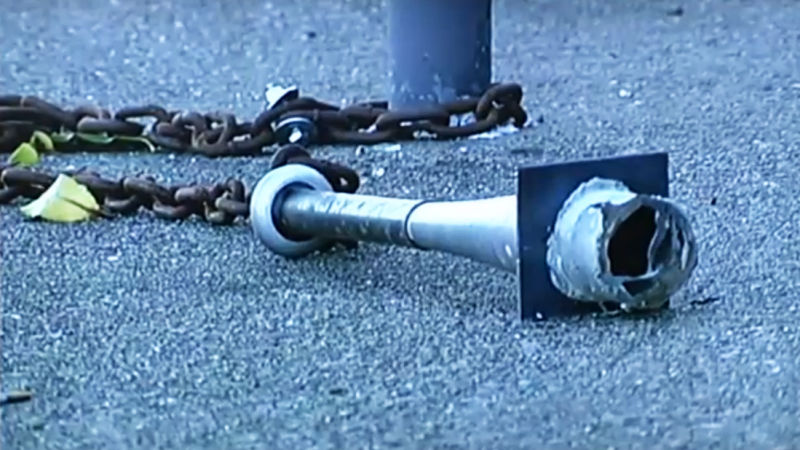
"caption": "One of the weaponized bats found in San Francisco",
"description": "One of the weaponized bats found in San Francisco",
"title": "Weaponized Bat SF",
"credit": "Photo: KGO/YouTube",
"status": "inherit",
"isLoading": false,
"fetchFailed": false
},
"arts_11109829": {
"type": "attachments",
"id": "arts_11109829",
"meta": {
"index": "attachments_1716263798",
"site": "arts",
"id": "11109829",
"found": true
},
"parent": 11107188,
"imgSizes": {
"post-thumbnail": {
"file": "https://ww2.kqed.org/app/uploads/sites/2/2015/11/unnamed1-300x372.jpg",
"width": 300,
"mimeType": "image/jpeg",
"height": 372
},
"kqedFullSize": {
"file": "https://ww2.kqed.org/app/uploads/sites/2/2015/11/unnamed1-e1448527313204.jpg",
"width": 462,
"height": 300
},
"guest-author-96": {
"file": "https://ww2.kqed.org/app/uploads/sites/2/2015/11/unnamed1-96x96.jpg",
"width": 96,
"mimeType": "image/jpeg",
"height": 96
},
"guest-author-64": {
"file": "https://ww2.kqed.org/app/uploads/sites/2/2015/11/unnamed1-64x64.jpg",
"width": 64,
"mimeType": "image/jpeg",
"height": 64
},
"detail": {
"file": "https://ww2.kqed.org/app/uploads/sites/2/2015/11/unnamed1-75x75.jpg",
"width": 75,
"mimeType": "image/jpeg",
"height": 75
},
"guest-author-32": {
"file": "https://ww2.kqed.org/app/uploads/sites/2/2015/11/unnamed1-32x32.jpg",
"width": 32,
"mimeType": "image/jpeg",
"height": 32
},
"guest-author-128": {
"file": "https://ww2.kqed.org/app/uploads/sites/2/2015/11/unnamed1-128x128.jpg",
"width": 128,
"mimeType": "image/jpeg",
"height": 128
}
},
"publishDate": 1448494712,
"modified": 1448494712,
"caption": null,
"description": null,
"title": "unnamed",
"credit": null,
"status": "inherit",
"isLoading": false,
"fetchFailed": false
},
"arts_11107444": {
"type": "attachments",
"id": "arts_11107444",
"meta": {
"index": "attachments_1716263798",
"site": "arts",
"id": "11107444",
"found": true
},
"parent": 11105426,
"imgSizes": {
"twentyfourteen-full-width": {
"file": "https://ww2.kqed.org/app/uploads/sites/2/2015/11/PublicSmogCover-1038x576.jpg",
"width": 1038,
"mimeType": "image/jpeg",
"height": 576
},
"thumbnail": {
"file": "https://ww2.kqed.org/app/uploads/sites/2/2015/11/PublicSmogCover-400x225.jpg",
"width": 400,
"mimeType": "image/jpeg",
"height": 225
},
"fd-sm": {
"file": "https://ww2.kqed.org/app/uploads/sites/2/2015/11/PublicSmogCover-960x540.jpg",
"width": 960,
"mimeType": "image/jpeg",
"height": 540
},
"post-thumbnail": {
"file": "https://ww2.kqed.org/app/uploads/sites/2/2015/11/PublicSmogCover-672x372.jpg",
"width": 672,
"mimeType": "image/jpeg",
"height": 372
},
"kqedFullSize": {
"file": "https://ww2.kqed.org/app/uploads/sites/2/2015/11/PublicSmogCover.jpg",
"width": 1152,
"height": 648
},
"guest-author-96": {
"file": "https://ww2.kqed.org/app/uploads/sites/2/2015/11/PublicSmogCover-96x96.jpg",
"width": 96,
"mimeType": "image/jpeg",
"height": 96
},
"medium": {
"file": "https://ww2.kqed.org/app/uploads/sites/2/2015/11/PublicSmogCover-800x450.jpg",
"width": 800,
"mimeType": "image/jpeg",
"height": 450
},
"guest-author-64": {
"file": "https://ww2.kqed.org/app/uploads/sites/2/2015/11/PublicSmogCover-64x64.jpg",
"width": 64,
"mimeType": "image/jpeg",
"height": 64
},
"detail": {
"file": "https://ww2.kqed.org/app/uploads/sites/2/2015/11/PublicSmogCover-75x75.jpg",
"width": 75,
"mimeType": "image/jpeg",
"height": 75
},
"guest-author-32": {
"file": "https://ww2.kqed.org/app/uploads/sites/2/2015/11/PublicSmogCover-32x32.jpg",
"width": 32,
"mimeType": "image/jpeg",
"height": 32
},
"guest-author-128": {
"file": "https://ww2.kqed.org/app/uploads/sites/2/2015/11/PublicSmogCover-128x128.jpg",
"width": 128,
"mimeType": "image/jpeg",
"height": 128
}
},
"publishDate": 1448417468,
"modified": 1448471034,
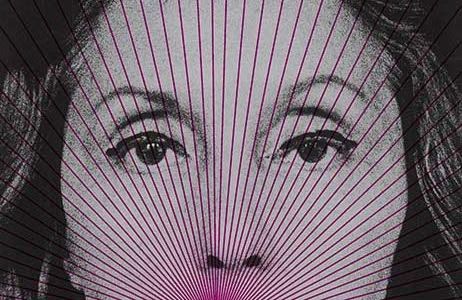
"caption": "Amy Balkin, PUBLIC SMOG WILL SAVE THE EARTH. Image from 'PUBLIC SMOG,' 2004 – ongoing.",
"description": null,
"title": "PublicSmogCover",
"credit": "Courtesy: the artist",
"status": "inherit",
"isLoading": false,
"fetchFailed": false
},
"news_10771814": {
"type": "attachments",
"id": "news_10771814",
"meta": {
"index": "attachments_1716263798",
"site": "news",
"id": "10771814",
"found": true
},
"parent": 10771803,
"imgSizes": {
"twentyfourteen-full-width": {
"file": "https://ww2.kqed.org/app/uploads/sites/10/2015/11/Ramos-vigil-1038x576.jpg",
"width": 1038,
"mimeType": "image/jpeg",
"height": 576
},
"thumbnail": {
"file": "https://ww2.kqed.org/app/uploads/sites/10/2015/11/Ramos-vigil-400x225.jpg",
"width": 400,
"mimeType": "image/jpeg",
"height": 225
},
"fd-sm": {
"file": "https://ww2.kqed.org/app/uploads/sites/10/2015/11/Ramos-vigil-960x540.jpg",
"width": 960,
"mimeType": "image/jpeg",
"height": 540
},
"post-thumbnail": {
"file": "https://ww2.kqed.org/app/uploads/sites/10/2015/11/Ramos-vigil-672x372.jpg",
"width": 672,
"mimeType": "image/jpeg",
"height": 372
},
"kqedFullSize": {
"file": "https://ww2.kqed.org/app/uploads/sites/10/2015/11/Ramos-vigil.jpg",
"width": 4320,
"height": 2432
},
"large": {
"file": "https://ww2.kqed.org/app/uploads/sites/10/2015/11/Ramos-vigil-1440x811.jpg",
"width": 1440,
"mimeType": "image/jpeg",
"height": 811
},
"guest-author-96": {
"file": "https://ww2.kqed.org/app/uploads/sites/10/2015/11/Ramos-vigil-96x96.jpg",
"width": 96,
"mimeType": "image/jpeg",
"height": 96
},
"medium": {
"file": "https://ww2.kqed.org/app/uploads/sites/10/2015/11/Ramos-vigil-800x450.jpg",
"width": 800,
"mimeType": "image/jpeg",
"height": 450
},
"guest-author-64": {
"file": "https://ww2.kqed.org/app/uploads/sites/10/2015/11/Ramos-vigil-64x64.jpg",
"width": 64,
"mimeType": "image/jpeg",
"height": 64
},
"guest-author-32": {
"file": "https://ww2.kqed.org/app/uploads/sites/10/2015/11/Ramos-vigil-32x32.jpg",
"width": 32,
"mimeType": "image/jpeg",
"height": 32
},
"jmtc-small-thumb": {
"file": "https://ww2.kqed.org/app/uploads/sites/10/2015/11/Ramos-vigil-280x150.jpg",
"width": 280,
"mimeType": "image/jpeg",
"height": 150
},
"fd-lrg": {
"file": "https://ww2.kqed.org/app/uploads/sites/10/2015/11/Ramos-vigil-1920x1081.jpg",
"width": 1920,
"mimeType": "image/jpeg",
"height": 1081
},
"fd-med": {
"file": "https://ww2.kqed.org/app/uploads/sites/10/2015/11/Ramos-vigil-1180x664.jpg",
"width": 1180,
"mimeType": "image/jpeg",
"height": 664
},
"detail": {
"file": "https://ww2.kqed.org/app/uploads/sites/10/2015/11/Ramos-vigil-75x75.jpg",
"width": 75,
"mimeType": "image/jpeg",
"height": 75
},
"guest-author-128": {
"file": "https://ww2.kqed.org/app/uploads/sites/10/2015/11/Ramos-vigil-128x128.jpg",
"width": 128,
"mimeType": "image/jpeg",
"height": 128
}
},
"publishDate": 1448489460,
"modified": 1448489609,
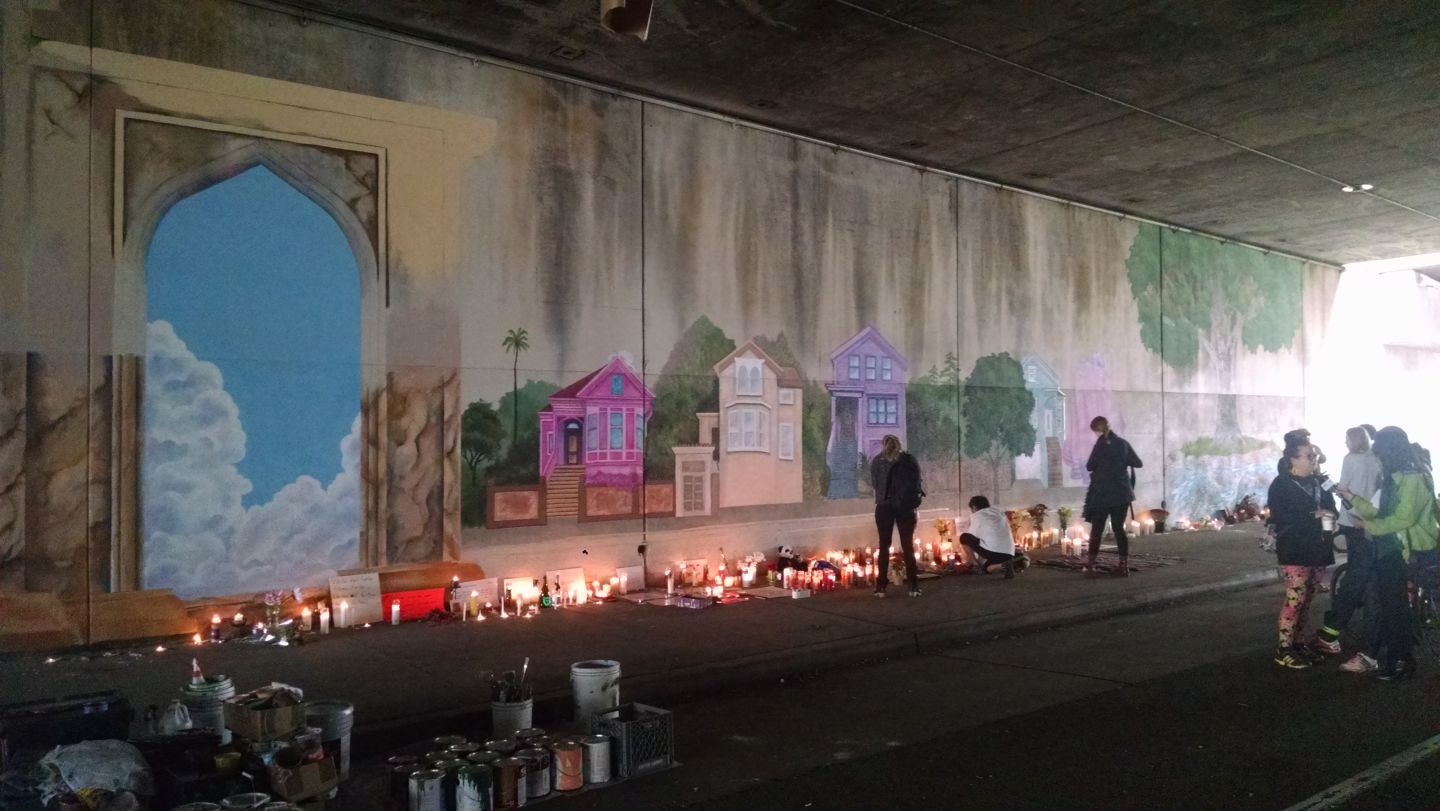
"caption": "A vigil held in memory of Antonio Ramos at the mural project he was working on when he was killed.",
"description": null,
"title": "Ramos vigil",
"credit": "Andrew Stelzer/KQED",
"status": "inherit",
"isLoading": false,
"fetchFailed": false
},
"artschool_858": {
"type": "attachments",
"id": "artschool_858",
"meta": {
"index": "attachments_1716263798",
"site": "artschool",
"id": "858",
"found": true
},
"parent": 856,
"imgSizes": {
"twentyfourteen-full-width": {
"file": "https://ww2.kqed.org/app/uploads/sites/4/2015/11/feature-EVAH-FAN-1038x576.jpg",
"width": 1038,
"mimeType": "image/jpeg",
"height": 576
},
"thumbnail": {
"file": "https://ww2.kqed.org/app/uploads/sites/4/2015/11/feature-EVAH-FAN-400x225.jpg",
"width": 400,
"mimeType": "image/jpeg",
"height": 225
},
"fd-sm": {
"file": "https://ww2.kqed.org/app/uploads/sites/4/2015/11/feature-EVAH-FAN-960x540.jpg",
"width": 960,
"mimeType": "image/jpeg",
"height": 540
},
"post-thumbnail": {
"file": "https://ww2.kqed.org/app/uploads/sites/4/2015/11/feature-EVAH-FAN-672x372.jpg",
"width": 672,
"mimeType": "image/jpeg",
"height": 372
},
"kqedFullSize": {
"file": "https://ww2.kqed.org/app/uploads/sites/4/2015/11/feature-EVAH-FAN.jpg",
"width": 1920,
"height": 1080
},
"large": {
"file": "https://ww2.kqed.org/app/uploads/sites/4/2015/11/feature-EVAH-FAN-1180x664.jpg",
"width": 1180,
"mimeType": "image/jpeg",
"height": 664
},
"guest-author-96": {
"file": "https://ww2.kqed.org/app/uploads/sites/4/2015/11/feature-EVAH-FAN-96x96.jpg",
"width": 96,
"mimeType": "image/jpeg",
"height": 96
},
"medium": {
"file": "https://ww2.kqed.org/app/uploads/sites/4/2015/11/feature-EVAH-FAN-800x450.jpg",
"width": 800,
"mimeType": "image/jpeg",
"height": 450
},
"guest-author-64": {
"file": "https://ww2.kqed.org/app/uploads/sites/4/2015/11/feature-EVAH-FAN-64x64.jpg",
"width": 64,
"mimeType": "image/jpeg",
"height": 64
},
"guest-author-32": {
"file": "https://ww2.kqed.org/app/uploads/sites/4/2015/11/feature-EVAH-FAN-32x32.jpg",
"width": 32,
"mimeType": "image/jpeg",
"height": 32
},
"fd-lrg": {
"file": "https://ww2.kqed.org/app/uploads/sites/4/2015/11/feature-EVAH-FAN-1920x1080.jpg",
"width": 1920,
"mimeType": "image/jpeg",
"height": 1080
},
"fd-med": {
"file": "https://ww2.kqed.org/app/uploads/sites/4/2015/11/feature-EVAH-FAN-1180x664.jpg",
"width": 1180,
"mimeType": "image/jpeg",
"height": 664
},
"detail": {
"file": "https://ww2.kqed.org/app/uploads/sites/4/2015/11/feature-EVAH-FAN-75x75.jpg",
"width": 75,
"mimeType": "image/jpeg",
"height": 75
},
"guest-author-128": {
"file": "https://ww2.kqed.org/app/uploads/sites/4/2015/11/feature-EVAH-FAN-128x128.jpg",
"width": 128,
"mimeType": "image/jpeg",
"height": 128
}
},
"publishDate": 1448316128,
"modified": 1448316147,
"caption": null,
"description": null,
"title": "Evah Fan",
"credit": "Jon Brown | KQED",
"status": "inherit",
"isLoading": false,
"fetchFailed": false
},
"news_10770820": {
"type": "attachments",
"id": "news_10770820",
"meta": {
"index": "attachments_1716263798",
"site": "news",
"id": "10770820",
"found": true
},
"parent": 10770813,
"imgSizes": {
"twentyfourteen-full-width": {
"file": "https://ww2.kqed.org/app/uploads/sites/10/2015/11/RS17524_Judge-addresses-holloway-qut-1038x576.jpg",
"width": 1038,
"mimeType": "image/jpeg",
"height": 576
},
"thumbnail": {
"file": "https://ww2.kqed.org/app/uploads/sites/10/2015/11/RS17524_Judge-addresses-holloway-qut-400x300.jpg",
"width": 400,
"mimeType": "image/jpeg",
"height": 300
},
"fd-sm": {
"file": "https://ww2.kqed.org/app/uploads/sites/10/2015/11/RS17524_Judge-addresses-holloway-qut-960x720.jpg",
"width": 960,
"mimeType": "image/jpeg",
"height": 720
},
"post-thumbnail": {
"file": "https://ww2.kqed.org/app/uploads/sites/10/2015/11/RS17524_Judge-addresses-holloway-qut-672x372.jpg",
"width": 672,
"mimeType": "image/jpeg",
"height": 372
},
"kqedFullSize": {
"file": "https://ww2.kqed.org/app/uploads/sites/10/2015/11/RS17524_Judge-addresses-holloway-qut.jpg",
"width": 1920,
"height": 1440
},
"large": {
"file": "https://ww2.kqed.org/app/uploads/sites/10/2015/11/RS17524_Judge-addresses-holloway-qut-1440x1080.jpg",
"width": 1440,
"mimeType": "image/jpeg",
"height": 1080
},
"guest-author-96": {
"file": "https://ww2.kqed.org/app/uploads/sites/10/2015/11/RS17524_Judge-addresses-holloway-qut-96x96.jpg",
"width": 96,
"mimeType": "image/jpeg",
"height": 96
},
"medium": {
"file": "https://ww2.kqed.org/app/uploads/sites/10/2015/11/RS17524_Judge-addresses-holloway-qut-800x600.jpg",
"width": 800,
"mimeType": "image/jpeg",
"height": 600
},
"guest-author-64": {
"file": "https://ww2.kqed.org/app/uploads/sites/10/2015/11/RS17524_Judge-addresses-holloway-qut-64x64.jpg",
"width": 64,
"mimeType": "image/jpeg",
"height": 64
},
"guest-author-32": {
"file": "https://ww2.kqed.org/app/uploads/sites/10/2015/11/RS17524_Judge-addresses-holloway-qut-32x32.jpg",
"width": 32,
"mimeType": "image/jpeg",
"height": 32
},
"jmtc-small-thumb": {
"file": "https://ww2.kqed.org/app/uploads/sites/10/2015/11/RS17524_Judge-addresses-holloway-qut-280x150.jpg",
"width": 280,
"mimeType": "image/jpeg",
"height": 150
},
"fd-lrg": {
"file": "https://ww2.kqed.org/app/uploads/sites/10/2015/11/RS17524_Judge-addresses-holloway-qut-1920x1440.jpg",
"width": 1920,
"mimeType": "image/jpeg",
"height": 1440
},
"fd-med": {
"file": "https://ww2.kqed.org/app/uploads/sites/10/2015/11/RS17524_Judge-addresses-holloway-qut-1180x885.jpg",
"width": 1180,
"mimeType": "image/jpeg",
"height": 885
},
"detail": {
"file": "https://ww2.kqed.org/app/uploads/sites/10/2015/11/RS17524_Judge-addresses-holloway-qut-75x75.jpg",
"width": 75,
"mimeType": "image/jpeg",
"height": 75
},
"guest-author-128": {
"file": "https://ww2.kqed.org/app/uploads/sites/10/2015/11/RS17524_Judge-addresses-holloway-qut-128x128.jpg",
"width": 128,
"mimeType": "image/jpeg",
"height": 128
}
},
"publishDate": 1448410144,
"modified": 1448416074,
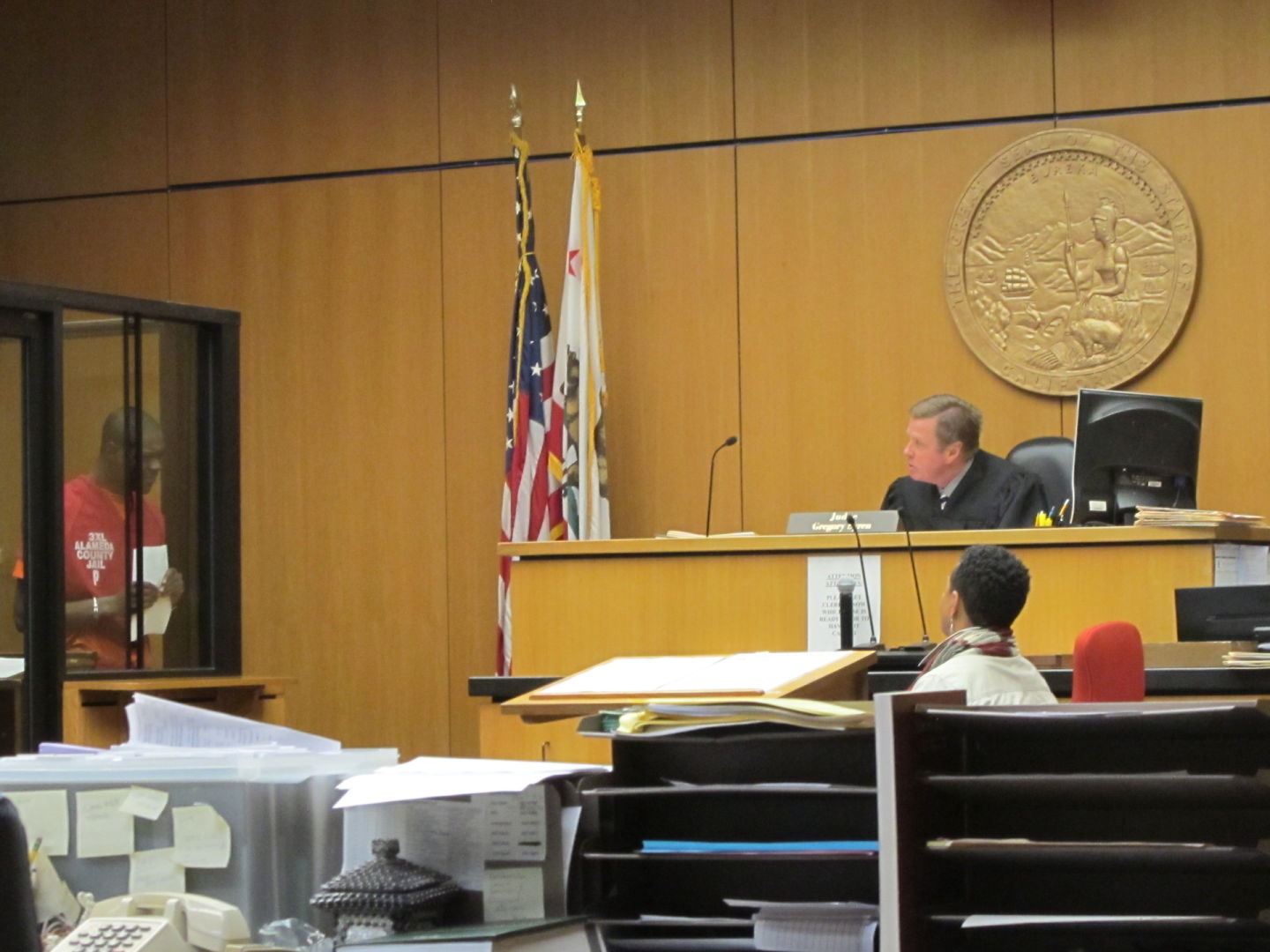
"caption": "Judge Gregory Syren reads charges against Marquise Holloway, in cubicle at left. Holloway is accused of murdering Emeryville muralist Antonio Ramos in September. ",
"description": null,
"title": "RS17524_Judge addresses holloway-qut",
"credit": "Andrew Stelzer/KQED",
"status": "inherit",
"isLoading": false,
"fetchFailed": false
},
"arts_11104335": {
"type": "attachments",
"id": "arts_11104335",
"meta": {
"index": "attachments_1716263798",
"site": "arts",
"id": "11104335",
"found": true
},
"parent": 11104226,
"imgSizes": {
"twentyfourteen-full-width": {
"file": "https://ww2.kqed.org/app/uploads/sites/2/2015/11/Fishscreenshot-1038x576.jpg",
"width": 1038,
"mimeType": "image/jpeg",
"height": 576
},
"thumbnail": {
"file": "https://ww2.kqed.org/app/uploads/sites/2/2015/11/Fishscreenshot-400x225.jpg",
"width": 400,
"mimeType": "image/jpeg",
"height": 225
},
"fd-sm": {
"file": "https://ww2.kqed.org/app/uploads/sites/2/2015/11/Fishscreenshot-960x540.jpg",
"width": 960,
"mimeType": "image/jpeg",
"height": 540
},
"post-thumbnail": {
"file": "https://ww2.kqed.org/app/uploads/sites/2/2015/11/Fishscreenshot-672x372.jpg",
"width": 672,
"mimeType": "image/jpeg",
"height": 372
},
"kqedFullSize": {
"file": "https://ww2.kqed.org/app/uploads/sites/2/2015/11/Fishscreenshot.jpg",
"width": 1080,
"height": 608
},
"guest-author-96": {
"file": "https://ww2.kqed.org/app/uploads/sites/2/2015/11/Fishscreenshot-96x96.jpg",
"width": 96,
"mimeType": "image/jpeg",
"height": 96
},
"medium": {
"file": "https://ww2.kqed.org/app/uploads/sites/2/2015/11/Fishscreenshot-800x450.jpg",
"width": 800,
"mimeType": "image/jpeg",
"height": 450
},
"guest-author-64": {
"file": "https://ww2.kqed.org/app/uploads/sites/2/2015/11/Fishscreenshot-64x64.jpg",
"width": 64,
"mimeType": "image/jpeg",
"height": 64
},
"detail": {
"file": "https://ww2.kqed.org/app/uploads/sites/2/2015/11/Fishscreenshot-75x75.jpg",
"width": 75,
"mimeType": "image/jpeg",
"height": 75
},
"guest-author-32": {
"file": "https://ww2.kqed.org/app/uploads/sites/2/2015/11/Fishscreenshot-32x32.jpg",
"width": 32,
"mimeType": "image/jpeg",
"height": 32
},
"guest-author-128": {
"file": "https://ww2.kqed.org/app/uploads/sites/2/2015/11/Fishscreenshot-128x128.jpg",
"width": 128,
"mimeType": "image/jpeg",
"height": 128
}
},
"publishDate": 1448315396,
"modified": 1448315396,
"caption": null,
"description": null,
"title": "Fishscreenshot",
"credit": null,
"status": "inherit",
"isLoading": false,
"fetchFailed": false
},
"arts_11102959": {
"type": "attachments",
"id": "arts_11102959",
"meta": {
"index": "attachments_1716263798",
"site": "arts",
"id": "11102959",
"found": true
},
"parent": 11094079,
"imgSizes": {
"twentyfourteen-full-width": {
"file": "https://ww2.kqed.org/app/uploads/sites/2/2015/11/CapeCover-1038x576.jpg",
"width": 1038,
"mimeType": "image/jpeg",
"height": 576
},
"thumbnail": {
"file": "https://ww2.kqed.org/app/uploads/sites/2/2015/11/CapeCover-400x225.jpg",
"width": 400,
"mimeType": "image/jpeg",
"height": 225
},
"fd-sm": {
"file": "https://ww2.kqed.org/app/uploads/sites/2/2015/11/CapeCover-960x540.jpg",
"width": 960,
"mimeType": "image/jpeg",
"height": 540
},
"post-thumbnail": {
"file": "https://ww2.kqed.org/app/uploads/sites/2/2015/11/CapeCover-672x372.jpg",
"width": 672,
"mimeType": "image/jpeg",
"height": 372
},
"kqedFullSize": {
"file": "https://ww2.kqed.org/app/uploads/sites/2/2015/11/CapeCover.jpg",
"width": 1654,
"height": 931
},
"large": {
"file": "https://ww2.kqed.org/app/uploads/sites/2/2015/11/CapeCover-1180x664.jpg",
"width": 1180,
"mimeType": "image/jpeg",
"height": 664
},
"guest-author-96": {
"file": "https://ww2.kqed.org/app/uploads/sites/2/2015/11/CapeCover-96x96.jpg",
"width": 96,
"mimeType": "image/jpeg",
"height": 96
},
"medium": {
"file": "https://ww2.kqed.org/app/uploads/sites/2/2015/11/CapeCover-800x450.jpg",
"width": 800,
"mimeType": "image/jpeg",
"height": 450
},
"guest-author-64": {
"file": "https://ww2.kqed.org/app/uploads/sites/2/2015/11/CapeCover-64x64.jpg",
"width": 64,
"mimeType": "image/jpeg",
"height": 64
},
"guest-author-32": {
"file": "https://ww2.kqed.org/app/uploads/sites/2/2015/11/CapeCover-32x32.jpg",
"width": 32,
"mimeType": "image/jpeg",
"height": 32
},
"fd-med": {
"file": "https://ww2.kqed.org/app/uploads/sites/2/2015/11/CapeCover-1180x664.jpg",
"width": 1180,
"mimeType": "image/jpeg",
"height": 664
},
"detail": {
"file": "https://ww2.kqed.org/app/uploads/sites/2/2015/11/CapeCover-75x75.jpg",
"width": 75,
"mimeType": "image/jpeg",
"height": 75
},
"guest-author-128": {
"file": "https://ww2.kqed.org/app/uploads/sites/2/2015/11/CapeCover-128x128.jpg",
"width": 128,
"mimeType": "image/jpeg",
"height": 128
}
},
"publishDate": 1448267818,
"modified": 1448267862,
"caption": "'Ahu 'ula (cape), pre-1861.",
"description": null,
"title": "CapeCover",
"credit": "Courtesy: Bernice Pauahi Bishop Museum, Ethnology Collection",
"status": "inherit",
"isLoading": false,
"fetchFailed": false
},
"arts_11092404": {
"type": "attachments",
"id": "arts_11092404",
"meta": {
"index": "attachments_1716263798",
"site": "arts",
"id": "11092404",
"found": true
},
"parent": 11092299,
"imgSizes": {
"thumbnail": {
"file": "https://ww2.kqed.org/app/uploads/sites/2/2015/11/MSPCover-400x225.jpg",
"width": 400,
"mimeType": "image/jpeg",
"height": 225
},
"post-thumbnail": {
"file": "https://ww2.kqed.org/app/uploads/sites/2/2015/11/MSPCover-672x372.jpg",
"width": 672,
"mimeType": "image/jpeg",
"height": 372
},
"kqedFullSize": {
"file": "https://ww2.kqed.org/app/uploads/sites/2/2015/11/MSPCover.jpg",
"width": 850,
"height": 478
},
"guest-author-96": {
"file": "https://ww2.kqed.org/app/uploads/sites/2/2015/11/MSPCover-96x96.jpg",
"width": 96,
"mimeType": "image/jpeg",
"height": 96
},
"medium": {
"file": "https://ww2.kqed.org/app/uploads/sites/2/2015/11/MSPCover-800x450.jpg",
"width": 800,
"mimeType": "image/jpeg",
"height": 450
},
"guest-author-64": {
"file": "https://ww2.kqed.org/app/uploads/sites/2/2015/11/MSPCover-64x64.jpg",
"width": 64,
"mimeType": "image/jpeg",
"height": 64
},
"detail": {
"file": "https://ww2.kqed.org/app/uploads/sites/2/2015/11/MSPCover-75x75.jpg",
"width": 75,
"mimeType": "image/jpeg",
"height": 75
},
"guest-author-32": {
"file": "https://ww2.kqed.org/app/uploads/sites/2/2015/11/MSPCover-32x32.jpg",
"width": 32,
"mimeType": "image/jpeg",
"height": 32
},
"guest-author-128": {
"file": "https://ww2.kqed.org/app/uploads/sites/2/2015/11/MSPCover-128x128.jpg",
"width": 128,
"mimeType": "image/jpeg",
"height": 128
}
},
"publishDate": 1447898726,
"modified": 1447898758,
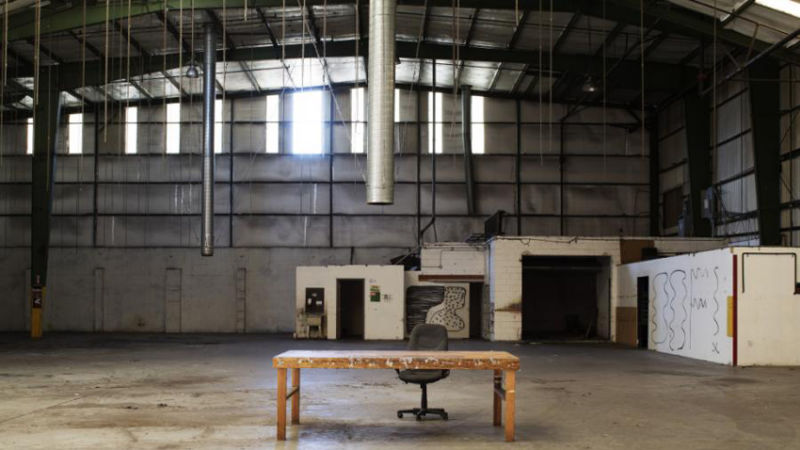
"caption": "1240 Minnesota St before construction.",
"description": null,
"title": "MSPCover",
"credit": "Photo: Minnesota Street Project",
"status": "inherit",
"isLoading": false,
"fetchFailed": false
},
"arts_11068652": {
"type": "attachments",
"id": "arts_11068652",
"meta": {
"index": "attachments_1716263798",
"site": "arts",
"id": "11068652",
"found": true
},
"parent": 11068548,
"imgSizes": {
"thumbnail": {
"file": "https://ww2.kqed.org/app/uploads/sites/2/2015/11/SV-Clock-400x225.jpg",
"width": 400,
"mimeType": "image/jpeg",
"height": 225
},
"post-thumbnail": {
"file": "https://ww2.kqed.org/app/uploads/sites/2/2015/11/SV-Clock-672x372.jpg",
"width": 672,
"mimeType": "image/jpeg",
"height": 372
},
"kqedFullSize": {
"file": "https://ww2.kqed.org/app/uploads/sites/2/2015/11/SV-Clock.jpg",
"width": 800,
"height": 450
},
"guest-author-96": {
"file": "https://ww2.kqed.org/app/uploads/sites/2/2015/11/SV-Clock-96x96.jpg",
"width": 96,
"mimeType": "image/jpeg",
"height": 96
},
"medium": {
"file": "https://ww2.kqed.org/app/uploads/sites/2/2015/11/SV-Clock-800x450.jpg",
"width": 800,
"mimeType": "image/jpeg",
"height": 450
},
"guest-author-64": {
"file": "https://ww2.kqed.org/app/uploads/sites/2/2015/11/SV-Clock-64x64.jpg",
"width": 64,
"mimeType": "image/jpeg",
"height": 64
},
"detail": {
"file": "https://ww2.kqed.org/app/uploads/sites/2/2015/11/SV-Clock-75x75.jpg",
"width": 75,
"mimeType": "image/jpeg",
"height": 75
},
"guest-author-32": {
"file": "https://ww2.kqed.org/app/uploads/sites/2/2015/11/SV-Clock-32x32.jpg",
"width": 32,
"mimeType": "image/jpeg",
"height": 32
},
"guest-author-128": {
"file": "https://ww2.kqed.org/app/uploads/sites/2/2015/11/SV-Clock-128x128.jpg",
"width": 128,
"mimeType": "image/jpeg",
"height": 128
}
},
"publishDate": 1447097740,
"modified": 1447748676,
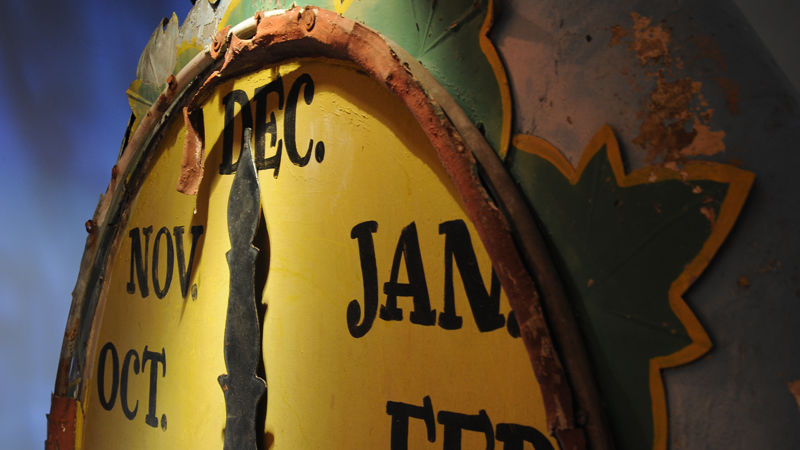
"caption": "This clock from Santa's Village in Scott's Valley marked the months of the year for children counting down the days to Christmas.",
"description": null,
"title": "SV Clock",
"credit": "Photo: Adrienne Blaine",
"status": "inherit",
"isLoading": false,
"fetchFailed": false
},
"arts_11090192": {
"type": "attachments",
"id": "arts_11090192",
"meta": {
"index": "attachments_1716263798",
"site": "arts",
"id": "11090192",
"found": true
},
"parent": 11090191,
"imgSizes": {
"thumbnail": {
"file": "https://ww2.kqed.org/app/uploads/sites/2/2015/11/11090191-thumb-400x225.png",
"width": 400,
"mimeType": "image/png",
"height": 225
},
"kqedFullSize": {
"file": "https://ww2.kqed.org/app/uploads/sites/2/2015/11/11090191-thumb.png",
"width": 400,
"height": 225
},
"guest-author-96": {
"file": "https://ww2.kqed.org/app/uploads/sites/2/2015/11/11090191-thumb-96x96.png",
"width": 96,
"mimeType": "image/png",
"height": 96
},
"guest-author-64": {
"file": "https://ww2.kqed.org/app/uploads/sites/2/2015/11/11090191-thumb-64x64.png",
"width": 64,
"mimeType": "image/png",
"height": 64
},
"detail": {
"file": "https://ww2.kqed.org/app/uploads/sites/2/2015/11/11090191-thumb-75x75.png",
"width": 75,
"mimeType": "image/png",
"height": 75
},
"guest-author-32": {
"file": "https://ww2.kqed.org/app/uploads/sites/2/2015/11/11090191-thumb-32x32.png",
"width": 32,
"mimeType": "image/png",
"height": 32
},
"guest-author-128": {
"file": "https://ww2.kqed.org/app/uploads/sites/2/2015/11/11090191-thumb-128x128.png",
"width": 128,
"mimeType": "image/png",
"height": 128
}
},
"publishDate": 1447816884,
"modified": 1447816884,
"caption": null,
"description": null,
"title": "Thumbnail for 11090191",
"credit": null,
"status": "inherit",
"isLoading": false,
"fetchFailed": false
},
"arts_11087062": {
"type": "attachments",
"id": "arts_11087062",
"meta": {
"index": "attachments_1716263798",
"site": "arts",
"id": "11087062",
"found": true
},
"parent": 11086747,
"imgSizes": {
"twentyfourteen-full-width": {
"file": "https://ww2.kqed.org/app/uploads/sites/2/2015/11/JIMCAMPBELL_JanesPool0-1038x576.jpg",
"width": 1038,
"mimeType": "image/jpeg",
"height": 576
},
"thumbnail": {
"file": "https://ww2.kqed.org/app/uploads/sites/2/2015/11/JIMCAMPBELL_JanesPool0-400x225.jpg",
"width": 400,
"mimeType": "image/jpeg",
"height": 225
},
"fd-sm": {
"file": "https://ww2.kqed.org/app/uploads/sites/2/2015/11/JIMCAMPBELL_JanesPool0-960x540.jpg",
"width": 960,
"mimeType": "image/jpeg",
"height": 540
},
"post-thumbnail": {
"file": "https://ww2.kqed.org/app/uploads/sites/2/2015/11/JIMCAMPBELL_JanesPool0-672x372.jpg",
"width": 672,
"mimeType": "image/jpeg",
"height": 372
},
"kqedFullSize": {
"file": "https://ww2.kqed.org/app/uploads/sites/2/2015/11/JIMCAMPBELL_JanesPool0.jpg",
"width": 1920,
"height": 1080
},
"large": {
"file": "https://ww2.kqed.org/app/uploads/sites/2/2015/11/JIMCAMPBELL_JanesPool0-1180x664.jpg",
"width": 1180,
"mimeType": "image/jpeg",
"height": 664
},
"guest-author-96": {
"file": "https://ww2.kqed.org/app/uploads/sites/2/2015/11/JIMCAMPBELL_JanesPool0-96x96.jpg",
"width": 96,
"mimeType": "image/jpeg",
"height": 96
},
"medium": {
"file": "https://ww2.kqed.org/app/uploads/sites/2/2015/11/JIMCAMPBELL_JanesPool0-800x450.jpg",
"width": 800,
"mimeType": "image/jpeg",
"height": 450
},
"guest-author-64": {
"file": "https://ww2.kqed.org/app/uploads/sites/2/2015/11/JIMCAMPBELL_JanesPool0-64x64.jpg",
"width": 64,
"mimeType": "image/jpeg",
"height": 64
},
"guest-author-32": {
"file": "https://ww2.kqed.org/app/uploads/sites/2/2015/11/JIMCAMPBELL_JanesPool0-32x32.jpg",
"width": 32,
"mimeType": "image/jpeg",
"height": 32
},
"fd-lrg": {
"file": "https://ww2.kqed.org/app/uploads/sites/2/2015/11/JIMCAMPBELL_JanesPool0-1920x1080.jpg",
"width": 1920,
"mimeType": "image/jpeg",
"height": 1080
},
"fd-med": {
"file": "https://ww2.kqed.org/app/uploads/sites/2/2015/11/JIMCAMPBELL_JanesPool0-1180x664.jpg",
"width": 1180,
"mimeType": "image/jpeg",
"height": 664
},
"detail": {
"file": "https://ww2.kqed.org/app/uploads/sites/2/2015/11/JIMCAMPBELL_JanesPool0-75x75.jpg",
"width": 75,
"mimeType": "image/jpeg",
"height": 75
},
"guest-author-128": {
"file": "https://ww2.kqed.org/app/uploads/sites/2/2015/11/JIMCAMPBELL_JanesPool0-128x128.jpg",
"width": 128,
"mimeType": "image/jpeg",
"height": 128
}
},
"publishDate": 1447710333,
"modified": 1447710370,
"caption": null,
"description": null,
"title": "JIMCAMPBELL_JanesPool0",
"credit": "Courtesy: KQED Newsroom",
"status": "inherit",
"isLoading": false,
"fetchFailed": false
}
},
"audioPlayerReducer": {
"postId": "stream_live",
"isPaused": true,
"isPlaying": false,
"pfsActive": false,
"pledgeModalIsOpen": true,
"playerDrawerIsOpen": false,
"liveAudioPlayStartedAt": 0,
"liveAudioPlayContext": ""
},
"authorsReducer": {
"byline_arts_11104226": {
"type": "authors",
"id": "byline_arts_11104226",
"meta": {
"override": true
},
"slug": "byline_arts_11104226",
"name": "Kelly Whalen and Jessica Jones ",
"isLoading": false
},
"byline_arts_11086747": {
"type": "authors",
"id": "byline_arts_11086747",
"meta": {
"override": true
},
"slug": "byline_arts_11086747",
"name": "Monica Lam",
"isLoading": false
},
"shotchkiss": {
"type": "authors",
"id": "61",
"meta": {
"index": "authors_1716337520",
"id": "61",
"found": true
},
"name": "Sarah Hotchkiss",
"firstName": "Sarah",
"lastName": "Hotchkiss",
"slug": "shotchkiss",
"email": "shotchkiss@kqed.org",
"display_author_email": true,
"staff_mastheads": [
"arts"
],
"title": "Senior Editor",
"bio": "Sarah Hotchkiss is a San Francisco \u003ca href=\"http://www.sarahhotchkiss.com\">artist\u003c/a> and arts writer. In 2019, she received the Dorothea & Leo Rabkin Foundation grant for visual art journalism and in 2020 she received a Society of Professional Journalists, Northern California award for excellence in arts and culture reporting.",
"avatar": "https://secure.gravatar.com/avatar/bc662df144b3d27fd8b1b6f1c2a420d34e91e53154d411bb7ad353cc8b6cea8d?s=600&d=blank&r=g",
"twitter": null,
"bluesky": null,
"facebook": null,
"instagram": null,
"linkedin": null,
"sites": [
{
"site": "",
"roles": [
"editor"
]
},
{
"site": "arts",
"roles": [
"Contributor",
"administrator"
]
},
{
"site": "artschool",
"roles": [
"administrator"
]
},
{
"site": "news",
"roles": [
"editor"
]
},
{
"site": "pop",
"roles": [
"administrator"
]
},
{
"site": "bayareabites",
"roles": [
"editor"
]
},
{
"site": "spark",
"roles": [
"editor"
]
},
{
"site": "checkplease",
"roles": [
"editor"
]
}
],
"headData": {
"title": "Sarah Hotchkiss | KQED",
"description": "Senior Editor",
"ogImgSrc": "https://secure.gravatar.com/avatar/bc662df144b3d27fd8b1b6f1c2a420d34e91e53154d411bb7ad353cc8b6cea8d?s=600&d=blank&r=g",
"twImgSrc": "https://secure.gravatar.com/avatar/bc662df144b3d27fd8b1b6f1c2a420d34e91e53154d411bb7ad353cc8b6cea8d?s=600&d=blank&r=g"
},
"isLoading": false,
"link": "/author/shotchkiss"
},
"ablaine": {
"type": "authors",
"id": "72",
"meta": {
"index": "authors_1716337520",
"id": "72",
"found": true
},
"name": "Adrienne Blaine",
"firstName": "Adrienne",
"lastName": "Blaine",
"slug": "ablaine",
"email": "adrienneblaine@hotmail.com",
"display_author_email": false,
"staff_mastheads": [],
"title": null,
"bio": "Adrienne Blaine is a Millennial writer from the South Bay. She has a BA in Comparative Literary and Cultural Studies combined with Communications and Media Studies from Franklin University Switzerland. Living in Switzerland for four years and traveling from Morocco to Iceland introduced her to diverse art, culture and food. She currently lives in San Francisco and writes about these topics.",
"avatar": "https://secure.gravatar.com/avatar/10d0a10a2189067e5e3f6fc9fc4ebdf2?s=600&d=blank&r=g",
"twitter": null,
"facebook": null,
"instagram": null,
"linkedin": null,
"sites": [
{
"site": "arts",
"roles": [
"Contributor",
"contributor"
]
},
{
"site": "bayareabites",
"roles": [
"contributor"
]
},
{
"site": "food",
"roles": [
"contributor"
]
}
],
"headData": {
"title": "Adrienne Blaine | KQED",
"description": null,
"ogImgSrc": "https://secure.gravatar.com/avatar/10d0a10a2189067e5e3f6fc9fc4ebdf2?s=600&d=blank&r=g",
"twImgSrc": "https://secure.gravatar.com/avatar/10d0a10a2189067e5e3f6fc9fc4ebdf2?s=600&d=blank&r=g"
},
"isLoading": false,
"link": "/author/ablaine"
},
"kjones": {
"type": "authors",
"id": "93",
"meta": {
"index": "authors_1716337520",
"id": "93",
"found": true
},
"name": "Kevin L. Jones",
"firstName": "Kevin",
"lastName": "Jones",
"slug": "kjones",
"email": "kjones@kqed.org",
"display_author_email": false,
"staff_mastheads": [],
"title": null,
"bio": null,
"avatar": "https://secure.gravatar.com/avatar/12c65b5633ed39d0a59bb7f497eff645?s=600&d=blank&r=g",
"twitter": null,
"facebook": null,
"instagram": null,
"linkedin": null,
"sites": [
{
"site": "arts",
"roles": [
"subscriber"
]
},
{
"site": "styleguide",
"roles": [
"contributor"
]
},
{
"site": "artschool",
"roles": [
"subscriber"
]
},
{
"site": "news",
"roles": [
"subscriber"
]
},
{
"site": "pop",
"roles": [
"subscriber"
]
}
],
"headData": {
"title": "Kevin L. Jones | KQED",
"description": null,
"ogImgSrc": "https://secure.gravatar.com/avatar/12c65b5633ed39d0a59bb7f497eff645?s=600&d=blank&r=g",
"twImgSrc": "https://secure.gravatar.com/avatar/12c65b5633ed39d0a59bb7f497eff645?s=600&d=blank&r=g"
},
"isLoading": false,
"link": "/author/kjones"
},
"andrewstelzer": {
"type": "authors",
"id": "213",
"meta": {
"index": "authors_1716337520",
"id": "213",
"found": true
},
"name": "Andrew Stelzer",
"firstName": "Andrew",
"lastName": "Stelzer",
"slug": "andrewstelzer",
"email": "andrewstelzer@gmail.com",
"display_author_email": false,
"staff_mastheads": [],
"title": null,
"bio": "Andrew Stelzer has been reporting for KQED since 2010, and is a producer at \u003ca href=\"http://www.radioproject.org\" target=\"_blank\">Making Contact\u003c/a> in Oakland.. His work has been featured on programs including \u003ca href=\"http://www.npr.org/templates/story/story.php?storyId=5010\" target=\"_blank\">NPR’s Weekend Edition\u003c/a>, \u003ca href=\"http://www.theworld.org/\" target=\"_blank\">PRI’s The World\u003c/a>, \u003ca href=\"http://www.studio360.org/\" target=\"_blank\">Studio 360\u003c/a>, \u003ca href=\"http://marketplace.publicradio.org/\" target=\"_blank\">Marketplace\u003c/a>,\u003ca href=\"http://www.loe.org/\" target=\"_blank\">Living on Earth\u003c/a>, \u003ca href=\"http://www.onthemedia.org/\" target=\"_blank\">On the Media\u003c/a>, \u003ca href=\"http://www.latinousa.org/index.html\" target=\"_blank\">Latino USA,\u003c/a> \u003ca href=\"http://www.onlyagame.org/\" rel=\"tag\">Only a Game,\u003c/a> \u003ca href=\"http://www.tswi.org/\" target=\"_blank\">Radio Netherlands,\u003c/a> \u003ca href=\"http://worldradio.ch/index.shtml\" target=\"_blank\">World Radio Switzerland,\u003c/a> and \u003ca href=\"http://www.rfi.fr/langues/statiques/rfi_anglais.asp\" target=\"_blank\">Radio France International\u003c/a>. Andrew has written for publications including \u003ca href=\"http://www.inthesetimes.com/site/about/author/2369\" target=\"_blank\">In These Times\u003c/a>, \u003ca href=\"http://www.progressive.org/\" target=\"_blank\">The Progressive\u003c/a>, \u003ca href=\"http://ipsnews.net/\" target=\"_blank\">Interpress Service\u003c/a>, \u003ca href=\"http://www.tampabay.com/\" target=\"_blank\">The St. Petersburg Times\u003c/a>, and \u003ca href=\"http://www.eastbayexpress.com/ebx/Home\" target=\"_blank\">The East Bay Express\u003c/a>.\r\n\r\nAndrew’s work has received numerous awards from the Society of Professional Journalists, the National Lesbian and Gay Journalists Association, and the National Council on Crime and Delinquency.\r\n\r\nHe previously was a reporter at \u003ca href=\"http://www.wmnf.org/\" target=\"_blank\">WMNF\u003c/a> radio in Tampa, FL, and reporter and youth advocate st \u003ca href=\"http://www.kboo.org/\" target=\"_blank\">KBOO \u003c/a> in Portland, Oregon. Andrew has conducted radio production trainings around the world, from Algeria, to New Orleans, to the desert of Southern Jordan.",
"avatar": "https://secure.gravatar.com/avatar/14c7e75469395cb2468d45c9f6896ca9?s=600&d=blank&r=g",
"twitter": null,
"facebook": null,
"instagram": null,
"linkedin": null,
"sites": [
{
"site": "arts",
"roles": [
"contributor"
]
},
{
"site": "news",
"roles": [
"author"
]
},
{
"site": "stateofhealth",
"roles": [
"author"
]
}
],
"headData": {
"title": "Andrew Stelzer | KQED",
"description": null,
"ogImgSrc": "https://secure.gravatar.com/avatar/14c7e75469395cb2468d45c9f6896ca9?s=600&d=blank&r=g",
"twImgSrc": "https://secure.gravatar.com/avatar/14c7e75469395cb2468d45c9f6896ca9?s=600&d=blank&r=g"
},
"isLoading": false,
"link": "/author/andrewstelzer"
},
"lclark": {
"type": "authors",
"id": "3224",
"meta": {
"index": "authors_1716337520",
"id": "3224",
"found": true
},
"name": "Leilani Clark",
"firstName": "Leilani",
"lastName": "Clark",
"slug": "lclark",
"email": "clark.leil@gmail.com",
"display_author_email": false,
"staff_mastheads": [],
"title": null,
"bio": "Leilani Clark writes about books for KQED Arts. Her writing has been published at Mother Jones, The Guardian, Civil Eats, Time Magazine, Food & Wine, Edible Marin & Wine Country, and The Rumpus. She is the editor of Made Local magazine in Sonoma County. Find her on Twitter \u003ca href=\"https://twitter.com/leilclark\">@leilclark\u003c/a>.",
"avatar": "https://secure.gravatar.com/avatar/7f691fdc52ed2e3f4cf164d1f4ec0889?s=600&d=blank&r=g",
"twitter": null,
"facebook": null,
"instagram": null,
"linkedin": null,
"sites": [
{
"site": "arts",
"roles": [
"contributor"
]
},
{
"site": "bayareabites",
"roles": [
"contributor"
]
},
{
"site": "food",
"roles": [
"contributor"
]
}
],
"headData": {
"title": "Leilani Clark | KQED",
"description": null,
"ogImgSrc": "https://secure.gravatar.com/avatar/7f691fdc52ed2e3f4cf164d1f4ec0889?s=600&d=blank&r=g",
"twImgSrc": "https://secure.gravatar.com/avatar/7f691fdc52ed2e3f4cf164d1f4ec0889?s=600&d=blank&r=g"
},
"isLoading": false,
"link": "/author/lclark"
},
"rbowe": {
"type": "authors",
"id": "3231",
"meta": {
"index": "authors_1716337520",
"id": "3231",
"found": true
},
"name": "Rebecca Bowe",
"firstName": "Rebecca",
"lastName": "Bowe",
"slug": "rbowe",
"email": "rbowe@kqed.org",
"display_author_email": false,
"staff_mastheads": [],
"title": null,
"bio": "Rebecca Bowe is a journalist based in San Francisco. She's covered Bay Area news since 2009, and previously served as News Editor of the San Francisco Bay Guardian. Follow her on Twitter @ByRebeccaBowe.",
"avatar": "https://secure.gravatar.com/avatar/50e1da0639521639108e89c123a76c9c?s=600&d=blank&r=g",
"twitter": null,
"facebook": null,
"instagram": null,
"linkedin": null,
"sites": [
{
"site": "news",
"roles": [
"subscriber"
]
},
{
"site": "science",
"roles": [
"editor"
]
}
],
"headData": {
"title": "Rebecca Bowe | KQED",
"description": null,
"ogImgSrc": "https://secure.gravatar.com/avatar/50e1da0639521639108e89c123a76c9c?s=600&d=blank&r=g",
"twImgSrc": "https://secure.gravatar.com/avatar/50e1da0639521639108e89c123a76c9c?s=600&d=blank&r=g"
},
"isLoading": false,
"link": "/author/rbowe"
},
"ehunt": {
"type": "authors",
"id": "8633",
"meta": {
"index": "authors_1716337520",
"id": "8633",
"found": true
},
"name": "Emily Hunt",
"firstName": "Emily",
"lastName": "Hunt",
"slug": "ehunt",
"email": "emilyrhunt@gmail.com",
"display_author_email": false,
"staff_mastheads": [],
"title": null,
"bio": null,
"avatar": "https://secure.gravatar.com/avatar/df316c3ec2f51f647ba372fe73dbe74d?s=600&d=blank&r=g",
"twitter": null,
"facebook": null,
"instagram": null,
"linkedin": null,
"sites": [
{
"site": "arts",
"roles": [
"contributor"
]
}
],
"headData": {
"title": "Emily Hunt | KQED",
"description": null,
"ogImgSrc": "https://secure.gravatar.com/avatar/df316c3ec2f51f647ba372fe73dbe74d?s=600&d=blank&r=g",
"twImgSrc": "https://secure.gravatar.com/avatar/df316c3ec2f51f647ba372fe73dbe74d?s=600&d=blank&r=g"
},
"isLoading": false,
"link": "/author/ehunt"
},
"jdbrown": {
"type": "authors",
"id": "8643",
"meta": {
"index": "authors_1716337520",
"id": "8643",
"found": true
},
"name": "Jon Brown",
"firstName": "Jon",
"lastName": "Brown",
"slug": "jdbrown",
"email": "jdbrown@kqed.org",
"display_author_email": false,
"staff_mastheads": [],
"title": null,
"bio": "Jon Brown makes videos for KQED's \u003cem>Art School! \u003c/em>",
"avatar": "https://secure.gravatar.com/avatar/171d6e49f41177668ece88b6924a239f?s=600&d=blank&r=g",
"twitter": null,
"facebook": null,
"instagram": null,
"linkedin": null,
"sites": [
{
"site": "arts",
"roles": [
"contributor"
]
},
{
"site": "artschool",
"roles": [
"administrator"
]
},
{
"site": "quest",
"roles": [
"administrator"
]
}
],
"headData": {
"title": "Jon Brown | KQED",
"description": null,
"ogImgSrc": "https://secure.gravatar.com/avatar/171d6e49f41177668ece88b6924a239f?s=600&d=blank&r=g",
"twImgSrc": "https://secure.gravatar.com/avatar/171d6e49f41177668ece88b6924a239f?s=600&d=blank&r=g"
},
"isLoading": false,
"link": "/author/jdbrown"
},
"eslinsights": {
"type": "authors",
"id": "9428",
"meta": {
"index": "authors_1716337520",
"id": "9428",
"found": true
},
"name": "Arts Education",
"firstName": "Arts",
"lastName": "Education",
"slug": "eslinsights",
"email": "education@kqed.org",
"display_author_email": false,
"staff_mastheads": [],
"title": null,
"bio": "A community dialogue exploring issues of concern to ESL educators and students from diverse immigrant communities.\r\n\r\n\r\nKQED Education offers a wealth of ESL Resources for educators - visit \u003ca href=\"http://www.kqed.org/esl\">www.kqed.org/esl\u003c/a>",
"avatar": "https://secure.gravatar.com/avatar/3d581387257733dadee976e1ed701bab?s=600&d=blank&r=g",
"twitter": null,
"facebook": null,
"instagram": null,
"linkedin": null,
"sites": [
{
"site": "arts",
"roles": [
"contributor"
]
},
{
"site": "education",
"roles": [
"author"
]
}
],
"headData": {
"title": "Arts Education | KQED",
"description": null,
"ogImgSrc": "https://secure.gravatar.com/avatar/3d581387257733dadee976e1ed701bab?s=600&d=blank&r=g",
"twImgSrc": "https://secure.gravatar.com/avatar/3d581387257733dadee976e1ed701bab?s=600&d=blank&r=g"
},
"isLoading": false,
"link": "/author/eslinsights"
}
},
"pagesReducer": {
"arts_category_visualarts": {
"type": "terms",
"id": "arts_70",
"meta": {
"index": "terms_1716263798",
"site": "arts",
"id": "70",
"score": 14.407673
},
"featImg": null,
"name": "Visual Arts",
"description": null,
"taxonomy": "category",
"headData": {
"twImgId": null,
"twTitle": null,
"ogTitle": null,
"ogImgId": null,
"twDescription": null,
"description": null,
"title": "Visual Arts Archives | KQED Arts",
"ogDescription": null
},
"ttid": 71,
"slug": "visualarts",
"isLoading": false,
"title": "Visual Arts",
"pageMeta": {
"site": "arts",
"WpPageTemplate": "page-topic-editorial",
"currentPage": 144
},
"blocks": [
{
"blockName": "kqed/post-list",
"attrs": {
"layout": "cardArticle2",
"query": "posts/arts?category=visualarts",
"seeMore": false,
"paginated": true,
"page": 144
}
},
{
"blockName": "kqed/ad"
}
]
}
},
"pfsSessionReducer": {},
"postsReducer": {
"stream_live": {
"type": "live",
"id": "stream_live",
"audioUrl": "https://streams.kqed.org/kqedradio",
"title": "Live Stream",
"excerpt": "Live Stream information currently unavailable.",
"link": "/radio",
"featImg": "",
"label": {
"name": "KQED Live",
"link": "/"
}
},
"stream_kqedNewscast": {
"type": "posts",
"id": "stream_kqedNewscast",
"audioUrl": "https://www.kqed.org/.stream/anon/radio/RDnews/newscast.mp3?_=1",
"title": "KQED Newscast",
"featImg": "",
"label": {
"name": "88.5 FM",
"link": "/"
}
},
"arts_11123211": {
"type": "posts",
"id": "arts_11123211",
"meta": {
"index": "posts_1716263798",
"site": "arts",
"id": "11123211",
"score": null,
"sort": [
1448932746000
]
},
"guestAuthors": [],
"slug": "baseball-bats-littered-across-san-francisco-are-they-art",
"title": "Baseball Bats Littered Across San Francisco: Are They Art?",
"publishDate": 1448932746,
"format": "standard",
"headTitle": "Baseball Bats Littered Across San Francisco: Are They Art? | KQED",
"labelTerm": {
"site": "arts"
},
"content": "\u003cp>Late last week, over three days, the San Francisco Police Department responded to 34 reports of citizens finding baseball bats, many full of nails, chained to utility poles around the city, mostly near Fisherman’s Wharf. In one case early Thursday morning, the bat looked as if it could be a pipe bomb — it was not — prompting a \u003ca href=\"http://sfist.com/2015/11/27/bizarre_weaponized_baseball_bats_fo.php\" target=\"_blank\" rel=\"noopener\">response from the SFPD Bomb Squad\u003c/a>.\u003c/p>\n\u003cp>As of Monday, Nov. 30, officers have yet to determine a suspect or a possible motive. But \u003ca href=\"https://twitter.com/KatieUtehs\" target=\"_blank\" rel=\"noopener\">KGO’s Katie Utehs\u003c/a>, who has been following the \u003ca href=\"http://abc7news.com/news/weapon-like-baseball-bats-found-chained-to-poles-throughout-sf/1101417/\" target=\"_blank\" rel=\"noopener\">story since Thursday\u003c/a>, spoke to a local resident who posited the idea that maybe the bats were part of an art project.\u003c/p>\n\u003cp>“Art project, freak people out, or a promotion or something,” San Francisco resident Gerrie Burke told KGO last Thursday.\u003c/p>\n\u003cp>As crazy as it might sound, there are precedents for Burke’s theories that the bats are art-related, the most notable of which took place not long after the 9/11 attacks in New York: Clinton Boisvert, a student from Manhattan’s School of Visual Arts, taped \u003ca href=\"http://www.nytimes.com/2002/12/17/nyregion/art-student-s-project-on-fear-becomes-a-lesson-in-the-law.html\" target=\"_blank\" rel=\"noopener\">37 black cardboard boxes with the words “Fear” written on them\u003c/a> around a NYC subway station. The boxes resulted in the shutdown of the station for hours while a bomb squad examined each of them, as well as the Boisvert’s arrest on the charge of “reckless endangerment.” The pieces, Boisvert told police, were for a sculpture class — at the time of the incident, his teacher said, Boisvert was an A student.\u003c/p>\n\u003cp>If, in a similar vein, San Francisco’s bats are indeed an art project, KQED’s visual arts editor Sarah Hotchkiss has issued the following grade: “If it is art, then it’s not very good art.”\u003c/p>\n\u003cp>[ad fullwidth]\u003c/p>\n\u003cp>\u003c/p>\n\u003cp>https://twitter.com/KatieUtehs/status/671483337567899648\u003c/p>\n\n",
"blocks": [],
"excerpt": "Over three days, the SFPD has responded to 34 reports of bats chained to utility poles being discovered around the city. ",
"status": "publish",
"parent": 0,
"modified": 1726763904,
"stats": {
"hasAudio": false,
"hasVideo": false,
"hasChartOrMap": false,
"iframeSrcs": [],
"hasGoogleForm": false,
"hasGallery": false,
"hasHearkenModule": false,
"hasPolis": false,
"paragraphCount": 7,
"wordCount": 323
},
"headData": {
"title": "Baseball Bats Littered Across San Francisco: Are They Art? | KQED",
"description": "Over three days, the SFPD has responded to 34 reports of bats chained to utility poles being discovered around the city. ",
"ogTitle": "",
"ogDescription": "",
"ogImgId": "",
"twTitle": "",
"twDescription": "",
"twImgId": "",
"schema": {
"@context": "https://schema.org",
"@type": "Article",
"headline": "Baseball Bats Littered Across San Francisco: Are They Art?",
"datePublished": "2015-11-30T17:19:06-08:00",
"dateModified": "2024-09-19T09:38:24-07:00",
"image": "https://cdn.kqed.org/wp-content/uploads/2020/02/KQED-OG-Image@1x.png"
}
},
"sticky": false,
"path": "/arts/11123211/baseball-bats-littered-across-san-francisco-are-they-art",
"audioTrackLength": null,
"parsedContent": [
{
"type": "contentString",
"content": "\u003cdiv class=\"post-body\">\u003cp>\u003cp>Late last week, over three days, the San Francisco Police Department responded to 34 reports of citizens finding baseball bats, many full of nails, chained to utility poles around the city, mostly near Fisherman’s Wharf. In one case early Thursday morning, the bat looked as if it could be a pipe bomb — it was not — prompting a \u003ca href=\"http://sfist.com/2015/11/27/bizarre_weaponized_baseball_bats_fo.php\" target=\"_blank\" rel=\"noopener\">response from the SFPD Bomb Squad\u003c/a>.\u003c/p>\n\u003cp>As of Monday, Nov. 30, officers have yet to determine a suspect or a possible motive. But \u003ca href=\"https://twitter.com/KatieUtehs\" target=\"_blank\" rel=\"noopener\">KGO’s Katie Utehs\u003c/a>, who has been following the \u003ca href=\"http://abc7news.com/news/weapon-like-baseball-bats-found-chained-to-poles-throughout-sf/1101417/\" target=\"_blank\" rel=\"noopener\">story since Thursday\u003c/a>, spoke to a local resident who posited the idea that maybe the bats were part of an art project.\u003c/p>\n\u003cp>“Art project, freak people out, or a promotion or something,” San Francisco resident Gerrie Burke told KGO last Thursday.\u003c/p>\n\u003cp>As crazy as it might sound, there are precedents for Burke’s theories that the bats are art-related, the most notable of which took place not long after the 9/11 attacks in New York: Clinton Boisvert, a student from Manhattan’s School of Visual Arts, taped \u003ca href=\"http://www.nytimes.com/2002/12/17/nyregion/art-student-s-project-on-fear-becomes-a-lesson-in-the-law.html\" target=\"_blank\" rel=\"noopener\">37 black cardboard boxes with the words “Fear” written on them\u003c/a> around a NYC subway station. The boxes resulted in the shutdown of the station for hours while a bomb squad examined each of them, as well as the Boisvert’s arrest on the charge of “reckless endangerment.” The pieces, Boisvert told police, were for a sculpture class — at the time of the incident, his teacher said, Boisvert was an A student.\u003c/p>\n\u003cp>If, in a similar vein, San Francisco’s bats are indeed an art project, KQED’s visual arts editor Sarah Hotchkiss has issued the following grade: “If it is art, then it’s not very good art.”\u003c/p>\n\u003cp>\u003c/p>\u003c/div>",
"attributes": {
"named": {},
"numeric": []
}
},
{
"type": "component",
"content": "",
"name": "ad",
"attributes": {
"named": {
"label": "fullwidth"
},
"numeric": [
"fullwidth"
]
}
},
{
"type": "contentString",
"content": "\u003cdiv class=\"post-body\">\u003cp>\u003c/p>\n\u003cp>\u003c/p>\u003c/p>\u003c/div>",
"attributes": {
"named": {},
"numeric": []
}
},
{
"type": "component",
"content": "",
"name": "singleTwitterStatus",
"attributes": {
"named": {
"id": "671483337567899648"
},
"numeric": []
}
},
{
"type": "contentString",
"content": "\u003cdiv class=\"post-body\">\u003cp>\n\n\u003c/div>\u003c/p>",
"attributes": {
"named": {},
"numeric": []
}
}
],
"link": "/arts/11123211/baseball-bats-littered-across-san-francisco-are-they-art",
"authors": [
"93"
],
"categories": [
"arts_235",
"arts_70"
],
"tags": [
"arts_1119",
"arts_596"
],
"featImg": "arts_11123329",
"label": "arts"
},
"arts_11104116": {
"type": "posts",
"id": "arts_11104116",
"meta": {
"index": "posts_1716263798",
"site": "arts",
"id": "11104116",
"score": null,
"sort": [
1448481602000
]
},
"guestAuthors": [],
"slug": "streetopia-an-anti-gentrification-utopian-dream-city-in-the-tenderloin",
"title": "'Streetopia': An Anti-Gentrification, Utopian Dream City in the Tenderloin",
"publishDate": 1448481602,
"format": "standard",
"headTitle": "‘Streetopia’: An Anti-Gentrification, Utopian Dream City in the Tenderloin | KQED",
"labelTerm": {
"site": "arts"
},
"content": "\u003cp>Coming up as a young feminist punk, I regularly attended events merging art, performance, music, speakers, politics, and nourishing food. Rag-tag and DIY, these happenings allowed my community to tell our own stories, and provided a space to explore trangressive ideas of gender, place, class, and society. They also usually took place at unexpected venues — like anonymous storefronts, guerrilla cafes, and private houses.\u003c/p>\n\u003cp>\u003cem>Streetopia\u003c/em>, a new book bringing together art, photos, essays, interviews and speeches from a 2012 “Anti-Gentrification Art Fair” in San Francisco, is a reminder of why such guerrilla spaces and actions remain crucial.\u003c/p>\n\u003cfigure id=\"attachment_11104675\" class=\"wp-caption alignright\" style=\"max-width: 187px\">\u003cimg loading=\"lazy\" decoding=\"async\" src=\"http://ww2.kqed.org/arts/wp-content/uploads/sites/2/2015/11/th.jpg\" alt=\"'Streetopia.'\" width=\"187\" height=\"300\" class=\"size-full wp-image-11104675\">\u003cfigcaption class=\"wp-caption-text\">‘Streetopia.’\u003c/figcaption>\u003c/figure>\n\u003cp>Edited by Erick Lyle, \u003cem>Streetopia\u003c/em> acts in part as a historical archive of the festival — curated by Lyle, \u003ca href=\"http://www.nytimes.com/2013/06/09/fashion/for-chris-johanson-a-little-guy-makes-an-oversize-impact-possessed.html?_r=0\">Chris Johanson\u003c/a> and \u003ca href=\"http://www.seemen.org/kal.html\">Kal Spelletich\u003c/a> — which spanned five weeks and 43 free live events in venues across San Francisco. Participating artists included Barry McGee, Monica Canileo, Swoon, and Emory Douglas. Visual art and sculpture were just two aspects of the ambitious, layered project, which also included a daily free food cafe (inspired by the Black Panther’s \u003ca href=\"https://en.wikipedia.org/wiki/Free_Breakfast_for_Children\">Free Breakfast for School Children \u003c/a>program), ongoing exhibits, Tenderloin people’s walking history tours, street dance performances by artists like \u003ca href=\"http://zinewiki.com/Brontez\">Brontez Purnell\u003c/a> of the Younger Lovers, daily speaking events, DIY herbal medicine classes, and skill share workshops.\u003c/p>\n\u003cp>In a story that’s become all too common, Lyle moved in 2009 to Brooklyn after being evicted from his Bay Area home — a sad blow for San Francisco, which lost a long-time chronicler of its subterranean sociopolitical histories. Take the excellent “\u003ca href=\"http://www.foundsf.org/index.php?title=The_Epicenter_of_Crime:_The_Hunt%E2%80%99s_Donuts_Story\">The Epicenter of Crime: The Hunt’s Donuts Story\u003c/a>,” Lyle’s essay about the “thoroughly and irreducibly criminal” coffee shop at 20th and Mission where winos, prostitutes, gang members and graffiti writers took donut breaks side by side. His classic book \u003ca href=\"http://onthelowerfrequencies.com/\">\u003cem>On the Lower Frequencies\u003c/em>\u003c/a> paints a detailed history of the punks, activists, and misfits who squatted in an abandoned pool hall at 949 Market in 2001, turning it into an thriving community space, complete with a free cafe. And as the editor of \u003ca href=\"http://zinewiki.com/Scam\">Scam\u003c/a> zine and a homeless activist, Lyle played an integral role in trying to keep radical politics and messy, sometimes desperate utopian dreams of equality and creativity alive, even as those ideals in San Francisco became swallowed by startups and tech wealth.\u003c/p>\n\u003cp>“Streetopia [the festival] was in some ways an attempt to continue the collectivity and non-monetary exchange of culture embodied in the 949 Market squat in more traditional venues,” writes Lyle in the new book’s introduction. These venues included the \u003ca href=\"http://www.luggagestoregallery.org/\">Luggage Store Gallery\u003c/a> — the home base for Streetopia — along with the \u003ca href=\"http://www.nytimes.com/2011/05/29/us/29bcintel.html\">Tenderloin National Forest\u003c/a>.\u003c/p>\n\u003cfigure id=\"attachment_11067073\" class=\"wp-caption alignright\" style=\"max-width: 400px\">\u003ca href=\"http://ww2.kqed.org/arts/wp-content/uploads/sites/2/2015/11/streetopia2-e1447041974157.jpg\">\u003cimg loading=\"lazy\" decoding=\"async\" class=\"size-full wp-image-11067073\" src=\"http://ww2.kqed.org/arts/wp-content/uploads/sites/2/2015/11/streetopia2-e1447041974157.jpg\" alt=\"Ryder Cooley performing at the Streetopia Free Cafe in the Tenderloin National Forest \" width=\"400\" height=\"600\">\u003c/a>\u003cfigcaption class=\"wp-caption-text\">Ryder Cooley performing at the Streetopia Free Cafe in the Tenderloin National Forest.\u003c/figcaption>\u003c/figure>\n\u003cp>Initially conceived as a way to document utopian movements in San Francisco, Streetopia the event soon morphed into a reaction, writes Lyle, to Mayor Ed Lee’s announcement of “ambitious and contentious” plans to redevelop the Mid-Market Street area into “dot-com corridor.” At this point, Twitter entered the picture — aided by an unprecedented payroll tax break, offered as enticement for tech firms to choose long-neglected Market Street for their headquarters rather than Silicon Valley. The area was soon christened a new “arts district,” despite the fact that artists and nonprofits “scrambled to find studio and exhibition spaces in the Tenderloin and around Sixth Street in the wake of concurrent city plans to re-brand these historically low-rent areas — long slandered as the city’s skid row.”\u003c/p>\n\u003cp>[ad fullwidth]\u003c/p>\n\u003cp>\u003cem>Streetopia\u003c/em> allowed hundreds of artists, musicians, Tenderloin residents, activists, healing arts teachers, activists, cultural workers and other volunteers to act on the question: What would an inclusive and diverse arts district look like if \u003cem>we\u003c/em> called the shots?\u003c/p>\n\u003cp>Along with Lyle’s essays, \u003cem>Streetopia\u003c/em> contains writing from some of San Francisco’s most radical (current and former) denizens. Rebecca Solnit’s essay “Living in Boomtown” is included, as is “The Gentrification of the Mind,” a talk by Sarah Schulman. A.C. Thompson, the investigative journalist who revealed the violent, white-supremacist \u003ca href=\"http://www.thenation.com/authors/ac-thompson/\">crimes and cover-ups\u003c/a> of post-Hurricane Katrina New Orleans, gives DIY muckraking tips. Amos Gregory writes about the San Francisco Veteran’s Mural Project. Jesse Drew gives a nice history of the Bay Area’s radical movements in the 1960s — including the \u003ca href=\"http://www.diggers.org/\">Diggers\u003c/a>, the Black Panthers, and the communalist \u003ca href=\"http://foundsf.org/index.php?title=Communalism_in_San_Francisco\">Kaliflower \u003c/a>newsletter. Renny Pritikin writes a history of alternative arts spaces in the city. Finally, any book that mentions “utopia” in the Bay Area wouldn’t be complete without an interview with Ernest Callanbach, author of \u003ca href=\"https://en.wikipedia.org/wiki/Ecotopia\">Ecotopia\u003c/a>, the 1975 novel that envisions San Francisco as the ultimate green, sexually liberated, sustainable boomtown of the future.\u003c/p>\n\u003cp>For the reader, like myself, who didn’t attend the Streetopia events, the book offers an opportunity to vicariously experience the whole thing in all of its warm-blooded, large-hearted, iconoclastic, capitalism-challenging glory.\u003c/p>\n\u003cp>“The idea of finding utopia in the Tenderloin might be implausible to many,” Lyle writes in “Utopia in the Tenderloin.” Yet “if the Tenderloin, a neighborhood that has traditionally been abandoned by the rest of the city, has learned one thing, then it’s [that] direct action gets the goods.”\u003c/p>\n\u003cp>\u003c/p>\n\u003cp>\u003cem>Streetopia\u003c/em> stands as an argument, an artifact, and a convincing reminder of that bold assertion.\u003c/p>\n\n",
"blocks": [],
"excerpt": "A new collection of essays recalls the last gasps of a non-gentrified San Francisco, with contributions from Rebecca Solnit, A.C. Thompson and more.",
"status": "publish",
"parent": 0,
"modified": 1726700865,
"stats": {
"hasAudio": false,
"hasVideo": false,
"hasChartOrMap": false,
"iframeSrcs": [],
"hasGoogleForm": false,
"hasGallery": false,
"hasHearkenModule": false,
"hasPolis": false,
"paragraphCount": 13,
"wordCount": 936
},
"headData": {
"title": "'Streetopia': An Anti-Gentrification, Utopian Dream City in the Tenderloin | KQED",
"description": "A new collection of essays recalls the last gasps of a non-gentrified San Francisco, with contributions from Rebecca Solnit, A.C. Thompson and more.",
"ogTitle": "",
"ogDescription": "",
"ogImgId": "",
"twTitle": "",
"twDescription": "",
"twImgId": "",
"schema": {
"@context": "https://schema.org",
"@type": "Article",
"headline": "'Streetopia': An Anti-Gentrification, Utopian Dream City in the Tenderloin",
"datePublished": "2015-11-25T12:00:02-08:00",
"dateModified": "2024-09-18T16:07:45-07:00",
"image": "https://cdn.kqed.org/wp-content/uploads/2020/02/KQED-OG-Image@1x.png"
}
},
"sticky": false,
"nprStoryId": "464375037",
"templateType": "standard",
"featuredImageType": "standard",
"excludeFromSiteSearch": "Include",
"articleAge": "0",
"path": "/arts/11104116/streetopia-an-anti-gentrification-utopian-dream-city-in-the-tenderloin",
"audioTrackLength": null,
"parsedContent": [
{
"type": "contentString",
"content": "\u003cdiv class=\"post-body\">\u003cp>\u003cp>Coming up as a young feminist punk, I regularly attended events merging art, performance, music, speakers, politics, and nourishing food. Rag-tag and DIY, these happenings allowed my community to tell our own stories, and provided a space to explore trangressive ideas of gender, place, class, and society. They also usually took place at unexpected venues — like anonymous storefronts, guerrilla cafes, and private houses.\u003c/p>\n\u003cp>\u003cem>Streetopia\u003c/em>, a new book bringing together art, photos, essays, interviews and speeches from a 2012 “Anti-Gentrification Art Fair” in San Francisco, is a reminder of why such guerrilla spaces and actions remain crucial.\u003c/p>\n\u003cfigure id=\"attachment_11104675\" class=\"wp-caption alignright\" style=\"max-width: 187px\">\u003cimg loading=\"lazy\" decoding=\"async\" src=\"http://ww2.kqed.org/arts/wp-content/uploads/sites/2/2015/11/th.jpg\" alt=\"'Streetopia.'\" width=\"187\" height=\"300\" class=\"size-full wp-image-11104675\">\u003cfigcaption class=\"wp-caption-text\">‘Streetopia.’\u003c/figcaption>\u003c/figure>\n\u003cp>Edited by Erick Lyle, \u003cem>Streetopia\u003c/em> acts in part as a historical archive of the festival — curated by Lyle, \u003ca href=\"http://www.nytimes.com/2013/06/09/fashion/for-chris-johanson-a-little-guy-makes-an-oversize-impact-possessed.html?_r=0\">Chris Johanson\u003c/a> and \u003ca href=\"http://www.seemen.org/kal.html\">Kal Spelletich\u003c/a> — which spanned five weeks and 43 free live events in venues across San Francisco. Participating artists included Barry McGee, Monica Canileo, Swoon, and Emory Douglas. Visual art and sculpture were just two aspects of the ambitious, layered project, which also included a daily free food cafe (inspired by the Black Panther’s \u003ca href=\"https://en.wikipedia.org/wiki/Free_Breakfast_for_Children\">Free Breakfast for School Children \u003c/a>program), ongoing exhibits, Tenderloin people’s walking history tours, street dance performances by artists like \u003ca href=\"http://zinewiki.com/Brontez\">Brontez Purnell\u003c/a> of the Younger Lovers, daily speaking events, DIY herbal medicine classes, and skill share workshops.\u003c/p>\n\u003cp>In a story that’s become all too common, Lyle moved in 2009 to Brooklyn after being evicted from his Bay Area home — a sad blow for San Francisco, which lost a long-time chronicler of its subterranean sociopolitical histories. Take the excellent “\u003ca href=\"http://www.foundsf.org/index.php?title=The_Epicenter_of_Crime:_The_Hunt%E2%80%99s_Donuts_Story\">The Epicenter of Crime: The Hunt’s Donuts Story\u003c/a>,” Lyle’s essay about the “thoroughly and irreducibly criminal” coffee shop at 20th and Mission where winos, prostitutes, gang members and graffiti writers took donut breaks side by side. His classic book \u003ca href=\"http://onthelowerfrequencies.com/\">\u003cem>On the Lower Frequencies\u003c/em>\u003c/a> paints a detailed history of the punks, activists, and misfits who squatted in an abandoned pool hall at 949 Market in 2001, turning it into an thriving community space, complete with a free cafe. And as the editor of \u003ca href=\"http://zinewiki.com/Scam\">Scam\u003c/a> zine and a homeless activist, Lyle played an integral role in trying to keep radical politics and messy, sometimes desperate utopian dreams of equality and creativity alive, even as those ideals in San Francisco became swallowed by startups and tech wealth.\u003c/p>\n\u003cp>“Streetopia [the festival] was in some ways an attempt to continue the collectivity and non-monetary exchange of culture embodied in the 949 Market squat in more traditional venues,” writes Lyle in the new book’s introduction. These venues included the \u003ca href=\"http://www.luggagestoregallery.org/\">Luggage Store Gallery\u003c/a> — the home base for Streetopia — along with the \u003ca href=\"http://www.nytimes.com/2011/05/29/us/29bcintel.html\">Tenderloin National Forest\u003c/a>.\u003c/p>\n\u003cfigure id=\"attachment_11067073\" class=\"wp-caption alignright\" style=\"max-width: 400px\">\u003ca href=\"http://ww2.kqed.org/arts/wp-content/uploads/sites/2/2015/11/streetopia2-e1447041974157.jpg\">\u003cimg loading=\"lazy\" decoding=\"async\" class=\"size-full wp-image-11067073\" src=\"http://ww2.kqed.org/arts/wp-content/uploads/sites/2/2015/11/streetopia2-e1447041974157.jpg\" alt=\"Ryder Cooley performing at the Streetopia Free Cafe in the Tenderloin National Forest \" width=\"400\" height=\"600\">\u003c/a>\u003cfigcaption class=\"wp-caption-text\">Ryder Cooley performing at the Streetopia Free Cafe in the Tenderloin National Forest.\u003c/figcaption>\u003c/figure>\n\u003cp>Initially conceived as a way to document utopian movements in San Francisco, Streetopia the event soon morphed into a reaction, writes Lyle, to Mayor Ed Lee’s announcement of “ambitious and contentious” plans to redevelop the Mid-Market Street area into “dot-com corridor.” At this point, Twitter entered the picture — aided by an unprecedented payroll tax break, offered as enticement for tech firms to choose long-neglected Market Street for their headquarters rather than Silicon Valley. The area was soon christened a new “arts district,” despite the fact that artists and nonprofits “scrambled to find studio and exhibition spaces in the Tenderloin and around Sixth Street in the wake of concurrent city plans to re-brand these historically low-rent areas — long slandered as the city’s skid row.”\u003c/p>\n\u003cp>\u003c/p>\u003c/div>",
"attributes": {
"named": {},
"numeric": []
}
},
{
"type": "component",
"content": "",
"name": "ad",
"attributes": {
"named": {
"label": "fullwidth"
},
"numeric": [
"fullwidth"
]
}
},
{
"type": "contentString",
"content": "\u003cdiv class=\"post-body\">\u003cp>\u003c/p>\n\u003cp>\u003cem>Streetopia\u003c/em> allowed hundreds of artists, musicians, Tenderloin residents, activists, healing arts teachers, activists, cultural workers and other volunteers to act on the question: What would an inclusive and diverse arts district look like if \u003cem>we\u003c/em> called the shots?\u003c/p>\n\u003cp>Along with Lyle’s essays, \u003cem>Streetopia\u003c/em> contains writing from some of San Francisco’s most radical (current and former) denizens. Rebecca Solnit’s essay “Living in Boomtown” is included, as is “The Gentrification of the Mind,” a talk by Sarah Schulman. A.C. Thompson, the investigative journalist who revealed the violent, white-supremacist \u003ca href=\"http://www.thenation.com/authors/ac-thompson/\">crimes and cover-ups\u003c/a> of post-Hurricane Katrina New Orleans, gives DIY muckraking tips. Amos Gregory writes about the San Francisco Veteran’s Mural Project. Jesse Drew gives a nice history of the Bay Area’s radical movements in the 1960s — including the \u003ca href=\"http://www.diggers.org/\">Diggers\u003c/a>, the Black Panthers, and the communalist \u003ca href=\"http://foundsf.org/index.php?title=Communalism_in_San_Francisco\">Kaliflower \u003c/a>newsletter. Renny Pritikin writes a history of alternative arts spaces in the city. Finally, any book that mentions “utopia” in the Bay Area wouldn’t be complete without an interview with Ernest Callanbach, author of \u003ca href=\"https://en.wikipedia.org/wiki/Ecotopia\">Ecotopia\u003c/a>, the 1975 novel that envisions San Francisco as the ultimate green, sexually liberated, sustainable boomtown of the future.\u003c/p>\n\u003cp>For the reader, like myself, who didn’t attend the Streetopia events, the book offers an opportunity to vicariously experience the whole thing in all of its warm-blooded, large-hearted, iconoclastic, capitalism-challenging glory.\u003c/p>\n\u003cp>“The idea of finding utopia in the Tenderloin might be implausible to many,” Lyle writes in “Utopia in the Tenderloin.” Yet “if the Tenderloin, a neighborhood that has traditionally been abandoned by the rest of the city, has learned one thing, then it’s [that] direct action gets the goods.”\u003c/p>\n\u003cp>\u003c/p>\n\u003cp>\u003cem>Streetopia\u003c/em> stands as an argument, an artifact, and a convincing reminder of that bold assertion.\u003c/p>\n\n\u003c/div>\u003c/p>",
"attributes": {
"named": {},
"numeric": []
}
}
],
"link": "/arts/11104116/streetopia-an-anti-gentrification-utopian-dream-city-in-the-tenderloin",
"authors": [
"3224"
],
"categories": [
"arts_73",
"arts_70"
],
"tags": [
"arts_1346",
"arts_596",
"arts_769"
],
"featImg": "arts_11109829",
"label": "arts"
},
"arts_11105426": {
"type": "posts",
"id": "arts_11105426",
"meta": {
"index": "posts_1716263798",
"site": "arts",
"id": "11105426",
"score": null,
"sort": [
1448467209000
]
},
"guestAuthors": [],
"slug": "public-park-in-the-sky-seeks-to-protect-atmosphere",
"title": "Public Park in the Sky Seeks to Protect Atmosphere",
"publishDate": 1448467209,
"format": "image",
"headTitle": "Public Park in the Sky Seeks to Protect Atmosphere | KQED",
"labelTerm": {
"site": "arts"
},
"content": "\u003cp>Bay Area artist Amy Balkin doesn’t make paintings or sculptures, and she doesn’t have a photographic practice. In fact, you can’t see her artwork \u003cem>\u003ca href=\"http://www.publicsmog.org/\" target=\"_blank\" rel=\"noopener\">PUBLIC SMOG\u003c/a>\u003c/em> at all. But that doesn’t mean it’s not there.\u003c/p>\n\u003cp>\u003ci>PUBLIC SMOG\u003c/i> is a public park in the sky, created by buying carbon offsets. At a time when the air we breathe can be bought and sold on the free market, Balkin’s mind-bending conceptual art project seeks to protect that atmosphere by any means necessary — even if that means taking her case to the highest court in the land: the United Nations.\u003c/p>\n\u003cp>\u003cem>Listen to a discussion about \u003c/em>PUBLIC SMOG\u003cem> between artist Amy Balkin and KQED’s Sarah Hotchkiss:\u003c/em>\u003c/p>\n\u003cp>[soundcloud url=”https://api.soundcloud.com/tracks/234594089″ params=”color=ff5500&auto_play=false&hide_related=false&show_comments=true&show_user=true&show_reposts=false” width=”100%” height=”166″ iframe=”true” /]\u003c/p>\n\u003cp>The ongoing artwork, currently on view in the form of the project’s paper trail and an accompanying slide show in the Mills College Art Museum’s exhibition \u003ci>\u003ca href=\"http://mcam.mills.edu/exhibitions/current5.php\" target=\"_blank\" rel=\"noopener\">Public Works: Artists’ Interventions 1970s – Now\u003c/a>\u003c/i>, began when Balkin started looking into carbon offsets, a trading scheme by which organizations or individuals can purchase credits to counter the negative environmental effects of their activities. Some carbon offsets fund renewable energy sources; others sponsor forestation projects. Regardless of their motives, all come under fire from some environmental groups as a quick method of alleviating carbon guilt without actually curtailing the sources of pollution.\u003c/p>\n\u003cfigure id=\"attachment_11105428\" class=\"wp-caption aligncenter\" style=\"max-width: 1200px\">\u003cimg loading=\"lazy\" decoding=\"async\" class=\"size-full wp-image-11105428\" src=\"http://ww2.kqed.org/arts/wp-content/uploads/sites/2/2015/11/AmyReading.jpg\" alt=\"Amy Balkin, Stills from 'Reading the IPCC Synthesis Report: Summary for Policymakers,' 2008.\" width=\"1200\" height=\"378\" srcset=\"https://cdn.kqed.org/wp-content/uploads/sites/2/2015/11/AmyReading.jpg 1200w, https://cdn.kqed.org/wp-content/uploads/sites/2/2015/11/AmyReading-400x126.jpg 400w, https://cdn.kqed.org/wp-content/uploads/sites/2/2015/11/AmyReading-800x252.jpg 800w, https://cdn.kqed.org/wp-content/uploads/sites/2/2015/11/AmyReading-1180x372.jpg 1180w, https://cdn.kqed.org/wp-content/uploads/sites/2/2015/11/AmyReading-960x302.jpg 960w\" sizes=\"(max-width: 1200px) 100vw, 1200px\">\u003cfigcaption class=\"wp-caption-text\">Amy Balkin, Stills from ‘Reading the IPCC Synthesis Report: Summary for Policymakers,’ 2008. \u003ccite>(Courtesy: the artist)\u003c/cite>\u003c/figcaption>\u003c/figure>\n\u003cp>In 2004, Balkin first entered the emissions trading market and purchased the right to emit nitrogen oxide — a greenhouse gas — in Southern California. Instead of using those rights, she withheld them, making the offsets inaccessible to polluting industries and reserving that portion of the atmosphere as a “clean air park for the public.” Depending on the type of greenhouse gases the artist buys the rights to emit, the park manifests in different parts of the atmosphere. “The park isn’t something you can see,” Balkin says. “But it is something you can use.”\u003c/p>\n\u003cp>[ad fullwidth]\u003c/p>\n\u003cp>But how exactly do you use a park you can’t physically access? Depending on which greenhouse gases Balkin buys the rights to emit, the park manifests in different parts of the atmosphere. Nitrogen oxides, sulfur dioxide and ozone all contribute to smog in the troposphere — or in the language of \u003ci>PUBLIC SMOG\u003c/i>, the “Lower Park.” Carbon dioxide, methane and nitrous oxide are the greenhouse gases of the stratosphere — aka the “Upper Park.”\u003c/p>\n\u003cp>Balkin lists the benefits of opening each park (that is, buying certain offsets) with a playful upswing in her voice. “The Lower Park features particulate-free breathing and lower risk athletic activity,” she says. “And the Upper Park activities include the ongoing enjoyment of glaciers, birds, plants, islands and coastal areas.”\u003c/p>\n\u003cp>Even if you personally can’t get to a glacier during a park’s open hours, know that someone, somewhere — maybe a polar bear — is enjoying its continued existence.\u003c/p>\n\u003cfigure id=\"attachment_11107443\" class=\"wp-caption aligncenter\" style=\"max-width: 1200px\">\u003cimg loading=\"lazy\" decoding=\"async\" class=\"size-full wp-image-11107443\" src=\"http://ww2.kqed.org/arts/wp-content/uploads/sites/2/2015/11/PublicSmogCube.jpg\" alt=\"Amy Balkin, Image from 'PUBLIC SMOG,' 2004 – ongoing.\" width=\"1200\" height=\"900\" srcset=\"https://cdn.kqed.org/wp-content/uploads/sites/2/2015/11/PublicSmogCube.jpg 1200w, https://cdn.kqed.org/wp-content/uploads/sites/2/2015/11/PublicSmogCube-400x300.jpg 400w, https://cdn.kqed.org/wp-content/uploads/sites/2/2015/11/PublicSmogCube-800x600.jpg 800w, https://cdn.kqed.org/wp-content/uploads/sites/2/2015/11/PublicSmogCube-1180x885.jpg 1180w, https://cdn.kqed.org/wp-content/uploads/sites/2/2015/11/PublicSmogCube-960x720.jpg 960w\" sizes=\"(max-width: 1200px) 100vw, 1200px\">\u003cfigcaption class=\"wp-caption-text\">Amy Balkin, Image from ‘PUBLIC SMOG,’ 2004 – ongoing. \u003ccite>(Courtesy: the artist)\u003c/cite>\u003c/figcaption>\u003c/figure>\n\u003cp>Balkin has long been interested in what happens when land, water and air become commodities — and how people become dispossessed from their own environments. \u003ci>\u003ca href=\"http://sinkingandmelting.tumblr.com/\" target=\"_blank\" rel=\"noopener\">A People’s Archive of Sinking and Melting\u003c/a>\u003c/i>, one of the artist’s ongoing projects, gathers items from places around the world that may disappear due to the effects of climate change. In the collection, the abstract facts and figures of rising sea levels, coastal erosion and desertification become personal stories illustrated by hand-picked mementos. \u003ci>\u003ca href=\"http://www.thisisthepublicdomain.org/\" target=\"_blank\" rel=\"noopener\">This is the Public Domain\u003c/a>\u003c/i>, also ongoing, attempts to create a permanent international commons, free to all forever, on 2.64 acres of land near Mojave, CA. And \u003ci>\u003ca href=\"http://www.invisible5.org/\" target=\"_blank\" rel=\"noopener\">Invisible-5\u003c/a>\u003c/i>, an audio tour of Interstate 5 from 2006, tells the stories of communities along the highly polluted corridor and their struggle for environmental justice.\u003c/p>\n\u003cp>Acknowledging the satirical aspects of \u003ci>PUBLIC SMOG\u003c/i>, Balkin is also quick to point out the serious environmental implications of the project. “It opens up a way for rethinking atmosphere, and a way for helping to remember the atmosphere. We’re breathing it, but we might not be visualizing it, or thinking about what that pollution looks like or its impacts.”\u003c/p>\n\u003cfigure id=\"attachment_11105434\" class=\"wp-caption aligncenter\" style=\"max-width: 1200px\">\u003cimg loading=\"lazy\" decoding=\"async\" class=\"size-full wp-image-11105434\" src=\"http://ww2.kqed.org/arts/wp-content/uploads/sites/2/2015/11/AmyBillboard.jpg\" alt=\"Amy Balkin, PUBLIC SMOG IS NO SUBSTITUTE FOR DIRECT ACTION, Billboard, Bonamoussadi, Douala, Cameroon, 2009.\" width=\"1200\" height=\"900\" srcset=\"https://cdn.kqed.org/wp-content/uploads/sites/2/2015/11/AmyBillboard.jpg 1200w, https://cdn.kqed.org/wp-content/uploads/sites/2/2015/11/AmyBillboard-400x300.jpg 400w, https://cdn.kqed.org/wp-content/uploads/sites/2/2015/11/AmyBillboard-800x600.jpg 800w, https://cdn.kqed.org/wp-content/uploads/sites/2/2015/11/AmyBillboard-1180x885.jpg 1180w, https://cdn.kqed.org/wp-content/uploads/sites/2/2015/11/AmyBillboard-960x720.jpg 960w\" sizes=\"(max-width: 1200px) 100vw, 1200px\">\u003cfigcaption class=\"wp-caption-text\">Amy Balkin, PUBLIC SMOG IS NO SUBSTITUTE FOR DIRECT ACTION, Billboard, Bonamoussadi, Douala, Cameroon, 2009. \u003ccite>(Photo: Benoît Mangin, courtesy of the artist)\u003c/cite>\u003c/figcaption>\u003c/figure>\n\u003cp>Balkin last opened a clean air park for five months in 2010. Since then, the project has morphed into a different kind of campaign: a political one. The artist is now hard at work trying to get Earth’s atmosphere inscribed on \u003ca href=\"http://whc.unesco.org/en/list/\" target=\"_blank\" rel=\"noopener\">UNESCO’s World Heritage List\u003c/a>.\u003c/p>\n\u003cp>UNESCO deems sites on the list to have “outstanding universal value” and each site must meet at least one of 10 superlative-heavy criteria. Today, the World Heritage List includes 1,031 properties, ranging from historic Cairo to the Bikini Atoll Nuclear Test Site to California’s Redwood parks.\u003c/p>\n\u003cp>Balkin’s bid to get the atmosphere on the list gained momentum with her participation in \u003ci>documenta\u003c/i>, a high-profile international art exhibition in Kassel, Germany that takes place every five years. When Germany said no to backing Balkin’s bid to UNESCO, her installation at \u003ci>dOCUMENTA(13)\u003c/i> spawned a postcard-writing campaign, with 100,000 visitors from around the world sending letters to their governments in support of the atmosphere’s place on the World Heritage List.\u003c/p>\n\u003cfigure id=\"attachment_11105430\" class=\"wp-caption aligncenter\" style=\"max-width: 1024px\">\u003cimg loading=\"lazy\" decoding=\"async\" class=\"size-full wp-image-11105430\" src=\"http://ww2.kqed.org/arts/wp-content/uploads/sites/2/2015/11/publicsmog_d13_postcards_1024.jpg\" alt=\"Amy Balkin, 'Public Smog: Earth's Atmosphere as UNESCO World Heritage Preserve,' Postcard, 2012.\" width=\"1024\" height=\"768\" srcset=\"https://cdn.kqed.org/wp-content/uploads/sites/2/2015/11/publicsmog_d13_postcards_1024.jpg 1024w, https://cdn.kqed.org/wp-content/uploads/sites/2/2015/11/publicsmog_d13_postcards_1024-400x300.jpg 400w, https://cdn.kqed.org/wp-content/uploads/sites/2/2015/11/publicsmog_d13_postcards_1024-800x600.jpg 800w, https://cdn.kqed.org/wp-content/uploads/sites/2/2015/11/publicsmog_d13_postcards_1024-960x720.jpg 960w\" sizes=\"(max-width: 1024px) 100vw, 1024px\">\u003cfigcaption class=\"wp-caption-text\">Amy Balkin, ‘Public Smog: Earth’s Atmosphere as UNESCO World Heritage Preserve,’ Postcard, 2012. \u003ccite>(Courtesy: the artist)\u003c/cite>\u003c/figcaption>\u003c/figure>\n\u003cp>While any country able to back the bid has yet to volunteer — the only positive response came from the Kingdom of Tonga, an archipelago in the South Pacific dealing with rising sea levels — Balkin points out that all properties currently inscribed on the World Heritage List, whether they’re tangible or intangible, will succumb to the effects of climate change if atmospheric pollution isn’t addressed. “There’s a fundamental reflexive opportunity there,” Balkin says.\u003c/p>\n\u003cp>Tanya Zimbardo, co-curator with Christian L. Frock of the Mills College \u003ci>Public Works\u003c/i> exhibition, says they wanted to include \u003ci>PUBLIC SMOG\u003c/i> because it’s both invisible and ubiquitous, impossible to ignore. “Some works in the show are focused on more traditional ideas of public space, plazas or street corners,” Zimbardo says. “This is something that is much more. This is thinking about a larger sense of borders or lack of borders, something that is different at different moments.”\u003c/p>\n\u003cfigure id=\"attachment_11105429\" class=\"wp-caption aligncenter\" style=\"max-width: 1200px\">\u003cimg loading=\"lazy\" decoding=\"async\" class=\"size-full wp-image-11105429\" src=\"http://ww2.kqed.org/arts/wp-content/uploads/sites/2/2015/11/AmyMills.jpg\" alt=\"Amy Balkin, Installation view at Mills College Art Museum of 'PUBLIC SMOG,' 2004 – ongoing.\" width=\"1200\" height=\"800\" srcset=\"https://cdn.kqed.org/wp-content/uploads/sites/2/2015/11/AmyMills.jpg 1200w, https://cdn.kqed.org/wp-content/uploads/sites/2/2015/11/AmyMills-400x267.jpg 400w, https://cdn.kqed.org/wp-content/uploads/sites/2/2015/11/AmyMills-800x533.jpg 800w, https://cdn.kqed.org/wp-content/uploads/sites/2/2015/11/AmyMills-1180x787.jpg 1180w, https://cdn.kqed.org/wp-content/uploads/sites/2/2015/11/AmyMills-960x640.jpg 960w\" sizes=\"(max-width: 1200px) 100vw, 1200px\">\u003cfigcaption class=\"wp-caption-text\">Amy Balkin, Installation view at Mills College Art Museum of ‘PUBLIC SMOG,’ 2004 – ongoing. \u003ccite>(Courtesy: MCAM)\u003c/cite>\u003c/figcaption>\u003c/figure>\n\u003cp>“One of art’s capacities is to expand possibility. It’s to help think through problems of living,” Balkin says. The \u003ca href=\"http://www.cop21.gouv.fr/en/\" target=\"_blank\" rel=\"noopener\">United Nations conference on climate change\u003c/a> begins next week in Paris. And while the world’s leaders will float various schemes, goals and proposals in an attempt to slow the devastating effects of climate change, in the meantime we have \u003ci>PUBLIC SMOG\u003c/i>, another model for what might be.\u003c/p>\n\u003cp>[ad floatright]\u003c/p>\n\u003cp>\u003ci>\u003cstrong>Public Works: Artists’ Interventions 1970s – Now\u003c/strong>\u003c/i> is on view at the Mills College Art Museum in Oakland through Dec. 13, 2015. Visit \u003ca href=\"http://mcam.mills.edu/exhibitions/current5.php\" target=\"_blank\" rel=\"noopener\">mcam.mills.edu\u003c/a> for more information.\u003c/p>\n\n",
"blocks": [],
"excerpt": "With her 'PUBLIC SMOG' project, environmental artist Amy Balkin tries to get the air on UNESCO's World Heritage List.",
"status": "publish",
"parent": 0,
"modified": 1726704500,
"stats": {
"hasAudio": false,
"hasVideo": false,
"hasChartOrMap": false,
"iframeSrcs": [],
"hasGoogleForm": false,
"hasGallery": false,
"hasHearkenModule": false,
"hasPolis": false,
"paragraphCount": 20,
"wordCount": 1311
},
"headData": {
"title": "Public Park in the Sky Seeks to Protect Atmosphere | KQED",
"description": "With her 'PUBLIC SMOG' project, environmental artist Amy Balkin tries to get the air on UNESCO's World Heritage List.",
"ogTitle": "",
"ogDescription": "",
"ogImgId": "",
"twTitle": "",
"twDescription": "",
"twImgId": "",
"schema": {
"@context": "https://schema.org",
"@type": "Article",
"headline": "Public Park in the Sky Seeks to Protect Atmosphere",
"datePublished": "2015-11-25T08:00:09-08:00",
"dateModified": "2024-09-18T17:08:20-07:00",
"image": "https://cdn.kqed.org/wp-content/uploads/2020/02/KQED-OG-Image@1x.png"
}
},
"sticky": false,
"path": "/arts/11105426/public-park-in-the-sky-seeks-to-protect-atmosphere",
"audioTrackLength": null,
"parsedContent": [
{
"type": "contentString",
"content": "\u003cdiv class=\"post-body\">\u003cp>\u003cp>Bay Area artist Amy Balkin doesn’t make paintings or sculptures, and she doesn’t have a photographic practice. In fact, you can’t see her artwork \u003cem>\u003ca href=\"http://www.publicsmog.org/\" target=\"_blank\" rel=\"noopener\">PUBLIC SMOG\u003c/a>\u003c/em> at all. But that doesn’t mean it’s not there.\u003c/p>\n\u003cp>\u003ci>PUBLIC SMOG\u003c/i> is a public park in the sky, created by buying carbon offsets. At a time when the air we breathe can be bought and sold on the free market, Balkin’s mind-bending conceptual art project seeks to protect that atmosphere by any means necessary — even if that means taking her case to the highest court in the land: the United Nations.\u003c/p>\n\u003cp>\u003cem>Listen to a discussion about \u003c/em>PUBLIC SMOG\u003cem> between artist Amy Balkin and KQED’s Sarah Hotchkiss:\u003c/em>\u003c/p>\n\u003cp>\u003c/p>\u003cp>\u003cdiv class='utils-parseShortcode-shortcodes-__shortcodes__shortcodeWrapper'>\n \u003ciframe width='”100%”' height='”166″'\n scrolling='no' frameborder='no'\n src='https://w.soundcloud.com/player/?url=”https://api.soundcloud.com/tracks/234594089″&visual=true&”color=ff5500&auto_play=false&hide_related=false&show_comments=true&show_user=true&show_reposts=false”'\n title='”https://api.soundcloud.com/tracks/234594089″'>\n \u003c/iframe>\n \u003c/div>\u003c/p>\u003cp>\u003c/p>\n\u003cp>The ongoing artwork, currently on view in the form of the project’s paper trail and an accompanying slide show in the Mills College Art Museum’s exhibition \u003ci>\u003ca href=\"http://mcam.mills.edu/exhibitions/current5.php\" target=\"_blank\" rel=\"noopener\">Public Works: Artists’ Interventions 1970s – Now\u003c/a>\u003c/i>, began when Balkin started looking into carbon offsets, a trading scheme by which organizations or individuals can purchase credits to counter the negative environmental effects of their activities. Some carbon offsets fund renewable energy sources; others sponsor forestation projects. Regardless of their motives, all come under fire from some environmental groups as a quick method of alleviating carbon guilt without actually curtailing the sources of pollution.\u003c/p>\n\u003cfigure id=\"attachment_11105428\" class=\"wp-caption aligncenter\" style=\"max-width: 1200px\">\u003cimg loading=\"lazy\" decoding=\"async\" class=\"size-full wp-image-11105428\" src=\"http://ww2.kqed.org/arts/wp-content/uploads/sites/2/2015/11/AmyReading.jpg\" alt=\"Amy Balkin, Stills from 'Reading the IPCC Synthesis Report: Summary for Policymakers,' 2008.\" width=\"1200\" height=\"378\" srcset=\"https://cdn.kqed.org/wp-content/uploads/sites/2/2015/11/AmyReading.jpg 1200w, https://cdn.kqed.org/wp-content/uploads/sites/2/2015/11/AmyReading-400x126.jpg 400w, https://cdn.kqed.org/wp-content/uploads/sites/2/2015/11/AmyReading-800x252.jpg 800w, https://cdn.kqed.org/wp-content/uploads/sites/2/2015/11/AmyReading-1180x372.jpg 1180w, https://cdn.kqed.org/wp-content/uploads/sites/2/2015/11/AmyReading-960x302.jpg 960w\" sizes=\"(max-width: 1200px) 100vw, 1200px\">\u003cfigcaption class=\"wp-caption-text\">Amy Balkin, Stills from ‘Reading the IPCC Synthesis Report: Summary for Policymakers,’ 2008. \u003ccite>(Courtesy: the artist)\u003c/cite>\u003c/figcaption>\u003c/figure>\n\u003cp>In 2004, Balkin first entered the emissions trading market and purchased the right to emit nitrogen oxide — a greenhouse gas — in Southern California. Instead of using those rights, she withheld them, making the offsets inaccessible to polluting industries and reserving that portion of the atmosphere as a “clean air park for the public.” Depending on the type of greenhouse gases the artist buys the rights to emit, the park manifests in different parts of the atmosphere. “The park isn’t something you can see,” Balkin says. “But it is something you can use.”\u003c/p>\n\u003cp>\u003c/p>\u003c/div>",
"attributes": {
"named": {},
"numeric": []
}
},
{
"type": "component",
"content": "",
"name": "ad",
"attributes": {
"named": {
"label": "fullwidth"
},
"numeric": [
"fullwidth"
]
}
},
{
"type": "contentString",
"content": "\u003cdiv class=\"post-body\">\u003cp>\u003c/p>\n\u003cp>But how exactly do you use a park you can’t physically access? Depending on which greenhouse gases Balkin buys the rights to emit, the park manifests in different parts of the atmosphere. Nitrogen oxides, sulfur dioxide and ozone all contribute to smog in the troposphere — or in the language of \u003ci>PUBLIC SMOG\u003c/i>, the “Lower Park.” Carbon dioxide, methane and nitrous oxide are the greenhouse gases of the stratosphere — aka the “Upper Park.”\u003c/p>\n\u003cp>Balkin lists the benefits of opening each park (that is, buying certain offsets) with a playful upswing in her voice. “The Lower Park features particulate-free breathing and lower risk athletic activity,” she says. “And the Upper Park activities include the ongoing enjoyment of glaciers, birds, plants, islands and coastal areas.”\u003c/p>\n\u003cp>Even if you personally can’t get to a glacier during a park’s open hours, know that someone, somewhere — maybe a polar bear — is enjoying its continued existence.\u003c/p>\n\u003cfigure id=\"attachment_11107443\" class=\"wp-caption aligncenter\" style=\"max-width: 1200px\">\u003cimg loading=\"lazy\" decoding=\"async\" class=\"size-full wp-image-11107443\" src=\"http://ww2.kqed.org/arts/wp-content/uploads/sites/2/2015/11/PublicSmogCube.jpg\" alt=\"Amy Balkin, Image from 'PUBLIC SMOG,' 2004 – ongoing.\" width=\"1200\" height=\"900\" srcset=\"https://cdn.kqed.org/wp-content/uploads/sites/2/2015/11/PublicSmogCube.jpg 1200w, https://cdn.kqed.org/wp-content/uploads/sites/2/2015/11/PublicSmogCube-400x300.jpg 400w, https://cdn.kqed.org/wp-content/uploads/sites/2/2015/11/PublicSmogCube-800x600.jpg 800w, https://cdn.kqed.org/wp-content/uploads/sites/2/2015/11/PublicSmogCube-1180x885.jpg 1180w, https://cdn.kqed.org/wp-content/uploads/sites/2/2015/11/PublicSmogCube-960x720.jpg 960w\" sizes=\"(max-width: 1200px) 100vw, 1200px\">\u003cfigcaption class=\"wp-caption-text\">Amy Balkin, Image from ‘PUBLIC SMOG,’ 2004 – ongoing. \u003ccite>(Courtesy: the artist)\u003c/cite>\u003c/figcaption>\u003c/figure>\n\u003cp>Balkin has long been interested in what happens when land, water and air become commodities — and how people become dispossessed from their own environments. \u003ci>\u003ca href=\"http://sinkingandmelting.tumblr.com/\" target=\"_blank\" rel=\"noopener\">A People’s Archive of Sinking and Melting\u003c/a>\u003c/i>, one of the artist’s ongoing projects, gathers items from places around the world that may disappear due to the effects of climate change. In the collection, the abstract facts and figures of rising sea levels, coastal erosion and desertification become personal stories illustrated by hand-picked mementos. \u003ci>\u003ca href=\"http://www.thisisthepublicdomain.org/\" target=\"_blank\" rel=\"noopener\">This is the Public Domain\u003c/a>\u003c/i>, also ongoing, attempts to create a permanent international commons, free to all forever, on 2.64 acres of land near Mojave, CA. And \u003ci>\u003ca href=\"http://www.invisible5.org/\" target=\"_blank\" rel=\"noopener\">Invisible-5\u003c/a>\u003c/i>, an audio tour of Interstate 5 from 2006, tells the stories of communities along the highly polluted corridor and their struggle for environmental justice.\u003c/p>\n\u003cp>Acknowledging the satirical aspects of \u003ci>PUBLIC SMOG\u003c/i>, Balkin is also quick to point out the serious environmental implications of the project. “It opens up a way for rethinking atmosphere, and a way for helping to remember the atmosphere. We’re breathing it, but we might not be visualizing it, or thinking about what that pollution looks like or its impacts.”\u003c/p>\n\u003cfigure id=\"attachment_11105434\" class=\"wp-caption aligncenter\" style=\"max-width: 1200px\">\u003cimg loading=\"lazy\" decoding=\"async\" class=\"size-full wp-image-11105434\" src=\"http://ww2.kqed.org/arts/wp-content/uploads/sites/2/2015/11/AmyBillboard.jpg\" alt=\"Amy Balkin, PUBLIC SMOG IS NO SUBSTITUTE FOR DIRECT ACTION, Billboard, Bonamoussadi, Douala, Cameroon, 2009.\" width=\"1200\" height=\"900\" srcset=\"https://cdn.kqed.org/wp-content/uploads/sites/2/2015/11/AmyBillboard.jpg 1200w, https://cdn.kqed.org/wp-content/uploads/sites/2/2015/11/AmyBillboard-400x300.jpg 400w, https://cdn.kqed.org/wp-content/uploads/sites/2/2015/11/AmyBillboard-800x600.jpg 800w, https://cdn.kqed.org/wp-content/uploads/sites/2/2015/11/AmyBillboard-1180x885.jpg 1180w, https://cdn.kqed.org/wp-content/uploads/sites/2/2015/11/AmyBillboard-960x720.jpg 960w\" sizes=\"(max-width: 1200px) 100vw, 1200px\">\u003cfigcaption class=\"wp-caption-text\">Amy Balkin, PUBLIC SMOG IS NO SUBSTITUTE FOR DIRECT ACTION, Billboard, Bonamoussadi, Douala, Cameroon, 2009. \u003ccite>(Photo: Benoît Mangin, courtesy of the artist)\u003c/cite>\u003c/figcaption>\u003c/figure>\n\u003cp>Balkin last opened a clean air park for five months in 2010. Since then, the project has morphed into a different kind of campaign: a political one. The artist is now hard at work trying to get Earth’s atmosphere inscribed on \u003ca href=\"http://whc.unesco.org/en/list/\" target=\"_blank\" rel=\"noopener\">UNESCO’s World Heritage List\u003c/a>.\u003c/p>\n\u003cp>UNESCO deems sites on the list to have “outstanding universal value” and each site must meet at least one of 10 superlative-heavy criteria. Today, the World Heritage List includes 1,031 properties, ranging from historic Cairo to the Bikini Atoll Nuclear Test Site to California’s Redwood parks.\u003c/p>\n\u003cp>Balkin’s bid to get the atmosphere on the list gained momentum with her participation in \u003ci>documenta\u003c/i>, a high-profile international art exhibition in Kassel, Germany that takes place every five years. When Germany said no to backing Balkin’s bid to UNESCO, her installation at \u003ci>dOCUMENTA(13)\u003c/i> spawned a postcard-writing campaign, with 100,000 visitors from around the world sending letters to their governments in support of the atmosphere’s place on the World Heritage List.\u003c/p>\n\u003cfigure id=\"attachment_11105430\" class=\"wp-caption aligncenter\" style=\"max-width: 1024px\">\u003cimg loading=\"lazy\" decoding=\"async\" class=\"size-full wp-image-11105430\" src=\"http://ww2.kqed.org/arts/wp-content/uploads/sites/2/2015/11/publicsmog_d13_postcards_1024.jpg\" alt=\"Amy Balkin, 'Public Smog: Earth's Atmosphere as UNESCO World Heritage Preserve,' Postcard, 2012.\" width=\"1024\" height=\"768\" srcset=\"https://cdn.kqed.org/wp-content/uploads/sites/2/2015/11/publicsmog_d13_postcards_1024.jpg 1024w, https://cdn.kqed.org/wp-content/uploads/sites/2/2015/11/publicsmog_d13_postcards_1024-400x300.jpg 400w, https://cdn.kqed.org/wp-content/uploads/sites/2/2015/11/publicsmog_d13_postcards_1024-800x600.jpg 800w, https://cdn.kqed.org/wp-content/uploads/sites/2/2015/11/publicsmog_d13_postcards_1024-960x720.jpg 960w\" sizes=\"(max-width: 1024px) 100vw, 1024px\">\u003cfigcaption class=\"wp-caption-text\">Amy Balkin, ‘Public Smog: Earth’s Atmosphere as UNESCO World Heritage Preserve,’ Postcard, 2012. \u003ccite>(Courtesy: the artist)\u003c/cite>\u003c/figcaption>\u003c/figure>\n\u003cp>While any country able to back the bid has yet to volunteer — the only positive response came from the Kingdom of Tonga, an archipelago in the South Pacific dealing with rising sea levels — Balkin points out that all properties currently inscribed on the World Heritage List, whether they’re tangible or intangible, will succumb to the effects of climate change if atmospheric pollution isn’t addressed. “There’s a fundamental reflexive opportunity there,” Balkin says.\u003c/p>\n\u003cp>Tanya Zimbardo, co-curator with Christian L. Frock of the Mills College \u003ci>Public Works\u003c/i> exhibition, says they wanted to include \u003ci>PUBLIC SMOG\u003c/i> because it’s both invisible and ubiquitous, impossible to ignore. “Some works in the show are focused on more traditional ideas of public space, plazas or street corners,” Zimbardo says. “This is something that is much more. This is thinking about a larger sense of borders or lack of borders, something that is different at different moments.”\u003c/p>\n\u003cfigure id=\"attachment_11105429\" class=\"wp-caption aligncenter\" style=\"max-width: 1200px\">\u003cimg loading=\"lazy\" decoding=\"async\" class=\"size-full wp-image-11105429\" src=\"http://ww2.kqed.org/arts/wp-content/uploads/sites/2/2015/11/AmyMills.jpg\" alt=\"Amy Balkin, Installation view at Mills College Art Museum of 'PUBLIC SMOG,' 2004 – ongoing.\" width=\"1200\" height=\"800\" srcset=\"https://cdn.kqed.org/wp-content/uploads/sites/2/2015/11/AmyMills.jpg 1200w, https://cdn.kqed.org/wp-content/uploads/sites/2/2015/11/AmyMills-400x267.jpg 400w, https://cdn.kqed.org/wp-content/uploads/sites/2/2015/11/AmyMills-800x533.jpg 800w, https://cdn.kqed.org/wp-content/uploads/sites/2/2015/11/AmyMills-1180x787.jpg 1180w, https://cdn.kqed.org/wp-content/uploads/sites/2/2015/11/AmyMills-960x640.jpg 960w\" sizes=\"(max-width: 1200px) 100vw, 1200px\">\u003cfigcaption class=\"wp-caption-text\">Amy Balkin, Installation view at Mills College Art Museum of ‘PUBLIC SMOG,’ 2004 – ongoing. \u003ccite>(Courtesy: MCAM)\u003c/cite>\u003c/figcaption>\u003c/figure>\n\u003cp>“One of art’s capacities is to expand possibility. It’s to help think through problems of living,” Balkin says. The \u003ca href=\"http://www.cop21.gouv.fr/en/\" target=\"_blank\" rel=\"noopener\">United Nations conference on climate change\u003c/a> begins next week in Paris. And while the world’s leaders will float various schemes, goals and proposals in an attempt to slow the devastating effects of climate change, in the meantime we have \u003ci>PUBLIC SMOG\u003c/i>, another model for what might be.\u003c/p>\n\u003cp>\u003c/p>\u003c/div>",
"attributes": {
"named": {},
"numeric": []
}
},
{
"type": "component",
"content": "",
"name": "ad",
"attributes": {
"named": {
"label": "floatright"
},
"numeric": [
"floatright"
]
}
},
{
"type": "contentString",
"content": "\u003cdiv class=\"post-body\">\u003cp>\u003c/p>\n\u003cp>\u003ci>\u003cstrong>Public Works: Artists’ Interventions 1970s – Now\u003c/strong>\u003c/i> is on view at the Mills College Art Museum in Oakland through Dec. 13, 2015. Visit \u003ca href=\"http://mcam.mills.edu/exhibitions/current5.php\" target=\"_blank\" rel=\"noopener\">mcam.mills.edu\u003c/a> for more information.\u003c/p>\n\n\u003c/div>\u003c/p>",
"attributes": {
"named": {},
"numeric": []
}
}
],
"link": "/arts/11105426/public-park-in-the-sky-seeks-to-protect-atmosphere",
"authors": [
"61"
],
"categories": [
"arts_235",
"arts_70"
],
"tags": [
"arts_1119",
"arts_1118",
"arts_596",
"arts_973"
],
"featImg": "arts_11107444",
"label": "arts"
},
"news_10771803": {
"type": "posts",
"id": "news_10771803",
"meta": {
"index": "posts_1716263798",
"site": "news",
"id": "10771803",
"score": null,
"sort": [
1448494783000
]
},
"parent": 0,
"labelTerm": {
"site": "news",
"term": 6944
},
"blocks": [],
"publishDate": 1448494783,
"format": "standard",
"disqusTitle": "Gun Used in Oakland Muralist Killing Belonged to Federal Agent",
"title": "Gun Used in Oakland Muralist Killing Belonged to Federal Agent",
"headTitle": "News Fix | KQED News",
"content": "\u003cp>Homicide investigators with the Oakland Police Department today confirmed that the firearm used in the Sept. 29 fatal shooting of muralist Antonio Ramos had been stolen, and belonged to a U.S. Immigration and Customs Enforcement agent.\u003c/p>\n\u003cp>“The firearm used in the murder of Antonio Ramos on September 29, 2015 was reported as property taken in a burglary,” OPD spokesperson Johnna Watson noted in a statement sent to reporters. “The stolen firearm is associated with the Federal Agency, Department of Homeland Security (ICE).”\u003c/p>\n\u003cp>In a separate statement, ICE confirmed that a firearm was stolen from an ICE agent’s vehicle in San Francisco on Sept. 13.\u003c/p>\n\u003cp>“A duty weapon belonging to an officer with U.S. Immigration and Customs Enforcement's (ICE) Enforcement and Removal Operations (ERO) was stolen Sept. 13 in San Francisco from a vehicle being used by the officer,” James Schwab, an ICE spokesman in San Francisco, wrote in an emailed statement to KQED News in response to questions about the stolen firearm used in the Ramos shooting.\u003c/p>\n\u003cp>“The theft was properly reported to local authorities and through official federal channels,” Schwab added. “The matter is currently under investigation by ICE's Office of Professional Responsibility.”\u003c/p>\n\u003cp>[ad fullwidth]\u003c/p>\n\u003cp>Ramos, 27, was \u003ca href=\"http://ww2.kqed.org/arts/2015/09/29/artist-shot-killed-while-working-on-west-oakland-community-mural/\">gunned down in West Oakland \u003c/a>while working on a mural project on the 2500 block of West Street beneath a freeway overpass. The community art project was sponsored by Attitudinal Healing Connection of Oakland, a nonprofit with a mission of breaking cycles of violence through creativity and education.\u003c/p>\n\u003cp>OPD announced Tuesday that it had made an arrest in the Ramos killing, and would charge \u003ca href=\"http://ww2.kqed.org/news/2015/11/24/oakland-man-20-charged-with-murder-in-killing-of-muralist\" target=\"_blank\">20-year-old Marquise Holloway with murder\u003c/a> and multiple counts of robbery.\u003c/p>\n\u003cp>The \u003ca href=\"http://www.sfgate.com/news/article/Gun-used-to-kill-Oakland-muralist-traced-to-ICE-6657172.php?cmpid=brknow\" target=\"_blank\">San Francisco Chronicle\u003c/a> reported that the gun used to kill Ramos was a Glock 26 pistol, and that the 9mm firearm had been stolen from a rental car parked at Second and South Park streets by two ICE agents visiting from out of town.\u003c/p>\n\u003cp>This marks the second high-profile Bay Area shooting in the past six months to be linked to the theft of a firearm from a federal agent’s vehicle.\u003c/p>\n\u003cp>In July, 32-year-old Kate Steinle was shot and killed while walking with her father along San Francisco’s crowded Pier 14. The case touched off a national media firestorm because \u003ca href=\"http://ww2.kqed.org/news/2015/09/04/accused-pier-14-shooter-to-face-murder-charges-at-trial\">suspect Juan Francisco Lopez-Sanchez\u003c/a> was released from the custody of the San Francisco Sheriff's Department instead of being turned over to ICE custody.\u003c/p>\n\u003cp>Steinle's family is pursing legal action against the San Francisco Sheriff's Department and ICE -- but is also suing the federal Bureau of Land Management, alleging a ranger failed to properly secure the handgun when it was stolen from his car parked in San Francisco four days before Steinle was shot.\u003c/p>\n\u003cp>Nor were these the only recorded gun thefts. A recent NBC Bay Area investigation revealed that \u003ca href=\"http://www.nbcbayarea.com/investigations/Unaccounted-For-Hundreds-of-Guns-Lost-or-Stolen-From-Bay-Area-Police-Agencies-Since-2010-350768311.html%20since%202010\">more than 500 weapons had gone missing\u003c/a> from eight different Bay Area law enforcement agencies.\u003c/p>\n\u003cp>On Nov. 19 a San Francisco Board of Supervisors committee held a hearing on \u003ca href=\"http://ww2.kqed.org/news/2015/09/22/campos-to-float-legislation-to-address-pier-14-shooting-uphold-sanctuary-city\">proposed legislation\u003c/a> aimed at preventing gun theft from vehicles parked in the city.\u003c/p>\n\u003cp>Supervisor David Campos, who authored the legislation, had initially crafted it to apply only to off-duty law enforcement officers employed by the city and county. However, he expanded the proposal to address all cases where firearms could potentially be left unsecured in vehicles.\u003c/p>\n\u003cp>“It would be the first law in the city and county of San Francisco that would say that if you leave a firearm in your vehicle, there are certain things that you have to do to make sure that the firearm does not end up in the wrong hands,” Campos told KQED’s Tara Siler in a recent interview.\u003c/p>\n\u003cp>\u003c/p>\n\u003cp>“If the trunk is an enclosed space in the vehicle, you can leave it in the trunk, locked. But if not, then you have to put it in a lock box. This law … addresses what we know is a trend, not only in the Bay Area but also in the rest of the country, where you have a lot of firearms that have been stolen from these vehicles. And they end up being used in pretty heinous crimes.”\u003c/p>\n\n",
"disqusIdentifier": "10771803 http://ww2.kqed.org/news/?p=10771803",
"disqusUrl": "https://ww2.kqed.org/news/2015/11/25/gun-used-in-oakland-muralist-killing-belonged-to-federal-agent/",
"stats": {
"hasVideo": false,
"hasChartOrMap": false,
"hasAudio": false,
"hasPolis": false,
"wordCount": 727,
"hasGoogleForm": false,
"hasGallery": false,
"hasHearkenModule": false,
"iframeSrcs": [],
"paragraphCount": 18
},
"modified": 1448496620,
"excerpt": "The firearm used in the Sept. 29 slaying of Antonio Ramos was stolen from the vehicle of an ICE agent.",
"headData": {
"twImgId": "",
"twTitle": "",
"ogTitle": "",
"ogImgId": "",
"twDescription": "",
"description": "The firearm used in the Sept. 29 slaying of Antonio Ramos was stolen from the vehicle of an ICE agent.",
"title": "Gun Used in Oakland Muralist Killing Belonged to Federal Agent | KQED",
"ogDescription": "",
"schema": {
"@context": "https://schema.org",
"@type": "NewsArticle",
"headline": "Gun Used in Oakland Muralist Killing Belonged to Federal Agent",
"datePublished": "2015-11-25T15:39:43-08:00",
"dateModified": "2015-11-25T16:10:20-08:00",
"image": "https://cdn.kqed.org/wp-content/uploads/2020/02/KQED-OG-Image@1x.png",
"isAccessibleForFree": "True",
"publisher": {
"@type": "NewsMediaOrganization",
"@id": "https://www.kqed.org/#organization",
"name": "KQED",
"logo": "https://cdn.kqed.org/wp-content/uploads/2020/02/KQED-OG-Image@1x.png",
"url": "https://www.kqed.org",
"sameAs": [
"https://www.facebook.com/KQED",
"https://twitter.com/KQED",
"https://www.instagram.com/kqed/",
"https://www.tiktok.com/@kqedofficial",
"https://www.linkedin.com/company/kqed",
"https://www.youtube.com/channel/UCeC0IOo7i1P_61zVUWbJ4nw"
]
}
}
},
"guestAuthors": [],
"slug": "gun-used-in-oakland-muralist-killing-belonged-to-federal-agent",
"status": "publish",
"path": "/news/10771803/gun-used-in-oakland-muralist-killing-belonged-to-federal-agent",
"audioTrackLength": null,
"parsedContent": [
{
"type": "contentString",
"content": "\u003cdiv class=\"post-body\">\u003cp>\u003cp>Homicide investigators with the Oakland Police Department today confirmed that the firearm used in the Sept. 29 fatal shooting of muralist Antonio Ramos had been stolen, and belonged to a U.S. Immigration and Customs Enforcement agent.\u003c/p>\n\u003cp>“The firearm used in the murder of Antonio Ramos on September 29, 2015 was reported as property taken in a burglary,” OPD spokesperson Johnna Watson noted in a statement sent to reporters. “The stolen firearm is associated with the Federal Agency, Department of Homeland Security (ICE).”\u003c/p>\n\u003cp>In a separate statement, ICE confirmed that a firearm was stolen from an ICE agent’s vehicle in San Francisco on Sept. 13.\u003c/p>\n\u003cp>“A duty weapon belonging to an officer with U.S. Immigration and Customs Enforcement's (ICE) Enforcement and Removal Operations (ERO) was stolen Sept. 13 in San Francisco from a vehicle being used by the officer,” James Schwab, an ICE spokesman in San Francisco, wrote in an emailed statement to KQED News in response to questions about the stolen firearm used in the Ramos shooting.\u003c/p>\n\u003cp>“The theft was properly reported to local authorities and through official federal channels,” Schwab added. “The matter is currently under investigation by ICE's Office of Professional Responsibility.”\u003c/p>\n\u003cp>\u003c/p>\u003c/div>",
"attributes": {
"named": {},
"numeric": []
}
},
{
"type": "component",
"content": "",
"name": "ad",
"attributes": {
"named": {
"label": "fullwidth"
},
"numeric": [
"fullwidth"
]
}
},
{
"type": "contentString",
"content": "\u003cdiv class=\"post-body\">\u003cp>\u003c/p>\n\u003cp>Ramos, 27, was \u003ca href=\"http://ww2.kqed.org/arts/2015/09/29/artist-shot-killed-while-working-on-west-oakland-community-mural/\">gunned down in West Oakland \u003c/a>while working on a mural project on the 2500 block of West Street beneath a freeway overpass. The community art project was sponsored by Attitudinal Healing Connection of Oakland, a nonprofit with a mission of breaking cycles of violence through creativity and education.\u003c/p>\n\u003cp>OPD announced Tuesday that it had made an arrest in the Ramos killing, and would charge \u003ca href=\"http://ww2.kqed.org/news/2015/11/24/oakland-man-20-charged-with-murder-in-killing-of-muralist\" target=\"_blank\">20-year-old Marquise Holloway with murder\u003c/a> and multiple counts of robbery.\u003c/p>\n\u003cp>The \u003ca href=\"http://www.sfgate.com/news/article/Gun-used-to-kill-Oakland-muralist-traced-to-ICE-6657172.php?cmpid=brknow\" target=\"_blank\">San Francisco Chronicle\u003c/a> reported that the gun used to kill Ramos was a Glock 26 pistol, and that the 9mm firearm had been stolen from a rental car parked at Second and South Park streets by two ICE agents visiting from out of town.\u003c/p>\n\u003cp>This marks the second high-profile Bay Area shooting in the past six months to be linked to the theft of a firearm from a federal agent’s vehicle.\u003c/p>\n\u003cp>In July, 32-year-old Kate Steinle was shot and killed while walking with her father along San Francisco’s crowded Pier 14. The case touched off a national media firestorm because \u003ca href=\"http://ww2.kqed.org/news/2015/09/04/accused-pier-14-shooter-to-face-murder-charges-at-trial\">suspect Juan Francisco Lopez-Sanchez\u003c/a> was released from the custody of the San Francisco Sheriff's Department instead of being turned over to ICE custody.\u003c/p>\n\u003cp>Steinle's family is pursing legal action against the San Francisco Sheriff's Department and ICE -- but is also suing the federal Bureau of Land Management, alleging a ranger failed to properly secure the handgun when it was stolen from his car parked in San Francisco four days before Steinle was shot.\u003c/p>\n\u003cp>Nor were these the only recorded gun thefts. A recent NBC Bay Area investigation revealed that \u003ca href=\"http://www.nbcbayarea.com/investigations/Unaccounted-For-Hundreds-of-Guns-Lost-or-Stolen-From-Bay-Area-Police-Agencies-Since-2010-350768311.html%20since%202010\">more than 500 weapons had gone missing\u003c/a> from eight different Bay Area law enforcement agencies.\u003c/p>\n\u003cp>On Nov. 19 a San Francisco Board of Supervisors committee held a hearing on \u003ca href=\"http://ww2.kqed.org/news/2015/09/22/campos-to-float-legislation-to-address-pier-14-shooting-uphold-sanctuary-city\">proposed legislation\u003c/a> aimed at preventing gun theft from vehicles parked in the city.\u003c/p>\n\u003cp>Supervisor David Campos, who authored the legislation, had initially crafted it to apply only to off-duty law enforcement officers employed by the city and county. However, he expanded the proposal to address all cases where firearms could potentially be left unsecured in vehicles.\u003c/p>\n\u003cp>“It would be the first law in the city and county of San Francisco that would say that if you leave a firearm in your vehicle, there are certain things that you have to do to make sure that the firearm does not end up in the wrong hands,” Campos told KQED’s Tara Siler in a recent interview.\u003c/p>\n\u003cp>\u003c/p>\n\u003cp>“If the trunk is an enclosed space in the vehicle, you can leave it in the trunk, locked. But if not, then you have to put it in a lock box. This law … addresses what we know is a trend, not only in the Bay Area but also in the rest of the country, where you have a lot of firearms that have been stolen from these vehicles. And they end up being used in pretty heinous crimes.”\u003c/p>\n\n\u003c/div>\u003c/p>",
"attributes": {
"named": {},
"numeric": []
}
}
],
"link": "/news/10771803/gun-used-in-oakland-muralist-killing-belonged-to-federal-agent",
"authors": [
"3231"
],
"programs": [
"news_6944"
],
"categories": [
"news_223",
"news_6188",
"news_8"
],
"tags": [
"news_18687",
"news_4367",
"news_18246",
"news_18"
],
"featImg": "news_10771814",
"label": "news_6944"
},
"artschool_856": {
"type": "posts",
"id": "artschool_856",
"meta": {
"index": "posts_1716263798",
"site": "artschool",
"id": "856",
"score": null,
"sort": [
1448395217000
]
},
"parent": 0,
"labelTerm": {
"site": "artschool"
},
"blocks": [],
"publishDate": 1448395217,
"format": "video",
"disqusTitle": "Evah Fan, Folksy Wordplay Artist, What’s Your Style?",
"title": "Evah Fan, Folksy Wordplay Artist, What’s Your Style?",
"headTitle": "KQED Art School | KQED Arts",
"content": "\u003cp>\u003cspan style=\"font-weight: 400\">KQED Art School is on a mission to find out how artists develop their signature style, and we’re asking some prolific Bay Area artists to tackle this compelling question in order to figure out how one goes about developing an artistic approach that is recognizable and unique. Artist Evah Fan makes drawings, zines and more in a style that is influenced by wordplay and folk art techniques. She tells visual stories through her interpretation of words she finds tantalizing with their multiple meanings. \u003c/span>\u003c/p>\n\u003cp>\u003cspan style=\"font-weight: 400\">The folk artists of Cape Dorset are also a strong inspiration in Fan's universe full of contemplative scenarios, where images that feel immediate, freeform and have an instant emotional impact reign supreme. From very tiny books and drawings, to large paintings and illustrations for album covers and publications like \u003c/span>\u003ci>\u003cspan style=\"font-weight: 400\">The New York Times\u003c/span>\u003c/i>\u003cspan style=\"font-weight: 400\">, Evah Fan’s style is versatile and accessible for a global audience because she speaks in a universal language of joy and curiosity.\u003c/span>\u003c/p>\n\u003cp>Find more of Evah's work here: \u003ca href=\"http://evahfan.com/\">http://evahfan.com/\u003c/a>\u003c/p>\n\u003cp> \u003c/p>\n\u003cp>[ad fullwidth]\u003c/p>\u003cp>\u003c/p>\n",
"disqusIdentifier": "856 http://ww2.kqed.org/artschool/?p=856",
"disqusUrl": "https://ww2.kqed.org/artschool/2015/11/24/evah-fan-folksy-wordplay-artist-whats-your-style/",
"stats": {
"hasVideo": false,
"hasChartOrMap": false,
"hasAudio": false,
"hasPolis": false,
"wordCount": 177,
"hasGoogleForm": false,
"hasGallery": false,
"hasHearkenModule": false,
"iframeSrcs": [],
"paragraphCount": 5
},
"modified": 1448395217,
"excerpt": "See how Oakland artist Evah Fan uses wordplay and folk art techniques to make paintings and teeny tiny zines. ",
"headData": {
"twImgId": "",
"twTitle": "",
"ogTitle": "",
"ogImgId": "",
"twDescription": "",
"description": "See how Oakland artist Evah Fan uses wordplay and folk art techniques to make paintings and teeny tiny zines. ",
"title": "Evah Fan, Folksy Wordplay Artist, What’s Your Style? | KQED",
"ogDescription": "",
"schema": {
"@context": "https://schema.org",
"@type": "Article",
"headline": "Evah Fan, Folksy Wordplay Artist, What’s Your Style?",
"datePublished": "2015-11-24T12:00:17-08:00",
"dateModified": "2015-11-24T12:00:17-08:00",
"image": "https://cdn.kqed.org/wp-content/uploads/2020/02/KQED-OG-Image@1x.png"
}
},
"guestAuthors": [],
"slug": "evah-fan-folksy-wordplay-artist-whats-your-style",
"status": "publish",
"videoEmbed": "https://youtu.be/yW3QLmtzYOk",
"path": "/artschool/856/evah-fan-folksy-wordplay-artist-whats-your-style",
"audioTrackLength": null,
"parsedContent": [
{
"type": "contentString",
"content": "\u003cdiv class=\"post-body\">\u003cp>\u003cp>\u003cspan style=\"font-weight: 400\">KQED Art School is on a mission to find out how artists develop their signature style, and we’re asking some prolific Bay Area artists to tackle this compelling question in order to figure out how one goes about developing an artistic approach that is recognizable and unique. Artist Evah Fan makes drawings, zines and more in a style that is influenced by wordplay and folk art techniques. She tells visual stories through her interpretation of words she finds tantalizing with their multiple meanings. \u003c/span>\u003c/p>\n\u003cp>\u003cspan style=\"font-weight: 400\">The folk artists of Cape Dorset are also a strong inspiration in Fan's universe full of contemplative scenarios, where images that feel immediate, freeform and have an instant emotional impact reign supreme. From very tiny books and drawings, to large paintings and illustrations for album covers and publications like \u003c/span>\u003ci>\u003cspan style=\"font-weight: 400\">The New York Times\u003c/span>\u003c/i>\u003cspan style=\"font-weight: 400\">, Evah Fan’s style is versatile and accessible for a global audience because she speaks in a universal language of joy and curiosity.\u003c/span>\u003c/p>\n\u003cp>Find more of Evah's work here: \u003ca href=\"http://evahfan.com/\">http://evahfan.com/\u003c/a>\u003c/p>\n\u003cp> \u003c/p>\n\u003cp>\u003c/p>\u003c/div>",
"attributes": {
"named": {},
"numeric": []
}
},
{
"type": "component",
"content": "",
"name": "ad",
"attributes": {
"named": {
"label": "fullwidth"
},
"numeric": [
"fullwidth"
]
}
},
{
"type": "contentString",
"content": "\u003cdiv class=\"post-body\">\u003cp>\u003c/p>\u003cp>\u003c/p>\n\u003c/div>\u003c/p>",
"attributes": {
"named": {},
"numeric": []
}
}
],
"link": "/artschool/856/evah-fan-folksy-wordplay-artist-whats-your-style",
"authors": [
"8643"
],
"categories": [
"artschool_6"
],
"tags": [
"artschool_11",
"artschool_40"
],
"featImg": "artschool_858",
"label": "artschool"
},
"news_10770813": {
"type": "posts",
"id": "news_10770813",
"meta": {
"index": "posts_1716263798",
"site": "news",
"id": "10770813",
"score": null,
"sort": [
1448415490000
]
},
"parent": 0,
"labelTerm": {
"site": "news",
"term": 6944
},
"blocks": [],
"publishDate": 1448415490,
"format": "standard",
"disqusTitle": "Oakland Man, 20, Charged With Murder in Killing of Muralist",
"title": "Oakland Man, 20, Charged With Murder in Killing of Muralist",
"headTitle": "News Fix | KQED News",
"content": "\u003cp>An Oakland man who police say killed Oakland muralist Antonio Ramos has been charged with murder and several counts of robbery.\u003c/p>\n\u003cp>Marquise Holloway, 20, was arraigned in Alameda County Superior Court in Oakland on Tuesday afternoon. He’s charged with Ramos’ murder, three counts of second-degree robbery and two counts of attempted second-degree robbery. The murder charge carries a special circumstance -- homicide committed during an armed robbery -- and could lead to a sentence of life without the possibility of parole.\u003c/p>\n\u003cp>While Judge Gregory Syren was reading the charges, Holloway began screaming obscenities and banging on the walls and was removed from the courtroom. Syren continued the hearing, ordered Holloway to be held without bail and set a date for him to return to court with a public defender next Monday.\u003c/p>\n\u003cp>Moments later, a group of courtroom observers who appeared to know Holloway smashed a glass case in a hallway as they exited the courthouse.\u003c/p>\n\u003cp>The shooting on the morning of Sept. 29 \u003ca href=\"http://ww2.kqed.org/arts/2015/09/30/hundreds-mourn-slain-oakland-artist-during-vigil-at-mural/\" target=\"_blank\">rocked Oakland’s arts community\u003c/a>. Ramos was working on an anti-violence mural on the Interstate 580 underpass, on West Street between 35th and 36th streets, when he was shot.\u003c/p>\n\u003cp>[ad fullwidth]\u003c/p>\n\u003cp>Oakland police homicide Lt. Roland Holmgren said Holloway had attempted another robbery earlier the morning of Sept. 29, when he encountered Ramos.\u003c/p>\n\u003cp>Ramos “was painting the mural and had taken a break and was taking some pictures so he could memorialize it and kind of put it up on a website,\" Holmgren said. \"So he had some of his camera equipment out there, and I believe that’s what sparked the whole incident.”\u003c/p>\n\u003cp>Holmgren says the release of a \u003ca href=\"http://evilleeye.com/news-commentary/crime/person-of-interest-identified-in-emeryville-mans-murder/\" target=\"_blank\">video and still photo\u003c/a> of Holloway last month brought in numerous tips that helped lead to the arrest.\u003c/p>\n\u003cp>“When we released the video and the photo to the media and it was provided to the community, we had almost instantaneous calling into our tip lines,” said Holmgren, who added that information from the public helped lead them to Holloway's mother house in Stockton., where he was arrested last week.\u003c/p>\n\u003cp>”That’s the type of partnership that we need. When it’s on, it’s on, and we can be effective together,” Holmgren added.\u003c/p>\n\u003cp>According to the \u003ca href=\"http://www.sfgate.com/crime/article/Accused-killer-of-muralist-in-Oakland-to-appear-6654754.php\" target=\"_blank\">San Francisco Chronicle, \u003c/a>a handgun was recovered at the time of Holloway's arrest, and ballistics tests confirmed it was the weapon used in the shooting of Ramos.\u003c/p>\n\u003cp>\u003c/p>\n\u003cp>\u003c!-- iframe plugin v.4.3 wordpress.org/plugins/iframe/ -->\u003cbr>\n\u003ciframe class=\"scribd_iframe_embed\" src=\"https://www.scribd.com/embeds/291048484/content?start_page=1&view_mode=scroll&show_recommendations=true\" data-auto-height=\"false\" data-aspect-ratio=\"undefined\" scrolling=\"no\" id=\"doc_66330\" width=\"100%\" height=\"600\" frameborder=\"0\">\u003c/iframe>\u003c/p>\n\n",
"disqusIdentifier": "10770813 http://ww2.kqed.org/news/?p=10770813",
"disqusUrl": "https://ww2.kqed.org/news/2015/11/24/oakland-man-20-charged-with-murder-in-killing-of-muralist/",
"stats": {
"hasVideo": false,
"hasChartOrMap": false,
"hasAudio": false,
"hasPolis": false,
"wordCount": 414,
"hasGoogleForm": false,
"hasGallery": false,
"hasHearkenModule": false,
"iframeSrcs": [],
"paragraphCount": 14
},
"modified": 1448416579,
"excerpt": "If found guilty, suspect could face sentence of life in prison without the possibility of parole. ",
"headData": {
"twImgId": "",
"twTitle": "",
"ogTitle": "",
"ogImgId": "",
"twDescription": "",
"description": "If found guilty, suspect could face sentence of life in prison without the possibility of parole. ",
"title": "Oakland Man, 20, Charged With Murder in Killing of Muralist | KQED",
"ogDescription": "",
"schema": {
"@context": "https://schema.org",
"@type": "NewsArticle",
"headline": "Oakland Man, 20, Charged With Murder in Killing of Muralist",
"datePublished": "2015-11-24T17:38:10-08:00",
"dateModified": "2015-11-24T17:56:19-08:00",
"image": "https://cdn.kqed.org/wp-content/uploads/2020/02/KQED-OG-Image@1x.png",
"isAccessibleForFree": "True",
"publisher": {
"@type": "NewsMediaOrganization",
"@id": "https://www.kqed.org/#organization",
"name": "KQED",
"logo": "https://cdn.kqed.org/wp-content/uploads/2020/02/KQED-OG-Image@1x.png",
"url": "https://www.kqed.org",
"sameAs": [
"https://www.facebook.com/KQED",
"https://twitter.com/KQED",
"https://www.instagram.com/kqed/",
"https://www.tiktok.com/@kqedofficial",
"https://www.linkedin.com/company/kqed",
"https://www.youtube.com/channel/UCeC0IOo7i1P_61zVUWbJ4nw"
]
}
}
},
"guestAuthors": [],
"slug": "oakland-man-20-charged-with-murder-in-killing-of-muralist",
"status": "publish",
"path": "/news/10770813/oakland-man-20-charged-with-murder-in-killing-of-muralist",
"audioTrackLength": null,
"parsedContent": [
{
"type": "contentString",
"content": "\u003cdiv class=\"post-body\">\u003cp>\u003cp>An Oakland man who police say killed Oakland muralist Antonio Ramos has been charged with murder and several counts of robbery.\u003c/p>\n\u003cp>Marquise Holloway, 20, was arraigned in Alameda County Superior Court in Oakland on Tuesday afternoon. He’s charged with Ramos’ murder, three counts of second-degree robbery and two counts of attempted second-degree robbery. The murder charge carries a special circumstance -- homicide committed during an armed robbery -- and could lead to a sentence of life without the possibility of parole.\u003c/p>\n\u003cp>While Judge Gregory Syren was reading the charges, Holloway began screaming obscenities and banging on the walls and was removed from the courtroom. Syren continued the hearing, ordered Holloway to be held without bail and set a date for him to return to court with a public defender next Monday.\u003c/p>\n\u003cp>Moments later, a group of courtroom observers who appeared to know Holloway smashed a glass case in a hallway as they exited the courthouse.\u003c/p>\n\u003cp>The shooting on the morning of Sept. 29 \u003ca href=\"http://ww2.kqed.org/arts/2015/09/30/hundreds-mourn-slain-oakland-artist-during-vigil-at-mural/\" target=\"_blank\">rocked Oakland’s arts community\u003c/a>. Ramos was working on an anti-violence mural on the Interstate 580 underpass, on West Street between 35th and 36th streets, when he was shot.\u003c/p>\n\u003cp>\u003c/p>\u003c/div>",
"attributes": {
"named": {},
"numeric": []
}
},
{
"type": "component",
"content": "",
"name": "ad",
"attributes": {
"named": {
"label": "fullwidth"
},
"numeric": [
"fullwidth"
]
}
},
{
"type": "contentString",
"content": "\u003cdiv class=\"post-body\">\u003cp>\u003c/p>\n\u003cp>Oakland police homicide Lt. Roland Holmgren said Holloway had attempted another robbery earlier the morning of Sept. 29, when he encountered Ramos.\u003c/p>\n\u003cp>Ramos “was painting the mural and had taken a break and was taking some pictures so he could memorialize it and kind of put it up on a website,\" Holmgren said. \"So he had some of his camera equipment out there, and I believe that’s what sparked the whole incident.”\u003c/p>\n\u003cp>Holmgren says the release of a \u003ca href=\"http://evilleeye.com/news-commentary/crime/person-of-interest-identified-in-emeryville-mans-murder/\" target=\"_blank\">video and still photo\u003c/a> of Holloway last month brought in numerous tips that helped lead to the arrest.\u003c/p>\n\u003cp>“When we released the video and the photo to the media and it was provided to the community, we had almost instantaneous calling into our tip lines,” said Holmgren, who added that information from the public helped lead them to Holloway's mother house in Stockton., where he was arrested last week.\u003c/p>\n\u003cp>”That’s the type of partnership that we need. When it’s on, it’s on, and we can be effective together,” Holmgren added.\u003c/p>\n\u003cp>According to the \u003ca href=\"http://www.sfgate.com/crime/article/Accused-killer-of-muralist-in-Oakland-to-appear-6654754.php\" target=\"_blank\">San Francisco Chronicle, \u003c/a>a handgun was recovered at the time of Holloway's arrest, and ballistics tests confirmed it was the weapon used in the shooting of Ramos.\u003c/p>\n\u003cp>\u003c/p>\n\u003cp>\u003c!-- iframe plugin v.4.3 wordpress.org/plugins/iframe/ -->\u003cbr>\n\u003ciframe class=\"scribd_iframe_embed\" src=\"https://www.scribd.com/embeds/291048484/content?start_page=1&view_mode=scroll&show_recommendations=true\" data-auto-height=\"false\" data-aspect-ratio=\"undefined\" scrolling=\"no\" id=\"doc_66330\" width=\"100%\" height=\"600\" frameborder=\"0\">\u003c/iframe>\u003c/p>\n\n\u003c/div>\u003c/p>",
"attributes": {
"named": {},
"numeric": []
}
}
],
"link": "/news/10770813/oakland-man-20-charged-with-murder-in-killing-of-muralist",
"authors": [
"213"
],
"programs": [
"news_6944"
],
"categories": [
"news_223",
"news_6188"
],
"tags": [
"news_18687",
"news_18"
],
"featImg": "news_10770820",
"label": "news_6944"
},
"arts_11104226": {
"type": "posts",
"id": "arts_11104226",
"meta": {
"index": "posts_1716263798",
"site": "arts",
"id": "11104226",
"score": null,
"sort": [
1448324007000
]
},
"guestAuthors": [],
"slug": "san-francisco-city-hall-illustrated-by-the-playful-provocative-jeremy-fish",
"title": "San Francisco City Hall Illustrated by the Playful, Provocative Jeremy Fish",
"publishDate": 1448324007,
"format": "video",
"headTitle": "San Francisco City Hall Illustrated by the Playful, Provocative Jeremy Fish | KQED",
"labelTerm": {
"site": "arts"
},
"content": "\u003cp>When the San Francisco Arts Commission tapped \u003ca href=\"http://sillypinkbunnies.com\" target=\"_blank\" rel=\"noopener\">Jeremy Fish \u003c/a>to ink 100 drawings in roughly 100 days to commemorate the 100th anniversary of City Hall, the unconventional choice raised some eyebrows.\u003c/p>\n\u003cp>Fish, a fine-art painter who has shown internationally, is celebrated locally for his animal-inspired skateboard designs and streetwear brand \u003ca href=\"http://www.upperplayground.com/collections/superfishal\" target=\"_blank\" rel=\"noopener\">SuperFishal\u003c/a>, with trademark skulls and bunnies on T-shirts, caps and prints. He’s created \u003ca href=\"https://patrickdaley.files.wordpress.com/2008/06/noneshallpass_print.jpg\" target=\"_blank\" rel=\"noopener\">album art\u003c/a> and starred in videos for hip-hop artist \u003ca href=\"https://www.youtube.com/watch?v=Wc9qJS-GG-c\" target=\"_blank\" rel=\"noopener\">Aesop Rock\u003c/a>. And his eight-foot, 600-pound sculpture \u003cem>Silly Punk Bunny\u003c/em> was an icon of the Lower Haight before it was destroyed by a tractor in a \u003ca href=\"https://www.youtube.com/watch?v=UOWNLQ_YPaM\" target=\"_blank\" rel=\"noopener\">mock funeral in 2013\u003c/a>.\u003c/p>\n\u003cp>So why was a three-month residency at City Hall intriguing for the self-described “apolitical artist”? For starters, Fish tells KQED Arts, gaining a larger, more mainstream audience. But he also saw it as an opportunity to raise awareness for what he considers an underappreciated 100-year-old local landmark and the fifth-largest dome structure in the world.\u003c/p>\n\u003cp>“The conversation I’m wanting to generate with my artwork isn’t really with the gallerist, collector or museum curator,” says Fish. “I’m much more attracted to a T-shirt on a guy on a street that causes a conversation. And this is that tenfold.”\u003c/p>\n\u003cp>Fish’s body of work in \u003cem>\u003ca href=\"http://www.sfartscommission.org/gallery/2015/jeremy-fish-o-glorious-city/\" target=\"_blank\" rel=\"noopener\">O Glorious City\u003c/a>\u003c/em>, on view at City Hall until \u003cspan class=\"aBn\">\u003cspan class=\"aQJ\">March 25, 2016, \u003c/span>\u003c/span>\u003cspan style=\"line-height: 1.5\">includes playful illustrations of California’s state bird, former mayor Willie Brown and the hall’s architect Arthur Brown Jr., all wearing the iconic dome on their heads.\u003c/span>\u003c/p>\n\u003cp>[ad fullwidth]\u003c/p>\n\u003cp>A series of San Francisco “unofficial mayor” drawings pays homage to “Mayor of Smiles” Robin Williams; “Mayor of Rock” Bill Graham; beloved \u003cem>San Francisco Chronicle\u003c/em> columnist and “Mayor of Local Culture” Herb Caen; “Mayor of Freedom” Jose Sarria, the first openly gay candidate in San Francisco; and Fausto Vitello, co-founder of \u003cem>Thrasher\u003c/em> and \u003cem>Juxtapoz\u003c/em> magazines, as “Mayor of Skateboarding.”\u003c/p>\n\u003cp>A New York State native, Fish moved to the Bay Area in the 1990s to attend the San Francisco Arts Institute but stayed for its skateboarding culture, reflected in magazines like \u003cem>Thrasher\u003c/em> and \u003cem>Juxtapoz\u003c/em>. Over 20 years later, he sees \u003cem>O Glorious City\u003c/em> as an artistic welcoming committee for the city’s influx of new resdients.\u003c/p>\n\u003cp>“As a dude who has lived here for a long time,” Fish says, “I feel like it’s my obligation to engage the new San Franciscan and give people a reason to give a sh*t about the things that were here before.”\u003c/p>\n\u003cp>\u003c/p>\n\u003cp>\u003cem>In honor of San Francisco City Hall’s centennial, KQED will broadcast the half-hour documentary \u003c/em>\u003ca href=\"http://cityhall.jimyagermedia.com/\" target=\"_blank\" rel=\"noopener\">People’s Palace: San Francisco City Hall 100 Years\u003c/a>\u003cem> on Channel 9, Nov. 24, 2015, 7:30pm.\u003c/em>\u003c/p>\n\n",
"blocks": [],
"excerpt": "Watch as San Francisco artist Jeremy Fish pries open the city's hidden histories in a centennial exhibit at City Hall.",
"status": "publish",
"parent": 0,
"modified": 1726788322,
"stats": {
"hasAudio": false,
"hasVideo": false,
"hasChartOrMap": false,
"iframeSrcs": [],
"hasGoogleForm": false,
"hasGallery": false,
"hasHearkenModule": false,
"hasPolis": false,
"paragraphCount": 11,
"wordCount": 490
},
"headData": {
"title": "San Francisco City Hall Illustrated by the Playful, Provocative Jeremy Fish | KQED",
"description": "Watch as San Francisco artist Jeremy Fish pries open the city's hidden histories in a centennial exhibit at City Hall.",
"ogTitle": "",
"ogDescription": "",
"ogImgId": "",
"twTitle": "",
"twDescription": "",
"twImgId": "",
"schema": {
"@context": "https://schema.org",
"@type": "Article",
"headline": "San Francisco City Hall Illustrated by the Playful, Provocative Jeremy Fish",
"datePublished": "2015-11-23T16:13:27-08:00",
"dateModified": "2024-09-19T16:25:22-07:00",
"image": "https://cdn.kqed.org/wp-content/uploads/2020/02/KQED-OG-Image@1x.png"
}
},
"videoEmbed": "https://www.youtube.com/watch?v=h_s5TIq0ZGc&feature=youtu.be",
"sticky": false,
"nprByline": "Kelly Whalen and Jessica Jones ",
"path": "/arts/11104226/san-francisco-city-hall-illustrated-by-the-playful-provocative-jeremy-fish",
"audioTrackLength": null,
"parsedContent": [
{
"type": "contentString",
"content": "\u003cdiv class=\"post-body\">\u003cp>\u003cp>When the San Francisco Arts Commission tapped \u003ca href=\"http://sillypinkbunnies.com\" target=\"_blank\" rel=\"noopener\">Jeremy Fish \u003c/a>to ink 100 drawings in roughly 100 days to commemorate the 100th anniversary of City Hall, the unconventional choice raised some eyebrows.\u003c/p>\n\u003cp>Fish, a fine-art painter who has shown internationally, is celebrated locally for his animal-inspired skateboard designs and streetwear brand \u003ca href=\"http://www.upperplayground.com/collections/superfishal\" target=\"_blank\" rel=\"noopener\">SuperFishal\u003c/a>, with trademark skulls and bunnies on T-shirts, caps and prints. He’s created \u003ca href=\"https://patrickdaley.files.wordpress.com/2008/06/noneshallpass_print.jpg\" target=\"_blank\" rel=\"noopener\">album art\u003c/a> and starred in videos for hip-hop artist \u003ca href=\"https://www.youtube.com/watch?v=Wc9qJS-GG-c\" target=\"_blank\" rel=\"noopener\">Aesop Rock\u003c/a>. And his eight-foot, 600-pound sculpture \u003cem>Silly Punk Bunny\u003c/em> was an icon of the Lower Haight before it was destroyed by a tractor in a \u003ca href=\"https://www.youtube.com/watch?v=UOWNLQ_YPaM\" target=\"_blank\" rel=\"noopener\">mock funeral in 2013\u003c/a>.\u003c/p>\n\u003cp>So why was a three-month residency at City Hall intriguing for the self-described “apolitical artist”? For starters, Fish tells KQED Arts, gaining a larger, more mainstream audience. But he also saw it as an opportunity to raise awareness for what he considers an underappreciated 100-year-old local landmark and the fifth-largest dome structure in the world.\u003c/p>\n\u003cp>“The conversation I’m wanting to generate with my artwork isn’t really with the gallerist, collector or museum curator,” says Fish. “I’m much more attracted to a T-shirt on a guy on a street that causes a conversation. And this is that tenfold.”\u003c/p>\n\u003cp>Fish’s body of work in \u003cem>\u003ca href=\"http://www.sfartscommission.org/gallery/2015/jeremy-fish-o-glorious-city/\" target=\"_blank\" rel=\"noopener\">O Glorious City\u003c/a>\u003c/em>, on view at City Hall until \u003cspan class=\"aBn\">\u003cspan class=\"aQJ\">March 25, 2016, \u003c/span>\u003c/span>\u003cspan style=\"line-height: 1.5\">includes playful illustrations of California’s state bird, former mayor Willie Brown and the hall’s architect Arthur Brown Jr., all wearing the iconic dome on their heads.\u003c/span>\u003c/p>\n\u003cp>\u003c/p>\u003c/div>",
"attributes": {
"named": {},
"numeric": []
}
},
{
"type": "component",
"content": "",
"name": "ad",
"attributes": {
"named": {
"label": "fullwidth"
},
"numeric": [
"fullwidth"
]
}
},
{
"type": "contentString",
"content": "\u003cdiv class=\"post-body\">\u003cp>\u003c/p>\n\u003cp>A series of San Francisco “unofficial mayor” drawings pays homage to “Mayor of Smiles” Robin Williams; “Mayor of Rock” Bill Graham; beloved \u003cem>San Francisco Chronicle\u003c/em> columnist and “Mayor of Local Culture” Herb Caen; “Mayor of Freedom” Jose Sarria, the first openly gay candidate in San Francisco; and Fausto Vitello, co-founder of \u003cem>Thrasher\u003c/em> and \u003cem>Juxtapoz\u003c/em> magazines, as “Mayor of Skateboarding.”\u003c/p>\n\u003cp>A New York State native, Fish moved to the Bay Area in the 1990s to attend the San Francisco Arts Institute but stayed for its skateboarding culture, reflected in magazines like \u003cem>Thrasher\u003c/em> and \u003cem>Juxtapoz\u003c/em>. Over 20 years later, he sees \u003cem>O Glorious City\u003c/em> as an artistic welcoming committee for the city’s influx of new resdients.\u003c/p>\n\u003cp>“As a dude who has lived here for a long time,” Fish says, “I feel like it’s my obligation to engage the new San Franciscan and give people a reason to give a sh*t about the things that were here before.”\u003c/p>\n\u003cp>\u003c/p>\n\u003cp>\u003cem>In honor of San Francisco City Hall’s centennial, KQED will broadcast the half-hour documentary \u003c/em>\u003ca href=\"http://cityhall.jimyagermedia.com/\" target=\"_blank\" rel=\"noopener\">People’s Palace: San Francisco City Hall 100 Years\u003c/a>\u003cem> on Channel 9, Nov. 24, 2015, 7:30pm.\u003c/em>\u003c/p>\n\n\u003c/div>\u003c/p>",
"attributes": {
"named": {},
"numeric": []
}
}
],
"link": "/arts/11104226/san-francisco-city-hall-illustrated-by-the-playful-provocative-jeremy-fish",
"authors": [
"byline_arts_11104226"
],
"categories": [
"arts_70"
],
"tags": [
"arts_746",
"arts_596",
"arts_1007"
],
"featImg": "arts_11104335",
"label": "arts"
},
"arts_11094079": {
"type": "posts",
"id": "arts_11094079",
"meta": {
"index": "posts_1716263798",
"site": "arts",
"id": "11094079",
"score": null,
"sort": [
1448294409000
]
},
"parent": 0,
"labelTerm": {
"site": "arts"
},
"blocks": [],
"publishDate": 1448294409,
"format": "standard",
"title": "Luxurious Hawaiian Featherwork Makes its Mainland Debut",
"headTitle": "Luxurious Hawaiian Featherwork Makes its Mainland Debut | KQED",
"content": "\u003cp>\u003cem>Royal Hawaiian Featherwork: Nā Hulu Ali’i\u003c/em>, on view at the de Young museum and on loan from the Bernice Pauahi Bishop Museum in Honolulu, is a gorgeous collection of 18th to early 20th century objects made for Hawaiian rulers. The approximately 75 pieces, including \u003cem>‘ahu ‘ula\u003c/em> (long cloaks and short capes), \u003cem>kāhili\u003c/em> (royal staffs of feathers), \u003cem>lei hulu manu\u003c/em> (feathered lei) and \u003cem>mahiole\u003c/em> (helmets) once provided spiritual protection and indications of status. Today they give glimpses into the lives of royals during a turbulent era. The objects tell a story of a people impacted by everything from European explorers and Christian missionaries to annexation by the United States (and ensuing protests by Hawaiians).\u003c/p>\n\u003cfigure id=\"attachment_11094186\" class=\"wp-caption alignright\" style=\"max-width: 427px\">\u003cimg loading=\"lazy\" decoding=\"async\" class=\"size-full wp-image-11094186\" src=\"http://ww2.kqed.org/arts/wp-content/uploads/sites/2/2015/11/cloak-11094-b-44_cropped-e1448268402425.jpg\" alt=\"‘Ahu ‘ula (cloak), possibly mid-18th century.\" width=\"427\" height=\"640\">\u003cfigcaption class=\"wp-caption-text\">‘Ahu ‘ula (cloak), possibly mid-18th century. \u003ccite>(Courtesy: Bernice Pauahi Bishop Museum, Ethnology Collection)\u003c/cite>\u003c/figcaption>\u003c/figure>\n\u003cp>Princess Ka’iulani of Waikiki wore a lei made of yellow \u003cem>‘ō’ō\u003c/em> feathers, red and green Kuhl’s lorikeet feathers and black ribbon on her 1893 journey to Washington, D.C., which she took to protest the overthrow of the Hawaiian monarchy. As a girl, Queen Emma wore a cape decorated with crescent shapes at the Chief’s Children’s School in Honolulu, run by two of the first missionaries to arrive on the islands. A large, bold cloak of \u003cem>‘i’iwi\u003c/em> feathers, \u003cem>‘ō’ō\u003c/em> feathers and \u003cem>olonā\u003c/em> fiber was given to US Naval Officer Lawrence Kearny as a gift for protesting British Admiral Lord George Paulet’s claim of British sovereignty over Hawaii.\u003c/p>\n\u003cp>The \u003cem>‘ahu ‘ula’\u003c/em>s clean lines, thick stripes, and in one case, full circles, appear remarkably modern. Had I seen them out of context, I might think they were made two centuries later. Like avant-garde artist \u003ca href=\"https://en.wikipedia.org/wiki/Sonia_Delaunay\" target=\"_blank\" rel=\"noopener\">Sonia Delaunay\u003c/a>‘s brilliant textiles, the capes feel like bright, rich fields one might melt into. These objects are, in certain senses of the word, delicious.\u003c/p>\n\u003cp>Feathers in mass quantity recall and simulate a range of substances, textures and environments. A large cloak made of brown pheasant feathers shimmers like a lake; an earthy red cloak appears softer, like powder; and one could mistake the white section of a hexagonal 18th-century cape for cotton.\u003c/p>\n\u003cp>Many of the lei, looped and tied with black silk ribbons, resemble large caterpillars. Laying flat below them, a 20th-century \u003cem>lei humupapa\u003c/em>, made of blue Indian peafowl or green pheasant male feathers and dark blue woven wool fleece, appears reptilian. The flexible connotations of these solid, functional and spiritual garments make them transportive presences.\u003c/p>\n\u003cfigure id=\"attachment_11094187\" class=\"wp-caption alignright\" style=\"max-width: 640px\">\u003cimg loading=\"lazy\" decoding=\"async\" class=\"size-full wp-image-11094187\" src=\"http://ww2.kqed.org/arts/wp-content/uploads/sites/2/2015/11/lei447.jpg\" alt=\"Lei hulu (feather lei), 19th century.\" width=\"640\" height=\"585\" srcset=\"https://cdn.kqed.org/wp-content/uploads/sites/2/2015/11/lei447.jpg 640w, https://cdn.kqed.org/wp-content/uploads/sites/2/2015/11/lei447-400x366.jpg 400w\" sizes=\"(max-width: 640px) 100vw, 640px\">\u003cfigcaption class=\"wp-caption-text\">Lei hulu (feather lei), 19th century. \u003ccite>(Courtesy: Bernice Pauahi Bishop Museum, Henriques Collection)\u003c/cite>\u003c/figcaption>\u003c/figure>\n\u003cp>After spending several minutes looking closely at thousands of tiny, overlapping feathers, sensing the layers upon layers of concentration that built them, it is amazing to learn (thanks to a display of birds loaned from the California Academy of Sciences) that often, a single bird contributed only a few feathers to a piece. The now-extinct \u003cem>‘ō’ō\u003c/em> bird sported just two yellow feathers; its many remaining brown and black feathers went uncollected. The largest cloaks, made with up to half a million feathers, required an estimated 80,000 birds, and were constructed over the course of a generation.\u003c/p>\n\u003cp>[ad fullwidth]\u003c/p>\n\u003cp>Though one cannot see the \u003cem>‘ahu ‘ula\u003c/em> in action, 18th and 19th-century oil paintings and works on paper provide representations of how they fell over the bodies of royals. In Titan Ramsay Peale’s \u003cem>Kilauea by Day\u003c/em> (1842), the bold capes and helmets of warriors stand out against a vast, smoking volcanic crater.\u003c/p>\n\u003cp>\u003cem>Royal Hawaiian Featherwork\u003c/em> is, in many ways, a show of extremes: countless tiny, delicate feathers secured by exceptionally strong fiber; very bright yellow, rich red, deep black and near-alien greens; attire constructed expressly to be draped over the shoulders of rulers or rest in the hair of the elite.\u003c/p>\n\u003cp>It will be difficult to get these loud, luxurious works out my head, along with at least a few of the Hawaiian words I learned while walking through the gallery. I venture to say that anyone — art lover or hater, fashion enthusiast, Twitter exec, kid in a stroller — would find these garments irresistible, and might, as I did, daydream about wearing one out of the museum into the unstoppable greens of Golden Gate Park.\u003c/p>\n\u003cp>\u003c/p>\n\u003cp>\u003cem>\u003cstrong>Royal Hawaiian Featherwork: Nā Hulu Ali’i\u003c/strong>\u003c/em> is on view at the de Young through Feb. 28, 2016. For tickets and more information, visit \u003ca href=\"http://deyoung.famsf.org/exhibitions/featherwork\" target=\"_blank\" rel=\"noopener\">deyoung.famsf.org\u003c/a>.\u003c/p>\n\n",
"stats": {
"hasVideo": false,
"hasChartOrMap": false,
"hasAudio": false,
"hasPolis": false,
"wordCount": 764,
"hasGoogleForm": false,
"hasGallery": false,
"hasHearkenModule": false,
"iframeSrcs": [],
"paragraphCount": 12
},
"modified": 1705045876,
"excerpt": "A gorgeous collection of 18th to early 20th century objects made for Hawaiian rulers arrives at the de Young.",
"headData": {
"twImgId": "",
"twTitle": "",
"ogTitle": "",
"ogImgId": "",
"twDescription": "",
"description": "A gorgeous collection of 18th to early 20th century objects made for Hawaiian rulers arrives at the de Young.",
"title": "Luxurious Hawaiian Featherwork Makes its Mainland Debut | KQED",
"ogDescription": "",
"schema": {
"@context": "https://schema.org",
"@type": "Article",
"headline": "Luxurious Hawaiian Featherwork Makes its Mainland Debut",
"datePublished": "2015-11-23T08:00:09-08:00",
"dateModified": "2024-01-11T23:51:16-08:00",
"image": "https://cdn.kqed.org/wp-content/uploads/2020/02/KQED-OG-Image@1x.png"
}
},
"guestAuthors": [],
"slug": "luxurious-hawaiian-featherwork-makes-its-mainland-debut",
"status": "publish",
"sticky": false,
"path": "/arts/11094079/luxurious-hawaiian-featherwork-makes-its-mainland-debut",
"audioTrackLength": null,
"parsedContent": [
{
"type": "contentString",
"content": "\u003cdiv class=\"post-body\">\u003cp>\u003cp>\u003cem>Royal Hawaiian Featherwork: Nā Hulu Ali’i\u003c/em>, on view at the de Young museum and on loan from the Bernice Pauahi Bishop Museum in Honolulu, is a gorgeous collection of 18th to early 20th century objects made for Hawaiian rulers. The approximately 75 pieces, including \u003cem>‘ahu ‘ula\u003c/em> (long cloaks and short capes), \u003cem>kāhili\u003c/em> (royal staffs of feathers), \u003cem>lei hulu manu\u003c/em> (feathered lei) and \u003cem>mahiole\u003c/em> (helmets) once provided spiritual protection and indications of status. Today they give glimpses into the lives of royals during a turbulent era. The objects tell a story of a people impacted by everything from European explorers and Christian missionaries to annexation by the United States (and ensuing protests by Hawaiians).\u003c/p>\n\u003cfigure id=\"attachment_11094186\" class=\"wp-caption alignright\" style=\"max-width: 427px\">\u003cimg loading=\"lazy\" decoding=\"async\" class=\"size-full wp-image-11094186\" src=\"http://ww2.kqed.org/arts/wp-content/uploads/sites/2/2015/11/cloak-11094-b-44_cropped-e1448268402425.jpg\" alt=\"‘Ahu ‘ula (cloak), possibly mid-18th century.\" width=\"427\" height=\"640\">\u003cfigcaption class=\"wp-caption-text\">‘Ahu ‘ula (cloak), possibly mid-18th century. \u003ccite>(Courtesy: Bernice Pauahi Bishop Museum, Ethnology Collection)\u003c/cite>\u003c/figcaption>\u003c/figure>\n\u003cp>Princess Ka’iulani of Waikiki wore a lei made of yellow \u003cem>‘ō’ō\u003c/em> feathers, red and green Kuhl’s lorikeet feathers and black ribbon on her 1893 journey to Washington, D.C., which she took to protest the overthrow of the Hawaiian monarchy. As a girl, Queen Emma wore a cape decorated with crescent shapes at the Chief’s Children’s School in Honolulu, run by two of the first missionaries to arrive on the islands. A large, bold cloak of \u003cem>‘i’iwi\u003c/em> feathers, \u003cem>‘ō’ō\u003c/em> feathers and \u003cem>olonā\u003c/em> fiber was given to US Naval Officer Lawrence Kearny as a gift for protesting British Admiral Lord George Paulet’s claim of British sovereignty over Hawaii.\u003c/p>\n\u003cp>The \u003cem>‘ahu ‘ula’\u003c/em>s clean lines, thick stripes, and in one case, full circles, appear remarkably modern. Had I seen them out of context, I might think they were made two centuries later. Like avant-garde artist \u003ca href=\"https://en.wikipedia.org/wiki/Sonia_Delaunay\" target=\"_blank\" rel=\"noopener\">Sonia Delaunay\u003c/a>‘s brilliant textiles, the capes feel like bright, rich fields one might melt into. These objects are, in certain senses of the word, delicious.\u003c/p>\n\u003cp>Feathers in mass quantity recall and simulate a range of substances, textures and environments. A large cloak made of brown pheasant feathers shimmers like a lake; an earthy red cloak appears softer, like powder; and one could mistake the white section of a hexagonal 18th-century cape for cotton.\u003c/p>\n\u003cp>Many of the lei, looped and tied with black silk ribbons, resemble large caterpillars. Laying flat below them, a 20th-century \u003cem>lei humupapa\u003c/em>, made of blue Indian peafowl or green pheasant male feathers and dark blue woven wool fleece, appears reptilian. The flexible connotations of these solid, functional and spiritual garments make them transportive presences.\u003c/p>\n\u003cfigure id=\"attachment_11094187\" class=\"wp-caption alignright\" style=\"max-width: 640px\">\u003cimg loading=\"lazy\" decoding=\"async\" class=\"size-full wp-image-11094187\" src=\"http://ww2.kqed.org/arts/wp-content/uploads/sites/2/2015/11/lei447.jpg\" alt=\"Lei hulu (feather lei), 19th century.\" width=\"640\" height=\"585\" srcset=\"https://cdn.kqed.org/wp-content/uploads/sites/2/2015/11/lei447.jpg 640w, https://cdn.kqed.org/wp-content/uploads/sites/2/2015/11/lei447-400x366.jpg 400w\" sizes=\"(max-width: 640px) 100vw, 640px\">\u003cfigcaption class=\"wp-caption-text\">Lei hulu (feather lei), 19th century. \u003ccite>(Courtesy: Bernice Pauahi Bishop Museum, Henriques Collection)\u003c/cite>\u003c/figcaption>\u003c/figure>\n\u003cp>After spending several minutes looking closely at thousands of tiny, overlapping feathers, sensing the layers upon layers of concentration that built them, it is amazing to learn (thanks to a display of birds loaned from the California Academy of Sciences) that often, a single bird contributed only a few feathers to a piece. The now-extinct \u003cem>‘ō’ō\u003c/em> bird sported just two yellow feathers; its many remaining brown and black feathers went uncollected. The largest cloaks, made with up to half a million feathers, required an estimated 80,000 birds, and were constructed over the course of a generation.\u003c/p>\n\u003cp>\u003c/p>\u003c/div>",
"attributes": {
"named": {},
"numeric": []
}
},
{
"type": "component",
"content": "",
"name": "ad",
"attributes": {
"named": {
"label": "fullwidth"
},
"numeric": [
"fullwidth"
]
}
},
{
"type": "contentString",
"content": "\u003cdiv class=\"post-body\">\u003cp>\u003c/p>\n\u003cp>Though one cannot see the \u003cem>‘ahu ‘ula\u003c/em> in action, 18th and 19th-century oil paintings and works on paper provide representations of how they fell over the bodies of royals. In Titan Ramsay Peale’s \u003cem>Kilauea by Day\u003c/em> (1842), the bold capes and helmets of warriors stand out against a vast, smoking volcanic crater.\u003c/p>\n\u003cp>\u003cem>Royal Hawaiian Featherwork\u003c/em> is, in many ways, a show of extremes: countless tiny, delicate feathers secured by exceptionally strong fiber; very bright yellow, rich red, deep black and near-alien greens; attire constructed expressly to be draped over the shoulders of rulers or rest in the hair of the elite.\u003c/p>\n\u003cp>It will be difficult to get these loud, luxurious works out my head, along with at least a few of the Hawaiian words I learned while walking through the gallery. I venture to say that anyone — art lover or hater, fashion enthusiast, Twitter exec, kid in a stroller — would find these garments irresistible, and might, as I did, daydream about wearing one out of the museum into the unstoppable greens of Golden Gate Park.\u003c/p>\n\u003cp>\u003c/p>\n\u003cp>\u003cem>\u003cstrong>Royal Hawaiian Featherwork: Nā Hulu Ali’i\u003c/strong>\u003c/em> is on view at the de Young through Feb. 28, 2016. For tickets and more information, visit \u003ca href=\"http://deyoung.famsf.org/exhibitions/featherwork\" target=\"_blank\" rel=\"noopener\">deyoung.famsf.org\u003c/a>.\u003c/p>\n\n\u003c/div>\u003c/p>",
"attributes": {
"named": {},
"numeric": []
}
}
],
"link": "/arts/11094079/luxurious-hawaiian-featherwork-makes-its-mainland-debut",
"authors": [
"8633"
],
"categories": [
"arts_70"
],
"tags": [
"arts_596",
"arts_769"
],
"featImg": "arts_11102959",
"label": "arts"
},
"arts_11092299": {
"type": "posts",
"id": "arts_11092299",
"meta": {
"index": "posts_1716263798",
"site": "arts",
"id": "11092299",
"score": null,
"sort": [
1447948839000
]
},
"guestAuthors": [],
"slug": "arts-complex-minnesota-street-project-to-house-displaced-galleries",
"title": "Arts Complex Minnesota Street Project to House Displaced Galleries",
"publishDate": 1447948839,
"format": "standard",
"headTitle": "Arts Complex Minnesota Street Project to House Displaced Galleries | KQED",
"labelTerm": {
"site": "arts"
},
"content": "\u003cp>The much-anticipated \u003ca href=\"http://minnesotastreetproject.com/\" target=\"_blank\" rel=\"noopener\">Minnesota Street Project\u003c/a>, Deborah and Andy Rappaport’s ambitious Dogpatch neighborhood arts complex, announced its starting line-up of commercial galleries and project spaces Wednesday.\u003c/p>\n\u003cp>The roster includes a number of galleries displaced from their original spaces by rising rents and landlord evictions, like \u003ca href=\"http://www.bassandreiner.com/\" target=\"_blank\" rel=\"noopener\">Bass & Reiner Gallery\u003c/a> (former tenant of \u003ca href=\"http://ww2.kqed.org/arts/2015/08/24/after-displacement-redlick-artists-rally-against-changing-mission/\">Studio 17\u003c/a>) and \u003ca href=\"http://www.renabranstengallery.com\" target=\"_blank\" rel=\"noopener\">Rena Bransten Gallery\u003c/a> (former tenant of \u003ca href=\"http://ww2.kqed.org/news/2014/02/24/art-galleries-displaced-amid-san-francisco-tech-boom\">77 Geary\u003c/a>). Other starter tenants include \u003ca href=\"http://www.casemorekirkeby.com/\" target=\"_blank\" rel=\"noopener\">Casemore Kirkeby\u003c/a>, \u003ca href=\"http://www.eleanorharwood.com/Eleanor_Harwood_Gallery/Home.html\" target=\"_blank\" rel=\"noopener\">Eleanor Harwood Gallery\u003c/a>, \u003ca href=\"http://www.etaletc.com/\" target=\"_blank\" rel=\"noopener\">Et al. etc.\u003c/a>, \u003ca href=\"http://www.jackfischergallery.com/\" target=\"_blank\" rel=\"noopener\">Jack Fischer Gallery\u003c/a>, Nancy Toomey Fine Art and \u003ca href=\"http://www.themesandprojects.com/\" target=\"_blank\" rel=\"noopener\">Themes + Projects\u003c/a>. \u003c/p>\n\u003cp>And the list isn’t entirely about the white-cube scene. \u003ca href=\"http://www.sfartsed.org/\" target=\"_blank\" rel=\"noopener\">The San Francisco Arts Education Project\u003c/a>, a nonprofit that posts working artists in San Francisco schools to teach theater, dance and visual arts to children, is another “charter member.”\u003c/p>\n\u003cfigure id=\"attachment_11092406\" class=\"wp-caption alignright\" style=\"max-width: 640px\">\u003cimg loading=\"lazy\" decoding=\"async\" src=\"http://ww2.kqed.org/arts/wp-content/uploads/sites/2/2015/11/MSP640.jpg\" alt=\"Rendering of 1275 Minnesota St.\" width=\"640\" height=\"439\" class=\"size-full wp-image-11092406\" srcset=\"https://cdn.kqed.org/wp-content/uploads/sites/2/2015/11/MSP640.jpg 640w, https://cdn.kqed.org/wp-content/uploads/sites/2/2015/11/MSP640-400x274.jpg 400w\" sizes=\"auto, (max-width: 640px) 100vw, 640px\">\u003cfigcaption class=\"wp-caption-text\">Rendering of 1275 Minnesota St. \u003ccite>(Photo: Jensen Architects)\u003c/cite>\u003c/figcaption>\u003c/figure>\n\u003cp>While many galleries will relocate to Minnesota Street entirely, Et al. will expand — opening “a new gallery concept” at the complex while retaining their subterranean Chinatown space. Never ones to keep things simple, Et al. etc. will host two concurrent exhibitions at all times: one organized by Et al.’s directors Facundo Argañaraz, Jackie Im and Aaron Harbour, the other by a gallery from outside the Bay Area.\u003c/p>\n\u003cp>By its opening next spring, the complex will also host 30 private studios ranging from 250 to 800 square feet, “as well as 4,000 square feet of communal workspace and resources, including a wood shop, digital media lab, traditional printing presses, kiln, and other specialized tools and services,” the website proclaims. Minnesota Street Project is \u003ca href=\"http://minnesotastreetproject.com/studios\" target=\"_blank\" rel=\"noopener\">currently accepting applications\u003c/a> from those with a serious studio practice (this translates to an expected 25 hours per week of studio time, a luxury for many working artists). \u003c/p>\n\u003cp>[ad fullwidth]\u003c/p>\n\u003cp>The project’s website also outlines “a comprehensive, concierge-based art-collection management service” for everyone from individuals to institutions.\u003c/p>\n\u003cp>\u003c/p>\n\u003cp>In the meantime, programming continues at Minnesota Street Project’s off-site pop-up gallery at 2291 Third St., with \u003ca href=\"http://minnesotastreetproject.com/exhibitions/2291-3rd-st/real-time-space-group-exhibition\" target=\"_blank\" rel=\"noopener\">an opening this Saturday\u003c/a> of artwork made in another, scrappier type of art complex, Oakland’s studio and residency program \u003ca href=\"http://www.realtimeandspace.org/\" target=\"_blank\" rel=\"noopener\">Real Time & Space\u003c/a>. \u003c/p>\n\n",
"blocks": [],
"excerpt": "Galleries, an arts education program, studio spaces and professional services come to the Dogpatch in March 2016.",
"status": "publish",
"parent": 0,
"modified": 1764894368,
"stats": {
"hasAudio": false,
"hasVideo": false,
"hasChartOrMap": false,
"iframeSrcs": [],
"hasGoogleForm": false,
"hasGallery": false,
"hasHearkenModule": false,
"hasPolis": false,
"paragraphCount": 9,
"wordCount": 370
},
"headData": {
"title": "Arts Complex Minnesota Street Project to House Displaced Galleries | KQED",
"description": "Galleries, an arts education program, studio spaces and professional services come to the Dogpatch in March 2016.",
"ogTitle": "",
"ogDescription": "",
"ogImgId": "",
"twTitle": "",
"twDescription": "",
"twImgId": "",
"schema": {
"@context": "https://schema.org",
"@type": "Article",
"headline": "Arts Complex Minnesota Street Project to House Displaced Galleries",
"datePublished": "2015-11-19T08:00:39-08:00",
"dateModified": "2025-12-04T16:26:08-08:00",
"image": "https://cdn.kqed.org/wp-content/uploads/2020/02/KQED-OG-Image@1x.png"
}
},
"primaryCategory": {
"termId": 235,
"slug": "news",
"name": "News"
},
"sticky": false,
"nprStoryId": "464730610",
"templateType": "standard",
"featuredImageType": "standard",
"excludeFromSiteSearch": "Include",
"articleAge": "0",
"path": "/arts/11092299/arts-complex-minnesota-street-project-to-house-displaced-galleries",
"audioTrackLength": null,
"parsedContent": [
{
"type": "contentString",
"content": "\u003cdiv class=\"post-body\">\u003cp>\u003cp>The much-anticipated \u003ca href=\"http://minnesotastreetproject.com/\" target=\"_blank\" rel=\"noopener\">Minnesota Street Project\u003c/a>, Deborah and Andy Rappaport’s ambitious Dogpatch neighborhood arts complex, announced its starting line-up of commercial galleries and project spaces Wednesday.\u003c/p>\n\u003cp>The roster includes a number of galleries displaced from their original spaces by rising rents and landlord evictions, like \u003ca href=\"http://www.bassandreiner.com/\" target=\"_blank\" rel=\"noopener\">Bass & Reiner Gallery\u003c/a> (former tenant of \u003ca href=\"http://ww2.kqed.org/arts/2015/08/24/after-displacement-redlick-artists-rally-against-changing-mission/\">Studio 17\u003c/a>) and \u003ca href=\"http://www.renabranstengallery.com\" target=\"_blank\" rel=\"noopener\">Rena Bransten Gallery\u003c/a> (former tenant of \u003ca href=\"http://ww2.kqed.org/news/2014/02/24/art-galleries-displaced-amid-san-francisco-tech-boom\">77 Geary\u003c/a>). Other starter tenants include \u003ca href=\"http://www.casemorekirkeby.com/\" target=\"_blank\" rel=\"noopener\">Casemore Kirkeby\u003c/a>, \u003ca href=\"http://www.eleanorharwood.com/Eleanor_Harwood_Gallery/Home.html\" target=\"_blank\" rel=\"noopener\">Eleanor Harwood Gallery\u003c/a>, \u003ca href=\"http://www.etaletc.com/\" target=\"_blank\" rel=\"noopener\">Et al. etc.\u003c/a>, \u003ca href=\"http://www.jackfischergallery.com/\" target=\"_blank\" rel=\"noopener\">Jack Fischer Gallery\u003c/a>, Nancy Toomey Fine Art and \u003ca href=\"http://www.themesandprojects.com/\" target=\"_blank\" rel=\"noopener\">Themes + Projects\u003c/a>. \u003c/p>\n\u003cp>And the list isn’t entirely about the white-cube scene. \u003ca href=\"http://www.sfartsed.org/\" target=\"_blank\" rel=\"noopener\">The San Francisco Arts Education Project\u003c/a>, a nonprofit that posts working artists in San Francisco schools to teach theater, dance and visual arts to children, is another “charter member.”\u003c/p>\n\u003cfigure id=\"attachment_11092406\" class=\"wp-caption alignright\" style=\"max-width: 640px\">\u003cimg loading=\"lazy\" decoding=\"async\" src=\"http://ww2.kqed.org/arts/wp-content/uploads/sites/2/2015/11/MSP640.jpg\" alt=\"Rendering of 1275 Minnesota St.\" width=\"640\" height=\"439\" class=\"size-full wp-image-11092406\" srcset=\"https://cdn.kqed.org/wp-content/uploads/sites/2/2015/11/MSP640.jpg 640w, https://cdn.kqed.org/wp-content/uploads/sites/2/2015/11/MSP640-400x274.jpg 400w\" sizes=\"auto, (max-width: 640px) 100vw, 640px\">\u003cfigcaption class=\"wp-caption-text\">Rendering of 1275 Minnesota St. \u003ccite>(Photo: Jensen Architects)\u003c/cite>\u003c/figcaption>\u003c/figure>\n\u003cp>While many galleries will relocate to Minnesota Street entirely, Et al. will expand — opening “a new gallery concept” at the complex while retaining their subterranean Chinatown space. Never ones to keep things simple, Et al. etc. will host two concurrent exhibitions at all times: one organized by Et al.’s directors Facundo Argañaraz, Jackie Im and Aaron Harbour, the other by a gallery from outside the Bay Area.\u003c/p>\n\u003cp>By its opening next spring, the complex will also host 30 private studios ranging from 250 to 800 square feet, “as well as 4,000 square feet of communal workspace and resources, including a wood shop, digital media lab, traditional printing presses, kiln, and other specialized tools and services,” the website proclaims. Minnesota Street Project is \u003ca href=\"http://minnesotastreetproject.com/studios\" target=\"_blank\" rel=\"noopener\">currently accepting applications\u003c/a> from those with a serious studio practice (this translates to an expected 25 hours per week of studio time, a luxury for many working artists). \u003c/p>\n\u003cp>\u003c/p>\u003c/div>",
"attributes": {
"named": {},
"numeric": []
}
},
{
"type": "component",
"content": "",
"name": "ad",
"attributes": {
"named": {
"label": "fullwidth"
},
"numeric": [
"fullwidth"
]
}
},
{
"type": "contentString",
"content": "\u003cdiv class=\"post-body\">\u003cp>\u003c/p>\n\u003cp>The project’s website also outlines “a comprehensive, concierge-based art-collection management service” for everyone from individuals to institutions.\u003c/p>\n\u003cp>\u003c/p>\n\u003cp>In the meantime, programming continues at Minnesota Street Project’s off-site pop-up gallery at 2291 Third St., with \u003ca href=\"http://minnesotastreetproject.com/exhibitions/2291-3rd-st/real-time-space-group-exhibition\" target=\"_blank\" rel=\"noopener\">an opening this Saturday\u003c/a> of artwork made in another, scrappier type of art complex, Oakland’s studio and residency program \u003ca href=\"http://www.realtimeandspace.org/\" target=\"_blank\" rel=\"noopener\">Real Time & Space\u003c/a>. \u003c/p>\n\n\u003c/div>\u003c/p>",
"attributes": {
"named": {},
"numeric": []
}
}
],
"link": "/arts/11092299/arts-complex-minnesota-street-project-to-house-displaced-galleries",
"authors": [
"61"
],
"categories": [
"arts_235",
"arts_70"
],
"tags": [
"arts_1119",
"arts_1118",
"arts_22219",
"arts_596"
],
"featImg": "arts_11092404",
"label": "arts"
},
"arts_11068548": {
"type": "posts",
"id": "arts_11068548",
"meta": {
"index": "posts_1716263798",
"site": "arts",
"id": "11068548",
"score": null,
"sort": [
1447790447000
]
},
"parent": 0,
"labelTerm": {
"site": "arts"
},
"blocks": [],
"publishDate": 1447790447,
"format": "standard",
"title": "Remember Frontier Village? A Show for the Grown-Up South Bay Kid",
"headTitle": "Remember Frontier Village? A Show for the Grown-Up South Bay Kid | KQED",
"content": "\u003cp>On Nov. 7, the \u003ca href=\"http://www.numulosgatos.org/\" target=\"_blank\" rel=\"noopener\">New Museum Los Gatos\u003c/a> (NUMU) hosted over 500 people for the opening of \u003ca href=\"http://www.numulosgatos.org/it-takes-a-village\" target=\"_blank\" rel=\"noopener\">\u003cem>It Takes a Village: A trip back in time to Frontier Village, Santa’s Village, and Lost World\u003c/em>\u003c/a>. Presenting three lost-but-not-forgotten local theme parks, NUMU’s exhibition was not unlike a theme park on opening day.\u003c/p>\n\u003cfigure id=\"attachment_11068654\" class=\"wp-caption alignright\" style=\"max-width: 402px\">\u003cimg loading=\"lazy\" decoding=\"async\" class=\"wp-image-11068654\" src=\"http://ww2.kqed.org/arts/wp-content/uploads/sites/2/2015/11/MissWildWest.jpg\" alt=\"Miss Wild West, Chyrle Bacon, shows off some of the trick roping skills she shared as an entertainer at Frontier Village in San Jose between 1978 and 1980.\" width=\"402\" height=\"640\" srcset=\"https://cdn.kqed.org/wp-content/uploads/sites/2/2015/11/MissWildWest.jpg 640w, https://cdn.kqed.org/wp-content/uploads/sites/2/2015/11/MissWildWest-400x638.jpg 400w, https://cdn.kqed.org/wp-content/uploads/sites/2/2015/11/MissWildWest-376x600.jpg 376w\" sizes=\"(max-width: 402px) 100vw, 402px\">\u003cfigcaption class=\"wp-caption-text\">Miss Wild West, Chyrle Bacon, shows off some of the trick roping skills she shared as an entertainer at Frontier Village in San Jose between 1978 and 1980. \u003ccite>(Photo: Adrienne Blaine)\u003c/cite>\u003c/figcaption>\u003c/figure>\n\u003cp>Whether it was learning to lasso with “the one and only” \u003ca href=\"http://cowgirlchyrle.com/aboutauthor/\" target=\"_blank\" rel=\"noopener\">Miss Wild West\u003c/a> of Frontier Village, mailing a letter to a perennial Santa’s Village or posing with exotic animal statues from Lost World, children and adults — but mostly the adults — were giddy with excitement at NUMU.\u003c/p>\n\u003cp>If you were a South Bay kid in the 1960s and ’70s, you were probably begging your parents to take you to Frontier Village in San Jose, or trying to convince them to stop at Santa’s Village and Lost World on your way to and from the beach.\u003c/p>\n\u003cp>Today, the most prominent remnant of these parks is probably the sign for Santa’s Village Road on Highway 17, which tends to confuse more than excite. Santa’s Village was more than just a quirky pit stop though; it was a part of the first franchised theme park in history.\u003c/p>\n\u003cp>After World War II, when McDonald’s was just starting to open franchises and Disneyland captured the imaginations of children and investors, undeveloped property in the South Bay seemed perfect for theme park development.\u003c/p>\n\u003cp>[ad fullwidth]\u003c/p>\n\u003cp>Later, investors would trade these unique parks for standardized suburban tract homes. One such development in San Jose bears the name of the park it replaced: Frontier Village.\u003c/p>\n\u003cp>Just as that park was ready to expand into a new decade (the 1980s), its land was sold to property developers. After nearly 20 years of operation, employees and visitors were not ready to let go. Every year, Frontier Village enthusiasts meet for a picnic to remember the good ol’ days.\u003c/p>\n\u003cfigure id=\"attachment_11068655\" class=\"wp-caption aligncenter\" style=\"max-width: 1100px\">\u003ca href=\"http://ww2.kqed.org/arts/wp-content/uploads/sites/2/2015/11/FV-Hats.jpg\">\u003cimg loading=\"lazy\" decoding=\"async\" class=\"size-full wp-image-11068655\" src=\"http://ww2.kqed.org/arts/wp-content/uploads/sites/2/2015/11/FV-Hats.jpg\" alt=\"Cowboy hats hanging on low hooks for children to wear at NUMU's "It Takes a Village" exhibit. Photo by Adrienne Blaine.\" width=\"1100\" height=\"732\" srcset=\"https://cdn.kqed.org/wp-content/uploads/sites/2/2015/11/FV-Hats.jpg 1100w, https://cdn.kqed.org/wp-content/uploads/sites/2/2015/11/FV-Hats-400x266.jpg 400w, https://cdn.kqed.org/wp-content/uploads/sites/2/2015/11/FV-Hats-800x532.jpg 800w, https://cdn.kqed.org/wp-content/uploads/sites/2/2015/11/FV-Hats-960x639.jpg 960w\" sizes=\"(max-width: 1100px) 100vw, 1100px\">\u003c/a>\u003cfigcaption class=\"wp-caption-text\">Cowboy hats hanging on low hooks for children to wear at NUMU’s “It Takes a Village” exhibit. Photo by Adrienne Blaine. \u003ccite>(Photo: Adrienne Blaine)\u003c/cite>\u003c/figcaption>\u003c/figure>\n\u003cp>And although these parks have been missed, their ephemeral perfection preserves them in the memories of many locals — including those who were born long after they closed.\u003c/p>\n\u003cp>Nestled between the Santa Cruz Mountains and San Jose, the small town of Los Gatos is the perfect location for an exhibition that unites the three parks’ legacies. NUMU’s History Curator, Amy Long, said, “I’ve been blown away by the response. It’s really become something that I couldn’t have predicted.”\u003c/p>\n\u003cp>Long knew she was on to something when she saw that the Facebook page for \u003ca href=\"https://www.facebook.com/groups/frontiervillage/\" target=\"_blank\" rel=\"noopener\">Remembering Frontier Village\u003c/a> had over 12,000 fans. Through these online networks she was able to meet collectors and orchestrate the dynamic exhibition at NUMU, which features an antique auto from Frontier Village, the calendar clock from Santa’s Village and a large grizzly bear statue from Lost World, along with eclectic memorabilia and relevant historical documents.\u003c/p>\n\u003cfigure id=\"attachment_11068657\" class=\"wp-caption alignright\" style=\"max-width: 480px\">\u003cimg loading=\"lazy\" decoding=\"async\" class=\"wp-image-11068657\" src=\"http://ww2.kqed.org/arts/wp-content/uploads/sites/2/2015/11/FV-Memory.jpg\" alt=\"A memory from Frontier Village in San Jose posted in the NUMU 'It Takes a Village' exhibit.\" width=\"480\" height=\"640\" srcset=\"https://cdn.kqed.org/wp-content/uploads/sites/2/2015/11/FV-Memory.jpg 640w, https://cdn.kqed.org/wp-content/uploads/sites/2/2015/11/FV-Memory-400x533.jpg 400w, https://cdn.kqed.org/wp-content/uploads/sites/2/2015/11/FV-Memory-450x600.jpg 450w\" sizes=\"(max-width: 480px) 100vw, 480px\">\u003cfigcaption class=\"wp-caption-text\">A memory from Frontier Village in San Jose posted in the NUMU ‘It Takes a Village’ exhibit. \u003ccite>(Photo: Adrienne Blaine)\u003c/cite>\u003c/figcaption>\u003c/figure>\n\u003cp>The most impressive part of the exhibition, however, is the wall where visitors can share their memories of these parks. Some remember specific rides: “I could NEVER keep my eyes open when entering the Dutchman’s Mine!” Others focus on the connections made: “If I hadn’t gone to F.V. to interview for a job. I’d never have met my future husband or have the great pleasure of working at such a great place.”\u003c/p>\n\u003cp>Baby Boomers at the opening expressed a desire to pass along these happy memories to their children and grandchildren. It makes one wonder what Generation X, Y and Z will preserve from their childhoods for future posterity.\u003c/p>\n\u003cp>As the defining landmarks of the area continue to disappear, what will we leave future generations? Engaging the community with memories of lost parks, NUMU makes us think about our own place in history — not with doom and gloom, but with a whimsical and wistful peek into a bygone era.\u003c/p>\n\u003cp>\u003c/p>\n\u003cp>\u003cstrong>\u003cem>It Takes a Village\u003c/em>\u003c/strong> is on view through April 3, 2016 at New Museum Los Gatos. For more information, visit \u003ca href=\"http://www.numulosgatos.org/\" target=\"_blank\" rel=\"noopener\">numulosgatos.org\u003c/a>.\u003c/p>\n\n",
"stats": {
"hasVideo": false,
"hasChartOrMap": false,
"hasAudio": false,
"hasPolis": false,
"wordCount": 768,
"hasGoogleForm": false,
"hasGallery": false,
"hasHearkenModule": false,
"iframeSrcs": [],
"paragraphCount": 16
},
"modified": 1705045923,
"excerpt": "A new exhibition at New Museum Los Gatos recalls the lost, but not forgotten, South Bay theme parks.",
"headData": {
"twImgId": "",
"twTitle": "",
"ogTitle": "",
"ogImgId": "",
"twDescription": "",
"description": "A new exhibition at New Museum Los Gatos recalls the lost, but not forgotten, South Bay theme parks.",
"title": "Remember Frontier Village? A Show for the Grown-Up South Bay Kid | KQED",
"ogDescription": "",
"schema": {
"@context": "https://schema.org",
"@type": "Article",
"headline": "Remember Frontier Village? A Show for the Grown-Up South Bay Kid",
"datePublished": "2015-11-17T12:00:47-08:00",
"dateModified": "2024-01-11T23:52:03-08:00",
"image": "https://cdn.kqed.org/wp-content/uploads/2020/02/KQED-OG-Image@1x.png"
}
},
"guestAuthors": [],
"slug": "remember-frontier-village-a-show-for-the-grown-up-south-bay-kid",
"status": "publish",
"sticky": false,
"path": "/arts/11068548/remember-frontier-village-a-show-for-the-grown-up-south-bay-kid",
"audioTrackLength": null,
"parsedContent": [
{
"type": "contentString",
"content": "\u003cdiv class=\"post-body\">\u003cp>\u003cp>On Nov. 7, the \u003ca href=\"http://www.numulosgatos.org/\" target=\"_blank\" rel=\"noopener\">New Museum Los Gatos\u003c/a> (NUMU) hosted over 500 people for the opening of \u003ca href=\"http://www.numulosgatos.org/it-takes-a-village\" target=\"_blank\" rel=\"noopener\">\u003cem>It Takes a Village: A trip back in time to Frontier Village, Santa’s Village, and Lost World\u003c/em>\u003c/a>. Presenting three lost-but-not-forgotten local theme parks, NUMU’s exhibition was not unlike a theme park on opening day.\u003c/p>\n\u003cfigure id=\"attachment_11068654\" class=\"wp-caption alignright\" style=\"max-width: 402px\">\u003cimg loading=\"lazy\" decoding=\"async\" class=\"wp-image-11068654\" src=\"http://ww2.kqed.org/arts/wp-content/uploads/sites/2/2015/11/MissWildWest.jpg\" alt=\"Miss Wild West, Chyrle Bacon, shows off some of the trick roping skills she shared as an entertainer at Frontier Village in San Jose between 1978 and 1980.\" width=\"402\" height=\"640\" srcset=\"https://cdn.kqed.org/wp-content/uploads/sites/2/2015/11/MissWildWest.jpg 640w, https://cdn.kqed.org/wp-content/uploads/sites/2/2015/11/MissWildWest-400x638.jpg 400w, https://cdn.kqed.org/wp-content/uploads/sites/2/2015/11/MissWildWest-376x600.jpg 376w\" sizes=\"(max-width: 402px) 100vw, 402px\">\u003cfigcaption class=\"wp-caption-text\">Miss Wild West, Chyrle Bacon, shows off some of the trick roping skills she shared as an entertainer at Frontier Village in San Jose between 1978 and 1980. \u003ccite>(Photo: Adrienne Blaine)\u003c/cite>\u003c/figcaption>\u003c/figure>\n\u003cp>Whether it was learning to lasso with “the one and only” \u003ca href=\"http://cowgirlchyrle.com/aboutauthor/\" target=\"_blank\" rel=\"noopener\">Miss Wild West\u003c/a> of Frontier Village, mailing a letter to a perennial Santa’s Village or posing with exotic animal statues from Lost World, children and adults — but mostly the adults — were giddy with excitement at NUMU.\u003c/p>\n\u003cp>If you were a South Bay kid in the 1960s and ’70s, you were probably begging your parents to take you to Frontier Village in San Jose, or trying to convince them to stop at Santa’s Village and Lost World on your way to and from the beach.\u003c/p>\n\u003cp>Today, the most prominent remnant of these parks is probably the sign for Santa’s Village Road on Highway 17, which tends to confuse more than excite. Santa’s Village was more than just a quirky pit stop though; it was a part of the first franchised theme park in history.\u003c/p>\n\u003cp>After World War II, when McDonald’s was just starting to open franchises and Disneyland captured the imaginations of children and investors, undeveloped property in the South Bay seemed perfect for theme park development.\u003c/p>\n\u003cp>\u003c/p>\u003c/div>",
"attributes": {
"named": {},
"numeric": []
}
},
{
"type": "component",
"content": "",
"name": "ad",
"attributes": {
"named": {
"label": "fullwidth"
},
"numeric": [
"fullwidth"
]
}
},
{
"type": "contentString",
"content": "\u003cdiv class=\"post-body\">\u003cp>\u003c/p>\n\u003cp>Later, investors would trade these unique parks for standardized suburban tract homes. One such development in San Jose bears the name of the park it replaced: Frontier Village.\u003c/p>\n\u003cp>Just as that park was ready to expand into a new decade (the 1980s), its land was sold to property developers. After nearly 20 years of operation, employees and visitors were not ready to let go. Every year, Frontier Village enthusiasts meet for a picnic to remember the good ol’ days.\u003c/p>\n\u003cfigure id=\"attachment_11068655\" class=\"wp-caption aligncenter\" style=\"max-width: 1100px\">\u003ca href=\"http://ww2.kqed.org/arts/wp-content/uploads/sites/2/2015/11/FV-Hats.jpg\">\u003cimg loading=\"lazy\" decoding=\"async\" class=\"size-full wp-image-11068655\" src=\"http://ww2.kqed.org/arts/wp-content/uploads/sites/2/2015/11/FV-Hats.jpg\" alt=\"Cowboy hats hanging on low hooks for children to wear at NUMU's "It Takes a Village" exhibit. Photo by Adrienne Blaine.\" width=\"1100\" height=\"732\" srcset=\"https://cdn.kqed.org/wp-content/uploads/sites/2/2015/11/FV-Hats.jpg 1100w, https://cdn.kqed.org/wp-content/uploads/sites/2/2015/11/FV-Hats-400x266.jpg 400w, https://cdn.kqed.org/wp-content/uploads/sites/2/2015/11/FV-Hats-800x532.jpg 800w, https://cdn.kqed.org/wp-content/uploads/sites/2/2015/11/FV-Hats-960x639.jpg 960w\" sizes=\"(max-width: 1100px) 100vw, 1100px\">\u003c/a>\u003cfigcaption class=\"wp-caption-text\">Cowboy hats hanging on low hooks for children to wear at NUMU’s “It Takes a Village” exhibit. Photo by Adrienne Blaine. \u003ccite>(Photo: Adrienne Blaine)\u003c/cite>\u003c/figcaption>\u003c/figure>\n\u003cp>And although these parks have been missed, their ephemeral perfection preserves them in the memories of many locals — including those who were born long after they closed.\u003c/p>\n\u003cp>Nestled between the Santa Cruz Mountains and San Jose, the small town of Los Gatos is the perfect location for an exhibition that unites the three parks’ legacies. NUMU’s History Curator, Amy Long, said, “I’ve been blown away by the response. It’s really become something that I couldn’t have predicted.”\u003c/p>\n\u003cp>Long knew she was on to something when she saw that the Facebook page for \u003ca href=\"https://www.facebook.com/groups/frontiervillage/\" target=\"_blank\" rel=\"noopener\">Remembering Frontier Village\u003c/a> had over 12,000 fans. Through these online networks she was able to meet collectors and orchestrate the dynamic exhibition at NUMU, which features an antique auto from Frontier Village, the calendar clock from Santa’s Village and a large grizzly bear statue from Lost World, along with eclectic memorabilia and relevant historical documents.\u003c/p>\n\u003cfigure id=\"attachment_11068657\" class=\"wp-caption alignright\" style=\"max-width: 480px\">\u003cimg loading=\"lazy\" decoding=\"async\" class=\"wp-image-11068657\" src=\"http://ww2.kqed.org/arts/wp-content/uploads/sites/2/2015/11/FV-Memory.jpg\" alt=\"A memory from Frontier Village in San Jose posted in the NUMU 'It Takes a Village' exhibit.\" width=\"480\" height=\"640\" srcset=\"https://cdn.kqed.org/wp-content/uploads/sites/2/2015/11/FV-Memory.jpg 640w, https://cdn.kqed.org/wp-content/uploads/sites/2/2015/11/FV-Memory-400x533.jpg 400w, https://cdn.kqed.org/wp-content/uploads/sites/2/2015/11/FV-Memory-450x600.jpg 450w\" sizes=\"(max-width: 480px) 100vw, 480px\">\u003cfigcaption class=\"wp-caption-text\">A memory from Frontier Village in San Jose posted in the NUMU ‘It Takes a Village’ exhibit. \u003ccite>(Photo: Adrienne Blaine)\u003c/cite>\u003c/figcaption>\u003c/figure>\n\u003cp>The most impressive part of the exhibition, however, is the wall where visitors can share their memories of these parks. Some remember specific rides: “I could NEVER keep my eyes open when entering the Dutchman’s Mine!” Others focus on the connections made: “If I hadn’t gone to F.V. to interview for a job. I’d never have met my future husband or have the great pleasure of working at such a great place.”\u003c/p>\n\u003cp>Baby Boomers at the opening expressed a desire to pass along these happy memories to their children and grandchildren. It makes one wonder what Generation X, Y and Z will preserve from their childhoods for future posterity.\u003c/p>\n\u003cp>As the defining landmarks of the area continue to disappear, what will we leave future generations? Engaging the community with memories of lost parks, NUMU makes us think about our own place in history — not with doom and gloom, but with a whimsical and wistful peek into a bygone era.\u003c/p>\n\u003cp>\u003c/p>\n\u003cp>\u003cstrong>\u003cem>It Takes a Village\u003c/em>\u003c/strong> is on view through April 3, 2016 at New Museum Los Gatos. For more information, visit \u003ca href=\"http://www.numulosgatos.org/\" target=\"_blank\" rel=\"noopener\">numulosgatos.org\u003c/a>.\u003c/p>\n\n\u003c/div>\u003c/p>",
"attributes": {
"named": {},
"numeric": []
}
}
],
"link": "/arts/11068548/remember-frontier-village-a-show-for-the-grown-up-south-bay-kid",
"authors": [
"72"
],
"categories": [
"arts_75",
"arts_70"
],
"tags": [
"arts_1310",
"arts_1118",
"arts_596",
"arts_769"
],
"featImg": "arts_11068652",
"label": "arts"
},
"arts_11090191": {
"type": "posts",
"id": "arts_11090191",
"meta": {
"index": "posts_1716263798",
"site": "arts",
"id": "11090191",
"score": null,
"sort": [
1447787135000
]
},
"parent": 0,
"labelTerm": {
"site": "education"
},
"blocks": [],
"publishDate": 1447787135,
"format": "standard",
"title": "How Can Artists Help Fight Stereotypes?",
"headTitle": "How Can Artists Help Fight Stereotypes? | KQED",
"content": "\u003cp>\u003cstrong>\u003ca target=\"_blank\" href=\"https://www.sfmoma.org/watch/fred-wilson-on-degradaria/\" rel=\"noopener\">Featured Media Resource [VIDEO] “Fred Wilson on degradaria\u003c/a>” (SF MOMA)\u003c/strong>\u003cbr>\u003cem>Artist Fred Wilson reflects on his relationship with “degradaria,” or “stereotypical objects,” particularly in his piece Me And It (1995). He describes why he wanted to collect and use these objects that he associates with a painful, abusive history.\u003c/em>\u003c/p>\n\u003chr>\n\u003ch2>\u003cstrong>Do Now\u003c/strong>\u003c/h2>\n\u003cp>\u003cspan>Choose \u003ca href=\"http://ww2.kqed.org/education/2015/11/17/how-can-artists-help-fight-stereotypes/\" target=\"_blank\" id=\"rssmi_more\" rel=\"noopener\"> …read more\u003c/a> \u003c/span>\u003c/p>\n\u003cp>Source:: \u003ca href=\"http://ww2.kqed.org/education/2015/11/17/how-can-artists-help-fight-stereotypes/\" target=\"_blank\" title=\"How Can Artists Help Fight Stereotypes?\" rel=\"noopener\">Education Arts feed\u003c/a>\u003c/p>\n\u003cp>[ad fullwidth]\u003c/p>\u003cp>\u003c/p>\n",
"stats": {
"hasVideo": false,
"hasChartOrMap": false,
"hasAudio": false,
"hasPolis": false,
"wordCount": 67,
"hasGoogleForm": false,
"hasGallery": false,
"hasHearkenModule": false,
"iframeSrcs": [],
"paragraphCount": 5
},
"modified": 1705045925,
"excerpt": "\u003cp>\u003cstrong>\u003ca target=\"_blank\" href=\"https://www.sfmoma.org/watch/fred-wilson-on-degradaria/\" rel=\"noopener\">Featured Media Resource [VIDEO] “Fred Wilson on degradaria\u003c/a>” (SF MOMA)\u003c/strong>\u003cbr>\u003cem>Artist Fred Wilson reflects on his relationship with “degradaria,” or “stereotypical objects,” particularly in his piece Me And It (1995). He describes why he wanted to collect and use these objects that he associates with a painful, abusive history.\u003c/em>\u003c/p>\n\u003chr>\u003ch2>\u003cstrong>Do Now\u003c/strong>\u003c/h2>\n\u003cp>\u003cspan>Choose \u003ca href=\"http://ww2.kqed.org/education/2015/11/17/how-can-artists-help-fight-stereotypes/\" target=\"_blank\" id=\"rssmi_more\" rel=\"noopener\"> ...read more\u003c/a>",
"headData": {
"twImgId": "",
"twTitle": "",
"ogTitle": "",
"ogImgId": "",
"twDescription": "",
"description": "Featured Media Resource “Fred Wilson on degradaria” (SF MOMA)Artist Fred Wilson reflects on his relationship with “degradaria,” or “stereotypical objects,” particularly in his piece Me And It (1995). He describes why he wanted to collect and use these objects that he associates with a painful, abusive history.\nDo Now\nChoose ...read more",
"title": "How Can Artists Help Fight Stereotypes? | KQED",
"ogDescription": "",
"schema": {
"@context": "https://schema.org",
"@type": "Article",
"headline": "How Can Artists Help Fight Stereotypes?",
"datePublished": "2015-11-17T11:05:35-08:00",
"dateModified": "2024-01-11T23:52:05-08:00",
"image": "https://cdn.kqed.org/wp-content/uploads/2020/02/KQED-OG-Image@1x.png"
}
},
"guestAuthors": [],
"slug": "how-can-artists-help-fight-stereotypes",
"status": "publish",
"redirect": {
"type": "external",
"url": "http://ww2.kqed.org/education/2015/11/17/how-can-artists-help-fight-stereotypes/"
},
"rssmiSourceLink": "http://ww2.kqed.org/education/2015/11/17/how-can-artists-help-fight-stereotypes/",
"sticky": false,
"path": "/arts/11090191/how-can-artists-help-fight-stereotypes",
"audioTrackLength": null,
"parsedContent": [
{
"type": "contentString",
"content": "\u003cdiv class=\"post-body\">\u003cp>\u003cp>\u003cstrong>\u003ca target=\"_blank\" href=\"https://www.sfmoma.org/watch/fred-wilson-on-degradaria/\" rel=\"noopener\">Featured Media Resource [VIDEO] “Fred Wilson on degradaria\u003c/a>” (SF MOMA)\u003c/strong>\u003cbr>\u003cem>Artist Fred Wilson reflects on his relationship with “degradaria,” or “stereotypical objects,” particularly in his piece Me And It (1995). He describes why he wanted to collect and use these objects that he associates with a painful, abusive history.\u003c/em>\u003c/p>\n\u003chr>\n\u003ch2>\u003cstrong>Do Now\u003c/strong>\u003c/h2>\n\u003cp>\u003cspan>Choose \u003ca href=\"http://ww2.kqed.org/education/2015/11/17/how-can-artists-help-fight-stereotypes/\" target=\"_blank\" id=\"rssmi_more\" rel=\"noopener\"> …read more\u003c/a> \u003c/span>\u003c/p>\n\u003cp>Source:: \u003ca href=\"http://ww2.kqed.org/education/2015/11/17/how-can-artists-help-fight-stereotypes/\" target=\"_blank\" title=\"How Can Artists Help Fight Stereotypes?\" rel=\"noopener\">Education Arts feed\u003c/a>\u003c/p>\n\u003cp>\u003c/p>\u003c/div>",
"attributes": {
"named": {},
"numeric": []
}
},
{
"type": "component",
"content": "",
"name": "ad",
"attributes": {
"named": {
"label": "fullwidth"
},
"numeric": [
"fullwidth"
]
}
},
{
"type": "contentString",
"content": "\u003cdiv class=\"post-body\">\u003cp>\u003c/p>\u003cp>\u003c/p>\n\u003c/div>\u003c/p>",
"attributes": {
"named": {},
"numeric": []
}
}
],
"link": "http://ww2.kqed.org/education/2015/11/17/how-can-artists-help-fight-stereotypes/",
"authors": [
"9428"
],
"categories": [
"arts_1",
"arts_70"
],
"featImg": "arts_11090192",
"label": "arts"
},
"arts_11086747": {
"type": "posts",
"id": "arts_11086747",
"meta": {
"index": "posts_1716263798",
"site": "arts",
"id": "11086747",
"score": null,
"sort": [
1447714836000
]
},
"guestAuthors": [],
"slug": "watch-jim-campbells-led-images-swimming-through-space",
"title": "Watch Jim Campbell's LED Images Swimming Through Space",
"publishDate": 1447714836,
"format": "video",
"headTitle": "Watch Jim Campbell’s LED Images Swimming Through Space | KQED",
"labelTerm": {
"site": "arts"
},
"content": "\u003cp>Up close, the lights blink in an uncoordinated way — they’re a constellation of bright pinpoints without much meaning. The piece only starts to reveal itself when the viewer takes several steps away from it, becoming first a synchronized wave of moving lights, then resolving into human figures swimming in space.\u003c/p>\n\u003cfigure id=\"attachment_11087063\" class=\"wp-caption alignright\" style=\"max-width: 640px\">\u003ca href=\"http://ww2.kqed.org/arts/wp-content/uploads/sites/2/2015/11/JIMCAMPBELL_JanesPool4.jpg\">\u003cimg loading=\"lazy\" decoding=\"async\" src=\"http://ww2.kqed.org/arts/wp-content/uploads/sites/2/2015/11/JIMCAMPBELL_JanesPool4-1180x664.jpg\" alt=\""Light Topography (Jane's Pool)," 2014, by Jim Campbell\" width=\"640\" height=\"360\" class=\"size-large wp-image-11087063\" srcset=\"https://cdn.kqed.org/wp-content/uploads/sites/2/2015/11/JIMCAMPBELL_JanesPool4-1180x664.jpg 1180w, https://cdn.kqed.org/wp-content/uploads/sites/2/2015/11/JIMCAMPBELL_JanesPool4-400x225.jpg 400w, https://cdn.kqed.org/wp-content/uploads/sites/2/2015/11/JIMCAMPBELL_JanesPool4-800x450.jpg 800w, https://cdn.kqed.org/wp-content/uploads/sites/2/2015/11/JIMCAMPBELL_JanesPool4.jpg 1920w, https://cdn.kqed.org/wp-content/uploads/sites/2/2015/11/JIMCAMPBELL_JanesPool4-960x540.jpg 960w\" sizes=\"(max-width: 640px) 100vw, 640px\">\u003c/a>\u003cfigcaption class=\"wp-caption-text\">“Light Topography (Jane’s Pool),” 2014, by Jim Campbell \u003ccite>(Courtesy: KQED Newsroom)\u003c/cite>\u003c/figcaption>\u003c/figure>\n\u003cp>The piece, titled “Jane’s Pool,” is one of several artworks on display at artist Jim Campbell’s fabrication studio in San Francisco. Made with hundreds of LED lights soldered to a circuit board that controls when the lights pulse and dim, “Jane’s Pool” plays with perception and motion.\u003c/p>\n\u003cp>“It’s all about movement,” says Campbell. “These images that I’m working with commonly don’t even exist without their movement.”\u003c/p>\n\u003cp>For all their high-tech presentation, the imagery is actually very low-resolution. Instead of the millions of pixels we’re accustomed to seeing in a single frame of high-definition television, Campbell’s works contain only a few hundred points of light. It’s the overall change in the lights, when viewed from the right distance, that translates into moving images of children playing or men and women walking.\u003c/p>\n\u003cfigure id=\"attachment_11087064\" class=\"wp-caption alignright\" style=\"max-width: 640px\">\u003ca href=\"http://ww2.kqed.org/arts/wp-content/uploads/sites/2/2015/11/JIMCAMPBELL_SanDiego3.jpg\">\u003cimg loading=\"lazy\" decoding=\"async\" src=\"http://ww2.kqed.org/arts/wp-content/uploads/sites/2/2015/11/JIMCAMPBELL_SanDiego3-1180x664.jpg\" alt='\"The Journey,\" 2013, by Jim Campbell, located in the San Diego International Airport' width=\"640\" height=\"360\" class=\"size-large wp-image-11087064\" srcset=\"https://cdn.kqed.org/wp-content/uploads/sites/2/2015/11/JIMCAMPBELL_SanDiego3-1180x664.jpg 1180w, https://cdn.kqed.org/wp-content/uploads/sites/2/2015/11/JIMCAMPBELL_SanDiego3-400x225.jpg 400w, https://cdn.kqed.org/wp-content/uploads/sites/2/2015/11/JIMCAMPBELL_SanDiego3-800x450.jpg 800w, https://cdn.kqed.org/wp-content/uploads/sites/2/2015/11/JIMCAMPBELL_SanDiego3.jpg 1920w, https://cdn.kqed.org/wp-content/uploads/sites/2/2015/11/JIMCAMPBELL_SanDiego3-960x540.jpg 960w\" sizes=\"(max-width: 640px) 100vw, 640px\">\u003c/a>\u003cfigcaption class=\"wp-caption-text\">“The Journey,” 2013, by Jim Campbell, located in the San Diego International Airport \u003ccite>(Courtesy: KQED Newsroom)\u003c/cite>\u003c/figcaption>\u003c/figure>\n\u003cp>“You’re almost decoding them, if you will,” says Campbell. “Learning how to fill in the blanks.”\u003c/p>\n\u003cp>[ad fullwidth]\u003c/p>\n\u003cp>This still image of an installation at the San Diego airport shows part of a strip of thousands of suspended lights. Watch the video above to see the lights in motion.\u003c/p>\n\u003cp>\u003c/p>\n\u003cp>Or go to see the artworks in person. \u003cem>\u003ca href=\"http://sjica.org/detail.html?eid=1121\" target=\"_blank\" rel=\"noopener\">JIM CAMPBELL: New Work and Collaborations\u003c/a>\u003c/em> opens at the San Jose Institute of Contemporary Art opens on Sunday, Nov. 15, 2015 and runs through Feb. 13, 2016. \u003c/p>\n\n",
"blocks": [],
"excerpt": "The Silicon Valley-based artist creates extraordinary light effects with low-resolution technology. ",
"status": "publish",
"parent": 0,
"modified": 1726771351,
"stats": {
"hasAudio": false,
"hasVideo": false,
"hasChartOrMap": false,
"iframeSrcs": [],
"hasGoogleForm": false,
"hasGallery": false,
"hasHearkenModule": false,
"hasPolis": false,
"paragraphCount": 9,
"wordCount": 335
},
"headData": {
"title": "Watch Jim Campbell's LED Images Swimming Through Space | KQED",
"description": "The Silicon Valley-based artist creates extraordinary light effects with low-resolution technology. ",
"ogTitle": "",
"ogDescription": "",
"ogImgId": "",
"twTitle": "",
"twDescription": "",
"twImgId": "",
"schema": {
"@context": "https://schema.org",
"@type": "Article",
"headline": "Watch Jim Campbell's LED Images Swimming Through Space",
"datePublished": "2015-11-16T15:00:36-08:00",
"dateModified": "2024-09-19T11:42:31-07:00",
"image": "https://cdn.kqed.org/wp-content/uploads/2020/02/KQED-OG-Image@1x.png"
}
},
"videoEmbed": "https://www.youtube.com/watch?v=4x48aCX1uK8",
"sticky": false,
"nprByline": "Monica Lam",
"path": "/arts/11086747/watch-jim-campbells-led-images-swimming-through-space",
"audioTrackLength": null,
"parsedContent": [
{
"type": "contentString",
"content": "\u003cdiv class=\"post-body\">\u003cp>\u003cp>Up close, the lights blink in an uncoordinated way — they’re a constellation of bright pinpoints without much meaning. The piece only starts to reveal itself when the viewer takes several steps away from it, becoming first a synchronized wave of moving lights, then resolving into human figures swimming in space.\u003c/p>\n\u003cfigure id=\"attachment_11087063\" class=\"wp-caption alignright\" style=\"max-width: 640px\">\u003ca href=\"http://ww2.kqed.org/arts/wp-content/uploads/sites/2/2015/11/JIMCAMPBELL_JanesPool4.jpg\">\u003cimg loading=\"lazy\" decoding=\"async\" src=\"http://ww2.kqed.org/arts/wp-content/uploads/sites/2/2015/11/JIMCAMPBELL_JanesPool4-1180x664.jpg\" alt=\""Light Topography (Jane's Pool)," 2014, by Jim Campbell\" width=\"640\" height=\"360\" class=\"size-large wp-image-11087063\" srcset=\"https://cdn.kqed.org/wp-content/uploads/sites/2/2015/11/JIMCAMPBELL_JanesPool4-1180x664.jpg 1180w, https://cdn.kqed.org/wp-content/uploads/sites/2/2015/11/JIMCAMPBELL_JanesPool4-400x225.jpg 400w, https://cdn.kqed.org/wp-content/uploads/sites/2/2015/11/JIMCAMPBELL_JanesPool4-800x450.jpg 800w, https://cdn.kqed.org/wp-content/uploads/sites/2/2015/11/JIMCAMPBELL_JanesPool4.jpg 1920w, https://cdn.kqed.org/wp-content/uploads/sites/2/2015/11/JIMCAMPBELL_JanesPool4-960x540.jpg 960w\" sizes=\"(max-width: 640px) 100vw, 640px\">\u003c/a>\u003cfigcaption class=\"wp-caption-text\">“Light Topography (Jane’s Pool),” 2014, by Jim Campbell \u003ccite>(Courtesy: KQED Newsroom)\u003c/cite>\u003c/figcaption>\u003c/figure>\n\u003cp>The piece, titled “Jane’s Pool,” is one of several artworks on display at artist Jim Campbell’s fabrication studio in San Francisco. Made with hundreds of LED lights soldered to a circuit board that controls when the lights pulse and dim, “Jane’s Pool” plays with perception and motion.\u003c/p>\n\u003cp>“It’s all about movement,” says Campbell. “These images that I’m working with commonly don’t even exist without their movement.”\u003c/p>\n\u003cp>For all their high-tech presentation, the imagery is actually very low-resolution. Instead of the millions of pixels we’re accustomed to seeing in a single frame of high-definition television, Campbell’s works contain only a few hundred points of light. It’s the overall change in the lights, when viewed from the right distance, that translates into moving images of children playing or men and women walking.\u003c/p>\n\u003cfigure id=\"attachment_11087064\" class=\"wp-caption alignright\" style=\"max-width: 640px\">\u003ca href=\"http://ww2.kqed.org/arts/wp-content/uploads/sites/2/2015/11/JIMCAMPBELL_SanDiego3.jpg\">\u003cimg loading=\"lazy\" decoding=\"async\" src=\"http://ww2.kqed.org/arts/wp-content/uploads/sites/2/2015/11/JIMCAMPBELL_SanDiego3-1180x664.jpg\" alt='\"The Journey,\" 2013, by Jim Campbell, located in the San Diego International Airport' width=\"640\" height=\"360\" class=\"size-large wp-image-11087064\" srcset=\"https://cdn.kqed.org/wp-content/uploads/sites/2/2015/11/JIMCAMPBELL_SanDiego3-1180x664.jpg 1180w, https://cdn.kqed.org/wp-content/uploads/sites/2/2015/11/JIMCAMPBELL_SanDiego3-400x225.jpg 400w, https://cdn.kqed.org/wp-content/uploads/sites/2/2015/11/JIMCAMPBELL_SanDiego3-800x450.jpg 800w, https://cdn.kqed.org/wp-content/uploads/sites/2/2015/11/JIMCAMPBELL_SanDiego3.jpg 1920w, https://cdn.kqed.org/wp-content/uploads/sites/2/2015/11/JIMCAMPBELL_SanDiego3-960x540.jpg 960w\" sizes=\"(max-width: 640px) 100vw, 640px\">\u003c/a>\u003cfigcaption class=\"wp-caption-text\">“The Journey,” 2013, by Jim Campbell, located in the San Diego International Airport \u003ccite>(Courtesy: KQED Newsroom)\u003c/cite>\u003c/figcaption>\u003c/figure>\n\u003cp>“You’re almost decoding them, if you will,” says Campbell. “Learning how to fill in the blanks.”\u003c/p>\n\u003cp>\u003c/p>\u003c/div>",
"attributes": {
"named": {},
"numeric": []
}
},
{
"type": "component",
"content": "",
"name": "ad",
"attributes": {
"named": {
"label": "fullwidth"
},
"numeric": [
"fullwidth"
]
}
},
{
"type": "contentString",
"content": "\u003cdiv class=\"post-body\">\u003cp>\u003c/p>\n\u003cp>This still image of an installation at the San Diego airport shows part of a strip of thousands of suspended lights. Watch the video above to see the lights in motion.\u003c/p>\n\u003cp>\u003c/p>\n\u003cp>Or go to see the artworks in person. \u003cem>\u003ca href=\"http://sjica.org/detail.html?eid=1121\" target=\"_blank\" rel=\"noopener\">JIM CAMPBELL: New Work and Collaborations\u003c/a>\u003c/em> opens at the San Jose Institute of Contemporary Art opens on Sunday, Nov. 15, 2015 and runs through Feb. 13, 2016. \u003c/p>\n\n\u003c/div>\u003c/p>",
"attributes": {
"named": {},
"numeric": []
}
}
],
"link": "/arts/11086747/watch-jim-campbells-led-images-swimming-through-space",
"authors": [
"byline_arts_11086747"
],
"categories": [
"arts_235",
"arts_70"
],
"tags": [
"arts_1118",
"arts_596",
"arts_1007"
],
"featImg": "arts_11087062",
"label": "arts"
}
},
"podcastsReducer": {
"isFetching": false,
"fetchFailed": false,
"hasFetched": false,
"podcasts": {}
},
"radioProgramsReducer": {
"isFetching": false,
"fetchFailed": false,
"hasFetched": false,
"radioPrograms": {}
},
"radioSearchSegmentsReducer": {},
"programsReducer": {
"all-things-considered": {
"id": "all-things-considered",
"title": "All Things Considered",
"info": "Every weekday, \u003cem>All Things Considered\u003c/em> hosts Robert Siegel, Audie Cornish, Ari Shapiro, and Kelly McEvers present the program's trademark mix of news, interviews, commentaries, reviews, and offbeat features. Michel Martin hosts on the weekends.",
"airtime": "MON-FRI 1pm-2pm, 4:30pm-6:30pm\u003cbr />SAT-SUN 5pm-6pm",
"imageSrc": "https://cdn.kqed.org/wp-content/uploads/2024/04/All-Things-Considered-Podcast-Tile-360x360-1.jpg",
"officialWebsiteLink": "https://www.npr.org/programs/all-things-considered/",
"meta": {
"site": "news",
"source": "npr"
},
"link": "/radio/program/all-things-considered"
},
"american-suburb-podcast": {
"id": "american-suburb-podcast",
"title": "American Suburb: The Podcast",
"tagline": "The flip side of gentrification, told through one town",
"info": "Gentrification is changing cities across America, forcing people from neighborhoods they have long called home. Call them the displaced. Now those priced out of the Bay Area are looking for a better life in an unlikely place. American Suburb follows this migration to one California town along the Delta, 45 miles from San Francisco. But is this once sleepy suburb ready for them?",
"imageSrc": "https://cdn.kqed.org/wp-content/uploads/2024/04/American-Suburb-Podcast-Tile-703x703-1.jpg",
"officialWebsiteLink": "/news/series/american-suburb-podcast",
"meta": {
"site": "news",
"source": "kqed",
"order": 19
},
"link": "/news/series/american-suburb-podcast/",
"subscribe": {
"npr": "https://rpb3r.app.goo.gl/RBrW",
"apple": "https://itunes.apple.com/WebObjects/MZStore.woa/wa/viewPodcast?mt=2&id=1287748328",
"tuneIn": "https://tunein.com/radio/American-Suburb-p1086805/",
"rss": "https://ww2.kqed.org/news/series/american-suburb-podcast/feed/podcast",
"google": "https://podcasts.google.com/feed/aHR0cHM6Ly9mZWVkcy5tZWdhcGhvbmUuZm0vS1FJTkMzMDExODgxNjA5"
}
},
"baycurious": {
"id": "baycurious",
"title": "Bay Curious",
"tagline": "Exploring the Bay Area, one question at a time",
"info": "KQED’s new podcast, Bay Curious, gets to the bottom of the mysteries — both profound and peculiar — that give the Bay Area its unique identity. And we’ll do it with your help! You ask the questions. You decide what Bay Curious investigates. And you join us on the journey to find the answers.",
"imageSrc": "https://cdn.kqed.org/wp-content/uploads/2024/04/Bay-Curious-Podcast-Tile-703x703-1.jpg",
"imageAlt": "KQED Bay Curious",
"officialWebsiteLink": "/news/series/baycurious",
"meta": {
"site": "news",
"source": "kqed",
"order": 3
},
"link": "/podcasts/baycurious",
"subscribe": {
"apple": "https://podcasts.apple.com/us/podcast/bay-curious/id1172473406",
"npr": "https://www.npr.org/podcasts/500557090/bay-curious",
"rss": "https://ww2.kqed.org/news/category/bay-curious-podcast/feed/podcast",
"amazon": "https://music.amazon.com/podcasts/9a90d476-aa04-455d-9a4c-0871ed6216d4/bay-curious",
"stitcher": "https://www.stitcher.com/podcast/kqed/bay-curious",
"spotify": "https://open.spotify.com/show/6O76IdmhixfijmhTZLIJ8k"
}
},
"bbc-world-service": {
"id": "bbc-world-service",
"title": "BBC World Service",
"info": "The day's top stories from BBC News compiled twice daily in the week, once at weekends.",
"airtime": "MON-FRI 9pm-10pm, TUE-FRI 1am-2am",
"imageSrc": "https://cdn.kqed.org/wp-content/uploads/2024/04/BBC-World-Service-Podcast-Tile-360x360-1.jpg",
"officialWebsiteLink": "https://www.bbc.co.uk/sounds/play/live:bbc_world_service",
"meta": {
"site": "news",
"source": "BBC World Service"
},
"link": "/radio/program/bbc-world-service",
"subscribe": {
"apple": "https://itunes.apple.com/us/podcast/global-news-podcast/id135067274?mt=2",
"tuneIn": "https://tunein.com/radio/BBC-World-Service-p455581/",
"rss": "https://podcasts.files.bbci.co.uk/p02nq0gn.rss"
}
},
"californiareport": {
"id": "californiareport",
"title": "The California Report",
"tagline": "California, day by day",
"info": "KQED’s statewide radio news program providing daily coverage of issues, trends and public policy decisions.",
"imageSrc": "https://cdn.kqed.org/wp-content/uploads/2024/04/The-California-Report-Podcast-Tile-703x703-1.jpg",
"imageAlt": "KQED The California Report",
"officialWebsiteLink": "/californiareport",
"meta": {
"site": "news",
"source": "kqed",
"order": 8
},
"link": "/californiareport",
"subscribe": {
"apple": "https://podcasts.apple.com/us/podcast/kqeds-the-california-report/id79681292",
"amazon": "https://music.amazon.com/podcasts/26099305-72af-4542-9dde-ac1807fe36d5/kqed-s-the-california-report",
"npr": "https://www.npr.org/podcasts/432285393/the-california-report",
"stitcher": "https://www.stitcher.com/podcast/kqedfm-kqeds-the-california-report-podcast-8838",
"rss": "https://ww2.kqed.org/news/tag/tcram/feed/podcast"
}
},
"californiareportmagazine": {
"id": "californiareportmagazine",
"title": "The California Report Magazine",
"tagline": "Your state, your stories",
"info": "Every week, The California Report Magazine takes you on a road trip for the ears: to visit the places and meet the people who make California unique. The in-depth storytelling podcast from the California Report.",
"airtime": "FRI 4:30pm-5pm, 6:30pm-7pm, 11pm-11:30pm",
"imageSrc": "https://cdn.kqed.org/wp-content/uploads/2024/04/The-California-Report-Magazine-Podcast-Tile-703x703-1.jpg",
"imageAlt": "KQED The California Report Magazine",
"officialWebsiteLink": "/californiareportmagazine",
"meta": {
"site": "news",
"source": "kqed",
"order": 10
},
"link": "/californiareportmagazine",
"subscribe": {
"apple": "https://podcasts.apple.com/us/podcast/the-california-report-magazine/id1314750545",
"google": "https://podcasts.google.com/feed/aHR0cHM6Ly9mZWVkcy5tZWdhcGhvbmUuZm0vS1FJTkM3NjkwNjk1OTAz",
"npr": "https://www.npr.org/podcasts/564733126/the-california-report-magazine",
"stitcher": "https://www.stitcher.com/podcast/kqed/the-california-report-magazine",
"rss": "https://ww2.kqed.org/news/tag/tcrmag/feed/podcast"
}
},
"city-arts": {
"id": "city-arts",
"title": "City Arts & Lectures",
"info": "A one-hour radio program to hear celebrated writers, artists and thinkers address contemporary ideas and values, often discussing the creative process. Please note: tapes or transcripts are not available",
"imageSrc": "https://ww2.kqed.org/radio/wp-content/uploads/sites/50/2018/05/cityartsandlecture-300x300.jpg",
"officialWebsiteLink": "https://www.cityarts.net/",
"airtime": "SUN 1pm-2pm, TUE 10pm, WED 1am",
"meta": {
"site": "news",
"source": "City Arts & Lectures"
},
"link": "https://www.cityarts.net",
"subscribe": {
"tuneIn": "https://tunein.com/radio/City-Arts-and-Lectures-p692/",
"rss": "https://www.cityarts.net/feed/"
}
},
"closealltabs": {
"id": "closealltabs",
"title": "Close All Tabs",
"tagline": "Your irreverent guide to the trends redefining our world",
"info": "Close All Tabs breaks down how digital culture shapes our world through thoughtful insights and irreverent humor.",
"imageSrc": "https://cdn.kqed.org/wp-content/uploads/2025/02/CAT_2_Tile-scaled.jpg",
"imageAlt": "KQED Close All Tabs",
"officialWebsiteLink": "/podcasts/closealltabs",
"meta": {
"site": "news",
"source": "kqed",
"order": 1
},
"link": "/podcasts/closealltabs",
"subscribe": {
"apple": "https://podcasts.apple.com/us/podcast/close-all-tabs/id214663465",
"rss": "https://feeds.megaphone.fm/KQINC6993880386",
"amazon": "https://music.amazon.com/podcasts/92d9d4ac-67a3-4eed-b10a-fb45d45b1ef2/close-all-tabs",
"spotify": "https://open.spotify.com/show/6LAJFHnGK1pYXYzv6SIol6?si=deb0cae19813417c"
}
},
"code-switch-life-kit": {
"id": "code-switch-life-kit",
"title": "Code Switch / Life Kit",
"info": "\u003cem>Code Switch\u003c/em>, which listeners will hear in the first part of the hour, has fearless and much-needed conversations about race. Hosted by journalists of color, the show tackles the subject of race head-on, exploring how it impacts every part of society — from politics and pop culture to history, sports and more.\u003cbr />\u003cbr />\u003cem>Life Kit\u003c/em>, which will be in the second part of the hour, guides you through spaces and feelings no one prepares you for — from finances to mental health, from workplace microaggressions to imposter syndrome, from relationships to parenting. The show features experts with real world experience and shares their knowledge. Because everyone needs a little help being human.\u003cbr />\u003cbr />\u003ca href=\"https://www.npr.org/podcasts/510312/codeswitch\">\u003cem>Code Switch\u003c/em> offical site and podcast\u003c/a>\u003cbr />\u003ca href=\"https://www.npr.org/lifekit\">\u003cem>Life Kit\u003c/em> offical site and podcast\u003c/a>\u003cbr />",
"airtime": "SUN 9pm-10pm",
"imageSrc": "https://cdn.kqed.org/wp-content/uploads/2024/04/Code-Switch-Life-Kit-Podcast-Tile-360x360-1.jpg",
"meta": {
"site": "radio",
"source": "npr"
},
"link": "/radio/program/code-switch-life-kit",
"subscribe": {
"apple": "https://podcasts.apple.com/podcast/1112190608?mt=2&at=11l79Y&ct=nprdirectory",
"google": "https://podcasts.google.com/feed/aHR0cHM6Ly93d3cubnByLm9yZy9yc3MvcG9kY2FzdC5waHA_aWQ9NTEwMzEy",
"spotify": "https://open.spotify.com/show/3bExJ9JQpkwNhoHvaIIuyV",
"rss": "https://feeds.npr.org/510312/podcast.xml"
}
},
"commonwealth-club": {
"id": "commonwealth-club",
"title": "Commonwealth Club of California Podcast",
"info": "The Commonwealth Club of California is the nation's oldest and largest public affairs forum. As a non-partisan forum, The Club brings to the public airwaves diverse viewpoints on important topics. The Club's weekly radio broadcast - the oldest in the U.S., dating back to 1924 - is carried across the nation on public radio stations and is now podcasting. Our website archive features audio of our recent programs, as well as selected speeches from our long and distinguished history. This podcast feed is usually updated twice a week and is always un-edited.",
"airtime": "THU 10pm, FRI 1am",
"imageSrc": "https://cdn.kqed.org/wp-content/uploads/2024/04/Commonwealth-Club-Podcast-Tile-360x360-1.jpg",
"officialWebsiteLink": "https://www.commonwealthclub.org/podcasts",
"meta": {
"site": "news",
"source": "Commonwealth Club of California"
},
"link": "/radio/program/commonwealth-club",
"subscribe": {
"apple": "https://itunes.apple.com/us/podcast/commonwealth-club-of-california-podcast/id976334034?mt=2",
"google": "https://podcasts.google.com/feed/aHR0cDovL3d3dy5jb21tb253ZWFsdGhjbHViLm9yZy9hdWRpby9wb2RjYXN0L3dlZWtseS54bWw",
"tuneIn": "https://tunein.com/radio/Commonwealth-Club-of-California-p1060/"
}
},
"forum": {
"id": "forum",
"title": "Forum",
"tagline": "The conversation starts here",
"info": "KQED’s live call-in program discussing local, state, national and international issues, as well as in-depth interviews.",
"airtime": "MON-FRI 9am-11am, 10pm-11pm",
"imageSrc": "https://cdn.kqed.org/wp-content/uploads/2024/04/Forum-Podcast-Tile-703x703-1.jpg",
"imageAlt": "KQED Forum with Mina Kim and Alexis Madrigal",
"officialWebsiteLink": "/forum",
"meta": {
"site": "news",
"source": "kqed",
"order": 9
},
"link": "/forum",
"subscribe": {
"apple": "https://podcasts.apple.com/us/podcast/kqeds-forum/id73329719",
"google": "https://podcasts.google.com/feed/aHR0cHM6Ly9mZWVkcy5tZWdhcGhvbmUuZm0vS1FJTkM5NTU3MzgxNjMz",
"npr": "https://www.npr.org/podcasts/432307980/forum",
"stitcher": "https://www.stitcher.com/podcast/kqedfm-kqeds-forum-podcast",
"rss": "https://feeds.megaphone.fm/KQINC9557381633"
}
},
"freakonomics-radio": {
"id": "freakonomics-radio",
"title": "Freakonomics Radio",
"info": "Freakonomics Radio is a one-hour award-winning podcast and public-radio project hosted by Stephen Dubner, with co-author Steve Levitt as a regular guest. It is produced in partnership with WNYC.",
"imageSrc": "https://ww2.kqed.org/news/wp-content/uploads/sites/10/2018/05/freakonomicsRadio.png",
"officialWebsiteLink": "http://freakonomics.com/",
"airtime": "SUN 1am-2am, SAT 3pm-4pm",
"meta": {
"site": "radio",
"source": "WNYC"
},
"link": "/radio/program/freakonomics-radio",
"subscribe": {
"npr": "https://rpb3r.app.goo.gl/4s8b",
"apple": "https://itunes.apple.com/us/podcast/freakonomics-radio/id354668519",
"tuneIn": "https://tunein.com/podcasts/WNYC-Podcasts/Freakonomics-Radio-p272293/",
"rss": "https://feeds.feedburner.com/freakonomicsradio"
}
},
"fresh-air": {
"id": "fresh-air",
"title": "Fresh Air",
"info": "Hosted by Terry Gross, \u003cem>Fresh Air from WHYY\u003c/em> is the Peabody Award-winning weekday magazine of contemporary arts and issues. One of public radio's most popular programs, Fresh Air features intimate conversations with today's biggest luminaries.",
"airtime": "MON-FRI 7pm-8pm",
"imageSrc": "https://cdn.kqed.org/wp-content/uploads/2024/04/Fresh-Air-Podcast-Tile-360x360-1.jpg",
"officialWebsiteLink": "https://www.npr.org/programs/fresh-air/",
"meta": {
"site": "radio",
"source": "npr"
},
"link": "/radio/program/fresh-air",
"subscribe": {
"npr": "https://rpb3r.app.goo.gl/4s8b",
"apple": "https://itunes.apple.com/WebObjects/MZStore.woa/wa/viewPodcast?s=143441&mt=2&id=214089682&at=11l79Y&ct=nprdirectory",
"tuneIn": "https://tunein.com/radio/Fresh-Air-p17/",
"rss": "https://feeds.npr.org/381444908/podcast.xml"
}
},
"here-and-now": {
"id": "here-and-now",
"title": "Here & Now",
"info": "A live production of NPR and WBUR Boston, in collaboration with stations across the country, Here & Now reflects the fluid world of news as it's happening in the middle of the day, with timely, in-depth news, interviews and conversation. Hosted by Robin Young, Jeremy Hobson and Tonya Mosley.",
"airtime": "MON-THU 11am-12pm",
"imageSrc": "https://cdn.kqed.org/wp-content/uploads/2024/04/Here-And-Now-Podcast-Tile-360x360-1.jpg",
"officialWebsiteLink": "http://www.wbur.org/hereandnow",
"meta": {
"site": "news",
"source": "npr"
},
"link": "/radio/program/here-and-now",
"subsdcribe": {
"apple": "https://itunes.apple.com/WebObjects/MZStore.woa/wa/viewPodcast?mt=2&id=426698661",
"tuneIn": "https://tunein.com/radio/Here--Now-p211/",
"rss": "https://feeds.npr.org/510051/podcast.xml"
}
},
"hidden-brain": {
"id": "hidden-brain",
"title": "Hidden Brain",
"info": "Shankar Vedantam uses science and storytelling to reveal the unconscious patterns that drive human behavior, shape our choices and direct our relationships.",
"imageSrc": "https://ww2.kqed.org/radio/wp-content/uploads/sites/50/2018/05/hiddenbrain.jpg",
"officialWebsiteLink": "https://www.npr.org/series/423302056/hidden-brain",
"airtime": "SUN 7pm-8pm",
"meta": {
"site": "news",
"source": "NPR"
},
"link": "/radio/program/hidden-brain",
"subscribe": {
"apple": "https://itunes.apple.com/us/podcast/hidden-brain/id1028908750?mt=2",
"tuneIn": "https://tunein.com/podcasts/Science-Podcasts/Hidden-Brain-p787503/",
"rss": "https://feeds.npr.org/510308/podcast.xml"
}
},
"how-i-built-this": {
"id": "how-i-built-this",
"title": "How I Built This with Guy Raz",
"info": "Guy Raz dives into the stories behind some of the world's best known companies. How I Built This weaves a narrative journey about innovators, entrepreneurs and idealists—and the movements they built.",
"imageSrc": "https://ww2.kqed.org/news/wp-content/uploads/sites/10/2018/05/howIBuiltThis.png",
"officialWebsiteLink": "https://www.npr.org/podcasts/510313/how-i-built-this",
"airtime": "SUN 7:30pm-8pm",
"meta": {
"site": "news",
"source": "npr"
},
"link": "/radio/program/how-i-built-this",
"subscribe": {
"npr": "https://rpb3r.app.goo.gl/3zxy",
"apple": "https://itunes.apple.com/us/podcast/how-i-built-this-with-guy-raz/id1150510297?mt=2",
"tuneIn": "https://tunein.com/podcasts/Arts--Culture-Podcasts/How-I-Built-This-p910896/",
"rss": "https://feeds.npr.org/510313/podcast.xml"
}
},
"hyphenacion": {
"id": "hyphenacion",
"title": "Hyphenación",
"tagline": "Where conversation and cultura meet",
"info": "What kind of no sabo word is Hyphenación? For us, it’s about living within a hyphenation. Like being a third-gen Mexican-American from the Texas border now living that Bay Area Chicano life. Like Xorje! Each week we bring together a couple of hyphenated Latinos to talk all about personal life choices: family, careers, relationships, belonging … everything is on the table. ",
"imageSrc": "https://cdn.kqed.org/wp-content/uploads/2025/03/Hyphenacion_FinalAssets_PodcastTile.png",
"imageAlt": "KQED Hyphenación",
"officialWebsiteLink": "/podcasts/hyphenacion",
"meta": {
"site": "news",
"source": "kqed",
"order": 15
},
"link": "/podcasts/hyphenacion",
"subscribe": {
"apple": "https://podcasts.apple.com/us/podcast/hyphenaci%C3%B3n/id1191591838",
"spotify": "https://open.spotify.com/show/2p3Fifq96nw9BPcmFdIq0o?si=39209f7b25774f38",
"youtube": "https://www.youtube.com/c/kqedarts",
"amazon": "https://music.amazon.com/podcasts/6c3dd23c-93fb-4aab-97ba-1725fa6315f1/hyphenaci%C3%B3n",
"rss": "https://feeds.megaphone.fm/KQINC2275451163"
}
},
"jerrybrown": {
"id": "jerrybrown",
"title": "The Political Mind of Jerry Brown",
"tagline": "Lessons from a lifetime in politics",
"info": "The Political Mind of Jerry Brown brings listeners the wisdom of the former Governor, Mayor, and presidential candidate. Scott Shafer interviewed Brown for more than 40 hours, covering the former governor's life and half-century in the political game – and Brown has some lessons he'd like to share. ",
"imageSrc": "https://cdn.kqed.org/wp-content/uploads/2024/04/The-Political-Mind-of-Jerry-Brown-Podcast-Tile-703x703-1.jpg",
"imageAlt": "KQED The Political Mind of Jerry Brown",
"officialWebsiteLink": "/podcasts/jerrybrown",
"meta": {
"site": "news",
"source": "kqed",
"order": 18
},
"link": "/podcasts/jerrybrown",
"subscribe": {
"npr": "https://www.npr.org/podcasts/790253322/the-political-mind-of-jerry-brown",
"apple": "https://itunes.apple.com/us/podcast/id1492194549",
"rss": "https://ww2.kqed.org/news/series/jerrybrown/feed/podcast/",
"tuneIn": "http://tun.in/pjGcK",
"stitcher": "https://www.stitcher.com/podcast/kqed/the-political-mind-of-jerry-brown",
"spotify": "https://open.spotify.com/show/54C1dmuyFyKMFttY6X2j6r?si=K8SgRCoISNK6ZbjpXrX5-w",
"amazon": "https://music.amazon.com/podcasts/44420f75-3b0e-4301-ab3b-16da6b09e543/the-political-mind-of-jerry-brown"
}
},
"latino-usa": {
"id": "latino-usa",
"title": "Latino USA",
"airtime": "MON 1am-2am, SUN 6pm-7pm",
"info": "Latino USA, the radio journal of news and culture, is the only national, English-language radio program produced from a Latino perspective.",
"imageSrc": "https://ww2.kqed.org/radio/wp-content/uploads/sites/50/2018/04/latinoUsa.jpg",
"officialWebsiteLink": "http://latinousa.org/",
"meta": {
"site": "news",
"source": "npr"
},
"link": "/radio/program/latino-usa",
"subscribe": {
"npr": "https://rpb3r.app.goo.gl/xtTd",
"apple": "https://itunes.apple.com/WebObjects/MZStore.woa/wa/viewPodcast?s=143441&mt=2&id=79681317&at=11l79Y&ct=nprdirectory",
"tuneIn": "https://tunein.com/radio/Latino-USA-p621/",
"rss": "https://feeds.npr.org/510016/podcast.xml"
}
},
"marketplace": {
"id": "marketplace",
"title": "Marketplace",
"info": "Our flagship program, helmed by Kai Ryssdal, examines what the day in money delivered, through stories, conversations, newsworthy numbers and more. Updated Monday through Friday at about 3:30 p.m. PT.",
"airtime": "MON-FRI 4pm-4:30pm, MON-WED 6:30pm-7pm",
"imageSrc": "https://cdn.kqed.org/wp-content/uploads/2024/04/Marketplace-Podcast-Tile-360x360-1.jpg",
"officialWebsiteLink": "https://www.marketplace.org/",
"meta": {
"site": "news",
"source": "American Public Media"
},
"link": "/radio/program/marketplace",
"subscribe": {
"apple": "https://itunes.apple.com/WebObjects/MZStore.woa/wa/viewPodcast?s=143441&mt=2&id=201853034&at=11l79Y&ct=nprdirectory",
"tuneIn": "https://tunein.com/radio/APM-Marketplace-p88/",
"rss": "https://feeds.publicradio.org/public_feeds/marketplace-pm/rss/rss"
}
},
"masters-of-scale": {
"id": "masters-of-scale",
"title": "Masters of Scale",
"info": "Masters of Scale is an original podcast in which LinkedIn co-founder and Greylock Partner Reid Hoffman sets out to describe and prove theories that explain how great entrepreneurs take their companies from zero to a gazillion in ingenious fashion.",
"airtime": "Every other Wednesday June 12 through October 16 at 8pm (repeats Thursdays at 2am)",
"imageSrc": "https://cdn.kqed.org/wp-content/uploads/2024/04/Masters-of-Scale-Podcast-Tile-360x360-1.jpg",
"officialWebsiteLink": "https://mastersofscale.com/",
"meta": {
"site": "radio",
"source": "WaitWhat"
},
"link": "/radio/program/masters-of-scale",
"subscribe": {
"apple": "http://mastersofscale.app.link/",
"rss": "https://rss.art19.com/masters-of-scale"
}
},
"mindshift": {
"id": "mindshift",
"title": "MindShift",
"tagline": "A podcast about the future of learning and how we raise our kids",
"info": "The MindShift podcast explores the innovations in education that are shaping how kids learn. Hosts Ki Sung and Katrina Schwartz introduce listeners to educators, researchers, parents and students who are developing effective ways to improve how kids learn. We cover topics like how fed-up administrators are developing surprising tactics to deal with classroom disruptions; how listening to podcasts are helping kids develop reading skills; the consequences of overparenting; and why interdisciplinary learning can engage students on all ends of the traditional achievement spectrum. This podcast is part of the MindShift education site, a division of KQED News. KQED is an NPR/PBS member station based in San Francisco. You can also visit the MindShift website for episodes and supplemental blog posts or tweet us \u003ca href=\"https://twitter.com/MindShiftKQED\">@MindShiftKQED\u003c/a> or visit us at \u003ca href=\"/mindshift\">MindShift.KQED.org\u003c/a>",
"imageSrc": "https://cdn.kqed.org/wp-content/uploads/2024/04/Mindshift-Podcast-Tile-703x703-1.jpg",
"imageAlt": "KQED MindShift: How We Will Learn",
"officialWebsiteLink": "/mindshift/",
"meta": {
"site": "news",
"source": "kqed",
"order": 12
},
"link": "/podcasts/mindshift",
"subscribe": {
"apple": "https://podcasts.apple.com/us/podcast/mindshift-podcast/id1078765985",
"google": "https://podcasts.google.com/feed/aHR0cHM6Ly9mZWVkcy5tZWdhcGhvbmUuZm0vS1FJTkM1NzY0NjAwNDI5",
"npr": "https://www.npr.org/podcasts/464615685/mind-shift-podcast",
"stitcher": "https://www.stitcher.com/podcast/kqed/stories-teachers-share",
"spotify": "https://open.spotify.com/show/0MxSpNYZKNprFLCl7eEtyx"
}
},
"morning-edition": {
"id": "morning-edition",
"title": "Morning Edition",
"info": "\u003cem>Morning Edition\u003c/em> takes listeners around the country and the world with multi-faceted stories and commentaries every weekday. Hosts Steve Inskeep, David Greene and Rachel Martin bring you the latest breaking news and features to prepare you for the day.",
"airtime": "MON-FRI 3am-9am",
"imageSrc": "https://cdn.kqed.org/wp-content/uploads/2024/04/Morning-Edition-Podcast-Tile-360x360-1.jpg",
"officialWebsiteLink": "https://www.npr.org/programs/morning-edition/",
"meta": {
"site": "news",
"source": "npr"
},
"link": "/radio/program/morning-edition"
},
"onourwatch": {
"id": "onourwatch",
"title": "On Our Watch",
"tagline": "Deeply-reported investigative journalism",
"info": "For decades, the process for how police police themselves has been inconsistent – if not opaque. In some states, like California, these proceedings were completely hidden. After a new police transparency law unsealed scores of internal affairs files, our reporters set out to examine these cases and the shadow world of police discipline. On Our Watch brings listeners into the rooms where officers are questioned and witnesses are interrogated to find out who this system is really protecting. Is it the officers, or the public they've sworn to serve?",
"imageSrc": "https://cdn.kqed.org/wp-content/uploads/2024/04/On-Our-Watch-Podcast-Tile-703x703-1.jpg",
"imageAlt": "On Our Watch from NPR and KQED",
"officialWebsiteLink": "/podcasts/onourwatch",
"meta": {
"site": "news",
"source": "kqed",
"order": 11
},
"link": "/podcasts/onourwatch",
"subscribe": {
"apple": "https://podcasts.apple.com/podcast/id1567098962",
"google": "https://podcasts.google.com/feed/aHR0cHM6Ly9mZWVkcy5ucHIub3JnLzUxMDM2MC9wb2RjYXN0LnhtbD9zYz1nb29nbGVwb2RjYXN0cw",
"npr": "https://rpb3r.app.goo.gl/onourwatch",
"spotify": "https://open.spotify.com/show/0OLWoyizopu6tY1XiuX70x",
"tuneIn": "https://tunein.com/radio/On-Our-Watch-p1436229/",
"stitcher": "https://www.stitcher.com/show/on-our-watch",
"rss": "https://feeds.npr.org/510360/podcast.xml"
}
},
"on-the-media": {
"id": "on-the-media",
"title": "On The Media",
"info": "Our weekly podcast explores how the media 'sausage' is made, casts an incisive eye on fluctuations in the marketplace of ideas, and examines threats to the freedom of information and expression in America and abroad. For one hour a week, the show tries to lift the veil from the process of \"making media,\" especially news media, because it's through that lens that we see the world and the world sees us",
"airtime": "SUN 2pm-3pm, MON 12am-1am",
"imageSrc": "https://ww2.kqed.org/radio/wp-content/uploads/sites/50/2018/04/onTheMedia.png",
"officialWebsiteLink": "https://www.wnycstudios.org/shows/otm",
"meta": {
"site": "news",
"source": "wnyc"
},
"link": "/radio/program/on-the-media",
"subscribe": {
"apple": "https://itunes.apple.com/us/podcast/on-the-media/id73330715?mt=2",
"tuneIn": "https://tunein.com/radio/On-the-Media-p69/",
"rss": "http://feeds.wnyc.org/onthemedia"
}
},
"pbs-newshour": {
"id": "pbs-newshour",
"title": "PBS NewsHour",
"info": "Analysis, background reports and updates from the PBS NewsHour putting today's news in context.",
"airtime": "MON-FRI 3pm-4pm",
"imageSrc": "https://cdn.kqed.org/wp-content/uploads/2024/04/PBS-News-Hour-Podcast-Tile-360x360-1.jpg",
"officialWebsiteLink": "https://www.pbs.org/newshour/",
"meta": {
"site": "news",
"source": "pbs"
},
"link": "/radio/program/pbs-newshour",
"subscribe": {
"apple": "https://itunes.apple.com/us/podcast/pbs-newshour-full-show/id394432287?mt=2",
"tuneIn": "https://tunein.com/radio/PBS-NewsHour---Full-Show-p425698/",
"rss": "https://www.pbs.org/newshour/feeds/rss/podcasts/show"
}
},
"perspectives": {
"id": "perspectives",
"title": "Perspectives",
"tagline": "KQED's series of daily listener commentaries since 1991",
"info": "KQED's series of daily listener commentaries since 1991.",
"imageSrc": "https://cdn.kqed.org/wp-content/uploads/2025/01/Perspectives_Tile_Final.jpg",
"imageAlt": "KQED Perspectives",
"officialWebsiteLink": "/perspectives/",
"meta": {
"site": "radio",
"source": "kqed",
"order": 14
},
"link": "/perspectives",
"subscribe": {
"apple": "https://podcasts.apple.com/us/podcast/id73801135",
"npr": "https://www.npr.org/podcasts/432309616/perspectives",
"rss": "https://ww2.kqed.org/perspectives/category/perspectives/feed/",
"google": "https://podcasts.google.com/feed/aHR0cHM6Ly93dzIua3FlZC5vcmcvcGVyc3BlY3RpdmVzL2NhdGVnb3J5L3BlcnNwZWN0aXZlcy9mZWVkLw"
}
},
"planet-money": {
"id": "planet-money",
"title": "Planet Money",
"info": "The economy explained. Imagine you could call up a friend and say, Meet me at the bar and tell me what's going on with the economy. Now imagine that's actually a fun evening.",
"airtime": "SUN 3pm-4pm",
"imageSrc": "https://ww2.kqed.org/radio/wp-content/uploads/sites/50/2018/04/planetmoney.jpg",
"officialWebsiteLink": "https://www.npr.org/sections/money/",
"meta": {
"site": "news",
"source": "npr"
},
"link": "/radio/program/planet-money",
"subscribe": {
"npr": "https://rpb3r.app.goo.gl/M4f5",
"apple": "https://itunes.apple.com/us/podcast/planet-money/id290783428?mt=2",
"tuneIn": "https://tunein.com/podcasts/Business--Economics-Podcasts/Planet-Money-p164680/",
"rss": "https://feeds.npr.org/510289/podcast.xml"
}
},
"politicalbreakdown": {
"id": "politicalbreakdown",
"title": "Political Breakdown",
"tagline": "Politics from a personal perspective",
"info": "Political Breakdown is a new series that explores the political intersection of California and the nation. Each week hosts Scott Shafer and Marisa Lagos are joined with a new special guest to unpack politics -- with personality — and offer an insider’s glimpse at how politics happens.",
"airtime": "THU 6:30pm-7pm",
"imageSrc": "https://cdn.kqed.org/wp-content/uploads/2024/04/Political-Breakdown-2024-Podcast-Tile-703x703-1.jpg",
"imageAlt": "KQED Political Breakdown",
"officialWebsiteLink": "/podcasts/politicalbreakdown",
"meta": {
"site": "radio",
"source": "kqed",
"order": 5
},
"link": "/podcasts/politicalbreakdown",
"subscribe": {
"apple": "https://podcasts.apple.com/us/podcast/political-breakdown/id1327641087",
"amazon": "https://music.amazon.com/podcasts/e0c2d153-ad36-4c8d-901d-f1da6a724824/political-breakdown",
"npr": "https://www.npr.org/podcasts/572155894/political-breakdown",
"stitcher": "https://www.stitcher.com/podcast/kqed/political-breakdown",
"spotify": "https://open.spotify.com/show/07RVyIjIdk2WDuVehvBMoN",
"rss": "https://ww2.kqed.org/news/tag/political-breakdown/feed/podcast"
}
},
"possible": {
"id": "possible",
"title": "Possible",
"info": "Possible is hosted by entrepreneur Reid Hoffman and writer Aria Finger. Together in Possible, Hoffman and Finger lead enlightening discussions about building a brighter collective future. The show features interviews with visionary guests like Trevor Noah, Sam Altman and Janette Sadik-Khan. Possible paints an optimistic portrait of the world we can create through science, policy, business, art and our shared humanity. It asks: What if everything goes right for once? How can we get there? Each episode also includes a short fiction story generated by advanced AI GPT-4, serving as a thought-provoking springboard to speculate how humanity could leverage technology for good.",
"airtime": "SUN 2pm",
"imageSrc": "https://cdn.kqed.org/wp-content/uploads/2024/04/Possible-Podcast-Tile-360x360-1.jpg",
"officialWebsiteLink": "https://www.possible.fm/",
"meta": {
"site": "news",
"source": "Possible"
},
"link": "/radio/program/possible",
"subscribe": {
"apple": "https://podcasts.apple.com/us/podcast/possible/id1677184070",
"spotify": "https://open.spotify.com/show/730YpdUSNlMyPQwNnyjp4k"
}
},
"pri-the-world": {
"id": "pri-the-world",
"title": "PRI's The World: Latest Edition",
"info": "Each weekday, host Marco Werman and his team of producers bring you the world's most interesting stories in an hour of radio that reminds us just how small our planet really is.",
"airtime": "MON-FRI 2pm-3pm",
"imageSrc": "https://cdn.kqed.org/wp-content/uploads/2024/04/The-World-Podcast-Tile-360x360-1.jpg",
"officialWebsiteLink": "https://www.pri.org/programs/the-world",
"meta": {
"site": "news",
"source": "PRI"
},
"link": "/radio/program/pri-the-world",
"subscribe": {
"apple": "https://itunes.apple.com/us/podcast/pris-the-world-latest-edition/id278196007?mt=2",
"tuneIn": "https://tunein.com/podcasts/News--Politics-Podcasts/PRIs-The-World-p24/",
"rss": "http://feeds.feedburner.com/pri/theworld"
}
},
"radiolab": {
"id": "radiolab",
"title": "Radiolab",
"info": "A two-time Peabody Award-winner, Radiolab is an investigation told through sounds and stories, and centered around one big idea. In the Radiolab world, information sounds like music and science and culture collide. Hosted by Jad Abumrad and Robert Krulwich, the show is designed for listeners who demand skepticism, but appreciate wonder. WNYC Studios is the producer of other leading podcasts including Freakonomics Radio, Death, Sex & Money, On the Media and many more.",
"airtime": "SUN 12am-1am, SAT 2pm-3pm",
"imageSrc": "https://ww2.kqed.org/radio/wp-content/uploads/sites/50/2018/04/radiolab1400.png",
"officialWebsiteLink": "https://www.wnycstudios.org/shows/radiolab/",
"meta": {
"site": "science",
"source": "WNYC"
},
"link": "/radio/program/radiolab",
"subscribe": {
"apple": "https://itunes.apple.com/us/podcast/radiolab/id152249110?mt=2",
"tuneIn": "https://tunein.com/radio/RadioLab-p68032/",
"rss": "https://feeds.wnyc.org/radiolab"
}
},
"reveal": {
"id": "reveal",
"title": "Reveal",
"info": "Created by The Center for Investigative Reporting and PRX, Reveal is public radios first one-hour weekly radio show and podcast dedicated to investigative reporting. Credible, fact based and without a partisan agenda, Reveal combines the power and artistry of driveway moment storytelling with data-rich reporting on critically important issues. The result is stories that inform and inspire, arming our listeners with information to right injustices, hold the powerful accountable and improve lives.Reveal is hosted by Al Letson and showcases the award-winning work of CIR and newsrooms large and small across the nation. In a radio and podcast market crowded with choices, Reveal focuses on important and often surprising stories that illuminate the world for our listeners.",
"airtime": "SAT 4pm-5pm",
"imageSrc": "https://ww2.kqed.org/radio/wp-content/uploads/sites/50/2018/04/reveal300px.png",
"officialWebsiteLink": "https://www.revealnews.org/episodes/",
"meta": {
"site": "news",
"source": "npr"
},
"link": "/radio/program/reveal",
"subscribe": {
"apple": "https://itunes.apple.com/us/podcast/reveal/id886009669",
"tuneIn": "https://tunein.com/radio/Reveal-p679597/",
"rss": "http://feeds.revealradio.org/revealpodcast"
}
},
"rightnowish": {
"id": "rightnowish",
"title": "Rightnowish",
"tagline": "Art is where you find it",
"info": "Rightnowish digs into life in the Bay Area right now… ish. Journalist Pendarvis Harshaw takes us to galleries painted on the sides of liquor stores in West Oakland. We'll dance in warehouses in the Bayview, make smoothies with kids in South Berkeley, and listen to classical music in a 1984 Cutlass Supreme in Richmond. Every week, Pen talks to movers and shakers about how the Bay Area shapes what they create, and how they shape the place we call home.",
"imageSrc": "https://cdn.kqed.org/wp-content/uploads/2024/04/Rightnowish-Podcast-Tile-500x500-1.jpg",
"imageAlt": "KQED Rightnowish with Pendarvis Harshaw",
"officialWebsiteLink": "/podcasts/rightnowish",
"meta": {
"site": "arts",
"source": "kqed",
"order": 16
},
"link": "/podcasts/rightnowish",
"subscribe": {
"npr": "https://www.npr.org/podcasts/721590300/rightnowish",
"rss": "https://ww2.kqed.org/arts/programs/rightnowish/feed/podcast",
"apple": "https://podcasts.apple.com/us/podcast/rightnowish/id1482187648",
"stitcher": "https://www.stitcher.com/podcast/kqed/rightnowish",
"google": "https://podcasts.google.com/feed/aHR0cHM6Ly9mZWVkcy5tZWdhcGhvbmUuZm0vS1FJTkMxMjU5MTY3NDc4",
"spotify": "https://open.spotify.com/show/7kEJuafTzTVan7B78ttz1I"
}
},
"science-friday": {
"id": "science-friday",
"title": "Science Friday",
"info": "Science Friday is a weekly science talk show, broadcast live over public radio stations nationwide. Each week, the show focuses on science topics that are in the news and tries to bring an educated, balanced discussion to bear on the scientific issues at hand. Panels of expert guests join host Ira Flatow, a veteran science journalist, to discuss science and to take questions from listeners during the call-in portion of the program.",
"airtime": "FRI 11am-1pm",
"imageSrc": "https://cdn.kqed.org/wp-content/uploads/2024/04/Science-Friday-Podcast-Tile-360x360-1.jpg",
"officialWebsiteLink": "https://www.wnycstudios.org/shows/science-friday",
"meta": {
"site": "news",
"source": "npr"
},
"link": "/radio/program/science-friday",
"subscribe": {
"apple": "https://itunes.apple.com/WebObjects/MZStore.woa/wa/viewPodcast?s=143441&mt=2&id=73329284&at=11l79Y&ct=nprdirectory",
"tuneIn": "https://tunein.com/radio/Science-Friday-p394/",
"rss": "http://feeds.wnyc.org/science-friday"
}
},
"snap-judgment": {
"id": "snap-judgment",
"title": "Snap Judgment",
"tagline": "Real stories with killer beats",
"info": "The Snap Judgment radio show and podcast mixes real stories with killer beats to produce cinematic, dramatic radio. Snap's musical brand of storytelling dares listeners to see the world through the eyes of another. This is storytelling... with a BEAT!! Snap first aired on public radio stations nationwide in July 2010. Today, Snap Judgment airs on over 450 public radio stations and is brought to the airwaves by KQED & PRX.",
"airtime": "SAT 1pm-2pm, 9pm-10pm",
"imageSrc": "https://cdn.kqed.org/wp-content/uploads/2024/05/Snap-Judgment-Podcast-Tile-703x703-1.jpg",
"imageAlt": "KQED Snap Judgment",
"officialWebsiteLink": "https://snapjudgment.org",
"meta": {
"site": "arts",
"source": "kqed",
"order": 4
},
"link": "https://snapjudgment.org",
"subscribe": {
"apple": "https://podcasts.apple.com/us/podcast/snap-judgment/id283657561",
"npr": "https://www.npr.org/podcasts/449018144/snap-judgment",
"stitcher": "https://www.pandora.com/podcast/snap-judgment/PC:241?source=stitcher-sunset",
"spotify": "https://open.spotify.com/show/3Cct7ZWmxHNAtLgBTqjC5v",
"rss": "https://snap.feed.snapjudgment.org/"
}
},
"soldout": {
"id": "soldout",
"title": "SOLD OUT: Rethinking Housing in America",
"tagline": "A new future for housing",
"info": "Sold Out: Rethinking Housing in America",
"imageSrc": "https://cdn.kqed.org/wp-content/uploads/2024/04/Sold-Out-Podcast-Tile-703x703-1.jpg",
"imageAlt": "KQED Sold Out: Rethinking Housing in America",
"officialWebsiteLink": "/podcasts/soldout",
"meta": {
"site": "news",
"source": "kqed",
"order": 13
},
"link": "/podcasts/soldout",
"subscribe": {
"npr": "https://www.npr.org/podcasts/911586047/s-o-l-d-o-u-t-a-new-future-for-housing",
"apple": "https://podcasts.apple.com/us/podcast/introducing-sold-out-rethinking-housing-in-america/id1531354937",
"rss": "https://feeds.megaphone.fm/soldout",
"spotify": "https://open.spotify.com/show/38dTBSk2ISFoPiyYNoKn1X",
"stitcher": "https://www.stitcher.com/podcast/kqed/sold-out-rethinking-housing-in-america",
"tunein": "https://tunein.com/radio/SOLD-OUT-Rethinking-Housing-in-America-p1365871/"
}
},
"spooked": {
"id": "spooked",
"title": "Spooked",
"tagline": "True-life supernatural stories",
"info": "",
"imageSrc": "https://cdn.kqed.org/wp-content/uploads/2024/10/Spooked-Podcast-Tile-703x703-1.jpg",
"imageAlt": "KQED Spooked",
"officialWebsiteLink": "https://spookedpodcast.org/",
"meta": {
"site": "news",
"source": "kqed",
"order": 7
},
"link": "https://spookedpodcast.org/",
"subscribe": {
"apple": "https://podcasts.apple.com/us/podcast/spooked/id1279361017",
"npr": "https://www.npr.org/podcasts/549547848/snap-judgment-presents-spooked",
"spotify": "https://open.spotify.com/show/76571Rfl3m7PLJQZKQIGCT",
"rss": "https://feeds.simplecast.com/TBotaapn"
}
},
"tech-nation": {
"id": "tech-nation",
"title": "Tech Nation Radio Podcast",
"info": "Tech Nation is a weekly public radio program, hosted by Dr. Moira Gunn. Founded in 1993, it has grown from a simple interview show to a multi-faceted production, featuring conversations with noted technology and science leaders, and a weekly science and technology-related commentary.",
"airtime": "FRI 10pm",
"imageSrc": "https://cdn.kqed.org/wp-content/uploads/2024/04/Tech-Nation-Radio-Podcast-Tile-360x360-1.jpg",
"officialWebsiteLink": "http://technation.podomatic.com/",
"meta": {
"site": "science",
"source": "Tech Nation Media"
},
"link": "/radio/program/tech-nation",
"subscribe": {
"rss": "https://technation.podomatic.com/rss2.xml"
}
},
"ted-radio-hour": {
"id": "ted-radio-hour",
"title": "TED Radio Hour",
"info": "The TED Radio Hour is a journey through fascinating ideas, astonishing inventions, fresh approaches to old problems, and new ways to think and create.",
"airtime": "SUN 3pm-4pm, SAT 10pm-11pm",
"imageSrc": "https://ww2.kqed.org/radio/wp-content/uploads/sites/50/2018/04/tedRadioHour.jpg",
"officialWebsiteLink": "https://www.npr.org/programs/ted-radio-hour/?showDate=2018-06-22",
"meta": {
"site": "news",
"source": "npr"
},
"link": "/radio/program/ted-radio-hour",
"subscribe": {
"npr": "https://rpb3r.app.goo.gl/8vsS",
"apple": "https://itunes.apple.com/WebObjects/MZStore.woa/wa/viewPodcast?s=143441&mt=2&id=523121474&at=11l79Y&ct=nprdirectory",
"tuneIn": "https://tunein.com/radio/TED-Radio-Hour-p418021/",
"rss": "https://feeds.npr.org/510298/podcast.xml"
}
},
"thebay": {
"id": "thebay",
"title": "The Bay",
"tagline": "Local news to keep you rooted",
"info": "Host Devin Katayama walks you through the biggest story of the day with reporters and newsmakers.",
"imageSrc": "https://cdn.kqed.org/wp-content/uploads/2024/04/The-Bay-Podcast-Tile-703x703-1.jpg",
"imageAlt": "KQED The Bay",
"officialWebsiteLink": "/podcasts/thebay",
"meta": {
"site": "radio",
"source": "kqed",
"order": 2
},
"link": "/podcasts/thebay",
"subscribe": {
"apple": "https://podcasts.apple.com/us/podcast/the-bay/id1350043452",
"amazon": "https://music.amazon.com/podcasts/d800ea4c-7a2c-42f2-b861-edaf78a5db0b/the-bay",
"npr": "https://www.npr.org/podcasts/586725995/the-bay",
"stitcher": "https://www.stitcher.com/podcast/kqed/the-bay",
"spotify": "https://open.spotify.com/show/4BIKBKIujizLHlIlBNaAqQ",
"rss": "https://feeds.megaphone.fm/KQINC8259786327"
}
},
"thelatest": {
"id": "thelatest",
"title": "The Latest",
"tagline": "Trusted local news in real time",
"info": "",
"imageSrc": "https://cdn.kqed.org/wp-content/uploads/2025/05/The-Latest-2025-Podcast-Tile-703x703-1.jpg",
"imageAlt": "KQED The Latest",
"officialWebsiteLink": "/thelatest",
"meta": {
"site": "news",
"source": "kqed",
"order": 6
},
"link": "/thelatest",
"subscribe": {
"apple": "https://podcasts.apple.com/us/podcast/the-latest-from-kqed/id1197721799",
"npr": "https://www.npr.org/podcasts/1257949365/the-latest-from-k-q-e-d",
"spotify": "https://open.spotify.com/show/5KIIXMgM9GTi5AepwOYvIZ?si=bd3053fec7244dba",
"rss": "https://feeds.megaphone.fm/KQINC9137121918"
}
},
"theleap": {
"id": "theleap",
"title": "The Leap",
"tagline": "What if you closed your eyes, and jumped?",
"info": "Stories about people making dramatic, risky changes, told by award-winning public radio reporter Judy Campbell.",
"imageSrc": "https://cdn.kqed.org/wp-content/uploads/2024/04/The-Leap-Podcast-Tile-703x703-1.jpg",
"imageAlt": "KQED The Leap",
"officialWebsiteLink": "/podcasts/theleap",
"meta": {
"site": "news",
"source": "kqed",
"order": 17
},
"link": "/podcasts/theleap",
"subscribe": {
"apple": "https://podcasts.apple.com/us/podcast/the-leap/id1046668171",
"npr": "https://www.npr.org/podcasts/447248267/the-leap",
"stitcher": "https://www.stitcher.com/podcast/kqed/the-leap",
"spotify": "https://open.spotify.com/show/3sSlVHHzU0ytLwuGs1SD1U",
"rss": "https://ww2.kqed.org/news/programs/the-leap/feed/podcast"
}
},
"the-moth-radio-hour": {
"id": "the-moth-radio-hour",
"title": "The Moth Radio Hour",
"info": "Since its launch in 1997, The Moth has presented thousands of true stories, told live and without notes, to standing-room-only crowds worldwide. Moth storytellers stand alone, under a spotlight, with only a microphone and a roomful of strangers. The storyteller and the audience embark on a high-wire act of shared experience which is both terrifying and exhilarating. Since 2008, The Moth podcast has featured many of our favorite stories told live on Moth stages around the country. For information on all of our programs and live events, visit themoth.org.",
"airtime": "SAT 8pm-9pm and SUN 11am-12pm",
"imageSrc": "https://ww2.kqed.org/radio/wp-content/uploads/sites/50/2018/04/theMoth.jpg",
"officialWebsiteLink": "https://themoth.org/",
"meta": {
"site": "arts",
"source": "prx"
},
"link": "/radio/program/the-moth-radio-hour",
"subscribe": {
"apple": "https://itunes.apple.com/us/podcast/the-moth-podcast/id275699983?mt=2",
"tuneIn": "https://tunein.com/radio/The-Moth-p273888/",
"rss": "http://feeds.themoth.org/themothpodcast"
}
},
"the-new-yorker-radio-hour": {
"id": "the-new-yorker-radio-hour",
"title": "The New Yorker Radio Hour",
"info": "The New Yorker Radio Hour is a weekly program presented by the magazine's editor, David Remnick, and produced by WNYC Studios and The New Yorker. Each episode features a diverse mix of interviews, profiles, storytelling, and an occasional burst of humor inspired by the magazine, and shaped by its writers, artists, and editors. This isn't a radio version of a magazine, but something all its own, reflecting the rich possibilities of audio storytelling and conversation. Theme music for the show was composed and performed by Merrill Garbus of tUnE-YArDs.",
"airtime": "SAT 10am-11am",
"imageSrc": "https://cdn.kqed.org/wp-content/uploads/2024/04/The-New-Yorker-Podcast-Tile-360x360-1.jpg",
"officialWebsiteLink": "https://www.wnycstudios.org/shows/tnyradiohour",
"meta": {
"site": "arts",
"source": "WNYC"
},
"link": "/radio/program/the-new-yorker-radio-hour",
"subscribe": {
"apple": "https://itunes.apple.com/us/podcast/id1050430296",
"tuneIn": "https://tunein.com/podcasts/WNYC-Podcasts/New-Yorker-Radio-Hour-p803804/",
"rss": "https://feeds.feedburner.com/newyorkerradiohour"
}
},
"the-sam-sanders-show": {
"id": "the-sam-sanders-show",
"title": "The Sam Sanders Show",
"info": "One of public radio's most dynamic voices, Sam Sanders helped launch The NPR Politics Podcast and hosted NPR's hit show It's Been A Minute. Now, the award-winning host returns with something brand new, The Sam Sanders Show. Every week, Sam Sanders and friends dig into the culture that shapes our lives: what's driving the biggest trends, how artists really think, and even the memes you can't stop scrolling past. Sam is beloved for his way of unpacking the world and bringing you up close to fresh currents and engaging conversations. The Sam Sanders Show is smart, funny and always a good time.",
"airtime": "FRI 12-1pm AND SAT 11am-12pm",
"imageSrc": "https://cdn.kqed.org/wp-content/uploads/2025/11/The-Sam-Sanders-Show-Podcast-Tile-400x400-1.jpg",
"officialWebsiteLink": "https://www.kcrw.com/shows/the-sam-sanders-show/latest",
"meta": {
"site": "arts",
"source": "KCRW"
},
"link": "https://www.kcrw.com/shows/the-sam-sanders-show/latest",
"subscribe": {
"rss": "https://feed.cdnstream1.com/zjb/feed/download/ac/28/59/ac28594c-e1d0-4231-8728-61865cdc80e8.xml"
}
},
"the-splendid-table": {
"id": "the-splendid-table",
"title": "The Splendid Table",
"info": "\u003cem>The Splendid Table\u003c/em> hosts our nation's conversations about cooking, sustainability and food culture.",
"imageSrc": "https://cdn.kqed.org/wp-content/uploads/2024/04/The-Splendid-Table-Podcast-Tile-360x360-1.jpg",
"officialWebsiteLink": "https://www.splendidtable.org/",
"airtime": "SUN 10-11 pm",
"meta": {
"site": "radio",
"source": "npr"
},
"link": "/radio/program/the-splendid-table"
},
"this-american-life": {
"id": "this-american-life",
"title": "This American Life",
"info": "This American Life is a weekly public radio show, heard by 2.2 million people on more than 500 stations. Another 2.5 million people download the weekly podcast. It is hosted by Ira Glass, produced in collaboration with Chicago Public Media, delivered to stations by PRX The Public Radio Exchange, and has won all of the major broadcasting awards.",
"airtime": "SAT 12pm-1pm, 7pm-8pm",
"imageSrc": "https://ww2.kqed.org/radio/wp-content/uploads/sites/50/2018/04/thisAmericanLife.png",
"officialWebsiteLink": "https://www.thisamericanlife.org/",
"meta": {
"site": "news",
"source": "wbez"
},
"link": "/radio/program/this-american-life",
"subscribe": {
"apple": "https://itunes.apple.com/WebObjects/MZStore.woa/wa/viewPodcast?s=143441&mt=2&id=201671138&at=11l79Y&ct=nprdirectory",
"rss": "https://www.thisamericanlife.org/podcast/rss.xml"
}
},
"tinydeskradio": {
"id": "tinydeskradio",
"title": "Tiny Desk Radio",
"info": "We're bringing the best of Tiny Desk to the airwaves, only on public radio.",
"airtime": "SUN 8pm and SAT 9pm",
"imageSrc": "https://cdn.kqed.org/wp-content/uploads/2025/04/300x300-For-Member-Station-Logo-Tiny-Desk-Radio-@2x.png",
"officialWebsiteLink": "https://www.npr.org/series/g-s1-52030/tiny-desk-radio",
"meta": {
"site": "news",
"source": "npr"
},
"link": "/radio/program/tinydeskradio",
"subscribe": {
"rss": "https://feeds.npr.org/g-s1-52030/rss.xml"
}
},
"wait-wait-dont-tell-me": {
"id": "wait-wait-dont-tell-me",
"title": "Wait Wait... Don't Tell Me!",
"info": "Peter Sagal and Bill Kurtis host the weekly NPR News quiz show alongside some of the best and brightest news and entertainment personalities.",
"airtime": "SUN 10am-11am, SAT 11am-12pm, SAT 6pm-7pm",
"imageSrc": "https://cdn.kqed.org/wp-content/uploads/2024/04/Wait-Wait-Podcast-Tile-300x300-1.jpg",
"officialWebsiteLink": "https://www.npr.org/programs/wait-wait-dont-tell-me/",
"meta": {
"site": "news",
"source": "npr"
},
"link": "/radio/program/wait-wait-dont-tell-me",
"subscribe": {
"npr": "https://rpb3r.app.goo.gl/Xogv",
"apple": "https://itunes.apple.com/WebObjects/MZStore.woa/wa/viewPodcast?s=143441&mt=2&id=121493804&at=11l79Y&ct=nprdirectory",
"tuneIn": "https://tunein.com/radio/Wait-Wait-Dont-Tell-Me-p46/",
"rss": "https://feeds.npr.org/344098539/podcast.xml"
}
},
"weekend-edition-saturday": {
"id": "weekend-edition-saturday",
"title": "Weekend Edition Saturday",
"info": "Weekend Edition Saturday wraps up the week's news and offers a mix of analysis and features on a wide range of topics, including arts, sports, entertainment, and human interest stories. The two-hour program is hosted by NPR's Peabody Award-winning Scott Simon.",
"airtime": "SAT 5am-10am",
"imageSrc": "https://cdn.kqed.org/wp-content/uploads/2024/04/Weekend-Edition-Podcast-Tile-360x360-1.jpg",
"officialWebsiteLink": "https://www.npr.org/programs/weekend-edition-saturday/",
"meta": {
"site": "news",
"source": "npr"
},
"link": "/radio/program/weekend-edition-saturday"
},
"weekend-edition-sunday": {
"id": "weekend-edition-sunday",
"title": "Weekend Edition Sunday",
"info": "Weekend Edition Sunday features interviews with newsmakers, artists, scientists, politicians, musicians, writers, theologians and historians. The program has covered news events from Nelson Mandela's 1990 release from a South African prison to the capture of Saddam Hussein.",
"airtime": "SUN 5am-10am",
"imageSrc": "https://cdn.kqed.org/wp-content/uploads/2024/04/Weekend-Edition-Podcast-Tile-360x360-1.jpg",
"officialWebsiteLink": "https://www.npr.org/programs/weekend-edition-sunday/",
"meta": {
"site": "news",
"source": "npr"
},
"link": "/radio/program/weekend-edition-sunday"
}
},
"racesReducer": {},
"racesGenElectionReducer": {},
"racesGenElection2026Reducer": {},
"racesGenElection2026PresidentialReducer": {},
"radioSchedulesReducer": {},
"listsReducer": {
"posts/arts?category=visualarts": {
"isFetching": false,
"latestQuery": {
"from": 1716,
"size": 12
},
"vitalsOnly": false,
"totalRequested": 12,
"isLoading": false,
"isLoadingMore": true,
"total": {
"value": 2494,
"relation": "eq"
},
"items": [
"arts_11123211",
"arts_11104116",
"arts_11105426",
"news_10771803",
"artschool_856",
"news_10770813",
"arts_11104226",
"arts_11094079",
"arts_11092299",
"arts_11068548",
"arts_11090191",
"arts_11086747"
],
"complete": true
}
},
"recallGuideReducer": {
"intros": {},
"policy": {},
"candidates": {}
},
"savedArticleReducer": {
"articles": [],
"status": {}
},
"newslettersReducer": {
"isFetching": false,
"fetchFailed": false,
"hasFetched": false,
"newsletters": {},
"isSubscribing": false,
"isUnsubscribing": false,
"subscribedNewsletters": {}
},
"termsReducer": {
"about": {
"name": "About",
"type": "terms",
"id": "about",
"slug": "about",
"link": "/about",
"taxonomy": "site"
},
"arts": {
"name": "Arts & Culture",
"grouping": [
"arts",
"pop",
"trulyca"
],
"description": "KQED Arts provides daily in-depth coverage of the Bay Area's music, art, film, performing arts, literature and arts news, as well as cultural commentary and criticism.",
"type": "terms",
"id": "arts",
"slug": "arts",
"link": "/arts",
"taxonomy": "site"
},
"artschool": {
"name": "Art School",
"parent": "arts",
"type": "terms",
"id": "artschool",
"slug": "artschool",
"link": "/artschool",
"taxonomy": "site"
},
"bayareabites": {
"name": "KQED food",
"grouping": [
"food",
"bayareabites",
"checkplease"
],
"parent": "food",
"type": "terms",
"id": "bayareabites",
"slug": "bayareabites",
"link": "/food",
"taxonomy": "site"
},
"bayareahiphop": {
"name": "Bay Area Hiphop",
"type": "terms",
"id": "bayareahiphop",
"slug": "bayareahiphop",
"link": "/bayareahiphop",
"taxonomy": "site"
},
"campaign21": {
"name": "Campaign 21",
"type": "terms",
"id": "campaign21",
"slug": "campaign21",
"link": "/campaign21",
"taxonomy": "site"
},
"careers": {
"name": "Careers",
"type": "terms",
"id": "careers",
"slug": "careers",
"link": "/careers",
"taxonomy": "site"
},
"checkplease": {
"name": "KQED food",
"grouping": [
"food",
"bayareabites",
"checkplease"
],
"parent": "food",
"type": "terms",
"id": "checkplease",
"slug": "checkplease",
"link": "/food",
"taxonomy": "site"
},
"education": {
"name": "Education",
"grouping": [
"education"
],
"type": "terms",
"id": "education",
"slug": "education",
"link": "/education",
"taxonomy": "site"
},
"elections": {
"name": "Elections",
"type": "terms",
"id": "elections",
"slug": "elections",
"link": "/elections",
"taxonomy": "site"
},
"events": {
"name": "Events",
"type": "terms",
"id": "events",
"slug": "events",
"link": "/events",
"taxonomy": "site"
},
"event": {
"name": "Event",
"alias": "events",
"type": "terms",
"id": "event",
"slug": "event",
"link": "/event",
"taxonomy": "site"
},
"filmschoolshorts": {
"name": "Film School Shorts",
"type": "terms",
"id": "filmschoolshorts",
"slug": "filmschoolshorts",
"link": "/filmschoolshorts",
"taxonomy": "site"
},
"food": {
"name": "KQED food",
"grouping": [
"food",
"bayareabites",
"checkplease"
],
"type": "terms",
"id": "food",
"slug": "food",
"link": "/food",
"taxonomy": "site"
},
"forum": {
"name": "Forum",
"relatedContentQuery": "posts/forum?",
"parent": "news",
"type": "terms",
"id": "forum",
"slug": "forum",
"link": "/forum",
"taxonomy": "site"
},
"futureofyou": {
"name": "Future of You",
"grouping": [
"science",
"futureofyou"
],
"parent": "science",
"type": "terms",
"id": "futureofyou",
"slug": "futureofyou",
"link": "/futureofyou",
"taxonomy": "site"
},
"jpepinheart": {
"name": "KQED food",
"relatedContentQuery": "posts/food,bayareabites,checkplease",
"parent": "food",
"type": "terms",
"id": "jpepinheart",
"slug": "jpepinheart",
"link": "/food",
"taxonomy": "site"
},
"liveblog": {
"name": "Live Blog",
"type": "terms",
"id": "liveblog",
"slug": "liveblog",
"link": "/liveblog",
"taxonomy": "site"
},
"livetv": {
"name": "Live TV",
"parent": "tv",
"type": "terms",
"id": "livetv",
"slug": "livetv",
"link": "/livetv",
"taxonomy": "site"
},
"lowdown": {
"name": "The Lowdown",
"relatedContentQuery": "posts/lowdown?",
"parent": "news",
"type": "terms",
"id": "lowdown",
"slug": "lowdown",
"link": "/lowdown",
"taxonomy": "site"
},
"mindshift": {
"name": "Mindshift",
"parent": "news",
"description": "MindShift explores the future of education by highlighting the innovative – and sometimes counterintuitive – ways educators and parents are helping all children succeed.",
"type": "terms",
"id": "mindshift",
"slug": "mindshift",
"link": "/mindshift",
"taxonomy": "site"
},
"news": {
"name": "News",
"grouping": [
"news",
"forum"
],
"type": "terms",
"id": "news",
"slug": "news",
"link": "/news",
"taxonomy": "site"
},
"newsletters": {
"name": "newsletters",
"type": "terms",
"id": "newsletters",
"slug": "newsletters",
"link": "/newsletters",
"taxonomy": "site"
},
"perspectives": {
"name": "Perspectives",
"parent": "radio",
"type": "terms",
"id": "perspectives",
"slug": "perspectives",
"link": "/perspectives",
"taxonomy": "site"
},
"podcasts": {
"name": "Podcasts",
"type": "terms",
"id": "podcasts",
"slug": "podcasts",
"link": "/podcasts",
"taxonomy": "site"
},
"pop": {
"name": "Pop",
"parent": "arts",
"type": "terms",
"id": "pop",
"slug": "pop",
"link": "/pop",
"taxonomy": "site"
},
"pressroom": {
"name": "Pressroom",
"type": "terms",
"id": "pressroom",
"slug": "pressroom",
"link": "/pressroom",
"taxonomy": "site"
},
"quest": {
"name": "Quest",
"parent": "science",
"type": "terms",
"id": "quest",
"slug": "quest",
"link": "/quest",
"taxonomy": "site"
},
"radio": {
"name": "Radio",
"grouping": [
"forum",
"perspectives"
],
"description": "Listen to KQED Public Radio – home of Forum and The California Report – on 88.5 FM in San Francisco, 89.3 FM in Sacramento, 88.3 FM in Santa Rosa and 88.1 FM in Martinez.",
"type": "terms",
"id": "radio",
"slug": "radio",
"link": "/radio",
"taxonomy": "site"
},
"root": {
"name": "KQED",
"image": "https://ww2.kqed.org/app/uploads/2020/02/KQED-OG-Image@1x.png",
"imageWidth": 1200,
"imageHeight": 630,
"headData": {
"title": "KQED | News, Radio, Podcasts, TV | Public Media for Northern California",
"description": "KQED provides public radio, television, and independent reporting on issues that matter to the Bay Area. We’re the NPR and PBS member station for Northern California."
},
"type": "terms",
"id": "root",
"slug": "root",
"link": "/root",
"taxonomy": "site"
},
"science": {
"name": "Science",
"grouping": [
"science",
"futureofyou"
],
"description": "KQED Science brings you award-winning science and environment coverage from the Bay Area and beyond.",
"type": "terms",
"id": "science",
"slug": "science",
"link": "/science",
"taxonomy": "site"
},
"stateofhealth": {
"name": "State of Health",
"parent": "science",
"type": "terms",
"id": "stateofhealth",
"slug": "stateofhealth",
"link": "/stateofhealth",
"taxonomy": "site"
},
"support": {
"name": "Support",
"type": "terms",
"id": "support",
"slug": "support",
"link": "/support",
"taxonomy": "site"
},
"thedolist": {
"name": "The Do List",
"parent": "arts",
"type": "terms",
"id": "thedolist",
"slug": "thedolist",
"link": "/thedolist",
"taxonomy": "site"
},
"trulyca": {
"name": "Truly CA",
"grouping": [
"arts",
"pop",
"trulyca"
],
"parent": "arts",
"type": "terms",
"id": "trulyca",
"slug": "trulyca",
"link": "/trulyca",
"taxonomy": "site"
},
"tv": {
"name": "TV",
"type": "terms",
"id": "tv",
"slug": "tv",
"link": "/tv",
"taxonomy": "site"
},
"voterguide": {
"name": "Voter Guide",
"parent": "elections",
"alias": "elections",
"type": "terms",
"id": "voterguide",
"slug": "voterguide",
"link": "/voterguide",
"taxonomy": "site"
},
"guiaelectoral": {
"name": "Guia Electoral",
"parent": "elections",
"alias": "elections",
"type": "terms",
"id": "guiaelectoral",
"slug": "guiaelectoral",
"link": "/guiaelectoral",
"taxonomy": "site"
},
"arts_category_visualarts": {
"isLoading": true
},
"arts_70": {
"type": "terms",
"id": "arts_70",
"meta": {
"index": "terms_1716263798",
"site": "arts",
"id": "70",
"found": true
},
"relationships": {},
"featImg": null,
"name": "Visual Arts",
"description": null,
"taxonomy": "category",
"headData": {
"twImgId": null,
"twTitle": null,
"ogTitle": null,
"ogImgId": null,
"twDescription": null,
"description": null,
"title": "Visual Arts Archives | KQED Arts",
"ogDescription": null
},
"ttid": 71,
"slug": "visualarts",
"isLoading": false,
"link": "/arts/category/visualarts"
},
"arts_235": {
"type": "terms",
"id": "arts_235",
"meta": {
"index": "terms_1716263798",
"site": "arts",
"id": "235",
"found": true
},
"relationships": {},
"featImg": null,
"name": "News",
"description": null,
"taxonomy": "category",
"headData": {
"twImgId": null,
"twTitle": null,
"ogTitle": null,
"ogImgId": null,
"twDescription": null,
"description": null,
"title": "News Archives | KQED Arts",
"ogDescription": null
},
"ttid": 236,
"slug": "news",
"isLoading": false,
"link": "/arts/category/news"
},
"arts_1119": {
"type": "terms",
"id": "arts_1119",
"meta": {
"index": "terms_1716263798",
"site": "arts",
"id": "1119",
"found": true
},
"relationships": {},
"featImg": null,
"name": "feature",
"description": null,
"taxonomy": "tag",
"headData": {
"twImgId": null,
"twTitle": null,
"ogTitle": null,
"ogImgId": null,
"twDescription": null,
"description": null,
"title": "feature Archives | KQED Arts",
"ogDescription": null
},
"ttid": 1136,
"slug": "feature",
"isLoading": false,
"link": "/arts/tag/feature"
},
"arts_596": {
"type": "terms",
"id": "arts_596",
"meta": {
"index": "terms_1716263798",
"site": "arts",
"id": "596",
"found": true
},
"relationships": {},
"featImg": null,
"name": "ntv",
"description": null,
"taxonomy": "tag",
"headData": {
"twImgId": null,
"twTitle": null,
"ogTitle": null,
"ogImgId": null,
"twDescription": null,
"description": null,
"title": "ntv Archives | KQED Arts",
"ogDescription": null
},
"ttid": 602,
"slug": "ntv",
"isLoading": false,
"link": "/arts/tag/ntv"
},
"arts_73": {
"type": "terms",
"id": "arts_73",
"meta": {
"index": "terms_1716263798",
"site": "arts",
"id": "73",
"found": true
},
"relationships": {},
"featImg": null,
"name": "Books",
"description": null,
"taxonomy": "category",
"headData": {
"twImgId": null,
"twTitle": null,
"ogTitle": null,
"ogImgId": null,
"twDescription": null,
"description": null,
"title": "Books Archives | KQED Arts",
"ogDescription": null
},
"ttid": 74,
"slug": "literature",
"isLoading": false,
"link": "/arts/category/literature"
},
"arts_1346": {
"type": "terms",
"id": "arts_1346",
"meta": {
"index": "terms_1716263798",
"site": "arts",
"id": "1346",
"found": true
},
"relationships": {},
"featImg": null,
"name": "Black Panthers",
"description": null,
"taxonomy": "tag",
"headData": {
"twImgId": null,
"twTitle": null,
"ogTitle": null,
"ogImgId": null,
"twDescription": null,
"description": null,
"title": "Black Panthers Archives | KQED Arts",
"ogDescription": null
},
"ttid": 1358,
"slug": "black-panthers",
"isLoading": false,
"link": "/arts/tag/black-panthers"
},
"arts_769": {
"type": "terms",
"id": "arts_769",
"meta": {
"index": "terms_1716263798",
"site": "arts",
"id": "769",
"found": true
},
"relationships": {},
"featImg": null,
"name": "review",
"description": null,
"taxonomy": "tag",
"headData": {
"twImgId": null,
"twTitle": null,
"ogTitle": null,
"ogImgId": null,
"twDescription": null,
"description": null,
"title": "review Archives | KQED Arts",
"ogDescription": null
},
"ttid": 787,
"slug": "review",
"isLoading": false,
"link": "/arts/tag/review"
},
"arts_1118": {
"type": "terms",
"id": "arts_1118",
"meta": {
"index": "terms_1716263798",
"site": "arts",
"id": "1118",
"found": true
},
"relationships": {},
"featImg": null,
"name": "featured",
"description": null,
"taxonomy": "tag",
"headData": {
"twImgId": null,
"twTitle": null,
"ogTitle": null,
"ogImgId": null,
"twDescription": null,
"description": null,
"title": "featured Archives | KQED Arts",
"ogDescription": null
},
"ttid": 1135,
"slug": "featured",
"isLoading": false,
"link": "/arts/tag/featured"
},
"arts_973": {
"type": "terms",
"id": "arts_973",
"meta": {
"index": "terms_1716263798",
"site": "arts",
"id": "973",
"found": true
},
"relationships": {},
"featImg": null,
"name": "science",
"description": null,
"taxonomy": "tag",
"headData": {
"twImgId": null,
"twTitle": null,
"ogTitle": null,
"ogImgId": null,
"twDescription": null,
"description": null,
"title": "science Archives | KQED Arts",
"ogDescription": null
},
"ttid": 991,
"slug": "science",
"isLoading": false,
"link": "/arts/tag/science"
},
"news_6944": {
"type": "terms",
"id": "news_6944",
"meta": {
"index": "terms_1716263798",
"site": "news",
"id": "6944",
"found": true
},
"relationships": {},
"featImg": "https://ww2.kqed.org/app/uploads/sites/10/2014/10/News-Fix-Logo-Web-Banners-04.png",
"name": "News Fix",
"description": null,
"taxonomy": "program",
"headData": {
"twImgId": null,
"twTitle": null,
"ogTitle": null,
"ogImgId": null,
"twDescription": null,
"description": "The News Fix is a daily news podcast from KQED that breaks down the latest headlines and provides in-depth analysis of the stories that matter to the Bay Area.",
"title": "News Fix - Daily Dose of Bay Area News | KQED",
"ogDescription": null
},
"ttid": 6968,
"slug": "news-fix",
"isLoading": false,
"link": "/news/program/news-fix"
},
"news_223": {
"type": "terms",
"id": "news_223",
"meta": {
"index": "terms_1716263798",
"site": "news",
"id": "223",
"found": true
},
"relationships": {},
"featImg": null,
"name": "Arts and Culture",
"description": null,
"taxonomy": "category",
"headData": {
"twImgId": null,
"twTitle": null,
"ogTitle": null,
"ogImgId": null,
"twDescription": null,
"description": null,
"title": "Arts and Culture Archives | KQED News",
"ogDescription": null
},
"ttid": 231,
"slug": "arts-and-culture",
"isLoading": false,
"link": "/news/category/arts-and-culture"
},
"news_6188": {
"type": "terms",
"id": "news_6188",
"meta": {
"index": "terms_1716263798",
"site": "news",
"id": "6188",
"found": true
},
"relationships": {},
"featImg": null,
"name": "Law and Justice",
"description": null,
"taxonomy": "category",
"headData": {
"twImgId": null,
"twTitle": null,
"ogTitle": null,
"ogImgId": null,
"twDescription": null,
"description": null,
"title": "Law and Justice Archives | KQED News",
"ogDescription": null
},
"ttid": 6212,
"slug": "law-and-justice",
"isLoading": false,
"link": "/news/category/law-and-justice"
},
"news_8": {
"type": "terms",
"id": "news_8",
"meta": {
"index": "terms_1716263798",
"site": "news",
"id": "8",
"found": true
},
"relationships": {},
"featImg": null,
"name": "News",
"description": null,
"taxonomy": "category",
"headData": {
"twImgId": null,
"twTitle": null,
"ogTitle": null,
"ogImgId": null,
"twDescription": null,
"description": null,
"title": "News Archives | KQED News",
"ogDescription": null
},
"ttid": 8,
"slug": "news",
"isLoading": false,
"link": "/news/category/news"
},
"news_18687": {
"type": "terms",
"id": "news_18687",
"meta": {
"index": "terms_1716263798",
"site": "news",
"id": "18687",
"found": true
},
"relationships": {},
"featImg": null,
"name": "Antonio Ramos",
"description": null,
"taxonomy": "tag",
"headData": {
"twImgId": null,
"twTitle": null,
"ogTitle": null,
"ogImgId": null,
"twDescription": null,
"description": null,
"title": "Antonio Ramos Archives | KQED News",
"ogDescription": null
},
"ttid": 18704,
"slug": "antonio-ramos",
"isLoading": false,
"link": "/news/tag/antonio-ramos"
},
"news_4367": {
"type": "terms",
"id": "news_4367",
"meta": {
"index": "terms_1716263798",
"site": "news",
"id": "4367",
"found": true
},
"relationships": {},
"featImg": null,
"name": "David Campos",
"description": null,
"taxonomy": "tag",
"headData": {
"twImgId": null,
"twTitle": null,
"ogTitle": null,
"ogImgId": null,
"twDescription": null,
"description": null,
"title": "David Campos Archives | KQED News",
"ogDescription": null
},
"ttid": 4386,
"slug": "david-campos",
"isLoading": false,
"link": "/news/tag/david-campos"
},
"artschool_6": {
"type": "terms",
"id": "artschool_6",
"meta": {
"index": "terms_1716263798",
"site": "artschool",
"id": "6",
"found": true
},
"relationships": {},
"featImg": null,
"name": "Painting",
"description": null,
"taxonomy": "category",
"headData": {
"twImgId": null,
"twTitle": null,
"ogTitle": null,
"ogImgId": null,
"twDescription": null,
"description": null,
"title": "Painting Archives | KQED Arts",
"ogDescription": null
},
"ttid": 6,
"slug": "painting",
"isLoading": false,
"link": "/artschool/category/painting"
},
"artschool_11": {
"type": "terms",
"id": "artschool_11",
"meta": {
"index": "terms_1716263798",
"site": "artschool",
"id": "11",
"found": true
},
"relationships": {},
"featImg": null,
"name": "featured",
"description": null,
"taxonomy": "tag",
"headData": {
"twImgId": null,
"twTitle": null,
"ogTitle": null,
"ogImgId": null,
"twDescription": null,
"description": null,
"title": "featured Archives | KQED Arts",
"ogDescription": null
},
"ttid": 11,
"slug": "featured",
"isLoading": false,
"link": "/artschool/tag/featured"
},
"artschool_40": {
"type": "terms",
"id": "artschool_40",
"meta": {
"index": "terms_1716263798",
"site": "artschool",
"id": "40",
"found": true
},
"relationships": {},
"featImg": null,
"name": "ntv",
"description": null,
"taxonomy": "tag",
"headData": {
"twImgId": null,
"twTitle": null,
"ogTitle": null,
"ogImgId": null,
"twDescription": null,
"description": null,
"title": "ntv Archives | KQED Arts",
"ogDescription": null
},
"ttid": 40,
"slug": "ntv",
"isLoading": false,
"link": "/artschool/tag/ntv"
},
"arts_746": {
"type": "terms",
"id": "arts_746",
"meta": {
"index": "terms_1716263798",
"site": "arts",
"id": "746",
"found": true
},
"relationships": {},
"featImg": null,
"name": "news",
"description": null,
"taxonomy": "tag",
"headData": {
"twImgId": null,
"twTitle": null,
"ogTitle": null,
"ogImgId": null,
"twDescription": null,
"description": null,
"title": "news Archives | KQED Arts",
"ogDescription": null
},
"ttid": 764,
"slug": "news-2",
"isLoading": false,
"link": "/arts/tag/news-2"
},
"arts_1007": {
"type": "terms",
"id": "arts_1007",
"meta": {
"index": "terms_1716263798",
"site": "arts",
"id": "1007",
"found": true
},
"relationships": {},
"featImg": null,
"name": "video",
"description": null,
"taxonomy": "tag",
"headData": {
"twImgId": null,
"twTitle": null,
"ogTitle": null,
"ogImgId": null,
"twDescription": null,
"description": null,
"title": "video Archives | KQED Arts",
"ogDescription": null
},
"ttid": 1024,
"slug": "video",
"isLoading": false,
"link": "/arts/tag/video"
},
"arts_22219": {
"type": "terms",
"id": "arts_22219",
"meta": {
"index": "terms_1716263798",
"site": "arts",
"id": "22219",
"found": true
},
"relationships": {},
"name": "Minnesota Street Project",
"slug": "minnesota-street-project",
"taxonomy": "tag",
"description": null,
"featImg": null,
"headData": {
"title": "Minnesota Street Project | KQED Arts",
"description": null,
"ogTitle": null,
"ogDescription": null,
"ogImgId": null,
"twTitle": null,
"twDescription": null,
"twImgId": null
},
"ttid": 22231,
"isLoading": false,
"link": "/arts/tag/minnesota-street-project"
},
"arts_75": {
"type": "terms",
"id": "arts_75",
"meta": {
"index": "terms_1716263798",
"site": "arts",
"id": "75",
"found": true
},
"relationships": {},
"featImg": null,
"name": "Pop Culture",
"description": null,
"taxonomy": "category",
"headData": {
"twImgId": null,
"twTitle": null,
"ogTitle": null,
"ogImgId": null,
"twDescription": null,
"description": null,
"title": "Pop Culture Archives | KQED Arts",
"ogDescription": null
},
"ttid": 76,
"slug": "popculture",
"isLoading": false,
"link": "/arts/category/popculture"
},
"arts_1310": {
"type": "terms",
"id": "arts_1310",
"meta": {
"index": "terms_1716263798",
"site": "arts",
"id": "1310",
"found": true
},
"relationships": {},
"featImg": null,
"name": "Art in the Open",
"description": null,
"taxonomy": "tag",
"headData": {
"twImgId": null,
"twTitle": null,
"ogTitle": null,
"ogImgId": null,
"twDescription": null,
"description": null,
"title": "Art in the Open Archives | KQED Arts",
"ogDescription": null
},
"ttid": 1322,
"slug": "art-in-the-open",
"isLoading": false,
"link": "/arts/tag/art-in-the-open"
},
"arts_1": {
"type": "terms",
"id": "arts_1",
"meta": {
"index": "terms_1716263798",
"site": "arts",
"id": "1",
"found": true
},
"relationships": {},
"featImg": null,
"name": "Arts",
"description": null,
"taxonomy": "category",
"headData": {
"twImgId": null,
"twTitle": null,
"ogTitle": null,
"ogImgId": null,
"twDescription": null,
"description": null,
"title": "Arts Archives | KQED Arts",
"ogDescription": null
},
"ttid": 1,
"slug": "arts",
"isLoading": false,
"link": "/arts/category/arts"
}
},
"userPermissionsReducer": {
"wpLoggedIn": false
},
"eventsReducer": {},
"fssReducer": {},
"tvDailyScheduleReducer": {},
"tvWeeklyScheduleReducer": {},
"tvPrimetimeScheduleReducer": {},
"tvMonthlyScheduleReducer": {},
"userAccountReducer": {
"user": {
"email": null,
"emailStatus": "EMAIL_UNVALIDATED",
"loggedStatus": "LOGGED_OUT",
"loggingChecked": false,
"articles": [],
"firstName": null,
"lastName": null,
"phoneNumber": null,
"fetchingMembership": false,
"membershipError": false,
"memberships": [
{
"id": null,
"startDate": null,
"firstName": null,
"lastName": null,
"familyNumber": null,
"memberNumber": null,
"memberSince": null,
"expirationDate": null,
"pfsEligible": false,
"isSustaining": false,
"membershipLevel": "Prospect",
"membershipStatus": "Non Member",
"lastGiftDate": null,
"renewalDate": null,
"lastDonationAmount": null
}
]
},
"authModal": {
"isOpen": false,
"view": "LANDING_VIEW"
},
"error": null
},
"youthMediaReducer": {},
"checkPleaseReducer": {
"filterData": {
"region": {
"key": "Restaurant Region",
"filters": [
"Any Region"
]
},
"cuisine": {
"key": "Restaurant Cuisine",
"filters": [
"Any Cuisine"
]
}
},
"restaurantDataById": {},
"restaurantIdsSorted": [],
"error": null
},
"userAgentReducer": {
"userAgent": "Mozilla/5.0 AppleWebKit/537.36 (KHTML, like Gecko; compatible; ClaudeBot/1.0; +claudebot@anthropic.com)",
"isBot": true
},
"requestOutcomesReducer": {
"notFound": []
}
}