window.__IS_SSR__=true
window.__INITIAL_STATE__={
"attachmentsReducer": {
"audio_0": {
"type": "attachments",
"id": "audio_0",
"imgSizes": {
"kqedFullSize": {
"file": "https://ww2.kqed.org/news/wp-content/themes/KQED-unified/img/audio_bgs/background0.jpg"
}
}
},
"audio_1": {
"type": "attachments",
"id": "audio_1",
"imgSizes": {
"kqedFullSize": {
"file": "https://ww2.kqed.org/news/wp-content/themes/KQED-unified/img/audio_bgs/background1.jpg"
}
}
},
"audio_2": {
"type": "attachments",
"id": "audio_2",
"imgSizes": {
"kqedFullSize": {
"file": "https://ww2.kqed.org/news/wp-content/themes/KQED-unified/img/audio_bgs/background2.jpg"
}
}
},
"audio_3": {
"type": "attachments",
"id": "audio_3",
"imgSizes": {
"kqedFullSize": {
"file": "https://ww2.kqed.org/news/wp-content/themes/KQED-unified/img/audio_bgs/background3.jpg"
}
}
},
"audio_4": {
"type": "attachments",
"id": "audio_4",
"imgSizes": {
"kqedFullSize": {
"file": "https://ww2.kqed.org/news/wp-content/themes/KQED-unified/img/audio_bgs/background4.jpg"
}
}
},
"placeholder": {
"type": "attachments",
"id": "placeholder",
"imgSizes": {
"thumbnail": {
"file": "https://cdn.kqed.org/wp-content/uploads/2024/12/KQED-Default-Image-816638274-2000x1333-1-160x107.jpg",
"width": 160,
"height": 107,
"mimeType": "image/jpeg"
},
"medium": {
"file": "https://cdn.kqed.org/wp-content/uploads/2024/12/KQED-Default-Image-816638274-2000x1333-1-800x533.jpg",
"width": 800,
"height": 533,
"mimeType": "image/jpeg"
},
"medium_large": {
"file": "https://cdn.kqed.org/wp-content/uploads/2024/12/KQED-Default-Image-816638274-2000x1333-1-768x512.jpg",
"width": 768,
"height": 512,
"mimeType": "image/jpeg"
},
"large": {
"file": "https://cdn.kqed.org/wp-content/uploads/2024/12/KQED-Default-Image-816638274-2000x1333-1-1020x680.jpg",
"width": 1020,
"height": 680,
"mimeType": "image/jpeg"
},
"1536x1536": {
"file": "https://cdn.kqed.org/wp-content/uploads/2024/12/KQED-Default-Image-816638274-2000x1333-1-1536x1024.jpg",
"width": 1536,
"height": 1024,
"mimeType": "image/jpeg"
},
"fd-lrg": {
"file": "https://cdn.kqed.org/wp-content/uploads/2024/12/KQED-Default-Image-816638274-2000x1333-1-1536x1024.jpg",
"width": 1536,
"height": 1024,
"mimeType": "image/jpeg"
},
"fd-med": {
"file": "https://cdn.kqed.org/wp-content/uploads/2024/12/KQED-Default-Image-816638274-2000x1333-1-1020x680.jpg",
"width": 1020,
"height": 680,
"mimeType": "image/jpeg"
},
"fd-sm": {
"file": "https://cdn.kqed.org/wp-content/uploads/2024/12/KQED-Default-Image-816638274-2000x1333-1-800x533.jpg",
"width": 800,
"height": 533,
"mimeType": "image/jpeg"
},
"post-thumbnail": {
"file": "https://cdn.kqed.org/wp-content/uploads/2024/12/KQED-Default-Image-816638274-2000x1333-1-672x372.jpg",
"width": 672,
"height": 372,
"mimeType": "image/jpeg"
},
"twentyfourteen-full-width": {
"file": "https://cdn.kqed.org/wp-content/uploads/2024/12/KQED-Default-Image-816638274-2000x1333-1-1038x576.jpg",
"width": 1038,
"height": 576,
"mimeType": "image/jpeg"
},
"xxsmall": {
"file": "https://cdn.kqed.org/wp-content/uploads/2024/12/KQED-Default-Image-816638274-2000x1333-1-160x107.jpg",
"width": 160,
"height": 107,
"mimeType": "image/jpeg"
},
"xsmall": {
"file": "https://cdn.kqed.org/wp-content/uploads/2024/12/KQED-Default-Image-816638274-2000x1333-1-672x372.jpg",
"width": 672,
"height": 372,
"mimeType": "image/jpeg"
},
"small": {
"file": "https://cdn.kqed.org/wp-content/uploads/2024/12/KQED-Default-Image-816638274-2000x1333-1-672x372.jpg",
"width": 672,
"height": 372,
"mimeType": "image/jpeg"
},
"xlarge": {
"file": "https://cdn.kqed.org/wp-content/uploads/2024/12/KQED-Default-Image-816638274-2000x1333-1-1020x680.jpg",
"width": 1020,
"height": 680,
"mimeType": "image/jpeg"
},
"full-width": {
"file": "https://cdn.kqed.org/wp-content/uploads/2024/12/KQED-Default-Image-816638274-2000x1333-1-1920x1280.jpg",
"width": 1920,
"height": 1280,
"mimeType": "image/jpeg"
},
"guest-author-32": {
"file": "https://cdn.kqed.org/wp-content/uploads/2025/01/KQED-Default-Image-816638274-1333x1333-1-160x160.jpg",
"width": 32,
"height": 32,
"mimeType": "image/jpeg"
},
"guest-author-50": {
"file": "https://cdn.kqed.org/wp-content/uploads/2025/01/KQED-Default-Image-816638274-1333x1333-1-160x160.jpg",
"width": 50,
"height": 50,
"mimeType": "image/jpeg"
},
"guest-author-64": {
"file": "https://cdn.kqed.org/wp-content/uploads/2025/01/KQED-Default-Image-816638274-1333x1333-1-160x160.jpg",
"width": 64,
"height": 64,
"mimeType": "image/jpeg"
},
"guest-author-96": {
"file": "https://cdn.kqed.org/wp-content/uploads/2025/01/KQED-Default-Image-816638274-1333x1333-1-160x160.jpg",
"width": 96,
"height": 96,
"mimeType": "image/jpeg"
},
"guest-author-128": {
"file": "https://cdn.kqed.org/wp-content/uploads/2025/01/KQED-Default-Image-816638274-1333x1333-1-160x160.jpg",
"width": 128,
"height": 128,
"mimeType": "image/jpeg"
},
"detail": {
"file": "https://cdn.kqed.org/wp-content/uploads/2025/01/KQED-Default-Image-816638274-1333x1333-1-160x160.jpg",
"width": 160,
"height": 160,
"mimeType": "image/jpeg"
},
"kqedFullSize": {
"file": "https://cdn.kqed.org/wp-content/uploads/2024/12/KQED-Default-Image-816638274-2000x1333-1.jpg",
"width": 2000,
"height": 1333
}
}
},
"arts_13966705": {
"type": "attachments",
"id": "arts_13966705",
"meta": {
"index": "attachments_1716263798",
"site": "arts",
"id": "13966705",
"found": true
},
"title": null,
"publishDate": 1729100824,
"status": "inherit",
"parent": 13966608,
"modified": 1729110186,
"caption": "The cast of ‘The Joy Ride,’ on set inside a vintage convertible car. ",
"credit": "Courtesy Roots and Wings Project",
"altTag": "The cast of 'The Joy Ride' on set, inside of a vintage convertible car.",
"description": "The cast of 'The Joy Ride' on set, inside of a vintage convertible car. ",
"imgSizes": {
"medium": {
"file": "https://cdn.kqed.org/wp-content/uploads/sites/2/2024/10/IMG_0432-800x534.jpeg",
"width": 800,
"height": 534,
"mimeType": "image/jpeg"
},
"large": {
"file": "https://cdn.kqed.org/wp-content/uploads/sites/2/2024/10/IMG_0432-1020x681.jpeg",
"width": 1020,
"height": 681,
"mimeType": "image/jpeg"
},
"thumbnail": {
"file": "https://cdn.kqed.org/wp-content/uploads/sites/2/2024/10/IMG_0432-160x107.jpeg",
"width": 160,
"height": 107,
"mimeType": "image/jpeg"
},
"medium_large": {
"file": "https://cdn.kqed.org/wp-content/uploads/sites/2/2024/10/IMG_0432-768x513.jpeg",
"width": 768,
"height": 513,
"mimeType": "image/jpeg"
},
"post-thumbnail": {
"file": "https://cdn.kqed.org/wp-content/uploads/sites/2/2024/10/IMG_0432-672x372.jpeg",
"width": 672,
"height": 372,
"mimeType": "image/jpeg"
},
"twentyfourteen-full-width": {
"file": "https://cdn.kqed.org/wp-content/uploads/sites/2/2024/10/IMG_0432-1038x576.jpeg",
"width": 1038,
"height": 576,
"mimeType": "image/jpeg"
},
"kqedFullSize": {
"file": "https://cdn.kqed.org/wp-content/uploads/sites/2/2024/10/IMG_0432.jpeg",
"width": 1440,
"height": 961
}
},
"isLoading": false,
"fetchFailed": false
},
"arts_13966586": {
"type": "attachments",
"id": "arts_13966586",
"meta": {
"index": "attachments_1716263798",
"site": "arts",
"id": "13966586",
"found": true
},
"title": "TW_KingJames_KevinBerne12",
"publishDate": 1728949783,
"status": "inherit",
"parent": 13966570,
"modified": 1728949908,
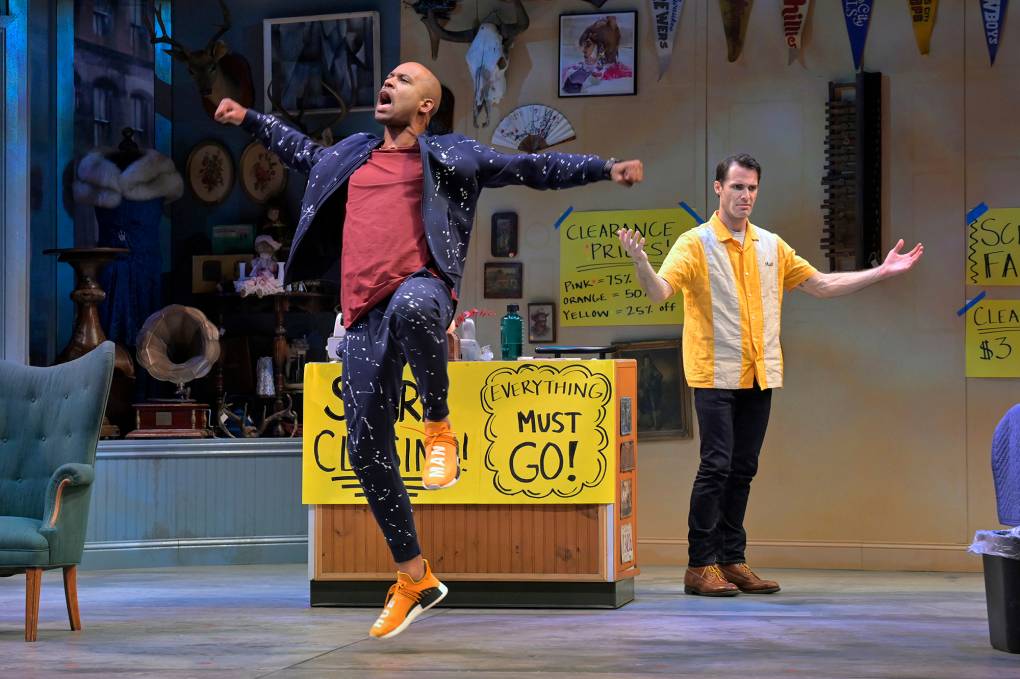
"caption": "Shawn (Kenny Scott) and Matt (Jordan Lane Shappell) share their love of basketball in TheatreWorks Silicon Valley's ‘King James.’ ",
"credit": "Kevin Berne",
"altTag": null,
"description": null,
"imgSizes": {
"medium": {
"file": "https://cdn.kqed.org/wp-content/uploads/sites/2/2024/10/TW_KingJames_KevinBerne12-800x532.jpg",
"width": 800,
"height": 532,
"mimeType": "image/jpeg"
},
"large": {
"file": "https://cdn.kqed.org/wp-content/uploads/sites/2/2024/10/TW_KingJames_KevinBerne12-1020x679.jpg",
"width": 1020,
"height": 679,
"mimeType": "image/jpeg"
},
"thumbnail": {
"file": "https://cdn.kqed.org/wp-content/uploads/sites/2/2024/10/TW_KingJames_KevinBerne12-160x106.jpg",
"width": 160,
"height": 106,
"mimeType": "image/jpeg"
},
"medium_large": {
"file": "https://cdn.kqed.org/wp-content/uploads/sites/2/2024/10/TW_KingJames_KevinBerne12-768x511.jpg",
"width": 768,
"height": 511,
"mimeType": "image/jpeg"
},
"1536x1536": {
"file": "https://cdn.kqed.org/wp-content/uploads/sites/2/2024/10/TW_KingJames_KevinBerne12-1536x1022.jpg",
"width": 1536,
"height": 1022,
"mimeType": "image/jpeg"
},
"post-thumbnail": {
"file": "https://cdn.kqed.org/wp-content/uploads/sites/2/2024/10/TW_KingJames_KevinBerne12-672x372.jpg",
"width": 672,
"height": 372,
"mimeType": "image/jpeg"
},
"twentyfourteen-full-width": {
"file": "https://cdn.kqed.org/wp-content/uploads/sites/2/2024/10/TW_KingJames_KevinBerne12-1038x576.jpg",
"width": 1038,
"height": 576,
"mimeType": "image/jpeg"
},
"full-width": {
"file": "https://cdn.kqed.org/wp-content/uploads/sites/2/2024/10/TW_KingJames_KevinBerne12-1920x1278.jpg",
"width": 1920,
"height": 1278,
"mimeType": "image/jpeg"
},
"kqedFullSize": {
"file": "https://cdn.kqed.org/wp-content/uploads/sites/2/2024/10/TW_KingJames_KevinBerne12.jpg",
"width": 2000,
"height": 1331
}
},
"isLoading": false,
"fetchFailed": false
},
"arts_13966557": {
"type": "attachments",
"id": "arts_13966557",
"meta": {
"index": "attachments_1716263798",
"site": "arts",
"id": "13966557",
"found": true
},
"title": "GhostRave_2024_059",
"publishDate": 1728945677,
"status": "inherit",
"parent": 13966541,
"modified": 1728946087,
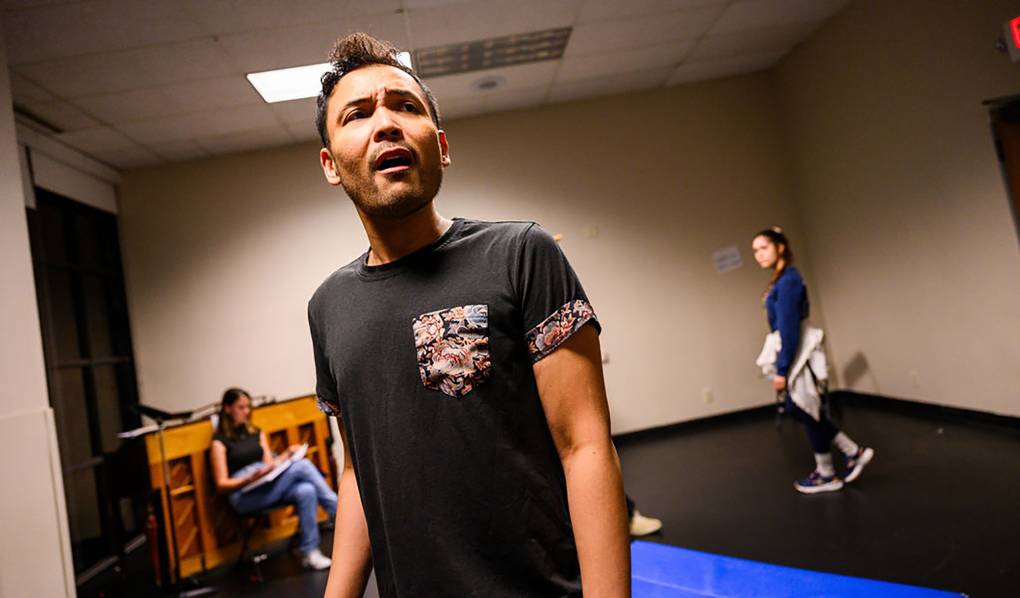
"caption": "Justin P. Lopez (Gabriel Okaga) in a June rehearsal for 'GhostRave.'",
"credit": "Ben Krantz Studio",
"altTag": null,
"description": null,
"imgSizes": {
"medium": {
"file": "https://cdn.kqed.org/wp-content/uploads/sites/2/2024/10/GhostRave_2024_059-800x469.jpg",
"width": 800,
"height": 469,
"mimeType": "image/jpeg"
},
"large": {
"file": "https://cdn.kqed.org/wp-content/uploads/sites/2/2024/10/GhostRave_2024_059-1020x598.jpg",
"width": 1020,
"height": 598,
"mimeType": "image/jpeg"
},
"thumbnail": {
"file": "https://cdn.kqed.org/wp-content/uploads/sites/2/2024/10/GhostRave_2024_059-160x94.jpg",
"width": 160,
"height": 94,
"mimeType": "image/jpeg"
},
"medium_large": {
"file": "https://cdn.kqed.org/wp-content/uploads/sites/2/2024/10/GhostRave_2024_059-768x450.jpg",
"width": 768,
"height": 450,
"mimeType": "image/jpeg"
},
"1536x1536": {
"file": "https://cdn.kqed.org/wp-content/uploads/sites/2/2024/10/GhostRave_2024_059-1536x900.jpg",
"width": 1536,
"height": 900,
"mimeType": "image/jpeg"
},
"post-thumbnail": {
"file": "https://cdn.kqed.org/wp-content/uploads/sites/2/2024/10/GhostRave_2024_059-672x372.jpg",
"width": 672,
"height": 372,
"mimeType": "image/jpeg"
},
"twentyfourteen-full-width": {
"file": "https://cdn.kqed.org/wp-content/uploads/sites/2/2024/10/GhostRave_2024_059-1038x576.jpg",
"width": 1038,
"height": 576,
"mimeType": "image/jpeg"
},
"full-width": {
"file": "https://cdn.kqed.org/wp-content/uploads/sites/2/2024/10/GhostRave_2024_059-1920x1125.jpg",
"width": 1920,
"height": 1125,
"mimeType": "image/jpeg"
},
"kqedFullSize": {
"file": "https://cdn.kqed.org/wp-content/uploads/sites/2/2024/10/GhostRave_2024_059.jpg",
"width": 2000,
"height": 1172
}
},
"isLoading": false,
"fetchFailed": false
},
"arts_13423011": {
"type": "attachments",
"id": "arts_13423011",
"meta": {
"index": "attachments_1716263798",
"site": "arts",
"id": "13423011",
"found": true
},
"parent": 13423008,
"imgSizes": {
"small": {
"file": "https://ww2.kqed.org/app/uploads/sites/2/2017/06/Julius.Inline-520x325.jpg",
"width": 520,
"mimeType": "image/jpeg",
"height": 325
},
"twentyfourteen-full-width": {
"file": "https://ww2.kqed.org/app/uploads/sites/2/2017/06/Julius.Inline-1038x576.jpg",
"width": 1038,
"mimeType": "image/jpeg",
"height": 576
},
"thumbnail": {
"file": "https://ww2.kqed.org/app/uploads/sites/2/2017/06/Julius.Inline-160x100.jpg",
"width": 160,
"mimeType": "image/jpeg",
"height": 100
},
"fd-sm": {
"file": "https://ww2.kqed.org/app/uploads/sites/2/2017/06/Julius.Inline-960x600.jpg",
"width": 960,
"mimeType": "image/jpeg",
"height": 600
},
"post-thumbnail": {
"file": "https://ww2.kqed.org/app/uploads/sites/2/2017/06/Julius.Inline-672x372.jpg",
"width": 672,
"mimeType": "image/jpeg",
"height": 372
},
"xsmall": {
"file": "https://ww2.kqed.org/app/uploads/sites/2/2017/06/Julius.Inline-375x234.jpg",
"width": 375,
"mimeType": "image/jpeg",
"height": 234
},
"kqedFullSize": {
"file": "https://ww2.kqed.org/app/uploads/sites/2/2017/06/Julius.Inline.jpg",
"width": 1920,
"height": 1200
},
"large": {
"file": "https://ww2.kqed.org/app/uploads/sites/2/2017/06/Julius.Inline-1020x638.jpg",
"width": 1020,
"mimeType": "image/jpeg",
"height": 638
},
"xlarge": {
"file": "https://ww2.kqed.org/app/uploads/sites/2/2017/06/Julius.Inline-1180x738.jpg",
"width": 1180,
"mimeType": "image/jpeg",
"height": 738
},
"guest-author-50": {
"file": "https://ww2.kqed.org/app/uploads/sites/2/2017/06/Julius.Inline-50x50.jpg",
"width": 50,
"mimeType": "image/jpeg",
"height": 50
},
"guest-author-96": {
"file": "https://ww2.kqed.org/app/uploads/sites/2/2017/06/Julius.Inline-96x96.jpg",
"width": 96,
"mimeType": "image/jpeg",
"height": 96
},
"medium": {
"file": "https://ww2.kqed.org/app/uploads/sites/2/2017/06/Julius.Inline-800x500.jpg",
"width": 800,
"mimeType": "image/jpeg",
"height": 500
},
"guest-author-64": {
"file": "https://ww2.kqed.org/app/uploads/sites/2/2017/06/Julius.Inline-64x64.jpg",
"width": 64,
"mimeType": "image/jpeg",
"height": 64
},
"guest-author-32": {
"file": "https://ww2.kqed.org/app/uploads/sites/2/2017/06/Julius.Inline-32x32.jpg",
"width": 32,
"mimeType": "image/jpeg",
"height": 32
},
"fd-lrg": {
"file": "https://ww2.kqed.org/app/uploads/sites/2/2017/06/Julius.Inline-1920x1200.jpg",
"width": 1920,
"mimeType": "image/jpeg",
"height": 1200
},
"fd-med": {
"file": "https://ww2.kqed.org/app/uploads/sites/2/2017/06/Julius.Inline-1180x738.jpg",
"width": 1180,
"mimeType": "image/jpeg",
"height": 738
},
"full-width": {
"file": "https://ww2.kqed.org/app/uploads/sites/2/2017/06/Julius.Inline-1920x1200.jpg",
"width": 1920,
"mimeType": "image/jpeg",
"height": 1200
},
"detail": {
"file": "https://ww2.kqed.org/app/uploads/sites/2/2017/06/Julius.Inline-150x150.jpg",
"width": 150,
"mimeType": "image/jpeg",
"height": 150
},
"medium_large": {
"file": "https://ww2.kqed.org/app/uploads/sites/2/2017/06/Julius.Inline-768x480.jpg",
"width": 768,
"mimeType": "image/jpeg",
"height": 480
},
"guest-author-128": {
"file": "https://ww2.kqed.org/app/uploads/sites/2/2017/06/Julius.Inline-128x128.jpg",
"width": 128,
"mimeType": "image/jpeg",
"height": 128
},
"xxsmall": {
"file": "https://ww2.kqed.org/app/uploads/sites/2/2017/06/Julius.Inline-240x150.jpg",
"width": 240,
"mimeType": "image/jpeg",
"height": 150
}
},
"publishDate": 1497314789,
"modified": 1497314978,
"caption": "A 2003 production of 'Julius Ceasar' at Cal Shakes, directed by Jonathan Moscone, featured L. Peter Callender as a Ceasar that recalled the director's father, the late George Moscone.",
"description": "A 2003 production of 'Julius Ceasar' at Cal Shakes, directed by Jonathan Moscone, featured L. Peter Callender as a Ceasar that recalled the director's father, the late George Moscone.",
"title": "Julius.Inline",
"credit": "Jay Yamada/Courtesy Cal Shakes",
"status": "inherit",
"isLoading": false,
"fetchFailed": false
},
"arts_13966177": {
"type": "attachments",
"id": "arts_13966177",
"meta": {
"index": "attachments_1716263798",
"site": "arts",
"id": "13966177",
"found": true
},
"title": "_006William-Schmidt-as-Pharus-with-Choir-Boy-Ensemble",
"publishDate": 1728323479,
"status": "inherit",
"parent": 13966174,
"modified": 1728323985,
"caption": "William Schmidt (center) as Pharus in Shotgun Players’ production of Tarell Alvin McCraney’s ‘Choir Boy.’",
"credit": "Ben Krantz/Courtesy Shotgun Players",
"altTag": "A young Black male student in a blue private school uniform with a red striped tie sings in front of a backing choir of four, similarly dressed.",
"description": null,
"imgSizes": {
"medium": {
"file": "https://cdn.kqed.org/wp-content/uploads/sites/2/2024/10/006William-Schmidt-as-Pharus-with-Choir-Boy-Ensemble-800x532.jpg",
"width": 800,
"height": 532,
"mimeType": "image/jpeg"
},
"large": {
"file": "https://cdn.kqed.org/wp-content/uploads/sites/2/2024/10/006William-Schmidt-as-Pharus-with-Choir-Boy-Ensemble-1020x679.jpg",
"width": 1020,
"height": 679,
"mimeType": "image/jpeg"
},
"thumbnail": {
"file": "https://cdn.kqed.org/wp-content/uploads/sites/2/2024/10/006William-Schmidt-as-Pharus-with-Choir-Boy-Ensemble-160x106.jpg",
"width": 160,
"height": 106,
"mimeType": "image/jpeg"
},
"medium_large": {
"file": "https://cdn.kqed.org/wp-content/uploads/sites/2/2024/10/006William-Schmidt-as-Pharus-with-Choir-Boy-Ensemble-768x511.jpg",
"width": 768,
"height": 511,
"mimeType": "image/jpeg"
},
"1536x1536": {
"file": "https://cdn.kqed.org/wp-content/uploads/sites/2/2024/10/006William-Schmidt-as-Pharus-with-Choir-Boy-Ensemble-1536x1022.jpg",
"width": 1536,
"height": 1022,
"mimeType": "image/jpeg"
},
"post-thumbnail": {
"file": "https://cdn.kqed.org/wp-content/uploads/sites/2/2024/10/006William-Schmidt-as-Pharus-with-Choir-Boy-Ensemble-672x372.jpg",
"width": 672,
"height": 372,
"mimeType": "image/jpeg"
},
"twentyfourteen-full-width": {
"file": "https://cdn.kqed.org/wp-content/uploads/sites/2/2024/10/006William-Schmidt-as-Pharus-with-Choir-Boy-Ensemble-1038x576.jpg",
"width": 1038,
"height": 576,
"mimeType": "image/jpeg"
},
"full-width": {
"file": "https://cdn.kqed.org/wp-content/uploads/sites/2/2024/10/006William-Schmidt-as-Pharus-with-Choir-Boy-Ensemble-1920x1278.jpg",
"width": 1920,
"height": 1278,
"mimeType": "image/jpeg"
},
"kqedFullSize": {
"file": "https://cdn.kqed.org/wp-content/uploads/sites/2/2024/10/006William-Schmidt-as-Pharus-with-Choir-Boy-Ensemble.jpg",
"width": 2000,
"height": 1331
}
},
"isLoading": false,
"fetchFailed": false
},
"arts_13966075": {
"type": "attachments",
"id": "arts_13966075",
"meta": {
"index": "attachments_1716263798",
"site": "arts",
"id": "13966075",
"found": true
},
"title": "RideTheCycloneNCTC-L-R_-Milo-Boland-Sage-Alberto-Jon-Gary-Harris-Anne-Norland-Matt-Skinner.-Photo-by-Jenni-Chapman",
"publishDate": 1727992054,
"status": "inherit",
"parent": 13966064,
"modified": 1727993748,
"caption": "(L–R) Milo Boland, Sage Alberto, Jon Gary Harris, Anne Norland and Matt Skinner in ‘Ride the Cyclone’ at the New Conservatory Theatre Center in San Francisco.",
"credit": "Jenni Chapman/Courtesy NCTC",
"altTag": "Five actors in matching school uniforms stand in a line, singing, against a purple backdrop",
"description": null,
"imgSizes": {
"medium": {
"file": "https://cdn.kqed.org/wp-content/uploads/sites/2/2024/10/RideTheCycloneNCTC-L-R_-Milo-Boland-Sage-Alberto-Jon-Gary-Harris-Anne-Norland-Matt-Skinner.-Photo-by-Jenni-Chapman-800x534.jpg",
"width": 800,
"height": 534,
"mimeType": "image/jpeg"
},
"large": {
"file": "https://cdn.kqed.org/wp-content/uploads/sites/2/2024/10/RideTheCycloneNCTC-L-R_-Milo-Boland-Sage-Alberto-Jon-Gary-Harris-Anne-Norland-Matt-Skinner.-Photo-by-Jenni-Chapman-1020x680.jpg",
"width": 1020,
"height": 680,
"mimeType": "image/jpeg"
},
"thumbnail": {
"file": "https://cdn.kqed.org/wp-content/uploads/sites/2/2024/10/RideTheCycloneNCTC-L-R_-Milo-Boland-Sage-Alberto-Jon-Gary-Harris-Anne-Norland-Matt-Skinner.-Photo-by-Jenni-Chapman-160x107.jpg",
"width": 160,
"height": 107,
"mimeType": "image/jpeg"
},
"medium_large": {
"file": "https://cdn.kqed.org/wp-content/uploads/sites/2/2024/10/RideTheCycloneNCTC-L-R_-Milo-Boland-Sage-Alberto-Jon-Gary-Harris-Anne-Norland-Matt-Skinner.-Photo-by-Jenni-Chapman-768x512.jpg",
"width": 768,
"height": 512,
"mimeType": "image/jpeg"
},
"post-thumbnail": {
"file": "https://cdn.kqed.org/wp-content/uploads/sites/2/2024/10/RideTheCycloneNCTC-L-R_-Milo-Boland-Sage-Alberto-Jon-Gary-Harris-Anne-Norland-Matt-Skinner.-Photo-by-Jenni-Chapman-672x372.jpg",
"width": 672,
"height": 372,
"mimeType": "image/jpeg"
},
"twentyfourteen-full-width": {
"file": "https://cdn.kqed.org/wp-content/uploads/sites/2/2024/10/RideTheCycloneNCTC-L-R_-Milo-Boland-Sage-Alberto-Jon-Gary-Harris-Anne-Norland-Matt-Skinner.-Photo-by-Jenni-Chapman-1024x576.jpg",
"width": 1024,
"height": 576,
"mimeType": "image/jpeg"
},
"kqedFullSize": {
"file": "https://cdn.kqed.org/wp-content/uploads/sites/2/2024/10/RideTheCycloneNCTC-L-R_-Milo-Boland-Sage-Alberto-Jon-Gary-Harris-Anne-Norland-Matt-Skinner.-Photo-by-Jenni-Chapman.jpg",
"width": 1024,
"height": 683
}
},
"isLoading": false,
"fetchFailed": false
},
"arts_13965679": {
"type": "attachments",
"id": "arts_13965679",
"meta": {
"index": "attachments_1716263798",
"site": "arts",
"id": "13965679",
"found": true
},
"title": "Dame Maggie Smith, photographed in London in 2012.",
"publishDate": 1727460616,
"status": "inherit",
"parent": 13965673,
"modified": 1727460696,
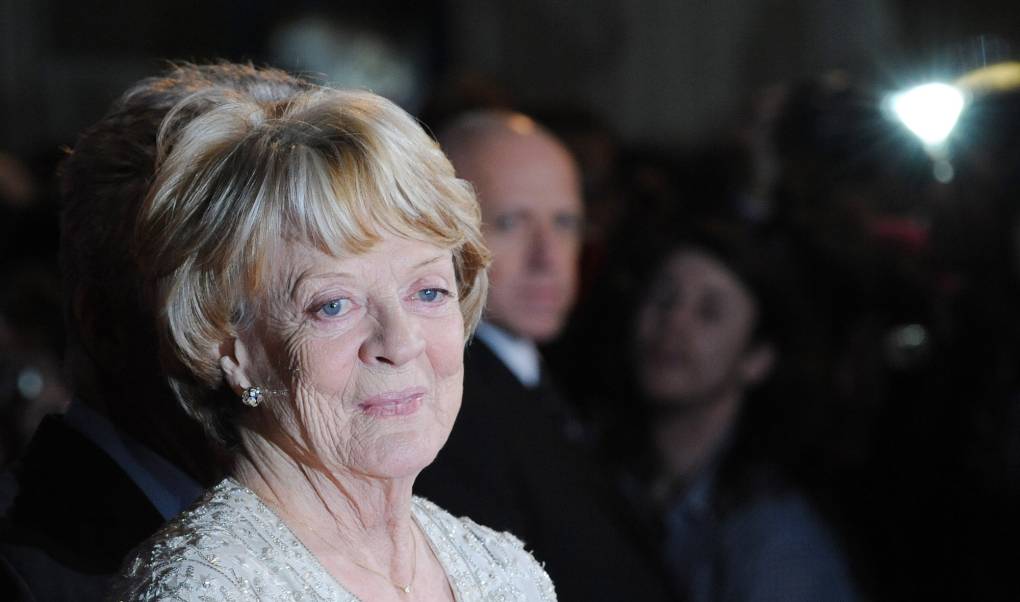
"caption": "Dame Maggie Smith, photographed in London in 2012. ",
"credit": "Stuart Wilson/Getty Images",
"altTag": "A senior woman smiles warmly on a red carpet.",
"description": null,
"imgSizes": {
"medium": {
"file": "https://cdn.kqed.org/wp-content/uploads/sites/2/2024/09/maggie-smith-800x472.jpg",
"width": 800,
"height": 472,
"mimeType": "image/jpeg"
},
"large": {
"file": "https://cdn.kqed.org/wp-content/uploads/sites/2/2024/09/maggie-smith-1020x602.jpg",
"width": 1020,
"height": 602,
"mimeType": "image/jpeg"
},
"thumbnail": {
"file": "https://cdn.kqed.org/wp-content/uploads/sites/2/2024/09/maggie-smith-160x94.jpg",
"width": 160,
"height": 94,
"mimeType": "image/jpeg"
},
"medium_large": {
"file": "https://cdn.kqed.org/wp-content/uploads/sites/2/2024/09/maggie-smith-768x454.jpg",
"width": 768,
"height": 454,
"mimeType": "image/jpeg"
},
"1536x1536": {
"file": "https://cdn.kqed.org/wp-content/uploads/sites/2/2024/09/maggie-smith-1536x907.jpg",
"width": 1536,
"height": 907,
"mimeType": "image/jpeg"
},
"post-thumbnail": {
"file": "https://cdn.kqed.org/wp-content/uploads/sites/2/2024/09/maggie-smith-672x372.jpg",
"width": 672,
"height": 372,
"mimeType": "image/jpeg"
},
"twentyfourteen-full-width": {
"file": "https://cdn.kqed.org/wp-content/uploads/sites/2/2024/09/maggie-smith-1038x576.jpg",
"width": 1038,
"height": 576,
"mimeType": "image/jpeg"
},
"full-width": {
"file": "https://cdn.kqed.org/wp-content/uploads/sites/2/2024/09/maggie-smith-1920x1134.jpg",
"width": 1920,
"height": 1134,
"mimeType": "image/jpeg"
},
"kqedFullSize": {
"file": "https://cdn.kqed.org/wp-content/uploads/sites/2/2024/09/maggie-smith.jpg",
"width": 2000,
"height": 1181
}
},
"isLoading": false,
"fetchFailed": false
},
"arts_13965255": {
"type": "attachments",
"id": "arts_13965255",
"meta": {
"index": "attachments_1716263798",
"site": "arts",
"id": "13965255",
"found": true
},
"title": "PVL_183",
"publishDate": 1726793254,
"status": "inherit",
"parent": 0,
"modified": 1726857886,
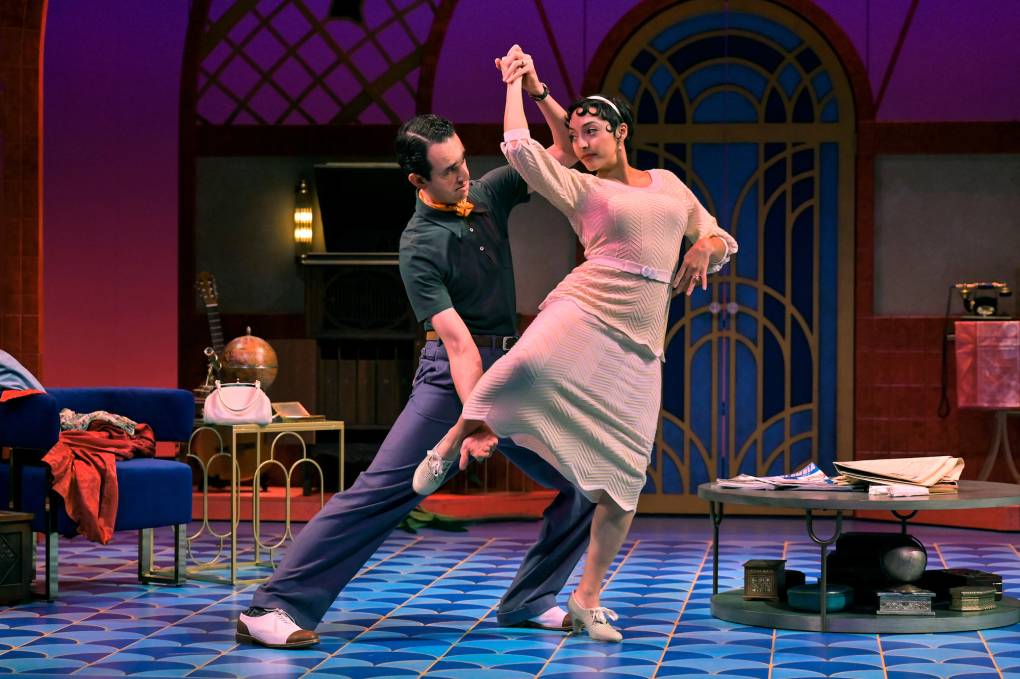
"caption": "Brady Morales-Woolery and Gianna DiGregorio Rivera in Noël Coward’s ‘Private Lives’ at A.C.T.’s Toni Rembe Theater.",
"credit": "Kevin Berne",
"altTag": "a man and a woman caught mid-dance atop a blue rug",
"description": null,
"imgSizes": {
"medium": {
"file": "https://cdn.kqed.org/wp-content/uploads/sites/2/2024/09/PVL_183-800x532.jpg",
"width": 800,
"height": 532,
"mimeType": "image/jpeg"
},
"large": {
"file": "https://cdn.kqed.org/wp-content/uploads/sites/2/2024/09/PVL_183-1020x679.jpg",
"width": 1020,
"height": 679,
"mimeType": "image/jpeg"
},
"thumbnail": {
"file": "https://cdn.kqed.org/wp-content/uploads/sites/2/2024/09/PVL_183-160x106.jpg",
"width": 160,
"height": 106,
"mimeType": "image/jpeg"
},
"medium_large": {
"file": "https://cdn.kqed.org/wp-content/uploads/sites/2/2024/09/PVL_183-768x511.jpg",
"width": 768,
"height": 511,
"mimeType": "image/jpeg"
},
"1536x1536": {
"file": "https://cdn.kqed.org/wp-content/uploads/sites/2/2024/09/PVL_183-1536x1022.jpg",
"width": 1536,
"height": 1022,
"mimeType": "image/jpeg"
},
"post-thumbnail": {
"file": "https://cdn.kqed.org/wp-content/uploads/sites/2/2024/09/PVL_183-672x372.jpg",
"width": 672,
"height": 372,
"mimeType": "image/jpeg"
},
"twentyfourteen-full-width": {
"file": "https://cdn.kqed.org/wp-content/uploads/sites/2/2024/09/PVL_183-1038x576.jpg",
"width": 1038,
"height": 576,
"mimeType": "image/jpeg"
},
"full-width": {
"file": "https://cdn.kqed.org/wp-content/uploads/sites/2/2024/09/PVL_183-1920x1278.jpg",
"width": 1920,
"height": 1278,
"mimeType": "image/jpeg"
},
"kqedFullSize": {
"file": "https://cdn.kqed.org/wp-content/uploads/sites/2/2024/09/PVL_183.jpg",
"width": 2000,
"height": 1331
}
},
"isLoading": false,
"fetchFailed": false
},
"arts_13964284": {
"type": "attachments",
"id": "arts_13964284",
"meta": {
"index": "attachments_1716263798",
"site": "arts",
"id": "13964284",
"found": true
},
"title": "_75A4799",
"publishDate": 1726504908,
"status": "inherit",
"parent": 13963879,
"modified": 1726504997,
"caption": "Irene Roberts as Offred in Poul Ruders and Paul Bentley's 'The Handmaid's Tale.'",
"credit": "Cory Weaver/San Francisco Opera",
"altTag": null,
"description": null,
"imgSizes": {
"medium": {
"file": "https://cdn.kqed.org/wp-content/uploads/sites/2/2024/09/75A4799-800x450.jpg",
"width": 800,
"height": 450,
"mimeType": "image/jpeg"
},
"large": {
"file": "https://cdn.kqed.org/wp-content/uploads/sites/2/2024/09/75A4799-1020x574.jpg",
"width": 1020,
"height": 574,
"mimeType": "image/jpeg"
},
"thumbnail": {
"file": "https://cdn.kqed.org/wp-content/uploads/sites/2/2024/09/75A4799-160x90.jpg",
"width": 160,
"height": 90,
"mimeType": "image/jpeg"
},
"medium_large": {
"file": "https://cdn.kqed.org/wp-content/uploads/sites/2/2024/09/75A4799-768x432.jpg",
"width": 768,
"height": 432,
"mimeType": "image/jpeg"
},
"1536x1536": {
"file": "https://cdn.kqed.org/wp-content/uploads/sites/2/2024/09/75A4799-1536x864.jpg",
"width": 1536,
"height": 864,
"mimeType": "image/jpeg"
},
"post-thumbnail": {
"file": "https://cdn.kqed.org/wp-content/uploads/sites/2/2024/09/75A4799-672x372.jpg",
"width": 672,
"height": 372,
"mimeType": "image/jpeg"
},
"twentyfourteen-full-width": {
"file": "https://cdn.kqed.org/wp-content/uploads/sites/2/2024/09/75A4799-1038x576.jpg",
"width": 1038,
"height": 576,
"mimeType": "image/jpeg"
},
"kqedFullSize": {
"file": "https://cdn.kqed.org/wp-content/uploads/sites/2/2024/09/75A4799.jpg",
"width": 1920,
"height": 1080
}
},
"isLoading": false,
"fetchFailed": false
},
"arts_13963092": {
"type": "attachments",
"id": "arts_13963092",
"meta": {
"index": "attachments_1716263798",
"site": "arts",
"id": "13963092",
"found": true
},
"title": "Jaja",
"publishDate": 1724372173,
"status": "inherit",
"parent": 13963021,
"modified": 1724372212,
"caption": "Lakisha May and Nana Mensah in the Broadway run of ‘Jaja's African Hair Braiding.’\n",
"credit": "Matthew Murphy",
"altTag": null,
"description": null,
"imgSizes": {
"medium": {
"file": "https://cdn.kqed.org/wp-content/uploads/sites/2/2024/08/Jaja-800x600.jpg",
"width": 800,
"height": 600,
"mimeType": "image/jpeg"
},
"large": {
"file": "https://cdn.kqed.org/wp-content/uploads/sites/2/2024/08/Jaja-1020x765.jpg",
"width": 1020,
"height": 765,
"mimeType": "image/jpeg"
},
"thumbnail": {
"file": "https://cdn.kqed.org/wp-content/uploads/sites/2/2024/08/Jaja-160x120.jpg",
"width": 160,
"height": 120,
"mimeType": "image/jpeg"
},
"medium_large": {
"file": "https://cdn.kqed.org/wp-content/uploads/sites/2/2024/08/Jaja-768x576.jpg",
"width": 768,
"height": 576,
"mimeType": "image/jpeg"
},
"post-thumbnail": {
"file": "https://cdn.kqed.org/wp-content/uploads/sites/2/2024/08/Jaja-672x372.jpg",
"width": 672,
"height": 372,
"mimeType": "image/jpeg"
},
"twentyfourteen-full-width": {
"file": "https://cdn.kqed.org/wp-content/uploads/sites/2/2024/08/Jaja-1038x576.jpg",
"width": 1038,
"height": 576,
"mimeType": "image/jpeg"
},
"kqedFullSize": {
"file": "https://cdn.kqed.org/wp-content/uploads/sites/2/2024/08/Jaja.jpg",
"width": 1470,
"height": 1102
}
},
"isLoading": false,
"fetchFailed": false
},
"arts_13929121": {
"type": "attachments",
"id": "arts_13929121",
"meta": {
"index": "attachments_1716263798",
"site": "arts",
"id": "13929121",
"found": true
},
"title": "Exhaustion.Arroyo.Press1",
"publishDate": 1683925252,
"status": "inherit",
"parent": 13929116,
"modified": 1721411020,
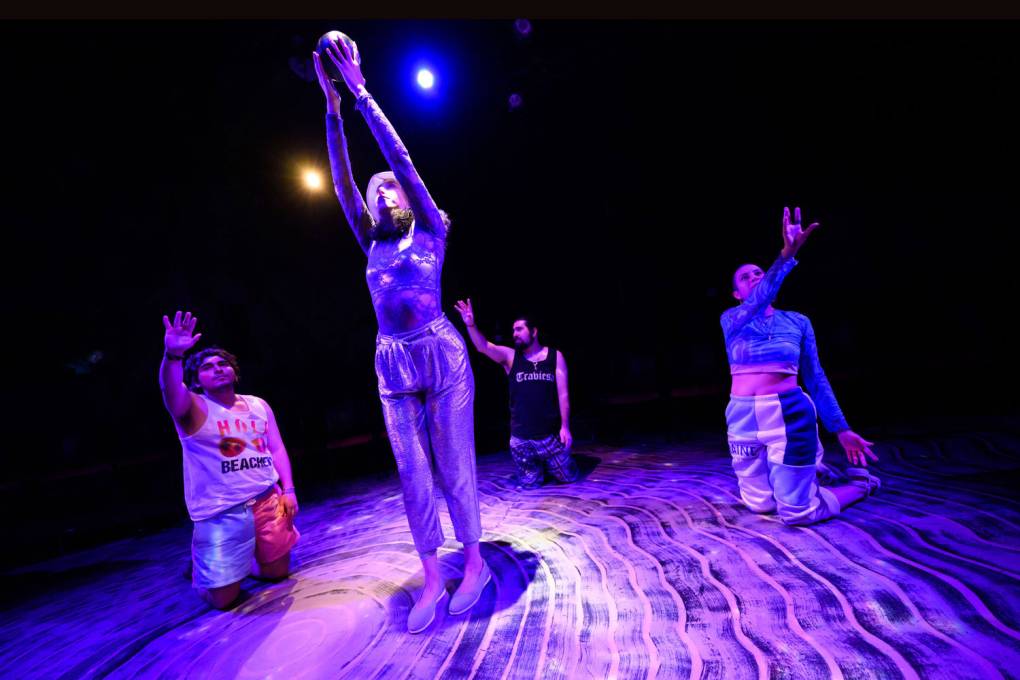
"caption": "Shroom (Natalia Delgado, middle left), replenishes los tres amigos Apé (Patricio Becerril, left), Chío (Pano Roditis, middle right) and Taki (Edna Raia, right) in Cutting Ball Theater and In the Margin’s 2023 production of ‘Exhaustion Arroyo: Dancin’ Trees in the Ravine’ by W. Fran Astorga. The theatre announced that it would be ceasing operations at the end of 2024.",
"credit": "Ben Krantz",
"altTag": "people perform on a stage bathed in purple light",
"description": null,
"imgSizes": {
"medium": {
"file": "https://cdn.kqed.org/wp-content/uploads/sites/2/2023/05/Exhaustion.Arroyo.Press1_-800x533.jpg",
"width": 800,
"height": 533,
"mimeType": "image/jpeg"
},
"large": {
"file": "https://cdn.kqed.org/wp-content/uploads/sites/2/2023/05/Exhaustion.Arroyo.Press1_-1020x680.jpg",
"width": 1020,
"height": 680,
"mimeType": "image/jpeg"
},
"thumbnail": {
"file": "https://cdn.kqed.org/wp-content/uploads/sites/2/2023/05/Exhaustion.Arroyo.Press1_-160x107.jpg",
"width": 160,
"height": 107,
"mimeType": "image/jpeg"
},
"medium_large": {
"file": "https://cdn.kqed.org/wp-content/uploads/sites/2/2023/05/Exhaustion.Arroyo.Press1_-768x512.jpg",
"width": 768,
"height": 512,
"mimeType": "image/jpeg"
},
"post-thumbnail": {
"file": "https://cdn.kqed.org/wp-content/uploads/sites/2/2023/05/Exhaustion.Arroyo.Press1_-672x372.jpg",
"width": 672,
"height": 372,
"mimeType": "image/jpeg"
},
"twentyfourteen-full-width": {
"file": "https://cdn.kqed.org/wp-content/uploads/sites/2/2023/05/Exhaustion.Arroyo.Press1_-1038x576.jpg",
"width": 1038,
"height": 576,
"mimeType": "image/jpeg"
},
"kqedFullSize": {
"file": "https://cdn.kqed.org/wp-content/uploads/sites/2/2023/05/Exhaustion.Arroyo.Press1_.jpg",
"width": 1500,
"height": 1000
}
},
"isLoading": false,
"fetchFailed": false
},
"arts_13961107": {
"type": "attachments",
"id": "arts_13961107",
"meta": {
"index": "attachments_1716263798",
"site": "arts",
"id": "13961107",
"found": true
},
"title": "Colman Domingo as John ‘Divine G’ Whitfield and Clarence ‘Divine Eye’ Maclin as himself.",
"publishDate": 1720810311,
"status": "inherit",
"parent": 13961106,
"modified": 1720810447,
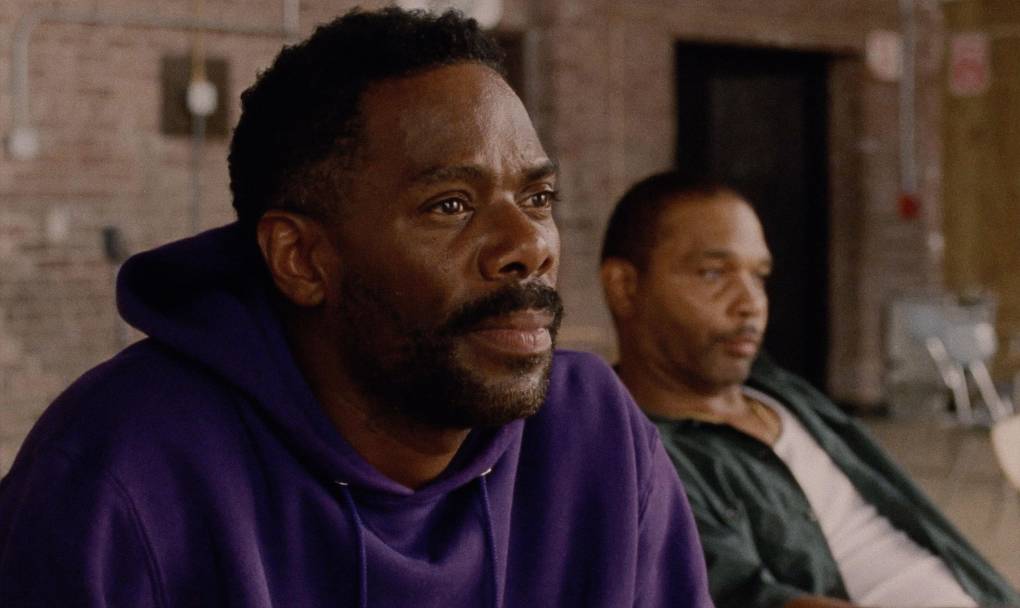
"caption": "Colman Domingo as John ‘Divine G’ Whitfield and Clarence ‘Divine Eye’ Maclin as himself.",
"credit": "A24",
"altTag": "A middle-aged Black man sits forward in a chair, watching something closely. Behind him, another Black man sits in a chair.",
"description": null,
"imgSizes": {
"medium": {
"file": "https://cdn.kqed.org/wp-content/uploads/sites/2/2024/07/https-cdn-sanity-io-images-xq1bjtf4-production-493304bf41426ba0d7c42569b8dad7d748dea747-4000x2386-1-800x477.jpeg",
"width": 800,
"height": 477,
"mimeType": "image/jpeg"
},
"large": {
"file": "https://cdn.kqed.org/wp-content/uploads/sites/2/2024/07/https-cdn-sanity-io-images-xq1bjtf4-production-493304bf41426ba0d7c42569b8dad7d748dea747-4000x2386-1-1020x608.jpeg",
"width": 1020,
"height": 608,
"mimeType": "image/jpeg"
},
"thumbnail": {
"file": "https://cdn.kqed.org/wp-content/uploads/sites/2/2024/07/https-cdn-sanity-io-images-xq1bjtf4-production-493304bf41426ba0d7c42569b8dad7d748dea747-4000x2386-1-160x95.jpeg",
"width": 160,
"height": 95,
"mimeType": "image/jpeg"
},
"medium_large": {
"file": "https://cdn.kqed.org/wp-content/uploads/sites/2/2024/07/https-cdn-sanity-io-images-xq1bjtf4-production-493304bf41426ba0d7c42569b8dad7d748dea747-4000x2386-1-768x458.jpeg",
"width": 768,
"height": 458,
"mimeType": "image/jpeg"
},
"1536x1536": {
"file": "https://cdn.kqed.org/wp-content/uploads/sites/2/2024/07/https-cdn-sanity-io-images-xq1bjtf4-production-493304bf41426ba0d7c42569b8dad7d748dea747-4000x2386-1-1536x916.jpeg",
"width": 1536,
"height": 916,
"mimeType": "image/jpeg"
},
"2048x2048": {
"file": "https://cdn.kqed.org/wp-content/uploads/sites/2/2024/07/https-cdn-sanity-io-images-xq1bjtf4-production-493304bf41426ba0d7c42569b8dad7d748dea747-4000x2386-1-2048x1222.jpeg",
"width": 2048,
"height": 1222,
"mimeType": "image/jpeg"
},
"post-thumbnail": {
"file": "https://cdn.kqed.org/wp-content/uploads/sites/2/2024/07/https-cdn-sanity-io-images-xq1bjtf4-production-493304bf41426ba0d7c42569b8dad7d748dea747-4000x2386-1-672x372.jpeg",
"width": 672,
"height": 372,
"mimeType": "image/jpeg"
},
"twentyfourteen-full-width": {
"file": "https://cdn.kqed.org/wp-content/uploads/sites/2/2024/07/https-cdn-sanity-io-images-xq1bjtf4-production-493304bf41426ba0d7c42569b8dad7d748dea747-4000x2386-1-1038x576.jpeg",
"width": 1038,
"height": 576,
"mimeType": "image/jpeg"
},
"full-width": {
"file": "https://cdn.kqed.org/wp-content/uploads/sites/2/2024/07/https-cdn-sanity-io-images-xq1bjtf4-production-493304bf41426ba0d7c42569b8dad7d748dea747-4000x2386-1-1920x1145.jpeg",
"width": 1920,
"height": 1145,
"mimeType": "image/jpeg"
},
"kqedFullSize": {
"file": "https://cdn.kqed.org/wp-content/uploads/sites/2/2024/07/https-cdn-sanity-io-images-xq1bjtf4-production-493304bf41426ba0d7c42569b8dad7d748dea747-4000x2386-1-scaled-e1720810364263.jpeg",
"width": 1920,
"height": 1145
}
},
"isLoading": false,
"fetchFailed": false
}
},
"audioPlayerReducer": {
"postId": "stream_live",
"isPaused": true,
"isPlaying": false,
"pfsActive": false,
"pledgeModalIsOpen": true,
"playerDrawerIsOpen": false,
"liveAudioPlayStartedAt": 0,
"liveAudioPlayContext": ""
},
"authorsReducer": {
"byline_arts_13966570": {
"type": "authors",
"id": "byline_arts_13966570",
"meta": {
"override": true
},
"slug": "byline_arts_13966570",
"name": "Ashwini Gangal",
"isLoading": false
},
"byline_arts_13965673": {
"type": "authors",
"id": "byline_arts_13965673",
"meta": {
"override": true
},
"slug": "byline_arts_13965673",
"name": "Jill Lawless, Associated Press",
"isLoading": false
},
"byline_arts_13961106": {
"type": "authors",
"id": "byline_arts_13961106",
"meta": {
"override": true
},
"slug": "byline_arts_13961106",
"name": "Aisha Harris, NPR",
"isLoading": false
},
"gmeline": {
"type": "authors",
"id": "185",
"meta": {
"index": "authors_1716337520",
"id": "185",
"found": true
},
"name": "Gabe Meline",
"firstName": "Gabe",
"lastName": "Meline",
"slug": "gmeline",
"email": "gmeline@kqed.org",
"display_author_email": true,
"staff_mastheads": [
"arts"
],
"title": "Senior Editor, KQED Arts & Culture",
"bio": "Gabe Meline entered journalism at age 15 making photocopied zines, and has since earned awards from the Edward R. Murrow Awards, the Society for Professional Journalists, the Online Journalism Awards, the Association of Alternative Newsweeklies and the California Newspaper Publishers Association. Prior to KQED, he was the editor of the \u003cem>North Bay Bohemian\u003c/em> and a touring musician. He lives with his wife and daughter in his hometown of Santa Rosa, CA.",
"avatar": "https://secure.gravatar.com/avatar/5bebe57be0d8bc2dd318934feb47299e2d2d10cba28d09d8d7afb389a2ce2bdd?s=600&d=blank&r=g",
"twitter": null,
"bluesky": null,
"facebook": null,
"instagram": null,
"linkedin": null,
"sites": [
{
"site": "",
"roles": [
"editor"
]
},
{
"site": "arts",
"roles": [
"administrator"
]
},
{
"site": "artschool",
"roles": [
"editor"
]
},
{
"site": "news",
"roles": [
"author"
]
},
{
"site": "pop",
"roles": [
"editor"
]
},
{
"site": "bayareabites",
"roles": [
"editor"
]
},
{
"site": "food",
"roles": [
"editor"
]
},
{
"site": "forum",
"roles": [
"administrator"
]
},
{
"site": "liveblog",
"roles": [
"editor"
]
},
{
"site": "hiphop",
"roles": [
"editor"
]
}
],
"headData": {
"title": "Gabe Meline | KQED",
"description": "Senior Editor, KQED Arts & Culture",
"ogImgSrc": "https://secure.gravatar.com/avatar/5bebe57be0d8bc2dd318934feb47299e2d2d10cba28d09d8d7afb389a2ce2bdd?s=600&d=blank&r=g",
"twImgSrc": "https://secure.gravatar.com/avatar/5bebe57be0d8bc2dd318934feb47299e2d2d10cba28d09d8d7afb389a2ce2bdd?s=600&d=blank&r=g"
},
"isLoading": false,
"link": "/author/gmeline"
},
"ralexandra": {
"type": "authors",
"id": "11242",
"meta": {
"index": "authors_1716337520",
"id": "11242",
"found": true
},
"name": "Rae Alexandra",
"firstName": "Rae",
"lastName": "Alexandra",
"slug": "ralexandra",
"email": "ralexandra@kqed.org",
"display_author_email": true,
"staff_mastheads": [],
"title": "Reporter/Producer",
"bio": "Rae Alexandra is a Reporter/Producer for KQED Arts & Culture, and the creator/author of the \u003ca href=\"https://www.kqed.org/arts/program/rebel-girls-from-bay-area-history\">Rebel Girls From Bay Area History\u003c/a> and \u003ca href=\"https://www.kqed.org/bizarrebayarea\">Bizarre Bay Area\u003c/a> series. Her debut book, \u003ca href=\"https://citylights.com/politics-current-events-history/unsung-heroines35-women-who-changed/\">Unsung Heroines: 35 Women Who Changed the Bay Area\u003c/a> was published by City Lights in March 2026. In 2023, Rae was awarded an SPJ Excellence in Journalism Award for Arts & Culture. Rae was born and raised in Wales and subsequently — even after two decades in Northern California — still uses phrases that regularly baffle her coworkers.",
"avatar": "https://secure.gravatar.com/avatar/edfee8176c80cc0a382b051190f5341997df378a934a5774dcb0977732dfd401?s=600&d=blank&r=g",
"twitter": null,
"bluesky": null,
"facebook": null,
"instagram": null,
"linkedin": null,
"sites": [
{
"site": "arts",
"roles": [
"subscriber"
]
},
{
"site": "news",
"roles": [
"subscriber"
]
},
{
"site": "pop",
"roles": [
"subscriber"
]
},
{
"site": "bayareabites",
"roles": [
"subscriber"
]
},
{
"site": "science",
"roles": [
"subscriber"
]
}
],
"headData": {
"title": "Rae Alexandra | KQED",
"description": "Reporter/Producer",
"ogImgSrc": "https://secure.gravatar.com/avatar/edfee8176c80cc0a382b051190f5341997df378a934a5774dcb0977732dfd401?s=600&d=blank&r=g",
"twImgSrc": "https://secure.gravatar.com/avatar/edfee8176c80cc0a382b051190f5341997df378a934a5774dcb0977732dfd401?s=600&d=blank&r=g"
},
"isLoading": false,
"link": "/author/ralexandra"
},
"ogpenn": {
"type": "authors",
"id": "11491",
"meta": {
"index": "authors_1716337520",
"id": "11491",
"found": true
},
"name": "Pendarvis Harshaw",
"firstName": "Pendarvis",
"lastName": "Harshaw",
"slug": "ogpenn",
"email": "ogpenn@gmail.com",
"display_author_email": false,
"staff_mastheads": [
"arts"
],
"title": "Community Engagement Reporter",
"bio": "Pendarvis Harshaw is an educator, host and writer with KQED Arts.",
"avatar": "https://secure.gravatar.com/avatar/972b77ee8e3f346ae2b00622661187fbfabd059b5693bbdc1475ea7a722fd4cd?s=600&d=blank&r=g",
"twitter": null,
"bluesky": null,
"facebook": null,
"instagram": "ogpenn",
"linkedin": null,
"sites": [
{
"site": "arts",
"roles": [
"administrator"
]
},
{
"site": "news",
"roles": [
"editor"
]
},
{
"site": "bayareabites",
"roles": [
"author"
]
},
{
"site": "hiphop",
"roles": [
"editor"
]
}
],
"headData": {
"title": "Pendarvis Harshaw | KQED",
"description": "Community Engagement Reporter",
"ogImgSrc": "https://secure.gravatar.com/avatar/972b77ee8e3f346ae2b00622661187fbfabd059b5693bbdc1475ea7a722fd4cd?s=600&d=blank&r=g",
"twImgSrc": "https://secure.gravatar.com/avatar/972b77ee8e3f346ae2b00622661187fbfabd059b5693bbdc1475ea7a722fd4cd?s=600&d=blank&r=g"
},
"isLoading": false,
"link": "/author/ogpenn"
},
"ngluckstern": {
"type": "authors",
"id": "11497",
"meta": {
"index": "authors_1716337520",
"id": "11497",
"found": true
},
"name": "Nicole Gluckstern",
"firstName": "Nicole",
"lastName": "Gluckstern",
"slug": "ngluckstern",
"email": "gluckstern.nicole@gmail.com",
"display_author_email": false,
"staff_mastheads": [],
"title": "KQED Contributor",
"bio": null,
"avatar": "https://secure.gravatar.com/avatar/2c3d593194017bfe811a998ad03140909de330b22abebf4889e1a564ce5b3495?s=600&d=blank&r=g",
"twitter": null,
"bluesky": null,
"facebook": null,
"instagram": null,
"linkedin": null,
"sites": [
{
"site": "arts",
"roles": [
"contributor"
]
}
],
"headData": {
"title": "Nicole Gluckstern | KQED",
"description": "KQED Contributor",
"ogImgSrc": "https://secure.gravatar.com/avatar/2c3d593194017bfe811a998ad03140909de330b22abebf4889e1a564ce5b3495?s=600&d=blank&r=g",
"twImgSrc": "https://secure.gravatar.com/avatar/2c3d593194017bfe811a998ad03140909de330b22abebf4889e1a564ce5b3495?s=600&d=blank&r=g"
},
"isLoading": false,
"link": "/author/ngluckstern"
},
"djchavez": {
"type": "authors",
"id": "11905",
"meta": {
"index": "authors_1716337520",
"id": "11905",
"found": true
},
"name": "David John Chávez",
"firstName": "David John",
"lastName": "Chávez",
"slug": "djchavez",
"email": "theatrechavez@gmail.com",
"display_author_email": false,
"staff_mastheads": [],
"title": "KQED Contributor",
"bio": "Based in San José, David is a theater critic and reporter who who served as Executive Chair of the American Theatre Critics/Journalists Association (’22-’25), as well as a regular theater contributor to The Mercury News, San Francisco Chronicle, American Theatre Magazine and KQED, among other publications. He is a two-time juror for the Pulitzer Prize for Drama (’22-’23) and a 2020 fellow of the Eugene O'Neill National Critics Institute.",
"avatar": "https://secure.gravatar.com/avatar/5eaa3ce994228213820907c390795c28f7b97165c2b575f46d15fc9273a132b7?s=600&d=blank&r=g",
"twitter": null,
"bluesky": null,
"facebook": "https://www.facebook.com/bydavidjchavez",
"instagram": "https://www.instagram.com/davidjchavez/",
"linkedin": null,
"sites": [
{
"site": "arts",
"roles": [
"contributor"
]
}
],
"headData": {
"title": "David John Chávez | KQED",
"description": "KQED Contributor",
"ogImgSrc": "https://secure.gravatar.com/avatar/5eaa3ce994228213820907c390795c28f7b97165c2b575f46d15fc9273a132b7?s=600&d=blank&r=g",
"twImgSrc": "https://secure.gravatar.com/avatar/5eaa3ce994228213820907c390795c28f7b97165c2b575f46d15fc9273a132b7?s=600&d=blank&r=g"
},
"isLoading": false,
"link": "/author/djchavez"
}
},
"pagesReducer": {
"arts_category_theater": {
"type": "terms",
"id": "arts_967",
"meta": {
"index": "terms_1716263798",
"site": "arts",
"id": "967",
"score": 12.28665
},
"featImg": null,
"name": "Theater",
"description": null,
"taxonomy": "category",
"headData": {
"twImgId": null,
"twTitle": null,
"ogTitle": null,
"ogImgId": null,
"twDescription": null,
"description": null,
"title": "Theater Archives | KQED Arts",
"ogDescription": null
},
"ttid": 985,
"slug": "theater",
"isLoading": false,
"title": "Theater",
"pageMeta": {
"site": "arts",
"WpPageTemplate": "page-topic-editorial",
"currentPage": 8
},
"blocks": [
{
"blockName": "kqed/post-list",
"attrs": {
"layout": "cardArticle2",
"query": "posts/arts?category=theater",
"seeMore": false,
"paginated": true,
"page": 8
}
},
{
"blockName": "kqed/ad"
}
]
}
},
"pfsSessionReducer": {},
"postsReducer": {
"stream_live": {
"type": "live",
"id": "stream_live",
"audioUrl": "https://streams.kqed.org/kqedradio",
"title": "Live Stream",
"excerpt": "Live Stream information currently unavailable.",
"link": "/radio",
"featImg": "",
"label": {
"name": "KQED Live",
"link": "/"
}
},
"stream_kqedNewscast": {
"type": "posts",
"id": "stream_kqedNewscast",
"audioUrl": "https://www.kqed.org/.stream/anon/radio/RDnews/newscast.mp3?_=1",
"title": "KQED Newscast",
"featImg": "",
"label": {
"name": "88.5 FM",
"link": "/"
}
},
"arts_13966608": {
"type": "posts",
"id": "arts_13966608",
"meta": {
"index": "posts_1716263798",
"site": "arts",
"id": "13966608",
"score": null,
"sort": [
1729111627000
]
},
"guestAuthors": [],
"slug": "the-joy-ride-play-oakland-vintage-convertible",
"title": "A Play Staged Entirely Out of a Vintage Convertible",
"publishDate": 1729111627,
"format": "standard",
"headTitle": "A Play Staged Entirely Out of a Vintage Convertible | KQED",
"labelTerm": {
"term": 140,
"site": "arts"
},
"content": "\u003cp>In the middle of the COVID-19 pandemic, Jess Bliss got an idea.\u003c/p>\n\u003cp>Bliss, founder of \u003ca href=\"https://www.therootsandwingsproject.com/mission-history\" target=\"_blank\" rel=\"noopener\">The Roots and Wings Project\u003c/a> theatre company, wanted to stage a play for an audience in an outside venue while the actors used a parked car as a stage. And a vintage convertible car, at that.\u003c/p>\n\u003cp>Fast-forward a few years, and that play, \u003ca href=\"https://www.therootsandwingsproject.com/the-joy-ride\" target=\"_blank\" rel=\"noopener\">\u003cem>The Joy Ride\u003c/em>\u003c/a>, is about to roll into the Bay Area \u003ca href=\"https://www.eventbrite.com/e/the-joy-ride-tickets-973833631607?aff=oddtdtcreator\" target=\"_blank\" rel=\"noopener\">on Sunday, Oct. 20, at 7th West in Oakland\u003c/a>.\u003c/p>\n\u003cp>[aside postID='arts_13966594']The play stars Darian Dauchan, Reginald P. Louis, Ashlee Olivia and Marlene Luna Castañeda as four adults on a trip, each metaphorically going through the learning curves that make up life’s winding road.\u003c/p>\n\u003cp>While one character, Rafael, deals with long-term COVID, another, Kenzi, is learning to navigate the world after three decades in prison. There’s Yasmine, who recently left a toxic relationship, and Lina, a dedicated single mother who just wants a little free time. While in the car together, they realize that time is a common thread in each of their stories.\u003c/p>\n\u003cp>[ad fullwidth]\u003c/p>\n\u003cp>https://www.youtube.com/watch?v=GkTTj7QaWps\u003c/p>\n\u003cp>The soundtrack for \u003cem>The Joy Ride\u003c/em> is by \u003ca href=\"https://www.instagram.com/teaosense/\">Teao Sense\u003c/a>, a Bay Area-raised music producer and founder of the world hip-hop collective \u003ca href=\"https://www.audiopharmacy.com/\" target=\"_blank\" rel=\"noopener\">Audiopharmacy\u003c/a>.\u003c/p>\n\u003cp>Playwright Jess Bliss had originally contacted Sense for permission to use the Audiopharmacy song “\u003ca href=\"https://www.youtube.com/watch?v=8VzP5VlK5TQ\" target=\"_blank\" rel=\"noopener\">Prophecies\u003c/a>.” But after Bliss sent the full script, Sense realized the parallels between the play and the focus of his group’s music.\u003c/p>\n\u003cp>“It was right up our alley, content-wise and message-wise,” says Sense, who went on to produce the play’s entire soundtrack.\u003c/p>\n\u003cfigure id=\"attachment_13966735\" class=\"wp-caption aligncenter\" style=\"max-width: 720px\">\u003cimg loading=\"lazy\" decoding=\"async\" class=\"size-full wp-image-13966735\" src=\"https://cdn.kqed.org/wp-content/uploads/sites/2/2024/10/img_2404_720.png\" alt=\"\" width=\"720\" height=\"540\" srcset=\"https://cdn.kqed.org/wp-content/uploads/sites/2/2024/10/img_2404_720.png 720w, https://cdn.kqed.org/wp-content/uploads/sites/2/2024/10/img_2404_720-160x120.png 160w\" sizes=\"(max-width: 720px) 100vw, 720px\">\u003cfigcaption class=\"wp-caption-text\">The Audiopharmacy Collective. \u003ccite>(Youssif Salah/U Filmz)\u003c/cite>\u003c/figcaption>\u003c/figure>\n\u003cp>Sense, whose audio cinema piece “\u003ca href=\"https://www.youtube.com/watch?v=L79fvZM66dw\" target=\"_blank\" rel=\"noopener\">Lose Your Mind\u003c/a>” screens at next week’s \u003ca href=\"https://roxie.com/film/apature-2024-film-showcase/\" target=\"_blank\" rel=\"noopener\">APAture 2024 Film Showcase\u003c/a> at San Francisco’s Roxie Theatre, says directing film is a new venture. But as a longtime music director, DJ and producer, he isn’t new to creating soundtracks for film or theatre. And in making the music for \u003cem>The Joy Ride\u003c/em>, he found ease in simply letting the story’s concepts guide the sound.\u003c/p>\n\u003cp>[aside postID='arts_13966570']“Interestingly enough,” says Sense, attempting to explain the plot of the play without giving away too much detail, “the car breaks down.”\u003c/p>\n\u003cp>While the characters come together for a lighthearted joy ride, they ultimately confront individual obstacles they’ve each been trying to escape. That’s the tone of the music, too, Sense says.\u003c/p>\n\u003cp>“It’s addressing social issues and mental health,” Sense says. “It’s really interesting and really relatable to all types of audiences… Everybody’s got challenges, and can relate.”\u003c/p>\n\u003chr>\n\u003cp>\u003c/p>\n\u003cp>\u003cem>The Roots & Wings Project’s outdoor performance of ‘The Joy Ride’ takes place on Sunday, Oct. 20, at 7th West in Oakland. \u003ca href=\"https://www.eventbrite.com/e/the-joy-ride-tickets-973833631607?aff=oddtdtcreator\" target=\"_blank\" rel=\"noopener\">Details here\u003c/a>.\u003c/em>\u003c/p>\n\n",
"blocks": [],
"excerpt": "‘The Joy Ride,’ about a group of friends overcoming obstacles, comes to Oakland for one night only. ",
"status": "publish",
"parent": 0,
"modified": 1729126053,
"stats": {
"hasAudio": false,
"hasVideo": true,
"hasChartOrMap": false,
"iframeSrcs": [],
"hasGoogleForm": false,
"hasGallery": false,
"hasHearkenModule": false,
"hasPolis": false,
"paragraphCount": 15,
"wordCount": 496
},
"headData": {
"title": "A Play Staged Entirely Out of a Vintage Convertible | KQED",
"description": "‘The Joy Ride,’ about a group of friends overcoming obstacles, comes to Oakland for one night only. ",
"ogTitle": "",
"ogDescription": "",
"ogImgId": "",
"twTitle": "",
"twDescription": "",
"twImgId": "",
"schema": {
"@context": "https://schema.org",
"@type": "Article",
"headline": "A Play Staged Entirely Out of a Vintage Convertible",
"datePublished": "2024-10-16T13:47:07-07:00",
"dateModified": "2024-10-16T17:47:33-07:00",
"image": "https://cdn.kqed.org/wp-content/uploads/2020/02/KQED-OG-Image@1x.png"
}
},
"sticky": false,
"nprStoryId": "kqed-13966608",
"templateType": "standard",
"featuredImageType": "standard",
"excludeFromSiteSearch": "Include",
"articleAge": "0",
"path": "/arts/13966608/the-joy-ride-play-oakland-vintage-convertible",
"audioTrackLength": null,
"parsedContent": [
{
"type": "contentString",
"content": "\u003cdiv class=\"post-body\">\u003cp>\u003cp>In the middle of the COVID-19 pandemic, Jess Bliss got an idea.\u003c/p>\n\u003cp>Bliss, founder of \u003ca href=\"https://www.therootsandwingsproject.com/mission-history\" target=\"_blank\" rel=\"noopener\">The Roots and Wings Project\u003c/a> theatre company, wanted to stage a play for an audience in an outside venue while the actors used a parked car as a stage. And a vintage convertible car, at that.\u003c/p>\n\u003cp>Fast-forward a few years, and that play, \u003ca href=\"https://www.therootsandwingsproject.com/the-joy-ride\" target=\"_blank\" rel=\"noopener\">\u003cem>The Joy Ride\u003c/em>\u003c/a>, is about to roll into the Bay Area \u003ca href=\"https://www.eventbrite.com/e/the-joy-ride-tickets-973833631607?aff=oddtdtcreator\" target=\"_blank\" rel=\"noopener\">on Sunday, Oct. 20, at 7th West in Oakland\u003c/a>.\u003c/p>\n\u003cp>\u003c/p>\u003c/div>",
"attributes": {
"named": {},
"numeric": []
}
},
{
"type": "component",
"content": "",
"name": "aside",
"attributes": {
"named": {
"postid": "arts_13966594",
"label": ""
},
"numeric": []
}
},
{
"type": "contentString",
"content": "\u003cdiv class=\"post-body\">\u003cp>The play stars Darian Dauchan, Reginald P. Louis, Ashlee Olivia and Marlene Luna Castañeda as four adults on a trip, each metaphorically going through the learning curves that make up life’s winding road.\u003c/p>\n\u003cp>While one character, Rafael, deals with long-term COVID, another, Kenzi, is learning to navigate the world after three decades in prison. There’s Yasmine, who recently left a toxic relationship, and Lina, a dedicated single mother who just wants a little free time. While in the car together, they realize that time is a common thread in each of their stories.\u003c/p>\n\u003cp>\u003c/p>\u003c/div>",
"attributes": {
"named": {},
"numeric": []
}
},
{
"type": "component",
"content": "",
"name": "ad",
"attributes": {
"named": {
"label": "fullwidth"
},
"numeric": [
"fullwidth"
]
}
},
{
"type": "contentString",
"content": "\u003cdiv class=\"post-body\">\u003cp>\u003c/p>\u003c/p>\u003cp>\u003cspan class='utils-parseShortcode-shortcodes-__youtubeShortcode__embedYoutube'>\n \u003cspan class='utils-parseShortcode-shortcodes-__youtubeShortcode__embedYoutubeInside'>\n \u003ciframe\n loading='lazy'\n class='utils-parseShortcode-shortcodes-__youtubeShortcode__youtubePlayer'\n type='text/html'\n src='//www.youtube.com/embed/GkTTj7QaWps'\n title='//www.youtube.com/embed/GkTTj7QaWps'\n allowfullscreen='true'\n style='border:0;'>\u003c/iframe>\n \u003c/span>\n \u003c/span>\u003c/p>\u003cp>\u003cp>The soundtrack for \u003cem>The Joy Ride\u003c/em> is by \u003ca href=\"https://www.instagram.com/teaosense/\">Teao Sense\u003c/a>, a Bay Area-raised music producer and founder of the world hip-hop collective \u003ca href=\"https://www.audiopharmacy.com/\" target=\"_blank\" rel=\"noopener\">Audiopharmacy\u003c/a>.\u003c/p>\n\u003cp>Playwright Jess Bliss had originally contacted Sense for permission to use the Audiopharmacy song “\u003ca href=\"https://www.youtube.com/watch?v=8VzP5VlK5TQ\" target=\"_blank\" rel=\"noopener\">Prophecies\u003c/a>.” But after Bliss sent the full script, Sense realized the parallels between the play and the focus of his group’s music.\u003c/p>\n\u003cp>“It was right up our alley, content-wise and message-wise,” says Sense, who went on to produce the play’s entire soundtrack.\u003c/p>\n\u003cfigure id=\"attachment_13966735\" class=\"wp-caption aligncenter\" style=\"max-width: 720px\">\u003cimg loading=\"lazy\" decoding=\"async\" class=\"size-full wp-image-13966735\" src=\"https://cdn.kqed.org/wp-content/uploads/sites/2/2024/10/img_2404_720.png\" alt=\"\" width=\"720\" height=\"540\" srcset=\"https://cdn.kqed.org/wp-content/uploads/sites/2/2024/10/img_2404_720.png 720w, https://cdn.kqed.org/wp-content/uploads/sites/2/2024/10/img_2404_720-160x120.png 160w\" sizes=\"(max-width: 720px) 100vw, 720px\">\u003cfigcaption class=\"wp-caption-text\">The Audiopharmacy Collective. \u003ccite>(Youssif Salah/U Filmz)\u003c/cite>\u003c/figcaption>\u003c/figure>\n\u003cp>Sense, whose audio cinema piece “\u003ca href=\"https://www.youtube.com/watch?v=L79fvZM66dw\" target=\"_blank\" rel=\"noopener\">Lose Your Mind\u003c/a>” screens at next week’s \u003ca href=\"https://roxie.com/film/apature-2024-film-showcase/\" target=\"_blank\" rel=\"noopener\">APAture 2024 Film Showcase\u003c/a> at San Francisco’s Roxie Theatre, says directing film is a new venture. But as a longtime music director, DJ and producer, he isn’t new to creating soundtracks for film or theatre. And in making the music for \u003cem>The Joy Ride\u003c/em>, he found ease in simply letting the story’s concepts guide the sound.\u003c/p>\n\u003cp>\u003c/p>\u003c/div>",
"attributes": {
"named": {},
"numeric": []
}
},
{
"type": "component",
"content": "",
"name": "aside",
"attributes": {
"named": {
"postid": "arts_13966570",
"label": ""
},
"numeric": []
}
},
{
"type": "contentString",
"content": "\u003cdiv class=\"post-body\">\u003cp>“Interestingly enough,” says Sense, attempting to explain the plot of the play without giving away too much detail, “the car breaks down.”\u003c/p>\n\u003cp>While the characters come together for a lighthearted joy ride, they ultimately confront individual obstacles they’ve each been trying to escape. That’s the tone of the music, too, Sense says.\u003c/p>\n\u003cp>“It’s addressing social issues and mental health,” Sense says. “It’s really interesting and really relatable to all types of audiences… Everybody’s got challenges, and can relate.”\u003c/p>\n\u003chr>\n\u003cp>\u003c/p>\n\u003cp>\u003cem>The Roots & Wings Project’s outdoor performance of ‘The Joy Ride’ takes place on Sunday, Oct. 20, at 7th West in Oakland. \u003ca href=\"https://www.eventbrite.com/e/the-joy-ride-tickets-973833631607?aff=oddtdtcreator\" target=\"_blank\" rel=\"noopener\">Details here\u003c/a>.\u003c/em>\u003c/p>\n\n\u003c/div>\u003c/p>",
"attributes": {
"named": {},
"numeric": []
}
}
],
"link": "/arts/13966608/the-joy-ride-play-oakland-vintage-convertible",
"authors": [
"11491"
],
"programs": [
"arts_140"
],
"categories": [
"arts_1",
"arts_22313",
"arts_967"
],
"tags": [
"arts_22093",
"arts_10278",
"arts_1143",
"arts_585"
],
"featImg": "arts_13966705",
"label": "arts_140"
},
"arts_13966570": {
"type": "posts",
"id": "arts_13966570",
"meta": {
"index": "posts_1716263798",
"site": "arts",
"id": "13966570",
"score": null,
"sort": [
1728950155000
]
},
"guestAuthors": [],
"slug": "king-james-rajiv-joseph-theatreworks-silicon-valley",
"title": "‘King James’ Honors the ‘Language of Sports’ Spoken by American Men",
"publishDate": 1728950155,
"format": "standard",
"headTitle": "‘King James’ Honors the ‘Language of Sports’ Spoken by American Men | KQED",
"labelTerm": {
"term": 140,
"site": "arts"
},
"content": "\u003cp>When Rajiv Joseph first wrote \u003cem>King James\u003c/em>, a play about the friendship of two LeBron James fans, Shawn and Matt, it was drafted as a single scene. Eventually, he turned it into a four-part story — loosely mirroring the four quarters of a basketball game — that takes place over several years.\u003c/p>\n\u003cp>“I realized I needed to have a play that spanned the length of time, because part of LeBron’s appeal and his legacy is his longevity,” said the Pulitzer-nominated playwright. “And part of the story is how the emotions towards him ebbed and flowed over time because of different fortunes.”\u003c/p>\n\u003cp>[aside postID='arts_13966472']Directed by Joseph’s longtime workmate Giovanna Sardelli, and \u003ca href=\"https://theatreworks.org/mainstage/king-james/\">running through Nov. 3 at TheatreWorks Silicon Valley\u003c/a> in Mountain View, \u003cem>King James\u003c/em> reflects contemporary social realities in that its protagonists belong to different races and economic backgrounds. At its heart, though, it’s a nod to the way men use sports to express otherwise repressed emotions. “They have a sort of ‘code,’” Joseph said. \u003c/p>\n\u003cp>This theme came from Joseph’s own friendships growing up. “We have this language of sports, this rivalry between teams and our opinions of players that get very fierce,” he said.\u003c/p>\n\u003cfigure id=\"attachment_13966587\" class=\"wp-caption aligncenter\" style=\"max-width: 2000px\">\u003cimg loading=\"lazy\" decoding=\"async\" src=\"https://cdn.kqed.org/wp-content/uploads/sites/2/2024/10/TW_KingJames_KevinBerne3.jpg\" alt=\"\" width=\"2000\" height=\"1331\" class=\"size-full wp-image-13966587\" srcset=\"https://cdn.kqed.org/wp-content/uploads/sites/2/2024/10/TW_KingJames_KevinBerne3.jpg 2000w, https://cdn.kqed.org/wp-content/uploads/sites/2/2024/10/TW_KingJames_KevinBerne3-800x532.jpg 800w, https://cdn.kqed.org/wp-content/uploads/sites/2/2024/10/TW_KingJames_KevinBerne3-1020x679.jpg 1020w, https://cdn.kqed.org/wp-content/uploads/sites/2/2024/10/TW_KingJames_KevinBerne3-160x106.jpg 160w, https://cdn.kqed.org/wp-content/uploads/sites/2/2024/10/TW_KingJames_KevinBerne3-768x511.jpg 768w, https://cdn.kqed.org/wp-content/uploads/sites/2/2024/10/TW_KingJames_KevinBerne3-1536x1022.jpg 1536w, https://cdn.kqed.org/wp-content/uploads/sites/2/2024/10/TW_KingJames_KevinBerne3-1920x1278.jpg 1920w\" sizes=\"(max-width: 2000px) 100vw, 2000px\">\u003cfigcaption class=\"wp-caption-text\">Shawn (Kenny Scott) and Matt (Jordan Lane Shappell) in TheatreWorks Silicon Valley’s ‘King James.’ \u003ccite>(Kevin Berne)\u003c/cite>\u003c/figcaption>\u003c/figure>\n\u003cp>The deepest impression was made by his good friend, actor Glenn Davis who is also the artistic director of Steppenwolf Theatre Company in Chicago, where \u003cem>King James\u003c/em> premiered in March 2022. Davis played Shawn. He was also in the cast of Joseph’s \u003cem>Bengal Tiger at the Baghdad Zoo\u003c/em>, which premiered in California in 2009 and later went to Broadway.\u003c/p>\n\u003cp>[ad fullwidth]\u003c/p>\n\u003cp>Davis and Joseph have been friends for decades and share a love of basketball. “He’s from Chicago, I’m from Cleveland, he’s a Jordan guy, I’m a LeBron guy and so those arguments and debates also filter into the story in a major way,” said Joseph.\u003c/p>\n\u003cp>Team sports, especially of the kind associated with regions and cities, are about a great deal more than simply watching one’s favorite athletes in action, Joseph said. “There’s so much of one’s identity, one’s upbringing, one’s family and friends that’s connected to the performance of a team… that sense of it, the sense of belonging somewhere. All those factors are kind of what inspired the play somewhere for me.”\u003c/p>\n\u003cfigure id=\"attachment_13966585\" class=\"wp-caption aligncenter\" style=\"max-width: 2000px\">\u003cimg loading=\"lazy\" decoding=\"async\" src=\"https://cdn.kqed.org/wp-content/uploads/sites/2/2024/10/TW_KingJames_KevinBerne9.jpg\" alt=\"\" width=\"2000\" height=\"1331\" class=\"size-full wp-image-13966585\" srcset=\"https://cdn.kqed.org/wp-content/uploads/sites/2/2024/10/TW_KingJames_KevinBerne9.jpg 2000w, https://cdn.kqed.org/wp-content/uploads/sites/2/2024/10/TW_KingJames_KevinBerne9-800x532.jpg 800w, https://cdn.kqed.org/wp-content/uploads/sites/2/2024/10/TW_KingJames_KevinBerne9-1020x679.jpg 1020w, https://cdn.kqed.org/wp-content/uploads/sites/2/2024/10/TW_KingJames_KevinBerne9-160x106.jpg 160w, https://cdn.kqed.org/wp-content/uploads/sites/2/2024/10/TW_KingJames_KevinBerne9-768x511.jpg 768w, https://cdn.kqed.org/wp-content/uploads/sites/2/2024/10/TW_KingJames_KevinBerne9-1536x1022.jpg 1536w, https://cdn.kqed.org/wp-content/uploads/sites/2/2024/10/TW_KingJames_KevinBerne9-1920x1278.jpg 1920w\" sizes=\"(max-width: 2000px) 100vw, 2000px\">\u003cfigcaption class=\"wp-caption-text\">Shawn (Kenny Scott) and Matt (Jordan Lane Shappell) in TheatreWorks Silicon Valley’s ‘King James.’ \u003ccite>(Kevin Berne)\u003c/cite>\u003c/figcaption>\u003c/figure>\n\u003cp>Joseph’s own identity has informed this piece in a big way. Not his mixed-race identity — his dad is Indian, his mom is part French-part German — but the part that ties him to the place he was born and raised: Cleveland.\u003c/p>\n\u003cp>“In the case of this play, the identity that comes across of mine is my identity as a Clevelander — as an East Side Clevelander,” he said. Autobiographical elements are aplenty; the entire play takes place in a suburb of the city called Cleveland Heights, where Joseph grew up. Matt went to Heights High School, where Joseph went. Shawn went to St. Ignatius High School, the Catholic private school that Joseph’s grandfather and uncles went to — “that I was supposed to go to, but I begged my parents not to go to,” Joseph said.\u003c/p>\n\u003cp>[aside postID='arts_13966064']Also playing into the creation of this play was the “implicitly dramatic” relationship between the city of Cleveland and LeBron. “You know, he’s from the region, he came here, we loved him, he left Cleveland, we hated him, he came back to Cleveland, we loved him…” he said, recounting James’ career.\u003c/p>\n\u003cp>By his own admission, it’s these aspects that make King James a “decidedly American play,” as compared to much of his previous work. For instance, \u003cem>Guards at the Taj\u003c/em> (2015), about the cruelty behind the construction of the Taj Mahal, remains his most internationally produced play.\u003c/p>\n\u003cfigure id=\"attachment_13966587\" class=\"wp-caption aligncenter\" style=\"max-width: 2000px\">\u003cimg loading=\"lazy\" decoding=\"async\" src=\"https://cdn.kqed.org/wp-content/uploads/sites/2/2024/10/TW_KingJames_KevinBerne3.jpg\" alt=\"\" width=\"2000\" height=\"1331\" class=\"size-full wp-image-13966587\" srcset=\"https://cdn.kqed.org/wp-content/uploads/sites/2/2024/10/TW_KingJames_KevinBerne3.jpg 2000w, https://cdn.kqed.org/wp-content/uploads/sites/2/2024/10/TW_KingJames_KevinBerne3-800x532.jpg 800w, https://cdn.kqed.org/wp-content/uploads/sites/2/2024/10/TW_KingJames_KevinBerne3-1020x679.jpg 1020w, https://cdn.kqed.org/wp-content/uploads/sites/2/2024/10/TW_KingJames_KevinBerne3-160x106.jpg 160w, https://cdn.kqed.org/wp-content/uploads/sites/2/2024/10/TW_KingJames_KevinBerne3-768x511.jpg 768w, https://cdn.kqed.org/wp-content/uploads/sites/2/2024/10/TW_KingJames_KevinBerne3-1536x1022.jpg 1536w, https://cdn.kqed.org/wp-content/uploads/sites/2/2024/10/TW_KingJames_KevinBerne3-1920x1278.jpg 1920w\" sizes=\"(max-width: 2000px) 100vw, 2000px\">\u003cfigcaption class=\"wp-caption-text\">Shawn (Kenny Scott) and Matt (Jordan Lane Shappell) in TheatreWorks Silicon Valley’s ‘King James.’ \u003ccite>(Kevin Berne)\u003c/cite>\u003c/figcaption>\u003c/figure>\n\u003cp>“The story of King James is an American story, and a Cleveland story, and it deals with the racial dynamics between white and Black people in this country,” he said. A few months from now, it’ll be staged in London, but he doesn’t anticipate a prolific international life for it. “I think it’s a limitation that it is kind of so clearly an American play.”\u003c/p>\n\u003cp>All the same, it is one of the most produced plays within the country. In 2016, in a historical final, the Cleveland Cavaliers beat the Golden State Warriors to win the NBA championship thanks to \u003ca href=\"https://en.wikipedia.org/wiki/The_Block_(basketball)\">James’ famed block\u003c/a>. Is Joseph at all concerned that his Bay Area audience most likely comprises Warriors fans who’re still salty about that blip in the sporting matrix? \u003c/p>\n\u003cp>“Oh, not at all,” he said. “The fans of the Warriors are much like the 2016 Warriors — their bark was worse than their bite.”\u003c/p>\n\u003chr>\n\u003cp>\u003c/p>\n\u003cp>\u003cem>‘King James’ runs through Nov. 3 at the Mountain View Center for the Performing Arts in Mountain View. \u003ca href=\"http://<a%20href=\" https:>“>Details here\u003c/a>. \u003c/em>\u003c/p>\n\n",
"blocks": [],
"excerpt": "Rajiv Joseph’s play, loosely about LeBron James, is rooted in friendship, basketball and social realities.",
"status": "publish",
"parent": 0,
"modified": 1728950410,
"stats": {
"hasAudio": false,
"hasVideo": false,
"hasChartOrMap": false,
"iframeSrcs": [],
"hasGoogleForm": false,
"hasGallery": false,
"hasHearkenModule": false,
"hasPolis": false,
"paragraphCount": 17,
"wordCount": 931
},
"headData": {
"title": "‘King James’ Honors the ‘Language of Sports’ Spoken by American Men | KQED",
"description": "Rajiv Joseph’s play, loosely about LeBron James, is rooted in friendship, basketball and social realities.",
"ogTitle": "",
"ogDescription": "",
"ogImgId": "",
"twTitle": "",
"twDescription": "",
"twImgId": "",
"schema": {
"@context": "https://schema.org",
"@type": "Article",
"headline": "‘King James’ Honors the ‘Language of Sports’ Spoken by American Men",
"datePublished": "2024-10-14T16:55:55-07:00",
"dateModified": "2024-10-14T17:00:10-07:00",
"image": "https://cdn.kqed.org/wp-content/uploads/2020/02/KQED-OG-Image@1x.png"
}
},
"sticky": false,
"nprByline": "Ashwini Gangal",
"nprStoryId": "kqed-13966570",
"templateType": "standard",
"featuredImageType": "standard",
"excludeFromSiteSearch": "Include",
"showOnAuthorArchivePages": "No",
"articleAge": "0",
"path": "/arts/13966570/king-james-rajiv-joseph-theatreworks-silicon-valley",
"audioTrackLength": null,
"parsedContent": [
{
"type": "contentString",
"content": "\u003cdiv class=\"post-body\">\u003cp>\u003cp>When Rajiv Joseph first wrote \u003cem>King James\u003c/em>, a play about the friendship of two LeBron James fans, Shawn and Matt, it was drafted as a single scene. Eventually, he turned it into a four-part story — loosely mirroring the four quarters of a basketball game — that takes place over several years.\u003c/p>\n\u003cp>“I realized I needed to have a play that spanned the length of time, because part of LeBron’s appeal and his legacy is his longevity,” said the Pulitzer-nominated playwright. “And part of the story is how the emotions towards him ebbed and flowed over time because of different fortunes.”\u003c/p>\n\u003cp>\u003c/p>\u003c/div>",
"attributes": {
"named": {},
"numeric": []
}
},
{
"type": "component",
"content": "",
"name": "aside",
"attributes": {
"named": {
"postid": "arts_13966472",
"label": ""
},
"numeric": []
}
},
{
"type": "contentString",
"content": "\u003cdiv class=\"post-body\">\u003cp>Directed by Joseph’s longtime workmate Giovanna Sardelli, and \u003ca href=\"https://theatreworks.org/mainstage/king-james/\">running through Nov. 3 at TheatreWorks Silicon Valley\u003c/a> in Mountain View, \u003cem>King James\u003c/em> reflects contemporary social realities in that its protagonists belong to different races and economic backgrounds. At its heart, though, it’s a nod to the way men use sports to express otherwise repressed emotions. “They have a sort of ‘code,’” Joseph said. \u003c/p>\n\u003cp>This theme came from Joseph’s own friendships growing up. “We have this language of sports, this rivalry between teams and our opinions of players that get very fierce,” he said.\u003c/p>\n\u003cfigure id=\"attachment_13966587\" class=\"wp-caption aligncenter\" style=\"max-width: 2000px\">\u003cimg loading=\"lazy\" decoding=\"async\" src=\"https://cdn.kqed.org/wp-content/uploads/sites/2/2024/10/TW_KingJames_KevinBerne3.jpg\" alt=\"\" width=\"2000\" height=\"1331\" class=\"size-full wp-image-13966587\" srcset=\"https://cdn.kqed.org/wp-content/uploads/sites/2/2024/10/TW_KingJames_KevinBerne3.jpg 2000w, https://cdn.kqed.org/wp-content/uploads/sites/2/2024/10/TW_KingJames_KevinBerne3-800x532.jpg 800w, https://cdn.kqed.org/wp-content/uploads/sites/2/2024/10/TW_KingJames_KevinBerne3-1020x679.jpg 1020w, https://cdn.kqed.org/wp-content/uploads/sites/2/2024/10/TW_KingJames_KevinBerne3-160x106.jpg 160w, https://cdn.kqed.org/wp-content/uploads/sites/2/2024/10/TW_KingJames_KevinBerne3-768x511.jpg 768w, https://cdn.kqed.org/wp-content/uploads/sites/2/2024/10/TW_KingJames_KevinBerne3-1536x1022.jpg 1536w, https://cdn.kqed.org/wp-content/uploads/sites/2/2024/10/TW_KingJames_KevinBerne3-1920x1278.jpg 1920w\" sizes=\"(max-width: 2000px) 100vw, 2000px\">\u003cfigcaption class=\"wp-caption-text\">Shawn (Kenny Scott) and Matt (Jordan Lane Shappell) in TheatreWorks Silicon Valley’s ‘King James.’ \u003ccite>(Kevin Berne)\u003c/cite>\u003c/figcaption>\u003c/figure>\n\u003cp>The deepest impression was made by his good friend, actor Glenn Davis who is also the artistic director of Steppenwolf Theatre Company in Chicago, where \u003cem>King James\u003c/em> premiered in March 2022. Davis played Shawn. He was also in the cast of Joseph’s \u003cem>Bengal Tiger at the Baghdad Zoo\u003c/em>, which premiered in California in 2009 and later went to Broadway.\u003c/p>\n\u003cp>\u003c/p>\u003c/div>",
"attributes": {
"named": {},
"numeric": []
}
},
{
"type": "component",
"content": "",
"name": "ad",
"attributes": {
"named": {
"label": "fullwidth"
},
"numeric": [
"fullwidth"
]
}
},
{
"type": "contentString",
"content": "\u003cdiv class=\"post-body\">\u003cp>\u003c/p>\n\u003cp>Davis and Joseph have been friends for decades and share a love of basketball. “He’s from Chicago, I’m from Cleveland, he’s a Jordan guy, I’m a LeBron guy and so those arguments and debates also filter into the story in a major way,” said Joseph.\u003c/p>\n\u003cp>Team sports, especially of the kind associated with regions and cities, are about a great deal more than simply watching one’s favorite athletes in action, Joseph said. “There’s so much of one’s identity, one’s upbringing, one’s family and friends that’s connected to the performance of a team… that sense of it, the sense of belonging somewhere. All those factors are kind of what inspired the play somewhere for me.”\u003c/p>\n\u003cfigure id=\"attachment_13966585\" class=\"wp-caption aligncenter\" style=\"max-width: 2000px\">\u003cimg loading=\"lazy\" decoding=\"async\" src=\"https://cdn.kqed.org/wp-content/uploads/sites/2/2024/10/TW_KingJames_KevinBerne9.jpg\" alt=\"\" width=\"2000\" height=\"1331\" class=\"size-full wp-image-13966585\" srcset=\"https://cdn.kqed.org/wp-content/uploads/sites/2/2024/10/TW_KingJames_KevinBerne9.jpg 2000w, https://cdn.kqed.org/wp-content/uploads/sites/2/2024/10/TW_KingJames_KevinBerne9-800x532.jpg 800w, https://cdn.kqed.org/wp-content/uploads/sites/2/2024/10/TW_KingJames_KevinBerne9-1020x679.jpg 1020w, https://cdn.kqed.org/wp-content/uploads/sites/2/2024/10/TW_KingJames_KevinBerne9-160x106.jpg 160w, https://cdn.kqed.org/wp-content/uploads/sites/2/2024/10/TW_KingJames_KevinBerne9-768x511.jpg 768w, https://cdn.kqed.org/wp-content/uploads/sites/2/2024/10/TW_KingJames_KevinBerne9-1536x1022.jpg 1536w, https://cdn.kqed.org/wp-content/uploads/sites/2/2024/10/TW_KingJames_KevinBerne9-1920x1278.jpg 1920w\" sizes=\"(max-width: 2000px) 100vw, 2000px\">\u003cfigcaption class=\"wp-caption-text\">Shawn (Kenny Scott) and Matt (Jordan Lane Shappell) in TheatreWorks Silicon Valley’s ‘King James.’ \u003ccite>(Kevin Berne)\u003c/cite>\u003c/figcaption>\u003c/figure>\n\u003cp>Joseph’s own identity has informed this piece in a big way. Not his mixed-race identity — his dad is Indian, his mom is part French-part German — but the part that ties him to the place he was born and raised: Cleveland.\u003c/p>\n\u003cp>“In the case of this play, the identity that comes across of mine is my identity as a Clevelander — as an East Side Clevelander,” he said. Autobiographical elements are aplenty; the entire play takes place in a suburb of the city called Cleveland Heights, where Joseph grew up. Matt went to Heights High School, where Joseph went. Shawn went to St. Ignatius High School, the Catholic private school that Joseph’s grandfather and uncles went to — “that I was supposed to go to, but I begged my parents not to go to,” Joseph said.\u003c/p>\n\u003cp>\u003c/p>\u003c/div>",
"attributes": {
"named": {},
"numeric": []
}
},
{
"type": "component",
"content": "",
"name": "aside",
"attributes": {
"named": {
"postid": "arts_13966064",
"label": ""
},
"numeric": []
}
},
{
"type": "contentString",
"content": "\u003cdiv class=\"post-body\">\u003cp>Also playing into the creation of this play was the “implicitly dramatic” relationship between the city of Cleveland and LeBron. “You know, he’s from the region, he came here, we loved him, he left Cleveland, we hated him, he came back to Cleveland, we loved him…” he said, recounting James’ career.\u003c/p>\n\u003cp>By his own admission, it’s these aspects that make King James a “decidedly American play,” as compared to much of his previous work. For instance, \u003cem>Guards at the Taj\u003c/em> (2015), about the cruelty behind the construction of the Taj Mahal, remains his most internationally produced play.\u003c/p>\n\u003cfigure id=\"attachment_13966587\" class=\"wp-caption aligncenter\" style=\"max-width: 2000px\">\u003cimg loading=\"lazy\" decoding=\"async\" src=\"https://cdn.kqed.org/wp-content/uploads/sites/2/2024/10/TW_KingJames_KevinBerne3.jpg\" alt=\"\" width=\"2000\" height=\"1331\" class=\"size-full wp-image-13966587\" srcset=\"https://cdn.kqed.org/wp-content/uploads/sites/2/2024/10/TW_KingJames_KevinBerne3.jpg 2000w, https://cdn.kqed.org/wp-content/uploads/sites/2/2024/10/TW_KingJames_KevinBerne3-800x532.jpg 800w, https://cdn.kqed.org/wp-content/uploads/sites/2/2024/10/TW_KingJames_KevinBerne3-1020x679.jpg 1020w, https://cdn.kqed.org/wp-content/uploads/sites/2/2024/10/TW_KingJames_KevinBerne3-160x106.jpg 160w, https://cdn.kqed.org/wp-content/uploads/sites/2/2024/10/TW_KingJames_KevinBerne3-768x511.jpg 768w, https://cdn.kqed.org/wp-content/uploads/sites/2/2024/10/TW_KingJames_KevinBerne3-1536x1022.jpg 1536w, https://cdn.kqed.org/wp-content/uploads/sites/2/2024/10/TW_KingJames_KevinBerne3-1920x1278.jpg 1920w\" sizes=\"(max-width: 2000px) 100vw, 2000px\">\u003cfigcaption class=\"wp-caption-text\">Shawn (Kenny Scott) and Matt (Jordan Lane Shappell) in TheatreWorks Silicon Valley’s ‘King James.’ \u003ccite>(Kevin Berne)\u003c/cite>\u003c/figcaption>\u003c/figure>\n\u003cp>“The story of King James is an American story, and a Cleveland story, and it deals with the racial dynamics between white and Black people in this country,” he said. A few months from now, it’ll be staged in London, but he doesn’t anticipate a prolific international life for it. “I think it’s a limitation that it is kind of so clearly an American play.”\u003c/p>\n\u003cp>All the same, it is one of the most produced plays within the country. In 2016, in a historical final, the Cleveland Cavaliers beat the Golden State Warriors to win the NBA championship thanks to \u003ca href=\"https://en.wikipedia.org/wiki/The_Block_(basketball)\">James’ famed block\u003c/a>. Is Joseph at all concerned that his Bay Area audience most likely comprises Warriors fans who’re still salty about that blip in the sporting matrix? \u003c/p>\n\u003cp>“Oh, not at all,” he said. “The fans of the Warriors are much like the 2016 Warriors — their bark was worse than their bite.”\u003c/p>\n\u003chr>\n\u003cp>\u003c/p>\n\u003cp>\u003cem>‘King James’ runs through Nov. 3 at the Mountain View Center for the Performing Arts in Mountain View. \u003ca href=\"http://<a%20href=\" https:>“>Details here\u003c/a>. \u003c/em>\u003c/p>\n\n\u003c/div>\u003c/p>",
"attributes": {
"named": {},
"numeric": []
}
}
],
"link": "/arts/13966570/king-james-rajiv-joseph-theatreworks-silicon-valley",
"authors": [
"byline_arts_13966570"
],
"programs": [
"arts_140"
],
"categories": [
"arts_1",
"arts_13238",
"arts_22313",
"arts_967"
],
"tags": [
"arts_10278",
"arts_2286",
"arts_1084",
"arts_2475",
"arts_2323",
"arts_585"
],
"featImg": "arts_13966586",
"label": "arts_140"
},
"arts_13966541": {
"type": "posts",
"id": "arts_13966541",
"meta": {
"index": "posts_1716263798",
"site": "arts",
"id": "13966541",
"score": null,
"sort": [
1728946489000
]
},
"guestAuthors": [],
"slug": "ghostrave-magic-theatre",
"title": "Merging Indigenous Tradition With Club Culture in ‘GhostRave’",
"publishDate": 1728946489,
"format": "standard",
"headTitle": "Merging Indigenous Tradition With Club Culture in ‘GhostRave’ | KQED",
"labelTerm": {
"term": 140,
"site": "arts"
},
"content": "\u003cp>\u003cem>“They told the people they could dance a new world into being…”\u003cbr>\n— ‘Lame Deer, Seeker of Visions,’ by John Fire Lame Deer and Richard Erdoes\u003c/em>\u003c/p>\n\u003cp>In 1889, the Ghost Dance movement spread among a number of Native American nations across the Western United States. Originating as far back as 1869 with the Northern Paiute, the Ghost (or Spirit) Dance was a ritual and belief system promising a future of land properly restored to its original inhabitants.\u003c/p>\n\u003cp>The Ghost Dance was adopted by the Lakota in early 1890, and became central to their resistance movement. It was also used as a supposed justification, on the part of the United States Army, for the massacre at Wounded Knee. Despite the horror of that event, the Ghost Dance lived on, notably resurfacing during the 1970s AIM movement.\u003c/p>\n\u003cfigure id=\"attachment_13966561\" class=\"wp-caption aligncenter\" style=\"max-width: 2000px\">\u003cimg loading=\"lazy\" decoding=\"async\" src=\"https://cdn.kqed.org/wp-content/uploads/sites/2/2024/10/GhostRave_2024_030.jpg\" alt=\"\" width=\"2000\" height=\"1330\" class=\"size-full wp-image-13966561\" srcset=\"https://cdn.kqed.org/wp-content/uploads/sites/2/2024/10/GhostRave_2024_030.jpg 2000w, https://cdn.kqed.org/wp-content/uploads/sites/2/2024/10/GhostRave_2024_030-800x532.jpg 800w, https://cdn.kqed.org/wp-content/uploads/sites/2/2024/10/GhostRave_2024_030-1020x678.jpg 1020w, https://cdn.kqed.org/wp-content/uploads/sites/2/2024/10/GhostRave_2024_030-160x106.jpg 160w, https://cdn.kqed.org/wp-content/uploads/sites/2/2024/10/GhostRave_2024_030-768x511.jpg 768w, https://cdn.kqed.org/wp-content/uploads/sites/2/2024/10/GhostRave_2024_030-1536x1021.jpg 1536w, https://cdn.kqed.org/wp-content/uploads/sites/2/2024/10/GhostRave_2024_030-1920x1277.jpg 1920w\" sizes=\"(max-width: 2000px) 100vw, 2000px\">\u003cfigcaption class=\"wp-caption-text\">Dany Benitez (Coyote) in a September rehearsal for ‘GhostRave.’ \u003ccite>(Ben Krantz Studio)\u003c/cite>\u003c/figcaption>\u003c/figure>\n\u003cp>More than 100 years from the rise of the Ghost Dance, an entirely new and electronic music-based dance movement emerged. House music has now made its way around the world, uniting ravers, club kids and musical innovators — a high-energy scene that playwright and producer Jerome Joseph Gentes cites as inspiration for his time-traveling, musical theatre workshop production \u003cem>GhostRave\u003c/em>, playing Oct. 17–27 at Magic Theatre.\u003c/p>\n\u003cp>A descendant of the Fort Belknap A’aninin and the Standing Rock Lakota, Gentes currently resides in Palm Springs. But it’s his time in the Bay Area in the 1990s that he draws upon for \u003cem>GhostRave\u003c/em>. \u003c/p>\n\u003cp>[ad fullwidth]\u003c/p>\n\u003cp>“I grew up in the Bay Area, in the heyday of South of Market club life, Gentes says, “and I thought, wow…If we could just go back for one night. Wouldn’t it be great?”\u003c/p>\n\u003cfigure id=\"attachment_13966562\" class=\"wp-caption aligncenter\" style=\"max-width: 1368px\">\u003cimg loading=\"lazy\" decoding=\"async\" src=\"https://cdn.kqed.org/wp-content/uploads/sites/2/2024/10/GhostRave_2024_052.jpg\" alt=\"\" width=\"1368\" height=\"2000\" class=\"size-full wp-image-13966562\" srcset=\"https://cdn.kqed.org/wp-content/uploads/sites/2/2024/10/GhostRave_2024_052.jpg 1368w, https://cdn.kqed.org/wp-content/uploads/sites/2/2024/10/GhostRave_2024_052-800x1170.jpg 800w, https://cdn.kqed.org/wp-content/uploads/sites/2/2024/10/GhostRave_2024_052-1020x1491.jpg 1020w, https://cdn.kqed.org/wp-content/uploads/sites/2/2024/10/GhostRave_2024_052-160x234.jpg 160w, https://cdn.kqed.org/wp-content/uploads/sites/2/2024/10/GhostRave_2024_052-768x1123.jpg 768w, https://cdn.kqed.org/wp-content/uploads/sites/2/2024/10/GhostRave_2024_052-1051x1536.jpg 1051w\" sizes=\"(max-width: 1368px) 100vw, 1368px\">\u003cfigcaption class=\"wp-caption-text\">Fran Astorga (Chayson) in a September rehearsal for ‘GhostRave.’ \u003ccite>(Ben Krantz Studio)\u003c/cite>\u003c/figcaption>\u003c/figure>\n\u003cp>After meeting Brandon M.P. Roberts during a Palm Springs production of the Nathan Hall-penned kink opera \u003cem>Unbound\u003c/em> (which Gentes produced), the two quickly recognized kindred artistic inclinations, and began brainstorming ways to create their own theatrical experience in a warehouse club setting. With Gentes as playwright, lyricist and director, and Roberts as composer, sound designer and DJ, each brings their skills and passion to the project.\u003c/p>\n\u003cfigure id=\"attachment_13966745\" class=\"wp-caption aligncenter\" style=\"max-width: 810px\">\u003cimg loading=\"lazy\" decoding=\"async\" src=\"https://cdn.kqed.org/wp-content/uploads/sites/2/2024/10/ghostrave_newphoto.jpg\" alt=\"\" width=\"810\" height=\"1080\" class=\"size-full wp-image-13966745\" srcset=\"https://cdn.kqed.org/wp-content/uploads/sites/2/2024/10/ghostrave_newphoto.jpg 810w, https://cdn.kqed.org/wp-content/uploads/sites/2/2024/10/ghostrave_newphoto-800x1067.jpg 800w, https://cdn.kqed.org/wp-content/uploads/sites/2/2024/10/ghostrave_newphoto-160x213.jpg 160w, https://cdn.kqed.org/wp-content/uploads/sites/2/2024/10/ghostrave_newphoto-768x1024.jpg 768w\" sizes=\"(max-width: 810px) 100vw, 810px\">\u003cfigcaption class=\"wp-caption-text\">Yaadi Erica Richardson rehearses with Brandon M.P. Roberts for ‘GhostRave.’ \u003ccite>(Courtesy TigerBear Productions)\u003c/cite>\u003c/figcaption>\u003c/figure>\n\u003cp>Featuring earnest but self-destructive indigenous club kid Chayson (played by W. Fran Astorga), \u003cem>GhostRave\u003c/em> kicks off in a nightclub, set to resemble the historic San Francisco queer establishment \u003ca href=\"https://www.kqed.org/arts/13956246/the-stud-san-francisco-lgbtq-bar-reopening\">The Stud\u003c/a>. As an immersive show, \u003cem>GhostRave\u003c/em>’s audience members can walk around the space, dance with each other and perhaps even take part in the scene as Roberts spins tracks. \u003c/p>\n\u003cp>But what begins as a messy night out for Chayson becomes an unexpected jaunt to 1890 and then to 2090, thanks to some interference from Coyote (Dany Benitez). While traveling through time — a witness to both a Ghost Dance ritual and to a post-Earth migration — Chayson learns to value themselves better, and value the earth, not only physically but psychically. What starts out as mere desire to return to a familiar place becomes a deeper yearning to actively embrace it.\u003c/p>\n\u003cfigure id=\"attachment_13966558\" class=\"wp-caption aligncenter\" style=\"max-width: 2000px\">\u003cimg loading=\"lazy\" decoding=\"async\" src=\"https://cdn.kqed.org/wp-content/uploads/sites/2/2024/10/GhostRave_2024_158.jpg\" alt=\"\" width=\"2000\" height=\"1299\" class=\"size-full wp-image-13966558\" srcset=\"https://cdn.kqed.org/wp-content/uploads/sites/2/2024/10/GhostRave_2024_158.jpg 2000w, https://cdn.kqed.org/wp-content/uploads/sites/2/2024/10/GhostRave_2024_158-800x520.jpg 800w, https://cdn.kqed.org/wp-content/uploads/sites/2/2024/10/GhostRave_2024_158-1020x662.jpg 1020w, https://cdn.kqed.org/wp-content/uploads/sites/2/2024/10/GhostRave_2024_158-160x104.jpg 160w, https://cdn.kqed.org/wp-content/uploads/sites/2/2024/10/GhostRave_2024_158-768x499.jpg 768w, https://cdn.kqed.org/wp-content/uploads/sites/2/2024/10/GhostRave_2024_158-1536x998.jpg 1536w, https://cdn.kqed.org/wp-content/uploads/sites/2/2024/10/GhostRave_2024_158-1920x1247.jpg 1920w\" sizes=\"(max-width: 2000px) 100vw, 2000px\">\u003cfigcaption class=\"wp-caption-text\">(L–R) Christina Kruszewska, Skylar Rose Adams and Meg Crosby-Jolliffe in a September rehearsal for ‘GhostRave.’ \u003ccite>(Ben Krantz Studio)\u003c/cite>\u003c/figcaption>\u003c/figure>\n\u003cp>“The thing about the Ghost Dance is it happened historically at the moment where the frontier had so completely closed, that the fate of Natives was sealed from that point forward,” Gentes says. “So I guess I was sort of saying ‘How do we deal with accepting that we may lose \u003cem>this\u003c/em> planet and then go forward?’ Can the energies of hope and action be brought to life again through a theater piece? In a way, we’re modernizing the idea that was lurking at the bottom of the Ghost Dance as well.”\u003c/p>\n\u003cp>While the actual Ghost Dance will not be portrayed onstage out of respect for its cultural significance, almost every character in the piece does eventually express themselves through dance and song (it is a musical, after all), the creation process of which has been a journey unto itself.\u003c/p>\n\u003cp>As the composer, Roberts has been creating the essential “sound palette” of the show. The task has involved raiding a collection of his father’s 1990s CDs, exploring ways of creating “the rhythms of the nightclub” with 19th century instruments and a sojourn in the desert for sonic and spiritual inspiration.\u003c/p>\n\u003cfigure id=\"attachment_13966559\" class=\"wp-caption aligncenter\" style=\"max-width: 2000px\">\u003cimg loading=\"lazy\" decoding=\"async\" src=\"https://cdn.kqed.org/wp-content/uploads/sites/2/2024/10/GhostRave_2024_152.jpg\" alt=\"\" width=\"2000\" height=\"1289\" class=\"size-full wp-image-13966559\" srcset=\"https://cdn.kqed.org/wp-content/uploads/sites/2/2024/10/GhostRave_2024_152.jpg 2000w, https://cdn.kqed.org/wp-content/uploads/sites/2/2024/10/GhostRave_2024_152-800x516.jpg 800w, https://cdn.kqed.org/wp-content/uploads/sites/2/2024/10/GhostRave_2024_152-1020x657.jpg 1020w, https://cdn.kqed.org/wp-content/uploads/sites/2/2024/10/GhostRave_2024_152-160x103.jpg 160w, https://cdn.kqed.org/wp-content/uploads/sites/2/2024/10/GhostRave_2024_152-768x495.jpg 768w, https://cdn.kqed.org/wp-content/uploads/sites/2/2024/10/GhostRave_2024_152-1536x990.jpg 1536w, https://cdn.kqed.org/wp-content/uploads/sites/2/2024/10/GhostRave_2024_152-1920x1237.jpg 1920w\" sizes=\"(max-width: 2000px) 100vw, 2000px\">\u003cfigcaption class=\"wp-caption-text\">Fran Astorga and Justin P. Lopez in a September rehearsal for ‘GhostRave.’ \u003ccite>(Ben Krantz Studio)\u003c/cite>\u003c/figcaption>\u003c/figure>\n\u003cp>“I’m really trying to identify what these characters sound like. For some of the characters, what do they listen to, you know, when we’re up in a space station, what music do they choose to put on?”\u003c/p>\n\u003cp>Meanwhile, Gentes has been realizing the not-so-subtle influence of the current political climate — and of climate change — on his characters, and on his own motivations for exploring their perspectives.\u003c/p>\n\u003cp>“One of the things I wanted to play with was this moment where the land back movement is strong and vocal…when we’re about to lose the entire planet, anyway,” he says. “I thought, what would it be like when we have to talk about land back, and we’re not on this planet anymore, as natives? And I realized that’s a really great question I would love to pursue for a long time to come.”\u003c/p>\n\u003chr>\n\u003cp>\u003c/p>\n\u003cp>\u003cem>GhostRave plays Oct. 17–27, 2024, at Magic Theatre in San Francisco. \u003ca href=\"https://magictheatre.org/calendar/ghostrave\">Details here\u003c/a>.\u003c/em>\u003c/p>\n\n",
"blocks": [],
"excerpt": "The 19th-century Ghost Dance spirals through time in this immersive workshop production at Magic Theatre.",
"status": "publish",
"parent": 0,
"modified": 1729123130,
"stats": {
"hasAudio": false,
"hasVideo": false,
"hasChartOrMap": false,
"iframeSrcs": [],
"hasGoogleForm": false,
"hasGallery": false,
"hasHearkenModule": false,
"hasPolis": false,
"paragraphCount": 18,
"wordCount": 969
},
"headData": {
"title": "Merging Indigenous Tradition With Club Culture in ‘GhostRave’ | KQED",
"description": "The 19th-century Ghost Dance spirals through time in this immersive workshop production at Magic Theatre.",
"ogTitle": "",
"ogDescription": "",
"ogImgId": "",
"twTitle": "",
"twDescription": "",
"twImgId": "",
"schema": {
"@context": "https://schema.org",
"@type": "Article",
"headline": "Merging Indigenous Tradition With Club Culture in ‘GhostRave’",
"datePublished": "2024-10-14T15:54:49-07:00",
"dateModified": "2024-10-16T16:58:50-07:00",
"image": "https://cdn.kqed.org/wp-content/uploads/2020/02/KQED-OG-Image@1x.png"
}
},
"sticky": false,
"nprStoryId": "kqed-13966541",
"templateType": "standard",
"featuredImageType": "standard",
"excludeFromSiteSearch": "Include",
"articleAge": "0",
"path": "/arts/13966541/ghostrave-magic-theatre",
"audioTrackLength": null,
"parsedContent": [
{
"type": "contentString",
"content": "\u003cdiv class=\"post-body\">\u003cp>\u003cp>\u003cem>“They told the people they could dance a new world into being…”\u003cbr>\n— ‘Lame Deer, Seeker of Visions,’ by John Fire Lame Deer and Richard Erdoes\u003c/em>\u003c/p>\n\u003cp>In 1889, the Ghost Dance movement spread among a number of Native American nations across the Western United States. Originating as far back as 1869 with the Northern Paiute, the Ghost (or Spirit) Dance was a ritual and belief system promising a future of land properly restored to its original inhabitants.\u003c/p>\n\u003cp>The Ghost Dance was adopted by the Lakota in early 1890, and became central to their resistance movement. It was also used as a supposed justification, on the part of the United States Army, for the massacre at Wounded Knee. Despite the horror of that event, the Ghost Dance lived on, notably resurfacing during the 1970s AIM movement.\u003c/p>\n\u003cfigure id=\"attachment_13966561\" class=\"wp-caption aligncenter\" style=\"max-width: 2000px\">\u003cimg loading=\"lazy\" decoding=\"async\" src=\"https://cdn.kqed.org/wp-content/uploads/sites/2/2024/10/GhostRave_2024_030.jpg\" alt=\"\" width=\"2000\" height=\"1330\" class=\"size-full wp-image-13966561\" srcset=\"https://cdn.kqed.org/wp-content/uploads/sites/2/2024/10/GhostRave_2024_030.jpg 2000w, https://cdn.kqed.org/wp-content/uploads/sites/2/2024/10/GhostRave_2024_030-800x532.jpg 800w, https://cdn.kqed.org/wp-content/uploads/sites/2/2024/10/GhostRave_2024_030-1020x678.jpg 1020w, https://cdn.kqed.org/wp-content/uploads/sites/2/2024/10/GhostRave_2024_030-160x106.jpg 160w, https://cdn.kqed.org/wp-content/uploads/sites/2/2024/10/GhostRave_2024_030-768x511.jpg 768w, https://cdn.kqed.org/wp-content/uploads/sites/2/2024/10/GhostRave_2024_030-1536x1021.jpg 1536w, https://cdn.kqed.org/wp-content/uploads/sites/2/2024/10/GhostRave_2024_030-1920x1277.jpg 1920w\" sizes=\"(max-width: 2000px) 100vw, 2000px\">\u003cfigcaption class=\"wp-caption-text\">Dany Benitez (Coyote) in a September rehearsal for ‘GhostRave.’ \u003ccite>(Ben Krantz Studio)\u003c/cite>\u003c/figcaption>\u003c/figure>\n\u003cp>More than 100 years from the rise of the Ghost Dance, an entirely new and electronic music-based dance movement emerged. House music has now made its way around the world, uniting ravers, club kids and musical innovators — a high-energy scene that playwright and producer Jerome Joseph Gentes cites as inspiration for his time-traveling, musical theatre workshop production \u003cem>GhostRave\u003c/em>, playing Oct. 17–27 at Magic Theatre.\u003c/p>\n\u003cp>A descendant of the Fort Belknap A’aninin and the Standing Rock Lakota, Gentes currently resides in Palm Springs. But it’s his time in the Bay Area in the 1990s that he draws upon for \u003cem>GhostRave\u003c/em>. \u003c/p>\n\u003cp>\u003c/p>\u003c/div>",
"attributes": {
"named": {},
"numeric": []
}
},
{
"type": "component",
"content": "",
"name": "ad",
"attributes": {
"named": {
"label": "fullwidth"
},
"numeric": [
"fullwidth"
]
}
},
{
"type": "contentString",
"content": "\u003cdiv class=\"post-body\">\u003cp>\u003c/p>\n\u003cp>“I grew up in the Bay Area, in the heyday of South of Market club life, Gentes says, “and I thought, wow…If we could just go back for one night. Wouldn’t it be great?”\u003c/p>\n\u003cfigure id=\"attachment_13966562\" class=\"wp-caption aligncenter\" style=\"max-width: 1368px\">\u003cimg loading=\"lazy\" decoding=\"async\" src=\"https://cdn.kqed.org/wp-content/uploads/sites/2/2024/10/GhostRave_2024_052.jpg\" alt=\"\" width=\"1368\" height=\"2000\" class=\"size-full wp-image-13966562\" srcset=\"https://cdn.kqed.org/wp-content/uploads/sites/2/2024/10/GhostRave_2024_052.jpg 1368w, https://cdn.kqed.org/wp-content/uploads/sites/2/2024/10/GhostRave_2024_052-800x1170.jpg 800w, https://cdn.kqed.org/wp-content/uploads/sites/2/2024/10/GhostRave_2024_052-1020x1491.jpg 1020w, https://cdn.kqed.org/wp-content/uploads/sites/2/2024/10/GhostRave_2024_052-160x234.jpg 160w, https://cdn.kqed.org/wp-content/uploads/sites/2/2024/10/GhostRave_2024_052-768x1123.jpg 768w, https://cdn.kqed.org/wp-content/uploads/sites/2/2024/10/GhostRave_2024_052-1051x1536.jpg 1051w\" sizes=\"(max-width: 1368px) 100vw, 1368px\">\u003cfigcaption class=\"wp-caption-text\">Fran Astorga (Chayson) in a September rehearsal for ‘GhostRave.’ \u003ccite>(Ben Krantz Studio)\u003c/cite>\u003c/figcaption>\u003c/figure>\n\u003cp>After meeting Brandon M.P. Roberts during a Palm Springs production of the Nathan Hall-penned kink opera \u003cem>Unbound\u003c/em> (which Gentes produced), the two quickly recognized kindred artistic inclinations, and began brainstorming ways to create their own theatrical experience in a warehouse club setting. With Gentes as playwright, lyricist and director, and Roberts as composer, sound designer and DJ, each brings their skills and passion to the project.\u003c/p>\n\u003cfigure id=\"attachment_13966745\" class=\"wp-caption aligncenter\" style=\"max-width: 810px\">\u003cimg loading=\"lazy\" decoding=\"async\" src=\"https://cdn.kqed.org/wp-content/uploads/sites/2/2024/10/ghostrave_newphoto.jpg\" alt=\"\" width=\"810\" height=\"1080\" class=\"size-full wp-image-13966745\" srcset=\"https://cdn.kqed.org/wp-content/uploads/sites/2/2024/10/ghostrave_newphoto.jpg 810w, https://cdn.kqed.org/wp-content/uploads/sites/2/2024/10/ghostrave_newphoto-800x1067.jpg 800w, https://cdn.kqed.org/wp-content/uploads/sites/2/2024/10/ghostrave_newphoto-160x213.jpg 160w, https://cdn.kqed.org/wp-content/uploads/sites/2/2024/10/ghostrave_newphoto-768x1024.jpg 768w\" sizes=\"(max-width: 810px) 100vw, 810px\">\u003cfigcaption class=\"wp-caption-text\">Yaadi Erica Richardson rehearses with Brandon M.P. Roberts for ‘GhostRave.’ \u003ccite>(Courtesy TigerBear Productions)\u003c/cite>\u003c/figcaption>\u003c/figure>\n\u003cp>Featuring earnest but self-destructive indigenous club kid Chayson (played by W. Fran Astorga), \u003cem>GhostRave\u003c/em> kicks off in a nightclub, set to resemble the historic San Francisco queer establishment \u003ca href=\"https://www.kqed.org/arts/13956246/the-stud-san-francisco-lgbtq-bar-reopening\">The Stud\u003c/a>. As an immersive show, \u003cem>GhostRave\u003c/em>’s audience members can walk around the space, dance with each other and perhaps even take part in the scene as Roberts spins tracks. \u003c/p>\n\u003cp>But what begins as a messy night out for Chayson becomes an unexpected jaunt to 1890 and then to 2090, thanks to some interference from Coyote (Dany Benitez). While traveling through time — a witness to both a Ghost Dance ritual and to a post-Earth migration — Chayson learns to value themselves better, and value the earth, not only physically but psychically. What starts out as mere desire to return to a familiar place becomes a deeper yearning to actively embrace it.\u003c/p>\n\u003cfigure id=\"attachment_13966558\" class=\"wp-caption aligncenter\" style=\"max-width: 2000px\">\u003cimg loading=\"lazy\" decoding=\"async\" src=\"https://cdn.kqed.org/wp-content/uploads/sites/2/2024/10/GhostRave_2024_158.jpg\" alt=\"\" width=\"2000\" height=\"1299\" class=\"size-full wp-image-13966558\" srcset=\"https://cdn.kqed.org/wp-content/uploads/sites/2/2024/10/GhostRave_2024_158.jpg 2000w, https://cdn.kqed.org/wp-content/uploads/sites/2/2024/10/GhostRave_2024_158-800x520.jpg 800w, https://cdn.kqed.org/wp-content/uploads/sites/2/2024/10/GhostRave_2024_158-1020x662.jpg 1020w, https://cdn.kqed.org/wp-content/uploads/sites/2/2024/10/GhostRave_2024_158-160x104.jpg 160w, https://cdn.kqed.org/wp-content/uploads/sites/2/2024/10/GhostRave_2024_158-768x499.jpg 768w, https://cdn.kqed.org/wp-content/uploads/sites/2/2024/10/GhostRave_2024_158-1536x998.jpg 1536w, https://cdn.kqed.org/wp-content/uploads/sites/2/2024/10/GhostRave_2024_158-1920x1247.jpg 1920w\" sizes=\"(max-width: 2000px) 100vw, 2000px\">\u003cfigcaption class=\"wp-caption-text\">(L–R) Christina Kruszewska, Skylar Rose Adams and Meg Crosby-Jolliffe in a September rehearsal for ‘GhostRave.’ \u003ccite>(Ben Krantz Studio)\u003c/cite>\u003c/figcaption>\u003c/figure>\n\u003cp>“The thing about the Ghost Dance is it happened historically at the moment where the frontier had so completely closed, that the fate of Natives was sealed from that point forward,” Gentes says. “So I guess I was sort of saying ‘How do we deal with accepting that we may lose \u003cem>this\u003c/em> planet and then go forward?’ Can the energies of hope and action be brought to life again through a theater piece? In a way, we’re modernizing the idea that was lurking at the bottom of the Ghost Dance as well.”\u003c/p>\n\u003cp>While the actual Ghost Dance will not be portrayed onstage out of respect for its cultural significance, almost every character in the piece does eventually express themselves through dance and song (it is a musical, after all), the creation process of which has been a journey unto itself.\u003c/p>\n\u003cp>As the composer, Roberts has been creating the essential “sound palette” of the show. The task has involved raiding a collection of his father’s 1990s CDs, exploring ways of creating “the rhythms of the nightclub” with 19th century instruments and a sojourn in the desert for sonic and spiritual inspiration.\u003c/p>\n\u003cfigure id=\"attachment_13966559\" class=\"wp-caption aligncenter\" style=\"max-width: 2000px\">\u003cimg loading=\"lazy\" decoding=\"async\" src=\"https://cdn.kqed.org/wp-content/uploads/sites/2/2024/10/GhostRave_2024_152.jpg\" alt=\"\" width=\"2000\" height=\"1289\" class=\"size-full wp-image-13966559\" srcset=\"https://cdn.kqed.org/wp-content/uploads/sites/2/2024/10/GhostRave_2024_152.jpg 2000w, https://cdn.kqed.org/wp-content/uploads/sites/2/2024/10/GhostRave_2024_152-800x516.jpg 800w, https://cdn.kqed.org/wp-content/uploads/sites/2/2024/10/GhostRave_2024_152-1020x657.jpg 1020w, https://cdn.kqed.org/wp-content/uploads/sites/2/2024/10/GhostRave_2024_152-160x103.jpg 160w, https://cdn.kqed.org/wp-content/uploads/sites/2/2024/10/GhostRave_2024_152-768x495.jpg 768w, https://cdn.kqed.org/wp-content/uploads/sites/2/2024/10/GhostRave_2024_152-1536x990.jpg 1536w, https://cdn.kqed.org/wp-content/uploads/sites/2/2024/10/GhostRave_2024_152-1920x1237.jpg 1920w\" sizes=\"(max-width: 2000px) 100vw, 2000px\">\u003cfigcaption class=\"wp-caption-text\">Fran Astorga and Justin P. Lopez in a September rehearsal for ‘GhostRave.’ \u003ccite>(Ben Krantz Studio)\u003c/cite>\u003c/figcaption>\u003c/figure>\n\u003cp>“I’m really trying to identify what these characters sound like. For some of the characters, what do they listen to, you know, when we’re up in a space station, what music do they choose to put on?”\u003c/p>\n\u003cp>Meanwhile, Gentes has been realizing the not-so-subtle influence of the current political climate — and of climate change — on his characters, and on his own motivations for exploring their perspectives.\u003c/p>\n\u003cp>“One of the things I wanted to play with was this moment where the land back movement is strong and vocal…when we’re about to lose the entire planet, anyway,” he says. “I thought, what would it be like when we have to talk about land back, and we’re not on this planet anymore, as natives? And I realized that’s a really great question I would love to pursue for a long time to come.”\u003c/p>\n\u003chr>\n\u003cp>\u003c/p>\n\u003cp>\u003cem>GhostRave plays Oct. 17–27, 2024, at Magic Theatre in San Francisco. \u003ca href=\"https://magictheatre.org/calendar/ghostrave\">Details here\u003c/a>.\u003c/em>\u003c/p>\n\n\u003c/div>\u003c/p>",
"attributes": {
"named": {},
"numeric": []
}
}
],
"link": "/arts/13966541/ghostrave-magic-theatre",
"authors": [
"11497"
],
"programs": [
"arts_140"
],
"categories": [
"arts_1",
"arts_69",
"arts_22313",
"arts_967"
],
"tags": [
"arts_1501",
"arts_10278",
"arts_2020",
"arts_3178",
"arts_585"
],
"featImg": "arts_13966557",
"label": "arts_140"
},
"arts_13966472": {
"type": "posts",
"id": "arts_13966472",
"meta": {
"index": "posts_1716263798",
"site": "arts",
"id": "13966472",
"score": null,
"sort": [
1728629445000
]
},
"guestAuthors": [],
"slug": "cal-shakes-to-close-down-citing-insurmountable-financial-impasse",
"title": "Cal Shakes to Close Down, Citing ‘Insurmountable Financial Impasse’",
"publishDate": 1728629445,
"format": "standard",
"headTitle": "Cal Shakes to Close Down, Citing ‘Insurmountable Financial Impasse’ | KQED",
"labelTerm": {
"site": "arts"
},
"content": "\u003cp>\u003ca href=\"https://www.kqed.org/arts/tag/cal-shakes\">Cal Shakes\u003c/a>, which for 50 years has presented outdoor theater and education programs in the Bay Area, will close due to financial struggles, the company announced Thursday. \u003c/p>\n\u003cp>“I write today with the heaviest of hearts to let you know that our beloved institution, Cal Shakes, has hit an insurmountable financial impasse and are faced with no alternative but to suspend operations, begin layoffs and take steps towards what will be the ultimate closure of the company,” Executive Director Clive Worsley said in \u003ca href=\"https://www.instagram.com/p/DA9k712MdJz/?hl=en&img_index=2\">a statement\u003c/a> via email and social media.\u003c/p>\n\u003cp>Worsley offered no exact date for the closure, instead stating that “more news will come in the following weeks as the process gets underway.”\u003c/p>\n\u003cfigure id=\"attachment_13835421\" class=\"wp-caption aligncenter\" style=\"max-width: 1920px\">\u003cimg loading=\"lazy\" decoding=\"async\" src=\"https://cdn.kqed.org/wp-content/uploads/sites/2/2018/06/QTN.Delgado.MAIN_.option.jpg\" alt=\"Emilio Delgado (Quijano/Quixote) rides past (background, L–R) Gianna DiGregorio Rivera, Juan Amador, Carlos Aguirre, and Amy Lizardo as calacas in Octavio Solis’ 'Quixote Nuevo' at California Shakespeare Theater.\" width=\"1920\" height=\"1080\" class=\"size-full wp-image-13835421\" srcset=\"https://cdn.kqed.org/wp-content/uploads/sites/2/2018/06/QTN.Delgado.MAIN_.option.jpg 1920w, https://cdn.kqed.org/wp-content/uploads/sites/2/2018/06/QTN.Delgado.MAIN_.option-160x90.jpg 160w, https://cdn.kqed.org/wp-content/uploads/sites/2/2018/06/QTN.Delgado.MAIN_.option-800x450.jpg 800w, https://cdn.kqed.org/wp-content/uploads/sites/2/2018/06/QTN.Delgado.MAIN_.option-768x432.jpg 768w, https://cdn.kqed.org/wp-content/uploads/sites/2/2018/06/QTN.Delgado.MAIN_.option-1020x574.jpg 1020w, https://cdn.kqed.org/wp-content/uploads/sites/2/2018/06/QTN.Delgado.MAIN_.option-1200x675.jpg 1200w, https://cdn.kqed.org/wp-content/uploads/sites/2/2018/06/QTN.Delgado.MAIN_.option-1180x664.jpg 1180w, https://cdn.kqed.org/wp-content/uploads/sites/2/2018/06/QTN.Delgado.MAIN_.option-960x540.jpg 960w, https://cdn.kqed.org/wp-content/uploads/sites/2/2018/06/QTN.Delgado.MAIN_.option-240x135.jpg 240w, https://cdn.kqed.org/wp-content/uploads/sites/2/2018/06/QTN.Delgado.MAIN_.option-375x211.jpg 375w, https://cdn.kqed.org/wp-content/uploads/sites/2/2018/06/QTN.Delgado.MAIN_.option-520x293.jpg 520w\" sizes=\"(max-width: 1920px) 100vw, 1920px\">\u003cfigcaption class=\"wp-caption-text\">Long-running ‘Sesame Street’ cast member Emilio Delgado starred in in Octavio Solis’ ‘Quixote Nuevo’ at Cal Shakes’ Bruns Amphitheater in 2018. \u003ccite>(Kevin Berne)\u003c/cite>\u003c/figcaption>\u003c/figure>\n\u003cp>The long-running Bay Area institution, which stages plays at its Bruns Amphitheater in Orinda and counts film star \u003ca href=\"https://www.kqed.org/arts/tag/zendaya\">Zendaya\u003c/a> among its alumni, has struggled publicly with finances since the pandemic threw the performing arts into desperate disarray.\u003c/p>\n\u003cp>In July, Cal Shakes launched a crowdfunding campaign for its production of \u003cem>As You Like It\u003c/em>, seeking to raise $350,000 in under a week in order to fund the show. That request, which reached its goal, came after the widely reported news that \u003ca href=\"https://www.kqed.org/arts/13952927/zendaya-cal-shakes-north-star-fund-donation\">Zendaya had donated $100,000 to the company\u003c/a> in February. In 2023, the company exclusively presented works by outside collaborators.\u003c/p>\n\u003cp>[ad fullwidth]\u003c/p>\n\u003cp>Worsley, who joined Cal Shakes in 2022, has in the past cited the drying up of grants, donors and corporate sponsorships as particular challenges for the nonprofit theatre company, which has an annual operating budget of around $2.5 million.\u003c/p>\n\u003cp>\u003c/p>\n\u003cp>“We are grateful to you for everything you have done to make Cal Shakes the venerable institution it has been for the past 50 years,” Worsley wrote. \u003c/p>\n\n",
"blocks": [],
"excerpt": "The closure ends a 50-year tradition of outdoor theater in the Bay Area. ",
"status": "publish",
"parent": 0,
"modified": 1728662490,
"stats": {
"hasAudio": false,
"hasVideo": false,
"hasChartOrMap": false,
"iframeSrcs": [],
"hasGoogleForm": false,
"hasGallery": false,
"hasHearkenModule": false,
"hasPolis": false,
"paragraphCount": 9,
"wordCount": 320
},
"headData": {
"title": "Cal Shakes to Close Down, Citing ‘Insurmountable Financial Impasse’ | KQED",
"description": "The closure ends a 50-year tradition of outdoor theater in the Bay Area. ",
"ogTitle": "",
"ogDescription": "",
"ogImgId": "",
"twTitle": "",
"twDescription": "",
"twImgId": "",
"schema": {
"@context": "https://schema.org",
"@type": "Article",
"headline": "Cal Shakes to Close Down, Citing ‘Insurmountable Financial Impasse’",
"datePublished": "2024-10-10T23:50:45-07:00",
"dateModified": "2024-10-11T09:01:30-07:00",
"image": "https://cdn.kqed.org/wp-content/uploads/2020/02/KQED-OG-Image@1x.png"
}
},
"sticky": false,
"nprStoryId": "kqed-13966472",
"templateType": "standard",
"featuredImageType": "standard",
"excludeFromSiteSearch": "Include",
"articleAge": "0",
"path": "/arts/13966472/cal-shakes-to-close-down-citing-insurmountable-financial-impasse",
"audioTrackLength": null,
"parsedContent": [
{
"type": "contentString",
"content": "\u003cdiv class=\"post-body\">\u003cp>\u003cp>\u003ca href=\"https://www.kqed.org/arts/tag/cal-shakes\">Cal Shakes\u003c/a>, which for 50 years has presented outdoor theater and education programs in the Bay Area, will close due to financial struggles, the company announced Thursday. \u003c/p>\n\u003cp>“I write today with the heaviest of hearts to let you know that our beloved institution, Cal Shakes, has hit an insurmountable financial impasse and are faced with no alternative but to suspend operations, begin layoffs and take steps towards what will be the ultimate closure of the company,” Executive Director Clive Worsley said in \u003ca href=\"https://www.instagram.com/p/DA9k712MdJz/?hl=en&img_index=2\">a statement\u003c/a> via email and social media.\u003c/p>\n\u003cp>Worsley offered no exact date for the closure, instead stating that “more news will come in the following weeks as the process gets underway.”\u003c/p>\n\u003cfigure id=\"attachment_13835421\" class=\"wp-caption aligncenter\" style=\"max-width: 1920px\">\u003cimg loading=\"lazy\" decoding=\"async\" src=\"https://cdn.kqed.org/wp-content/uploads/sites/2/2018/06/QTN.Delgado.MAIN_.option.jpg\" alt=\"Emilio Delgado (Quijano/Quixote) rides past (background, L–R) Gianna DiGregorio Rivera, Juan Amador, Carlos Aguirre, and Amy Lizardo as calacas in Octavio Solis’ 'Quixote Nuevo' at California Shakespeare Theater.\" width=\"1920\" height=\"1080\" class=\"size-full wp-image-13835421\" srcset=\"https://cdn.kqed.org/wp-content/uploads/sites/2/2018/06/QTN.Delgado.MAIN_.option.jpg 1920w, https://cdn.kqed.org/wp-content/uploads/sites/2/2018/06/QTN.Delgado.MAIN_.option-160x90.jpg 160w, https://cdn.kqed.org/wp-content/uploads/sites/2/2018/06/QTN.Delgado.MAIN_.option-800x450.jpg 800w, https://cdn.kqed.org/wp-content/uploads/sites/2/2018/06/QTN.Delgado.MAIN_.option-768x432.jpg 768w, https://cdn.kqed.org/wp-content/uploads/sites/2/2018/06/QTN.Delgado.MAIN_.option-1020x574.jpg 1020w, https://cdn.kqed.org/wp-content/uploads/sites/2/2018/06/QTN.Delgado.MAIN_.option-1200x675.jpg 1200w, https://cdn.kqed.org/wp-content/uploads/sites/2/2018/06/QTN.Delgado.MAIN_.option-1180x664.jpg 1180w, https://cdn.kqed.org/wp-content/uploads/sites/2/2018/06/QTN.Delgado.MAIN_.option-960x540.jpg 960w, https://cdn.kqed.org/wp-content/uploads/sites/2/2018/06/QTN.Delgado.MAIN_.option-240x135.jpg 240w, https://cdn.kqed.org/wp-content/uploads/sites/2/2018/06/QTN.Delgado.MAIN_.option-375x211.jpg 375w, https://cdn.kqed.org/wp-content/uploads/sites/2/2018/06/QTN.Delgado.MAIN_.option-520x293.jpg 520w\" sizes=\"(max-width: 1920px) 100vw, 1920px\">\u003cfigcaption class=\"wp-caption-text\">Long-running ‘Sesame Street’ cast member Emilio Delgado starred in in Octavio Solis’ ‘Quixote Nuevo’ at Cal Shakes’ Bruns Amphitheater in 2018. \u003ccite>(Kevin Berne)\u003c/cite>\u003c/figcaption>\u003c/figure>\n\u003cp>The long-running Bay Area institution, which stages plays at its Bruns Amphitheater in Orinda and counts film star \u003ca href=\"https://www.kqed.org/arts/tag/zendaya\">Zendaya\u003c/a> among its alumni, has struggled publicly with finances since the pandemic threw the performing arts into desperate disarray.\u003c/p>\n\u003cp>In July, Cal Shakes launched a crowdfunding campaign for its production of \u003cem>As You Like It\u003c/em>, seeking to raise $350,000 in under a week in order to fund the show. That request, which reached its goal, came after the widely reported news that \u003ca href=\"https://www.kqed.org/arts/13952927/zendaya-cal-shakes-north-star-fund-donation\">Zendaya had donated $100,000 to the company\u003c/a> in February. In 2023, the company exclusively presented works by outside collaborators.\u003c/p>\n\u003cp>\u003c/p>\u003c/div>",
"attributes": {
"named": {},
"numeric": []
}
},
{
"type": "component",
"content": "",
"name": "ad",
"attributes": {
"named": {
"label": "fullwidth"
},
"numeric": [
"fullwidth"
]
}
},
{
"type": "contentString",
"content": "\u003cdiv class=\"post-body\">\u003cp>\u003c/p>\n\u003cp>Worsley, who joined Cal Shakes in 2022, has in the past cited the drying up of grants, donors and corporate sponsorships as particular challenges for the nonprofit theatre company, which has an annual operating budget of around $2.5 million.\u003c/p>\n\u003cp>\u003c/p>\n\u003cp>“We are grateful to you for everything you have done to make Cal Shakes the venerable institution it has been for the past 50 years,” Worsley wrote. \u003c/p>\n\n\u003c/div>\u003c/p>",
"attributes": {
"named": {},
"numeric": []
}
}
],
"link": "/arts/13966472/cal-shakes-to-close-down-citing-insurmountable-financial-impasse",
"authors": [
"185"
],
"categories": [
"arts_1",
"arts_235",
"arts_967"
],
"tags": [
"arts_1890",
"arts_10331"
],
"featImg": "arts_13423011",
"label": "arts"
},
"arts_13966174": {
"type": "posts",
"id": "arts_13966174",
"meta": {
"index": "posts_1716263798",
"site": "arts",
"id": "13966174",
"score": null,
"sort": [
1728325594000
]
},
"guestAuthors": [],
"slug": "review-choir-boy-shotgun-players-berkeley",
"title": "‘Choir Boy’ Sings to the Heavens at Shotgun Players",
"publishDate": 1728325594,
"format": "standard",
"headTitle": "‘Choir Boy’ Sings to the Heavens at Shotgun Players | KQED",
"labelTerm": {
"term": 140,
"site": "arts"
},
"content": "\u003cp>Pharus Jonathan Young is gifted beyond measure, and affirms that fact every time he opens his mouth to sing. \u003c/p>\n\u003cp>You see, there’s a sheen on his pipes, informed by his ancestry, the self-assured values of his theology and the knowledge that he, and no one else, needs to be the centerpiece of the choir at Charles R. Drew Preparatory School for Boys.\u003c/p>\n\u003cp>But young men who aren’t terribly masculine-presenting don’t get the privilege of being themselves. While Pharus’ quick and sly tongue matches his perfect pitch, every note he sings with persuasion is a threat to the other young Black men at the school.\u003c/p>\n\u003cfigure id=\"attachment_13966179\" class=\"wp-caption aligncenter\" style=\"max-width: 2000px\">\u003cimg loading=\"lazy\" decoding=\"async\" src=\"https://cdn.kqed.org/wp-content/uploads/sites/2/2024/10/221_Miles_Meckling_Lockeroom.jpg\" alt=\"\" width=\"2000\" height=\"1331\" class=\"size-full wp-image-13966179\" srcset=\"https://cdn.kqed.org/wp-content/uploads/sites/2/2024/10/221_Miles_Meckling_Lockeroom.jpg 2000w, https://cdn.kqed.org/wp-content/uploads/sites/2/2024/10/221_Miles_Meckling_Lockeroom-800x532.jpg 800w, https://cdn.kqed.org/wp-content/uploads/sites/2/2024/10/221_Miles_Meckling_Lockeroom-1020x679.jpg 1020w, https://cdn.kqed.org/wp-content/uploads/sites/2/2024/10/221_Miles_Meckling_Lockeroom-160x106.jpg 160w, https://cdn.kqed.org/wp-content/uploads/sites/2/2024/10/221_Miles_Meckling_Lockeroom-768x511.jpg 768w, https://cdn.kqed.org/wp-content/uploads/sites/2/2024/10/221_Miles_Meckling_Lockeroom-1536x1022.jpg 1536w, https://cdn.kqed.org/wp-content/uploads/sites/2/2024/10/221_Miles_Meckling_Lockeroom-1920x1278.jpg 1920w\" sizes=\"(max-width: 2000px) 100vw, 2000px\">\u003cfigcaption class=\"wp-caption-text\">Miles Meckling as Bobby in Shotgun Players’ production of Tarell Alvin McCraney’s ‘Choir Boy.’ \u003ccite>(Ben Krantz/Courtesy Shotgun Players)\u003c/cite>\u003c/figcaption>\u003c/figure>\n\u003cp>In Shotgun Players’ tension-rich production of Tarell Alvin McCraney’s \u003cem>Choir Boy\u003c/em>, a young, effeminate teen faces self-imposed pressure. But the weight he creates for himself can’t compare to the heaviness placed on him by others. \u003c/p>\n\u003cp>With a voice built and blessed by the Lord, Pharus (William Schmidt) is a high school junior who is chosen to lead the choir at commencement exercises. Yet after Pharus decides to react onstage to a homophobic slur quietly delivered mid-song by Bobby (Miles Meckling), Headmaster Marrow (Fred Pitts) must take punitive action. After all, the audience had been loaded with well-connected Drew men, and words like “honor” and “integrity” are bandied about constantly at Drew, issued to students as a way of life.\u003c/p>\n\u003cp>[ad fullwidth]\u003c/p>\n\u003cp>While the headmaster demands answers, Pharus’ commitment to being all-Drew through and through means that outing the homophobe isn’t an option. \u003c/p>\n\u003cp>It is too simplistic to suggest Choir Boy is a coming-of-age tale, but the nuances of similar plays about teens navigating very specific challenges are present in McCraney’s story. Director Darryl V. Jones implements an insightful staging that allows the flow of information and ideas to move smoothly through 110 consecutive minutes, even with a fair share of different locations. And while at times the acting can be uneven, even a little hokey, the devices that tell the story are implemented with a keen, sharp eye. \u003c/p>\n\u003cfigure id=\"attachment_13966178\" class=\"wp-caption aligncenter\" style=\"max-width: 2000px\">\u003cimg loading=\"lazy\" decoding=\"async\" src=\"https://cdn.kqed.org/wp-content/uploads/sites/2/2024/10/122_BoysDancing.jpg\" alt=\"\" width=\"2000\" height=\"1185\" class=\"size-full wp-image-13966178\" srcset=\"https://cdn.kqed.org/wp-content/uploads/sites/2/2024/10/122_BoysDancing.jpg 2000w, https://cdn.kqed.org/wp-content/uploads/sites/2/2024/10/122_BoysDancing-800x474.jpg 800w, https://cdn.kqed.org/wp-content/uploads/sites/2/2024/10/122_BoysDancing-1020x604.jpg 1020w, https://cdn.kqed.org/wp-content/uploads/sites/2/2024/10/122_BoysDancing-160x95.jpg 160w, https://cdn.kqed.org/wp-content/uploads/sites/2/2024/10/122_BoysDancing-768x455.jpg 768w, https://cdn.kqed.org/wp-content/uploads/sites/2/2024/10/122_BoysDancing-1536x910.jpg 1536w, https://cdn.kqed.org/wp-content/uploads/sites/2/2024/10/122_BoysDancing-1920x1138.jpg 1920w\" sizes=\"(max-width: 2000px) 100vw, 2000px\">\u003cfigcaption class=\"wp-caption-text\">(L–R) William Schmidt as Pharus, Omar Stewart as David, Wesley Barker as AJ, Brandon DiPaola – Ensemble, Miles Meckling as Bobby and Chachi Delgado as Junior in Shotgun Players’ production of Tarell Alvin McCraney’s ‘Choir Boy.’ \u003ccite>(Ben Krantz/Courtesy Shotgun Players)\u003c/cite>\u003c/figcaption>\u003c/figure>\n\u003cp>A highlight is how music and dance is built to express the richness of the story, and its intersection of religion and sexuality. Luscious harmonies are carefully crafted by music director Daniel Alley, and recordings of multiple numbers, brilliantly engineered by Michael Kelly, create a smoking-hot fusion of sound that houses many surprises expressed through Ashby Stage’s speakers. The stepping in the show, driven home with a thunderous, authoritative boom, is masterful in the hands of choreographer AeJay Anotonis Marquis.\u003c/p>\n\u003cp>The strength of McCraney’s script, as well as Jones implementing his specific vision, is found in the fact that stock characteristics of teenage students do not dominate the storytelling. The students have piercing conversations about a variety of topics: how honor and trust applies in real time, gospel’s true role during chattel slavery, how to live an authentic life while not asking and not telling. Their brittle hearts break with each new discovery that shapes their future worldview, but those same hearts soar when the clouds of adolescence part for even the briefest of moments. \u003c/p>\n\u003cp>The unsung hero is AJ (Wesley Barker), who feels no threat by having a roommate many others would never allow in their presence. AJ is playful, handsome and deep. With AJ, Pharus can embrace his full self, accepting the soft in his dorm room as he deals constantly with the rough everywhere else. Barker advocates beautifully for AJ in a perceptive performance.\u003c/p>\n\u003cfigure id=\"attachment_13966180\" class=\"wp-caption aligncenter\" style=\"max-width: 2000px\">\u003cimg loading=\"lazy\" decoding=\"async\" src=\"https://cdn.kqed.org/wp-content/uploads/sites/2/2024/10/076Wesley_Barker_as_AJ.jpg\" alt=\"\" width=\"2000\" height=\"1408\" class=\"size-full wp-image-13966180\" srcset=\"https://cdn.kqed.org/wp-content/uploads/sites/2/2024/10/076Wesley_Barker_as_AJ.jpg 2000w, https://cdn.kqed.org/wp-content/uploads/sites/2/2024/10/076Wesley_Barker_as_AJ-800x563.jpg 800w, https://cdn.kqed.org/wp-content/uploads/sites/2/2024/10/076Wesley_Barker_as_AJ-1020x718.jpg 1020w, https://cdn.kqed.org/wp-content/uploads/sites/2/2024/10/076Wesley_Barker_as_AJ-160x113.jpg 160w, https://cdn.kqed.org/wp-content/uploads/sites/2/2024/10/076Wesley_Barker_as_AJ-768x541.jpg 768w, https://cdn.kqed.org/wp-content/uploads/sites/2/2024/10/076Wesley_Barker_as_AJ-1536x1081.jpg 1536w, https://cdn.kqed.org/wp-content/uploads/sites/2/2024/10/076Wesley_Barker_as_AJ-1920x1352.jpg 1920w\" sizes=\"(max-width: 2000px) 100vw, 2000px\">\u003cfigcaption class=\"wp-caption-text\">Wesley Barker as AJ in Shotgun Players’ production of Tarell Alvin McCraney’s ‘Choir Boy.’ \u003ccite>(Ben Krantz/Courtesy Shotgun Players)\u003c/cite>\u003c/figcaption>\u003c/figure>\n\u003cp>Others round out the cast swimmingly. David (Omar Stewart) carries a mysterious bent, harboring secrets of his own, with Stewart keeping his David on the periphery of fuller engagement. Yet his voice is unmistakable, each note coming from a darker and more guttural place that ultimately leads to his brutal gut punch.\u003c/p>\n\u003cp>As Mr. Pendleton, the only white character, Malcolm B. Rodgers is able to offer the cringiest cringe while still assuring that his turn as the bumbling teacher has some depth. And as the headmaster, Pitts nicely portrays conflicts that so many carry when reckoning with the issues of authority, morality and tolerance. \u003c/p>\n\u003cp>In one of the play’s tenderest and most poignant moments, AJ invites Pharus into his bed at the end of a long day. It turns out, with the weight of the world on Pharus’ broad, suffocated shoulders, the offer of a shared pillow and some sweet bonding over a good night’s sleep is the most beautiful gift one friend can offer the other.\u003c/p>\n\u003chr>\n\u003cp>\u003c/p>\n\u003cp>\u003cem>‘Choir Boy’ runs through Oct. 26 at Shotgun Players’ Ashby Stage in Berkeley. \u003ca href=\"https://shotgunplayers.org/Online/default.asp\">Details here\u003c/a>.\u003c/em> \u003c/p>\n\n",
"blocks": [],
"excerpt": "Terrell Alvin McCraney's play about an effeminate singer at a rigorous preparatory school runs through Oct. 26 in Berkeley.",
"status": "publish",
"parent": 0,
"modified": 1728325594,
"stats": {
"hasAudio": false,
"hasVideo": false,
"hasChartOrMap": false,
"iframeSrcs": [],
"hasGoogleForm": false,
"hasGallery": false,
"hasHearkenModule": false,
"hasPolis": false,
"paragraphCount": 16,
"wordCount": 896
},
"headData": {
"title": "Review: ‘Choir Boy’ Sings to the Heavens at Shotgun Players | KQED",
"description": "Terrell Alvin McCraney's play about an effeminate singer at a rigorous preparatory school runs through Oct. 26 in Berkeley.",
"ogTitle": "‘Choir Boy’ Sings to the Heavens at Shotgun Players",
"ogDescription": "",
"ogImgId": "",
"twTitle": "Review: ‘Choir Boy’ Sings to the Heavens at Shotgun Players",
"twDescription": "",
"twImgId": "",
"socialTitle": "Review: ‘Choir Boy’ Sings to the Heavens at Shotgun Players %%page%% %%sep%% KQED",
"schema": {
"@context": "https://schema.org",
"@type": "Article",
"headline": "‘Choir Boy’ Sings to the Heavens at Shotgun Players",
"datePublished": "2024-10-07T11:26:34-07:00",
"dateModified": "2024-10-07T11:26:34-07:00",
"image": "https://cdn.kqed.org/wp-content/uploads/2020/02/KQED-OG-Image@1x.png"
}
},
"sticky": false,
"nprStoryId": "kqed-13966174",
"templateType": "standard",
"featuredImageType": "standard",
"excludeFromSiteSearch": "Include",
"articleAge": "0",
"path": "/arts/13966174/review-choir-boy-shotgun-players-berkeley",
"audioTrackLength": null,
"parsedContent": [
{
"type": "contentString",
"content": "\u003cdiv class=\"post-body\">\u003cp>\u003cp>Pharus Jonathan Young is gifted beyond measure, and affirms that fact every time he opens his mouth to sing. \u003c/p>\n\u003cp>You see, there’s a sheen on his pipes, informed by his ancestry, the self-assured values of his theology and the knowledge that he, and no one else, needs to be the centerpiece of the choir at Charles R. Drew Preparatory School for Boys.\u003c/p>\n\u003cp>But young men who aren’t terribly masculine-presenting don’t get the privilege of being themselves. While Pharus’ quick and sly tongue matches his perfect pitch, every note he sings with persuasion is a threat to the other young Black men at the school.\u003c/p>\n\u003cfigure id=\"attachment_13966179\" class=\"wp-caption aligncenter\" style=\"max-width: 2000px\">\u003cimg loading=\"lazy\" decoding=\"async\" src=\"https://cdn.kqed.org/wp-content/uploads/sites/2/2024/10/221_Miles_Meckling_Lockeroom.jpg\" alt=\"\" width=\"2000\" height=\"1331\" class=\"size-full wp-image-13966179\" srcset=\"https://cdn.kqed.org/wp-content/uploads/sites/2/2024/10/221_Miles_Meckling_Lockeroom.jpg 2000w, https://cdn.kqed.org/wp-content/uploads/sites/2/2024/10/221_Miles_Meckling_Lockeroom-800x532.jpg 800w, https://cdn.kqed.org/wp-content/uploads/sites/2/2024/10/221_Miles_Meckling_Lockeroom-1020x679.jpg 1020w, https://cdn.kqed.org/wp-content/uploads/sites/2/2024/10/221_Miles_Meckling_Lockeroom-160x106.jpg 160w, https://cdn.kqed.org/wp-content/uploads/sites/2/2024/10/221_Miles_Meckling_Lockeroom-768x511.jpg 768w, https://cdn.kqed.org/wp-content/uploads/sites/2/2024/10/221_Miles_Meckling_Lockeroom-1536x1022.jpg 1536w, https://cdn.kqed.org/wp-content/uploads/sites/2/2024/10/221_Miles_Meckling_Lockeroom-1920x1278.jpg 1920w\" sizes=\"(max-width: 2000px) 100vw, 2000px\">\u003cfigcaption class=\"wp-caption-text\">Miles Meckling as Bobby in Shotgun Players’ production of Tarell Alvin McCraney’s ‘Choir Boy.’ \u003ccite>(Ben Krantz/Courtesy Shotgun Players)\u003c/cite>\u003c/figcaption>\u003c/figure>\n\u003cp>In Shotgun Players’ tension-rich production of Tarell Alvin McCraney’s \u003cem>Choir Boy\u003c/em>, a young, effeminate teen faces self-imposed pressure. But the weight he creates for himself can’t compare to the heaviness placed on him by others. \u003c/p>\n\u003cp>With a voice built and blessed by the Lord, Pharus (William Schmidt) is a high school junior who is chosen to lead the choir at commencement exercises. Yet after Pharus decides to react onstage to a homophobic slur quietly delivered mid-song by Bobby (Miles Meckling), Headmaster Marrow (Fred Pitts) must take punitive action. After all, the audience had been loaded with well-connected Drew men, and words like “honor” and “integrity” are bandied about constantly at Drew, issued to students as a way of life.\u003c/p>\n\u003cp>\u003c/p>\u003c/div>",
"attributes": {
"named": {},
"numeric": []
}
},
{
"type": "component",
"content": "",
"name": "ad",
"attributes": {
"named": {
"label": "fullwidth"
},
"numeric": [
"fullwidth"
]
}
},
{
"type": "contentString",
"content": "\u003cdiv class=\"post-body\">\u003cp>\u003c/p>\n\u003cp>While the headmaster demands answers, Pharus’ commitment to being all-Drew through and through means that outing the homophobe isn’t an option. \u003c/p>\n\u003cp>It is too simplistic to suggest Choir Boy is a coming-of-age tale, but the nuances of similar plays about teens navigating very specific challenges are present in McCraney’s story. Director Darryl V. Jones implements an insightful staging that allows the flow of information and ideas to move smoothly through 110 consecutive minutes, even with a fair share of different locations. And while at times the acting can be uneven, even a little hokey, the devices that tell the story are implemented with a keen, sharp eye. \u003c/p>\n\u003cfigure id=\"attachment_13966178\" class=\"wp-caption aligncenter\" style=\"max-width: 2000px\">\u003cimg loading=\"lazy\" decoding=\"async\" src=\"https://cdn.kqed.org/wp-content/uploads/sites/2/2024/10/122_BoysDancing.jpg\" alt=\"\" width=\"2000\" height=\"1185\" class=\"size-full wp-image-13966178\" srcset=\"https://cdn.kqed.org/wp-content/uploads/sites/2/2024/10/122_BoysDancing.jpg 2000w, https://cdn.kqed.org/wp-content/uploads/sites/2/2024/10/122_BoysDancing-800x474.jpg 800w, https://cdn.kqed.org/wp-content/uploads/sites/2/2024/10/122_BoysDancing-1020x604.jpg 1020w, https://cdn.kqed.org/wp-content/uploads/sites/2/2024/10/122_BoysDancing-160x95.jpg 160w, https://cdn.kqed.org/wp-content/uploads/sites/2/2024/10/122_BoysDancing-768x455.jpg 768w, https://cdn.kqed.org/wp-content/uploads/sites/2/2024/10/122_BoysDancing-1536x910.jpg 1536w, https://cdn.kqed.org/wp-content/uploads/sites/2/2024/10/122_BoysDancing-1920x1138.jpg 1920w\" sizes=\"(max-width: 2000px) 100vw, 2000px\">\u003cfigcaption class=\"wp-caption-text\">(L–R) William Schmidt as Pharus, Omar Stewart as David, Wesley Barker as AJ, Brandon DiPaola – Ensemble, Miles Meckling as Bobby and Chachi Delgado as Junior in Shotgun Players’ production of Tarell Alvin McCraney’s ‘Choir Boy.’ \u003ccite>(Ben Krantz/Courtesy Shotgun Players)\u003c/cite>\u003c/figcaption>\u003c/figure>\n\u003cp>A highlight is how music and dance is built to express the richness of the story, and its intersection of religion and sexuality. Luscious harmonies are carefully crafted by music director Daniel Alley, and recordings of multiple numbers, brilliantly engineered by Michael Kelly, create a smoking-hot fusion of sound that houses many surprises expressed through Ashby Stage’s speakers. The stepping in the show, driven home with a thunderous, authoritative boom, is masterful in the hands of choreographer AeJay Anotonis Marquis.\u003c/p>\n\u003cp>The strength of McCraney’s script, as well as Jones implementing his specific vision, is found in the fact that stock characteristics of teenage students do not dominate the storytelling. The students have piercing conversations about a variety of topics: how honor and trust applies in real time, gospel’s true role during chattel slavery, how to live an authentic life while not asking and not telling. Their brittle hearts break with each new discovery that shapes their future worldview, but those same hearts soar when the clouds of adolescence part for even the briefest of moments. \u003c/p>\n\u003cp>The unsung hero is AJ (Wesley Barker), who feels no threat by having a roommate many others would never allow in their presence. AJ is playful, handsome and deep. With AJ, Pharus can embrace his full self, accepting the soft in his dorm room as he deals constantly with the rough everywhere else. Barker advocates beautifully for AJ in a perceptive performance.\u003c/p>\n\u003cfigure id=\"attachment_13966180\" class=\"wp-caption aligncenter\" style=\"max-width: 2000px\">\u003cimg loading=\"lazy\" decoding=\"async\" src=\"https://cdn.kqed.org/wp-content/uploads/sites/2/2024/10/076Wesley_Barker_as_AJ.jpg\" alt=\"\" width=\"2000\" height=\"1408\" class=\"size-full wp-image-13966180\" srcset=\"https://cdn.kqed.org/wp-content/uploads/sites/2/2024/10/076Wesley_Barker_as_AJ.jpg 2000w, https://cdn.kqed.org/wp-content/uploads/sites/2/2024/10/076Wesley_Barker_as_AJ-800x563.jpg 800w, https://cdn.kqed.org/wp-content/uploads/sites/2/2024/10/076Wesley_Barker_as_AJ-1020x718.jpg 1020w, https://cdn.kqed.org/wp-content/uploads/sites/2/2024/10/076Wesley_Barker_as_AJ-160x113.jpg 160w, https://cdn.kqed.org/wp-content/uploads/sites/2/2024/10/076Wesley_Barker_as_AJ-768x541.jpg 768w, https://cdn.kqed.org/wp-content/uploads/sites/2/2024/10/076Wesley_Barker_as_AJ-1536x1081.jpg 1536w, https://cdn.kqed.org/wp-content/uploads/sites/2/2024/10/076Wesley_Barker_as_AJ-1920x1352.jpg 1920w\" sizes=\"(max-width: 2000px) 100vw, 2000px\">\u003cfigcaption class=\"wp-caption-text\">Wesley Barker as AJ in Shotgun Players’ production of Tarell Alvin McCraney’s ‘Choir Boy.’ \u003ccite>(Ben Krantz/Courtesy Shotgun Players)\u003c/cite>\u003c/figcaption>\u003c/figure>\n\u003cp>Others round out the cast swimmingly. David (Omar Stewart) carries a mysterious bent, harboring secrets of his own, with Stewart keeping his David on the periphery of fuller engagement. Yet his voice is unmistakable, each note coming from a darker and more guttural place that ultimately leads to his brutal gut punch.\u003c/p>\n\u003cp>As Mr. Pendleton, the only white character, Malcolm B. Rodgers is able to offer the cringiest cringe while still assuring that his turn as the bumbling teacher has some depth. And as the headmaster, Pitts nicely portrays conflicts that so many carry when reckoning with the issues of authority, morality and tolerance. \u003c/p>\n\u003cp>In one of the play’s tenderest and most poignant moments, AJ invites Pharus into his bed at the end of a long day. It turns out, with the weight of the world on Pharus’ broad, suffocated shoulders, the offer of a shared pillow and some sweet bonding over a good night’s sleep is the most beautiful gift one friend can offer the other.\u003c/p>\n\u003chr>\n\u003cp>\u003c/p>\n\u003cp>\u003cem>‘Choir Boy’ runs through Oct. 26 at Shotgun Players’ Ashby Stage in Berkeley. \u003ca href=\"https://shotgunplayers.org/Online/default.asp\">Details here\u003c/a>.\u003c/em> \u003c/p>\n\n\u003c/div>\u003c/p>",
"attributes": {
"named": {},
"numeric": []
}
}
],
"link": "/arts/13966174/review-choir-boy-shotgun-players-berkeley",
"authors": [
"11905"
],
"programs": [
"arts_140"
],
"categories": [
"arts_1",
"arts_22313",
"arts_967"
],
"tags": [
"arts_1270",
"arts_10278",
"arts_3226",
"arts_769",
"arts_2360",
"arts_585"
],
"featImg": "arts_13966177",
"label": "arts_140"
},
"arts_13966064": {
"type": "posts",
"id": "arts_13966064",
"meta": {
"index": "posts_1716263798",
"site": "arts",
"id": "13966064",
"score": null,
"sort": [
1727995476000
]
},
"guestAuthors": [],
"slug": "ride-the-cyclone-musical-review-san-francisco",
"title": "In the TikTok-Revived Musical ‘Ride the Cyclone,’ Mortality Is a Game",
"publishDate": 1727995476,
"format": "standard",
"headTitle": "In the TikTok-Revived Musical ‘Ride the Cyclone,’ Mortality Is a Game | KQED",
"labelTerm": {
"term": 140,
"site": "arts"
},
"content": "\u003cp>TikTok’s algorithm revives all manner of cultural errata: the Cocteau Twins, baggy jeans, \u003cem>Juno\u003c/em>. Some of it is inexplicable (“Running Up That Hill”? Really?), while other Gen Z revivals make complete sense, like the 2008 musical \u003cem>Ride the Cyclone\u003c/em>. \u003c/p>\n\u003cp>In the show, a group of high school choir students thrown from a derailed roller coaster at a local carnival are sent into purgatory, where they must vote unanimously for only one among them to go back to Earth and experience life anew. \u003c/p>\n\u003cp>Death, competition, popularity, sex — these are constant obsessions of the American teenager. So it’s no surprise that \u003cem>Ride the Cyclone\u003c/em>’s run at the New Conservatory Theatre Center in San Francisco has been extended due to high demand. What may be a surprise is that, in the hands of director Stephanie Temple, the production is thoroughly enjoyable, no matter if you’re 13 or 59. \u003c/p>\n\u003cfigure id=\"attachment_13966074\" class=\"wp-caption aligncenter\" style=\"max-width: 1024px\">\u003cimg loading=\"lazy\" decoding=\"async\" src=\"https://cdn.kqed.org/wp-content/uploads/sites/2/2024/10/RideTheCycloneNCTC-Front-Center_-Sage-Alberto.-Back-Ensemble.-Photo-by-Jenni-Chapman.jpg\" alt=\"\" width=\"1024\" height=\"683\" class=\"size-full wp-image-13966074\" srcset=\"https://cdn.kqed.org/wp-content/uploads/sites/2/2024/10/RideTheCycloneNCTC-Front-Center_-Sage-Alberto.-Back-Ensemble.-Photo-by-Jenni-Chapman.jpg 1024w, https://cdn.kqed.org/wp-content/uploads/sites/2/2024/10/RideTheCycloneNCTC-Front-Center_-Sage-Alberto.-Back-Ensemble.-Photo-by-Jenni-Chapman-800x534.jpg 800w, https://cdn.kqed.org/wp-content/uploads/sites/2/2024/10/RideTheCycloneNCTC-Front-Center_-Sage-Alberto.-Back-Ensemble.-Photo-by-Jenni-Chapman-1020x680.jpg 1020w, https://cdn.kqed.org/wp-content/uploads/sites/2/2024/10/RideTheCycloneNCTC-Front-Center_-Sage-Alberto.-Back-Ensemble.-Photo-by-Jenni-Chapman-160x107.jpg 160w, https://cdn.kqed.org/wp-content/uploads/sites/2/2024/10/RideTheCycloneNCTC-Front-Center_-Sage-Alberto.-Back-Ensemble.-Photo-by-Jenni-Chapman-768x512.jpg 768w\" sizes=\"(max-width: 1024px) 100vw, 1024px\">\u003cfigcaption class=\"wp-caption-text\">Sage Alberto, center, in ‘Ride the Cyclone’ at the New Conservatory Theatre Center in San Francisco. \u003ccite>(Jenni Chapman/Courtesy NCTC)\u003c/cite>\u003c/figcaption>\u003c/figure>\n\u003cp>Anne Norland adroitly drives the action as Ocean, a peppy overachiever who immediately argues for herself to be the one that gets to return to life. As her deferential friend Constance, Sage Alberto displays expert dry wit and comic timing that turns to introspection when she assesses her place in the social hierarchy. Kaylyn Dowd nails the role of The Amazing Karnak, the Zoltar-esque fortune telling machine that orchestrates the students’ game of mortality.\u003c/p>\n\u003cp>Meanwhile, Noel (an effervescent Jon Gary Harris) is overdramatic, very gay, and yearning for a grittier life — or, at least, one more meaningful than working at the Taco Bell in the mall. Mischa (Matt Skinner) puts on a gangsta veneer to cloak his passion, and Milo Boland’s Ricky, mute on Earth but reacquainted with his voice in purgatory, gets to speak his innermost desires (spoiler alert: it involves cats). \u003c/p>\n\u003cfigure id=\"attachment_13966081\" class=\"wp-caption aligncenter\" style=\"max-width: 2000px\">\u003cimg loading=\"lazy\" decoding=\"async\" src=\"https://cdn.kqed.org/wp-content/uploads/sites/2/2024/10/RideTheCycloneNCTC-Jon-Gary-Harris.-Photo-by-Jenni-Chapman-1_comp.jpg\" alt=\"Black actor with feather boa, white woman in pink wig smiles big\" width=\"2000\" height=\"1483\" class=\"size-full wp-image-13966081\" srcset=\"https://cdn.kqed.org/wp-content/uploads/sites/2/2024/10/RideTheCycloneNCTC-Jon-Gary-Harris.-Photo-by-Jenni-Chapman-1_comp.jpg 2000w, https://cdn.kqed.org/wp-content/uploads/sites/2/2024/10/RideTheCycloneNCTC-Jon-Gary-Harris.-Photo-by-Jenni-Chapman-1_comp-800x593.jpg 800w, https://cdn.kqed.org/wp-content/uploads/sites/2/2024/10/RideTheCycloneNCTC-Jon-Gary-Harris.-Photo-by-Jenni-Chapman-1_comp-1020x756.jpg 1020w, https://cdn.kqed.org/wp-content/uploads/sites/2/2024/10/RideTheCycloneNCTC-Jon-Gary-Harris.-Photo-by-Jenni-Chapman-1_comp-160x119.jpg 160w, https://cdn.kqed.org/wp-content/uploads/sites/2/2024/10/RideTheCycloneNCTC-Jon-Gary-Harris.-Photo-by-Jenni-Chapman-1_comp-768x569.jpg 768w, https://cdn.kqed.org/wp-content/uploads/sites/2/2024/10/RideTheCycloneNCTC-Jon-Gary-Harris.-Photo-by-Jenni-Chapman-1_comp-1536x1139.jpg 1536w, https://cdn.kqed.org/wp-content/uploads/sites/2/2024/10/RideTheCycloneNCTC-Jon-Gary-Harris.-Photo-by-Jenni-Chapman-1_comp-1920x1424.jpg 1920w\" sizes=\"(max-width: 2000px) 100vw, 2000px\">\u003cfigcaption class=\"wp-caption-text\">L: Jon Gary Harris in ‘Ride the Cyclone’; R: Kaylyn Down as The Amazing Karnak. \u003ccite>(Jenni Chapman/Courtesy NCTC)\u003c/cite>\u003c/figcaption>\u003c/figure>\n\u003cp>If the story hangs a little raggedly at times, it at least avoids the cliché of putting each student into a different high school clique, focusing instead on their family background, personality and outlook on life. And while each character’s featured song doesn’t always work as an argument to be brought back to life (most, in fact, are simply teen fantasies writ large), the larger purpose, I think, is to show the hopes, dreams and fragility of young lives. \u003c/p>\n\u003cp>[ad fullwidth]\u003c/p>\n\u003cp>That’s as evident in Ocean’s razzle-dazzle opener, “What the World Needs,” as it is in Mischa’s novelty rap number “This Song Is Awesome” or Constance’s “Jawbreaker.” Although Noel’s sultry “Noel’s Lament” is a crowd-pleasing showstopper, the most jaw-dropping song here is from Grace Margaret Craig as a girl whose remains were so mangled that she could not be identified — a Jane Doe — and whose incredible range propels “The Ballad of Jane Doe.” \u003c/p>\n\u003cfigure id=\"attachment_13966072\" class=\"wp-caption aligncenter\" style=\"max-width: 1024px\">\u003cimg loading=\"lazy\" decoding=\"async\" src=\"https://cdn.kqed.org/wp-content/uploads/sites/2/2024/10/RideTheCycloneNCTC_-Grace-Margaret-Craig.-Photo-by-Jenni-Chapman.jpg\" alt=\"\" width=\"1024\" height=\"683\" class=\"size-full wp-image-13966072\" srcset=\"https://cdn.kqed.org/wp-content/uploads/sites/2/2024/10/RideTheCycloneNCTC_-Grace-Margaret-Craig.-Photo-by-Jenni-Chapman.jpg 1024w, https://cdn.kqed.org/wp-content/uploads/sites/2/2024/10/RideTheCycloneNCTC_-Grace-Margaret-Craig.-Photo-by-Jenni-Chapman-800x534.jpg 800w, https://cdn.kqed.org/wp-content/uploads/sites/2/2024/10/RideTheCycloneNCTC_-Grace-Margaret-Craig.-Photo-by-Jenni-Chapman-1020x680.jpg 1020w, https://cdn.kqed.org/wp-content/uploads/sites/2/2024/10/RideTheCycloneNCTC_-Grace-Margaret-Craig.-Photo-by-Jenni-Chapman-160x107.jpg 160w, https://cdn.kqed.org/wp-content/uploads/sites/2/2024/10/RideTheCycloneNCTC_-Grace-Margaret-Craig.-Photo-by-Jenni-Chapman-768x512.jpg 768w\" sizes=\"(max-width: 1024px) 100vw, 1024px\">\u003cfigcaption class=\"wp-caption-text\">Grace Margaret Craig in ‘Ride the Cyclone’ at the New Conservatory Theatre Center in San Francisco. \u003ccite>(Jenni Chapman/Courtesy NCTC)\u003c/cite>\u003c/figcaption>\u003c/figure>\n\u003cp>With moving character development, moments of hilarity and an unexpectedly emotional ending, \u003cem>Ride the Cyclone\u003c/em> is a rousing 90 minutes — and a reminder to make the most of the other minutes you’ve got. \u003c/p>\n\u003chr>\n\u003cp>\u003c/p>\n\u003cp>\u003cem>‘Ride the Cyclone’ runs through Oct. 27 at the New Conservatory Theatre Center in San Francisco. \u003ca href=\"https://nctcsf.org/event/ride-the-cyclone/\">Tickets and details here\u003c/a>.\u003c/em>\u003c/p>\n\n",
"blocks": [],
"excerpt": "In San Francisco, the popular show about dead teenagers who strive to live again is both fun and poignant.",
"status": "publish",
"parent": 0,
"modified": 1727997389,
"stats": {
"hasAudio": false,
"hasVideo": false,
"hasChartOrMap": false,
"iframeSrcs": [],
"hasGoogleForm": false,
"hasGallery": false,
"hasHearkenModule": false,
"hasPolis": false,
"paragraphCount": 11,
"wordCount": 612
},
"headData": {
"title": "‘Ride the Cyclone’ Musical Review: Mortality Is a Game | KQED",
"description": "In San Francisco, the popular show about dead teenagers who strive to live again is both fun and poignant.",
"ogTitle": "In the TikTok-Revived Musical ‘Ride the Cyclone,’ Mortality Is a Game",
"ogDescription": "",
"ogImgId": "",
"twTitle": "In the TikTok-Revived Musical ‘Ride the Cyclone,’ Mortality Is a Game",
"twDescription": "",
"twImgId": "",
"socialTitle": "‘Ride the Cyclone’ Musical Review: Mortality Is a Game %%page%% %%sep%% KQED",
"schema": {
"@context": "https://schema.org",
"@type": "Article",
"headline": "In the TikTok-Revived Musical ‘Ride the Cyclone,’ Mortality Is a Game",
"datePublished": "2024-10-03T15:44:36-07:00",
"dateModified": "2024-10-03T16:16:29-07:00",
"image": "https://cdn.kqed.org/wp-content/uploads/2020/02/KQED-OG-Image@1x.png"
}
},
"sticky": false,
"nprStoryId": "kqed-13966064",
"templateType": "standard",
"featuredImageType": "standard",
"excludeFromSiteSearch": "Include",
"articleAge": "0",
"path": "/arts/13966064/ride-the-cyclone-musical-review-san-francisco",
"audioTrackLength": null,
"parsedContent": [
{
"type": "contentString",
"content": "\u003cdiv class=\"post-body\">\u003cp>\u003cp>TikTok’s algorithm revives all manner of cultural errata: the Cocteau Twins, baggy jeans, \u003cem>Juno\u003c/em>. Some of it is inexplicable (“Running Up That Hill”? Really?), while other Gen Z revivals make complete sense, like the 2008 musical \u003cem>Ride the Cyclone\u003c/em>. \u003c/p>\n\u003cp>In the show, a group of high school choir students thrown from a derailed roller coaster at a local carnival are sent into purgatory, where they must vote unanimously for only one among them to go back to Earth and experience life anew. \u003c/p>\n\u003cp>Death, competition, popularity, sex — these are constant obsessions of the American teenager. So it’s no surprise that \u003cem>Ride the Cyclone\u003c/em>’s run at the New Conservatory Theatre Center in San Francisco has been extended due to high demand. What may be a surprise is that, in the hands of director Stephanie Temple, the production is thoroughly enjoyable, no matter if you’re 13 or 59. \u003c/p>\n\u003cfigure id=\"attachment_13966074\" class=\"wp-caption aligncenter\" style=\"max-width: 1024px\">\u003cimg loading=\"lazy\" decoding=\"async\" src=\"https://cdn.kqed.org/wp-content/uploads/sites/2/2024/10/RideTheCycloneNCTC-Front-Center_-Sage-Alberto.-Back-Ensemble.-Photo-by-Jenni-Chapman.jpg\" alt=\"\" width=\"1024\" height=\"683\" class=\"size-full wp-image-13966074\" srcset=\"https://cdn.kqed.org/wp-content/uploads/sites/2/2024/10/RideTheCycloneNCTC-Front-Center_-Sage-Alberto.-Back-Ensemble.-Photo-by-Jenni-Chapman.jpg 1024w, https://cdn.kqed.org/wp-content/uploads/sites/2/2024/10/RideTheCycloneNCTC-Front-Center_-Sage-Alberto.-Back-Ensemble.-Photo-by-Jenni-Chapman-800x534.jpg 800w, https://cdn.kqed.org/wp-content/uploads/sites/2/2024/10/RideTheCycloneNCTC-Front-Center_-Sage-Alberto.-Back-Ensemble.-Photo-by-Jenni-Chapman-1020x680.jpg 1020w, https://cdn.kqed.org/wp-content/uploads/sites/2/2024/10/RideTheCycloneNCTC-Front-Center_-Sage-Alberto.-Back-Ensemble.-Photo-by-Jenni-Chapman-160x107.jpg 160w, https://cdn.kqed.org/wp-content/uploads/sites/2/2024/10/RideTheCycloneNCTC-Front-Center_-Sage-Alberto.-Back-Ensemble.-Photo-by-Jenni-Chapman-768x512.jpg 768w\" sizes=\"(max-width: 1024px) 100vw, 1024px\">\u003cfigcaption class=\"wp-caption-text\">Sage Alberto, center, in ‘Ride the Cyclone’ at the New Conservatory Theatre Center in San Francisco. \u003ccite>(Jenni Chapman/Courtesy NCTC)\u003c/cite>\u003c/figcaption>\u003c/figure>\n\u003cp>Anne Norland adroitly drives the action as Ocean, a peppy overachiever who immediately argues for herself to be the one that gets to return to life. As her deferential friend Constance, Sage Alberto displays expert dry wit and comic timing that turns to introspection when she assesses her place in the social hierarchy. Kaylyn Dowd nails the role of The Amazing Karnak, the Zoltar-esque fortune telling machine that orchestrates the students’ game of mortality.\u003c/p>\n\u003cp>Meanwhile, Noel (an effervescent Jon Gary Harris) is overdramatic, very gay, and yearning for a grittier life — or, at least, one more meaningful than working at the Taco Bell in the mall. Mischa (Matt Skinner) puts on a gangsta veneer to cloak his passion, and Milo Boland’s Ricky, mute on Earth but reacquainted with his voice in purgatory, gets to speak his innermost desires (spoiler alert: it involves cats). \u003c/p>\n\u003cfigure id=\"attachment_13966081\" class=\"wp-caption aligncenter\" style=\"max-width: 2000px\">\u003cimg loading=\"lazy\" decoding=\"async\" src=\"https://cdn.kqed.org/wp-content/uploads/sites/2/2024/10/RideTheCycloneNCTC-Jon-Gary-Harris.-Photo-by-Jenni-Chapman-1_comp.jpg\" alt=\"Black actor with feather boa, white woman in pink wig smiles big\" width=\"2000\" height=\"1483\" class=\"size-full wp-image-13966081\" srcset=\"https://cdn.kqed.org/wp-content/uploads/sites/2/2024/10/RideTheCycloneNCTC-Jon-Gary-Harris.-Photo-by-Jenni-Chapman-1_comp.jpg 2000w, https://cdn.kqed.org/wp-content/uploads/sites/2/2024/10/RideTheCycloneNCTC-Jon-Gary-Harris.-Photo-by-Jenni-Chapman-1_comp-800x593.jpg 800w, https://cdn.kqed.org/wp-content/uploads/sites/2/2024/10/RideTheCycloneNCTC-Jon-Gary-Harris.-Photo-by-Jenni-Chapman-1_comp-1020x756.jpg 1020w, https://cdn.kqed.org/wp-content/uploads/sites/2/2024/10/RideTheCycloneNCTC-Jon-Gary-Harris.-Photo-by-Jenni-Chapman-1_comp-160x119.jpg 160w, https://cdn.kqed.org/wp-content/uploads/sites/2/2024/10/RideTheCycloneNCTC-Jon-Gary-Harris.-Photo-by-Jenni-Chapman-1_comp-768x569.jpg 768w, https://cdn.kqed.org/wp-content/uploads/sites/2/2024/10/RideTheCycloneNCTC-Jon-Gary-Harris.-Photo-by-Jenni-Chapman-1_comp-1536x1139.jpg 1536w, https://cdn.kqed.org/wp-content/uploads/sites/2/2024/10/RideTheCycloneNCTC-Jon-Gary-Harris.-Photo-by-Jenni-Chapman-1_comp-1920x1424.jpg 1920w\" sizes=\"(max-width: 2000px) 100vw, 2000px\">\u003cfigcaption class=\"wp-caption-text\">L: Jon Gary Harris in ‘Ride the Cyclone’; R: Kaylyn Down as The Amazing Karnak. \u003ccite>(Jenni Chapman/Courtesy NCTC)\u003c/cite>\u003c/figcaption>\u003c/figure>\n\u003cp>If the story hangs a little raggedly at times, it at least avoids the cliché of putting each student into a different high school clique, focusing instead on their family background, personality and outlook on life. And while each character’s featured song doesn’t always work as an argument to be brought back to life (most, in fact, are simply teen fantasies writ large), the larger purpose, I think, is to show the hopes, dreams and fragility of young lives. \u003c/p>\n\u003cp>\u003c/p>\u003c/div>",
"attributes": {
"named": {},
"numeric": []
}
},
{
"type": "component",
"content": "",
"name": "ad",
"attributes": {
"named": {
"label": "fullwidth"
},
"numeric": [
"fullwidth"
]
}
},
{
"type": "contentString",
"content": "\u003cdiv class=\"post-body\">\u003cp>\u003c/p>\n\u003cp>That’s as evident in Ocean’s razzle-dazzle opener, “What the World Needs,” as it is in Mischa’s novelty rap number “This Song Is Awesome” or Constance’s “Jawbreaker.” Although Noel’s sultry “Noel’s Lament” is a crowd-pleasing showstopper, the most jaw-dropping song here is from Grace Margaret Craig as a girl whose remains were so mangled that she could not be identified — a Jane Doe — and whose incredible range propels “The Ballad of Jane Doe.” \u003c/p>\n\u003cfigure id=\"attachment_13966072\" class=\"wp-caption aligncenter\" style=\"max-width: 1024px\">\u003cimg loading=\"lazy\" decoding=\"async\" src=\"https://cdn.kqed.org/wp-content/uploads/sites/2/2024/10/RideTheCycloneNCTC_-Grace-Margaret-Craig.-Photo-by-Jenni-Chapman.jpg\" alt=\"\" width=\"1024\" height=\"683\" class=\"size-full wp-image-13966072\" srcset=\"https://cdn.kqed.org/wp-content/uploads/sites/2/2024/10/RideTheCycloneNCTC_-Grace-Margaret-Craig.-Photo-by-Jenni-Chapman.jpg 1024w, https://cdn.kqed.org/wp-content/uploads/sites/2/2024/10/RideTheCycloneNCTC_-Grace-Margaret-Craig.-Photo-by-Jenni-Chapman-800x534.jpg 800w, https://cdn.kqed.org/wp-content/uploads/sites/2/2024/10/RideTheCycloneNCTC_-Grace-Margaret-Craig.-Photo-by-Jenni-Chapman-1020x680.jpg 1020w, https://cdn.kqed.org/wp-content/uploads/sites/2/2024/10/RideTheCycloneNCTC_-Grace-Margaret-Craig.-Photo-by-Jenni-Chapman-160x107.jpg 160w, https://cdn.kqed.org/wp-content/uploads/sites/2/2024/10/RideTheCycloneNCTC_-Grace-Margaret-Craig.-Photo-by-Jenni-Chapman-768x512.jpg 768w\" sizes=\"(max-width: 1024px) 100vw, 1024px\">\u003cfigcaption class=\"wp-caption-text\">Grace Margaret Craig in ‘Ride the Cyclone’ at the New Conservatory Theatre Center in San Francisco. \u003ccite>(Jenni Chapman/Courtesy NCTC)\u003c/cite>\u003c/figcaption>\u003c/figure>\n\u003cp>With moving character development, moments of hilarity and an unexpectedly emotional ending, \u003cem>Ride the Cyclone\u003c/em> is a rousing 90 minutes — and a reminder to make the most of the other minutes you’ve got. \u003c/p>\n\u003chr>\n\u003cp>\u003c/p>\n\u003cp>\u003cem>‘Ride the Cyclone’ runs through Oct. 27 at the New Conservatory Theatre Center in San Francisco. \u003ca href=\"https://nctcsf.org/event/ride-the-cyclone/\">Tickets and details here\u003c/a>.\u003c/em>\u003c/p>\n\n\u003c/div>\u003c/p>",
"attributes": {
"named": {},
"numeric": []
}
}
],
"link": "/arts/13966064/ride-the-cyclone-musical-review-san-francisco",
"authors": [
"185"
],
"programs": [
"arts_140"
],
"categories": [
"arts_1",
"arts_22313",
"arts_967"
],
"tags": [
"arts_10278",
"arts_769",
"arts_1146",
"arts_585"
],
"featImg": "arts_13966075",
"label": "arts_140"
},
"arts_13965673": {
"type": "posts",
"id": "arts_13965673",
"meta": {
"index": "posts_1716263798",
"site": "arts",
"id": "13965673",
"score": null,
"sort": [
1727460829000
]
},
"guestAuthors": [],
"slug": "maggie-smith-obituary-scene-stealing-one-liners-downton-abbey-harry-potter",
"title": "Maggie Smith, Scene-Stealing Actor Famed for ‘Downton Abbey’ and Harry Potter, Dies at 89",
"publishDate": 1727460829,
"format": "standard",
"headTitle": "Maggie Smith, Scene-Stealing Actor Famed for ‘Downton Abbey’ and Harry Potter, Dies at 89 | KQED",
"labelTerm": {
"site": "arts"
},
"content": "\u003cp>Maggie Smith, the masterful, scene-stealing actor who won an Oscar for 1969 film \u003cem>The Prime of Miss Jean Brodie\u003c/em> and gained new fans in the 21st century as the dowager Countess of Grantham in \u003cem>Downton Abbey\u003c/em> and Professor Minerva McGonagall in the Harry Potter films, died Friday. She was 89.\u003c/p>\n\u003cp>Smith’s sons, Chris Larkin and Toby Stephens, said in a statement that Smith died early Friday in a London hospital.\u003c/p>\n\u003cp>“She leaves two sons and five loving grandchildren who are devastated by the loss of their extraordinary mother and grandmother,” they said in a statement issued through publicist Clair Dobbs.\u003c/p>\n\u003cp>Smith was frequently rated the preeminent British female performer of a generation that included Vanessa Redgrave and Judi Dench, with two Oscars, a clutch of Academy Award nominations and a shelf full of acting trophies.\u003c/p>\n\u003cp>She remained in demand even in her later years, despite her lament that “when you get into the granny era, you’re lucky to get anything.”\u003c/p>\n\u003cp>[ad fullwidth]\u003c/p>\n\u003cp>Smith drily summarized her later roles as “a gallery of grotesques,” including Professor McGonagall. Asked why she took the role, she quipped: “Harry Potter is my pension.”\u003c/p>\n\u003cp>https://www.youtube.com/watch?v=2Tpb1XyqGOQ\u003c/p>\n\u003cp>Richard Eyre, who directed Smith in a television production of \u003cem>Suddenly, Last Summer\u003c/em>, said she was “intellectually the smartest actress I’ve ever worked with. You have to get up very, very early in the morning to outwit Maggie Smith.”\u003c/p>\n\u003cp>\u003cem>Jean Brodie\u003c/em>, in which she played a dangerously charismatic Edinburgh schoolteacher, brought her the Academy Award for best actress, and the British Academy Film Award (BAFTA) as well.\u003c/p>\n\u003cp>Smith added a supporting actress Oscar for \u003cem>California Suite\u003c/em> in 1978, Golden Globes for \u003cem>California Suite\u003c/em> and \u003cem>A Room with a View\u003c/em>, and BAFTAs for lead actress in \u003cem>A Private Function\u003c/em> in 1984, \u003cem>A Room with a View\u003c/em> in 1986 and \u003cem>The Lonely Passion of Judith Hearne\u003c/em> in 1988.\u003c/p>\n\u003cp>She also received Academy Award nominations as a supporting actress in \u003cem>Othello\u003c/em>, \u003cem>Travels with My Aunt\u003c/em>, \u003cem>A Room with a View\u003c/em> and \u003cem>Gosford Park\u003c/em>, and a BAFTA award for supporting actress in \u003cem>Tea with Mussolini\u003c/em>. On stage, she won a Tony in 1990 for \u003cem>Lettice and Lovage\u003c/em>.\u003c/p>\n\u003cp>From 2010, she was the acid-tongued Violet Crawley, Dowager Countess of Grantham, in hit TV period drama \u003cem>Downton Abbey\u003c/em>, a role that won her legions of fans, three Emmy Awards, a Golden Globe and a host of other awards nominations.\u003c/p>\n\u003cp>https://www.youtube.com/watch?v=-kobB4Q5qO8\u003c/p>\n\u003cp>But she chafed at television fame. When the show’s run ended in 2016, Smith said she was relieved. “It’s freedom,” she told The Associated Press.\u003c/p>\n\u003cp>“Not until \u003cem>Downton Abbey\u003c/em> was I well-known or stopped in the street and asked for one of those terrible photographs,” she said.\u003c/p>\n\u003cp>She continued acting well into her 80s, in films including the big-screen spinoff to \u003cem>Downton Abbey\u003c/em> in 2019, its 2022 sequel \u003cem>Downton Abbey: A New Era\u003c/em> and 2023 release \u003cem>The Miracle Club\u003c/em>.\u003c/p>\n\u003cp>Smith had a reputation for being difficult, and sometimes upstaging others.\u003c/p>\n\u003cp>Richard Burton remarked that Smith didn’t just take over a scene in \u003cem>The VIPs\u003c/em> with him: “She commits grand larceny.” However, the director Peter Hall found that Smith wasn’t “remotely difficult unless she’s among idiots. She’s very hard on herself, and I don’t think she sees any reason why she shouldn’t be hard on other people, too.”\u003c/p>\n\u003cp>Smith conceded that she could be impatient at times.\u003c/p>\n\u003cp>“It’s true I don’t tolerate fools, but then they don’t tolerate me, so I am spiky,” Smith said. “Maybe that’s why I’m quite good at playing spiky elderly ladies.”\u003c/p>\n\u003cp>Critic Frank Rich, in a \u003cem>New York Times\u003c/em> review of \u003cem>Lettice and Lovage\u003c/em>, praised Smith as “the stylized classicist who can italicize a line as prosaic as ‘Have you no marmalade?’ until it sounds like a freshly minted epigram by Coward or Wilde.”\u003c/p>\n\u003cp>Smith famously drew laughs from a prosaic line — “This haddock is disgusting” — in a 1964 revival of Noel Coward’s \u003cem>Hay Fever\u003c/em>.\u003c/p>\n\u003cp>She repeated the gift for one-liners in \u003cem>Downton Abbey\u003c/em>, when the tradition-bound Violet witheringly asked, “What is a weekend?”\u003c/p>\n\u003cp>Fellow actors paid tribute to her on Friday. Hugh Bonneville, who played the son of Smith’s character in \u003cem>Downton Abbey\u003c/em>, said “anyone who ever shared a scene with Maggie will attest to her sharp eye, sharp wit and formidable talent.”\u003c/p>\n\u003cp>“She was a true legend of her generation and thankfully will live on in so many magnificent screen performances,” he said in a statement.\u003c/p>\n\u003cp>https://twitter.com/RobLowe/status/1839668066793423319\u003c/p>\n\u003cp>Rob Lowe, who co-starred with her in \u003cem>Suddenly, Last Summer\u003c/em>, said the experience was “unforgettable … sharing a two-shot was like being paired with a lion.”\u003c/p>\n\u003cp>“She could eat anyone alive, and often did. But funny, and great company. And suffered no fools. We will never see another. God speed, Ms. Smith!” Lowe wrote on X.\u003c/p>\n\u003cp>Prime Minister Keir Starmer called Smith “a true national treasure whose work will be cherished for generations to come.”\u003c/p>\n\u003cp>Margaret Natalie Smith was born in Ilford, on the eastern edge of London, on Dec. 28, 1934. She summed up her life briefly: “One went to school, one wanted to act, one started to act, one’s still acting.”\u003c/p>\n\u003cp>Her father was assigned in 1939 to wartime duty in Oxford, where her theater studies at the Oxford Playhouse School led to a busy apprenticeship.\u003c/p>\n\u003cp>“I did so many things, you know, round the universities there … If you were kind of clever enough and I suppose quick enough, you could almost do weekly rep because all the colleges were doing different productions at different times,” she said in a BBC interview.\u003c/p>\n\u003cp>She took Maggie as her stage name because another Margaret Smith was active in the theater.\u003c/p>\n\u003cp>Laurence Olivier spotted her talent, invited her to be part of his original National Theatre company and cast her as his co-star in a 1965 film adaptation of \u003cem>Othello\u003c/em>.\u003c/p>\n\u003cp>Smith said two directors, Ingmar Bergman and William Gaskill, both in National Theatre productions, were important influences.\u003c/p>\n\u003cp>Alan Bennett, preparing to film the monologue “A Bed Among the Lentils,” said he was wary of Smith’s reputation for becoming bored. As the actor Jeremy Brett put it, “she starts divinely and then goes off, rather like a cheese.”\u003c/p>\n\u003cp>“So the fact that we only just had enough time to do it was an absolute blessing really because she was so fresh and just so into it,” said Bennett. He also wrote a starring role for Smith in \u003cem>The Lady in the Van\u003c/em>, as Miss Shepherd, a redoubtable woman who lived for years in her vehicle on Bennett’s London driveway.\u003c/p>\n\u003cp>However extravagant she may have been on stage or before the cameras, Smith was known to be intensely private.\u003c/p>\n\u003cp>“She never wanted to talk about acting. Acting was something she was terrified to talk about because if she did, it would disappear,” said Simon Callow, who performed with her in \u003cem>A Room with a View\u003c/em>.\u003c/p>\n\u003cp>Smith was made a Dame Commander of the British Empire, the equivalent of a knight, in 1990.\u003c/p>\n\u003cp>She married fellow actor Robert Stephens in 1967. They had two sons, Christopher and Toby — who both grew up to be actors — and divorced in 1975. The same year she married the writer Beverley Cross, who died in 1998.\u003c/p>\n\u003cp>[ad floatright]\u003c/p>\n\u003cp>\u003cem>Hilary Fox in London contributed to this story. Associated Press writer Robert Barr contributed biographical material to this obituary before his death in 2018.\u003c/em>\u003c/p>\n\n",
"blocks": [],
"excerpt": "Smith died early Friday in a London hospital, leaving behind a legacy of iconic roles and unforgettable one-liners.",
"status": "publish",
"parent": 0,
"modified": 1727624499,
"stats": {
"hasAudio": false,
"hasVideo": true,
"hasChartOrMap": false,
"iframeSrcs": [],
"hasGoogleForm": false,
"hasGallery": false,
"hasHearkenModule": false,
"hasPolis": false,
"paragraphCount": 41,
"wordCount": 1336
},
"headData": {
"title": "Tributes to Maggie Smith Pour in After Her Death at Age 89 | KQED",
"description": "Smith died early Friday in a London hospital, leaving behind a legacy of iconic roles and unforgettable one-liners.",
"ogTitle": "Maggie Smith, Scene-Stealing Actor Famed for ‘Downton Abbey’ Dies at 89",
"ogDescription": "",
"ogImgId": "",
"twTitle": "Maggie Smith, Scene-Stealing Actor Famed for ‘Downton Abbey’ Dies at 89",
"twDescription": "",
"twImgId": "",
"socialTitle": "Tributes to Maggie Smith Pour in After Her Death at Age 89 %%page%% %%sep%% KQED",
"schema": {
"@context": "https://schema.org",
"@type": "Article",
"headline": "Maggie Smith, Scene-Stealing Actor Famed for ‘Downton Abbey’ and Harry Potter, Dies at 89",
"datePublished": "2024-09-27T11:13:49-07:00",
"dateModified": "2024-09-29T08:41:39-07:00",
"image": "https://cdn.kqed.org/wp-content/uploads/2020/02/KQED-OG-Image@1x.png"
}
},
"sticky": false,
"nprByline": "Jill Lawless, Associated Press",
"nprStoryId": "kqed-13965673",
"templateType": "standard",
"featuredImageType": "standard",
"excludeFromSiteSearch": "Include",
"showOnAuthorArchivePages": "No",
"articleAge": "0",
"path": "/arts/13965673/maggie-smith-obituary-scene-stealing-one-liners-downton-abbey-harry-potter",
"audioTrackLength": null,
"parsedContent": [
{
"type": "contentString",
"content": "\u003cdiv class=\"post-body\">\u003cp>\u003cp>Maggie Smith, the masterful, scene-stealing actor who won an Oscar for 1969 film \u003cem>The Prime of Miss Jean Brodie\u003c/em> and gained new fans in the 21st century as the dowager Countess of Grantham in \u003cem>Downton Abbey\u003c/em> and Professor Minerva McGonagall in the Harry Potter films, died Friday. She was 89.\u003c/p>\n\u003cp>Smith’s sons, Chris Larkin and Toby Stephens, said in a statement that Smith died early Friday in a London hospital.\u003c/p>\n\u003cp>“She leaves two sons and five loving grandchildren who are devastated by the loss of their extraordinary mother and grandmother,” they said in a statement issued through publicist Clair Dobbs.\u003c/p>\n\u003cp>Smith was frequently rated the preeminent British female performer of a generation that included Vanessa Redgrave and Judi Dench, with two Oscars, a clutch of Academy Award nominations and a shelf full of acting trophies.\u003c/p>\n\u003cp>She remained in demand even in her later years, despite her lament that “when you get into the granny era, you’re lucky to get anything.”\u003c/p>\n\u003cp>\u003c/p>\u003c/div>",
"attributes": {
"named": {},
"numeric": []
}
},
{
"type": "component",
"content": "",
"name": "ad",
"attributes": {
"named": {
"label": "fullwidth"
},
"numeric": [
"fullwidth"
]
}
},
{
"type": "contentString",
"content": "\u003cdiv class=\"post-body\">\u003cp>\u003c/p>\n\u003cp>Smith drily summarized her later roles as “a gallery of grotesques,” including Professor McGonagall. Asked why she took the role, she quipped: “Harry Potter is my pension.”\u003c/p>\u003c/p>\u003cp>\u003cspan class='utils-parseShortcode-shortcodes-__youtubeShortcode__embedYoutube'>\n \u003cspan class='utils-parseShortcode-shortcodes-__youtubeShortcode__embedYoutubeInside'>\n \u003ciframe\n loading='lazy'\n class='utils-parseShortcode-shortcodes-__youtubeShortcode__youtubePlayer'\n type='text/html'\n src='//www.youtube.com/embed/2Tpb1XyqGOQ'\n title='//www.youtube.com/embed/2Tpb1XyqGOQ'\n allowfullscreen='true'\n style='border:0;'>\u003c/iframe>\n \u003c/span>\n \u003c/span>\u003c/p>\u003cp>\u003cp>Richard Eyre, who directed Smith in a television production of \u003cem>Suddenly, Last Summer\u003c/em>, said she was “intellectually the smartest actress I’ve ever worked with. You have to get up very, very early in the morning to outwit Maggie Smith.”\u003c/p>\n\u003cp>\u003cem>Jean Brodie\u003c/em>, in which she played a dangerously charismatic Edinburgh schoolteacher, brought her the Academy Award for best actress, and the British Academy Film Award (BAFTA) as well.\u003c/p>\n\u003cp>Smith added a supporting actress Oscar for \u003cem>California Suite\u003c/em> in 1978, Golden Globes for \u003cem>California Suite\u003c/em> and \u003cem>A Room with a View\u003c/em>, and BAFTAs for lead actress in \u003cem>A Private Function\u003c/em> in 1984, \u003cem>A Room with a View\u003c/em> in 1986 and \u003cem>The Lonely Passion of Judith Hearne\u003c/em> in 1988.\u003c/p>\n\u003cp>She also received Academy Award nominations as a supporting actress in \u003cem>Othello\u003c/em>, \u003cem>Travels with My Aunt\u003c/em>, \u003cem>A Room with a View\u003c/em> and \u003cem>Gosford Park\u003c/em>, and a BAFTA award for supporting actress in \u003cem>Tea with Mussolini\u003c/em>. On stage, she won a Tony in 1990 for \u003cem>Lettice and Lovage\u003c/em>.\u003c/p>\n\u003cp>From 2010, she was the acid-tongued Violet Crawley, Dowager Countess of Grantham, in hit TV period drama \u003cem>Downton Abbey\u003c/em>, a role that won her legions of fans, three Emmy Awards, a Golden Globe and a host of other awards nominations.\u003c/p>\u003c/p>\u003cp>\u003cspan class='utils-parseShortcode-shortcodes-__youtubeShortcode__embedYoutube'>\n \u003cspan class='utils-parseShortcode-shortcodes-__youtubeShortcode__embedYoutubeInside'>\n \u003ciframe\n loading='lazy'\n class='utils-parseShortcode-shortcodes-__youtubeShortcode__youtubePlayer'\n type='text/html'\n src='//www.youtube.com/embed/-kobB4Q5qO8'\n title='//www.youtube.com/embed/-kobB4Q5qO8'\n allowfullscreen='true'\n style='border:0;'>\u003c/iframe>\n \u003c/span>\n \u003c/span>\u003c/p>\u003cp>\u003cp>But she chafed at television fame. When the show’s run ended in 2016, Smith said she was relieved. “It’s freedom,” she told The Associated Press.\u003c/p>\n\u003cp>“Not until \u003cem>Downton Abbey\u003c/em> was I well-known or stopped in the street and asked for one of those terrible photographs,” she said.\u003c/p>\n\u003cp>She continued acting well into her 80s, in films including the big-screen spinoff to \u003cem>Downton Abbey\u003c/em> in 2019, its 2022 sequel \u003cem>Downton Abbey: A New Era\u003c/em> and 2023 release \u003cem>The Miracle Club\u003c/em>.\u003c/p>\n\u003cp>Smith had a reputation for being difficult, and sometimes upstaging others.\u003c/p>\n\u003cp>Richard Burton remarked that Smith didn’t just take over a scene in \u003cem>The VIPs\u003c/em> with him: “She commits grand larceny.” However, the director Peter Hall found that Smith wasn’t “remotely difficult unless she’s among idiots. She’s very hard on herself, and I don’t think she sees any reason why she shouldn’t be hard on other people, too.”\u003c/p>\n\u003cp>Smith conceded that she could be impatient at times.\u003c/p>\n\u003cp>“It’s true I don’t tolerate fools, but then they don’t tolerate me, so I am spiky,” Smith said. “Maybe that’s why I’m quite good at playing spiky elderly ladies.”\u003c/p>\n\u003cp>Critic Frank Rich, in a \u003cem>New York Times\u003c/em> review of \u003cem>Lettice and Lovage\u003c/em>, praised Smith as “the stylized classicist who can italicize a line as prosaic as ‘Have you no marmalade?’ until it sounds like a freshly minted epigram by Coward or Wilde.”\u003c/p>\n\u003cp>Smith famously drew laughs from a prosaic line — “This haddock is disgusting” — in a 1964 revival of Noel Coward’s \u003cem>Hay Fever\u003c/em>.\u003c/p>\n\u003cp>She repeated the gift for one-liners in \u003cem>Downton Abbey\u003c/em>, when the tradition-bound Violet witheringly asked, “What is a weekend?”\u003c/p>\n\u003cp>Fellow actors paid tribute to her on Friday. Hugh Bonneville, who played the son of Smith’s character in \u003cem>Downton Abbey\u003c/em>, said “anyone who ever shared a scene with Maggie will attest to her sharp eye, sharp wit and formidable talent.”\u003c/p>\n\u003cp>“She was a true legend of her generation and thankfully will live on in so many magnificent screen performances,” he said in a statement.\u003c/p>\u003c/p>\u003c/div>",
"attributes": {
"named": {},
"numeric": []
}
},
{
"type": "component",
"content": "",
"name": "singleTwitterStatus",
"attributes": {
"named": {
"id": "1839668066793423319"
},
"numeric": []
}
},
{
"type": "contentString",
"content": "\u003cdiv class=\"post-body\">\u003cp>\n\u003cp>Rob Lowe, who co-starred with her in \u003cem>Suddenly, Last Summer\u003c/em>, said the experience was “unforgettable … sharing a two-shot was like being paired with a lion.”\u003c/p>\n\u003cp>“She could eat anyone alive, and often did. But funny, and great company. And suffered no fools. We will never see another. God speed, Ms. Smith!” Lowe wrote on X.\u003c/p>\n\u003cp>Prime Minister Keir Starmer called Smith “a true national treasure whose work will be cherished for generations to come.”\u003c/p>\n\u003cp>Margaret Natalie Smith was born in Ilford, on the eastern edge of London, on Dec. 28, 1934. She summed up her life briefly: “One went to school, one wanted to act, one started to act, one’s still acting.”\u003c/p>\n\u003cp>Her father was assigned in 1939 to wartime duty in Oxford, where her theater studies at the Oxford Playhouse School led to a busy apprenticeship.\u003c/p>\n\u003cp>“I did so many things, you know, round the universities there … If you were kind of clever enough and I suppose quick enough, you could almost do weekly rep because all the colleges were doing different productions at different times,” she said in a BBC interview.\u003c/p>\n\u003cp>She took Maggie as her stage name because another Margaret Smith was active in the theater.\u003c/p>\n\u003cp>Laurence Olivier spotted her talent, invited her to be part of his original National Theatre company and cast her as his co-star in a 1965 film adaptation of \u003cem>Othello\u003c/em>.\u003c/p>\n\u003cp>Smith said two directors, Ingmar Bergman and William Gaskill, both in National Theatre productions, were important influences.\u003c/p>\n\u003cp>Alan Bennett, preparing to film the monologue “A Bed Among the Lentils,” said he was wary of Smith’s reputation for becoming bored. As the actor Jeremy Brett put it, “she starts divinely and then goes off, rather like a cheese.”\u003c/p>\n\u003cp>“So the fact that we only just had enough time to do it was an absolute blessing really because she was so fresh and just so into it,” said Bennett. He also wrote a starring role for Smith in \u003cem>The Lady in the Van\u003c/em>, as Miss Shepherd, a redoubtable woman who lived for years in her vehicle on Bennett’s London driveway.\u003c/p>\n\u003cp>However extravagant she may have been on stage or before the cameras, Smith was known to be intensely private.\u003c/p>\n\u003cp>“She never wanted to talk about acting. Acting was something she was terrified to talk about because if she did, it would disappear,” said Simon Callow, who performed with her in \u003cem>A Room with a View\u003c/em>.\u003c/p>\n\u003cp>Smith was made a Dame Commander of the British Empire, the equivalent of a knight, in 1990.\u003c/p>\n\u003cp>She married fellow actor Robert Stephens in 1967. They had two sons, Christopher and Toby — who both grew up to be actors — and divorced in 1975. The same year she married the writer Beverley Cross, who died in 1998.\u003c/p>\n\u003cp>\u003c/p>\u003c/div>",
"attributes": {
"named": {},
"numeric": []
}
},
{
"type": "component",
"content": "",
"name": "ad",
"attributes": {
"named": {
"label": "floatright"
},
"numeric": [
"floatright"
]
}
},
{
"type": "contentString",
"content": "\u003cdiv class=\"post-body\">\u003cp>\u003c/p>\n\u003cp>\u003cem>Hilary Fox in London contributed to this story. Associated Press writer Robert Barr contributed biographical material to this obituary before his death in 2018.\u003c/em>\u003c/p>\n\n\u003c/div>\u003c/p>",
"attributes": {
"named": {},
"numeric": []
}
}
],
"link": "/arts/13965673/maggie-smith-obituary-scene-stealing-one-liners-downton-abbey-harry-potter",
"authors": [
"byline_arts_13965673"
],
"categories": [
"arts_1",
"arts_74",
"arts_1564",
"arts_967",
"arts_990"
],
"tags": [
"arts_1376",
"arts_21789",
"arts_4565"
],
"featImg": "arts_13965679",
"label": "arts"
},
"arts_13965288": {
"type": "posts",
"id": "arts_13965288",
"meta": {
"index": "posts_1716263798",
"site": "arts",
"id": "13965288",
"score": null,
"sort": [
1726858618000
]
},
"guestAuthors": [],
"slug": "review-private-lives-act-san-francisco",
"title": "Review: Love Is an Argentinian Tango in ACT’s ‘Private Lives’",
"publishDate": 1726858618,
"format": "standard",
"headTitle": "Review: Love Is an Argentinian Tango in ACT’s ‘Private Lives’ | KQED",
"labelTerm": {
"site": "arts"
},
"content": "\u003cp>The tango is a luscious expression of lost love, nostalgia and melancholia — and a staple of Argentinian life.\u003c/p>\n\u003cp>In the hands of Elyot and Amanda, their tango is perfect: a soft kick here, a gentle spin there, with bodies that flutter close together to turn their hot breath into hotter fire. But when the dance pauses, the fire of their passion turns to embers, reminding them why they got divorced in the first place. \u003c/p>\n\u003cp>The aesthetically pleasing production of Noël Coward’s \u003cem>Private Lives\u003c/em> at American Conservatory Theater (ACT), running through Oct. 6, conveys an irresistible sensuality. Tanya Orellana’s scenic design is its own star of the show, with bright splashes of color that contrast with the darkness of Coward’s heady script. The terrific cast of four is guided masterfully by director KJ Sanchez (paired smoothly with tango instructor Lisette Perelle), who pulls every little ditty of physical humor out of Coward’s pithy comedy of manners.\u003c/p>\n\u003cfigure id=\"attachment_13965260\" class=\"wp-caption aligncenter\" style=\"max-width: 2000px\">\u003cimg loading=\"lazy\" decoding=\"async\" src=\"https://cdn.kqed.org/wp-content/uploads/sites/2/2024/09/PVL_154.jpg\" alt=\"\" width=\"2000\" height=\"1331\" class=\"size-full wp-image-13965260\" srcset=\"https://cdn.kqed.org/wp-content/uploads/sites/2/2024/09/PVL_154.jpg 2000w, https://cdn.kqed.org/wp-content/uploads/sites/2/2024/09/PVL_154-800x532.jpg 800w, https://cdn.kqed.org/wp-content/uploads/sites/2/2024/09/PVL_154-1020x679.jpg 1020w, https://cdn.kqed.org/wp-content/uploads/sites/2/2024/09/PVL_154-160x106.jpg 160w, https://cdn.kqed.org/wp-content/uploads/sites/2/2024/09/PVL_154-768x511.jpg 768w, https://cdn.kqed.org/wp-content/uploads/sites/2/2024/09/PVL_154-1536x1022.jpg 1536w, https://cdn.kqed.org/wp-content/uploads/sites/2/2024/09/PVL_154-1920x1278.jpg 1920w\" sizes=\"(max-width: 2000px) 100vw, 2000px\">\u003cfigcaption class=\"wp-caption-text\">Hugo E. Carbajal and Sarita Ocón in Noël Coward’s ‘Private Lives’ at A.C.T.’s Toni Rembe Theater. \u003ccite>(Kevin Berne)\u003c/cite>\u003c/figcaption>\u003c/figure>\n\u003cp>Unfortunately, there aren’t nearly enough of those ditties to sustain the humor over the play’s two-hour run time. Too many moments lack purposeful urgency. The script itself is a relic and meanders far too long, oftentimes being overly chatty without saying much. The task of a modern production like ACT’s — one in which it mostly succeeds — is to gloss over these deficiencies with aplomb.\u003c/p>\n\u003cp>[aside postID='arts_13963021']Elyot Chase (Hugo E. Carbajal) and his new bride Sibyl (Gianna DeGregorio Rivera) are on their honeymoon, toasting to new beginnings. Elyot’s marriage to Amanda (Sarita Ocón) is a thing of the past, and Amanda is now the bride of Victor (Brady Morales-Woolery). \u003c/p>\n\u003cp>[ad fullwidth]\u003c/p>\n\u003cp>As fate would have it, only a small fence separates the couples at their honeymoon hotel. On the hotel balcony, love, lust and loathing overtake Elyot and Amanda in equal measure; their harmonious accord as dance partners makes the inadequacies of prior passions easy to forget.\u003c/p>\n\u003cfigure id=\"attachment_13965256\" class=\"wp-caption aligncenter\" style=\"max-width: 2000px\">\u003cimg loading=\"lazy\" decoding=\"async\" src=\"https://cdn.kqed.org/wp-content/uploads/sites/2/2024/09/PVL_197.jpg\" alt=\"\" width=\"2000\" height=\"1331\" class=\"size-full wp-image-13965256\" srcset=\"https://cdn.kqed.org/wp-content/uploads/sites/2/2024/09/PVL_197.jpg 2000w, https://cdn.kqed.org/wp-content/uploads/sites/2/2024/09/PVL_197-800x532.jpg 800w, https://cdn.kqed.org/wp-content/uploads/sites/2/2024/09/PVL_197-1020x679.jpg 1020w, https://cdn.kqed.org/wp-content/uploads/sites/2/2024/09/PVL_197-160x106.jpg 160w, https://cdn.kqed.org/wp-content/uploads/sites/2/2024/09/PVL_197-768x511.jpg 768w, https://cdn.kqed.org/wp-content/uploads/sites/2/2024/09/PVL_197-1536x1022.jpg 1536w, https://cdn.kqed.org/wp-content/uploads/sites/2/2024/09/PVL_197-1920x1278.jpg 1920w\" sizes=\"(max-width: 2000px) 100vw, 2000px\">\u003cfigcaption class=\"wp-caption-text\">(L–R) Hugo E. Carbajal, Gianna DiGregorio Rivera and Brady Morales-Woolery in Noël Coward’s ‘Private Lives’ at A.C.T.’s Toni Rembe Theater. \u003ccite>(Kevin Berne)\u003c/cite>\u003c/figcaption>\u003c/figure>\n\u003cp>As is to be expected in a genre where social conventions are upended by manipulative characters shallower than a dry puddle, Amanda and Elyot take turns being more awful than the other, all while consuming an endless fountain of brandy. Negotiating the whims of Elyot and Amanda is its own dance for Sibyl and Victor, collateral damage in the selfish pursuits of two who treat marriage as less important than an elementary school promise ring.\u003c/p>\n\u003cp>While the dialogue drags, the production positively soars in the machinations of physicality. You can feel the creativity of Sanchez oozing into every little onstage step, stutter and shake. As Elyot, Carbajal’s motions are loaded with spry dexterity. (Take note of his stylized pushups, his fantastically sensual bit with a robe, and his command of the tango.) Even moments of the script’s problematic nature, dealing with domestic violence, are treated softly and skillfully with highly choreographed and playful physicality from the entire talented cast. \u003c/p>\n\u003cp>Every bit Carbajal’s equal is Ocón, a phenomenal performer built for both classic and contemporary interpretations. While her Amanda is putty in the hands of Elyot’s smooth sauntering, Ocón’s ability with some of Coward’s most universe-revealing lines in response to Elyot’s raging misogyny is a marvel. \u003c/p>\n\u003cfigure id=\"attachment_13965258\" class=\"wp-caption aligncenter\" style=\"max-width: 2000px\">\u003cimg loading=\"lazy\" decoding=\"async\" src=\"https://cdn.kqed.org/wp-content/uploads/sites/2/2024/09/PVL_235.jpg\" alt=\"\" width=\"2000\" height=\"1331\" class=\"size-full wp-image-13965258\" srcset=\"https://cdn.kqed.org/wp-content/uploads/sites/2/2024/09/PVL_235.jpg 2000w, https://cdn.kqed.org/wp-content/uploads/sites/2/2024/09/PVL_235-800x532.jpg 800w, https://cdn.kqed.org/wp-content/uploads/sites/2/2024/09/PVL_235-1020x679.jpg 1020w, https://cdn.kqed.org/wp-content/uploads/sites/2/2024/09/PVL_235-160x106.jpg 160w, https://cdn.kqed.org/wp-content/uploads/sites/2/2024/09/PVL_235-768x511.jpg 768w, https://cdn.kqed.org/wp-content/uploads/sites/2/2024/09/PVL_235-1536x1022.jpg 1536w, https://cdn.kqed.org/wp-content/uploads/sites/2/2024/09/PVL_235-1920x1278.jpg 1920w\" sizes=\"(max-width: 2000px) 100vw, 2000px\">\u003cfigcaption class=\"wp-caption-text\">Sarita Ocón, Hugo E Carbajal, Gianna DiGregorio Rivera and Brady Morales-Woolery in Noël Coward’s ‘Private Lives’ at A.C.T.’s Toni Rembe Theater. \u003ccite>(Kevin Berne)\u003c/cite>\u003c/figcaption>\u003c/figure>\n\u003cp>Both Rivera and Morales-Woolery force their characters to disrupt the chaos that Elyot and Amanda bring, and their subtlety at allowing Coward’s humor to flow naturally presents delightful foils to their counterparts. They are part of an overall cast unified with skill and substance.\u003c/p>\n\u003cp>There are a million reasons why the characters in \u003cem>Private Lives\u003c/em> shouldn’t be anywhere near a relationship with another human. But if this reinvention of Coward’s classic proves anything, it’s that when a problem comes face-to-face with the tango, the stirring and sophisticated dance has always been, and forever will be, undefeated. \u003c/p>\n\u003chr>\n\u003cp>\u003c/p>\n\u003cp>\u003cem>‘Private Lives’ runs through Sunday, Oct. 6, at the Toni Rembe Theater in San Francisco. \u003ca href=\"https://www.act-sf.org/whats-on/2024-25-season/private-lives/\">Details here\u003c/a>.\u003c/em>\u003c/p>\n\n",
"blocks": [],
"excerpt": "While its lengthy script can drag, Noël Coward's comedy of manners gets a sensual upgrade at ACT.",
"status": "publish",
"parent": 0,
"modified": 1726859062,
"stats": {
"hasAudio": false,
"hasVideo": false,
"hasChartOrMap": false,
"iframeSrcs": [],
"hasGoogleForm": false,
"hasGallery": false,
"hasHearkenModule": false,
"hasPolis": false,
"paragraphCount": 14,
"wordCount": 789
},
"headData": {
"title": "Review: Love Is an Argentinian Tango in ACT’s ‘Private Lives’ | KQED",
"description": "While its lengthy script can drag, Noël Coward's comedy of manners gets a sensual upgrade at ACT.",
"ogTitle": "",
"ogDescription": "",
"ogImgId": "",
"twTitle": "",
"twDescription": "",
"twImgId": "",
"schema": {
"@context": "https://schema.org",
"@type": "Article",
"headline": "Review: Love Is an Argentinian Tango in ACT’s ‘Private Lives’",
"datePublished": "2024-09-20T11:56:58-07:00",
"dateModified": "2024-09-20T12:04:22-07:00",
"image": "https://cdn.kqed.org/wp-content/uploads/2020/02/KQED-OG-Image@1x.png"
}
},
"sticky": false,
"nprStoryId": "kqed-13965288",
"templateType": "standard",
"featuredImageType": "standard",
"excludeFromSiteSearch": "Include",
"articleAge": "0",
"path": "/arts/13965288/review-private-lives-act-san-francisco",
"audioTrackLength": null,
"parsedContent": [
{
"type": "contentString",
"content": "\u003cdiv class=\"post-body\">\u003cp>\u003cp>The tango is a luscious expression of lost love, nostalgia and melancholia — and a staple of Argentinian life.\u003c/p>\n\u003cp>In the hands of Elyot and Amanda, their tango is perfect: a soft kick here, a gentle spin there, with bodies that flutter close together to turn their hot breath into hotter fire. But when the dance pauses, the fire of their passion turns to embers, reminding them why they got divorced in the first place. \u003c/p>\n\u003cp>The aesthetically pleasing production of Noël Coward’s \u003cem>Private Lives\u003c/em> at American Conservatory Theater (ACT), running through Oct. 6, conveys an irresistible sensuality. Tanya Orellana’s scenic design is its own star of the show, with bright splashes of color that contrast with the darkness of Coward’s heady script. The terrific cast of four is guided masterfully by director KJ Sanchez (paired smoothly with tango instructor Lisette Perelle), who pulls every little ditty of physical humor out of Coward’s pithy comedy of manners.\u003c/p>\n\u003cfigure id=\"attachment_13965260\" class=\"wp-caption aligncenter\" style=\"max-width: 2000px\">\u003cimg loading=\"lazy\" decoding=\"async\" src=\"https://cdn.kqed.org/wp-content/uploads/sites/2/2024/09/PVL_154.jpg\" alt=\"\" width=\"2000\" height=\"1331\" class=\"size-full wp-image-13965260\" srcset=\"https://cdn.kqed.org/wp-content/uploads/sites/2/2024/09/PVL_154.jpg 2000w, https://cdn.kqed.org/wp-content/uploads/sites/2/2024/09/PVL_154-800x532.jpg 800w, https://cdn.kqed.org/wp-content/uploads/sites/2/2024/09/PVL_154-1020x679.jpg 1020w, https://cdn.kqed.org/wp-content/uploads/sites/2/2024/09/PVL_154-160x106.jpg 160w, https://cdn.kqed.org/wp-content/uploads/sites/2/2024/09/PVL_154-768x511.jpg 768w, https://cdn.kqed.org/wp-content/uploads/sites/2/2024/09/PVL_154-1536x1022.jpg 1536w, https://cdn.kqed.org/wp-content/uploads/sites/2/2024/09/PVL_154-1920x1278.jpg 1920w\" sizes=\"(max-width: 2000px) 100vw, 2000px\">\u003cfigcaption class=\"wp-caption-text\">Hugo E. Carbajal and Sarita Ocón in Noël Coward’s ‘Private Lives’ at A.C.T.’s Toni Rembe Theater. \u003ccite>(Kevin Berne)\u003c/cite>\u003c/figcaption>\u003c/figure>\n\u003cp>Unfortunately, there aren’t nearly enough of those ditties to sustain the humor over the play’s two-hour run time. Too many moments lack purposeful urgency. The script itself is a relic and meanders far too long, oftentimes being overly chatty without saying much. The task of a modern production like ACT’s — one in which it mostly succeeds — is to gloss over these deficiencies with aplomb.\u003c/p>\n\u003cp>\u003c/p>\u003c/div>",
"attributes": {
"named": {},
"numeric": []
}
},
{
"type": "component",
"content": "",
"name": "aside",
"attributes": {
"named": {
"postid": "arts_13963021",
"label": ""
},
"numeric": []
}
},
{
"type": "contentString",
"content": "\u003cdiv class=\"post-body\">\u003cp>Elyot Chase (Hugo E. Carbajal) and his new bride Sibyl (Gianna DeGregorio Rivera) are on their honeymoon, toasting to new beginnings. Elyot’s marriage to Amanda (Sarita Ocón) is a thing of the past, and Amanda is now the bride of Victor (Brady Morales-Woolery). \u003c/p>\n\u003cp>\u003c/p>\u003c/div>",
"attributes": {
"named": {},
"numeric": []
}
},
{
"type": "component",
"content": "",
"name": "ad",
"attributes": {
"named": {
"label": "fullwidth"
},
"numeric": [
"fullwidth"
]
}
},
{
"type": "contentString",
"content": "\u003cdiv class=\"post-body\">\u003cp>\u003c/p>\n\u003cp>As fate would have it, only a small fence separates the couples at their honeymoon hotel. On the hotel balcony, love, lust and loathing overtake Elyot and Amanda in equal measure; their harmonious accord as dance partners makes the inadequacies of prior passions easy to forget.\u003c/p>\n\u003cfigure id=\"attachment_13965256\" class=\"wp-caption aligncenter\" style=\"max-width: 2000px\">\u003cimg loading=\"lazy\" decoding=\"async\" src=\"https://cdn.kqed.org/wp-content/uploads/sites/2/2024/09/PVL_197.jpg\" alt=\"\" width=\"2000\" height=\"1331\" class=\"size-full wp-image-13965256\" srcset=\"https://cdn.kqed.org/wp-content/uploads/sites/2/2024/09/PVL_197.jpg 2000w, https://cdn.kqed.org/wp-content/uploads/sites/2/2024/09/PVL_197-800x532.jpg 800w, https://cdn.kqed.org/wp-content/uploads/sites/2/2024/09/PVL_197-1020x679.jpg 1020w, https://cdn.kqed.org/wp-content/uploads/sites/2/2024/09/PVL_197-160x106.jpg 160w, https://cdn.kqed.org/wp-content/uploads/sites/2/2024/09/PVL_197-768x511.jpg 768w, https://cdn.kqed.org/wp-content/uploads/sites/2/2024/09/PVL_197-1536x1022.jpg 1536w, https://cdn.kqed.org/wp-content/uploads/sites/2/2024/09/PVL_197-1920x1278.jpg 1920w\" sizes=\"(max-width: 2000px) 100vw, 2000px\">\u003cfigcaption class=\"wp-caption-text\">(L–R) Hugo E. Carbajal, Gianna DiGregorio Rivera and Brady Morales-Woolery in Noël Coward’s ‘Private Lives’ at A.C.T.’s Toni Rembe Theater. \u003ccite>(Kevin Berne)\u003c/cite>\u003c/figcaption>\u003c/figure>\n\u003cp>As is to be expected in a genre where social conventions are upended by manipulative characters shallower than a dry puddle, Amanda and Elyot take turns being more awful than the other, all while consuming an endless fountain of brandy. Negotiating the whims of Elyot and Amanda is its own dance for Sibyl and Victor, collateral damage in the selfish pursuits of two who treat marriage as less important than an elementary school promise ring.\u003c/p>\n\u003cp>While the dialogue drags, the production positively soars in the machinations of physicality. You can feel the creativity of Sanchez oozing into every little onstage step, stutter and shake. As Elyot, Carbajal’s motions are loaded with spry dexterity. (Take note of his stylized pushups, his fantastically sensual bit with a robe, and his command of the tango.) Even moments of the script’s problematic nature, dealing with domestic violence, are treated softly and skillfully with highly choreographed and playful physicality from the entire talented cast. \u003c/p>\n\u003cp>Every bit Carbajal’s equal is Ocón, a phenomenal performer built for both classic and contemporary interpretations. While her Amanda is putty in the hands of Elyot’s smooth sauntering, Ocón’s ability with some of Coward’s most universe-revealing lines in response to Elyot’s raging misogyny is a marvel. \u003c/p>\n\u003cfigure id=\"attachment_13965258\" class=\"wp-caption aligncenter\" style=\"max-width: 2000px\">\u003cimg loading=\"lazy\" decoding=\"async\" src=\"https://cdn.kqed.org/wp-content/uploads/sites/2/2024/09/PVL_235.jpg\" alt=\"\" width=\"2000\" height=\"1331\" class=\"size-full wp-image-13965258\" srcset=\"https://cdn.kqed.org/wp-content/uploads/sites/2/2024/09/PVL_235.jpg 2000w, https://cdn.kqed.org/wp-content/uploads/sites/2/2024/09/PVL_235-800x532.jpg 800w, https://cdn.kqed.org/wp-content/uploads/sites/2/2024/09/PVL_235-1020x679.jpg 1020w, https://cdn.kqed.org/wp-content/uploads/sites/2/2024/09/PVL_235-160x106.jpg 160w, https://cdn.kqed.org/wp-content/uploads/sites/2/2024/09/PVL_235-768x511.jpg 768w, https://cdn.kqed.org/wp-content/uploads/sites/2/2024/09/PVL_235-1536x1022.jpg 1536w, https://cdn.kqed.org/wp-content/uploads/sites/2/2024/09/PVL_235-1920x1278.jpg 1920w\" sizes=\"(max-width: 2000px) 100vw, 2000px\">\u003cfigcaption class=\"wp-caption-text\">Sarita Ocón, Hugo E Carbajal, Gianna DiGregorio Rivera and Brady Morales-Woolery in Noël Coward’s ‘Private Lives’ at A.C.T.’s Toni Rembe Theater. \u003ccite>(Kevin Berne)\u003c/cite>\u003c/figcaption>\u003c/figure>\n\u003cp>Both Rivera and Morales-Woolery force their characters to disrupt the chaos that Elyot and Amanda bring, and their subtlety at allowing Coward’s humor to flow naturally presents delightful foils to their counterparts. They are part of an overall cast unified with skill and substance.\u003c/p>\n\u003cp>There are a million reasons why the characters in \u003cem>Private Lives\u003c/em> shouldn’t be anywhere near a relationship with another human. But if this reinvention of Coward’s classic proves anything, it’s that when a problem comes face-to-face with the tango, the stirring and sophisticated dance has always been, and forever will be, undefeated. \u003c/p>\n\u003chr>\n\u003cp>\u003c/p>\n\u003cp>\u003cem>‘Private Lives’ runs through Sunday, Oct. 6, at the Toni Rembe Theater in San Francisco. \u003ca href=\"https://www.act-sf.org/whats-on/2024-25-season/private-lives/\">Details here\u003c/a>.\u003c/em>\u003c/p>\n\n\u003c/div>\u003c/p>",
"attributes": {
"named": {},
"numeric": []
}
}
],
"link": "/arts/13965288/review-private-lives-act-san-francisco",
"authors": [
"11905"
],
"categories": [
"arts_1",
"arts_22313",
"arts_967"
],
"tags": [
"arts_1175",
"arts_10278",
"arts_769",
"arts_1146"
],
"featImg": "arts_13965255",
"label": "arts"
},
"arts_13963879": {
"type": "posts",
"id": "arts_13963879",
"meta": {
"index": "posts_1716263798",
"site": "arts",
"id": "13963879",
"score": null,
"sort": [
1726506304000
]
},
"guestAuthors": [],
"slug": "review-handmaids-tale-opera-margaret-atwood-san-francisco",
"title": "‘The Handmaid’s Tale’ Opera Is Ferociously Faithful to Margaret Atwood’s Dystopia",
"publishDate": 1726506304,
"format": "standard",
"headTitle": "‘The Handmaid’s Tale’ Opera Is Ferociously Faithful to Margaret Atwood’s Dystopia | KQED",
"labelTerm": {
"term": 140,
"site": "arts"
},
"content": "\u003cp>The lights have just gone up for intermission at the opening night of San Francisco Opera’s long-awaited production of \u003cem>The Handmaid’s Tale\u003c/em>. As people begin to rise and excitedly chatter about what we’ve just witnessed, the woman next to me turns to her companion and sighs.\u003c/p>\n\u003cp>“Well,” she says, “this is unrelentingly bleak.”\u003c/p>\n\u003cp>[aside postid='arts_13963021']Anyone familiar with \u003cem>The Handmaid’s Tale\u003c/em> will tell you that is certainly a fair assessment. This is, after all, the story of a woman violently torn from her family and forced into a life of sexual servitude by a theocratic regime. America is no more, replaced by the Republic of Gilead, whose leaders attempt to solve an infertility crisis by forcing fertile women to reproduce with the commanding elite. These “handmaids,” living with their assigned commanders’ families, are considered disposable vessels, unworthy of even retaining their own names. The woman at the center of \u003cem>The Handmaid’s Tale\u003c/em> is known only as Offred — literally “of Fred,” the commander she’s been assigned to.\u003c/p>\n\u003cfigure id=\"attachment_13963881\" class=\"wp-caption aligncenter\" style=\"max-width: 2000px\">\u003cimg loading=\"lazy\" decoding=\"async\" class=\"size-full wp-image-13963881\" src=\"https://cdn.kqed.org/wp-content/uploads/sites/2/2024/09/hmt.jpg\" alt=\"A stage set featuring a backdrop decorated with a large triangle and eye. On stage are 18 women all dressed in long red cloaks.\" width=\"2000\" height=\"1334\" srcset=\"https://cdn.kqed.org/wp-content/uploads/sites/2/2024/09/hmt.jpg 2000w, https://cdn.kqed.org/wp-content/uploads/sites/2/2024/09/hmt-800x534.jpg 800w, https://cdn.kqed.org/wp-content/uploads/sites/2/2024/09/hmt-1020x680.jpg 1020w, https://cdn.kqed.org/wp-content/uploads/sites/2/2024/09/hmt-160x107.jpg 160w, https://cdn.kqed.org/wp-content/uploads/sites/2/2024/09/hmt-768x512.jpg 768w, https://cdn.kqed.org/wp-content/uploads/sites/2/2024/09/hmt-1536x1025.jpg 1536w, https://cdn.kqed.org/wp-content/uploads/sites/2/2024/09/hmt-1920x1281.jpg 1920w\" sizes=\"(max-width: 2000px) 100vw, 2000px\">\u003cfigcaption class=\"wp-caption-text\">‘The Handmaid’s Tale’ at San Francisco Opera. \u003ccite>(Cory Weaver/San Francisco Opera)\u003c/cite>\u003c/figcaption>\u003c/figure>\n\u003cp>Running through Oct. 1 at the War Memorial Opera House in San Francisco, composer Poul Ruders’ and librettist Paul Bentley’s interpretation of \u003ca href=\"https://www.kqed.org/arts/tag/margaret-atwood\">Margaret Atwood\u003c/a>’s 1985 novel is a faithful yet incredibly innovative rendering of the original story. For opera attendees stepping into this patriarchal dystopia for the first time, however, the shock may be significant. (The “unrelentingly bleak” lady couldn’t possibly have known how much darker things were going to get in the second act.)\u003c/p>\n\u003cp>Consider, for example, the scene in which two women have hoods thrown over their heads and are hung by their necks from the rafters. Or the one in which a man is beaten to death \u003cem>in slow motion\u003c/em> by a group of handmaids. Or the two in which Offred is ritually raped by Commander Fred while a shocking refrain of “Amazing Grace” plays in the background. Another, depicting the violent breakup of Offred’s family, made the man in front of me jump out of his seat. Directed by John Fulljames, \u003cem>The Handmaid’s Tale\u003c/em> opera — like the book and enormously popular \u003ca href=\"https://www.kqed.org/pop/tag/the-handmaids-tale\">Hulu series\u003c/a> — is not for the faint of heart.\u003c/p>\n\u003cfigure id=\"attachment_13964252\" class=\"wp-caption aligncenter\" style=\"max-width: 2000px\">\u003cimg loading=\"lazy\" decoding=\"async\" class=\"size-full wp-image-13964252\" src=\"https://cdn.kqed.org/wp-content/uploads/sites/2/2024/09/offred.jpg\" alt=\"A perturbed looking woman wearing a red cloak and white bonnet sits on a twin bed.\" width=\"2000\" height=\"1334\" srcset=\"https://cdn.kqed.org/wp-content/uploads/sites/2/2024/09/offred.jpg 2000w, https://cdn.kqed.org/wp-content/uploads/sites/2/2024/09/offred-800x534.jpg 800w, https://cdn.kqed.org/wp-content/uploads/sites/2/2024/09/offred-1020x680.jpg 1020w, https://cdn.kqed.org/wp-content/uploads/sites/2/2024/09/offred-160x107.jpg 160w, https://cdn.kqed.org/wp-content/uploads/sites/2/2024/09/offred-768x512.jpg 768w, https://cdn.kqed.org/wp-content/uploads/sites/2/2024/09/offred-1536x1025.jpg 1536w, https://cdn.kqed.org/wp-content/uploads/sites/2/2024/09/offred-1920x1281.jpg 1920w\" sizes=\"(max-width: 2000px) 100vw, 2000px\">\u003cfigcaption class=\"wp-caption-text\">Irene Roberts as Offred in San Francisco Opera’s ‘The Handmaid’s Tale.’ \u003ccite>(Cory Weaver/San Francisco Opera)\u003c/cite>\u003c/figcaption>\u003c/figure>\n\u003cp>The lifeblood of this particular production is Irene Roberts as Offred. The mezzo-soprano’s heartrending vocal delivery is matched by a grueling physical performance in which Roberts must endure physical groping by several male cast members, dressing and undressing repeatedly (including the removal of underwear), as well as running, crouching and falling to the floor. Roberts’ performance here is consistently astonishing — the reason all eyes stayed glued to the stage throughout, even during the most harrowing of scenes.\u003c/p>\n\u003cp>[ad fullwidth]\u003c/p>\n\u003cp>The other wonderful aspect of this particular \u003cem>Handmaid’s Tale\u003c/em> is the on-stage juxtaposition of Offred’s current reality in Gilead with the life she lived before. Pre-Gilead Offred is played with a compelling naïveté by Simone McIntosh. This Offred, in her regular clothes, free to watch TV and read magazines and make love to her husband, is a shadow lurking in the background throughout the opera, as Offred mentally hangs onto the shreds of her previous life. It’s a staging quirk that could easily have failed with the wrong casting, but that’s an incredibly effective device in this production.\u003c/p>\n\u003cp>[aside postID='arts_13962857']Truthfully, nothing about \u003cem>The Handmaid’s Tale\u003c/em> opera slouches. Sarah Cambidge’s purposefully piercing vocals make her the perfect Aunt Lydia, the dominating woman who does her best to indoctrinate the handmaids. Caroline Corrales as Offred’s best friend Moira provides a true sense of liberty and rebellion, audaciously delivering much-needed zingers throughout. And Commander Fred’s presence is all the more intimidating because of John Relyea’s deep bass delivery. This strong cast is upheld by the baton of Karen Kamensek, conducting the orchestra.\u003c/p>\n\u003cfigure id=\"attachment_13964256\" class=\"wp-caption aligncenter\" style=\"max-width: 2000px\">\u003cimg loading=\"lazy\" decoding=\"async\" class=\"size-full wp-image-13964256\" src=\"https://cdn.kqed.org/wp-content/uploads/sites/2/2024/09/75A0632.jpg\" alt=\"A woman kneels dejected on the floor as she is goaded and mocked by a group of other women. All but one are wearing red dresses and white bonnets.\" width=\"2000\" height=\"1334\" srcset=\"https://cdn.kqed.org/wp-content/uploads/sites/2/2024/09/75A0632.jpg 2000w, https://cdn.kqed.org/wp-content/uploads/sites/2/2024/09/75A0632-800x534.jpg 800w, https://cdn.kqed.org/wp-content/uploads/sites/2/2024/09/75A0632-1020x680.jpg 1020w, https://cdn.kqed.org/wp-content/uploads/sites/2/2024/09/75A0632-160x107.jpg 160w, https://cdn.kqed.org/wp-content/uploads/sites/2/2024/09/75A0632-768x512.jpg 768w, https://cdn.kqed.org/wp-content/uploads/sites/2/2024/09/75A0632-1536x1025.jpg 1536w, https://cdn.kqed.org/wp-content/uploads/sites/2/2024/09/75A0632-1920x1281.jpg 1920w\" sizes=\"(max-width: 2000px) 100vw, 2000px\">\u003cfigcaption class=\"wp-caption-text\">Irene Roberts as Offred and Sarah Cambidge (in the green uniform) as Aunt Lydia in San Francisco Opera’s ‘The Handmaid’s Tale.’ \u003ccite>(Cory Weaver/San Francisco Opera)\u003c/cite>\u003c/figcaption>\u003c/figure>\n\u003cp>Then there are the sets. Chloe Lamford’s designs evoke the prison state of Gilead via a series of stark and striking walls. A symbolic wall with an ever-watchful eye. The corrugated walls of the handmaid’s training compound. The stark white wall where traitors are hung. The layered, somehow infinite walls of the Commander’s house. The automated “Soul Scrolls” prayer wall, dinging away like Las Vegas slots. The sense of ceaseless confinement persists throughout, as it did in Atwood’s novel.\u003c/p>\n\u003cp>The only place where this \u003cem>Handmaid’s Tale\u003c/em> goes wrong is in a pandering (and a little confusing) tableau that gets plopped onto the stage in the last minute of the opera. This moment features a self-conscious attempt to leave things on an optimistic note. They shouldn’t have bothered. \u003cem>The Handmaid’s Tale\u003c/em> is always, in all formats, at its most powerful when it’s, well, unrelentingly bleak.\u003c/p>\n\u003chr>\n\u003cp>\u003cem>‘The Handmaid’s Tale’ runs through Oct. 1, 2024, at the War Memorial Opera House in San Francisco. \u003ca href=\"https://www.sfopera.com/operas/handmaids-tale/\">Details and tickets here\u003c/a>.\u003c/em>\u003c/p>\n\u003cp>\u003c/p>\n\u003cp>\u003cem>The opera will be livestreamed on Sept. 20 at 7:30 p.m. \u003ca href=\"https://www.sfopera.com/tickets/seated-reserve-page/?performanceId=7729\">Livestream tickets here.\u003c/a>\u003c/em>\u003c/p>\n\n",
"blocks": [],
"excerpt": "Irene Roberts is astonishing as Offred in this powerful production at San Francisco Opera.",
"status": "publish",
"parent": 0,
"modified": 1726507693,
"stats": {
"hasAudio": false,
"hasVideo": false,
"hasChartOrMap": false,
"iframeSrcs": [],
"hasGoogleForm": false,
"hasGallery": false,
"hasHearkenModule": false,
"hasPolis": false,
"paragraphCount": 14,
"wordCount": 956
},
"headData": {
"title": "‘The Handmaid’s Tale’ San Francisco Opera Review | KQED",
"description": "Irene Roberts is astonishing as Offred in this powerful production at San Francisco Opera.",
"ogTitle": "‘The Handmaid’s Tale’ Opera Is Ferociously Faithful to Margaret Atwood’s Dystopia",
"ogDescription": "",
"ogImgId": "",
"twTitle": "‘The Handmaid’s Tale’ Opera Is Ferociously Faithful to Margaret Atwood’s Dystopia",
"twDescription": "",
"twImgId": "",
"socialTitle": "‘The Handmaid’s Tale’ San Francisco Opera Review %%page%% %%sep%% KQED",
"schema": {
"@context": "https://schema.org",
"@type": "Article",
"headline": "‘The Handmaid’s Tale’ Opera Is Ferociously Faithful to Margaret Atwood’s Dystopia",
"datePublished": "2024-09-16T10:05:04-07:00",
"dateModified": "2024-09-16T10:28:13-07:00",
"image": "https://cdn.kqed.org/wp-content/uploads/2020/02/KQED-OG-Image@1x.png"
}
},
"sticky": false,
"nprStoryId": "kqed-13963879",
"templateType": "standard",
"featuredImageType": "standard",
"excludeFromSiteSearch": "Include",
"articleAge": "0",
"path": "/arts/13963879/review-handmaids-tale-opera-margaret-atwood-san-francisco",
"audioTrackLength": null,
"parsedContent": [
{
"type": "contentString",
"content": "\u003cdiv class=\"post-body\">\u003cp>\u003cp>The lights have just gone up for intermission at the opening night of San Francisco Opera’s long-awaited production of \u003cem>The Handmaid’s Tale\u003c/em>. As people begin to rise and excitedly chatter about what we’ve just witnessed, the woman next to me turns to her companion and sighs.\u003c/p>\n\u003cp>“Well,” she says, “this is unrelentingly bleak.”\u003c/p>\n\u003cp>\u003c/p>\u003c/div>",
"attributes": {
"named": {},
"numeric": []
}
},
{
"type": "component",
"content": "",
"name": "aside",
"attributes": {
"named": {
"postid": "arts_13963021",
"label": ""
},
"numeric": []
}
},
{
"type": "contentString",
"content": "\u003cdiv class=\"post-body\">\u003cp>Anyone familiar with \u003cem>The Handmaid’s Tale\u003c/em> will tell you that is certainly a fair assessment. This is, after all, the story of a woman violently torn from her family and forced into a life of sexual servitude by a theocratic regime. America is no more, replaced by the Republic of Gilead, whose leaders attempt to solve an infertility crisis by forcing fertile women to reproduce with the commanding elite. These “handmaids,” living with their assigned commanders’ families, are considered disposable vessels, unworthy of even retaining their own names. The woman at the center of \u003cem>The Handmaid’s Tale\u003c/em> is known only as Offred — literally “of Fred,” the commander she’s been assigned to.\u003c/p>\n\u003cfigure id=\"attachment_13963881\" class=\"wp-caption aligncenter\" style=\"max-width: 2000px\">\u003cimg loading=\"lazy\" decoding=\"async\" class=\"size-full wp-image-13963881\" src=\"https://cdn.kqed.org/wp-content/uploads/sites/2/2024/09/hmt.jpg\" alt=\"A stage set featuring a backdrop decorated with a large triangle and eye. On stage are 18 women all dressed in long red cloaks.\" width=\"2000\" height=\"1334\" srcset=\"https://cdn.kqed.org/wp-content/uploads/sites/2/2024/09/hmt.jpg 2000w, https://cdn.kqed.org/wp-content/uploads/sites/2/2024/09/hmt-800x534.jpg 800w, https://cdn.kqed.org/wp-content/uploads/sites/2/2024/09/hmt-1020x680.jpg 1020w, https://cdn.kqed.org/wp-content/uploads/sites/2/2024/09/hmt-160x107.jpg 160w, https://cdn.kqed.org/wp-content/uploads/sites/2/2024/09/hmt-768x512.jpg 768w, https://cdn.kqed.org/wp-content/uploads/sites/2/2024/09/hmt-1536x1025.jpg 1536w, https://cdn.kqed.org/wp-content/uploads/sites/2/2024/09/hmt-1920x1281.jpg 1920w\" sizes=\"(max-width: 2000px) 100vw, 2000px\">\u003cfigcaption class=\"wp-caption-text\">‘The Handmaid’s Tale’ at San Francisco Opera. \u003ccite>(Cory Weaver/San Francisco Opera)\u003c/cite>\u003c/figcaption>\u003c/figure>\n\u003cp>Running through Oct. 1 at the War Memorial Opera House in San Francisco, composer Poul Ruders’ and librettist Paul Bentley’s interpretation of \u003ca href=\"https://www.kqed.org/arts/tag/margaret-atwood\">Margaret Atwood\u003c/a>’s 1985 novel is a faithful yet incredibly innovative rendering of the original story. For opera attendees stepping into this patriarchal dystopia for the first time, however, the shock may be significant. (The “unrelentingly bleak” lady couldn’t possibly have known how much darker things were going to get in the second act.)\u003c/p>\n\u003cp>Consider, for example, the scene in which two women have hoods thrown over their heads and are hung by their necks from the rafters. Or the one in which a man is beaten to death \u003cem>in slow motion\u003c/em> by a group of handmaids. Or the two in which Offred is ritually raped by Commander Fred while a shocking refrain of “Amazing Grace” plays in the background. Another, depicting the violent breakup of Offred’s family, made the man in front of me jump out of his seat. Directed by John Fulljames, \u003cem>The Handmaid’s Tale\u003c/em> opera — like the book and enormously popular \u003ca href=\"https://www.kqed.org/pop/tag/the-handmaids-tale\">Hulu series\u003c/a> — is not for the faint of heart.\u003c/p>\n\u003cfigure id=\"attachment_13964252\" class=\"wp-caption aligncenter\" style=\"max-width: 2000px\">\u003cimg loading=\"lazy\" decoding=\"async\" class=\"size-full wp-image-13964252\" src=\"https://cdn.kqed.org/wp-content/uploads/sites/2/2024/09/offred.jpg\" alt=\"A perturbed looking woman wearing a red cloak and white bonnet sits on a twin bed.\" width=\"2000\" height=\"1334\" srcset=\"https://cdn.kqed.org/wp-content/uploads/sites/2/2024/09/offred.jpg 2000w, https://cdn.kqed.org/wp-content/uploads/sites/2/2024/09/offred-800x534.jpg 800w, https://cdn.kqed.org/wp-content/uploads/sites/2/2024/09/offred-1020x680.jpg 1020w, https://cdn.kqed.org/wp-content/uploads/sites/2/2024/09/offred-160x107.jpg 160w, https://cdn.kqed.org/wp-content/uploads/sites/2/2024/09/offred-768x512.jpg 768w, https://cdn.kqed.org/wp-content/uploads/sites/2/2024/09/offred-1536x1025.jpg 1536w, https://cdn.kqed.org/wp-content/uploads/sites/2/2024/09/offred-1920x1281.jpg 1920w\" sizes=\"(max-width: 2000px) 100vw, 2000px\">\u003cfigcaption class=\"wp-caption-text\">Irene Roberts as Offred in San Francisco Opera’s ‘The Handmaid’s Tale.’ \u003ccite>(Cory Weaver/San Francisco Opera)\u003c/cite>\u003c/figcaption>\u003c/figure>\n\u003cp>The lifeblood of this particular production is Irene Roberts as Offred. The mezzo-soprano’s heartrending vocal delivery is matched by a grueling physical performance in which Roberts must endure physical groping by several male cast members, dressing and undressing repeatedly (including the removal of underwear), as well as running, crouching and falling to the floor. Roberts’ performance here is consistently astonishing — the reason all eyes stayed glued to the stage throughout, even during the most harrowing of scenes.\u003c/p>\n\u003cp>\u003c/p>\u003c/div>",
"attributes": {
"named": {},
"numeric": []
}
},
{
"type": "component",
"content": "",
"name": "ad",
"attributes": {
"named": {
"label": "fullwidth"
},
"numeric": [
"fullwidth"
]
}
},
{
"type": "contentString",
"content": "\u003cdiv class=\"post-body\">\u003cp>\u003c/p>\n\u003cp>The other wonderful aspect of this particular \u003cem>Handmaid’s Tale\u003c/em> is the on-stage juxtaposition of Offred’s current reality in Gilead with the life she lived before. Pre-Gilead Offred is played with a compelling naïveté by Simone McIntosh. This Offred, in her regular clothes, free to watch TV and read magazines and make love to her husband, is a shadow lurking in the background throughout the opera, as Offred mentally hangs onto the shreds of her previous life. It’s a staging quirk that could easily have failed with the wrong casting, but that’s an incredibly effective device in this production.\u003c/p>\n\u003cp>\u003c/p>\u003c/div>",
"attributes": {
"named": {},
"numeric": []
}
},
{
"type": "component",
"content": "",
"name": "aside",
"attributes": {
"named": {
"postid": "arts_13962857",
"label": ""
},
"numeric": []
}
},
{
"type": "contentString",
"content": "\u003cdiv class=\"post-body\">\u003cp>Truthfully, nothing about \u003cem>The Handmaid’s Tale\u003c/em> opera slouches. Sarah Cambidge’s purposefully piercing vocals make her the perfect Aunt Lydia, the dominating woman who does her best to indoctrinate the handmaids. Caroline Corrales as Offred’s best friend Moira provides a true sense of liberty and rebellion, audaciously delivering much-needed zingers throughout. And Commander Fred’s presence is all the more intimidating because of John Relyea’s deep bass delivery. This strong cast is upheld by the baton of Karen Kamensek, conducting the orchestra.\u003c/p>\n\u003cfigure id=\"attachment_13964256\" class=\"wp-caption aligncenter\" style=\"max-width: 2000px\">\u003cimg loading=\"lazy\" decoding=\"async\" class=\"size-full wp-image-13964256\" src=\"https://cdn.kqed.org/wp-content/uploads/sites/2/2024/09/75A0632.jpg\" alt=\"A woman kneels dejected on the floor as she is goaded and mocked by a group of other women. All but one are wearing red dresses and white bonnets.\" width=\"2000\" height=\"1334\" srcset=\"https://cdn.kqed.org/wp-content/uploads/sites/2/2024/09/75A0632.jpg 2000w, https://cdn.kqed.org/wp-content/uploads/sites/2/2024/09/75A0632-800x534.jpg 800w, https://cdn.kqed.org/wp-content/uploads/sites/2/2024/09/75A0632-1020x680.jpg 1020w, https://cdn.kqed.org/wp-content/uploads/sites/2/2024/09/75A0632-160x107.jpg 160w, https://cdn.kqed.org/wp-content/uploads/sites/2/2024/09/75A0632-768x512.jpg 768w, https://cdn.kqed.org/wp-content/uploads/sites/2/2024/09/75A0632-1536x1025.jpg 1536w, https://cdn.kqed.org/wp-content/uploads/sites/2/2024/09/75A0632-1920x1281.jpg 1920w\" sizes=\"(max-width: 2000px) 100vw, 2000px\">\u003cfigcaption class=\"wp-caption-text\">Irene Roberts as Offred and Sarah Cambidge (in the green uniform) as Aunt Lydia in San Francisco Opera’s ‘The Handmaid’s Tale.’ \u003ccite>(Cory Weaver/San Francisco Opera)\u003c/cite>\u003c/figcaption>\u003c/figure>\n\u003cp>Then there are the sets. Chloe Lamford’s designs evoke the prison state of Gilead via a series of stark and striking walls. A symbolic wall with an ever-watchful eye. The corrugated walls of the handmaid’s training compound. The stark white wall where traitors are hung. The layered, somehow infinite walls of the Commander’s house. The automated “Soul Scrolls” prayer wall, dinging away like Las Vegas slots. The sense of ceaseless confinement persists throughout, as it did in Atwood’s novel.\u003c/p>\n\u003cp>The only place where this \u003cem>Handmaid’s Tale\u003c/em> goes wrong is in a pandering (and a little confusing) tableau that gets plopped onto the stage in the last minute of the opera. This moment features a self-conscious attempt to leave things on an optimistic note. They shouldn’t have bothered. \u003cem>The Handmaid’s Tale\u003c/em> is always, in all formats, at its most powerful when it’s, well, unrelentingly bleak.\u003c/p>\n\u003chr>\n\u003cp>\u003cem>‘The Handmaid’s Tale’ runs through Oct. 1, 2024, at the War Memorial Opera House in San Francisco. \u003ca href=\"https://www.sfopera.com/operas/handmaids-tale/\">Details and tickets here\u003c/a>.\u003c/em>\u003c/p>\n\u003cp>\u003c/p>\n\u003cp>\u003cem>The opera will be livestreamed on Sept. 20 at 7:30 p.m. \u003ca href=\"https://www.sfopera.com/tickets/seated-reserve-page/?performanceId=7729\">Livestream tickets here.\u003c/a>\u003c/em>\u003c/p>\n\n\u003c/div>\u003c/p>",
"attributes": {
"named": {},
"numeric": []
}
}
],
"link": "/arts/13963879/review-handmaids-tale-opera-margaret-atwood-san-francisco",
"authors": [
"11242"
],
"programs": [
"arts_140"
],
"categories": [
"arts_1",
"arts_69",
"arts_75",
"arts_967"
],
"tags": [
"arts_10278",
"arts_1962",
"arts_1180",
"arts_763",
"arts_769",
"arts_3316",
"arts_585"
],
"featImg": "arts_13964284",
"label": "arts_140"
},
"arts_13963021": {
"type": "posts",
"id": "arts_13963021",
"meta": {
"index": "posts_1716263798",
"site": "arts",
"id": "13963021",
"score": null,
"sort": [
1724698849000
]
},
"guestAuthors": [],
"slug": "best-plays-musicals-bay-area-fall-2024-guide",
"title": "The Best Plays and Musicals to See This Fall in the Bay Area",
"publishDate": 1724698849,
"format": "standard",
"headTitle": "The Best Plays and Musicals to See This Fall in the Bay Area | KQED",
"labelTerm": {},
"content": "\u003cp>This past July is officially on record as the hottest California month in decades. And while cooler temperatures will be ushered into the Bay Area soon, theater companies are hoping that local stages continue to stay hot well into the fall.\u003c/p>\n\u003cp>Companies are also gearing up to showcase their most artistic selves while continuing to find creative ways to achieve and maintain financial solvency. Here are 10 terrific shows from Labor Day to Thanksgiving one can start with to help support Bay Area theater companies.\u003c/p>\n\u003cfigure id=\"attachment_13963219\" class=\"wp-caption aligncenter\" style=\"max-width: 1920px\">\u003cimg loading=\"lazy\" decoding=\"async\" src=\"https://cdn.kqed.org/wp-content/uploads/sites/2/2024/08/Opt_6B5A2580_Credit-Tim-Fuller.jpg\" alt=\"\" width=\"1920\" height=\"1301\" class=\"size-full wp-image-13963219\" srcset=\"https://cdn.kqed.org/wp-content/uploads/sites/2/2024/08/Opt_6B5A2580_Credit-Tim-Fuller.jpg 1920w, https://cdn.kqed.org/wp-content/uploads/sites/2/2024/08/Opt_6B5A2580_Credit-Tim-Fuller-800x542.jpg 800w, https://cdn.kqed.org/wp-content/uploads/sites/2/2024/08/Opt_6B5A2580_Credit-Tim-Fuller-1020x691.jpg 1020w, https://cdn.kqed.org/wp-content/uploads/sites/2/2024/08/Opt_6B5A2580_Credit-Tim-Fuller-160x108.jpg 160w, https://cdn.kqed.org/wp-content/uploads/sites/2/2024/08/Opt_6B5A2580_Credit-Tim-Fuller-768x520.jpg 768w, https://cdn.kqed.org/wp-content/uploads/sites/2/2024/08/Opt_6B5A2580_Credit-Tim-Fuller-1536x1041.jpg 1536w\" sizes=\"(max-width: 1920px) 100vw, 1920px\">\u003cfigcaption class=\"wp-caption-text\">Sarita Ocón and Hugo E. Carbajal in ‘Private Lives.’ \u003ccite>(Tim Fuller)\u003c/cite>\u003c/figcaption>\u003c/figure>\n\u003ch2>‘\u003ca href=\"https://www.act-sf.org/whats-on/2024-25-season/private-lives/\">Private Lives\u003c/a>’\u003c/h2>\n\u003cp>\u003cem>Toni Rembe Theater, San Francisco\u003cbr>\nSept. 12–Oct. 6, 2024\u003c/em>\u003c/p>\n\u003cp>Loathsome couple Elyot and Amanda aren’t looking for a reunion when they embark on a French vacation with new spouses. Yet the pull of their prior passions proves to be too much to resist, and a humor-filled comedy of manners ensues, rich with Noël Coward’s exquisite use of prose. A reunion of sorts from an acclaimed bilingual production of \u003cem>Romeo and Juliet\u003c/em> at Cal Shakes in 2022, multiple cast members now move to American Conservatory Theater’s Toni Rembe Theater to be directed by KJ Sanchez. The play’s original setting of France, meanwhile, is swapped out for Argentina, where an exotic and sensual tango informs Coward’s narrative.\u003c/p>\n\u003cfigure id=\"attachment_13963072\" class=\"wp-caption aligncenter\" style=\"max-width: 1600px\">\u003cimg loading=\"lazy\" decoding=\"async\" src=\"https://cdn.kqed.org/wp-content/uploads/sites/2/2024/08/unnamed-1.jpg\" alt=\"\" width=\"1600\" height=\"1200\" class=\"size-full wp-image-13963072\" srcset=\"https://cdn.kqed.org/wp-content/uploads/sites/2/2024/08/unnamed-1.jpg 1600w, https://cdn.kqed.org/wp-content/uploads/sites/2/2024/08/unnamed-1-800x600.jpg 800w, https://cdn.kqed.org/wp-content/uploads/sites/2/2024/08/unnamed-1-1020x765.jpg 1020w, https://cdn.kqed.org/wp-content/uploads/sites/2/2024/08/unnamed-1-160x120.jpg 160w, https://cdn.kqed.org/wp-content/uploads/sites/2/2024/08/unnamed-1-768x576.jpg 768w, https://cdn.kqed.org/wp-content/uploads/sites/2/2024/08/unnamed-1-1536x1152.jpg 1536w\" sizes=\"(max-width: 1600px) 100vw, 1600px\">\u003cfigcaption class=\"wp-caption-text\">After serving as artistic director of the Peninsula’s Pear Theatre since early 2020, Sinjin Jones is entering his final season helming the company, kicking off the 2024 campaign directing the musical ‘Once on This Island.’ \u003ccite>(Courtesy Sinjin Jones)\u003c/cite>\u003c/figcaption>\u003c/figure>\n\u003ch2>‘\u003ca href=\"https://www.thepear.org/\">Once on This Island\u003c/a>’\u003c/h2>\n\u003cp>\u003cem>The Pear Theatre, Palo Alto\u003cbr>\nSept. 13–Oct. 13, 2024\u003c/em>\u003c/p>\n\u003cp>[ad fullwidth]\u003c/p>\n\u003cp>The story of a young Black peasant girl and the love she finds with a mixed-race aristocrat in Haiti is the basis for this one-act musical. While the show itself carries a history of consequential productions, its significance as the kickoff for The Pear Theatre season is tinted with an impending loss. Sinjin Jones, who took over as artistic director of the Palo Alto company in early 2020, will leave at the end of the 2025 season. Jones has played a vital role in leading the company through the pandemic, all while revitalizing the 22-year-old theater troupe by promoting diversity and equity in addition to strengthening the company’s educational and community programs.\u003c/p>\n\u003cfigure id=\"attachment_13963071\" class=\"wp-caption aligncenter\" style=\"max-width: 1600px\">\u003cimg loading=\"lazy\" decoding=\"async\" src=\"https://cdn.kqed.org/wp-content/uploads/sites/2/2024/08/unnamed-2.jpg\" alt=\"\" width=\"1600\" height=\"1103\" class=\"size-full wp-image-13963071\" srcset=\"https://cdn.kqed.org/wp-content/uploads/sites/2/2024/08/unnamed-2.jpg 1600w, https://cdn.kqed.org/wp-content/uploads/sites/2/2024/08/unnamed-2-800x552.jpg 800w, https://cdn.kqed.org/wp-content/uploads/sites/2/2024/08/unnamed-2-1020x703.jpg 1020w, https://cdn.kqed.org/wp-content/uploads/sites/2/2024/08/unnamed-2-160x110.jpg 160w, https://cdn.kqed.org/wp-content/uploads/sites/2/2024/08/unnamed-2-768x529.jpg 768w, https://cdn.kqed.org/wp-content/uploads/sites/2/2024/08/unnamed-2-1536x1059.jpg 1536w\" sizes=\"(max-width: 1600px) 100vw, 1600px\">\u003cfigcaption class=\"wp-caption-text\">Marie (Dominique Thorne) observes the wedding dress of Jaja (Somi Kakoma) in the Broadway production of ‘Jaja’s African Hair Braiding,’ heading to Berkeley this fall.\u003cbr> \u003ccite>(Matthew Murphy)\u003c/cite>\u003c/figcaption>\u003c/figure>\n\u003ch2>‘\u003ca href=\"https://www.google.com/url?q=https://www.berkeleyrep.org/shows/jaja-s-african-hair-braiding/\">Jaja’s African Hair Braiding\u003c/a>’\u003c/h2>\n\u003cp>\u003cem>Berkeley Repertory Theatre, Berkeley\u003cbr>\nNov. 8–Dec. 15, 2024\u003c/em>\u003c/p>\n\u003cp>Playwright Jocelyn Bioh is no stranger to Berkeley Rep, having premiered the musical \u003cem>Goddess\u003c/em> there in 2022. Her next visit to the East Bay is with Broadway’s sleeper hit of last fall, \u003cem>Jaja’s African Hair Braiding\u003c/em>, with Whitney White returning to the director’s chair in this co-production with Arena Stage and Chicago Shakespeare Theater. Bioh’s play is an exercise in joy with serious themes about immigration and access to the American dream, all fused with a scorching Afrobeat soundtrack of the genre’s biggest stars. The play also features one of the coolest stage effects in recent memory throughout the entire show, culminating in some true theater magic at the end.\u003c/p>\n\u003cfigure id=\"attachment_13963070\" class=\"wp-caption aligncenter\" style=\"max-width: 1600px\">\u003cimg loading=\"lazy\" decoding=\"async\" src=\"https://cdn.kqed.org/wp-content/uploads/sites/2/2024/08/unnamed-3.jpg\" alt=\"\" width=\"1600\" height=\"1065\" class=\"size-full wp-image-13963070\" srcset=\"https://cdn.kqed.org/wp-content/uploads/sites/2/2024/08/unnamed-3.jpg 1600w, https://cdn.kqed.org/wp-content/uploads/sites/2/2024/08/unnamed-3-800x533.jpg 800w, https://cdn.kqed.org/wp-content/uploads/sites/2/2024/08/unnamed-3-1020x679.jpg 1020w, https://cdn.kqed.org/wp-content/uploads/sites/2/2024/08/unnamed-3-160x107.jpg 160w, https://cdn.kqed.org/wp-content/uploads/sites/2/2024/08/unnamed-3-768x511.jpg 768w, https://cdn.kqed.org/wp-content/uploads/sites/2/2024/08/unnamed-3-1536x1022.jpg 1536w\" sizes=\"(max-width: 1600px) 100vw, 1600px\">\u003cfigcaption class=\"wp-caption-text\">TheatreWorks Silicon Valley artistic director Giovanna Sardelli and Pulitzer-finalist playwright Rajiv Joseph have developed a long collaboration over the years. Joseph’s play ‘King James’ kicks of TheatreWorks’s 54th season. \u003ccite>(Kevin Berne)\u003c/cite>\u003c/figcaption>\u003c/figure>\n\u003ch2>‘\u003ca href=\"https://www.google.com/url?q=https://theatreworks.org/mainstage/king-james/\">King James\u003c/a>’\u003c/h2>\n\u003cp>\u003cem>TheatreWorks Silicon Valley, Mountain View\u003cbr>\nOct. 9–Nov. 3, 2024\u003c/em>\u003c/p>\n\u003cp>After the rousing success of the United States men’s national basketball team, capped by a thrilling finish and a gold medal, there’s no better time to dive into this story of two friends who enter into an unexpected connection. These men, whose fortunes run through the early, prodigious career of Lebron James, are the creation of Pulitzer-finalist playwright Rajiv Joseph. TheatreWorks’ artistic director Giovanna Sardelli, a frequent collaborator of Joseph, kicks off the company’s 54th season directing this tale of hoops and hopes.\u003c/p>\n\u003cfigure id=\"attachment_13963069\" class=\"wp-caption aligncenter\" style=\"max-width: 1600px\">\u003cimg loading=\"lazy\" decoding=\"async\" src=\"https://cdn.kqed.org/wp-content/uploads/sites/2/2024/08/unnamed-4.jpg\" alt=\"\" width=\"1600\" height=\"1035\" class=\"size-full wp-image-13963069\" srcset=\"https://cdn.kqed.org/wp-content/uploads/sites/2/2024/08/unnamed-4.jpg 1600w, https://cdn.kqed.org/wp-content/uploads/sites/2/2024/08/unnamed-4-800x518.jpg 800w, https://cdn.kqed.org/wp-content/uploads/sites/2/2024/08/unnamed-4-1020x660.jpg 1020w, https://cdn.kqed.org/wp-content/uploads/sites/2/2024/08/unnamed-4-160x104.jpg 160w, https://cdn.kqed.org/wp-content/uploads/sites/2/2024/08/unnamed-4-768x497.jpg 768w, https://cdn.kqed.org/wp-content/uploads/sites/2/2024/08/unnamed-4-1536x994.jpg 1536w\" sizes=\"(max-width: 1600px) 100vw, 1600px\">\u003cfigcaption class=\"wp-caption-text\">The New Conservatory Theatre Center cast of ‘Ride the Cyclone,’ a show described as ‘weird and wondrous.’\u003cbr> \u003ccite>(New Conservatory Theatre Center)\u003c/cite>\u003c/figcaption>\u003c/figure>\n\u003ch2>‘\u003ca href=\"https://nctcsf.org/\">Ride the Cyclone\u003c/a>’\u003c/h2>\n\u003cp>\u003cem>New Conservatory Theatre Center, San Francisco\u003cbr>\nSept. 20–Oct. 20, 2024\u003c/em>\u003c/p>\n\u003cp>This grizzled and gritty musical follows a Canadian school choir group who perish on the Cyclone roller coaster — but, while in limbo, are offered a chance to return to life via a mechanical fortune teller. The piece has had a bit of a zany history since its 2008 premiere, created by Jacob Richmond and Brooke Maxwell. The musical’s success reached something of a zenith in 2022 – on TikTok, millions of Gen Z users began diving deep into \u003cem>Ride the Cyclone\u003c/em> songs, stories and lore. The musical is dark, but also quite fun, and its regional premiere gives the Bay Area a chance to see what the hype is all about.\u003c/p>\n\u003cfigure id=\"attachment_13963068\" class=\"wp-caption aligncenter\" style=\"max-width: 1020px\">\u003cimg loading=\"lazy\" decoding=\"async\" src=\"https://cdn.kqed.org/wp-content/uploads/sites/2/2024/08/unnamed-5.jpg\" alt=\"\" width=\"1020\" height=\"679\" class=\"size-full wp-image-13963068\" srcset=\"https://cdn.kqed.org/wp-content/uploads/sites/2/2024/08/unnamed-5.jpg 1020w, https://cdn.kqed.org/wp-content/uploads/sites/2/2024/08/unnamed-5-800x533.jpg 800w, https://cdn.kqed.org/wp-content/uploads/sites/2/2024/08/unnamed-5-160x107.jpg 160w, https://cdn.kqed.org/wp-content/uploads/sites/2/2024/08/unnamed-5-768x511.jpg 768w\" sizes=\"(max-width: 1020px) 100vw, 1020px\">\u003cfigcaption class=\"wp-caption-text\">Sara Porkalob, seen here during the Marin Theatre Company production of ‘Dragon Lady’ in November of 2023, weaves a captivating tale of her grandmother’s perilous journey from Manila to the United States. Porkalob’s one-person show makes a return to the Bay Area via Walnut Creek at Center Rep. \u003ccite>(Kevin Berne)\u003c/cite>\u003c/figcaption>\u003c/figure>\n\u003ch2>‘\u003ca href=\"https://www.lesherartscenter.org/programs/center-repertory-company\">Dragon Lady\u003c/a>’\u003c/h2>\n\u003cp>\u003cem>Center Repertory Company, Walnut Creek\u003cbr>\nOct. 27–Nov. 24, 2024\u003c/em>\u003c/p>\n\u003cp>Seattle’s Sara Porkalob is a piercing, shooting star, tackling the theater world on her own terms, and her trilogy of plays that chronicle the women in her life are produced all over the country. For those who missed her \u003ca href=\"https://www.kqed.org/arts/13938714/powerful-dragon-lady-weaves-tales-of-trauma-karaoke-and-a-very-memorable-matriarch\">critically acclaimed run\u003c/a> in Marin last fall of \u003cem>Dragon Lady\u003c/em>, where she morphs into multiple characters while showcasing her buttery singing voice, a second chance in Walnut Creek is a gift. Presented in association with Marin Theatre Company, Porkalob’s one-person show about her grandmother’s perilous and painful journey from Manila to the United States is a masterclass in how to command a theater space with splash and panache.\u003c/p>\n\u003cfigure id=\"attachment_13963076\" class=\"wp-caption aligncenter\" style=\"max-width: 640px\">\u003cimg loading=\"lazy\" decoding=\"async\" src=\"https://cdn.kqed.org/wp-content/uploads/sites/2/2024/08/TonyKushner.jpg\" alt=\"\" width=\"640\" height=\"360\" class=\"size-full wp-image-13963076\" srcset=\"https://cdn.kqed.org/wp-content/uploads/sites/2/2024/08/TonyKushner.jpg 640w, https://cdn.kqed.org/wp-content/uploads/sites/2/2024/08/TonyKushner-160x90.jpg 160w\" sizes=\"(max-width: 640px) 100vw, 640px\">\u003cfigcaption class=\"wp-caption-text\">Tony Kushner’s ‘Angels in America’ gets a reimagined production from the Oakland Theater Project. \u003ccite>(Maury Phillips/Getty Images)\u003c/cite>\u003c/figcaption>\u003c/figure>\n\u003ch2>‘\u003ca href=\"https://oaklandtheaterproject.org/angels\">Angels in America, Parts I and II\u003c/a>’\u003c/h2>\n\u003cp>\u003cem>Oakland Theater Project at Marin Shakespeare Company\u003cbr>\nSept. 27–Oct. 27, 2024\u003c/em>\u003c/p>\n\u003cp>For this interpretation of one of theater’s greatest achievements, Tony Kushner’s two-part opus \u003cem>Angels in America\u003c/em>, Oakland Theater Project goes on the road to San Rafael at Marin Shakespeare Company’s new indoor space. Kushner is not known for writing pieces that are slim, and over two plays, \u003cem>Angels\u003c/em> easily surpasses seven hours. But what exists within those hours is incredibly powerful, raw and utterly thrilling.\u003c/p>\n\u003cp>There are endless themes within this story about AIDS’ impact on multiple couples in 1985. The Pulitzer and Tony Award-winning play encompasses the taboo of homosexuality in the 1980s, the AIDS crisis that disproportionately impacted gay couples, and the crisis of religious faith, all intersecting with appearances by historical figures. The Bay Area is home to \u003cem>Angels in America\u003c/em> in many ways, from its initial commission at the former Eureka Theatre in San Francisco in 1990 to a hugely consequential production at Berkeley Rep in 2018. (Lisa Ramirez, featured in OTP’s production, also played The Angel in Berkeley that year.)\u003c/p>\n\u003cfigure id=\"attachment_13963077\" class=\"wp-caption aligncenter\" style=\"max-width: 1024px\">\u003cimg loading=\"lazy\" decoding=\"async\" src=\"https://cdn.kqed.org/wp-content/uploads/sites/2/2024/08/GettyImages-141199711.jpg\" alt=\"\" width=\"1024\" height=\"683\" class=\"size-full wp-image-13963077\" srcset=\"https://cdn.kqed.org/wp-content/uploads/sites/2/2024/08/GettyImages-141199711.jpg 1024w, https://cdn.kqed.org/wp-content/uploads/sites/2/2024/08/GettyImages-141199711-800x534.jpg 800w, https://cdn.kqed.org/wp-content/uploads/sites/2/2024/08/GettyImages-141199711-1020x680.jpg 1020w, https://cdn.kqed.org/wp-content/uploads/sites/2/2024/08/GettyImages-141199711-160x107.jpg 160w, https://cdn.kqed.org/wp-content/uploads/sites/2/2024/08/GettyImages-141199711-768x512.jpg 768w\" sizes=\"(max-width: 1024px) 100vw, 1024px\">\u003cfigcaption class=\"wp-caption-text\">The Lizzie Borden case is fodder for a new punk musical. \u003ccite>(Bill Greene/The Boston Globe via Getty Images)\u003c/cite>\u003c/figcaption>\u003c/figure>\n\u003ch2>‘\u003ca href=\"https://6thstreetplayhouse.com/shows/2024-25/lizzie-the-musical/\">Lizzie: The Musical\u003c/a>’\u003c/h2>\n\u003cp>\u003cem>6th Street Playhouse, Santa Rosa\u003cbr>\nOct. 4–27, 2024\u003c/em>\u003c/p>\n\u003cp>Lizzie Borden was accused of murdering her father and stepmother in 1892. In 1893, she was fully acquitted and lived the rest of her life in the same city the murders took place, Fall River, Massachusetts. And now, in Santa Rosa in 2024, her story is ready to shred at 6th Street Playhouse in the form of the 2009 rock musical. Expect all the components that make for a brutal tale of rage, sex, murder and mystery, plus power chords. \u003c/p>\n\u003cp>As a precursor to the bloody delights of the visceral musical’s sharp rock score, some gentler fare is going down at 6th Street, with the musical \u003cem>\u003ca href=\"https://6thstreetplayhouse.com/shows/2024-25/four-guys-named-jose-and-una-mujer-named-maria/\">4 Guys Named José…and Una Mujer Named María\u003c/a>\u003c/em> opening at the end of August.\u003c/p>\n\u003cfigure id=\"attachment_13963078\" class=\"wp-caption aligncenter\" style=\"max-width: 2000px\">\u003cimg loading=\"lazy\" decoding=\"async\" src=\"https://cdn.kqed.org/wp-content/uploads/sites/2/2024/08/AsYouLikeIt-1.jpg\" alt=\"\" width=\"2000\" height=\"1231\" class=\"size-full wp-image-13963078\" srcset=\"https://cdn.kqed.org/wp-content/uploads/sites/2/2024/08/AsYouLikeIt-1.jpg 2000w, https://cdn.kqed.org/wp-content/uploads/sites/2/2024/08/AsYouLikeIt-1-800x492.jpg 800w, https://cdn.kqed.org/wp-content/uploads/sites/2/2024/08/AsYouLikeIt-1-1020x628.jpg 1020w, https://cdn.kqed.org/wp-content/uploads/sites/2/2024/08/AsYouLikeIt-1-160x98.jpg 160w, https://cdn.kqed.org/wp-content/uploads/sites/2/2024/08/AsYouLikeIt-1-768x473.jpg 768w, https://cdn.kqed.org/wp-content/uploads/sites/2/2024/08/AsYouLikeIt-1-1536x945.jpg 1536w, https://cdn.kqed.org/wp-content/uploads/sites/2/2024/08/AsYouLikeIt-1-1920x1182.jpg 1920w\" sizes=\"(max-width: 2000px) 100vw, 2000px\">\u003cfigcaption class=\"wp-caption-text\">Sam Jackson, left, takes on the joyful role of Rosalind, pursuing the love of Orlando, played by Wiley Naman Strasser, in Cal Shakes’s 50th anniversary production of William Shakespeare’s ‘As You Like It’ in Orinda. \u003ccite>(Cal Shakes)\u003c/cite>\u003c/figcaption>\u003c/figure>\n\u003ch2>‘\u003ca href=\"https://calshakes.org/asyoulikeit/\">As You Like It\u003c/a>’\u003c/h2>\n\u003cp>\u003cem>Bruns Amphitheater, Orinda\u003cbr>\nSept. 12–29, 2024\u003c/em>\u003c/p>\n\u003cp>Cal Shakes faced some serious uphill battles to produce their first full production in two years, implementing a fundraising campaign that netted $365,000 — over their stated goal. While the future of the company is still fluid (the fundraiser is only supplementing the budget for this production), the company is firmly focused this 50th anniversary production of William Shakespeare’s classic at their picturesque outdoor space.\u003c/p>\n\u003cp>Elizabeth Carter directs this pastoral comedy with one of Shakespeare’s most beloved female characters, Rosalind, who flees persecution in search of safety and love in the Forest of Arden, with many colorful characters entering her world along the way.\u003c/p>\n\u003cp>\u003cimg loading=\"lazy\" decoding=\"async\" src=\"https://cdn.kqed.org/wp-content/uploads/sites/2/2024/08/Murakami.jpg\" alt=\"\" width=\"800\" height=\"501\" class=\"aligncenter size-full wp-image-13963079\" srcset=\"https://cdn.kqed.org/wp-content/uploads/sites/2/2024/08/Murakami.jpg 800w, https://cdn.kqed.org/wp-content/uploads/sites/2/2024/08/Murakami-160x100.jpg 160w, https://cdn.kqed.org/wp-content/uploads/sites/2/2024/08/Murakami-768x481.jpg 768w\" sizes=\"(max-width: 800px) 100vw, 800px\">\u003c/p>\n\u003ch2>‘\u003ca href=\"https://www.zspace.org/murakami\">Murakami: The Strange Library\u003c/a>’\u003c/h2>\n\u003cp>\u003cem>Z Space and Word for Word, San Francisco\u003cbr>\nNov. 13–Dec. 8, 2024\u003c/em>\u003c/p>\n\u003cp>[ad floatright]\u003c/p>\n\u003cp>A library best described as a nightmare is the setting for Haruki Murakami’s short novel \u003cem>The Strange Library\u003c/em>. With a lonely young boy, a mysterious girl and a tortured sheep man, the story is brought to life by Word for Word, a program of Z Space. The program has performed more than 70 stories since 1996, bringing theatrical flair to written word of all types. Lead teaching artist with the Youth Theater Project Lisa Hori-Garcia collaborates with Bay Area actor and designer Keiko Shimosato Carreiro to direct Murakami’s popular children’s story.\u003c/p>\n\n",
"blocks": [],
"excerpt": "From a Noël Coward classic to a surprise TikTok hit, Bay Area stages have something for everyone this fall.",
"status": "publish",
"parent": 0,
"modified": 1724714201,
"stats": {
"hasAudio": false,
"hasVideo": false,
"hasChartOrMap": false,
"iframeSrcs": [],
"hasGoogleForm": false,
"hasGallery": false,
"hasHearkenModule": false,
"hasPolis": false,
"paragraphCount": 28,
"wordCount": 1736
},
"headData": {
"title": "Your Guide to the Best Plays and Musicals to See This Fall | KQED",
"description": "From a Noël Coward classic to a surprise TikTok hit, Bay Area stages have something for everyone this fall.",
"ogTitle": "The Best Plays and Musicals to See This Fall in the Bay Area",
"ogDescription": "",
"ogImgId": "",
"twTitle": "The Best Plays and Musicals to See This Fall in the Bay Area",
"twDescription": "",
"twImgId": "",
"socialTitle": "Your Guide to the Best Plays and Musicals to See This Fall %%page%% %%sep%% KQED",
"schema": {
"@context": "https://schema.org",
"@type": "Article",
"headline": "The Best Plays and Musicals to See This Fall in the Bay Area",
"datePublished": "2024-08-26T12:00:49-07:00",
"dateModified": "2024-08-26T16:16:41-07:00",
"image": "https://cdn.kqed.org/wp-content/uploads/2020/02/KQED-OG-Image@1x.png"
}
},
"source": "Fall Guide 2024",
"sourceUrl": "https://www.kqed.org/arts/tag/fall-guide-2024",
"sticky": false,
"nprStoryId": "kqed-13963021",
"templateType": "standard",
"featuredImageType": "standard",
"excludeFromSiteSearch": "Include",
"articleAge": "0",
"path": "/arts/13963021/best-plays-musicals-bay-area-fall-2024-guide",
"audioTrackLength": null,
"parsedContent": [
{
"type": "contentString",
"content": "\u003cdiv class=\"post-body\">\u003cp>\u003cp>This past July is officially on record as the hottest California month in decades. And while cooler temperatures will be ushered into the Bay Area soon, theater companies are hoping that local stages continue to stay hot well into the fall.\u003c/p>\n\u003cp>Companies are also gearing up to showcase their most artistic selves while continuing to find creative ways to achieve and maintain financial solvency. Here are 10 terrific shows from Labor Day to Thanksgiving one can start with to help support Bay Area theater companies.\u003c/p>\n\u003cfigure id=\"attachment_13963219\" class=\"wp-caption aligncenter\" style=\"max-width: 1920px\">\u003cimg loading=\"lazy\" decoding=\"async\" src=\"https://cdn.kqed.org/wp-content/uploads/sites/2/2024/08/Opt_6B5A2580_Credit-Tim-Fuller.jpg\" alt=\"\" width=\"1920\" height=\"1301\" class=\"size-full wp-image-13963219\" srcset=\"https://cdn.kqed.org/wp-content/uploads/sites/2/2024/08/Opt_6B5A2580_Credit-Tim-Fuller.jpg 1920w, https://cdn.kqed.org/wp-content/uploads/sites/2/2024/08/Opt_6B5A2580_Credit-Tim-Fuller-800x542.jpg 800w, https://cdn.kqed.org/wp-content/uploads/sites/2/2024/08/Opt_6B5A2580_Credit-Tim-Fuller-1020x691.jpg 1020w, https://cdn.kqed.org/wp-content/uploads/sites/2/2024/08/Opt_6B5A2580_Credit-Tim-Fuller-160x108.jpg 160w, https://cdn.kqed.org/wp-content/uploads/sites/2/2024/08/Opt_6B5A2580_Credit-Tim-Fuller-768x520.jpg 768w, https://cdn.kqed.org/wp-content/uploads/sites/2/2024/08/Opt_6B5A2580_Credit-Tim-Fuller-1536x1041.jpg 1536w\" sizes=\"(max-width: 1920px) 100vw, 1920px\">\u003cfigcaption class=\"wp-caption-text\">Sarita Ocón and Hugo E. Carbajal in ‘Private Lives.’ \u003ccite>(Tim Fuller)\u003c/cite>\u003c/figcaption>\u003c/figure>\n\u003ch2>‘\u003ca href=\"https://www.act-sf.org/whats-on/2024-25-season/private-lives/\">Private Lives\u003c/a>’\u003c/h2>\n\u003cp>\u003cem>Toni Rembe Theater, San Francisco\u003cbr>\nSept. 12–Oct. 6, 2024\u003c/em>\u003c/p>\n\u003cp>Loathsome couple Elyot and Amanda aren’t looking for a reunion when they embark on a French vacation with new spouses. Yet the pull of their prior passions proves to be too much to resist, and a humor-filled comedy of manners ensues, rich with Noël Coward’s exquisite use of prose. A reunion of sorts from an acclaimed bilingual production of \u003cem>Romeo and Juliet\u003c/em> at Cal Shakes in 2022, multiple cast members now move to American Conservatory Theater’s Toni Rembe Theater to be directed by KJ Sanchez. The play’s original setting of France, meanwhile, is swapped out for Argentina, where an exotic and sensual tango informs Coward’s narrative.\u003c/p>\n\u003cfigure id=\"attachment_13963072\" class=\"wp-caption aligncenter\" style=\"max-width: 1600px\">\u003cimg loading=\"lazy\" decoding=\"async\" src=\"https://cdn.kqed.org/wp-content/uploads/sites/2/2024/08/unnamed-1.jpg\" alt=\"\" width=\"1600\" height=\"1200\" class=\"size-full wp-image-13963072\" srcset=\"https://cdn.kqed.org/wp-content/uploads/sites/2/2024/08/unnamed-1.jpg 1600w, https://cdn.kqed.org/wp-content/uploads/sites/2/2024/08/unnamed-1-800x600.jpg 800w, https://cdn.kqed.org/wp-content/uploads/sites/2/2024/08/unnamed-1-1020x765.jpg 1020w, https://cdn.kqed.org/wp-content/uploads/sites/2/2024/08/unnamed-1-160x120.jpg 160w, https://cdn.kqed.org/wp-content/uploads/sites/2/2024/08/unnamed-1-768x576.jpg 768w, https://cdn.kqed.org/wp-content/uploads/sites/2/2024/08/unnamed-1-1536x1152.jpg 1536w\" sizes=\"(max-width: 1600px) 100vw, 1600px\">\u003cfigcaption class=\"wp-caption-text\">After serving as artistic director of the Peninsula’s Pear Theatre since early 2020, Sinjin Jones is entering his final season helming the company, kicking off the 2024 campaign directing the musical ‘Once on This Island.’ \u003ccite>(Courtesy Sinjin Jones)\u003c/cite>\u003c/figcaption>\u003c/figure>\n\u003ch2>‘\u003ca href=\"https://www.thepear.org/\">Once on This Island\u003c/a>’\u003c/h2>\n\u003cp>\u003cem>The Pear Theatre, Palo Alto\u003cbr>\nSept. 13–Oct. 13, 2024\u003c/em>\u003c/p>\n\u003cp>\u003c/p>\u003c/div>",
"attributes": {
"named": {},
"numeric": []
}
},
{
"type": "component",
"content": "",
"name": "ad",
"attributes": {
"named": {
"label": "fullwidth"
},
"numeric": [
"fullwidth"
]
}
},
{
"type": "contentString",
"content": "\u003cdiv class=\"post-body\">\u003cp>\u003c/p>\n\u003cp>The story of a young Black peasant girl and the love she finds with a mixed-race aristocrat in Haiti is the basis for this one-act musical. While the show itself carries a history of consequential productions, its significance as the kickoff for The Pear Theatre season is tinted with an impending loss. Sinjin Jones, who took over as artistic director of the Palo Alto company in early 2020, will leave at the end of the 2025 season. Jones has played a vital role in leading the company through the pandemic, all while revitalizing the 22-year-old theater troupe by promoting diversity and equity in addition to strengthening the company’s educational and community programs.\u003c/p>\n\u003cfigure id=\"attachment_13963071\" class=\"wp-caption aligncenter\" style=\"max-width: 1600px\">\u003cimg loading=\"lazy\" decoding=\"async\" src=\"https://cdn.kqed.org/wp-content/uploads/sites/2/2024/08/unnamed-2.jpg\" alt=\"\" width=\"1600\" height=\"1103\" class=\"size-full wp-image-13963071\" srcset=\"https://cdn.kqed.org/wp-content/uploads/sites/2/2024/08/unnamed-2.jpg 1600w, https://cdn.kqed.org/wp-content/uploads/sites/2/2024/08/unnamed-2-800x552.jpg 800w, https://cdn.kqed.org/wp-content/uploads/sites/2/2024/08/unnamed-2-1020x703.jpg 1020w, https://cdn.kqed.org/wp-content/uploads/sites/2/2024/08/unnamed-2-160x110.jpg 160w, https://cdn.kqed.org/wp-content/uploads/sites/2/2024/08/unnamed-2-768x529.jpg 768w, https://cdn.kqed.org/wp-content/uploads/sites/2/2024/08/unnamed-2-1536x1059.jpg 1536w\" sizes=\"(max-width: 1600px) 100vw, 1600px\">\u003cfigcaption class=\"wp-caption-text\">Marie (Dominique Thorne) observes the wedding dress of Jaja (Somi Kakoma) in the Broadway production of ‘Jaja’s African Hair Braiding,’ heading to Berkeley this fall.\u003cbr> \u003ccite>(Matthew Murphy)\u003c/cite>\u003c/figcaption>\u003c/figure>\n\u003ch2>‘\u003ca href=\"https://www.google.com/url?q=https://www.berkeleyrep.org/shows/jaja-s-african-hair-braiding/\">Jaja’s African Hair Braiding\u003c/a>’\u003c/h2>\n\u003cp>\u003cem>Berkeley Repertory Theatre, Berkeley\u003cbr>\nNov. 8–Dec. 15, 2024\u003c/em>\u003c/p>\n\u003cp>Playwright Jocelyn Bioh is no stranger to Berkeley Rep, having premiered the musical \u003cem>Goddess\u003c/em> there in 2022. Her next visit to the East Bay is with Broadway’s sleeper hit of last fall, \u003cem>Jaja’s African Hair Braiding\u003c/em>, with Whitney White returning to the director’s chair in this co-production with Arena Stage and Chicago Shakespeare Theater. Bioh’s play is an exercise in joy with serious themes about immigration and access to the American dream, all fused with a scorching Afrobeat soundtrack of the genre’s biggest stars. The play also features one of the coolest stage effects in recent memory throughout the entire show, culminating in some true theater magic at the end.\u003c/p>\n\u003cfigure id=\"attachment_13963070\" class=\"wp-caption aligncenter\" style=\"max-width: 1600px\">\u003cimg loading=\"lazy\" decoding=\"async\" src=\"https://cdn.kqed.org/wp-content/uploads/sites/2/2024/08/unnamed-3.jpg\" alt=\"\" width=\"1600\" height=\"1065\" class=\"size-full wp-image-13963070\" srcset=\"https://cdn.kqed.org/wp-content/uploads/sites/2/2024/08/unnamed-3.jpg 1600w, https://cdn.kqed.org/wp-content/uploads/sites/2/2024/08/unnamed-3-800x533.jpg 800w, https://cdn.kqed.org/wp-content/uploads/sites/2/2024/08/unnamed-3-1020x679.jpg 1020w, https://cdn.kqed.org/wp-content/uploads/sites/2/2024/08/unnamed-3-160x107.jpg 160w, https://cdn.kqed.org/wp-content/uploads/sites/2/2024/08/unnamed-3-768x511.jpg 768w, https://cdn.kqed.org/wp-content/uploads/sites/2/2024/08/unnamed-3-1536x1022.jpg 1536w\" sizes=\"(max-width: 1600px) 100vw, 1600px\">\u003cfigcaption class=\"wp-caption-text\">TheatreWorks Silicon Valley artistic director Giovanna Sardelli and Pulitzer-finalist playwright Rajiv Joseph have developed a long collaboration over the years. Joseph’s play ‘King James’ kicks of TheatreWorks’s 54th season. \u003ccite>(Kevin Berne)\u003c/cite>\u003c/figcaption>\u003c/figure>\n\u003ch2>‘\u003ca href=\"https://www.google.com/url?q=https://theatreworks.org/mainstage/king-james/\">King James\u003c/a>’\u003c/h2>\n\u003cp>\u003cem>TheatreWorks Silicon Valley, Mountain View\u003cbr>\nOct. 9–Nov. 3, 2024\u003c/em>\u003c/p>\n\u003cp>After the rousing success of the United States men’s national basketball team, capped by a thrilling finish and a gold medal, there’s no better time to dive into this story of two friends who enter into an unexpected connection. These men, whose fortunes run through the early, prodigious career of Lebron James, are the creation of Pulitzer-finalist playwright Rajiv Joseph. TheatreWorks’ artistic director Giovanna Sardelli, a frequent collaborator of Joseph, kicks off the company’s 54th season directing this tale of hoops and hopes.\u003c/p>\n\u003cfigure id=\"attachment_13963069\" class=\"wp-caption aligncenter\" style=\"max-width: 1600px\">\u003cimg loading=\"lazy\" decoding=\"async\" src=\"https://cdn.kqed.org/wp-content/uploads/sites/2/2024/08/unnamed-4.jpg\" alt=\"\" width=\"1600\" height=\"1035\" class=\"size-full wp-image-13963069\" srcset=\"https://cdn.kqed.org/wp-content/uploads/sites/2/2024/08/unnamed-4.jpg 1600w, https://cdn.kqed.org/wp-content/uploads/sites/2/2024/08/unnamed-4-800x518.jpg 800w, https://cdn.kqed.org/wp-content/uploads/sites/2/2024/08/unnamed-4-1020x660.jpg 1020w, https://cdn.kqed.org/wp-content/uploads/sites/2/2024/08/unnamed-4-160x104.jpg 160w, https://cdn.kqed.org/wp-content/uploads/sites/2/2024/08/unnamed-4-768x497.jpg 768w, https://cdn.kqed.org/wp-content/uploads/sites/2/2024/08/unnamed-4-1536x994.jpg 1536w\" sizes=\"(max-width: 1600px) 100vw, 1600px\">\u003cfigcaption class=\"wp-caption-text\">The New Conservatory Theatre Center cast of ‘Ride the Cyclone,’ a show described as ‘weird and wondrous.’\u003cbr> \u003ccite>(New Conservatory Theatre Center)\u003c/cite>\u003c/figcaption>\u003c/figure>\n\u003ch2>‘\u003ca href=\"https://nctcsf.org/\">Ride the Cyclone\u003c/a>’\u003c/h2>\n\u003cp>\u003cem>New Conservatory Theatre Center, San Francisco\u003cbr>\nSept. 20–Oct. 20, 2024\u003c/em>\u003c/p>\n\u003cp>This grizzled and gritty musical follows a Canadian school choir group who perish on the Cyclone roller coaster — but, while in limbo, are offered a chance to return to life via a mechanical fortune teller. The piece has had a bit of a zany history since its 2008 premiere, created by Jacob Richmond and Brooke Maxwell. The musical’s success reached something of a zenith in 2022 – on TikTok, millions of Gen Z users began diving deep into \u003cem>Ride the Cyclone\u003c/em> songs, stories and lore. The musical is dark, but also quite fun, and its regional premiere gives the Bay Area a chance to see what the hype is all about.\u003c/p>\n\u003cfigure id=\"attachment_13963068\" class=\"wp-caption aligncenter\" style=\"max-width: 1020px\">\u003cimg loading=\"lazy\" decoding=\"async\" src=\"https://cdn.kqed.org/wp-content/uploads/sites/2/2024/08/unnamed-5.jpg\" alt=\"\" width=\"1020\" height=\"679\" class=\"size-full wp-image-13963068\" srcset=\"https://cdn.kqed.org/wp-content/uploads/sites/2/2024/08/unnamed-5.jpg 1020w, https://cdn.kqed.org/wp-content/uploads/sites/2/2024/08/unnamed-5-800x533.jpg 800w, https://cdn.kqed.org/wp-content/uploads/sites/2/2024/08/unnamed-5-160x107.jpg 160w, https://cdn.kqed.org/wp-content/uploads/sites/2/2024/08/unnamed-5-768x511.jpg 768w\" sizes=\"(max-width: 1020px) 100vw, 1020px\">\u003cfigcaption class=\"wp-caption-text\">Sara Porkalob, seen here during the Marin Theatre Company production of ‘Dragon Lady’ in November of 2023, weaves a captivating tale of her grandmother’s perilous journey from Manila to the United States. Porkalob’s one-person show makes a return to the Bay Area via Walnut Creek at Center Rep. \u003ccite>(Kevin Berne)\u003c/cite>\u003c/figcaption>\u003c/figure>\n\u003ch2>‘\u003ca href=\"https://www.lesherartscenter.org/programs/center-repertory-company\">Dragon Lady\u003c/a>’\u003c/h2>\n\u003cp>\u003cem>Center Repertory Company, Walnut Creek\u003cbr>\nOct. 27–Nov. 24, 2024\u003c/em>\u003c/p>\n\u003cp>Seattle’s Sara Porkalob is a piercing, shooting star, tackling the theater world on her own terms, and her trilogy of plays that chronicle the women in her life are produced all over the country. For those who missed her \u003ca href=\"https://www.kqed.org/arts/13938714/powerful-dragon-lady-weaves-tales-of-trauma-karaoke-and-a-very-memorable-matriarch\">critically acclaimed run\u003c/a> in Marin last fall of \u003cem>Dragon Lady\u003c/em>, where she morphs into multiple characters while showcasing her buttery singing voice, a second chance in Walnut Creek is a gift. Presented in association with Marin Theatre Company, Porkalob’s one-person show about her grandmother’s perilous and painful journey from Manila to the United States is a masterclass in how to command a theater space with splash and panache.\u003c/p>\n\u003cfigure id=\"attachment_13963076\" class=\"wp-caption aligncenter\" style=\"max-width: 640px\">\u003cimg loading=\"lazy\" decoding=\"async\" src=\"https://cdn.kqed.org/wp-content/uploads/sites/2/2024/08/TonyKushner.jpg\" alt=\"\" width=\"640\" height=\"360\" class=\"size-full wp-image-13963076\" srcset=\"https://cdn.kqed.org/wp-content/uploads/sites/2/2024/08/TonyKushner.jpg 640w, https://cdn.kqed.org/wp-content/uploads/sites/2/2024/08/TonyKushner-160x90.jpg 160w\" sizes=\"(max-width: 640px) 100vw, 640px\">\u003cfigcaption class=\"wp-caption-text\">Tony Kushner’s ‘Angels in America’ gets a reimagined production from the Oakland Theater Project. \u003ccite>(Maury Phillips/Getty Images)\u003c/cite>\u003c/figcaption>\u003c/figure>\n\u003ch2>‘\u003ca href=\"https://oaklandtheaterproject.org/angels\">Angels in America, Parts I and II\u003c/a>’\u003c/h2>\n\u003cp>\u003cem>Oakland Theater Project at Marin Shakespeare Company\u003cbr>\nSept. 27–Oct. 27, 2024\u003c/em>\u003c/p>\n\u003cp>For this interpretation of one of theater’s greatest achievements, Tony Kushner’s two-part opus \u003cem>Angels in America\u003c/em>, Oakland Theater Project goes on the road to San Rafael at Marin Shakespeare Company’s new indoor space. Kushner is not known for writing pieces that are slim, and over two plays, \u003cem>Angels\u003c/em> easily surpasses seven hours. But what exists within those hours is incredibly powerful, raw and utterly thrilling.\u003c/p>\n\u003cp>There are endless themes within this story about AIDS’ impact on multiple couples in 1985. The Pulitzer and Tony Award-winning play encompasses the taboo of homosexuality in the 1980s, the AIDS crisis that disproportionately impacted gay couples, and the crisis of religious faith, all intersecting with appearances by historical figures. The Bay Area is home to \u003cem>Angels in America\u003c/em> in many ways, from its initial commission at the former Eureka Theatre in San Francisco in 1990 to a hugely consequential production at Berkeley Rep in 2018. (Lisa Ramirez, featured in OTP’s production, also played The Angel in Berkeley that year.)\u003c/p>\n\u003cfigure id=\"attachment_13963077\" class=\"wp-caption aligncenter\" style=\"max-width: 1024px\">\u003cimg loading=\"lazy\" decoding=\"async\" src=\"https://cdn.kqed.org/wp-content/uploads/sites/2/2024/08/GettyImages-141199711.jpg\" alt=\"\" width=\"1024\" height=\"683\" class=\"size-full wp-image-13963077\" srcset=\"https://cdn.kqed.org/wp-content/uploads/sites/2/2024/08/GettyImages-141199711.jpg 1024w, https://cdn.kqed.org/wp-content/uploads/sites/2/2024/08/GettyImages-141199711-800x534.jpg 800w, https://cdn.kqed.org/wp-content/uploads/sites/2/2024/08/GettyImages-141199711-1020x680.jpg 1020w, https://cdn.kqed.org/wp-content/uploads/sites/2/2024/08/GettyImages-141199711-160x107.jpg 160w, https://cdn.kqed.org/wp-content/uploads/sites/2/2024/08/GettyImages-141199711-768x512.jpg 768w\" sizes=\"(max-width: 1024px) 100vw, 1024px\">\u003cfigcaption class=\"wp-caption-text\">The Lizzie Borden case is fodder for a new punk musical. \u003ccite>(Bill Greene/The Boston Globe via Getty Images)\u003c/cite>\u003c/figcaption>\u003c/figure>\n\u003ch2>‘\u003ca href=\"https://6thstreetplayhouse.com/shows/2024-25/lizzie-the-musical/\">Lizzie: The Musical\u003c/a>’\u003c/h2>\n\u003cp>\u003cem>6th Street Playhouse, Santa Rosa\u003cbr>\nOct. 4–27, 2024\u003c/em>\u003c/p>\n\u003cp>Lizzie Borden was accused of murdering her father and stepmother in 1892. In 1893, she was fully acquitted and lived the rest of her life in the same city the murders took place, Fall River, Massachusetts. And now, in Santa Rosa in 2024, her story is ready to shred at 6th Street Playhouse in the form of the 2009 rock musical. Expect all the components that make for a brutal tale of rage, sex, murder and mystery, plus power chords. \u003c/p>\n\u003cp>As a precursor to the bloody delights of the visceral musical’s sharp rock score, some gentler fare is going down at 6th Street, with the musical \u003cem>\u003ca href=\"https://6thstreetplayhouse.com/shows/2024-25/four-guys-named-jose-and-una-mujer-named-maria/\">4 Guys Named José…and Una Mujer Named María\u003c/a>\u003c/em> opening at the end of August.\u003c/p>\n\u003cfigure id=\"attachment_13963078\" class=\"wp-caption aligncenter\" style=\"max-width: 2000px\">\u003cimg loading=\"lazy\" decoding=\"async\" src=\"https://cdn.kqed.org/wp-content/uploads/sites/2/2024/08/AsYouLikeIt-1.jpg\" alt=\"\" width=\"2000\" height=\"1231\" class=\"size-full wp-image-13963078\" srcset=\"https://cdn.kqed.org/wp-content/uploads/sites/2/2024/08/AsYouLikeIt-1.jpg 2000w, https://cdn.kqed.org/wp-content/uploads/sites/2/2024/08/AsYouLikeIt-1-800x492.jpg 800w, https://cdn.kqed.org/wp-content/uploads/sites/2/2024/08/AsYouLikeIt-1-1020x628.jpg 1020w, https://cdn.kqed.org/wp-content/uploads/sites/2/2024/08/AsYouLikeIt-1-160x98.jpg 160w, https://cdn.kqed.org/wp-content/uploads/sites/2/2024/08/AsYouLikeIt-1-768x473.jpg 768w, https://cdn.kqed.org/wp-content/uploads/sites/2/2024/08/AsYouLikeIt-1-1536x945.jpg 1536w, https://cdn.kqed.org/wp-content/uploads/sites/2/2024/08/AsYouLikeIt-1-1920x1182.jpg 1920w\" sizes=\"(max-width: 2000px) 100vw, 2000px\">\u003cfigcaption class=\"wp-caption-text\">Sam Jackson, left, takes on the joyful role of Rosalind, pursuing the love of Orlando, played by Wiley Naman Strasser, in Cal Shakes’s 50th anniversary production of William Shakespeare’s ‘As You Like It’ in Orinda. \u003ccite>(Cal Shakes)\u003c/cite>\u003c/figcaption>\u003c/figure>\n\u003ch2>‘\u003ca href=\"https://calshakes.org/asyoulikeit/\">As You Like It\u003c/a>’\u003c/h2>\n\u003cp>\u003cem>Bruns Amphitheater, Orinda\u003cbr>\nSept. 12–29, 2024\u003c/em>\u003c/p>\n\u003cp>Cal Shakes faced some serious uphill battles to produce their first full production in two years, implementing a fundraising campaign that netted $365,000 — over their stated goal. While the future of the company is still fluid (the fundraiser is only supplementing the budget for this production), the company is firmly focused this 50th anniversary production of William Shakespeare’s classic at their picturesque outdoor space.\u003c/p>\n\u003cp>Elizabeth Carter directs this pastoral comedy with one of Shakespeare’s most beloved female characters, Rosalind, who flees persecution in search of safety and love in the Forest of Arden, with many colorful characters entering her world along the way.\u003c/p>\n\u003cp>\u003cimg loading=\"lazy\" decoding=\"async\" src=\"https://cdn.kqed.org/wp-content/uploads/sites/2/2024/08/Murakami.jpg\" alt=\"\" width=\"800\" height=\"501\" class=\"aligncenter size-full wp-image-13963079\" srcset=\"https://cdn.kqed.org/wp-content/uploads/sites/2/2024/08/Murakami.jpg 800w, https://cdn.kqed.org/wp-content/uploads/sites/2/2024/08/Murakami-160x100.jpg 160w, https://cdn.kqed.org/wp-content/uploads/sites/2/2024/08/Murakami-768x481.jpg 768w\" sizes=\"(max-width: 800px) 100vw, 800px\">\u003c/p>\n\u003ch2>‘\u003ca href=\"https://www.zspace.org/murakami\">Murakami: The Strange Library\u003c/a>’\u003c/h2>\n\u003cp>\u003cem>Z Space and Word for Word, San Francisco\u003cbr>\nNov. 13–Dec. 8, 2024\u003c/em>\u003c/p>\n\u003cp>\u003c/p>\u003c/div>",
"attributes": {
"named": {},
"numeric": []
}
},
{
"type": "component",
"content": "",
"name": "ad",
"attributes": {
"named": {
"label": "floatright"
},
"numeric": [
"floatright"
]
}
},
{
"type": "contentString",
"content": "\u003cdiv class=\"post-body\">\u003cp>\u003c/p>\n\u003cp>A library best described as a nightmare is the setting for Haruki Murakami’s short novel \u003cem>The Strange Library\u003c/em>. With a lonely young boy, a mysterious girl and a tortured sheep man, the story is brought to life by Word for Word, a program of Z Space. The program has performed more than 70 stories since 1996, bringing theatrical flair to written word of all types. Lead teaching artist with the Youth Theater Project Lisa Hori-Garcia collaborates with Bay Area actor and designer Keiko Shimosato Carreiro to direct Murakami’s popular children’s story.\u003c/p>\n\n\u003c/div>\u003c/p>",
"attributes": {
"named": {},
"numeric": []
}
}
],
"link": "/arts/13963021/best-plays-musicals-bay-area-fall-2024-guide",
"authors": [
"11905"
],
"programs": [
"arts_140"
],
"categories": [
"arts_1",
"arts_235",
"arts_967"
],
"tags": [
"arts_1238",
"arts_1237",
"arts_22281",
"arts_10278",
"arts_21781",
"arts_2323",
"arts_585",
"arts_1240"
],
"featImg": "arts_13963092",
"label": "source_arts_13963021"
},
"arts_13961349": {
"type": "posts",
"id": "arts_13961349",
"meta": {
"index": "posts_1716263798",
"site": "arts",
"id": "13961349",
"score": null,
"sort": [
1721421977000
]
},
"guestAuthors": [],
"slug": "farewell-to-cutting-ball-theater-a-bastion-of-fearless-experimentation",
"title": "Farewell to Cutting Ball Theater, a Bastion of Fearless Experimentation",
"publishDate": 1721421977,
"format": "standard",
"headTitle": "Farewell to Cutting Ball Theater, a Bastion of Fearless Experimentation | KQED",
"labelTerm": {
"site": "arts"
},
"content": "\u003cp>The Bay Area theatre world was dealt a major blow this week when San Francisco’s Cutting Ball Theater — a bastion of experimental work for the last 25 years — \u003ca href=\"https://cuttingball.com/\">announced that it would be closing its doors for good\u003c/a>.\u003c/p>\n\u003cp>When Cutting Ball ceases operations at the end of 2024, it will hardly be alone; several of its fellow Tenderloin-based theatres have closed in the last two years. But with Cutting Ball, the Bay Area loses something special: a deep commitment to experimentation, both in material presented and, in later years, in business structure, as the company shifted to a collectively run, non-hierarchical model.[aside postid='arts_13919459']\u003c/p>\n\u003cp>Founded in 1999 by Princeton graduates and married couple Rob Melrose and Paige Rogers, Cutting Ball quickly established itself as a company that challenged the parameters of what small theatres could produce. Cutting Ball’s productions were thoughtfully designed, rigorously rehearsed, and frequently challenging in terms of subject matter and in style.\u003c/p>\n\u003cp>A staple of Cutting Ball’s earlier seasons was the “Risk Is This… The Cutting Ball New Experimental Plays Festival,” a series of staged readings of cutting-edge works by mostly local playwrights. (Some of these became mainstage productions in later seasons, such as \u003cem>…and Jesus Moonwalks the Mississippi\u003c/em> by Marcus Gardley, and \u003cem>Tontlawald\u003c/em> by Eugenie Chan.)\u003c/p>\n\u003cfigure id=\"attachment_13853373\" class=\"wp-caption aligncenter\" style=\"max-width: 1000px\">\u003ca href=\"https://cdn.kqed.org/wp-content/uploads/sites/2/2019/03/Jeune%CC%81e-Simon_credit_Cheshire-Issacs.jpg\">\u003cimg loading=\"lazy\" decoding=\"async\" class=\"size-full wp-image-13853373\" src=\"https://cdn.kqed.org/wp-content/uploads/sites/2/2019/03/Jeune%CC%81e-Simon_credit_Cheshire-Issacs.jpg\" alt=\"\" width=\"1000\" height=\"667\" srcset=\"https://cdn.kqed.org/wp-content/uploads/sites/2/2019/03/Jeunée-Simon_credit_Cheshire-Issacs.jpg 1000w, https://cdn.kqed.org/wp-content/uploads/sites/2/2019/03/Jeunée-Simon_credit_Cheshire-Issacs-160x107.jpg 160w, https://cdn.kqed.org/wp-content/uploads/sites/2/2019/03/Jeunée-Simon_credit_Cheshire-Issacs-800x534.jpg 800w, https://cdn.kqed.org/wp-content/uploads/sites/2/2019/03/Jeunée-Simon_credit_Cheshire-Issacs-768x512.jpg 768w\" sizes=\"(max-width: 1000px) 100vw, 1000px\">\u003c/a>\u003cfigcaption class=\"wp-caption-text\">Jeunée Simon and chair in Cutting Ball Theater’s 2019 production of ‘La Ronde.’ \u003ccite>(Cheshire Issacs)\u003c/cite>\u003c/figcaption>\u003c/figure>\n\u003cp>New translations of classic works — frequently translated by Melrose himself — were also a mainstay. Audiences were treated to wild reimaginings of plays such as \u003cem>Pelléas and Mélisande\u003c/em> by Maurice Maeterlinck and \u003cem>Woyzeck\u003c/em> by Georg Büchner. The excitement of experimentation was only heightened by the space’s intimacy: At its maximum capacity, the room seated between 70 and 80 people.\u003c/p>\n\u003cp>[ad fullwidth]\u003c/p>\n\u003cp>In January 2023, the company transitioned to a collective model in which everyone in the organization had an equal vote and equal say in how the company was run. While the shift was initially suggested by then-Artistic Director Ariel Craft (who stepped away from the company in 2022), it immediately made sense to company members: Education Director Cathryn Cooper says prior to the change, the core members were essentially already operating as heads of their own “piece of the pie,” and working in a self-directed manner.\u003c/p>\n\u003cp>That said, the company spent months on the transition, even engaging the services of a consultant in order to develop their operational approach. “It wasn’t just a whim,” says Cooper, adding, “It is disheartening to hear that people believe we’re in a financial struggle because of our collective.”\u003c/p>\n\u003cp>Chris Steele, Cutting Ball’s curation director, agrees. “Institutionally, we’ve acknowledged the [traditional] model doesn’t work … if you ask any artistic director or executive director how many hours they work outside of their expected work hours, it’s a lot. That’s why we have so much burnout in this field. So it only makes sense to take that workload and spread it amongst the community.”\u003c/p>\n\u003cp>Steele and Cooper both say that, since the company split two board-allotted full-time executive salaries between seven collective members, the collective model of part-time workers didn’t increase overhead.\u003c/p>\n\u003cfigure id=\"attachment_13888112\" class=\"wp-caption aligncenter\" style=\"max-width: 1000px\">\u003ca href=\"https://cdn.kqed.org/wp-content/uploads/sites/2/2020/10/utopia_ensemble_screenshot_credit_CuttingBallTheater.jpg\">\u003cimg loading=\"lazy\" decoding=\"async\" class=\"size-full wp-image-13888112\" src=\"https://cdn.kqed.org/wp-content/uploads/sites/2/2020/10/utopia_ensemble_screenshot_credit_CuttingBallTheater.jpg\" alt=\"a zoom screen showing nine people acting out a play\" width=\"1000\" height=\"552\" srcset=\"https://cdn.kqed.org/wp-content/uploads/sites/2/2020/10/utopia_ensemble_screenshot_credit_CuttingBallTheater.jpg 1000w, https://cdn.kqed.org/wp-content/uploads/sites/2/2020/10/utopia_ensemble_screenshot_credit_CuttingBallTheater-800x442.jpg 800w, https://cdn.kqed.org/wp-content/uploads/sites/2/2020/10/utopia_ensemble_screenshot_credit_CuttingBallTheater-160x88.jpg 160w, https://cdn.kqed.org/wp-content/uploads/sites/2/2020/10/utopia_ensemble_screenshot_credit_CuttingBallTheater-768x424.jpg 768w, https://cdn.kqed.org/wp-content/uploads/sites/2/2020/10/utopia_ensemble_screenshot_credit_CuttingBallTheater-672x372.jpg 672w\" sizes=\"(max-width: 1000px) 100vw, 1000px\">\u003c/a>\u003cfigcaption class=\"wp-caption-text\">The ensemble cast of Cutting Ball Theater’s ‘Utopia,’ by Charles Mee, in a virtual performance in 2020. Pandemic-related delays and postponements contributed to the company’s financial woes in recent years. \u003ccite>(Courtesy of Cutting Ball Theater)\u003c/cite>\u003c/figcaption>\u003c/figure>\n\u003cp>Other factors led to increased expenses, including persistent pandemic-related delays and postponements of shows. Cutting Ball also went to great lengths to pay guest artists more equitably, such as compensating actors for \u003ca href=\"https://www.sfchronicle.com/entertainment/article/sf-cutting-ball-theater-closure-18663641.php\">time spent running lines outside rehearsal\u003c/a>.\u003c/p>\n\u003cp>Still, insiders say \u003ca href=\"https://projects.propublica.org/nonprofits/organizations/205270275\">the loss of grant money over the past few years\u003c/a> was the biggest contributor to Cutting Ball’s woes, as funding the company relied on for operational costs was greatly diminished. Specifically, major funders such as Grants for the Arts have moved away from providing “unrestricted” grant funding, which companies can use on quotidian expenses.\u003c/p>\n\u003cp>“Nobody is really funding the basic day-to-day work of making theater happen,” Steele says.\u003c/p>\n\u003cp>Coma Te, director of communications for the San Francisco Arts Commission, said the Cutting Ball Theater has received about $400,000 in grants from the City, including over $312,000 from the Grants for the Arts and $90,000 from the Arts Commission, over the last five years.\u003c/p>\n\u003cp>Speaking on behalf of the mayor’s office, Te added that “transforming Downtown into a leading arts, culture, and nightlife destination is one of the key revitalization strategies laid out in Mayor Breed’s Roadmap to San Francisco’s future.” But the link included in Te’s email — Mayor Breed’s proposal for \u003ca href=\"https://www.sf.gov/news/mayor-breed-proposes-creation-first-downtown-entertainment-zone-and-announces-grants-support\">a downtown “entertainment zone”\u003c/a> — makes no mention of either the existing or the recently shuttered small theatre venues in the area. In December 2024, when Cutting Ball’s lease on their venue space, EXIT on Taylor, is up, the company will become the ninth theatre closure in the area since 2022.\u003c/p>\n\u003cfigure id=\"attachment_13929122\" class=\"wp-caption aligncenter\" style=\"max-width: 1503px\">\u003ca href=\"https://cdn.kqed.org/wp-content/uploads/sites/2/2023/05/Exhaustion.Arroyo.Press6_.jpg\">\u003cimg loading=\"lazy\" decoding=\"async\" class=\"size-full wp-image-13929122\" src=\"https://cdn.kqed.org/wp-content/uploads/sites/2/2023/05/Exhaustion.Arroyo.Press6_.jpg\" alt=\"two people in brightly dressed clothing on stage\" width=\"1503\" height=\"1000\" srcset=\"https://cdn.kqed.org/wp-content/uploads/sites/2/2023/05/Exhaustion.Arroyo.Press6_.jpg 1503w, https://cdn.kqed.org/wp-content/uploads/sites/2/2023/05/Exhaustion.Arroyo.Press6_-800x532.jpg 800w, https://cdn.kqed.org/wp-content/uploads/sites/2/2023/05/Exhaustion.Arroyo.Press6_-1020x679.jpg 1020w, https://cdn.kqed.org/wp-content/uploads/sites/2/2023/05/Exhaustion.Arroyo.Press6_-160x106.jpg 160w, https://cdn.kqed.org/wp-content/uploads/sites/2/2023/05/Exhaustion.Arroyo.Press6_-768x511.jpg 768w\" sizes=\"(max-width: 1503px) 100vw, 1503px\">\u003c/a>\u003cfigcaption class=\"wp-caption-text\">(L–R) The burglar (Patricio Becerril) and Taki (Edna Raia) team up in fear of an even bigger threat — La Karen — in Cutting Ball Theater and IN THE MARGIN’s ‘Exhaustion Arroyo: Dancin’ Trees in the Ravine’ by W. Fran Astorga. \u003ccite>(Ben Krantz)\u003c/cite>\u003c/figcaption>\u003c/figure>\n\u003cp>To many in the theatre community, leaving theatre out of the conversation about revitalization is a grave missetep. “Theatres are … economic cornerstones to the communities beyond their walls, bringing in investment through tourism, increased foot traffic, and community engagement,” said Art Quiñones, a spokesperson from the 50-year-old nonprofit Theatre Bay Area, in a statement, noting that each job in California’s performing arts scene \u003ca href=\"https://cdn.actorsequity.org/docs/Report%20on%20California%20Performing%20Arts.pdf\">brings in $13,287 in state and local tax revenue\u003c/a>. But “in San Francisco, skyrocketing costs and diminishing funding have kept small theatres in precarity. We need to ensure the theatres that are here can afford to stay.”[aside postid='arts_13928279']\u003c/p>\n\u003cp>For now, Cooper and Steele say there is much to celebrate as they wrap up their tenures with the company. For Cooper, her work building the community and education arm of the company from scratch — serving Tenderloin youth via workshops and theatre enrichment cohorts — has been personally and professionally rewarding. In a larger or more traditionally-structured organization, she says, she’d never have had the freedom she had in developing these programs.\u003c/p>\n\u003cp>For Steele, adapting and directing Karel Capek’s Rossum’s \u003cem>Universal Robots\u003c/em> on the mainstage to open this now-final season was an especially proud moment. “We had a really strong mix of established (theatre) veterans and people that were almost, if not truly, brand new to the stage,” recalls Steele. “And that dynamic was just so exciting and cool.”\u003c/p>\n\u003cp>Just having been a part of Cutting Ball’s story is an experience that both will treasure: a legacy of fearlessness over the course of a quarter-century.\u003c/p>\n\u003cp>[ad floatright]\u003c/p>\n\u003cp>“If we don’t experiment, and we don’t take risks, we’ll never have anything worth it,” Steele says. “You have to risk in order to achieve.”\u003c/p>\n\n",
"blocks": [],
"excerpt": "The 25-year-old Tenderloin company becomes the ninth small theatre to shutter in the area since 2022. ",
"status": "publish",
"parent": 0,
"modified": 1726792524,
"stats": {
"hasAudio": false,
"hasVideo": false,
"hasChartOrMap": false,
"iframeSrcs": [],
"hasGoogleForm": false,
"hasGallery": false,
"hasHearkenModule": false,
"hasPolis": false,
"paragraphCount": 21,
"wordCount": 1269
},
"headData": {
"title": "Farewell to Cutting Ball Theater, a Bastion of Fearless Experimentation | KQED",
"description": "The 25-year-old Tenderloin company becomes the ninth small theatre to shutter in the area since 2022. ",
"ogTitle": "",
"ogDescription": "",
"ogImgId": "",
"twTitle": "",
"twDescription": "",
"twImgId": "",
"schema": {
"@context": "https://schema.org",
"@type": "Article",
"headline": "Farewell to Cutting Ball Theater, a Bastion of Fearless Experimentation",
"datePublished": "2024-07-19T13:46:17-07:00",
"dateModified": "2024-09-19T17:35:24-07:00",
"image": "https://cdn.kqed.org/wp-content/uploads/2020/02/KQED-OG-Image@1x.png"
}
},
"sticky": false,
"nprStoryId": "kqed-13961349",
"excludeFromSiteSearch": "Include",
"articleAge": "0",
"path": "/arts/13961349/farewell-to-cutting-ball-theater-a-bastion-of-fearless-experimentation",
"audioTrackLength": null,
"parsedContent": [
{
"type": "contentString",
"content": "\u003cdiv class=\"post-body\">\u003cp>\u003cp>The Bay Area theatre world was dealt a major blow this week when San Francisco’s Cutting Ball Theater — a bastion of experimental work for the last 25 years — \u003ca href=\"https://cuttingball.com/\">announced that it would be closing its doors for good\u003c/a>.\u003c/p>\n\u003cp>When Cutting Ball ceases operations at the end of 2024, it will hardly be alone; several of its fellow Tenderloin-based theatres have closed in the last two years. But with Cutting Ball, the Bay Area loses something special: a deep commitment to experimentation, both in material presented and, in later years, in business structure, as the company shifted to a collectively run, non-hierarchical model.\u003c/p>\u003c/div>",
"attributes": {
"named": {},
"numeric": []
}
},
{
"type": "component",
"content": "",
"name": "aside",
"attributes": {
"named": {
"postid": "arts_13919459",
"label": ""
},
"numeric": []
}
},
{
"type": "contentString",
"content": "\u003cdiv class=\"post-body\">\u003cp>\u003c/p>\n\u003cp>Founded in 1999 by Princeton graduates and married couple Rob Melrose and Paige Rogers, Cutting Ball quickly established itself as a company that challenged the parameters of what small theatres could produce. Cutting Ball’s productions were thoughtfully designed, rigorously rehearsed, and frequently challenging in terms of subject matter and in style.\u003c/p>\n\u003cp>A staple of Cutting Ball’s earlier seasons was the “Risk Is This… The Cutting Ball New Experimental Plays Festival,” a series of staged readings of cutting-edge works by mostly local playwrights. (Some of these became mainstage productions in later seasons, such as \u003cem>…and Jesus Moonwalks the Mississippi\u003c/em> by Marcus Gardley, and \u003cem>Tontlawald\u003c/em> by Eugenie Chan.)\u003c/p>\n\u003cfigure id=\"attachment_13853373\" class=\"wp-caption aligncenter\" style=\"max-width: 1000px\">\u003ca href=\"https://cdn.kqed.org/wp-content/uploads/sites/2/2019/03/Jeune%CC%81e-Simon_credit_Cheshire-Issacs.jpg\">\u003cimg loading=\"lazy\" decoding=\"async\" class=\"size-full wp-image-13853373\" src=\"https://cdn.kqed.org/wp-content/uploads/sites/2/2019/03/Jeune%CC%81e-Simon_credit_Cheshire-Issacs.jpg\" alt=\"\" width=\"1000\" height=\"667\" srcset=\"https://cdn.kqed.org/wp-content/uploads/sites/2/2019/03/Jeunée-Simon_credit_Cheshire-Issacs.jpg 1000w, https://cdn.kqed.org/wp-content/uploads/sites/2/2019/03/Jeunée-Simon_credit_Cheshire-Issacs-160x107.jpg 160w, https://cdn.kqed.org/wp-content/uploads/sites/2/2019/03/Jeunée-Simon_credit_Cheshire-Issacs-800x534.jpg 800w, https://cdn.kqed.org/wp-content/uploads/sites/2/2019/03/Jeunée-Simon_credit_Cheshire-Issacs-768x512.jpg 768w\" sizes=\"(max-width: 1000px) 100vw, 1000px\">\u003c/a>\u003cfigcaption class=\"wp-caption-text\">Jeunée Simon and chair in Cutting Ball Theater’s 2019 production of ‘La Ronde.’ \u003ccite>(Cheshire Issacs)\u003c/cite>\u003c/figcaption>\u003c/figure>\n\u003cp>New translations of classic works — frequently translated by Melrose himself — were also a mainstay. Audiences were treated to wild reimaginings of plays such as \u003cem>Pelléas and Mélisande\u003c/em> by Maurice Maeterlinck and \u003cem>Woyzeck\u003c/em> by Georg Büchner. The excitement of experimentation was only heightened by the space’s intimacy: At its maximum capacity, the room seated between 70 and 80 people.\u003c/p>\n\u003cp>\u003c/p>\u003c/div>",
"attributes": {
"named": {},
"numeric": []
}
},
{
"type": "component",
"content": "",
"name": "ad",
"attributes": {
"named": {
"label": "fullwidth"
},
"numeric": [
"fullwidth"
]
}
},
{
"type": "contentString",
"content": "\u003cdiv class=\"post-body\">\u003cp>\u003c/p>\n\u003cp>In January 2023, the company transitioned to a collective model in which everyone in the organization had an equal vote and equal say in how the company was run. While the shift was initially suggested by then-Artistic Director Ariel Craft (who stepped away from the company in 2022), it immediately made sense to company members: Education Director Cathryn Cooper says prior to the change, the core members were essentially already operating as heads of their own “piece of the pie,” and working in a self-directed manner.\u003c/p>\n\u003cp>That said, the company spent months on the transition, even engaging the services of a consultant in order to develop their operational approach. “It wasn’t just a whim,” says Cooper, adding, “It is disheartening to hear that people believe we’re in a financial struggle because of our collective.”\u003c/p>\n\u003cp>Chris Steele, Cutting Ball’s curation director, agrees. “Institutionally, we’ve acknowledged the [traditional] model doesn’t work … if you ask any artistic director or executive director how many hours they work outside of their expected work hours, it’s a lot. That’s why we have so much burnout in this field. So it only makes sense to take that workload and spread it amongst the community.”\u003c/p>\n\u003cp>Steele and Cooper both say that, since the company split two board-allotted full-time executive salaries between seven collective members, the collective model of part-time workers didn’t increase overhead.\u003c/p>\n\u003cfigure id=\"attachment_13888112\" class=\"wp-caption aligncenter\" style=\"max-width: 1000px\">\u003ca href=\"https://cdn.kqed.org/wp-content/uploads/sites/2/2020/10/utopia_ensemble_screenshot_credit_CuttingBallTheater.jpg\">\u003cimg loading=\"lazy\" decoding=\"async\" class=\"size-full wp-image-13888112\" src=\"https://cdn.kqed.org/wp-content/uploads/sites/2/2020/10/utopia_ensemble_screenshot_credit_CuttingBallTheater.jpg\" alt=\"a zoom screen showing nine people acting out a play\" width=\"1000\" height=\"552\" srcset=\"https://cdn.kqed.org/wp-content/uploads/sites/2/2020/10/utopia_ensemble_screenshot_credit_CuttingBallTheater.jpg 1000w, https://cdn.kqed.org/wp-content/uploads/sites/2/2020/10/utopia_ensemble_screenshot_credit_CuttingBallTheater-800x442.jpg 800w, https://cdn.kqed.org/wp-content/uploads/sites/2/2020/10/utopia_ensemble_screenshot_credit_CuttingBallTheater-160x88.jpg 160w, https://cdn.kqed.org/wp-content/uploads/sites/2/2020/10/utopia_ensemble_screenshot_credit_CuttingBallTheater-768x424.jpg 768w, https://cdn.kqed.org/wp-content/uploads/sites/2/2020/10/utopia_ensemble_screenshot_credit_CuttingBallTheater-672x372.jpg 672w\" sizes=\"(max-width: 1000px) 100vw, 1000px\">\u003c/a>\u003cfigcaption class=\"wp-caption-text\">The ensemble cast of Cutting Ball Theater’s ‘Utopia,’ by Charles Mee, in a virtual performance in 2020. Pandemic-related delays and postponements contributed to the company’s financial woes in recent years. \u003ccite>(Courtesy of Cutting Ball Theater)\u003c/cite>\u003c/figcaption>\u003c/figure>\n\u003cp>Other factors led to increased expenses, including persistent pandemic-related delays and postponements of shows. Cutting Ball also went to great lengths to pay guest artists more equitably, such as compensating actors for \u003ca href=\"https://www.sfchronicle.com/entertainment/article/sf-cutting-ball-theater-closure-18663641.php\">time spent running lines outside rehearsal\u003c/a>.\u003c/p>\n\u003cp>Still, insiders say \u003ca href=\"https://projects.propublica.org/nonprofits/organizations/205270275\">the loss of grant money over the past few years\u003c/a> was the biggest contributor to Cutting Ball’s woes, as funding the company relied on for operational costs was greatly diminished. Specifically, major funders such as Grants for the Arts have moved away from providing “unrestricted” grant funding, which companies can use on quotidian expenses.\u003c/p>\n\u003cp>“Nobody is really funding the basic day-to-day work of making theater happen,” Steele says.\u003c/p>\n\u003cp>Coma Te, director of communications for the San Francisco Arts Commission, said the Cutting Ball Theater has received about $400,000 in grants from the City, including over $312,000 from the Grants for the Arts and $90,000 from the Arts Commission, over the last five years.\u003c/p>\n\u003cp>Speaking on behalf of the mayor’s office, Te added that “transforming Downtown into a leading arts, culture, and nightlife destination is one of the key revitalization strategies laid out in Mayor Breed’s Roadmap to San Francisco’s future.” But the link included in Te’s email — Mayor Breed’s proposal for \u003ca href=\"https://www.sf.gov/news/mayor-breed-proposes-creation-first-downtown-entertainment-zone-and-announces-grants-support\">a downtown “entertainment zone”\u003c/a> — makes no mention of either the existing or the recently shuttered small theatre venues in the area. In December 2024, when Cutting Ball’s lease on their venue space, EXIT on Taylor, is up, the company will become the ninth theatre closure in the area since 2022.\u003c/p>\n\u003cfigure id=\"attachment_13929122\" class=\"wp-caption aligncenter\" style=\"max-width: 1503px\">\u003ca href=\"https://cdn.kqed.org/wp-content/uploads/sites/2/2023/05/Exhaustion.Arroyo.Press6_.jpg\">\u003cimg loading=\"lazy\" decoding=\"async\" class=\"size-full wp-image-13929122\" src=\"https://cdn.kqed.org/wp-content/uploads/sites/2/2023/05/Exhaustion.Arroyo.Press6_.jpg\" alt=\"two people in brightly dressed clothing on stage\" width=\"1503\" height=\"1000\" srcset=\"https://cdn.kqed.org/wp-content/uploads/sites/2/2023/05/Exhaustion.Arroyo.Press6_.jpg 1503w, https://cdn.kqed.org/wp-content/uploads/sites/2/2023/05/Exhaustion.Arroyo.Press6_-800x532.jpg 800w, https://cdn.kqed.org/wp-content/uploads/sites/2/2023/05/Exhaustion.Arroyo.Press6_-1020x679.jpg 1020w, https://cdn.kqed.org/wp-content/uploads/sites/2/2023/05/Exhaustion.Arroyo.Press6_-160x106.jpg 160w, https://cdn.kqed.org/wp-content/uploads/sites/2/2023/05/Exhaustion.Arroyo.Press6_-768x511.jpg 768w\" sizes=\"(max-width: 1503px) 100vw, 1503px\">\u003c/a>\u003cfigcaption class=\"wp-caption-text\">(L–R) The burglar (Patricio Becerril) and Taki (Edna Raia) team up in fear of an even bigger threat — La Karen — in Cutting Ball Theater and IN THE MARGIN’s ‘Exhaustion Arroyo: Dancin’ Trees in the Ravine’ by W. Fran Astorga. \u003ccite>(Ben Krantz)\u003c/cite>\u003c/figcaption>\u003c/figure>\n\u003cp>To many in the theatre community, leaving theatre out of the conversation about revitalization is a grave missetep. “Theatres are … economic cornerstones to the communities beyond their walls, bringing in investment through tourism, increased foot traffic, and community engagement,” said Art Quiñones, a spokesperson from the 50-year-old nonprofit Theatre Bay Area, in a statement, noting that each job in California’s performing arts scene \u003ca href=\"https://cdn.actorsequity.org/docs/Report%20on%20California%20Performing%20Arts.pdf\">brings in $13,287 in state and local tax revenue\u003c/a>. But “in San Francisco, skyrocketing costs and diminishing funding have kept small theatres in precarity. We need to ensure the theatres that are here can afford to stay.”\u003c/p>\u003c/div>",
"attributes": {
"named": {},
"numeric": []
}
},
{
"type": "component",
"content": "",
"name": "aside",
"attributes": {
"named": {
"postid": "arts_13928279",
"label": ""
},
"numeric": []
}
},
{
"type": "contentString",
"content": "\u003cdiv class=\"post-body\">\u003cp>\u003c/p>\n\u003cp>For now, Cooper and Steele say there is much to celebrate as they wrap up their tenures with the company. For Cooper, her work building the community and education arm of the company from scratch — serving Tenderloin youth via workshops and theatre enrichment cohorts — has been personally and professionally rewarding. In a larger or more traditionally-structured organization, she says, she’d never have had the freedom she had in developing these programs.\u003c/p>\n\u003cp>For Steele, adapting and directing Karel Capek’s Rossum’s \u003cem>Universal Robots\u003c/em> on the mainstage to open this now-final season was an especially proud moment. “We had a really strong mix of established (theatre) veterans and people that were almost, if not truly, brand new to the stage,” recalls Steele. “And that dynamic was just so exciting and cool.”\u003c/p>\n\u003cp>Just having been a part of Cutting Ball’s story is an experience that both will treasure: a legacy of fearlessness over the course of a quarter-century.\u003c/p>\n\u003cp>\u003c/p>\u003c/div>",
"attributes": {
"named": {},
"numeric": []
}
},
{
"type": "component",
"content": "",
"name": "ad",
"attributes": {
"named": {
"label": "floatright"
},
"numeric": [
"floatright"
]
}
},
{
"type": "contentString",
"content": "\u003cdiv class=\"post-body\">\u003cp>\u003c/p>\n\u003cp>“If we don’t experiment, and we don’t take risks, we’ll never have anything worth it,” Steele says. “You have to risk in order to achieve.”\u003c/p>\n\n\u003c/div>\u003c/p>",
"attributes": {
"named": {},
"numeric": []
}
}
],
"link": "/arts/13961349/farewell-to-cutting-ball-theater-a-bastion-of-fearless-experimentation",
"authors": [
"11497"
],
"categories": [
"arts_1",
"arts_967"
],
"tags": [
"arts_10331",
"arts_1414",
"arts_10278",
"arts_1020"
],
"featImg": "arts_13929121",
"label": "arts"
},
"arts_13961106": {
"type": "posts",
"id": "arts_13961106",
"meta": {
"index": "posts_1716263798",
"site": "arts",
"id": "13961106",
"score": null,
"sort": [
1720811944000
]
},
"guestAuthors": [],
"slug": "sing-sing-movie-review-colman-domingo-prison-theater-program",
"title": "‘Sing Sing’ Tenderly Probes the Joys – and Limits – of Art in Prison",
"publishDate": 1720811944,
"format": "standard",
"headTitle": "‘Sing Sing’ Tenderly Probes the Joys – and Limits – of Art in Prison | KQED",
"labelTerm": {
"term": 140,
"site": "arts"
},
"content": "\u003cp>It’s crucial, and foreboding, that \u003cem>Sing Sing\u003c/em> begins on a stage during a stirring performance of \u003cem>A Midsummer Night’s Dream\u003c/em>. John “Divine G” Whitfield (\u003ca href=\"https://www.kqed.org/arts/13909135/colman-domingo-strand-theater-valentines-euphoria-walking-dead-zola\">Colman Domingo\u003c/a>) recites the play’s final lines to rapturous applause, in a production that’s been fully realized with lighting, costumes, and props. The cast is a group of lively and committed actors who also happen to be incarcerated at the notorious New York maximum-security prison. It quickly becomes clear this isn’t a dream or a flashback, it’s sometime in the 2000s — and Sing Sing’s Rehabilitation Through the Arts (RTA) program has already bore nurturing fruit for its participants for some time now. Before we see anything else, Divine G and his other incarcerated castmates are introduced as creative spirits.\u003c/p>\n\u003cp>[aside postid='arts_13960599']The easy way to tell a story of finding hope in even the bleakest of circumstances has been done many times over: Milk the despair; swoop in with a savior; heal the wayward souls through the power of arts, sports, etc. These narratives may mean well, but such a neatly curated dramatic arc is typically reductive and pathologizing of the very people it purports to humanize.\u003c/p>\n\u003cp>Director Greg Kwedar’s \u003cem>Sing Sing\u003c/em> is, mercifully and beautifully, different. Co-written with Clint Bentley but very much a collaborative effort with input from participants and alumni of the prison’s RTA program, the poignant drama avoids the well-trodden path at nearly every turn. It doesn’t ignore the despair, but it doesn’t wallow in it, either. And it understands that joining a character in the middle of their journey can be an even more compelling and truthful artistic exercise than mining the agonizing details of their origin story.\u003c/p>\n\u003cp>https://www.youtube.com/watch?v=j3dXc6P3zH8\u003c/p>\n\u003cp>On screen, under the energetic direction of RTA volunteer Brent Buell (Paul Raci), the crew is close-knit, a refuge from the harsher realities of life within Sing Sing’s walls. In fact, the program has been so well-received that there’s a waiting list of would-be thespians eager to join the ensemble for its next production. Playwright and novelist Divine G, the group’s de facto heart and soul, decides to recruit Clarence “Divine Eye” Maclin, another incarcerated person he’s been observing around the block. Divine Eye is a tough and prickly loner who’s dealing drugs within the jail, but he’s also really into Shakespeare, and is receptive to — if a little wary of — getting in on the program. (The formerly incarcerated Maclin, an absorbing presence, plays a version of himself here, as do several other colorful \u003cem>Sing Sing \u003c/em>performers. The real-life inspiration for Domingo’s character has a small cameo early in the film.)\u003c/p>\n\u003cp>[ad fullwidth]\u003c/p>\n\u003cp>[aside postid='arts_13957481']By its own design, \u003cem>Sing Sing \u003c/em>presents multiple complex thematic threads and then unspools them with specificity and tenderness. A lighthearted “let’s put on a show” attitude courses throughout, as the cast rehearses an original comedic play, \u003cem>Breakin’ the Mummy’s Code\u003c/em>, sprung from their own vivid imaginations. (It’s a wacky time-traveling epic starring a hodge-podge of pop culture figures, including Captain Hook, Hamlet, and … Freddy Krueger.) Divine Eye’s arrival shakes up the group’s dynamic a bit, and a fascinating dilemma arises when Divine G, like any diligent artist who’s protective of their craft, finds himself having to check his ego for the good of the group.\u003c/p>\n\u003cfigure id=\"attachment_13961109\" class=\"wp-caption aligncenter\" style=\"max-width: 1784px\">\u003cimg loading=\"lazy\" decoding=\"async\" class=\"size-full wp-image-13961109\" src=\"https://cdn.kqed.org/wp-content/uploads/sites/2/2024/07/Screen-Shot-2024-07-12-at-11.59.16-AM.png\" alt=\"Five men gather at the back of the room, each watching something off-camera. Three of the men are laughing. \" width=\"1784\" height=\"1078\" srcset=\"https://cdn.kqed.org/wp-content/uploads/sites/2/2024/07/Screen-Shot-2024-07-12-at-11.59.16-AM.png 1784w, https://cdn.kqed.org/wp-content/uploads/sites/2/2024/07/Screen-Shot-2024-07-12-at-11.59.16-AM-800x483.png 800w, https://cdn.kqed.org/wp-content/uploads/sites/2/2024/07/Screen-Shot-2024-07-12-at-11.59.16-AM-1020x616.png 1020w, https://cdn.kqed.org/wp-content/uploads/sites/2/2024/07/Screen-Shot-2024-07-12-at-11.59.16-AM-160x97.png 160w, https://cdn.kqed.org/wp-content/uploads/sites/2/2024/07/Screen-Shot-2024-07-12-at-11.59.16-AM-768x464.png 768w, https://cdn.kqed.org/wp-content/uploads/sites/2/2024/07/Screen-Shot-2024-07-12-at-11.59.16-AM-1536x928.png 1536w\" sizes=\"(max-width: 1784px) 100vw, 1784px\">\u003cfigcaption class=\"wp-caption-text\">Paul Raci, Sean San José, Colman Domingo, Sean ‘Dino’ Johnson, and Mosi Eagle. \u003ccite>(A24)\u003c/cite>\u003c/figcaption>\u003c/figure>\n\u003cp>Of course, minor frustrations behind the collaborative art process are complicated by unusually high stakes. RTA operates as a lifeline for these men — a way, as one of them puts it, for them to “become human again” within the confines of a place deliberately structured to strip them of their humanity. The film takes time to clearly communicate this often; it’s especially effectively rendered during an exercise where volunteer director Brent prompts each performer to imagine a favorite memory or place, and then describe it aloud.\u003c/p>\n\u003cp>But Kwedar and Bentley are careful to not give in to mawkish trappings, and just when it seems as though the movie might be veering close to “\u003ca href=\"https://www.youtube.com/watch?v=j64SctPKmqk\">O Captain, my Captain!\u003c/a>” territory, it reins itself back in. It helps that \u003cem>Sing Sing \u003c/em>is unafraid to acknowledge art’s limitations as a vessel for those who are incarcerated, even as it celebrates the joys art can produce — not everyone in the group is able to access their happy place during that exercise. It’s also buoyed by the collective strength of the performances which make each character, even those we learn just a few details about, distinctive and memorable. Domingo and Maclin in particular share a special kinetic energy that oscillates as any friendship can over time.\u003c/p>\n\u003cp>[aside postid='arts_13956038']For decades a movement opposed to the country’s mass incarceration epidemic has been gaining momentum, and \u003cem>Sing Sing \u003c/em>comes at an interesting time. In 2024, two of the summer’s biggest movies — \u003cem>Bad Boys: Ride or Die \u003c/em>and \u003cem>Beverly Hills Cop: Axel F —\u003c/em> continue the grand Hollywood tradition of dramatizing the pursuit and capture of “bad guys” by law enforcement. Dick Wolf’s \u003cem>Law & Order \u003c/em>franchise is still going strong, too. Kwedar’s film, on the other hand, isn’t especially interested in designating “bad” or “good” guys, and the offenses the characters have been accused and convicted of aren’t all that important to the story. The main exception is Divine G, seeking clemency for a wrongful murder conviction based on evidence that clearly exonerates him — and perhaps some audiences will find this to be a little too convenient as a narrative conceit.\u003c/p>\n\u003cp>But Divine G’s story is true-to-life. And to borrow from a different play entirely: It’s all-too \u003ca href=\"https://www.youtube.com/watch?v=U45CzgrLE9s\">easy to be hard\u003c/a>. \u003cem>Sing Sing\u003c/em>, and its characters, gamely seek out the more challenging work of excavating authentic compassion and empathy for those who rarely receive it.\u003c/p>\n\u003chr>\n\u003cp>[ad floatright]\u003c/p>\n\u003cp>\u003cem>‘Sing Sing’ opens in New York and Los Angeles on July 12 and is released nationwide on Aug. 2, 2024.\u003c/em>\u003c/p>\n\n",
"blocks": [],
"excerpt": "Colman Domingo leads a dynamic ensemble in a stirring dramatization of Sing Sing prison's arts rehabilitation program.",
"status": "publish",
"parent": 0,
"modified": 1726701001,
"stats": {
"hasAudio": false,
"hasVideo": true,
"hasChartOrMap": false,
"iframeSrcs": [],
"hasGoogleForm": false,
"hasGallery": false,
"hasHearkenModule": false,
"hasPolis": false,
"paragraphCount": 12,
"wordCount": 1094
},
"headData": {
"title": "‘Sing Sing’ Movie Review: An Authentic, Compassionate True Story | KQED",
"description": "Colman Domingo leads a dynamic ensemble in a stirring dramatization of Sing Sing prison's arts rehabilitation program.",
"ogTitle": "",
"ogDescription": "",
"ogImgId": "",
"twTitle": "",
"twDescription": "",
"twImgId": "",
"socialTitle": "‘Sing Sing’ Movie Review: An Authentic, Compassionate True Story %%page%% %%sep%% KQED",
"schema": {
"@context": "https://schema.org",
"@type": "Article",
"headline": "‘Sing Sing’ Tenderly Probes the Joys – and Limits – of Art in Prison",
"datePublished": "2024-07-12T12:19:04-07:00",
"dateModified": "2024-09-18T16:10:01-07:00",
"image": "https://cdn.kqed.org/wp-content/uploads/2020/02/KQED-OG-Image@1x.png"
}
},
"sticky": false,
"nprByline": "Aisha Harris, NPR",
"nprStoryId": "nx-s1-5029356",
"nprHtmlLink": "https://www.npr.org/2024/07/11/nx-s1-5029356/sing-sing-review-colman-domingo",
"nprRetrievedStory": "1",
"nprPubDate": "2024-07-12T07:00:00-04:00",
"nprStoryDate": "2024-07-12T07:00:00-04:00",
"nprLastModifiedDate": "2024-07-12T07:01:02.625-04:00",
"templateType": "standard",
"featuredImageType": "standard",
"excludeFromSiteSearch": "Include",
"showOnAuthorArchivePages": "No",
"articleAge": "0",
"path": "/arts/13961106/sing-sing-movie-review-colman-domingo-prison-theater-program",
"audioTrackLength": null,
"parsedContent": [
{
"type": "contentString",
"content": "\u003cdiv class=\"post-body\">\u003cp>\u003cp>It’s crucial, and foreboding, that \u003cem>Sing Sing\u003c/em> begins on a stage during a stirring performance of \u003cem>A Midsummer Night’s Dream\u003c/em>. John “Divine G” Whitfield (\u003ca href=\"https://www.kqed.org/arts/13909135/colman-domingo-strand-theater-valentines-euphoria-walking-dead-zola\">Colman Domingo\u003c/a>) recites the play’s final lines to rapturous applause, in a production that’s been fully realized with lighting, costumes, and props. The cast is a group of lively and committed actors who also happen to be incarcerated at the notorious New York maximum-security prison. It quickly becomes clear this isn’t a dream or a flashback, it’s sometime in the 2000s — and Sing Sing’s Rehabilitation Through the Arts (RTA) program has already bore nurturing fruit for its participants for some time now. Before we see anything else, Divine G and his other incarcerated castmates are introduced as creative spirits.\u003c/p>\n\u003cp>\u003c/p>\u003c/div>",
"attributes": {
"named": {},
"numeric": []
}
},
{
"type": "component",
"content": "",
"name": "aside",
"attributes": {
"named": {
"postid": "arts_13960599",
"label": ""
},
"numeric": []
}
},
{
"type": "contentString",
"content": "\u003cdiv class=\"post-body\">\u003cp>The easy way to tell a story of finding hope in even the bleakest of circumstances has been done many times over: Milk the despair; swoop in with a savior; heal the wayward souls through the power of arts, sports, etc. These narratives may mean well, but such a neatly curated dramatic arc is typically reductive and pathologizing of the very people it purports to humanize.\u003c/p>\n\u003cp>Director Greg Kwedar’s \u003cem>Sing Sing\u003c/em> is, mercifully and beautifully, different. Co-written with Clint Bentley but very much a collaborative effort with input from participants and alumni of the prison’s RTA program, the poignant drama avoids the well-trodden path at nearly every turn. It doesn’t ignore the despair, but it doesn’t wallow in it, either. And it understands that joining a character in the middle of their journey can be an even more compelling and truthful artistic exercise than mining the agonizing details of their origin story.\u003c/p>\u003c/p>\u003cp>\u003cspan class='utils-parseShortcode-shortcodes-__youtubeShortcode__embedYoutube'>\n \u003cspan class='utils-parseShortcode-shortcodes-__youtubeShortcode__embedYoutubeInside'>\n \u003ciframe\n loading='lazy'\n class='utils-parseShortcode-shortcodes-__youtubeShortcode__youtubePlayer'\n type='text/html'\n src='//www.youtube.com/embed/j3dXc6P3zH8'\n title='//www.youtube.com/embed/j3dXc6P3zH8'\n allowfullscreen='true'\n style='border:0;'>\u003c/iframe>\n \u003c/span>\n \u003c/span>\u003c/p>\u003cp>\u003cp>On screen, under the energetic direction of RTA volunteer Brent Buell (Paul Raci), the crew is close-knit, a refuge from the harsher realities of life within Sing Sing’s walls. In fact, the program has been so well-received that there’s a waiting list of would-be thespians eager to join the ensemble for its next production. Playwright and novelist Divine G, the group’s de facto heart and soul, decides to recruit Clarence “Divine Eye” Maclin, another incarcerated person he’s been observing around the block. Divine Eye is a tough and prickly loner who’s dealing drugs within the jail, but he’s also really into Shakespeare, and is receptive to — if a little wary of — getting in on the program. (The formerly incarcerated Maclin, an absorbing presence, plays a version of himself here, as do several other colorful \u003cem>Sing Sing \u003c/em>performers. The real-life inspiration for Domingo’s character has a small cameo early in the film.)\u003c/p>\n\u003cp>\u003c/p>\u003c/div>",
"attributes": {
"named": {},
"numeric": []
}
},
{
"type": "component",
"content": "",
"name": "ad",
"attributes": {
"named": {
"label": "fullwidth"
},
"numeric": [
"fullwidth"
]
}
},
{
"type": "contentString",
"content": "\u003cdiv class=\"post-body\">\u003cp>\u003c/p>\n\u003cp>\u003c/p>\u003c/div>",
"attributes": {
"named": {},
"numeric": []
}
},
{
"type": "component",
"content": "",
"name": "aside",
"attributes": {
"named": {
"postid": "arts_13957481",
"label": ""
},
"numeric": []
}
},
{
"type": "contentString",
"content": "\u003cdiv class=\"post-body\">\u003cp>By its own design, \u003cem>Sing Sing \u003c/em>presents multiple complex thematic threads and then unspools them with specificity and tenderness. A lighthearted “let’s put on a show” attitude courses throughout, as the cast rehearses an original comedic play, \u003cem>Breakin’ the Mummy’s Code\u003c/em>, sprung from their own vivid imaginations. (It’s a wacky time-traveling epic starring a hodge-podge of pop culture figures, including Captain Hook, Hamlet, and … Freddy Krueger.) Divine Eye’s arrival shakes up the group’s dynamic a bit, and a fascinating dilemma arises when Divine G, like any diligent artist who’s protective of their craft, finds himself having to check his ego for the good of the group.\u003c/p>\n\u003cfigure id=\"attachment_13961109\" class=\"wp-caption aligncenter\" style=\"max-width: 1784px\">\u003cimg loading=\"lazy\" decoding=\"async\" class=\"size-full wp-image-13961109\" src=\"https://cdn.kqed.org/wp-content/uploads/sites/2/2024/07/Screen-Shot-2024-07-12-at-11.59.16-AM.png\" alt=\"Five men gather at the back of the room, each watching something off-camera. Three of the men are laughing. \" width=\"1784\" height=\"1078\" srcset=\"https://cdn.kqed.org/wp-content/uploads/sites/2/2024/07/Screen-Shot-2024-07-12-at-11.59.16-AM.png 1784w, https://cdn.kqed.org/wp-content/uploads/sites/2/2024/07/Screen-Shot-2024-07-12-at-11.59.16-AM-800x483.png 800w, https://cdn.kqed.org/wp-content/uploads/sites/2/2024/07/Screen-Shot-2024-07-12-at-11.59.16-AM-1020x616.png 1020w, https://cdn.kqed.org/wp-content/uploads/sites/2/2024/07/Screen-Shot-2024-07-12-at-11.59.16-AM-160x97.png 160w, https://cdn.kqed.org/wp-content/uploads/sites/2/2024/07/Screen-Shot-2024-07-12-at-11.59.16-AM-768x464.png 768w, https://cdn.kqed.org/wp-content/uploads/sites/2/2024/07/Screen-Shot-2024-07-12-at-11.59.16-AM-1536x928.png 1536w\" sizes=\"(max-width: 1784px) 100vw, 1784px\">\u003cfigcaption class=\"wp-caption-text\">Paul Raci, Sean San José, Colman Domingo, Sean ‘Dino’ Johnson, and Mosi Eagle. \u003ccite>(A24)\u003c/cite>\u003c/figcaption>\u003c/figure>\n\u003cp>Of course, minor frustrations behind the collaborative art process are complicated by unusually high stakes. RTA operates as a lifeline for these men — a way, as one of them puts it, for them to “become human again” within the confines of a place deliberately structured to strip them of their humanity. The film takes time to clearly communicate this often; it’s especially effectively rendered during an exercise where volunteer director Brent prompts each performer to imagine a favorite memory or place, and then describe it aloud.\u003c/p>\n\u003cp>But Kwedar and Bentley are careful to not give in to mawkish trappings, and just when it seems as though the movie might be veering close to “\u003ca href=\"https://www.youtube.com/watch?v=j64SctPKmqk\">O Captain, my Captain!\u003c/a>” territory, it reins itself back in. It helps that \u003cem>Sing Sing \u003c/em>is unafraid to acknowledge art’s limitations as a vessel for those who are incarcerated, even as it celebrates the joys art can produce — not everyone in the group is able to access their happy place during that exercise. It’s also buoyed by the collective strength of the performances which make each character, even those we learn just a few details about, distinctive and memorable. Domingo and Maclin in particular share a special kinetic energy that oscillates as any friendship can over time.\u003c/p>\n\u003cp>\u003c/p>\u003c/div>",
"attributes": {
"named": {},
"numeric": []
}
},
{
"type": "component",
"content": "",
"name": "aside",
"attributes": {
"named": {
"postid": "arts_13956038",
"label": ""
},
"numeric": []
}
},
{
"type": "contentString",
"content": "\u003cdiv class=\"post-body\">\u003cp>For decades a movement opposed to the country’s mass incarceration epidemic has been gaining momentum, and \u003cem>Sing Sing \u003c/em>comes at an interesting time. In 2024, two of the summer’s biggest movies — \u003cem>Bad Boys: Ride or Die \u003c/em>and \u003cem>Beverly Hills Cop: Axel F —\u003c/em> continue the grand Hollywood tradition of dramatizing the pursuit and capture of “bad guys” by law enforcement. Dick Wolf’s \u003cem>Law & Order \u003c/em>franchise is still going strong, too. Kwedar’s film, on the other hand, isn’t especially interested in designating “bad” or “good” guys, and the offenses the characters have been accused and convicted of aren’t all that important to the story. The main exception is Divine G, seeking clemency for a wrongful murder conviction based on evidence that clearly exonerates him — and perhaps some audiences will find this to be a little too convenient as a narrative conceit.\u003c/p>\n\u003cp>But Divine G’s story is true-to-life. And to borrow from a different play entirely: It’s all-too \u003ca href=\"https://www.youtube.com/watch?v=U45CzgrLE9s\">easy to be hard\u003c/a>. \u003cem>Sing Sing\u003c/em>, and its characters, gamely seek out the more challenging work of excavating authentic compassion and empathy for those who rarely receive it.\u003c/p>\n\u003chr>\n\u003cp>\u003c/p>\u003c/div>",
"attributes": {
"named": {},
"numeric": []
}
},
{
"type": "component",
"content": "",
"name": "ad",
"attributes": {
"named": {
"label": "floatright"
},
"numeric": [
"floatright"
]
}
},
{
"type": "contentString",
"content": "\u003cdiv class=\"post-body\">\u003cp>\u003c/p>\n\u003cp>\u003cem>‘Sing Sing’ opens in New York and Los Angeles on July 12 and is released nationwide on Aug. 2, 2024.\u003c/em>\u003c/p>\n\n\u003c/div>\u003c/p>",
"attributes": {
"named": {},
"numeric": []
}
}
],
"link": "/arts/13961106/sing-sing-movie-review-colman-domingo-prison-theater-program",
"authors": [
"byline_arts_13961106"
],
"programs": [
"arts_140"
],
"categories": [
"arts_1",
"arts_74",
"arts_75",
"arts_967"
],
"tags": [
"arts_22214",
"arts_22085",
"arts_769",
"arts_585"
],
"affiliates": [
"arts_137"
],
"featImg": "arts_13961107",
"label": "arts_140"
}
},
"podcastsReducer": {
"isFetching": false,
"fetchFailed": false,
"hasFetched": false,
"podcasts": {}
},
"radioProgramsReducer": {
"isFetching": false,
"fetchFailed": false,
"hasFetched": false,
"radioPrograms": {}
},
"radioSearchSegmentsReducer": {},
"programsReducer": {
"all-things-considered": {
"id": "all-things-considered",
"title": "All Things Considered",
"info": "Every weekday, \u003cem>All Things Considered\u003c/em> hosts Robert Siegel, Audie Cornish, Ari Shapiro, and Kelly McEvers present the program's trademark mix of news, interviews, commentaries, reviews, and offbeat features. Michel Martin hosts on the weekends.",
"airtime": "MON-FRI 1pm-2pm, 4:30pm-6:30pm\u003cbr />SAT-SUN 5pm-6pm",
"imageSrc": "https://cdn.kqed.org/wp-content/uploads/2024/04/All-Things-Considered-Podcast-Tile-360x360-1.jpg",
"officialWebsiteLink": "https://www.npr.org/programs/all-things-considered/",
"meta": {
"site": "news",
"source": "npr"
},
"link": "/radio/program/all-things-considered"
},
"american-suburb-podcast": {
"id": "american-suburb-podcast",
"title": "American Suburb: The Podcast",
"tagline": "The flip side of gentrification, told through one town",
"info": "Gentrification is changing cities across America, forcing people from neighborhoods they have long called home. Call them the displaced. Now those priced out of the Bay Area are looking for a better life in an unlikely place. American Suburb follows this migration to one California town along the Delta, 45 miles from San Francisco. But is this once sleepy suburb ready for them?",
"imageSrc": "https://cdn.kqed.org/wp-content/uploads/2024/04/American-Suburb-Podcast-Tile-703x703-1.jpg",
"officialWebsiteLink": "/news/series/american-suburb-podcast",
"meta": {
"site": "news",
"source": "kqed",
"order": 19
},
"link": "/news/series/american-suburb-podcast/",
"subscribe": {
"npr": "https://rpb3r.app.goo.gl/RBrW",
"apple": "https://itunes.apple.com/WebObjects/MZStore.woa/wa/viewPodcast?mt=2&id=1287748328",
"tuneIn": "https://tunein.com/radio/American-Suburb-p1086805/",
"rss": "https://ww2.kqed.org/news/series/american-suburb-podcast/feed/podcast",
"google": "https://podcasts.google.com/feed/aHR0cHM6Ly9mZWVkcy5tZWdhcGhvbmUuZm0vS1FJTkMzMDExODgxNjA5"
}
},
"baycurious": {
"id": "baycurious",
"title": "Bay Curious",
"tagline": "Exploring the Bay Area, one question at a time",
"info": "KQED’s new podcast, Bay Curious, gets to the bottom of the mysteries — both profound and peculiar — that give the Bay Area its unique identity. And we’ll do it with your help! You ask the questions. You decide what Bay Curious investigates. And you join us on the journey to find the answers.",
"imageSrc": "https://cdn.kqed.org/wp-content/uploads/2024/04/Bay-Curious-Podcast-Tile-703x703-1.jpg",
"imageAlt": "KQED Bay Curious",
"officialWebsiteLink": "/news/series/baycurious",
"meta": {
"site": "news",
"source": "kqed",
"order": 3
},
"link": "/podcasts/baycurious",
"subscribe": {
"apple": "https://podcasts.apple.com/us/podcast/bay-curious/id1172473406",
"npr": "https://www.npr.org/podcasts/500557090/bay-curious",
"rss": "https://ww2.kqed.org/news/category/bay-curious-podcast/feed/podcast",
"amazon": "https://music.amazon.com/podcasts/9a90d476-aa04-455d-9a4c-0871ed6216d4/bay-curious",
"stitcher": "https://www.stitcher.com/podcast/kqed/bay-curious",
"spotify": "https://open.spotify.com/show/6O76IdmhixfijmhTZLIJ8k"
}
},
"bbc-world-service": {
"id": "bbc-world-service",
"title": "BBC World Service",
"info": "The day's top stories from BBC News compiled twice daily in the week, once at weekends.",
"airtime": "MON-FRI 9pm-10pm, TUE-FRI 1am-2am",
"imageSrc": "https://cdn.kqed.org/wp-content/uploads/2024/04/BBC-World-Service-Podcast-Tile-360x360-1.jpg",
"officialWebsiteLink": "https://www.bbc.co.uk/sounds/play/live:bbc_world_service",
"meta": {
"site": "news",
"source": "BBC World Service"
},
"link": "/radio/program/bbc-world-service",
"subscribe": {
"apple": "https://itunes.apple.com/us/podcast/global-news-podcast/id135067274?mt=2",
"tuneIn": "https://tunein.com/radio/BBC-World-Service-p455581/",
"rss": "https://podcasts.files.bbci.co.uk/p02nq0gn.rss"
}
},
"californiareport": {
"id": "californiareport",
"title": "The California Report",
"tagline": "California, day by day",
"info": "KQED’s statewide radio news program providing daily coverage of issues, trends and public policy decisions.",
"imageSrc": "https://cdn.kqed.org/wp-content/uploads/2024/04/The-California-Report-Podcast-Tile-703x703-1.jpg",
"imageAlt": "KQED The California Report",
"officialWebsiteLink": "/californiareport",
"meta": {
"site": "news",
"source": "kqed",
"order": 8
},
"link": "/californiareport",
"subscribe": {
"apple": "https://podcasts.apple.com/us/podcast/kqeds-the-california-report/id79681292",
"amazon": "https://music.amazon.com/podcasts/26099305-72af-4542-9dde-ac1807fe36d5/kqed-s-the-california-report",
"npr": "https://www.npr.org/podcasts/432285393/the-california-report",
"stitcher": "https://www.stitcher.com/podcast/kqedfm-kqeds-the-california-report-podcast-8838",
"rss": "https://ww2.kqed.org/news/tag/tcram/feed/podcast"
}
},
"californiareportmagazine": {
"id": "californiareportmagazine",
"title": "The California Report Magazine",
"tagline": "Your state, your stories",
"info": "Every week, The California Report Magazine takes you on a road trip for the ears: to visit the places and meet the people who make California unique. The in-depth storytelling podcast from the California Report.",
"airtime": "FRI 4:30pm-5pm, 6:30pm-7pm, 11pm-11:30pm",
"imageSrc": "https://cdn.kqed.org/wp-content/uploads/2024/04/The-California-Report-Magazine-Podcast-Tile-703x703-1.jpg",
"imageAlt": "KQED The California Report Magazine",
"officialWebsiteLink": "/californiareportmagazine",
"meta": {
"site": "news",
"source": "kqed",
"order": 10
},
"link": "/californiareportmagazine",
"subscribe": {
"apple": "https://podcasts.apple.com/us/podcast/the-california-report-magazine/id1314750545",
"google": "https://podcasts.google.com/feed/aHR0cHM6Ly9mZWVkcy5tZWdhcGhvbmUuZm0vS1FJTkM3NjkwNjk1OTAz",
"npr": "https://www.npr.org/podcasts/564733126/the-california-report-magazine",
"stitcher": "https://www.stitcher.com/podcast/kqed/the-california-report-magazine",
"rss": "https://ww2.kqed.org/news/tag/tcrmag/feed/podcast"
}
},
"city-arts": {
"id": "city-arts",
"title": "City Arts & Lectures",
"info": "A one-hour radio program to hear celebrated writers, artists and thinkers address contemporary ideas and values, often discussing the creative process. Please note: tapes or transcripts are not available",
"imageSrc": "https://ww2.kqed.org/radio/wp-content/uploads/sites/50/2018/05/cityartsandlecture-300x300.jpg",
"officialWebsiteLink": "https://www.cityarts.net/",
"airtime": "SUN 1pm-2pm, TUE 10pm, WED 1am",
"meta": {
"site": "news",
"source": "City Arts & Lectures"
},
"link": "https://www.cityarts.net",
"subscribe": {
"tuneIn": "https://tunein.com/radio/City-Arts-and-Lectures-p692/",
"rss": "https://www.cityarts.net/feed/"
}
},
"closealltabs": {
"id": "closealltabs",
"title": "Close All Tabs",
"tagline": "Your irreverent guide to the trends redefining our world",
"info": "Close All Tabs breaks down how digital culture shapes our world through thoughtful insights and irreverent humor.",
"imageSrc": "https://cdn.kqed.org/wp-content/uploads/2025/02/CAT_2_Tile-scaled.jpg",
"imageAlt": "KQED Close All Tabs",
"officialWebsiteLink": "/podcasts/closealltabs",
"meta": {
"site": "news",
"source": "kqed",
"order": 1
},
"link": "/podcasts/closealltabs",
"subscribe": {
"apple": "https://podcasts.apple.com/us/podcast/close-all-tabs/id214663465",
"rss": "https://feeds.megaphone.fm/KQINC6993880386",
"amazon": "https://music.amazon.com/podcasts/92d9d4ac-67a3-4eed-b10a-fb45d45b1ef2/close-all-tabs",
"spotify": "https://open.spotify.com/show/6LAJFHnGK1pYXYzv6SIol6?si=deb0cae19813417c"
}
},
"code-switch-life-kit": {
"id": "code-switch-life-kit",
"title": "Code Switch / Life Kit",
"info": "\u003cem>Code Switch\u003c/em>, which listeners will hear in the first part of the hour, has fearless and much-needed conversations about race. Hosted by journalists of color, the show tackles the subject of race head-on, exploring how it impacts every part of society — from politics and pop culture to history, sports and more.\u003cbr />\u003cbr />\u003cem>Life Kit\u003c/em>, which will be in the second part of the hour, guides you through spaces and feelings no one prepares you for — from finances to mental health, from workplace microaggressions to imposter syndrome, from relationships to parenting. The show features experts with real world experience and shares their knowledge. Because everyone needs a little help being human.\u003cbr />\u003cbr />\u003ca href=\"https://www.npr.org/podcasts/510312/codeswitch\">\u003cem>Code Switch\u003c/em> offical site and podcast\u003c/a>\u003cbr />\u003ca href=\"https://www.npr.org/lifekit\">\u003cem>Life Kit\u003c/em> offical site and podcast\u003c/a>\u003cbr />",
"airtime": "SUN 9pm-10pm",
"imageSrc": "https://cdn.kqed.org/wp-content/uploads/2024/04/Code-Switch-Life-Kit-Podcast-Tile-360x360-1.jpg",
"meta": {
"site": "radio",
"source": "npr"
},
"link": "/radio/program/code-switch-life-kit",
"subscribe": {
"apple": "https://podcasts.apple.com/podcast/1112190608?mt=2&at=11l79Y&ct=nprdirectory",
"google": "https://podcasts.google.com/feed/aHR0cHM6Ly93d3cubnByLm9yZy9yc3MvcG9kY2FzdC5waHA_aWQ9NTEwMzEy",
"spotify": "https://open.spotify.com/show/3bExJ9JQpkwNhoHvaIIuyV",
"rss": "https://feeds.npr.org/510312/podcast.xml"
}
},
"commonwealth-club": {
"id": "commonwealth-club",
"title": "Commonwealth Club of California Podcast",
"info": "The Commonwealth Club of California is the nation's oldest and largest public affairs forum. As a non-partisan forum, The Club brings to the public airwaves diverse viewpoints on important topics. The Club's weekly radio broadcast - the oldest in the U.S., dating back to 1924 - is carried across the nation on public radio stations and is now podcasting. Our website archive features audio of our recent programs, as well as selected speeches from our long and distinguished history. This podcast feed is usually updated twice a week and is always un-edited.",
"airtime": "THU 10pm, FRI 1am",
"imageSrc": "https://cdn.kqed.org/wp-content/uploads/2024/04/Commonwealth-Club-Podcast-Tile-360x360-1.jpg",
"officialWebsiteLink": "https://www.commonwealthclub.org/podcasts",
"meta": {
"site": "news",
"source": "Commonwealth Club of California"
},
"link": "/radio/program/commonwealth-club",
"subscribe": {
"apple": "https://itunes.apple.com/us/podcast/commonwealth-club-of-california-podcast/id976334034?mt=2",
"google": "https://podcasts.google.com/feed/aHR0cDovL3d3dy5jb21tb253ZWFsdGhjbHViLm9yZy9hdWRpby9wb2RjYXN0L3dlZWtseS54bWw",
"tuneIn": "https://tunein.com/radio/Commonwealth-Club-of-California-p1060/"
}
},
"forum": {
"id": "forum",
"title": "Forum",
"tagline": "The conversation starts here",
"info": "KQED’s live call-in program discussing local, state, national and international issues, as well as in-depth interviews.",
"airtime": "MON-FRI 9am-11am, 10pm-11pm",
"imageSrc": "https://cdn.kqed.org/wp-content/uploads/2024/04/Forum-Podcast-Tile-703x703-1.jpg",
"imageAlt": "KQED Forum with Mina Kim and Alexis Madrigal",
"officialWebsiteLink": "/forum",
"meta": {
"site": "news",
"source": "kqed",
"order": 9
},
"link": "/forum",
"subscribe": {
"apple": "https://podcasts.apple.com/us/podcast/kqeds-forum/id73329719",
"google": "https://podcasts.google.com/feed/aHR0cHM6Ly9mZWVkcy5tZWdhcGhvbmUuZm0vS1FJTkM5NTU3MzgxNjMz",
"npr": "https://www.npr.org/podcasts/432307980/forum",
"stitcher": "https://www.stitcher.com/podcast/kqedfm-kqeds-forum-podcast",
"rss": "https://feeds.megaphone.fm/KQINC9557381633"
}
},
"freakonomics-radio": {
"id": "freakonomics-radio",
"title": "Freakonomics Radio",
"info": "Freakonomics Radio is a one-hour award-winning podcast and public-radio project hosted by Stephen Dubner, with co-author Steve Levitt as a regular guest. It is produced in partnership with WNYC.",
"imageSrc": "https://ww2.kqed.org/news/wp-content/uploads/sites/10/2018/05/freakonomicsRadio.png",
"officialWebsiteLink": "http://freakonomics.com/",
"airtime": "SUN 1am-2am, SAT 3pm-4pm",
"meta": {
"site": "radio",
"source": "WNYC"
},
"link": "/radio/program/freakonomics-radio",
"subscribe": {
"npr": "https://rpb3r.app.goo.gl/4s8b",
"apple": "https://itunes.apple.com/us/podcast/freakonomics-radio/id354668519",
"tuneIn": "https://tunein.com/podcasts/WNYC-Podcasts/Freakonomics-Radio-p272293/",
"rss": "https://feeds.feedburner.com/freakonomicsradio"
}
},
"fresh-air": {
"id": "fresh-air",
"title": "Fresh Air",
"info": "Hosted by Terry Gross, \u003cem>Fresh Air from WHYY\u003c/em> is the Peabody Award-winning weekday magazine of contemporary arts and issues. One of public radio's most popular programs, Fresh Air features intimate conversations with today's biggest luminaries.",
"airtime": "MON-FRI 7pm-8pm",
"imageSrc": "https://cdn.kqed.org/wp-content/uploads/2024/04/Fresh-Air-Podcast-Tile-360x360-1.jpg",
"officialWebsiteLink": "https://www.npr.org/programs/fresh-air/",
"meta": {
"site": "radio",
"source": "npr"
},
"link": "/radio/program/fresh-air",
"subscribe": {
"npr": "https://rpb3r.app.goo.gl/4s8b",
"apple": "https://itunes.apple.com/WebObjects/MZStore.woa/wa/viewPodcast?s=143441&mt=2&id=214089682&at=11l79Y&ct=nprdirectory",
"tuneIn": "https://tunein.com/radio/Fresh-Air-p17/",
"rss": "https://feeds.npr.org/381444908/podcast.xml"
}
},
"here-and-now": {
"id": "here-and-now",
"title": "Here & Now",
"info": "A live production of NPR and WBUR Boston, in collaboration with stations across the country, Here & Now reflects the fluid world of news as it's happening in the middle of the day, with timely, in-depth news, interviews and conversation. Hosted by Robin Young, Jeremy Hobson and Tonya Mosley.",
"airtime": "MON-THU 11am-12pm",
"imageSrc": "https://cdn.kqed.org/wp-content/uploads/2024/04/Here-And-Now-Podcast-Tile-360x360-1.jpg",
"officialWebsiteLink": "http://www.wbur.org/hereandnow",
"meta": {
"site": "news",
"source": "npr"
},
"link": "/radio/program/here-and-now",
"subsdcribe": {
"apple": "https://itunes.apple.com/WebObjects/MZStore.woa/wa/viewPodcast?mt=2&id=426698661",
"tuneIn": "https://tunein.com/radio/Here--Now-p211/",
"rss": "https://feeds.npr.org/510051/podcast.xml"
}
},
"hidden-brain": {
"id": "hidden-brain",
"title": "Hidden Brain",
"info": "Shankar Vedantam uses science and storytelling to reveal the unconscious patterns that drive human behavior, shape our choices and direct our relationships.",
"imageSrc": "https://ww2.kqed.org/radio/wp-content/uploads/sites/50/2018/05/hiddenbrain.jpg",
"officialWebsiteLink": "https://www.npr.org/series/423302056/hidden-brain",
"airtime": "SUN 7pm-8pm",
"meta": {
"site": "news",
"source": "NPR"
},
"link": "/radio/program/hidden-brain",
"subscribe": {
"apple": "https://itunes.apple.com/us/podcast/hidden-brain/id1028908750?mt=2",
"tuneIn": "https://tunein.com/podcasts/Science-Podcasts/Hidden-Brain-p787503/",
"rss": "https://feeds.npr.org/510308/podcast.xml"
}
},
"how-i-built-this": {
"id": "how-i-built-this",
"title": "How I Built This with Guy Raz",
"info": "Guy Raz dives into the stories behind some of the world's best known companies. How I Built This weaves a narrative journey about innovators, entrepreneurs and idealists—and the movements they built.",
"imageSrc": "https://ww2.kqed.org/news/wp-content/uploads/sites/10/2018/05/howIBuiltThis.png",
"officialWebsiteLink": "https://www.npr.org/podcasts/510313/how-i-built-this",
"airtime": "SUN 7:30pm-8pm",
"meta": {
"site": "news",
"source": "npr"
},
"link": "/radio/program/how-i-built-this",
"subscribe": {
"npr": "https://rpb3r.app.goo.gl/3zxy",
"apple": "https://itunes.apple.com/us/podcast/how-i-built-this-with-guy-raz/id1150510297?mt=2",
"tuneIn": "https://tunein.com/podcasts/Arts--Culture-Podcasts/How-I-Built-This-p910896/",
"rss": "https://feeds.npr.org/510313/podcast.xml"
}
},
"hyphenacion": {
"id": "hyphenacion",
"title": "Hyphenación",
"tagline": "Where conversation and cultura meet",
"info": "What kind of no sabo word is Hyphenación? For us, it’s about living within a hyphenation. Like being a third-gen Mexican-American from the Texas border now living that Bay Area Chicano life. Like Xorje! Each week we bring together a couple of hyphenated Latinos to talk all about personal life choices: family, careers, relationships, belonging … everything is on the table. ",
"imageSrc": "https://cdn.kqed.org/wp-content/uploads/2025/03/Hyphenacion_FinalAssets_PodcastTile.png",
"imageAlt": "KQED Hyphenación",
"officialWebsiteLink": "/podcasts/hyphenacion",
"meta": {
"site": "news",
"source": "kqed",
"order": 15
},
"link": "/podcasts/hyphenacion",
"subscribe": {
"apple": "https://podcasts.apple.com/us/podcast/hyphenaci%C3%B3n/id1191591838",
"spotify": "https://open.spotify.com/show/2p3Fifq96nw9BPcmFdIq0o?si=39209f7b25774f38",
"youtube": "https://www.youtube.com/c/kqedarts",
"amazon": "https://music.amazon.com/podcasts/6c3dd23c-93fb-4aab-97ba-1725fa6315f1/hyphenaci%C3%B3n",
"rss": "https://feeds.megaphone.fm/KQINC2275451163"
}
},
"jerrybrown": {
"id": "jerrybrown",
"title": "The Political Mind of Jerry Brown",
"tagline": "Lessons from a lifetime in politics",
"info": "The Political Mind of Jerry Brown brings listeners the wisdom of the former Governor, Mayor, and presidential candidate. Scott Shafer interviewed Brown for more than 40 hours, covering the former governor's life and half-century in the political game – and Brown has some lessons he'd like to share. ",
"imageSrc": "https://cdn.kqed.org/wp-content/uploads/2024/04/The-Political-Mind-of-Jerry-Brown-Podcast-Tile-703x703-1.jpg",
"imageAlt": "KQED The Political Mind of Jerry Brown",
"officialWebsiteLink": "/podcasts/jerrybrown",
"meta": {
"site": "news",
"source": "kqed",
"order": 18
},
"link": "/podcasts/jerrybrown",
"subscribe": {
"npr": "https://www.npr.org/podcasts/790253322/the-political-mind-of-jerry-brown",
"apple": "https://itunes.apple.com/us/podcast/id1492194549",
"rss": "https://ww2.kqed.org/news/series/jerrybrown/feed/podcast/",
"tuneIn": "http://tun.in/pjGcK",
"stitcher": "https://www.stitcher.com/podcast/kqed/the-political-mind-of-jerry-brown",
"spotify": "https://open.spotify.com/show/54C1dmuyFyKMFttY6X2j6r?si=K8SgRCoISNK6ZbjpXrX5-w",
"amazon": "https://music.amazon.com/podcasts/44420f75-3b0e-4301-ab3b-16da6b09e543/the-political-mind-of-jerry-brown"
}
},
"latino-usa": {
"id": "latino-usa",
"title": "Latino USA",
"airtime": "MON 1am-2am, SUN 6pm-7pm",
"info": "Latino USA, the radio journal of news and culture, is the only national, English-language radio program produced from a Latino perspective.",
"imageSrc": "https://ww2.kqed.org/radio/wp-content/uploads/sites/50/2018/04/latinoUsa.jpg",
"officialWebsiteLink": "http://latinousa.org/",
"meta": {
"site": "news",
"source": "npr"
},
"link": "/radio/program/latino-usa",
"subscribe": {
"npr": "https://rpb3r.app.goo.gl/xtTd",
"apple": "https://itunes.apple.com/WebObjects/MZStore.woa/wa/viewPodcast?s=143441&mt=2&id=79681317&at=11l79Y&ct=nprdirectory",
"tuneIn": "https://tunein.com/radio/Latino-USA-p621/",
"rss": "https://feeds.npr.org/510016/podcast.xml"
}
},
"marketplace": {
"id": "marketplace",
"title": "Marketplace",
"info": "Our flagship program, helmed by Kai Ryssdal, examines what the day in money delivered, through stories, conversations, newsworthy numbers and more. Updated Monday through Friday at about 3:30 p.m. PT.",
"airtime": "MON-FRI 4pm-4:30pm, MON-WED 6:30pm-7pm",
"imageSrc": "https://cdn.kqed.org/wp-content/uploads/2024/04/Marketplace-Podcast-Tile-360x360-1.jpg",
"officialWebsiteLink": "https://www.marketplace.org/",
"meta": {
"site": "news",
"source": "American Public Media"
},
"link": "/radio/program/marketplace",
"subscribe": {
"apple": "https://itunes.apple.com/WebObjects/MZStore.woa/wa/viewPodcast?s=143441&mt=2&id=201853034&at=11l79Y&ct=nprdirectory",
"tuneIn": "https://tunein.com/radio/APM-Marketplace-p88/",
"rss": "https://feeds.publicradio.org/public_feeds/marketplace-pm/rss/rss"
}
},
"masters-of-scale": {
"id": "masters-of-scale",
"title": "Masters of Scale",
"info": "Masters of Scale is an original podcast in which LinkedIn co-founder and Greylock Partner Reid Hoffman sets out to describe and prove theories that explain how great entrepreneurs take their companies from zero to a gazillion in ingenious fashion.",
"airtime": "Every other Wednesday June 12 through October 16 at 8pm (repeats Thursdays at 2am)",
"imageSrc": "https://cdn.kqed.org/wp-content/uploads/2024/04/Masters-of-Scale-Podcast-Tile-360x360-1.jpg",
"officialWebsiteLink": "https://mastersofscale.com/",
"meta": {
"site": "radio",
"source": "WaitWhat"
},
"link": "/radio/program/masters-of-scale",
"subscribe": {
"apple": "http://mastersofscale.app.link/",
"rss": "https://rss.art19.com/masters-of-scale"
}
},
"mindshift": {
"id": "mindshift",
"title": "MindShift",
"tagline": "A podcast about the future of learning and how we raise our kids",
"info": "The MindShift podcast explores the innovations in education that are shaping how kids learn. Hosts Ki Sung and Katrina Schwartz introduce listeners to educators, researchers, parents and students who are developing effective ways to improve how kids learn. We cover topics like how fed-up administrators are developing surprising tactics to deal with classroom disruptions; how listening to podcasts are helping kids develop reading skills; the consequences of overparenting; and why interdisciplinary learning can engage students on all ends of the traditional achievement spectrum. This podcast is part of the MindShift education site, a division of KQED News. KQED is an NPR/PBS member station based in San Francisco. You can also visit the MindShift website for episodes and supplemental blog posts or tweet us \u003ca href=\"https://twitter.com/MindShiftKQED\">@MindShiftKQED\u003c/a> or visit us at \u003ca href=\"/mindshift\">MindShift.KQED.org\u003c/a>",
"imageSrc": "https://cdn.kqed.org/wp-content/uploads/2024/04/Mindshift-Podcast-Tile-703x703-1.jpg",
"imageAlt": "KQED MindShift: How We Will Learn",
"officialWebsiteLink": "/mindshift/",
"meta": {
"site": "news",
"source": "kqed",
"order": 12
},
"link": "/podcasts/mindshift",
"subscribe": {
"apple": "https://podcasts.apple.com/us/podcast/mindshift-podcast/id1078765985",
"google": "https://podcasts.google.com/feed/aHR0cHM6Ly9mZWVkcy5tZWdhcGhvbmUuZm0vS1FJTkM1NzY0NjAwNDI5",
"npr": "https://www.npr.org/podcasts/464615685/mind-shift-podcast",
"stitcher": "https://www.stitcher.com/podcast/kqed/stories-teachers-share",
"spotify": "https://open.spotify.com/show/0MxSpNYZKNprFLCl7eEtyx"
}
},
"morning-edition": {
"id": "morning-edition",
"title": "Morning Edition",
"info": "\u003cem>Morning Edition\u003c/em> takes listeners around the country and the world with multi-faceted stories and commentaries every weekday. Hosts Steve Inskeep, David Greene and Rachel Martin bring you the latest breaking news and features to prepare you for the day.",
"airtime": "MON-FRI 3am-9am",
"imageSrc": "https://cdn.kqed.org/wp-content/uploads/2024/04/Morning-Edition-Podcast-Tile-360x360-1.jpg",
"officialWebsiteLink": "https://www.npr.org/programs/morning-edition/",
"meta": {
"site": "news",
"source": "npr"
},
"link": "/radio/program/morning-edition"
},
"onourwatch": {
"id": "onourwatch",
"title": "On Our Watch",
"tagline": "Deeply-reported investigative journalism",
"info": "For decades, the process for how police police themselves has been inconsistent – if not opaque. In some states, like California, these proceedings were completely hidden. After a new police transparency law unsealed scores of internal affairs files, our reporters set out to examine these cases and the shadow world of police discipline. On Our Watch brings listeners into the rooms where officers are questioned and witnesses are interrogated to find out who this system is really protecting. Is it the officers, or the public they've sworn to serve?",
"imageSrc": "https://cdn.kqed.org/wp-content/uploads/2024/04/On-Our-Watch-Podcast-Tile-703x703-1.jpg",
"imageAlt": "On Our Watch from NPR and KQED",
"officialWebsiteLink": "/podcasts/onourwatch",
"meta": {
"site": "news",
"source": "kqed",
"order": 11
},
"link": "/podcasts/onourwatch",
"subscribe": {
"apple": "https://podcasts.apple.com/podcast/id1567098962",
"google": "https://podcasts.google.com/feed/aHR0cHM6Ly9mZWVkcy5ucHIub3JnLzUxMDM2MC9wb2RjYXN0LnhtbD9zYz1nb29nbGVwb2RjYXN0cw",
"npr": "https://rpb3r.app.goo.gl/onourwatch",
"spotify": "https://open.spotify.com/show/0OLWoyizopu6tY1XiuX70x",
"tuneIn": "https://tunein.com/radio/On-Our-Watch-p1436229/",
"stitcher": "https://www.stitcher.com/show/on-our-watch",
"rss": "https://feeds.npr.org/510360/podcast.xml"
}
},
"on-the-media": {
"id": "on-the-media",
"title": "On The Media",
"info": "Our weekly podcast explores how the media 'sausage' is made, casts an incisive eye on fluctuations in the marketplace of ideas, and examines threats to the freedom of information and expression in America and abroad. For one hour a week, the show tries to lift the veil from the process of \"making media,\" especially news media, because it's through that lens that we see the world and the world sees us",
"airtime": "SUN 2pm-3pm, MON 12am-1am",
"imageSrc": "https://ww2.kqed.org/radio/wp-content/uploads/sites/50/2018/04/onTheMedia.png",
"officialWebsiteLink": "https://www.wnycstudios.org/shows/otm",
"meta": {
"site": "news",
"source": "wnyc"
},
"link": "/radio/program/on-the-media",
"subscribe": {
"apple": "https://itunes.apple.com/us/podcast/on-the-media/id73330715?mt=2",
"tuneIn": "https://tunein.com/radio/On-the-Media-p69/",
"rss": "http://feeds.wnyc.org/onthemedia"
}
},
"pbs-newshour": {
"id": "pbs-newshour",
"title": "PBS NewsHour",
"info": "Analysis, background reports and updates from the PBS NewsHour putting today's news in context.",
"airtime": "MON-FRI 3pm-4pm",
"imageSrc": "https://cdn.kqed.org/wp-content/uploads/2024/04/PBS-News-Hour-Podcast-Tile-360x360-1.jpg",
"officialWebsiteLink": "https://www.pbs.org/newshour/",
"meta": {
"site": "news",
"source": "pbs"
},
"link": "/radio/program/pbs-newshour",
"subscribe": {
"apple": "https://itunes.apple.com/us/podcast/pbs-newshour-full-show/id394432287?mt=2",
"tuneIn": "https://tunein.com/radio/PBS-NewsHour---Full-Show-p425698/",
"rss": "https://www.pbs.org/newshour/feeds/rss/podcasts/show"
}
},
"perspectives": {
"id": "perspectives",
"title": "Perspectives",
"tagline": "KQED's series of daily listener commentaries since 1991",
"info": "KQED's series of daily listener commentaries since 1991.",
"imageSrc": "https://cdn.kqed.org/wp-content/uploads/2025/01/Perspectives_Tile_Final.jpg",
"imageAlt": "KQED Perspectives",
"officialWebsiteLink": "/perspectives/",
"meta": {
"site": "radio",
"source": "kqed",
"order": 14
},
"link": "/perspectives",
"subscribe": {
"apple": "https://podcasts.apple.com/us/podcast/id73801135",
"npr": "https://www.npr.org/podcasts/432309616/perspectives",
"rss": "https://ww2.kqed.org/perspectives/category/perspectives/feed/",
"google": "https://podcasts.google.com/feed/aHR0cHM6Ly93dzIua3FlZC5vcmcvcGVyc3BlY3RpdmVzL2NhdGVnb3J5L3BlcnNwZWN0aXZlcy9mZWVkLw"
}
},
"planet-money": {
"id": "planet-money",
"title": "Planet Money",
"info": "The economy explained. Imagine you could call up a friend and say, Meet me at the bar and tell me what's going on with the economy. Now imagine that's actually a fun evening.",
"airtime": "SUN 3pm-4pm",
"imageSrc": "https://ww2.kqed.org/radio/wp-content/uploads/sites/50/2018/04/planetmoney.jpg",
"officialWebsiteLink": "https://www.npr.org/sections/money/",
"meta": {
"site": "news",
"source": "npr"
},
"link": "/radio/program/planet-money",
"subscribe": {
"npr": "https://rpb3r.app.goo.gl/M4f5",
"apple": "https://itunes.apple.com/us/podcast/planet-money/id290783428?mt=2",
"tuneIn": "https://tunein.com/podcasts/Business--Economics-Podcasts/Planet-Money-p164680/",
"rss": "https://feeds.npr.org/510289/podcast.xml"
}
},
"politicalbreakdown": {
"id": "politicalbreakdown",
"title": "Political Breakdown",
"tagline": "Politics from a personal perspective",
"info": "Political Breakdown is a new series that explores the political intersection of California and the nation. Each week hosts Scott Shafer and Marisa Lagos are joined with a new special guest to unpack politics -- with personality — and offer an insider’s glimpse at how politics happens.",
"airtime": "THU 6:30pm-7pm",
"imageSrc": "https://cdn.kqed.org/wp-content/uploads/2024/04/Political-Breakdown-2024-Podcast-Tile-703x703-1.jpg",
"imageAlt": "KQED Political Breakdown",
"officialWebsiteLink": "/podcasts/politicalbreakdown",
"meta": {
"site": "radio",
"source": "kqed",
"order": 5
},
"link": "/podcasts/politicalbreakdown",
"subscribe": {
"apple": "https://podcasts.apple.com/us/podcast/political-breakdown/id1327641087",
"amazon": "https://music.amazon.com/podcasts/e0c2d153-ad36-4c8d-901d-f1da6a724824/political-breakdown",
"npr": "https://www.npr.org/podcasts/572155894/political-breakdown",
"stitcher": "https://www.stitcher.com/podcast/kqed/political-breakdown",
"spotify": "https://open.spotify.com/show/07RVyIjIdk2WDuVehvBMoN",
"rss": "https://ww2.kqed.org/news/tag/political-breakdown/feed/podcast"
}
},
"possible": {
"id": "possible",
"title": "Possible",
"info": "Possible is hosted by entrepreneur Reid Hoffman and writer Aria Finger. Together in Possible, Hoffman and Finger lead enlightening discussions about building a brighter collective future. The show features interviews with visionary guests like Trevor Noah, Sam Altman and Janette Sadik-Khan. Possible paints an optimistic portrait of the world we can create through science, policy, business, art and our shared humanity. It asks: What if everything goes right for once? How can we get there? Each episode also includes a short fiction story generated by advanced AI GPT-4, serving as a thought-provoking springboard to speculate how humanity could leverage technology for good.",
"airtime": "SUN 2pm",
"imageSrc": "https://cdn.kqed.org/wp-content/uploads/2024/04/Possible-Podcast-Tile-360x360-1.jpg",
"officialWebsiteLink": "https://www.possible.fm/",
"meta": {
"site": "news",
"source": "Possible"
},
"link": "/radio/program/possible",
"subscribe": {
"apple": "https://podcasts.apple.com/us/podcast/possible/id1677184070",
"spotify": "https://open.spotify.com/show/730YpdUSNlMyPQwNnyjp4k"
}
},
"pri-the-world": {
"id": "pri-the-world",
"title": "PRI's The World: Latest Edition",
"info": "Each weekday, host Marco Werman and his team of producers bring you the world's most interesting stories in an hour of radio that reminds us just how small our planet really is.",
"airtime": "MON-FRI 2pm-3pm",
"imageSrc": "https://cdn.kqed.org/wp-content/uploads/2024/04/The-World-Podcast-Tile-360x360-1.jpg",
"officialWebsiteLink": "https://www.pri.org/programs/the-world",
"meta": {
"site": "news",
"source": "PRI"
},
"link": "/radio/program/pri-the-world",
"subscribe": {
"apple": "https://itunes.apple.com/us/podcast/pris-the-world-latest-edition/id278196007?mt=2",
"tuneIn": "https://tunein.com/podcasts/News--Politics-Podcasts/PRIs-The-World-p24/",
"rss": "http://feeds.feedburner.com/pri/theworld"
}
},
"radiolab": {
"id": "radiolab",
"title": "Radiolab",
"info": "A two-time Peabody Award-winner, Radiolab is an investigation told through sounds and stories, and centered around one big idea. In the Radiolab world, information sounds like music and science and culture collide. Hosted by Jad Abumrad and Robert Krulwich, the show is designed for listeners who demand skepticism, but appreciate wonder. WNYC Studios is the producer of other leading podcasts including Freakonomics Radio, Death, Sex & Money, On the Media and many more.",
"airtime": "SUN 12am-1am, SAT 2pm-3pm",
"imageSrc": "https://ww2.kqed.org/radio/wp-content/uploads/sites/50/2018/04/radiolab1400.png",
"officialWebsiteLink": "https://www.wnycstudios.org/shows/radiolab/",
"meta": {
"site": "science",
"source": "WNYC"
},
"link": "/radio/program/radiolab",
"subscribe": {
"apple": "https://itunes.apple.com/us/podcast/radiolab/id152249110?mt=2",
"tuneIn": "https://tunein.com/radio/RadioLab-p68032/",
"rss": "https://feeds.wnyc.org/radiolab"
}
},
"reveal": {
"id": "reveal",
"title": "Reveal",
"info": "Created by The Center for Investigative Reporting and PRX, Reveal is public radios first one-hour weekly radio show and podcast dedicated to investigative reporting. Credible, fact based and without a partisan agenda, Reveal combines the power and artistry of driveway moment storytelling with data-rich reporting on critically important issues. The result is stories that inform and inspire, arming our listeners with information to right injustices, hold the powerful accountable and improve lives.Reveal is hosted by Al Letson and showcases the award-winning work of CIR and newsrooms large and small across the nation. In a radio and podcast market crowded with choices, Reveal focuses on important and often surprising stories that illuminate the world for our listeners.",
"airtime": "SAT 4pm-5pm",
"imageSrc": "https://ww2.kqed.org/radio/wp-content/uploads/sites/50/2018/04/reveal300px.png",
"officialWebsiteLink": "https://www.revealnews.org/episodes/",
"meta": {
"site": "news",
"source": "npr"
},
"link": "/radio/program/reveal",
"subscribe": {
"apple": "https://itunes.apple.com/us/podcast/reveal/id886009669",
"tuneIn": "https://tunein.com/radio/Reveal-p679597/",
"rss": "http://feeds.revealradio.org/revealpodcast"
}
},
"rightnowish": {
"id": "rightnowish",
"title": "Rightnowish",
"tagline": "Art is where you find it",
"info": "Rightnowish digs into life in the Bay Area right now… ish. Journalist Pendarvis Harshaw takes us to galleries painted on the sides of liquor stores in West Oakland. We'll dance in warehouses in the Bayview, make smoothies with kids in South Berkeley, and listen to classical music in a 1984 Cutlass Supreme in Richmond. Every week, Pen talks to movers and shakers about how the Bay Area shapes what they create, and how they shape the place we call home.",
"imageSrc": "https://cdn.kqed.org/wp-content/uploads/2024/04/Rightnowish-Podcast-Tile-500x500-1.jpg",
"imageAlt": "KQED Rightnowish with Pendarvis Harshaw",
"officialWebsiteLink": "/podcasts/rightnowish",
"meta": {
"site": "arts",
"source": "kqed",
"order": 16
},
"link": "/podcasts/rightnowish",
"subscribe": {
"npr": "https://www.npr.org/podcasts/721590300/rightnowish",
"rss": "https://ww2.kqed.org/arts/programs/rightnowish/feed/podcast",
"apple": "https://podcasts.apple.com/us/podcast/rightnowish/id1482187648",
"stitcher": "https://www.stitcher.com/podcast/kqed/rightnowish",
"google": "https://podcasts.google.com/feed/aHR0cHM6Ly9mZWVkcy5tZWdhcGhvbmUuZm0vS1FJTkMxMjU5MTY3NDc4",
"spotify": "https://open.spotify.com/show/7kEJuafTzTVan7B78ttz1I"
}
},
"science-friday": {
"id": "science-friday",
"title": "Science Friday",
"info": "Science Friday is a weekly science talk show, broadcast live over public radio stations nationwide. Each week, the show focuses on science topics that are in the news and tries to bring an educated, balanced discussion to bear on the scientific issues at hand. Panels of expert guests join host Ira Flatow, a veteran science journalist, to discuss science and to take questions from listeners during the call-in portion of the program.",
"airtime": "FRI 11am-1pm",
"imageSrc": "https://cdn.kqed.org/wp-content/uploads/2024/04/Science-Friday-Podcast-Tile-360x360-1.jpg",
"officialWebsiteLink": "https://www.wnycstudios.org/shows/science-friday",
"meta": {
"site": "news",
"source": "npr"
},
"link": "/radio/program/science-friday",
"subscribe": {
"apple": "https://itunes.apple.com/WebObjects/MZStore.woa/wa/viewPodcast?s=143441&mt=2&id=73329284&at=11l79Y&ct=nprdirectory",
"tuneIn": "https://tunein.com/radio/Science-Friday-p394/",
"rss": "http://feeds.wnyc.org/science-friday"
}
},
"snap-judgment": {
"id": "snap-judgment",
"title": "Snap Judgment",
"tagline": "Real stories with killer beats",
"info": "The Snap Judgment radio show and podcast mixes real stories with killer beats to produce cinematic, dramatic radio. Snap's musical brand of storytelling dares listeners to see the world through the eyes of another. This is storytelling... with a BEAT!! Snap first aired on public radio stations nationwide in July 2010. Today, Snap Judgment airs on over 450 public radio stations and is brought to the airwaves by KQED & PRX.",
"airtime": "SAT 1pm-2pm, 9pm-10pm",
"imageSrc": "https://cdn.kqed.org/wp-content/uploads/2024/05/Snap-Judgment-Podcast-Tile-703x703-1.jpg",
"imageAlt": "KQED Snap Judgment",
"officialWebsiteLink": "https://snapjudgment.org",
"meta": {
"site": "arts",
"source": "kqed",
"order": 4
},
"link": "https://snapjudgment.org",
"subscribe": {
"apple": "https://podcasts.apple.com/us/podcast/snap-judgment/id283657561",
"npr": "https://www.npr.org/podcasts/449018144/snap-judgment",
"stitcher": "https://www.pandora.com/podcast/snap-judgment/PC:241?source=stitcher-sunset",
"spotify": "https://open.spotify.com/show/3Cct7ZWmxHNAtLgBTqjC5v",
"rss": "https://snap.feed.snapjudgment.org/"
}
},
"soldout": {
"id": "soldout",
"title": "SOLD OUT: Rethinking Housing in America",
"tagline": "A new future for housing",
"info": "Sold Out: Rethinking Housing in America",
"imageSrc": "https://cdn.kqed.org/wp-content/uploads/2024/04/Sold-Out-Podcast-Tile-703x703-1.jpg",
"imageAlt": "KQED Sold Out: Rethinking Housing in America",
"officialWebsiteLink": "/podcasts/soldout",
"meta": {
"site": "news",
"source": "kqed",
"order": 13
},
"link": "/podcasts/soldout",
"subscribe": {
"npr": "https://www.npr.org/podcasts/911586047/s-o-l-d-o-u-t-a-new-future-for-housing",
"apple": "https://podcasts.apple.com/us/podcast/introducing-sold-out-rethinking-housing-in-america/id1531354937",
"rss": "https://feeds.megaphone.fm/soldout",
"spotify": "https://open.spotify.com/show/38dTBSk2ISFoPiyYNoKn1X",
"stitcher": "https://www.stitcher.com/podcast/kqed/sold-out-rethinking-housing-in-america",
"tunein": "https://tunein.com/radio/SOLD-OUT-Rethinking-Housing-in-America-p1365871/"
}
},
"spooked": {
"id": "spooked",
"title": "Spooked",
"tagline": "True-life supernatural stories",
"info": "",
"imageSrc": "https://cdn.kqed.org/wp-content/uploads/2024/10/Spooked-Podcast-Tile-703x703-1.jpg",
"imageAlt": "KQED Spooked",
"officialWebsiteLink": "https://spookedpodcast.org/",
"meta": {
"site": "news",
"source": "kqed",
"order": 7
},
"link": "https://spookedpodcast.org/",
"subscribe": {
"apple": "https://podcasts.apple.com/us/podcast/spooked/id1279361017",
"npr": "https://www.npr.org/podcasts/549547848/snap-judgment-presents-spooked",
"spotify": "https://open.spotify.com/show/76571Rfl3m7PLJQZKQIGCT",
"rss": "https://feeds.simplecast.com/TBotaapn"
}
},
"tech-nation": {
"id": "tech-nation",
"title": "Tech Nation Radio Podcast",
"info": "Tech Nation is a weekly public radio program, hosted by Dr. Moira Gunn. Founded in 1993, it has grown from a simple interview show to a multi-faceted production, featuring conversations with noted technology and science leaders, and a weekly science and technology-related commentary.",
"airtime": "FRI 10pm",
"imageSrc": "https://cdn.kqed.org/wp-content/uploads/2024/04/Tech-Nation-Radio-Podcast-Tile-360x360-1.jpg",
"officialWebsiteLink": "http://technation.podomatic.com/",
"meta": {
"site": "science",
"source": "Tech Nation Media"
},
"link": "/radio/program/tech-nation",
"subscribe": {
"rss": "https://technation.podomatic.com/rss2.xml"
}
},
"ted-radio-hour": {
"id": "ted-radio-hour",
"title": "TED Radio Hour",
"info": "The TED Radio Hour is a journey through fascinating ideas, astonishing inventions, fresh approaches to old problems, and new ways to think and create.",
"airtime": "SUN 3pm-4pm, SAT 10pm-11pm",
"imageSrc": "https://ww2.kqed.org/radio/wp-content/uploads/sites/50/2018/04/tedRadioHour.jpg",
"officialWebsiteLink": "https://www.npr.org/programs/ted-radio-hour/?showDate=2018-06-22",
"meta": {
"site": "news",
"source": "npr"
},
"link": "/radio/program/ted-radio-hour",
"subscribe": {
"npr": "https://rpb3r.app.goo.gl/8vsS",
"apple": "https://itunes.apple.com/WebObjects/MZStore.woa/wa/viewPodcast?s=143441&mt=2&id=523121474&at=11l79Y&ct=nprdirectory",
"tuneIn": "https://tunein.com/radio/TED-Radio-Hour-p418021/",
"rss": "https://feeds.npr.org/510298/podcast.xml"
}
},
"thebay": {
"id": "thebay",
"title": "The Bay",
"tagline": "Local news to keep you rooted",
"info": "Host Devin Katayama walks you through the biggest story of the day with reporters and newsmakers.",
"imageSrc": "https://cdn.kqed.org/wp-content/uploads/2024/04/The-Bay-Podcast-Tile-703x703-1.jpg",
"imageAlt": "KQED The Bay",
"officialWebsiteLink": "/podcasts/thebay",
"meta": {
"site": "radio",
"source": "kqed",
"order": 2
},
"link": "/podcasts/thebay",
"subscribe": {
"apple": "https://podcasts.apple.com/us/podcast/the-bay/id1350043452",
"amazon": "https://music.amazon.com/podcasts/d800ea4c-7a2c-42f2-b861-edaf78a5db0b/the-bay",
"npr": "https://www.npr.org/podcasts/586725995/the-bay",
"stitcher": "https://www.stitcher.com/podcast/kqed/the-bay",
"spotify": "https://open.spotify.com/show/4BIKBKIujizLHlIlBNaAqQ",
"rss": "https://feeds.megaphone.fm/KQINC8259786327"
}
},
"thelatest": {
"id": "thelatest",
"title": "The Latest",
"tagline": "Trusted local news in real time",
"info": "",
"imageSrc": "https://cdn.kqed.org/wp-content/uploads/2025/05/The-Latest-2025-Podcast-Tile-703x703-1.jpg",
"imageAlt": "KQED The Latest",
"officialWebsiteLink": "/thelatest",
"meta": {
"site": "news",
"source": "kqed",
"order": 6
},
"link": "/thelatest",
"subscribe": {
"apple": "https://podcasts.apple.com/us/podcast/the-latest-from-kqed/id1197721799",
"npr": "https://www.npr.org/podcasts/1257949365/the-latest-from-k-q-e-d",
"spotify": "https://open.spotify.com/show/5KIIXMgM9GTi5AepwOYvIZ?si=bd3053fec7244dba",
"rss": "https://feeds.megaphone.fm/KQINC9137121918"
}
},
"theleap": {
"id": "theleap",
"title": "The Leap",
"tagline": "What if you closed your eyes, and jumped?",
"info": "Stories about people making dramatic, risky changes, told by award-winning public radio reporter Judy Campbell.",
"imageSrc": "https://cdn.kqed.org/wp-content/uploads/2024/04/The-Leap-Podcast-Tile-703x703-1.jpg",
"imageAlt": "KQED The Leap",
"officialWebsiteLink": "/podcasts/theleap",
"meta": {
"site": "news",
"source": "kqed",
"order": 17
},
"link": "/podcasts/theleap",
"subscribe": {
"apple": "https://podcasts.apple.com/us/podcast/the-leap/id1046668171",
"npr": "https://www.npr.org/podcasts/447248267/the-leap",
"stitcher": "https://www.stitcher.com/podcast/kqed/the-leap",
"spotify": "https://open.spotify.com/show/3sSlVHHzU0ytLwuGs1SD1U",
"rss": "https://ww2.kqed.org/news/programs/the-leap/feed/podcast"
}
},
"the-moth-radio-hour": {
"id": "the-moth-radio-hour",
"title": "The Moth Radio Hour",
"info": "Since its launch in 1997, The Moth has presented thousands of true stories, told live and without notes, to standing-room-only crowds worldwide. Moth storytellers stand alone, under a spotlight, with only a microphone and a roomful of strangers. The storyteller and the audience embark on a high-wire act of shared experience which is both terrifying and exhilarating. Since 2008, The Moth podcast has featured many of our favorite stories told live on Moth stages around the country. For information on all of our programs and live events, visit themoth.org.",
"airtime": "SAT 8pm-9pm and SUN 11am-12pm",
"imageSrc": "https://ww2.kqed.org/radio/wp-content/uploads/sites/50/2018/04/theMoth.jpg",
"officialWebsiteLink": "https://themoth.org/",
"meta": {
"site": "arts",
"source": "prx"
},
"link": "/radio/program/the-moth-radio-hour",
"subscribe": {
"apple": "https://itunes.apple.com/us/podcast/the-moth-podcast/id275699983?mt=2",
"tuneIn": "https://tunein.com/radio/The-Moth-p273888/",
"rss": "http://feeds.themoth.org/themothpodcast"
}
},
"the-new-yorker-radio-hour": {
"id": "the-new-yorker-radio-hour",
"title": "The New Yorker Radio Hour",
"info": "The New Yorker Radio Hour is a weekly program presented by the magazine's editor, David Remnick, and produced by WNYC Studios and The New Yorker. Each episode features a diverse mix of interviews, profiles, storytelling, and an occasional burst of humor inspired by the magazine, and shaped by its writers, artists, and editors. This isn't a radio version of a magazine, but something all its own, reflecting the rich possibilities of audio storytelling and conversation. Theme music for the show was composed and performed by Merrill Garbus of tUnE-YArDs.",
"airtime": "SAT 10am-11am",
"imageSrc": "https://cdn.kqed.org/wp-content/uploads/2024/04/The-New-Yorker-Podcast-Tile-360x360-1.jpg",
"officialWebsiteLink": "https://www.wnycstudios.org/shows/tnyradiohour",
"meta": {
"site": "arts",
"source": "WNYC"
},
"link": "/radio/program/the-new-yorker-radio-hour",
"subscribe": {
"apple": "https://itunes.apple.com/us/podcast/id1050430296",
"tuneIn": "https://tunein.com/podcasts/WNYC-Podcasts/New-Yorker-Radio-Hour-p803804/",
"rss": "https://feeds.feedburner.com/newyorkerradiohour"
}
},
"the-sam-sanders-show": {
"id": "the-sam-sanders-show",
"title": "The Sam Sanders Show",
"info": "One of public radio's most dynamic voices, Sam Sanders helped launch The NPR Politics Podcast and hosted NPR's hit show It's Been A Minute. Now, the award-winning host returns with something brand new, The Sam Sanders Show. Every week, Sam Sanders and friends dig into the culture that shapes our lives: what's driving the biggest trends, how artists really think, and even the memes you can't stop scrolling past. Sam is beloved for his way of unpacking the world and bringing you up close to fresh currents and engaging conversations. The Sam Sanders Show is smart, funny and always a good time.",
"airtime": "FRI 12-1pm AND SAT 11am-12pm",
"imageSrc": "https://cdn.kqed.org/wp-content/uploads/2025/11/The-Sam-Sanders-Show-Podcast-Tile-400x400-1.jpg",
"officialWebsiteLink": "https://www.kcrw.com/shows/the-sam-sanders-show/latest",
"meta": {
"site": "arts",
"source": "KCRW"
},
"link": "https://www.kcrw.com/shows/the-sam-sanders-show/latest",
"subscribe": {
"rss": "https://feed.cdnstream1.com/zjb/feed/download/ac/28/59/ac28594c-e1d0-4231-8728-61865cdc80e8.xml"
}
},
"the-splendid-table": {
"id": "the-splendid-table",
"title": "The Splendid Table",
"info": "\u003cem>The Splendid Table\u003c/em> hosts our nation's conversations about cooking, sustainability and food culture.",
"imageSrc": "https://cdn.kqed.org/wp-content/uploads/2024/04/The-Splendid-Table-Podcast-Tile-360x360-1.jpg",
"officialWebsiteLink": "https://www.splendidtable.org/",
"airtime": "SUN 10-11 pm",
"meta": {
"site": "radio",
"source": "npr"
},
"link": "/radio/program/the-splendid-table"
},
"this-american-life": {
"id": "this-american-life",
"title": "This American Life",
"info": "This American Life is a weekly public radio show, heard by 2.2 million people on more than 500 stations. Another 2.5 million people download the weekly podcast. It is hosted by Ira Glass, produced in collaboration with Chicago Public Media, delivered to stations by PRX The Public Radio Exchange, and has won all of the major broadcasting awards.",
"airtime": "SAT 12pm-1pm, 7pm-8pm",
"imageSrc": "https://ww2.kqed.org/radio/wp-content/uploads/sites/50/2018/04/thisAmericanLife.png",
"officialWebsiteLink": "https://www.thisamericanlife.org/",
"meta": {
"site": "news",
"source": "wbez"
},
"link": "/radio/program/this-american-life",
"subscribe": {
"apple": "https://itunes.apple.com/WebObjects/MZStore.woa/wa/viewPodcast?s=143441&mt=2&id=201671138&at=11l79Y&ct=nprdirectory",
"rss": "https://www.thisamericanlife.org/podcast/rss.xml"
}
},
"tinydeskradio": {
"id": "tinydeskradio",
"title": "Tiny Desk Radio",
"info": "We're bringing the best of Tiny Desk to the airwaves, only on public radio.",
"airtime": "SUN 8pm and SAT 9pm",
"imageSrc": "https://cdn.kqed.org/wp-content/uploads/2025/04/300x300-For-Member-Station-Logo-Tiny-Desk-Radio-@2x.png",
"officialWebsiteLink": "https://www.npr.org/series/g-s1-52030/tiny-desk-radio",
"meta": {
"site": "news",
"source": "npr"
},
"link": "/radio/program/tinydeskradio",
"subscribe": {
"rss": "https://feeds.npr.org/g-s1-52030/rss.xml"
}
},
"wait-wait-dont-tell-me": {
"id": "wait-wait-dont-tell-me",
"title": "Wait Wait... Don't Tell Me!",
"info": "Peter Sagal and Bill Kurtis host the weekly NPR News quiz show alongside some of the best and brightest news and entertainment personalities.",
"airtime": "SUN 10am-11am, SAT 11am-12pm, SAT 6pm-7pm",
"imageSrc": "https://cdn.kqed.org/wp-content/uploads/2024/04/Wait-Wait-Podcast-Tile-300x300-1.jpg",
"officialWebsiteLink": "https://www.npr.org/programs/wait-wait-dont-tell-me/",
"meta": {
"site": "news",
"source": "npr"
},
"link": "/radio/program/wait-wait-dont-tell-me",
"subscribe": {
"npr": "https://rpb3r.app.goo.gl/Xogv",
"apple": "https://itunes.apple.com/WebObjects/MZStore.woa/wa/viewPodcast?s=143441&mt=2&id=121493804&at=11l79Y&ct=nprdirectory",
"tuneIn": "https://tunein.com/radio/Wait-Wait-Dont-Tell-Me-p46/",
"rss": "https://feeds.npr.org/344098539/podcast.xml"
}
},
"weekend-edition-saturday": {
"id": "weekend-edition-saturday",
"title": "Weekend Edition Saturday",
"info": "Weekend Edition Saturday wraps up the week's news and offers a mix of analysis and features on a wide range of topics, including arts, sports, entertainment, and human interest stories. The two-hour program is hosted by NPR's Peabody Award-winning Scott Simon.",
"airtime": "SAT 5am-10am",
"imageSrc": "https://cdn.kqed.org/wp-content/uploads/2024/04/Weekend-Edition-Podcast-Tile-360x360-1.jpg",
"officialWebsiteLink": "https://www.npr.org/programs/weekend-edition-saturday/",
"meta": {
"site": "news",
"source": "npr"
},
"link": "/radio/program/weekend-edition-saturday"
},
"weekend-edition-sunday": {
"id": "weekend-edition-sunday",
"title": "Weekend Edition Sunday",
"info": "Weekend Edition Sunday features interviews with newsmakers, artists, scientists, politicians, musicians, writers, theologians and historians. The program has covered news events from Nelson Mandela's 1990 release from a South African prison to the capture of Saddam Hussein.",
"airtime": "SUN 5am-10am",
"imageSrc": "https://cdn.kqed.org/wp-content/uploads/2024/04/Weekend-Edition-Podcast-Tile-360x360-1.jpg",
"officialWebsiteLink": "https://www.npr.org/programs/weekend-edition-sunday/",
"meta": {
"site": "news",
"source": "npr"
},
"link": "/radio/program/weekend-edition-sunday"
}
},
"racesReducer": {},
"racesGenElectionReducer": {},
"racesGenElection2026Reducer": {},
"racesGenElection2026PresidentialReducer": {},
"radioSchedulesReducer": {},
"listsReducer": {
"posts/arts?category=theater": {
"isFetching": false,
"latestQuery": {
"from": 84,
"size": 12
},
"vitalsOnly": false,
"totalRequested": 12,
"isLoading": false,
"isLoadingMore": true,
"total": {
"value": 983,
"relation": "eq"
},
"items": [
"arts_13966608",
"arts_13966570",
"arts_13966541",
"arts_13966472",
"arts_13966174",
"arts_13966064",
"arts_13965673",
"arts_13965288",
"arts_13963879",
"arts_13963021",
"arts_13961349",
"arts_13961106"
],
"complete": true
}
},
"recallGuideReducer": {
"intros": {},
"policy": {},
"candidates": {}
},
"savedArticleReducer": {
"articles": [],
"status": {}
},
"newslettersReducer": {
"isFetching": false,
"fetchFailed": false,
"hasFetched": false,
"newsletters": {},
"isSubscribing": false,
"isUnsubscribing": false,
"subscribedNewsletters": {}
},
"termsReducer": {
"about": {
"name": "About",
"type": "terms",
"id": "about",
"slug": "about",
"link": "/about",
"taxonomy": "site"
},
"arts": {
"name": "Arts & Culture",
"grouping": [
"arts",
"pop",
"trulyca"
],
"description": "KQED Arts provides daily in-depth coverage of the Bay Area's music, art, film, performing arts, literature and arts news, as well as cultural commentary and criticism.",
"type": "terms",
"id": "arts",
"slug": "arts",
"link": "/arts",
"taxonomy": "site"
},
"artschool": {
"name": "Art School",
"parent": "arts",
"type": "terms",
"id": "artschool",
"slug": "artschool",
"link": "/artschool",
"taxonomy": "site"
},
"bayareabites": {
"name": "KQED food",
"grouping": [
"food",
"bayareabites",
"checkplease"
],
"parent": "food",
"type": "terms",
"id": "bayareabites",
"slug": "bayareabites",
"link": "/food",
"taxonomy": "site"
},
"bayareahiphop": {
"name": "Bay Area Hiphop",
"type": "terms",
"id": "bayareahiphop",
"slug": "bayareahiphop",
"link": "/bayareahiphop",
"taxonomy": "site"
},
"campaign21": {
"name": "Campaign 21",
"type": "terms",
"id": "campaign21",
"slug": "campaign21",
"link": "/campaign21",
"taxonomy": "site"
},
"careers": {
"name": "Careers",
"type": "terms",
"id": "careers",
"slug": "careers",
"link": "/careers",
"taxonomy": "site"
},
"checkplease": {
"name": "KQED food",
"grouping": [
"food",
"bayareabites",
"checkplease"
],
"parent": "food",
"type": "terms",
"id": "checkplease",
"slug": "checkplease",
"link": "/food",
"taxonomy": "site"
},
"education": {
"name": "Education",
"grouping": [
"education"
],
"type": "terms",
"id": "education",
"slug": "education",
"link": "/education",
"taxonomy": "site"
},
"elections": {
"name": "Elections",
"type": "terms",
"id": "elections",
"slug": "elections",
"link": "/elections",
"taxonomy": "site"
},
"events": {
"name": "Events",
"type": "terms",
"id": "events",
"slug": "events",
"link": "/events",
"taxonomy": "site"
},
"event": {
"name": "Event",
"alias": "events",
"type": "terms",
"id": "event",
"slug": "event",
"link": "/event",
"taxonomy": "site"
},
"filmschoolshorts": {
"name": "Film School Shorts",
"type": "terms",
"id": "filmschoolshorts",
"slug": "filmschoolshorts",
"link": "/filmschoolshorts",
"taxonomy": "site"
},
"food": {
"name": "KQED food",
"grouping": [
"food",
"bayareabites",
"checkplease"
],
"type": "terms",
"id": "food",
"slug": "food",
"link": "/food",
"taxonomy": "site"
},
"forum": {
"name": "Forum",
"relatedContentQuery": "posts/forum?",
"parent": "news",
"type": "terms",
"id": "forum",
"slug": "forum",
"link": "/forum",
"taxonomy": "site"
},
"futureofyou": {
"name": "Future of You",
"grouping": [
"science",
"futureofyou"
],
"parent": "science",
"type": "terms",
"id": "futureofyou",
"slug": "futureofyou",
"link": "/futureofyou",
"taxonomy": "site"
},
"jpepinheart": {
"name": "KQED food",
"relatedContentQuery": "posts/food,bayareabites,checkplease",
"parent": "food",
"type": "terms",
"id": "jpepinheart",
"slug": "jpepinheart",
"link": "/food",
"taxonomy": "site"
},
"liveblog": {
"name": "Live Blog",
"type": "terms",
"id": "liveblog",
"slug": "liveblog",
"link": "/liveblog",
"taxonomy": "site"
},
"livetv": {
"name": "Live TV",
"parent": "tv",
"type": "terms",
"id": "livetv",
"slug": "livetv",
"link": "/livetv",
"taxonomy": "site"
},
"lowdown": {
"name": "The Lowdown",
"relatedContentQuery": "posts/lowdown?",
"parent": "news",
"type": "terms",
"id": "lowdown",
"slug": "lowdown",
"link": "/lowdown",
"taxonomy": "site"
},
"mindshift": {
"name": "Mindshift",
"parent": "news",
"description": "MindShift explores the future of education by highlighting the innovative – and sometimes counterintuitive – ways educators and parents are helping all children succeed.",
"type": "terms",
"id": "mindshift",
"slug": "mindshift",
"link": "/mindshift",
"taxonomy": "site"
},
"news": {
"name": "News",
"grouping": [
"news",
"forum"
],
"type": "terms",
"id": "news",
"slug": "news",
"link": "/news",
"taxonomy": "site"
},
"newsletters": {
"name": "newsletters",
"type": "terms",
"id": "newsletters",
"slug": "newsletters",
"link": "/newsletters",
"taxonomy": "site"
},
"perspectives": {
"name": "Perspectives",
"parent": "radio",
"type": "terms",
"id": "perspectives",
"slug": "perspectives",
"link": "/perspectives",
"taxonomy": "site"
},
"podcasts": {
"name": "Podcasts",
"type": "terms",
"id": "podcasts",
"slug": "podcasts",
"link": "/podcasts",
"taxonomy": "site"
},
"pop": {
"name": "Pop",
"parent": "arts",
"type": "terms",
"id": "pop",
"slug": "pop",
"link": "/pop",
"taxonomy": "site"
},
"pressroom": {
"name": "Pressroom",
"type": "terms",
"id": "pressroom",
"slug": "pressroom",
"link": "/pressroom",
"taxonomy": "site"
},
"quest": {
"name": "Quest",
"parent": "science",
"type": "terms",
"id": "quest",
"slug": "quest",
"link": "/quest",
"taxonomy": "site"
},
"radio": {
"name": "Radio",
"grouping": [
"forum",
"perspectives"
],
"description": "Listen to KQED Public Radio – home of Forum and The California Report – on 88.5 FM in San Francisco, 89.3 FM in Sacramento, 88.3 FM in Santa Rosa and 88.1 FM in Martinez.",
"type": "terms",
"id": "radio",
"slug": "radio",
"link": "/radio",
"taxonomy": "site"
},
"root": {
"name": "KQED",
"image": "https://ww2.kqed.org/app/uploads/2020/02/KQED-OG-Image@1x.png",
"imageWidth": 1200,
"imageHeight": 630,
"headData": {
"title": "KQED | News, Radio, Podcasts, TV | Public Media for Northern California",
"description": "KQED provides public radio, television, and independent reporting on issues that matter to the Bay Area. We’re the NPR and PBS member station for Northern California."
},
"type": "terms",
"id": "root",
"slug": "root",
"link": "/root",
"taxonomy": "site"
},
"science": {
"name": "Science",
"grouping": [
"science",
"futureofyou"
],
"description": "KQED Science brings you award-winning science and environment coverage from the Bay Area and beyond.",
"type": "terms",
"id": "science",
"slug": "science",
"link": "/science",
"taxonomy": "site"
},
"stateofhealth": {
"name": "State of Health",
"parent": "science",
"type": "terms",
"id": "stateofhealth",
"slug": "stateofhealth",
"link": "/stateofhealth",
"taxonomy": "site"
},
"support": {
"name": "Support",
"type": "terms",
"id": "support",
"slug": "support",
"link": "/support",
"taxonomy": "site"
},
"thedolist": {
"name": "The Do List",
"parent": "arts",
"type": "terms",
"id": "thedolist",
"slug": "thedolist",
"link": "/thedolist",
"taxonomy": "site"
},
"trulyca": {
"name": "Truly CA",
"grouping": [
"arts",
"pop",
"trulyca"
],
"parent": "arts",
"type": "terms",
"id": "trulyca",
"slug": "trulyca",
"link": "/trulyca",
"taxonomy": "site"
},
"tv": {
"name": "TV",
"type": "terms",
"id": "tv",
"slug": "tv",
"link": "/tv",
"taxonomy": "site"
},
"voterguide": {
"name": "Voter Guide",
"parent": "elections",
"alias": "elections",
"type": "terms",
"id": "voterguide",
"slug": "voterguide",
"link": "/voterguide",
"taxonomy": "site"
},
"guiaelectoral": {
"name": "Guia Electoral",
"parent": "elections",
"alias": "elections",
"type": "terms",
"id": "guiaelectoral",
"slug": "guiaelectoral",
"link": "/guiaelectoral",
"taxonomy": "site"
},
"arts_category_theater": {
"isLoading": true
},
"arts_967": {
"type": "terms",
"id": "arts_967",
"meta": {
"index": "terms_1716263798",
"site": "arts",
"id": "967",
"found": true
},
"relationships": {},
"featImg": null,
"name": "Theater",
"description": null,
"taxonomy": "category",
"headData": {
"twImgId": null,
"twTitle": null,
"ogTitle": null,
"ogImgId": null,
"twDescription": null,
"description": null,
"title": "Theater Archives | KQED Arts",
"ogDescription": null
},
"ttid": 985,
"slug": "theater",
"isLoading": false,
"link": "/arts/category/theater"
},
"source_arts_13963021": {
"type": "terms",
"id": "source_arts_13963021",
"meta": {
"override": true
},
"name": "Fall Guide 2024",
"link": "https://www.kqed.org/arts/tag/fall-guide-2024",
"isLoading": false
},
"arts_140": {
"type": "terms",
"id": "arts_140",
"meta": {
"index": "terms_1716263798",
"site": "arts",
"id": "140",
"found": true
},
"relationships": {},
"name": "The Do List",
"slug": "the-do-list",
"taxonomy": "program",
"description": null,
"featImg": "https://cdn.kqed.org/wp-content/uploads/sites/2/2015/11/The-Do-LIst-logo-2014-horizontal-015.png",
"headData": {
"title": "The Do List Archives | KQED Arts",
"description": null,
"ogTitle": null,
"ogDescription": null,
"ogImgId": null,
"twTitle": null,
"twDescription": null,
"twImgId": null
},
"ttid": 141,
"isLoading": false,
"link": "/arts/program/the-do-list"
},
"arts_1": {
"type": "terms",
"id": "arts_1",
"meta": {
"index": "terms_1716263798",
"site": "arts",
"id": "1",
"found": true
},
"relationships": {},
"featImg": null,
"name": "Arts",
"description": null,
"taxonomy": "category",
"headData": {
"twImgId": null,
"twTitle": null,
"ogTitle": null,
"ogImgId": null,
"twDescription": null,
"description": null,
"title": "Arts Archives | KQED Arts",
"ogDescription": null
},
"ttid": 1,
"slug": "arts",
"isLoading": false,
"link": "/arts/category/arts"
},
"arts_22313": {
"type": "terms",
"id": "arts_22313",
"meta": {
"index": "terms_1716263798",
"site": "arts",
"id": "22313",
"found": true
},
"relationships": {},
"name": "The Do List",
"slug": "the-do-list",
"taxonomy": "category",
"description": null,
"featImg": null,
"headData": {
"title": "The Do List | KQED Arts",
"description": null,
"ogTitle": null,
"ogDescription": null,
"ogImgId": null,
"twTitle": null,
"twDescription": null,
"twImgId": null
},
"ttid": 22325,
"isLoading": false,
"link": "/arts/category/the-do-list"
},
"arts_22093": {
"type": "terms",
"id": "arts_22093",
"meta": {
"index": "terms_1716263798",
"site": "arts",
"id": "22093",
"found": true
},
"relationships": {},
"featImg": null,
"name": "car culture",
"description": null,
"taxonomy": "tag",
"headData": {
"twImgId": null,
"twTitle": null,
"ogTitle": null,
"ogImgId": null,
"twDescription": null,
"description": null,
"title": "car culture Archives | KQED Arts",
"ogDescription": null
},
"ttid": 22105,
"slug": "car-culture",
"isLoading": false,
"link": "/arts/tag/car-culture"
},
"arts_10278": {
"type": "terms",
"id": "arts_10278",
"meta": {
"index": "terms_1716263798",
"site": "arts",
"id": "10278",
"found": true
},
"relationships": {},
"featImg": null,
"name": "featured-arts",
"description": null,
"taxonomy": "tag",
"headData": {
"twImgId": null,
"twTitle": null,
"ogTitle": null,
"ogImgId": null,
"twDescription": null,
"description": null,
"title": "featured-arts Archives | KQED Arts",
"ogDescription": null
},
"ttid": 10290,
"slug": "featured-arts",
"isLoading": false,
"link": "/arts/tag/featured-arts"
},
"arts_1143": {
"type": "terms",
"id": "arts_1143",
"meta": {
"index": "terms_1716263798",
"site": "arts",
"id": "1143",
"found": true
},
"relationships": {},
"featImg": null,
"name": "Oakland",
"description": null,
"taxonomy": "tag",
"headData": {
"twImgId": null,
"twTitle": null,
"ogTitle": null,
"ogImgId": null,
"twDescription": null,
"description": null,
"title": "Oakland Archives | KQED Arts",
"ogDescription": null
},
"ttid": 692,
"slug": "oakland",
"isLoading": false,
"link": "/arts/tag/oakland"
},
"arts_585": {
"type": "terms",
"id": "arts_585",
"meta": {
"index": "terms_1716263798",
"site": "arts",
"id": "585",
"found": true
},
"relationships": {},
"featImg": null,
"name": "thedolist",
"description": null,
"taxonomy": "tag",
"headData": {
"twImgId": null,
"twTitle": null,
"ogTitle": null,
"ogImgId": null,
"twDescription": null,
"description": null,
"title": "thedolist Archives | KQED Arts",
"ogDescription": null
},
"ttid": 590,
"slug": "thedolist",
"isLoading": false,
"link": "/arts/tag/thedolist"
},
"arts_21866": {
"type": "terms",
"id": "arts_21866",
"meta": {
"index": "terms_1716263798",
"site": "arts",
"id": "21866",
"found": true
},
"relationships": {},
"featImg": null,
"name": "Arts and Culture",
"description": null,
"taxonomy": "interest",
"headData": {
"twImgId": null,
"twTitle": null,
"ogTitle": null,
"ogImgId": null,
"twDescription": null,
"description": null,
"title": "Arts and Culture Archives | KQED Arts",
"ogDescription": null
},
"ttid": 21878,
"slug": "arts-and-culture",
"isLoading": false,
"link": "/arts/interest/arts-and-culture"
},
"arts_21871": {
"type": "terms",
"id": "arts_21871",
"meta": {
"index": "terms_1716263798",
"site": "arts",
"id": "21871",
"found": true
},
"relationships": {},
"featImg": null,
"name": "East Bay",
"description": null,
"taxonomy": "interest",
"headData": {
"twImgId": null,
"twTitle": null,
"ogTitle": null,
"ogImgId": null,
"twDescription": null,
"description": null,
"title": "East Bay Archives | KQED Arts",
"ogDescription": null
},
"ttid": 21883,
"slug": "east-bay",
"isLoading": false,
"link": "/arts/interest/east-bay"
},
"arts_21879": {
"type": "terms",
"id": "arts_21879",
"meta": {
"index": "terms_1716263798",
"site": "arts",
"id": "21879",
"found": true
},
"relationships": {},
"featImg": null,
"name": "Entertainment",
"description": null,
"taxonomy": "interest",
"headData": {
"twImgId": null,
"twTitle": null,
"ogTitle": null,
"ogImgId": null,
"twDescription": null,
"description": null,
"title": "Entertainment Archives | KQED Arts",
"ogDescription": null
},
"ttid": 21891,
"slug": "entertainment",
"isLoading": false,
"link": "/arts/interest/entertainment"
},
"arts_21870": {
"type": "terms",
"id": "arts_21870",
"meta": {
"index": "terms_1716263798",
"site": "arts",
"id": "21870",
"found": true
},
"relationships": {},
"featImg": null,
"name": "Events",
"description": null,
"taxonomy": "interest",
"headData": {
"twImgId": null,
"twTitle": null,
"ogTitle": null,
"ogImgId": null,
"twDescription": null,
"description": null,
"title": "Events Archives | KQED Arts",
"ogDescription": null
},
"ttid": 21882,
"slug": "events",
"isLoading": false,
"link": "/arts/interest/events"
},
"arts_21860": {
"type": "terms",
"id": "arts_21860",
"meta": {
"index": "terms_1716263798",
"site": "arts",
"id": "21860",
"found": true
},
"relationships": {},
"featImg": null,
"name": "Oakland",
"description": null,
"taxonomy": "interest",
"headData": {
"twImgId": null,
"twTitle": null,
"ogTitle": null,
"ogImgId": null,
"twDescription": null,
"description": null,
"title": "Oakland Archives | KQED Arts",
"ogDescription": null
},
"ttid": 21872,
"slug": "oakland",
"isLoading": false,
"link": "/arts/interest/oakland"
},
"arts_13238": {
"type": "terms",
"id": "arts_13238",
"meta": {
"index": "terms_1716263798",
"site": "arts",
"id": "13238",
"found": true
},
"relationships": {},
"featImg": null,
"name": "Sports",
"description": null,
"taxonomy": "category",
"headData": {
"twImgId": null,
"twTitle": null,
"ogTitle": null,
"ogImgId": null,
"twDescription": null,
"description": null,
"title": "Sports Archives | KQED Arts",
"ogDescription": null
},
"ttid": 13250,
"slug": "sports",
"isLoading": false,
"link": "/arts/category/sports"
},
"arts_2286": {
"type": "terms",
"id": "arts_2286",
"meta": {
"index": "terms_1716263798",
"site": "arts",
"id": "2286",
"found": true
},
"relationships": {},
"featImg": null,
"name": "Mountain View",
"description": null,
"taxonomy": "tag",
"headData": {
"twImgId": null,
"twTitle": null,
"ogTitle": null,
"ogImgId": null,
"twDescription": null,
"description": null,
"title": "Mountain View Archives | KQED Arts",
"ogDescription": null
},
"ttid": 2298,
"slug": "mountain-view",
"isLoading": false,
"link": "/arts/tag/mountain-view"
},
"arts_1084": {
"type": "terms",
"id": "arts_1084",
"meta": {
"index": "terms_1716263798",
"site": "arts",
"id": "1084",
"found": true
},
"relationships": {},
"featImg": null,
"name": "San Jose",
"description": null,
"taxonomy": "tag",
"headData": {
"twImgId": null,
"twTitle": null,
"ogTitle": null,
"ogImgId": null,
"twDescription": null,
"description": null,
"title": "San Jose Archives | KQED Arts",
"ogDescription": null
},
"ttid": 1101,
"slug": "san-jose",
"isLoading": false,
"link": "/arts/tag/san-jose"
},
"arts_2475": {
"type": "terms",
"id": "arts_2475",
"meta": {
"index": "terms_1716263798",
"site": "arts",
"id": "2475",
"found": true
},
"relationships": {},
"featImg": null,
"name": "South Bay",
"description": null,
"taxonomy": "tag",
"headData": {
"twImgId": null,
"twTitle": null,
"ogTitle": null,
"ogImgId": null,
"twDescription": null,
"description": null,
"title": "South Bay Archives | KQED Arts",
"ogDescription": null
},
"ttid": 2487,
"slug": "south-bay",
"isLoading": false,
"link": "/arts/tag/south-bay"
},
"arts_2323": {
"type": "terms",
"id": "arts_2323",
"meta": {
"index": "terms_1716263798",
"site": "arts",
"id": "2323",
"found": true
},
"relationships": {},
"featImg": null,
"name": "Theatreworks",
"description": null,
"taxonomy": "tag",
"headData": {
"twImgId": null,
"twTitle": null,
"ogTitle": null,
"ogImgId": null,
"twDescription": null,
"description": null,
"title": "Theatreworks Archives | KQED Arts",
"ogDescription": null
},
"ttid": 2335,
"slug": "theatreworks",
"isLoading": false,
"link": "/arts/tag/theatreworks"
},
"arts_21861": {
"type": "terms",
"id": "arts_21861",
"meta": {
"index": "terms_1716263798",
"site": "arts",
"id": "21861",
"found": true
},
"relationships": {},
"featImg": null,
"name": "South Bay",
"description": null,
"taxonomy": "interest",
"headData": {
"twImgId": null,
"twTitle": null,
"ogTitle": null,
"ogImgId": null,
"twDescription": null,
"description": null,
"title": "South Bay Archives | KQED Arts",
"ogDescription": null
},
"ttid": 21873,
"slug": "south-bay",
"isLoading": false,
"link": "/arts/interest/south-bay"
},
"arts_69": {
"type": "terms",
"id": "arts_69",
"meta": {
"index": "terms_1716263798",
"site": "arts",
"id": "69",
"found": true
},
"relationships": {},
"featImg": null,
"name": "Music",
"description": null,
"taxonomy": "category",
"headData": {
"twImgId": null,
"twTitle": null,
"ogTitle": null,
"ogImgId": null,
"twDescription": null,
"description": null,
"title": "Music Archives | KQED Arts",
"ogDescription": null
},
"ttid": 70,
"slug": "music",
"isLoading": false,
"link": "/arts/category/music"
},
"arts_1501": {
"type": "terms",
"id": "arts_1501",
"meta": {
"index": "terms_1716263798",
"site": "arts",
"id": "1501",
"found": true
},
"relationships": {},
"featImg": null,
"name": "electronic music",
"description": null,
"taxonomy": "tag",
"headData": {
"twImgId": null,
"twTitle": null,
"ogTitle": null,
"ogImgId": null,
"twDescription": null,
"description": null,
"title": "electronic music Archives | KQED Arts",
"ogDescription": null
},
"ttid": 1513,
"slug": "electronic-music",
"isLoading": false,
"link": "/arts/tag/electronic-music"
},
"arts_2020": {
"type": "terms",
"id": "arts_2020",
"meta": {
"index": "terms_1716263798",
"site": "arts",
"id": "2020",
"found": true
},
"relationships": {},
"featImg": null,
"name": "magic theatre",
"description": null,
"taxonomy": "tag",
"headData": {
"twImgId": null,
"twTitle": null,
"ogTitle": null,
"ogImgId": null,
"twDescription": null,
"description": null,
"title": "magic theatre Archives | KQED Arts",
"ogDescription": null
},
"ttid": 2032,
"slug": "magic-theatre",
"isLoading": false,
"link": "/arts/tag/magic-theatre"
},
"arts_3178": {
"type": "terms",
"id": "arts_3178",
"meta": {
"index": "terms_1716263798",
"site": "arts",
"id": "3178",
"found": true
},
"relationships": {},
"featImg": null,
"name": "native american",
"description": null,
"taxonomy": "tag",
"headData": {
"twImgId": null,
"twTitle": null,
"ogTitle": null,
"ogImgId": null,
"twDescription": null,
"description": null,
"title": "native american Archives | KQED Arts",
"ogDescription": null
},
"ttid": 3190,
"slug": "native-american",
"isLoading": false,
"link": "/arts/tag/native-american"
},
"arts_21859": {
"type": "terms",
"id": "arts_21859",
"meta": {
"index": "terms_1716263798",
"site": "arts",
"id": "21859",
"found": true
},
"relationships": {},
"featImg": null,
"name": "San Francisco",
"description": null,
"taxonomy": "interest",
"headData": {
"twImgId": null,
"twTitle": null,
"ogTitle": null,
"ogImgId": null,
"twDescription": null,
"description": null,
"title": "San Francisco Archives | KQED Arts",
"ogDescription": null
},
"ttid": 21871,
"slug": "san-francisco",
"isLoading": false,
"link": "/arts/interest/san-francisco"
},
"arts_235": {
"type": "terms",
"id": "arts_235",
"meta": {
"index": "terms_1716263798",
"site": "arts",
"id": "235",
"found": true
},
"relationships": {},
"featImg": null,
"name": "News",
"description": null,
"taxonomy": "category",
"headData": {
"twImgId": null,
"twTitle": null,
"ogTitle": null,
"ogImgId": null,
"twDescription": null,
"description": null,
"title": "News Archives | KQED Arts",
"ogDescription": null
},
"ttid": 236,
"slug": "news",
"isLoading": false,
"link": "/arts/category/news"
},
"arts_1890": {
"type": "terms",
"id": "arts_1890",
"meta": {
"index": "terms_1716263798",
"site": "arts",
"id": "1890",
"found": true
},
"relationships": {},
"featImg": null,
"name": "cal shakes",
"description": null,
"taxonomy": "tag",
"headData": {
"twImgId": null,
"twTitle": null,
"ogTitle": null,
"ogImgId": null,
"twDescription": null,
"description": null,
"title": "cal shakes Archives | KQED Arts",
"ogDescription": null
},
"ttid": 1902,
"slug": "cal-shakes",
"isLoading": false,
"link": "/arts/tag/cal-shakes"
},
"arts_10331": {
"type": "terms",
"id": "arts_10331",
"meta": {
"index": "terms_1716263798",
"site": "arts",
"id": "10331",
"found": true
},
"relationships": {},
"featImg": null,
"name": "closures",
"description": null,
"taxonomy": "tag",
"headData": {
"twImgId": null,
"twTitle": null,
"ogTitle": null,
"ogImgId": null,
"twDescription": null,
"description": null,
"title": "closures Archives | KQED Arts",
"ogDescription": null
},
"ttid": 10343,
"slug": "closures",
"isLoading": false,
"link": "/arts/tag/closures"
},
"arts_21863": {
"type": "terms",
"id": "arts_21863",
"meta": {
"index": "terms_1716263798",
"site": "arts",
"id": "21863",
"found": true
},
"relationships": {},
"featImg": null,
"name": "News",
"description": null,
"taxonomy": "interest",
"headData": {
"twImgId": null,
"twTitle": null,
"ogTitle": null,
"ogImgId": null,
"twDescription": null,
"description": null,
"title": "News Archives | KQED Arts",
"ogDescription": null
},
"ttid": 21875,
"slug": "news",
"isLoading": false,
"link": "/arts/interest/news"
},
"arts_1270": {
"type": "terms",
"id": "arts_1270",
"meta": {
"index": "terms_1716263798",
"site": "arts",
"id": "1270",
"found": true
},
"relationships": {},
"featImg": null,
"name": "Berkeley",
"description": null,
"taxonomy": "tag",
"headData": {
"twImgId": null,
"twTitle": null,
"ogTitle": null,
"ogImgId": null,
"twDescription": null,
"description": null,
"title": "Berkeley Archives | KQED Arts",
"ogDescription": null
},
"ttid": 1282,
"slug": "berkeley",
"isLoading": false,
"link": "/arts/tag/berkeley"
},
"arts_3226": {
"type": "terms",
"id": "arts_3226",
"meta": {
"index": "terms_1716263798",
"site": "arts",
"id": "3226",
"found": true
},
"relationships": {},
"name": "LGBTQ+",
"slug": "lgbtq",
"taxonomy": "tag",
"description": null,
"featImg": null,
"headData": {
"title": "LGBTQ+ | KQED Arts",
"description": null,
"ogTitle": null,
"ogDescription": null,
"ogImgId": null,
"twTitle": null,
"twDescription": null,
"twImgId": null
},
"ttid": 3238,
"isLoading": false,
"link": "/arts/tag/lgbtq"
},
"arts_769": {
"type": "terms",
"id": "arts_769",
"meta": {
"index": "terms_1716263798",
"site": "arts",
"id": "769",
"found": true
},
"relationships": {},
"featImg": null,
"name": "review",
"description": null,
"taxonomy": "tag",
"headData": {
"twImgId": null,
"twTitle": null,
"ogTitle": null,
"ogImgId": null,
"twDescription": null,
"description": null,
"title": "review Archives | KQED Arts",
"ogDescription": null
},
"ttid": 787,
"slug": "review",
"isLoading": false,
"link": "/arts/tag/review"
},
"arts_2360": {
"type": "terms",
"id": "arts_2360",
"meta": {
"index": "terms_1716263798",
"site": "arts",
"id": "2360",
"found": true
},
"relationships": {},
"featImg": null,
"name": "Shotgun Players",
"description": null,
"taxonomy": "tag",
"headData": {
"twImgId": null,
"twTitle": null,
"socialTitle": "Experience Raw & Daring Theatre: Shotgun Players, Berkeley's Gem",
"ogTitle": null,
"ogImgId": null,
"twDescription": null,
"description": "Dive into the electrifying world of Shotgun Players, Berkeley's acclaimed theatre company. Discover immersive productions & intimate experiences.",
"metaRobotsNoIndex": "index",
"title": "Experience Raw & Daring Theatre: Shotgun Players, Berkeley's Gem",
"ogDescription": null
},
"ttid": 2372,
"slug": "shotgun-players",
"isLoading": false,
"link": "/arts/tag/shotgun-players"
},
"arts_21872": {
"type": "terms",
"id": "arts_21872",
"meta": {
"index": "terms_1716263798",
"site": "arts",
"id": "21872",
"found": true
},
"relationships": {},
"featImg": null,
"name": "Berkeley",
"description": null,
"taxonomy": "interest",
"headData": {
"twImgId": null,
"twTitle": null,
"ogTitle": null,
"ogImgId": null,
"twDescription": null,
"description": null,
"title": "Berkeley Archives | KQED Arts",
"ogDescription": null
},
"ttid": 21884,
"slug": "berkeley",
"isLoading": false,
"link": "/arts/interest/berkeley"
},
"arts_1146": {
"type": "terms",
"id": "arts_1146",
"meta": {
"index": "terms_1716263798",
"site": "arts",
"id": "1146",
"found": true
},
"relationships": {},
"featImg": null,
"name": "San Francisco",
"description": null,
"taxonomy": "tag",
"headData": {
"twImgId": null,
"twTitle": null,
"ogTitle": null,
"ogImgId": null,
"twDescription": null,
"description": null,
"title": "San Francisco Archives | KQED Arts",
"ogDescription": null
},
"ttid": 701,
"slug": "san-francisco",
"isLoading": false,
"link": "/arts/tag/san-francisco"
},
"arts_74": {
"type": "terms",
"id": "arts_74",
"meta": {
"index": "terms_1716263798",
"site": "arts",
"id": "74",
"found": true
},
"relationships": {},
"featImg": null,
"name": "Movies",
"description": null,
"taxonomy": "category",
"headData": {
"twImgId": null,
"twTitle": null,
"ogTitle": null,
"ogImgId": null,
"twDescription": null,
"description": null,
"title": "Movies Archives | KQED Arts",
"ogDescription": null
},
"ttid": 75,
"slug": "movies",
"isLoading": false,
"link": "/arts/category/movies"
},
"arts_1564": {
"type": "terms",
"id": "arts_1564",
"meta": {
"index": "terms_1716263798",
"site": "arts",
"id": "1564",
"found": true
},
"relationships": {},
"featImg": null,
"name": "Remembrance",
"description": null,
"taxonomy": "category",
"headData": {
"twImgId": null,
"twTitle": null,
"ogTitle": null,
"ogImgId": null,
"twDescription": null,
"description": null,
"title": "Remembrance Archives | KQED Arts",
"ogDescription": null
},
"ttid": 1576,
"slug": "remembrance",
"isLoading": false,
"link": "/arts/category/remembrance"
},
"arts_990": {
"type": "terms",
"id": "arts_990",
"meta": {
"index": "terms_1716263798",
"site": "arts",
"id": "990",
"found": true
},
"relationships": {},
"featImg": null,
"name": "TV",
"description": null,
"taxonomy": "category",
"headData": {
"twImgId": null,
"twTitle": null,
"ogTitle": null,
"ogImgId": null,
"twDescription": null,
"description": null,
"title": "TV Archives | KQED Arts",
"ogDescription": null
},
"ttid": 1008,
"slug": "tv",
"isLoading": false,
"link": "/arts/category/tv"
},
"arts_1376": {
"type": "terms",
"id": "arts_1376",
"meta": {
"index": "terms_1716263798",
"site": "arts",
"id": "1376",
"found": true
},
"relationships": {},
"featImg": null,
"name": "Harry Potter",
"description": null,
"taxonomy": "tag",
"headData": {
"twImgId": null,
"twTitle": null,
"ogTitle": null,
"ogImgId": null,
"twDescription": null,
"description": null,
"title": "Harry Potter Archives | KQED Arts",
"ogDescription": null
},
"ttid": 1388,
"slug": "harry-potter",
"isLoading": false,
"link": "/arts/tag/harry-potter"
},
"arts_21789": {
"type": "terms",
"id": "arts_21789",
"meta": {
"index": "terms_1716263798",
"site": "arts",
"id": "21789",
"found": true
},
"relationships": {},
"featImg": null,
"name": "obituary",
"description": null,
"taxonomy": "tag",
"headData": {
"twImgId": null,
"twTitle": null,
"ogTitle": null,
"ogImgId": null,
"twDescription": null,
"description": null,
"title": "obituary Archives | KQED Arts",
"ogDescription": null
},
"ttid": 21801,
"slug": "obituary",
"isLoading": false,
"link": "/arts/tag/obituary"
},
"arts_4565": {
"type": "terms",
"id": "arts_4565",
"meta": {
"index": "terms_1716263798",
"site": "arts",
"id": "4565",
"found": true
},
"relationships": {},
"featImg": null,
"name": "pbs",
"description": null,
"taxonomy": "tag",
"headData": {
"twImgId": null,
"twTitle": null,
"ogTitle": null,
"ogImgId": null,
"twDescription": null,
"description": null,
"title": "pbs Archives | KQED Arts",
"ogDescription": null
},
"ttid": 4577,
"slug": "pbs",
"isLoading": false,
"link": "/arts/tag/pbs"
},
"arts_1175": {
"type": "terms",
"id": "arts_1175",
"meta": {
"index": "terms_1716263798",
"site": "arts",
"id": "1175",
"found": true
},
"relationships": {},
"featImg": null,
"name": "American Conservatory Theater",
"description": null,
"taxonomy": "tag",
"headData": {
"twImgId": null,
"twTitle": null,
"ogTitle": null,
"ogImgId": null,
"twDescription": null,
"description": null,
"title": "American Conservatory Theater Archives | KQED Arts",
"ogDescription": null
},
"ttid": 1187,
"slug": "american-conservatory-theater",
"isLoading": false,
"link": "/arts/tag/american-conservatory-theater"
},
"arts_75": {
"type": "terms",
"id": "arts_75",
"meta": {
"index": "terms_1716263798",
"site": "arts",
"id": "75",
"found": true
},
"relationships": {},
"featImg": null,
"name": "Pop Culture",
"description": null,
"taxonomy": "category",
"headData": {
"twImgId": null,
"twTitle": null,
"ogTitle": null,
"ogImgId": null,
"twDescription": null,
"description": null,
"title": "Pop Culture Archives | KQED Arts",
"ogDescription": null
},
"ttid": 76,
"slug": "popculture",
"isLoading": false,
"link": "/arts/category/popculture"
},
"arts_1962": {
"type": "terms",
"id": "arts_1962",
"meta": {
"index": "terms_1716263798",
"site": "arts",
"id": "1962",
"found": true
},
"relationships": {},
"featImg": null,
"name": "feminism",
"description": null,
"taxonomy": "tag",
"headData": {
"twImgId": null,
"twTitle": null,
"ogTitle": null,
"ogImgId": null,
"twDescription": null,
"description": null,
"title": "feminism Archives | KQED Arts",
"ogDescription": null
},
"ttid": 1974,
"slug": "feminism",
"isLoading": false,
"link": "/arts/tag/feminism"
},
"arts_1180": {
"type": "terms",
"id": "arts_1180",
"meta": {
"index": "terms_1716263798",
"site": "arts",
"id": "1180",
"found": true
},
"relationships": {},
"featImg": null,
"name": "Margaret Atwood",
"description": null,
"taxonomy": "tag",
"headData": {
"twImgId": null,
"twTitle": null,
"ogTitle": null,
"ogImgId": null,
"twDescription": null,
"description": null,
"title": "Margaret Atwood Archives | KQED Arts",
"ogDescription": null
},
"ttid": 1192,
"slug": "margaret-atwood",
"isLoading": false,
"link": "/arts/tag/margaret-atwood"
},
"arts_763": {
"type": "terms",
"id": "arts_763",
"meta": {
"index": "terms_1716263798",
"site": "arts",
"id": "763",
"found": true
},
"relationships": {},
"featImg": null,
"name": "Opera",
"description": null,
"taxonomy": "tag",
"headData": {
"twImgId": null,
"twTitle": null,
"ogTitle": null,
"ogImgId": null,
"twDescription": null,
"description": null,
"title": "Opera Archives | KQED Arts",
"ogDescription": null
},
"ttid": 781,
"slug": "opera",
"isLoading": false,
"link": "/arts/tag/opera"
},
"arts_3316": {
"type": "terms",
"id": "arts_3316",
"meta": {
"index": "terms_1716263798",
"site": "arts",
"id": "3316",
"found": true
},
"relationships": {},
"featImg": null,
"name": "SF Opera",
"description": null,
"taxonomy": "tag",
"headData": {
"twImgId": null,
"twTitle": null,
"ogTitle": null,
"ogImgId": null,
"twDescription": null,
"description": null,
"title": "SF Opera Archives | KQED Arts",
"ogDescription": null
},
"ttid": 3328,
"slug": "sf-opera",
"isLoading": false,
"link": "/arts/tag/sf-opera"
},
"arts_1238": {
"type": "terms",
"id": "arts_1238",
"meta": {
"index": "terms_1716263798",
"site": "arts",
"id": "1238",
"found": true
},
"relationships": {},
"featImg": null,
"name": "ACT",
"description": null,
"taxonomy": "tag",
"headData": {
"twImgId": null,
"twTitle": null,
"ogTitle": null,
"ogImgId": null,
"twDescription": null,
"description": null,
"title": "ACT Archives | KQED Arts",
"ogDescription": null
},
"ttid": 1250,
"slug": "act",
"isLoading": false,
"link": "/arts/tag/act"
},
"arts_1237": {
"type": "terms",
"id": "arts_1237",
"meta": {
"index": "terms_1716263798",
"site": "arts",
"id": "1237",
"found": true
},
"relationships": {},
"featImg": null,
"name": "Berkeley Rep",
"description": null,
"taxonomy": "tag",
"headData": {
"twImgId": null,
"twTitle": null,
"ogTitle": null,
"ogImgId": null,
"twDescription": null,
"description": null,
"title": "Berkeley Rep Archives | KQED Arts",
"ogDescription": null
},
"ttid": 1249,
"slug": "berkeley-rep",
"isLoading": false,
"link": "/arts/tag/berkeley-rep"
},
"arts_22281": {
"type": "terms",
"id": "arts_22281",
"meta": {
"index": "terms_1716263798",
"site": "arts",
"id": "22281",
"found": true
},
"relationships": {
"ogImgId": {
"data": {
"type": "attachments",
"id": "arts_13963291"
}
},
"twImgId": {
"data": {
"type": "attachments",
"id": "arts_13963291"
}
}
},
"name": "Fall Guide 2024",
"slug": "fall-guide-2024",
"taxonomy": "tag",
"description": "Your guide to the best concerts, exhibits, plays and movies in the Bay Area this fall.",
"featImg": null,
"headData": {
"title": "Fall Guide 2024 | KQED Arts",
"description": "Your guide to the best concerts, exhibits, plays and movies in the Bay Area this fall.",
"ogTitle": null,
"ogDescription": null,
"ogImgId": "arts_13963291",
"twTitle": null,
"twDescription": null,
"twImgId": "arts_13963291"
},
"ttid": 22293,
"isLoading": false,
"link": "/arts/tag/fall-guide-2024"
},
"arts_21781": {
"type": "terms",
"id": "arts_21781",
"meta": {
"index": "terms_1716263798",
"site": "arts",
"id": "21781",
"found": true
},
"relationships": {},
"featImg": null,
"name": "oakland theater project",
"description": null,
"taxonomy": "tag",
"headData": {
"twImgId": null,
"twTitle": null,
"ogTitle": null,
"ogImgId": null,
"twDescription": null,
"description": null,
"title": "oakland theater project Archives | KQED Arts",
"ogDescription": null
},
"ttid": 21793,
"slug": "oakland-theater-project",
"isLoading": false,
"link": "/arts/tag/oakland-theater-project"
},
"arts_1240": {
"type": "terms",
"id": "arts_1240",
"meta": {
"index": "terms_1716263798",
"site": "arts",
"id": "1240",
"found": true
},
"relationships": {},
"featImg": null,
"name": "Z Space",
"description": null,
"taxonomy": "tag",
"headData": {
"twImgId": null,
"twTitle": null,
"ogTitle": null,
"ogImgId": null,
"twDescription": null,
"description": null,
"title": "Z Space Archives | KQED Arts",
"ogDescription": null
},
"ttid": 1252,
"slug": "z-space",
"isLoading": false,
"link": "/arts/tag/z-space"
},
"arts_21873": {
"type": "terms",
"id": "arts_21873",
"meta": {
"index": "terms_1716263798",
"site": "arts",
"id": "21873",
"found": true
},
"relationships": {},
"featImg": null,
"name": "North Bay",
"description": null,
"taxonomy": "interest",
"headData": {
"twImgId": null,
"twTitle": null,
"ogTitle": null,
"ogImgId": null,
"twDescription": null,
"description": null,
"title": "North Bay Archives | KQED Arts",
"ogDescription": null
},
"ttid": 21885,
"slug": "north-bay",
"isLoading": false,
"link": "/arts/interest/north-bay"
},
"arts_21874": {
"type": "terms",
"id": "arts_21874",
"meta": {
"index": "terms_1716263798",
"site": "arts",
"id": "21874",
"found": true
},
"relationships": {},
"featImg": null,
"name": "Peninsula",
"description": null,
"taxonomy": "interest",
"headData": {
"twImgId": null,
"twTitle": null,
"ogTitle": null,
"ogImgId": null,
"twDescription": null,
"description": null,
"title": "Peninsula Archives | KQED Arts",
"ogDescription": null
},
"ttid": 21886,
"slug": "peninsula",
"isLoading": false,
"link": "/arts/interest/peninsula"
},
"arts_1414": {
"type": "terms",
"id": "arts_1414",
"meta": {
"index": "terms_1716263798",
"site": "arts",
"id": "1414",
"found": true
},
"relationships": {},
"featImg": null,
"name": "Cutting Ball Theater",
"description": null,
"taxonomy": "tag",
"headData": {
"twImgId": null,
"twTitle": null,
"ogTitle": null,
"ogImgId": null,
"twDescription": null,
"description": null,
"title": "Cutting Ball Theater Archives | KQED Arts",
"ogDescription": null
},
"ttid": 1426,
"slug": "cutting-ball-theater",
"isLoading": false,
"link": "/arts/tag/cutting-ball-theater"
},
"arts_1020": {
"type": "terms",
"id": "arts_1020",
"meta": {
"index": "terms_1716263798",
"site": "arts",
"id": "1020",
"found": true
},
"relationships": {},
"featImg": null,
"name": "Tenderloin",
"description": null,
"taxonomy": "tag",
"headData": {
"twImgId": null,
"twTitle": null,
"ogTitle": null,
"ogImgId": null,
"twDescription": null,
"description": null,
"title": "Tenderloin Archives | KQED Arts",
"ogDescription": null
},
"ttid": 1037,
"slug": "tenderloin",
"isLoading": false,
"link": "/arts/tag/tenderloin"
},
"arts_22214": {
"type": "terms",
"id": "arts_22214",
"meta": {
"index": "terms_1716263798",
"site": "arts",
"id": "22214",
"found": true
},
"relationships": {},
"name": "Colman Domingo",
"slug": "colman-domingo",
"taxonomy": "tag",
"description": null,
"featImg": null,
"headData": {
"title": "Colman Domingo Archives | KQED Arts",
"description": null,
"ogTitle": null,
"ogDescription": null,
"ogImgId": null,
"twTitle": null,
"twDescription": null,
"twImgId": null
},
"ttid": 22226,
"isLoading": false,
"link": "/arts/tag/colman-domingo"
},
"arts_22085": {
"type": "terms",
"id": "arts_22085",
"meta": {
"index": "terms_1716263798",
"site": "arts",
"id": "22085",
"found": true
},
"relationships": {},
"featImg": null,
"name": "incarceration",
"description": null,
"taxonomy": "tag",
"headData": {
"twImgId": null,
"twTitle": null,
"ogTitle": null,
"ogImgId": null,
"twDescription": null,
"description": null,
"title": "incarceration Archives | KQED Arts",
"ogDescription": null
},
"ttid": 22097,
"slug": "incarceration",
"isLoading": false,
"link": "/arts/tag/incarceration"
},
"arts_137": {
"type": "terms",
"id": "arts_137",
"meta": {
"index": "terms_1716263798",
"site": "arts",
"id": "137",
"found": true
},
"relationships": {},
"featImg": "https://ww2.kqed.org/app/uploads/sites/2/2014/04/logo-npr-lg1.png",
"name": "NPR",
"description": null,
"taxonomy": "affiliate",
"headData": {
"twImgId": null,
"twTitle": null,
"ogTitle": null,
"ogImgId": null,
"twDescription": null,
"description": null,
"title": "NPR Archives | KQED Arts",
"ogDescription": null
},
"ttid": 138,
"slug": "npr",
"isLoading": false,
"link": "/arts/affiliate/npr"
}
},
"userPermissionsReducer": {
"wpLoggedIn": false
},
"eventsReducer": {},
"fssReducer": {},
"tvDailyScheduleReducer": {},
"tvWeeklyScheduleReducer": {},
"tvPrimetimeScheduleReducer": {},
"tvMonthlyScheduleReducer": {},
"userAccountReducer": {
"user": {
"email": null,
"emailStatus": "EMAIL_UNVALIDATED",
"loggedStatus": "LOGGED_OUT",
"loggingChecked": false,
"articles": [],
"firstName": null,
"lastName": null,
"phoneNumber": null,
"fetchingMembership": false,
"membershipError": false,
"memberships": [
{
"id": null,
"startDate": null,
"firstName": null,
"lastName": null,
"familyNumber": null,
"memberNumber": null,
"memberSince": null,
"expirationDate": null,
"pfsEligible": false,
"isSustaining": false,
"membershipLevel": "Prospect",
"membershipStatus": "Non Member",
"lastGiftDate": null,
"renewalDate": null,
"lastDonationAmount": null
}
]
},
"authModal": {
"isOpen": false,
"view": "LANDING_VIEW"
},
"error": null
},
"youthMediaReducer": {},
"checkPleaseReducer": {
"filterData": {
"region": {
"key": "Restaurant Region",
"filters": [
"Any Region"
]
},
"cuisine": {
"key": "Restaurant Cuisine",
"filters": [
"Any Cuisine"
]
}
},
"restaurantDataById": {},
"restaurantIdsSorted": [],
"error": null
},
"userAgentReducer": {
"userAgent": "Mozilla/5.0 AppleWebKit/537.36 (KHTML, like Gecko; compatible; ClaudeBot/1.0; +claudebot@anthropic.com)",
"isBot": true
},
"requestOutcomesReducer": {
"notFound": []
}
}