window.__IS_SSR__=true
window.__INITIAL_STATE__={
"attachmentsReducer": {
"audio_0": {
"type": "attachments",
"id": "audio_0",
"imgSizes": {
"kqedFullSize": {
"file": "https://ww2.kqed.org/news/wp-content/themes/KQED-unified/img/audio_bgs/background0.jpg"
}
}
},
"audio_1": {
"type": "attachments",
"id": "audio_1",
"imgSizes": {
"kqedFullSize": {
"file": "https://ww2.kqed.org/news/wp-content/themes/KQED-unified/img/audio_bgs/background1.jpg"
}
}
},
"audio_2": {
"type": "attachments",
"id": "audio_2",
"imgSizes": {
"kqedFullSize": {
"file": "https://ww2.kqed.org/news/wp-content/themes/KQED-unified/img/audio_bgs/background2.jpg"
}
}
},
"audio_3": {
"type": "attachments",
"id": "audio_3",
"imgSizes": {
"kqedFullSize": {
"file": "https://ww2.kqed.org/news/wp-content/themes/KQED-unified/img/audio_bgs/background3.jpg"
}
}
},
"audio_4": {
"type": "attachments",
"id": "audio_4",
"imgSizes": {
"kqedFullSize": {
"file": "https://ww2.kqed.org/news/wp-content/themes/KQED-unified/img/audio_bgs/background4.jpg"
}
}
},
"placeholder": {
"type": "attachments",
"id": "placeholder",
"imgSizes": {
"thumbnail": {
"file": "https://cdn.kqed.org/wp-content/uploads/2024/12/KQED-Default-Image-816638274-2000x1333-1-160x107.jpg",
"width": 160,
"height": 107,
"mimeType": "image/jpeg"
},
"medium": {
"file": "https://cdn.kqed.org/wp-content/uploads/2024/12/KQED-Default-Image-816638274-2000x1333-1-800x533.jpg",
"width": 800,
"height": 533,
"mimeType": "image/jpeg"
},
"medium_large": {
"file": "https://cdn.kqed.org/wp-content/uploads/2024/12/KQED-Default-Image-816638274-2000x1333-1-768x512.jpg",
"width": 768,
"height": 512,
"mimeType": "image/jpeg"
},
"large": {
"file": "https://cdn.kqed.org/wp-content/uploads/2024/12/KQED-Default-Image-816638274-2000x1333-1-1020x680.jpg",
"width": 1020,
"height": 680,
"mimeType": "image/jpeg"
},
"1536x1536": {
"file": "https://cdn.kqed.org/wp-content/uploads/2024/12/KQED-Default-Image-816638274-2000x1333-1-1536x1024.jpg",
"width": 1536,
"height": 1024,
"mimeType": "image/jpeg"
},
"fd-lrg": {
"file": "https://cdn.kqed.org/wp-content/uploads/2024/12/KQED-Default-Image-816638274-2000x1333-1-1536x1024.jpg",
"width": 1536,
"height": 1024,
"mimeType": "image/jpeg"
},
"fd-med": {
"file": "https://cdn.kqed.org/wp-content/uploads/2024/12/KQED-Default-Image-816638274-2000x1333-1-1020x680.jpg",
"width": 1020,
"height": 680,
"mimeType": "image/jpeg"
},
"fd-sm": {
"file": "https://cdn.kqed.org/wp-content/uploads/2024/12/KQED-Default-Image-816638274-2000x1333-1-800x533.jpg",
"width": 800,
"height": 533,
"mimeType": "image/jpeg"
},
"post-thumbnail": {
"file": "https://cdn.kqed.org/wp-content/uploads/2024/12/KQED-Default-Image-816638274-2000x1333-1-672x372.jpg",
"width": 672,
"height": 372,
"mimeType": "image/jpeg"
},
"twentyfourteen-full-width": {
"file": "https://cdn.kqed.org/wp-content/uploads/2024/12/KQED-Default-Image-816638274-2000x1333-1-1038x576.jpg",
"width": 1038,
"height": 576,
"mimeType": "image/jpeg"
},
"xxsmall": {
"file": "https://cdn.kqed.org/wp-content/uploads/2024/12/KQED-Default-Image-816638274-2000x1333-1-160x107.jpg",
"width": 160,
"height": 107,
"mimeType": "image/jpeg"
},
"xsmall": {
"file": "https://cdn.kqed.org/wp-content/uploads/2024/12/KQED-Default-Image-816638274-2000x1333-1-672x372.jpg",
"width": 672,
"height": 372,
"mimeType": "image/jpeg"
},
"small": {
"file": "https://cdn.kqed.org/wp-content/uploads/2024/12/KQED-Default-Image-816638274-2000x1333-1-672x372.jpg",
"width": 672,
"height": 372,
"mimeType": "image/jpeg"
},
"xlarge": {
"file": "https://cdn.kqed.org/wp-content/uploads/2024/12/KQED-Default-Image-816638274-2000x1333-1-1020x680.jpg",
"width": 1020,
"height": 680,
"mimeType": "image/jpeg"
},
"full-width": {
"file": "https://cdn.kqed.org/wp-content/uploads/2024/12/KQED-Default-Image-816638274-2000x1333-1-1920x1280.jpg",
"width": 1920,
"height": 1280,
"mimeType": "image/jpeg"
},
"guest-author-32": {
"file": "https://cdn.kqed.org/wp-content/uploads/2025/01/KQED-Default-Image-816638274-1333x1333-1-160x160.jpg",
"width": 32,
"height": 32,
"mimeType": "image/jpeg"
},
"guest-author-50": {
"file": "https://cdn.kqed.org/wp-content/uploads/2025/01/KQED-Default-Image-816638274-1333x1333-1-160x160.jpg",
"width": 50,
"height": 50,
"mimeType": "image/jpeg"
},
"guest-author-64": {
"file": "https://cdn.kqed.org/wp-content/uploads/2025/01/KQED-Default-Image-816638274-1333x1333-1-160x160.jpg",
"width": 64,
"height": 64,
"mimeType": "image/jpeg"
},
"guest-author-96": {
"file": "https://cdn.kqed.org/wp-content/uploads/2025/01/KQED-Default-Image-816638274-1333x1333-1-160x160.jpg",
"width": 96,
"height": 96,
"mimeType": "image/jpeg"
},
"guest-author-128": {
"file": "https://cdn.kqed.org/wp-content/uploads/2025/01/KQED-Default-Image-816638274-1333x1333-1-160x160.jpg",
"width": 128,
"height": 128,
"mimeType": "image/jpeg"
},
"detail": {
"file": "https://cdn.kqed.org/wp-content/uploads/2025/01/KQED-Default-Image-816638274-1333x1333-1-160x160.jpg",
"width": 160,
"height": 160,
"mimeType": "image/jpeg"
},
"kqedFullSize": {
"file": "https://cdn.kqed.org/wp-content/uploads/2024/12/KQED-Default-Image-816638274-2000x1333-1.jpg",
"width": 2000,
"height": 1333
}
}
},
"arts_13108269": {
"type": "attachments",
"id": "arts_13108269",
"meta": {
"index": "attachments_1716263798",
"site": "arts",
"id": "13108269",
"found": true
},
"parent": 13108054,
"imgSizes": {
"small": {
"file": "https://ww2.kqed.org/app/uploads/sites/2/2017/04/Edge-6-e1493146015889-520x293.jpg",
"width": 520,
"mimeType": "image/jpeg",
"height": 293
},
"twentyfourteen-full-width": {
"file": "https://ww2.kqed.org/app/uploads/sites/2/2017/04/Edge-6-e1493146015889-1038x576.jpg",
"width": 1038,
"mimeType": "image/jpeg",
"height": 576
},
"thumbnail": {
"file": "https://ww2.kqed.org/app/uploads/sites/2/2017/04/Edge-6-e1493146015889-160x90.jpg",
"width": 160,
"mimeType": "image/jpeg",
"height": 90
},
"fd-sm": {
"file": "https://ww2.kqed.org/app/uploads/sites/2/2017/04/Edge-6-e1493146015889-960x540.jpg",
"width": 960,
"mimeType": "image/jpeg",
"height": 540
},
"post-thumbnail": {
"file": "https://ww2.kqed.org/app/uploads/sites/2/2017/04/Edge-6-e1493146015889-672x372.jpg",
"width": 672,
"mimeType": "image/jpeg",
"height": 372
},
"xsmall": {
"file": "https://ww2.kqed.org/app/uploads/sites/2/2017/04/Edge-6-e1493146015889-375x211.jpg",
"width": 375,
"mimeType": "image/jpeg",
"height": 211
},
"kqedFullSize": {
"file": "https://ww2.kqed.org/app/uploads/sites/2/2017/04/Edge-6-e1493146015889.jpg",
"width": 2048,
"height": 1152
},
"large": {
"file": "https://ww2.kqed.org/app/uploads/sites/2/2017/04/Edge-6-e1493146015889-1020x574.jpg",
"width": 1020,
"mimeType": "image/jpeg",
"height": 574
},
"xlarge": {
"file": "https://ww2.kqed.org/app/uploads/sites/2/2017/04/Edge-6-e1493146015889-1180x664.jpg",
"width": 1180,
"mimeType": "image/jpeg",
"height": 664
},
"guest-author-50": {
"file": "https://ww2.kqed.org/app/uploads/sites/2/2017/04/Edge-6-e1493146015889-50x50.jpg",
"width": 50,
"mimeType": "image/jpeg",
"height": 50
},
"guest-author-96": {
"file": "https://ww2.kqed.org/app/uploads/sites/2/2017/04/Edge-6-e1493146015889-96x96.jpg",
"width": 96,
"mimeType": "image/jpeg",
"height": 96
},
"medium": {
"file": "https://ww2.kqed.org/app/uploads/sites/2/2017/04/Edge-6-e1493146015889-800x450.jpg",
"width": 800,
"mimeType": "image/jpeg",
"height": 450
},
"guest-author-64": {
"file": "https://ww2.kqed.org/app/uploads/sites/2/2017/04/Edge-6-e1493146015889-64x64.jpg",
"width": 64,
"mimeType": "image/jpeg",
"height": 64
},
"guest-author-32": {
"file": "https://ww2.kqed.org/app/uploads/sites/2/2017/04/Edge-6-e1493146015889-32x32.jpg",
"width": 32,
"mimeType": "image/jpeg",
"height": 32
},
"fd-lrg": {
"file": "https://ww2.kqed.org/app/uploads/sites/2/2017/04/Edge-6-e1493146015889-1920x1080.jpg",
"width": 1920,
"mimeType": "image/jpeg",
"height": 1080
},
"fd-med": {
"file": "https://ww2.kqed.org/app/uploads/sites/2/2017/04/Edge-6-e1493146015889-1180x664.jpg",
"width": 1180,
"mimeType": "image/jpeg",
"height": 664
},
"full-width": {
"file": "https://ww2.kqed.org/app/uploads/sites/2/2017/04/Edge-6-e1493146015889-1920x1080.jpg",
"width": 1920,
"mimeType": "image/jpeg",
"height": 1080
},
"detail": {
"file": "https://ww2.kqed.org/app/uploads/sites/2/2017/04/Edge-6-e1493146015889-150x150.jpg",
"width": 150,
"mimeType": "image/jpeg",
"height": 150
},
"medium_large": {
"file": "https://ww2.kqed.org/app/uploads/sites/2/2017/04/Edge-6-e1493146015889-768x432.jpg",
"width": 768,
"mimeType": "image/jpeg",
"height": 432
},
"guest-author-128": {
"file": "https://ww2.kqed.org/app/uploads/sites/2/2017/04/Edge-6-e1493146015889-128x128.jpg",
"width": 128,
"mimeType": "image/jpeg",
"height": 128
},
"xxsmall": {
"file": "https://ww2.kqed.org/app/uploads/sites/2/2017/04/Edge-6-e1493146015889-240x135.jpg",
"width": 240,
"mimeType": "image/jpeg",
"height": 135
}
},
"publishDate": 1493145734,
"modified": 1493353445,
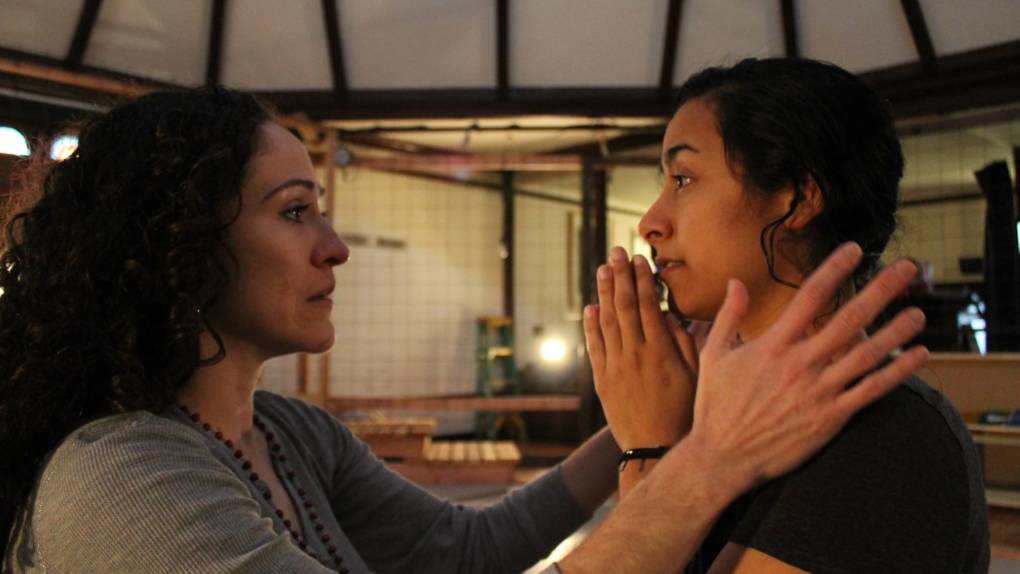
"caption": "(L to R) Adam Smith and Arletta Anderson in our in unison in their 'weather//body' at CounterPulse.",
"description": "(L to R) Adam Smith and Arletta Anderson in our in unison in their 'weather//body' at CounterPulse.",
"title": "Edge 6",
"credit": "Photo: Robbie Sweeny",
"status": "inherit",
"isLoading": false,
"fetchFailed": false
},
"arts_13089466": {
"type": "attachments",
"id": "arts_13089466",
"meta": {
"index": "attachments_1716263798",
"site": "arts",
"id": "13089466",
"found": true
},
"parent": 13088814,
"imgSizes": {
"small": {
"file": "https://ww2.kqed.org/app/uploads/sites/2/2017/04/PBO-Temple-Glory_By-Jeff-Phillips.-Sheehan-philponet-sweeney_smith-trego-e1492988432976-520x293.jpg",
"width": 520,
"mimeType": "image/jpeg",
"height": 293
},
"twentyfourteen-full-width": {
"file": "https://ww2.kqed.org/app/uploads/sites/2/2017/04/PBO-Temple-Glory_By-Jeff-Phillips.-Sheehan-philponet-sweeney_smith-trego-e1492988432976-1038x576.jpg",
"width": 1038,
"mimeType": "image/jpeg",
"height": 576
},
"thumbnail": {
"file": "https://ww2.kqed.org/app/uploads/sites/2/2017/04/PBO-Temple-Glory_By-Jeff-Phillips.-Sheehan-philponet-sweeney_smith-trego-e1492988432976-160x90.jpg",
"width": 160,
"mimeType": "image/jpeg",
"height": 90
},
"fd-sm": {
"file": "https://ww2.kqed.org/app/uploads/sites/2/2017/04/PBO-Temple-Glory_By-Jeff-Phillips.-Sheehan-philponet-sweeney_smith-trego-e1492988432976-960x541.jpg",
"width": 960,
"mimeType": "image/jpeg",
"height": 541
},
"post-thumbnail": {
"file": "https://ww2.kqed.org/app/uploads/sites/2/2017/04/PBO-Temple-Glory_By-Jeff-Phillips.-Sheehan-philponet-sweeney_smith-trego-e1492988432976-672x372.jpg",
"width": 672,
"mimeType": "image/jpeg",
"height": 372
},
"xsmall": {
"file": "https://ww2.kqed.org/app/uploads/sites/2/2017/04/PBO-Temple-Glory_By-Jeff-Phillips.-Sheehan-philponet-sweeney_smith-trego-e1492988432976-375x211.jpg",
"width": 375,
"mimeType": "image/jpeg",
"height": 211
},
"kqedFullSize": {
"file": "https://ww2.kqed.org/app/uploads/sites/2/2017/04/PBO-Temple-Glory_By-Jeff-Phillips.-Sheehan-philponet-sweeney_smith-trego-e1492988432976.jpg",
"width": 1981,
"height": 1116
},
"large": {
"file": "https://ww2.kqed.org/app/uploads/sites/2/2017/04/PBO-Temple-Glory_By-Jeff-Phillips.-Sheehan-philponet-sweeney_smith-trego-e1492988432976-1020x575.jpg",
"width": 1020,
"mimeType": "image/jpeg",
"height": 575
},
"xlarge": {
"file": "https://ww2.kqed.org/app/uploads/sites/2/2017/04/PBO-Temple-Glory_By-Jeff-Phillips.-Sheehan-philponet-sweeney_smith-trego-e1492988432976-1180x665.jpg",
"width": 1180,
"mimeType": "image/jpeg",
"height": 665
},
"guest-author-50": {
"file": "https://ww2.kqed.org/app/uploads/sites/2/2017/04/PBO-Temple-Glory_By-Jeff-Phillips.-Sheehan-philponet-sweeney_smith-trego-e1492988432976-50x50.jpg",
"width": 50,
"mimeType": "image/jpeg",
"height": 50
},
"guest-author-96": {
"file": "https://ww2.kqed.org/app/uploads/sites/2/2017/04/PBO-Temple-Glory_By-Jeff-Phillips.-Sheehan-philponet-sweeney_smith-trego-e1492988432976-96x96.jpg",
"width": 96,
"mimeType": "image/jpeg",
"height": 96
},
"medium": {
"file": "https://ww2.kqed.org/app/uploads/sites/2/2017/04/PBO-Temple-Glory_By-Jeff-Phillips.-Sheehan-philponet-sweeney_smith-trego-e1492988432976-800x451.jpg",
"width": 800,
"mimeType": "image/jpeg",
"height": 451
},
"guest-author-64": {
"file": "https://ww2.kqed.org/app/uploads/sites/2/2017/04/PBO-Temple-Glory_By-Jeff-Phillips.-Sheehan-philponet-sweeney_smith-trego-e1492988432976-64x64.jpg",
"width": 64,
"mimeType": "image/jpeg",
"height": 64
},
"guest-author-32": {
"file": "https://ww2.kqed.org/app/uploads/sites/2/2017/04/PBO-Temple-Glory_By-Jeff-Phillips.-Sheehan-philponet-sweeney_smith-trego-e1492988432976-32x32.jpg",
"width": 32,
"mimeType": "image/jpeg",
"height": 32
},
"fd-lrg": {
"file": "https://ww2.kqed.org/app/uploads/sites/2/2017/04/PBO-Temple-Glory_By-Jeff-Phillips.-Sheehan-philponet-sweeney_smith-trego-e1492988432976-1920x1082.jpg",
"width": 1920,
"mimeType": "image/jpeg",
"height": 1082
},
"fd-med": {
"file": "https://ww2.kqed.org/app/uploads/sites/2/2017/04/PBO-Temple-Glory_By-Jeff-Phillips.-Sheehan-philponet-sweeney_smith-trego-e1492988432976-1180x665.jpg",
"width": 1180,
"mimeType": "image/jpeg",
"height": 665
},
"full-width": {
"file": "https://ww2.kqed.org/app/uploads/sites/2/2017/04/PBO-Temple-Glory_By-Jeff-Phillips.-Sheehan-philponet-sweeney_smith-trego-e1492988432976-1920x1082.jpg",
"width": 1920,
"mimeType": "image/jpeg",
"height": 1082
},
"detail": {
"file": "https://ww2.kqed.org/app/uploads/sites/2/2017/04/PBO-Temple-Glory_By-Jeff-Phillips.-Sheehan-philponet-sweeney_smith-trego-e1492988432976-150x150.jpg",
"width": 150,
"mimeType": "image/jpeg",
"height": 150
},
"medium_large": {
"file": "https://ww2.kqed.org/app/uploads/sites/2/2017/04/PBO-Temple-Glory_By-Jeff-Phillips.-Sheehan-philponet-sweeney_smith-trego-e1492988432976-768x433.jpg",
"width": 768,
"mimeType": "image/jpeg",
"height": 433
},
"guest-author-128": {
"file": "https://ww2.kqed.org/app/uploads/sites/2/2017/04/PBO-Temple-Glory_By-Jeff-Phillips.-Sheehan-philponet-sweeney_smith-trego-e1492988432976-128x128.jpg",
"width": 128,
"mimeType": "image/jpeg",
"height": 128
},
"xxsmall": {
"file": "https://ww2.kqed.org/app/uploads/sites/2/2017/04/PBO-Temple-Glory_By-Jeff-Phillips.-Sheehan-philponet-sweeney_smith-trego-e1492988432976-240x135.jpg",
"width": 240,
"mimeType": "image/jpeg",
"height": 135
}
},
"publishDate": 1492822392,
"modified": 1493154939,
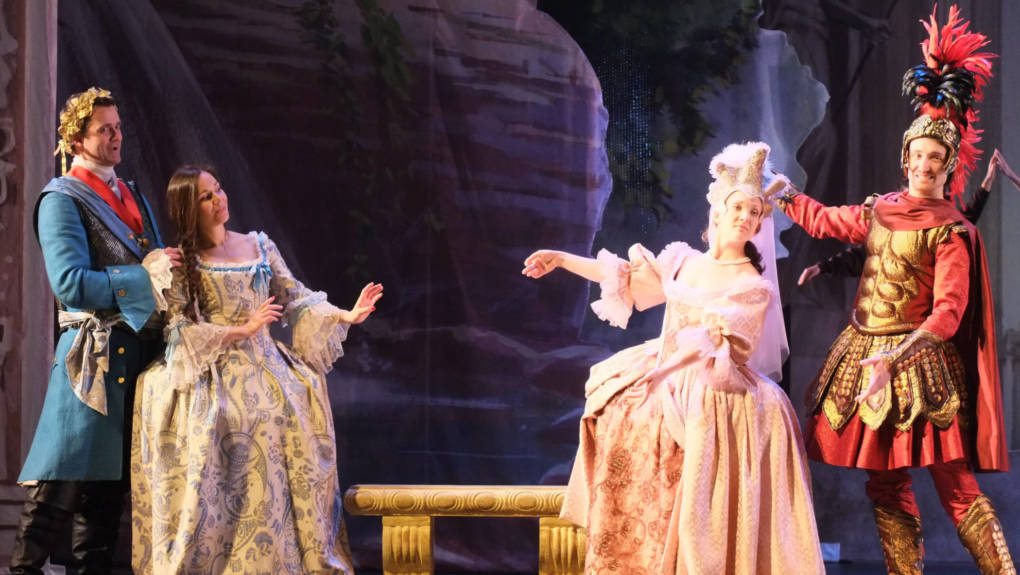
"caption": "A scene from ‘The Temple of Glory,' an 18th century French opera that carries a strong political message for U.S. audiences today. The work is being revived by the Philharmonia Baroque Orchestra and Cal Performances at the end of the month. ",
"description": "A scene from ‘The Temple of Glory,' an 18th century French opera that carries a strong political message for U.S. audiences today. The work is being revived by the Philharmonia Baroque Orchestra and Cal Performances at the end of the month. ",
"title": "The Temple of Glory",
"credit": "Photo: Jeff Phillips",
"status": "inherit",
"isLoading": false,
"fetchFailed": false
},
"arts_13035014": {
"type": "attachments",
"id": "arts_13035014",
"meta": {
"index": "attachments_1716263798",
"site": "arts",
"id": "13035014",
"found": true
},
"parent": 13035012,
"imgSizes": {
"small": {
"file": "https://ww2.kqed.org/app/uploads/sites/2/2017/04/Needles-and-Opium-2-e1491898704303-520x292.jpg",
"width": 520,
"mimeType": "image/jpeg",
"height": 292
},
"twentyfourteen-full-width": {
"file": "https://ww2.kqed.org/app/uploads/sites/2/2017/04/Needles-and-Opium-2-e1491898704303-1038x576.jpg",
"width": 1038,
"mimeType": "image/jpeg",
"height": 576
},
"thumbnail": {
"file": "https://ww2.kqed.org/app/uploads/sites/2/2017/04/Needles-and-Opium-2-e1491898704303-160x90.jpg",
"width": 160,
"mimeType": "image/jpeg",
"height": 90
},
"fd-sm": {
"file": "https://ww2.kqed.org/app/uploads/sites/2/2017/04/Needles-and-Opium-2-e1491898704303-960x540.jpg",
"width": 960,
"mimeType": "image/jpeg",
"height": 540
},
"post-thumbnail": {
"file": "https://ww2.kqed.org/app/uploads/sites/2/2017/04/Needles-and-Opium-2-e1491898704303-672x372.jpg",
"width": 672,
"mimeType": "image/jpeg",
"height": 372
},
"xsmall": {
"file": "https://ww2.kqed.org/app/uploads/sites/2/2017/04/Needles-and-Opium-2-e1491898704303-375x211.jpg",
"width": 375,
"mimeType": "image/jpeg",
"height": 211
},
"kqedFullSize": {
"file": "https://ww2.kqed.org/app/uploads/sites/2/2017/04/Needles-and-Opium-2-e1491898704303.jpg",
"width": 2048,
"height": 1151
},
"large": {
"file": "https://ww2.kqed.org/app/uploads/sites/2/2017/04/Needles-and-Opium-2-e1491898704303-1020x573.jpg",
"width": 1020,
"mimeType": "image/jpeg",
"height": 573
},
"xlarge": {
"file": "https://ww2.kqed.org/app/uploads/sites/2/2017/04/Needles-and-Opium-2-e1491898704303-1180x663.jpg",
"width": 1180,
"mimeType": "image/jpeg",
"height": 663
},
"guest-author-50": {
"file": "https://ww2.kqed.org/app/uploads/sites/2/2017/04/Needles-and-Opium-2-e1491898704303-50x50.jpg",
"width": 50,
"mimeType": "image/jpeg",
"height": 50
},
"guest-author-96": {
"file": "https://ww2.kqed.org/app/uploads/sites/2/2017/04/Needles-and-Opium-2-e1491898704303-96x96.jpg",
"width": 96,
"mimeType": "image/jpeg",
"height": 96
},
"medium": {
"file": "https://ww2.kqed.org/app/uploads/sites/2/2017/04/Needles-and-Opium-2-e1491898704303-800x450.jpg",
"width": 800,
"mimeType": "image/jpeg",
"height": 450
},
"guest-author-64": {
"file": "https://ww2.kqed.org/app/uploads/sites/2/2017/04/Needles-and-Opium-2-e1491898704303-64x64.jpg",
"width": 64,
"mimeType": "image/jpeg",
"height": 64
},
"guest-author-32": {
"file": "https://ww2.kqed.org/app/uploads/sites/2/2017/04/Needles-and-Opium-2-e1491898704303-32x32.jpg",
"width": 32,
"mimeType": "image/jpeg",
"height": 32
},
"fd-lrg": {
"file": "https://ww2.kqed.org/app/uploads/sites/2/2017/04/Needles-and-Opium-2-e1491898704303-1920x1079.jpg",
"width": 1920,
"mimeType": "image/jpeg",
"height": 1079
},
"fd-med": {
"file": "https://ww2.kqed.org/app/uploads/sites/2/2017/04/Needles-and-Opium-2-e1491898704303-1180x663.jpg",
"width": 1180,
"mimeType": "image/jpeg",
"height": 663
},
"full-width": {
"file": "https://ww2.kqed.org/app/uploads/sites/2/2017/04/Needles-and-Opium-2-e1491898704303-1920x1079.jpg",
"width": 1920,
"mimeType": "image/jpeg",
"height": 1079
},
"detail": {
"file": "https://ww2.kqed.org/app/uploads/sites/2/2017/04/Needles-and-Opium-2-e1491898704303-150x150.jpg",
"width": 150,
"mimeType": "image/jpeg",
"height": 150
},
"medium_large": {
"file": "https://ww2.kqed.org/app/uploads/sites/2/2017/04/Needles-and-Opium-2-e1491898704303-768x432.jpg",
"width": 768,
"mimeType": "image/jpeg",
"height": 432
},
"guest-author-128": {
"file": "https://ww2.kqed.org/app/uploads/sites/2/2017/04/Needles-and-Opium-2-e1491898704303-128x128.jpg",
"width": 128,
"mimeType": "image/jpeg",
"height": 128
},
"xxsmall": {
"file": "https://ww2.kqed.org/app/uploads/sites/2/2017/04/Needles-and-Opium-2-e1491898704303-240x135.jpg",
"width": 240,
"mimeType": "image/jpeg",
"height": 135
}
},
"publishDate": 1491898524,
"modified": 1491898928,
"caption": "Jean Cocteau (Olivier Normand) dazzles 'Life' magazine in 'Needles and Opium' by Robert Lepage.",
"description": "Jean Cocteau (Olivier Normand) dazzles 'Life' magazine in 'Needles and Opium' by Robert Lepage.",
"title": "Needles and Opium 2",
"credit": "Photo: Tristram Kenton",
"status": "inherit",
"isLoading": false,
"fetchFailed": false
},
"arts_13053333": {
"type": "attachments",
"id": "arts_13053333",
"meta": {
"index": "attachments_1716263798",
"site": "arts",
"id": "13053333",
"found": true
},
"parent": 13047109,
"imgSizes": {
"small": {
"file": "https://ww2.kqed.org/app/uploads/sites/2/2017/04/Whitney-2-for-do-list-e1492209074218-520x293.jpg",
"width": 520,
"mimeType": "image/jpeg",
"height": 293
},
"twentyfourteen-full-width": {
"file": "https://ww2.kqed.org/app/uploads/sites/2/2017/04/Whitney-2-for-do-list-e1492209074218-1038x576.jpg",
"width": 1038,
"mimeType": "image/jpeg",
"height": 576
},
"thumbnail": {
"file": "https://ww2.kqed.org/app/uploads/sites/2/2017/04/Whitney-2-for-do-list-e1492209074218-160x90.jpg",
"width": 160,
"mimeType": "image/jpeg",
"height": 90
},
"fd-sm": {
"file": "https://ww2.kqed.org/app/uploads/sites/2/2017/04/Whitney-2-for-do-list-e1492209074218-960x540.jpg",
"width": 960,
"mimeType": "image/jpeg",
"height": 540
},
"post-thumbnail": {
"file": "https://ww2.kqed.org/app/uploads/sites/2/2017/04/Whitney-2-for-do-list-e1492209074218-672x372.jpg",
"width": 672,
"mimeType": "image/jpeg",
"height": 372
},
"xsmall": {
"file": "https://ww2.kqed.org/app/uploads/sites/2/2017/04/Whitney-2-for-do-list-e1492209074218-375x211.jpg",
"width": 375,
"mimeType": "image/jpeg",
"height": 211
},
"kqedFullSize": {
"file": "https://ww2.kqed.org/app/uploads/sites/2/2017/04/Whitney-2-for-do-list-e1492209074218.jpg",
"width": 2037,
"height": 1146
},
"large": {
"file": "https://ww2.kqed.org/app/uploads/sites/2/2017/04/Whitney-2-for-do-list-e1492209074218-1020x574.jpg",
"width": 1020,
"mimeType": "image/jpeg",
"height": 574
},
"xlarge": {
"file": "https://ww2.kqed.org/app/uploads/sites/2/2017/04/Whitney-2-for-do-list-e1492209074218-1180x664.jpg",
"width": 1180,
"mimeType": "image/jpeg",
"height": 664
},
"guest-author-50": {
"file": "https://ww2.kqed.org/app/uploads/sites/2/2017/04/Whitney-2-for-do-list-e1492209074218-50x50.jpg",
"width": 50,
"mimeType": "image/jpeg",
"height": 50
},
"guest-author-96": {
"file": "https://ww2.kqed.org/app/uploads/sites/2/2017/04/Whitney-2-for-do-list-e1492209074218-96x96.jpg",
"width": 96,
"mimeType": "image/jpeg",
"height": 96
},
"medium": {
"file": "https://ww2.kqed.org/app/uploads/sites/2/2017/04/Whitney-2-for-do-list-e1492209074218-800x450.jpg",
"width": 800,
"mimeType": "image/jpeg",
"height": 450
},
"guest-author-64": {
"file": "https://ww2.kqed.org/app/uploads/sites/2/2017/04/Whitney-2-for-do-list-e1492209074218-64x64.jpg",
"width": 64,
"mimeType": "image/jpeg",
"height": 64
},
"guest-author-32": {
"file": "https://ww2.kqed.org/app/uploads/sites/2/2017/04/Whitney-2-for-do-list-e1492209074218-32x32.jpg",
"width": 32,
"mimeType": "image/jpeg",
"height": 32
},
"fd-lrg": {
"file": "https://ww2.kqed.org/app/uploads/sites/2/2017/04/Whitney-2-for-do-list-e1492209074218-1920x1080.jpg",
"width": 1920,
"mimeType": "image/jpeg",
"height": 1080
},
"fd-med": {
"file": "https://ww2.kqed.org/app/uploads/sites/2/2017/04/Whitney-2-for-do-list-e1492209074218-1180x664.jpg",
"width": 1180,
"mimeType": "image/jpeg",
"height": 664
},
"full-width": {
"file": "https://ww2.kqed.org/app/uploads/sites/2/2017/04/Whitney-2-for-do-list-e1492209074218-1920x1080.jpg",
"width": 1920,
"mimeType": "image/jpeg",
"height": 1080
},
"detail": {
"file": "https://ww2.kqed.org/app/uploads/sites/2/2017/04/Whitney-2-for-do-list-e1492209074218-150x150.jpg",
"width": 150,
"mimeType": "image/jpeg",
"height": 150
},
"medium_large": {
"file": "https://ww2.kqed.org/app/uploads/sites/2/2017/04/Whitney-2-for-do-list-e1492209074218-768x432.jpg",
"width": 768,
"mimeType": "image/jpeg",
"height": 432
},
"guest-author-128": {
"file": "https://ww2.kqed.org/app/uploads/sites/2/2017/04/Whitney-2-for-do-list-e1492209074218-128x128.jpg",
"width": 128,
"mimeType": "image/jpeg",
"height": 128
},
"xxsmall": {
"file": "https://ww2.kqed.org/app/uploads/sites/2/2017/04/Whitney-2-for-do-list-e1492209074218-240x135.jpg",
"width": 240,
"mimeType": "image/jpeg",
"height": 135
}
},
"publishDate": 1492208923,
"modified": 1492209013,
"caption": "Whitney plays a Bay Area sandwich, with Sonoma's Gundlach Bundschu Winery April 14 and then The Independent April 17-19 with Coachella in between",
"description": "Whitney plays a Bay Area sandwich, with Sonoma's Gundlach Bundschu Winery April 14 and then The Independent April 17-19 with Coachella in between",
"title": "Whitney plays a Bay Area sandwich, with Sonoma's Gundlach Bundschu Winery April 14 and then The Independent April 17-19 with Coachella in between",
"credit": "Photo: Courtesy of Whitney",
"status": "inherit",
"isLoading": false,
"fetchFailed": false
},
"arts_13014751": {
"type": "attachments",
"id": "arts_13014751",
"meta": {
"index": "attachments_1716263798",
"site": "arts",
"id": "13014751",
"found": true
},
"parent": 13014545,
"imgSizes": {
"small": {
"file": "https://ww2.kqed.org/app/uploads/sites/2/2017/04/TWG_The-Town-Hall-Affair_17_photo-by-Hervé-Véronèse_Scott-Shepherd_Ari-Fliakos_Greg-Mehrten_2335-e1491541795386-520x293.jpg",
"width": 520,
"mimeType": "image/jpeg",
"height": 293
},
"twentyfourteen-full-width": {
"file": "https://ww2.kqed.org/app/uploads/sites/2/2017/04/TWG_The-Town-Hall-Affair_17_photo-by-Hervé-Véronèse_Scott-Shepherd_Ari-Fliakos_Greg-Mehrten_2335-e1491541795386-1038x576.jpg",
"width": 1038,
"mimeType": "image/jpeg",
"height": 576
},
"thumbnail": {
"file": "https://ww2.kqed.org/app/uploads/sites/2/2017/04/TWG_The-Town-Hall-Affair_17_photo-by-Hervé-Véronèse_Scott-Shepherd_Ari-Fliakos_Greg-Mehrten_2335-e1491541795386-160x90.jpg",
"width": 160,
"mimeType": "image/jpeg",
"height": 90
},
"fd-sm": {
"file": "https://ww2.kqed.org/app/uploads/sites/2/2017/04/TWG_The-Town-Hall-Affair_17_photo-by-Hervé-Véronèse_Scott-Shepherd_Ari-Fliakos_Greg-Mehrten_2335-e1491541795386-960x540.jpg",
"width": 960,
"mimeType": "image/jpeg",
"height": 540
},
"post-thumbnail": {
"file": "https://ww2.kqed.org/app/uploads/sites/2/2017/04/TWG_The-Town-Hall-Affair_17_photo-by-Hervé-Véronèse_Scott-Shepherd_Ari-Fliakos_Greg-Mehrten_2335-e1491541795386-672x372.jpg",
"width": 672,
"mimeType": "image/jpeg",
"height": 372
},
"xsmall": {
"file": "https://ww2.kqed.org/app/uploads/sites/2/2017/04/TWG_The-Town-Hall-Affair_17_photo-by-Hervé-Véronèse_Scott-Shepherd_Ari-Fliakos_Greg-Mehrten_2335-e1491541795386-375x211.jpg",
"width": 375,
"mimeType": "image/jpeg",
"height": 211
},
"kqedFullSize": {
"file": "https://ww2.kqed.org/app/uploads/sites/2/2017/04/TWG_The-Town-Hall-Affair_17_photo-by-Hervé-Véronèse_Scott-Shepherd_Ari-Fliakos_Greg-Mehrten_2335-e1491541795386.jpg",
"width": 2048,
"height": 1152
},
"large": {
"file": "https://ww2.kqed.org/app/uploads/sites/2/2017/04/TWG_The-Town-Hall-Affair_17_photo-by-Hervé-Véronèse_Scott-Shepherd_Ari-Fliakos_Greg-Mehrten_2335-e1491541795386-1020x574.jpg",
"width": 1020,
"mimeType": "image/jpeg",
"height": 574
},
"xlarge": {
"file": "https://ww2.kqed.org/app/uploads/sites/2/2017/04/TWG_The-Town-Hall-Affair_17_photo-by-Hervé-Véronèse_Scott-Shepherd_Ari-Fliakos_Greg-Mehrten_2335-e1491541795386-1180x664.jpg",
"width": 1180,
"mimeType": "image/jpeg",
"height": 664
},
"guest-author-50": {
"file": "https://ww2.kqed.org/app/uploads/sites/2/2017/04/TWG_The-Town-Hall-Affair_17_photo-by-Hervé-Véronèse_Scott-Shepherd_Ari-Fliakos_Greg-Mehrten_2335-e1491541795386-50x50.jpg",
"width": 50,
"mimeType": "image/jpeg",
"height": 50
},
"guest-author-96": {
"file": "https://ww2.kqed.org/app/uploads/sites/2/2017/04/TWG_The-Town-Hall-Affair_17_photo-by-Hervé-Véronèse_Scott-Shepherd_Ari-Fliakos_Greg-Mehrten_2335-e1491541795386-96x96.jpg",
"width": 96,
"mimeType": "image/jpeg",
"height": 96
},
"medium": {
"file": "https://ww2.kqed.org/app/uploads/sites/2/2017/04/TWG_The-Town-Hall-Affair_17_photo-by-Hervé-Véronèse_Scott-Shepherd_Ari-Fliakos_Greg-Mehrten_2335-e1491541795386-800x450.jpg",
"width": 800,
"mimeType": "image/jpeg",
"height": 450
},
"guest-author-64": {
"file": "https://ww2.kqed.org/app/uploads/sites/2/2017/04/TWG_The-Town-Hall-Affair_17_photo-by-Hervé-Véronèse_Scott-Shepherd_Ari-Fliakos_Greg-Mehrten_2335-e1491541795386-64x64.jpg",
"width": 64,
"mimeType": "image/jpeg",
"height": 64
},
"guest-author-32": {
"file": "https://ww2.kqed.org/app/uploads/sites/2/2017/04/TWG_The-Town-Hall-Affair_17_photo-by-Hervé-Véronèse_Scott-Shepherd_Ari-Fliakos_Greg-Mehrten_2335-e1491541795386-32x32.jpg",
"width": 32,
"mimeType": "image/jpeg",
"height": 32
},
"fd-lrg": {
"file": "https://ww2.kqed.org/app/uploads/sites/2/2017/04/TWG_The-Town-Hall-Affair_17_photo-by-Hervé-Véronèse_Scott-Shepherd_Ari-Fliakos_Greg-Mehrten_2335-e1491541795386-1920x1080.jpg",
"width": 1920,
"mimeType": "image/jpeg",
"height": 1080
},
"fd-med": {
"file": "https://ww2.kqed.org/app/uploads/sites/2/2017/04/TWG_The-Town-Hall-Affair_17_photo-by-Hervé-Véronèse_Scott-Shepherd_Ari-Fliakos_Greg-Mehrten_2335-e1491541795386-1180x664.jpg",
"width": 1180,
"mimeType": "image/jpeg",
"height": 664
},
"full-width": {
"file": "https://ww2.kqed.org/app/uploads/sites/2/2017/04/TWG_The-Town-Hall-Affair_17_photo-by-Hervé-Véronèse_Scott-Shepherd_Ari-Fliakos_Greg-Mehrten_2335-e1491541795386-1920x1080.jpg",
"width": 1920,
"mimeType": "image/jpeg",
"height": 1080
},
"detail": {
"file": "https://ww2.kqed.org/app/uploads/sites/2/2017/04/TWG_The-Town-Hall-Affair_17_photo-by-Hervé-Véronèse_Scott-Shepherd_Ari-Fliakos_Greg-Mehrten_2335-e1491541795386-150x150.jpg",
"width": 150,
"mimeType": "image/jpeg",
"height": 150
},
"medium_large": {
"file": "https://ww2.kqed.org/app/uploads/sites/2/2017/04/TWG_The-Town-Hall-Affair_17_photo-by-Hervé-Véronèse_Scott-Shepherd_Ari-Fliakos_Greg-Mehrten_2335-e1491541795386-768x432.jpg",
"width": 768,
"mimeType": "image/jpeg",
"height": 432
},
"guest-author-128": {
"file": "https://ww2.kqed.org/app/uploads/sites/2/2017/04/TWG_The-Town-Hall-Affair_17_photo-by-Hervé-Véronèse_Scott-Shepherd_Ari-Fliakos_Greg-Mehrten_2335-e1491541795386-128x128.jpg",
"width": 128,
"mimeType": "image/jpeg",
"height": 128
},
"xxsmall": {
"file": "https://ww2.kqed.org/app/uploads/sites/2/2017/04/TWG_The-Town-Hall-Affair_17_photo-by-Hervé-Véronèse_Scott-Shepherd_Ari-Fliakos_Greg-Mehrten_2335-e1491541795386-240x135.jpg",
"width": 240,
"mimeType": "image/jpeg",
"height": 135
}
},
"publishDate": 1491541195,
"modified": 1491543761,
"caption": "Norman Mailer 1 (Ari Fliakos) debates Diana Trilling (Greg Mehrten) in the Wooster Group's 'Town Hall Affair' directed by Liz LeCompte.",
"description": "Norman Mailer 1 (Ari Fliakos) debates Diana Trilling (Greg Mehrten) in the Wooster Group's 'Town Hall Affair' directed by Liz LeCompte.",
"title": "TWG_The-Town-Hall-Affair_17_photo-by-Hervé-Véronèse_Scott-Shepherd_Ari-Fliakos_Greg-Mehrten_2335",
"credit": "Photo: Hervé Véronèse",
"status": "inherit",
"isLoading": false,
"fetchFailed": false
},
"arts_13004062": {
"type": "attachments",
"id": "arts_13004062",
"meta": {
"index": "attachments_1716263798",
"site": "arts",
"id": "13004062",
"found": true
},
"parent": 13000457,
"imgSizes": {
"small": {
"file": "https://ww2.kqed.org/app/uploads/sites/2/2017/04/Tothebone1A-e1491358624297-520x293.jpg",
"width": 520,
"mimeType": "image/jpeg",
"height": 293
},
"twentyfourteen-full-width": {
"file": "https://ww2.kqed.org/app/uploads/sites/2/2017/04/Tothebone1A-e1491358624297-1038x576.jpg",
"width": 1038,
"mimeType": "image/jpeg",
"height": 576
},
"thumbnail": {
"file": "https://ww2.kqed.org/app/uploads/sites/2/2017/04/Tothebone1A-e1491358624297-160x90.jpg",
"width": 160,
"mimeType": "image/jpeg",
"height": 90
},
"fd-sm": {
"file": "https://ww2.kqed.org/app/uploads/sites/2/2017/04/Tothebone1A-e1491358624297-960x540.jpg",
"width": 960,
"mimeType": "image/jpeg",
"height": 540
},
"post-thumbnail": {
"file": "https://ww2.kqed.org/app/uploads/sites/2/2017/04/Tothebone1A-e1491358624297-672x372.jpg",
"width": 672,
"mimeType": "image/jpeg",
"height": 372
},
"xsmall": {
"file": "https://ww2.kqed.org/app/uploads/sites/2/2017/04/Tothebone1A-e1491358624297-375x211.jpg",
"width": 375,
"mimeType": "image/jpeg",
"height": 211
},
"kqedFullSize": {
"file": "https://ww2.kqed.org/app/uploads/sites/2/2017/04/Tothebone1A-e1491358624297.jpg",
"width": 2048,
"height": 1152
},
"large": {
"file": "https://ww2.kqed.org/app/uploads/sites/2/2017/04/Tothebone1A-e1491358624297-1020x574.jpg",
"width": 1020,
"mimeType": "image/jpeg",
"height": 574
},
"xlarge": {
"file": "https://ww2.kqed.org/app/uploads/sites/2/2017/04/Tothebone1A-e1491358624297-1180x664.jpg",
"width": 1180,
"mimeType": "image/jpeg",
"height": 664
},
"guest-author-50": {
"file": "https://ww2.kqed.org/app/uploads/sites/2/2017/04/Tothebone1A-e1491358624297-50x50.jpg",
"width": 50,
"mimeType": "image/jpeg",
"height": 50
},
"guest-author-96": {
"file": "https://ww2.kqed.org/app/uploads/sites/2/2017/04/Tothebone1A-e1491358624297-96x96.jpg",
"width": 96,
"mimeType": "image/jpeg",
"height": 96
},
"medium": {
"file": "https://ww2.kqed.org/app/uploads/sites/2/2017/04/Tothebone1A-e1491358624297-800x450.jpg",
"width": 800,
"mimeType": "image/jpeg",
"height": 450
},
"guest-author-64": {
"file": "https://ww2.kqed.org/app/uploads/sites/2/2017/04/Tothebone1A-e1491358624297-64x64.jpg",
"width": 64,
"mimeType": "image/jpeg",
"height": 64
},
"guest-author-32": {
"file": "https://ww2.kqed.org/app/uploads/sites/2/2017/04/Tothebone1A-e1491358624297-32x32.jpg",
"width": 32,
"mimeType": "image/jpeg",
"height": 32
},
"fd-lrg": {
"file": "https://ww2.kqed.org/app/uploads/sites/2/2017/04/Tothebone1A-e1491358624297-1920x1080.jpg",
"width": 1920,
"mimeType": "image/jpeg",
"height": 1080
},
"fd-med": {
"file": "https://ww2.kqed.org/app/uploads/sites/2/2017/04/Tothebone1A-e1491358624297-1180x664.jpg",
"width": 1180,
"mimeType": "image/jpeg",
"height": 664
},
"full-width": {
"file": "https://ww2.kqed.org/app/uploads/sites/2/2017/04/Tothebone1A-e1491358624297-1920x1080.jpg",
"width": 1920,
"mimeType": "image/jpeg",
"height": 1080
},
"detail": {
"file": "https://ww2.kqed.org/app/uploads/sites/2/2017/04/Tothebone1A-e1491358624297-150x150.jpg",
"width": 150,
"mimeType": "image/jpeg",
"height": 150
},
"medium_large": {
"file": "https://ww2.kqed.org/app/uploads/sites/2/2017/04/Tothebone1A-e1491358624297-768x432.jpg",
"width": 768,
"mimeType": "image/jpeg",
"height": 432
},
"guest-author-128": {
"file": "https://ww2.kqed.org/app/uploads/sites/2/2017/04/Tothebone1A-e1491358624297-128x128.jpg",
"width": 128,
"mimeType": "image/jpeg",
"height": 128
},
"xxsmall": {
"file": "https://ww2.kqed.org/app/uploads/sites/2/2017/04/Tothebone1A-e1491358624297-240x135.jpg",
"width": 240,
"mimeType": "image/jpeg",
"height": 135
}
},
"publishDate": 1491357728,
"modified": 1491358417,
"caption": "(L to R) Juana (Sarita Ocón) confronts the angelic Carmen (Carla Gallardo) in the Ubuntu Theater Project's production of 'To the Bone' by Lisa Ramirez.",
"description": "(L to R) Juana (Sarita Ocón) confronts the angelic Carmen (Carla Gallardo) in the Ubuntu Theater Project's production of 'To the Bone' by Lisa Ramirez.",
"title": "Tothebone1A",
"credit": "Photo: Courtesy of the Company",
"status": "inherit",
"isLoading": false,
"fetchFailed": false
},
"arts_12978567": {
"type": "attachments",
"id": "arts_12978567",
"meta": {
"index": "attachments_1716263798",
"site": "arts",
"id": "12978567",
"found": true
},
"parent": 12978132,
"imgSizes": {
"small": {
"file": "https://ww2.kqed.org/app/uploads/sites/2/2017/03/EXCL_003-Lange-Registering-NATIONAL-ARCHIVES-e1490912790238-520x293.jpg",
"width": 520,
"mimeType": "image/jpeg",
"height": 293
},
"twentyfourteen-full-width": {
"file": "https://ww2.kqed.org/app/uploads/sites/2/2017/03/EXCL_003-Lange-Registering-NATIONAL-ARCHIVES-e1490912790238-1038x576.jpg",
"width": 1038,
"mimeType": "image/jpeg",
"height": 576
},
"thumbnail": {
"file": "https://ww2.kqed.org/app/uploads/sites/2/2017/03/EXCL_003-Lange-Registering-NATIONAL-ARCHIVES-e1490912790238-160x90.jpg",
"width": 160,
"mimeType": "image/jpeg",
"height": 90
},
"fd-sm": {
"file": "https://ww2.kqed.org/app/uploads/sites/2/2017/03/EXCL_003-Lange-Registering-NATIONAL-ARCHIVES-e1490912790238-960x540.jpg",
"width": 960,
"mimeType": "image/jpeg",
"height": 540
},
"post-thumbnail": {
"file": "https://ww2.kqed.org/app/uploads/sites/2/2017/03/EXCL_003-Lange-Registering-NATIONAL-ARCHIVES-e1490912790238-672x372.jpg",
"width": 672,
"mimeType": "image/jpeg",
"height": 372
},
"xsmall": {
"file": "https://ww2.kqed.org/app/uploads/sites/2/2017/03/EXCL_003-Lange-Registering-NATIONAL-ARCHIVES-e1490912790238-375x211.jpg",
"width": 375,
"mimeType": "image/jpeg",
"height": 211
},
"kqedFullSize": {
"file": "https://ww2.kqed.org/app/uploads/sites/2/2017/03/EXCL_003-Lange-Registering-NATIONAL-ARCHIVES-e1490912790238.jpg",
"width": 2048,
"height": 1152
},
"large": {
"file": "https://ww2.kqed.org/app/uploads/sites/2/2017/03/EXCL_003-Lange-Registering-NATIONAL-ARCHIVES-e1490912790238-1020x574.jpg",
"width": 1020,
"mimeType": "image/jpeg",
"height": 574
},
"xlarge": {
"file": "https://ww2.kqed.org/app/uploads/sites/2/2017/03/EXCL_003-Lange-Registering-NATIONAL-ARCHIVES-e1490912790238-1180x664.jpg",
"width": 1180,
"mimeType": "image/jpeg",
"height": 664
},
"guest-author-50": {
"file": "https://ww2.kqed.org/app/uploads/sites/2/2017/03/EXCL_003-Lange-Registering-NATIONAL-ARCHIVES-e1490912790238-50x50.jpg",
"width": 50,
"mimeType": "image/jpeg",
"height": 50
},
"guest-author-96": {
"file": "https://ww2.kqed.org/app/uploads/sites/2/2017/03/EXCL_003-Lange-Registering-NATIONAL-ARCHIVES-e1490912790238-96x96.jpg",
"width": 96,
"mimeType": "image/jpeg",
"height": 96
},
"medium": {
"file": "https://ww2.kqed.org/app/uploads/sites/2/2017/03/EXCL_003-Lange-Registering-NATIONAL-ARCHIVES-e1490912790238-800x450.jpg",
"width": 800,
"mimeType": "image/jpeg",
"height": 450
},
"guest-author-64": {
"file": "https://ww2.kqed.org/app/uploads/sites/2/2017/03/EXCL_003-Lange-Registering-NATIONAL-ARCHIVES-e1490912790238-64x64.jpg",
"width": 64,
"mimeType": "image/jpeg",
"height": 64
},
"guest-author-32": {
"file": "https://ww2.kqed.org/app/uploads/sites/2/2017/03/EXCL_003-Lange-Registering-NATIONAL-ARCHIVES-e1490912790238-32x32.jpg",
"width": 32,
"mimeType": "image/jpeg",
"height": 32
},
"fd-lrg": {
"file": "https://ww2.kqed.org/app/uploads/sites/2/2017/03/EXCL_003-Lange-Registering-NATIONAL-ARCHIVES-e1490912790238-1920x1080.jpg",
"width": 1920,
"mimeType": "image/jpeg",
"height": 1080
},
"fd-med": {
"file": "https://ww2.kqed.org/app/uploads/sites/2/2017/03/EXCL_003-Lange-Registering-NATIONAL-ARCHIVES-e1490912790238-1180x664.jpg",
"width": 1180,
"mimeType": "image/jpeg",
"height": 664
},
"full-width": {
"file": "https://ww2.kqed.org/app/uploads/sites/2/2017/03/EXCL_003-Lange-Registering-NATIONAL-ARCHIVES-e1490912790238-1920x1080.jpg",
"width": 1920,
"mimeType": "image/jpeg",
"height": 1080
},
"detail": {
"file": "https://ww2.kqed.org/app/uploads/sites/2/2017/03/EXCL_003-Lange-Registering-NATIONAL-ARCHIVES-e1490912790238-150x150.jpg",
"width": 150,
"mimeType": "image/jpeg",
"height": 150
},
"medium_large": {
"file": "https://ww2.kqed.org/app/uploads/sites/2/2017/03/EXCL_003-Lange-Registering-NATIONAL-ARCHIVES-e1490912790238-768x432.jpg",
"width": 768,
"mimeType": "image/jpeg",
"height": 432
},
"guest-author-128": {
"file": "https://ww2.kqed.org/app/uploads/sites/2/2017/03/EXCL_003-Lange-Registering-NATIONAL-ARCHIVES-e1490912790238-128x128.jpg",
"width": 128,
"mimeType": "image/jpeg",
"height": 128
},
"xxsmall": {
"file": "https://ww2.kqed.org/app/uploads/sites/2/2017/03/EXCL_003-Lange-Registering-NATIONAL-ARCHIVES-e1490912790238-240x135.jpg",
"width": 240,
"mimeType": "image/jpeg",
"height": 135
}
},
"publishDate": 1490912618,
"modified": 1490912767,
"caption": "A photo by Dorothea Lange from 'Exclusion: The Presidio’s Role in World War II Japanese American Incarceration‘ at the Presidio of San Francisco",
"description": "A photo by Dorothea Lange from 'Exclusion: The Presidio’s Role in World War II Japanese American Incarceration‘ at the Presidio of San Francisco",
"title": "A photo by Dorothea Lange from 'Exclusion: The Presidio’s Role in World War II Japanese American Incarceration‘ at the Presidio of San Francisco",
"credit": "Photo: Dorothea Lange/Courtesy of The Presidio",
"status": "inherit",
"isLoading": false,
"fetchFailed": false
},
"arts_12969041": {
"type": "attachments",
"id": "arts_12969041",
"meta": {
"index": "attachments_1716263798",
"site": "arts",
"id": "12969041",
"found": true
},
"parent": 12969040,
"imgSizes": {
"small": {
"file": "https://ww2.kqed.org/app/uploads/sites/2/2017/03/tinder_wide-794d7d05943d4efafe59d13f3e6a55a0968dbe24-520x292.png",
"width": 520,
"mimeType": "image/png",
"height": 292
},
"twentyfourteen-full-width": {
"file": "https://ww2.kqed.org/app/uploads/sites/2/2017/03/tinder_wide-794d7d05943d4efafe59d13f3e6a55a0968dbe24-1038x576.png",
"width": 1038,
"mimeType": "image/png",
"height": 576
},
"thumbnail": {
"file": "https://ww2.kqed.org/app/uploads/sites/2/2017/03/tinder_wide-794d7d05943d4efafe59d13f3e6a55a0968dbe24-160x90.png",
"width": 160,
"mimeType": "image/png",
"height": 90
},
"fd-sm": {
"file": "https://ww2.kqed.org/app/uploads/sites/2/2017/03/tinder_wide-794d7d05943d4efafe59d13f3e6a55a0968dbe24-960x540.png",
"width": 960,
"mimeType": "image/png",
"height": 540
},
"post-thumbnail": {
"file": "https://ww2.kqed.org/app/uploads/sites/2/2017/03/tinder_wide-794d7d05943d4efafe59d13f3e6a55a0968dbe24-672x372.png",
"width": 672,
"mimeType": "image/png",
"height": 372
},
"xsmall": {
"file": "https://ww2.kqed.org/app/uploads/sites/2/2017/03/tinder_wide-794d7d05943d4efafe59d13f3e6a55a0968dbe24-375x211.png",
"width": 375,
"mimeType": "image/png",
"height": 211
},
"kqedFullSize": {
"file": "https://ww2.kqed.org/app/uploads/sites/2/2017/03/tinder_wide-794d7d05943d4efafe59d13f3e6a55a0968dbe24.png",
"width": 1913,
"height": 1076
},
"large": {
"file": "https://ww2.kqed.org/app/uploads/sites/2/2017/03/tinder_wide-794d7d05943d4efafe59d13f3e6a55a0968dbe24-1020x574.png",
"width": 1020,
"mimeType": "image/png",
"height": 574
},
"xlarge": {
"file": "https://ww2.kqed.org/app/uploads/sites/2/2017/03/tinder_wide-794d7d05943d4efafe59d13f3e6a55a0968dbe24-1180x664.png",
"width": 1180,
"mimeType": "image/png",
"height": 664
},
"guest-author-50": {
"file": "https://ww2.kqed.org/app/uploads/sites/2/2017/03/tinder_wide-794d7d05943d4efafe59d13f3e6a55a0968dbe24-50x50.png",
"width": 50,
"mimeType": "image/png",
"height": 50
},
"guest-author-96": {
"file": "https://ww2.kqed.org/app/uploads/sites/2/2017/03/tinder_wide-794d7d05943d4efafe59d13f3e6a55a0968dbe24-96x96.png",
"width": 96,
"mimeType": "image/png",
"height": 96
},
"medium": {
"file": "https://ww2.kqed.org/app/uploads/sites/2/2017/03/tinder_wide-794d7d05943d4efafe59d13f3e6a55a0968dbe24-800x450.png",
"width": 800,
"mimeType": "image/png",
"height": 450
},
"guest-author-64": {
"file": "https://ww2.kqed.org/app/uploads/sites/2/2017/03/tinder_wide-794d7d05943d4efafe59d13f3e6a55a0968dbe24-64x64.png",
"width": 64,
"mimeType": "image/png",
"height": 64
},
"guest-author-32": {
"file": "https://ww2.kqed.org/app/uploads/sites/2/2017/03/tinder_wide-794d7d05943d4efafe59d13f3e6a55a0968dbe24-32x32.png",
"width": 32,
"mimeType": "image/png",
"height": 32
},
"fd-med": {
"file": "https://ww2.kqed.org/app/uploads/sites/2/2017/03/tinder_wide-794d7d05943d4efafe59d13f3e6a55a0968dbe24-1180x664.png",
"width": 1180,
"mimeType": "image/png",
"height": 664
},
"detail": {
"file": "https://ww2.kqed.org/app/uploads/sites/2/2017/03/tinder_wide-794d7d05943d4efafe59d13f3e6a55a0968dbe24-150x150.png",
"width": 150,
"mimeType": "image/png",
"height": 150
},
"medium_large": {
"file": "https://ww2.kqed.org/app/uploads/sites/2/2017/03/tinder_wide-794d7d05943d4efafe59d13f3e6a55a0968dbe24-768x432.png",
"width": 768,
"mimeType": "image/png",
"height": 432
},
"guest-author-128": {
"file": "https://ww2.kqed.org/app/uploads/sites/2/2017/03/tinder_wide-794d7d05943d4efafe59d13f3e6a55a0968dbe24-128x128.png",
"width": 128,
"mimeType": "image/png",
"height": 128
},
"xxsmall": {
"file": "https://ww2.kqed.org/app/uploads/sites/2/2017/03/tinder_wide-794d7d05943d4efafe59d13f3e6a55a0968dbe24-240x135.png",
"width": 240,
"mimeType": "image/png",
"height": 135
}
},
"publishDate": 1490745804,
"modified": 1490747760,
"caption": "Tenor Scott Joiner and mezzo-soprano Viktoria Falcone try to find love via Tinder in a still from 'Connection Lost: The Tinder Opera.'",
"description": "Tenor Scott Joiner and mezzo-soprano Viktoria Falcone try to find love via Tinder in a still from 'Connection Lost: The Tinder Opera.'",
"title": "Tenor Scott Joiner and mezzo-soprano Viktoria Falcone try to find love via Tinder in a still from Connection Lost: The Tinder Opera.",
"credit": "via YouTube",
"status": "inherit",
"isLoading": false,
"fetchFailed": false
},
"arts_12946321": {
"type": "attachments",
"id": "arts_12946321",
"meta": {
"index": "attachments_1716263798",
"site": "arts",
"id": "12946321",
"found": true
},
"parent": 12946318,
"imgSizes": {
"small": {
"file": "https://ww2.kqed.org/app/uploads/sites/2/2017/03/Hamilton1-520x293.jpg",
"width": 520,
"mimeType": "image/jpeg",
"height": 293
},
"twentyfourteen-full-width": {
"file": "https://ww2.kqed.org/app/uploads/sites/2/2017/03/Hamilton1-1038x576.jpg",
"width": 1038,
"mimeType": "image/jpeg",
"height": 576
},
"thumbnail": {
"file": "https://ww2.kqed.org/app/uploads/sites/2/2017/03/Hamilton1-160x90.jpg",
"width": 160,
"mimeType": "image/jpeg",
"height": 90
},
"fd-sm": {
"file": "https://ww2.kqed.org/app/uploads/sites/2/2017/03/Hamilton1-960x540.jpg",
"width": 960,
"mimeType": "image/jpeg",
"height": 540
},
"post-thumbnail": {
"file": "https://ww2.kqed.org/app/uploads/sites/2/2017/03/Hamilton1-672x372.jpg",
"width": 672,
"mimeType": "image/jpeg",
"height": 372
},
"xsmall": {
"file": "https://ww2.kqed.org/app/uploads/sites/2/2017/03/Hamilton1-375x211.jpg",
"width": 375,
"mimeType": "image/jpeg",
"height": 211
},
"kqedFullSize": {
"file": "https://ww2.kqed.org/app/uploads/sites/2/2017/03/Hamilton1.jpg",
"width": 1920,
"height": 1080
},
"large": {
"file": "https://ww2.kqed.org/app/uploads/sites/2/2017/03/Hamilton1-1020x574.jpg",
"width": 1020,
"mimeType": "image/jpeg",
"height": 574
},
"xlarge": {
"file": "https://ww2.kqed.org/app/uploads/sites/2/2017/03/Hamilton1-1180x664.jpg",
"width": 1180,
"mimeType": "image/jpeg",
"height": 664
},
"guest-author-50": {
"file": "https://ww2.kqed.org/app/uploads/sites/2/2017/03/Hamilton1-50x50.jpg",
"width": 50,
"mimeType": "image/jpeg",
"height": 50
},
"guest-author-96": {
"file": "https://ww2.kqed.org/app/uploads/sites/2/2017/03/Hamilton1-96x96.jpg",
"width": 96,
"mimeType": "image/jpeg",
"height": 96
},
"medium": {
"file": "https://ww2.kqed.org/app/uploads/sites/2/2017/03/Hamilton1-800x450.jpg",
"width": 800,
"mimeType": "image/jpeg",
"height": 450
},
"guest-author-64": {
"file": "https://ww2.kqed.org/app/uploads/sites/2/2017/03/Hamilton1-64x64.jpg",
"width": 64,
"mimeType": "image/jpeg",
"height": 64
},
"guest-author-32": {
"file": "https://ww2.kqed.org/app/uploads/sites/2/2017/03/Hamilton1-32x32.jpg",
"width": 32,
"mimeType": "image/jpeg",
"height": 32
},
"fd-lrg": {
"file": "https://ww2.kqed.org/app/uploads/sites/2/2017/03/Hamilton1-1920x1080.jpg",
"width": 1920,
"mimeType": "image/jpeg",
"height": 1080
},
"fd-med": {
"file": "https://ww2.kqed.org/app/uploads/sites/2/2017/03/Hamilton1-1180x664.jpg",
"width": 1180,
"mimeType": "image/jpeg",
"height": 664
},
"full-width": {
"file": "https://ww2.kqed.org/app/uploads/sites/2/2017/03/Hamilton1-1920x1080.jpg",
"width": 1920,
"mimeType": "image/jpeg",
"height": 1080
},
"detail": {
"file": "https://ww2.kqed.org/app/uploads/sites/2/2017/03/Hamilton1-150x150.jpg",
"width": 150,
"mimeType": "image/jpeg",
"height": 150
},
"medium_large": {
"file": "https://ww2.kqed.org/app/uploads/sites/2/2017/03/Hamilton1-768x432.jpg",
"width": 768,
"mimeType": "image/jpeg",
"height": 432
},
"guest-author-128": {
"file": "https://ww2.kqed.org/app/uploads/sites/2/2017/03/Hamilton1-128x128.jpg",
"width": 128,
"mimeType": "image/jpeg",
"height": 128
},
"xxsmall": {
"file": "https://ww2.kqed.org/app/uploads/sites/2/2017/03/Hamilton1-240x135.jpg",
"width": 240,
"mimeType": "image/jpeg",
"height": 135
}
},
"publishDate": 1490343465,
"modified": 1490343563,
"caption": "Ruben J. Carbajal, Michael Luwoye, Jordan Donica, Mathenee Treco and the 'Hamilton' company of the 'Hamilton' national tour, currently at SHN Orpheum Theatre in San Francisco.",
"description": "Ruben J. Carbajal, Michael Luwoye, Jordan Donica, Mathenee Treco and the 'Hamilton' company of the 'Hamilton' national tour, currently at SHN Orpheum Theatre in San Francisco.",
"title": "Hamilton1",
"credit": "Joan Marcus",
"status": "inherit",
"isLoading": false,
"fetchFailed": false
},
"arts_12944688": {
"type": "attachments",
"id": "arts_12944688",
"meta": {
"index": "attachments_1716263798",
"site": "arts",
"id": "12944688",
"found": true
},
"parent": 12943603,
"imgSizes": {
"small": {
"file": "https://ww2.kqed.org/app/uploads/sites/2/2017/03/JJ_4690-1-e1490313181871-520x283.jpg",
"width": 520,
"mimeType": "image/jpeg",
"height": 283
},
"twentyfourteen-full-width": {
"file": "https://ww2.kqed.org/app/uploads/sites/2/2017/03/JJ_4690-1-e1490313181871-1038x576.jpg",
"width": 1038,
"mimeType": "image/jpeg",
"height": 576
},
"thumbnail": {
"file": "https://ww2.kqed.org/app/uploads/sites/2/2017/03/JJ_4690-1-e1490313181871-160x87.jpg",
"width": 160,
"mimeType": "image/jpeg",
"height": 87
},
"fd-sm": {
"file": "https://ww2.kqed.org/app/uploads/sites/2/2017/03/JJ_4690-1-e1490313181871-960x523.jpg",
"width": 960,
"mimeType": "image/jpeg",
"height": 523
},
"post-thumbnail": {
"file": "https://ww2.kqed.org/app/uploads/sites/2/2017/03/JJ_4690-1-e1490313181871-672x372.jpg",
"width": 672,
"mimeType": "image/jpeg",
"height": 372
},
"xsmall": {
"file": "https://ww2.kqed.org/app/uploads/sites/2/2017/03/JJ_4690-1-e1490313181871-375x204.jpg",
"width": 375,
"mimeType": "image/jpeg",
"height": 204
},
"kqedFullSize": {
"file": "https://ww2.kqed.org/app/uploads/sites/2/2017/03/JJ_4690-1-e1490313181871.jpg",
"width": 2048,
"height": 1116
},
"large": {
"file": "https://ww2.kqed.org/app/uploads/sites/2/2017/03/JJ_4690-1-e1490313181871-1020x556.jpg",
"width": 1020,
"mimeType": "image/jpeg",
"height": 556
},
"xlarge": {
"file": "https://ww2.kqed.org/app/uploads/sites/2/2017/03/JJ_4690-1-e1490313181871-1180x643.jpg",
"width": 1180,
"mimeType": "image/jpeg",
"height": 643
},
"guest-author-50": {
"file": "https://ww2.kqed.org/app/uploads/sites/2/2017/03/JJ_4690-1-e1490313181871-50x50.jpg",
"width": 50,
"mimeType": "image/jpeg",
"height": 50
},
"guest-author-96": {
"file": "https://ww2.kqed.org/app/uploads/sites/2/2017/03/JJ_4690-1-e1490313181871-96x96.jpg",
"width": 96,
"mimeType": "image/jpeg",
"height": 96
},
"medium": {
"file": "https://ww2.kqed.org/app/uploads/sites/2/2017/03/JJ_4690-1-e1490313181871-800x436.jpg",
"width": 800,
"mimeType": "image/jpeg",
"height": 436
},
"guest-author-64": {
"file": "https://ww2.kqed.org/app/uploads/sites/2/2017/03/JJ_4690-1-e1490313181871-64x64.jpg",
"width": 64,
"mimeType": "image/jpeg",
"height": 64
},
"guest-author-32": {
"file": "https://ww2.kqed.org/app/uploads/sites/2/2017/03/JJ_4690-1-e1490313181871-32x32.jpg",
"width": 32,
"mimeType": "image/jpeg",
"height": 32
},
"fd-lrg": {
"file": "https://ww2.kqed.org/app/uploads/sites/2/2017/03/JJ_4690-1-e1490313181871-1920x1046.jpg",
"width": 1920,
"mimeType": "image/jpeg",
"height": 1046
},
"fd-med": {
"file": "https://ww2.kqed.org/app/uploads/sites/2/2017/03/JJ_4690-1-e1490313181871-1180x643.jpg",
"width": 1180,
"mimeType": "image/jpeg",
"height": 643
},
"full-width": {
"file": "https://ww2.kqed.org/app/uploads/sites/2/2017/03/JJ_4690-1-e1490313181871-1920x1046.jpg",
"width": 1920,
"mimeType": "image/jpeg",
"height": 1046
},
"detail": {
"file": "https://ww2.kqed.org/app/uploads/sites/2/2017/03/JJ_4690-1-e1490313181871-150x150.jpg",
"width": 150,
"mimeType": "image/jpeg",
"height": 150
},
"medium_large": {
"file": "https://ww2.kqed.org/app/uploads/sites/2/2017/03/JJ_4690-1-e1490313181871-768x419.jpg",
"width": 768,
"mimeType": "image/jpeg",
"height": 419
},
"guest-author-128": {
"file": "https://ww2.kqed.org/app/uploads/sites/2/2017/03/JJ_4690-1-e1490313181871-128x128.jpg",
"width": 128,
"mimeType": "image/jpeg",
"height": 128
},
"xxsmall": {
"file": "https://ww2.kqed.org/app/uploads/sites/2/2017/03/JJ_4690-1-e1490313181871-240x131.jpg",
"width": 240,
"mimeType": "image/jpeg",
"height": 131
}
},
"publishDate": 1490313010,
"modified": 1490313209,
"caption": "Jose James comes to The Independent in San Francisco",
"description": "Jose James comes to The Independent in San Francisco",
"title": "Jose James comes to The Independent in San Francisco",
"credit": "Photo: Courtesy of Jose James",
"status": "inherit",
"isLoading": false,
"fetchFailed": false
},
"arts_12943822": {
"type": "attachments",
"id": "arts_12943822",
"meta": {
"index": "attachments_1716263798",
"site": "arts",
"id": "12943822",
"found": true
},
"parent": 12943818,
"imgSizes": {
"small": {
"file": "https://ww2.kqed.org/app/uploads/sites/2/2017/03/Carey_Perloff_3_print-e1490317519761-520x293.jpg",
"width": 520,
"mimeType": "image/jpeg",
"height": 293
},
"twentyfourteen-full-width": {
"file": "https://ww2.kqed.org/app/uploads/sites/2/2017/03/Carey_Perloff_3_print-e1490317519761-1038x576.jpg",
"width": 1038,
"mimeType": "image/jpeg",
"height": 576
},
"thumbnail": {
"file": "https://ww2.kqed.org/app/uploads/sites/2/2017/03/Carey_Perloff_3_print-e1490317519761-160x90.jpg",
"width": 160,
"mimeType": "image/jpeg",
"height": 90
},
"fd-sm": {
"file": "https://ww2.kqed.org/app/uploads/sites/2/2017/03/Carey_Perloff_3_print-e1490317519761-960x540.jpg",
"width": 960,
"mimeType": "image/jpeg",
"height": 540
},
"post-thumbnail": {
"file": "https://ww2.kqed.org/app/uploads/sites/2/2017/03/Carey_Perloff_3_print-e1490317519761-672x372.jpg",
"width": 672,
"mimeType": "image/jpeg",
"height": 372
},
"xsmall": {
"file": "https://ww2.kqed.org/app/uploads/sites/2/2017/03/Carey_Perloff_3_print-e1490317519761-375x211.jpg",
"width": 375,
"mimeType": "image/jpeg",
"height": 211
},
"kqedFullSize": {
"file": "https://ww2.kqed.org/app/uploads/sites/2/2017/03/Carey_Perloff_3_print-e1490317519761.jpg",
"width": 1920,
"height": 1080
},
"large": {
"file": "https://ww2.kqed.org/app/uploads/sites/2/2017/03/Carey_Perloff_3_print-e1490317519761-1020x574.jpg",
"width": 1020,
"mimeType": "image/jpeg",
"height": 574
},
"xlarge": {
"file": "https://ww2.kqed.org/app/uploads/sites/2/2017/03/Carey_Perloff_3_print-e1490317519761-1180x664.jpg",
"width": 1180,
"mimeType": "image/jpeg",
"height": 664
},
"guest-author-50": {
"file": "https://ww2.kqed.org/app/uploads/sites/2/2017/03/Carey_Perloff_3_print-e1490317519761-50x50.jpg",
"width": 50,
"mimeType": "image/jpeg",
"height": 50
},
"guest-author-96": {
"file": "https://ww2.kqed.org/app/uploads/sites/2/2017/03/Carey_Perloff_3_print-e1490317519761-96x96.jpg",
"width": 96,
"mimeType": "image/jpeg",
"height": 96
},
"medium": {
"file": "https://ww2.kqed.org/app/uploads/sites/2/2017/03/Carey_Perloff_3_print-e1490317519761-800x450.jpg",
"width": 800,
"mimeType": "image/jpeg",
"height": 450
},
"guest-author-64": {
"file": "https://ww2.kqed.org/app/uploads/sites/2/2017/03/Carey_Perloff_3_print-e1490317519761-64x64.jpg",
"width": 64,
"mimeType": "image/jpeg",
"height": 64
},
"guest-author-32": {
"file": "https://ww2.kqed.org/app/uploads/sites/2/2017/03/Carey_Perloff_3_print-e1490317519761-32x32.jpg",
"width": 32,
"mimeType": "image/jpeg",
"height": 32
},
"fd-lrg": {
"file": "https://ww2.kqed.org/app/uploads/sites/2/2017/03/Carey_Perloff_3_print-e1490317519761-1920x1080.jpg",
"width": 1920,
"mimeType": "image/jpeg",
"height": 1080
},
"fd-med": {
"file": "https://ww2.kqed.org/app/uploads/sites/2/2017/03/Carey_Perloff_3_print-e1490317519761-1180x664.jpg",
"width": 1180,
"mimeType": "image/jpeg",
"height": 664
},
"full-width": {
"file": "https://ww2.kqed.org/app/uploads/sites/2/2017/03/Carey_Perloff_3_print-e1490317519761-1920x1080.jpg",
"width": 1920,
"mimeType": "image/jpeg",
"height": 1080
},
"detail": {
"file": "https://ww2.kqed.org/app/uploads/sites/2/2017/03/Carey_Perloff_3_print-e1490317519761-150x150.jpg",
"width": 150,
"mimeType": "image/jpeg",
"height": 150
},
"medium_large": {
"file": "https://ww2.kqed.org/app/uploads/sites/2/2017/03/Carey_Perloff_3_print-e1490317519761-768x432.jpg",
"width": 768,
"mimeType": "image/jpeg",
"height": 432
},
"guest-author-128": {
"file": "https://ww2.kqed.org/app/uploads/sites/2/2017/03/Carey_Perloff_3_print-e1490317519761-128x128.jpg",
"width": 128,
"mimeType": "image/jpeg",
"height": 128
},
"xxsmall": {
"file": "https://ww2.kqed.org/app/uploads/sites/2/2017/03/Carey_Perloff_3_print-e1490317519761-240x135.jpg",
"width": 240,
"mimeType": "image/jpeg",
"height": 135
}
},
"publishDate": 1490300202,
"modified": 1490303512,
"caption": "Artistic Director Carey Perloff.\n",
"description": "Artistic Director Carey Perloff.",
"title": "Artistic Director Carey Perloff.Photo by Kevin Berne.",
"credit": "Photo: Kevin Berne.",
"status": "inherit",
"isLoading": false,
"fetchFailed": false
},
"arts_12934186": {
"type": "attachments",
"id": "arts_12934186",
"meta": {
"index": "attachments_1716263798",
"site": "arts",
"id": "12934186",
"found": true
},
"parent": 12933517,
"imgSizes": {
"small": {
"file": "https://ww2.kqed.org/app/uploads/sites/2/2017/03/Berkeley_Rep_TacconeKushner-520x293.jpg",
"width": 520,
"mimeType": "image/jpeg",
"height": 293
},
"twentyfourteen-full-width": {
"file": "https://ww2.kqed.org/app/uploads/sites/2/2017/03/Berkeley_Rep_TacconeKushner-1038x576.jpg",
"width": 1038,
"mimeType": "image/jpeg",
"height": 576
},
"thumbnail": {
"file": "https://ww2.kqed.org/app/uploads/sites/2/2017/03/Berkeley_Rep_TacconeKushner-160x90.jpg",
"width": 160,
"mimeType": "image/jpeg",
"height": 90
},
"fd-sm": {
"file": "https://ww2.kqed.org/app/uploads/sites/2/2017/03/Berkeley_Rep_TacconeKushner-960x540.jpg",
"width": 960,
"mimeType": "image/jpeg",
"height": 540
},
"post-thumbnail": {
"file": "https://ww2.kqed.org/app/uploads/sites/2/2017/03/Berkeley_Rep_TacconeKushner-672x372.jpg",
"width": 672,
"mimeType": "image/jpeg",
"height": 372
},
"xsmall": {
"file": "https://ww2.kqed.org/app/uploads/sites/2/2017/03/Berkeley_Rep_TacconeKushner-375x211.jpg",
"width": 375,
"mimeType": "image/jpeg",
"height": 211
},
"kqedFullSize": {
"file": "https://ww2.kqed.org/app/uploads/sites/2/2017/03/Berkeley_Rep_TacconeKushner.jpg",
"width": 1920,
"height": 1080
},
"large": {
"file": "https://ww2.kqed.org/app/uploads/sites/2/2017/03/Berkeley_Rep_TacconeKushner-1020x574.jpg",
"width": 1020,
"mimeType": "image/jpeg",
"height": 574
},
"xlarge": {
"file": "https://ww2.kqed.org/app/uploads/sites/2/2017/03/Berkeley_Rep_TacconeKushner-1180x664.jpg",
"width": 1180,
"mimeType": "image/jpeg",
"height": 664
},
"guest-author-50": {
"file": "https://ww2.kqed.org/app/uploads/sites/2/2017/03/Berkeley_Rep_TacconeKushner-50x50.jpg",
"width": 50,
"mimeType": "image/jpeg",
"height": 50
},
"guest-author-96": {
"file": "https://ww2.kqed.org/app/uploads/sites/2/2017/03/Berkeley_Rep_TacconeKushner-96x96.jpg",
"width": 96,
"mimeType": "image/jpeg",
"height": 96
},
"medium": {
"file": "https://ww2.kqed.org/app/uploads/sites/2/2017/03/Berkeley_Rep_TacconeKushner-800x450.jpg",
"width": 800,
"mimeType": "image/jpeg",
"height": 450
},
"guest-author-64": {
"file": "https://ww2.kqed.org/app/uploads/sites/2/2017/03/Berkeley_Rep_TacconeKushner-64x64.jpg",
"width": 64,
"mimeType": "image/jpeg",
"height": 64
},
"guest-author-32": {
"file": "https://ww2.kqed.org/app/uploads/sites/2/2017/03/Berkeley_Rep_TacconeKushner-32x32.jpg",
"width": 32,
"mimeType": "image/jpeg",
"height": 32
},
"fd-lrg": {
"file": "https://ww2.kqed.org/app/uploads/sites/2/2017/03/Berkeley_Rep_TacconeKushner-1920x1080.jpg",
"width": 1920,
"mimeType": "image/jpeg",
"height": 1080
},
"fd-med": {
"file": "https://ww2.kqed.org/app/uploads/sites/2/2017/03/Berkeley_Rep_TacconeKushner-1180x664.jpg",
"width": 1180,
"mimeType": "image/jpeg",
"height": 664
},
"full-width": {
"file": "https://ww2.kqed.org/app/uploads/sites/2/2017/03/Berkeley_Rep_TacconeKushner-1920x1080.jpg",
"width": 1920,
"mimeType": "image/jpeg",
"height": 1080
},
"detail": {
"file": "https://ww2.kqed.org/app/uploads/sites/2/2017/03/Berkeley_Rep_TacconeKushner-150x150.jpg",
"width": 150,
"mimeType": "image/jpeg",
"height": 150
},
"medium_large": {
"file": "https://ww2.kqed.org/app/uploads/sites/2/2017/03/Berkeley_Rep_TacconeKushner-768x432.jpg",
"width": 768,
"mimeType": "image/jpeg",
"height": 432
},
"guest-author-128": {
"file": "https://ww2.kqed.org/app/uploads/sites/2/2017/03/Berkeley_Rep_TacconeKushner-128x128.jpg",
"width": 128,
"mimeType": "image/jpeg",
"height": 128
},
"xxsmall": {
"file": "https://ww2.kqed.org/app/uploads/sites/2/2017/03/Berkeley_Rep_TacconeKushner-240x135.jpg",
"width": 240,
"mimeType": "image/jpeg",
"height": 135
}
},
"publishDate": 1490131579,
"modified": 1490131624,
"caption": "(l to r) Tony Taccone and Tony Kushner, director and playwright of 'Angels in America'",
"description": "(l to r) Tony Taccone and Tony Kushner, director and playwright of 'Angels in America'",
"title": "Berkeley_Rep_TacconeKushner",
"credit": "Photo: Kevin Berne/Berkeley Repertory Theatre",
"status": "inherit",
"isLoading": false,
"fetchFailed": false
}
},
"audioPlayerReducer": {
"postId": "stream_live",
"isPaused": true,
"isPlaying": false,
"pfsActive": false,
"pledgeModalIsOpen": true,
"playerDrawerIsOpen": false,
"liveAudioPlayStartedAt": 0,
"liveAudioPlayContext": ""
},
"authorsReducer": {
"byline_arts_12969040": {
"type": "authors",
"id": "byline_arts_12969040",
"meta": {
"override": true
},
"slug": "byline_arts_12969040",
"name": "Naomi Lewin",
"isLoading": false
},
"cmusiker": {
"type": "authors",
"id": "32",
"meta": {
"index": "authors_1716337520",
"id": "32",
"found": true
},
"name": "Cy Musiker",
"firstName": "Cy",
"lastName": "Musiker",
"slug": "cmusiker",
"email": "cmusiker@kqed.org",
"display_author_email": false,
"staff_mastheads": [],
"title": "KQED Contributor",
"bio": "Cy Musiker is a former co-host of The Do List and a former reporter covering the arts for KQED News and The California Report. He loves live performance, especially great theater, jazz, roots music, anything by Mahler. Cy has an MJ from UC Berkeley's School of Journalism, and got his BA from Hampshire College. His work has been recognized by the Society for Professional Journalists with their Sigma Delta Chi Award for Public Service in Journalism. When he can, Cy likes to swim in Tomales Bay, run with his dog in the East Bay Hills, and hike the Sierra.",
"avatar": "https://secure.gravatar.com/avatar/05eaba5c5696ce8f062e4ea2df428a43?s=600&d=blank&r=g",
"twitter": null,
"facebook": null,
"instagram": null,
"linkedin": null,
"sites": [
{
"site": "arts",
"roles": [
"Contributor",
"subscriber"
]
},
{
"site": "news",
"roles": [
"author"
]
},
{
"site": "bayareabites",
"roles": [
"contributor"
]
}
],
"headData": {
"title": "Cy Musiker | KQED",
"description": "KQED Contributor",
"ogImgSrc": "https://secure.gravatar.com/avatar/05eaba5c5696ce8f062e4ea2df428a43?s=600&d=blank&r=g",
"twImgSrc": "https://secure.gravatar.com/avatar/05eaba5c5696ce8f062e4ea2df428a43?s=600&d=blank&r=g"
},
"isLoading": false,
"link": "/author/cmusiker"
},
"kjones": {
"type": "authors",
"id": "93",
"meta": {
"index": "authors_1716337520",
"id": "93",
"found": true
},
"name": "Kevin L. Jones",
"firstName": "Kevin",
"lastName": "Jones",
"slug": "kjones",
"email": "kjones@kqed.org",
"display_author_email": false,
"staff_mastheads": [],
"title": null,
"bio": null,
"avatar": "https://secure.gravatar.com/avatar/12c65b5633ed39d0a59bb7f497eff645?s=600&d=blank&r=g",
"twitter": null,
"facebook": null,
"instagram": null,
"linkedin": null,
"sites": [
{
"site": "arts",
"roles": [
"subscriber"
]
},
{
"site": "styleguide",
"roles": [
"contributor"
]
},
{
"site": "artschool",
"roles": [
"subscriber"
]
},
{
"site": "news",
"roles": [
"subscriber"
]
},
{
"site": "pop",
"roles": [
"subscriber"
]
}
],
"headData": {
"title": "Kevin L. Jones | KQED",
"description": null,
"ogImgSrc": "https://secure.gravatar.com/avatar/12c65b5633ed39d0a59bb7f497eff645?s=600&d=blank&r=g",
"twImgSrc": "https://secure.gravatar.com/avatar/12c65b5633ed39d0a59bb7f497eff645?s=600&d=blank&r=g"
},
"isLoading": false,
"link": "/author/kjones"
},
"gmeline": {
"type": "authors",
"id": "185",
"meta": {
"index": "authors_1716337520",
"id": "185",
"found": true
},
"name": "Gabe Meline",
"firstName": "Gabe",
"lastName": "Meline",
"slug": "gmeline",
"email": "gmeline@kqed.org",
"display_author_email": true,
"staff_mastheads": [
"arts"
],
"title": "Senior Editor, KQED Arts & Culture",
"bio": "Gabe Meline entered journalism at age 15 making photocopied zines, and has since earned awards from the Edward R. Murrow Awards, the Society for Professional Journalists, the Online Journalism Awards, the Association of Alternative Newsweeklies and the California Newspaper Publishers Association. Prior to KQED, he was the editor of the \u003cem>North Bay Bohemian\u003c/em> and a touring musician. He lives with his wife and daughter in his hometown of Santa Rosa, CA.",
"avatar": "https://secure.gravatar.com/avatar/5bebe57be0d8bc2dd318934feb47299e2d2d10cba28d09d8d7afb389a2ce2bdd?s=600&d=blank&r=g",
"twitter": null,
"bluesky": null,
"facebook": null,
"instagram": null,
"linkedin": null,
"sites": [
{
"site": "",
"roles": [
"editor"
]
},
{
"site": "arts",
"roles": [
"administrator"
]
},
{
"site": "artschool",
"roles": [
"editor"
]
},
{
"site": "news",
"roles": [
"author"
]
},
{
"site": "pop",
"roles": [
"editor"
]
},
{
"site": "bayareabites",
"roles": [
"editor"
]
},
{
"site": "food",
"roles": [
"editor"
]
},
{
"site": "forum",
"roles": [
"administrator"
]
},
{
"site": "liveblog",
"roles": [
"editor"
]
},
{
"site": "hiphop",
"roles": [
"editor"
]
}
],
"headData": {
"title": "Gabe Meline | KQED",
"description": "Senior Editor, KQED Arts & Culture",
"ogImgSrc": "https://secure.gravatar.com/avatar/5bebe57be0d8bc2dd318934feb47299e2d2d10cba28d09d8d7afb389a2ce2bdd?s=600&d=blank&r=g",
"twImgSrc": "https://secure.gravatar.com/avatar/5bebe57be0d8bc2dd318934feb47299e2d2d10cba28d09d8d7afb389a2ce2bdd?s=600&d=blank&r=g"
},
"isLoading": false,
"link": "/author/gmeline"
},
"ctiee": {
"type": "authors",
"id": "8660",
"meta": {
"index": "authors_1716337520",
"id": "8660",
"found": true
},
"name": "Charlise Tiee",
"firstName": "Charlise",
"lastName": "Tiee",
"slug": "ctiee",
"email": "snailwing@gmail.com",
"display_author_email": false,
"staff_mastheads": [],
"title": null,
"bio": "Bay Area-based writer and painter. Reviews performances of classical music and audience behavior at \u003ca href=\"http://operatattler.com\" target=\"_blank\">The Opera Tattler\u003c/a>.",
"avatar": "https://secure.gravatar.com/avatar/f1a0befa08b57c5871e7b99521309901?s=600&d=blank&r=g",
"twitter": null,
"facebook": null,
"instagram": null,
"linkedin": null,
"sites": [
{
"site": "arts",
"roles": [
"contributor"
]
}
],
"headData": {
"title": "Charlise Tiee | KQED",
"description": null,
"ogImgSrc": "https://secure.gravatar.com/avatar/f1a0befa08b57c5871e7b99521309901?s=600&d=blank&r=g",
"twImgSrc": "https://secure.gravatar.com/avatar/f1a0befa08b57c5871e7b99521309901?s=600&d=blank&r=g"
},
"isLoading": false,
"link": "/author/ctiee"
},
"jwilkins": {
"type": "authors",
"id": "8668",
"meta": {
"index": "authors_1716337520",
"id": "8668",
"found": true
},
"name": "John Wilkins",
"firstName": "John",
"lastName": "Wilkins",
"slug": "jwilkins",
"email": "Johnrwilkins@aol.com",
"display_author_email": false,
"staff_mastheads": [],
"title": null,
"bio": "John Wilkins is the theater critic for KQED Arts. He was the Artistic Director of Last Planet Theatre for ten years and teaches in the Writing and Literature program at CCA. Follow him on Twitter @johnrwilkins2",
"avatar": "https://secure.gravatar.com/avatar/7798fcc8a10bee0e04387b724b492df7?s=600&d=blank&r=g",
"twitter": null,
"facebook": null,
"instagram": null,
"linkedin": null,
"sites": [
{
"site": "arts",
"roles": [
"subscriber"
]
}
],
"headData": {
"title": "John Wilkins | KQED",
"description": null,
"ogImgSrc": "https://secure.gravatar.com/avatar/7798fcc8a10bee0e04387b724b492df7?s=600&d=blank&r=g",
"twImgSrc": "https://secure.gravatar.com/avatar/7798fcc8a10bee0e04387b724b492df7?s=600&d=blank&r=g"
},
"isLoading": false,
"link": "/author/jwilkins"
}
},
"pagesReducer": {
"arts_category_theater": {
"type": "terms",
"id": "arts_967",
"meta": {
"index": "terms_1716263798",
"site": "arts",
"id": "967",
"score": 12.286901
},
"featImg": null,
"name": "Theater",
"description": null,
"taxonomy": "category",
"headData": {
"twImgId": null,
"twTitle": null,
"ogTitle": null,
"ogImgId": null,
"twDescription": null,
"description": null,
"title": "Theater Archives | KQED Arts",
"ogDescription": null
},
"ttid": 985,
"slug": "theater",
"isLoading": false,
"title": "Theater",
"pageMeta": {
"site": "arts",
"WpPageTemplate": "page-topic-editorial",
"currentPage": 46
},
"blocks": [
{
"blockName": "kqed/post-list",
"attrs": {
"layout": "cardArticle2",
"query": "posts/arts?category=theater",
"seeMore": false,
"paginated": true,
"page": 46
}
},
{
"blockName": "kqed/ad"
}
]
}
},
"pfsSessionReducer": {},
"postsReducer": {
"stream_live": {
"type": "live",
"id": "stream_live",
"audioUrl": "https://streams.kqed.org/kqedradio",
"title": "Live Stream",
"excerpt": "Live Stream information currently unavailable.",
"link": "/radio",
"featImg": "",
"label": {
"name": "KQED Live",
"link": "/"
}
},
"stream_kqedNewscast": {
"type": "posts",
"id": "stream_kqedNewscast",
"audioUrl": "https://www.kqed.org/.stream/anon/radio/RDnews/newscast.mp3?_=1",
"title": "KQED Newscast",
"featImg": "",
"label": {
"name": "88.5 FM",
"link": "/"
}
},
"arts_13108054": {
"type": "posts",
"id": "arts_13108054",
"meta": {
"index": "posts_1716263798",
"site": "arts",
"id": "13108054",
"score": null,
"sort": [
1493305214000
]
},
"guestAuthors": [],
"slug": "counterpulse-pushes-performers-to-the-edge-in-a-good-way",
"title": "CounterPulse Pushes Performers to the Edge — In a Good Way",
"publishDate": 1493305214,
"format": "standard",
"headTitle": "CounterPulse Pushes Performers to the Edge — In a Good Way | KQED",
"labelTerm": {
"site": "arts"
},
"content": "\u003cp>Sometimes you wonder about the souls of theaters. \u003ca href=\"http://counterpulse.org\" target=\"_blank\" rel=\"noopener\">CounterPulse\u003c/a> certainly has a fascinating one. The San Francisco performing arts organization’s audiences, the way they commission and produce work, and the general vibe before and after performances feel at odds, in a good way, with how most performance is presented and consumed in the Bay Area.\u003c/p>\n\u003cp>You can certainly sense the company’s vision in the two pieces that comprise its “\u003ca href=\"http://counterpulse.org/event/edge-residency-2017/\" target=\"_blank\" rel=\"noopener\">2017 Edge Residency\u003c/a>,” a program dedicated to the development of work that slips somewhere between dance, theater, performance, and social advocacy.\u003c/p>\n\u003cp>Scarlett Cushion’s \u003cem>The Bell in the Blood\u003c/em> begins with dancer Hien Huynh in a yellow duster collecting tickets at the door. He performs an elaborate and ornate bow for each audience member as they enter the theater. Once there, it appears that the performance has been humming along for some time: Aaron Kierbel gently plays the drums; Iu-Hui Chua contorts her body in a series of poses that seem more animal than human; and Todd Thomas Brown plays the bass behind the audience. The melody is gentle. But Brown plays at a volume that rumbles through your body, making you feel like you are peacefully on edge.\u003c/p>\n\u003cfigure id=\"attachment_13108057\" class=\"wp-caption aligncenter\" style=\"max-width: 800px\">\u003cimg loading=\"lazy\" decoding=\"async\" class=\"size-medium wp-image-13108057\" src=\"https://ww2.kqed.org/arts/wp-content/uploads/sites/2/2017/04/Edge-5-e1493144679270-800x450.jpg\" alt=\"Todd Thomas Brown speaks of the mysteries of his backpack in Scarlett Cushion's 'The Bell in the Blood' at CounterPulse.\" width=\"800\" height=\"450\" srcset=\"https://cdn.kqed.org/wp-content/uploads/sites/2/2017/04/Edge-5-e1493144679270-800x450.jpg 800w, https://cdn.kqed.org/wp-content/uploads/sites/2/2017/04/Edge-5-e1493144679270-160x90.jpg 160w, https://cdn.kqed.org/wp-content/uploads/sites/2/2017/04/Edge-5-e1493144679270-768x432.jpg 768w, https://cdn.kqed.org/wp-content/uploads/sites/2/2017/04/Edge-5-e1493144679270-1020x574.jpg 1020w, https://cdn.kqed.org/wp-content/uploads/sites/2/2017/04/Edge-5-e1493144679270-1920x1080.jpg 1920w, https://cdn.kqed.org/wp-content/uploads/sites/2/2017/04/Edge-5-e1493144679270-1180x664.jpg 1180w, https://cdn.kqed.org/wp-content/uploads/sites/2/2017/04/Edge-5-e1493144679270-960x540.jpg 960w, https://cdn.kqed.org/wp-content/uploads/sites/2/2017/04/Edge-5-e1493144679270-240x135.jpg 240w, https://cdn.kqed.org/wp-content/uploads/sites/2/2017/04/Edge-5-e1493144679270-375x211.jpg 375w, https://cdn.kqed.org/wp-content/uploads/sites/2/2017/04/Edge-5-e1493144679270-520x293.jpg 520w, https://cdn.kqed.org/wp-content/uploads/sites/2/2017/04/Edge-5-e1493144679270.jpg 2048w\" sizes=\"(max-width: 800px) 100vw, 800px\">\u003cfigcaption class=\"wp-caption-text\">Todd Thomas Brown speaks of the mysteries of his backpack in Scarlett Cushion’s ‘The Bell in the Blood’ at CounterPulse. \u003ccite>(Photo: Robbie Sweeny)\u003c/cite>\u003c/figcaption>\u003c/figure>\n\u003cp>Perhaps because we’re used to dancers being the center of attention and bassists providing the support, it’s a little surprising when Brown strolls down the stairs next to us, and tells us about a little problem he’s been thinking about. He holds up a nifty REI backpack he bought four and a half months ago and asks: “How is it that I know everything that’s in here, but that I’ve lived in my body for over four decades and I know almost nothing of what’s in it?” It’s a nice beginning, though the writing could be pared some, and highlights the way the artists involved shift in and out of the limelight.\u003c/p>\n\u003cp>At one point, Kierbel plays the drums on a moving platform, as the others spin him around with ropes tied to the platform and their waists. Neither the rope metaphor nor the story of Kierbel’s feckless grandfathers fully succeeds. But the way the performers work together certainly does. A lot of dance and performance is star-driven. It’s as if the burning center of the work is in the vision of one person. With Scarlett Cushion, the pleasure is in the collective.\u003c/p>\n\u003cp>[ad fullwidth]\u003c/p>\n\u003cp>Even the highlight of the piece — Huynh’s unforgettable story of his parents’ love and his propulsive yet feathery-light dancing — erupts from what feels like a group dream of survival. By the end of the evening, these four disparate talents have somehow managed to turn Marx’s old dictum of farce following tragedy into an aesthetic principal, and joyfully so. How wonderful that they should realize a kind of goofy utopia by working together as equals. \u003cem>The Bell in the Blood\u003c/em> is a little rough around the edges, but it’s always compelling and surprising.\u003c/p>\n\u003cfigure id=\"attachment_13108267\" class=\"wp-caption aligncenter\" style=\"max-width: 800px\">\u003cimg loading=\"lazy\" decoding=\"async\" class=\"size-medium wp-image-13108267\" src=\"https://ww2.kqed.org/arts/wp-content/uploads/sites/2/2017/04/Edge-14-e1493145515932-800x450.jpg\" alt=\"Hien Huynh spirals through the air in Scarlett Cushion's 'The Bell in the Blood' at CounterPulse.\" width=\"800\" height=\"450\" srcset=\"https://cdn.kqed.org/wp-content/uploads/sites/2/2017/04/Edge-14-e1493145515932-800x450.jpg 800w, https://cdn.kqed.org/wp-content/uploads/sites/2/2017/04/Edge-14-e1493145515932-160x90.jpg 160w, https://cdn.kqed.org/wp-content/uploads/sites/2/2017/04/Edge-14-e1493145515932-768x432.jpg 768w, https://cdn.kqed.org/wp-content/uploads/sites/2/2017/04/Edge-14-e1493145515932-1020x574.jpg 1020w, https://cdn.kqed.org/wp-content/uploads/sites/2/2017/04/Edge-14-e1493145515932-1920x1080.jpg 1920w, https://cdn.kqed.org/wp-content/uploads/sites/2/2017/04/Edge-14-e1493145515932-1180x664.jpg 1180w, https://cdn.kqed.org/wp-content/uploads/sites/2/2017/04/Edge-14-e1493145515932-960x540.jpg 960w, https://cdn.kqed.org/wp-content/uploads/sites/2/2017/04/Edge-14-e1493145515932-240x135.jpg 240w, https://cdn.kqed.org/wp-content/uploads/sites/2/2017/04/Edge-14-e1493145515932-375x211.jpg 375w, https://cdn.kqed.org/wp-content/uploads/sites/2/2017/04/Edge-14-e1493145515932-520x293.jpg 520w, https://cdn.kqed.org/wp-content/uploads/sites/2/2017/04/Edge-14-e1493145515932.jpg 2048w\" sizes=\"(max-width: 800px) 100vw, 800px\">\u003cfigcaption class=\"wp-caption-text\">Hien Huynh spirals through the air in Scarlett Cushion’s ‘The Bell in the Blood’ at CounterPulse. \u003ccite>(Photo: Robbie Sweeny)\u003c/cite>\u003c/figcaption>\u003c/figure>\n\u003cp>In the more assured and off-handedly ambitious second piece of the evening, \u003cem>weather//body\u003c/em>, Arletta Anderson and Adam Smith achieve a kind of mystical relationship with theatrical space and time. Watching performers set up the stage is rarely riveting, but as Anderson and Smith go about placing their props and getting their lighting just right, you can feel an intensity of purpose in the calm and precision of their house management. Even while adjusting an onstage amp, they seem to have us just where they want us.\u003c/p>\n\u003cp>So before you can register Smith’s electric guitar-playing and Anderson’s posing across the stage, they’ve begun. The performers state their names, the day, date, and time of the performance, and then the stage blacks out. The next light we see is Anderson swinging an LED around in a circle, while Smith produces a soundscape of reverb and feedback. It’s a simple and beautiful effect, the arc of the light only visible as it spins around in front of us. And then Smith quits playing and we just hear the spinning light, which goes on for quite a while.\u003c/p>\n\u003cfigure id=\"attachment_13108272\" class=\"wp-caption aligncenter\" style=\"max-width: 800px\">\u003cimg loading=\"lazy\" decoding=\"async\" class=\"size-medium wp-image-13108272\" src=\"https://ww2.kqed.org/arts/wp-content/uploads/sites/2/2017/04/Edge-4-e1493146757122-800x450.jpg\" alt=\"(L to R) Arletta Anderson and Adam Smith run and walk and run and walk and run and walk for a long time in 'weather//body' at CounterPulse.\" width=\"800\" height=\"450\" srcset=\"https://cdn.kqed.org/wp-content/uploads/sites/2/2017/04/Edge-4-e1493146757122-800x450.jpg 800w, https://cdn.kqed.org/wp-content/uploads/sites/2/2017/04/Edge-4-e1493146757122-160x90.jpg 160w, https://cdn.kqed.org/wp-content/uploads/sites/2/2017/04/Edge-4-e1493146757122-768x432.jpg 768w, https://cdn.kqed.org/wp-content/uploads/sites/2/2017/04/Edge-4-e1493146757122-1020x574.jpg 1020w, https://cdn.kqed.org/wp-content/uploads/sites/2/2017/04/Edge-4-e1493146757122-1920x1080.jpg 1920w, https://cdn.kqed.org/wp-content/uploads/sites/2/2017/04/Edge-4-e1493146757122-1180x664.jpg 1180w, https://cdn.kqed.org/wp-content/uploads/sites/2/2017/04/Edge-4-e1493146757122-960x540.jpg 960w, https://cdn.kqed.org/wp-content/uploads/sites/2/2017/04/Edge-4-e1493146757122-240x135.jpg 240w, https://cdn.kqed.org/wp-content/uploads/sites/2/2017/04/Edge-4-e1493146757122-375x211.jpg 375w, https://cdn.kqed.org/wp-content/uploads/sites/2/2017/04/Edge-4-e1493146757122-520x293.jpg 520w, https://cdn.kqed.org/wp-content/uploads/sites/2/2017/04/Edge-4-e1493146757122.jpg 2048w\" sizes=\"(max-width: 800px) 100vw, 800px\">\u003cfigcaption class=\"wp-caption-text\">(L to R) Arletta Anderson and Adam Smith run and walk and run and walk and run and walk for a long time in ‘weather//body’ at CounterPulse. \u003ccite>(Photo: Robbie Sweeny)\u003c/cite>\u003c/figcaption>\u003c/figure>\n\u003cp>It’s a mesmerizing effect and one of many bits in \u003cem>weather//body\u003c/em> that arrest and reshape our perceptions of the empty space before us. At one point, Anderson and Smith walk across the stage on the diagonal and then run back to the other side — again, and again, and again. Their ability to repeat the same action is astounding. And when that action begins to vary in the slightest bit, the changes are explosive.\u003c/p>\n\u003cp>We aren’t just watching, but also hearing what repetition does to the performers bodies, the way their breathing starts to deepen and expand as the physical toll of all that repeated movement begins to wear on them. The simplicity of the image, like a mathematical equation, is offset by the daunting nature of its execution. Even though nothing much is happening, it feels as if the world is all before us.\u003c/p>\n\u003cp>When Anderson drops a series of tiny lights on the ground while Smith plays, she suddenly resembles a God strolling among the stars. I heard a number of people gasp at what they were seeing. This might be the most stunning special effect of the year, as well as the least expensive.\u003c/p>\n\u003cfigure id=\"attachment_13108266\" class=\"wp-caption aligncenter\" style=\"max-width: 800px\">\u003cimg loading=\"lazy\" decoding=\"async\" class=\"size-medium wp-image-13108266\" src=\"https://ww2.kqed.org/arts/wp-content/uploads/sites/2/2017/04/edge-12-e1493145083587-800x450.jpg\" alt=\"Adam Smith plays the guitar while Arletta Anderson dances through the universe in 'weather//body' at CounterPulse.\" width=\"800\" height=\"450\" srcset=\"https://cdn.kqed.org/wp-content/uploads/sites/2/2017/04/edge-12-e1493145083587-800x450.jpg 800w, https://cdn.kqed.org/wp-content/uploads/sites/2/2017/04/edge-12-e1493145083587-160x90.jpg 160w, https://cdn.kqed.org/wp-content/uploads/sites/2/2017/04/edge-12-e1493145083587-768x432.jpg 768w, https://cdn.kqed.org/wp-content/uploads/sites/2/2017/04/edge-12-e1493145083587-1020x574.jpg 1020w, https://cdn.kqed.org/wp-content/uploads/sites/2/2017/04/edge-12-e1493145083587-1920x1080.jpg 1920w, https://cdn.kqed.org/wp-content/uploads/sites/2/2017/04/edge-12-e1493145083587-1180x664.jpg 1180w, https://cdn.kqed.org/wp-content/uploads/sites/2/2017/04/edge-12-e1493145083587-960x540.jpg 960w, https://cdn.kqed.org/wp-content/uploads/sites/2/2017/04/edge-12-e1493145083587-240x135.jpg 240w, https://cdn.kqed.org/wp-content/uploads/sites/2/2017/04/edge-12-e1493145083587-375x211.jpg 375w, https://cdn.kqed.org/wp-content/uploads/sites/2/2017/04/edge-12-e1493145083587-520x293.jpg 520w, https://cdn.kqed.org/wp-content/uploads/sites/2/2017/04/edge-12-e1493145083587.jpg 2048w\" sizes=\"(max-width: 800px) 100vw, 800px\">\u003cfigcaption class=\"wp-caption-text\">Adam Smith plays the guitar while Arletta Anderson dances through the universe in ‘weather//body’ at CounterPulse. \u003ccite>(Photo: Robbie Sweeny)\u003c/cite>\u003c/figcaption>\u003c/figure>\n\u003cp>In the end, of course, they clean everything up and exit the stage in the most pedestrian way you can imagine. There’s Anderson sitting upstage diddling away on Smith’s guitar, her atonal twinkling more Morse code than music, as Smith sweeps up all the beauty that was before her like some janitor of the soul. In a piece that begins with the performers setting the stage, they end up leaving a clean and empty one.\u003c/p>\n\u003cp>That’s a task normally reserved for stagehands after the audience leaves. But under Anderson and Smith’s austere vision of the world, the housekeeping too becomes a moment of great mystery. Again, simple actions are rarely this riveting.\u003c/p>\n\u003cp>\u003cimg loading=\"lazy\" decoding=\"async\" class=\"aligncenter size-medium wp-image-12127869\" src=\"https://ww2.kqed.org/arts/wp-content/uploads/sites/2/2016/09/Q.Logo_.Break_-800x78.jpg\" alt=\"Q.Logo.Break\" width=\"800\" height=\"78\" srcset=\"https://cdn.kqed.org/wp-content/uploads/sites/2/2016/09/Q.Logo_.Break_.jpg 800w, https://cdn.kqed.org/wp-content/uploads/sites/2/2016/09/Q.Logo_.Break_-400x39.jpg 400w, https://cdn.kqed.org/wp-content/uploads/sites/2/2016/09/Q.Logo_.Break_-768x75.jpg 768w\" sizes=\"(max-width: 800px) 100vw, 800px\">\u003c/p>\n\u003cp>[ad floatright]\u003c/p>\n\u003cp>\u003cem>The 2017 Edge Residency runs through Saturday Apr. 29 at CounterPulse in San Francisco. For tickets and information click \u003ca href=\"http://counterpulse.org/event/edge-residency-2017/\" target=\"_blank\" rel=\"noopener\">here\u003c/a>.\u003c/em>\u003c/p>\n\n",
"blocks": [],
"excerpt": "The company's '2017 Edge Residency' is dedicated to the development of work that slips somewhere between dance, theater, performance, and social advocacy.",
"status": "publish",
"parent": 0,
"modified": 1726701302,
"stats": {
"hasAudio": false,
"hasVideo": false,
"hasChartOrMap": false,
"iframeSrcs": [],
"hasGoogleForm": false,
"hasGallery": false,
"hasHearkenModule": false,
"hasPolis": false,
"paragraphCount": 17,
"wordCount": 1188
},
"headData": {
"title": "CounterPulse Pushes Performers to the Edge — In a Good Way | KQED",
"description": "The company's '2017 Edge Residency' is dedicated to the development of work that slips somewhere between dance, theater, performance, and social advocacy.",
"ogTitle": "",
"ogDescription": "",
"ogImgId": "",
"twTitle": "",
"twDescription": "",
"twImgId": "",
"schema": {
"@context": "https://schema.org",
"@type": "Article",
"headline": "CounterPulse Pushes Performers to the Edge — In a Good Way",
"datePublished": "2017-04-27T08:00:14-07:00",
"dateModified": "2024-09-18T16:15:02-07:00",
"image": "https://cdn.kqed.org/wp-content/uploads/2020/02/KQED-OG-Image@1x.png"
}
},
"sticky": false,
"path": "/arts/13108054/counterpulse-pushes-performers-to-the-edge-in-a-good-way",
"audioTrackLength": null,
"parsedContent": [
{
"type": "contentString",
"content": "\u003cdiv class=\"post-body\">\u003cp>\u003cp>Sometimes you wonder about the souls of theaters. \u003ca href=\"http://counterpulse.org\" target=\"_blank\" rel=\"noopener\">CounterPulse\u003c/a> certainly has a fascinating one. The San Francisco performing arts organization’s audiences, the way they commission and produce work, and the general vibe before and after performances feel at odds, in a good way, with how most performance is presented and consumed in the Bay Area.\u003c/p>\n\u003cp>You can certainly sense the company’s vision in the two pieces that comprise its “\u003ca href=\"http://counterpulse.org/event/edge-residency-2017/\" target=\"_blank\" rel=\"noopener\">2017 Edge Residency\u003c/a>,” a program dedicated to the development of work that slips somewhere between dance, theater, performance, and social advocacy.\u003c/p>\n\u003cp>Scarlett Cushion’s \u003cem>The Bell in the Blood\u003c/em> begins with dancer Hien Huynh in a yellow duster collecting tickets at the door. He performs an elaborate and ornate bow for each audience member as they enter the theater. Once there, it appears that the performance has been humming along for some time: Aaron Kierbel gently plays the drums; Iu-Hui Chua contorts her body in a series of poses that seem more animal than human; and Todd Thomas Brown plays the bass behind the audience. The melody is gentle. But Brown plays at a volume that rumbles through your body, making you feel like you are peacefully on edge.\u003c/p>\n\u003cfigure id=\"attachment_13108057\" class=\"wp-caption aligncenter\" style=\"max-width: 800px\">\u003cimg loading=\"lazy\" decoding=\"async\" class=\"size-medium wp-image-13108057\" src=\"https://ww2.kqed.org/arts/wp-content/uploads/sites/2/2017/04/Edge-5-e1493144679270-800x450.jpg\" alt=\"Todd Thomas Brown speaks of the mysteries of his backpack in Scarlett Cushion's 'The Bell in the Blood' at CounterPulse.\" width=\"800\" height=\"450\" srcset=\"https://cdn.kqed.org/wp-content/uploads/sites/2/2017/04/Edge-5-e1493144679270-800x450.jpg 800w, https://cdn.kqed.org/wp-content/uploads/sites/2/2017/04/Edge-5-e1493144679270-160x90.jpg 160w, https://cdn.kqed.org/wp-content/uploads/sites/2/2017/04/Edge-5-e1493144679270-768x432.jpg 768w, https://cdn.kqed.org/wp-content/uploads/sites/2/2017/04/Edge-5-e1493144679270-1020x574.jpg 1020w, https://cdn.kqed.org/wp-content/uploads/sites/2/2017/04/Edge-5-e1493144679270-1920x1080.jpg 1920w, https://cdn.kqed.org/wp-content/uploads/sites/2/2017/04/Edge-5-e1493144679270-1180x664.jpg 1180w, https://cdn.kqed.org/wp-content/uploads/sites/2/2017/04/Edge-5-e1493144679270-960x540.jpg 960w, https://cdn.kqed.org/wp-content/uploads/sites/2/2017/04/Edge-5-e1493144679270-240x135.jpg 240w, https://cdn.kqed.org/wp-content/uploads/sites/2/2017/04/Edge-5-e1493144679270-375x211.jpg 375w, https://cdn.kqed.org/wp-content/uploads/sites/2/2017/04/Edge-5-e1493144679270-520x293.jpg 520w, https://cdn.kqed.org/wp-content/uploads/sites/2/2017/04/Edge-5-e1493144679270.jpg 2048w\" sizes=\"(max-width: 800px) 100vw, 800px\">\u003cfigcaption class=\"wp-caption-text\">Todd Thomas Brown speaks of the mysteries of his backpack in Scarlett Cushion’s ‘The Bell in the Blood’ at CounterPulse. \u003ccite>(Photo: Robbie Sweeny)\u003c/cite>\u003c/figcaption>\u003c/figure>\n\u003cp>Perhaps because we’re used to dancers being the center of attention and bassists providing the support, it’s a little surprising when Brown strolls down the stairs next to us, and tells us about a little problem he’s been thinking about. He holds up a nifty REI backpack he bought four and a half months ago and asks: “How is it that I know everything that’s in here, but that I’ve lived in my body for over four decades and I know almost nothing of what’s in it?” It’s a nice beginning, though the writing could be pared some, and highlights the way the artists involved shift in and out of the limelight.\u003c/p>\n\u003cp>At one point, Kierbel plays the drums on a moving platform, as the others spin him around with ropes tied to the platform and their waists. Neither the rope metaphor nor the story of Kierbel’s feckless grandfathers fully succeeds. But the way the performers work together certainly does. A lot of dance and performance is star-driven. It’s as if the burning center of the work is in the vision of one person. With Scarlett Cushion, the pleasure is in the collective.\u003c/p>\n\u003cp>\u003c/p>\u003c/div>",
"attributes": {
"named": {},
"numeric": []
}
},
{
"type": "component",
"content": "",
"name": "ad",
"attributes": {
"named": {
"label": "fullwidth"
},
"numeric": [
"fullwidth"
]
}
},
{
"type": "contentString",
"content": "\u003cdiv class=\"post-body\">\u003cp>\u003c/p>\n\u003cp>Even the highlight of the piece — Huynh’s unforgettable story of his parents’ love and his propulsive yet feathery-light dancing — erupts from what feels like a group dream of survival. By the end of the evening, these four disparate talents have somehow managed to turn Marx’s old dictum of farce following tragedy into an aesthetic principal, and joyfully so. How wonderful that they should realize a kind of goofy utopia by working together as equals. \u003cem>The Bell in the Blood\u003c/em> is a little rough around the edges, but it’s always compelling and surprising.\u003c/p>\n\u003cfigure id=\"attachment_13108267\" class=\"wp-caption aligncenter\" style=\"max-width: 800px\">\u003cimg loading=\"lazy\" decoding=\"async\" class=\"size-medium wp-image-13108267\" src=\"https://ww2.kqed.org/arts/wp-content/uploads/sites/2/2017/04/Edge-14-e1493145515932-800x450.jpg\" alt=\"Hien Huynh spirals through the air in Scarlett Cushion's 'The Bell in the Blood' at CounterPulse.\" width=\"800\" height=\"450\" srcset=\"https://cdn.kqed.org/wp-content/uploads/sites/2/2017/04/Edge-14-e1493145515932-800x450.jpg 800w, https://cdn.kqed.org/wp-content/uploads/sites/2/2017/04/Edge-14-e1493145515932-160x90.jpg 160w, https://cdn.kqed.org/wp-content/uploads/sites/2/2017/04/Edge-14-e1493145515932-768x432.jpg 768w, https://cdn.kqed.org/wp-content/uploads/sites/2/2017/04/Edge-14-e1493145515932-1020x574.jpg 1020w, https://cdn.kqed.org/wp-content/uploads/sites/2/2017/04/Edge-14-e1493145515932-1920x1080.jpg 1920w, https://cdn.kqed.org/wp-content/uploads/sites/2/2017/04/Edge-14-e1493145515932-1180x664.jpg 1180w, https://cdn.kqed.org/wp-content/uploads/sites/2/2017/04/Edge-14-e1493145515932-960x540.jpg 960w, https://cdn.kqed.org/wp-content/uploads/sites/2/2017/04/Edge-14-e1493145515932-240x135.jpg 240w, https://cdn.kqed.org/wp-content/uploads/sites/2/2017/04/Edge-14-e1493145515932-375x211.jpg 375w, https://cdn.kqed.org/wp-content/uploads/sites/2/2017/04/Edge-14-e1493145515932-520x293.jpg 520w, https://cdn.kqed.org/wp-content/uploads/sites/2/2017/04/Edge-14-e1493145515932.jpg 2048w\" sizes=\"(max-width: 800px) 100vw, 800px\">\u003cfigcaption class=\"wp-caption-text\">Hien Huynh spirals through the air in Scarlett Cushion’s ‘The Bell in the Blood’ at CounterPulse. \u003ccite>(Photo: Robbie Sweeny)\u003c/cite>\u003c/figcaption>\u003c/figure>\n\u003cp>In the more assured and off-handedly ambitious second piece of the evening, \u003cem>weather//body\u003c/em>, Arletta Anderson and Adam Smith achieve a kind of mystical relationship with theatrical space and time. Watching performers set up the stage is rarely riveting, but as Anderson and Smith go about placing their props and getting their lighting just right, you can feel an intensity of purpose in the calm and precision of their house management. Even while adjusting an onstage amp, they seem to have us just where they want us.\u003c/p>\n\u003cp>So before you can register Smith’s electric guitar-playing and Anderson’s posing across the stage, they’ve begun. The performers state their names, the day, date, and time of the performance, and then the stage blacks out. The next light we see is Anderson swinging an LED around in a circle, while Smith produces a soundscape of reverb and feedback. It’s a simple and beautiful effect, the arc of the light only visible as it spins around in front of us. And then Smith quits playing and we just hear the spinning light, which goes on for quite a while.\u003c/p>\n\u003cfigure id=\"attachment_13108272\" class=\"wp-caption aligncenter\" style=\"max-width: 800px\">\u003cimg loading=\"lazy\" decoding=\"async\" class=\"size-medium wp-image-13108272\" src=\"https://ww2.kqed.org/arts/wp-content/uploads/sites/2/2017/04/Edge-4-e1493146757122-800x450.jpg\" alt=\"(L to R) Arletta Anderson and Adam Smith run and walk and run and walk and run and walk for a long time in 'weather//body' at CounterPulse.\" width=\"800\" height=\"450\" srcset=\"https://cdn.kqed.org/wp-content/uploads/sites/2/2017/04/Edge-4-e1493146757122-800x450.jpg 800w, https://cdn.kqed.org/wp-content/uploads/sites/2/2017/04/Edge-4-e1493146757122-160x90.jpg 160w, https://cdn.kqed.org/wp-content/uploads/sites/2/2017/04/Edge-4-e1493146757122-768x432.jpg 768w, https://cdn.kqed.org/wp-content/uploads/sites/2/2017/04/Edge-4-e1493146757122-1020x574.jpg 1020w, https://cdn.kqed.org/wp-content/uploads/sites/2/2017/04/Edge-4-e1493146757122-1920x1080.jpg 1920w, https://cdn.kqed.org/wp-content/uploads/sites/2/2017/04/Edge-4-e1493146757122-1180x664.jpg 1180w, https://cdn.kqed.org/wp-content/uploads/sites/2/2017/04/Edge-4-e1493146757122-960x540.jpg 960w, https://cdn.kqed.org/wp-content/uploads/sites/2/2017/04/Edge-4-e1493146757122-240x135.jpg 240w, https://cdn.kqed.org/wp-content/uploads/sites/2/2017/04/Edge-4-e1493146757122-375x211.jpg 375w, https://cdn.kqed.org/wp-content/uploads/sites/2/2017/04/Edge-4-e1493146757122-520x293.jpg 520w, https://cdn.kqed.org/wp-content/uploads/sites/2/2017/04/Edge-4-e1493146757122.jpg 2048w\" sizes=\"(max-width: 800px) 100vw, 800px\">\u003cfigcaption class=\"wp-caption-text\">(L to R) Arletta Anderson and Adam Smith run and walk and run and walk and run and walk for a long time in ‘weather//body’ at CounterPulse. \u003ccite>(Photo: Robbie Sweeny)\u003c/cite>\u003c/figcaption>\u003c/figure>\n\u003cp>It’s a mesmerizing effect and one of many bits in \u003cem>weather//body\u003c/em> that arrest and reshape our perceptions of the empty space before us. At one point, Anderson and Smith walk across the stage on the diagonal and then run back to the other side — again, and again, and again. Their ability to repeat the same action is astounding. And when that action begins to vary in the slightest bit, the changes are explosive.\u003c/p>\n\u003cp>We aren’t just watching, but also hearing what repetition does to the performers bodies, the way their breathing starts to deepen and expand as the physical toll of all that repeated movement begins to wear on them. The simplicity of the image, like a mathematical equation, is offset by the daunting nature of its execution. Even though nothing much is happening, it feels as if the world is all before us.\u003c/p>\n\u003cp>When Anderson drops a series of tiny lights on the ground while Smith plays, she suddenly resembles a God strolling among the stars. I heard a number of people gasp at what they were seeing. This might be the most stunning special effect of the year, as well as the least expensive.\u003c/p>\n\u003cfigure id=\"attachment_13108266\" class=\"wp-caption aligncenter\" style=\"max-width: 800px\">\u003cimg loading=\"lazy\" decoding=\"async\" class=\"size-medium wp-image-13108266\" src=\"https://ww2.kqed.org/arts/wp-content/uploads/sites/2/2017/04/edge-12-e1493145083587-800x450.jpg\" alt=\"Adam Smith plays the guitar while Arletta Anderson dances through the universe in 'weather//body' at CounterPulse.\" width=\"800\" height=\"450\" srcset=\"https://cdn.kqed.org/wp-content/uploads/sites/2/2017/04/edge-12-e1493145083587-800x450.jpg 800w, https://cdn.kqed.org/wp-content/uploads/sites/2/2017/04/edge-12-e1493145083587-160x90.jpg 160w, https://cdn.kqed.org/wp-content/uploads/sites/2/2017/04/edge-12-e1493145083587-768x432.jpg 768w, https://cdn.kqed.org/wp-content/uploads/sites/2/2017/04/edge-12-e1493145083587-1020x574.jpg 1020w, https://cdn.kqed.org/wp-content/uploads/sites/2/2017/04/edge-12-e1493145083587-1920x1080.jpg 1920w, https://cdn.kqed.org/wp-content/uploads/sites/2/2017/04/edge-12-e1493145083587-1180x664.jpg 1180w, https://cdn.kqed.org/wp-content/uploads/sites/2/2017/04/edge-12-e1493145083587-960x540.jpg 960w, https://cdn.kqed.org/wp-content/uploads/sites/2/2017/04/edge-12-e1493145083587-240x135.jpg 240w, https://cdn.kqed.org/wp-content/uploads/sites/2/2017/04/edge-12-e1493145083587-375x211.jpg 375w, https://cdn.kqed.org/wp-content/uploads/sites/2/2017/04/edge-12-e1493145083587-520x293.jpg 520w, https://cdn.kqed.org/wp-content/uploads/sites/2/2017/04/edge-12-e1493145083587.jpg 2048w\" sizes=\"(max-width: 800px) 100vw, 800px\">\u003cfigcaption class=\"wp-caption-text\">Adam Smith plays the guitar while Arletta Anderson dances through the universe in ‘weather//body’ at CounterPulse. \u003ccite>(Photo: Robbie Sweeny)\u003c/cite>\u003c/figcaption>\u003c/figure>\n\u003cp>In the end, of course, they clean everything up and exit the stage in the most pedestrian way you can imagine. There’s Anderson sitting upstage diddling away on Smith’s guitar, her atonal twinkling more Morse code than music, as Smith sweeps up all the beauty that was before her like some janitor of the soul. In a piece that begins with the performers setting the stage, they end up leaving a clean and empty one.\u003c/p>\n\u003cp>That’s a task normally reserved for stagehands after the audience leaves. But under Anderson and Smith’s austere vision of the world, the housekeeping too becomes a moment of great mystery. Again, simple actions are rarely this riveting.\u003c/p>\n\u003cp>\u003cimg loading=\"lazy\" decoding=\"async\" class=\"aligncenter size-medium wp-image-12127869\" src=\"https://ww2.kqed.org/arts/wp-content/uploads/sites/2/2016/09/Q.Logo_.Break_-800x78.jpg\" alt=\"Q.Logo.Break\" width=\"800\" height=\"78\" srcset=\"https://cdn.kqed.org/wp-content/uploads/sites/2/2016/09/Q.Logo_.Break_.jpg 800w, https://cdn.kqed.org/wp-content/uploads/sites/2/2016/09/Q.Logo_.Break_-400x39.jpg 400w, https://cdn.kqed.org/wp-content/uploads/sites/2/2016/09/Q.Logo_.Break_-768x75.jpg 768w\" sizes=\"(max-width: 800px) 100vw, 800px\">\u003c/p>\n\u003cp>\u003c/p>\u003c/div>",
"attributes": {
"named": {},
"numeric": []
}
},
{
"type": "component",
"content": "",
"name": "ad",
"attributes": {
"named": {
"label": "floatright"
},
"numeric": [
"floatright"
]
}
},
{
"type": "contentString",
"content": "\u003cdiv class=\"post-body\">\u003cp>\u003c/p>\n\u003cp>\u003cem>The 2017 Edge Residency runs through Saturday Apr. 29 at CounterPulse in San Francisco. For tickets and information click \u003ca href=\"http://counterpulse.org/event/edge-residency-2017/\" target=\"_blank\" rel=\"noopener\">here\u003c/a>.\u003c/em>\u003c/p>\n\n\u003c/div>\u003c/p>",
"attributes": {
"named": {},
"numeric": []
}
}
],
"link": "/arts/13108054/counterpulse-pushes-performers-to-the-edge-in-a-good-way",
"authors": [
"8668"
],
"categories": [
"arts_966",
"arts_967"
],
"tags": [
"arts_1118",
"arts_596",
"arts_769"
],
"featImg": "arts_13108269",
"label": "arts"
},
"arts_13088814": {
"type": "posts",
"id": "arts_13088814",
"meta": {
"index": "posts_1716263798",
"site": "arts",
"id": "13088814",
"score": null,
"sort": [
1493218852000
]
},
"parent": 0,
"labelTerm": {
"site": "arts"
},
"blocks": [],
"publishDate": 1493218852,
"format": "standard",
"title": "Obscure French Opera Calls Trump's Leadership Skills into Question",
"headTitle": "Obscure French Opera Calls Trump’s Leadership Skills into Question | KQED",
"content": "\u003cp>Opera has always been a means for voicing political dissent. Mozart’s \u003cem>The Marriage of Figaro\u003c/em> criticized the aristocracy. Verdi’s operas reflected on Italy’s struggle for independence. John Adams wrote a whole opera about Nixon’s 1972 visit to China.\u003c/p>\n\u003cp>\u003ca href=\"http://ww2.kqed.org/arts/2017/01/18/first-100-days-art-in-the-age-of-trump/\">\u003cimg loading=\"lazy\" decoding=\"async\" class=\"alignright size-full wp-image-12667846\" src=\"https://ww2.kqed.org/arts/wp-content/uploads/sites/2/2017/01/100Days_300x300z-1.jpg\" alt=\"100Days_300x300z\" width=\"300\" height=\"300\" srcset=\"https://cdn.kqed.org/wp-content/uploads/sites/2/2017/01/100Days_300x300z-1.jpg 300w, https://cdn.kqed.org/wp-content/uploads/sites/2/2017/01/100Days_300x300z-1-160x160.jpg 160w, https://cdn.kqed.org/wp-content/uploads/sites/2/2017/01/100Days_300x300z-1-240x240.jpg 240w, https://cdn.kqed.org/wp-content/uploads/sites/2/2017/01/100Days_300x300z-1-32x32.jpg 32w, https://cdn.kqed.org/wp-content/uploads/sites/2/2017/01/100Days_300x300z-1-50x50.jpg 50w, https://cdn.kqed.org/wp-content/uploads/sites/2/2017/01/100Days_300x300z-1-64x64.jpg 64w, https://cdn.kqed.org/wp-content/uploads/sites/2/2017/01/100Days_300x300z-1-96x96.jpg 96w, https://cdn.kqed.org/wp-content/uploads/sites/2/2017/01/100Days_300x300z-1-128x128.jpg 128w, https://cdn.kqed.org/wp-content/uploads/sites/2/2017/01/100Days_300x300z-1-150x150.jpg 150w\" sizes=\"(max-width: 300px) 100vw, 300px\">\u003c/a>\u003c/p>\n\u003cp>Even a frilly Baroque opera-ballet like 18th century composer Jean-Philippe Rameau’s \u003cem>The Temple of Glory\u003c/em> (\u003cem>Le Temple de la Gloire\u003c/em>) uses history to weigh in on current events.\u003c/p>\n\u003cp>Nicholas McGegan is conducting the Bay Area’s \u003ca href=\"https://philharmonia.org/1617-season/rameau/\" target=\"_blank\" rel=\"noopener\">Philharmonia Baroque Orchestra and Chorale\u003c/a> in a rare production of the obscure French work in collaboration with \u003ca href=\"https://calperformances.org/performances/2016-17/world-premieres/philharmonia-baroque-orchestra-rameau-le-temple-de-la-gloire.php\" target=\"_blank\" rel=\"noopener\">Cal Performances\u003c/a> at the end of the month. “It’s really about what makes a good leader, which is topical,” McGegan says of the allegorical work’s particular relevance to U.S. audiences today.\u003c/p>\n\u003cfigure id=\"attachment_13088821\" class=\"wp-caption aligncenter\" style=\"max-width: 800px\">\u003cimg loading=\"lazy\" decoding=\"async\" class=\"wp-image-13088821 size-medium\" src=\"https://ww2.kqed.org/arts/wp-content/uploads/sites/2/2017/04/Rameau-soloists-with-Nicholas-McGegan-e1492815244407-800x450.jpg\" alt=\"Nicholas McGegan and Soloists\" width=\"800\" height=\"450\" srcset=\"https://cdn.kqed.org/wp-content/uploads/sites/2/2017/04/Rameau-soloists-with-Nicholas-McGegan-e1492815244407-800x450.jpg 800w, https://cdn.kqed.org/wp-content/uploads/sites/2/2017/04/Rameau-soloists-with-Nicholas-McGegan-e1492815244407-160x90.jpg 160w, https://cdn.kqed.org/wp-content/uploads/sites/2/2017/04/Rameau-soloists-with-Nicholas-McGegan-e1492815244407-768x432.jpg 768w, https://cdn.kqed.org/wp-content/uploads/sites/2/2017/04/Rameau-soloists-with-Nicholas-McGegan-e1492815244407-1020x574.jpg 1020w, https://cdn.kqed.org/wp-content/uploads/sites/2/2017/04/Rameau-soloists-with-Nicholas-McGegan-e1492815244407-1920x1081.jpg 1920w, https://cdn.kqed.org/wp-content/uploads/sites/2/2017/04/Rameau-soloists-with-Nicholas-McGegan-e1492815244407-1180x664.jpg 1180w, https://cdn.kqed.org/wp-content/uploads/sites/2/2017/04/Rameau-soloists-with-Nicholas-McGegan-e1492815244407-960x540.jpg 960w, https://cdn.kqed.org/wp-content/uploads/sites/2/2017/04/Rameau-soloists-with-Nicholas-McGegan-e1492815244407-240x135.jpg 240w, https://cdn.kqed.org/wp-content/uploads/sites/2/2017/04/Rameau-soloists-with-Nicholas-McGegan-e1492815244407-375x211.jpg 375w, https://cdn.kqed.org/wp-content/uploads/sites/2/2017/04/Rameau-soloists-with-Nicholas-McGegan-e1492815244407-520x293.jpg 520w, https://cdn.kqed.org/wp-content/uploads/sites/2/2017/04/Rameau-soloists-with-Nicholas-McGegan-e1492815244407.jpg 2027w\" sizes=\"(max-width: 800px) 100vw, 800px\">\u003cfigcaption class=\"wp-caption-text\">Conductor Nicholas McGegan with soloists for ‘The Temple of Glory.’ \u003ccite>(Photo: Philharmonia Baroque Orchestra)\u003c/cite>\u003c/figcaption>\u003c/figure>\n\u003cp>The satirical libretto, by Voltaire, follows what happens when a variety of different kings try to enter Apollo’s “Temple of Glory” — a bower for heroes guarded by the Muses. Two of the monarchs are barred for brutality and drunkenness. The third, Trajan, is allowed in for his generosity — he lets five conquered kings go — and insists on making the temple a bastion of inclusivity, “each rank, each sex, each age.”\u003c/p>\n\u003cp>[ad fullwidth]\u003c/p>\n\u003cp>Supposedly, when Voltaire asked Louis XV “Is Trajan happy?” after the 1745 premiere, he was answered only with a chilling silence. “The opera was meant as a lesson in kingship,” McGegan says. “It is not enough to win battles; real heroes act a certain way. Unsurprisingly, the king did not enjoy being lectured on how to rule.”\u003c/p>\n\u003cp>The opera clearly cut too close for Louis XV. Though the monarch is known as “the well-loved,” his reign was riddled with financial crises, lost wars, fights with judges, and clashes between religions. Described as weak and adolescent, Louis XV was not much of a leader, spending much of his time chasing women and hunting. The French Revolution came only 15 years after his death.\u003c/p>\n\u003cp>\u003ciframe loading=\"lazy\" title=\"Rameau - Le Temple De La Gloire, Opéra-Ballet 1745\" width=\"500\" height=\"375\" src=\"https://www.youtube.com/embed/we6vxXQ9hwo?feature=oembed\" frameborder=\"0\" allow=\"accelerometer; autoplay; clipboard-write; encrypted-media; gyroscope; picture-in-picture; web-share\" allowfullscreen>\u003c/iframe>\u003c/p>\n\u003cp>The opera was not a success and Rameau insisted on a rewrite of \u003cem>The Temple of Glory\u003c/em> less critical of leadership styles and more focused on love. Voltaire was ejected from the court and went on to write \u003cem>Candide\u003c/em>, perhaps his most politically incendiary work.\u003c/p>\n\u003cp>The Cal Performances production represents the first time modern audiences will get to experience the work in its original, unbowdlerized form. Those that attend the performances at Zellerbach Hall may see a parallel between the opera’s sly attempt to school the reigning monarch in the art of sensible leadership and John Oliver’s hilarious “Catheter Cowboy” ads aimed at educating President Donald Trump about everything from healthcare to sexual harassment.\u003c/p>\n\u003cp>https://www.youtube.com/watch?v=XigGuGQkObo\u003c/p>\n\u003cp>The opera may also help put things into perspective when you consider the fact that Louis XV, with a temperament unsuited for leadership, reigned for more than 50 years. That certainly makes the next four to eight here feel a little more bearable, and belies the myth that everything was better in the past.\u003c/p>\n\u003cp>\u003cimg loading=\"lazy\" decoding=\"async\" class=\"aligncenter size-medium wp-image-12127869\" src=\"https://ww2.kqed.org/arts/wp-content/uploads/sites/2/2016/09/Q.Logo_.Break_-800x78.jpg\" alt=\"Q.Logo.Break\" width=\"800\" height=\"78\" srcset=\"https://cdn.kqed.org/wp-content/uploads/sites/2/2016/09/Q.Logo_.Break_.jpg 800w, https://cdn.kqed.org/wp-content/uploads/sites/2/2016/09/Q.Logo_.Break_-400x39.jpg 400w, https://cdn.kqed.org/wp-content/uploads/sites/2/2016/09/Q.Logo_.Break_-768x75.jpg 768w\" sizes=\"(max-width: 800px) 100vw, 800px\">\u003c/p>\n\u003cp>\u003c/p>\n\u003cp>\u003cem>‘The Temple of Glory’ runs Friday, Apr. 28–Sunday, Apr. 30 at Zellerbach Hall on the UC Berkeley campus. For tickets and information, click \u003ca href=\"https://calperformances.org/performances/2016-17/world-premieres/philharmonia-baroque-orchestra-rameau-le-temple-de-la-gloire.php\" target=\"_blank\" rel=\"noopener\">here\u003c/a>.\u003c/em>\u003c/p>\n\n",
"stats": {
"hasVideo": true,
"hasChartOrMap": false,
"hasAudio": false,
"hasPolis": false,
"wordCount": 581,
"hasGoogleForm": false,
"hasGallery": false,
"hasHearkenModule": false,
"iframeSrcs": [],
"paragraphCount": 15
},
"modified": 1705030847,
"excerpt": "Jean-Philippe Rameau and Voltaire's allegorical work uses mythology to weigh in on current events—and the opera's original version is getting its first full production since 1745, in Berkeley.",
"headData": {
"twImgId": "",
"twTitle": "",
"ogTitle": "",
"ogImgId": "",
"twDescription": "",
"description": "Jean-Philippe Rameau and Voltaire's allegorical work uses mythology to weigh in on current events—and the opera's original version is getting its first full production since 1745, in Berkeley.",
"title": "Obscure French Opera Calls Trump's Leadership Skills into Question | KQED",
"ogDescription": "",
"schema": {
"@context": "https://schema.org",
"@type": "Article",
"headline": "Obscure French Opera Calls Trump's Leadership Skills into Question",
"datePublished": "2017-04-26T08:00:52-07:00",
"dateModified": "2024-01-11T19:40:47-08:00",
"image": "https://cdn.kqed.org/wp-content/uploads/2020/02/KQED-OG-Image@1x.png"
}
},
"guestAuthors": [],
"slug": "obscure-french-opera-calls-trumps-leadership-skills-into-question",
"status": "publish",
"sticky": false,
"path": "/arts/13088814/obscure-french-opera-calls-trumps-leadership-skills-into-question",
"audioTrackLength": null,
"parsedContent": [
{
"type": "contentString",
"content": "\u003cdiv class=\"post-body\">\u003cp>\u003cp>Opera has always been a means for voicing political dissent. Mozart’s \u003cem>The Marriage of Figaro\u003c/em> criticized the aristocracy. Verdi’s operas reflected on Italy’s struggle for independence. John Adams wrote a whole opera about Nixon’s 1972 visit to China.\u003c/p>\n\u003cp>\u003ca href=\"http://ww2.kqed.org/arts/2017/01/18/first-100-days-art-in-the-age-of-trump/\">\u003cimg loading=\"lazy\" decoding=\"async\" class=\"alignright size-full wp-image-12667846\" src=\"https://ww2.kqed.org/arts/wp-content/uploads/sites/2/2017/01/100Days_300x300z-1.jpg\" alt=\"100Days_300x300z\" width=\"300\" height=\"300\" srcset=\"https://cdn.kqed.org/wp-content/uploads/sites/2/2017/01/100Days_300x300z-1.jpg 300w, https://cdn.kqed.org/wp-content/uploads/sites/2/2017/01/100Days_300x300z-1-160x160.jpg 160w, https://cdn.kqed.org/wp-content/uploads/sites/2/2017/01/100Days_300x300z-1-240x240.jpg 240w, https://cdn.kqed.org/wp-content/uploads/sites/2/2017/01/100Days_300x300z-1-32x32.jpg 32w, https://cdn.kqed.org/wp-content/uploads/sites/2/2017/01/100Days_300x300z-1-50x50.jpg 50w, https://cdn.kqed.org/wp-content/uploads/sites/2/2017/01/100Days_300x300z-1-64x64.jpg 64w, https://cdn.kqed.org/wp-content/uploads/sites/2/2017/01/100Days_300x300z-1-96x96.jpg 96w, https://cdn.kqed.org/wp-content/uploads/sites/2/2017/01/100Days_300x300z-1-128x128.jpg 128w, https://cdn.kqed.org/wp-content/uploads/sites/2/2017/01/100Days_300x300z-1-150x150.jpg 150w\" sizes=\"(max-width: 300px) 100vw, 300px\">\u003c/a>\u003c/p>\n\u003cp>Even a frilly Baroque opera-ballet like 18th century composer Jean-Philippe Rameau’s \u003cem>The Temple of Glory\u003c/em> (\u003cem>Le Temple de la Gloire\u003c/em>) uses history to weigh in on current events.\u003c/p>\n\u003cp>Nicholas McGegan is conducting the Bay Area’s \u003ca href=\"https://philharmonia.org/1617-season/rameau/\" target=\"_blank\" rel=\"noopener\">Philharmonia Baroque Orchestra and Chorale\u003c/a> in a rare production of the obscure French work in collaboration with \u003ca href=\"https://calperformances.org/performances/2016-17/world-premieres/philharmonia-baroque-orchestra-rameau-le-temple-de-la-gloire.php\" target=\"_blank\" rel=\"noopener\">Cal Performances\u003c/a> at the end of the month. “It’s really about what makes a good leader, which is topical,” McGegan says of the allegorical work’s particular relevance to U.S. audiences today.\u003c/p>\n\u003cfigure id=\"attachment_13088821\" class=\"wp-caption aligncenter\" style=\"max-width: 800px\">\u003cimg loading=\"lazy\" decoding=\"async\" class=\"wp-image-13088821 size-medium\" src=\"https://ww2.kqed.org/arts/wp-content/uploads/sites/2/2017/04/Rameau-soloists-with-Nicholas-McGegan-e1492815244407-800x450.jpg\" alt=\"Nicholas McGegan and Soloists\" width=\"800\" height=\"450\" srcset=\"https://cdn.kqed.org/wp-content/uploads/sites/2/2017/04/Rameau-soloists-with-Nicholas-McGegan-e1492815244407-800x450.jpg 800w, https://cdn.kqed.org/wp-content/uploads/sites/2/2017/04/Rameau-soloists-with-Nicholas-McGegan-e1492815244407-160x90.jpg 160w, https://cdn.kqed.org/wp-content/uploads/sites/2/2017/04/Rameau-soloists-with-Nicholas-McGegan-e1492815244407-768x432.jpg 768w, https://cdn.kqed.org/wp-content/uploads/sites/2/2017/04/Rameau-soloists-with-Nicholas-McGegan-e1492815244407-1020x574.jpg 1020w, https://cdn.kqed.org/wp-content/uploads/sites/2/2017/04/Rameau-soloists-with-Nicholas-McGegan-e1492815244407-1920x1081.jpg 1920w, https://cdn.kqed.org/wp-content/uploads/sites/2/2017/04/Rameau-soloists-with-Nicholas-McGegan-e1492815244407-1180x664.jpg 1180w, https://cdn.kqed.org/wp-content/uploads/sites/2/2017/04/Rameau-soloists-with-Nicholas-McGegan-e1492815244407-960x540.jpg 960w, https://cdn.kqed.org/wp-content/uploads/sites/2/2017/04/Rameau-soloists-with-Nicholas-McGegan-e1492815244407-240x135.jpg 240w, https://cdn.kqed.org/wp-content/uploads/sites/2/2017/04/Rameau-soloists-with-Nicholas-McGegan-e1492815244407-375x211.jpg 375w, https://cdn.kqed.org/wp-content/uploads/sites/2/2017/04/Rameau-soloists-with-Nicholas-McGegan-e1492815244407-520x293.jpg 520w, https://cdn.kqed.org/wp-content/uploads/sites/2/2017/04/Rameau-soloists-with-Nicholas-McGegan-e1492815244407.jpg 2027w\" sizes=\"(max-width: 800px) 100vw, 800px\">\u003cfigcaption class=\"wp-caption-text\">Conductor Nicholas McGegan with soloists for ‘The Temple of Glory.’ \u003ccite>(Photo: Philharmonia Baroque Orchestra)\u003c/cite>\u003c/figcaption>\u003c/figure>\n\u003cp>The satirical libretto, by Voltaire, follows what happens when a variety of different kings try to enter Apollo’s “Temple of Glory” — a bower for heroes guarded by the Muses. Two of the monarchs are barred for brutality and drunkenness. The third, Trajan, is allowed in for his generosity — he lets five conquered kings go — and insists on making the temple a bastion of inclusivity, “each rank, each sex, each age.”\u003c/p>\n\u003cp>\u003c/p>\u003c/div>",
"attributes": {
"named": {},
"numeric": []
}
},
{
"type": "component",
"content": "",
"name": "ad",
"attributes": {
"named": {
"label": "fullwidth"
},
"numeric": [
"fullwidth"
]
}
},
{
"type": "contentString",
"content": "\u003cdiv class=\"post-body\">\u003cp>\u003c/p>\n\u003cp>Supposedly, when Voltaire asked Louis XV “Is Trajan happy?” after the 1745 premiere, he was answered only with a chilling silence. “The opera was meant as a lesson in kingship,” McGegan says. “It is not enough to win battles; real heroes act a certain way. Unsurprisingly, the king did not enjoy being lectured on how to rule.”\u003c/p>\n\u003cp>The opera clearly cut too close for Louis XV. Though the monarch is known as “the well-loved,” his reign was riddled with financial crises, lost wars, fights with judges, and clashes between religions. Described as weak and adolescent, Louis XV was not much of a leader, spending much of his time chasing women and hunting. The French Revolution came only 15 years after his death.\u003c/p>\n\u003cp>\u003ciframe loading=\"lazy\" title=\"Rameau - Le Temple De La Gloire, Opéra-Ballet 1745\" width=\"500\" height=\"375\" src=\"https://www.youtube.com/embed/we6vxXQ9hwo?feature=oembed\" frameborder=\"0\" allow=\"accelerometer; autoplay; clipboard-write; encrypted-media; gyroscope; picture-in-picture; web-share\" allowfullscreen>\u003c/iframe>\u003c/p>\n\u003cp>The opera was not a success and Rameau insisted on a rewrite of \u003cem>The Temple of Glory\u003c/em> less critical of leadership styles and more focused on love. Voltaire was ejected from the court and went on to write \u003cem>Candide\u003c/em>, perhaps his most politically incendiary work.\u003c/p>\n\u003cp>The Cal Performances production represents the first time modern audiences will get to experience the work in its original, unbowdlerized form. Those that attend the performances at Zellerbach Hall may see a parallel between the opera’s sly attempt to school the reigning monarch in the art of sensible leadership and John Oliver’s hilarious “Catheter Cowboy” ads aimed at educating President Donald Trump about everything from healthcare to sexual harassment.\u003c/p>\u003c/p>\u003cp>\u003cspan class='utils-parseShortcode-shortcodes-__youtubeShortcode__embedYoutube'>\n \u003cspan class='utils-parseShortcode-shortcodes-__youtubeShortcode__embedYoutubeInside'>\n \u003ciframe\n loading='lazy'\n class='utils-parseShortcode-shortcodes-__youtubeShortcode__youtubePlayer'\n type='text/html'\n src='//www.youtube.com/embed/XigGuGQkObo'\n title='//www.youtube.com/embed/XigGuGQkObo'\n allowfullscreen='true'\n style='border:0;'>\u003c/iframe>\n \u003c/span>\n \u003c/span>\u003c/p>\u003cp>\u003cp>The opera may also help put things into perspective when you consider the fact that Louis XV, with a temperament unsuited for leadership, reigned for more than 50 years. That certainly makes the next four to eight here feel a little more bearable, and belies the myth that everything was better in the past.\u003c/p>\n\u003cp>\u003cimg loading=\"lazy\" decoding=\"async\" class=\"aligncenter size-medium wp-image-12127869\" src=\"https://ww2.kqed.org/arts/wp-content/uploads/sites/2/2016/09/Q.Logo_.Break_-800x78.jpg\" alt=\"Q.Logo.Break\" width=\"800\" height=\"78\" srcset=\"https://cdn.kqed.org/wp-content/uploads/sites/2/2016/09/Q.Logo_.Break_.jpg 800w, https://cdn.kqed.org/wp-content/uploads/sites/2/2016/09/Q.Logo_.Break_-400x39.jpg 400w, https://cdn.kqed.org/wp-content/uploads/sites/2/2016/09/Q.Logo_.Break_-768x75.jpg 768w\" sizes=\"(max-width: 800px) 100vw, 800px\">\u003c/p>\n\u003cp>\u003c/p>\n\u003cp>\u003cem>‘The Temple of Glory’ runs Friday, Apr. 28–Sunday, Apr. 30 at Zellerbach Hall on the UC Berkeley campus. For tickets and information, click \u003ca href=\"https://calperformances.org/performances/2016-17/world-premieres/philharmonia-baroque-orchestra-rameau-le-temple-de-la-gloire.php\" target=\"_blank\" rel=\"noopener\">here\u003c/a>.\u003c/em>\u003c/p>\n\n\u003c/div>\u003c/p>",
"attributes": {
"named": {},
"numeric": []
}
}
],
"link": "/arts/13088814/obscure-french-opera-calls-trumps-leadership-skills-into-question",
"authors": [
"8660"
],
"categories": [
"arts_966",
"arts_69",
"arts_967"
],
"tags": [
"arts_1642",
"arts_1119",
"arts_1118",
"arts_596"
],
"featImg": "arts_13089466",
"label": "arts"
},
"arts_13035012": {
"type": "posts",
"id": "arts_13035012",
"meta": {
"index": "posts_1716263798",
"site": "arts",
"id": "13035012",
"score": null,
"sort": [
1492441258000
]
},
"parent": 0,
"labelTerm": {
"site": "arts"
},
"blocks": [],
"publishDate": 1492441258,
"format": "standard",
"title": "Miles Davis and Jean Cocteau Suffer Love Pangs in 'Needles and Opium'",
"headTitle": "Miles Davis and Jean Cocteau Suffer Love Pangs in ‘Needles and Opium’ | KQED",
"content": "\u003cp>The scenic design of internationally acclaimed Québécois theater director Robert Lepage’s \u003ca href=\"http://www.act-sf.org/home/box_office/1617_season/needles_and_opium.html\" target=\"_blank\" rel=\"noopener\">\u003cem>Needles and Opium\u003c/em>\u003c/a> at the Geary Theater is without argument amazing: a cube that twists, turns, and bends into streets, hotels, jazz clubs, recording studios, and even the star-strewn universe, all in an assortment of different perspectives. Lepage and his team of designers and technicians give the clunky, material nature of the theater a fluidity that approaches and at times surpasses film.\u003c/p>\n\u003cfigure id=\"attachment_13035013\" class=\"wp-caption aligncenter\" style=\"max-width: 800px\">\u003cimg loading=\"lazy\" decoding=\"async\" class=\"size-medium wp-image-13035013\" src=\"https://ww2.kqed.org/arts/wp-content/uploads/sites/2/2017/04/Needles-and-Opium1-e1491899622889-800x450.jpg\" alt=\"glories of New York in 'Needles and Opium' by Robert Lapage.\" width=\"800\" height=\"450\" srcset=\"https://cdn.kqed.org/wp-content/uploads/sites/2/2017/04/Needles-and-Opium1-e1491899622889-800x450.jpg 800w, https://cdn.kqed.org/wp-content/uploads/sites/2/2017/04/Needles-and-Opium1-e1491899622889-160x90.jpg 160w, https://cdn.kqed.org/wp-content/uploads/sites/2/2017/04/Needles-and-Opium1-e1491899622889-768x432.jpg 768w, https://cdn.kqed.org/wp-content/uploads/sites/2/2017/04/Needles-and-Opium1-e1491899622889-1020x574.jpg 1020w, https://cdn.kqed.org/wp-content/uploads/sites/2/2017/04/Needles-and-Opium1-e1491899622889-1920x1080.jpg 1920w, https://cdn.kqed.org/wp-content/uploads/sites/2/2017/04/Needles-and-Opium1-e1491899622889-1180x664.jpg 1180w, https://cdn.kqed.org/wp-content/uploads/sites/2/2017/04/Needles-and-Opium1-e1491899622889-960x540.jpg 960w, https://cdn.kqed.org/wp-content/uploads/sites/2/2017/04/Needles-and-Opium1-e1491899622889-240x135.jpg 240w, https://cdn.kqed.org/wp-content/uploads/sites/2/2017/04/Needles-and-Opium1-e1491899622889-375x211.jpg 375w, https://cdn.kqed.org/wp-content/uploads/sites/2/2017/04/Needles-and-Opium1-e1491899622889-520x293.jpg 520w, https://cdn.kqed.org/wp-content/uploads/sites/2/2017/04/Needles-and-Opium1-e1491899622889.jpg 2048w\" sizes=\"(max-width: 800px) 100vw, 800px\">\u003cfigcaption class=\"wp-caption-text\">Jean Cocteau (Olivier Normand) views the glories of New York in ‘Needles and Opium’ by Robert Lapage. \u003ccite>(Photo: Tristram Kenton)\u003c/cite>\u003c/figcaption>\u003c/figure>\n\u003cp>It’s a wild and florid display, demonstrating the endless possibilities of what you can do with static space. Yet the most stunning aspect of \u003cem>Needles and Opium\u003c/em> is that after a while you forget that anything about the design is spectacular. The complexity of the staging just sort of floats away, and we’re left with a different kind of spectacle — one of the imperfect human kind.\u003c/p>\n\u003cp>What emerges from and overtakes the dazzling stagecraft is the story of Robert, a heartbroken voice-over artist working a job in Paris. The poor man is so troubled that he can’t even suffer a proper breakdown. Yet by the end of the evening, his refusal to fall to the depths and get ravaged feels not only wise, but also a decision of some philosophical depth.\u003c/p>\n\u003cp>There’s an incredible moment when Robert resists a hypnotherapist’s request to slip into his soul, and you have to agree with him: Why consciously court pain? After all, swirling just beneath his surface desperation is a series of reveries of the more famous and fantastic failures of the young jazz giant Miles Davis and the dashing novelist, poet, painter, filmmaker, and social butterfly Jean Cocteau, circa 1949. And those reveries are so astounding that it’s hard to tell whether they’re Robert’s, Lepage’s, or the spirit of love itself.\u003c/p>\n\u003cp>It’s a shifty mix of souls and situations. In Paris, Davis finds temporary respite from America’s racial hell, and falls — literally, in Lepage’s staging — into the arms of the beautiful French chanteuse Juliette Greco. The high-flying Cocteau, lazily addicted to opium, is haunted by the feeling that he has found and lost absolute perfection in the novelist and poet Raymond Radiguet, dead from typhoid fever at 20. And Robert, merely a searching soul, finds himself caught in a purgatory of disbelief: how could the man he loves reject him so thoroughly?\u003c/p>\n\u003cfigure id=\"attachment_13035221\" class=\"wp-caption aligncenter\" style=\"max-width: 800px\">\u003cimg loading=\"lazy\" decoding=\"async\" class=\"wp-image-13035221 size-medium\" src=\"https://ww2.kqed.org/arts/wp-content/uploads/sites/2/2017/04/Needles-and-Opium-5-e1491899030116-800x450.jpg\" alt=\"Robert (Olivier Normand) gets more and more frustrated on the phone is in 'Needles and Opium' by Robert Lepage.\" width=\"800\" height=\"450\" srcset=\"https://cdn.kqed.org/wp-content/uploads/sites/2/2017/04/Needles-and-Opium-5-e1491899030116-800x450.jpg 800w, https://cdn.kqed.org/wp-content/uploads/sites/2/2017/04/Needles-and-Opium-5-e1491899030116-160x90.jpg 160w, https://cdn.kqed.org/wp-content/uploads/sites/2/2017/04/Needles-and-Opium-5-e1491899030116-768x432.jpg 768w, https://cdn.kqed.org/wp-content/uploads/sites/2/2017/04/Needles-and-Opium-5-e1491899030116-1020x574.jpg 1020w, https://cdn.kqed.org/wp-content/uploads/sites/2/2017/04/Needles-and-Opium-5-e1491899030116-1920x1080.jpg 1920w, https://cdn.kqed.org/wp-content/uploads/sites/2/2017/04/Needles-and-Opium-5-e1491899030116-1180x664.jpg 1180w, https://cdn.kqed.org/wp-content/uploads/sites/2/2017/04/Needles-and-Opium-5-e1491899030116-960x540.jpg 960w, https://cdn.kqed.org/wp-content/uploads/sites/2/2017/04/Needles-and-Opium-5-e1491899030116-240x135.jpg 240w, https://cdn.kqed.org/wp-content/uploads/sites/2/2017/04/Needles-and-Opium-5-e1491899030116-375x211.jpg 375w, https://cdn.kqed.org/wp-content/uploads/sites/2/2017/04/Needles-and-Opium-5-e1491899030116-520x293.jpg 520w, https://cdn.kqed.org/wp-content/uploads/sites/2/2017/04/Needles-and-Opium-5-e1491899030116.jpg 2048w\" sizes=\"(max-width: 800px) 100vw, 800px\">\u003cfigcaption class=\"wp-caption-text\">Robert (Olivier Normand) gets more and more frustrated on the phone in ‘Needles and Opium’ by Robert Lepage. \u003ccite>(Photo: Tristram Kenton)\u003c/cite>\u003c/figcaption>\u003c/figure>\n\u003cp>One might say that in Lepage’s world no one survives a failed romance, no matter how visionary your art or mundane your work might be. Like Orpheus (a favorite of Cocteau’s), we are destined to turn, look, and destroy what we adore. Even worse, we are consigned to remember it all, to never escape the idea of paradise and perfection that love inspires. And so you can’t help but think of the striking beauty of the scenes unfolding on stage as some kind of fleeting love, and Robert’s life as the aftermath — a savage fall from grace and beauty, where even the simplest activities turn into inadvertent trips to hell.\u003c/p>\n\u003cp>[ad fullwidth]\u003c/p>\n\u003cp>In an awful series of telephone mishaps, Robert attempts to leave a message for his ex-lover in New York, only to be thwarted by an operator with a shaky sense of numbers and time. A few scenes later, that same lover can’t reach him because Robert’s complaining to the hotel receptionist about the sexual escapades of the couple next door. When they finally talk, Robert becomes so frustrated that he repeatedly screams for him to hang up until he does.\u003c/p>\n\u003cp>These are riveting scenes, and each time we’re just watching a man sitting on a bed in a sparse hotel room talking on a phone. The simplicity and directness of the emotion calls into question the baroque theatrics of the staging. It’s as if the flawlessness of the design were a monster in need of slaying, an overwhelming force unconcerned with real human needs. You can feel Lepage taking on and questioning the very conception of the work that he’s so lovingly laid before us.\u003c/p>\n\u003cfigure id=\"attachment_13035224\" class=\"wp-caption aligncenter\" style=\"max-width: 800px\">\u003cimg loading=\"lazy\" decoding=\"async\" class=\"size-medium wp-image-13035224\" src=\"https://ww2.kqed.org/arts/wp-content/uploads/sites/2/2017/04/Needles-and-Opium-3-e1491899471839-800x450.jpg\" alt=\"Robert (Oliver Normand) watches Miles Davis (Wellesley Robertson III) create the soundtrack for Louis Malle's 'Elevator to the Gallows' in 'Needles and Opium' by Robert Lepage.\" width=\"800\" height=\"450\" srcset=\"https://cdn.kqed.org/wp-content/uploads/sites/2/2017/04/Needles-and-Opium-3-e1491899471839-800x450.jpg 800w, https://cdn.kqed.org/wp-content/uploads/sites/2/2017/04/Needles-and-Opium-3-e1491899471839-160x90.jpg 160w, https://cdn.kqed.org/wp-content/uploads/sites/2/2017/04/Needles-and-Opium-3-e1491899471839-768x432.jpg 768w, https://cdn.kqed.org/wp-content/uploads/sites/2/2017/04/Needles-and-Opium-3-e1491899471839-1020x574.jpg 1020w, https://cdn.kqed.org/wp-content/uploads/sites/2/2017/04/Needles-and-Opium-3-e1491899471839-1920x1080.jpg 1920w, https://cdn.kqed.org/wp-content/uploads/sites/2/2017/04/Needles-and-Opium-3-e1491899471839-1180x664.jpg 1180w, https://cdn.kqed.org/wp-content/uploads/sites/2/2017/04/Needles-and-Opium-3-e1491899471839-960x540.jpg 960w, https://cdn.kqed.org/wp-content/uploads/sites/2/2017/04/Needles-and-Opium-3-e1491899471839-240x135.jpg 240w, https://cdn.kqed.org/wp-content/uploads/sites/2/2017/04/Needles-and-Opium-3-e1491899471839-375x211.jpg 375w, https://cdn.kqed.org/wp-content/uploads/sites/2/2017/04/Needles-and-Opium-3-e1491899471839-520x293.jpg 520w, https://cdn.kqed.org/wp-content/uploads/sites/2/2017/04/Needles-and-Opium-3-e1491899471839.jpg 2048w\" sizes=\"(max-width: 800px) 100vw, 800px\">\u003cfigcaption class=\"wp-caption-text\">Robert (Olivier Normand) watches Miles Davis (Wellesley Robertson III) create the soundtrack for Louis Malle’s ‘Elevator to the Gallows’ in ‘Needles and Opium’ by Robert Lepage. \u003ccite>(Photo: Tristram Kenton)\u003c/cite>\u003c/figcaption>\u003c/figure>\n\u003cp>Near the end, Robert watches Davis create the soundtrack for Louis Malle’s 1958 movie \u003cem>Elevator to the Gallows\u003c/em>, and he is taken with the notion that Davis is creating the music in the moment, and that if he had played the next day, “the music would have been different.” The idea catches Robert off guard. He asks Malle, “If one isn’t Miles Davis or Jean Cocteau, how does one transform such intense pain?” It’s a question that haunts every moment of \u003cem>Needles and Opium,\u003c/em> and it is never answered.\u003c/p>\n\u003cp>We can only remember Robert’s earlier attempt to say the simple phrase, “the love of his life,” and that he can’t quite do it. He has not transformed his pain into art. There is no moment of transcendence. Nothing of lasting value comes from the hurt that overcomes him at that moment. The line isn’t even about him, and yet it overturns everything for him, the world and how he understands love. In a stage production that seems to be a celebration of sheer over-the-top artistry, the most spectacular moment is one man’s inability to fully say one simple line.\u003c/p>\n\u003cp>\u003cimg loading=\"lazy\" decoding=\"async\" class=\"aligncenter size-medium wp-image-12127869\" src=\"https://ww2.kqed.org/arts/wp-content/uploads/sites/2/2016/09/Q.Logo_.Break_-800x78.jpg\" alt=\"Q.Logo.Break\" width=\"800\" height=\"78\" srcset=\"https://cdn.kqed.org/wp-content/uploads/sites/2/2016/09/Q.Logo_.Break_.jpg 800w, https://cdn.kqed.org/wp-content/uploads/sites/2/2016/09/Q.Logo_.Break_-400x39.jpg 400w, https://cdn.kqed.org/wp-content/uploads/sites/2/2016/09/Q.Logo_.Break_-768x75.jpg 768w\" sizes=\"(max-width: 800px) 100vw, 800px\">\u003c/p>\n\u003cp>\u003c/p>\n\u003cp>\u003cem>‘Needles and Opium’ runs through Sunday, Apr. 23, at the Geary Theater in San Francisco. For tickets and information \u003ca href=\"http://www.act-sf.org\">click here\u003c/a>.\u003c/em>\u003c/p>\n\n",
"stats": {
"hasVideo": false,
"hasChartOrMap": false,
"hasAudio": false,
"hasPolis": false,
"wordCount": 1062,
"hasGoogleForm": false,
"hasGallery": false,
"hasHearkenModule": false,
"iframeSrcs": [],
"paragraphCount": 14
},
"modified": 1705030939,
"excerpt": "The celebrated Canadian theater auteur Robert Lepage brings his powerful meditation on love and our inability to express it to American Conservatory Theater's Geary Stage.",
"headData": {
"twImgId": "",
"twTitle": "",
"ogTitle": "",
"ogImgId": "",
"twDescription": "",
"description": "The celebrated Canadian theater auteur Robert Lepage brings his powerful meditation on love and our inability to express it to American Conservatory Theater's Geary Stage.",
"title": "Miles Davis and Jean Cocteau Suffer Love Pangs in 'Needles and Opium' | KQED",
"ogDescription": "",
"schema": {
"@context": "https://schema.org",
"@type": "Article",
"headline": "Miles Davis and Jean Cocteau Suffer Love Pangs in 'Needles and Opium'",
"datePublished": "2017-04-17T08:00:58-07:00",
"dateModified": "2024-01-11T19:42:19-08:00",
"image": "https://cdn.kqed.org/wp-content/uploads/2020/02/KQED-OG-Image@1x.png"
}
},
"guestAuthors": [],
"slug": "miles-davis-jean-cocteau-suffer-love-pangs-in-needles-and-opium",
"status": "publish",
"sticky": false,
"path": "/arts/13035012/miles-davis-jean-cocteau-suffer-love-pangs-in-needles-and-opium",
"audioTrackLength": null,
"parsedContent": [
{
"type": "contentString",
"content": "\u003cdiv class=\"post-body\">\u003cp>\u003cp>The scenic design of internationally acclaimed Québécois theater director Robert Lepage’s \u003ca href=\"http://www.act-sf.org/home/box_office/1617_season/needles_and_opium.html\" target=\"_blank\" rel=\"noopener\">\u003cem>Needles and Opium\u003c/em>\u003c/a> at the Geary Theater is without argument amazing: a cube that twists, turns, and bends into streets, hotels, jazz clubs, recording studios, and even the star-strewn universe, all in an assortment of different perspectives. Lepage and his team of designers and technicians give the clunky, material nature of the theater a fluidity that approaches and at times surpasses film.\u003c/p>\n\u003cfigure id=\"attachment_13035013\" class=\"wp-caption aligncenter\" style=\"max-width: 800px\">\u003cimg loading=\"lazy\" decoding=\"async\" class=\"size-medium wp-image-13035013\" src=\"https://ww2.kqed.org/arts/wp-content/uploads/sites/2/2017/04/Needles-and-Opium1-e1491899622889-800x450.jpg\" alt=\"glories of New York in 'Needles and Opium' by Robert Lapage.\" width=\"800\" height=\"450\" srcset=\"https://cdn.kqed.org/wp-content/uploads/sites/2/2017/04/Needles-and-Opium1-e1491899622889-800x450.jpg 800w, https://cdn.kqed.org/wp-content/uploads/sites/2/2017/04/Needles-and-Opium1-e1491899622889-160x90.jpg 160w, https://cdn.kqed.org/wp-content/uploads/sites/2/2017/04/Needles-and-Opium1-e1491899622889-768x432.jpg 768w, https://cdn.kqed.org/wp-content/uploads/sites/2/2017/04/Needles-and-Opium1-e1491899622889-1020x574.jpg 1020w, https://cdn.kqed.org/wp-content/uploads/sites/2/2017/04/Needles-and-Opium1-e1491899622889-1920x1080.jpg 1920w, https://cdn.kqed.org/wp-content/uploads/sites/2/2017/04/Needles-and-Opium1-e1491899622889-1180x664.jpg 1180w, https://cdn.kqed.org/wp-content/uploads/sites/2/2017/04/Needles-and-Opium1-e1491899622889-960x540.jpg 960w, https://cdn.kqed.org/wp-content/uploads/sites/2/2017/04/Needles-and-Opium1-e1491899622889-240x135.jpg 240w, https://cdn.kqed.org/wp-content/uploads/sites/2/2017/04/Needles-and-Opium1-e1491899622889-375x211.jpg 375w, https://cdn.kqed.org/wp-content/uploads/sites/2/2017/04/Needles-and-Opium1-e1491899622889-520x293.jpg 520w, https://cdn.kqed.org/wp-content/uploads/sites/2/2017/04/Needles-and-Opium1-e1491899622889.jpg 2048w\" sizes=\"(max-width: 800px) 100vw, 800px\">\u003cfigcaption class=\"wp-caption-text\">Jean Cocteau (Olivier Normand) views the glories of New York in ‘Needles and Opium’ by Robert Lapage. \u003ccite>(Photo: Tristram Kenton)\u003c/cite>\u003c/figcaption>\u003c/figure>\n\u003cp>It’s a wild and florid display, demonstrating the endless possibilities of what you can do with static space. Yet the most stunning aspect of \u003cem>Needles and Opium\u003c/em> is that after a while you forget that anything about the design is spectacular. The complexity of the staging just sort of floats away, and we’re left with a different kind of spectacle — one of the imperfect human kind.\u003c/p>\n\u003cp>What emerges from and overtakes the dazzling stagecraft is the story of Robert, a heartbroken voice-over artist working a job in Paris. The poor man is so troubled that he can’t even suffer a proper breakdown. Yet by the end of the evening, his refusal to fall to the depths and get ravaged feels not only wise, but also a decision of some philosophical depth.\u003c/p>\n\u003cp>There’s an incredible moment when Robert resists a hypnotherapist’s request to slip into his soul, and you have to agree with him: Why consciously court pain? After all, swirling just beneath his surface desperation is a series of reveries of the more famous and fantastic failures of the young jazz giant Miles Davis and the dashing novelist, poet, painter, filmmaker, and social butterfly Jean Cocteau, circa 1949. And those reveries are so astounding that it’s hard to tell whether they’re Robert’s, Lepage’s, or the spirit of love itself.\u003c/p>\n\u003cp>It’s a shifty mix of souls and situations. In Paris, Davis finds temporary respite from America’s racial hell, and falls — literally, in Lepage’s staging — into the arms of the beautiful French chanteuse Juliette Greco. The high-flying Cocteau, lazily addicted to opium, is haunted by the feeling that he has found and lost absolute perfection in the novelist and poet Raymond Radiguet, dead from typhoid fever at 20. And Robert, merely a searching soul, finds himself caught in a purgatory of disbelief: how could the man he loves reject him so thoroughly?\u003c/p>\n\u003cfigure id=\"attachment_13035221\" class=\"wp-caption aligncenter\" style=\"max-width: 800px\">\u003cimg loading=\"lazy\" decoding=\"async\" class=\"wp-image-13035221 size-medium\" src=\"https://ww2.kqed.org/arts/wp-content/uploads/sites/2/2017/04/Needles-and-Opium-5-e1491899030116-800x450.jpg\" alt=\"Robert (Olivier Normand) gets more and more frustrated on the phone is in 'Needles and Opium' by Robert Lepage.\" width=\"800\" height=\"450\" srcset=\"https://cdn.kqed.org/wp-content/uploads/sites/2/2017/04/Needles-and-Opium-5-e1491899030116-800x450.jpg 800w, https://cdn.kqed.org/wp-content/uploads/sites/2/2017/04/Needles-and-Opium-5-e1491899030116-160x90.jpg 160w, https://cdn.kqed.org/wp-content/uploads/sites/2/2017/04/Needles-and-Opium-5-e1491899030116-768x432.jpg 768w, https://cdn.kqed.org/wp-content/uploads/sites/2/2017/04/Needles-and-Opium-5-e1491899030116-1020x574.jpg 1020w, https://cdn.kqed.org/wp-content/uploads/sites/2/2017/04/Needles-and-Opium-5-e1491899030116-1920x1080.jpg 1920w, https://cdn.kqed.org/wp-content/uploads/sites/2/2017/04/Needles-and-Opium-5-e1491899030116-1180x664.jpg 1180w, https://cdn.kqed.org/wp-content/uploads/sites/2/2017/04/Needles-and-Opium-5-e1491899030116-960x540.jpg 960w, https://cdn.kqed.org/wp-content/uploads/sites/2/2017/04/Needles-and-Opium-5-e1491899030116-240x135.jpg 240w, https://cdn.kqed.org/wp-content/uploads/sites/2/2017/04/Needles-and-Opium-5-e1491899030116-375x211.jpg 375w, https://cdn.kqed.org/wp-content/uploads/sites/2/2017/04/Needles-and-Opium-5-e1491899030116-520x293.jpg 520w, https://cdn.kqed.org/wp-content/uploads/sites/2/2017/04/Needles-and-Opium-5-e1491899030116.jpg 2048w\" sizes=\"(max-width: 800px) 100vw, 800px\">\u003cfigcaption class=\"wp-caption-text\">Robert (Olivier Normand) gets more and more frustrated on the phone in ‘Needles and Opium’ by Robert Lepage. \u003ccite>(Photo: Tristram Kenton)\u003c/cite>\u003c/figcaption>\u003c/figure>\n\u003cp>One might say that in Lepage’s world no one survives a failed romance, no matter how visionary your art or mundane your work might be. Like Orpheus (a favorite of Cocteau’s), we are destined to turn, look, and destroy what we adore. Even worse, we are consigned to remember it all, to never escape the idea of paradise and perfection that love inspires. And so you can’t help but think of the striking beauty of the scenes unfolding on stage as some kind of fleeting love, and Robert’s life as the aftermath — a savage fall from grace and beauty, where even the simplest activities turn into inadvertent trips to hell.\u003c/p>\n\u003cp>\u003c/p>\u003c/div>",
"attributes": {
"named": {},
"numeric": []
}
},
{
"type": "component",
"content": "",
"name": "ad",
"attributes": {
"named": {
"label": "fullwidth"
},
"numeric": [
"fullwidth"
]
}
},
{
"type": "contentString",
"content": "\u003cdiv class=\"post-body\">\u003cp>\u003c/p>\n\u003cp>In an awful series of telephone mishaps, Robert attempts to leave a message for his ex-lover in New York, only to be thwarted by an operator with a shaky sense of numbers and time. A few scenes later, that same lover can’t reach him because Robert’s complaining to the hotel receptionist about the sexual escapades of the couple next door. When they finally talk, Robert becomes so frustrated that he repeatedly screams for him to hang up until he does.\u003c/p>\n\u003cp>These are riveting scenes, and each time we’re just watching a man sitting on a bed in a sparse hotel room talking on a phone. The simplicity and directness of the emotion calls into question the baroque theatrics of the staging. It’s as if the flawlessness of the design were a monster in need of slaying, an overwhelming force unconcerned with real human needs. You can feel Lepage taking on and questioning the very conception of the work that he’s so lovingly laid before us.\u003c/p>\n\u003cfigure id=\"attachment_13035224\" class=\"wp-caption aligncenter\" style=\"max-width: 800px\">\u003cimg loading=\"lazy\" decoding=\"async\" class=\"size-medium wp-image-13035224\" src=\"https://ww2.kqed.org/arts/wp-content/uploads/sites/2/2017/04/Needles-and-Opium-3-e1491899471839-800x450.jpg\" alt=\"Robert (Oliver Normand) watches Miles Davis (Wellesley Robertson III) create the soundtrack for Louis Malle's 'Elevator to the Gallows' in 'Needles and Opium' by Robert Lepage.\" width=\"800\" height=\"450\" srcset=\"https://cdn.kqed.org/wp-content/uploads/sites/2/2017/04/Needles-and-Opium-3-e1491899471839-800x450.jpg 800w, https://cdn.kqed.org/wp-content/uploads/sites/2/2017/04/Needles-and-Opium-3-e1491899471839-160x90.jpg 160w, https://cdn.kqed.org/wp-content/uploads/sites/2/2017/04/Needles-and-Opium-3-e1491899471839-768x432.jpg 768w, https://cdn.kqed.org/wp-content/uploads/sites/2/2017/04/Needles-and-Opium-3-e1491899471839-1020x574.jpg 1020w, https://cdn.kqed.org/wp-content/uploads/sites/2/2017/04/Needles-and-Opium-3-e1491899471839-1920x1080.jpg 1920w, https://cdn.kqed.org/wp-content/uploads/sites/2/2017/04/Needles-and-Opium-3-e1491899471839-1180x664.jpg 1180w, https://cdn.kqed.org/wp-content/uploads/sites/2/2017/04/Needles-and-Opium-3-e1491899471839-960x540.jpg 960w, https://cdn.kqed.org/wp-content/uploads/sites/2/2017/04/Needles-and-Opium-3-e1491899471839-240x135.jpg 240w, https://cdn.kqed.org/wp-content/uploads/sites/2/2017/04/Needles-and-Opium-3-e1491899471839-375x211.jpg 375w, https://cdn.kqed.org/wp-content/uploads/sites/2/2017/04/Needles-and-Opium-3-e1491899471839-520x293.jpg 520w, https://cdn.kqed.org/wp-content/uploads/sites/2/2017/04/Needles-and-Opium-3-e1491899471839.jpg 2048w\" sizes=\"(max-width: 800px) 100vw, 800px\">\u003cfigcaption class=\"wp-caption-text\">Robert (Olivier Normand) watches Miles Davis (Wellesley Robertson III) create the soundtrack for Louis Malle’s ‘Elevator to the Gallows’ in ‘Needles and Opium’ by Robert Lepage. \u003ccite>(Photo: Tristram Kenton)\u003c/cite>\u003c/figcaption>\u003c/figure>\n\u003cp>Near the end, Robert watches Davis create the soundtrack for Louis Malle’s 1958 movie \u003cem>Elevator to the Gallows\u003c/em>, and he is taken with the notion that Davis is creating the music in the moment, and that if he had played the next day, “the music would have been different.” The idea catches Robert off guard. He asks Malle, “If one isn’t Miles Davis or Jean Cocteau, how does one transform such intense pain?” It’s a question that haunts every moment of \u003cem>Needles and Opium,\u003c/em> and it is never answered.\u003c/p>\n\u003cp>We can only remember Robert’s earlier attempt to say the simple phrase, “the love of his life,” and that he can’t quite do it. He has not transformed his pain into art. There is no moment of transcendence. Nothing of lasting value comes from the hurt that overcomes him at that moment. The line isn’t even about him, and yet it overturns everything for him, the world and how he understands love. In a stage production that seems to be a celebration of sheer over-the-top artistry, the most spectacular moment is one man’s inability to fully say one simple line.\u003c/p>\n\u003cp>\u003cimg loading=\"lazy\" decoding=\"async\" class=\"aligncenter size-medium wp-image-12127869\" src=\"https://ww2.kqed.org/arts/wp-content/uploads/sites/2/2016/09/Q.Logo_.Break_-800x78.jpg\" alt=\"Q.Logo.Break\" width=\"800\" height=\"78\" srcset=\"https://cdn.kqed.org/wp-content/uploads/sites/2/2016/09/Q.Logo_.Break_.jpg 800w, https://cdn.kqed.org/wp-content/uploads/sites/2/2016/09/Q.Logo_.Break_-400x39.jpg 400w, https://cdn.kqed.org/wp-content/uploads/sites/2/2016/09/Q.Logo_.Break_-768x75.jpg 768w\" sizes=\"(max-width: 800px) 100vw, 800px\">\u003c/p>\n\u003cp>\u003c/p>\n\u003cp>\u003cem>‘Needles and Opium’ runs through Sunday, Apr. 23, at the Geary Theater in San Francisco. For tickets and information \u003ca href=\"http://www.act-sf.org\">click here\u003c/a>.\u003c/em>\u003c/p>\n\n\u003c/div>\u003c/p>",
"attributes": {
"named": {},
"numeric": []
}
}
],
"link": "/arts/13035012/miles-davis-jean-cocteau-suffer-love-pangs-in-needles-and-opium",
"authors": [
"8668"
],
"categories": [
"arts_967"
],
"tags": [
"arts_1118",
"arts_596",
"arts_769"
],
"featImg": "arts_13035014",
"label": "arts"
},
"arts_13047109": {
"type": "posts",
"id": "arts_13047109",
"meta": {
"index": "posts_1716263798",
"site": "arts",
"id": "13047109",
"score": null,
"sort": [
1492128619000
]
},
"parent": 0,
"labelTerm": {
"site": "arts",
"term": 140
},
"blocks": [],
"publishDate": 1492128619,
"format": "audio",
"title": "Cy and David's Picks: Tenting in London with Occupy, Prison Pen Pals, and Broken Hearts in Paris",
"headTitle": "Cy and David’s Picks: Tenting in London with Occupy, Prison Pen Pals, and Broken Hearts in Paris | KQED",
"content": "\u003ch4>\u003cstrong>KQED’s Cy Musiker and David Wiegand share their picks for great events around the Bay Area this week.\u003c/strong>\u003c/h4>\n\u003cp>The arts seem \u003ca href=\"https://ww2.kqed.org/arts/2017/01/18/first-100-days-art-in-the-age-of-trump/\" target=\"_blank\" rel=\"noopener\">more socially conscious and relevant than ever\u003c/a> under President Donald Trump. This week we feature a play about Occupy protests in London, as well as an art show about the prison-industrial complex. For a shout-out, we’ve added Rupa and the April Fishes doing a fundraiser for Indian tribes working to restore threatened salmon runs in California — a timely issue as the President works to \u003ca href=\"https://www.nytimes.com/2017/04/10/climate/trump-epa-budget-cuts.html?rref=collection%2Ftimestopic%2FEnvironmental%20Protection%20Agency&action=click&contentCollection=timestopics®ion=stream&module=stream_unit&version=latest&contentPlacement=4&pgtype=collection\" target=\"_blank\" rel=\"noopener\">cripple the Environmental Protection Agency\u003c/a>. Details for \u003ca href=\"https://lapena.org/event/2nd-annual-run-4-salmon-panel-benefit-show/\" target=\"_blank\" rel=\"noopener\">Rupa’s show at La Peña in Berkeley on April 14 are here\u003c/a>. Now on with rest of the show.\u003c/p>\n\u003cfigure id=\"attachment_13047327\" class=\"wp-caption aligncenter\" style=\"max-width: 800px\">\u003cimg loading=\"lazy\" decoding=\"async\" class=\"size-medium wp-image-13047327\" src=\"https://ww2.kqed.org/arts/wp-content/uploads/sites/2/2017/04/Mario-Ayala-Bitch-Im-a-Dog-e1492109751729-800x892.jpg\" alt=\"Mario Ayala‘s painting "Bitch, I'm a Dog" is in his show Pen Pal at Ever Gold at the Minnesota Street Galleries\" width=\"800\" height=\"892\" srcset=\"https://cdn.kqed.org/wp-content/uploads/sites/2/2017/04/Mario-Ayala-Bitch-Im-a-Dog-e1492109751729-800x892.jpg 800w, https://cdn.kqed.org/wp-content/uploads/sites/2/2017/04/Mario-Ayala-Bitch-Im-a-Dog-e1492109751729-160x178.jpg 160w, https://cdn.kqed.org/wp-content/uploads/sites/2/2017/04/Mario-Ayala-Bitch-Im-a-Dog-e1492109751729-768x857.jpg 768w, https://cdn.kqed.org/wp-content/uploads/sites/2/2017/04/Mario-Ayala-Bitch-Im-a-Dog-e1492109751729-1020x1138.jpg 1020w, https://cdn.kqed.org/wp-content/uploads/sites/2/2017/04/Mario-Ayala-Bitch-Im-a-Dog-e1492109751729-1180x1316.jpg 1180w, https://cdn.kqed.org/wp-content/uploads/sites/2/2017/04/Mario-Ayala-Bitch-Im-a-Dog-e1492109751729-960x1071.jpg 960w, https://cdn.kqed.org/wp-content/uploads/sites/2/2017/04/Mario-Ayala-Bitch-Im-a-Dog-e1492109751729-240x268.jpg 240w, https://cdn.kqed.org/wp-content/uploads/sites/2/2017/04/Mario-Ayala-Bitch-Im-a-Dog-e1492109751729-375x418.jpg 375w, https://cdn.kqed.org/wp-content/uploads/sites/2/2017/04/Mario-Ayala-Bitch-Im-a-Dog-e1492109751729-520x580.jpg 520w, https://cdn.kqed.org/wp-content/uploads/sites/2/2017/04/Mario-Ayala-Bitch-Im-a-Dog-e1492109751729.jpg 1638w\" sizes=\"(max-width: 800px) 100vw, 800px\">\u003cfigcaption class=\"wp-caption-text\">Mario Ayala’s painting ‘Bitch, I’m a Dog’ is in his show ‘Pen Pal,’ at Ever Gold at the Minnesota Street Galleries. \u003ccite>(Photo: Courtesy of Mario Ayala)\u003c/cite>\u003c/figcaption>\u003c/figure>\n\u003cp>\u003cstrong>April 13–May 13\u003c/strong>: Mario Ayala is a young painter from Los Angeles with a small but very worthy exhibit called \u003cem>Pen Pal\u003c/em>, about the American penal system. It features three paintings and stationery designed by Ayala, so that gallery goers can become pen pals with prisoners at San Quentin. Ayala was a student at the pricey San Francisco Art Institute, and he told me about how he and his dog were homeless part of the time he was studying art. “It was tough,” he told me by phone from Los Angeles. “I was always working when I was there. But I think it was great, I had a lot of support from friends and the school as well to continue my education and to finish and get a degree. And friends that fed me and housed me when they could.” Details \u003ca href=\"http://minnesotastreetproject.com/exhibitions/1275-minnesota-st/mario-ayala-pen-pal\" target=\"_blank\" rel=\"noopener\">are here\u003c/a> for Mario Ayala’s show \u003cem>Pen Pal \u003c/em>at Ever Gold at the Minnesota Street Galleries in San Francisco’s Dogpatch through May 13.\u003c/p>\n\u003cfigure id=\"attachment_13047320\" class=\"wp-caption aligncenter\" style=\"max-width: 800px\">\u003cimg loading=\"lazy\" decoding=\"async\" class=\"size-medium wp-image-13047320\" src=\"https://ww2.kqed.org/arts/wp-content/uploads/sites/2/2017/04/San-Joses-La-Boheme-04-2017-e1492108528734-800x492.jpg\" alt=\"Kirk Dougherty (Rodolfo) and Sylvia Lee (Mimi) star in San Jose Operas new production of La bohème\" width=\"800\" height=\"492\" srcset=\"https://cdn.kqed.org/wp-content/uploads/sites/2/2017/04/San-Joses-La-Boheme-04-2017-e1492108528734-800x492.jpg 800w, https://cdn.kqed.org/wp-content/uploads/sites/2/2017/04/San-Joses-La-Boheme-04-2017-e1492108528734-160x98.jpg 160w, https://cdn.kqed.org/wp-content/uploads/sites/2/2017/04/San-Joses-La-Boheme-04-2017-e1492108528734-768x472.jpg 768w, https://cdn.kqed.org/wp-content/uploads/sites/2/2017/04/San-Joses-La-Boheme-04-2017-e1492108528734-1020x627.jpg 1020w, https://cdn.kqed.org/wp-content/uploads/sites/2/2017/04/San-Joses-La-Boheme-04-2017-e1492108528734-1920x1180.jpg 1920w, https://cdn.kqed.org/wp-content/uploads/sites/2/2017/04/San-Joses-La-Boheme-04-2017-e1492108528734-1180x725.jpg 1180w, https://cdn.kqed.org/wp-content/uploads/sites/2/2017/04/San-Joses-La-Boheme-04-2017-e1492108528734-960x590.jpg 960w, https://cdn.kqed.org/wp-content/uploads/sites/2/2017/04/San-Joses-La-Boheme-04-2017-e1492108528734-240x148.jpg 240w, https://cdn.kqed.org/wp-content/uploads/sites/2/2017/04/San-Joses-La-Boheme-04-2017-e1492108528734-375x231.jpg 375w, https://cdn.kqed.org/wp-content/uploads/sites/2/2017/04/San-Joses-La-Boheme-04-2017-e1492108528734-520x320.jpg 520w, https://cdn.kqed.org/wp-content/uploads/sites/2/2017/04/San-Joses-La-Boheme-04-2017-e1492108528734.jpg 2048w\" sizes=\"(max-width: 800px) 100vw, 800px\">\u003cfigcaption class=\"wp-caption-text\">Kirk Dougherty (Rodolfo) and Sylvia Lee (Mimi) star in San Jose Operas new production of ‘La Bohème.’ \u003ccite>(Photo: )\u003c/cite>\u003c/figcaption>\u003c/figure>\n\u003cp>\u003cstrong>April 15–30\u003c/strong>: Mimi and Rodolfo first met on stage 121 years ago, at the premiere of \u003ca href=\"https://en.wikipedia.org/wiki/La_boh%C3%A8me\" target=\"_blank\" rel=\"noopener\">Puccini’s \u003cem>La Bohème\u003c/em>\u003c/a>. The story of a penniless but beautiful seamstress who meets an equally penniless but handsome poet seems very contemporary, considering how many in the Bay Area are trying to survive in the gig economy. \u003ca href=\"https://www.operasj.org/\" target=\"_blank\" rel=\"noopener\">Opera San Jose\u003c/a>’s Sylvie Lee and Julie Adams alternate as Mimi, and Kirk Dougherty plays Rodolfo, in this new version set just after World War I in a Paris that is also home to Nijinsky, Igor Stravinsky, Pablo Picasso and Coco Chanel. This is a perfect opera for first-timers and buffs alike, because the songs are dazzling, and the story will make you laugh — and then break your heart. Details for \u003ca href=\"https://www.operasj.org/production/la-boheme/\" target=\"_blank\" rel=\"noopener\">San Jose Opera’s La Bohème are here.\u003c/a>\u003c/p>\n\u003cp>https://www.youtube.com/watch?v=LSnL5g4LSSc\u003c/p>\n\u003cp>\u003cstrong>April 20–23\u003c/strong>: Joe Henderson was born 80 years ago, so SFJAZZ has a terrific reason to offer a series of shows honoring Henderson — who died in San Francisco in 2001 — by recreating four of his classic albums. All the better that four of the Bay Area’s best saxophonists are doing these fresh takes. Dayna Stephens opens the fest with a recreation of Henderson’s \u003cem>Power to the People \u003c/em>\u003ca href=\"https://sfjazz.org/events/2016-17/0420/hotplate\" target=\"_blank\" rel=\"noopener\">on Thursday, April 20\u003c/a>, then Patrick Wolff does \u003cem>Our Thing\u003c/em> on Friday, \u003ca href=\"https://sfjazz.org/events/2016-17/0421/hotplate\" target=\"_blank\" rel=\"noopener\">April 21\u003c/a>. The great Howard Wiley recreates \u003cem>Lush Life\u003c/em> on Saturday, \u003ca href=\"https://sfjazz.org/events/2016-17/0422/hotplate\" target=\"_blank\" rel=\"noopener\">April 22\u003c/a>, and then Mad Duran performs tunes from Henderson’s 1966 Blue Note session \u003cem>Inner Urge on Sunday, \u003c/em>on \u003ca href=\"https://sfjazz.org/events/2016-17/0423/hotplate\" target=\"_blank\" rel=\"noopener\">April 23\u003c/a>. You can’t go wrong no matter what night you go. More details \u003ca href=\"https://sfjazz.org/events/2016-17/0420/hotplate\" target=\"_blank\" rel=\"noopener\">here\u003c/a>.\u003c/p>\n\u003cp>[ad fullwidth]\u003c/p>\n\u003cp>https://www.youtube.com/watch?v=PoE86LE8NUo\u003c/p>\n\u003cp>\u003cstrong>April 14–May 14\u003c/strong>: The ideals of the \u003ca href=\"http://www.occupy.com/\" target=\"_blank\" rel=\"noopener\">Occupy movement\u003c/a>, with its central thesis of standing up for the 99 percent, are alive and well in today’s anti-President Trump resistance. So this seems a good time for the play \u003cem>Temple\u003c/em> by Steve Waters, which examines the legal and ethical issues Occupy raised for city and religious leaders when protesters camped out in front of the beloved St. Paul’s Cathedral in London. \u003cem>Temple\u003c/em>, a recent hit at \u003ca href=\"https://www.theguardian.com/stage/2015/may/28/the-temple-review-simon-russell-beale-donmar-warehouse-st-pauls\" target=\"_blank\" rel=\"noopener\">London’s Donmar Warehouse\u003c/a>, features a terrific cast with Paul Whitworth, a longtime leader at Shakespeare Santa Cruz; the promethean Sharon Lockwood; and Lontyne Mbele-Mbong, who was excellent last year at the Aurora in \u003cem>Breakfast with Mugabe\u003c/em>. Details for the show at Berkeley’s Aurora Theatre are \u003ca href=\"https://www.auroratheatre.org/index.php?option=com_theatre&view=show&id=133\" target=\"_blank\" rel=\"noopener\">here\u003c/a>.\u003c/p>\n\u003cp>https://www.youtube.com/watch?v=CGKN6qiDqnk\u003c/p>\n\u003cp>\u003cstrong>April 14 & 17–19\u003c/strong>: \u003ca href=\"http://www.whitneytheband.com/\" target=\"_blank\" rel=\"noopener\">Whitney\u003c/a> is a band from Chicago, but their laid-back, country-soul sound (credit partly due to drummer Julien Erlich’s falsetto) sounds entirely Californian. Band leaders Max Kakacek (Smith Westerns) and Erlich (Unknown Mortal Orchestra) formed the band when they found they could write beautiful music together. They’re so hot that they’re playing Coachella, but they’re stopping first at Gundlach-Bundschu Winery on Friday, April 14, in Sonoma (a great, intimate venue), and they’re back in the Bay Area at the Independent in San Francisco for three nights, April 17–19. Details for the Gundlach-Bundschu show are\u003ca href=\"http://here\" target=\"_blank\" rel=\"noopener\"> here\u003c/a>. And you’ll find details for the Independent show\u003ca href=\"http://www.theindependentsf.com/event/1415791-whitney-san-francisco/\" target=\"_blank\" rel=\"noopener\"> here.\u003c/a>\u003c/p>\n\u003cp>https://www.youtube.com/watch?v=X4Q7d0CtYyk\u003c/p>\n\u003cp>\u003cstrong>April 14\u003c/strong>: One more shoutout from David. He’s intrigued by the music of electronic music artist Victor Fenton, also known as \u003ca href=\"https://www.facebook.com/frenchkiwijuice/\" target=\"_blank\" rel=\"noopener\">FKJ\u003c/a>. The acronym means French Kiwi Juice (of course), a reference to Fenton’s French and New Zealand heritage. The music is just as eclectic. Details for FKJ’s show at the Warfield on Friday are \u003ca href=\"http://www.axs.com/events/331665/fkj-tickets?skin=warfield&src=AEGLIVE_WWRFLSFO022715VEN001\" target=\"_blank\" rel=\"noopener\">here\u003c/a>.\u003c/p>\n\u003cp>\u003c/p>\n\u003cp>\u003cimg loading=\"lazy\" decoding=\"async\" class=\"aligncenter size-full wp-image-12904247\" src=\"https://ww2.kqed.org/arts/wp-content/uploads/sites/2/2017/03/Q.Logo_.Break_-400x39.jpg\" alt=\"Q.Logo_.Break_-400x39\" width=\"400\" height=\"39\" srcset=\"https://cdn.kqed.org/wp-content/uploads/sites/2/2017/03/Q.Logo_.Break_-400x39.jpg 400w, https://cdn.kqed.org/wp-content/uploads/sites/2/2017/03/Q.Logo_.Break_-400x39-160x16.jpg 160w, https://cdn.kqed.org/wp-content/uploads/sites/2/2017/03/Q.Logo_.Break_-400x39-240x23.jpg 240w, https://cdn.kqed.org/wp-content/uploads/sites/2/2017/03/Q.Logo_.Break_-400x39-375x37.jpg 375w\" sizes=\"(max-width: 400px) 100vw, 400px\">\u003c/p>\n\n",
"stats": {
"hasVideo": true,
"hasChartOrMap": false,
"hasAudio": false,
"hasPolis": false,
"wordCount": 1000,
"hasGoogleForm": false,
"hasGallery": false,
"hasHearkenModule": false,
"iframeSrcs": [],
"paragraphCount": 10
},
"modified": 1705030961,
"excerpt": "The Do List's picks this week include a play about Occupy in London, paintings to inspire prison pen pals, and seeing Whitney without flying to Coachella.",
"headData": {
"twImgId": "",
"twTitle": "",
"ogTitle": "",
"ogImgId": "",
"twDescription": "",
"description": "The Do List's picks this week include a play about Occupy in London, paintings to inspire prison pen pals, and seeing Whitney without flying to Coachella.",
"title": "Cy and David's Picks: Tenting in London with Occupy, Prison Pen Pals, and Broken Hearts in Paris | KQED",
"ogDescription": "",
"schema": {
"@context": "https://schema.org",
"@type": "Article",
"headline": "Cy and David's Picks: Tenting in London with Occupy, Prison Pen Pals, and Broken Hearts in Paris",
"datePublished": "2017-04-13T17:10:19-07:00",
"dateModified": "2024-01-11T19:42:41-08:00",
"image": "https://cdn.kqed.org/wp-content/uploads/2020/02/KQED-OG-Image@1x.png"
}
},
"guestAuthors": [],
"slug": "cy-and-davids-picks-tenting-in-london-with-occupy-prison-pen-pals-and-broken-hearts-in-paris",
"status": "publish",
"audioUrl": "https://www.kqed.org/.stream/anon/radio//2017/04/TheDoListforApril14thPrisonPenPalstentingwithOccupyWhitneywithoutCoachella.mp3",
"sticky": false,
"guestFields": "0",
"path": "/arts/13047109/cy-and-davids-picks-tenting-in-london-with-occupy-prison-pen-pals-and-broken-hearts-in-paris",
"audioDuration": 429000,
"audioTrackLength": null,
"parsedContent": [
{
"type": "contentString",
"content": "\u003cdiv class=\"post-body\">\u003cp>\u003ch4>\u003cstrong>KQED’s Cy Musiker and David Wiegand share their picks for great events around the Bay Area this week.\u003c/strong>\u003c/h4>\n\u003cp>The arts seem \u003ca href=\"https://ww2.kqed.org/arts/2017/01/18/first-100-days-art-in-the-age-of-trump/\" target=\"_blank\" rel=\"noopener\">more socially conscious and relevant than ever\u003c/a> under President Donald Trump. This week we feature a play about Occupy protests in London, as well as an art show about the prison-industrial complex. For a shout-out, we’ve added Rupa and the April Fishes doing a fundraiser for Indian tribes working to restore threatened salmon runs in California — a timely issue as the President works to \u003ca href=\"https://www.nytimes.com/2017/04/10/climate/trump-epa-budget-cuts.html?rref=collection%2Ftimestopic%2FEnvironmental%20Protection%20Agency&action=click&contentCollection=timestopics®ion=stream&module=stream_unit&version=latest&contentPlacement=4&pgtype=collection\" target=\"_blank\" rel=\"noopener\">cripple the Environmental Protection Agency\u003c/a>. Details for \u003ca href=\"https://lapena.org/event/2nd-annual-run-4-salmon-panel-benefit-show/\" target=\"_blank\" rel=\"noopener\">Rupa’s show at La Peña in Berkeley on April 14 are here\u003c/a>. Now on with rest of the show.\u003c/p>\n\u003cfigure id=\"attachment_13047327\" class=\"wp-caption aligncenter\" style=\"max-width: 800px\">\u003cimg loading=\"lazy\" decoding=\"async\" class=\"size-medium wp-image-13047327\" src=\"https://ww2.kqed.org/arts/wp-content/uploads/sites/2/2017/04/Mario-Ayala-Bitch-Im-a-Dog-e1492109751729-800x892.jpg\" alt=\"Mario Ayala‘s painting "Bitch, I'm a Dog" is in his show Pen Pal at Ever Gold at the Minnesota Street Galleries\" width=\"800\" height=\"892\" srcset=\"https://cdn.kqed.org/wp-content/uploads/sites/2/2017/04/Mario-Ayala-Bitch-Im-a-Dog-e1492109751729-800x892.jpg 800w, https://cdn.kqed.org/wp-content/uploads/sites/2/2017/04/Mario-Ayala-Bitch-Im-a-Dog-e1492109751729-160x178.jpg 160w, https://cdn.kqed.org/wp-content/uploads/sites/2/2017/04/Mario-Ayala-Bitch-Im-a-Dog-e1492109751729-768x857.jpg 768w, https://cdn.kqed.org/wp-content/uploads/sites/2/2017/04/Mario-Ayala-Bitch-Im-a-Dog-e1492109751729-1020x1138.jpg 1020w, https://cdn.kqed.org/wp-content/uploads/sites/2/2017/04/Mario-Ayala-Bitch-Im-a-Dog-e1492109751729-1180x1316.jpg 1180w, https://cdn.kqed.org/wp-content/uploads/sites/2/2017/04/Mario-Ayala-Bitch-Im-a-Dog-e1492109751729-960x1071.jpg 960w, https://cdn.kqed.org/wp-content/uploads/sites/2/2017/04/Mario-Ayala-Bitch-Im-a-Dog-e1492109751729-240x268.jpg 240w, https://cdn.kqed.org/wp-content/uploads/sites/2/2017/04/Mario-Ayala-Bitch-Im-a-Dog-e1492109751729-375x418.jpg 375w, https://cdn.kqed.org/wp-content/uploads/sites/2/2017/04/Mario-Ayala-Bitch-Im-a-Dog-e1492109751729-520x580.jpg 520w, https://cdn.kqed.org/wp-content/uploads/sites/2/2017/04/Mario-Ayala-Bitch-Im-a-Dog-e1492109751729.jpg 1638w\" sizes=\"(max-width: 800px) 100vw, 800px\">\u003cfigcaption class=\"wp-caption-text\">Mario Ayala’s painting ‘Bitch, I’m a Dog’ is in his show ‘Pen Pal,’ at Ever Gold at the Minnesota Street Galleries. \u003ccite>(Photo: Courtesy of Mario Ayala)\u003c/cite>\u003c/figcaption>\u003c/figure>\n\u003cp>\u003cstrong>April 13–May 13\u003c/strong>: Mario Ayala is a young painter from Los Angeles with a small but very worthy exhibit called \u003cem>Pen Pal\u003c/em>, about the American penal system. It features three paintings and stationery designed by Ayala, so that gallery goers can become pen pals with prisoners at San Quentin. Ayala was a student at the pricey San Francisco Art Institute, and he told me about how he and his dog were homeless part of the time he was studying art. “It was tough,” he told me by phone from Los Angeles. “I was always working when I was there. But I think it was great, I had a lot of support from friends and the school as well to continue my education and to finish and get a degree. And friends that fed me and housed me when they could.” Details \u003ca href=\"http://minnesotastreetproject.com/exhibitions/1275-minnesota-st/mario-ayala-pen-pal\" target=\"_blank\" rel=\"noopener\">are here\u003c/a> for Mario Ayala’s show \u003cem>Pen Pal \u003c/em>at Ever Gold at the Minnesota Street Galleries in San Francisco’s Dogpatch through May 13.\u003c/p>\n\u003cfigure id=\"attachment_13047320\" class=\"wp-caption aligncenter\" style=\"max-width: 800px\">\u003cimg loading=\"lazy\" decoding=\"async\" class=\"size-medium wp-image-13047320\" src=\"https://ww2.kqed.org/arts/wp-content/uploads/sites/2/2017/04/San-Joses-La-Boheme-04-2017-e1492108528734-800x492.jpg\" alt=\"Kirk Dougherty (Rodolfo) and Sylvia Lee (Mimi) star in San Jose Operas new production of La bohème\" width=\"800\" height=\"492\" srcset=\"https://cdn.kqed.org/wp-content/uploads/sites/2/2017/04/San-Joses-La-Boheme-04-2017-e1492108528734-800x492.jpg 800w, https://cdn.kqed.org/wp-content/uploads/sites/2/2017/04/San-Joses-La-Boheme-04-2017-e1492108528734-160x98.jpg 160w, https://cdn.kqed.org/wp-content/uploads/sites/2/2017/04/San-Joses-La-Boheme-04-2017-e1492108528734-768x472.jpg 768w, https://cdn.kqed.org/wp-content/uploads/sites/2/2017/04/San-Joses-La-Boheme-04-2017-e1492108528734-1020x627.jpg 1020w, https://cdn.kqed.org/wp-content/uploads/sites/2/2017/04/San-Joses-La-Boheme-04-2017-e1492108528734-1920x1180.jpg 1920w, https://cdn.kqed.org/wp-content/uploads/sites/2/2017/04/San-Joses-La-Boheme-04-2017-e1492108528734-1180x725.jpg 1180w, https://cdn.kqed.org/wp-content/uploads/sites/2/2017/04/San-Joses-La-Boheme-04-2017-e1492108528734-960x590.jpg 960w, https://cdn.kqed.org/wp-content/uploads/sites/2/2017/04/San-Joses-La-Boheme-04-2017-e1492108528734-240x148.jpg 240w, https://cdn.kqed.org/wp-content/uploads/sites/2/2017/04/San-Joses-La-Boheme-04-2017-e1492108528734-375x231.jpg 375w, https://cdn.kqed.org/wp-content/uploads/sites/2/2017/04/San-Joses-La-Boheme-04-2017-e1492108528734-520x320.jpg 520w, https://cdn.kqed.org/wp-content/uploads/sites/2/2017/04/San-Joses-La-Boheme-04-2017-e1492108528734.jpg 2048w\" sizes=\"(max-width: 800px) 100vw, 800px\">\u003cfigcaption class=\"wp-caption-text\">Kirk Dougherty (Rodolfo) and Sylvia Lee (Mimi) star in San Jose Operas new production of ‘La Bohème.’ \u003ccite>(Photo: )\u003c/cite>\u003c/figcaption>\u003c/figure>\n\u003cp>\u003cstrong>April 15–30\u003c/strong>: Mimi and Rodolfo first met on stage 121 years ago, at the premiere of \u003ca href=\"https://en.wikipedia.org/wiki/La_boh%C3%A8me\" target=\"_blank\" rel=\"noopener\">Puccini’s \u003cem>La Bohème\u003c/em>\u003c/a>. The story of a penniless but beautiful seamstress who meets an equally penniless but handsome poet seems very contemporary, considering how many in the Bay Area are trying to survive in the gig economy. \u003ca href=\"https://www.operasj.org/\" target=\"_blank\" rel=\"noopener\">Opera San Jose\u003c/a>’s Sylvie Lee and Julie Adams alternate as Mimi, and Kirk Dougherty plays Rodolfo, in this new version set just after World War I in a Paris that is also home to Nijinsky, Igor Stravinsky, Pablo Picasso and Coco Chanel. This is a perfect opera for first-timers and buffs alike, because the songs are dazzling, and the story will make you laugh — and then break your heart. Details for \u003ca href=\"https://www.operasj.org/production/la-boheme/\" target=\"_blank\" rel=\"noopener\">San Jose Opera’s La Bohème are here.\u003c/a>\u003c/p>\u003c/p>\u003cp>\u003cspan class='utils-parseShortcode-shortcodes-__youtubeShortcode__embedYoutube'>\n \u003cspan class='utils-parseShortcode-shortcodes-__youtubeShortcode__embedYoutubeInside'>\n \u003ciframe\n loading='lazy'\n class='utils-parseShortcode-shortcodes-__youtubeShortcode__youtubePlayer'\n type='text/html'\n src='//www.youtube.com/embed/LSnL5g4LSSc'\n title='//www.youtube.com/embed/LSnL5g4LSSc'\n allowfullscreen='true'\n style='border:0;'>\u003c/iframe>\n \u003c/span>\n \u003c/span>\u003c/p>\u003cp>\u003cp>\u003cstrong>April 20–23\u003c/strong>: Joe Henderson was born 80 years ago, so SFJAZZ has a terrific reason to offer a series of shows honoring Henderson — who died in San Francisco in 2001 — by recreating four of his classic albums. All the better that four of the Bay Area’s best saxophonists are doing these fresh takes. Dayna Stephens opens the fest with a recreation of Henderson’s \u003cem>Power to the People \u003c/em>\u003ca href=\"https://sfjazz.org/events/2016-17/0420/hotplate\" target=\"_blank\" rel=\"noopener\">on Thursday, April 20\u003c/a>, then Patrick Wolff does \u003cem>Our Thing\u003c/em> on Friday, \u003ca href=\"https://sfjazz.org/events/2016-17/0421/hotplate\" target=\"_blank\" rel=\"noopener\">April 21\u003c/a>. The great Howard Wiley recreates \u003cem>Lush Life\u003c/em> on Saturday, \u003ca href=\"https://sfjazz.org/events/2016-17/0422/hotplate\" target=\"_blank\" rel=\"noopener\">April 22\u003c/a>, and then Mad Duran performs tunes from Henderson’s 1966 Blue Note session \u003cem>Inner Urge on Sunday, \u003c/em>on \u003ca href=\"https://sfjazz.org/events/2016-17/0423/hotplate\" target=\"_blank\" rel=\"noopener\">April 23\u003c/a>. You can’t go wrong no matter what night you go. More details \u003ca href=\"https://sfjazz.org/events/2016-17/0420/hotplate\" target=\"_blank\" rel=\"noopener\">here\u003c/a>.\u003c/p>\n\u003cp>\u003c/p>\u003c/div>",
"attributes": {
"named": {},
"numeric": []
}
},
{
"type": "component",
"content": "",
"name": "ad",
"attributes": {
"named": {
"label": "fullwidth"
},
"numeric": [
"fullwidth"
]
}
},
{
"type": "contentString",
"content": "\u003cdiv class=\"post-body\">\u003cp>\u003c/p>\u003c/p>\u003cp>\u003cspan class='utils-parseShortcode-shortcodes-__youtubeShortcode__embedYoutube'>\n \u003cspan class='utils-parseShortcode-shortcodes-__youtubeShortcode__embedYoutubeInside'>\n \u003ciframe\n loading='lazy'\n class='utils-parseShortcode-shortcodes-__youtubeShortcode__youtubePlayer'\n type='text/html'\n src='//www.youtube.com/embed/PoE86LE8NUo'\n title='//www.youtube.com/embed/PoE86LE8NUo'\n allowfullscreen='true'\n style='border:0;'>\u003c/iframe>\n \u003c/span>\n \u003c/span>\u003c/p>\u003cp>\u003cp>\u003cstrong>April 14–May 14\u003c/strong>: The ideals of the \u003ca href=\"http://www.occupy.com/\" target=\"_blank\" rel=\"noopener\">Occupy movement\u003c/a>, with its central thesis of standing up for the 99 percent, are alive and well in today’s anti-President Trump resistance. So this seems a good time for the play \u003cem>Temple\u003c/em> by Steve Waters, which examines the legal and ethical issues Occupy raised for city and religious leaders when protesters camped out in front of the beloved St. Paul’s Cathedral in London. \u003cem>Temple\u003c/em>, a recent hit at \u003ca href=\"https://www.theguardian.com/stage/2015/may/28/the-temple-review-simon-russell-beale-donmar-warehouse-st-pauls\" target=\"_blank\" rel=\"noopener\">London’s Donmar Warehouse\u003c/a>, features a terrific cast with Paul Whitworth, a longtime leader at Shakespeare Santa Cruz; the promethean Sharon Lockwood; and Lontyne Mbele-Mbong, who was excellent last year at the Aurora in \u003cem>Breakfast with Mugabe\u003c/em>. Details for the show at Berkeley’s Aurora Theatre are \u003ca href=\"https://www.auroratheatre.org/index.php?option=com_theatre&view=show&id=133\" target=\"_blank\" rel=\"noopener\">here\u003c/a>.\u003c/p>\u003c/p>\u003cp>\u003cspan class='utils-parseShortcode-shortcodes-__youtubeShortcode__embedYoutube'>\n \u003cspan class='utils-parseShortcode-shortcodes-__youtubeShortcode__embedYoutubeInside'>\n \u003ciframe\n loading='lazy'\n class='utils-parseShortcode-shortcodes-__youtubeShortcode__youtubePlayer'\n type='text/html'\n src='//www.youtube.com/embed/CGKN6qiDqnk'\n title='//www.youtube.com/embed/CGKN6qiDqnk'\n allowfullscreen='true'\n style='border:0;'>\u003c/iframe>\n \u003c/span>\n \u003c/span>\u003c/p>\u003cp>\u003cp>\u003cstrong>April 14 & 17–19\u003c/strong>: \u003ca href=\"http://www.whitneytheband.com/\" target=\"_blank\" rel=\"noopener\">Whitney\u003c/a> is a band from Chicago, but their laid-back, country-soul sound (credit partly due to drummer Julien Erlich’s falsetto) sounds entirely Californian. Band leaders Max Kakacek (Smith Westerns) and Erlich (Unknown Mortal Orchestra) formed the band when they found they could write beautiful music together. They’re so hot that they’re playing Coachella, but they’re stopping first at Gundlach-Bundschu Winery on Friday, April 14, in Sonoma (a great, intimate venue), and they’re back in the Bay Area at the Independent in San Francisco for three nights, April 17–19. Details for the Gundlach-Bundschu show are\u003ca href=\"http://here\" target=\"_blank\" rel=\"noopener\"> here\u003c/a>. And you’ll find details for the Independent show\u003ca href=\"http://www.theindependentsf.com/event/1415791-whitney-san-francisco/\" target=\"_blank\" rel=\"noopener\"> here.\u003c/a>\u003c/p>\u003c/p>\u003cp>\u003cspan class='utils-parseShortcode-shortcodes-__youtubeShortcode__embedYoutube'>\n \u003cspan class='utils-parseShortcode-shortcodes-__youtubeShortcode__embedYoutubeInside'>\n \u003ciframe\n loading='lazy'\n class='utils-parseShortcode-shortcodes-__youtubeShortcode__youtubePlayer'\n type='text/html'\n src='//www.youtube.com/embed/X4Q7d0CtYyk'\n title='//www.youtube.com/embed/X4Q7d0CtYyk'\n allowfullscreen='true'\n style='border:0;'>\u003c/iframe>\n \u003c/span>\n \u003c/span>\u003c/p>\u003cp>\u003cp>\u003cstrong>April 14\u003c/strong>: One more shoutout from David. He’s intrigued by the music of electronic music artist Victor Fenton, also known as \u003ca href=\"https://www.facebook.com/frenchkiwijuice/\" target=\"_blank\" rel=\"noopener\">FKJ\u003c/a>. The acronym means French Kiwi Juice (of course), a reference to Fenton’s French and New Zealand heritage. The music is just as eclectic. Details for FKJ’s show at the Warfield on Friday are \u003ca href=\"http://www.axs.com/events/331665/fkj-tickets?skin=warfield&src=AEGLIVE_WWRFLSFO022715VEN001\" target=\"_blank\" rel=\"noopener\">here\u003c/a>.\u003c/p>\n\u003cp>\u003c/p>\n\u003cp>\u003cimg loading=\"lazy\" decoding=\"async\" class=\"aligncenter size-full wp-image-12904247\" src=\"https://ww2.kqed.org/arts/wp-content/uploads/sites/2/2017/03/Q.Logo_.Break_-400x39.jpg\" alt=\"Q.Logo_.Break_-400x39\" width=\"400\" height=\"39\" srcset=\"https://cdn.kqed.org/wp-content/uploads/sites/2/2017/03/Q.Logo_.Break_-400x39.jpg 400w, https://cdn.kqed.org/wp-content/uploads/sites/2/2017/03/Q.Logo_.Break_-400x39-160x16.jpg 160w, https://cdn.kqed.org/wp-content/uploads/sites/2/2017/03/Q.Logo_.Break_-400x39-240x23.jpg 240w, https://cdn.kqed.org/wp-content/uploads/sites/2/2017/03/Q.Logo_.Break_-400x39-375x37.jpg 375w\" sizes=\"(max-width: 400px) 100vw, 400px\">\u003c/p>\n\n\u003c/div>\u003c/p>",
"attributes": {
"named": {},
"numeric": []
}
}
],
"link": "/arts/13047109/cy-and-davids-picks-tenting-in-london-with-occupy-prison-pen-pals-and-broken-hearts-in-paris",
"authors": [
"32"
],
"programs": [
"arts_140"
],
"categories": [
"arts_69",
"arts_235",
"arts_967",
"arts_70"
],
"tags": [
"arts_1118",
"arts_596",
"arts_626"
],
"featImg": "arts_13053333",
"label": "arts_140"
},
"arts_13014545": {
"type": "posts",
"id": "arts_13014545",
"meta": {
"index": "posts_1716263798",
"site": "arts",
"id": "13014545",
"score": null,
"sort": [
1491926445000
]
},
"guestAuthors": [],
"slug": "wooster-group-reimagines-crazed-1971-feminist-debate-with-norman-mailer",
"title": "Wooster Group Reimagines Crazed 1971 Feminist Debate with Norman Mailer",
"publishDate": 1491926445,
"format": "standard",
"headTitle": "Wooster Group Reimagines Crazed 1971 Feminist Debate with Norman Mailer | KQED",
"labelTerm": {
"site": "arts"
},
"content": "\u003cp>One of the lovely aspects of Wooster Group productions under Liz LeCompte’s commanding direction is the way the actors just kind of stroll on stage. It’s as if we’ve caught them in the middle of an elaborate rehearsal meant for some future performance. But since we’re all here, well, why not? Let’s do it.\u003c/p>\n\u003cp>So as he eases his way into \u003ca href=\"http://www.zspace.org/the-town-hall-affair/\" target=\"_blank\" rel=\"noopener\">\u003cem>Town Hall Affair\u003c/em>\u003c/a>, Scott Shepard casually explains the outrage among feminists caused by Norman Mailer’s 1971 article in \u003cem>Harper’s Magazine\u003c/em>, “\u003ca href=\"http://harpers.org/archive/1971/03/the-prisoner-of-sex/\" target=\"_blank\" rel=\"noopener\">The Prisoner of Sex.\u003c/a>” The actor explains that “someone came up with the idea of having an event at Town Hall in New York City in which Norman Mailer would confront and debate some members of the feminist movement.” He then points to the television monitor that hovers above the stage and informs us that “this event was filmed and made into a documentary by D.A. Pennebaker and Chris Hegedus.”\u003c/p>\n\u003cp>And there we have it: the real thing filmed, and its recreation, live on stage. It feels like a reversal of sorts, but is in actuality more of a brutal and aggressive haunting of the past, a grab at everything we’ve lost in spite of its preservation on film. Throughout the evening, what is missing will be as important as what is copied and recreated.\u003c/p>\n\u003cfigure id=\"attachment_13014749\" class=\"wp-caption aligncenter\" style=\"max-width: 800px\">\u003cimg loading=\"lazy\" decoding=\"async\" class=\"size-medium wp-image-13014749\" src=\"https://ww2.kqed.org/arts/wp-content/uploads/sites/2/2017/04/TWG_The-Town-Hall-Affair_09_photo-by-Paula-Court_Scott-Shepherd_Kate-Valk_IMG_0730-e1491543097842-800x449.jpg\" alt=\"Norman Mailer 2 (Scott Shepard) and Village Voice columnist Jill Johnston (Kate Valk) go at in the Wooster Group's 'Town Hall Affair' directed by Liz LeCompte.\" width=\"800\" height=\"449\" srcset=\"https://cdn.kqed.org/wp-content/uploads/sites/2/2017/04/TWG_The-Town-Hall-Affair_09_photo-by-Paula-Court_Scott-Shepherd_Kate-Valk_IMG_0730-e1491543097842-800x449.jpg 800w, https://cdn.kqed.org/wp-content/uploads/sites/2/2017/04/TWG_The-Town-Hall-Affair_09_photo-by-Paula-Court_Scott-Shepherd_Kate-Valk_IMG_0730-e1491543097842-160x90.jpg 160w, https://cdn.kqed.org/wp-content/uploads/sites/2/2017/04/TWG_The-Town-Hall-Affair_09_photo-by-Paula-Court_Scott-Shepherd_Kate-Valk_IMG_0730-e1491543097842-768x431.jpg 768w, https://cdn.kqed.org/wp-content/uploads/sites/2/2017/04/TWG_The-Town-Hall-Affair_09_photo-by-Paula-Court_Scott-Shepherd_Kate-Valk_IMG_0730-e1491543097842-1020x573.jpg 1020w, https://cdn.kqed.org/wp-content/uploads/sites/2/2017/04/TWG_The-Town-Hall-Affair_09_photo-by-Paula-Court_Scott-Shepherd_Kate-Valk_IMG_0730-e1491543097842-1920x1078.jpg 1920w, https://cdn.kqed.org/wp-content/uploads/sites/2/2017/04/TWG_The-Town-Hall-Affair_09_photo-by-Paula-Court_Scott-Shepherd_Kate-Valk_IMG_0730-e1491543097842-1180x663.jpg 1180w, https://cdn.kqed.org/wp-content/uploads/sites/2/2017/04/TWG_The-Town-Hall-Affair_09_photo-by-Paula-Court_Scott-Shepherd_Kate-Valk_IMG_0730-e1491543097842-960x539.jpg 960w, https://cdn.kqed.org/wp-content/uploads/sites/2/2017/04/TWG_The-Town-Hall-Affair_09_photo-by-Paula-Court_Scott-Shepherd_Kate-Valk_IMG_0730-e1491543097842-240x135.jpg 240w, https://cdn.kqed.org/wp-content/uploads/sites/2/2017/04/TWG_The-Town-Hall-Affair_09_photo-by-Paula-Court_Scott-Shepherd_Kate-Valk_IMG_0730-e1491543097842-375x211.jpg 375w, https://cdn.kqed.org/wp-content/uploads/sites/2/2017/04/TWG_The-Town-Hall-Affair_09_photo-by-Paula-Court_Scott-Shepherd_Kate-Valk_IMG_0730-e1491543097842-520x292.jpg 520w, https://cdn.kqed.org/wp-content/uploads/sites/2/2017/04/TWG_The-Town-Hall-Affair_09_photo-by-Paula-Court_Scott-Shepherd_Kate-Valk_IMG_0730-e1491543097842.jpg 2048w\" sizes=\"(max-width: 800px) 100vw, 800px\">\u003cfigcaption class=\"wp-caption-text\">Norman Mailer 2 (Scott Shepard) and Village Voice columnist Jill Johnston (Kate Valk) go at it in the Wooster Group’s ‘Town Hall Affair’ directed by Liz LeCompte. \u003ccite>(Photo: Paula Court)\u003c/cite>\u003c/figcaption>\u003c/figure>\n\u003cp>To say that the actual affair was unhinged would be to underestimate early 1970s public intellectuals. Captured on film, Norman Mailer, Germaine Greer, \u003cem>Village Voice\u003c/em> columnist Jill Johnston, and literary critic Diana Trilling all carry themselves with the assuredness of demi-gods. If their concerns are only half-human, that half is playing for blood sport and high style.\u003c/p>\n\u003cp>To watch the Wooster Group actors mimic what we see on screen is akin to watching ghosts snap to life. It’s an uncanny talent and at the same time feels sloughed off and provisional, like a slap-dash improvisation. They’re not playing these roles so much as giving them a spin, in the way that jazz musicians chase a tune into pure abstraction. The melody’s still there in its Platonic form, but we experience it as shattered glass.\u003c/p>\n\u003cp>[ad fullwidth]\u003c/p>\n\u003cp>Mailer is such a fantastical presence that it takes two actors of uncommon skill to play him. Ari Fliakos and Scott Shepherd are both spot-on perfect though completely unalike, capturing the way Mailer oscillates between punk pugilist and coiled snake. In full drag, Greg Mehrten’s Trilling feels as if she’s been ripped out of the film and placed before us. Lucy Taylor just takes Greer’s voice and subjects her entire soul to a purr of English hauteur. And Kate Valk, fully costumed and bewigged as Johnston, moves from virtual double to the double as avenging id.\u003c/p>\n\u003cfigure id=\"attachment_13014750\" class=\"wp-caption aligncenter\" style=\"max-width: 800px\">\u003cimg loading=\"lazy\" decoding=\"async\" class=\"size-medium wp-image-13014750\" src=\"https://ww2.kqed.org/arts/wp-content/uploads/sites/2/2017/04/TWG_The-Town-Hall-Affair_14_photo-by-Paula-Court_Ari-Fliakos_Scott-Shepherd_Kate-Valk_IMG_1771-e1491543208194-800x450.jpg\" alt=\"(L to R) Two Norman Mailers (Ari Fliakos and Scott Shepard) are better than one, as Jill Johnston (Kate Valk) finds out in the Wooster Group's 'Town Hall Affair' directed by Liz LeCompte.\" width=\"800\" height=\"450\" srcset=\"https://cdn.kqed.org/wp-content/uploads/sites/2/2017/04/TWG_The-Town-Hall-Affair_14_photo-by-Paula-Court_Ari-Fliakos_Scott-Shepherd_Kate-Valk_IMG_1771-e1491543208194-800x450.jpg 800w, https://cdn.kqed.org/wp-content/uploads/sites/2/2017/04/TWG_The-Town-Hall-Affair_14_photo-by-Paula-Court_Ari-Fliakos_Scott-Shepherd_Kate-Valk_IMG_1771-e1491543208194-160x90.jpg 160w, https://cdn.kqed.org/wp-content/uploads/sites/2/2017/04/TWG_The-Town-Hall-Affair_14_photo-by-Paula-Court_Ari-Fliakos_Scott-Shepherd_Kate-Valk_IMG_1771-e1491543208194-768x432.jpg 768w, https://cdn.kqed.org/wp-content/uploads/sites/2/2017/04/TWG_The-Town-Hall-Affair_14_photo-by-Paula-Court_Ari-Fliakos_Scott-Shepherd_Kate-Valk_IMG_1771-e1491543208194-1020x574.jpg 1020w, https://cdn.kqed.org/wp-content/uploads/sites/2/2017/04/TWG_The-Town-Hall-Affair_14_photo-by-Paula-Court_Ari-Fliakos_Scott-Shepherd_Kate-Valk_IMG_1771-e1491543208194-1920x1080.jpg 1920w, https://cdn.kqed.org/wp-content/uploads/sites/2/2017/04/TWG_The-Town-Hall-Affair_14_photo-by-Paula-Court_Ari-Fliakos_Scott-Shepherd_Kate-Valk_IMG_1771-e1491543208194-1180x664.jpg 1180w, https://cdn.kqed.org/wp-content/uploads/sites/2/2017/04/TWG_The-Town-Hall-Affair_14_photo-by-Paula-Court_Ari-Fliakos_Scott-Shepherd_Kate-Valk_IMG_1771-e1491543208194-960x540.jpg 960w, https://cdn.kqed.org/wp-content/uploads/sites/2/2017/04/TWG_The-Town-Hall-Affair_14_photo-by-Paula-Court_Ari-Fliakos_Scott-Shepherd_Kate-Valk_IMG_1771-e1491543208194-240x135.jpg 240w, https://cdn.kqed.org/wp-content/uploads/sites/2/2017/04/TWG_The-Town-Hall-Affair_14_photo-by-Paula-Court_Ari-Fliakos_Scott-Shepherd_Kate-Valk_IMG_1771-e1491543208194-375x211.jpg 375w, https://cdn.kqed.org/wp-content/uploads/sites/2/2017/04/TWG_The-Town-Hall-Affair_14_photo-by-Paula-Court_Ari-Fliakos_Scott-Shepherd_Kate-Valk_IMG_1771-e1491543208194-520x293.jpg 520w, https://cdn.kqed.org/wp-content/uploads/sites/2/2017/04/TWG_The-Town-Hall-Affair_14_photo-by-Paula-Court_Ari-Fliakos_Scott-Shepherd_Kate-Valk_IMG_1771-e1491543208194.jpg 2048w\" sizes=\"(max-width: 800px) 100vw, 800px\">\u003cfigcaption class=\"wp-caption-text\">(L to R) Two Norman Mailers (Ari Fliakos and Scott Shepard) are better than one, as Jill Johnston (Kate Valk) finds out in the Wooster Group’s ‘Town Hall Affair’ directed by Liz LeCompte. \u003ccite>(Photo: Paula Court)\u003c/cite>\u003c/figcaption>\u003c/figure>\n\u003cp>It is in Johnston’s crazy ambitions that \u003cem>Town Hall Affair\u003c/em> finds its trippy, kicky soul. In a prelude to the Wooster recreation, Johnston reads a stirring passage from her feminist manifesto, \u003cem>Lesbian Nation\u003c/em> (1973) and recounts her fondest wishes for that night. It’s a remarkable list that includes launching her career as a boxer (“I had plans for renting a pair of Cassius Clay shorts and one glove”), possibly exposing her breasts (“I like my breasts but I was brought up modestly”), and trying to figure out “how to appear on stage late,” because “who appears late has other important things to do.”\u003c/p>\n\u003cp>Without this after-the-fact reminiscence kicking off the evening, Johnston might come across as the least articulate of the speakers, a failed and muddled wit. In the actual, filmed event, she proves to be no match for the sharp and profane Mailer (who uses “cunty” as an endearment), the witty Greer, and the high-handed and formidable Trilling. But on stage, with the prelude, Johnston’s half-baked clown act has bite and force. We see her attempts at insurrection as vital rather than foolish and juvenile. She’s a kind of Cassandra for some as-yet-unheard-of-or-felt revolution.\u003c/p>\n\u003cp>It is this hazy sense of prophecy that makes us feel that we’re never quite getting at what we see, even when what we’re seeing is the documented truth. Our knowledge and awareness of the missing parts is the shifty key to \u003cem>Town Hall Affair\u003c/em>. The matter-of-fact title of the stage production (which excises the blood from the title of the documentary, \u003cem>Town Bloody Hall\u003c/em>), the excessive number of Mailers on stage, and the eruption of his 1970 film, \u003cem>Maidstone, \u003c/em>into the proceedings, all provide the sense that there’s always something lurking in the shadows.\u003c/p>\n\u003cfigure id=\"attachment_13014748\" class=\"wp-caption aligncenter\" style=\"max-width: 800px\">\u003cimg loading=\"lazy\" decoding=\"async\" class=\"size-medium wp-image-13014748\" src=\"https://ww2.kqed.org/arts/wp-content/uploads/sites/2/2017/04/TWG_THE-TOWN-HALL-AFFAIR_04_photo-by-Zbigniew-Bzymek_Kate-Valk_IMG_9196-e1491543428866-800x450.jpg\" alt=\"'Village Voice' columnist Jill Johnston (Kate Valk) dreams of the past in the future of what the past might hold in the Wooster Group's 'Town Hall Affair' directed by Liz LeCompte.\" width=\"800\" height=\"450\" srcset=\"https://cdn.kqed.org/wp-content/uploads/sites/2/2017/04/TWG_THE-TOWN-HALL-AFFAIR_04_photo-by-Zbigniew-Bzymek_Kate-Valk_IMG_9196-e1491543428866-800x450.jpg 800w, https://cdn.kqed.org/wp-content/uploads/sites/2/2017/04/TWG_THE-TOWN-HALL-AFFAIR_04_photo-by-Zbigniew-Bzymek_Kate-Valk_IMG_9196-e1491543428866-160x90.jpg 160w, https://cdn.kqed.org/wp-content/uploads/sites/2/2017/04/TWG_THE-TOWN-HALL-AFFAIR_04_photo-by-Zbigniew-Bzymek_Kate-Valk_IMG_9196-e1491543428866-768x432.jpg 768w, https://cdn.kqed.org/wp-content/uploads/sites/2/2017/04/TWG_THE-TOWN-HALL-AFFAIR_04_photo-by-Zbigniew-Bzymek_Kate-Valk_IMG_9196-e1491543428866-1020x574.jpg 1020w, https://cdn.kqed.org/wp-content/uploads/sites/2/2017/04/TWG_THE-TOWN-HALL-AFFAIR_04_photo-by-Zbigniew-Bzymek_Kate-Valk_IMG_9196-e1491543428866-1920x1080.jpg 1920w, https://cdn.kqed.org/wp-content/uploads/sites/2/2017/04/TWG_THE-TOWN-HALL-AFFAIR_04_photo-by-Zbigniew-Bzymek_Kate-Valk_IMG_9196-e1491543428866-1180x664.jpg 1180w, https://cdn.kqed.org/wp-content/uploads/sites/2/2017/04/TWG_THE-TOWN-HALL-AFFAIR_04_photo-by-Zbigniew-Bzymek_Kate-Valk_IMG_9196-e1491543428866-960x540.jpg 960w, https://cdn.kqed.org/wp-content/uploads/sites/2/2017/04/TWG_THE-TOWN-HALL-AFFAIR_04_photo-by-Zbigniew-Bzymek_Kate-Valk_IMG_9196-e1491543428866-240x135.jpg 240w, https://cdn.kqed.org/wp-content/uploads/sites/2/2017/04/TWG_THE-TOWN-HALL-AFFAIR_04_photo-by-Zbigniew-Bzymek_Kate-Valk_IMG_9196-e1491543428866-375x211.jpg 375w, https://cdn.kqed.org/wp-content/uploads/sites/2/2017/04/TWG_THE-TOWN-HALL-AFFAIR_04_photo-by-Zbigniew-Bzymek_Kate-Valk_IMG_9196-e1491543428866-520x293.jpg 520w, https://cdn.kqed.org/wp-content/uploads/sites/2/2017/04/TWG_THE-TOWN-HALL-AFFAIR_04_photo-by-Zbigniew-Bzymek_Kate-Valk_IMG_9196-e1491543428866.jpg 2048w\" sizes=\"(max-width: 800px) 100vw, 800px\">\u003cfigcaption class=\"wp-caption-text\">‘Village Voice’ columnist Jill Johnston (Kate Valk) dreams of the past in the future of what the past might hold in the Wooster Group’s ‘Town Hall Affair’ directed by Liz LeCompte. \u003ccite>(Photo: Zbigniew Bzymek)\u003c/cite>\u003c/figcaption>\u003c/figure>\n\u003cp>Thus, in a production that recreates a wild feminist event, a number of miracles take place: Mailer is rip-torn from himself and symbolically gives birth to his avenging double and possibly his innocent child, the actual filmed event is overcome by its staged recreation as Johnston’s dreams turn into Mailer’s nightmares doubled over, and the revolution that Johnston wished for that night comes true — maybe — many years later in a wise and gentle coda.\u003c/p>\n\u003cp>The Wooster Group has given us a gift — a joyful, raucous shriek of despair straight out of history’s heart. The least we can do is take an hour or so to hear it thump and soar into an uncertain future.\u003c/p>\n\u003cp>\u003cimg loading=\"lazy\" decoding=\"async\" class=\"aligncenter size-medium wp-image-12127869\" src=\"https://ww2.kqed.org/arts/wp-content/uploads/sites/2/2016/09/Q.Logo_.Break_-800x78.jpg\" alt=\"Q.Logo.Break\" width=\"800\" height=\"78\" srcset=\"https://cdn.kqed.org/wp-content/uploads/sites/2/2016/09/Q.Logo_.Break_.jpg 800w, https://cdn.kqed.org/wp-content/uploads/sites/2/2016/09/Q.Logo_.Break_-400x39.jpg 400w, https://cdn.kqed.org/wp-content/uploads/sites/2/2016/09/Q.Logo_.Break_-768x75.jpg 768w\" sizes=\"(max-width: 800px) 100vw, 800px\">\u003c/p>\n\u003cp>\u003c/p>\n\u003cp>\u003cem>‘Town Hall Affair’ runs through Sunday, April 16 at Z Space in San Francisco. For tickets and information \u003ca href=\"http://www.zspace.org\">click here\u003c/a>.\u003c/em>\u003c/p>\n\n",
"blocks": [],
"excerpt": "The great New York-based theater company brilliantly revisits the historic standoff at New York's Town Hall between author Norman Mailer and feminist icons Germaine Greer, Diana Trilling and Jill Johnston. ",
"status": "publish",
"parent": 0,
"modified": 1726701316,
"stats": {
"hasAudio": false,
"hasVideo": false,
"hasChartOrMap": false,
"iframeSrcs": [],
"hasGoogleForm": false,
"hasGallery": false,
"hasHearkenModule": false,
"hasPolis": false,
"paragraphCount": 15,
"wordCount": 1109
},
"headData": {
"title": "Wooster Group Reimagines Crazed 1971 Feminist Debate with Norman Mailer | KQED",
"description": "The great New York-based theater company brilliantly revisits the historic standoff at New York's Town Hall between author Norman Mailer and feminist icons Germaine Greer, Diana Trilling and Jill Johnston. ",
"ogTitle": "",
"ogDescription": "",
"ogImgId": "",
"twTitle": "",
"twDescription": "",
"twImgId": "",
"schema": {
"@context": "https://schema.org",
"@type": "Article",
"headline": "Wooster Group Reimagines Crazed 1971 Feminist Debate with Norman Mailer",
"datePublished": "2017-04-11T09:00:45-07:00",
"dateModified": "2024-09-18T16:15:16-07:00",
"image": "https://cdn.kqed.org/wp-content/uploads/2020/02/KQED-OG-Image@1x.png"
}
},
"sticky": false,
"path": "/arts/13014545/wooster-group-reimagines-crazed-1971-feminist-debate-with-norman-mailer",
"audioTrackLength": null,
"parsedContent": [
{
"type": "contentString",
"content": "\u003cdiv class=\"post-body\">\u003cp>\u003cp>One of the lovely aspects of Wooster Group productions under Liz LeCompte’s commanding direction is the way the actors just kind of stroll on stage. It’s as if we’ve caught them in the middle of an elaborate rehearsal meant for some future performance. But since we’re all here, well, why not? Let’s do it.\u003c/p>\n\u003cp>So as he eases his way into \u003ca href=\"http://www.zspace.org/the-town-hall-affair/\" target=\"_blank\" rel=\"noopener\">\u003cem>Town Hall Affair\u003c/em>\u003c/a>, Scott Shepard casually explains the outrage among feminists caused by Norman Mailer’s 1971 article in \u003cem>Harper’s Magazine\u003c/em>, “\u003ca href=\"http://harpers.org/archive/1971/03/the-prisoner-of-sex/\" target=\"_blank\" rel=\"noopener\">The Prisoner of Sex.\u003c/a>” The actor explains that “someone came up with the idea of having an event at Town Hall in New York City in which Norman Mailer would confront and debate some members of the feminist movement.” He then points to the television monitor that hovers above the stage and informs us that “this event was filmed and made into a documentary by D.A. Pennebaker and Chris Hegedus.”\u003c/p>\n\u003cp>And there we have it: the real thing filmed, and its recreation, live on stage. It feels like a reversal of sorts, but is in actuality more of a brutal and aggressive haunting of the past, a grab at everything we’ve lost in spite of its preservation on film. Throughout the evening, what is missing will be as important as what is copied and recreated.\u003c/p>\n\u003cfigure id=\"attachment_13014749\" class=\"wp-caption aligncenter\" style=\"max-width: 800px\">\u003cimg loading=\"lazy\" decoding=\"async\" class=\"size-medium wp-image-13014749\" src=\"https://ww2.kqed.org/arts/wp-content/uploads/sites/2/2017/04/TWG_The-Town-Hall-Affair_09_photo-by-Paula-Court_Scott-Shepherd_Kate-Valk_IMG_0730-e1491543097842-800x449.jpg\" alt=\"Norman Mailer 2 (Scott Shepard) and Village Voice columnist Jill Johnston (Kate Valk) go at in the Wooster Group's 'Town Hall Affair' directed by Liz LeCompte.\" width=\"800\" height=\"449\" srcset=\"https://cdn.kqed.org/wp-content/uploads/sites/2/2017/04/TWG_The-Town-Hall-Affair_09_photo-by-Paula-Court_Scott-Shepherd_Kate-Valk_IMG_0730-e1491543097842-800x449.jpg 800w, https://cdn.kqed.org/wp-content/uploads/sites/2/2017/04/TWG_The-Town-Hall-Affair_09_photo-by-Paula-Court_Scott-Shepherd_Kate-Valk_IMG_0730-e1491543097842-160x90.jpg 160w, https://cdn.kqed.org/wp-content/uploads/sites/2/2017/04/TWG_The-Town-Hall-Affair_09_photo-by-Paula-Court_Scott-Shepherd_Kate-Valk_IMG_0730-e1491543097842-768x431.jpg 768w, https://cdn.kqed.org/wp-content/uploads/sites/2/2017/04/TWG_The-Town-Hall-Affair_09_photo-by-Paula-Court_Scott-Shepherd_Kate-Valk_IMG_0730-e1491543097842-1020x573.jpg 1020w, https://cdn.kqed.org/wp-content/uploads/sites/2/2017/04/TWG_The-Town-Hall-Affair_09_photo-by-Paula-Court_Scott-Shepherd_Kate-Valk_IMG_0730-e1491543097842-1920x1078.jpg 1920w, https://cdn.kqed.org/wp-content/uploads/sites/2/2017/04/TWG_The-Town-Hall-Affair_09_photo-by-Paula-Court_Scott-Shepherd_Kate-Valk_IMG_0730-e1491543097842-1180x663.jpg 1180w, https://cdn.kqed.org/wp-content/uploads/sites/2/2017/04/TWG_The-Town-Hall-Affair_09_photo-by-Paula-Court_Scott-Shepherd_Kate-Valk_IMG_0730-e1491543097842-960x539.jpg 960w, https://cdn.kqed.org/wp-content/uploads/sites/2/2017/04/TWG_The-Town-Hall-Affair_09_photo-by-Paula-Court_Scott-Shepherd_Kate-Valk_IMG_0730-e1491543097842-240x135.jpg 240w, https://cdn.kqed.org/wp-content/uploads/sites/2/2017/04/TWG_The-Town-Hall-Affair_09_photo-by-Paula-Court_Scott-Shepherd_Kate-Valk_IMG_0730-e1491543097842-375x211.jpg 375w, https://cdn.kqed.org/wp-content/uploads/sites/2/2017/04/TWG_The-Town-Hall-Affair_09_photo-by-Paula-Court_Scott-Shepherd_Kate-Valk_IMG_0730-e1491543097842-520x292.jpg 520w, https://cdn.kqed.org/wp-content/uploads/sites/2/2017/04/TWG_The-Town-Hall-Affair_09_photo-by-Paula-Court_Scott-Shepherd_Kate-Valk_IMG_0730-e1491543097842.jpg 2048w\" sizes=\"(max-width: 800px) 100vw, 800px\">\u003cfigcaption class=\"wp-caption-text\">Norman Mailer 2 (Scott Shepard) and Village Voice columnist Jill Johnston (Kate Valk) go at it in the Wooster Group’s ‘Town Hall Affair’ directed by Liz LeCompte. \u003ccite>(Photo: Paula Court)\u003c/cite>\u003c/figcaption>\u003c/figure>\n\u003cp>To say that the actual affair was unhinged would be to underestimate early 1970s public intellectuals. Captured on film, Norman Mailer, Germaine Greer, \u003cem>Village Voice\u003c/em> columnist Jill Johnston, and literary critic Diana Trilling all carry themselves with the assuredness of demi-gods. If their concerns are only half-human, that half is playing for blood sport and high style.\u003c/p>\n\u003cp>To watch the Wooster Group actors mimic what we see on screen is akin to watching ghosts snap to life. It’s an uncanny talent and at the same time feels sloughed off and provisional, like a slap-dash improvisation. They’re not playing these roles so much as giving them a spin, in the way that jazz musicians chase a tune into pure abstraction. The melody’s still there in its Platonic form, but we experience it as shattered glass.\u003c/p>\n\u003cp>\u003c/p>\u003c/div>",
"attributes": {
"named": {},
"numeric": []
}
},
{
"type": "component",
"content": "",
"name": "ad",
"attributes": {
"named": {
"label": "fullwidth"
},
"numeric": [
"fullwidth"
]
}
},
{
"type": "contentString",
"content": "\u003cdiv class=\"post-body\">\u003cp>\u003c/p>\n\u003cp>Mailer is such a fantastical presence that it takes two actors of uncommon skill to play him. Ari Fliakos and Scott Shepherd are both spot-on perfect though completely unalike, capturing the way Mailer oscillates between punk pugilist and coiled snake. In full drag, Greg Mehrten’s Trilling feels as if she’s been ripped out of the film and placed before us. Lucy Taylor just takes Greer’s voice and subjects her entire soul to a purr of English hauteur. And Kate Valk, fully costumed and bewigged as Johnston, moves from virtual double to the double as avenging id.\u003c/p>\n\u003cfigure id=\"attachment_13014750\" class=\"wp-caption aligncenter\" style=\"max-width: 800px\">\u003cimg loading=\"lazy\" decoding=\"async\" class=\"size-medium wp-image-13014750\" src=\"https://ww2.kqed.org/arts/wp-content/uploads/sites/2/2017/04/TWG_The-Town-Hall-Affair_14_photo-by-Paula-Court_Ari-Fliakos_Scott-Shepherd_Kate-Valk_IMG_1771-e1491543208194-800x450.jpg\" alt=\"(L to R) Two Norman Mailers (Ari Fliakos and Scott Shepard) are better than one, as Jill Johnston (Kate Valk) finds out in the Wooster Group's 'Town Hall Affair' directed by Liz LeCompte.\" width=\"800\" height=\"450\" srcset=\"https://cdn.kqed.org/wp-content/uploads/sites/2/2017/04/TWG_The-Town-Hall-Affair_14_photo-by-Paula-Court_Ari-Fliakos_Scott-Shepherd_Kate-Valk_IMG_1771-e1491543208194-800x450.jpg 800w, https://cdn.kqed.org/wp-content/uploads/sites/2/2017/04/TWG_The-Town-Hall-Affair_14_photo-by-Paula-Court_Ari-Fliakos_Scott-Shepherd_Kate-Valk_IMG_1771-e1491543208194-160x90.jpg 160w, https://cdn.kqed.org/wp-content/uploads/sites/2/2017/04/TWG_The-Town-Hall-Affair_14_photo-by-Paula-Court_Ari-Fliakos_Scott-Shepherd_Kate-Valk_IMG_1771-e1491543208194-768x432.jpg 768w, https://cdn.kqed.org/wp-content/uploads/sites/2/2017/04/TWG_The-Town-Hall-Affair_14_photo-by-Paula-Court_Ari-Fliakos_Scott-Shepherd_Kate-Valk_IMG_1771-e1491543208194-1020x574.jpg 1020w, https://cdn.kqed.org/wp-content/uploads/sites/2/2017/04/TWG_The-Town-Hall-Affair_14_photo-by-Paula-Court_Ari-Fliakos_Scott-Shepherd_Kate-Valk_IMG_1771-e1491543208194-1920x1080.jpg 1920w, https://cdn.kqed.org/wp-content/uploads/sites/2/2017/04/TWG_The-Town-Hall-Affair_14_photo-by-Paula-Court_Ari-Fliakos_Scott-Shepherd_Kate-Valk_IMG_1771-e1491543208194-1180x664.jpg 1180w, https://cdn.kqed.org/wp-content/uploads/sites/2/2017/04/TWG_The-Town-Hall-Affair_14_photo-by-Paula-Court_Ari-Fliakos_Scott-Shepherd_Kate-Valk_IMG_1771-e1491543208194-960x540.jpg 960w, https://cdn.kqed.org/wp-content/uploads/sites/2/2017/04/TWG_The-Town-Hall-Affair_14_photo-by-Paula-Court_Ari-Fliakos_Scott-Shepherd_Kate-Valk_IMG_1771-e1491543208194-240x135.jpg 240w, https://cdn.kqed.org/wp-content/uploads/sites/2/2017/04/TWG_The-Town-Hall-Affair_14_photo-by-Paula-Court_Ari-Fliakos_Scott-Shepherd_Kate-Valk_IMG_1771-e1491543208194-375x211.jpg 375w, https://cdn.kqed.org/wp-content/uploads/sites/2/2017/04/TWG_The-Town-Hall-Affair_14_photo-by-Paula-Court_Ari-Fliakos_Scott-Shepherd_Kate-Valk_IMG_1771-e1491543208194-520x293.jpg 520w, https://cdn.kqed.org/wp-content/uploads/sites/2/2017/04/TWG_The-Town-Hall-Affair_14_photo-by-Paula-Court_Ari-Fliakos_Scott-Shepherd_Kate-Valk_IMG_1771-e1491543208194.jpg 2048w\" sizes=\"(max-width: 800px) 100vw, 800px\">\u003cfigcaption class=\"wp-caption-text\">(L to R) Two Norman Mailers (Ari Fliakos and Scott Shepard) are better than one, as Jill Johnston (Kate Valk) finds out in the Wooster Group’s ‘Town Hall Affair’ directed by Liz LeCompte. \u003ccite>(Photo: Paula Court)\u003c/cite>\u003c/figcaption>\u003c/figure>\n\u003cp>It is in Johnston’s crazy ambitions that \u003cem>Town Hall Affair\u003c/em> finds its trippy, kicky soul. In a prelude to the Wooster recreation, Johnston reads a stirring passage from her feminist manifesto, \u003cem>Lesbian Nation\u003c/em> (1973) and recounts her fondest wishes for that night. It’s a remarkable list that includes launching her career as a boxer (“I had plans for renting a pair of Cassius Clay shorts and one glove”), possibly exposing her breasts (“I like my breasts but I was brought up modestly”), and trying to figure out “how to appear on stage late,” because “who appears late has other important things to do.”\u003c/p>\n\u003cp>Without this after-the-fact reminiscence kicking off the evening, Johnston might come across as the least articulate of the speakers, a failed and muddled wit. In the actual, filmed event, she proves to be no match for the sharp and profane Mailer (who uses “cunty” as an endearment), the witty Greer, and the high-handed and formidable Trilling. But on stage, with the prelude, Johnston’s half-baked clown act has bite and force. We see her attempts at insurrection as vital rather than foolish and juvenile. She’s a kind of Cassandra for some as-yet-unheard-of-or-felt revolution.\u003c/p>\n\u003cp>It is this hazy sense of prophecy that makes us feel that we’re never quite getting at what we see, even when what we’re seeing is the documented truth. Our knowledge and awareness of the missing parts is the shifty key to \u003cem>Town Hall Affair\u003c/em>. The matter-of-fact title of the stage production (which excises the blood from the title of the documentary, \u003cem>Town Bloody Hall\u003c/em>), the excessive number of Mailers on stage, and the eruption of his 1970 film, \u003cem>Maidstone, \u003c/em>into the proceedings, all provide the sense that there’s always something lurking in the shadows.\u003c/p>\n\u003cfigure id=\"attachment_13014748\" class=\"wp-caption aligncenter\" style=\"max-width: 800px\">\u003cimg loading=\"lazy\" decoding=\"async\" class=\"size-medium wp-image-13014748\" src=\"https://ww2.kqed.org/arts/wp-content/uploads/sites/2/2017/04/TWG_THE-TOWN-HALL-AFFAIR_04_photo-by-Zbigniew-Bzymek_Kate-Valk_IMG_9196-e1491543428866-800x450.jpg\" alt=\"'Village Voice' columnist Jill Johnston (Kate Valk) dreams of the past in the future of what the past might hold in the Wooster Group's 'Town Hall Affair' directed by Liz LeCompte.\" width=\"800\" height=\"450\" srcset=\"https://cdn.kqed.org/wp-content/uploads/sites/2/2017/04/TWG_THE-TOWN-HALL-AFFAIR_04_photo-by-Zbigniew-Bzymek_Kate-Valk_IMG_9196-e1491543428866-800x450.jpg 800w, https://cdn.kqed.org/wp-content/uploads/sites/2/2017/04/TWG_THE-TOWN-HALL-AFFAIR_04_photo-by-Zbigniew-Bzymek_Kate-Valk_IMG_9196-e1491543428866-160x90.jpg 160w, https://cdn.kqed.org/wp-content/uploads/sites/2/2017/04/TWG_THE-TOWN-HALL-AFFAIR_04_photo-by-Zbigniew-Bzymek_Kate-Valk_IMG_9196-e1491543428866-768x432.jpg 768w, https://cdn.kqed.org/wp-content/uploads/sites/2/2017/04/TWG_THE-TOWN-HALL-AFFAIR_04_photo-by-Zbigniew-Bzymek_Kate-Valk_IMG_9196-e1491543428866-1020x574.jpg 1020w, https://cdn.kqed.org/wp-content/uploads/sites/2/2017/04/TWG_THE-TOWN-HALL-AFFAIR_04_photo-by-Zbigniew-Bzymek_Kate-Valk_IMG_9196-e1491543428866-1920x1080.jpg 1920w, https://cdn.kqed.org/wp-content/uploads/sites/2/2017/04/TWG_THE-TOWN-HALL-AFFAIR_04_photo-by-Zbigniew-Bzymek_Kate-Valk_IMG_9196-e1491543428866-1180x664.jpg 1180w, https://cdn.kqed.org/wp-content/uploads/sites/2/2017/04/TWG_THE-TOWN-HALL-AFFAIR_04_photo-by-Zbigniew-Bzymek_Kate-Valk_IMG_9196-e1491543428866-960x540.jpg 960w, https://cdn.kqed.org/wp-content/uploads/sites/2/2017/04/TWG_THE-TOWN-HALL-AFFAIR_04_photo-by-Zbigniew-Bzymek_Kate-Valk_IMG_9196-e1491543428866-240x135.jpg 240w, https://cdn.kqed.org/wp-content/uploads/sites/2/2017/04/TWG_THE-TOWN-HALL-AFFAIR_04_photo-by-Zbigniew-Bzymek_Kate-Valk_IMG_9196-e1491543428866-375x211.jpg 375w, https://cdn.kqed.org/wp-content/uploads/sites/2/2017/04/TWG_THE-TOWN-HALL-AFFAIR_04_photo-by-Zbigniew-Bzymek_Kate-Valk_IMG_9196-e1491543428866-520x293.jpg 520w, https://cdn.kqed.org/wp-content/uploads/sites/2/2017/04/TWG_THE-TOWN-HALL-AFFAIR_04_photo-by-Zbigniew-Bzymek_Kate-Valk_IMG_9196-e1491543428866.jpg 2048w\" sizes=\"(max-width: 800px) 100vw, 800px\">\u003cfigcaption class=\"wp-caption-text\">‘Village Voice’ columnist Jill Johnston (Kate Valk) dreams of the past in the future of what the past might hold in the Wooster Group’s ‘Town Hall Affair’ directed by Liz LeCompte. \u003ccite>(Photo: Zbigniew Bzymek)\u003c/cite>\u003c/figcaption>\u003c/figure>\n\u003cp>Thus, in a production that recreates a wild feminist event, a number of miracles take place: Mailer is rip-torn from himself and symbolically gives birth to his avenging double and possibly his innocent child, the actual filmed event is overcome by its staged recreation as Johnston’s dreams turn into Mailer’s nightmares doubled over, and the revolution that Johnston wished for that night comes true — maybe — many years later in a wise and gentle coda.\u003c/p>\n\u003cp>The Wooster Group has given us a gift — a joyful, raucous shriek of despair straight out of history’s heart. The least we can do is take an hour or so to hear it thump and soar into an uncertain future.\u003c/p>\n\u003cp>\u003cimg loading=\"lazy\" decoding=\"async\" class=\"aligncenter size-medium wp-image-12127869\" src=\"https://ww2.kqed.org/arts/wp-content/uploads/sites/2/2016/09/Q.Logo_.Break_-800x78.jpg\" alt=\"Q.Logo.Break\" width=\"800\" height=\"78\" srcset=\"https://cdn.kqed.org/wp-content/uploads/sites/2/2016/09/Q.Logo_.Break_.jpg 800w, https://cdn.kqed.org/wp-content/uploads/sites/2/2016/09/Q.Logo_.Break_-400x39.jpg 400w, https://cdn.kqed.org/wp-content/uploads/sites/2/2016/09/Q.Logo_.Break_-768x75.jpg 768w\" sizes=\"(max-width: 800px) 100vw, 800px\">\u003c/p>\n\u003cp>\u003c/p>\n\u003cp>\u003cem>‘Town Hall Affair’ runs through Sunday, April 16 at Z Space in San Francisco. For tickets and information \u003ca href=\"http://www.zspace.org\">click here\u003c/a>.\u003c/em>\u003c/p>\n\n\u003c/div>\u003c/p>",
"attributes": {
"named": {},
"numeric": []
}
}
],
"link": "/arts/13014545/wooster-group-reimagines-crazed-1971-feminist-debate-with-norman-mailer",
"authors": [
"8668"
],
"categories": [
"arts_967"
],
"tags": [
"arts_1118",
"arts_596",
"arts_769"
],
"featImg": "arts_13014751",
"label": "arts"
},
"arts_13000457": {
"type": "posts",
"id": "arts_13000457",
"meta": {
"index": "posts_1716263798",
"site": "arts",
"id": "13000457",
"score": null,
"sort": [
1491436814000
]
},
"parent": 0,
"labelTerm": {
"site": "arts"
},
"blocks": [],
"publishDate": 1491436814,
"format": "standard",
"title": "'To the Bone' Explores Workers' Lives Outside the Law",
"headTitle": "‘To the Bone’ Explores Workers’ Lives Outside the Law | KQED",
"content": "\u003cp>Lisa Ramirez’s \u003cem>To The Bone\u003c/em> is not only a vicious melodrama about the lives of a group of immigrant women working in a New York poultry factory, but also a philosophical disquisition. The disquisition is just as vicious as the melodrama, showing what happens to people when they live outside the law. And by outside the law, I don’t mean that the workers are undocumented — though most of them are — or that their illegal status makes them ersatz criminals. No, Ramirez is after something more elusive and terrifying: a world where the law does not exist, and, paradoxically, is always in full force.\u003c/p>\n\u003cp>\u003ca href=\"http://ww2.kqed.org/arts/2017/01/18/first-100-days-art-in-the-age-of-trump/\" target=\"_blank\" rel=\"noopener\">\u003cimg loading=\"lazy\" decoding=\"async\" class=\"alignright size-full wp-image-12667846\" src=\"https://ww2.kqed.org/arts/wp-content/uploads/sites/2/2017/01/100Days_300x300z-1.jpg\" alt=\"100Days_300x300z\" width=\"300\" height=\"300\" srcset=\"https://cdn.kqed.org/wp-content/uploads/sites/2/2017/01/100Days_300x300z-1.jpg 300w, https://cdn.kqed.org/wp-content/uploads/sites/2/2017/01/100Days_300x300z-1-160x160.jpg 160w, https://cdn.kqed.org/wp-content/uploads/sites/2/2017/01/100Days_300x300z-1-240x240.jpg 240w, https://cdn.kqed.org/wp-content/uploads/sites/2/2017/01/100Days_300x300z-1-32x32.jpg 32w, https://cdn.kqed.org/wp-content/uploads/sites/2/2017/01/100Days_300x300z-1-50x50.jpg 50w, https://cdn.kqed.org/wp-content/uploads/sites/2/2017/01/100Days_300x300z-1-64x64.jpg 64w, https://cdn.kqed.org/wp-content/uploads/sites/2/2017/01/100Days_300x300z-1-96x96.jpg 96w, https://cdn.kqed.org/wp-content/uploads/sites/2/2017/01/100Days_300x300z-1-128x128.jpg 128w, https://cdn.kqed.org/wp-content/uploads/sites/2/2017/01/100Days_300x300z-1-150x150.jpg 150w\" sizes=\"(max-width: 300px) 100vw, 300px\">\u003c/a>\u003c/p>\n\u003cp>The daring \u003ca href=\"http://www.ubuntutheaterproject.com/to-the-bone/\" target=\"_blank\" rel=\"noopener\">Ubuntu Theater Project\u003c/a> is always flirting with some combination of high art theater, rip-out-the-gut tales of woe, and liberationist politics. Heady, artsy, and visceral, the company provides a much-needed antidote to the toothless posturing that passes for political theater in the Bay Area. In \u003cem>To the Bone\u003c/em>, director Michael Socrates Moran and his excellent cast plunge into Ramirez’s unsettling slice of everyday nightmare with a subtle and sure step.\u003c/p>\n\u003cp>Strikingly, our first glimpse of this hell is one of simple routine. A house full of women struggles to maintain what seems to be an unending cycle of work, home, food, sleep, and work again. It’s close to an animal’s life, though these animals are cursed with dreams and imagination.\u003c/p>\n\u003cfigure id=\"attachment_13004063\" class=\"wp-caption aligncenter\" style=\"max-width: 485px\">\u003cimg loading=\"lazy\" decoding=\"async\" class=\"size-full wp-image-13004063\" src=\"https://ww2.kqed.org/arts/wp-content/uploads/sites/2/2017/04/Tothebone1b-e1491358238832.jpg\" alt=\"(L to R) Olga (Lisa Ramirez) and her daughter Lupe (Juliana Aiden) try to imagine the future in the Ubuntu Theater Project's production of 'To the Bone' by Lisa Ramirez.\" width=\"485\" height=\"270\" srcset=\"https://cdn.kqed.org/wp-content/uploads/sites/2/2017/04/Tothebone1b-e1491358238832.jpg 485w, https://cdn.kqed.org/wp-content/uploads/sites/2/2017/04/Tothebone1b-e1491358238832-160x89.jpg 160w, https://cdn.kqed.org/wp-content/uploads/sites/2/2017/04/Tothebone1b-e1491358238832-240x134.jpg 240w, https://cdn.kqed.org/wp-content/uploads/sites/2/2017/04/Tothebone1b-e1491358238832-375x209.jpg 375w\" sizes=\"(max-width: 485px) 100vw, 485px\">\u003cfigcaption class=\"wp-caption-text\">(L to R) Olga (Lisa Ramirez) and her daughter Lupe (Juliana Aiden) try to imagine the future in the Ubuntu Theater Project’s production of ‘To the Bone’ by Lisa Ramirez. \u003ccite>(Photo: Courtesy of the Company)\u003c/cite>\u003c/figcaption>\u003c/figure>\n\u003cp>The haunted Juana (a terrific and subtle Sarita Ocón) falls into a fugue state every night, reliving the moment before her daughter’s disappearance at the border. Olga, the only one with a green card, is bitter and ready for revolt, while desperately trying to guide her skater punk daughter Lupe to a better life. And the good-natured Reina’s front of cautious optimism hides a brutal realist who cannot and will not imagine escape.\u003c/p>\n\u003cp>[ad fullwidth]\u003c/p>\n\u003cp>As in both drama and life, all you need is one slight change to upset the established order. And so, like magic, Reina’s angelic niece Carmen appears. The women house her, get her a job at the factory, and even introduce her to Jorge, a young man of exceptional kindness. Carmen’s mere presence, virginal and full of hope, subtly changes the dynamics of the house, and, fleetingly, what seems possible. And that’s when the real terror begins.\u003c/p>\n\u003cp>\u003ca href=\"https://www.youtube.com/watch?v=Nv7sRPNI3Fc\">https://www.youtube.com/watch?v=Nv7sRPNI3Fc\u003c/a>\u003c/p>\n\u003cp>What Ramirez makes clear is that when you have no recourse to the law — even if you’re beautiful, kind, and innocent — the law turns into an arbitrary, destructive force. It is both unfocused and annihilating. By turning that insight into drama, \u003cem>To the Bone\u003c/em> demands that the invisible world of immigrant workers be seen: not as injustice — that means you’re in the system — but instead as the reduction of life to its barest state.\u003c/p>\n\u003cp>You can feel the absence of an ordered world in the way the villainous owner of the poultry plant, Daryl (an off-handed and terrifying William Hartfield), feels put upon when confronted with his crimes. Or the way the women scream at Olga and call her a “beast” for still believing in any semblance of the law. Or the way Carmen is in constant danger simply by attracting attention.\u003c/p>\n\u003cp>To say that these issues are in the news would be an understatement. Heather Knight’s front-page story for Apr. 2’s \u003cem>San Francisco Chronicle — \u003c/em> “\u003ca href=\"http://www.sfchronicle.com/news/article/SF-courts-anything-but-safe-for-some-immigrants-11045155.php\" target=\"_blank\" rel=\"noopener\">SF courts anything but safe for some immigrants\u003c/a>” — is all about establishing a relationship between illegal immigrants and the law. Under the Trump administration those connections will certainly fray more and possibly completely sever. See \u003cem>To the Bone\u003c/em> and you’ll want to fight against that ever happening, even though it already is and has been for a long time.\u003c/p>\n\u003cp>At the end of the play there is a call to not forget. But it seems more wistful than possible. How can we remember those who are outside the law? And who would have guessed that there is a state of being beyond injustice, and that next to its horrors injustice would seem a fairly mild sentence?\u003c/p>\n\u003cp>\u003cimg loading=\"lazy\" decoding=\"async\" class=\"aligncenter size-medium wp-image-12127869\" src=\"https://ww2.kqed.org/arts/wp-content/uploads/sites/2/2016/09/Q.Logo_.Break_-800x78.jpg\" alt=\"Q.Logo.Break\" width=\"800\" height=\"78\" srcset=\"https://cdn.kqed.org/wp-content/uploads/sites/2/2016/09/Q.Logo_.Break_.jpg 800w, https://cdn.kqed.org/wp-content/uploads/sites/2/2016/09/Q.Logo_.Break_-400x39.jpg 400w, https://cdn.kqed.org/wp-content/uploads/sites/2/2016/09/Q.Logo_.Break_-768x75.jpg 768w\" sizes=\"(max-width: 800px) 100vw, 800px\">\u003c/p>\n\u003cp>\u003c/p>\n\u003cp>\u003cem>‘To the Bone’ runs through Sunday, Apr. 30 at the Brooklyn Preserve in Oakland. For tickets and information \u003ca href=\"http://www.ubuntutheaterproject.com/to-the-bone/\">click here\u003c/a>.\u003c/em>\u003c/p>\n\n",
"stats": {
"hasVideo": false,
"hasChartOrMap": false,
"hasAudio": false,
"hasPolis": false,
"wordCount": 783,
"hasGoogleForm": false,
"hasGallery": false,
"hasHearkenModule": false,
"iframeSrcs": [],
"paragraphCount": 14
},
"modified": 1705031035,
"excerpt": "Ubuntu Theater's must-see production of a new play by Lisa Ramirez is not only a vicious melodrama about the lives of a group of immigrant women working in a New York poultry factory, but also a philosophical disquisition. ",
"headData": {
"twImgId": "",
"twTitle": "",
"ogTitle": "",
"ogImgId": "",
"twDescription": "",
"description": "Ubuntu Theater's must-see production of a new play by Lisa Ramirez is not only a vicious melodrama about the lives of a group of immigrant women working in a New York poultry factory, but also a philosophical disquisition. ",
"title": "'To the Bone' Explores Workers' Lives Outside the Law | KQED",
"ogDescription": "",
"schema": {
"@context": "https://schema.org",
"@type": "Article",
"headline": "'To the Bone' Explores Workers' Lives Outside the Law",
"datePublished": "2017-04-05T17:00:14-07:00",
"dateModified": "2024-01-11T19:43:55-08:00",
"image": "https://cdn.kqed.org/wp-content/uploads/2020/02/KQED-OG-Image@1x.png"
}
},
"guestAuthors": [],
"slug": "to-the-bone-explores-workers-lives-outside-the-law",
"status": "publish",
"sticky": false,
"path": "/arts/13000457/to-the-bone-explores-workers-lives-outside-the-law",
"audioTrackLength": null,
"parsedContent": [
{
"type": "contentString",
"content": "\u003cdiv class=\"post-body\">\u003cp>\u003cp>Lisa Ramirez’s \u003cem>To The Bone\u003c/em> is not only a vicious melodrama about the lives of a group of immigrant women working in a New York poultry factory, but also a philosophical disquisition. The disquisition is just as vicious as the melodrama, showing what happens to people when they live outside the law. And by outside the law, I don’t mean that the workers are undocumented — though most of them are — or that their illegal status makes them ersatz criminals. No, Ramirez is after something more elusive and terrifying: a world where the law does not exist, and, paradoxically, is always in full force.\u003c/p>\n\u003cp>\u003ca href=\"http://ww2.kqed.org/arts/2017/01/18/first-100-days-art-in-the-age-of-trump/\" target=\"_blank\" rel=\"noopener\">\u003cimg loading=\"lazy\" decoding=\"async\" class=\"alignright size-full wp-image-12667846\" src=\"https://ww2.kqed.org/arts/wp-content/uploads/sites/2/2017/01/100Days_300x300z-1.jpg\" alt=\"100Days_300x300z\" width=\"300\" height=\"300\" srcset=\"https://cdn.kqed.org/wp-content/uploads/sites/2/2017/01/100Days_300x300z-1.jpg 300w, https://cdn.kqed.org/wp-content/uploads/sites/2/2017/01/100Days_300x300z-1-160x160.jpg 160w, https://cdn.kqed.org/wp-content/uploads/sites/2/2017/01/100Days_300x300z-1-240x240.jpg 240w, https://cdn.kqed.org/wp-content/uploads/sites/2/2017/01/100Days_300x300z-1-32x32.jpg 32w, https://cdn.kqed.org/wp-content/uploads/sites/2/2017/01/100Days_300x300z-1-50x50.jpg 50w, https://cdn.kqed.org/wp-content/uploads/sites/2/2017/01/100Days_300x300z-1-64x64.jpg 64w, https://cdn.kqed.org/wp-content/uploads/sites/2/2017/01/100Days_300x300z-1-96x96.jpg 96w, https://cdn.kqed.org/wp-content/uploads/sites/2/2017/01/100Days_300x300z-1-128x128.jpg 128w, https://cdn.kqed.org/wp-content/uploads/sites/2/2017/01/100Days_300x300z-1-150x150.jpg 150w\" sizes=\"(max-width: 300px) 100vw, 300px\">\u003c/a>\u003c/p>\n\u003cp>The daring \u003ca href=\"http://www.ubuntutheaterproject.com/to-the-bone/\" target=\"_blank\" rel=\"noopener\">Ubuntu Theater Project\u003c/a> is always flirting with some combination of high art theater, rip-out-the-gut tales of woe, and liberationist politics. Heady, artsy, and visceral, the company provides a much-needed antidote to the toothless posturing that passes for political theater in the Bay Area. In \u003cem>To the Bone\u003c/em>, director Michael Socrates Moran and his excellent cast plunge into Ramirez’s unsettling slice of everyday nightmare with a subtle and sure step.\u003c/p>\n\u003cp>Strikingly, our first glimpse of this hell is one of simple routine. A house full of women struggles to maintain what seems to be an unending cycle of work, home, food, sleep, and work again. It’s close to an animal’s life, though these animals are cursed with dreams and imagination.\u003c/p>\n\u003cfigure id=\"attachment_13004063\" class=\"wp-caption aligncenter\" style=\"max-width: 485px\">\u003cimg loading=\"lazy\" decoding=\"async\" class=\"size-full wp-image-13004063\" src=\"https://ww2.kqed.org/arts/wp-content/uploads/sites/2/2017/04/Tothebone1b-e1491358238832.jpg\" alt=\"(L to R) Olga (Lisa Ramirez) and her daughter Lupe (Juliana Aiden) try to imagine the future in the Ubuntu Theater Project's production of 'To the Bone' by Lisa Ramirez.\" width=\"485\" height=\"270\" srcset=\"https://cdn.kqed.org/wp-content/uploads/sites/2/2017/04/Tothebone1b-e1491358238832.jpg 485w, https://cdn.kqed.org/wp-content/uploads/sites/2/2017/04/Tothebone1b-e1491358238832-160x89.jpg 160w, https://cdn.kqed.org/wp-content/uploads/sites/2/2017/04/Tothebone1b-e1491358238832-240x134.jpg 240w, https://cdn.kqed.org/wp-content/uploads/sites/2/2017/04/Tothebone1b-e1491358238832-375x209.jpg 375w\" sizes=\"(max-width: 485px) 100vw, 485px\">\u003cfigcaption class=\"wp-caption-text\">(L to R) Olga (Lisa Ramirez) and her daughter Lupe (Juliana Aiden) try to imagine the future in the Ubuntu Theater Project’s production of ‘To the Bone’ by Lisa Ramirez. \u003ccite>(Photo: Courtesy of the Company)\u003c/cite>\u003c/figcaption>\u003c/figure>\n\u003cp>The haunted Juana (a terrific and subtle Sarita Ocón) falls into a fugue state every night, reliving the moment before her daughter’s disappearance at the border. Olga, the only one with a green card, is bitter and ready for revolt, while desperately trying to guide her skater punk daughter Lupe to a better life. And the good-natured Reina’s front of cautious optimism hides a brutal realist who cannot and will not imagine escape.\u003c/p>\n\u003cp>\u003c/p>\u003c/div>",
"attributes": {
"named": {},
"numeric": []
}
},
{
"type": "component",
"content": "",
"name": "ad",
"attributes": {
"named": {
"label": "fullwidth"
},
"numeric": [
"fullwidth"
]
}
},
{
"type": "contentString",
"content": "\u003cdiv class=\"post-body\">\u003cp>\u003c/p>\n\u003cp>As in both drama and life, all you need is one slight change to upset the established order. And so, like magic, Reina’s angelic niece Carmen appears. The women house her, get her a job at the factory, and even introduce her to Jorge, a young man of exceptional kindness. Carmen’s mere presence, virginal and full of hope, subtly changes the dynamics of the house, and, fleetingly, what seems possible. And that’s when the real terror begins.\u003c/p>\n\u003cp>\u003ca href=\"https://www.youtube.com/watch?v=Nv7sRPNI3Fc\">https://www.youtube.com/watch?v=Nv7sRPNI3Fc\u003c/a>\u003c/p>\n\u003cp>What Ramirez makes clear is that when you have no recourse to the law — even if you’re beautiful, kind, and innocent — the law turns into an arbitrary, destructive force. It is both unfocused and annihilating. By turning that insight into drama, \u003cem>To the Bone\u003c/em> demands that the invisible world of immigrant workers be seen: not as injustice — that means you’re in the system — but instead as the reduction of life to its barest state.\u003c/p>\n\u003cp>You can feel the absence of an ordered world in the way the villainous owner of the poultry plant, Daryl (an off-handed and terrifying William Hartfield), feels put upon when confronted with his crimes. Or the way the women scream at Olga and call her a “beast” for still believing in any semblance of the law. Or the way Carmen is in constant danger simply by attracting attention.\u003c/p>\n\u003cp>To say that these issues are in the news would be an understatement. Heather Knight’s front-page story for Apr. 2’s \u003cem>San Francisco Chronicle — \u003c/em> “\u003ca href=\"http://www.sfchronicle.com/news/article/SF-courts-anything-but-safe-for-some-immigrants-11045155.php\" target=\"_blank\" rel=\"noopener\">SF courts anything but safe for some immigrants\u003c/a>” — is all about establishing a relationship between illegal immigrants and the law. Under the Trump administration those connections will certainly fray more and possibly completely sever. See \u003cem>To the Bone\u003c/em> and you’ll want to fight against that ever happening, even though it already is and has been for a long time.\u003c/p>\n\u003cp>At the end of the play there is a call to not forget. But it seems more wistful than possible. How can we remember those who are outside the law? And who would have guessed that there is a state of being beyond injustice, and that next to its horrors injustice would seem a fairly mild sentence?\u003c/p>\n\u003cp>\u003cimg loading=\"lazy\" decoding=\"async\" class=\"aligncenter size-medium wp-image-12127869\" src=\"https://ww2.kqed.org/arts/wp-content/uploads/sites/2/2016/09/Q.Logo_.Break_-800x78.jpg\" alt=\"Q.Logo.Break\" width=\"800\" height=\"78\" srcset=\"https://cdn.kqed.org/wp-content/uploads/sites/2/2016/09/Q.Logo_.Break_.jpg 800w, https://cdn.kqed.org/wp-content/uploads/sites/2/2016/09/Q.Logo_.Break_-400x39.jpg 400w, https://cdn.kqed.org/wp-content/uploads/sites/2/2016/09/Q.Logo_.Break_-768x75.jpg 768w\" sizes=\"(max-width: 800px) 100vw, 800px\">\u003c/p>\n\u003cp>\u003c/p>\n\u003cp>\u003cem>‘To the Bone’ runs through Sunday, Apr. 30 at the Brooklyn Preserve in Oakland. For tickets and information \u003ca href=\"http://www.ubuntutheaterproject.com/to-the-bone/\">click here\u003c/a>.\u003c/em>\u003c/p>\n\n\u003c/div>\u003c/p>",
"attributes": {
"named": {},
"numeric": []
}
}
],
"link": "/arts/13000457/to-the-bone-explores-workers-lives-outside-the-law",
"authors": [
"8668"
],
"categories": [
"arts_967"
],
"tags": [
"arts_1698",
"arts_1118",
"arts_596"
],
"featImg": "arts_13004062",
"label": "arts"
},
"arts_12978132": {
"type": "posts",
"id": "arts_12978132",
"meta": {
"index": "posts_1716263798",
"site": "arts",
"id": "12978132",
"score": null,
"sort": [
1490920106000
]
},
"guestAuthors": [],
"slug": "cy-and-davids-picks-a-modern-marching-band-recalling-a-racial-injustice-and-getting-wired",
"title": "Cy and David's Picks: A Modern Marching Band, Recalling a Racial Injustice, and Getting Wired",
"publishDate": 1490920106,
"format": "audio",
"headTitle": "Cy and David’s Picks: A Modern Marching Band, Recalling a Racial Injustice, and Getting Wired | KQED",
"labelTerm": {
"term": 140,
"site": "arts"
},
"content": "\u003cp>\u003cstrong>KQED’s Cy Musiker and David Wiegand share their picks for great shows around the Bay Area this week.\u003c/strong>\u003c/p>\n\u003cp>https://www.youtube.com/watch?v=X2b8_eZtjvo\u003c/p>\n\u003cp>\u003cstrong>March 31-April 3\u003c/strong>: Bach composed a number of motets for double chorus, always for special occasions, and the \u003ca href=\"http://www.americanbach.org/index.html\" target=\"_blank\" rel=\"noopener\">American Bach Soloists \u003c/a>(ABS) have programmed a full evening of these ethereal choral works. Music director Jeffrey Thomas led the ensemble in two of these pieces,”Singet dem Herrn ein neues Lied” and “Fürchte dich nicht, ich bin bei dir” at the 2012 Berkeley Festival & Exhibition, but ABS has added works for double chorus they say have only recently been attributed to Bach, which sounds like a promise of musical discovery. Details for the concert in Belvedere, Berkeley, San Francisco, and Davis \u003ca href=\"http://www.americanbach.org/2017-04.html\" target=\"_blank\" rel=\"noopener\">are here\u003c/a>.\u003c/p>\n\u003cp>https://www.youtube.com/watch?v=6jWBCnIHe9A\u003c/p>\n\u003cp>\u003cstrong>March 30-April 23:\u003c/strong> \u003ca href=\"http://www.telegraph.co.uk/theatre/what-to-see/needles-and-opium-miles-davis-meets-jean-cocteau--review/\" target=\"_blank\" rel=\"noopener\">\u003cem>Needles and Opium\u003c/em>\u003c/a> is a play about \u003ca href=\"https://www.theguardian.com/music/2006/may/25/jazz\" target=\"_blank\" rel=\"noopener\">Miles Davis and his love for French singer Juliette Greco \u003c/a>and heroin in the Paris of 1949, as well as movie director \u003ca href=\"https://en.wikipedia.org/wiki/Jean_Cocteau\" target=\"_blank\" rel=\"noopener\">Jean Cocteau\u003c/a>‘s dalliance with New York City and opium the same year. It’s an odd concept, but exactly what we might expect from French-Canadian theater director \u003ca href=\"http://lacaserne.net/index2.php/robertlepage/\" target=\"_blank\" rel=\"noopener\">Robert Lepage\u003c/a>. This revival of Lepage’s 1989 piece will be performed in a cube hanging over the \u003ca href=\"http://www.act-sf.org/\" target=\"_blank\" rel=\"noopener\">American Conservatory Theater\u003c/a>‘s Geary Stage with an acrobat playing Miles Davis. Lepage’s work, at its best, is always a dazzling, disorienting puzzle. Details for the San Francisco run are \u003ca href=\"http://www.act-sf.org/home/box_office/1617_season/needles_and_opium.html\" target=\"_blank\" rel=\"noopener\">here.\u003c/a>\u003c/p>\n\u003cfigure id=\"attachment_12978571\" class=\"wp-caption alignright\" style=\"max-width: 800px\">\u003cimg loading=\"lazy\" decoding=\"async\" class=\"size-medium wp-image-12978571\" src=\"https://ww2.kqed.org/arts/wp-content/uploads/sites/2/2017/03/Wooster-Town-Hall-800x496.jpg\" alt=\"The Wooster Group presents ‘The Town Hall‘ Affair, the recreation of a seminal debate on feminism from 1971\" width=\"800\" height=\"496\" srcset=\"https://cdn.kqed.org/wp-content/uploads/sites/2/2017/03/Wooster-Town-Hall.jpg 800w, https://cdn.kqed.org/wp-content/uploads/sites/2/2017/03/Wooster-Town-Hall-160x99.jpg 160w, https://cdn.kqed.org/wp-content/uploads/sites/2/2017/03/Wooster-Town-Hall-768x476.jpg 768w, https://cdn.kqed.org/wp-content/uploads/sites/2/2017/03/Wooster-Town-Hall-240x149.jpg 240w, https://cdn.kqed.org/wp-content/uploads/sites/2/2017/03/Wooster-Town-Hall-375x233.jpg 375w, https://cdn.kqed.org/wp-content/uploads/sites/2/2017/03/Wooster-Town-Hall-520x322.jpg 520w\" sizes=\"(max-width: 800px) 100vw, 800px\">\u003cfigcaption class=\"wp-caption-text\">The Wooster Group presents ‘The Town Hall‘ Affair, the recreation of a seminal debate on feminism from 1971 \u003ccite>(Photo: Courtesy of The Wooster Group)\u003c/cite>\u003c/figcaption>\u003c/figure>\n\u003cp>\u003cstrong>April 6-16\u003c/strong>: In \u003cem>The Town Hall Affair, \u003c/em>New York’s \u003ca href=\"http://thewoostergroup.org/blog/\" target=\"_blank\" rel=\"noopener\">The Wooster Group \u003c/a>brings to life a real-life debate from 1971 between the writer \u003ca href=\"https://www.theguardian.com/books/booksblog/2007/nov/13/farewelltonormanmailerase\" target=\"_blank\" rel=\"noopener\">Norman Mailer\u003c/a>, a hardcore macho chauvinist, and some of the biggest names in second wave feminism, including Germaine Greer, Jacqueline Ceballos, and Susan Sontag. The play is based on a documentary about the evening, \u003ca href=\"https://vimeo.com/78950738\" target=\"_blank\" rel=\"noopener\">\u003cem>Town Bloody Hall\u003c/em>\u003c/a>, made under challenging conditions by D.A. Pennebaker and Chris Hegedus. The theatrical result should be maddening and enlightening. Details for the run of \u003cem>Town Hall Affair \u003c/em>at Z Space in San Francisco are\u003ca href=\"http://www.zspace.org/the-town-hall-affair/\" target=\"_blank\" rel=\"noopener\"> here.\u003c/a>\u003c/p>\n\u003cp>[ad fullwidth]\u003c/p>\n\u003cp>https://www.youtube.com/watch?v=Zw7DfFVga5Y\u003c/p>\n\u003cp>\u003cstrong>April 1 & 2\u003c/strong>: \u003ca href=\"http://www.muccapazza.com/\" target=\"_blank\" rel=\"noopener\">Mucca Pazza \u003c/a>is a 20 plus member ensemble based in Chicago that gleefully deconstructs the whole idea of a marching band. As you can see and hear in the video above, they do it with lots of brass, drums and cheerleaders. The music is a blend of gypsy jazz and New Orleans funk. What could be bad? Details for Mucca Pazza’s performance at the Mondavi Center in Davis on Saturday are \u003ca href=\"https://www.mondaviarts.org/event/2016-17/mucca-pazza\" target=\"_blank\" rel=\"noopener\">here,\u003c/a> and details for their Sunday show at San Francisco’s Bottom of the Hill are \u003ca href=\"http://www.muccapazza.com/\" target=\"_blank\" rel=\"noopener\">here\u003c/a>.\u003c/p>\n\u003cfigure id=\"attachment_12978570\" class=\"wp-caption aligncenter\" style=\"max-width: 800px\">\u003cimg loading=\"lazy\" decoding=\"async\" class=\"wp-image-12978570 size-medium\" src=\"https://ww2.kqed.org/arts/wp-content/uploads/sites/2/2017/03/EXCLUSION_001-Lange-Order-No-e1490913891138-800x508.jpg\" alt=\"A photo by Dorothea Lange from 'Exclusion: The Presidio’s Role in World War II Japanese American Incarceration‘ at the Presidio of San Francisco\" width=\"800\" height=\"508\" srcset=\"https://cdn.kqed.org/wp-content/uploads/sites/2/2017/03/EXCLUSION_001-Lange-Order-No-e1490913891138-800x508.jpg 800w, https://cdn.kqed.org/wp-content/uploads/sites/2/2017/03/EXCLUSION_001-Lange-Order-No-e1490913891138-160x102.jpg 160w, https://cdn.kqed.org/wp-content/uploads/sites/2/2017/03/EXCLUSION_001-Lange-Order-No-e1490913891138-768x488.jpg 768w, https://cdn.kqed.org/wp-content/uploads/sites/2/2017/03/EXCLUSION_001-Lange-Order-No-e1490913891138-1020x647.jpg 1020w, https://cdn.kqed.org/wp-content/uploads/sites/2/2017/03/EXCLUSION_001-Lange-Order-No-e1490913891138-1920x1219.jpg 1920w, https://cdn.kqed.org/wp-content/uploads/sites/2/2017/03/EXCLUSION_001-Lange-Order-No-e1490913891138-1180x749.jpg 1180w, https://cdn.kqed.org/wp-content/uploads/sites/2/2017/03/EXCLUSION_001-Lange-Order-No-e1490913891138-960x609.jpg 960w, https://cdn.kqed.org/wp-content/uploads/sites/2/2017/03/EXCLUSION_001-Lange-Order-No-e1490913891138-240x152.jpg 240w, https://cdn.kqed.org/wp-content/uploads/sites/2/2017/03/EXCLUSION_001-Lange-Order-No-e1490913891138-375x238.jpg 375w, https://cdn.kqed.org/wp-content/uploads/sites/2/2017/03/EXCLUSION_001-Lange-Order-No-e1490913891138-520x330.jpg 520w, https://cdn.kqed.org/wp-content/uploads/sites/2/2017/03/EXCLUSION_001-Lange-Order-No-e1490913891138.jpg 2048w\" sizes=\"(max-width: 800px) 100vw, 800px\">\u003cfigcaption class=\"wp-caption-text\">A photo by Dorothea Lange from ‘Exclusion: The Presidio’s Role in World War II Japanese American Incarceration‘ at the Presidio of San Francisco \u003ccite>(Photo: Dorothea Lange)\u003c/cite>\u003c/figcaption>\u003c/figure>\n\u003cp>\u003cstrong>April 1-March 2018\u003c/strong>: On April 1, 75 years ago, the U.S. began registering and forcing Japanese Americans on the West Coast behind barbed wire at incarceration camps like Manzanar and Tule Lake. It’s mostly forgotten today, but the Presidio’s presiding officer at the time, General John Dewitt, oversaw the internment process. To commemorate that terrible breach of American values, The Presidio is opening the show \u003cem>Exclusion: The Presidio’s Role in World War II Japanese American Incarceration.\u003c/em>The Presidio’s director of heritage programs, Eric Blind, says one thing the show explores is the fact that fabricated news stories are an old tactic. “There were fake news stories going around saying that some of the Pearl Harbor bombers were wearing American university graduation rings, and this idea that there was a fifth column inside the United States ready to be spies and saboteurs from the Japanese American community,” Blind says. “None of these things were found to be true. But it did lead to bad decisions.” Details for \u003cem>Exclusion\u003c/em> at the Presidio Officers’ Club are \u003ca href=\"http://www.presidio.gov/officers-club/exhibitions/special-exhibition-exclusion\" target=\"_blank\" rel=\"noopener\">here.\u003c/a>\u003c/p>\n\u003cp>https://vimeo.com/208527770\u003c/p>\n\u003cp>\u003cstrong>April 5-19:\u003c/strong> You could simply disappear into the dark for days on end at the \u003cem>60th San Francisco International Film Festival\u003c/em>. It’s a rite of spring with its 120 or so showings of features, documentaries, and cartoons. There are also seminars, like one on on \u003cem>Vertigo\u003c/em> and another on \u003cem>Citizen Kane\u003c/em>, both hosted by San Francisco film historian \u003ca href=\"https://en.wikipedia.org/wiki/David_Thomson_(film_critic)\" target=\"_blank\" rel=\"noopener\">David Thomson\u003c/a>. Local highlights include Peter Bratt with his documentary \u003cem>Dolores\u003c/em> about farm worker leader Dolores Huerta, and Peter Nicks’\u003cem>\u003ca href=\"http://www.sffilm.org/festival/lineup/the-force#.WN2UDm8rKJA\" target=\"_blank\" rel=\"noopener\">The Force\u003c/a>, \u003c/em>a documentary about the Oakland Police Department. Details for the SF International Film Fest are \u003ca href=\"http://www.sffilm.org/festival\" target=\"_blank\" rel=\"noopener\">here.\u003c/a>\u003c/p>\n\u003cp>https://www.youtube.com/watch?v=ytXTtXSgpPc\u003c/p>\n\u003cp>\u003c/p>\n\u003cp>\u003cstrong>April 3:\u003c/strong> The band Wire was born 40 years ago in London England, and they sound as tough and intense as they ever did on their new album \u003cem>Silver/Lead\u003c/em>. They’re formalists in a way, sticking to a classic, guitar-heavy sound. Yet they always find new things to say. The three old guys — Robert Gray on drums, Graham Lewis on bass guitar, and Colin Newman on guitar — are as punk as ever, and Matt Simms, the new guy since 2010, adds more awesome guitar work. Details on this chance to hear rock history at Slim’s on Monday are \u003ca href=\"http://www.slimspresents.com/event/wire-slims/\" target=\"_blank\" rel=\"noopener\">here.\u003c/a>\u003cimg loading=\"lazy\" decoding=\"async\" class=\"aligncenter size-medium wp-image-12127869\" src=\"https://ww2.kqed.org/arts/wp-content/uploads/sites/2/2016/09/Q.Logo_.Break_-800x78.jpg\" alt=\"Q.Logo.Break\" width=\"800\" height=\"78\" srcset=\"https://cdn.kqed.org/wp-content/uploads/sites/2/2016/09/Q.Logo_.Break_.jpg 800w, https://cdn.kqed.org/wp-content/uploads/sites/2/2016/09/Q.Logo_.Break_-400x39.jpg 400w, https://cdn.kqed.org/wp-content/uploads/sites/2/2016/09/Q.Logo_.Break_-768x75.jpg 768w\" sizes=\"(max-width: 800px) 100vw, 800px\">\u003c/p>\n\n",
"blocks": [],
"excerpt": "The Do List spotlights the San Francisco Film Fest, a feminist debate and punk pioneers 40 years on",
"status": "publish",
"parent": 0,
"modified": 1726785687,
"stats": {
"hasAudio": false,
"hasVideo": true,
"hasChartOrMap": false,
"iframeSrcs": [],
"hasGoogleForm": false,
"hasGallery": false,
"hasHearkenModule": false,
"hasPolis": false,
"paragraphCount": 10,
"wordCount": 939
},
"headData": {
"title": "Cy and David's Picks: A Modern Marching Band, Recalling a Racial Injustice, and Getting Wired | KQED",
"description": "The Do List spotlights the San Francisco Film Fest, a feminist debate and punk pioneers 40 years on",
"ogTitle": "",
"ogDescription": "",
"ogImgId": "",
"twTitle": "",
"twDescription": "",
"twImgId": "",
"schema": {
"@context": "https://schema.org",
"@type": "Article",
"headline": "Cy and David's Picks: A Modern Marching Band, Recalling a Racial Injustice, and Getting Wired",
"datePublished": "2017-03-30T17:28:26-07:00",
"dateModified": "2024-09-19T15:41:27-07:00",
"image": "https://cdn.kqed.org/wp-content/uploads/2020/02/KQED-OG-Image@1x.png"
}
},
"audioUrl": "http:www.kqed.org/.stream/anon/radio//2017/04/TheDoListonBeautifulBachARacialInjusticeGettingWired.mp3",
"guestFields": "0",
"sticky": false,
"path": "/arts/12978132/cy-and-davids-picks-a-modern-marching-band-recalling-a-racial-injustice-and-getting-wired",
"audioTrackLength": null,
"parsedContent": [
{
"type": "contentString",
"content": "\u003cdiv class=\"post-body\">\u003cp>\u003cp>\u003cstrong>KQED’s Cy Musiker and David Wiegand share their picks for great shows around the Bay Area this week.\u003c/strong>\u003c/p>\u003c/p>\u003cp>\u003cspan class='utils-parseShortcode-shortcodes-__youtubeShortcode__embedYoutube'>\n \u003cspan class='utils-parseShortcode-shortcodes-__youtubeShortcode__embedYoutubeInside'>\n \u003ciframe\n loading='lazy'\n class='utils-parseShortcode-shortcodes-__youtubeShortcode__youtubePlayer'\n type='text/html'\n src='//www.youtube.com/embed/X2b8_eZtjvo'\n title='//www.youtube.com/embed/X2b8_eZtjvo'\n allowfullscreen='true'\n style='border:0;'>\u003c/iframe>\n \u003c/span>\n \u003c/span>\u003c/p>\u003cp>\u003cp>\u003cstrong>March 31-April 3\u003c/strong>: Bach composed a number of motets for double chorus, always for special occasions, and the \u003ca href=\"http://www.americanbach.org/index.html\" target=\"_blank\" rel=\"noopener\">American Bach Soloists \u003c/a>(ABS) have programmed a full evening of these ethereal choral works. Music director Jeffrey Thomas led the ensemble in two of these pieces,”Singet dem Herrn ein neues Lied” and “Fürchte dich nicht, ich bin bei dir” at the 2012 Berkeley Festival & Exhibition, but ABS has added works for double chorus they say have only recently been attributed to Bach, which sounds like a promise of musical discovery. Details for the concert in Belvedere, Berkeley, San Francisco, and Davis \u003ca href=\"http://www.americanbach.org/2017-04.html\" target=\"_blank\" rel=\"noopener\">are here\u003c/a>.\u003c/p>\u003c/p>\u003cp>\u003cspan class='utils-parseShortcode-shortcodes-__youtubeShortcode__embedYoutube'>\n \u003cspan class='utils-parseShortcode-shortcodes-__youtubeShortcode__embedYoutubeInside'>\n \u003ciframe\n loading='lazy'\n class='utils-parseShortcode-shortcodes-__youtubeShortcode__youtubePlayer'\n type='text/html'\n src='//www.youtube.com/embed/6jWBCnIHe9A'\n title='//www.youtube.com/embed/6jWBCnIHe9A'\n allowfullscreen='true'\n style='border:0;'>\u003c/iframe>\n \u003c/span>\n \u003c/span>\u003c/p>\u003cp>\u003cp>\u003cstrong>March 30-April 23:\u003c/strong> \u003ca href=\"http://www.telegraph.co.uk/theatre/what-to-see/needles-and-opium-miles-davis-meets-jean-cocteau--review/\" target=\"_blank\" rel=\"noopener\">\u003cem>Needles and Opium\u003c/em>\u003c/a> is a play about \u003ca href=\"https://www.theguardian.com/music/2006/may/25/jazz\" target=\"_blank\" rel=\"noopener\">Miles Davis and his love for French singer Juliette Greco \u003c/a>and heroin in the Paris of 1949, as well as movie director \u003ca href=\"https://en.wikipedia.org/wiki/Jean_Cocteau\" target=\"_blank\" rel=\"noopener\">Jean Cocteau\u003c/a>‘s dalliance with New York City and opium the same year. It’s an odd concept, but exactly what we might expect from French-Canadian theater director \u003ca href=\"http://lacaserne.net/index2.php/robertlepage/\" target=\"_blank\" rel=\"noopener\">Robert Lepage\u003c/a>. This revival of Lepage’s 1989 piece will be performed in a cube hanging over the \u003ca href=\"http://www.act-sf.org/\" target=\"_blank\" rel=\"noopener\">American Conservatory Theater\u003c/a>‘s Geary Stage with an acrobat playing Miles Davis. Lepage’s work, at its best, is always a dazzling, disorienting puzzle. Details for the San Francisco run are \u003ca href=\"http://www.act-sf.org/home/box_office/1617_season/needles_and_opium.html\" target=\"_blank\" rel=\"noopener\">here.\u003c/a>\u003c/p>\n\u003cfigure id=\"attachment_12978571\" class=\"wp-caption alignright\" style=\"max-width: 800px\">\u003cimg loading=\"lazy\" decoding=\"async\" class=\"size-medium wp-image-12978571\" src=\"https://ww2.kqed.org/arts/wp-content/uploads/sites/2/2017/03/Wooster-Town-Hall-800x496.jpg\" alt=\"The Wooster Group presents ‘The Town Hall‘ Affair, the recreation of a seminal debate on feminism from 1971\" width=\"800\" height=\"496\" srcset=\"https://cdn.kqed.org/wp-content/uploads/sites/2/2017/03/Wooster-Town-Hall.jpg 800w, https://cdn.kqed.org/wp-content/uploads/sites/2/2017/03/Wooster-Town-Hall-160x99.jpg 160w, https://cdn.kqed.org/wp-content/uploads/sites/2/2017/03/Wooster-Town-Hall-768x476.jpg 768w, https://cdn.kqed.org/wp-content/uploads/sites/2/2017/03/Wooster-Town-Hall-240x149.jpg 240w, https://cdn.kqed.org/wp-content/uploads/sites/2/2017/03/Wooster-Town-Hall-375x233.jpg 375w, https://cdn.kqed.org/wp-content/uploads/sites/2/2017/03/Wooster-Town-Hall-520x322.jpg 520w\" sizes=\"(max-width: 800px) 100vw, 800px\">\u003cfigcaption class=\"wp-caption-text\">The Wooster Group presents ‘The Town Hall‘ Affair, the recreation of a seminal debate on feminism from 1971 \u003ccite>(Photo: Courtesy of The Wooster Group)\u003c/cite>\u003c/figcaption>\u003c/figure>\n\u003cp>\u003cstrong>April 6-16\u003c/strong>: In \u003cem>The Town Hall Affair, \u003c/em>New York’s \u003ca href=\"http://thewoostergroup.org/blog/\" target=\"_blank\" rel=\"noopener\">The Wooster Group \u003c/a>brings to life a real-life debate from 1971 between the writer \u003ca href=\"https://www.theguardian.com/books/booksblog/2007/nov/13/farewelltonormanmailerase\" target=\"_blank\" rel=\"noopener\">Norman Mailer\u003c/a>, a hardcore macho chauvinist, and some of the biggest names in second wave feminism, including Germaine Greer, Jacqueline Ceballos, and Susan Sontag. The play is based on a documentary about the evening, \u003ca href=\"https://vimeo.com/78950738\" target=\"_blank\" rel=\"noopener\">\u003cem>Town Bloody Hall\u003c/em>\u003c/a>, made under challenging conditions by D.A. Pennebaker and Chris Hegedus. The theatrical result should be maddening and enlightening. Details for the run of \u003cem>Town Hall Affair \u003c/em>at Z Space in San Francisco are\u003ca href=\"http://www.zspace.org/the-town-hall-affair/\" target=\"_blank\" rel=\"noopener\"> here.\u003c/a>\u003c/p>\n\u003cp>\u003c/p>\u003c/div>",
"attributes": {
"named": {},
"numeric": []
}
},
{
"type": "component",
"content": "",
"name": "ad",
"attributes": {
"named": {
"label": "fullwidth"
},
"numeric": [
"fullwidth"
]
}
},
{
"type": "contentString",
"content": "\u003cdiv class=\"post-body\">\u003cp>\u003c/p>\u003c/p>\u003cp>\u003cspan class='utils-parseShortcode-shortcodes-__youtubeShortcode__embedYoutube'>\n \u003cspan class='utils-parseShortcode-shortcodes-__youtubeShortcode__embedYoutubeInside'>\n \u003ciframe\n loading='lazy'\n class='utils-parseShortcode-shortcodes-__youtubeShortcode__youtubePlayer'\n type='text/html'\n src='//www.youtube.com/embed/Zw7DfFVga5Y'\n title='//www.youtube.com/embed/Zw7DfFVga5Y'\n allowfullscreen='true'\n style='border:0;'>\u003c/iframe>\n \u003c/span>\n \u003c/span>\u003c/p>\u003cp>\u003cp>\u003cstrong>April 1 & 2\u003c/strong>: \u003ca href=\"http://www.muccapazza.com/\" target=\"_blank\" rel=\"noopener\">Mucca Pazza \u003c/a>is a 20 plus member ensemble based in Chicago that gleefully deconstructs the whole idea of a marching band. As you can see and hear in the video above, they do it with lots of brass, drums and cheerleaders. The music is a blend of gypsy jazz and New Orleans funk. What could be bad? Details for Mucca Pazza’s performance at the Mondavi Center in Davis on Saturday are \u003ca href=\"https://www.mondaviarts.org/event/2016-17/mucca-pazza\" target=\"_blank\" rel=\"noopener\">here,\u003c/a> and details for their Sunday show at San Francisco’s Bottom of the Hill are \u003ca href=\"http://www.muccapazza.com/\" target=\"_blank\" rel=\"noopener\">here\u003c/a>.\u003c/p>\n\u003cfigure id=\"attachment_12978570\" class=\"wp-caption aligncenter\" style=\"max-width: 800px\">\u003cimg loading=\"lazy\" decoding=\"async\" class=\"wp-image-12978570 size-medium\" src=\"https://ww2.kqed.org/arts/wp-content/uploads/sites/2/2017/03/EXCLUSION_001-Lange-Order-No-e1490913891138-800x508.jpg\" alt=\"A photo by Dorothea Lange from 'Exclusion: The Presidio’s Role in World War II Japanese American Incarceration‘ at the Presidio of San Francisco\" width=\"800\" height=\"508\" srcset=\"https://cdn.kqed.org/wp-content/uploads/sites/2/2017/03/EXCLUSION_001-Lange-Order-No-e1490913891138-800x508.jpg 800w, https://cdn.kqed.org/wp-content/uploads/sites/2/2017/03/EXCLUSION_001-Lange-Order-No-e1490913891138-160x102.jpg 160w, https://cdn.kqed.org/wp-content/uploads/sites/2/2017/03/EXCLUSION_001-Lange-Order-No-e1490913891138-768x488.jpg 768w, https://cdn.kqed.org/wp-content/uploads/sites/2/2017/03/EXCLUSION_001-Lange-Order-No-e1490913891138-1020x647.jpg 1020w, https://cdn.kqed.org/wp-content/uploads/sites/2/2017/03/EXCLUSION_001-Lange-Order-No-e1490913891138-1920x1219.jpg 1920w, https://cdn.kqed.org/wp-content/uploads/sites/2/2017/03/EXCLUSION_001-Lange-Order-No-e1490913891138-1180x749.jpg 1180w, https://cdn.kqed.org/wp-content/uploads/sites/2/2017/03/EXCLUSION_001-Lange-Order-No-e1490913891138-960x609.jpg 960w, https://cdn.kqed.org/wp-content/uploads/sites/2/2017/03/EXCLUSION_001-Lange-Order-No-e1490913891138-240x152.jpg 240w, https://cdn.kqed.org/wp-content/uploads/sites/2/2017/03/EXCLUSION_001-Lange-Order-No-e1490913891138-375x238.jpg 375w, https://cdn.kqed.org/wp-content/uploads/sites/2/2017/03/EXCLUSION_001-Lange-Order-No-e1490913891138-520x330.jpg 520w, https://cdn.kqed.org/wp-content/uploads/sites/2/2017/03/EXCLUSION_001-Lange-Order-No-e1490913891138.jpg 2048w\" sizes=\"(max-width: 800px) 100vw, 800px\">\u003cfigcaption class=\"wp-caption-text\">A photo by Dorothea Lange from ‘Exclusion: The Presidio’s Role in World War II Japanese American Incarceration‘ at the Presidio of San Francisco \u003ccite>(Photo: Dorothea Lange)\u003c/cite>\u003c/figcaption>\u003c/figure>\n\u003cp>\u003cstrong>April 1-March 2018\u003c/strong>: On April 1, 75 years ago, the U.S. began registering and forcing Japanese Americans on the West Coast behind barbed wire at incarceration camps like Manzanar and Tule Lake. It’s mostly forgotten today, but the Presidio’s presiding officer at the time, General John Dewitt, oversaw the internment process. To commemorate that terrible breach of American values, The Presidio is opening the show \u003cem>Exclusion: The Presidio’s Role in World War II Japanese American Incarceration.\u003c/em>The Presidio’s director of heritage programs, Eric Blind, says one thing the show explores is the fact that fabricated news stories are an old tactic. “There were fake news stories going around saying that some of the Pearl Harbor bombers were wearing American university graduation rings, and this idea that there was a fifth column inside the United States ready to be spies and saboteurs from the Japanese American community,” Blind says. “None of these things were found to be true. But it did lead to bad decisions.” Details for \u003cem>Exclusion\u003c/em> at the Presidio Officers’ Club are \u003ca href=\"http://www.presidio.gov/officers-club/exhibitions/special-exhibition-exclusion\" target=\"_blank\" rel=\"noopener\">here.\u003c/a>\u003c/p>\u003c/p>\u003c/div>",
"attributes": {
"named": {},
"numeric": []
}
},
{
"type": "component",
"content": "",
"name": "vimeoLink",
"attributes": {
"named": {
"vimeoId": "208527770"
},
"numeric": []
}
},
{
"type": "contentString",
"content": "\u003cdiv class=\"post-body\">\u003cp>\u003cp>\u003cstrong>April 5-19:\u003c/strong> You could simply disappear into the dark for days on end at the \u003cem>60th San Francisco International Film Festival\u003c/em>. It’s a rite of spring with its 120 or so showings of features, documentaries, and cartoons. There are also seminars, like one on on \u003cem>Vertigo\u003c/em> and another on \u003cem>Citizen Kane\u003c/em>, both hosted by San Francisco film historian \u003ca href=\"https://en.wikipedia.org/wiki/David_Thomson_(film_critic)\" target=\"_blank\" rel=\"noopener\">David Thomson\u003c/a>. Local highlights include Peter Bratt with his documentary \u003cem>Dolores\u003c/em> about farm worker leader Dolores Huerta, and Peter Nicks’\u003cem>\u003ca href=\"http://www.sffilm.org/festival/lineup/the-force#.WN2UDm8rKJA\" target=\"_blank\" rel=\"noopener\">The Force\u003c/a>, \u003c/em>a documentary about the Oakland Police Department. Details for the SF International Film Fest are \u003ca href=\"http://www.sffilm.org/festival\" target=\"_blank\" rel=\"noopener\">here.\u003c/a>\u003c/p>\u003c/p>\u003cp>\u003cspan class='utils-parseShortcode-shortcodes-__youtubeShortcode__embedYoutube'>\n \u003cspan class='utils-parseShortcode-shortcodes-__youtubeShortcode__embedYoutubeInside'>\n \u003ciframe\n loading='lazy'\n class='utils-parseShortcode-shortcodes-__youtubeShortcode__youtubePlayer'\n type='text/html'\n src='//www.youtube.com/embed/ytXTtXSgpPc'\n title='//www.youtube.com/embed/ytXTtXSgpPc'\n allowfullscreen='true'\n style='border:0;'>\u003c/iframe>\n \u003c/span>\n \u003c/span>\u003c/p>\u003cp>\u003cp>\u003c/p>\n\u003cp>\u003cstrong>April 3:\u003c/strong> The band Wire was born 40 years ago in London England, and they sound as tough and intense as they ever did on their new album \u003cem>Silver/Lead\u003c/em>. They’re formalists in a way, sticking to a classic, guitar-heavy sound. Yet they always find new things to say. The three old guys — Robert Gray on drums, Graham Lewis on bass guitar, and Colin Newman on guitar — are as punk as ever, and Matt Simms, the new guy since 2010, adds more awesome guitar work. Details on this chance to hear rock history at Slim’s on Monday are \u003ca href=\"http://www.slimspresents.com/event/wire-slims/\" target=\"_blank\" rel=\"noopener\">here.\u003c/a>\u003cimg loading=\"lazy\" decoding=\"async\" class=\"aligncenter size-medium wp-image-12127869\" src=\"https://ww2.kqed.org/arts/wp-content/uploads/sites/2/2016/09/Q.Logo_.Break_-800x78.jpg\" alt=\"Q.Logo.Break\" width=\"800\" height=\"78\" srcset=\"https://cdn.kqed.org/wp-content/uploads/sites/2/2016/09/Q.Logo_.Break_.jpg 800w, https://cdn.kqed.org/wp-content/uploads/sites/2/2016/09/Q.Logo_.Break_-400x39.jpg 400w, https://cdn.kqed.org/wp-content/uploads/sites/2/2016/09/Q.Logo_.Break_-768x75.jpg 768w\" sizes=\"(max-width: 800px) 100vw, 800px\">\u003c/p>\n\n\u003c/div>\u003c/p>",
"attributes": {
"named": {},
"numeric": []
}
}
],
"link": "/arts/12978132/cy-and-davids-picks-a-modern-marching-band-recalling-a-racial-injustice-and-getting-wired",
"authors": [
"32"
],
"programs": [
"arts_140"
],
"categories": [
"arts_1",
"arts_74",
"arts_69",
"arts_235",
"arts_75",
"arts_967"
],
"tags": [
"arts_1118",
"arts_1006",
"arts_596",
"arts_626"
],
"featImg": "arts_12978567",
"label": "arts_140"
},
"arts_12969040": {
"type": "posts",
"id": "arts_12969040",
"meta": {
"index": "posts_1716263798",
"site": "arts",
"id": "12969040",
"score": null,
"sort": [
1490799652000
]
},
"guestAuthors": [],
"slug": "the-tinder-opera-creators-hope-you-swipe-right-on-online-opera",
"title": "'The Tinder Opera' Creators Hope you Swipe Right on Online Opera",
"publishDate": 1490799652,
"format": "standard",
"headTitle": "‘The Tinder Opera’ Creators Hope you Swipe Right on Online Opera | KQED",
"labelTerm": {
"term": 137,
"site": "arts"
},
"content": "\u003cp>The first opera hit the stage over 400 years ago. More recently, the art form has been adapted to modern media: In the 1920s and ’30s, operas were written to be performed on the radio, and in 1951, NBC commissioned Gian Carlo Menotti to compose \u003cem>Amahl And The Night Visitors\u003c/em> for television.\u003c/p>\n\u003cp>Now, a company called \u003ca href=\"https://www.therainyparkopera.com/\" target=\"_blank\" rel=\"noopener\">Rainy Park Opera\u003c/a> is creating operas for the internet.\u003c/p>\n\u003cp>The project started over a beer. On one stool: Adam Taylor, a young filmmaker based in Los Angeles. On the other: Scott Joiner, an opera singer working on his doctorate at the Manhattan School of Music.\u003c/p>\n\u003cp>“We had both semi-recently come out of long relationships, and we had both discovered, in our 30s, this dating app [Tinder],” Joiner says. “[It] makes dating so different from when we first started dating, before the millennium.”\u003c/p>\n\u003cp>Joiner composed the music for and sings the lead in “Connection Lost: The Tinder Opera,” an opera about a young man trying to connect through Tinder and failing. His character goes from scene to scene around New York, phone in front of him — just like all the women he finds.\u003c/p>\n\u003cp>[ad fullwidth]\u003c/p>\n\u003cp>Taylor, who directed and wrote the screenplay, says that the entire 11-minute soundtrack was recorded first, and the video was shot to fit. That turned out to be very handy for the singers.\u003c/p>\n\u003cp>“They’re holding the phone in the shots, mimicking the Tinder app, and at the same time,\u003cem> \u003c/em>the playback is coming through their phone, so they’re holding it right by their face, they’re able to lip-sync it,” Taylor says. “Then we edit the film and we place the original recorded tracks over the lip-syncing, and put it together that way.”\u003c/p>\n\u003cp>Heidi Waleson, the opera critic for \u003cem>The Wall Street Journal\u003c/em>, says it “felt very millennial.”\u003c/p>\n\u003cp>“It just puts opera in a different medium,” she says. “And since that medium is something that so many people participate in, then why not have opera as a — you know — integral part of that medium?”\u003c/p>\n\u003cp>“The Tinder Opera” is scored for 10 female singers, two male singers, a pair of pianos and a string quartet. Everyone volunteered their services, so the entire budget was just $2,000. After the opera debuted last April on YouTube, a backer offered to pay for a sequel. With a cast dominated by women, Taylor immediately thought of \u003cem>The Bachelor\u003c/em>.\u003c/p>\n\u003cp>“‘The Tinder Opera’\u003cem> \u003c/em>sort of talked about how the phone has devolved our ability to interact on a relationship level,” Taylor says. “The television — or, more specifically, a show like \u003cem>The Bachelor\u003c/em> — has sort of destroyed this idea of marriage, where, you know, two people can meet on a television show, and on the last episode they get married.”\u003c/p>\n\u003cp>Much to Joiner and Taylor’s surprise, Opera Carolina in Charlotte, N.C., staged “The Tinder Opera” this past fall. Next season, they’re doing it again as a double bill with the sequel: “The Bachelor Opera.”\u003c/p>\n\u003cp>“The operas that were written for television didn’t mean that you never saw it in the theater again,” Waleson explains. “The operas that were written for radio didn’t mean you never saw it in the theater again. So, you know, the operas that are purely online — it’s the same thing!”\u003c/p>\n\u003cp>A month after “The Tinder Opera” debuted online, the New York-based ensemble \u003ca href=\"http://experimentsinopera.com/portfolio-item/video-operas/\" target=\"_blank\" rel=\"noopener\">Experiments in Opera\u003c/a> premiered five video works in a theater. And later this spring, a West Coast project called \u003ca href=\"http://www.operavireo.org/\" target=\"_blank\" rel=\"noopener\">Vireo\u003c/a> will release an episodic opera online and on public television. Scott Joiner is thrilled by the activity.\u003c/p>\n\u003cp>“We’re all trying to integrate this old singing art form with a new visual film, television medium,” Joiner says. “But the results of the few people doing it are wildly different.”\u003c/p>\n\u003cp>\u003c/p>\n\u003cp>Joiner and Taylor’s next work will be … what else? “L’Opera di Facebook.” \u003c/p>\n\u003cdiv class=\"fullattribution\">Copyright 2017 NPR. To see more, visit http://www.npr.org/.\u003cimg decoding=\"async\" src=\"https://www.google-analytics.com/__utm.gif?utmac=UA-5828686-4&utmdt=%27The+Tinder+Opera%27+Creators+Hope+You+Swipe+Right+On+Online+Opera&utme=8(APIKey)9(MDAxOTAwOTE4MDEyMTkxMDAzNjczZDljZA004)\">\u003c/div>\n\n",
"blocks": [],
"excerpt": "'Connection Lost: The Tinder Opera' is an 11-minute video dramatizing a young man's quest for love via the popular dating app. It marks an effort to adapt a 400-year-old art form to modern media.",
"status": "publish",
"parent": 0,
"modified": 1726770920,
"stats": {
"hasAudio": false,
"hasVideo": false,
"hasChartOrMap": false,
"iframeSrcs": [],
"hasGoogleForm": false,
"hasGallery": false,
"hasHearkenModule": false,
"hasPolis": false,
"paragraphCount": 18,
"wordCount": 715
},
"headData": {
"title": "'The Tinder Opera' Creators Hope you Swipe Right on Online Opera | KQED",
"description": "'Connection Lost: The Tinder Opera' is an 11-minute video dramatizing a young man's quest for love via the popular dating app. It marks an effort to adapt a 400-year-old art form to modern media.",
"ogTitle": "",
"ogDescription": "",
"ogImgId": "",
"twTitle": "",
"twDescription": "",
"twImgId": "",
"schema": {
"@context": "https://schema.org",
"@type": "Article",
"headline": "'The Tinder Opera' Creators Hope you Swipe Right on Online Opera",
"datePublished": "2017-03-29T08:00:52-07:00",
"dateModified": "2024-09-19T11:35:20-07:00",
"image": "https://cdn.kqed.org/wp-content/uploads/2020/02/KQED-OG-Image@1x.png"
}
},
"sticky": false,
"nprByline": "Naomi Lewin",
"nprImageAgency": "YouTube",
"nprStoryId": "521394763",
"nprApiLink": "http://api.npr.org/query?id=521394763&apiKey=MDAxOTAwOTE4MDEyMTkxMDAzNjczZDljZA004",
"nprHtmlLink": "http://www.npr.org/sections/deceptivecadence/2017/03/28/521394763/the-tinder-opera-creators-hope-you-swipe-right-on-online-opera?ft=nprml&f=521394763",
"nprRetrievedStory": "1",
"nprPubDate": "Tue, 28 Mar 2017 17:55:00 -0400",
"nprStoryDate": "Tue, 28 Mar 2017 16:32:00 -0400",
"nprLastModifiedDate": "Tue, 28 Mar 2017 17:59:22 -0400",
"nprAudio": "https://ondemand.npr.org/anon.npr-mp3/npr/atc/2017/03/20170328_atc_the_tinder_opera_creators_hope_you_swipe_right_on_online_opera.mp3?orgId=1&topicId=1039&d=338&p=2&story=521394763&t=progseg&e=521761226&seg=19&ft=nprml&f=521394763",
"nprAudioM3u": "http://api.npr.org/m3u/1521823567-33fc9c.m3u?orgId=1&topicId=1039&d=338&p=2&story=521394763&t=progseg&e=521761226&seg=19&ft=nprml&f=521394763",
"path": "/arts/12969040/the-tinder-opera-creators-hope-you-swipe-right-on-online-opera",
"audioUrl": "https://ondemand.npr.org/anon.npr-mp3/npr/atc/2017/03/20170328_atc_the_tinder_opera_creators_hope_you_swipe_right_on_online_opera.mp3?orgId=1&topicId=1039&d=338&p=2&story=521394763&t=progseg&e=521761226&seg=19&ft=nprml&f=521394763",
"audioTrackLength": null,
"parsedContent": [
{
"type": "contentString",
"content": "\u003cdiv class=\"post-body\">\u003cp>\u003cp>The first opera hit the stage over 400 years ago. More recently, the art form has been adapted to modern media: In the 1920s and ’30s, operas were written to be performed on the radio, and in 1951, NBC commissioned Gian Carlo Menotti to compose \u003cem>Amahl And The Night Visitors\u003c/em> for television.\u003c/p>\n\u003cp>Now, a company called \u003ca href=\"https://www.therainyparkopera.com/\" target=\"_blank\" rel=\"noopener\">Rainy Park Opera\u003c/a> is creating operas for the internet.\u003c/p>\n\u003cp>The project started over a beer. On one stool: Adam Taylor, a young filmmaker based in Los Angeles. On the other: Scott Joiner, an opera singer working on his doctorate at the Manhattan School of Music.\u003c/p>\n\u003cp>“We had both semi-recently come out of long relationships, and we had both discovered, in our 30s, this dating app [Tinder],” Joiner says. “[It] makes dating so different from when we first started dating, before the millennium.”\u003c/p>\n\u003cp>Joiner composed the music for and sings the lead in “Connection Lost: The Tinder Opera,” an opera about a young man trying to connect through Tinder and failing. His character goes from scene to scene around New York, phone in front of him — just like all the women he finds.\u003c/p>\n\u003cp>\u003c/p>\u003c/div>",
"attributes": {
"named": {},
"numeric": []
}
},
{
"type": "component",
"content": "",
"name": "ad",
"attributes": {
"named": {
"label": "fullwidth"
},
"numeric": [
"fullwidth"
]
}
},
{
"type": "contentString",
"content": "\u003cdiv class=\"post-body\">\u003cp>\u003c/p>\n\u003cp>Taylor, who directed and wrote the screenplay, says that the entire 11-minute soundtrack was recorded first, and the video was shot to fit. That turned out to be very handy for the singers.\u003c/p>\n\u003cp>“They’re holding the phone in the shots, mimicking the Tinder app, and at the same time,\u003cem> \u003c/em>the playback is coming through their phone, so they’re holding it right by their face, they’re able to lip-sync it,” Taylor says. “Then we edit the film and we place the original recorded tracks over the lip-syncing, and put it together that way.”\u003c/p>\n\u003cp>Heidi Waleson, the opera critic for \u003cem>The Wall Street Journal\u003c/em>, says it “felt very millennial.”\u003c/p>\n\u003cp>“It just puts opera in a different medium,” she says. “And since that medium is something that so many people participate in, then why not have opera as a — you know — integral part of that medium?”\u003c/p>\n\u003cp>“The Tinder Opera” is scored for 10 female singers, two male singers, a pair of pianos and a string quartet. Everyone volunteered their services, so the entire budget was just $2,000. After the opera debuted last April on YouTube, a backer offered to pay for a sequel. With a cast dominated by women, Taylor immediately thought of \u003cem>The Bachelor\u003c/em>.\u003c/p>\n\u003cp>“‘The Tinder Opera’\u003cem> \u003c/em>sort of talked about how the phone has devolved our ability to interact on a relationship level,” Taylor says. “The television — or, more specifically, a show like \u003cem>The Bachelor\u003c/em> — has sort of destroyed this idea of marriage, where, you know, two people can meet on a television show, and on the last episode they get married.”\u003c/p>\n\u003cp>Much to Joiner and Taylor’s surprise, Opera Carolina in Charlotte, N.C., staged “The Tinder Opera” this past fall. Next season, they’re doing it again as a double bill with the sequel: “The Bachelor Opera.”\u003c/p>\n\u003cp>“The operas that were written for television didn’t mean that you never saw it in the theater again,” Waleson explains. “The operas that were written for radio didn’t mean you never saw it in the theater again. So, you know, the operas that are purely online — it’s the same thing!”\u003c/p>\n\u003cp>A month after “The Tinder Opera” debuted online, the New York-based ensemble \u003ca href=\"http://experimentsinopera.com/portfolio-item/video-operas/\" target=\"_blank\" rel=\"noopener\">Experiments in Opera\u003c/a> premiered five video works in a theater. And later this spring, a West Coast project called \u003ca href=\"http://www.operavireo.org/\" target=\"_blank\" rel=\"noopener\">Vireo\u003c/a> will release an episodic opera online and on public television. Scott Joiner is thrilled by the activity.\u003c/p>\n\u003cp>“We’re all trying to integrate this old singing art form with a new visual film, television medium,” Joiner says. “But the results of the few people doing it are wildly different.”\u003c/p>\n\u003cp>\u003c/p>\n\u003cp>Joiner and Taylor’s next work will be … what else? “L’Opera di Facebook.” \u003c/p>\n\u003cdiv class=\"fullattribution\">Copyright 2017 NPR. To see more, visit http://www.npr.org/.\u003cimg decoding=\"async\" src=\"https://www.google-analytics.com/__utm.gif?utmac=UA-5828686-4&utmdt=%27The+Tinder+Opera%27+Creators+Hope+You+Swipe+Right+On+Online+Opera&utme=8(APIKey)9(MDAxOTAwOTE4MDEyMTkxMDAzNjczZDljZA004)\">\u003c/div>\n\n\u003c/div>\u003c/p>",
"attributes": {
"named": {},
"numeric": []
}
}
],
"link": "/arts/12969040/the-tinder-opera-creators-hope-you-swipe-right-on-online-opera",
"authors": [
"byline_arts_12969040"
],
"categories": [
"arts_967"
],
"affiliates": [
"arts_137"
],
"featImg": "arts_12969041",
"label": "arts_137"
},
"arts_12946318": {
"type": "posts",
"id": "arts_12946318",
"meta": {
"index": "posts_1716263798",
"site": "arts",
"id": "12946318",
"score": null,
"sort": [
1490370864000
]
},
"parent": 0,
"labelTerm": {
"site": "arts"
},
"blocks": [],
"publishDate": 1490370864,
"format": "image",
"title": "Should You *Really* Pay $600 to See 'Hamilton' in San Francisco?",
"headTitle": "Should You *Really* Pay $600 to See ‘Hamilton’ in San Francisco? | KQED",
"content": "\u003cp>Let’s get this out of the way: \u003cem>Hamilton\u003c/em>, which opens in San Francisco this week, is way more than a musical at this point. \u003c/p>\n\u003cp>The \u003cem>Hamilton\u003c/em> that barreled into town last night at the Orpheum Theatre for a four-month touring run is a cultural phenomenon, a juggernaut, an 18-wheeler of theater. Ticket sales in San Francisco caused the largest stampede of people willing to part with their hard-earned money for a musical in my lifetime. If you’re not the one percent or the very, very lucky, your only hope of seeing the show that dominated both \u003ca href=\"http://www.broadway.com/buzz/185131/hamilton-dominates-2016-tony-awards-but-just-short-of-record-complete-list-of-winners/\" target=\"_blank\" rel=\"noopener\">the Tonys\u003c/a> and \u003ca href=\"http://www.cnn.com/2016/11/20/politics/donald-trump-hamilton-feud/\" target=\"_blank\" rel=\"noopener\">the President\u003c/a> is the resale market, with single tickets averaging a whopping $350 for nosebleeds and over $1,000 for premium seats. \u003c/p>\n\u003cp>For you, the reader hoping to see the show, there’s really only one question hanging over this whole business: Is \u003cem>Hamilton\u003c/em> really worth several hundred dollars?\u003c/p>\n\u003cp>I saw the \u003cem>Hamilton\u003c/em>’s \u003ca href=\"https://twitter.com/gmeline/status/845156941038968834\" target=\"_blank\" rel=\"noopener\">star-studded\u003c/a> opening preview at the Orpheum last night, and I’ll be straight with you: it’s great, and far exceeded my expectations. Whether or not it’s worth a sizable chunk of your paycheck depends on a few factors — not the least of which is the total size of your paycheck. (More on that later.) \u003c/p>\n\u003cp>Let’s run down some pros and cons.\u003c/p>\n\u003cfigure id=\"attachment_12946728\" class=\"wp-caption aligncenter\" style=\"max-width: 800px\">\u003cimg loading=\"lazy\" decoding=\"async\" src=\"https://ww2.kqed.org/arts/wp-content/uploads/sites/2/2017/03/HamiltonSisters-800x450.jpg\" alt=\"Solea Pfeiffer, Emmy Raver-Lampman and Amber Iman in the 'Hamilton' national tour, currently running at SHN Orpheum Theatre in San Francisco.\" width=\"800\" height=\"450\" class=\"size-medium wp-image-12946728\" srcset=\"https://cdn.kqed.org/wp-content/uploads/sites/2/2017/03/HamiltonSisters-800x450.jpg 800w, https://cdn.kqed.org/wp-content/uploads/sites/2/2017/03/HamiltonSisters-160x90.jpg 160w, https://cdn.kqed.org/wp-content/uploads/sites/2/2017/03/HamiltonSisters-768x432.jpg 768w, https://cdn.kqed.org/wp-content/uploads/sites/2/2017/03/HamiltonSisters-1020x574.jpg 1020w, https://cdn.kqed.org/wp-content/uploads/sites/2/2017/03/HamiltonSisters.jpg 1920w, https://cdn.kqed.org/wp-content/uploads/sites/2/2017/03/HamiltonSisters-1180x664.jpg 1180w, https://cdn.kqed.org/wp-content/uploads/sites/2/2017/03/HamiltonSisters-960x540.jpg 960w, https://cdn.kqed.org/wp-content/uploads/sites/2/2017/03/HamiltonSisters-240x135.jpg 240w, https://cdn.kqed.org/wp-content/uploads/sites/2/2017/03/HamiltonSisters-375x211.jpg 375w, https://cdn.kqed.org/wp-content/uploads/sites/2/2017/03/HamiltonSisters-520x293.jpg 520w\" sizes=\"(max-width: 800px) 100vw, 800px\">\u003cfigcaption class=\"wp-caption-text\">Solea Pfeiffer, Emmy Raver-Lampman and Amber Iman in the ‘Hamilton’ national tour, currently running at SHN Orpheum Theatre in San Francisco. \u003ccite>(Joan Marcus)\u003c/cite>\u003c/figcaption>\u003c/figure>\n\u003ch3>Yes, You Should Pay $600 to See ‘Hamilton’ in San Francisco If:\u003c/h3>\n\u003cp>\u003cstrong>1. You genuinely love the soundtrack.\u003c/strong> This is obvious, but it addresses a major problem. Many people who see this show are going just to say they saw \u003cem>Hamilton\u003c/em>. (Don’t do this.) If you truly love the soundtrack, go for it. You’ll be able to sing along with King George III’s soft-rock comedy, scream with the rest of the fans at the introductory shut-off-your-cell-phones announcement (yes, people cheered for it Thursday night), and whoop it up to every major character’s grand entrance. If you’re a diehard, it’s a communal celebration.\u003c/p>\n\u003cp>[ad fullwidth]\u003c/p>\n\u003cp>\u003cstrong>2. History is your jam and you don’t sweat the details.\u003c/strong> If you’re one of those people who can’t see a historical epic without raising a finger and saying, “Yes, but…” — look elsewhere. There’s a lot to love in \u003cem>Hamilton\u003c/em>, but if you’re an American history buff, you’ll inevitably call a few things out as exaggerated or glossed over. If you’re happy to be taken for a ride and fact-check the plot afterward, you’re good.\u003c/p>\n\u003cp>\u003cstrong>3. You can be patient for a show to get going.\u003c/strong> Honestly, for the first handful of songs, \u003cem>Hamilton\u003c/em> is just plain silly. Really. Guys in 18th-century getups shouting “Layyyydies!” and quoting Grandmaster Flash in the same breath as Gilbert & Sullivan? Songs that seem like lectures from your professor? Yeah. Hang in there until the Schuyler Sisters come on stage. If you get to “Satisfied” or “Wait For It” and you’re not invested in Hamilton’s possibilities — he’s got an important job with George Washington, he’s married, he has his whole life ahead of him — you’ve probably picked the wrong show. \u003c/p>\n\u003cfigure id=\"attachment_12946930\" class=\"wp-caption alignright\" style=\"max-width: 800px\">\u003cimg loading=\"lazy\" decoding=\"async\" src=\"https://ww2.kqed.org/arts/wp-content/uploads/sites/2/2017/03/Hamilton.MichaelLuwoye-800x1200.jpg\" alt=\"Michael Luwoye as Alexander Hamilton in the 'Hamilton' national tour, currently at SHN Orpheum Theatre in San Francisco.\" width=\"800\" height=\"1200\" class=\"size-medium wp-image-12946930\" srcset=\"https://cdn.kqed.org/wp-content/uploads/sites/2/2017/03/Hamilton.MichaelLuwoye-800x1200.jpg 800w, https://cdn.kqed.org/wp-content/uploads/sites/2/2017/03/Hamilton.MichaelLuwoye-160x240.jpg 160w, https://cdn.kqed.org/wp-content/uploads/sites/2/2017/03/Hamilton.MichaelLuwoye-768x1152.jpg 768w, https://cdn.kqed.org/wp-content/uploads/sites/2/2017/03/Hamilton.MichaelLuwoye-1020x1530.jpg 1020w, https://cdn.kqed.org/wp-content/uploads/sites/2/2017/03/Hamilton.MichaelLuwoye-1920x2880.jpg 1920w, https://cdn.kqed.org/wp-content/uploads/sites/2/2017/03/Hamilton.MichaelLuwoye-1180x1770.jpg 1180w, https://cdn.kqed.org/wp-content/uploads/sites/2/2017/03/Hamilton.MichaelLuwoye-960x1440.jpg 960w, https://cdn.kqed.org/wp-content/uploads/sites/2/2017/03/Hamilton.MichaelLuwoye-240x360.jpg 240w, https://cdn.kqed.org/wp-content/uploads/sites/2/2017/03/Hamilton.MichaelLuwoye-375x563.jpg 375w, https://cdn.kqed.org/wp-content/uploads/sites/2/2017/03/Hamilton.MichaelLuwoye-520x780.jpg 520w, https://cdn.kqed.org/wp-content/uploads/sites/2/2017/03/Hamilton.MichaelLuwoye.jpg 1365w\" sizes=\"(max-width: 800px) 100vw, 800px\">\u003cfigcaption class=\"wp-caption-text\">Michael Luwoye as Alexander Hamilton in the ‘Hamilton’ national tour, currently at SHN Orpheum Theatre in San Francisco. \u003ccite>(Joan Marcus)\u003c/cite>\u003c/figcaption>\u003c/figure>\n\u003cp>\u003cstrong>4. You like Pentatonix.\u003c/strong> Bear with me, but I swear that everything lovable and cute about \u003cem>Hamilton\u003c/em> springs from the same seed that birthed cheeky, clever, inventive \u003cem>a capella\u003c/em> groups. (See also: Waldorf schools, putting celery in jello, singing at campouts, driving a Subaru wagon.)\u003c/p>\n\u003cp>\u003cstrong>5. You think interesting women are important.\u003c/strong> For as much turmoil as Hamilton, Madison, Washington and Jefferson deal with in the show, there’s not a lot of emotional complexity to their characters. The women appear much more multidimensional than the men, who show the most heart when under the women’s spell. Cast-wise, Emmy Raver-Lampman as Angelica and Solea Pfeiffer as Eliza are both incredible, and the closing number gives additional depth to their roles.\u003c/p>\n\u003cp>\u003cstrong>6. You love a good dramatic climax.\u003c/strong> You know the scene you’re waiting for in \u003cem>Hamilton\u003c/em>? The part you learned in eighth grade U.S. History class? The thing that should only take a split second? It’s a masterful display of set design, choreography, writing, blocking, lighting — I can’t stop thinking about it.\u003c/p>\n\u003cp>\u003cstrong>7. You just plain have a lot of money.\u003c/strong> Why not, right? Heck, Alexander Hamilton did helm the first Treasury Department, after all. (But here’s my request: if you’re in a position to do so, also donate tickets to some low-income high-school drama program for students who know every line of “Ten Duel Commandments” but can’t afford to go.)\u003c/p>\n\u003cp>That about sums up the pros. And now…\u003c/p>\n\u003cfigure id=\"attachment_12946932\" class=\"wp-caption aligncenter\" style=\"max-width: 800px\">\u003cimg loading=\"lazy\" decoding=\"async\" src=\"https://ww2.kqed.org/arts/wp-content/uploads/sites/2/2017/03/HamiltonAction-800x450.jpg\" alt=\"The 'Hamilton' company of the 'Hamilton' national tour, currently at SHN Orpheum Theatre in San Francisco. (Joan Marcus)\" width=\"800\" height=\"450\" class=\"size-medium wp-image-12946932\" srcset=\"https://cdn.kqed.org/wp-content/uploads/sites/2/2017/03/HamiltonAction-800x450.jpg 800w, https://cdn.kqed.org/wp-content/uploads/sites/2/2017/03/HamiltonAction-160x90.jpg 160w, https://cdn.kqed.org/wp-content/uploads/sites/2/2017/03/HamiltonAction-768x432.jpg 768w, https://cdn.kqed.org/wp-content/uploads/sites/2/2017/03/HamiltonAction-1020x574.jpg 1020w, https://cdn.kqed.org/wp-content/uploads/sites/2/2017/03/HamiltonAction.jpg 1920w, https://cdn.kqed.org/wp-content/uploads/sites/2/2017/03/HamiltonAction-1180x664.jpg 1180w, https://cdn.kqed.org/wp-content/uploads/sites/2/2017/03/HamiltonAction-960x540.jpg 960w, https://cdn.kqed.org/wp-content/uploads/sites/2/2017/03/HamiltonAction-240x135.jpg 240w, https://cdn.kqed.org/wp-content/uploads/sites/2/2017/03/HamiltonAction-375x211.jpg 375w, https://cdn.kqed.org/wp-content/uploads/sites/2/2017/03/HamiltonAction-520x293.jpg 520w\" sizes=\"(max-width: 800px) 100vw, 800px\">\u003cfigcaption class=\"wp-caption-text\">The ‘Hamilton’ company of the ‘Hamilton’ national tour, currently at SHN Orpheum Theatre in San Francisco. \u003ccite>(Joan Marcus)\u003c/cite>\u003c/figcaption>\u003c/figure>\n\u003ch3>You Should Not Pay $600 to See ‘Hamilton’ in San Francisco If:\u003c/h3>\n\u003cp>\u003cstrong>1. You are a hardcore rap fan.\u003c/strong> I can’t stress this enough. Hamilton’s songs are the Disney version of rap music. They’re simple, with uninteresting beats, and though the lyrical wordplay is clever, the meter and flow don’t change up much because it was all written by the same person. This, along with its crystal-clear enunciation, could be a function of the theater context. But so much of the art of rapping is developing one’s own personal style, and in \u003cem>Hamilton\u003c/em>, everyone has the same style. (If you’re looking for the sonic and lexical explorations by rap music’s recent innovators like Young Thug, Future and Migos, you won’t find them.) Even if your love of rap music is limited to the 1990s, this will basically still feel like rap music for people who don’t like rap music. \u003c/p>\n\u003cp>\u003cstrong>2. You fall asleep in the second act easily.\u003c/strong> OK, OK. I know you saw the big ol’ reprise-every-song-in-medley-form-and-bring-out-the-whole-cast finale of Act I coming from a mile away. But my friend! The second act is where it’s at! The first act starts to get going about 2/3 of the way in, but everything the first act lacks — emotional resonance, complex characters, edge-of-your-seat drama — comes in the second act. During “Cabinet Battle #2” I saw a man asleep on his wife’s shoulder and was like, \u003cem>How could anyone be sleeping through this?!\u003c/em>\u003c/p>\n\u003cp>\u003cstrong>3. You’re a stickler about cultural appropriation.\u003c/strong> Most of the show’s laughs come from interjecting overt hip-hop slang, phrases, and dances into the “formal” script. The juxtaposition of the two is low-hanging fruit, but it’s not offensive — unless if you’re protective of black culture being co-opted for a white man’s history lesson on Broadway, and well, that’s basically this whole show. \u003c/p>\n\u003cfigure id=\"attachment_12946933\" class=\"wp-caption aligncenter\" style=\"max-width: 800px\">\u003cimg loading=\"lazy\" decoding=\"async\" src=\"https://ww2.kqed.org/arts/wp-content/uploads/sites/2/2017/03/HamiltonAmberEtc-800x450.jpg\" alt=\"Amber Iman, Emmy Raver-Lampman and the 'Hamilton' company of the 'Hamilton' national tour, currently at SHN Orpheum Theatre in San Francisco.\" width=\"800\" height=\"450\" class=\"size-medium wp-image-12946933\" srcset=\"https://cdn.kqed.org/wp-content/uploads/sites/2/2017/03/HamiltonAmberEtc-800x450.jpg 800w, https://cdn.kqed.org/wp-content/uploads/sites/2/2017/03/HamiltonAmberEtc-160x90.jpg 160w, https://cdn.kqed.org/wp-content/uploads/sites/2/2017/03/HamiltonAmberEtc-768x432.jpg 768w, https://cdn.kqed.org/wp-content/uploads/sites/2/2017/03/HamiltonAmberEtc-1020x574.jpg 1020w, https://cdn.kqed.org/wp-content/uploads/sites/2/2017/03/HamiltonAmberEtc.jpg 1920w, https://cdn.kqed.org/wp-content/uploads/sites/2/2017/03/HamiltonAmberEtc-1180x664.jpg 1180w, https://cdn.kqed.org/wp-content/uploads/sites/2/2017/03/HamiltonAmberEtc-960x540.jpg 960w, https://cdn.kqed.org/wp-content/uploads/sites/2/2017/03/HamiltonAmberEtc-240x135.jpg 240w, https://cdn.kqed.org/wp-content/uploads/sites/2/2017/03/HamiltonAmberEtc-375x211.jpg 375w, https://cdn.kqed.org/wp-content/uploads/sites/2/2017/03/HamiltonAmberEtc-520x293.jpg 520w\" sizes=\"(max-width: 800px) 100vw, 800px\">\u003cfigcaption class=\"wp-caption-text\">Amber Iman, Emmy Raver-Lampman and the ‘Hamilton’ company of the ‘Hamilton’ national tour, currently at SHN Orpheum Theatre in San Francisco. \u003ccite>(Joan Marcus)\u003c/cite>\u003c/figcaption>\u003c/figure>\n\u003cp>\u003cstrong>4. You’re looking for a political message.\u003c/strong> Most of the night’s biggest cheers came from social-commentary one-liners. “Immigrants — we get the job done” is a famous one, but it only occurs once. Another line about women needing to be written into the constitution gets applause. But for all the chatter about \u003ca href=\"https://ww2.kqed.org/arts/2016/11/19/counterpoint-the-theater-should-not-be-a-safe-place/\" target=\"_blank\" rel=\"noopener\">the Broadway cast’s speech to Mike Pence\u003c/a>, and what the show “says” about America, I was not moved to patriotism, or dissent, or to really think about politics much at all. There’s also nothing that overtly speaks to Trump’s America. (Unless you count the line: “Winning was easy, young man — governing’s hard.”) \u003c/p>\n\u003cp>\u003cstrong>5. You can be patient.\u003c/strong> Look, a show like \u003cem>Hamilton\u003c/em>’s not going anywhere in the long term. Wait a few years and it’ll be back in a revival or tour. The way things are going, by that time, a theatrical EDM/dubstep adaptation of the Louisiana Purchase will be all the rage and \u003cem>Hamilton\u003c/em> will cost $60.\u003c/p>\n\u003cp>\u003cstrong>6. You really love Daveed Diggs.\u003c/strong> As Alexander Hamilton, lead actor Michael Luwoye is excellent and workmanlike in filling Lin-Manuel Miranda’s humongous shoes. Joshua Henry as Aaron Burr? Isaiah Johnson as George Washington? All fine. But Jordan Donica plays Thomas Jefferson in a juvenile, clownish fashion, as if director Thomas Kail explicitly asked him to make Jefferson look uncool. (This is exemplified in the way Donica delivers a Notorious B.I.G. line in the cabinet battle, with a seemingly intentional lack of style.) I’m not arguing that the real-life Jefferson was a cool dude, but the portrayal here doesn’t fit. \u003c/p>\n\u003cp>\u003cstrong>7. You’re a set/costume/design nerd.\u003c/strong> The set for Hamilton is essentially static — a balcony on the perimeter, a rotating turntable on stage, and intermittent lighting and props to mix it up. The costumes are perfectly executed but nothing groundbreaking. The cast does a lot with this mostly unchanging landscape, but it’s not going to blow anyone away.\u003c/p>\n\u003cp>So there you have it. Still want to join the wave and be part of theatre history? You’re now armed with all the knowledge you need. The show’s only in town ’til August, so don’t throw away your sh… oh, you know how it goes by now.\u003c/p>\n\u003cp>\u003cimg loading=\"lazy\" decoding=\"async\" src=\"https://ww2.kqed.org/arts/wp-content/uploads/sites/2/2016/09/Q.Logo_.Break_-800x78.jpg\" alt=\"Q.Logo.Break\" width=\"800\" height=\"78\" class=\"aligncenter size-medium wp-image-12127869\" srcset=\"https://cdn.kqed.org/wp-content/uploads/sites/2/2016/09/Q.Logo_.Break_.jpg 800w, https://cdn.kqed.org/wp-content/uploads/sites/2/2016/09/Q.Logo_.Break_-400x39.jpg 400w, https://cdn.kqed.org/wp-content/uploads/sites/2/2016/09/Q.Logo_.Break_-768x75.jpg 768w\" sizes=\"(max-width: 800px) 100vw, 800px\">\u003c/p>\n\u003cp>[ad floatright]\u003c/p>\n\u003cp>\u003cem>‘Hamilton’ runs through Aug. 5, 2017, at SHN Orpheum Theatre. For full details, \u003ca href=\"https://www.shnsf.com/Online/default.asp\" target=\"_blank\" rel=\"noopener\">see here\u003c/a>.\u003c/em>\u003c/p>\n\n",
"stats": {
"hasVideo": false,
"hasChartOrMap": false,
"hasAudio": false,
"hasPolis": false,
"wordCount": 1729,
"hasGoogleForm": false,
"hasGallery": false,
"hasHearkenModule": false,
"iframeSrcs": [],
"paragraphCount": 25
},
"modified": 1705031139,
"excerpt": "After seeing opening night in San Francisco, we're gonna give it to you straight: 'Hamilton' is great. But is it worth a few Benjamins? Here are your pros and cons.",
"headData": {
"twImgId": "",
"twTitle": "",
"ogTitle": "",
"ogImgId": "",
"twDescription": "",
"description": "After seeing opening night in San Francisco, we're gonna give it to you straight: 'Hamilton' is great. But is it worth a few Benjamins? Here are your pros and cons.",
"title": "Should You *Really* Pay $600 to See 'Hamilton' in San Francisco? | KQED",
"ogDescription": "",
"schema": {
"@context": "https://schema.org",
"@type": "Article",
"headline": "Should You *Really* Pay $600 to See 'Hamilton' in San Francisco?",
"datePublished": "2017-03-24T08:54:24-07:00",
"dateModified": "2024-01-11T19:45:39-08:00",
"image": "https://cdn.kqed.org/wp-content/uploads/2020/02/KQED-OG-Image@1x.png"
}
},
"guestAuthors": [],
"slug": "should-you-really-pay-600-to-see-hamilton-in-san-francisco",
"status": "publish",
"sticky": false,
"path": "/arts/12946318/should-you-really-pay-600-to-see-hamilton-in-san-francisco",
"audioTrackLength": null,
"parsedContent": [
{
"type": "contentString",
"content": "\u003cdiv class=\"post-body\">\u003cp>\u003cp>Let’s get this out of the way: \u003cem>Hamilton\u003c/em>, which opens in San Francisco this week, is way more than a musical at this point. \u003c/p>\n\u003cp>The \u003cem>Hamilton\u003c/em> that barreled into town last night at the Orpheum Theatre for a four-month touring run is a cultural phenomenon, a juggernaut, an 18-wheeler of theater. Ticket sales in San Francisco caused the largest stampede of people willing to part with their hard-earned money for a musical in my lifetime. If you’re not the one percent or the very, very lucky, your only hope of seeing the show that dominated both \u003ca href=\"http://www.broadway.com/buzz/185131/hamilton-dominates-2016-tony-awards-but-just-short-of-record-complete-list-of-winners/\" target=\"_blank\" rel=\"noopener\">the Tonys\u003c/a> and \u003ca href=\"http://www.cnn.com/2016/11/20/politics/donald-trump-hamilton-feud/\" target=\"_blank\" rel=\"noopener\">the President\u003c/a> is the resale market, with single tickets averaging a whopping $350 for nosebleeds and over $1,000 for premium seats. \u003c/p>\n\u003cp>For you, the reader hoping to see the show, there’s really only one question hanging over this whole business: Is \u003cem>Hamilton\u003c/em> really worth several hundred dollars?\u003c/p>\n\u003cp>I saw the \u003cem>Hamilton\u003c/em>’s \u003ca href=\"https://twitter.com/gmeline/status/845156941038968834\" target=\"_blank\" rel=\"noopener\">star-studded\u003c/a> opening preview at the Orpheum last night, and I’ll be straight with you: it’s great, and far exceeded my expectations. Whether or not it’s worth a sizable chunk of your paycheck depends on a few factors — not the least of which is the total size of your paycheck. (More on that later.) \u003c/p>\n\u003cp>Let’s run down some pros and cons.\u003c/p>\n\u003cfigure id=\"attachment_12946728\" class=\"wp-caption aligncenter\" style=\"max-width: 800px\">\u003cimg loading=\"lazy\" decoding=\"async\" src=\"https://ww2.kqed.org/arts/wp-content/uploads/sites/2/2017/03/HamiltonSisters-800x450.jpg\" alt=\"Solea Pfeiffer, Emmy Raver-Lampman and Amber Iman in the 'Hamilton' national tour, currently running at SHN Orpheum Theatre in San Francisco.\" width=\"800\" height=\"450\" class=\"size-medium wp-image-12946728\" srcset=\"https://cdn.kqed.org/wp-content/uploads/sites/2/2017/03/HamiltonSisters-800x450.jpg 800w, https://cdn.kqed.org/wp-content/uploads/sites/2/2017/03/HamiltonSisters-160x90.jpg 160w, https://cdn.kqed.org/wp-content/uploads/sites/2/2017/03/HamiltonSisters-768x432.jpg 768w, https://cdn.kqed.org/wp-content/uploads/sites/2/2017/03/HamiltonSisters-1020x574.jpg 1020w, https://cdn.kqed.org/wp-content/uploads/sites/2/2017/03/HamiltonSisters.jpg 1920w, https://cdn.kqed.org/wp-content/uploads/sites/2/2017/03/HamiltonSisters-1180x664.jpg 1180w, https://cdn.kqed.org/wp-content/uploads/sites/2/2017/03/HamiltonSisters-960x540.jpg 960w, https://cdn.kqed.org/wp-content/uploads/sites/2/2017/03/HamiltonSisters-240x135.jpg 240w, https://cdn.kqed.org/wp-content/uploads/sites/2/2017/03/HamiltonSisters-375x211.jpg 375w, https://cdn.kqed.org/wp-content/uploads/sites/2/2017/03/HamiltonSisters-520x293.jpg 520w\" sizes=\"(max-width: 800px) 100vw, 800px\">\u003cfigcaption class=\"wp-caption-text\">Solea Pfeiffer, Emmy Raver-Lampman and Amber Iman in the ‘Hamilton’ national tour, currently running at SHN Orpheum Theatre in San Francisco. \u003ccite>(Joan Marcus)\u003c/cite>\u003c/figcaption>\u003c/figure>\n\u003ch3>Yes, You Should Pay $600 to See ‘Hamilton’ in San Francisco If:\u003c/h3>\n\u003cp>\u003cstrong>1. You genuinely love the soundtrack.\u003c/strong> This is obvious, but it addresses a major problem. Many people who see this show are going just to say they saw \u003cem>Hamilton\u003c/em>. (Don’t do this.) If you truly love the soundtrack, go for it. You’ll be able to sing along with King George III’s soft-rock comedy, scream with the rest of the fans at the introductory shut-off-your-cell-phones announcement (yes, people cheered for it Thursday night), and whoop it up to every major character’s grand entrance. If you’re a diehard, it’s a communal celebration.\u003c/p>\n\u003cp>\u003c/p>\u003c/div>",
"attributes": {
"named": {},
"numeric": []
}
},
{
"type": "component",
"content": "",
"name": "ad",
"attributes": {
"named": {
"label": "fullwidth"
},
"numeric": [
"fullwidth"
]
}
},
{
"type": "contentString",
"content": "\u003cdiv class=\"post-body\">\u003cp>\u003c/p>\n\u003cp>\u003cstrong>2. History is your jam and you don’t sweat the details.\u003c/strong> If you’re one of those people who can’t see a historical epic without raising a finger and saying, “Yes, but…” — look elsewhere. There’s a lot to love in \u003cem>Hamilton\u003c/em>, but if you’re an American history buff, you’ll inevitably call a few things out as exaggerated or glossed over. If you’re happy to be taken for a ride and fact-check the plot afterward, you’re good.\u003c/p>\n\u003cp>\u003cstrong>3. You can be patient for a show to get going.\u003c/strong> Honestly, for the first handful of songs, \u003cem>Hamilton\u003c/em> is just plain silly. Really. Guys in 18th-century getups shouting “Layyyydies!” and quoting Grandmaster Flash in the same breath as Gilbert & Sullivan? Songs that seem like lectures from your professor? Yeah. Hang in there until the Schuyler Sisters come on stage. If you get to “Satisfied” or “Wait For It” and you’re not invested in Hamilton’s possibilities — he’s got an important job with George Washington, he’s married, he has his whole life ahead of him — you’ve probably picked the wrong show. \u003c/p>\n\u003cfigure id=\"attachment_12946930\" class=\"wp-caption alignright\" style=\"max-width: 800px\">\u003cimg loading=\"lazy\" decoding=\"async\" src=\"https://ww2.kqed.org/arts/wp-content/uploads/sites/2/2017/03/Hamilton.MichaelLuwoye-800x1200.jpg\" alt=\"Michael Luwoye as Alexander Hamilton in the 'Hamilton' national tour, currently at SHN Orpheum Theatre in San Francisco.\" width=\"800\" height=\"1200\" class=\"size-medium wp-image-12946930\" srcset=\"https://cdn.kqed.org/wp-content/uploads/sites/2/2017/03/Hamilton.MichaelLuwoye-800x1200.jpg 800w, https://cdn.kqed.org/wp-content/uploads/sites/2/2017/03/Hamilton.MichaelLuwoye-160x240.jpg 160w, https://cdn.kqed.org/wp-content/uploads/sites/2/2017/03/Hamilton.MichaelLuwoye-768x1152.jpg 768w, https://cdn.kqed.org/wp-content/uploads/sites/2/2017/03/Hamilton.MichaelLuwoye-1020x1530.jpg 1020w, https://cdn.kqed.org/wp-content/uploads/sites/2/2017/03/Hamilton.MichaelLuwoye-1920x2880.jpg 1920w, https://cdn.kqed.org/wp-content/uploads/sites/2/2017/03/Hamilton.MichaelLuwoye-1180x1770.jpg 1180w, https://cdn.kqed.org/wp-content/uploads/sites/2/2017/03/Hamilton.MichaelLuwoye-960x1440.jpg 960w, https://cdn.kqed.org/wp-content/uploads/sites/2/2017/03/Hamilton.MichaelLuwoye-240x360.jpg 240w, https://cdn.kqed.org/wp-content/uploads/sites/2/2017/03/Hamilton.MichaelLuwoye-375x563.jpg 375w, https://cdn.kqed.org/wp-content/uploads/sites/2/2017/03/Hamilton.MichaelLuwoye-520x780.jpg 520w, https://cdn.kqed.org/wp-content/uploads/sites/2/2017/03/Hamilton.MichaelLuwoye.jpg 1365w\" sizes=\"(max-width: 800px) 100vw, 800px\">\u003cfigcaption class=\"wp-caption-text\">Michael Luwoye as Alexander Hamilton in the ‘Hamilton’ national tour, currently at SHN Orpheum Theatre in San Francisco. \u003ccite>(Joan Marcus)\u003c/cite>\u003c/figcaption>\u003c/figure>\n\u003cp>\u003cstrong>4. You like Pentatonix.\u003c/strong> Bear with me, but I swear that everything lovable and cute about \u003cem>Hamilton\u003c/em> springs from the same seed that birthed cheeky, clever, inventive \u003cem>a capella\u003c/em> groups. (See also: Waldorf schools, putting celery in jello, singing at campouts, driving a Subaru wagon.)\u003c/p>\n\u003cp>\u003cstrong>5. You think interesting women are important.\u003c/strong> For as much turmoil as Hamilton, Madison, Washington and Jefferson deal with in the show, there’s not a lot of emotional complexity to their characters. The women appear much more multidimensional than the men, who show the most heart when under the women’s spell. Cast-wise, Emmy Raver-Lampman as Angelica and Solea Pfeiffer as Eliza are both incredible, and the closing number gives additional depth to their roles.\u003c/p>\n\u003cp>\u003cstrong>6. You love a good dramatic climax.\u003c/strong> You know the scene you’re waiting for in \u003cem>Hamilton\u003c/em>? The part you learned in eighth grade U.S. History class? The thing that should only take a split second? It’s a masterful display of set design, choreography, writing, blocking, lighting — I can’t stop thinking about it.\u003c/p>\n\u003cp>\u003cstrong>7. You just plain have a lot of money.\u003c/strong> Why not, right? Heck, Alexander Hamilton did helm the first Treasury Department, after all. (But here’s my request: if you’re in a position to do so, also donate tickets to some low-income high-school drama program for students who know every line of “Ten Duel Commandments” but can’t afford to go.)\u003c/p>\n\u003cp>That about sums up the pros. And now…\u003c/p>\n\u003cfigure id=\"attachment_12946932\" class=\"wp-caption aligncenter\" style=\"max-width: 800px\">\u003cimg loading=\"lazy\" decoding=\"async\" src=\"https://ww2.kqed.org/arts/wp-content/uploads/sites/2/2017/03/HamiltonAction-800x450.jpg\" alt=\"The 'Hamilton' company of the 'Hamilton' national tour, currently at SHN Orpheum Theatre in San Francisco. (Joan Marcus)\" width=\"800\" height=\"450\" class=\"size-medium wp-image-12946932\" srcset=\"https://cdn.kqed.org/wp-content/uploads/sites/2/2017/03/HamiltonAction-800x450.jpg 800w, https://cdn.kqed.org/wp-content/uploads/sites/2/2017/03/HamiltonAction-160x90.jpg 160w, https://cdn.kqed.org/wp-content/uploads/sites/2/2017/03/HamiltonAction-768x432.jpg 768w, https://cdn.kqed.org/wp-content/uploads/sites/2/2017/03/HamiltonAction-1020x574.jpg 1020w, https://cdn.kqed.org/wp-content/uploads/sites/2/2017/03/HamiltonAction.jpg 1920w, https://cdn.kqed.org/wp-content/uploads/sites/2/2017/03/HamiltonAction-1180x664.jpg 1180w, https://cdn.kqed.org/wp-content/uploads/sites/2/2017/03/HamiltonAction-960x540.jpg 960w, https://cdn.kqed.org/wp-content/uploads/sites/2/2017/03/HamiltonAction-240x135.jpg 240w, https://cdn.kqed.org/wp-content/uploads/sites/2/2017/03/HamiltonAction-375x211.jpg 375w, https://cdn.kqed.org/wp-content/uploads/sites/2/2017/03/HamiltonAction-520x293.jpg 520w\" sizes=\"(max-width: 800px) 100vw, 800px\">\u003cfigcaption class=\"wp-caption-text\">The ‘Hamilton’ company of the ‘Hamilton’ national tour, currently at SHN Orpheum Theatre in San Francisco. \u003ccite>(Joan Marcus)\u003c/cite>\u003c/figcaption>\u003c/figure>\n\u003ch3>You Should Not Pay $600 to See ‘Hamilton’ in San Francisco If:\u003c/h3>\n\u003cp>\u003cstrong>1. You are a hardcore rap fan.\u003c/strong> I can’t stress this enough. Hamilton’s songs are the Disney version of rap music. They’re simple, with uninteresting beats, and though the lyrical wordplay is clever, the meter and flow don’t change up much because it was all written by the same person. This, along with its crystal-clear enunciation, could be a function of the theater context. But so much of the art of rapping is developing one’s own personal style, and in \u003cem>Hamilton\u003c/em>, everyone has the same style. (If you’re looking for the sonic and lexical explorations by rap music’s recent innovators like Young Thug, Future and Migos, you won’t find them.) Even if your love of rap music is limited to the 1990s, this will basically still feel like rap music for people who don’t like rap music. \u003c/p>\n\u003cp>\u003cstrong>2. You fall asleep in the second act easily.\u003c/strong> OK, OK. I know you saw the big ol’ reprise-every-song-in-medley-form-and-bring-out-the-whole-cast finale of Act I coming from a mile away. But my friend! The second act is where it’s at! The first act starts to get going about 2/3 of the way in, but everything the first act lacks — emotional resonance, complex characters, edge-of-your-seat drama — comes in the second act. During “Cabinet Battle #2” I saw a man asleep on his wife’s shoulder and was like, \u003cem>How could anyone be sleeping through this?!\u003c/em>\u003c/p>\n\u003cp>\u003cstrong>3. You’re a stickler about cultural appropriation.\u003c/strong> Most of the show’s laughs come from interjecting overt hip-hop slang, phrases, and dances into the “formal” script. The juxtaposition of the two is low-hanging fruit, but it’s not offensive — unless if you’re protective of black culture being co-opted for a white man’s history lesson on Broadway, and well, that’s basically this whole show. \u003c/p>\n\u003cfigure id=\"attachment_12946933\" class=\"wp-caption aligncenter\" style=\"max-width: 800px\">\u003cimg loading=\"lazy\" decoding=\"async\" src=\"https://ww2.kqed.org/arts/wp-content/uploads/sites/2/2017/03/HamiltonAmberEtc-800x450.jpg\" alt=\"Amber Iman, Emmy Raver-Lampman and the 'Hamilton' company of the 'Hamilton' national tour, currently at SHN Orpheum Theatre in San Francisco.\" width=\"800\" height=\"450\" class=\"size-medium wp-image-12946933\" srcset=\"https://cdn.kqed.org/wp-content/uploads/sites/2/2017/03/HamiltonAmberEtc-800x450.jpg 800w, https://cdn.kqed.org/wp-content/uploads/sites/2/2017/03/HamiltonAmberEtc-160x90.jpg 160w, https://cdn.kqed.org/wp-content/uploads/sites/2/2017/03/HamiltonAmberEtc-768x432.jpg 768w, https://cdn.kqed.org/wp-content/uploads/sites/2/2017/03/HamiltonAmberEtc-1020x574.jpg 1020w, https://cdn.kqed.org/wp-content/uploads/sites/2/2017/03/HamiltonAmberEtc.jpg 1920w, https://cdn.kqed.org/wp-content/uploads/sites/2/2017/03/HamiltonAmberEtc-1180x664.jpg 1180w, https://cdn.kqed.org/wp-content/uploads/sites/2/2017/03/HamiltonAmberEtc-960x540.jpg 960w, https://cdn.kqed.org/wp-content/uploads/sites/2/2017/03/HamiltonAmberEtc-240x135.jpg 240w, https://cdn.kqed.org/wp-content/uploads/sites/2/2017/03/HamiltonAmberEtc-375x211.jpg 375w, https://cdn.kqed.org/wp-content/uploads/sites/2/2017/03/HamiltonAmberEtc-520x293.jpg 520w\" sizes=\"(max-width: 800px) 100vw, 800px\">\u003cfigcaption class=\"wp-caption-text\">Amber Iman, Emmy Raver-Lampman and the ‘Hamilton’ company of the ‘Hamilton’ national tour, currently at SHN Orpheum Theatre in San Francisco. \u003ccite>(Joan Marcus)\u003c/cite>\u003c/figcaption>\u003c/figure>\n\u003cp>\u003cstrong>4. You’re looking for a political message.\u003c/strong> Most of the night’s biggest cheers came from social-commentary one-liners. “Immigrants — we get the job done” is a famous one, but it only occurs once. Another line about women needing to be written into the constitution gets applause. But for all the chatter about \u003ca href=\"https://ww2.kqed.org/arts/2016/11/19/counterpoint-the-theater-should-not-be-a-safe-place/\" target=\"_blank\" rel=\"noopener\">the Broadway cast’s speech to Mike Pence\u003c/a>, and what the show “says” about America, I was not moved to patriotism, or dissent, or to really think about politics much at all. There’s also nothing that overtly speaks to Trump’s America. (Unless you count the line: “Winning was easy, young man — governing’s hard.”) \u003c/p>\n\u003cp>\u003cstrong>5. You can be patient.\u003c/strong> Look, a show like \u003cem>Hamilton\u003c/em>’s not going anywhere in the long term. Wait a few years and it’ll be back in a revival or tour. The way things are going, by that time, a theatrical EDM/dubstep adaptation of the Louisiana Purchase will be all the rage and \u003cem>Hamilton\u003c/em> will cost $60.\u003c/p>\n\u003cp>\u003cstrong>6. You really love Daveed Diggs.\u003c/strong> As Alexander Hamilton, lead actor Michael Luwoye is excellent and workmanlike in filling Lin-Manuel Miranda’s humongous shoes. Joshua Henry as Aaron Burr? Isaiah Johnson as George Washington? All fine. But Jordan Donica plays Thomas Jefferson in a juvenile, clownish fashion, as if director Thomas Kail explicitly asked him to make Jefferson look uncool. (This is exemplified in the way Donica delivers a Notorious B.I.G. line in the cabinet battle, with a seemingly intentional lack of style.) I’m not arguing that the real-life Jefferson was a cool dude, but the portrayal here doesn’t fit. \u003c/p>\n\u003cp>\u003cstrong>7. You’re a set/costume/design nerd.\u003c/strong> The set for Hamilton is essentially static — a balcony on the perimeter, a rotating turntable on stage, and intermittent lighting and props to mix it up. The costumes are perfectly executed but nothing groundbreaking. The cast does a lot with this mostly unchanging landscape, but it’s not going to blow anyone away.\u003c/p>\n\u003cp>So there you have it. Still want to join the wave and be part of theatre history? You’re now armed with all the knowledge you need. The show’s only in town ’til August, so don’t throw away your sh… oh, you know how it goes by now.\u003c/p>\n\u003cp>\u003cimg loading=\"lazy\" decoding=\"async\" src=\"https://ww2.kqed.org/arts/wp-content/uploads/sites/2/2016/09/Q.Logo_.Break_-800x78.jpg\" alt=\"Q.Logo.Break\" width=\"800\" height=\"78\" class=\"aligncenter size-medium wp-image-12127869\" srcset=\"https://cdn.kqed.org/wp-content/uploads/sites/2/2016/09/Q.Logo_.Break_.jpg 800w, https://cdn.kqed.org/wp-content/uploads/sites/2/2016/09/Q.Logo_.Break_-400x39.jpg 400w, https://cdn.kqed.org/wp-content/uploads/sites/2/2016/09/Q.Logo_.Break_-768x75.jpg 768w\" sizes=\"(max-width: 800px) 100vw, 800px\">\u003c/p>\n\u003cp>\u003c/p>\u003c/div>",
"attributes": {
"named": {},
"numeric": []
}
},
{
"type": "component",
"content": "",
"name": "ad",
"attributes": {
"named": {
"label": "floatright"
},
"numeric": [
"floatright"
]
}
},
{
"type": "contentString",
"content": "\u003cdiv class=\"post-body\">\u003cp>\u003c/p>\n\u003cp>\u003cem>‘Hamilton’ runs through Aug. 5, 2017, at SHN Orpheum Theatre. For full details, \u003ca href=\"https://www.shnsf.com/Online/default.asp\" target=\"_blank\" rel=\"noopener\">see here\u003c/a>.\u003c/em>\u003c/p>\n\n\u003c/div>\u003c/p>",
"attributes": {
"named": {},
"numeric": []
}
}
],
"link": "/arts/12946318/should-you-really-pay-600-to-see-hamilton-in-san-francisco",
"authors": [
"185"
],
"categories": [
"arts_967"
],
"tags": [
"arts_1118",
"arts_596",
"arts_769"
],
"featImg": "arts_12946321",
"label": "arts"
},
"arts_12943603": {
"type": "posts",
"id": "arts_12943603",
"meta": {
"index": "posts_1716263798",
"site": "arts",
"id": "12943603",
"score": null,
"sort": [
1490316049000
]
},
"parent": 0,
"labelTerm": {
"site": "arts",
"term": 140
},
"blocks": [],
"publishDate": 1490316049,
"format": "standard",
"title": "Cy and David's Picks: The Early Days of the AIDS Crisis, Women Singing the Blues, and Love in a Time of Madness",
"headTitle": "Cy and David’s Picks: The Early Days of the AIDS Crisis, Women Singing the Blues, and Love in a Time of Madness | KQED",
"content": "\u003cp>\u003cstrong>KQED’s Cy Musiker and David Wiegand share their picks for great shows around the Bay Area this week.\u003c/strong>\u003c/p>\n\u003cp>https://www.podtrac.com/pts/redirect.mp3/www.kqed.org/.stream/mp3splice/radio/thedolist/2017/03/TDL20170324.mp3\u003c/p>\n\u003cp>We didn’t plan it this way, but the show this week is a tribute to audacious women making art. It seems a good time for that. David and I also include shoutouts for Idris Ackamoor and the Pyramids, who bring their mix of jazz, African pop and Sun Ra-inspired freedom to \u003ca href=\"http://www.prjazz.org/\" target=\"_blank\" rel=\"noopener\">Pt. Richmond Jazz\u003c/a>; details \u003ca href=\"http://prjazzpyramid.bpt.me/\" target=\"_blank\" rel=\"noopener\">here\u003c/a>. And David squeezes in a nod to the San Francisco Gay Men’s Chorus, doing a show at the Herbst called \u003cem>Paradise\u003c/em>, including the Alan Mencken song “God Help the Outcasts.” Details \u003ca href=\"http://www.sfgmc.org/\" target=\"_blank\" rel=\"noopener\">here.\u003c/a>\u003c/p>\n\u003cp>https://www.youtube.com/watch?v=ukzY2ODrUmM\u003c/p>\n\u003cp>\u003cstrong>March 25\u003c/strong>: We’ll always think of Kristin Chenoweth as Glynda, the good witch from \u003cem>Wicked\u003c/em>, a musical that worked out its kinks during a month-long run in San Francisco before blowing the doors off Broadway. Audiences at the Curran Theater saw how Chenoweth’s voice could be both girlish and fabulously powerful. She’s also been great on television in \u003cem>Glee\u003c/em> and as a co-star of \u003cem>Pushing up Daisies\u003c/em>. Now she’s touring, doing a few favorites from \u003cem>Wicked \u003c/em>and treasures from the Great American Songbook — and she never phones it in. Details on her Bing Concert Hall show March 25 are \u003ca href=\"https://live.stanford.edu/calendar/march-2017/intimate-evening-kristin-chenoweth\" target=\"_blank\" rel=\"noopener\">here.\u003c/a>\u003c/p>\n\u003cp>[ad fullwidth]\u003c/p>\n\u003cp>https://www.youtube.com/watch?v=Ltsf3xeyQdQ\u003c/p>\n\u003cp>\u003cstrong>March 24–25 & April 8\u003c/strong>: The Bay Area’s \u003ca href=\"http://www.theleelainstitute.org/\" target=\"_blank\" rel=\"noopener\">Leela Dance\u003c/a> is committed to keeping Kathak, a rhythmic bare-footed dance form going back hundreds of years in India, alive and fresh. Leela continues the work of Chitresh Das, who made the Bay Area a center of innovation for Kathak. This weekend at \u003ca href=\"https://www.ybca.org/\" target=\"_blank\" rel=\"noopener\">YBCA\u003c/a>, Leela Dance performs \u003cem>Speak\u003c/em>, a mashup of Kathak (Leela Dance members Rachna Nivas and Rina Mehta) with tap (Dormeshia Sumbry-Edwards and MacArthur winner Michelle Dorrance). Then, on April 8, the ambitious troupe presents the world premiere of \u003cem>Son of the Wind\u003c/em>, a dance drama about a mischievous hero rescuing a kidnapped princess (cue Disney). Details for \u003cem>Speak\u003c/em> at the Yerba Buena Center for the Arts are \u003ca href=\"https://www.ybca.org/whats-on/rachna-nivas-speak\" target=\"_blank\" rel=\"noopener\">here\u003c/a>. And details for \u003cem>Son of the Wind\u003c/em> at the Green Music Center in Rohnert Park are \u003ca href=\"http://gmc.sonoma.edu/event/3189887-leela-dance\" target=\"_blank\" rel=\"noopener\">here\u003c/a>.\u003c/p>\n\u003cp>https://www.youtube.com/watch?v=kNNLECFITvs\u003c/p>\n\u003cp>\u003cstrong>March 30:\u003c/strong> We may think of the blues as an iconic form: a black man with a guitar. But Pamela Rose posits in her musical tribute \u003ca href=\"https://bluesisawoman.com/\" target=\"_blank\" rel=\"noopener\">\u003cem>Blues is a Woman\u003c/em> \u003c/a>that it was stars like Ma Rainey and Alberta Hunter — on through to Janis Joplin and Bonnie Raitt — who really powered the development of the blues as popular music. “They were also presenting a really different idea of what women could be like in popular song,” Rose says in a phone interview. “These blues women did not suffer in silence. And that voice, that independence, that ‘I’m going to give you some advice, if he’s not good enough move on to find another.’ Women who frankly admitted they’d misbehaved. That voice changed entertainment and it still lives with us today.”\u003c/p>\n\u003cp>Rose has gathered a crackerjack all-woman blues band to help perform the show, with Kristen Strom on saxophone, Tammy Hall on keyboards, Ruth Davies on bass, Pat Wilder on guitar and Daria Johnson on drums. This performance is a preview show ahead of a month-long run at the \u003ca href=\"https://www.custommade.org/\" target=\"_blank\" rel=\"noopener\">Custom Made Theater \u003c/a>, running August 3–27. Details for \u003cem>Blues is a Woman\u003c/em> at Freight and Salvage in Berkeley on Thursday are \u003ca href=\"http://thefreight.org/pamela-rose-wild-women-song\" target=\"_blank\" rel=\"noopener\">here\u003c/a>. And details for one of Rose’s regular gigs at Angelica’s in Redwood City, on April 6, are \u003ca href=\"http://angelicaswm.tunestub.com/event.cfm?cart&id=258439\" target=\"_blank\" rel=\"noopener\">here\u003c/a>.\u003c/p>\n\u003cfigure id=\"attachment_12944478\" class=\"wp-caption aligncenter\" style=\"max-width: 800px\">\u003cimg loading=\"lazy\" decoding=\"async\" class=\"size-medium wp-image-12944478\" src=\"https://ww2.kqed.org/arts/wp-content/uploads/sites/2/2017/03/mt-TBW-poster-1-800x450.jpg\" alt=\"Paula Vogel‘s ‘The Baltimore Waltz‘ is coming to The Magic Theatre\" width=\"800\" height=\"450\" srcset=\"https://cdn.kqed.org/wp-content/uploads/sites/2/2017/03/mt-TBW-poster-1.jpg 800w, https://cdn.kqed.org/wp-content/uploads/sites/2/2017/03/mt-TBW-poster-1-160x90.jpg 160w, https://cdn.kqed.org/wp-content/uploads/sites/2/2017/03/mt-TBW-poster-1-768x432.jpg 768w, https://cdn.kqed.org/wp-content/uploads/sites/2/2017/03/mt-TBW-poster-1-240x135.jpg 240w, https://cdn.kqed.org/wp-content/uploads/sites/2/2017/03/mt-TBW-poster-1-375x211.jpg 375w, https://cdn.kqed.org/wp-content/uploads/sites/2/2017/03/mt-TBW-poster-1-520x293.jpg 520w\" sizes=\"(max-width: 800px) 100vw, 800px\">\u003cfigcaption class=\"wp-caption-text\">Paula Vogel‘s ‘The Baltimore Waltz’ is coming to The Magic Theatre. \u003ccite>(Photo: Courtesy of Magic Theatre)\u003c/cite>\u003c/figcaption>\u003c/figure>\n\u003cp>\u003cstrong>March 24–April 16:\u003c/strong> Playwright Paula Vogel is having a moment, with her first Broadway drama (\u003cem>Indecent\u003c/em>) opening in a few weeks. Now, we get a chance to look back on one of the plays that made her reputation — 1990’s \u003cem>The Baltimore Waltz\u003c/em>, a romantic comedy/drama about the AIDS crisis inspired by her grief at the death of her own brother. Lauren English plays the sister, returning to the stage after too long an absence. The always-sharp Jonathan Moscone is directing. “Paula writes with a necessary indelicacy around grieving,” Moscone says, “not to revere it but just write it and laugh as much as you can.” And David says Vogel has even been sitting in on rehearsals — something she hasn’t done in years for \u003cem>The Baltimore Waltz\u003c/em> — so this should be a worthy revival. Details for the run at the Magic Theatre are \u003ca href=\"http://magictheatre.org/season/season\" target=\"_blank\" rel=\"noopener\">here.\u003c/a> And the Magic brings \u003cem>The Baltimore Waltz\u003c/em> to Laney College in Oakland for one matinee performance on Saturday, April 1, with details \u003ca href=\"http://magictheatre.org/laney\" target=\"_blank\" rel=\"noopener\">here\u003c/a>.\u003c/p>\n\u003cp>https://www.youtube.com/watch?v=BgPViIFfCB4\u003c/p>\n\u003cp>\u003c/p>\n\u003cp>\u003cstrong>March 29\u003c/strong>: To cap a show devoted to strong women, here’s a singer both women and men can swoon to. \u003ca href=\"http://www.josejamesmusic.com/\" target=\"_blank\" rel=\"noopener\">José James \u003c/a>is a master of the slow jam, singing jazz, R&B, and hip-hop in a sultry baritone. He fits right in on the \u003ca href=\"http://www.fiftyshadesmovie.com/\" target=\"_blank\" rel=\"noopener\">\u003cem>Fifty Shades Darker\u003c/em> \u003c/a>soundtrack album. Apparently James was planning an album about the hot issues of our time, from racism to economic inequality, and then decided the world needed a place to escape all that. Details for his show on Wednesday, March 29, at the Independent in San Francisco are \u003ca href=\"http://www.theindependentsf.com/event/1415209-jose-james-san-francisco/\" target=\"_blank\" rel=\"noopener\">here\u003c/a>.\u003c/p>\n\n",
"stats": {
"hasVideo": true,
"hasChartOrMap": false,
"hasAudio": false,
"hasPolis": false,
"wordCount": 972,
"hasGoogleForm": false,
"hasGallery": false,
"hasHearkenModule": false,
"iframeSrcs": [],
"paragraphCount": 10
},
"modified": 1705031148,
"excerpt": "This week, the Do List spotlights Kristen Chenoweth, a Kathak dance troupe, a female blues revue, a hip-hop crooner worth swooning over and more.",
"headData": {
"twImgId": "",
"twTitle": "",
"ogTitle": "",
"ogImgId": "",
"twDescription": "",
"description": "This week, the Do List spotlights Kristen Chenoweth, a Kathak dance troupe, a female blues revue, a hip-hop crooner worth swooning over and more.",
"title": "Cy and David's Picks: The Early Days of the AIDS Crisis, Women Singing the Blues, and Love in a Time of Madness | KQED",
"ogDescription": "",
"schema": {
"@context": "https://schema.org",
"@type": "Article",
"headline": "Cy and David's Picks: The Early Days of the AIDS Crisis, Women Singing the Blues, and Love in a Time of Madness",
"datePublished": "2017-03-23T17:40:49-07:00",
"dateModified": "2024-01-11T19:45:48-08:00",
"image": "https://cdn.kqed.org/wp-content/uploads/2020/02/KQED-OG-Image@1x.png"
}
},
"guestAuthors": [],
"slug": "cy-and-davids-picks-the-early-days-of-the-aids-crisis-women-singing-the-blues-and-love-in-a-time-of-madness",
"status": "publish",
"sticky": false,
"path": "/arts/12943603/cy-and-davids-picks-the-early-days-of-the-aids-crisis-women-singing-the-blues-and-love-in-a-time-of-madness",
"audioTrackLength": null,
"parsedContent": [
{
"type": "contentString",
"content": "\u003cdiv class=\"post-body\">\u003cp>\u003cp>\u003cstrong>KQED’s Cy Musiker and David Wiegand share their picks for great shows around the Bay Area this week.\u003c/strong>\u003c/p>\n\u003cp>https://www.podtrac.com/pts/redirect.mp3/www.kqed.org/.stream/mp3splice/radio/thedolist/2017/03/TDL20170324.mp3\u003c/p>\n\u003cp>We didn’t plan it this way, but the show this week is a tribute to audacious women making art. It seems a good time for that. David and I also include shoutouts for Idris Ackamoor and the Pyramids, who bring their mix of jazz, African pop and Sun Ra-inspired freedom to \u003ca href=\"http://www.prjazz.org/\" target=\"_blank\" rel=\"noopener\">Pt. Richmond Jazz\u003c/a>; details \u003ca href=\"http://prjazzpyramid.bpt.me/\" target=\"_blank\" rel=\"noopener\">here\u003c/a>. And David squeezes in a nod to the San Francisco Gay Men’s Chorus, doing a show at the Herbst called \u003cem>Paradise\u003c/em>, including the Alan Mencken song “God Help the Outcasts.” Details \u003ca href=\"http://www.sfgmc.org/\" target=\"_blank\" rel=\"noopener\">here.\u003c/a>\u003c/p>\u003c/p>\u003cp>\u003cspan class='utils-parseShortcode-shortcodes-__youtubeShortcode__embedYoutube'>\n \u003cspan class='utils-parseShortcode-shortcodes-__youtubeShortcode__embedYoutubeInside'>\n \u003ciframe\n loading='lazy'\n class='utils-parseShortcode-shortcodes-__youtubeShortcode__youtubePlayer'\n type='text/html'\n src='//www.youtube.com/embed/ukzY2ODrUmM'\n title='//www.youtube.com/embed/ukzY2ODrUmM'\n allowfullscreen='true'\n style='border:0;'>\u003c/iframe>\n \u003c/span>\n \u003c/span>\u003c/p>\u003cp>\u003cp>\u003cstrong>March 25\u003c/strong>: We’ll always think of Kristin Chenoweth as Glynda, the good witch from \u003cem>Wicked\u003c/em>, a musical that worked out its kinks during a month-long run in San Francisco before blowing the doors off Broadway. Audiences at the Curran Theater saw how Chenoweth’s voice could be both girlish and fabulously powerful. She’s also been great on television in \u003cem>Glee\u003c/em> and as a co-star of \u003cem>Pushing up Daisies\u003c/em>. Now she’s touring, doing a few favorites from \u003cem>Wicked \u003c/em>and treasures from the Great American Songbook — and she never phones it in. Details on her Bing Concert Hall show March 25 are \u003ca href=\"https://live.stanford.edu/calendar/march-2017/intimate-evening-kristin-chenoweth\" target=\"_blank\" rel=\"noopener\">here.\u003c/a>\u003c/p>\n\u003cp>\u003c/p>\u003c/div>",
"attributes": {
"named": {},
"numeric": []
}
},
{
"type": "component",
"content": "",
"name": "ad",
"attributes": {
"named": {
"label": "fullwidth"
},
"numeric": [
"fullwidth"
]
}
},
{
"type": "contentString",
"content": "\u003cdiv class=\"post-body\">\u003cp>\u003c/p>\u003c/p>\u003cp>\u003cspan class='utils-parseShortcode-shortcodes-__youtubeShortcode__embedYoutube'>\n \u003cspan class='utils-parseShortcode-shortcodes-__youtubeShortcode__embedYoutubeInside'>\n \u003ciframe\n loading='lazy'\n class='utils-parseShortcode-shortcodes-__youtubeShortcode__youtubePlayer'\n type='text/html'\n src='//www.youtube.com/embed/Ltsf3xeyQdQ'\n title='//www.youtube.com/embed/Ltsf3xeyQdQ'\n allowfullscreen='true'\n style='border:0;'>\u003c/iframe>\n \u003c/span>\n \u003c/span>\u003c/p>\u003cp>\u003cp>\u003cstrong>March 24–25 & April 8\u003c/strong>: The Bay Area’s \u003ca href=\"http://www.theleelainstitute.org/\" target=\"_blank\" rel=\"noopener\">Leela Dance\u003c/a> is committed to keeping Kathak, a rhythmic bare-footed dance form going back hundreds of years in India, alive and fresh. Leela continues the work of Chitresh Das, who made the Bay Area a center of innovation for Kathak. This weekend at \u003ca href=\"https://www.ybca.org/\" target=\"_blank\" rel=\"noopener\">YBCA\u003c/a>, Leela Dance performs \u003cem>Speak\u003c/em>, a mashup of Kathak (Leela Dance members Rachna Nivas and Rina Mehta) with tap (Dormeshia Sumbry-Edwards and MacArthur winner Michelle Dorrance). Then, on April 8, the ambitious troupe presents the world premiere of \u003cem>Son of the Wind\u003c/em>, a dance drama about a mischievous hero rescuing a kidnapped princess (cue Disney). Details for \u003cem>Speak\u003c/em> at the Yerba Buena Center for the Arts are \u003ca href=\"https://www.ybca.org/whats-on/rachna-nivas-speak\" target=\"_blank\" rel=\"noopener\">here\u003c/a>. And details for \u003cem>Son of the Wind\u003c/em> at the Green Music Center in Rohnert Park are \u003ca href=\"http://gmc.sonoma.edu/event/3189887-leela-dance\" target=\"_blank\" rel=\"noopener\">here\u003c/a>.\u003c/p>\u003c/p>\u003cp>\u003cspan class='utils-parseShortcode-shortcodes-__youtubeShortcode__embedYoutube'>\n \u003cspan class='utils-parseShortcode-shortcodes-__youtubeShortcode__embedYoutubeInside'>\n \u003ciframe\n loading='lazy'\n class='utils-parseShortcode-shortcodes-__youtubeShortcode__youtubePlayer'\n type='text/html'\n src='//www.youtube.com/embed/kNNLECFITvs'\n title='//www.youtube.com/embed/kNNLECFITvs'\n allowfullscreen='true'\n style='border:0;'>\u003c/iframe>\n \u003c/span>\n \u003c/span>\u003c/p>\u003cp>\u003cp>\u003cstrong>March 30:\u003c/strong> We may think of the blues as an iconic form: a black man with a guitar. But Pamela Rose posits in her musical tribute \u003ca href=\"https://bluesisawoman.com/\" target=\"_blank\" rel=\"noopener\">\u003cem>Blues is a Woman\u003c/em> \u003c/a>that it was stars like Ma Rainey and Alberta Hunter — on through to Janis Joplin and Bonnie Raitt — who really powered the development of the blues as popular music. “They were also presenting a really different idea of what women could be like in popular song,” Rose says in a phone interview. “These blues women did not suffer in silence. And that voice, that independence, that ‘I’m going to give you some advice, if he’s not good enough move on to find another.’ Women who frankly admitted they’d misbehaved. That voice changed entertainment and it still lives with us today.”\u003c/p>\n\u003cp>Rose has gathered a crackerjack all-woman blues band to help perform the show, with Kristen Strom on saxophone, Tammy Hall on keyboards, Ruth Davies on bass, Pat Wilder on guitar and Daria Johnson on drums. This performance is a preview show ahead of a month-long run at the \u003ca href=\"https://www.custommade.org/\" target=\"_blank\" rel=\"noopener\">Custom Made Theater \u003c/a>, running August 3–27. Details for \u003cem>Blues is a Woman\u003c/em> at Freight and Salvage in Berkeley on Thursday are \u003ca href=\"http://thefreight.org/pamela-rose-wild-women-song\" target=\"_blank\" rel=\"noopener\">here\u003c/a>. And details for one of Rose’s regular gigs at Angelica’s in Redwood City, on April 6, are \u003ca href=\"http://angelicaswm.tunestub.com/event.cfm?cart&id=258439\" target=\"_blank\" rel=\"noopener\">here\u003c/a>.\u003c/p>\n\u003cfigure id=\"attachment_12944478\" class=\"wp-caption aligncenter\" style=\"max-width: 800px\">\u003cimg loading=\"lazy\" decoding=\"async\" class=\"size-medium wp-image-12944478\" src=\"https://ww2.kqed.org/arts/wp-content/uploads/sites/2/2017/03/mt-TBW-poster-1-800x450.jpg\" alt=\"Paula Vogel‘s ‘The Baltimore Waltz‘ is coming to The Magic Theatre\" width=\"800\" height=\"450\" srcset=\"https://cdn.kqed.org/wp-content/uploads/sites/2/2017/03/mt-TBW-poster-1.jpg 800w, https://cdn.kqed.org/wp-content/uploads/sites/2/2017/03/mt-TBW-poster-1-160x90.jpg 160w, https://cdn.kqed.org/wp-content/uploads/sites/2/2017/03/mt-TBW-poster-1-768x432.jpg 768w, https://cdn.kqed.org/wp-content/uploads/sites/2/2017/03/mt-TBW-poster-1-240x135.jpg 240w, https://cdn.kqed.org/wp-content/uploads/sites/2/2017/03/mt-TBW-poster-1-375x211.jpg 375w, https://cdn.kqed.org/wp-content/uploads/sites/2/2017/03/mt-TBW-poster-1-520x293.jpg 520w\" sizes=\"(max-width: 800px) 100vw, 800px\">\u003cfigcaption class=\"wp-caption-text\">Paula Vogel‘s ‘The Baltimore Waltz’ is coming to The Magic Theatre. \u003ccite>(Photo: Courtesy of Magic Theatre)\u003c/cite>\u003c/figcaption>\u003c/figure>\n\u003cp>\u003cstrong>March 24–April 16:\u003c/strong> Playwright Paula Vogel is having a moment, with her first Broadway drama (\u003cem>Indecent\u003c/em>) opening in a few weeks. Now, we get a chance to look back on one of the plays that made her reputation — 1990’s \u003cem>The Baltimore Waltz\u003c/em>, a romantic comedy/drama about the AIDS crisis inspired by her grief at the death of her own brother. Lauren English plays the sister, returning to the stage after too long an absence. The always-sharp Jonathan Moscone is directing. “Paula writes with a necessary indelicacy around grieving,” Moscone says, “not to revere it but just write it and laugh as much as you can.” And David says Vogel has even been sitting in on rehearsals — something she hasn’t done in years for \u003cem>The Baltimore Waltz\u003c/em> — so this should be a worthy revival. Details for the run at the Magic Theatre are \u003ca href=\"http://magictheatre.org/season/season\" target=\"_blank\" rel=\"noopener\">here.\u003c/a> And the Magic brings \u003cem>The Baltimore Waltz\u003c/em> to Laney College in Oakland for one matinee performance on Saturday, April 1, with details \u003ca href=\"http://magictheatre.org/laney\" target=\"_blank\" rel=\"noopener\">here\u003c/a>.\u003c/p>\u003c/p>\u003cp>\u003cspan class='utils-parseShortcode-shortcodes-__youtubeShortcode__embedYoutube'>\n \u003cspan class='utils-parseShortcode-shortcodes-__youtubeShortcode__embedYoutubeInside'>\n \u003ciframe\n loading='lazy'\n class='utils-parseShortcode-shortcodes-__youtubeShortcode__youtubePlayer'\n type='text/html'\n src='//www.youtube.com/embed/BgPViIFfCB4'\n title='//www.youtube.com/embed/BgPViIFfCB4'\n allowfullscreen='true'\n style='border:0;'>\u003c/iframe>\n \u003c/span>\n \u003c/span>\u003c/p>\u003cp>\u003cp>\u003c/p>\n\u003cp>\u003cstrong>March 29\u003c/strong>: To cap a show devoted to strong women, here’s a singer both women and men can swoon to. \u003ca href=\"http://www.josejamesmusic.com/\" target=\"_blank\" rel=\"noopener\">José James \u003c/a>is a master of the slow jam, singing jazz, R&B, and hip-hop in a sultry baritone. He fits right in on the \u003ca href=\"http://www.fiftyshadesmovie.com/\" target=\"_blank\" rel=\"noopener\">\u003cem>Fifty Shades Darker\u003c/em> \u003c/a>soundtrack album. Apparently James was planning an album about the hot issues of our time, from racism to economic inequality, and then decided the world needed a place to escape all that. Details for his show on Wednesday, March 29, at the Independent in San Francisco are \u003ca href=\"http://www.theindependentsf.com/event/1415209-jose-james-san-francisco/\" target=\"_blank\" rel=\"noopener\">here\u003c/a>.\u003c/p>\n\n\u003c/div>\u003c/p>",
"attributes": {
"named": {},
"numeric": []
}
}
],
"link": "/arts/12943603/cy-and-davids-picks-the-early-days-of-the-aids-crisis-women-singing-the-blues-and-love-in-a-time-of-madness",
"authors": [
"32"
],
"programs": [
"arts_140"
],
"categories": [
"arts_1",
"arts_966",
"arts_69",
"arts_235",
"arts_967"
],
"tags": [
"arts_1118",
"arts_1006",
"arts_596",
"arts_626"
],
"featImg": "arts_12944688",
"label": "arts_140"
},
"arts_12944030": {
"type": "posts",
"id": "arts_12944030",
"meta": {
"index": "posts_1716263798",
"site": "arts",
"id": "12944030",
"score": null,
"sort": [
1490308371000
]
},
"guestAuthors": [],
"slug": "a-c-t-artistic-director-carey-perloff-leaving-post-after-25-years",
"title": "A.C.T. Artistic Director Carey Perloff Leaving Post After 25 Years",
"publishDate": 1490308371,
"format": "standard",
"headTitle": "A.C.T. Artistic Director Carey Perloff Leaving Post After 25 Years | KQED",
"labelTerm": {
"site": "arts"
},
"content": "\u003cp>After almost 25 years, Carey Perloff announced Thursday that she is stepping down as Artistic Director for San Francisco’s American Conservatory Theater (A.C.T.).\u003c/p>\n\u003cp>Perloff says will be leaving at the end of the 2017–18 season, so she can work on a touring production and her own writing projects. Her legacy will be that of a “phenomenal” artistic director, as well as “a gifted playwright, author, producer, director, teacher, mentor, and consummate fundraiser,” said Nancy Livingston, chair of A.C.T.’s Board of Trustees.\u003c/p>\n\u003cp>In 1992, Perloff came to San Francisco from New York, having worked at the off-Broadway Classic Stage Company for five years, following predecessors and A.C.T. co-founders Ed Hastings and William Ball.\u003c/p>\n\u003cp>“I came because ACT was built on a great idea and great ideas are hard to come by,” Perloff said Thursday. “And Bill Ball’s idea was great repertoire in collaboration with great training, and that a professional theater should always be about the future.”\u003c/p>\n\u003cp>Under Perloff’s artistic leadership, ACT rebuilt the Geary Theater after the Loma Prieta Earthquake, and helped raised $30 million to renovate and open the Strand Theater on Market Street.\u003c/p>\n\u003cfigure id=\"attachment_12943821\" class=\"wp-caption alignright\" style=\"max-width: 800px\">\u003cimg loading=\"lazy\" decoding=\"async\" class=\"size-medium wp-image-12943821\" src=\"https://ww2.kqed.org/arts/wp-content/uploads/sites/2/2017/03/New-Photos-126-800x1067.jpg\" alt=\"Perloff outside of The Strand\" width=\"800\" height=\"1067\" srcset=\"https://cdn.kqed.org/wp-content/uploads/sites/2/2017/03/New-Photos-126-800x1067.jpg 800w, https://cdn.kqed.org/wp-content/uploads/sites/2/2017/03/New-Photos-126-160x213.jpg 160w, https://cdn.kqed.org/wp-content/uploads/sites/2/2017/03/New-Photos-126-768x1024.jpg 768w, https://cdn.kqed.org/wp-content/uploads/sites/2/2017/03/New-Photos-126-1020x1360.jpg 1020w, https://cdn.kqed.org/wp-content/uploads/sites/2/2017/03/New-Photos-126-1180x1573.jpg 1180w, https://cdn.kqed.org/wp-content/uploads/sites/2/2017/03/New-Photos-126-960x1280.jpg 960w, https://cdn.kqed.org/wp-content/uploads/sites/2/2017/03/New-Photos-126-240x320.jpg 240w, https://cdn.kqed.org/wp-content/uploads/sites/2/2017/03/New-Photos-126-375x500.jpg 375w, https://cdn.kqed.org/wp-content/uploads/sites/2/2017/03/New-Photos-126-520x693.jpg 520w, https://cdn.kqed.org/wp-content/uploads/sites/2/2017/03/New-Photos-126.jpg 1200w\" sizes=\"(max-width: 800px) 100vw, 800px\">\u003cfigcaption class=\"wp-caption-text\">Perloff outside of The Strand\u003c/figcaption>\u003c/figure>\n\u003cp>Perloff also directed plays by Tom Stoppard, Harold Pinter and others. Among the world premieres she helmed were David Mamet’s adaptation of the \u003cem>The Voysey Inheritance\u003c/em> and \u003cem>The Tosca Project,\u003c/em> which Perloff co-created with choreographer Val Caniparoli.\u003c/p>\n\u003cp>[ad fullwidth]\u003c/p>\n\u003cp>Her 25th season at A.C.T. begins next fall, and she says she stayed for so long partly because she found a great audience here.\u003c/p>\n\u003cp>“Its fearless. We can do the most risk-taking and challenging work in a very big house, because this is an audience that has appetite (for that),” Perloff said.\u003c/p>\n\u003cp>One reason she’s leaving, she says, is the success of the world premiere she directed of \u003cem>A Thousand Splendid Suns\u003c/em> — adapted from a book by San Jose’s Khaled Hosseini, about women in Afghanistan — that will be touring the country for the next few years.\u003c/p>\n\u003cp>But she’s happy to be leaving with decades of wonderful memories.\u003c/p>\n\u003cp>\u003c/p>\n\u003cp>“One favorite moment was standing at the back of the house on opening night of (Shakespeare’s) \u003cem>The Tempest\u003c/em>, the day the Geary reopened, and listening to the Kronos Quartet, the Bay Area’s greatest music ensemble,” she said. “That was so thrilling to me. To see that play rise on that stage, after the ruins of the earthquake. That was really magical.”\u003c/p>\n\n",
"blocks": [],
"excerpt": "Perloff will be leaving after this season so she can work on touring productions and her own writing projects",
"status": "publish",
"parent": 0,
"modified": 1726707693,
"stats": {
"hasAudio": false,
"hasVideo": false,
"hasChartOrMap": false,
"iframeSrcs": [],
"hasGoogleForm": false,
"hasGallery": false,
"hasHearkenModule": false,
"hasPolis": false,
"paragraphCount": 13,
"wordCount": 448
},
"headData": {
"title": "A.C.T. Artistic Director Carey Perloff Leaving Post After 25 Years | KQED",
"description": "Perloff will be leaving after this season so she can work on touring productions and her own writing projects",
"ogTitle": "",
"ogDescription": "",
"ogImgId": "",
"twTitle": "",
"twDescription": "",
"twImgId": "",
"schema": {
"@context": "https://schema.org",
"@type": "Article",
"headline": "A.C.T. Artistic Director Carey Perloff Leaving Post After 25 Years",
"datePublished": "2017-03-23T15:32:51-07:00",
"dateModified": "2024-09-18T18:01:33-07:00",
"image": "https://cdn.kqed.org/wp-content/uploads/2020/02/KQED-OG-Image@1x.png"
}
},
"audioUrl": "https://htttp:www.kqed.org/.stream/anon/radio//2017/03/ArtsRallySFCItyHallKQEDMusiker.mp3",
"guestFields": "0",
"sticky": false,
"path": "/arts/12944030/a-c-t-artistic-director-carey-perloff-leaving-post-after-25-years",
"audioTrackLength": null,
"parsedContent": [
{
"type": "contentString",
"content": "\u003cdiv class=\"post-body\">\u003cp>\u003cp>After almost 25 years, Carey Perloff announced Thursday that she is stepping down as Artistic Director for San Francisco’s American Conservatory Theater (A.C.T.).\u003c/p>\n\u003cp>Perloff says will be leaving at the end of the 2017–18 season, so she can work on a touring production and her own writing projects. Her legacy will be that of a “phenomenal” artistic director, as well as “a gifted playwright, author, producer, director, teacher, mentor, and consummate fundraiser,” said Nancy Livingston, chair of A.C.T.’s Board of Trustees.\u003c/p>\n\u003cp>In 1992, Perloff came to San Francisco from New York, having worked at the off-Broadway Classic Stage Company for five years, following predecessors and A.C.T. co-founders Ed Hastings and William Ball.\u003c/p>\n\u003cp>“I came because ACT was built on a great idea and great ideas are hard to come by,” Perloff said Thursday. “And Bill Ball’s idea was great repertoire in collaboration with great training, and that a professional theater should always be about the future.”\u003c/p>\n\u003cp>Under Perloff’s artistic leadership, ACT rebuilt the Geary Theater after the Loma Prieta Earthquake, and helped raised $30 million to renovate and open the Strand Theater on Market Street.\u003c/p>\n\u003cfigure id=\"attachment_12943821\" class=\"wp-caption alignright\" style=\"max-width: 800px\">\u003cimg loading=\"lazy\" decoding=\"async\" class=\"size-medium wp-image-12943821\" src=\"https://ww2.kqed.org/arts/wp-content/uploads/sites/2/2017/03/New-Photos-126-800x1067.jpg\" alt=\"Perloff outside of The Strand\" width=\"800\" height=\"1067\" srcset=\"https://cdn.kqed.org/wp-content/uploads/sites/2/2017/03/New-Photos-126-800x1067.jpg 800w, https://cdn.kqed.org/wp-content/uploads/sites/2/2017/03/New-Photos-126-160x213.jpg 160w, https://cdn.kqed.org/wp-content/uploads/sites/2/2017/03/New-Photos-126-768x1024.jpg 768w, https://cdn.kqed.org/wp-content/uploads/sites/2/2017/03/New-Photos-126-1020x1360.jpg 1020w, https://cdn.kqed.org/wp-content/uploads/sites/2/2017/03/New-Photos-126-1180x1573.jpg 1180w, https://cdn.kqed.org/wp-content/uploads/sites/2/2017/03/New-Photos-126-960x1280.jpg 960w, https://cdn.kqed.org/wp-content/uploads/sites/2/2017/03/New-Photos-126-240x320.jpg 240w, https://cdn.kqed.org/wp-content/uploads/sites/2/2017/03/New-Photos-126-375x500.jpg 375w, https://cdn.kqed.org/wp-content/uploads/sites/2/2017/03/New-Photos-126-520x693.jpg 520w, https://cdn.kqed.org/wp-content/uploads/sites/2/2017/03/New-Photos-126.jpg 1200w\" sizes=\"(max-width: 800px) 100vw, 800px\">\u003cfigcaption class=\"wp-caption-text\">Perloff outside of The Strand\u003c/figcaption>\u003c/figure>\n\u003cp>Perloff also directed plays by Tom Stoppard, Harold Pinter and others. Among the world premieres she helmed were David Mamet’s adaptation of the \u003cem>The Voysey Inheritance\u003c/em> and \u003cem>The Tosca Project,\u003c/em> which Perloff co-created with choreographer Val Caniparoli.\u003c/p>\n\u003cp>\u003c/p>\u003c/div>",
"attributes": {
"named": {},
"numeric": []
}
},
{
"type": "component",
"content": "",
"name": "ad",
"attributes": {
"named": {
"label": "fullwidth"
},
"numeric": [
"fullwidth"
]
}
},
{
"type": "contentString",
"content": "\u003cdiv class=\"post-body\">\u003cp>\u003c/p>\n\u003cp>Her 25th season at A.C.T. begins next fall, and she says she stayed for so long partly because she found a great audience here.\u003c/p>\n\u003cp>“Its fearless. We can do the most risk-taking and challenging work in a very big house, because this is an audience that has appetite (for that),” Perloff said.\u003c/p>\n\u003cp>One reason she’s leaving, she says, is the success of the world premiere she directed of \u003cem>A Thousand Splendid Suns\u003c/em> — adapted from a book by San Jose’s Khaled Hosseini, about women in Afghanistan — that will be touring the country for the next few years.\u003c/p>\n\u003cp>But she’s happy to be leaving with decades of wonderful memories.\u003c/p>\n\u003cp>\u003c/p>\n\u003cp>“One favorite moment was standing at the back of the house on opening night of (Shakespeare’s) \u003cem>The Tempest\u003c/em>, the day the Geary reopened, and listening to the Kronos Quartet, the Bay Area’s greatest music ensemble,” she said. “That was so thrilling to me. To see that play rise on that stage, after the ruins of the earthquake. That was really magical.”\u003c/p>\n\n\u003c/div>\u003c/p>",
"attributes": {
"named": {},
"numeric": []
}
}
],
"link": "/arts/12944030/a-c-t-artistic-director-carey-perloff-leaving-post-after-25-years",
"authors": [
"93",
"32"
],
"categories": [
"arts_235",
"arts_967"
],
"tags": [
"arts_1448",
"arts_596"
],
"featImg": "arts_12943822",
"label": "arts"
},
"arts_12933517": {
"type": "posts",
"id": "arts_12933517",
"meta": {
"index": "posts_1716263798",
"site": "arts",
"id": "12933517",
"score": null,
"sort": [
1490146122000
]
},
"guestAuthors": [],
"slug": "berkeley-rep-announces-2017-2018-season-includes-angels-in-america",
"title": "Berkeley Rep Announces 2017-2018 Season, Includes 'Angels In America'",
"publishDate": 1490146122,
"format": "standard",
"headTitle": "Berkeley Rep Announces 2017-2018 Season, Includes ‘Angels In America’ | KQED",
"labelTerm": {
"site": "arts"
},
"content": "\u003cp>The Berkeley Repertory Theatre announced the lineup for its 2017-2018 season Tuesday and among its seven productions will be both parts of the epic \u003ci>Angels in America: A Gay Fantasia on National Themes,\u003c/i> the first time its played in Bay Area in over 20 years.\u003c/p>\n\u003cp>[contextly_sidebar id=”CzHODKVgGtqMDUoH5Sj2RDROPkH3I4zB”]\u003c/p>\n\u003cp>This upcoming season will be the second to last for the theater’s \u003ca href=\"https://ww2.kqed.org/arts/2017/01/31/berkeley-rep-artistic-director-tony-taccone-announces-departure/\" target=\"_blank\" rel=\"noopener\">longtime artistic director Tony Taccone\u003c/a>, who originally commissioned \u003ci>Angels in America\u003c/i> in 1988 from then-budding playwright Tony Kushner. The play became a massive success, winning the Pulitzer Prize and the Tony Award for Best Play among other awards, and would start a collaboration between Taccone and Kushner that still exists today.\u003c/p>\n\u003cp>This season will be Taccone’s 20th with Berkeley Rep, and the production of \u003ci>Angels in America\u003c/i> will be its first at the theater.\u003c/p>\n\u003cp>Taccone will also be directing his second collaboration with Daniel Handler, best known as the Lemony Snicket, author of the children’s book series \u003ci>A Series of Unfortunate Events.\u003c/i> The play, \u003ci>Imaginary Comforts, or The Story of the Ghost of the Dead Rabbit,\u003c/i> premieres in October of this year and is described as following “ordinary people trying to make sense out of life in the midst of endless, comedic chaos.”\u003c/p>\n\u003cp>[ad fullwidth]\u003c/p>\n\u003cp>The season opens with the world premiere of \u003cem>Ain’t Too Proud — The Temptations,\u003c/em> which tells the story of the world famous Motown quintet, who Billboard Magazine declared was “the greatest R&B group of all time.” The group began on the streets of Detroit and with the help of hitmaker Berry Gordy, became one of America’s most successful groups. The play portrays the group as they hit the musical stratosphere, only to come crashing back to earth due to drug problems and other issues.\u003c/p>\n\u003cp>“Both in terms of content and form, every play in the 2017-18 season is a radical attempt to reveal something about how we live,” Taccone said.\u003c/p>\n\u003cp>\u003ci>Ain’t Too Proud\u003c/i> was written by Kennedy Award-winning playwright Dominique Morisseau, and will be choreographed by Olivier Award winner Sergio Trujillo and directed by Des McAnuff, who won Tony Awards for his work on \u003ci>Big River\u003c/i> and \u003ci>The Who’s Tommy.\u003c/i>\u003c/p>\n\u003cp>\u003c/p>\n\u003cp>To see the full 2017-2018 season, visit the \u003ca href=\"https://www.berkeleyrep.org/\" target=\"_blank\" rel=\"noopener\">Berkeley Rep website\u003c/a>.\u003c/p>\n\n",
"blocks": [],
"excerpt": "The epic play about homosexuality and AIDS returns to the Bay Area for the first time in over 20 years.",
"status": "publish",
"parent": 0,
"modified": 1726707699,
"stats": {
"hasAudio": false,
"hasVideo": false,
"hasChartOrMap": false,
"iframeSrcs": [],
"hasGoogleForm": false,
"hasGallery": false,
"hasHearkenModule": false,
"hasPolis": false,
"paragraphCount": 11,
"wordCount": 395
},
"headData": {
"title": "Berkeley Rep Announces 2017-2018 Season, Includes 'Angels In America' | KQED",
"description": "The epic play about homosexuality and AIDS returns to the Bay Area for the first time in over 20 years.",
"ogTitle": "",
"ogDescription": "",
"ogImgId": "",
"twTitle": "",
"twDescription": "",
"twImgId": "",
"schema": {
"@context": "https://schema.org",
"@type": "Article",
"headline": "Berkeley Rep Announces 2017-2018 Season, Includes 'Angels In America'",
"datePublished": "2017-03-21T18:28:42-07:00",
"dateModified": "2024-09-18T18:01:39-07:00",
"image": "https://cdn.kqed.org/wp-content/uploads/2020/02/KQED-OG-Image@1x.png"
}
},
"sticky": false,
"path": "/arts/12933517/berkeley-rep-announces-2017-2018-season-includes-angels-in-america",
"audioTrackLength": null,
"parsedContent": [
{
"type": "contentString",
"content": "\u003cdiv class=\"post-body\">\u003cp>\u003cp>The Berkeley Repertory Theatre announced the lineup for its 2017-2018 season Tuesday and among its seven productions will be both parts of the epic \u003ci>Angels in America: A Gay Fantasia on National Themes,\u003c/i> the first time its played in Bay Area in over 20 years.\u003c/p>\n\u003cp>\u003c/p>\u003cp>\u003c/p>\u003cp>\u003c/p>\n\u003cp>This upcoming season will be the second to last for the theater’s \u003ca href=\"https://ww2.kqed.org/arts/2017/01/31/berkeley-rep-artistic-director-tony-taccone-announces-departure/\" target=\"_blank\" rel=\"noopener\">longtime artistic director Tony Taccone\u003c/a>, who originally commissioned \u003ci>Angels in America\u003c/i> in 1988 from then-budding playwright Tony Kushner. The play became a massive success, winning the Pulitzer Prize and the Tony Award for Best Play among other awards, and would start a collaboration between Taccone and Kushner that still exists today.\u003c/p>\n\u003cp>This season will be Taccone’s 20th with Berkeley Rep, and the production of \u003ci>Angels in America\u003c/i> will be its first at the theater.\u003c/p>\n\u003cp>Taccone will also be directing his second collaboration with Daniel Handler, best known as the Lemony Snicket, author of the children’s book series \u003ci>A Series of Unfortunate Events.\u003c/i> The play, \u003ci>Imaginary Comforts, or The Story of the Ghost of the Dead Rabbit,\u003c/i> premieres in October of this year and is described as following “ordinary people trying to make sense out of life in the midst of endless, comedic chaos.”\u003c/p>\n\u003cp>\u003c/p>\u003c/div>",
"attributes": {
"named": {},
"numeric": []
}
},
{
"type": "component",
"content": "",
"name": "ad",
"attributes": {
"named": {
"label": "fullwidth"
},
"numeric": [
"fullwidth"
]
}
},
{
"type": "contentString",
"content": "\u003cdiv class=\"post-body\">\u003cp>\u003c/p>\n\u003cp>The season opens with the world premiere of \u003cem>Ain’t Too Proud — The Temptations,\u003c/em> which tells the story of the world famous Motown quintet, who Billboard Magazine declared was “the greatest R&B group of all time.” The group began on the streets of Detroit and with the help of hitmaker Berry Gordy, became one of America’s most successful groups. The play portrays the group as they hit the musical stratosphere, only to come crashing back to earth due to drug problems and other issues.\u003c/p>\n\u003cp>“Both in terms of content and form, every play in the 2017-18 season is a radical attempt to reveal something about how we live,” Taccone said.\u003c/p>\n\u003cp>\u003ci>Ain’t Too Proud\u003c/i> was written by Kennedy Award-winning playwright Dominique Morisseau, and will be choreographed by Olivier Award winner Sergio Trujillo and directed by Des McAnuff, who won Tony Awards for his work on \u003ci>Big River\u003c/i> and \u003ci>The Who’s Tommy.\u003c/i>\u003c/p>\n\u003cp>\u003c/p>\n\u003cp>To see the full 2017-2018 season, visit the \u003ca href=\"https://www.berkeleyrep.org/\" target=\"_blank\" rel=\"noopener\">Berkeley Rep website\u003c/a>.\u003c/p>\n\n\u003c/div>\u003c/p>",
"attributes": {
"named": {},
"numeric": []
}
}
],
"link": "/arts/12933517/berkeley-rep-announces-2017-2018-season-includes-angels-in-america",
"authors": [
"93"
],
"categories": [
"arts_235",
"arts_967"
],
"tags": [
"arts_1448",
"arts_596"
],
"featImg": "arts_12934186",
"label": "arts"
}
},
"podcastsReducer": {
"isFetching": false,
"fetchFailed": false,
"hasFetched": false,
"podcasts": {}
},
"radioProgramsReducer": {
"isFetching": false,
"fetchFailed": false,
"hasFetched": false,
"radioPrograms": {}
},
"radioSearchSegmentsReducer": {},
"programsReducer": {
"all-things-considered": {
"id": "all-things-considered",
"title": "All Things Considered",
"info": "Every weekday, \u003cem>All Things Considered\u003c/em> hosts Robert Siegel, Audie Cornish, Ari Shapiro, and Kelly McEvers present the program's trademark mix of news, interviews, commentaries, reviews, and offbeat features. Michel Martin hosts on the weekends.",
"airtime": "MON-FRI 1pm-2pm, 4:30pm-6:30pm\u003cbr />SAT-SUN 5pm-6pm",
"imageSrc": "https://cdn.kqed.org/wp-content/uploads/2024/04/All-Things-Considered-Podcast-Tile-360x360-1.jpg",
"officialWebsiteLink": "https://www.npr.org/programs/all-things-considered/",
"meta": {
"site": "news",
"source": "npr"
},
"link": "/radio/program/all-things-considered"
},
"american-suburb-podcast": {
"id": "american-suburb-podcast",
"title": "American Suburb: The Podcast",
"tagline": "The flip side of gentrification, told through one town",
"info": "Gentrification is changing cities across America, forcing people from neighborhoods they have long called home. Call them the displaced. Now those priced out of the Bay Area are looking for a better life in an unlikely place. American Suburb follows this migration to one California town along the Delta, 45 miles from San Francisco. But is this once sleepy suburb ready for them?",
"imageSrc": "https://cdn.kqed.org/wp-content/uploads/2024/04/American-Suburb-Podcast-Tile-703x703-1.jpg",
"officialWebsiteLink": "/news/series/american-suburb-podcast",
"meta": {
"site": "news",
"source": "kqed",
"order": 19
},
"link": "/news/series/american-suburb-podcast/",
"subscribe": {
"npr": "https://rpb3r.app.goo.gl/RBrW",
"apple": "https://itunes.apple.com/WebObjects/MZStore.woa/wa/viewPodcast?mt=2&id=1287748328",
"tuneIn": "https://tunein.com/radio/American-Suburb-p1086805/",
"rss": "https://ww2.kqed.org/news/series/american-suburb-podcast/feed/podcast",
"google": "https://podcasts.google.com/feed/aHR0cHM6Ly9mZWVkcy5tZWdhcGhvbmUuZm0vS1FJTkMzMDExODgxNjA5"
}
},
"baycurious": {
"id": "baycurious",
"title": "Bay Curious",
"tagline": "Exploring the Bay Area, one question at a time",
"info": "KQED’s new podcast, Bay Curious, gets to the bottom of the mysteries — both profound and peculiar — that give the Bay Area its unique identity. And we’ll do it with your help! You ask the questions. You decide what Bay Curious investigates. And you join us on the journey to find the answers.",
"imageSrc": "https://cdn.kqed.org/wp-content/uploads/2024/04/Bay-Curious-Podcast-Tile-703x703-1.jpg",
"imageAlt": "KQED Bay Curious",
"officialWebsiteLink": "/news/series/baycurious",
"meta": {
"site": "news",
"source": "kqed",
"order": 3
},
"link": "/podcasts/baycurious",
"subscribe": {
"apple": "https://podcasts.apple.com/us/podcast/bay-curious/id1172473406",
"npr": "https://www.npr.org/podcasts/500557090/bay-curious",
"rss": "https://ww2.kqed.org/news/category/bay-curious-podcast/feed/podcast",
"amazon": "https://music.amazon.com/podcasts/9a90d476-aa04-455d-9a4c-0871ed6216d4/bay-curious",
"stitcher": "https://www.stitcher.com/podcast/kqed/bay-curious",
"spotify": "https://open.spotify.com/show/6O76IdmhixfijmhTZLIJ8k"
}
},
"bbc-world-service": {
"id": "bbc-world-service",
"title": "BBC World Service",
"info": "The day's top stories from BBC News compiled twice daily in the week, once at weekends.",
"airtime": "MON-FRI 9pm-10pm, TUE-FRI 1am-2am",
"imageSrc": "https://cdn.kqed.org/wp-content/uploads/2024/04/BBC-World-Service-Podcast-Tile-360x360-1.jpg",
"officialWebsiteLink": "https://www.bbc.co.uk/sounds/play/live:bbc_world_service",
"meta": {
"site": "news",
"source": "BBC World Service"
},
"link": "/radio/program/bbc-world-service",
"subscribe": {
"apple": "https://itunes.apple.com/us/podcast/global-news-podcast/id135067274?mt=2",
"tuneIn": "https://tunein.com/radio/BBC-World-Service-p455581/",
"rss": "https://podcasts.files.bbci.co.uk/p02nq0gn.rss"
}
},
"californiareport": {
"id": "californiareport",
"title": "The California Report",
"tagline": "California, day by day",
"info": "KQED’s statewide radio news program providing daily coverage of issues, trends and public policy decisions.",
"imageSrc": "https://cdn.kqed.org/wp-content/uploads/2024/04/The-California-Report-Podcast-Tile-703x703-1.jpg",
"imageAlt": "KQED The California Report",
"officialWebsiteLink": "/californiareport",
"meta": {
"site": "news",
"source": "kqed",
"order": 8
},
"link": "/californiareport",
"subscribe": {
"apple": "https://podcasts.apple.com/us/podcast/kqeds-the-california-report/id79681292",
"amazon": "https://music.amazon.com/podcasts/26099305-72af-4542-9dde-ac1807fe36d5/kqed-s-the-california-report",
"npr": "https://www.npr.org/podcasts/432285393/the-california-report",
"stitcher": "https://www.stitcher.com/podcast/kqedfm-kqeds-the-california-report-podcast-8838",
"rss": "https://ww2.kqed.org/news/tag/tcram/feed/podcast"
}
},
"californiareportmagazine": {
"id": "californiareportmagazine",
"title": "The California Report Magazine",
"tagline": "Your state, your stories",
"info": "Every week, The California Report Magazine takes you on a road trip for the ears: to visit the places and meet the people who make California unique. The in-depth storytelling podcast from the California Report.",
"airtime": "FRI 4:30pm-5pm, 6:30pm-7pm, 11pm-11:30pm",
"imageSrc": "https://cdn.kqed.org/wp-content/uploads/2024/04/The-California-Report-Magazine-Podcast-Tile-703x703-1.jpg",
"imageAlt": "KQED The California Report Magazine",
"officialWebsiteLink": "/californiareportmagazine",
"meta": {
"site": "news",
"source": "kqed",
"order": 10
},
"link": "/californiareportmagazine",
"subscribe": {
"apple": "https://podcasts.apple.com/us/podcast/the-california-report-magazine/id1314750545",
"google": "https://podcasts.google.com/feed/aHR0cHM6Ly9mZWVkcy5tZWdhcGhvbmUuZm0vS1FJTkM3NjkwNjk1OTAz",
"npr": "https://www.npr.org/podcasts/564733126/the-california-report-magazine",
"stitcher": "https://www.stitcher.com/podcast/kqed/the-california-report-magazine",
"rss": "https://ww2.kqed.org/news/tag/tcrmag/feed/podcast"
}
},
"city-arts": {
"id": "city-arts",
"title": "City Arts & Lectures",
"info": "A one-hour radio program to hear celebrated writers, artists and thinkers address contemporary ideas and values, often discussing the creative process. Please note: tapes or transcripts are not available",
"imageSrc": "https://ww2.kqed.org/radio/wp-content/uploads/sites/50/2018/05/cityartsandlecture-300x300.jpg",
"officialWebsiteLink": "https://www.cityarts.net/",
"airtime": "SUN 1pm-2pm, TUE 10pm, WED 1am",
"meta": {
"site": "news",
"source": "City Arts & Lectures"
},
"link": "https://www.cityarts.net",
"subscribe": {
"tuneIn": "https://tunein.com/radio/City-Arts-and-Lectures-p692/",
"rss": "https://www.cityarts.net/feed/"
}
},
"closealltabs": {
"id": "closealltabs",
"title": "Close All Tabs",
"tagline": "Your irreverent guide to the trends redefining our world",
"info": "Close All Tabs breaks down how digital culture shapes our world through thoughtful insights and irreverent humor.",
"imageSrc": "https://cdn.kqed.org/wp-content/uploads/2025/02/CAT_2_Tile-scaled.jpg",
"imageAlt": "KQED Close All Tabs",
"officialWebsiteLink": "/podcasts/closealltabs",
"meta": {
"site": "news",
"source": "kqed",
"order": 1
},
"link": "/podcasts/closealltabs",
"subscribe": {
"apple": "https://podcasts.apple.com/us/podcast/close-all-tabs/id214663465",
"rss": "https://feeds.megaphone.fm/KQINC6993880386",
"amazon": "https://music.amazon.com/podcasts/92d9d4ac-67a3-4eed-b10a-fb45d45b1ef2/close-all-tabs",
"spotify": "https://open.spotify.com/show/6LAJFHnGK1pYXYzv6SIol6?si=deb0cae19813417c"
}
},
"code-switch-life-kit": {
"id": "code-switch-life-kit",
"title": "Code Switch / Life Kit",
"info": "\u003cem>Code Switch\u003c/em>, which listeners will hear in the first part of the hour, has fearless and much-needed conversations about race. Hosted by journalists of color, the show tackles the subject of race head-on, exploring how it impacts every part of society — from politics and pop culture to history, sports and more.\u003cbr />\u003cbr />\u003cem>Life Kit\u003c/em>, which will be in the second part of the hour, guides you through spaces and feelings no one prepares you for — from finances to mental health, from workplace microaggressions to imposter syndrome, from relationships to parenting. The show features experts with real world experience and shares their knowledge. Because everyone needs a little help being human.\u003cbr />\u003cbr />\u003ca href=\"https://www.npr.org/podcasts/510312/codeswitch\">\u003cem>Code Switch\u003c/em> offical site and podcast\u003c/a>\u003cbr />\u003ca href=\"https://www.npr.org/lifekit\">\u003cem>Life Kit\u003c/em> offical site and podcast\u003c/a>\u003cbr />",
"airtime": "SUN 9pm-10pm",
"imageSrc": "https://cdn.kqed.org/wp-content/uploads/2024/04/Code-Switch-Life-Kit-Podcast-Tile-360x360-1.jpg",
"meta": {
"site": "radio",
"source": "npr"
},
"link": "/radio/program/code-switch-life-kit",
"subscribe": {
"apple": "https://podcasts.apple.com/podcast/1112190608?mt=2&at=11l79Y&ct=nprdirectory",
"google": "https://podcasts.google.com/feed/aHR0cHM6Ly93d3cubnByLm9yZy9yc3MvcG9kY2FzdC5waHA_aWQ9NTEwMzEy",
"spotify": "https://open.spotify.com/show/3bExJ9JQpkwNhoHvaIIuyV",
"rss": "https://feeds.npr.org/510312/podcast.xml"
}
},
"commonwealth-club": {
"id": "commonwealth-club",
"title": "Commonwealth Club of California Podcast",
"info": "The Commonwealth Club of California is the nation's oldest and largest public affairs forum. As a non-partisan forum, The Club brings to the public airwaves diverse viewpoints on important topics. The Club's weekly radio broadcast - the oldest in the U.S., dating back to 1924 - is carried across the nation on public radio stations and is now podcasting. Our website archive features audio of our recent programs, as well as selected speeches from our long and distinguished history. This podcast feed is usually updated twice a week and is always un-edited.",
"airtime": "THU 10pm, FRI 1am",
"imageSrc": "https://cdn.kqed.org/wp-content/uploads/2024/04/Commonwealth-Club-Podcast-Tile-360x360-1.jpg",
"officialWebsiteLink": "https://www.commonwealthclub.org/podcasts",
"meta": {
"site": "news",
"source": "Commonwealth Club of California"
},
"link": "/radio/program/commonwealth-club",
"subscribe": {
"apple": "https://itunes.apple.com/us/podcast/commonwealth-club-of-california-podcast/id976334034?mt=2",
"google": "https://podcasts.google.com/feed/aHR0cDovL3d3dy5jb21tb253ZWFsdGhjbHViLm9yZy9hdWRpby9wb2RjYXN0L3dlZWtseS54bWw",
"tuneIn": "https://tunein.com/radio/Commonwealth-Club-of-California-p1060/"
}
},
"forum": {
"id": "forum",
"title": "Forum",
"tagline": "The conversation starts here",
"info": "KQED’s live call-in program discussing local, state, national and international issues, as well as in-depth interviews.",
"airtime": "MON-FRI 9am-11am, 10pm-11pm",
"imageSrc": "https://cdn.kqed.org/wp-content/uploads/2024/04/Forum-Podcast-Tile-703x703-1.jpg",
"imageAlt": "KQED Forum with Mina Kim and Alexis Madrigal",
"officialWebsiteLink": "/forum",
"meta": {
"site": "news",
"source": "kqed",
"order": 9
},
"link": "/forum",
"subscribe": {
"apple": "https://podcasts.apple.com/us/podcast/kqeds-forum/id73329719",
"google": "https://podcasts.google.com/feed/aHR0cHM6Ly9mZWVkcy5tZWdhcGhvbmUuZm0vS1FJTkM5NTU3MzgxNjMz",
"npr": "https://www.npr.org/podcasts/432307980/forum",
"stitcher": "https://www.stitcher.com/podcast/kqedfm-kqeds-forum-podcast",
"rss": "https://feeds.megaphone.fm/KQINC9557381633"
}
},
"freakonomics-radio": {
"id": "freakonomics-radio",
"title": "Freakonomics Radio",
"info": "Freakonomics Radio is a one-hour award-winning podcast and public-radio project hosted by Stephen Dubner, with co-author Steve Levitt as a regular guest. It is produced in partnership with WNYC.",
"imageSrc": "https://ww2.kqed.org/news/wp-content/uploads/sites/10/2018/05/freakonomicsRadio.png",
"officialWebsiteLink": "http://freakonomics.com/",
"airtime": "SUN 1am-2am, SAT 3pm-4pm",
"meta": {
"site": "radio",
"source": "WNYC"
},
"link": "/radio/program/freakonomics-radio",
"subscribe": {
"npr": "https://rpb3r.app.goo.gl/4s8b",
"apple": "https://itunes.apple.com/us/podcast/freakonomics-radio/id354668519",
"tuneIn": "https://tunein.com/podcasts/WNYC-Podcasts/Freakonomics-Radio-p272293/",
"rss": "https://feeds.feedburner.com/freakonomicsradio"
}
},
"fresh-air": {
"id": "fresh-air",
"title": "Fresh Air",
"info": "Hosted by Terry Gross, \u003cem>Fresh Air from WHYY\u003c/em> is the Peabody Award-winning weekday magazine of contemporary arts and issues. One of public radio's most popular programs, Fresh Air features intimate conversations with today's biggest luminaries.",
"airtime": "MON-FRI 7pm-8pm",
"imageSrc": "https://cdn.kqed.org/wp-content/uploads/2024/04/Fresh-Air-Podcast-Tile-360x360-1.jpg",
"officialWebsiteLink": "https://www.npr.org/programs/fresh-air/",
"meta": {
"site": "radio",
"source": "npr"
},
"link": "/radio/program/fresh-air",
"subscribe": {
"npr": "https://rpb3r.app.goo.gl/4s8b",
"apple": "https://itunes.apple.com/WebObjects/MZStore.woa/wa/viewPodcast?s=143441&mt=2&id=214089682&at=11l79Y&ct=nprdirectory",
"tuneIn": "https://tunein.com/radio/Fresh-Air-p17/",
"rss": "https://feeds.npr.org/381444908/podcast.xml"
}
},
"here-and-now": {
"id": "here-and-now",
"title": "Here & Now",
"info": "A live production of NPR and WBUR Boston, in collaboration with stations across the country, Here & Now reflects the fluid world of news as it's happening in the middle of the day, with timely, in-depth news, interviews and conversation. Hosted by Robin Young, Jeremy Hobson and Tonya Mosley.",
"airtime": "MON-THU 11am-12pm",
"imageSrc": "https://cdn.kqed.org/wp-content/uploads/2024/04/Here-And-Now-Podcast-Tile-360x360-1.jpg",
"officialWebsiteLink": "http://www.wbur.org/hereandnow",
"meta": {
"site": "news",
"source": "npr"
},
"link": "/radio/program/here-and-now",
"subsdcribe": {
"apple": "https://itunes.apple.com/WebObjects/MZStore.woa/wa/viewPodcast?mt=2&id=426698661",
"tuneIn": "https://tunein.com/radio/Here--Now-p211/",
"rss": "https://feeds.npr.org/510051/podcast.xml"
}
},
"hidden-brain": {
"id": "hidden-brain",
"title": "Hidden Brain",
"info": "Shankar Vedantam uses science and storytelling to reveal the unconscious patterns that drive human behavior, shape our choices and direct our relationships.",
"imageSrc": "https://ww2.kqed.org/radio/wp-content/uploads/sites/50/2018/05/hiddenbrain.jpg",
"officialWebsiteLink": "https://www.npr.org/series/423302056/hidden-brain",
"airtime": "SUN 7pm-8pm",
"meta": {
"site": "news",
"source": "NPR"
},
"link": "/radio/program/hidden-brain",
"subscribe": {
"apple": "https://itunes.apple.com/us/podcast/hidden-brain/id1028908750?mt=2",
"tuneIn": "https://tunein.com/podcasts/Science-Podcasts/Hidden-Brain-p787503/",
"rss": "https://feeds.npr.org/510308/podcast.xml"
}
},
"how-i-built-this": {
"id": "how-i-built-this",
"title": "How I Built This with Guy Raz",
"info": "Guy Raz dives into the stories behind some of the world's best known companies. How I Built This weaves a narrative journey about innovators, entrepreneurs and idealists—and the movements they built.",
"imageSrc": "https://ww2.kqed.org/news/wp-content/uploads/sites/10/2018/05/howIBuiltThis.png",
"officialWebsiteLink": "https://www.npr.org/podcasts/510313/how-i-built-this",
"airtime": "SUN 7:30pm-8pm",
"meta": {
"site": "news",
"source": "npr"
},
"link": "/radio/program/how-i-built-this",
"subscribe": {
"npr": "https://rpb3r.app.goo.gl/3zxy",
"apple": "https://itunes.apple.com/us/podcast/how-i-built-this-with-guy-raz/id1150510297?mt=2",
"tuneIn": "https://tunein.com/podcasts/Arts--Culture-Podcasts/How-I-Built-This-p910896/",
"rss": "https://feeds.npr.org/510313/podcast.xml"
}
},
"hyphenacion": {
"id": "hyphenacion",
"title": "Hyphenación",
"tagline": "Where conversation and cultura meet",
"info": "What kind of no sabo word is Hyphenación? For us, it’s about living within a hyphenation. Like being a third-gen Mexican-American from the Texas border now living that Bay Area Chicano life. Like Xorje! Each week we bring together a couple of hyphenated Latinos to talk all about personal life choices: family, careers, relationships, belonging … everything is on the table. ",
"imageSrc": "https://cdn.kqed.org/wp-content/uploads/2025/03/Hyphenacion_FinalAssets_PodcastTile.png",
"imageAlt": "KQED Hyphenación",
"officialWebsiteLink": "/podcasts/hyphenacion",
"meta": {
"site": "news",
"source": "kqed",
"order": 15
},
"link": "/podcasts/hyphenacion",
"subscribe": {
"apple": "https://podcasts.apple.com/us/podcast/hyphenaci%C3%B3n/id1191591838",
"spotify": "https://open.spotify.com/show/2p3Fifq96nw9BPcmFdIq0o?si=39209f7b25774f38",
"youtube": "https://www.youtube.com/c/kqedarts",
"amazon": "https://music.amazon.com/podcasts/6c3dd23c-93fb-4aab-97ba-1725fa6315f1/hyphenaci%C3%B3n",
"rss": "https://feeds.megaphone.fm/KQINC2275451163"
}
},
"jerrybrown": {
"id": "jerrybrown",
"title": "The Political Mind of Jerry Brown",
"tagline": "Lessons from a lifetime in politics",
"info": "The Political Mind of Jerry Brown brings listeners the wisdom of the former Governor, Mayor, and presidential candidate. Scott Shafer interviewed Brown for more than 40 hours, covering the former governor's life and half-century in the political game – and Brown has some lessons he'd like to share. ",
"imageSrc": "https://cdn.kqed.org/wp-content/uploads/2024/04/The-Political-Mind-of-Jerry-Brown-Podcast-Tile-703x703-1.jpg",
"imageAlt": "KQED The Political Mind of Jerry Brown",
"officialWebsiteLink": "/podcasts/jerrybrown",
"meta": {
"site": "news",
"source": "kqed",
"order": 18
},
"link": "/podcasts/jerrybrown",
"subscribe": {
"npr": "https://www.npr.org/podcasts/790253322/the-political-mind-of-jerry-brown",
"apple": "https://itunes.apple.com/us/podcast/id1492194549",
"rss": "https://ww2.kqed.org/news/series/jerrybrown/feed/podcast/",
"tuneIn": "http://tun.in/pjGcK",
"stitcher": "https://www.stitcher.com/podcast/kqed/the-political-mind-of-jerry-brown",
"spotify": "https://open.spotify.com/show/54C1dmuyFyKMFttY6X2j6r?si=K8SgRCoISNK6ZbjpXrX5-w",
"amazon": "https://music.amazon.com/podcasts/44420f75-3b0e-4301-ab3b-16da6b09e543/the-political-mind-of-jerry-brown"
}
},
"latino-usa": {
"id": "latino-usa",
"title": "Latino USA",
"airtime": "MON 1am-2am, SUN 6pm-7pm",
"info": "Latino USA, the radio journal of news and culture, is the only national, English-language radio program produced from a Latino perspective.",
"imageSrc": "https://ww2.kqed.org/radio/wp-content/uploads/sites/50/2018/04/latinoUsa.jpg",
"officialWebsiteLink": "http://latinousa.org/",
"meta": {
"site": "news",
"source": "npr"
},
"link": "/radio/program/latino-usa",
"subscribe": {
"npr": "https://rpb3r.app.goo.gl/xtTd",
"apple": "https://itunes.apple.com/WebObjects/MZStore.woa/wa/viewPodcast?s=143441&mt=2&id=79681317&at=11l79Y&ct=nprdirectory",
"tuneIn": "https://tunein.com/radio/Latino-USA-p621/",
"rss": "https://feeds.npr.org/510016/podcast.xml"
}
},
"marketplace": {
"id": "marketplace",
"title": "Marketplace",
"info": "Our flagship program, helmed by Kai Ryssdal, examines what the day in money delivered, through stories, conversations, newsworthy numbers and more. Updated Monday through Friday at about 3:30 p.m. PT.",
"airtime": "MON-FRI 4pm-4:30pm, MON-WED 6:30pm-7pm",
"imageSrc": "https://cdn.kqed.org/wp-content/uploads/2024/04/Marketplace-Podcast-Tile-360x360-1.jpg",
"officialWebsiteLink": "https://www.marketplace.org/",
"meta": {
"site": "news",
"source": "American Public Media"
},
"link": "/radio/program/marketplace",
"subscribe": {
"apple": "https://itunes.apple.com/WebObjects/MZStore.woa/wa/viewPodcast?s=143441&mt=2&id=201853034&at=11l79Y&ct=nprdirectory",
"tuneIn": "https://tunein.com/radio/APM-Marketplace-p88/",
"rss": "https://feeds.publicradio.org/public_feeds/marketplace-pm/rss/rss"
}
},
"masters-of-scale": {
"id": "masters-of-scale",
"title": "Masters of Scale",
"info": "Masters of Scale is an original podcast in which LinkedIn co-founder and Greylock Partner Reid Hoffman sets out to describe and prove theories that explain how great entrepreneurs take their companies from zero to a gazillion in ingenious fashion.",
"airtime": "Every other Wednesday June 12 through October 16 at 8pm (repeats Thursdays at 2am)",
"imageSrc": "https://cdn.kqed.org/wp-content/uploads/2024/04/Masters-of-Scale-Podcast-Tile-360x360-1.jpg",
"officialWebsiteLink": "https://mastersofscale.com/",
"meta": {
"site": "radio",
"source": "WaitWhat"
},
"link": "/radio/program/masters-of-scale",
"subscribe": {
"apple": "http://mastersofscale.app.link/",
"rss": "https://rss.art19.com/masters-of-scale"
}
},
"mindshift": {
"id": "mindshift",
"title": "MindShift",
"tagline": "A podcast about the future of learning and how we raise our kids",
"info": "The MindShift podcast explores the innovations in education that are shaping how kids learn. Hosts Ki Sung and Katrina Schwartz introduce listeners to educators, researchers, parents and students who are developing effective ways to improve how kids learn. We cover topics like how fed-up administrators are developing surprising tactics to deal with classroom disruptions; how listening to podcasts are helping kids develop reading skills; the consequences of overparenting; and why interdisciplinary learning can engage students on all ends of the traditional achievement spectrum. This podcast is part of the MindShift education site, a division of KQED News. KQED is an NPR/PBS member station based in San Francisco. You can also visit the MindShift website for episodes and supplemental blog posts or tweet us \u003ca href=\"https://twitter.com/MindShiftKQED\">@MindShiftKQED\u003c/a> or visit us at \u003ca href=\"/mindshift\">MindShift.KQED.org\u003c/a>",
"imageSrc": "https://cdn.kqed.org/wp-content/uploads/2024/04/Mindshift-Podcast-Tile-703x703-1.jpg",
"imageAlt": "KQED MindShift: How We Will Learn",
"officialWebsiteLink": "/mindshift/",
"meta": {
"site": "news",
"source": "kqed",
"order": 12
},
"link": "/podcasts/mindshift",
"subscribe": {
"apple": "https://podcasts.apple.com/us/podcast/mindshift-podcast/id1078765985",
"google": "https://podcasts.google.com/feed/aHR0cHM6Ly9mZWVkcy5tZWdhcGhvbmUuZm0vS1FJTkM1NzY0NjAwNDI5",
"npr": "https://www.npr.org/podcasts/464615685/mind-shift-podcast",
"stitcher": "https://www.stitcher.com/podcast/kqed/stories-teachers-share",
"spotify": "https://open.spotify.com/show/0MxSpNYZKNprFLCl7eEtyx"
}
},
"morning-edition": {
"id": "morning-edition",
"title": "Morning Edition",
"info": "\u003cem>Morning Edition\u003c/em> takes listeners around the country and the world with multi-faceted stories and commentaries every weekday. Hosts Steve Inskeep, David Greene and Rachel Martin bring you the latest breaking news and features to prepare you for the day.",
"airtime": "MON-FRI 3am-9am",
"imageSrc": "https://cdn.kqed.org/wp-content/uploads/2024/04/Morning-Edition-Podcast-Tile-360x360-1.jpg",
"officialWebsiteLink": "https://www.npr.org/programs/morning-edition/",
"meta": {
"site": "news",
"source": "npr"
},
"link": "/radio/program/morning-edition"
},
"onourwatch": {
"id": "onourwatch",
"title": "On Our Watch",
"tagline": "Deeply-reported investigative journalism",
"info": "For decades, the process for how police police themselves has been inconsistent – if not opaque. In some states, like California, these proceedings were completely hidden. After a new police transparency law unsealed scores of internal affairs files, our reporters set out to examine these cases and the shadow world of police discipline. On Our Watch brings listeners into the rooms where officers are questioned and witnesses are interrogated to find out who this system is really protecting. Is it the officers, or the public they've sworn to serve?",
"imageSrc": "https://cdn.kqed.org/wp-content/uploads/2024/04/On-Our-Watch-Podcast-Tile-703x703-1.jpg",
"imageAlt": "On Our Watch from NPR and KQED",
"officialWebsiteLink": "/podcasts/onourwatch",
"meta": {
"site": "news",
"source": "kqed",
"order": 11
},
"link": "/podcasts/onourwatch",
"subscribe": {
"apple": "https://podcasts.apple.com/podcast/id1567098962",
"google": "https://podcasts.google.com/feed/aHR0cHM6Ly9mZWVkcy5ucHIub3JnLzUxMDM2MC9wb2RjYXN0LnhtbD9zYz1nb29nbGVwb2RjYXN0cw",
"npr": "https://rpb3r.app.goo.gl/onourwatch",
"spotify": "https://open.spotify.com/show/0OLWoyizopu6tY1XiuX70x",
"tuneIn": "https://tunein.com/radio/On-Our-Watch-p1436229/",
"stitcher": "https://www.stitcher.com/show/on-our-watch",
"rss": "https://feeds.npr.org/510360/podcast.xml"
}
},
"on-the-media": {
"id": "on-the-media",
"title": "On The Media",
"info": "Our weekly podcast explores how the media 'sausage' is made, casts an incisive eye on fluctuations in the marketplace of ideas, and examines threats to the freedom of information and expression in America and abroad. For one hour a week, the show tries to lift the veil from the process of \"making media,\" especially news media, because it's through that lens that we see the world and the world sees us",
"airtime": "SUN 2pm-3pm, MON 12am-1am",
"imageSrc": "https://ww2.kqed.org/radio/wp-content/uploads/sites/50/2018/04/onTheMedia.png",
"officialWebsiteLink": "https://www.wnycstudios.org/shows/otm",
"meta": {
"site": "news",
"source": "wnyc"
},
"link": "/radio/program/on-the-media",
"subscribe": {
"apple": "https://itunes.apple.com/us/podcast/on-the-media/id73330715?mt=2",
"tuneIn": "https://tunein.com/radio/On-the-Media-p69/",
"rss": "http://feeds.wnyc.org/onthemedia"
}
},
"pbs-newshour": {
"id": "pbs-newshour",
"title": "PBS NewsHour",
"info": "Analysis, background reports and updates from the PBS NewsHour putting today's news in context.",
"airtime": "MON-FRI 3pm-4pm",
"imageSrc": "https://cdn.kqed.org/wp-content/uploads/2024/04/PBS-News-Hour-Podcast-Tile-360x360-1.jpg",
"officialWebsiteLink": "https://www.pbs.org/newshour/",
"meta": {
"site": "news",
"source": "pbs"
},
"link": "/radio/program/pbs-newshour",
"subscribe": {
"apple": "https://itunes.apple.com/us/podcast/pbs-newshour-full-show/id394432287?mt=2",
"tuneIn": "https://tunein.com/radio/PBS-NewsHour---Full-Show-p425698/",
"rss": "https://www.pbs.org/newshour/feeds/rss/podcasts/show"
}
},
"perspectives": {
"id": "perspectives",
"title": "Perspectives",
"tagline": "KQED's series of daily listener commentaries since 1991",
"info": "KQED's series of daily listener commentaries since 1991.",
"imageSrc": "https://cdn.kqed.org/wp-content/uploads/2025/01/Perspectives_Tile_Final.jpg",
"imageAlt": "KQED Perspectives",
"officialWebsiteLink": "/perspectives/",
"meta": {
"site": "radio",
"source": "kqed",
"order": 14
},
"link": "/perspectives",
"subscribe": {
"apple": "https://podcasts.apple.com/us/podcast/id73801135",
"npr": "https://www.npr.org/podcasts/432309616/perspectives",
"rss": "https://ww2.kqed.org/perspectives/category/perspectives/feed/",
"google": "https://podcasts.google.com/feed/aHR0cHM6Ly93dzIua3FlZC5vcmcvcGVyc3BlY3RpdmVzL2NhdGVnb3J5L3BlcnNwZWN0aXZlcy9mZWVkLw"
}
},
"planet-money": {
"id": "planet-money",
"title": "Planet Money",
"info": "The economy explained. Imagine you could call up a friend and say, Meet me at the bar and tell me what's going on with the economy. Now imagine that's actually a fun evening.",
"airtime": "SUN 3pm-4pm",
"imageSrc": "https://ww2.kqed.org/radio/wp-content/uploads/sites/50/2018/04/planetmoney.jpg",
"officialWebsiteLink": "https://www.npr.org/sections/money/",
"meta": {
"site": "news",
"source": "npr"
},
"link": "/radio/program/planet-money",
"subscribe": {
"npr": "https://rpb3r.app.goo.gl/M4f5",
"apple": "https://itunes.apple.com/us/podcast/planet-money/id290783428?mt=2",
"tuneIn": "https://tunein.com/podcasts/Business--Economics-Podcasts/Planet-Money-p164680/",
"rss": "https://feeds.npr.org/510289/podcast.xml"
}
},
"politicalbreakdown": {
"id": "politicalbreakdown",
"title": "Political Breakdown",
"tagline": "Politics from a personal perspective",
"info": "Political Breakdown is a new series that explores the political intersection of California and the nation. Each week hosts Scott Shafer and Marisa Lagos are joined with a new special guest to unpack politics -- with personality — and offer an insider’s glimpse at how politics happens.",
"airtime": "THU 6:30pm-7pm",
"imageSrc": "https://cdn.kqed.org/wp-content/uploads/2024/04/Political-Breakdown-2024-Podcast-Tile-703x703-1.jpg",
"imageAlt": "KQED Political Breakdown",
"officialWebsiteLink": "/podcasts/politicalbreakdown",
"meta": {
"site": "radio",
"source": "kqed",
"order": 5
},
"link": "/podcasts/politicalbreakdown",
"subscribe": {
"apple": "https://podcasts.apple.com/us/podcast/political-breakdown/id1327641087",
"amazon": "https://music.amazon.com/podcasts/e0c2d153-ad36-4c8d-901d-f1da6a724824/political-breakdown",
"npr": "https://www.npr.org/podcasts/572155894/political-breakdown",
"stitcher": "https://www.stitcher.com/podcast/kqed/political-breakdown",
"spotify": "https://open.spotify.com/show/07RVyIjIdk2WDuVehvBMoN",
"rss": "https://ww2.kqed.org/news/tag/political-breakdown/feed/podcast"
}
},
"possible": {
"id": "possible",
"title": "Possible",
"info": "Possible is hosted by entrepreneur Reid Hoffman and writer Aria Finger. Together in Possible, Hoffman and Finger lead enlightening discussions about building a brighter collective future. The show features interviews with visionary guests like Trevor Noah, Sam Altman and Janette Sadik-Khan. Possible paints an optimistic portrait of the world we can create through science, policy, business, art and our shared humanity. It asks: What if everything goes right for once? How can we get there? Each episode also includes a short fiction story generated by advanced AI GPT-4, serving as a thought-provoking springboard to speculate how humanity could leverage technology for good.",
"airtime": "SUN 2pm",
"imageSrc": "https://cdn.kqed.org/wp-content/uploads/2024/04/Possible-Podcast-Tile-360x360-1.jpg",
"officialWebsiteLink": "https://www.possible.fm/",
"meta": {
"site": "news",
"source": "Possible"
},
"link": "/radio/program/possible",
"subscribe": {
"apple": "https://podcasts.apple.com/us/podcast/possible/id1677184070",
"spotify": "https://open.spotify.com/show/730YpdUSNlMyPQwNnyjp4k"
}
},
"pri-the-world": {
"id": "pri-the-world",
"title": "PRI's The World: Latest Edition",
"info": "Each weekday, host Marco Werman and his team of producers bring you the world's most interesting stories in an hour of radio that reminds us just how small our planet really is.",
"airtime": "MON-FRI 2pm-3pm",
"imageSrc": "https://cdn.kqed.org/wp-content/uploads/2024/04/The-World-Podcast-Tile-360x360-1.jpg",
"officialWebsiteLink": "https://www.pri.org/programs/the-world",
"meta": {
"site": "news",
"source": "PRI"
},
"link": "/radio/program/pri-the-world",
"subscribe": {
"apple": "https://itunes.apple.com/us/podcast/pris-the-world-latest-edition/id278196007?mt=2",
"tuneIn": "https://tunein.com/podcasts/News--Politics-Podcasts/PRIs-The-World-p24/",
"rss": "http://feeds.feedburner.com/pri/theworld"
}
},
"radiolab": {
"id": "radiolab",
"title": "Radiolab",
"info": "A two-time Peabody Award-winner, Radiolab is an investigation told through sounds and stories, and centered around one big idea. In the Radiolab world, information sounds like music and science and culture collide. Hosted by Jad Abumrad and Robert Krulwich, the show is designed for listeners who demand skepticism, but appreciate wonder. WNYC Studios is the producer of other leading podcasts including Freakonomics Radio, Death, Sex & Money, On the Media and many more.",
"airtime": "SUN 12am-1am, SAT 2pm-3pm",
"imageSrc": "https://ww2.kqed.org/radio/wp-content/uploads/sites/50/2018/04/radiolab1400.png",
"officialWebsiteLink": "https://www.wnycstudios.org/shows/radiolab/",
"meta": {
"site": "science",
"source": "WNYC"
},
"link": "/radio/program/radiolab",
"subscribe": {
"apple": "https://itunes.apple.com/us/podcast/radiolab/id152249110?mt=2",
"tuneIn": "https://tunein.com/radio/RadioLab-p68032/",
"rss": "https://feeds.wnyc.org/radiolab"
}
},
"reveal": {
"id": "reveal",
"title": "Reveal",
"info": "Created by The Center for Investigative Reporting and PRX, Reveal is public radios first one-hour weekly radio show and podcast dedicated to investigative reporting. Credible, fact based and without a partisan agenda, Reveal combines the power and artistry of driveway moment storytelling with data-rich reporting on critically important issues. The result is stories that inform and inspire, arming our listeners with information to right injustices, hold the powerful accountable and improve lives.Reveal is hosted by Al Letson and showcases the award-winning work of CIR and newsrooms large and small across the nation. In a radio and podcast market crowded with choices, Reveal focuses on important and often surprising stories that illuminate the world for our listeners.",
"airtime": "SAT 4pm-5pm",
"imageSrc": "https://ww2.kqed.org/radio/wp-content/uploads/sites/50/2018/04/reveal300px.png",
"officialWebsiteLink": "https://www.revealnews.org/episodes/",
"meta": {
"site": "news",
"source": "npr"
},
"link": "/radio/program/reveal",
"subscribe": {
"apple": "https://itunes.apple.com/us/podcast/reveal/id886009669",
"tuneIn": "https://tunein.com/radio/Reveal-p679597/",
"rss": "http://feeds.revealradio.org/revealpodcast"
}
},
"rightnowish": {
"id": "rightnowish",
"title": "Rightnowish",
"tagline": "Art is where you find it",
"info": "Rightnowish digs into life in the Bay Area right now… ish. Journalist Pendarvis Harshaw takes us to galleries painted on the sides of liquor stores in West Oakland. We'll dance in warehouses in the Bayview, make smoothies with kids in South Berkeley, and listen to classical music in a 1984 Cutlass Supreme in Richmond. Every week, Pen talks to movers and shakers about how the Bay Area shapes what they create, and how they shape the place we call home.",
"imageSrc": "https://cdn.kqed.org/wp-content/uploads/2024/04/Rightnowish-Podcast-Tile-500x500-1.jpg",
"imageAlt": "KQED Rightnowish with Pendarvis Harshaw",
"officialWebsiteLink": "/podcasts/rightnowish",
"meta": {
"site": "arts",
"source": "kqed",
"order": 16
},
"link": "/podcasts/rightnowish",
"subscribe": {
"npr": "https://www.npr.org/podcasts/721590300/rightnowish",
"rss": "https://ww2.kqed.org/arts/programs/rightnowish/feed/podcast",
"apple": "https://podcasts.apple.com/us/podcast/rightnowish/id1482187648",
"stitcher": "https://www.stitcher.com/podcast/kqed/rightnowish",
"google": "https://podcasts.google.com/feed/aHR0cHM6Ly9mZWVkcy5tZWdhcGhvbmUuZm0vS1FJTkMxMjU5MTY3NDc4",
"spotify": "https://open.spotify.com/show/7kEJuafTzTVan7B78ttz1I"
}
},
"science-friday": {
"id": "science-friday",
"title": "Science Friday",
"info": "Science Friday is a weekly science talk show, broadcast live over public radio stations nationwide. Each week, the show focuses on science topics that are in the news and tries to bring an educated, balanced discussion to bear on the scientific issues at hand. Panels of expert guests join host Ira Flatow, a veteran science journalist, to discuss science and to take questions from listeners during the call-in portion of the program.",
"airtime": "FRI 11am-1pm",
"imageSrc": "https://cdn.kqed.org/wp-content/uploads/2024/04/Science-Friday-Podcast-Tile-360x360-1.jpg",
"officialWebsiteLink": "https://www.wnycstudios.org/shows/science-friday",
"meta": {
"site": "news",
"source": "npr"
},
"link": "/radio/program/science-friday",
"subscribe": {
"apple": "https://itunes.apple.com/WebObjects/MZStore.woa/wa/viewPodcast?s=143441&mt=2&id=73329284&at=11l79Y&ct=nprdirectory",
"tuneIn": "https://tunein.com/radio/Science-Friday-p394/",
"rss": "http://feeds.wnyc.org/science-friday"
}
},
"snap-judgment": {
"id": "snap-judgment",
"title": "Snap Judgment",
"tagline": "Real stories with killer beats",
"info": "The Snap Judgment radio show and podcast mixes real stories with killer beats to produce cinematic, dramatic radio. Snap's musical brand of storytelling dares listeners to see the world through the eyes of another. This is storytelling... with a BEAT!! Snap first aired on public radio stations nationwide in July 2010. Today, Snap Judgment airs on over 450 public radio stations and is brought to the airwaves by KQED & PRX.",
"airtime": "SAT 1pm-2pm, 9pm-10pm",
"imageSrc": "https://cdn.kqed.org/wp-content/uploads/2024/05/Snap-Judgment-Podcast-Tile-703x703-1.jpg",
"imageAlt": "KQED Snap Judgment",
"officialWebsiteLink": "https://snapjudgment.org",
"meta": {
"site": "arts",
"source": "kqed",
"order": 4
},
"link": "https://snapjudgment.org",
"subscribe": {
"apple": "https://podcasts.apple.com/us/podcast/snap-judgment/id283657561",
"npr": "https://www.npr.org/podcasts/449018144/snap-judgment",
"stitcher": "https://www.pandora.com/podcast/snap-judgment/PC:241?source=stitcher-sunset",
"spotify": "https://open.spotify.com/show/3Cct7ZWmxHNAtLgBTqjC5v",
"rss": "https://snap.feed.snapjudgment.org/"
}
},
"soldout": {
"id": "soldout",
"title": "SOLD OUT: Rethinking Housing in America",
"tagline": "A new future for housing",
"info": "Sold Out: Rethinking Housing in America",
"imageSrc": "https://cdn.kqed.org/wp-content/uploads/2024/04/Sold-Out-Podcast-Tile-703x703-1.jpg",
"imageAlt": "KQED Sold Out: Rethinking Housing in America",
"officialWebsiteLink": "/podcasts/soldout",
"meta": {
"site": "news",
"source": "kqed",
"order": 13
},
"link": "/podcasts/soldout",
"subscribe": {
"npr": "https://www.npr.org/podcasts/911586047/s-o-l-d-o-u-t-a-new-future-for-housing",
"apple": "https://podcasts.apple.com/us/podcast/introducing-sold-out-rethinking-housing-in-america/id1531354937",
"rss": "https://feeds.megaphone.fm/soldout",
"spotify": "https://open.spotify.com/show/38dTBSk2ISFoPiyYNoKn1X",
"stitcher": "https://www.stitcher.com/podcast/kqed/sold-out-rethinking-housing-in-america",
"tunein": "https://tunein.com/radio/SOLD-OUT-Rethinking-Housing-in-America-p1365871/"
}
},
"spooked": {
"id": "spooked",
"title": "Spooked",
"tagline": "True-life supernatural stories",
"info": "",
"imageSrc": "https://cdn.kqed.org/wp-content/uploads/2024/10/Spooked-Podcast-Tile-703x703-1.jpg",
"imageAlt": "KQED Spooked",
"officialWebsiteLink": "https://spookedpodcast.org/",
"meta": {
"site": "news",
"source": "kqed",
"order": 7
},
"link": "https://spookedpodcast.org/",
"subscribe": {
"apple": "https://podcasts.apple.com/us/podcast/spooked/id1279361017",
"npr": "https://www.npr.org/podcasts/549547848/snap-judgment-presents-spooked",
"spotify": "https://open.spotify.com/show/76571Rfl3m7PLJQZKQIGCT",
"rss": "https://feeds.simplecast.com/TBotaapn"
}
},
"tech-nation": {
"id": "tech-nation",
"title": "Tech Nation Radio Podcast",
"info": "Tech Nation is a weekly public radio program, hosted by Dr. Moira Gunn. Founded in 1993, it has grown from a simple interview show to a multi-faceted production, featuring conversations with noted technology and science leaders, and a weekly science and technology-related commentary.",
"airtime": "FRI 10pm",
"imageSrc": "https://cdn.kqed.org/wp-content/uploads/2024/04/Tech-Nation-Radio-Podcast-Tile-360x360-1.jpg",
"officialWebsiteLink": "http://technation.podomatic.com/",
"meta": {
"site": "science",
"source": "Tech Nation Media"
},
"link": "/radio/program/tech-nation",
"subscribe": {
"rss": "https://technation.podomatic.com/rss2.xml"
}
},
"ted-radio-hour": {
"id": "ted-radio-hour",
"title": "TED Radio Hour",
"info": "The TED Radio Hour is a journey through fascinating ideas, astonishing inventions, fresh approaches to old problems, and new ways to think and create.",
"airtime": "SUN 3pm-4pm, SAT 10pm-11pm",
"imageSrc": "https://ww2.kqed.org/radio/wp-content/uploads/sites/50/2018/04/tedRadioHour.jpg",
"officialWebsiteLink": "https://www.npr.org/programs/ted-radio-hour/?showDate=2018-06-22",
"meta": {
"site": "news",
"source": "npr"
},
"link": "/radio/program/ted-radio-hour",
"subscribe": {
"npr": "https://rpb3r.app.goo.gl/8vsS",
"apple": "https://itunes.apple.com/WebObjects/MZStore.woa/wa/viewPodcast?s=143441&mt=2&id=523121474&at=11l79Y&ct=nprdirectory",
"tuneIn": "https://tunein.com/radio/TED-Radio-Hour-p418021/",
"rss": "https://feeds.npr.org/510298/podcast.xml"
}
},
"thebay": {
"id": "thebay",
"title": "The Bay",
"tagline": "Local news to keep you rooted",
"info": "Host Devin Katayama walks you through the biggest story of the day with reporters and newsmakers.",
"imageSrc": "https://cdn.kqed.org/wp-content/uploads/2024/04/The-Bay-Podcast-Tile-703x703-1.jpg",
"imageAlt": "KQED The Bay",
"officialWebsiteLink": "/podcasts/thebay",
"meta": {
"site": "radio",
"source": "kqed",
"order": 2
},
"link": "/podcasts/thebay",
"subscribe": {
"apple": "https://podcasts.apple.com/us/podcast/the-bay/id1350043452",
"amazon": "https://music.amazon.com/podcasts/d800ea4c-7a2c-42f2-b861-edaf78a5db0b/the-bay",
"npr": "https://www.npr.org/podcasts/586725995/the-bay",
"stitcher": "https://www.stitcher.com/podcast/kqed/the-bay",
"spotify": "https://open.spotify.com/show/4BIKBKIujizLHlIlBNaAqQ",
"rss": "https://feeds.megaphone.fm/KQINC8259786327"
}
},
"thelatest": {
"id": "thelatest",
"title": "The Latest",
"tagline": "Trusted local news in real time",
"info": "",
"imageSrc": "https://cdn.kqed.org/wp-content/uploads/2025/05/The-Latest-2025-Podcast-Tile-703x703-1.jpg",
"imageAlt": "KQED The Latest",
"officialWebsiteLink": "/thelatest",
"meta": {
"site": "news",
"source": "kqed",
"order": 6
},
"link": "/thelatest",
"subscribe": {
"apple": "https://podcasts.apple.com/us/podcast/the-latest-from-kqed/id1197721799",
"npr": "https://www.npr.org/podcasts/1257949365/the-latest-from-k-q-e-d",
"spotify": "https://open.spotify.com/show/5KIIXMgM9GTi5AepwOYvIZ?si=bd3053fec7244dba",
"rss": "https://feeds.megaphone.fm/KQINC9137121918"
}
},
"theleap": {
"id": "theleap",
"title": "The Leap",
"tagline": "What if you closed your eyes, and jumped?",
"info": "Stories about people making dramatic, risky changes, told by award-winning public radio reporter Judy Campbell.",
"imageSrc": "https://cdn.kqed.org/wp-content/uploads/2024/04/The-Leap-Podcast-Tile-703x703-1.jpg",
"imageAlt": "KQED The Leap",
"officialWebsiteLink": "/podcasts/theleap",
"meta": {
"site": "news",
"source": "kqed",
"order": 17
},
"link": "/podcasts/theleap",
"subscribe": {
"apple": "https://podcasts.apple.com/us/podcast/the-leap/id1046668171",
"npr": "https://www.npr.org/podcasts/447248267/the-leap",
"stitcher": "https://www.stitcher.com/podcast/kqed/the-leap",
"spotify": "https://open.spotify.com/show/3sSlVHHzU0ytLwuGs1SD1U",
"rss": "https://ww2.kqed.org/news/programs/the-leap/feed/podcast"
}
},
"the-moth-radio-hour": {
"id": "the-moth-radio-hour",
"title": "The Moth Radio Hour",
"info": "Since its launch in 1997, The Moth has presented thousands of true stories, told live and without notes, to standing-room-only crowds worldwide. Moth storytellers stand alone, under a spotlight, with only a microphone and a roomful of strangers. The storyteller and the audience embark on a high-wire act of shared experience which is both terrifying and exhilarating. Since 2008, The Moth podcast has featured many of our favorite stories told live on Moth stages around the country. For information on all of our programs and live events, visit themoth.org.",
"airtime": "SAT 8pm-9pm and SUN 11am-12pm",
"imageSrc": "https://ww2.kqed.org/radio/wp-content/uploads/sites/50/2018/04/theMoth.jpg",
"officialWebsiteLink": "https://themoth.org/",
"meta": {
"site": "arts",
"source": "prx"
},
"link": "/radio/program/the-moth-radio-hour",
"subscribe": {
"apple": "https://itunes.apple.com/us/podcast/the-moth-podcast/id275699983?mt=2",
"tuneIn": "https://tunein.com/radio/The-Moth-p273888/",
"rss": "http://feeds.themoth.org/themothpodcast"
}
},
"the-new-yorker-radio-hour": {
"id": "the-new-yorker-radio-hour",
"title": "The New Yorker Radio Hour",
"info": "The New Yorker Radio Hour is a weekly program presented by the magazine's editor, David Remnick, and produced by WNYC Studios and The New Yorker. Each episode features a diverse mix of interviews, profiles, storytelling, and an occasional burst of humor inspired by the magazine, and shaped by its writers, artists, and editors. This isn't a radio version of a magazine, but something all its own, reflecting the rich possibilities of audio storytelling and conversation. Theme music for the show was composed and performed by Merrill Garbus of tUnE-YArDs.",
"airtime": "SAT 10am-11am",
"imageSrc": "https://cdn.kqed.org/wp-content/uploads/2024/04/The-New-Yorker-Podcast-Tile-360x360-1.jpg",
"officialWebsiteLink": "https://www.wnycstudios.org/shows/tnyradiohour",
"meta": {
"site": "arts",
"source": "WNYC"
},
"link": "/radio/program/the-new-yorker-radio-hour",
"subscribe": {
"apple": "https://itunes.apple.com/us/podcast/id1050430296",
"tuneIn": "https://tunein.com/podcasts/WNYC-Podcasts/New-Yorker-Radio-Hour-p803804/",
"rss": "https://feeds.feedburner.com/newyorkerradiohour"
}
},
"the-sam-sanders-show": {
"id": "the-sam-sanders-show",
"title": "The Sam Sanders Show",
"info": "One of public radio's most dynamic voices, Sam Sanders helped launch The NPR Politics Podcast and hosted NPR's hit show It's Been A Minute. Now, the award-winning host returns with something brand new, The Sam Sanders Show. Every week, Sam Sanders and friends dig into the culture that shapes our lives: what's driving the biggest trends, how artists really think, and even the memes you can't stop scrolling past. Sam is beloved for his way of unpacking the world and bringing you up close to fresh currents and engaging conversations. The Sam Sanders Show is smart, funny and always a good time.",
"airtime": "FRI 12-1pm AND SAT 11am-12pm",
"imageSrc": "https://cdn.kqed.org/wp-content/uploads/2025/11/The-Sam-Sanders-Show-Podcast-Tile-400x400-1.jpg",
"officialWebsiteLink": "https://www.kcrw.com/shows/the-sam-sanders-show/latest",
"meta": {
"site": "arts",
"source": "KCRW"
},
"link": "https://www.kcrw.com/shows/the-sam-sanders-show/latest",
"subscribe": {
"rss": "https://feed.cdnstream1.com/zjb/feed/download/ac/28/59/ac28594c-e1d0-4231-8728-61865cdc80e8.xml"
}
},
"the-splendid-table": {
"id": "the-splendid-table",
"title": "The Splendid Table",
"info": "\u003cem>The Splendid Table\u003c/em> hosts our nation's conversations about cooking, sustainability and food culture.",
"imageSrc": "https://cdn.kqed.org/wp-content/uploads/2024/04/The-Splendid-Table-Podcast-Tile-360x360-1.jpg",
"officialWebsiteLink": "https://www.splendidtable.org/",
"airtime": "SUN 10-11 pm",
"meta": {
"site": "radio",
"source": "npr"
},
"link": "/radio/program/the-splendid-table"
},
"this-american-life": {
"id": "this-american-life",
"title": "This American Life",
"info": "This American Life is a weekly public radio show, heard by 2.2 million people on more than 500 stations. Another 2.5 million people download the weekly podcast. It is hosted by Ira Glass, produced in collaboration with Chicago Public Media, delivered to stations by PRX The Public Radio Exchange, and has won all of the major broadcasting awards.",
"airtime": "SAT 12pm-1pm, 7pm-8pm",
"imageSrc": "https://ww2.kqed.org/radio/wp-content/uploads/sites/50/2018/04/thisAmericanLife.png",
"officialWebsiteLink": "https://www.thisamericanlife.org/",
"meta": {
"site": "news",
"source": "wbez"
},
"link": "/radio/program/this-american-life",
"subscribe": {
"apple": "https://itunes.apple.com/WebObjects/MZStore.woa/wa/viewPodcast?s=143441&mt=2&id=201671138&at=11l79Y&ct=nprdirectory",
"rss": "https://www.thisamericanlife.org/podcast/rss.xml"
}
},
"tinydeskradio": {
"id": "tinydeskradio",
"title": "Tiny Desk Radio",
"info": "We're bringing the best of Tiny Desk to the airwaves, only on public radio.",
"airtime": "SUN 8pm and SAT 9pm",
"imageSrc": "https://cdn.kqed.org/wp-content/uploads/2025/04/300x300-For-Member-Station-Logo-Tiny-Desk-Radio-@2x.png",
"officialWebsiteLink": "https://www.npr.org/series/g-s1-52030/tiny-desk-radio",
"meta": {
"site": "news",
"source": "npr"
},
"link": "/radio/program/tinydeskradio",
"subscribe": {
"rss": "https://feeds.npr.org/g-s1-52030/rss.xml"
}
},
"wait-wait-dont-tell-me": {
"id": "wait-wait-dont-tell-me",
"title": "Wait Wait... Don't Tell Me!",
"info": "Peter Sagal and Bill Kurtis host the weekly NPR News quiz show alongside some of the best and brightest news and entertainment personalities.",
"airtime": "SUN 10am-11am, SAT 11am-12pm, SAT 6pm-7pm",
"imageSrc": "https://cdn.kqed.org/wp-content/uploads/2024/04/Wait-Wait-Podcast-Tile-300x300-1.jpg",
"officialWebsiteLink": "https://www.npr.org/programs/wait-wait-dont-tell-me/",
"meta": {
"site": "news",
"source": "npr"
},
"link": "/radio/program/wait-wait-dont-tell-me",
"subscribe": {
"npr": "https://rpb3r.app.goo.gl/Xogv",
"apple": "https://itunes.apple.com/WebObjects/MZStore.woa/wa/viewPodcast?s=143441&mt=2&id=121493804&at=11l79Y&ct=nprdirectory",
"tuneIn": "https://tunein.com/radio/Wait-Wait-Dont-Tell-Me-p46/",
"rss": "https://feeds.npr.org/344098539/podcast.xml"
}
},
"weekend-edition-saturday": {
"id": "weekend-edition-saturday",
"title": "Weekend Edition Saturday",
"info": "Weekend Edition Saturday wraps up the week's news and offers a mix of analysis and features on a wide range of topics, including arts, sports, entertainment, and human interest stories. The two-hour program is hosted by NPR's Peabody Award-winning Scott Simon.",
"airtime": "SAT 5am-10am",
"imageSrc": "https://cdn.kqed.org/wp-content/uploads/2024/04/Weekend-Edition-Podcast-Tile-360x360-1.jpg",
"officialWebsiteLink": "https://www.npr.org/programs/weekend-edition-saturday/",
"meta": {
"site": "news",
"source": "npr"
},
"link": "/radio/program/weekend-edition-saturday"
},
"weekend-edition-sunday": {
"id": "weekend-edition-sunday",
"title": "Weekend Edition Sunday",
"info": "Weekend Edition Sunday features interviews with newsmakers, artists, scientists, politicians, musicians, writers, theologians and historians. The program has covered news events from Nelson Mandela's 1990 release from a South African prison to the capture of Saddam Hussein.",
"airtime": "SUN 5am-10am",
"imageSrc": "https://cdn.kqed.org/wp-content/uploads/2024/04/Weekend-Edition-Podcast-Tile-360x360-1.jpg",
"officialWebsiteLink": "https://www.npr.org/programs/weekend-edition-sunday/",
"meta": {
"site": "news",
"source": "npr"
},
"link": "/radio/program/weekend-edition-sunday"
}
},
"racesReducer": {},
"racesGenElectionReducer": {},
"racesGenElection2026Reducer": {},
"racesGenElection2026PresidentialReducer": {},
"radioSchedulesReducer": {},
"listsReducer": {
"posts/arts?category=theater": {
"isFetching": false,
"latestQuery": {
"from": 540,
"size": 12
},
"vitalsOnly": false,
"totalRequested": 12,
"isLoading": false,
"isLoadingMore": true,
"total": {
"value": 983,
"relation": "eq"
},
"items": [
"arts_13108054",
"arts_13088814",
"arts_13035012",
"arts_13047109",
"arts_13014545",
"arts_13000457",
"arts_12978132",
"arts_12969040",
"arts_12946318",
"arts_12943603",
"arts_12944030",
"arts_12933517"
],
"complete": true
}
},
"recallGuideReducer": {
"intros": {},
"policy": {},
"candidates": {}
},
"savedArticleReducer": {
"articles": [],
"status": {}
},
"newslettersReducer": {
"isFetching": false,
"fetchFailed": false,
"hasFetched": false,
"newsletters": {},
"isSubscribing": false,
"isUnsubscribing": false,
"subscribedNewsletters": {}
},
"termsReducer": {
"about": {
"name": "About",
"type": "terms",
"id": "about",
"slug": "about",
"link": "/about",
"taxonomy": "site"
},
"arts": {
"name": "Arts & Culture",
"grouping": [
"arts",
"pop",
"trulyca"
],
"description": "KQED Arts provides daily in-depth coverage of the Bay Area's music, art, film, performing arts, literature and arts news, as well as cultural commentary and criticism.",
"type": "terms",
"id": "arts",
"slug": "arts",
"link": "/arts",
"taxonomy": "site"
},
"artschool": {
"name": "Art School",
"parent": "arts",
"type": "terms",
"id": "artschool",
"slug": "artschool",
"link": "/artschool",
"taxonomy": "site"
},
"bayareabites": {
"name": "KQED food",
"grouping": [
"food",
"bayareabites",
"checkplease"
],
"parent": "food",
"type": "terms",
"id": "bayareabites",
"slug": "bayareabites",
"link": "/food",
"taxonomy": "site"
},
"bayareahiphop": {
"name": "Bay Area Hiphop",
"type": "terms",
"id": "bayareahiphop",
"slug": "bayareahiphop",
"link": "/bayareahiphop",
"taxonomy": "site"
},
"campaign21": {
"name": "Campaign 21",
"type": "terms",
"id": "campaign21",
"slug": "campaign21",
"link": "/campaign21",
"taxonomy": "site"
},
"careers": {
"name": "Careers",
"type": "terms",
"id": "careers",
"slug": "careers",
"link": "/careers",
"taxonomy": "site"
},
"checkplease": {
"name": "KQED food",
"grouping": [
"food",
"bayareabites",
"checkplease"
],
"parent": "food",
"type": "terms",
"id": "checkplease",
"slug": "checkplease",
"link": "/food",
"taxonomy": "site"
},
"education": {
"name": "Education",
"grouping": [
"education"
],
"type": "terms",
"id": "education",
"slug": "education",
"link": "/education",
"taxonomy": "site"
},
"elections": {
"name": "Elections",
"type": "terms",
"id": "elections",
"slug": "elections",
"link": "/elections",
"taxonomy": "site"
},
"events": {
"name": "Events",
"type": "terms",
"id": "events",
"slug": "events",
"link": "/events",
"taxonomy": "site"
},
"event": {
"name": "Event",
"alias": "events",
"type": "terms",
"id": "event",
"slug": "event",
"link": "/event",
"taxonomy": "site"
},
"filmschoolshorts": {
"name": "Film School Shorts",
"type": "terms",
"id": "filmschoolshorts",
"slug": "filmschoolshorts",
"link": "/filmschoolshorts",
"taxonomy": "site"
},
"food": {
"name": "KQED food",
"grouping": [
"food",
"bayareabites",
"checkplease"
],
"type": "terms",
"id": "food",
"slug": "food",
"link": "/food",
"taxonomy": "site"
},
"forum": {
"name": "Forum",
"relatedContentQuery": "posts/forum?",
"parent": "news",
"type": "terms",
"id": "forum",
"slug": "forum",
"link": "/forum",
"taxonomy": "site"
},
"futureofyou": {
"name": "Future of You",
"grouping": [
"science",
"futureofyou"
],
"parent": "science",
"type": "terms",
"id": "futureofyou",
"slug": "futureofyou",
"link": "/futureofyou",
"taxonomy": "site"
},
"jpepinheart": {
"name": "KQED food",
"relatedContentQuery": "posts/food,bayareabites,checkplease",
"parent": "food",
"type": "terms",
"id": "jpepinheart",
"slug": "jpepinheart",
"link": "/food",
"taxonomy": "site"
},
"liveblog": {
"name": "Live Blog",
"type": "terms",
"id": "liveblog",
"slug": "liveblog",
"link": "/liveblog",
"taxonomy": "site"
},
"livetv": {
"name": "Live TV",
"parent": "tv",
"type": "terms",
"id": "livetv",
"slug": "livetv",
"link": "/livetv",
"taxonomy": "site"
},
"lowdown": {
"name": "The Lowdown",
"relatedContentQuery": "posts/lowdown?",
"parent": "news",
"type": "terms",
"id": "lowdown",
"slug": "lowdown",
"link": "/lowdown",
"taxonomy": "site"
},
"mindshift": {
"name": "Mindshift",
"parent": "news",
"description": "MindShift explores the future of education by highlighting the innovative – and sometimes counterintuitive – ways educators and parents are helping all children succeed.",
"type": "terms",
"id": "mindshift",
"slug": "mindshift",
"link": "/mindshift",
"taxonomy": "site"
},
"news": {
"name": "News",
"grouping": [
"news",
"forum"
],
"type": "terms",
"id": "news",
"slug": "news",
"link": "/news",
"taxonomy": "site"
},
"newsletters": {
"name": "newsletters",
"type": "terms",
"id": "newsletters",
"slug": "newsletters",
"link": "/newsletters",
"taxonomy": "site"
},
"perspectives": {
"name": "Perspectives",
"parent": "radio",
"type": "terms",
"id": "perspectives",
"slug": "perspectives",
"link": "/perspectives",
"taxonomy": "site"
},
"podcasts": {
"name": "Podcasts",
"type": "terms",
"id": "podcasts",
"slug": "podcasts",
"link": "/podcasts",
"taxonomy": "site"
},
"pop": {
"name": "Pop",
"parent": "arts",
"type": "terms",
"id": "pop",
"slug": "pop",
"link": "/pop",
"taxonomy": "site"
},
"pressroom": {
"name": "Pressroom",
"type": "terms",
"id": "pressroom",
"slug": "pressroom",
"link": "/pressroom",
"taxonomy": "site"
},
"quest": {
"name": "Quest",
"parent": "science",
"type": "terms",
"id": "quest",
"slug": "quest",
"link": "/quest",
"taxonomy": "site"
},
"radio": {
"name": "Radio",
"grouping": [
"forum",
"perspectives"
],
"description": "Listen to KQED Public Radio – home of Forum and The California Report – on 88.5 FM in San Francisco, 89.3 FM in Sacramento, 88.3 FM in Santa Rosa and 88.1 FM in Martinez.",
"type": "terms",
"id": "radio",
"slug": "radio",
"link": "/radio",
"taxonomy": "site"
},
"root": {
"name": "KQED",
"image": "https://ww2.kqed.org/app/uploads/2020/02/KQED-OG-Image@1x.png",
"imageWidth": 1200,
"imageHeight": 630,
"headData": {
"title": "KQED | News, Radio, Podcasts, TV | Public Media for Northern California",
"description": "KQED provides public radio, television, and independent reporting on issues that matter to the Bay Area. We’re the NPR and PBS member station for Northern California."
},
"type": "terms",
"id": "root",
"slug": "root",
"link": "/root",
"taxonomy": "site"
},
"science": {
"name": "Science",
"grouping": [
"science",
"futureofyou"
],
"description": "KQED Science brings you award-winning science and environment coverage from the Bay Area and beyond.",
"type": "terms",
"id": "science",
"slug": "science",
"link": "/science",
"taxonomy": "site"
},
"stateofhealth": {
"name": "State of Health",
"parent": "science",
"type": "terms",
"id": "stateofhealth",
"slug": "stateofhealth",
"link": "/stateofhealth",
"taxonomy": "site"
},
"support": {
"name": "Support",
"type": "terms",
"id": "support",
"slug": "support",
"link": "/support",
"taxonomy": "site"
},
"thedolist": {
"name": "The Do List",
"parent": "arts",
"type": "terms",
"id": "thedolist",
"slug": "thedolist",
"link": "/thedolist",
"taxonomy": "site"
},
"trulyca": {
"name": "Truly CA",
"grouping": [
"arts",
"pop",
"trulyca"
],
"parent": "arts",
"type": "terms",
"id": "trulyca",
"slug": "trulyca",
"link": "/trulyca",
"taxonomy": "site"
},
"tv": {
"name": "TV",
"type": "terms",
"id": "tv",
"slug": "tv",
"link": "/tv",
"taxonomy": "site"
},
"voterguide": {
"name": "Voter Guide",
"parent": "elections",
"alias": "elections",
"type": "terms",
"id": "voterguide",
"slug": "voterguide",
"link": "/voterguide",
"taxonomy": "site"
},
"guiaelectoral": {
"name": "Guia Electoral",
"parent": "elections",
"alias": "elections",
"type": "terms",
"id": "guiaelectoral",
"slug": "guiaelectoral",
"link": "/guiaelectoral",
"taxonomy": "site"
},
"arts_category_theater": {
"isLoading": true
},
"arts_967": {
"type": "terms",
"id": "arts_967",
"meta": {
"index": "terms_1716263798",
"site": "arts",
"id": "967",
"found": true
},
"relationships": {},
"featImg": null,
"name": "Theater",
"description": null,
"taxonomy": "category",
"headData": {
"twImgId": null,
"twTitle": null,
"ogTitle": null,
"ogImgId": null,
"twDescription": null,
"description": null,
"title": "Theater Archives | KQED Arts",
"ogDescription": null
},
"ttid": 985,
"slug": "theater",
"isLoading": false,
"link": "/arts/category/theater"
},
"arts_966": {
"type": "terms",
"id": "arts_966",
"meta": {
"index": "terms_1716263798",
"site": "arts",
"id": "966",
"found": true
},
"relationships": {},
"featImg": null,
"name": "Dance",
"description": null,
"taxonomy": "category",
"headData": {
"twImgId": null,
"twTitle": null,
"ogTitle": null,
"ogImgId": null,
"twDescription": null,
"description": null,
"title": "Dance Archives | KQED Arts",
"ogDescription": null
},
"ttid": 984,
"slug": "dance",
"isLoading": false,
"link": "/arts/category/dance"
},
"arts_1118": {
"type": "terms",
"id": "arts_1118",
"meta": {
"index": "terms_1716263798",
"site": "arts",
"id": "1118",
"found": true
},
"relationships": {},
"featImg": null,
"name": "featured",
"description": null,
"taxonomy": "tag",
"headData": {
"twImgId": null,
"twTitle": null,
"ogTitle": null,
"ogImgId": null,
"twDescription": null,
"description": null,
"title": "featured Archives | KQED Arts",
"ogDescription": null
},
"ttid": 1135,
"slug": "featured",
"isLoading": false,
"link": "/arts/tag/featured"
},
"arts_596": {
"type": "terms",
"id": "arts_596",
"meta": {
"index": "terms_1716263798",
"site": "arts",
"id": "596",
"found": true
},
"relationships": {},
"featImg": null,
"name": "ntv",
"description": null,
"taxonomy": "tag",
"headData": {
"twImgId": null,
"twTitle": null,
"ogTitle": null,
"ogImgId": null,
"twDescription": null,
"description": null,
"title": "ntv Archives | KQED Arts",
"ogDescription": null
},
"ttid": 602,
"slug": "ntv",
"isLoading": false,
"link": "/arts/tag/ntv"
},
"arts_769": {
"type": "terms",
"id": "arts_769",
"meta": {
"index": "terms_1716263798",
"site": "arts",
"id": "769",
"found": true
},
"relationships": {},
"featImg": null,
"name": "review",
"description": null,
"taxonomy": "tag",
"headData": {
"twImgId": null,
"twTitle": null,
"ogTitle": null,
"ogImgId": null,
"twDescription": null,
"description": null,
"title": "review Archives | KQED Arts",
"ogDescription": null
},
"ttid": 787,
"slug": "review",
"isLoading": false,
"link": "/arts/tag/review"
},
"arts_69": {
"type": "terms",
"id": "arts_69",
"meta": {
"index": "terms_1716263798",
"site": "arts",
"id": "69",
"found": true
},
"relationships": {},
"featImg": null,
"name": "Music",
"description": null,
"taxonomy": "category",
"headData": {
"twImgId": null,
"twTitle": null,
"ogTitle": null,
"ogImgId": null,
"twDescription": null,
"description": null,
"title": "Music Archives | KQED Arts",
"ogDescription": null
},
"ttid": 70,
"slug": "music",
"isLoading": false,
"link": "/arts/category/music"
},
"arts_1642": {
"type": "terms",
"id": "arts_1642",
"meta": {
"index": "terms_1716263798",
"site": "arts",
"id": "1642",
"found": true
},
"relationships": {},
"featImg": null,
"name": "#100daysart",
"description": null,
"taxonomy": "tag",
"headData": {
"twImgId": null,
"twTitle": null,
"ogTitle": null,
"ogImgId": null,
"twDescription": null,
"description": null,
"title": "#100daysart Archives | KQED Arts",
"ogDescription": null
},
"ttid": 1654,
"slug": "100daysart",
"isLoading": false,
"link": "/arts/tag/100daysart"
},
"arts_1119": {
"type": "terms",
"id": "arts_1119",
"meta": {
"index": "terms_1716263798",
"site": "arts",
"id": "1119",
"found": true
},
"relationships": {},
"featImg": null,
"name": "feature",
"description": null,
"taxonomy": "tag",
"headData": {
"twImgId": null,
"twTitle": null,
"ogTitle": null,
"ogImgId": null,
"twDescription": null,
"description": null,
"title": "feature Archives | KQED Arts",
"ogDescription": null
},
"ttid": 1136,
"slug": "feature",
"isLoading": false,
"link": "/arts/tag/feature"
},
"arts_140": {
"type": "terms",
"id": "arts_140",
"meta": {
"index": "terms_1716263798",
"site": "arts",
"id": "140",
"found": true
},
"relationships": {},
"name": "The Do List",
"slug": "the-do-list",
"taxonomy": "program",
"description": null,
"featImg": "https://cdn.kqed.org/wp-content/uploads/sites/2/2015/11/The-Do-LIst-logo-2014-horizontal-015.png",
"headData": {
"title": "The Do List Archives | KQED Arts",
"description": null,
"ogTitle": null,
"ogDescription": null,
"ogImgId": null,
"twTitle": null,
"twDescription": null,
"twImgId": null
},
"ttid": 141,
"isLoading": false,
"link": "/arts/program/the-do-list"
},
"arts_235": {
"type": "terms",
"id": "arts_235",
"meta": {
"index": "terms_1716263798",
"site": "arts",
"id": "235",
"found": true
},
"relationships": {},
"featImg": null,
"name": "News",
"description": null,
"taxonomy": "category",
"headData": {
"twImgId": null,
"twTitle": null,
"ogTitle": null,
"ogImgId": null,
"twDescription": null,
"description": null,
"title": "News Archives | KQED Arts",
"ogDescription": null
},
"ttid": 236,
"slug": "news",
"isLoading": false,
"link": "/arts/category/news"
},
"arts_70": {
"type": "terms",
"id": "arts_70",
"meta": {
"index": "terms_1716263798",
"site": "arts",
"id": "70",
"found": true
},
"relationships": {},
"featImg": null,
"name": "Visual Arts",
"description": null,
"taxonomy": "category",
"headData": {
"twImgId": null,
"twTitle": null,
"ogTitle": null,
"ogImgId": null,
"twDescription": null,
"description": null,
"title": "Visual Arts Archives | KQED Arts",
"ogDescription": null
},
"ttid": 71,
"slug": "visualarts",
"isLoading": false,
"link": "/arts/category/visualarts"
},
"arts_626": {
"type": "terms",
"id": "arts_626",
"meta": {
"index": "terms_1716263798",
"site": "arts",
"id": "626",
"found": true
},
"relationships": {},
"featImg": null,
"name": "the-do-list-featured",
"description": null,
"taxonomy": "tag",
"headData": {
"twImgId": null,
"twTitle": null,
"ogTitle": null,
"ogImgId": null,
"twDescription": null,
"description": null,
"title": "the-do-list-featured Archives | KQED Arts",
"ogDescription": null
},
"ttid": 634,
"slug": "the-do-list-featured",
"isLoading": false,
"link": "/arts/tag/the-do-list-featured"
},
"arts_1698": {
"type": "terms",
"id": "arts_1698",
"meta": {
"index": "terms_1716263798",
"site": "arts",
"id": "1698",
"found": true
},
"relationships": {},
"featImg": null,
"name": "feature #100daysart",
"description": null,
"taxonomy": "tag",
"headData": {
"twImgId": null,
"twTitle": null,
"ogTitle": null,
"ogImgId": null,
"twDescription": null,
"description": null,
"title": "feature #100daysart Archives | KQED Arts",
"ogDescription": null
},
"ttid": 1710,
"slug": "feature-100daysart",
"isLoading": false,
"link": "/arts/tag/feature-100daysart"
},
"arts_1": {
"type": "terms",
"id": "arts_1",
"meta": {
"index": "terms_1716263798",
"site": "arts",
"id": "1",
"found": true
},
"relationships": {},
"featImg": null,
"name": "Arts",
"description": null,
"taxonomy": "category",
"headData": {
"twImgId": null,
"twTitle": null,
"ogTitle": null,
"ogImgId": null,
"twDescription": null,
"description": null,
"title": "Arts Archives | KQED Arts",
"ogDescription": null
},
"ttid": 1,
"slug": "arts",
"isLoading": false,
"link": "/arts/category/arts"
},
"arts_74": {
"type": "terms",
"id": "arts_74",
"meta": {
"index": "terms_1716263798",
"site": "arts",
"id": "74",
"found": true
},
"relationships": {},
"featImg": null,
"name": "Movies",
"description": null,
"taxonomy": "category",
"headData": {
"twImgId": null,
"twTitle": null,
"ogTitle": null,
"ogImgId": null,
"twDescription": null,
"description": null,
"title": "Movies Archives | KQED Arts",
"ogDescription": null
},
"ttid": 75,
"slug": "movies",
"isLoading": false,
"link": "/arts/category/movies"
},
"arts_75": {
"type": "terms",
"id": "arts_75",
"meta": {
"index": "terms_1716263798",
"site": "arts",
"id": "75",
"found": true
},
"relationships": {},
"featImg": null,
"name": "Pop Culture",
"description": null,
"taxonomy": "category",
"headData": {
"twImgId": null,
"twTitle": null,
"ogTitle": null,
"ogImgId": null,
"twDescription": null,
"description": null,
"title": "Pop Culture Archives | KQED Arts",
"ogDescription": null
},
"ttid": 76,
"slug": "popculture",
"isLoading": false,
"link": "/arts/category/popculture"
},
"arts_1006": {
"type": "terms",
"id": "arts_1006",
"meta": {
"index": "terms_1716263798",
"site": "arts",
"id": "1006",
"found": true
},
"relationships": {},
"featImg": null,
"name": "guide",
"description": null,
"taxonomy": "tag",
"headData": {
"twImgId": null,
"twTitle": null,
"ogTitle": null,
"ogImgId": null,
"twDescription": null,
"description": null,
"title": "guide Archives | KQED Arts",
"ogDescription": null
},
"ttid": 1023,
"slug": "guide",
"isLoading": false,
"link": "/arts/tag/guide"
},
"arts_137": {
"type": "terms",
"id": "arts_137",
"meta": {
"index": "terms_1716263798",
"site": "arts",
"id": "137",
"found": true
},
"relationships": {},
"featImg": "https://ww2.kqed.org/app/uploads/sites/2/2014/04/logo-npr-lg1.png",
"name": "NPR",
"description": null,
"taxonomy": "affiliate",
"headData": {
"twImgId": null,
"twTitle": null,
"ogTitle": null,
"ogImgId": null,
"twDescription": null,
"description": null,
"title": "NPR Archives | KQED Arts",
"ogDescription": null
},
"ttid": 138,
"slug": "npr",
"isLoading": false,
"link": "/arts/affiliate/npr"
},
"arts_1448": {
"type": "terms",
"id": "arts_1448",
"meta": {
"index": "terms_1716263798",
"site": "arts",
"id": "1448",
"found": true
},
"relationships": {},
"featImg": null,
"name": "art wire",
"description": null,
"taxonomy": "tag",
"headData": {
"twImgId": null,
"twTitle": null,
"ogTitle": null,
"ogImgId": null,
"twDescription": null,
"description": null,
"title": "art wire Archives | KQED Arts",
"ogDescription": null
},
"ttid": 1460,
"slug": "art-wire",
"isLoading": false,
"link": "/arts/tag/art-wire"
}
},
"userPermissionsReducer": {
"wpLoggedIn": false
},
"eventsReducer": {},
"fssReducer": {},
"tvDailyScheduleReducer": {},
"tvWeeklyScheduleReducer": {},
"tvPrimetimeScheduleReducer": {},
"tvMonthlyScheduleReducer": {},
"userAccountReducer": {
"user": {
"email": null,
"emailStatus": "EMAIL_UNVALIDATED",
"loggedStatus": "LOGGED_OUT",
"loggingChecked": false,
"articles": [],
"firstName": null,
"lastName": null,
"phoneNumber": null,
"fetchingMembership": false,
"membershipError": false,
"memberships": [
{
"id": null,
"startDate": null,
"firstName": null,
"lastName": null,
"familyNumber": null,
"memberNumber": null,
"memberSince": null,
"expirationDate": null,
"pfsEligible": false,
"isSustaining": false,
"membershipLevel": "Prospect",
"membershipStatus": "Non Member",
"lastGiftDate": null,
"renewalDate": null,
"lastDonationAmount": null
}
]
},
"authModal": {
"isOpen": false,
"view": "LANDING_VIEW"
},
"error": null
},
"youthMediaReducer": {},
"checkPleaseReducer": {
"filterData": {
"region": {
"key": "Restaurant Region",
"filters": [
"Any Region"
]
},
"cuisine": {
"key": "Restaurant Cuisine",
"filters": [
"Any Cuisine"
]
}
},
"restaurantDataById": {},
"restaurantIdsSorted": [],
"error": null
},
"userAgentReducer": {
"userAgent": "Mozilla/5.0 AppleWebKit/537.36 (KHTML, like Gecko; compatible; ClaudeBot/1.0; +claudebot@anthropic.com)",
"isBot": true
},
"requestOutcomesReducer": {
"notFound": []
}
}