window.__IS_SSR__=true
window.__INITIAL_STATE__={
"attachmentsReducer": {
"audio_0": {
"type": "attachments",
"id": "audio_0",
"imgSizes": {
"kqedFullSize": {
"file": "https://ww2.kqed.org/news/wp-content/themes/KQED-unified/img/audio_bgs/background0.jpg"
}
}
},
"audio_1": {
"type": "attachments",
"id": "audio_1",
"imgSizes": {
"kqedFullSize": {
"file": "https://ww2.kqed.org/news/wp-content/themes/KQED-unified/img/audio_bgs/background1.jpg"
}
}
},
"audio_2": {
"type": "attachments",
"id": "audio_2",
"imgSizes": {
"kqedFullSize": {
"file": "https://ww2.kqed.org/news/wp-content/themes/KQED-unified/img/audio_bgs/background2.jpg"
}
}
},
"audio_3": {
"type": "attachments",
"id": "audio_3",
"imgSizes": {
"kqedFullSize": {
"file": "https://ww2.kqed.org/news/wp-content/themes/KQED-unified/img/audio_bgs/background3.jpg"
}
}
},
"audio_4": {
"type": "attachments",
"id": "audio_4",
"imgSizes": {
"kqedFullSize": {
"file": "https://ww2.kqed.org/news/wp-content/themes/KQED-unified/img/audio_bgs/background4.jpg"
}
}
},
"placeholder": {
"type": "attachments",
"id": "placeholder",
"imgSizes": {
"thumbnail": {
"file": "https://cdn.kqed.org/wp-content/uploads/2024/12/KQED-Default-Image-816638274-2000x1333-1-160x107.jpg",
"width": 160,
"height": 107,
"mimeType": "image/jpeg"
},
"medium": {
"file": "https://cdn.kqed.org/wp-content/uploads/2024/12/KQED-Default-Image-816638274-2000x1333-1-800x533.jpg",
"width": 800,
"height": 533,
"mimeType": "image/jpeg"
},
"medium_large": {
"file": "https://cdn.kqed.org/wp-content/uploads/2024/12/KQED-Default-Image-816638274-2000x1333-1-768x512.jpg",
"width": 768,
"height": 512,
"mimeType": "image/jpeg"
},
"large": {
"file": "https://cdn.kqed.org/wp-content/uploads/2024/12/KQED-Default-Image-816638274-2000x1333-1-1020x680.jpg",
"width": 1020,
"height": 680,
"mimeType": "image/jpeg"
},
"1536x1536": {
"file": "https://cdn.kqed.org/wp-content/uploads/2024/12/KQED-Default-Image-816638274-2000x1333-1-1536x1024.jpg",
"width": 1536,
"height": 1024,
"mimeType": "image/jpeg"
},
"fd-lrg": {
"file": "https://cdn.kqed.org/wp-content/uploads/2024/12/KQED-Default-Image-816638274-2000x1333-1-1536x1024.jpg",
"width": 1536,
"height": 1024,
"mimeType": "image/jpeg"
},
"fd-med": {
"file": "https://cdn.kqed.org/wp-content/uploads/2024/12/KQED-Default-Image-816638274-2000x1333-1-1020x680.jpg",
"width": 1020,
"height": 680,
"mimeType": "image/jpeg"
},
"fd-sm": {
"file": "https://cdn.kqed.org/wp-content/uploads/2024/12/KQED-Default-Image-816638274-2000x1333-1-800x533.jpg",
"width": 800,
"height": 533,
"mimeType": "image/jpeg"
},
"post-thumbnail": {
"file": "https://cdn.kqed.org/wp-content/uploads/2024/12/KQED-Default-Image-816638274-2000x1333-1-672x372.jpg",
"width": 672,
"height": 372,
"mimeType": "image/jpeg"
},
"twentyfourteen-full-width": {
"file": "https://cdn.kqed.org/wp-content/uploads/2024/12/KQED-Default-Image-816638274-2000x1333-1-1038x576.jpg",
"width": 1038,
"height": 576,
"mimeType": "image/jpeg"
},
"xxsmall": {
"file": "https://cdn.kqed.org/wp-content/uploads/2024/12/KQED-Default-Image-816638274-2000x1333-1-160x107.jpg",
"width": 160,
"height": 107,
"mimeType": "image/jpeg"
},
"xsmall": {
"file": "https://cdn.kqed.org/wp-content/uploads/2024/12/KQED-Default-Image-816638274-2000x1333-1-672x372.jpg",
"width": 672,
"height": 372,
"mimeType": "image/jpeg"
},
"small": {
"file": "https://cdn.kqed.org/wp-content/uploads/2024/12/KQED-Default-Image-816638274-2000x1333-1-672x372.jpg",
"width": 672,
"height": 372,
"mimeType": "image/jpeg"
},
"xlarge": {
"file": "https://cdn.kqed.org/wp-content/uploads/2024/12/KQED-Default-Image-816638274-2000x1333-1-1020x680.jpg",
"width": 1020,
"height": 680,
"mimeType": "image/jpeg"
},
"full-width": {
"file": "https://cdn.kqed.org/wp-content/uploads/2024/12/KQED-Default-Image-816638274-2000x1333-1-1920x1280.jpg",
"width": 1920,
"height": 1280,
"mimeType": "image/jpeg"
},
"guest-author-32": {
"file": "https://cdn.kqed.org/wp-content/uploads/2025/01/KQED-Default-Image-816638274-1333x1333-1-160x160.jpg",
"width": 32,
"height": 32,
"mimeType": "image/jpeg"
},
"guest-author-50": {
"file": "https://cdn.kqed.org/wp-content/uploads/2025/01/KQED-Default-Image-816638274-1333x1333-1-160x160.jpg",
"width": 50,
"height": 50,
"mimeType": "image/jpeg"
},
"guest-author-64": {
"file": "https://cdn.kqed.org/wp-content/uploads/2025/01/KQED-Default-Image-816638274-1333x1333-1-160x160.jpg",
"width": 64,
"height": 64,
"mimeType": "image/jpeg"
},
"guest-author-96": {
"file": "https://cdn.kqed.org/wp-content/uploads/2025/01/KQED-Default-Image-816638274-1333x1333-1-160x160.jpg",
"width": 96,
"height": 96,
"mimeType": "image/jpeg"
},
"guest-author-128": {
"file": "https://cdn.kqed.org/wp-content/uploads/2025/01/KQED-Default-Image-816638274-1333x1333-1-160x160.jpg",
"width": 128,
"height": 128,
"mimeType": "image/jpeg"
},
"detail": {
"file": "https://cdn.kqed.org/wp-content/uploads/2025/01/KQED-Default-Image-816638274-1333x1333-1-160x160.jpg",
"width": 160,
"height": 160,
"mimeType": "image/jpeg"
},
"kqedFullSize": {
"file": "https://cdn.kqed.org/wp-content/uploads/2024/12/KQED-Default-Image-816638274-2000x1333-1.jpg",
"width": 2000,
"height": 1333
}
}
},
"arts_13291944": {
"type": "attachments",
"id": "arts_13291944",
"meta": {
"index": "attachments_1716263798",
"site": "arts",
"id": "13291944",
"found": true
},
"parent": 13284275,
"imgSizes": {
"small": {
"file": "https://ww2.kqed.org/app/uploads/sites/2/2017/05/ARTS_ROTIMI.1-520x293.jpg",
"width": 520,
"mimeType": "image/jpeg",
"height": 293
},
"twentyfourteen-full-width": {
"file": "https://ww2.kqed.org/app/uploads/sites/2/2017/05/ARTS_ROTIMI.1-1038x576.jpg",
"width": 1038,
"mimeType": "image/jpeg",
"height": 576
},
"thumbnail": {
"file": "https://ww2.kqed.org/app/uploads/sites/2/2017/05/ARTS_ROTIMI.1-160x90.jpg",
"width": 160,
"mimeType": "image/jpeg",
"height": 90
},
"fd-sm": {
"file": "https://ww2.kqed.org/app/uploads/sites/2/2017/05/ARTS_ROTIMI.1-960x540.jpg",
"width": 960,
"mimeType": "image/jpeg",
"height": 540
},
"post-thumbnail": {
"file": "https://ww2.kqed.org/app/uploads/sites/2/2017/05/ARTS_ROTIMI.1-672x372.jpg",
"width": 672,
"mimeType": "image/jpeg",
"height": 372
},
"xsmall": {
"file": "https://ww2.kqed.org/app/uploads/sites/2/2017/05/ARTS_ROTIMI.1-375x211.jpg",
"width": 375,
"mimeType": "image/jpeg",
"height": 211
},
"kqedFullSize": {
"file": "https://ww2.kqed.org/app/uploads/sites/2/2017/05/ARTS_ROTIMI.1.jpg",
"width": 1920,
"height": 1080
},
"large": {
"file": "https://ww2.kqed.org/app/uploads/sites/2/2017/05/ARTS_ROTIMI.1-1020x574.jpg",
"width": 1020,
"mimeType": "image/jpeg",
"height": 574
},
"xlarge": {
"file": "https://ww2.kqed.org/app/uploads/sites/2/2017/05/ARTS_ROTIMI.1-1180x664.jpg",
"width": 1180,
"mimeType": "image/jpeg",
"height": 664
},
"guest-author-50": {
"file": "https://ww2.kqed.org/app/uploads/sites/2/2017/05/ARTS_ROTIMI.1-50x50.jpg",
"width": 50,
"mimeType": "image/jpeg",
"height": 50
},
"guest-author-96": {
"file": "https://ww2.kqed.org/app/uploads/sites/2/2017/05/ARTS_ROTIMI.1-96x96.jpg",
"width": 96,
"mimeType": "image/jpeg",
"height": 96
},
"medium": {
"file": "https://ww2.kqed.org/app/uploads/sites/2/2017/05/ARTS_ROTIMI.1-800x450.jpg",
"width": 800,
"mimeType": "image/jpeg",
"height": 450
},
"guest-author-64": {
"file": "https://ww2.kqed.org/app/uploads/sites/2/2017/05/ARTS_ROTIMI.1-64x64.jpg",
"width": 64,
"mimeType": "image/jpeg",
"height": 64
},
"guest-author-32": {
"file": "https://ww2.kqed.org/app/uploads/sites/2/2017/05/ARTS_ROTIMI.1-32x32.jpg",
"width": 32,
"mimeType": "image/jpeg",
"height": 32
},
"fd-lrg": {
"file": "https://ww2.kqed.org/app/uploads/sites/2/2017/05/ARTS_ROTIMI.1-1920x1080.jpg",
"width": 1920,
"mimeType": "image/jpeg",
"height": 1080
},
"fd-med": {
"file": "https://ww2.kqed.org/app/uploads/sites/2/2017/05/ARTS_ROTIMI.1-1180x664.jpg",
"width": 1180,
"mimeType": "image/jpeg",
"height": 664
},
"full-width": {
"file": "https://ww2.kqed.org/app/uploads/sites/2/2017/05/ARTS_ROTIMI.1-1920x1080.jpg",
"width": 1920,
"mimeType": "image/jpeg",
"height": 1080
},
"detail": {
"file": "https://ww2.kqed.org/app/uploads/sites/2/2017/05/ARTS_ROTIMI.1-150x150.jpg",
"width": 150,
"mimeType": "image/jpeg",
"height": 150
},
"medium_large": {
"file": "https://ww2.kqed.org/app/uploads/sites/2/2017/05/ARTS_ROTIMI.1-768x432.jpg",
"width": 768,
"mimeType": "image/jpeg",
"height": 432
},
"guest-author-128": {
"file": "https://ww2.kqed.org/app/uploads/sites/2/2017/05/ARTS_ROTIMI.1-128x128.jpg",
"width": 128,
"mimeType": "image/jpeg",
"height": 128
},
"xxsmall": {
"file": "https://ww2.kqed.org/app/uploads/sites/2/2017/05/ARTS_ROTIMI.1-240x135.jpg",
"width": 240,
"mimeType": "image/jpeg",
"height": 135
}
},
"publishDate": 1495584423,
"modified": 1495608598,
"caption": "Actor Rotimi Agbabiaka ",
"description": "Actor Rotimi Agbabiaka ",
"title": "ARTS_ROTIMI.1",
"credit": null,
"status": "inherit",
"isLoading": false,
"fetchFailed": false
},
"arts_13235769": {
"type": "attachments",
"id": "arts_13235769",
"meta": {
"index": "attachments_1716263798",
"site": "arts",
"id": "13235769",
"found": true
},
"parent": 13235548,
"imgSizes": {
"small": {
"file": "https://ww2.kqed.org/app/uploads/sites/2/2017/05/prod1-e1494875062784-520x293.jpg",
"width": 520,
"mimeType": "image/jpeg",
"height": 293
},
"twentyfourteen-full-width": {
"file": "https://ww2.kqed.org/app/uploads/sites/2/2017/05/prod1-e1494875062784-1038x576.jpg",
"width": 1038,
"mimeType": "image/jpeg",
"height": 576
},
"thumbnail": {
"file": "https://ww2.kqed.org/app/uploads/sites/2/2017/05/prod1-e1494875062784-160x90.jpg",
"width": 160,
"mimeType": "image/jpeg",
"height": 90
},
"fd-sm": {
"file": "https://ww2.kqed.org/app/uploads/sites/2/2017/05/prod1-e1494875062784-960x540.jpg",
"width": 960,
"mimeType": "image/jpeg",
"height": 540
},
"post-thumbnail": {
"file": "https://ww2.kqed.org/app/uploads/sites/2/2017/05/prod1-e1494875062784-672x372.jpg",
"width": 672,
"mimeType": "image/jpeg",
"height": 372
},
"xsmall": {
"file": "https://ww2.kqed.org/app/uploads/sites/2/2017/05/prod1-e1494875062784-375x211.jpg",
"width": 375,
"mimeType": "image/jpeg",
"height": 211
},
"kqedFullSize": {
"file": "https://ww2.kqed.org/app/uploads/sites/2/2017/05/prod1-e1494875062784.jpg",
"width": 1200,
"height": 675
},
"large": {
"file": "https://ww2.kqed.org/app/uploads/sites/2/2017/05/prod1-e1494875062784-1020x574.jpg",
"width": 1020,
"mimeType": "image/jpeg",
"height": 574
},
"xlarge": {
"file": "https://ww2.kqed.org/app/uploads/sites/2/2017/05/prod1-e1494875062784-1180x664.jpg",
"width": 1180,
"mimeType": "image/jpeg",
"height": 664
},
"guest-author-50": {
"file": "https://ww2.kqed.org/app/uploads/sites/2/2017/05/prod1-e1494875062784-50x50.jpg",
"width": 50,
"mimeType": "image/jpeg",
"height": 50
},
"guest-author-96": {
"file": "https://ww2.kqed.org/app/uploads/sites/2/2017/05/prod1-e1494875062784-96x96.jpg",
"width": 96,
"mimeType": "image/jpeg",
"height": 96
},
"medium": {
"file": "https://ww2.kqed.org/app/uploads/sites/2/2017/05/prod1-e1494875062784-800x450.jpg",
"width": 800,
"mimeType": "image/jpeg",
"height": 450
},
"guest-author-64": {
"file": "https://ww2.kqed.org/app/uploads/sites/2/2017/05/prod1-e1494875062784-64x64.jpg",
"width": 64,
"mimeType": "image/jpeg",
"height": 64
},
"guest-author-32": {
"file": "https://ww2.kqed.org/app/uploads/sites/2/2017/05/prod1-e1494875062784-32x32.jpg",
"width": 32,
"mimeType": "image/jpeg",
"height": 32
},
"fd-med": {
"file": "https://ww2.kqed.org/app/uploads/sites/2/2017/05/prod1-e1494875062784-1180x664.jpg",
"width": 1180,
"mimeType": "image/jpeg",
"height": 664
},
"detail": {
"file": "https://ww2.kqed.org/app/uploads/sites/2/2017/05/prod1-e1494875062784-150x150.jpg",
"width": 150,
"mimeType": "image/jpeg",
"height": 150
},
"medium_large": {
"file": "https://ww2.kqed.org/app/uploads/sites/2/2017/05/prod1-e1494875062784-768x432.jpg",
"width": 768,
"mimeType": "image/jpeg",
"height": 432
},
"guest-author-128": {
"file": "https://ww2.kqed.org/app/uploads/sites/2/2017/05/prod1-e1494875062784-128x128.jpg",
"width": 128,
"mimeType": "image/jpeg",
"height": 128
},
"xxsmall": {
"file": "https://ww2.kqed.org/app/uploads/sites/2/2017/05/prod1-e1494875062784-240x135.jpg",
"width": 240,
"mimeType": "image/jpeg",
"height": 135
}
},
"publishDate": 1494874715,
"modified": 1494891034,
"caption": "Claire (Julia McNeal) can't help but see everyone as one community, including the murderous boy (Caleb Cabrera) in the Shotgun Players production of 'The Events' by David Greig.",
"description": "Claire (Julia McNeal) can't help but see everyone as one community, including the murderous boy (Caleb Cabrera) in the Shotgun Players production of 'The Events' by David Grieg.",
"title": "prod1",
"credit": "Photo: Jessica Palopoli",
"status": "inherit",
"isLoading": false,
"fetchFailed": false
},
"arts_13212977": {
"type": "attachments",
"id": "arts_13212977",
"meta": {
"index": "attachments_1716263798",
"site": "arts",
"id": "13212977",
"found": true
},
"parent": 13212975,
"imgSizes": {
"small": {
"file": "https://ww2.kqed.org/app/uploads/sites/2/2017/05/with-Peter-Brook-e1494608647926-520x293.jpg",
"width": 520,
"mimeType": "image/jpeg",
"height": 293
},
"twentyfourteen-full-width": {
"file": "https://ww2.kqed.org/app/uploads/sites/2/2017/05/with-Peter-Brook-e1494608647926-1038x576.jpg",
"width": 1038,
"mimeType": "image/jpeg",
"height": 576
},
"thumbnail": {
"file": "https://ww2.kqed.org/app/uploads/sites/2/2017/05/with-Peter-Brook-e1494608647926-160x90.jpg",
"width": 160,
"mimeType": "image/jpeg",
"height": 90
},
"fd-sm": {
"file": "https://ww2.kqed.org/app/uploads/sites/2/2017/05/with-Peter-Brook-e1494608647926-960x542.jpg",
"width": 960,
"mimeType": "image/jpeg",
"height": 542
},
"post-thumbnail": {
"file": "https://ww2.kqed.org/app/uploads/sites/2/2017/05/with-Peter-Brook-e1494608647926-672x372.jpg",
"width": 672,
"mimeType": "image/jpeg",
"height": 372
},
"xsmall": {
"file": "https://ww2.kqed.org/app/uploads/sites/2/2017/05/with-Peter-Brook-e1494608647926-375x212.jpg",
"width": 375,
"mimeType": "image/jpeg",
"height": 212
},
"kqedFullSize": {
"file": "https://ww2.kqed.org/app/uploads/sites/2/2017/05/with-Peter-Brook-e1494608647926.jpg",
"width": 3840,
"height": 2167
},
"large": {
"file": "https://ww2.kqed.org/app/uploads/sites/2/2017/05/with-Peter-Brook-e1494608647926-1020x576.jpg",
"width": 1020,
"mimeType": "image/jpeg",
"height": 576
},
"xlarge": {
"file": "https://ww2.kqed.org/app/uploads/sites/2/2017/05/with-Peter-Brook-e1494608647926-1180x666.jpg",
"width": 1180,
"mimeType": "image/jpeg",
"height": 666
},
"guest-author-50": {
"file": "https://ww2.kqed.org/app/uploads/sites/2/2017/05/with-Peter-Brook-e1494608647926-50x50.jpg",
"width": 50,
"mimeType": "image/jpeg",
"height": 50
},
"guest-author-96": {
"file": "https://ww2.kqed.org/app/uploads/sites/2/2017/05/with-Peter-Brook-e1494608647926-96x96.jpg",
"width": 96,
"mimeType": "image/jpeg",
"height": 96
},
"medium": {
"file": "https://ww2.kqed.org/app/uploads/sites/2/2017/05/with-Peter-Brook-e1494608647926-800x451.jpg",
"width": 800,
"mimeType": "image/jpeg",
"height": 451
},
"guest-author-64": {
"file": "https://ww2.kqed.org/app/uploads/sites/2/2017/05/with-Peter-Brook-e1494608647926-64x64.jpg",
"width": 64,
"mimeType": "image/jpeg",
"height": 64
},
"guest-author-32": {
"file": "https://ww2.kqed.org/app/uploads/sites/2/2017/05/with-Peter-Brook-e1494608647926-32x32.jpg",
"width": 32,
"mimeType": "image/jpeg",
"height": 32
},
"fd-lrg": {
"file": "https://ww2.kqed.org/app/uploads/sites/2/2017/05/with-Peter-Brook-e1494608647926-1920x1084.jpg",
"width": 1920,
"mimeType": "image/jpeg",
"height": 1084
},
"fd-med": {
"file": "https://ww2.kqed.org/app/uploads/sites/2/2017/05/with-Peter-Brook-e1494608647926-1180x666.jpg",
"width": 1180,
"mimeType": "image/jpeg",
"height": 666
},
"full-width": {
"file": "https://ww2.kqed.org/app/uploads/sites/2/2017/05/with-Peter-Brook-e1494608647926-1920x1084.jpg",
"width": 1920,
"mimeType": "image/jpeg",
"height": 1084
},
"detail": {
"file": "https://ww2.kqed.org/app/uploads/sites/2/2017/05/with-Peter-Brook-e1494608647926-150x150.jpg",
"width": 150,
"mimeType": "image/jpeg",
"height": 150
},
"medium_large": {
"file": "https://ww2.kqed.org/app/uploads/sites/2/2017/05/with-Peter-Brook-e1494608647926-768x433.jpg",
"width": 768,
"mimeType": "image/jpeg",
"height": 433
},
"guest-author-128": {
"file": "https://ww2.kqed.org/app/uploads/sites/2/2017/05/with-Peter-Brook-e1494608647926-128x128.jpg",
"width": 128,
"mimeType": "image/jpeg",
"height": 128
},
"xxsmall": {
"file": "https://ww2.kqed.org/app/uploads/sites/2/2017/05/with-Peter-Brook-e1494608647926-240x135.jpg",
"width": 240,
"mimeType": "image/jpeg",
"height": 135
}
},
"publishDate": 1494598370,
"modified": 1494608732,
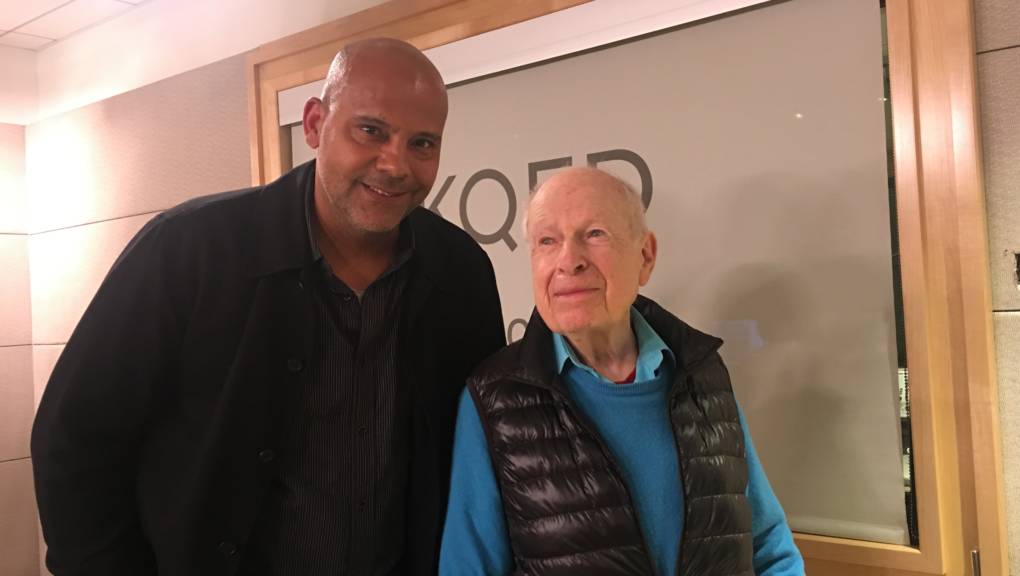
"caption": "KQED News host Brian Watt with theater director Peter Brook.",
"description": "KQED News host Brian Watt with theater director Peter Brook.",
"title": "with Peter Brook",
"credit": "Photo: Brian Watt/KQED",
"status": "inherit",
"isLoading": false,
"fetchFailed": false
},
"arts_13207535": {
"type": "attachments",
"id": "arts_13207535",
"meta": {
"index": "attachments_1716263798",
"site": "arts",
"id": "13207535",
"found": true
},
"parent": 13201414,
"imgSizes": {
"small": {
"file": "https://ww2.kqed.org/app/uploads/sites/2/2017/05/Cast-of-Monsoon-Wedding-e1494527576793-520x293.jpg",
"width": 520,
"mimeType": "image/jpeg",
"height": 293
},
"twentyfourteen-full-width": {
"file": "https://ww2.kqed.org/app/uploads/sites/2/2017/05/Cast-of-Monsoon-Wedding-e1494527576793-1038x576.jpg",
"width": 1038,
"mimeType": "image/jpeg",
"height": 576
},
"thumbnail": {
"file": "https://ww2.kqed.org/app/uploads/sites/2/2017/05/Cast-of-Monsoon-Wedding-e1494527576793-160x90.jpg",
"width": 160,
"mimeType": "image/jpeg",
"height": 90
},
"fd-sm": {
"file": "https://ww2.kqed.org/app/uploads/sites/2/2017/05/Cast-of-Monsoon-Wedding-e1494527576793-960x540.jpg",
"width": 960,
"mimeType": "image/jpeg",
"height": 540
},
"post-thumbnail": {
"file": "https://ww2.kqed.org/app/uploads/sites/2/2017/05/Cast-of-Monsoon-Wedding-e1494527576793-672x372.jpg",
"width": 672,
"mimeType": "image/jpeg",
"height": 372
},
"xsmall": {
"file": "https://ww2.kqed.org/app/uploads/sites/2/2017/05/Cast-of-Monsoon-Wedding-e1494527576793-375x211.jpg",
"width": 375,
"mimeType": "image/jpeg",
"height": 211
},
"kqedFullSize": {
"file": "https://ww2.kqed.org/app/uploads/sites/2/2017/05/Cast-of-Monsoon-Wedding-e1494527576793.jpg",
"width": 4851,
"height": 2731
},
"large": {
"file": "https://ww2.kqed.org/app/uploads/sites/2/2017/05/Cast-of-Monsoon-Wedding-e1494527576793-1020x574.jpg",
"width": 1020,
"mimeType": "image/jpeg",
"height": 574
},
"xlarge": {
"file": "https://ww2.kqed.org/app/uploads/sites/2/2017/05/Cast-of-Monsoon-Wedding-e1494527576793-1180x664.jpg",
"width": 1180,
"mimeType": "image/jpeg",
"height": 664
},
"guest-author-50": {
"file": "https://ww2.kqed.org/app/uploads/sites/2/2017/05/Cast-of-Monsoon-Wedding-e1494527576793-50x50.jpg",
"width": 50,
"mimeType": "image/jpeg",
"height": 50
},
"guest-author-96": {
"file": "https://ww2.kqed.org/app/uploads/sites/2/2017/05/Cast-of-Monsoon-Wedding-e1494527576793-96x96.jpg",
"width": 96,
"mimeType": "image/jpeg",
"height": 96
},
"medium": {
"file": "https://ww2.kqed.org/app/uploads/sites/2/2017/05/Cast-of-Monsoon-Wedding-e1494527576793-800x450.jpg",
"width": 800,
"mimeType": "image/jpeg",
"height": 450
},
"guest-author-64": {
"file": "https://ww2.kqed.org/app/uploads/sites/2/2017/05/Cast-of-Monsoon-Wedding-e1494527576793-64x64.jpg",
"width": 64,
"mimeType": "image/jpeg",
"height": 64
},
"guest-author-32": {
"file": "https://ww2.kqed.org/app/uploads/sites/2/2017/05/Cast-of-Monsoon-Wedding-e1494527576793-32x32.jpg",
"width": 32,
"mimeType": "image/jpeg",
"height": 32
},
"fd-lrg": {
"file": "https://ww2.kqed.org/app/uploads/sites/2/2017/05/Cast-of-Monsoon-Wedding-e1494527576793-1920x1081.jpg",
"width": 1920,
"mimeType": "image/jpeg",
"height": 1081
},
"fd-med": {
"file": "https://ww2.kqed.org/app/uploads/sites/2/2017/05/Cast-of-Monsoon-Wedding-e1494527576793-1180x664.jpg",
"width": 1180,
"mimeType": "image/jpeg",
"height": 664
},
"full-width": {
"file": "https://ww2.kqed.org/app/uploads/sites/2/2017/05/Cast-of-Monsoon-Wedding-e1494527576793-1920x1081.jpg",
"width": 1920,
"mimeType": "image/jpeg",
"height": 1081
},
"detail": {
"file": "https://ww2.kqed.org/app/uploads/sites/2/2017/05/Cast-of-Monsoon-Wedding-e1494527576793-150x150.jpg",
"width": 150,
"mimeType": "image/jpeg",
"height": 150
},
"medium_large": {
"file": "https://ww2.kqed.org/app/uploads/sites/2/2017/05/Cast-of-Monsoon-Wedding-e1494527576793-768x432.jpg",
"width": 768,
"mimeType": "image/jpeg",
"height": 432
},
"guest-author-128": {
"file": "https://ww2.kqed.org/app/uploads/sites/2/2017/05/Cast-of-Monsoon-Wedding-e1494527576793-128x128.jpg",
"width": 128,
"mimeType": "image/jpeg",
"height": 128
},
"xxsmall": {
"file": "https://ww2.kqed.org/app/uploads/sites/2/2017/05/Cast-of-Monsoon-Wedding-e1494527576793-240x135.jpg",
"width": 240,
"mimeType": "image/jpeg",
"height": 135
}
},
"publishDate": 1494527471,
"modified": 1494527536,
"caption": "Cast of Monsoon Wedding, a world premiere musical at Berkeley Repertory Theater ",
"description": "Cast of Monsoon Wedding, a world premiere musical at Berkeley Repertory Theater ",
"title": "Cast of Monsoon Wedding, a world premiere musical at Berkeley Repertory Theater",
"credit": "Photo: Kevin Berne/Berkeley Rep",
"status": "inherit",
"isLoading": false,
"fetchFailed": false
},
"arts_13206781": {
"type": "attachments",
"id": "arts_13206781",
"meta": {
"index": "attachments_1716263798",
"site": "arts",
"id": "13206781",
"found": true
},
"parent": 13206427,
"imgSizes": {
"small": {
"file": "https://ww2.kqed.org/app/uploads/sites/2/2017/05/RS25336_Robert-Kelley1_Niko-Kitaoka-2-520x293.jpg",
"width": 520,
"mimeType": "image/jpeg",
"height": 293
},
"twentyfourteen-full-width": {
"file": "https://ww2.kqed.org/app/uploads/sites/2/2017/05/RS25336_Robert-Kelley1_Niko-Kitaoka-2-1038x576.jpg",
"width": 1038,
"mimeType": "image/jpeg",
"height": 576
},
"thumbnail": {
"file": "https://ww2.kqed.org/app/uploads/sites/2/2017/05/RS25336_Robert-Kelley1_Niko-Kitaoka-2-160x90.jpg",
"width": 160,
"mimeType": "image/jpeg",
"height": 90
},
"fd-sm": {
"file": "https://ww2.kqed.org/app/uploads/sites/2/2017/05/RS25336_Robert-Kelley1_Niko-Kitaoka-2-960x541.jpg",
"width": 960,
"mimeType": "image/jpeg",
"height": 541
},
"post-thumbnail": {
"file": "https://ww2.kqed.org/app/uploads/sites/2/2017/05/RS25336_Robert-Kelley1_Niko-Kitaoka-2-672x372.jpg",
"width": 672,
"mimeType": "image/jpeg",
"height": 372
},
"xsmall": {
"file": "https://ww2.kqed.org/app/uploads/sites/2/2017/05/RS25336_Robert-Kelley1_Niko-Kitaoka-2-375x211.jpg",
"width": 375,
"mimeType": "image/jpeg",
"height": 211
},
"kqedFullSize": {
"file": "https://ww2.kqed.org/app/uploads/sites/2/2017/05/RS25336_Robert-Kelley1_Niko-Kitaoka-2.jpg",
"width": 2383,
"height": 1344
},
"large": {
"file": "https://ww2.kqed.org/app/uploads/sites/2/2017/05/RS25336_Robert-Kelley1_Niko-Kitaoka-2-1020x575.jpg",
"width": 1020,
"mimeType": "image/jpeg",
"height": 575
},
"xlarge": {
"file": "https://ww2.kqed.org/app/uploads/sites/2/2017/05/RS25336_Robert-Kelley1_Niko-Kitaoka-2-1180x666.jpg",
"width": 1180,
"mimeType": "image/jpeg",
"height": 666
},
"guest-author-50": {
"file": "https://ww2.kqed.org/app/uploads/sites/2/2017/05/RS25336_Robert-Kelley1_Niko-Kitaoka-2-50x50.jpg",
"width": 50,
"mimeType": "image/jpeg",
"height": 50
},
"guest-author-96": {
"file": "https://ww2.kqed.org/app/uploads/sites/2/2017/05/RS25336_Robert-Kelley1_Niko-Kitaoka-2-96x96.jpg",
"width": 96,
"mimeType": "image/jpeg",
"height": 96
},
"medium": {
"file": "https://ww2.kqed.org/app/uploads/sites/2/2017/05/RS25336_Robert-Kelley1_Niko-Kitaoka-2-800x451.jpg",
"width": 800,
"mimeType": "image/jpeg",
"height": 451
},
"guest-author-64": {
"file": "https://ww2.kqed.org/app/uploads/sites/2/2017/05/RS25336_Robert-Kelley1_Niko-Kitaoka-2-64x64.jpg",
"width": 64,
"mimeType": "image/jpeg",
"height": 64
},
"guest-author-32": {
"file": "https://ww2.kqed.org/app/uploads/sites/2/2017/05/RS25336_Robert-Kelley1_Niko-Kitaoka-2-32x32.jpg",
"width": 32,
"mimeType": "image/jpeg",
"height": 32
},
"fd-lrg": {
"file": "https://ww2.kqed.org/app/uploads/sites/2/2017/05/RS25336_Robert-Kelley1_Niko-Kitaoka-2-1920x1083.jpg",
"width": 1920,
"mimeType": "image/jpeg",
"height": 1083
},
"fd-med": {
"file": "https://ww2.kqed.org/app/uploads/sites/2/2017/05/RS25336_Robert-Kelley1_Niko-Kitaoka-2-1180x666.jpg",
"width": 1180,
"mimeType": "image/jpeg",
"height": 666
},
"full-width": {
"file": "https://ww2.kqed.org/app/uploads/sites/2/2017/05/RS25336_Robert-Kelley1_Niko-Kitaoka-2-1920x1083.jpg",
"width": 1920,
"mimeType": "image/jpeg",
"height": 1083
},
"detail": {
"file": "https://ww2.kqed.org/app/uploads/sites/2/2017/05/RS25336_Robert-Kelley1_Niko-Kitaoka-2-150x150.jpg",
"width": 150,
"mimeType": "image/jpeg",
"height": 150
},
"medium_large": {
"file": "https://ww2.kqed.org/app/uploads/sites/2/2017/05/RS25336_Robert-Kelley1_Niko-Kitaoka-2-768x433.jpg",
"width": 768,
"mimeType": "image/jpeg",
"height": 433
},
"guest-author-128": {
"file": "https://ww2.kqed.org/app/uploads/sites/2/2017/05/RS25336_Robert-Kelley1_Niko-Kitaoka-2-128x128.jpg",
"width": 128,
"mimeType": "image/jpeg",
"height": 128
},
"xxsmall": {
"file": "https://ww2.kqed.org/app/uploads/sites/2/2017/05/RS25336_Robert-Kelley1_Niko-Kitaoka-2-240x135.jpg",
"width": 240,
"mimeType": "image/jpeg",
"height": 135
}
},
"publishDate": 1494517111,
"modified": 1494517143,
"caption": "TheatreWorks Silicon Valley's Founding Artistic Director Robert Kelley will steps down at the conclusion of the 50th Anniversary season in 2020. ",
"description": "TheatreWorks Silicon Valley's Founding Artistic Director Robert Kelley will steps down at the conclusion of the 50th Anniversary season in 2020. ",
"title": "RS25336_Robert Kelley1_Niko Kitaoka (2)",
"credit": "Photo: Courtesy of Niko Kitaoka",
"status": "inherit",
"isLoading": false,
"fetchFailed": false
},
"arts_13187470": {
"type": "attachments",
"id": "arts_13187470",
"meta": {
"index": "attachments_1716263798",
"site": "arts",
"id": "13187470",
"found": true
},
"parent": 13187192,
"imgSizes": {
"small": {
"file": "https://ww2.kqed.org/app/uploads/sites/2/2017/05/Battlefield-6-e1494279767993-520x291.jpg",
"width": 520,
"mimeType": "image/jpeg",
"height": 291
},
"twentyfourteen-full-width": {
"file": "https://ww2.kqed.org/app/uploads/sites/2/2017/05/Battlefield-6-e1494279767993-1038x576.jpg",
"width": 1038,
"mimeType": "image/jpeg",
"height": 576
},
"thumbnail": {
"file": "https://ww2.kqed.org/app/uploads/sites/2/2017/05/Battlefield-6-e1494279767993-160x89.jpg",
"width": 160,
"mimeType": "image/jpeg",
"height": 89
},
"fd-sm": {
"file": "https://ww2.kqed.org/app/uploads/sites/2/2017/05/Battlefield-6-e1494279767993-960x537.jpg",
"width": 960,
"mimeType": "image/jpeg",
"height": 537
},
"post-thumbnail": {
"file": "https://ww2.kqed.org/app/uploads/sites/2/2017/05/Battlefield-6-e1494279767993-672x372.jpg",
"width": 672,
"mimeType": "image/jpeg",
"height": 372
},
"xsmall": {
"file": "https://ww2.kqed.org/app/uploads/sites/2/2017/05/Battlefield-6-e1494279767993-375x210.jpg",
"width": 375,
"mimeType": "image/jpeg",
"height": 210
},
"kqedFullSize": {
"file": "https://ww2.kqed.org/app/uploads/sites/2/2017/05/Battlefield-6-e1494279767993.jpg",
"width": 3569,
"height": 1996
},
"large": {
"file": "https://ww2.kqed.org/app/uploads/sites/2/2017/05/Battlefield-6-e1494279767993-1020x570.jpg",
"width": 1020,
"mimeType": "image/jpeg",
"height": 570
},
"xlarge": {
"file": "https://ww2.kqed.org/app/uploads/sites/2/2017/05/Battlefield-6-e1494279767993-1180x660.jpg",
"width": 1180,
"mimeType": "image/jpeg",
"height": 660
},
"guest-author-50": {
"file": "https://ww2.kqed.org/app/uploads/sites/2/2017/05/Battlefield-6-e1494279767993-50x50.jpg",
"width": 50,
"mimeType": "image/jpeg",
"height": 50
},
"guest-author-96": {
"file": "https://ww2.kqed.org/app/uploads/sites/2/2017/05/Battlefield-6-e1494279767993-96x96.jpg",
"width": 96,
"mimeType": "image/jpeg",
"height": 96
},
"medium": {
"file": "https://ww2.kqed.org/app/uploads/sites/2/2017/05/Battlefield-6-e1494279767993-800x447.jpg",
"width": 800,
"mimeType": "image/jpeg",
"height": 447
},
"guest-author-64": {
"file": "https://ww2.kqed.org/app/uploads/sites/2/2017/05/Battlefield-6-e1494279767993-64x64.jpg",
"width": 64,
"mimeType": "image/jpeg",
"height": 64
},
"guest-author-32": {
"file": "https://ww2.kqed.org/app/uploads/sites/2/2017/05/Battlefield-6-e1494279767993-32x32.jpg",
"width": 32,
"mimeType": "image/jpeg",
"height": 32
},
"fd-lrg": {
"file": "https://ww2.kqed.org/app/uploads/sites/2/2017/05/Battlefield-6-e1494279767993-1920x1074.jpg",
"width": 1920,
"mimeType": "image/jpeg",
"height": 1074
},
"fd-med": {
"file": "https://ww2.kqed.org/app/uploads/sites/2/2017/05/Battlefield-6-e1494279767993-1180x660.jpg",
"width": 1180,
"mimeType": "image/jpeg",
"height": 660
},
"full-width": {
"file": "https://ww2.kqed.org/app/uploads/sites/2/2017/05/Battlefield-6-e1494279767993-1920x1074.jpg",
"width": 1920,
"mimeType": "image/jpeg",
"height": 1074
},
"detail": {
"file": "https://ww2.kqed.org/app/uploads/sites/2/2017/05/Battlefield-6-e1494279767993-150x150.jpg",
"width": 150,
"mimeType": "image/jpeg",
"height": 150
},
"medium_large": {
"file": "https://ww2.kqed.org/app/uploads/sites/2/2017/05/Battlefield-6-e1494279767993-768x430.jpg",
"width": 768,
"mimeType": "image/jpeg",
"height": 430
},
"guest-author-128": {
"file": "https://ww2.kqed.org/app/uploads/sites/2/2017/05/Battlefield-6-e1494279767993-128x128.jpg",
"width": 128,
"mimeType": "image/jpeg",
"height": 128
},
"xxsmall": {
"file": "https://ww2.kqed.org/app/uploads/sites/2/2017/05/Battlefield-6-e1494279767993-240x134.jpg",
"width": 240,
"mimeType": "image/jpeg",
"height": 134
}
},
"publishDate": 1494279064,
"modified": 1494282100,
"caption": "(L to R) Kunti (Carole Karemera), Dritarashtra (Sean O'Callaghan), Yudishtira (Jared McNeill), and Narrator (Ery Nzaramba) contemplate the end in 'Battlefield' directed by Peter Brook and Marie-Hélène Estienne.",
"description": "(L to R) Kunti (Carole Karemera), Dritarashtra (Sean O'Callaghan), Yudishtira (Jared McNeill), and Narrator (Ery Nzaramba) contemplate the end in 'Battlefield' directed by Peter Brook and Marie-Hélène Estienne.",
"title": "Battlefield 6",
"credit": "Photo: Caroline Moreau",
"status": "inherit",
"isLoading": false,
"fetchFailed": false
},
"arts_13194436": {
"type": "attachments",
"id": "arts_13194436",
"meta": {
"index": "attachments_1716263798",
"site": "arts",
"id": "13194436",
"found": true
},
"parent": 13194435,
"imgSizes": {
"small": {
"file": "https://ww2.kqed.org/app/uploads/sites/2/2017/05/2017-04-06-Jobs-Steves-Office-e1494365490158-520x293.jpg",
"width": 520,
"mimeType": "image/jpeg",
"height": 293
},
"twentyfourteen-full-width": {
"file": "https://ww2.kqed.org/app/uploads/sites/2/2017/05/2017-04-06-Jobs-Steves-Office-e1494365490158-1038x576.jpg",
"width": 1038,
"mimeType": "image/jpeg",
"height": 576
},
"thumbnail": {
"file": "https://ww2.kqed.org/app/uploads/sites/2/2017/05/2017-04-06-Jobs-Steves-Office-e1494365490158-160x90.jpg",
"width": 160,
"mimeType": "image/jpeg",
"height": 90
},
"fd-sm": {
"file": "https://ww2.kqed.org/app/uploads/sites/2/2017/05/2017-04-06-Jobs-Steves-Office-e1494365490158-960x541.jpg",
"width": 960,
"mimeType": "image/jpeg",
"height": 541
},
"post-thumbnail": {
"file": "https://ww2.kqed.org/app/uploads/sites/2/2017/05/2017-04-06-Jobs-Steves-Office-e1494365490158-672x372.jpg",
"width": 672,
"mimeType": "image/jpeg",
"height": 372
},
"xsmall": {
"file": "https://ww2.kqed.org/app/uploads/sites/2/2017/05/2017-04-06-Jobs-Steves-Office-e1494365490158-375x211.jpg",
"width": 375,
"mimeType": "image/jpeg",
"height": 211
},
"kqedFullSize": {
"file": "https://ww2.kqed.org/app/uploads/sites/2/2017/05/2017-04-06-Jobs-Steves-Office-e1494365490158.jpg",
"width": 3213,
"height": 1809
},
"large": {
"file": "https://ww2.kqed.org/app/uploads/sites/2/2017/05/2017-04-06-Jobs-Steves-Office-e1494365490158-1020x574.jpg",
"width": 1020,
"mimeType": "image/jpeg",
"height": 574
},
"xlarge": {
"file": "https://ww2.kqed.org/app/uploads/sites/2/2017/05/2017-04-06-Jobs-Steves-Office-e1494365490158-1180x664.jpg",
"width": 1180,
"mimeType": "image/jpeg",
"height": 664
},
"guest-author-50": {
"file": "https://ww2.kqed.org/app/uploads/sites/2/2017/05/2017-04-06-Jobs-Steves-Office-e1494365490158-50x50.jpg",
"width": 50,
"mimeType": "image/jpeg",
"height": 50
},
"guest-author-96": {
"file": "https://ww2.kqed.org/app/uploads/sites/2/2017/05/2017-04-06-Jobs-Steves-Office-e1494365490158-96x96.jpg",
"width": 96,
"mimeType": "image/jpeg",
"height": 96
},
"medium": {
"file": "https://ww2.kqed.org/app/uploads/sites/2/2017/05/2017-04-06-Jobs-Steves-Office-e1494365490158-800x450.jpg",
"width": 800,
"mimeType": "image/jpeg",
"height": 450
},
"guest-author-64": {
"file": "https://ww2.kqed.org/app/uploads/sites/2/2017/05/2017-04-06-Jobs-Steves-Office-e1494365490158-64x64.jpg",
"width": 64,
"mimeType": "image/jpeg",
"height": 64
},
"guest-author-32": {
"file": "https://ww2.kqed.org/app/uploads/sites/2/2017/05/2017-04-06-Jobs-Steves-Office-e1494365490158-32x32.jpg",
"width": 32,
"mimeType": "image/jpeg",
"height": 32
},
"fd-lrg": {
"file": "https://ww2.kqed.org/app/uploads/sites/2/2017/05/2017-04-06-Jobs-Steves-Office-e1494365490158-1920x1081.jpg",
"width": 1920,
"mimeType": "image/jpeg",
"height": 1081
},
"fd-med": {
"file": "https://ww2.kqed.org/app/uploads/sites/2/2017/05/2017-04-06-Jobs-Steves-Office-e1494365490158-1180x664.jpg",
"width": 1180,
"mimeType": "image/jpeg",
"height": 664
},
"full-width": {
"file": "https://ww2.kqed.org/app/uploads/sites/2/2017/05/2017-04-06-Jobs-Steves-Office-e1494365490158-1920x1081.jpg",
"width": 1920,
"mimeType": "image/jpeg",
"height": 1081
},
"detail": {
"file": "https://ww2.kqed.org/app/uploads/sites/2/2017/05/2017-04-06-Jobs-Steves-Office-e1494365490158-150x150.jpg",
"width": 150,
"mimeType": "image/jpeg",
"height": 150
},
"medium_large": {
"file": "https://ww2.kqed.org/app/uploads/sites/2/2017/05/2017-04-06-Jobs-Steves-Office-e1494365490158-768x432.jpg",
"width": 768,
"mimeType": "image/jpeg",
"height": 432
},
"guest-author-128": {
"file": "https://ww2.kqed.org/app/uploads/sites/2/2017/05/2017-04-06-Jobs-Steves-Office-e1494365490158-128x128.jpg",
"width": 128,
"mimeType": "image/jpeg",
"height": 128
},
"xxsmall": {
"file": "https://ww2.kqed.org/app/uploads/sites/2/2017/05/2017-04-06-Jobs-Steves-Office-e1494365490158-240x135.jpg",
"width": 240,
"mimeType": "image/jpeg",
"height": 135
}
},
"publishDate": 1494365383,
"modified": 1494365465,
"caption": "The set design for Steve Jobs' office in Mason Bates' new opera about the Apple founder, 'The (R)evolution of Steve Jobs.' Set design by Vita Tzykun.",
"description": "The set design for Steve Jobs' office in Mason Bates' new opera about the Apple founder, 'The (R)evolution of Steve Jobs.' Set design by Vita Tzykun.",
"title": "2017-04-06 - Jobs - Steve's Office",
"credit": "Photo: Courtesy of Santa Fe Opera",
"status": "inherit",
"isLoading": false,
"fetchFailed": false
},
"arts_13161483": {
"type": "attachments",
"id": "arts_13161483",
"meta": {
"index": "attachments_1716263798",
"site": "arts",
"id": "13161483",
"found": true
},
"parent": 13160227,
"imgSizes": {
"small": {
"file": "https://ww2.kqed.org/app/uploads/sites/2/2017/05/Oddisee-2-520x292.jpg",
"width": 520,
"mimeType": "image/jpeg",
"height": 292
},
"twentyfourteen-full-width": {
"file": "https://ww2.kqed.org/app/uploads/sites/2/2017/05/Oddisee-2-1038x576.jpg",
"width": 1038,
"mimeType": "image/jpeg",
"height": 576
},
"thumbnail": {
"file": "https://ww2.kqed.org/app/uploads/sites/2/2017/05/Oddisee-2-160x90.jpg",
"width": 160,
"mimeType": "image/jpeg",
"height": 90
},
"fd-sm": {
"file": "https://ww2.kqed.org/app/uploads/sites/2/2017/05/Oddisee-2-960x540.jpg",
"width": 960,
"mimeType": "image/jpeg",
"height": 540
},
"post-thumbnail": {
"file": "https://ww2.kqed.org/app/uploads/sites/2/2017/05/Oddisee-2-672x372.jpg",
"width": 672,
"mimeType": "image/jpeg",
"height": 372
},
"xsmall": {
"file": "https://ww2.kqed.org/app/uploads/sites/2/2017/05/Oddisee-2-375x211.jpg",
"width": 375,
"mimeType": "image/jpeg",
"height": 211
},
"kqedFullSize": {
"file": "https://ww2.kqed.org/app/uploads/sites/2/2017/05/Oddisee-2.jpg",
"width": 1400,
"height": 787
},
"large": {
"file": "https://ww2.kqed.org/app/uploads/sites/2/2017/05/Oddisee-2-1020x573.jpg",
"width": 1020,
"mimeType": "image/jpeg",
"height": 573
},
"xlarge": {
"file": "https://ww2.kqed.org/app/uploads/sites/2/2017/05/Oddisee-2-1180x663.jpg",
"width": 1180,
"mimeType": "image/jpeg",
"height": 663
},
"guest-author-50": {
"file": "https://ww2.kqed.org/app/uploads/sites/2/2017/05/Oddisee-2-50x50.jpg",
"width": 50,
"mimeType": "image/jpeg",
"height": 50
},
"guest-author-96": {
"file": "https://ww2.kqed.org/app/uploads/sites/2/2017/05/Oddisee-2-96x96.jpg",
"width": 96,
"mimeType": "image/jpeg",
"height": 96
},
"medium": {
"file": "https://ww2.kqed.org/app/uploads/sites/2/2017/05/Oddisee-2-800x450.jpg",
"width": 800,
"mimeType": "image/jpeg",
"height": 450
},
"guest-author-64": {
"file": "https://ww2.kqed.org/app/uploads/sites/2/2017/05/Oddisee-2-64x64.jpg",
"width": 64,
"mimeType": "image/jpeg",
"height": 64
},
"guest-author-32": {
"file": "https://ww2.kqed.org/app/uploads/sites/2/2017/05/Oddisee-2-32x32.jpg",
"width": 32,
"mimeType": "image/jpeg",
"height": 32
},
"fd-med": {
"file": "https://ww2.kqed.org/app/uploads/sites/2/2017/05/Oddisee-2-1180x663.jpg",
"width": 1180,
"mimeType": "image/jpeg",
"height": 663
},
"detail": {
"file": "https://ww2.kqed.org/app/uploads/sites/2/2017/05/Oddisee-2-150x150.jpg",
"width": 150,
"mimeType": "image/jpeg",
"height": 150
},
"medium_large": {
"file": "https://ww2.kqed.org/app/uploads/sites/2/2017/05/Oddisee-2-768x432.jpg",
"width": 768,
"mimeType": "image/jpeg",
"height": 432
},
"guest-author-128": {
"file": "https://ww2.kqed.org/app/uploads/sites/2/2017/05/Oddisee-2-128x128.jpg",
"width": 128,
"mimeType": "image/jpeg",
"height": 128
},
"xxsmall": {
"file": "https://ww2.kqed.org/app/uploads/sites/2/2017/05/Oddisee-2-240x135.jpg",
"width": 240,
"mimeType": "image/jpeg",
"height": 135
}
},
"publishDate": 1493934780,
"modified": 1493934838,
"caption": "Oddisee appears at the Regency Ballroom May 7",
"description": "Oddisee appears at the Regency Ballroom May 7",
"title": "Oddisee appears at the Regency Ballroom May 7",
"credit": "Photo: Courtesy of the artists",
"status": "inherit",
"isLoading": false,
"fetchFailed": false
},
"arts_13141297": {
"type": "attachments",
"id": "arts_13141297",
"meta": {
"index": "attachments_1716263798",
"site": "arts",
"id": "13141297",
"found": true
},
"parent": 13141032,
"imgSizes": {
"small": {
"file": "https://ww2.kqed.org/app/uploads/sites/2/2017/05/encounter4-e1493667171783-520x292.jpg",
"width": 520,
"mimeType": "image/jpeg",
"height": 292
},
"twentyfourteen-full-width": {
"file": "https://ww2.kqed.org/app/uploads/sites/2/2017/05/encounter4-e1493667171783-1038x576.jpg",
"width": 1038,
"mimeType": "image/jpeg",
"height": 576
},
"thumbnail": {
"file": "https://ww2.kqed.org/app/uploads/sites/2/2017/05/encounter4-e1493667171783-160x90.jpg",
"width": 160,
"mimeType": "image/jpeg",
"height": 90
},
"fd-sm": {
"file": "https://ww2.kqed.org/app/uploads/sites/2/2017/05/encounter4-e1493667171783-960x540.jpg",
"width": 960,
"mimeType": "image/jpeg",
"height": 540
},
"post-thumbnail": {
"file": "https://ww2.kqed.org/app/uploads/sites/2/2017/05/encounter4-e1493667171783-672x372.jpg",
"width": 672,
"mimeType": "image/jpeg",
"height": 372
},
"xsmall": {
"file": "https://ww2.kqed.org/app/uploads/sites/2/2017/05/encounter4-e1493667171783-375x211.jpg",
"width": 375,
"mimeType": "image/jpeg",
"height": 211
},
"kqedFullSize": {
"file": "https://ww2.kqed.org/app/uploads/sites/2/2017/05/encounter4-e1493667171783.jpg",
"width": 3543,
"height": 1992
},
"large": {
"file": "https://ww2.kqed.org/app/uploads/sites/2/2017/05/encounter4-e1493667171783-1020x573.jpg",
"width": 1020,
"mimeType": "image/jpeg",
"height": 573
},
"xlarge": {
"file": "https://ww2.kqed.org/app/uploads/sites/2/2017/05/encounter4-e1493667171783-1180x663.jpg",
"width": 1180,
"mimeType": "image/jpeg",
"height": 663
},
"guest-author-50": {
"file": "https://ww2.kqed.org/app/uploads/sites/2/2017/05/encounter4-e1493667171783-50x50.jpg",
"width": 50,
"mimeType": "image/jpeg",
"height": 50
},
"guest-author-96": {
"file": "https://ww2.kqed.org/app/uploads/sites/2/2017/05/encounter4-e1493667171783-96x96.jpg",
"width": 96,
"mimeType": "image/jpeg",
"height": 96
},
"medium": {
"file": "https://ww2.kqed.org/app/uploads/sites/2/2017/05/encounter4-e1493667171783-800x450.jpg",
"width": 800,
"mimeType": "image/jpeg",
"height": 450
},
"guest-author-64": {
"file": "https://ww2.kqed.org/app/uploads/sites/2/2017/05/encounter4-e1493667171783-64x64.jpg",
"width": 64,
"mimeType": "image/jpeg",
"height": 64
},
"guest-author-32": {
"file": "https://ww2.kqed.org/app/uploads/sites/2/2017/05/encounter4-e1493667171783-32x32.jpg",
"width": 32,
"mimeType": "image/jpeg",
"height": 32
},
"fd-lrg": {
"file": "https://ww2.kqed.org/app/uploads/sites/2/2017/05/encounter4-e1493667171783-1920x1079.jpg",
"width": 1920,
"mimeType": "image/jpeg",
"height": 1079
},
"fd-med": {
"file": "https://ww2.kqed.org/app/uploads/sites/2/2017/05/encounter4-e1493667171783-1180x663.jpg",
"width": 1180,
"mimeType": "image/jpeg",
"height": 663
},
"full-width": {
"file": "https://ww2.kqed.org/app/uploads/sites/2/2017/05/encounter4-e1493667171783-1920x1079.jpg",
"width": 1920,
"mimeType": "image/jpeg",
"height": 1079
},
"detail": {
"file": "https://ww2.kqed.org/app/uploads/sites/2/2017/05/encounter4-e1493667171783-150x150.jpg",
"width": 150,
"mimeType": "image/jpeg",
"height": 150
},
"medium_large": {
"file": "https://ww2.kqed.org/app/uploads/sites/2/2017/05/encounter4-e1493667171783-768x432.jpg",
"width": 768,
"mimeType": "image/jpeg",
"height": 432
},
"guest-author-128": {
"file": "https://ww2.kqed.org/app/uploads/sites/2/2017/05/encounter4-e1493667171783-128x128.jpg",
"width": 128,
"mimeType": "image/jpeg",
"height": 128
},
"xxsmall": {
"file": "https://ww2.kqed.org/app/uploads/sites/2/2017/05/encounter4-e1493667171783-240x135.jpg",
"width": 240,
"mimeType": "image/jpeg",
"height": 135
}
},
"publishDate": 1493666776,
"modified": 1493668750,
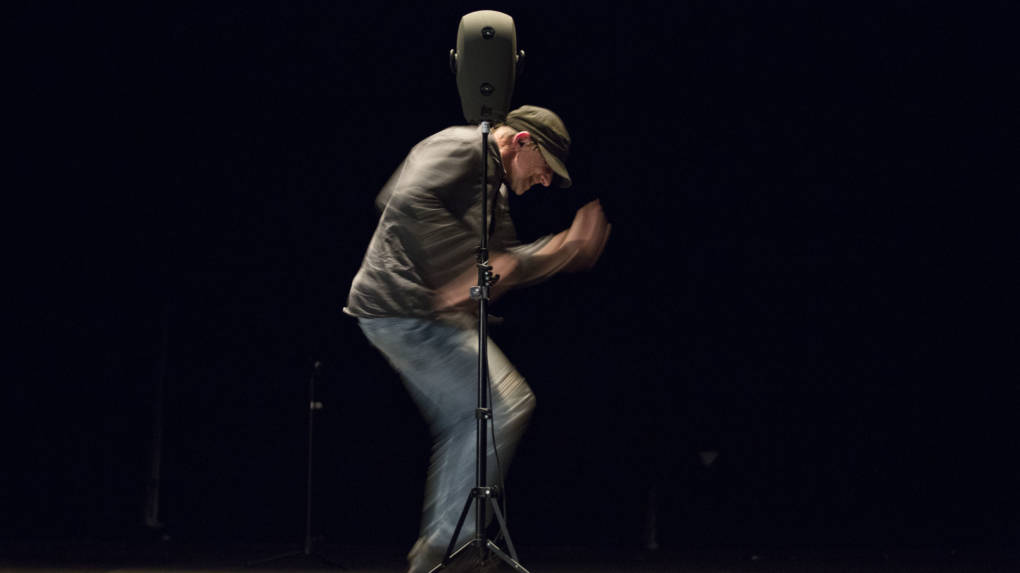
"caption": "Simon McBurney pounds the stage floor in front of the amazing binaural microphone in 'The Encounter' at the Curran Theater.",
"description": "Simon McBurney pounds the stage floor in front of the amazing binaural microphone in 'The Encounter' at the Curran Theater.",
"title": "AMAZON_BEAMING-1137",
"credit": "Photo: Gianmarco Bresadola",
"status": "inherit",
"isLoading": false,
"fetchFailed": false
},
"arts_13113403": {
"type": "attachments",
"id": "arts_13113403",
"meta": {
"index": "attachments_1716263798",
"site": "arts",
"id": "13113403",
"found": true
},
"parent": 13113401,
"imgSizes": {
"small": {
"file": "https://ww2.kqed.org/app/uploads/sites/2/2017/04/RS25034_Enlow_Parent_Skit-017-qut-520x293.jpg",
"width": 520,
"mimeType": "image/jpeg",
"height": 293
},
"twentyfourteen-full-width": {
"file": "https://ww2.kqed.org/app/uploads/sites/2/2017/04/RS25034_Enlow_Parent_Skit-017-qut-1038x576.jpg",
"width": 1038,
"mimeType": "image/jpeg",
"height": 576
},
"thumbnail": {
"file": "https://ww2.kqed.org/app/uploads/sites/2/2017/04/RS25034_Enlow_Parent_Skit-017-qut-160x90.jpg",
"width": 160,
"mimeType": "image/jpeg",
"height": 90
},
"fd-sm": {
"file": "https://ww2.kqed.org/app/uploads/sites/2/2017/04/RS25034_Enlow_Parent_Skit-017-qut-960x541.jpg",
"width": 960,
"mimeType": "image/jpeg",
"height": 541
},
"post-thumbnail": {
"file": "https://ww2.kqed.org/app/uploads/sites/2/2017/04/RS25034_Enlow_Parent_Skit-017-qut-672x372.jpg",
"width": 672,
"mimeType": "image/jpeg",
"height": 372
},
"xsmall": {
"file": "https://ww2.kqed.org/app/uploads/sites/2/2017/04/RS25034_Enlow_Parent_Skit-017-qut-375x211.jpg",
"width": 375,
"mimeType": "image/jpeg",
"height": 211
},
"kqedFullSize": {
"file": "https://ww2.kqed.org/app/uploads/sites/2/2017/04/RS25034_Enlow_Parent_Skit-017-qut.jpg",
"width": 1920,
"height": 1082
},
"large": {
"file": "https://ww2.kqed.org/app/uploads/sites/2/2017/04/RS25034_Enlow_Parent_Skit-017-qut-1020x575.jpg",
"width": 1020,
"mimeType": "image/jpeg",
"height": 575
},
"xlarge": {
"file": "https://ww2.kqed.org/app/uploads/sites/2/2017/04/RS25034_Enlow_Parent_Skit-017-qut-1180x665.jpg",
"width": 1180,
"mimeType": "image/jpeg",
"height": 665
},
"guest-author-50": {
"file": "https://ww2.kqed.org/app/uploads/sites/2/2017/04/RS25034_Enlow_Parent_Skit-017-qut-50x50.jpg",
"width": 50,
"mimeType": "image/jpeg",
"height": 50
},
"guest-author-96": {
"file": "https://ww2.kqed.org/app/uploads/sites/2/2017/04/RS25034_Enlow_Parent_Skit-017-qut-96x96.jpg",
"width": 96,
"mimeType": "image/jpeg",
"height": 96
},
"medium": {
"file": "https://ww2.kqed.org/app/uploads/sites/2/2017/04/RS25034_Enlow_Parent_Skit-017-qut-800x451.jpg",
"width": 800,
"mimeType": "image/jpeg",
"height": 451
},
"guest-author-64": {
"file": "https://ww2.kqed.org/app/uploads/sites/2/2017/04/RS25034_Enlow_Parent_Skit-017-qut-64x64.jpg",
"width": 64,
"mimeType": "image/jpeg",
"height": 64
},
"guest-author-32": {
"file": "https://ww2.kqed.org/app/uploads/sites/2/2017/04/RS25034_Enlow_Parent_Skit-017-qut-32x32.jpg",
"width": 32,
"mimeType": "image/jpeg",
"height": 32
},
"fd-lrg": {
"file": "https://ww2.kqed.org/app/uploads/sites/2/2017/04/RS25034_Enlow_Parent_Skit-017-qut-1920x1082.jpg",
"width": 1920,
"mimeType": "image/jpeg",
"height": 1082
},
"fd-med": {
"file": "https://ww2.kqed.org/app/uploads/sites/2/2017/04/RS25034_Enlow_Parent_Skit-017-qut-1180x665.jpg",
"width": 1180,
"mimeType": "image/jpeg",
"height": 665
},
"full-width": {
"file": "https://ww2.kqed.org/app/uploads/sites/2/2017/04/RS25034_Enlow_Parent_Skit-017-qut-1920x1082.jpg",
"width": 1920,
"mimeType": "image/jpeg",
"height": 1082
},
"detail": {
"file": "https://ww2.kqed.org/app/uploads/sites/2/2017/04/RS25034_Enlow_Parent_Skit-017-qut-150x150.jpg",
"width": 150,
"mimeType": "image/jpeg",
"height": 150
},
"medium_large": {
"file": "https://ww2.kqed.org/app/uploads/sites/2/2017/04/RS25034_Enlow_Parent_Skit-017-qut-768x433.jpg",
"width": 768,
"mimeType": "image/jpeg",
"height": 433
},
"guest-author-128": {
"file": "https://ww2.kqed.org/app/uploads/sites/2/2017/04/RS25034_Enlow_Parent_Skit-017-qut-128x128.jpg",
"width": 128,
"mimeType": "image/jpeg",
"height": 128
},
"xxsmall": {
"file": "https://ww2.kqed.org/app/uploads/sites/2/2017/04/RS25034_Enlow_Parent_Skit-017-qut-240x135.jpg",
"width": 240,
"mimeType": "image/jpeg",
"height": 135
}
},
"publishDate": 1493234177,
"modified": 1493657392,
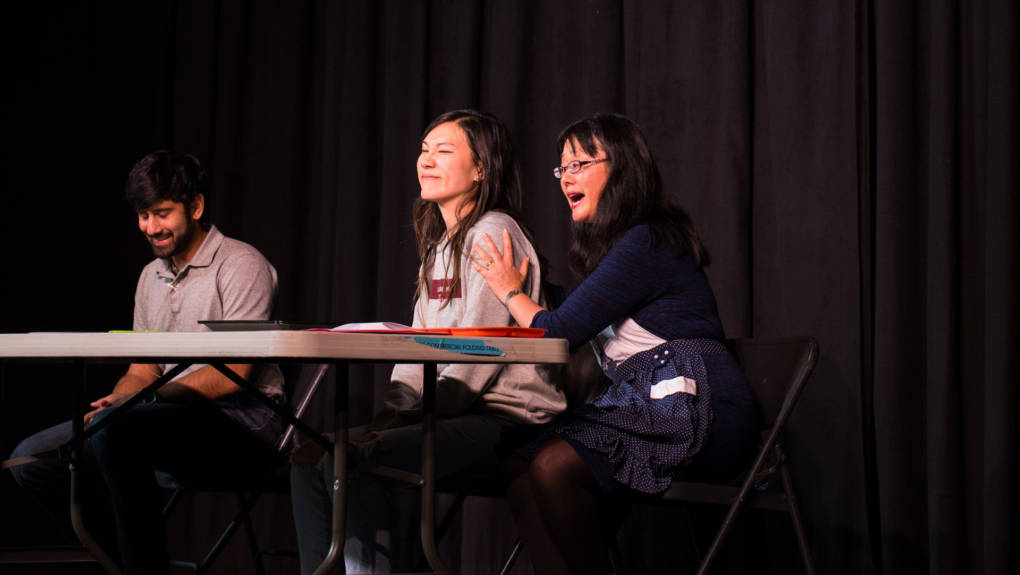
"caption": "Stanford psychiatrists use the maxim \"Show, don't tell,\" to demonstrate how parents can cultivate emotional closeness with their teenagers - or emotional distance. In this vignette, Dr. Rona Hu plays a mother who disapproves when her daughter, played by Dr. Grace Lee, brings home a non-Chinese boyfriend, playing by Dr. Francesco Dandekar.",
"description": "Stanford psychiatrists use the maxim \"Show, don't tell,\" to demonstrate how parents can cultivate emotional closeness with their teenagers - or emotional distance. In this vignette, Dr. Rona Hu plays a mother who disapproves when her daughter, played by Dr. Grace Lee, brings home a non-Chinese boyfriend, playing by Dr. Francesco Dandekar.",
"title": "RS25034_Enlow_Parent_Skit-017-qut",
"credit": "Photo: Jeff Enlow/KQED",
"status": "inherit",
"isLoading": false,
"fetchFailed": false
},
"arts_13123700": {
"type": "attachments",
"id": "arts_13123700",
"meta": {
"index": "attachments_1716263798",
"site": "arts",
"id": "13123700",
"found": true
},
"parent": 13123697,
"imgSizes": {
"small": {
"file": "https://ww2.kqed.org/app/uploads/sites/2/2017/04/Uncle-e1493409616839-520x292.jpg",
"width": 520,
"mimeType": "image/jpeg",
"height": 292
},
"twentyfourteen-full-width": {
"file": "https://ww2.kqed.org/app/uploads/sites/2/2017/04/Uncle-900x576.jpg",
"width": 900,
"mimeType": "image/jpeg",
"height": 576
},
"thumbnail": {
"file": "https://ww2.kqed.org/app/uploads/sites/2/2017/04/Uncle-e1493409616839-160x90.jpg",
"width": 160,
"mimeType": "image/jpeg",
"height": 90
},
"post-thumbnail": {
"file": "https://ww2.kqed.org/app/uploads/sites/2/2017/04/Uncle-e1493409616839-672x372.jpg",
"width": 672,
"mimeType": "image/jpeg",
"height": 372
},
"xsmall": {
"file": "https://ww2.kqed.org/app/uploads/sites/2/2017/04/Uncle-e1493409616839-375x211.jpg",
"width": 375,
"mimeType": "image/jpeg",
"height": 211
},
"kqedFullSize": {
"file": "https://ww2.kqed.org/app/uploads/sites/2/2017/04/Uncle-e1493409616839.jpg",
"width": 859,
"height": 483
},
"guest-author-50": {
"file": "https://ww2.kqed.org/app/uploads/sites/2/2017/04/Uncle-e1493409616839-50x50.jpg",
"width": 50,
"mimeType": "image/jpeg",
"height": 50
},
"guest-author-96": {
"file": "https://ww2.kqed.org/app/uploads/sites/2/2017/04/Uncle-e1493409616839-96x96.jpg",
"width": 96,
"mimeType": "image/jpeg",
"height": 96
},
"medium": {
"file": "https://ww2.kqed.org/app/uploads/sites/2/2017/04/Uncle-e1493409616839-800x450.jpg",
"width": 800,
"mimeType": "image/jpeg",
"height": 450
},
"guest-author-64": {
"file": "https://ww2.kqed.org/app/uploads/sites/2/2017/04/Uncle-e1493409616839-64x64.jpg",
"width": 64,
"mimeType": "image/jpeg",
"height": 64
},
"guest-author-32": {
"file": "https://ww2.kqed.org/app/uploads/sites/2/2017/04/Uncle-e1493409616839-32x32.jpg",
"width": 32,
"mimeType": "image/jpeg",
"height": 32
},
"detail": {
"file": "https://ww2.kqed.org/app/uploads/sites/2/2017/04/Uncle-e1493409616839-150x150.jpg",
"width": 150,
"mimeType": "image/jpeg",
"height": 150
},
"medium_large": {
"file": "https://ww2.kqed.org/app/uploads/sites/2/2017/04/Uncle-e1493409616839-768x432.jpg",
"width": 768,
"mimeType": "image/jpeg",
"height": 432
},
"guest-author-128": {
"file": "https://ww2.kqed.org/app/uploads/sites/2/2017/04/Uncle-e1493409616839-128x128.jpg",
"width": 128,
"mimeType": "image/jpeg",
"height": 128
},
"xxsmall": {
"file": "https://ww2.kqed.org/app/uploads/sites/2/2017/04/Uncle-e1493409616839-240x135.jpg",
"width": 240,
"mimeType": "image/jpeg",
"height": 135
}
},
"publishDate": 1493405069,
"modified": 1493409680,
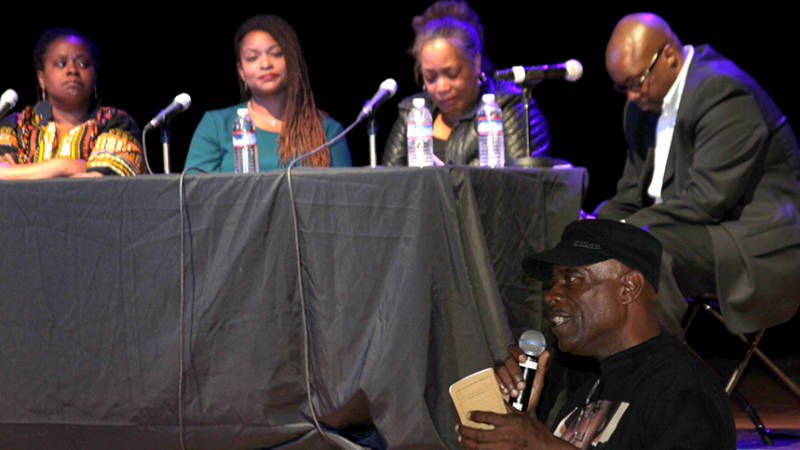
"caption": "Community panel discusses connections between ‘Hercules in the Bayview’ and real-life tragedies that have unfolded in neighborhood residents’ lives in recent years. Left to Right: April Spears, Takija Gardner, Gwen Woods, Shawn Richard, Cephus “Uncle Bobby” Johnson.",
"description": "Community panel discusses connections between ‘Hercules in the Bayview’ and real-life tragedies that have unfolded in neighborhood residents’ lives in recent years. Left to Right: April Spears, Takija Gardner, Gwen Woods, Shawn Richard, Cephus “Uncle Bobby” Johnson.",
"title": "Cephus “Uncle Bobby” Johnson",
"credit": "Photo: Fred Landers",
"status": "inherit",
"isLoading": false,
"fetchFailed": false
},
"forum_2010101859655": {
"type": "attachments",
"id": "forum_2010101859655",
"meta": {
"index": "attachments_1716263798",
"site": "forum",
"id": "2010101859655",
"found": true
},
"parent": 2010101859653,
"imgSizes": {
"small": {
"file": "https://ww2.kqed.org/app/uploads/sites/43/2017/04/Torange-Photo-by-Navid-G-Maghami-for-web-520x293.jpg",
"width": 520,
"mimeType": "image/jpeg",
"height": 293
},
"twentyfourteen-full-width": {
"file": "https://ww2.kqed.org/app/uploads/sites/43/2017/04/Torange-Photo-by-Navid-G-Maghami-for-web-1038x576.jpg",
"width": 1038,
"mimeType": "image/jpeg",
"height": 576
},
"thumbnail": {
"file": "https://ww2.kqed.org/app/uploads/sites/43/2017/04/Torange-Photo-by-Navid-G-Maghami-for-web-160x90.jpg",
"width": 160,
"mimeType": "image/jpeg",
"height": 90
},
"fd-sm": {
"file": "https://ww2.kqed.org/app/uploads/sites/43/2017/04/Torange-Photo-by-Navid-G-Maghami-for-web-960x540.jpg",
"width": 960,
"mimeType": "image/jpeg",
"height": 540
},
"post-thumbnail": {
"file": "https://ww2.kqed.org/app/uploads/sites/43/2017/04/Torange-Photo-by-Navid-G-Maghami-for-web-672x372.jpg",
"width": 672,
"mimeType": "image/jpeg",
"height": 372
},
"xsmall": {
"file": "https://ww2.kqed.org/app/uploads/sites/43/2017/04/Torange-Photo-by-Navid-G-Maghami-for-web-375x211.jpg",
"width": 375,
"mimeType": "image/jpeg",
"height": 211
},
"kqedFullSize": {
"file": "https://ww2.kqed.org/app/uploads/sites/43/2017/04/Torange-Photo-by-Navid-G-Maghami-for-web.jpg",
"width": 1920,
"height": 1080
},
"large": {
"file": "https://ww2.kqed.org/app/uploads/sites/43/2017/04/Torange-Photo-by-Navid-G-Maghami-for-web-1020x574.jpg",
"width": 1020,
"mimeType": "image/jpeg",
"height": 574
},
"xlarge": {
"file": "https://ww2.kqed.org/app/uploads/sites/43/2017/04/Torange-Photo-by-Navid-G-Maghami-for-web-1180x664.jpg",
"width": 1180,
"mimeType": "image/jpeg",
"height": 664
},
"guest-author-50": {
"file": "https://ww2.kqed.org/app/uploads/sites/43/2017/04/Torange-Photo-by-Navid-G-Maghami-for-web-50x50.jpg",
"width": 50,
"mimeType": "image/jpeg",
"height": 50
},
"guest-author-96": {
"file": "https://ww2.kqed.org/app/uploads/sites/43/2017/04/Torange-Photo-by-Navid-G-Maghami-for-web-96x96.jpg",
"width": 96,
"mimeType": "image/jpeg",
"height": 96
},
"medium": {
"file": "https://ww2.kqed.org/app/uploads/sites/43/2017/04/Torange-Photo-by-Navid-G-Maghami-for-web-800x450.jpg",
"width": 800,
"mimeType": "image/jpeg",
"height": 450
},
"guest-author-64": {
"file": "https://ww2.kqed.org/app/uploads/sites/43/2017/04/Torange-Photo-by-Navid-G-Maghami-for-web-64x64.jpg",
"width": 64,
"mimeType": "image/jpeg",
"height": 64
},
"guest-author-32": {
"file": "https://ww2.kqed.org/app/uploads/sites/43/2017/04/Torange-Photo-by-Navid-G-Maghami-for-web-32x32.jpg",
"width": 32,
"mimeType": "image/jpeg",
"height": 32
},
"fd-lrg": {
"file": "https://ww2.kqed.org/app/uploads/sites/43/2017/04/Torange-Photo-by-Navid-G-Maghami-for-web-1920x1080.jpg",
"width": 1920,
"mimeType": "image/jpeg",
"height": 1080
},
"fd-med": {
"file": "https://ww2.kqed.org/app/uploads/sites/43/2017/04/Torange-Photo-by-Navid-G-Maghami-for-web-1180x664.jpg",
"width": 1180,
"mimeType": "image/jpeg",
"height": 664
},
"full-width": {
"file": "https://ww2.kqed.org/app/uploads/sites/43/2017/04/Torange-Photo-by-Navid-G-Maghami-for-web-1920x1080.jpg",
"width": 1920,
"mimeType": "image/jpeg",
"height": 1080
},
"detail": {
"file": "https://ww2.kqed.org/app/uploads/sites/43/2017/04/Torange-Photo-by-Navid-G-Maghami-for-web-150x150.jpg",
"width": 150,
"mimeType": "image/jpeg",
"height": 150
},
"medium_large": {
"file": "https://ww2.kqed.org/app/uploads/sites/43/2017/04/Torange-Photo-by-Navid-G-Maghami-for-web-768x432.jpg",
"width": 768,
"mimeType": "image/jpeg",
"height": 432
},
"guest-author-128": {
"file": "https://ww2.kqed.org/app/uploads/sites/43/2017/04/Torange-Photo-by-Navid-G-Maghami-for-web-128x128.jpg",
"width": 128,
"mimeType": "image/jpeg",
"height": 128
},
"xxsmall": {
"file": "https://ww2.kqed.org/app/uploads/sites/43/2017/04/Torange-Photo-by-Navid-G-Maghami-for-web-240x135.jpg",
"width": 240,
"mimeType": "image/jpeg",
"height": 135
}
},
"publishDate": 1493339219,
"modified": 1493339288,
"caption": "Torange Yeghiazarian is the founding artistic director of Golden Thread Productions.",
"description": "Torange Yeghiazarian is the founding artistic director of Golden Thread Productions.",
"title": "Torange-Photo-by-Navid-G-Maghami-for-web",
"credit": "Photo: Navid G. Maghami",
"status": "inherit",
"isLoading": false,
"fetchFailed": false
}
},
"audioPlayerReducer": {
"postId": "stream_live",
"isPaused": true,
"isPlaying": false,
"pfsActive": false,
"pledgeModalIsOpen": true,
"playerDrawerIsOpen": false,
"liveAudioPlayStartedAt": 0,
"liveAudioPlayContext": ""
},
"authorsReducer": {
"cmusiker": {
"type": "authors",
"id": "32",
"meta": {
"index": "authors_1716337520",
"id": "32",
"found": true
},
"name": "Cy Musiker",
"firstName": "Cy",
"lastName": "Musiker",
"slug": "cmusiker",
"email": "cmusiker@kqed.org",
"display_author_email": false,
"staff_mastheads": [],
"title": "KQED Contributor",
"bio": "Cy Musiker is a former co-host of The Do List and a former reporter covering the arts for KQED News and The California Report. He loves live performance, especially great theater, jazz, roots music, anything by Mahler. Cy has an MJ from UC Berkeley's School of Journalism, and got his BA from Hampshire College. His work has been recognized by the Society for Professional Journalists with their Sigma Delta Chi Award for Public Service in Journalism. When he can, Cy likes to swim in Tomales Bay, run with his dog in the East Bay Hills, and hike the Sierra.",
"avatar": "https://secure.gravatar.com/avatar/05eaba5c5696ce8f062e4ea2df428a43?s=600&d=blank&r=g",
"twitter": null,
"facebook": null,
"instagram": null,
"linkedin": null,
"sites": [
{
"site": "arts",
"roles": [
"Contributor",
"subscriber"
]
},
{
"site": "news",
"roles": [
"author"
]
},
{
"site": "bayareabites",
"roles": [
"contributor"
]
}
],
"headData": {
"title": "Cy Musiker | KQED",
"description": "KQED Contributor",
"ogImgSrc": "https://secure.gravatar.com/avatar/05eaba5c5696ce8f062e4ea2df428a43?s=600&d=blank&r=g",
"twImgSrc": "https://secure.gravatar.com/avatar/05eaba5c5696ce8f062e4ea2df428a43?s=600&d=blank&r=g"
},
"isLoading": false,
"link": "/author/cmusiker"
},
"jedalatpour": {
"type": "authors",
"id": "42",
"meta": {
"index": "authors_1716337520",
"id": "42",
"found": true
},
"name": "Jeffrey Edalatpour",
"firstName": "Jeffrey",
"lastName": "Edalatpour",
"slug": "jedalatpour",
"email": "jedalatpour@kqed.org",
"display_author_email": false,
"staff_mastheads": [],
"title": null,
"bio": "Jeffrey Edalatpour's first published article was a 1999 film review of Pedro Almodovar’s \u003ci>All About My Mother. \u003c/i>Since then, his writing about arts, food and culture has appeared in a variety of print and online publications, including: KQED Arts, \u003ci>Metro Silicon Valley, Interview Magazine, \u003c/i>Berkeleyside.com, The Rumpus and \u003ci>SF Weekly. \u003c/i>His favorite Iris Murdoch novels (in no particular order) are \u003ci>The Bell, An Unofficial Rose \u003c/i>and\u003ci>The Black Prince\u003c/i>\u003ci>. \u003c/i>In other words, his home library is an anglophile’s dream.",
"avatar": "https://secure.gravatar.com/avatar/ed59ec60f4980f3a45d0c3758c17a4d4?s=600&d=blank&r=g",
"twitter": "jsedalatpour",
"facebook": null,
"instagram": null,
"linkedin": null,
"sites": [
{
"site": "arts",
"roles": [
"Contributor",
"contributor"
]
},
{
"site": "about",
"roles": [
"contributor"
]
},
{
"site": "bayareabites",
"roles": [
"author"
]
}
],
"headData": {
"title": "Jeffrey Edalatpour | KQED",
"description": null,
"ogImgSrc": "https://secure.gravatar.com/avatar/ed59ec60f4980f3a45d0c3758c17a4d4?s=600&d=blank&r=g",
"twImgSrc": "https://secure.gravatar.com/avatar/ed59ec60f4980f3a45d0c3758c17a4d4?s=600&d=blank&r=g"
},
"isLoading": false,
"link": "/author/jedalatpour"
},
"minakim": {
"type": "authors",
"id": "243",
"meta": {
"index": "authors_1716337520",
"id": "243",
"found": true
},
"name": "Mina Kim",
"firstName": "Mina",
"lastName": "Kim",
"slug": "minakim",
"email": "mkim@kqed.org",
"display_author_email": false,
"staff_mastheads": [
"news"
],
"title": "Host, Forum",
"bio": "Mina Kim is host of the 10 a.m. statewide hour of Forum; a live daily talk show for curious Californians on issues that matter to the state and nation, with a particular emphasis on race and equity.\r\n\r\nBefore joining the Forum team, Mina was KQED’s evening news anchor, and health reporter for The California Report. Her award-winning work has included natural disasters in Napa and gun violence in Oakland. Mina grew up in St. John’s, Newfoundland.",
"avatar": "https://secure.gravatar.com/avatar/145ce657a2d08cb86d93686beb958982?s=600&d=blank&r=g",
"twitter": "mkimreporter",
"facebook": null,
"instagram": null,
"linkedin": null,
"sites": [
{
"site": "news",
"roles": [
"contributor"
]
},
{
"site": "stateofhealth",
"roles": [
"author"
]
},
{
"site": "forum",
"roles": [
"editor"
]
}
],
"headData": {
"title": "Mina Kim | KQED",
"description": "Host, Forum",
"ogImgSrc": "https://secure.gravatar.com/avatar/145ce657a2d08cb86d93686beb958982?s=600&d=blank&r=g",
"twImgSrc": "https://secure.gravatar.com/avatar/145ce657a2d08cb86d93686beb958982?s=600&d=blank&r=g"
},
"isLoading": false,
"link": "/author/minakim"
},
"rachael-myrow": {
"type": "authors",
"id": "251",
"meta": {
"index": "authors_1716337520",
"id": "251",
"found": true
},
"name": "Rachael Myrow",
"firstName": "Rachael",
"lastName": "Myrow",
"slug": "rachael-myrow",
"email": "rmyrow@kqed.org",
"display_author_email": true,
"staff_mastheads": [
"news"
],
"title": "Senior Editor of KQED's Silicon Valley News Desk",
"bio": "• I write and edit stories about how Silicon Valley power and policies shape everyday life in California. I’m also passionate about making Bay Area history and culture more accessible to a broad public. • I’ve been a journalist for most of my life, starting in high school with The Franklin Press in Los Angeles, where I grew up. While earning my first degree in English at UC Berkeley, I got my start in public radio at KALX-FM. After completing a second degree in journalism at Cal, I landed my first professional job at Marketplace, then moved on to KPCC (now LAist), and then KQED, where I hosted The California Report for more than seven years. • My reporting has appeared on NPR, The World, WBUR’s \u003ci>Here & Now\u003c/i>, and the BBC. I also guest host for KQED’s \u003ci>Forum\u003c/i>, as well as the Commonwealth Club in San Francisco. • I speak periodically on media, democracy and technology issues, and do voiceover work for documentaries and educational video projects. • Outside of the studio, you'll find me hiking Bay Area trails and whipping up Insta-ready meals in my kitchen. • I do not accept gifts, money, or favors from anyone connected to my reporting, I don't pay people for information, and I do not support or donate to political causes. • I strive to treat the people I report on with fairness, honesty, and respect. I also recognize there are often multiple sides to a story and work to verify information through multiple sources and documentation. If I get something wrong, I correct it.",
"avatar": "https://secure.gravatar.com/avatar/3ed8a3c5f26025e4a805ba634cda8cd764906b97438a6d9ce216b044e340da4e?s=600&d=blank&r=g",
"twitter": "rachaelmyrow",
"bluesky": null,
"facebook": null,
"instagram": null,
"linkedin": "https://www.linkedin.com/in/rachaelmyrow/",
"sites": [
{
"site": "arts",
"roles": [
"administrator"
]
},
{
"site": "news",
"roles": [
"edit_others_posts",
"editor"
]
},
{
"site": "futureofyou",
"roles": [
"editor"
]
},
{
"site": "bayareabites",
"roles": [
"editor"
]
},
{
"site": "stateofhealth",
"roles": [
"editor"
]
},
{
"site": "science",
"roles": [
"editor"
]
},
{
"site": "food",
"roles": [
"editor"
]
},
{
"site": "forum",
"roles": [
"editor"
]
},
{
"site": "liveblog",
"roles": [
"author"
]
}
],
"headData": {
"title": "Rachael Myrow | KQED",
"description": "Senior Editor of KQED's Silicon Valley News Desk",
"ogImgSrc": "https://secure.gravatar.com/avatar/3ed8a3c5f26025e4a805ba634cda8cd764906b97438a6d9ce216b044e340da4e?s=600&d=blank&r=g",
"twImgSrc": "https://secure.gravatar.com/avatar/3ed8a3c5f26025e4a805ba634cda8cd764906b97438a6d9ce216b044e340da4e?s=600&d=blank&r=g"
},
"isLoading": false,
"link": "/author/rachael-myrow"
},
"cveltman": {
"type": "authors",
"id": "8608",
"meta": {
"index": "authors_1716337520",
"id": "8608",
"found": true
},
"name": "Chloe Veltman",
"firstName": "Chloe",
"lastName": "Veltman",
"slug": "cveltman",
"email": "cveltman@kqed.org",
"display_author_email": true,
"staff_mastheads": [],
"title": "Arts and Culture Reporter",
"bio": "Chloe Veltman is a former arts and culture reporter for KQED. Prior to joining the organization, she launched and led the arts bureau at Colorado Public Radio, served as the Bay Area's culture columnist for the New York Times, and was the founder, host and executive producer of VoiceBox, a national award-winning weekly podcast/radio show and live events series all about the human voice. Chloe is the recipient of numerous prizes, grants and fellowships including a Webby Award for her work on interactive storytelling, both the John S Knight Journalism Fellowship and Humanities Center Fellowship at Stanford University, the Sundance Arts Writing Fellowship and a Library of Congress Research Fellowship. She is the author of the book \"On Acting\" and has appeared as a guest lecturer at Yale University and the San Francisco Conservatory of Music among other institutions. She holds a BA in english literature from King's College, Cambridge, and a Masters in Dramaturgy from the Central School of Speech and Drama/Harvard Institute for Advanced Theater Training.\r\n\u003ca href=\"https://www.chloeveltman.com\">www.chloeveltman.com\u003c/a>",
"avatar": "https://secure.gravatar.com/avatar/55403394b00a1ddab683952c2eb2cf85?s=600&d=blank&r=g",
"twitter": "chloeveltman",
"facebook": null,
"instagram": null,
"linkedin": null,
"sites": [
{
"site": "arts",
"roles": []
},
{
"site": "news",
"roles": [
"author"
]
},
{
"site": "pop",
"roles": [
"editor"
]
},
{
"site": "science",
"roles": []
}
],
"headData": {
"title": "Chloe Veltman | KQED",
"description": "Arts and Culture Reporter",
"ogImgSrc": "https://secure.gravatar.com/avatar/55403394b00a1ddab683952c2eb2cf85?s=600&d=blank&r=g",
"twImgSrc": "https://secure.gravatar.com/avatar/55403394b00a1ddab683952c2eb2cf85?s=600&d=blank&r=g"
},
"isLoading": false,
"link": "/author/cveltman"
},
"jwilkins": {
"type": "authors",
"id": "8668",
"meta": {
"index": "authors_1716337520",
"id": "8668",
"found": true
},
"name": "John Wilkins",
"firstName": "John",
"lastName": "Wilkins",
"slug": "jwilkins",
"email": "Johnrwilkins@aol.com",
"display_author_email": false,
"staff_mastheads": [],
"title": null,
"bio": "John Wilkins is the theater critic for KQED Arts. He was the Artistic Director of Last Planet Theatre for ten years and teaches in the Writing and Literature program at CCA. Follow him on Twitter @johnrwilkins2",
"avatar": "https://secure.gravatar.com/avatar/7798fcc8a10bee0e04387b724b492df7?s=600&d=blank&r=g",
"twitter": null,
"facebook": null,
"instagram": null,
"linkedin": null,
"sites": [
{
"site": "arts",
"roles": [
"subscriber"
]
}
],
"headData": {
"title": "John Wilkins | KQED",
"description": null,
"ogImgSrc": "https://secure.gravatar.com/avatar/7798fcc8a10bee0e04387b724b492df7?s=600&d=blank&r=g",
"twImgSrc": "https://secure.gravatar.com/avatar/7798fcc8a10bee0e04387b724b492df7?s=600&d=blank&r=g"
},
"isLoading": false,
"link": "/author/jwilkins"
},
"bwatt": {
"type": "authors",
"id": "11238",
"meta": {
"index": "authors_1716337520",
"id": "11238",
"found": true
},
"name": "Brian Watt",
"firstName": "Brian",
"lastName": "Watt",
"slug": "bwatt",
"email": "bwatt@KQED.org",
"display_author_email": false,
"staff_mastheads": [
"news"
],
"title": "Morning News Anchor",
"bio": "Brian Watt is KQED's morning radio news anchor. He joined the KQED News team in April of 2016. Prior to that, he worked as a Reporter for KPCC in Los Angeles and a producer at \u003cem>Marketplace.\u003c/em>\r\n\r\nDuring eight years at KPCC, Brian covered business and economics, and his work won several awards. In 2008, he won the Los Angeles Press Club’s first-place award for Business and Financial Reporting, Broadcast. He’s also received honorable mention and been first runner up for the Press Club’s Radio Journalist of the Year. He won two Golden Mike awards from the Radio and TV News Association of Southern California.\r\n\r\nBrian holds degrees in theater from Yale University and the Sorbonne, and has worked as an actor in France, Italy, Brazil, Hungary and . . . Hollywood. He appeared in a few television shows, including \u003cem>The West Wing, Judging Amy\u003c/em> and \u003cem>The District.\u003c/em>\r\n\r\nEmail: bwatt@KQED.org Twitter: @RadioBWatt",
"avatar": "https://secure.gravatar.com/avatar/55393ff57ed34e2be773ba4789dd6a19?s=600&d=blank&r=g",
"twitter": "@RadioBWatt",
"facebook": null,
"instagram": null,
"linkedin": null,
"sites": [
{
"site": "arts",
"roles": [
"contributor"
]
},
{
"site": "news",
"roles": [
"editor"
]
}
],
"headData": {
"title": "Brian Watt | KQED",
"description": "Morning News Anchor",
"ogImgSrc": "https://secure.gravatar.com/avatar/55393ff57ed34e2be773ba4789dd6a19?s=600&d=blank&r=g",
"twImgSrc": "https://secure.gravatar.com/avatar/55393ff57ed34e2be773ba4789dd6a19?s=600&d=blank&r=g"
},
"isLoading": false,
"link": "/author/bwatt"
},
"cescobar": {
"type": "authors",
"id": "11241",
"meta": {
"index": "authors_1716337520",
"id": "11241",
"found": true
},
"name": "Claudia Escobar",
"firstName": "Claudia",
"lastName": "Escobar",
"slug": "cescobar",
"email": "cescobar@kqed.org",
"display_author_email": false,
"staff_mastheads": [],
"title": "KQED Contributor",
"bio": "Tropical latin visual story teller extraordinaire! bread maker apprentice.",
"avatar": "https://secure.gravatar.com/avatar/39af590a0e19126bafbf121ec9d891a77a3d680061d7cc03d720efe706992707?s=600&d=blank&r=g",
"twitter": null,
"bluesky": null,
"facebook": null,
"instagram": null,
"linkedin": null,
"sites": [
{
"site": "arts",
"roles": [
"subscriber"
]
},
{
"site": "news",
"roles": [
"author"
]
}
],
"headData": {
"title": "Claudia Escobar | KQED",
"description": "KQED Contributor",
"ogImgSrc": "https://secure.gravatar.com/avatar/39af590a0e19126bafbf121ec9d891a77a3d680061d7cc03d720efe706992707?s=600&d=blank&r=g",
"twImgSrc": "https://secure.gravatar.com/avatar/39af590a0e19126bafbf121ec9d891a77a3d680061d7cc03d720efe706992707?s=600&d=blank&r=g"
},
"isLoading": false,
"link": "/author/cescobar"
}
},
"pagesReducer": {
"arts_category_theater": {
"type": "terms",
"id": "arts_967",
"meta": {
"index": "terms_1716263798",
"site": "arts",
"id": "967",
"score": 12.286945
},
"featImg": null,
"name": "Theater",
"description": null,
"taxonomy": "category",
"headData": {
"twImgId": null,
"twTitle": null,
"ogTitle": null,
"ogImgId": null,
"twDescription": null,
"description": null,
"title": "Theater Archives | KQED Arts",
"ogDescription": null
},
"ttid": 985,
"slug": "theater",
"isLoading": false,
"title": "Theater",
"pageMeta": {
"site": "arts",
"WpPageTemplate": "page-topic-editorial",
"currentPage": 45
},
"blocks": [
{
"blockName": "kqed/post-list",
"attrs": {
"layout": "cardArticle2",
"query": "posts/arts?category=theater",
"seeMore": false,
"paginated": true,
"page": 45
}
},
{
"blockName": "kqed/ad"
}
]
}
},
"pfsSessionReducer": {},
"postsReducer": {
"stream_live": {
"type": "live",
"id": "stream_live",
"audioUrl": "https://streams.kqed.org/kqedradio",
"title": "Live Stream",
"excerpt": "Live Stream information currently unavailable.",
"link": "/radio",
"featImg": "",
"label": {
"name": "KQED Live",
"link": "/"
}
},
"stream_kqedNewscast": {
"type": "posts",
"id": "stream_kqedNewscast",
"audioUrl": "https://www.kqed.org/.stream/anon/radio/RDnews/newscast.mp3?_=1",
"title": "KQED Newscast",
"featImg": "",
"label": {
"name": "88.5 FM",
"link": "/"
}
},
"arts_13284275": {
"type": "posts",
"id": "arts_13284275",
"meta": {
"index": "posts_1716263798",
"site": "arts",
"id": "13284275",
"score": null,
"sort": [
1495584419000
]
},
"guestAuthors": [],
"slug": "rotimi-agbabiaka-queer-black-actor-type-cast",
"title": "Slaying Demons and Stereotypes With Actor Rotimi Agbabiaka",
"publishDate": 1495584419,
"format": "video",
"headTitle": "Slaying Demons and Stereotypes With Actor Rotimi Agbabiaka | KQED",
"labelTerm": {
"site": "arts"
},
"content": "\u003cp>Actor Rotimi Agbabiaka first discovered the theater playing in his mother’s closet in Lagos, Nigeria, where he grew up. With each new outfit he tried on, “the possibility I could be anything or anyone was opened to me,” says Agbabiaka, a veteran actor of productions at Cal Shakes, Marin Theatre Company, the San Francisco Mime Troupe, and Beach Blanket Babylon.\u003c/p>\n\u003cp>But after emigrating to the United States as a teenager and pursing an acting career, Agbabiaka encountered an American theater scene that didn’t recognize the same endless possibilities for him as a queer, black, immigrant man. In his hilarious one-man play \u003cem>Type/Caste\u003c/em>, Agbabiaka exposes the challenges he’s faced, reminding us that “our stories create demons, but our stories can also slay demons.”\u003c/p>\n\u003cp>\u003cimg loading=\"lazy\" decoding=\"async\" class=\"aligncenter size-medium wp-image-12127869\" src=\"https://ww2.kqed.org/arts/wp-content/uploads/sites/2/2016/09/Q.Logo_.Break_-800x78.jpg\" alt=\"\" width=\"800\" height=\"78\" srcset=\"https://cdn.kqed.org/wp-content/uploads/sites/2/2016/09/Q.Logo_.Break_.jpg 800w, https://cdn.kqed.org/wp-content/uploads/sites/2/2016/09/Q.Logo_.Break_-400x39.jpg 400w, https://cdn.kqed.org/wp-content/uploads/sites/2/2016/09/Q.Logo_.Break_-768x75.jpg 768w\" sizes=\"auto, (max-width: 800px) 100vw, 800px\">\u003c/p>\n\u003cp>\u003ci>Rotimi Agbabiaka performs at the \u003ca href=\"http://www.sfiaf.org/rotimi_agbabiaka\">San Francisco International Arts Festival\u003c/a> on June 2, 2017, at Fort Mason Chapel, and June 15 at the \u003c/i>\u003ca href=\"http://www.theflightdeck.org/\">Flight Deck\u003c/a> in Oakland.\u003c/p>\n\u003cp>\u003cstrong>Watch more from the Represent Video Collection\u003c/strong>\u003c/p>\n\u003cp>[ad fullwidth]\u003c/p>\n\u003cp>\u003c/p>\n\u003cp>\u003c!-- iframe plugin v.4.3 wordpress.org/plugins/iframe/ -->\u003cbr>\n\u003ciframe loading=\"lazy\" class=\"hzframe\" src=\"https://huzzaz.com/proembed/represent-2?layout=grid&vpp=12&search=1&titleoverlay=1\" height=\"0\" width=\"100%\" frameborder=\"0\" allowtransparency=\"true\" scrolling=\"yes\">\u003c/iframe>\u003cbr>\n[huzzaz_js]\u003c/p>\n\n",
"blocks": [],
"excerpt": "'Did you know God is a Nigerian drag queen?' Let queer actor Rotimi Agbabiaka explain as he shape-shifts and explores the battles that minority artists face in American theater.",
"status": "publish",
"parent": 0,
"modified": 1741366834,
"stats": {
"hasAudio": false,
"hasVideo": false,
"hasChartOrMap": true,
"iframeSrcs": [
"https://huzzaz.com/proembed/represent-2"
],
"hasGoogleForm": false,
"hasGallery": false,
"hasHearkenModule": false,
"hasPolis": false,
"paragraphCount": 8,
"wordCount": 180
},
"headData": {
"title": "Slaying Demons and Stereotypes With Actor Rotimi Agbabiaka | KQED",
"description": "'Did you know God is a Nigerian drag queen?' Let queer actor Rotimi Agbabiaka explain as he shape-shifts and explores the battles that minority artists face in American theater.",
"ogTitle": "",
"ogDescription": "",
"ogImgId": "",
"twTitle": "",
"twDescription": "",
"twImgId": "",
"schema": {
"@context": "https://schema.org",
"@type": "Article",
"headline": "Slaying Demons and Stereotypes With Actor Rotimi Agbabiaka",
"datePublished": "2017-05-23T17:06:59-07:00",
"dateModified": "2025-03-07T09:00:34-08:00",
"image": "https://cdn.kqed.org/wp-content/uploads/2020/02/KQED-OG-Image@1x.png"
}
},
"videoEmbed": "https://vimeo.com/218083371",
"sticky": false,
"path": "/arts/13284275/rotimi-agbabiaka-queer-black-actor-type-cast",
"audioTrackLength": null,
"parsedContent": [
{
"type": "contentString",
"content": "\u003cdiv class=\"post-body\">\u003cp>\u003cp>Actor Rotimi Agbabiaka first discovered the theater playing in his mother’s closet in Lagos, Nigeria, where he grew up. With each new outfit he tried on, “the possibility I could be anything or anyone was opened to me,” says Agbabiaka, a veteran actor of productions at Cal Shakes, Marin Theatre Company, the San Francisco Mime Troupe, and Beach Blanket Babylon.\u003c/p>\n\u003cp>But after emigrating to the United States as a teenager and pursing an acting career, Agbabiaka encountered an American theater scene that didn’t recognize the same endless possibilities for him as a queer, black, immigrant man. In his hilarious one-man play \u003cem>Type/Caste\u003c/em>, Agbabiaka exposes the challenges he’s faced, reminding us that “our stories create demons, but our stories can also slay demons.”\u003c/p>\n\u003cp>\u003cimg loading=\"lazy\" decoding=\"async\" class=\"aligncenter size-medium wp-image-12127869\" src=\"https://ww2.kqed.org/arts/wp-content/uploads/sites/2/2016/09/Q.Logo_.Break_-800x78.jpg\" alt=\"\" width=\"800\" height=\"78\" srcset=\"https://cdn.kqed.org/wp-content/uploads/sites/2/2016/09/Q.Logo_.Break_.jpg 800w, https://cdn.kqed.org/wp-content/uploads/sites/2/2016/09/Q.Logo_.Break_-400x39.jpg 400w, https://cdn.kqed.org/wp-content/uploads/sites/2/2016/09/Q.Logo_.Break_-768x75.jpg 768w\" sizes=\"auto, (max-width: 800px) 100vw, 800px\">\u003c/p>\n\u003cp>\u003ci>Rotimi Agbabiaka performs at the \u003ca href=\"http://www.sfiaf.org/rotimi_agbabiaka\">San Francisco International Arts Festival\u003c/a> on June 2, 2017, at Fort Mason Chapel, and June 15 at the \u003c/i>\u003ca href=\"http://www.theflightdeck.org/\">Flight Deck\u003c/a> in Oakland.\u003c/p>\n\u003cp>\u003cstrong>Watch more from the Represent Video Collection\u003c/strong>\u003c/p>\n\u003cp>\u003c/p>\u003c/div>",
"attributes": {
"named": {},
"numeric": []
}
},
{
"type": "component",
"content": "",
"name": "ad",
"attributes": {
"named": {
"label": "fullwidth"
},
"numeric": [
"fullwidth"
]
}
},
{
"type": "contentString",
"content": "\u003cdiv class=\"post-body\">\u003cp>\u003c/p>\n\u003cp>\u003c/p>\n\u003cp>\u003c!-- iframe plugin v.4.3 wordpress.org/plugins/iframe/ -->\u003cbr>\n\u003ciframe loading=\"lazy\" class=\"hzframe\" src=\"https://huzzaz.com/proembed/represent-2?layout=grid&vpp=12&search=1&titleoverlay=1\" height=\"0\" width=\"100%\" frameborder=\"0\" allowtransparency=\"true\" scrolling=\"yes\">\u003c/iframe>\u003cbr>\n[huzzaz_js]\u003c/p>\n\n\u003c/div>\u003c/p>",
"attributes": {
"named": {},
"numeric": []
}
}
],
"link": "/arts/13284275/rotimi-agbabiaka-queer-black-actor-type-cast",
"authors": [
"11241"
],
"categories": [
"arts_967"
],
"tags": [
"arts_1118",
"arts_3226",
"arts_596",
"arts_3126",
"arts_1072",
"arts_1007"
],
"featImg": "arts_13291944",
"label": "arts"
},
"arts_13235548": {
"type": "posts",
"id": "arts_13235548",
"meta": {
"index": "posts_1716263798",
"site": "arts",
"id": "13235548",
"score": null,
"sort": [
1494979210000
]
},
"parent": 0,
"labelTerm": {
"site": "arts"
},
"blocks": [],
"publishDate": 1494979210,
"format": "standard",
"title": "In 'The Events,' We Cannot Escape the Killer In Our Community",
"headTitle": "In ‘The Events,’ We Cannot Escape the Killer In Our Community | KQED",
"content": "\u003cp>By the end of David Greig’s \u003cem>The Events\u003c/em> under Susannah Martin’s superb direction for \u003ca href=\"https://shotgunplayers.org/Online/events\" target=\"_blank\" rel=\"noopener noreferrer\">Shotgun Players\u003c/a>, I wondered about just what kind of achievement I had witnessed. Some moments soared in odd and surprising ways, while others weren’t quite credible, though never to the detriment of what turned out to be a strange and special evening. In the age of President Donald Trump and an ascendant and revolutionary right, here was a full-throated liberal plea for a different world and most definitely a different theater.\u003c/p>\n\u003cfigure id=\"attachment_13235767\" class=\"wp-caption aligncenter\" style=\"max-width: 800px\">\u003cimg loading=\"lazy\" decoding=\"async\" class=\"size-medium wp-image-13235767\" src=\"https://ww2.kqed.org/arts/wp-content/uploads/sites/2/2017/05/prod7-e1494876393501-800x456.jpg\" alt=\"Claire (Julia McNeal) gets ready to conduct in the Shotgun Player's production of 'The Events' by David Grieg.\" width=\"800\" height=\"456\" srcset=\"https://cdn.kqed.org/wp-content/uploads/sites/2/2017/05/prod7-e1494876393501-800x456.jpg 800w, https://cdn.kqed.org/wp-content/uploads/sites/2/2017/05/prod7-e1494876393501-160x91.jpg 160w, https://cdn.kqed.org/wp-content/uploads/sites/2/2017/05/prod7-e1494876393501-768x438.jpg 768w, https://cdn.kqed.org/wp-content/uploads/sites/2/2017/05/prod7-e1494876393501-1020x581.jpg 1020w, https://cdn.kqed.org/wp-content/uploads/sites/2/2017/05/prod7-e1494876393501-1180x673.jpg 1180w, https://cdn.kqed.org/wp-content/uploads/sites/2/2017/05/prod7-e1494876393501-960x547.jpg 960w, https://cdn.kqed.org/wp-content/uploads/sites/2/2017/05/prod7-e1494876393501-240x137.jpg 240w, https://cdn.kqed.org/wp-content/uploads/sites/2/2017/05/prod7-e1494876393501-375x214.jpg 375w, https://cdn.kqed.org/wp-content/uploads/sites/2/2017/05/prod7-e1494876393501-520x296.jpg 520w, https://cdn.kqed.org/wp-content/uploads/sites/2/2017/05/prod7-e1494876393501.jpg 1200w\" sizes=\"(max-width: 800px) 100vw, 800px\">\u003cfigcaption class=\"wp-caption-text\">Claire (Julia McNeal) gets ready to conduct in the Shotgun Player’s production of ‘The Events’ by David Greig. \u003ccite>(Photo: Jessica Palopoli)\u003c/cite>\u003c/figcaption>\u003c/figure>\n\u003cp>That the show begins with a song sung by a local community choir (apparently every performance features a different group) is the first of \u003cem>The Events’ \u003c/em>many beauties. At opening night, the \u003ca href=\"http://www.gallimaufrysings.org\">Gallimaufry Chamber Chorus \u003c/a>milled about, clutching their scores, and drinking coffee. I almost walked on stage to join them, thinking it was a pre-performance audience mixer. So even before \u003cem>The Events\u003c/em> begin we’re thrust into a disorienting realism.\u003c/p>\n\u003cp>When the choristers begin to sing, you can’t help but feel the church the Ashby Stage once was coming back to life. Without espousing or demanding belief, Greig reorders the theater-going experience. We aren’t just watching a play, but also taking on the roles of witness and congregant. It’s what will make the ripped-from-the-headlines tragedy of a young man’s mass shooting of an immigrant chorus bearable and worthy of our attention. There’s not one moment of the sensational.\u003c/p>\n\u003cp>And so the play doesn’t so much start but instead comes to life. We instantly become acutely aware of space and physical relations. Choir members tend to bunch together, and so we naturally notice who is outside the group, outside the sphere of music. Claire (Julia McNeal),\u003cb> \u003c/b>the parish priest who leads the choir, sits behind the singers listening with pride and appreciation, and a young man — called “the boy” in the play (Caleb Cabrera)\u003cb> \u003c/b>— stands in the shadows of the auditorium, just off stage.\u003c/p>\n\u003cfigure id=\"attachment_13235768\" class=\"wp-caption aligncenter\" style=\"max-width: 800px\">\u003cimg loading=\"lazy\" decoding=\"async\" class=\"size-medium wp-image-13235768\" src=\"https://ww2.kqed.org/arts/wp-content/uploads/sites/2/2017/05/prod6-e1494875997815-800x458.jpg\" alt=\"The boy (Caleb Cabrera) begins in the shadows and then takes center stage in the Shotgun Players' production of 'The Events' by David Grieg.\" width=\"800\" height=\"458\" srcset=\"https://cdn.kqed.org/wp-content/uploads/sites/2/2017/05/prod6-e1494875997815-800x458.jpg 800w, https://cdn.kqed.org/wp-content/uploads/sites/2/2017/05/prod6-e1494875997815-160x92.jpg 160w, https://cdn.kqed.org/wp-content/uploads/sites/2/2017/05/prod6-e1494875997815-768x440.jpg 768w, https://cdn.kqed.org/wp-content/uploads/sites/2/2017/05/prod6-e1494875997815-1020x584.jpg 1020w, https://cdn.kqed.org/wp-content/uploads/sites/2/2017/05/prod6-e1494875997815-1180x676.jpg 1180w, https://cdn.kqed.org/wp-content/uploads/sites/2/2017/05/prod6-e1494875997815-960x550.jpg 960w, https://cdn.kqed.org/wp-content/uploads/sites/2/2017/05/prod6-e1494875997815-240x137.jpg 240w, https://cdn.kqed.org/wp-content/uploads/sites/2/2017/05/prod6-e1494875997815-375x215.jpg 375w, https://cdn.kqed.org/wp-content/uploads/sites/2/2017/05/prod6-e1494875997815-520x298.jpg 520w, https://cdn.kqed.org/wp-content/uploads/sites/2/2017/05/prod6-e1494875997815.jpg 1200w\" sizes=\"(max-width: 800px) 100vw, 800px\">\u003cfigcaption class=\"wp-caption-text\">The boy (Caleb Cabrera) begins in the shadows and then takes center stage in the Shotgun Players’ production of ‘The Events’ by David Greig. \u003ccite>(Photo: Jessica Palopoli)\u003c/cite>\u003c/figcaption>\u003c/figure>\n\u003cp>There is a wonderful geometry here: the guardian priest and the killer boy, both hovering on the edge of the community. In one of the play’s stinging ironies, it is Claire, playing the protector, who invites the killer into the sanctuary. And the actor who plays the boy plays everyone else in Claire’s life — her psychologist, her lover Catriona, the boy’s drunken father, a new age shaman she hires for a healing ceremony, a far-right politician — which twists the knot of pain even tighter.\u003c/p>\n\u003cp>[ad fullwidth]\u003c/p>\n\u003cp>Claire, who has molded a group of disparate immigrants into a choir, now sees her killer in every single person she encounters. The playwright insists against all our instincts of justice that we are somehow the same, one single entity. To banish the killer from our lives is to banish the most complex and human part of our souls.\u003c/p>\n\u003cp>These are vast ambitions. And Greig doesn’t always succeed in attaining them. Many of the scenes between Claire and the various people who try to help her or give her some understanding of the boy come off as sketchy and perfunctory. The boy’s father acts like no parent I’ve ever come across. The psychologist is less a character than a tool to get Claire to talk. A choir member’s complaint of Claire’s post-assault leadership is unconvincing, as if the playwright felt it necessary for the chorus to at some point reject his heroine.\u003c/p>\n\u003cfigure id=\"attachment_13235765\" class=\"wp-caption aligncenter\" style=\"max-width: 800px\">\u003cimg loading=\"lazy\" decoding=\"async\" class=\"size-medium wp-image-13235765\" src=\"https://ww2.kqed.org/arts/wp-content/uploads/sites/2/2017/05/prod5-e1494876117894-800x456.jpg\" alt=\"The boy (Caleb Cabrera) takes an ominous turn conducting the chorus in the Shotgun Player's production of 'The Events' by David Grieg.\" width=\"800\" height=\"456\" srcset=\"https://cdn.kqed.org/wp-content/uploads/sites/2/2017/05/prod5-e1494876117894-800x456.jpg 800w, https://cdn.kqed.org/wp-content/uploads/sites/2/2017/05/prod5-e1494876117894-160x91.jpg 160w, https://cdn.kqed.org/wp-content/uploads/sites/2/2017/05/prod5-e1494876117894-768x438.jpg 768w, https://cdn.kqed.org/wp-content/uploads/sites/2/2017/05/prod5-e1494876117894-1020x581.jpg 1020w, https://cdn.kqed.org/wp-content/uploads/sites/2/2017/05/prod5-e1494876117894-1180x673.jpg 1180w, https://cdn.kqed.org/wp-content/uploads/sites/2/2017/05/prod5-e1494876117894-960x547.jpg 960w, https://cdn.kqed.org/wp-content/uploads/sites/2/2017/05/prod5-e1494876117894-240x137.jpg 240w, https://cdn.kqed.org/wp-content/uploads/sites/2/2017/05/prod5-e1494876117894-375x214.jpg 375w, https://cdn.kqed.org/wp-content/uploads/sites/2/2017/05/prod5-e1494876117894-520x296.jpg 520w, https://cdn.kqed.org/wp-content/uploads/sites/2/2017/05/prod5-e1494876117894.jpg 1200w\" sizes=\"(max-width: 800px) 100vw, 800px\">\u003cfigcaption class=\"wp-caption-text\">The boy (Caleb Cabrera) takes an ominous turn conducting the choir in the Shotgun Player’s production of ‘The Events’ by David Greig. \u003ccite>(Photo: Jessica Palopoli)\u003c/cite>\u003c/figcaption>\u003c/figure>\n\u003cp>You want Greig to think and feel with greater sense, to imbue each and every moment of the play with the texture and uncertainty of actual life. Yet, what the dramatist doesn’t fully provide, Shotgun’s thrilling production does. Martin’s direction possesses an electric clarity that keeps us focused on what’s best in Greig’s script. McNeal and Cabrera’s performances are astonishing in their restraint, as muted as they are explosive. And the presence of a chorus of non-actors creates a kind of relaxed beauty to the evening.\u003c/p>\n\u003cp>We’re in the midst of real cultural change, where some theaters are seeking to take the place of the church. Not as a new cosmogony, but rather as a place where people go to heal and be healed. What type of art will come of this? Well, it’s hard to predict the future, but Shotgun’s attempt to grab hold of these events and give them meaning is surprisingly persuasive and moving.\u003c/p>\n\u003cp>\u003cimg loading=\"lazy\" decoding=\"async\" class=\"aligncenter size-full wp-image-12127869\" src=\"https://ww2.kqed.org/arts/wp-content/uploads/sites/2/2016/09/Q.Logo_.Break_.jpg\" alt=\"\" width=\"800\" height=\"78\" srcset=\"https://cdn.kqed.org/wp-content/uploads/sites/2/2016/09/Q.Logo_.Break_.jpg 800w, https://cdn.kqed.org/wp-content/uploads/sites/2/2016/09/Q.Logo_.Break_-400x39.jpg 400w, https://cdn.kqed.org/wp-content/uploads/sites/2/2016/09/Q.Logo_.Break_-768x75.jpg 768w\" sizes=\"(max-width: 800px) 100vw, 800px\">\u003c/p>\n\u003cp>\u003c/p>\n\u003cp>\u003cem>Shotgun Players’ ‘The Events’ runs through Sunday, Jun. 11 at the Ashby Stage in Berkeley. For tickes and information \u003ca href=\"https://shotgunplayers.org/Online/default.asp\">click here\u003c/a>.\u003c/em>\u003c/p>\n\n",
"stats": {
"hasVideo": false,
"hasChartOrMap": false,
"hasAudio": false,
"hasPolis": false,
"wordCount": 909,
"hasGoogleForm": false,
"hasGallery": false,
"hasHearkenModule": false,
"iframeSrcs": [],
"paragraphCount": 13
},
"modified": 1705030638,
"excerpt": "Shotgun Players' take on a tragedy of a young man’s mass shooting of an immigrant choir is worthy of our attention. ",
"headData": {
"twImgId": "",
"twTitle": "",
"ogTitle": "",
"ogImgId": "",
"twDescription": "",
"description": "Shotgun Players' take on a tragedy of a young man’s mass shooting of an immigrant choir is worthy of our attention. ",
"title": "In 'The Events,' We Cannot Escape the Killer In Our Community | KQED",
"ogDescription": "",
"schema": {
"@context": "https://schema.org",
"@type": "Article",
"headline": "In 'The Events,' We Cannot Escape the Killer In Our Community",
"datePublished": "2017-05-16T17:00:10-07:00",
"dateModified": "2024-01-11T19:37:18-08:00",
"image": "https://cdn.kqed.org/wp-content/uploads/2020/02/KQED-OG-Image@1x.png"
}
},
"guestAuthors": [],
"slug": "in-the-events-we-cannot-escape-the-killer-in-our-community",
"status": "publish",
"sticky": false,
"path": "/arts/13235548/in-the-events-we-cannot-escape-the-killer-in-our-community",
"audioTrackLength": null,
"parsedContent": [
{
"type": "contentString",
"content": "\u003cdiv class=\"post-body\">\u003cp>\u003cp>By the end of David Greig’s \u003cem>The Events\u003c/em> under Susannah Martin’s superb direction for \u003ca href=\"https://shotgunplayers.org/Online/events\" target=\"_blank\" rel=\"noopener noreferrer\">Shotgun Players\u003c/a>, I wondered about just what kind of achievement I had witnessed. Some moments soared in odd and surprising ways, while others weren’t quite credible, though never to the detriment of what turned out to be a strange and special evening. In the age of President Donald Trump and an ascendant and revolutionary right, here was a full-throated liberal plea for a different world and most definitely a different theater.\u003c/p>\n\u003cfigure id=\"attachment_13235767\" class=\"wp-caption aligncenter\" style=\"max-width: 800px\">\u003cimg loading=\"lazy\" decoding=\"async\" class=\"size-medium wp-image-13235767\" src=\"https://ww2.kqed.org/arts/wp-content/uploads/sites/2/2017/05/prod7-e1494876393501-800x456.jpg\" alt=\"Claire (Julia McNeal) gets ready to conduct in the Shotgun Player's production of 'The Events' by David Grieg.\" width=\"800\" height=\"456\" srcset=\"https://cdn.kqed.org/wp-content/uploads/sites/2/2017/05/prod7-e1494876393501-800x456.jpg 800w, https://cdn.kqed.org/wp-content/uploads/sites/2/2017/05/prod7-e1494876393501-160x91.jpg 160w, https://cdn.kqed.org/wp-content/uploads/sites/2/2017/05/prod7-e1494876393501-768x438.jpg 768w, https://cdn.kqed.org/wp-content/uploads/sites/2/2017/05/prod7-e1494876393501-1020x581.jpg 1020w, https://cdn.kqed.org/wp-content/uploads/sites/2/2017/05/prod7-e1494876393501-1180x673.jpg 1180w, https://cdn.kqed.org/wp-content/uploads/sites/2/2017/05/prod7-e1494876393501-960x547.jpg 960w, https://cdn.kqed.org/wp-content/uploads/sites/2/2017/05/prod7-e1494876393501-240x137.jpg 240w, https://cdn.kqed.org/wp-content/uploads/sites/2/2017/05/prod7-e1494876393501-375x214.jpg 375w, https://cdn.kqed.org/wp-content/uploads/sites/2/2017/05/prod7-e1494876393501-520x296.jpg 520w, https://cdn.kqed.org/wp-content/uploads/sites/2/2017/05/prod7-e1494876393501.jpg 1200w\" sizes=\"(max-width: 800px) 100vw, 800px\">\u003cfigcaption class=\"wp-caption-text\">Claire (Julia McNeal) gets ready to conduct in the Shotgun Player’s production of ‘The Events’ by David Greig. \u003ccite>(Photo: Jessica Palopoli)\u003c/cite>\u003c/figcaption>\u003c/figure>\n\u003cp>That the show begins with a song sung by a local community choir (apparently every performance features a different group) is the first of \u003cem>The Events’ \u003c/em>many beauties. At opening night, the \u003ca href=\"http://www.gallimaufrysings.org\">Gallimaufry Chamber Chorus \u003c/a>milled about, clutching their scores, and drinking coffee. I almost walked on stage to join them, thinking it was a pre-performance audience mixer. So even before \u003cem>The Events\u003c/em> begin we’re thrust into a disorienting realism.\u003c/p>\n\u003cp>When the choristers begin to sing, you can’t help but feel the church the Ashby Stage once was coming back to life. Without espousing or demanding belief, Greig reorders the theater-going experience. We aren’t just watching a play, but also taking on the roles of witness and congregant. It’s what will make the ripped-from-the-headlines tragedy of a young man’s mass shooting of an immigrant chorus bearable and worthy of our attention. There’s not one moment of the sensational.\u003c/p>\n\u003cp>And so the play doesn’t so much start but instead comes to life. We instantly become acutely aware of space and physical relations. Choir members tend to bunch together, and so we naturally notice who is outside the group, outside the sphere of music. Claire (Julia McNeal),\u003cb> \u003c/b>the parish priest who leads the choir, sits behind the singers listening with pride and appreciation, and a young man — called “the boy” in the play (Caleb Cabrera)\u003cb> \u003c/b>— stands in the shadows of the auditorium, just off stage.\u003c/p>\n\u003cfigure id=\"attachment_13235768\" class=\"wp-caption aligncenter\" style=\"max-width: 800px\">\u003cimg loading=\"lazy\" decoding=\"async\" class=\"size-medium wp-image-13235768\" src=\"https://ww2.kqed.org/arts/wp-content/uploads/sites/2/2017/05/prod6-e1494875997815-800x458.jpg\" alt=\"The boy (Caleb Cabrera) begins in the shadows and then takes center stage in the Shotgun Players' production of 'The Events' by David Grieg.\" width=\"800\" height=\"458\" srcset=\"https://cdn.kqed.org/wp-content/uploads/sites/2/2017/05/prod6-e1494875997815-800x458.jpg 800w, https://cdn.kqed.org/wp-content/uploads/sites/2/2017/05/prod6-e1494875997815-160x92.jpg 160w, https://cdn.kqed.org/wp-content/uploads/sites/2/2017/05/prod6-e1494875997815-768x440.jpg 768w, https://cdn.kqed.org/wp-content/uploads/sites/2/2017/05/prod6-e1494875997815-1020x584.jpg 1020w, https://cdn.kqed.org/wp-content/uploads/sites/2/2017/05/prod6-e1494875997815-1180x676.jpg 1180w, https://cdn.kqed.org/wp-content/uploads/sites/2/2017/05/prod6-e1494875997815-960x550.jpg 960w, https://cdn.kqed.org/wp-content/uploads/sites/2/2017/05/prod6-e1494875997815-240x137.jpg 240w, https://cdn.kqed.org/wp-content/uploads/sites/2/2017/05/prod6-e1494875997815-375x215.jpg 375w, https://cdn.kqed.org/wp-content/uploads/sites/2/2017/05/prod6-e1494875997815-520x298.jpg 520w, https://cdn.kqed.org/wp-content/uploads/sites/2/2017/05/prod6-e1494875997815.jpg 1200w\" sizes=\"(max-width: 800px) 100vw, 800px\">\u003cfigcaption class=\"wp-caption-text\">The boy (Caleb Cabrera) begins in the shadows and then takes center stage in the Shotgun Players’ production of ‘The Events’ by David Greig. \u003ccite>(Photo: Jessica Palopoli)\u003c/cite>\u003c/figcaption>\u003c/figure>\n\u003cp>There is a wonderful geometry here: the guardian priest and the killer boy, both hovering on the edge of the community. In one of the play’s stinging ironies, it is Claire, playing the protector, who invites the killer into the sanctuary. And the actor who plays the boy plays everyone else in Claire’s life — her psychologist, her lover Catriona, the boy’s drunken father, a new age shaman she hires for a healing ceremony, a far-right politician — which twists the knot of pain even tighter.\u003c/p>\n\u003cp>\u003c/p>\u003c/div>",
"attributes": {
"named": {},
"numeric": []
}
},
{
"type": "component",
"content": "",
"name": "ad",
"attributes": {
"named": {
"label": "fullwidth"
},
"numeric": [
"fullwidth"
]
}
},
{
"type": "contentString",
"content": "\u003cdiv class=\"post-body\">\u003cp>\u003c/p>\n\u003cp>Claire, who has molded a group of disparate immigrants into a choir, now sees her killer in every single person she encounters. The playwright insists against all our instincts of justice that we are somehow the same, one single entity. To banish the killer from our lives is to banish the most complex and human part of our souls.\u003c/p>\n\u003cp>These are vast ambitions. And Greig doesn’t always succeed in attaining them. Many of the scenes between Claire and the various people who try to help her or give her some understanding of the boy come off as sketchy and perfunctory. The boy’s father acts like no parent I’ve ever come across. The psychologist is less a character than a tool to get Claire to talk. A choir member’s complaint of Claire’s post-assault leadership is unconvincing, as if the playwright felt it necessary for the chorus to at some point reject his heroine.\u003c/p>\n\u003cfigure id=\"attachment_13235765\" class=\"wp-caption aligncenter\" style=\"max-width: 800px\">\u003cimg loading=\"lazy\" decoding=\"async\" class=\"size-medium wp-image-13235765\" src=\"https://ww2.kqed.org/arts/wp-content/uploads/sites/2/2017/05/prod5-e1494876117894-800x456.jpg\" alt=\"The boy (Caleb Cabrera) takes an ominous turn conducting the chorus in the Shotgun Player's production of 'The Events' by David Grieg.\" width=\"800\" height=\"456\" srcset=\"https://cdn.kqed.org/wp-content/uploads/sites/2/2017/05/prod5-e1494876117894-800x456.jpg 800w, https://cdn.kqed.org/wp-content/uploads/sites/2/2017/05/prod5-e1494876117894-160x91.jpg 160w, https://cdn.kqed.org/wp-content/uploads/sites/2/2017/05/prod5-e1494876117894-768x438.jpg 768w, https://cdn.kqed.org/wp-content/uploads/sites/2/2017/05/prod5-e1494876117894-1020x581.jpg 1020w, https://cdn.kqed.org/wp-content/uploads/sites/2/2017/05/prod5-e1494876117894-1180x673.jpg 1180w, https://cdn.kqed.org/wp-content/uploads/sites/2/2017/05/prod5-e1494876117894-960x547.jpg 960w, https://cdn.kqed.org/wp-content/uploads/sites/2/2017/05/prod5-e1494876117894-240x137.jpg 240w, https://cdn.kqed.org/wp-content/uploads/sites/2/2017/05/prod5-e1494876117894-375x214.jpg 375w, https://cdn.kqed.org/wp-content/uploads/sites/2/2017/05/prod5-e1494876117894-520x296.jpg 520w, https://cdn.kqed.org/wp-content/uploads/sites/2/2017/05/prod5-e1494876117894.jpg 1200w\" sizes=\"(max-width: 800px) 100vw, 800px\">\u003cfigcaption class=\"wp-caption-text\">The boy (Caleb Cabrera) takes an ominous turn conducting the choir in the Shotgun Player’s production of ‘The Events’ by David Greig. \u003ccite>(Photo: Jessica Palopoli)\u003c/cite>\u003c/figcaption>\u003c/figure>\n\u003cp>You want Greig to think and feel with greater sense, to imbue each and every moment of the play with the texture and uncertainty of actual life. Yet, what the dramatist doesn’t fully provide, Shotgun’s thrilling production does. Martin’s direction possesses an electric clarity that keeps us focused on what’s best in Greig’s script. McNeal and Cabrera’s performances are astonishing in their restraint, as muted as they are explosive. And the presence of a chorus of non-actors creates a kind of relaxed beauty to the evening.\u003c/p>\n\u003cp>We’re in the midst of real cultural change, where some theaters are seeking to take the place of the church. Not as a new cosmogony, but rather as a place where people go to heal and be healed. What type of art will come of this? Well, it’s hard to predict the future, but Shotgun’s attempt to grab hold of these events and give them meaning is surprisingly persuasive and moving.\u003c/p>\n\u003cp>\u003cimg loading=\"lazy\" decoding=\"async\" class=\"aligncenter size-full wp-image-12127869\" src=\"https://ww2.kqed.org/arts/wp-content/uploads/sites/2/2016/09/Q.Logo_.Break_.jpg\" alt=\"\" width=\"800\" height=\"78\" srcset=\"https://cdn.kqed.org/wp-content/uploads/sites/2/2016/09/Q.Logo_.Break_.jpg 800w, https://cdn.kqed.org/wp-content/uploads/sites/2/2016/09/Q.Logo_.Break_-400x39.jpg 400w, https://cdn.kqed.org/wp-content/uploads/sites/2/2016/09/Q.Logo_.Break_-768x75.jpg 768w\" sizes=\"(max-width: 800px) 100vw, 800px\">\u003c/p>\n\u003cp>\u003c/p>\n\u003cp>\u003cem>Shotgun Players’ ‘The Events’ runs through Sunday, Jun. 11 at the Ashby Stage in Berkeley. For tickes and information \u003ca href=\"https://shotgunplayers.org/Online/default.asp\">click here\u003c/a>.\u003c/em>\u003c/p>\n\n\u003c/div>\u003c/p>",
"attributes": {
"named": {},
"numeric": []
}
}
],
"link": "/arts/13235548/in-the-events-we-cannot-escape-the-killer-in-our-community",
"authors": [
"8668"
],
"categories": [
"arts_967"
],
"tags": [
"arts_1118",
"arts_596",
"arts_769"
],
"featImg": "arts_13235769",
"label": "arts"
},
"arts_13212975": {
"type": "posts",
"id": "arts_13212975",
"meta": {
"index": "posts_1716263798",
"site": "arts",
"id": "13212975",
"score": null,
"sort": [
1494613349000
]
},
"parent": 0,
"labelTerm": {
"site": "arts"
},
"blocks": [],
"publishDate": 1494613349,
"format": "standard",
"title": "Director Peter Brook Talks Theater, Politics & Being 'Useful' at Age 92.",
"headTitle": "Director Peter Brook Talks Theater, Politics & Being ‘Useful’ at Age 92. | KQED",
"content": "\u003cp>\u003cem>A Midsummer Night’s Dream. Marat/Sade. The Mahabharata.\u003c/em>\u003c/p>\n\u003cp>The 92-year-old, British-born, Paris-based theater director Peter Brook didn’t write any of those works, but his stagings of them are often talked about as defining moments in 20th century theater.\u003c/p>\n\u003cp>\u003cem>The Mahabharata\u003c/em> was a nine-hour event, not including the rest breaks. It brought to life an ancient Sanskrit epic poem with nearly two dozen performers from 16 different countries. Once it opened at 1985 in a quarry outside Avignon, France, avant garde theater buffs across the world made it a point to experience it.\u003c/p>\n\u003cp>Brook’s latest creation is \u003cem>Battlefield\u003c/em>, a 70-minute return to one part of \u003cem>The Mahabharata\u003c/em>, currently showing at the \u003ca href=\"http://www.act-sf.org/\" target=\"_blank\" rel=\"noopener noreferrer\">American Conservatory Theater\u003c/a>‘s Geary Stage in San Francisco.\u003c/p>\n\u003cp>KQED News host Brian Watt interviewed Brook. Listen to the extended audio segment, here:\u003c/p>\n\u003cp>[ad fullwidth]\u003c/p>\n\u003cp>\u003c/p>\n\u003cp>[audio src=\"http://www.kqed.org/.stream/anon/radio//2017/05/PeterBrookwithBrianWattextendedforWEBWithIntro.mp3\" title=\"Peter Brook interview\" program=\"Morning Edition\" image=\"https://ww2.kqed.org/arts/wp-content/uploads/sites/2/2017/05/with-Peter-Brook-e1494608647926.jpg\"]\u003c/p>\n\n",
"stats": {
"hasVideo": false,
"hasChartOrMap": false,
"hasAudio": true,
"hasPolis": false,
"wordCount": 187,
"hasGoogleForm": false,
"hasGallery": false,
"hasHearkenModule": false,
"iframeSrcs": [],
"paragraphCount": 7
},
"modified": 1705030668,
"excerpt": "KQED's Brian Watt speaks to the legendary director, who is still working at 92. ",
"headData": {
"twImgId": "",
"twTitle": "",
"ogTitle": "",
"ogImgId": "",
"twDescription": "",
"description": "KQED's Brian Watt speaks to the legendary director, who is still working at 92. ",
"title": "Director Peter Brook Talks Theater, Politics & Being 'Useful' at Age 92. | KQED",
"ogDescription": "",
"schema": {
"@context": "https://schema.org",
"@type": "Article",
"headline": "Director Peter Brook Talks Theater, Politics & Being 'Useful' at Age 92.",
"datePublished": "2017-05-12T11:22:29-07:00",
"dateModified": "2024-01-11T19:37:48-08:00",
"image": "https://cdn.kqed.org/wp-content/uploads/2020/02/KQED-OG-Image@1x.png"
}
},
"guestAuthors": [],
"slug": "director-peter-brook-talks-theater-politics-being-useful-at-age-92",
"status": "publish",
"sticky": false,
"path": "/arts/13212975/director-peter-brook-talks-theater-politics-being-useful-at-age-92",
"audioTrackLength": null,
"parsedContent": [
{
"type": "contentString",
"content": "\u003cdiv class=\"post-body\">\u003cp>\u003cp>\u003cem>A Midsummer Night’s Dream. Marat/Sade. The Mahabharata.\u003c/em>\u003c/p>\n\u003cp>The 92-year-old, British-born, Paris-based theater director Peter Brook didn’t write any of those works, but his stagings of them are often talked about as defining moments in 20th century theater.\u003c/p>\n\u003cp>\u003cem>The Mahabharata\u003c/em> was a nine-hour event, not including the rest breaks. It brought to life an ancient Sanskrit epic poem with nearly two dozen performers from 16 different countries. Once it opened at 1985 in a quarry outside Avignon, France, avant garde theater buffs across the world made it a point to experience it.\u003c/p>\n\u003cp>Brook’s latest creation is \u003cem>Battlefield\u003c/em>, a 70-minute return to one part of \u003cem>The Mahabharata\u003c/em>, currently showing at the \u003ca href=\"http://www.act-sf.org/\" target=\"_blank\" rel=\"noopener noreferrer\">American Conservatory Theater\u003c/a>‘s Geary Stage in San Francisco.\u003c/p>\n\u003cp>KQED News host Brian Watt interviewed Brook. Listen to the extended audio segment, here:\u003c/p>\n\u003cp>\u003c/p>\u003c/div>",
"attributes": {
"named": {},
"numeric": []
}
},
{
"type": "component",
"content": "",
"name": "ad",
"attributes": {
"named": {
"label": "fullwidth"
},
"numeric": [
"fullwidth"
]
}
},
{
"type": "contentString",
"content": "\u003cdiv class=\"post-body\">\u003cp>\u003c/p>\n\u003cp>\u003c/p>\n\u003cp>\u003c/p>\u003c/div>",
"attributes": {
"named": {},
"numeric": []
}
},
{
"type": "component",
"content": "",
"name": "audio",
"attributes": {
"named": {
"src": "http://www.kqed.org/.stream/anon/radio//2017/05/PeterBrookwithBrianWattextendedforWEBWithIntro.mp3",
"title": "Peter Brook interview",
"program": "Morning Edition",
"image": "https://ww2.kqed.org/arts/wp-content/uploads/sites/2/2017/05/with-Peter-Brook-e1494608647926.jpg",
"label": ""
},
"numeric": []
}
},
{
"type": "contentString",
"content": "\u003cdiv class=\"post-body\">\u003cp>\u003c/p>\n\n\u003c/div>\u003c/p>",
"attributes": {
"named": {},
"numeric": []
}
}
],
"link": "/arts/13212975/director-peter-brook-talks-theater-politics-being-useful-at-age-92",
"authors": [
"11238"
],
"categories": [
"arts_235",
"arts_967"
],
"tags": [
"arts_1037",
"arts_1119",
"arts_596"
],
"featImg": "arts_13212977",
"label": "arts"
},
"arts_13201414": {
"type": "posts",
"id": "arts_13201414",
"meta": {
"index": "posts_1716263798",
"site": "arts",
"id": "13201414",
"score": null,
"sort": [
1494547223000
]
},
"guestAuthors": [],
"slug": "cy-and-suzies-picks-attending-a-wedding-biting-back-at-oppression-and-goin-way-out-west",
"title": "Cy and Suzie's Picks: Attending a Wedding, Biting Back at Oppression, and Goin' Way Out West",
"publishDate": 1494547223,
"format": "audio",
"headTitle": "Cy and Suzie’s Picks: Attending a Wedding, Biting Back at Oppression, and Goin’ Way Out West | KQED",
"labelTerm": {
"term": 140,
"site": "arts"
},
"content": "\u003cp>\u003cstrong>KQED’s Cy Musiker and Suzie Racho share their picks for great events around the Bay Area this week.\u003c/strong>\u003c/p>\n\u003cp>This is one of those weeks where it’s so hard to choose our picks, with an excess of terrific shows. The New Century Chamber Orchestra is finishing its 25th season, and saying goodbye to its music director and lead violinist Nadja Salerno-Sonnenberg, who leaves to teach full-time. Details \u003ca href=\"http://ncco.org/concert-tickets/2016-2017-season/\" target=\"_blank\" rel=\"noopener noreferrer\">here\u003c/a>. Word for Word, which has had a string of terrific shows, is working its stories-into-plays-magic with \u003cem>Smut\u003c/em> by Alan Bennett (\u003cem>History Boys\u003c/em>). Details \u003ca href=\"http://www.zspace.org/aboutwordforword/\" target=\"_blank\" rel=\"noopener noreferrer\">here\u003c/a>. And the Yerba Buena Center for the Arts welcomes back MacArthur “Genius” choreographer Kyle Abraham for the world premiere of the YBCA-commissioned \u003cem>Dearest Home. \u003c/em>Details \u003ca href=\"https://www.ybca.org/whats-on/dearest-home?gclid=CM2B1OmY5tMCFQ5EfgodIgEKUg\" target=\"_blank\" rel=\"noopener noreferrer\">here\u003c/a>\u003cem>.\u003c/em> On to the show.\u003c/p>\n\u003cp>https://www.youtube.com/watch?v=CULSrvkzBfc\u003c/p>\n\u003cp>\u003cstrong>May 15\u003c/strong>: \u003ca href=\"https://www.martystuart.net/\" target=\"_blank\" rel=\"noopener noreferrer\">Marty Stuart \u003c/a>is a great example of how country musicians keep pushing the limits of tradition. With his kick-ass band, the Fabulous Superlatives, Stuart has made an album of country-western psychedelia, with songs about the desert, cowboys, little green pills and little green men (no kidding). There are tips of the stylistic hat to Johnny Cash (Stuart once played in his band), the Bakersfield sound, and even the Grateful Dead. The album was produced by Mike Campbell, who often works with Tom Petty and the Heartbreakers, and partly recorded at Capitol Records, where Glen Campbell made “Wichita Lineman” and the Beach Boys recorded \u003cem>Pet Sounds. \u003c/em>The show at the Freight and Salvage May 15 is sold out, so get there early for standing room. Details \u003ca href=\"http://thefreight.org/marty-stuart-0\" target=\"_blank\" rel=\"noopener noreferrer\">here\u003c/a>. \u003cem> \u003c/em>\u003c/p>\n\u003cp>https://www.youtube.com/watch?v=TpSpnPAQc6A\u003c/p>\n\u003cp>[ad fullwidth]\u003c/p>\n\u003cp>\u003cstrong>May 12-13\u003c/strong>: \u003ca href=\"http://seandorseydance.com/\" target=\"_blank\" rel=\"noopener noreferrer\">Sean Dorsey \u003c/a>is a transgender choreographer and dancer with an all-male ensemble, so he has men partnering and lifting men, and they move beautifully. His \u003ca href=\"http://www.sfgate.com/performance/article/Sean-Dorsey-s-Missing-Generation-a-powerful-6265816.php\" target=\"_blank\" rel=\"noopener noreferrer\">\u003cem>The Missing Generation\u003c/em>\u003c/a> from a few years ago\u003ci> (\u003c/i>about the AIDS epidemic) was a revelation. Now he’s created a series of new short dances he’s calling \u003cem>Boys Bite Back \u003c/em>aimed at President Trump, full of what he says is anger, sass and “a lot of humor.” The program is a preview of a major new piece scheduled for next spring called \u003cem>Boys in Trouble\u003c/em>. Boys \u003cem>will\u003c/em> be boys. Details for the show running May 12-13 at Z Space are \u003ca href=\"http://www.zspace.org/sean-dorsey-2017\" target=\"_blank\" rel=\"noopener noreferrer\">here\u003c/a>.\u003c/p>\n\u003cfigure id=\"attachment_13201631\" class=\"wp-caption aligncenter\" style=\"max-width: 349px\">\u003cimg loading=\"lazy\" decoding=\"async\" class=\"size-full wp-image-13201631\" src=\"https://ww2.kqed.org/arts/wp-content/uploads/sites/2/2017/05/Stockhausens-Stimmung-e1494454292688.jpg\" alt=\"A page from an edition of Stockhausen's 'Stimmung'\" width=\"349\" height=\"256\" srcset=\"https://cdn.kqed.org/wp-content/uploads/sites/2/2017/05/Stockhausens-Stimmung-e1494454292688.jpg 349w, https://cdn.kqed.org/wp-content/uploads/sites/2/2017/05/Stockhausens-Stimmung-e1494454292688-160x117.jpg 160w, https://cdn.kqed.org/wp-content/uploads/sites/2/2017/05/Stockhausens-Stimmung-e1494454292688-240x176.jpg 240w\" sizes=\"(max-width: 349px) 100vw, 349px\">\u003cfigcaption class=\"wp-caption-text\">A page from an edition of Stockhausen’s ‘Stimmung.’ \u003ccite>(Photo: Courtesy of VOSV)\u003c/cite>\u003c/figcaption>\u003c/figure>\n\u003cp>\u003cstrong>May 13 and 21\u003c/strong>: \u003ca href=\"http://www.karlheinzstockhausen.org/\" target=\"_blank\" rel=\"noopener noreferrer\">Karlheinz Stockhausen \u003c/a>influenced the Beatles (\u003ca href=\"https://www.theguardian.com/music/2015/dec/26/beatles-revolution-9-stockhausen-hymnen-avant-garde-pop\" target=\"_blank\" rel=\"noopener noreferrer\">“Revolution 9”\u003c/a>), and wrote some of the most eccentric electronic music of the 20th century, focusing on the way space and amplification shapes sound. His 1968 piece \u003ca href=\"https://www.youtube.com/watch?v=3hPkJW95jsw\" target=\"_blank\" rel=\"noopener noreferrer\">\u003cem>Stimmung, \u003c/em>\u003c/a>for six voices and microphones, may be his most alluring and meditative work. The lyrics (in German) are drawn from the days of the week, the names of gods, and erotic poetry that Stockhausen wrote to his wife. The choristers sing more than one pitch at a time, creating weird phase shifts and oscillations. Give \u003ca href=\"http://www.voices-sv.org/\" target=\"_blank\" rel=\"noopener noreferrer\">Voices of Silicon Valley (VOSV)\u003c/a> full credit for giving this piece its first performance in the Bay Area since 1974. They’ve received permission to boost the number of singers, and VOSV is working with Stanford’s Center for Computer Research in Music and Acoustics on these shows, so the sound should be both meticulous and mesmerizing. Also on the bill is a performance of the very lively Congolese Mass \u003cem>Missa Luba\u003c/em>, famous for its use in the \u003ca href=\"https://www.youtube.com/watch?v=EvaeADC4-E8\" target=\"_blank\" rel=\"noopener noreferrer\">Malcolm McDowell film \u003c/a>\u003cem>If… \u003c/em>Details for the two performances of \u003cem>Stimmung\u003c/em> in San Francisco (at St. Elizabeth Catholic Church) and Mountain View (at Tateuchi Hall) in Mountain View are \u003ca href=\"http://www.voices-sv.org/\" target=\"_blank\" rel=\"noopener noreferrer\">here.\u003c/a>\u003c/p>\n\u003cfigure id=\"attachment_13207536\" class=\"wp-caption aligncenter\" style=\"max-width: 800px\">\u003cimg loading=\"lazy\" decoding=\"async\" class=\"size-medium wp-image-13207536\" src=\"https://ww2.kqed.org/arts/wp-content/uploads/sites/2/2017/05/Cast-of-Monsoon-Wedding-2-e1494527933759-800x496.jpg\" alt=\"Cast of Monsoon Wedding, a world premiere musical at Berkeley Repertory Theater\" width=\"800\" height=\"496\" srcset=\"https://cdn.kqed.org/wp-content/uploads/sites/2/2017/05/Cast-of-Monsoon-Wedding-2-e1494527933759-800x496.jpg 800w, https://cdn.kqed.org/wp-content/uploads/sites/2/2017/05/Cast-of-Monsoon-Wedding-2-e1494527933759-160x99.jpg 160w, https://cdn.kqed.org/wp-content/uploads/sites/2/2017/05/Cast-of-Monsoon-Wedding-2-e1494527933759-768x476.jpg 768w, https://cdn.kqed.org/wp-content/uploads/sites/2/2017/05/Cast-of-Monsoon-Wedding-2-e1494527933759-1020x632.jpg 1020w, https://cdn.kqed.org/wp-content/uploads/sites/2/2017/05/Cast-of-Monsoon-Wedding-2-e1494527933759-1920x1190.jpg 1920w, https://cdn.kqed.org/wp-content/uploads/sites/2/2017/05/Cast-of-Monsoon-Wedding-2-e1494527933759-1180x732.jpg 1180w, https://cdn.kqed.org/wp-content/uploads/sites/2/2017/05/Cast-of-Monsoon-Wedding-2-e1494527933759-960x595.jpg 960w, https://cdn.kqed.org/wp-content/uploads/sites/2/2017/05/Cast-of-Monsoon-Wedding-2-e1494527933759-240x149.jpg 240w, https://cdn.kqed.org/wp-content/uploads/sites/2/2017/05/Cast-of-Monsoon-Wedding-2-e1494527933759-375x233.jpg 375w, https://cdn.kqed.org/wp-content/uploads/sites/2/2017/05/Cast-of-Monsoon-Wedding-2-e1494527933759-520x322.jpg 520w\" sizes=\"(max-width: 800px) 100vw, 800px\">\u003cfigcaption class=\"wp-caption-text\">Cast of Monsoon Wedding, a world premiere musical at Berkeley Repertory Theater. \u003ccite>(Photo: Kevin Berne/Berkeley Rep)\u003c/cite>\u003c/figcaption>\u003c/figure>\n\u003cp>\u003cstrong>May 5-June 25:\u003c/strong> Director Mira Nair is remaking her 2002 \u003ca href=\"https://www.youtube.com/watch?v=eaP-UrmS6Ww\" target=\"_blank\" rel=\"noopener noreferrer\">movie \u003c/a>\u003ca href=\"https://www.youtube.com/watch?v=eaP-UrmS6Ww\" target=\"_blank\" rel=\"noopener noreferrer\">\u003cem>Monsoon Wedding\u003c/em>\u003c/a> into a musical, opening this week at Berkeley Repertory Theater. The film, about an arranged marriage in India, touches on class and race, holding onto tradition in a changing world, and family. I talked to Nair in Berkeley this week, and she said the stage musical also gets a new subplot about the \u003ca href=\"http://kashmirreader.com/2017/05/02/ideological-regression-india/\" target=\"_blank\" rel=\"noopener noreferrer\">violent divisions between Hindus and Muslims in India\u003c/a>, a timely subject for American audiences. “It [the strife in India] has come in a real tide of people building walls between each other, whether it is religion or it’s white versus black, and that insularity and that xenophobia that comes with this new era in America. So it was a chance to weave in that love is love. Really love has always been broken by borders, but love will triumph.” Berkeley Rep has become an important place to try out musicals headed for New York (\u003cem>Amelie\u003c/em>, and \u003cem>American Idiot\u003c/em>). Expect the same for this international effort. I can’t wait. Details \u003ca href=\"https://www.berkeleyrep.org/season/1617/10662.asp\" target=\"_blank\" rel=\"noopener noreferrer\">here.\u003c/a> And click on the audio above to hear more of my interview with Nair.\u003c/p>\n\u003cp>https://www.youtube.com/watch?v=T6X8Qf6fe-4\u003c/p>\n\u003cp>\u003cstrong>May 17 and 23:\u003c/strong> \u003cem>L.A. Takedown\u003c/em> was a made-for-TV movie by director Michael Mann, and it’s also a terrific L.A. band. You may note the bandleader Aaron Olson didn’t bother with lyrics for the song in the video above, and that’s because he’s all about great rhythm sections and guitar solos. The sound has been described as “\u003cem>Baywatch\u003c/em> Krautrock.” L.A. Takedown’s first album was one song for 40-plus minutes. This new album (and the touring septet) works in a tighter format, but those guitar solos are just brilliant. Details for the show by L.A. Takedown (with former Bay Area bandleader Bart Davenport opening) at Oakland’s Starline Social Club are \u003ca href=\"http://www.ticketfly.com/event/1446325-l-takedown-oakland/\" target=\"_blank\" rel=\"noopener noreferrer\">here\u003c/a>. And for their show at San Francisco’s Swedish American Hall, look \u003ca href=\"http://www.ticketfly.com/event/1446318-l-takedown-san-francisco/\" target=\"_blank\" rel=\"noopener noreferrer\">here\u003c/a>.\u003c/p>\n\u003cp>https://www.youtube.com/watch?v=KEe7nYTw_Ik\u003c/p>\n\u003cp>\u003cstrong>May 12 and 13:\u003c/strong> \u003ca href=\"http://www.mazjobrani.com/\" target=\"_blank\" rel=\"noopener noreferrer\">Maz Jobrani\u003c/a> is a regular on \u003cem>Wait Wait… Don’t Tell Me! \u003c/em>and on \u003ca href=\"http://www.cbs.com/shows/superior-donuts/\" target=\"_blank\" rel=\"noopener noreferrer\">Superior Donuts\u003c/a>, is a TED talker, and very funny, even when he’s joking about the way America treats immigrants and Muslim-Americans like him. He should feel right at home here in the Bay Area liberal bubble. Details for his Cobb’s Comedy Club show are \u003ca href=\"http://www.cobbscomedy.com/\" target=\"_blank\" rel=\"noopener noreferrer\">here.\u003c/a>\u003c/p>\n\u003cp>[ad floatright]\u003c/p>\n\u003cp>\u003cimg loading=\"lazy\" decoding=\"async\" class=\"aligncenter size-full wp-image-12127869\" src=\"https://ww2.kqed.org/arts/wp-content/uploads/sites/2/2016/09/Q.Logo_.Break_.jpg\" alt=\"\" width=\"800\" height=\"78\" srcset=\"https://cdn.kqed.org/wp-content/uploads/sites/2/2016/09/Q.Logo_.Break_.jpg 800w, https://cdn.kqed.org/wp-content/uploads/sites/2/2016/09/Q.Logo_.Break_-400x39.jpg 400w, https://cdn.kqed.org/wp-content/uploads/sites/2/2016/09/Q.Logo_.Break_-768x75.jpg 768w\" sizes=\"(max-width: 800px) 100vw, 800px\">\u003c/p>\n\n",
"blocks": [],
"excerpt": "On The Do List this week, we talk to 'Monsoon Wedding' director Mira Nair, and discuss Voices of Silicon Valley, Marty Stuart, L.A. Takedown and more.",
"status": "publish",
"parent": 0,
"modified": 1726785644,
"stats": {
"hasAudio": false,
"hasVideo": true,
"hasChartOrMap": false,
"iframeSrcs": [],
"hasGoogleForm": false,
"hasGallery": false,
"hasHearkenModule": false,
"hasPolis": false,
"paragraphCount": 11,
"wordCount": 1094
},
"headData": {
"title": "Cy and Suzie's Picks: Attending a Wedding, Biting Back at Oppression, and Goin' Way Out West | KQED",
"description": "On The Do List this week, we talk to 'Monsoon Wedding' director Mira Nair, and discuss Voices of Silicon Valley, Marty Stuart, L.A. Takedown and more.",
"ogTitle": "",
"ogDescription": "",
"ogImgId": "",
"twTitle": "",
"twDescription": "",
"twImgId": "",
"schema": {
"@context": "https://schema.org",
"@type": "Article",
"headline": "Cy and Suzie's Picks: Attending a Wedding, Biting Back at Oppression, and Goin' Way Out West",
"datePublished": "2017-05-11T17:00:23-07:00",
"dateModified": "2024-09-19T15:40:44-07:00",
"image": "https://cdn.kqed.org/wp-content/uploads/2020/02/KQED-OG-Image@1x.png"
}
},
"audioUrl": "https://www.kqed.org/.stream/anon/radio//2017/05/TheDoListforMay12thincludinganinterviewwithMiraNair.mp3",
"guestFields": "0",
"sticky": false,
"path": "/arts/13201414/cy-and-suzies-picks-attending-a-wedding-biting-back-at-oppression-and-goin-way-out-west",
"audioTrackLength": null,
"parsedContent": [
{
"type": "contentString",
"content": "\u003cdiv class=\"post-body\">\u003cp>\u003cp>\u003cstrong>KQED’s Cy Musiker and Suzie Racho share their picks for great events around the Bay Area this week.\u003c/strong>\u003c/p>\n\u003cp>This is one of those weeks where it’s so hard to choose our picks, with an excess of terrific shows. The New Century Chamber Orchestra is finishing its 25th season, and saying goodbye to its music director and lead violinist Nadja Salerno-Sonnenberg, who leaves to teach full-time. Details \u003ca href=\"http://ncco.org/concert-tickets/2016-2017-season/\" target=\"_blank\" rel=\"noopener noreferrer\">here\u003c/a>. Word for Word, which has had a string of terrific shows, is working its stories-into-plays-magic with \u003cem>Smut\u003c/em> by Alan Bennett (\u003cem>History Boys\u003c/em>). Details \u003ca href=\"http://www.zspace.org/aboutwordforword/\" target=\"_blank\" rel=\"noopener noreferrer\">here\u003c/a>. And the Yerba Buena Center for the Arts welcomes back MacArthur “Genius” choreographer Kyle Abraham for the world premiere of the YBCA-commissioned \u003cem>Dearest Home. \u003c/em>Details \u003ca href=\"https://www.ybca.org/whats-on/dearest-home?gclid=CM2B1OmY5tMCFQ5EfgodIgEKUg\" target=\"_blank\" rel=\"noopener noreferrer\">here\u003c/a>\u003cem>.\u003c/em> On to the show.\u003c/p>\u003c/p>\u003cp>\u003cspan class='utils-parseShortcode-shortcodes-__youtubeShortcode__embedYoutube'>\n \u003cspan class='utils-parseShortcode-shortcodes-__youtubeShortcode__embedYoutubeInside'>\n \u003ciframe\n loading='lazy'\n class='utils-parseShortcode-shortcodes-__youtubeShortcode__youtubePlayer'\n type='text/html'\n src='//www.youtube.com/embed/CULSrvkzBfc'\n title='//www.youtube.com/embed/CULSrvkzBfc'\n allowfullscreen='true'\n style='border:0;'>\u003c/iframe>\n \u003c/span>\n \u003c/span>\u003c/p>\u003cp>\u003cp>\u003cstrong>May 15\u003c/strong>: \u003ca href=\"https://www.martystuart.net/\" target=\"_blank\" rel=\"noopener noreferrer\">Marty Stuart \u003c/a>is a great example of how country musicians keep pushing the limits of tradition. With his kick-ass band, the Fabulous Superlatives, Stuart has made an album of country-western psychedelia, with songs about the desert, cowboys, little green pills and little green men (no kidding). There are tips of the stylistic hat to Johnny Cash (Stuart once played in his band), the Bakersfield sound, and even the Grateful Dead. The album was produced by Mike Campbell, who often works with Tom Petty and the Heartbreakers, and partly recorded at Capitol Records, where Glen Campbell made “Wichita Lineman” and the Beach Boys recorded \u003cem>Pet Sounds. \u003c/em>The show at the Freight and Salvage May 15 is sold out, so get there early for standing room. Details \u003ca href=\"http://thefreight.org/marty-stuart-0\" target=\"_blank\" rel=\"noopener noreferrer\">here\u003c/a>. \u003cem> \u003c/em>\u003c/p>\u003c/p>\u003cp>\u003cspan class='utils-parseShortcode-shortcodes-__youtubeShortcode__embedYoutube'>\n \u003cspan class='utils-parseShortcode-shortcodes-__youtubeShortcode__embedYoutubeInside'>\n \u003ciframe\n loading='lazy'\n class='utils-parseShortcode-shortcodes-__youtubeShortcode__youtubePlayer'\n type='text/html'\n src='//www.youtube.com/embed/TpSpnPAQc6A'\n title='//www.youtube.com/embed/TpSpnPAQc6A'\n allowfullscreen='true'\n style='border:0;'>\u003c/iframe>\n \u003c/span>\n \u003c/span>\u003c/p>\u003cp>\u003cp>\u003c/p>\u003c/div>",
"attributes": {
"named": {},
"numeric": []
}
},
{
"type": "component",
"content": "",
"name": "ad",
"attributes": {
"named": {
"label": "fullwidth"
},
"numeric": [
"fullwidth"
]
}
},
{
"type": "contentString",
"content": "\u003cdiv class=\"post-body\">\u003cp>\u003c/p>\n\u003cp>\u003cstrong>May 12-13\u003c/strong>: \u003ca href=\"http://seandorseydance.com/\" target=\"_blank\" rel=\"noopener noreferrer\">Sean Dorsey \u003c/a>is a transgender choreographer and dancer with an all-male ensemble, so he has men partnering and lifting men, and they move beautifully. His \u003ca href=\"http://www.sfgate.com/performance/article/Sean-Dorsey-s-Missing-Generation-a-powerful-6265816.php\" target=\"_blank\" rel=\"noopener noreferrer\">\u003cem>The Missing Generation\u003c/em>\u003c/a> from a few years ago\u003ci> (\u003c/i>about the AIDS epidemic) was a revelation. Now he’s created a series of new short dances he’s calling \u003cem>Boys Bite Back \u003c/em>aimed at President Trump, full of what he says is anger, sass and “a lot of humor.” The program is a preview of a major new piece scheduled for next spring called \u003cem>Boys in Trouble\u003c/em>. Boys \u003cem>will\u003c/em> be boys. Details for the show running May 12-13 at Z Space are \u003ca href=\"http://www.zspace.org/sean-dorsey-2017\" target=\"_blank\" rel=\"noopener noreferrer\">here\u003c/a>.\u003c/p>\n\u003cfigure id=\"attachment_13201631\" class=\"wp-caption aligncenter\" style=\"max-width: 349px\">\u003cimg loading=\"lazy\" decoding=\"async\" class=\"size-full wp-image-13201631\" src=\"https://ww2.kqed.org/arts/wp-content/uploads/sites/2/2017/05/Stockhausens-Stimmung-e1494454292688.jpg\" alt=\"A page from an edition of Stockhausen's 'Stimmung'\" width=\"349\" height=\"256\" srcset=\"https://cdn.kqed.org/wp-content/uploads/sites/2/2017/05/Stockhausens-Stimmung-e1494454292688.jpg 349w, https://cdn.kqed.org/wp-content/uploads/sites/2/2017/05/Stockhausens-Stimmung-e1494454292688-160x117.jpg 160w, https://cdn.kqed.org/wp-content/uploads/sites/2/2017/05/Stockhausens-Stimmung-e1494454292688-240x176.jpg 240w\" sizes=\"(max-width: 349px) 100vw, 349px\">\u003cfigcaption class=\"wp-caption-text\">A page from an edition of Stockhausen’s ‘Stimmung.’ \u003ccite>(Photo: Courtesy of VOSV)\u003c/cite>\u003c/figcaption>\u003c/figure>\n\u003cp>\u003cstrong>May 13 and 21\u003c/strong>: \u003ca href=\"http://www.karlheinzstockhausen.org/\" target=\"_blank\" rel=\"noopener noreferrer\">Karlheinz Stockhausen \u003c/a>influenced the Beatles (\u003ca href=\"https://www.theguardian.com/music/2015/dec/26/beatles-revolution-9-stockhausen-hymnen-avant-garde-pop\" target=\"_blank\" rel=\"noopener noreferrer\">“Revolution 9”\u003c/a>), and wrote some of the most eccentric electronic music of the 20th century, focusing on the way space and amplification shapes sound. His 1968 piece \u003ca href=\"https://www.youtube.com/watch?v=3hPkJW95jsw\" target=\"_blank\" rel=\"noopener noreferrer\">\u003cem>Stimmung, \u003c/em>\u003c/a>for six voices and microphones, may be his most alluring and meditative work. The lyrics (in German) are drawn from the days of the week, the names of gods, and erotic poetry that Stockhausen wrote to his wife. The choristers sing more than one pitch at a time, creating weird phase shifts and oscillations. Give \u003ca href=\"http://www.voices-sv.org/\" target=\"_blank\" rel=\"noopener noreferrer\">Voices of Silicon Valley (VOSV)\u003c/a> full credit for giving this piece its first performance in the Bay Area since 1974. They’ve received permission to boost the number of singers, and VOSV is working with Stanford’s Center for Computer Research in Music and Acoustics on these shows, so the sound should be both meticulous and mesmerizing. Also on the bill is a performance of the very lively Congolese Mass \u003cem>Missa Luba\u003c/em>, famous for its use in the \u003ca href=\"https://www.youtube.com/watch?v=EvaeADC4-E8\" target=\"_blank\" rel=\"noopener noreferrer\">Malcolm McDowell film \u003c/a>\u003cem>If… \u003c/em>Details for the two performances of \u003cem>Stimmung\u003c/em> in San Francisco (at St. Elizabeth Catholic Church) and Mountain View (at Tateuchi Hall) in Mountain View are \u003ca href=\"http://www.voices-sv.org/\" target=\"_blank\" rel=\"noopener noreferrer\">here.\u003c/a>\u003c/p>\n\u003cfigure id=\"attachment_13207536\" class=\"wp-caption aligncenter\" style=\"max-width: 800px\">\u003cimg loading=\"lazy\" decoding=\"async\" class=\"size-medium wp-image-13207536\" src=\"https://ww2.kqed.org/arts/wp-content/uploads/sites/2/2017/05/Cast-of-Monsoon-Wedding-2-e1494527933759-800x496.jpg\" alt=\"Cast of Monsoon Wedding, a world premiere musical at Berkeley Repertory Theater\" width=\"800\" height=\"496\" srcset=\"https://cdn.kqed.org/wp-content/uploads/sites/2/2017/05/Cast-of-Monsoon-Wedding-2-e1494527933759-800x496.jpg 800w, https://cdn.kqed.org/wp-content/uploads/sites/2/2017/05/Cast-of-Monsoon-Wedding-2-e1494527933759-160x99.jpg 160w, https://cdn.kqed.org/wp-content/uploads/sites/2/2017/05/Cast-of-Monsoon-Wedding-2-e1494527933759-768x476.jpg 768w, https://cdn.kqed.org/wp-content/uploads/sites/2/2017/05/Cast-of-Monsoon-Wedding-2-e1494527933759-1020x632.jpg 1020w, https://cdn.kqed.org/wp-content/uploads/sites/2/2017/05/Cast-of-Monsoon-Wedding-2-e1494527933759-1920x1190.jpg 1920w, https://cdn.kqed.org/wp-content/uploads/sites/2/2017/05/Cast-of-Monsoon-Wedding-2-e1494527933759-1180x732.jpg 1180w, https://cdn.kqed.org/wp-content/uploads/sites/2/2017/05/Cast-of-Monsoon-Wedding-2-e1494527933759-960x595.jpg 960w, https://cdn.kqed.org/wp-content/uploads/sites/2/2017/05/Cast-of-Monsoon-Wedding-2-e1494527933759-240x149.jpg 240w, https://cdn.kqed.org/wp-content/uploads/sites/2/2017/05/Cast-of-Monsoon-Wedding-2-e1494527933759-375x233.jpg 375w, https://cdn.kqed.org/wp-content/uploads/sites/2/2017/05/Cast-of-Monsoon-Wedding-2-e1494527933759-520x322.jpg 520w\" sizes=\"(max-width: 800px) 100vw, 800px\">\u003cfigcaption class=\"wp-caption-text\">Cast of Monsoon Wedding, a world premiere musical at Berkeley Repertory Theater. \u003ccite>(Photo: Kevin Berne/Berkeley Rep)\u003c/cite>\u003c/figcaption>\u003c/figure>\n\u003cp>\u003cstrong>May 5-June 25:\u003c/strong> Director Mira Nair is remaking her 2002 \u003ca href=\"https://www.youtube.com/watch?v=eaP-UrmS6Ww\" target=\"_blank\" rel=\"noopener noreferrer\">movie \u003c/a>\u003ca href=\"https://www.youtube.com/watch?v=eaP-UrmS6Ww\" target=\"_blank\" rel=\"noopener noreferrer\">\u003cem>Monsoon Wedding\u003c/em>\u003c/a> into a musical, opening this week at Berkeley Repertory Theater. The film, about an arranged marriage in India, touches on class and race, holding onto tradition in a changing world, and family. I talked to Nair in Berkeley this week, and she said the stage musical also gets a new subplot about the \u003ca href=\"http://kashmirreader.com/2017/05/02/ideological-regression-india/\" target=\"_blank\" rel=\"noopener noreferrer\">violent divisions between Hindus and Muslims in India\u003c/a>, a timely subject for American audiences. “It [the strife in India] has come in a real tide of people building walls between each other, whether it is religion or it’s white versus black, and that insularity and that xenophobia that comes with this new era in America. So it was a chance to weave in that love is love. Really love has always been broken by borders, but love will triumph.” Berkeley Rep has become an important place to try out musicals headed for New York (\u003cem>Amelie\u003c/em>, and \u003cem>American Idiot\u003c/em>). Expect the same for this international effort. I can’t wait. Details \u003ca href=\"https://www.berkeleyrep.org/season/1617/10662.asp\" target=\"_blank\" rel=\"noopener noreferrer\">here.\u003c/a> And click on the audio above to hear more of my interview with Nair.\u003c/p>\u003c/p>\u003cp>\u003cspan class='utils-parseShortcode-shortcodes-__youtubeShortcode__embedYoutube'>\n \u003cspan class='utils-parseShortcode-shortcodes-__youtubeShortcode__embedYoutubeInside'>\n \u003ciframe\n loading='lazy'\n class='utils-parseShortcode-shortcodes-__youtubeShortcode__youtubePlayer'\n type='text/html'\n src='//www.youtube.com/embed/T6X8Qf6fe-4'\n title='//www.youtube.com/embed/T6X8Qf6fe-4'\n allowfullscreen='true'\n style='border:0;'>\u003c/iframe>\n \u003c/span>\n \u003c/span>\u003c/p>\u003cp>\u003cp>\u003cstrong>May 17 and 23:\u003c/strong> \u003cem>L.A. Takedown\u003c/em> was a made-for-TV movie by director Michael Mann, and it’s also a terrific L.A. band. You may note the bandleader Aaron Olson didn’t bother with lyrics for the song in the video above, and that’s because he’s all about great rhythm sections and guitar solos. The sound has been described as “\u003cem>Baywatch\u003c/em> Krautrock.” L.A. Takedown’s first album was one song for 40-plus minutes. This new album (and the touring septet) works in a tighter format, but those guitar solos are just brilliant. Details for the show by L.A. Takedown (with former Bay Area bandleader Bart Davenport opening) at Oakland’s Starline Social Club are \u003ca href=\"http://www.ticketfly.com/event/1446325-l-takedown-oakland/\" target=\"_blank\" rel=\"noopener noreferrer\">here\u003c/a>. And for their show at San Francisco’s Swedish American Hall, look \u003ca href=\"http://www.ticketfly.com/event/1446318-l-takedown-san-francisco/\" target=\"_blank\" rel=\"noopener noreferrer\">here\u003c/a>.\u003c/p>\u003c/p>\u003cp>\u003cspan class='utils-parseShortcode-shortcodes-__youtubeShortcode__embedYoutube'>\n \u003cspan class='utils-parseShortcode-shortcodes-__youtubeShortcode__embedYoutubeInside'>\n \u003ciframe\n loading='lazy'\n class='utils-parseShortcode-shortcodes-__youtubeShortcode__youtubePlayer'\n type='text/html'\n src='//www.youtube.com/embed/KEe7nYTw_Ik'\n title='//www.youtube.com/embed/KEe7nYTw_Ik'\n allowfullscreen='true'\n style='border:0;'>\u003c/iframe>\n \u003c/span>\n \u003c/span>\u003c/p>\u003cp>\u003cp>\u003cstrong>May 12 and 13:\u003c/strong> \u003ca href=\"http://www.mazjobrani.com/\" target=\"_blank\" rel=\"noopener noreferrer\">Maz Jobrani\u003c/a> is a regular on \u003cem>Wait Wait… Don’t Tell Me! \u003c/em>and on \u003ca href=\"http://www.cbs.com/shows/superior-donuts/\" target=\"_blank\" rel=\"noopener noreferrer\">Superior Donuts\u003c/a>, is a TED talker, and very funny, even when he’s joking about the way America treats immigrants and Muslim-Americans like him. He should feel right at home here in the Bay Area liberal bubble. Details for his Cobb’s Comedy Club show are \u003ca href=\"http://www.cobbscomedy.com/\" target=\"_blank\" rel=\"noopener noreferrer\">here.\u003c/a>\u003c/p>\n\u003cp>\u003c/p>\u003c/div>",
"attributes": {
"named": {},
"numeric": []
}
},
{
"type": "component",
"content": "",
"name": "ad",
"attributes": {
"named": {
"label": "floatright"
},
"numeric": [
"floatright"
]
}
},
{
"type": "contentString",
"content": "\u003cdiv class=\"post-body\">\u003cp>\u003c/p>\n\u003cp>\u003cimg loading=\"lazy\" decoding=\"async\" class=\"aligncenter size-full wp-image-12127869\" src=\"https://ww2.kqed.org/arts/wp-content/uploads/sites/2/2016/09/Q.Logo_.Break_.jpg\" alt=\"\" width=\"800\" height=\"78\" srcset=\"https://cdn.kqed.org/wp-content/uploads/sites/2/2016/09/Q.Logo_.Break_.jpg 800w, https://cdn.kqed.org/wp-content/uploads/sites/2/2016/09/Q.Logo_.Break_-400x39.jpg 400w, https://cdn.kqed.org/wp-content/uploads/sites/2/2016/09/Q.Logo_.Break_-768x75.jpg 768w\" sizes=\"(max-width: 800px) 100vw, 800px\">\u003c/p>\n\n\u003c/div>\u003c/p>",
"attributes": {
"named": {},
"numeric": []
}
}
],
"link": "/arts/13201414/cy-and-suzies-picks-attending-a-wedding-biting-back-at-oppression-and-goin-way-out-west",
"authors": [
"32"
],
"programs": [
"arts_140"
],
"categories": [
"arts_1",
"arts_966",
"arts_69",
"arts_235",
"arts_967"
],
"tags": [
"arts_1118",
"arts_1006",
"arts_596",
"arts_626"
],
"featImg": "arts_13207535",
"label": "arts_140"
},
"arts_13206427": {
"type": "posts",
"id": "arts_13206427",
"meta": {
"index": "posts_1716263798",
"site": "arts",
"id": "13206427",
"score": null,
"sort": [
1494541094000
]
},
"guestAuthors": [],
"slug": "theatreworks-founder-robert-kelley-retires-after-50-years",
"title": "TheatreWorks Founder Robert Kelley to Retire After 50 Years",
"publishDate": 1494541094,
"format": "audio",
"headTitle": "TheatreWorks Founder Robert Kelley to Retire After 50 Years | KQED",
"labelTerm": {
"site": "arts"
},
"content": "\u003cp>Robert Kelley, the founding artistic director of \u003ca href=\"http://www.TheatreWorks.org\" target=\"_blank\" rel=\"noopener noreferrer\">TheatreWorks Silicon Valley\u003c/a>, a professional performing arts organization specializing in new works for the musical theater stage, has announced he will retire at the end of the company’s 50th season, in 2020.\u003c/p>\n\u003cp>“I’ve been here for a long time,” Kelley says. “The half-century mark is a really great time to change over, and a great time to bring in some new leadership for the company.”\u003c/p>\n\u003cp>Kelley, 70, is one of the longest tenured artistic directors of a professional regional theater organization in the United States.\u003c/p>\n\u003cfigure id=\"attachment_13207858\" class=\"wp-caption aligncenter\" style=\"max-width: 800px\">\u003cimg loading=\"lazy\" decoding=\"async\" class=\"wp-image-13207858 size-medium\" src=\"https://ww2.kqed.org/arts/wp-content/uploads/sites/2/2017/05/Popcorn_1970-800x450.jpg\" alt=\"Popcorn, an anti-war musical which premiered in July 1970, was the very first production of TheatreWorks Silicon Valley.\" width=\"800\" height=\"450\" srcset=\"https://cdn.kqed.org/wp-content/uploads/sites/2/2017/05/Popcorn_1970-800x450.jpg 800w, https://cdn.kqed.org/wp-content/uploads/sites/2/2017/05/Popcorn_1970-160x90.jpg 160w, https://cdn.kqed.org/wp-content/uploads/sites/2/2017/05/Popcorn_1970-768x432.jpg 768w, https://cdn.kqed.org/wp-content/uploads/sites/2/2017/05/Popcorn_1970-1020x574.jpg 1020w, https://cdn.kqed.org/wp-content/uploads/sites/2/2017/05/Popcorn_1970-1920x1081.jpg 1920w, https://cdn.kqed.org/wp-content/uploads/sites/2/2017/05/Popcorn_1970-1180x664.jpg 1180w, https://cdn.kqed.org/wp-content/uploads/sites/2/2017/05/Popcorn_1970-960x540.jpg 960w, https://cdn.kqed.org/wp-content/uploads/sites/2/2017/05/Popcorn_1970-240x135.jpg 240w, https://cdn.kqed.org/wp-content/uploads/sites/2/2017/05/Popcorn_1970-375x211.jpg 375w, https://cdn.kqed.org/wp-content/uploads/sites/2/2017/05/Popcorn_1970-520x293.jpg 520w\" sizes=\"(max-width: 800px) 100vw, 800px\">\u003cfigcaption class=\"wp-caption-text\">Popcorn, an anti-war musical which premiered in July 1970, was the very first production of TheatreWorks Silicon Valley. \u003ccite>(Photo: Courtesy of TheatreWorks Silicon Valley)\u003c/cite>\u003c/figcaption>\u003c/figure>\n\u003cp>At the behest of the city of Palo Alto, Kelley launched the company as an experimental youth troupe in 1970, a couple of years after he graduated from Stanford. Today, TheatreWorks is one of the largest theater companies in the Bay Area, together with American Conservatory Theater (ACT) and Berkeley Repertory Theatre. With an $8.5 million annual budget, the non-profit organization presents five productions each season in Mountain View and three in Palo Alto.\u003c/p>\n\u003cp>“I still very much love making theater,” Kelley says. “I hope I’ll continue with the company in lots of different ways — as a director, as a cheerleader, and in any way that our new leadership wants to use me.”\u003c/p>\n\u003cp>[ad fullwidth]\u003c/p>\n\u003cp>TheatreWorks’ board will begin a national search for Kelley’s successor this year, with the intention of having a new artistic director in place as his final season begins.\u003c/p>\n\u003cp>Over the years, TheatreWorks has become a launchpad for national hits\u003cem>. \u003c/em>One of the most significant is \u003cem>Memphis\u003c/em>, which went from its start at TheatreWorks in 2002 to a three-year run on Broadway, a 19-month national tour, and an extended run in London’s West End. Loosely based on the life of one of the first white DJs to play black music in the 1950s, \u003cem>Memphis\u003c/em> won four Tonys in 2010, including one for Best Musical.\u003c/p>\n\u003cfigure id=\"attachment_13206784\" class=\"wp-caption aligncenter\" style=\"max-width: 800px\">\u003cimg loading=\"lazy\" decoding=\"async\" class=\"size-medium wp-image-13206784\" src=\"https://ww2.kqed.org/arts/wp-content/uploads/sites/2/2017/05/RS25338_David-Bryan-Robert-Kelley_Memphis-Broadway-Opening_TheatreWorks-Silicon-Valley-qut-800x450.jpg\" alt='TheatreWorks Silicon Valley Founding Artistic Director Robert Kelley with the composer of \"Memphis\" and Bon Jovi keyboardist David Bryan at the Broadway opening night, October 19, 2009.' width=\"800\" height=\"450\" srcset=\"https://cdn.kqed.org/wp-content/uploads/sites/2/2017/05/RS25338_David-Bryan-Robert-Kelley_Memphis-Broadway-Opening_TheatreWorks-Silicon-Valley-qut-800x450.jpg 800w, https://cdn.kqed.org/wp-content/uploads/sites/2/2017/05/RS25338_David-Bryan-Robert-Kelley_Memphis-Broadway-Opening_TheatreWorks-Silicon-Valley-qut-160x90.jpg 160w, https://cdn.kqed.org/wp-content/uploads/sites/2/2017/05/RS25338_David-Bryan-Robert-Kelley_Memphis-Broadway-Opening_TheatreWorks-Silicon-Valley-qut-768x432.jpg 768w, https://cdn.kqed.org/wp-content/uploads/sites/2/2017/05/RS25338_David-Bryan-Robert-Kelley_Memphis-Broadway-Opening_TheatreWorks-Silicon-Valley-qut-1020x574.jpg 1020w, https://cdn.kqed.org/wp-content/uploads/sites/2/2017/05/RS25338_David-Bryan-Robert-Kelley_Memphis-Broadway-Opening_TheatreWorks-Silicon-Valley-qut.jpg 1920w, https://cdn.kqed.org/wp-content/uploads/sites/2/2017/05/RS25338_David-Bryan-Robert-Kelley_Memphis-Broadway-Opening_TheatreWorks-Silicon-Valley-qut-1180x664.jpg 1180w, https://cdn.kqed.org/wp-content/uploads/sites/2/2017/05/RS25338_David-Bryan-Robert-Kelley_Memphis-Broadway-Opening_TheatreWorks-Silicon-Valley-qut-960x540.jpg 960w, https://cdn.kqed.org/wp-content/uploads/sites/2/2017/05/RS25338_David-Bryan-Robert-Kelley_Memphis-Broadway-Opening_TheatreWorks-Silicon-Valley-qut-240x135.jpg 240w, https://cdn.kqed.org/wp-content/uploads/sites/2/2017/05/RS25338_David-Bryan-Robert-Kelley_Memphis-Broadway-Opening_TheatreWorks-Silicon-Valley-qut-375x211.jpg 375w, https://cdn.kqed.org/wp-content/uploads/sites/2/2017/05/RS25338_David-Bryan-Robert-Kelley_Memphis-Broadway-Opening_TheatreWorks-Silicon-Valley-qut-520x293.jpg 520w\" sizes=\"(max-width: 800px) 100vw, 800px\">\u003cfigcaption class=\"wp-caption-text\">TheatreWorks Silicon Valley Founding Artistic Director Robert Kelley with the composer of “Memphis” and Bon Jovi keyboardist David Bryan at the Broadway opening night, October 19, 2009. \u003ccite>(Photo: Courtesy of TheatreWorks Silicon Valley)\u003c/cite>\u003c/figcaption>\u003c/figure>\n\u003cp>Kelley also cast dozens of young actors who went on to major careers on Broadway and in Hollywood. These include Jessica Chastain (\u003cem>Zero Dark Thirty, The Martian, The Help\u003c/em>), James Monroe Iglehart (\u003cem>Aladdin, Hamilton\u003c/em>), Daveed Diggs (\u003cem>Hamilton\u003c/em>), Colman Domingo (\u003cem>The Scottsboro Boys, Selma\u003c/em>), Željko Ivanek (\u003cem>Damages, \u003c/em>\u003cem>Madam Secretary)\u003c/em>, and Francis Jue (\u003cem>Yellow Face, \u003c/em>\u003cem>Madam Secretary).\u003c/em>\u003c/p>\n\u003cp>“I love working with other artists and collaborating with people from all over the country,” Kelley says. “We’ve really found that a lot of people who’ve come here are eager to come back.” Iglehart and Jue are among those who’ve returned to TheatreWorks over the years.\u003c/p>\n\u003cp>With its New Works Festival and Writers’ Retreat, TheatreWorks has also helped foster some major writing talents, including Wendy Wasserstein, Marsha Norman, Joe DiPietro and Beth Henley.\u003c/p>\n\u003cfigure id=\"attachment_13207859\" class=\"wp-caption aligncenter\" style=\"max-width: 800px\">\u003cimg loading=\"lazy\" decoding=\"async\" class=\"size-medium wp-image-13207859\" src=\"https://ww2.kqed.org/arts/wp-content/uploads/sites/2/2017/05/RS25337_Robert-Kelley5_TheatreWorks-Silicon-Valley-2-1-800x451.jpg\" alt=\"As artistic director of TheatreWorks, Robert Kelley has programmed a diverse roster of original dramas and musicals. Brad Erickson, head of the Theatre Bay Area, says Kelley's programming draws in audiences, "but also stretches them."\" width=\"800\" height=\"451\" srcset=\"https://cdn.kqed.org/wp-content/uploads/sites/2/2017/05/RS25337_Robert-Kelley5_TheatreWorks-Silicon-Valley-2-1-800x451.jpg 800w, https://cdn.kqed.org/wp-content/uploads/sites/2/2017/05/RS25337_Robert-Kelley5_TheatreWorks-Silicon-Valley-2-1-160x90.jpg 160w, https://cdn.kqed.org/wp-content/uploads/sites/2/2017/05/RS25337_Robert-Kelley5_TheatreWorks-Silicon-Valley-2-1-768x433.jpg 768w, https://cdn.kqed.org/wp-content/uploads/sites/2/2017/05/RS25337_Robert-Kelley5_TheatreWorks-Silicon-Valley-2-1-1020x575.jpg 1020w, https://cdn.kqed.org/wp-content/uploads/sites/2/2017/05/RS25337_Robert-Kelley5_TheatreWorks-Silicon-Valley-2-1-1920x1082.jpg 1920w, https://cdn.kqed.org/wp-content/uploads/sites/2/2017/05/RS25337_Robert-Kelley5_TheatreWorks-Silicon-Valley-2-1-1180x665.jpg 1180w, https://cdn.kqed.org/wp-content/uploads/sites/2/2017/05/RS25337_Robert-Kelley5_TheatreWorks-Silicon-Valley-2-1-960x541.jpg 960w, https://cdn.kqed.org/wp-content/uploads/sites/2/2017/05/RS25337_Robert-Kelley5_TheatreWorks-Silicon-Valley-2-1-240x135.jpg 240w, https://cdn.kqed.org/wp-content/uploads/sites/2/2017/05/RS25337_Robert-Kelley5_TheatreWorks-Silicon-Valley-2-1-375x211.jpg 375w, https://cdn.kqed.org/wp-content/uploads/sites/2/2017/05/RS25337_Robert-Kelley5_TheatreWorks-Silicon-Valley-2-1-520x293.jpg 520w\" sizes=\"(max-width: 800px) 100vw, 800px\">\u003cfigcaption class=\"wp-caption-text\">As artistic director of TheatreWorks, Robert Kelley has programmed a diverse roster of original dramas and musicals. Brad Erickson, head of the Theatre Bay Area, says Kelley’s programming draws in audiences, “but also stretches them.” \u003ccite>(Photo: Courtesy of TheatreWorks Silicon Valley)\u003c/cite>\u003c/figcaption>\u003c/figure>\n\u003cp>“He was so passionate and committed to the community from the get-go,” says Carey Perloff, who is stepping down from her role as longtime artistic director of ACT at the end of next season. “It’s an audience with such an appetite for adventure. So that tells you who’s here, and how hungry they are. I think the leadership has led the audience, and the audience has led the leadership.”\u003c/p>\n\u003cp>Kelley has directed more than 170 productions for TheatreWorks during his tenure, and won the San Francisco Bay Area Critics Circle Award for Outstanding Direction nine times\u003cem>. \u003c/em>\u003c/p>\n\u003cp>“His story is the quintessential Silicon Valley origin story,” says Brad Erickson, head of \u003ca href=\"http://www.theatrebayarea.org/\" target=\"_blank\" rel=\"noopener noreferrer\">Theatre Bay Area\u003c/a>, a regional performing arts service organization. “It’s the theater version of creating Hewlett-Packard in a garage. He came out of Stanford. He starts this small company. He sticks with it, and some years later, it’s now not only one of the leading companies in the Bay Area, but one of the leading companies in the country, doing world-class work and affecting the whole American canon.”\u003c/p>\n\u003cp>\u003c/p>\n\u003cp>\u003cimg loading=\"lazy\" decoding=\"async\" class=\"aligncenter size-medium wp-image-12127869\" src=\"https://ww2.kqed.org/arts/wp-content/uploads/sites/2/2016/09/Q.Logo_.Break_-800x78.jpg\" alt=\"\" width=\"800\" height=\"78\" srcset=\"https://cdn.kqed.org/wp-content/uploads/sites/2/2016/09/Q.Logo_.Break_.jpg 800w, https://cdn.kqed.org/wp-content/uploads/sites/2/2016/09/Q.Logo_.Break_-400x39.jpg 400w, https://cdn.kqed.org/wp-content/uploads/sites/2/2016/09/Q.Logo_.Break_-768x75.jpg 768w\" sizes=\"(max-width: 800px) 100vw, 800px\">\u003c/p>\n\n",
"blocks": [],
"excerpt": "The longtime leader of one of the region's biggest theater companies announced he will step down at the end of the company’s 50th season, in 2020.",
"status": "publish",
"parent": 0,
"modified": 1726707465,
"stats": {
"hasAudio": false,
"hasVideo": false,
"hasChartOrMap": false,
"iframeSrcs": [],
"hasGoogleForm": false,
"hasGallery": false,
"hasHearkenModule": false,
"hasPolis": false,
"paragraphCount": 16,
"wordCount": 797
},
"headData": {
"title": "TheatreWorks Founder Robert Kelley to Retire After 50 Years | KQED",
"description": "The longtime leader of one of the region's biggest theater companies announced he will step down at the end of the company’s 50th season, in 2020.",
"ogTitle": "",
"ogDescription": "",
"ogImgId": "",
"twTitle": "",
"twDescription": "",
"twImgId": "",
"schema": {
"@context": "https://schema.org",
"@type": "Article",
"headline": "TheatreWorks Founder Robert Kelley to Retire After 50 Years",
"datePublished": "2017-05-11T15:18:14-07:00",
"dateModified": "2024-09-18T17:57:45-07:00",
"image": "https://cdn.kqed.org/wp-content/uploads/2020/02/KQED-OG-Image@1x.png"
}
},
"audioUrl": "http://www.kqed.org/.stream/anon/radio/RDnews/2017/05/TheatreWorksWebmixdown.mp3",
"sticky": false,
"path": "/arts/13206427/theatreworks-founder-robert-kelley-retires-after-50-years",
"audioTrackLength": null,
"parsedContent": [
{
"type": "contentString",
"content": "\u003cdiv class=\"post-body\">\u003cp>\u003cp>Robert Kelley, the founding artistic director of \u003ca href=\"http://www.TheatreWorks.org\" target=\"_blank\" rel=\"noopener noreferrer\">TheatreWorks Silicon Valley\u003c/a>, a professional performing arts organization specializing in new works for the musical theater stage, has announced he will retire at the end of the company’s 50th season, in 2020.\u003c/p>\n\u003cp>“I’ve been here for a long time,” Kelley says. “The half-century mark is a really great time to change over, and a great time to bring in some new leadership for the company.”\u003c/p>\n\u003cp>Kelley, 70, is one of the longest tenured artistic directors of a professional regional theater organization in the United States.\u003c/p>\n\u003cfigure id=\"attachment_13207858\" class=\"wp-caption aligncenter\" style=\"max-width: 800px\">\u003cimg loading=\"lazy\" decoding=\"async\" class=\"wp-image-13207858 size-medium\" src=\"https://ww2.kqed.org/arts/wp-content/uploads/sites/2/2017/05/Popcorn_1970-800x450.jpg\" alt=\"Popcorn, an anti-war musical which premiered in July 1970, was the very first production of TheatreWorks Silicon Valley.\" width=\"800\" height=\"450\" srcset=\"https://cdn.kqed.org/wp-content/uploads/sites/2/2017/05/Popcorn_1970-800x450.jpg 800w, https://cdn.kqed.org/wp-content/uploads/sites/2/2017/05/Popcorn_1970-160x90.jpg 160w, https://cdn.kqed.org/wp-content/uploads/sites/2/2017/05/Popcorn_1970-768x432.jpg 768w, https://cdn.kqed.org/wp-content/uploads/sites/2/2017/05/Popcorn_1970-1020x574.jpg 1020w, https://cdn.kqed.org/wp-content/uploads/sites/2/2017/05/Popcorn_1970-1920x1081.jpg 1920w, https://cdn.kqed.org/wp-content/uploads/sites/2/2017/05/Popcorn_1970-1180x664.jpg 1180w, https://cdn.kqed.org/wp-content/uploads/sites/2/2017/05/Popcorn_1970-960x540.jpg 960w, https://cdn.kqed.org/wp-content/uploads/sites/2/2017/05/Popcorn_1970-240x135.jpg 240w, https://cdn.kqed.org/wp-content/uploads/sites/2/2017/05/Popcorn_1970-375x211.jpg 375w, https://cdn.kqed.org/wp-content/uploads/sites/2/2017/05/Popcorn_1970-520x293.jpg 520w\" sizes=\"(max-width: 800px) 100vw, 800px\">\u003cfigcaption class=\"wp-caption-text\">Popcorn, an anti-war musical which premiered in July 1970, was the very first production of TheatreWorks Silicon Valley. \u003ccite>(Photo: Courtesy of TheatreWorks Silicon Valley)\u003c/cite>\u003c/figcaption>\u003c/figure>\n\u003cp>At the behest of the city of Palo Alto, Kelley launched the company as an experimental youth troupe in 1970, a couple of years after he graduated from Stanford. Today, TheatreWorks is one of the largest theater companies in the Bay Area, together with American Conservatory Theater (ACT) and Berkeley Repertory Theatre. With an $8.5 million annual budget, the non-profit organization presents five productions each season in Mountain View and three in Palo Alto.\u003c/p>\n\u003cp>“I still very much love making theater,” Kelley says. “I hope I’ll continue with the company in lots of different ways — as a director, as a cheerleader, and in any way that our new leadership wants to use me.”\u003c/p>\n\u003cp>\u003c/p>\u003c/div>",
"attributes": {
"named": {},
"numeric": []
}
},
{
"type": "component",
"content": "",
"name": "ad",
"attributes": {
"named": {
"label": "fullwidth"
},
"numeric": [
"fullwidth"
]
}
},
{
"type": "contentString",
"content": "\u003cdiv class=\"post-body\">\u003cp>\u003c/p>\n\u003cp>TheatreWorks’ board will begin a national search for Kelley’s successor this year, with the intention of having a new artistic director in place as his final season begins.\u003c/p>\n\u003cp>Over the years, TheatreWorks has become a launchpad for national hits\u003cem>. \u003c/em>One of the most significant is \u003cem>Memphis\u003c/em>, which went from its start at TheatreWorks in 2002 to a three-year run on Broadway, a 19-month national tour, and an extended run in London’s West End. Loosely based on the life of one of the first white DJs to play black music in the 1950s, \u003cem>Memphis\u003c/em> won four Tonys in 2010, including one for Best Musical.\u003c/p>\n\u003cfigure id=\"attachment_13206784\" class=\"wp-caption aligncenter\" style=\"max-width: 800px\">\u003cimg loading=\"lazy\" decoding=\"async\" class=\"size-medium wp-image-13206784\" src=\"https://ww2.kqed.org/arts/wp-content/uploads/sites/2/2017/05/RS25338_David-Bryan-Robert-Kelley_Memphis-Broadway-Opening_TheatreWorks-Silicon-Valley-qut-800x450.jpg\" alt='TheatreWorks Silicon Valley Founding Artistic Director Robert Kelley with the composer of \"Memphis\" and Bon Jovi keyboardist David Bryan at the Broadway opening night, October 19, 2009.' width=\"800\" height=\"450\" srcset=\"https://cdn.kqed.org/wp-content/uploads/sites/2/2017/05/RS25338_David-Bryan-Robert-Kelley_Memphis-Broadway-Opening_TheatreWorks-Silicon-Valley-qut-800x450.jpg 800w, https://cdn.kqed.org/wp-content/uploads/sites/2/2017/05/RS25338_David-Bryan-Robert-Kelley_Memphis-Broadway-Opening_TheatreWorks-Silicon-Valley-qut-160x90.jpg 160w, https://cdn.kqed.org/wp-content/uploads/sites/2/2017/05/RS25338_David-Bryan-Robert-Kelley_Memphis-Broadway-Opening_TheatreWorks-Silicon-Valley-qut-768x432.jpg 768w, https://cdn.kqed.org/wp-content/uploads/sites/2/2017/05/RS25338_David-Bryan-Robert-Kelley_Memphis-Broadway-Opening_TheatreWorks-Silicon-Valley-qut-1020x574.jpg 1020w, https://cdn.kqed.org/wp-content/uploads/sites/2/2017/05/RS25338_David-Bryan-Robert-Kelley_Memphis-Broadway-Opening_TheatreWorks-Silicon-Valley-qut.jpg 1920w, https://cdn.kqed.org/wp-content/uploads/sites/2/2017/05/RS25338_David-Bryan-Robert-Kelley_Memphis-Broadway-Opening_TheatreWorks-Silicon-Valley-qut-1180x664.jpg 1180w, https://cdn.kqed.org/wp-content/uploads/sites/2/2017/05/RS25338_David-Bryan-Robert-Kelley_Memphis-Broadway-Opening_TheatreWorks-Silicon-Valley-qut-960x540.jpg 960w, https://cdn.kqed.org/wp-content/uploads/sites/2/2017/05/RS25338_David-Bryan-Robert-Kelley_Memphis-Broadway-Opening_TheatreWorks-Silicon-Valley-qut-240x135.jpg 240w, https://cdn.kqed.org/wp-content/uploads/sites/2/2017/05/RS25338_David-Bryan-Robert-Kelley_Memphis-Broadway-Opening_TheatreWorks-Silicon-Valley-qut-375x211.jpg 375w, https://cdn.kqed.org/wp-content/uploads/sites/2/2017/05/RS25338_David-Bryan-Robert-Kelley_Memphis-Broadway-Opening_TheatreWorks-Silicon-Valley-qut-520x293.jpg 520w\" sizes=\"(max-width: 800px) 100vw, 800px\">\u003cfigcaption class=\"wp-caption-text\">TheatreWorks Silicon Valley Founding Artistic Director Robert Kelley with the composer of “Memphis” and Bon Jovi keyboardist David Bryan at the Broadway opening night, October 19, 2009. \u003ccite>(Photo: Courtesy of TheatreWorks Silicon Valley)\u003c/cite>\u003c/figcaption>\u003c/figure>\n\u003cp>Kelley also cast dozens of young actors who went on to major careers on Broadway and in Hollywood. These include Jessica Chastain (\u003cem>Zero Dark Thirty, The Martian, The Help\u003c/em>), James Monroe Iglehart (\u003cem>Aladdin, Hamilton\u003c/em>), Daveed Diggs (\u003cem>Hamilton\u003c/em>), Colman Domingo (\u003cem>The Scottsboro Boys, Selma\u003c/em>), Željko Ivanek (\u003cem>Damages, \u003c/em>\u003cem>Madam Secretary)\u003c/em>, and Francis Jue (\u003cem>Yellow Face, \u003c/em>\u003cem>Madam Secretary).\u003c/em>\u003c/p>\n\u003cp>“I love working with other artists and collaborating with people from all over the country,” Kelley says. “We’ve really found that a lot of people who’ve come here are eager to come back.” Iglehart and Jue are among those who’ve returned to TheatreWorks over the years.\u003c/p>\n\u003cp>With its New Works Festival and Writers’ Retreat, TheatreWorks has also helped foster some major writing talents, including Wendy Wasserstein, Marsha Norman, Joe DiPietro and Beth Henley.\u003c/p>\n\u003cfigure id=\"attachment_13207859\" class=\"wp-caption aligncenter\" style=\"max-width: 800px\">\u003cimg loading=\"lazy\" decoding=\"async\" class=\"size-medium wp-image-13207859\" src=\"https://ww2.kqed.org/arts/wp-content/uploads/sites/2/2017/05/RS25337_Robert-Kelley5_TheatreWorks-Silicon-Valley-2-1-800x451.jpg\" alt=\"As artistic director of TheatreWorks, Robert Kelley has programmed a diverse roster of original dramas and musicals. Brad Erickson, head of the Theatre Bay Area, says Kelley's programming draws in audiences, "but also stretches them."\" width=\"800\" height=\"451\" srcset=\"https://cdn.kqed.org/wp-content/uploads/sites/2/2017/05/RS25337_Robert-Kelley5_TheatreWorks-Silicon-Valley-2-1-800x451.jpg 800w, https://cdn.kqed.org/wp-content/uploads/sites/2/2017/05/RS25337_Robert-Kelley5_TheatreWorks-Silicon-Valley-2-1-160x90.jpg 160w, https://cdn.kqed.org/wp-content/uploads/sites/2/2017/05/RS25337_Robert-Kelley5_TheatreWorks-Silicon-Valley-2-1-768x433.jpg 768w, https://cdn.kqed.org/wp-content/uploads/sites/2/2017/05/RS25337_Robert-Kelley5_TheatreWorks-Silicon-Valley-2-1-1020x575.jpg 1020w, https://cdn.kqed.org/wp-content/uploads/sites/2/2017/05/RS25337_Robert-Kelley5_TheatreWorks-Silicon-Valley-2-1-1920x1082.jpg 1920w, https://cdn.kqed.org/wp-content/uploads/sites/2/2017/05/RS25337_Robert-Kelley5_TheatreWorks-Silicon-Valley-2-1-1180x665.jpg 1180w, https://cdn.kqed.org/wp-content/uploads/sites/2/2017/05/RS25337_Robert-Kelley5_TheatreWorks-Silicon-Valley-2-1-960x541.jpg 960w, https://cdn.kqed.org/wp-content/uploads/sites/2/2017/05/RS25337_Robert-Kelley5_TheatreWorks-Silicon-Valley-2-1-240x135.jpg 240w, https://cdn.kqed.org/wp-content/uploads/sites/2/2017/05/RS25337_Robert-Kelley5_TheatreWorks-Silicon-Valley-2-1-375x211.jpg 375w, https://cdn.kqed.org/wp-content/uploads/sites/2/2017/05/RS25337_Robert-Kelley5_TheatreWorks-Silicon-Valley-2-1-520x293.jpg 520w\" sizes=\"(max-width: 800px) 100vw, 800px\">\u003cfigcaption class=\"wp-caption-text\">As artistic director of TheatreWorks, Robert Kelley has programmed a diverse roster of original dramas and musicals. Brad Erickson, head of the Theatre Bay Area, says Kelley’s programming draws in audiences, “but also stretches them.” \u003ccite>(Photo: Courtesy of TheatreWorks Silicon Valley)\u003c/cite>\u003c/figcaption>\u003c/figure>\n\u003cp>“He was so passionate and committed to the community from the get-go,” says Carey Perloff, who is stepping down from her role as longtime artistic director of ACT at the end of next season. “It’s an audience with such an appetite for adventure. So that tells you who’s here, and how hungry they are. I think the leadership has led the audience, and the audience has led the leadership.”\u003c/p>\n\u003cp>Kelley has directed more than 170 productions for TheatreWorks during his tenure, and won the San Francisco Bay Area Critics Circle Award for Outstanding Direction nine times\u003cem>. \u003c/em>\u003c/p>\n\u003cp>“His story is the quintessential Silicon Valley origin story,” says Brad Erickson, head of \u003ca href=\"http://www.theatrebayarea.org/\" target=\"_blank\" rel=\"noopener noreferrer\">Theatre Bay Area\u003c/a>, a regional performing arts service organization. “It’s the theater version of creating Hewlett-Packard in a garage. He came out of Stanford. He starts this small company. He sticks with it, and some years later, it’s now not only one of the leading companies in the Bay Area, but one of the leading companies in the country, doing world-class work and affecting the whole American canon.”\u003c/p>\n\u003cp>\u003c/p>\n\u003cp>\u003cimg loading=\"lazy\" decoding=\"async\" class=\"aligncenter size-medium wp-image-12127869\" src=\"https://ww2.kqed.org/arts/wp-content/uploads/sites/2/2016/09/Q.Logo_.Break_-800x78.jpg\" alt=\"\" width=\"800\" height=\"78\" srcset=\"https://cdn.kqed.org/wp-content/uploads/sites/2/2016/09/Q.Logo_.Break_.jpg 800w, https://cdn.kqed.org/wp-content/uploads/sites/2/2016/09/Q.Logo_.Break_-400x39.jpg 400w, https://cdn.kqed.org/wp-content/uploads/sites/2/2016/09/Q.Logo_.Break_-768x75.jpg 768w\" sizes=\"(max-width: 800px) 100vw, 800px\">\u003c/p>\n\n\u003c/div>\u003c/p>",
"attributes": {
"named": {},
"numeric": []
}
}
],
"link": "/arts/13206427/theatreworks-founder-robert-kelley-retires-after-50-years",
"authors": [
"251"
],
"categories": [
"arts_235",
"arts_967"
],
"tags": [
"arts_1448",
"arts_746",
"arts_596",
"arts_1815"
],
"featImg": "arts_13206781",
"label": "arts"
},
"arts_13187192": {
"type": "posts",
"id": "arts_13187192",
"meta": {
"index": "posts_1716263798",
"site": "arts",
"id": "13187192",
"score": null,
"sort": [
1494428403000
]
},
"parent": 0,
"labelTerm": {
"site": "arts"
},
"blocks": [],
"publishDate": 1494428403,
"format": "standard",
"title": "92-Year-Old Theatrical Rebel Peter Brook Rages with 'Battlefield'",
"headTitle": "92-Year-Old Theatrical Rebel Peter Brook Rages with ‘Battlefield’ | KQED",
"content": "\u003cp>Director Peter Brook’s \u003cem>Battlefield\u003c/em> is filled with all the magic, strangeness, bad thinking, revelatory moments, and daring you might expect from a 92-year old theatrical rebel and avant-garde showman who has seen the world change over and over again. Adapted from Jean-Claude Carriere’s retelling of the ancient Indian epic \u003cem>The Mahabharata\u003c/em>, the show is full of brilliance and a few false steps, and that’s what makes it a joyful, fascinating piece of theater.\u003c/p>\n\u003cp>We begin in the aftermath of battle, and rival leaders of a civil war of impossible scope — the victorious Yudishtira (Jared McNeil) and his uncle, the conquered Dritarashtra (Sean O’Callaghan) — survey the destruction before them: “Seven hundred million and two hundred and sixty-seven soldiers have died,” Dritarashtra says\u003cb>, \u003c/b>as if precision were a balm for disaster.\u003c/p>\n\u003cfigure id=\"attachment_13187474\" class=\"wp-caption aligncenter\" style=\"max-width: 800px\">\u003cimg loading=\"lazy\" decoding=\"async\" class=\"wp-image-13187474 size-medium\" src=\"https://ww2.kqed.org/arts/wp-content/uploads/sites/2/2017/05/Battlefield-5-e1494280707356-800x472.jpg\" alt=\"Everything is a mystery to Yudishtira (Jared McNeil), far left, as he contemplates one of the many strange events that occur in his life in 'Battlefield' directed by Peter Brook and Marie-Hélène Estienne.\" width=\"800\" height=\"472\" srcset=\"https://cdn.kqed.org/wp-content/uploads/sites/2/2017/05/Battlefield-5-e1494280707356-800x472.jpg 800w, https://cdn.kqed.org/wp-content/uploads/sites/2/2017/05/Battlefield-5-e1494280707356-160x94.jpg 160w, https://cdn.kqed.org/wp-content/uploads/sites/2/2017/05/Battlefield-5-e1494280707356-768x453.jpg 768w, https://cdn.kqed.org/wp-content/uploads/sites/2/2017/05/Battlefield-5-e1494280707356-1020x602.jpg 1020w, https://cdn.kqed.org/wp-content/uploads/sites/2/2017/05/Battlefield-5-e1494280707356-1920x1133.jpg 1920w, https://cdn.kqed.org/wp-content/uploads/sites/2/2017/05/Battlefield-5-e1494280707356-1180x696.jpg 1180w, https://cdn.kqed.org/wp-content/uploads/sites/2/2017/05/Battlefield-5-e1494280707356-960x566.jpg 960w, https://cdn.kqed.org/wp-content/uploads/sites/2/2017/05/Battlefield-5-e1494280707356-240x142.jpg 240w, https://cdn.kqed.org/wp-content/uploads/sites/2/2017/05/Battlefield-5-e1494280707356-375x221.jpg 375w, https://cdn.kqed.org/wp-content/uploads/sites/2/2017/05/Battlefield-5-e1494280707356-520x307.jpg 520w\" sizes=\"(max-width: 800px) 100vw, 800px\">\u003cfigcaption class=\"wp-caption-text\">Everything is a mystery to Yudishtira (Jared McNeil), far left, as he contemplates one of the many strange events that occur in his life in ‘Battlefield’ directed by Peter Brook and Marie-Hélène Estienne. \u003ccite>(Photo: Caroline Moreau)\u003c/cite>\u003c/figcaption>\u003c/figure>\n\u003cp>The power of these scenes of realization and regret isn’t so much the ridiculous level of tragedy before these men, but rather their affectless demeanor. Neither seems capable of enacting the emotions that they so obviously feel. The world they knew before the war is gone, and with it the individuals they once were.\u003c/p>\n\u003cp>Faced with the carnage of his own making, Yudishtira wants nothing more than to escape and reject the identity of king he so viciously fought for. And so from that moment on, we follow his journey in an attempt to understand not who he is, but what he may become.\u003c/p>\n\u003cp>Here is a man who was violently tied to the world and the self, and we now have the privilege of watching him become something else, a different kind of consciousness. It’s a strange and unsettling experience and a feat of daring that Brook and his co-director Marie-Hélène Estienne don’t quite maintain through the rich but uneven 70 minutes.\u003c/p>\n\u003cfigure id=\"attachment_13187478\" class=\"wp-caption aligncenter\" style=\"max-width: 800px\">\u003cimg loading=\"lazy\" decoding=\"async\" class=\"size-medium wp-image-13187478\" src=\"https://ww2.kqed.org/arts/wp-content/uploads/sites/2/2017/05/Battlefield-3-e1494281611830-800x450.jpg\" alt=\"(Sitting L to R) Yudishtra (Jared McNeil), Dritarashtra (Sean O'Callaghan), Bishma (Ery Nzaramba) listen to Kunti (Carole Karemera) tell a story in 'Battlefield' directed by Peter Brook and Marie-Hélène.\" width=\"800\" height=\"450\" srcset=\"https://cdn.kqed.org/wp-content/uploads/sites/2/2017/05/Battlefield-3-e1494281611830-800x450.jpg 800w, https://cdn.kqed.org/wp-content/uploads/sites/2/2017/05/Battlefield-3-e1494281611830-160x90.jpg 160w, https://cdn.kqed.org/wp-content/uploads/sites/2/2017/05/Battlefield-3-e1494281611830-768x432.jpg 768w, https://cdn.kqed.org/wp-content/uploads/sites/2/2017/05/Battlefield-3-e1494281611830-1020x574.jpg 1020w, https://cdn.kqed.org/wp-content/uploads/sites/2/2017/05/Battlefield-3-e1494281611830-1920x1080.jpg 1920w, https://cdn.kqed.org/wp-content/uploads/sites/2/2017/05/Battlefield-3-e1494281611830-1180x664.jpg 1180w, https://cdn.kqed.org/wp-content/uploads/sites/2/2017/05/Battlefield-3-e1494281611830-960x540.jpg 960w, https://cdn.kqed.org/wp-content/uploads/sites/2/2017/05/Battlefield-3-e1494281611830-240x135.jpg 240w, https://cdn.kqed.org/wp-content/uploads/sites/2/2017/05/Battlefield-3-e1494281611830-375x211.jpg 375w, https://cdn.kqed.org/wp-content/uploads/sites/2/2017/05/Battlefield-3-e1494281611830-520x293.jpg 520w\" sizes=\"(max-width: 800px) 100vw, 800px\">\u003cfigcaption class=\"wp-caption-text\">(Sitting L to R) Yudishtra (Jared McNeil), Dritarashtra (Sean O’Callaghan), Bishma (Ery Nzaramba) listen to Kunti (Carole Karemera) tell a story in ‘Battlefield’ directed by Peter Brook and Marie-Hélène Estienne. \u003ccite>(Photo: Pascal Victor)\u003c/cite>\u003c/figcaption>\u003c/figure>\n\u003cp>This is the rare theater work that is at its best when it fails to directly engage the audience, and one of the central pleasures of \u003cem>Battlefield\u003c/em> is how casually the astounding cast plays these opening scenes. The narrative bristles with an excess of melodrama that Brook and Estienne keep at a distance — the carnage of war, a brother found and lost, a mother with secrets, a villain of stunning kindness, and Gods with no answers but to accept what fate brings. We can contemplate what has happened to these people, but we cannot pretend to feel as they do.\u003c/p>\n\u003cp>[ad fullwidth]\u003c/p>\n\u003cp>\u003cem>The Mahabharata\u003c/em>’s odd sense of chronology and the directors’ handling of it also contributes in a unsettling way to our sense of estrangement. Huge jumps in time simply happen: “Fifteen years had passed when one day Yudishtira discovered that his uncle was fasting and sleeping on the ground.” It’s a pedestrian line off-handedly delivered by Ery Nzaramba as the shapeshifting narrator, yet the effect is mind-altering. And the actors make it more so by doing nothing to signal that they’ve aged decades in a moment — they’re playing to the soul rather than the outward body.\u003c/p>\n\u003cfigure id=\"attachment_13187482\" class=\"wp-caption aligncenter\" style=\"max-width: 800px\">\u003cimg loading=\"lazy\" decoding=\"async\" class=\"size-medium wp-image-13187482\" src=\"https://ww2.kqed.org/arts/wp-content/uploads/sites/2/2017/05/Battlefield-10-e1494281903318-800x449.jpg\" alt=\"\" width=\"800\" height=\"449\" srcset=\"https://cdn.kqed.org/wp-content/uploads/sites/2/2017/05/Battlefield-10-e1494281903318-800x449.jpg 800w, https://cdn.kqed.org/wp-content/uploads/sites/2/2017/05/Battlefield-10-e1494281903318-160x90.jpg 160w, https://cdn.kqed.org/wp-content/uploads/sites/2/2017/05/Battlefield-10-e1494281903318-768x431.jpg 768w, https://cdn.kqed.org/wp-content/uploads/sites/2/2017/05/Battlefield-10-e1494281903318-1020x573.jpg 1020w, https://cdn.kqed.org/wp-content/uploads/sites/2/2017/05/Battlefield-10-e1494281903318-1920x1078.jpg 1920w, https://cdn.kqed.org/wp-content/uploads/sites/2/2017/05/Battlefield-10-e1494281903318-1180x663.jpg 1180w, https://cdn.kqed.org/wp-content/uploads/sites/2/2017/05/Battlefield-10-e1494281903318-960x539.jpg 960w, https://cdn.kqed.org/wp-content/uploads/sites/2/2017/05/Battlefield-10-e1494281903318-240x135.jpg 240w, https://cdn.kqed.org/wp-content/uploads/sites/2/2017/05/Battlefield-10-e1494281903318-375x211.jpg 375w, https://cdn.kqed.org/wp-content/uploads/sites/2/2017/05/Battlefield-10-e1494281903318-520x292.jpg 520w\" sizes=\"(max-width: 800px) 100vw, 800px\">\u003cfigcaption class=\"wp-caption-text\">Yudishtira (Jared McNeill) keeps on changing from moment to moment in ‘Battlefield’ directed by Peter Brook and Marie-Hélène Estienne. \u003ccite>(Photo: Caroline Moreau)\u003c/cite>\u003c/figcaption>\u003c/figure>\n\u003cp>You feel these temporal shifts with a shock of recognition; large chunks of our lives just don’t matter and we are left essentially unchanged. All of Yudishtira’s fine peacetime leadership slips by in a sentence or two. It is only events that undo the fabric of the everyday that are worth noting.\u003c/p>\n\u003cp>Where the production loses momentum is when it turns conventionally dramatic, especially in a series of cute and cloying scenes where the cast acts out a series of parables related by Youdishtira’s dying grandfather, Bishma, to his grandson. In a piece that attempts to shear away excess — the set is a rectangle of endless black — this interlude upsets the radical sense of detachment that courses through most of the evening.\u003c/p>\n\u003cp>Yet Brook and Estienne manage to change the nature of the dramatic in \u003cem>Battlefield\u003c/em>. We don’t feel the build up to action and its cathartic release; instead, something happens and we are suddenly confronted with a new world, and, even more shockingly, new selves.\u003c/p>\n\u003cp>\u003cimg loading=\"lazy\" decoding=\"async\" class=\"aligncenter size-full wp-image-12127869\" src=\"https://ww2.kqed.org/arts/wp-content/uploads/sites/2/2016/09/Q.Logo_.Break_.jpg\" alt=\"\" width=\"800\" height=\"78\" srcset=\"https://cdn.kqed.org/wp-content/uploads/sites/2/2016/09/Q.Logo_.Break_.jpg 800w, https://cdn.kqed.org/wp-content/uploads/sites/2/2016/09/Q.Logo_.Break_-400x39.jpg 400w, https://cdn.kqed.org/wp-content/uploads/sites/2/2016/09/Q.Logo_.Break_-768x75.jpg 768w\" sizes=\"(max-width: 800px) 100vw, 800px\">\u003c/p>\n\u003cp>\u003c/p>\n\u003cp>\u003cem>‘Battlefield’ runs through Sunday, May 25 at the Geary Theater in San Francisco. For tickets and information \u003ca href=\"http://act-sf.org\">click here\u003c/a>.\u003c/em>\u003c/p>\n\n",
"stats": {
"hasVideo": false,
"hasChartOrMap": false,
"hasAudio": false,
"hasPolis": false,
"wordCount": 859,
"hasGoogleForm": false,
"hasGallery": false,
"hasHearkenModule": false,
"iframeSrcs": [],
"paragraphCount": 14
},
"modified": 1705030698,
"excerpt": "Adapted from 'The Mahabharata,' the show is full of brilliance and a few false steps.\r\n\r\n",
"headData": {
"twImgId": "",
"twTitle": "",
"ogTitle": "",
"ogImgId": "",
"twDescription": "",
"description": "Adapted from 'The Mahabharata,' the show is full of brilliance and a few false steps.\r\n\r\n",
"title": "92-Year-Old Theatrical Rebel Peter Brook Rages with 'Battlefield' | KQED",
"ogDescription": "",
"schema": {
"@context": "https://schema.org",
"@type": "Article",
"headline": "92-Year-Old Theatrical Rebel Peter Brook Rages with 'Battlefield'",
"datePublished": "2017-05-10T08:00:03-07:00",
"dateModified": "2024-01-11T19:38:18-08:00",
"image": "https://cdn.kqed.org/wp-content/uploads/2020/02/KQED-OG-Image@1x.png"
}
},
"guestAuthors": [],
"slug": "92-year-old-theatrical-rebel-peter-brook-rages-with-the-battlefield",
"status": "publish",
"sticky": false,
"path": "/arts/13187192/92-year-old-theatrical-rebel-peter-brook-rages-with-the-battlefield",
"audioTrackLength": null,
"parsedContent": [
{
"type": "contentString",
"content": "\u003cdiv class=\"post-body\">\u003cp>\u003cp>Director Peter Brook’s \u003cem>Battlefield\u003c/em> is filled with all the magic, strangeness, bad thinking, revelatory moments, and daring you might expect from a 92-year old theatrical rebel and avant-garde showman who has seen the world change over and over again. Adapted from Jean-Claude Carriere’s retelling of the ancient Indian epic \u003cem>The Mahabharata\u003c/em>, the show is full of brilliance and a few false steps, and that’s what makes it a joyful, fascinating piece of theater.\u003c/p>\n\u003cp>We begin in the aftermath of battle, and rival leaders of a civil war of impossible scope — the victorious Yudishtira (Jared McNeil) and his uncle, the conquered Dritarashtra (Sean O’Callaghan) — survey the destruction before them: “Seven hundred million and two hundred and sixty-seven soldiers have died,” Dritarashtra says\u003cb>, \u003c/b>as if precision were a balm for disaster.\u003c/p>\n\u003cfigure id=\"attachment_13187474\" class=\"wp-caption aligncenter\" style=\"max-width: 800px\">\u003cimg loading=\"lazy\" decoding=\"async\" class=\"wp-image-13187474 size-medium\" src=\"https://ww2.kqed.org/arts/wp-content/uploads/sites/2/2017/05/Battlefield-5-e1494280707356-800x472.jpg\" alt=\"Everything is a mystery to Yudishtira (Jared McNeil), far left, as he contemplates one of the many strange events that occur in his life in 'Battlefield' directed by Peter Brook and Marie-Hélène Estienne.\" width=\"800\" height=\"472\" srcset=\"https://cdn.kqed.org/wp-content/uploads/sites/2/2017/05/Battlefield-5-e1494280707356-800x472.jpg 800w, https://cdn.kqed.org/wp-content/uploads/sites/2/2017/05/Battlefield-5-e1494280707356-160x94.jpg 160w, https://cdn.kqed.org/wp-content/uploads/sites/2/2017/05/Battlefield-5-e1494280707356-768x453.jpg 768w, https://cdn.kqed.org/wp-content/uploads/sites/2/2017/05/Battlefield-5-e1494280707356-1020x602.jpg 1020w, https://cdn.kqed.org/wp-content/uploads/sites/2/2017/05/Battlefield-5-e1494280707356-1920x1133.jpg 1920w, https://cdn.kqed.org/wp-content/uploads/sites/2/2017/05/Battlefield-5-e1494280707356-1180x696.jpg 1180w, https://cdn.kqed.org/wp-content/uploads/sites/2/2017/05/Battlefield-5-e1494280707356-960x566.jpg 960w, https://cdn.kqed.org/wp-content/uploads/sites/2/2017/05/Battlefield-5-e1494280707356-240x142.jpg 240w, https://cdn.kqed.org/wp-content/uploads/sites/2/2017/05/Battlefield-5-e1494280707356-375x221.jpg 375w, https://cdn.kqed.org/wp-content/uploads/sites/2/2017/05/Battlefield-5-e1494280707356-520x307.jpg 520w\" sizes=\"(max-width: 800px) 100vw, 800px\">\u003cfigcaption class=\"wp-caption-text\">Everything is a mystery to Yudishtira (Jared McNeil), far left, as he contemplates one of the many strange events that occur in his life in ‘Battlefield’ directed by Peter Brook and Marie-Hélène Estienne. \u003ccite>(Photo: Caroline Moreau)\u003c/cite>\u003c/figcaption>\u003c/figure>\n\u003cp>The power of these scenes of realization and regret isn’t so much the ridiculous level of tragedy before these men, but rather their affectless demeanor. Neither seems capable of enacting the emotions that they so obviously feel. The world they knew before the war is gone, and with it the individuals they once were.\u003c/p>\n\u003cp>Faced with the carnage of his own making, Yudishtira wants nothing more than to escape and reject the identity of king he so viciously fought for. And so from that moment on, we follow his journey in an attempt to understand not who he is, but what he may become.\u003c/p>\n\u003cp>Here is a man who was violently tied to the world and the self, and we now have the privilege of watching him become something else, a different kind of consciousness. It’s a strange and unsettling experience and a feat of daring that Brook and his co-director Marie-Hélène Estienne don’t quite maintain through the rich but uneven 70 minutes.\u003c/p>\n\u003cfigure id=\"attachment_13187478\" class=\"wp-caption aligncenter\" style=\"max-width: 800px\">\u003cimg loading=\"lazy\" decoding=\"async\" class=\"size-medium wp-image-13187478\" src=\"https://ww2.kqed.org/arts/wp-content/uploads/sites/2/2017/05/Battlefield-3-e1494281611830-800x450.jpg\" alt=\"(Sitting L to R) Yudishtra (Jared McNeil), Dritarashtra (Sean O'Callaghan), Bishma (Ery Nzaramba) listen to Kunti (Carole Karemera) tell a story in 'Battlefield' directed by Peter Brook and Marie-Hélène.\" width=\"800\" height=\"450\" srcset=\"https://cdn.kqed.org/wp-content/uploads/sites/2/2017/05/Battlefield-3-e1494281611830-800x450.jpg 800w, https://cdn.kqed.org/wp-content/uploads/sites/2/2017/05/Battlefield-3-e1494281611830-160x90.jpg 160w, https://cdn.kqed.org/wp-content/uploads/sites/2/2017/05/Battlefield-3-e1494281611830-768x432.jpg 768w, https://cdn.kqed.org/wp-content/uploads/sites/2/2017/05/Battlefield-3-e1494281611830-1020x574.jpg 1020w, https://cdn.kqed.org/wp-content/uploads/sites/2/2017/05/Battlefield-3-e1494281611830-1920x1080.jpg 1920w, https://cdn.kqed.org/wp-content/uploads/sites/2/2017/05/Battlefield-3-e1494281611830-1180x664.jpg 1180w, https://cdn.kqed.org/wp-content/uploads/sites/2/2017/05/Battlefield-3-e1494281611830-960x540.jpg 960w, https://cdn.kqed.org/wp-content/uploads/sites/2/2017/05/Battlefield-3-e1494281611830-240x135.jpg 240w, https://cdn.kqed.org/wp-content/uploads/sites/2/2017/05/Battlefield-3-e1494281611830-375x211.jpg 375w, https://cdn.kqed.org/wp-content/uploads/sites/2/2017/05/Battlefield-3-e1494281611830-520x293.jpg 520w\" sizes=\"(max-width: 800px) 100vw, 800px\">\u003cfigcaption class=\"wp-caption-text\">(Sitting L to R) Yudishtra (Jared McNeil), Dritarashtra (Sean O’Callaghan), Bishma (Ery Nzaramba) listen to Kunti (Carole Karemera) tell a story in ‘Battlefield’ directed by Peter Brook and Marie-Hélène Estienne. \u003ccite>(Photo: Pascal Victor)\u003c/cite>\u003c/figcaption>\u003c/figure>\n\u003cp>This is the rare theater work that is at its best when it fails to directly engage the audience, and one of the central pleasures of \u003cem>Battlefield\u003c/em> is how casually the astounding cast plays these opening scenes. The narrative bristles with an excess of melodrama that Brook and Estienne keep at a distance — the carnage of war, a brother found and lost, a mother with secrets, a villain of stunning kindness, and Gods with no answers but to accept what fate brings. We can contemplate what has happened to these people, but we cannot pretend to feel as they do.\u003c/p>\n\u003cp>\u003c/p>\u003c/div>",
"attributes": {
"named": {},
"numeric": []
}
},
{
"type": "component",
"content": "",
"name": "ad",
"attributes": {
"named": {
"label": "fullwidth"
},
"numeric": [
"fullwidth"
]
}
},
{
"type": "contentString",
"content": "\u003cdiv class=\"post-body\">\u003cp>\u003c/p>\n\u003cp>\u003cem>The Mahabharata\u003c/em>’s odd sense of chronology and the directors’ handling of it also contributes in a unsettling way to our sense of estrangement. Huge jumps in time simply happen: “Fifteen years had passed when one day Yudishtira discovered that his uncle was fasting and sleeping on the ground.” It’s a pedestrian line off-handedly delivered by Ery Nzaramba as the shapeshifting narrator, yet the effect is mind-altering. And the actors make it more so by doing nothing to signal that they’ve aged decades in a moment — they’re playing to the soul rather than the outward body.\u003c/p>\n\u003cfigure id=\"attachment_13187482\" class=\"wp-caption aligncenter\" style=\"max-width: 800px\">\u003cimg loading=\"lazy\" decoding=\"async\" class=\"size-medium wp-image-13187482\" src=\"https://ww2.kqed.org/arts/wp-content/uploads/sites/2/2017/05/Battlefield-10-e1494281903318-800x449.jpg\" alt=\"\" width=\"800\" height=\"449\" srcset=\"https://cdn.kqed.org/wp-content/uploads/sites/2/2017/05/Battlefield-10-e1494281903318-800x449.jpg 800w, https://cdn.kqed.org/wp-content/uploads/sites/2/2017/05/Battlefield-10-e1494281903318-160x90.jpg 160w, https://cdn.kqed.org/wp-content/uploads/sites/2/2017/05/Battlefield-10-e1494281903318-768x431.jpg 768w, https://cdn.kqed.org/wp-content/uploads/sites/2/2017/05/Battlefield-10-e1494281903318-1020x573.jpg 1020w, https://cdn.kqed.org/wp-content/uploads/sites/2/2017/05/Battlefield-10-e1494281903318-1920x1078.jpg 1920w, https://cdn.kqed.org/wp-content/uploads/sites/2/2017/05/Battlefield-10-e1494281903318-1180x663.jpg 1180w, https://cdn.kqed.org/wp-content/uploads/sites/2/2017/05/Battlefield-10-e1494281903318-960x539.jpg 960w, https://cdn.kqed.org/wp-content/uploads/sites/2/2017/05/Battlefield-10-e1494281903318-240x135.jpg 240w, https://cdn.kqed.org/wp-content/uploads/sites/2/2017/05/Battlefield-10-e1494281903318-375x211.jpg 375w, https://cdn.kqed.org/wp-content/uploads/sites/2/2017/05/Battlefield-10-e1494281903318-520x292.jpg 520w\" sizes=\"(max-width: 800px) 100vw, 800px\">\u003cfigcaption class=\"wp-caption-text\">Yudishtira (Jared McNeill) keeps on changing from moment to moment in ‘Battlefield’ directed by Peter Brook and Marie-Hélène Estienne. \u003ccite>(Photo: Caroline Moreau)\u003c/cite>\u003c/figcaption>\u003c/figure>\n\u003cp>You feel these temporal shifts with a shock of recognition; large chunks of our lives just don’t matter and we are left essentially unchanged. All of Yudishtira’s fine peacetime leadership slips by in a sentence or two. It is only events that undo the fabric of the everyday that are worth noting.\u003c/p>\n\u003cp>Where the production loses momentum is when it turns conventionally dramatic, especially in a series of cute and cloying scenes where the cast acts out a series of parables related by Youdishtira’s dying grandfather, Bishma, to his grandson. In a piece that attempts to shear away excess — the set is a rectangle of endless black — this interlude upsets the radical sense of detachment that courses through most of the evening.\u003c/p>\n\u003cp>Yet Brook and Estienne manage to change the nature of the dramatic in \u003cem>Battlefield\u003c/em>. We don’t feel the build up to action and its cathartic release; instead, something happens and we are suddenly confronted with a new world, and, even more shockingly, new selves.\u003c/p>\n\u003cp>\u003cimg loading=\"lazy\" decoding=\"async\" class=\"aligncenter size-full wp-image-12127869\" src=\"https://ww2.kqed.org/arts/wp-content/uploads/sites/2/2016/09/Q.Logo_.Break_.jpg\" alt=\"\" width=\"800\" height=\"78\" srcset=\"https://cdn.kqed.org/wp-content/uploads/sites/2/2016/09/Q.Logo_.Break_.jpg 800w, https://cdn.kqed.org/wp-content/uploads/sites/2/2016/09/Q.Logo_.Break_-400x39.jpg 400w, https://cdn.kqed.org/wp-content/uploads/sites/2/2016/09/Q.Logo_.Break_-768x75.jpg 768w\" sizes=\"(max-width: 800px) 100vw, 800px\">\u003c/p>\n\u003cp>\u003c/p>\n\u003cp>\u003cem>‘Battlefield’ runs through Sunday, May 25 at the Geary Theater in San Francisco. For tickets and information \u003ca href=\"http://act-sf.org\">click here\u003c/a>.\u003c/em>\u003c/p>\n\n\u003c/div>\u003c/p>",
"attributes": {
"named": {},
"numeric": []
}
}
],
"link": "/arts/13187192/92-year-old-theatrical-rebel-peter-brook-rages-with-the-battlefield",
"authors": [
"8668"
],
"categories": [
"arts_235",
"arts_967"
],
"tags": [
"arts_1118",
"arts_596",
"arts_769"
],
"featImg": "arts_13187470",
"label": "arts"
},
"arts_13194435": {
"type": "posts",
"id": "arts_13194435",
"meta": {
"index": "posts_1716263798",
"site": "arts",
"id": "13194435",
"score": null,
"sort": [
1494376804000
]
},
"parent": 0,
"labelTerm": {
"site": "arts"
},
"blocks": [],
"publishDate": 1494376804,
"format": "standard",
"title": "Electronica-Infused Steve Jobs Opera to Come to SF",
"headTitle": "Electronica-Infused Steve Jobs Opera to Come to SF | KQED",
"content": "\u003cp>Since passing away from cancer in 2011, Steve Jobs has been the subject of several films and books. Now the Grammy-nominated, Bay Area-based symphonic composer and electronic dance music DJ \u003ca href=\"http://www.masonbates.com/\" target=\"_blank\" rel=\"noopener noreferrer\">Mason Bates\u003c/a> is bringing the Silicon Valley entrepreneur back to life in a new opera.\u003c/p>\n\u003cp>[audio src=\"http://www.kqed.org/.stream/anon/radio/RDnews/2017/05/SteveJobsOpera20170510.mp3\" title=\"Electronica-Infused Steve Jobs Opera to Come to SF\" program=\"KQED Arts\" image=\"https://ww2.kqed.org/arts/wp-content/uploads/sites/2/2015/09/steve-jobs1_wide-189bfbb5ba872c6d11f5186c33626fbcfeeac46d-800x450.jpg\"]\u003c/p>\n\u003cp>Based on Walter Isaacson’s 2011 biography of Steve Jobs,\u003cem> The (R)evolution of Steve Jobs\u003c/em> is Bates’ first full-length work for the opera stage. It’s an unconventional piece, packed with computer-generated sounds and a time-frame that jumps back and forth between episodes in Jobs’ life.\u003c/p>\n\u003cfigure id=\"attachment_13194437\" class=\"wp-caption aligncenter\" style=\"max-width: 800px\">\u003cimg loading=\"lazy\" decoding=\"async\" class=\"size-medium wp-image-13194437\" src=\"https://ww2.kqed.org/arts/wp-content/uploads/sites/2/2017/05/MasonBates-by-Todd-Rosenberg-53-e1494365672939-800x452.jpg\" alt=\"Bay Area composer Mason Bates, the force behind a new opers about Steve Jobe premiering at Santa Fe Opera this summer, San Francisco Opera is a co-producer and is expecting to mount the work in its 2019-2020 season.\" width=\"800\" height=\"452\" srcset=\"https://cdn.kqed.org/wp-content/uploads/sites/2/2017/05/MasonBates-by-Todd-Rosenberg-53-e1494365672939-800x452.jpg 800w, https://cdn.kqed.org/wp-content/uploads/sites/2/2017/05/MasonBates-by-Todd-Rosenberg-53-e1494365672939-160x90.jpg 160w, https://cdn.kqed.org/wp-content/uploads/sites/2/2017/05/MasonBates-by-Todd-Rosenberg-53-e1494365672939-768x434.jpg 768w, https://cdn.kqed.org/wp-content/uploads/sites/2/2017/05/MasonBates-by-Todd-Rosenberg-53-e1494365672939-1020x576.jpg 1020w, https://cdn.kqed.org/wp-content/uploads/sites/2/2017/05/MasonBates-by-Todd-Rosenberg-53-e1494365672939-1920x1085.jpg 1920w, https://cdn.kqed.org/wp-content/uploads/sites/2/2017/05/MasonBates-by-Todd-Rosenberg-53-e1494365672939-1180x667.jpg 1180w, https://cdn.kqed.org/wp-content/uploads/sites/2/2017/05/MasonBates-by-Todd-Rosenberg-53-e1494365672939-960x542.jpg 960w, https://cdn.kqed.org/wp-content/uploads/sites/2/2017/05/MasonBates-by-Todd-Rosenberg-53-e1494365672939-240x136.jpg 240w, https://cdn.kqed.org/wp-content/uploads/sites/2/2017/05/MasonBates-by-Todd-Rosenberg-53-e1494365672939-375x212.jpg 375w, https://cdn.kqed.org/wp-content/uploads/sites/2/2017/05/MasonBates-by-Todd-Rosenberg-53-e1494365672939-520x294.jpg 520w\" sizes=\"(max-width: 800px) 100vw, 800px\">\u003cfigcaption class=\"wp-caption-text\">Bay Area composer Mason Bates, the force behind a new opera about Steve Jobs premiering at Santa Fe Opera this summer, San Francisco Opera is a co-producer and is expecting to mount the work in its 2019-2020 season. \u003ccite>(Photo: Todd Rosenberg)\u003c/cite>\u003c/figcaption>\u003c/figure>\n\u003cp>“Opera is the best medium to tell the story of Steve Jobs, because opera can do what no book or movie can do — it can present the different inner thoughts and feelings of characters simultaneously by having different musics happening at the same time,” Bates says. “This is the perfect vehicle for exploring the life of a man who changed the way we communicate.”\u003c/p>\n\u003cp>\u003ca href=\"https://calperformances.org/\" target=\"_blank\" rel=\"noopener noreferrer\">Cal Performances\u003c/a> (the performing arts presenter at U.C. Berkeley) and the \u003ca href=\"http://sfcm.edu/\" target=\"_blank\" rel=\"noopener noreferrer\">San Francisco Conservatory of Music\u003c/a> (SFCM) helped birth the project by underwriting two workshops of the opera with $100,000 in development support. Following the success of the last workshop, which was held at SFCM last fall, \u003ca href=\"https://sfopera.com/about-us/press-room/press-releases/steve-jobs-opera/\" target=\"_blank\" rel=\"noopener noreferrer\">San Francisco Opera\u003c/a> (SF Opera) came on board as a co-commissioner.\u003c/p>\n\u003cp>[ad fullwidth]\u003c/p>\n\u003cp>\u003cspan style=\"font-weight: 400\">SF Opera’s general director, Matthew Shilvock, was initially skeptical about the project. “Steve Jobs is not just an iconic figure, he’s part of who we are in the Bay Area, and I was concerned to make sure it was a piece that would have a real resonance,” Shilvock says. “But after attending the w\u003c/span>orkshop at the San Francisco Conservatory, I felt that this was the right piece for San Francisco.”\u003c/p>\n\u003cp>The company announced Tuesday its plan to bring \u003cem>The (R)evolution of Steve Jobs\u003c/em> to the War Memorial Opera House during its 2019-2020 season. But audiences can catch it sooner than that, at \u003ca href=\"https://www.santafeopera.org/operas-and-ticketing/the-revolution-of-steve-jobs\" target=\"_blank\" rel=\"noopener noreferrer\">Santa Fe Opera\u003c/a> in New Mexico, where it will received its world premiere in July.\u003c/p>\n\u003cp>\u003cimg loading=\"lazy\" decoding=\"async\" class=\"aligncenter size-full wp-image-12127869\" src=\"https://ww2.kqed.org/arts/wp-content/uploads/sites/2/2016/09/Q.Logo_.Break_.jpg\" alt=\"\" width=\"800\" height=\"78\" srcset=\"https://cdn.kqed.org/wp-content/uploads/sites/2/2016/09/Q.Logo_.Break_.jpg 800w, https://cdn.kqed.org/wp-content/uploads/sites/2/2016/09/Q.Logo_.Break_-400x39.jpg 400w, https://cdn.kqed.org/wp-content/uploads/sites/2/2016/09/Q.Logo_.Break_-768x75.jpg 768w\" sizes=\"(max-width: 800px) 100vw, 800px\">\u003c/p>\n\u003cp>\u003c/p>\n\u003cp>\u003cem>The (R)evolution of Steve Jobs \u003c/em>runs Saturday, Jul. 22 through Tuesday, Aug. 15 at Santa Fe Opera in Santa Fe, New Mexico. Tickets and information \u003ca href=\"https://www.santafeopera.org/operas-and-ticketing/the-revolution-of-steve-jobs\" target=\"_blank\" rel=\"noopener noreferrer\">here\u003c/a>.\u003c/p>\n\n",
"stats": {
"hasVideo": false,
"hasChartOrMap": false,
"hasAudio": true,
"hasPolis": false,
"wordCount": 484,
"hasGoogleForm": false,
"hasGallery": false,
"hasHearkenModule": false,
"iframeSrcs": [],
"paragraphCount": 10
},
"modified": 1705030701,
"excerpt": "'The (R)evolution of Steve Jobs' by Bay Area composer Mason Bates will be staged during SF Opera's 2019-2020 season. ",
"headData": {
"twImgId": "",
"twTitle": "",
"ogTitle": "",
"ogImgId": "",
"twDescription": "",
"description": "'The (R)evolution of Steve Jobs' by Bay Area composer Mason Bates will be staged during SF Opera's 2019-2020 season. ",
"title": "Electronica-Infused Steve Jobs Opera to Come to SF | KQED",
"ogDescription": "",
"schema": {
"@context": "https://schema.org",
"@type": "Article",
"headline": "Electronica-Infused Steve Jobs Opera to Come to SF",
"datePublished": "2017-05-09T17:40:04-07:00",
"dateModified": "2024-01-11T19:38:21-08:00",
"image": "https://cdn.kqed.org/wp-content/uploads/2020/02/KQED-OG-Image@1x.png"
}
},
"guestAuthors": [],
"slug": "electronica-infused-steve-jobs-opera-to-come-to-sf",
"status": "publish",
"templateType": "standard",
"excludeFromSiteSearch": "Include",
"featuredImageType": "standard",
"sticky": false,
"articleAge": "0",
"path": "/arts/13194435/electronica-infused-steve-jobs-opera-to-come-to-sf",
"audioTrackLength": null,
"parsedContent": [
{
"type": "contentString",
"content": "\u003cdiv class=\"post-body\">\u003cp>\u003cp>Since passing away from cancer in 2011, Steve Jobs has been the subject of several films and books. Now the Grammy-nominated, Bay Area-based symphonic composer and electronic dance music DJ \u003ca href=\"http://www.masonbates.com/\" target=\"_blank\" rel=\"noopener noreferrer\">Mason Bates\u003c/a> is bringing the Silicon Valley entrepreneur back to life in a new opera.\u003c/p>\n\u003cp>\u003c/p>\u003c/div>",
"attributes": {
"named": {},
"numeric": []
}
},
{
"type": "component",
"content": "",
"name": "audio",
"attributes": {
"named": {
"src": "http://www.kqed.org/.stream/anon/radio/RDnews/2017/05/SteveJobsOpera20170510.mp3",
"title": "Electronica-Infused Steve Jobs Opera to Come to SF",
"program": "KQED Arts",
"image": "https://ww2.kqed.org/arts/wp-content/uploads/sites/2/2015/09/steve-jobs1_wide-189bfbb5ba872c6d11f5186c33626fbcfeeac46d-800x450.jpg",
"label": ""
},
"numeric": []
}
},
{
"type": "contentString",
"content": "\u003cdiv class=\"post-body\">\u003cp>\u003c/p>\n\u003cp>Based on Walter Isaacson’s 2011 biography of Steve Jobs,\u003cem> The (R)evolution of Steve Jobs\u003c/em> is Bates’ first full-length work for the opera stage. It’s an unconventional piece, packed with computer-generated sounds and a time-frame that jumps back and forth between episodes in Jobs’ life.\u003c/p>\n\u003cfigure id=\"attachment_13194437\" class=\"wp-caption aligncenter\" style=\"max-width: 800px\">\u003cimg loading=\"lazy\" decoding=\"async\" class=\"size-medium wp-image-13194437\" src=\"https://ww2.kqed.org/arts/wp-content/uploads/sites/2/2017/05/MasonBates-by-Todd-Rosenberg-53-e1494365672939-800x452.jpg\" alt=\"Bay Area composer Mason Bates, the force behind a new opers about Steve Jobe premiering at Santa Fe Opera this summer, San Francisco Opera is a co-producer and is expecting to mount the work in its 2019-2020 season.\" width=\"800\" height=\"452\" srcset=\"https://cdn.kqed.org/wp-content/uploads/sites/2/2017/05/MasonBates-by-Todd-Rosenberg-53-e1494365672939-800x452.jpg 800w, https://cdn.kqed.org/wp-content/uploads/sites/2/2017/05/MasonBates-by-Todd-Rosenberg-53-e1494365672939-160x90.jpg 160w, https://cdn.kqed.org/wp-content/uploads/sites/2/2017/05/MasonBates-by-Todd-Rosenberg-53-e1494365672939-768x434.jpg 768w, https://cdn.kqed.org/wp-content/uploads/sites/2/2017/05/MasonBates-by-Todd-Rosenberg-53-e1494365672939-1020x576.jpg 1020w, https://cdn.kqed.org/wp-content/uploads/sites/2/2017/05/MasonBates-by-Todd-Rosenberg-53-e1494365672939-1920x1085.jpg 1920w, https://cdn.kqed.org/wp-content/uploads/sites/2/2017/05/MasonBates-by-Todd-Rosenberg-53-e1494365672939-1180x667.jpg 1180w, https://cdn.kqed.org/wp-content/uploads/sites/2/2017/05/MasonBates-by-Todd-Rosenberg-53-e1494365672939-960x542.jpg 960w, https://cdn.kqed.org/wp-content/uploads/sites/2/2017/05/MasonBates-by-Todd-Rosenberg-53-e1494365672939-240x136.jpg 240w, https://cdn.kqed.org/wp-content/uploads/sites/2/2017/05/MasonBates-by-Todd-Rosenberg-53-e1494365672939-375x212.jpg 375w, https://cdn.kqed.org/wp-content/uploads/sites/2/2017/05/MasonBates-by-Todd-Rosenberg-53-e1494365672939-520x294.jpg 520w\" sizes=\"(max-width: 800px) 100vw, 800px\">\u003cfigcaption class=\"wp-caption-text\">Bay Area composer Mason Bates, the force behind a new opera about Steve Jobs premiering at Santa Fe Opera this summer, San Francisco Opera is a co-producer and is expecting to mount the work in its 2019-2020 season. \u003ccite>(Photo: Todd Rosenberg)\u003c/cite>\u003c/figcaption>\u003c/figure>\n\u003cp>“Opera is the best medium to tell the story of Steve Jobs, because opera can do what no book or movie can do — it can present the different inner thoughts and feelings of characters simultaneously by having different musics happening at the same time,” Bates says. “This is the perfect vehicle for exploring the life of a man who changed the way we communicate.”\u003c/p>\n\u003cp>\u003ca href=\"https://calperformances.org/\" target=\"_blank\" rel=\"noopener noreferrer\">Cal Performances\u003c/a> (the performing arts presenter at U.C. Berkeley) and the \u003ca href=\"http://sfcm.edu/\" target=\"_blank\" rel=\"noopener noreferrer\">San Francisco Conservatory of Music\u003c/a> (SFCM) helped birth the project by underwriting two workshops of the opera with $100,000 in development support. Following the success of the last workshop, which was held at SFCM last fall, \u003ca href=\"https://sfopera.com/about-us/press-room/press-releases/steve-jobs-opera/\" target=\"_blank\" rel=\"noopener noreferrer\">San Francisco Opera\u003c/a> (SF Opera) came on board as a co-commissioner.\u003c/p>\n\u003cp>\u003c/p>\u003c/div>",
"attributes": {
"named": {},
"numeric": []
}
},
{
"type": "component",
"content": "",
"name": "ad",
"attributes": {
"named": {
"label": "fullwidth"
},
"numeric": [
"fullwidth"
]
}
},
{
"type": "contentString",
"content": "\u003cdiv class=\"post-body\">\u003cp>\u003c/p>\n\u003cp>\u003cspan style=\"font-weight: 400\">SF Opera’s general director, Matthew Shilvock, was initially skeptical about the project. “Steve Jobs is not just an iconic figure, he’s part of who we are in the Bay Area, and I was concerned to make sure it was a piece that would have a real resonance,” Shilvock says. “But after attending the w\u003c/span>orkshop at the San Francisco Conservatory, I felt that this was the right piece for San Francisco.”\u003c/p>\n\u003cp>The company announced Tuesday its plan to bring \u003cem>The (R)evolution of Steve Jobs\u003c/em> to the War Memorial Opera House during its 2019-2020 season. But audiences can catch it sooner than that, at \u003ca href=\"https://www.santafeopera.org/operas-and-ticketing/the-revolution-of-steve-jobs\" target=\"_blank\" rel=\"noopener noreferrer\">Santa Fe Opera\u003c/a> in New Mexico, where it will received its world premiere in July.\u003c/p>\n\u003cp>\u003cimg loading=\"lazy\" decoding=\"async\" class=\"aligncenter size-full wp-image-12127869\" src=\"https://ww2.kqed.org/arts/wp-content/uploads/sites/2/2016/09/Q.Logo_.Break_.jpg\" alt=\"\" width=\"800\" height=\"78\" srcset=\"https://cdn.kqed.org/wp-content/uploads/sites/2/2016/09/Q.Logo_.Break_.jpg 800w, https://cdn.kqed.org/wp-content/uploads/sites/2/2016/09/Q.Logo_.Break_-400x39.jpg 400w, https://cdn.kqed.org/wp-content/uploads/sites/2/2016/09/Q.Logo_.Break_-768x75.jpg 768w\" sizes=\"(max-width: 800px) 100vw, 800px\">\u003c/p>\n\u003cp>\u003c/p>\n\u003cp>\u003cem>The (R)evolution of Steve Jobs \u003c/em>runs Saturday, Jul. 22 through Tuesday, Aug. 15 at Santa Fe Opera in Santa Fe, New Mexico. Tickets and information \u003ca href=\"https://www.santafeopera.org/operas-and-ticketing/the-revolution-of-steve-jobs\" target=\"_blank\" rel=\"noopener noreferrer\">here\u003c/a>.\u003c/p>\n\n\u003c/div>\u003c/p>",
"attributes": {
"named": {},
"numeric": []
}
}
],
"link": "/arts/13194435/electronica-infused-steve-jobs-opera-to-come-to-sf",
"authors": [
"8608"
],
"categories": [
"arts_235",
"arts_967"
],
"tags": [
"arts_1119",
"arts_1118",
"arts_596",
"arts_763"
],
"featImg": "arts_13194436",
"label": "arts"
},
"arts_13160227": {
"type": "posts",
"id": "arts_13160227",
"meta": {
"index": "posts_1716263798",
"site": "arts",
"id": "13160227",
"score": null,
"sort": [
1493942410000
]
},
"guestAuthors": [],
"slug": "cy-and-gabes-picks-a-rapper-on-a-journey-raining-banjos-and-a-farewell",
"title": "Cy and Gabe's Picks: A Rapper on a Journey, Raining Banjos, and a Farewell",
"publishDate": 1493942410,
"format": "audio",
"headTitle": "Cy and Gabe’s Picks: A Rapper on a Journey, Raining Banjos, and a Farewell | KQED",
"labelTerm": {
"site": "arts"
},
"content": "\u003cp>\u003cstrong>KQED’s Cy Musiker and Gabe Meline share their picks for great events around the Bay Area this week.\u003c/strong>\u003c/p>\n\u003cp>Our entertainment cup spills over this week with stuff we couldn’t quite fit on the show. Smuin Ballet finishes its season with a world premiere by choreographer Trey McIntyre and a piece by the Bay Area’s Amy Siewert — details for the show are \u003ca href=\"http://www.smuinballet.org/buy-tickets-201617-season/dance-series-02/\" target=\"_blank\" rel=\"noopener\">here\u003c/a>. Also, the brilliant clarinetist \u003ca href=\"https://www.anatcohen.com/\" target=\"_blank\" rel=\"noopener\">Anat Cohen\u003c/a> does a string of shows at \u003ca href=\"https://www.sfjazz.org/events/2016-17/0505/mary-stallings\" target=\"_blank\" rel=\"noopener\">SFJAZZ\u003c/a>, Santa Cruz’s \u003ca href=\"http://kuumbwajazz.ticketfly.com/event/1451110-anat-cohen-trio-brasileiro-santa-cruz/\" target=\"_blank\" rel=\"noopener\">Kuumbwa\u003c/a>, and San Jose’s Cafe Stritch. Details for those shows are \u003ca href=\"https://www.anatcohen.com/schedule/\" target=\"_blank\" rel=\"noopener\">here\u003c/a>.\u003c/p>\n\u003cp>And now, onto the show.\u003c/p>\n\u003cp>https://www.youtube.com/watch?list=PL_C6KeCoAO6PG1vIKN0l7qppM-5QUX3Xo&v=-DgIqy7u-GU\u003c/p>\n\u003cp>\u003cstrong>May 7 – Oct. 29\u003c/strong>: The \u003ca href=\"https://ybgfestival.org/\" target=\"_blank\" rel=\"noopener\">Yerba Buena G\u003c/a>\u003ca href=\"https://ybgfestival.org/\" target=\"_blank\" rel=\"noopener\">arden Festival\u003c/a> takes its civic responsibilities seriously, with a terrific lineup of free (\u003cstrong>CHEAP THRILL!\u003c/strong>) Sunday afternoon shows from now till the fall. Arturo O’Farrill and the Afro Latin Jazz Orchestra kicks things off with its danceable rhythms, and look for Kitka Women’s Vocal Ensemble, Michael Doucet and Tom Rigney with Flambeau, Circus Bella, Linda Tillery, AXIS Dance Company and many others in the weeks to come. And looking ahead, \u003ca href=\"https://www.sterngrove.org/\" target=\"_blank\" rel=\"noopener\">Stern Grove \u003c/a>opens its free concert season June 25 with Kool and the Gang, and Quinn Deveaux. We are so lucky. Details for the Yerba Buena Garden Festival are \u003ca href=\"https://ybgfestival.org/\" target=\"_blank\" rel=\"noopener\">here.\u003c/a>\u003c/p>\n\u003cfigure id=\"attachment_13160782\" class=\"wp-caption aligncenter\" style=\"max-width: 750px\">\u003cimg loading=\"lazy\" decoding=\"async\" class=\"wp-image-13160782 size-full\" src=\"https://ww2.kqed.org/arts/wp-content/uploads/sites/2/2017/05/Wendy-Goldberg-Art-2-e1493928381851.jpg\" alt=\"A painting by San Anselmo artist Wendy Goldberg, who is showing her work during Marin Open Studios May 6-7\" width=\"750\" height=\"525\" srcset=\"https://cdn.kqed.org/wp-content/uploads/sites/2/2017/05/Wendy-Goldberg-Art-2-e1493928381851.jpg 750w, https://cdn.kqed.org/wp-content/uploads/sites/2/2017/05/Wendy-Goldberg-Art-2-e1493928381851-160x112.jpg 160w, https://cdn.kqed.org/wp-content/uploads/sites/2/2017/05/Wendy-Goldberg-Art-2-e1493928381851-240x168.jpg 240w, https://cdn.kqed.org/wp-content/uploads/sites/2/2017/05/Wendy-Goldberg-Art-2-e1493928381851-375x263.jpg 375w, https://cdn.kqed.org/wp-content/uploads/sites/2/2017/05/Wendy-Goldberg-Art-2-e1493928381851-520x364.jpg 520w\" sizes=\"(max-width: 750px) 100vw, 750px\">\u003cfigcaption class=\"wp-caption-text\">A painting by San Anselmo artist Wendy Goldberg, who is showing her work during Marin Open Studios May 6-7 \u003ccite>(Photo: Courtesy of Wendy Goldberg)\u003c/cite>\u003c/figcaption>\u003c/figure>\n\u003cp>\u003cstrong>May 6 – May 21\u003c/strong>: Two more free events are the Marin and Silicon Valley Open Studios. This is a chance to hang out with some of the best artists in the Bay Area, and as Gabe noted, we’re all excited about farm to table food in the Bay Area. How about artist studio direct to your living room wall. If we want artists to live and thrive in the Bay Area, we’d better be willing to buy their art. Details for Marin Open Studios this weekend are \u003ca href=\"https://marinopenstudios.org/\" target=\"_blank\" rel=\"noopener\">here.\u003c/a> Silicon Valley Open Studios is a bit more complicated, with three weekends featuring different towns. Details are \u003ca href=\"http://www.svos.org/\" target=\"_blank\" rel=\"noopener\">here.\u003c/a>\u003c/p>\n\u003cp>[ad fullwidth]\u003c/p>\n\u003cp>https://www.youtube.com/watch?v=88_jAJ-MduU\u003c/p>\n\u003cp>\u003cstrong>May 7\u003c/strong>: D.C.’s Amir Mohamed el Khalifa is also known as Oddisee, and on his new album, \u003cem>The Iceberg,\u003c/em> he’s rapping over a trio of live musicians that’s got a 50’s Blue Note jazz vibe. Oddisee told SF Weekly he doesn’t like the term “conscious rap,” but it’s the best way to describe his lyrics, which are influenced by Eric B. & Rakim, A Tribe Called Quest and others. His new album’s title is in reference to the phrase “tip of the iceberg” because there’s more there than you can see at first. Gabe compared him to Chance the Rapper, and we both think he’s terrific. Details for Oddisee’s show at the Regency Ballroom in San Francisco are \u003ca href=\"http://www.theregencyballroom.com/events/detail/329546\" target=\"_blank\" rel=\"noopener\">here.\u003c/a>\u003c/p>\n\u003cp>https://www.youtube.com/watch?v=2cxnzcsHuKM\u003c/p>\n\u003cp>\u003cstrong>Continuing through May 7: \u003c/strong>I’m doing a bit of compare and contrast here for two solo shows. \u003ca href=\"http://www.complicite.org/index.php\" target=\"_blank\" rel=\"noopener\">Simon McBurney\u003c/a> is getting a lot of attention for his one man play, \u003cem>The Encounter,\u003c/em> at the Curran in San Francisco. McBurney brilliantly transports the audience deep into the Amazon jungle on an existential journey with a \u003ca href=\"http://www.nationalgeographic.com/magazine/plus/lost-and-found/amazon-encounter-explorer-photographer/\" target=\"_blank\" rel=\"noopener\">National Geographic photographer \u003c/a>using binaural sound technology that puts his voice right inside the heads of the headphone wearing audience. There’s some great moments early on, and the technology is a wonder, but the storytelling falls a bit flat well before the end, and I was left wondering if the audio gadgetry just gets in McBurney’s way. Its run ends on Sunday. Details \u003ca href=\"https://sfcurran.com/shows/the-encounter\" target=\"_blank\" rel=\"noopener\">here.\u003c/a>\u003c/p>\n\u003cp>https://www.youtube.com/watch?v=qId01X0MxLI\u003c/p>\n\u003cp>\u003cstrong>Continuing through May 27:\u003c/strong> Meanwhile, across the Bay, \u003ca href=\"https://www.revealnews.org/\" target=\"_blank\" rel=\"noopener\">\u003cem>Reveal\u003c/em>\u003c/a> host \u003ca href=\"http://revealradio.org/about/about-the-host/\" target=\"_blank\" rel=\"noopener\">Al Letson\u003c/a> is performing his one man show \u003cem>Summer in Sanctuary\u003c/em>, which is about teaching creative writing to a group of poor, mostly black kids at a summer camp. Letson tells his story with nothing more than a couple of slides, his lyrical poems, and by channeling the kids themselves. Yet Letson takes us far deeper than McBurney does into his story, and he does it with more heart. Details for \u003cem>Summer in Sanctuary\u003c/em> at the Marsh in Berkeley are \u003ca href=\"https://themarsh.org/summer_sanctuary/al-letson-berkeley/\" target=\"_blank\" rel=\"noopener\">here\u003c/a>.\u003c/p>\n\u003cp>https://www.youtube.com/watch?v=YPPXQTef1hY\u003c/p>\n\u003cp>\u003cstrong>May 5\u003c/strong>: If San Francisco’s \u003ca href=\"http://www.sfpride.org/\" target=\"_blank\" rel=\"noopener\">LGBT Pride Parade\u003c/a> has a soundtrack, a lot of people might assume it’s got a disco beat. But this year, the parade will get a dose of bluegrass twang. \u003ca href=\"https://www.cbaweb.org/\" target=\"_blank\" rel=\"noopener\">The California Bluegrass Association\u003c/a> is sponsoring a float, and there’s a fundraiser on Friday to pay for it. Ted Kuster and fiddle player Brandon Godman (once fired from a bluegrass band because he was gay) talked the association into the effort, despite the fact that some thought the parade is too political. “I’ve always joked,” Godman told me the other day, “that when I came out of the closet I didn’t throw away my Bill Monroe CD’s and replace him with Beyoncé. I grew up listening to fiddle playing on cassette tapes, and I was that geek. And I’ll probably never change. So for me that’s the victory. Dispelling that myth of bluegrass doesn’t fit into a box, LGBTQ doesn’t fit into a box. Stop trying to put people in boxes.” There’s a terrific lineup for this show that includes Kathy Kallick, Laurie Lewis, Tom Rozum, Molly Tuttle Godman (who plays a mean fiddle) and others. As Gabe said, it’s raining banjos. Details \u003ca href=\"http://www.ashkenaz.com/eventcalendar/2017/5/5/bluegrass-pride-featuring-kathy-kallick-molly-tuttle-thompsonia-tom-bekeny-and-more\" target=\"_blank\" rel=\"noopener\">here. \u003c/a>\u003c/p>\n\u003cp>https://www.youtube.com/watch?v=7ReW0jJkag8\u003c/p>\n\u003cp>\u003cstrong>May 9:\u003c/strong> We had just time for Gabe to do a shoutout for \u003ca href=\"http://pjharvey.net/\" target=\"_blank\" rel=\"noopener\">PJ Harvey\u003c/a>, who doesn’t tour very often, but is a massive talent. She’s at the Masonic in San Francisco, and Gabe was surprised to find the show hadn’t sold out, so we couldn’t resist featuring it as well. Details for PJ Harvey at the Masonic are \u003ca href=\"http://sfmasonic.com/event/pj-harvey/\" target=\"_blank\" rel=\"noopener\">here\u003c/a>.\u003c/p>\n\u003cfigure id=\"attachment_13161481\" class=\"wp-caption aligncenter\" style=\"max-width: 800px\">\u003cimg loading=\"lazy\" decoding=\"async\" class=\"size-medium wp-image-13161481\" src=\"https://ww2.kqed.org/arts/wp-content/uploads/sites/2/2017/05/DoList15-130-e1493933225389-800x466.jpg\" alt=\"David Wiegand co-hosting a Do List Live event at the Chapel in 2015\" width=\"800\" height=\"466\" srcset=\"https://cdn.kqed.org/wp-content/uploads/sites/2/2017/05/DoList15-130-e1493933225389-800x466.jpg 800w, https://cdn.kqed.org/wp-content/uploads/sites/2/2017/05/DoList15-130-e1493933225389-160x93.jpg 160w, https://cdn.kqed.org/wp-content/uploads/sites/2/2017/05/DoList15-130-e1493933225389-768x448.jpg 768w, https://cdn.kqed.org/wp-content/uploads/sites/2/2017/05/DoList15-130-e1493933225389-960x560.jpg 960w, https://cdn.kqed.org/wp-content/uploads/sites/2/2017/05/DoList15-130-e1493933225389-240x140.jpg 240w, https://cdn.kqed.org/wp-content/uploads/sites/2/2017/05/DoList15-130-e1493933225389-375x219.jpg 375w, https://cdn.kqed.org/wp-content/uploads/sites/2/2017/05/DoList15-130-e1493933225389-520x303.jpg 520w, https://cdn.kqed.org/wp-content/uploads/sites/2/2017/05/DoList15-130-e1493933225389.jpg 995w\" sizes=\"(max-width: 800px) 100vw, 800px\">\u003cfigcaption class=\"wp-caption-text\">David Wiegand co-hosting a Do List Live event at the Chapel in 2015 \u003ccite>(Photo: Courtesy of KQED)\u003c/cite>\u003c/figcaption>\u003c/figure>\n\u003cp>I have the sad duty of saying goodbye to my co-host David Wiegand. He’s left the Do List after an amazing run. David, producer \u003ca href=\"http://www.kqed.org/radio/about/staff/suzie-racho.jsp\" target=\"_blank\" rel=\"noopener\">Suzie Racho\u003c/a> and I co-created The Do List nine years ago, and David’s been the rock on which we’ve built this show. He’s always had a keen eye for great art, whether it was challenging as hell, or made us cry, or just brought us joy and laughter. You can still find \u003ca href=\"http://www.sfchronicle.com/author/david-wiegand/\" target=\"_blank\" rel=\"noopener\">David in the Datebook\u003c/a> section of the San Francisco Chronicle. That being said — David, thanks a lot for all the good radio.\u003c/p>\n\u003cp>[ad floatright]\u003c/p>\n\u003cp>\u003cimg loading=\"lazy\" decoding=\"async\" class=\"aligncenter size-full wp-image-12904247\" src=\"https://ww2.kqed.org/arts/wp-content/uploads/sites/2/2017/03/Q.Logo_.Break_-400x39.jpg\" alt=\"Q.Logo_.Break_-400x39\" width=\"400\" height=\"39\" srcset=\"https://cdn.kqed.org/wp-content/uploads/sites/2/2017/03/Q.Logo_.Break_-400x39.jpg 400w, https://cdn.kqed.org/wp-content/uploads/sites/2/2017/03/Q.Logo_.Break_-400x39-160x16.jpg 160w, https://cdn.kqed.org/wp-content/uploads/sites/2/2017/03/Q.Logo_.Break_-400x39-240x23.jpg 240w, https://cdn.kqed.org/wp-content/uploads/sites/2/2017/03/Q.Logo_.Break_-400x39-375x37.jpg 375w\" sizes=\"(max-width: 400px) 100vw, 400px\">\u003c/p>\n\n",
"blocks": [],
"excerpt": "The Do List's Cy Musiker and Gabe Meline feature open studios, rapper Oddisee, and bluegrass pride ",
"status": "publish",
"parent": 0,
"modified": 1726785652,
"stats": {
"hasAudio": false,
"hasVideo": true,
"hasChartOrMap": false,
"iframeSrcs": [],
"hasGoogleForm": false,
"hasGallery": false,
"hasHearkenModule": false,
"hasPolis": false,
"paragraphCount": 14,
"wordCount": 1198
},
"headData": {
"title": "Cy and Gabe's Picks: A Rapper on a Journey, Raining Banjos, and a Farewell | KQED",
"description": "The Do List's Cy Musiker and Gabe Meline feature open studios, rapper Oddisee, and bluegrass pride ",
"ogTitle": "",
"ogDescription": "",
"ogImgId": "",
"twTitle": "",
"twDescription": "",
"twImgId": "",
"schema": {
"@context": "https://schema.org",
"@type": "Article",
"headline": "Cy and Gabe's Picks: A Rapper on a Journey, Raining Banjos, and a Farewell",
"datePublished": "2017-05-04T17:00:10-07:00",
"dateModified": "2024-09-19T15:40:52-07:00",
"image": "https://cdn.kqed.org/wp-content/uploads/2020/02/KQED-OG-Image@1x.png"
}
},
"audioUrl": "http:www.kqed.org/.stream/anon/radio//2017/05/TheDoList20170505.mp3",
"guestFields": "0",
"sticky": false,
"path": "/arts/13160227/cy-and-gabes-picks-a-rapper-on-a-journey-raining-banjos-and-a-farewell",
"audioTrackLength": null,
"parsedContent": [
{
"type": "contentString",
"content": "\u003cdiv class=\"post-body\">\u003cp>\u003cp>\u003cstrong>KQED’s Cy Musiker and Gabe Meline share their picks for great events around the Bay Area this week.\u003c/strong>\u003c/p>\n\u003cp>Our entertainment cup spills over this week with stuff we couldn’t quite fit on the show. Smuin Ballet finishes its season with a world premiere by choreographer Trey McIntyre and a piece by the Bay Area’s Amy Siewert — details for the show are \u003ca href=\"http://www.smuinballet.org/buy-tickets-201617-season/dance-series-02/\" target=\"_blank\" rel=\"noopener\">here\u003c/a>. Also, the brilliant clarinetist \u003ca href=\"https://www.anatcohen.com/\" target=\"_blank\" rel=\"noopener\">Anat Cohen\u003c/a> does a string of shows at \u003ca href=\"https://www.sfjazz.org/events/2016-17/0505/mary-stallings\" target=\"_blank\" rel=\"noopener\">SFJAZZ\u003c/a>, Santa Cruz’s \u003ca href=\"http://kuumbwajazz.ticketfly.com/event/1451110-anat-cohen-trio-brasileiro-santa-cruz/\" target=\"_blank\" rel=\"noopener\">Kuumbwa\u003c/a>, and San Jose’s Cafe Stritch. Details for those shows are \u003ca href=\"https://www.anatcohen.com/schedule/\" target=\"_blank\" rel=\"noopener\">here\u003c/a>.\u003c/p>\n\u003cp>And now, onto the show.\u003c/p>\u003c/p>\u003cp>\u003cspan class='utils-parseShortcode-shortcodes-__youtubeShortcode__embedYoutube'>\n \u003cspan class='utils-parseShortcode-shortcodes-__youtubeShortcode__embedYoutubeInside'>\n \u003ciframe\n loading='lazy'\n class='utils-parseShortcode-shortcodes-__youtubeShortcode__youtubePlayer'\n type='text/html'\n src='//www.youtube.com/embed/-DgIqy7u-GU'\n title='//www.youtube.com/embed/-DgIqy7u-GU'\n allowfullscreen='true'\n style='border:0;'>\u003c/iframe>\n \u003c/span>\n \u003c/span>\u003c/p>\u003cp>\u003cp>\u003cstrong>May 7 – Oct. 29\u003c/strong>: The \u003ca href=\"https://ybgfestival.org/\" target=\"_blank\" rel=\"noopener\">Yerba Buena G\u003c/a>\u003ca href=\"https://ybgfestival.org/\" target=\"_blank\" rel=\"noopener\">arden Festival\u003c/a> takes its civic responsibilities seriously, with a terrific lineup of free (\u003cstrong>CHEAP THRILL!\u003c/strong>) Sunday afternoon shows from now till the fall. Arturo O’Farrill and the Afro Latin Jazz Orchestra kicks things off with its danceable rhythms, and look for Kitka Women’s Vocal Ensemble, Michael Doucet and Tom Rigney with Flambeau, Circus Bella, Linda Tillery, AXIS Dance Company and many others in the weeks to come. And looking ahead, \u003ca href=\"https://www.sterngrove.org/\" target=\"_blank\" rel=\"noopener\">Stern Grove \u003c/a>opens its free concert season June 25 with Kool and the Gang, and Quinn Deveaux. We are so lucky. Details for the Yerba Buena Garden Festival are \u003ca href=\"https://ybgfestival.org/\" target=\"_blank\" rel=\"noopener\">here.\u003c/a>\u003c/p>\n\u003cfigure id=\"attachment_13160782\" class=\"wp-caption aligncenter\" style=\"max-width: 750px\">\u003cimg loading=\"lazy\" decoding=\"async\" class=\"wp-image-13160782 size-full\" src=\"https://ww2.kqed.org/arts/wp-content/uploads/sites/2/2017/05/Wendy-Goldberg-Art-2-e1493928381851.jpg\" alt=\"A painting by San Anselmo artist Wendy Goldberg, who is showing her work during Marin Open Studios May 6-7\" width=\"750\" height=\"525\" srcset=\"https://cdn.kqed.org/wp-content/uploads/sites/2/2017/05/Wendy-Goldberg-Art-2-e1493928381851.jpg 750w, https://cdn.kqed.org/wp-content/uploads/sites/2/2017/05/Wendy-Goldberg-Art-2-e1493928381851-160x112.jpg 160w, https://cdn.kqed.org/wp-content/uploads/sites/2/2017/05/Wendy-Goldberg-Art-2-e1493928381851-240x168.jpg 240w, https://cdn.kqed.org/wp-content/uploads/sites/2/2017/05/Wendy-Goldberg-Art-2-e1493928381851-375x263.jpg 375w, https://cdn.kqed.org/wp-content/uploads/sites/2/2017/05/Wendy-Goldberg-Art-2-e1493928381851-520x364.jpg 520w\" sizes=\"(max-width: 750px) 100vw, 750px\">\u003cfigcaption class=\"wp-caption-text\">A painting by San Anselmo artist Wendy Goldberg, who is showing her work during Marin Open Studios May 6-7 \u003ccite>(Photo: Courtesy of Wendy Goldberg)\u003c/cite>\u003c/figcaption>\u003c/figure>\n\u003cp>\u003cstrong>May 6 – May 21\u003c/strong>: Two more free events are the Marin and Silicon Valley Open Studios. This is a chance to hang out with some of the best artists in the Bay Area, and as Gabe noted, we’re all excited about farm to table food in the Bay Area. How about artist studio direct to your living room wall. If we want artists to live and thrive in the Bay Area, we’d better be willing to buy their art. Details for Marin Open Studios this weekend are \u003ca href=\"https://marinopenstudios.org/\" target=\"_blank\" rel=\"noopener\">here.\u003c/a> Silicon Valley Open Studios is a bit more complicated, with three weekends featuring different towns. Details are \u003ca href=\"http://www.svos.org/\" target=\"_blank\" rel=\"noopener\">here.\u003c/a>\u003c/p>\n\u003cp>\u003c/p>\u003c/div>",
"attributes": {
"named": {},
"numeric": []
}
},
{
"type": "component",
"content": "",
"name": "ad",
"attributes": {
"named": {
"label": "fullwidth"
},
"numeric": [
"fullwidth"
]
}
},
{
"type": "contentString",
"content": "\u003cdiv class=\"post-body\">\u003cp>\u003c/p>\u003c/p>\u003cp>\u003cspan class='utils-parseShortcode-shortcodes-__youtubeShortcode__embedYoutube'>\n \u003cspan class='utils-parseShortcode-shortcodes-__youtubeShortcode__embedYoutubeInside'>\n \u003ciframe\n loading='lazy'\n class='utils-parseShortcode-shortcodes-__youtubeShortcode__youtubePlayer'\n type='text/html'\n src='//www.youtube.com/embed/88_jAJ-MduU'\n title='//www.youtube.com/embed/88_jAJ-MduU'\n allowfullscreen='true'\n style='border:0;'>\u003c/iframe>\n \u003c/span>\n \u003c/span>\u003c/p>\u003cp>\u003cp>\u003cstrong>May 7\u003c/strong>: D.C.’s Amir Mohamed el Khalifa is also known as Oddisee, and on his new album, \u003cem>The Iceberg,\u003c/em> he’s rapping over a trio of live musicians that’s got a 50’s Blue Note jazz vibe. Oddisee told SF Weekly he doesn’t like the term “conscious rap,” but it’s the best way to describe his lyrics, which are influenced by Eric B. & Rakim, A Tribe Called Quest and others. His new album’s title is in reference to the phrase “tip of the iceberg” because there’s more there than you can see at first. Gabe compared him to Chance the Rapper, and we both think he’s terrific. Details for Oddisee’s show at the Regency Ballroom in San Francisco are \u003ca href=\"http://www.theregencyballroom.com/events/detail/329546\" target=\"_blank\" rel=\"noopener\">here.\u003c/a>\u003c/p>\u003c/p>\u003cp>\u003cspan class='utils-parseShortcode-shortcodes-__youtubeShortcode__embedYoutube'>\n \u003cspan class='utils-parseShortcode-shortcodes-__youtubeShortcode__embedYoutubeInside'>\n \u003ciframe\n loading='lazy'\n class='utils-parseShortcode-shortcodes-__youtubeShortcode__youtubePlayer'\n type='text/html'\n src='//www.youtube.com/embed/2cxnzcsHuKM'\n title='//www.youtube.com/embed/2cxnzcsHuKM'\n allowfullscreen='true'\n style='border:0;'>\u003c/iframe>\n \u003c/span>\n \u003c/span>\u003c/p>\u003cp>\u003cp>\u003cstrong>Continuing through May 7: \u003c/strong>I’m doing a bit of compare and contrast here for two solo shows. \u003ca href=\"http://www.complicite.org/index.php\" target=\"_blank\" rel=\"noopener\">Simon McBurney\u003c/a> is getting a lot of attention for his one man play, \u003cem>The Encounter,\u003c/em> at the Curran in San Francisco. McBurney brilliantly transports the audience deep into the Amazon jungle on an existential journey with a \u003ca href=\"http://www.nationalgeographic.com/magazine/plus/lost-and-found/amazon-encounter-explorer-photographer/\" target=\"_blank\" rel=\"noopener\">National Geographic photographer \u003c/a>using binaural sound technology that puts his voice right inside the heads of the headphone wearing audience. There’s some great moments early on, and the technology is a wonder, but the storytelling falls a bit flat well before the end, and I was left wondering if the audio gadgetry just gets in McBurney’s way. Its run ends on Sunday. Details \u003ca href=\"https://sfcurran.com/shows/the-encounter\" target=\"_blank\" rel=\"noopener\">here.\u003c/a>\u003c/p>\u003c/p>\u003cp>\u003cspan class='utils-parseShortcode-shortcodes-__youtubeShortcode__embedYoutube'>\n \u003cspan class='utils-parseShortcode-shortcodes-__youtubeShortcode__embedYoutubeInside'>\n \u003ciframe\n loading='lazy'\n class='utils-parseShortcode-shortcodes-__youtubeShortcode__youtubePlayer'\n type='text/html'\n src='//www.youtube.com/embed/qId01X0MxLI'\n title='//www.youtube.com/embed/qId01X0MxLI'\n allowfullscreen='true'\n style='border:0;'>\u003c/iframe>\n \u003c/span>\n \u003c/span>\u003c/p>\u003cp>\u003cp>\u003cstrong>Continuing through May 27:\u003c/strong> Meanwhile, across the Bay, \u003ca href=\"https://www.revealnews.org/\" target=\"_blank\" rel=\"noopener\">\u003cem>Reveal\u003c/em>\u003c/a> host \u003ca href=\"http://revealradio.org/about/about-the-host/\" target=\"_blank\" rel=\"noopener\">Al Letson\u003c/a> is performing his one man show \u003cem>Summer in Sanctuary\u003c/em>, which is about teaching creative writing to a group of poor, mostly black kids at a summer camp. Letson tells his story with nothing more than a couple of slides, his lyrical poems, and by channeling the kids themselves. Yet Letson takes us far deeper than McBurney does into his story, and he does it with more heart. Details for \u003cem>Summer in Sanctuary\u003c/em> at the Marsh in Berkeley are \u003ca href=\"https://themarsh.org/summer_sanctuary/al-letson-berkeley/\" target=\"_blank\" rel=\"noopener\">here\u003c/a>.\u003c/p>\u003c/p>\u003cp>\u003cspan class='utils-parseShortcode-shortcodes-__youtubeShortcode__embedYoutube'>\n \u003cspan class='utils-parseShortcode-shortcodes-__youtubeShortcode__embedYoutubeInside'>\n \u003ciframe\n loading='lazy'\n class='utils-parseShortcode-shortcodes-__youtubeShortcode__youtubePlayer'\n type='text/html'\n src='//www.youtube.com/embed/YPPXQTef1hY'\n title='//www.youtube.com/embed/YPPXQTef1hY'\n allowfullscreen='true'\n style='border:0;'>\u003c/iframe>\n \u003c/span>\n \u003c/span>\u003c/p>\u003cp>\u003cp>\u003cstrong>May 5\u003c/strong>: If San Francisco’s \u003ca href=\"http://www.sfpride.org/\" target=\"_blank\" rel=\"noopener\">LGBT Pride Parade\u003c/a> has a soundtrack, a lot of people might assume it’s got a disco beat. But this year, the parade will get a dose of bluegrass twang. \u003ca href=\"https://www.cbaweb.org/\" target=\"_blank\" rel=\"noopener\">The California Bluegrass Association\u003c/a> is sponsoring a float, and there’s a fundraiser on Friday to pay for it. Ted Kuster and fiddle player Brandon Godman (once fired from a bluegrass band because he was gay) talked the association into the effort, despite the fact that some thought the parade is too political. “I’ve always joked,” Godman told me the other day, “that when I came out of the closet I didn’t throw away my Bill Monroe CD’s and replace him with Beyoncé. I grew up listening to fiddle playing on cassette tapes, and I was that geek. And I’ll probably never change. So for me that’s the victory. Dispelling that myth of bluegrass doesn’t fit into a box, LGBTQ doesn’t fit into a box. Stop trying to put people in boxes.” There’s a terrific lineup for this show that includes Kathy Kallick, Laurie Lewis, Tom Rozum, Molly Tuttle Godman (who plays a mean fiddle) and others. As Gabe said, it’s raining banjos. Details \u003ca href=\"http://www.ashkenaz.com/eventcalendar/2017/5/5/bluegrass-pride-featuring-kathy-kallick-molly-tuttle-thompsonia-tom-bekeny-and-more\" target=\"_blank\" rel=\"noopener\">here. \u003c/a>\u003c/p>\u003c/p>\u003cp>\u003cspan class='utils-parseShortcode-shortcodes-__youtubeShortcode__embedYoutube'>\n \u003cspan class='utils-parseShortcode-shortcodes-__youtubeShortcode__embedYoutubeInside'>\n \u003ciframe\n loading='lazy'\n class='utils-parseShortcode-shortcodes-__youtubeShortcode__youtubePlayer'\n type='text/html'\n src='//www.youtube.com/embed/7ReW0jJkag8'\n title='//www.youtube.com/embed/7ReW0jJkag8'\n allowfullscreen='true'\n style='border:0;'>\u003c/iframe>\n \u003c/span>\n \u003c/span>\u003c/p>\u003cp>\u003cp>\u003cstrong>May 9:\u003c/strong> We had just time for Gabe to do a shoutout for \u003ca href=\"http://pjharvey.net/\" target=\"_blank\" rel=\"noopener\">PJ Harvey\u003c/a>, who doesn’t tour very often, but is a massive talent. She’s at the Masonic in San Francisco, and Gabe was surprised to find the show hadn’t sold out, so we couldn’t resist featuring it as well. Details for PJ Harvey at the Masonic are \u003ca href=\"http://sfmasonic.com/event/pj-harvey/\" target=\"_blank\" rel=\"noopener\">here\u003c/a>.\u003c/p>\n\u003cfigure id=\"attachment_13161481\" class=\"wp-caption aligncenter\" style=\"max-width: 800px\">\u003cimg loading=\"lazy\" decoding=\"async\" class=\"size-medium wp-image-13161481\" src=\"https://ww2.kqed.org/arts/wp-content/uploads/sites/2/2017/05/DoList15-130-e1493933225389-800x466.jpg\" alt=\"David Wiegand co-hosting a Do List Live event at the Chapel in 2015\" width=\"800\" height=\"466\" srcset=\"https://cdn.kqed.org/wp-content/uploads/sites/2/2017/05/DoList15-130-e1493933225389-800x466.jpg 800w, https://cdn.kqed.org/wp-content/uploads/sites/2/2017/05/DoList15-130-e1493933225389-160x93.jpg 160w, https://cdn.kqed.org/wp-content/uploads/sites/2/2017/05/DoList15-130-e1493933225389-768x448.jpg 768w, https://cdn.kqed.org/wp-content/uploads/sites/2/2017/05/DoList15-130-e1493933225389-960x560.jpg 960w, https://cdn.kqed.org/wp-content/uploads/sites/2/2017/05/DoList15-130-e1493933225389-240x140.jpg 240w, https://cdn.kqed.org/wp-content/uploads/sites/2/2017/05/DoList15-130-e1493933225389-375x219.jpg 375w, https://cdn.kqed.org/wp-content/uploads/sites/2/2017/05/DoList15-130-e1493933225389-520x303.jpg 520w, https://cdn.kqed.org/wp-content/uploads/sites/2/2017/05/DoList15-130-e1493933225389.jpg 995w\" sizes=\"(max-width: 800px) 100vw, 800px\">\u003cfigcaption class=\"wp-caption-text\">David Wiegand co-hosting a Do List Live event at the Chapel in 2015 \u003ccite>(Photo: Courtesy of KQED)\u003c/cite>\u003c/figcaption>\u003c/figure>\n\u003cp>I have the sad duty of saying goodbye to my co-host David Wiegand. He’s left the Do List after an amazing run. David, producer \u003ca href=\"http://www.kqed.org/radio/about/staff/suzie-racho.jsp\" target=\"_blank\" rel=\"noopener\">Suzie Racho\u003c/a> and I co-created The Do List nine years ago, and David’s been the rock on which we’ve built this show. He’s always had a keen eye for great art, whether it was challenging as hell, or made us cry, or just brought us joy and laughter. You can still find \u003ca href=\"http://www.sfchronicle.com/author/david-wiegand/\" target=\"_blank\" rel=\"noopener\">David in the Datebook\u003c/a> section of the San Francisco Chronicle. That being said — David, thanks a lot for all the good radio.\u003c/p>\n\u003cp>\u003c/p>\u003c/div>",
"attributes": {
"named": {},
"numeric": []
}
},
{
"type": "component",
"content": "",
"name": "ad",
"attributes": {
"named": {
"label": "floatright"
},
"numeric": [
"floatright"
]
}
},
{
"type": "contentString",
"content": "\u003cdiv class=\"post-body\">\u003cp>\u003c/p>\n\u003cp>\u003cimg loading=\"lazy\" decoding=\"async\" class=\"aligncenter size-full wp-image-12904247\" src=\"https://ww2.kqed.org/arts/wp-content/uploads/sites/2/2017/03/Q.Logo_.Break_-400x39.jpg\" alt=\"Q.Logo_.Break_-400x39\" width=\"400\" height=\"39\" srcset=\"https://cdn.kqed.org/wp-content/uploads/sites/2/2017/03/Q.Logo_.Break_-400x39.jpg 400w, https://cdn.kqed.org/wp-content/uploads/sites/2/2017/03/Q.Logo_.Break_-400x39-160x16.jpg 160w, https://cdn.kqed.org/wp-content/uploads/sites/2/2017/03/Q.Logo_.Break_-400x39-240x23.jpg 240w, https://cdn.kqed.org/wp-content/uploads/sites/2/2017/03/Q.Logo_.Break_-400x39-375x37.jpg 375w\" sizes=\"(max-width: 400px) 100vw, 400px\">\u003c/p>\n\n\u003c/div>\u003c/p>",
"attributes": {
"named": {},
"numeric": []
}
}
],
"link": "/arts/13160227/cy-and-gabes-picks-a-rapper-on-a-journey-raining-banjos-and-a-farewell",
"authors": [
"32"
],
"categories": [
"arts_1",
"arts_966",
"arts_69",
"arts_235",
"arts_967",
"arts_70"
],
"tags": [
"arts_1118",
"arts_1006",
"arts_596",
"arts_626"
],
"featImg": "arts_13161483",
"label": "arts"
},
"arts_13141032": {
"type": "posts",
"id": "arts_13141032",
"meta": {
"index": "posts_1716263798",
"site": "arts",
"id": "13141032",
"score": null,
"sort": [
1493751615000
]
},
"parent": 0,
"labelTerm": {
"site": "arts"
},
"blocks": [],
"publishDate": 1493751615,
"format": "standard",
"title": "Simon McBurney's 'The Encounter' is an Elevator Pitch Disguised as a Play",
"headTitle": "Simon McBurney’s ‘The Encounter’ is an Elevator Pitch Disguised as a Play | KQED",
"content": "\u003cp>The British company \u003ca href=\"http://www.complicite.org/\" target=\"_blank\" rel=\"noopener\">Complicite\u003c/a>’s production of Simon McBurney’s one-man high-tech extravaganza, \u003ca href=\"https://sfcurran.com/shows/the-encounter/?gclid=Cj0KEQjwuZvIBRD-8Z6B2M2Sy68BEiQAtjYS3NT65v183CyaU7umJoOpGciCXdNCEm5eDdMmbO9bFfQaAvNj8P8HAQ\" target=\"_blank\" rel=\"noopener\">\u003cem>The Encounter\u003c/em>\u003c/a>, has the sharp kick of a Hollywood pitch: \u003cem>National Geographic\u003c/em> photojournalist Loren McIntyre slips into the Amazon jungle on assignment, gets lost, and spends two months with the remote Mayoruna tribe, whose members alternately dismiss, torture, and nurse him back to life. Along the way, he learns to speak telepathically to tribal elders, and feels that he has somehow reached the beginning or end of time.\u003c/p>\n\u003cp>It’s a classic setup, reminiscent of Joseph Conrad’s \u003cem>Heart of Darkness\u003c/em>, Werner Herzog’s \u003cem>Aguirre, the Wrath of God\u003c/em>, not to mention Ridley Scott’s \u003cem>Alien\u003c/em> and Homer’s \u003cem>The Odyssey\u003c/em>. The promise of getting lost is always tantalizing, which of course is the pleasure of the journey — or at least the tale of one.\u003c/p>\n\u003cfigure id=\"attachment_13141298\" class=\"wp-caption aligncenter\" style=\"max-width: 800px\">\u003cimg loading=\"lazy\" decoding=\"async\" class=\"size-medium wp-image-13141298\" src=\"https://ww2.kqed.org/arts/wp-content/uploads/sites/2/2017/05/Encounter5-e1493667591700-800x450.jpg\" alt=\"Simon McBurney as 'National Geographic' photographer Loren McIntyre in 'The Encounter' at the Curran Theater.\" width=\"800\" height=\"450\" srcset=\"https://cdn.kqed.org/wp-content/uploads/sites/2/2017/05/Encounter5-e1493667591700-800x450.jpg 800w, https://cdn.kqed.org/wp-content/uploads/sites/2/2017/05/Encounter5-e1493667591700-160x90.jpg 160w, https://cdn.kqed.org/wp-content/uploads/sites/2/2017/05/Encounter5-e1493667591700-768x432.jpg 768w, https://cdn.kqed.org/wp-content/uploads/sites/2/2017/05/Encounter5-e1493667591700-1020x574.jpg 1020w, https://cdn.kqed.org/wp-content/uploads/sites/2/2017/05/Encounter5-e1493667591700-1920x1080.jpg 1920w, https://cdn.kqed.org/wp-content/uploads/sites/2/2017/05/Encounter5-e1493667591700-1180x664.jpg 1180w, https://cdn.kqed.org/wp-content/uploads/sites/2/2017/05/Encounter5-e1493667591700-960x540.jpg 960w, https://cdn.kqed.org/wp-content/uploads/sites/2/2017/05/Encounter5-e1493667591700-240x135.jpg 240w, https://cdn.kqed.org/wp-content/uploads/sites/2/2017/05/Encounter5-e1493667591700-375x211.jpg 375w, https://cdn.kqed.org/wp-content/uploads/sites/2/2017/05/Encounter5-e1493667591700-520x293.jpg 520w\" sizes=\"(max-width: 800px) 100vw, 800px\">\u003cfigcaption class=\"wp-caption-text\">Simon McBurney as ‘National Geographic’ photographer Loren McIntyre in ‘The Encounter’ at the Curran Theater. \u003ccite>(Photo: Robbie Jack)\u003c/cite>\u003c/figcaption>\u003c/figure>\n\u003cp>The show begins with a rather amusing description of its sophisticated sound technology. Under McBurney’s direction, the entire audience dons headphones and gets a lesson in the mysteries of sound. Center stage is an amazing piece of equipment known as a “binaural microphone.” With it, McBurney can whisper into our collective ears, as if he were standing right beside each of us.\u003c/p>\n\u003cp>You don’t doubt the theatrical potential of such technology, but you do wonder what’s next: an explanation of the wonders of programmable lighting boards, or the physics of counter-weight rigging systems? McBurney takes what is essentially a tool and treats it as a philosophical insight of startling scope. What we’re here for is McIntyre’s jungle freakout, but what McBurney gives us is a lecture on method and themes.\u003c/p>\n\u003cp>He makes three claims up front: that “stories are how we understand life,” that the “past is probably more important to you than your present,” and, with the help of a recording of Marcus du Sautoy, a math professor at Oxford University, that time is “just a fiction. Something that we have made up in order to make sense of the world.” Yes, all that might be true, but it feels like a dodge, a way of pre-declaring the importance of the work rather than taking a chance with actual art.\u003c/p>\n\u003cfigure id=\"attachment_13141302\" class=\"wp-caption aligncenter\" style=\"max-width: 800px\">\u003cimg loading=\"lazy\" decoding=\"async\" class=\"size-medium wp-image-13141302\" src=\"https://ww2.kqed.org/arts/wp-content/uploads/sites/2/2017/05/Encounter2-e1493668103474-800x428.jpg\" alt=\"'National Geographic' photographer Loren McIntyre (Simon McBurney) finds himself lost in the jungle, which is maybe what he wanted in 'The Encounter' at the Curran Theater.\" width=\"800\" height=\"428\" srcset=\"https://cdn.kqed.org/wp-content/uploads/sites/2/2017/05/Encounter2-e1493668103474-800x428.jpg 800w, https://cdn.kqed.org/wp-content/uploads/sites/2/2017/05/Encounter2-e1493668103474-160x86.jpg 160w, https://cdn.kqed.org/wp-content/uploads/sites/2/2017/05/Encounter2-e1493668103474-768x411.jpg 768w, https://cdn.kqed.org/wp-content/uploads/sites/2/2017/05/Encounter2-e1493668103474-1020x546.jpg 1020w, https://cdn.kqed.org/wp-content/uploads/sites/2/2017/05/Encounter2-e1493668103474-1920x1027.jpg 1920w, https://cdn.kqed.org/wp-content/uploads/sites/2/2017/05/Encounter2-e1493668103474-1180x631.jpg 1180w, https://cdn.kqed.org/wp-content/uploads/sites/2/2017/05/Encounter2-e1493668103474-960x513.jpg 960w, https://cdn.kqed.org/wp-content/uploads/sites/2/2017/05/Encounter2-e1493668103474-240x128.jpg 240w, https://cdn.kqed.org/wp-content/uploads/sites/2/2017/05/Encounter2-e1493668103474-375x201.jpg 375w, https://cdn.kqed.org/wp-content/uploads/sites/2/2017/05/Encounter2-e1493668103474-520x278.jpg 520w\" sizes=\"(max-width: 800px) 100vw, 800px\">\u003cfigcaption class=\"wp-caption-text\">‘National Geographic’ photographer Loren McIntyre (Simon McBurney) finds himself lost in the jungle, which is maybe what he wanted in ‘The Encounter’ at the Curran Theater. \u003ccite>(Photo: Tristram Kenton)\u003c/cite>\u003c/figcaption>\u003c/figure>\n\u003cp>McIntyre’s story is fascinating — full of nagging inconsistencies and strange motivations. What was he expecting when he ordered his pilot to drop him at a riverbank beach and come back to get him in two or three days, at least 400 miles from any kind of civilization? And why did he follow the Mayoruna into the jungle without the slightest idea of how to get back? Yes, McIntyre wanted pictures and a terrific story. But it seems that more than anything else, he wanted to get lost.\u003c/p>\n\u003cp>[ad fullwidth]\u003c/p>\n\u003cp>And this is where you would expect the show’s sound design, by Gareth Fry and Pete Malkin, to soar and throw us into a maze of disorientation. (The \u003ca href=\"http://www.broadwayworld.com/article/Gareth-Fry-and-Pete-Malkin-to-Be-Honored-with-2017-Special-Tony-Awards-for-THE-ENCOUNTER-20170501\" target=\"_blank\" rel=\"noopener\">Tony Awards Committee\u003c/a> just announced that it will be presenting the pair with a special award for their work on \u003cem>The Encounter\u003c/em>.) Yet instead of radically destroying our perception of time and space, which is what happened to McIntyre in the jungle, McBurney slavishly adheres to the creakiest conventions of one-man stage plays.\u003c/p>\n\u003cp>Nothing much actually happens in \u003cem>The Encounter\u003c/em> without an explanation about what is happening, or what it means, or the philosophical importance of that meaning. McIntyre talks to himself in bite-sized bits of audience-friendly information: “My Camera! I’d fallen asleep with it on my hip and now I don’t have it. Where was it?” And every action is both acted out and narrated at the same time, so that when McIntyre runs he’s constantly reminding us that he’s, well, running: “I started jogging,” “running felt good,” “I ran on.”\u003c/p>\n\u003cp>If that weren’t enough to strain patience, McBurney, as himself, narrates each moment with a novelistic detail that numbs and overwhelms: “Loren McIntyre’s knees gave way and he just sank to the floor. He sat there. Inches from his damaged camera. Useless.” That’s merely the beginning of a lengthy description of McIntyre losing his camera, and there are scores of passages just like this from start to finish of the two-hour-long, intermission-less show.\u003c/p>\n\u003cfigure id=\"attachment_13141305\" class=\"wp-caption aligncenter\" style=\"max-width: 800px\">\u003cimg loading=\"lazy\" decoding=\"async\" class=\"size-medium wp-image-13141305\" src=\"https://ww2.kqed.org/arts/wp-content/uploads/sites/2/2017/05/encounter1-e1493668513427-800x450.jpg\" alt=\"The binaural microphone might be the true and underutilized star of 'The Encounter' at the Curran Theater.\" width=\"800\" height=\"450\" srcset=\"https://cdn.kqed.org/wp-content/uploads/sites/2/2017/05/encounter1-e1493668513427-800x450.jpg 800w, https://cdn.kqed.org/wp-content/uploads/sites/2/2017/05/encounter1-e1493668513427-160x90.jpg 160w, https://cdn.kqed.org/wp-content/uploads/sites/2/2017/05/encounter1-e1493668513427-768x432.jpg 768w, https://cdn.kqed.org/wp-content/uploads/sites/2/2017/05/encounter1-e1493668513427-1020x574.jpg 1020w, https://cdn.kqed.org/wp-content/uploads/sites/2/2017/05/encounter1-e1493668513427-1920x1080.jpg 1920w, https://cdn.kqed.org/wp-content/uploads/sites/2/2017/05/encounter1-e1493668513427-1180x664.jpg 1180w, https://cdn.kqed.org/wp-content/uploads/sites/2/2017/05/encounter1-e1493668513427-960x540.jpg 960w, https://cdn.kqed.org/wp-content/uploads/sites/2/2017/05/encounter1-e1493668513427-240x135.jpg 240w, https://cdn.kqed.org/wp-content/uploads/sites/2/2017/05/encounter1-e1493668513427-375x211.jpg 375w, https://cdn.kqed.org/wp-content/uploads/sites/2/2017/05/encounter1-e1493668513427-520x292.jpg 520w\" sizes=\"(max-width: 800px) 100vw, 800px\">\u003cfigcaption class=\"wp-caption-text\">The binaural microphone might be the true and underutilized star of ‘The Encounter’ at the Curran Theater. \u003ccite>(Photo: Guy Coletta)\u003c/cite>\u003c/figcaption>\u003c/figure>\n\u003cp>Ultimately, this is not an experience so much as a bludgeoning of the possibility of any experience at all. Like McIntyre, we yearn for strange and authentic encounters. But that requires trust, and trust is what McBurney refuses to grant us. This isn’t art, but prestige dressed up in the guise of radical experimentation.\u003c/p>\n\u003cp>\u003cimg loading=\"lazy\" decoding=\"async\" class=\"aligncenter size-medium wp-image-12127869\" src=\"https://ww2.kqed.org/arts/wp-content/uploads/sites/2/2016/09/Q.Logo_.Break_-800x78.jpg\" alt=\"Q.Logo.Break\" width=\"800\" height=\"78\" srcset=\"https://cdn.kqed.org/wp-content/uploads/sites/2/2016/09/Q.Logo_.Break_.jpg 800w, https://cdn.kqed.org/wp-content/uploads/sites/2/2016/09/Q.Logo_.Break_-400x39.jpg 400w, https://cdn.kqed.org/wp-content/uploads/sites/2/2016/09/Q.Logo_.Break_-768x75.jpg 768w\" sizes=\"(max-width: 800px) 100vw, 800px\">\u003c/p>\n\u003cp>\u003c/p>\n\u003cp>\u003cem>‘The Encounter’ runs through Sunday, May 7, at the Curran Theater in San Francisco. Tickets and more information \u003ca href=\"https://sfcurran.com\">here\u003c/a>.\u003c/em>\u003c/p>\n\n",
"stats": {
"hasVideo": false,
"hasChartOrMap": false,
"hasAudio": false,
"hasPolis": false,
"wordCount": 924,
"hasGoogleForm": false,
"hasGallery": false,
"hasHearkenModule": false,
"iframeSrcs": [],
"paragraphCount": 14
},
"modified": 1705030783,
"excerpt": "If 'The Encounter' were a movie, it’d be making a run for the Oscars.",
"headData": {
"twImgId": "",
"twTitle": "",
"ogTitle": "",
"ogImgId": "",
"twDescription": "",
"description": "If 'The Encounter' were a movie, it’d be making a run for the Oscars.",
"title": "Simon McBurney's 'The Encounter' is an Elevator Pitch Disguised as a Play | KQED",
"ogDescription": "",
"schema": {
"@context": "https://schema.org",
"@type": "Article",
"headline": "Simon McBurney's 'The Encounter' is an Elevator Pitch Disguised as a Play",
"datePublished": "2017-05-02T12:00:15-07:00",
"dateModified": "2024-01-11T19:39:43-08:00",
"image": "https://cdn.kqed.org/wp-content/uploads/2020/02/KQED-OG-Image@1x.png"
}
},
"guestAuthors": [],
"slug": "simon-mcburneys-the-encounter-is-an-elevator-pitch-disguised-as-a-play",
"status": "publish",
"sticky": false,
"path": "/arts/13141032/simon-mcburneys-the-encounter-is-an-elevator-pitch-disguised-as-a-play",
"audioTrackLength": null,
"parsedContent": [
{
"type": "contentString",
"content": "\u003cdiv class=\"post-body\">\u003cp>\u003cp>The British company \u003ca href=\"http://www.complicite.org/\" target=\"_blank\" rel=\"noopener\">Complicite\u003c/a>’s production of Simon McBurney’s one-man high-tech extravaganza, \u003ca href=\"https://sfcurran.com/shows/the-encounter/?gclid=Cj0KEQjwuZvIBRD-8Z6B2M2Sy68BEiQAtjYS3NT65v183CyaU7umJoOpGciCXdNCEm5eDdMmbO9bFfQaAvNj8P8HAQ\" target=\"_blank\" rel=\"noopener\">\u003cem>The Encounter\u003c/em>\u003c/a>, has the sharp kick of a Hollywood pitch: \u003cem>National Geographic\u003c/em> photojournalist Loren McIntyre slips into the Amazon jungle on assignment, gets lost, and spends two months with the remote Mayoruna tribe, whose members alternately dismiss, torture, and nurse him back to life. Along the way, he learns to speak telepathically to tribal elders, and feels that he has somehow reached the beginning or end of time.\u003c/p>\n\u003cp>It’s a classic setup, reminiscent of Joseph Conrad’s \u003cem>Heart of Darkness\u003c/em>, Werner Herzog’s \u003cem>Aguirre, the Wrath of God\u003c/em>, not to mention Ridley Scott’s \u003cem>Alien\u003c/em> and Homer’s \u003cem>The Odyssey\u003c/em>. The promise of getting lost is always tantalizing, which of course is the pleasure of the journey — or at least the tale of one.\u003c/p>\n\u003cfigure id=\"attachment_13141298\" class=\"wp-caption aligncenter\" style=\"max-width: 800px\">\u003cimg loading=\"lazy\" decoding=\"async\" class=\"size-medium wp-image-13141298\" src=\"https://ww2.kqed.org/arts/wp-content/uploads/sites/2/2017/05/Encounter5-e1493667591700-800x450.jpg\" alt=\"Simon McBurney as 'National Geographic' photographer Loren McIntyre in 'The Encounter' at the Curran Theater.\" width=\"800\" height=\"450\" srcset=\"https://cdn.kqed.org/wp-content/uploads/sites/2/2017/05/Encounter5-e1493667591700-800x450.jpg 800w, https://cdn.kqed.org/wp-content/uploads/sites/2/2017/05/Encounter5-e1493667591700-160x90.jpg 160w, https://cdn.kqed.org/wp-content/uploads/sites/2/2017/05/Encounter5-e1493667591700-768x432.jpg 768w, https://cdn.kqed.org/wp-content/uploads/sites/2/2017/05/Encounter5-e1493667591700-1020x574.jpg 1020w, https://cdn.kqed.org/wp-content/uploads/sites/2/2017/05/Encounter5-e1493667591700-1920x1080.jpg 1920w, https://cdn.kqed.org/wp-content/uploads/sites/2/2017/05/Encounter5-e1493667591700-1180x664.jpg 1180w, https://cdn.kqed.org/wp-content/uploads/sites/2/2017/05/Encounter5-e1493667591700-960x540.jpg 960w, https://cdn.kqed.org/wp-content/uploads/sites/2/2017/05/Encounter5-e1493667591700-240x135.jpg 240w, https://cdn.kqed.org/wp-content/uploads/sites/2/2017/05/Encounter5-e1493667591700-375x211.jpg 375w, https://cdn.kqed.org/wp-content/uploads/sites/2/2017/05/Encounter5-e1493667591700-520x293.jpg 520w\" sizes=\"(max-width: 800px) 100vw, 800px\">\u003cfigcaption class=\"wp-caption-text\">Simon McBurney as ‘National Geographic’ photographer Loren McIntyre in ‘The Encounter’ at the Curran Theater. \u003ccite>(Photo: Robbie Jack)\u003c/cite>\u003c/figcaption>\u003c/figure>\n\u003cp>The show begins with a rather amusing description of its sophisticated sound technology. Under McBurney’s direction, the entire audience dons headphones and gets a lesson in the mysteries of sound. Center stage is an amazing piece of equipment known as a “binaural microphone.” With it, McBurney can whisper into our collective ears, as if he were standing right beside each of us.\u003c/p>\n\u003cp>You don’t doubt the theatrical potential of such technology, but you do wonder what’s next: an explanation of the wonders of programmable lighting boards, or the physics of counter-weight rigging systems? McBurney takes what is essentially a tool and treats it as a philosophical insight of startling scope. What we’re here for is McIntyre’s jungle freakout, but what McBurney gives us is a lecture on method and themes.\u003c/p>\n\u003cp>He makes three claims up front: that “stories are how we understand life,” that the “past is probably more important to you than your present,” and, with the help of a recording of Marcus du Sautoy, a math professor at Oxford University, that time is “just a fiction. Something that we have made up in order to make sense of the world.” Yes, all that might be true, but it feels like a dodge, a way of pre-declaring the importance of the work rather than taking a chance with actual art.\u003c/p>\n\u003cfigure id=\"attachment_13141302\" class=\"wp-caption aligncenter\" style=\"max-width: 800px\">\u003cimg loading=\"lazy\" decoding=\"async\" class=\"size-medium wp-image-13141302\" src=\"https://ww2.kqed.org/arts/wp-content/uploads/sites/2/2017/05/Encounter2-e1493668103474-800x428.jpg\" alt=\"'National Geographic' photographer Loren McIntyre (Simon McBurney) finds himself lost in the jungle, which is maybe what he wanted in 'The Encounter' at the Curran Theater.\" width=\"800\" height=\"428\" srcset=\"https://cdn.kqed.org/wp-content/uploads/sites/2/2017/05/Encounter2-e1493668103474-800x428.jpg 800w, https://cdn.kqed.org/wp-content/uploads/sites/2/2017/05/Encounter2-e1493668103474-160x86.jpg 160w, https://cdn.kqed.org/wp-content/uploads/sites/2/2017/05/Encounter2-e1493668103474-768x411.jpg 768w, https://cdn.kqed.org/wp-content/uploads/sites/2/2017/05/Encounter2-e1493668103474-1020x546.jpg 1020w, https://cdn.kqed.org/wp-content/uploads/sites/2/2017/05/Encounter2-e1493668103474-1920x1027.jpg 1920w, https://cdn.kqed.org/wp-content/uploads/sites/2/2017/05/Encounter2-e1493668103474-1180x631.jpg 1180w, https://cdn.kqed.org/wp-content/uploads/sites/2/2017/05/Encounter2-e1493668103474-960x513.jpg 960w, https://cdn.kqed.org/wp-content/uploads/sites/2/2017/05/Encounter2-e1493668103474-240x128.jpg 240w, https://cdn.kqed.org/wp-content/uploads/sites/2/2017/05/Encounter2-e1493668103474-375x201.jpg 375w, https://cdn.kqed.org/wp-content/uploads/sites/2/2017/05/Encounter2-e1493668103474-520x278.jpg 520w\" sizes=\"(max-width: 800px) 100vw, 800px\">\u003cfigcaption class=\"wp-caption-text\">‘National Geographic’ photographer Loren McIntyre (Simon McBurney) finds himself lost in the jungle, which is maybe what he wanted in ‘The Encounter’ at the Curran Theater. \u003ccite>(Photo: Tristram Kenton)\u003c/cite>\u003c/figcaption>\u003c/figure>\n\u003cp>McIntyre’s story is fascinating — full of nagging inconsistencies and strange motivations. What was he expecting when he ordered his pilot to drop him at a riverbank beach and come back to get him in two or three days, at least 400 miles from any kind of civilization? And why did he follow the Mayoruna into the jungle without the slightest idea of how to get back? Yes, McIntyre wanted pictures and a terrific story. But it seems that more than anything else, he wanted to get lost.\u003c/p>\n\u003cp>\u003c/p>\u003c/div>",
"attributes": {
"named": {},
"numeric": []
}
},
{
"type": "component",
"content": "",
"name": "ad",
"attributes": {
"named": {
"label": "fullwidth"
},
"numeric": [
"fullwidth"
]
}
},
{
"type": "contentString",
"content": "\u003cdiv class=\"post-body\">\u003cp>\u003c/p>\n\u003cp>And this is where you would expect the show’s sound design, by Gareth Fry and Pete Malkin, to soar and throw us into a maze of disorientation. (The \u003ca href=\"http://www.broadwayworld.com/article/Gareth-Fry-and-Pete-Malkin-to-Be-Honored-with-2017-Special-Tony-Awards-for-THE-ENCOUNTER-20170501\" target=\"_blank\" rel=\"noopener\">Tony Awards Committee\u003c/a> just announced that it will be presenting the pair with a special award for their work on \u003cem>The Encounter\u003c/em>.) Yet instead of radically destroying our perception of time and space, which is what happened to McIntyre in the jungle, McBurney slavishly adheres to the creakiest conventions of one-man stage plays.\u003c/p>\n\u003cp>Nothing much actually happens in \u003cem>The Encounter\u003c/em> without an explanation about what is happening, or what it means, or the philosophical importance of that meaning. McIntyre talks to himself in bite-sized bits of audience-friendly information: “My Camera! I’d fallen asleep with it on my hip and now I don’t have it. Where was it?” And every action is both acted out and narrated at the same time, so that when McIntyre runs he’s constantly reminding us that he’s, well, running: “I started jogging,” “running felt good,” “I ran on.”\u003c/p>\n\u003cp>If that weren’t enough to strain patience, McBurney, as himself, narrates each moment with a novelistic detail that numbs and overwhelms: “Loren McIntyre’s knees gave way and he just sank to the floor. He sat there. Inches from his damaged camera. Useless.” That’s merely the beginning of a lengthy description of McIntyre losing his camera, and there are scores of passages just like this from start to finish of the two-hour-long, intermission-less show.\u003c/p>\n\u003cfigure id=\"attachment_13141305\" class=\"wp-caption aligncenter\" style=\"max-width: 800px\">\u003cimg loading=\"lazy\" decoding=\"async\" class=\"size-medium wp-image-13141305\" src=\"https://ww2.kqed.org/arts/wp-content/uploads/sites/2/2017/05/encounter1-e1493668513427-800x450.jpg\" alt=\"The binaural microphone might be the true and underutilized star of 'The Encounter' at the Curran Theater.\" width=\"800\" height=\"450\" srcset=\"https://cdn.kqed.org/wp-content/uploads/sites/2/2017/05/encounter1-e1493668513427-800x450.jpg 800w, https://cdn.kqed.org/wp-content/uploads/sites/2/2017/05/encounter1-e1493668513427-160x90.jpg 160w, https://cdn.kqed.org/wp-content/uploads/sites/2/2017/05/encounter1-e1493668513427-768x432.jpg 768w, https://cdn.kqed.org/wp-content/uploads/sites/2/2017/05/encounter1-e1493668513427-1020x574.jpg 1020w, https://cdn.kqed.org/wp-content/uploads/sites/2/2017/05/encounter1-e1493668513427-1920x1080.jpg 1920w, https://cdn.kqed.org/wp-content/uploads/sites/2/2017/05/encounter1-e1493668513427-1180x664.jpg 1180w, https://cdn.kqed.org/wp-content/uploads/sites/2/2017/05/encounter1-e1493668513427-960x540.jpg 960w, https://cdn.kqed.org/wp-content/uploads/sites/2/2017/05/encounter1-e1493668513427-240x135.jpg 240w, https://cdn.kqed.org/wp-content/uploads/sites/2/2017/05/encounter1-e1493668513427-375x211.jpg 375w, https://cdn.kqed.org/wp-content/uploads/sites/2/2017/05/encounter1-e1493668513427-520x292.jpg 520w\" sizes=\"(max-width: 800px) 100vw, 800px\">\u003cfigcaption class=\"wp-caption-text\">The binaural microphone might be the true and underutilized star of ‘The Encounter’ at the Curran Theater. \u003ccite>(Photo: Guy Coletta)\u003c/cite>\u003c/figcaption>\u003c/figure>\n\u003cp>Ultimately, this is not an experience so much as a bludgeoning of the possibility of any experience at all. Like McIntyre, we yearn for strange and authentic encounters. But that requires trust, and trust is what McBurney refuses to grant us. This isn’t art, but prestige dressed up in the guise of radical experimentation.\u003c/p>\n\u003cp>\u003cimg loading=\"lazy\" decoding=\"async\" class=\"aligncenter size-medium wp-image-12127869\" src=\"https://ww2.kqed.org/arts/wp-content/uploads/sites/2/2016/09/Q.Logo_.Break_-800x78.jpg\" alt=\"Q.Logo.Break\" width=\"800\" height=\"78\" srcset=\"https://cdn.kqed.org/wp-content/uploads/sites/2/2016/09/Q.Logo_.Break_.jpg 800w, https://cdn.kqed.org/wp-content/uploads/sites/2/2016/09/Q.Logo_.Break_-400x39.jpg 400w, https://cdn.kqed.org/wp-content/uploads/sites/2/2016/09/Q.Logo_.Break_-768x75.jpg 768w\" sizes=\"(max-width: 800px) 100vw, 800px\">\u003c/p>\n\u003cp>\u003c/p>\n\u003cp>\u003cem>‘The Encounter’ runs through Sunday, May 7, at the Curran Theater in San Francisco. Tickets and more information \u003ca href=\"https://sfcurran.com\">here\u003c/a>.\u003c/em>\u003c/p>\n\n\u003c/div>\u003c/p>",
"attributes": {
"named": {},
"numeric": []
}
}
],
"link": "/arts/13141032/simon-mcburneys-the-encounter-is-an-elevator-pitch-disguised-as-a-play",
"authors": [
"8668"
],
"categories": [
"arts_967"
],
"tags": [
"arts_1789",
"arts_1118",
"arts_596",
"arts_769"
],
"featImg": "arts_13141297",
"label": "arts"
},
"arts_13113401": {
"type": "posts",
"id": "arts_13113401",
"meta": {
"index": "posts_1716263798",
"site": "arts",
"id": "13113401",
"score": null,
"sort": [
1493650851000
]
},
"guestAuthors": [],
"slug": "stanford-psychiatrists-take-to-the-stage",
"title": "Stanford Psychiatrists Take to the Stage",
"publishDate": 1493650851,
"format": "audio",
"headTitle": "Stanford Psychiatrists Take to the Stage | KQED",
"labelTerm": {
"site": "arts"
},
"content": "\u003cp>In Palo Alto, where Asian Americans make up nearly 40 percent of the \u003ca href=\"https://www.pausd.org/sites/default/files/pdn-news/attachments/Elementary%20Enrollment%20Demographics.pdf\" target=\"_blank\" rel=\"noopener\">student population\u003c/a>, they also make up roughly 40 percent of youth suicides over the last decade. And in just the last two years, four out of five teen suicides in Palo Alto have been East Asian kids.\u003c/p>\n\u003cp>But many parents are first-generation immigrants, leery of acknowledging and addressing mental health problems. So psychiatrists at \u003ca href=\"http://www.stanfordchipao.com/\" target=\"_blank\" rel=\"noopener\">Stanford University\u003c/a> are turning to an unlikely art form to start the conversation: theater.\u003c/p>\n\u003cp>“A lot of parents are reluctant to talk about their own feelings,” says \u003ca href=\"https://med.stanford.edu/profiles/rona-hu\" target=\"_blank\" rel=\"noopener\">Dr. Rona Hu\u003c/a>, a second-generation Chinese American Stanford psychiatrist and the main force behind a volunteer theater troupe whose job it is to model good parenting techniques informed by American psychiatry. “Immigrant parents often aren’t aware of or prepared for the way that their teenagers behave in this culture, because it’s so different from the way that they were raised.”\u003c/p>\n\u003cfigure id=\"attachment_13113614\" class=\"wp-caption aligncenter\" style=\"max-width: 800px\">\u003cimg loading=\"lazy\" decoding=\"async\" class=\"wp-image-13113614 size-medium\" src=\"https://ww2.kqed.org/arts/wp-content/uploads/sites/2/2017/04/RS25054_Enlow_Parent_Skit-005-qut-800x451.jpg\" alt=\"Each vignette is based on real life, and the psychiatrists channel their younger selves, as well as older relatives when performing on stage. Dr. Rona Hu says she draws on a combination of her mother and her aunt.\" width=\"800\" height=\"451\" srcset=\"https://cdn.kqed.org/wp-content/uploads/sites/2/2017/04/RS25054_Enlow_Parent_Skit-005-qut-800x451.jpg 800w, https://cdn.kqed.org/wp-content/uploads/sites/2/2017/04/RS25054_Enlow_Parent_Skit-005-qut-160x90.jpg 160w, https://cdn.kqed.org/wp-content/uploads/sites/2/2017/04/RS25054_Enlow_Parent_Skit-005-qut-768x433.jpg 768w, https://cdn.kqed.org/wp-content/uploads/sites/2/2017/04/RS25054_Enlow_Parent_Skit-005-qut-1020x575.jpg 1020w, https://cdn.kqed.org/wp-content/uploads/sites/2/2017/04/RS25054_Enlow_Parent_Skit-005-qut.jpg 1920w, https://cdn.kqed.org/wp-content/uploads/sites/2/2017/04/RS25054_Enlow_Parent_Skit-005-qut-1180x665.jpg 1180w, https://cdn.kqed.org/wp-content/uploads/sites/2/2017/04/RS25054_Enlow_Parent_Skit-005-qut-960x541.jpg 960w, https://cdn.kqed.org/wp-content/uploads/sites/2/2017/04/RS25054_Enlow_Parent_Skit-005-qut-240x135.jpg 240w, https://cdn.kqed.org/wp-content/uploads/sites/2/2017/04/RS25054_Enlow_Parent_Skit-005-qut-375x211.jpg 375w, https://cdn.kqed.org/wp-content/uploads/sites/2/2017/04/RS25054_Enlow_Parent_Skit-005-qut-520x293.jpg 520w\" sizes=\"(max-width: 800px) 100vw, 800px\">\u003cfigcaption class=\"wp-caption-text\">Each vignette is based on real life, and the psychiatrists channel their younger selves, as well as older relatives when performing on stage. Dr. Rona Hu says she draws on a combination of her mother and her aunt. \u003ccite>(Photo: Jeff Enlow/KQED)\u003c/cite>\u003c/figcaption>\u003c/figure>\n\u003cp>Hu, who has no performing arts training beyond one drama class in 9th grade, came up with the idea of theatrical, therapeutic vignettes in 2015 while making the rounds as a speaker on mental health at local schools. Parents would come up to her after lectures and panel discussions and ask for more practical help. “You can \u003cem>tell\u003c/em> us to communicate better with our teenagers,” Hu says of her interactions with parents. “But \u003cem>show\u003c/em> us. How do we do it?”\u003c/p>\n\u003cp>She was also inspired by her days as a resident at the University of California, San Francisco (UCSF), where faculty members used theatrical vignettes to help young doctors learn how to interact with difficult patients. During these sessions, teachers would act out a negative exchange, talk in character about what went wrong, and then reenact the scene to demonstrate a better outcome.\u003c/p>\n\u003cp>[ad fullwidth]\u003c/p>\n\u003cp>Hu’s theater troupe is comprised mostly of medical professionals who write and perform skits inspired by their first and second-generation immigrant experience. They’ve been performing since March of 2016.\u003c/p>\n\u003cfigure id=\"attachment_13113615\" class=\"wp-caption aligncenter\" style=\"max-width: 800px\">\u003cimg loading=\"lazy\" decoding=\"async\" class=\"size-medium wp-image-13113615\" src=\"https://ww2.kqed.org/arts/wp-content/uploads/sites/2/2017/04/RS25055_Enlow_Parent_Skit-007-qut-800x451.jpg\" alt='In \"Awkward Hug,\" a son, played by Stanford student Jason Li, has to beg for a physical expression of affection from his father, played by Dr. Steven Sust. ' width=\"800\" height=\"451\" srcset=\"https://cdn.kqed.org/wp-content/uploads/sites/2/2017/04/RS25055_Enlow_Parent_Skit-007-qut-800x451.jpg 800w, https://cdn.kqed.org/wp-content/uploads/sites/2/2017/04/RS25055_Enlow_Parent_Skit-007-qut-160x90.jpg 160w, https://cdn.kqed.org/wp-content/uploads/sites/2/2017/04/RS25055_Enlow_Parent_Skit-007-qut-768x433.jpg 768w, https://cdn.kqed.org/wp-content/uploads/sites/2/2017/04/RS25055_Enlow_Parent_Skit-007-qut-1020x575.jpg 1020w, https://cdn.kqed.org/wp-content/uploads/sites/2/2017/04/RS25055_Enlow_Parent_Skit-007-qut.jpg 1920w, https://cdn.kqed.org/wp-content/uploads/sites/2/2017/04/RS25055_Enlow_Parent_Skit-007-qut-1180x665.jpg 1180w, https://cdn.kqed.org/wp-content/uploads/sites/2/2017/04/RS25055_Enlow_Parent_Skit-007-qut-960x541.jpg 960w, https://cdn.kqed.org/wp-content/uploads/sites/2/2017/04/RS25055_Enlow_Parent_Skit-007-qut-240x135.jpg 240w, https://cdn.kqed.org/wp-content/uploads/sites/2/2017/04/RS25055_Enlow_Parent_Skit-007-qut-375x211.jpg 375w, https://cdn.kqed.org/wp-content/uploads/sites/2/2017/04/RS25055_Enlow_Parent_Skit-007-qut-520x293.jpg 520w\" sizes=\"(max-width: 800px) 100vw, 800px\">\u003cfigcaption class=\"wp-caption-text\">In “Awkward Hug,” a son, played by Stanford student Jason Li, has to beg for a physical expression of affection from his father, played by Dr. Steven Sust. \u003ccite>(Photo: Jeff Enlow/KQED)\u003c/cite>\u003c/figcaption>\u003c/figure>\n\u003cp>On a recent evening, the troupe performed at Jordan Middle School in Palo Alto for an audience of roughly 100 parents.\u003c/p>\n\u003cp>With the barest of sets and costumes, the cast – most of them medical professionals – played out six uncomfortable conversations, covering topics like bad language, poor test scores, and depression.\u003c/p>\n\u003cp>In the staged scenes, the parents all love their children, but their tendency to respond with shock, anger or denial drives an emotional wedge between the generations.\u003c/p>\n\u003cp>Though the scenes are often played broadly for laughs, they also reflect real-life experience. Hu says, “I’ve had any number of parents coming up to me with tears rolling down their cheeks, saying, ‘That vignette was my life.’”\u003c/p>\n\u003cp>\u003ciframe loading=\"lazy\" title=\"Vignettes for Asian Parents of Teens - "What's Wrong With You!"\" width=\"640\" height=\"360\" src=\"https://www.youtube.com/embed/3FFMhUEzB9A?feature=oembed\" frameborder=\"0\" allow=\"accelerometer; autoplay; clipboard-write; encrypted-media; gyroscope; picture-in-picture; web-share\" referrerpolicy=\"strict-origin-when-cross-origin\" allowfullscreen>\u003c/iframe>\u003c/p>\n\u003cp>As with the skits at UCSF, a moderator “interviews” the actors after their scene, so they can explain the psychological underpinnings of the argument. The audience also has an opportunity to weigh in with questions.\u003c/p>\n\u003cp>Then, the actor-psychiatrists model on stage what good parenting looks like. The father who first berated his son for failing another math test offers sympathy and practical solutions instead. The mother who first laughed off her daughter’s depression now agrees to help her consult a medical professional.\u003c/p>\n\u003cp>The overall idea of the theater project is to get parents talking about applying emotional intelligence to their daily interactions with their children. “’What’s wrong, sweetie?’ versus ‘What’s wrong with you?’ which sounds accusatory,” Hu says. “Especially if they’ve been raised in a culture where it was taboo to talk about feelings, these are skills that will take some work to acquire.”\u003c/p>\n\u003cfigure id=\"attachment_13113823\" class=\"wp-caption aligncenter\" style=\"max-width: 800px\">\u003cimg loading=\"lazy\" decoding=\"async\" class=\"wp-image-13113823 size-medium\" src=\"https://ww2.kqed.org/arts/wp-content/uploads/sites/2/2017/04/RS25037_Enlow_Parent_Skit-034-qut-800x450.jpg\" alt='In \"Just Be Happy,\" Dr. Bibi Das plays a mother struggling to talk to her daughter, played by Preeti Talwai, about depression.' width=\"800\" height=\"450\" srcset=\"https://cdn.kqed.org/wp-content/uploads/sites/2/2017/04/RS25037_Enlow_Parent_Skit-034-qut-800x450.jpg 800w, https://cdn.kqed.org/wp-content/uploads/sites/2/2017/04/RS25037_Enlow_Parent_Skit-034-qut-160x90.jpg 160w, https://cdn.kqed.org/wp-content/uploads/sites/2/2017/04/RS25037_Enlow_Parent_Skit-034-qut-768x432.jpg 768w, https://cdn.kqed.org/wp-content/uploads/sites/2/2017/04/RS25037_Enlow_Parent_Skit-034-qut-1020x574.jpg 1020w, https://cdn.kqed.org/wp-content/uploads/sites/2/2017/04/RS25037_Enlow_Parent_Skit-034-qut.jpg 1920w, https://cdn.kqed.org/wp-content/uploads/sites/2/2017/04/RS25037_Enlow_Parent_Skit-034-qut-1180x664.jpg 1180w, https://cdn.kqed.org/wp-content/uploads/sites/2/2017/04/RS25037_Enlow_Parent_Skit-034-qut-960x541.jpg 960w, https://cdn.kqed.org/wp-content/uploads/sites/2/2017/04/RS25037_Enlow_Parent_Skit-034-qut-240x135.jpg 240w, https://cdn.kqed.org/wp-content/uploads/sites/2/2017/04/RS25037_Enlow_Parent_Skit-034-qut-375x211.jpg 375w, https://cdn.kqed.org/wp-content/uploads/sites/2/2017/04/RS25037_Enlow_Parent_Skit-034-qut-520x293.jpg 520w\" sizes=\"(max-width: 800px) 100vw, 800px\">\u003cfigcaption class=\"wp-caption-text\">In “Just Be Happy,” Dr. Bibi Das plays a mother struggling to talk to her daughter, played by Preeti Talwai, about depression. \u003ccite>(Photo: Jeff Enlow/KQED)\u003c/cite>\u003c/figcaption>\u003c/figure>\n\u003cp>Federal researchers who \u003ca href=\"https://www.sccgov.org/sites/sccphd/en-us/Partners/collabproj/epi-aid/Pages/epi-aid.aspx\" target=\"_blank\" rel=\"noopener\">delved into the data\u003c/a> found many teen suicides in Palo Alto in recent years had underlying mental health issues. Each case is unique, but Hu says a child that feels his or her parent is an ally is less likely to hide problems that could develop into something serious, or even life-threatening.\u003c/p>\n\u003cp>“If the parent knows about the issue, then they can do something about it,” Hu says. “But if they don’t know, then there’s really nothing they can do.”\u003c/p>\n\u003cp>Gloria Zhang, a Palo Alto parent present at the Jordan Middle School event, says she doesn’t want to wait till there’s a crisis to develop a better relationship with her middle schooler. She says she feels like she could use more training to talk to her son without losing her temper. “I want to improve; communicate with him better, to let him to understand I love him,” Zhang says. “I want him healthy.”\u003c/p>\n\u003cfigure id=\"attachment_13113824\" class=\"wp-caption aligncenter\" style=\"max-width: 800px\">\u003cimg loading=\"lazy\" decoding=\"async\" class=\"wp-image-13113824 size-medium\" src=\"https://ww2.kqed.org/arts/wp-content/uploads/sites/2/2017/04/RS25035_Enlow_Parent_Skit-020-qut-800x451.jpg\" alt='In \"Party Dress,\" Jaime Jimenez, assistant nurse manager for inpatient psychiatry at Stanford, plays a dad shocked at what his teenage daughter, played by Dr. Renee Garcia, is wearing.' width=\"800\" height=\"451\" srcset=\"https://cdn.kqed.org/wp-content/uploads/sites/2/2017/04/RS25035_Enlow_Parent_Skit-020-qut-800x451.jpg 800w, https://cdn.kqed.org/wp-content/uploads/sites/2/2017/04/RS25035_Enlow_Parent_Skit-020-qut-160x90.jpg 160w, https://cdn.kqed.org/wp-content/uploads/sites/2/2017/04/RS25035_Enlow_Parent_Skit-020-qut-768x433.jpg 768w, https://cdn.kqed.org/wp-content/uploads/sites/2/2017/04/RS25035_Enlow_Parent_Skit-020-qut-1020x575.jpg 1020w, https://cdn.kqed.org/wp-content/uploads/sites/2/2017/04/RS25035_Enlow_Parent_Skit-020-qut.jpg 1920w, https://cdn.kqed.org/wp-content/uploads/sites/2/2017/04/RS25035_Enlow_Parent_Skit-020-qut-1180x665.jpg 1180w, https://cdn.kqed.org/wp-content/uploads/sites/2/2017/04/RS25035_Enlow_Parent_Skit-020-qut-960x541.jpg 960w, https://cdn.kqed.org/wp-content/uploads/sites/2/2017/04/RS25035_Enlow_Parent_Skit-020-qut-240x135.jpg 240w, https://cdn.kqed.org/wp-content/uploads/sites/2/2017/04/RS25035_Enlow_Parent_Skit-020-qut-375x211.jpg 375w, https://cdn.kqed.org/wp-content/uploads/sites/2/2017/04/RS25035_Enlow_Parent_Skit-020-qut-520x293.jpg 520w\" sizes=\"(max-width: 800px) 100vw, 800px\">\u003cfigcaption class=\"wp-caption-text\">In “Party Dress,” Jaime Jimenez, assistant nurse manager for inpatient psychiatry at Stanford, plays a dad shocked at what his teenage daughter, played by Dr. Renee Garcia, is wearing. \u003ccite>(Photo: Jeff Enlow/KQED)\u003c/cite>\u003c/figcaption>\u003c/figure>\n\u003cp>That feeling isn’t limited to East Asian parents. By popular demand, the troupe has expanded its audience base to include Latino and South Asian families.\u003c/p>\n\u003cp>The Stanford psychiatrists are currently applying for grants to study whether the skits work in a scientific sense — as well as a theatrical one.\u003c/p>\n\u003cp>\u003cimg loading=\"lazy\" decoding=\"async\" class=\"aligncenter size-medium wp-image-12127869\" src=\"https://ww2.kqed.org/arts/wp-content/uploads/sites/2/2016/09/Q.Logo_.Break_-800x78.jpg\" alt=\"Q.Logo.Break\" width=\"800\" height=\"78\" srcset=\"https://cdn.kqed.org/wp-content/uploads/sites/2/2016/09/Q.Logo_.Break_.jpg 800w, https://cdn.kqed.org/wp-content/uploads/sites/2/2016/09/Q.Logo_.Break_-400x39.jpg 400w, https://cdn.kqed.org/wp-content/uploads/sites/2/2016/09/Q.Logo_.Break_-768x75.jpg 768w\" sizes=\"(max-width: 800px) 100vw, 800px\">\u003c/p>\n\u003cp>\u003c/p>\n\u003cp>\u003cem>The Stanford psychiatrists perform next for the American Psychiatric Association Saturday, May 20, in San Diego. More info \u003ca href=\"https://www.psychiatry.org/psychiatrists/meetings/annual-meeting\" target=\"_blank\" rel=\"noopener\">\u003cstrong>here\u003c/strong>\u003c/a>.\u003c/em>\u003c/p>\n\n",
"blocks": [],
"excerpt": "In Palo Alto, where Asian Americans make up roughly 40 percent of youth suicides, Stanford psychiatrists are writing and performing skits aimed at educating parents to have more productive conversations with their children.",
"status": "publish",
"parent": 0,
"modified": 1729112036,
"stats": {
"hasAudio": false,
"hasVideo": true,
"hasChartOrMap": false,
"iframeSrcs": [],
"hasGoogleForm": false,
"hasGallery": false,
"hasHearkenModule": false,
"hasPolis": false,
"paragraphCount": 23,
"wordCount": 1023
},
"headData": {
"title": "Stanford Psychiatrists Take to the Stage | KQED",
"description": "In Palo Alto, where Asian Americans make up roughly 40 percent of youth suicides, Stanford psychiatrists are writing and performing skits aimed at educating parents to have more productive conversations with their children.",
"ogTitle": "",
"ogDescription": "",
"ogImgId": "",
"twTitle": "",
"twDescription": "",
"twImgId": "",
"schema": {
"@context": "https://schema.org",
"@type": "Article",
"headline": "Stanford Psychiatrists Take to the Stage",
"datePublished": "2017-05-01T08:00:51-07:00",
"dateModified": "2024-10-16T13:53:56-07:00",
"image": "https://cdn.kqed.org/wp-content/uploads/2020/02/KQED-OG-Image@1x.png"
}
},
"audioUrl": "http://www.kqed.org/.stream/anon/radio/tcr/2017/05/MentalHealthTheatre170501.mp3",
"sticky": false,
"path": "/arts/13113401/stanford-psychiatrists-take-to-the-stage",
"audioTrackLength": null,
"parsedContent": [
{
"type": "contentString",
"content": "\u003cdiv class=\"post-body\">\u003cp>\u003cp>In Palo Alto, where Asian Americans make up nearly 40 percent of the \u003ca href=\"https://www.pausd.org/sites/default/files/pdn-news/attachments/Elementary%20Enrollment%20Demographics.pdf\" target=\"_blank\" rel=\"noopener\">student population\u003c/a>, they also make up roughly 40 percent of youth suicides over the last decade. And in just the last two years, four out of five teen suicides in Palo Alto have been East Asian kids.\u003c/p>\n\u003cp>But many parents are first-generation immigrants, leery of acknowledging and addressing mental health problems. So psychiatrists at \u003ca href=\"http://www.stanfordchipao.com/\" target=\"_blank\" rel=\"noopener\">Stanford University\u003c/a> are turning to an unlikely art form to start the conversation: theater.\u003c/p>\n\u003cp>“A lot of parents are reluctant to talk about their own feelings,” says \u003ca href=\"https://med.stanford.edu/profiles/rona-hu\" target=\"_blank\" rel=\"noopener\">Dr. Rona Hu\u003c/a>, a second-generation Chinese American Stanford psychiatrist and the main force behind a volunteer theater troupe whose job it is to model good parenting techniques informed by American psychiatry. “Immigrant parents often aren’t aware of or prepared for the way that their teenagers behave in this culture, because it’s so different from the way that they were raised.”\u003c/p>\n\u003cfigure id=\"attachment_13113614\" class=\"wp-caption aligncenter\" style=\"max-width: 800px\">\u003cimg loading=\"lazy\" decoding=\"async\" class=\"wp-image-13113614 size-medium\" src=\"https://ww2.kqed.org/arts/wp-content/uploads/sites/2/2017/04/RS25054_Enlow_Parent_Skit-005-qut-800x451.jpg\" alt=\"Each vignette is based on real life, and the psychiatrists channel their younger selves, as well as older relatives when performing on stage. Dr. Rona Hu says she draws on a combination of her mother and her aunt.\" width=\"800\" height=\"451\" srcset=\"https://cdn.kqed.org/wp-content/uploads/sites/2/2017/04/RS25054_Enlow_Parent_Skit-005-qut-800x451.jpg 800w, https://cdn.kqed.org/wp-content/uploads/sites/2/2017/04/RS25054_Enlow_Parent_Skit-005-qut-160x90.jpg 160w, https://cdn.kqed.org/wp-content/uploads/sites/2/2017/04/RS25054_Enlow_Parent_Skit-005-qut-768x433.jpg 768w, https://cdn.kqed.org/wp-content/uploads/sites/2/2017/04/RS25054_Enlow_Parent_Skit-005-qut-1020x575.jpg 1020w, https://cdn.kqed.org/wp-content/uploads/sites/2/2017/04/RS25054_Enlow_Parent_Skit-005-qut.jpg 1920w, https://cdn.kqed.org/wp-content/uploads/sites/2/2017/04/RS25054_Enlow_Parent_Skit-005-qut-1180x665.jpg 1180w, https://cdn.kqed.org/wp-content/uploads/sites/2/2017/04/RS25054_Enlow_Parent_Skit-005-qut-960x541.jpg 960w, https://cdn.kqed.org/wp-content/uploads/sites/2/2017/04/RS25054_Enlow_Parent_Skit-005-qut-240x135.jpg 240w, https://cdn.kqed.org/wp-content/uploads/sites/2/2017/04/RS25054_Enlow_Parent_Skit-005-qut-375x211.jpg 375w, https://cdn.kqed.org/wp-content/uploads/sites/2/2017/04/RS25054_Enlow_Parent_Skit-005-qut-520x293.jpg 520w\" sizes=\"(max-width: 800px) 100vw, 800px\">\u003cfigcaption class=\"wp-caption-text\">Each vignette is based on real life, and the psychiatrists channel their younger selves, as well as older relatives when performing on stage. Dr. Rona Hu says she draws on a combination of her mother and her aunt. \u003ccite>(Photo: Jeff Enlow/KQED)\u003c/cite>\u003c/figcaption>\u003c/figure>\n\u003cp>Hu, who has no performing arts training beyond one drama class in 9th grade, came up with the idea of theatrical, therapeutic vignettes in 2015 while making the rounds as a speaker on mental health at local schools. Parents would come up to her after lectures and panel discussions and ask for more practical help. “You can \u003cem>tell\u003c/em> us to communicate better with our teenagers,” Hu says of her interactions with parents. “But \u003cem>show\u003c/em> us. How do we do it?”\u003c/p>\n\u003cp>She was also inspired by her days as a resident at the University of California, San Francisco (UCSF), where faculty members used theatrical vignettes to help young doctors learn how to interact with difficult patients. During these sessions, teachers would act out a negative exchange, talk in character about what went wrong, and then reenact the scene to demonstrate a better outcome.\u003c/p>\n\u003cp>\u003c/p>\u003c/div>",
"attributes": {
"named": {},
"numeric": []
}
},
{
"type": "component",
"content": "",
"name": "ad",
"attributes": {
"named": {
"label": "fullwidth"
},
"numeric": [
"fullwidth"
]
}
},
{
"type": "contentString",
"content": "\u003cdiv class=\"post-body\">\u003cp>\u003c/p>\n\u003cp>Hu’s theater troupe is comprised mostly of medical professionals who write and perform skits inspired by their first and second-generation immigrant experience. They’ve been performing since March of 2016.\u003c/p>\n\u003cfigure id=\"attachment_13113615\" class=\"wp-caption aligncenter\" style=\"max-width: 800px\">\u003cimg loading=\"lazy\" decoding=\"async\" class=\"size-medium wp-image-13113615\" src=\"https://ww2.kqed.org/arts/wp-content/uploads/sites/2/2017/04/RS25055_Enlow_Parent_Skit-007-qut-800x451.jpg\" alt='In \"Awkward Hug,\" a son, played by Stanford student Jason Li, has to beg for a physical expression of affection from his father, played by Dr. Steven Sust. ' width=\"800\" height=\"451\" srcset=\"https://cdn.kqed.org/wp-content/uploads/sites/2/2017/04/RS25055_Enlow_Parent_Skit-007-qut-800x451.jpg 800w, https://cdn.kqed.org/wp-content/uploads/sites/2/2017/04/RS25055_Enlow_Parent_Skit-007-qut-160x90.jpg 160w, https://cdn.kqed.org/wp-content/uploads/sites/2/2017/04/RS25055_Enlow_Parent_Skit-007-qut-768x433.jpg 768w, https://cdn.kqed.org/wp-content/uploads/sites/2/2017/04/RS25055_Enlow_Parent_Skit-007-qut-1020x575.jpg 1020w, https://cdn.kqed.org/wp-content/uploads/sites/2/2017/04/RS25055_Enlow_Parent_Skit-007-qut.jpg 1920w, https://cdn.kqed.org/wp-content/uploads/sites/2/2017/04/RS25055_Enlow_Parent_Skit-007-qut-1180x665.jpg 1180w, https://cdn.kqed.org/wp-content/uploads/sites/2/2017/04/RS25055_Enlow_Parent_Skit-007-qut-960x541.jpg 960w, https://cdn.kqed.org/wp-content/uploads/sites/2/2017/04/RS25055_Enlow_Parent_Skit-007-qut-240x135.jpg 240w, https://cdn.kqed.org/wp-content/uploads/sites/2/2017/04/RS25055_Enlow_Parent_Skit-007-qut-375x211.jpg 375w, https://cdn.kqed.org/wp-content/uploads/sites/2/2017/04/RS25055_Enlow_Parent_Skit-007-qut-520x293.jpg 520w\" sizes=\"(max-width: 800px) 100vw, 800px\">\u003cfigcaption class=\"wp-caption-text\">In “Awkward Hug,” a son, played by Stanford student Jason Li, has to beg for a physical expression of affection from his father, played by Dr. Steven Sust. \u003ccite>(Photo: Jeff Enlow/KQED)\u003c/cite>\u003c/figcaption>\u003c/figure>\n\u003cp>On a recent evening, the troupe performed at Jordan Middle School in Palo Alto for an audience of roughly 100 parents.\u003c/p>\n\u003cp>With the barest of sets and costumes, the cast – most of them medical professionals – played out six uncomfortable conversations, covering topics like bad language, poor test scores, and depression.\u003c/p>\n\u003cp>In the staged scenes, the parents all love their children, but their tendency to respond with shock, anger or denial drives an emotional wedge between the generations.\u003c/p>\n\u003cp>Though the scenes are often played broadly for laughs, they also reflect real-life experience. Hu says, “I’ve had any number of parents coming up to me with tears rolling down their cheeks, saying, ‘That vignette was my life.’”\u003c/p>\n\u003cp>\u003ciframe loading=\"lazy\" title=\"Vignettes for Asian Parents of Teens - "What's Wrong With You!"\" width=\"640\" height=\"360\" src=\"https://www.youtube.com/embed/3FFMhUEzB9A?feature=oembed\" frameborder=\"0\" allow=\"accelerometer; autoplay; clipboard-write; encrypted-media; gyroscope; picture-in-picture; web-share\" referrerpolicy=\"strict-origin-when-cross-origin\" allowfullscreen>\u003c/iframe>\u003c/p>\n\u003cp>As with the skits at UCSF, a moderator “interviews” the actors after their scene, so they can explain the psychological underpinnings of the argument. The audience also has an opportunity to weigh in with questions.\u003c/p>\n\u003cp>Then, the actor-psychiatrists model on stage what good parenting looks like. The father who first berated his son for failing another math test offers sympathy and practical solutions instead. The mother who first laughed off her daughter’s depression now agrees to help her consult a medical professional.\u003c/p>\n\u003cp>The overall idea of the theater project is to get parents talking about applying emotional intelligence to their daily interactions with their children. “’What’s wrong, sweetie?’ versus ‘What’s wrong with you?’ which sounds accusatory,” Hu says. “Especially if they’ve been raised in a culture where it was taboo to talk about feelings, these are skills that will take some work to acquire.”\u003c/p>\n\u003cfigure id=\"attachment_13113823\" class=\"wp-caption aligncenter\" style=\"max-width: 800px\">\u003cimg loading=\"lazy\" decoding=\"async\" class=\"wp-image-13113823 size-medium\" src=\"https://ww2.kqed.org/arts/wp-content/uploads/sites/2/2017/04/RS25037_Enlow_Parent_Skit-034-qut-800x450.jpg\" alt='In \"Just Be Happy,\" Dr. Bibi Das plays a mother struggling to talk to her daughter, played by Preeti Talwai, about depression.' width=\"800\" height=\"450\" srcset=\"https://cdn.kqed.org/wp-content/uploads/sites/2/2017/04/RS25037_Enlow_Parent_Skit-034-qut-800x450.jpg 800w, https://cdn.kqed.org/wp-content/uploads/sites/2/2017/04/RS25037_Enlow_Parent_Skit-034-qut-160x90.jpg 160w, https://cdn.kqed.org/wp-content/uploads/sites/2/2017/04/RS25037_Enlow_Parent_Skit-034-qut-768x432.jpg 768w, https://cdn.kqed.org/wp-content/uploads/sites/2/2017/04/RS25037_Enlow_Parent_Skit-034-qut-1020x574.jpg 1020w, https://cdn.kqed.org/wp-content/uploads/sites/2/2017/04/RS25037_Enlow_Parent_Skit-034-qut.jpg 1920w, https://cdn.kqed.org/wp-content/uploads/sites/2/2017/04/RS25037_Enlow_Parent_Skit-034-qut-1180x664.jpg 1180w, https://cdn.kqed.org/wp-content/uploads/sites/2/2017/04/RS25037_Enlow_Parent_Skit-034-qut-960x541.jpg 960w, https://cdn.kqed.org/wp-content/uploads/sites/2/2017/04/RS25037_Enlow_Parent_Skit-034-qut-240x135.jpg 240w, https://cdn.kqed.org/wp-content/uploads/sites/2/2017/04/RS25037_Enlow_Parent_Skit-034-qut-375x211.jpg 375w, https://cdn.kqed.org/wp-content/uploads/sites/2/2017/04/RS25037_Enlow_Parent_Skit-034-qut-520x293.jpg 520w\" sizes=\"(max-width: 800px) 100vw, 800px\">\u003cfigcaption class=\"wp-caption-text\">In “Just Be Happy,” Dr. Bibi Das plays a mother struggling to talk to her daughter, played by Preeti Talwai, about depression. \u003ccite>(Photo: Jeff Enlow/KQED)\u003c/cite>\u003c/figcaption>\u003c/figure>\n\u003cp>Federal researchers who \u003ca href=\"https://www.sccgov.org/sites/sccphd/en-us/Partners/collabproj/epi-aid/Pages/epi-aid.aspx\" target=\"_blank\" rel=\"noopener\">delved into the data\u003c/a> found many teen suicides in Palo Alto in recent years had underlying mental health issues. Each case is unique, but Hu says a child that feels his or her parent is an ally is less likely to hide problems that could develop into something serious, or even life-threatening.\u003c/p>\n\u003cp>“If the parent knows about the issue, then they can do something about it,” Hu says. “But if they don’t know, then there’s really nothing they can do.”\u003c/p>\n\u003cp>Gloria Zhang, a Palo Alto parent present at the Jordan Middle School event, says she doesn’t want to wait till there’s a crisis to develop a better relationship with her middle schooler. She says she feels like she could use more training to talk to her son without losing her temper. “I want to improve; communicate with him better, to let him to understand I love him,” Zhang says. “I want him healthy.”\u003c/p>\n\u003cfigure id=\"attachment_13113824\" class=\"wp-caption aligncenter\" style=\"max-width: 800px\">\u003cimg loading=\"lazy\" decoding=\"async\" class=\"wp-image-13113824 size-medium\" src=\"https://ww2.kqed.org/arts/wp-content/uploads/sites/2/2017/04/RS25035_Enlow_Parent_Skit-020-qut-800x451.jpg\" alt='In \"Party Dress,\" Jaime Jimenez, assistant nurse manager for inpatient psychiatry at Stanford, plays a dad shocked at what his teenage daughter, played by Dr. Renee Garcia, is wearing.' width=\"800\" height=\"451\" srcset=\"https://cdn.kqed.org/wp-content/uploads/sites/2/2017/04/RS25035_Enlow_Parent_Skit-020-qut-800x451.jpg 800w, https://cdn.kqed.org/wp-content/uploads/sites/2/2017/04/RS25035_Enlow_Parent_Skit-020-qut-160x90.jpg 160w, https://cdn.kqed.org/wp-content/uploads/sites/2/2017/04/RS25035_Enlow_Parent_Skit-020-qut-768x433.jpg 768w, https://cdn.kqed.org/wp-content/uploads/sites/2/2017/04/RS25035_Enlow_Parent_Skit-020-qut-1020x575.jpg 1020w, https://cdn.kqed.org/wp-content/uploads/sites/2/2017/04/RS25035_Enlow_Parent_Skit-020-qut.jpg 1920w, https://cdn.kqed.org/wp-content/uploads/sites/2/2017/04/RS25035_Enlow_Parent_Skit-020-qut-1180x665.jpg 1180w, https://cdn.kqed.org/wp-content/uploads/sites/2/2017/04/RS25035_Enlow_Parent_Skit-020-qut-960x541.jpg 960w, https://cdn.kqed.org/wp-content/uploads/sites/2/2017/04/RS25035_Enlow_Parent_Skit-020-qut-240x135.jpg 240w, https://cdn.kqed.org/wp-content/uploads/sites/2/2017/04/RS25035_Enlow_Parent_Skit-020-qut-375x211.jpg 375w, https://cdn.kqed.org/wp-content/uploads/sites/2/2017/04/RS25035_Enlow_Parent_Skit-020-qut-520x293.jpg 520w\" sizes=\"(max-width: 800px) 100vw, 800px\">\u003cfigcaption class=\"wp-caption-text\">In “Party Dress,” Jaime Jimenez, assistant nurse manager for inpatient psychiatry at Stanford, plays a dad shocked at what his teenage daughter, played by Dr. Renee Garcia, is wearing. \u003ccite>(Photo: Jeff Enlow/KQED)\u003c/cite>\u003c/figcaption>\u003c/figure>\n\u003cp>That feeling isn’t limited to East Asian parents. By popular demand, the troupe has expanded its audience base to include Latino and South Asian families.\u003c/p>\n\u003cp>The Stanford psychiatrists are currently applying for grants to study whether the skits work in a scientific sense — as well as a theatrical one.\u003c/p>\n\u003cp>\u003cimg loading=\"lazy\" decoding=\"async\" class=\"aligncenter size-medium wp-image-12127869\" src=\"https://ww2.kqed.org/arts/wp-content/uploads/sites/2/2016/09/Q.Logo_.Break_-800x78.jpg\" alt=\"Q.Logo.Break\" width=\"800\" height=\"78\" srcset=\"https://cdn.kqed.org/wp-content/uploads/sites/2/2016/09/Q.Logo_.Break_.jpg 800w, https://cdn.kqed.org/wp-content/uploads/sites/2/2016/09/Q.Logo_.Break_-400x39.jpg 400w, https://cdn.kqed.org/wp-content/uploads/sites/2/2016/09/Q.Logo_.Break_-768x75.jpg 768w\" sizes=\"(max-width: 800px) 100vw, 800px\">\u003c/p>\n\u003cp>\u003c/p>\n\u003cp>\u003cem>The Stanford psychiatrists perform next for the American Psychiatric Association Saturday, May 20, in San Diego. More info \u003ca href=\"https://www.psychiatry.org/psychiatrists/meetings/annual-meeting\" target=\"_blank\" rel=\"noopener\">\u003cstrong>here\u003c/strong>\u003c/a>.\u003c/em>\u003c/p>\n\n\u003c/div>\u003c/p>",
"attributes": {
"named": {},
"numeric": []
}
}
],
"link": "/arts/13113401/stanford-psychiatrists-take-to-the-stage",
"authors": [
"251"
],
"categories": [
"arts_22352",
"arts_235",
"arts_967"
],
"tags": [
"arts_4672",
"arts_5391",
"arts_1119",
"arts_1118",
"arts_1773",
"arts_4670",
"arts_596",
"arts_4642",
"arts_3001"
],
"featImg": "arts_13113403",
"label": "arts"
},
"arts_13123697": {
"type": "posts",
"id": "arts_13123697",
"meta": {
"index": "posts_1716263798",
"site": "arts",
"id": "13123697",
"score": null,
"sort": [
1493410122000
]
},
"guestAuthors": [],
"slug": "star-studded-hercules-brings-catharsis-to-bayview-citizens",
"title": "Star-Studded 'Hercules' Brings Catharsis to Bayview Citizens",
"publishDate": 1493410122,
"format": "standard",
"headTitle": "Star-Studded ‘Hercules’ Brings Catharsis to Bayview Citizens | KQED",
"labelTerm": {
"site": "arts"
},
"content": "\u003cp>\u003cspan style=\"font-weight: 400\">Thursday at the \u003ca href=\"https://www.bvoh.org/\" target=\"_blank\" rel=\"noopener\">Bayview Opera House\u003c/a>, Bryan Doerries staged a one-night-only reading of the Ancient Greek dramatist Euripides’ 2,500-year-old play \u003c/span>\u003ci>\u003cspan style=\"font-weight: 400\">The Madness of Hercules. \u003c/span>\u003c/i>\u003cspan style=\"font-weight: 400\">For Doerries, the Brooklyn-based artistic director of \u003ca href=\"http://theaterofwar.com/projects/theater-of-war/overview\" target=\"_blank\" rel=\"noopener\">Theater of War Productions\u003c/a>, the reading itself was secondary — almost beside the point. As he put it, “The audience is everything.” \u003c/span>\u003c/p>\n\u003cp>\u003cspan style=\"font-weight: 400\">The event, titled \u003c/span>\u003ci>\u003cspan style=\"font-weight: 400\">Hercules in the Bayview\u003c/span>\u003c/i>\u003cspan style=\"font-weight: 400\">, is part of a series of staged readings that Theater of War presents to different communities around the country. Self-described as a “social impact company,” it uses theater to address a wide range of social issues. Doerries brought \u003c/span>\u003ci>\u003cspan style=\"font-weight: 400\">Hercules\u003c/span>\u003c/i>\u003cspan style=\"font-weight: 400\"> to the Bayview-Hunters Point neighborhood to initiate a discussion, he said, “about the timeless experience of violence.”\u003c/span>\u003c/p>\n\u003cfigure id=\"attachment_13123702\" class=\"wp-caption aligncenter\" style=\"max-width: 800px\">\u003cimg loading=\"lazy\" decoding=\"async\" class=\"wp-image-13123702 size-medium\" src=\"https://ww2.kqed.org/arts/wp-content/uploads/sites/2/2017/04/Reading_Lead-800x377.jpg\" alt=\"Left to right: Frances McDormand, Reg E. Cathey, James Carpenter. (Photo: Fred Landers)\" width=\"800\" height=\"377\" srcset=\"https://cdn.kqed.org/wp-content/uploads/sites/2/2017/04/Reading_Lead-800x377.jpg 800w, https://cdn.kqed.org/wp-content/uploads/sites/2/2017/04/Reading_Lead-160x75.jpg 160w, https://cdn.kqed.org/wp-content/uploads/sites/2/2017/04/Reading_Lead-768x362.jpg 768w, https://cdn.kqed.org/wp-content/uploads/sites/2/2017/04/Reading_Lead-240x113.jpg 240w, https://cdn.kqed.org/wp-content/uploads/sites/2/2017/04/Reading_Lead-375x177.jpg 375w, https://cdn.kqed.org/wp-content/uploads/sites/2/2017/04/Reading_Lead-520x245.jpg 520w, https://cdn.kqed.org/wp-content/uploads/sites/2/2017/04/Reading_Lead.jpg 900w\" sizes=\"(max-width: 800px) 100vw, 800px\">\u003cfigcaption class=\"wp-caption-text\">Left to right: Frances McDormand, Reg E. Cathey, James Carpenter. (Photo: Fred Landers)\u003c/figcaption>\u003c/figure>\n\u003cp>After the reading ended, a group of five panelists, chosen for their ties to the Bayview community, sat together on stage to talk about their experience of violence in the neighborhood. To focus the discussion, Doerries had instructed them to base their remarks on what moved them about the ancient play.\u003c/p>\n\u003cp>\u003cspan style=\"font-weight: 400\">The figure of Hercules is best known today from his appearances in pop culture pictures. Disney drew \u003ca href=\"http://www.nytimes.com/movie/review?res=9806E1DD173FF930A25755C0A961958260\" target=\"_blank\" rel=\"noopener\">him\u003c/a> in bright primary colors. \u003c/span>\u003cspan style=\"font-weight: 400\">\u003ca href=\"https://www.facebook.com/Hercules3d/\" target=\"_blank\" rel=\"noopener\">Kellan Lutz\u003c/a> and \u003ca href=\"https://www.rottentomatoes.com/m/hercules_the_thracian_wars/\" target=\"_blank\" rel=\"noopener\">Dwayne “The Rock” Johnson\u003c/a> attempted to embody him with their outsized chests. He’s the most masculine of Greek heroes, vanquishing armies, enduring his labors and subduing monsters. \u003c/span>\u003c/p>\n\u003cp>\u003cspan style=\"font-weight: 400\">But Euripides’ play is set after his famous exploits when, in an inexplicable fit, he kills his wife and children. \u003c/span>\u003ci>\u003cspan style=\"font-weight: 400\">The Madness of Hercules \u003c/span>\u003c/i>\u003cspan style=\"font-weight: 400\">depicts a life that’s been suffused with and motivated by violence. The play’s mournful tone examines the emotional aftermath of living such an aggrieved life, as well as the devastation of carrying on after your loved ones are dead.\u003c/span>\u003c/p>\n\u003cfigure id=\"attachment_13123703\" class=\"wp-caption aligncenter\" style=\"max-width: 800px\">\u003cimg loading=\"lazy\" decoding=\"async\" class=\"wp-image-13123703 size-medium\" src=\"https://ww2.kqed.org/arts/wp-content/uploads/sites/2/2017/04/Panel_I-e1493409270529-800x451.jpg\" alt=\"Community panel discusses connections between ‘Hercules in the Bayview’ and real-life tragedies that have unfolded in neighborhood residents’ lives in recent years. . Left to right: Chris McAllister, April Spears, Takija Gardner, Gwen Woods, Shawn Richard. \" width=\"800\" height=\"451\" srcset=\"https://cdn.kqed.org/wp-content/uploads/sites/2/2017/04/Panel_I-e1493409270529-800x451.jpg 800w, https://cdn.kqed.org/wp-content/uploads/sites/2/2017/04/Panel_I-e1493409270529-160x90.jpg 160w, https://cdn.kqed.org/wp-content/uploads/sites/2/2017/04/Panel_I-e1493409270529-768x433.jpg 768w, https://cdn.kqed.org/wp-content/uploads/sites/2/2017/04/Panel_I-e1493409270529-240x135.jpg 240w, https://cdn.kqed.org/wp-content/uploads/sites/2/2017/04/Panel_I-e1493409270529-375x211.jpg 375w, https://cdn.kqed.org/wp-content/uploads/sites/2/2017/04/Panel_I-e1493409270529-520x293.jpg 520w, https://cdn.kqed.org/wp-content/uploads/sites/2/2017/04/Panel_I-e1493409270529.jpg 834w\" sizes=\"(max-width: 800px) 100vw, 800px\">\u003cfigcaption class=\"wp-caption-text\">Community panel discusses connections between ‘Hercules in the Bayview’ and real-life tragedies that have unfolded in neighborhood residents’ lives in recent years. . Left to right: Chris McAllister, April Spears, Takija Gardner, Gwen Woods, Shawn Richard. \u003ccite>(Photo: Fred Landers)\u003c/cite>\u003c/figcaption>\u003c/figure>\n\u003cp>Gwen Woods was one of the community panelists on stage. In Dec. 2015, her son Mario was killed on 3rd Street in the Bayview. Woods spoke eloquently about her grief, finding parallels between Hercules’ request for his children’s burial rites and her own. “We buried that child with all the dignity he deserved that I wanted,” Woods said.\u003c/p>\n\u003cp>[ad fullwidth]\u003c/p>\n\u003cp>Another panelist, Takija Gardner, is the executive director at Bayview-Hunters Point YMCA. She grew up in the neighborhood and lost her brother to violence, “He was murdered by his friends,” Gardner said. She cited Hercules’ lament “I’m cursed by the gods,” but brought it down to earth, applying it to her own experience. “I think about structures and institutions and how young black men in this community have to go through so many barriers to figure out what their worth is,” Gardner said.\u003c/p>\n\u003cfigure id=\"attachment_13123704\" class=\"wp-caption aligncenter\" style=\"max-width: 800px\">\u003cimg loading=\"lazy\" decoding=\"async\" class=\"wp-image-13123704 size-medium\" src=\"https://ww2.kqed.org/arts/wp-content/uploads/sites/2/2017/04/Reading-800x533.jpg\" alt=\"Left to right: Brian Doerries, Linda Powell, Frances McDormand, Reg E. Cathey, James Carpenter.\" width=\"800\" height=\"533\">\u003cfigcaption class=\"wp-caption-text\">Left to right: Brian Doerries, Linda Powell, Frances McDormand, Reg E. Cathey, James Carpenter. \u003ccite>(Photo: Fred Landers)\u003c/cite>\u003c/figcaption>\u003c/figure>\n\u003cp>When the panelists had finished their initial thoughts and reactions to the play, Doerries opened the floor for questions and comments. Audience member Cephus “Uncle Bobby” Johnson spoke first, followed by Sala-Haquekyah Chandler. Both took the opportunity to remind those present that their grief, and shared that their ensuing feelings of rage hadn’t abated. Johnson mentioned the date of his nephew Oscar Grant’s death at Oakland’s Fruitvale Station on in Jan. 2009. Chandler also spoke about her loss: her son Yalani was killed in Hayes Valley in Jan. 2015.\u003c/p>\n\u003cp>\u003cspan style=\"font-weight: 400\">As each witness or relative to violence told his or her story, it became evident that \u003c/span>\u003ci>\u003cspan style=\"font-weight: 400\">Hercules in the Bayview\u003c/span>\u003c/i>\u003cspan style=\"font-weight: 400\"> wasn’t designed as a problem-solving event. The real life tragedies and remembrances of loved ones lost impacted the hushed audience more than the star-studded reading, involving Frances McDormand, Linda Powell, James Carpenter and Reg. E. Cathey. Intent on encouraging a shared public catharsis, Doerries the theater director achieved his goal.\u003c/span>\u003c/p>\n\u003cp>\u003c/p>\n\u003cp>\u003cimg loading=\"lazy\" decoding=\"async\" class=\"aligncenter size-medium wp-image-12127869\" src=\"https://ww2.kqed.org/arts/wp-content/uploads/sites/2/2016/09/Q.Logo_.Break_-800x78.jpg\" alt=\"Q.Logo.Break\" width=\"800\" height=\"78\" srcset=\"https://cdn.kqed.org/wp-content/uploads/sites/2/2016/09/Q.Logo_.Break_.jpg 800w, https://cdn.kqed.org/wp-content/uploads/sites/2/2016/09/Q.Logo_.Break_-400x39.jpg 400w, https://cdn.kqed.org/wp-content/uploads/sites/2/2016/09/Q.Logo_.Break_-768x75.jpg 768w\" sizes=\"(max-width: 800px) 100vw, 800px\">\u003c/p>\n\n",
"blocks": [],
"excerpt": "A play reading at Bayview Opera House with Frances McDormand, Linda Powell, James Carpenter and Reg. E. Cathey inspired remembrances of loved ones lost. \r\n",
"status": "publish",
"parent": 0,
"modified": 1726699899,
"stats": {
"hasAudio": false,
"hasVideo": false,
"hasChartOrMap": false,
"iframeSrcs": [],
"hasGoogleForm": false,
"hasGallery": false,
"hasHearkenModule": false,
"hasPolis": false,
"paragraphCount": 12,
"wordCount": 712
},
"headData": {
"title": "Star-Studded 'Hercules' Brings Catharsis to Bayview Citizens | KQED",
"description": "A play reading at Bayview Opera House with Frances McDormand, Linda Powell, James Carpenter and Reg. E. Cathey inspired remembrances of loved ones lost. \r\n",
"ogTitle": "",
"ogDescription": "",
"ogImgId": "",
"twTitle": "",
"twDescription": "",
"twImgId": "",
"schema": {
"@context": "https://schema.org",
"@type": "Article",
"headline": "Star-Studded 'Hercules' Brings Catharsis to Bayview Citizens",
"datePublished": "2017-04-28T13:08:42-07:00",
"dateModified": "2024-09-18T15:51:39-07:00",
"image": "https://cdn.kqed.org/wp-content/uploads/2020/02/KQED-OG-Image@1x.png"
}
},
"sticky": false,
"path": "/arts/13123697/star-studded-hercules-brings-catharsis-to-bayview-citizens",
"audioTrackLength": null,
"parsedContent": [
{
"type": "contentString",
"content": "\u003cdiv class=\"post-body\">\u003cp>\u003cp>\u003cspan style=\"font-weight: 400\">Thursday at the \u003ca href=\"https://www.bvoh.org/\" target=\"_blank\" rel=\"noopener\">Bayview Opera House\u003c/a>, Bryan Doerries staged a one-night-only reading of the Ancient Greek dramatist Euripides’ 2,500-year-old play \u003c/span>\u003ci>\u003cspan style=\"font-weight: 400\">The Madness of Hercules. \u003c/span>\u003c/i>\u003cspan style=\"font-weight: 400\">For Doerries, the Brooklyn-based artistic director of \u003ca href=\"http://theaterofwar.com/projects/theater-of-war/overview\" target=\"_blank\" rel=\"noopener\">Theater of War Productions\u003c/a>, the reading itself was secondary — almost beside the point. As he put it, “The audience is everything.” \u003c/span>\u003c/p>\n\u003cp>\u003cspan style=\"font-weight: 400\">The event, titled \u003c/span>\u003ci>\u003cspan style=\"font-weight: 400\">Hercules in the Bayview\u003c/span>\u003c/i>\u003cspan style=\"font-weight: 400\">, is part of a series of staged readings that Theater of War presents to different communities around the country. Self-described as a “social impact company,” it uses theater to address a wide range of social issues. Doerries brought \u003c/span>\u003ci>\u003cspan style=\"font-weight: 400\">Hercules\u003c/span>\u003c/i>\u003cspan style=\"font-weight: 400\"> to the Bayview-Hunters Point neighborhood to initiate a discussion, he said, “about the timeless experience of violence.”\u003c/span>\u003c/p>\n\u003cfigure id=\"attachment_13123702\" class=\"wp-caption aligncenter\" style=\"max-width: 800px\">\u003cimg loading=\"lazy\" decoding=\"async\" class=\"wp-image-13123702 size-medium\" src=\"https://ww2.kqed.org/arts/wp-content/uploads/sites/2/2017/04/Reading_Lead-800x377.jpg\" alt=\"Left to right: Frances McDormand, Reg E. Cathey, James Carpenter. (Photo: Fred Landers)\" width=\"800\" height=\"377\" srcset=\"https://cdn.kqed.org/wp-content/uploads/sites/2/2017/04/Reading_Lead-800x377.jpg 800w, https://cdn.kqed.org/wp-content/uploads/sites/2/2017/04/Reading_Lead-160x75.jpg 160w, https://cdn.kqed.org/wp-content/uploads/sites/2/2017/04/Reading_Lead-768x362.jpg 768w, https://cdn.kqed.org/wp-content/uploads/sites/2/2017/04/Reading_Lead-240x113.jpg 240w, https://cdn.kqed.org/wp-content/uploads/sites/2/2017/04/Reading_Lead-375x177.jpg 375w, https://cdn.kqed.org/wp-content/uploads/sites/2/2017/04/Reading_Lead-520x245.jpg 520w, https://cdn.kqed.org/wp-content/uploads/sites/2/2017/04/Reading_Lead.jpg 900w\" sizes=\"(max-width: 800px) 100vw, 800px\">\u003cfigcaption class=\"wp-caption-text\">Left to right: Frances McDormand, Reg E. Cathey, James Carpenter. (Photo: Fred Landers)\u003c/figcaption>\u003c/figure>\n\u003cp>After the reading ended, a group of five panelists, chosen for their ties to the Bayview community, sat together on stage to talk about their experience of violence in the neighborhood. To focus the discussion, Doerries had instructed them to base their remarks on what moved them about the ancient play.\u003c/p>\n\u003cp>\u003cspan style=\"font-weight: 400\">The figure of Hercules is best known today from his appearances in pop culture pictures. Disney drew \u003ca href=\"http://www.nytimes.com/movie/review?res=9806E1DD173FF930A25755C0A961958260\" target=\"_blank\" rel=\"noopener\">him\u003c/a> in bright primary colors. \u003c/span>\u003cspan style=\"font-weight: 400\">\u003ca href=\"https://www.facebook.com/Hercules3d/\" target=\"_blank\" rel=\"noopener\">Kellan Lutz\u003c/a> and \u003ca href=\"https://www.rottentomatoes.com/m/hercules_the_thracian_wars/\" target=\"_blank\" rel=\"noopener\">Dwayne “The Rock” Johnson\u003c/a> attempted to embody him with their outsized chests. He’s the most masculine of Greek heroes, vanquishing armies, enduring his labors and subduing monsters. \u003c/span>\u003c/p>\n\u003cp>\u003cspan style=\"font-weight: 400\">But Euripides’ play is set after his famous exploits when, in an inexplicable fit, he kills his wife and children. \u003c/span>\u003ci>\u003cspan style=\"font-weight: 400\">The Madness of Hercules \u003c/span>\u003c/i>\u003cspan style=\"font-weight: 400\">depicts a life that’s been suffused with and motivated by violence. The play’s mournful tone examines the emotional aftermath of living such an aggrieved life, as well as the devastation of carrying on after your loved ones are dead.\u003c/span>\u003c/p>\n\u003cfigure id=\"attachment_13123703\" class=\"wp-caption aligncenter\" style=\"max-width: 800px\">\u003cimg loading=\"lazy\" decoding=\"async\" class=\"wp-image-13123703 size-medium\" src=\"https://ww2.kqed.org/arts/wp-content/uploads/sites/2/2017/04/Panel_I-e1493409270529-800x451.jpg\" alt=\"Community panel discusses connections between ‘Hercules in the Bayview’ and real-life tragedies that have unfolded in neighborhood residents’ lives in recent years. . Left to right: Chris McAllister, April Spears, Takija Gardner, Gwen Woods, Shawn Richard. \" width=\"800\" height=\"451\" srcset=\"https://cdn.kqed.org/wp-content/uploads/sites/2/2017/04/Panel_I-e1493409270529-800x451.jpg 800w, https://cdn.kqed.org/wp-content/uploads/sites/2/2017/04/Panel_I-e1493409270529-160x90.jpg 160w, https://cdn.kqed.org/wp-content/uploads/sites/2/2017/04/Panel_I-e1493409270529-768x433.jpg 768w, https://cdn.kqed.org/wp-content/uploads/sites/2/2017/04/Panel_I-e1493409270529-240x135.jpg 240w, https://cdn.kqed.org/wp-content/uploads/sites/2/2017/04/Panel_I-e1493409270529-375x211.jpg 375w, https://cdn.kqed.org/wp-content/uploads/sites/2/2017/04/Panel_I-e1493409270529-520x293.jpg 520w, https://cdn.kqed.org/wp-content/uploads/sites/2/2017/04/Panel_I-e1493409270529.jpg 834w\" sizes=\"(max-width: 800px) 100vw, 800px\">\u003cfigcaption class=\"wp-caption-text\">Community panel discusses connections between ‘Hercules in the Bayview’ and real-life tragedies that have unfolded in neighborhood residents’ lives in recent years. . Left to right: Chris McAllister, April Spears, Takija Gardner, Gwen Woods, Shawn Richard. \u003ccite>(Photo: Fred Landers)\u003c/cite>\u003c/figcaption>\u003c/figure>\n\u003cp>Gwen Woods was one of the community panelists on stage. In Dec. 2015, her son Mario was killed on 3rd Street in the Bayview. Woods spoke eloquently about her grief, finding parallels between Hercules’ request for his children’s burial rites and her own. “We buried that child with all the dignity he deserved that I wanted,” Woods said.\u003c/p>\n\u003cp>\u003c/p>\u003c/div>",
"attributes": {
"named": {},
"numeric": []
}
},
{
"type": "component",
"content": "",
"name": "ad",
"attributes": {
"named": {
"label": "fullwidth"
},
"numeric": [
"fullwidth"
]
}
},
{
"type": "contentString",
"content": "\u003cdiv class=\"post-body\">\u003cp>\u003c/p>\n\u003cp>Another panelist, Takija Gardner, is the executive director at Bayview-Hunters Point YMCA. She grew up in the neighborhood and lost her brother to violence, “He was murdered by his friends,” Gardner said. She cited Hercules’ lament “I’m cursed by the gods,” but brought it down to earth, applying it to her own experience. “I think about structures and institutions and how young black men in this community have to go through so many barriers to figure out what their worth is,” Gardner said.\u003c/p>\n\u003cfigure id=\"attachment_13123704\" class=\"wp-caption aligncenter\" style=\"max-width: 800px\">\u003cimg loading=\"lazy\" decoding=\"async\" class=\"wp-image-13123704 size-medium\" src=\"https://ww2.kqed.org/arts/wp-content/uploads/sites/2/2017/04/Reading-800x533.jpg\" alt=\"Left to right: Brian Doerries, Linda Powell, Frances McDormand, Reg E. Cathey, James Carpenter.\" width=\"800\" height=\"533\">\u003cfigcaption class=\"wp-caption-text\">Left to right: Brian Doerries, Linda Powell, Frances McDormand, Reg E. Cathey, James Carpenter. \u003ccite>(Photo: Fred Landers)\u003c/cite>\u003c/figcaption>\u003c/figure>\n\u003cp>When the panelists had finished their initial thoughts and reactions to the play, Doerries opened the floor for questions and comments. Audience member Cephus “Uncle Bobby” Johnson spoke first, followed by Sala-Haquekyah Chandler. Both took the opportunity to remind those present that their grief, and shared that their ensuing feelings of rage hadn’t abated. Johnson mentioned the date of his nephew Oscar Grant’s death at Oakland’s Fruitvale Station on in Jan. 2009. Chandler also spoke about her loss: her son Yalani was killed in Hayes Valley in Jan. 2015.\u003c/p>\n\u003cp>\u003cspan style=\"font-weight: 400\">As each witness or relative to violence told his or her story, it became evident that \u003c/span>\u003ci>\u003cspan style=\"font-weight: 400\">Hercules in the Bayview\u003c/span>\u003c/i>\u003cspan style=\"font-weight: 400\"> wasn’t designed as a problem-solving event. The real life tragedies and remembrances of loved ones lost impacted the hushed audience more than the star-studded reading, involving Frances McDormand, Linda Powell, James Carpenter and Reg. E. Cathey. Intent on encouraging a shared public catharsis, Doerries the theater director achieved his goal.\u003c/span>\u003c/p>\n\u003cp>\u003c/p>\n\u003cp>\u003cimg loading=\"lazy\" decoding=\"async\" class=\"aligncenter size-medium wp-image-12127869\" src=\"https://ww2.kqed.org/arts/wp-content/uploads/sites/2/2016/09/Q.Logo_.Break_-800x78.jpg\" alt=\"Q.Logo.Break\" width=\"800\" height=\"78\" srcset=\"https://cdn.kqed.org/wp-content/uploads/sites/2/2016/09/Q.Logo_.Break_.jpg 800w, https://cdn.kqed.org/wp-content/uploads/sites/2/2016/09/Q.Logo_.Break_-400x39.jpg 400w, https://cdn.kqed.org/wp-content/uploads/sites/2/2016/09/Q.Logo_.Break_-768x75.jpg 768w\" sizes=\"(max-width: 800px) 100vw, 800px\">\u003c/p>\n\n\u003c/div>\u003c/p>",
"attributes": {
"named": {},
"numeric": []
}
}
],
"link": "/arts/13123697/star-studded-hercules-brings-catharsis-to-bayview-citizens",
"authors": [
"42"
],
"categories": [
"arts_235",
"arts_967"
],
"tags": [
"arts_1119",
"arts_596"
],
"featImg": "arts_13123700",
"label": "arts"
},
"forum_2010101859653": {
"type": "posts",
"id": "forum_2010101859653",
"meta": {
"index": "posts_1716263798",
"site": "forum",
"id": "2010101859653",
"score": null,
"sort": [
1493397000000
]
},
"parent": 0,
"labelTerm": {
"site": "forum",
"term": 3
},
"blocks": [],
"publishDate": 1493339342,
"format": "audio",
"title": "First Person: Torange Yeghiazarian of Golden Thread Productions",
"headTitle": "First Person: Torange Yeghiazarian of Golden Thread Productions | KQED",
"content": "\u003cp>When Torange Yeghiazarian [Yag-ya-zarian] moved to America as a teenager, the Iran hostage crisis dominated American airwaves, yet she says only one of her neighbors actually knew where Iran was. Closing that knowledge gap about her native country has loomed large in Yeghiazarian’s career as a playwright. For the past 20 years, she has run Golden Thread Productions, a San Francisco theater company that explores the issues and culture of the Middle East with talent from Egypt, Iran, Syria and other countries. Yeghiazarian joins us as part of our First Person series, which features the local innovators, leaders, and notable characters who make the Bay Area unique.\u003c/p>\n\u003cp>[ad fullwidth]\u003c/p>\u003cp>\u003c/p>\n",
"stats": {
"hasVideo": false,
"hasChartOrMap": false,
"hasAudio": false,
"hasPolis": false,
"wordCount": 113,
"hasGoogleForm": false,
"hasGallery": false,
"hasHearkenModule": false,
"iframeSrcs": [],
"paragraphCount": 3
},
"modified": 1704433553,
"excerpt": "When Torange Yeghiazarian moved to America as a teenager, the Iran hostage crisis dominated American airwaves, yet she says only one of her neighbors actually knew where Iran was. Closing that knowledge gap about her native country has loomed large in Yeghiazarian's career as a playwright. For the past 20 years, she has run Golden Thread Productions, a San Francisco theater company that explores the issues and culture of the Middle East with talent from Egypt, Iran, Syria and other countries. Yeghiazarian joins us as part of our First Person series, which features the local innovators, leaders, and notable characters who make the Bay Area unique.",
"headData": {
"twImgId": "",
"twTitle": "",
"ogTitle": "",
"ogImgId": "",
"twDescription": "",
"description": "When Torange Yeghiazarian moved to America as a teenager, the Iran hostage crisis dominated American airwaves, yet she says only one of her neighbors actually knew where Iran was. Closing that knowledge gap about her native country has loomed large in Yeghiazarian's career as a playwright. For the past 20 years, she has run Golden Thread Productions, a San Francisco theater company that explores the issues and culture of the Middle East with talent from Egypt, Iran, Syria and other countries. Yeghiazarian joins us as part of our First Person series, which features the local innovators, leaders, and notable characters who make the Bay Area unique.",
"title": "First Person: Torange Yeghiazarian of Golden Thread Productions | KQED",
"ogDescription": "",
"schema": {
"@context": "https://schema.org",
"@type": "Article",
"headline": "First Person: Torange Yeghiazarian of Golden Thread Productions",
"datePublished": "2017-04-27T17:29:02-07:00",
"dateModified": "2024-01-04T21:45:53-08:00",
"image": "https://cdn.kqed.org/wp-content/uploads/2020/02/KQED-OG-Image@1x.png"
}
},
"guestAuthors": [],
"slug": "first-person-torange-yeghiazarian-of-golden-thread-productions",
"status": "publish",
"audioUrl": "https://www.kqed.org/.stream/mp3splice/radio/forum/2017/04/Forum20170428ab.mp3",
"forumGuests": [
{
"name": "Torange Yeghiazarian",
"bio": "founding artistic director and playwright, Golden Thread Productions"
}
],
"airdate": 1493397000,
"sticky": false,
"path": "/forum/2010101859653/first-person-torange-yeghiazarian-of-golden-thread-productions",
"audioDuration": 1692000,
"audioTrackLength": null,
"parsedContent": [
{
"type": "contentString",
"content": "\u003cdiv class=\"post-body\">\u003cp>\u003cp>When Torange Yeghiazarian [Yag-ya-zarian] moved to America as a teenager, the Iran hostage crisis dominated American airwaves, yet she says only one of her neighbors actually knew where Iran was. Closing that knowledge gap about her native country has loomed large in Yeghiazarian’s career as a playwright. For the past 20 years, she has run Golden Thread Productions, a San Francisco theater company that explores the issues and culture of the Middle East with talent from Egypt, Iran, Syria and other countries. Yeghiazarian joins us as part of our First Person series, which features the local innovators, leaders, and notable characters who make the Bay Area unique.\u003c/p>\n\u003cp>\u003c/p>\u003c/div>",
"attributes": {
"named": {},
"numeric": []
}
},
{
"type": "component",
"content": "",
"name": "ad",
"attributes": {
"named": {
"label": "fullwidth"
},
"numeric": [
"fullwidth"
]
}
},
{
"type": "contentString",
"content": "\u003cdiv class=\"post-body\">\u003cp>\u003c/p>\u003cp>\u003c/p>\n\u003c/div>\u003c/p>",
"attributes": {
"named": {},
"numeric": []
}
}
],
"link": "/forum/2010101859653/first-person-torange-yeghiazarian-of-golden-thread-productions",
"authors": [
"243"
],
"programs": [
"forum_3"
],
"categories": [
"forum_1623"
],
"tags": [
"forum_28"
],
"featImg": "forum_2010101859655",
"label": "forum_3"
}
},
"podcastsReducer": {
"isFetching": false,
"fetchFailed": false,
"hasFetched": false,
"podcasts": {}
},
"radioProgramsReducer": {
"isFetching": false,
"fetchFailed": false,
"hasFetched": false,
"radioPrograms": {}
},
"radioSearchSegmentsReducer": {},
"programsReducer": {
"all-things-considered": {
"id": "all-things-considered",
"title": "All Things Considered",
"info": "Every weekday, \u003cem>All Things Considered\u003c/em> hosts Robert Siegel, Audie Cornish, Ari Shapiro, and Kelly McEvers present the program's trademark mix of news, interviews, commentaries, reviews, and offbeat features. Michel Martin hosts on the weekends.",
"airtime": "MON-FRI 1pm-2pm, 4:30pm-6:30pm\u003cbr />SAT-SUN 5pm-6pm",
"imageSrc": "https://cdn.kqed.org/wp-content/uploads/2024/04/All-Things-Considered-Podcast-Tile-360x360-1.jpg",
"officialWebsiteLink": "https://www.npr.org/programs/all-things-considered/",
"meta": {
"site": "news",
"source": "npr"
},
"link": "/radio/program/all-things-considered"
},
"american-suburb-podcast": {
"id": "american-suburb-podcast",
"title": "American Suburb: The Podcast",
"tagline": "The flip side of gentrification, told through one town",
"info": "Gentrification is changing cities across America, forcing people from neighborhoods they have long called home. Call them the displaced. Now those priced out of the Bay Area are looking for a better life in an unlikely place. American Suburb follows this migration to one California town along the Delta, 45 miles from San Francisco. But is this once sleepy suburb ready for them?",
"imageSrc": "https://cdn.kqed.org/wp-content/uploads/2024/04/American-Suburb-Podcast-Tile-703x703-1.jpg",
"officialWebsiteLink": "/news/series/american-suburb-podcast",
"meta": {
"site": "news",
"source": "kqed",
"order": 19
},
"link": "/news/series/american-suburb-podcast/",
"subscribe": {
"npr": "https://rpb3r.app.goo.gl/RBrW",
"apple": "https://itunes.apple.com/WebObjects/MZStore.woa/wa/viewPodcast?mt=2&id=1287748328",
"tuneIn": "https://tunein.com/radio/American-Suburb-p1086805/",
"rss": "https://ww2.kqed.org/news/series/american-suburb-podcast/feed/podcast",
"google": "https://podcasts.google.com/feed/aHR0cHM6Ly9mZWVkcy5tZWdhcGhvbmUuZm0vS1FJTkMzMDExODgxNjA5"
}
},
"baycurious": {
"id": "baycurious",
"title": "Bay Curious",
"tagline": "Exploring the Bay Area, one question at a time",
"info": "KQED’s new podcast, Bay Curious, gets to the bottom of the mysteries — both profound and peculiar — that give the Bay Area its unique identity. And we’ll do it with your help! You ask the questions. You decide what Bay Curious investigates. And you join us on the journey to find the answers.",
"imageSrc": "https://cdn.kqed.org/wp-content/uploads/2024/04/Bay-Curious-Podcast-Tile-703x703-1.jpg",
"imageAlt": "KQED Bay Curious",
"officialWebsiteLink": "/news/series/baycurious",
"meta": {
"site": "news",
"source": "kqed",
"order": 3
},
"link": "/podcasts/baycurious",
"subscribe": {
"apple": "https://podcasts.apple.com/us/podcast/bay-curious/id1172473406",
"npr": "https://www.npr.org/podcasts/500557090/bay-curious",
"rss": "https://ww2.kqed.org/news/category/bay-curious-podcast/feed/podcast",
"amazon": "https://music.amazon.com/podcasts/9a90d476-aa04-455d-9a4c-0871ed6216d4/bay-curious",
"stitcher": "https://www.stitcher.com/podcast/kqed/bay-curious",
"spotify": "https://open.spotify.com/show/6O76IdmhixfijmhTZLIJ8k"
}
},
"bbc-world-service": {
"id": "bbc-world-service",
"title": "BBC World Service",
"info": "The day's top stories from BBC News compiled twice daily in the week, once at weekends.",
"airtime": "MON-FRI 9pm-10pm, TUE-FRI 1am-2am",
"imageSrc": "https://cdn.kqed.org/wp-content/uploads/2024/04/BBC-World-Service-Podcast-Tile-360x360-1.jpg",
"officialWebsiteLink": "https://www.bbc.co.uk/sounds/play/live:bbc_world_service",
"meta": {
"site": "news",
"source": "BBC World Service"
},
"link": "/radio/program/bbc-world-service",
"subscribe": {
"apple": "https://itunes.apple.com/us/podcast/global-news-podcast/id135067274?mt=2",
"tuneIn": "https://tunein.com/radio/BBC-World-Service-p455581/",
"rss": "https://podcasts.files.bbci.co.uk/p02nq0gn.rss"
}
},
"californiareport": {
"id": "californiareport",
"title": "The California Report",
"tagline": "California, day by day",
"info": "KQED’s statewide radio news program providing daily coverage of issues, trends and public policy decisions.",
"imageSrc": "https://cdn.kqed.org/wp-content/uploads/2024/04/The-California-Report-Podcast-Tile-703x703-1.jpg",
"imageAlt": "KQED The California Report",
"officialWebsiteLink": "/californiareport",
"meta": {
"site": "news",
"source": "kqed",
"order": 8
},
"link": "/californiareport",
"subscribe": {
"apple": "https://podcasts.apple.com/us/podcast/kqeds-the-california-report/id79681292",
"amazon": "https://music.amazon.com/podcasts/26099305-72af-4542-9dde-ac1807fe36d5/kqed-s-the-california-report",
"npr": "https://www.npr.org/podcasts/432285393/the-california-report",
"stitcher": "https://www.stitcher.com/podcast/kqedfm-kqeds-the-california-report-podcast-8838",
"rss": "https://ww2.kqed.org/news/tag/tcram/feed/podcast"
}
},
"californiareportmagazine": {
"id": "californiareportmagazine",
"title": "The California Report Magazine",
"tagline": "Your state, your stories",
"info": "Every week, The California Report Magazine takes you on a road trip for the ears: to visit the places and meet the people who make California unique. The in-depth storytelling podcast from the California Report.",
"airtime": "FRI 4:30pm-5pm, 6:30pm-7pm, 11pm-11:30pm",
"imageSrc": "https://cdn.kqed.org/wp-content/uploads/2024/04/The-California-Report-Magazine-Podcast-Tile-703x703-1.jpg",
"imageAlt": "KQED The California Report Magazine",
"officialWebsiteLink": "/californiareportmagazine",
"meta": {
"site": "news",
"source": "kqed",
"order": 10
},
"link": "/californiareportmagazine",
"subscribe": {
"apple": "https://podcasts.apple.com/us/podcast/the-california-report-magazine/id1314750545",
"google": "https://podcasts.google.com/feed/aHR0cHM6Ly9mZWVkcy5tZWdhcGhvbmUuZm0vS1FJTkM3NjkwNjk1OTAz",
"npr": "https://www.npr.org/podcasts/564733126/the-california-report-magazine",
"stitcher": "https://www.stitcher.com/podcast/kqed/the-california-report-magazine",
"rss": "https://ww2.kqed.org/news/tag/tcrmag/feed/podcast"
}
},
"city-arts": {
"id": "city-arts",
"title": "City Arts & Lectures",
"info": "A one-hour radio program to hear celebrated writers, artists and thinkers address contemporary ideas and values, often discussing the creative process. Please note: tapes or transcripts are not available",
"imageSrc": "https://ww2.kqed.org/radio/wp-content/uploads/sites/50/2018/05/cityartsandlecture-300x300.jpg",
"officialWebsiteLink": "https://www.cityarts.net/",
"airtime": "SUN 1pm-2pm, TUE 10pm, WED 1am",
"meta": {
"site": "news",
"source": "City Arts & Lectures"
},
"link": "https://www.cityarts.net",
"subscribe": {
"tuneIn": "https://tunein.com/radio/City-Arts-and-Lectures-p692/",
"rss": "https://www.cityarts.net/feed/"
}
},
"closealltabs": {
"id": "closealltabs",
"title": "Close All Tabs",
"tagline": "Your irreverent guide to the trends redefining our world",
"info": "Close All Tabs breaks down how digital culture shapes our world through thoughtful insights and irreverent humor.",
"imageSrc": "https://cdn.kqed.org/wp-content/uploads/2025/02/CAT_2_Tile-scaled.jpg",
"imageAlt": "KQED Close All Tabs",
"officialWebsiteLink": "/podcasts/closealltabs",
"meta": {
"site": "news",
"source": "kqed",
"order": 1
},
"link": "/podcasts/closealltabs",
"subscribe": {
"apple": "https://podcasts.apple.com/us/podcast/close-all-tabs/id214663465",
"rss": "https://feeds.megaphone.fm/KQINC6993880386",
"amazon": "https://music.amazon.com/podcasts/92d9d4ac-67a3-4eed-b10a-fb45d45b1ef2/close-all-tabs",
"spotify": "https://open.spotify.com/show/6LAJFHnGK1pYXYzv6SIol6?si=deb0cae19813417c"
}
},
"code-switch-life-kit": {
"id": "code-switch-life-kit",
"title": "Code Switch / Life Kit",
"info": "\u003cem>Code Switch\u003c/em>, which listeners will hear in the first part of the hour, has fearless and much-needed conversations about race. Hosted by journalists of color, the show tackles the subject of race head-on, exploring how it impacts every part of society — from politics and pop culture to history, sports and more.\u003cbr />\u003cbr />\u003cem>Life Kit\u003c/em>, which will be in the second part of the hour, guides you through spaces and feelings no one prepares you for — from finances to mental health, from workplace microaggressions to imposter syndrome, from relationships to parenting. The show features experts with real world experience and shares their knowledge. Because everyone needs a little help being human.\u003cbr />\u003cbr />\u003ca href=\"https://www.npr.org/podcasts/510312/codeswitch\">\u003cem>Code Switch\u003c/em> offical site and podcast\u003c/a>\u003cbr />\u003ca href=\"https://www.npr.org/lifekit\">\u003cem>Life Kit\u003c/em> offical site and podcast\u003c/a>\u003cbr />",
"airtime": "SUN 9pm-10pm",
"imageSrc": "https://cdn.kqed.org/wp-content/uploads/2024/04/Code-Switch-Life-Kit-Podcast-Tile-360x360-1.jpg",
"meta": {
"site": "radio",
"source": "npr"
},
"link": "/radio/program/code-switch-life-kit",
"subscribe": {
"apple": "https://podcasts.apple.com/podcast/1112190608?mt=2&at=11l79Y&ct=nprdirectory",
"google": "https://podcasts.google.com/feed/aHR0cHM6Ly93d3cubnByLm9yZy9yc3MvcG9kY2FzdC5waHA_aWQ9NTEwMzEy",
"spotify": "https://open.spotify.com/show/3bExJ9JQpkwNhoHvaIIuyV",
"rss": "https://feeds.npr.org/510312/podcast.xml"
}
},
"commonwealth-club": {
"id": "commonwealth-club",
"title": "Commonwealth Club of California Podcast",
"info": "The Commonwealth Club of California is the nation's oldest and largest public affairs forum. As a non-partisan forum, The Club brings to the public airwaves diverse viewpoints on important topics. The Club's weekly radio broadcast - the oldest in the U.S., dating back to 1924 - is carried across the nation on public radio stations and is now podcasting. Our website archive features audio of our recent programs, as well as selected speeches from our long and distinguished history. This podcast feed is usually updated twice a week and is always un-edited.",
"airtime": "THU 10pm, FRI 1am",
"imageSrc": "https://cdn.kqed.org/wp-content/uploads/2024/04/Commonwealth-Club-Podcast-Tile-360x360-1.jpg",
"officialWebsiteLink": "https://www.commonwealthclub.org/podcasts",
"meta": {
"site": "news",
"source": "Commonwealth Club of California"
},
"link": "/radio/program/commonwealth-club",
"subscribe": {
"apple": "https://itunes.apple.com/us/podcast/commonwealth-club-of-california-podcast/id976334034?mt=2",
"google": "https://podcasts.google.com/feed/aHR0cDovL3d3dy5jb21tb253ZWFsdGhjbHViLm9yZy9hdWRpby9wb2RjYXN0L3dlZWtseS54bWw",
"tuneIn": "https://tunein.com/radio/Commonwealth-Club-of-California-p1060/"
}
},
"forum": {
"id": "forum",
"title": "Forum",
"tagline": "The conversation starts here",
"info": "KQED’s live call-in program discussing local, state, national and international issues, as well as in-depth interviews.",
"airtime": "MON-FRI 9am-11am, 10pm-11pm",
"imageSrc": "https://cdn.kqed.org/wp-content/uploads/2024/04/Forum-Podcast-Tile-703x703-1.jpg",
"imageAlt": "KQED Forum with Mina Kim and Alexis Madrigal",
"officialWebsiteLink": "/forum",
"meta": {
"site": "news",
"source": "kqed",
"order": 9
},
"link": "/forum",
"subscribe": {
"apple": "https://podcasts.apple.com/us/podcast/kqeds-forum/id73329719",
"google": "https://podcasts.google.com/feed/aHR0cHM6Ly9mZWVkcy5tZWdhcGhvbmUuZm0vS1FJTkM5NTU3MzgxNjMz",
"npr": "https://www.npr.org/podcasts/432307980/forum",
"stitcher": "https://www.stitcher.com/podcast/kqedfm-kqeds-forum-podcast",
"rss": "https://feeds.megaphone.fm/KQINC9557381633"
}
},
"freakonomics-radio": {
"id": "freakonomics-radio",
"title": "Freakonomics Radio",
"info": "Freakonomics Radio is a one-hour award-winning podcast and public-radio project hosted by Stephen Dubner, with co-author Steve Levitt as a regular guest. It is produced in partnership with WNYC.",
"imageSrc": "https://ww2.kqed.org/news/wp-content/uploads/sites/10/2018/05/freakonomicsRadio.png",
"officialWebsiteLink": "http://freakonomics.com/",
"airtime": "SUN 1am-2am, SAT 3pm-4pm",
"meta": {
"site": "radio",
"source": "WNYC"
},
"link": "/radio/program/freakonomics-radio",
"subscribe": {
"npr": "https://rpb3r.app.goo.gl/4s8b",
"apple": "https://itunes.apple.com/us/podcast/freakonomics-radio/id354668519",
"tuneIn": "https://tunein.com/podcasts/WNYC-Podcasts/Freakonomics-Radio-p272293/",
"rss": "https://feeds.feedburner.com/freakonomicsradio"
}
},
"fresh-air": {
"id": "fresh-air",
"title": "Fresh Air",
"info": "Hosted by Terry Gross, \u003cem>Fresh Air from WHYY\u003c/em> is the Peabody Award-winning weekday magazine of contemporary arts and issues. One of public radio's most popular programs, Fresh Air features intimate conversations with today's biggest luminaries.",
"airtime": "MON-FRI 7pm-8pm",
"imageSrc": "https://cdn.kqed.org/wp-content/uploads/2024/04/Fresh-Air-Podcast-Tile-360x360-1.jpg",
"officialWebsiteLink": "https://www.npr.org/programs/fresh-air/",
"meta": {
"site": "radio",
"source": "npr"
},
"link": "/radio/program/fresh-air",
"subscribe": {
"npr": "https://rpb3r.app.goo.gl/4s8b",
"apple": "https://itunes.apple.com/WebObjects/MZStore.woa/wa/viewPodcast?s=143441&mt=2&id=214089682&at=11l79Y&ct=nprdirectory",
"tuneIn": "https://tunein.com/radio/Fresh-Air-p17/",
"rss": "https://feeds.npr.org/381444908/podcast.xml"
}
},
"here-and-now": {
"id": "here-and-now",
"title": "Here & Now",
"info": "A live production of NPR and WBUR Boston, in collaboration with stations across the country, Here & Now reflects the fluid world of news as it's happening in the middle of the day, with timely, in-depth news, interviews and conversation. Hosted by Robin Young, Jeremy Hobson and Tonya Mosley.",
"airtime": "MON-THU 11am-12pm",
"imageSrc": "https://cdn.kqed.org/wp-content/uploads/2024/04/Here-And-Now-Podcast-Tile-360x360-1.jpg",
"officialWebsiteLink": "http://www.wbur.org/hereandnow",
"meta": {
"site": "news",
"source": "npr"
},
"link": "/radio/program/here-and-now",
"subsdcribe": {
"apple": "https://itunes.apple.com/WebObjects/MZStore.woa/wa/viewPodcast?mt=2&id=426698661",
"tuneIn": "https://tunein.com/radio/Here--Now-p211/",
"rss": "https://feeds.npr.org/510051/podcast.xml"
}
},
"hidden-brain": {
"id": "hidden-brain",
"title": "Hidden Brain",
"info": "Shankar Vedantam uses science and storytelling to reveal the unconscious patterns that drive human behavior, shape our choices and direct our relationships.",
"imageSrc": "https://ww2.kqed.org/radio/wp-content/uploads/sites/50/2018/05/hiddenbrain.jpg",
"officialWebsiteLink": "https://www.npr.org/series/423302056/hidden-brain",
"airtime": "SUN 7pm-8pm",
"meta": {
"site": "news",
"source": "NPR"
},
"link": "/radio/program/hidden-brain",
"subscribe": {
"apple": "https://itunes.apple.com/us/podcast/hidden-brain/id1028908750?mt=2",
"tuneIn": "https://tunein.com/podcasts/Science-Podcasts/Hidden-Brain-p787503/",
"rss": "https://feeds.npr.org/510308/podcast.xml"
}
},
"how-i-built-this": {
"id": "how-i-built-this",
"title": "How I Built This with Guy Raz",
"info": "Guy Raz dives into the stories behind some of the world's best known companies. How I Built This weaves a narrative journey about innovators, entrepreneurs and idealists—and the movements they built.",
"imageSrc": "https://ww2.kqed.org/news/wp-content/uploads/sites/10/2018/05/howIBuiltThis.png",
"officialWebsiteLink": "https://www.npr.org/podcasts/510313/how-i-built-this",
"airtime": "SUN 7:30pm-8pm",
"meta": {
"site": "news",
"source": "npr"
},
"link": "/radio/program/how-i-built-this",
"subscribe": {
"npr": "https://rpb3r.app.goo.gl/3zxy",
"apple": "https://itunes.apple.com/us/podcast/how-i-built-this-with-guy-raz/id1150510297?mt=2",
"tuneIn": "https://tunein.com/podcasts/Arts--Culture-Podcasts/How-I-Built-This-p910896/",
"rss": "https://feeds.npr.org/510313/podcast.xml"
}
},
"hyphenacion": {
"id": "hyphenacion",
"title": "Hyphenación",
"tagline": "Where conversation and cultura meet",
"info": "What kind of no sabo word is Hyphenación? For us, it’s about living within a hyphenation. Like being a third-gen Mexican-American from the Texas border now living that Bay Area Chicano life. Like Xorje! Each week we bring together a couple of hyphenated Latinos to talk all about personal life choices: family, careers, relationships, belonging … everything is on the table. ",
"imageSrc": "https://cdn.kqed.org/wp-content/uploads/2025/03/Hyphenacion_FinalAssets_PodcastTile.png",
"imageAlt": "KQED Hyphenación",
"officialWebsiteLink": "/podcasts/hyphenacion",
"meta": {
"site": "news",
"source": "kqed",
"order": 15
},
"link": "/podcasts/hyphenacion",
"subscribe": {
"apple": "https://podcasts.apple.com/us/podcast/hyphenaci%C3%B3n/id1191591838",
"spotify": "https://open.spotify.com/show/2p3Fifq96nw9BPcmFdIq0o?si=39209f7b25774f38",
"youtube": "https://www.youtube.com/c/kqedarts",
"amazon": "https://music.amazon.com/podcasts/6c3dd23c-93fb-4aab-97ba-1725fa6315f1/hyphenaci%C3%B3n",
"rss": "https://feeds.megaphone.fm/KQINC2275451163"
}
},
"jerrybrown": {
"id": "jerrybrown",
"title": "The Political Mind of Jerry Brown",
"tagline": "Lessons from a lifetime in politics",
"info": "The Political Mind of Jerry Brown brings listeners the wisdom of the former Governor, Mayor, and presidential candidate. Scott Shafer interviewed Brown for more than 40 hours, covering the former governor's life and half-century in the political game – and Brown has some lessons he'd like to share. ",
"imageSrc": "https://cdn.kqed.org/wp-content/uploads/2024/04/The-Political-Mind-of-Jerry-Brown-Podcast-Tile-703x703-1.jpg",
"imageAlt": "KQED The Political Mind of Jerry Brown",
"officialWebsiteLink": "/podcasts/jerrybrown",
"meta": {
"site": "news",
"source": "kqed",
"order": 18
},
"link": "/podcasts/jerrybrown",
"subscribe": {
"npr": "https://www.npr.org/podcasts/790253322/the-political-mind-of-jerry-brown",
"apple": "https://itunes.apple.com/us/podcast/id1492194549",
"rss": "https://ww2.kqed.org/news/series/jerrybrown/feed/podcast/",
"tuneIn": "http://tun.in/pjGcK",
"stitcher": "https://www.stitcher.com/podcast/kqed/the-political-mind-of-jerry-brown",
"spotify": "https://open.spotify.com/show/54C1dmuyFyKMFttY6X2j6r?si=K8SgRCoISNK6ZbjpXrX5-w",
"amazon": "https://music.amazon.com/podcasts/44420f75-3b0e-4301-ab3b-16da6b09e543/the-political-mind-of-jerry-brown"
}
},
"latino-usa": {
"id": "latino-usa",
"title": "Latino USA",
"airtime": "MON 1am-2am, SUN 6pm-7pm",
"info": "Latino USA, the radio journal of news and culture, is the only national, English-language radio program produced from a Latino perspective.",
"imageSrc": "https://ww2.kqed.org/radio/wp-content/uploads/sites/50/2018/04/latinoUsa.jpg",
"officialWebsiteLink": "http://latinousa.org/",
"meta": {
"site": "news",
"source": "npr"
},
"link": "/radio/program/latino-usa",
"subscribe": {
"npr": "https://rpb3r.app.goo.gl/xtTd",
"apple": "https://itunes.apple.com/WebObjects/MZStore.woa/wa/viewPodcast?s=143441&mt=2&id=79681317&at=11l79Y&ct=nprdirectory",
"tuneIn": "https://tunein.com/radio/Latino-USA-p621/",
"rss": "https://feeds.npr.org/510016/podcast.xml"
}
},
"marketplace": {
"id": "marketplace",
"title": "Marketplace",
"info": "Our flagship program, helmed by Kai Ryssdal, examines what the day in money delivered, through stories, conversations, newsworthy numbers and more. Updated Monday through Friday at about 3:30 p.m. PT.",
"airtime": "MON-FRI 4pm-4:30pm, MON-WED 6:30pm-7pm",
"imageSrc": "https://cdn.kqed.org/wp-content/uploads/2024/04/Marketplace-Podcast-Tile-360x360-1.jpg",
"officialWebsiteLink": "https://www.marketplace.org/",
"meta": {
"site": "news",
"source": "American Public Media"
},
"link": "/radio/program/marketplace",
"subscribe": {
"apple": "https://itunes.apple.com/WebObjects/MZStore.woa/wa/viewPodcast?s=143441&mt=2&id=201853034&at=11l79Y&ct=nprdirectory",
"tuneIn": "https://tunein.com/radio/APM-Marketplace-p88/",
"rss": "https://feeds.publicradio.org/public_feeds/marketplace-pm/rss/rss"
}
},
"masters-of-scale": {
"id": "masters-of-scale",
"title": "Masters of Scale",
"info": "Masters of Scale is an original podcast in which LinkedIn co-founder and Greylock Partner Reid Hoffman sets out to describe and prove theories that explain how great entrepreneurs take their companies from zero to a gazillion in ingenious fashion.",
"airtime": "Every other Wednesday June 12 through October 16 at 8pm (repeats Thursdays at 2am)",
"imageSrc": "https://cdn.kqed.org/wp-content/uploads/2024/04/Masters-of-Scale-Podcast-Tile-360x360-1.jpg",
"officialWebsiteLink": "https://mastersofscale.com/",
"meta": {
"site": "radio",
"source": "WaitWhat"
},
"link": "/radio/program/masters-of-scale",
"subscribe": {
"apple": "http://mastersofscale.app.link/",
"rss": "https://rss.art19.com/masters-of-scale"
}
},
"mindshift": {
"id": "mindshift",
"title": "MindShift",
"tagline": "A podcast about the future of learning and how we raise our kids",
"info": "The MindShift podcast explores the innovations in education that are shaping how kids learn. Hosts Ki Sung and Katrina Schwartz introduce listeners to educators, researchers, parents and students who are developing effective ways to improve how kids learn. We cover topics like how fed-up administrators are developing surprising tactics to deal with classroom disruptions; how listening to podcasts are helping kids develop reading skills; the consequences of overparenting; and why interdisciplinary learning can engage students on all ends of the traditional achievement spectrum. This podcast is part of the MindShift education site, a division of KQED News. KQED is an NPR/PBS member station based in San Francisco. You can also visit the MindShift website for episodes and supplemental blog posts or tweet us \u003ca href=\"https://twitter.com/MindShiftKQED\">@MindShiftKQED\u003c/a> or visit us at \u003ca href=\"/mindshift\">MindShift.KQED.org\u003c/a>",
"imageSrc": "https://cdn.kqed.org/wp-content/uploads/2024/04/Mindshift-Podcast-Tile-703x703-1.jpg",
"imageAlt": "KQED MindShift: How We Will Learn",
"officialWebsiteLink": "/mindshift/",
"meta": {
"site": "news",
"source": "kqed",
"order": 12
},
"link": "/podcasts/mindshift",
"subscribe": {
"apple": "https://podcasts.apple.com/us/podcast/mindshift-podcast/id1078765985",
"google": "https://podcasts.google.com/feed/aHR0cHM6Ly9mZWVkcy5tZWdhcGhvbmUuZm0vS1FJTkM1NzY0NjAwNDI5",
"npr": "https://www.npr.org/podcasts/464615685/mind-shift-podcast",
"stitcher": "https://www.stitcher.com/podcast/kqed/stories-teachers-share",
"spotify": "https://open.spotify.com/show/0MxSpNYZKNprFLCl7eEtyx"
}
},
"morning-edition": {
"id": "morning-edition",
"title": "Morning Edition",
"info": "\u003cem>Morning Edition\u003c/em> takes listeners around the country and the world with multi-faceted stories and commentaries every weekday. Hosts Steve Inskeep, David Greene and Rachel Martin bring you the latest breaking news and features to prepare you for the day.",
"airtime": "MON-FRI 3am-9am",
"imageSrc": "https://cdn.kqed.org/wp-content/uploads/2024/04/Morning-Edition-Podcast-Tile-360x360-1.jpg",
"officialWebsiteLink": "https://www.npr.org/programs/morning-edition/",
"meta": {
"site": "news",
"source": "npr"
},
"link": "/radio/program/morning-edition"
},
"onourwatch": {
"id": "onourwatch",
"title": "On Our Watch",
"tagline": "Deeply-reported investigative journalism",
"info": "For decades, the process for how police police themselves has been inconsistent – if not opaque. In some states, like California, these proceedings were completely hidden. After a new police transparency law unsealed scores of internal affairs files, our reporters set out to examine these cases and the shadow world of police discipline. On Our Watch brings listeners into the rooms where officers are questioned and witnesses are interrogated to find out who this system is really protecting. Is it the officers, or the public they've sworn to serve?",
"imageSrc": "https://cdn.kqed.org/wp-content/uploads/2024/04/On-Our-Watch-Podcast-Tile-703x703-1.jpg",
"imageAlt": "On Our Watch from NPR and KQED",
"officialWebsiteLink": "/podcasts/onourwatch",
"meta": {
"site": "news",
"source": "kqed",
"order": 11
},
"link": "/podcasts/onourwatch",
"subscribe": {
"apple": "https://podcasts.apple.com/podcast/id1567098962",
"google": "https://podcasts.google.com/feed/aHR0cHM6Ly9mZWVkcy5ucHIub3JnLzUxMDM2MC9wb2RjYXN0LnhtbD9zYz1nb29nbGVwb2RjYXN0cw",
"npr": "https://rpb3r.app.goo.gl/onourwatch",
"spotify": "https://open.spotify.com/show/0OLWoyizopu6tY1XiuX70x",
"tuneIn": "https://tunein.com/radio/On-Our-Watch-p1436229/",
"stitcher": "https://www.stitcher.com/show/on-our-watch",
"rss": "https://feeds.npr.org/510360/podcast.xml"
}
},
"on-the-media": {
"id": "on-the-media",
"title": "On The Media",
"info": "Our weekly podcast explores how the media 'sausage' is made, casts an incisive eye on fluctuations in the marketplace of ideas, and examines threats to the freedom of information and expression in America and abroad. For one hour a week, the show tries to lift the veil from the process of \"making media,\" especially news media, because it's through that lens that we see the world and the world sees us",
"airtime": "SUN 2pm-3pm, MON 12am-1am",
"imageSrc": "https://ww2.kqed.org/radio/wp-content/uploads/sites/50/2018/04/onTheMedia.png",
"officialWebsiteLink": "https://www.wnycstudios.org/shows/otm",
"meta": {
"site": "news",
"source": "wnyc"
},
"link": "/radio/program/on-the-media",
"subscribe": {
"apple": "https://itunes.apple.com/us/podcast/on-the-media/id73330715?mt=2",
"tuneIn": "https://tunein.com/radio/On-the-Media-p69/",
"rss": "http://feeds.wnyc.org/onthemedia"
}
},
"pbs-newshour": {
"id": "pbs-newshour",
"title": "PBS NewsHour",
"info": "Analysis, background reports and updates from the PBS NewsHour putting today's news in context.",
"airtime": "MON-FRI 3pm-4pm",
"imageSrc": "https://cdn.kqed.org/wp-content/uploads/2024/04/PBS-News-Hour-Podcast-Tile-360x360-1.jpg",
"officialWebsiteLink": "https://www.pbs.org/newshour/",
"meta": {
"site": "news",
"source": "pbs"
},
"link": "/radio/program/pbs-newshour",
"subscribe": {
"apple": "https://itunes.apple.com/us/podcast/pbs-newshour-full-show/id394432287?mt=2",
"tuneIn": "https://tunein.com/radio/PBS-NewsHour---Full-Show-p425698/",
"rss": "https://www.pbs.org/newshour/feeds/rss/podcasts/show"
}
},
"perspectives": {
"id": "perspectives",
"title": "Perspectives",
"tagline": "KQED's series of daily listener commentaries since 1991",
"info": "KQED's series of daily listener commentaries since 1991.",
"imageSrc": "https://cdn.kqed.org/wp-content/uploads/2025/01/Perspectives_Tile_Final.jpg",
"imageAlt": "KQED Perspectives",
"officialWebsiteLink": "/perspectives/",
"meta": {
"site": "radio",
"source": "kqed",
"order": 14
},
"link": "/perspectives",
"subscribe": {
"apple": "https://podcasts.apple.com/us/podcast/id73801135",
"npr": "https://www.npr.org/podcasts/432309616/perspectives",
"rss": "https://ww2.kqed.org/perspectives/category/perspectives/feed/",
"google": "https://podcasts.google.com/feed/aHR0cHM6Ly93dzIua3FlZC5vcmcvcGVyc3BlY3RpdmVzL2NhdGVnb3J5L3BlcnNwZWN0aXZlcy9mZWVkLw"
}
},
"planet-money": {
"id": "planet-money",
"title": "Planet Money",
"info": "The economy explained. Imagine you could call up a friend and say, Meet me at the bar and tell me what's going on with the economy. Now imagine that's actually a fun evening.",
"airtime": "SUN 3pm-4pm",
"imageSrc": "https://ww2.kqed.org/radio/wp-content/uploads/sites/50/2018/04/planetmoney.jpg",
"officialWebsiteLink": "https://www.npr.org/sections/money/",
"meta": {
"site": "news",
"source": "npr"
},
"link": "/radio/program/planet-money",
"subscribe": {
"npr": "https://rpb3r.app.goo.gl/M4f5",
"apple": "https://itunes.apple.com/us/podcast/planet-money/id290783428?mt=2",
"tuneIn": "https://tunein.com/podcasts/Business--Economics-Podcasts/Planet-Money-p164680/",
"rss": "https://feeds.npr.org/510289/podcast.xml"
}
},
"politicalbreakdown": {
"id": "politicalbreakdown",
"title": "Political Breakdown",
"tagline": "Politics from a personal perspective",
"info": "Political Breakdown is a new series that explores the political intersection of California and the nation. Each week hosts Scott Shafer and Marisa Lagos are joined with a new special guest to unpack politics -- with personality — and offer an insider’s glimpse at how politics happens.",
"airtime": "THU 6:30pm-7pm",
"imageSrc": "https://cdn.kqed.org/wp-content/uploads/2024/04/Political-Breakdown-2024-Podcast-Tile-703x703-1.jpg",
"imageAlt": "KQED Political Breakdown",
"officialWebsiteLink": "/podcasts/politicalbreakdown",
"meta": {
"site": "radio",
"source": "kqed",
"order": 5
},
"link": "/podcasts/politicalbreakdown",
"subscribe": {
"apple": "https://podcasts.apple.com/us/podcast/political-breakdown/id1327641087",
"amazon": "https://music.amazon.com/podcasts/e0c2d153-ad36-4c8d-901d-f1da6a724824/political-breakdown",
"npr": "https://www.npr.org/podcasts/572155894/political-breakdown",
"stitcher": "https://www.stitcher.com/podcast/kqed/political-breakdown",
"spotify": "https://open.spotify.com/show/07RVyIjIdk2WDuVehvBMoN",
"rss": "https://ww2.kqed.org/news/tag/political-breakdown/feed/podcast"
}
},
"possible": {
"id": "possible",
"title": "Possible",
"info": "Possible is hosted by entrepreneur Reid Hoffman and writer Aria Finger. Together in Possible, Hoffman and Finger lead enlightening discussions about building a brighter collective future. The show features interviews with visionary guests like Trevor Noah, Sam Altman and Janette Sadik-Khan. Possible paints an optimistic portrait of the world we can create through science, policy, business, art and our shared humanity. It asks: What if everything goes right for once? How can we get there? Each episode also includes a short fiction story generated by advanced AI GPT-4, serving as a thought-provoking springboard to speculate how humanity could leverage technology for good.",
"airtime": "SUN 2pm",
"imageSrc": "https://cdn.kqed.org/wp-content/uploads/2024/04/Possible-Podcast-Tile-360x360-1.jpg",
"officialWebsiteLink": "https://www.possible.fm/",
"meta": {
"site": "news",
"source": "Possible"
},
"link": "/radio/program/possible",
"subscribe": {
"apple": "https://podcasts.apple.com/us/podcast/possible/id1677184070",
"spotify": "https://open.spotify.com/show/730YpdUSNlMyPQwNnyjp4k"
}
},
"pri-the-world": {
"id": "pri-the-world",
"title": "PRI's The World: Latest Edition",
"info": "Each weekday, host Marco Werman and his team of producers bring you the world's most interesting stories in an hour of radio that reminds us just how small our planet really is.",
"airtime": "MON-FRI 2pm-3pm",
"imageSrc": "https://cdn.kqed.org/wp-content/uploads/2024/04/The-World-Podcast-Tile-360x360-1.jpg",
"officialWebsiteLink": "https://www.pri.org/programs/the-world",
"meta": {
"site": "news",
"source": "PRI"
},
"link": "/radio/program/pri-the-world",
"subscribe": {
"apple": "https://itunes.apple.com/us/podcast/pris-the-world-latest-edition/id278196007?mt=2",
"tuneIn": "https://tunein.com/podcasts/News--Politics-Podcasts/PRIs-The-World-p24/",
"rss": "http://feeds.feedburner.com/pri/theworld"
}
},
"radiolab": {
"id": "radiolab",
"title": "Radiolab",
"info": "A two-time Peabody Award-winner, Radiolab is an investigation told through sounds and stories, and centered around one big idea. In the Radiolab world, information sounds like music and science and culture collide. Hosted by Jad Abumrad and Robert Krulwich, the show is designed for listeners who demand skepticism, but appreciate wonder. WNYC Studios is the producer of other leading podcasts including Freakonomics Radio, Death, Sex & Money, On the Media and many more.",
"airtime": "SUN 12am-1am, SAT 2pm-3pm",
"imageSrc": "https://ww2.kqed.org/radio/wp-content/uploads/sites/50/2018/04/radiolab1400.png",
"officialWebsiteLink": "https://www.wnycstudios.org/shows/radiolab/",
"meta": {
"site": "science",
"source": "WNYC"
},
"link": "/radio/program/radiolab",
"subscribe": {
"apple": "https://itunes.apple.com/us/podcast/radiolab/id152249110?mt=2",
"tuneIn": "https://tunein.com/radio/RadioLab-p68032/",
"rss": "https://feeds.wnyc.org/radiolab"
}
},
"reveal": {
"id": "reveal",
"title": "Reveal",
"info": "Created by The Center for Investigative Reporting and PRX, Reveal is public radios first one-hour weekly radio show and podcast dedicated to investigative reporting. Credible, fact based and without a partisan agenda, Reveal combines the power and artistry of driveway moment storytelling with data-rich reporting on critically important issues. The result is stories that inform and inspire, arming our listeners with information to right injustices, hold the powerful accountable and improve lives.Reveal is hosted by Al Letson and showcases the award-winning work of CIR and newsrooms large and small across the nation. In a radio and podcast market crowded with choices, Reveal focuses on important and often surprising stories that illuminate the world for our listeners.",
"airtime": "SAT 4pm-5pm",
"imageSrc": "https://ww2.kqed.org/radio/wp-content/uploads/sites/50/2018/04/reveal300px.png",
"officialWebsiteLink": "https://www.revealnews.org/episodes/",
"meta": {
"site": "news",
"source": "npr"
},
"link": "/radio/program/reveal",
"subscribe": {
"apple": "https://itunes.apple.com/us/podcast/reveal/id886009669",
"tuneIn": "https://tunein.com/radio/Reveal-p679597/",
"rss": "http://feeds.revealradio.org/revealpodcast"
}
},
"rightnowish": {
"id": "rightnowish",
"title": "Rightnowish",
"tagline": "Art is where you find it",
"info": "Rightnowish digs into life in the Bay Area right now… ish. Journalist Pendarvis Harshaw takes us to galleries painted on the sides of liquor stores in West Oakland. We'll dance in warehouses in the Bayview, make smoothies with kids in South Berkeley, and listen to classical music in a 1984 Cutlass Supreme in Richmond. Every week, Pen talks to movers and shakers about how the Bay Area shapes what they create, and how they shape the place we call home.",
"imageSrc": "https://cdn.kqed.org/wp-content/uploads/2024/04/Rightnowish-Podcast-Tile-500x500-1.jpg",
"imageAlt": "KQED Rightnowish with Pendarvis Harshaw",
"officialWebsiteLink": "/podcasts/rightnowish",
"meta": {
"site": "arts",
"source": "kqed",
"order": 16
},
"link": "/podcasts/rightnowish",
"subscribe": {
"npr": "https://www.npr.org/podcasts/721590300/rightnowish",
"rss": "https://ww2.kqed.org/arts/programs/rightnowish/feed/podcast",
"apple": "https://podcasts.apple.com/us/podcast/rightnowish/id1482187648",
"stitcher": "https://www.stitcher.com/podcast/kqed/rightnowish",
"google": "https://podcasts.google.com/feed/aHR0cHM6Ly9mZWVkcy5tZWdhcGhvbmUuZm0vS1FJTkMxMjU5MTY3NDc4",
"spotify": "https://open.spotify.com/show/7kEJuafTzTVan7B78ttz1I"
}
},
"science-friday": {
"id": "science-friday",
"title": "Science Friday",
"info": "Science Friday is a weekly science talk show, broadcast live over public radio stations nationwide. Each week, the show focuses on science topics that are in the news and tries to bring an educated, balanced discussion to bear on the scientific issues at hand. Panels of expert guests join host Ira Flatow, a veteran science journalist, to discuss science and to take questions from listeners during the call-in portion of the program.",
"airtime": "FRI 11am-1pm",
"imageSrc": "https://cdn.kqed.org/wp-content/uploads/2024/04/Science-Friday-Podcast-Tile-360x360-1.jpg",
"officialWebsiteLink": "https://www.wnycstudios.org/shows/science-friday",
"meta": {
"site": "news",
"source": "npr"
},
"link": "/radio/program/science-friday",
"subscribe": {
"apple": "https://itunes.apple.com/WebObjects/MZStore.woa/wa/viewPodcast?s=143441&mt=2&id=73329284&at=11l79Y&ct=nprdirectory",
"tuneIn": "https://tunein.com/radio/Science-Friday-p394/",
"rss": "http://feeds.wnyc.org/science-friday"
}
},
"snap-judgment": {
"id": "snap-judgment",
"title": "Snap Judgment",
"tagline": "Real stories with killer beats",
"info": "The Snap Judgment radio show and podcast mixes real stories with killer beats to produce cinematic, dramatic radio. Snap's musical brand of storytelling dares listeners to see the world through the eyes of another. This is storytelling... with a BEAT!! Snap first aired on public radio stations nationwide in July 2010. Today, Snap Judgment airs on over 450 public radio stations and is brought to the airwaves by KQED & PRX.",
"airtime": "SAT 1pm-2pm, 9pm-10pm",
"imageSrc": "https://cdn.kqed.org/wp-content/uploads/2024/05/Snap-Judgment-Podcast-Tile-703x703-1.jpg",
"imageAlt": "KQED Snap Judgment",
"officialWebsiteLink": "https://snapjudgment.org",
"meta": {
"site": "arts",
"source": "kqed",
"order": 4
},
"link": "https://snapjudgment.org",
"subscribe": {
"apple": "https://podcasts.apple.com/us/podcast/snap-judgment/id283657561",
"npr": "https://www.npr.org/podcasts/449018144/snap-judgment",
"stitcher": "https://www.pandora.com/podcast/snap-judgment/PC:241?source=stitcher-sunset",
"spotify": "https://open.spotify.com/show/3Cct7ZWmxHNAtLgBTqjC5v",
"rss": "https://snap.feed.snapjudgment.org/"
}
},
"soldout": {
"id": "soldout",
"title": "SOLD OUT: Rethinking Housing in America",
"tagline": "A new future for housing",
"info": "Sold Out: Rethinking Housing in America",
"imageSrc": "https://cdn.kqed.org/wp-content/uploads/2024/04/Sold-Out-Podcast-Tile-703x703-1.jpg",
"imageAlt": "KQED Sold Out: Rethinking Housing in America",
"officialWebsiteLink": "/podcasts/soldout",
"meta": {
"site": "news",
"source": "kqed",
"order": 13
},
"link": "/podcasts/soldout",
"subscribe": {
"npr": "https://www.npr.org/podcasts/911586047/s-o-l-d-o-u-t-a-new-future-for-housing",
"apple": "https://podcasts.apple.com/us/podcast/introducing-sold-out-rethinking-housing-in-america/id1531354937",
"rss": "https://feeds.megaphone.fm/soldout",
"spotify": "https://open.spotify.com/show/38dTBSk2ISFoPiyYNoKn1X",
"stitcher": "https://www.stitcher.com/podcast/kqed/sold-out-rethinking-housing-in-america",
"tunein": "https://tunein.com/radio/SOLD-OUT-Rethinking-Housing-in-America-p1365871/"
}
},
"spooked": {
"id": "spooked",
"title": "Spooked",
"tagline": "True-life supernatural stories",
"info": "",
"imageSrc": "https://cdn.kqed.org/wp-content/uploads/2024/10/Spooked-Podcast-Tile-703x703-1.jpg",
"imageAlt": "KQED Spooked",
"officialWebsiteLink": "https://spookedpodcast.org/",
"meta": {
"site": "news",
"source": "kqed",
"order": 7
},
"link": "https://spookedpodcast.org/",
"subscribe": {
"apple": "https://podcasts.apple.com/us/podcast/spooked/id1279361017",
"npr": "https://www.npr.org/podcasts/549547848/snap-judgment-presents-spooked",
"spotify": "https://open.spotify.com/show/76571Rfl3m7PLJQZKQIGCT",
"rss": "https://feeds.simplecast.com/TBotaapn"
}
},
"tech-nation": {
"id": "tech-nation",
"title": "Tech Nation Radio Podcast",
"info": "Tech Nation is a weekly public radio program, hosted by Dr. Moira Gunn. Founded in 1993, it has grown from a simple interview show to a multi-faceted production, featuring conversations with noted technology and science leaders, and a weekly science and technology-related commentary.",
"airtime": "FRI 10pm",
"imageSrc": "https://cdn.kqed.org/wp-content/uploads/2024/04/Tech-Nation-Radio-Podcast-Tile-360x360-1.jpg",
"officialWebsiteLink": "http://technation.podomatic.com/",
"meta": {
"site": "science",
"source": "Tech Nation Media"
},
"link": "/radio/program/tech-nation",
"subscribe": {
"rss": "https://technation.podomatic.com/rss2.xml"
}
},
"ted-radio-hour": {
"id": "ted-radio-hour",
"title": "TED Radio Hour",
"info": "The TED Radio Hour is a journey through fascinating ideas, astonishing inventions, fresh approaches to old problems, and new ways to think and create.",
"airtime": "SUN 3pm-4pm, SAT 10pm-11pm",
"imageSrc": "https://ww2.kqed.org/radio/wp-content/uploads/sites/50/2018/04/tedRadioHour.jpg",
"officialWebsiteLink": "https://www.npr.org/programs/ted-radio-hour/?showDate=2018-06-22",
"meta": {
"site": "news",
"source": "npr"
},
"link": "/radio/program/ted-radio-hour",
"subscribe": {
"npr": "https://rpb3r.app.goo.gl/8vsS",
"apple": "https://itunes.apple.com/WebObjects/MZStore.woa/wa/viewPodcast?s=143441&mt=2&id=523121474&at=11l79Y&ct=nprdirectory",
"tuneIn": "https://tunein.com/radio/TED-Radio-Hour-p418021/",
"rss": "https://feeds.npr.org/510298/podcast.xml"
}
},
"thebay": {
"id": "thebay",
"title": "The Bay",
"tagline": "Local news to keep you rooted",
"info": "Host Devin Katayama walks you through the biggest story of the day with reporters and newsmakers.",
"imageSrc": "https://cdn.kqed.org/wp-content/uploads/2024/04/The-Bay-Podcast-Tile-703x703-1.jpg",
"imageAlt": "KQED The Bay",
"officialWebsiteLink": "/podcasts/thebay",
"meta": {
"site": "radio",
"source": "kqed",
"order": 2
},
"link": "/podcasts/thebay",
"subscribe": {
"apple": "https://podcasts.apple.com/us/podcast/the-bay/id1350043452",
"amazon": "https://music.amazon.com/podcasts/d800ea4c-7a2c-42f2-b861-edaf78a5db0b/the-bay",
"npr": "https://www.npr.org/podcasts/586725995/the-bay",
"stitcher": "https://www.stitcher.com/podcast/kqed/the-bay",
"spotify": "https://open.spotify.com/show/4BIKBKIujizLHlIlBNaAqQ",
"rss": "https://feeds.megaphone.fm/KQINC8259786327"
}
},
"thelatest": {
"id": "thelatest",
"title": "The Latest",
"tagline": "Trusted local news in real time",
"info": "",
"imageSrc": "https://cdn.kqed.org/wp-content/uploads/2025/05/The-Latest-2025-Podcast-Tile-703x703-1.jpg",
"imageAlt": "KQED The Latest",
"officialWebsiteLink": "/thelatest",
"meta": {
"site": "news",
"source": "kqed",
"order": 6
},
"link": "/thelatest",
"subscribe": {
"apple": "https://podcasts.apple.com/us/podcast/the-latest-from-kqed/id1197721799",
"npr": "https://www.npr.org/podcasts/1257949365/the-latest-from-k-q-e-d",
"spotify": "https://open.spotify.com/show/5KIIXMgM9GTi5AepwOYvIZ?si=bd3053fec7244dba",
"rss": "https://feeds.megaphone.fm/KQINC9137121918"
}
},
"theleap": {
"id": "theleap",
"title": "The Leap",
"tagline": "What if you closed your eyes, and jumped?",
"info": "Stories about people making dramatic, risky changes, told by award-winning public radio reporter Judy Campbell.",
"imageSrc": "https://cdn.kqed.org/wp-content/uploads/2024/04/The-Leap-Podcast-Tile-703x703-1.jpg",
"imageAlt": "KQED The Leap",
"officialWebsiteLink": "/podcasts/theleap",
"meta": {
"site": "news",
"source": "kqed",
"order": 17
},
"link": "/podcasts/theleap",
"subscribe": {
"apple": "https://podcasts.apple.com/us/podcast/the-leap/id1046668171",
"npr": "https://www.npr.org/podcasts/447248267/the-leap",
"stitcher": "https://www.stitcher.com/podcast/kqed/the-leap",
"spotify": "https://open.spotify.com/show/3sSlVHHzU0ytLwuGs1SD1U",
"rss": "https://ww2.kqed.org/news/programs/the-leap/feed/podcast"
}
},
"the-moth-radio-hour": {
"id": "the-moth-radio-hour",
"title": "The Moth Radio Hour",
"info": "Since its launch in 1997, The Moth has presented thousands of true stories, told live and without notes, to standing-room-only crowds worldwide. Moth storytellers stand alone, under a spotlight, with only a microphone and a roomful of strangers. The storyteller and the audience embark on a high-wire act of shared experience which is both terrifying and exhilarating. Since 2008, The Moth podcast has featured many of our favorite stories told live on Moth stages around the country. For information on all of our programs and live events, visit themoth.org.",
"airtime": "SAT 8pm-9pm and SUN 11am-12pm",
"imageSrc": "https://ww2.kqed.org/radio/wp-content/uploads/sites/50/2018/04/theMoth.jpg",
"officialWebsiteLink": "https://themoth.org/",
"meta": {
"site": "arts",
"source": "prx"
},
"link": "/radio/program/the-moth-radio-hour",
"subscribe": {
"apple": "https://itunes.apple.com/us/podcast/the-moth-podcast/id275699983?mt=2",
"tuneIn": "https://tunein.com/radio/The-Moth-p273888/",
"rss": "http://feeds.themoth.org/themothpodcast"
}
},
"the-new-yorker-radio-hour": {
"id": "the-new-yorker-radio-hour",
"title": "The New Yorker Radio Hour",
"info": "The New Yorker Radio Hour is a weekly program presented by the magazine's editor, David Remnick, and produced by WNYC Studios and The New Yorker. Each episode features a diverse mix of interviews, profiles, storytelling, and an occasional burst of humor inspired by the magazine, and shaped by its writers, artists, and editors. This isn't a radio version of a magazine, but something all its own, reflecting the rich possibilities of audio storytelling and conversation. Theme music for the show was composed and performed by Merrill Garbus of tUnE-YArDs.",
"airtime": "SAT 10am-11am",
"imageSrc": "https://cdn.kqed.org/wp-content/uploads/2024/04/The-New-Yorker-Podcast-Tile-360x360-1.jpg",
"officialWebsiteLink": "https://www.wnycstudios.org/shows/tnyradiohour",
"meta": {
"site": "arts",
"source": "WNYC"
},
"link": "/radio/program/the-new-yorker-radio-hour",
"subscribe": {
"apple": "https://itunes.apple.com/us/podcast/id1050430296",
"tuneIn": "https://tunein.com/podcasts/WNYC-Podcasts/New-Yorker-Radio-Hour-p803804/",
"rss": "https://feeds.feedburner.com/newyorkerradiohour"
}
},
"the-sam-sanders-show": {
"id": "the-sam-sanders-show",
"title": "The Sam Sanders Show",
"info": "One of public radio's most dynamic voices, Sam Sanders helped launch The NPR Politics Podcast and hosted NPR's hit show It's Been A Minute. Now, the award-winning host returns with something brand new, The Sam Sanders Show. Every week, Sam Sanders and friends dig into the culture that shapes our lives: what's driving the biggest trends, how artists really think, and even the memes you can't stop scrolling past. Sam is beloved for his way of unpacking the world and bringing you up close to fresh currents and engaging conversations. The Sam Sanders Show is smart, funny and always a good time.",
"airtime": "FRI 12-1pm AND SAT 11am-12pm",
"imageSrc": "https://cdn.kqed.org/wp-content/uploads/2025/11/The-Sam-Sanders-Show-Podcast-Tile-400x400-1.jpg",
"officialWebsiteLink": "https://www.kcrw.com/shows/the-sam-sanders-show/latest",
"meta": {
"site": "arts",
"source": "KCRW"
},
"link": "https://www.kcrw.com/shows/the-sam-sanders-show/latest",
"subscribe": {
"rss": "https://feed.cdnstream1.com/zjb/feed/download/ac/28/59/ac28594c-e1d0-4231-8728-61865cdc80e8.xml"
}
},
"the-splendid-table": {
"id": "the-splendid-table",
"title": "The Splendid Table",
"info": "\u003cem>The Splendid Table\u003c/em> hosts our nation's conversations about cooking, sustainability and food culture.",
"imageSrc": "https://cdn.kqed.org/wp-content/uploads/2024/04/The-Splendid-Table-Podcast-Tile-360x360-1.jpg",
"officialWebsiteLink": "https://www.splendidtable.org/",
"airtime": "SUN 10-11 pm",
"meta": {
"site": "radio",
"source": "npr"
},
"link": "/radio/program/the-splendid-table"
},
"this-american-life": {
"id": "this-american-life",
"title": "This American Life",
"info": "This American Life is a weekly public radio show, heard by 2.2 million people on more than 500 stations. Another 2.5 million people download the weekly podcast. It is hosted by Ira Glass, produced in collaboration with Chicago Public Media, delivered to stations by PRX The Public Radio Exchange, and has won all of the major broadcasting awards.",
"airtime": "SAT 12pm-1pm, 7pm-8pm",
"imageSrc": "https://ww2.kqed.org/radio/wp-content/uploads/sites/50/2018/04/thisAmericanLife.png",
"officialWebsiteLink": "https://www.thisamericanlife.org/",
"meta": {
"site": "news",
"source": "wbez"
},
"link": "/radio/program/this-american-life",
"subscribe": {
"apple": "https://itunes.apple.com/WebObjects/MZStore.woa/wa/viewPodcast?s=143441&mt=2&id=201671138&at=11l79Y&ct=nprdirectory",
"rss": "https://www.thisamericanlife.org/podcast/rss.xml"
}
},
"tinydeskradio": {
"id": "tinydeskradio",
"title": "Tiny Desk Radio",
"info": "We're bringing the best of Tiny Desk to the airwaves, only on public radio.",
"airtime": "SUN 8pm and SAT 9pm",
"imageSrc": "https://cdn.kqed.org/wp-content/uploads/2025/04/300x300-For-Member-Station-Logo-Tiny-Desk-Radio-@2x.png",
"officialWebsiteLink": "https://www.npr.org/series/g-s1-52030/tiny-desk-radio",
"meta": {
"site": "news",
"source": "npr"
},
"link": "/radio/program/tinydeskradio",
"subscribe": {
"rss": "https://feeds.npr.org/g-s1-52030/rss.xml"
}
},
"wait-wait-dont-tell-me": {
"id": "wait-wait-dont-tell-me",
"title": "Wait Wait... Don't Tell Me!",
"info": "Peter Sagal and Bill Kurtis host the weekly NPR News quiz show alongside some of the best and brightest news and entertainment personalities.",
"airtime": "SUN 10am-11am, SAT 11am-12pm, SAT 6pm-7pm",
"imageSrc": "https://cdn.kqed.org/wp-content/uploads/2024/04/Wait-Wait-Podcast-Tile-300x300-1.jpg",
"officialWebsiteLink": "https://www.npr.org/programs/wait-wait-dont-tell-me/",
"meta": {
"site": "news",
"source": "npr"
},
"link": "/radio/program/wait-wait-dont-tell-me",
"subscribe": {
"npr": "https://rpb3r.app.goo.gl/Xogv",
"apple": "https://itunes.apple.com/WebObjects/MZStore.woa/wa/viewPodcast?s=143441&mt=2&id=121493804&at=11l79Y&ct=nprdirectory",
"tuneIn": "https://tunein.com/radio/Wait-Wait-Dont-Tell-Me-p46/",
"rss": "https://feeds.npr.org/344098539/podcast.xml"
}
},
"weekend-edition-saturday": {
"id": "weekend-edition-saturday",
"title": "Weekend Edition Saturday",
"info": "Weekend Edition Saturday wraps up the week's news and offers a mix of analysis and features on a wide range of topics, including arts, sports, entertainment, and human interest stories. The two-hour program is hosted by NPR's Peabody Award-winning Scott Simon.",
"airtime": "SAT 5am-10am",
"imageSrc": "https://cdn.kqed.org/wp-content/uploads/2024/04/Weekend-Edition-Podcast-Tile-360x360-1.jpg",
"officialWebsiteLink": "https://www.npr.org/programs/weekend-edition-saturday/",
"meta": {
"site": "news",
"source": "npr"
},
"link": "/radio/program/weekend-edition-saturday"
},
"weekend-edition-sunday": {
"id": "weekend-edition-sunday",
"title": "Weekend Edition Sunday",
"info": "Weekend Edition Sunday features interviews with newsmakers, artists, scientists, politicians, musicians, writers, theologians and historians. The program has covered news events from Nelson Mandela's 1990 release from a South African prison to the capture of Saddam Hussein.",
"airtime": "SUN 5am-10am",
"imageSrc": "https://cdn.kqed.org/wp-content/uploads/2024/04/Weekend-Edition-Podcast-Tile-360x360-1.jpg",
"officialWebsiteLink": "https://www.npr.org/programs/weekend-edition-sunday/",
"meta": {
"site": "news",
"source": "npr"
},
"link": "/radio/program/weekend-edition-sunday"
}
},
"racesReducer": {},
"racesGenElectionReducer": {},
"racesGenElection2026Reducer": {},
"racesGenElection2026PresidentialReducer": {},
"radioSchedulesReducer": {},
"listsReducer": {
"posts/arts?category=theater": {
"isFetching": false,
"latestQuery": {
"from": 528,
"size": 12
},
"vitalsOnly": false,
"totalRequested": 12,
"isLoading": false,
"isLoadingMore": true,
"total": {
"value": 983,
"relation": "eq"
},
"items": [
"arts_13284275",
"arts_13235548",
"arts_13212975",
"arts_13201414",
"arts_13206427",
"arts_13187192",
"arts_13194435",
"arts_13160227",
"arts_13141032",
"arts_13113401",
"arts_13123697",
"forum_2010101859653"
],
"complete": true
}
},
"recallGuideReducer": {
"intros": {},
"policy": {},
"candidates": {}
},
"savedArticleReducer": {
"articles": [],
"status": {}
},
"newslettersReducer": {
"isFetching": false,
"fetchFailed": false,
"hasFetched": false,
"newsletters": {},
"isSubscribing": false,
"isUnsubscribing": false,
"subscribedNewsletters": {}
},
"termsReducer": {
"about": {
"name": "About",
"type": "terms",
"id": "about",
"slug": "about",
"link": "/about",
"taxonomy": "site"
},
"arts": {
"name": "Arts & Culture",
"grouping": [
"arts",
"pop",
"trulyca"
],
"description": "KQED Arts provides daily in-depth coverage of the Bay Area's music, art, film, performing arts, literature and arts news, as well as cultural commentary and criticism.",
"type": "terms",
"id": "arts",
"slug": "arts",
"link": "/arts",
"taxonomy": "site"
},
"artschool": {
"name": "Art School",
"parent": "arts",
"type": "terms",
"id": "artschool",
"slug": "artschool",
"link": "/artschool",
"taxonomy": "site"
},
"bayareabites": {
"name": "KQED food",
"grouping": [
"food",
"bayareabites",
"checkplease"
],
"parent": "food",
"type": "terms",
"id": "bayareabites",
"slug": "bayareabites",
"link": "/food",
"taxonomy": "site"
},
"bayareahiphop": {
"name": "Bay Area Hiphop",
"type": "terms",
"id": "bayareahiphop",
"slug": "bayareahiphop",
"link": "/bayareahiphop",
"taxonomy": "site"
},
"campaign21": {
"name": "Campaign 21",
"type": "terms",
"id": "campaign21",
"slug": "campaign21",
"link": "/campaign21",
"taxonomy": "site"
},
"careers": {
"name": "Careers",
"type": "terms",
"id": "careers",
"slug": "careers",
"link": "/careers",
"taxonomy": "site"
},
"checkplease": {
"name": "KQED food",
"grouping": [
"food",
"bayareabites",
"checkplease"
],
"parent": "food",
"type": "terms",
"id": "checkplease",
"slug": "checkplease",
"link": "/food",
"taxonomy": "site"
},
"education": {
"name": "Education",
"grouping": [
"education"
],
"type": "terms",
"id": "education",
"slug": "education",
"link": "/education",
"taxonomy": "site"
},
"elections": {
"name": "Elections",
"type": "terms",
"id": "elections",
"slug": "elections",
"link": "/elections",
"taxonomy": "site"
},
"events": {
"name": "Events",
"type": "terms",
"id": "events",
"slug": "events",
"link": "/events",
"taxonomy": "site"
},
"event": {
"name": "Event",
"alias": "events",
"type": "terms",
"id": "event",
"slug": "event",
"link": "/event",
"taxonomy": "site"
},
"filmschoolshorts": {
"name": "Film School Shorts",
"type": "terms",
"id": "filmschoolshorts",
"slug": "filmschoolshorts",
"link": "/filmschoolshorts",
"taxonomy": "site"
},
"food": {
"name": "KQED food",
"grouping": [
"food",
"bayareabites",
"checkplease"
],
"type": "terms",
"id": "food",
"slug": "food",
"link": "/food",
"taxonomy": "site"
},
"forum": {
"name": "Forum",
"relatedContentQuery": "posts/forum?",
"parent": "news",
"type": "terms",
"id": "forum",
"slug": "forum",
"link": "/forum",
"taxonomy": "site"
},
"futureofyou": {
"name": "Future of You",
"grouping": [
"science",
"futureofyou"
],
"parent": "science",
"type": "terms",
"id": "futureofyou",
"slug": "futureofyou",
"link": "/futureofyou",
"taxonomy": "site"
},
"jpepinheart": {
"name": "KQED food",
"relatedContentQuery": "posts/food,bayareabites,checkplease",
"parent": "food",
"type": "terms",
"id": "jpepinheart",
"slug": "jpepinheart",
"link": "/food",
"taxonomy": "site"
},
"liveblog": {
"name": "Live Blog",
"type": "terms",
"id": "liveblog",
"slug": "liveblog",
"link": "/liveblog",
"taxonomy": "site"
},
"livetv": {
"name": "Live TV",
"parent": "tv",
"type": "terms",
"id": "livetv",
"slug": "livetv",
"link": "/livetv",
"taxonomy": "site"
},
"lowdown": {
"name": "The Lowdown",
"relatedContentQuery": "posts/lowdown?",
"parent": "news",
"type": "terms",
"id": "lowdown",
"slug": "lowdown",
"link": "/lowdown",
"taxonomy": "site"
},
"mindshift": {
"name": "Mindshift",
"parent": "news",
"description": "MindShift explores the future of education by highlighting the innovative – and sometimes counterintuitive – ways educators and parents are helping all children succeed.",
"type": "terms",
"id": "mindshift",
"slug": "mindshift",
"link": "/mindshift",
"taxonomy": "site"
},
"news": {
"name": "News",
"grouping": [
"news",
"forum"
],
"type": "terms",
"id": "news",
"slug": "news",
"link": "/news",
"taxonomy": "site"
},
"newsletters": {
"name": "newsletters",
"type": "terms",
"id": "newsletters",
"slug": "newsletters",
"link": "/newsletters",
"taxonomy": "site"
},
"perspectives": {
"name": "Perspectives",
"parent": "radio",
"type": "terms",
"id": "perspectives",
"slug": "perspectives",
"link": "/perspectives",
"taxonomy": "site"
},
"podcasts": {
"name": "Podcasts",
"type": "terms",
"id": "podcasts",
"slug": "podcasts",
"link": "/podcasts",
"taxonomy": "site"
},
"pop": {
"name": "Pop",
"parent": "arts",
"type": "terms",
"id": "pop",
"slug": "pop",
"link": "/pop",
"taxonomy": "site"
},
"pressroom": {
"name": "Pressroom",
"type": "terms",
"id": "pressroom",
"slug": "pressroom",
"link": "/pressroom",
"taxonomy": "site"
},
"quest": {
"name": "Quest",
"parent": "science",
"type": "terms",
"id": "quest",
"slug": "quest",
"link": "/quest",
"taxonomy": "site"
},
"radio": {
"name": "Radio",
"grouping": [
"forum",
"perspectives"
],
"description": "Listen to KQED Public Radio – home of Forum and The California Report – on 88.5 FM in San Francisco, 89.3 FM in Sacramento, 88.3 FM in Santa Rosa and 88.1 FM in Martinez.",
"type": "terms",
"id": "radio",
"slug": "radio",
"link": "/radio",
"taxonomy": "site"
},
"root": {
"name": "KQED",
"image": "https://ww2.kqed.org/app/uploads/2020/02/KQED-OG-Image@1x.png",
"imageWidth": 1200,
"imageHeight": 630,
"headData": {
"title": "KQED | News, Radio, Podcasts, TV | Public Media for Northern California",
"description": "KQED provides public radio, television, and independent reporting on issues that matter to the Bay Area. We’re the NPR and PBS member station for Northern California."
},
"type": "terms",
"id": "root",
"slug": "root",
"link": "/root",
"taxonomy": "site"
},
"science": {
"name": "Science",
"grouping": [
"science",
"futureofyou"
],
"description": "KQED Science brings you award-winning science and environment coverage from the Bay Area and beyond.",
"type": "terms",
"id": "science",
"slug": "science",
"link": "/science",
"taxonomy": "site"
},
"stateofhealth": {
"name": "State of Health",
"parent": "science",
"type": "terms",
"id": "stateofhealth",
"slug": "stateofhealth",
"link": "/stateofhealth",
"taxonomy": "site"
},
"support": {
"name": "Support",
"type": "terms",
"id": "support",
"slug": "support",
"link": "/support",
"taxonomy": "site"
},
"thedolist": {
"name": "The Do List",
"parent": "arts",
"type": "terms",
"id": "thedolist",
"slug": "thedolist",
"link": "/thedolist",
"taxonomy": "site"
},
"trulyca": {
"name": "Truly CA",
"grouping": [
"arts",
"pop",
"trulyca"
],
"parent": "arts",
"type": "terms",
"id": "trulyca",
"slug": "trulyca",
"link": "/trulyca",
"taxonomy": "site"
},
"tv": {
"name": "TV",
"type": "terms",
"id": "tv",
"slug": "tv",
"link": "/tv",
"taxonomy": "site"
},
"voterguide": {
"name": "Voter Guide",
"parent": "elections",
"alias": "elections",
"type": "terms",
"id": "voterguide",
"slug": "voterguide",
"link": "/voterguide",
"taxonomy": "site"
},
"guiaelectoral": {
"name": "Guia Electoral",
"parent": "elections",
"alias": "elections",
"type": "terms",
"id": "guiaelectoral",
"slug": "guiaelectoral",
"link": "/guiaelectoral",
"taxonomy": "site"
},
"arts_category_theater": {
"isLoading": true
},
"arts_967": {
"type": "terms",
"id": "arts_967",
"meta": {
"index": "terms_1716263798",
"site": "arts",
"id": "967",
"found": true
},
"relationships": {},
"featImg": null,
"name": "Theater",
"description": null,
"taxonomy": "category",
"headData": {
"twImgId": null,
"twTitle": null,
"ogTitle": null,
"ogImgId": null,
"twDescription": null,
"description": null,
"title": "Theater Archives | KQED Arts",
"ogDescription": null
},
"ttid": 985,
"slug": "theater",
"isLoading": false,
"link": "/arts/category/theater"
},
"arts_1118": {
"type": "terms",
"id": "arts_1118",
"meta": {
"index": "terms_1716263798",
"site": "arts",
"id": "1118",
"found": true
},
"relationships": {},
"featImg": null,
"name": "featured",
"description": null,
"taxonomy": "tag",
"headData": {
"twImgId": null,
"twTitle": null,
"ogTitle": null,
"ogImgId": null,
"twDescription": null,
"description": null,
"title": "featured Archives | KQED Arts",
"ogDescription": null
},
"ttid": 1135,
"slug": "featured",
"isLoading": false,
"link": "/arts/tag/featured"
},
"arts_3226": {
"type": "terms",
"id": "arts_3226",
"meta": {
"index": "terms_1716263798",
"site": "arts",
"id": "3226",
"found": true
},
"relationships": {},
"name": "LGBTQ+",
"slug": "lgbtq",
"taxonomy": "tag",
"description": null,
"featImg": null,
"headData": {
"title": "LGBTQ+ | KQED Arts",
"description": null,
"ogTitle": null,
"ogDescription": null,
"ogImgId": null,
"twTitle": null,
"twDescription": null,
"twImgId": null
},
"ttid": 3238,
"isLoading": false,
"link": "/arts/tag/lgbtq"
},
"arts_596": {
"type": "terms",
"id": "arts_596",
"meta": {
"index": "terms_1716263798",
"site": "arts",
"id": "596",
"found": true
},
"relationships": {},
"featImg": null,
"name": "ntv",
"description": null,
"taxonomy": "tag",
"headData": {
"twImgId": null,
"twTitle": null,
"ogTitle": null,
"ogImgId": null,
"twDescription": null,
"description": null,
"title": "ntv Archives | KQED Arts",
"ogDescription": null
},
"ttid": 602,
"slug": "ntv",
"isLoading": false,
"link": "/arts/tag/ntv"
},
"arts_3126": {
"type": "terms",
"id": "arts_3126",
"meta": {
"index": "terms_1716263798",
"site": "arts",
"id": "3126",
"found": true
},
"relationships": {},
"featImg": null,
"name": "represent",
"description": null,
"taxonomy": "tag",
"headData": {
"twImgId": null,
"twTitle": null,
"ogTitle": null,
"ogImgId": null,
"twDescription": null,
"description": null,
"title": "represent Archives | KQED Arts",
"ogDescription": null
},
"ttid": 3138,
"slug": "represent",
"isLoading": false,
"link": "/arts/tag/represent"
},
"arts_1072": {
"type": "terms",
"id": "arts_1072",
"meta": {
"index": "terms_1716263798",
"site": "arts",
"id": "1072",
"found": true
},
"relationships": {},
"featImg": null,
"name": "theater",
"description": null,
"taxonomy": "tag",
"headData": {
"twImgId": null,
"twTitle": null,
"ogTitle": null,
"ogImgId": null,
"twDescription": null,
"description": null,
"title": "theater Archives | KQED Arts",
"ogDescription": null
},
"ttid": 1089,
"slug": "theater",
"isLoading": false,
"link": "/arts/tag/theater"
},
"arts_1007": {
"type": "terms",
"id": "arts_1007",
"meta": {
"index": "terms_1716263798",
"site": "arts",
"id": "1007",
"found": true
},
"relationships": {},
"featImg": null,
"name": "video",
"description": null,
"taxonomy": "tag",
"headData": {
"twImgId": null,
"twTitle": null,
"ogTitle": null,
"ogImgId": null,
"twDescription": null,
"description": null,
"title": "video Archives | KQED Arts",
"ogDescription": null
},
"ttid": 1024,
"slug": "video",
"isLoading": false,
"link": "/arts/tag/video"
},
"arts_769": {
"type": "terms",
"id": "arts_769",
"meta": {
"index": "terms_1716263798",
"site": "arts",
"id": "769",
"found": true
},
"relationships": {},
"featImg": null,
"name": "review",
"description": null,
"taxonomy": "tag",
"headData": {
"twImgId": null,
"twTitle": null,
"ogTitle": null,
"ogImgId": null,
"twDescription": null,
"description": null,
"title": "review Archives | KQED Arts",
"ogDescription": null
},
"ttid": 787,
"slug": "review",
"isLoading": false,
"link": "/arts/tag/review"
},
"arts_235": {
"type": "terms",
"id": "arts_235",
"meta": {
"index": "terms_1716263798",
"site": "arts",
"id": "235",
"found": true
},
"relationships": {},
"featImg": null,
"name": "News",
"description": null,
"taxonomy": "category",
"headData": {
"twImgId": null,
"twTitle": null,
"ogTitle": null,
"ogImgId": null,
"twDescription": null,
"description": null,
"title": "News Archives | KQED Arts",
"ogDescription": null
},
"ttid": 236,
"slug": "news",
"isLoading": false,
"link": "/arts/category/news"
},
"arts_1037": {
"type": "terms",
"id": "arts_1037",
"meta": {
"index": "terms_1716263798",
"site": "arts",
"id": "1037",
"found": true
},
"relationships": {},
"featImg": null,
"name": "audio",
"description": null,
"taxonomy": "tag",
"headData": {
"twImgId": null,
"twTitle": null,
"ogTitle": null,
"ogImgId": null,
"twDescription": null,
"description": null,
"title": "audio Archives | KQED Arts",
"ogDescription": null
},
"ttid": 1054,
"slug": "audio",
"isLoading": false,
"link": "/arts/tag/audio"
},
"arts_1119": {
"type": "terms",
"id": "arts_1119",
"meta": {
"index": "terms_1716263798",
"site": "arts",
"id": "1119",
"found": true
},
"relationships": {},
"featImg": null,
"name": "feature",
"description": null,
"taxonomy": "tag",
"headData": {
"twImgId": null,
"twTitle": null,
"ogTitle": null,
"ogImgId": null,
"twDescription": null,
"description": null,
"title": "feature Archives | KQED Arts",
"ogDescription": null
},
"ttid": 1136,
"slug": "feature",
"isLoading": false,
"link": "/arts/tag/feature"
},
"arts_140": {
"type": "terms",
"id": "arts_140",
"meta": {
"index": "terms_1716263798",
"site": "arts",
"id": "140",
"found": true
},
"relationships": {},
"name": "The Do List",
"slug": "the-do-list",
"taxonomy": "program",
"description": null,
"featImg": "https://cdn.kqed.org/wp-content/uploads/sites/2/2015/11/The-Do-LIst-logo-2014-horizontal-015.png",
"headData": {
"title": "The Do List Archives | KQED Arts",
"description": null,
"ogTitle": null,
"ogDescription": null,
"ogImgId": null,
"twTitle": null,
"twDescription": null,
"twImgId": null
},
"ttid": 141,
"isLoading": false,
"link": "/arts/program/the-do-list"
},
"arts_1": {
"type": "terms",
"id": "arts_1",
"meta": {
"index": "terms_1716263798",
"site": "arts",
"id": "1",
"found": true
},
"relationships": {},
"featImg": null,
"name": "Arts",
"description": null,
"taxonomy": "category",
"headData": {
"twImgId": null,
"twTitle": null,
"ogTitle": null,
"ogImgId": null,
"twDescription": null,
"description": null,
"title": "Arts Archives | KQED Arts",
"ogDescription": null
},
"ttid": 1,
"slug": "arts",
"isLoading": false,
"link": "/arts/category/arts"
},
"arts_966": {
"type": "terms",
"id": "arts_966",
"meta": {
"index": "terms_1716263798",
"site": "arts",
"id": "966",
"found": true
},
"relationships": {},
"featImg": null,
"name": "Dance",
"description": null,
"taxonomy": "category",
"headData": {
"twImgId": null,
"twTitle": null,
"ogTitle": null,
"ogImgId": null,
"twDescription": null,
"description": null,
"title": "Dance Archives | KQED Arts",
"ogDescription": null
},
"ttid": 984,
"slug": "dance",
"isLoading": false,
"link": "/arts/category/dance"
},
"arts_69": {
"type": "terms",
"id": "arts_69",
"meta": {
"index": "terms_1716263798",
"site": "arts",
"id": "69",
"found": true
},
"relationships": {},
"featImg": null,
"name": "Music",
"description": null,
"taxonomy": "category",
"headData": {
"twImgId": null,
"twTitle": null,
"ogTitle": null,
"ogImgId": null,
"twDescription": null,
"description": null,
"title": "Music Archives | KQED Arts",
"ogDescription": null
},
"ttid": 70,
"slug": "music",
"isLoading": false,
"link": "/arts/category/music"
},
"arts_1006": {
"type": "terms",
"id": "arts_1006",
"meta": {
"index": "terms_1716263798",
"site": "arts",
"id": "1006",
"found": true
},
"relationships": {},
"featImg": null,
"name": "guide",
"description": null,
"taxonomy": "tag",
"headData": {
"twImgId": null,
"twTitle": null,
"ogTitle": null,
"ogImgId": null,
"twDescription": null,
"description": null,
"title": "guide Archives | KQED Arts",
"ogDescription": null
},
"ttid": 1023,
"slug": "guide",
"isLoading": false,
"link": "/arts/tag/guide"
},
"arts_626": {
"type": "terms",
"id": "arts_626",
"meta": {
"index": "terms_1716263798",
"site": "arts",
"id": "626",
"found": true
},
"relationships": {},
"featImg": null,
"name": "the-do-list-featured",
"description": null,
"taxonomy": "tag",
"headData": {
"twImgId": null,
"twTitle": null,
"ogTitle": null,
"ogImgId": null,
"twDescription": null,
"description": null,
"title": "the-do-list-featured Archives | KQED Arts",
"ogDescription": null
},
"ttid": 634,
"slug": "the-do-list-featured",
"isLoading": false,
"link": "/arts/tag/the-do-list-featured"
},
"arts_1448": {
"type": "terms",
"id": "arts_1448",
"meta": {
"index": "terms_1716263798",
"site": "arts",
"id": "1448",
"found": true
},
"relationships": {},
"featImg": null,
"name": "art wire",
"description": null,
"taxonomy": "tag",
"headData": {
"twImgId": null,
"twTitle": null,
"ogTitle": null,
"ogImgId": null,
"twDescription": null,
"description": null,
"title": "art wire Archives | KQED Arts",
"ogDescription": null
},
"ttid": 1460,
"slug": "art-wire",
"isLoading": false,
"link": "/arts/tag/art-wire"
},
"arts_746": {
"type": "terms",
"id": "arts_746",
"meta": {
"index": "terms_1716263798",
"site": "arts",
"id": "746",
"found": true
},
"relationships": {},
"featImg": null,
"name": "news",
"description": null,
"taxonomy": "tag",
"headData": {
"twImgId": null,
"twTitle": null,
"ogTitle": null,
"ogImgId": null,
"twDescription": null,
"description": null,
"title": "news Archives | KQED Arts",
"ogDescription": null
},
"ttid": 764,
"slug": "news-2",
"isLoading": false,
"link": "/arts/tag/news-2"
},
"arts_1815": {
"type": "terms",
"id": "arts_1815",
"meta": {
"index": "terms_1716263798",
"site": "arts",
"id": "1815",
"found": true
},
"relationships": {},
"featImg": null,
"name": "theatreworks silicon valley",
"description": null,
"taxonomy": "tag",
"headData": {
"twImgId": null,
"twTitle": null,
"ogTitle": null,
"ogImgId": null,
"twDescription": null,
"description": null,
"title": "theatreworks silicon valley Archives | KQED Arts",
"ogDescription": null
},
"ttid": 1827,
"slug": "theatreworks-silicon-valley",
"isLoading": false,
"link": "/arts/tag/theatreworks-silicon-valley"
},
"arts_763": {
"type": "terms",
"id": "arts_763",
"meta": {
"index": "terms_1716263798",
"site": "arts",
"id": "763",
"found": true
},
"relationships": {},
"featImg": null,
"name": "Opera",
"description": null,
"taxonomy": "tag",
"headData": {
"twImgId": null,
"twTitle": null,
"ogTitle": null,
"ogImgId": null,
"twDescription": null,
"description": null,
"title": "Opera Archives | KQED Arts",
"ogDescription": null
},
"ttid": 781,
"slug": "opera",
"isLoading": false,
"link": "/arts/tag/opera"
},
"arts_70": {
"type": "terms",
"id": "arts_70",
"meta": {
"index": "terms_1716263798",
"site": "arts",
"id": "70",
"found": true
},
"relationships": {},
"featImg": null,
"name": "Visual Arts",
"description": null,
"taxonomy": "category",
"headData": {
"twImgId": null,
"twTitle": null,
"ogTitle": null,
"ogImgId": null,
"twDescription": null,
"description": null,
"title": "Visual Arts Archives | KQED Arts",
"ogDescription": null
},
"ttid": 71,
"slug": "visualarts",
"isLoading": false,
"link": "/arts/category/visualarts"
},
"arts_1789": {
"type": "terms",
"id": "arts_1789",
"meta": {
"index": "terms_1716263798",
"site": "arts",
"id": "1789",
"found": true
},
"relationships": {},
"featImg": null,
"name": "curran theater",
"description": null,
"taxonomy": "tag",
"headData": {
"twImgId": null,
"twTitle": null,
"ogTitle": null,
"ogImgId": null,
"twDescription": null,
"description": null,
"title": "curran theater Archives | KQED Arts",
"ogDescription": null
},
"ttid": 1801,
"slug": "curran-theater",
"isLoading": false,
"link": "/arts/tag/curran-theater"
},
"arts_22352": {
"type": "terms",
"id": "arts_22352",
"meta": {
"index": "terms_1716263798",
"site": "arts",
"id": "22352",
"found": true
},
"relationships": {},
"name": "Immigration",
"slug": "immigration",
"taxonomy": "category",
"description": null,
"featImg": null,
"headData": {
"title": "Immigration | KQED Arts",
"description": null,
"ogTitle": null,
"ogDescription": null,
"ogImgId": null,
"twTitle": null,
"twDescription": null,
"twImgId": null
},
"ttid": 22364,
"isLoading": false,
"link": "/arts/category/immigration"
},
"arts_4672": {
"type": "terms",
"id": "arts_4672",
"meta": {
"index": "terms_1716263798",
"site": "arts",
"id": "4672",
"found": true
},
"relationships": {},
"featImg": null,
"name": "Asian American",
"description": null,
"taxonomy": "tag",
"headData": {
"twImgId": null,
"twTitle": null,
"ogTitle": null,
"ogImgId": null,
"twDescription": null,
"description": null,
"title": "Asian American Archives | KQED Arts",
"ogDescription": null
},
"ttid": 4684,
"slug": "asian-american",
"isLoading": false,
"link": "/arts/tag/asian-american"
},
"arts_5391": {
"type": "terms",
"id": "arts_5391",
"meta": {
"index": "terms_1716263798",
"site": "arts",
"id": "5391",
"found": true
},
"relationships": {},
"featImg": null,
"name": "china",
"description": null,
"taxonomy": "tag",
"headData": {
"twImgId": null,
"twTitle": null,
"ogTitle": null,
"ogImgId": null,
"twDescription": null,
"description": null,
"title": "china Archives | KQED Arts",
"ogDescription": null
},
"ttid": 5403,
"slug": "china",
"isLoading": false,
"link": "/arts/tag/china"
},
"arts_1773": {
"type": "terms",
"id": "arts_1773",
"meta": {
"index": "terms_1716263798",
"site": "arts",
"id": "1773",
"found": true
},
"relationships": {},
"featImg": null,
"name": "immigration",
"description": null,
"taxonomy": "tag",
"headData": {
"twImgId": null,
"twTitle": null,
"ogTitle": null,
"ogImgId": null,
"twDescription": null,
"description": null,
"title": "immigration Archives | KQED Arts",
"ogDescription": null
},
"ttid": 1785,
"slug": "immigration",
"isLoading": false,
"link": "/arts/tag/immigration"
},
"arts_4670": {
"type": "terms",
"id": "arts_4670",
"meta": {
"index": "terms_1716263798",
"site": "arts",
"id": "4670",
"found": true
},
"relationships": {},
"featImg": null,
"name": "Indian",
"description": null,
"taxonomy": "tag",
"headData": {
"twImgId": null,
"twTitle": null,
"ogTitle": null,
"ogImgId": null,
"twDescription": null,
"description": null,
"title": "Indian Archives | KQED Arts",
"ogDescription": null
},
"ttid": 4682,
"slug": "indian",
"isLoading": false,
"link": "/arts/tag/indian"
},
"arts_4642": {
"type": "terms",
"id": "arts_4642",
"meta": {
"index": "terms_1716263798",
"site": "arts",
"id": "4642",
"found": true
},
"relationships": {},
"featImg": null,
"name": "Rachael Myrow",
"description": null,
"taxonomy": "tag",
"headData": {
"twImgId": null,
"twTitle": null,
"ogTitle": null,
"ogImgId": null,
"twDescription": null,
"description": null,
"title": "Rachael Myrow Archives | KQED Arts",
"ogDescription": null
},
"ttid": 4654,
"slug": "rachael-myrow",
"isLoading": false,
"link": "/arts/tag/rachael-myrow"
},
"arts_3001": {
"type": "terms",
"id": "arts_3001",
"meta": {
"index": "terms_1716263798",
"site": "arts",
"id": "3001",
"found": true
},
"relationships": {},
"featImg": null,
"name": "silicon valley",
"description": null,
"taxonomy": "tag",
"headData": {
"twImgId": null,
"twTitle": null,
"ogTitle": null,
"ogImgId": null,
"twDescription": null,
"description": null,
"title": "silicon valley Archives | KQED Arts",
"ogDescription": null
},
"ttid": 3013,
"slug": "silicon-valley",
"isLoading": false,
"link": "/arts/tag/silicon-valley"
},
"forum_3": {
"type": "terms",
"id": "forum_3",
"meta": {
"index": "terms_1716263798",
"site": "forum",
"id": "3",
"found": true
},
"relationships": {},
"name": "Forum",
"slug": "forum",
"taxonomy": "program",
"description": "\u003cem>Forum\u003c/em> finds the most interesting stories about where we live and who we are, and charts where our region and world are headed. Hosts Mina Kim and Alexis Madrigal invite communities in the Bay Area and California to engage in meaningful conversation in a two-hour live show that informs and challenges listeners with big ideas and different viewpoints.\r\n\r\nAt 9 a.m., Alexis gives the mic to the Bay Area, from San Rafael to San Jose, and at 10 a.m. with Mina, the perspective widens to all of California.Want to call/submit your comments during our live \u003cem>Forum\u003c/em> program Mon-Fri, 9am-11am? We'd love to hear from you! Please dial 866.SF.FORUM or \u003cstrong>(866) 733-6786\u003c/strong>, email \u003ca href=\"mailto:forum@kqed.org\" target=\"_blank\" rel=\"noreferrer noopener\">forum@kqed.org\u003c/a>, \u003ca href=\"https://twitter.com/search?q=%40kqedforum\" target=\"_blank\" rel=\"noreferrer noopener\">tweet\u003c/a>, or post on \u003ca href=\"https://www.facebook.com/KQEDForum/\" target=\"_blank\" rel=\"noreferrer noopener\">Facebook\u003c/a>.",
"featImg": null,
"headData": {
"title": "Forum - Forum",
"description": "Forum finds the most interesting stories about where we live and who we are, and charts where our region and world are headed. Hosts Mina Kim and Alexis Madrigal invite communities in the Bay Area and California to engage in meaningful conversation in a two-hour live show that informs and challenges listeners with big ideas and different viewpoints. At 9 a.m., Alexis gives the mic to the Bay Area, from San Rafael to San Jose, and at 10 a.m. with Mina, the perspective widens to all of California.Want to call/submit your comments during our live Forum program Mon-Fri, 9am-11am? We'd love to hear from you! Please dial 866.SF.FORUM or (866) 733-6786, email forum@kqed.org, tweet, or post on Facebook.",
"ogTitle": null,
"ogDescription": null,
"ogImgId": null,
"twTitle": null,
"twDescription": null,
"twImgId": null
},
"ttid": 3,
"isLoading": false,
"link": "/forum/program/forum"
},
"forum_1623": {
"type": "terms",
"id": "forum_1623",
"meta": {
"index": "terms_1716263798",
"site": "forum",
"id": "1623",
"found": true
},
"relationships": {},
"featImg": null,
"name": "Podcast",
"description": null,
"taxonomy": "category",
"headData": {
"twImgId": null,
"twTitle": null,
"ogTitle": null,
"ogImgId": null,
"twDescription": null,
"description": null,
"title": "Podcast Archives - KQED Forum",
"ogDescription": null
},
"ttid": 1623,
"slug": "podcast",
"isLoading": false,
"link": "/forum/category/podcast"
},
"forum_28": {
"type": "terms",
"id": "forum_28",
"meta": {
"index": "terms_1716263798",
"site": "forum",
"id": "28",
"found": true
},
"relationships": {},
"featImg": null,
"name": "Arts: Performance",
"description": null,
"taxonomy": "tag",
"headData": {
"twImgId": null,
"twTitle": null,
"ogTitle": null,
"ogImgId": null,
"twDescription": null,
"description": null,
"title": "Arts: Performance Archives | KQED Forum",
"ogDescription": null
},
"ttid": 28,
"slug": "arts-performance",
"isLoading": false,
"link": "/forum/tag/arts-performance"
}
},
"userPermissionsReducer": {
"wpLoggedIn": false
},
"eventsReducer": {},
"fssReducer": {},
"tvDailyScheduleReducer": {},
"tvWeeklyScheduleReducer": {},
"tvPrimetimeScheduleReducer": {},
"tvMonthlyScheduleReducer": {},
"userAccountReducer": {
"user": {
"email": null,
"emailStatus": "EMAIL_UNVALIDATED",
"loggedStatus": "LOGGED_OUT",
"loggingChecked": false,
"articles": [],
"firstName": null,
"lastName": null,
"phoneNumber": null,
"fetchingMembership": false,
"membershipError": false,
"memberships": [
{
"id": null,
"startDate": null,
"firstName": null,
"lastName": null,
"familyNumber": null,
"memberNumber": null,
"memberSince": null,
"expirationDate": null,
"pfsEligible": false,
"isSustaining": false,
"membershipLevel": "Prospect",
"membershipStatus": "Non Member",
"lastGiftDate": null,
"renewalDate": null,
"lastDonationAmount": null
}
]
},
"authModal": {
"isOpen": false,
"view": "LANDING_VIEW"
},
"error": null
},
"youthMediaReducer": {},
"checkPleaseReducer": {
"filterData": {
"region": {
"key": "Restaurant Region",
"filters": [
"Any Region"
]
},
"cuisine": {
"key": "Restaurant Cuisine",
"filters": [
"Any Cuisine"
]
}
},
"restaurantDataById": {},
"restaurantIdsSorted": [],
"error": null
},
"userAgentReducer": {
"userAgent": "Mozilla/5.0 AppleWebKit/537.36 (KHTML, like Gecko; compatible; ClaudeBot/1.0; +claudebot@anthropic.com)",
"isBot": true
},
"requestOutcomesReducer": {
"notFound": []
}
}