window.__IS_SSR__=true
window.__INITIAL_STATE__={
"attachmentsReducer": {
"audio_0": {
"type": "attachments",
"id": "audio_0",
"imgSizes": {
"kqedFullSize": {
"file": "https://ww2.kqed.org/news/wp-content/themes/KQED-unified/img/audio_bgs/background0.jpg"
}
}
},
"audio_1": {
"type": "attachments",
"id": "audio_1",
"imgSizes": {
"kqedFullSize": {
"file": "https://ww2.kqed.org/news/wp-content/themes/KQED-unified/img/audio_bgs/background1.jpg"
}
}
},
"audio_2": {
"type": "attachments",
"id": "audio_2",
"imgSizes": {
"kqedFullSize": {
"file": "https://ww2.kqed.org/news/wp-content/themes/KQED-unified/img/audio_bgs/background2.jpg"
}
}
},
"audio_3": {
"type": "attachments",
"id": "audio_3",
"imgSizes": {
"kqedFullSize": {
"file": "https://ww2.kqed.org/news/wp-content/themes/KQED-unified/img/audio_bgs/background3.jpg"
}
}
},
"audio_4": {
"type": "attachments",
"id": "audio_4",
"imgSizes": {
"kqedFullSize": {
"file": "https://ww2.kqed.org/news/wp-content/themes/KQED-unified/img/audio_bgs/background4.jpg"
}
}
},
"placeholder": {
"type": "attachments",
"id": "placeholder",
"imgSizes": {
"thumbnail": {
"file": "https://cdn.kqed.org/wp-content/uploads/2024/12/KQED-Default-Image-816638274-2000x1333-1-160x107.jpg",
"width": 160,
"height": 107,
"mimeType": "image/jpeg"
},
"medium": {
"file": "https://cdn.kqed.org/wp-content/uploads/2024/12/KQED-Default-Image-816638274-2000x1333-1-800x533.jpg",
"width": 800,
"height": 533,
"mimeType": "image/jpeg"
},
"medium_large": {
"file": "https://cdn.kqed.org/wp-content/uploads/2024/12/KQED-Default-Image-816638274-2000x1333-1-768x512.jpg",
"width": 768,
"height": 512,
"mimeType": "image/jpeg"
},
"large": {
"file": "https://cdn.kqed.org/wp-content/uploads/2024/12/KQED-Default-Image-816638274-2000x1333-1-1020x680.jpg",
"width": 1020,
"height": 680,
"mimeType": "image/jpeg"
},
"1536x1536": {
"file": "https://cdn.kqed.org/wp-content/uploads/2024/12/KQED-Default-Image-816638274-2000x1333-1-1536x1024.jpg",
"width": 1536,
"height": 1024,
"mimeType": "image/jpeg"
},
"fd-lrg": {
"file": "https://cdn.kqed.org/wp-content/uploads/2024/12/KQED-Default-Image-816638274-2000x1333-1-1536x1024.jpg",
"width": 1536,
"height": 1024,
"mimeType": "image/jpeg"
},
"fd-med": {
"file": "https://cdn.kqed.org/wp-content/uploads/2024/12/KQED-Default-Image-816638274-2000x1333-1-1020x680.jpg",
"width": 1020,
"height": 680,
"mimeType": "image/jpeg"
},
"fd-sm": {
"file": "https://cdn.kqed.org/wp-content/uploads/2024/12/KQED-Default-Image-816638274-2000x1333-1-800x533.jpg",
"width": 800,
"height": 533,
"mimeType": "image/jpeg"
},
"post-thumbnail": {
"file": "https://cdn.kqed.org/wp-content/uploads/2024/12/KQED-Default-Image-816638274-2000x1333-1-672x372.jpg",
"width": 672,
"height": 372,
"mimeType": "image/jpeg"
},
"twentyfourteen-full-width": {
"file": "https://cdn.kqed.org/wp-content/uploads/2024/12/KQED-Default-Image-816638274-2000x1333-1-1038x576.jpg",
"width": 1038,
"height": 576,
"mimeType": "image/jpeg"
},
"xxsmall": {
"file": "https://cdn.kqed.org/wp-content/uploads/2024/12/KQED-Default-Image-816638274-2000x1333-1-160x107.jpg",
"width": 160,
"height": 107,
"mimeType": "image/jpeg"
},
"xsmall": {
"file": "https://cdn.kqed.org/wp-content/uploads/2024/12/KQED-Default-Image-816638274-2000x1333-1-672x372.jpg",
"width": 672,
"height": 372,
"mimeType": "image/jpeg"
},
"small": {
"file": "https://cdn.kqed.org/wp-content/uploads/2024/12/KQED-Default-Image-816638274-2000x1333-1-672x372.jpg",
"width": 672,
"height": 372,
"mimeType": "image/jpeg"
},
"xlarge": {
"file": "https://cdn.kqed.org/wp-content/uploads/2024/12/KQED-Default-Image-816638274-2000x1333-1-1020x680.jpg",
"width": 1020,
"height": 680,
"mimeType": "image/jpeg"
},
"full-width": {
"file": "https://cdn.kqed.org/wp-content/uploads/2024/12/KQED-Default-Image-816638274-2000x1333-1-1920x1280.jpg",
"width": 1920,
"height": 1280,
"mimeType": "image/jpeg"
},
"guest-author-32": {
"file": "https://cdn.kqed.org/wp-content/uploads/2025/01/KQED-Default-Image-816638274-1333x1333-1-160x160.jpg",
"width": 32,
"height": 32,
"mimeType": "image/jpeg"
},
"guest-author-50": {
"file": "https://cdn.kqed.org/wp-content/uploads/2025/01/KQED-Default-Image-816638274-1333x1333-1-160x160.jpg",
"width": 50,
"height": 50,
"mimeType": "image/jpeg"
},
"guest-author-64": {
"file": "https://cdn.kqed.org/wp-content/uploads/2025/01/KQED-Default-Image-816638274-1333x1333-1-160x160.jpg",
"width": 64,
"height": 64,
"mimeType": "image/jpeg"
},
"guest-author-96": {
"file": "https://cdn.kqed.org/wp-content/uploads/2025/01/KQED-Default-Image-816638274-1333x1333-1-160x160.jpg",
"width": 96,
"height": 96,
"mimeType": "image/jpeg"
},
"guest-author-128": {
"file": "https://cdn.kqed.org/wp-content/uploads/2025/01/KQED-Default-Image-816638274-1333x1333-1-160x160.jpg",
"width": 128,
"height": 128,
"mimeType": "image/jpeg"
},
"detail": {
"file": "https://cdn.kqed.org/wp-content/uploads/2025/01/KQED-Default-Image-816638274-1333x1333-1-160x160.jpg",
"width": 160,
"height": 160,
"mimeType": "image/jpeg"
},
"kqedFullSize": {
"file": "https://cdn.kqed.org/wp-content/uploads/2024/12/KQED-Default-Image-816638274-2000x1333-1.jpg",
"width": 2000,
"height": 1333
}
}
},
"arts_13826647": {
"type": "attachments",
"id": "arts_13826647",
"meta": {
"index": "attachments_1716263798",
"site": "arts",
"id": "13826647",
"found": true
},
"parent": 13826363,
"imgSizes": {
"small": {
"file": "https://ww2.kqed.org/app/uploads/sites/2/2018/03/Revolt-1-520x347.jpg",
"width": 520,
"mimeType": "image/jpeg",
"height": 347
},
"twentyfourteen-full-width": {
"file": "https://ww2.kqed.org/app/uploads/sites/2/2018/03/Revolt-1-1038x576.jpg",
"width": 1038,
"mimeType": "image/jpeg",
"height": 576
},
"thumbnail": {
"file": "https://ww2.kqed.org/app/uploads/sites/2/2018/03/Revolt-1-160x107.jpg",
"width": 160,
"mimeType": "image/jpeg",
"height": 107
},
"fd-sm": {
"file": "https://ww2.kqed.org/app/uploads/sites/2/2018/03/Revolt-1-960x641.jpg",
"width": 960,
"mimeType": "image/jpeg",
"height": 641
},
"post-thumbnail": {
"file": "https://ww2.kqed.org/app/uploads/sites/2/2018/03/Revolt-1-672x372.jpg",
"width": 672,
"mimeType": "image/jpeg",
"height": 372
},
"xsmall": {
"file": "https://ww2.kqed.org/app/uploads/sites/2/2018/03/Revolt-1-375x250.jpg",
"width": 375,
"mimeType": "image/jpeg",
"height": 250
},
"kqedFullSize": {
"file": "https://ww2.kqed.org/app/uploads/sites/2/2018/03/Revolt-1.jpg",
"width": 2048,
"height": 1367
},
"large": {
"file": "https://ww2.kqed.org/app/uploads/sites/2/2018/03/Revolt-1-1020x681.jpg",
"width": 1020,
"mimeType": "image/jpeg",
"height": 681
},
"xlarge": {
"file": "https://ww2.kqed.org/app/uploads/sites/2/2018/03/Revolt-1-1180x788.jpg",
"width": 1180,
"mimeType": "image/jpeg",
"height": 788
},
"guest-author-50": {
"file": "https://ww2.kqed.org/app/uploads/sites/2/2018/03/Revolt-1-50x50.jpg",
"width": 50,
"mimeType": "image/jpeg",
"height": 50
},
"guest-author-96": {
"file": "https://ww2.kqed.org/app/uploads/sites/2/2018/03/Revolt-1-96x96.jpg",
"width": 96,
"mimeType": "image/jpeg",
"height": 96
},
"medium": {
"file": "https://ww2.kqed.org/app/uploads/sites/2/2018/03/Revolt-1-800x534.jpg",
"width": 800,
"mimeType": "image/jpeg",
"height": 534
},
"guest-author-64": {
"file": "https://ww2.kqed.org/app/uploads/sites/2/2018/03/Revolt-1-64x64.jpg",
"width": 64,
"mimeType": "image/jpeg",
"height": 64
},
"guest-author-32": {
"file": "https://ww2.kqed.org/app/uploads/sites/2/2018/03/Revolt-1-32x32.jpg",
"width": 32,
"mimeType": "image/jpeg",
"height": 32
},
"fd-lrg": {
"file": "https://ww2.kqed.org/app/uploads/sites/2/2018/03/Revolt-1-1920x1282.jpg",
"width": 1920,
"mimeType": "image/jpeg",
"height": 1282
},
"fd-med": {
"file": "https://ww2.kqed.org/app/uploads/sites/2/2018/03/Revolt-1-1180x788.jpg",
"width": 1180,
"mimeType": "image/jpeg",
"height": 788
},
"full-width": {
"file": "https://ww2.kqed.org/app/uploads/sites/2/2018/03/Revolt-1-1920x1282.jpg",
"width": 1920,
"mimeType": "image/jpeg",
"height": 1282
},
"detail": {
"file": "https://ww2.kqed.org/app/uploads/sites/2/2018/03/Revolt-1-150x150.jpg",
"width": 150,
"mimeType": "image/jpeg",
"height": 150
},
"medium_large": {
"file": "https://ww2.kqed.org/app/uploads/sites/2/2018/03/Revolt-1-768x513.jpg",
"width": 768,
"mimeType": "image/jpeg",
"height": 513
},
"guest-author-128": {
"file": "https://ww2.kqed.org/app/uploads/sites/2/2018/03/Revolt-1-128x128.jpg",
"width": 128,
"mimeType": "image/jpeg",
"height": 128
},
"xxsmall": {
"file": "https://ww2.kqed.org/app/uploads/sites/2/2018/03/Revolt-1-240x160.jpg",
"width": 240,
"mimeType": "image/jpeg",
"height": 160
}
},
"publishDate": 1520473921,
"modified": 1520474083,
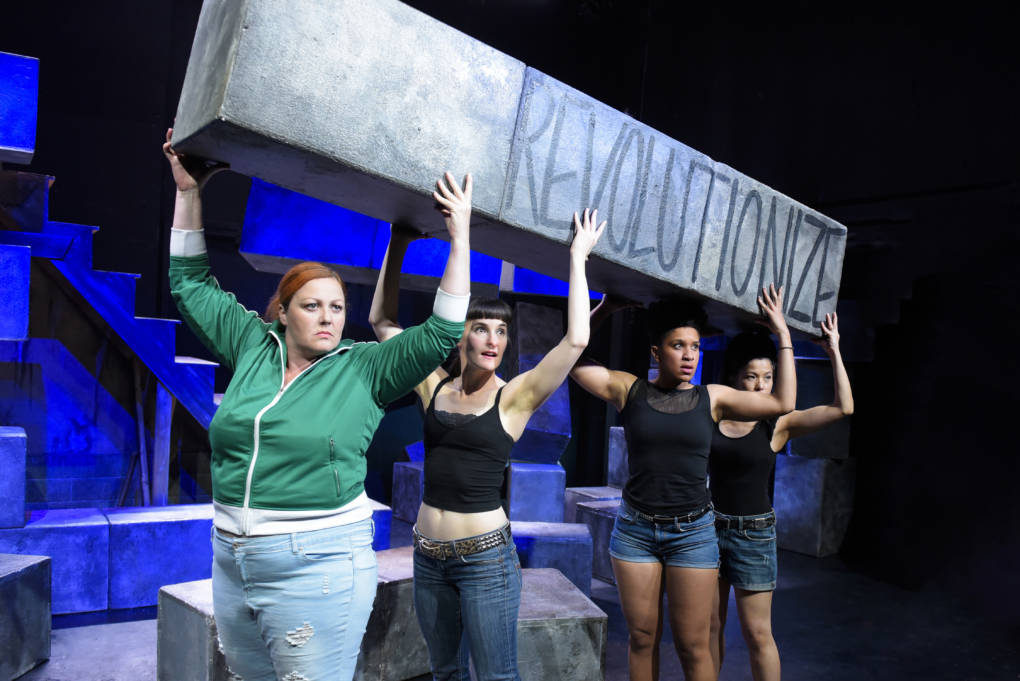
"caption": "'Revolt. She Said. Revolt Again.' cast members (from left) Cat Luedtke, Elissa Beth Stebbins, Leigh Rondon-Davis and Karla Acosta ",
"description": "'Revolt. She Said. Revolt Again.' cast members (from left) Cat Luedtke, Elissa Beth Stebbins, Leigh Rondon-Davis and Karla Acosta ",
"title": "'Revolt. She Said. Revolt Again.' cast members (from left) Cat Luedtke, Elissa Beth Stebbins, Leigh Rondon-Davis and Karla Acosta",
"credit": "Courtesy of Crowded Fire",
"status": "inherit",
"isLoading": false,
"fetchFailed": false
},
"arts_13826602": {
"type": "attachments",
"id": "arts_13826602",
"meta": {
"index": "attachments_1716263798",
"site": "arts",
"id": "13826602",
"found": true
},
"parent": 13826595,
"imgSizes": {
"small": {
"file": "https://ww2.kqed.org/app/uploads/sites/2/2018/03/Pearl-Marill-Stuck-Yeah-A-Working-Process-5-520x377.jpg",
"width": 520,
"mimeType": "image/jpeg",
"height": 377
},
"twentyfourteen-full-width": {
"file": "https://ww2.kqed.org/app/uploads/sites/2/2018/03/Pearl-Marill-Stuck-Yeah-A-Working-Process-5-1038x576.jpg",
"width": 1038,
"mimeType": "image/jpeg",
"height": 576
},
"thumbnail": {
"file": "https://ww2.kqed.org/app/uploads/sites/2/2018/03/Pearl-Marill-Stuck-Yeah-A-Working-Process-5-160x116.jpg",
"width": 160,
"mimeType": "image/jpeg",
"height": 116
},
"fd-sm": {
"file": "https://ww2.kqed.org/app/uploads/sites/2/2018/03/Pearl-Marill-Stuck-Yeah-A-Working-Process-5-960x696.jpg",
"width": 960,
"mimeType": "image/jpeg",
"height": 696
},
"post-thumbnail": {
"file": "https://ww2.kqed.org/app/uploads/sites/2/2018/03/Pearl-Marill-Stuck-Yeah-A-Working-Process-5-672x372.jpg",
"width": 672,
"mimeType": "image/jpeg",
"height": 372
},
"xsmall": {
"file": "https://ww2.kqed.org/app/uploads/sites/2/2018/03/Pearl-Marill-Stuck-Yeah-A-Working-Process-5-375x272.jpg",
"width": 375,
"mimeType": "image/jpeg",
"height": 272
},
"kqedFullSize": {
"file": "https://ww2.kqed.org/app/uploads/sites/2/2018/03/Pearl-Marill-Stuck-Yeah-A-Working-Process-5.jpg",
"width": 2048,
"height": 1485
},
"large": {
"file": "https://ww2.kqed.org/app/uploads/sites/2/2018/03/Pearl-Marill-Stuck-Yeah-A-Working-Process-5-1020x740.jpg",
"width": 1020,
"mimeType": "image/jpeg",
"height": 740
},
"xlarge": {
"file": "https://ww2.kqed.org/app/uploads/sites/2/2018/03/Pearl-Marill-Stuck-Yeah-A-Working-Process-5-1180x856.jpg",
"width": 1180,
"mimeType": "image/jpeg",
"height": 856
},
"guest-author-50": {
"file": "https://ww2.kqed.org/app/uploads/sites/2/2018/03/Pearl-Marill-Stuck-Yeah-A-Working-Process-5-50x50.jpg",
"width": 50,
"mimeType": "image/jpeg",
"height": 50
},
"guest-author-96": {
"file": "https://ww2.kqed.org/app/uploads/sites/2/2018/03/Pearl-Marill-Stuck-Yeah-A-Working-Process-5-96x96.jpg",
"width": 96,
"mimeType": "image/jpeg",
"height": 96
},
"medium": {
"file": "https://ww2.kqed.org/app/uploads/sites/2/2018/03/Pearl-Marill-Stuck-Yeah-A-Working-Process-5-800x580.jpg",
"width": 800,
"mimeType": "image/jpeg",
"height": 580
},
"guest-author-64": {
"file": "https://ww2.kqed.org/app/uploads/sites/2/2018/03/Pearl-Marill-Stuck-Yeah-A-Working-Process-5-64x64.jpg",
"width": 64,
"mimeType": "image/jpeg",
"height": 64
},
"guest-author-32": {
"file": "https://ww2.kqed.org/app/uploads/sites/2/2018/03/Pearl-Marill-Stuck-Yeah-A-Working-Process-5-32x32.jpg",
"width": 32,
"mimeType": "image/jpeg",
"height": 32
},
"fd-lrg": {
"file": "https://ww2.kqed.org/app/uploads/sites/2/2018/03/Pearl-Marill-Stuck-Yeah-A-Working-Process-5-1920x1392.jpg",
"width": 1920,
"mimeType": "image/jpeg",
"height": 1392
},
"fd-med": {
"file": "https://ww2.kqed.org/app/uploads/sites/2/2018/03/Pearl-Marill-Stuck-Yeah-A-Working-Process-5-1180x856.jpg",
"width": 1180,
"mimeType": "image/jpeg",
"height": 856
},
"full-width": {
"file": "https://ww2.kqed.org/app/uploads/sites/2/2018/03/Pearl-Marill-Stuck-Yeah-A-Working-Process-5-1920x1392.jpg",
"width": 1920,
"mimeType": "image/jpeg",
"height": 1392
},
"detail": {
"file": "https://ww2.kqed.org/app/uploads/sites/2/2018/03/Pearl-Marill-Stuck-Yeah-A-Working-Process-5-150x150.jpg",
"width": 150,
"mimeType": "image/jpeg",
"height": 150
},
"medium_large": {
"file": "https://ww2.kqed.org/app/uploads/sites/2/2018/03/Pearl-Marill-Stuck-Yeah-A-Working-Process-5-768x557.jpg",
"width": 768,
"mimeType": "image/jpeg",
"height": 557
},
"guest-author-128": {
"file": "https://ww2.kqed.org/app/uploads/sites/2/2018/03/Pearl-Marill-Stuck-Yeah-A-Working-Process-5-128x128.jpg",
"width": 128,
"mimeType": "image/jpeg",
"height": 128
},
"xxsmall": {
"file": "https://ww2.kqed.org/app/uploads/sites/2/2018/03/Pearl-Marill-Stuck-Yeah-A-Working-Process-5-240x174.jpg",
"width": 240,
"mimeType": "image/jpeg",
"height": 174
}
},
"publishDate": 1520465437,
"modified": 1520465589,
"caption": "\n\tIt IS March and the NCAA playoffs known as March Madness are almost here… but here’s a theater alternative-- Marsh Madness-- from the folks at San Francisco’s Marsh Theater, home to some of the Bay Area’s best solo performance. \nA-LAN SPEAKS:\nIt’s basically theater’s equivalent of the basketball playoffs-- 28 Theater teams competing for cash prizes… and a chance for a production at the Marsh, here’s Artistic Director Stephanie Weisman with more.\n#5 ACT. Marsh Madness/Weisman Tr 218 9:35 \nYou come and you can spend all day looking at all these things one after another, and seeing the entire world in front of you. Now do you get that in basketball. No. You get that in performance basketball.”\n\n\tA-LAN SPEAKS: \nIt’s a great chance to see new theater from across the bay area before they hit the mainstages. \nCYRUS INTERJECTS:\n\tAnd maybe some screaming failures as well. \nA-LAN \nAnd The Marsh always brings in some eclectic taste: so you’ll see a bit of political theater, improv, gender bending, comedy, drama, monologues, music..the lineup gives a little bit of something for everyone, mixed in with just the right amount of competitive edge.",
"description": "\n\tIt IS March and the NCAA playoffs known as March Madness are almost here… but here’s a theater alternative-- Marsh Madness-- from the folks at San Francisco’s Marsh Theater, home to some of the Bay Area’s best solo performance. \nA-LAN SPEAKS:\nIt’s basically theater’s equivalent of the basketball playoffs-- 28 Theater teams competing for cash prizes… and a chance for a production at the Marsh, here’s Artistic Director Stephanie Weisman with more.\n#5 ACT. Marsh Madness/Weisman Tr 218 9:35 \nYou come and you can spend all day looking at all these things one after another, and seeing the entire world in front of you. Now do you get that in basketball. No. You get that in performance basketball.”\n\n\tA-LAN SPEAKS: \nIt’s a great chance to see new theater from across the bay area before they hit the mainstages. \nCYRUS INTERJECTS:\n\tAnd maybe some screaming failures as well. \nA-LAN \nAnd The Marsh always brings in some eclectic taste: so you’ll see a bit of political theater, improv, gender bending, comedy, drama, monologues, music..the lineup gives a little bit of something for everyone, mixed in with just the right amount of competitive edge.",
"title": "Pearl Marill is one of the contestants in the Marsh Madness theater playoffs March 9-11 at The Marsh Theater in San Francisco",
"credit": "Courtesy of Pearl Marill",
"status": "inherit",
"isLoading": false,
"fetchFailed": false
},
"arts_13826591": {
"type": "attachments",
"id": "arts_13826591",
"meta": {
"index": "attachments_1716263798",
"site": "arts",
"id": "13826591",
"found": true
},
"parent": 13826571,
"imgSizes": {
"small": {
"file": "https://ww2.kqed.org/app/uploads/sites/2/2018/03/Karla-Acosta-Gabriel-Christian-Cat-Luedtke-Leigh-Rondon-Davis-star-in-Revolt.-She-Said.-Revolt-Again.-at-Crowded-Fire-Theater-520x347.jpg",
"width": 520,
"mimeType": "image/jpeg",
"height": 347
},
"twentyfourteen-full-width": {
"file": "https://ww2.kqed.org/app/uploads/sites/2/2018/03/Karla-Acosta-Gabriel-Christian-Cat-Luedtke-Leigh-Rondon-Davis-star-in-Revolt.-She-Said.-Revolt-Again.-at-Crowded-Fire-Theater-1038x576.jpg",
"width": 1038,
"mimeType": "image/jpeg",
"height": 576
},
"thumbnail": {
"file": "https://ww2.kqed.org/app/uploads/sites/2/2018/03/Karla-Acosta-Gabriel-Christian-Cat-Luedtke-Leigh-Rondon-Davis-star-in-Revolt.-She-Said.-Revolt-Again.-at-Crowded-Fire-Theater-160x107.jpg",
"width": 160,
"mimeType": "image/jpeg",
"height": 107
},
"fd-sm": {
"file": "https://ww2.kqed.org/app/uploads/sites/2/2018/03/Karla-Acosta-Gabriel-Christian-Cat-Luedtke-Leigh-Rondon-Davis-star-in-Revolt.-She-Said.-Revolt-Again.-at-Crowded-Fire-Theater-960x640.jpg",
"width": 960,
"mimeType": "image/jpeg",
"height": 640
},
"post-thumbnail": {
"file": "https://ww2.kqed.org/app/uploads/sites/2/2018/03/Karla-Acosta-Gabriel-Christian-Cat-Luedtke-Leigh-Rondon-Davis-star-in-Revolt.-She-Said.-Revolt-Again.-at-Crowded-Fire-Theater-672x372.jpg",
"width": 672,
"mimeType": "image/jpeg",
"height": 372
},
"xsmall": {
"file": "https://ww2.kqed.org/app/uploads/sites/2/2018/03/Karla-Acosta-Gabriel-Christian-Cat-Luedtke-Leigh-Rondon-Davis-star-in-Revolt.-She-Said.-Revolt-Again.-at-Crowded-Fire-Theater-375x250.jpg",
"width": 375,
"mimeType": "image/jpeg",
"height": 250
},
"kqedFullSize": {
"file": "https://ww2.kqed.org/app/uploads/sites/2/2018/03/Karla-Acosta-Gabriel-Christian-Cat-Luedtke-Leigh-Rondon-Davis-star-in-Revolt.-She-Said.-Revolt-Again.-at-Crowded-Fire-Theater.jpg",
"width": 2048,
"height": 1365
},
"large": {
"file": "https://ww2.kqed.org/app/uploads/sites/2/2018/03/Karla-Acosta-Gabriel-Christian-Cat-Luedtke-Leigh-Rondon-Davis-star-in-Revolt.-She-Said.-Revolt-Again.-at-Crowded-Fire-Theater-1020x680.jpg",
"width": 1020,
"mimeType": "image/jpeg",
"height": 680
},
"xlarge": {
"file": "https://ww2.kqed.org/app/uploads/sites/2/2018/03/Karla-Acosta-Gabriel-Christian-Cat-Luedtke-Leigh-Rondon-Davis-star-in-Revolt.-She-Said.-Revolt-Again.-at-Crowded-Fire-Theater-1180x787.jpg",
"width": 1180,
"mimeType": "image/jpeg",
"height": 787
},
"guest-author-50": {
"file": "https://ww2.kqed.org/app/uploads/sites/2/2018/03/Karla-Acosta-Gabriel-Christian-Cat-Luedtke-Leigh-Rondon-Davis-star-in-Revolt.-She-Said.-Revolt-Again.-at-Crowded-Fire-Theater-50x50.jpg",
"width": 50,
"mimeType": "image/jpeg",
"height": 50
},
"guest-author-96": {
"file": "https://ww2.kqed.org/app/uploads/sites/2/2018/03/Karla-Acosta-Gabriel-Christian-Cat-Luedtke-Leigh-Rondon-Davis-star-in-Revolt.-She-Said.-Revolt-Again.-at-Crowded-Fire-Theater-96x96.jpg",
"width": 96,
"mimeType": "image/jpeg",
"height": 96
},
"medium": {
"file": "https://ww2.kqed.org/app/uploads/sites/2/2018/03/Karla-Acosta-Gabriel-Christian-Cat-Luedtke-Leigh-Rondon-Davis-star-in-Revolt.-She-Said.-Revolt-Again.-at-Crowded-Fire-Theater-800x533.jpg",
"width": 800,
"mimeType": "image/jpeg",
"height": 533
},
"guest-author-64": {
"file": "https://ww2.kqed.org/app/uploads/sites/2/2018/03/Karla-Acosta-Gabriel-Christian-Cat-Luedtke-Leigh-Rondon-Davis-star-in-Revolt.-She-Said.-Revolt-Again.-at-Crowded-Fire-Theater-64x64.jpg",
"width": 64,
"mimeType": "image/jpeg",
"height": 64
},
"guest-author-32": {
"file": "https://ww2.kqed.org/app/uploads/sites/2/2018/03/Karla-Acosta-Gabriel-Christian-Cat-Luedtke-Leigh-Rondon-Davis-star-in-Revolt.-She-Said.-Revolt-Again.-at-Crowded-Fire-Theater-32x32.jpg",
"width": 32,
"mimeType": "image/jpeg",
"height": 32
},
"fd-lrg": {
"file": "https://ww2.kqed.org/app/uploads/sites/2/2018/03/Karla-Acosta-Gabriel-Christian-Cat-Luedtke-Leigh-Rondon-Davis-star-in-Revolt.-She-Said.-Revolt-Again.-at-Crowded-Fire-Theater-1920x1280.jpg",
"width": 1920,
"mimeType": "image/jpeg",
"height": 1280
},
"fd-med": {
"file": "https://ww2.kqed.org/app/uploads/sites/2/2018/03/Karla-Acosta-Gabriel-Christian-Cat-Luedtke-Leigh-Rondon-Davis-star-in-Revolt.-She-Said.-Revolt-Again.-at-Crowded-Fire-Theater-1180x787.jpg",
"width": 1180,
"mimeType": "image/jpeg",
"height": 787
},
"full-width": {
"file": "https://ww2.kqed.org/app/uploads/sites/2/2018/03/Karla-Acosta-Gabriel-Christian-Cat-Luedtke-Leigh-Rondon-Davis-star-in-Revolt.-She-Said.-Revolt-Again.-at-Crowded-Fire-Theater-1920x1280.jpg",
"width": 1920,
"mimeType": "image/jpeg",
"height": 1280
},
"detail": {
"file": "https://ww2.kqed.org/app/uploads/sites/2/2018/03/Karla-Acosta-Gabriel-Christian-Cat-Luedtke-Leigh-Rondon-Davis-star-in-Revolt.-She-Said.-Revolt-Again.-at-Crowded-Fire-Theater-150x150.jpg",
"width": 150,
"mimeType": "image/jpeg",
"height": 150
},
"medium_large": {
"file": "https://ww2.kqed.org/app/uploads/sites/2/2018/03/Karla-Acosta-Gabriel-Christian-Cat-Luedtke-Leigh-Rondon-Davis-star-in-Revolt.-She-Said.-Revolt-Again.-at-Crowded-Fire-Theater-768x512.jpg",
"width": 768,
"mimeType": "image/jpeg",
"height": 512
},
"guest-author-128": {
"file": "https://ww2.kqed.org/app/uploads/sites/2/2018/03/Karla-Acosta-Gabriel-Christian-Cat-Luedtke-Leigh-Rondon-Davis-star-in-Revolt.-She-Said.-Revolt-Again.-at-Crowded-Fire-Theater-128x128.jpg",
"width": 128,
"mimeType": "image/jpeg",
"height": 128
},
"xxsmall": {
"file": "https://ww2.kqed.org/app/uploads/sites/2/2018/03/Karla-Acosta-Gabriel-Christian-Cat-Luedtke-Leigh-Rondon-Davis-star-in-Revolt.-She-Said.-Revolt-Again.-at-Crowded-Fire-Theater-240x160.jpg",
"width": 240,
"mimeType": "image/jpeg",
"height": 160
}
},
"publishDate": 1520462917,
"modified": 1520463009,
"caption": "Karla Acosta, Gabriel Christian, Cat Luedtke, Leigh Rondon-Davis star in 'Revolt. She Said. Revolt Again. at Crowded Fire Theater",
"description": "Karla Acosta, Gabriel Christian, Cat Luedtke, Leigh Rondon-Davis star in 'Revolt. She Said. Revolt Again. at Crowded Fire Theater",
"title": "Karla Acosta, Gabriel Christian, Cat Luedtke, Leigh Rondon-Davis star in 'Revolt. She Said. Revolt Again. at Crowded Fire Theater",
"credit": "Cheshire Isaacs/Crowded Fire Theater",
"status": "inherit",
"isLoading": false,
"fetchFailed": false
},
"arts_13826047": {
"type": "attachments",
"id": "arts_13826047",
"meta": {
"index": "attachments_1716263798",
"site": "arts",
"id": "13826047",
"found": true
},
"parent": 13826021,
"imgSizes": {
"small": {
"file": "https://ww2.kqed.org/app/uploads/sites/2/2018/03/racket-aaron-murphy-e1519950456934-520x291.jpg",
"width": 520,
"mimeType": "image/jpeg",
"height": 291
},
"twentyfourteen-full-width": {
"file": "https://ww2.kqed.org/app/uploads/sites/2/2018/03/racket-aaron-murphy-944x576.jpg",
"width": 944,
"mimeType": "image/jpeg",
"height": 576
},
"thumbnail": {
"file": "https://ww2.kqed.org/app/uploads/sites/2/2018/03/racket-aaron-murphy-e1519950456934-160x89.jpg",
"width": 160,
"mimeType": "image/jpeg",
"height": 89
},
"post-thumbnail": {
"file": "https://ww2.kqed.org/app/uploads/sites/2/2018/03/racket-aaron-murphy-e1519950456934-672x372.jpg",
"width": 672,
"mimeType": "image/jpeg",
"height": 372
},
"xsmall": {
"file": "https://ww2.kqed.org/app/uploads/sites/2/2018/03/racket-aaron-murphy-e1519950456934-375x210.jpg",
"width": 375,
"mimeType": "image/jpeg",
"height": 210
},
"kqedFullSize": {
"file": "https://ww2.kqed.org/app/uploads/sites/2/2018/03/racket-aaron-murphy-e1519950456934.jpg",
"width": 944,
"height": 528
},
"guest-author-50": {
"file": "https://ww2.kqed.org/app/uploads/sites/2/2018/03/racket-aaron-murphy-e1519950456934-50x50.jpg",
"width": 50,
"mimeType": "image/jpeg",
"height": 50
},
"guest-author-96": {
"file": "https://ww2.kqed.org/app/uploads/sites/2/2018/03/racket-aaron-murphy-e1519950456934-96x96.jpg",
"width": 96,
"mimeType": "image/jpeg",
"height": 96
},
"medium": {
"file": "https://ww2.kqed.org/app/uploads/sites/2/2018/03/racket-aaron-murphy-e1519950456934-800x447.jpg",
"width": 800,
"mimeType": "image/jpeg",
"height": 447
},
"guest-author-64": {
"file": "https://ww2.kqed.org/app/uploads/sites/2/2018/03/racket-aaron-murphy-e1519950456934-64x64.jpg",
"width": 64,
"mimeType": "image/jpeg",
"height": 64
},
"guest-author-32": {
"file": "https://ww2.kqed.org/app/uploads/sites/2/2018/03/racket-aaron-murphy-e1519950456934-32x32.jpg",
"width": 32,
"mimeType": "image/jpeg",
"height": 32
},
"detail": {
"file": "https://ww2.kqed.org/app/uploads/sites/2/2018/03/racket-aaron-murphy-e1519950456934-150x150.jpg",
"width": 150,
"mimeType": "image/jpeg",
"height": 150
},
"medium_large": {
"file": "https://ww2.kqed.org/app/uploads/sites/2/2018/03/racket-aaron-murphy-e1519950456934-768x430.jpg",
"width": 768,
"mimeType": "image/jpeg",
"height": 430
},
"guest-author-128": {
"file": "https://ww2.kqed.org/app/uploads/sites/2/2018/03/racket-aaron-murphy-e1519950456934-128x128.jpg",
"width": 128,
"mimeType": "image/jpeg",
"height": 128
},
"xxsmall": {
"file": "https://ww2.kqed.org/app/uploads/sites/2/2018/03/racket-aaron-murphy-e1519950456934-240x134.jpg",
"width": 240,
"mimeType": "image/jpeg",
"height": 134
}
},
"publishDate": 1519950287,
"modified": 1519950407,
"caption": "General Smedley Butler (Aaron Murphy) is haunted by what he knows.",
"description": "General Smedley Butler (Aaron Murphy) is haunted by what he knows.",
"title": "racket-aaron-murphy",
"credit": "Photo: Cheshire Isaacs",
"status": "inherit",
"isLoading": false,
"fetchFailed": false
},
"arts_13825725": {
"type": "attachments",
"id": "arts_13825725",
"meta": {
"index": "attachments_1716263798",
"site": "arts",
"id": "13825725",
"found": true
},
"parent": 13825717,
"imgSizes": {
"small": {
"file": "https://ww2.kqed.org/app/uploads/sites/2/2018/02/NonPlayer.MAIN_-520x293.jpg",
"width": 520,
"mimeType": "image/jpeg",
"height": 293
},
"twentyfourteen-full-width": {
"file": "https://ww2.kqed.org/app/uploads/sites/2/2018/02/NonPlayer.MAIN_-1038x576.jpg",
"width": 1038,
"mimeType": "image/jpeg",
"height": 576
},
"thumbnail": {
"file": "https://ww2.kqed.org/app/uploads/sites/2/2018/02/NonPlayer.MAIN_-160x90.jpg",
"width": 160,
"mimeType": "image/jpeg",
"height": 90
},
"fd-sm": {
"file": "https://ww2.kqed.org/app/uploads/sites/2/2018/02/NonPlayer.MAIN_-960x540.jpg",
"width": 960,
"mimeType": "image/jpeg",
"height": 540
},
"post-thumbnail": {
"file": "https://ww2.kqed.org/app/uploads/sites/2/2018/02/NonPlayer.MAIN_-672x372.jpg",
"width": 672,
"mimeType": "image/jpeg",
"height": 372
},
"xsmall": {
"file": "https://ww2.kqed.org/app/uploads/sites/2/2018/02/NonPlayer.MAIN_-375x211.jpg",
"width": 375,
"mimeType": "image/jpeg",
"height": 211
},
"kqedFullSize": {
"file": "https://ww2.kqed.org/app/uploads/sites/2/2018/02/NonPlayer.MAIN_.jpg",
"width": 1920,
"height": 1080
},
"large": {
"file": "https://ww2.kqed.org/app/uploads/sites/2/2018/02/NonPlayer.MAIN_-1020x574.jpg",
"width": 1020,
"mimeType": "image/jpeg",
"height": 574
},
"xlarge": {
"file": "https://ww2.kqed.org/app/uploads/sites/2/2018/02/NonPlayer.MAIN_-1180x664.jpg",
"width": 1180,
"mimeType": "image/jpeg",
"height": 664
},
"guest-author-50": {
"file": "https://ww2.kqed.org/app/uploads/sites/2/2018/02/NonPlayer.MAIN_-50x50.jpg",
"width": 50,
"mimeType": "image/jpeg",
"height": 50
},
"guest-author-96": {
"file": "https://ww2.kqed.org/app/uploads/sites/2/2018/02/NonPlayer.MAIN_-96x96.jpg",
"width": 96,
"mimeType": "image/jpeg",
"height": 96
},
"medium": {
"file": "https://ww2.kqed.org/app/uploads/sites/2/2018/02/NonPlayer.MAIN_-800x450.jpg",
"width": 800,
"mimeType": "image/jpeg",
"height": 450
},
"guest-author-64": {
"file": "https://ww2.kqed.org/app/uploads/sites/2/2018/02/NonPlayer.MAIN_-64x64.jpg",
"width": 64,
"mimeType": "image/jpeg",
"height": 64
},
"guest-author-32": {
"file": "https://ww2.kqed.org/app/uploads/sites/2/2018/02/NonPlayer.MAIN_-32x32.jpg",
"width": 32,
"mimeType": "image/jpeg",
"height": 32
},
"fd-lrg": {
"file": "https://ww2.kqed.org/app/uploads/sites/2/2018/02/NonPlayer.MAIN_-1920x1080.jpg",
"width": 1920,
"mimeType": "image/jpeg",
"height": 1080
},
"fd-med": {
"file": "https://ww2.kqed.org/app/uploads/sites/2/2018/02/NonPlayer.MAIN_-1180x664.jpg",
"width": 1180,
"mimeType": "image/jpeg",
"height": 664
},
"full-width": {
"file": "https://ww2.kqed.org/app/uploads/sites/2/2018/02/NonPlayer.MAIN_-1920x1080.jpg",
"width": 1920,
"mimeType": "image/jpeg",
"height": 1080
},
"detail": {
"file": "https://ww2.kqed.org/app/uploads/sites/2/2018/02/NonPlayer.MAIN_-150x150.jpg",
"width": 150,
"mimeType": "image/jpeg",
"height": 150
},
"medium_large": {
"file": "https://ww2.kqed.org/app/uploads/sites/2/2018/02/NonPlayer.MAIN_-768x432.jpg",
"width": 768,
"mimeType": "image/jpeg",
"height": 432
},
"guest-author-128": {
"file": "https://ww2.kqed.org/app/uploads/sites/2/2018/02/NonPlayer.MAIN_-128x128.jpg",
"width": 128,
"mimeType": "image/jpeg",
"height": 128
},
"xxsmall": {
"file": "https://ww2.kqed.org/app/uploads/sites/2/2018/02/NonPlayer.MAIN_-240x135.jpg",
"width": 240,
"mimeType": "image/jpeg",
"height": 135
}
},
"publishDate": 1519690077,
"modified": 1519690181,
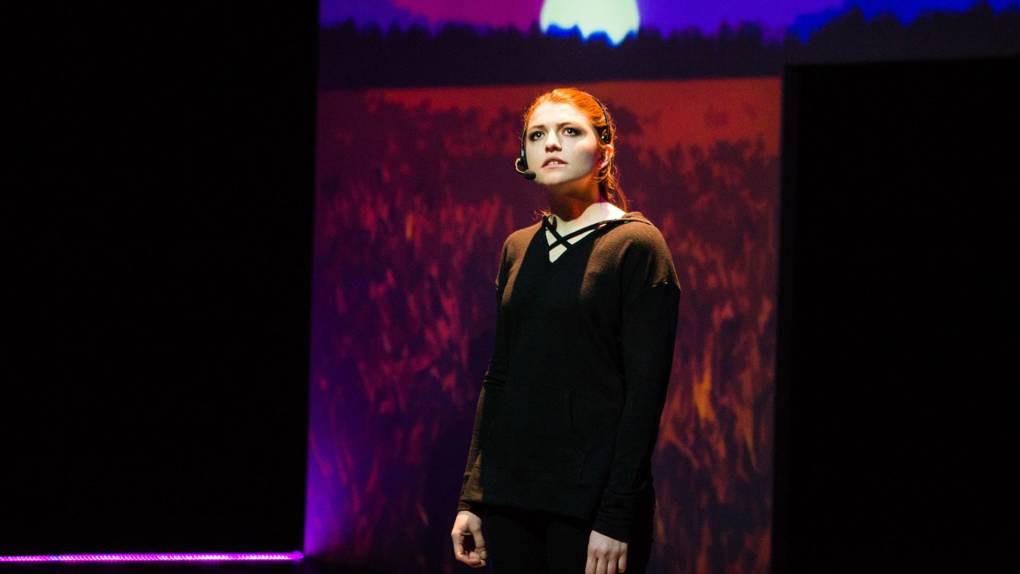
"caption": "Aspiring video game designer Katja (Emily Radosevich) creates a virtual world in 'Non-Player Character.'",
"description": "Aspiring video game designer Katja (Emily Radosevich) creates a virtual world in 'Non-Player Character.'",
"title": "NonPlayer.MAIN",
"credit": "Jessica Palopoli",
"status": "inherit",
"isLoading": false,
"fetchFailed": false
},
"arts_13825375": {
"type": "attachments",
"id": "arts_13825375",
"meta": {
"index": "attachments_1716263798",
"site": "arts",
"id": "13825375",
"found": true
},
"parent": 13825367,
"imgSizes": {
"small": {
"file": "https://ww2.kqed.org/app/uploads/sites/2/2018/02/3-Oh-welche-Lust-Mens-Chorus-Jackson-Beaman-1st-prisoner-kneeling-right-ed-520x282.jpg",
"width": 520,
"mimeType": "image/jpeg",
"height": 282
},
"twentyfourteen-full-width": {
"file": "https://ww2.kqed.org/app/uploads/sites/2/2018/02/3-Oh-welche-Lust-Mens-Chorus-Jackson-Beaman-1st-prisoner-kneeling-right-ed-1038x576.jpg",
"width": 1038,
"mimeType": "image/jpeg",
"height": 576
},
"thumbnail": {
"file": "https://ww2.kqed.org/app/uploads/sites/2/2018/02/3-Oh-welche-Lust-Mens-Chorus-Jackson-Beaman-1st-prisoner-kneeling-right-ed-160x87.jpg",
"width": 160,
"mimeType": "image/jpeg",
"height": 87
},
"fd-sm": {
"file": "https://ww2.kqed.org/app/uploads/sites/2/2018/02/3-Oh-welche-Lust-Mens-Chorus-Jackson-Beaman-1st-prisoner-kneeling-right-ed-960x521.jpg",
"width": 960,
"mimeType": "image/jpeg",
"height": 521
},
"post-thumbnail": {
"file": "https://ww2.kqed.org/app/uploads/sites/2/2018/02/3-Oh-welche-Lust-Mens-Chorus-Jackson-Beaman-1st-prisoner-kneeling-right-ed-672x372.jpg",
"width": 672,
"mimeType": "image/jpeg",
"height": 372
},
"xsmall": {
"file": "https://ww2.kqed.org/app/uploads/sites/2/2018/02/3-Oh-welche-Lust-Mens-Chorus-Jackson-Beaman-1st-prisoner-kneeling-right-ed-375x204.jpg",
"width": 375,
"mimeType": "image/jpeg",
"height": 204
},
"kqedFullSize": {
"file": "https://ww2.kqed.org/app/uploads/sites/2/2018/02/3-Oh-welche-Lust-Mens-Chorus-Jackson-Beaman-1st-prisoner-kneeling-right-ed.jpg",
"width": 1871,
"height": 1016
},
"large": {
"file": "https://ww2.kqed.org/app/uploads/sites/2/2018/02/3-Oh-welche-Lust-Mens-Chorus-Jackson-Beaman-1st-prisoner-kneeling-right-ed-1020x554.jpg",
"width": 1020,
"mimeType": "image/jpeg",
"height": 554
},
"xlarge": {
"file": "https://ww2.kqed.org/app/uploads/sites/2/2018/02/3-Oh-welche-Lust-Mens-Chorus-Jackson-Beaman-1st-prisoner-kneeling-right-ed-1180x641.jpg",
"width": 1180,
"mimeType": "image/jpeg",
"height": 641
},
"guest-author-50": {
"file": "https://ww2.kqed.org/app/uploads/sites/2/2018/02/3-Oh-welche-Lust-Mens-Chorus-Jackson-Beaman-1st-prisoner-kneeling-right-ed-50x50.jpg",
"width": 50,
"mimeType": "image/jpeg",
"height": 50
},
"guest-author-96": {
"file": "https://ww2.kqed.org/app/uploads/sites/2/2018/02/3-Oh-welche-Lust-Mens-Chorus-Jackson-Beaman-1st-prisoner-kneeling-right-ed-96x96.jpg",
"width": 96,
"mimeType": "image/jpeg",
"height": 96
},
"medium": {
"file": "https://ww2.kqed.org/app/uploads/sites/2/2018/02/3-Oh-welche-Lust-Mens-Chorus-Jackson-Beaman-1st-prisoner-kneeling-right-ed-800x434.jpg",
"width": 800,
"mimeType": "image/jpeg",
"height": 434
},
"guest-author-64": {
"file": "https://ww2.kqed.org/app/uploads/sites/2/2018/02/3-Oh-welche-Lust-Mens-Chorus-Jackson-Beaman-1st-prisoner-kneeling-right-ed-64x64.jpg",
"width": 64,
"mimeType": "image/jpeg",
"height": 64
},
"guest-author-32": {
"file": "https://ww2.kqed.org/app/uploads/sites/2/2018/02/3-Oh-welche-Lust-Mens-Chorus-Jackson-Beaman-1st-prisoner-kneeling-right-ed-32x32.jpg",
"width": 32,
"mimeType": "image/jpeg",
"height": 32
},
"fd-med": {
"file": "https://ww2.kqed.org/app/uploads/sites/2/2018/02/3-Oh-welche-Lust-Mens-Chorus-Jackson-Beaman-1st-prisoner-kneeling-right-ed-1180x641.jpg",
"width": 1180,
"mimeType": "image/jpeg",
"height": 641
},
"detail": {
"file": "https://ww2.kqed.org/app/uploads/sites/2/2018/02/3-Oh-welche-Lust-Mens-Chorus-Jackson-Beaman-1st-prisoner-kneeling-right-ed-150x150.jpg",
"width": 150,
"mimeType": "image/jpeg",
"height": 150
},
"medium_large": {
"file": "https://ww2.kqed.org/app/uploads/sites/2/2018/02/3-Oh-welche-Lust-Mens-Chorus-Jackson-Beaman-1st-prisoner-kneeling-right-ed-768x417.jpg",
"width": 768,
"mimeType": "image/jpeg",
"height": 417
},
"guest-author-128": {
"file": "https://ww2.kqed.org/app/uploads/sites/2/2018/02/3-Oh-welche-Lust-Mens-Chorus-Jackson-Beaman-1st-prisoner-kneeling-right-ed-128x128.jpg",
"width": 128,
"mimeType": "image/jpeg",
"height": 128
},
"xxsmall": {
"file": "https://ww2.kqed.org/app/uploads/sites/2/2018/02/3-Oh-welche-Lust-Mens-Chorus-Jackson-Beaman-1st-prisoner-kneeling-right-ed-240x130.jpg",
"width": 240,
"mimeType": "image/jpeg",
"height": 130
}
},
"publishDate": 1519349558,
"modified": 1519349661,
"caption": "The chorus for West Coast Opera's production of Fidelio \"bask in the sunshine\" on stage in Palo Alto.",
"description": "The chorus for West Coast Opera's production of Fidelio \"bask in the sunshine\" on stage in Palo Alto.",
"title": "3-Oh welche Lust-Mens Chorus-Jackson Beaman 1st prisoner-kneeling-right-ed",
"credit": "Photo: Courtesy of West Coast Opera",
"status": "inherit",
"isLoading": false,
"fetchFailed": false
},
"arts_13825219": {
"type": "attachments",
"id": "arts_13825219",
"meta": {
"index": "attachments_1716263798",
"site": "arts",
"id": "13825219",
"found": true
},
"parent": 13825218,
"imgSizes": {
"small": {
"file": "https://ww2.kqed.org/app/uploads/sites/2/2018/02/Bumper-Jacksons-e1519257954171-520x293.jpg",
"width": 520,
"mimeType": "image/jpeg",
"height": 293
},
"twentyfourteen-full-width": {
"file": "https://ww2.kqed.org/app/uploads/sites/2/2018/02/Bumper-Jacksons-e1519257954171-1038x576.jpg",
"width": 1038,
"mimeType": "image/jpeg",
"height": 576
},
"thumbnail": {
"file": "https://ww2.kqed.org/app/uploads/sites/2/2018/02/Bumper-Jacksons-e1519257954171-160x90.jpg",
"width": 160,
"mimeType": "image/jpeg",
"height": 90
},
"fd-sm": {
"file": "https://ww2.kqed.org/app/uploads/sites/2/2018/02/Bumper-Jacksons-e1519257954171-960x540.jpg",
"width": 960,
"mimeType": "image/jpeg",
"height": 540
},
"post-thumbnail": {
"file": "https://ww2.kqed.org/app/uploads/sites/2/2018/02/Bumper-Jacksons-e1519257954171-672x372.jpg",
"width": 672,
"mimeType": "image/jpeg",
"height": 372
},
"xsmall": {
"file": "https://ww2.kqed.org/app/uploads/sites/2/2018/02/Bumper-Jacksons-e1519257954171-375x211.jpg",
"width": 375,
"mimeType": "image/jpeg",
"height": 211
},
"kqedFullSize": {
"file": "https://ww2.kqed.org/app/uploads/sites/2/2018/02/Bumper-Jacksons-e1519257954171.jpg",
"width": 2048,
"height": 1152
},
"large": {
"file": "https://ww2.kqed.org/app/uploads/sites/2/2018/02/Bumper-Jacksons-e1519257954171-1020x574.jpg",
"width": 1020,
"mimeType": "image/jpeg",
"height": 574
},
"xlarge": {
"file": "https://ww2.kqed.org/app/uploads/sites/2/2018/02/Bumper-Jacksons-e1519257954171-1180x664.jpg",
"width": 1180,
"mimeType": "image/jpeg",
"height": 664
},
"guest-author-50": {
"file": "https://ww2.kqed.org/app/uploads/sites/2/2018/02/Bumper-Jacksons-e1519257954171-50x50.jpg",
"width": 50,
"mimeType": "image/jpeg",
"height": 50
},
"guest-author-96": {
"file": "https://ww2.kqed.org/app/uploads/sites/2/2018/02/Bumper-Jacksons-e1519257954171-96x96.jpg",
"width": 96,
"mimeType": "image/jpeg",
"height": 96
},
"medium": {
"file": "https://ww2.kqed.org/app/uploads/sites/2/2018/02/Bumper-Jacksons-e1519257954171-800x450.jpg",
"width": 800,
"mimeType": "image/jpeg",
"height": 450
},
"guest-author-64": {
"file": "https://ww2.kqed.org/app/uploads/sites/2/2018/02/Bumper-Jacksons-e1519257954171-64x64.jpg",
"width": 64,
"mimeType": "image/jpeg",
"height": 64
},
"guest-author-32": {
"file": "https://ww2.kqed.org/app/uploads/sites/2/2018/02/Bumper-Jacksons-e1519257954171-32x32.jpg",
"width": 32,
"mimeType": "image/jpeg",
"height": 32
},
"fd-lrg": {
"file": "https://ww2.kqed.org/app/uploads/sites/2/2018/02/Bumper-Jacksons-e1519257954171-1920x1080.jpg",
"width": 1920,
"mimeType": "image/jpeg",
"height": 1080
},
"fd-med": {
"file": "https://ww2.kqed.org/app/uploads/sites/2/2018/02/Bumper-Jacksons-e1519257954171-1180x664.jpg",
"width": 1180,
"mimeType": "image/jpeg",
"height": 664
},
"full-width": {
"file": "https://ww2.kqed.org/app/uploads/sites/2/2018/02/Bumper-Jacksons-e1519257954171-1920x1080.jpg",
"width": 1920,
"mimeType": "image/jpeg",
"height": 1080
},
"detail": {
"file": "https://ww2.kqed.org/app/uploads/sites/2/2018/02/Bumper-Jacksons-e1519257954171-150x150.jpg",
"width": 150,
"mimeType": "image/jpeg",
"height": 150
},
"medium_large": {
"file": "https://ww2.kqed.org/app/uploads/sites/2/2018/02/Bumper-Jacksons-e1519257954171-768x432.jpg",
"width": 768,
"mimeType": "image/jpeg",
"height": 432
},
"guest-author-128": {
"file": "https://ww2.kqed.org/app/uploads/sites/2/2018/02/Bumper-Jacksons-e1519257954171-128x128.jpg",
"width": 128,
"mimeType": "image/jpeg",
"height": 128
},
"xxsmall": {
"file": "https://ww2.kqed.org/app/uploads/sites/2/2018/02/Bumper-Jacksons-e1519257954171-240x135.jpg",
"width": 240,
"mimeType": "image/jpeg",
"height": 135
}
},
"publishDate": 1519257888,
"modified": 1519258106,
"caption": "Bumper Jacksons play the Napa Valley Performing Arts Center in Yountville and Bing Studio at Stanford",
"description": "Bumper Jacksons play the Napa Valley Performing Arts Center in Yountville and Bing Studio at Stanford",
"title": "Bumper Jacksons play the Napa Valley Performing Arts Center in Yountville and Bing Studio at Stanford",
"credit": "Photo: Michael O. Snyder/Bumper Jacksons",
"status": "inherit",
"isLoading": false,
"fetchFailed": false
},
"arts_11394334": {
"type": "attachments",
"id": "arts_11394334",
"meta": {
"index": "attachments_1716263798",
"site": "arts",
"id": "11394334",
"found": true
},
"parent": 11394218,
"imgSizes": {
"twentyfourteen-full-width": {
"file": "https://ww2.kqed.org/app/uploads/sites/2/2016/03/Ballet-Afsaneh-e1457634741895-1038x576.jpg",
"width": 1038,
"mimeType": "image/jpeg",
"height": 576
},
"thumbnail": {
"file": "https://ww2.kqed.org/app/uploads/sites/2/2016/03/Ballet-Afsaneh-e1457634741895-400x198.jpg",
"width": 400,
"mimeType": "image/jpeg",
"height": 198
},
"fd-sm": {
"file": "https://ww2.kqed.org/app/uploads/sites/2/2016/03/Ballet-Afsaneh-e1457634741895-960x475.jpg",
"width": 960,
"mimeType": "image/jpeg",
"height": 475
},
"post-thumbnail": {
"file": "https://ww2.kqed.org/app/uploads/sites/2/2016/03/Ballet-Afsaneh-e1457634741895-672x372.jpg",
"width": 672,
"mimeType": "image/jpeg",
"height": 372
},
"kqedFullSize": {
"file": "https://ww2.kqed.org/app/uploads/sites/2/2016/03/Ballet-Afsaneh-e1457634741895.jpg",
"width": 2100,
"height": 1039
},
"large": {
"file": "https://ww2.kqed.org/app/uploads/sites/2/2016/03/Ballet-Afsaneh-e1457634741895-1180x584.jpg",
"width": 1180,
"mimeType": "image/jpeg",
"height": 584
},
"guest-author-96": {
"file": "https://ww2.kqed.org/app/uploads/sites/2/2016/03/Ballet-Afsaneh-e1457634741895-96x96.jpg",
"width": 96,
"mimeType": "image/jpeg",
"height": 96
},
"medium": {
"file": "https://ww2.kqed.org/app/uploads/sites/2/2016/03/Ballet-Afsaneh-e1457634741895-800x396.jpg",
"width": 800,
"mimeType": "image/jpeg",
"height": 396
},
"guest-author-64": {
"file": "https://ww2.kqed.org/app/uploads/sites/2/2016/03/Ballet-Afsaneh-e1457634741895-64x64.jpg",
"width": 64,
"mimeType": "image/jpeg",
"height": 64
},
"guest-author-32": {
"file": "https://ww2.kqed.org/app/uploads/sites/2/2016/03/Ballet-Afsaneh-e1457634741895-32x32.jpg",
"width": 32,
"mimeType": "image/jpeg",
"height": 32
},
"fd-lrg": {
"file": "https://ww2.kqed.org/app/uploads/sites/2/2016/03/Ballet-Afsaneh-e1457634741895-1920x950.jpg",
"width": 1920,
"mimeType": "image/jpeg",
"height": 950
},
"fd-med": {
"file": "https://ww2.kqed.org/app/uploads/sites/2/2016/03/Ballet-Afsaneh-e1457634741895-1180x584.jpg",
"width": 1180,
"mimeType": "image/jpeg",
"height": 584
},
"detail": {
"file": "https://ww2.kqed.org/app/uploads/sites/2/2016/03/Ballet-Afsaneh-e1457634741895-75x75.jpg",
"width": 75,
"mimeType": "image/jpeg",
"height": 75
},
"medium_large": {
"file": "https://ww2.kqed.org/app/uploads/sites/2/2016/03/Ballet-Afsaneh-e1457634741895-768x380.jpg",
"width": 768,
"mimeType": "image/jpeg",
"height": 380
},
"guest-author-128": {
"file": "https://ww2.kqed.org/app/uploads/sites/2/2016/03/Ballet-Afsaneh-e1457634741895-128x128.jpg",
"width": 128,
"mimeType": "image/jpeg",
"height": 128
}
},
"publishDate": 1457633473,
"modified": 1519198804,
"caption": "Ballet Afsaneh performance at the San Francisco Ethnic Dance Festival. The company’s founding artistic director Sharlyn Sawyer appears as part of Golden Thread Productions’ annual International Women’s Day Celebration \n",
"description": "Ballet Afsaneh performance at the San Francisco Ethnic Dance Festival. The company’s founding artistic director Sharlyn Sawyer appears as part of Golden Thread Productions’ annual International Women’s Day Celebration ",
"title": "Ballet-Afsaneh",
"credit": "Raymond Van Tassel",
"status": "inherit",
"isLoading": false,
"fetchFailed": false
},
"arts_13824148": {
"type": "attachments",
"id": "arts_13824148",
"meta": {
"index": "attachments_1716263798",
"site": "arts",
"id": "13824148",
"found": true
},
"parent": 13824147,
"imgSizes": {
"small": {
"file": "https://ww2.kqed.org/app/uploads/sites/2/2018/02/DUzrGotVQAAkU4T-e1518253648827-520x293.jpg",
"width": 520,
"mimeType": "image/jpeg",
"height": 293
},
"twentyfourteen-full-width": {
"file": "https://ww2.kqed.org/app/uploads/sites/2/2018/02/DUzrGotVQAAkU4T-e1518253648827-1038x576.jpg",
"width": 1038,
"mimeType": "image/jpeg",
"height": 576
},
"thumbnail": {
"file": "https://ww2.kqed.org/app/uploads/sites/2/2018/02/DUzrGotVQAAkU4T-e1518253648827-160x90.jpg",
"width": 160,
"mimeType": "image/jpeg",
"height": 90
},
"fd-sm": {
"file": "https://ww2.kqed.org/app/uploads/sites/2/2018/02/DUzrGotVQAAkU4T-e1518253648827-960x540.jpg",
"width": 960,
"mimeType": "image/jpeg",
"height": 540
},
"post-thumbnail": {
"file": "https://ww2.kqed.org/app/uploads/sites/2/2018/02/DUzrGotVQAAkU4T-e1518253648827-672x372.jpg",
"width": 672,
"mimeType": "image/jpeg",
"height": 372
},
"xsmall": {
"file": "https://ww2.kqed.org/app/uploads/sites/2/2018/02/DUzrGotVQAAkU4T-e1518253648827-375x211.jpg",
"width": 375,
"mimeType": "image/jpeg",
"height": 211
},
"kqedFullSize": {
"file": "https://ww2.kqed.org/app/uploads/sites/2/2018/02/DUzrGotVQAAkU4T-e1518253648827.jpg",
"width": 1200,
"height": 675
},
"large": {
"file": "https://ww2.kqed.org/app/uploads/sites/2/2018/02/DUzrGotVQAAkU4T-e1518253648827-1020x574.jpg",
"width": 1020,
"mimeType": "image/jpeg",
"height": 574
},
"xlarge": {
"file": "https://ww2.kqed.org/app/uploads/sites/2/2018/02/DUzrGotVQAAkU4T-e1518253648827-1180x664.jpg",
"width": 1180,
"mimeType": "image/jpeg",
"height": 664
},
"guest-author-50": {
"file": "https://ww2.kqed.org/app/uploads/sites/2/2018/02/DUzrGotVQAAkU4T-e1518253648827-50x50.jpg",
"width": 50,
"mimeType": "image/jpeg",
"height": 50
},
"guest-author-96": {
"file": "https://ww2.kqed.org/app/uploads/sites/2/2018/02/DUzrGotVQAAkU4T-e1518253648827-96x96.jpg",
"width": 96,
"mimeType": "image/jpeg",
"height": 96
},
"medium": {
"file": "https://ww2.kqed.org/app/uploads/sites/2/2018/02/DUzrGotVQAAkU4T-e1518253648827-800x450.jpg",
"width": 800,
"mimeType": "image/jpeg",
"height": 450
},
"guest-author-64": {
"file": "https://ww2.kqed.org/app/uploads/sites/2/2018/02/DUzrGotVQAAkU4T-e1518253648827-64x64.jpg",
"width": 64,
"mimeType": "image/jpeg",
"height": 64
},
"guest-author-32": {
"file": "https://ww2.kqed.org/app/uploads/sites/2/2018/02/DUzrGotVQAAkU4T-e1518253648827-32x32.jpg",
"width": 32,
"mimeType": "image/jpeg",
"height": 32
},
"fd-med": {
"file": "https://ww2.kqed.org/app/uploads/sites/2/2018/02/DUzrGotVQAAkU4T-e1518253648827-1180x664.jpg",
"width": 1180,
"mimeType": "image/jpeg",
"height": 664
},
"detail": {
"file": "https://ww2.kqed.org/app/uploads/sites/2/2018/02/DUzrGotVQAAkU4T-e1518253648827-150x150.jpg",
"width": 150,
"mimeType": "image/jpeg",
"height": 150
},
"medium_large": {
"file": "https://ww2.kqed.org/app/uploads/sites/2/2018/02/DUzrGotVQAAkU4T-e1518253648827-768x432.jpg",
"width": 768,
"mimeType": "image/jpeg",
"height": 432
},
"guest-author-128": {
"file": "https://ww2.kqed.org/app/uploads/sites/2/2018/02/DUzrGotVQAAkU4T-e1518253648827-128x128.jpg",
"width": 128,
"mimeType": "image/jpeg",
"height": 128
},
"xxsmall": {
"file": "https://ww2.kqed.org/app/uploads/sites/2/2018/02/DUzrGotVQAAkU4T-e1518253648827-240x135.jpg",
"width": 240,
"mimeType": "image/jpeg",
"height": 135
}
},
"publishDate": 1518253497,
"modified": 1518253778,
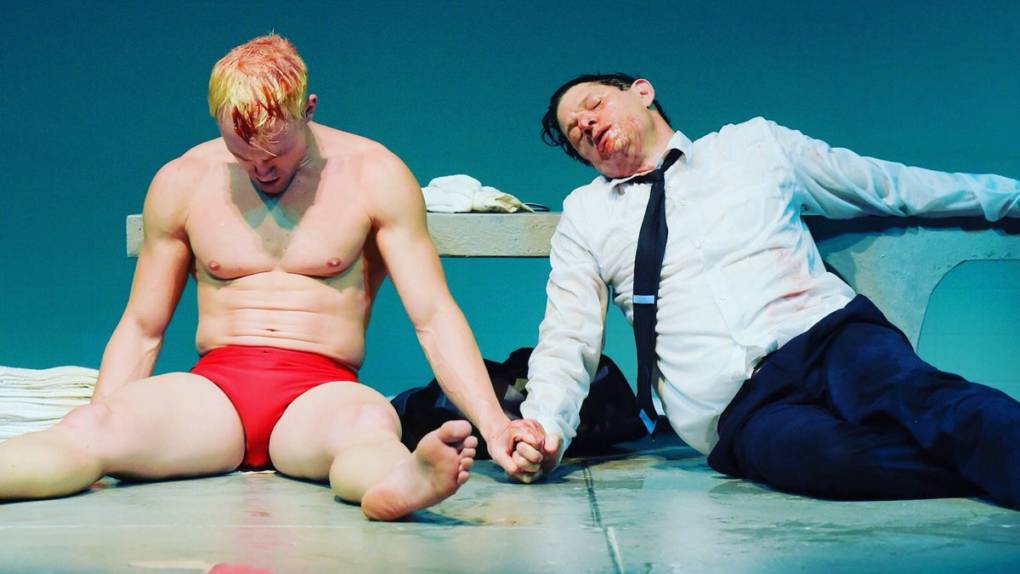
"caption": "(L to R) Brothers Ray (Max Carpenter) and Peter (Gabriel Martin) share a disappointing moment in 'Red Speedo' by Lucas Hnath.",
"description": "(L to R) Brothers Ray (Max Carpenter) and Peter (Gabriel Martin) share a disappointing moment in 'Red Speedo' by Lucas Hnath.",
"title": "DUzrGotVQAAkU4T",
"credit": "Photo: Kevin Berne",
"status": "inherit",
"isLoading": false,
"fetchFailed": false
},
"arts_13824374": {
"type": "attachments",
"id": "arts_13824374",
"meta": {
"index": "attachments_1716263798",
"site": "arts",
"id": "13824374",
"found": true
},
"parent": 0,
"imgSizes": {
"small": {
"file": "https://ww2.kqed.org/app/uploads/sites/2/2018/02/Arceneaux-Until-1-e1518635998952-520x293.jpeg",
"width": 520,
"mimeType": "image/jpeg",
"height": 293
},
"twentyfourteen-full-width": {
"file": "https://ww2.kqed.org/app/uploads/sites/2/2018/02/Arceneaux-Until-1-e1518635998952-1038x576.jpeg",
"width": 1038,
"mimeType": "image/jpeg",
"height": 576
},
"thumbnail": {
"file": "https://ww2.kqed.org/app/uploads/sites/2/2018/02/Arceneaux-Until-1-e1518635998952-160x90.jpeg",
"width": 160,
"mimeType": "image/jpeg",
"height": 90
},
"fd-sm": {
"file": "https://ww2.kqed.org/app/uploads/sites/2/2018/02/Arceneaux-Until-1-e1518635998952-960x540.jpeg",
"width": 960,
"mimeType": "image/jpeg",
"height": 540
},
"post-thumbnail": {
"file": "https://ww2.kqed.org/app/uploads/sites/2/2018/02/Arceneaux-Until-1-e1518635998952-672x372.jpeg",
"width": 672,
"mimeType": "image/jpeg",
"height": 372
},
"xsmall": {
"file": "https://ww2.kqed.org/app/uploads/sites/2/2018/02/Arceneaux-Until-1-e1518635998952-375x211.jpeg",
"width": 375,
"mimeType": "image/jpeg",
"height": 211
},
"kqedFullSize": {
"file": "https://ww2.kqed.org/app/uploads/sites/2/2018/02/Arceneaux-Until-1-e1518635998952.jpeg",
"width": 2048,
"height": 1152
},
"large": {
"file": "https://ww2.kqed.org/app/uploads/sites/2/2018/02/Arceneaux-Until-1-e1518635998952-1020x574.jpeg",
"width": 1020,
"mimeType": "image/jpeg",
"height": 574
},
"xlarge": {
"file": "https://ww2.kqed.org/app/uploads/sites/2/2018/02/Arceneaux-Until-1-e1518635998952-1180x664.jpeg",
"width": 1180,
"mimeType": "image/jpeg",
"height": 664
},
"guest-author-50": {
"file": "https://ww2.kqed.org/app/uploads/sites/2/2018/02/Arceneaux-Until-1-e1518635998952-50x50.jpeg",
"width": 50,
"mimeType": "image/jpeg",
"height": 50
},
"guest-author-96": {
"file": "https://ww2.kqed.org/app/uploads/sites/2/2018/02/Arceneaux-Until-1-e1518635998952-96x96.jpeg",
"width": 96,
"mimeType": "image/jpeg",
"height": 96
},
"medium": {
"file": "https://ww2.kqed.org/app/uploads/sites/2/2018/02/Arceneaux-Until-1-e1518635998952-800x450.jpeg",
"width": 800,
"mimeType": "image/jpeg",
"height": 450
},
"guest-author-64": {
"file": "https://ww2.kqed.org/app/uploads/sites/2/2018/02/Arceneaux-Until-1-e1518635998952-64x64.jpeg",
"width": 64,
"mimeType": "image/jpeg",
"height": 64
},
"guest-author-32": {
"file": "https://ww2.kqed.org/app/uploads/sites/2/2018/02/Arceneaux-Until-1-e1518635998952-32x32.jpeg",
"width": 32,
"mimeType": "image/jpeg",
"height": 32
},
"fd-lrg": {
"file": "https://ww2.kqed.org/app/uploads/sites/2/2018/02/Arceneaux-Until-1-e1518635998952-1920x1080.jpeg",
"width": 1920,
"mimeType": "image/jpeg",
"height": 1080
},
"fd-med": {
"file": "https://ww2.kqed.org/app/uploads/sites/2/2018/02/Arceneaux-Until-1-e1518635998952-1180x664.jpeg",
"width": 1180,
"mimeType": "image/jpeg",
"height": 664
},
"full-width": {
"file": "https://ww2.kqed.org/app/uploads/sites/2/2018/02/Arceneaux-Until-1-e1518635998952-1920x1080.jpeg",
"width": 1920,
"mimeType": "image/jpeg",
"height": 1080
},
"detail": {
"file": "https://ww2.kqed.org/app/uploads/sites/2/2018/02/Arceneaux-Until-1-e1518635998952-150x150.jpeg",
"width": 150,
"mimeType": "image/jpeg",
"height": 150
},
"medium_large": {
"file": "https://ww2.kqed.org/app/uploads/sites/2/2018/02/Arceneaux-Until-1-e1518635998952-768x432.jpeg",
"width": 768,
"mimeType": "image/jpeg",
"height": 432
},
"guest-author-128": {
"file": "https://ww2.kqed.org/app/uploads/sites/2/2018/02/Arceneaux-Until-1-e1518635998952-128x128.jpeg",
"width": 128,
"mimeType": "image/jpeg",
"height": 128
},
"xxsmall": {
"file": "https://ww2.kqed.org/app/uploads/sites/2/2018/02/Arceneaux-Until-1-e1518635998952-240x135.jpeg",
"width": 240,
"mimeType": "image/jpeg",
"height": 135
}
},
"publishDate": 1518551234,
"modified": 1518551520,
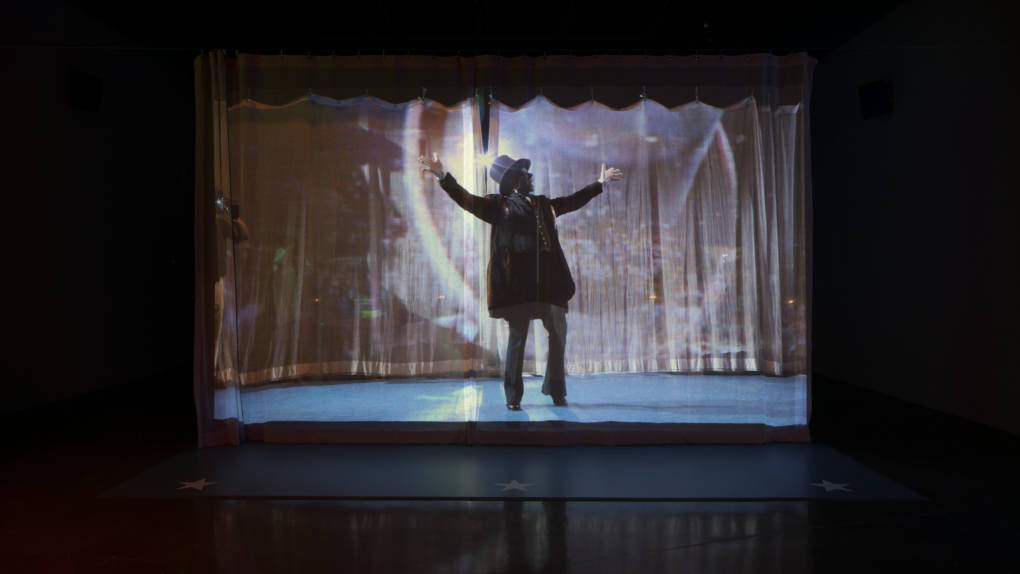
"caption": "An image from Edgar Arecenaux's exhibit 'Until, Until Until...'at the Yerba Buena Center for the Arts",
"description": "An image from Edgar Arecenaux's exhibit 'Until, Until Until...'at the Yerba Buena Center for the Arts",
"title": "An image from Edgar Arecenaux's exhibit 'Until, Until Until...'at the Yerba Buena Center for the Arts",
"credit": "Photo:Robert Wedemeyer/Courtesy the artist and Susanne Vielmetter Los Angeles Projects",
"status": "inherit",
"isLoading": false,
"fetchFailed": false
},
"arts_13824076": {
"type": "attachments",
"id": "arts_13824076",
"meta": {
"index": "attachments_1716263798",
"site": "arts",
"id": "13824076",
"found": true
},
"parent": 13824061,
"imgSizes": {
"small": {
"file": "https://ww2.kqed.org/app/uploads/sites/2/2018/02/RS29326_SweetLand-Press-02-qut-520x347.jpg",
"width": 520,
"mimeType": "image/jpeg",
"height": 347
},
"twentyfourteen-full-width": {
"file": "https://ww2.kqed.org/app/uploads/sites/2/2018/02/RS29326_SweetLand-Press-02-qut-1038x576.jpg",
"width": 1038,
"mimeType": "image/jpeg",
"height": 576
},
"thumbnail": {
"file": "https://ww2.kqed.org/app/uploads/sites/2/2018/02/RS29326_SweetLand-Press-02-qut-160x107.jpg",
"width": 160,
"mimeType": "image/jpeg",
"height": 107
},
"fd-sm": {
"file": "https://ww2.kqed.org/app/uploads/sites/2/2018/02/RS29326_SweetLand-Press-02-qut-960x640.jpg",
"width": 960,
"mimeType": "image/jpeg",
"height": 640
},
"post-thumbnail": {
"file": "https://ww2.kqed.org/app/uploads/sites/2/2018/02/RS29326_SweetLand-Press-02-qut-672x372.jpg",
"width": 672,
"mimeType": "image/jpeg",
"height": 372
},
"xsmall": {
"file": "https://ww2.kqed.org/app/uploads/sites/2/2018/02/RS29326_SweetLand-Press-02-qut-375x250.jpg",
"width": 375,
"mimeType": "image/jpeg",
"height": 250
},
"kqedFullSize": {
"file": "https://ww2.kqed.org/app/uploads/sites/2/2018/02/RS29326_SweetLand-Press-02-qut.jpg",
"width": 1920,
"height": 1280
},
"large": {
"file": "https://ww2.kqed.org/app/uploads/sites/2/2018/02/RS29326_SweetLand-Press-02-qut-1020x680.jpg",
"width": 1020,
"mimeType": "image/jpeg",
"height": 680
},
"xlarge": {
"file": "https://ww2.kqed.org/app/uploads/sites/2/2018/02/RS29326_SweetLand-Press-02-qut-1180x787.jpg",
"width": 1180,
"mimeType": "image/jpeg",
"height": 787
},
"guest-author-50": {
"file": "https://ww2.kqed.org/app/uploads/sites/2/2018/02/RS29326_SweetLand-Press-02-qut-50x50.jpg",
"width": 50,
"mimeType": "image/jpeg",
"height": 50
},
"guest-author-96": {
"file": "https://ww2.kqed.org/app/uploads/sites/2/2018/02/RS29326_SweetLand-Press-02-qut-96x96.jpg",
"width": 96,
"mimeType": "image/jpeg",
"height": 96
},
"medium": {
"file": "https://ww2.kqed.org/app/uploads/sites/2/2018/02/RS29326_SweetLand-Press-02-qut-800x533.jpg",
"width": 800,
"mimeType": "image/jpeg",
"height": 533
},
"guest-author-64": {
"file": "https://ww2.kqed.org/app/uploads/sites/2/2018/02/RS29326_SweetLand-Press-02-qut-64x64.jpg",
"width": 64,
"mimeType": "image/jpeg",
"height": 64
},
"guest-author-32": {
"file": "https://ww2.kqed.org/app/uploads/sites/2/2018/02/RS29326_SweetLand-Press-02-qut-32x32.jpg",
"width": 32,
"mimeType": "image/jpeg",
"height": 32
},
"fd-lrg": {
"file": "https://ww2.kqed.org/app/uploads/sites/2/2018/02/RS29326_SweetLand-Press-02-qut-1920x1280.jpg",
"width": 1920,
"mimeType": "image/jpeg",
"height": 1280
},
"fd-med": {
"file": "https://ww2.kqed.org/app/uploads/sites/2/2018/02/RS29326_SweetLand-Press-02-qut-1180x787.jpg",
"width": 1180,
"mimeType": "image/jpeg",
"height": 787
},
"full-width": {
"file": "https://ww2.kqed.org/app/uploads/sites/2/2018/02/RS29326_SweetLand-Press-02-qut-1920x1280.jpg",
"width": 1920,
"mimeType": "image/jpeg",
"height": 1280
},
"detail": {
"file": "https://ww2.kqed.org/app/uploads/sites/2/2018/02/RS29326_SweetLand-Press-02-qut-150x150.jpg",
"width": 150,
"mimeType": "image/jpeg",
"height": 150
},
"medium_large": {
"file": "https://ww2.kqed.org/app/uploads/sites/2/2018/02/RS29326_SweetLand-Press-02-qut-768x512.jpg",
"width": 768,
"mimeType": "image/jpeg",
"height": 512
},
"guest-author-128": {
"file": "https://ww2.kqed.org/app/uploads/sites/2/2018/02/RS29326_SweetLand-Press-02-qut-128x128.jpg",
"width": 128,
"mimeType": "image/jpeg",
"height": 128
},
"xxsmall": {
"file": "https://ww2.kqed.org/app/uploads/sites/2/2018/02/RS29326_SweetLand-Press-02-qut-240x160.jpg",
"width": 240,
"mimeType": "image/jpeg",
"height": 160
}
},
"publishDate": 1518138808,
"modified": 1518144452,
"caption": "In Oh My Sweet Land, Nora El Samahy plays a Syrian-German woman who relates the story of her affair with a Syrian refugee while she cooks kibbeh. The play is touring San Francisco Bay Area kitchens, restaurants and community spaces.",
"description": "In Oh My Sweet Land, Nora El Samahy plays a Syrian-German woman who relates the story of her affair with a Syrian refugee while she cooks kibbeh. The play is touring San Francisco Bay Area kitchens, restaurants and community spaces.",
"title": "RS29326_SweetLand-Press-02-qut",
"credit": "Photo: Courtesy of David Allen Studio",
"status": "inherit",
"isLoading": false,
"fetchFailed": false
},
"arts_13823623": {
"type": "attachments",
"id": "arts_13823623",
"meta": {
"index": "attachments_1716263798",
"site": "arts",
"id": "13823623",
"found": true
},
"parent": 13823621,
"imgSizes": {
"small": {
"file": "https://ww2.kqed.org/app/uploads/sites/2/2018/02/MTC_SC_Gardner_HiRes-e1517646230770-520x293.jpg",
"width": 520,
"mimeType": "image/jpeg",
"height": 293
},
"twentyfourteen-full-width": {
"file": "https://ww2.kqed.org/app/uploads/sites/2/2018/02/MTC_SC_Gardner_HiRes-e1517646230770-1038x576.jpg",
"width": 1038,
"mimeType": "image/jpeg",
"height": 576
},
"thumbnail": {
"file": "https://ww2.kqed.org/app/uploads/sites/2/2018/02/MTC_SC_Gardner_HiRes-e1517646230770-160x90.jpg",
"width": 160,
"mimeType": "image/jpeg",
"height": 90
},
"fd-sm": {
"file": "https://ww2.kqed.org/app/uploads/sites/2/2018/02/MTC_SC_Gardner_HiRes-e1517646230770-960x540.jpg",
"width": 960,
"mimeType": "image/jpeg",
"height": 540
},
"post-thumbnail": {
"file": "https://ww2.kqed.org/app/uploads/sites/2/2018/02/MTC_SC_Gardner_HiRes-e1517646230770-672x372.jpg",
"width": 672,
"mimeType": "image/jpeg",
"height": 372
},
"xsmall": {
"file": "https://ww2.kqed.org/app/uploads/sites/2/2018/02/MTC_SC_Gardner_HiRes-e1517646230770-375x211.jpg",
"width": 375,
"mimeType": "image/jpeg",
"height": 211
},
"kqedFullSize": {
"file": "https://ww2.kqed.org/app/uploads/sites/2/2018/02/MTC_SC_Gardner_HiRes-e1517646230770.jpg",
"width": 2048,
"height": 1152
},
"large": {
"file": "https://ww2.kqed.org/app/uploads/sites/2/2018/02/MTC_SC_Gardner_HiRes-e1517646230770-1020x574.jpg",
"width": 1020,
"mimeType": "image/jpeg",
"height": 574
},
"xlarge": {
"file": "https://ww2.kqed.org/app/uploads/sites/2/2018/02/MTC_SC_Gardner_HiRes-e1517646230770-1180x664.jpg",
"width": 1180,
"mimeType": "image/jpeg",
"height": 664
},
"guest-author-50": {
"file": "https://ww2.kqed.org/app/uploads/sites/2/2018/02/MTC_SC_Gardner_HiRes-e1517646230770-50x50.jpg",
"width": 50,
"mimeType": "image/jpeg",
"height": 50
},
"guest-author-96": {
"file": "https://ww2.kqed.org/app/uploads/sites/2/2018/02/MTC_SC_Gardner_HiRes-e1517646230770-96x96.jpg",
"width": 96,
"mimeType": "image/jpeg",
"height": 96
},
"medium": {
"file": "https://ww2.kqed.org/app/uploads/sites/2/2018/02/MTC_SC_Gardner_HiRes-e1517646230770-800x450.jpg",
"width": 800,
"mimeType": "image/jpeg",
"height": 450
},
"guest-author-64": {
"file": "https://ww2.kqed.org/app/uploads/sites/2/2018/02/MTC_SC_Gardner_HiRes-e1517646230770-64x64.jpg",
"width": 64,
"mimeType": "image/jpeg",
"height": 64
},
"guest-author-32": {
"file": "https://ww2.kqed.org/app/uploads/sites/2/2018/02/MTC_SC_Gardner_HiRes-e1517646230770-32x32.jpg",
"width": 32,
"mimeType": "image/jpeg",
"height": 32
},
"fd-lrg": {
"file": "https://ww2.kqed.org/app/uploads/sites/2/2018/02/MTC_SC_Gardner_HiRes-e1517646230770-1920x1080.jpg",
"width": 1920,
"mimeType": "image/jpeg",
"height": 1080
},
"fd-med": {
"file": "https://ww2.kqed.org/app/uploads/sites/2/2018/02/MTC_SC_Gardner_HiRes-e1517646230770-1180x664.jpg",
"width": 1180,
"mimeType": "image/jpeg",
"height": 664
},
"full-width": {
"file": "https://ww2.kqed.org/app/uploads/sites/2/2018/02/MTC_SC_Gardner_HiRes-e1517646230770-1920x1080.jpg",
"width": 1920,
"mimeType": "image/jpeg",
"height": 1080
},
"detail": {
"file": "https://ww2.kqed.org/app/uploads/sites/2/2018/02/MTC_SC_Gardner_HiRes-e1517646230770-150x150.jpg",
"width": 150,
"mimeType": "image/jpeg",
"height": 150
},
"medium_large": {
"file": "https://ww2.kqed.org/app/uploads/sites/2/2018/02/MTC_SC_Gardner_HiRes-e1517646230770-768x432.jpg",
"width": 768,
"mimeType": "image/jpeg",
"height": 432
},
"guest-author-128": {
"file": "https://ww2.kqed.org/app/uploads/sites/2/2018/02/MTC_SC_Gardner_HiRes-e1517646230770-128x128.jpg",
"width": 128,
"mimeType": "image/jpeg",
"height": 128
},
"xxsmall": {
"file": "https://ww2.kqed.org/app/uploads/sites/2/2018/02/MTC_SC_Gardner_HiRes-e1517646230770-240x135.jpg",
"width": 240,
"mimeType": "image/jpeg",
"height": 135
}
},
"publishDate": 1517646036,
"modified": 1517646143,
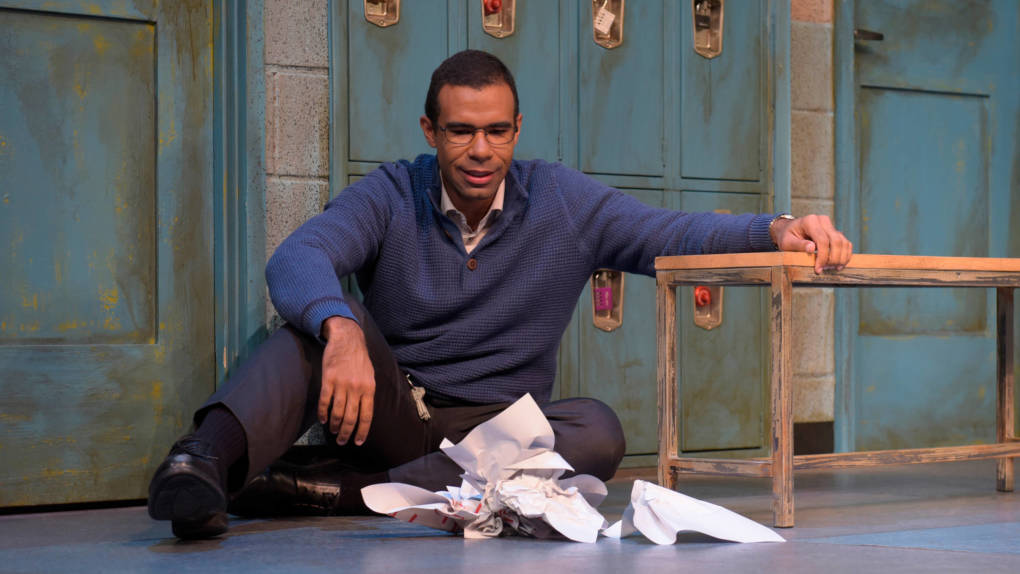
"caption": "Reggie (Lance Gardner) can't quite figure out how he got to this moment in 'The Skeleton Crew' by Dominique Morrisseau at the Marin Theatre Company.",
"description": "Reggie (Lance Gardner) can't quite figure out how he got to this moment in 'The Skeleton Crew' by Dominique Morrisseau at the Marin Theatre Company.",
"title": "MTC_SC_Gardner_HiRes",
"credit": "Photo: Kevin Berne",
"status": "inherit",
"isLoading": false,
"fetchFailed": false
}
},
"audioPlayerReducer": {
"postId": "stream_live",
"isPaused": true,
"isPlaying": false,
"pfsActive": false,
"pledgeModalIsOpen": true,
"playerDrawerIsOpen": false,
"liveAudioPlayStartedAt": 0,
"liveAudioPlayContext": ""
},
"authorsReducer": {
"byline_arts_13826021": {
"type": "authors",
"id": "byline_arts_13826021",
"meta": {
"override": true
},
"slug": "byline_arts_13826021",
"name": "John Wilkins",
"isLoading": false
},
"byline_arts_13825717": {
"type": "authors",
"id": "byline_arts_13825717",
"meta": {
"override": true
},
"slug": "byline_arts_13825717",
"name": "Nicole Gluckstern",
"isLoading": false
},
"cmusiker": {
"type": "authors",
"id": "32",
"meta": {
"index": "authors_1716337520",
"id": "32",
"found": true
},
"name": "Cy Musiker",
"firstName": "Cy",
"lastName": "Musiker",
"slug": "cmusiker",
"email": "cmusiker@kqed.org",
"display_author_email": false,
"staff_mastheads": [],
"title": "KQED Contributor",
"bio": "Cy Musiker is a former co-host of The Do List and a former reporter covering the arts for KQED News and The California Report. He loves live performance, especially great theater, jazz, roots music, anything by Mahler. Cy has an MJ from UC Berkeley's School of Journalism, and got his BA from Hampshire College. His work has been recognized by the Society for Professional Journalists with their Sigma Delta Chi Award for Public Service in Journalism. When he can, Cy likes to swim in Tomales Bay, run with his dog in the East Bay Hills, and hike the Sierra.",
"avatar": "https://secure.gravatar.com/avatar/05eaba5c5696ce8f062e4ea2df428a43?s=600&d=blank&r=g",
"twitter": null,
"facebook": null,
"instagram": null,
"linkedin": null,
"sites": [
{
"site": "arts",
"roles": [
"Contributor",
"subscriber"
]
},
{
"site": "news",
"roles": [
"author"
]
},
{
"site": "bayareabites",
"roles": [
"contributor"
]
}
],
"headData": {
"title": "Cy Musiker | KQED",
"description": "KQED Contributor",
"ogImgSrc": "https://secure.gravatar.com/avatar/05eaba5c5696ce8f062e4ea2df428a43?s=600&d=blank&r=g",
"twImgSrc": "https://secure.gravatar.com/avatar/05eaba5c5696ce8f062e4ea2df428a43?s=600&d=blank&r=g"
},
"isLoading": false,
"link": "/author/cmusiker"
},
"kjones": {
"type": "authors",
"id": "93",
"meta": {
"index": "authors_1716337520",
"id": "93",
"found": true
},
"name": "Kevin L. Jones",
"firstName": "Kevin",
"lastName": "Jones",
"slug": "kjones",
"email": "kjones@kqed.org",
"display_author_email": false,
"staff_mastheads": [],
"title": null,
"bio": null,
"avatar": "https://secure.gravatar.com/avatar/12c65b5633ed39d0a59bb7f497eff645?s=600&d=blank&r=g",
"twitter": null,
"facebook": null,
"instagram": null,
"linkedin": null,
"sites": [
{
"site": "arts",
"roles": [
"subscriber"
]
},
{
"site": "styleguide",
"roles": [
"contributor"
]
},
{
"site": "artschool",
"roles": [
"subscriber"
]
},
{
"site": "news",
"roles": [
"subscriber"
]
},
{
"site": "pop",
"roles": [
"subscriber"
]
}
],
"headData": {
"title": "Kevin L. Jones | KQED",
"description": null,
"ogImgSrc": "https://secure.gravatar.com/avatar/12c65b5633ed39d0a59bb7f497eff645?s=600&d=blank&r=g",
"twImgSrc": "https://secure.gravatar.com/avatar/12c65b5633ed39d0a59bb7f497eff645?s=600&d=blank&r=g"
},
"isLoading": false,
"link": "/author/kjones"
},
"rachael-myrow": {
"type": "authors",
"id": "251",
"meta": {
"index": "authors_1716337520",
"id": "251",
"found": true
},
"name": "Rachael Myrow",
"firstName": "Rachael",
"lastName": "Myrow",
"slug": "rachael-myrow",
"email": "rmyrow@kqed.org",
"display_author_email": true,
"staff_mastheads": [
"news"
],
"title": "Senior Editor of KQED's Silicon Valley News Desk",
"bio": "• I write and edit stories about how Silicon Valley power and policies shape everyday life in California. I’m also passionate about making Bay Area history and culture more accessible to a broad public. • I’ve been a journalist for most of my life, starting in high school with The Franklin Press in Los Angeles, where I grew up. While earning my first degree in English at UC Berkeley, I got my start in public radio at KALX-FM. After completing a second degree in journalism at Cal, I landed my first professional job at Marketplace, then moved on to KPCC (now LAist), and then KQED, where I hosted The California Report for more than seven years. • My reporting has appeared on NPR, The World, WBUR’s \u003ci>Here & Now\u003c/i>, and the BBC. I also guest host for KQED’s \u003ci>Forum\u003c/i>, as well as the Commonwealth Club in San Francisco. • I speak periodically on media, democracy and technology issues, and do voiceover work for documentaries and educational video projects. • Outside of the studio, you'll find me hiking Bay Area trails and whipping up Insta-ready meals in my kitchen. • I do not accept gifts, money, or favors from anyone connected to my reporting, I don't pay people for information, and I do not support or donate to political causes. • I strive to treat the people I report on with fairness, honesty, and respect. I also recognize there are often multiple sides to a story and work to verify information through multiple sources and documentation. If I get something wrong, I correct it.",
"avatar": "https://secure.gravatar.com/avatar/3ed8a3c5f26025e4a805ba634cda8cd764906b97438a6d9ce216b044e340da4e?s=600&d=blank&r=g",
"twitter": "rachaelmyrow",
"bluesky": null,
"facebook": null,
"instagram": null,
"linkedin": "https://www.linkedin.com/in/rachaelmyrow/",
"sites": [
{
"site": "arts",
"roles": [
"administrator"
]
},
{
"site": "news",
"roles": [
"edit_others_posts",
"editor"
]
},
{
"site": "futureofyou",
"roles": [
"editor"
]
},
{
"site": "bayareabites",
"roles": [
"editor"
]
},
{
"site": "stateofhealth",
"roles": [
"editor"
]
},
{
"site": "science",
"roles": [
"editor"
]
},
{
"site": "food",
"roles": [
"editor"
]
},
{
"site": "forum",
"roles": [
"editor"
]
},
{
"site": "liveblog",
"roles": [
"author"
]
}
],
"headData": {
"title": "Rachael Myrow | KQED",
"description": "Senior Editor of KQED's Silicon Valley News Desk",
"ogImgSrc": "https://secure.gravatar.com/avatar/3ed8a3c5f26025e4a805ba634cda8cd764906b97438a6d9ce216b044e340da4e?s=600&d=blank&r=g",
"twImgSrc": "https://secure.gravatar.com/avatar/3ed8a3c5f26025e4a805ba634cda8cd764906b97438a6d9ce216b044e340da4e?s=600&d=blank&r=g"
},
"isLoading": false,
"link": "/author/rachael-myrow"
},
"jwilkins": {
"type": "authors",
"id": "8668",
"meta": {
"index": "authors_1716337520",
"id": "8668",
"found": true
},
"name": "John Wilkins",
"firstName": "John",
"lastName": "Wilkins",
"slug": "jwilkins",
"email": "Johnrwilkins@aol.com",
"display_author_email": false,
"staff_mastheads": [],
"title": null,
"bio": "John Wilkins is the theater critic for KQED Arts. He was the Artistic Director of Last Planet Theatre for ten years and teaches in the Writing and Literature program at CCA. Follow him on Twitter @johnrwilkins2",
"avatar": "https://secure.gravatar.com/avatar/7798fcc8a10bee0e04387b724b492df7?s=600&d=blank&r=g",
"twitter": null,
"facebook": null,
"instagram": null,
"linkedin": null,
"sites": [
{
"site": "arts",
"roles": [
"subscriber"
]
}
],
"headData": {
"title": "John Wilkins | KQED",
"description": null,
"ogImgSrc": "https://secure.gravatar.com/avatar/7798fcc8a10bee0e04387b724b492df7?s=600&d=blank&r=g",
"twImgSrc": "https://secure.gravatar.com/avatar/7798fcc8a10bee0e04387b724b492df7?s=600&d=blank&r=g"
},
"isLoading": false,
"link": "/author/jwilkins"
}
},
"pagesReducer": {
"arts_category_theater": {
"type": "terms",
"id": "arts_967",
"meta": {
"index": "terms_1716263798",
"site": "arts",
"id": "967",
"score": 12.286901
},
"featImg": null,
"name": "Theater",
"description": null,
"taxonomy": "category",
"headData": {
"twImgId": null,
"twTitle": null,
"ogTitle": null,
"ogImgId": null,
"twDescription": null,
"description": null,
"title": "Theater Archives | KQED Arts",
"ogDescription": null
},
"ttid": 985,
"slug": "theater",
"isLoading": false,
"title": "Theater",
"pageMeta": {
"site": "arts",
"WpPageTemplate": "page-topic-editorial",
"currentPage": 35
},
"blocks": [
{
"blockName": "kqed/post-list",
"attrs": {
"layout": "cardArticle2",
"query": "posts/arts?category=theater",
"seeMore": false,
"paginated": true,
"page": 35
}
},
{
"blockName": "kqed/ad"
}
]
}
},
"pfsSessionReducer": {},
"postsReducer": {
"stream_live": {
"type": "live",
"id": "stream_live",
"audioUrl": "https://streams.kqed.org/kqedradio",
"title": "Live Stream",
"excerpt": "Live Stream information currently unavailable.",
"link": "/radio",
"featImg": "",
"label": {
"name": "KQED Live",
"link": "/"
}
},
"stream_kqedNewscast": {
"type": "posts",
"id": "stream_kqedNewscast",
"audioUrl": "https://www.kqed.org/.stream/anon/radio/RDnews/newscast.mp3?_=1",
"title": "KQED Newscast",
"featImg": "",
"label": {
"name": "88.5 FM",
"link": "/"
}
},
"arts_13826363": {
"type": "posts",
"id": "arts_13826363",
"meta": {
"index": "posts_1716263798",
"site": "arts",
"id": "13826363",
"score": null,
"sort": [
1520472962000
]
},
"guestAuthors": [],
"slug": "on-the-air-cy-and-a-lans-do-list-picks-for-march-9-2018",
"title": "On the Air: Cy and A-lan's Do List Picks for March 9, 2018",
"publishDate": 1520472962,
"format": "audio",
"headTitle": "On the Air: Cy and A-lan’s Do List Picks for March 9, 2018 | KQED",
"labelTerm": {
"term": 140,
"site": "arts"
},
"content": "\u003cp>My co-host this week is A-lan Holt, a playwright and co-director for the Center for Diversity in the Arts at Stanford. To no one’s surprise, we talked about the plays we’re most excited about at Bay Area theaters. But there’s lots of music on the show too, including a new violin concerto by film score master Danny Elfman and tropical rocker Hollie Cook. Check it out.\u003c/p>\n\u003cp>\u003cstrong>March 10: \u003c/strong>\u003ca href=\"https://www.kqed.org/arts/13826532/the-whip-smart-folk-music-of-henry-jamison\" target=\"_blank\" rel=\"noopener\">Vermont folkie Henry Jamison’s tells eloquent love stories in song.\u003c/a>\u003c/p>\n\u003cp>\u003cstrong>Feb. 16-April 7: \u003c/strong>\u003ca href=\"https://www.kqed.org/news/11650964/bay-area-artist-retrieves-missing-young-black-women\" target=\"_blank\" rel=\"noopener\">Kenyatta A. C. Hinkle’s smokey portraits work to rescue the victims of sex trafficking. \u003c/a>\u003c/p>\n\u003cp>\u003cstrong>March 1-24: \u003c/strong>\u003ca href=\"https://www.kqed.org/arts/13826571/tearing-down-the-patriarchy-in-crowded-fires-revolt-she-said-revolt-again\" target=\"_blank\" rel=\"noopener\">The women in Crowded Fire Theater’s production \u003cstrong>of \u003c/strong>\u003cem>Revolt. She Said. Revolt Again.\u003c/em> tear down the patriarchy\u003c/a>\u003c/p>\n\u003cp>\u003cstrong>March 9-11: \u003c/strong>\u003ca href=\"https://www.kqed.org/arts/13826595/the-marsh-offers-a-theater-alternative-to-march-madness\" target=\"_blank\" rel=\"noopener\">Theater with brackets in ‘Marsh Madness ‘at The Marsh Theater.\u003c/a>\u003c/p>\n\u003cp>[ad fullwidth]\u003c/p>\n\u003cp>\u003cstrong>March 16-31:\u003c/strong> \u003ca href=\"http://www.ubuntutheaterproject.com/dance/\" target=\"_blank\" rel=\"noopener\">The Ubuntu Theater Project offers the West Coast premiere of Oakland native Marcus Gardley’s memory play \u003cem>Dance of the Holy Ghosts.\u003c/em>\u003c/a>\u003c/p>\n\u003cp>\u003cstrong>March 10 and 11\u003c/strong>: \u003ca href=\"https://www.kqed.org/arts/13826509/danny-elfmans-genre-defying-music-at-stanford\" target=\"_blank\" rel=\"noopener\">The Stanford Symphony features the genre hopping music of Danny Elfman.\u003c/a>\u003c/p>\n\u003cp>\u003cstrong>March 28:\u003c/strong> \u003ca href=\"https://www.kqed.org/arts/13826399/luscious-tropical-pop-from-hollie-cook\" target=\"_blank\" rel=\"noopener\">The luscious “tropical pop” of singer Hollie Cook.\u003c/a>\u003c/p>\n\u003cp>\u003cstrong>SHOUTOUTS: \u003c/strong>\u003c/p>\n\u003cp>\u003cstrong>March 16\u003c/strong>: \u003ca href=\"https://www.ncco.org/concert-tickets/2017-2018-season/zurichchamberorchestra\" target=\"_blank\" rel=\"noopener\">The New Century Chamber Orchestra teams up with the Zurich Chamber Orchestra under Daniel Hope, music director for both ensembles. \u003c/a>\u003c/p>\n\u003cp>\u003c/p>\n\u003cp>\u003cstrong>March 15: \u003c/strong>\u003ca href=\"https://www.brava.org/all-events/2017/11/20/so-soul-san-francisco-black-art-salon-f3gh9-b8t68\" target=\"_blank\" rel=\"noopener\">Brava in the Mission continues its salon series with a discussion by choreographer Amara Tabor Smith, director Ellen Sebastian Chang, multi-media artist Alexa C. Burell (aka LEXAGON), and somatic scholar Amber McZeal \u003c/a>\u003c/p>\n\u003cfigure id=\"attachment_13818818\" class=\"wp-caption alignright\" style=\"max-width: 800px\">\u003cimg loading=\"lazy\" decoding=\"async\" class=\"size-medium wp-image-13818818\" src=\"https://ww2.kqed.org/arts/wp-content/uploads/sites/2/2018/01/Image-uploaded-from-iOS-1-e1515621156507-800x461.jpg\" alt=\"Do List co-hosts A-lan Holt and Cy Musiker\" width=\"800\" height=\"461\" srcset=\"https://cdn.kqed.org/wp-content/uploads/sites/2/2018/01/Image-uploaded-from-iOS-1-e1515621156507-800x461.jpg 800w, https://cdn.kqed.org/wp-content/uploads/sites/2/2018/01/Image-uploaded-from-iOS-1-e1515621156507-160x92.jpg 160w, https://cdn.kqed.org/wp-content/uploads/sites/2/2018/01/Image-uploaded-from-iOS-1-e1515621156507-768x442.jpg 768w, https://cdn.kqed.org/wp-content/uploads/sites/2/2018/01/Image-uploaded-from-iOS-1-e1515621156507-1020x587.jpg 1020w, https://cdn.kqed.org/wp-content/uploads/sites/2/2018/01/Image-uploaded-from-iOS-1-e1515621156507-1920x1105.jpg 1920w, https://cdn.kqed.org/wp-content/uploads/sites/2/2018/01/Image-uploaded-from-iOS-1-e1515621156507-1180x679.jpg 1180w, https://cdn.kqed.org/wp-content/uploads/sites/2/2018/01/Image-uploaded-from-iOS-1-e1515621156507-960x553.jpg 960w, https://cdn.kqed.org/wp-content/uploads/sites/2/2018/01/Image-uploaded-from-iOS-1-e1515621156507-240x138.jpg 240w, https://cdn.kqed.org/wp-content/uploads/sites/2/2018/01/Image-uploaded-from-iOS-1-e1515621156507-375x216.jpg 375w, https://cdn.kqed.org/wp-content/uploads/sites/2/2018/01/Image-uploaded-from-iOS-1-e1515621156507-520x299.jpg 520w, https://cdn.kqed.org/wp-content/uploads/sites/2/2018/01/Image-uploaded-from-iOS-1-e1515621156507.jpg 2001w\" sizes=\"(max-width: 800px) 100vw, 800px\">\u003cfigcaption class=\"wp-caption-text\">Do List co-hosts A-lan Holt and Cy Musiker \u003ccite>(Photo: Nastia Voynovskaya/KQED)\u003c/cite>\u003c/figcaption>\u003c/figure>\n\n",
"blocks": [],
"excerpt": "KQED's Cy Musiker and A-lan Holt find the best Bay Area shows on The Do List",
"status": "publish",
"parent": 0,
"modified": 1726701118,
"stats": {
"hasAudio": false,
"hasVideo": false,
"hasChartOrMap": false,
"iframeSrcs": [],
"hasGoogleForm": false,
"hasGallery": false,
"hasHearkenModule": false,
"hasPolis": false,
"paragraphCount": 13,
"wordCount": 285
},
"headData": {
"title": "On the Air: Cy and A-lan's Do List Picks for March 9, 2018 | KQED",
"description": "KQED's Cy Musiker and A-lan Holt find the best Bay Area shows on The Do List",
"ogTitle": "",
"ogDescription": "",
"ogImgId": "",
"twTitle": "",
"twDescription": "",
"twImgId": "",
"schema": {
"@context": "https://schema.org",
"@type": "Article",
"headline": "On the Air: Cy and A-lan's Do List Picks for March 9, 2018",
"datePublished": "2018-03-07T17:36:02-08:00",
"dateModified": "2024-09-18T16:11:58-07:00",
"image": "https://cdn.kqed.org/wp-content/uploads/2020/02/KQED-OG-Image@1x.png"
}
},
"audioUrl": "https://www.kqed.org/.stream/anon/radio/thedolist/2018/03/TDL20180309.mp3",
"sticky": false,
"path": "/arts/13826363/on-the-air-cy-and-a-lans-do-list-picks-for-march-9-2018",
"audioTrackLength": null,
"parsedContent": [
{
"type": "contentString",
"content": "\u003cdiv class=\"post-body\">\u003cp>\u003cp>My co-host this week is A-lan Holt, a playwright and co-director for the Center for Diversity in the Arts at Stanford. To no one’s surprise, we talked about the plays we’re most excited about at Bay Area theaters. But there’s lots of music on the show too, including a new violin concerto by film score master Danny Elfman and tropical rocker Hollie Cook. Check it out.\u003c/p>\n\u003cp>\u003cstrong>March 10: \u003c/strong>\u003ca href=\"https://www.kqed.org/arts/13826532/the-whip-smart-folk-music-of-henry-jamison\" target=\"_blank\" rel=\"noopener\">Vermont folkie Henry Jamison’s tells eloquent love stories in song.\u003c/a>\u003c/p>\n\u003cp>\u003cstrong>Feb. 16-April 7: \u003c/strong>\u003ca href=\"https://www.kqed.org/news/11650964/bay-area-artist-retrieves-missing-young-black-women\" target=\"_blank\" rel=\"noopener\">Kenyatta A. C. Hinkle’s smokey portraits work to rescue the victims of sex trafficking. \u003c/a>\u003c/p>\n\u003cp>\u003cstrong>March 1-24: \u003c/strong>\u003ca href=\"https://www.kqed.org/arts/13826571/tearing-down-the-patriarchy-in-crowded-fires-revolt-she-said-revolt-again\" target=\"_blank\" rel=\"noopener\">The women in Crowded Fire Theater’s production \u003cstrong>of \u003c/strong>\u003cem>Revolt. She Said. Revolt Again.\u003c/em> tear down the patriarchy\u003c/a>\u003c/p>\n\u003cp>\u003cstrong>March 9-11: \u003c/strong>\u003ca href=\"https://www.kqed.org/arts/13826595/the-marsh-offers-a-theater-alternative-to-march-madness\" target=\"_blank\" rel=\"noopener\">Theater with brackets in ‘Marsh Madness ‘at The Marsh Theater.\u003c/a>\u003c/p>\n\u003cp>\u003c/p>\u003c/div>",
"attributes": {
"named": {},
"numeric": []
}
},
{
"type": "component",
"content": "",
"name": "ad",
"attributes": {
"named": {
"label": "fullwidth"
},
"numeric": [
"fullwidth"
]
}
},
{
"type": "contentString",
"content": "\u003cdiv class=\"post-body\">\u003cp>\u003c/p>\n\u003cp>\u003cstrong>March 16-31:\u003c/strong> \u003ca href=\"http://www.ubuntutheaterproject.com/dance/\" target=\"_blank\" rel=\"noopener\">The Ubuntu Theater Project offers the West Coast premiere of Oakland native Marcus Gardley’s memory play \u003cem>Dance of the Holy Ghosts.\u003c/em>\u003c/a>\u003c/p>\n\u003cp>\u003cstrong>March 10 and 11\u003c/strong>: \u003ca href=\"https://www.kqed.org/arts/13826509/danny-elfmans-genre-defying-music-at-stanford\" target=\"_blank\" rel=\"noopener\">The Stanford Symphony features the genre hopping music of Danny Elfman.\u003c/a>\u003c/p>\n\u003cp>\u003cstrong>March 28:\u003c/strong> \u003ca href=\"https://www.kqed.org/arts/13826399/luscious-tropical-pop-from-hollie-cook\" target=\"_blank\" rel=\"noopener\">The luscious “tropical pop” of singer Hollie Cook.\u003c/a>\u003c/p>\n\u003cp>\u003cstrong>SHOUTOUTS: \u003c/strong>\u003c/p>\n\u003cp>\u003cstrong>March 16\u003c/strong>: \u003ca href=\"https://www.ncco.org/concert-tickets/2017-2018-season/zurichchamberorchestra\" target=\"_blank\" rel=\"noopener\">The New Century Chamber Orchestra teams up with the Zurich Chamber Orchestra under Daniel Hope, music director for both ensembles. \u003c/a>\u003c/p>\n\u003cp>\u003c/p>\n\u003cp>\u003cstrong>March 15: \u003c/strong>\u003ca href=\"https://www.brava.org/all-events/2017/11/20/so-soul-san-francisco-black-art-salon-f3gh9-b8t68\" target=\"_blank\" rel=\"noopener\">Brava in the Mission continues its salon series with a discussion by choreographer Amara Tabor Smith, director Ellen Sebastian Chang, multi-media artist Alexa C. Burell (aka LEXAGON), and somatic scholar Amber McZeal \u003c/a>\u003c/p>\n\u003cfigure id=\"attachment_13818818\" class=\"wp-caption alignright\" style=\"max-width: 800px\">\u003cimg loading=\"lazy\" decoding=\"async\" class=\"size-medium wp-image-13818818\" src=\"https://ww2.kqed.org/arts/wp-content/uploads/sites/2/2018/01/Image-uploaded-from-iOS-1-e1515621156507-800x461.jpg\" alt=\"Do List co-hosts A-lan Holt and Cy Musiker\" width=\"800\" height=\"461\" srcset=\"https://cdn.kqed.org/wp-content/uploads/sites/2/2018/01/Image-uploaded-from-iOS-1-e1515621156507-800x461.jpg 800w, https://cdn.kqed.org/wp-content/uploads/sites/2/2018/01/Image-uploaded-from-iOS-1-e1515621156507-160x92.jpg 160w, https://cdn.kqed.org/wp-content/uploads/sites/2/2018/01/Image-uploaded-from-iOS-1-e1515621156507-768x442.jpg 768w, https://cdn.kqed.org/wp-content/uploads/sites/2/2018/01/Image-uploaded-from-iOS-1-e1515621156507-1020x587.jpg 1020w, https://cdn.kqed.org/wp-content/uploads/sites/2/2018/01/Image-uploaded-from-iOS-1-e1515621156507-1920x1105.jpg 1920w, https://cdn.kqed.org/wp-content/uploads/sites/2/2018/01/Image-uploaded-from-iOS-1-e1515621156507-1180x679.jpg 1180w, https://cdn.kqed.org/wp-content/uploads/sites/2/2018/01/Image-uploaded-from-iOS-1-e1515621156507-960x553.jpg 960w, https://cdn.kqed.org/wp-content/uploads/sites/2/2018/01/Image-uploaded-from-iOS-1-e1515621156507-240x138.jpg 240w, https://cdn.kqed.org/wp-content/uploads/sites/2/2018/01/Image-uploaded-from-iOS-1-e1515621156507-375x216.jpg 375w, https://cdn.kqed.org/wp-content/uploads/sites/2/2018/01/Image-uploaded-from-iOS-1-e1515621156507-520x299.jpg 520w, https://cdn.kqed.org/wp-content/uploads/sites/2/2018/01/Image-uploaded-from-iOS-1-e1515621156507.jpg 2001w\" sizes=\"(max-width: 800px) 100vw, 800px\">\u003cfigcaption class=\"wp-caption-text\">Do List co-hosts A-lan Holt and Cy Musiker \u003ccite>(Photo: Nastia Voynovskaya/KQED)\u003c/cite>\u003c/figcaption>\u003c/figure>\n\n\u003c/div>\u003c/p>",
"attributes": {
"named": {},
"numeric": []
}
}
],
"link": "/arts/13826363/on-the-air-cy-and-a-lans-do-list-picks-for-march-9-2018",
"authors": [
"32"
],
"programs": [
"arts_140"
],
"categories": [
"arts_69",
"arts_967"
],
"tags": [
"arts_15393",
"arts_1185",
"arts_879",
"arts_1118",
"arts_1006",
"arts_6387",
"arts_596",
"arts_4193",
"arts_4028",
"arts_1111",
"arts_4190",
"arts_626",
"arts_1072",
"arts_3879"
],
"featImg": "arts_13826647",
"label": "arts_140"
},
"arts_13826595": {
"type": "posts",
"id": "arts_13826595",
"meta": {
"index": "posts_1716263798",
"site": "arts",
"id": "13826595",
"score": null,
"sort": [
1520472497000
]
},
"parent": 0,
"labelTerm": {
"site": "arts",
"term": 140
},
"blocks": [],
"publishDate": 1520472497,
"format": "standard",
"title": "The Marsh offers a Theater Alternative to March Madness",
"headTitle": "The Marsh offers a Theater Alternative to March Madness | KQED",
"content": "\u003cp>The NCAA playoffs — also known as March Madness — are almost here, and now there’s a theater alternative called \u003cem>Marsh Madness.\u003c/em> It comes from the folks at San Francisco’s The Marsh, home to some of the Bay Area’s best solo performance. The Marsh has invited 28 theater teams, some solo, some with large casts, to compete for cash prizes and a chance for a full production on The Marsh’s main stage.\u003c/p>\n\u003cfigure id=\"attachment_13826612\" class=\"wp-caption alignright\" style=\"max-width: 800px\">\u003cimg loading=\"lazy\" decoding=\"async\" class=\"size-medium wp-image-13826612\" src=\"https://ww2.kqed.org/arts/wp-content/uploads/sites/2/2018/03/Sia-Amma-Uncle-Sam27s-Children-in-Africa-800x1203.jpg\" alt=\"Sia Amma is a contestant in 'Marsh Madness' with her play 'Uncle Sam's Children in Africa'\" width=\"800\" height=\"1203\" srcset=\"https://cdn.kqed.org/wp-content/uploads/sites/2/2018/03/Sia-Amma-Uncle-Sam27s-Children-in-Africa-800x1203.jpg 800w, https://cdn.kqed.org/wp-content/uploads/sites/2/2018/03/Sia-Amma-Uncle-Sam27s-Children-in-Africa-160x241.jpg 160w, https://cdn.kqed.org/wp-content/uploads/sites/2/2018/03/Sia-Amma-Uncle-Sam27s-Children-in-Africa-768x1155.jpg 768w, https://cdn.kqed.org/wp-content/uploads/sites/2/2018/03/Sia-Amma-Uncle-Sam27s-Children-in-Africa-1020x1534.jpg 1020w, https://cdn.kqed.org/wp-content/uploads/sites/2/2018/03/Sia-Amma-Uncle-Sam27s-Children-in-Africa-1920x2888.jpg 1920w, https://cdn.kqed.org/wp-content/uploads/sites/2/2018/03/Sia-Amma-Uncle-Sam27s-Children-in-Africa-1180x1775.jpg 1180w, https://cdn.kqed.org/wp-content/uploads/sites/2/2018/03/Sia-Amma-Uncle-Sam27s-Children-in-Africa-960x1444.jpg 960w, https://cdn.kqed.org/wp-content/uploads/sites/2/2018/03/Sia-Amma-Uncle-Sam27s-Children-in-Africa-240x361.jpg 240w, https://cdn.kqed.org/wp-content/uploads/sites/2/2018/03/Sia-Amma-Uncle-Sam27s-Children-in-Africa-375x564.jpg 375w, https://cdn.kqed.org/wp-content/uploads/sites/2/2018/03/Sia-Amma-Uncle-Sam27s-Children-in-Africa-520x782.jpg 520w, https://cdn.kqed.org/wp-content/uploads/sites/2/2018/03/Sia-Amma-Uncle-Sam27s-Children-in-Africa.jpg 1362w\" sizes=\"(max-width: 800px) 100vw, 800px\">\u003cfigcaption class=\"wp-caption-text\">Sia Amma is a contestant in ‘Marsh Madness’ with her play ‘Uncle Sam’s Children in Africa’ \u003ccite>(Coutesy of Sia Amma and The Marsh)\u003c/cite>\u003c/figcaption>\u003c/figure>\n\u003cp>Founding Artistic Director Stephanie Weisman says she knows nothing about basketball; a board member suggested the idea. But \u003cem>Marsh Madness\u003c/em> is definitely better than the NCAA playoffs. \u003c/p>\n\u003cp>“You come,” she said, “and you can spend all day looking at all these [plays], one after another, and seeing the entire world in front of you. Now do you get that in basketball? No. You get that in performance basketball.” \u003c/p>\n\u003cp>As my co-host A-lan Holt notes, it’s a great chance to see new performers and ideas on stage, perhaps something that will become a smash hit or a screaming failure. Audiences get to vote on their favorite shows, and there’s a playoff round on Sunday in which Marsh judges like Weisman will pick the winner from the top rated four performances. \u003c/p>\n\u003cp>\u003cem>Marsh Madness\u003c/em> runs March 9-11. \u003ca href=\"https://themarsh.org/marsh-madness/marsh-madness-tickets/\" target=\"_blank\" rel=\"noopener\">Details here.\u003c/a>\u003c/p>\n\u003cp>[ad fullwidth]\u003c/p>\u003cp>\u003c/p>\n",
"stats": {
"hasVideo": false,
"hasChartOrMap": false,
"hasAudio": false,
"hasPolis": false,
"wordCount": 264,
"hasGoogleForm": false,
"hasGallery": false,
"hasHearkenModule": false,
"iframeSrcs": [],
"paragraphCount": 7
},
"modified": 1705028313,
"excerpt": "The Marsh offers a theatrical competition modeled after the NCAA Playoffs",
"headData": {
"twImgId": "",
"twTitle": "",
"ogTitle": "",
"ogImgId": "",
"twDescription": "",
"description": "The Marsh offers a theatrical competition modeled after the NCAA Playoffs",
"title": "The Marsh offers a Theater Alternative to March Madness | KQED",
"ogDescription": "",
"schema": {
"@context": "https://schema.org",
"@type": "Article",
"headline": "The Marsh offers a Theater Alternative to March Madness",
"datePublished": "2018-03-07T17:28:17-08:00",
"dateModified": "2024-01-11T18:58:33-08:00",
"image": "https://cdn.kqed.org/wp-content/uploads/2020/02/KQED-OG-Image@1x.png"
}
},
"guestAuthors": [],
"slug": "the-marsh-offers-a-theater-alternative-to-march-madness",
"status": "publish",
"sticky": false,
"path": "/arts/13826595/the-marsh-offers-a-theater-alternative-to-march-madness",
"audioTrackLength": null,
"parsedContent": [
{
"type": "contentString",
"content": "\u003cdiv class=\"post-body\">\u003cp>\u003cp>The NCAA playoffs — also known as March Madness — are almost here, and now there’s a theater alternative called \u003cem>Marsh Madness.\u003c/em> It comes from the folks at San Francisco’s The Marsh, home to some of the Bay Area’s best solo performance. The Marsh has invited 28 theater teams, some solo, some with large casts, to compete for cash prizes and a chance for a full production on The Marsh’s main stage.\u003c/p>\n\u003cfigure id=\"attachment_13826612\" class=\"wp-caption alignright\" style=\"max-width: 800px\">\u003cimg loading=\"lazy\" decoding=\"async\" class=\"size-medium wp-image-13826612\" src=\"https://ww2.kqed.org/arts/wp-content/uploads/sites/2/2018/03/Sia-Amma-Uncle-Sam27s-Children-in-Africa-800x1203.jpg\" alt=\"Sia Amma is a contestant in 'Marsh Madness' with her play 'Uncle Sam's Children in Africa'\" width=\"800\" height=\"1203\" srcset=\"https://cdn.kqed.org/wp-content/uploads/sites/2/2018/03/Sia-Amma-Uncle-Sam27s-Children-in-Africa-800x1203.jpg 800w, https://cdn.kqed.org/wp-content/uploads/sites/2/2018/03/Sia-Amma-Uncle-Sam27s-Children-in-Africa-160x241.jpg 160w, https://cdn.kqed.org/wp-content/uploads/sites/2/2018/03/Sia-Amma-Uncle-Sam27s-Children-in-Africa-768x1155.jpg 768w, https://cdn.kqed.org/wp-content/uploads/sites/2/2018/03/Sia-Amma-Uncle-Sam27s-Children-in-Africa-1020x1534.jpg 1020w, https://cdn.kqed.org/wp-content/uploads/sites/2/2018/03/Sia-Amma-Uncle-Sam27s-Children-in-Africa-1920x2888.jpg 1920w, https://cdn.kqed.org/wp-content/uploads/sites/2/2018/03/Sia-Amma-Uncle-Sam27s-Children-in-Africa-1180x1775.jpg 1180w, https://cdn.kqed.org/wp-content/uploads/sites/2/2018/03/Sia-Amma-Uncle-Sam27s-Children-in-Africa-960x1444.jpg 960w, https://cdn.kqed.org/wp-content/uploads/sites/2/2018/03/Sia-Amma-Uncle-Sam27s-Children-in-Africa-240x361.jpg 240w, https://cdn.kqed.org/wp-content/uploads/sites/2/2018/03/Sia-Amma-Uncle-Sam27s-Children-in-Africa-375x564.jpg 375w, https://cdn.kqed.org/wp-content/uploads/sites/2/2018/03/Sia-Amma-Uncle-Sam27s-Children-in-Africa-520x782.jpg 520w, https://cdn.kqed.org/wp-content/uploads/sites/2/2018/03/Sia-Amma-Uncle-Sam27s-Children-in-Africa.jpg 1362w\" sizes=\"(max-width: 800px) 100vw, 800px\">\u003cfigcaption class=\"wp-caption-text\">Sia Amma is a contestant in ‘Marsh Madness’ with her play ‘Uncle Sam’s Children in Africa’ \u003ccite>(Coutesy of Sia Amma and The Marsh)\u003c/cite>\u003c/figcaption>\u003c/figure>\n\u003cp>Founding Artistic Director Stephanie Weisman says she knows nothing about basketball; a board member suggested the idea. But \u003cem>Marsh Madness\u003c/em> is definitely better than the NCAA playoffs. \u003c/p>\n\u003cp>“You come,” she said, “and you can spend all day looking at all these [plays], one after another, and seeing the entire world in front of you. Now do you get that in basketball? No. You get that in performance basketball.” \u003c/p>\n\u003cp>As my co-host A-lan Holt notes, it’s a great chance to see new performers and ideas on stage, perhaps something that will become a smash hit or a screaming failure. Audiences get to vote on their favorite shows, and there’s a playoff round on Sunday in which Marsh judges like Weisman will pick the winner from the top rated four performances. \u003c/p>\n\u003cp>\u003cem>Marsh Madness\u003c/em> runs March 9-11. \u003ca href=\"https://themarsh.org/marsh-madness/marsh-madness-tickets/\" target=\"_blank\" rel=\"noopener\">Details here.\u003c/a>\u003c/p>\n\u003cp>\u003c/p>\u003c/div>",
"attributes": {
"named": {},
"numeric": []
}
},
{
"type": "component",
"content": "",
"name": "ad",
"attributes": {
"named": {
"label": "fullwidth"
},
"numeric": [
"fullwidth"
]
}
},
{
"type": "contentString",
"content": "\u003cdiv class=\"post-body\">\u003cp>\u003c/p>\u003cp>\u003c/p>\n\u003c/div>\u003c/p>",
"attributes": {
"named": {},
"numeric": []
}
}
],
"link": "/arts/13826595/the-marsh-offers-a-theater-alternative-to-march-madness",
"authors": [
"32"
],
"programs": [
"arts_140"
],
"categories": [
"arts_967"
],
"tags": [
"arts_1006",
"arts_596",
"arts_1072"
],
"featImg": "arts_13826602",
"label": "arts_140"
},
"arts_13826571": {
"type": "posts",
"id": "arts_13826571",
"meta": {
"index": "posts_1716263798",
"site": "arts",
"id": "13826571",
"score": null,
"sort": [
1520468466000
]
},
"parent": 0,
"labelTerm": {
"site": "arts",
"term": 140
},
"blocks": [],
"publishDate": 1520468466,
"format": "standard",
"title": "Tearing Down the Patriarchy in Crowded Fire's 'Revolt. She Said. Revolt Again'",
"headTitle": "Tearing Down the Patriarchy in Crowded Fire’s ‘Revolt. She Said. Revolt Again’ | KQED",
"content": "\u003cp>Four women and two men foment a revolution in gender relations in Alice Birch’s play \u003cem>Revolt. She Said. Revolt Again,\u003c/em> which opened this week at Crowded Fire Theater. In a series of stinging sketches, the play puts a microscope to the way we talk about love, work, and friendship between the sexes. \u003c/p>\n\u003cp>In one scene showing the aftermath of a wedding proposal, the women says, “You essentially said you want to reduce your income tax. And inherit my pension. That I am to become to become your property, your possession. A thing you own.” And when the man replies, “It doesn’t mean those things anymore,” the woman asks, “What does it mean then?” \u003c/p>\n\u003cp>With the #MeToo movement in full swing, \u003cem>Revolt. She Said. Revolt Again\u003c/em> couldn’t be more timely. Crowded Fire’s Founding Artistic Director Rebecca Novick directs the play, which is currently at the Portrero Stage in San Francisco until March 24. \u003ca href=\"http://www.crowdedfire.org/revolt-she-said-revolt-again/\" target=\"_blank\" rel=\"noopener\">Details here.\u003c/a>\u003c/p>\n\u003cp> \u003c/p>\n\u003cp>[ad fullwidth]\u003c/p>\u003cp>\u003c/p>\n",
"stats": {
"hasVideo": false,
"hasChartOrMap": false,
"hasAudio": false,
"hasPolis": false,
"wordCount": 174,
"hasGoogleForm": false,
"hasGallery": false,
"hasHearkenModule": false,
"iframeSrcs": [],
"paragraphCount": 5
},
"modified": 1705028315,
"excerpt": "Alice Birch's play 'Revolt. She Said. Revolt Again' takes a sledge hammer to gender relations.",
"headData": {
"twImgId": "",
"twTitle": "",
"ogTitle": "",
"ogImgId": "",
"twDescription": "",
"description": "Alice Birch's play 'Revolt. She Said. Revolt Again' takes a sledge hammer to gender relations.",
"title": "Tearing Down the Patriarchy in Crowded Fire's 'Revolt. She Said. Revolt Again' | KQED",
"ogDescription": "",
"schema": {
"@context": "https://schema.org",
"@type": "Article",
"headline": "Tearing Down the Patriarchy in Crowded Fire's 'Revolt. She Said. Revolt Again'",
"datePublished": "2018-03-07T16:21:06-08:00",
"dateModified": "2024-01-11T18:58:35-08:00",
"image": "https://cdn.kqed.org/wp-content/uploads/2020/02/KQED-OG-Image@1x.png"
}
},
"guestAuthors": [],
"slug": "tearing-down-the-patriarchy-in-crowded-fires-revolt-she-said-revolt-again",
"status": "publish",
"sticky": false,
"path": "/arts/13826571/tearing-down-the-patriarchy-in-crowded-fires-revolt-she-said-revolt-again",
"audioTrackLength": null,
"parsedContent": [
{
"type": "contentString",
"content": "\u003cdiv class=\"post-body\">\u003cp>\u003cp>Four women and two men foment a revolution in gender relations in Alice Birch’s play \u003cem>Revolt. She Said. Revolt Again,\u003c/em> which opened this week at Crowded Fire Theater. In a series of stinging sketches, the play puts a microscope to the way we talk about love, work, and friendship between the sexes. \u003c/p>\n\u003cp>In one scene showing the aftermath of a wedding proposal, the women says, “You essentially said you want to reduce your income tax. And inherit my pension. That I am to become to become your property, your possession. A thing you own.” And when the man replies, “It doesn’t mean those things anymore,” the woman asks, “What does it mean then?” \u003c/p>\n\u003cp>With the #MeToo movement in full swing, \u003cem>Revolt. She Said. Revolt Again\u003c/em> couldn’t be more timely. Crowded Fire’s Founding Artistic Director Rebecca Novick directs the play, which is currently at the Portrero Stage in San Francisco until March 24. \u003ca href=\"http://www.crowdedfire.org/revolt-she-said-revolt-again/\" target=\"_blank\" rel=\"noopener\">Details here.\u003c/a>\u003c/p>\n\u003cp> \u003c/p>\n\u003cp>\u003c/p>\u003c/div>",
"attributes": {
"named": {},
"numeric": []
}
},
{
"type": "component",
"content": "",
"name": "ad",
"attributes": {
"named": {
"label": "fullwidth"
},
"numeric": [
"fullwidth"
]
}
},
{
"type": "contentString",
"content": "\u003cdiv class=\"post-body\">\u003cp>\u003c/p>\u003cp>\u003c/p>\n\u003c/div>\u003c/p>",
"attributes": {
"named": {},
"numeric": []
}
}
],
"link": "/arts/13826571/tearing-down-the-patriarchy-in-crowded-fires-revolt-she-said-revolt-again",
"authors": [
"32"
],
"programs": [
"arts_140"
],
"categories": [
"arts_967"
],
"tags": [
"arts_2798",
"arts_1006",
"arts_596",
"arts_1072"
],
"featImg": "arts_13826591",
"label": "arts_140"
},
"arts_13826021": {
"type": "posts",
"id": "arts_13826021",
"meta": {
"index": "posts_1716263798",
"site": "arts",
"id": "13826021",
"score": null,
"sort": [
1520352016000
]
},
"parent": 0,
"labelTerm": {
"site": "arts"
},
"blocks": [],
"publishDate": 1520352016,
"format": "standard",
"title": "TheatreFirst's 'Between Us' Explores Complicity, Social Justice and Art",
"headTitle": "TheatreFirst’s ‘Between Us’ Explores Complicity, Social Justice and Art | KQED",
"content": "\u003cp>\u003cem>How could you have let that happen? How could you have watched? Why didn’t you intervene?\u003c/em>\u003c/p>\n\u003cp>These days, when complicity has become \u003ca href=\"https://www.npr.org/sections/thetwo-way/2017/11/27/566763885/complicit-is-the-word-of-the-year-in-2017-dictionary-com-says\" rel=\"noopener\" target=\"_blank\">such a potent, possibly criminal question\u003c/a> (in our government, businesses, and private lives), TheatreFirst’s two-program collection of seven one-act monologues, \u003cem>Between Us\u003c/em>, presents a group of men and women who got in the way. After witnessing the hardships they endure — psychological, familial, economic, and social — it’s hard to blame anyone who turns a blind eye and goes on their way.\u003c/p>\n\u003cp>It’s a fascinating experiment in social justice activism and art, made more so by the variety of people testifying. Two of the seven are everywoman composites, while the other five are or concern real people — renowned 19th century Voodoo priestess Marie Laveau; Philippine labor organizer Larry Itliong; a Uruguayan literature student Nibia Sabalsagaray; Aiko Herziog-Yoshinaga, an activist who uncovered crucial documents on the Japanese internment; and Major General Smedley Butler, who stymied a plot by American business interests to overthrow President Franklin Roosevelt.\u003c/p>\n\u003cfigure id=\"attachment_13826036\" class=\"wp-caption aligncenter\" style=\"max-width: 800px\">\u003cimg loading=\"lazy\" decoding=\"async\" class=\"size-medium wp-image-13826036\" src=\"https://ww2.kqed.org/arts/wp-content/uploads/sites/2/2018/03/LAVEAU-1024x678-e1519948958730-800x450.jpg\" alt=\"Voo Doo Priestess Marie Laveau (Dezi Solèy) conjures us some spells in the past and for our future present.\" width=\"800\" height=\"450\" srcset=\"https://cdn.kqed.org/wp-content/uploads/sites/2/2018/03/LAVEAU-1024x678-e1519948958730-800x450.jpg 800w, https://cdn.kqed.org/wp-content/uploads/sites/2/2018/03/LAVEAU-1024x678-e1519948958730-160x90.jpg 160w, https://cdn.kqed.org/wp-content/uploads/sites/2/2018/03/LAVEAU-1024x678-e1519948958730-768x432.jpg 768w, https://cdn.kqed.org/wp-content/uploads/sites/2/2018/03/LAVEAU-1024x678-e1519948958730-1020x574.jpg 1020w, https://cdn.kqed.org/wp-content/uploads/sites/2/2018/03/LAVEAU-1024x678-e1519948958730-960x540.jpg 960w, https://cdn.kqed.org/wp-content/uploads/sites/2/2018/03/LAVEAU-1024x678-e1519948958730.jpg 1024w, https://cdn.kqed.org/wp-content/uploads/sites/2/2018/03/LAVEAU-1024x678-e1519948958730-240x135.jpg 240w, https://cdn.kqed.org/wp-content/uploads/sites/2/2018/03/LAVEAU-1024x678-e1519948958730-375x211.jpg 375w, https://cdn.kqed.org/wp-content/uploads/sites/2/2018/03/LAVEAU-1024x678-e1519948958730-520x293.jpg 520w\" sizes=\"(max-width: 800px) 100vw, 800px\">\u003cfigcaption class=\"wp-caption-text\">Voodoo Priestess Marie Laveau (Dezi Solèy) conjures us some spells in the past and for our future present. \u003ccite>(Photo: Randy Wong-Westbrooke)\u003c/cite>\u003c/figcaption>\u003c/figure>\n\u003cp>As information, both programs are terrific. You get a kind of running commentary on what it means to actually take a stand, to dedicate your life to not caving in under pressure. Unfortunately, as drama, five of the seven one-acts fail to come to theatrical life. The other two, though somewhat successful, are still shaky.\u003c/p>\n\u003cp>Playwrights such as Wallace Shawn (\u003cem>The Fever\u003c/em> and \u003cem>The Designated Mourner\u003c/em>) and Adrienne Kennedy (\u003cem>The Ohio St. Murders\u003c/em>) have used the one-person lecture format to devastating ends. Yet none of the plays of \u003cem>Between Us\u003c/em> have either the formal sophistication or the political and social vision necessary to testify against the world. Noelle Viñas’ \u003cem>La Profesora\u003c/em> and Jeanne Sakata’s \u003cem>Turning the Page\u003c/em> are prime examples of how difficult it is to dramatize what is essentially information.\u003c/p>\n\u003cfigure id=\"attachment_13826039\" class=\"wp-caption aligncenter\" style=\"max-width: 800px\">\u003cimg loading=\"lazy\" decoding=\"async\" class=\"size-medium wp-image-13826039\" src=\"https://ww2.kqed.org/arts/wp-content/uploads/sites/2/2018/03/profesora-0053-1024x683-e1519949223386-800x450.jpg\" alt=\"Tachi (Virginia Blanco) lectures the audience on South American geography.\" width=\"800\" height=\"450\" srcset=\"https://cdn.kqed.org/wp-content/uploads/sites/2/2018/03/profesora-0053-1024x683-e1519949223386-800x450.jpg 800w, https://cdn.kqed.org/wp-content/uploads/sites/2/2018/03/profesora-0053-1024x683-e1519949223386-160x90.jpg 160w, https://cdn.kqed.org/wp-content/uploads/sites/2/2018/03/profesora-0053-1024x683-e1519949223386-768x432.jpg 768w, https://cdn.kqed.org/wp-content/uploads/sites/2/2018/03/profesora-0053-1024x683-e1519949223386-1020x574.jpg 1020w, https://cdn.kqed.org/wp-content/uploads/sites/2/2018/03/profesora-0053-1024x683-e1519949223386-960x540.jpg 960w, https://cdn.kqed.org/wp-content/uploads/sites/2/2018/03/profesora-0053-1024x683-e1519949223386.jpg 1024w, https://cdn.kqed.org/wp-content/uploads/sites/2/2018/03/profesora-0053-1024x683-e1519949223386-240x135.jpg 240w, https://cdn.kqed.org/wp-content/uploads/sites/2/2018/03/profesora-0053-1024x683-e1519949223386-375x211.jpg 375w, https://cdn.kqed.org/wp-content/uploads/sites/2/2018/03/profesora-0053-1024x683-e1519949223386-520x293.jpg 520w\" sizes=\"(max-width: 800px) 100vw, 800px\">\u003cfigcaption class=\"wp-caption-text\">Tachi (Virginia Blanco) lectures the audience on South American geography. \u003ccite>(Photo: Cheshire Isaacs)\u003c/cite>\u003c/figcaption>\u003c/figure>\n\u003cp>In \u003cem>La Profesora\u003c/em>, Tachi, a young teacher, is fired for a lesson she gives to her class on the Uruguayan government’s summary execution of a university student. As a fact, U.S.-backed 1970s South American death squads are a depressing commonplace. It’s hard to imagine in 2018 someone hired to bring a “South American perspective in a Literature of Human Rights class” and then fired for talking about such things.\u003c/p>\n\u003cp>[ad fullwidth]\u003c/p>\n\u003cp>It’s possible, I guess, but the drama seems ginned up to give Nibia Sabalsagaray’s story greater contemporary relevance than it has. This is not to say that mining the history of cases like these isn’t important, just that Viñas hasn’t found a way to give this case or the general situation dramatic shape. We care about the situation as an abstraction, but nothing more. You can’t compel engagement simply by declaring importance.\u003c/p>\n\u003cp>\u003cem>Turning the Page\u003c/em> suffers a similar fate. Without doubting the tremendous hardships of Aiko Herziog-Yoshinaga’s life — one moment she was anticipating her senior prom and the next she was in an interment camp in Manzanar — Jeanne Sakata hasn’t found a way to give her life, her research, or her work as a political activist any sense of occasion.\u003c/p>\n\u003cfigure id=\"attachment_13826033\" class=\"wp-caption aligncenter\" style=\"max-width: 800px\">\u003cimg loading=\"lazy\" decoding=\"async\" class=\"size-medium wp-image-13826033\" src=\"https://ww2.kqed.org/arts/wp-content/uploads/sites/2/2018/03/turning-0342-1024x683-e1519947970901-800x450.jpg\" alt=\"Aiko Herzig-Yoshinaga (Heidi Kobra) makes a discovery that throws new light on the injustices of the Japanese internment.\" width=\"800\" height=\"450\" srcset=\"https://cdn.kqed.org/wp-content/uploads/sites/2/2018/03/turning-0342-1024x683-e1519947970901-800x450.jpg 800w, https://cdn.kqed.org/wp-content/uploads/sites/2/2018/03/turning-0342-1024x683-e1519947970901-160x90.jpg 160w, https://cdn.kqed.org/wp-content/uploads/sites/2/2018/03/turning-0342-1024x683-e1519947970901-768x432.jpg 768w, https://cdn.kqed.org/wp-content/uploads/sites/2/2018/03/turning-0342-1024x683-e1519947970901-1020x574.jpg 1020w, https://cdn.kqed.org/wp-content/uploads/sites/2/2018/03/turning-0342-1024x683-e1519947970901-960x540.jpg 960w, https://cdn.kqed.org/wp-content/uploads/sites/2/2018/03/turning-0342-1024x683-e1519947970901.jpg 1024w, https://cdn.kqed.org/wp-content/uploads/sites/2/2018/03/turning-0342-1024x683-e1519947970901-240x135.jpg 240w, https://cdn.kqed.org/wp-content/uploads/sites/2/2018/03/turning-0342-1024x683-e1519947970901-375x211.jpg 375w, https://cdn.kqed.org/wp-content/uploads/sites/2/2018/03/turning-0342-1024x683-e1519947970901-520x293.jpg 520w\" sizes=\"(max-width: 800px) 100vw, 800px\">\u003cfigcaption class=\"wp-caption-text\">Aiko Herzig-Yoshinaga (Heidi Kobra) makes a discovery that throws new light on the injustices of the Japanese internment. \u003ccite>(Photo: Cheshire Isaacs)\u003c/cite>\u003c/figcaption>\u003c/figure>\n\u003cp>Herziopg-Yoshinaga’s discovery of early drafts of internment policy, proving that there was never a military justification for the internment, is a significant achievement. It was one of the major factors that lead to an official U.S. apology and financial reparations for the injustices inflicted on the Japanese-American community. Yet, Sakata’s writing never rises above the facts of the matter, and so what should be revelatory comes off as a dry lecture, a reenactment of something we already know.\u003c/p>\n\u003cp>The two most successful plays of each program — Jeffrey Lo’s \u003cem>Seven Fingers\u003c/em> and James Tracy and Jon Tracy’s \u003cem>The Racket\u003c/em> — come to life in the vibrancy of their characters and a sense of the tremendous stakes they faced. In thinking of what TheatreFirst is trying to achieve with \u003cem>Between Us\u003c/em>, they’re interesting models for the future.\u003c/p>\n\u003cp>\u003cem>Seven Fingers\u003c/em> tells the story of Larry Itliong’s quest to organize Philippine farm workers, his conflicts with Cesar Chavez, and how he managed to convince Chavez and his own people to join forces. There’s no other way to say it: Lo’s Itliong is fun. Here is a man who revels in the minutiae of union politics and gets his kicks from maneuvering through them.\u003c/p>\n\u003cfigure id=\"attachment_13826040\" class=\"wp-caption aligncenter\" style=\"max-width: 675px\">\u003cimg loading=\"lazy\" decoding=\"async\" class=\"size-full wp-image-13826040\" src=\"https://ww2.kqed.org/arts/wp-content/uploads/sites/2/2018/03/7FINGERS-678x1024-e1519949510169.jpg\" alt=\"Larry Itliong explains the ins and outs of his union organizing with Cesar Chavez.\" width=\"675\" height=\"386\" srcset=\"https://cdn.kqed.org/wp-content/uploads/sites/2/2018/03/7FINGERS-678x1024-e1519949510169.jpg 675w, https://cdn.kqed.org/wp-content/uploads/sites/2/2018/03/7FINGERS-678x1024-e1519949510169-160x91.jpg 160w, https://cdn.kqed.org/wp-content/uploads/sites/2/2018/03/7FINGERS-678x1024-e1519949510169-240x137.jpg 240w, https://cdn.kqed.org/wp-content/uploads/sites/2/2018/03/7FINGERS-678x1024-e1519949510169-375x214.jpg 375w, https://cdn.kqed.org/wp-content/uploads/sites/2/2018/03/7FINGERS-678x1024-e1519949510169-520x297.jpg 520w\" sizes=\"(max-width: 675px) 100vw, 675px\">\u003cfigcaption class=\"wp-caption-text\">Larry Itliong explains the ins and outs of his union organizing with Cesar Chavez. \u003ccite>(Photo: Randy Wong-Westbrooke)\u003c/cite>\u003c/figcaption>\u003c/figure>\n\u003cp>Unlike much of \u003cem>Between Us\u003c/em>, we’re in a complex world and under the guidance of a daffy and quite human guide who seems perpetually unperturbed (“I got the ability to make you think I’m pretty,” he says at one point). When Itliong finally achieves a deal with Chavez and they form the United Farm Workers of America, you’re caught in another person’s vision of the world — and that has a real weight to it.\u003c/p>\n\u003cp>One shared goal of political activism and the theater is the demand to feel the pain and triumph of others. When the goofy Itliong finally says in a moment of reflection, “We got tired. We got hungry. We got beaten. We got abused. But… We stayed brave. Five long years” — you pay attention to that five years, realize the immense struggle he’s been describing, and feel the sting of having to fight for so long for such basic rights. There’s nothing abstract about it, especially since over the course of 25 minutes Itliong has been entertaining and become something of a friend.\u003c/p>\n\u003cp>These are not successful evenings of theater overall, but I would hate for TheaterFirst to give up on the notion of trying something like this again — just with better scripts.\u003c/p>\n\u003cp>\u003cimg loading=\"lazy\" decoding=\"async\" src=\"https://ww2.kqed.org/arts/wp-content/uploads/sites/2/2016/09/Q.Logo_.Break_-800x78.jpg\" alt=\"\" width=\"800\" height=\"78\" class=\"aligncenter size-medium wp-image-12127869\" srcset=\"https://cdn.kqed.org/wp-content/uploads/sites/2/2016/09/Q.Logo_.Break_.jpg 800w, https://cdn.kqed.org/wp-content/uploads/sites/2/2016/09/Q.Logo_.Break_-400x39.jpg 400w, https://cdn.kqed.org/wp-content/uploads/sites/2/2016/09/Q.Logo_.Break_-768x75.jpg 768w\" sizes=\"(max-width: 800px) 100vw, 800px\">\u003c/p>\n\u003cp>[ad floatright]\u003c/p>\n\u003cp>\u003cem>‘Between Us’ runs through Saturday March 10 at the Live Oak Theater in Berkeley. For tickets and information \u003ca href=\"http://theatrefirst.com\">click here\u003c/a>.\u003c/em>\u003c/p>\n\n",
"stats": {
"hasVideo": false,
"hasChartOrMap": false,
"hasAudio": false,
"hasPolis": false,
"wordCount": 1094,
"hasGoogleForm": false,
"hasGallery": false,
"hasHearkenModule": false,
"iframeSrcs": [],
"paragraphCount": 18
},
"modified": 1705028330,
"excerpt": "Seven one-act monologues of historical figures present a composite of those who got in the way. ",
"headData": {
"twImgId": "",
"twTitle": "",
"ogTitle": "",
"ogImgId": "",
"twDescription": "",
"description": "Seven one-act monologues of historical figures present a composite of those who got in the way. ",
"title": "TheatreFirst's 'Between Us' Explores Complicity, Social Justice and Art | KQED",
"ogDescription": "",
"schema": {
"@context": "https://schema.org",
"@type": "Article",
"headline": "TheatreFirst's 'Between Us' Explores Complicity, Social Justice and Art",
"datePublished": "2018-03-06T08:00:16-08:00",
"dateModified": "2024-01-11T18:58:50-08:00",
"image": "https://cdn.kqed.org/wp-content/uploads/2020/02/KQED-OG-Image@1x.png"
}
},
"guestAuthors": [],
"slug": "theatrefirsts-between-us-explores-complicity-social-justice-and-art",
"status": "publish",
"nprByline": "John Wilkins",
"sticky": false,
"path": "/arts/13826021/theatrefirsts-between-us-explores-complicity-social-justice-and-art",
"audioTrackLength": null,
"parsedContent": [
{
"type": "contentString",
"content": "\u003cdiv class=\"post-body\">\u003cp>\u003cp>\u003cem>How could you have let that happen? How could you have watched? Why didn’t you intervene?\u003c/em>\u003c/p>\n\u003cp>These days, when complicity has become \u003ca href=\"https://www.npr.org/sections/thetwo-way/2017/11/27/566763885/complicit-is-the-word-of-the-year-in-2017-dictionary-com-says\" rel=\"noopener\" target=\"_blank\">such a potent, possibly criminal question\u003c/a> (in our government, businesses, and private lives), TheatreFirst’s two-program collection of seven one-act monologues, \u003cem>Between Us\u003c/em>, presents a group of men and women who got in the way. After witnessing the hardships they endure — psychological, familial, economic, and social — it’s hard to blame anyone who turns a blind eye and goes on their way.\u003c/p>\n\u003cp>It’s a fascinating experiment in social justice activism and art, made more so by the variety of people testifying. Two of the seven are everywoman composites, while the other five are or concern real people — renowned 19th century Voodoo priestess Marie Laveau; Philippine labor organizer Larry Itliong; a Uruguayan literature student Nibia Sabalsagaray; Aiko Herziog-Yoshinaga, an activist who uncovered crucial documents on the Japanese internment; and Major General Smedley Butler, who stymied a plot by American business interests to overthrow President Franklin Roosevelt.\u003c/p>\n\u003cfigure id=\"attachment_13826036\" class=\"wp-caption aligncenter\" style=\"max-width: 800px\">\u003cimg loading=\"lazy\" decoding=\"async\" class=\"size-medium wp-image-13826036\" src=\"https://ww2.kqed.org/arts/wp-content/uploads/sites/2/2018/03/LAVEAU-1024x678-e1519948958730-800x450.jpg\" alt=\"Voo Doo Priestess Marie Laveau (Dezi Solèy) conjures us some spells in the past and for our future present.\" width=\"800\" height=\"450\" srcset=\"https://cdn.kqed.org/wp-content/uploads/sites/2/2018/03/LAVEAU-1024x678-e1519948958730-800x450.jpg 800w, https://cdn.kqed.org/wp-content/uploads/sites/2/2018/03/LAVEAU-1024x678-e1519948958730-160x90.jpg 160w, https://cdn.kqed.org/wp-content/uploads/sites/2/2018/03/LAVEAU-1024x678-e1519948958730-768x432.jpg 768w, https://cdn.kqed.org/wp-content/uploads/sites/2/2018/03/LAVEAU-1024x678-e1519948958730-1020x574.jpg 1020w, https://cdn.kqed.org/wp-content/uploads/sites/2/2018/03/LAVEAU-1024x678-e1519948958730-960x540.jpg 960w, https://cdn.kqed.org/wp-content/uploads/sites/2/2018/03/LAVEAU-1024x678-e1519948958730.jpg 1024w, https://cdn.kqed.org/wp-content/uploads/sites/2/2018/03/LAVEAU-1024x678-e1519948958730-240x135.jpg 240w, https://cdn.kqed.org/wp-content/uploads/sites/2/2018/03/LAVEAU-1024x678-e1519948958730-375x211.jpg 375w, https://cdn.kqed.org/wp-content/uploads/sites/2/2018/03/LAVEAU-1024x678-e1519948958730-520x293.jpg 520w\" sizes=\"(max-width: 800px) 100vw, 800px\">\u003cfigcaption class=\"wp-caption-text\">Voodoo Priestess Marie Laveau (Dezi Solèy) conjures us some spells in the past and for our future present. \u003ccite>(Photo: Randy Wong-Westbrooke)\u003c/cite>\u003c/figcaption>\u003c/figure>\n\u003cp>As information, both programs are terrific. You get a kind of running commentary on what it means to actually take a stand, to dedicate your life to not caving in under pressure. Unfortunately, as drama, five of the seven one-acts fail to come to theatrical life. The other two, though somewhat successful, are still shaky.\u003c/p>\n\u003cp>Playwrights such as Wallace Shawn (\u003cem>The Fever\u003c/em> and \u003cem>The Designated Mourner\u003c/em>) and Adrienne Kennedy (\u003cem>The Ohio St. Murders\u003c/em>) have used the one-person lecture format to devastating ends. Yet none of the plays of \u003cem>Between Us\u003c/em> have either the formal sophistication or the political and social vision necessary to testify against the world. Noelle Viñas’ \u003cem>La Profesora\u003c/em> and Jeanne Sakata’s \u003cem>Turning the Page\u003c/em> are prime examples of how difficult it is to dramatize what is essentially information.\u003c/p>\n\u003cfigure id=\"attachment_13826039\" class=\"wp-caption aligncenter\" style=\"max-width: 800px\">\u003cimg loading=\"lazy\" decoding=\"async\" class=\"size-medium wp-image-13826039\" src=\"https://ww2.kqed.org/arts/wp-content/uploads/sites/2/2018/03/profesora-0053-1024x683-e1519949223386-800x450.jpg\" alt=\"Tachi (Virginia Blanco) lectures the audience on South American geography.\" width=\"800\" height=\"450\" srcset=\"https://cdn.kqed.org/wp-content/uploads/sites/2/2018/03/profesora-0053-1024x683-e1519949223386-800x450.jpg 800w, https://cdn.kqed.org/wp-content/uploads/sites/2/2018/03/profesora-0053-1024x683-e1519949223386-160x90.jpg 160w, https://cdn.kqed.org/wp-content/uploads/sites/2/2018/03/profesora-0053-1024x683-e1519949223386-768x432.jpg 768w, https://cdn.kqed.org/wp-content/uploads/sites/2/2018/03/profesora-0053-1024x683-e1519949223386-1020x574.jpg 1020w, https://cdn.kqed.org/wp-content/uploads/sites/2/2018/03/profesora-0053-1024x683-e1519949223386-960x540.jpg 960w, https://cdn.kqed.org/wp-content/uploads/sites/2/2018/03/profesora-0053-1024x683-e1519949223386.jpg 1024w, https://cdn.kqed.org/wp-content/uploads/sites/2/2018/03/profesora-0053-1024x683-e1519949223386-240x135.jpg 240w, https://cdn.kqed.org/wp-content/uploads/sites/2/2018/03/profesora-0053-1024x683-e1519949223386-375x211.jpg 375w, https://cdn.kqed.org/wp-content/uploads/sites/2/2018/03/profesora-0053-1024x683-e1519949223386-520x293.jpg 520w\" sizes=\"(max-width: 800px) 100vw, 800px\">\u003cfigcaption class=\"wp-caption-text\">Tachi (Virginia Blanco) lectures the audience on South American geography. \u003ccite>(Photo: Cheshire Isaacs)\u003c/cite>\u003c/figcaption>\u003c/figure>\n\u003cp>In \u003cem>La Profesora\u003c/em>, Tachi, a young teacher, is fired for a lesson she gives to her class on the Uruguayan government’s summary execution of a university student. As a fact, U.S.-backed 1970s South American death squads are a depressing commonplace. It’s hard to imagine in 2018 someone hired to bring a “South American perspective in a Literature of Human Rights class” and then fired for talking about such things.\u003c/p>\n\u003cp>\u003c/p>\u003c/div>",
"attributes": {
"named": {},
"numeric": []
}
},
{
"type": "component",
"content": "",
"name": "ad",
"attributes": {
"named": {
"label": "fullwidth"
},
"numeric": [
"fullwidth"
]
}
},
{
"type": "contentString",
"content": "\u003cdiv class=\"post-body\">\u003cp>\u003c/p>\n\u003cp>It’s possible, I guess, but the drama seems ginned up to give Nibia Sabalsagaray’s story greater contemporary relevance than it has. This is not to say that mining the history of cases like these isn’t important, just that Viñas hasn’t found a way to give this case or the general situation dramatic shape. We care about the situation as an abstraction, but nothing more. You can’t compel engagement simply by declaring importance.\u003c/p>\n\u003cp>\u003cem>Turning the Page\u003c/em> suffers a similar fate. Without doubting the tremendous hardships of Aiko Herziog-Yoshinaga’s life — one moment she was anticipating her senior prom and the next she was in an interment camp in Manzanar — Jeanne Sakata hasn’t found a way to give her life, her research, or her work as a political activist any sense of occasion.\u003c/p>\n\u003cfigure id=\"attachment_13826033\" class=\"wp-caption aligncenter\" style=\"max-width: 800px\">\u003cimg loading=\"lazy\" decoding=\"async\" class=\"size-medium wp-image-13826033\" src=\"https://ww2.kqed.org/arts/wp-content/uploads/sites/2/2018/03/turning-0342-1024x683-e1519947970901-800x450.jpg\" alt=\"Aiko Herzig-Yoshinaga (Heidi Kobra) makes a discovery that throws new light on the injustices of the Japanese internment.\" width=\"800\" height=\"450\" srcset=\"https://cdn.kqed.org/wp-content/uploads/sites/2/2018/03/turning-0342-1024x683-e1519947970901-800x450.jpg 800w, https://cdn.kqed.org/wp-content/uploads/sites/2/2018/03/turning-0342-1024x683-e1519947970901-160x90.jpg 160w, https://cdn.kqed.org/wp-content/uploads/sites/2/2018/03/turning-0342-1024x683-e1519947970901-768x432.jpg 768w, https://cdn.kqed.org/wp-content/uploads/sites/2/2018/03/turning-0342-1024x683-e1519947970901-1020x574.jpg 1020w, https://cdn.kqed.org/wp-content/uploads/sites/2/2018/03/turning-0342-1024x683-e1519947970901-960x540.jpg 960w, https://cdn.kqed.org/wp-content/uploads/sites/2/2018/03/turning-0342-1024x683-e1519947970901.jpg 1024w, https://cdn.kqed.org/wp-content/uploads/sites/2/2018/03/turning-0342-1024x683-e1519947970901-240x135.jpg 240w, https://cdn.kqed.org/wp-content/uploads/sites/2/2018/03/turning-0342-1024x683-e1519947970901-375x211.jpg 375w, https://cdn.kqed.org/wp-content/uploads/sites/2/2018/03/turning-0342-1024x683-e1519947970901-520x293.jpg 520w\" sizes=\"(max-width: 800px) 100vw, 800px\">\u003cfigcaption class=\"wp-caption-text\">Aiko Herzig-Yoshinaga (Heidi Kobra) makes a discovery that throws new light on the injustices of the Japanese internment. \u003ccite>(Photo: Cheshire Isaacs)\u003c/cite>\u003c/figcaption>\u003c/figure>\n\u003cp>Herziopg-Yoshinaga’s discovery of early drafts of internment policy, proving that there was never a military justification for the internment, is a significant achievement. It was one of the major factors that lead to an official U.S. apology and financial reparations for the injustices inflicted on the Japanese-American community. Yet, Sakata’s writing never rises above the facts of the matter, and so what should be revelatory comes off as a dry lecture, a reenactment of something we already know.\u003c/p>\n\u003cp>The two most successful plays of each program — Jeffrey Lo’s \u003cem>Seven Fingers\u003c/em> and James Tracy and Jon Tracy’s \u003cem>The Racket\u003c/em> — come to life in the vibrancy of their characters and a sense of the tremendous stakes they faced. In thinking of what TheatreFirst is trying to achieve with \u003cem>Between Us\u003c/em>, they’re interesting models for the future.\u003c/p>\n\u003cp>\u003cem>Seven Fingers\u003c/em> tells the story of Larry Itliong’s quest to organize Philippine farm workers, his conflicts with Cesar Chavez, and how he managed to convince Chavez and his own people to join forces. There’s no other way to say it: Lo’s Itliong is fun. Here is a man who revels in the minutiae of union politics and gets his kicks from maneuvering through them.\u003c/p>\n\u003cfigure id=\"attachment_13826040\" class=\"wp-caption aligncenter\" style=\"max-width: 675px\">\u003cimg loading=\"lazy\" decoding=\"async\" class=\"size-full wp-image-13826040\" src=\"https://ww2.kqed.org/arts/wp-content/uploads/sites/2/2018/03/7FINGERS-678x1024-e1519949510169.jpg\" alt=\"Larry Itliong explains the ins and outs of his union organizing with Cesar Chavez.\" width=\"675\" height=\"386\" srcset=\"https://cdn.kqed.org/wp-content/uploads/sites/2/2018/03/7FINGERS-678x1024-e1519949510169.jpg 675w, https://cdn.kqed.org/wp-content/uploads/sites/2/2018/03/7FINGERS-678x1024-e1519949510169-160x91.jpg 160w, https://cdn.kqed.org/wp-content/uploads/sites/2/2018/03/7FINGERS-678x1024-e1519949510169-240x137.jpg 240w, https://cdn.kqed.org/wp-content/uploads/sites/2/2018/03/7FINGERS-678x1024-e1519949510169-375x214.jpg 375w, https://cdn.kqed.org/wp-content/uploads/sites/2/2018/03/7FINGERS-678x1024-e1519949510169-520x297.jpg 520w\" sizes=\"(max-width: 675px) 100vw, 675px\">\u003cfigcaption class=\"wp-caption-text\">Larry Itliong explains the ins and outs of his union organizing with Cesar Chavez. \u003ccite>(Photo: Randy Wong-Westbrooke)\u003c/cite>\u003c/figcaption>\u003c/figure>\n\u003cp>Unlike much of \u003cem>Between Us\u003c/em>, we’re in a complex world and under the guidance of a daffy and quite human guide who seems perpetually unperturbed (“I got the ability to make you think I’m pretty,” he says at one point). When Itliong finally achieves a deal with Chavez and they form the United Farm Workers of America, you’re caught in another person’s vision of the world — and that has a real weight to it.\u003c/p>\n\u003cp>One shared goal of political activism and the theater is the demand to feel the pain and triumph of others. When the goofy Itliong finally says in a moment of reflection, “We got tired. We got hungry. We got beaten. We got abused. But… We stayed brave. Five long years” — you pay attention to that five years, realize the immense struggle he’s been describing, and feel the sting of having to fight for so long for such basic rights. There’s nothing abstract about it, especially since over the course of 25 minutes Itliong has been entertaining and become something of a friend.\u003c/p>\n\u003cp>These are not successful evenings of theater overall, but I would hate for TheaterFirst to give up on the notion of trying something like this again — just with better scripts.\u003c/p>\n\u003cp>\u003cimg loading=\"lazy\" decoding=\"async\" src=\"https://ww2.kqed.org/arts/wp-content/uploads/sites/2/2016/09/Q.Logo_.Break_-800x78.jpg\" alt=\"\" width=\"800\" height=\"78\" class=\"aligncenter size-medium wp-image-12127869\" srcset=\"https://cdn.kqed.org/wp-content/uploads/sites/2/2016/09/Q.Logo_.Break_.jpg 800w, https://cdn.kqed.org/wp-content/uploads/sites/2/2016/09/Q.Logo_.Break_-400x39.jpg 400w, https://cdn.kqed.org/wp-content/uploads/sites/2/2016/09/Q.Logo_.Break_-768x75.jpg 768w\" sizes=\"(max-width: 800px) 100vw, 800px\">\u003c/p>\n\u003cp>\u003c/p>\u003c/div>",
"attributes": {
"named": {},
"numeric": []
}
},
{
"type": "component",
"content": "",
"name": "ad",
"attributes": {
"named": {
"label": "floatright"
},
"numeric": [
"floatright"
]
}
},
{
"type": "contentString",
"content": "\u003cdiv class=\"post-body\">\u003cp>\u003c/p>\n\u003cp>\u003cem>‘Between Us’ runs through Saturday March 10 at the Live Oak Theater in Berkeley. For tickets and information \u003ca href=\"http://theatrefirst.com\">click here\u003c/a>.\u003c/em>\u003c/p>\n\n\u003c/div>\u003c/p>",
"attributes": {
"named": {},
"numeric": []
}
}
],
"link": "/arts/13826021/theatrefirsts-between-us-explores-complicity-social-justice-and-art",
"authors": [
"byline_arts_13826021"
],
"categories": [
"arts_967"
],
"tags": [
"arts_1118",
"arts_596",
"arts_769"
],
"featImg": "arts_13826047",
"label": "arts"
},
"arts_13825717": {
"type": "posts",
"id": "arts_13825717",
"meta": {
"index": "posts_1716263798",
"site": "arts",
"id": "13825717",
"score": null,
"sort": [
1519747208000
]
},
"parent": 0,
"labelTerm": {
"site": "arts"
},
"blocks": [],
"publishDate": 1519747208,
"format": "image",
"title": "'Non-Player Character' Puts Gamergate on the Theater Stage",
"headTitle": "‘Non-Player Character’ Puts Gamergate on the Theater Stage | KQED",
"content": "\u003cp>Over the past week, teenage survivors of a mass shooting, perpetrated by a former classmate, were attacked online by self-proclaimed patriots; Russian twitter-bots were purged by the thousands; and social media pile-ons continued to rule the public discourse — all scenarios foreshadowed by the roiling 2014 controversy that was Gamergate.\u003c/p>\n\u003cp>Ostensibly a movement decrying “access journalism” between video-game developers and video-game reporters, Gamergate first focused on one female developer, Zoë Quinn, whose relationship with a journalist fueled suspicion that she’d gained favorable coverage for her games during the course of said relationship (a claim which later proved to be untrue). But it quickly spiraled outward, far beyond the gaming community, becoming an object lesson in both the act of online trolling and in the combating of same.\u003c/p>\n\u003cp>That’s an awful lot of baggage for one play to unpack, particularly a play written before the election of our Troller-in-Chief, so if Walt McGough’s San Francisco Playhouse premiere \u003cem>Non-Player Character\u003c/em> doesn’t quite empty the suitcase, it doesn’t feel like a deliberate omission. At its core, \u003cem>Non-Player Character\u003c/em> is just one of many possible stories that might illuminate the unintended consequences of revenge gone viral.\u003c/p>\n\u003cfigure id=\"attachment_13825728\" class=\"wp-caption aligncenter\" style=\"max-width: 800px\">\u003cimg loading=\"lazy\" decoding=\"async\" src=\"https://ww2.kqed.org/arts/wp-content/uploads/sites/2/2018/02/048A7750-2-800x533.jpg\" alt=\"Katja (Emily Radosevich, left) shows Naomi (Charisse Loriaux) the game she is creating.\" width=\"800\" height=\"533\" class=\"size-medium wp-image-13825728\" srcset=\"https://cdn.kqed.org/wp-content/uploads/sites/2/2018/02/048A7750-2-800x533.jpg 800w, https://cdn.kqed.org/wp-content/uploads/sites/2/2018/02/048A7750-2-160x107.jpg 160w, https://cdn.kqed.org/wp-content/uploads/sites/2/2018/02/048A7750-2-768x512.jpg 768w, https://cdn.kqed.org/wp-content/uploads/sites/2/2018/02/048A7750-2-1020x680.jpg 1020w, https://cdn.kqed.org/wp-content/uploads/sites/2/2018/02/048A7750-2.jpg 1920w, https://cdn.kqed.org/wp-content/uploads/sites/2/2018/02/048A7750-2-1180x787.jpg 1180w, https://cdn.kqed.org/wp-content/uploads/sites/2/2018/02/048A7750-2-960x640.jpg 960w, https://cdn.kqed.org/wp-content/uploads/sites/2/2018/02/048A7750-2-240x160.jpg 240w, https://cdn.kqed.org/wp-content/uploads/sites/2/2018/02/048A7750-2-375x250.jpg 375w, https://cdn.kqed.org/wp-content/uploads/sites/2/2018/02/048A7750-2-520x347.jpg 520w\" sizes=\"(max-width: 800px) 100vw, 800px\">\u003cfigcaption class=\"wp-caption-text\">Katja (Emily Radosevich, left) shows Naomi (Charisse Loriaux) the game she is creating. \u003ccite>(Jessica Palopoli)\u003c/cite>\u003c/figcaption>\u003c/figure>\n\u003cp>Upon entering the theater, the audience encounters a simple yet effective stage designed by Jacquelyn Scott, reminiscent of an old Atari game console: a glowing perspective grid delineates the floorspace, stretching into a flat where a single portal gapes; ambient 8-bit music blooping softly in the background.\u003c/p>\n\u003cp>From the first moment of the play, under the direction of Lauren English, we’re immersed in the world of Katja (Emily Radosevich), an aspiring video-game developer. She draws with a stylus into thin air, and on the “computer” screen behind her (projections and sound both superbly designed by Theodore J.H. Hulsker), a digital tree grows — the first of many iterations she’ll work on during the course of the play.\u003c/p>\n\u003cp>[ad fullwidth]\u003c/p>\n\u003cp>She breaks her design session to spend virtual time with an old high school buddy, Trent (Devin O’Brien). They haven’t really hung out in person in years, but they make regular dates to play role-playing computer games online. The playfulness of their relationship is further enhanced by their Ren Faire-worthy “quest” attire (courtesy of Leandra Watson) and their mock battle moves, as they sashay across the stage taking out virtual enemies by the dozens.\u003c/p>\n\u003cp>You don’t have to be a video-game aficionado to pick up on the basics: they’re good at this game, and equally good at the game of banter. They thrust and parry with their words, letting drop bits about their personal lives — hers in Seattle, his “stuck” in Lancaster, PA — then nimbly deflecting the other’s attempts to dig deeper. It’s an awkwardly familiar dance for anyone who’s ever outgrown a childhood friend, and both Radosevich and O’Brien play it with nuanced believability.\u003c/p>\n\u003cfigure id=\"attachment_13825727\" class=\"wp-caption aligncenter\" style=\"max-width: 800px\">\u003cimg loading=\"lazy\" decoding=\"async\" src=\"https://ww2.kqed.org/arts/wp-content/uploads/sites/2/2018/02/048A7784-2-800x533.jpg\" alt=\"The in-game avatars of Trent (Devin O’Brien), Morwyn (Annemaria Rajala), Feldrick (Tyler McKenna), and Katja (Emily Radosevich).\" width=\"800\" height=\"533\" class=\"size-medium wp-image-13825727\" srcset=\"https://cdn.kqed.org/wp-content/uploads/sites/2/2018/02/048A7784-2-800x533.jpg 800w, https://cdn.kqed.org/wp-content/uploads/sites/2/2018/02/048A7784-2-160x107.jpg 160w, https://cdn.kqed.org/wp-content/uploads/sites/2/2018/02/048A7784-2-768x512.jpg 768w, https://cdn.kqed.org/wp-content/uploads/sites/2/2018/02/048A7784-2-1020x680.jpg 1020w, https://cdn.kqed.org/wp-content/uploads/sites/2/2018/02/048A7784-2.jpg 1920w, https://cdn.kqed.org/wp-content/uploads/sites/2/2018/02/048A7784-2-1180x787.jpg 1180w, https://cdn.kqed.org/wp-content/uploads/sites/2/2018/02/048A7784-2-960x640.jpg 960w, https://cdn.kqed.org/wp-content/uploads/sites/2/2018/02/048A7784-2-240x160.jpg 240w, https://cdn.kqed.org/wp-content/uploads/sites/2/2018/02/048A7784-2-375x250.jpg 375w, https://cdn.kqed.org/wp-content/uploads/sites/2/2018/02/048A7784-2-520x347.jpg 520w\" sizes=\"(max-width: 800px) 100vw, 800px\">\u003cfigcaption class=\"wp-caption-text\">The in-game avatars of Trent (Devin O’Brien), Morwyn (Annemaria Rajala), Feldrick (Tyler McKenna), and Katja (Emily Radosevich). \u003ccite>(Jessica Palopoli)\u003c/cite>\u003c/figcaption>\u003c/figure>\n\u003cp>Much less nuanced are the other characters populating this mostly virtual world, in particular a blustering barbarian named Feldrick (Tyler McKenna), who is by turns sexist, violent, and willfully obtuse, and seemingly without any redeeming characteristics. In game-speak, a non-player character is a character written into the game and not controlled by any player, but rather by the programming; in theatrical parlance, it’s a character written solely to advance the storyline.\u003c/p>\n\u003cp>In McGough’s play, the non-player character is definitely Feldrick, whose misogynistic jargon and childish impatience fuels Trent’s sudden transformation from an introvert with an unrequited crush to a remorseless cyberbully who sets out to humiliate Katja, and sabotage her reputation with her new game-industry connections, accusing her via video feed, in possibly the most unintentionally hilarious line of the play, of being a “serial careerist.”\u003c/p>\n\u003cp>This sets a Gamergate-style situation into motion, in which Katja is stalked, doxxed, and threatened by a relentless mob of anonymous harassers. This wasn’t Trent’s intention, as he struggles to explain in subsequent videos. He only wanted things to be “fair,” but it’s too late to take it all back.\u003c/p>\n\u003cfigure id=\"attachment_13825729\" class=\"wp-caption aligncenter\" style=\"max-width: 800px\">\u003cimg loading=\"lazy\" decoding=\"async\" src=\"https://ww2.kqed.org/arts/wp-content/uploads/sites/2/2018/02/048A7684-2-800x533.jpg\" alt=\"Katja (Emily Radosevich) is taunted over video chat.\" width=\"800\" height=\"533\" class=\"size-medium wp-image-13825729\" srcset=\"https://cdn.kqed.org/wp-content/uploads/sites/2/2018/02/048A7684-2-800x533.jpg 800w, https://cdn.kqed.org/wp-content/uploads/sites/2/2018/02/048A7684-2-160x107.jpg 160w, https://cdn.kqed.org/wp-content/uploads/sites/2/2018/02/048A7684-2-768x512.jpg 768w, https://cdn.kqed.org/wp-content/uploads/sites/2/2018/02/048A7684-2-1020x680.jpg 1020w, https://cdn.kqed.org/wp-content/uploads/sites/2/2018/02/048A7684-2.jpg 1920w, https://cdn.kqed.org/wp-content/uploads/sites/2/2018/02/048A7684-2-1180x787.jpg 1180w, https://cdn.kqed.org/wp-content/uploads/sites/2/2018/02/048A7684-2-960x640.jpg 960w, https://cdn.kqed.org/wp-content/uploads/sites/2/2018/02/048A7684-2-240x160.jpg 240w, https://cdn.kqed.org/wp-content/uploads/sites/2/2018/02/048A7684-2-375x250.jpg 375w, https://cdn.kqed.org/wp-content/uploads/sites/2/2018/02/048A7684-2-520x347.jpg 520w\" sizes=\"(max-width: 800px) 100vw, 800px\">\u003cfigcaption class=\"wp-caption-text\">Katja (Emily Radosevich) is taunted over video chat. \u003ccite>(Jessica Palopoli)\u003c/cite>\u003c/figcaption>\u003c/figure>\n\u003cp>Even more frustrating for Katja is that from the moment Trent turns on her, she’s never given a chance to confront him, or even her now-complicated memories of him, and when she’s at last given an outraged speech of her own, she delivers it to the one character whose actions are merely pathetic rather than outright contemptible, sapping it of much of its impact. To those who followed the 4chan-fueled death threats made to feminist commentators like Anita Sarkeesian during Gamergate’s zenith, this will all seem too familiar. \u003c/p>\n\u003cp>Fortunately the play ends on a more transformative note, but it’s not transformative enough to entirely make up for the script’s reliance on a support system of two-dimensional characters without backstories, who undermine the creatively multi-layered world-building that dominates the first half of the piece.\u003c/p>\n\u003cp>As a part of SF Playhouse’s Sandbox series, a program designed to give new works an extra development push, \u003cem>Non-Player Character\u003c/em> displays a lot of potential. But the best plays, like the best video games, can take a number of iterations to get just right, and McGough’s feels like it could use a bit more beta-testing before it breaks out.\u003c/p>\n\u003cp>\u003cimg loading=\"lazy\" decoding=\"async\" src=\"https://ww2.kqed.org/arts/wp-content/uploads/sites/2/2016/09/Q.Logo_.Break_-800x78.jpg\" alt=\"\" width=\"800\" height=\"78\" class=\"aligncenter size-medium wp-image-12127869\" srcset=\"https://cdn.kqed.org/wp-content/uploads/sites/2/2016/09/Q.Logo_.Break_.jpg 800w, https://cdn.kqed.org/wp-content/uploads/sites/2/2016/09/Q.Logo_.Break_-400x39.jpg 400w, https://cdn.kqed.org/wp-content/uploads/sites/2/2016/09/Q.Logo_.Break_-768x75.jpg 768w\" sizes=\"(max-width: 800px) 100vw, 800px\">\u003c/p>\n\u003cp>\u003c/p>\n\u003cp>\u003cem>‘Non-Player Character’ runs through Saturday, March 3, at the Creativity Theater in San Francisco. \u003ca href=\"https://www.sfplayhouse.org/sfph/2017-2018-season/non-player-character/\" rel=\"noopener\" target=\"_blank\">Details here\u003c/a>. \u003c/em>\u003c/p>\n\n",
"stats": {
"hasVideo": false,
"hasChartOrMap": false,
"hasAudio": false,
"hasPolis": false,
"wordCount": 1009,
"hasGoogleForm": false,
"hasGallery": false,
"hasHearkenModule": false,
"iframeSrcs": [],
"paragraphCount": 17
},
"modified": 1705028407,
"excerpt": "Yes, there's a play about Gamergate, examining the pitfalls of being a woman in the video game world.",
"headData": {
"twImgId": "",
"twTitle": "",
"ogTitle": "",
"ogImgId": "",
"twDescription": "",
"description": "Yes, there's a play about Gamergate, examining the pitfalls of being a woman in the video game world.",
"title": "'Non-Player Character' Puts Gamergate on the Theater Stage | KQED",
"ogDescription": "",
"schema": {
"@context": "https://schema.org",
"@type": "Article",
"headline": "'Non-Player Character' Puts Gamergate on the Theater Stage",
"datePublished": "2018-02-27T08:00:08-08:00",
"dateModified": "2024-01-11T19:00:07-08:00",
"image": "https://cdn.kqed.org/wp-content/uploads/2020/02/KQED-OG-Image@1x.png"
}
},
"guestAuthors": [],
"slug": "non-player-character-puts-gamergate-on-the-theater-stage",
"status": "publish",
"nprByline": "Nicole Gluckstern",
"sticky": false,
"path": "/arts/13825717/non-player-character-puts-gamergate-on-the-theater-stage",
"audioTrackLength": null,
"parsedContent": [
{
"type": "contentString",
"content": "\u003cdiv class=\"post-body\">\u003cp>\u003cp>Over the past week, teenage survivors of a mass shooting, perpetrated by a former classmate, were attacked online by self-proclaimed patriots; Russian twitter-bots were purged by the thousands; and social media pile-ons continued to rule the public discourse — all scenarios foreshadowed by the roiling 2014 controversy that was Gamergate.\u003c/p>\n\u003cp>Ostensibly a movement decrying “access journalism” between video-game developers and video-game reporters, Gamergate first focused on one female developer, Zoë Quinn, whose relationship with a journalist fueled suspicion that she’d gained favorable coverage for her games during the course of said relationship (a claim which later proved to be untrue). But it quickly spiraled outward, far beyond the gaming community, becoming an object lesson in both the act of online trolling and in the combating of same.\u003c/p>\n\u003cp>That’s an awful lot of baggage for one play to unpack, particularly a play written before the election of our Troller-in-Chief, so if Walt McGough’s San Francisco Playhouse premiere \u003cem>Non-Player Character\u003c/em> doesn’t quite empty the suitcase, it doesn’t feel like a deliberate omission. At its core, \u003cem>Non-Player Character\u003c/em> is just one of many possible stories that might illuminate the unintended consequences of revenge gone viral.\u003c/p>\n\u003cfigure id=\"attachment_13825728\" class=\"wp-caption aligncenter\" style=\"max-width: 800px\">\u003cimg loading=\"lazy\" decoding=\"async\" src=\"https://ww2.kqed.org/arts/wp-content/uploads/sites/2/2018/02/048A7750-2-800x533.jpg\" alt=\"Katja (Emily Radosevich, left) shows Naomi (Charisse Loriaux) the game she is creating.\" width=\"800\" height=\"533\" class=\"size-medium wp-image-13825728\" srcset=\"https://cdn.kqed.org/wp-content/uploads/sites/2/2018/02/048A7750-2-800x533.jpg 800w, https://cdn.kqed.org/wp-content/uploads/sites/2/2018/02/048A7750-2-160x107.jpg 160w, https://cdn.kqed.org/wp-content/uploads/sites/2/2018/02/048A7750-2-768x512.jpg 768w, https://cdn.kqed.org/wp-content/uploads/sites/2/2018/02/048A7750-2-1020x680.jpg 1020w, https://cdn.kqed.org/wp-content/uploads/sites/2/2018/02/048A7750-2.jpg 1920w, https://cdn.kqed.org/wp-content/uploads/sites/2/2018/02/048A7750-2-1180x787.jpg 1180w, https://cdn.kqed.org/wp-content/uploads/sites/2/2018/02/048A7750-2-960x640.jpg 960w, https://cdn.kqed.org/wp-content/uploads/sites/2/2018/02/048A7750-2-240x160.jpg 240w, https://cdn.kqed.org/wp-content/uploads/sites/2/2018/02/048A7750-2-375x250.jpg 375w, https://cdn.kqed.org/wp-content/uploads/sites/2/2018/02/048A7750-2-520x347.jpg 520w\" sizes=\"(max-width: 800px) 100vw, 800px\">\u003cfigcaption class=\"wp-caption-text\">Katja (Emily Radosevich, left) shows Naomi (Charisse Loriaux) the game she is creating. \u003ccite>(Jessica Palopoli)\u003c/cite>\u003c/figcaption>\u003c/figure>\n\u003cp>Upon entering the theater, the audience encounters a simple yet effective stage designed by Jacquelyn Scott, reminiscent of an old Atari game console: a glowing perspective grid delineates the floorspace, stretching into a flat where a single portal gapes; ambient 8-bit music blooping softly in the background.\u003c/p>\n\u003cp>From the first moment of the play, under the direction of Lauren English, we’re immersed in the world of Katja (Emily Radosevich), an aspiring video-game developer. She draws with a stylus into thin air, and on the “computer” screen behind her (projections and sound both superbly designed by Theodore J.H. Hulsker), a digital tree grows — the first of many iterations she’ll work on during the course of the play.\u003c/p>\n\u003cp>\u003c/p>\u003c/div>",
"attributes": {
"named": {},
"numeric": []
}
},
{
"type": "component",
"content": "",
"name": "ad",
"attributes": {
"named": {
"label": "fullwidth"
},
"numeric": [
"fullwidth"
]
}
},
{
"type": "contentString",
"content": "\u003cdiv class=\"post-body\">\u003cp>\u003c/p>\n\u003cp>She breaks her design session to spend virtual time with an old high school buddy, Trent (Devin O’Brien). They haven’t really hung out in person in years, but they make regular dates to play role-playing computer games online. The playfulness of their relationship is further enhanced by their Ren Faire-worthy “quest” attire (courtesy of Leandra Watson) and their mock battle moves, as they sashay across the stage taking out virtual enemies by the dozens.\u003c/p>\n\u003cp>You don’t have to be a video-game aficionado to pick up on the basics: they’re good at this game, and equally good at the game of banter. They thrust and parry with their words, letting drop bits about their personal lives — hers in Seattle, his “stuck” in Lancaster, PA — then nimbly deflecting the other’s attempts to dig deeper. It’s an awkwardly familiar dance for anyone who’s ever outgrown a childhood friend, and both Radosevich and O’Brien play it with nuanced believability.\u003c/p>\n\u003cfigure id=\"attachment_13825727\" class=\"wp-caption aligncenter\" style=\"max-width: 800px\">\u003cimg loading=\"lazy\" decoding=\"async\" src=\"https://ww2.kqed.org/arts/wp-content/uploads/sites/2/2018/02/048A7784-2-800x533.jpg\" alt=\"The in-game avatars of Trent (Devin O’Brien), Morwyn (Annemaria Rajala), Feldrick (Tyler McKenna), and Katja (Emily Radosevich).\" width=\"800\" height=\"533\" class=\"size-medium wp-image-13825727\" srcset=\"https://cdn.kqed.org/wp-content/uploads/sites/2/2018/02/048A7784-2-800x533.jpg 800w, https://cdn.kqed.org/wp-content/uploads/sites/2/2018/02/048A7784-2-160x107.jpg 160w, https://cdn.kqed.org/wp-content/uploads/sites/2/2018/02/048A7784-2-768x512.jpg 768w, https://cdn.kqed.org/wp-content/uploads/sites/2/2018/02/048A7784-2-1020x680.jpg 1020w, https://cdn.kqed.org/wp-content/uploads/sites/2/2018/02/048A7784-2.jpg 1920w, https://cdn.kqed.org/wp-content/uploads/sites/2/2018/02/048A7784-2-1180x787.jpg 1180w, https://cdn.kqed.org/wp-content/uploads/sites/2/2018/02/048A7784-2-960x640.jpg 960w, https://cdn.kqed.org/wp-content/uploads/sites/2/2018/02/048A7784-2-240x160.jpg 240w, https://cdn.kqed.org/wp-content/uploads/sites/2/2018/02/048A7784-2-375x250.jpg 375w, https://cdn.kqed.org/wp-content/uploads/sites/2/2018/02/048A7784-2-520x347.jpg 520w\" sizes=\"(max-width: 800px) 100vw, 800px\">\u003cfigcaption class=\"wp-caption-text\">The in-game avatars of Trent (Devin O’Brien), Morwyn (Annemaria Rajala), Feldrick (Tyler McKenna), and Katja (Emily Radosevich). \u003ccite>(Jessica Palopoli)\u003c/cite>\u003c/figcaption>\u003c/figure>\n\u003cp>Much less nuanced are the other characters populating this mostly virtual world, in particular a blustering barbarian named Feldrick (Tyler McKenna), who is by turns sexist, violent, and willfully obtuse, and seemingly without any redeeming characteristics. In game-speak, a non-player character is a character written into the game and not controlled by any player, but rather by the programming; in theatrical parlance, it’s a character written solely to advance the storyline.\u003c/p>\n\u003cp>In McGough’s play, the non-player character is definitely Feldrick, whose misogynistic jargon and childish impatience fuels Trent’s sudden transformation from an introvert with an unrequited crush to a remorseless cyberbully who sets out to humiliate Katja, and sabotage her reputation with her new game-industry connections, accusing her via video feed, in possibly the most unintentionally hilarious line of the play, of being a “serial careerist.”\u003c/p>\n\u003cp>This sets a Gamergate-style situation into motion, in which Katja is stalked, doxxed, and threatened by a relentless mob of anonymous harassers. This wasn’t Trent’s intention, as he struggles to explain in subsequent videos. He only wanted things to be “fair,” but it’s too late to take it all back.\u003c/p>\n\u003cfigure id=\"attachment_13825729\" class=\"wp-caption aligncenter\" style=\"max-width: 800px\">\u003cimg loading=\"lazy\" decoding=\"async\" src=\"https://ww2.kqed.org/arts/wp-content/uploads/sites/2/2018/02/048A7684-2-800x533.jpg\" alt=\"Katja (Emily Radosevich) is taunted over video chat.\" width=\"800\" height=\"533\" class=\"size-medium wp-image-13825729\" srcset=\"https://cdn.kqed.org/wp-content/uploads/sites/2/2018/02/048A7684-2-800x533.jpg 800w, https://cdn.kqed.org/wp-content/uploads/sites/2/2018/02/048A7684-2-160x107.jpg 160w, https://cdn.kqed.org/wp-content/uploads/sites/2/2018/02/048A7684-2-768x512.jpg 768w, https://cdn.kqed.org/wp-content/uploads/sites/2/2018/02/048A7684-2-1020x680.jpg 1020w, https://cdn.kqed.org/wp-content/uploads/sites/2/2018/02/048A7684-2.jpg 1920w, https://cdn.kqed.org/wp-content/uploads/sites/2/2018/02/048A7684-2-1180x787.jpg 1180w, https://cdn.kqed.org/wp-content/uploads/sites/2/2018/02/048A7684-2-960x640.jpg 960w, https://cdn.kqed.org/wp-content/uploads/sites/2/2018/02/048A7684-2-240x160.jpg 240w, https://cdn.kqed.org/wp-content/uploads/sites/2/2018/02/048A7684-2-375x250.jpg 375w, https://cdn.kqed.org/wp-content/uploads/sites/2/2018/02/048A7684-2-520x347.jpg 520w\" sizes=\"(max-width: 800px) 100vw, 800px\">\u003cfigcaption class=\"wp-caption-text\">Katja (Emily Radosevich) is taunted over video chat. \u003ccite>(Jessica Palopoli)\u003c/cite>\u003c/figcaption>\u003c/figure>\n\u003cp>Even more frustrating for Katja is that from the moment Trent turns on her, she’s never given a chance to confront him, or even her now-complicated memories of him, and when she’s at last given an outraged speech of her own, she delivers it to the one character whose actions are merely pathetic rather than outright contemptible, sapping it of much of its impact. To those who followed the 4chan-fueled death threats made to feminist commentators like Anita Sarkeesian during Gamergate’s zenith, this will all seem too familiar. \u003c/p>\n\u003cp>Fortunately the play ends on a more transformative note, but it’s not transformative enough to entirely make up for the script’s reliance on a support system of two-dimensional characters without backstories, who undermine the creatively multi-layered world-building that dominates the first half of the piece.\u003c/p>\n\u003cp>As a part of SF Playhouse’s Sandbox series, a program designed to give new works an extra development push, \u003cem>Non-Player Character\u003c/em> displays a lot of potential. But the best plays, like the best video games, can take a number of iterations to get just right, and McGough’s feels like it could use a bit more beta-testing before it breaks out.\u003c/p>\n\u003cp>\u003cimg loading=\"lazy\" decoding=\"async\" src=\"https://ww2.kqed.org/arts/wp-content/uploads/sites/2/2016/09/Q.Logo_.Break_-800x78.jpg\" alt=\"\" width=\"800\" height=\"78\" class=\"aligncenter size-medium wp-image-12127869\" srcset=\"https://cdn.kqed.org/wp-content/uploads/sites/2/2016/09/Q.Logo_.Break_.jpg 800w, https://cdn.kqed.org/wp-content/uploads/sites/2/2016/09/Q.Logo_.Break_-400x39.jpg 400w, https://cdn.kqed.org/wp-content/uploads/sites/2/2016/09/Q.Logo_.Break_-768x75.jpg 768w\" sizes=\"(max-width: 800px) 100vw, 800px\">\u003c/p>\n\u003cp>\u003c/p>\n\u003cp>\u003cem>‘Non-Player Character’ runs through Saturday, March 3, at the Creativity Theater in San Francisco. \u003ca href=\"https://www.sfplayhouse.org/sfph/2017-2018-season/non-player-character/\" rel=\"noopener\" target=\"_blank\">Details here\u003c/a>. \u003c/em>\u003c/p>\n\n\u003c/div>\u003c/p>",
"attributes": {
"named": {},
"numeric": []
}
}
],
"link": "/arts/13825717/non-player-character-puts-gamergate-on-the-theater-stage",
"authors": [
"byline_arts_13825717"
],
"categories": [
"arts_967"
],
"tags": [
"arts_1118",
"arts_596",
"arts_769",
"arts_2295"
],
"featImg": "arts_13825725",
"label": "arts"
},
"arts_13825367": {
"type": "posts",
"id": "arts_13825367",
"meta": {
"index": "posts_1716263798",
"site": "arts",
"id": "13825367",
"score": null,
"sort": [
1519416044000
]
},
"parent": 0,
"labelTerm": {
"site": "arts",
"term": 140
},
"blocks": [],
"publishDate": 1519416044,
"format": "standard",
"title": "West Bay Opera Scores With Beethoven's 'Fidelio'",
"headTitle": "West Bay Opera Scores With Beethoven’s ‘Fidelio’ | KQED",
"content": "\u003cp>It’s no secret among those who know me: I don’t generally like opera. But I’ll make exceptions and venture out to a performance of just about anything when a friend makes a personal recommendation.\u003c/p>\n\u003cp>Thus it was that I headed to Lucie Stern Theater in Palo Alto last weekend to see Beethoven’s \u003cem>Fidelio\u003c/em>, presented by \u003ca href=\"http://www.westbayopera.org/189-fidelio-show-page-17-18.html\" target=\"_blank\" rel=\"noopener\">West Bay Opera\u003c/a>.\u003c/p>\n\u003cp>To my utter surprise, I cried at the end.\u003c/p>\n\u003cp>Beethoven only wrote one opera, and what a tragedy for opera it is that he never wrote another. (Though some close students of his work, like Nicholas McGegan of the Philharmonia Baroque Orchestra, argue the great composer \u003ca href=\"https://www.npr.org/templates/story/story.php?storyId=18306733\" target=\"_blank\" rel=\"noopener\">re-tooled \u003cem>Fidelio\u003c/em> so extensively\u003c/a> he essentially did write more than one opera.)\u003c/p>\n\u003cp>The story is fairly simple for an opera: a woman named Leonora goes undercover as a male prison guard to locate her husband and rescue him from certain death. The set design by stage director \u003ca href=\"https://www.ragnarconde.com\" target=\"_blank\" rel=\"noopener\">Ragnar Conde\u003c/a>, a native of Mexico, provocatively updates the scene to something more akin to American prisons today than Vienna in the early 1800s, during the Napoleonic occupation.\u003c/p>\n\u003cp>[ad fullwidth]\u003c/p>\n\u003cp>“All of a sudden, all the institutions are questioned, there’s complete censorship of the press, no assurances exist about anything, the courts don’t function,” says West Bay Opera’s General Director José Luis Moscovich. “It’s a time of uncertainty. Sound familiar?”\u003c/p>\n\u003cp>It sure does. Execution is everything in performance, of course, and the singers, choir and musicians of West Bay Opera delivered on the music’s potential — and on the personal questions raised by the libretto’s story.\u003c/p>\n\u003cp>“How would you cope if your husband, girlfriend or loved one was taken away and you didn’t know where to find them?” says Moscovich. “In an extreme situation like that, when a society is in the grip of injustice and fear, every single person counts, and everyone should be doing something about it.”\u003c/p>\n\u003cfigure id=\"attachment_13825377\" class=\"wp-caption aligncenter\" style=\"max-width: 800px\">\u003cimg loading=\"lazy\" decoding=\"async\" class=\"size-medium wp-image-13825377\" src=\"https://ww2.kqed.org/arts/wp-content/uploads/sites/2/2018/02/2-Pizarro-Ha-Welch-ein-Augenblick-ed-800x426.jpg\" alt=\"'Would you trust our AG today to come in and clean up a prison mess involving political prisoners? That’s food for thought,' says the general director of West Bay Opera, José Luis Moscovich.\" width=\"800\" height=\"426\" srcset=\"https://cdn.kqed.org/wp-content/uploads/sites/2/2018/02/2-Pizarro-Ha-Welch-ein-Augenblick-ed-800x426.jpg 800w, https://cdn.kqed.org/wp-content/uploads/sites/2/2018/02/2-Pizarro-Ha-Welch-ein-Augenblick-ed-160x85.jpg 160w, https://cdn.kqed.org/wp-content/uploads/sites/2/2018/02/2-Pizarro-Ha-Welch-ein-Augenblick-ed-768x409.jpg 768w, https://cdn.kqed.org/wp-content/uploads/sites/2/2018/02/2-Pizarro-Ha-Welch-ein-Augenblick-ed-1020x543.jpg 1020w, https://cdn.kqed.org/wp-content/uploads/sites/2/2018/02/2-Pizarro-Ha-Welch-ein-Augenblick-ed.jpg 1920w, https://cdn.kqed.org/wp-content/uploads/sites/2/2018/02/2-Pizarro-Ha-Welch-ein-Augenblick-ed-1180x629.jpg 1180w, https://cdn.kqed.org/wp-content/uploads/sites/2/2018/02/2-Pizarro-Ha-Welch-ein-Augenblick-ed-960x512.jpg 960w, https://cdn.kqed.org/wp-content/uploads/sites/2/2018/02/2-Pizarro-Ha-Welch-ein-Augenblick-ed-240x128.jpg 240w, https://cdn.kqed.org/wp-content/uploads/sites/2/2018/02/2-Pizarro-Ha-Welch-ein-Augenblick-ed-375x200.jpg 375w, https://cdn.kqed.org/wp-content/uploads/sites/2/2018/02/2-Pizarro-Ha-Welch-ein-Augenblick-ed-520x277.jpg 520w\" sizes=\"(max-width: 800px) 100vw, 800px\">\u003cfigcaption class=\"wp-caption-text\">‘Would you trust our AG today to come in and clean up a prison mess involving political prisoners? That’s food for thought,’ says the general director of West Bay Opera, José Luis Moscovich. \u003ccite>(Courtesy of West Bay Opera)\u003c/cite>\u003c/figcaption>\u003c/figure>\n\u003cp>After the program I attended, there was a Q&A with the principals, and despite the packed seats, the very first question from the audience was about the production’s lack of promotion and press coverage.\u003c/p>\n\u003cp>Moscovich pointed to the full house and remarked that, clearly, people know about West Bay Opera. But the ladies next to me shook their heads and whispered “No, we had no idea.” As Peninsula locals who normally go north to San Francisco for their opera fix, \u003cem>Fidelio\u003c/em> was their first encounter with West Bay Opera.\u003c/p>\n\u003cp>So I asked Moscovich how his company is such a well-kept secret. He replied, “Our operating budget is 140 times smaller than the SF Opera. We can only afford modest advertising, so we tend to target it to the local audience, through print ads in the local papers. To be sure, we could be doing more with social media, but even for that we need more resources.”\u003c/p>\n\u003cp>Perhaps no one was more surprised than he that word-of-mouth spread the way it did for this particular production. “It is astounding that a piece like \u003cem>Fidelio\u003c/em>, which is not a top 20, perhaps not even a top 40 among opera lovers in this country, can get this much interest,” he said. “However, true opera lovers will jump at the chance to see \u003cem>Fidelio\u003c/em> even if they have to travel a few miles out of their comfort zone, because the score is so fantastic and the next best thing might be to travel to another part of the country, or to Europe, to see it.”\u003c/p>\n\u003cp>\u003c/p>\n\u003cp>There’s one more weekend. Intrigued? \u003cem>Fidelio \u003c/em>runs through Feb. 25 at the Lucie Stern Theatre. \u003ca href=\"http://www.westbayopera.org/189-fidelio-show-page-17-18.html\" target=\"_blank\" rel=\"noopener\">Details here\u003c/a>.\u003c/p>\n\n",
"stats": {
"hasVideo": false,
"hasChartOrMap": false,
"hasAudio": false,
"hasPolis": false,
"wordCount": 686,
"hasGoogleForm": false,
"hasGallery": false,
"hasHearkenModule": false,
"iframeSrcs": [],
"paragraphCount": 15
},
"modified": 1705028421,
"excerpt": "The small opera company has a word-of-mouth hit in Palo Alto with its production of Beethoven's sole opera, 'Fidelio.'",
"headData": {
"twImgId": "",
"twTitle": "",
"ogTitle": "",
"ogImgId": "",
"twDescription": "",
"description": "The small opera company has a word-of-mouth hit in Palo Alto with its production of Beethoven's sole opera, 'Fidelio.'",
"title": "West Bay Opera Scores With Beethoven's 'Fidelio' | KQED",
"ogDescription": "",
"schema": {
"@context": "https://schema.org",
"@type": "Article",
"headline": "West Bay Opera Scores With Beethoven's 'Fidelio'",
"datePublished": "2018-02-23T12:00:44-08:00",
"dateModified": "2024-01-11T19:00:21-08:00",
"image": "https://cdn.kqed.org/wp-content/uploads/2020/02/KQED-OG-Image@1x.png"
}
},
"guestAuthors": [],
"slug": "west-bay-opera-scores-with-beethovens-fidelio",
"status": "publish",
"sticky": false,
"path": "/arts/13825367/west-bay-opera-scores-with-beethovens-fidelio",
"audioTrackLength": null,
"parsedContent": [
{
"type": "contentString",
"content": "\u003cdiv class=\"post-body\">\u003cp>\u003cp>It’s no secret among those who know me: I don’t generally like opera. But I’ll make exceptions and venture out to a performance of just about anything when a friend makes a personal recommendation.\u003c/p>\n\u003cp>Thus it was that I headed to Lucie Stern Theater in Palo Alto last weekend to see Beethoven’s \u003cem>Fidelio\u003c/em>, presented by \u003ca href=\"http://www.westbayopera.org/189-fidelio-show-page-17-18.html\" target=\"_blank\" rel=\"noopener\">West Bay Opera\u003c/a>.\u003c/p>\n\u003cp>To my utter surprise, I cried at the end.\u003c/p>\n\u003cp>Beethoven only wrote one opera, and what a tragedy for opera it is that he never wrote another. (Though some close students of his work, like Nicholas McGegan of the Philharmonia Baroque Orchestra, argue the great composer \u003ca href=\"https://www.npr.org/templates/story/story.php?storyId=18306733\" target=\"_blank\" rel=\"noopener\">re-tooled \u003cem>Fidelio\u003c/em> so extensively\u003c/a> he essentially did write more than one opera.)\u003c/p>\n\u003cp>The story is fairly simple for an opera: a woman named Leonora goes undercover as a male prison guard to locate her husband and rescue him from certain death. The set design by stage director \u003ca href=\"https://www.ragnarconde.com\" target=\"_blank\" rel=\"noopener\">Ragnar Conde\u003c/a>, a native of Mexico, provocatively updates the scene to something more akin to American prisons today than Vienna in the early 1800s, during the Napoleonic occupation.\u003c/p>\n\u003cp>\u003c/p>\u003c/div>",
"attributes": {
"named": {},
"numeric": []
}
},
{
"type": "component",
"content": "",
"name": "ad",
"attributes": {
"named": {
"label": "fullwidth"
},
"numeric": [
"fullwidth"
]
}
},
{
"type": "contentString",
"content": "\u003cdiv class=\"post-body\">\u003cp>\u003c/p>\n\u003cp>“All of a sudden, all the institutions are questioned, there’s complete censorship of the press, no assurances exist about anything, the courts don’t function,” says West Bay Opera’s General Director José Luis Moscovich. “It’s a time of uncertainty. Sound familiar?”\u003c/p>\n\u003cp>It sure does. Execution is everything in performance, of course, and the singers, choir and musicians of West Bay Opera delivered on the music’s potential — and on the personal questions raised by the libretto’s story.\u003c/p>\n\u003cp>“How would you cope if your husband, girlfriend or loved one was taken away and you didn’t know where to find them?” says Moscovich. “In an extreme situation like that, when a society is in the grip of injustice and fear, every single person counts, and everyone should be doing something about it.”\u003c/p>\n\u003cfigure id=\"attachment_13825377\" class=\"wp-caption aligncenter\" style=\"max-width: 800px\">\u003cimg loading=\"lazy\" decoding=\"async\" class=\"size-medium wp-image-13825377\" src=\"https://ww2.kqed.org/arts/wp-content/uploads/sites/2/2018/02/2-Pizarro-Ha-Welch-ein-Augenblick-ed-800x426.jpg\" alt=\"'Would you trust our AG today to come in and clean up a prison mess involving political prisoners? That’s food for thought,' says the general director of West Bay Opera, José Luis Moscovich.\" width=\"800\" height=\"426\" srcset=\"https://cdn.kqed.org/wp-content/uploads/sites/2/2018/02/2-Pizarro-Ha-Welch-ein-Augenblick-ed-800x426.jpg 800w, https://cdn.kqed.org/wp-content/uploads/sites/2/2018/02/2-Pizarro-Ha-Welch-ein-Augenblick-ed-160x85.jpg 160w, https://cdn.kqed.org/wp-content/uploads/sites/2/2018/02/2-Pizarro-Ha-Welch-ein-Augenblick-ed-768x409.jpg 768w, https://cdn.kqed.org/wp-content/uploads/sites/2/2018/02/2-Pizarro-Ha-Welch-ein-Augenblick-ed-1020x543.jpg 1020w, https://cdn.kqed.org/wp-content/uploads/sites/2/2018/02/2-Pizarro-Ha-Welch-ein-Augenblick-ed.jpg 1920w, https://cdn.kqed.org/wp-content/uploads/sites/2/2018/02/2-Pizarro-Ha-Welch-ein-Augenblick-ed-1180x629.jpg 1180w, https://cdn.kqed.org/wp-content/uploads/sites/2/2018/02/2-Pizarro-Ha-Welch-ein-Augenblick-ed-960x512.jpg 960w, https://cdn.kqed.org/wp-content/uploads/sites/2/2018/02/2-Pizarro-Ha-Welch-ein-Augenblick-ed-240x128.jpg 240w, https://cdn.kqed.org/wp-content/uploads/sites/2/2018/02/2-Pizarro-Ha-Welch-ein-Augenblick-ed-375x200.jpg 375w, https://cdn.kqed.org/wp-content/uploads/sites/2/2018/02/2-Pizarro-Ha-Welch-ein-Augenblick-ed-520x277.jpg 520w\" sizes=\"(max-width: 800px) 100vw, 800px\">\u003cfigcaption class=\"wp-caption-text\">‘Would you trust our AG today to come in and clean up a prison mess involving political prisoners? That’s food for thought,’ says the general director of West Bay Opera, José Luis Moscovich. \u003ccite>(Courtesy of West Bay Opera)\u003c/cite>\u003c/figcaption>\u003c/figure>\n\u003cp>After the program I attended, there was a Q&A with the principals, and despite the packed seats, the very first question from the audience was about the production’s lack of promotion and press coverage.\u003c/p>\n\u003cp>Moscovich pointed to the full house and remarked that, clearly, people know about West Bay Opera. But the ladies next to me shook their heads and whispered “No, we had no idea.” As Peninsula locals who normally go north to San Francisco for their opera fix, \u003cem>Fidelio\u003c/em> was their first encounter with West Bay Opera.\u003c/p>\n\u003cp>So I asked Moscovich how his company is such a well-kept secret. He replied, “Our operating budget is 140 times smaller than the SF Opera. We can only afford modest advertising, so we tend to target it to the local audience, through print ads in the local papers. To be sure, we could be doing more with social media, but even for that we need more resources.”\u003c/p>\n\u003cp>Perhaps no one was more surprised than he that word-of-mouth spread the way it did for this particular production. “It is astounding that a piece like \u003cem>Fidelio\u003c/em>, which is not a top 20, perhaps not even a top 40 among opera lovers in this country, can get this much interest,” he said. “However, true opera lovers will jump at the chance to see \u003cem>Fidelio\u003c/em> even if they have to travel a few miles out of their comfort zone, because the score is so fantastic and the next best thing might be to travel to another part of the country, or to Europe, to see it.”\u003c/p>\n\u003cp>\u003c/p>\n\u003cp>There’s one more weekend. Intrigued? \u003cem>Fidelio \u003c/em>runs through Feb. 25 at the Lucie Stern Theatre. \u003ca href=\"http://www.westbayopera.org/189-fidelio-show-page-17-18.html\" target=\"_blank\" rel=\"noopener\">Details here\u003c/a>.\u003c/p>\n\n\u003c/div>\u003c/p>",
"attributes": {
"named": {},
"numeric": []
}
}
],
"link": "/arts/13825367/west-bay-opera-scores-with-beethovens-fidelio",
"authors": [
"251"
],
"programs": [
"arts_140"
],
"categories": [
"arts_235",
"arts_967"
],
"tags": [
"arts_15393",
"arts_1118",
"arts_596",
"arts_763",
"arts_1315"
],
"featImg": "arts_13825375",
"label": "arts_140"
},
"arts_13825199": {
"type": "posts",
"id": "arts_13825199",
"meta": {
"index": "posts_1716263798",
"site": "arts",
"id": "13825199",
"score": null,
"sort": [
1519265257000
]
},
"guestAuthors": [],
"slug": "on-the-air-cy-and-ninas-do-list-picks-for-feb-23-2018",
"title": "On the Air: Cy and Nina's Do List Picks for Feb. 23, 2018",
"publishDate": 1519265257,
"format": "audio",
"headTitle": "On the Air: Cy and Nina’s Do List Picks for Feb. 23, 2018 | KQED",
"labelTerm": {
"term": 140,
"site": "arts"
},
"content": "\u003cp>We were thrilled to work this week with KQED Radio News Producer Nina Thorsen, who’s helped with The Do List for nearly as long as the show has been on the air. We talk about the pairing of a teacher and his brilliant former student in a piano recital for four hands, a chance to sample five new operas by West Coast Composers, the “gypsy punk” of Gogol Bordello and more. Hope you like it.\u003c/p>\n\u003cp>\u003cstrong>Feb. 27\u003c/strong>: \u003ca href=\"https://ww2.kqed.org/arts/2018/02/21/the-student-has-become-the-master-trifonov-and-babayan-in-concert/\" target=\"_blank\" rel=\"noopener\">The brilliant pianist Daniil Trifonov and his mentor, Sergei Babayan, team up for a piano recital\u003c/a>.\u003c/p>\n\u003cp>\u003cstrong>Feb. 23-25: \u003c/strong>\u003ca href=\"https://ww2.kqed.org/arts/2018/02/21/street-musicians-foster-kids-inspire-new-dance-from-robert-moses-kin/\" target=\"_blank\" rel=\"noopener\">Choreographer Robert Moses tells stories in dance about foster youth and street musicians in \u003cem>Bootstrap Tales\u003c/em>\u003c/a>.\u003c/p>\n\u003cp>\u003cstrong>Feb. 24-25:\u003c/strong> \u003ca href=\"https://ww2.kqed.org/arts/2018/02/21/a-program-of-five-new-operas-by-west-coast-composers/\" rel=\"noopener\" target=\"_blank\">A rare chance to see excerpts of five brand new operas by West Coast composers at West Edge’s \u003cem>Snapshot\u003c/em>\u003c/a>.\u003c/p>\n\u003cp>\u003cstrong>Feb. 27-March 11\u003c/strong>: \u003ca href=\"https://ww2.kqed.org/arts/2018/02/21/cinequest-brings-glamor-and-substance-to-south-bay-theaters/\" target=\"_blank\" rel=\"noopener\">Cinequest brings glamour (Travolta, Macy, MacDowell, and Cage) and substance to the South Bay\u003c/a>.\u003c/p>\n\u003cp>[ad fullwidth]\u003c/p>\n\u003cp>\u003cstrong>Feb. 23-24:\u003c/strong> \u003ca href=\"https://ww2.kqed.org/arts/2018/02/21/the-new-orleans-and-bluegrass-mashup-of-bumper-jacksons/\" target=\"_blank\" rel=\"noopener\">Bumper Jacksons mix New Orleans jazz and bluegrass into a lively sound\u003c/a>.\u003c/p>\n\u003cp>\u003c/p>\n\u003cp>\u003cstrong>Feb. 24 and Feb. 26\u003c/strong>:\u003ca href=\"http://www.gogolbordello.com/\" target=\"_blank\" rel=\"noopener\"> The pro-immigration politics and gypsy punk of Gogol Bordello\u003c/a>.\u003c/p>\n\u003cfigure id=\"attachment_13825236\" class=\"wp-caption aligncenter\" style=\"max-width: 800px\">\u003cimg loading=\"lazy\" decoding=\"async\" class=\"size-medium wp-image-13825236\" src=\"https://ww2.kqed.org/arts/wp-content/uploads/sites/2/2018/02/Image-uploaded-from-iOS-e1519263034479-800x418.jpg\" alt=\"On the Do List this week, KQED's Cy Musiker and Nina Thorsen preview the glamour and substance at Cinequest in San Jose, a chance to see five new operas by West Coast Composers, and the gypsy punk of Gogol Bordello\" width=\"800\" height=\"418\" srcset=\"https://cdn.kqed.org/wp-content/uploads/sites/2/2018/02/Image-uploaded-from-iOS-e1519263034479-800x418.jpg 800w, https://cdn.kqed.org/wp-content/uploads/sites/2/2018/02/Image-uploaded-from-iOS-e1519263034479-160x84.jpg 160w, https://cdn.kqed.org/wp-content/uploads/sites/2/2018/02/Image-uploaded-from-iOS-e1519263034479-768x401.jpg 768w, https://cdn.kqed.org/wp-content/uploads/sites/2/2018/02/Image-uploaded-from-iOS-e1519263034479-1020x533.jpg 1020w, https://cdn.kqed.org/wp-content/uploads/sites/2/2018/02/Image-uploaded-from-iOS-e1519263034479-1180x616.jpg 1180w, https://cdn.kqed.org/wp-content/uploads/sites/2/2018/02/Image-uploaded-from-iOS-e1519263034479-960x501.jpg 960w, https://cdn.kqed.org/wp-content/uploads/sites/2/2018/02/Image-uploaded-from-iOS-e1519263034479-240x125.jpg 240w, https://cdn.kqed.org/wp-content/uploads/sites/2/2018/02/Image-uploaded-from-iOS-e1519263034479-375x196.jpg 375w, https://cdn.kqed.org/wp-content/uploads/sites/2/2018/02/Image-uploaded-from-iOS-e1519263034479-520x272.jpg 520w, https://cdn.kqed.org/wp-content/uploads/sites/2/2018/02/Image-uploaded-from-iOS-e1519263034479.jpg 1587w\" sizes=\"auto, (max-width: 800px) 100vw, 800px\">\u003cfigcaption class=\"wp-caption-text\">On the Do List this week, KQED’s Cy Musiker and Nina Thorsen preview the glamour and substance at Cinequest in San Jose, a chance to see five new operas by West Coast Composers, and the gypsy punk of Gogol Bordello. \u003ccite>(Photo: Nastia Voynovskaya/KQED)\u003c/cite>\u003c/figcaption>\u003c/figure>\n\n",
"blocks": [],
"excerpt": "On the Do List this week, KQED's Cy Musiker and Nina Thorsen discuss Cinequest, Daniil Trifonov, Bumper Jacksons, Robert Moses and more.",
"status": "publish",
"parent": 0,
"modified": 1777324351,
"stats": {
"hasAudio": false,
"hasVideo": false,
"hasChartOrMap": false,
"iframeSrcs": [],
"hasGoogleForm": false,
"hasGallery": false,
"hasHearkenModule": false,
"hasPolis": false,
"paragraphCount": 9,
"wordCount": 237
},
"headData": {
"title": "On the Air: Cy and Nina's Do List Picks for Feb. 23, 2018 | KQED",
"description": "On the Do List this week, KQED's Cy Musiker and Nina Thorsen discuss Cinequest, Daniil Trifonov, Bumper Jacksons, Robert Moses and more.",
"ogTitle": "",
"ogDescription": "",
"ogImgId": "",
"twTitle": "",
"twDescription": "",
"twImgId": "",
"schema": {
"@context": "https://schema.org",
"@type": "Article",
"headline": "On the Air: Cy and Nina's Do List Picks for Feb. 23, 2018",
"datePublished": "2018-02-21T18:07:37-08:00",
"dateModified": "2026-04-27T14:12:31-07:00",
"image": "https://cdn.kqed.org/wp-content/uploads/2020/02/KQED-OG-Image@1x.png"
}
},
"primaryCategory": {
"termId": 1,
"slug": "arts",
"name": "Arts"
},
"audioUrl": "https://www.kqed.org/.stream/anon/radio/thedolist/2018/02/TDL20180223.mp3",
"sticky": false,
"path": "/arts/13825199/on-the-air-cy-and-ninas-do-list-picks-for-feb-23-2018",
"audioTrackLength": null,
"parsedContent": [
{
"type": "contentString",
"content": "\u003cdiv class=\"post-body\">\u003cp>\u003cp>We were thrilled to work this week with KQED Radio News Producer Nina Thorsen, who’s helped with The Do List for nearly as long as the show has been on the air. We talk about the pairing of a teacher and his brilliant former student in a piano recital for four hands, a chance to sample five new operas by West Coast Composers, the “gypsy punk” of Gogol Bordello and more. Hope you like it.\u003c/p>\n\u003cp>\u003cstrong>Feb. 27\u003c/strong>: \u003ca href=\"https://ww2.kqed.org/arts/2018/02/21/the-student-has-become-the-master-trifonov-and-babayan-in-concert/\" target=\"_blank\" rel=\"noopener\">The brilliant pianist Daniil Trifonov and his mentor, Sergei Babayan, team up for a piano recital\u003c/a>.\u003c/p>\n\u003cp>\u003cstrong>Feb. 23-25: \u003c/strong>\u003ca href=\"https://ww2.kqed.org/arts/2018/02/21/street-musicians-foster-kids-inspire-new-dance-from-robert-moses-kin/\" target=\"_blank\" rel=\"noopener\">Choreographer Robert Moses tells stories in dance about foster youth and street musicians in \u003cem>Bootstrap Tales\u003c/em>\u003c/a>.\u003c/p>\n\u003cp>\u003cstrong>Feb. 24-25:\u003c/strong> \u003ca href=\"https://ww2.kqed.org/arts/2018/02/21/a-program-of-five-new-operas-by-west-coast-composers/\" rel=\"noopener\" target=\"_blank\">A rare chance to see excerpts of five brand new operas by West Coast composers at West Edge’s \u003cem>Snapshot\u003c/em>\u003c/a>.\u003c/p>\n\u003cp>\u003cstrong>Feb. 27-March 11\u003c/strong>: \u003ca href=\"https://ww2.kqed.org/arts/2018/02/21/cinequest-brings-glamor-and-substance-to-south-bay-theaters/\" target=\"_blank\" rel=\"noopener\">Cinequest brings glamour (Travolta, Macy, MacDowell, and Cage) and substance to the South Bay\u003c/a>.\u003c/p>\n\u003cp>\u003c/p>\u003c/div>",
"attributes": {
"named": {},
"numeric": []
}
},
{
"type": "component",
"content": "",
"name": "ad",
"attributes": {
"named": {
"label": "fullwidth"
},
"numeric": [
"fullwidth"
]
}
},
{
"type": "contentString",
"content": "\u003cdiv class=\"post-body\">\u003cp>\u003c/p>\n\u003cp>\u003cstrong>Feb. 23-24:\u003c/strong> \u003ca href=\"https://ww2.kqed.org/arts/2018/02/21/the-new-orleans-and-bluegrass-mashup-of-bumper-jacksons/\" target=\"_blank\" rel=\"noopener\">Bumper Jacksons mix New Orleans jazz and bluegrass into a lively sound\u003c/a>.\u003c/p>\n\u003cp>\u003c/p>\n\u003cp>\u003cstrong>Feb. 24 and Feb. 26\u003c/strong>:\u003ca href=\"http://www.gogolbordello.com/\" target=\"_blank\" rel=\"noopener\"> The pro-immigration politics and gypsy punk of Gogol Bordello\u003c/a>.\u003c/p>\n\u003cfigure id=\"attachment_13825236\" class=\"wp-caption aligncenter\" style=\"max-width: 800px\">\u003cimg loading=\"lazy\" decoding=\"async\" class=\"size-medium wp-image-13825236\" src=\"https://ww2.kqed.org/arts/wp-content/uploads/sites/2/2018/02/Image-uploaded-from-iOS-e1519263034479-800x418.jpg\" alt=\"On the Do List this week, KQED's Cy Musiker and Nina Thorsen preview the glamour and substance at Cinequest in San Jose, a chance to see five new operas by West Coast Composers, and the gypsy punk of Gogol Bordello\" width=\"800\" height=\"418\" srcset=\"https://cdn.kqed.org/wp-content/uploads/sites/2/2018/02/Image-uploaded-from-iOS-e1519263034479-800x418.jpg 800w, https://cdn.kqed.org/wp-content/uploads/sites/2/2018/02/Image-uploaded-from-iOS-e1519263034479-160x84.jpg 160w, https://cdn.kqed.org/wp-content/uploads/sites/2/2018/02/Image-uploaded-from-iOS-e1519263034479-768x401.jpg 768w, https://cdn.kqed.org/wp-content/uploads/sites/2/2018/02/Image-uploaded-from-iOS-e1519263034479-1020x533.jpg 1020w, https://cdn.kqed.org/wp-content/uploads/sites/2/2018/02/Image-uploaded-from-iOS-e1519263034479-1180x616.jpg 1180w, https://cdn.kqed.org/wp-content/uploads/sites/2/2018/02/Image-uploaded-from-iOS-e1519263034479-960x501.jpg 960w, https://cdn.kqed.org/wp-content/uploads/sites/2/2018/02/Image-uploaded-from-iOS-e1519263034479-240x125.jpg 240w, https://cdn.kqed.org/wp-content/uploads/sites/2/2018/02/Image-uploaded-from-iOS-e1519263034479-375x196.jpg 375w, https://cdn.kqed.org/wp-content/uploads/sites/2/2018/02/Image-uploaded-from-iOS-e1519263034479-520x272.jpg 520w, https://cdn.kqed.org/wp-content/uploads/sites/2/2018/02/Image-uploaded-from-iOS-e1519263034479.jpg 1587w\" sizes=\"auto, (max-width: 800px) 100vw, 800px\">\u003cfigcaption class=\"wp-caption-text\">On the Do List this week, KQED’s Cy Musiker and Nina Thorsen preview the glamour and substance at Cinequest in San Jose, a chance to see five new operas by West Coast Composers, and the gypsy punk of Gogol Bordello. \u003ccite>(Photo: Nastia Voynovskaya/KQED)\u003c/cite>\u003c/figcaption>\u003c/figure>\n\n\u003c/div>\u003c/p>",
"attributes": {
"named": {},
"numeric": []
}
}
],
"link": "/arts/13825199/on-the-air-cy-and-ninas-do-list-picks-for-feb-23-2018",
"authors": [
"32"
],
"programs": [
"arts_140"
],
"categories": [
"arts_1",
"arts_966",
"arts_74",
"arts_69",
"arts_235",
"arts_967"
],
"tags": [
"arts_4033",
"arts_1118",
"arts_1006",
"arts_2823",
"arts_596",
"arts_4051",
"arts_763",
"arts_626",
"arts_1072",
"arts_1040",
"arts_1955"
],
"featImg": "arts_13825219",
"label": "arts_140"
},
"arts_13825118": {
"type": "posts",
"id": "arts_13825118",
"meta": {
"index": "posts_1716263798",
"site": "arts",
"id": "13825118",
"score": null,
"sort": [
1519245610000
]
},
"guestAuthors": [],
"slug": "database-shows-time-to-diversify-theater-leadership-is-now",
"title": "Database Shows Time to Diversify Theater Leadership is Now",
"publishDate": 1519245610,
"format": "standard",
"headTitle": "Database Shows Time to Diversify Theater Leadership is Now | KQED",
"labelTerm": {
"site": "arts"
},
"content": "\u003cp>The U.S. theater world is seeing \u003ca href=\"https://ww2.kqed.org/arts/2017/01/31/berkeley-rep-artistic-director-tony-taccone-announces-departure/\" rel=\"noopener\" target=\"_blank\">widespread changes\u003c/a> \u003ca href=\"https://ww2.kqed.org/arts/2018/01/23/pam-mackinnon-named-new-artistic-director-for-act/\" rel=\"noopener\" target=\"_blank\">in leadership\u003c/a>, and Bay Area theater professionals tracking the development say it’s an opportune time for theater companies to diversify.\u003c/p>\n\u003cp>A database started informally in 2015 by director Rebecca Novick \u003ca href=\"https://docs.google.com/spreadsheets/d/1J-OnNvSwaA0oh2olzuodjKQgU1uIGHyhEXAPeCO7IAQ/htmlview#\" rel=\"noopener\" target=\"_blank\">currently shows\u003c/a> 21 artistic director positions open, all at theaters around the country with budgets over $1 million. Only two of the outgoing directors at those theaters were women, and another two were persons of color. None of them were women of color.\u003c/p>\n\u003cp>“It’s disgusting,” Novick said. “I know at least 15 women of color that could apply for those positions.” \u003c/p>\n\u003cfigure id=\"attachment_13825165\" class=\"wp-caption aligncenter\" style=\"max-width: 800px\">\u003cimg loading=\"lazy\" decoding=\"async\" src=\"https://ww2.kqed.org/arts/wp-content/uploads/sites/2/2018/02/TheaterDatabase-800x351.jpg\" alt=\"A graph charting incoming and outgoing artistic directors at theaters across the U.S., from the 'American Theater Leadership Change' Google spreadsheet.\" width=\"800\" height=\"351\" class=\"size-medium wp-image-13825165\" srcset=\"https://cdn.kqed.org/wp-content/uploads/sites/2/2018/02/TheaterDatabase-800x351.jpg 800w, https://cdn.kqed.org/wp-content/uploads/sites/2/2018/02/TheaterDatabase-160x70.jpg 160w, https://cdn.kqed.org/wp-content/uploads/sites/2/2018/02/TheaterDatabase-768x337.jpg 768w, https://cdn.kqed.org/wp-content/uploads/sites/2/2018/02/TheaterDatabase-1020x448.jpg 1020w, https://cdn.kqed.org/wp-content/uploads/sites/2/2018/02/TheaterDatabase-960x422.jpg 960w, https://cdn.kqed.org/wp-content/uploads/sites/2/2018/02/TheaterDatabase-240x105.jpg 240w, https://cdn.kqed.org/wp-content/uploads/sites/2/2018/02/TheaterDatabase-375x165.jpg 375w, https://cdn.kqed.org/wp-content/uploads/sites/2/2018/02/TheaterDatabase-520x228.jpg 520w, https://cdn.kqed.org/wp-content/uploads/sites/2/2018/02/TheaterDatabase.jpg 1100w\" sizes=\"(max-width: 800px) 100vw, 800px\">\u003cfigcaption class=\"wp-caption-text\">A graph charting incoming and outgoing artistic directors at theaters across the U.S., from the ‘American Theater Leadership Change’ Google spreadsheet.\u003c/figcaption>\u003c/figure>\n\u003cp>Novick says that now is the perfect time for these institutions to make changes for the better as the theater world undergoes “a giant generational shift.” Dozens of important theater positions have opened up since 2015, and many of those departing had held them for 20-30 years.\u003c/p>\n\u003cp>“These are jobs that don’t turn over frequently, and there’s never been a moment where so many turned over at once,” Novick said.\u003c/p>\n\u003cp>[ad fullwidth]\u003c/p>\n\u003cp>Novick said she started the database in September, when she noticed more and more artistic and executive director positions open up. Thinking it would be smart to track developments on these positions, she started a Google spreadsheet and made it available to the public. Later, when the data became unwieldy, she brought in help from Evren Odcikin and Lia Kozatch to trim it down.\u003c/p>\n\u003cp>At first, the data showed incremental progress. In general, more women and people of color were hired for director-level positions; the American Theater Company in Chicago even hired a non-gender-conforming director.\u003c/p>\n\u003cfigure id=\"attachment_13825145\" class=\"wp-caption alignright\" style=\"max-width: 800px\">\u003cimg loading=\"lazy\" decoding=\"async\" src=\"https://ww2.kqed.org/arts/wp-content/uploads/sites/2/2018/02/OdcikinBerne-1-800x1202.jpg\" alt=\"Evren Odcikin\" width=\"800\" height=\"1202\" class=\"size-medium wp-image-13825145\" srcset=\"https://cdn.kqed.org/wp-content/uploads/sites/2/2018/02/OdcikinBerne-1-800x1202.jpg 800w, https://cdn.kqed.org/wp-content/uploads/sites/2/2018/02/OdcikinBerne-1-160x240.jpg 160w, https://cdn.kqed.org/wp-content/uploads/sites/2/2018/02/OdcikinBerne-1-768x1154.jpg 768w, https://cdn.kqed.org/wp-content/uploads/sites/2/2018/02/OdcikinBerne-1-240x361.jpg 240w, https://cdn.kqed.org/wp-content/uploads/sites/2/2018/02/OdcikinBerne-1-375x563.jpg 375w, https://cdn.kqed.org/wp-content/uploads/sites/2/2018/02/OdcikinBerne-1-520x781.jpg 520w, https://cdn.kqed.org/wp-content/uploads/sites/2/2018/02/OdcikinBerne-1.jpg 896w\" sizes=\"(max-width: 800px) 100vw, 800px\">\u003cfigcaption class=\"wp-caption-text\">Evren Odcikin. \u003ccite>(Kevin Berne)\u003c/cite>\u003c/figcaption>\u003c/figure>\n\u003cp>But the narrative changed when they broke down theater organizations by budget. All of the shift in diversity had occurred among the smaller theaters, and not those with budgets over $1 million. \u003c/p>\n\u003cp>“I’m sorry to say that I’m not surprised,” Novick said. “The theater has not been an easy place to be a woman or a person of color. In that kind of hostile environment, it’s harder to rise.”\u003c/p>\n\u003cp>There’s no clear answer as to why such lack of diversity persists at the upper levels of theater management. Novick feels the reason lies with the board members in charge of those institutions. Odcikin suggested that increasing diversity might not be a priority for them.\u003c/p>\n\u003cp>“We have a tendency to talk about diversity like it’s charity, which is false,” Odcikin said. “It’s actually about quality and relevance. The most important work being made right now is being made by women, people of color and non-gender conforming artists.”\u003c/p>\n\u003cp>Staying relevant to their communities is how theaters stick around, Novick added. \u003c/p>\n\u003cp>“It’s a do-or-die moment for American theater,” Novick said. “I don’t think I’m exaggerating when I say that either these institutions are going to make leadership choices that help them stay relevant, or they’ll be playing to shrinking houses.”\u003c/p>\n\u003cp>\u003cimg loading=\"lazy\" decoding=\"async\" src=\"https://ww2.kqed.org/arts/wp-content/uploads/sites/2/2016/09/Q.Logo_.Break_-800x78.jpg\" alt=\"\" width=\"800\" height=\"78\" class=\"aligncenter size-medium wp-image-12127869\" srcset=\"https://cdn.kqed.org/wp-content/uploads/sites/2/2016/09/Q.Logo_.Break_.jpg 800w, https://cdn.kqed.org/wp-content/uploads/sites/2/2016/09/Q.Logo_.Break_-400x39.jpg 400w, https://cdn.kqed.org/wp-content/uploads/sites/2/2016/09/Q.Logo_.Break_-768x75.jpg 768w\" sizes=\"(max-width: 800px) 100vw, 800px\">\u003c/p>\n\u003cp>\u003c/p>\n\u003cp>\u003ci>View the American Theater Leadership Change spreadsheet \u003ca href=\"https://docs.google.com/spreadsheets/d/1J-OnNvSwaA0oh2olzuodjKQgU1uIGHyhEXAPeCO7IAQ/htmlview#\" rel=\"noopener\" target=\"_blank\">here.\u003c/a>\u003c/i> \u003c/p>\n\n",
"blocks": [],
"excerpt": "A database of U.S. theater companies shows dozens of open leadership positions over the past three years, signaling an opportunity for generational change.",
"status": "publish",
"parent": 0,
"modified": 1726706704,
"stats": {
"hasAudio": false,
"hasVideo": false,
"hasChartOrMap": false,
"iframeSrcs": [],
"hasGoogleForm": false,
"hasGallery": false,
"hasHearkenModule": false,
"hasPolis": false,
"paragraphCount": 17,
"wordCount": 565
},
"headData": {
"title": "Database Shows Time to Diversify Theater Leadership is Now | KQED",
"description": "A database of U.S. theater companies shows dozens of open leadership positions over the past three years, signaling an opportunity for generational change.",
"ogTitle": "",
"ogDescription": "",
"ogImgId": "",
"twTitle": "",
"twDescription": "",
"twImgId": "",
"schema": {
"@context": "https://schema.org",
"@type": "Article",
"headline": "Database Shows Time to Diversify Theater Leadership is Now",
"datePublished": "2018-02-21T12:40:10-08:00",
"dateModified": "2024-09-18T17:45:04-07:00",
"image": "https://cdn.kqed.org/wp-content/uploads/2020/02/KQED-OG-Image@1x.png"
}
},
"sticky": false,
"path": "/arts/13825118/database-shows-time-to-diversify-theater-leadership-is-now",
"audioTrackLength": null,
"parsedContent": [
{
"type": "contentString",
"content": "\u003cdiv class=\"post-body\">\u003cp>\u003cp>The U.S. theater world is seeing \u003ca href=\"https://ww2.kqed.org/arts/2017/01/31/berkeley-rep-artistic-director-tony-taccone-announces-departure/\" rel=\"noopener\" target=\"_blank\">widespread changes\u003c/a> \u003ca href=\"https://ww2.kqed.org/arts/2018/01/23/pam-mackinnon-named-new-artistic-director-for-act/\" rel=\"noopener\" target=\"_blank\">in leadership\u003c/a>, and Bay Area theater professionals tracking the development say it’s an opportune time for theater companies to diversify.\u003c/p>\n\u003cp>A database started informally in 2015 by director Rebecca Novick \u003ca href=\"https://docs.google.com/spreadsheets/d/1J-OnNvSwaA0oh2olzuodjKQgU1uIGHyhEXAPeCO7IAQ/htmlview#\" rel=\"noopener\" target=\"_blank\">currently shows\u003c/a> 21 artistic director positions open, all at theaters around the country with budgets over $1 million. Only two of the outgoing directors at those theaters were women, and another two were persons of color. None of them were women of color.\u003c/p>\n\u003cp>“It’s disgusting,” Novick said. “I know at least 15 women of color that could apply for those positions.” \u003c/p>\n\u003cfigure id=\"attachment_13825165\" class=\"wp-caption aligncenter\" style=\"max-width: 800px\">\u003cimg loading=\"lazy\" decoding=\"async\" src=\"https://ww2.kqed.org/arts/wp-content/uploads/sites/2/2018/02/TheaterDatabase-800x351.jpg\" alt=\"A graph charting incoming and outgoing artistic directors at theaters across the U.S., from the 'American Theater Leadership Change' Google spreadsheet.\" width=\"800\" height=\"351\" class=\"size-medium wp-image-13825165\" srcset=\"https://cdn.kqed.org/wp-content/uploads/sites/2/2018/02/TheaterDatabase-800x351.jpg 800w, https://cdn.kqed.org/wp-content/uploads/sites/2/2018/02/TheaterDatabase-160x70.jpg 160w, https://cdn.kqed.org/wp-content/uploads/sites/2/2018/02/TheaterDatabase-768x337.jpg 768w, https://cdn.kqed.org/wp-content/uploads/sites/2/2018/02/TheaterDatabase-1020x448.jpg 1020w, https://cdn.kqed.org/wp-content/uploads/sites/2/2018/02/TheaterDatabase-960x422.jpg 960w, https://cdn.kqed.org/wp-content/uploads/sites/2/2018/02/TheaterDatabase-240x105.jpg 240w, https://cdn.kqed.org/wp-content/uploads/sites/2/2018/02/TheaterDatabase-375x165.jpg 375w, https://cdn.kqed.org/wp-content/uploads/sites/2/2018/02/TheaterDatabase-520x228.jpg 520w, https://cdn.kqed.org/wp-content/uploads/sites/2/2018/02/TheaterDatabase.jpg 1100w\" sizes=\"(max-width: 800px) 100vw, 800px\">\u003cfigcaption class=\"wp-caption-text\">A graph charting incoming and outgoing artistic directors at theaters across the U.S., from the ‘American Theater Leadership Change’ Google spreadsheet.\u003c/figcaption>\u003c/figure>\n\u003cp>Novick says that now is the perfect time for these institutions to make changes for the better as the theater world undergoes “a giant generational shift.” Dozens of important theater positions have opened up since 2015, and many of those departing had held them for 20-30 years.\u003c/p>\n\u003cp>“These are jobs that don’t turn over frequently, and there’s never been a moment where so many turned over at once,” Novick said.\u003c/p>\n\u003cp>\u003c/p>\u003c/div>",
"attributes": {
"named": {},
"numeric": []
}
},
{
"type": "component",
"content": "",
"name": "ad",
"attributes": {
"named": {
"label": "fullwidth"
},
"numeric": [
"fullwidth"
]
}
},
{
"type": "contentString",
"content": "\u003cdiv class=\"post-body\">\u003cp>\u003c/p>\n\u003cp>Novick said she started the database in September, when she noticed more and more artistic and executive director positions open up. Thinking it would be smart to track developments on these positions, she started a Google spreadsheet and made it available to the public. Later, when the data became unwieldy, she brought in help from Evren Odcikin and Lia Kozatch to trim it down.\u003c/p>\n\u003cp>At first, the data showed incremental progress. In general, more women and people of color were hired for director-level positions; the American Theater Company in Chicago even hired a non-gender-conforming director.\u003c/p>\n\u003cfigure id=\"attachment_13825145\" class=\"wp-caption alignright\" style=\"max-width: 800px\">\u003cimg loading=\"lazy\" decoding=\"async\" src=\"https://ww2.kqed.org/arts/wp-content/uploads/sites/2/2018/02/OdcikinBerne-1-800x1202.jpg\" alt=\"Evren Odcikin\" width=\"800\" height=\"1202\" class=\"size-medium wp-image-13825145\" srcset=\"https://cdn.kqed.org/wp-content/uploads/sites/2/2018/02/OdcikinBerne-1-800x1202.jpg 800w, https://cdn.kqed.org/wp-content/uploads/sites/2/2018/02/OdcikinBerne-1-160x240.jpg 160w, https://cdn.kqed.org/wp-content/uploads/sites/2/2018/02/OdcikinBerne-1-768x1154.jpg 768w, https://cdn.kqed.org/wp-content/uploads/sites/2/2018/02/OdcikinBerne-1-240x361.jpg 240w, https://cdn.kqed.org/wp-content/uploads/sites/2/2018/02/OdcikinBerne-1-375x563.jpg 375w, https://cdn.kqed.org/wp-content/uploads/sites/2/2018/02/OdcikinBerne-1-520x781.jpg 520w, https://cdn.kqed.org/wp-content/uploads/sites/2/2018/02/OdcikinBerne-1.jpg 896w\" sizes=\"(max-width: 800px) 100vw, 800px\">\u003cfigcaption class=\"wp-caption-text\">Evren Odcikin. \u003ccite>(Kevin Berne)\u003c/cite>\u003c/figcaption>\u003c/figure>\n\u003cp>But the narrative changed when they broke down theater organizations by budget. All of the shift in diversity had occurred among the smaller theaters, and not those with budgets over $1 million. \u003c/p>\n\u003cp>“I’m sorry to say that I’m not surprised,” Novick said. “The theater has not been an easy place to be a woman or a person of color. In that kind of hostile environment, it’s harder to rise.”\u003c/p>\n\u003cp>There’s no clear answer as to why such lack of diversity persists at the upper levels of theater management. Novick feels the reason lies with the board members in charge of those institutions. Odcikin suggested that increasing diversity might not be a priority for them.\u003c/p>\n\u003cp>“We have a tendency to talk about diversity like it’s charity, which is false,” Odcikin said. “It’s actually about quality and relevance. The most important work being made right now is being made by women, people of color and non-gender conforming artists.”\u003c/p>\n\u003cp>Staying relevant to their communities is how theaters stick around, Novick added. \u003c/p>\n\u003cp>“It’s a do-or-die moment for American theater,” Novick said. “I don’t think I’m exaggerating when I say that either these institutions are going to make leadership choices that help them stay relevant, or they’ll be playing to shrinking houses.”\u003c/p>\n\u003cp>\u003cimg loading=\"lazy\" decoding=\"async\" src=\"https://ww2.kqed.org/arts/wp-content/uploads/sites/2/2016/09/Q.Logo_.Break_-800x78.jpg\" alt=\"\" width=\"800\" height=\"78\" class=\"aligncenter size-medium wp-image-12127869\" srcset=\"https://cdn.kqed.org/wp-content/uploads/sites/2/2016/09/Q.Logo_.Break_.jpg 800w, https://cdn.kqed.org/wp-content/uploads/sites/2/2016/09/Q.Logo_.Break_-400x39.jpg 400w, https://cdn.kqed.org/wp-content/uploads/sites/2/2016/09/Q.Logo_.Break_-768x75.jpg 768w\" sizes=\"(max-width: 800px) 100vw, 800px\">\u003c/p>\n\u003cp>\u003c/p>\n\u003cp>\u003ci>View the American Theater Leadership Change spreadsheet \u003ca href=\"https://docs.google.com/spreadsheets/d/1J-OnNvSwaA0oh2olzuodjKQgU1uIGHyhEXAPeCO7IAQ/htmlview#\" rel=\"noopener\" target=\"_blank\">here.\u003c/a>\u003c/i> \u003c/p>\n\n\u003c/div>\u003c/p>",
"attributes": {
"named": {},
"numeric": []
}
}
],
"link": "/arts/13825118/database-shows-time-to-diversify-theater-leadership-is-now",
"authors": [
"93"
],
"categories": [
"arts_235",
"arts_967"
],
"tags": [
"arts_1238",
"arts_4027",
"arts_1118",
"arts_596"
],
"featImg": "arts_11394334",
"label": "arts"
},
"arts_13824147": {
"type": "posts",
"id": "arts_13824147",
"meta": {
"index": "posts_1716263798",
"site": "arts",
"id": "13824147",
"score": null,
"sort": [
1518724827000
]
},
"parent": 0,
"labelTerm": {
"site": "arts"
},
"blocks": [],
"publishDate": 1518724827,
"format": "standard",
"title": "At Center Rep, 'Red Speedo' is a Terrifying Mask for Our Unethical Age",
"headTitle": "At Center Rep, ‘Red Speedo’ is a Terrifying Mask for Our Unethical Age | KQED",
"content": "\u003cp>The fascinating American playwright Lucas Hnath’s \u003cem>Red Speedo\u003c/em>, receiving its Bay Area premiere at Center Rep in Walnut Creek under Markus Potter’s scalpel-sharp direction, captures a strange quality about ethical thinking — it helps to not have any. Ethics, that is.\u003c/p>\n\u003cp>It’s an awful proposition, and one we resist throughout the play’s lurid, 80-minute sprint to hell, even as scene after scene unfolds to demonstrate otherwise. In that, \u003cem>Red Speedo\u003c/em> is of the moment.\u003c/p>\n\u003cp>Hnath has a gift for burrowing into experiences containing an electric sense of reality. There’s a vivid stickiness to his characters and the situations that he puts them through. In \u003ca href=\"https://ww2.kqed.org/arts/2017/02/14/the-christians-isnt-so-much-a-play-as-a-strange-brilliant-sermon/\">\u003cem>The Christians\u003c/em>\u003c/a> (at the SF Playhouse last year), a sedate, Protestant church service becomes the unlikely scene for a rueful accounting of a pastor’s troubled marriage. Here, it’s a swimming club’s locker room on the eve of the Olympic trials that serves as the springboard for a brutal disquisition on the nature of sacrifice and identity.\u003c/p>\n\u003cfigure id=\"attachment_13824150\" class=\"wp-caption aligncenter\" style=\"max-width: 800px\">\u003cimg loading=\"lazy\" decoding=\"async\" class=\"size-medium wp-image-13824150\" src=\"https://ww2.kqed.org/arts/wp-content/uploads/sites/2/2018/02/1024x1024-e1518254294953-800x444.jpg\" alt=\"(L to R) Ray listens to his older brother Peter explain the complexities of the swimming business to him in 'Red Speedo' by Lucas Hnath.\" width=\"800\" height=\"444\" srcset=\"https://cdn.kqed.org/wp-content/uploads/sites/2/2018/02/1024x1024-e1518254294953-800x444.jpg 800w, https://cdn.kqed.org/wp-content/uploads/sites/2/2018/02/1024x1024-e1518254294953-160x89.jpg 160w, https://cdn.kqed.org/wp-content/uploads/sites/2/2018/02/1024x1024-e1518254294953-768x426.jpg 768w, https://cdn.kqed.org/wp-content/uploads/sites/2/2018/02/1024x1024-e1518254294953-1020x566.jpg 1020w, https://cdn.kqed.org/wp-content/uploads/sites/2/2018/02/1024x1024-e1518254294953-960x533.jpg 960w, https://cdn.kqed.org/wp-content/uploads/sites/2/2018/02/1024x1024-e1518254294953-672x372.jpg 672w, https://cdn.kqed.org/wp-content/uploads/sites/2/2018/02/1024x1024-e1518254294953-240x133.jpg 240w, https://cdn.kqed.org/wp-content/uploads/sites/2/2018/02/1024x1024-e1518254294953-375x208.jpg 375w, https://cdn.kqed.org/wp-content/uploads/sites/2/2018/02/1024x1024-e1518254294953-520x288.jpg 520w, https://cdn.kqed.org/wp-content/uploads/sites/2/2018/02/1024x1024-e1518254294953.jpg 1024w\" sizes=\"(max-width: 800px) 100vw, 800px\">\u003cfigcaption class=\"wp-caption-text\">(L to R) Ray listens to his older brother Peter explain the complexities of the swimming business to him in ‘Red Speedo’ by Lucas Hnath. \u003ccite>(Photo: Kevin Berne)\u003c/cite>\u003c/figcaption>\u003c/figure>\n\u003cp>Ray, a swimmer with serious Olympic aspirations, sits on a bench incessantly eating carrots, while his older brother Peter, a lawyer and his kind of manager, begs Ray’s coach to take a mysterious stash of drugs and flush them down the toilet: “People hear that one of your swimmers has been doing performance enhancing drugs, and people start to think that the whole team, and then Ray, who’s always been clean… gets implicated.”\u003c/p>\n\u003cp>It’s a classic setup, so clear that a child could parse it: Ray is dumb but talented, Peter is sleazy but compelling, and Coach holds his ground for the good of the sport. Hnath has a keen sense of ritual, the way some situations demand that we take on certain qualities or behave in ways that have nothing to do with our actual beliefs and commitments. The stakes are real, but the players are detached — outside observers to their own dramas.\u003c/p>\n\u003cfigure id=\"attachment_13824152\" class=\"wp-caption aligncenter\" style=\"max-width: 800px\">\u003cimg loading=\"lazy\" decoding=\"async\" class=\"size-medium wp-image-13824152\" src=\"https://ww2.kqed.org/arts/wp-content/uploads/sites/2/2018/02/RSO_108-e1518254650671-800x448.jpg\" alt=\"Ray tries to talk his ex-girlfriend Lydia into getting him some PED's for an important race in 'Red Speedo' by Lucas Hnath.\" width=\"800\" height=\"448\" srcset=\"https://cdn.kqed.org/wp-content/uploads/sites/2/2018/02/RSO_108-e1518254650671-800x448.jpg 800w, https://cdn.kqed.org/wp-content/uploads/sites/2/2018/02/RSO_108-e1518254650671-160x90.jpg 160w, https://cdn.kqed.org/wp-content/uploads/sites/2/2018/02/RSO_108-e1518254650671-768x430.jpg 768w, https://cdn.kqed.org/wp-content/uploads/sites/2/2018/02/RSO_108-e1518254650671-1020x571.jpg 1020w, https://cdn.kqed.org/wp-content/uploads/sites/2/2018/02/RSO_108-e1518254650671-1180x660.jpg 1180w, https://cdn.kqed.org/wp-content/uploads/sites/2/2018/02/RSO_108-e1518254650671-960x537.jpg 960w, https://cdn.kqed.org/wp-content/uploads/sites/2/2018/02/RSO_108-e1518254650671-240x134.jpg 240w, https://cdn.kqed.org/wp-content/uploads/sites/2/2018/02/RSO_108-e1518254650671-375x210.jpg 375w, https://cdn.kqed.org/wp-content/uploads/sites/2/2018/02/RSO_108-e1518254650671-520x291.jpg 520w, https://cdn.kqed.org/wp-content/uploads/sites/2/2018/02/RSO_108-e1518254650671.jpg 1444w\" sizes=\"(max-width: 800px) 100vw, 800px\">\u003cfigcaption class=\"wp-caption-text\">Ray tries to talk his ex-girlfriend Lydia into getting him some PED’s for an important race in ‘Red Speedo’ by Lucas Hnath. \u003ccite>(Photo: Kevin Berne)\u003c/cite>\u003c/figcaption>\u003c/figure>\n\u003cp>Peter’s frantic harangues have their own special geometry and life, while Ray is a canny cipher whose goals shift with jack-rabbit quickness, and Coach digs the privileges of playing and saying coach-like things, whether they make sense or not. And then there’s Ray’s ex-girlfriend, sports therapist and one-time drug connection (he is of course using PEDs) Lydia. By the time she enters the scene, you realize how stunning these stock characters can be when infused with actual, human desires.\u003c/p>\n\u003cp>[ad fullwidth]\u003c/p>\n\u003cp>Fans of Kabuki Theater love the emotion that its elaborate masks and makeup both contain and release. \u003cem>Red Speedo\u003c/em> has a similar jolt. Everyone is perfectly what he or she is, and that allows for a freedom of spirit and a rather loose, amoral sense of ethics. Ray’s spiked blond hair, toned body and red speedo scream “Olympic swimmer.” His image is as controlled and defined as any Hollywood casting agent could ever hope for, and yet his soul is something else.\u003c/p>\n\u003cp>Confessing to his brother that he’s been using PEDs, Ray equates them to “affirmative action” for lesser athletes. He claims that he isn’t breaking the rules because the rules state that the drugs will harm him and he’s just fine, and then he tries to cap off that bit of argumentative jiu-jitsu with some Buddhist philosophy. And that’s just the start.\u003c/p>\n\u003cfigure id=\"attachment_13824155\" class=\"wp-caption aligncenter\" style=\"max-width: 611px\">\u003cimg loading=\"lazy\" decoding=\"async\" class=\"size-full wp-image-13824155\" src=\"https://ww2.kqed.org/arts/wp-content/uploads/sites/2/2018/02/920x920-1-e1518255261661.jpg\" alt=\"(L to R) Brothers Ray (Max Carpenter) and Peter (Gabriel Marin) share a moment of joy in 'Red Speedo' by Lucas Hnath.\" width=\"611\" height=\"351\" srcset=\"https://cdn.kqed.org/wp-content/uploads/sites/2/2018/02/920x920-1-e1518255261661.jpg 611w, https://cdn.kqed.org/wp-content/uploads/sites/2/2018/02/920x920-1-e1518255261661-160x92.jpg 160w, https://cdn.kqed.org/wp-content/uploads/sites/2/2018/02/920x920-1-e1518255261661-240x138.jpg 240w, https://cdn.kqed.org/wp-content/uploads/sites/2/2018/02/920x920-1-e1518255261661-375x215.jpg 375w, https://cdn.kqed.org/wp-content/uploads/sites/2/2018/02/920x920-1-e1518255261661-520x299.jpg 520w\" sizes=\"(max-width: 611px) 100vw, 611px\">\u003cfigcaption class=\"wp-caption-text\">(L to R) Brothers Ray (Max Carpenter) and Peter (Gabriel Marin) share a moment of joy in ‘Red Speedo’ by Lucas Hnath. \u003ccite>(Photo: Kevin Berne)\u003c/cite>\u003c/figcaption>\u003c/figure>\n\u003cp>It’s an idiot’s performance, exactly what we would expect of Ray, and yet it works. By the time he finishes explaining the difficulty of his situation — he has to dope up to have any chance of winning the next day’s race — Peter has essentially thrown his life over to him. And this is the beauty of \u003cem>Red Speedo\u003c/em>: that the fantasy of the most hackneyed clichés is more alluring than ethics, sense, or the actual living of a life.\u003c/p>\n\u003cp>I have to say one more thing: Center Rep is not known for producing daring plays, and I couldn’t help wonder after this sharp, smart production of \u003cem>Red Speedo\u003c/em> why they would fill their schedule with \u003cem>Shirley Valentine\u003c/em> and Disney’s \u003cem>Freaky Friday\u003c/em>. If you’re capable of fun and complexity and excellence, as Center Rep clearly is with \u003cem>Red Speedo\u003c/em>, it should be fought for and embraced.\u003c/p>\n\u003cp>\u003cimg loading=\"lazy\" decoding=\"async\" src=\"https://ww2.kqed.org/arts/wp-content/uploads/sites/2/2016/09/Q.Logo_.Break_-800x78.jpg\" alt=\"\" width=\"800\" height=\"78\" class=\"aligncenter size-medium wp-image-12127869\" srcset=\"https://cdn.kqed.org/wp-content/uploads/sites/2/2016/09/Q.Logo_.Break_.jpg 800w, https://cdn.kqed.org/wp-content/uploads/sites/2/2016/09/Q.Logo_.Break_-400x39.jpg 400w, https://cdn.kqed.org/wp-content/uploads/sites/2/2016/09/Q.Logo_.Break_-768x75.jpg 768w\" sizes=\"(max-width: 800px) 100vw, 800px\">\u003c/p>\n\u003cp>\u003c/p>\n\u003cp>\u003cem>‘Red Speedo’ runs through Sunday, Feb. 18, at the Dean Lesher Center in downtown Walnut Creek. For tickets and information \u003ca href=\"http://www.centerrep.org/season1718/theliar.php\">click here\u003c/a>.\u003c/em>\u003c/p>\n\n",
"stats": {
"hasVideo": false,
"hasChartOrMap": false,
"hasAudio": false,
"hasPolis": false,
"wordCount": 863,
"hasGoogleForm": false,
"hasGallery": false,
"hasHearkenModule": false,
"iframeSrcs": [],
"paragraphCount": 14
},
"modified": 1705028484,
"excerpt": "An Olympics-hopeful swimmer, a stash of performance-enhancing drugs, and a complete lack of ethics mark this daring production in Walnut Creek.",
"headData": {
"twImgId": "",
"twTitle": "",
"ogTitle": "",
"ogImgId": "",
"twDescription": "",
"description": "An Olympics-hopeful swimmer, a stash of performance-enhancing drugs, and a complete lack of ethics mark this daring production in Walnut Creek.",
"title": "At Center Rep, 'Red Speedo' is a Terrifying Mask for Our Unethical Age | KQED",
"ogDescription": "",
"schema": {
"@context": "https://schema.org",
"@type": "Article",
"headline": "At Center Rep, 'Red Speedo' is a Terrifying Mask for Our Unethical Age",
"datePublished": "2018-02-15T12:00:27-08:00",
"dateModified": "2024-01-11T19:01:24-08:00",
"image": "https://cdn.kqed.org/wp-content/uploads/2020/02/KQED-OG-Image@1x.png"
}
},
"guestAuthors": [],
"slug": "red-speedo-is-a-terrifying-mask-of-despair-for-our-unethical-age",
"status": "publish",
"sticky": false,
"path": "/arts/13824147/red-speedo-is-a-terrifying-mask-of-despair-for-our-unethical-age",
"audioTrackLength": null,
"parsedContent": [
{
"type": "contentString",
"content": "\u003cdiv class=\"post-body\">\u003cp>\u003cp>The fascinating American playwright Lucas Hnath’s \u003cem>Red Speedo\u003c/em>, receiving its Bay Area premiere at Center Rep in Walnut Creek under Markus Potter’s scalpel-sharp direction, captures a strange quality about ethical thinking — it helps to not have any. Ethics, that is.\u003c/p>\n\u003cp>It’s an awful proposition, and one we resist throughout the play’s lurid, 80-minute sprint to hell, even as scene after scene unfolds to demonstrate otherwise. In that, \u003cem>Red Speedo\u003c/em> is of the moment.\u003c/p>\n\u003cp>Hnath has a gift for burrowing into experiences containing an electric sense of reality. There’s a vivid stickiness to his characters and the situations that he puts them through. In \u003ca href=\"https://ww2.kqed.org/arts/2017/02/14/the-christians-isnt-so-much-a-play-as-a-strange-brilliant-sermon/\">\u003cem>The Christians\u003c/em>\u003c/a> (at the SF Playhouse last year), a sedate, Protestant church service becomes the unlikely scene for a rueful accounting of a pastor’s troubled marriage. Here, it’s a swimming club’s locker room on the eve of the Olympic trials that serves as the springboard for a brutal disquisition on the nature of sacrifice and identity.\u003c/p>\n\u003cfigure id=\"attachment_13824150\" class=\"wp-caption aligncenter\" style=\"max-width: 800px\">\u003cimg loading=\"lazy\" decoding=\"async\" class=\"size-medium wp-image-13824150\" src=\"https://ww2.kqed.org/arts/wp-content/uploads/sites/2/2018/02/1024x1024-e1518254294953-800x444.jpg\" alt=\"(L to R) Ray listens to his older brother Peter explain the complexities of the swimming business to him in 'Red Speedo' by Lucas Hnath.\" width=\"800\" height=\"444\" srcset=\"https://cdn.kqed.org/wp-content/uploads/sites/2/2018/02/1024x1024-e1518254294953-800x444.jpg 800w, https://cdn.kqed.org/wp-content/uploads/sites/2/2018/02/1024x1024-e1518254294953-160x89.jpg 160w, https://cdn.kqed.org/wp-content/uploads/sites/2/2018/02/1024x1024-e1518254294953-768x426.jpg 768w, https://cdn.kqed.org/wp-content/uploads/sites/2/2018/02/1024x1024-e1518254294953-1020x566.jpg 1020w, https://cdn.kqed.org/wp-content/uploads/sites/2/2018/02/1024x1024-e1518254294953-960x533.jpg 960w, https://cdn.kqed.org/wp-content/uploads/sites/2/2018/02/1024x1024-e1518254294953-672x372.jpg 672w, https://cdn.kqed.org/wp-content/uploads/sites/2/2018/02/1024x1024-e1518254294953-240x133.jpg 240w, https://cdn.kqed.org/wp-content/uploads/sites/2/2018/02/1024x1024-e1518254294953-375x208.jpg 375w, https://cdn.kqed.org/wp-content/uploads/sites/2/2018/02/1024x1024-e1518254294953-520x288.jpg 520w, https://cdn.kqed.org/wp-content/uploads/sites/2/2018/02/1024x1024-e1518254294953.jpg 1024w\" sizes=\"(max-width: 800px) 100vw, 800px\">\u003cfigcaption class=\"wp-caption-text\">(L to R) Ray listens to his older brother Peter explain the complexities of the swimming business to him in ‘Red Speedo’ by Lucas Hnath. \u003ccite>(Photo: Kevin Berne)\u003c/cite>\u003c/figcaption>\u003c/figure>\n\u003cp>Ray, a swimmer with serious Olympic aspirations, sits on a bench incessantly eating carrots, while his older brother Peter, a lawyer and his kind of manager, begs Ray’s coach to take a mysterious stash of drugs and flush them down the toilet: “People hear that one of your swimmers has been doing performance enhancing drugs, and people start to think that the whole team, and then Ray, who’s always been clean… gets implicated.”\u003c/p>\n\u003cp>It’s a classic setup, so clear that a child could parse it: Ray is dumb but talented, Peter is sleazy but compelling, and Coach holds his ground for the good of the sport. Hnath has a keen sense of ritual, the way some situations demand that we take on certain qualities or behave in ways that have nothing to do with our actual beliefs and commitments. The stakes are real, but the players are detached — outside observers to their own dramas.\u003c/p>\n\u003cfigure id=\"attachment_13824152\" class=\"wp-caption aligncenter\" style=\"max-width: 800px\">\u003cimg loading=\"lazy\" decoding=\"async\" class=\"size-medium wp-image-13824152\" src=\"https://ww2.kqed.org/arts/wp-content/uploads/sites/2/2018/02/RSO_108-e1518254650671-800x448.jpg\" alt=\"Ray tries to talk his ex-girlfriend Lydia into getting him some PED's for an important race in 'Red Speedo' by Lucas Hnath.\" width=\"800\" height=\"448\" srcset=\"https://cdn.kqed.org/wp-content/uploads/sites/2/2018/02/RSO_108-e1518254650671-800x448.jpg 800w, https://cdn.kqed.org/wp-content/uploads/sites/2/2018/02/RSO_108-e1518254650671-160x90.jpg 160w, https://cdn.kqed.org/wp-content/uploads/sites/2/2018/02/RSO_108-e1518254650671-768x430.jpg 768w, https://cdn.kqed.org/wp-content/uploads/sites/2/2018/02/RSO_108-e1518254650671-1020x571.jpg 1020w, https://cdn.kqed.org/wp-content/uploads/sites/2/2018/02/RSO_108-e1518254650671-1180x660.jpg 1180w, https://cdn.kqed.org/wp-content/uploads/sites/2/2018/02/RSO_108-e1518254650671-960x537.jpg 960w, https://cdn.kqed.org/wp-content/uploads/sites/2/2018/02/RSO_108-e1518254650671-240x134.jpg 240w, https://cdn.kqed.org/wp-content/uploads/sites/2/2018/02/RSO_108-e1518254650671-375x210.jpg 375w, https://cdn.kqed.org/wp-content/uploads/sites/2/2018/02/RSO_108-e1518254650671-520x291.jpg 520w, https://cdn.kqed.org/wp-content/uploads/sites/2/2018/02/RSO_108-e1518254650671.jpg 1444w\" sizes=\"(max-width: 800px) 100vw, 800px\">\u003cfigcaption class=\"wp-caption-text\">Ray tries to talk his ex-girlfriend Lydia into getting him some PED’s for an important race in ‘Red Speedo’ by Lucas Hnath. \u003ccite>(Photo: Kevin Berne)\u003c/cite>\u003c/figcaption>\u003c/figure>\n\u003cp>Peter’s frantic harangues have their own special geometry and life, while Ray is a canny cipher whose goals shift with jack-rabbit quickness, and Coach digs the privileges of playing and saying coach-like things, whether they make sense or not. And then there’s Ray’s ex-girlfriend, sports therapist and one-time drug connection (he is of course using PEDs) Lydia. By the time she enters the scene, you realize how stunning these stock characters can be when infused with actual, human desires.\u003c/p>\n\u003cp>\u003c/p>\u003c/div>",
"attributes": {
"named": {},
"numeric": []
}
},
{
"type": "component",
"content": "",
"name": "ad",
"attributes": {
"named": {
"label": "fullwidth"
},
"numeric": [
"fullwidth"
]
}
},
{
"type": "contentString",
"content": "\u003cdiv class=\"post-body\">\u003cp>\u003c/p>\n\u003cp>Fans of Kabuki Theater love the emotion that its elaborate masks and makeup both contain and release. \u003cem>Red Speedo\u003c/em> has a similar jolt. Everyone is perfectly what he or she is, and that allows for a freedom of spirit and a rather loose, amoral sense of ethics. Ray’s spiked blond hair, toned body and red speedo scream “Olympic swimmer.” His image is as controlled and defined as any Hollywood casting agent could ever hope for, and yet his soul is something else.\u003c/p>\n\u003cp>Confessing to his brother that he’s been using PEDs, Ray equates them to “affirmative action” for lesser athletes. He claims that he isn’t breaking the rules because the rules state that the drugs will harm him and he’s just fine, and then he tries to cap off that bit of argumentative jiu-jitsu with some Buddhist philosophy. And that’s just the start.\u003c/p>\n\u003cfigure id=\"attachment_13824155\" class=\"wp-caption aligncenter\" style=\"max-width: 611px\">\u003cimg loading=\"lazy\" decoding=\"async\" class=\"size-full wp-image-13824155\" src=\"https://ww2.kqed.org/arts/wp-content/uploads/sites/2/2018/02/920x920-1-e1518255261661.jpg\" alt=\"(L to R) Brothers Ray (Max Carpenter) and Peter (Gabriel Marin) share a moment of joy in 'Red Speedo' by Lucas Hnath.\" width=\"611\" height=\"351\" srcset=\"https://cdn.kqed.org/wp-content/uploads/sites/2/2018/02/920x920-1-e1518255261661.jpg 611w, https://cdn.kqed.org/wp-content/uploads/sites/2/2018/02/920x920-1-e1518255261661-160x92.jpg 160w, https://cdn.kqed.org/wp-content/uploads/sites/2/2018/02/920x920-1-e1518255261661-240x138.jpg 240w, https://cdn.kqed.org/wp-content/uploads/sites/2/2018/02/920x920-1-e1518255261661-375x215.jpg 375w, https://cdn.kqed.org/wp-content/uploads/sites/2/2018/02/920x920-1-e1518255261661-520x299.jpg 520w\" sizes=\"(max-width: 611px) 100vw, 611px\">\u003cfigcaption class=\"wp-caption-text\">(L to R) Brothers Ray (Max Carpenter) and Peter (Gabriel Marin) share a moment of joy in ‘Red Speedo’ by Lucas Hnath. \u003ccite>(Photo: Kevin Berne)\u003c/cite>\u003c/figcaption>\u003c/figure>\n\u003cp>It’s an idiot’s performance, exactly what we would expect of Ray, and yet it works. By the time he finishes explaining the difficulty of his situation — he has to dope up to have any chance of winning the next day’s race — Peter has essentially thrown his life over to him. And this is the beauty of \u003cem>Red Speedo\u003c/em>: that the fantasy of the most hackneyed clichés is more alluring than ethics, sense, or the actual living of a life.\u003c/p>\n\u003cp>I have to say one more thing: Center Rep is not known for producing daring plays, and I couldn’t help wonder after this sharp, smart production of \u003cem>Red Speedo\u003c/em> why they would fill their schedule with \u003cem>Shirley Valentine\u003c/em> and Disney’s \u003cem>Freaky Friday\u003c/em>. If you’re capable of fun and complexity and excellence, as Center Rep clearly is with \u003cem>Red Speedo\u003c/em>, it should be fought for and embraced.\u003c/p>\n\u003cp>\u003cimg loading=\"lazy\" decoding=\"async\" src=\"https://ww2.kqed.org/arts/wp-content/uploads/sites/2/2016/09/Q.Logo_.Break_-800x78.jpg\" alt=\"\" width=\"800\" height=\"78\" class=\"aligncenter size-medium wp-image-12127869\" srcset=\"https://cdn.kqed.org/wp-content/uploads/sites/2/2016/09/Q.Logo_.Break_.jpg 800w, https://cdn.kqed.org/wp-content/uploads/sites/2/2016/09/Q.Logo_.Break_-400x39.jpg 400w, https://cdn.kqed.org/wp-content/uploads/sites/2/2016/09/Q.Logo_.Break_-768x75.jpg 768w\" sizes=\"(max-width: 800px) 100vw, 800px\">\u003c/p>\n\u003cp>\u003c/p>\n\u003cp>\u003cem>‘Red Speedo’ runs through Sunday, Feb. 18, at the Dean Lesher Center in downtown Walnut Creek. For tickets and information \u003ca href=\"http://www.centerrep.org/season1718/theliar.php\">click here\u003c/a>.\u003c/em>\u003c/p>\n\n\u003c/div>\u003c/p>",
"attributes": {
"named": {},
"numeric": []
}
}
],
"link": "/arts/13824147/red-speedo-is-a-terrifying-mask-of-despair-for-our-unethical-age",
"authors": [
"8668"
],
"categories": [
"arts_967"
],
"tags": [
"arts_1118",
"arts_3920",
"arts_4506"
],
"featImg": "arts_13824148",
"label": "arts"
},
"arts_13824660": {
"type": "posts",
"id": "arts_13824660",
"meta": {
"index": "posts_1716263798",
"site": "arts",
"id": "13824660",
"score": null,
"sort": [
1518662103000
]
},
"guestAuthors": [],
"slug": "on-the-air-cy-and-jamedras-do-list-picks-for-feb-16-2018",
"title": "On the Air: Cy And Jamedra’s Do List Picks for Feb. 16, 2018",
"publishDate": 1518662103,
"format": "audio",
"headTitle": "On the Air: Cy And Jamedra’s Do List Picks for Feb. 16, 2018 | KQED",
"labelTerm": {
"term": 140,
"site": "arts"
},
"content": "\u003cp>Jamedra Brown Fleischman is back as co-host this week, with her twins adding to the fun, watching from the control room of the studio. The picks this week are a reminder that we’re deep into Black History Month, but every month should feature such deeply intriguing and emotionally satisfying music and theater. Take a listen.\u003c/p>\n\u003cp>\u003cstrong>Feb. 22-24: \u003c/strong>\u003ca href=\"https://ww2.kqed.org/arts/2018/02/14/what-viewers-didnt-see-changed-everything/\" target=\"_blank\" rel=\"noopener\">A musical performance about the troubling history of blackface, Ben Vereen and the 1981 Reagan Inauguration\u003c/a>.\u003c/p>\n\u003cp>\u003cstrong>Feb. 14-17:\u003c/strong>\u003ca href=\"https://ww2.kqed.org/arts/2018/02/14/the-effortlessly-hip-comedy-of-zainab-johnson/\" target=\"_blank\" rel=\"noopener\"> The effortlessly funny hipness of Zainab Johnson\u003c/a>.\u003c/p>\n\u003cp>\u003cstrong>Feb. 22-24:\u003c/strong> \u003ca href=\"https://ww2.kqed.org/arts/wp-admin/post.php?post=13824549&action=edit\" target=\"_blank\" rel=\"noopener\">The long pauses of funnyman Ron Funches\u003c/a>.\u003c/p>\n\u003cp>\u003cstrong>Feb. 22 and 28\u003c/strong>:\u003ca href=\"https://ww2.kqed.org/arts/2018/02/14/rapper-caleborate-is-still-a-real-person-despite-his-success/\" target=\"_blank\" rel=\"noopener\"> Rapper Caleborate still a “real person,” despite success\u003c/a>.\u003c/p>\n\u003cp>[ad fullwidth]\u003c/p>\n\u003cp>\u003cstrong>Feb. 25: \u003c/strong>\u003ca href=\"https://ww2.kqed.org/arts/2018/02/14/all-welcome-at-a-parade-of-black-joy-in-oakland/\" target=\"_blank\" rel=\"noopener\">A parade and street fair promise an afternoon of black joy\u003c/a>.\u003c/p>\n\u003cp>\u003cstrong>Oct. 17-March 11: \u003c/strong>\u003ca href=\"https://ww2.kqed.org/arts/2018/02/14/tales-of-seeking-sanctuary-woven-into-36-rugs-at-fort-mason/\" target=\"_blank\" rel=\"noopener\">For-Site gathers an exhibition of beautiful rugs on the theme of sanctuary for refugees\u003c/a>.\u003c/p>\n\u003cp>\u003cstrong>Feb. 19 and 26: \u003c/strong>\u003ca href=\"https://ww2.kqed.org/arts/2018/02/14/garage-rock-band-the-coathangers-have-plenty-to-be-pissed-off-about/\" target=\"_blank\" rel=\"noopener\">The Coathangers rock out with songs about men and other irritants\u003c/a>.\u003c/p>\n\u003cp>\u003cstrong>Feb 19, 22, and 23: \u003c/strong>\u003ca href=\"http://www.leeannwomack.com/p/tour-dates\" target=\"_blank\" rel=\"noopener\">Lee Ann Womack brings her earthy Texas country rock to the Bay Area\u003c/a>.\u003c/p>\n\u003cp>\u003c/p>\n\u003cp>\u003cstrong>Feb. 18:\u003c/strong> \u003ca href=\"https://www.belovedoakland.org/\" target=\"_blank\" rel=\"noopener\">Beloved Oakland is a chance to celebrate The Town and some of its civic and artistic leaders at the Paramount\u003c/a>.\u003c/p>\n\u003cfigure id=\"attachment_13824627\" class=\"wp-caption aligncenter\" style=\"max-width: 800px\">\u003cimg loading=\"lazy\" decoding=\"async\" class=\"size-medium wp-image-13824627\" src=\"https://ww2.kqed.org/arts/wp-content/uploads/sites/2/2018/02/ForSiteFoundation_Sanctuary_Al-Beik-1-800x601.jpg\" alt=\"\" width=\"800\" height=\"601\" srcset=\"https://cdn.kqed.org/wp-content/uploads/sites/2/2018/02/ForSiteFoundation_Sanctuary_Al-Beik-1-800x601.jpg 800w, https://cdn.kqed.org/wp-content/uploads/sites/2/2018/02/ForSiteFoundation_Sanctuary_Al-Beik-1-160x120.jpg 160w, https://cdn.kqed.org/wp-content/uploads/sites/2/2018/02/ForSiteFoundation_Sanctuary_Al-Beik-1-768x577.jpg 768w, https://cdn.kqed.org/wp-content/uploads/sites/2/2018/02/ForSiteFoundation_Sanctuary_Al-Beik-1-1020x766.jpg 1020w, https://cdn.kqed.org/wp-content/uploads/sites/2/2018/02/ForSiteFoundation_Sanctuary_Al-Beik-1-1920x1442.jpg 1920w, https://cdn.kqed.org/wp-content/uploads/sites/2/2018/02/ForSiteFoundation_Sanctuary_Al-Beik-1-1180x886.jpg 1180w, https://cdn.kqed.org/wp-content/uploads/sites/2/2018/02/ForSiteFoundation_Sanctuary_Al-Beik-1-960x721.jpg 960w, https://cdn.kqed.org/wp-content/uploads/sites/2/2018/02/ForSiteFoundation_Sanctuary_Al-Beik-1-240x180.jpg 240w, https://cdn.kqed.org/wp-content/uploads/sites/2/2018/02/ForSiteFoundation_Sanctuary_Al-Beik-1-375x282.jpg 375w, https://cdn.kqed.org/wp-content/uploads/sites/2/2018/02/ForSiteFoundation_Sanctuary_Al-Beik-1-520x391.jpg 520w, https://cdn.kqed.org/wp-content/uploads/sites/2/2018/02/ForSiteFoundation_Sanctuary_Al-Beik-1.jpg 2048w\" sizes=\"auto, (max-width: 800px) 100vw, 800px\">\u003cfigcaption class=\"wp-caption-text\">A rug designed by Ammar al-Beik in For-Site’s show ‘Sanctuary’ at the Fort Mason Chapel \u003ccite>(Photo: Robert Divers Herrick/For-Site Foundation)\u003c/cite>\u003c/figcaption>\u003c/figure>\n\n",
"blocks": [],
"excerpt": "The Do List this week features a show about Ben Vereen’s ill-fated blackface performance, and a chance to celebrate black joy.",
"status": "publish",
"parent": 0,
"modified": 1777324360,
"stats": {
"hasAudio": false,
"hasVideo": false,
"hasChartOrMap": false,
"iframeSrcs": [],
"hasGoogleForm": false,
"hasGallery": false,
"hasHearkenModule": false,
"hasPolis": false,
"paragraphCount": 12,
"wordCount": 228
},
"headData": {
"title": "On the Air: Cy And Jamedra’s Do List Picks for Feb. 16, 2018 | KQED",
"description": "The Do List this week features a show about Ben Vereen’s ill-fated blackface performance, and a chance to celebrate black joy.",
"ogTitle": "",
"ogDescription": "",
"ogImgId": "",
"twTitle": "",
"twDescription": "",
"twImgId": "",
"schema": {
"@context": "https://schema.org",
"@type": "Article",
"headline": "On the Air: Cy And Jamedra’s Do List Picks for Feb. 16, 2018",
"datePublished": "2018-02-14T18:35:03-08:00",
"dateModified": "2026-04-27T14:12:40-07:00",
"image": "https://cdn.kqed.org/wp-content/uploads/2020/02/KQED-OG-Image@1x.png"
}
},
"primaryCategory": {
"termId": 1,
"slug": "arts",
"name": "Arts"
},
"audioUrl": "https://www.kqed.org/.stream/anon/radio/thedolist/2018/02/TDL20180216.mp3",
"sticky": false,
"path": "/arts/13824660/on-the-air-cy-and-jamedras-do-list-picks-for-feb-16-2018",
"audioTrackLength": null,
"parsedContent": [
{
"type": "contentString",
"content": "\u003cdiv class=\"post-body\">\u003cp>\u003cp>Jamedra Brown Fleischman is back as co-host this week, with her twins adding to the fun, watching from the control room of the studio. The picks this week are a reminder that we’re deep into Black History Month, but every month should feature such deeply intriguing and emotionally satisfying music and theater. Take a listen.\u003c/p>\n\u003cp>\u003cstrong>Feb. 22-24: \u003c/strong>\u003ca href=\"https://ww2.kqed.org/arts/2018/02/14/what-viewers-didnt-see-changed-everything/\" target=\"_blank\" rel=\"noopener\">A musical performance about the troubling history of blackface, Ben Vereen and the 1981 Reagan Inauguration\u003c/a>.\u003c/p>\n\u003cp>\u003cstrong>Feb. 14-17:\u003c/strong>\u003ca href=\"https://ww2.kqed.org/arts/2018/02/14/the-effortlessly-hip-comedy-of-zainab-johnson/\" target=\"_blank\" rel=\"noopener\"> The effortlessly funny hipness of Zainab Johnson\u003c/a>.\u003c/p>\n\u003cp>\u003cstrong>Feb. 22-24:\u003c/strong> \u003ca href=\"https://ww2.kqed.org/arts/wp-admin/post.php?post=13824549&action=edit\" target=\"_blank\" rel=\"noopener\">The long pauses of funnyman Ron Funches\u003c/a>.\u003c/p>\n\u003cp>\u003cstrong>Feb. 22 and 28\u003c/strong>:\u003ca href=\"https://ww2.kqed.org/arts/2018/02/14/rapper-caleborate-is-still-a-real-person-despite-his-success/\" target=\"_blank\" rel=\"noopener\"> Rapper Caleborate still a “real person,” despite success\u003c/a>.\u003c/p>\n\u003cp>\u003c/p>\u003c/div>",
"attributes": {
"named": {},
"numeric": []
}
},
{
"type": "component",
"content": "",
"name": "ad",
"attributes": {
"named": {
"label": "fullwidth"
},
"numeric": [
"fullwidth"
]
}
},
{
"type": "contentString",
"content": "\u003cdiv class=\"post-body\">\u003cp>\u003c/p>\n\u003cp>\u003cstrong>Feb. 25: \u003c/strong>\u003ca href=\"https://ww2.kqed.org/arts/2018/02/14/all-welcome-at-a-parade-of-black-joy-in-oakland/\" target=\"_blank\" rel=\"noopener\">A parade and street fair promise an afternoon of black joy\u003c/a>.\u003c/p>\n\u003cp>\u003cstrong>Oct. 17-March 11: \u003c/strong>\u003ca href=\"https://ww2.kqed.org/arts/2018/02/14/tales-of-seeking-sanctuary-woven-into-36-rugs-at-fort-mason/\" target=\"_blank\" rel=\"noopener\">For-Site gathers an exhibition of beautiful rugs on the theme of sanctuary for refugees\u003c/a>.\u003c/p>\n\u003cp>\u003cstrong>Feb. 19 and 26: \u003c/strong>\u003ca href=\"https://ww2.kqed.org/arts/2018/02/14/garage-rock-band-the-coathangers-have-plenty-to-be-pissed-off-about/\" target=\"_blank\" rel=\"noopener\">The Coathangers rock out with songs about men and other irritants\u003c/a>.\u003c/p>\n\u003cp>\u003cstrong>Feb 19, 22, and 23: \u003c/strong>\u003ca href=\"http://www.leeannwomack.com/p/tour-dates\" target=\"_blank\" rel=\"noopener\">Lee Ann Womack brings her earthy Texas country rock to the Bay Area\u003c/a>.\u003c/p>\n\u003cp>\u003c/p>\n\u003cp>\u003cstrong>Feb. 18:\u003c/strong> \u003ca href=\"https://www.belovedoakland.org/\" target=\"_blank\" rel=\"noopener\">Beloved Oakland is a chance to celebrate The Town and some of its civic and artistic leaders at the Paramount\u003c/a>.\u003c/p>\n\u003cfigure id=\"attachment_13824627\" class=\"wp-caption aligncenter\" style=\"max-width: 800px\">\u003cimg loading=\"lazy\" decoding=\"async\" class=\"size-medium wp-image-13824627\" src=\"https://ww2.kqed.org/arts/wp-content/uploads/sites/2/2018/02/ForSiteFoundation_Sanctuary_Al-Beik-1-800x601.jpg\" alt=\"\" width=\"800\" height=\"601\" srcset=\"https://cdn.kqed.org/wp-content/uploads/sites/2/2018/02/ForSiteFoundation_Sanctuary_Al-Beik-1-800x601.jpg 800w, https://cdn.kqed.org/wp-content/uploads/sites/2/2018/02/ForSiteFoundation_Sanctuary_Al-Beik-1-160x120.jpg 160w, https://cdn.kqed.org/wp-content/uploads/sites/2/2018/02/ForSiteFoundation_Sanctuary_Al-Beik-1-768x577.jpg 768w, https://cdn.kqed.org/wp-content/uploads/sites/2/2018/02/ForSiteFoundation_Sanctuary_Al-Beik-1-1020x766.jpg 1020w, https://cdn.kqed.org/wp-content/uploads/sites/2/2018/02/ForSiteFoundation_Sanctuary_Al-Beik-1-1920x1442.jpg 1920w, https://cdn.kqed.org/wp-content/uploads/sites/2/2018/02/ForSiteFoundation_Sanctuary_Al-Beik-1-1180x886.jpg 1180w, https://cdn.kqed.org/wp-content/uploads/sites/2/2018/02/ForSiteFoundation_Sanctuary_Al-Beik-1-960x721.jpg 960w, https://cdn.kqed.org/wp-content/uploads/sites/2/2018/02/ForSiteFoundation_Sanctuary_Al-Beik-1-240x180.jpg 240w, https://cdn.kqed.org/wp-content/uploads/sites/2/2018/02/ForSiteFoundation_Sanctuary_Al-Beik-1-375x282.jpg 375w, https://cdn.kqed.org/wp-content/uploads/sites/2/2018/02/ForSiteFoundation_Sanctuary_Al-Beik-1-520x391.jpg 520w, https://cdn.kqed.org/wp-content/uploads/sites/2/2018/02/ForSiteFoundation_Sanctuary_Al-Beik-1.jpg 2048w\" sizes=\"auto, (max-width: 800px) 100vw, 800px\">\u003cfigcaption class=\"wp-caption-text\">A rug designed by Ammar al-Beik in For-Site’s show ‘Sanctuary’ at the Fort Mason Chapel \u003ccite>(Photo: Robert Divers Herrick/For-Site Foundation)\u003c/cite>\u003c/figcaption>\u003c/figure>\n\n\u003c/div>\u003c/p>",
"attributes": {
"named": {},
"numeric": []
}
}
],
"link": "/arts/13824660/on-the-air-cy-and-jamedras-do-list-picks-for-feb-16-2018",
"authors": [
"32"
],
"programs": [
"arts_140"
],
"categories": [
"arts_1",
"arts_968",
"arts_69",
"arts_235",
"arts_75",
"arts_967",
"arts_990",
"arts_70"
],
"tags": [
"arts_1604",
"arts_549",
"arts_3972",
"arts_1118",
"arts_1006",
"arts_6387",
"arts_596",
"arts_3986",
"arts_1111",
"arts_626",
"arts_1040",
"arts_1955"
],
"featImg": "arts_13824374",
"label": "arts_140"
},
"arts_13824061": {
"type": "posts",
"id": "arts_13824061",
"meta": {
"index": "posts_1716263798",
"site": "arts",
"id": "13824061",
"score": null,
"sort": [
1518444038000
]
},
"guestAuthors": [],
"slug": "oh-my-sweet-land-stirs-up-compassion-for-syrian-refugees",
"title": "'Oh My Sweet Land' Stirs Up Compassion For Syrian Refugees",
"publishDate": 1518444038,
"format": "audio",
"headTitle": "‘Oh My Sweet Land’ Stirs Up Compassion For Syrian Refugees | KQED",
"labelTerm": {
"site": "arts"
},
"content": "\u003cp>The Trump Administration \u003ca href=\"https://www.dhs.gov/news/2018/01/31/secretary-homeland-security-kirstjen-m-nielsen-announcement-temporary-protected\" target=\"_blank\" rel=\"noopener\">recently granted\u003c/a> nearly 7,000 Syrians temporary permission to stay in the US for at least another 18 months. The civil war in Syria still rages, though you might not know it, given its absence from our news headlines here. How to stir up interest and compassion in the West? One San Francisco Bay Area theater company has an idea that involves two onions, a quarter cup of pine nuts and one pound of beef.\u003c/p>\n\u003cp>Like the Syrian refugees, \u003cem>\u003ca href=\"http://www.goldenthread.org/2017-season/oh-my-sweet-land/\" target=\"_blank\" rel=\"noopener\">Oh My Sweet Land\u003c/a> \u003c/em>has no fixed address. The one-woman show, written by Palestinian playwright Amir Nizar Zuabi, plays in kitchens, restaurants and community spaces, put on by \u003ca href=\"http://www.goldenthread.org/about/\" target=\"_blank\" rel=\"noopener\">Golden Thread Productions\u003c/a>, a theatre company that focuses on Middle Eastern stories.\u003c/p>\n\u003cp>So it was that a few months ago, during the first run of the play in the Bay Area, two dozen people sat down in fold out chairs in the breakfast nook of a private home in Palo Alto home. Two feet away, on the other side of the kitchen counter, actress Nora el Samahy, began to cook \u003ci>kibbeh: \u003c/i>fried bulgur wheat balls filled with meat and spices. (Recipes vary regionally, but they’re popular throughout the Middle East.)\u003c/p>\n\u003cp>“In the recipes, they say, take an onion. What kind of an onion? Big? Small? An onion is not a unit of measurement. It’s just like saying take a man. But which man?”\u003c/p>\n\u003cp>Right away, we’re transported like Proust to intensely personal memories of watching someone else prepare dinner as we chat in the kitchen.\u003c/p>\n\u003cfigure id=\"attachment_13824084\" class=\"wp-caption aligncenter\" style=\"max-width: 800px\">\u003cimg loading=\"lazy\" decoding=\"async\" class=\"size-medium wp-image-13824084\" src=\"https://ww2.kqed.org/arts/wp-content/uploads/sites/2/2018/02/RS29329_SweetLand-Press-07-qut-800x533.jpg\" alt=\"Depending on where you hail from, you spell it kibbeh, kibbe, kebbah, kubbeh, kubbah, keufteh, koupa, köfte or kubbi. Depending on where you hail from, the stuffing is finely ground lean beef, lamb, goat, or camel meat.\" width=\"800\" height=\"533\" srcset=\"https://cdn.kqed.org/wp-content/uploads/sites/2/2018/02/RS29329_SweetLand-Press-07-qut-800x533.jpg 800w, https://cdn.kqed.org/wp-content/uploads/sites/2/2018/02/RS29329_SweetLand-Press-07-qut-160x107.jpg 160w, https://cdn.kqed.org/wp-content/uploads/sites/2/2018/02/RS29329_SweetLand-Press-07-qut-768x512.jpg 768w, https://cdn.kqed.org/wp-content/uploads/sites/2/2018/02/RS29329_SweetLand-Press-07-qut-1020x680.jpg 1020w, https://cdn.kqed.org/wp-content/uploads/sites/2/2018/02/RS29329_SweetLand-Press-07-qut.jpg 1920w, https://cdn.kqed.org/wp-content/uploads/sites/2/2018/02/RS29329_SweetLand-Press-07-qut-1180x787.jpg 1180w, https://cdn.kqed.org/wp-content/uploads/sites/2/2018/02/RS29329_SweetLand-Press-07-qut-960x640.jpg 960w, https://cdn.kqed.org/wp-content/uploads/sites/2/2018/02/RS29329_SweetLand-Press-07-qut-240x160.jpg 240w, https://cdn.kqed.org/wp-content/uploads/sites/2/2018/02/RS29329_SweetLand-Press-07-qut-375x250.jpg 375w, https://cdn.kqed.org/wp-content/uploads/sites/2/2018/02/RS29329_SweetLand-Press-07-qut-520x347.jpg 520w\" sizes=\"(max-width: 800px) 100vw, 800px\">\u003cfigcaption class=\"wp-caption-text\">Depending on where you hail from, you spell it kibbeh, kibbe, kebbah, kubbeh, kubbah, keufteh, koupa, köfte or kubbi. Depending on where you hail from, the stuffing is finely ground lean beef, lamb, goat, or camel meat. \u003ccite>(Photo: Courtesy of David Allen Studio)\u003c/cite>\u003c/figcaption>\u003c/figure>\n\u003cp>El Samahy plays a Syrian-German woman who relates the story of her affair with a Syrian refugee. The character never gives \u003ci>her\u003c/i> name, but we learn a lot about kibbeh.\u003c/p>\n\u003cp>[ad fullwidth]\u003c/p>\n\u003cp>“Wheat, meat, heat: Syria!” she declares.\u003c/p>\n\u003cp>It’s the character’s reentry point back into the Syrian half of her heritage. She entices a handsome Syrian into her apartment with kibbeh. Later on, when she travels to Lebanon to look him up again … she finds that sharing food with guests is one way the people there cling to their humanity in the midst of a civil war.\u003c/p>\n\u003cp>Why Lebanon? According to the United Nations High Commissioner for Refugees, most of the five and a half million Syrians who fled their country settled \u003ca href=\"http://www.unhcr.org/en-us/syria-emergency.html\" target=\"_blank\" rel=\"noopener\">just over the border\u003c/a> in —Lebanon, Turkey and Jordan. “Every vacant space is now a shelter for the refugees. Every shop or storage room has been rented out. Every room is now shared by many families,” our unnamed character explains. “People spend all day waiting for something to happen.”\u003c/p>\n\u003cp>[youtube https://www.youtube.com/watch?v=uyo5z3X8U1A]\u003c/p>\n\u003cp>El Samahy — who by the way, is half Egyptian — says she hopes \u003cem>Oh My Sweet Land\u003c/em> encourages people to take action while it makes a difference.\u003c/p>\n\u003cp>“This is a way to generate conversation. I also have a kid, and is he going to ask me in 15 years, ‘What did you do?’ You know? I don’t have that answer. I mean, I donate money. We all have our causes, but I don’t want to shut down. That’s why we do this work,” el Samahy says.\u003c/p>\n\u003cp>“When you’re feeding people, they trust you — implicitly, because they’re going to eat your food! There’s a give and take that’s unspoken. It’s relaxing. It’s intimate. It’s all of that,” says Torange Yeghiazarian, the play’s director and artistic director for Golden Thread Productions.\u003c/p>\n\u003cp>Yeghiazarian adds, “Part of what we’re doing by going to people’s homes and workplaces is to say you’re not alone. We’re in this together and we can hold each other, and we talk about it, and possibly somebody will find a solution, you know?”\u003c/p>\n\u003cp>After the play, audience members are invited to hang out, eat Syrian food, and process what they’ve just seen. The smell of spices like cumin and sumac coming to life as they fry in sizzling oil has a way of transcending the walls people build between cultures. It’s also impossible to look away when el Samahy is two feet away, telling you about children killed in chemical weapons attacks.\u003c/p>\n\u003cp>“It’s just such a contrast — the warmth and the security that we have, juxtaposed with what her characters have gone through. It’s visceral,” says Jennifer Pien of Menlo Park.\u003c/p>\n\u003cp>The theatre company encourages those of a mind to donate time or money to consider doing so to the \u003ca href=\"https://www.rescue.org/topic/refugee-crisis\" target=\"_blank\" rel=\"noopener\">International Rescue Committee\u003c/a>, one of a number of organizations that has been resettling Syrian refugees in California.\u003c/p>\n\u003cp>You might think the liberal San Francisco Bay Area already sympathizes with the plight of Syrian refugees, but most Syrian refugees in California are living in relatively conservative San Diego County and the Central Valley.\u003c/p>\n\u003cp>In part, that’s due to the relative prices of real estate. But also, those organizations that settle refugees like to settle them near others from the same region. El Cajon in San Diego County, for instance, is home to a large and growing Arabic-speaking community, including many people from Iraq and Syria.\u003c/p>\n\u003cp>\u003c/p>\n\u003cp>\u003cem>The second Bay Area run of Oh My Sweet Land plays in March, 2018. For more information, click \u003cstrong>\u003ca href=\"http://www.goldenthread.org/2017-season/oh-my-sweet-land/calendar-2018/\" target=\"_blank\" rel=\"noopener\">here\u003c/a>\u003c/strong>.\u003c/em>\u003c/p>\n\n",
"blocks": [],
"excerpt": "The latest play from Golden Thread Productions tackles the Syrian Refugee Crisis over a hot pan full of kibbeh. ",
"status": "publish",
"parent": 0,
"modified": 1726781886,
"stats": {
"hasAudio": false,
"hasVideo": true,
"hasChartOrMap": false,
"iframeSrcs": [],
"hasGoogleForm": false,
"hasGallery": false,
"hasHearkenModule": false,
"hasPolis": false,
"paragraphCount": 22,
"wordCount": 980
},
"headData": {
"title": "'Oh My Sweet Land' Stirs Up Compassion For Syrian Refugees | KQED",
"description": "The latest play from Golden Thread Productions tackles the Syrian Refugee Crisis over a hot pan full of kibbeh. ",
"ogTitle": "",
"ogDescription": "",
"ogImgId": "",
"twTitle": "",
"twDescription": "",
"twImgId": "",
"schema": {
"@context": "https://schema.org",
"@type": "Article",
"headline": "'Oh My Sweet Land' Stirs Up Compassion For Syrian Refugees",
"datePublished": "2018-02-12T06:00:38-08:00",
"dateModified": "2024-09-19T14:38:06-07:00",
"image": "https://cdn.kqed.org/wp-content/uploads/2020/02/KQED-OG-Image@1x.png"
}
},
"audioUrl": "https://www.kqed.org/.stream/anon/radio/tcr/2018/02/OhMySweetLandMyrow180212.mp3",
"sticky": false,
"path": "/arts/13824061/oh-my-sweet-land-stirs-up-compassion-for-syrian-refugees",
"audioTrackLength": null,
"parsedContent": [
{
"type": "contentString",
"content": "\u003cdiv class=\"post-body\">\u003cp>\u003cp>The Trump Administration \u003ca href=\"https://www.dhs.gov/news/2018/01/31/secretary-homeland-security-kirstjen-m-nielsen-announcement-temporary-protected\" target=\"_blank\" rel=\"noopener\">recently granted\u003c/a> nearly 7,000 Syrians temporary permission to stay in the US for at least another 18 months. The civil war in Syria still rages, though you might not know it, given its absence from our news headlines here. How to stir up interest and compassion in the West? One San Francisco Bay Area theater company has an idea that involves two onions, a quarter cup of pine nuts and one pound of beef.\u003c/p>\n\u003cp>Like the Syrian refugees, \u003cem>\u003ca href=\"http://www.goldenthread.org/2017-season/oh-my-sweet-land/\" target=\"_blank\" rel=\"noopener\">Oh My Sweet Land\u003c/a> \u003c/em>has no fixed address. The one-woman show, written by Palestinian playwright Amir Nizar Zuabi, plays in kitchens, restaurants and community spaces, put on by \u003ca href=\"http://www.goldenthread.org/about/\" target=\"_blank\" rel=\"noopener\">Golden Thread Productions\u003c/a>, a theatre company that focuses on Middle Eastern stories.\u003c/p>\n\u003cp>So it was that a few months ago, during the first run of the play in the Bay Area, two dozen people sat down in fold out chairs in the breakfast nook of a private home in Palo Alto home. Two feet away, on the other side of the kitchen counter, actress Nora el Samahy, began to cook \u003ci>kibbeh: \u003c/i>fried bulgur wheat balls filled with meat and spices. (Recipes vary regionally, but they’re popular throughout the Middle East.)\u003c/p>\n\u003cp>“In the recipes, they say, take an onion. What kind of an onion? Big? Small? An onion is not a unit of measurement. It’s just like saying take a man. But which man?”\u003c/p>\n\u003cp>Right away, we’re transported like Proust to intensely personal memories of watching someone else prepare dinner as we chat in the kitchen.\u003c/p>\n\u003cfigure id=\"attachment_13824084\" class=\"wp-caption aligncenter\" style=\"max-width: 800px\">\u003cimg loading=\"lazy\" decoding=\"async\" class=\"size-medium wp-image-13824084\" src=\"https://ww2.kqed.org/arts/wp-content/uploads/sites/2/2018/02/RS29329_SweetLand-Press-07-qut-800x533.jpg\" alt=\"Depending on where you hail from, you spell it kibbeh, kibbe, kebbah, kubbeh, kubbah, keufteh, koupa, köfte or kubbi. Depending on where you hail from, the stuffing is finely ground lean beef, lamb, goat, or camel meat.\" width=\"800\" height=\"533\" srcset=\"https://cdn.kqed.org/wp-content/uploads/sites/2/2018/02/RS29329_SweetLand-Press-07-qut-800x533.jpg 800w, https://cdn.kqed.org/wp-content/uploads/sites/2/2018/02/RS29329_SweetLand-Press-07-qut-160x107.jpg 160w, https://cdn.kqed.org/wp-content/uploads/sites/2/2018/02/RS29329_SweetLand-Press-07-qut-768x512.jpg 768w, https://cdn.kqed.org/wp-content/uploads/sites/2/2018/02/RS29329_SweetLand-Press-07-qut-1020x680.jpg 1020w, https://cdn.kqed.org/wp-content/uploads/sites/2/2018/02/RS29329_SweetLand-Press-07-qut.jpg 1920w, https://cdn.kqed.org/wp-content/uploads/sites/2/2018/02/RS29329_SweetLand-Press-07-qut-1180x787.jpg 1180w, https://cdn.kqed.org/wp-content/uploads/sites/2/2018/02/RS29329_SweetLand-Press-07-qut-960x640.jpg 960w, https://cdn.kqed.org/wp-content/uploads/sites/2/2018/02/RS29329_SweetLand-Press-07-qut-240x160.jpg 240w, https://cdn.kqed.org/wp-content/uploads/sites/2/2018/02/RS29329_SweetLand-Press-07-qut-375x250.jpg 375w, https://cdn.kqed.org/wp-content/uploads/sites/2/2018/02/RS29329_SweetLand-Press-07-qut-520x347.jpg 520w\" sizes=\"(max-width: 800px) 100vw, 800px\">\u003cfigcaption class=\"wp-caption-text\">Depending on where you hail from, you spell it kibbeh, kibbe, kebbah, kubbeh, kubbah, keufteh, koupa, köfte or kubbi. Depending on where you hail from, the stuffing is finely ground lean beef, lamb, goat, or camel meat. \u003ccite>(Photo: Courtesy of David Allen Studio)\u003c/cite>\u003c/figcaption>\u003c/figure>\n\u003cp>El Samahy plays a Syrian-German woman who relates the story of her affair with a Syrian refugee. The character never gives \u003ci>her\u003c/i> name, but we learn a lot about kibbeh.\u003c/p>\n\u003cp>\u003c/p>\u003c/div>",
"attributes": {
"named": {},
"numeric": []
}
},
{
"type": "component",
"content": "",
"name": "ad",
"attributes": {
"named": {
"label": "fullwidth"
},
"numeric": [
"fullwidth"
]
}
},
{
"type": "contentString",
"content": "\u003cdiv class=\"post-body\">\u003cp>\u003c/p>\n\u003cp>“Wheat, meat, heat: Syria!” she declares.\u003c/p>\n\u003cp>It’s the character’s reentry point back into the Syrian half of her heritage. She entices a handsome Syrian into her apartment with kibbeh. Later on, when she travels to Lebanon to look him up again … she finds that sharing food with guests is one way the people there cling to their humanity in the midst of a civil war.\u003c/p>\n\u003cp>Why Lebanon? According to the United Nations High Commissioner for Refugees, most of the five and a half million Syrians who fled their country settled \u003ca href=\"http://www.unhcr.org/en-us/syria-emergency.html\" target=\"_blank\" rel=\"noopener\">just over the border\u003c/a> in —Lebanon, Turkey and Jordan. “Every vacant space is now a shelter for the refugees. Every shop or storage room has been rented out. Every room is now shared by many families,” our unnamed character explains. “People spend all day waiting for something to happen.”\u003c/p>\n\u003cp>\u003c/p>\u003cp>\u003cspan class='utils-parseShortcode-shortcodes-__youtubeShortcode__embedYoutube'>\n \u003cspan class='utils-parseShortcode-shortcodes-__youtubeShortcode__embedYoutubeInside'>\n \u003ciframe\n loading='lazy'\n class='utils-parseShortcode-shortcodes-__youtubeShortcode__youtubePlayer'\n type='text/html'\n src='//www.youtube.com/embed/uyo5z3X8U1A'\n title='//www.youtube.com/embed/uyo5z3X8U1A'\n allowfullscreen='true'\n style='border:0;'>\u003c/iframe>\n \u003c/span>\n \u003c/span>\u003c/p>\u003cp>\u003c/p>\n\u003cp>El Samahy — who by the way, is half Egyptian — says she hopes \u003cem>Oh My Sweet Land\u003c/em> encourages people to take action while it makes a difference.\u003c/p>\n\u003cp>“This is a way to generate conversation. I also have a kid, and is he going to ask me in 15 years, ‘What did you do?’ You know? I don’t have that answer. I mean, I donate money. We all have our causes, but I don’t want to shut down. That’s why we do this work,” el Samahy says.\u003c/p>\n\u003cp>“When you’re feeding people, they trust you — implicitly, because they’re going to eat your food! There’s a give and take that’s unspoken. It’s relaxing. It’s intimate. It’s all of that,” says Torange Yeghiazarian, the play’s director and artistic director for Golden Thread Productions.\u003c/p>\n\u003cp>Yeghiazarian adds, “Part of what we’re doing by going to people’s homes and workplaces is to say you’re not alone. We’re in this together and we can hold each other, and we talk about it, and possibly somebody will find a solution, you know?”\u003c/p>\n\u003cp>After the play, audience members are invited to hang out, eat Syrian food, and process what they’ve just seen. The smell of spices like cumin and sumac coming to life as they fry in sizzling oil has a way of transcending the walls people build between cultures. It’s also impossible to look away when el Samahy is two feet away, telling you about children killed in chemical weapons attacks.\u003c/p>\n\u003cp>“It’s just such a contrast — the warmth and the security that we have, juxtaposed with what her characters have gone through. It’s visceral,” says Jennifer Pien of Menlo Park.\u003c/p>\n\u003cp>The theatre company encourages those of a mind to donate time or money to consider doing so to the \u003ca href=\"https://www.rescue.org/topic/refugee-crisis\" target=\"_blank\" rel=\"noopener\">International Rescue Committee\u003c/a>, one of a number of organizations that has been resettling Syrian refugees in California.\u003c/p>\n\u003cp>You might think the liberal San Francisco Bay Area already sympathizes with the plight of Syrian refugees, but most Syrian refugees in California are living in relatively conservative San Diego County and the Central Valley.\u003c/p>\n\u003cp>In part, that’s due to the relative prices of real estate. But also, those organizations that settle refugees like to settle them near others from the same region. El Cajon in San Diego County, for instance, is home to a large and growing Arabic-speaking community, including many people from Iraq and Syria.\u003c/p>\n\u003cp>\u003c/p>\n\u003cp>\u003cem>The second Bay Area run of Oh My Sweet Land plays in March, 2018. For more information, click \u003cstrong>\u003ca href=\"http://www.goldenthread.org/2017-season/oh-my-sweet-land/calendar-2018/\" target=\"_blank\" rel=\"noopener\">here\u003c/a>\u003c/strong>.\u003c/em>\u003c/p>\n\n\u003c/div>\u003c/p>",
"attributes": {
"named": {},
"numeric": []
}
}
],
"link": "/arts/13824061/oh-my-sweet-land-stirs-up-compassion-for-syrian-refugees",
"authors": [
"251"
],
"categories": [
"arts_235",
"arts_967"
],
"tags": [
"arts_1255",
"arts_1315"
],
"featImg": "arts_13824076",
"label": "arts"
},
"arts_13823621": {
"type": "posts",
"id": "arts_13823621",
"meta": {
"index": "posts_1716263798",
"site": "arts",
"id": "13823621",
"score": null,
"sort": [
1518206417000
]
},
"parent": 0,
"labelTerm": {
"site": "arts"
},
"blocks": [],
"publishDate": 1518206417,
"format": "standard",
"title": "'Skeleton Crew' Tries to Capture the Corpse of an American Tragedy",
"headTitle": "‘Skeleton Crew’ Tries to Capture the Corpse of an American Tragedy | KQED",
"content": "\u003cp>There are scenes in Dominique Morisseau’s \u003cem>Skeleton Crew\u003c/em>, currently receiving its Bay Area premiere at the Marin Theatre Company under Jade King Carroll’s assured direction, that belong in a terrific play about Detroit auto workers.\u003c/p>\n\u003cp>The most striking of these is when Reggie, a foreman proud of his ascension to middle management (another fantastic Lance Gardner performance), becomes so angered and infuriated by his company’s inhumane polices that he can’t remember whether he’s committed an act of violence or not. When it becomes clear that he hasn’t, it’s also clear just how much he wishes he had — and how significant the idea is, for him, of lashing out.\u003c/p>\n\u003cp>For Reggie and the other workers he supervises, the auto plant has become a mystery. It’s 2008. They can feel the precarious nature of the local and national economies. Everyone is in flux, and they’re all navigating an increasingly precarious future.\u003c/p>\n\u003cfigure id=\"attachment_13823626\" class=\"wp-caption aligncenter\" style=\"max-width: 800px\">\u003cimg loading=\"lazy\" decoding=\"async\" class=\"size-medium wp-image-13823626\" src=\"https://ww2.kqed.org/arts/wp-content/uploads/sites/2/2018/02/MTC_SC_Hall_Gardner_HiRes-e1517646793849-800x450.jpg\" alt=\"Faye (Margo Hall) and Reggie (Lance Gardner) try to figure out how to navigate a tough situation in 'The Skeleton Crew' at the Marin Theatre Compa\" width=\"800\" height=\"450\" srcset=\"https://cdn.kqed.org/wp-content/uploads/sites/2/2018/02/MTC_SC_Hall_Gardner_HiRes-e1517646793849-800x450.jpg 800w, https://cdn.kqed.org/wp-content/uploads/sites/2/2018/02/MTC_SC_Hall_Gardner_HiRes-e1517646793849-160x90.jpg 160w, https://cdn.kqed.org/wp-content/uploads/sites/2/2018/02/MTC_SC_Hall_Gardner_HiRes-e1517646793849-768x432.jpg 768w, https://cdn.kqed.org/wp-content/uploads/sites/2/2018/02/MTC_SC_Hall_Gardner_HiRes-e1517646793849-1020x574.jpg 1020w, https://cdn.kqed.org/wp-content/uploads/sites/2/2018/02/MTC_SC_Hall_Gardner_HiRes-e1517646793849-1920x1080.jpg 1920w, https://cdn.kqed.org/wp-content/uploads/sites/2/2018/02/MTC_SC_Hall_Gardner_HiRes-e1517646793849-1180x664.jpg 1180w, https://cdn.kqed.org/wp-content/uploads/sites/2/2018/02/MTC_SC_Hall_Gardner_HiRes-e1517646793849-960x540.jpg 960w, https://cdn.kqed.org/wp-content/uploads/sites/2/2018/02/MTC_SC_Hall_Gardner_HiRes-e1517646793849-240x135.jpg 240w, https://cdn.kqed.org/wp-content/uploads/sites/2/2018/02/MTC_SC_Hall_Gardner_HiRes-e1517646793849-375x211.jpg 375w, https://cdn.kqed.org/wp-content/uploads/sites/2/2018/02/MTC_SC_Hall_Gardner_HiRes-e1517646793849-520x293.jpg 520w, https://cdn.kqed.org/wp-content/uploads/sites/2/2018/02/MTC_SC_Hall_Gardner_HiRes-e1517646793849.jpg 2048w\" sizes=\"(max-width: 800px) 100vw, 800px\">\u003cfigcaption class=\"wp-caption-text\">Faye (Margo Hall) and Reggie (Lance Gardner) try to navigate a tough situation in ‘Skeleton Crew’ at the Marin Theatre Company. \u003ccite>(Photo: Kevin Berne)\u003c/cite>\u003c/figcaption>\u003c/figure>\n\u003cp>Faye, a longtime employee, cancer survivor, and union rep, has less than a year to get a full-benefits package; Dez, young, hardworking, and angry, is plotting his way to opening his own garage; and Shanita, incredibly talented and committed to her job, is pregnant and single. Morisseau catches in these characters the way work is intimately connected to the soul, and the natural resting place of dreams. (Or here, fractured dreams.)\u003c/p>\n\u003cp>What’s fascinating about this up-and-down play is how much more effective it is when Morisseau forgets the bigger themes and sticks with the granular details of life in an auto plant. Reggie and Dez argue about protocol; Dez and Shanita share a particularly tasty dish of potatoes; Faye struggles over when to reveal inside information about the plant closing. Without explanation or adornment, we understand everything.\u003c/p>\n\u003cp>[ad fullwidth]\u003c/p>\n\u003cp>The problem is that Morriseau doesn’t leave it at that. An audience can sense whole worlds in just a few details, but rather than letting us follow the natural course of everyday life and coming to hard conclusions about the economic and political conditions of America, Morriseau too often indulges in poetic flourishes that strain for significance.\u003c/p>\n\u003cfigure id=\"attachment_13823624\" class=\"wp-caption aligncenter\" style=\"max-width: 800px\">\u003cimg loading=\"lazy\" decoding=\"async\" class=\"size-medium wp-image-13823624\" src=\"https://ww2.kqed.org/arts/wp-content/uploads/sites/2/2018/02/MTC_SC_Cunningham2_HiRes-e1517646365804-800x450.jpg\" alt=\"Shanita (Tristan Cunningham) starts to realize the full scope of the situation in 'The Skeleton Crew' at the Marin Theatre Company.\" width=\"800\" height=\"450\" srcset=\"https://cdn.kqed.org/wp-content/uploads/sites/2/2018/02/MTC_SC_Cunningham2_HiRes-e1517646365804-800x450.jpg 800w, https://cdn.kqed.org/wp-content/uploads/sites/2/2018/02/MTC_SC_Cunningham2_HiRes-e1517646365804-160x90.jpg 160w, https://cdn.kqed.org/wp-content/uploads/sites/2/2018/02/MTC_SC_Cunningham2_HiRes-e1517646365804-768x432.jpg 768w, https://cdn.kqed.org/wp-content/uploads/sites/2/2018/02/MTC_SC_Cunningham2_HiRes-e1517646365804-1020x574.jpg 1020w, https://cdn.kqed.org/wp-content/uploads/sites/2/2018/02/MTC_SC_Cunningham2_HiRes-e1517646365804-1920x1080.jpg 1920w, https://cdn.kqed.org/wp-content/uploads/sites/2/2018/02/MTC_SC_Cunningham2_HiRes-e1517646365804-1180x664.jpg 1180w, https://cdn.kqed.org/wp-content/uploads/sites/2/2018/02/MTC_SC_Cunningham2_HiRes-e1517646365804-960x540.jpg 960w, https://cdn.kqed.org/wp-content/uploads/sites/2/2018/02/MTC_SC_Cunningham2_HiRes-e1517646365804-240x135.jpg 240w, https://cdn.kqed.org/wp-content/uploads/sites/2/2018/02/MTC_SC_Cunningham2_HiRes-e1517646365804-375x211.jpg 375w, https://cdn.kqed.org/wp-content/uploads/sites/2/2018/02/MTC_SC_Cunningham2_HiRes-e1517646365804-520x293.jpg 520w, https://cdn.kqed.org/wp-content/uploads/sites/2/2018/02/MTC_SC_Cunningham2_HiRes-e1517646365804.jpg 2048w\" sizes=\"(max-width: 800px) 100vw, 800px\">\u003cfigcaption class=\"wp-caption-text\">Shanita (Tristan Cunningham) starts to realize the full scope of the situation in ‘Skeleton Crew’ at the Marin Theatre Company. \u003ccite>(Photo: Kevin Berne)\u003c/cite>\u003c/figcaption>\u003c/figure>\n\u003cp>Shanita tells Faye that her Big Mama “used to say dreams from a pregnant woman actually more like prophecies,” and then recounts one that includes an “empty space with nothin’ in it [and] dust covering everything.” As she calls out to people who “don’t answer,” a strong wind comes and the “dust is scrambled in a group of letters that don’t spell nothin’.”\u003c/p>\n\u003cp>It’s at moments like these (there’s a second act speech about traffic that operates in the same way) that the play loses its bite. Shanita’s speech is an artistic effect, rather than an interrogation of what happens to people under intense economic pressures. It stands apart from the play’s concerns and draws our attention away from the real drama: a war over money, resources, and civic responsibility.\u003c/p>\n\u003cp>Morisseau knows that there’s a problem in Detroit — in its auto plants, in the way race informs economic decisions, and in the way corporations pretend that plant closures are abstract rather than human decisions. But she, along with much of the mainstream of American theater, hasn’t figured out how to give these insights voice outside of the most limited artistic choices.\u003c/p>\n\u003cfigure id=\"attachment_13823628\" class=\"wp-caption aligncenter\" style=\"max-width: 800px\">\u003cimg loading=\"lazy\" decoding=\"async\" class=\"size-medium wp-image-13823628\" src=\"https://ww2.kqed.org/arts/wp-content/uploads/sites/2/2018/02/MTC_SC_Thompson_Hall_HiRes-e1517647189753-800x450.jpg\" alt=\"Dez (Christian Thompson) and Faye (Margo Hall) engage in a little workplace banter during a game of cards in 'The Skeleton Crew' at the Marin Theater Company.\" width=\"800\" height=\"450\" srcset=\"https://cdn.kqed.org/wp-content/uploads/sites/2/2018/02/MTC_SC_Thompson_Hall_HiRes-e1517647189753-800x450.jpg 800w, https://cdn.kqed.org/wp-content/uploads/sites/2/2018/02/MTC_SC_Thompson_Hall_HiRes-e1517647189753-160x90.jpg 160w, https://cdn.kqed.org/wp-content/uploads/sites/2/2018/02/MTC_SC_Thompson_Hall_HiRes-e1517647189753-768x432.jpg 768w, https://cdn.kqed.org/wp-content/uploads/sites/2/2018/02/MTC_SC_Thompson_Hall_HiRes-e1517647189753-1020x574.jpg 1020w, https://cdn.kqed.org/wp-content/uploads/sites/2/2018/02/MTC_SC_Thompson_Hall_HiRes-e1517647189753-1920x1080.jpg 1920w, https://cdn.kqed.org/wp-content/uploads/sites/2/2018/02/MTC_SC_Thompson_Hall_HiRes-e1517647189753-1180x664.jpg 1180w, https://cdn.kqed.org/wp-content/uploads/sites/2/2018/02/MTC_SC_Thompson_Hall_HiRes-e1517647189753-960x540.jpg 960w, https://cdn.kqed.org/wp-content/uploads/sites/2/2018/02/MTC_SC_Thompson_Hall_HiRes-e1517647189753-240x135.jpg 240w, https://cdn.kqed.org/wp-content/uploads/sites/2/2018/02/MTC_SC_Thompson_Hall_HiRes-e1517647189753-375x211.jpg 375w, https://cdn.kqed.org/wp-content/uploads/sites/2/2018/02/MTC_SC_Thompson_Hall_HiRes-e1517647189753-520x293.jpg 520w, https://cdn.kqed.org/wp-content/uploads/sites/2/2018/02/MTC_SC_Thompson_Hall_HiRes-e1517647189753.jpg 2048w\" sizes=\"(max-width: 800px) 100vw, 800px\">\u003cfigcaption class=\"wp-caption-text\">Dez (Christian Thompson) and Faye (Margo Hall) engage in a little workplace banter during a game of cards in ‘Skeleton Crew’ at the Marin Theater Company. \u003ccite>(Photo: Kevin Berne)\u003c/cite>\u003c/figcaption>\u003c/figure>\n\u003cp>There are elements of the crime thriller in\u003cem> Skeleton Crew\u003c/em>, but the genre it leans on the most is the workplace sitcom. When the play moves away from direct conflict over economic issues, which is when it is at its best, the action invariably falls back into comic bits: menopause jokes, nicotine patch jokes, baby-naming jokes, boss jokes, sexual harassment jokes.\u003c/p>\n\u003cp>Humor is crucial to art and social change, but its deployment here dulls our political senses. In the familiar patter and setup of punchlines, we’re caught in the soothing rhythms of network television. And that keeps us at a distance from understanding what this particular situation, the Detroit auto crisis, should demand of us.\u003c/p>\n\u003cp>Margo Hall’s Faye is perhaps indicative of the many tensions here. There are moments where Hall gives a searing and controlled performance. You look into her eyes and you see a woman who, at 50, has just had it, and is ready to let the world destroy her. But too often what we get is a performance of a performance.\u003c/p>\n\u003cp>There’s a scene where Faye, who is living in the plant, gets dressed for work as she listens to an Aretha Franklin song. Nothing quite goes right, from fastening her bra strap to applying deodorant. As a bit, it’s a slick audience-pleasing piece of comic acting, but it tells us nothing of Faye’s life or the factory.\u003c/p>\n\u003cfigure id=\"attachment_13823630\" class=\"wp-caption aligncenter\" style=\"max-width: 800px\">\u003cimg loading=\"lazy\" decoding=\"async\" class=\"size-medium wp-image-13823630\" src=\"https://ww2.kqed.org/arts/wp-content/uploads/sites/2/2018/02/MTC_SC_Thompson_Hall_Gardner_HiRes-e1517647447834-800x450.jpg\" alt=\"Faye (Margo Hall) interrupts a heated argument between Dez (Christian Thompson) and Reggie (Lance Gardner) in 'The Skeleton Crew' at the Marin Theatre Company.\" width=\"800\" height=\"450\" srcset=\"https://cdn.kqed.org/wp-content/uploads/sites/2/2018/02/MTC_SC_Thompson_Hall_Gardner_HiRes-e1517647447834-800x450.jpg 800w, https://cdn.kqed.org/wp-content/uploads/sites/2/2018/02/MTC_SC_Thompson_Hall_Gardner_HiRes-e1517647447834-160x90.jpg 160w, https://cdn.kqed.org/wp-content/uploads/sites/2/2018/02/MTC_SC_Thompson_Hall_Gardner_HiRes-e1517647447834-768x432.jpg 768w, https://cdn.kqed.org/wp-content/uploads/sites/2/2018/02/MTC_SC_Thompson_Hall_Gardner_HiRes-e1517647447834-1020x574.jpg 1020w, https://cdn.kqed.org/wp-content/uploads/sites/2/2018/02/MTC_SC_Thompson_Hall_Gardner_HiRes-e1517647447834-1920x1080.jpg 1920w, https://cdn.kqed.org/wp-content/uploads/sites/2/2018/02/MTC_SC_Thompson_Hall_Gardner_HiRes-e1517647447834-1180x664.jpg 1180w, https://cdn.kqed.org/wp-content/uploads/sites/2/2018/02/MTC_SC_Thompson_Hall_Gardner_HiRes-e1517647447834-960x540.jpg 960w, https://cdn.kqed.org/wp-content/uploads/sites/2/2018/02/MTC_SC_Thompson_Hall_Gardner_HiRes-e1517647447834-240x135.jpg 240w, https://cdn.kqed.org/wp-content/uploads/sites/2/2018/02/MTC_SC_Thompson_Hall_Gardner_HiRes-e1517647447834-375x211.jpg 375w, https://cdn.kqed.org/wp-content/uploads/sites/2/2018/02/MTC_SC_Thompson_Hall_Gardner_HiRes-e1517647447834-520x293.jpg 520w, https://cdn.kqed.org/wp-content/uploads/sites/2/2018/02/MTC_SC_Thompson_Hall_Gardner_HiRes-e1517647447834.jpg 2048w\" sizes=\"(max-width: 800px) 100vw, 800px\">\u003cfigcaption class=\"wp-caption-text\">Faye (Margo Hall) interrupts a heated argument between Dez (Christian Thompson) and Reggie (Lance Gardner) in ‘The Skeleton Crew’ at the Marin Theatre Company. \u003ccite>(Photo: Kevin Berne)\u003c/cite>\u003c/figcaption>\u003c/figure>\n\u003cp>Whether it manifests in a poetic speech or a comic routine, there’s a lack of verve and focus to Morisseau’s vision of American industry. At moments, you can see her talent for depicting the political and economic forces that are destroying whole communities, and her care for the subject material is obvious. But like so many socially concerned, contemporary American dramas,\u003cem> Skeleton Crew\u003c/em> has no clear purpose. That it ends both sentimentally and ironically is an indictment of a play that should have been a direct indictment of a grotesque economic and human failure in Detroit.\u003c/p>\n\u003cp>\u003cimg loading=\"lazy\" decoding=\"async\" class=\"aligncenter size-medium wp-image-12127869\" src=\"https://ww2.kqed.org/arts/wp-content/uploads/sites/2/2016/09/Q.Logo_.Break_-800x78.jpg\" alt=\"\" width=\"800\" height=\"78\" srcset=\"https://cdn.kqed.org/wp-content/uploads/sites/2/2016/09/Q.Logo_.Break_.jpg 800w, https://cdn.kqed.org/wp-content/uploads/sites/2/2016/09/Q.Logo_.Break_-400x39.jpg 400w, https://cdn.kqed.org/wp-content/uploads/sites/2/2016/09/Q.Logo_.Break_-768x75.jpg 768w\" sizes=\"(max-width: 800px) 100vw, 800px\">\u003c/p>\n\u003cp>[ad floatright]\u003c/p>\n\u003cp>\u003cem>‘Skeleton Crew’ runs through Sunday, Feb. 18, at Marin Theatre Co. For tickets and information, \u003ca href=\"http://www.marintheatre.org\">click here\u003c/a>.\u003c/em>\u003c/p>\n\n",
"stats": {
"hasVideo": false,
"hasChartOrMap": false,
"hasAudio": false,
"hasPolis": false,
"wordCount": 1067,
"hasGoogleForm": false,
"hasGallery": false,
"hasHearkenModule": false,
"iframeSrcs": [],
"paragraphCount": 18
},
"modified": 1705028549,
"excerpt": null,
"headData": {
"twImgId": "",
"twTitle": "",
"ogTitle": "",
"ogImgId": "",
"twDescription": "",
"description": "There are scenes in Dominique Morisseau’s Skeleton Crew, currently receiving its Bay Area premiere at the Marin Theatre Company under Jade King Carroll’s assured direction, that belong in a terrific play about Detroit auto workers. The most striking of these is when Reggie, a foreman proud of his ascension to middle management (another fantastic Lance",
"title": "'Skeleton Crew' Tries to Capture the Corpse of an American Tragedy | KQED",
"ogDescription": "",
"schema": {
"@context": "https://schema.org",
"@type": "Article",
"headline": "'Skeleton Crew' Tries to Capture the Corpse of an American Tragedy",
"datePublished": "2018-02-09T12:00:17-08:00",
"dateModified": "2024-01-11T19:02:29-08:00",
"image": "https://cdn.kqed.org/wp-content/uploads/2020/02/KQED-OG-Image@1x.png"
}
},
"guestAuthors": [],
"slug": "skeleton-crew-tries-to-capture-the-corpse-of-an-american-tragedy",
"status": "publish",
"sticky": false,
"path": "/arts/13823621/skeleton-crew-tries-to-capture-the-corpse-of-an-american-tragedy",
"audioTrackLength": null,
"parsedContent": [
{
"type": "contentString",
"content": "\u003cdiv class=\"post-body\">\u003cp>\u003cp>There are scenes in Dominique Morisseau’s \u003cem>Skeleton Crew\u003c/em>, currently receiving its Bay Area premiere at the Marin Theatre Company under Jade King Carroll’s assured direction, that belong in a terrific play about Detroit auto workers.\u003c/p>\n\u003cp>The most striking of these is when Reggie, a foreman proud of his ascension to middle management (another fantastic Lance Gardner performance), becomes so angered and infuriated by his company’s inhumane polices that he can’t remember whether he’s committed an act of violence or not. When it becomes clear that he hasn’t, it’s also clear just how much he wishes he had — and how significant the idea is, for him, of lashing out.\u003c/p>\n\u003cp>For Reggie and the other workers he supervises, the auto plant has become a mystery. It’s 2008. They can feel the precarious nature of the local and national economies. Everyone is in flux, and they’re all navigating an increasingly precarious future.\u003c/p>\n\u003cfigure id=\"attachment_13823626\" class=\"wp-caption aligncenter\" style=\"max-width: 800px\">\u003cimg loading=\"lazy\" decoding=\"async\" class=\"size-medium wp-image-13823626\" src=\"https://ww2.kqed.org/arts/wp-content/uploads/sites/2/2018/02/MTC_SC_Hall_Gardner_HiRes-e1517646793849-800x450.jpg\" alt=\"Faye (Margo Hall) and Reggie (Lance Gardner) try to figure out how to navigate a tough situation in 'The Skeleton Crew' at the Marin Theatre Compa\" width=\"800\" height=\"450\" srcset=\"https://cdn.kqed.org/wp-content/uploads/sites/2/2018/02/MTC_SC_Hall_Gardner_HiRes-e1517646793849-800x450.jpg 800w, https://cdn.kqed.org/wp-content/uploads/sites/2/2018/02/MTC_SC_Hall_Gardner_HiRes-e1517646793849-160x90.jpg 160w, https://cdn.kqed.org/wp-content/uploads/sites/2/2018/02/MTC_SC_Hall_Gardner_HiRes-e1517646793849-768x432.jpg 768w, https://cdn.kqed.org/wp-content/uploads/sites/2/2018/02/MTC_SC_Hall_Gardner_HiRes-e1517646793849-1020x574.jpg 1020w, https://cdn.kqed.org/wp-content/uploads/sites/2/2018/02/MTC_SC_Hall_Gardner_HiRes-e1517646793849-1920x1080.jpg 1920w, https://cdn.kqed.org/wp-content/uploads/sites/2/2018/02/MTC_SC_Hall_Gardner_HiRes-e1517646793849-1180x664.jpg 1180w, https://cdn.kqed.org/wp-content/uploads/sites/2/2018/02/MTC_SC_Hall_Gardner_HiRes-e1517646793849-960x540.jpg 960w, https://cdn.kqed.org/wp-content/uploads/sites/2/2018/02/MTC_SC_Hall_Gardner_HiRes-e1517646793849-240x135.jpg 240w, https://cdn.kqed.org/wp-content/uploads/sites/2/2018/02/MTC_SC_Hall_Gardner_HiRes-e1517646793849-375x211.jpg 375w, https://cdn.kqed.org/wp-content/uploads/sites/2/2018/02/MTC_SC_Hall_Gardner_HiRes-e1517646793849-520x293.jpg 520w, https://cdn.kqed.org/wp-content/uploads/sites/2/2018/02/MTC_SC_Hall_Gardner_HiRes-e1517646793849.jpg 2048w\" sizes=\"(max-width: 800px) 100vw, 800px\">\u003cfigcaption class=\"wp-caption-text\">Faye (Margo Hall) and Reggie (Lance Gardner) try to navigate a tough situation in ‘Skeleton Crew’ at the Marin Theatre Company. \u003ccite>(Photo: Kevin Berne)\u003c/cite>\u003c/figcaption>\u003c/figure>\n\u003cp>Faye, a longtime employee, cancer survivor, and union rep, has less than a year to get a full-benefits package; Dez, young, hardworking, and angry, is plotting his way to opening his own garage; and Shanita, incredibly talented and committed to her job, is pregnant and single. Morisseau catches in these characters the way work is intimately connected to the soul, and the natural resting place of dreams. (Or here, fractured dreams.)\u003c/p>\n\u003cp>What’s fascinating about this up-and-down play is how much more effective it is when Morisseau forgets the bigger themes and sticks with the granular details of life in an auto plant. Reggie and Dez argue about protocol; Dez and Shanita share a particularly tasty dish of potatoes; Faye struggles over when to reveal inside information about the plant closing. Without explanation or adornment, we understand everything.\u003c/p>\n\u003cp>\u003c/p>\u003c/div>",
"attributes": {
"named": {},
"numeric": []
}
},
{
"type": "component",
"content": "",
"name": "ad",
"attributes": {
"named": {
"label": "fullwidth"
},
"numeric": [
"fullwidth"
]
}
},
{
"type": "contentString",
"content": "\u003cdiv class=\"post-body\">\u003cp>\u003c/p>\n\u003cp>The problem is that Morriseau doesn’t leave it at that. An audience can sense whole worlds in just a few details, but rather than letting us follow the natural course of everyday life and coming to hard conclusions about the economic and political conditions of America, Morriseau too often indulges in poetic flourishes that strain for significance.\u003c/p>\n\u003cfigure id=\"attachment_13823624\" class=\"wp-caption aligncenter\" style=\"max-width: 800px\">\u003cimg loading=\"lazy\" decoding=\"async\" class=\"size-medium wp-image-13823624\" src=\"https://ww2.kqed.org/arts/wp-content/uploads/sites/2/2018/02/MTC_SC_Cunningham2_HiRes-e1517646365804-800x450.jpg\" alt=\"Shanita (Tristan Cunningham) starts to realize the full scope of the situation in 'The Skeleton Crew' at the Marin Theatre Company.\" width=\"800\" height=\"450\" srcset=\"https://cdn.kqed.org/wp-content/uploads/sites/2/2018/02/MTC_SC_Cunningham2_HiRes-e1517646365804-800x450.jpg 800w, https://cdn.kqed.org/wp-content/uploads/sites/2/2018/02/MTC_SC_Cunningham2_HiRes-e1517646365804-160x90.jpg 160w, https://cdn.kqed.org/wp-content/uploads/sites/2/2018/02/MTC_SC_Cunningham2_HiRes-e1517646365804-768x432.jpg 768w, https://cdn.kqed.org/wp-content/uploads/sites/2/2018/02/MTC_SC_Cunningham2_HiRes-e1517646365804-1020x574.jpg 1020w, https://cdn.kqed.org/wp-content/uploads/sites/2/2018/02/MTC_SC_Cunningham2_HiRes-e1517646365804-1920x1080.jpg 1920w, https://cdn.kqed.org/wp-content/uploads/sites/2/2018/02/MTC_SC_Cunningham2_HiRes-e1517646365804-1180x664.jpg 1180w, https://cdn.kqed.org/wp-content/uploads/sites/2/2018/02/MTC_SC_Cunningham2_HiRes-e1517646365804-960x540.jpg 960w, https://cdn.kqed.org/wp-content/uploads/sites/2/2018/02/MTC_SC_Cunningham2_HiRes-e1517646365804-240x135.jpg 240w, https://cdn.kqed.org/wp-content/uploads/sites/2/2018/02/MTC_SC_Cunningham2_HiRes-e1517646365804-375x211.jpg 375w, https://cdn.kqed.org/wp-content/uploads/sites/2/2018/02/MTC_SC_Cunningham2_HiRes-e1517646365804-520x293.jpg 520w, https://cdn.kqed.org/wp-content/uploads/sites/2/2018/02/MTC_SC_Cunningham2_HiRes-e1517646365804.jpg 2048w\" sizes=\"(max-width: 800px) 100vw, 800px\">\u003cfigcaption class=\"wp-caption-text\">Shanita (Tristan Cunningham) starts to realize the full scope of the situation in ‘Skeleton Crew’ at the Marin Theatre Company. \u003ccite>(Photo: Kevin Berne)\u003c/cite>\u003c/figcaption>\u003c/figure>\n\u003cp>Shanita tells Faye that her Big Mama “used to say dreams from a pregnant woman actually more like prophecies,” and then recounts one that includes an “empty space with nothin’ in it [and] dust covering everything.” As she calls out to people who “don’t answer,” a strong wind comes and the “dust is scrambled in a group of letters that don’t spell nothin’.”\u003c/p>\n\u003cp>It’s at moments like these (there’s a second act speech about traffic that operates in the same way) that the play loses its bite. Shanita’s speech is an artistic effect, rather than an interrogation of what happens to people under intense economic pressures. It stands apart from the play’s concerns and draws our attention away from the real drama: a war over money, resources, and civic responsibility.\u003c/p>\n\u003cp>Morisseau knows that there’s a problem in Detroit — in its auto plants, in the way race informs economic decisions, and in the way corporations pretend that plant closures are abstract rather than human decisions. But she, along with much of the mainstream of American theater, hasn’t figured out how to give these insights voice outside of the most limited artistic choices.\u003c/p>\n\u003cfigure id=\"attachment_13823628\" class=\"wp-caption aligncenter\" style=\"max-width: 800px\">\u003cimg loading=\"lazy\" decoding=\"async\" class=\"size-medium wp-image-13823628\" src=\"https://ww2.kqed.org/arts/wp-content/uploads/sites/2/2018/02/MTC_SC_Thompson_Hall_HiRes-e1517647189753-800x450.jpg\" alt=\"Dez (Christian Thompson) and Faye (Margo Hall) engage in a little workplace banter during a game of cards in 'The Skeleton Crew' at the Marin Theater Company.\" width=\"800\" height=\"450\" srcset=\"https://cdn.kqed.org/wp-content/uploads/sites/2/2018/02/MTC_SC_Thompson_Hall_HiRes-e1517647189753-800x450.jpg 800w, https://cdn.kqed.org/wp-content/uploads/sites/2/2018/02/MTC_SC_Thompson_Hall_HiRes-e1517647189753-160x90.jpg 160w, https://cdn.kqed.org/wp-content/uploads/sites/2/2018/02/MTC_SC_Thompson_Hall_HiRes-e1517647189753-768x432.jpg 768w, https://cdn.kqed.org/wp-content/uploads/sites/2/2018/02/MTC_SC_Thompson_Hall_HiRes-e1517647189753-1020x574.jpg 1020w, https://cdn.kqed.org/wp-content/uploads/sites/2/2018/02/MTC_SC_Thompson_Hall_HiRes-e1517647189753-1920x1080.jpg 1920w, https://cdn.kqed.org/wp-content/uploads/sites/2/2018/02/MTC_SC_Thompson_Hall_HiRes-e1517647189753-1180x664.jpg 1180w, https://cdn.kqed.org/wp-content/uploads/sites/2/2018/02/MTC_SC_Thompson_Hall_HiRes-e1517647189753-960x540.jpg 960w, https://cdn.kqed.org/wp-content/uploads/sites/2/2018/02/MTC_SC_Thompson_Hall_HiRes-e1517647189753-240x135.jpg 240w, https://cdn.kqed.org/wp-content/uploads/sites/2/2018/02/MTC_SC_Thompson_Hall_HiRes-e1517647189753-375x211.jpg 375w, https://cdn.kqed.org/wp-content/uploads/sites/2/2018/02/MTC_SC_Thompson_Hall_HiRes-e1517647189753-520x293.jpg 520w, https://cdn.kqed.org/wp-content/uploads/sites/2/2018/02/MTC_SC_Thompson_Hall_HiRes-e1517647189753.jpg 2048w\" sizes=\"(max-width: 800px) 100vw, 800px\">\u003cfigcaption class=\"wp-caption-text\">Dez (Christian Thompson) and Faye (Margo Hall) engage in a little workplace banter during a game of cards in ‘Skeleton Crew’ at the Marin Theater Company. \u003ccite>(Photo: Kevin Berne)\u003c/cite>\u003c/figcaption>\u003c/figure>\n\u003cp>There are elements of the crime thriller in\u003cem> Skeleton Crew\u003c/em>, but the genre it leans on the most is the workplace sitcom. When the play moves away from direct conflict over economic issues, which is when it is at its best, the action invariably falls back into comic bits: menopause jokes, nicotine patch jokes, baby-naming jokes, boss jokes, sexual harassment jokes.\u003c/p>\n\u003cp>Humor is crucial to art and social change, but its deployment here dulls our political senses. In the familiar patter and setup of punchlines, we’re caught in the soothing rhythms of network television. And that keeps us at a distance from understanding what this particular situation, the Detroit auto crisis, should demand of us.\u003c/p>\n\u003cp>Margo Hall’s Faye is perhaps indicative of the many tensions here. There are moments where Hall gives a searing and controlled performance. You look into her eyes and you see a woman who, at 50, has just had it, and is ready to let the world destroy her. But too often what we get is a performance of a performance.\u003c/p>\n\u003cp>There’s a scene where Faye, who is living in the plant, gets dressed for work as she listens to an Aretha Franklin song. Nothing quite goes right, from fastening her bra strap to applying deodorant. As a bit, it’s a slick audience-pleasing piece of comic acting, but it tells us nothing of Faye’s life or the factory.\u003c/p>\n\u003cfigure id=\"attachment_13823630\" class=\"wp-caption aligncenter\" style=\"max-width: 800px\">\u003cimg loading=\"lazy\" decoding=\"async\" class=\"size-medium wp-image-13823630\" src=\"https://ww2.kqed.org/arts/wp-content/uploads/sites/2/2018/02/MTC_SC_Thompson_Hall_Gardner_HiRes-e1517647447834-800x450.jpg\" alt=\"Faye (Margo Hall) interrupts a heated argument between Dez (Christian Thompson) and Reggie (Lance Gardner) in 'The Skeleton Crew' at the Marin Theatre Company.\" width=\"800\" height=\"450\" srcset=\"https://cdn.kqed.org/wp-content/uploads/sites/2/2018/02/MTC_SC_Thompson_Hall_Gardner_HiRes-e1517647447834-800x450.jpg 800w, https://cdn.kqed.org/wp-content/uploads/sites/2/2018/02/MTC_SC_Thompson_Hall_Gardner_HiRes-e1517647447834-160x90.jpg 160w, https://cdn.kqed.org/wp-content/uploads/sites/2/2018/02/MTC_SC_Thompson_Hall_Gardner_HiRes-e1517647447834-768x432.jpg 768w, https://cdn.kqed.org/wp-content/uploads/sites/2/2018/02/MTC_SC_Thompson_Hall_Gardner_HiRes-e1517647447834-1020x574.jpg 1020w, https://cdn.kqed.org/wp-content/uploads/sites/2/2018/02/MTC_SC_Thompson_Hall_Gardner_HiRes-e1517647447834-1920x1080.jpg 1920w, https://cdn.kqed.org/wp-content/uploads/sites/2/2018/02/MTC_SC_Thompson_Hall_Gardner_HiRes-e1517647447834-1180x664.jpg 1180w, https://cdn.kqed.org/wp-content/uploads/sites/2/2018/02/MTC_SC_Thompson_Hall_Gardner_HiRes-e1517647447834-960x540.jpg 960w, https://cdn.kqed.org/wp-content/uploads/sites/2/2018/02/MTC_SC_Thompson_Hall_Gardner_HiRes-e1517647447834-240x135.jpg 240w, https://cdn.kqed.org/wp-content/uploads/sites/2/2018/02/MTC_SC_Thompson_Hall_Gardner_HiRes-e1517647447834-375x211.jpg 375w, https://cdn.kqed.org/wp-content/uploads/sites/2/2018/02/MTC_SC_Thompson_Hall_Gardner_HiRes-e1517647447834-520x293.jpg 520w, https://cdn.kqed.org/wp-content/uploads/sites/2/2018/02/MTC_SC_Thompson_Hall_Gardner_HiRes-e1517647447834.jpg 2048w\" sizes=\"(max-width: 800px) 100vw, 800px\">\u003cfigcaption class=\"wp-caption-text\">Faye (Margo Hall) interrupts a heated argument between Dez (Christian Thompson) and Reggie (Lance Gardner) in ‘The Skeleton Crew’ at the Marin Theatre Company. \u003ccite>(Photo: Kevin Berne)\u003c/cite>\u003c/figcaption>\u003c/figure>\n\u003cp>Whether it manifests in a poetic speech or a comic routine, there’s a lack of verve and focus to Morisseau’s vision of American industry. At moments, you can see her talent for depicting the political and economic forces that are destroying whole communities, and her care for the subject material is obvious. But like so many socially concerned, contemporary American dramas,\u003cem> Skeleton Crew\u003c/em> has no clear purpose. That it ends both sentimentally and ironically is an indictment of a play that should have been a direct indictment of a grotesque economic and human failure in Detroit.\u003c/p>\n\u003cp>\u003cimg loading=\"lazy\" decoding=\"async\" class=\"aligncenter size-medium wp-image-12127869\" src=\"https://ww2.kqed.org/arts/wp-content/uploads/sites/2/2016/09/Q.Logo_.Break_-800x78.jpg\" alt=\"\" width=\"800\" height=\"78\" srcset=\"https://cdn.kqed.org/wp-content/uploads/sites/2/2016/09/Q.Logo_.Break_.jpg 800w, https://cdn.kqed.org/wp-content/uploads/sites/2/2016/09/Q.Logo_.Break_-400x39.jpg 400w, https://cdn.kqed.org/wp-content/uploads/sites/2/2016/09/Q.Logo_.Break_-768x75.jpg 768w\" sizes=\"(max-width: 800px) 100vw, 800px\">\u003c/p>\n\u003cp>\u003c/p>\u003c/div>",
"attributes": {
"named": {},
"numeric": []
}
},
{
"type": "component",
"content": "",
"name": "ad",
"attributes": {
"named": {
"label": "floatright"
},
"numeric": [
"floatright"
]
}
},
{
"type": "contentString",
"content": "\u003cdiv class=\"post-body\">\u003cp>\u003c/p>\n\u003cp>\u003cem>‘Skeleton Crew’ runs through Sunday, Feb. 18, at Marin Theatre Co. For tickets and information, \u003ca href=\"http://www.marintheatre.org\">click here\u003c/a>.\u003c/em>\u003c/p>\n\n\u003c/div>\u003c/p>",
"attributes": {
"named": {},
"numeric": []
}
}
],
"link": "/arts/13823621/skeleton-crew-tries-to-capture-the-corpse-of-an-american-tragedy",
"authors": [
"8668"
],
"categories": [
"arts_967"
],
"tags": [
"arts_2335",
"arts_1072"
],
"featImg": "arts_13823623",
"label": "arts"
}
},
"podcastsReducer": {
"isFetching": false,
"fetchFailed": false,
"hasFetched": false,
"podcasts": {}
},
"radioProgramsReducer": {
"isFetching": false,
"fetchFailed": false,
"hasFetched": false,
"radioPrograms": {}
},
"radioSearchSegmentsReducer": {},
"programsReducer": {
"all-things-considered": {
"id": "all-things-considered",
"title": "All Things Considered",
"info": "Every weekday, \u003cem>All Things Considered\u003c/em> hosts Robert Siegel, Audie Cornish, Ari Shapiro, and Kelly McEvers present the program's trademark mix of news, interviews, commentaries, reviews, and offbeat features. Michel Martin hosts on the weekends.",
"airtime": "MON-FRI 1pm-2pm, 4:30pm-6:30pm\u003cbr />SAT-SUN 5pm-6pm",
"imageSrc": "https://cdn.kqed.org/wp-content/uploads/2024/04/All-Things-Considered-Podcast-Tile-360x360-1.jpg",
"officialWebsiteLink": "https://www.npr.org/programs/all-things-considered/",
"meta": {
"site": "news",
"source": "npr"
},
"link": "/radio/program/all-things-considered"
},
"american-suburb-podcast": {
"id": "american-suburb-podcast",
"title": "American Suburb: The Podcast",
"tagline": "The flip side of gentrification, told through one town",
"info": "Gentrification is changing cities across America, forcing people from neighborhoods they have long called home. Call them the displaced. Now those priced out of the Bay Area are looking for a better life in an unlikely place. American Suburb follows this migration to one California town along the Delta, 45 miles from San Francisco. But is this once sleepy suburb ready for them?",
"imageSrc": "https://cdn.kqed.org/wp-content/uploads/2024/04/American-Suburb-Podcast-Tile-703x703-1.jpg",
"officialWebsiteLink": "/news/series/american-suburb-podcast",
"meta": {
"site": "news",
"source": "kqed",
"order": 19
},
"link": "/news/series/american-suburb-podcast/",
"subscribe": {
"npr": "https://rpb3r.app.goo.gl/RBrW",
"apple": "https://itunes.apple.com/WebObjects/MZStore.woa/wa/viewPodcast?mt=2&id=1287748328",
"tuneIn": "https://tunein.com/radio/American-Suburb-p1086805/",
"rss": "https://ww2.kqed.org/news/series/american-suburb-podcast/feed/podcast",
"google": "https://podcasts.google.com/feed/aHR0cHM6Ly9mZWVkcy5tZWdhcGhvbmUuZm0vS1FJTkMzMDExODgxNjA5"
}
},
"baycurious": {
"id": "baycurious",
"title": "Bay Curious",
"tagline": "Exploring the Bay Area, one question at a time",
"info": "KQED’s new podcast, Bay Curious, gets to the bottom of the mysteries — both profound and peculiar — that give the Bay Area its unique identity. And we’ll do it with your help! You ask the questions. You decide what Bay Curious investigates. And you join us on the journey to find the answers.",
"imageSrc": "https://cdn.kqed.org/wp-content/uploads/2024/04/Bay-Curious-Podcast-Tile-703x703-1.jpg",
"imageAlt": "KQED Bay Curious",
"officialWebsiteLink": "/news/series/baycurious",
"meta": {
"site": "news",
"source": "kqed",
"order": 3
},
"link": "/podcasts/baycurious",
"subscribe": {
"apple": "https://podcasts.apple.com/us/podcast/bay-curious/id1172473406",
"npr": "https://www.npr.org/podcasts/500557090/bay-curious",
"rss": "https://ww2.kqed.org/news/category/bay-curious-podcast/feed/podcast",
"amazon": "https://music.amazon.com/podcasts/9a90d476-aa04-455d-9a4c-0871ed6216d4/bay-curious",
"stitcher": "https://www.stitcher.com/podcast/kqed/bay-curious",
"spotify": "https://open.spotify.com/show/6O76IdmhixfijmhTZLIJ8k"
}
},
"bbc-world-service": {
"id": "bbc-world-service",
"title": "BBC World Service",
"info": "The day's top stories from BBC News compiled twice daily in the week, once at weekends.",
"airtime": "MON-FRI 9pm-10pm, TUE-FRI 1am-2am",
"imageSrc": "https://cdn.kqed.org/wp-content/uploads/2024/04/BBC-World-Service-Podcast-Tile-360x360-1.jpg",
"officialWebsiteLink": "https://www.bbc.co.uk/sounds/play/live:bbc_world_service",
"meta": {
"site": "news",
"source": "BBC World Service"
},
"link": "/radio/program/bbc-world-service",
"subscribe": {
"apple": "https://itunes.apple.com/us/podcast/global-news-podcast/id135067274?mt=2",
"tuneIn": "https://tunein.com/radio/BBC-World-Service-p455581/",
"rss": "https://podcasts.files.bbci.co.uk/p02nq0gn.rss"
}
},
"californiareport": {
"id": "californiareport",
"title": "The California Report",
"tagline": "California, day by day",
"info": "KQED’s statewide radio news program providing daily coverage of issues, trends and public policy decisions.",
"imageSrc": "https://cdn.kqed.org/wp-content/uploads/2024/04/The-California-Report-Podcast-Tile-703x703-1.jpg",
"imageAlt": "KQED The California Report",
"officialWebsiteLink": "/californiareport",
"meta": {
"site": "news",
"source": "kqed",
"order": 8
},
"link": "/californiareport",
"subscribe": {
"apple": "https://podcasts.apple.com/us/podcast/kqeds-the-california-report/id79681292",
"amazon": "https://music.amazon.com/podcasts/26099305-72af-4542-9dde-ac1807fe36d5/kqed-s-the-california-report",
"npr": "https://www.npr.org/podcasts/432285393/the-california-report",
"stitcher": "https://www.stitcher.com/podcast/kqedfm-kqeds-the-california-report-podcast-8838",
"rss": "https://ww2.kqed.org/news/tag/tcram/feed/podcast"
}
},
"californiareportmagazine": {
"id": "californiareportmagazine",
"title": "The California Report Magazine",
"tagline": "Your state, your stories",
"info": "Every week, The California Report Magazine takes you on a road trip for the ears: to visit the places and meet the people who make California unique. The in-depth storytelling podcast from the California Report.",
"airtime": "FRI 4:30pm-5pm, 6:30pm-7pm, 11pm-11:30pm",
"imageSrc": "https://cdn.kqed.org/wp-content/uploads/2024/04/The-California-Report-Magazine-Podcast-Tile-703x703-1.jpg",
"imageAlt": "KQED The California Report Magazine",
"officialWebsiteLink": "/californiareportmagazine",
"meta": {
"site": "news",
"source": "kqed",
"order": 10
},
"link": "/californiareportmagazine",
"subscribe": {
"apple": "https://podcasts.apple.com/us/podcast/the-california-report-magazine/id1314750545",
"google": "https://podcasts.google.com/feed/aHR0cHM6Ly9mZWVkcy5tZWdhcGhvbmUuZm0vS1FJTkM3NjkwNjk1OTAz",
"npr": "https://www.npr.org/podcasts/564733126/the-california-report-magazine",
"stitcher": "https://www.stitcher.com/podcast/kqed/the-california-report-magazine",
"rss": "https://ww2.kqed.org/news/tag/tcrmag/feed/podcast"
}
},
"city-arts": {
"id": "city-arts",
"title": "City Arts & Lectures",
"info": "A one-hour radio program to hear celebrated writers, artists and thinkers address contemporary ideas and values, often discussing the creative process. Please note: tapes or transcripts are not available",
"imageSrc": "https://ww2.kqed.org/radio/wp-content/uploads/sites/50/2018/05/cityartsandlecture-300x300.jpg",
"officialWebsiteLink": "https://www.cityarts.net/",
"airtime": "SUN 1pm-2pm, TUE 10pm, WED 1am",
"meta": {
"site": "news",
"source": "City Arts & Lectures"
},
"link": "https://www.cityarts.net",
"subscribe": {
"tuneIn": "https://tunein.com/radio/City-Arts-and-Lectures-p692/",
"rss": "https://www.cityarts.net/feed/"
}
},
"closealltabs": {
"id": "closealltabs",
"title": "Close All Tabs",
"tagline": "Your irreverent guide to the trends redefining our world",
"info": "Close All Tabs breaks down how digital culture shapes our world through thoughtful insights and irreverent humor.",
"imageSrc": "https://cdn.kqed.org/wp-content/uploads/2025/02/CAT_2_Tile-scaled.jpg",
"imageAlt": "KQED Close All Tabs",
"officialWebsiteLink": "/podcasts/closealltabs",
"meta": {
"site": "news",
"source": "kqed",
"order": 1
},
"link": "/podcasts/closealltabs",
"subscribe": {
"apple": "https://podcasts.apple.com/us/podcast/close-all-tabs/id214663465",
"rss": "https://feeds.megaphone.fm/KQINC6993880386",
"amazon": "https://music.amazon.com/podcasts/92d9d4ac-67a3-4eed-b10a-fb45d45b1ef2/close-all-tabs",
"spotify": "https://open.spotify.com/show/6LAJFHnGK1pYXYzv6SIol6?si=deb0cae19813417c"
}
},
"code-switch-life-kit": {
"id": "code-switch-life-kit",
"title": "Code Switch / Life Kit",
"info": "\u003cem>Code Switch\u003c/em>, which listeners will hear in the first part of the hour, has fearless and much-needed conversations about race. Hosted by journalists of color, the show tackles the subject of race head-on, exploring how it impacts every part of society — from politics and pop culture to history, sports and more.\u003cbr />\u003cbr />\u003cem>Life Kit\u003c/em>, which will be in the second part of the hour, guides you through spaces and feelings no one prepares you for — from finances to mental health, from workplace microaggressions to imposter syndrome, from relationships to parenting. The show features experts with real world experience and shares their knowledge. Because everyone needs a little help being human.\u003cbr />\u003cbr />\u003ca href=\"https://www.npr.org/podcasts/510312/codeswitch\">\u003cem>Code Switch\u003c/em> offical site and podcast\u003c/a>\u003cbr />\u003ca href=\"https://www.npr.org/lifekit\">\u003cem>Life Kit\u003c/em> offical site and podcast\u003c/a>\u003cbr />",
"airtime": "SUN 9pm-10pm",
"imageSrc": "https://cdn.kqed.org/wp-content/uploads/2024/04/Code-Switch-Life-Kit-Podcast-Tile-360x360-1.jpg",
"meta": {
"site": "radio",
"source": "npr"
},
"link": "/radio/program/code-switch-life-kit",
"subscribe": {
"apple": "https://podcasts.apple.com/podcast/1112190608?mt=2&at=11l79Y&ct=nprdirectory",
"google": "https://podcasts.google.com/feed/aHR0cHM6Ly93d3cubnByLm9yZy9yc3MvcG9kY2FzdC5waHA_aWQ9NTEwMzEy",
"spotify": "https://open.spotify.com/show/3bExJ9JQpkwNhoHvaIIuyV",
"rss": "https://feeds.npr.org/510312/podcast.xml"
}
},
"commonwealth-club": {
"id": "commonwealth-club",
"title": "Commonwealth Club of California Podcast",
"info": "The Commonwealth Club of California is the nation's oldest and largest public affairs forum. As a non-partisan forum, The Club brings to the public airwaves diverse viewpoints on important topics. The Club's weekly radio broadcast - the oldest in the U.S., dating back to 1924 - is carried across the nation on public radio stations and is now podcasting. Our website archive features audio of our recent programs, as well as selected speeches from our long and distinguished history. This podcast feed is usually updated twice a week and is always un-edited.",
"airtime": "THU 10pm, FRI 1am",
"imageSrc": "https://cdn.kqed.org/wp-content/uploads/2024/04/Commonwealth-Club-Podcast-Tile-360x360-1.jpg",
"officialWebsiteLink": "https://www.commonwealthclub.org/podcasts",
"meta": {
"site": "news",
"source": "Commonwealth Club of California"
},
"link": "/radio/program/commonwealth-club",
"subscribe": {
"apple": "https://itunes.apple.com/us/podcast/commonwealth-club-of-california-podcast/id976334034?mt=2",
"google": "https://podcasts.google.com/feed/aHR0cDovL3d3dy5jb21tb253ZWFsdGhjbHViLm9yZy9hdWRpby9wb2RjYXN0L3dlZWtseS54bWw",
"tuneIn": "https://tunein.com/radio/Commonwealth-Club-of-California-p1060/"
}
},
"forum": {
"id": "forum",
"title": "Forum",
"tagline": "The conversation starts here",
"info": "KQED’s live call-in program discussing local, state, national and international issues, as well as in-depth interviews.",
"airtime": "MON-FRI 9am-11am, 10pm-11pm",
"imageSrc": "https://cdn.kqed.org/wp-content/uploads/2024/04/Forum-Podcast-Tile-703x703-1.jpg",
"imageAlt": "KQED Forum with Mina Kim and Alexis Madrigal",
"officialWebsiteLink": "/forum",
"meta": {
"site": "news",
"source": "kqed",
"order": 9
},
"link": "/forum",
"subscribe": {
"apple": "https://podcasts.apple.com/us/podcast/kqeds-forum/id73329719",
"google": "https://podcasts.google.com/feed/aHR0cHM6Ly9mZWVkcy5tZWdhcGhvbmUuZm0vS1FJTkM5NTU3MzgxNjMz",
"npr": "https://www.npr.org/podcasts/432307980/forum",
"stitcher": "https://www.stitcher.com/podcast/kqedfm-kqeds-forum-podcast",
"rss": "https://feeds.megaphone.fm/KQINC9557381633"
}
},
"freakonomics-radio": {
"id": "freakonomics-radio",
"title": "Freakonomics Radio",
"info": "Freakonomics Radio is a one-hour award-winning podcast and public-radio project hosted by Stephen Dubner, with co-author Steve Levitt as a regular guest. It is produced in partnership with WNYC.",
"imageSrc": "https://ww2.kqed.org/news/wp-content/uploads/sites/10/2018/05/freakonomicsRadio.png",
"officialWebsiteLink": "http://freakonomics.com/",
"airtime": "SUN 1am-2am, SAT 3pm-4pm",
"meta": {
"site": "radio",
"source": "WNYC"
},
"link": "/radio/program/freakonomics-radio",
"subscribe": {
"npr": "https://rpb3r.app.goo.gl/4s8b",
"apple": "https://itunes.apple.com/us/podcast/freakonomics-radio/id354668519",
"tuneIn": "https://tunein.com/podcasts/WNYC-Podcasts/Freakonomics-Radio-p272293/",
"rss": "https://feeds.feedburner.com/freakonomicsradio"
}
},
"fresh-air": {
"id": "fresh-air",
"title": "Fresh Air",
"info": "Hosted by Terry Gross, \u003cem>Fresh Air from WHYY\u003c/em> is the Peabody Award-winning weekday magazine of contemporary arts and issues. One of public radio's most popular programs, Fresh Air features intimate conversations with today's biggest luminaries.",
"airtime": "MON-FRI 7pm-8pm",
"imageSrc": "https://cdn.kqed.org/wp-content/uploads/2024/04/Fresh-Air-Podcast-Tile-360x360-1.jpg",
"officialWebsiteLink": "https://www.npr.org/programs/fresh-air/",
"meta": {
"site": "radio",
"source": "npr"
},
"link": "/radio/program/fresh-air",
"subscribe": {
"npr": "https://rpb3r.app.goo.gl/4s8b",
"apple": "https://itunes.apple.com/WebObjects/MZStore.woa/wa/viewPodcast?s=143441&mt=2&id=214089682&at=11l79Y&ct=nprdirectory",
"tuneIn": "https://tunein.com/radio/Fresh-Air-p17/",
"rss": "https://feeds.npr.org/381444908/podcast.xml"
}
},
"here-and-now": {
"id": "here-and-now",
"title": "Here & Now",
"info": "A live production of NPR and WBUR Boston, in collaboration with stations across the country, Here & Now reflects the fluid world of news as it's happening in the middle of the day, with timely, in-depth news, interviews and conversation. Hosted by Robin Young, Jeremy Hobson and Tonya Mosley.",
"airtime": "MON-THU 11am-12pm",
"imageSrc": "https://cdn.kqed.org/wp-content/uploads/2024/04/Here-And-Now-Podcast-Tile-360x360-1.jpg",
"officialWebsiteLink": "http://www.wbur.org/hereandnow",
"meta": {
"site": "news",
"source": "npr"
},
"link": "/radio/program/here-and-now",
"subsdcribe": {
"apple": "https://itunes.apple.com/WebObjects/MZStore.woa/wa/viewPodcast?mt=2&id=426698661",
"tuneIn": "https://tunein.com/radio/Here--Now-p211/",
"rss": "https://feeds.npr.org/510051/podcast.xml"
}
},
"hidden-brain": {
"id": "hidden-brain",
"title": "Hidden Brain",
"info": "Shankar Vedantam uses science and storytelling to reveal the unconscious patterns that drive human behavior, shape our choices and direct our relationships.",
"imageSrc": "https://ww2.kqed.org/radio/wp-content/uploads/sites/50/2018/05/hiddenbrain.jpg",
"officialWebsiteLink": "https://www.npr.org/series/423302056/hidden-brain",
"airtime": "SUN 7pm-8pm",
"meta": {
"site": "news",
"source": "NPR"
},
"link": "/radio/program/hidden-brain",
"subscribe": {
"apple": "https://itunes.apple.com/us/podcast/hidden-brain/id1028908750?mt=2",
"tuneIn": "https://tunein.com/podcasts/Science-Podcasts/Hidden-Brain-p787503/",
"rss": "https://feeds.npr.org/510308/podcast.xml"
}
},
"how-i-built-this": {
"id": "how-i-built-this",
"title": "How I Built This with Guy Raz",
"info": "Guy Raz dives into the stories behind some of the world's best known companies. How I Built This weaves a narrative journey about innovators, entrepreneurs and idealists—and the movements they built.",
"imageSrc": "https://ww2.kqed.org/news/wp-content/uploads/sites/10/2018/05/howIBuiltThis.png",
"officialWebsiteLink": "https://www.npr.org/podcasts/510313/how-i-built-this",
"airtime": "SUN 7:30pm-8pm",
"meta": {
"site": "news",
"source": "npr"
},
"link": "/radio/program/how-i-built-this",
"subscribe": {
"npr": "https://rpb3r.app.goo.gl/3zxy",
"apple": "https://itunes.apple.com/us/podcast/how-i-built-this-with-guy-raz/id1150510297?mt=2",
"tuneIn": "https://tunein.com/podcasts/Arts--Culture-Podcasts/How-I-Built-This-p910896/",
"rss": "https://feeds.npr.org/510313/podcast.xml"
}
},
"hyphenacion": {
"id": "hyphenacion",
"title": "Hyphenación",
"tagline": "Where conversation and cultura meet",
"info": "What kind of no sabo word is Hyphenación? For us, it’s about living within a hyphenation. Like being a third-gen Mexican-American from the Texas border now living that Bay Area Chicano life. Like Xorje! Each week we bring together a couple of hyphenated Latinos to talk all about personal life choices: family, careers, relationships, belonging … everything is on the table. ",
"imageSrc": "https://cdn.kqed.org/wp-content/uploads/2025/03/Hyphenacion_FinalAssets_PodcastTile.png",
"imageAlt": "KQED Hyphenación",
"officialWebsiteLink": "/podcasts/hyphenacion",
"meta": {
"site": "news",
"source": "kqed",
"order": 15
},
"link": "/podcasts/hyphenacion",
"subscribe": {
"apple": "https://podcasts.apple.com/us/podcast/hyphenaci%C3%B3n/id1191591838",
"spotify": "https://open.spotify.com/show/2p3Fifq96nw9BPcmFdIq0o?si=39209f7b25774f38",
"youtube": "https://www.youtube.com/c/kqedarts",
"amazon": "https://music.amazon.com/podcasts/6c3dd23c-93fb-4aab-97ba-1725fa6315f1/hyphenaci%C3%B3n",
"rss": "https://feeds.megaphone.fm/KQINC2275451163"
}
},
"jerrybrown": {
"id": "jerrybrown",
"title": "The Political Mind of Jerry Brown",
"tagline": "Lessons from a lifetime in politics",
"info": "The Political Mind of Jerry Brown brings listeners the wisdom of the former Governor, Mayor, and presidential candidate. Scott Shafer interviewed Brown for more than 40 hours, covering the former governor's life and half-century in the political game – and Brown has some lessons he'd like to share. ",
"imageSrc": "https://cdn.kqed.org/wp-content/uploads/2024/04/The-Political-Mind-of-Jerry-Brown-Podcast-Tile-703x703-1.jpg",
"imageAlt": "KQED The Political Mind of Jerry Brown",
"officialWebsiteLink": "/podcasts/jerrybrown",
"meta": {
"site": "news",
"source": "kqed",
"order": 18
},
"link": "/podcasts/jerrybrown",
"subscribe": {
"npr": "https://www.npr.org/podcasts/790253322/the-political-mind-of-jerry-brown",
"apple": "https://itunes.apple.com/us/podcast/id1492194549",
"rss": "https://ww2.kqed.org/news/series/jerrybrown/feed/podcast/",
"tuneIn": "http://tun.in/pjGcK",
"stitcher": "https://www.stitcher.com/podcast/kqed/the-political-mind-of-jerry-brown",
"spotify": "https://open.spotify.com/show/54C1dmuyFyKMFttY6X2j6r?si=K8SgRCoISNK6ZbjpXrX5-w",
"amazon": "https://music.amazon.com/podcasts/44420f75-3b0e-4301-ab3b-16da6b09e543/the-political-mind-of-jerry-brown"
}
},
"latino-usa": {
"id": "latino-usa",
"title": "Latino USA",
"airtime": "MON 1am-2am, SUN 6pm-7pm",
"info": "Latino USA, the radio journal of news and culture, is the only national, English-language radio program produced from a Latino perspective.",
"imageSrc": "https://ww2.kqed.org/radio/wp-content/uploads/sites/50/2018/04/latinoUsa.jpg",
"officialWebsiteLink": "http://latinousa.org/",
"meta": {
"site": "news",
"source": "npr"
},
"link": "/radio/program/latino-usa",
"subscribe": {
"npr": "https://rpb3r.app.goo.gl/xtTd",
"apple": "https://itunes.apple.com/WebObjects/MZStore.woa/wa/viewPodcast?s=143441&mt=2&id=79681317&at=11l79Y&ct=nprdirectory",
"tuneIn": "https://tunein.com/radio/Latino-USA-p621/",
"rss": "https://feeds.npr.org/510016/podcast.xml"
}
},
"marketplace": {
"id": "marketplace",
"title": "Marketplace",
"info": "Our flagship program, helmed by Kai Ryssdal, examines what the day in money delivered, through stories, conversations, newsworthy numbers and more. Updated Monday through Friday at about 3:30 p.m. PT.",
"airtime": "MON-FRI 4pm-4:30pm, MON-WED 6:30pm-7pm",
"imageSrc": "https://cdn.kqed.org/wp-content/uploads/2024/04/Marketplace-Podcast-Tile-360x360-1.jpg",
"officialWebsiteLink": "https://www.marketplace.org/",
"meta": {
"site": "news",
"source": "American Public Media"
},
"link": "/radio/program/marketplace",
"subscribe": {
"apple": "https://itunes.apple.com/WebObjects/MZStore.woa/wa/viewPodcast?s=143441&mt=2&id=201853034&at=11l79Y&ct=nprdirectory",
"tuneIn": "https://tunein.com/radio/APM-Marketplace-p88/",
"rss": "https://feeds.publicradio.org/public_feeds/marketplace-pm/rss/rss"
}
},
"masters-of-scale": {
"id": "masters-of-scale",
"title": "Masters of Scale",
"info": "Masters of Scale is an original podcast in which LinkedIn co-founder and Greylock Partner Reid Hoffman sets out to describe and prove theories that explain how great entrepreneurs take their companies from zero to a gazillion in ingenious fashion.",
"airtime": "Every other Wednesday June 12 through October 16 at 8pm (repeats Thursdays at 2am)",
"imageSrc": "https://cdn.kqed.org/wp-content/uploads/2024/04/Masters-of-Scale-Podcast-Tile-360x360-1.jpg",
"officialWebsiteLink": "https://mastersofscale.com/",
"meta": {
"site": "radio",
"source": "WaitWhat"
},
"link": "/radio/program/masters-of-scale",
"subscribe": {
"apple": "http://mastersofscale.app.link/",
"rss": "https://rss.art19.com/masters-of-scale"
}
},
"mindshift": {
"id": "mindshift",
"title": "MindShift",
"tagline": "A podcast about the future of learning and how we raise our kids",
"info": "The MindShift podcast explores the innovations in education that are shaping how kids learn. Hosts Ki Sung and Katrina Schwartz introduce listeners to educators, researchers, parents and students who are developing effective ways to improve how kids learn. We cover topics like how fed-up administrators are developing surprising tactics to deal with classroom disruptions; how listening to podcasts are helping kids develop reading skills; the consequences of overparenting; and why interdisciplinary learning can engage students on all ends of the traditional achievement spectrum. This podcast is part of the MindShift education site, a division of KQED News. KQED is an NPR/PBS member station based in San Francisco. You can also visit the MindShift website for episodes and supplemental blog posts or tweet us \u003ca href=\"https://twitter.com/MindShiftKQED\">@MindShiftKQED\u003c/a> or visit us at \u003ca href=\"/mindshift\">MindShift.KQED.org\u003c/a>",
"imageSrc": "https://cdn.kqed.org/wp-content/uploads/2024/04/Mindshift-Podcast-Tile-703x703-1.jpg",
"imageAlt": "KQED MindShift: How We Will Learn",
"officialWebsiteLink": "/mindshift/",
"meta": {
"site": "news",
"source": "kqed",
"order": 12
},
"link": "/podcasts/mindshift",
"subscribe": {
"apple": "https://podcasts.apple.com/us/podcast/mindshift-podcast/id1078765985",
"google": "https://podcasts.google.com/feed/aHR0cHM6Ly9mZWVkcy5tZWdhcGhvbmUuZm0vS1FJTkM1NzY0NjAwNDI5",
"npr": "https://www.npr.org/podcasts/464615685/mind-shift-podcast",
"stitcher": "https://www.stitcher.com/podcast/kqed/stories-teachers-share",
"spotify": "https://open.spotify.com/show/0MxSpNYZKNprFLCl7eEtyx"
}
},
"morning-edition": {
"id": "morning-edition",
"title": "Morning Edition",
"info": "\u003cem>Morning Edition\u003c/em> takes listeners around the country and the world with multi-faceted stories and commentaries every weekday. Hosts Steve Inskeep, David Greene and Rachel Martin bring you the latest breaking news and features to prepare you for the day.",
"airtime": "MON-FRI 3am-9am",
"imageSrc": "https://cdn.kqed.org/wp-content/uploads/2024/04/Morning-Edition-Podcast-Tile-360x360-1.jpg",
"officialWebsiteLink": "https://www.npr.org/programs/morning-edition/",
"meta": {
"site": "news",
"source": "npr"
},
"link": "/radio/program/morning-edition"
},
"onourwatch": {
"id": "onourwatch",
"title": "On Our Watch",
"tagline": "Deeply-reported investigative journalism",
"info": "For decades, the process for how police police themselves has been inconsistent – if not opaque. In some states, like California, these proceedings were completely hidden. After a new police transparency law unsealed scores of internal affairs files, our reporters set out to examine these cases and the shadow world of police discipline. On Our Watch brings listeners into the rooms where officers are questioned and witnesses are interrogated to find out who this system is really protecting. Is it the officers, or the public they've sworn to serve?",
"imageSrc": "https://cdn.kqed.org/wp-content/uploads/2024/04/On-Our-Watch-Podcast-Tile-703x703-1.jpg",
"imageAlt": "On Our Watch from NPR and KQED",
"officialWebsiteLink": "/podcasts/onourwatch",
"meta": {
"site": "news",
"source": "kqed",
"order": 11
},
"link": "/podcasts/onourwatch",
"subscribe": {
"apple": "https://podcasts.apple.com/podcast/id1567098962",
"google": "https://podcasts.google.com/feed/aHR0cHM6Ly9mZWVkcy5ucHIub3JnLzUxMDM2MC9wb2RjYXN0LnhtbD9zYz1nb29nbGVwb2RjYXN0cw",
"npr": "https://rpb3r.app.goo.gl/onourwatch",
"spotify": "https://open.spotify.com/show/0OLWoyizopu6tY1XiuX70x",
"tuneIn": "https://tunein.com/radio/On-Our-Watch-p1436229/",
"stitcher": "https://www.stitcher.com/show/on-our-watch",
"rss": "https://feeds.npr.org/510360/podcast.xml"
}
},
"on-the-media": {
"id": "on-the-media",
"title": "On The Media",
"info": "Our weekly podcast explores how the media 'sausage' is made, casts an incisive eye on fluctuations in the marketplace of ideas, and examines threats to the freedom of information and expression in America and abroad. For one hour a week, the show tries to lift the veil from the process of \"making media,\" especially news media, because it's through that lens that we see the world and the world sees us",
"airtime": "SUN 2pm-3pm, MON 12am-1am",
"imageSrc": "https://ww2.kqed.org/radio/wp-content/uploads/sites/50/2018/04/onTheMedia.png",
"officialWebsiteLink": "https://www.wnycstudios.org/shows/otm",
"meta": {
"site": "news",
"source": "wnyc"
},
"link": "/radio/program/on-the-media",
"subscribe": {
"apple": "https://itunes.apple.com/us/podcast/on-the-media/id73330715?mt=2",
"tuneIn": "https://tunein.com/radio/On-the-Media-p69/",
"rss": "http://feeds.wnyc.org/onthemedia"
}
},
"pbs-newshour": {
"id": "pbs-newshour",
"title": "PBS NewsHour",
"info": "Analysis, background reports and updates from the PBS NewsHour putting today's news in context.",
"airtime": "MON-FRI 3pm-4pm",
"imageSrc": "https://cdn.kqed.org/wp-content/uploads/2024/04/PBS-News-Hour-Podcast-Tile-360x360-1.jpg",
"officialWebsiteLink": "https://www.pbs.org/newshour/",
"meta": {
"site": "news",
"source": "pbs"
},
"link": "/radio/program/pbs-newshour",
"subscribe": {
"apple": "https://itunes.apple.com/us/podcast/pbs-newshour-full-show/id394432287?mt=2",
"tuneIn": "https://tunein.com/radio/PBS-NewsHour---Full-Show-p425698/",
"rss": "https://www.pbs.org/newshour/feeds/rss/podcasts/show"
}
},
"perspectives": {
"id": "perspectives",
"title": "Perspectives",
"tagline": "KQED's series of daily listener commentaries since 1991",
"info": "KQED's series of daily listener commentaries since 1991.",
"imageSrc": "https://cdn.kqed.org/wp-content/uploads/2025/01/Perspectives_Tile_Final.jpg",
"imageAlt": "KQED Perspectives",
"officialWebsiteLink": "/perspectives/",
"meta": {
"site": "radio",
"source": "kqed",
"order": 14
},
"link": "/perspectives",
"subscribe": {
"apple": "https://podcasts.apple.com/us/podcast/id73801135",
"npr": "https://www.npr.org/podcasts/432309616/perspectives",
"rss": "https://ww2.kqed.org/perspectives/category/perspectives/feed/",
"google": "https://podcasts.google.com/feed/aHR0cHM6Ly93dzIua3FlZC5vcmcvcGVyc3BlY3RpdmVzL2NhdGVnb3J5L3BlcnNwZWN0aXZlcy9mZWVkLw"
}
},
"planet-money": {
"id": "planet-money",
"title": "Planet Money",
"info": "The economy explained. Imagine you could call up a friend and say, Meet me at the bar and tell me what's going on with the economy. Now imagine that's actually a fun evening.",
"airtime": "SUN 3pm-4pm",
"imageSrc": "https://ww2.kqed.org/radio/wp-content/uploads/sites/50/2018/04/planetmoney.jpg",
"officialWebsiteLink": "https://www.npr.org/sections/money/",
"meta": {
"site": "news",
"source": "npr"
},
"link": "/radio/program/planet-money",
"subscribe": {
"npr": "https://rpb3r.app.goo.gl/M4f5",
"apple": "https://itunes.apple.com/us/podcast/planet-money/id290783428?mt=2",
"tuneIn": "https://tunein.com/podcasts/Business--Economics-Podcasts/Planet-Money-p164680/",
"rss": "https://feeds.npr.org/510289/podcast.xml"
}
},
"politicalbreakdown": {
"id": "politicalbreakdown",
"title": "Political Breakdown",
"tagline": "Politics from a personal perspective",
"info": "Political Breakdown is a new series that explores the political intersection of California and the nation. Each week hosts Scott Shafer and Marisa Lagos are joined with a new special guest to unpack politics -- with personality — and offer an insider’s glimpse at how politics happens.",
"airtime": "THU 6:30pm-7pm",
"imageSrc": "https://cdn.kqed.org/wp-content/uploads/2024/04/Political-Breakdown-2024-Podcast-Tile-703x703-1.jpg",
"imageAlt": "KQED Political Breakdown",
"officialWebsiteLink": "/podcasts/politicalbreakdown",
"meta": {
"site": "radio",
"source": "kqed",
"order": 5
},
"link": "/podcasts/politicalbreakdown",
"subscribe": {
"apple": "https://podcasts.apple.com/us/podcast/political-breakdown/id1327641087",
"amazon": "https://music.amazon.com/podcasts/e0c2d153-ad36-4c8d-901d-f1da6a724824/political-breakdown",
"npr": "https://www.npr.org/podcasts/572155894/political-breakdown",
"stitcher": "https://www.stitcher.com/podcast/kqed/political-breakdown",
"spotify": "https://open.spotify.com/show/07RVyIjIdk2WDuVehvBMoN",
"rss": "https://ww2.kqed.org/news/tag/political-breakdown/feed/podcast"
}
},
"possible": {
"id": "possible",
"title": "Possible",
"info": "Possible is hosted by entrepreneur Reid Hoffman and writer Aria Finger. Together in Possible, Hoffman and Finger lead enlightening discussions about building a brighter collective future. The show features interviews with visionary guests like Trevor Noah, Sam Altman and Janette Sadik-Khan. Possible paints an optimistic portrait of the world we can create through science, policy, business, art and our shared humanity. It asks: What if everything goes right for once? How can we get there? Each episode also includes a short fiction story generated by advanced AI GPT-4, serving as a thought-provoking springboard to speculate how humanity could leverage technology for good.",
"airtime": "SUN 2pm",
"imageSrc": "https://cdn.kqed.org/wp-content/uploads/2024/04/Possible-Podcast-Tile-360x360-1.jpg",
"officialWebsiteLink": "https://www.possible.fm/",
"meta": {
"site": "news",
"source": "Possible"
},
"link": "/radio/program/possible",
"subscribe": {
"apple": "https://podcasts.apple.com/us/podcast/possible/id1677184070",
"spotify": "https://open.spotify.com/show/730YpdUSNlMyPQwNnyjp4k"
}
},
"pri-the-world": {
"id": "pri-the-world",
"title": "PRI's The World: Latest Edition",
"info": "Each weekday, host Marco Werman and his team of producers bring you the world's most interesting stories in an hour of radio that reminds us just how small our planet really is.",
"airtime": "MON-FRI 2pm-3pm",
"imageSrc": "https://cdn.kqed.org/wp-content/uploads/2024/04/The-World-Podcast-Tile-360x360-1.jpg",
"officialWebsiteLink": "https://www.pri.org/programs/the-world",
"meta": {
"site": "news",
"source": "PRI"
},
"link": "/radio/program/pri-the-world",
"subscribe": {
"apple": "https://itunes.apple.com/us/podcast/pris-the-world-latest-edition/id278196007?mt=2",
"tuneIn": "https://tunein.com/podcasts/News--Politics-Podcasts/PRIs-The-World-p24/",
"rss": "http://feeds.feedburner.com/pri/theworld"
}
},
"radiolab": {
"id": "radiolab",
"title": "Radiolab",
"info": "A two-time Peabody Award-winner, Radiolab is an investigation told through sounds and stories, and centered around one big idea. In the Radiolab world, information sounds like music and science and culture collide. Hosted by Jad Abumrad and Robert Krulwich, the show is designed for listeners who demand skepticism, but appreciate wonder. WNYC Studios is the producer of other leading podcasts including Freakonomics Radio, Death, Sex & Money, On the Media and many more.",
"airtime": "SUN 12am-1am, SAT 2pm-3pm",
"imageSrc": "https://ww2.kqed.org/radio/wp-content/uploads/sites/50/2018/04/radiolab1400.png",
"officialWebsiteLink": "https://www.wnycstudios.org/shows/radiolab/",
"meta": {
"site": "science",
"source": "WNYC"
},
"link": "/radio/program/radiolab",
"subscribe": {
"apple": "https://itunes.apple.com/us/podcast/radiolab/id152249110?mt=2",
"tuneIn": "https://tunein.com/radio/RadioLab-p68032/",
"rss": "https://feeds.wnyc.org/radiolab"
}
},
"reveal": {
"id": "reveal",
"title": "Reveal",
"info": "Created by The Center for Investigative Reporting and PRX, Reveal is public radios first one-hour weekly radio show and podcast dedicated to investigative reporting. Credible, fact based and without a partisan agenda, Reveal combines the power and artistry of driveway moment storytelling with data-rich reporting on critically important issues. The result is stories that inform and inspire, arming our listeners with information to right injustices, hold the powerful accountable and improve lives.Reveal is hosted by Al Letson and showcases the award-winning work of CIR and newsrooms large and small across the nation. In a radio and podcast market crowded with choices, Reveal focuses on important and often surprising stories that illuminate the world for our listeners.",
"airtime": "SAT 4pm-5pm",
"imageSrc": "https://ww2.kqed.org/radio/wp-content/uploads/sites/50/2018/04/reveal300px.png",
"officialWebsiteLink": "https://www.revealnews.org/episodes/",
"meta": {
"site": "news",
"source": "npr"
},
"link": "/radio/program/reveal",
"subscribe": {
"apple": "https://itunes.apple.com/us/podcast/reveal/id886009669",
"tuneIn": "https://tunein.com/radio/Reveal-p679597/",
"rss": "http://feeds.revealradio.org/revealpodcast"
}
},
"rightnowish": {
"id": "rightnowish",
"title": "Rightnowish",
"tagline": "Art is where you find it",
"info": "Rightnowish digs into life in the Bay Area right now… ish. Journalist Pendarvis Harshaw takes us to galleries painted on the sides of liquor stores in West Oakland. We'll dance in warehouses in the Bayview, make smoothies with kids in South Berkeley, and listen to classical music in a 1984 Cutlass Supreme in Richmond. Every week, Pen talks to movers and shakers about how the Bay Area shapes what they create, and how they shape the place we call home.",
"imageSrc": "https://cdn.kqed.org/wp-content/uploads/2024/04/Rightnowish-Podcast-Tile-500x500-1.jpg",
"imageAlt": "KQED Rightnowish with Pendarvis Harshaw",
"officialWebsiteLink": "/podcasts/rightnowish",
"meta": {
"site": "arts",
"source": "kqed",
"order": 16
},
"link": "/podcasts/rightnowish",
"subscribe": {
"npr": "https://www.npr.org/podcasts/721590300/rightnowish",
"rss": "https://ww2.kqed.org/arts/programs/rightnowish/feed/podcast",
"apple": "https://podcasts.apple.com/us/podcast/rightnowish/id1482187648",
"stitcher": "https://www.stitcher.com/podcast/kqed/rightnowish",
"google": "https://podcasts.google.com/feed/aHR0cHM6Ly9mZWVkcy5tZWdhcGhvbmUuZm0vS1FJTkMxMjU5MTY3NDc4",
"spotify": "https://open.spotify.com/show/7kEJuafTzTVan7B78ttz1I"
}
},
"science-friday": {
"id": "science-friday",
"title": "Science Friday",
"info": "Science Friday is a weekly science talk show, broadcast live over public radio stations nationwide. Each week, the show focuses on science topics that are in the news and tries to bring an educated, balanced discussion to bear on the scientific issues at hand. Panels of expert guests join host Ira Flatow, a veteran science journalist, to discuss science and to take questions from listeners during the call-in portion of the program.",
"airtime": "FRI 11am-1pm",
"imageSrc": "https://cdn.kqed.org/wp-content/uploads/2024/04/Science-Friday-Podcast-Tile-360x360-1.jpg",
"officialWebsiteLink": "https://www.wnycstudios.org/shows/science-friday",
"meta": {
"site": "news",
"source": "npr"
},
"link": "/radio/program/science-friday",
"subscribe": {
"apple": "https://itunes.apple.com/WebObjects/MZStore.woa/wa/viewPodcast?s=143441&mt=2&id=73329284&at=11l79Y&ct=nprdirectory",
"tuneIn": "https://tunein.com/radio/Science-Friday-p394/",
"rss": "http://feeds.wnyc.org/science-friday"
}
},
"snap-judgment": {
"id": "snap-judgment",
"title": "Snap Judgment",
"tagline": "Real stories with killer beats",
"info": "The Snap Judgment radio show and podcast mixes real stories with killer beats to produce cinematic, dramatic radio. Snap's musical brand of storytelling dares listeners to see the world through the eyes of another. This is storytelling... with a BEAT!! Snap first aired on public radio stations nationwide in July 2010. Today, Snap Judgment airs on over 450 public radio stations and is brought to the airwaves by KQED & PRX.",
"airtime": "SAT 1pm-2pm, 9pm-10pm",
"imageSrc": "https://cdn.kqed.org/wp-content/uploads/2024/05/Snap-Judgment-Podcast-Tile-703x703-1.jpg",
"imageAlt": "KQED Snap Judgment",
"officialWebsiteLink": "https://snapjudgment.org",
"meta": {
"site": "arts",
"source": "kqed",
"order": 4
},
"link": "https://snapjudgment.org",
"subscribe": {
"apple": "https://podcasts.apple.com/us/podcast/snap-judgment/id283657561",
"npr": "https://www.npr.org/podcasts/449018144/snap-judgment",
"stitcher": "https://www.pandora.com/podcast/snap-judgment/PC:241?source=stitcher-sunset",
"spotify": "https://open.spotify.com/show/3Cct7ZWmxHNAtLgBTqjC5v",
"rss": "https://snap.feed.snapjudgment.org/"
}
},
"soldout": {
"id": "soldout",
"title": "SOLD OUT: Rethinking Housing in America",
"tagline": "A new future for housing",
"info": "Sold Out: Rethinking Housing in America",
"imageSrc": "https://cdn.kqed.org/wp-content/uploads/2024/04/Sold-Out-Podcast-Tile-703x703-1.jpg",
"imageAlt": "KQED Sold Out: Rethinking Housing in America",
"officialWebsiteLink": "/podcasts/soldout",
"meta": {
"site": "news",
"source": "kqed",
"order": 13
},
"link": "/podcasts/soldout",
"subscribe": {
"npr": "https://www.npr.org/podcasts/911586047/s-o-l-d-o-u-t-a-new-future-for-housing",
"apple": "https://podcasts.apple.com/us/podcast/introducing-sold-out-rethinking-housing-in-america/id1531354937",
"rss": "https://feeds.megaphone.fm/soldout",
"spotify": "https://open.spotify.com/show/38dTBSk2ISFoPiyYNoKn1X",
"stitcher": "https://www.stitcher.com/podcast/kqed/sold-out-rethinking-housing-in-america",
"tunein": "https://tunein.com/radio/SOLD-OUT-Rethinking-Housing-in-America-p1365871/"
}
},
"spooked": {
"id": "spooked",
"title": "Spooked",
"tagline": "True-life supernatural stories",
"info": "",
"imageSrc": "https://cdn.kqed.org/wp-content/uploads/2024/10/Spooked-Podcast-Tile-703x703-1.jpg",
"imageAlt": "KQED Spooked",
"officialWebsiteLink": "https://spookedpodcast.org/",
"meta": {
"site": "news",
"source": "kqed",
"order": 7
},
"link": "https://spookedpodcast.org/",
"subscribe": {
"apple": "https://podcasts.apple.com/us/podcast/spooked/id1279361017",
"npr": "https://www.npr.org/podcasts/549547848/snap-judgment-presents-spooked",
"spotify": "https://open.spotify.com/show/76571Rfl3m7PLJQZKQIGCT",
"rss": "https://feeds.simplecast.com/TBotaapn"
}
},
"tech-nation": {
"id": "tech-nation",
"title": "Tech Nation Radio Podcast",
"info": "Tech Nation is a weekly public radio program, hosted by Dr. Moira Gunn. Founded in 1993, it has grown from a simple interview show to a multi-faceted production, featuring conversations with noted technology and science leaders, and a weekly science and technology-related commentary.",
"airtime": "FRI 10pm",
"imageSrc": "https://cdn.kqed.org/wp-content/uploads/2024/04/Tech-Nation-Radio-Podcast-Tile-360x360-1.jpg",
"officialWebsiteLink": "http://technation.podomatic.com/",
"meta": {
"site": "science",
"source": "Tech Nation Media"
},
"link": "/radio/program/tech-nation",
"subscribe": {
"rss": "https://technation.podomatic.com/rss2.xml"
}
},
"ted-radio-hour": {
"id": "ted-radio-hour",
"title": "TED Radio Hour",
"info": "The TED Radio Hour is a journey through fascinating ideas, astonishing inventions, fresh approaches to old problems, and new ways to think and create.",
"airtime": "SUN 3pm-4pm, SAT 10pm-11pm",
"imageSrc": "https://ww2.kqed.org/radio/wp-content/uploads/sites/50/2018/04/tedRadioHour.jpg",
"officialWebsiteLink": "https://www.npr.org/programs/ted-radio-hour/?showDate=2018-06-22",
"meta": {
"site": "news",
"source": "npr"
},
"link": "/radio/program/ted-radio-hour",
"subscribe": {
"npr": "https://rpb3r.app.goo.gl/8vsS",
"apple": "https://itunes.apple.com/WebObjects/MZStore.woa/wa/viewPodcast?s=143441&mt=2&id=523121474&at=11l79Y&ct=nprdirectory",
"tuneIn": "https://tunein.com/radio/TED-Radio-Hour-p418021/",
"rss": "https://feeds.npr.org/510298/podcast.xml"
}
},
"thebay": {
"id": "thebay",
"title": "The Bay",
"tagline": "Local news to keep you rooted",
"info": "Host Devin Katayama walks you through the biggest story of the day with reporters and newsmakers.",
"imageSrc": "https://cdn.kqed.org/wp-content/uploads/2024/04/The-Bay-Podcast-Tile-703x703-1.jpg",
"imageAlt": "KQED The Bay",
"officialWebsiteLink": "/podcasts/thebay",
"meta": {
"site": "radio",
"source": "kqed",
"order": 2
},
"link": "/podcasts/thebay",
"subscribe": {
"apple": "https://podcasts.apple.com/us/podcast/the-bay/id1350043452",
"amazon": "https://music.amazon.com/podcasts/d800ea4c-7a2c-42f2-b861-edaf78a5db0b/the-bay",
"npr": "https://www.npr.org/podcasts/586725995/the-bay",
"stitcher": "https://www.stitcher.com/podcast/kqed/the-bay",
"spotify": "https://open.spotify.com/show/4BIKBKIujizLHlIlBNaAqQ",
"rss": "https://feeds.megaphone.fm/KQINC8259786327"
}
},
"thelatest": {
"id": "thelatest",
"title": "The Latest",
"tagline": "Trusted local news in real time",
"info": "",
"imageSrc": "https://cdn.kqed.org/wp-content/uploads/2025/05/The-Latest-2025-Podcast-Tile-703x703-1.jpg",
"imageAlt": "KQED The Latest",
"officialWebsiteLink": "/thelatest",
"meta": {
"site": "news",
"source": "kqed",
"order": 6
},
"link": "/thelatest",
"subscribe": {
"apple": "https://podcasts.apple.com/us/podcast/the-latest-from-kqed/id1197721799",
"npr": "https://www.npr.org/podcasts/1257949365/the-latest-from-k-q-e-d",
"spotify": "https://open.spotify.com/show/5KIIXMgM9GTi5AepwOYvIZ?si=bd3053fec7244dba",
"rss": "https://feeds.megaphone.fm/KQINC9137121918"
}
},
"theleap": {
"id": "theleap",
"title": "The Leap",
"tagline": "What if you closed your eyes, and jumped?",
"info": "Stories about people making dramatic, risky changes, told by award-winning public radio reporter Judy Campbell.",
"imageSrc": "https://cdn.kqed.org/wp-content/uploads/2024/04/The-Leap-Podcast-Tile-703x703-1.jpg",
"imageAlt": "KQED The Leap",
"officialWebsiteLink": "/podcasts/theleap",
"meta": {
"site": "news",
"source": "kqed",
"order": 17
},
"link": "/podcasts/theleap",
"subscribe": {
"apple": "https://podcasts.apple.com/us/podcast/the-leap/id1046668171",
"npr": "https://www.npr.org/podcasts/447248267/the-leap",
"stitcher": "https://www.stitcher.com/podcast/kqed/the-leap",
"spotify": "https://open.spotify.com/show/3sSlVHHzU0ytLwuGs1SD1U",
"rss": "https://ww2.kqed.org/news/programs/the-leap/feed/podcast"
}
},
"the-moth-radio-hour": {
"id": "the-moth-radio-hour",
"title": "The Moth Radio Hour",
"info": "Since its launch in 1997, The Moth has presented thousands of true stories, told live and without notes, to standing-room-only crowds worldwide. Moth storytellers stand alone, under a spotlight, with only a microphone and a roomful of strangers. The storyteller and the audience embark on a high-wire act of shared experience which is both terrifying and exhilarating. Since 2008, The Moth podcast has featured many of our favorite stories told live on Moth stages around the country. For information on all of our programs and live events, visit themoth.org.",
"airtime": "SAT 8pm-9pm and SUN 11am-12pm",
"imageSrc": "https://ww2.kqed.org/radio/wp-content/uploads/sites/50/2018/04/theMoth.jpg",
"officialWebsiteLink": "https://themoth.org/",
"meta": {
"site": "arts",
"source": "prx"
},
"link": "/radio/program/the-moth-radio-hour",
"subscribe": {
"apple": "https://itunes.apple.com/us/podcast/the-moth-podcast/id275699983?mt=2",
"tuneIn": "https://tunein.com/radio/The-Moth-p273888/",
"rss": "http://feeds.themoth.org/themothpodcast"
}
},
"the-new-yorker-radio-hour": {
"id": "the-new-yorker-radio-hour",
"title": "The New Yorker Radio Hour",
"info": "The New Yorker Radio Hour is a weekly program presented by the magazine's editor, David Remnick, and produced by WNYC Studios and The New Yorker. Each episode features a diverse mix of interviews, profiles, storytelling, and an occasional burst of humor inspired by the magazine, and shaped by its writers, artists, and editors. This isn't a radio version of a magazine, but something all its own, reflecting the rich possibilities of audio storytelling and conversation. Theme music for the show was composed and performed by Merrill Garbus of tUnE-YArDs.",
"airtime": "SAT 10am-11am",
"imageSrc": "https://cdn.kqed.org/wp-content/uploads/2024/04/The-New-Yorker-Podcast-Tile-360x360-1.jpg",
"officialWebsiteLink": "https://www.wnycstudios.org/shows/tnyradiohour",
"meta": {
"site": "arts",
"source": "WNYC"
},
"link": "/radio/program/the-new-yorker-radio-hour",
"subscribe": {
"apple": "https://itunes.apple.com/us/podcast/id1050430296",
"tuneIn": "https://tunein.com/podcasts/WNYC-Podcasts/New-Yorker-Radio-Hour-p803804/",
"rss": "https://feeds.feedburner.com/newyorkerradiohour"
}
},
"the-sam-sanders-show": {
"id": "the-sam-sanders-show",
"title": "The Sam Sanders Show",
"info": "One of public radio's most dynamic voices, Sam Sanders helped launch The NPR Politics Podcast and hosted NPR's hit show It's Been A Minute. Now, the award-winning host returns with something brand new, The Sam Sanders Show. Every week, Sam Sanders and friends dig into the culture that shapes our lives: what's driving the biggest trends, how artists really think, and even the memes you can't stop scrolling past. Sam is beloved for his way of unpacking the world and bringing you up close to fresh currents and engaging conversations. The Sam Sanders Show is smart, funny and always a good time.",
"airtime": "FRI 12-1pm AND SAT 11am-12pm",
"imageSrc": "https://cdn.kqed.org/wp-content/uploads/2025/11/The-Sam-Sanders-Show-Podcast-Tile-400x400-1.jpg",
"officialWebsiteLink": "https://www.kcrw.com/shows/the-sam-sanders-show/latest",
"meta": {
"site": "arts",
"source": "KCRW"
},
"link": "https://www.kcrw.com/shows/the-sam-sanders-show/latest",
"subscribe": {
"rss": "https://feed.cdnstream1.com/zjb/feed/download/ac/28/59/ac28594c-e1d0-4231-8728-61865cdc80e8.xml"
}
},
"the-splendid-table": {
"id": "the-splendid-table",
"title": "The Splendid Table",
"info": "\u003cem>The Splendid Table\u003c/em> hosts our nation's conversations about cooking, sustainability and food culture.",
"imageSrc": "https://cdn.kqed.org/wp-content/uploads/2024/04/The-Splendid-Table-Podcast-Tile-360x360-1.jpg",
"officialWebsiteLink": "https://www.splendidtable.org/",
"airtime": "SUN 10-11 pm",
"meta": {
"site": "radio",
"source": "npr"
},
"link": "/radio/program/the-splendid-table"
},
"this-american-life": {
"id": "this-american-life",
"title": "This American Life",
"info": "This American Life is a weekly public radio show, heard by 2.2 million people on more than 500 stations. Another 2.5 million people download the weekly podcast. It is hosted by Ira Glass, produced in collaboration with Chicago Public Media, delivered to stations by PRX The Public Radio Exchange, and has won all of the major broadcasting awards.",
"airtime": "SAT 12pm-1pm, 7pm-8pm",
"imageSrc": "https://ww2.kqed.org/radio/wp-content/uploads/sites/50/2018/04/thisAmericanLife.png",
"officialWebsiteLink": "https://www.thisamericanlife.org/",
"meta": {
"site": "news",
"source": "wbez"
},
"link": "/radio/program/this-american-life",
"subscribe": {
"apple": "https://itunes.apple.com/WebObjects/MZStore.woa/wa/viewPodcast?s=143441&mt=2&id=201671138&at=11l79Y&ct=nprdirectory",
"rss": "https://www.thisamericanlife.org/podcast/rss.xml"
}
},
"tinydeskradio": {
"id": "tinydeskradio",
"title": "Tiny Desk Radio",
"info": "We're bringing the best of Tiny Desk to the airwaves, only on public radio.",
"airtime": "SUN 8pm and SAT 9pm",
"imageSrc": "https://cdn.kqed.org/wp-content/uploads/2025/04/300x300-For-Member-Station-Logo-Tiny-Desk-Radio-@2x.png",
"officialWebsiteLink": "https://www.npr.org/series/g-s1-52030/tiny-desk-radio",
"meta": {
"site": "news",
"source": "npr"
},
"link": "/radio/program/tinydeskradio",
"subscribe": {
"rss": "https://feeds.npr.org/g-s1-52030/rss.xml"
}
},
"wait-wait-dont-tell-me": {
"id": "wait-wait-dont-tell-me",
"title": "Wait Wait... Don't Tell Me!",
"info": "Peter Sagal and Bill Kurtis host the weekly NPR News quiz show alongside some of the best and brightest news and entertainment personalities.",
"airtime": "SUN 10am-11am, SAT 11am-12pm, SAT 6pm-7pm",
"imageSrc": "https://cdn.kqed.org/wp-content/uploads/2024/04/Wait-Wait-Podcast-Tile-300x300-1.jpg",
"officialWebsiteLink": "https://www.npr.org/programs/wait-wait-dont-tell-me/",
"meta": {
"site": "news",
"source": "npr"
},
"link": "/radio/program/wait-wait-dont-tell-me",
"subscribe": {
"npr": "https://rpb3r.app.goo.gl/Xogv",
"apple": "https://itunes.apple.com/WebObjects/MZStore.woa/wa/viewPodcast?s=143441&mt=2&id=121493804&at=11l79Y&ct=nprdirectory",
"tuneIn": "https://tunein.com/radio/Wait-Wait-Dont-Tell-Me-p46/",
"rss": "https://feeds.npr.org/344098539/podcast.xml"
}
},
"weekend-edition-saturday": {
"id": "weekend-edition-saturday",
"title": "Weekend Edition Saturday",
"info": "Weekend Edition Saturday wraps up the week's news and offers a mix of analysis and features on a wide range of topics, including arts, sports, entertainment, and human interest stories. The two-hour program is hosted by NPR's Peabody Award-winning Scott Simon.",
"airtime": "SAT 5am-10am",
"imageSrc": "https://cdn.kqed.org/wp-content/uploads/2024/04/Weekend-Edition-Podcast-Tile-360x360-1.jpg",
"officialWebsiteLink": "https://www.npr.org/programs/weekend-edition-saturday/",
"meta": {
"site": "news",
"source": "npr"
},
"link": "/radio/program/weekend-edition-saturday"
},
"weekend-edition-sunday": {
"id": "weekend-edition-sunday",
"title": "Weekend Edition Sunday",
"info": "Weekend Edition Sunday features interviews with newsmakers, artists, scientists, politicians, musicians, writers, theologians and historians. The program has covered news events from Nelson Mandela's 1990 release from a South African prison to the capture of Saddam Hussein.",
"airtime": "SUN 5am-10am",
"imageSrc": "https://cdn.kqed.org/wp-content/uploads/2024/04/Weekend-Edition-Podcast-Tile-360x360-1.jpg",
"officialWebsiteLink": "https://www.npr.org/programs/weekend-edition-sunday/",
"meta": {
"site": "news",
"source": "npr"
},
"link": "/radio/program/weekend-edition-sunday"
}
},
"racesReducer": {},
"racesGenElectionReducer": {},
"racesGenElection2026Reducer": {},
"racesGenElection2026PresidentialReducer": {},
"radioSchedulesReducer": {},
"listsReducer": {
"posts/arts?category=theater": {
"isFetching": false,
"latestQuery": {
"from": 408,
"size": 12
},
"vitalsOnly": false,
"totalRequested": 12,
"isLoading": false,
"isLoadingMore": true,
"total": {
"value": 983,
"relation": "eq"
},
"items": [
"arts_13826363",
"arts_13826595",
"arts_13826571",
"arts_13826021",
"arts_13825717",
"arts_13825367",
"arts_13825199",
"arts_13825118",
"arts_13824147",
"arts_13824660",
"arts_13824061",
"arts_13823621"
],
"complete": true
}
},
"recallGuideReducer": {
"intros": {},
"policy": {},
"candidates": {}
},
"savedArticleReducer": {
"articles": [],
"status": {}
},
"newslettersReducer": {
"isFetching": false,
"fetchFailed": false,
"hasFetched": false,
"newsletters": {},
"isSubscribing": false,
"isUnsubscribing": false,
"subscribedNewsletters": {}
},
"termsReducer": {
"about": {
"name": "About",
"type": "terms",
"id": "about",
"slug": "about",
"link": "/about",
"taxonomy": "site"
},
"arts": {
"name": "Arts & Culture",
"grouping": [
"arts",
"pop",
"trulyca"
],
"description": "KQED Arts provides daily in-depth coverage of the Bay Area's music, art, film, performing arts, literature and arts news, as well as cultural commentary and criticism.",
"type": "terms",
"id": "arts",
"slug": "arts",
"link": "/arts",
"taxonomy": "site"
},
"artschool": {
"name": "Art School",
"parent": "arts",
"type": "terms",
"id": "artschool",
"slug": "artschool",
"link": "/artschool",
"taxonomy": "site"
},
"bayareabites": {
"name": "KQED food",
"grouping": [
"food",
"bayareabites",
"checkplease"
],
"parent": "food",
"type": "terms",
"id": "bayareabites",
"slug": "bayareabites",
"link": "/food",
"taxonomy": "site"
},
"bayareahiphop": {
"name": "Bay Area Hiphop",
"type": "terms",
"id": "bayareahiphop",
"slug": "bayareahiphop",
"link": "/bayareahiphop",
"taxonomy": "site"
},
"campaign21": {
"name": "Campaign 21",
"type": "terms",
"id": "campaign21",
"slug": "campaign21",
"link": "/campaign21",
"taxonomy": "site"
},
"careers": {
"name": "Careers",
"type": "terms",
"id": "careers",
"slug": "careers",
"link": "/careers",
"taxonomy": "site"
},
"checkplease": {
"name": "KQED food",
"grouping": [
"food",
"bayareabites",
"checkplease"
],
"parent": "food",
"type": "terms",
"id": "checkplease",
"slug": "checkplease",
"link": "/food",
"taxonomy": "site"
},
"education": {
"name": "Education",
"grouping": [
"education"
],
"type": "terms",
"id": "education",
"slug": "education",
"link": "/education",
"taxonomy": "site"
},
"elections": {
"name": "Elections",
"type": "terms",
"id": "elections",
"slug": "elections",
"link": "/elections",
"taxonomy": "site"
},
"events": {
"name": "Events",
"type": "terms",
"id": "events",
"slug": "events",
"link": "/events",
"taxonomy": "site"
},
"event": {
"name": "Event",
"alias": "events",
"type": "terms",
"id": "event",
"slug": "event",
"link": "/event",
"taxonomy": "site"
},
"filmschoolshorts": {
"name": "Film School Shorts",
"type": "terms",
"id": "filmschoolshorts",
"slug": "filmschoolshorts",
"link": "/filmschoolshorts",
"taxonomy": "site"
},
"food": {
"name": "KQED food",
"grouping": [
"food",
"bayareabites",
"checkplease"
],
"type": "terms",
"id": "food",
"slug": "food",
"link": "/food",
"taxonomy": "site"
},
"forum": {
"name": "Forum",
"relatedContentQuery": "posts/forum?",
"parent": "news",
"type": "terms",
"id": "forum",
"slug": "forum",
"link": "/forum",
"taxonomy": "site"
},
"futureofyou": {
"name": "Future of You",
"grouping": [
"science",
"futureofyou"
],
"parent": "science",
"type": "terms",
"id": "futureofyou",
"slug": "futureofyou",
"link": "/futureofyou",
"taxonomy": "site"
},
"jpepinheart": {
"name": "KQED food",
"relatedContentQuery": "posts/food,bayareabites,checkplease",
"parent": "food",
"type": "terms",
"id": "jpepinheart",
"slug": "jpepinheart",
"link": "/food",
"taxonomy": "site"
},
"liveblog": {
"name": "Live Blog",
"type": "terms",
"id": "liveblog",
"slug": "liveblog",
"link": "/liveblog",
"taxonomy": "site"
},
"livetv": {
"name": "Live TV",
"parent": "tv",
"type": "terms",
"id": "livetv",
"slug": "livetv",
"link": "/livetv",
"taxonomy": "site"
},
"lowdown": {
"name": "The Lowdown",
"relatedContentQuery": "posts/lowdown?",
"parent": "news",
"type": "terms",
"id": "lowdown",
"slug": "lowdown",
"link": "/lowdown",
"taxonomy": "site"
},
"mindshift": {
"name": "Mindshift",
"parent": "news",
"description": "MindShift explores the future of education by highlighting the innovative – and sometimes counterintuitive – ways educators and parents are helping all children succeed.",
"type": "terms",
"id": "mindshift",
"slug": "mindshift",
"link": "/mindshift",
"taxonomy": "site"
},
"news": {
"name": "News",
"grouping": [
"news",
"forum"
],
"type": "terms",
"id": "news",
"slug": "news",
"link": "/news",
"taxonomy": "site"
},
"newsletters": {
"name": "newsletters",
"type": "terms",
"id": "newsletters",
"slug": "newsletters",
"link": "/newsletters",
"taxonomy": "site"
},
"perspectives": {
"name": "Perspectives",
"parent": "radio",
"type": "terms",
"id": "perspectives",
"slug": "perspectives",
"link": "/perspectives",
"taxonomy": "site"
},
"podcasts": {
"name": "Podcasts",
"type": "terms",
"id": "podcasts",
"slug": "podcasts",
"link": "/podcasts",
"taxonomy": "site"
},
"pop": {
"name": "Pop",
"parent": "arts",
"type": "terms",
"id": "pop",
"slug": "pop",
"link": "/pop",
"taxonomy": "site"
},
"pressroom": {
"name": "Pressroom",
"type": "terms",
"id": "pressroom",
"slug": "pressroom",
"link": "/pressroom",
"taxonomy": "site"
},
"quest": {
"name": "Quest",
"parent": "science",
"type": "terms",
"id": "quest",
"slug": "quest",
"link": "/quest",
"taxonomy": "site"
},
"radio": {
"name": "Radio",
"grouping": [
"forum",
"perspectives"
],
"description": "Listen to KQED Public Radio – home of Forum and The California Report – on 88.5 FM in San Francisco, 89.3 FM in Sacramento, 88.3 FM in Santa Rosa and 88.1 FM in Martinez.",
"type": "terms",
"id": "radio",
"slug": "radio",
"link": "/radio",
"taxonomy": "site"
},
"root": {
"name": "KQED",
"image": "https://ww2.kqed.org/app/uploads/2020/02/KQED-OG-Image@1x.png",
"imageWidth": 1200,
"imageHeight": 630,
"headData": {
"title": "KQED | News, Radio, Podcasts, TV | Public Media for Northern California",
"description": "KQED provides public radio, television, and independent reporting on issues that matter to the Bay Area. We’re the NPR and PBS member station for Northern California."
},
"type": "terms",
"id": "root",
"slug": "root",
"link": "/root",
"taxonomy": "site"
},
"science": {
"name": "Science",
"grouping": [
"science",
"futureofyou"
],
"description": "KQED Science brings you award-winning science and environment coverage from the Bay Area and beyond.",
"type": "terms",
"id": "science",
"slug": "science",
"link": "/science",
"taxonomy": "site"
},
"stateofhealth": {
"name": "State of Health",
"parent": "science",
"type": "terms",
"id": "stateofhealth",
"slug": "stateofhealth",
"link": "/stateofhealth",
"taxonomy": "site"
},
"support": {
"name": "Support",
"type": "terms",
"id": "support",
"slug": "support",
"link": "/support",
"taxonomy": "site"
},
"thedolist": {
"name": "The Do List",
"parent": "arts",
"type": "terms",
"id": "thedolist",
"slug": "thedolist",
"link": "/thedolist",
"taxonomy": "site"
},
"trulyca": {
"name": "Truly CA",
"grouping": [
"arts",
"pop",
"trulyca"
],
"parent": "arts",
"type": "terms",
"id": "trulyca",
"slug": "trulyca",
"link": "/trulyca",
"taxonomy": "site"
},
"tv": {
"name": "TV",
"type": "terms",
"id": "tv",
"slug": "tv",
"link": "/tv",
"taxonomy": "site"
},
"voterguide": {
"name": "Voter Guide",
"parent": "elections",
"alias": "elections",
"type": "terms",
"id": "voterguide",
"slug": "voterguide",
"link": "/voterguide",
"taxonomy": "site"
},
"guiaelectoral": {
"name": "Guia Electoral",
"parent": "elections",
"alias": "elections",
"type": "terms",
"id": "guiaelectoral",
"slug": "guiaelectoral",
"link": "/guiaelectoral",
"taxonomy": "site"
},
"arts_category_theater": {
"isLoading": true
},
"arts_967": {
"type": "terms",
"id": "arts_967",
"meta": {
"index": "terms_1716263798",
"site": "arts",
"id": "967",
"found": true
},
"relationships": {},
"featImg": null,
"name": "Theater",
"description": null,
"taxonomy": "category",
"headData": {
"twImgId": null,
"twTitle": null,
"ogTitle": null,
"ogImgId": null,
"twDescription": null,
"description": null,
"title": "Theater Archives | KQED Arts",
"ogDescription": null
},
"ttid": 985,
"slug": "theater",
"isLoading": false,
"link": "/arts/category/theater"
},
"arts_140": {
"type": "terms",
"id": "arts_140",
"meta": {
"index": "terms_1716263798",
"site": "arts",
"id": "140",
"found": true
},
"relationships": {},
"name": "The Do List",
"slug": "the-do-list",
"taxonomy": "program",
"description": null,
"featImg": "https://cdn.kqed.org/wp-content/uploads/sites/2/2015/11/The-Do-LIst-logo-2014-horizontal-015.png",
"headData": {
"title": "The Do List Archives | KQED Arts",
"description": null,
"ogTitle": null,
"ogDescription": null,
"ogImgId": null,
"twTitle": null,
"twDescription": null,
"twImgId": null
},
"ttid": 141,
"isLoading": false,
"link": "/arts/program/the-do-list"
},
"arts_69": {
"type": "terms",
"id": "arts_69",
"meta": {
"index": "terms_1716263798",
"site": "arts",
"id": "69",
"found": true
},
"relationships": {},
"featImg": null,
"name": "Music",
"description": null,
"taxonomy": "category",
"headData": {
"twImgId": null,
"twTitle": null,
"ogTitle": null,
"ogImgId": null,
"twDescription": null,
"description": null,
"title": "Music Archives | KQED Arts",
"ogDescription": null
},
"ttid": 70,
"slug": "music",
"isLoading": false,
"link": "/arts/category/music"
},
"arts_15393": {
"type": "terms",
"id": "arts_15393",
"meta": {
"index": "terms_1716263798",
"site": "arts",
"id": "15393",
"found": true
},
"relationships": {},
"featImg": null,
"name": "classical",
"description": null,
"taxonomy": "tag",
"headData": {
"twImgId": null,
"twTitle": null,
"ogTitle": null,
"ogImgId": null,
"twDescription": null,
"description": null,
"title": "classical Archives | KQED Arts",
"ogDescription": null
},
"ttid": 15405,
"slug": "classical",
"isLoading": false,
"link": "/arts/tag/classical"
},
"arts_1185": {
"type": "terms",
"id": "arts_1185",
"meta": {
"index": "terms_1716263798",
"site": "arts",
"id": "1185",
"found": true
},
"relationships": {},
"featImg": null,
"name": "Crowded Fire",
"description": null,
"taxonomy": "tag",
"headData": {
"twImgId": null,
"twTitle": null,
"ogTitle": null,
"ogImgId": null,
"twDescription": null,
"description": null,
"title": "Crowded Fire Archives | KQED Arts",
"ogDescription": null
},
"ttid": 1197,
"slug": "crowded-fire",
"isLoading": false,
"link": "/arts/tag/crowded-fire"
},
"arts_879": {
"type": "terms",
"id": "arts_879",
"meta": {
"index": "terms_1716263798",
"site": "arts",
"id": "879",
"found": true
},
"relationships": {},
"featImg": null,
"name": "dance",
"description": "Covering dance events in the Bay Area and more.",
"taxonomy": "tag",
"headData": {
"twImgId": null,
"twTitle": null,
"ogTitle": null,
"ogImgId": null,
"twDescription": null,
"description": "Covering dance events in the Bay Area and more.",
"title": "dance Archives | KQED Arts",
"ogDescription": null
},
"ttid": 897,
"slug": "dance",
"isLoading": false,
"link": "/arts/tag/dance"
},
"arts_1118": {
"type": "terms",
"id": "arts_1118",
"meta": {
"index": "terms_1716263798",
"site": "arts",
"id": "1118",
"found": true
},
"relationships": {},
"featImg": null,
"name": "featured",
"description": null,
"taxonomy": "tag",
"headData": {
"twImgId": null,
"twTitle": null,
"ogTitle": null,
"ogImgId": null,
"twDescription": null,
"description": null,
"title": "featured Archives | KQED Arts",
"ogDescription": null
},
"ttid": 1135,
"slug": "featured",
"isLoading": false,
"link": "/arts/tag/featured"
},
"arts_1006": {
"type": "terms",
"id": "arts_1006",
"meta": {
"index": "terms_1716263798",
"site": "arts",
"id": "1006",
"found": true
},
"relationships": {},
"featImg": null,
"name": "guide",
"description": null,
"taxonomy": "tag",
"headData": {
"twImgId": null,
"twTitle": null,
"ogTitle": null,
"ogImgId": null,
"twDescription": null,
"description": null,
"title": "guide Archives | KQED Arts",
"ogDescription": null
},
"ttid": 1023,
"slug": "guide",
"isLoading": false,
"link": "/arts/tag/guide"
},
"arts_6387": {
"type": "terms",
"id": "arts_6387",
"meta": {
"index": "terms_1716263798",
"site": "arts",
"id": "6387",
"found": true
},
"relationships": {},
"featImg": null,
"name": "music venues",
"description": null,
"taxonomy": "tag",
"headData": {
"twImgId": null,
"twTitle": null,
"ogTitle": null,
"ogImgId": null,
"twDescription": null,
"description": null,
"title": "music venues Archives | KQED Arts",
"ogDescription": null
},
"ttid": 6399,
"slug": "music-venues",
"isLoading": false,
"link": "/arts/tag/music-venues"
},
"arts_596": {
"type": "terms",
"id": "arts_596",
"meta": {
"index": "terms_1716263798",
"site": "arts",
"id": "596",
"found": true
},
"relationships": {},
"featImg": null,
"name": "ntv",
"description": null,
"taxonomy": "tag",
"headData": {
"twImgId": null,
"twTitle": null,
"ogTitle": null,
"ogImgId": null,
"twDescription": null,
"description": null,
"title": "ntv Archives | KQED Arts",
"ogDescription": null
},
"ttid": 602,
"slug": "ntv",
"isLoading": false,
"link": "/arts/tag/ntv"
},
"arts_4193": {
"type": "terms",
"id": "arts_4193",
"meta": {
"index": "terms_1716263798",
"site": "arts",
"id": "4193",
"found": true
},
"relationships": {},
"featImg": null,
"name": "Oingo Boingo",
"description": null,
"taxonomy": "tag",
"headData": {
"twImgId": null,
"twTitle": null,
"ogTitle": null,
"ogImgId": null,
"twDescription": null,
"description": null,
"title": "Oingo Boingo Archives | KQED Arts",
"ogDescription": null
},
"ttid": 4205,
"slug": "oingo-boingo",
"isLoading": false,
"link": "/arts/tag/oingo-boingo"
},
"arts_4028": {
"type": "terms",
"id": "arts_4028",
"meta": {
"index": "terms_1716263798",
"site": "arts",
"id": "4028",
"found": true
},
"relationships": {},
"featImg": null,
"name": "rebecca novick",
"description": null,
"taxonomy": "tag",
"headData": {
"twImgId": null,
"twTitle": null,
"ogTitle": null,
"ogImgId": null,
"twDescription": null,
"description": null,
"title": "rebecca novick Archives | KQED Arts",
"ogDescription": null
},
"ttid": 4040,
"slug": "rebecca-novick",
"isLoading": false,
"link": "/arts/tag/rebecca-novick"
},
"arts_1111": {
"type": "terms",
"id": "arts_1111",
"meta": {
"index": "terms_1716263798",
"site": "arts",
"id": "1111",
"found": true
},
"relationships": {},
"featImg": null,
"name": "The Independent",
"description": null,
"taxonomy": "tag",
"headData": {
"twImgId": null,
"twTitle": null,
"ogTitle": null,
"ogImgId": null,
"twDescription": null,
"description": null,
"title": "The Independent Archives | KQED Arts",
"ogDescription": null
},
"ttid": 1128,
"slug": "the-independent",
"isLoading": false,
"link": "/arts/tag/the-independent"
},
"arts_4190": {
"type": "terms",
"id": "arts_4190",
"meta": {
"index": "terms_1716263798",
"site": "arts",
"id": "4190",
"found": true
},
"relationships": {},
"featImg": null,
"name": "The Simpsons",
"description": null,
"taxonomy": "tag",
"headData": {
"twImgId": null,
"twTitle": null,
"ogTitle": null,
"ogImgId": null,
"twDescription": null,
"description": null,
"title": "The Simpsons Archives | KQED Arts",
"ogDescription": null
},
"ttid": 4202,
"slug": "the-simpsons",
"isLoading": false,
"link": "/arts/tag/the-simpsons"
},
"arts_626": {
"type": "terms",
"id": "arts_626",
"meta": {
"index": "terms_1716263798",
"site": "arts",
"id": "626",
"found": true
},
"relationships": {},
"featImg": null,
"name": "the-do-list-featured",
"description": null,
"taxonomy": "tag",
"headData": {
"twImgId": null,
"twTitle": null,
"ogTitle": null,
"ogImgId": null,
"twDescription": null,
"description": null,
"title": "the-do-list-featured Archives | KQED Arts",
"ogDescription": null
},
"ttid": 634,
"slug": "the-do-list-featured",
"isLoading": false,
"link": "/arts/tag/the-do-list-featured"
},
"arts_1072": {
"type": "terms",
"id": "arts_1072",
"meta": {
"index": "terms_1716263798",
"site": "arts",
"id": "1072",
"found": true
},
"relationships": {},
"featImg": null,
"name": "theater",
"description": null,
"taxonomy": "tag",
"headData": {
"twImgId": null,
"twTitle": null,
"ogTitle": null,
"ogImgId": null,
"twDescription": null,
"description": null,
"title": "theater Archives | KQED Arts",
"ogDescription": null
},
"ttid": 1089,
"slug": "theater",
"isLoading": false,
"link": "/arts/tag/theater"
},
"arts_3879": {
"type": "terms",
"id": "arts_3879",
"meta": {
"index": "terms_1716263798",
"site": "arts",
"id": "3879",
"found": true
},
"relationships": {},
"featImg": null,
"name": "Ubuntu Theater Project",
"description": null,
"taxonomy": "tag",
"headData": {
"twImgId": null,
"twTitle": null,
"ogTitle": null,
"ogImgId": null,
"twDescription": null,
"description": null,
"title": "Ubuntu Theater Project Archives | KQED Arts",
"ogDescription": null
},
"ttid": 3891,
"slug": "ubuntu-theater-project",
"isLoading": false,
"link": "/arts/tag/ubuntu-theater-project"
},
"arts_2798": {
"type": "terms",
"id": "arts_2798",
"meta": {
"index": "terms_1716263798",
"site": "arts",
"id": "2798",
"found": true
},
"relationships": {},
"name": "#MeToo",
"slug": "metoo",
"taxonomy": "tag",
"description": null,
"featImg": null,
"headData": {
"title": "#MeToo | KQED Arts",
"description": null,
"ogTitle": null,
"ogDescription": null,
"ogImgId": null,
"twTitle": null,
"twDescription": null,
"twImgId": null
},
"ttid": 2810,
"isLoading": false,
"link": "/arts/tag/metoo"
},
"arts_769": {
"type": "terms",
"id": "arts_769",
"meta": {
"index": "terms_1716263798",
"site": "arts",
"id": "769",
"found": true
},
"relationships": {},
"featImg": null,
"name": "review",
"description": null,
"taxonomy": "tag",
"headData": {
"twImgId": null,
"twTitle": null,
"ogTitle": null,
"ogImgId": null,
"twDescription": null,
"description": null,
"title": "review Archives | KQED Arts",
"ogDescription": null
},
"ttid": 787,
"slug": "review",
"isLoading": false,
"link": "/arts/tag/review"
},
"arts_2295": {
"type": "terms",
"id": "arts_2295",
"meta": {
"index": "terms_1716263798",
"site": "arts",
"id": "2295",
"found": true
},
"relationships": {},
"featImg": null,
"name": "sf playhouse",
"description": null,
"taxonomy": "tag",
"headData": {
"twImgId": null,
"twTitle": null,
"ogTitle": null,
"ogImgId": null,
"twDescription": null,
"description": null,
"title": "sf playhouse Archives | KQED Arts",
"ogDescription": null
},
"ttid": 2307,
"slug": "sf-playhouse",
"isLoading": false,
"link": "/arts/tag/sf-playhouse"
},
"arts_235": {
"type": "terms",
"id": "arts_235",
"meta": {
"index": "terms_1716263798",
"site": "arts",
"id": "235",
"found": true
},
"relationships": {},
"featImg": null,
"name": "News",
"description": null,
"taxonomy": "category",
"headData": {
"twImgId": null,
"twTitle": null,
"ogTitle": null,
"ogImgId": null,
"twDescription": null,
"description": null,
"title": "News Archives | KQED Arts",
"ogDescription": null
},
"ttid": 236,
"slug": "news",
"isLoading": false,
"link": "/arts/category/news"
},
"arts_763": {
"type": "terms",
"id": "arts_763",
"meta": {
"index": "terms_1716263798",
"site": "arts",
"id": "763",
"found": true
},
"relationships": {},
"featImg": null,
"name": "Opera",
"description": null,
"taxonomy": "tag",
"headData": {
"twImgId": null,
"twTitle": null,
"ogTitle": null,
"ogImgId": null,
"twDescription": null,
"description": null,
"title": "Opera Archives | KQED Arts",
"ogDescription": null
},
"ttid": 781,
"slug": "opera",
"isLoading": false,
"link": "/arts/tag/opera"
},
"arts_1315": {
"type": "terms",
"id": "arts_1315",
"meta": {
"index": "terms_1716263798",
"site": "arts",
"id": "1315",
"found": true
},
"relationships": {},
"featImg": null,
"name": "Palo Alto",
"description": null,
"taxonomy": "tag",
"headData": {
"twImgId": null,
"twTitle": null,
"ogTitle": null,
"ogImgId": null,
"twDescription": null,
"description": null,
"title": "Palo Alto Archives | KQED Arts",
"ogDescription": null
},
"ttid": 1327,
"slug": "palo-alto",
"isLoading": false,
"link": "/arts/tag/palo-alto"
},
"arts_1": {
"type": "terms",
"id": "arts_1",
"meta": {
"index": "terms_1716263798",
"site": "arts",
"id": "1",
"found": true
},
"relationships": {},
"featImg": null,
"name": "Arts",
"description": null,
"taxonomy": "category",
"headData": {
"twImgId": null,
"twTitle": null,
"ogTitle": null,
"ogImgId": null,
"twDescription": null,
"description": null,
"title": "Arts Archives | KQED Arts",
"ogDescription": null
},
"ttid": 1,
"slug": "arts",
"isLoading": false,
"link": "/arts/category/arts"
},
"arts_966": {
"type": "terms",
"id": "arts_966",
"meta": {
"index": "terms_1716263798",
"site": "arts",
"id": "966",
"found": true
},
"relationships": {},
"featImg": null,
"name": "Dance",
"description": null,
"taxonomy": "category",
"headData": {
"twImgId": null,
"twTitle": null,
"ogTitle": null,
"ogImgId": null,
"twDescription": null,
"description": null,
"title": "Dance Archives | KQED Arts",
"ogDescription": null
},
"ttid": 984,
"slug": "dance",
"isLoading": false,
"link": "/arts/category/dance"
},
"arts_74": {
"type": "terms",
"id": "arts_74",
"meta": {
"index": "terms_1716263798",
"site": "arts",
"id": "74",
"found": true
},
"relationships": {},
"featImg": null,
"name": "Movies",
"description": null,
"taxonomy": "category",
"headData": {
"twImgId": null,
"twTitle": null,
"ogTitle": null,
"ogImgId": null,
"twDescription": null,
"description": null,
"title": "Movies Archives | KQED Arts",
"ogDescription": null
},
"ttid": 75,
"slug": "movies",
"isLoading": false,
"link": "/arts/category/movies"
},
"arts_4033": {
"type": "terms",
"id": "arts_4033",
"meta": {
"index": "terms_1716263798",
"site": "arts",
"id": "4033",
"found": true
},
"relationships": {},
"featImg": null,
"name": "Cinequest",
"description": null,
"taxonomy": "tag",
"headData": {
"twImgId": null,
"twTitle": null,
"ogTitle": null,
"ogImgId": null,
"twDescription": null,
"description": null,
"title": "Cinequest Archives | KQED Arts",
"ogDescription": null
},
"ttid": 4045,
"slug": "cinequest",
"isLoading": false,
"link": "/arts/tag/cinequest"
},
"arts_2823": {
"type": "terms",
"id": "arts_2823",
"meta": {
"index": "terms_1716263798",
"site": "arts",
"id": "2823",
"found": true
},
"relationships": {},
"featImg": null,
"name": "Napa Valley Performing Arts Center",
"description": null,
"taxonomy": "tag",
"headData": {
"twImgId": null,
"twTitle": null,
"ogTitle": null,
"ogImgId": null,
"twDescription": null,
"description": null,
"title": "Napa Valley Performing Arts Center Archives | KQED Arts",
"ogDescription": null
},
"ttid": 2835,
"slug": "napa-valley-performing-arts-center",
"isLoading": false,
"link": "/arts/tag/napa-valley-performing-arts-center"
},
"arts_4051": {
"type": "terms",
"id": "arts_4051",
"meta": {
"index": "terms_1716263798",
"site": "arts",
"id": "4051",
"found": true
},
"relationships": {},
"featImg": null,
"name": "Odd Fellows Hall",
"description": null,
"taxonomy": "tag",
"headData": {
"twImgId": null,
"twTitle": null,
"ogTitle": null,
"ogImgId": null,
"twDescription": null,
"description": null,
"title": "Odd Fellows Hall Archives | KQED Arts",
"ogDescription": null
},
"ttid": 4063,
"slug": "odd-fellows-hall",
"isLoading": false,
"link": "/arts/tag/odd-fellows-hall"
},
"arts_1040": {
"type": "terms",
"id": "arts_1040",
"meta": {
"index": "terms_1716263798",
"site": "arts",
"id": "1040",
"found": true
},
"relationships": {},
"featImg": null,
"name": "YBCA",
"description": null,
"taxonomy": "tag",
"headData": {
"twImgId": null,
"twTitle": null,
"ogTitle": null,
"ogImgId": null,
"twDescription": null,
"description": null,
"title": "YBCA Archives | KQED Arts",
"ogDescription": null
},
"ttid": 1057,
"slug": "ybca",
"isLoading": false,
"link": "/arts/tag/ybca"
},
"arts_1955": {
"type": "terms",
"id": "arts_1955",
"meta": {
"index": "terms_1716263798",
"site": "arts",
"id": "1955",
"found": true
},
"relationships": {},
"featImg": null,
"name": "Yerba Buena Center for the Arts",
"description": null,
"taxonomy": "tag",
"headData": {
"twImgId": null,
"twTitle": null,
"ogTitle": null,
"ogImgId": null,
"twDescription": null,
"description": null,
"title": "Yerba Buena Center for the Arts Archives | KQED Arts",
"ogDescription": null
},
"ttid": 1967,
"slug": "yerba-buena-center-for-the-arts",
"isLoading": false,
"link": "/arts/tag/yerba-buena-center-for-the-arts"
},
"arts_1238": {
"type": "terms",
"id": "arts_1238",
"meta": {
"index": "terms_1716263798",
"site": "arts",
"id": "1238",
"found": true
},
"relationships": {},
"featImg": null,
"name": "ACT",
"description": null,
"taxonomy": "tag",
"headData": {
"twImgId": null,
"twTitle": null,
"ogTitle": null,
"ogImgId": null,
"twDescription": null,
"description": null,
"title": "ACT Archives | KQED Arts",
"ogDescription": null
},
"ttid": 1250,
"slug": "act",
"isLoading": false,
"link": "/arts/tag/act"
},
"arts_4027": {
"type": "terms",
"id": "arts_4027",
"meta": {
"index": "terms_1716263798",
"site": "arts",
"id": "4027",
"found": true
},
"relationships": {},
"featImg": null,
"name": "diversity",
"description": null,
"taxonomy": "tag",
"headData": {
"twImgId": null,
"twTitle": null,
"ogTitle": null,
"ogImgId": null,
"twDescription": null,
"description": null,
"title": "diversity Archives | KQED Arts",
"ogDescription": null
},
"ttid": 4039,
"slug": "diversity",
"isLoading": false,
"link": "/arts/tag/diversity"
},
"arts_3920": {
"type": "terms",
"id": "arts_3920",
"meta": {
"index": "terms_1716263798",
"site": "arts",
"id": "3920",
"found": true
},
"relationships": {},
"featImg": null,
"name": "Olympics",
"description": null,
"taxonomy": "tag",
"headData": {
"twImgId": null,
"twTitle": null,
"ogTitle": null,
"ogImgId": null,
"twDescription": null,
"description": null,
"title": "Olympics Archives | KQED Arts",
"ogDescription": null
},
"ttid": 3932,
"slug": "olympics",
"isLoading": false,
"link": "/arts/tag/olympics"
},
"arts_4506": {
"type": "terms",
"id": "arts_4506",
"meta": {
"index": "terms_1716263798",
"site": "arts",
"id": "4506",
"found": true
},
"relationships": {},
"featImg": null,
"name": "Sports",
"description": null,
"taxonomy": "tag",
"headData": {
"twImgId": null,
"twTitle": null,
"ogTitle": null,
"ogImgId": null,
"twDescription": null,
"description": null,
"title": "Sports Archives | KQED Arts",
"ogDescription": null
},
"ttid": 4518,
"slug": "sports",
"isLoading": false,
"link": "/arts/tag/sports"
},
"arts_968": {
"type": "terms",
"id": "arts_968",
"meta": {
"index": "terms_1716263798",
"site": "arts",
"id": "968",
"found": true
},
"relationships": {},
"featImg": null,
"name": "Comedy",
"description": null,
"taxonomy": "category",
"headData": {
"twImgId": null,
"twTitle": null,
"ogTitle": null,
"ogImgId": null,
"twDescription": null,
"description": null,
"title": "Comedy Archives | KQED Arts",
"ogDescription": null
},
"ttid": 986,
"slug": "comedy",
"isLoading": false,
"link": "/arts/category/comedy"
},
"arts_75": {
"type": "terms",
"id": "arts_75",
"meta": {
"index": "terms_1716263798",
"site": "arts",
"id": "75",
"found": true
},
"relationships": {},
"featImg": null,
"name": "Pop Culture",
"description": null,
"taxonomy": "category",
"headData": {
"twImgId": null,
"twTitle": null,
"ogTitle": null,
"ogImgId": null,
"twDescription": null,
"description": null,
"title": "Pop Culture Archives | KQED Arts",
"ogDescription": null
},
"ttid": 76,
"slug": "popculture",
"isLoading": false,
"link": "/arts/category/popculture"
},
"arts_990": {
"type": "terms",
"id": "arts_990",
"meta": {
"index": "terms_1716263798",
"site": "arts",
"id": "990",
"found": true
},
"relationships": {},
"featImg": null,
"name": "TV",
"description": null,
"taxonomy": "category",
"headData": {
"twImgId": null,
"twTitle": null,
"ogTitle": null,
"ogImgId": null,
"twDescription": null,
"description": null,
"title": "TV Archives | KQED Arts",
"ogDescription": null
},
"ttid": 1008,
"slug": "tv",
"isLoading": false,
"link": "/arts/category/tv"
},
"arts_70": {
"type": "terms",
"id": "arts_70",
"meta": {
"index": "terms_1716263798",
"site": "arts",
"id": "70",
"found": true
},
"relationships": {},
"featImg": null,
"name": "Visual Arts",
"description": null,
"taxonomy": "category",
"headData": {
"twImgId": null,
"twTitle": null,
"ogTitle": null,
"ogImgId": null,
"twDescription": null,
"description": null,
"title": "Visual Arts Archives | KQED Arts",
"ogDescription": null
},
"ttid": 71,
"slug": "visualarts",
"isLoading": false,
"link": "/arts/category/visualarts"
},
"arts_1604": {
"type": "terms",
"id": "arts_1604",
"meta": {
"index": "terms_1716263798",
"site": "arts",
"id": "1604",
"found": true
},
"relationships": {},
"featImg": null,
"name": "caleborate",
"description": null,
"taxonomy": "tag",
"headData": {
"twImgId": null,
"twTitle": null,
"ogTitle": null,
"ogImgId": null,
"twDescription": null,
"description": null,
"title": "caleborate Archives | KQED Arts",
"ogDescription": null
},
"ttid": 1616,
"slug": "caleborate",
"isLoading": false,
"link": "/arts/tag/caleborate"
},
"arts_549": {
"type": "terms",
"id": "arts_549",
"meta": {
"index": "terms_1716263798",
"site": "arts",
"id": "549",
"found": true
},
"relationships": {},
"featImg": null,
"name": "comedy",
"description": null,
"taxonomy": "tag",
"headData": {
"twImgId": null,
"twTitle": null,
"ogTitle": null,
"ogImgId": null,
"twDescription": null,
"description": null,
"title": "comedy Archives | KQED Arts",
"ogDescription": null
},
"ttid": 550,
"slug": "comedy",
"isLoading": false,
"link": "/arts/tag/comedy"
},
"arts_3972": {
"type": "terms",
"id": "arts_3972",
"meta": {
"index": "terms_1716263798",
"site": "arts",
"id": "3972",
"found": true
},
"relationships": {},
"featImg": null,
"name": "Elisha Greenwell",
"description": null,
"taxonomy": "tag",
"headData": {
"twImgId": null,
"twTitle": null,
"ogTitle": null,
"ogImgId": null,
"twDescription": null,
"description": null,
"title": "Elisha Greenwell Archives | KQED Arts",
"ogDescription": null
},
"ttid": 3984,
"slug": "elisha-greenwell",
"isLoading": false,
"link": "/arts/tag/elisha-greenwell"
},
"arts_3986": {
"type": "terms",
"id": "arts_3986",
"meta": {
"index": "terms_1716263798",
"site": "arts",
"id": "3986",
"found": true
},
"relationships": {},
"featImg": null,
"name": "Punchline San Francisco",
"description": null,
"taxonomy": "tag",
"headData": {
"twImgId": null,
"twTitle": null,
"ogTitle": null,
"ogImgId": null,
"twDescription": null,
"description": null,
"title": "Punchline San Francisco Archives | KQED Arts",
"ogDescription": null
},
"ttid": 3998,
"slug": "punchline-san-francisco",
"isLoading": false,
"link": "/arts/tag/punchline-san-francisco"
},
"arts_1255": {
"type": "terms",
"id": "arts_1255",
"meta": {
"index": "terms_1716263798",
"site": "arts",
"id": "1255",
"found": true
},
"relationships": {},
"featImg": null,
"name": "feature ntv",
"description": null,
"taxonomy": "tag",
"headData": {
"twImgId": null,
"twTitle": null,
"ogTitle": null,
"ogImgId": null,
"twDescription": null,
"description": null,
"title": "feature ntv Archives | KQED Arts",
"ogDescription": null
},
"ttid": 1267,
"slug": "feature-ntv",
"isLoading": false,
"link": "/arts/tag/feature-ntv"
},
"arts_2335": {
"type": "terms",
"id": "arts_2335",
"meta": {
"index": "terms_1716263798",
"site": "arts",
"id": "2335",
"found": true
},
"relationships": {},
"featImg": null,
"name": "Margo Hall",
"description": null,
"taxonomy": "tag",
"headData": {
"twImgId": null,
"twTitle": null,
"ogTitle": null,
"ogImgId": null,
"twDescription": null,
"description": null,
"title": "Margo Hall Archives | KQED Arts",
"ogDescription": null
},
"ttid": 2347,
"slug": "margo-hall",
"isLoading": false,
"link": "/arts/tag/margo-hall"
}
},
"userPermissionsReducer": {
"wpLoggedIn": false
},
"eventsReducer": {},
"fssReducer": {},
"tvDailyScheduleReducer": {},
"tvWeeklyScheduleReducer": {},
"tvPrimetimeScheduleReducer": {},
"tvMonthlyScheduleReducer": {},
"userAccountReducer": {
"user": {
"email": null,
"emailStatus": "EMAIL_UNVALIDATED",
"loggedStatus": "LOGGED_OUT",
"loggingChecked": false,
"articles": [],
"firstName": null,
"lastName": null,
"phoneNumber": null,
"fetchingMembership": false,
"membershipError": false,
"memberships": [
{
"id": null,
"startDate": null,
"firstName": null,
"lastName": null,
"familyNumber": null,
"memberNumber": null,
"memberSince": null,
"expirationDate": null,
"pfsEligible": false,
"isSustaining": false,
"membershipLevel": "Prospect",
"membershipStatus": "Non Member",
"lastGiftDate": null,
"renewalDate": null,
"lastDonationAmount": null
}
]
},
"authModal": {
"isOpen": false,
"view": "LANDING_VIEW"
},
"error": null
},
"youthMediaReducer": {},
"checkPleaseReducer": {
"filterData": {
"region": {
"key": "Restaurant Region",
"filters": [
"Any Region"
]
},
"cuisine": {
"key": "Restaurant Cuisine",
"filters": [
"Any Cuisine"
]
}
},
"restaurantDataById": {},
"restaurantIdsSorted": [],
"error": null
},
"userAgentReducer": {
"userAgent": "Mozilla/5.0 AppleWebKit/537.36 (KHTML, like Gecko; compatible; ClaudeBot/1.0; +claudebot@anthropic.com)",
"isBot": true
},
"requestOutcomesReducer": {
"notFound": []
}
}