window.__IS_SSR__=true
window.__INITIAL_STATE__={
"attachmentsReducer": {
"audio_0": {
"type": "attachments",
"id": "audio_0",
"imgSizes": {
"kqedFullSize": {
"file": "https://ww2.kqed.org/news/wp-content/themes/KQED-unified/img/audio_bgs/background0.jpg"
}
}
},
"audio_1": {
"type": "attachments",
"id": "audio_1",
"imgSizes": {
"kqedFullSize": {
"file": "https://ww2.kqed.org/news/wp-content/themes/KQED-unified/img/audio_bgs/background1.jpg"
}
}
},
"audio_2": {
"type": "attachments",
"id": "audio_2",
"imgSizes": {
"kqedFullSize": {
"file": "https://ww2.kqed.org/news/wp-content/themes/KQED-unified/img/audio_bgs/background2.jpg"
}
}
},
"audio_3": {
"type": "attachments",
"id": "audio_3",
"imgSizes": {
"kqedFullSize": {
"file": "https://ww2.kqed.org/news/wp-content/themes/KQED-unified/img/audio_bgs/background3.jpg"
}
}
},
"audio_4": {
"type": "attachments",
"id": "audio_4",
"imgSizes": {
"kqedFullSize": {
"file": "https://ww2.kqed.org/news/wp-content/themes/KQED-unified/img/audio_bgs/background4.jpg"
}
}
},
"placeholder": {
"type": "attachments",
"id": "placeholder",
"imgSizes": {
"thumbnail": {
"file": "https://cdn.kqed.org/wp-content/uploads/2024/12/KQED-Default-Image-816638274-2000x1333-1-160x107.jpg",
"width": 160,
"height": 107,
"mimeType": "image/jpeg"
},
"medium": {
"file": "https://cdn.kqed.org/wp-content/uploads/2024/12/KQED-Default-Image-816638274-2000x1333-1-800x533.jpg",
"width": 800,
"height": 533,
"mimeType": "image/jpeg"
},
"medium_large": {
"file": "https://cdn.kqed.org/wp-content/uploads/2024/12/KQED-Default-Image-816638274-2000x1333-1-768x512.jpg",
"width": 768,
"height": 512,
"mimeType": "image/jpeg"
},
"large": {
"file": "https://cdn.kqed.org/wp-content/uploads/2024/12/KQED-Default-Image-816638274-2000x1333-1-1020x680.jpg",
"width": 1020,
"height": 680,
"mimeType": "image/jpeg"
},
"1536x1536": {
"file": "https://cdn.kqed.org/wp-content/uploads/2024/12/KQED-Default-Image-816638274-2000x1333-1-1536x1024.jpg",
"width": 1536,
"height": 1024,
"mimeType": "image/jpeg"
},
"fd-lrg": {
"file": "https://cdn.kqed.org/wp-content/uploads/2024/12/KQED-Default-Image-816638274-2000x1333-1-1536x1024.jpg",
"width": 1536,
"height": 1024,
"mimeType": "image/jpeg"
},
"fd-med": {
"file": "https://cdn.kqed.org/wp-content/uploads/2024/12/KQED-Default-Image-816638274-2000x1333-1-1020x680.jpg",
"width": 1020,
"height": 680,
"mimeType": "image/jpeg"
},
"fd-sm": {
"file": "https://cdn.kqed.org/wp-content/uploads/2024/12/KQED-Default-Image-816638274-2000x1333-1-800x533.jpg",
"width": 800,
"height": 533,
"mimeType": "image/jpeg"
},
"post-thumbnail": {
"file": "https://cdn.kqed.org/wp-content/uploads/2024/12/KQED-Default-Image-816638274-2000x1333-1-672x372.jpg",
"width": 672,
"height": 372,
"mimeType": "image/jpeg"
},
"twentyfourteen-full-width": {
"file": "https://cdn.kqed.org/wp-content/uploads/2024/12/KQED-Default-Image-816638274-2000x1333-1-1038x576.jpg",
"width": 1038,
"height": 576,
"mimeType": "image/jpeg"
},
"xxsmall": {
"file": "https://cdn.kqed.org/wp-content/uploads/2024/12/KQED-Default-Image-816638274-2000x1333-1-160x107.jpg",
"width": 160,
"height": 107,
"mimeType": "image/jpeg"
},
"xsmall": {
"file": "https://cdn.kqed.org/wp-content/uploads/2024/12/KQED-Default-Image-816638274-2000x1333-1-672x372.jpg",
"width": 672,
"height": 372,
"mimeType": "image/jpeg"
},
"small": {
"file": "https://cdn.kqed.org/wp-content/uploads/2024/12/KQED-Default-Image-816638274-2000x1333-1-672x372.jpg",
"width": 672,
"height": 372,
"mimeType": "image/jpeg"
},
"xlarge": {
"file": "https://cdn.kqed.org/wp-content/uploads/2024/12/KQED-Default-Image-816638274-2000x1333-1-1020x680.jpg",
"width": 1020,
"height": 680,
"mimeType": "image/jpeg"
},
"full-width": {
"file": "https://cdn.kqed.org/wp-content/uploads/2024/12/KQED-Default-Image-816638274-2000x1333-1-1920x1280.jpg",
"width": 1920,
"height": 1280,
"mimeType": "image/jpeg"
},
"guest-author-32": {
"file": "https://cdn.kqed.org/wp-content/uploads/2025/01/KQED-Default-Image-816638274-1333x1333-1-160x160.jpg",
"width": 32,
"height": 32,
"mimeType": "image/jpeg"
},
"guest-author-50": {
"file": "https://cdn.kqed.org/wp-content/uploads/2025/01/KQED-Default-Image-816638274-1333x1333-1-160x160.jpg",
"width": 50,
"height": 50,
"mimeType": "image/jpeg"
},
"guest-author-64": {
"file": "https://cdn.kqed.org/wp-content/uploads/2025/01/KQED-Default-Image-816638274-1333x1333-1-160x160.jpg",
"width": 64,
"height": 64,
"mimeType": "image/jpeg"
},
"guest-author-96": {
"file": "https://cdn.kqed.org/wp-content/uploads/2025/01/KQED-Default-Image-816638274-1333x1333-1-160x160.jpg",
"width": 96,
"height": 96,
"mimeType": "image/jpeg"
},
"guest-author-128": {
"file": "https://cdn.kqed.org/wp-content/uploads/2025/01/KQED-Default-Image-816638274-1333x1333-1-160x160.jpg",
"width": 128,
"height": 128,
"mimeType": "image/jpeg"
},
"detail": {
"file": "https://cdn.kqed.org/wp-content/uploads/2025/01/KQED-Default-Image-816638274-1333x1333-1-160x160.jpg",
"width": 160,
"height": 160,
"mimeType": "image/jpeg"
},
"kqedFullSize": {
"file": "https://cdn.kqed.org/wp-content/uploads/2024/12/KQED-Default-Image-816638274-2000x1333-1.jpg",
"width": 2000,
"height": 1333
}
}
},
"arts_13882985": {
"type": "attachments",
"id": "arts_13882985",
"meta": {
"index": "attachments_1716263798",
"site": "arts",
"id": "13882985",
"found": true
},
"parent": 13882983,
"imgSizes": {
"twentyfourteen-full-width": {
"file": "https://ww2.kqed.org/app/uploads/sites/2/2020/07/SFMT_BrianRivera_LizzieCalogero_AndreAmarotico_MichaelGeneSullivan_KeikoShimosatoCarreiro-_credit_MikeMelnyk-1038x576.jpg",
"width": 1038,
"mimeType": "image/jpeg",
"height": 576
},
"thumbnail": {
"file": "https://ww2.kqed.org/app/uploads/sites/2/2020/07/SFMT_BrianRivera_LizzieCalogero_AndreAmarotico_MichaelGeneSullivan_KeikoShimosatoCarreiro-_credit_MikeMelnyk-160x107.jpg",
"width": 160,
"mimeType": "image/jpeg",
"height": 107
},
"post-thumbnail": {
"file": "https://ww2.kqed.org/app/uploads/sites/2/2020/07/SFMT_BrianRivera_LizzieCalogero_AndreAmarotico_MichaelGeneSullivan_KeikoShimosatoCarreiro-_credit_MikeMelnyk-672x372.jpg",
"width": 672,
"mimeType": "image/jpeg",
"height": 372
},
"kqedFullSize": {
"file": "https://ww2.kqed.org/app/uploads/sites/2/2020/07/SFMT_BrianRivera_LizzieCalogero_AndreAmarotico_MichaelGeneSullivan_KeikoShimosatoCarreiro-_credit_MikeMelnyk.jpg",
"width": 2000,
"height": 1335
},
"large": {
"file": "https://ww2.kqed.org/app/uploads/sites/2/2020/07/SFMT_BrianRivera_LizzieCalogero_AndreAmarotico_MichaelGeneSullivan_KeikoShimosatoCarreiro-_credit_MikeMelnyk-1020x681.jpg",
"width": 1020,
"mimeType": "image/jpeg",
"height": 681
},
"1536x1536": {
"file": "https://ww2.kqed.org/app/uploads/sites/2/2020/07/SFMT_BrianRivera_LizzieCalogero_AndreAmarotico_MichaelGeneSullivan_KeikoShimosatoCarreiro-_credit_MikeMelnyk-1536x1025.jpg",
"width": 1536,
"mimeType": "image/jpeg",
"height": 1025
},
"full-width": {
"file": "https://ww2.kqed.org/app/uploads/sites/2/2020/07/SFMT_BrianRivera_LizzieCalogero_AndreAmarotico_MichaelGeneSullivan_KeikoShimosatoCarreiro-_credit_MikeMelnyk-1920x1282.jpg",
"width": 1920,
"mimeType": "image/jpeg",
"height": 1282
},
"medium": {
"file": "https://ww2.kqed.org/app/uploads/sites/2/2020/07/SFMT_BrianRivera_LizzieCalogero_AndreAmarotico_MichaelGeneSullivan_KeikoShimosatoCarreiro-_credit_MikeMelnyk-800x534.jpg",
"width": 800,
"mimeType": "image/jpeg",
"height": 534
},
"medium_large": {
"file": "https://ww2.kqed.org/app/uploads/sites/2/2020/07/SFMT_BrianRivera_LizzieCalogero_AndreAmarotico_MichaelGeneSullivan_KeikoShimosatoCarreiro-_credit_MikeMelnyk-768x513.jpg",
"width": 768,
"mimeType": "image/jpeg",
"height": 513
}
},
"publishDate": 1594068454,
"modified": 1594068590,
"caption": "Brian Rivera, Lizzie Calogero, Andre Amorotico, Michael Gene Sullivan, and Keiko Shimosato Carreiro spar in San Francisco Mime Troupe's 2019 production, Treasure Island.",
"description": "Brian Rivera, Lizzie Calogero, Andre Amorotico, Michael Gene Sullivan, and Keiko Shimosato Carreiro spar in San Francisco Mime Troupe's 2019 production, Treasure Island.",
"title": "SFMT_BrianRivera_LizzieCalogero_AndreAmarotico_MichaelGeneSullivan_KeikoShimosatoCarreiro _credit_MikeMelnyk",
"credit": "Mike Melnyk",
"status": "inherit",
"isLoading": false,
"fetchFailed": false
},
"arts_13882768": {
"type": "attachments",
"id": "arts_13882768",
"meta": {
"index": "attachments_1716263798",
"site": "arts",
"id": "13882768",
"found": true
},
"parent": 13882767,
"imgSizes": {
"twentyfourteen-full-width": {
"file": "https://ww2.kqed.org/app/uploads/sites/2/2020/06/hamilton_0604_38_b56dd09c_wide-7b76e443b690e6ee1856d2082759b1975154e422-1038x576.jpe",
"width": 1038,
"mimeType": "image/jpeg",
"height": 576
},
"thumbnail": {
"file": "https://ww2.kqed.org/app/uploads/sites/2/2020/06/hamilton_0604_38_b56dd09c_wide-7b76e443b690e6ee1856d2082759b1975154e422-160x90.jpe",
"width": 160,
"mimeType": "image/jpeg",
"height": 90
},
"post-thumbnail": {
"file": "https://ww2.kqed.org/app/uploads/sites/2/2020/06/hamilton_0604_38_b56dd09c_wide-7b76e443b690e6ee1856d2082759b1975154e422-672x372.jpe",
"width": 672,
"mimeType": "image/jpeg",
"height": 372
},
"kqedFullSize": {
"file": "https://ww2.kqed.org/app/uploads/sites/2/2020/06/hamilton_0604_38_b56dd09c_wide-7b76e443b690e6ee1856d2082759b1975154e422-scaled-e1593561701192.jpe",
"width": 1920,
"height": 1080
},
"2048x2048": {
"file": "https://ww2.kqed.org/app/uploads/sites/2/2020/06/hamilton_0604_38_b56dd09c_wide-7b76e443b690e6ee1856d2082759b1975154e422-2048x1152.jpe",
"width": 2048,
"mimeType": "image/jpeg",
"height": 1152
},
"large": {
"file": "https://ww2.kqed.org/app/uploads/sites/2/2020/06/hamilton_0604_38_b56dd09c_wide-7b76e443b690e6ee1856d2082759b1975154e422-1020x574.jpe",
"width": 1020,
"mimeType": "image/jpeg",
"height": 574
},
"1536x1536": {
"file": "https://ww2.kqed.org/app/uploads/sites/2/2020/06/hamilton_0604_38_b56dd09c_wide-7b76e443b690e6ee1856d2082759b1975154e422-1536x864.jpe",
"width": 1536,
"mimeType": "image/jpeg",
"height": 864
},
"full-width": {
"file": "https://ww2.kqed.org/app/uploads/sites/2/2020/06/hamilton_0604_38_b56dd09c_wide-7b76e443b690e6ee1856d2082759b1975154e422-1920x1080.jpe",
"width": 1920,
"mimeType": "image/jpeg",
"height": 1080
},
"medium": {
"file": "https://ww2.kqed.org/app/uploads/sites/2/2020/06/hamilton_0604_38_b56dd09c_wide-7b76e443b690e6ee1856d2082759b1975154e422-800x450.jpe",
"width": 800,
"mimeType": "image/jpeg",
"height": 450
},
"medium_large": {
"file": "https://ww2.kqed.org/app/uploads/sites/2/2020/06/hamilton_0604_38_b56dd09c_wide-7b76e443b690e6ee1856d2082759b1975154e422-768x432.jpe",
"width": 768,
"mimeType": "image/jpeg",
"height": 432
}
},
"publishDate": 1593560995,
"modified": 1593561753,
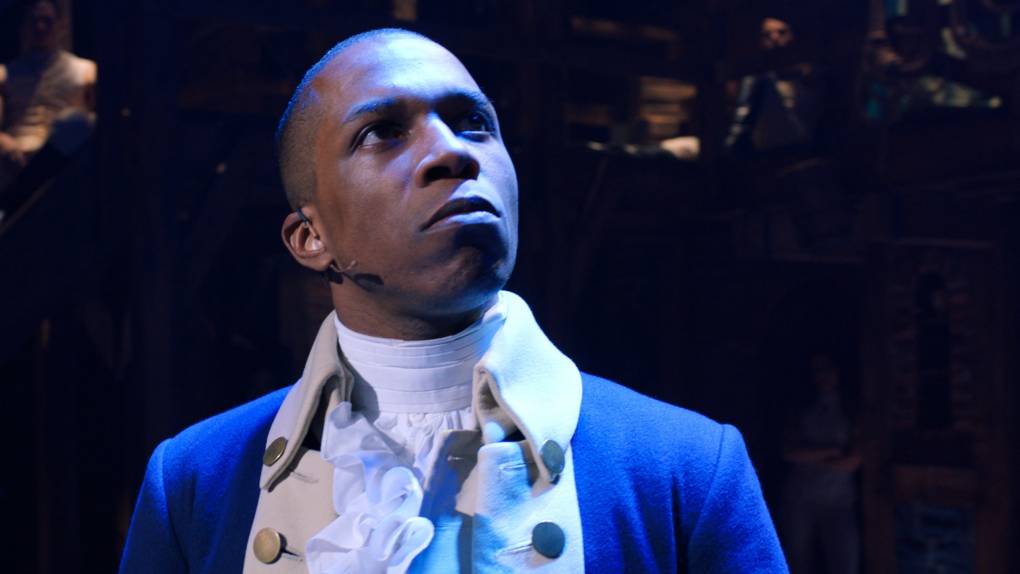
"caption": "Leslie Odom Jr. originated the role of Aaron Burr on Broadway in 'Hamilton.' Like the rest of the original cast, he's available to watch at home in the film, which arrives Friday on Disney+.",
"description": "Leslie Odom Jr. originated the role of Aaron Burr on Broadway in 'Hamilton.' Like the rest of the original cast, he's available to watch at home in the film, which arrives Friday on Disney+.",
"title": "Leslie Odom Jr. originated the role of Aaron Burr on Broadway in 'Hamilton.' Like the rest of the original cast, he's available to watch at home in the film, which arrives Friday on Disney+.",
"credit": "Disney+",
"status": "inherit",
"isLoading": false,
"fetchFailed": false
},
"arts_13882672": {
"type": "attachments",
"id": "arts_13882672",
"meta": {
"index": "attachments_1716263798",
"site": "arts",
"id": "13882672",
"found": true
},
"title": "Lin-Manuel Miranda and Phillipa Soo played Alexander and Eliza Hamilton in the original Broadway production of 'Hamilton.' A film production of the show, taped in 2016, debuts on Disney+ on July 3.",
"publishDate": 1593457968,
"status": "inherit",
"parent": 13882671,
"modified": 1741222053,
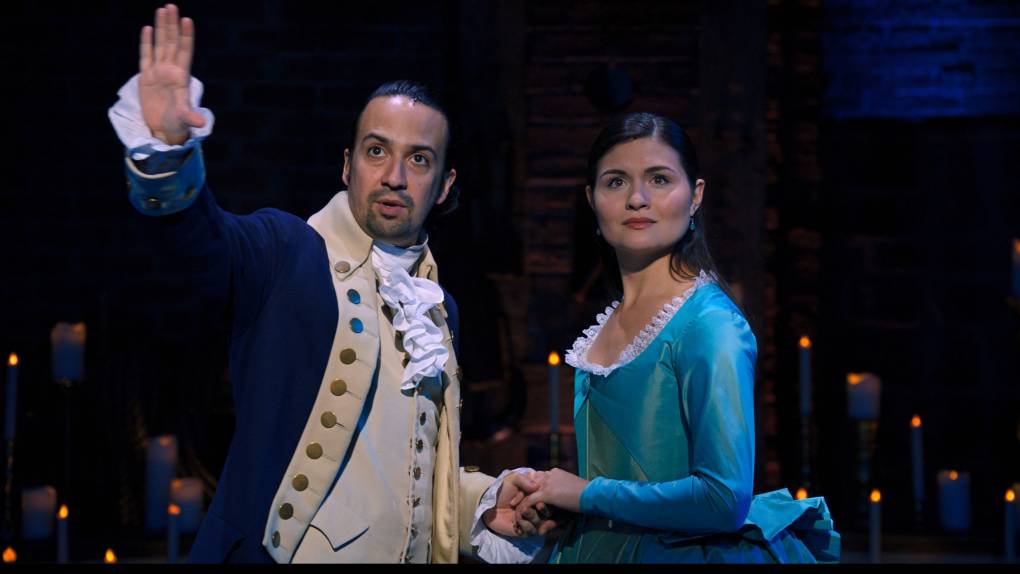
"caption": "Lin-Manuel Miranda and Phillipa Soo played Alexander and Eliza Hamilton in the original Broadway production of 'Hamilton.' ",
"credit": "Disney+",
"altTag": "Lin-Manuel Miranda and Phillipa Soo played Alexander and Eliza Hamilton in the original Broadway production of 'Hamilton.' A film production of the show, taped in 2016, debuts on Disney+ on July 3.",
"description": "Lin-Manuel Miranda and Phillipa Soo played Alexander and Eliza Hamilton in the original Broadway production of 'Hamilton.' A film production of the show, taped in 2016, debuts on Disney+ on July 3.",
"imgSizes": {
"medium": {
"file": "https://cdn.kqed.org/wp-content/uploads/sites/2/2020/06/fg24xang_wide-f6fc578f836c1b8bf489a09c162c048284bcb249-800x450.jpe",
"width": 800,
"height": 450,
"mimeType": "image/jpeg"
},
"large": {
"file": "https://cdn.kqed.org/wp-content/uploads/sites/2/2020/06/fg24xang_wide-f6fc578f836c1b8bf489a09c162c048284bcb249-1020x574.jpe",
"width": 1020,
"height": 574,
"mimeType": "image/jpeg"
},
"thumbnail": {
"file": "https://cdn.kqed.org/wp-content/uploads/sites/2/2020/06/fg24xang_wide-f6fc578f836c1b8bf489a09c162c048284bcb249-160x90.jpe",
"width": 160,
"height": 90,
"mimeType": "image/jpeg"
},
"medium_large": {
"file": "https://cdn.kqed.org/wp-content/uploads/sites/2/2020/06/fg24xang_wide-f6fc578f836c1b8bf489a09c162c048284bcb249-768x432.jpe",
"width": 768,
"height": 432,
"mimeType": "image/jpeg"
},
"1536x1536": {
"file": "https://cdn.kqed.org/wp-content/uploads/sites/2/2020/06/fg24xang_wide-f6fc578f836c1b8bf489a09c162c048284bcb249-1536x864.jpe",
"width": 1536,
"height": 864,
"mimeType": "image/jpeg"
},
"2048x2048": {
"file": "https://cdn.kqed.org/wp-content/uploads/sites/2/2020/06/fg24xang_wide-f6fc578f836c1b8bf489a09c162c048284bcb249-2048x1152.jpe",
"width": 2048,
"height": 1152,
"mimeType": "image/jpeg"
},
"post-thumbnail": {
"file": "https://cdn.kqed.org/wp-content/uploads/sites/2/2020/06/fg24xang_wide-f6fc578f836c1b8bf489a09c162c048284bcb249-672x372.jpe",
"width": 672,
"height": 372,
"mimeType": "image/jpeg"
},
"twentyfourteen-full-width": {
"file": "https://cdn.kqed.org/wp-content/uploads/sites/2/2020/06/fg24xang_wide-f6fc578f836c1b8bf489a09c162c048284bcb249-1038x576.jpe",
"width": 1038,
"height": 576,
"mimeType": "image/jpeg"
},
"full-width": {
"file": "https://cdn.kqed.org/wp-content/uploads/sites/2/2020/06/fg24xang_wide-f6fc578f836c1b8bf489a09c162c048284bcb249-1920x1080.jpe",
"width": 1920,
"height": 1080,
"mimeType": "image/jpeg"
},
"kqedFullSize": {
"file": "https://cdn.kqed.org/wp-content/uploads/sites/2/2020/06/fg24xang_wide-f6fc578f836c1b8bf489a09c162c048284bcb249-scaled-e1593461486338.jpe",
"width": 1920,
"height": 1080
}
},
"isLoading": false,
"fetchFailed": false
},
"arts_13882279": {
"type": "attachments",
"id": "arts_13882279",
"meta": {
"index": "attachments_1716263798",
"site": "arts",
"id": "13882279",
"found": true
},
"parent": 13882276,
"imgSizes": {
"twentyfourteen-full-width": {
"file": "https://ww2.kqed.org/app/uploads/sites/2/2020/06/ElySonnyOrquiza_credit_PacianoTriunfo-960x576.jpg",
"width": 960,
"mimeType": "image/jpeg",
"height": 576
},
"thumbnail": {
"file": "https://ww2.kqed.org/app/uploads/sites/2/2020/06/ElySonnyOrquiza_credit_PacianoTriunfo-160x107.jpg",
"width": 160,
"mimeType": "image/jpeg",
"height": 107
},
"post-thumbnail": {
"file": "https://ww2.kqed.org/app/uploads/sites/2/2020/06/ElySonnyOrquiza_credit_PacianoTriunfo-672x372.jpg",
"width": 672,
"mimeType": "image/jpeg",
"height": 372
},
"kqedFullSize": {
"file": "https://ww2.kqed.org/app/uploads/sites/2/2020/06/ElySonnyOrquiza_credit_PacianoTriunfo.jpg",
"width": 960,
"height": 640
},
"medium": {
"file": "https://ww2.kqed.org/app/uploads/sites/2/2020/06/ElySonnyOrquiza_credit_PacianoTriunfo-800x533.jpg",
"width": 800,
"mimeType": "image/jpeg",
"height": 533
},
"medium_large": {
"file": "https://ww2.kqed.org/app/uploads/sites/2/2020/06/ElySonnyOrquiza_credit_PacianoTriunfo-768x512.jpg",
"width": 768,
"mimeType": "image/jpeg",
"height": 512
}
},
"publishDate": 1592580670,
"modified": 1623871016,
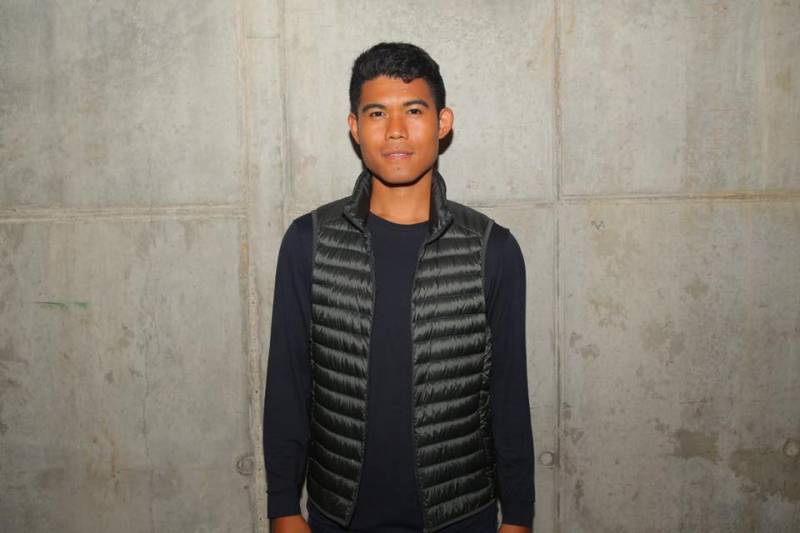
"caption": "Ely Sonny Orquiza, creator of the \"Living Document\"",
"description": "Ely Sonny Orquiza, creator of the \"Living Document\"",
"title": "ElySonnyOrquiza_credit_PacianoTriunfo",
"credit": "Paciano Triunfo",
"status": "inherit",
"altTag": null,
"isLoading": false,
"fetchFailed": false
},
"arts_13882180": {
"type": "attachments",
"id": "arts_13882180",
"meta": {
"index": "attachments_1716263798",
"site": "arts",
"id": "13882180",
"found": true
},
"parent": 13882177,
"imgSizes": {
"twentyfourteen-full-width": {
"file": "https://ww2.kqed.org/app/uploads/sites/2/2020/06/Marcus-Shelby-960x673-960x576.png",
"width": 960,
"mimeType": "image/png",
"height": 576
},
"thumbnail": {
"file": "https://ww2.kqed.org/app/uploads/sites/2/2020/06/Marcus-Shelby-960x673-160x112.png",
"width": 160,
"mimeType": "image/png",
"height": 112
},
"post-thumbnail": {
"file": "https://ww2.kqed.org/app/uploads/sites/2/2020/06/Marcus-Shelby-960x673-672x372.png",
"width": 672,
"mimeType": "image/png",
"height": 372
},
"kqedFullSize": {
"file": "https://ww2.kqed.org/app/uploads/sites/2/2020/06/Marcus-Shelby-960x673.png",
"width": 960,
"height": 673
},
"medium": {
"file": "https://ww2.kqed.org/app/uploads/sites/2/2020/06/Marcus-Shelby-960x673-800x561.png",
"width": 800,
"mimeType": "image/png",
"height": 561
},
"medium_large": {
"file": "https://ww2.kqed.org/app/uploads/sites/2/2020/06/Marcus-Shelby-960x673-768x538.png",
"width": 768,
"mimeType": "image/png",
"height": 538
}
},
"publishDate": 1592453492,
"modified": 1592453547,
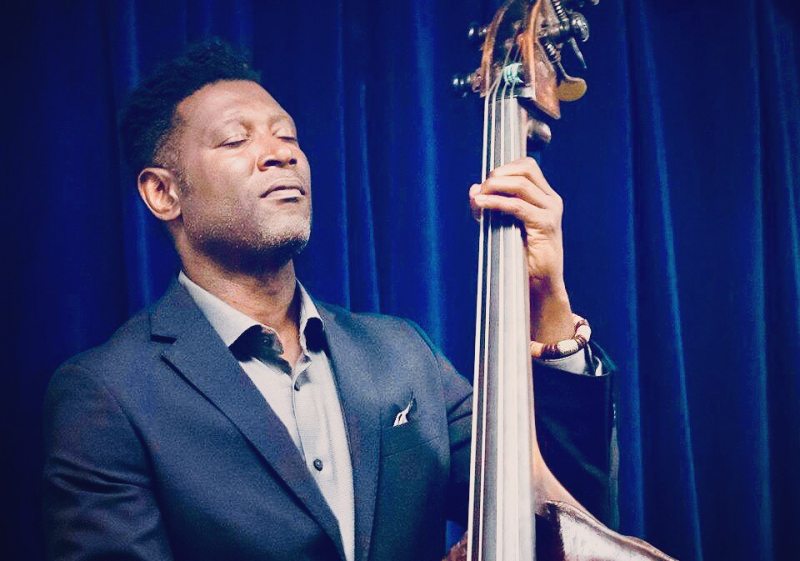
"caption": "Marcus Shelby leads a Zoom presentation of live music, readings and poetry delving into Juneteenth's history and its resonance today.",
"description": "Marcus Shelby leads a Zoom presentation of live music, readings and poetry delving into Juneteenth's history and its resonance today.",
"title": "Marcus-Shelby-960x673",
"credit": "MoAD",
"status": "inherit",
"isLoading": false,
"fetchFailed": false
},
"arts_13882003": {
"type": "attachments",
"id": "arts_13882003",
"meta": {
"index": "attachments_1716263798",
"site": "arts",
"id": "13882003",
"found": true
},
"parent": 13882001,
"imgSizes": {
"twentyfourteen-full-width": {
"file": "https://ww2.kqed.org/app/uploads/sites/2/2020/06/ChristianCagigal_Wunderkammer_credit_JulieMichelle-1038x576.jpg",
"width": 1038,
"mimeType": "image/jpeg",
"height": 576
},
"thumbnail": {
"file": "https://ww2.kqed.org/app/uploads/sites/2/2020/06/ChristianCagigal_Wunderkammer_credit_JulieMichelle-160x107.jpg",
"width": 160,
"mimeType": "image/jpeg",
"height": 107
},
"post-thumbnail": {
"file": "https://ww2.kqed.org/app/uploads/sites/2/2020/06/ChristianCagigal_Wunderkammer_credit_JulieMichelle-672x372.jpg",
"width": 672,
"mimeType": "image/jpeg",
"height": 372
},
"kqedFullSize": {
"file": "https://ww2.kqed.org/app/uploads/sites/2/2020/06/ChristianCagigal_Wunderkammer_credit_JulieMichelle.jpg",
"width": 2000,
"height": 1333
},
"large": {
"file": "https://ww2.kqed.org/app/uploads/sites/2/2020/06/ChristianCagigal_Wunderkammer_credit_JulieMichelle-1020x680.jpg",
"width": 1020,
"mimeType": "image/jpeg",
"height": 680
},
"full-width": {
"file": "https://ww2.kqed.org/app/uploads/sites/2/2020/06/ChristianCagigal_Wunderkammer_credit_JulieMichelle-1920x1280.jpg",
"width": 1920,
"mimeType": "image/jpeg",
"height": 1280
},
"medium": {
"file": "https://ww2.kqed.org/app/uploads/sites/2/2020/06/ChristianCagigal_Wunderkammer_credit_JulieMichelle-800x533.jpg",
"width": 800,
"mimeType": "image/jpeg",
"height": 533
},
"medium_large": {
"file": "https://ww2.kqed.org/app/uploads/sites/2/2020/06/ChristianCagigal_Wunderkammer_credit_JulieMichelle-768x512.jpg",
"width": 768,
"mimeType": "image/jpeg",
"height": 512
}
},
"publishDate": 1592293084,
"modified": 1592293779,
"caption": "Christian Cagigal and some of his magical objects.",
"description": "Christian Cagigal and some of his magical objects.",
"title": "ChristianCagigal_Wunderkammer_credit_JulieMichelle",
"credit": "Julie Michelle",
"status": "inherit",
"isLoading": false,
"fetchFailed": false
},
"arts_13881254": {
"type": "attachments",
"id": "arts_13881254",
"meta": {
"index": "attachments_1716263798",
"site": "arts",
"id": "13881254",
"found": true
},
"parent": 13881249,
"imgSizes": {
"twentyfourteen-full-width": {
"file": "https://ww2.kqed.org/app/uploads/sites/2/2020/06/PGZF-Disbelief_NoraelSamahy_courtesyofPlayground-1038x576.jpeg",
"width": 1038,
"mimeType": "image/jpeg",
"height": 576
},
"thumbnail": {
"file": "https://ww2.kqed.org/app/uploads/sites/2/2020/06/PGZF-Disbelief_NoraelSamahy_courtesyofPlayground-160x87.jpeg",
"width": 160,
"mimeType": "image/jpeg",
"height": 87
},
"post-thumbnail": {
"file": "https://ww2.kqed.org/app/uploads/sites/2/2020/06/PGZF-Disbelief_NoraelSamahy_courtesyofPlayground-672x372.jpeg",
"width": 672,
"mimeType": "image/jpeg",
"height": 372
},
"kqedFullSize": {
"file": "https://ww2.kqed.org/app/uploads/sites/2/2020/06/PGZF-Disbelief_NoraelSamahy_courtesyofPlayground.jpeg",
"width": 2000,
"height": 1093
},
"large": {
"file": "https://ww2.kqed.org/app/uploads/sites/2/2020/06/PGZF-Disbelief_NoraelSamahy_courtesyofPlayground-1020x557.jpeg",
"width": 1020,
"mimeType": "image/jpeg",
"height": 557
},
"full-width": {
"file": "https://ww2.kqed.org/app/uploads/sites/2/2020/06/PGZF-Disbelief_NoraelSamahy_courtesyofPlayground-1920x1049.jpeg",
"width": 1920,
"mimeType": "image/jpeg",
"height": 1049
},
"medium": {
"file": "https://ww2.kqed.org/app/uploads/sites/2/2020/06/PGZF-Disbelief_NoraelSamahy_courtesyofPlayground-800x437.jpeg",
"width": 800,
"mimeType": "image/jpeg",
"height": 437
},
"medium_large": {
"file": "https://ww2.kqed.org/app/uploads/sites/2/2020/06/PGZF-Disbelief_NoraelSamahy_courtesyofPlayground-768x420.jpeg",
"width": 768,
"mimeType": "image/jpeg",
"height": 420
}
},
"publishDate": 1591122936,
"modified": 1591123217,
"caption": "Nora el Samahy as Cassandra in Disbelief by Garret Jon Groenveld, as part of PlayGround's Zoom Fest.",
"description": "Nora el Samahy as Cassandra in Disbelief by Garret Jon Groenveld, as part of PlayGround's Zoom Fest.",
"title": "PGZF Disbelief_NoraelSamahy_courtesyofPlayground",
"credit": "courtesy of PlayGround",
"status": "inherit",
"isLoading": false,
"fetchFailed": false
},
"arts_13881050": {
"type": "attachments",
"id": "arts_13881050",
"meta": {
"index": "attachments_1716263798",
"site": "arts",
"id": "13881050",
"found": true
},
"parent": 13881048,
"imgSizes": {
"thumbnail": {
"file": "https://ww2.kqed.org/app/uploads/sites/2/2020/05/LarryKramer-160x100.jpg",
"width": 160,
"mimeType": "image/jpeg",
"height": 100
},
"post-thumbnail": {
"file": "https://ww2.kqed.org/app/uploads/sites/2/2020/05/LarryKramer-672x372.jpg",
"width": 672,
"mimeType": "image/jpeg",
"height": 372
},
"kqedFullSize": {
"file": "https://ww2.kqed.org/app/uploads/sites/2/2020/05/LarryKramer.jpg",
"width": 800,
"height": 500
},
"medium": {
"file": "https://ww2.kqed.org/app/uploads/sites/2/2020/05/LarryKramer-800x500.jpg",
"width": 800,
"mimeType": "image/jpeg",
"height": 500
},
"medium_large": {
"file": "https://ww2.kqed.org/app/uploads/sites/2/2020/05/LarryKramer-768x480.jpg",
"width": 768,
"mimeType": "image/jpeg",
"height": 480
}
},
"publishDate": 1590601829,
"modified": 1590601869,
"caption": "Larry Kramer, the playwright whose angry voice and pen raised theatergoers’ consciousness about AIDS and roused thousands to militant protests in the early years of the epidemic, died Wednesday, May 27, 2020 in Manhattan of pneumonia. He was 84. ",
"description": "Larry Kramer, the playwright whose angry voice and pen raised theatergoers’ consciousness about AIDS and roused thousands to militant protests in the early years of the epidemic, died Wednesday, May 27, 2020 in Manhattan of pneumonia. He was 84. ",
"title": "LarryKramer",
"credit": "Donald Traill/Invision/AP",
"status": "inherit",
"isLoading": false,
"fetchFailed": false
},
"arts_13880580": {
"type": "attachments",
"id": "arts_13880580",
"meta": {
"index": "attachments_1716263798",
"site": "arts",
"id": "13880580",
"found": true
},
"parent": 13880445,
"imgSizes": {
"twentyfourteen-full-width": {
"file": "https://ww2.kqed.org/app/uploads/sites/2/2020/05/PlayAtHome.Featured-1038x576.jpg",
"width": 1038,
"mimeType": "image/jpeg",
"height": 576
},
"thumbnail": {
"file": "https://ww2.kqed.org/app/uploads/sites/2/2020/05/PlayAtHome.Featured-160x90.jpg",
"width": 160,
"mimeType": "image/jpeg",
"height": 90
},
"post-thumbnail": {
"file": "https://ww2.kqed.org/app/uploads/sites/2/2020/05/PlayAtHome.Featured-672x372.jpg",
"width": 672,
"mimeType": "image/jpeg",
"height": 372
},
"kqedFullSize": {
"file": "https://ww2.kqed.org/app/uploads/sites/2/2020/05/PlayAtHome.Featured.jpg",
"width": 1920,
"height": 1081
},
"large": {
"file": "https://ww2.kqed.org/app/uploads/sites/2/2020/05/PlayAtHome.Featured-1020x574.jpg",
"width": 1020,
"mimeType": "image/jpeg",
"height": 574
},
"full-width": {
"file": "https://ww2.kqed.org/app/uploads/sites/2/2020/05/PlayAtHome.Featured-1920x1081.jpg",
"width": 1920,
"mimeType": "image/jpeg",
"height": 1081
},
"medium": {
"file": "https://ww2.kqed.org/app/uploads/sites/2/2020/05/PlayAtHome.Featured-800x450.jpg",
"width": 800,
"mimeType": "image/jpeg",
"height": 450
},
"medium_large": {
"file": "https://ww2.kqed.org/app/uploads/sites/2/2020/05/PlayAtHome.Featured-768x432.jpg",
"width": 768,
"mimeType": "image/jpeg",
"height": 432
}
},
"publishDate": 1589583804,
"modified": 1589583854,
"caption": "The cast members from KQED's staged reading of \"Half A Dozen of the Other\", a new short play by Min Kahng commissioned by Berkeley Repertory Theatre for the national Play at Home initiative. Featured clockwise from upper left: Chinwe Oniah, Masha Pershay, Gabe Meline, Lina Blanco.",
"description": "The cast members from KQED's staged reading of \"Half A Dozen of the Other\", a new short play by Min Kahng commissioned by Berkeley Repertory Theatre for the national Play at Home initiative. Featured clockwise from upper left: Chinwe Oniah, Masha Pershay, Gabe Meline, Lina Blanco.",
"title": "PlayAtHome.Featured",
"credit": "Masha Pershay/KQED",
"status": "inherit",
"isLoading": false,
"fetchFailed": false
},
"arts_13880211": {
"type": "attachments",
"id": "arts_13880211",
"meta": {
"index": "attachments_1716263798",
"site": "arts",
"id": "13880211",
"found": true
},
"parent": 13880177,
"imgSizes": {
"twentyfourteen-full-width": {
"file": "https://ww2.kqed.org/app/uploads/sites/2/2020/05/GettyImages-142057511-1038x576.jpg",
"width": 1038,
"mimeType": "image/jpeg",
"height": 576
},
"thumbnail": {
"file": "https://ww2.kqed.org/app/uploads/sites/2/2020/05/GettyImages-142057511-160x107.jpg",
"width": 160,
"mimeType": "image/jpeg",
"height": 107
},
"post-thumbnail": {
"file": "https://ww2.kqed.org/app/uploads/sites/2/2020/05/GettyImages-142057511-672x372.jpg",
"width": 672,
"mimeType": "image/jpeg",
"height": 372
},
"kqedFullSize": {
"file": "https://ww2.kqed.org/app/uploads/sites/2/2020/05/GettyImages-142057511.jpg",
"width": 3500,
"height": 2335
},
"large": {
"file": "https://ww2.kqed.org/app/uploads/sites/2/2020/05/GettyImages-142057511-1020x680.jpg",
"width": 1020,
"mimeType": "image/jpeg",
"height": 680
},
"full-width": {
"file": "https://ww2.kqed.org/app/uploads/sites/2/2020/05/GettyImages-142057511-1920x1281.jpg",
"width": 1920,
"mimeType": "image/jpeg",
"height": 1281
},
"medium": {
"file": "https://ww2.kqed.org/app/uploads/sites/2/2020/05/GettyImages-142057511-800x534.jpg",
"width": 800,
"mimeType": "image/jpeg",
"height": 534
},
"medium_large": {
"file": "https://ww2.kqed.org/app/uploads/sites/2/2020/05/GettyImages-142057511-768x512.jpg",
"width": 768,
"mimeType": "image/jpeg",
"height": 512
}
},
"publishDate": 1589253920,
"modified": 1589254645,
"caption": "Shakespeare's Globe Theatre, on the South Bank of the River Thames, London.",
"description": "Shakespeare's Globe Theatre, on the South Bank of the River Thames, London.",
"title": "Shakespeare's Globe Theatre, on the South Bank of the River Thames, London.",
"credit": "Oli Scarff/Getty Images",
"status": "inherit",
"isLoading": false,
"fetchFailed": false
},
"arts_13880241": {
"type": "attachments",
"id": "arts_13880241",
"meta": {
"index": "attachments_1716263798",
"site": "arts",
"id": "13880241",
"found": true
},
"parent": 13880240,
"imgSizes": {
"twentyfourteen-full-width": {
"file": "https://ww2.kqed.org/app/uploads/sites/2/2020/05/gettyimages-545754360_wide-6b0805ff9ec71a32bafe8d4cbc51d539560975b9-1038x576.jpg",
"width": 1038,
"mimeType": "image/jpeg",
"height": 576
},
"thumbnail": {
"file": "https://ww2.kqed.org/app/uploads/sites/2/2020/05/gettyimages-545754360_wide-6b0805ff9ec71a32bafe8d4cbc51d539560975b9-160x90.jpg",
"width": 160,
"mimeType": "image/jpeg",
"height": 90
},
"post-thumbnail": {
"file": "https://ww2.kqed.org/app/uploads/sites/2/2020/05/gettyimages-545754360_wide-6b0805ff9ec71a32bafe8d4cbc51d539560975b9-672x372.jpg",
"width": 672,
"mimeType": "image/jpeg",
"height": 372
},
"kqedFullSize": {
"file": "https://ww2.kqed.org/app/uploads/sites/2/2020/05/gettyimages-545754360_wide-6b0805ff9ec71a32bafe8d4cbc51d539560975b9.jpg",
"width": 4605,
"height": 2590
},
"large": {
"file": "https://ww2.kqed.org/app/uploads/sites/2/2020/05/gettyimages-545754360_wide-6b0805ff9ec71a32bafe8d4cbc51d539560975b9-1020x574.jpg",
"width": 1020,
"mimeType": "image/jpeg",
"height": 574
},
"full-width": {
"file": "https://ww2.kqed.org/app/uploads/sites/2/2020/05/gettyimages-545754360_wide-6b0805ff9ec71a32bafe8d4cbc51d539560975b9-1920x1080.jpg",
"width": 1920,
"mimeType": "image/jpeg",
"height": 1080
},
"medium": {
"file": "https://ww2.kqed.org/app/uploads/sites/2/2020/05/gettyimages-545754360_wide-6b0805ff9ec71a32bafe8d4cbc51d539560975b9-800x450.jpg",
"width": 800,
"mimeType": "image/jpeg",
"height": 450
},
"medium_large": {
"file": "https://ww2.kqed.org/app/uploads/sites/2/2020/05/gettyimages-545754360_wide-6b0805ff9ec71a32bafe8d4cbc51d539560975b9-768x432.jpg",
"width": 768,
"mimeType": "image/jpeg",
"height": 432
}
},
"publishDate": 1589297919,
"modified": 1589297919,
"caption": null,
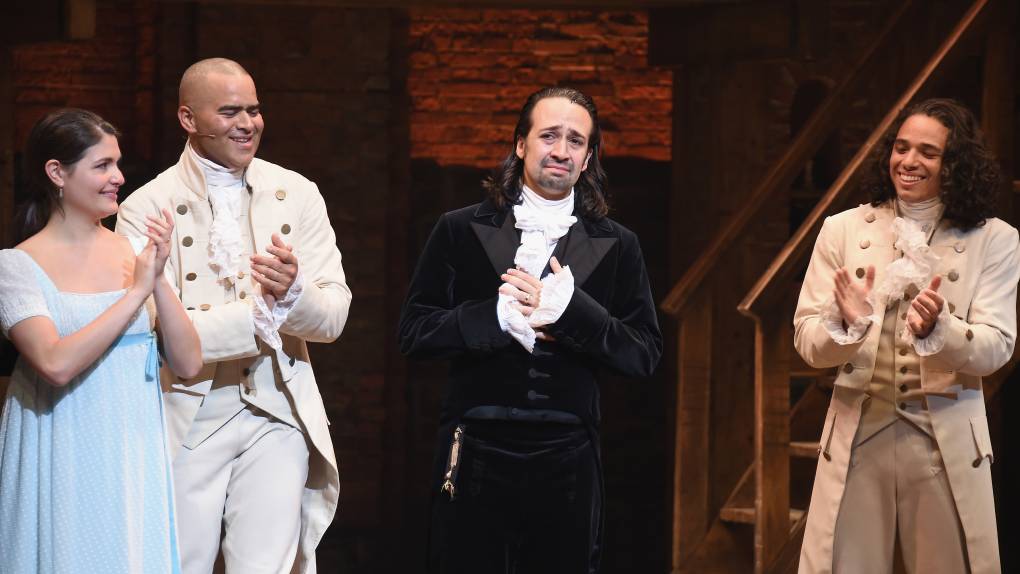
"description": "Left to right: Phillipa Soo, Christopher Jackson, Lin-Manuel Miranda and Anthony Ramos attend Lin-Manuel Miranda's final performance of \u003cem>Hamilton\u003c/em> on Broadway on July 9, 2016.",
"title": "Left to right: Phillipa Soo, Christopher Jackson, Lin-Manuel Miranda and Anthony Ramos attend Lin-Manuel Miranda's final performance of Hamilton on Broadway on July 9, 2016.",
"credit": null,
"status": "inherit",
"isLoading": false,
"fetchFailed": false
},
"arts_13879319": {
"type": "attachments",
"id": "arts_13879319",
"meta": {
"index": "attachments_1716263798",
"site": "arts",
"id": "13879319",
"found": true
},
"parent": 13879316,
"imgSizes": {
"twentyfourteen-full-width": {
"file": "https://ww2.kqed.org/app/uploads/sites/2/2020/04/TW_TheyPromisedHertheMoon_KevinBerne6-scaled-1038x576.jpg",
"width": 1038,
"mimeType": "image/jpeg",
"height": 576
},
"thumbnail": {
"file": "https://ww2.kqed.org/app/uploads/sites/2/2020/04/TW_TheyPromisedHertheMoon_KevinBerne6-scaled-160x106.jpg",
"width": 160,
"mimeType": "image/jpeg",
"height": 106
},
"post-thumbnail": {
"file": "https://ww2.kqed.org/app/uploads/sites/2/2020/04/TW_TheyPromisedHertheMoon_KevinBerne6-scaled-672x372.jpg",
"width": 672,
"mimeType": "image/jpeg",
"height": 372
},
"kqedFullSize": {
"file": "https://ww2.kqed.org/app/uploads/sites/2/2020/04/TW_TheyPromisedHertheMoon_KevinBerne6-scaled.jpg",
"width": 2000,
"height": 1330
},
"large": {
"file": "https://ww2.kqed.org/app/uploads/sites/2/2020/04/TW_TheyPromisedHertheMoon_KevinBerne6-scaled-1020x678.jpg",
"width": 1020,
"mimeType": "image/jpeg",
"height": 678
},
"full-width": {
"file": "https://ww2.kqed.org/app/uploads/sites/2/2020/04/TW_TheyPromisedHertheMoon_KevinBerne6-scaled-1920x1277.jpg",
"width": 1920,
"mimeType": "image/jpeg",
"height": 1277
},
"medium": {
"file": "https://ww2.kqed.org/app/uploads/sites/2/2020/04/TW_TheyPromisedHertheMoon_KevinBerne6-scaled-800x532.jpg",
"width": 800,
"mimeType": "image/jpeg",
"height": 532
},
"medium_large": {
"file": "https://ww2.kqed.org/app/uploads/sites/2/2020/04/TW_TheyPromisedHertheMoon_KevinBerne6-scaled-768x511.jpg",
"width": 768,
"mimeType": "image/jpeg",
"height": 511
}
},
"publishDate": 1588021225,
"modified": 1588048061,
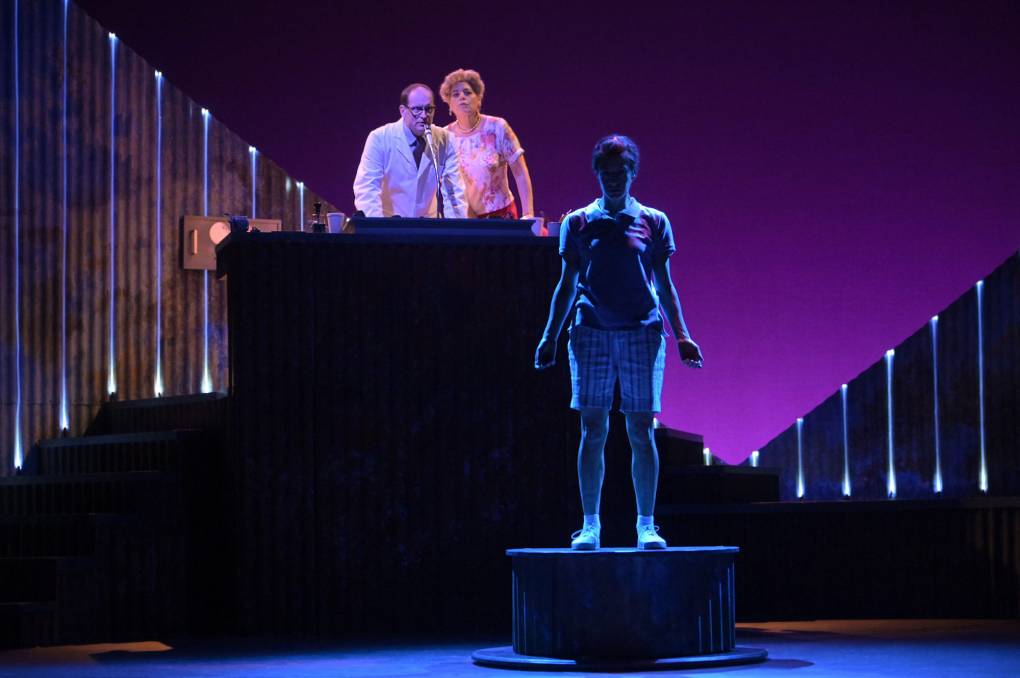
"caption": "Anthony Fusco, Stacy Ross, and Sarah Mitchell in 'They Promised Her the Moon' at TheatreWorks.",
"description": "Anthony Fusco, Stacy Ross, and Sarah Mitchell in They Promised Her the Moon at TheatreWorks.",
"title": "TW_TheyPromisedHertheMoon_KevinBerne6-scaled",
"credit": "Kevin Berne",
"status": "inherit",
"isLoading": false,
"fetchFailed": false
}
},
"audioPlayerReducer": {
"postId": "stream_live",
"isPaused": true,
"isPlaying": false,
"pfsActive": false,
"pledgeModalIsOpen": true,
"playerDrawerIsOpen": false,
"liveAudioPlayStartedAt": 0,
"liveAudioPlayContext": ""
},
"authorsReducer": {
"byline_arts_13882767": {
"type": "authors",
"id": "byline_arts_13882767",
"meta": {
"override": true
},
"slug": "byline_arts_13882767",
"name": "Linda Holmes",
"isLoading": false
},
"byline_arts_13882671": {
"type": "authors",
"id": "byline_arts_13882671",
"meta": {
"override": true
},
"slug": "byline_arts_13882671",
"name": "Terry Gross",
"isLoading": false
},
"byline_arts_13881048": {
"type": "authors",
"id": "byline_arts_13881048",
"meta": {
"override": true
},
"slug": "byline_arts_13881048",
"name": "Mark Kennedy, Associated Press",
"isLoading": false
},
"byline_arts_13880240": {
"type": "authors",
"id": "byline_arts_13880240",
"meta": {
"override": true
},
"slug": "byline_arts_13880240",
"name": "Stephen Thompson",
"isLoading": false
},
"gmeline": {
"type": "authors",
"id": "185",
"meta": {
"index": "authors_1716337520",
"id": "185",
"found": true
},
"name": "Gabe Meline",
"firstName": "Gabe",
"lastName": "Meline",
"slug": "gmeline",
"email": "gmeline@kqed.org",
"display_author_email": true,
"staff_mastheads": [
"arts"
],
"title": "Senior Editor, KQED Arts & Culture",
"bio": "Gabe Meline entered journalism at age 15 making photocopied zines, and has since earned awards from the Edward R. Murrow Awards, the Society for Professional Journalists, the Online Journalism Awards, the Association of Alternative Newsweeklies and the California Newspaper Publishers Association. Prior to KQED, he was the editor of the \u003cem>North Bay Bohemian\u003c/em> and a touring musician. He lives with his wife and daughter in his hometown of Santa Rosa, CA.",
"avatar": "https://secure.gravatar.com/avatar/5bebe57be0d8bc2dd318934feb47299e2d2d10cba28d09d8d7afb389a2ce2bdd?s=600&d=blank&r=g",
"twitter": null,
"bluesky": null,
"facebook": null,
"instagram": null,
"linkedin": null,
"sites": [
{
"site": "",
"roles": [
"editor"
]
},
{
"site": "arts",
"roles": [
"administrator"
]
},
{
"site": "artschool",
"roles": [
"editor"
]
},
{
"site": "news",
"roles": [
"author"
]
},
{
"site": "pop",
"roles": [
"editor"
]
},
{
"site": "bayareabites",
"roles": [
"editor"
]
},
{
"site": "food",
"roles": [
"editor"
]
},
{
"site": "forum",
"roles": [
"administrator"
]
},
{
"site": "liveblog",
"roles": [
"editor"
]
},
{
"site": "hiphop",
"roles": [
"editor"
]
}
],
"headData": {
"title": "Gabe Meline | KQED",
"description": "Senior Editor, KQED Arts & Culture",
"ogImgSrc": "https://secure.gravatar.com/avatar/5bebe57be0d8bc2dd318934feb47299e2d2d10cba28d09d8d7afb389a2ce2bdd?s=600&d=blank&r=g",
"twImgSrc": "https://secure.gravatar.com/avatar/5bebe57be0d8bc2dd318934feb47299e2d2d10cba28d09d8d7afb389a2ce2bdd?s=600&d=blank&r=g"
},
"isLoading": false,
"link": "/author/gmeline"
},
"cveltman": {
"type": "authors",
"id": "8608",
"meta": {
"index": "authors_1716337520",
"id": "8608",
"found": true
},
"name": "Chloe Veltman",
"firstName": "Chloe",
"lastName": "Veltman",
"slug": "cveltman",
"email": "cveltman@kqed.org",
"display_author_email": true,
"staff_mastheads": [],
"title": "Arts and Culture Reporter",
"bio": "Chloe Veltman is a former arts and culture reporter for KQED. Prior to joining the organization, she launched and led the arts bureau at Colorado Public Radio, served as the Bay Area's culture columnist for the New York Times, and was the founder, host and executive producer of VoiceBox, a national award-winning weekly podcast/radio show and live events series all about the human voice. Chloe is the recipient of numerous prizes, grants and fellowships including a Webby Award for her work on interactive storytelling, both the John S Knight Journalism Fellowship and Humanities Center Fellowship at Stanford University, the Sundance Arts Writing Fellowship and a Library of Congress Research Fellowship. She is the author of the book \"On Acting\" and has appeared as a guest lecturer at Yale University and the San Francisco Conservatory of Music among other institutions. She holds a BA in english literature from King's College, Cambridge, and a Masters in Dramaturgy from the Central School of Speech and Drama/Harvard Institute for Advanced Theater Training.\r\n\u003ca href=\"https://www.chloeveltman.com\">www.chloeveltman.com\u003c/a>",
"avatar": "https://secure.gravatar.com/avatar/55403394b00a1ddab683952c2eb2cf85?s=600&d=blank&r=g",
"twitter": "chloeveltman",
"facebook": null,
"instagram": null,
"linkedin": null,
"sites": [
{
"site": "arts",
"roles": []
},
{
"site": "news",
"roles": [
"author"
]
},
{
"site": "pop",
"roles": [
"editor"
]
},
{
"site": "science",
"roles": []
}
],
"headData": {
"title": "Chloe Veltman | KQED",
"description": "Arts and Culture Reporter",
"ogImgSrc": "https://secure.gravatar.com/avatar/55403394b00a1ddab683952c2eb2cf85?s=600&d=blank&r=g",
"twImgSrc": "https://secure.gravatar.com/avatar/55403394b00a1ddab683952c2eb2cf85?s=600&d=blank&r=g"
},
"isLoading": false,
"link": "/author/cveltman"
},
"ralexandra": {
"type": "authors",
"id": "11242",
"meta": {
"index": "authors_1716337520",
"id": "11242",
"found": true
},
"name": "Rae Alexandra",
"firstName": "Rae",
"lastName": "Alexandra",
"slug": "ralexandra",
"email": "ralexandra@kqed.org",
"display_author_email": true,
"staff_mastheads": [],
"title": "Reporter/Producer",
"bio": "Rae Alexandra is a Reporter/Producer for KQED Arts & Culture, and the creator/author of the \u003ca href=\"https://www.kqed.org/arts/program/rebel-girls-from-bay-area-history\">Rebel Girls From Bay Area History\u003c/a> and \u003ca href=\"https://www.kqed.org/bizarrebayarea\">Bizarre Bay Area\u003c/a> series. Her debut book, \u003ca href=\"https://citylights.com/politics-current-events-history/unsung-heroines35-women-who-changed/\">Unsung Heroines: 35 Women Who Changed the Bay Area\u003c/a> was published by City Lights in March 2026. In 2023, Rae was awarded an SPJ Excellence in Journalism Award for Arts & Culture. Rae was born and raised in Wales and subsequently — even after two decades in Northern California — still uses phrases that regularly baffle her coworkers.",
"avatar": "https://secure.gravatar.com/avatar/edfee8176c80cc0a382b051190f5341997df378a934a5774dcb0977732dfd401?s=600&d=blank&r=g",
"twitter": null,
"bluesky": null,
"facebook": null,
"instagram": null,
"linkedin": null,
"sites": [
{
"site": "arts",
"roles": [
"subscriber"
]
},
{
"site": "news",
"roles": [
"subscriber"
]
},
{
"site": "pop",
"roles": [
"subscriber"
]
},
{
"site": "bayareabites",
"roles": [
"subscriber"
]
},
{
"site": "science",
"roles": [
"subscriber"
]
}
],
"headData": {
"title": "Rae Alexandra | KQED",
"description": "Reporter/Producer",
"ogImgSrc": "https://secure.gravatar.com/avatar/edfee8176c80cc0a382b051190f5341997df378a934a5774dcb0977732dfd401?s=600&d=blank&r=g",
"twImgSrc": "https://secure.gravatar.com/avatar/edfee8176c80cc0a382b051190f5341997df378a934a5774dcb0977732dfd401?s=600&d=blank&r=g"
},
"isLoading": false,
"link": "/author/ralexandra"
},
"ngluckstern": {
"type": "authors",
"id": "11497",
"meta": {
"index": "authors_1716337520",
"id": "11497",
"found": true
},
"name": "Nicole Gluckstern",
"firstName": "Nicole",
"lastName": "Gluckstern",
"slug": "ngluckstern",
"email": "gluckstern.nicole@gmail.com",
"display_author_email": false,
"staff_mastheads": [],
"title": "KQED Contributor",
"bio": null,
"avatar": "https://secure.gravatar.com/avatar/2c3d593194017bfe811a998ad03140909de330b22abebf4889e1a564ce5b3495?s=600&d=blank&r=g",
"twitter": null,
"bluesky": null,
"facebook": null,
"instagram": null,
"linkedin": null,
"sites": [
{
"site": "arts",
"roles": [
"contributor"
]
}
],
"headData": {
"title": "Nicole Gluckstern | KQED",
"description": "KQED Contributor",
"ogImgSrc": "https://secure.gravatar.com/avatar/2c3d593194017bfe811a998ad03140909de330b22abebf4889e1a564ce5b3495?s=600&d=blank&r=g",
"twImgSrc": "https://secure.gravatar.com/avatar/2c3d593194017bfe811a998ad03140909de330b22abebf4889e1a564ce5b3495?s=600&d=blank&r=g"
},
"isLoading": false,
"link": "/author/ngluckstern"
}
},
"pagesReducer": {
"arts_category_theater": {
"type": "terms",
"id": "arts_967",
"meta": {
"index": "terms_1716263798",
"site": "arts",
"id": "967",
"score": 12.286692
},
"featImg": null,
"name": "Theater",
"description": null,
"taxonomy": "category",
"headData": {
"twImgId": null,
"twTitle": null,
"ogTitle": null,
"ogImgId": null,
"twDescription": null,
"description": null,
"title": "Theater Archives | KQED Arts",
"ogDescription": null
},
"ttid": 985,
"slug": "theater",
"isLoading": false,
"title": "Theater",
"pageMeta": {
"site": "arts",
"WpPageTemplate": "page-topic-editorial",
"currentPage": 20
},
"blocks": [
{
"blockName": "kqed/post-list",
"attrs": {
"layout": "cardArticle2",
"query": "posts/arts?category=theater",
"seeMore": false,
"paginated": true,
"page": 20
}
},
{
"blockName": "kqed/ad"
}
]
}
},
"pfsSessionReducer": {},
"postsReducer": {
"stream_live": {
"type": "live",
"id": "stream_live",
"audioUrl": "https://streams.kqed.org/kqedradio",
"title": "Live Stream",
"excerpt": "Live Stream information currently unavailable.",
"link": "/radio",
"featImg": "",
"label": {
"name": "KQED Live",
"link": "/"
}
},
"stream_kqedNewscast": {
"type": "posts",
"id": "stream_kqedNewscast",
"audioUrl": "https://www.kqed.org/.stream/anon/radio/RDnews/newscast.mp3?_=1",
"title": "KQED Newscast",
"featImg": "",
"label": {
"name": "88.5 FM",
"link": "/"
}
},
"arts_13882983": {
"type": "posts",
"id": "arts_13882983",
"meta": {
"index": "posts_1716263798",
"site": "arts",
"id": "13882983",
"score": null,
"sort": [
1594220441000
]
},
"guestAuthors": [],
"slug": "by-the-people-for-the-people-san-francisco-mime-troupes-new-radio-drama",
"title": "By the People, For the People: San Francisco Mime Troupe's New Radio Drama",
"publishDate": 1594220441,
"format": "standard",
"headTitle": "By the People, For the People: San Francisco Mime Troupe’s New Radio Drama | KQED",
"labelTerm": {
"site": "arts"
},
"content": "\u003cp>For hundreds of Bay Area dwellers, July 4 is a day usually best spent in Dolores Park for the traditional opening performance of the “never ever silent” San Francisco Mime Troupe’s summer tour.\u003c/p>\n\u003cp>A tradition gleefully leaned into by the irreverent political theater company, the annual Mime Troupe show generally speaks to a specific topical issue across a wide thematic range, including for-profit schools, factory occupations, police violence and \u003ca href=\"https://www.kqed.org/arts/13860900/san-francisco-mime-troupe-celebrates-60-years-with-treasure-island\">land speculation and development\u003c/a>. Currently part of San Francisco’s LaborFest—which runs for the entire month of July—this worker-owned collective proudly wears its politics on its quirkily costumed sleeve.\u003c/p>\n\u003cp>This year, due to COVID-19 concerns, instead of gathering in the park, the Mime Troupe has changed their open-air musical theater approach to that of a more stay-at-home friendly format: a serialized radio drama. And though picnicking in my living room while listening in on the Fourth of July wasn’t quite the same as being surrounded by fellow Mime Troupe fans at the park, the knowledge that other folks were also tuning in online at the same time did give me a sense of solidarity.\u003c/p>\n\u003cfigure id=\"attachment_13882990\" class=\"wp-caption aligncenter\" style=\"max-width: 600px\">\u003cimg loading=\"lazy\" decoding=\"async\" src=\"https://ww2.kqed.org/app/uploads/sites/2/2020/07/SFMimeTroupe_MichaelGeneSullivan_credit_LisaKeating-800x800.jpg\" alt=\"Michael Gene Sullivan penned and stars in 'Jade for Hire! The Mystery of the Missing Worker.'\" width=\"600\" height=\"600\" class=\"size-medium wp-image-13882990\" srcset=\"https://cdn.kqed.org/wp-content/uploads/sites/2/2020/07/SFMimeTroupe_MichaelGeneSullivan_credit_LisaKeating-800x800.jpg 800w, https://cdn.kqed.org/wp-content/uploads/sites/2/2020/07/SFMimeTroupe_MichaelGeneSullivan_credit_LisaKeating-160x160.jpg 160w, https://cdn.kqed.org/wp-content/uploads/sites/2/2020/07/SFMimeTroupe_MichaelGeneSullivan_credit_LisaKeating-768x768.jpg 768w, https://cdn.kqed.org/wp-content/uploads/sites/2/2020/07/SFMimeTroupe_MichaelGeneSullivan_credit_LisaKeating.jpg 1000w\" sizes=\"(max-width: 600px) 100vw, 600px\">\u003cfigcaption class=\"wp-caption-text\">Michael Gene Sullivan penned and stars in ‘Jade for Hire! The Mystery of the Missing Worker.’ \u003ccite>(Lisa Keating)\u003c/cite>\u003c/figcaption>\u003c/figure>\n\u003cp>A brief half-hour long, the first episode of the Mime Troupe’s nine-week series is modeled after the hard-boiled detective noir. Written by and starring Michael Gene Sullivan, \u003cem>Jade, For Hire! The Mystery of the Missing Worker\u003c/em> sends the titular Jade on a search for a vanished tech worker, Derrick. Punctuated by droll, dystopian advertisements for surveillance systems and rest homes (written by Marie Cartier), \u003cem>Jade for Hire!\u003c/em> travels through a working-class milieu of bars, cabs, employment agencies, independent coffee shops, and whispers of unionization.\u003c/p>\n\u003cp>Voiced by Mime Troupe regulars, including the redoubtable Velina Brown as a crisp, no-nonsense case manager, Andre Amorotico as a nervous techie snitch, and former trouper Amos Glick as the interstitial announcer, \u003cem>The Mystery of the Missing Worker\u003c/em> culminates neatly with a twist that sets Jade up for future adventuring. As a spoof of serials past, it’s solid, quick-witted, and sets the bar high for subsequent episodes, which will satirize other radio-drama templates—namely adventure, horror, and science fiction.\u003c/p>\n\u003cfigure id=\"attachment_13882988\" class=\"wp-caption aligncenter\" style=\"max-width: 800px\">\u003cimg loading=\"lazy\" decoding=\"async\" class=\"size-medium wp-image-13882988\" src=\"https://ww2.kqed.org/app/uploads/sites/2/2020/07/SFMT_MarieCartier_selfie-800x600.jpg\" alt=\"\" width=\"800\" height=\"600\" srcset=\"https://cdn.kqed.org/wp-content/uploads/sites/2/2020/07/SFMT_MarieCartier_selfie-800x600.jpg 800w, https://cdn.kqed.org/wp-content/uploads/sites/2/2020/07/SFMT_MarieCartier_selfie-1020x765.jpg 1020w, https://cdn.kqed.org/wp-content/uploads/sites/2/2020/07/SFMT_MarieCartier_selfie-160x120.jpg 160w, https://cdn.kqed.org/wp-content/uploads/sites/2/2020/07/SFMT_MarieCartier_selfie-768x576.jpg 768w, https://cdn.kqed.org/wp-content/uploads/sites/2/2020/07/SFMT_MarieCartier_selfie.jpg 1280w\" sizes=\"(max-width: 800px) 100vw, 800px\">\u003cfigcaption class=\"wp-caption-text\">San Francisco Mime Troupe collective member Marie Cartier recording her vocals. \u003ccite>(Courtesy of San Francisco Mime Troupe)\u003c/cite>\u003c/figcaption>\u003c/figure>\n\u003cp>Interspersing their jocular dialogue with didactic thought-bubbles such as “if the people can’t make it with the current system, it’s not the people that have to change, it’s the system,” the Mime Troupe’s commitment to proselytizing to the workers makes their shows a perfect fit for LaborFest, now in its 27th year. Originally founded to run from July 5, the \u003ca href=\"http://beyondchron.org/bloody-thursday-1934-strike-shook-san-francisco-rocked-pacific-coast/\" rel=\"noopener noreferrer\" target=\"_blank\">anniversary\u003c/a> of “Bloody Thursday,” but now encompassing all of July, LaborFest has offered an eclectic lineup of panels, films, poetry readings, concerts and more interrogating the role of organized labor in the modern state since 1994.\u003c/p>\n\u003cp>[ad fullwidth]\u003c/p>\n\u003cp>This year’s array of educational discussion topics includes AB5, the so-called “gig worker” bill, public health, and the current status of the International Longshore and Warehouse Union—established after the 1934 West Coast Waterfront Strike, LaborFest’s \u003cem>raison d’etre\u003c/em>. For those more interested in artistic representation of labor politics and working-class struggle, LaborFest’s programming also includes plenty of presentations from poets, playwrights, and even visual artists—albeit mostly from virtual spaces.\u003c/p>\n\u003cp>One exception to the virtual programming: Shaping San Francisco’s in-person Labor History bicycle tour, which occurred on July 5. As keeping socially distanced on bicycles is easier than with most other congregate gatherings, this weekend’s sun-blessed tour was both an exploration of the past and a welcome nod to future possibility. Led by Chris Carlsson, instigator of crowdsourced history archive FoundSF, the Labor History tour is one of \u003ca href=\"http://www.shapingsf.org/tours.html\">Shaping San Francisco’s signature rides\u003c/a>. Wending its way through the Mission District to the waterfront, stopping at locations of labor monuments and moments, the four-hour tour gave participants a crash course in the role of unions and working-class rebellion in the building of San Francisco.\u003c/p>\n\u003cfigure id=\"attachment_13882986\" class=\"wp-caption aligncenter\" style=\"max-width: 800px\">\u003cimg loading=\"lazy\" decoding=\"async\" class=\"wp-image-13882986 size-medium\" src=\"https://ww2.kqed.org/app/uploads/sites/2/2020/07/chris-carlsson-labor-bike-tour-labor-temple-5-july-2020_credit_LisaRuthElliott-800x600.jpg\" alt=\"\" width=\"800\" height=\"600\" srcset=\"https://cdn.kqed.org/wp-content/uploads/sites/2/2020/07/chris-carlsson-labor-bike-tour-labor-temple-5-july-2020_credit_LisaRuthElliott-800x600.jpg 800w, https://cdn.kqed.org/wp-content/uploads/sites/2/2020/07/chris-carlsson-labor-bike-tour-labor-temple-5-july-2020_credit_LisaRuthElliott-160x120.jpg 160w, https://cdn.kqed.org/wp-content/uploads/sites/2/2020/07/chris-carlsson-labor-bike-tour-labor-temple-5-july-2020_credit_LisaRuthElliott-768x576.jpg 768w, https://cdn.kqed.org/wp-content/uploads/sites/2/2020/07/chris-carlsson-labor-bike-tour-labor-temple-5-july-2020_credit_LisaRuthElliott.jpg 1000w\" sizes=\"(max-width: 800px) 100vw, 800px\">\u003cfigcaption class=\"wp-caption-text\">A socially-distanced labor history bicycle tour with Shaping San Francisco. \u003ccite>(LisaRuth Elliott)\u003c/cite>\u003c/figcaption>\u003c/figure>\n\u003cp>Straddling a line between “sightseeing” and “lecture series,” Shaping San Francisco’s primers of radical history are always informative, not least of all because they frequently attract other history buffs who contribute their own observations and findings to the conversation.\u003c/p>\n\u003cp>Broadly speaking, LaborFest’s multi-faceted examination of the Bay Area’s leftist legacies and leanings is a boon to the activity-starved. But more importantly, it offers a timely inquiry into class consciousness and worker solidarity during a moment where those concerns have risen to the forefront of national discourse.\u003c/p>\n\u003cp>\u003cimg loading=\"lazy\" decoding=\"async\" src=\"https://ww2.kqed.org/app/uploads/sites/2/2016/09/Q.Logo_.Break_-800x78.jpg\" alt=\"\" width=\"800\" height=\"78\" class=\"aligncenter size-medium wp-image-12127869\" srcset=\"https://cdn.kqed.org/wp-content/uploads/sites/2/2016/09/Q.Logo_.Break_.jpg 800w, https://cdn.kqed.org/wp-content/uploads/sites/2/2016/09/Q.Logo_.Break_-400x39.jpg 400w, https://cdn.kqed.org/wp-content/uploads/sites/2/2016/09/Q.Logo_.Break_-768x75.jpg 768w\" sizes=\"(max-width: 800px) 100vw, 800px\">\u003c/p>\n\u003cp>\u003c/p>\n\u003cp>\u003cem>LaborFest runs through July 31, 2020; \u003ca href=\"https://laborfest.net/\">details here\u003c/a>. Listen to San Francisco Mime Troupe radio shows (through Oct 24, 2020) \u003ca href=\"http://www.sfmt.org\">here\u003c/a>. Shaping San Francisco’s most popular walking tour—Beers, Dunes, and Trains—gets underway July 18, and their newest iteration, a boat cruise on the Bay, takes place July 24; \u003ca href=\"http://www.shapingsf.org/\" rel=\"noopener noreferrer\" target=\"_blank\">details here\u003c/a>.\u003c/em>\u003c/p>\n\n",
"blocks": [],
"excerpt": "The Mime Troupe's outdoor theatrics are transformed into a radio serial as part of this year's LaborFest.",
"status": "publish",
"parent": 0,
"modified": 1726771302,
"stats": {
"hasAudio": false,
"hasVideo": false,
"hasChartOrMap": false,
"iframeSrcs": [],
"hasGoogleForm": false,
"hasGallery": false,
"hasHearkenModule": false,
"hasPolis": false,
"paragraphCount": 14,
"wordCount": 897
},
"headData": {
"title": "By the People, For the People: San Francisco Mime Troupe's New Radio Drama | KQED",
"description": "The Mime Troupe's outdoor theatrics are transformed into a radio serial as part of this year's LaborFest.",
"ogTitle": "",
"ogDescription": "",
"ogImgId": "",
"twTitle": "",
"twDescription": "",
"twImgId": "",
"schema": {
"@context": "https://schema.org",
"@type": "Article",
"headline": "By the People, For the People: San Francisco Mime Troupe's New Radio Drama",
"datePublished": "2020-07-08T08:00:41-07:00",
"dateModified": "2024-09-19T11:41:42-07:00",
"image": "https://cdn.kqed.org/wp-content/uploads/2020/02/KQED-OG-Image@1x.png"
}
},
"sticky": false,
"templateType": "standard",
"featuredImageType": "standard",
"path": "/arts/13882983/by-the-people-for-the-people-san-francisco-mime-troupes-new-radio-drama",
"audioTrackLength": null,
"parsedContent": [
{
"type": "contentString",
"content": "\u003cdiv class=\"post-body\">\u003cp>\u003cp>For hundreds of Bay Area dwellers, July 4 is a day usually best spent in Dolores Park for the traditional opening performance of the “never ever silent” San Francisco Mime Troupe’s summer tour.\u003c/p>\n\u003cp>A tradition gleefully leaned into by the irreverent political theater company, the annual Mime Troupe show generally speaks to a specific topical issue across a wide thematic range, including for-profit schools, factory occupations, police violence and \u003ca href=\"https://www.kqed.org/arts/13860900/san-francisco-mime-troupe-celebrates-60-years-with-treasure-island\">land speculation and development\u003c/a>. Currently part of San Francisco’s LaborFest—which runs for the entire month of July—this worker-owned collective proudly wears its politics on its quirkily costumed sleeve.\u003c/p>\n\u003cp>This year, due to COVID-19 concerns, instead of gathering in the park, the Mime Troupe has changed their open-air musical theater approach to that of a more stay-at-home friendly format: a serialized radio drama. And though picnicking in my living room while listening in on the Fourth of July wasn’t quite the same as being surrounded by fellow Mime Troupe fans at the park, the knowledge that other folks were also tuning in online at the same time did give me a sense of solidarity.\u003c/p>\n\u003cfigure id=\"attachment_13882990\" class=\"wp-caption aligncenter\" style=\"max-width: 600px\">\u003cimg loading=\"lazy\" decoding=\"async\" src=\"https://ww2.kqed.org/app/uploads/sites/2/2020/07/SFMimeTroupe_MichaelGeneSullivan_credit_LisaKeating-800x800.jpg\" alt=\"Michael Gene Sullivan penned and stars in 'Jade for Hire! The Mystery of the Missing Worker.'\" width=\"600\" height=\"600\" class=\"size-medium wp-image-13882990\" srcset=\"https://cdn.kqed.org/wp-content/uploads/sites/2/2020/07/SFMimeTroupe_MichaelGeneSullivan_credit_LisaKeating-800x800.jpg 800w, https://cdn.kqed.org/wp-content/uploads/sites/2/2020/07/SFMimeTroupe_MichaelGeneSullivan_credit_LisaKeating-160x160.jpg 160w, https://cdn.kqed.org/wp-content/uploads/sites/2/2020/07/SFMimeTroupe_MichaelGeneSullivan_credit_LisaKeating-768x768.jpg 768w, https://cdn.kqed.org/wp-content/uploads/sites/2/2020/07/SFMimeTroupe_MichaelGeneSullivan_credit_LisaKeating.jpg 1000w\" sizes=\"(max-width: 600px) 100vw, 600px\">\u003cfigcaption class=\"wp-caption-text\">Michael Gene Sullivan penned and stars in ‘Jade for Hire! The Mystery of the Missing Worker.’ \u003ccite>(Lisa Keating)\u003c/cite>\u003c/figcaption>\u003c/figure>\n\u003cp>A brief half-hour long, the first episode of the Mime Troupe’s nine-week series is modeled after the hard-boiled detective noir. Written by and starring Michael Gene Sullivan, \u003cem>Jade, For Hire! The Mystery of the Missing Worker\u003c/em> sends the titular Jade on a search for a vanished tech worker, Derrick. Punctuated by droll, dystopian advertisements for surveillance systems and rest homes (written by Marie Cartier), \u003cem>Jade for Hire!\u003c/em> travels through a working-class milieu of bars, cabs, employment agencies, independent coffee shops, and whispers of unionization.\u003c/p>\n\u003cp>Voiced by Mime Troupe regulars, including the redoubtable Velina Brown as a crisp, no-nonsense case manager, Andre Amorotico as a nervous techie snitch, and former trouper Amos Glick as the interstitial announcer, \u003cem>The Mystery of the Missing Worker\u003c/em> culminates neatly with a twist that sets Jade up for future adventuring. As a spoof of serials past, it’s solid, quick-witted, and sets the bar high for subsequent episodes, which will satirize other radio-drama templates—namely adventure, horror, and science fiction.\u003c/p>\n\u003cfigure id=\"attachment_13882988\" class=\"wp-caption aligncenter\" style=\"max-width: 800px\">\u003cimg loading=\"lazy\" decoding=\"async\" class=\"size-medium wp-image-13882988\" src=\"https://ww2.kqed.org/app/uploads/sites/2/2020/07/SFMT_MarieCartier_selfie-800x600.jpg\" alt=\"\" width=\"800\" height=\"600\" srcset=\"https://cdn.kqed.org/wp-content/uploads/sites/2/2020/07/SFMT_MarieCartier_selfie-800x600.jpg 800w, https://cdn.kqed.org/wp-content/uploads/sites/2/2020/07/SFMT_MarieCartier_selfie-1020x765.jpg 1020w, https://cdn.kqed.org/wp-content/uploads/sites/2/2020/07/SFMT_MarieCartier_selfie-160x120.jpg 160w, https://cdn.kqed.org/wp-content/uploads/sites/2/2020/07/SFMT_MarieCartier_selfie-768x576.jpg 768w, https://cdn.kqed.org/wp-content/uploads/sites/2/2020/07/SFMT_MarieCartier_selfie.jpg 1280w\" sizes=\"(max-width: 800px) 100vw, 800px\">\u003cfigcaption class=\"wp-caption-text\">San Francisco Mime Troupe collective member Marie Cartier recording her vocals. \u003ccite>(Courtesy of San Francisco Mime Troupe)\u003c/cite>\u003c/figcaption>\u003c/figure>\n\u003cp>Interspersing their jocular dialogue with didactic thought-bubbles such as “if the people can’t make it with the current system, it’s not the people that have to change, it’s the system,” the Mime Troupe’s commitment to proselytizing to the workers makes their shows a perfect fit for LaborFest, now in its 27th year. Originally founded to run from July 5, the \u003ca href=\"http://beyondchron.org/bloody-thursday-1934-strike-shook-san-francisco-rocked-pacific-coast/\" rel=\"noopener noreferrer\" target=\"_blank\">anniversary\u003c/a> of “Bloody Thursday,” but now encompassing all of July, LaborFest has offered an eclectic lineup of panels, films, poetry readings, concerts and more interrogating the role of organized labor in the modern state since 1994.\u003c/p>\n\u003cp>\u003c/p>\u003c/div>",
"attributes": {
"named": {},
"numeric": []
}
},
{
"type": "component",
"content": "",
"name": "ad",
"attributes": {
"named": {
"label": "fullwidth"
},
"numeric": [
"fullwidth"
]
}
},
{
"type": "contentString",
"content": "\u003cdiv class=\"post-body\">\u003cp>\u003c/p>\n\u003cp>This year’s array of educational discussion topics includes AB5, the so-called “gig worker” bill, public health, and the current status of the International Longshore and Warehouse Union—established after the 1934 West Coast Waterfront Strike, LaborFest’s \u003cem>raison d’etre\u003c/em>. For those more interested in artistic representation of labor politics and working-class struggle, LaborFest’s programming also includes plenty of presentations from poets, playwrights, and even visual artists—albeit mostly from virtual spaces.\u003c/p>\n\u003cp>One exception to the virtual programming: Shaping San Francisco’s in-person Labor History bicycle tour, which occurred on July 5. As keeping socially distanced on bicycles is easier than with most other congregate gatherings, this weekend’s sun-blessed tour was both an exploration of the past and a welcome nod to future possibility. Led by Chris Carlsson, instigator of crowdsourced history archive FoundSF, the Labor History tour is one of \u003ca href=\"http://www.shapingsf.org/tours.html\">Shaping San Francisco’s signature rides\u003c/a>. Wending its way through the Mission District to the waterfront, stopping at locations of labor monuments and moments, the four-hour tour gave participants a crash course in the role of unions and working-class rebellion in the building of San Francisco.\u003c/p>\n\u003cfigure id=\"attachment_13882986\" class=\"wp-caption aligncenter\" style=\"max-width: 800px\">\u003cimg loading=\"lazy\" decoding=\"async\" class=\"wp-image-13882986 size-medium\" src=\"https://ww2.kqed.org/app/uploads/sites/2/2020/07/chris-carlsson-labor-bike-tour-labor-temple-5-july-2020_credit_LisaRuthElliott-800x600.jpg\" alt=\"\" width=\"800\" height=\"600\" srcset=\"https://cdn.kqed.org/wp-content/uploads/sites/2/2020/07/chris-carlsson-labor-bike-tour-labor-temple-5-july-2020_credit_LisaRuthElliott-800x600.jpg 800w, https://cdn.kqed.org/wp-content/uploads/sites/2/2020/07/chris-carlsson-labor-bike-tour-labor-temple-5-july-2020_credit_LisaRuthElliott-160x120.jpg 160w, https://cdn.kqed.org/wp-content/uploads/sites/2/2020/07/chris-carlsson-labor-bike-tour-labor-temple-5-july-2020_credit_LisaRuthElliott-768x576.jpg 768w, https://cdn.kqed.org/wp-content/uploads/sites/2/2020/07/chris-carlsson-labor-bike-tour-labor-temple-5-july-2020_credit_LisaRuthElliott.jpg 1000w\" sizes=\"(max-width: 800px) 100vw, 800px\">\u003cfigcaption class=\"wp-caption-text\">A socially-distanced labor history bicycle tour with Shaping San Francisco. \u003ccite>(LisaRuth Elliott)\u003c/cite>\u003c/figcaption>\u003c/figure>\n\u003cp>Straddling a line between “sightseeing” and “lecture series,” Shaping San Francisco’s primers of radical history are always informative, not least of all because they frequently attract other history buffs who contribute their own observations and findings to the conversation.\u003c/p>\n\u003cp>Broadly speaking, LaborFest’s multi-faceted examination of the Bay Area’s leftist legacies and leanings is a boon to the activity-starved. But more importantly, it offers a timely inquiry into class consciousness and worker solidarity during a moment where those concerns have risen to the forefront of national discourse.\u003c/p>\n\u003cp>\u003cimg loading=\"lazy\" decoding=\"async\" src=\"https://ww2.kqed.org/app/uploads/sites/2/2016/09/Q.Logo_.Break_-800x78.jpg\" alt=\"\" width=\"800\" height=\"78\" class=\"aligncenter size-medium wp-image-12127869\" srcset=\"https://cdn.kqed.org/wp-content/uploads/sites/2/2016/09/Q.Logo_.Break_.jpg 800w, https://cdn.kqed.org/wp-content/uploads/sites/2/2016/09/Q.Logo_.Break_-400x39.jpg 400w, https://cdn.kqed.org/wp-content/uploads/sites/2/2016/09/Q.Logo_.Break_-768x75.jpg 768w\" sizes=\"(max-width: 800px) 100vw, 800px\">\u003c/p>\n\u003cp>\u003c/p>\n\u003cp>\u003cem>LaborFest runs through July 31, 2020; \u003ca href=\"https://laborfest.net/\">details here\u003c/a>. Listen to San Francisco Mime Troupe radio shows (through Oct 24, 2020) \u003ca href=\"http://www.sfmt.org\">here\u003c/a>. Shaping San Francisco’s most popular walking tour—Beers, Dunes, and Trains—gets underway July 18, and their newest iteration, a boat cruise on the Bay, takes place July 24; \u003ca href=\"http://www.shapingsf.org/\" rel=\"noopener noreferrer\" target=\"_blank\">details here\u003c/a>.\u003c/em>\u003c/p>\n\n\u003c/div>\u003c/p>",
"attributes": {
"named": {},
"numeric": []
}
}
],
"link": "/arts/13882983/by-the-people-for-the-people-san-francisco-mime-troupes-new-radio-drama",
"authors": [
"11497"
],
"categories": [
"arts_1",
"arts_7862",
"arts_967"
],
"tags": [
"arts_10278",
"arts_2639"
],
"featImg": "arts_13882985",
"label": "arts"
},
"arts_13882767": {
"type": "posts",
"id": "arts_13882767",
"meta": {
"index": "posts_1716263798",
"site": "arts",
"id": "13882767",
"score": null,
"sort": [
1593561998000
]
},
"parent": 0,
"labelTerm": {
"site": "arts",
"term": 137
},
"blocks": [],
"publishDate": 1593561998,
"format": "standard",
"title": "'Hamilton' Comes Home, Just in Time For the Fourth of July",
"headTitle": "‘Hamilton’ Comes Home, Just in Time For the Fourth of July | KQED",
"content": "\u003cblockquote>\u003cp>We committed the unpardonable crime of being mavericks who were successful, and everybody hated us. It would’ve been fine if we’d been just hacks and made a lot of money, that’s okay. Or to be really original and starve, that’s okay. But it’s not okay to do both, and they didn’t forgive us.\u003c/p>\u003c/blockquote>\n\u003cp>That’s what Stephen Sondheim says in the 2016 documentary \u003cem>Best Worst Thing That Ever Could’ve Happened\u003c/em>. He’s speaking about the glee and meanness in the press and elsewhere over the commercial failure and quick closure of the 1981 musical \u003cem>Merrily We Roll Along\u003c/em>, which he created with producer and director Hal Prince after the successes they’d had with \u003cem>Follies \u003c/em>and especially \u003cem>Sweeney Todd\u003c/em>. Sondheim isn’t saying that’s why people didn’t like the show; he’s saying that’s why they took such pleasure in not liking it.\u003c/p>\n\u003cp>Talking about \u003cem>Hamilton \u003c/em>now can, if Sondheim is right, provoke a similar reaction. The film version of \u003cem>Hamilton\u003c/em> that arrives Friday on Disney+ is a film of the stage musical, assembled from three days of performances when the show was at its hottest, in June 2016, just before the original cast began to leave. \u003cem>Hamilton\u003c/em> was a juggernaut by then, and it’s a Disney movie now, but it was also “really original” and, let’s be honest: pretty high-risk.\u003c/p>\n\u003cp>It’s not just that it’s a race-bent hip-hop musical about the Founding Fathers. It’s almost entirely sung-through, meaning there’s little dialogue to flesh out the story. The company, outside the main characters, dresses in plain white and cream in what often looks like underwear. The staging plays with time, both by spinning it backward and forward and by stopping it entirely. And arguably its most humane, deeply felt performance is by Leslie Odom Jr. playing Aaron Burr, the man who kills the title character. And who reminds you in the opening number that that’s how this all ends: “I’m the damn fool that shot him.”\u003c/p>\n\u003cp>It’s easy to forget now how much people struggled with what to make of it. In a \u003ca href=\"https://www.youtube.com/watch?v=WNFf7nMIGnE\" target=\"_blank\" rel=\"noopener noreferrer\">now-famous clip from 2009\u003c/a>, filmed when Barack Obama had been president only a few months, 29-year-old Lin-Manuel Miranda appears at a White House event called “An Evening of Poetry, Music & the Spoken Word.” He announces, in front of an audience that is not terribly different from the big-ticket Broadway audience he’ll one day have to impress, that he’s working on a hip-hop concept album about Alexander Hamilton, and they laugh at him. Gently, appreciatively, but they laugh. Even by the end, though they give him a big ovation, they don’t seem entirely sure it’s not a joke.\u003c/p>\n\u003cp>Can you imagine what it must have been like to continue working on this for another \u003cem>five years\u003c/em>, having taken something you see as an epic American tragedy for a spin at the White House and having them laugh? And continuing, and persuading your collaborators to continue, in the conviction that this was your \u003cem>Sweeney Todd\u003c/em>, and not your \u003cem>Merrily We Roll Along\u003c/em>?\u003c/p>\n\u003cp>[ad fullwidth]\u003c/p>\n\u003cp>But here we are, 11 years later, and the film adaptation is a marvelous and welcome addition to the show’s legacy in spite of a few imperfections. Even for those who know the celebrated cast album backward and forward. Even for those who have seen it live. Even for those who have seen it live with this cast.\u003c/p>\n\u003cp>A few basics: This is not a full film adaptation such as the movie versions of \u003cem>Grease \u003c/em>or \u003cem>Rent \u003c/em>or whatever. It’s a high-quality recording of the stage production, like the ones they would show on PBS’ \u003cem>Great Performances \u003c/em>(where some of us thought this might end up when they announced they were filming the show back in 2016). It’s directed by Thomas Kail, who also directed the musical onstage, and for the most part, it does a good job of translating the show for a home audience.\u003c/p>\n\u003cp>One reason to watch the film is to better appreciate the acting. Close-ups of theater actors can be a little distracting because acting for theater is sometimes exaggerated for the benefit of an audience that’s far away. When you see it from a foot away, it can look a little much. (Miranda is probably the performer who’s most negatively affected by that problem in this film. Well, Miranda and Jonathan Groff, whose tendency to spit is legendary. You shall see.) Fortunately, in most cases, the opportunity to see the actors up close brings out nuance and performance choices that aren’t discernible on the cast album \u003cem>and \u003c/em>wouldn’t even be fully obvious live. Phillipa Soo, playing Eliza, brings great warmth to some scenes that could be hard to take given the long-suffering nature of the character, and you get more of that when you see it up close.\u003c/p>\n\u003cp>Another reason is that the staging has a tendency to bring out different elements—additional elements—of what a song represents in a scene. One example is “My Shot.” On the album, it’s a song where Hamilton is bonding with John Laurens (Anthony Ramos), Lafayette (Daveed Diggs) and Hercules Mulligan (Okieriete Odaodowan). But in the film, you can more easily see how it serves to introduce Hamilton’s magnetism; it’s not only his new friends who are persuaded; he’s pulling in a whole bar full of listeners while Aaron Burr (Odom) sits, disapproving, nearby.\u003c/p>\n\u003cp>https://www.youtube.com/watch?v=DSCKfXpAGHc&feature=emb_logo\u003c/p>\n\u003cp>You also really have to see it to appreciate the quality of the very best performances in it, particularly the work of Odom and Diggs. Aaron Burr is a confounding, complicated character, and seeing Odom operate in different parts of the stage and in clearly different performance modes reminds you that just like Diggs is playing Jefferson and also Lafayette and Ramos is playing Laurens and also Hamilton’s son Philip, Odom is also really playing two roles. He’s playing Burr in the moment, as Hamilton’s contemporary. But he’s also playing an older, reflective Burr—the one who’s able to explain at the end the profound effects of his having shot Hamilton. This older Burr is an intimately involved narrator, almost like the Leading Player in \u003cem>Pippin \u003c/em>or the narrator in \u003cem>Into the Woods \u003c/em>(or, for the matter, the Emcee in \u003cem>Cabaret\u003c/em>), and his performance there swells to “The World Was Wide Enough,” which contains the duel and Hamilton’s death.\u003c/p>\n\u003cp>But Odom’s performance as that contemporary Burr centers on two of the show’s best songs: “Wait For It” and “The Room Where it Happens.”\u003c/p>\n\u003cp>In the first, he’s a study in stillness, in the projection of restrained, coiled-spring tension. It’s a song of both great energy and enormous discipline, and seeing him perform it gives a better idea of how he holds those performance notes in balance. In “The Room Where it Happens,” you see that energy overwhelm him. This is where he abandons his existing ideas of patience, and the physicality of the performance—this is really the first time he fully joins in a dance—brings home the moment of transformation in a way that the music certainly supports but doesn’t fully communicate. When you see the performance, it is jazz, it’s Cab Calloway, it’s ecstatic, it’s church. It’s thrilling, and he’s losing himself.\u003c/p>\n\u003cp>As for Diggs, a true fact might say more than any description I can muster: I couldn’t stop watching his entrance as Lafayette in the song “Guns and Ships.” I kept rewinding it. I’ve heard the cast album more times than I can count (my phone might know, but I’m afraid to ask), and I still was so blown away by the charismatic sonic boom of that Lafayette entrance that I replayed those 45 seconds or so probably 10 times before I moved on, and then 10 more times at the end of the movie, and then 10 more times since.\u003c/p>\n\u003cp>There is something about a perfect marriage of writing and performance—that’s not to say there haven’t been and won’t be lots and lots of good Lafayettes, but it’s pretty hard to hear anybody else sing \u003ca href=\"https://www.youtube.com/watch?v=uQEeTe6nPX4\" target=\"_blank\" rel=\"noopener noreferrer\">“Blow, Gabriel, Blow”\u003c/a> after you hear Ethel Merman do it, you know? The same could be said about Diggs’ little hopping dance when he first enters as Jefferson, in his gaudy and somehow perfect purple suit, flapping the tails while he dances to “What’d I Miss?” He is an electric, charismatic, athletic performer, and when you see the physical choices, you get closer to understanding the full weight of the work he did.\u003c/p>\n\u003cp>It’s also worth seeing the film, as an effort to document the live show, because the musical performances are a little less polished. A cast album is … well, it’s a cast album, meant to be listenable by the broadest possible audience without reference to the action. And because that’s the case, the live performances of the music tend to be a little more ragged—more raucous, to use a more positive adjective—while the ones on the album are neater. Specifically with hip-hop and rap, the cast album documents those elements with the most rigorous adherence to the beat, while in the live show, there’s a little bit more of a tendency for the performers to bend the vocal a bit more around the rhythms, sometimes a bit more ahead of the beat or behind it, which you also hear in the performance of “My Shot” credited to the Roots that plays over the end credits. [aside postid='arts_13882671']\u003c/p>\n\u003cp>The last thing I’d mention that comes into focus much better when you see how it’s staged is the creative use of the company. There’s a relatively small ensemble outside the main cast, and they have to represent armies and wedding guests, and they provide the chorus, and they are the dancers. The way they’re used is both sparing and imaginative, with limited but emphatic costuming changes transforming them between scenes. And similarly, it’s worth noticing how the members of the main cast linger on the catwalk above the stage, sometimes singing or speaking from there and sometimes simply observing, often augmenting the ensemble. It’s a clever and sometimes quite touching way to continue the theme, which begins in the double-casting, of connections between the people in a life, how they are in the background at one time and prominent at another.\u003c/p>\n\u003cp>I do think there are a couple of missteps: Rather than simply showing the unconventional staging of “Satisfied,” which is the most creatively staged number—alongside perhaps the duel in the finale—Kail seems to have tried to come up with a filming technique that would provide, via filming and editing, the disorienting effect that staging had. They should’ve just filmed it, with its tremendous performance by Renée Elise Goldsberry; you lose something here that’s special. I would say the same about the side-by-side two-chair staging of “Dear Theodosia,” in that I’d have messed with it a little less.\u003c/p>\n\u003cp>But these are small nitpicks. On the whole, absolutely, positively, there is new insight and new excitement here for people who already know that they love this show, and even for those who have stayed away from the album. \u003cem>Hamilton\u003c/em> is a piece whose status as art is constantly threatened by its status as a phenomenon and a status symbol; the cultural exhaustion has been, at times, very real and beyond understandable. This is a good reset, and a good chance to put a fresh eye on it. You will notice new things (there are a few clever stage tricks I don’t want to spoil), you will marvel at little wonders like the perfectly still way Groff holds his head when he sings, and you will likely not be bothered by a couple of f-bombs that are garbled to avoid an R rating. (Most aren’t. But the rules are strict, so a couple had to be.)\u003c/p>\n\u003cp>[ad floatright]\u003c/p>\n\u003cp>And if Sondheim is right, there will be plenty of people waiting for the next Lin-Manuel Miranda musical to go over like \u003cem>Merrily We Roll Along\u003c/em>. The film, I think, will not.\u003c/p>\n\u003cdiv class=\"fullattribution\">\u003cem>Copyright 2020 NPR. To see more, visit \u003ca href=\"https://www.npr.org\" target=\"_blank\" rel=\"noopener noreferrer\">NPR\u003c/a>.\u003cimg decoding=\"async\" src=\"https://www.google-analytics.com/__utm.gif?utmac=UA-5828686-4&utmdt=%27Hamilton%27+Comes+Home%2C+Just+In+Time+For+The+Fourth+Of+July&utme=8(APIKey)9(MDAxOTAwOTE4MDEyMTkxMDAzNjczZDljZA004)\">\u003c/em>\u003c/div>\n\n",
"stats": {
"hasVideo": true,
"hasChartOrMap": false,
"hasAudio": false,
"hasPolis": false,
"wordCount": 2230,
"hasGoogleForm": false,
"hasGallery": false,
"hasHearkenModule": false,
"iframeSrcs": [],
"paragraphCount": 22
},
"modified": 1705020493,
"excerpt": "The very good movie version of 'Hamilton,' filmed in 2016, will perk up faithful cast album fans—and new viewers, too.",
"headData": {
"twImgId": "",
"twTitle": "",
"ogTitle": "",
"ogImgId": "",
"twDescription": "",
"description": "The very good movie version of 'Hamilton,' filmed in 2016, will perk up faithful cast album fans—and new viewers, too.",
"title": "'Hamilton' Comes Home, Just in Time For the Fourth of July | KQED",
"ogDescription": "",
"schema": {
"@context": "https://schema.org",
"@type": "Article",
"headline": "'Hamilton' Comes Home, Just in Time For the Fourth of July",
"datePublished": "2020-06-30T17:06:38-07:00",
"dateModified": "2024-01-11T16:48:13-08:00",
"image": "https://cdn.kqed.org/wp-content/uploads/2020/02/KQED-OG-Image@1x.png"
}
},
"guestAuthors": [],
"slug": "hamilton-comes-home-just-in-time-for-the-fourth-of-july",
"status": "publish",
"nprApiLink": "http://api.npr.org/query?id=885012751&apiKey=MDAxOTAwOTE4MDEyMTkxMDAzNjczZDljZA004",
"templateType": "standard",
"nprByline": "Linda Holmes",
"nprStoryDate": "Tue, 30 Jun 2020 09:00:00 -0400",
"nprLastModifiedDate": "Tue, 30 Jun 2020 15:25:16 -0400",
"featuredImageType": "standard",
"sticky": false,
"nprHtmlLink": "https://www.npr.org/2020/06/30/885012751/hamilton-comes-home-just-in-time-for-the-fourth-of-july?ft=nprml&f=885012751",
"nprImageAgency": "Disney+",
"nprStoryId": "885012751",
"nprRetrievedStory": "1",
"nprPubDate": "Tue, 30 Jun 2020 15:25:00 -0400",
"path": "/arts/13882767/hamilton-comes-home-just-in-time-for-the-fourth-of-july",
"audioTrackLength": null,
"parsedContent": [
{
"type": "contentString",
"content": "\u003cdiv class=\"post-body\">\u003cp>\u003cblockquote>\u003cp>We committed the unpardonable crime of being mavericks who were successful, and everybody hated us. It would’ve been fine if we’d been just hacks and made a lot of money, that’s okay. Or to be really original and starve, that’s okay. But it’s not okay to do both, and they didn’t forgive us.\u003c/p>\u003c/blockquote>\n\u003cp>That’s what Stephen Sondheim says in the 2016 documentary \u003cem>Best Worst Thing That Ever Could’ve Happened\u003c/em>. He’s speaking about the glee and meanness in the press and elsewhere over the commercial failure and quick closure of the 1981 musical \u003cem>Merrily We Roll Along\u003c/em>, which he created with producer and director Hal Prince after the successes they’d had with \u003cem>Follies \u003c/em>and especially \u003cem>Sweeney Todd\u003c/em>. Sondheim isn’t saying that’s why people didn’t like the show; he’s saying that’s why they took such pleasure in not liking it.\u003c/p>\n\u003cp>Talking about \u003cem>Hamilton \u003c/em>now can, if Sondheim is right, provoke a similar reaction. The film version of \u003cem>Hamilton\u003c/em> that arrives Friday on Disney+ is a film of the stage musical, assembled from three days of performances when the show was at its hottest, in June 2016, just before the original cast began to leave. \u003cem>Hamilton\u003c/em> was a juggernaut by then, and it’s a Disney movie now, but it was also “really original” and, let’s be honest: pretty high-risk.\u003c/p>\n\u003cp>It’s not just that it’s a race-bent hip-hop musical about the Founding Fathers. It’s almost entirely sung-through, meaning there’s little dialogue to flesh out the story. The company, outside the main characters, dresses in plain white and cream in what often looks like underwear. The staging plays with time, both by spinning it backward and forward and by stopping it entirely. And arguably its most humane, deeply felt performance is by Leslie Odom Jr. playing Aaron Burr, the man who kills the title character. And who reminds you in the opening number that that’s how this all ends: “I’m the damn fool that shot him.”\u003c/p>\n\u003cp>It’s easy to forget now how much people struggled with what to make of it. In a \u003ca href=\"https://www.youtube.com/watch?v=WNFf7nMIGnE\" target=\"_blank\" rel=\"noopener noreferrer\">now-famous clip from 2009\u003c/a>, filmed when Barack Obama had been president only a few months, 29-year-old Lin-Manuel Miranda appears at a White House event called “An Evening of Poetry, Music & the Spoken Word.” He announces, in front of an audience that is not terribly different from the big-ticket Broadway audience he’ll one day have to impress, that he’s working on a hip-hop concept album about Alexander Hamilton, and they laugh at him. Gently, appreciatively, but they laugh. Even by the end, though they give him a big ovation, they don’t seem entirely sure it’s not a joke.\u003c/p>\n\u003cp>Can you imagine what it must have been like to continue working on this for another \u003cem>five years\u003c/em>, having taken something you see as an epic American tragedy for a spin at the White House and having them laugh? And continuing, and persuading your collaborators to continue, in the conviction that this was your \u003cem>Sweeney Todd\u003c/em>, and not your \u003cem>Merrily We Roll Along\u003c/em>?\u003c/p>\n\u003cp>\u003c/p>\u003c/div>",
"attributes": {
"named": {},
"numeric": []
}
},
{
"type": "component",
"content": "",
"name": "ad",
"attributes": {
"named": {
"label": "fullwidth"
},
"numeric": [
"fullwidth"
]
}
},
{
"type": "contentString",
"content": "\u003cdiv class=\"post-body\">\u003cp>\u003c/p>\n\u003cp>But here we are, 11 years later, and the film adaptation is a marvelous and welcome addition to the show’s legacy in spite of a few imperfections. Even for those who know the celebrated cast album backward and forward. Even for those who have seen it live. Even for those who have seen it live with this cast.\u003c/p>\n\u003cp>A few basics: This is not a full film adaptation such as the movie versions of \u003cem>Grease \u003c/em>or \u003cem>Rent \u003c/em>or whatever. It’s a high-quality recording of the stage production, like the ones they would show on PBS’ \u003cem>Great Performances \u003c/em>(where some of us thought this might end up when they announced they were filming the show back in 2016). It’s directed by Thomas Kail, who also directed the musical onstage, and for the most part, it does a good job of translating the show for a home audience.\u003c/p>\n\u003cp>One reason to watch the film is to better appreciate the acting. Close-ups of theater actors can be a little distracting because acting for theater is sometimes exaggerated for the benefit of an audience that’s far away. When you see it from a foot away, it can look a little much. (Miranda is probably the performer who’s most negatively affected by that problem in this film. Well, Miranda and Jonathan Groff, whose tendency to spit is legendary. You shall see.) Fortunately, in most cases, the opportunity to see the actors up close brings out nuance and performance choices that aren’t discernible on the cast album \u003cem>and \u003c/em>wouldn’t even be fully obvious live. Phillipa Soo, playing Eliza, brings great warmth to some scenes that could be hard to take given the long-suffering nature of the character, and you get more of that when you see it up close.\u003c/p>\n\u003cp>Another reason is that the staging has a tendency to bring out different elements—additional elements—of what a song represents in a scene. One example is “My Shot.” On the album, it’s a song where Hamilton is bonding with John Laurens (Anthony Ramos), Lafayette (Daveed Diggs) and Hercules Mulligan (Okieriete Odaodowan). But in the film, you can more easily see how it serves to introduce Hamilton’s magnetism; it’s not only his new friends who are persuaded; he’s pulling in a whole bar full of listeners while Aaron Burr (Odom) sits, disapproving, nearby.\u003c/p>\u003c/p>\u003cp>\u003cspan class='utils-parseShortcode-shortcodes-__youtubeShortcode__embedYoutube'>\n \u003cspan class='utils-parseShortcode-shortcodes-__youtubeShortcode__embedYoutubeInside'>\n \u003ciframe\n loading='lazy'\n class='utils-parseShortcode-shortcodes-__youtubeShortcode__youtubePlayer'\n type='text/html'\n src='//www.youtube.com/embed/DSCKfXpAGHc'\n title='//www.youtube.com/embed/DSCKfXpAGHc'\n allowfullscreen='true'\n style='border:0;'>\u003c/iframe>\n \u003c/span>\n \u003c/span>\u003c/p>\u003cp>\u003cp>You also really have to see it to appreciate the quality of the very best performances in it, particularly the work of Odom and Diggs. Aaron Burr is a confounding, complicated character, and seeing Odom operate in different parts of the stage and in clearly different performance modes reminds you that just like Diggs is playing Jefferson and also Lafayette and Ramos is playing Laurens and also Hamilton’s son Philip, Odom is also really playing two roles. He’s playing Burr in the moment, as Hamilton’s contemporary. But he’s also playing an older, reflective Burr—the one who’s able to explain at the end the profound effects of his having shot Hamilton. This older Burr is an intimately involved narrator, almost like the Leading Player in \u003cem>Pippin \u003c/em>or the narrator in \u003cem>Into the Woods \u003c/em>(or, for the matter, the Emcee in \u003cem>Cabaret\u003c/em>), and his performance there swells to “The World Was Wide Enough,” which contains the duel and Hamilton’s death.\u003c/p>\n\u003cp>But Odom’s performance as that contemporary Burr centers on two of the show’s best songs: “Wait For It” and “The Room Where it Happens.”\u003c/p>\n\u003cp>In the first, he’s a study in stillness, in the projection of restrained, coiled-spring tension. It’s a song of both great energy and enormous discipline, and seeing him perform it gives a better idea of how he holds those performance notes in balance. In “The Room Where it Happens,” you see that energy overwhelm him. This is where he abandons his existing ideas of patience, and the physicality of the performance—this is really the first time he fully joins in a dance—brings home the moment of transformation in a way that the music certainly supports but doesn’t fully communicate. When you see the performance, it is jazz, it’s Cab Calloway, it’s ecstatic, it’s church. It’s thrilling, and he’s losing himself.\u003c/p>\n\u003cp>As for Diggs, a true fact might say more than any description I can muster: I couldn’t stop watching his entrance as Lafayette in the song “Guns and Ships.” I kept rewinding it. I’ve heard the cast album more times than I can count (my phone might know, but I’m afraid to ask), and I still was so blown away by the charismatic sonic boom of that Lafayette entrance that I replayed those 45 seconds or so probably 10 times before I moved on, and then 10 more times at the end of the movie, and then 10 more times since.\u003c/p>\n\u003cp>There is something about a perfect marriage of writing and performance—that’s not to say there haven’t been and won’t be lots and lots of good Lafayettes, but it’s pretty hard to hear anybody else sing \u003ca href=\"https://www.youtube.com/watch?v=uQEeTe6nPX4\" target=\"_blank\" rel=\"noopener noreferrer\">“Blow, Gabriel, Blow”\u003c/a> after you hear Ethel Merman do it, you know? The same could be said about Diggs’ little hopping dance when he first enters as Jefferson, in his gaudy and somehow perfect purple suit, flapping the tails while he dances to “What’d I Miss?” He is an electric, charismatic, athletic performer, and when you see the physical choices, you get closer to understanding the full weight of the work he did.\u003c/p>\n\u003cp>It’s also worth seeing the film, as an effort to document the live show, because the musical performances are a little less polished. A cast album is … well, it’s a cast album, meant to be listenable by the broadest possible audience without reference to the action. And because that’s the case, the live performances of the music tend to be a little more ragged—more raucous, to use a more positive adjective—while the ones on the album are neater. Specifically with hip-hop and rap, the cast album documents those elements with the most rigorous adherence to the beat, while in the live show, there’s a little bit more of a tendency for the performers to bend the vocal a bit more around the rhythms, sometimes a bit more ahead of the beat or behind it, which you also hear in the performance of “My Shot” credited to the Roots that plays over the end credits. \u003c/p>\u003c/div>",
"attributes": {
"named": {},
"numeric": []
}
},
{
"type": "component",
"content": "",
"name": "aside",
"attributes": {
"named": {
"postid": "arts_13882671",
"label": ""
},
"numeric": []
}
},
{
"type": "contentString",
"content": "\u003cdiv class=\"post-body\">\u003cp>\u003c/p>\n\u003cp>The last thing I’d mention that comes into focus much better when you see how it’s staged is the creative use of the company. There’s a relatively small ensemble outside the main cast, and they have to represent armies and wedding guests, and they provide the chorus, and they are the dancers. The way they’re used is both sparing and imaginative, with limited but emphatic costuming changes transforming them between scenes. And similarly, it’s worth noticing how the members of the main cast linger on the catwalk above the stage, sometimes singing or speaking from there and sometimes simply observing, often augmenting the ensemble. It’s a clever and sometimes quite touching way to continue the theme, which begins in the double-casting, of connections between the people in a life, how they are in the background at one time and prominent at another.\u003c/p>\n\u003cp>I do think there are a couple of missteps: Rather than simply showing the unconventional staging of “Satisfied,” which is the most creatively staged number—alongside perhaps the duel in the finale—Kail seems to have tried to come up with a filming technique that would provide, via filming and editing, the disorienting effect that staging had. They should’ve just filmed it, with its tremendous performance by Renée Elise Goldsberry; you lose something here that’s special. I would say the same about the side-by-side two-chair staging of “Dear Theodosia,” in that I’d have messed with it a little less.\u003c/p>\n\u003cp>But these are small nitpicks. On the whole, absolutely, positively, there is new insight and new excitement here for people who already know that they love this show, and even for those who have stayed away from the album. \u003cem>Hamilton\u003c/em> is a piece whose status as art is constantly threatened by its status as a phenomenon and a status symbol; the cultural exhaustion has been, at times, very real and beyond understandable. This is a good reset, and a good chance to put a fresh eye on it. You will notice new things (there are a few clever stage tricks I don’t want to spoil), you will marvel at little wonders like the perfectly still way Groff holds his head when he sings, and you will likely not be bothered by a couple of f-bombs that are garbled to avoid an R rating. (Most aren’t. But the rules are strict, so a couple had to be.)\u003c/p>\n\u003cp>\u003c/p>\u003c/div>",
"attributes": {
"named": {},
"numeric": []
}
},
{
"type": "component",
"content": "",
"name": "ad",
"attributes": {
"named": {
"label": "floatright"
},
"numeric": [
"floatright"
]
}
},
{
"type": "contentString",
"content": "\u003cdiv class=\"post-body\">\u003cp>\u003c/p>\n\u003cp>And if Sondheim is right, there will be plenty of people waiting for the next Lin-Manuel Miranda musical to go over like \u003cem>Merrily We Roll Along\u003c/em>. The film, I think, will not.\u003c/p>\n\u003cdiv class=\"fullattribution\">\u003cem>Copyright 2020 NPR. To see more, visit \u003ca href=\"https://www.npr.org\" target=\"_blank\" rel=\"noopener noreferrer\">NPR\u003c/a>.\u003cimg decoding=\"async\" src=\"https://www.google-analytics.com/__utm.gif?utmac=UA-5828686-4&utmdt=%27Hamilton%27+Comes+Home%2C+Just+In+Time+For+The+Fourth+Of+July&utme=8(APIKey)9(MDAxOTAwOTE4MDEyMTkxMDAzNjczZDljZA004)\">\u003c/em>\u003c/div>\n\n\u003c/div>\u003c/p>",
"attributes": {
"named": {},
"numeric": []
}
}
],
"link": "/arts/13882767/hamilton-comes-home-just-in-time-for-the-fourth-of-july",
"authors": [
"byline_arts_13882767"
],
"categories": [
"arts_1",
"arts_74",
"arts_967"
],
"tags": [
"arts_3114",
"arts_1922",
"arts_5108"
],
"affiliates": [
"arts_137"
],
"featImg": "arts_13882768",
"label": "arts_137"
},
"arts_13882671": {
"type": "posts",
"id": "arts_13882671",
"meta": {
"index": "posts_1716263798",
"site": "arts",
"id": "13882671",
"score": null,
"sort": [
1593462746000
]
},
"parent": 0,
"labelTerm": {
"site": "arts",
"term": 137
},
"blocks": [],
"publishDate": 1593462746,
"format": "standard",
"title": "'The Past Isn't Done With Us,' Says 'Hamilton' Creator Lin-Manuel Miranda",
"headTitle": "‘The Past Isn’t Done With Us,’ Says ‘Hamilton’ Creator Lin-Manuel Miranda | KQED",
"content": "\u003cp>For \u003ca href=\"https://www.npr.org/artists/508048614/lin-manuel-miranda\" target=\"_blank\" rel=\"noopener noreferrer\">Lin-Manuel Miranda\u003c/a>, creator of the hip-hop musical \u003cem>Hamilton\u003c/em>, history always informs the present. “The past isn’t done with us. Ever, ever, ever,” he says.\u003c/p>\n\u003cp>\u003cem>Hamilton\u003c/em> tells the story of the nation’s founding fathers, including Treasury Secretary Alexander Hamilton. Miranda wrote the music and lyrics and starred in the original production, which debuted on Broadway in 2015. The production garnered 11 Tony Awards, a Pulitzer Prize for drama and a Grammy for its original cast recording.\u003c/p>\n\u003cp>Miranda’s been heartened to see the musical’s lyrics—including “I’m past patiently waiting” and “History has its eyes on you”—printed on signs at \u003ca href=\"https://www.npr.org/2020/06/06/871553038/largely-peaceful-anti-police-brutality-protests-continue-across-the-country\" target=\"_blank\" rel=\"noopener noreferrer\">Black Lives Matter protests \u003c/a>around the country.\u003c/p>\n\u003cp>“When you write a musical that brushes against sort of the origins of this country, it’s always going to be relevant,” he says. “The fights we had at the [country’s] origin are the fights we’re still having. … I’ve always said that slavery is the original sin of this country.”\u003c/p>\n\u003cp>A film of the original Broadway production of \u003cem>Hamilton,\u003c/em> taped in 2016\u003cem>, \u003c/em>will begin streaming on Disney+ on July 3. Miranda, who stars in the title role, calls the film a “a love letter and thank you” to the company.\u003c/p>\n\u003cp>[ad fullwidth]\u003c/p>\n\u003cp>“It’s probably the best rehearsed movie cast of all time, because we’d been doing our roles for a year,” Miranda says. “It’s not a definitive production of a live\u003cem> Hamilton\u003c/em>, but it is a snapshot of what it felt like with that company at the end of June of 2016.”\u003c/p>\n\u003cp>https://www.youtube.com/watch?v=DSCKfXpAGHc\u003c/p>\n\u003chr>\n\u003ch3>\u003cstrong>Interview highlights \u003c/strong>\u003c/h3>\n\u003cp>\u003cstrong>On the way \u003c/strong>\u003cstrong>\u003cem>Hamilton \u003c/em>\u003c/strong>\u003cstrong>fits into the country’s current conversation about systemic racism and the legacy of slavery \u003c/strong>\u003c/p>\n\u003cp>[Slavery] is in the third line of our show. It’s a system in which every character in our show is complicit in some way or another. And again, I think different things resonate differently. …\u003c/p>\n\u003cp>Hamilton—although he voiced anti-slavery beliefs—remained complicit in the system. And other than calling out Jefferson on his hypocrisy with regards to slavery in Act 2, doesn’t really say much else over the course of Act 2. And I think that’s actually pretty honest. … He didn’t really do much about it after that. None of them did. None of them did enough. And we say that, too, in the final moments of the song. So that hits differently now because we’re having a conversation, we’re having a real reckoning of how do you uproot an original sin?\u003c/p>\n\u003cp>\u003cstrong>On creating Broadway roles for people of color with \u003c/strong>\u003cem>\u003cstrong>Hamilton \u003c/strong>\u003c/em>\u003c/p>\n\u003cp>Listen, I’m a musical theater composer because I couldn’t be just a musical theater actor. If I’d settled for being a musical theater actor I’d be hopefully auditioning for a bus-and-truck [production] of \u003cem>West Side Story \u003c/em>somewhere. … The realization landed on me early, like there’s no life for you in musical theater because there are no parts. And \u003cem>In the Heights\u003c/em> [Miranda’s first Broadway production] really came out of a result of seeing [and] writing what I saw as missing in the musical theater canon for Latinos, and really as simple as: Can we not be holding knives in a gang in the ’50s? Because that exists. And like, what do we have to show for it nearly 50 years later?\u003c/p>\n\u003cp>And so every time I write a piece of theater, I’m trying to get us on the board. And that continued with \u003cem>Hamilton\u003c/em>, of, how can we write the parts that I didn’t see existing? Really, the only thing I saw that really gave me permission to write musicals was\u003cem> Rent\u003c/em>, which was an incredibly diverse cast. And I went from being a fan of musicals to writing musicals when I saw that show, because it was the thing that gave me permission. It was contemporary and it had Latino actors and Black actors, and it told me you’re allowed to write what you know into a show. No other musical had told me that. … It’s been gratifying to see how these shows\u003cem> Heights\u003c/em> and \u003cem>Hamilton\u003c/em> in particular, not only provide employment, but also provide like permission and amplification of a lot of other voices.\u003c/p>\n\u003cp>\u003cstrong>On this work being ongoing \u003c/strong>\u003c/p>\n\u003cp>I never bought into the illusion that the Obamas being in the White House ended racial issues in our country. Just the same way I used to get the question all the time in that first year of, “Now that \u003cem>Hamilton\u003c/em>‘s here, do you feel like Broadway will be more diverse?” And I was like, no, because shows take years to develop. And I know what’s in the pipeline and it’s not [diverse]. Next year is going to be even whiter than this year was. … I gird myself for the whiplash in both the country and the particular corner of the world that is theater.\u003c/p>\n\u003cp>\u003cstrong>On being a Puerto Rican kid\u003c/strong>\u003c/p>\n\u003cp>I went to a school with not a lot of other Latino kids. I think [there was] one other Puerto Rican kid in my grade. And so for me, it was this fantastic secret. And my parents were so proudly Puerto Rican and so pro-learning [our] heritage that I was proud that I got extra Three Kings Day on top of Christmas. …\u003c/p>\n\u003cp>I also would spend my summers on [Puerto Rico], this beautiful island where my grandparents both worked. My grandmother ran a travel agency and my grandfather was a bank manager. And I bounced between their businesses eating candy and left to my own devices, exploring town, and was sort of spoiled rotten in this incredible landscape. …\u003c/p>\n\u003cp>So it to me, it felt additive. But it also wasn’t something I brought to school much. And I think a lot of \u003cem>In the Heights \u003c/em>was me learning to bring all of myself in the room. I let most folks call me Lin. My parents and my wife call me Lin-Manuel, and a lot of what\u003cem> In the Heights \u003c/em>was about was bringing Lin-Manuel into the same room where Lin was writing musicals and sort of using all of myself to write.\u003c/p>\n\u003cp>\u003cstrong>On seeing his musical \u003c/strong>\u003cstrong>\u003cem>In the Heights\u003c/em>\u003c/strong>\u003cstrong> brought to the screen on a large scale—the film is scheduled for release in 2021\u003c/strong>\u003c/p>\n\u003cp>I have to give [director] Jon [M. Chu] a lot of credit, because he had a big vision for it and it was bigger than even my vision of it. I always sort of pictured it as this little indie musical and hopefully we could film it in our neighborhood, because I just don’t think any other neighborhood looks like [New York City’s] Washington Heights. Demographics aside, the hills and the bridge and the literal heights of it, I find it breathtaking every day. I breathe easier when I’m in it.\u003c/p>\n\u003cp>But Jon also was coming off the success of \u003ca href=\"https://www.npr.org/sections/codeswitch/2018/08/15/638775885/in-crazy-rich-asians-jon-chu-directs-all-asian-cast\" target=\"_blank\" rel=\"noopener noreferrer\">\u003cem>Crazy Rich Asians\u003c/em>\u003c/a>. And what he learned on that was, we don’t get a lot of opportunities like this, so we have to swing big. And he really lobbied for a big movie that is also set in this neighborhood. And so filming last summer was one of those joyous experiences of my life because, again, I was writing songs about this neighborhood I loved to be performed on stage. But then to see those songs reinterpreted on the streets where I was writing them was breathtaking.\u003c/p>\n\u003cp>\u003cstrong> On not putting pressure on himself to be creatively productive during the pandemic \u003c/strong>\u003c/p>\n\u003cp>[I] feed so much on the energy of the city, and I miss that. One of my favorite writing spots is actually taking the train, because you kind of choose your level of engagement. I can sit in a corner of the A train. I can absorb the energy from the folks around me, whatever mariachi or break-dancing group might be happening, wherever folks are getting on and whatever lives are coming on and off the train. And I still have my headphones on and still be in my bubble and write. It’s like all of the energy of interaction without necessarily being drawn out of the writing trance. So I think I miss that the most. …\u003c/p>\n\u003cp>I’d love to be able to tell you that I am writing \u003cem>King Lear\u003c/em> or the sonnets now that the plagues have closed all the playhouses. I’m afraid I can’t, because I’m as worried about the world as anyone else. I think I wake up with stomachaches more often than I don’t, because I worry about what’s going on. I worry about my city reopening too soon and having a second spike. I worry about the protesters and hoping they’re okay. I worry about all the things everyone is worried about.\u003c/p>\n\u003cp>And I find that because I’m home, it is harder to … distance myself from those thoughts. … And I think that’s okay. Like, the world is being remade in a fundamentally different way because of this pandemic, and just because of where we are. And artists have to give themselves the latitude to acknowledge that. So give yourself a break if you’re not writing right now.\u003c/p>\n\u003cp>[ad floatright]\u003c/p>\n\u003cp>\u003cem>Lauren Krenzel and Seth Kelley produced and edited this interview for broadcast. Bridget Bentz, Molly Seavy-Nesper and Beth Novey adapted it for the Web.\u003c/em>\u003c/p>\n\u003cdiv class=\"fullattribution\">\u003cem>Copyright 2020 Fresh Air. To see more, visit \u003ca href=\"http://www.npr.org/programs/fresh-air/\" target=\"_blank\" rel=\"noopener noreferrer\">Fresh Air\u003c/a>.\u003cimg decoding=\"async\" src=\"https://www.google-analytics.com/__utm.gif?utmac=UA-5828686-4&utmdt=%27The+Past+Isn%27t+Done+With+Us%2C%27+Says+%27Hamilton%27+Creator+Lin-Manuel+Miranda+&utme=8(APIKey)9(MDAxOTAwOTE4MDEyMTkxMDAzNjczZDljZA004)\">\u003c/em>\u003c/div>\n\n",
"stats": {
"hasVideo": true,
"hasChartOrMap": false,
"hasAudio": false,
"hasPolis": false,
"wordCount": 1673,
"hasGoogleForm": false,
"hasGallery": false,
"hasHearkenModule": false,
"iframeSrcs": [],
"paragraphCount": 28
},
"modified": 1705020502,
"excerpt": "A film of the original Broadway production of 'Hamilton,' taped in 2016, begins streaming on Disney+ on July 3. ",
"headData": {
"twImgId": "",
"twTitle": "",
"ogTitle": "",
"ogImgId": "",
"twDescription": "",
"description": "A film of the original Broadway production of 'Hamilton,' taped in 2016, begins streaming on Disney+ on July 3. ",
"title": "'The Past Isn't Done With Us,' Says 'Hamilton' Creator Lin-Manuel Miranda | KQED",
"ogDescription": "",
"schema": {
"@context": "https://schema.org",
"@type": "Article",
"headline": "'The Past Isn't Done With Us,' Says 'Hamilton' Creator Lin-Manuel Miranda",
"datePublished": "2020-06-29T13:32:26-07:00",
"dateModified": "2024-01-11T16:48:22-08:00",
"image": "https://cdn.kqed.org/wp-content/uploads/2020/02/KQED-OG-Image@1x.png"
}
},
"guestAuthors": [],
"slug": "the-past-isnt-done-with-us-says-hamilton-creator-lin-manuel-miranda",
"status": "publish",
"nprApiLink": "http://api.npr.org/query?id=884592985&apiKey=MDAxOTAwOTE4MDEyMTkxMDAzNjczZDljZA004",
"templateType": "standard",
"nprStoryDate": "Mon, 29 Jun 2020 13:04:56 -0400",
"nprLastModifiedDate": "Mon, 29 Jun 2020 13:07:53 -0400",
"featuredImageType": "standard",
"nprHtmlLink": "https://www.npr.org/2020/06/29/884592985/the-past-isn-t-done-with-us-says-hamilton-creator-lin-manuel-miranda?ft=nprml&f=884592985",
"nprAudio": "https://ondemand.npr.org/anon.npr-mp3/npr/fa/2020/06/20200629_fa_01.mp3?orgId=427869011&topicId=1137&d=2642&p=13&story=884592985&ft=nprml&f=884592985",
"nprImageAgency": "Disney+",
"nprAudioM3u": "http://api.npr.org/m3u/1884775126-4a6259.m3u?orgId=427869011&topicId=1137&d=2642&p=13&story=884592985&ft=nprml&f=884592985",
"nprStoryId": "884592985",
"nprByline": "Terry Gross",
"sticky": false,
"nprRetrievedStory": "1",
"nprPubDate": "Mon, 29 Jun 2020 13:54:00 -0400",
"path": "/arts/13882671/the-past-isnt-done-with-us-says-hamilton-creator-lin-manuel-miranda",
"audioUrl": "https://ondemand.npr.org/anon.npr-mp3/npr/fa/2020/06/20200629_fa_01.mp3?orgId=427869011&topicId=1137&d=2642&p=13&story=884592985&ft=nprml&f=884592985",
"audioTrackLength": null,
"parsedContent": [
{
"type": "contentString",
"content": "\u003cdiv class=\"post-body\">\u003cp>\u003cp>For \u003ca href=\"https://www.npr.org/artists/508048614/lin-manuel-miranda\" target=\"_blank\" rel=\"noopener noreferrer\">Lin-Manuel Miranda\u003c/a>, creator of the hip-hop musical \u003cem>Hamilton\u003c/em>, history always informs the present. “The past isn’t done with us. Ever, ever, ever,” he says.\u003c/p>\n\u003cp>\u003cem>Hamilton\u003c/em> tells the story of the nation’s founding fathers, including Treasury Secretary Alexander Hamilton. Miranda wrote the music and lyrics and starred in the original production, which debuted on Broadway in 2015. The production garnered 11 Tony Awards, a Pulitzer Prize for drama and a Grammy for its original cast recording.\u003c/p>\n\u003cp>Miranda’s been heartened to see the musical’s lyrics—including “I’m past patiently waiting” and “History has its eyes on you”—printed on signs at \u003ca href=\"https://www.npr.org/2020/06/06/871553038/largely-peaceful-anti-police-brutality-protests-continue-across-the-country\" target=\"_blank\" rel=\"noopener noreferrer\">Black Lives Matter protests \u003c/a>around the country.\u003c/p>\n\u003cp>“When you write a musical that brushes against sort of the origins of this country, it’s always going to be relevant,” he says. “The fights we had at the [country’s] origin are the fights we’re still having. … I’ve always said that slavery is the original sin of this country.”\u003c/p>\n\u003cp>A film of the original Broadway production of \u003cem>Hamilton,\u003c/em> taped in 2016\u003cem>, \u003c/em>will begin streaming on Disney+ on July 3. Miranda, who stars in the title role, calls the film a “a love letter and thank you” to the company.\u003c/p>\n\u003cp>\u003c/p>\u003c/div>",
"attributes": {
"named": {},
"numeric": []
}
},
{
"type": "component",
"content": "",
"name": "ad",
"attributes": {
"named": {
"label": "fullwidth"
},
"numeric": [
"fullwidth"
]
}
},
{
"type": "contentString",
"content": "\u003cdiv class=\"post-body\">\u003cp>\u003c/p>\n\u003cp>“It’s probably the best rehearsed movie cast of all time, because we’d been doing our roles for a year,” Miranda says. “It’s not a definitive production of a live\u003cem> Hamilton\u003c/em>, but it is a snapshot of what it felt like with that company at the end of June of 2016.”\u003c/p>\u003c/p>\u003cp>\u003cspan class='utils-parseShortcode-shortcodes-__youtubeShortcode__embedYoutube'>\n \u003cspan class='utils-parseShortcode-shortcodes-__youtubeShortcode__embedYoutubeInside'>\n \u003ciframe\n loading='lazy'\n class='utils-parseShortcode-shortcodes-__youtubeShortcode__youtubePlayer'\n type='text/html'\n src='//www.youtube.com/embed/DSCKfXpAGHc'\n title='//www.youtube.com/embed/DSCKfXpAGHc'\n allowfullscreen='true'\n style='border:0;'>\u003c/iframe>\n \u003c/span>\n \u003c/span>\u003c/p>\u003cp>\u003chr>\n\u003ch3>\u003cstrong>Interview highlights \u003c/strong>\u003c/h3>\n\u003cp>\u003cstrong>On the way \u003c/strong>\u003cstrong>\u003cem>Hamilton \u003c/em>\u003c/strong>\u003cstrong>fits into the country’s current conversation about systemic racism and the legacy of slavery \u003c/strong>\u003c/p>\n\u003cp>[Slavery] is in the third line of our show. It’s a system in which every character in our show is complicit in some way or another. And again, I think different things resonate differently. …\u003c/p>\n\u003cp>Hamilton—although he voiced anti-slavery beliefs—remained complicit in the system. And other than calling out Jefferson on his hypocrisy with regards to slavery in Act 2, doesn’t really say much else over the course of Act 2. And I think that’s actually pretty honest. … He didn’t really do much about it after that. None of them did. None of them did enough. And we say that, too, in the final moments of the song. So that hits differently now because we’re having a conversation, we’re having a real reckoning of how do you uproot an original sin?\u003c/p>\n\u003cp>\u003cstrong>On creating Broadway roles for people of color with \u003c/strong>\u003cem>\u003cstrong>Hamilton \u003c/strong>\u003c/em>\u003c/p>\n\u003cp>Listen, I’m a musical theater composer because I couldn’t be just a musical theater actor. If I’d settled for being a musical theater actor I’d be hopefully auditioning for a bus-and-truck [production] of \u003cem>West Side Story \u003c/em>somewhere. … The realization landed on me early, like there’s no life for you in musical theater because there are no parts. And \u003cem>In the Heights\u003c/em> [Miranda’s first Broadway production] really came out of a result of seeing [and] writing what I saw as missing in the musical theater canon for Latinos, and really as simple as: Can we not be holding knives in a gang in the ’50s? Because that exists. And like, what do we have to show for it nearly 50 years later?\u003c/p>\n\u003cp>And so every time I write a piece of theater, I’m trying to get us on the board. And that continued with \u003cem>Hamilton\u003c/em>, of, how can we write the parts that I didn’t see existing? Really, the only thing I saw that really gave me permission to write musicals was\u003cem> Rent\u003c/em>, which was an incredibly diverse cast. And I went from being a fan of musicals to writing musicals when I saw that show, because it was the thing that gave me permission. It was contemporary and it had Latino actors and Black actors, and it told me you’re allowed to write what you know into a show. No other musical had told me that. … It’s been gratifying to see how these shows\u003cem> Heights\u003c/em> and \u003cem>Hamilton\u003c/em> in particular, not only provide employment, but also provide like permission and amplification of a lot of other voices.\u003c/p>\n\u003cp>\u003cstrong>On this work being ongoing \u003c/strong>\u003c/p>\n\u003cp>I never bought into the illusion that the Obamas being in the White House ended racial issues in our country. Just the same way I used to get the question all the time in that first year of, “Now that \u003cem>Hamilton\u003c/em>‘s here, do you feel like Broadway will be more diverse?” And I was like, no, because shows take years to develop. And I know what’s in the pipeline and it’s not [diverse]. Next year is going to be even whiter than this year was. … I gird myself for the whiplash in both the country and the particular corner of the world that is theater.\u003c/p>\n\u003cp>\u003cstrong>On being a Puerto Rican kid\u003c/strong>\u003c/p>\n\u003cp>I went to a school with not a lot of other Latino kids. I think [there was] one other Puerto Rican kid in my grade. And so for me, it was this fantastic secret. And my parents were so proudly Puerto Rican and so pro-learning [our] heritage that I was proud that I got extra Three Kings Day on top of Christmas. …\u003c/p>\n\u003cp>I also would spend my summers on [Puerto Rico], this beautiful island where my grandparents both worked. My grandmother ran a travel agency and my grandfather was a bank manager. And I bounced between their businesses eating candy and left to my own devices, exploring town, and was sort of spoiled rotten in this incredible landscape. …\u003c/p>\n\u003cp>So it to me, it felt additive. But it also wasn’t something I brought to school much. And I think a lot of \u003cem>In the Heights \u003c/em>was me learning to bring all of myself in the room. I let most folks call me Lin. My parents and my wife call me Lin-Manuel, and a lot of what\u003cem> In the Heights \u003c/em>was about was bringing Lin-Manuel into the same room where Lin was writing musicals and sort of using all of myself to write.\u003c/p>\n\u003cp>\u003cstrong>On seeing his musical \u003c/strong>\u003cstrong>\u003cem>In the Heights\u003c/em>\u003c/strong>\u003cstrong> brought to the screen on a large scale—the film is scheduled for release in 2021\u003c/strong>\u003c/p>\n\u003cp>I have to give [director] Jon [M. Chu] a lot of credit, because he had a big vision for it and it was bigger than even my vision of it. I always sort of pictured it as this little indie musical and hopefully we could film it in our neighborhood, because I just don’t think any other neighborhood looks like [New York City’s] Washington Heights. Demographics aside, the hills and the bridge and the literal heights of it, I find it breathtaking every day. I breathe easier when I’m in it.\u003c/p>\n\u003cp>But Jon also was coming off the success of \u003ca href=\"https://www.npr.org/sections/codeswitch/2018/08/15/638775885/in-crazy-rich-asians-jon-chu-directs-all-asian-cast\" target=\"_blank\" rel=\"noopener noreferrer\">\u003cem>Crazy Rich Asians\u003c/em>\u003c/a>. And what he learned on that was, we don’t get a lot of opportunities like this, so we have to swing big. And he really lobbied for a big movie that is also set in this neighborhood. And so filming last summer was one of those joyous experiences of my life because, again, I was writing songs about this neighborhood I loved to be performed on stage. But then to see those songs reinterpreted on the streets where I was writing them was breathtaking.\u003c/p>\n\u003cp>\u003cstrong> On not putting pressure on himself to be creatively productive during the pandemic \u003c/strong>\u003c/p>\n\u003cp>[I] feed so much on the energy of the city, and I miss that. One of my favorite writing spots is actually taking the train, because you kind of choose your level of engagement. I can sit in a corner of the A train. I can absorb the energy from the folks around me, whatever mariachi or break-dancing group might be happening, wherever folks are getting on and whatever lives are coming on and off the train. And I still have my headphones on and still be in my bubble and write. It’s like all of the energy of interaction without necessarily being drawn out of the writing trance. So I think I miss that the most. …\u003c/p>\n\u003cp>I’d love to be able to tell you that I am writing \u003cem>King Lear\u003c/em> or the sonnets now that the plagues have closed all the playhouses. I’m afraid I can’t, because I’m as worried about the world as anyone else. I think I wake up with stomachaches more often than I don’t, because I worry about what’s going on. I worry about my city reopening too soon and having a second spike. I worry about the protesters and hoping they’re okay. I worry about all the things everyone is worried about.\u003c/p>\n\u003cp>And I find that because I’m home, it is harder to … distance myself from those thoughts. … And I think that’s okay. Like, the world is being remade in a fundamentally different way because of this pandemic, and just because of where we are. And artists have to give themselves the latitude to acknowledge that. So give yourself a break if you’re not writing right now.\u003c/p>\n\u003cp>\u003c/p>\u003c/div>",
"attributes": {
"named": {},
"numeric": []
}
},
{
"type": "component",
"content": "",
"name": "ad",
"attributes": {
"named": {
"label": "floatright"
},
"numeric": [
"floatright"
]
}
},
{
"type": "contentString",
"content": "\u003cdiv class=\"post-body\">\u003cp>\u003c/p>\n\u003cp>\u003cem>Lauren Krenzel and Seth Kelley produced and edited this interview for broadcast. Bridget Bentz, Molly Seavy-Nesper and Beth Novey adapted it for the Web.\u003c/em>\u003c/p>\n\u003cdiv class=\"fullattribution\">\u003cem>Copyright 2020 Fresh Air. To see more, visit \u003ca href=\"http://www.npr.org/programs/fresh-air/\" target=\"_blank\" rel=\"noopener noreferrer\">Fresh Air\u003c/a>.\u003cimg decoding=\"async\" src=\"https://www.google-analytics.com/__utm.gif?utmac=UA-5828686-4&utmdt=%27The+Past+Isn%27t+Done+With+Us%2C%27+Says+%27Hamilton%27+Creator+Lin-Manuel+Miranda+&utme=8(APIKey)9(MDAxOTAwOTE4MDEyMTkxMDAzNjczZDljZA004)\">\u003c/em>\u003c/div>\n\n\u003c/div>\u003c/p>",
"attributes": {
"named": {},
"numeric": []
}
}
],
"link": "/arts/13882671/the-past-isnt-done-with-us-says-hamilton-creator-lin-manuel-miranda",
"authors": [
"byline_arts_13882671"
],
"categories": [
"arts_1",
"arts_74",
"arts_69",
"arts_967",
"arts_990"
],
"tags": [
"arts_1922",
"arts_5108",
"arts_1072"
],
"affiliates": [
"arts_137"
],
"featImg": "arts_13882672",
"label": "arts_137"
},
"arts_13882276": {
"type": "posts",
"id": "arts_13882276",
"meta": {
"index": "posts_1716263798",
"site": "arts",
"id": "13882276",
"score": null,
"sort": [
1592591277000
]
},
"guestAuthors": [],
"slug": "for-bipoc-bay-area-theater-a-living-document-provides-catharsis-calls-to-action",
"title": "For BIPOC Bay Area Theater, a 'Living Document' Provides Catharsis, Calls to Action",
"publishDate": 1592591277,
"format": "standard",
"headTitle": "For BIPOC Bay Area Theater, a ‘Living Document’ Provides Catharsis, Calls to Action | KQED",
"labelTerm": {
"site": "arts"
},
"content": "\u003cp>\u003cem>“We stand on this ground as BIPOC theatremakers, multi-generational, at varied stages in our careers, but fiercely in love with the Theatre. Too much to continue it under abuse.” –We See You, White American Theater (open letter published June 8, 2020)\u003c/em>\u003c/p>\n\u003cp>As structural racial inequities continue to be brought to national attention, the BIPOC theater community has publicly joined the fray. On June 7, 2020 \u003ca href=\"https://www.weseeyouwat.com/\">an open letter to “white American theater” was published nationally\u003c/a> with over 300 signatories, calling out entrenched racism in the industry. Just one week prior, a Google document—entitled “Theaters Not Speaking Out”—gathered together the names of institutions who had not made visible their support of Black Lives Matter or the national protests demanding racial justice.\u003c/p>\n\u003cp>And locally, on June 9, another Google document—titled “Living Document of POC Experiences in Bay Area Theatre Co.”—was posted in a closed Bay Area theater Facebook group by local theater-maker Ely Sonny Orquiza.\u003c/p>\n\u003cp>The “living document” encouraged BIPOC Bay Area theater-makers to contribute their personal experiences of racist behaviors within the theater industry. Examples ranged in scope and severity, and as the document grew, so did its reach, eventually encompassing the entire region.\u003c/p>\n\u003cp>Not everyone with access to the document appreciated the openness of the forum, and over the next few days, attempts were made to shut the document down. At one point, all of the contents were deleted by an unknown individual.\u003c/p>\n\u003cp>[ad fullwidth]\u003c/p>\n\u003cp>After restoring the document to a previously archived version, Orquiza shut off editing access to everyone, but left the document up for viewing. Last updated on June 12, the document contains almost 600 testimonials; some as simple as a single sentence, and some many detailed paragraphs long.\u003c/p>\n\u003cp>Prior to creating the document, Orquiza had invited his Facebook followers to leave comments on two questions on his personal page: “As a POC artist, what m(i/a)cro-aggression and overt racism have you experienced in the theater?” and “As a White artist what have you observed and how have you participated or perpetuated these instances (un/knowingly)?” The magnitude of the response helped spark the idea for his “living document,” which could be added to with the additional cover of anonymity.\u003c/p>\n\u003cp>“There is a deep-seated anguish and pain that Black and brown artists in our region have kept and shut for so long due to lack of avenues to air grievances with full confidentiality, fear of reprimand and/or blacklist, and re-traumatizing and further the harm,” Orquiza writes in an email. He also notes that he fully expects to be reprimanded professionally as the originator of the document. Like many theater creatives, Orquiza’s resumé is multi-faceted, and as of our email exchange, only one of his employers, the Gritty City Repertory, had promised support.\u003c/p>\n\u003cfigure id=\"attachment_13882278\" class=\"wp-caption aligncenter\" style=\"max-width: 600px\">\u003cimg loading=\"lazy\" decoding=\"async\" class=\"size-medium wp-image-13882278\" src=\"https://ww2.kqed.org/app/uploads/sites/2/2020/06/nickymartinez_DanielZafer-Joyce-800x1066.jpg\" alt=\"\" width=\"600\" height=\"800\" srcset=\"https://cdn.kqed.org/wp-content/uploads/sites/2/2020/06/nickymartinez_DanielZafer-Joyce-800x1066.jpg 800w, https://cdn.kqed.org/wp-content/uploads/sites/2/2020/06/nickymartinez_DanielZafer-Joyce-160x213.jpg 160w, https://cdn.kqed.org/wp-content/uploads/sites/2/2020/06/nickymartinez_DanielZafer-Joyce-768x1024.jpg 768w, https://cdn.kqed.org/wp-content/uploads/sites/2/2020/06/nickymartinez_DanielZafer-Joyce.jpg 1000w\" sizes=\"(max-width: 600px) 100vw, 600px\">\u003cfigcaption class=\"wp-caption-text\">Nicky Martinez of Theatre Bay Area found contributing to the living document ‘cathartic.’ \u003ccite>(Daniel Zafer-Joyce)\u003c/cite>\u003c/figcaption>\u003c/figure>\n\u003cp>For Nicky Martinez, an early contributor to the document, the opportunity to participate was cathartic. The programs and grants coordinator at Theatre Bay Area, San Francisco-born Martinez has not only experienced racial and gendered bias personally while working in Bay Area theater, but has witnessed it enacted institutionally on numerous occasions. The opportunity to engage with the document, both as a contributor and a witness has been revelatory.\u003c/p>\n\u003cp>“We’ve (BIPOC and trans folks) been silenced for so long, that it is finally time to pay attention to this,” Martinez says, “(and) to have people really understand that this has been going on a lot longer than they think.”\u003c/p>\n\u003cp>With Orquiza, and support from Theatre Bay Area, Martinez is helping to create a virtual “\u003ca href=\"https://www.theatrebayarea.org/events/EventDetails.aspx?id=1392774&group=\">healing space\u003c/a>” and forum, where the document can be discussed and action steps crafted for theaters and theater-makers moving forward, “holding them more accountable.” (Fellow document contributor Ashley Smiley—a Campo Santo member as well as theater and facilities manager for the Bayview Opera House—will help to moderate a breakout room of POC participants, while SK Kerastas will do the same for white allies.)\u003c/p>\n\u003cp>As of now, very few of the theaters named in the document have made a public statement on its contents. But on June 11, sketch comedy troupe Killing My Lobster issued a detailed public apology for harm caused and an action plan for moving forward, including enacting more equitable casting policies and two new hires to support their comedy writing courses. For artistic director Allison Page, to not speak publicly was “not an option.”\u003c/p>\n\u003cp>“After reading over the harrowing personal experiences in that document, I expected to see a lot of apologies,” she explains. “I’m stunned to not be seeing that. But you know who isn’t stunned? BIPOC theatre artists, who had no reason to believe that the industry which has taken advantage of their talents without recognizing their personhood for centuries would suddenly turn around entirely and take accountability for harmful actions.”\u003c/p>\n\u003cfigure id=\"attachment_13882277\" class=\"wp-caption aligncenter\" style=\"max-width: 600px\">\u003cimg loading=\"lazy\" decoding=\"async\" class=\"size-medium wp-image-13882277\" src=\"https://ww2.kqed.org/app/uploads/sites/2/2020/06/Dominique-Gelin-photo-by-Katy-Karns-800x964.jpg\" alt=\"\" width=\"600\" height=\"723\" srcset=\"https://cdn.kqed.org/wp-content/uploads/sites/2/2020/06/Dominique-Gelin-photo-by-Katy-Karns-800x964.jpg 800w, https://cdn.kqed.org/wp-content/uploads/sites/2/2020/06/Dominique-Gelin-photo-by-Katy-Karns-160x193.jpg 160w, https://cdn.kqed.org/wp-content/uploads/sites/2/2020/06/Dominique-Gelin-photo-by-Katy-Karns-768x925.jpg 768w, https://cdn.kqed.org/wp-content/uploads/sites/2/2020/06/Dominique-Gelin-photo-by-Katy-Karns.jpg 1000w\" sizes=\"(max-width: 600px) 100vw, 600px\">\u003cfigcaption class=\"wp-caption-text\">Dominique Gelin, one of Killing My Lobster’s new hires, will help to create better accountability and equity in the comedy classroom. \u003ccite>(Katy Karns)\u003c/cite>\u003c/figcaption>\u003c/figure>\n\u003cp>Having had time for reflection, Orquiza admits that he has reservations about some of the directions the document took while in editable state. He cites concerns with hearsay, personal vendettas, and malicious intent—none of which were outcomes he anticipated. For the moment, he is creating a new version of the document “aligning with the original intention,” and a website/community portal where stories will continue to be collected. Meanwhile, in Orange County, another “living document” has emerged—inspired by the Bay Area’s document—calling for “first hand accounts of experiences of racist behavior in Orange County theater.”\u003c/p>\n\u003cp>\u003c/p>\n\u003cp>When all is said and done, Orquiza is proud to have brought the issues detailed in the document to the forefront. “I am hopeful that this document will inspire a movement here in the Bay Area,” he affirms. “To create an active change and accountability, and to address the inequity within their organizations.”\u003c/p>\n\n",
"blocks": [],
"excerpt": "The anonymously sourced Google doc contains nearly 600 testimonials of racism in Bay Area theatre. ",
"status": "publish",
"parent": 0,
"modified": 1726761834,
"stats": {
"hasAudio": false,
"hasVideo": false,
"hasChartOrMap": false,
"iframeSrcs": [],
"hasGoogleForm": false,
"hasGallery": false,
"hasHearkenModule": false,
"hasPolis": false,
"paragraphCount": 17,
"wordCount": 1059
},
"headData": {
"title": "For BIPOC Bay Area Theater, a 'Living Document' Provides Catharsis, Calls to Action | KQED",
"description": "The anonymously sourced Google doc contains nearly 600 testimonials of racism in Bay Area theatre. ",
"ogTitle": "",
"ogDescription": "",
"ogImgId": "",
"twTitle": "",
"twDescription": "",
"twImgId": "",
"schema": {
"@context": "https://schema.org",
"@type": "Article",
"headline": "For BIPOC Bay Area Theater, a 'Living Document' Provides Catharsis, Calls to Action",
"datePublished": "2020-06-19T11:27:57-07:00",
"dateModified": "2024-09-19T09:03:54-07:00",
"image": "https://cdn.kqed.org/wp-content/uploads/2020/02/KQED-OG-Image@1x.png"
}
},
"sticky": false,
"templateType": "standard",
"featuredImageType": "standard",
"path": "/arts/13882276/for-bipoc-bay-area-theater-a-living-document-provides-catharsis-calls-to-action",
"audioTrackLength": null,
"parsedContent": [
{
"type": "contentString",
"content": "\u003cdiv class=\"post-body\">\u003cp>\u003cp>\u003cem>“We stand on this ground as BIPOC theatremakers, multi-generational, at varied stages in our careers, but fiercely in love with the Theatre. Too much to continue it under abuse.” –We See You, White American Theater (open letter published June 8, 2020)\u003c/em>\u003c/p>\n\u003cp>As structural racial inequities continue to be brought to national attention, the BIPOC theater community has publicly joined the fray. On June 7, 2020 \u003ca href=\"https://www.weseeyouwat.com/\">an open letter to “white American theater” was published nationally\u003c/a> with over 300 signatories, calling out entrenched racism in the industry. Just one week prior, a Google document—entitled “Theaters Not Speaking Out”—gathered together the names of institutions who had not made visible their support of Black Lives Matter or the national protests demanding racial justice.\u003c/p>\n\u003cp>And locally, on June 9, another Google document—titled “Living Document of POC Experiences in Bay Area Theatre Co.”—was posted in a closed Bay Area theater Facebook group by local theater-maker Ely Sonny Orquiza.\u003c/p>\n\u003cp>The “living document” encouraged BIPOC Bay Area theater-makers to contribute their personal experiences of racist behaviors within the theater industry. Examples ranged in scope and severity, and as the document grew, so did its reach, eventually encompassing the entire region.\u003c/p>\n\u003cp>Not everyone with access to the document appreciated the openness of the forum, and over the next few days, attempts were made to shut the document down. At one point, all of the contents were deleted by an unknown individual.\u003c/p>\n\u003cp>\u003c/p>\u003c/div>",
"attributes": {
"named": {},
"numeric": []
}
},
{
"type": "component",
"content": "",
"name": "ad",
"attributes": {
"named": {
"label": "fullwidth"
},
"numeric": [
"fullwidth"
]
}
},
{
"type": "contentString",
"content": "\u003cdiv class=\"post-body\">\u003cp>\u003c/p>\n\u003cp>After restoring the document to a previously archived version, Orquiza shut off editing access to everyone, but left the document up for viewing. Last updated on June 12, the document contains almost 600 testimonials; some as simple as a single sentence, and some many detailed paragraphs long.\u003c/p>\n\u003cp>Prior to creating the document, Orquiza had invited his Facebook followers to leave comments on two questions on his personal page: “As a POC artist, what m(i/a)cro-aggression and overt racism have you experienced in the theater?” and “As a White artist what have you observed and how have you participated or perpetuated these instances (un/knowingly)?” The magnitude of the response helped spark the idea for his “living document,” which could be added to with the additional cover of anonymity.\u003c/p>\n\u003cp>“There is a deep-seated anguish and pain that Black and brown artists in our region have kept and shut for so long due to lack of avenues to air grievances with full confidentiality, fear of reprimand and/or blacklist, and re-traumatizing and further the harm,” Orquiza writes in an email. He also notes that he fully expects to be reprimanded professionally as the originator of the document. Like many theater creatives, Orquiza’s resumé is multi-faceted, and as of our email exchange, only one of his employers, the Gritty City Repertory, had promised support.\u003c/p>\n\u003cfigure id=\"attachment_13882278\" class=\"wp-caption aligncenter\" style=\"max-width: 600px\">\u003cimg loading=\"lazy\" decoding=\"async\" class=\"size-medium wp-image-13882278\" src=\"https://ww2.kqed.org/app/uploads/sites/2/2020/06/nickymartinez_DanielZafer-Joyce-800x1066.jpg\" alt=\"\" width=\"600\" height=\"800\" srcset=\"https://cdn.kqed.org/wp-content/uploads/sites/2/2020/06/nickymartinez_DanielZafer-Joyce-800x1066.jpg 800w, https://cdn.kqed.org/wp-content/uploads/sites/2/2020/06/nickymartinez_DanielZafer-Joyce-160x213.jpg 160w, https://cdn.kqed.org/wp-content/uploads/sites/2/2020/06/nickymartinez_DanielZafer-Joyce-768x1024.jpg 768w, https://cdn.kqed.org/wp-content/uploads/sites/2/2020/06/nickymartinez_DanielZafer-Joyce.jpg 1000w\" sizes=\"(max-width: 600px) 100vw, 600px\">\u003cfigcaption class=\"wp-caption-text\">Nicky Martinez of Theatre Bay Area found contributing to the living document ‘cathartic.’ \u003ccite>(Daniel Zafer-Joyce)\u003c/cite>\u003c/figcaption>\u003c/figure>\n\u003cp>For Nicky Martinez, an early contributor to the document, the opportunity to participate was cathartic. The programs and grants coordinator at Theatre Bay Area, San Francisco-born Martinez has not only experienced racial and gendered bias personally while working in Bay Area theater, but has witnessed it enacted institutionally on numerous occasions. The opportunity to engage with the document, both as a contributor and a witness has been revelatory.\u003c/p>\n\u003cp>“We’ve (BIPOC and trans folks) been silenced for so long, that it is finally time to pay attention to this,” Martinez says, “(and) to have people really understand that this has been going on a lot longer than they think.”\u003c/p>\n\u003cp>With Orquiza, and support from Theatre Bay Area, Martinez is helping to create a virtual “\u003ca href=\"https://www.theatrebayarea.org/events/EventDetails.aspx?id=1392774&group=\">healing space\u003c/a>” and forum, where the document can be discussed and action steps crafted for theaters and theater-makers moving forward, “holding them more accountable.” (Fellow document contributor Ashley Smiley—a Campo Santo member as well as theater and facilities manager for the Bayview Opera House—will help to moderate a breakout room of POC participants, while SK Kerastas will do the same for white allies.)\u003c/p>\n\u003cp>As of now, very few of the theaters named in the document have made a public statement on its contents. But on June 11, sketch comedy troupe Killing My Lobster issued a detailed public apology for harm caused and an action plan for moving forward, including enacting more equitable casting policies and two new hires to support their comedy writing courses. For artistic director Allison Page, to not speak publicly was “not an option.”\u003c/p>\n\u003cp>“After reading over the harrowing personal experiences in that document, I expected to see a lot of apologies,” she explains. “I’m stunned to not be seeing that. But you know who isn’t stunned? BIPOC theatre artists, who had no reason to believe that the industry which has taken advantage of their talents without recognizing their personhood for centuries would suddenly turn around entirely and take accountability for harmful actions.”\u003c/p>\n\u003cfigure id=\"attachment_13882277\" class=\"wp-caption aligncenter\" style=\"max-width: 600px\">\u003cimg loading=\"lazy\" decoding=\"async\" class=\"size-medium wp-image-13882277\" src=\"https://ww2.kqed.org/app/uploads/sites/2/2020/06/Dominique-Gelin-photo-by-Katy-Karns-800x964.jpg\" alt=\"\" width=\"600\" height=\"723\" srcset=\"https://cdn.kqed.org/wp-content/uploads/sites/2/2020/06/Dominique-Gelin-photo-by-Katy-Karns-800x964.jpg 800w, https://cdn.kqed.org/wp-content/uploads/sites/2/2020/06/Dominique-Gelin-photo-by-Katy-Karns-160x193.jpg 160w, https://cdn.kqed.org/wp-content/uploads/sites/2/2020/06/Dominique-Gelin-photo-by-Katy-Karns-768x925.jpg 768w, https://cdn.kqed.org/wp-content/uploads/sites/2/2020/06/Dominique-Gelin-photo-by-Katy-Karns.jpg 1000w\" sizes=\"(max-width: 600px) 100vw, 600px\">\u003cfigcaption class=\"wp-caption-text\">Dominique Gelin, one of Killing My Lobster’s new hires, will help to create better accountability and equity in the comedy classroom. \u003ccite>(Katy Karns)\u003c/cite>\u003c/figcaption>\u003c/figure>\n\u003cp>Having had time for reflection, Orquiza admits that he has reservations about some of the directions the document took while in editable state. He cites concerns with hearsay, personal vendettas, and malicious intent—none of which were outcomes he anticipated. For the moment, he is creating a new version of the document “aligning with the original intention,” and a website/community portal where stories will continue to be collected. Meanwhile, in Orange County, another “living document” has emerged—inspired by the Bay Area’s document—calling for “first hand accounts of experiences of racist behavior in Orange County theater.”\u003c/p>\n\u003cp>\u003c/p>\n\u003cp>When all is said and done, Orquiza is proud to have brought the issues detailed in the document to the forefront. “I am hopeful that this document will inspire a movement here in the Bay Area,” he affirms. “To create an active change and accountability, and to address the inequity within their organizations.”\u003c/p>\n\n\u003c/div>\u003c/p>",
"attributes": {
"named": {},
"numeric": []
}
}
],
"link": "/arts/13882276/for-bipoc-bay-area-theater-a-living-document-provides-catharsis-calls-to-action",
"authors": [
"11497"
],
"categories": [
"arts_1",
"arts_967"
],
"tags": [
"arts_10342",
"arts_3652",
"arts_1072"
],
"featImg": "arts_13882279",
"label": "arts"
},
"arts_13882177": {
"type": "posts",
"id": "arts_13882177",
"meta": {
"index": "posts_1716263798",
"site": "arts",
"id": "13882177",
"score": null,
"sort": [
1592485209000
]
},
"guestAuthors": [],
"slug": "how-to-celebrate-juneteenth-in-the-bay-area-at-home-or-outside",
"title": "How to Celebrate Juneteenth in the Bay Area—at Home or Outside",
"publishDate": 1592485209,
"format": "standard",
"headTitle": "How to Celebrate Juneteenth in the Bay Area—at Home or Outside | KQED",
"labelTerm": {
"site": "arts"
},
"content": "\u003cp>As the country enters a third week of constant protests over the killing of George Floyd and Breonna Taylor and reckons with its racist structures, this year’s Juneteenth celebrations have seen increased interest.\u003c/p>\n\u003cp>An \u003ca href=\"https://www.kqed.org/news/11824859/juneteenth-2020-in-the-bay-area-what-to-know-where-to-go\" rel=\"noopener noreferrer\" target=\"_blank\">annual day observing the end of slavery in the south\u003c/a>, Juneteenth falls each year on June 19. This Friday’s celebrations get underway not only during a national uprising for racial justice, but during a global pandemic. Below, find ways to honor Juneteenth at home with streamed music and art, and view a select list of outdoor celebrations happening around the Bay Area.[aside postid='news_11824859']\u003c/p>\n\u003cp>\u003cem>Additional reporting by Dacia Mitchell.\u003c/em>\u003c/p>\n\u003ch2>Select Online Juneteenth Events on June 19\u003c/h2>\n\u003cp>\u003cstrong>‘Polar Bears, Black Boys & Prairie Fringed Orchids’\u003c/strong>\u003cbr>\nThirty Bay Area theater companies come together for this streamed performance of Vincent Terrell Durham’s play, \u003cem>Polar Bears, Black Boys & Prairie Fringed Orchids\u003c/em>, a timely meditation on police killings of Black people and the Black Lives Matter movement. The play is presented as part of the PlayGround Zoom Fest and the Juneteenth Theatre Justice Project, a national movement spanning theaters across America. Starts at 7pm Pacific time; \u003ca href=\"https://playground-sf.org/juneteenth/\" target=\"_blank\" rel=\"noopener noreferrer\">details here\u003c/a>.\u003c/p>\n\u003cp>\u003cstrong>Marcus Shelby: Juneteenth and the Blues\u003c/strong>\u003cbr>\nCarrying on the tradition of figures like Charles Mingus and Archie Shepp, who infused jazz with politics, composer and bassist Marcus Shelby has presented jazz programs on Harriet Tubman, the Negro Leagues, the school-to-prison pipeline and more. In an hour-long Zoom presentation of live music, readings and poetry, Shelby delves into Juneteenth’s history and resonance today. Starts at 4pm Pacific time; \u003ca href=\"https://www.moadsf.org/event/talk-performance-juneteenth-and-the-blues-with-marcus-shelby/\" target=\"_blank\" rel=\"noopener noreferrer\">details here\u003c/a>.\u003c/p>\n\u003cfigure id=\"attachment_13882181\" class=\"wp-caption aligncenter\" style=\"max-width: 800px\">\u003cimg loading=\"lazy\" decoding=\"async\" class=\"size-medium wp-image-13882181\" src=\"https://ww2.kqed.org/app/uploads/sites/2/2020/06/Brody-TakeThisHammerBaldwin-800x450.jpg\" alt=\"A still from 'Take This Hammer,' featuring James Baldwin.\" width=\"800\" height=\"450\" srcset=\"https://cdn.kqed.org/wp-content/uploads/sites/2/2020/06/Brody-TakeThisHammerBaldwin-800x450.jpg 800w, https://cdn.kqed.org/wp-content/uploads/sites/2/2020/06/Brody-TakeThisHammerBaldwin-160x90.jpg 160w, https://cdn.kqed.org/wp-content/uploads/sites/2/2020/06/Brody-TakeThisHammerBaldwin-768x432.jpg 768w, https://cdn.kqed.org/wp-content/uploads/sites/2/2020/06/Brody-TakeThisHammerBaldwin-1020x574.jpg 1020w, https://cdn.kqed.org/wp-content/uploads/sites/2/2020/06/Brody-TakeThisHammerBaldwin.jpg 1280w\" sizes=\"(max-width: 800px) 100vw, 800px\">\u003cfigcaption class=\"wp-caption-text\">A still from ‘Take This Hammer,’ featuring James Baldwin. \u003ccite>(KQED)\u003c/cite>\u003c/figcaption>\u003c/figure>\n\u003cp>\u003cstrong>‘Take This Hammer’\u003c/strong>\u003cbr>\nFilmed by KQED in 1963, \u003cem>Take This Hammer\u003c/em> follows James Baldwin around San Francisco as he speaks with young Black people and compasres the racial atmosphere in the so-called “progressive” city to the segregated south. The full director’s cut is available to stream; \u003ca href=\"https://diva.sfsu.edu/collections/sfbatv/bundles/216518\" target=\"_blank\" rel=\"noopener noreferrer\">details here\u003c/a>.\u003c/p>\n\u003cp>NAACP Black Family Reunion\u003cbr>\nThe NAACP hosts a two-hour special about lives lost and personal stories from the Black community. Participants can submit their story for potential inclusion in advance. Starts at 1pm Pacific time; \u003ca href=\"https://naacp.org/juneteenth/\" rel=\"noopener noreferrer\" target=\"_blank\">details here\u003c/a>.\u003c/p>\n\u003cp>\u003cstrong>Music From Other Minds: Juneteenth\u003c/strong>\u003cbr>\nThe Other Minds radio show expands to two hours for a Juneteenth special with the music of Black American composers including Matana Roberts, Moor Mother, Ben LaMar Gay, LOAN (Tongo Eisen-Martin & Chris Peck) and more. Hosted by Liam Herb, the special starts at 10pm Pacific time; \u003ca href=\"https://www.otherminds.org/mfom/\" target=\"_blank\" rel=\"noopener noreferrer\">details here\u003c/a>.\u003c/p>\n\u003cp>\u003cstrong>Harlem of the West: The San Francisco Fillmore Jazz Era\u003c/strong>\u003cbr>\nElizabeth Pepin Silva and Lewis Watts, authors of the book \u003cem>Harlem of the West: The San Francisco Fillmore Jazz Era\u003c/em>, discuss the neighborhood’s robust history of Black culture, which urban renewal erased in the 1960s and 1970s. Starts at noon Pacific time; \u003ca href=\"https://bit.ly/HarlemWestJune2020\" target=\"_blank\" rel=\"noopener noreferrer\">details here\u003c/a>.\u003c/p>\n\u003cp>[ad fullwidth]\u003c/p>\n\u003ch2>Select Outdoor Juneteenth Events on June 19\u003c/h2>\n\u003cp>\u003cstrong>Oakland\u003c/strong>\u003c/p>\n\u003cp>\u003ca href=\"https://www.juneteenthspt.com/\" target=\"_blank\" rel=\"noopener noreferrer\">Juneteenth West Coast Port Shutdown\u003c/a> & Caravan to Frank Ogawa Plaza – 10am\u003c/p>\n\u003cp>Second Annual \u003ca href=\"https://www.instagram.com/p/CBWcTrTBwMc/\" target=\"_blank\" rel=\"noopener noreferrer\">Bike 4 Justice Rally\u003c/a> in West Oakland – 12:30pm to 4pm[aside postid='arts_13882225']\u003c/p>\n\u003cp>\u003ca href=\"https://www.instagram.com/p/CBb2gBLhIYF/\" target=\"_blank\" rel=\"noopener noreferrer\">Juneteenth at the Lake\u003c/a> – Meet at Alameda County Courthouse & March around Lake Merritt – 1pm to Sunset\u003c/p>\n\u003cp>\u003ca href=\"https://sf.funcheap.com/balck-youth-march-people-liberation/\" target=\"_blank\" rel=\"noopener noreferrer\">Black Youth for the People’s Liberation\u003c/a> Protest at deFremery Park – 4pm\u003c/p>\n\u003cp>\u003ca href=\"https://www.instagram.com/p/CBe819Oh0J6/\" target=\"_blank\" rel=\"noopener noreferrer\">California Nurses Assoc. Black Lives Matter Protest\u003c/a> – at Kaiser on Broadway – 4pm\u003c/p>\n\u003cp>\u003ca href=\"https://www.instagram.com/p/CBVBduHhUUA/\" target=\"_blank\" rel=\"noopener noreferrer\">Lake Merritt Amphitheater Juneteenth Celebration\u003c/a> – 4pm to 7pm\u003c/p>\n\u003cp>\u003ca href=\"https://sf.funcheap.com/justice-juneteenth-lakemerritt/\" target=\"_blank\" rel=\"noopener noreferrer\">Justice for Juneteenth \u003c/a>at Lake Merritt – 5pm\u003c/p>\n\u003cp>\u003ca href=\"https://hueypnewtonfoundation.org/initiatives\" target=\"_blank\" rel=\"noopener noreferrer\">Rally for Huey P. Newton Monument\u003c/a> with Fredrika Newton at Alameda County Courthouse – 5pm\u003c/p>\n\u003cp>\u003ca href=\"https://www.facebook.com/funcheap/photos/p.10156909708402504/10156909708402504/?type=3&av=327396872503&eav=AfZ5kPmE0-C1VtLOp9LqpPcbLt1c78rut53h4mwMK1lSdSC28es2LLLFvjaVap3CjuA&theater\" target=\"_blank\" rel=\"noopener noreferrer\">Park Blvd. Juneteenth Protest\u003c/a> at Park Blvd. between I-580 and CA13. – 5-6pm\u003c/p>\n\u003cp>\u003ca href=\"https://www.instagram.com/p/CBWu88Yhtmu/\" target=\"_blank\" rel=\"noopener noreferrer\">‘Black Mass’ Juneteenth Spoken Word & Drum Circle\u003c/a> at Lake Merritt Amphitheater – 7pm\u003c/p>\n\u003cp>\u003cstrong>San Francisco\u003c/strong>\u003c/p>\n\u003cp>\u003ca href=\"https://www.facebook.com/events/566725343925258/?event_time_id=566725350591924\" target=\"_blank\" rel=\"noopener noreferrer\">March for Freedom & Justice\u003c/a> from Ferry Building to City Hall – Noon\u003c/p>\n\u003cp>\u003ca href=\"https://sf.funcheap.com/sf-caravan-protest/\" target=\"_blank\" rel=\"noopener noreferrer\">Black Lives Matter Caravan Protest\u003c/a> – location TBD – 10am–1pm\u003c/p>\n\u003cp>\u003ca href=\"https://www.instagram.com/p/CBRiLPwBw5h/\" target=\"_blank\" rel=\"noopener noreferrer\">“Kicking for Freedom”\u003c/a> three-mile skate through SF starting at Ferry Building – 1 to 3pm\u003c/p>\n\u003cp>\u003ca href=\"https://dothebay.com/events/2020/6/19/sf-qbar-juneteenth-reunion-black-queer-rally\" rel=\"noopener noreferrer\" target=\"_blank\">Rally Celebrating Black Queer Joy\u003c/a> at QBar in the Castro – 3pm\u003c/p>\n\u003cp>\u003ca href=\"https://www.instagram.com/p/CBf_p41h-jd/\" target=\"_blank\" rel=\"noopener noreferrer\">Juneteenth Rally\u003c/a> at City Hall – 1pm\u003c/p>\n\u003cp>\u003ca href=\"https://sf.funcheap.com/sf-peaceful-yoga-protest/\" target=\"_blank\" rel=\"noopener noreferrer\">Yoga Protest at Dolores Park\u003c/a> – 4pm to 5pm\u003c/p>\n\u003cp>\u003ca href=\"https://sf.funcheap.com/bay-swimmers-in-solidarity/\" target=\"_blank\" rel=\"noopener noreferrer\">Bay Swimmers in Solidarity Floating Protest\u003c/a> at Aquatic Park – 5:30pm\u003c/p>\n\u003cp>\u003cstrong>Antioch\u003c/strong>\u003cbr>\n\u003ca href=\"https://www.instagram.com/p/CBe9AOJBkr5/\" target=\"_blank\" rel=\"noopener noreferrer\">Juneteenth Peace Walk, Arts & Music\u003c/a> from City Hall to 6th & A St. – 11am to 3pm\u003c/p>\n\u003cp>\u003cstrong>Santa Rosa\u003c/strong>\u003cbr>\n\u003ca href=\"https://www.instagram.com/p/CBWPC7tBVV_/\" target=\"_blank\" rel=\"noopener noreferrer\">Juneteenth Festival \u003c/a>at Pioneer Park – Noon\u003c/p>\n\u003cp>\u003cstrong>Fremont\u003c/strong>\u003cbr>\n\u003ca href=\"https://sf.funcheap.com/juneteenth-march-for-justice-fremont/\" target=\"_blank\" rel=\"noopener noreferrer\">Juneteenth March for Justice\u003c/a> to City Hall – 1pm\u003c/p>\n\u003cp>\u003cstrong>Santa Clara\u003c/strong>\u003cbr>\n\u003ca href=\"https://sf.funcheap.com/march-for-freedom/\" target=\"_blank\" rel=\"noopener noreferrer\">March for Freedom Day\u003c/a> at Santa Clara University- 3pm to 5pm\u003c/p>\n\u003cp>\u003cstrong>Pittsburg\u003c/strong>\u003cbr>\n\u003ca href=\"https://www.instagram.com/p/CBWVqluheJt/\" target=\"_blank\" rel=\"noopener noreferrer\">March for Justice\u003c/a> from Buchanan Park to Marina – 3pm\u003c/p>\n\u003cp>\u003cstrong>Livermore\u003c/strong>\u003cbr>\n\u003ca href=\"https://www.instagram.com/p/CBcjmTdhXS1/\" target=\"_blank\" rel=\"noopener noreferrer\">Black Lives Matter Protest\u003c/a> at City Hall with speeches and march to Carnegie Park – 4pm\u003c/p>\n\u003cp>\u003cstrong>Palo Alto\u003c/strong>\u003cbr>\n\u003ca href=\"https://act.sixnineteen.com/event/action/86?source=map&akid=\" target=\"_blank\" rel=\"noopener noreferrer\">Defend Black Lives Protest\u003c/a> at King Plaza, City Hall – 5pm\u003c/p>\n\u003cp>\u003c/p>\n",
"blocks": [],
"excerpt": "A roundup of events both online and IRL to celebrate the day marking the end of slavery in the south.",
"status": "publish",
"parent": 0,
"modified": 1726761856,
"stats": {
"hasAudio": false,
"hasVideo": false,
"hasChartOrMap": false,
"iframeSrcs": [],
"hasGoogleForm": false,
"hasGallery": false,
"hasHearkenModule": false,
"hasPolis": false,
"paragraphCount": 37,
"wordCount": 814
},
"headData": {
"title": "How to Celebrate Juneteenth in the Bay Area—at Home or Outside | KQED",
"description": "A roundup of events both online and IRL to celebrate the day marking the end of slavery in the south.",
"ogTitle": "",
"ogDescription": "",
"ogImgId": "",
"twTitle": "",
"twDescription": "",
"twImgId": "",
"schema": {
"@context": "https://schema.org",
"@type": "Article",
"headline": "How to Celebrate Juneteenth in the Bay Area—at Home or Outside",
"datePublished": "2020-06-18T06:00:09-07:00",
"dateModified": "2024-09-19T09:04:16-07:00",
"image": "https://cdn.kqed.org/wp-content/uploads/2020/02/KQED-OG-Image@1x.png"
}
},
"sticky": false,
"templateType": "standard",
"featuredImageType": "standard",
"path": "/arts/13882177/how-to-celebrate-juneteenth-in-the-bay-area-at-home-or-outside",
"audioTrackLength": null,
"parsedContent": [
{
"type": "contentString",
"content": "\u003cdiv class=\"post-body\">\u003cp>\u003cp>As the country enters a third week of constant protests over the killing of George Floyd and Breonna Taylor and reckons with its racist structures, this year’s Juneteenth celebrations have seen increased interest.\u003c/p>\n\u003cp>An \u003ca href=\"https://www.kqed.org/news/11824859/juneteenth-2020-in-the-bay-area-what-to-know-where-to-go\" rel=\"noopener noreferrer\" target=\"_blank\">annual day observing the end of slavery in the south\u003c/a>, Juneteenth falls each year on June 19. This Friday’s celebrations get underway not only during a national uprising for racial justice, but during a global pandemic. Below, find ways to honor Juneteenth at home with streamed music and art, and view a select list of outdoor celebrations happening around the Bay Area.\u003c/p>\u003c/div>",
"attributes": {
"named": {},
"numeric": []
}
},
{
"type": "component",
"content": "",
"name": "aside",
"attributes": {
"named": {
"postid": "news_11824859",
"label": ""
},
"numeric": []
}
},
{
"type": "contentString",
"content": "\u003cdiv class=\"post-body\">\u003cp>\u003c/p>\n\u003cp>\u003cem>Additional reporting by Dacia Mitchell.\u003c/em>\u003c/p>\n\u003ch2>Select Online Juneteenth Events on June 19\u003c/h2>\n\u003cp>\u003cstrong>‘Polar Bears, Black Boys & Prairie Fringed Orchids’\u003c/strong>\u003cbr>\nThirty Bay Area theater companies come together for this streamed performance of Vincent Terrell Durham’s play, \u003cem>Polar Bears, Black Boys & Prairie Fringed Orchids\u003c/em>, a timely meditation on police killings of Black people and the Black Lives Matter movement. The play is presented as part of the PlayGround Zoom Fest and the Juneteenth Theatre Justice Project, a national movement spanning theaters across America. Starts at 7pm Pacific time; \u003ca href=\"https://playground-sf.org/juneteenth/\" target=\"_blank\" rel=\"noopener noreferrer\">details here\u003c/a>.\u003c/p>\n\u003cp>\u003cstrong>Marcus Shelby: Juneteenth and the Blues\u003c/strong>\u003cbr>\nCarrying on the tradition of figures like Charles Mingus and Archie Shepp, who infused jazz with politics, composer and bassist Marcus Shelby has presented jazz programs on Harriet Tubman, the Negro Leagues, the school-to-prison pipeline and more. In an hour-long Zoom presentation of live music, readings and poetry, Shelby delves into Juneteenth’s history and resonance today. Starts at 4pm Pacific time; \u003ca href=\"https://www.moadsf.org/event/talk-performance-juneteenth-and-the-blues-with-marcus-shelby/\" target=\"_blank\" rel=\"noopener noreferrer\">details here\u003c/a>.\u003c/p>\n\u003cfigure id=\"attachment_13882181\" class=\"wp-caption aligncenter\" style=\"max-width: 800px\">\u003cimg loading=\"lazy\" decoding=\"async\" class=\"size-medium wp-image-13882181\" src=\"https://ww2.kqed.org/app/uploads/sites/2/2020/06/Brody-TakeThisHammerBaldwin-800x450.jpg\" alt=\"A still from 'Take This Hammer,' featuring James Baldwin.\" width=\"800\" height=\"450\" srcset=\"https://cdn.kqed.org/wp-content/uploads/sites/2/2020/06/Brody-TakeThisHammerBaldwin-800x450.jpg 800w, https://cdn.kqed.org/wp-content/uploads/sites/2/2020/06/Brody-TakeThisHammerBaldwin-160x90.jpg 160w, https://cdn.kqed.org/wp-content/uploads/sites/2/2020/06/Brody-TakeThisHammerBaldwin-768x432.jpg 768w, https://cdn.kqed.org/wp-content/uploads/sites/2/2020/06/Brody-TakeThisHammerBaldwin-1020x574.jpg 1020w, https://cdn.kqed.org/wp-content/uploads/sites/2/2020/06/Brody-TakeThisHammerBaldwin.jpg 1280w\" sizes=\"(max-width: 800px) 100vw, 800px\">\u003cfigcaption class=\"wp-caption-text\">A still from ‘Take This Hammer,’ featuring James Baldwin. \u003ccite>(KQED)\u003c/cite>\u003c/figcaption>\u003c/figure>\n\u003cp>\u003cstrong>‘Take This Hammer’\u003c/strong>\u003cbr>\nFilmed by KQED in 1963, \u003cem>Take This Hammer\u003c/em> follows James Baldwin around San Francisco as he speaks with young Black people and compasres the racial atmosphere in the so-called “progressive” city to the segregated south. The full director’s cut is available to stream; \u003ca href=\"https://diva.sfsu.edu/collections/sfbatv/bundles/216518\" target=\"_blank\" rel=\"noopener noreferrer\">details here\u003c/a>.\u003c/p>\n\u003cp>NAACP Black Family Reunion\u003cbr>\nThe NAACP hosts a two-hour special about lives lost and personal stories from the Black community. Participants can submit their story for potential inclusion in advance. Starts at 1pm Pacific time; \u003ca href=\"https://naacp.org/juneteenth/\" rel=\"noopener noreferrer\" target=\"_blank\">details here\u003c/a>.\u003c/p>\n\u003cp>\u003cstrong>Music From Other Minds: Juneteenth\u003c/strong>\u003cbr>\nThe Other Minds radio show expands to two hours for a Juneteenth special with the music of Black American composers including Matana Roberts, Moor Mother, Ben LaMar Gay, LOAN (Tongo Eisen-Martin & Chris Peck) and more. Hosted by Liam Herb, the special starts at 10pm Pacific time; \u003ca href=\"https://www.otherminds.org/mfom/\" target=\"_blank\" rel=\"noopener noreferrer\">details here\u003c/a>.\u003c/p>\n\u003cp>\u003cstrong>Harlem of the West: The San Francisco Fillmore Jazz Era\u003c/strong>\u003cbr>\nElizabeth Pepin Silva and Lewis Watts, authors of the book \u003cem>Harlem of the West: The San Francisco Fillmore Jazz Era\u003c/em>, discuss the neighborhood’s robust history of Black culture, which urban renewal erased in the 1960s and 1970s. Starts at noon Pacific time; \u003ca href=\"https://bit.ly/HarlemWestJune2020\" target=\"_blank\" rel=\"noopener noreferrer\">details here\u003c/a>.\u003c/p>\n\u003cp>\u003c/p>\u003c/div>",
"attributes": {
"named": {},
"numeric": []
}
},
{
"type": "component",
"content": "",
"name": "ad",
"attributes": {
"named": {
"label": "fullwidth"
},
"numeric": [
"fullwidth"
]
}
},
{
"type": "contentString",
"content": "\u003cdiv class=\"post-body\">\u003cp>\u003c/p>\n\u003ch2>Select Outdoor Juneteenth Events on June 19\u003c/h2>\n\u003cp>\u003cstrong>Oakland\u003c/strong>\u003c/p>\n\u003cp>\u003ca href=\"https://www.juneteenthspt.com/\" target=\"_blank\" rel=\"noopener noreferrer\">Juneteenth West Coast Port Shutdown\u003c/a> & Caravan to Frank Ogawa Plaza – 10am\u003c/p>\n\u003cp>Second Annual \u003ca href=\"https://www.instagram.com/p/CBWcTrTBwMc/\" target=\"_blank\" rel=\"noopener noreferrer\">Bike 4 Justice Rally\u003c/a> in West Oakland – 12:30pm to 4pm\u003c/p>\u003c/div>",
"attributes": {
"named": {},
"numeric": []
}
},
{
"type": "component",
"content": "",
"name": "aside",
"attributes": {
"named": {
"postid": "arts_13882225",
"label": ""
},
"numeric": []
}
},
{
"type": "contentString",
"content": "\u003cdiv class=\"post-body\">\u003cp>\u003c/p>\n\u003cp>\u003ca href=\"https://www.instagram.com/p/CBb2gBLhIYF/\" target=\"_blank\" rel=\"noopener noreferrer\">Juneteenth at the Lake\u003c/a> – Meet at Alameda County Courthouse & March around Lake Merritt – 1pm to Sunset\u003c/p>\n\u003cp>\u003ca href=\"https://sf.funcheap.com/balck-youth-march-people-liberation/\" target=\"_blank\" rel=\"noopener noreferrer\">Black Youth for the People’s Liberation\u003c/a> Protest at deFremery Park – 4pm\u003c/p>\n\u003cp>\u003ca href=\"https://www.instagram.com/p/CBe819Oh0J6/\" target=\"_blank\" rel=\"noopener noreferrer\">California Nurses Assoc. Black Lives Matter Protest\u003c/a> – at Kaiser on Broadway – 4pm\u003c/p>\n\u003cp>\u003ca href=\"https://www.instagram.com/p/CBVBduHhUUA/\" target=\"_blank\" rel=\"noopener noreferrer\">Lake Merritt Amphitheater Juneteenth Celebration\u003c/a> – 4pm to 7pm\u003c/p>\n\u003cp>\u003ca href=\"https://sf.funcheap.com/justice-juneteenth-lakemerritt/\" target=\"_blank\" rel=\"noopener noreferrer\">Justice for Juneteenth \u003c/a>at Lake Merritt – 5pm\u003c/p>\n\u003cp>\u003ca href=\"https://hueypnewtonfoundation.org/initiatives\" target=\"_blank\" rel=\"noopener noreferrer\">Rally for Huey P. Newton Monument\u003c/a> with Fredrika Newton at Alameda County Courthouse – 5pm\u003c/p>\n\u003cp>\u003ca href=\"https://www.facebook.com/funcheap/photos/p.10156909708402504/10156909708402504/?type=3&av=327396872503&eav=AfZ5kPmE0-C1VtLOp9LqpPcbLt1c78rut53h4mwMK1lSdSC28es2LLLFvjaVap3CjuA&theater\" target=\"_blank\" rel=\"noopener noreferrer\">Park Blvd. Juneteenth Protest\u003c/a> at Park Blvd. between I-580 and CA13. – 5-6pm\u003c/p>\n\u003cp>\u003ca href=\"https://www.instagram.com/p/CBWu88Yhtmu/\" target=\"_blank\" rel=\"noopener noreferrer\">‘Black Mass’ Juneteenth Spoken Word & Drum Circle\u003c/a> at Lake Merritt Amphitheater – 7pm\u003c/p>\n\u003cp>\u003cstrong>San Francisco\u003c/strong>\u003c/p>\n\u003cp>\u003ca href=\"https://www.facebook.com/events/566725343925258/?event_time_id=566725350591924\" target=\"_blank\" rel=\"noopener noreferrer\">March for Freedom & Justice\u003c/a> from Ferry Building to City Hall – Noon\u003c/p>\n\u003cp>\u003ca href=\"https://sf.funcheap.com/sf-caravan-protest/\" target=\"_blank\" rel=\"noopener noreferrer\">Black Lives Matter Caravan Protest\u003c/a> – location TBD – 10am–1pm\u003c/p>\n\u003cp>\u003ca href=\"https://www.instagram.com/p/CBRiLPwBw5h/\" target=\"_blank\" rel=\"noopener noreferrer\">“Kicking for Freedom”\u003c/a> three-mile skate through SF starting at Ferry Building – 1 to 3pm\u003c/p>\n\u003cp>\u003ca href=\"https://dothebay.com/events/2020/6/19/sf-qbar-juneteenth-reunion-black-queer-rally\" rel=\"noopener noreferrer\" target=\"_blank\">Rally Celebrating Black Queer Joy\u003c/a> at QBar in the Castro – 3pm\u003c/p>\n\u003cp>\u003ca href=\"https://www.instagram.com/p/CBf_p41h-jd/\" target=\"_blank\" rel=\"noopener noreferrer\">Juneteenth Rally\u003c/a> at City Hall – 1pm\u003c/p>\n\u003cp>\u003ca href=\"https://sf.funcheap.com/sf-peaceful-yoga-protest/\" target=\"_blank\" rel=\"noopener noreferrer\">Yoga Protest at Dolores Park\u003c/a> – 4pm to 5pm\u003c/p>\n\u003cp>\u003ca href=\"https://sf.funcheap.com/bay-swimmers-in-solidarity/\" target=\"_blank\" rel=\"noopener noreferrer\">Bay Swimmers in Solidarity Floating Protest\u003c/a> at Aquatic Park – 5:30pm\u003c/p>\n\u003cp>\u003cstrong>Antioch\u003c/strong>\u003cbr>\n\u003ca href=\"https://www.instagram.com/p/CBe9AOJBkr5/\" target=\"_blank\" rel=\"noopener noreferrer\">Juneteenth Peace Walk, Arts & Music\u003c/a> from City Hall to 6th & A St. – 11am to 3pm\u003c/p>\n\u003cp>\u003cstrong>Santa Rosa\u003c/strong>\u003cbr>\n\u003ca href=\"https://www.instagram.com/p/CBWPC7tBVV_/\" target=\"_blank\" rel=\"noopener noreferrer\">Juneteenth Festival \u003c/a>at Pioneer Park – Noon\u003c/p>\n\u003cp>\u003cstrong>Fremont\u003c/strong>\u003cbr>\n\u003ca href=\"https://sf.funcheap.com/juneteenth-march-for-justice-fremont/\" target=\"_blank\" rel=\"noopener noreferrer\">Juneteenth March for Justice\u003c/a> to City Hall – 1pm\u003c/p>\n\u003cp>\u003cstrong>Santa Clara\u003c/strong>\u003cbr>\n\u003ca href=\"https://sf.funcheap.com/march-for-freedom/\" target=\"_blank\" rel=\"noopener noreferrer\">March for Freedom Day\u003c/a> at Santa Clara University- 3pm to 5pm\u003c/p>\n\u003cp>\u003cstrong>Pittsburg\u003c/strong>\u003cbr>\n\u003ca href=\"https://www.instagram.com/p/CBWVqluheJt/\" target=\"_blank\" rel=\"noopener noreferrer\">March for Justice\u003c/a> from Buchanan Park to Marina – 3pm\u003c/p>\n\u003cp>\u003cstrong>Livermore\u003c/strong>\u003cbr>\n\u003ca href=\"https://www.instagram.com/p/CBcjmTdhXS1/\" target=\"_blank\" rel=\"noopener noreferrer\">Black Lives Matter Protest\u003c/a> at City Hall with speeches and march to Carnegie Park – 4pm\u003c/p>\n\u003cp>\u003cstrong>Palo Alto\u003c/strong>\u003cbr>\n\u003ca href=\"https://act.sixnineteen.com/event/action/86?source=map&akid=\" target=\"_blank\" rel=\"noopener noreferrer\">Defend Black Lives Protest\u003c/a> at King Plaza, City Hall – 5pm\u003c/p>\n\u003cp>\u003c/p>\n\u003c/div>\u003c/p>",
"attributes": {
"named": {},
"numeric": []
}
}
],
"link": "/arts/13882177/how-to-celebrate-juneteenth-in-the-bay-area-at-home-or-outside",
"authors": [
"185"
],
"categories": [
"arts_1",
"arts_7862",
"arts_69",
"arts_967"
],
"tags": [
"arts_10278",
"arts_1806",
"arts_3087",
"arts_7465",
"arts_3584",
"arts_1692",
"arts_7723"
],
"featImg": "arts_13882180",
"label": "arts"
},
"arts_13882001": {
"type": "posts",
"id": "arts_13882001",
"meta": {
"index": "posts_1716263798",
"site": "arts",
"id": "13882001",
"score": null,
"sort": [
1592431243000
]
},
"parent": 0,
"labelTerm": {
"site": "arts"
},
"blocks": [],
"publishDate": 1592431243,
"format": "standard",
"title": "Keeping the Magic Alive: How Magicians Have Adapted to Socially-Distant Shows",
"headTitle": "Keeping the Magic Alive: How Magicians Have Adapted to Socially-Distant Shows | KQED",
"content": "\u003cp>In a world full of self-declared “experts,” magic is a great leveler. Even if you once dabbled in magic as a child, or think you’re quick enough to spot how a trick is done, professional magicians still have the power to amaze—not just through speed and sleight-of-hand, but through their commitment to selling a trick. And while television magicians can use spectacle and sleek production values to create a suspension of disbelief, a stage magician relies on the force of their charm, and, frequently, on the personalization of the encounter. A magician asks an individual to pick a card, any card; that person draws a physical card. A tangible connection is made, and the foundation for trust is built.\u003c/p>\n\u003cp>Part of the joy of magic for an audience member is to be \u003cem>right there\u003c/em> as a familiar object you held in your own hands—or in your mind—is transformed by the magician into an experience. But can that wonderment translate across digital platforms in the same way? Magicians around the Bay Area are rising to the challenge.\u003c/p>\n\u003cfigure id=\"attachment_13882151\" class=\"wp-caption aligncenter\" style=\"max-width: 800px\">\u003cimg loading=\"lazy\" decoding=\"async\" src=\"https://ww2.kqed.org/app/uploads/sites/2/2020/06/ChristianCagigal_TarotCards_credit_JulieMichelle-800x533.jpg\" alt='Christian Cagigal has already readied his act for the road—so it was only a matter of \"re-choreographing\" it for Zoom.' width=\"800\" height=\"533\" class=\"size-medium wp-image-13882151\" srcset=\"https://cdn.kqed.org/wp-content/uploads/sites/2/2020/06/ChristianCagigal_TarotCards_credit_JulieMichelle.jpg 800w, https://cdn.kqed.org/wp-content/uploads/sites/2/2020/06/ChristianCagigal_TarotCards_credit_JulieMichelle-160x107.jpg 160w, https://cdn.kqed.org/wp-content/uploads/sites/2/2020/06/ChristianCagigal_TarotCards_credit_JulieMichelle-768x512.jpg 768w\" sizes=\"(max-width: 800px) 100vw, 800px\">\u003cfigcaption class=\"wp-caption-text\">Christian Cagigal has already readied his act for the road—so it was only a matter of “re-choreographing” it for Zoom. \u003ccite>(Julie Michelle)\u003c/cite>\u003c/figcaption>\u003c/figure>\n\u003ch2>A New Stage and Reworked Show\u003c/h2>\n\u003cp>For longtime Daly City-based magician Christian Cagigal, the pivot to digital has been an interesting undertaking, in part because he’s spent many years deliberately crafting shows that hearken to a pre-computer age. Think \u003cem>Wunderkammer \u003c/em>and antique music boxes and a Victorian parlor aesthetic. Even his “semi-autobiographical” show, \u003cem>Now and at the Hour\u003c/em>—which he committed to camera with the help of filmmaker H.P. Mendoza—incorporated a live audience, and his close-up-magic-on-camera show \u003ca href=\"https://www.christiancagigal.com/obscura.html\">\u003cem>Obscura\u003c/em>\u003c/a> also relied on the physical presence of its rapt attendees.\u003c/p>\n\u003cp>Fortunately, in order to be able to tour as a magician, Cagigal had already worked up a set of more standard, less atmospheric magic that could easily be adapted to a number of stages and lineups. For the last two years he’s traveled between New York City and the Bay Area, establishing himself bi-coastally at events such as Speakeasy Magick at the McKittrick Hotel, Odd Salon, and as the owner of the \u003ca href=\"https://www.kqed.org/news/11700225/the-ghost-of-a-legend-how-a-san-francisco-civil-rights-icon-was-made-a-monster\">San Francisco Ghost Hunt\u003c/a>. Thus prepared, he’s thrown himself into repurposing his material even further for an online audience.\u003c/p>\n\u003cfigure id=\"attachment_13882002\" class=\"wp-caption aligncenter\" style=\"max-width: 800px\">\u003cimg loading=\"lazy\" decoding=\"async\" class=\"size-medium wp-image-13882002\" src=\"https://ww2.kqed.org/app/uploads/sites/2/2020/06/ChristianCagigal_screenshot_credit_NicoleGluckstern-800x413.png\" alt=\"\" width=\"800\" height=\"413\" srcset=\"https://cdn.kqed.org/wp-content/uploads/sites/2/2020/06/ChristianCagigal_screenshot_credit_NicoleGluckstern-800x413.png 800w, https://cdn.kqed.org/wp-content/uploads/sites/2/2020/06/ChristianCagigal_screenshot_credit_NicoleGluckstern-160x83.png 160w, https://cdn.kqed.org/wp-content/uploads/sites/2/2020/06/ChristianCagigal_screenshot_credit_NicoleGluckstern-768x397.png 768w, https://cdn.kqed.org/wp-content/uploads/sites/2/2020/06/ChristianCagigal_screenshot_credit_NicoleGluckstern-1020x527.png 1020w, https://cdn.kqed.org/wp-content/uploads/sites/2/2020/06/ChristianCagigal_screenshot_credit_NicoleGluckstern.png 1102w\" sizes=\"(max-width: 800px) 100vw, 800px\">\u003cfigcaption class=\"wp-caption-text\">Christian Cagigal performs a magic trick over Zoom. \u003ccite>(Screenshot by Nicole Gluckstern)\u003c/cite>\u003c/figcaption>\u003c/figure>\n\u003cp>Cagigal’s experience setting up his magic table and filming it live for \u003cem>Obscura\u003c/em> comes in handy here. He’s already learned a lot about positioning his camera for the best angles, and making his hands the star of the show as they swiftly manipulate cards, coins, photographs, and envelopes within unobstructed view.\u003c/p>\n\u003cp>[ad fullwidth]\u003c/p>\n\u003cp>“I don’t have to reinvent my material,” Cagigal clarifies as we chat over Zoom. “I just have to re-choreograph it.” Fellow magicians have been a good source of information on video-conferencing basics, home lighting, and tweaking certain tricks to fit their screens. Ultimately, though, it’s the audiences themselves who have been the best barometers of a particular bit’s success. And according to Cagigal, they’ve been pretty accommodating of his limitations.\u003c/p>\n\u003cp>“People allow us a little bit of extra leeway… and not be suspicious of every single thing,” he explains. “Because they know we’re all trapped in our space, and this is not the situation we are trying to create.”\u003c/p>\n\u003cfigure id=\"attachment_13882150\" class=\"wp-caption aligncenter\" style=\"max-width: 800px\">\u003cimg loading=\"lazy\" decoding=\"async\" src=\"https://ww2.kqed.org/app/uploads/sites/2/2020/06/MagicalNathaniel_CorporateCloseUpMagic_credit_JimVetter-800x532.jpg\" alt=\"Magical Nathaniel has had to pivot during the pandemic from in-person parties (above) to Zoom, where he's found a worldwide audience. \" width=\"800\" height=\"532\" class=\"size-medium wp-image-13882150\" srcset=\"https://cdn.kqed.org/wp-content/uploads/sites/2/2020/06/MagicalNathaniel_CorporateCloseUpMagic_credit_JimVetter.jpg 800w, https://cdn.kqed.org/wp-content/uploads/sites/2/2020/06/MagicalNathaniel_CorporateCloseUpMagic_credit_JimVetter-160x106.jpg 160w, https://cdn.kqed.org/wp-content/uploads/sites/2/2020/06/MagicalNathaniel_CorporateCloseUpMagic_credit_JimVetter-768x511.jpg 768w\" sizes=\"(max-width: 800px) 100vw, 800px\">\u003cfigcaption class=\"wp-caption-text\">Magical Nathaniel has had to pivot during the pandemic from in-person parties (above) to Zoom, where he’s found a worldwide audience. \u003ccite>(Jim Vetter)\u003c/cite>\u003c/figcaption>\u003c/figure>\n\u003ch2>Everybody’s Zooming Into the Act\u003c/h2>\n\u003cp>For Magical Nathaniel—currently located in Oakland—adapting to the moment has been challenging and inspiring in equal measure. A predominantly local performer with a penchant for family gatherings and birthday parties, the 25 year-old performed his first full magic show in third grade (“a disaster!”), and developed his chops over the years as a resident magician at El Cerrito’s Playland-not-at-the-Beach, where he estimates he performed over 1,000 shows before it closed in 2018.\u003c/p>\n\u003cp>Thanks to shelter-in-place and the internet, he’s been able to broaden his audience base to previously unimagined levels. Recently he performed for an after-school group of almost 200, including members as far away as China. He’s also performed custom shows and taught magic lessons for folks all around the country. In the spirit of embracing the unknown, he’s been adapting his performances to a variety of platforms, such as Instagram Live—where as many as 500 people might be watching at any given moment, and up to 23,000 for an entire set.\u003c/p>\n\u003cp>“Nobody knows what the future holds…but I think it’s going to be a very long time before we transition back,” Nathaniel muses. “And I don’t know that virtual shows will be transitioning out. I think they’re here to stay.”\u003c/p>\n\u003cp>Seated at a low table in front of a glittery curtain backdrop that used to travel with him to his live performances, Nathaniel matches his shirt and bowtie to his decor, and his patter to his mutable audience. Like Cagigal, he relies in part on the willingness of his virtual clients to trust him not to use camera manipulation. He gives off a wholesome, camp-counselor vibe, and even from a digital distance, there is a feeling of personal care in his routine.\u003c/p>\n\u003cfigure id=\"attachment_13882004\" class=\"wp-caption aligncenter\" style=\"max-width: 800px\">\u003cimg loading=\"lazy\" decoding=\"async\" class=\"size-medium wp-image-13882004\" src=\"https://ww2.kqed.org/app/uploads/sites/2/2020/06/MagicalNathaniel_FloatingBill_CourtesyOfTheArtist-800x450.jpg\" alt=\"\" width=\"800\" height=\"450\" srcset=\"https://cdn.kqed.org/wp-content/uploads/sites/2/2020/06/MagicalNathaniel_FloatingBill_CourtesyOfTheArtist-800x450.jpg 800w, https://cdn.kqed.org/wp-content/uploads/sites/2/2020/06/MagicalNathaniel_FloatingBill_CourtesyOfTheArtist-160x90.jpg 160w, https://cdn.kqed.org/wp-content/uploads/sites/2/2020/06/MagicalNathaniel_FloatingBill_CourtesyOfTheArtist-768x432.jpg 768w, https://cdn.kqed.org/wp-content/uploads/sites/2/2020/06/MagicalNathaniel_FloatingBill_CourtesyOfTheArtist-1020x573.jpg 1020w, https://cdn.kqed.org/wp-content/uploads/sites/2/2020/06/MagicalNathaniel_FloatingBill_CourtesyOfTheArtist.jpg 1366w\" sizes=\"(max-width: 800px) 100vw, 800px\">\u003cfigcaption class=\"wp-caption-text\">Magical Nathaniel performs one of his signature tricks online. \u003ccite>(Courtesy of Magical Nathaniel.)\u003c/cite>\u003c/figcaption>\u003c/figure>\n\u003cp>Growing up without a lot of extra money for the usual beginner props and gags, Nathaniel began building his own tricks at a young age. He demonstrates some of his favorites: one camera-friendly moment in which he makes money “fly,” and another using a series of sealed envelopes, which he opens one at a time with practiced aplomb. “I love envelopes,” he grins. When he finally pulls the card I’d been thinking of from the final envelope, I’m relieved—for myself and for him. Even from afar, this confident magic-maker has “read” my mind, and I’m appropriately impressed.\u003c/p>\n\u003cp>“We all need something, a sense of hope, a sense of wonder,” he emphasizes. “And that’s, I think, what will help get us through this—whatever we’re going through.”\u003c/p>\n\u003cp> \u003c/p>\n\u003cp>[ad floatright]\u003c/p>\n\u003cp>\u003cem>For more information on upcoming shows and appearances, see the sites for \u003ca href=\"https://www.christiancagigal.com\">Christian Cagigal\u003c/a> and \u003ca href=\"https://www.magicalnathaniel.com\">Magical Nathaniel\u003c/a>.\u003c/em>\u003c/p>\n\n",
"stats": {
"hasVideo": false,
"hasChartOrMap": false,
"hasAudio": false,
"hasPolis": false,
"wordCount": 1154,
"hasGoogleForm": false,
"hasGallery": false,
"hasHearkenModule": false,
"iframeSrcs": [],
"paragraphCount": 16
},
"modified": 1705020561,
"excerpt": "Without a live audience, Bay Area magicians Christian Cagigal and Magical Nathaniel have taken to Zoom with surprising results.",
"headData": {
"twImgId": "",
"twTitle": "",
"ogTitle": "",
"ogImgId": "",
"twDescription": "",
"description": "Without a live audience, Bay Area magicians Christian Cagigal and Magical Nathaniel have taken to Zoom with surprising results.",
"title": "Keeping the Magic Alive: How Magicians Have Adapted to Socially-Distant Shows | KQED",
"ogDescription": "",
"schema": {
"@context": "https://schema.org",
"@type": "Article",
"headline": "Keeping the Magic Alive: How Magicians Have Adapted to Socially-Distant Shows",
"datePublished": "2020-06-17T15:00:43-07:00",
"dateModified": "2024-01-11T16:49:21-08:00",
"image": "https://cdn.kqed.org/wp-content/uploads/2020/02/KQED-OG-Image@1x.png"
}
},
"guestAuthors": [],
"slug": "keeping-the-magic-alive-how-magicians-have-adapted-to-socially-distant-shows",
"status": "publish",
"templateType": "standard",
"featuredImageType": "standard",
"sticky": false,
"path": "/arts/13882001/keeping-the-magic-alive-how-magicians-have-adapted-to-socially-distant-shows",
"audioTrackLength": null,
"parsedContent": [
{
"type": "contentString",
"content": "\u003cdiv class=\"post-body\">\u003cp>\u003cp>In a world full of self-declared “experts,” magic is a great leveler. Even if you once dabbled in magic as a child, or think you’re quick enough to spot how a trick is done, professional magicians still have the power to amaze—not just through speed and sleight-of-hand, but through their commitment to selling a trick. And while television magicians can use spectacle and sleek production values to create a suspension of disbelief, a stage magician relies on the force of their charm, and, frequently, on the personalization of the encounter. A magician asks an individual to pick a card, any card; that person draws a physical card. A tangible connection is made, and the foundation for trust is built.\u003c/p>\n\u003cp>Part of the joy of magic for an audience member is to be \u003cem>right there\u003c/em> as a familiar object you held in your own hands—or in your mind—is transformed by the magician into an experience. But can that wonderment translate across digital platforms in the same way? Magicians around the Bay Area are rising to the challenge.\u003c/p>\n\u003cfigure id=\"attachment_13882151\" class=\"wp-caption aligncenter\" style=\"max-width: 800px\">\u003cimg loading=\"lazy\" decoding=\"async\" src=\"https://ww2.kqed.org/app/uploads/sites/2/2020/06/ChristianCagigal_TarotCards_credit_JulieMichelle-800x533.jpg\" alt='Christian Cagigal has already readied his act for the road—so it was only a matter of \"re-choreographing\" it for Zoom.' width=\"800\" height=\"533\" class=\"size-medium wp-image-13882151\" srcset=\"https://cdn.kqed.org/wp-content/uploads/sites/2/2020/06/ChristianCagigal_TarotCards_credit_JulieMichelle.jpg 800w, https://cdn.kqed.org/wp-content/uploads/sites/2/2020/06/ChristianCagigal_TarotCards_credit_JulieMichelle-160x107.jpg 160w, https://cdn.kqed.org/wp-content/uploads/sites/2/2020/06/ChristianCagigal_TarotCards_credit_JulieMichelle-768x512.jpg 768w\" sizes=\"(max-width: 800px) 100vw, 800px\">\u003cfigcaption class=\"wp-caption-text\">Christian Cagigal has already readied his act for the road—so it was only a matter of “re-choreographing” it for Zoom. \u003ccite>(Julie Michelle)\u003c/cite>\u003c/figcaption>\u003c/figure>\n\u003ch2>A New Stage and Reworked Show\u003c/h2>\n\u003cp>For longtime Daly City-based magician Christian Cagigal, the pivot to digital has been an interesting undertaking, in part because he’s spent many years deliberately crafting shows that hearken to a pre-computer age. Think \u003cem>Wunderkammer \u003c/em>and antique music boxes and a Victorian parlor aesthetic. Even his “semi-autobiographical” show, \u003cem>Now and at the Hour\u003c/em>—which he committed to camera with the help of filmmaker H.P. Mendoza—incorporated a live audience, and his close-up-magic-on-camera show \u003ca href=\"https://www.christiancagigal.com/obscura.html\">\u003cem>Obscura\u003c/em>\u003c/a> also relied on the physical presence of its rapt attendees.\u003c/p>\n\u003cp>Fortunately, in order to be able to tour as a magician, Cagigal had already worked up a set of more standard, less atmospheric magic that could easily be adapted to a number of stages and lineups. For the last two years he’s traveled between New York City and the Bay Area, establishing himself bi-coastally at events such as Speakeasy Magick at the McKittrick Hotel, Odd Salon, and as the owner of the \u003ca href=\"https://www.kqed.org/news/11700225/the-ghost-of-a-legend-how-a-san-francisco-civil-rights-icon-was-made-a-monster\">San Francisco Ghost Hunt\u003c/a>. Thus prepared, he’s thrown himself into repurposing his material even further for an online audience.\u003c/p>\n\u003cfigure id=\"attachment_13882002\" class=\"wp-caption aligncenter\" style=\"max-width: 800px\">\u003cimg loading=\"lazy\" decoding=\"async\" class=\"size-medium wp-image-13882002\" src=\"https://ww2.kqed.org/app/uploads/sites/2/2020/06/ChristianCagigal_screenshot_credit_NicoleGluckstern-800x413.png\" alt=\"\" width=\"800\" height=\"413\" srcset=\"https://cdn.kqed.org/wp-content/uploads/sites/2/2020/06/ChristianCagigal_screenshot_credit_NicoleGluckstern-800x413.png 800w, https://cdn.kqed.org/wp-content/uploads/sites/2/2020/06/ChristianCagigal_screenshot_credit_NicoleGluckstern-160x83.png 160w, https://cdn.kqed.org/wp-content/uploads/sites/2/2020/06/ChristianCagigal_screenshot_credit_NicoleGluckstern-768x397.png 768w, https://cdn.kqed.org/wp-content/uploads/sites/2/2020/06/ChristianCagigal_screenshot_credit_NicoleGluckstern-1020x527.png 1020w, https://cdn.kqed.org/wp-content/uploads/sites/2/2020/06/ChristianCagigal_screenshot_credit_NicoleGluckstern.png 1102w\" sizes=\"(max-width: 800px) 100vw, 800px\">\u003cfigcaption class=\"wp-caption-text\">Christian Cagigal performs a magic trick over Zoom. \u003ccite>(Screenshot by Nicole Gluckstern)\u003c/cite>\u003c/figcaption>\u003c/figure>\n\u003cp>Cagigal’s experience setting up his magic table and filming it live for \u003cem>Obscura\u003c/em> comes in handy here. He’s already learned a lot about positioning his camera for the best angles, and making his hands the star of the show as they swiftly manipulate cards, coins, photographs, and envelopes within unobstructed view.\u003c/p>\n\u003cp>\u003c/p>\u003c/div>",
"attributes": {
"named": {},
"numeric": []
}
},
{
"type": "component",
"content": "",
"name": "ad",
"attributes": {
"named": {
"label": "fullwidth"
},
"numeric": [
"fullwidth"
]
}
},
{
"type": "contentString",
"content": "\u003cdiv class=\"post-body\">\u003cp>\u003c/p>\n\u003cp>“I don’t have to reinvent my material,” Cagigal clarifies as we chat over Zoom. “I just have to re-choreograph it.” Fellow magicians have been a good source of information on video-conferencing basics, home lighting, and tweaking certain tricks to fit their screens. Ultimately, though, it’s the audiences themselves who have been the best barometers of a particular bit’s success. And according to Cagigal, they’ve been pretty accommodating of his limitations.\u003c/p>\n\u003cp>“People allow us a little bit of extra leeway… and not be suspicious of every single thing,” he explains. “Because they know we’re all trapped in our space, and this is not the situation we are trying to create.”\u003c/p>\n\u003cfigure id=\"attachment_13882150\" class=\"wp-caption aligncenter\" style=\"max-width: 800px\">\u003cimg loading=\"lazy\" decoding=\"async\" src=\"https://ww2.kqed.org/app/uploads/sites/2/2020/06/MagicalNathaniel_CorporateCloseUpMagic_credit_JimVetter-800x532.jpg\" alt=\"Magical Nathaniel has had to pivot during the pandemic from in-person parties (above) to Zoom, where he's found a worldwide audience. \" width=\"800\" height=\"532\" class=\"size-medium wp-image-13882150\" srcset=\"https://cdn.kqed.org/wp-content/uploads/sites/2/2020/06/MagicalNathaniel_CorporateCloseUpMagic_credit_JimVetter.jpg 800w, https://cdn.kqed.org/wp-content/uploads/sites/2/2020/06/MagicalNathaniel_CorporateCloseUpMagic_credit_JimVetter-160x106.jpg 160w, https://cdn.kqed.org/wp-content/uploads/sites/2/2020/06/MagicalNathaniel_CorporateCloseUpMagic_credit_JimVetter-768x511.jpg 768w\" sizes=\"(max-width: 800px) 100vw, 800px\">\u003cfigcaption class=\"wp-caption-text\">Magical Nathaniel has had to pivot during the pandemic from in-person parties (above) to Zoom, where he’s found a worldwide audience. \u003ccite>(Jim Vetter)\u003c/cite>\u003c/figcaption>\u003c/figure>\n\u003ch2>Everybody’s Zooming Into the Act\u003c/h2>\n\u003cp>For Magical Nathaniel—currently located in Oakland—adapting to the moment has been challenging and inspiring in equal measure. A predominantly local performer with a penchant for family gatherings and birthday parties, the 25 year-old performed his first full magic show in third grade (“a disaster!”), and developed his chops over the years as a resident magician at El Cerrito’s Playland-not-at-the-Beach, where he estimates he performed over 1,000 shows before it closed in 2018.\u003c/p>\n\u003cp>Thanks to shelter-in-place and the internet, he’s been able to broaden his audience base to previously unimagined levels. Recently he performed for an after-school group of almost 200, including members as far away as China. He’s also performed custom shows and taught magic lessons for folks all around the country. In the spirit of embracing the unknown, he’s been adapting his performances to a variety of platforms, such as Instagram Live—where as many as 500 people might be watching at any given moment, and up to 23,000 for an entire set.\u003c/p>\n\u003cp>“Nobody knows what the future holds…but I think it’s going to be a very long time before we transition back,” Nathaniel muses. “And I don’t know that virtual shows will be transitioning out. I think they’re here to stay.”\u003c/p>\n\u003cp>Seated at a low table in front of a glittery curtain backdrop that used to travel with him to his live performances, Nathaniel matches his shirt and bowtie to his decor, and his patter to his mutable audience. Like Cagigal, he relies in part on the willingness of his virtual clients to trust him not to use camera manipulation. He gives off a wholesome, camp-counselor vibe, and even from a digital distance, there is a feeling of personal care in his routine.\u003c/p>\n\u003cfigure id=\"attachment_13882004\" class=\"wp-caption aligncenter\" style=\"max-width: 800px\">\u003cimg loading=\"lazy\" decoding=\"async\" class=\"size-medium wp-image-13882004\" src=\"https://ww2.kqed.org/app/uploads/sites/2/2020/06/MagicalNathaniel_FloatingBill_CourtesyOfTheArtist-800x450.jpg\" alt=\"\" width=\"800\" height=\"450\" srcset=\"https://cdn.kqed.org/wp-content/uploads/sites/2/2020/06/MagicalNathaniel_FloatingBill_CourtesyOfTheArtist-800x450.jpg 800w, https://cdn.kqed.org/wp-content/uploads/sites/2/2020/06/MagicalNathaniel_FloatingBill_CourtesyOfTheArtist-160x90.jpg 160w, https://cdn.kqed.org/wp-content/uploads/sites/2/2020/06/MagicalNathaniel_FloatingBill_CourtesyOfTheArtist-768x432.jpg 768w, https://cdn.kqed.org/wp-content/uploads/sites/2/2020/06/MagicalNathaniel_FloatingBill_CourtesyOfTheArtist-1020x573.jpg 1020w, https://cdn.kqed.org/wp-content/uploads/sites/2/2020/06/MagicalNathaniel_FloatingBill_CourtesyOfTheArtist.jpg 1366w\" sizes=\"(max-width: 800px) 100vw, 800px\">\u003cfigcaption class=\"wp-caption-text\">Magical Nathaniel performs one of his signature tricks online. \u003ccite>(Courtesy of Magical Nathaniel.)\u003c/cite>\u003c/figcaption>\u003c/figure>\n\u003cp>Growing up without a lot of extra money for the usual beginner props and gags, Nathaniel began building his own tricks at a young age. He demonstrates some of his favorites: one camera-friendly moment in which he makes money “fly,” and another using a series of sealed envelopes, which he opens one at a time with practiced aplomb. “I love envelopes,” he grins. When he finally pulls the card I’d been thinking of from the final envelope, I’m relieved—for myself and for him. Even from afar, this confident magic-maker has “read” my mind, and I’m appropriately impressed.\u003c/p>\n\u003cp>“We all need something, a sense of hope, a sense of wonder,” he emphasizes. “And that’s, I think, what will help get us through this—whatever we’re going through.”\u003c/p>\n\u003cp> \u003c/p>\n\u003cp>\u003c/p>\u003c/div>",
"attributes": {
"named": {},
"numeric": []
}
},
{
"type": "component",
"content": "",
"name": "ad",
"attributes": {
"named": {
"label": "floatright"
},
"numeric": [
"floatright"
]
}
},
{
"type": "contentString",
"content": "\u003cdiv class=\"post-body\">\u003cp>\u003c/p>\n\u003cp>\u003cem>For more information on upcoming shows and appearances, see the sites for \u003ca href=\"https://www.christiancagigal.com\">Christian Cagigal\u003c/a> and \u003ca href=\"https://www.magicalnathaniel.com\">Magical Nathaniel\u003c/a>.\u003c/em>\u003c/p>\n\n\u003c/div>\u003c/p>",
"attributes": {
"named": {},
"numeric": []
}
}
],
"link": "/arts/13882001/keeping-the-magic-alive-how-magicians-have-adapted-to-socially-distant-shows",
"authors": [
"11497"
],
"categories": [
"arts_1",
"arts_967"
],
"tags": [
"arts_10126",
"arts_10478"
],
"featImg": "arts_13882003",
"label": "arts"
},
"arts_13881249": {
"type": "posts",
"id": "arts_13881249",
"meta": {
"index": "posts_1716263798",
"site": "arts",
"id": "13881249",
"score": null,
"sort": [
1591308446000
]
},
"parent": 0,
"labelTerm": {
"site": "arts",
"term": 140
},
"blocks": [],
"publishDate": 1591308446,
"format": "standard",
"title": "Live Theater Makes Partial Return With PlayGround’s Zoom Fest",
"headTitle": "Live Theater Makes Partial Return With PlayGround’s Zoom Fest | KQED",
"content": "\u003cp>In times of great violence, the ability to tell the future would seem to be a welcome advantage. To gaze into a crystal ball, roll the dice, consult the oracle and be forewarned—which is to say, forearmed. But what of the prophet whose visions are ignored and whose words fall like ineffectual rain on a wasteland of doubters? It’s in this scenario we find Cassandra, doomed to see the future, but powerless to alter it.\u003c/p>\n\u003cp>Now, a new retelling of the Cassandra myth by Garret Jon Groenveld plays out as part of the \u003ca href=\"https://playground-sf.org/zoomfest/\" rel=\"noopener noreferrer\" target=\"_blank\">PlayGround Zoom Fest\u003c/a>. \u003cem>Disbelief\u003c/em> premiered as part of the festival on Zoom on May 30, and is \u003ca href=\"https://tickets.playground-sf.org/TheatreManager/1/online?event=232\">available on demand\u003c/a> through June 30.\u003c/p>\n\u003cp>In Groenveld’s \u003cem>Disbelief\u003c/em>, directed by Tracy Ward, Cassandra may be unable to change her fate, but her demeanor is far from that of a shunned madwoman. Portrayed by Nora el Samahy, this Cassandra faces her destruction with a grounded frankness. Matter-of-factly she lays out her truth for all to hear, and when the populace inevitably fail to heed her, refuses to internalize their inability to believe her as her fault. This self-assured Cassandra knows she’s not to blame for the skepticism of others, even though it costs her credibility, and eventually her life.\u003c/p>\n\u003cfigure id=\"attachment_13881251\" class=\"wp-caption aligncenter\" style=\"max-width: 800px\">\u003cimg loading=\"lazy\" decoding=\"async\" class=\"size-medium wp-image-13881251\" src=\"https://ww2.kqed.org/app/uploads/sites/2/2020/06/Disbelief_NoraelSamahy_credit_NicoleGluckstern-800x498.png\" alt=\"\" width=\"800\" height=\"498\" srcset=\"https://cdn.kqed.org/wp-content/uploads/sites/2/2020/06/Disbelief_NoraelSamahy_credit_NicoleGluckstern-800x498.png 800w, https://cdn.kqed.org/wp-content/uploads/sites/2/2020/06/Disbelief_NoraelSamahy_credit_NicoleGluckstern-160x100.png 160w, https://cdn.kqed.org/wp-content/uploads/sites/2/2020/06/Disbelief_NoraelSamahy_credit_NicoleGluckstern-768x478.png 768w, https://cdn.kqed.org/wp-content/uploads/sites/2/2020/06/Disbelief_NoraelSamahy_credit_NicoleGluckstern.png 1000w\" sizes=\"(max-width: 800px) 100vw, 800px\">\u003cfigcaption class=\"wp-caption-text\">Nora el Samahy as Cassandra in Disbelief by Garret Jon Groenveld, as part of PlayGround’s Zoom Fest. \u003ccite>(Nicole Gluckstern)\u003c/cite>\u003c/figcaption>\u003c/figure>\n\u003cp>In Groenveld’s take, Cassandra’s defining trait is not the futility of her prophecies, but the courage of her convictions. Given the “gift” of future sight by the God Apollo, whose motivations are strictly self-serving, she’s consequently cursed by him when his amorous advances are rebuffed. It’s a state of affairs the two keep circling around in repetitive confrontations that occasionally stray into poetics, but which never resolve the tension between them.\u003c/p>\n\u003cp>As Apollo, Michael Torres gives off superficially affable, white-collar “civility” vibes while systemically creating a torturous cycle from which Cassandra cannot escape. In turn, el Samahy’s Cassandra displays a patient didacticism that Apollo cannot dismantle with his professions of love. Again and again, she explains she cannot love him as he wants her to, but he is blind to his own disbelief.\u003c/p>\n\u003cp>[ad fullwidth]\u003c/p>\n\u003cp>Much of \u003cem>Disbelief\u003c/em>’s “action” unfolds in the faces of the performers. Positioned sedately in front of their web cameras, each talking head expresses a full range of human and godly emotion with a twitch of an eyebrow, a sharp exhalation of breath, a knowingly direct gaze.\u003c/p>\n\u003cfigure id=\"attachment_13881252\" class=\"wp-caption aligncenter\" style=\"max-width: 800px\">\u003cimg loading=\"lazy\" decoding=\"async\" class=\"size-medium wp-image-13881252\" src=\"https://ww2.kqed.org/app/uploads/sites/2/2020/06/Disbelief_MichaelTorres_credit_NicoleGluckstern-800x405.jpeg\" alt=\"\" width=\"800\" height=\"405\" srcset=\"https://cdn.kqed.org/wp-content/uploads/sites/2/2020/06/Disbelief_MichaelTorres_credit_NicoleGluckstern-800x405.jpeg 800w, https://cdn.kqed.org/wp-content/uploads/sites/2/2020/06/Disbelief_MichaelTorres_credit_NicoleGluckstern-160x81.jpeg 160w, https://cdn.kqed.org/wp-content/uploads/sites/2/2020/06/Disbelief_MichaelTorres_credit_NicoleGluckstern-768x389.jpeg 768w, https://cdn.kqed.org/wp-content/uploads/sites/2/2020/06/Disbelief_MichaelTorres_credit_NicoleGluckstern.jpeg 1000w\" sizes=\"(max-width: 800px) 100vw, 800px\">\u003cfigcaption class=\"wp-caption-text\">Michael Torres as Apollo in Disbelief by Garret Jon Groenveld, as part of PlayGround’s Zoom Fest. \u003ccite>(Nicole Gluckstern)\u003c/cite>\u003c/figcaption>\u003c/figure>\n\u003cp>A chorus of three (Rinabeth Apostal, Christian Wilburn, Aaron Wilton) take on the roles of the other significant figures in Cassandra’s life—family members, suitors, and captors—with simple costume changes designed by Ashley Renee, and color-coordinated backdrops designed by Randy Wong-Westbrooke. Keeping each speaker “centerstage” for their lines gives each bit character an unexpected weight in the production, while Kalon Thibodeauux’ sound design—a relentless percussion—gives the production its heartbeat.\u003c/p>\n\u003cp>Throughout the PlayGround Zoom Festival, which includes 25 livestreamed events, different directors have risen to the challenges of the technology, sometimes choosing to place actors together onscreen, sometimes keeping them spotlighted individually. Without benefit of traditional entrances and exits, finessing the timing of transitions is still a work in progress, but for the most part, the flow of each performance is comparable to that of a production presented at PlayGround’s Potrero Stage. Virtual backgrounds do much of the heavy lifting in terms of setting each scene, enhanced by a few strategically positioned props. Occasional digital glitching occurs, as well as good old-fashioned human error such as dropped lines, but for the most part, the shows have gone on as planned.\u003c/p>\n\u003cp>Having migrated all of their spring and summer shows to the digital realm, PlayGround’s Zoom Fest has set the stage, as it were, for future explorations of the form. Running through June 14, the festival has brought together shorts, staged readings, and world premieres, and is working out the bugs as they go. Next weekend’s Zoom world premiere—Genevieve Jessee’s \u003cem>The Rendering Cycle\u003c/em>, directed by Margo Hall—runs two nights (June 6-7), and the festival closes with a weekend’s worth of “The Best of Playground,” a reimagining of short plays from the past season.\u003c/p>\n\u003cfigure id=\"attachment_13881253\" class=\"wp-caption aligncenter\" style=\"max-width: 800px\">\u003cimg loading=\"lazy\" decoding=\"async\" class=\"size-medium wp-image-13881253\" src=\"https://ww2.kqed.org/app/uploads/sites/2/2020/06/Disbelief_RinabethApostal_credit_NicoleGluckstern-800x406.jpeg\" alt=\"\" width=\"800\" height=\"406\" srcset=\"https://cdn.kqed.org/wp-content/uploads/sites/2/2020/06/Disbelief_RinabethApostal_credit_NicoleGluckstern-800x406.jpeg 800w, https://cdn.kqed.org/wp-content/uploads/sites/2/2020/06/Disbelief_RinabethApostal_credit_NicoleGluckstern-160x81.jpeg 160w, https://cdn.kqed.org/wp-content/uploads/sites/2/2020/06/Disbelief_RinabethApostal_credit_NicoleGluckstern-768x389.jpeg 768w, https://cdn.kqed.org/wp-content/uploads/sites/2/2020/06/Disbelief_RinabethApostal_credit_NicoleGluckstern.jpeg 1000w\" sizes=\"(max-width: 800px) 100vw, 800px\">\u003cfigcaption class=\"wp-caption-text\">Rinabeth Apostal as Helen in ‘Disbelief’ by Garret Jon Groenveld, as part of PlayGround’s Zoom Fest. \u003ccite>(Nicole Gluckstern)\u003c/cite>\u003c/figcaption>\u003c/figure>\n\u003cp>As more theater-makers experiment with the viability of meeting software for creative purposes, it’s worth wondering whether or not these forays will result in platforms designed more specifically for their needs. With early adopters such as PlayGround to provide input and feedback, maybe we’ll see Silicon Valley rise to the challenge of making videoconferencing software that can be more creatively manipulated for live performance demands. For example, PlayGround’s Artistic Director Jim Kleinmann mentions he’d like to have a way to make possible an undercurrent of audience reaction, so the performers can feel more present.\u003c/p>\n\u003cp>But even without those improvements, PlayGround’s Zoom Fest has been a welcome container of shared, live performance, and an exemplar of the adaptability of the artform. Believe it.\u003cbr>\n \u003c/p>\n\u003cp>\u003c/p>\n\u003cp>\u003cem>The PlayGround Zoom Fest runs through June 14. \u003ca href=\"https://playground-sf.org/zoomfest/\">Details here\u003c/a>.\u003c/em>\u003c/p>\n\n",
"stats": {
"hasVideo": false,
"hasChartOrMap": false,
"hasAudio": false,
"hasPolis": false,
"wordCount": 941,
"hasGoogleForm": false,
"hasGallery": false,
"hasHearkenModule": false,
"iframeSrcs": [],
"paragraphCount": 14
},
"modified": 1705020637,
"excerpt": "Garret Jon Groenveld’s 'Disbelief' heads up a strong show of adapting meeting software for creative needs.",
"headData": {
"twImgId": "",
"twTitle": "",
"ogTitle": "",
"ogImgId": "",
"twDescription": "",
"description": "Garret Jon Groenveld’s 'Disbelief' heads up a strong show of adapting meeting software for creative needs.",
"title": "Live Theater Makes Partial Return With PlayGround’s Zoom Fest | KQED",
"ogDescription": "",
"schema": {
"@context": "https://schema.org",
"@type": "Article",
"headline": "Live Theater Makes Partial Return With PlayGround’s Zoom Fest",
"datePublished": "2020-06-04T15:07:26-07:00",
"dateModified": "2024-01-11T16:50:37-08:00",
"image": "https://cdn.kqed.org/wp-content/uploads/2020/02/KQED-OG-Image@1x.png"
}
},
"guestAuthors": [],
"slug": "live-theater-makes-partial-return-with-playgrounds-zoom-fest",
"status": "publish",
"templateType": "standard",
"featuredImageType": "standard",
"sticky": false,
"path": "/arts/13881249/live-theater-makes-partial-return-with-playgrounds-zoom-fest",
"audioTrackLength": null,
"parsedContent": [
{
"type": "contentString",
"content": "\u003cdiv class=\"post-body\">\u003cp>\u003cp>In times of great violence, the ability to tell the future would seem to be a welcome advantage. To gaze into a crystal ball, roll the dice, consult the oracle and be forewarned—which is to say, forearmed. But what of the prophet whose visions are ignored and whose words fall like ineffectual rain on a wasteland of doubters? It’s in this scenario we find Cassandra, doomed to see the future, but powerless to alter it.\u003c/p>\n\u003cp>Now, a new retelling of the Cassandra myth by Garret Jon Groenveld plays out as part of the \u003ca href=\"https://playground-sf.org/zoomfest/\" rel=\"noopener noreferrer\" target=\"_blank\">PlayGround Zoom Fest\u003c/a>. \u003cem>Disbelief\u003c/em> premiered as part of the festival on Zoom on May 30, and is \u003ca href=\"https://tickets.playground-sf.org/TheatreManager/1/online?event=232\">available on demand\u003c/a> through June 30.\u003c/p>\n\u003cp>In Groenveld’s \u003cem>Disbelief\u003c/em>, directed by Tracy Ward, Cassandra may be unable to change her fate, but her demeanor is far from that of a shunned madwoman. Portrayed by Nora el Samahy, this Cassandra faces her destruction with a grounded frankness. Matter-of-factly she lays out her truth for all to hear, and when the populace inevitably fail to heed her, refuses to internalize their inability to believe her as her fault. This self-assured Cassandra knows she’s not to blame for the skepticism of others, even though it costs her credibility, and eventually her life.\u003c/p>\n\u003cfigure id=\"attachment_13881251\" class=\"wp-caption aligncenter\" style=\"max-width: 800px\">\u003cimg loading=\"lazy\" decoding=\"async\" class=\"size-medium wp-image-13881251\" src=\"https://ww2.kqed.org/app/uploads/sites/2/2020/06/Disbelief_NoraelSamahy_credit_NicoleGluckstern-800x498.png\" alt=\"\" width=\"800\" height=\"498\" srcset=\"https://cdn.kqed.org/wp-content/uploads/sites/2/2020/06/Disbelief_NoraelSamahy_credit_NicoleGluckstern-800x498.png 800w, https://cdn.kqed.org/wp-content/uploads/sites/2/2020/06/Disbelief_NoraelSamahy_credit_NicoleGluckstern-160x100.png 160w, https://cdn.kqed.org/wp-content/uploads/sites/2/2020/06/Disbelief_NoraelSamahy_credit_NicoleGluckstern-768x478.png 768w, https://cdn.kqed.org/wp-content/uploads/sites/2/2020/06/Disbelief_NoraelSamahy_credit_NicoleGluckstern.png 1000w\" sizes=\"(max-width: 800px) 100vw, 800px\">\u003cfigcaption class=\"wp-caption-text\">Nora el Samahy as Cassandra in Disbelief by Garret Jon Groenveld, as part of PlayGround’s Zoom Fest. \u003ccite>(Nicole Gluckstern)\u003c/cite>\u003c/figcaption>\u003c/figure>\n\u003cp>In Groenveld’s take, Cassandra’s defining trait is not the futility of her prophecies, but the courage of her convictions. Given the “gift” of future sight by the God Apollo, whose motivations are strictly self-serving, she’s consequently cursed by him when his amorous advances are rebuffed. It’s a state of affairs the two keep circling around in repetitive confrontations that occasionally stray into poetics, but which never resolve the tension between them.\u003c/p>\n\u003cp>As Apollo, Michael Torres gives off superficially affable, white-collar “civility” vibes while systemically creating a torturous cycle from which Cassandra cannot escape. In turn, el Samahy’s Cassandra displays a patient didacticism that Apollo cannot dismantle with his professions of love. Again and again, she explains she cannot love him as he wants her to, but he is blind to his own disbelief.\u003c/p>\n\u003cp>\u003c/p>\u003c/div>",
"attributes": {
"named": {},
"numeric": []
}
},
{
"type": "component",
"content": "",
"name": "ad",
"attributes": {
"named": {
"label": "fullwidth"
},
"numeric": [
"fullwidth"
]
}
},
{
"type": "contentString",
"content": "\u003cdiv class=\"post-body\">\u003cp>\u003c/p>\n\u003cp>Much of \u003cem>Disbelief\u003c/em>’s “action” unfolds in the faces of the performers. Positioned sedately in front of their web cameras, each talking head expresses a full range of human and godly emotion with a twitch of an eyebrow, a sharp exhalation of breath, a knowingly direct gaze.\u003c/p>\n\u003cfigure id=\"attachment_13881252\" class=\"wp-caption aligncenter\" style=\"max-width: 800px\">\u003cimg loading=\"lazy\" decoding=\"async\" class=\"size-medium wp-image-13881252\" src=\"https://ww2.kqed.org/app/uploads/sites/2/2020/06/Disbelief_MichaelTorres_credit_NicoleGluckstern-800x405.jpeg\" alt=\"\" width=\"800\" height=\"405\" srcset=\"https://cdn.kqed.org/wp-content/uploads/sites/2/2020/06/Disbelief_MichaelTorres_credit_NicoleGluckstern-800x405.jpeg 800w, https://cdn.kqed.org/wp-content/uploads/sites/2/2020/06/Disbelief_MichaelTorres_credit_NicoleGluckstern-160x81.jpeg 160w, https://cdn.kqed.org/wp-content/uploads/sites/2/2020/06/Disbelief_MichaelTorres_credit_NicoleGluckstern-768x389.jpeg 768w, https://cdn.kqed.org/wp-content/uploads/sites/2/2020/06/Disbelief_MichaelTorres_credit_NicoleGluckstern.jpeg 1000w\" sizes=\"(max-width: 800px) 100vw, 800px\">\u003cfigcaption class=\"wp-caption-text\">Michael Torres as Apollo in Disbelief by Garret Jon Groenveld, as part of PlayGround’s Zoom Fest. \u003ccite>(Nicole Gluckstern)\u003c/cite>\u003c/figcaption>\u003c/figure>\n\u003cp>A chorus of three (Rinabeth Apostal, Christian Wilburn, Aaron Wilton) take on the roles of the other significant figures in Cassandra’s life—family members, suitors, and captors—with simple costume changes designed by Ashley Renee, and color-coordinated backdrops designed by Randy Wong-Westbrooke. Keeping each speaker “centerstage” for their lines gives each bit character an unexpected weight in the production, while Kalon Thibodeauux’ sound design—a relentless percussion—gives the production its heartbeat.\u003c/p>\n\u003cp>Throughout the PlayGround Zoom Festival, which includes 25 livestreamed events, different directors have risen to the challenges of the technology, sometimes choosing to place actors together onscreen, sometimes keeping them spotlighted individually. Without benefit of traditional entrances and exits, finessing the timing of transitions is still a work in progress, but for the most part, the flow of each performance is comparable to that of a production presented at PlayGround’s Potrero Stage. Virtual backgrounds do much of the heavy lifting in terms of setting each scene, enhanced by a few strategically positioned props. Occasional digital glitching occurs, as well as good old-fashioned human error such as dropped lines, but for the most part, the shows have gone on as planned.\u003c/p>\n\u003cp>Having migrated all of their spring and summer shows to the digital realm, PlayGround’s Zoom Fest has set the stage, as it were, for future explorations of the form. Running through June 14, the festival has brought together shorts, staged readings, and world premieres, and is working out the bugs as they go. Next weekend’s Zoom world premiere—Genevieve Jessee’s \u003cem>The Rendering Cycle\u003c/em>, directed by Margo Hall—runs two nights (June 6-7), and the festival closes with a weekend’s worth of “The Best of Playground,” a reimagining of short plays from the past season.\u003c/p>\n\u003cfigure id=\"attachment_13881253\" class=\"wp-caption aligncenter\" style=\"max-width: 800px\">\u003cimg loading=\"lazy\" decoding=\"async\" class=\"size-medium wp-image-13881253\" src=\"https://ww2.kqed.org/app/uploads/sites/2/2020/06/Disbelief_RinabethApostal_credit_NicoleGluckstern-800x406.jpeg\" alt=\"\" width=\"800\" height=\"406\" srcset=\"https://cdn.kqed.org/wp-content/uploads/sites/2/2020/06/Disbelief_RinabethApostal_credit_NicoleGluckstern-800x406.jpeg 800w, https://cdn.kqed.org/wp-content/uploads/sites/2/2020/06/Disbelief_RinabethApostal_credit_NicoleGluckstern-160x81.jpeg 160w, https://cdn.kqed.org/wp-content/uploads/sites/2/2020/06/Disbelief_RinabethApostal_credit_NicoleGluckstern-768x389.jpeg 768w, https://cdn.kqed.org/wp-content/uploads/sites/2/2020/06/Disbelief_RinabethApostal_credit_NicoleGluckstern.jpeg 1000w\" sizes=\"(max-width: 800px) 100vw, 800px\">\u003cfigcaption class=\"wp-caption-text\">Rinabeth Apostal as Helen in ‘Disbelief’ by Garret Jon Groenveld, as part of PlayGround’s Zoom Fest. \u003ccite>(Nicole Gluckstern)\u003c/cite>\u003c/figcaption>\u003c/figure>\n\u003cp>As more theater-makers experiment with the viability of meeting software for creative purposes, it’s worth wondering whether or not these forays will result in platforms designed more specifically for their needs. With early adopters such as PlayGround to provide input and feedback, maybe we’ll see Silicon Valley rise to the challenge of making videoconferencing software that can be more creatively manipulated for live performance demands. For example, PlayGround’s Artistic Director Jim Kleinmann mentions he’d like to have a way to make possible an undercurrent of audience reaction, so the performers can feel more present.\u003c/p>\n\u003cp>But even without those improvements, PlayGround’s Zoom Fest has been a welcome container of shared, live performance, and an exemplar of the adaptability of the artform. Believe it.\u003cbr>\n \u003c/p>\n\u003cp>\u003c/p>\n\u003cp>\u003cem>The PlayGround Zoom Fest runs through June 14. \u003ca href=\"https://playground-sf.org/zoomfest/\">Details here\u003c/a>.\u003c/em>\u003c/p>\n\n\u003c/div>\u003c/p>",
"attributes": {
"named": {},
"numeric": []
}
}
],
"link": "/arts/13881249/live-theater-makes-partial-return-with-playgrounds-zoom-fest",
"authors": [
"11497"
],
"programs": [
"arts_140"
],
"categories": [
"arts_967"
],
"tags": [
"arts_10126",
"arts_585",
"arts_10478"
],
"featImg": "arts_13881254",
"label": "arts_140"
},
"arts_13881048": {
"type": "posts",
"id": "arts_13881048",
"meta": {
"index": "posts_1716263798",
"site": "arts",
"id": "13881048",
"score": null,
"sort": [
1590602082000
]
},
"guestAuthors": [],
"slug": "larry-kramer-playwright-and-aids-activist-dies-at-84",
"title": "Larry Kramer, Playwright and AIDS Activist, Dies at 84",
"publishDate": 1590602082,
"format": "standard",
"headTitle": "Larry Kramer, Playwright and AIDS Activist, Dies at 84 | KQED",
"labelTerm": {
"site": "arts"
},
"content": "\u003cp>Larry Kramer, the playwright whose angry voice and pen raised theatergoers’ consciousness about AIDS and roused thousands to militant protests in the early years of the epidemic, has died at 84.\u003c/p>\n\u003cp>Bill Goldstein, a writer who was working on a biography of Kramer, confirmed the news to The Associated Press. Kramer’s husband, David Webster, told \u003cem>The New York Times\u003c/em> that Kramer died Wednesday of pneumonia.\u003c/p>\n\u003cp>“We have lost a giant of a man who stood up for gay rights like a warrior. His anger was needed at a time when gay men’s deaths to AIDS were being ignored by the American government,” said Elton John in a statement.\u003c/p>\n\u003cp>Kramer, who wrote \u003cem>The Normal Heart\u003c/em> and founded the AIDS Coalition to Unleash Power, or ACT UP, lost his lover to acquired immune deficiency syndrome in 1984 and was himself infected with the virus. He also suffered from hepatitis B and received a liver transplant in 2001 because the virus had caused liver failure.\u003c/p>\n\u003cp>He was nominated for an Academy Award for his screenplay for \u003cem>Women in Love\u003c/em>, the 1969 adaptation of D.H. Lawrence’s novel. It starred Glenda Jackson, who won her first Oscar for her performance.\u003c/p>\n\u003cp>[ad fullwidth]\u003c/p>\n\u003cp>He also wrote the 1972 screenplay \u003cem>Lost Horizon\u003c/em>, a novel, \u003cem>Faggots\u003c/em>, and the plays \u003cem>Sissies’ Scrapbook, The Furniture of Home, Just Say No\u003c/em> and \u003cem>The Destiny of Me\u003c/em>, which was a finalist for the Pulitzer Prize in 1993.\u003c/p>\n\u003cp>But for many years he was best known for his public fight to secure medical treatment, acceptance and civil rights for people with AIDS. He loudly told everyone that the gay community was grappling with a plague.\u003c/p>\n\u003cp>Tributes from the arts community flooded in Wednesday, with Lin-Manuel Miranda on Twitter saying “What an extraordinary writer, what a life.” Dan Savage wrote: “He ordered us to love ourselves and each other and to fight for our lives. He was a hero.”\u003c/p>\n\u003cp>In 1981, when AIDS had not yet acquired its name and only a few dozen people had been diagnosed with it, Kramer and a group of his friends in New York City founded Gay Men’s Health Crisis, one of the first groups in the country to address the epidemic.\u003c/p>\n\u003cp>He tried to rouse the gay community with speeches and articles such as “1,112 and Counting,” published in gay newspapers in 1983.\u003c/p>\n\u003cp>“Our continued existence as gay men upon the face of this earth is at stake,” he wrote. “Unless we fight for our lives, we shall die.”\u003c/p>\n\u003cp>The late journalist Randy Shilts, in his best selling account of the AIDS epidemic \u003cem>And the Band Played On\u003c/em>, called that article “inarguably one of the most influential works of advocacy journalism of the decade” and credited it with “crystallizing the epidemic into a political movement for the gay community.”\u003c/p>\n\u003cp>Kramer lived to see gay marriage a reality — and married himself in 2013 — but never rested. “I’m married,” he told The AP. “But that’s only part of where we are. AIDS is still decimating us and we still don’t have protection under the law.”\u003c/p>\n\u003cp>Kramer split with GMHC in 1983 after other board members decided to concentrate on providing support services to people with AIDS. It remains one of the largest AIDS-service groups in the country.\u003c/p>\n\u003cp>After leaving GMHC, Kramer wrote \u003cem>The Normal Heart\u003c/em>, in which a furious young writer — not unlike Kramer himself — battles politicians, society, the media and other gay leaders to bring attention to the crisis.\u003c/p>\n\u003cp>The play premiered at The Public Theater in April 1985. Associated Press drama critic Michael Kuchwara called it an “angry but compelling indictment of a society as well as a subculture for failing to respond adequately to the tragedy.”\u003c/p>\n\u003cp>A revival in 2011 was almost universally praised by critics and earned the best revival Tony. Two actors from it — Ellen Barkin and John Benjamin Hickey — also won Tonys. Joe Mantello played the main character of Ned Weeks, the alter ego of Kramer.\u003c/p>\n\u003cp>“I’m very moved that it moved so many people,” he said at the time. Kramer often stood outside the theater passing out fliers asking the world to take action against HIV/AIDS. “Please know that AIDS is a worldwide plague. Please know there is no cure,” it said.\u003c/p>\n\u003cp>The play was turned into a TV film for HBO in 2014 starring Mark Ruffalo, Jonathan Groff, Matt Bomer, Taylor Kitsch, Jim Parsons, Alfred Molina, Joe Mantello and Julia Roberts. It won the Emmy for best movie. Kramer stood onstage in heavy winter clothing as the statuette was presented to director Ryan Murphy.\u003c/p>\n\u003cp>The 1992 play \u003cem>The Destiny of Me\u003c/em> continues the story of Weeks from \u003cem>The Normal Heart\u003c/em>. Weeks, in the hospital for an experimental AIDS treatment, reflects on the past, particularly his relationship with his family. His parents and brother appear to act out what happened in the past, as does the young Ned, who confronts his older self.\u003c/p>\n\u003cp>In 1987, Kramer founded ACT UP, the group that became famous for staging civil disobedience at places like the Food and Drug Administration, the New York Stock Exchange and Burroughs-Wellcome Corp., the maker of the chief anti-AIDS drug, AZT.\u003c/p>\n\u003cp>ACT UP’s protests helped persuade the FDA to speed the approval of new drugs and Burroughs-Wellcome to lower its price for AZT. He also battled — and later reconciled — with Dr. Anthony Fauci, the longtime director of the National Institute of Allergy and Infectious Diseases, who has been leading the national response to the coronavirus pandemic.\u003c/p>\n\u003cp>Kramer soon relinquished a leadership role in ACT UP, and as support for AIDS research increased, he found some common ground with health officials whom ACT UP had bitterly criticized.\u003c/p>\n\u003cp>Kramer never softened the urgency of his demands. In 2011, he helped the American Foundation for Equal Rights mount their play \u003cem>8\u003c/em> on Broadway about the legal battle over same-sex marriage in California.\u003c/p>\n\u003cp>“The one nice thing that I seem to have acquired, accidentally, is this reputation of everyone afraid of my voice,” he told The AP in 2015. “So I get heard, whether it changes anything or not.”\u003c/p>\n\u003cp>One of his last projects was the massive two-volume \u003cem>The American People\u003c/em>, which chronicled the history of gay people in America and took decades to write.\u003c/p>\n\u003cp>“I just think it’s so important that we know our history — the history of how badly we’re treated and how hard we have to fight to get what we deserve, which is equality,” he told The AP.\u003c/p>\n\u003cp>At the 2013 Tonys, he was honored with the Isabelle Stevenson Award, given to a member of the theater community for philanthropic or civic efforts.\u003c/p>\n\u003cp>[ad floatright]\u003c/p>\n\u003cp>A few months later, Kramer married his longtime partner, architect David Webster, in the intensive care unit of NYU Langone Medical Center, where Kramer was recovering from surgery for a bowel obstruction.\u003c/p>\n\n",
"blocks": [],
"excerpt": "The playwright, whose work raised consciousness about the AIDS epidemic, has died at 84.",
"status": "publish",
"parent": 0,
"modified": 1726762004,
"stats": {
"hasAudio": false,
"hasVideo": false,
"hasChartOrMap": false,
"iframeSrcs": [],
"hasGoogleForm": false,
"hasGallery": false,
"hasHearkenModule": false,
"hasPolis": false,
"paragraphCount": 31,
"wordCount": 1201
},
"headData": {
"title": "Larry Kramer, Playwright and AIDS Activist, Dies at 84 | KQED",
"description": "The playwright, whose work raised consciousness about the AIDS epidemic, has died at 84.",
"ogTitle": "",
"ogDescription": "",
"ogImgId": "",
"twTitle": "",
"twDescription": "",
"twImgId": "",
"schema": {
"@context": "https://schema.org",
"@type": "Article",
"headline": "Larry Kramer, Playwright and AIDS Activist, Dies at 84",
"datePublished": "2020-05-27T10:54:42-07:00",
"dateModified": "2024-09-19T09:06:44-07:00",
"image": "https://cdn.kqed.org/wp-content/uploads/2020/02/KQED-OG-Image@1x.png"
}
},
"sticky": false,
"nprByline": "Mark Kennedy, Associated Press",
"templateType": "standard",
"featuredImageType": "standard",
"path": "/arts/13881048/larry-kramer-playwright-and-aids-activist-dies-at-84",
"audioTrackLength": null,
"parsedContent": [
{
"type": "contentString",
"content": "\u003cdiv class=\"post-body\">\u003cp>\u003cp>Larry Kramer, the playwright whose angry voice and pen raised theatergoers’ consciousness about AIDS and roused thousands to militant protests in the early years of the epidemic, has died at 84.\u003c/p>\n\u003cp>Bill Goldstein, a writer who was working on a biography of Kramer, confirmed the news to The Associated Press. Kramer’s husband, David Webster, told \u003cem>The New York Times\u003c/em> that Kramer died Wednesday of pneumonia.\u003c/p>\n\u003cp>“We have lost a giant of a man who stood up for gay rights like a warrior. His anger was needed at a time when gay men’s deaths to AIDS were being ignored by the American government,” said Elton John in a statement.\u003c/p>\n\u003cp>Kramer, who wrote \u003cem>The Normal Heart\u003c/em> and founded the AIDS Coalition to Unleash Power, or ACT UP, lost his lover to acquired immune deficiency syndrome in 1984 and was himself infected with the virus. He also suffered from hepatitis B and received a liver transplant in 2001 because the virus had caused liver failure.\u003c/p>\n\u003cp>He was nominated for an Academy Award for his screenplay for \u003cem>Women in Love\u003c/em>, the 1969 adaptation of D.H. Lawrence’s novel. It starred Glenda Jackson, who won her first Oscar for her performance.\u003c/p>\n\u003cp>\u003c/p>\u003c/div>",
"attributes": {
"named": {},
"numeric": []
}
},
{
"type": "component",
"content": "",
"name": "ad",
"attributes": {
"named": {
"label": "fullwidth"
},
"numeric": [
"fullwidth"
]
}
},
{
"type": "contentString",
"content": "\u003cdiv class=\"post-body\">\u003cp>\u003c/p>\n\u003cp>He also wrote the 1972 screenplay \u003cem>Lost Horizon\u003c/em>, a novel, \u003cem>Faggots\u003c/em>, and the plays \u003cem>Sissies’ Scrapbook, The Furniture of Home, Just Say No\u003c/em> and \u003cem>The Destiny of Me\u003c/em>, which was a finalist for the Pulitzer Prize in 1993.\u003c/p>\n\u003cp>But for many years he was best known for his public fight to secure medical treatment, acceptance and civil rights for people with AIDS. He loudly told everyone that the gay community was grappling with a plague.\u003c/p>\n\u003cp>Tributes from the arts community flooded in Wednesday, with Lin-Manuel Miranda on Twitter saying “What an extraordinary writer, what a life.” Dan Savage wrote: “He ordered us to love ourselves and each other and to fight for our lives. He was a hero.”\u003c/p>\n\u003cp>In 1981, when AIDS had not yet acquired its name and only a few dozen people had been diagnosed with it, Kramer and a group of his friends in New York City founded Gay Men’s Health Crisis, one of the first groups in the country to address the epidemic.\u003c/p>\n\u003cp>He tried to rouse the gay community with speeches and articles such as “1,112 and Counting,” published in gay newspapers in 1983.\u003c/p>\n\u003cp>“Our continued existence as gay men upon the face of this earth is at stake,” he wrote. “Unless we fight for our lives, we shall die.”\u003c/p>\n\u003cp>The late journalist Randy Shilts, in his best selling account of the AIDS epidemic \u003cem>And the Band Played On\u003c/em>, called that article “inarguably one of the most influential works of advocacy journalism of the decade” and credited it with “crystallizing the epidemic into a political movement for the gay community.”\u003c/p>\n\u003cp>Kramer lived to see gay marriage a reality — and married himself in 2013 — but never rested. “I’m married,” he told The AP. “But that’s only part of where we are. AIDS is still decimating us and we still don’t have protection under the law.”\u003c/p>\n\u003cp>Kramer split with GMHC in 1983 after other board members decided to concentrate on providing support services to people with AIDS. It remains one of the largest AIDS-service groups in the country.\u003c/p>\n\u003cp>After leaving GMHC, Kramer wrote \u003cem>The Normal Heart\u003c/em>, in which a furious young writer — not unlike Kramer himself — battles politicians, society, the media and other gay leaders to bring attention to the crisis.\u003c/p>\n\u003cp>The play premiered at The Public Theater in April 1985. Associated Press drama critic Michael Kuchwara called it an “angry but compelling indictment of a society as well as a subculture for failing to respond adequately to the tragedy.”\u003c/p>\n\u003cp>A revival in 2011 was almost universally praised by critics and earned the best revival Tony. Two actors from it — Ellen Barkin and John Benjamin Hickey — also won Tonys. Joe Mantello played the main character of Ned Weeks, the alter ego of Kramer.\u003c/p>\n\u003cp>“I’m very moved that it moved so many people,” he said at the time. Kramer often stood outside the theater passing out fliers asking the world to take action against HIV/AIDS. “Please know that AIDS is a worldwide plague. Please know there is no cure,” it said.\u003c/p>\n\u003cp>The play was turned into a TV film for HBO in 2014 starring Mark Ruffalo, Jonathan Groff, Matt Bomer, Taylor Kitsch, Jim Parsons, Alfred Molina, Joe Mantello and Julia Roberts. It won the Emmy for best movie. Kramer stood onstage in heavy winter clothing as the statuette was presented to director Ryan Murphy.\u003c/p>\n\u003cp>The 1992 play \u003cem>The Destiny of Me\u003c/em> continues the story of Weeks from \u003cem>The Normal Heart\u003c/em>. Weeks, in the hospital for an experimental AIDS treatment, reflects on the past, particularly his relationship with his family. His parents and brother appear to act out what happened in the past, as does the young Ned, who confronts his older self.\u003c/p>\n\u003cp>In 1987, Kramer founded ACT UP, the group that became famous for staging civil disobedience at places like the Food and Drug Administration, the New York Stock Exchange and Burroughs-Wellcome Corp., the maker of the chief anti-AIDS drug, AZT.\u003c/p>\n\u003cp>ACT UP’s protests helped persuade the FDA to speed the approval of new drugs and Burroughs-Wellcome to lower its price for AZT. He also battled — and later reconciled — with Dr. Anthony Fauci, the longtime director of the National Institute of Allergy and Infectious Diseases, who has been leading the national response to the coronavirus pandemic.\u003c/p>\n\u003cp>Kramer soon relinquished a leadership role in ACT UP, and as support for AIDS research increased, he found some common ground with health officials whom ACT UP had bitterly criticized.\u003c/p>\n\u003cp>Kramer never softened the urgency of his demands. In 2011, he helped the American Foundation for Equal Rights mount their play \u003cem>8\u003c/em> on Broadway about the legal battle over same-sex marriage in California.\u003c/p>\n\u003cp>“The one nice thing that I seem to have acquired, accidentally, is this reputation of everyone afraid of my voice,” he told The AP in 2015. “So I get heard, whether it changes anything or not.”\u003c/p>\n\u003cp>One of his last projects was the massive two-volume \u003cem>The American People\u003c/em>, which chronicled the history of gay people in America and took decades to write.\u003c/p>\n\u003cp>“I just think it’s so important that we know our history — the history of how badly we’re treated and how hard we have to fight to get what we deserve, which is equality,” he told The AP.\u003c/p>\n\u003cp>At the 2013 Tonys, he was honored with the Isabelle Stevenson Award, given to a member of the theater community for philanthropic or civic efforts.\u003c/p>\n\u003cp>\u003c/p>\u003c/div>",
"attributes": {
"named": {},
"numeric": []
}
},
{
"type": "component",
"content": "",
"name": "ad",
"attributes": {
"named": {
"label": "floatright"
},
"numeric": [
"floatright"
]
}
},
{
"type": "contentString",
"content": "\u003cdiv class=\"post-body\">\u003cp>\u003c/p>\n\u003cp>A few months later, Kramer married his longtime partner, architect David Webster, in the intensive care unit of NYU Langone Medical Center, where Kramer was recovering from surgery for a bowel obstruction.\u003c/p>\n\n\u003c/div>\u003c/p>",
"attributes": {
"named": {},
"numeric": []
}
}
],
"link": "/arts/13881048/larry-kramer-playwright-and-aids-activist-dies-at-84",
"authors": [
"byline_arts_13881048"
],
"categories": [
"arts_1",
"arts_73",
"arts_7862",
"arts_74",
"arts_235",
"arts_1564",
"arts_967",
"arts_990"
],
"tags": [
"arts_2449",
"arts_1072"
],
"featImg": "arts_13881050",
"label": "arts"
},
"arts_13880445": {
"type": "posts",
"id": "arts_13880445",
"meta": {
"index": "posts_1716263798",
"site": "arts",
"id": "13880445",
"score": null,
"sort": [
1589587208000
]
},
"parent": 0,
"labelTerm": {
"site": "arts"
},
"blocks": [],
"publishDate": 1589587208,
"format": "audio",
"title": "The Theaters Are Shut. Why Not Put On a Play at Home?",
"headTitle": "The Theaters Are Shut. Why Not Put On a Play at Home? | KQED",
"content": "\u003cp>You can’t go to the theater these days.\u003c/p>\n\u003cp>So theater companies big and small across the country, including Berkeley Repertory Theatre, New York’s Public Theatre and the Kennedy Center in Washington, D.C., have asked dozens of professional playwrights to create short dramas for people to perform at home. The play scripts, part of a new initiative called \u003ca href=\"https://www.playathome.org/\" target=\"_blank\" rel=\"noopener noreferrer\">Play at Home\u003c/a>, have been downloaded 20,000 times since the start of April.\u003c/p>\n\u003cp>I decided to assemble a group of coworkers together via Zoom to give one a go. You can view our effort here:\u003c/p>\n\u003cp>https://youtu.be/bLJrmIvDkTw\u003c/p>\n\u003cp>I picked Bay Area playwright \u003ca href=\"https://www.minkahng.com/\" target=\"_blank\" rel=\"noopener noreferrer\">Min Kahng\u003c/a>’s \u003ca href=\"https://www.playathome.org/search?q=min%20kahng\" target=\"_blank\" rel=\"noopener noreferrer\">\u003cem>Half a Dozen of the Other\u003c/em>\u003c/a> from around 100 plays available on the Play at Home website. One reason is that it could be performed by the exact number of coworkers who’d agreed to participate: three people to play roles, one to read the stage directions, and one (me) to introduce the proceedings. I also liked the sound of Kahng’s quirky drama centering on a mysterious, locked wardrobe. Of course, it doesn’t stay locked for long.\u003c/p>\n\u003cp>All the Play at Home plays are available online for anyone to download for free and perform from home with friends and family—or with colleagues online. KQED Arts’ senior editor Gabe Meline, who in our reading played a character whose curiosity is aroused by the wardrobe, says doing Kahng’s play served as a welcome break from having to be his usual self in Zoom meetings all day long.\u003c/p>\n\u003cp>“After doing this play, I realized how refreshing it was to be someone else for 10 minutes,” Meline says.\u003c/p>\n\u003cp>[ad fullwidth]\u003c/p>\n\u003cp>Since the stay-at-home orders went into place and theaters shut down, many theater companies have streamed shows from their archives. Theater director Stephanie Ybarra wanted to do something more interactive, so she came up with the idea for Play at Home.\u003c/p>\n\u003cp>“I started thinking about who is sitting at home, who is stuck together,” Ybarra says. “What would it look like for a play to be read by those folks?”\u003c/p>\n\u003cp>Ybarra is the \u003ca href=\"https://www.centerstage.org/about/staff-and-board\" target=\"_blank\" rel=\"noopener noreferrer\">artistic director of Baltimore Center Stage\u003c/a> in Maryland. More than a dozen theater groups have commissioned playwrights to pen works for Play at Home so far, ranging from monologues to dramas with cast sizes worthy of Shakespeare. Ybarra says each author gets $500, as well as a few pointers.\u003c/p>\n\u003cp>“Things like: be mindful of the fact that there are probably multi-generational folks in one play, so maybe consider being kid-friendly,” Ybarra says. “And people don’t really want to be sitting and reading a six-hour play. So think about a five-to-ten minute play.”\u003c/p>\n\u003cfigure id=\"attachment_13880457\" class=\"wp-caption aligncenter\" style=\"max-width: 800px\">\u003cimg loading=\"lazy\" decoding=\"async\" class=\"size-medium wp-image-13880457\" src=\"https://ww2.kqed.org/app/uploads/sites/2/2020/05/RS43177_min-kahng-qut-800x454.jpg\" alt=\"\" width=\"800\" height=\"454\" srcset=\"https://cdn.kqed.org/wp-content/uploads/sites/2/2020/05/RS43177_min-kahng-qut-800x454.jpg 800w, https://cdn.kqed.org/wp-content/uploads/sites/2/2020/05/RS43177_min-kahng-qut-160x91.jpg 160w, https://cdn.kqed.org/wp-content/uploads/sites/2/2020/05/RS43177_min-kahng-qut-768x435.jpg 768w, https://cdn.kqed.org/wp-content/uploads/sites/2/2020/05/RS43177_min-kahng-qut-1020x578.jpg 1020w, https://cdn.kqed.org/wp-content/uploads/sites/2/2020/05/RS43177_min-kahng-qut.jpg 1270w\" sizes=\"(max-width: 800px) 100vw, 800px\">\u003cfigcaption class=\"wp-caption-text\">Playwright Min Kahng is the author of ‘Half A Dozen Of The Other.’ The play was commissioned by Berkeley Repertory Theatre for the Play at Home initiative. \u003ccite>(Courtesy of Min Kahng)\u003c/cite>\u003c/figcaption>\u003c/figure>\n\u003cp>The creativity in the scripts is mind-boggling. There’s \u003ca href=\"https://www.playathome.org/plays/christian-space-cats?rq=christian\" target=\"_blank\" rel=\"noopener noreferrer\">one play\u003c/a> featuring a pair of talking cats and the President of the United States, and \u003ca href=\"https://www.playathome.org/plays/rios-yellowfish?rq=yellowfish\" target=\"_blank\" rel=\"noopener noreferrer\">another\u003c/a> set on a pirate ship that calls for butterflies and flying spaghetti.\u003c/p>\n\u003cp>And then there’s the creativity of the participants themselves. For Kahng’s \u003cem>Half a Dozen of the Other\u003c/em> (one of several works commissioned for Play at Home by Berkeley Repertory Theatre), the script calls for glowing eggs that float in mid-air. One member of KQED’s cast employed an egg-shaped lamp to create the special effect. Others used eggy Zoom backgrounds. Having no better option, I grabbed an actual chicken egg from the fridge right before we started the reading.\u003c/p>\n\u003cp>The playwright says he has no idea what a glowing egg looks like.\u003c/p>\n\u003cp>“Each group that’s doing it figures it out in their own way,” Kahng says. “And I thought that that was going to be a really fun thing to just see creativity explode.”\u003c/p>\n\u003cp>\u003c/p>\n",
"stats": {
"hasVideo": false,
"hasChartOrMap": false,
"hasAudio": false,
"hasPolis": false,
"wordCount": 681,
"hasGoogleForm": false,
"hasGallery": false,
"hasHearkenModule": false,
"iframeSrcs": [],
"paragraphCount": 16
},
"modified": 1705020727,
"excerpt": "Theater companies nationwide have asked dozens of professional playwrights to create short dramas—for people to perform at home.",
"headData": {
"twImgId": "",
"twTitle": "",
"ogTitle": "",
"ogImgId": "",
"twDescription": "",
"description": "Theater companies nationwide have asked dozens of professional playwrights to create short dramas—for people to perform at home.",
"title": "The Theaters Are Shut. Why Not Put On a Play at Home? | KQED",
"ogDescription": "",
"schema": {
"@context": "https://schema.org",
"@type": "Article",
"headline": "The Theaters Are Shut. Why Not Put On a Play at Home?",
"datePublished": "2020-05-15T17:00:08-07:00",
"dateModified": "2024-01-11T16:52:07-08:00",
"image": "https://cdn.kqed.org/wp-content/uploads/2020/02/KQED-OG-Image@1x.png"
}
},
"guestAuthors": [],
"slug": "the-theaters-are-shut-why-not-put-on-a-play-at-home",
"status": "publish",
"templateType": "standard",
"audioUrl": "https://traffic.omny.fm/d/clips/0af137ef-751e-4b19-a055-aaef00d2d578/ffca7e9f-6831-41c5-bcaf-aaef00f5a073/333e2e34-fe09-4cb4-b9f1-abc2012a9602/audio.mp3",
"featuredImageType": "standard",
"sticky": false,
"path": "/arts/13880445/the-theaters-are-shut-why-not-put-on-a-play-at-home",
"audioDuration": 225000,
"audioTrackLength": null,
"parsedContent": [
{
"type": "contentString",
"content": "\u003cdiv class=\"post-body\">\u003cp>\u003cp>You can’t go to the theater these days.\u003c/p>\n\u003cp>So theater companies big and small across the country, including Berkeley Repertory Theatre, New York’s Public Theatre and the Kennedy Center in Washington, D.C., have asked dozens of professional playwrights to create short dramas for people to perform at home. The play scripts, part of a new initiative called \u003ca href=\"https://www.playathome.org/\" target=\"_blank\" rel=\"noopener noreferrer\">Play at Home\u003c/a>, have been downloaded 20,000 times since the start of April.\u003c/p>\n\u003cp>I decided to assemble a group of coworkers together via Zoom to give one a go. You can view our effort here:\u003c/p>\u003c/p>\u003cp>\u003cspan class='utils-parseShortcode-shortcodes-__youtubeShortcode__embedYoutube'>\n \u003cspan class='utils-parseShortcode-shortcodes-__youtubeShortcode__embedYoutubeInside'>\n \u003ciframe\n loading='lazy'\n class='utils-parseShortcode-shortcodes-__youtubeShortcode__youtubePlayer'\n type='text/html'\n src='//www.youtube.com/embed/bLJrmIvDkTw'\n title='//www.youtube.com/embed/bLJrmIvDkTw'\n allowfullscreen='true'\n style='border:0;'>\u003c/iframe>\n \u003c/span>\n \u003c/span>\u003c/p>\u003cp>\u003cp>I picked Bay Area playwright \u003ca href=\"https://www.minkahng.com/\" target=\"_blank\" rel=\"noopener noreferrer\">Min Kahng\u003c/a>’s \u003ca href=\"https://www.playathome.org/search?q=min%20kahng\" target=\"_blank\" rel=\"noopener noreferrer\">\u003cem>Half a Dozen of the Other\u003c/em>\u003c/a> from around 100 plays available on the Play at Home website. One reason is that it could be performed by the exact number of coworkers who’d agreed to participate: three people to play roles, one to read the stage directions, and one (me) to introduce the proceedings. I also liked the sound of Kahng’s quirky drama centering on a mysterious, locked wardrobe. Of course, it doesn’t stay locked for long.\u003c/p>\n\u003cp>All the Play at Home plays are available online for anyone to download for free and perform from home with friends and family—or with colleagues online. KQED Arts’ senior editor Gabe Meline, who in our reading played a character whose curiosity is aroused by the wardrobe, says doing Kahng’s play served as a welcome break from having to be his usual self in Zoom meetings all day long.\u003c/p>\n\u003cp>“After doing this play, I realized how refreshing it was to be someone else for 10 minutes,” Meline says.\u003c/p>\n\u003cp>\u003c/p>\u003c/div>",
"attributes": {
"named": {},
"numeric": []
}
},
{
"type": "component",
"content": "",
"name": "ad",
"attributes": {
"named": {
"label": "fullwidth"
},
"numeric": [
"fullwidth"
]
}
},
{
"type": "contentString",
"content": "\u003cdiv class=\"post-body\">\u003cp>\u003c/p>\n\u003cp>Since the stay-at-home orders went into place and theaters shut down, many theater companies have streamed shows from their archives. Theater director Stephanie Ybarra wanted to do something more interactive, so she came up with the idea for Play at Home.\u003c/p>\n\u003cp>“I started thinking about who is sitting at home, who is stuck together,” Ybarra says. “What would it look like for a play to be read by those folks?”\u003c/p>\n\u003cp>Ybarra is the \u003ca href=\"https://www.centerstage.org/about/staff-and-board\" target=\"_blank\" rel=\"noopener noreferrer\">artistic director of Baltimore Center Stage\u003c/a> in Maryland. More than a dozen theater groups have commissioned playwrights to pen works for Play at Home so far, ranging from monologues to dramas with cast sizes worthy of Shakespeare. Ybarra says each author gets $500, as well as a few pointers.\u003c/p>\n\u003cp>“Things like: be mindful of the fact that there are probably multi-generational folks in one play, so maybe consider being kid-friendly,” Ybarra says. “And people don’t really want to be sitting and reading a six-hour play. So think about a five-to-ten minute play.”\u003c/p>\n\u003cfigure id=\"attachment_13880457\" class=\"wp-caption aligncenter\" style=\"max-width: 800px\">\u003cimg loading=\"lazy\" decoding=\"async\" class=\"size-medium wp-image-13880457\" src=\"https://ww2.kqed.org/app/uploads/sites/2/2020/05/RS43177_min-kahng-qut-800x454.jpg\" alt=\"\" width=\"800\" height=\"454\" srcset=\"https://cdn.kqed.org/wp-content/uploads/sites/2/2020/05/RS43177_min-kahng-qut-800x454.jpg 800w, https://cdn.kqed.org/wp-content/uploads/sites/2/2020/05/RS43177_min-kahng-qut-160x91.jpg 160w, https://cdn.kqed.org/wp-content/uploads/sites/2/2020/05/RS43177_min-kahng-qut-768x435.jpg 768w, https://cdn.kqed.org/wp-content/uploads/sites/2/2020/05/RS43177_min-kahng-qut-1020x578.jpg 1020w, https://cdn.kqed.org/wp-content/uploads/sites/2/2020/05/RS43177_min-kahng-qut.jpg 1270w\" sizes=\"(max-width: 800px) 100vw, 800px\">\u003cfigcaption class=\"wp-caption-text\">Playwright Min Kahng is the author of ‘Half A Dozen Of The Other.’ The play was commissioned by Berkeley Repertory Theatre for the Play at Home initiative. \u003ccite>(Courtesy of Min Kahng)\u003c/cite>\u003c/figcaption>\u003c/figure>\n\u003cp>The creativity in the scripts is mind-boggling. There’s \u003ca href=\"https://www.playathome.org/plays/christian-space-cats?rq=christian\" target=\"_blank\" rel=\"noopener noreferrer\">one play\u003c/a> featuring a pair of talking cats and the President of the United States, and \u003ca href=\"https://www.playathome.org/plays/rios-yellowfish?rq=yellowfish\" target=\"_blank\" rel=\"noopener noreferrer\">another\u003c/a> set on a pirate ship that calls for butterflies and flying spaghetti.\u003c/p>\n\u003cp>And then there’s the creativity of the participants themselves. For Kahng’s \u003cem>Half a Dozen of the Other\u003c/em> (one of several works commissioned for Play at Home by Berkeley Repertory Theatre), the script calls for glowing eggs that float in mid-air. One member of KQED’s cast employed an egg-shaped lamp to create the special effect. Others used eggy Zoom backgrounds. Having no better option, I grabbed an actual chicken egg from the fridge right before we started the reading.\u003c/p>\n\u003cp>The playwright says he has no idea what a glowing egg looks like.\u003c/p>\n\u003cp>“Each group that’s doing it figures it out in their own way,” Kahng says. “And I thought that that was going to be a really fun thing to just see creativity explode.”\u003c/p>\n\u003cp>\u003c/p>\n\u003c/div>\u003c/p>",
"attributes": {
"named": {},
"numeric": []
}
}
],
"link": "/arts/13880445/the-theaters-are-shut-why-not-put-on-a-play-at-home",
"authors": [
"8608"
],
"categories": [
"arts_1",
"arts_967"
],
"tags": [
"arts_1237",
"arts_10126",
"arts_10342",
"arts_10278",
"arts_10416",
"arts_1072",
"arts_585"
],
"featImg": "arts_13880580",
"label": "arts"
},
"arts_13880177": {
"type": "posts",
"id": "arts_13880177",
"meta": {
"index": "posts_1716263798",
"site": "arts",
"id": "13880177",
"score": null,
"sort": [
1589300415000
]
},
"parent": 0,
"labelTerm": {
"site": "arts",
"term": 140
},
"blocks": [],
"publishDate": 1589300415,
"format": "standard",
"title": "Stream 'Macbeth' and Other Shakespeare Classics from London's Globe Theatre",
"headTitle": "Stream ‘Macbeth’ and Other Shakespeare Classics from London’s Globe Theatre | KQED",
"content": "\u003cp>This far into shelter-in-place, it’s hard not to feel, as the eponymous character in \u003cem>Macbeth\u003c/em> once \u003ca href=\"https://www.enotes.com/homework-help/explain-this-quote-from-macbeth-i-had-else-been-281677\" target=\"_blank\" rel=\"noopener noreferrer\">bemoaned\u003c/a>, “cabined, cribbed, confined.” And for those of us missing the thrill of live theatre, now seems like a pretty good time to get lost in Shakespeare’s timeless texts.\u003c/p>\n\u003cp>Thankfully, \u003ca href=\"https://www.shakespearesglobe.com/\" target=\"_blank\" rel=\"noopener noreferrer\">the Globe\u003c/a> is on hand to assist. The world-renowned London theater began streaming its 2020 production of \u003cem>Macbeth\u003c/em> this week, entirely \u003ca href=\"https://www.youtube.com/watch?v=PFwHmgA9nno&\" target=\"_blank\" rel=\"noopener noreferrer\">free of charge on YouTube\u003c/a>. The play, which opened Feb. 26 but was forced to close early due to COVID-related precautions, is fast-paced, intermission-free and designed specifically to appeal to a younger audience. (Take heed, parents with high schoolers at home!)\u003c/p>\n\u003cp>In addition, the Globe—a meticulous replica of the theater where Shakespeare presented many of his plays in the early 1600s—will grant the world free \u003ca href=\"https://www.shakespearesglobe.com/watch/#free-youtube-premieres\" target=\"_blank\" rel=\"noopener noreferrer\">access to some of its other productions\u003c/a> until at least the end of June. 2018’s \u003cem>A Winter’s Tale\u003c/em> will stream from May 18-31; 2019’s \u003cem>The Merry Wives of Windsor\u003c/em> will stream from June 1-14; and 2013’s \u003cem>A Midsummer Night’s Dream\u003c/em> will stream from June 15-28.\u003c/p>\n\u003cp>What’s more, the Globe has also launched \u003cem>\u003ca href=\"https://www.shakespearesglobe.com/watch/love-in-isolation-2020/\" target=\"_blank\" rel=\"noopener noreferrer\">Love in Isolation\u003c/a>\u003c/em>: a series of bitesize videos in which actors (and occasionally members of the public) recite some of Shakespeare’s most treasured passages. Despite the plain clothes and domestic settings, some of the readings—like the one below from \u003cem>The Tempest\u003c/em> by Alfred Enoch—are surprisingly soothing.\u003c/p>\n\u003cp>https://www.youtube.com/watch?v=ei0Npe4B26k\u003c/p>\n\u003cp>[ad fullwidth]\u003c/p>\n\u003cp>\u003c/p>\n\u003cp>While all of these presentations by the Globe are free, the theater asks viewers to consider \u003ca href=\"https://www.shakespearesglobe.com/donate\" target=\"_blank\" rel=\"noopener noreferrer\">donating\u003c/a>.\u003c/p>\n\n",
"stats": {
"hasVideo": true,
"hasChartOrMap": false,
"hasAudio": false,
"hasPolis": false,
"wordCount": 293,
"hasGoogleForm": false,
"hasGallery": false,
"hasHearkenModule": false,
"iframeSrcs": [],
"paragraphCount": 7
},
"modified": 1705020764,
"excerpt": "The Globe's production of 'Macbeth' is fast-paced, intermission-free and designed to appeal to a younger audience.",
"headData": {
"twImgId": "",
"twTitle": "",
"ogTitle": "",
"ogImgId": "",
"twDescription": "",
"description": "The Globe's production of 'Macbeth' is fast-paced, intermission-free and designed to appeal to a younger audience.",
"title": "Stream 'Macbeth' and Other Shakespeare Classics from London's Globe Theatre | KQED",
"ogDescription": "",
"schema": {
"@context": "https://schema.org",
"@type": "Article",
"headline": "Stream 'Macbeth' and Other Shakespeare Classics from London's Globe Theatre",
"datePublished": "2020-05-12T09:20:15-07:00",
"dateModified": "2024-01-11T16:52:44-08:00",
"image": "https://cdn.kqed.org/wp-content/uploads/2020/02/KQED-OG-Image@1x.png"
}
},
"guestAuthors": [],
"slug": "stream-macbeth-and-other-shakespeare-classics-from-londons-globe-theatre",
"status": "publish",
"templateType": "standard",
"featuredImageType": "standard",
"sticky": false,
"path": "/arts/13880177/stream-macbeth-and-other-shakespeare-classics-from-londons-globe-theatre",
"audioTrackLength": null,
"parsedContent": [
{
"type": "contentString",
"content": "\u003cdiv class=\"post-body\">\u003cp>\u003cp>This far into shelter-in-place, it’s hard not to feel, as the eponymous character in \u003cem>Macbeth\u003c/em> once \u003ca href=\"https://www.enotes.com/homework-help/explain-this-quote-from-macbeth-i-had-else-been-281677\" target=\"_blank\" rel=\"noopener noreferrer\">bemoaned\u003c/a>, “cabined, cribbed, confined.” And for those of us missing the thrill of live theatre, now seems like a pretty good time to get lost in Shakespeare’s timeless texts.\u003c/p>\n\u003cp>Thankfully, \u003ca href=\"https://www.shakespearesglobe.com/\" target=\"_blank\" rel=\"noopener noreferrer\">the Globe\u003c/a> is on hand to assist. The world-renowned London theater began streaming its 2020 production of \u003cem>Macbeth\u003c/em> this week, entirely \u003ca href=\"https://www.youtube.com/watch?v=PFwHmgA9nno&\" target=\"_blank\" rel=\"noopener noreferrer\">free of charge on YouTube\u003c/a>. The play, which opened Feb. 26 but was forced to close early due to COVID-related precautions, is fast-paced, intermission-free and designed specifically to appeal to a younger audience. (Take heed, parents with high schoolers at home!)\u003c/p>\n\u003cp>In addition, the Globe—a meticulous replica of the theater where Shakespeare presented many of his plays in the early 1600s—will grant the world free \u003ca href=\"https://www.shakespearesglobe.com/watch/#free-youtube-premieres\" target=\"_blank\" rel=\"noopener noreferrer\">access to some of its other productions\u003c/a> until at least the end of June. 2018’s \u003cem>A Winter’s Tale\u003c/em> will stream from May 18-31; 2019’s \u003cem>The Merry Wives of Windsor\u003c/em> will stream from June 1-14; and 2013’s \u003cem>A Midsummer Night’s Dream\u003c/em> will stream from June 15-28.\u003c/p>\n\u003cp>What’s more, the Globe has also launched \u003cem>\u003ca href=\"https://www.shakespearesglobe.com/watch/love-in-isolation-2020/\" target=\"_blank\" rel=\"noopener noreferrer\">Love in Isolation\u003c/a>\u003c/em>: a series of bitesize videos in which actors (and occasionally members of the public) recite some of Shakespeare’s most treasured passages. Despite the plain clothes and domestic settings, some of the readings—like the one below from \u003cem>The Tempest\u003c/em> by Alfred Enoch—are surprisingly soothing.\u003c/p>\u003c/p>\u003cp>\u003cspan class='utils-parseShortcode-shortcodes-__youtubeShortcode__embedYoutube'>\n \u003cspan class='utils-parseShortcode-shortcodes-__youtubeShortcode__embedYoutubeInside'>\n \u003ciframe\n loading='lazy'\n class='utils-parseShortcode-shortcodes-__youtubeShortcode__youtubePlayer'\n type='text/html'\n src='//www.youtube.com/embed/ei0Npe4B26k'\n title='//www.youtube.com/embed/ei0Npe4B26k'\n allowfullscreen='true'\n style='border:0;'>\u003c/iframe>\n \u003c/span>\n \u003c/span>\u003c/p>\u003cp>\u003cp>\u003c/p>\u003c/div>",
"attributes": {
"named": {},
"numeric": []
}
},
{
"type": "component",
"content": "",
"name": "ad",
"attributes": {
"named": {
"label": "fullwidth"
},
"numeric": [
"fullwidth"
]
}
},
{
"type": "contentString",
"content": "\u003cdiv class=\"post-body\">\u003cp>\u003c/p>\n\u003cp>\u003c/p>\n\u003cp>While all of these presentations by the Globe are free, the theater asks viewers to consider \u003ca href=\"https://www.shakespearesglobe.com/donate\" target=\"_blank\" rel=\"noopener noreferrer\">donating\u003c/a>.\u003c/p>\n\n\u003c/div>\u003c/p>",
"attributes": {
"named": {},
"numeric": []
}
}
],
"link": "/arts/13880177/stream-macbeth-and-other-shakespeare-classics-from-londons-globe-theatre",
"authors": [
"11242"
],
"programs": [
"arts_140"
],
"categories": [
"arts_1",
"arts_967"
],
"tags": [
"arts_2087",
"arts_10416",
"arts_585"
],
"featImg": "arts_13880211",
"label": "arts_140"
},
"arts_13880240": {
"type": "posts",
"id": "arts_13880240",
"meta": {
"index": "posts_1716263798",
"site": "arts",
"id": "13880240",
"score": null,
"sort": [
1589298115000
]
},
"parent": 0,
"labelTerm": {
"site": "arts",
"term": 140
},
"blocks": [],
"publishDate": 1589298115,
"format": "standard",
"title": "'Hamilton' Coming to Streaming on July 3, Bypassing 2021 Theatrical Release",
"headTitle": "‘Hamilton’ Coming to Streaming on July 3, Bypassing 2021 Theatrical Release | KQED",
"content": "\u003cp>Cue the \u003cem>Hamilton\u003c/em> quotes: Soon, the room where it happens will be your living room! Shout it to the rooftops that the Broadway sensation \u003cem>Hamilton\u003c/em> will be available for home viewing this summer! Look around, look around to see how lucky we are to be alive in a world where \u003cem>Hamilton\u003c/em> is coming to Disney+ on July 3, more than 15 months ahead of schedule!\u003c/p>\n\u003cp>Earlier this year, creator and star Lin-Manuel Miranda announced that a \u003cem>Hamilton\u003c/em> movie — filmed in 2016 with the original Broadway cast at New York’s Richard Rodgers Theatre — was coming to theaters in October 2021. Given the show’s continued popularity on stage — it won 11 Tony Awards, spun off popular albums and books, spawned multiple successful touring companies and became an all-around pop-culture sensation — the announcement of a considerably less pricey theatrical release was a welcome surprise.\u003c/p>\n\u003cp>But Tuesday morning, Miranda \u003ca href=\"https://twitter.com/Lin_Manuel/status/1260181905909129216?ref_src=twsrc%5Egoogle%7Ctwcamp%5Eserp%7Ctwgr%5Etweet\">tweeted\u003c/a> that fans wouldn’t have to wait even that long: The recording will likely bypass theatrical release entirely, and will instead come to the streaming service Disney+ in July, less than two months from today.\u003c/p>\n\u003cp>It’s a major coup for Disney+ in its bid to compete with heavy-hitting streaming services like Netflix and Hulu — and a major boon for \u003cem>Hamilton\u003c/em> fans and viewers who’ve fretted about the uncertainty surrounding this year’s summer movies with theaters still closed due to COVID-19. It’s no doubt less welcome news for those theaters, which have lost enormous business due to the combination of closures and home streaming. \u003c/p>\n\u003cdiv class=\"fullattribution\">Copyright 2020 NPR. To see more, visit \u003ca href=\"https://www.npr.org\" rel=\"noopener noreferrer\" target=\"_blank\">NPR\u003c/a>.\u003cimg decoding=\"async\" src=\"https://www.google-analytics.com/__utm.gif?utmac=UA-5828686-4&utmdt=%27Hamilton%27+Coming+To+Disney%2B+On+July+3%2C+Bypassing+2021+Theatrical+Release&utme=8(APIKey)9(MDAxOTAwOTE4MDEyMTkxMDAzNjczZDljZA004)\">\u003c/div>\n\u003cp>[ad fullwidth]\u003c/p>\u003cp>\u003c/p>\n",
"stats": {
"hasVideo": false,
"hasChartOrMap": false,
"hasAudio": false,
"hasPolis": false,
"wordCount": 282,
"hasGoogleForm": false,
"hasGallery": false,
"hasHearkenModule": false,
"iframeSrcs": [],
"paragraphCount": 6
},
"modified": 1705020766,
"excerpt": "A film of the original Broadway cast performing 'Hamilton' will be released 15 months ahead of schedule.",
"headData": {
"twImgId": "",
"twTitle": "",
"ogTitle": "",
"ogImgId": "",
"twDescription": "",
"description": "A film of the original Broadway cast performing 'Hamilton' will be released 15 months ahead of schedule.",
"title": "'Hamilton' Coming to Streaming on July 3, Bypassing 2021 Theatrical Release | KQED",
"ogDescription": "",
"schema": {
"@context": "https://schema.org",
"@type": "Article",
"headline": "'Hamilton' Coming to Streaming on July 3, Bypassing 2021 Theatrical Release",
"datePublished": "2020-05-12T08:41:55-07:00",
"dateModified": "2024-01-11T16:52:46-08:00",
"image": "https://cdn.kqed.org/wp-content/uploads/2020/02/KQED-OG-Image@1x.png"
}
},
"guestAuthors": [],
"slug": "hamilton-coming-to-disney-on-july-3-bypassing-2021-theatrical-release",
"status": "publish",
"nprApiLink": "http://api.npr.org/query?id=854437197&apiKey=MDAxOTAwOTE4MDEyMTkxMDAzNjczZDljZA004",
"templateType": "standard",
"nprStoryDate": "Tue, 12 May 2020 10:05:10 -0400",
"nprLastModifiedDate": "Tue, 12 May 2020 10:05:10 -0400",
"featuredImageType": "standard",
"nprHtmlLink": "https://www.npr.org/2020/05/12/854437197/hamilton-coming-to-disney-on-july-3-bypassing-2021-theatrical-release?ft=nprml&f=854437197",
"nprImageAgency": "Getty Images",
"nprStoryId": "854437197",
"nprByline": "Stephen Thompson",
"sticky": false,
"nprImageCredit": "Nicholas Hunt",
"nprRetrievedStory": "1",
"nprPubDate": "Tue, 12 May 2020 10:05:00 -0400",
"path": "/arts/13880240/hamilton-coming-to-disney-on-july-3-bypassing-2021-theatrical-release",
"audioTrackLength": null,
"parsedContent": [
{
"type": "contentString",
"content": "\u003cdiv class=\"post-body\">\u003cp>\u003cp>Cue the \u003cem>Hamilton\u003c/em> quotes: Soon, the room where it happens will be your living room! Shout it to the rooftops that the Broadway sensation \u003cem>Hamilton\u003c/em> will be available for home viewing this summer! Look around, look around to see how lucky we are to be alive in a world where \u003cem>Hamilton\u003c/em> is coming to Disney+ on July 3, more than 15 months ahead of schedule!\u003c/p>\n\u003cp>Earlier this year, creator and star Lin-Manuel Miranda announced that a \u003cem>Hamilton\u003c/em> movie — filmed in 2016 with the original Broadway cast at New York’s Richard Rodgers Theatre — was coming to theaters in October 2021. Given the show’s continued popularity on stage — it won 11 Tony Awards, spun off popular albums and books, spawned multiple successful touring companies and became an all-around pop-culture sensation — the announcement of a considerably less pricey theatrical release was a welcome surprise.\u003c/p>\n\u003cp>But Tuesday morning, Miranda \u003ca href=\"https://twitter.com/Lin_Manuel/status/1260181905909129216?ref_src=twsrc%5Egoogle%7Ctwcamp%5Eserp%7Ctwgr%5Etweet\">tweeted\u003c/a> that fans wouldn’t have to wait even that long: The recording will likely bypass theatrical release entirely, and will instead come to the streaming service Disney+ in July, less than two months from today.\u003c/p>\n\u003cp>It’s a major coup for Disney+ in its bid to compete with heavy-hitting streaming services like Netflix and Hulu — and a major boon for \u003cem>Hamilton\u003c/em> fans and viewers who’ve fretted about the uncertainty surrounding this year’s summer movies with theaters still closed due to COVID-19. It’s no doubt less welcome news for those theaters, which have lost enormous business due to the combination of closures and home streaming. \u003c/p>\n\u003cdiv class=\"fullattribution\">Copyright 2020 NPR. To see more, visit \u003ca href=\"https://www.npr.org\" rel=\"noopener noreferrer\" target=\"_blank\">NPR\u003c/a>.\u003cimg decoding=\"async\" src=\"https://www.google-analytics.com/__utm.gif?utmac=UA-5828686-4&utmdt=%27Hamilton%27+Coming+To+Disney%2B+On+July+3%2C+Bypassing+2021+Theatrical+Release&utme=8(APIKey)9(MDAxOTAwOTE4MDEyMTkxMDAzNjczZDljZA004)\">\u003c/div>\n\u003cp>\u003c/p>\u003c/div>",
"attributes": {
"named": {},
"numeric": []
}
},
{
"type": "component",
"content": "",
"name": "ad",
"attributes": {
"named": {
"label": "fullwidth"
},
"numeric": [
"fullwidth"
]
}
},
{
"type": "contentString",
"content": "\u003cdiv class=\"post-body\">\u003cp>\u003c/p>\u003cp>\u003c/p>\n\u003c/div>\u003c/p>",
"attributes": {
"named": {},
"numeric": []
}
}
],
"link": "/arts/13880240/hamilton-coming-to-disney-on-july-3-bypassing-2021-theatrical-release",
"authors": [
"byline_arts_13880240"
],
"programs": [
"arts_140"
],
"categories": [
"arts_1",
"arts_69",
"arts_235",
"arts_75",
"arts_967"
],
"tags": [
"arts_3114",
"arts_10278",
"arts_12322",
"arts_1922",
"arts_5108",
"arts_6427",
"arts_585"
],
"featImg": "arts_13880241",
"label": "arts_140"
},
"arts_13879316": {
"type": "posts",
"id": "arts_13879316",
"meta": {
"index": "posts_1716263798",
"site": "arts",
"id": "13879316",
"score": null,
"sort": [
1588086040000
]
},
"parent": 0,
"labelTerm": {
"site": "arts"
},
"blocks": [],
"publishDate": 1588086040,
"format": "standard",
"title": "The Good, the Bad, and the Glitchy: Streaming Theater During Shelter-in-Place",
"headTitle": "The Good, the Bad, and the Glitchy: Streaming Theater During Shelter-in-Place | KQED",
"content": "\u003cp>Normally, you wouldn’t be allowed to eat a bowl of caramel corn while watching a play. Even the most accommodating and hip theater companies don’t offer snacks that are so notably \u003cem>audible\u003c/em>—at least not to be eaten during the show. But that’s one of the secret silver linings of watching theater during the coronavirus crisis: kicking one’s snack game up a notch.\u003c/p>\n\u003cp>In fact, more often than not, my online theater watching coincides with my full dinner hour, an enjoyable combination that’s far less possible to pull off when a show is \u003cem>in situ\u003c/em>. Nor do I have to worry about an unpredictable BART delay making me late for curtain, since curtain can be whenever I decide, and perhaps most amazingly of all, intermission and bathroom breaks are whenever I want them.\u003c/p>\n\u003cfigure id=\"attachment_13879321\" class=\"wp-caption aligncenter\" style=\"max-width: 800px\">\u003cimg loading=\"lazy\" decoding=\"async\" class=\"size-medium wp-image-13879321\" src=\"https://ww2.kqed.org/app/uploads/sites/2/2020/04/beardo1_credit_PakHan-800x532.jpg\" alt=\"\" width=\"800\" height=\"532\" srcset=\"https://cdn.kqed.org/wp-content/uploads/sites/2/2020/04/beardo1_credit_PakHan-800x532.jpg 800w, https://cdn.kqed.org/wp-content/uploads/sites/2/2020/04/beardo1_credit_PakHan-160x106.jpg 160w, https://cdn.kqed.org/wp-content/uploads/sites/2/2020/04/beardo1_credit_PakHan-768x511.jpg 768w, https://cdn.kqed.org/wp-content/uploads/sites/2/2020/04/beardo1_credit_PakHan-1020x679.jpg 1020w, https://cdn.kqed.org/wp-content/uploads/sites/2/2020/04/beardo1_credit_PakHan-1920x1278.jpg 1920w, https://cdn.kqed.org/wp-content/uploads/sites/2/2020/04/beardo1_credit_PakHan.jpg 2000w\" sizes=\"(max-width: 800px) 100vw, 800px\">\u003cfigcaption class=\"wp-caption-text\">Anna Ishida in 2011’s ‘Beardo,’ part of Shotgun Players’ Art in the Time of Corona screening series. \u003ccite>(Pak Han)\u003c/cite>\u003c/figcaption>\u003c/figure>\n\u003cp>Since the last show I was able to review live, \u003ca href=\"http://www.kqed.org/arts/13876835/despite-an-early-closing-toni-stone-hits-a-home-run-at-a-c-t\">\u003cem>Toni Stone\u003c/em> at A.C.T.\u003c/a> (which closed the morning after its March 11 opening night), I haven’t been able to attend any shows in person. But thanks to modern technology, recorded shows from the archives of notable companies from around the globe are now available to anyone with an internet connection. Being able to binge-watch my way around the world—from The National Theatre of London to Schaubühne Berlin to the Wooster Group from NYC—has been an instructive crash course in shows that, in some cases, haven’t been seen onstage in decades, and never in the Bay Area.\u003c/p>\n\u003cp>But catching up with the many works offered by local theaters online has been a wonderful way to fill in some recent gaps, as well as revisit old favorites. Theaters that are challenging for a non-driver such as myself to visit, such as Marin Theatre Company and TheatreWorks, are suddenly accessible, and closed-captioning options offer another important accommodation not generally available in a live setting. With a few exceptions, such as TheatreWorks live-streamed \u003cem>Pride and Prejudice\u003c/em>—which had a proscribed, universal “curtain time”—videos can be viewed when convenient for the viewer. This removes some of the ritual of live performance, to be sure, but increases access for people on unconventional timelines (quarantine-induced or otherwise).\u003c/p>\n\u003cfigure id=\"attachment_13879320\" class=\"wp-caption aligncenter\" style=\"max-width: 800px\">\u003cimg loading=\"lazy\" decoding=\"async\" class=\"size-medium wp-image-13879320\" src=\"https://ww2.kqed.org/app/uploads/sites/2/2020/04/MTC_LOVE_Schweitzer_Alsip_Bakhtiari_HiRes-800x532.jpg\" alt=\"\" width=\"800\" height=\"532\" srcset=\"https://cdn.kqed.org/wp-content/uploads/sites/2/2020/04/MTC_LOVE_Schweitzer_Alsip_Bakhtiari_HiRes-800x532.jpg 800w, https://cdn.kqed.org/wp-content/uploads/sites/2/2020/04/MTC_LOVE_Schweitzer_Alsip_Bakhtiari_HiRes-160x106.jpg 160w, https://cdn.kqed.org/wp-content/uploads/sites/2/2020/04/MTC_LOVE_Schweitzer_Alsip_Bakhtiari_HiRes-768x511.jpg 768w, https://cdn.kqed.org/wp-content/uploads/sites/2/2020/04/MTC_LOVE_Schweitzer_Alsip_Bakhtiari_HiRes-1020x679.jpg 1020w, https://cdn.kqed.org/wp-content/uploads/sites/2/2020/04/MTC_LOVE_Schweitzer_Alsip_Bakhtiari_HiRes-1920x1278.jpg 1920w, https://cdn.kqed.org/wp-content/uploads/sites/2/2020/04/MTC_LOVE_Schweitzer_Alsip_Bakhtiari_HiRes.jpg 2000w\" sizes=\"(max-width: 800px) 100vw, 800px\">\u003cfigcaption class=\"wp-caption-text\">A scene from Marin Theatre Company’s ‘Love,’ the first show presented as part of their ongoing virtual programming. With Rebecca Schweitzer, Clea Alsip, and Bobak Cyrus Bakhtiari. \u003ccite>(Alessandra Mello/mellophoto)\u003c/cite>\u003c/figcaption>\u003c/figure>\n\u003cp>A known hotbed of new works, the Bay Area premieres many shows that tend to be one-and-done, rarely performed again elsewhere. So what a rare joy it’s been to dive into Shotgun Players’ Art in the Time of Corona series online, where they’ve been posting two shows a week from their archives. Through May 8, you can check out the 2008 Glickman award-winning, Banana Bag & Bodice collaboration, \u003cem>Beowulf: A Thousand Years of Baggage\u003c/em>, as well as last year’s triumphal \u003cem>Three Sisters\u003c/em>-remix \u003cem>Kill the Debbie Downers! Kill Them! Kill Them! Kill Them Off!\u003c/em>, both of which defied conventional structures at their inception, and neither of which are likely to see another full production this side of the continent any time soon.\u003c/p>\n\u003cp>[ad fullwidth]\u003c/p>\n\u003cp>Enough time has passed for some companies to pivot to creating new made-for-digital content while sheltered-in-place, such as the San Francisco Neo-Futurists and Queer Cat Productions. Queer Cat’s quarantine-specific web series \u003cem>Felix B. Love is Not Alone\u003c/em>, available through April 30, stars Nic A. Sommerfeld as the somewhat bemused Felix, who deals with isolation by dropping in on exes and struggles with the quest for “closure”—all while in the company of Zoomed-in friends. I discover, in a group-chat breakout room, that the audience is watching from at least five different states. It’s one of my favorite revelations about the experience: here is an instance where not being under the same roof is actually connecting audience members for a ritual far better than would a conventional, location-specific production.\u003c/p>\n\u003cfigure id=\"attachment_13879318\" class=\"wp-caption aligncenter\" style=\"max-width: 800px\">\u003cimg loading=\"lazy\" decoding=\"async\" class=\"size-medium wp-image-13879318\" src=\"https://ww2.kqed.org/app/uploads/sites/2/2020/04/TW_TheyPromisedHertheMoon_KevinBerne7-scaled-800x532.jpg\" alt=\"\" width=\"800\" height=\"532\" srcset=\"https://cdn.kqed.org/wp-content/uploads/sites/2/2020/04/TW_TheyPromisedHertheMoon_KevinBerne7-scaled-800x532.jpg 800w, https://cdn.kqed.org/wp-content/uploads/sites/2/2020/04/TW_TheyPromisedHertheMoon_KevinBerne7-scaled-160x106.jpg 160w, https://cdn.kqed.org/wp-content/uploads/sites/2/2020/04/TW_TheyPromisedHertheMoon_KevinBerne7-scaled-768x511.jpg 768w, https://cdn.kqed.org/wp-content/uploads/sites/2/2020/04/TW_TheyPromisedHertheMoon_KevinBerne7-scaled-1020x678.jpg 1020w, https://cdn.kqed.org/wp-content/uploads/sites/2/2020/04/TW_TheyPromisedHertheMoon_KevinBerne7-scaled-1920x1277.jpg 1920w, https://cdn.kqed.org/wp-content/uploads/sites/2/2020/04/TW_TheyPromisedHertheMoon_KevinBerne7-scaled.jpg 2000w\" sizes=\"(max-width: 800px) 100vw, 800px\">\u003cfigcaption class=\"wp-caption-text\">The Cast of ‘They Promised Her the Moon,’ by Lauren Ollstein, at TheatreWorks. \u003ccite>(Kevin Berne)\u003c/cite>\u003c/figcaption>\u003c/figure>\n\u003cp>Of course, even pre-recorded theater-in-place has had its challenges. A streamed version of A.C.T.’s \u003cem>Gloria\u003c/em>, which had opened on Feb. 13, kept pausing to rebuffer, derailing its fierce momentum and therefore its emotional impact. I couldn’t get the livestream of TheatreWorks’ \u003cem>Pride and Prejudice\u003c/em> to work at all, so I watched their curtailed production of \u003cem>They Promised Her the Moon\u003c/em>, by Laurel Ollstein instead. Sound and lighting issues plagued almost all of the videos. Because they were filmed for archival purposes rather than polished production values, certain effects simply didn’t translate to video the way they did onstage.\u003c/p>\n\u003cp>Overall, though, I’m grateful that in this moment, theater-lovers still have ways to satiate our craving for whatever part of the experience we can access safely. In the long term, theaters large and small will likely undergo a huge restructuring in order to accommodate the new normal—a formidable task. Which makes these archives of past productions seem especially valuable, even historic. Don’t miss your opportunity to check some of them out while you have the chance.\u003c/p>\n\u003cp>\u003cimg loading=\"lazy\" decoding=\"async\" class=\"aligncenter size-medium wp-image-12127869\" src=\"https://ww2.kqed.org/app/uploads/sites/2/2016/09/Q.Logo_.Break_-800x78.jpg\" alt=\"\" width=\"800\" height=\"78\" srcset=\"https://cdn.kqed.org/wp-content/uploads/sites/2/2016/09/Q.Logo_.Break_.jpg 800w, https://cdn.kqed.org/wp-content/uploads/sites/2/2016/09/Q.Logo_.Break_-400x39.jpg 400w, https://cdn.kqed.org/wp-content/uploads/sites/2/2016/09/Q.Logo_.Break_-768x75.jpg 768w\" sizes=\"(max-width: 800px) 100vw, 800px\">\u003c/p>\n\u003cp>\u003c/p>\n\u003cp>\u003cem>For more details, dates, and costs of online theater streams, see the \u003ca href=\"http://www.nationaltheatre.org.uk\">National Theatre\u003c/a>, \u003ca href=\"http://www.schaubuehne.de\">Schaubühne Berlin\u003c/a>, \u003ca href=\"http://thewoostergroup.org\">The Wooster Group\u003c/a>, \u003ca href=\"http://www.marintheatre.org\">Marin Theatre Company\u003c/a>, \u003ca href=\"https://theatreworks.org\">TheatreWorks\u003c/a>, \u003ca href=\"https://www.act-sf.org/\" target=\"_blank\" rel=\"noopener noreferrer\">A.C.T.\u003c/a>, \u003ca href=\"https://shotgunplayers.org\">Shotgun Players\u003c/a>, \u003ca href=\"http://www.sfneofuturists.org\">San Francisco Neo-Futurists\u003c/a>, or \u003ca href=\"http://www.queercatproductions.com\">Queer Cat Productions\u003c/a>—and don’t forget to check out your favorite local theater companies to see what online productions they may have available.\u003c/em>\u003c/p>\n\n",
"stats": {
"hasVideo": false,
"hasChartOrMap": false,
"hasAudio": false,
"hasPolis": false,
"wordCount": 993,
"hasGoogleForm": false,
"hasGallery": false,
"hasHearkenModule": false,
"iframeSrcs": [],
"paragraphCount": 12
},
"modified": 1705020845,
"excerpt": "It's never going to be as good as seeing a play live, but streamed theatre has plenty of upsides. ",
"headData": {
"twImgId": "",
"twTitle": "",
"ogTitle": "",
"ogImgId": "",
"twDescription": "",
"description": "It's never going to be as good as seeing a play live, but streamed theatre has plenty of upsides. ",
"title": "The Good, the Bad, and the Glitchy: Streaming Theater During Shelter-in-Place | KQED",
"ogDescription": "",
"schema": {
"@context": "https://schema.org",
"@type": "Article",
"headline": "The Good, the Bad, and the Glitchy: Streaming Theater During Shelter-in-Place",
"datePublished": "2020-04-28T08:00:40-07:00",
"dateModified": "2024-01-11T16:54:05-08:00",
"image": "https://cdn.kqed.org/wp-content/uploads/2020/02/KQED-OG-Image@1x.png"
}
},
"guestAuthors": [],
"slug": "the-good-the-bad-and-the-glitchy-streaming-theater-during-shelter-in-place",
"status": "publish",
"templateType": "standard",
"featuredImageType": "standard",
"sticky": false,
"path": "/arts/13879316/the-good-the-bad-and-the-glitchy-streaming-theater-during-shelter-in-place",
"audioTrackLength": null,
"parsedContent": [
{
"type": "contentString",
"content": "\u003cdiv class=\"post-body\">\u003cp>\u003cp>Normally, you wouldn’t be allowed to eat a bowl of caramel corn while watching a play. Even the most accommodating and hip theater companies don’t offer snacks that are so notably \u003cem>audible\u003c/em>—at least not to be eaten during the show. But that’s one of the secret silver linings of watching theater during the coronavirus crisis: kicking one’s snack game up a notch.\u003c/p>\n\u003cp>In fact, more often than not, my online theater watching coincides with my full dinner hour, an enjoyable combination that’s far less possible to pull off when a show is \u003cem>in situ\u003c/em>. Nor do I have to worry about an unpredictable BART delay making me late for curtain, since curtain can be whenever I decide, and perhaps most amazingly of all, intermission and bathroom breaks are whenever I want them.\u003c/p>\n\u003cfigure id=\"attachment_13879321\" class=\"wp-caption aligncenter\" style=\"max-width: 800px\">\u003cimg loading=\"lazy\" decoding=\"async\" class=\"size-medium wp-image-13879321\" src=\"https://ww2.kqed.org/app/uploads/sites/2/2020/04/beardo1_credit_PakHan-800x532.jpg\" alt=\"\" width=\"800\" height=\"532\" srcset=\"https://cdn.kqed.org/wp-content/uploads/sites/2/2020/04/beardo1_credit_PakHan-800x532.jpg 800w, https://cdn.kqed.org/wp-content/uploads/sites/2/2020/04/beardo1_credit_PakHan-160x106.jpg 160w, https://cdn.kqed.org/wp-content/uploads/sites/2/2020/04/beardo1_credit_PakHan-768x511.jpg 768w, https://cdn.kqed.org/wp-content/uploads/sites/2/2020/04/beardo1_credit_PakHan-1020x679.jpg 1020w, https://cdn.kqed.org/wp-content/uploads/sites/2/2020/04/beardo1_credit_PakHan-1920x1278.jpg 1920w, https://cdn.kqed.org/wp-content/uploads/sites/2/2020/04/beardo1_credit_PakHan.jpg 2000w\" sizes=\"(max-width: 800px) 100vw, 800px\">\u003cfigcaption class=\"wp-caption-text\">Anna Ishida in 2011’s ‘Beardo,’ part of Shotgun Players’ Art in the Time of Corona screening series. \u003ccite>(Pak Han)\u003c/cite>\u003c/figcaption>\u003c/figure>\n\u003cp>Since the last show I was able to review live, \u003ca href=\"http://www.kqed.org/arts/13876835/despite-an-early-closing-toni-stone-hits-a-home-run-at-a-c-t\">\u003cem>Toni Stone\u003c/em> at A.C.T.\u003c/a> (which closed the morning after its March 11 opening night), I haven’t been able to attend any shows in person. But thanks to modern technology, recorded shows from the archives of notable companies from around the globe are now available to anyone with an internet connection. Being able to binge-watch my way around the world—from The National Theatre of London to Schaubühne Berlin to the Wooster Group from NYC—has been an instructive crash course in shows that, in some cases, haven’t been seen onstage in decades, and never in the Bay Area.\u003c/p>\n\u003cp>But catching up with the many works offered by local theaters online has been a wonderful way to fill in some recent gaps, as well as revisit old favorites. Theaters that are challenging for a non-driver such as myself to visit, such as Marin Theatre Company and TheatreWorks, are suddenly accessible, and closed-captioning options offer another important accommodation not generally available in a live setting. With a few exceptions, such as TheatreWorks live-streamed \u003cem>Pride and Prejudice\u003c/em>—which had a proscribed, universal “curtain time”—videos can be viewed when convenient for the viewer. This removes some of the ritual of live performance, to be sure, but increases access for people on unconventional timelines (quarantine-induced or otherwise).\u003c/p>\n\u003cfigure id=\"attachment_13879320\" class=\"wp-caption aligncenter\" style=\"max-width: 800px\">\u003cimg loading=\"lazy\" decoding=\"async\" class=\"size-medium wp-image-13879320\" src=\"https://ww2.kqed.org/app/uploads/sites/2/2020/04/MTC_LOVE_Schweitzer_Alsip_Bakhtiari_HiRes-800x532.jpg\" alt=\"\" width=\"800\" height=\"532\" srcset=\"https://cdn.kqed.org/wp-content/uploads/sites/2/2020/04/MTC_LOVE_Schweitzer_Alsip_Bakhtiari_HiRes-800x532.jpg 800w, https://cdn.kqed.org/wp-content/uploads/sites/2/2020/04/MTC_LOVE_Schweitzer_Alsip_Bakhtiari_HiRes-160x106.jpg 160w, https://cdn.kqed.org/wp-content/uploads/sites/2/2020/04/MTC_LOVE_Schweitzer_Alsip_Bakhtiari_HiRes-768x511.jpg 768w, https://cdn.kqed.org/wp-content/uploads/sites/2/2020/04/MTC_LOVE_Schweitzer_Alsip_Bakhtiari_HiRes-1020x679.jpg 1020w, https://cdn.kqed.org/wp-content/uploads/sites/2/2020/04/MTC_LOVE_Schweitzer_Alsip_Bakhtiari_HiRes-1920x1278.jpg 1920w, https://cdn.kqed.org/wp-content/uploads/sites/2/2020/04/MTC_LOVE_Schweitzer_Alsip_Bakhtiari_HiRes.jpg 2000w\" sizes=\"(max-width: 800px) 100vw, 800px\">\u003cfigcaption class=\"wp-caption-text\">A scene from Marin Theatre Company’s ‘Love,’ the first show presented as part of their ongoing virtual programming. With Rebecca Schweitzer, Clea Alsip, and Bobak Cyrus Bakhtiari. \u003ccite>(Alessandra Mello/mellophoto)\u003c/cite>\u003c/figcaption>\u003c/figure>\n\u003cp>A known hotbed of new works, the Bay Area premieres many shows that tend to be one-and-done, rarely performed again elsewhere. So what a rare joy it’s been to dive into Shotgun Players’ Art in the Time of Corona series online, where they’ve been posting two shows a week from their archives. Through May 8, you can check out the 2008 Glickman award-winning, Banana Bag & Bodice collaboration, \u003cem>Beowulf: A Thousand Years of Baggage\u003c/em>, as well as last year’s triumphal \u003cem>Three Sisters\u003c/em>-remix \u003cem>Kill the Debbie Downers! Kill Them! Kill Them! Kill Them Off!\u003c/em>, both of which defied conventional structures at their inception, and neither of which are likely to see another full production this side of the continent any time soon.\u003c/p>\n\u003cp>\u003c/p>\u003c/div>",
"attributes": {
"named": {},
"numeric": []
}
},
{
"type": "component",
"content": "",
"name": "ad",
"attributes": {
"named": {
"label": "fullwidth"
},
"numeric": [
"fullwidth"
]
}
},
{
"type": "contentString",
"content": "\u003cdiv class=\"post-body\">\u003cp>\u003c/p>\n\u003cp>Enough time has passed for some companies to pivot to creating new made-for-digital content while sheltered-in-place, such as the San Francisco Neo-Futurists and Queer Cat Productions. Queer Cat’s quarantine-specific web series \u003cem>Felix B. Love is Not Alone\u003c/em>, available through April 30, stars Nic A. Sommerfeld as the somewhat bemused Felix, who deals with isolation by dropping in on exes and struggles with the quest for “closure”—all while in the company of Zoomed-in friends. I discover, in a group-chat breakout room, that the audience is watching from at least five different states. It’s one of my favorite revelations about the experience: here is an instance where not being under the same roof is actually connecting audience members for a ritual far better than would a conventional, location-specific production.\u003c/p>\n\u003cfigure id=\"attachment_13879318\" class=\"wp-caption aligncenter\" style=\"max-width: 800px\">\u003cimg loading=\"lazy\" decoding=\"async\" class=\"size-medium wp-image-13879318\" src=\"https://ww2.kqed.org/app/uploads/sites/2/2020/04/TW_TheyPromisedHertheMoon_KevinBerne7-scaled-800x532.jpg\" alt=\"\" width=\"800\" height=\"532\" srcset=\"https://cdn.kqed.org/wp-content/uploads/sites/2/2020/04/TW_TheyPromisedHertheMoon_KevinBerne7-scaled-800x532.jpg 800w, https://cdn.kqed.org/wp-content/uploads/sites/2/2020/04/TW_TheyPromisedHertheMoon_KevinBerne7-scaled-160x106.jpg 160w, https://cdn.kqed.org/wp-content/uploads/sites/2/2020/04/TW_TheyPromisedHertheMoon_KevinBerne7-scaled-768x511.jpg 768w, https://cdn.kqed.org/wp-content/uploads/sites/2/2020/04/TW_TheyPromisedHertheMoon_KevinBerne7-scaled-1020x678.jpg 1020w, https://cdn.kqed.org/wp-content/uploads/sites/2/2020/04/TW_TheyPromisedHertheMoon_KevinBerne7-scaled-1920x1277.jpg 1920w, https://cdn.kqed.org/wp-content/uploads/sites/2/2020/04/TW_TheyPromisedHertheMoon_KevinBerne7-scaled.jpg 2000w\" sizes=\"(max-width: 800px) 100vw, 800px\">\u003cfigcaption class=\"wp-caption-text\">The Cast of ‘They Promised Her the Moon,’ by Lauren Ollstein, at TheatreWorks. \u003ccite>(Kevin Berne)\u003c/cite>\u003c/figcaption>\u003c/figure>\n\u003cp>Of course, even pre-recorded theater-in-place has had its challenges. A streamed version of A.C.T.’s \u003cem>Gloria\u003c/em>, which had opened on Feb. 13, kept pausing to rebuffer, derailing its fierce momentum and therefore its emotional impact. I couldn’t get the livestream of TheatreWorks’ \u003cem>Pride and Prejudice\u003c/em> to work at all, so I watched their curtailed production of \u003cem>They Promised Her the Moon\u003c/em>, by Laurel Ollstein instead. Sound and lighting issues plagued almost all of the videos. Because they were filmed for archival purposes rather than polished production values, certain effects simply didn’t translate to video the way they did onstage.\u003c/p>\n\u003cp>Overall, though, I’m grateful that in this moment, theater-lovers still have ways to satiate our craving for whatever part of the experience we can access safely. In the long term, theaters large and small will likely undergo a huge restructuring in order to accommodate the new normal—a formidable task. Which makes these archives of past productions seem especially valuable, even historic. Don’t miss your opportunity to check some of them out while you have the chance.\u003c/p>\n\u003cp>\u003cimg loading=\"lazy\" decoding=\"async\" class=\"aligncenter size-medium wp-image-12127869\" src=\"https://ww2.kqed.org/app/uploads/sites/2/2016/09/Q.Logo_.Break_-800x78.jpg\" alt=\"\" width=\"800\" height=\"78\" srcset=\"https://cdn.kqed.org/wp-content/uploads/sites/2/2016/09/Q.Logo_.Break_.jpg 800w, https://cdn.kqed.org/wp-content/uploads/sites/2/2016/09/Q.Logo_.Break_-400x39.jpg 400w, https://cdn.kqed.org/wp-content/uploads/sites/2/2016/09/Q.Logo_.Break_-768x75.jpg 768w\" sizes=\"(max-width: 800px) 100vw, 800px\">\u003c/p>\n\u003cp>\u003c/p>\n\u003cp>\u003cem>For more details, dates, and costs of online theater streams, see the \u003ca href=\"http://www.nationaltheatre.org.uk\">National Theatre\u003c/a>, \u003ca href=\"http://www.schaubuehne.de\">Schaubühne Berlin\u003c/a>, \u003ca href=\"http://thewoostergroup.org\">The Wooster Group\u003c/a>, \u003ca href=\"http://www.marintheatre.org\">Marin Theatre Company\u003c/a>, \u003ca href=\"https://theatreworks.org\">TheatreWorks\u003c/a>, \u003ca href=\"https://www.act-sf.org/\" target=\"_blank\" rel=\"noopener noreferrer\">A.C.T.\u003c/a>, \u003ca href=\"https://shotgunplayers.org\">Shotgun Players\u003c/a>, \u003ca href=\"http://www.sfneofuturists.org\">San Francisco Neo-Futurists\u003c/a>, or \u003ca href=\"http://www.queercatproductions.com\">Queer Cat Productions\u003c/a>—and don’t forget to check out your favorite local theater companies to see what online productions they may have available.\u003c/em>\u003c/p>\n\n\u003c/div>\u003c/p>",
"attributes": {
"named": {},
"numeric": []
}
}
],
"link": "/arts/13879316/the-good-the-bad-and-the-glitchy-streaming-theater-during-shelter-in-place",
"authors": [
"11497"
],
"categories": [
"arts_1",
"arts_967"
],
"tags": [
"arts_10126",
"arts_10318",
"arts_2360",
"arts_6427",
"arts_1072",
"arts_2323"
],
"featImg": "arts_13879319",
"label": "arts"
}
},
"podcastsReducer": {
"isFetching": false,
"fetchFailed": false,
"hasFetched": false,
"podcasts": {}
},
"radioProgramsReducer": {
"isFetching": false,
"fetchFailed": false,
"hasFetched": false,
"radioPrograms": {}
},
"radioSearchSegmentsReducer": {},
"programsReducer": {
"all-things-considered": {
"id": "all-things-considered",
"title": "All Things Considered",
"info": "Every weekday, \u003cem>All Things Considered\u003c/em> hosts Robert Siegel, Audie Cornish, Ari Shapiro, and Kelly McEvers present the program's trademark mix of news, interviews, commentaries, reviews, and offbeat features. Michel Martin hosts on the weekends.",
"airtime": "MON-FRI 1pm-2pm, 4:30pm-6:30pm\u003cbr />SAT-SUN 5pm-6pm",
"imageSrc": "https://cdn.kqed.org/wp-content/uploads/2024/04/All-Things-Considered-Podcast-Tile-360x360-1.jpg",
"officialWebsiteLink": "https://www.npr.org/programs/all-things-considered/",
"meta": {
"site": "news",
"source": "npr"
},
"link": "/radio/program/all-things-considered"
},
"american-suburb-podcast": {
"id": "american-suburb-podcast",
"title": "American Suburb: The Podcast",
"tagline": "The flip side of gentrification, told through one town",
"info": "Gentrification is changing cities across America, forcing people from neighborhoods they have long called home. Call them the displaced. Now those priced out of the Bay Area are looking for a better life in an unlikely place. American Suburb follows this migration to one California town along the Delta, 45 miles from San Francisco. But is this once sleepy suburb ready for them?",
"imageSrc": "https://cdn.kqed.org/wp-content/uploads/2024/04/American-Suburb-Podcast-Tile-703x703-1.jpg",
"officialWebsiteLink": "/news/series/american-suburb-podcast",
"meta": {
"site": "news",
"source": "kqed",
"order": 19
},
"link": "/news/series/american-suburb-podcast/",
"subscribe": {
"npr": "https://rpb3r.app.goo.gl/RBrW",
"apple": "https://itunes.apple.com/WebObjects/MZStore.woa/wa/viewPodcast?mt=2&id=1287748328",
"tuneIn": "https://tunein.com/radio/American-Suburb-p1086805/",
"rss": "https://ww2.kqed.org/news/series/american-suburb-podcast/feed/podcast",
"google": "https://podcasts.google.com/feed/aHR0cHM6Ly9mZWVkcy5tZWdhcGhvbmUuZm0vS1FJTkMzMDExODgxNjA5"
}
},
"baycurious": {
"id": "baycurious",
"title": "Bay Curious",
"tagline": "Exploring the Bay Area, one question at a time",
"info": "KQED’s new podcast, Bay Curious, gets to the bottom of the mysteries — both profound and peculiar — that give the Bay Area its unique identity. And we’ll do it with your help! You ask the questions. You decide what Bay Curious investigates. And you join us on the journey to find the answers.",
"imageSrc": "https://cdn.kqed.org/wp-content/uploads/2024/04/Bay-Curious-Podcast-Tile-703x703-1.jpg",
"imageAlt": "KQED Bay Curious",
"officialWebsiteLink": "/news/series/baycurious",
"meta": {
"site": "news",
"source": "kqed",
"order": 3
},
"link": "/podcasts/baycurious",
"subscribe": {
"apple": "https://podcasts.apple.com/us/podcast/bay-curious/id1172473406",
"npr": "https://www.npr.org/podcasts/500557090/bay-curious",
"rss": "https://ww2.kqed.org/news/category/bay-curious-podcast/feed/podcast",
"amazon": "https://music.amazon.com/podcasts/9a90d476-aa04-455d-9a4c-0871ed6216d4/bay-curious",
"stitcher": "https://www.stitcher.com/podcast/kqed/bay-curious",
"spotify": "https://open.spotify.com/show/6O76IdmhixfijmhTZLIJ8k"
}
},
"bbc-world-service": {
"id": "bbc-world-service",
"title": "BBC World Service",
"info": "The day's top stories from BBC News compiled twice daily in the week, once at weekends.",
"airtime": "MON-FRI 9pm-10pm, TUE-FRI 1am-2am",
"imageSrc": "https://cdn.kqed.org/wp-content/uploads/2024/04/BBC-World-Service-Podcast-Tile-360x360-1.jpg",
"officialWebsiteLink": "https://www.bbc.co.uk/sounds/play/live:bbc_world_service",
"meta": {
"site": "news",
"source": "BBC World Service"
},
"link": "/radio/program/bbc-world-service",
"subscribe": {
"apple": "https://itunes.apple.com/us/podcast/global-news-podcast/id135067274?mt=2",
"tuneIn": "https://tunein.com/radio/BBC-World-Service-p455581/",
"rss": "https://podcasts.files.bbci.co.uk/p02nq0gn.rss"
}
},
"californiareport": {
"id": "californiareport",
"title": "The California Report",
"tagline": "California, day by day",
"info": "KQED’s statewide radio news program providing daily coverage of issues, trends and public policy decisions.",
"imageSrc": "https://cdn.kqed.org/wp-content/uploads/2024/04/The-California-Report-Podcast-Tile-703x703-1.jpg",
"imageAlt": "KQED The California Report",
"officialWebsiteLink": "/californiareport",
"meta": {
"site": "news",
"source": "kqed",
"order": 8
},
"link": "/californiareport",
"subscribe": {
"apple": "https://podcasts.apple.com/us/podcast/kqeds-the-california-report/id79681292",
"amazon": "https://music.amazon.com/podcasts/26099305-72af-4542-9dde-ac1807fe36d5/kqed-s-the-california-report",
"npr": "https://www.npr.org/podcasts/432285393/the-california-report",
"stitcher": "https://www.stitcher.com/podcast/kqedfm-kqeds-the-california-report-podcast-8838",
"rss": "https://ww2.kqed.org/news/tag/tcram/feed/podcast"
}
},
"californiareportmagazine": {
"id": "californiareportmagazine",
"title": "The California Report Magazine",
"tagline": "Your state, your stories",
"info": "Every week, The California Report Magazine takes you on a road trip for the ears: to visit the places and meet the people who make California unique. The in-depth storytelling podcast from the California Report.",
"airtime": "FRI 4:30pm-5pm, 6:30pm-7pm, 11pm-11:30pm",
"imageSrc": "https://cdn.kqed.org/wp-content/uploads/2024/04/The-California-Report-Magazine-Podcast-Tile-703x703-1.jpg",
"imageAlt": "KQED The California Report Magazine",
"officialWebsiteLink": "/californiareportmagazine",
"meta": {
"site": "news",
"source": "kqed",
"order": 10
},
"link": "/californiareportmagazine",
"subscribe": {
"apple": "https://podcasts.apple.com/us/podcast/the-california-report-magazine/id1314750545",
"google": "https://podcasts.google.com/feed/aHR0cHM6Ly9mZWVkcy5tZWdhcGhvbmUuZm0vS1FJTkM3NjkwNjk1OTAz",
"npr": "https://www.npr.org/podcasts/564733126/the-california-report-magazine",
"stitcher": "https://www.stitcher.com/podcast/kqed/the-california-report-magazine",
"rss": "https://ww2.kqed.org/news/tag/tcrmag/feed/podcast"
}
},
"city-arts": {
"id": "city-arts",
"title": "City Arts & Lectures",
"info": "A one-hour radio program to hear celebrated writers, artists and thinkers address contemporary ideas and values, often discussing the creative process. Please note: tapes or transcripts are not available",
"imageSrc": "https://ww2.kqed.org/radio/wp-content/uploads/sites/50/2018/05/cityartsandlecture-300x300.jpg",
"officialWebsiteLink": "https://www.cityarts.net/",
"airtime": "SUN 1pm-2pm, TUE 10pm, WED 1am",
"meta": {
"site": "news",
"source": "City Arts & Lectures"
},
"link": "https://www.cityarts.net",
"subscribe": {
"tuneIn": "https://tunein.com/radio/City-Arts-and-Lectures-p692/",
"rss": "https://www.cityarts.net/feed/"
}
},
"closealltabs": {
"id": "closealltabs",
"title": "Close All Tabs",
"tagline": "Your irreverent guide to the trends redefining our world",
"info": "Close All Tabs breaks down how digital culture shapes our world through thoughtful insights and irreverent humor.",
"imageSrc": "https://cdn.kqed.org/wp-content/uploads/2025/02/CAT_2_Tile-scaled.jpg",
"imageAlt": "KQED Close All Tabs",
"officialWebsiteLink": "/podcasts/closealltabs",
"meta": {
"site": "news",
"source": "kqed",
"order": 1
},
"link": "/podcasts/closealltabs",
"subscribe": {
"apple": "https://podcasts.apple.com/us/podcast/close-all-tabs/id214663465",
"rss": "https://feeds.megaphone.fm/KQINC6993880386",
"amazon": "https://music.amazon.com/podcasts/92d9d4ac-67a3-4eed-b10a-fb45d45b1ef2/close-all-tabs",
"spotify": "https://open.spotify.com/show/6LAJFHnGK1pYXYzv6SIol6?si=deb0cae19813417c"
}
},
"code-switch-life-kit": {
"id": "code-switch-life-kit",
"title": "Code Switch / Life Kit",
"info": "\u003cem>Code Switch\u003c/em>, which listeners will hear in the first part of the hour, has fearless and much-needed conversations about race. Hosted by journalists of color, the show tackles the subject of race head-on, exploring how it impacts every part of society — from politics and pop culture to history, sports and more.\u003cbr />\u003cbr />\u003cem>Life Kit\u003c/em>, which will be in the second part of the hour, guides you through spaces and feelings no one prepares you for — from finances to mental health, from workplace microaggressions to imposter syndrome, from relationships to parenting. The show features experts with real world experience and shares their knowledge. Because everyone needs a little help being human.\u003cbr />\u003cbr />\u003ca href=\"https://www.npr.org/podcasts/510312/codeswitch\">\u003cem>Code Switch\u003c/em> offical site and podcast\u003c/a>\u003cbr />\u003ca href=\"https://www.npr.org/lifekit\">\u003cem>Life Kit\u003c/em> offical site and podcast\u003c/a>\u003cbr />",
"airtime": "SUN 9pm-10pm",
"imageSrc": "https://cdn.kqed.org/wp-content/uploads/2024/04/Code-Switch-Life-Kit-Podcast-Tile-360x360-1.jpg",
"meta": {
"site": "radio",
"source": "npr"
},
"link": "/radio/program/code-switch-life-kit",
"subscribe": {
"apple": "https://podcasts.apple.com/podcast/1112190608?mt=2&at=11l79Y&ct=nprdirectory",
"google": "https://podcasts.google.com/feed/aHR0cHM6Ly93d3cubnByLm9yZy9yc3MvcG9kY2FzdC5waHA_aWQ9NTEwMzEy",
"spotify": "https://open.spotify.com/show/3bExJ9JQpkwNhoHvaIIuyV",
"rss": "https://feeds.npr.org/510312/podcast.xml"
}
},
"commonwealth-club": {
"id": "commonwealth-club",
"title": "Commonwealth Club of California Podcast",
"info": "The Commonwealth Club of California is the nation's oldest and largest public affairs forum. As a non-partisan forum, The Club brings to the public airwaves diverse viewpoints on important topics. The Club's weekly radio broadcast - the oldest in the U.S., dating back to 1924 - is carried across the nation on public radio stations and is now podcasting. Our website archive features audio of our recent programs, as well as selected speeches from our long and distinguished history. This podcast feed is usually updated twice a week and is always un-edited.",
"airtime": "THU 10pm, FRI 1am",
"imageSrc": "https://cdn.kqed.org/wp-content/uploads/2024/04/Commonwealth-Club-Podcast-Tile-360x360-1.jpg",
"officialWebsiteLink": "https://www.commonwealthclub.org/podcasts",
"meta": {
"site": "news",
"source": "Commonwealth Club of California"
},
"link": "/radio/program/commonwealth-club",
"subscribe": {
"apple": "https://itunes.apple.com/us/podcast/commonwealth-club-of-california-podcast/id976334034?mt=2",
"google": "https://podcasts.google.com/feed/aHR0cDovL3d3dy5jb21tb253ZWFsdGhjbHViLm9yZy9hdWRpby9wb2RjYXN0L3dlZWtseS54bWw",
"tuneIn": "https://tunein.com/radio/Commonwealth-Club-of-California-p1060/"
}
},
"forum": {
"id": "forum",
"title": "Forum",
"tagline": "The conversation starts here",
"info": "KQED’s live call-in program discussing local, state, national and international issues, as well as in-depth interviews.",
"airtime": "MON-FRI 9am-11am, 10pm-11pm",
"imageSrc": "https://cdn.kqed.org/wp-content/uploads/2024/04/Forum-Podcast-Tile-703x703-1.jpg",
"imageAlt": "KQED Forum with Mina Kim and Alexis Madrigal",
"officialWebsiteLink": "/forum",
"meta": {
"site": "news",
"source": "kqed",
"order": 9
},
"link": "/forum",
"subscribe": {
"apple": "https://podcasts.apple.com/us/podcast/kqeds-forum/id73329719",
"google": "https://podcasts.google.com/feed/aHR0cHM6Ly9mZWVkcy5tZWdhcGhvbmUuZm0vS1FJTkM5NTU3MzgxNjMz",
"npr": "https://www.npr.org/podcasts/432307980/forum",
"stitcher": "https://www.stitcher.com/podcast/kqedfm-kqeds-forum-podcast",
"rss": "https://feeds.megaphone.fm/KQINC9557381633"
}
},
"freakonomics-radio": {
"id": "freakonomics-radio",
"title": "Freakonomics Radio",
"info": "Freakonomics Radio is a one-hour award-winning podcast and public-radio project hosted by Stephen Dubner, with co-author Steve Levitt as a regular guest. It is produced in partnership with WNYC.",
"imageSrc": "https://ww2.kqed.org/news/wp-content/uploads/sites/10/2018/05/freakonomicsRadio.png",
"officialWebsiteLink": "http://freakonomics.com/",
"airtime": "SUN 1am-2am, SAT 3pm-4pm",
"meta": {
"site": "radio",
"source": "WNYC"
},
"link": "/radio/program/freakonomics-radio",
"subscribe": {
"npr": "https://rpb3r.app.goo.gl/4s8b",
"apple": "https://itunes.apple.com/us/podcast/freakonomics-radio/id354668519",
"tuneIn": "https://tunein.com/podcasts/WNYC-Podcasts/Freakonomics-Radio-p272293/",
"rss": "https://feeds.feedburner.com/freakonomicsradio"
}
},
"fresh-air": {
"id": "fresh-air",
"title": "Fresh Air",
"info": "Hosted by Terry Gross, \u003cem>Fresh Air from WHYY\u003c/em> is the Peabody Award-winning weekday magazine of contemporary arts and issues. One of public radio's most popular programs, Fresh Air features intimate conversations with today's biggest luminaries.",
"airtime": "MON-FRI 7pm-8pm",
"imageSrc": "https://cdn.kqed.org/wp-content/uploads/2024/04/Fresh-Air-Podcast-Tile-360x360-1.jpg",
"officialWebsiteLink": "https://www.npr.org/programs/fresh-air/",
"meta": {
"site": "radio",
"source": "npr"
},
"link": "/radio/program/fresh-air",
"subscribe": {
"npr": "https://rpb3r.app.goo.gl/4s8b",
"apple": "https://itunes.apple.com/WebObjects/MZStore.woa/wa/viewPodcast?s=143441&mt=2&id=214089682&at=11l79Y&ct=nprdirectory",
"tuneIn": "https://tunein.com/radio/Fresh-Air-p17/",
"rss": "https://feeds.npr.org/381444908/podcast.xml"
}
},
"here-and-now": {
"id": "here-and-now",
"title": "Here & Now",
"info": "A live production of NPR and WBUR Boston, in collaboration with stations across the country, Here & Now reflects the fluid world of news as it's happening in the middle of the day, with timely, in-depth news, interviews and conversation. Hosted by Robin Young, Jeremy Hobson and Tonya Mosley.",
"airtime": "MON-THU 11am-12pm",
"imageSrc": "https://cdn.kqed.org/wp-content/uploads/2024/04/Here-And-Now-Podcast-Tile-360x360-1.jpg",
"officialWebsiteLink": "http://www.wbur.org/hereandnow",
"meta": {
"site": "news",
"source": "npr"
},
"link": "/radio/program/here-and-now",
"subsdcribe": {
"apple": "https://itunes.apple.com/WebObjects/MZStore.woa/wa/viewPodcast?mt=2&id=426698661",
"tuneIn": "https://tunein.com/radio/Here--Now-p211/",
"rss": "https://feeds.npr.org/510051/podcast.xml"
}
},
"hidden-brain": {
"id": "hidden-brain",
"title": "Hidden Brain",
"info": "Shankar Vedantam uses science and storytelling to reveal the unconscious patterns that drive human behavior, shape our choices and direct our relationships.",
"imageSrc": "https://ww2.kqed.org/radio/wp-content/uploads/sites/50/2018/05/hiddenbrain.jpg",
"officialWebsiteLink": "https://www.npr.org/series/423302056/hidden-brain",
"airtime": "SUN 7pm-8pm",
"meta": {
"site": "news",
"source": "NPR"
},
"link": "/radio/program/hidden-brain",
"subscribe": {
"apple": "https://itunes.apple.com/us/podcast/hidden-brain/id1028908750?mt=2",
"tuneIn": "https://tunein.com/podcasts/Science-Podcasts/Hidden-Brain-p787503/",
"rss": "https://feeds.npr.org/510308/podcast.xml"
}
},
"how-i-built-this": {
"id": "how-i-built-this",
"title": "How I Built This with Guy Raz",
"info": "Guy Raz dives into the stories behind some of the world's best known companies. How I Built This weaves a narrative journey about innovators, entrepreneurs and idealists—and the movements they built.",
"imageSrc": "https://ww2.kqed.org/news/wp-content/uploads/sites/10/2018/05/howIBuiltThis.png",
"officialWebsiteLink": "https://www.npr.org/podcasts/510313/how-i-built-this",
"airtime": "SUN 7:30pm-8pm",
"meta": {
"site": "news",
"source": "npr"
},
"link": "/radio/program/how-i-built-this",
"subscribe": {
"npr": "https://rpb3r.app.goo.gl/3zxy",
"apple": "https://itunes.apple.com/us/podcast/how-i-built-this-with-guy-raz/id1150510297?mt=2",
"tuneIn": "https://tunein.com/podcasts/Arts--Culture-Podcasts/How-I-Built-This-p910896/",
"rss": "https://feeds.npr.org/510313/podcast.xml"
}
},
"hyphenacion": {
"id": "hyphenacion",
"title": "Hyphenación",
"tagline": "Where conversation and cultura meet",
"info": "What kind of no sabo word is Hyphenación? For us, it’s about living within a hyphenation. Like being a third-gen Mexican-American from the Texas border now living that Bay Area Chicano life. Like Xorje! Each week we bring together a couple of hyphenated Latinos to talk all about personal life choices: family, careers, relationships, belonging … everything is on the table. ",
"imageSrc": "https://cdn.kqed.org/wp-content/uploads/2025/03/Hyphenacion_FinalAssets_PodcastTile.png",
"imageAlt": "KQED Hyphenación",
"officialWebsiteLink": "/podcasts/hyphenacion",
"meta": {
"site": "news",
"source": "kqed",
"order": 15
},
"link": "/podcasts/hyphenacion",
"subscribe": {
"apple": "https://podcasts.apple.com/us/podcast/hyphenaci%C3%B3n/id1191591838",
"spotify": "https://open.spotify.com/show/2p3Fifq96nw9BPcmFdIq0o?si=39209f7b25774f38",
"youtube": "https://www.youtube.com/c/kqedarts",
"amazon": "https://music.amazon.com/podcasts/6c3dd23c-93fb-4aab-97ba-1725fa6315f1/hyphenaci%C3%B3n",
"rss": "https://feeds.megaphone.fm/KQINC2275451163"
}
},
"jerrybrown": {
"id": "jerrybrown",
"title": "The Political Mind of Jerry Brown",
"tagline": "Lessons from a lifetime in politics",
"info": "The Political Mind of Jerry Brown brings listeners the wisdom of the former Governor, Mayor, and presidential candidate. Scott Shafer interviewed Brown for more than 40 hours, covering the former governor's life and half-century in the political game – and Brown has some lessons he'd like to share. ",
"imageSrc": "https://cdn.kqed.org/wp-content/uploads/2024/04/The-Political-Mind-of-Jerry-Brown-Podcast-Tile-703x703-1.jpg",
"imageAlt": "KQED The Political Mind of Jerry Brown",
"officialWebsiteLink": "/podcasts/jerrybrown",
"meta": {
"site": "news",
"source": "kqed",
"order": 18
},
"link": "/podcasts/jerrybrown",
"subscribe": {
"npr": "https://www.npr.org/podcasts/790253322/the-political-mind-of-jerry-brown",
"apple": "https://itunes.apple.com/us/podcast/id1492194549",
"rss": "https://ww2.kqed.org/news/series/jerrybrown/feed/podcast/",
"tuneIn": "http://tun.in/pjGcK",
"stitcher": "https://www.stitcher.com/podcast/kqed/the-political-mind-of-jerry-brown",
"spotify": "https://open.spotify.com/show/54C1dmuyFyKMFttY6X2j6r?si=K8SgRCoISNK6ZbjpXrX5-w",
"amazon": "https://music.amazon.com/podcasts/44420f75-3b0e-4301-ab3b-16da6b09e543/the-political-mind-of-jerry-brown"
}
},
"latino-usa": {
"id": "latino-usa",
"title": "Latino USA",
"airtime": "MON 1am-2am, SUN 6pm-7pm",
"info": "Latino USA, the radio journal of news and culture, is the only national, English-language radio program produced from a Latino perspective.",
"imageSrc": "https://ww2.kqed.org/radio/wp-content/uploads/sites/50/2018/04/latinoUsa.jpg",
"officialWebsiteLink": "http://latinousa.org/",
"meta": {
"site": "news",
"source": "npr"
},
"link": "/radio/program/latino-usa",
"subscribe": {
"npr": "https://rpb3r.app.goo.gl/xtTd",
"apple": "https://itunes.apple.com/WebObjects/MZStore.woa/wa/viewPodcast?s=143441&mt=2&id=79681317&at=11l79Y&ct=nprdirectory",
"tuneIn": "https://tunein.com/radio/Latino-USA-p621/",
"rss": "https://feeds.npr.org/510016/podcast.xml"
}
},
"marketplace": {
"id": "marketplace",
"title": "Marketplace",
"info": "Our flagship program, helmed by Kai Ryssdal, examines what the day in money delivered, through stories, conversations, newsworthy numbers and more. Updated Monday through Friday at about 3:30 p.m. PT.",
"airtime": "MON-FRI 4pm-4:30pm, MON-WED 6:30pm-7pm",
"imageSrc": "https://cdn.kqed.org/wp-content/uploads/2024/04/Marketplace-Podcast-Tile-360x360-1.jpg",
"officialWebsiteLink": "https://www.marketplace.org/",
"meta": {
"site": "news",
"source": "American Public Media"
},
"link": "/radio/program/marketplace",
"subscribe": {
"apple": "https://itunes.apple.com/WebObjects/MZStore.woa/wa/viewPodcast?s=143441&mt=2&id=201853034&at=11l79Y&ct=nprdirectory",
"tuneIn": "https://tunein.com/radio/APM-Marketplace-p88/",
"rss": "https://feeds.publicradio.org/public_feeds/marketplace-pm/rss/rss"
}
},
"masters-of-scale": {
"id": "masters-of-scale",
"title": "Masters of Scale",
"info": "Masters of Scale is an original podcast in which LinkedIn co-founder and Greylock Partner Reid Hoffman sets out to describe and prove theories that explain how great entrepreneurs take their companies from zero to a gazillion in ingenious fashion.",
"airtime": "Every other Wednesday June 12 through October 16 at 8pm (repeats Thursdays at 2am)",
"imageSrc": "https://cdn.kqed.org/wp-content/uploads/2024/04/Masters-of-Scale-Podcast-Tile-360x360-1.jpg",
"officialWebsiteLink": "https://mastersofscale.com/",
"meta": {
"site": "radio",
"source": "WaitWhat"
},
"link": "/radio/program/masters-of-scale",
"subscribe": {
"apple": "http://mastersofscale.app.link/",
"rss": "https://rss.art19.com/masters-of-scale"
}
},
"mindshift": {
"id": "mindshift",
"title": "MindShift",
"tagline": "A podcast about the future of learning and how we raise our kids",
"info": "The MindShift podcast explores the innovations in education that are shaping how kids learn. Hosts Ki Sung and Katrina Schwartz introduce listeners to educators, researchers, parents and students who are developing effective ways to improve how kids learn. We cover topics like how fed-up administrators are developing surprising tactics to deal with classroom disruptions; how listening to podcasts are helping kids develop reading skills; the consequences of overparenting; and why interdisciplinary learning can engage students on all ends of the traditional achievement spectrum. This podcast is part of the MindShift education site, a division of KQED News. KQED is an NPR/PBS member station based in San Francisco. You can also visit the MindShift website for episodes and supplemental blog posts or tweet us \u003ca href=\"https://twitter.com/MindShiftKQED\">@MindShiftKQED\u003c/a> or visit us at \u003ca href=\"/mindshift\">MindShift.KQED.org\u003c/a>",
"imageSrc": "https://cdn.kqed.org/wp-content/uploads/2024/04/Mindshift-Podcast-Tile-703x703-1.jpg",
"imageAlt": "KQED MindShift: How We Will Learn",
"officialWebsiteLink": "/mindshift/",
"meta": {
"site": "news",
"source": "kqed",
"order": 12
},
"link": "/podcasts/mindshift",
"subscribe": {
"apple": "https://podcasts.apple.com/us/podcast/mindshift-podcast/id1078765985",
"google": "https://podcasts.google.com/feed/aHR0cHM6Ly9mZWVkcy5tZWdhcGhvbmUuZm0vS1FJTkM1NzY0NjAwNDI5",
"npr": "https://www.npr.org/podcasts/464615685/mind-shift-podcast",
"stitcher": "https://www.stitcher.com/podcast/kqed/stories-teachers-share",
"spotify": "https://open.spotify.com/show/0MxSpNYZKNprFLCl7eEtyx"
}
},
"morning-edition": {
"id": "morning-edition",
"title": "Morning Edition",
"info": "\u003cem>Morning Edition\u003c/em> takes listeners around the country and the world with multi-faceted stories and commentaries every weekday. Hosts Steve Inskeep, David Greene and Rachel Martin bring you the latest breaking news and features to prepare you for the day.",
"airtime": "MON-FRI 3am-9am",
"imageSrc": "https://cdn.kqed.org/wp-content/uploads/2024/04/Morning-Edition-Podcast-Tile-360x360-1.jpg",
"officialWebsiteLink": "https://www.npr.org/programs/morning-edition/",
"meta": {
"site": "news",
"source": "npr"
},
"link": "/radio/program/morning-edition"
},
"onourwatch": {
"id": "onourwatch",
"title": "On Our Watch",
"tagline": "Deeply-reported investigative journalism",
"info": "For decades, the process for how police police themselves has been inconsistent – if not opaque. In some states, like California, these proceedings were completely hidden. After a new police transparency law unsealed scores of internal affairs files, our reporters set out to examine these cases and the shadow world of police discipline. On Our Watch brings listeners into the rooms where officers are questioned and witnesses are interrogated to find out who this system is really protecting. Is it the officers, or the public they've sworn to serve?",
"imageSrc": "https://cdn.kqed.org/wp-content/uploads/2024/04/On-Our-Watch-Podcast-Tile-703x703-1.jpg",
"imageAlt": "On Our Watch from NPR and KQED",
"officialWebsiteLink": "/podcasts/onourwatch",
"meta": {
"site": "news",
"source": "kqed",
"order": 11
},
"link": "/podcasts/onourwatch",
"subscribe": {
"apple": "https://podcasts.apple.com/podcast/id1567098962",
"google": "https://podcasts.google.com/feed/aHR0cHM6Ly9mZWVkcy5ucHIub3JnLzUxMDM2MC9wb2RjYXN0LnhtbD9zYz1nb29nbGVwb2RjYXN0cw",
"npr": "https://rpb3r.app.goo.gl/onourwatch",
"spotify": "https://open.spotify.com/show/0OLWoyizopu6tY1XiuX70x",
"tuneIn": "https://tunein.com/radio/On-Our-Watch-p1436229/",
"stitcher": "https://www.stitcher.com/show/on-our-watch",
"rss": "https://feeds.npr.org/510360/podcast.xml"
}
},
"on-the-media": {
"id": "on-the-media",
"title": "On The Media",
"info": "Our weekly podcast explores how the media 'sausage' is made, casts an incisive eye on fluctuations in the marketplace of ideas, and examines threats to the freedom of information and expression in America and abroad. For one hour a week, the show tries to lift the veil from the process of \"making media,\" especially news media, because it's through that lens that we see the world and the world sees us",
"airtime": "SUN 2pm-3pm, MON 12am-1am",
"imageSrc": "https://ww2.kqed.org/radio/wp-content/uploads/sites/50/2018/04/onTheMedia.png",
"officialWebsiteLink": "https://www.wnycstudios.org/shows/otm",
"meta": {
"site": "news",
"source": "wnyc"
},
"link": "/radio/program/on-the-media",
"subscribe": {
"apple": "https://itunes.apple.com/us/podcast/on-the-media/id73330715?mt=2",
"tuneIn": "https://tunein.com/radio/On-the-Media-p69/",
"rss": "http://feeds.wnyc.org/onthemedia"
}
},
"pbs-newshour": {
"id": "pbs-newshour",
"title": "PBS NewsHour",
"info": "Analysis, background reports and updates from the PBS NewsHour putting today's news in context.",
"airtime": "MON-FRI 3pm-4pm",
"imageSrc": "https://cdn.kqed.org/wp-content/uploads/2024/04/PBS-News-Hour-Podcast-Tile-360x360-1.jpg",
"officialWebsiteLink": "https://www.pbs.org/newshour/",
"meta": {
"site": "news",
"source": "pbs"
},
"link": "/radio/program/pbs-newshour",
"subscribe": {
"apple": "https://itunes.apple.com/us/podcast/pbs-newshour-full-show/id394432287?mt=2",
"tuneIn": "https://tunein.com/radio/PBS-NewsHour---Full-Show-p425698/",
"rss": "https://www.pbs.org/newshour/feeds/rss/podcasts/show"
}
},
"perspectives": {
"id": "perspectives",
"title": "Perspectives",
"tagline": "KQED's series of daily listener commentaries since 1991",
"info": "KQED's series of daily listener commentaries since 1991.",
"imageSrc": "https://cdn.kqed.org/wp-content/uploads/2025/01/Perspectives_Tile_Final.jpg",
"imageAlt": "KQED Perspectives",
"officialWebsiteLink": "/perspectives/",
"meta": {
"site": "radio",
"source": "kqed",
"order": 14
},
"link": "/perspectives",
"subscribe": {
"apple": "https://podcasts.apple.com/us/podcast/id73801135",
"npr": "https://www.npr.org/podcasts/432309616/perspectives",
"rss": "https://ww2.kqed.org/perspectives/category/perspectives/feed/",
"google": "https://podcasts.google.com/feed/aHR0cHM6Ly93dzIua3FlZC5vcmcvcGVyc3BlY3RpdmVzL2NhdGVnb3J5L3BlcnNwZWN0aXZlcy9mZWVkLw"
}
},
"planet-money": {
"id": "planet-money",
"title": "Planet Money",
"info": "The economy explained. Imagine you could call up a friend and say, Meet me at the bar and tell me what's going on with the economy. Now imagine that's actually a fun evening.",
"airtime": "SUN 3pm-4pm",
"imageSrc": "https://ww2.kqed.org/radio/wp-content/uploads/sites/50/2018/04/planetmoney.jpg",
"officialWebsiteLink": "https://www.npr.org/sections/money/",
"meta": {
"site": "news",
"source": "npr"
},
"link": "/radio/program/planet-money",
"subscribe": {
"npr": "https://rpb3r.app.goo.gl/M4f5",
"apple": "https://itunes.apple.com/us/podcast/planet-money/id290783428?mt=2",
"tuneIn": "https://tunein.com/podcasts/Business--Economics-Podcasts/Planet-Money-p164680/",
"rss": "https://feeds.npr.org/510289/podcast.xml"
}
},
"politicalbreakdown": {
"id": "politicalbreakdown",
"title": "Political Breakdown",
"tagline": "Politics from a personal perspective",
"info": "Political Breakdown is a new series that explores the political intersection of California and the nation. Each week hosts Scott Shafer and Marisa Lagos are joined with a new special guest to unpack politics -- with personality — and offer an insider’s glimpse at how politics happens.",
"airtime": "THU 6:30pm-7pm",
"imageSrc": "https://cdn.kqed.org/wp-content/uploads/2024/04/Political-Breakdown-2024-Podcast-Tile-703x703-1.jpg",
"imageAlt": "KQED Political Breakdown",
"officialWebsiteLink": "/podcasts/politicalbreakdown",
"meta": {
"site": "radio",
"source": "kqed",
"order": 5
},
"link": "/podcasts/politicalbreakdown",
"subscribe": {
"apple": "https://podcasts.apple.com/us/podcast/political-breakdown/id1327641087",
"amazon": "https://music.amazon.com/podcasts/e0c2d153-ad36-4c8d-901d-f1da6a724824/political-breakdown",
"npr": "https://www.npr.org/podcasts/572155894/political-breakdown",
"stitcher": "https://www.stitcher.com/podcast/kqed/political-breakdown",
"spotify": "https://open.spotify.com/show/07RVyIjIdk2WDuVehvBMoN",
"rss": "https://ww2.kqed.org/news/tag/political-breakdown/feed/podcast"
}
},
"possible": {
"id": "possible",
"title": "Possible",
"info": "Possible is hosted by entrepreneur Reid Hoffman and writer Aria Finger. Together in Possible, Hoffman and Finger lead enlightening discussions about building a brighter collective future. The show features interviews with visionary guests like Trevor Noah, Sam Altman and Janette Sadik-Khan. Possible paints an optimistic portrait of the world we can create through science, policy, business, art and our shared humanity. It asks: What if everything goes right for once? How can we get there? Each episode also includes a short fiction story generated by advanced AI GPT-4, serving as a thought-provoking springboard to speculate how humanity could leverage technology for good.",
"airtime": "SUN 2pm",
"imageSrc": "https://cdn.kqed.org/wp-content/uploads/2024/04/Possible-Podcast-Tile-360x360-1.jpg",
"officialWebsiteLink": "https://www.possible.fm/",
"meta": {
"site": "news",
"source": "Possible"
},
"link": "/radio/program/possible",
"subscribe": {
"apple": "https://podcasts.apple.com/us/podcast/possible/id1677184070",
"spotify": "https://open.spotify.com/show/730YpdUSNlMyPQwNnyjp4k"
}
},
"pri-the-world": {
"id": "pri-the-world",
"title": "PRI's The World: Latest Edition",
"info": "Each weekday, host Marco Werman and his team of producers bring you the world's most interesting stories in an hour of radio that reminds us just how small our planet really is.",
"airtime": "MON-FRI 2pm-3pm",
"imageSrc": "https://cdn.kqed.org/wp-content/uploads/2024/04/The-World-Podcast-Tile-360x360-1.jpg",
"officialWebsiteLink": "https://www.pri.org/programs/the-world",
"meta": {
"site": "news",
"source": "PRI"
},
"link": "/radio/program/pri-the-world",
"subscribe": {
"apple": "https://itunes.apple.com/us/podcast/pris-the-world-latest-edition/id278196007?mt=2",
"tuneIn": "https://tunein.com/podcasts/News--Politics-Podcasts/PRIs-The-World-p24/",
"rss": "http://feeds.feedburner.com/pri/theworld"
}
},
"radiolab": {
"id": "radiolab",
"title": "Radiolab",
"info": "A two-time Peabody Award-winner, Radiolab is an investigation told through sounds and stories, and centered around one big idea. In the Radiolab world, information sounds like music and science and culture collide. Hosted by Jad Abumrad and Robert Krulwich, the show is designed for listeners who demand skepticism, but appreciate wonder. WNYC Studios is the producer of other leading podcasts including Freakonomics Radio, Death, Sex & Money, On the Media and many more.",
"airtime": "SUN 12am-1am, SAT 2pm-3pm",
"imageSrc": "https://ww2.kqed.org/radio/wp-content/uploads/sites/50/2018/04/radiolab1400.png",
"officialWebsiteLink": "https://www.wnycstudios.org/shows/radiolab/",
"meta": {
"site": "science",
"source": "WNYC"
},
"link": "/radio/program/radiolab",
"subscribe": {
"apple": "https://itunes.apple.com/us/podcast/radiolab/id152249110?mt=2",
"tuneIn": "https://tunein.com/radio/RadioLab-p68032/",
"rss": "https://feeds.wnyc.org/radiolab"
}
},
"reveal": {
"id": "reveal",
"title": "Reveal",
"info": "Created by The Center for Investigative Reporting and PRX, Reveal is public radios first one-hour weekly radio show and podcast dedicated to investigative reporting. Credible, fact based and without a partisan agenda, Reveal combines the power and artistry of driveway moment storytelling with data-rich reporting on critically important issues. The result is stories that inform and inspire, arming our listeners with information to right injustices, hold the powerful accountable and improve lives.Reveal is hosted by Al Letson and showcases the award-winning work of CIR and newsrooms large and small across the nation. In a radio and podcast market crowded with choices, Reveal focuses on important and often surprising stories that illuminate the world for our listeners.",
"airtime": "SAT 4pm-5pm",
"imageSrc": "https://ww2.kqed.org/radio/wp-content/uploads/sites/50/2018/04/reveal300px.png",
"officialWebsiteLink": "https://www.revealnews.org/episodes/",
"meta": {
"site": "news",
"source": "npr"
},
"link": "/radio/program/reveal",
"subscribe": {
"apple": "https://itunes.apple.com/us/podcast/reveal/id886009669",
"tuneIn": "https://tunein.com/radio/Reveal-p679597/",
"rss": "http://feeds.revealradio.org/revealpodcast"
}
},
"rightnowish": {
"id": "rightnowish",
"title": "Rightnowish",
"tagline": "Art is where you find it",
"info": "Rightnowish digs into life in the Bay Area right now… ish. Journalist Pendarvis Harshaw takes us to galleries painted on the sides of liquor stores in West Oakland. We'll dance in warehouses in the Bayview, make smoothies with kids in South Berkeley, and listen to classical music in a 1984 Cutlass Supreme in Richmond. Every week, Pen talks to movers and shakers about how the Bay Area shapes what they create, and how they shape the place we call home.",
"imageSrc": "https://cdn.kqed.org/wp-content/uploads/2024/04/Rightnowish-Podcast-Tile-500x500-1.jpg",
"imageAlt": "KQED Rightnowish with Pendarvis Harshaw",
"officialWebsiteLink": "/podcasts/rightnowish",
"meta": {
"site": "arts",
"source": "kqed",
"order": 16
},
"link": "/podcasts/rightnowish",
"subscribe": {
"npr": "https://www.npr.org/podcasts/721590300/rightnowish",
"rss": "https://ww2.kqed.org/arts/programs/rightnowish/feed/podcast",
"apple": "https://podcasts.apple.com/us/podcast/rightnowish/id1482187648",
"stitcher": "https://www.stitcher.com/podcast/kqed/rightnowish",
"google": "https://podcasts.google.com/feed/aHR0cHM6Ly9mZWVkcy5tZWdhcGhvbmUuZm0vS1FJTkMxMjU5MTY3NDc4",
"spotify": "https://open.spotify.com/show/7kEJuafTzTVan7B78ttz1I"
}
},
"science-friday": {
"id": "science-friday",
"title": "Science Friday",
"info": "Science Friday is a weekly science talk show, broadcast live over public radio stations nationwide. Each week, the show focuses on science topics that are in the news and tries to bring an educated, balanced discussion to bear on the scientific issues at hand. Panels of expert guests join host Ira Flatow, a veteran science journalist, to discuss science and to take questions from listeners during the call-in portion of the program.",
"airtime": "FRI 11am-1pm",
"imageSrc": "https://cdn.kqed.org/wp-content/uploads/2024/04/Science-Friday-Podcast-Tile-360x360-1.jpg",
"officialWebsiteLink": "https://www.wnycstudios.org/shows/science-friday",
"meta": {
"site": "news",
"source": "npr"
},
"link": "/radio/program/science-friday",
"subscribe": {
"apple": "https://itunes.apple.com/WebObjects/MZStore.woa/wa/viewPodcast?s=143441&mt=2&id=73329284&at=11l79Y&ct=nprdirectory",
"tuneIn": "https://tunein.com/radio/Science-Friday-p394/",
"rss": "http://feeds.wnyc.org/science-friday"
}
},
"snap-judgment": {
"id": "snap-judgment",
"title": "Snap Judgment",
"tagline": "Real stories with killer beats",
"info": "The Snap Judgment radio show and podcast mixes real stories with killer beats to produce cinematic, dramatic radio. Snap's musical brand of storytelling dares listeners to see the world through the eyes of another. This is storytelling... with a BEAT!! Snap first aired on public radio stations nationwide in July 2010. Today, Snap Judgment airs on over 450 public radio stations and is brought to the airwaves by KQED & PRX.",
"airtime": "SAT 1pm-2pm, 9pm-10pm",
"imageSrc": "https://cdn.kqed.org/wp-content/uploads/2024/05/Snap-Judgment-Podcast-Tile-703x703-1.jpg",
"imageAlt": "KQED Snap Judgment",
"officialWebsiteLink": "https://snapjudgment.org",
"meta": {
"site": "arts",
"source": "kqed",
"order": 4
},
"link": "https://snapjudgment.org",
"subscribe": {
"apple": "https://podcasts.apple.com/us/podcast/snap-judgment/id283657561",
"npr": "https://www.npr.org/podcasts/449018144/snap-judgment",
"stitcher": "https://www.pandora.com/podcast/snap-judgment/PC:241?source=stitcher-sunset",
"spotify": "https://open.spotify.com/show/3Cct7ZWmxHNAtLgBTqjC5v",
"rss": "https://snap.feed.snapjudgment.org/"
}
},
"soldout": {
"id": "soldout",
"title": "SOLD OUT: Rethinking Housing in America",
"tagline": "A new future for housing",
"info": "Sold Out: Rethinking Housing in America",
"imageSrc": "https://cdn.kqed.org/wp-content/uploads/2024/04/Sold-Out-Podcast-Tile-703x703-1.jpg",
"imageAlt": "KQED Sold Out: Rethinking Housing in America",
"officialWebsiteLink": "/podcasts/soldout",
"meta": {
"site": "news",
"source": "kqed",
"order": 13
},
"link": "/podcasts/soldout",
"subscribe": {
"npr": "https://www.npr.org/podcasts/911586047/s-o-l-d-o-u-t-a-new-future-for-housing",
"apple": "https://podcasts.apple.com/us/podcast/introducing-sold-out-rethinking-housing-in-america/id1531354937",
"rss": "https://feeds.megaphone.fm/soldout",
"spotify": "https://open.spotify.com/show/38dTBSk2ISFoPiyYNoKn1X",
"stitcher": "https://www.stitcher.com/podcast/kqed/sold-out-rethinking-housing-in-america",
"tunein": "https://tunein.com/radio/SOLD-OUT-Rethinking-Housing-in-America-p1365871/"
}
},
"spooked": {
"id": "spooked",
"title": "Spooked",
"tagline": "True-life supernatural stories",
"info": "",
"imageSrc": "https://cdn.kqed.org/wp-content/uploads/2024/10/Spooked-Podcast-Tile-703x703-1.jpg",
"imageAlt": "KQED Spooked",
"officialWebsiteLink": "https://spookedpodcast.org/",
"meta": {
"site": "news",
"source": "kqed",
"order": 7
},
"link": "https://spookedpodcast.org/",
"subscribe": {
"apple": "https://podcasts.apple.com/us/podcast/spooked/id1279361017",
"npr": "https://www.npr.org/podcasts/549547848/snap-judgment-presents-spooked",
"spotify": "https://open.spotify.com/show/76571Rfl3m7PLJQZKQIGCT",
"rss": "https://feeds.simplecast.com/TBotaapn"
}
},
"tech-nation": {
"id": "tech-nation",
"title": "Tech Nation Radio Podcast",
"info": "Tech Nation is a weekly public radio program, hosted by Dr. Moira Gunn. Founded in 1993, it has grown from a simple interview show to a multi-faceted production, featuring conversations with noted technology and science leaders, and a weekly science and technology-related commentary.",
"airtime": "FRI 10pm",
"imageSrc": "https://cdn.kqed.org/wp-content/uploads/2024/04/Tech-Nation-Radio-Podcast-Tile-360x360-1.jpg",
"officialWebsiteLink": "http://technation.podomatic.com/",
"meta": {
"site": "science",
"source": "Tech Nation Media"
},
"link": "/radio/program/tech-nation",
"subscribe": {
"rss": "https://technation.podomatic.com/rss2.xml"
}
},
"ted-radio-hour": {
"id": "ted-radio-hour",
"title": "TED Radio Hour",
"info": "The TED Radio Hour is a journey through fascinating ideas, astonishing inventions, fresh approaches to old problems, and new ways to think and create.",
"airtime": "SUN 3pm-4pm, SAT 10pm-11pm",
"imageSrc": "https://ww2.kqed.org/radio/wp-content/uploads/sites/50/2018/04/tedRadioHour.jpg",
"officialWebsiteLink": "https://www.npr.org/programs/ted-radio-hour/?showDate=2018-06-22",
"meta": {
"site": "news",
"source": "npr"
},
"link": "/radio/program/ted-radio-hour",
"subscribe": {
"npr": "https://rpb3r.app.goo.gl/8vsS",
"apple": "https://itunes.apple.com/WebObjects/MZStore.woa/wa/viewPodcast?s=143441&mt=2&id=523121474&at=11l79Y&ct=nprdirectory",
"tuneIn": "https://tunein.com/radio/TED-Radio-Hour-p418021/",
"rss": "https://feeds.npr.org/510298/podcast.xml"
}
},
"thebay": {
"id": "thebay",
"title": "The Bay",
"tagline": "Local news to keep you rooted",
"info": "Host Devin Katayama walks you through the biggest story of the day with reporters and newsmakers.",
"imageSrc": "https://cdn.kqed.org/wp-content/uploads/2024/04/The-Bay-Podcast-Tile-703x703-1.jpg",
"imageAlt": "KQED The Bay",
"officialWebsiteLink": "/podcasts/thebay",
"meta": {
"site": "radio",
"source": "kqed",
"order": 2
},
"link": "/podcasts/thebay",
"subscribe": {
"apple": "https://podcasts.apple.com/us/podcast/the-bay/id1350043452",
"amazon": "https://music.amazon.com/podcasts/d800ea4c-7a2c-42f2-b861-edaf78a5db0b/the-bay",
"npr": "https://www.npr.org/podcasts/586725995/the-bay",
"stitcher": "https://www.stitcher.com/podcast/kqed/the-bay",
"spotify": "https://open.spotify.com/show/4BIKBKIujizLHlIlBNaAqQ",
"rss": "https://feeds.megaphone.fm/KQINC8259786327"
}
},
"thelatest": {
"id": "thelatest",
"title": "The Latest",
"tagline": "Trusted local news in real time",
"info": "",
"imageSrc": "https://cdn.kqed.org/wp-content/uploads/2025/05/The-Latest-2025-Podcast-Tile-703x703-1.jpg",
"imageAlt": "KQED The Latest",
"officialWebsiteLink": "/thelatest",
"meta": {
"site": "news",
"source": "kqed",
"order": 6
},
"link": "/thelatest",
"subscribe": {
"apple": "https://podcasts.apple.com/us/podcast/the-latest-from-kqed/id1197721799",
"npr": "https://www.npr.org/podcasts/1257949365/the-latest-from-k-q-e-d",
"spotify": "https://open.spotify.com/show/5KIIXMgM9GTi5AepwOYvIZ?si=bd3053fec7244dba",
"rss": "https://feeds.megaphone.fm/KQINC9137121918"
}
},
"theleap": {
"id": "theleap",
"title": "The Leap",
"tagline": "What if you closed your eyes, and jumped?",
"info": "Stories about people making dramatic, risky changes, told by award-winning public radio reporter Judy Campbell.",
"imageSrc": "https://cdn.kqed.org/wp-content/uploads/2024/04/The-Leap-Podcast-Tile-703x703-1.jpg",
"imageAlt": "KQED The Leap",
"officialWebsiteLink": "/podcasts/theleap",
"meta": {
"site": "news",
"source": "kqed",
"order": 17
},
"link": "/podcasts/theleap",
"subscribe": {
"apple": "https://podcasts.apple.com/us/podcast/the-leap/id1046668171",
"npr": "https://www.npr.org/podcasts/447248267/the-leap",
"stitcher": "https://www.stitcher.com/podcast/kqed/the-leap",
"spotify": "https://open.spotify.com/show/3sSlVHHzU0ytLwuGs1SD1U",
"rss": "https://ww2.kqed.org/news/programs/the-leap/feed/podcast"
}
},
"the-moth-radio-hour": {
"id": "the-moth-radio-hour",
"title": "The Moth Radio Hour",
"info": "Since its launch in 1997, The Moth has presented thousands of true stories, told live and without notes, to standing-room-only crowds worldwide. Moth storytellers stand alone, under a spotlight, with only a microphone and a roomful of strangers. The storyteller and the audience embark on a high-wire act of shared experience which is both terrifying and exhilarating. Since 2008, The Moth podcast has featured many of our favorite stories told live on Moth stages around the country. For information on all of our programs and live events, visit themoth.org.",
"airtime": "SAT 8pm-9pm and SUN 11am-12pm",
"imageSrc": "https://ww2.kqed.org/radio/wp-content/uploads/sites/50/2018/04/theMoth.jpg",
"officialWebsiteLink": "https://themoth.org/",
"meta": {
"site": "arts",
"source": "prx"
},
"link": "/radio/program/the-moth-radio-hour",
"subscribe": {
"apple": "https://itunes.apple.com/us/podcast/the-moth-podcast/id275699983?mt=2",
"tuneIn": "https://tunein.com/radio/The-Moth-p273888/",
"rss": "http://feeds.themoth.org/themothpodcast"
}
},
"the-new-yorker-radio-hour": {
"id": "the-new-yorker-radio-hour",
"title": "The New Yorker Radio Hour",
"info": "The New Yorker Radio Hour is a weekly program presented by the magazine's editor, David Remnick, and produced by WNYC Studios and The New Yorker. Each episode features a diverse mix of interviews, profiles, storytelling, and an occasional burst of humor inspired by the magazine, and shaped by its writers, artists, and editors. This isn't a radio version of a magazine, but something all its own, reflecting the rich possibilities of audio storytelling and conversation. Theme music for the show was composed and performed by Merrill Garbus of tUnE-YArDs.",
"airtime": "SAT 10am-11am",
"imageSrc": "https://cdn.kqed.org/wp-content/uploads/2024/04/The-New-Yorker-Podcast-Tile-360x360-1.jpg",
"officialWebsiteLink": "https://www.wnycstudios.org/shows/tnyradiohour",
"meta": {
"site": "arts",
"source": "WNYC"
},
"link": "/radio/program/the-new-yorker-radio-hour",
"subscribe": {
"apple": "https://itunes.apple.com/us/podcast/id1050430296",
"tuneIn": "https://tunein.com/podcasts/WNYC-Podcasts/New-Yorker-Radio-Hour-p803804/",
"rss": "https://feeds.feedburner.com/newyorkerradiohour"
}
},
"the-sam-sanders-show": {
"id": "the-sam-sanders-show",
"title": "The Sam Sanders Show",
"info": "One of public radio's most dynamic voices, Sam Sanders helped launch The NPR Politics Podcast and hosted NPR's hit show It's Been A Minute. Now, the award-winning host returns with something brand new, The Sam Sanders Show. Every week, Sam Sanders and friends dig into the culture that shapes our lives: what's driving the biggest trends, how artists really think, and even the memes you can't stop scrolling past. Sam is beloved for his way of unpacking the world and bringing you up close to fresh currents and engaging conversations. The Sam Sanders Show is smart, funny and always a good time.",
"airtime": "FRI 12-1pm AND SAT 11am-12pm",
"imageSrc": "https://cdn.kqed.org/wp-content/uploads/2025/11/The-Sam-Sanders-Show-Podcast-Tile-400x400-1.jpg",
"officialWebsiteLink": "https://www.kcrw.com/shows/the-sam-sanders-show/latest",
"meta": {
"site": "arts",
"source": "KCRW"
},
"link": "https://www.kcrw.com/shows/the-sam-sanders-show/latest",
"subscribe": {
"rss": "https://feed.cdnstream1.com/zjb/feed/download/ac/28/59/ac28594c-e1d0-4231-8728-61865cdc80e8.xml"
}
},
"the-splendid-table": {
"id": "the-splendid-table",
"title": "The Splendid Table",
"info": "\u003cem>The Splendid Table\u003c/em> hosts our nation's conversations about cooking, sustainability and food culture.",
"imageSrc": "https://cdn.kqed.org/wp-content/uploads/2024/04/The-Splendid-Table-Podcast-Tile-360x360-1.jpg",
"officialWebsiteLink": "https://www.splendidtable.org/",
"airtime": "SUN 10-11 pm",
"meta": {
"site": "radio",
"source": "npr"
},
"link": "/radio/program/the-splendid-table"
},
"this-american-life": {
"id": "this-american-life",
"title": "This American Life",
"info": "This American Life is a weekly public radio show, heard by 2.2 million people on more than 500 stations. Another 2.5 million people download the weekly podcast. It is hosted by Ira Glass, produced in collaboration with Chicago Public Media, delivered to stations by PRX The Public Radio Exchange, and has won all of the major broadcasting awards.",
"airtime": "SAT 12pm-1pm, 7pm-8pm",
"imageSrc": "https://ww2.kqed.org/radio/wp-content/uploads/sites/50/2018/04/thisAmericanLife.png",
"officialWebsiteLink": "https://www.thisamericanlife.org/",
"meta": {
"site": "news",
"source": "wbez"
},
"link": "/radio/program/this-american-life",
"subscribe": {
"apple": "https://itunes.apple.com/WebObjects/MZStore.woa/wa/viewPodcast?s=143441&mt=2&id=201671138&at=11l79Y&ct=nprdirectory",
"rss": "https://www.thisamericanlife.org/podcast/rss.xml"
}
},
"tinydeskradio": {
"id": "tinydeskradio",
"title": "Tiny Desk Radio",
"info": "We're bringing the best of Tiny Desk to the airwaves, only on public radio.",
"airtime": "SUN 8pm and SAT 9pm",
"imageSrc": "https://cdn.kqed.org/wp-content/uploads/2025/04/300x300-For-Member-Station-Logo-Tiny-Desk-Radio-@2x.png",
"officialWebsiteLink": "https://www.npr.org/series/g-s1-52030/tiny-desk-radio",
"meta": {
"site": "news",
"source": "npr"
},
"link": "/radio/program/tinydeskradio",
"subscribe": {
"rss": "https://feeds.npr.org/g-s1-52030/rss.xml"
}
},
"wait-wait-dont-tell-me": {
"id": "wait-wait-dont-tell-me",
"title": "Wait Wait... Don't Tell Me!",
"info": "Peter Sagal and Bill Kurtis host the weekly NPR News quiz show alongside some of the best and brightest news and entertainment personalities.",
"airtime": "SUN 10am-11am, SAT 11am-12pm, SAT 6pm-7pm",
"imageSrc": "https://cdn.kqed.org/wp-content/uploads/2024/04/Wait-Wait-Podcast-Tile-300x300-1.jpg",
"officialWebsiteLink": "https://www.npr.org/programs/wait-wait-dont-tell-me/",
"meta": {
"site": "news",
"source": "npr"
},
"link": "/radio/program/wait-wait-dont-tell-me",
"subscribe": {
"npr": "https://rpb3r.app.goo.gl/Xogv",
"apple": "https://itunes.apple.com/WebObjects/MZStore.woa/wa/viewPodcast?s=143441&mt=2&id=121493804&at=11l79Y&ct=nprdirectory",
"tuneIn": "https://tunein.com/radio/Wait-Wait-Dont-Tell-Me-p46/",
"rss": "https://feeds.npr.org/344098539/podcast.xml"
}
},
"weekend-edition-saturday": {
"id": "weekend-edition-saturday",
"title": "Weekend Edition Saturday",
"info": "Weekend Edition Saturday wraps up the week's news and offers a mix of analysis and features on a wide range of topics, including arts, sports, entertainment, and human interest stories. The two-hour program is hosted by NPR's Peabody Award-winning Scott Simon.",
"airtime": "SAT 5am-10am",
"imageSrc": "https://cdn.kqed.org/wp-content/uploads/2024/04/Weekend-Edition-Podcast-Tile-360x360-1.jpg",
"officialWebsiteLink": "https://www.npr.org/programs/weekend-edition-saturday/",
"meta": {
"site": "news",
"source": "npr"
},
"link": "/radio/program/weekend-edition-saturday"
},
"weekend-edition-sunday": {
"id": "weekend-edition-sunday",
"title": "Weekend Edition Sunday",
"info": "Weekend Edition Sunday features interviews with newsmakers, artists, scientists, politicians, musicians, writers, theologians and historians. The program has covered news events from Nelson Mandela's 1990 release from a South African prison to the capture of Saddam Hussein.",
"airtime": "SUN 5am-10am",
"imageSrc": "https://cdn.kqed.org/wp-content/uploads/2024/04/Weekend-Edition-Podcast-Tile-360x360-1.jpg",
"officialWebsiteLink": "https://www.npr.org/programs/weekend-edition-sunday/",
"meta": {
"site": "news",
"source": "npr"
},
"link": "/radio/program/weekend-edition-sunday"
}
},
"racesReducer": {},
"racesGenElectionReducer": {},
"racesGenElection2026Reducer": {},
"racesGenElection2026PresidentialReducer": {},
"radioSchedulesReducer": {},
"listsReducer": {
"posts/arts?category=theater": {
"isFetching": false,
"latestQuery": {
"from": 228,
"size": 12
},
"vitalsOnly": false,
"totalRequested": 12,
"isLoading": false,
"isLoadingMore": true,
"total": {
"value": 983,
"relation": "eq"
},
"items": [
"arts_13882983",
"arts_13882767",
"arts_13882671",
"arts_13882276",
"arts_13882177",
"arts_13882001",
"arts_13881249",
"arts_13881048",
"arts_13880445",
"arts_13880177",
"arts_13880240",
"arts_13879316"
],
"complete": true
}
},
"recallGuideReducer": {
"intros": {},
"policy": {},
"candidates": {}
},
"savedArticleReducer": {
"articles": [],
"status": {}
},
"newslettersReducer": {
"isFetching": false,
"fetchFailed": false,
"hasFetched": false,
"newsletters": {},
"isSubscribing": false,
"isUnsubscribing": false,
"subscribedNewsletters": {}
},
"termsReducer": {
"about": {
"name": "About",
"type": "terms",
"id": "about",
"slug": "about",
"link": "/about",
"taxonomy": "site"
},
"arts": {
"name": "Arts & Culture",
"grouping": [
"arts",
"pop",
"trulyca"
],
"description": "KQED Arts provides daily in-depth coverage of the Bay Area's music, art, film, performing arts, literature and arts news, as well as cultural commentary and criticism.",
"type": "terms",
"id": "arts",
"slug": "arts",
"link": "/arts",
"taxonomy": "site"
},
"artschool": {
"name": "Art School",
"parent": "arts",
"type": "terms",
"id": "artschool",
"slug": "artschool",
"link": "/artschool",
"taxonomy": "site"
},
"bayareabites": {
"name": "KQED food",
"grouping": [
"food",
"bayareabites",
"checkplease"
],
"parent": "food",
"type": "terms",
"id": "bayareabites",
"slug": "bayareabites",
"link": "/food",
"taxonomy": "site"
},
"bayareahiphop": {
"name": "Bay Area Hiphop",
"type": "terms",
"id": "bayareahiphop",
"slug": "bayareahiphop",
"link": "/bayareahiphop",
"taxonomy": "site"
},
"campaign21": {
"name": "Campaign 21",
"type": "terms",
"id": "campaign21",
"slug": "campaign21",
"link": "/campaign21",
"taxonomy": "site"
},
"careers": {
"name": "Careers",
"type": "terms",
"id": "careers",
"slug": "careers",
"link": "/careers",
"taxonomy": "site"
},
"checkplease": {
"name": "KQED food",
"grouping": [
"food",
"bayareabites",
"checkplease"
],
"parent": "food",
"type": "terms",
"id": "checkplease",
"slug": "checkplease",
"link": "/food",
"taxonomy": "site"
},
"education": {
"name": "Education",
"grouping": [
"education"
],
"type": "terms",
"id": "education",
"slug": "education",
"link": "/education",
"taxonomy": "site"
},
"elections": {
"name": "Elections",
"type": "terms",
"id": "elections",
"slug": "elections",
"link": "/elections",
"taxonomy": "site"
},
"events": {
"name": "Events",
"type": "terms",
"id": "events",
"slug": "events",
"link": "/events",
"taxonomy": "site"
},
"event": {
"name": "Event",
"alias": "events",
"type": "terms",
"id": "event",
"slug": "event",
"link": "/event",
"taxonomy": "site"
},
"filmschoolshorts": {
"name": "Film School Shorts",
"type": "terms",
"id": "filmschoolshorts",
"slug": "filmschoolshorts",
"link": "/filmschoolshorts",
"taxonomy": "site"
},
"food": {
"name": "KQED food",
"grouping": [
"food",
"bayareabites",
"checkplease"
],
"type": "terms",
"id": "food",
"slug": "food",
"link": "/food",
"taxonomy": "site"
},
"forum": {
"name": "Forum",
"relatedContentQuery": "posts/forum?",
"parent": "news",
"type": "terms",
"id": "forum",
"slug": "forum",
"link": "/forum",
"taxonomy": "site"
},
"futureofyou": {
"name": "Future of You",
"grouping": [
"science",
"futureofyou"
],
"parent": "science",
"type": "terms",
"id": "futureofyou",
"slug": "futureofyou",
"link": "/futureofyou",
"taxonomy": "site"
},
"jpepinheart": {
"name": "KQED food",
"relatedContentQuery": "posts/food,bayareabites,checkplease",
"parent": "food",
"type": "terms",
"id": "jpepinheart",
"slug": "jpepinheart",
"link": "/food",
"taxonomy": "site"
},
"liveblog": {
"name": "Live Blog",
"type": "terms",
"id": "liveblog",
"slug": "liveblog",
"link": "/liveblog",
"taxonomy": "site"
},
"livetv": {
"name": "Live TV",
"parent": "tv",
"type": "terms",
"id": "livetv",
"slug": "livetv",
"link": "/livetv",
"taxonomy": "site"
},
"lowdown": {
"name": "The Lowdown",
"relatedContentQuery": "posts/lowdown?",
"parent": "news",
"type": "terms",
"id": "lowdown",
"slug": "lowdown",
"link": "/lowdown",
"taxonomy": "site"
},
"mindshift": {
"name": "Mindshift",
"parent": "news",
"description": "MindShift explores the future of education by highlighting the innovative – and sometimes counterintuitive – ways educators and parents are helping all children succeed.",
"type": "terms",
"id": "mindshift",
"slug": "mindshift",
"link": "/mindshift",
"taxonomy": "site"
},
"news": {
"name": "News",
"grouping": [
"news",
"forum"
],
"type": "terms",
"id": "news",
"slug": "news",
"link": "/news",
"taxonomy": "site"
},
"newsletters": {
"name": "newsletters",
"type": "terms",
"id": "newsletters",
"slug": "newsletters",
"link": "/newsletters",
"taxonomy": "site"
},
"perspectives": {
"name": "Perspectives",
"parent": "radio",
"type": "terms",
"id": "perspectives",
"slug": "perspectives",
"link": "/perspectives",
"taxonomy": "site"
},
"podcasts": {
"name": "Podcasts",
"type": "terms",
"id": "podcasts",
"slug": "podcasts",
"link": "/podcasts",
"taxonomy": "site"
},
"pop": {
"name": "Pop",
"parent": "arts",
"type": "terms",
"id": "pop",
"slug": "pop",
"link": "/pop",
"taxonomy": "site"
},
"pressroom": {
"name": "Pressroom",
"type": "terms",
"id": "pressroom",
"slug": "pressroom",
"link": "/pressroom",
"taxonomy": "site"
},
"quest": {
"name": "Quest",
"parent": "science",
"type": "terms",
"id": "quest",
"slug": "quest",
"link": "/quest",
"taxonomy": "site"
},
"radio": {
"name": "Radio",
"grouping": [
"forum",
"perspectives"
],
"description": "Listen to KQED Public Radio – home of Forum and The California Report – on 88.5 FM in San Francisco, 89.3 FM in Sacramento, 88.3 FM in Santa Rosa and 88.1 FM in Martinez.",
"type": "terms",
"id": "radio",
"slug": "radio",
"link": "/radio",
"taxonomy": "site"
},
"root": {
"name": "KQED",
"image": "https://ww2.kqed.org/app/uploads/2020/02/KQED-OG-Image@1x.png",
"imageWidth": 1200,
"imageHeight": 630,
"headData": {
"title": "KQED | News, Radio, Podcasts, TV | Public Media for Northern California",
"description": "KQED provides public radio, television, and independent reporting on issues that matter to the Bay Area. We’re the NPR and PBS member station for Northern California."
},
"type": "terms",
"id": "root",
"slug": "root",
"link": "/root",
"taxonomy": "site"
},
"science": {
"name": "Science",
"grouping": [
"science",
"futureofyou"
],
"description": "KQED Science brings you award-winning science and environment coverage from the Bay Area and beyond.",
"type": "terms",
"id": "science",
"slug": "science",
"link": "/science",
"taxonomy": "site"
},
"stateofhealth": {
"name": "State of Health",
"parent": "science",
"type": "terms",
"id": "stateofhealth",
"slug": "stateofhealth",
"link": "/stateofhealth",
"taxonomy": "site"
},
"support": {
"name": "Support",
"type": "terms",
"id": "support",
"slug": "support",
"link": "/support",
"taxonomy": "site"
},
"thedolist": {
"name": "The Do List",
"parent": "arts",
"type": "terms",
"id": "thedolist",
"slug": "thedolist",
"link": "/thedolist",
"taxonomy": "site"
},
"trulyca": {
"name": "Truly CA",
"grouping": [
"arts",
"pop",
"trulyca"
],
"parent": "arts",
"type": "terms",
"id": "trulyca",
"slug": "trulyca",
"link": "/trulyca",
"taxonomy": "site"
},
"tv": {
"name": "TV",
"type": "terms",
"id": "tv",
"slug": "tv",
"link": "/tv",
"taxonomy": "site"
},
"voterguide": {
"name": "Voter Guide",
"parent": "elections",
"alias": "elections",
"type": "terms",
"id": "voterguide",
"slug": "voterguide",
"link": "/voterguide",
"taxonomy": "site"
},
"guiaelectoral": {
"name": "Guia Electoral",
"parent": "elections",
"alias": "elections",
"type": "terms",
"id": "guiaelectoral",
"slug": "guiaelectoral",
"link": "/guiaelectoral",
"taxonomy": "site"
},
"arts_category_theater": {
"isLoading": true
},
"arts_967": {
"type": "terms",
"id": "arts_967",
"meta": {
"index": "terms_1716263798",
"site": "arts",
"id": "967",
"found": true
},
"relationships": {},
"featImg": null,
"name": "Theater",
"description": null,
"taxonomy": "category",
"headData": {
"twImgId": null,
"twTitle": null,
"ogTitle": null,
"ogImgId": null,
"twDescription": null,
"description": null,
"title": "Theater Archives | KQED Arts",
"ogDescription": null
},
"ttid": 985,
"slug": "theater",
"isLoading": false,
"link": "/arts/category/theater"
},
"arts_1": {
"type": "terms",
"id": "arts_1",
"meta": {
"index": "terms_1716263798",
"site": "arts",
"id": "1",
"found": true
},
"relationships": {},
"featImg": null,
"name": "Arts",
"description": null,
"taxonomy": "category",
"headData": {
"twImgId": null,
"twTitle": null,
"ogTitle": null,
"ogImgId": null,
"twDescription": null,
"description": null,
"title": "Arts Archives | KQED Arts",
"ogDescription": null
},
"ttid": 1,
"slug": "arts",
"isLoading": false,
"link": "/arts/category/arts"
},
"arts_7862": {
"type": "terms",
"id": "arts_7862",
"meta": {
"index": "terms_1716263798",
"site": "arts",
"id": "7862",
"found": true
},
"relationships": {},
"featImg": null,
"name": "History",
"description": null,
"taxonomy": "category",
"headData": {
"twImgId": null,
"twTitle": null,
"ogTitle": null,
"ogImgId": null,
"twDescription": null,
"description": null,
"title": "History Archives | KQED Arts",
"ogDescription": null
},
"ttid": 7874,
"slug": "history",
"isLoading": false,
"link": "/arts/category/history"
},
"arts_10278": {
"type": "terms",
"id": "arts_10278",
"meta": {
"index": "terms_1716263798",
"site": "arts",
"id": "10278",
"found": true
},
"relationships": {},
"featImg": null,
"name": "featured-arts",
"description": null,
"taxonomy": "tag",
"headData": {
"twImgId": null,
"twTitle": null,
"ogTitle": null,
"ogImgId": null,
"twDescription": null,
"description": null,
"title": "featured-arts Archives | KQED Arts",
"ogDescription": null
},
"ttid": 10290,
"slug": "featured-arts",
"isLoading": false,
"link": "/arts/tag/featured-arts"
},
"arts_2639": {
"type": "terms",
"id": "arts_2639",
"meta": {
"index": "terms_1716263798",
"site": "arts",
"id": "2639",
"found": true
},
"relationships": {},
"featImg": null,
"name": "labor",
"description": null,
"taxonomy": "tag",
"headData": {
"twImgId": null,
"twTitle": null,
"ogTitle": null,
"ogImgId": null,
"twDescription": null,
"description": null,
"title": "labor Archives | KQED Arts",
"ogDescription": null
},
"ttid": 2651,
"slug": "labor",
"isLoading": false,
"link": "/arts/tag/labor"
},
"arts_74": {
"type": "terms",
"id": "arts_74",
"meta": {
"index": "terms_1716263798",
"site": "arts",
"id": "74",
"found": true
},
"relationships": {},
"featImg": null,
"name": "Movies",
"description": null,
"taxonomy": "category",
"headData": {
"twImgId": null,
"twTitle": null,
"ogTitle": null,
"ogImgId": null,
"twDescription": null,
"description": null,
"title": "Movies Archives | KQED Arts",
"ogDescription": null
},
"ttid": 75,
"slug": "movies",
"isLoading": false,
"link": "/arts/category/movies"
},
"arts_3114": {
"type": "terms",
"id": "arts_3114",
"meta": {
"index": "terms_1716263798",
"site": "arts",
"id": "3114",
"found": true
},
"relationships": {},
"featImg": null,
"name": "Disney",
"description": null,
"taxonomy": "tag",
"headData": {
"twImgId": null,
"twTitle": null,
"ogTitle": null,
"ogImgId": null,
"twDescription": null,
"description": null,
"title": "Disney Archives | KQED Arts",
"ogDescription": null
},
"ttid": 3126,
"slug": "disney",
"isLoading": false,
"link": "/arts/tag/disney"
},
"arts_1922": {
"type": "terms",
"id": "arts_1922",
"meta": {
"index": "terms_1716263798",
"site": "arts",
"id": "1922",
"found": true
},
"relationships": {},
"featImg": null,
"name": "hamilton",
"description": null,
"taxonomy": "tag",
"headData": {
"twImgId": null,
"twTitle": null,
"ogTitle": null,
"ogImgId": null,
"twDescription": null,
"description": null,
"title": "hamilton Archives | KQED Arts",
"ogDescription": null
},
"ttid": 1934,
"slug": "hamilton",
"isLoading": false,
"link": "/arts/tag/hamilton"
},
"arts_5108": {
"type": "terms",
"id": "arts_5108",
"meta": {
"index": "terms_1716263798",
"site": "arts",
"id": "5108",
"found": true
},
"relationships": {},
"featImg": null,
"name": "Lin-Manuel Miranda",
"description": null,
"taxonomy": "tag",
"headData": {
"twImgId": null,
"twTitle": null,
"ogTitle": null,
"ogImgId": null,
"twDescription": null,
"description": null,
"title": "Lin-Manuel Miranda Archives | KQED Arts",
"ogDescription": null
},
"ttid": 5120,
"slug": "lin-manuel-miranda",
"isLoading": false,
"link": "/arts/tag/lin-manuel-miranda"
},
"arts_137": {
"type": "terms",
"id": "arts_137",
"meta": {
"index": "terms_1716263798",
"site": "arts",
"id": "137",
"found": true
},
"relationships": {},
"featImg": "https://ww2.kqed.org/app/uploads/sites/2/2014/04/logo-npr-lg1.png",
"name": "NPR",
"description": null,
"taxonomy": "affiliate",
"headData": {
"twImgId": null,
"twTitle": null,
"ogTitle": null,
"ogImgId": null,
"twDescription": null,
"description": null,
"title": "NPR Archives | KQED Arts",
"ogDescription": null
},
"ttid": 138,
"slug": "npr",
"isLoading": false,
"link": "/arts/affiliate/npr"
},
"arts_69": {
"type": "terms",
"id": "arts_69",
"meta": {
"index": "terms_1716263798",
"site": "arts",
"id": "69",
"found": true
},
"relationships": {},
"featImg": null,
"name": "Music",
"description": null,
"taxonomy": "category",
"headData": {
"twImgId": null,
"twTitle": null,
"ogTitle": null,
"ogImgId": null,
"twDescription": null,
"description": null,
"title": "Music Archives | KQED Arts",
"ogDescription": null
},
"ttid": 70,
"slug": "music",
"isLoading": false,
"link": "/arts/category/music"
},
"arts_990": {
"type": "terms",
"id": "arts_990",
"meta": {
"index": "terms_1716263798",
"site": "arts",
"id": "990",
"found": true
},
"relationships": {},
"featImg": null,
"name": "TV",
"description": null,
"taxonomy": "category",
"headData": {
"twImgId": null,
"twTitle": null,
"ogTitle": null,
"ogImgId": null,
"twDescription": null,
"description": null,
"title": "TV Archives | KQED Arts",
"ogDescription": null
},
"ttid": 1008,
"slug": "tv",
"isLoading": false,
"link": "/arts/category/tv"
},
"arts_1072": {
"type": "terms",
"id": "arts_1072",
"meta": {
"index": "terms_1716263798",
"site": "arts",
"id": "1072",
"found": true
},
"relationships": {},
"featImg": null,
"name": "theater",
"description": null,
"taxonomy": "tag",
"headData": {
"twImgId": null,
"twTitle": null,
"ogTitle": null,
"ogImgId": null,
"twDescription": null,
"description": null,
"title": "theater Archives | KQED Arts",
"ogDescription": null
},
"ttid": 1089,
"slug": "theater",
"isLoading": false,
"link": "/arts/tag/theater"
},
"arts_10342": {
"type": "terms",
"id": "arts_10342",
"meta": {
"index": "terms_1716263798",
"site": "arts",
"id": "10342",
"found": true
},
"relationships": {},
"featImg": null,
"name": "editorspick",
"description": null,
"taxonomy": "tag",
"headData": {
"twImgId": null,
"twTitle": null,
"ogTitle": null,
"ogImgId": null,
"twDescription": null,
"description": null,
"title": "editorspick Archives | KQED Arts",
"ogDescription": null
},
"ttid": 10354,
"slug": "editorspick",
"isLoading": false,
"link": "/arts/tag/editorspick"
},
"arts_3652": {
"type": "terms",
"id": "arts_3652",
"meta": {
"index": "terms_1716263798",
"site": "arts",
"id": "3652",
"found": true
},
"relationships": {},
"featImg": null,
"name": "racism",
"description": null,
"taxonomy": "tag",
"headData": {
"twImgId": null,
"twTitle": null,
"ogTitle": null,
"ogImgId": null,
"twDescription": null,
"description": null,
"title": "racism Archives | KQED Arts",
"ogDescription": null
},
"ttid": 3664,
"slug": "racism",
"isLoading": false,
"link": "/arts/tag/racism"
},
"arts_1806": {
"type": "terms",
"id": "arts_1806",
"meta": {
"index": "terms_1716263798",
"site": "arts",
"id": "1806",
"found": true
},
"relationships": {},
"featImg": null,
"name": "fillmore",
"description": null,
"taxonomy": "tag",
"headData": {
"twImgId": null,
"twTitle": null,
"ogTitle": null,
"ogImgId": null,
"twDescription": null,
"description": null,
"title": "fillmore Archives | KQED Arts",
"ogDescription": null
},
"ttid": 1818,
"slug": "fillmore",
"isLoading": false,
"link": "/arts/tag/fillmore"
},
"arts_3087": {
"type": "terms",
"id": "arts_3087",
"meta": {
"index": "terms_1716263798",
"site": "arts",
"id": "3087",
"found": true
},
"relationships": {},
"featImg": null,
"name": "james baldwin",
"description": null,
"taxonomy": "tag",
"headData": {
"twImgId": null,
"twTitle": null,
"ogTitle": null,
"ogImgId": null,
"twDescription": null,
"description": null,
"title": "james baldwin Archives | KQED Arts",
"ogDescription": null
},
"ttid": 3099,
"slug": "james-baldwin",
"isLoading": false,
"link": "/arts/tag/james-baldwin"
},
"arts_7465": {
"type": "terms",
"id": "arts_7465",
"meta": {
"index": "terms_1716263798",
"site": "arts",
"id": "7465",
"found": true
},
"relationships": {},
"featImg": null,
"name": "juneteenth",
"description": null,
"taxonomy": "tag",
"headData": {
"twImgId": null,
"twTitle": null,
"ogTitle": null,
"ogImgId": null,
"twDescription": null,
"description": null,
"title": "juneteenth Archives | KQED Arts",
"ogDescription": null
},
"ttid": 7477,
"slug": "juneteenth",
"isLoading": false,
"link": "/arts/tag/juneteenth"
},
"arts_3584": {
"type": "terms",
"id": "arts_3584",
"meta": {
"index": "terms_1716263798",
"site": "arts",
"id": "3584",
"found": true
},
"relationships": {},
"featImg": null,
"name": "Marcus Shelby",
"description": null,
"taxonomy": "tag",
"headData": {
"twImgId": null,
"twTitle": null,
"ogTitle": null,
"ogImgId": null,
"twDescription": null,
"description": null,
"title": "Marcus Shelby Archives | KQED Arts",
"ogDescription": null
},
"ttid": 3596,
"slug": "marcus-shelby",
"isLoading": false,
"link": "/arts/tag/marcus-shelby"
},
"arts_1692": {
"type": "terms",
"id": "arts_1692",
"meta": {
"index": "terms_1716263798",
"site": "arts",
"id": "1692",
"found": true
},
"relationships": {},
"featImg": null,
"name": "other minds",
"description": null,
"taxonomy": "tag",
"headData": {
"twImgId": null,
"twTitle": null,
"ogTitle": null,
"ogImgId": null,
"twDescription": null,
"description": null,
"title": "other minds Archives | KQED Arts",
"ogDescription": null
},
"ttid": 1704,
"slug": "other-minds",
"isLoading": false,
"link": "/arts/tag/other-minds"
},
"arts_7723": {
"type": "terms",
"id": "arts_7723",
"meta": {
"index": "terms_1716263798",
"site": "arts",
"id": "7723",
"found": true
},
"relationships": {},
"featImg": null,
"name": "slavery",
"description": null,
"taxonomy": "tag",
"headData": {
"twImgId": null,
"twTitle": null,
"ogTitle": null,
"ogImgId": null,
"twDescription": null,
"description": null,
"title": "slavery Archives | KQED Arts",
"ogDescription": null
},
"ttid": 7735,
"slug": "slavery",
"isLoading": false,
"link": "/arts/tag/slavery"
},
"arts_10126": {
"type": "terms",
"id": "arts_10126",
"meta": {
"index": "terms_1716263798",
"site": "arts",
"id": "10126",
"found": true
},
"relationships": {},
"featImg": null,
"name": "coronavirus",
"description": null,
"taxonomy": "tag",
"headData": {
"twImgId": null,
"twTitle": null,
"ogTitle": null,
"ogImgId": null,
"twDescription": null,
"description": null,
"title": "coronavirus Archives | KQED Arts",
"ogDescription": null
},
"ttid": 10138,
"slug": "coronavirus",
"isLoading": false,
"link": "/arts/tag/coronavirus"
},
"arts_10478": {
"type": "terms",
"id": "arts_10478",
"meta": {
"index": "terms_1716263798",
"site": "arts",
"id": "10478",
"found": true
},
"relationships": {},
"featImg": null,
"name": "zoom",
"description": null,
"taxonomy": "tag",
"headData": {
"twImgId": null,
"twTitle": null,
"ogTitle": null,
"ogImgId": null,
"twDescription": null,
"description": null,
"title": "zoom Archives | KQED Arts",
"ogDescription": null
},
"ttid": 10490,
"slug": "zoom",
"isLoading": false,
"link": "/arts/tag/zoom"
},
"arts_140": {
"type": "terms",
"id": "arts_140",
"meta": {
"index": "terms_1716263798",
"site": "arts",
"id": "140",
"found": true
},
"relationships": {},
"name": "The Do List",
"slug": "the-do-list",
"taxonomy": "program",
"description": null,
"featImg": "https://cdn.kqed.org/wp-content/uploads/sites/2/2015/11/The-Do-LIst-logo-2014-horizontal-015.png",
"headData": {
"title": "The Do List Archives | KQED Arts",
"description": null,
"ogTitle": null,
"ogDescription": null,
"ogImgId": null,
"twTitle": null,
"twDescription": null,
"twImgId": null
},
"ttid": 141,
"isLoading": false,
"link": "/arts/program/the-do-list"
},
"arts_585": {
"type": "terms",
"id": "arts_585",
"meta": {
"index": "terms_1716263798",
"site": "arts",
"id": "585",
"found": true
},
"relationships": {},
"featImg": null,
"name": "thedolist",
"description": null,
"taxonomy": "tag",
"headData": {
"twImgId": null,
"twTitle": null,
"ogTitle": null,
"ogImgId": null,
"twDescription": null,
"description": null,
"title": "thedolist Archives | KQED Arts",
"ogDescription": null
},
"ttid": 590,
"slug": "thedolist",
"isLoading": false,
"link": "/arts/tag/thedolist"
},
"arts_73": {
"type": "terms",
"id": "arts_73",
"meta": {
"index": "terms_1716263798",
"site": "arts",
"id": "73",
"found": true
},
"relationships": {},
"featImg": null,
"name": "Books",
"description": null,
"taxonomy": "category",
"headData": {
"twImgId": null,
"twTitle": null,
"ogTitle": null,
"ogImgId": null,
"twDescription": null,
"description": null,
"title": "Books Archives | KQED Arts",
"ogDescription": null
},
"ttid": 74,
"slug": "literature",
"isLoading": false,
"link": "/arts/category/literature"
},
"arts_235": {
"type": "terms",
"id": "arts_235",
"meta": {
"index": "terms_1716263798",
"site": "arts",
"id": "235",
"found": true
},
"relationships": {},
"featImg": null,
"name": "News",
"description": null,
"taxonomy": "category",
"headData": {
"twImgId": null,
"twTitle": null,
"ogTitle": null,
"ogImgId": null,
"twDescription": null,
"description": null,
"title": "News Archives | KQED Arts",
"ogDescription": null
},
"ttid": 236,
"slug": "news",
"isLoading": false,
"link": "/arts/category/news"
},
"arts_1564": {
"type": "terms",
"id": "arts_1564",
"meta": {
"index": "terms_1716263798",
"site": "arts",
"id": "1564",
"found": true
},
"relationships": {},
"featImg": null,
"name": "Remembrance",
"description": null,
"taxonomy": "category",
"headData": {
"twImgId": null,
"twTitle": null,
"ogTitle": null,
"ogImgId": null,
"twDescription": null,
"description": null,
"title": "Remembrance Archives | KQED Arts",
"ogDescription": null
},
"ttid": 1576,
"slug": "remembrance",
"isLoading": false,
"link": "/arts/category/remembrance"
},
"arts_2449": {
"type": "terms",
"id": "arts_2449",
"meta": {
"index": "terms_1716263798",
"site": "arts",
"id": "2449",
"found": true
},
"relationships": {},
"featImg": null,
"name": "AIDS",
"description": null,
"taxonomy": "tag",
"headData": {
"twImgId": null,
"twTitle": null,
"ogTitle": null,
"ogImgId": null,
"twDescription": null,
"description": null,
"title": "AIDS Archives | KQED Arts",
"ogDescription": null
},
"ttid": 2461,
"slug": "aids",
"isLoading": false,
"link": "/arts/tag/aids"
},
"arts_1237": {
"type": "terms",
"id": "arts_1237",
"meta": {
"index": "terms_1716263798",
"site": "arts",
"id": "1237",
"found": true
},
"relationships": {},
"featImg": null,
"name": "Berkeley Rep",
"description": null,
"taxonomy": "tag",
"headData": {
"twImgId": null,
"twTitle": null,
"ogTitle": null,
"ogImgId": null,
"twDescription": null,
"description": null,
"title": "Berkeley Rep Archives | KQED Arts",
"ogDescription": null
},
"ttid": 1249,
"slug": "berkeley-rep",
"isLoading": false,
"link": "/arts/tag/berkeley-rep"
},
"arts_10416": {
"type": "terms",
"id": "arts_10416",
"meta": {
"index": "terms_1716263798",
"site": "arts",
"id": "10416",
"found": true
},
"relationships": {},
"featImg": null,
"name": "shelter in place",
"description": null,
"taxonomy": "tag",
"headData": {
"twImgId": null,
"twTitle": null,
"ogTitle": null,
"ogImgId": null,
"twDescription": null,
"description": null,
"title": "shelter in place Archives | KQED Arts",
"ogDescription": null
},
"ttid": 10428,
"slug": "shelter-in-place",
"isLoading": false,
"link": "/arts/tag/shelter-in-place"
},
"arts_2087": {
"type": "terms",
"id": "arts_2087",
"meta": {
"index": "terms_1716263798",
"site": "arts",
"id": "2087",
"found": true
},
"relationships": {},
"featImg": null,
"name": "shakespeare",
"description": null,
"taxonomy": "tag",
"headData": {
"twImgId": null,
"twTitle": null,
"ogTitle": null,
"ogImgId": null,
"twDescription": null,
"description": null,
"title": "shakespeare Archives | KQED Arts",
"ogDescription": null
},
"ttid": 2099,
"slug": "shakespeare",
"isLoading": false,
"link": "/arts/tag/shakespeare"
},
"arts_75": {
"type": "terms",
"id": "arts_75",
"meta": {
"index": "terms_1716263798",
"site": "arts",
"id": "75",
"found": true
},
"relationships": {},
"featImg": null,
"name": "Pop Culture",
"description": null,
"taxonomy": "category",
"headData": {
"twImgId": null,
"twTitle": null,
"ogTitle": null,
"ogImgId": null,
"twDescription": null,
"description": null,
"title": "Pop Culture Archives | KQED Arts",
"ogDescription": null
},
"ttid": 76,
"slug": "popculture",
"isLoading": false,
"link": "/arts/category/popculture"
},
"arts_12322": {
"type": "terms",
"id": "arts_12322",
"meta": {
"index": "terms_1716263798",
"site": "arts",
"id": "12322",
"found": true
},
"relationships": {},
"featImg": null,
"name": "films",
"description": null,
"taxonomy": "tag",
"headData": {
"twImgId": null,
"twTitle": null,
"ogTitle": null,
"ogImgId": null,
"twDescription": null,
"description": null,
"title": "films Archives | KQED Arts",
"ogDescription": null
},
"ttid": 12334,
"slug": "films",
"isLoading": false,
"link": "/arts/tag/films"
},
"arts_6427": {
"type": "terms",
"id": "arts_6427",
"meta": {
"index": "terms_1716263798",
"site": "arts",
"id": "6427",
"found": true
},
"relationships": {},
"featImg": null,
"name": "streaming",
"description": null,
"taxonomy": "tag",
"headData": {
"twImgId": null,
"twTitle": null,
"ogTitle": null,
"ogImgId": null,
"twDescription": null,
"description": null,
"title": "streaming Archives | KQED Arts",
"ogDescription": null
},
"ttid": 6439,
"slug": "streaming",
"isLoading": false,
"link": "/arts/tag/streaming"
},
"arts_10318": {
"type": "terms",
"id": "arts_10318",
"meta": {
"index": "terms_1716263798",
"site": "arts",
"id": "10318",
"found": true
},
"relationships": {},
"featImg": null,
"name": "livestreaming",
"description": null,
"taxonomy": "tag",
"headData": {
"twImgId": null,
"twTitle": null,
"ogTitle": null,
"ogImgId": null,
"twDescription": null,
"description": null,
"title": "livestreaming Archives | KQED Arts",
"ogDescription": null
},
"ttid": 10330,
"slug": "livestreaming",
"isLoading": false,
"link": "/arts/tag/livestreaming"
},
"arts_2360": {
"type": "terms",
"id": "arts_2360",
"meta": {
"index": "terms_1716263798",
"site": "arts",
"id": "2360",
"found": true
},
"relationships": {},
"featImg": null,
"name": "Shotgun Players",
"description": null,
"taxonomy": "tag",
"headData": {
"twImgId": null,
"twTitle": null,
"socialTitle": "Experience Raw & Daring Theatre: Shotgun Players, Berkeley's Gem",
"ogTitle": null,
"ogImgId": null,
"twDescription": null,
"description": "Dive into the electrifying world of Shotgun Players, Berkeley's acclaimed theatre company. Discover immersive productions & intimate experiences.",
"metaRobotsNoIndex": "index",
"title": "Experience Raw & Daring Theatre: Shotgun Players, Berkeley's Gem",
"ogDescription": null
},
"ttid": 2372,
"slug": "shotgun-players",
"isLoading": false,
"link": "/arts/tag/shotgun-players"
},
"arts_2323": {
"type": "terms",
"id": "arts_2323",
"meta": {
"index": "terms_1716263798",
"site": "arts",
"id": "2323",
"found": true
},
"relationships": {},
"featImg": null,
"name": "Theatreworks",
"description": null,
"taxonomy": "tag",
"headData": {
"twImgId": null,
"twTitle": null,
"ogTitle": null,
"ogImgId": null,
"twDescription": null,
"description": null,
"title": "Theatreworks Archives | KQED Arts",
"ogDescription": null
},
"ttid": 2335,
"slug": "theatreworks",
"isLoading": false,
"link": "/arts/tag/theatreworks"
}
},
"userPermissionsReducer": {
"wpLoggedIn": false
},
"eventsReducer": {},
"fssReducer": {},
"tvDailyScheduleReducer": {},
"tvWeeklyScheduleReducer": {},
"tvPrimetimeScheduleReducer": {},
"tvMonthlyScheduleReducer": {},
"userAccountReducer": {
"user": {
"email": null,
"emailStatus": "EMAIL_UNVALIDATED",
"loggedStatus": "LOGGED_OUT",
"loggingChecked": false,
"articles": [],
"firstName": null,
"lastName": null,
"phoneNumber": null,
"fetchingMembership": false,
"membershipError": false,
"memberships": [
{
"id": null,
"startDate": null,
"firstName": null,
"lastName": null,
"familyNumber": null,
"memberNumber": null,
"memberSince": null,
"expirationDate": null,
"pfsEligible": false,
"isSustaining": false,
"membershipLevel": "Prospect",
"membershipStatus": "Non Member",
"lastGiftDate": null,
"renewalDate": null,
"lastDonationAmount": null
}
]
},
"authModal": {
"isOpen": false,
"view": "LANDING_VIEW"
},
"error": null
},
"youthMediaReducer": {},
"checkPleaseReducer": {
"filterData": {
"region": {
"key": "Restaurant Region",
"filters": [
"Any Region"
]
},
"cuisine": {
"key": "Restaurant Cuisine",
"filters": [
"Any Cuisine"
]
}
},
"restaurantDataById": {},
"restaurantIdsSorted": [],
"error": null
},
"userAgentReducer": {
"userAgent": "Mozilla/5.0 AppleWebKit/537.36 (KHTML, like Gecko; compatible; ClaudeBot/1.0; +claudebot@anthropic.com)",
"isBot": true
},
"requestOutcomesReducer": {
"notFound": []
}
}