window.__IS_SSR__=true
window.__INITIAL_STATE__={
"attachmentsReducer": {
"audio_0": {
"type": "attachments",
"id": "audio_0",
"imgSizes": {
"kqedFullSize": {
"file": "https://ww2.kqed.org/news/wp-content/themes/KQED-unified/img/audio_bgs/background0.jpg"
}
}
},
"audio_1": {
"type": "attachments",
"id": "audio_1",
"imgSizes": {
"kqedFullSize": {
"file": "https://ww2.kqed.org/news/wp-content/themes/KQED-unified/img/audio_bgs/background1.jpg"
}
}
},
"audio_2": {
"type": "attachments",
"id": "audio_2",
"imgSizes": {
"kqedFullSize": {
"file": "https://ww2.kqed.org/news/wp-content/themes/KQED-unified/img/audio_bgs/background2.jpg"
}
}
},
"audio_3": {
"type": "attachments",
"id": "audio_3",
"imgSizes": {
"kqedFullSize": {
"file": "https://ww2.kqed.org/news/wp-content/themes/KQED-unified/img/audio_bgs/background3.jpg"
}
}
},
"audio_4": {
"type": "attachments",
"id": "audio_4",
"imgSizes": {
"kqedFullSize": {
"file": "https://ww2.kqed.org/news/wp-content/themes/KQED-unified/img/audio_bgs/background4.jpg"
}
}
},
"placeholder": {
"type": "attachments",
"id": "placeholder",
"imgSizes": {
"thumbnail": {
"file": "https://cdn.kqed.org/wp-content/uploads/2024/12/KQED-Default-Image-816638274-2000x1333-1-160x107.jpg",
"width": 160,
"height": 107,
"mimeType": "image/jpeg"
},
"medium": {
"file": "https://cdn.kqed.org/wp-content/uploads/2024/12/KQED-Default-Image-816638274-2000x1333-1-800x533.jpg",
"width": 800,
"height": 533,
"mimeType": "image/jpeg"
},
"medium_large": {
"file": "https://cdn.kqed.org/wp-content/uploads/2024/12/KQED-Default-Image-816638274-2000x1333-1-768x512.jpg",
"width": 768,
"height": 512,
"mimeType": "image/jpeg"
},
"large": {
"file": "https://cdn.kqed.org/wp-content/uploads/2024/12/KQED-Default-Image-816638274-2000x1333-1-1020x680.jpg",
"width": 1020,
"height": 680,
"mimeType": "image/jpeg"
},
"1536x1536": {
"file": "https://cdn.kqed.org/wp-content/uploads/2024/12/KQED-Default-Image-816638274-2000x1333-1-1536x1024.jpg",
"width": 1536,
"height": 1024,
"mimeType": "image/jpeg"
},
"fd-lrg": {
"file": "https://cdn.kqed.org/wp-content/uploads/2024/12/KQED-Default-Image-816638274-2000x1333-1-1536x1024.jpg",
"width": 1536,
"height": 1024,
"mimeType": "image/jpeg"
},
"fd-med": {
"file": "https://cdn.kqed.org/wp-content/uploads/2024/12/KQED-Default-Image-816638274-2000x1333-1-1020x680.jpg",
"width": 1020,
"height": 680,
"mimeType": "image/jpeg"
},
"fd-sm": {
"file": "https://cdn.kqed.org/wp-content/uploads/2024/12/KQED-Default-Image-816638274-2000x1333-1-800x533.jpg",
"width": 800,
"height": 533,
"mimeType": "image/jpeg"
},
"post-thumbnail": {
"file": "https://cdn.kqed.org/wp-content/uploads/2024/12/KQED-Default-Image-816638274-2000x1333-1-672x372.jpg",
"width": 672,
"height": 372,
"mimeType": "image/jpeg"
},
"twentyfourteen-full-width": {
"file": "https://cdn.kqed.org/wp-content/uploads/2024/12/KQED-Default-Image-816638274-2000x1333-1-1038x576.jpg",
"width": 1038,
"height": 576,
"mimeType": "image/jpeg"
},
"xxsmall": {
"file": "https://cdn.kqed.org/wp-content/uploads/2024/12/KQED-Default-Image-816638274-2000x1333-1-160x107.jpg",
"width": 160,
"height": 107,
"mimeType": "image/jpeg"
},
"xsmall": {
"file": "https://cdn.kqed.org/wp-content/uploads/2024/12/KQED-Default-Image-816638274-2000x1333-1-672x372.jpg",
"width": 672,
"height": 372,
"mimeType": "image/jpeg"
},
"small": {
"file": "https://cdn.kqed.org/wp-content/uploads/2024/12/KQED-Default-Image-816638274-2000x1333-1-672x372.jpg",
"width": 672,
"height": 372,
"mimeType": "image/jpeg"
},
"xlarge": {
"file": "https://cdn.kqed.org/wp-content/uploads/2024/12/KQED-Default-Image-816638274-2000x1333-1-1020x680.jpg",
"width": 1020,
"height": 680,
"mimeType": "image/jpeg"
},
"full-width": {
"file": "https://cdn.kqed.org/wp-content/uploads/2024/12/KQED-Default-Image-816638274-2000x1333-1-1920x1280.jpg",
"width": 1920,
"height": 1280,
"mimeType": "image/jpeg"
},
"guest-author-32": {
"file": "https://cdn.kqed.org/wp-content/uploads/2025/01/KQED-Default-Image-816638274-1333x1333-1-160x160.jpg",
"width": 32,
"height": 32,
"mimeType": "image/jpeg"
},
"guest-author-50": {
"file": "https://cdn.kqed.org/wp-content/uploads/2025/01/KQED-Default-Image-816638274-1333x1333-1-160x160.jpg",
"width": 50,
"height": 50,
"mimeType": "image/jpeg"
},
"guest-author-64": {
"file": "https://cdn.kqed.org/wp-content/uploads/2025/01/KQED-Default-Image-816638274-1333x1333-1-160x160.jpg",
"width": 64,
"height": 64,
"mimeType": "image/jpeg"
},
"guest-author-96": {
"file": "https://cdn.kqed.org/wp-content/uploads/2025/01/KQED-Default-Image-816638274-1333x1333-1-160x160.jpg",
"width": 96,
"height": 96,
"mimeType": "image/jpeg"
},
"guest-author-128": {
"file": "https://cdn.kqed.org/wp-content/uploads/2025/01/KQED-Default-Image-816638274-1333x1333-1-160x160.jpg",
"width": 128,
"height": 128,
"mimeType": "image/jpeg"
},
"detail": {
"file": "https://cdn.kqed.org/wp-content/uploads/2025/01/KQED-Default-Image-816638274-1333x1333-1-160x160.jpg",
"width": 160,
"height": 160,
"mimeType": "image/jpeg"
},
"kqedFullSize": {
"file": "https://cdn.kqed.org/wp-content/uploads/2024/12/KQED-Default-Image-816638274-2000x1333-1.jpg",
"width": 2000,
"height": 1333
}
}
},
"arts_13954846": {
"type": "attachments",
"id": "arts_13954846",
"meta": {
"index": "attachments_1716263798",
"site": "arts",
"id": "13954846",
"found": true
},
"parent": 13954827,
"imgSizes": {
"twentyfourteen-full-width": {
"file": "https://cdn.kqed.org/wp-content/uploads/sites/2/2024/03/RASOTA_March26_SFUSD_2_2000-1-1038x576.jpg",
"width": 1038,
"mimeType": "image/jpeg",
"height": 576
},
"thumbnail": {
"file": "https://cdn.kqed.org/wp-content/uploads/sites/2/2024/03/RASOTA_March26_SFUSD_2_2000-1-160x90.jpg",
"width": 160,
"mimeType": "image/jpeg",
"height": 90
},
"post-thumbnail": {
"file": "https://cdn.kqed.org/wp-content/uploads/sites/2/2024/03/RASOTA_March26_SFUSD_2_2000-1-672x372.jpg",
"width": 672,
"mimeType": "image/jpeg",
"height": 372
},
"kqedFullSize": {
"file": "https://cdn.kqed.org/wp-content/uploads/sites/2/2024/03/RASOTA_March26_SFUSD_2_2000-1.jpg",
"width": 2000,
"height": 1125
},
"large": {
"file": "https://cdn.kqed.org/wp-content/uploads/sites/2/2024/03/RASOTA_March26_SFUSD_2_2000-1-1020x574.jpg",
"width": 1020,
"mimeType": "image/jpeg",
"height": 574
},
"1536x1536": {
"file": "https://cdn.kqed.org/wp-content/uploads/sites/2/2024/03/RASOTA_March26_SFUSD_2_2000-1-1536x864.jpg",
"width": 1536,
"mimeType": "image/jpeg",
"height": 864
},
"full-width": {
"file": "https://cdn.kqed.org/wp-content/uploads/sites/2/2024/03/RASOTA_March26_SFUSD_2_2000-1-1920x1080.jpg",
"width": 1920,
"mimeType": "image/jpeg",
"height": 1080
},
"medium": {
"file": "https://cdn.kqed.org/wp-content/uploads/sites/2/2024/03/RASOTA_March26_SFUSD_2_2000-1-800x450.jpg",
"width": 800,
"mimeType": "image/jpeg",
"height": 450
},
"medium_large": {
"file": "https://cdn.kqed.org/wp-content/uploads/sites/2/2024/03/RASOTA_March26_SFUSD_2_2000-1-768x432.jpg",
"width": 768,
"mimeType": "image/jpeg",
"height": 432
}
},
"publishDate": 1711559438,
"modified": 1711559512,
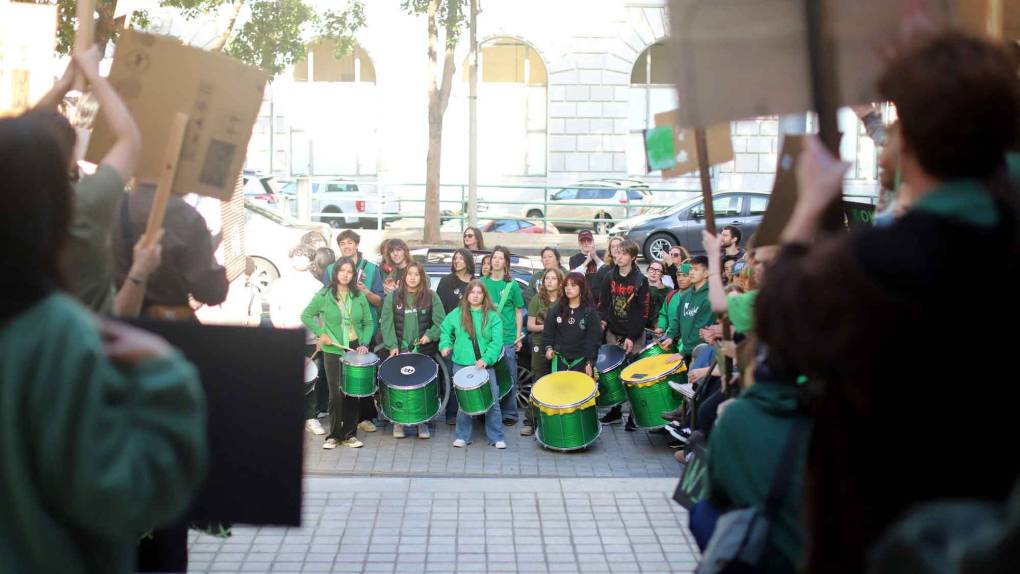
"caption": "Ruth Asawa School of the Arts students, faculty, parents and supporters gathered outside the San Francisco Unified School District building on March 26 to rally in support of two faculty members in the technical theater department who were removed from their positions on March 18.",
"description": null,
"title": "RASOTA_March26_SFUSD_2_2000",
"credit": "Sarah Hotchkiss/KQED",
"status": "inherit",
"altTag": "A crowd of drummers in green on the sidewalk is seen through the silhouetted backs of protesters holding signs",
"isLoading": false,
"fetchFailed": false
},
"arts_13954202": {
"type": "attachments",
"id": "arts_13954202",
"meta": {
"index": "attachments_1716263798",
"site": "arts",
"id": "13954202",
"found": true
},
"parent": 13954195,
"imgSizes": {
"twentyfourteen-full-width": {
"file": "https://cdn.kqed.org/wp-content/uploads/sites/2/2024/03/TFC_136-1038x576.jpg",
"width": 1038,
"mimeType": "image/jpeg",
"height": 576
},
"thumbnail": {
"file": "https://cdn.kqed.org/wp-content/uploads/sites/2/2024/03/TFC_136-160x107.jpg",
"width": 160,
"mimeType": "image/jpeg",
"height": 107
},
"post-thumbnail": {
"file": "https://cdn.kqed.org/wp-content/uploads/sites/2/2024/03/TFC_136-672x372.jpg",
"width": 672,
"mimeType": "image/jpeg",
"height": 372
},
"kqedFullSize": {
"file": "https://cdn.kqed.org/wp-content/uploads/sites/2/2024/03/TFC_136.jpg",
"width": 1920,
"height": 1278
},
"large": {
"file": "https://cdn.kqed.org/wp-content/uploads/sites/2/2024/03/TFC_136-1020x679.jpg",
"width": 1020,
"mimeType": "image/jpeg",
"height": 679
},
"1536x1536": {
"file": "https://cdn.kqed.org/wp-content/uploads/sites/2/2024/03/TFC_136-1536x1022.jpg",
"width": 1536,
"mimeType": "image/jpeg",
"height": 1022
},
"medium": {
"file": "https://cdn.kqed.org/wp-content/uploads/sites/2/2024/03/TFC_136-800x533.jpg",
"width": 800,
"mimeType": "image/jpeg",
"height": 533
},
"medium_large": {
"file": "https://cdn.kqed.org/wp-content/uploads/sites/2/2024/03/TFC_136-768x511.jpg",
"width": 768,
"mimeType": "image/jpeg",
"height": 511
}
},
"publishDate": 1710529539,
"modified": 1710529703,
"caption": "Tommy Bo (Moon Gyet) and Whit K. Lee (Yip/One) in Lloyd Suh’s 'The Far Country' at Berkeley Rep.",
"description": null,
"title": "TFC_136",
"credit": "Kevin Berne",
"status": "inherit",
"altTag": "A Chinese man speaks while determinedly making a fist against a backdrop of black with bright green Chinese lettering",
"isLoading": false,
"fetchFailed": false
},
"arts_13954122": {
"type": "attachments",
"id": "arts_13954122",
"meta": {
"index": "attachments_1716263798",
"site": "arts",
"id": "13954122",
"found": true
},
"parent": 13954121,
"imgSizes": {
"twentyfourteen-full-width": {
"file": "https://cdn.kqed.org/wp-content/uploads/sites/2/2024/03/Larry-the-Musical_Rehearsal-1-1038x576.jpg",
"width": 1038,
"mimeType": "image/jpeg",
"height": 576
},
"thumbnail": {
"file": "https://cdn.kqed.org/wp-content/uploads/sites/2/2024/03/Larry-the-Musical_Rehearsal-1-160x107.jpg",
"width": 160,
"mimeType": "image/jpeg",
"height": 107
},
"post-thumbnail": {
"file": "https://cdn.kqed.org/wp-content/uploads/sites/2/2024/03/Larry-the-Musical_Rehearsal-1-672x372.jpg",
"width": 672,
"mimeType": "image/jpeg",
"height": 372
},
"kqedFullSize": {
"file": "https://cdn.kqed.org/wp-content/uploads/sites/2/2024/03/Larry-the-Musical_Rehearsal-1-scaled.jpg",
"width": 2560,
"height": 1708
},
"2048x2048": {
"file": "https://cdn.kqed.org/wp-content/uploads/sites/2/2024/03/Larry-the-Musical_Rehearsal-1-2048x1367.jpg",
"width": 2048,
"mimeType": "image/jpeg",
"height": 1367
},
"large": {
"file": "https://cdn.kqed.org/wp-content/uploads/sites/2/2024/03/Larry-the-Musical_Rehearsal-1-1020x681.jpg",
"width": 1020,
"mimeType": "image/jpeg",
"height": 681
},
"1536x1536": {
"file": "https://cdn.kqed.org/wp-content/uploads/sites/2/2024/03/Larry-the-Musical_Rehearsal-1-1536x1025.jpg",
"width": 1536,
"mimeType": "image/jpeg",
"height": 1025
},
"full-width": {
"file": "https://cdn.kqed.org/wp-content/uploads/sites/2/2024/03/Larry-the-Musical_Rehearsal-1-1920x1281.jpg",
"width": 1920,
"mimeType": "image/jpeg",
"height": 1281
},
"medium": {
"file": "https://cdn.kqed.org/wp-content/uploads/sites/2/2024/03/Larry-the-Musical_Rehearsal-1-800x534.jpg",
"width": 800,
"mimeType": "image/jpeg",
"height": 534
},
"medium_large": {
"file": "https://cdn.kqed.org/wp-content/uploads/sites/2/2024/03/Larry-the-Musical_Rehearsal-1-768x512.jpg",
"width": 768,
"mimeType": "image/jpeg",
"height": 512
}
},
"publishDate": 1710447781,
"modified": 1710456763,
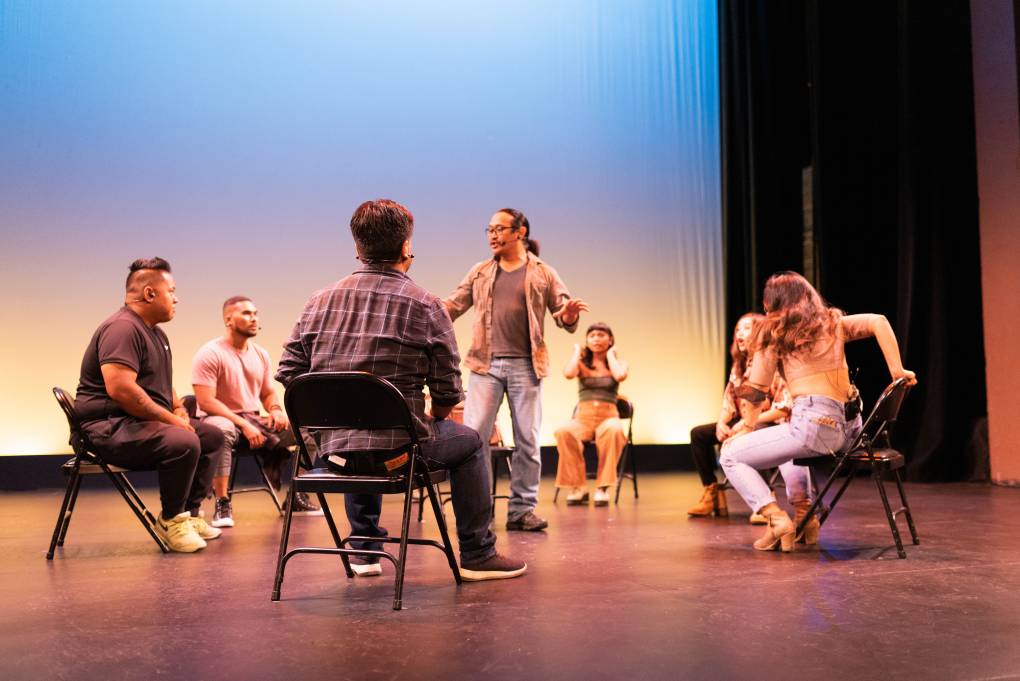
"caption": "Edward Meneses Cablings (center) leads the cast of 'Larry the Musical' as Larry Itliong.",
"description": null,
"title": "Larry the Musical_Rehearsal-1",
"credit": "Joseph Gabriel Ilustrisimo",
"status": "inherit",
"altTag": "A man stands in the middle of circle of people seated in folding charges on a stage.",
"isLoading": false,
"fetchFailed": false
},
"arts_13952930": {
"type": "attachments",
"id": "arts_13952930",
"meta": {
"index": "attachments_1716263798",
"site": "arts",
"id": "13952930",
"found": true
},
"parent": 13952927,
"imgSizes": {
"twentyfourteen-full-width": {
"file": "https://cdn.kqed.org/wp-content/uploads/sites/2/2024/02/GettyImages-1392673497-1038x576.jpg",
"width": 1038,
"mimeType": "image/jpeg",
"height": 576
},
"thumbnail": {
"file": "https://cdn.kqed.org/wp-content/uploads/sites/2/2024/02/GettyImages-1392673497-160x107.jpg",
"width": 160,
"mimeType": "image/jpeg",
"height": 107
},
"post-thumbnail": {
"file": "https://cdn.kqed.org/wp-content/uploads/sites/2/2024/02/GettyImages-1392673497-672x372.jpg",
"width": 672,
"mimeType": "image/jpeg",
"height": 372
},
"kqedFullSize": {
"file": "https://cdn.kqed.org/wp-content/uploads/sites/2/2024/02/GettyImages-1392673497-scaled.jpg",
"width": 2560,
"height": 1707
},
"2048x2048": {
"file": "https://cdn.kqed.org/wp-content/uploads/sites/2/2024/02/GettyImages-1392673497-2048x1365.jpg",
"width": 2048,
"mimeType": "image/jpeg",
"height": 1365
},
"large": {
"file": "https://cdn.kqed.org/wp-content/uploads/sites/2/2024/02/GettyImages-1392673497-1020x680.jpg",
"width": 1020,
"mimeType": "image/jpeg",
"height": 680
},
"1536x1536": {
"file": "https://cdn.kqed.org/wp-content/uploads/sites/2/2024/02/GettyImages-1392673497-1536x1024.jpg",
"width": 1536,
"mimeType": "image/jpeg",
"height": 1024
},
"full-width": {
"file": "https://cdn.kqed.org/wp-content/uploads/sites/2/2024/02/GettyImages-1392673497-1920x1280.jpg",
"width": 1920,
"mimeType": "image/jpeg",
"height": 1280
},
"medium": {
"file": "https://cdn.kqed.org/wp-content/uploads/sites/2/2024/02/GettyImages-1392673497-800x533.jpg",
"width": 800,
"mimeType": "image/jpeg",
"height": 533
},
"medium_large": {
"file": "https://cdn.kqed.org/wp-content/uploads/sites/2/2024/02/GettyImages-1392673497-768x512.jpg",
"width": 768,
"mimeType": "image/jpeg",
"height": 512
}
},
"publishDate": 1708724637,
"modified": 1708724734,
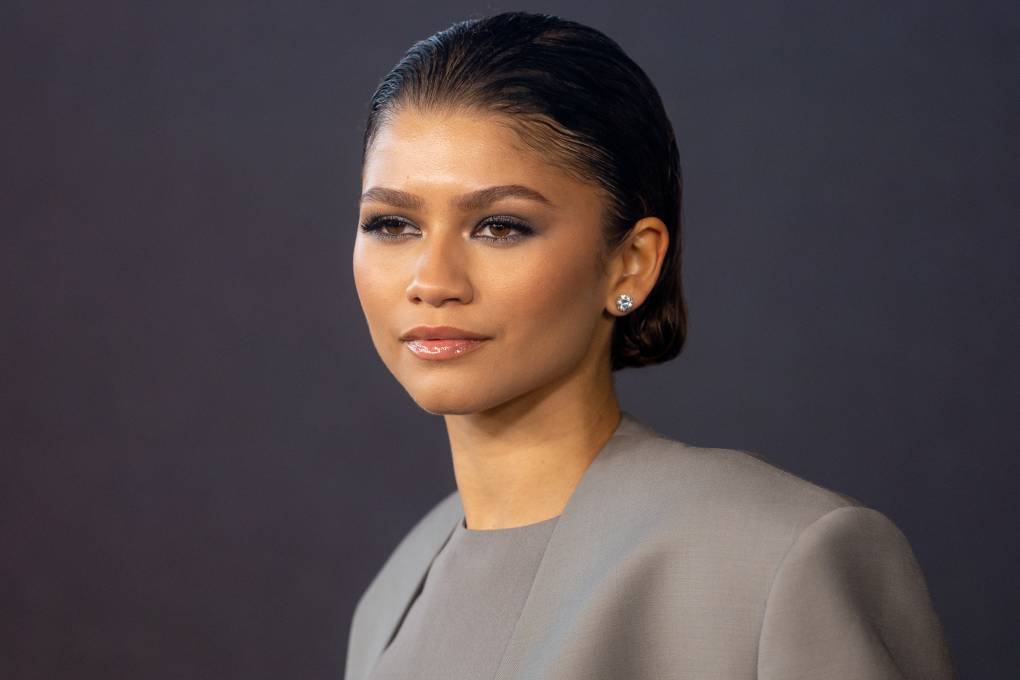
"caption": "Zendaya in Los Angeles in 2022. ",
"description": null,
"title": "Zendaya in Los Angeles in 2022.",
"credit": "Emma McIntyre/ WireImage",
"status": "inherit",
"altTag": "A young Black woman stands before a dark grey wall wearing a light grey suit and diamond earrings.",
"isLoading": false,
"fetchFailed": false
},
"arts_13952877": {
"type": "attachments",
"id": "arts_13952877",
"meta": {
"index": "attachments_1716263798",
"site": "arts",
"id": "13952877",
"found": true
},
"title": "BDA_084",
"publishDate": 1708649147,
"status": "inherit",
"parent": 13952873,
"modified": 1733173067,
"caption": "(L–R) BD Wong (M), Michael Phillis (Timmy), and Gabriel Brown (Sam) in the world premiere of\nKate Attwell’s\n'Big Data' at\nACT.",
"credit": "Kevin Berne",
"altTag": null,
"description": null,
"imgSizes": {
"medium": {
"file": "https://cdn.kqed.org/wp-content/uploads/sites/2/2024/02/BDA_084-800x533.jpg",
"width": 800,
"height": 533,
"mimeType": "image/jpeg"
},
"large": {
"file": "https://cdn.kqed.org/wp-content/uploads/sites/2/2024/02/BDA_084-1020x679.jpg",
"width": 1020,
"height": 679,
"mimeType": "image/jpeg"
},
"thumbnail": {
"file": "https://cdn.kqed.org/wp-content/uploads/sites/2/2024/02/BDA_084-160x107.jpg",
"width": 160,
"height": 107,
"mimeType": "image/jpeg"
},
"medium_large": {
"file": "https://cdn.kqed.org/wp-content/uploads/sites/2/2024/02/BDA_084-768x511.jpg",
"width": 768,
"height": 511,
"mimeType": "image/jpeg"
},
"1536x1536": {
"file": "https://cdn.kqed.org/wp-content/uploads/sites/2/2024/02/BDA_084-1536x1022.jpg",
"width": 1536,
"height": 1022,
"mimeType": "image/jpeg"
},
"post-thumbnail": {
"file": "https://cdn.kqed.org/wp-content/uploads/sites/2/2024/02/BDA_084-672x372.jpg",
"width": 672,
"height": 372,
"mimeType": "image/jpeg"
},
"twentyfourteen-full-width": {
"file": "https://cdn.kqed.org/wp-content/uploads/sites/2/2024/02/BDA_084-1038x576.jpg",
"width": 1038,
"height": 576,
"mimeType": "image/jpeg"
},
"kqedFullSize": {
"file": "https://cdn.kqed.org/wp-content/uploads/sites/2/2024/02/BDA_084.jpg",
"width": 1920,
"height": 1278
}
},
"isLoading": false,
"fetchFailed": false
},
"arts_13952568": {
"type": "attachments",
"id": "arts_13952568",
"meta": {
"index": "attachments_1716263798",
"site": "arts",
"id": "13952568",
"found": true
},
"parent": 13952563,
"imgSizes": {
"twentyfourteen-full-width": {
"file": "https://cdn.kqed.org/wp-content/uploads/sites/2/2024/02/Screen-Shot-2024-02-20-at-9.26.53-AM-1038x576.png",
"width": 1038,
"mimeType": "image/png",
"height": 576
},
"thumbnail": {
"file": "https://cdn.kqed.org/wp-content/uploads/sites/2/2024/02/Screen-Shot-2024-02-20-at-9.26.53-AM-160x99.png",
"width": 160,
"mimeType": "image/png",
"height": 99
},
"post-thumbnail": {
"file": "https://cdn.kqed.org/wp-content/uploads/sites/2/2024/02/Screen-Shot-2024-02-20-at-9.26.53-AM-672x372.png",
"width": 672,
"mimeType": "image/png",
"height": 372
},
"kqedFullSize": {
"file": "https://cdn.kqed.org/wp-content/uploads/sites/2/2024/02/Screen-Shot-2024-02-20-at-9.26.53-AM.png",
"width": 2042,
"height": 1262
},
"large": {
"file": "https://cdn.kqed.org/wp-content/uploads/sites/2/2024/02/Screen-Shot-2024-02-20-at-9.26.53-AM-1020x630.png",
"width": 1020,
"mimeType": "image/png",
"height": 630
},
"1536x1536": {
"file": "https://cdn.kqed.org/wp-content/uploads/sites/2/2024/02/Screen-Shot-2024-02-20-at-9.26.53-AM-1536x949.png",
"width": 1536,
"mimeType": "image/png",
"height": 949
},
"full-width": {
"file": "https://cdn.kqed.org/wp-content/uploads/sites/2/2024/02/Screen-Shot-2024-02-20-at-9.26.53-AM-1920x1187.png",
"width": 1920,
"mimeType": "image/png",
"height": 1187
},
"medium": {
"file": "https://cdn.kqed.org/wp-content/uploads/sites/2/2024/02/Screen-Shot-2024-02-20-at-9.26.53-AM-800x494.png",
"width": 800,
"mimeType": "image/png",
"height": 494
},
"medium_large": {
"file": "https://cdn.kqed.org/wp-content/uploads/sites/2/2024/02/Screen-Shot-2024-02-20-at-9.26.53-AM-768x475.png",
"width": 768,
"mimeType": "image/png",
"height": 475
}
},
"publishDate": 1708450577,
"modified": 1708450916,
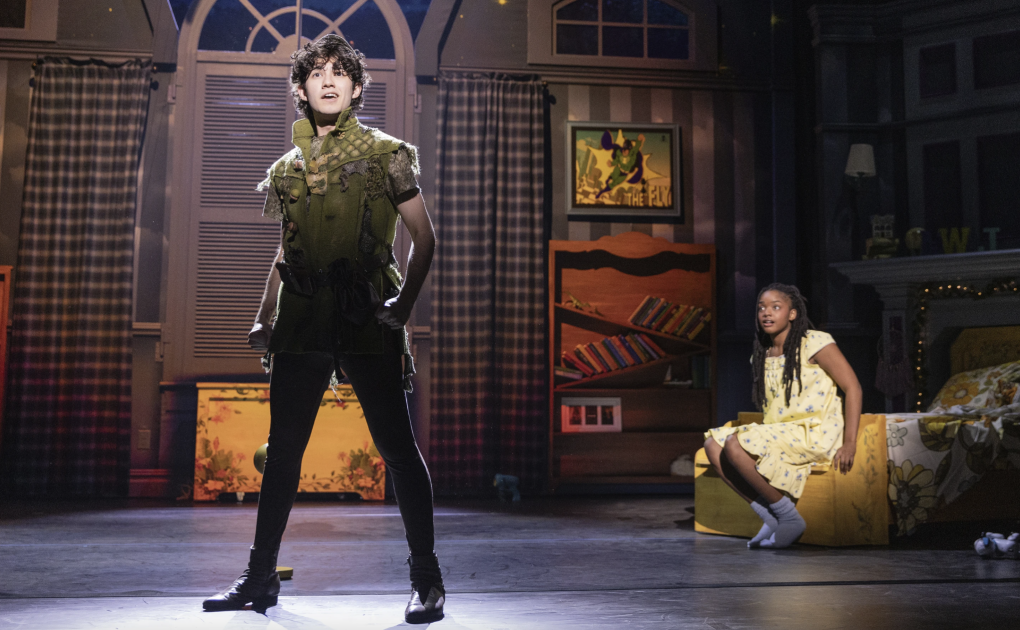
"caption": "Nolan Almeida as Peter Pan and Hawa Kamara as Wendy.",
"description": null,
"title": "Nolan Almeida as Peter Pan and Hawa Kamara as Wendy.",
"credit": "Matthew Murphy/ Bond Theatrical via AP",
"status": "inherit",
"altTag": "A stage set of a bedroom. Peter Pan stands front of stage, a Black girl sits behind, close to the floor.",
"isLoading": false,
"fetchFailed": false
},
"arts_13951913": {
"type": "attachments",
"id": "arts_13951913",
"meta": {
"index": "attachments_1716263798",
"site": "arts",
"id": "13951913",
"found": true
},
"parent": 13951888,
"imgSizes": {
"twentyfourteen-full-width": {
"file": "https://cdn.kqed.org/wp-content/uploads/sites/2/2024/02/SFO_1923_Company_NEWcrop_COVER-1038x576.jpg",
"width": 1038,
"mimeType": "image/jpeg",
"height": 576
},
"thumbnail": {
"file": "https://cdn.kqed.org/wp-content/uploads/sites/2/2024/02/SFO_1923_Company_NEWcrop_COVER-160x90.jpg",
"width": 160,
"mimeType": "image/jpeg",
"height": 90
},
"post-thumbnail": {
"file": "https://cdn.kqed.org/wp-content/uploads/sites/2/2024/02/SFO_1923_Company_NEWcrop_COVER-672x372.jpg",
"width": 672,
"mimeType": "image/jpeg",
"height": 372
},
"kqedFullSize": {
"file": "https://cdn.kqed.org/wp-content/uploads/sites/2/2024/02/SFO_1923_Company_NEWcrop_COVER.jpg",
"width": 1738,
"height": 978
},
"large": {
"file": "https://cdn.kqed.org/wp-content/uploads/sites/2/2024/02/SFO_1923_Company_NEWcrop_COVER-1020x574.jpg",
"width": 1020,
"mimeType": "image/jpeg",
"height": 574
},
"1536x1536": {
"file": "https://cdn.kqed.org/wp-content/uploads/sites/2/2024/02/SFO_1923_Company_NEWcrop_COVER-1536x864.jpg",
"width": 1536,
"mimeType": "image/jpeg",
"height": 864
},
"medium": {
"file": "https://cdn.kqed.org/wp-content/uploads/sites/2/2024/02/SFO_1923_Company_NEWcrop_COVER-800x450.jpg",
"width": 800,
"mimeType": "image/jpeg",
"height": 450
},
"medium_large": {
"file": "https://cdn.kqed.org/wp-content/uploads/sites/2/2024/02/SFO_1923_Company_NEWcrop_COVER-768x432.jpg",
"width": 768,
"mimeType": "image/jpeg",
"height": 432
}
},
"publishDate": 1707424628,
"modified": 1707425026,
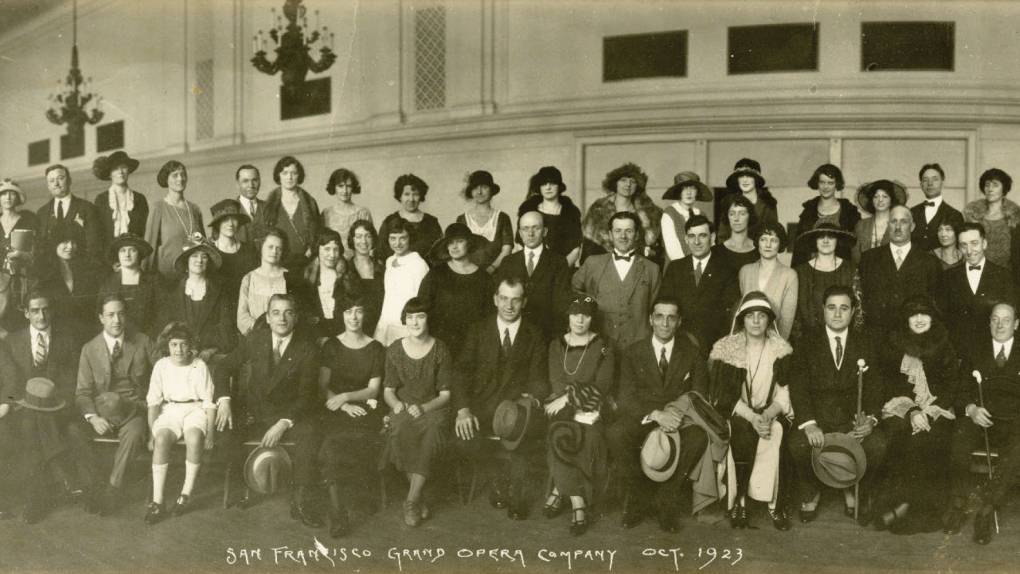
"caption": "A detail from an October 1923 photograph of the San Francisco Opera company in the Civic Auditorium shows performers and family in pre-performance street clothes.",
"description": null,
"title": "SFO_1923_Company_NEWcrop_COVER",
"credit": "San Francisco Opera Archives",
"status": "inherit",
"altTag": "Large sepia-toned group photo of men, women and children on risers inside high-ceilinged space",
"isLoading": false,
"fetchFailed": false
},
"arts_13951868": {
"type": "attachments",
"id": "arts_13951868",
"meta": {
"index": "attachments_1716263798",
"site": "arts",
"id": "13951868",
"found": true
},
"parent": 13951752,
"imgSizes": {
"twentyfourteen-full-width": {
"file": "https://cdn.kqed.org/wp-content/uploads/sites/2/2024/02/color_headshot_2019-1038x576.jpg",
"width": 1038,
"mimeType": "image/jpeg",
"height": 576
},
"thumbnail": {
"file": "https://cdn.kqed.org/wp-content/uploads/sites/2/2024/02/color_headshot_2019-160x107.jpg",
"width": 160,
"mimeType": "image/jpeg",
"height": 107
},
"post-thumbnail": {
"file": "https://cdn.kqed.org/wp-content/uploads/sites/2/2024/02/color_headshot_2019-672x372.jpg",
"width": 672,
"mimeType": "image/jpeg",
"height": 372
},
"kqedFullSize": {
"file": "https://cdn.kqed.org/wp-content/uploads/sites/2/2024/02/color_headshot_2019.jpg",
"width": 1920,
"height": 1280
},
"large": {
"file": "https://cdn.kqed.org/wp-content/uploads/sites/2/2024/02/color_headshot_2019-1020x680.jpg",
"width": 1020,
"mimeType": "image/jpeg",
"height": 680
},
"1536x1536": {
"file": "https://cdn.kqed.org/wp-content/uploads/sites/2/2024/02/color_headshot_2019-1536x1024.jpg",
"width": 1536,
"mimeType": "image/jpeg",
"height": 1024
},
"medium": {
"file": "https://cdn.kqed.org/wp-content/uploads/sites/2/2024/02/color_headshot_2019-800x533.jpg",
"width": 800,
"mimeType": "image/jpeg",
"height": 533
},
"medium_large": {
"file": "https://cdn.kqed.org/wp-content/uploads/sites/2/2024/02/color_headshot_2019-768x512.jpg",
"width": 768,
"mimeType": "image/jpeg",
"height": 512
}
},
"publishDate": 1707418035,
"modified": 1707418887,
"caption": "Shannon R. Davis.",
"description": null,
"title": "color_headshot_2019",
"credit": "Courtesy Shannon R. Davis",
"status": "inherit",
"altTag": null,
"isLoading": false,
"fetchFailed": false
},
"arts_13951273": {
"type": "attachments",
"id": "arts_13951273",
"meta": {
"index": "attachments_1716263798",
"site": "arts",
"id": "13951273",
"found": true
},
"parent": 13951264,
"imgSizes": {
"twentyfourteen-full-width": {
"file": "https://cdn.kqed.org/wp-content/uploads/sites/2/2024/01/Screen-Shot-2024-01-30-at-2.29.43-PM-1038x576.png",
"width": 1038,
"mimeType": "image/png",
"height": 576
},
"thumbnail": {
"file": "https://cdn.kqed.org/wp-content/uploads/sites/2/2024/01/Screen-Shot-2024-01-30-at-2.29.43-PM-160x91.png",
"width": 160,
"mimeType": "image/png",
"height": 91
},
"post-thumbnail": {
"file": "https://cdn.kqed.org/wp-content/uploads/sites/2/2024/01/Screen-Shot-2024-01-30-at-2.29.43-PM-672x372.png",
"width": 672,
"mimeType": "image/png",
"height": 372
},
"kqedFullSize": {
"file": "https://cdn.kqed.org/wp-content/uploads/sites/2/2024/01/Screen-Shot-2024-01-30-at-2.29.43-PM.png",
"width": 1660,
"height": 940
},
"large": {
"file": "https://cdn.kqed.org/wp-content/uploads/sites/2/2024/01/Screen-Shot-2024-01-30-at-2.29.43-PM-1020x578.png",
"width": 1020,
"mimeType": "image/png",
"height": 578
},
"1536x1536": {
"file": "https://cdn.kqed.org/wp-content/uploads/sites/2/2024/01/Screen-Shot-2024-01-30-at-2.29.43-PM-1536x870.png",
"width": 1536,
"mimeType": "image/png",
"height": 870
},
"medium": {
"file": "https://cdn.kqed.org/wp-content/uploads/sites/2/2024/01/Screen-Shot-2024-01-30-at-2.29.43-PM-800x453.png",
"width": 800,
"mimeType": "image/png",
"height": 453
},
"medium_large": {
"file": "https://cdn.kqed.org/wp-content/uploads/sites/2/2024/01/Screen-Shot-2024-01-30-at-2.29.43-PM-768x435.png",
"width": 768,
"mimeType": "image/png",
"height": 435
}
},
"publishDate": 1706653799,
"modified": 1706653853,
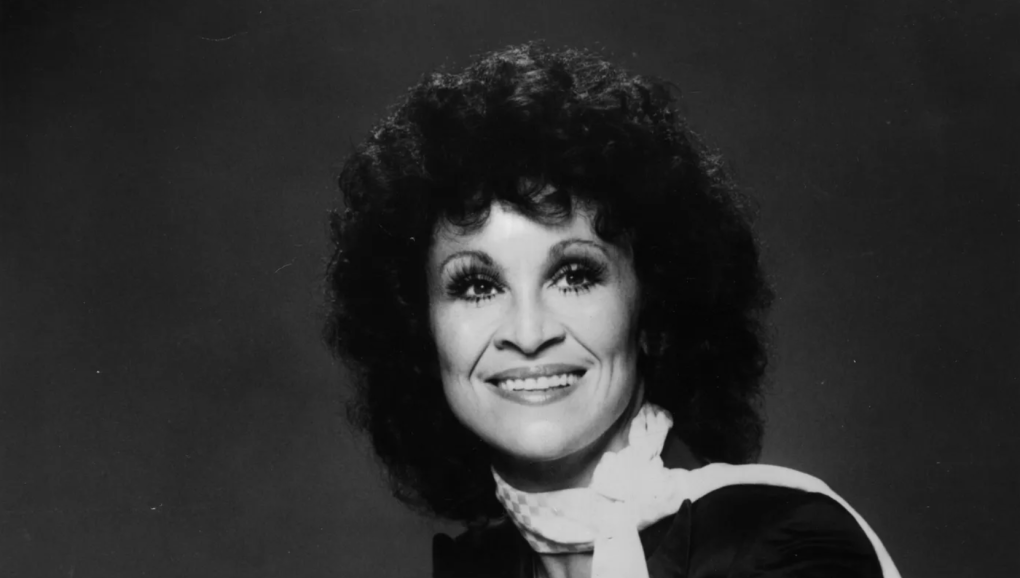
"caption": "Chita Rivera in May 1977.\n",
"description": null,
"title": "Chita Rivera in May 1977.",
"credit": "Evening Standard/ Getty Images",
"status": "inherit",
"altTag": "A smiling woman poses for a photographic portrait.",
"isLoading": false,
"fetchFailed": false
},
"arts_13951158": {
"type": "attachments",
"id": "arts_13951158",
"meta": {
"index": "attachments_1716263798",
"site": "arts",
"id": "13951158",
"found": true
},
"parent": 13951149,
"imgSizes": {
"twentyfourteen-full-width": {
"file": "https://cdn.kqed.org/wp-content/uploads/sites/2/2024/01/4.THE-WIZ.Kyle-Ramar-Freeman-as-Lion-Nichelle-Lewis-as-Dorothy-Phillip-Johnson-Richardson-as-Tinman-Avery-Wilson-as-Scarecrow.-Photo-by-Jeremy-Daniel-c-2023-1536x1025-1-1038x576.jpg",
"width": 1038,
"mimeType": "image/jpeg",
"height": 576
},
"thumbnail": {
"file": "https://cdn.kqed.org/wp-content/uploads/sites/2/2024/01/4.THE-WIZ.Kyle-Ramar-Freeman-as-Lion-Nichelle-Lewis-as-Dorothy-Phillip-Johnson-Richardson-as-Tinman-Avery-Wilson-as-Scarecrow.-Photo-by-Jeremy-Daniel-c-2023-1536x1025-1-160x107.jpg",
"width": 160,
"mimeType": "image/jpeg",
"height": 107
},
"post-thumbnail": {
"file": "https://cdn.kqed.org/wp-content/uploads/sites/2/2024/01/4.THE-WIZ.Kyle-Ramar-Freeman-as-Lion-Nichelle-Lewis-as-Dorothy-Phillip-Johnson-Richardson-as-Tinman-Avery-Wilson-as-Scarecrow.-Photo-by-Jeremy-Daniel-c-2023-1536x1025-1-672x372.jpg",
"width": 672,
"mimeType": "image/jpeg",
"height": 372
},
"kqedFullSize": {
"file": "https://cdn.kqed.org/wp-content/uploads/sites/2/2024/01/4.THE-WIZ.Kyle-Ramar-Freeman-as-Lion-Nichelle-Lewis-as-Dorothy-Phillip-Johnson-Richardson-as-Tinman-Avery-Wilson-as-Scarecrow.-Photo-by-Jeremy-Daniel-c-2023-1536x1025-1.jpg",
"width": 1536,
"height": 1025
},
"large": {
"file": "https://cdn.kqed.org/wp-content/uploads/sites/2/2024/01/4.THE-WIZ.Kyle-Ramar-Freeman-as-Lion-Nichelle-Lewis-as-Dorothy-Phillip-Johnson-Richardson-as-Tinman-Avery-Wilson-as-Scarecrow.-Photo-by-Jeremy-Daniel-c-2023-1536x1025-1-1020x681.jpg",
"width": 1020,
"mimeType": "image/jpeg",
"height": 681
},
"medium": {
"file": "https://cdn.kqed.org/wp-content/uploads/sites/2/2024/01/4.THE-WIZ.Kyle-Ramar-Freeman-as-Lion-Nichelle-Lewis-as-Dorothy-Phillip-Johnson-Richardson-as-Tinman-Avery-Wilson-as-Scarecrow.-Photo-by-Jeremy-Daniel-c-2023-1536x1025-1-800x534.jpg",
"width": 800,
"mimeType": "image/jpeg",
"height": 534
},
"medium_large": {
"file": "https://cdn.kqed.org/wp-content/uploads/sites/2/2024/01/4.THE-WIZ.Kyle-Ramar-Freeman-as-Lion-Nichelle-Lewis-as-Dorothy-Phillip-Johnson-Richardson-as-Tinman-Avery-Wilson-as-Scarecrow.-Photo-by-Jeremy-Daniel-c-2023-1536x1025-1-768x513.jpg",
"width": 768,
"mimeType": "image/jpeg",
"height": 513
}
},
"publishDate": 1706565768,
"modified": 1706566929,
"caption": "Kyle Ramar Freeman as Lion, Nichelle Lewis as Dorothy, Phillip Johnson Richardson as Tinman and Avery Wilson as Scarecrow in 'The Wiz.'",
"description": null,
"title": "4.THE-WIZ.Kyle-Ramar-Freeman-as-Lion-Nichelle-Lewis-as-Dorothy-Phillip-Johnson-Richardson-as-Tinman-Avery-Wilson-as-Scarecrow.-Photo-by-Jeremy-Daniel-c-2023-1536x1025",
"credit": "Jeremy Daniel",
"status": "inherit",
"altTag": null,
"isLoading": false,
"fetchFailed": false
},
"arts_13950969": {
"type": "attachments",
"id": "arts_13950969",
"meta": {
"index": "attachments_1716263798",
"site": "arts",
"id": "13950969",
"found": true
},
"parent": 13950961,
"imgSizes": {
"twentyfourteen-full-width": {
"file": "https://cdn.kqed.org/wp-content/uploads/sites/2/2024/01/KOOZA_04_Contorsion_0969-1038x576.jpeg",
"width": 1038,
"mimeType": "image/jpeg",
"height": 576
},
"thumbnail": {
"file": "https://cdn.kqed.org/wp-content/uploads/sites/2/2024/01/KOOZA_04_Contorsion_0969-160x107.jpeg",
"width": 160,
"mimeType": "image/jpeg",
"height": 107
},
"post-thumbnail": {
"file": "https://cdn.kqed.org/wp-content/uploads/sites/2/2024/01/KOOZA_04_Contorsion_0969-672x372.jpeg",
"width": 672,
"mimeType": "image/jpeg",
"height": 372
},
"kqedFullSize": {
"file": "https://cdn.kqed.org/wp-content/uploads/sites/2/2024/01/KOOZA_04_Contorsion_0969.jpeg",
"width": 1280,
"height": 854
},
"large": {
"file": "https://cdn.kqed.org/wp-content/uploads/sites/2/2024/01/KOOZA_04_Contorsion_0969-1020x681.jpeg",
"width": 1020,
"mimeType": "image/jpeg",
"height": 681
},
"medium": {
"file": "https://cdn.kqed.org/wp-content/uploads/sites/2/2024/01/KOOZA_04_Contorsion_0969-800x534.jpeg",
"width": 800,
"mimeType": "image/jpeg",
"height": 534
},
"medium_large": {
"file": "https://cdn.kqed.org/wp-content/uploads/sites/2/2024/01/KOOZA_04_Contorsion_0969-768x512.jpeg",
"width": 768,
"mimeType": "image/jpeg",
"height": 512
}
},
"publishDate": 1706207468,
"modified": 1706211222,
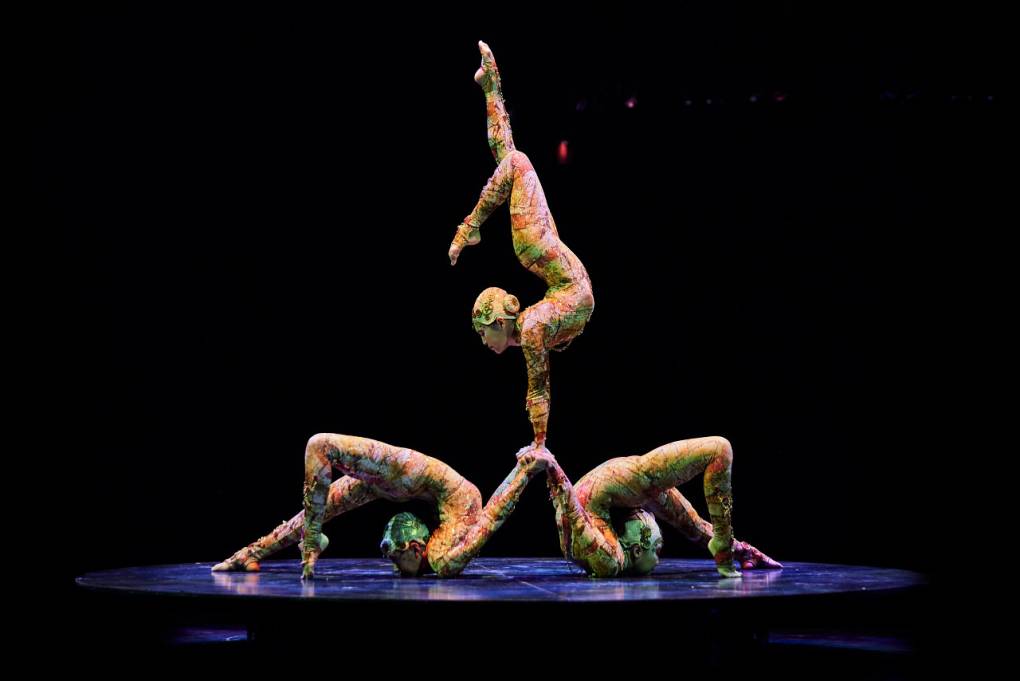
"caption": "Contortionists Sunderiya Jargalsaikhan, Ninjin Altankhuyag and Sender Enkhtur, all of Mongolia, perform in Cirque du Soleil's 'Kooza.'",
"description": null,
"title": "KOOZA_04_Contorsion_0969",
"credit": "Matt Beard & Bernard Letendre",
"status": "inherit",
"altTag": "Three women in leotards contorting their bodies into a balancing pose.",
"isLoading": false,
"fetchFailed": false
},
"arts_13950946": {
"type": "attachments",
"id": "arts_13950946",
"meta": {
"index": "attachments_1716263798",
"site": "arts",
"id": "13950946",
"found": true
},
"parent": 13950943,
"imgSizes": {
"twentyfourteen-full-width": {
"file": "https://cdn.kqed.org/wp-content/uploads/sites/2/2024/01/Fences.6th.1-1023x576.jpg",
"width": 1023,
"mimeType": "image/jpeg",
"height": 576
},
"thumbnail": {
"file": "https://cdn.kqed.org/wp-content/uploads/sites/2/2024/01/Fences.6th.1-160x107.jpg",
"width": 160,
"mimeType": "image/jpeg",
"height": 107
},
"post-thumbnail": {
"file": "https://cdn.kqed.org/wp-content/uploads/sites/2/2024/01/Fences.6th.1-672x372.jpg",
"width": 672,
"mimeType": "image/jpeg",
"height": 372
},
"kqedFullSize": {
"file": "https://cdn.kqed.org/wp-content/uploads/sites/2/2024/01/Fences.6th.1.jpg",
"width": 1023,
"height": 682
},
"large": {
"file": "https://cdn.kqed.org/wp-content/uploads/sites/2/2024/01/Fences.6th.1-1020x680.jpg",
"width": 1020,
"mimeType": "image/jpeg",
"height": 680
},
"medium": {
"file": "https://cdn.kqed.org/wp-content/uploads/sites/2/2024/01/Fences.6th.1-800x533.jpg",
"width": 800,
"mimeType": "image/jpeg",
"height": 533
},
"medium_large": {
"file": "https://cdn.kqed.org/wp-content/uploads/sites/2/2024/01/Fences.6th.1-768x512.jpg",
"width": 768,
"mimeType": "image/jpeg",
"height": 512
}
},
"publishDate": 1706143951,
"modified": 1706144006,
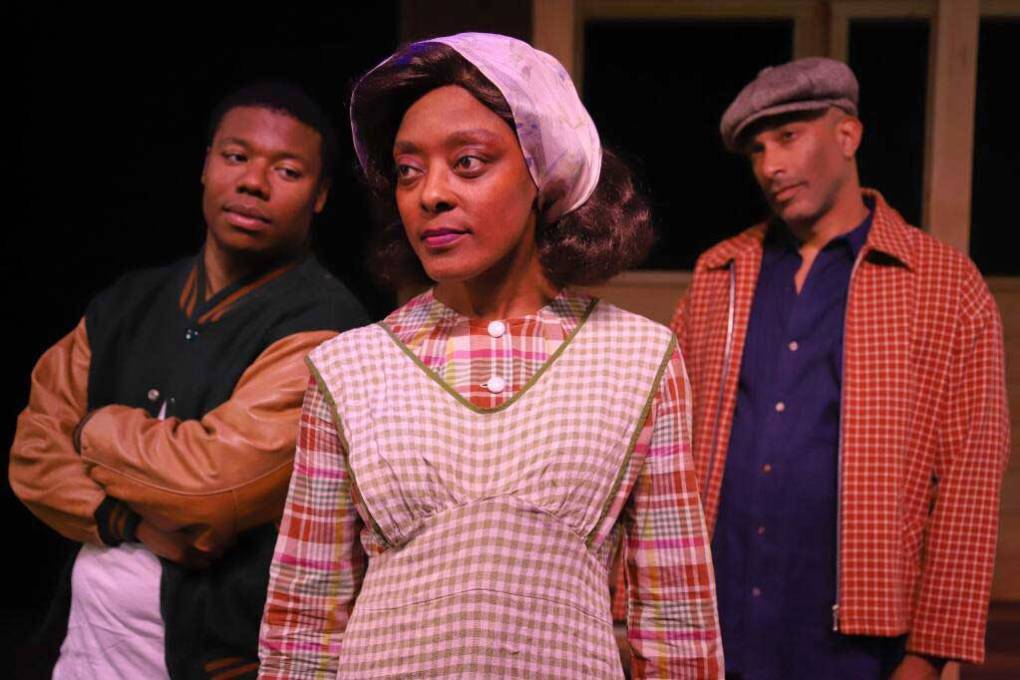
"caption": "(L–R) Mark Anthony as Cory, Val Sinckler as Rose and Keene Hudson as Troy Maxson in Sixth Street Playhouse's production of August Wilson's 'Fences.'",
"description": null,
"title": "Fences.6th.1",
"credit": "Eric Chazankin",
"status": "inherit",
"altTag": null,
"isLoading": false,
"fetchFailed": false
}
},
"audioPlayerReducer": {
"postId": "stream_live",
"isPaused": true,
"isPlaying": false,
"pfsActive": false,
"pledgeModalIsOpen": true,
"playerDrawerIsOpen": false,
"liveAudioPlayStartedAt": 0,
"liveAudioPlayContext": ""
},
"authorsReducer": {
"byline_arts_13952563": {
"type": "authors",
"id": "byline_arts_13952563",
"meta": {
"override": true
},
"slug": "byline_arts_13952563",
"name": "Mark Kennedy, Associated Press",
"isLoading": false
},
"byline_arts_13951264": {
"type": "authors",
"id": "byline_arts_13951264",
"meta": {
"override": true
},
"slug": "byline_arts_13951264",
"name": "Jeff Lunden",
"isLoading": false
},
"shotchkiss": {
"type": "authors",
"id": "61",
"meta": {
"index": "authors_1716337520",
"id": "61",
"found": true
},
"name": "Sarah Hotchkiss",
"firstName": "Sarah",
"lastName": "Hotchkiss",
"slug": "shotchkiss",
"email": "shotchkiss@kqed.org",
"display_author_email": true,
"staff_mastheads": [
"arts"
],
"title": "Senior Editor",
"bio": "Sarah Hotchkiss is a San Francisco \u003ca href=\"http://www.sarahhotchkiss.com\">artist\u003c/a> and arts writer. In 2019, she received the Dorothea & Leo Rabkin Foundation grant for visual art journalism and in 2020 she received a Society of Professional Journalists, Northern California award for excellence in arts and culture reporting.",
"avatar": "https://secure.gravatar.com/avatar/bc662df144b3d27fd8b1b6f1c2a420d34e91e53154d411bb7ad353cc8b6cea8d?s=600&d=blank&r=g",
"twitter": null,
"bluesky": null,
"facebook": null,
"instagram": null,
"linkedin": null,
"sites": [
{
"site": "",
"roles": [
"editor"
]
},
{
"site": "arts",
"roles": [
"Contributor",
"administrator"
]
},
{
"site": "artschool",
"roles": [
"administrator"
]
},
{
"site": "news",
"roles": [
"editor"
]
},
{
"site": "pop",
"roles": [
"administrator"
]
},
{
"site": "bayareabites",
"roles": [
"editor"
]
},
{
"site": "spark",
"roles": [
"editor"
]
},
{
"site": "checkplease",
"roles": [
"editor"
]
}
],
"headData": {
"title": "Sarah Hotchkiss | KQED",
"description": "Senior Editor",
"ogImgSrc": "https://secure.gravatar.com/avatar/bc662df144b3d27fd8b1b6f1c2a420d34e91e53154d411bb7ad353cc8b6cea8d?s=600&d=blank&r=g",
"twImgSrc": "https://secure.gravatar.com/avatar/bc662df144b3d27fd8b1b6f1c2a420d34e91e53154d411bb7ad353cc8b6cea8d?s=600&d=blank&r=g"
},
"isLoading": false,
"link": "/author/shotchkiss"
},
"gmeline": {
"type": "authors",
"id": "185",
"meta": {
"index": "authors_1716337520",
"id": "185",
"found": true
},
"name": "Gabe Meline",
"firstName": "Gabe",
"lastName": "Meline",
"slug": "gmeline",
"email": "gmeline@kqed.org",
"display_author_email": true,
"staff_mastheads": [
"arts"
],
"title": "Senior Editor, KQED Arts & Culture",
"bio": "Gabe Meline entered journalism at age 15 making photocopied zines, and has since earned awards from the Edward R. Murrow Awards, the Society for Professional Journalists, the Online Journalism Awards, the Association of Alternative Newsweeklies and the California Newspaper Publishers Association. Prior to KQED, he was the editor of the \u003cem>North Bay Bohemian\u003c/em> and a touring musician. He lives with his wife and daughter in his hometown of Santa Rosa, CA.",
"avatar": "https://secure.gravatar.com/avatar/5bebe57be0d8bc2dd318934feb47299e2d2d10cba28d09d8d7afb389a2ce2bdd?s=600&d=blank&r=g",
"twitter": null,
"bluesky": null,
"facebook": null,
"instagram": null,
"linkedin": null,
"sites": [
{
"site": "",
"roles": [
"editor"
]
},
{
"site": "arts",
"roles": [
"administrator"
]
},
{
"site": "artschool",
"roles": [
"editor"
]
},
{
"site": "news",
"roles": [
"author"
]
},
{
"site": "pop",
"roles": [
"editor"
]
},
{
"site": "bayareabites",
"roles": [
"editor"
]
},
{
"site": "food",
"roles": [
"editor"
]
},
{
"site": "forum",
"roles": [
"administrator"
]
},
{
"site": "liveblog",
"roles": [
"editor"
]
},
{
"site": "hiphop",
"roles": [
"editor"
]
}
],
"headData": {
"title": "Gabe Meline | KQED",
"description": "Senior Editor, KQED Arts & Culture",
"ogImgSrc": "https://secure.gravatar.com/avatar/5bebe57be0d8bc2dd318934feb47299e2d2d10cba28d09d8d7afb389a2ce2bdd?s=600&d=blank&r=g",
"twImgSrc": "https://secure.gravatar.com/avatar/5bebe57be0d8bc2dd318934feb47299e2d2d10cba28d09d8d7afb389a2ce2bdd?s=600&d=blank&r=g"
},
"isLoading": false,
"link": "/author/gmeline"
},
"ralexandra": {
"type": "authors",
"id": "11242",
"meta": {
"index": "authors_1716337520",
"id": "11242",
"found": true
},
"name": "Rae Alexandra",
"firstName": "Rae",
"lastName": "Alexandra",
"slug": "ralexandra",
"email": "ralexandra@kqed.org",
"display_author_email": true,
"staff_mastheads": [],
"title": "Reporter/Producer",
"bio": "Rae Alexandra is a Reporter/Producer for KQED Arts & Culture, and the creator/author of the \u003ca href=\"https://www.kqed.org/arts/program/rebel-girls-from-bay-area-history\">Rebel Girls From Bay Area History\u003c/a> and \u003ca href=\"https://www.kqed.org/bizarrebayarea\">Bizarre Bay Area\u003c/a> series. Her debut book, \u003ca href=\"https://citylights.com/politics-current-events-history/unsung-heroines35-women-who-changed/\">Unsung Heroines: 35 Women Who Changed the Bay Area\u003c/a> was published by City Lights in March 2026. In 2023, Rae was awarded an SPJ Excellence in Journalism Award for Arts & Culture. Rae was born and raised in Wales and subsequently — even after two decades in Northern California — still uses phrases that regularly baffle her coworkers.",
"avatar": "https://secure.gravatar.com/avatar/edfee8176c80cc0a382b051190f5341997df378a934a5774dcb0977732dfd401?s=600&d=blank&r=g",
"twitter": null,
"bluesky": null,
"facebook": null,
"instagram": null,
"linkedin": null,
"sites": [
{
"site": "arts",
"roles": [
"subscriber"
]
},
{
"site": "news",
"roles": [
"subscriber"
]
},
{
"site": "pop",
"roles": [
"subscriber"
]
},
{
"site": "bayareabites",
"roles": [
"subscriber"
]
},
{
"site": "science",
"roles": [
"subscriber"
]
}
],
"headData": {
"title": "Rae Alexandra | KQED",
"description": "Reporter/Producer",
"ogImgSrc": "https://secure.gravatar.com/avatar/edfee8176c80cc0a382b051190f5341997df378a934a5774dcb0977732dfd401?s=600&d=blank&r=g",
"twImgSrc": "https://secure.gravatar.com/avatar/edfee8176c80cc0a382b051190f5341997df378a934a5774dcb0977732dfd401?s=600&d=blank&r=g"
},
"isLoading": false,
"link": "/author/ralexandra"
},
"aproehl": {
"type": "authors",
"id": "11296",
"meta": {
"index": "authors_1716337520",
"id": "11296",
"found": true
},
"name": "Ariana Proehl",
"firstName": "Ariana",
"lastName": "Proehl",
"slug": "aproehl",
"email": "aproehl@KQED.org",
"display_author_email": true,
"staff_mastheads": [
"news"
],
"title": "Culture Reporter, KQED",
"bio": "Ariana Proehl is a Culture Reporter and Host.",
"avatar": "https://secure.gravatar.com/avatar/c96b24567eb5bb3a4f8bb295ed53e232?s=600&d=blank&r=g",
"twitter": "ArianaProehl",
"facebook": null,
"instagram": null,
"linkedin": null,
"sites": [
{
"site": "arts",
"roles": []
},
{
"site": "news",
"roles": []
},
{
"site": "education",
"roles": []
},
{
"site": "forum",
"roles": []
}
],
"headData": {
"title": "Ariana Proehl | KQED",
"description": "Culture Reporter, KQED",
"ogImgSrc": "https://secure.gravatar.com/avatar/c96b24567eb5bb3a4f8bb295ed53e232?s=600&d=blank&r=g",
"twImgSrc": "https://secure.gravatar.com/avatar/c96b24567eb5bb3a4f8bb295ed53e232?s=600&d=blank&r=g"
},
"isLoading": false,
"link": "/author/aproehl"
},
"ngluckstern": {
"type": "authors",
"id": "11497",
"meta": {
"index": "authors_1716337520",
"id": "11497",
"found": true
},
"name": "Nicole Gluckstern",
"firstName": "Nicole",
"lastName": "Gluckstern",
"slug": "ngluckstern",
"email": "gluckstern.nicole@gmail.com",
"display_author_email": false,
"staff_mastheads": [],
"title": "KQED Contributor",
"bio": null,
"avatar": "https://secure.gravatar.com/avatar/2c3d593194017bfe811a998ad03140909de330b22abebf4889e1a564ce5b3495?s=600&d=blank&r=g",
"twitter": null,
"bluesky": null,
"facebook": null,
"instagram": null,
"linkedin": null,
"sites": [
{
"site": "arts",
"roles": [
"contributor"
]
}
],
"headData": {
"title": "Nicole Gluckstern | KQED",
"description": "KQED Contributor",
"ogImgSrc": "https://secure.gravatar.com/avatar/2c3d593194017bfe811a998ad03140909de330b22abebf4889e1a564ce5b3495?s=600&d=blank&r=g",
"twImgSrc": "https://secure.gravatar.com/avatar/2c3d593194017bfe811a998ad03140909de330b22abebf4889e1a564ce5b3495?s=600&d=blank&r=g"
},
"isLoading": false,
"link": "/author/ngluckstern"
},
"crose": {
"type": "authors",
"id": "11808",
"meta": {
"index": "authors_1716337520",
"id": "11808",
"found": true
},
"name": "Corey Antonio Rose",
"firstName": "Corey Antonio",
"lastName": "Rose",
"slug": "crose",
"email": "crose@kqed.org",
"display_author_email": false,
"staff_mastheads": [],
"title": "KQED Contributor",
"bio": "Corey Antonio Rose (he/him/his) is an audio producer, reporter, and storyteller from Jacksonville, Florida. His work explores the intersections of Public Health, Culture, Education, and Race/Gender Justice. He’s produced content for KQED, The Poynter Institute, University of California Berkeley, and the Commonwealth Club of California.\r\n@CoreyARose",
"avatar": "https://secure.gravatar.com/avatar/83cdeb0866f12c5eb609d6283e9cc8da?s=600&d=blank&r=g",
"twitter": "CoreyARose",
"facebook": null,
"instagram": null,
"linkedin": null,
"sites": [
{
"site": "arts",
"roles": []
}
],
"headData": {
"title": "Corey Antonio Rose | KQED",
"description": "KQED Contributor",
"ogImgSrc": "https://secure.gravatar.com/avatar/83cdeb0866f12c5eb609d6283e9cc8da?s=600&d=blank&r=g",
"twImgSrc": "https://secure.gravatar.com/avatar/83cdeb0866f12c5eb609d6283e9cc8da?s=600&d=blank&r=g"
},
"isLoading": false,
"link": "/author/crose"
},
"djchavez": {
"type": "authors",
"id": "11905",
"meta": {
"index": "authors_1716337520",
"id": "11905",
"found": true
},
"name": "David John Chávez",
"firstName": "David John",
"lastName": "Chávez",
"slug": "djchavez",
"email": "theatrechavez@gmail.com",
"display_author_email": false,
"staff_mastheads": [],
"title": "KQED Contributor",
"bio": "Based in San José, David is a theater critic and reporter who who served as Executive Chair of the American Theatre Critics/Journalists Association (’22-’25), as well as a regular theater contributor to The Mercury News, San Francisco Chronicle, American Theatre Magazine and KQED, among other publications. He is a two-time juror for the Pulitzer Prize for Drama (’22-’23) and a 2020 fellow of the Eugene O'Neill National Critics Institute.",
"avatar": "https://secure.gravatar.com/avatar/5eaa3ce994228213820907c390795c28f7b97165c2b575f46d15fc9273a132b7?s=600&d=blank&r=g",
"twitter": null,
"bluesky": null,
"facebook": "https://www.facebook.com/bydavidjchavez",
"instagram": "https://www.instagram.com/davidjchavez/",
"linkedin": null,
"sites": [
{
"site": "arts",
"roles": [
"contributor"
]
}
],
"headData": {
"title": "David John Chávez | KQED",
"description": "KQED Contributor",
"ogImgSrc": "https://secure.gravatar.com/avatar/5eaa3ce994228213820907c390795c28f7b97165c2b575f46d15fc9273a132b7?s=600&d=blank&r=g",
"twImgSrc": "https://secure.gravatar.com/avatar/5eaa3ce994228213820907c390795c28f7b97165c2b575f46d15fc9273a132b7?s=600&d=blank&r=g"
},
"isLoading": false,
"link": "/author/djchavez"
}
},
"pagesReducer": {
"arts_category_theater": {
"type": "terms",
"id": "arts_967",
"meta": {
"index": "terms_1716263798",
"site": "arts",
"id": "967",
"score": 12.28665
},
"featImg": null,
"name": "Theater",
"description": null,
"taxonomy": "category",
"headData": {
"twImgId": null,
"twTitle": null,
"ogTitle": null,
"ogImgId": null,
"twDescription": null,
"description": null,
"title": "Theater Archives | KQED Arts",
"ogDescription": null
},
"ttid": 985,
"slug": "theater",
"isLoading": false,
"title": "Theater",
"pageMeta": {
"site": "arts",
"WpPageTemplate": "page-topic-editorial",
"currentPage": 10
},
"blocks": [
{
"blockName": "kqed/post-list",
"attrs": {
"layout": "cardArticle2",
"query": "posts/arts?category=theater",
"seeMore": false,
"paginated": true,
"page": 10
}
},
{
"blockName": "kqed/ad"
}
]
}
},
"pfsSessionReducer": {},
"postsReducer": {
"stream_live": {
"type": "live",
"id": "stream_live",
"audioUrl": "https://streams.kqed.org/kqedradio",
"title": "Live Stream",
"excerpt": "Live Stream information currently unavailable.",
"link": "/radio",
"featImg": "",
"label": {
"name": "KQED Live",
"link": "/"
}
},
"stream_kqedNewscast": {
"type": "posts",
"id": "stream_kqedNewscast",
"audioUrl": "https://www.kqed.org/.stream/anon/radio/RDnews/newscast.mp3?_=1",
"title": "KQED Newscast",
"featImg": "",
"label": {
"name": "88.5 FM",
"link": "/"
}
},
"arts_13954827": {
"type": "posts",
"id": "arts_13954827",
"meta": {
"index": "posts_1716263798",
"site": "arts",
"id": "13954827",
"score": null,
"sort": [
1711559743000
]
},
"parent": 0,
"labelTerm": {
"site": "arts"
},
"blocks": [],
"publishDate": 1711559743,
"format": "standard",
"title": "Students Protest Removal of Art Teachers to San Francisco School Board",
"headTitle": "Students Protest Removal of Art Teachers to San Francisco School Board | KQED",
"content": "\u003cp>A large crowd of high school students, parents, faculty and other supporters spilled onto the sidewalk from the entrance of the San Francisco Unified School District building on Tuesday, chanting: “When teachers are under attack, what do we do? Stand up! Fight back!”\u003c/p>\n\u003cp>Dressed in green, \u003ca href=\"https://www.instagram.com/p/C5AUTHquZVM/?img_index=10\">playing drums and cheering loudly\u003c/a> at the honks of passing cars, the \u003ca href=\"https://www.sfusd.edu/school/ruth-asawa-san-francisco-school-arts\">Ruth Asawa School of the Arts\u003c/a> (RASOTA) students had assembled to protest the March 18 removal of two faculty members from the school’s technical theater department.\u003c/p>\n\u003cp>RASOTA, San Francisco’s only dedicated public high school for the arts, admits students based on audition into one of eight subject areas, which include dance, music, visual arts, theatre and technical theater.\u003c/p>\n\u003cp>The teachers in question are Paul Kwapy, the director of the school’s technical theater program, and Annette Ribeiro, an artist in residence for the costume department. Both have taught at RASOTA for over 13 years. \u003c/p>\n\u003cfigure id=\"attachment_13954840\" class=\"wp-caption aligncenter\" style=\"max-width: 2000px\">\u003cimg loading=\"lazy\" decoding=\"async\" src=\"https://cdn.kqed.org/wp-content/uploads/sites/2/2024/03/RASOTA_March26_SFUSD_3_2000.jpg\" alt='Hand holding hand painted \"Got Tech?\" sign' width=\"2000\" height=\"1333\" class=\"size-full wp-image-13954840\" srcset=\"https://cdn.kqed.org/wp-content/uploads/sites/2/2024/03/RASOTA_March26_SFUSD_3_2000.jpg 2000w, https://cdn.kqed.org/wp-content/uploads/sites/2/2024/03/RASOTA_March26_SFUSD_3_2000-800x533.jpg 800w, https://cdn.kqed.org/wp-content/uploads/sites/2/2024/03/RASOTA_March26_SFUSD_3_2000-1020x680.jpg 1020w, https://cdn.kqed.org/wp-content/uploads/sites/2/2024/03/RASOTA_March26_SFUSD_3_2000-160x107.jpg 160w, https://cdn.kqed.org/wp-content/uploads/sites/2/2024/03/RASOTA_March26_SFUSD_3_2000-768x512.jpg 768w, https://cdn.kqed.org/wp-content/uploads/sites/2/2024/03/RASOTA_March26_SFUSD_3_2000-1536x1024.jpg 1536w, https://cdn.kqed.org/wp-content/uploads/sites/2/2024/03/RASOTA_March26_SFUSD_3_2000-1920x1280.jpg 1920w\" sizes=\"(max-width: 2000px) 100vw, 2000px\">\u003cfigcaption class=\"wp-caption-text\">A large crowd gathered outside 555 Franklin St. in San Francisco on the evening of March 26, playing drums and chanting. \u003ccite>(Sarah Hotchkiss/KQED)\u003c/cite>\u003c/figcaption>\u003c/figure>\n\u003cp>In a March 25 letter to the RASOTA community, Principal Stella Kim and Assistant Superintendent Davina Goldwasser wrote, “We cannot comment on any personnel matters and need to maintain confidentiality, we are not able to provide more details, or a specific timeline.” In public statements and letters to the school board, faculty and parents have alluded to the removals as an overreach by the school district in response to the teachers’ disciplinary handling of a safety incident in class.\u003c/p>\n\u003cp>[ad fullwidth]\u003c/p>\n\u003cp>What was clear Tuesday evening was just how much RASOTA technical theater students value their two missing teachers — and how well they had mobilized a show of support from other departments. Over 100 people showed up in advance of the night’s school board meeting.\u003c/p>\n\u003cp>Many remained for the meeting’s open session, during which public comment was limited to remarks about third grade literacy. Some tried to comment about the RASOTA situation regardless.\u003c/p>\n\u003cp>“Our teachers cannot truly focus on our students unless they’re fully protected,” said senior technical theater student Angelina Costa to the school board. “Having the same teachers from year to year, that really makes all the difference.” She was cut off at the one-minute mark.\u003c/p>\n\u003cp>Board President Lainie Motamedi thanked the RASOTA students and supporters for their participation. “I do want to note that the board also receives your emails and reads your emails,” she said. “So you have been heard. And we do take those very, very seriously.”\u003c/p>\n\u003cfigure id=\"attachment_13954838\" class=\"wp-caption aligncenter\" style=\"max-width: 2000px\">\u003cimg loading=\"lazy\" decoding=\"async\" src=\"https://cdn.kqed.org/wp-content/uploads/sites/2/2024/03/RASOTA_March26_SFUSD_1_2000.jpg\" alt='Young people hold a large painted banner reading \"SOTA needs Kwapy and Annette\"' width=\"2000\" height=\"1333\" class=\"size-full wp-image-13954838\" srcset=\"https://cdn.kqed.org/wp-content/uploads/sites/2/2024/03/RASOTA_March26_SFUSD_1_2000.jpg 2000w, https://cdn.kqed.org/wp-content/uploads/sites/2/2024/03/RASOTA_March26_SFUSD_1_2000-800x533.jpg 800w, https://cdn.kqed.org/wp-content/uploads/sites/2/2024/03/RASOTA_March26_SFUSD_1_2000-1020x680.jpg 1020w, https://cdn.kqed.org/wp-content/uploads/sites/2/2024/03/RASOTA_March26_SFUSD_1_2000-160x107.jpg 160w, https://cdn.kqed.org/wp-content/uploads/sites/2/2024/03/RASOTA_March26_SFUSD_1_2000-768x512.jpg 768w, https://cdn.kqed.org/wp-content/uploads/sites/2/2024/03/RASOTA_March26_SFUSD_1_2000-1536x1024.jpg 1536w, https://cdn.kqed.org/wp-content/uploads/sites/2/2024/03/RASOTA_March26_SFUSD_1_2000-1920x1280.jpg 1920w\" sizes=\"(max-width: 2000px) 100vw, 2000px\">\u003cfigcaption class=\"wp-caption-text\">The two faculty members were removed from their positions on March 18; the technical theater students have been on strike ever since. \u003ccite>(Sarah Hotchkiss/KQED)\u003c/cite>\u003c/figcaption>\u003c/figure>\n\u003cp>Despite their limited access to public comment, the RASOTA protestors were able to meet with assistant superintendents, and \u003ca href=\"https://www.instagram.com/p/C5AUTHquZVM/?img_index=2\">report a scheduled meeting\u003c/a> with Superintendent Dr. Matt Wayne to discuss their concerns.\u003c/p>\n\u003cp>Since Monday, some 60 technical theater students at RASOTA have been on strike in protest of the faculty removals.\u003c/p>\n\u003cp>“Tech students will no longer be participating in any shows outside of school hours,” an Instagram account run by the students explains. “Our participation in shows will not resume until our directors Paul Kwapy and Annette Ribeiro return.”\u003c/p>\n\u003cp>[aside postID='news_11978035']That means last weekend’s orchestra performances took place unamplified, without mics or student ushers. Students in the tech department typically run a production’s lighting, sound, sets, costumes and props. The spring semester is a busy one, with dance, music and acting showcases scheduled through the end of the school year. Seniors from the costume department have opted for a photoshoot of their designs in lieu of a regularly scheduled fashion show.\u003c/p>\n\u003cp>\u003c/p>\n\u003cp>“When we treat our educators as expendable, it’s no wonder that we have over 300 vacancies at the beginning of a school year,” Costa had planned to say to the school board. “When we fail to listen to the concerns of our students, it’s no wonder that we are being forced to close schools due to a lack of enrollment.”\u003c/p>\n\n",
"stats": {
"hasVideo": false,
"hasChartOrMap": false,
"hasAudio": false,
"hasPolis": false,
"wordCount": 707,
"hasGoogleForm": false,
"hasGallery": false,
"hasHearkenModule": false,
"iframeSrcs": [],
"paragraphCount": 16
},
"modified": 1711564658,
"excerpt": "More than 100 Ruth Asawa School of the Arts students, faculty and parents protested at the district offices on March 26.",
"headData": {
"twImgId": "",
"twTitle": "",
"ogTitle": "",
"ogImgId": "",
"twDescription": "",
"description": "More than 100 Ruth Asawa School of the Arts students, faculty and parents protested at the district offices on March 26.",
"title": "Students Protest Removal of Art Teachers to San Francisco School Board | KQED",
"ogDescription": "",
"schema": {
"@context": "https://schema.org",
"@type": "Article",
"headline": "Students Protest Removal of Art Teachers to San Francisco School Board",
"datePublished": "2024-03-27T10:15:43-07:00",
"dateModified": "2024-03-27T11:37:38-07:00",
"image": "https://cdn.kqed.org/wp-content/uploads/2020/02/KQED-OG-Image@1x.png"
}
},
"guestAuthors": [],
"slug": "ruth-asawa-school-of-the-arts-protest-teachers-students-rally",
"status": "publish",
"templateType": "standard",
"excludeFromSiteSearch": "Include",
"featuredImageType": "standard",
"sticky": false,
"WpOldSlug": "ruth-asawa-school-for-the-arts-protest-teachers-students-rally",
"articleAge": "0",
"path": "/arts/13954827/ruth-asawa-school-of-the-arts-protest-teachers-students-rally",
"audioTrackLength": null,
"parsedContent": [
{
"type": "contentString",
"content": "\u003cdiv class=\"post-body\">\u003cp>\u003cp>A large crowd of high school students, parents, faculty and other supporters spilled onto the sidewalk from the entrance of the San Francisco Unified School District building on Tuesday, chanting: “When teachers are under attack, what do we do? Stand up! Fight back!”\u003c/p>\n\u003cp>Dressed in green, \u003ca href=\"https://www.instagram.com/p/C5AUTHquZVM/?img_index=10\">playing drums and cheering loudly\u003c/a> at the honks of passing cars, the \u003ca href=\"https://www.sfusd.edu/school/ruth-asawa-san-francisco-school-arts\">Ruth Asawa School of the Arts\u003c/a> (RASOTA) students had assembled to protest the March 18 removal of two faculty members from the school’s technical theater department.\u003c/p>\n\u003cp>RASOTA, San Francisco’s only dedicated public high school for the arts, admits students based on audition into one of eight subject areas, which include dance, music, visual arts, theatre and technical theater.\u003c/p>\n\u003cp>The teachers in question are Paul Kwapy, the director of the school’s technical theater program, and Annette Ribeiro, an artist in residence for the costume department. Both have taught at RASOTA for over 13 years. \u003c/p>\n\u003cfigure id=\"attachment_13954840\" class=\"wp-caption aligncenter\" style=\"max-width: 2000px\">\u003cimg loading=\"lazy\" decoding=\"async\" src=\"https://cdn.kqed.org/wp-content/uploads/sites/2/2024/03/RASOTA_March26_SFUSD_3_2000.jpg\" alt='Hand holding hand painted \"Got Tech?\" sign' width=\"2000\" height=\"1333\" class=\"size-full wp-image-13954840\" srcset=\"https://cdn.kqed.org/wp-content/uploads/sites/2/2024/03/RASOTA_March26_SFUSD_3_2000.jpg 2000w, https://cdn.kqed.org/wp-content/uploads/sites/2/2024/03/RASOTA_March26_SFUSD_3_2000-800x533.jpg 800w, https://cdn.kqed.org/wp-content/uploads/sites/2/2024/03/RASOTA_March26_SFUSD_3_2000-1020x680.jpg 1020w, https://cdn.kqed.org/wp-content/uploads/sites/2/2024/03/RASOTA_March26_SFUSD_3_2000-160x107.jpg 160w, https://cdn.kqed.org/wp-content/uploads/sites/2/2024/03/RASOTA_March26_SFUSD_3_2000-768x512.jpg 768w, https://cdn.kqed.org/wp-content/uploads/sites/2/2024/03/RASOTA_March26_SFUSD_3_2000-1536x1024.jpg 1536w, https://cdn.kqed.org/wp-content/uploads/sites/2/2024/03/RASOTA_March26_SFUSD_3_2000-1920x1280.jpg 1920w\" sizes=\"(max-width: 2000px) 100vw, 2000px\">\u003cfigcaption class=\"wp-caption-text\">A large crowd gathered outside 555 Franklin St. in San Francisco on the evening of March 26, playing drums and chanting. \u003ccite>(Sarah Hotchkiss/KQED)\u003c/cite>\u003c/figcaption>\u003c/figure>\n\u003cp>In a March 25 letter to the RASOTA community, Principal Stella Kim and Assistant Superintendent Davina Goldwasser wrote, “We cannot comment on any personnel matters and need to maintain confidentiality, we are not able to provide more details, or a specific timeline.” In public statements and letters to the school board, faculty and parents have alluded to the removals as an overreach by the school district in response to the teachers’ disciplinary handling of a safety incident in class.\u003c/p>\n\u003cp>\u003c/p>\u003c/div>",
"attributes": {
"named": {},
"numeric": []
}
},
{
"type": "component",
"content": "",
"name": "ad",
"attributes": {
"named": {
"label": "fullwidth"
},
"numeric": [
"fullwidth"
]
}
},
{
"type": "contentString",
"content": "\u003cdiv class=\"post-body\">\u003cp>\u003c/p>\n\u003cp>What was clear Tuesday evening was just how much RASOTA technical theater students value their two missing teachers — and how well they had mobilized a show of support from other departments. Over 100 people showed up in advance of the night’s school board meeting.\u003c/p>\n\u003cp>Many remained for the meeting’s open session, during which public comment was limited to remarks about third grade literacy. Some tried to comment about the RASOTA situation regardless.\u003c/p>\n\u003cp>“Our teachers cannot truly focus on our students unless they’re fully protected,” said senior technical theater student Angelina Costa to the school board. “Having the same teachers from year to year, that really makes all the difference.” She was cut off at the one-minute mark.\u003c/p>\n\u003cp>Board President Lainie Motamedi thanked the RASOTA students and supporters for their participation. “I do want to note that the board also receives your emails and reads your emails,” she said. “So you have been heard. And we do take those very, very seriously.”\u003c/p>\n\u003cfigure id=\"attachment_13954838\" class=\"wp-caption aligncenter\" style=\"max-width: 2000px\">\u003cimg loading=\"lazy\" decoding=\"async\" src=\"https://cdn.kqed.org/wp-content/uploads/sites/2/2024/03/RASOTA_March26_SFUSD_1_2000.jpg\" alt='Young people hold a large painted banner reading \"SOTA needs Kwapy and Annette\"' width=\"2000\" height=\"1333\" class=\"size-full wp-image-13954838\" srcset=\"https://cdn.kqed.org/wp-content/uploads/sites/2/2024/03/RASOTA_March26_SFUSD_1_2000.jpg 2000w, https://cdn.kqed.org/wp-content/uploads/sites/2/2024/03/RASOTA_March26_SFUSD_1_2000-800x533.jpg 800w, https://cdn.kqed.org/wp-content/uploads/sites/2/2024/03/RASOTA_March26_SFUSD_1_2000-1020x680.jpg 1020w, https://cdn.kqed.org/wp-content/uploads/sites/2/2024/03/RASOTA_March26_SFUSD_1_2000-160x107.jpg 160w, https://cdn.kqed.org/wp-content/uploads/sites/2/2024/03/RASOTA_March26_SFUSD_1_2000-768x512.jpg 768w, https://cdn.kqed.org/wp-content/uploads/sites/2/2024/03/RASOTA_March26_SFUSD_1_2000-1536x1024.jpg 1536w, https://cdn.kqed.org/wp-content/uploads/sites/2/2024/03/RASOTA_March26_SFUSD_1_2000-1920x1280.jpg 1920w\" sizes=\"(max-width: 2000px) 100vw, 2000px\">\u003cfigcaption class=\"wp-caption-text\">The two faculty members were removed from their positions on March 18; the technical theater students have been on strike ever since. \u003ccite>(Sarah Hotchkiss/KQED)\u003c/cite>\u003c/figcaption>\u003c/figure>\n\u003cp>Despite their limited access to public comment, the RASOTA protestors were able to meet with assistant superintendents, and \u003ca href=\"https://www.instagram.com/p/C5AUTHquZVM/?img_index=2\">report a scheduled meeting\u003c/a> with Superintendent Dr. Matt Wayne to discuss their concerns.\u003c/p>\n\u003cp>Since Monday, some 60 technical theater students at RASOTA have been on strike in protest of the faculty removals.\u003c/p>\n\u003cp>“Tech students will no longer be participating in any shows outside of school hours,” an Instagram account run by the students explains. “Our participation in shows will not resume until our directors Paul Kwapy and Annette Ribeiro return.”\u003c/p>\n\u003cp>\u003c/p>\u003c/div>",
"attributes": {
"named": {},
"numeric": []
}
},
{
"type": "component",
"content": "",
"name": "aside",
"attributes": {
"named": {
"postid": "news_11978035",
"label": ""
},
"numeric": []
}
},
{
"type": "contentString",
"content": "\u003cdiv class=\"post-body\">\u003cp>That means last weekend’s orchestra performances took place unamplified, without mics or student ushers. Students in the tech department typically run a production’s lighting, sound, sets, costumes and props. The spring semester is a busy one, with dance, music and acting showcases scheduled through the end of the school year. Seniors from the costume department have opted for a photoshoot of their designs in lieu of a regularly scheduled fashion show.\u003c/p>\n\u003cp>\u003c/p>\n\u003cp>“When we treat our educators as expendable, it’s no wonder that we have over 300 vacancies at the beginning of a school year,” Costa had planned to say to the school board. “When we fail to listen to the concerns of our students, it’s no wonder that we are being forced to close schools due to a lack of enrollment.”\u003c/p>\n\n\u003c/div>\u003c/p>",
"attributes": {
"named": {},
"numeric": []
}
}
],
"link": "/arts/13954827/ruth-asawa-school-of-the-arts-protest-teachers-students-rally",
"authors": [
"61"
],
"categories": [
"arts_1",
"arts_235",
"arts_967"
],
"tags": [
"arts_10278",
"arts_22044",
"arts_1146",
"arts_9159",
"arts_22045"
],
"featImg": "arts_13954846",
"label": "arts"
},
"arts_13954195": {
"type": "posts",
"id": "arts_13954195",
"meta": {
"index": "posts_1716263798",
"site": "arts",
"id": "13954195",
"score": null,
"sort": [
1710531551000
]
},
"guestAuthors": [],
"slug": "the-far-country-berkeley-rep-angel-island-review",
"title": "‘The Far Country’ Explores Memory, Family and Angel Island’s Detention Horrors",
"publishDate": 1710531551,
"format": "standard",
"headTitle": "‘The Far Country’ Explores Memory, Family and Angel Island’s Detention Horrors | KQED",
"labelTerm": {
"term": 140,
"site": "arts"
},
"content": "\u003cp>What if walls could talk?\u003c/p>\n\u003cp>In the case of \u003ca href=\"https://www.aiisf.org/poems-and-inscriptions\">Angel Island\u003c/a>, the walls do in fact talk. Imprisoned upon arrival in the early 20th century, Chinese immigrants etched their pain into the walls as poetry that has been preserved for posterity. \u003c/p>\n\u003cp>Berkeley Repertory Theatre’s harrowing production of Lloyd Suh’s Pulitzer-finalist play \u003cem>The Far Country\u003c/em> exists in a world where even the most remote and desolate land carries its own richness. The play’s magic, exposed by Jennifer Chang’s exquisite direction, is that it feels epic in scope, beautifully balanced between struggle, hope and decadent artistry.\u003c/p>\n\u003cfigure id=\"attachment_13954199\" class=\"wp-caption aligncenter\" style=\"max-width: 1920px\">\u003cimg loading=\"lazy\" decoding=\"async\" src=\"https://cdn.kqed.org/wp-content/uploads/sites/2/2024/03/TFC_012.jpg\" alt=\"\" width=\"1920\" height=\"1278\" class=\"size-full wp-image-13954199\" srcset=\"https://cdn.kqed.org/wp-content/uploads/sites/2/2024/03/TFC_012.jpg 1920w, https://cdn.kqed.org/wp-content/uploads/sites/2/2024/03/TFC_012-800x533.jpg 800w, https://cdn.kqed.org/wp-content/uploads/sites/2/2024/03/TFC_012-1020x679.jpg 1020w, https://cdn.kqed.org/wp-content/uploads/sites/2/2024/03/TFC_012-160x107.jpg 160w, https://cdn.kqed.org/wp-content/uploads/sites/2/2024/03/TFC_012-768x511.jpg 768w, https://cdn.kqed.org/wp-content/uploads/sites/2/2024/03/TFC_012-1536x1022.jpg 1536w\" sizes=\"(max-width: 1920px) 100vw, 1920px\">\u003cfigcaption class=\"wp-caption-text\">Feodor Chin (Gee/Three), Aaron Wilton (Harriwell/Interpreter), and Whit K. Lee (Yip/One) in Lloyd Suh’s ‘The Far Country’ at Berkeley Rep. \u003ccite>(Kevin Berne)\u003c/cite>\u003c/figcaption>\u003c/figure>\n\u003cp>The play begins on Angel Island, in the San Francisco Bay, in 1909. It’s 27 years after the implementation of the Chinese Exclusion Act, which severely limited Chinese immigration and brought horrific consequences.\u003c/p>\n\u003cp>Despite the conventional belief that Angel Island functioned similarly to Ellis Island in New York, the island was primarily a detention center, devoid of any romanticism for those yearning to breathe free. It is there where we first meet Gee (Feodor Chin) as he is interrogated by an American inspector (John Keebler), assisted by his interpreter (Aaron Wilton). \u003c/p>\n\u003cp>[ad fullwidth]\u003c/p>\n\u003cp>Gee is charming and funny, stating that his paperwork proving American citizenship was destroyed in the infamous earthquake three years earlier. Through Chin’s commitment to each critical moment, Gee moves from professional groveler to shrewd businessman in the span of the exchange, making one wonder about his authenticity. Is he the soft soul that made the grizzled, white inspector smile, or a soulless heathen only interested in favorable transactions — or both? \u003c/p>\n\u003cfigure id=\"attachment_13954200\" class=\"wp-caption aligncenter\" style=\"max-width: 1920px\">\u003cimg loading=\"lazy\" decoding=\"async\" src=\"https://cdn.kqed.org/wp-content/uploads/sites/2/2024/03/TFC_058.jpg\" alt=\"\" width=\"1920\" height=\"1278\" class=\"size-full wp-image-13954200\" srcset=\"https://cdn.kqed.org/wp-content/uploads/sites/2/2024/03/TFC_058.jpg 1920w, https://cdn.kqed.org/wp-content/uploads/sites/2/2024/03/TFC_058-800x533.jpg 800w, https://cdn.kqed.org/wp-content/uploads/sites/2/2024/03/TFC_058-1020x679.jpg 1020w, https://cdn.kqed.org/wp-content/uploads/sites/2/2024/03/TFC_058-160x107.jpg 160w, https://cdn.kqed.org/wp-content/uploads/sites/2/2024/03/TFC_058-768x511.jpg 768w, https://cdn.kqed.org/wp-content/uploads/sites/2/2024/03/TFC_058-1536x1022.jpg 1536w\" sizes=\"(max-width: 1920px) 100vw, 1920px\">\u003cfigcaption class=\"wp-caption-text\">Tess Lina (Low/Two) and Tommy Bo (Moon Gyet) in Lloyd Suh’s ‘The Far Country’ at Berkeley Rep. \u003ccite>(Kevin Berne)\u003c/cite>\u003c/figcaption>\u003c/figure>\n\u003cp>Having gained passage back to China, Gee makes a tempting offer to a widow, Low (Tess Lina). For a hefty fee, most of which is free labor, Gee will take Low’s son Moon Gyet (Tommy Bo) to the United States, where labor will become currency in the freedom of a new land. In multiple scenes, Lina oscillates between heartache and pragmatism, informed by each calculated thought with a regal smoothness. \u003c/p>\n\u003cp>It’s a pact with the devil, to be sure, and one where admission isn’t guaranteed — even the devil might not be able to crack Angel Island inspectors’ relentless interrogation. Admission for Moon Gyet and the many other Chinese migrants trying to enter the steel doors of America is dependent on the tiniest of details: How many steps were at your house? How about the steps at your school? Are these lies? \u003cem>Don’t they all lie\u003c/em>?\u003c/p>\n\u003cp>Suh’s use of language and translation in these scenes is exceptional, where exacting words in Angel Island’s interrogation room by both inspector and translator spoken within seconds of each other is a balancing act of delicate precision.\u003c/p>\n\u003cfigure id=\"attachment_13954201\" class=\"wp-caption aligncenter\" style=\"max-width: 1920px\">\u003cimg loading=\"lazy\" decoding=\"async\" src=\"https://cdn.kqed.org/wp-content/uploads/sites/2/2024/03/TFC_166.jpg\" alt=\"\" width=\"1920\" height=\"1278\" class=\"size-full wp-image-13954201\" srcset=\"https://cdn.kqed.org/wp-content/uploads/sites/2/2024/03/TFC_166.jpg 1920w, https://cdn.kqed.org/wp-content/uploads/sites/2/2024/03/TFC_166-800x533.jpg 800w, https://cdn.kqed.org/wp-content/uploads/sites/2/2024/03/TFC_166-1020x679.jpg 1020w, https://cdn.kqed.org/wp-content/uploads/sites/2/2024/03/TFC_166-160x107.jpg 160w, https://cdn.kqed.org/wp-content/uploads/sites/2/2024/03/TFC_166-768x511.jpg 768w, https://cdn.kqed.org/wp-content/uploads/sites/2/2024/03/TFC_166-1536x1022.jpg 1536w\" sizes=\"(max-width: 1920px) 100vw, 1920px\">\u003cfigcaption class=\"wp-caption-text\">Tommy Bo (Moon Gyet) and Sharon Shao (Yuen/Four) in Lloyd Suh’s ‘The Far Country’ at Berkeley Rep. \u003ccite>(Kevin Berne)\u003c/cite>\u003c/figcaption>\u003c/figure>\n\u003cp>Bo portrays Moon Gyet’s high-stakes game with steely, sharp resolve. Moon Gyet later makes his own transactional offer to Yuen (Sharon Shao): a marriage proposal that, as it turns out, dismisses her hopes of lifelong love (shaking hands after accepting the offer will do that). Shao plays tender and skittish charm beautifully, serving as an effective foil for Moon Gyet’s scheming.\u003c/p>\n\u003cp>As director, Chang is best when creating savory tableaus, pacing each moment with what’s necessary. In her hands, not only does the drama provide tension, but offers artistry and a clean blend of humor necessary for the audience to take a breath and process.\u003c/p>\n\u003cp>[aside postID='arts_13954121']Moments within Angel Island are loaded with desperate warmth, the details filled with artistic strokes incorporating Minjoo Kim’s wonderful lighting design. It is there where the hope of a people, those whose poetry sustained them within the most soul-crushing circumstances, rises beyond the clay that covers each word. \u003c/p>\n\u003cp>The story’s denouement offers critical lessons with humane subtlety. As one grows and ages, the totality of a life is clearest just before the memory starts to fade. No one will live forever, but a legacy can. Just listen to the walls — they will tell all. \u003c/p>\n\u003cp>\u003cimg loading=\"lazy\" decoding=\"async\" src=\"https://cdn.kqed.org/wp-content/uploads/sites/2/2016/09/Q.Logo_.Break_.jpg\" alt=\"\" width=\"800\" height=\"78\" class=\"aligncenter size-full wp-image-12127869\" srcset=\"https://cdn.kqed.org/wp-content/uploads/sites/2/2016/09/Q.Logo_.Break_.jpg 800w, https://cdn.kqed.org/wp-content/uploads/sites/2/2016/09/Q.Logo_.Break_-400x39.jpg 400w, https://cdn.kqed.org/wp-content/uploads/sites/2/2016/09/Q.Logo_.Break_-768x75.jpg 768w\" sizes=\"(max-width: 800px) 100vw, 800px\">\u003c/p>\n\u003cp>\u003c/p>\n\u003cp>\u003cem>‘The Far Country’ runs now through April 14 at Berkeley Rep. \u003ca href=\"https://www.berkeleyrep.org/shows/the-far-country/\">Details here\u003c/a>. \u003c/em>\u003c/p>\n\n",
"blocks": [],
"excerpt": "At Berkeley Rep, Lloyd Suh’s masterful, Pulitzer-finalist play is set during the Chinese Exclusion Act.",
"status": "publish",
"parent": 0,
"modified": 1729111910,
"stats": {
"hasAudio": false,
"hasVideo": false,
"hasChartOrMap": false,
"iframeSrcs": [],
"hasGoogleForm": false,
"hasGallery": false,
"hasHearkenModule": false,
"hasPolis": false,
"paragraphCount": 17,
"wordCount": 775
},
"headData": {
"title": "Review: ‘The Far Country’ at Berkeley Rep and Angel Island’s Detention Horrors | KQED",
"description": "At Berkeley Rep, Lloyd Suh’s masterful, Pulitzer-finalist play is set during the Chinese Exclusion Act.",
"ogTitle": "",
"ogDescription": "",
"ogImgId": "",
"twTitle": "",
"twDescription": "",
"twImgId": "",
"socialTitle": "Review: ‘The Far Country’ at Berkeley Rep and Angel Island’s Detention Horrors %%page%% %%sep%% KQED",
"schema": {
"@context": "https://schema.org",
"@type": "Article",
"headline": "‘The Far Country’ Explores Memory, Family and Angel Island’s Detention Horrors",
"datePublished": "2024-03-15T12:39:11-07:00",
"dateModified": "2024-10-16T13:51:50-07:00",
"image": "https://cdn.kqed.org/wp-content/uploads/2020/02/KQED-OG-Image@1x.png"
}
},
"sticky": false,
"templateType": "standard",
"featuredImageType": "standard",
"excludeFromSiteSearch": "Include",
"showOnAuthorArchivePages": "No",
"articleAge": "0",
"path": "/arts/13954195/the-far-country-berkeley-rep-angel-island-review",
"audioTrackLength": null,
"parsedContent": [
{
"type": "contentString",
"content": "\u003cdiv class=\"post-body\">\u003cp>\u003cp>What if walls could talk?\u003c/p>\n\u003cp>In the case of \u003ca href=\"https://www.aiisf.org/poems-and-inscriptions\">Angel Island\u003c/a>, the walls do in fact talk. Imprisoned upon arrival in the early 20th century, Chinese immigrants etched their pain into the walls as poetry that has been preserved for posterity. \u003c/p>\n\u003cp>Berkeley Repertory Theatre’s harrowing production of Lloyd Suh’s Pulitzer-finalist play \u003cem>The Far Country\u003c/em> exists in a world where even the most remote and desolate land carries its own richness. The play’s magic, exposed by Jennifer Chang’s exquisite direction, is that it feels epic in scope, beautifully balanced between struggle, hope and decadent artistry.\u003c/p>\n\u003cfigure id=\"attachment_13954199\" class=\"wp-caption aligncenter\" style=\"max-width: 1920px\">\u003cimg loading=\"lazy\" decoding=\"async\" src=\"https://cdn.kqed.org/wp-content/uploads/sites/2/2024/03/TFC_012.jpg\" alt=\"\" width=\"1920\" height=\"1278\" class=\"size-full wp-image-13954199\" srcset=\"https://cdn.kqed.org/wp-content/uploads/sites/2/2024/03/TFC_012.jpg 1920w, https://cdn.kqed.org/wp-content/uploads/sites/2/2024/03/TFC_012-800x533.jpg 800w, https://cdn.kqed.org/wp-content/uploads/sites/2/2024/03/TFC_012-1020x679.jpg 1020w, https://cdn.kqed.org/wp-content/uploads/sites/2/2024/03/TFC_012-160x107.jpg 160w, https://cdn.kqed.org/wp-content/uploads/sites/2/2024/03/TFC_012-768x511.jpg 768w, https://cdn.kqed.org/wp-content/uploads/sites/2/2024/03/TFC_012-1536x1022.jpg 1536w\" sizes=\"(max-width: 1920px) 100vw, 1920px\">\u003cfigcaption class=\"wp-caption-text\">Feodor Chin (Gee/Three), Aaron Wilton (Harriwell/Interpreter), and Whit K. Lee (Yip/One) in Lloyd Suh’s ‘The Far Country’ at Berkeley Rep. \u003ccite>(Kevin Berne)\u003c/cite>\u003c/figcaption>\u003c/figure>\n\u003cp>The play begins on Angel Island, in the San Francisco Bay, in 1909. It’s 27 years after the implementation of the Chinese Exclusion Act, which severely limited Chinese immigration and brought horrific consequences.\u003c/p>\n\u003cp>Despite the conventional belief that Angel Island functioned similarly to Ellis Island in New York, the island was primarily a detention center, devoid of any romanticism for those yearning to breathe free. It is there where we first meet Gee (Feodor Chin) as he is interrogated by an American inspector (John Keebler), assisted by his interpreter (Aaron Wilton). \u003c/p>\n\u003cp>\u003c/p>\u003c/div>",
"attributes": {
"named": {},
"numeric": []
}
},
{
"type": "component",
"content": "",
"name": "ad",
"attributes": {
"named": {
"label": "fullwidth"
},
"numeric": [
"fullwidth"
]
}
},
{
"type": "contentString",
"content": "\u003cdiv class=\"post-body\">\u003cp>\u003c/p>\n\u003cp>Gee is charming and funny, stating that his paperwork proving American citizenship was destroyed in the infamous earthquake three years earlier. Through Chin’s commitment to each critical moment, Gee moves from professional groveler to shrewd businessman in the span of the exchange, making one wonder about his authenticity. Is he the soft soul that made the grizzled, white inspector smile, or a soulless heathen only interested in favorable transactions — or both? \u003c/p>\n\u003cfigure id=\"attachment_13954200\" class=\"wp-caption aligncenter\" style=\"max-width: 1920px\">\u003cimg loading=\"lazy\" decoding=\"async\" src=\"https://cdn.kqed.org/wp-content/uploads/sites/2/2024/03/TFC_058.jpg\" alt=\"\" width=\"1920\" height=\"1278\" class=\"size-full wp-image-13954200\" srcset=\"https://cdn.kqed.org/wp-content/uploads/sites/2/2024/03/TFC_058.jpg 1920w, https://cdn.kqed.org/wp-content/uploads/sites/2/2024/03/TFC_058-800x533.jpg 800w, https://cdn.kqed.org/wp-content/uploads/sites/2/2024/03/TFC_058-1020x679.jpg 1020w, https://cdn.kqed.org/wp-content/uploads/sites/2/2024/03/TFC_058-160x107.jpg 160w, https://cdn.kqed.org/wp-content/uploads/sites/2/2024/03/TFC_058-768x511.jpg 768w, https://cdn.kqed.org/wp-content/uploads/sites/2/2024/03/TFC_058-1536x1022.jpg 1536w\" sizes=\"(max-width: 1920px) 100vw, 1920px\">\u003cfigcaption class=\"wp-caption-text\">Tess Lina (Low/Two) and Tommy Bo (Moon Gyet) in Lloyd Suh’s ‘The Far Country’ at Berkeley Rep. \u003ccite>(Kevin Berne)\u003c/cite>\u003c/figcaption>\u003c/figure>\n\u003cp>Having gained passage back to China, Gee makes a tempting offer to a widow, Low (Tess Lina). For a hefty fee, most of which is free labor, Gee will take Low’s son Moon Gyet (Tommy Bo) to the United States, where labor will become currency in the freedom of a new land. In multiple scenes, Lina oscillates between heartache and pragmatism, informed by each calculated thought with a regal smoothness. \u003c/p>\n\u003cp>It’s a pact with the devil, to be sure, and one where admission isn’t guaranteed — even the devil might not be able to crack Angel Island inspectors’ relentless interrogation. Admission for Moon Gyet and the many other Chinese migrants trying to enter the steel doors of America is dependent on the tiniest of details: How many steps were at your house? How about the steps at your school? Are these lies? \u003cem>Don’t they all lie\u003c/em>?\u003c/p>\n\u003cp>Suh’s use of language and translation in these scenes is exceptional, where exacting words in Angel Island’s interrogation room by both inspector and translator spoken within seconds of each other is a balancing act of delicate precision.\u003c/p>\n\u003cfigure id=\"attachment_13954201\" class=\"wp-caption aligncenter\" style=\"max-width: 1920px\">\u003cimg loading=\"lazy\" decoding=\"async\" src=\"https://cdn.kqed.org/wp-content/uploads/sites/2/2024/03/TFC_166.jpg\" alt=\"\" width=\"1920\" height=\"1278\" class=\"size-full wp-image-13954201\" srcset=\"https://cdn.kqed.org/wp-content/uploads/sites/2/2024/03/TFC_166.jpg 1920w, https://cdn.kqed.org/wp-content/uploads/sites/2/2024/03/TFC_166-800x533.jpg 800w, https://cdn.kqed.org/wp-content/uploads/sites/2/2024/03/TFC_166-1020x679.jpg 1020w, https://cdn.kqed.org/wp-content/uploads/sites/2/2024/03/TFC_166-160x107.jpg 160w, https://cdn.kqed.org/wp-content/uploads/sites/2/2024/03/TFC_166-768x511.jpg 768w, https://cdn.kqed.org/wp-content/uploads/sites/2/2024/03/TFC_166-1536x1022.jpg 1536w\" sizes=\"(max-width: 1920px) 100vw, 1920px\">\u003cfigcaption class=\"wp-caption-text\">Tommy Bo (Moon Gyet) and Sharon Shao (Yuen/Four) in Lloyd Suh’s ‘The Far Country’ at Berkeley Rep. \u003ccite>(Kevin Berne)\u003c/cite>\u003c/figcaption>\u003c/figure>\n\u003cp>Bo portrays Moon Gyet’s high-stakes game with steely, sharp resolve. Moon Gyet later makes his own transactional offer to Yuen (Sharon Shao): a marriage proposal that, as it turns out, dismisses her hopes of lifelong love (shaking hands after accepting the offer will do that). Shao plays tender and skittish charm beautifully, serving as an effective foil for Moon Gyet’s scheming.\u003c/p>\n\u003cp>As director, Chang is best when creating savory tableaus, pacing each moment with what’s necessary. In her hands, not only does the drama provide tension, but offers artistry and a clean blend of humor necessary for the audience to take a breath and process.\u003c/p>\n\u003cp>\u003c/p>\u003c/div>",
"attributes": {
"named": {},
"numeric": []
}
},
{
"type": "component",
"content": "",
"name": "aside",
"attributes": {
"named": {
"postid": "arts_13954121",
"label": ""
},
"numeric": []
}
},
{
"type": "contentString",
"content": "\u003cdiv class=\"post-body\">\u003cp>Moments within Angel Island are loaded with desperate warmth, the details filled with artistic strokes incorporating Minjoo Kim’s wonderful lighting design. It is there where the hope of a people, those whose poetry sustained them within the most soul-crushing circumstances, rises beyond the clay that covers each word. \u003c/p>\n\u003cp>The story’s denouement offers critical lessons with humane subtlety. As one grows and ages, the totality of a life is clearest just before the memory starts to fade. No one will live forever, but a legacy can. Just listen to the walls — they will tell all. \u003c/p>\n\u003cp>\u003cimg loading=\"lazy\" decoding=\"async\" src=\"https://cdn.kqed.org/wp-content/uploads/sites/2/2016/09/Q.Logo_.Break_.jpg\" alt=\"\" width=\"800\" height=\"78\" class=\"aligncenter size-full wp-image-12127869\" srcset=\"https://cdn.kqed.org/wp-content/uploads/sites/2/2016/09/Q.Logo_.Break_.jpg 800w, https://cdn.kqed.org/wp-content/uploads/sites/2/2016/09/Q.Logo_.Break_-400x39.jpg 400w, https://cdn.kqed.org/wp-content/uploads/sites/2/2016/09/Q.Logo_.Break_-768x75.jpg 768w\" sizes=\"(max-width: 800px) 100vw, 800px\">\u003c/p>\n\u003cp>\u003c/p>\n\u003cp>\u003cem>‘The Far Country’ runs now through April 14 at Berkeley Rep. \u003ca href=\"https://www.berkeleyrep.org/shows/the-far-country/\">Details here\u003c/a>. \u003c/em>\u003c/p>\n\n\u003c/div>\u003c/p>",
"attributes": {
"named": {},
"numeric": []
}
}
],
"link": "/arts/13954195/the-far-country-berkeley-rep-angel-island-review",
"authors": [
"11905"
],
"programs": [
"arts_140"
],
"categories": [
"arts_1",
"arts_22352",
"arts_967"
],
"tags": [
"arts_22018",
"arts_1270",
"arts_1237",
"arts_1773",
"arts_585"
],
"featImg": "arts_13954202",
"label": "arts_140"
},
"arts_13954121": {
"type": "posts",
"id": "arts_13954121",
"meta": {
"index": "posts_1716263798",
"site": "arts",
"id": "13954121",
"score": null,
"sort": [
1710518401000
]
},
"guestAuthors": [],
"slug": "larry-the-musical-brava-theater-larry-itliong-filipino-labor-organizer",
"title": "A Labor Leader’s Legacy Is Set in Song With ‘Larry the Musical’",
"publishDate": 1710518401,
"format": "standard",
"headTitle": "A Labor Leader’s Legacy Is Set in Song With ‘Larry the Musical’ | KQED",
"labelTerm": {
"term": 140,
"site": "arts"
},
"content": "\u003cp>In California labor history lessons, the names Cesar Chavez and Dolores Huerta are well known. Less taught, however, is the name of Larry Itliong, an influential Filipino labor organizer. A new stage production called \u003ca href=\"https://www.larrythemusical.com/\">\u003ci>Larry the Musical: An American Journey\u003c/i>\u003c/a>, which begins previews on March 16 and opens March 23 at the Brava Theater in San Francisco, hopes to change that.\u003c/p>\n\u003cp>“You must talk about the Filipino contribution when you talk about the farm labor movement,” says Gayle Romasanta, writer and executive producer of \u003ci>Larry the Musical\u003c/i> and co-author of the book \u003ca href=\"https://www.bridgedelta.com/purchase/journey-for-justice-the-life-of-larry-itliong\">\u003ci>Journey for Justice: The Life of Larry Itliong\u003c/i>\u003c/a> with late historian Dawn Mabalon.\u003c/p>\n\u003cfigure id=\"attachment_13954123\" class=\"wp-caption aligncenter\" style=\"max-width: 800px\">\u003cimg loading=\"lazy\" decoding=\"async\" class=\"size-medium wp-image-13954123\" src=\"https://cdn.kqed.org/wp-content/uploads/sites/2/2024/03/Larry-the-Musical_Rehearsal_Cast-on-Stage-2-800x534.jpg\" alt=\"Women in casual clothes sit in folder changes in a row.\" width=\"800\" height=\"534\" srcset=\"https://cdn.kqed.org/wp-content/uploads/sites/2/2024/03/Larry-the-Musical_Rehearsal_Cast-on-Stage-2-800x534.jpg 800w, https://cdn.kqed.org/wp-content/uploads/sites/2/2024/03/Larry-the-Musical_Rehearsal_Cast-on-Stage-2-1020x681.jpg 1020w, https://cdn.kqed.org/wp-content/uploads/sites/2/2024/03/Larry-the-Musical_Rehearsal_Cast-on-Stage-2-160x107.jpg 160w, https://cdn.kqed.org/wp-content/uploads/sites/2/2024/03/Larry-the-Musical_Rehearsal_Cast-on-Stage-2-768x512.jpg 768w, https://cdn.kqed.org/wp-content/uploads/sites/2/2024/03/Larry-the-Musical_Rehearsal_Cast-on-Stage-2-1536x1025.jpg 1536w, https://cdn.kqed.org/wp-content/uploads/sites/2/2024/03/Larry-the-Musical_Rehearsal_Cast-on-Stage-2-2048x1367.jpg 2048w, https://cdn.kqed.org/wp-content/uploads/sites/2/2024/03/Larry-the-Musical_Rehearsal_Cast-on-Stage-2-1920x1281.jpg 1920w\" sizes=\"(max-width: 800px) 100vw, 800px\">\u003cfigcaption class=\"wp-caption-text\">Cast members in ‘Larry the Musical’ in a scene for the song ‘Train.’ \u003ccite>(Joseph Gabriel Ilustrisimo)\u003c/cite>\u003c/figcaption>\u003c/figure>\n\u003cp>Most notably, Romasanta says, you must talk about how Itliong and Filipino farm workers initiated the \u003ca href=\"https://www.nps.gov/articles/000/workers-united-the-delano-grape-strike-and-boycott.htm\">Delano Grape Strike\u003c/a> in 1965, which led to the launch of the United Farm Workers coalition, and brought Filipino workers, led by Itliong, and Mexican farm workers, led by Chavez and Huerta, together. But Romasanta says that activism by Filipino Americans during that time – and decades leading up to the strike – was often overlooked, both then and now.\u003c/p>\n\u003cp>“There was an anti-Asian sentiment in the media,” Romasanta says of coalition coverage. “It was a global campaign, but you didn’t see us. And in many of the murals today, you don’t see us.”\u003c/p>\n\u003cp>After publishing \u003ci>Journey for Justice\u003c/i> in 2018, Romasanta knew she wanted to bring Itliong’s story to life in other ways. After attending the Bay Area premiere of \u003ci>Allegiance\u003c/i>, a musical inspired by the life of Japanese American actor George Takei, she was spurred to action.\u003c/p>\n\u003cp>[ad fullwidth]\u003c/p>\n\u003cp>“Most of the actors were Filipino, playing Japanese,” Romasanta says. “And we were thinking like, well, when is it our time? When can we actually do Broadway, but put our story in it? Larry Itliong’s story and the Filipino American community’s story.”\u003c/p>\n\u003cp>One of the Filipino actors in \u003ci>Allegiance\u003c/i> was \u003ca href=\"https://www.bryanpangilinan.com/\">Bryan Pangilinan\u003c/a>, a veteran in the Bay Area musical theater scene and a friend of Romasanta. Together, they started writing and composing the musical just before the pandemic hit. Now the show is hitting the stage, with a groundbreaking all-Filipino cast and creative team.\u003c/p>\n\u003cfigure id=\"attachment_13954124\" class=\"wp-caption aligncenter\" style=\"max-width: 800px\">\u003cimg loading=\"lazy\" decoding=\"async\" class=\"size-medium wp-image-13954124\" src=\"https://cdn.kqed.org/wp-content/uploads/sites/2/2024/03/Larry-the-Musical_Cast-Team-On-Stage-800x479.jpg\" alt=\"A group photos of many Filipino men and women on a stage.\" width=\"800\" height=\"479\" srcset=\"https://cdn.kqed.org/wp-content/uploads/sites/2/2024/03/Larry-the-Musical_Cast-Team-On-Stage-800x479.jpg 800w, https://cdn.kqed.org/wp-content/uploads/sites/2/2024/03/Larry-the-Musical_Cast-Team-On-Stage-1020x610.jpg 1020w, https://cdn.kqed.org/wp-content/uploads/sites/2/2024/03/Larry-the-Musical_Cast-Team-On-Stage-160x96.jpg 160w, https://cdn.kqed.org/wp-content/uploads/sites/2/2024/03/Larry-the-Musical_Cast-Team-On-Stage-768x459.jpg 768w, https://cdn.kqed.org/wp-content/uploads/sites/2/2024/03/Larry-the-Musical_Cast-Team-On-Stage-1536x919.jpg 1536w, https://cdn.kqed.org/wp-content/uploads/sites/2/2024/03/Larry-the-Musical_Cast-Team-On-Stage-1920x1148.jpg 1920w, https://cdn.kqed.org/wp-content/uploads/sites/2/2024/03/Larry-the-Musical_Cast-Team-On-Stage.jpg 1956w\" sizes=\"(max-width: 800px) 100vw, 800px\">\u003cfigcaption class=\"wp-caption-text\">Cast and creative team members for ‘Larry the Musical’ on stage at the Brava Theater in San Francisco. \u003ccite>(Joseph Gabriel Ilustrisimo)\u003c/cite>\u003c/figcaption>\u003c/figure>\n\u003cp>The musical includes songs with titles like “Watsonville & Stockton,” about \u003ca href=\"https://calendar.eji.org/racial-injustice/jan/19\">the violence Filipinos faced\u003c/a> in the 1930s at the hands of white mobs, and “Solidarity Forever, Unity Always,” about the challenge of overcoming efforts from white growers to divide and conquer Filipino and Mexican farm workers fighting for workers’ rights.\u003c/p>\n\u003cp>“I honestly have to pinch myself a lot. Sometimes I can’t believe that we’re doing this,” says Pangilinan, who also executive produced alongside Romasanta. “I’m so excited to have the opportunity to infuse [song elements] that we grew up with and be unapologetically Filipino in the music.”\u003c/p>\n\u003cp>To co-compose the music, Pangilinan collaborated with another longtime Filipino artist in the Bay Area theater scene, \u003ca href=\"https://www.seankana.com/\">Sean Kana\u003c/a>. Kana, who also serves as music director, says audiences can look forward to a lot of musical styles reflecting Filipino culture.\u003c/p>\n\u003cp>“You’re going to hear pop, you’re going to hear jazz, you’re going to hear folk, you’re going to hear tango,” says Kana. “Which is all reminiscent of Filipino pop music. It’s a big mixtape.”\u003c/p>\n\u003cp>Hand in hand, the mixtape-style musical delivers a timely message about the fight for equal rights and the hard work of building solidarity to grow a movement for social change.\u003c/p>\n\u003cp>\u003cimg loading=\"lazy\" decoding=\"async\" class=\"aligncenter size-full wp-image-12127869\" src=\"https://cdn.kqed.org/wp-content/uploads/sites/2/2016/09/Q.Logo_.Break_.jpg\" alt=\"\" width=\"800\" height=\"78\" srcset=\"https://cdn.kqed.org/wp-content/uploads/sites/2/2016/09/Q.Logo_.Break_.jpg 800w, https://cdn.kqed.org/wp-content/uploads/sites/2/2016/09/Q.Logo_.Break_-400x39.jpg 400w, https://cdn.kqed.org/wp-content/uploads/sites/2/2016/09/Q.Logo_.Break_-768x75.jpg 768w\" sizes=\"(max-width: 800px) 100vw, 800px\">\u003c/p>\n\u003cp>\u003c/p>\n\u003cp>\u003ci>‘Larry the Musical: An American Journey’ runs from March 15 to April 14 at the Brava Theater (2781 24th St., San Francisco). \u003ca href=\"https://www.larrythemusical.com/\">Find tickets and more information here\u003c/a>.\u003c/i>\u003c/p>\n\n",
"blocks": [],
"excerpt": "The new musical at Brava Theater, with an all-Filipino cast and creative team, honors organizer Larry Itliong.",
"status": "publish",
"parent": 0,
"modified": 1726700545,
"stats": {
"hasAudio": false,
"hasVideo": false,
"hasChartOrMap": false,
"iframeSrcs": [],
"hasGoogleForm": false,
"hasGallery": false,
"hasHearkenModule": false,
"hasPolis": false,
"paragraphCount": 16,
"wordCount": 685
},
"headData": {
"title": "‘Larry the Musical’ Sets a Labor Leader’s Story to Song | KQED",
"description": "The new musical at Brava Theater, with an all-Filipino cast and creative team, honors organizer Larry Itliong.",
"ogTitle": "A Labor Leader’s Legacy Is Set in Song With ‘Larry the Musical’",
"ogDescription": "",
"ogImgId": "",
"twTitle": "A Labor Leader’s Legacy Is Set in Song With ‘Larry the Musical’",
"twDescription": "",
"twImgId": "",
"socialTitle": "‘Larry the Musical’ Sets a Labor Leader’s Story to Song %%page%% %%sep%% KQED",
"schema": {
"@context": "https://schema.org",
"@type": "Article",
"headline": "A Labor Leader’s Legacy Is Set in Song With ‘Larry the Musical’",
"datePublished": "2024-03-15T09:00:01-07:00",
"dateModified": "2024-09-18T16:02:25-07:00",
"image": "https://cdn.kqed.org/wp-content/uploads/2020/02/KQED-OG-Image@1x.png"
}
},
"audioUrl": "https://traffic.omny.fm/d/clips/0af137ef-751e-4b19-a055-aaef00d2d578/ffca7e9f-6831-41c5-bcaf-aaef00f5a073/069f329f-1876-4340-b7d1-b1340101f5d3/audio.mp3",
"sticky": false,
"templateType": "standard",
"featuredImageType": "standard",
"excludeFromSiteSearch": "Include",
"articleAge": "0",
"path": "/arts/13954121/larry-the-musical-brava-theater-larry-itliong-filipino-labor-organizer",
"audioTrackLength": null,
"parsedContent": [
{
"type": "contentString",
"content": "\u003cdiv class=\"post-body\">\u003cp>\u003cp>In California labor history lessons, the names Cesar Chavez and Dolores Huerta are well known. Less taught, however, is the name of Larry Itliong, an influential Filipino labor organizer. A new stage production called \u003ca href=\"https://www.larrythemusical.com/\">\u003ci>Larry the Musical: An American Journey\u003c/i>\u003c/a>, which begins previews on March 16 and opens March 23 at the Brava Theater in San Francisco, hopes to change that.\u003c/p>\n\u003cp>“You must talk about the Filipino contribution when you talk about the farm labor movement,” says Gayle Romasanta, writer and executive producer of \u003ci>Larry the Musical\u003c/i> and co-author of the book \u003ca href=\"https://www.bridgedelta.com/purchase/journey-for-justice-the-life-of-larry-itliong\">\u003ci>Journey for Justice: The Life of Larry Itliong\u003c/i>\u003c/a> with late historian Dawn Mabalon.\u003c/p>\n\u003cfigure id=\"attachment_13954123\" class=\"wp-caption aligncenter\" style=\"max-width: 800px\">\u003cimg loading=\"lazy\" decoding=\"async\" class=\"size-medium wp-image-13954123\" src=\"https://cdn.kqed.org/wp-content/uploads/sites/2/2024/03/Larry-the-Musical_Rehearsal_Cast-on-Stage-2-800x534.jpg\" alt=\"Women in casual clothes sit in folder changes in a row.\" width=\"800\" height=\"534\" srcset=\"https://cdn.kqed.org/wp-content/uploads/sites/2/2024/03/Larry-the-Musical_Rehearsal_Cast-on-Stage-2-800x534.jpg 800w, https://cdn.kqed.org/wp-content/uploads/sites/2/2024/03/Larry-the-Musical_Rehearsal_Cast-on-Stage-2-1020x681.jpg 1020w, https://cdn.kqed.org/wp-content/uploads/sites/2/2024/03/Larry-the-Musical_Rehearsal_Cast-on-Stage-2-160x107.jpg 160w, https://cdn.kqed.org/wp-content/uploads/sites/2/2024/03/Larry-the-Musical_Rehearsal_Cast-on-Stage-2-768x512.jpg 768w, https://cdn.kqed.org/wp-content/uploads/sites/2/2024/03/Larry-the-Musical_Rehearsal_Cast-on-Stage-2-1536x1025.jpg 1536w, https://cdn.kqed.org/wp-content/uploads/sites/2/2024/03/Larry-the-Musical_Rehearsal_Cast-on-Stage-2-2048x1367.jpg 2048w, https://cdn.kqed.org/wp-content/uploads/sites/2/2024/03/Larry-the-Musical_Rehearsal_Cast-on-Stage-2-1920x1281.jpg 1920w\" sizes=\"(max-width: 800px) 100vw, 800px\">\u003cfigcaption class=\"wp-caption-text\">Cast members in ‘Larry the Musical’ in a scene for the song ‘Train.’ \u003ccite>(Joseph Gabriel Ilustrisimo)\u003c/cite>\u003c/figcaption>\u003c/figure>\n\u003cp>Most notably, Romasanta says, you must talk about how Itliong and Filipino farm workers initiated the \u003ca href=\"https://www.nps.gov/articles/000/workers-united-the-delano-grape-strike-and-boycott.htm\">Delano Grape Strike\u003c/a> in 1965, which led to the launch of the United Farm Workers coalition, and brought Filipino workers, led by Itliong, and Mexican farm workers, led by Chavez and Huerta, together. But Romasanta says that activism by Filipino Americans during that time – and decades leading up to the strike – was often overlooked, both then and now.\u003c/p>\n\u003cp>“There was an anti-Asian sentiment in the media,” Romasanta says of coalition coverage. “It was a global campaign, but you didn’t see us. And in many of the murals today, you don’t see us.”\u003c/p>\n\u003cp>After publishing \u003ci>Journey for Justice\u003c/i> in 2018, Romasanta knew she wanted to bring Itliong’s story to life in other ways. After attending the Bay Area premiere of \u003ci>Allegiance\u003c/i>, a musical inspired by the life of Japanese American actor George Takei, she was spurred to action.\u003c/p>\n\u003cp>\u003c/p>\u003c/div>",
"attributes": {
"named": {},
"numeric": []
}
},
{
"type": "component",
"content": "",
"name": "ad",
"attributes": {
"named": {
"label": "fullwidth"
},
"numeric": [
"fullwidth"
]
}
},
{
"type": "contentString",
"content": "\u003cdiv class=\"post-body\">\u003cp>\u003c/p>\n\u003cp>“Most of the actors were Filipino, playing Japanese,” Romasanta says. “And we were thinking like, well, when is it our time? When can we actually do Broadway, but put our story in it? Larry Itliong’s story and the Filipino American community’s story.”\u003c/p>\n\u003cp>One of the Filipino actors in \u003ci>Allegiance\u003c/i> was \u003ca href=\"https://www.bryanpangilinan.com/\">Bryan Pangilinan\u003c/a>, a veteran in the Bay Area musical theater scene and a friend of Romasanta. Together, they started writing and composing the musical just before the pandemic hit. Now the show is hitting the stage, with a groundbreaking all-Filipino cast and creative team.\u003c/p>\n\u003cfigure id=\"attachment_13954124\" class=\"wp-caption aligncenter\" style=\"max-width: 800px\">\u003cimg loading=\"lazy\" decoding=\"async\" class=\"size-medium wp-image-13954124\" src=\"https://cdn.kqed.org/wp-content/uploads/sites/2/2024/03/Larry-the-Musical_Cast-Team-On-Stage-800x479.jpg\" alt=\"A group photos of many Filipino men and women on a stage.\" width=\"800\" height=\"479\" srcset=\"https://cdn.kqed.org/wp-content/uploads/sites/2/2024/03/Larry-the-Musical_Cast-Team-On-Stage-800x479.jpg 800w, https://cdn.kqed.org/wp-content/uploads/sites/2/2024/03/Larry-the-Musical_Cast-Team-On-Stage-1020x610.jpg 1020w, https://cdn.kqed.org/wp-content/uploads/sites/2/2024/03/Larry-the-Musical_Cast-Team-On-Stage-160x96.jpg 160w, https://cdn.kqed.org/wp-content/uploads/sites/2/2024/03/Larry-the-Musical_Cast-Team-On-Stage-768x459.jpg 768w, https://cdn.kqed.org/wp-content/uploads/sites/2/2024/03/Larry-the-Musical_Cast-Team-On-Stage-1536x919.jpg 1536w, https://cdn.kqed.org/wp-content/uploads/sites/2/2024/03/Larry-the-Musical_Cast-Team-On-Stage-1920x1148.jpg 1920w, https://cdn.kqed.org/wp-content/uploads/sites/2/2024/03/Larry-the-Musical_Cast-Team-On-Stage.jpg 1956w\" sizes=\"(max-width: 800px) 100vw, 800px\">\u003cfigcaption class=\"wp-caption-text\">Cast and creative team members for ‘Larry the Musical’ on stage at the Brava Theater in San Francisco. \u003ccite>(Joseph Gabriel Ilustrisimo)\u003c/cite>\u003c/figcaption>\u003c/figure>\n\u003cp>The musical includes songs with titles like “Watsonville & Stockton,” about \u003ca href=\"https://calendar.eji.org/racial-injustice/jan/19\">the violence Filipinos faced\u003c/a> in the 1930s at the hands of white mobs, and “Solidarity Forever, Unity Always,” about the challenge of overcoming efforts from white growers to divide and conquer Filipino and Mexican farm workers fighting for workers’ rights.\u003c/p>\n\u003cp>“I honestly have to pinch myself a lot. Sometimes I can’t believe that we’re doing this,” says Pangilinan, who also executive produced alongside Romasanta. “I’m so excited to have the opportunity to infuse [song elements] that we grew up with and be unapologetically Filipino in the music.”\u003c/p>\n\u003cp>To co-compose the music, Pangilinan collaborated with another longtime Filipino artist in the Bay Area theater scene, \u003ca href=\"https://www.seankana.com/\">Sean Kana\u003c/a>. Kana, who also serves as music director, says audiences can look forward to a lot of musical styles reflecting Filipino culture.\u003c/p>\n\u003cp>“You’re going to hear pop, you’re going to hear jazz, you’re going to hear folk, you’re going to hear tango,” says Kana. “Which is all reminiscent of Filipino pop music. It’s a big mixtape.”\u003c/p>\n\u003cp>Hand in hand, the mixtape-style musical delivers a timely message about the fight for equal rights and the hard work of building solidarity to grow a movement for social change.\u003c/p>\n\u003cp>\u003cimg loading=\"lazy\" decoding=\"async\" class=\"aligncenter size-full wp-image-12127869\" src=\"https://cdn.kqed.org/wp-content/uploads/sites/2/2016/09/Q.Logo_.Break_.jpg\" alt=\"\" width=\"800\" height=\"78\" srcset=\"https://cdn.kqed.org/wp-content/uploads/sites/2/2016/09/Q.Logo_.Break_.jpg 800w, https://cdn.kqed.org/wp-content/uploads/sites/2/2016/09/Q.Logo_.Break_-400x39.jpg 400w, https://cdn.kqed.org/wp-content/uploads/sites/2/2016/09/Q.Logo_.Break_-768x75.jpg 768w\" sizes=\"(max-width: 800px) 100vw, 800px\">\u003c/p>\n\u003cp>\u003c/p>\n\u003cp>\u003ci>‘Larry the Musical: An American Journey’ runs from March 15 to April 14 at the Brava Theater (2781 24th St., San Francisco). \u003ca href=\"https://www.larrythemusical.com/\">Find tickets and more information here\u003c/a>.\u003c/i>\u003c/p>\n\n\u003c/div>\u003c/p>",
"attributes": {
"named": {},
"numeric": []
}
}
],
"link": "/arts/13954121/larry-the-musical-brava-theater-larry-itliong-filipino-labor-organizer",
"authors": [
"11296"
],
"programs": [
"arts_140"
],
"categories": [
"arts_1",
"arts_7862",
"arts_967"
],
"tags": [
"arts_10278",
"arts_2855",
"arts_2639",
"arts_13825",
"arts_585"
],
"featImg": "arts_13954122",
"label": "arts_140"
},
"arts_13952927": {
"type": "posts",
"id": "arts_13952927",
"meta": {
"index": "posts_1716263798",
"site": "arts",
"id": "13952927",
"score": null,
"sort": [
1708727095000
]
},
"guestAuthors": [],
"slug": "zendaya-cal-shakes-north-star-fund-donation",
"title": "Zendaya Donates $100,000 to Bay Area Theater Company",
"publishDate": 1708727095,
"format": "standard",
"headTitle": "Zendaya Donates $100,000 to Bay Area Theater Company | KQED",
"labelTerm": {
"site": "arts"
},
"content": "\u003cp>Star actress \u003ca href=\"https://www.kqed.org/arts/tag/zendaya\">Zendaya\u003c/a> has made a large donation to the California Shakespeare Theater (Cal Shakes) that’s expected to have a major impact on the company’s upcoming 50th anniversary season.\u003c/p>\n\u003cp>[aside postid='arts_13891785']\u003ca href=\"https://www.kqed.org/pop/95643/how-oaklands-zendaya-became-the-most-woke-disney-star-ever\">The Oakland-born star\u003c/a> of \u003ca href=\"https://www.kqed.org/arts/13952684/dune-part-two-sustains-the-dystopian-dream-of-part-one\">\u003cem>Dune\u003c/em>\u003c/a> and \u003ca href=\"https://www.kqed.org/arts/13907939/hbos-euphoria-is-more-than-a-parents-worst-nightmare-its-a-creative-triumph\">\u003cem>Euphoria\u003c/em> \u003c/a>facilitated a $100,000 grant to the theater’s \u003ca href=\"https://calshakes.org/support/\">North Star Fund\u003c/a> via the Women Donors Network (WDN).\u003c/p>\n\u003cp>“We hope that our funding supports your work and helps further your strategic vision, wherever funds are most needed,” said WDN’s President and CEO Leena Barakat in a statement.\u003c/p>\n\u003cp>The North Star Fund is dedicated toward launching a development program for young acting talent, improving sound and lighting at the Bruns Amphitheater in Orinda, and upgrading Cal Shakes’ cafe facilities. The fund will also finance the theater’s \u003ca href=\"https://calshakes.org/calshakes50_pr/\">50th anniversary production of \u003c/a>\u003cem>\u003ca href=\"https://calshakes.org/calshakes50_pr/\">As You Like It\u003c/a>,\u003c/em> set to be directed by Elizabeth Carter.\u003c/p>\n\u003cp>“To me, \u003cem>As You Like It\u003c/em> is ultimately about the freedom to uncover ourselves,” Carter said when the play was announced, “being loved for our true selves, and that the least of us is the most of us.”\u003c/p>\n\u003cp>[ad fullwidth]\u003c/p>\n\u003cp>[aside postid='pop_95643']Zendaya, 27, has been closely linked to Cal Shakes since her childhood. Her mother, elementary school teacher Claire Stoermer, worked as the house manager for 12 summers. Zendaya often accompanied her mom to the theater, helping out by selling raffle tickets and handing out programs.\u003c/p>\n\u003cp>The actress began taking classes at Cal Shakes at the age of 8, encouraged by her mom. Within six years, Zendaya began starring in the Disney Channel series, \u003cem>Shake it Up\u003c/em>. In 2020, she became the youngest actor to ever win an Emmy Award for her work on \u003cem>Euphoria\u003c/em>.\u003c/p>\n\u003cp>The $100,000 donation follows a pattern of Zendaya representing her hometown of Oakland and supporting its community programs. Last year, with boyfriend Tom Holland, she \u003ca href=\"https://datebook.sfchronicle.com/movies-tv/zendaya-and-boyfriend-tom-holland-made-a-secret-trip-to-her-oakland-school\">visited her alma mater Oakland School for the Arts\u003c/a> to talk with students. In 2018, she \u003ca href=\"https://www.essence.com/celebrity/zendaya-google-computer-science-roses-oakland/\">helped fund a grant supporting computer science curriculum\u003c/a> at Oakland’s Roses In Concerete Community School.\u003c/p>\n\u003cp>Zendaya remains a regular visitor to the Cal Shakes’ theater in Orinda, and was made aware of its post-pandemic challenges in conversations with Executive Director Clive Worsley and others at Cal Shakes.\u003c/p>\n\u003cp>\u003c/p>\n\u003cp>“We are deeply grateful to Zendaya and the WDN for their partnership,” Worsley said in a statement. “This gift helps keep Cal Shakes going strong.”\u003c/p>\n\n",
"blocks": [],
"excerpt": "The Oakland-born star gives back to Cal Shakes, where she began acting lessons at the age of 8.",
"status": "publish",
"parent": 0,
"modified": 1726771022,
"stats": {
"hasAudio": false,
"hasVideo": false,
"hasChartOrMap": false,
"iframeSrcs": [],
"hasGoogleForm": false,
"hasGallery": false,
"hasHearkenModule": false,
"hasPolis": false,
"paragraphCount": 12,
"wordCount": 416
},
"headData": {
"title": "Zendaya Donates $100,000 to Bay Area Theater Company | KQED",
"description": "The Oakland-born star gives back to Cal Shakes, where she began acting lessons at the age of 8.",
"ogTitle": "Zendaya Donates $100,000 to Bay Area Theater Company",
"ogDescription": "",
"ogImgId": "",
"twTitle": "Zendaya Donates $100,000 to Bay Area Theater Company",
"twDescription": "",
"twImgId": "",
"socialTitle": "Zendaya Donates $100,000 to Bay Area Theater Company %%page%% %%sep%% KQED",
"schema": {
"@context": "https://schema.org",
"@type": "Article",
"headline": "Zendaya Donates $100,000 to Bay Area Theater Company",
"datePublished": "2024-02-23T14:24:55-08:00",
"dateModified": "2024-09-19T11:37:02-07:00",
"image": "https://cdn.kqed.org/wp-content/uploads/2020/02/KQED-OG-Image@1x.png"
}
},
"sticky": false,
"templateType": "standard",
"featuredImageType": "standard",
"excludeFromSiteSearch": "Include",
"articleAge": "0",
"path": "/arts/13952927/zendaya-cal-shakes-north-star-fund-donation",
"audioTrackLength": null,
"parsedContent": [
{
"type": "contentString",
"content": "\u003cdiv class=\"post-body\">\u003cp>\u003cp>Star actress \u003ca href=\"https://www.kqed.org/arts/tag/zendaya\">Zendaya\u003c/a> has made a large donation to the California Shakespeare Theater (Cal Shakes) that’s expected to have a major impact on the company’s upcoming 50th anniversary season.\u003c/p>\n\u003cp>\u003c/p>\u003c/div>",
"attributes": {
"named": {},
"numeric": []
}
},
{
"type": "component",
"content": "",
"name": "aside",
"attributes": {
"named": {
"postid": "arts_13891785",
"label": ""
},
"numeric": []
}
},
{
"type": "contentString",
"content": "\u003cdiv class=\"post-body\">\u003cp>\u003ca href=\"https://www.kqed.org/pop/95643/how-oaklands-zendaya-became-the-most-woke-disney-star-ever\">The Oakland-born star\u003c/a> of \u003ca href=\"https://www.kqed.org/arts/13952684/dune-part-two-sustains-the-dystopian-dream-of-part-one\">\u003cem>Dune\u003c/em>\u003c/a> and \u003ca href=\"https://www.kqed.org/arts/13907939/hbos-euphoria-is-more-than-a-parents-worst-nightmare-its-a-creative-triumph\">\u003cem>Euphoria\u003c/em> \u003c/a>facilitated a $100,000 grant to the theater’s \u003ca href=\"https://calshakes.org/support/\">North Star Fund\u003c/a> via the Women Donors Network (WDN).\u003c/p>\n\u003cp>“We hope that our funding supports your work and helps further your strategic vision, wherever funds are most needed,” said WDN’s President and CEO Leena Barakat in a statement.\u003c/p>\n\u003cp>The North Star Fund is dedicated toward launching a development program for young acting talent, improving sound and lighting at the Bruns Amphitheater in Orinda, and upgrading Cal Shakes’ cafe facilities. The fund will also finance the theater’s \u003ca href=\"https://calshakes.org/calshakes50_pr/\">50th anniversary production of \u003c/a>\u003cem>\u003ca href=\"https://calshakes.org/calshakes50_pr/\">As You Like It\u003c/a>,\u003c/em> set to be directed by Elizabeth Carter.\u003c/p>\n\u003cp>“To me, \u003cem>As You Like It\u003c/em> is ultimately about the freedom to uncover ourselves,” Carter said when the play was announced, “being loved for our true selves, and that the least of us is the most of us.”\u003c/p>\n\u003cp>\u003c/p>\u003c/div>",
"attributes": {
"named": {},
"numeric": []
}
},
{
"type": "component",
"content": "",
"name": "ad",
"attributes": {
"named": {
"label": "fullwidth"
},
"numeric": [
"fullwidth"
]
}
},
{
"type": "contentString",
"content": "\u003cdiv class=\"post-body\">\u003cp>\u003c/p>\n\u003cp>\u003c/p>\u003c/div>",
"attributes": {
"named": {},
"numeric": []
}
},
{
"type": "component",
"content": "",
"name": "aside",
"attributes": {
"named": {
"postid": "pop_95643",
"label": ""
},
"numeric": []
}
},
{
"type": "contentString",
"content": "\u003cdiv class=\"post-body\">\u003cp>Zendaya, 27, has been closely linked to Cal Shakes since her childhood. Her mother, elementary school teacher Claire Stoermer, worked as the house manager for 12 summers. Zendaya often accompanied her mom to the theater, helping out by selling raffle tickets and handing out programs.\u003c/p>\n\u003cp>The actress began taking classes at Cal Shakes at the age of 8, encouraged by her mom. Within six years, Zendaya began starring in the Disney Channel series, \u003cem>Shake it Up\u003c/em>. In 2020, she became the youngest actor to ever win an Emmy Award for her work on \u003cem>Euphoria\u003c/em>.\u003c/p>\n\u003cp>The $100,000 donation follows a pattern of Zendaya representing her hometown of Oakland and supporting its community programs. Last year, with boyfriend Tom Holland, she \u003ca href=\"https://datebook.sfchronicle.com/movies-tv/zendaya-and-boyfriend-tom-holland-made-a-secret-trip-to-her-oakland-school\">visited her alma mater Oakland School for the Arts\u003c/a> to talk with students. In 2018, she \u003ca href=\"https://www.essence.com/celebrity/zendaya-google-computer-science-roses-oakland/\">helped fund a grant supporting computer science curriculum\u003c/a> at Oakland’s Roses In Concerete Community School.\u003c/p>\n\u003cp>Zendaya remains a regular visitor to the Cal Shakes’ theater in Orinda, and was made aware of its post-pandemic challenges in conversations with Executive Director Clive Worsley and others at Cal Shakes.\u003c/p>\n\u003cp>\u003c/p>\n\u003cp>“We are deeply grateful to Zendaya and the WDN for their partnership,” Worsley said in a statement. “This gift helps keep Cal Shakes going strong.”\u003c/p>\n\n\u003c/div>\u003c/p>",
"attributes": {
"named": {},
"numeric": []
}
}
],
"link": "/arts/13952927/zendaya-cal-shakes-north-star-fund-donation",
"authors": [
"11242"
],
"categories": [
"arts_1",
"arts_235",
"arts_75",
"arts_967"
],
"tags": [
"arts_1890",
"arts_10278",
"arts_3590",
"arts_21972",
"arts_21968"
],
"featImg": "arts_13952930",
"label": "arts"
},
"arts_13952873": {
"type": "posts",
"id": "arts_13952873",
"meta": {
"index": "posts_1716263798",
"site": "arts",
"id": "13952873",
"score": null,
"sort": [
1708707622000
]
},
"guestAuthors": [],
"slug": "big-ideas-and-big-chaos-from-the-algorithm-in-big-data-at-act",
"title": "Big Ideas, and Big Chaos from the Algorithm, in 'Big Data' at ACT",
"publishDate": 1708707622,
"format": "standard",
"headTitle": "Big Ideas, and Big Chaos from the Algorithm, in ‘Big Data’ at ACT | KQED",
"labelTerm": {
"term": 140,
"site": "arts"
},
"content": "\u003cp>There is a specific and toxic level of melancholia that comes with modern life.\u003c/p>\n\u003cp>Certainly, having the world at one’s literal fingertips makes for infinite possibilities. No longer do archaic fossils of culture dominate society — think about the last time you needed to buy a concert or sports ticket in person, or when you last sat in a bookstore reading a novel or magazine with pages that required physical turning.\u003c/p>\n\u003cp>Today, phones, tablets or a trusty laptop provide every creature comfort known to humanity, and tech’s capabilities expand with each new update. But at what cost? Are we, in our yearning for more knowledge with blaring rapidity, simply feeding the beast? Frailty, thy name is algorithm!\u003c/p>\n\u003cfigure id=\"attachment_13952875\" class=\"wp-caption aligncenter\" style=\"max-width: 1278px\">\u003cimg loading=\"lazy\" decoding=\"async\" class=\"size-full wp-image-13952875\" src=\"https://cdn.kqed.org/wp-content/uploads/sites/2/2024/02/BDA_121.jpg\" alt=\"\" width=\"1278\" height=\"1920\" srcset=\"https://cdn.kqed.org/wp-content/uploads/sites/2/2024/02/BDA_121.jpg 1278w, https://cdn.kqed.org/wp-content/uploads/sites/2/2024/02/BDA_121-800x1202.jpg 800w, https://cdn.kqed.org/wp-content/uploads/sites/2/2024/02/BDA_121-1020x1532.jpg 1020w, https://cdn.kqed.org/wp-content/uploads/sites/2/2024/02/BDA_121-160x240.jpg 160w, https://cdn.kqed.org/wp-content/uploads/sites/2/2024/02/BDA_121-768x1154.jpg 768w, https://cdn.kqed.org/wp-content/uploads/sites/2/2024/02/BDA_121-1022x1536.jpg 1022w\" sizes=\"(max-width: 1278px) 100vw, 1278px\">\u003cfigcaption class=\"wp-caption-text\">BD Wong (M) in the world premiere of Kate Attwell’s ‘Big Data,’ running at ACT’s Toni Rembe Theater through March 10. \u003ccite>(Kevin Berne)\u003c/cite>\u003c/figcaption>\u003c/figure>\n\u003cp>In playwright Kate Attwell’s world premiere of \u003cem>Big Data\u003c/em>, commissioned and presented by American Conservatory Theater in San Francisco, modern society’s horrors take the form of the dastardly-yet-dashing “M” (B.D. Wong), an automated puppet master who readily loads his subjects with thoughts and ideas that veer from inspired to toxic. “M” is random as all get out – knocking on stranger’s doors to simply hang out, seducing a young man and offering pleasures of the flesh, and subtly convincing an older couple that their time on this Earth has surpassed its useful life.\u003c/p>\n\u003cp>Director Pam MacKinnon’s meticulous attention to detail provides effective, steady subtlety inside Attwell’s staccato-ish dialogue. Occasionally, the script has a propensity to drone into one-note, ineffective territory, especially within stretches of the first act. This is not a fault of the cast, which is universally terrific. Both Sam (Gabriel Brown) and Timmy (Michael Phillis) are handsome, married millennials whose polyamorous dealings veer outside of simple physicality. Those invited inside their velvet, lustful ropes didn’t plan for the baggage of loneliness that both carry.\u003c/p>\n\u003cfigure id=\"attachment_13952876\" class=\"wp-caption aligncenter\" style=\"max-width: 1920px\">\u003cimg loading=\"lazy\" decoding=\"async\" class=\"size-full wp-image-13952876\" src=\"https://cdn.kqed.org/wp-content/uploads/sites/2/2024/02/BDA_176.jpg\" alt=\"\" width=\"1920\" height=\"1278\" srcset=\"https://cdn.kqed.org/wp-content/uploads/sites/2/2024/02/BDA_176.jpg 1920w, https://cdn.kqed.org/wp-content/uploads/sites/2/2024/02/BDA_176-800x533.jpg 800w, https://cdn.kqed.org/wp-content/uploads/sites/2/2024/02/BDA_176-1020x679.jpg 1020w, https://cdn.kqed.org/wp-content/uploads/sites/2/2024/02/BDA_176-160x107.jpg 160w, https://cdn.kqed.org/wp-content/uploads/sites/2/2024/02/BDA_176-768x511.jpg 768w, https://cdn.kqed.org/wp-content/uploads/sites/2/2024/02/BDA_176-1536x1022.jpg 1536w\" sizes=\"(max-width: 1920px) 100vw, 1920px\">\u003cfigcaption class=\"wp-caption-text\">(L–R) Gabriel Brown (Sam), Rosie Hallett (Lucy), and Michael Phillis (Timmy) in the world premiere of Kate Attwell’s ‘Big Data,’ running at ACT’s Toni Rembe Theater through March 10. \u003ccite>(Kevin Berne)\u003c/cite>\u003c/figcaption>\u003c/figure>\n\u003cp>Likewise, a sense of unease persists between medical professional Lucy (Rosie Hallett) and husband Max (Jomar Tagatac). While Lucy easily gives every ounce of herself to big tech, her cell phone notifications going off incessantly, Max is much more concerned with old school natural dangers like earthquakes and flooding. Together, the mix of infertility, home economics and large loans turn the couple into carbon and oxygen balls of mass agita.\u003c/p>\n\u003cp>[ad fullwidth]\u003c/p>\n\u003cp>The distinct nature of each act is intentional. Whereas the first act establishes five characters, all with their own issues, the second introduces two new characters entirely, revealing the ways in which the aforementioned folks connect. As the older parentals, Didi (Julia McNeal) and her husband Joe (Harold Surratt) don’t carry the same relationship to tech as their younger counterparts, but are nonetheless affected mightily by its constant presence.\u003c/p>\n\u003cp>Didi and Joe refuse to succumb to the new vanguard without a fight, thanks to Joe’s gargantuan cement truck that creates a physical barrier to the tech devices they’re actively shunning. (That smart thermometer is no match for concrete.)\u003c/p>\n\u003cfigure id=\"attachment_13952878\" class=\"wp-caption aligncenter\" style=\"max-width: 1920px\">\u003cimg loading=\"lazy\" decoding=\"async\" class=\"size-full wp-image-13952878\" src=\"https://cdn.kqed.org/wp-content/uploads/sites/2/2024/02/BDA_043.jpg\" alt=\"\" width=\"1920\" height=\"1278\" srcset=\"https://cdn.kqed.org/wp-content/uploads/sites/2/2024/02/BDA_043.jpg 1920w, https://cdn.kqed.org/wp-content/uploads/sites/2/2024/02/BDA_043-800x533.jpg 800w, https://cdn.kqed.org/wp-content/uploads/sites/2/2024/02/BDA_043-1020x679.jpg 1020w, https://cdn.kqed.org/wp-content/uploads/sites/2/2024/02/BDA_043-160x107.jpg 160w, https://cdn.kqed.org/wp-content/uploads/sites/2/2024/02/BDA_043-768x511.jpg 768w, https://cdn.kqed.org/wp-content/uploads/sites/2/2024/02/BDA_043-1536x1022.jpg 1536w\" sizes=\"(max-width: 1920px) 100vw, 1920px\">\u003cfigcaption class=\"wp-caption-text\">Gabriel Brown (Sam) in the world premiere of Kate Attwell’s ‘Big Data,’ running at ACT’s Toni Rembe Theater through March 10. \u003ccite>(Kevin Berne)\u003c/cite>\u003c/figcaption>\u003c/figure>\n\u003cp>While no one would advocate the play’s denouement, there is something poetic about Didi and Joe’s choices. Technology will always move forward, yet at a time when the human mind is challenged more than ever by the artificial world, human expendability is on the table in unforeseen ways. To those who make art their life’s work, putting random words into a machine and having poetry and music returned with soaring fidelity is horrifying.\u003c/p>\n\u003cp>[aside postID='arts_13951752']Each performer takes turns as the representation of societal strife. Tagatac, an ACT favorite, brings forth a skittish freneticism that parallels our divisive times. Hallett, whose listening skills are uncanny, engages sharply with Tagatac and advocates for her character’s neurosis with resonance. Brown and Phillis carry the responsibility of establishing the narrative’s style, handling many of the play’s funniest moments due to their honesty. And McNeal, along with Surratt and his dopey, everyman quality, delivers critical information with searing truth, magically making her case about the world’s artificiality and what it means to her generation.\u003c/p>\n\u003cp>As a primary strength, \u003cem>Big Data\u003c/em> advocates that the absurd really isn’t that absurd at all. Back in the day, we just knew how to breathe. Now, there’s an app for that. Even while Attwell’s dialogue is often sly, characters don’t speak with wonderment and discovery, and instead with mechanical precision. Each of the first act’s scene changes are soulless jaunts, moving from one reality to the next, within Tanya Orellana’s broad, barren scenic design. A completely different world appears in the second act — brought upon by the charming Wong as he gleefully pops and prances all over the place, sporting many fun costume changes borne of Lydia Tanji’s design.\u003c/p>\n\u003cfigure id=\"attachment_13952874\" class=\"wp-caption aligncenter\" style=\"max-width: 1920px\">\u003cimg loading=\"lazy\" decoding=\"async\" class=\"size-full wp-image-13952874\" src=\"https://cdn.kqed.org/wp-content/uploads/sites/2/2024/02/BDA_102.jpg\" alt=\"\" width=\"1920\" height=\"1278\" srcset=\"https://cdn.kqed.org/wp-content/uploads/sites/2/2024/02/BDA_102.jpg 1920w, https://cdn.kqed.org/wp-content/uploads/sites/2/2024/02/BDA_102-800x533.jpg 800w, https://cdn.kqed.org/wp-content/uploads/sites/2/2024/02/BDA_102-1020x679.jpg 1020w, https://cdn.kqed.org/wp-content/uploads/sites/2/2024/02/BDA_102-160x107.jpg 160w, https://cdn.kqed.org/wp-content/uploads/sites/2/2024/02/BDA_102-768x511.jpg 768w, https://cdn.kqed.org/wp-content/uploads/sites/2/2024/02/BDA_102-1536x1022.jpg 1536w\" sizes=\"(max-width: 1920px) 100vw, 1920px\">\u003cfigcaption class=\"wp-caption-text\">BD Wong (M) and Gabriel Brown (Sam) in the world premiere of Kate Attwell’s ‘Big Data,’ running at ACT’s Toni Rembe Theater through March 10. \u003ccite>(Kevin Berne)\u003c/cite>\u003c/figcaption>\u003c/figure>\n\u003cp>At the end of the day, what messages are we sending to certain generations? Your dollar bill is worthless, and so is that change in your pocket, because it’s all about cash-free zones and cryptocurrency now. How about some soulless poetry or music from Chat GPT? Is this where society is headed? Are we just birds programmed to eat, drink, even play piano on command? How does one even do that?\u003c/p>\n\u003cp>Let me guess – there’s an app for that.\u003c/p>\n\u003cp>\u003cimg loading=\"lazy\" decoding=\"async\" class=\"aligncenter size-full wp-image-12127869\" src=\"https://cdn.kqed.org/wp-content/uploads/sites/2/2016/09/Q.Logo_.Break_.jpg\" alt=\"\" width=\"800\" height=\"78\" srcset=\"https://cdn.kqed.org/wp-content/uploads/sites/2/2016/09/Q.Logo_.Break_.jpg 800w, https://cdn.kqed.org/wp-content/uploads/sites/2/2016/09/Q.Logo_.Break_-400x39.jpg 400w, https://cdn.kqed.org/wp-content/uploads/sites/2/2016/09/Q.Logo_.Break_-768x75.jpg 768w\" sizes=\"(max-width: 800px) 100vw, 800px\">\u003c/p>\n\u003cp>\u003c/p>\n\u003cp>\u003cem>‘Big Data’ runs through Sunday, March 10, at ACT’s Toni Rembe Theater in San Francisco. \u003ca href=\"https://www.act-sf.org/whats-on/2023-24-season/big-data/\">Details and ticket info here\u003c/a>. \u003c/em>\u003c/p>\n\n",
"blocks": [],
"excerpt": "Playwright Kate Attwell explores modern society’s horrors in this world premiere starring BD Wong. ",
"status": "publish",
"parent": 0,
"modified": 1716520436,
"stats": {
"hasAudio": false,
"hasVideo": false,
"hasChartOrMap": false,
"iframeSrcs": [],
"hasGoogleForm": false,
"hasGallery": false,
"hasHearkenModule": false,
"hasPolis": false,
"paragraphCount": 17,
"wordCount": 1053
},
"headData": {
"title": "Big Ideas, and Big Chaos from the Algorithm, in 'Big Data' at ACT | KQED",
"description": "Playwright Kate Attwell explores modern society’s horrors in this world premiere starring BD Wong. ",
"ogTitle": "",
"ogDescription": "",
"ogImgId": "",
"twTitle": "",
"twDescription": "",
"twImgId": "",
"schema": {
"@context": "https://schema.org",
"@type": "Article",
"headline": "Big Ideas, and Big Chaos from the Algorithm, in 'Big Data' at ACT",
"datePublished": "2024-02-23T09:00:22-08:00",
"dateModified": "2024-05-23T20:13:56-07:00",
"image": "https://cdn.kqed.org/wp-content/uploads/2020/02/KQED-OG-Image@1x.png"
}
},
"sticky": false,
"templateType": "standard",
"featuredImageType": "standard",
"excludeFromSiteSearch": "Include",
"showOnAuthorArchivePages": "No",
"articleAge": "0",
"path": "/arts/13952873/big-ideas-and-big-chaos-from-the-algorithm-in-big-data-at-act",
"audioTrackLength": null,
"parsedContent": [
{
"type": "contentString",
"content": "\u003cdiv class=\"post-body\">\u003cp>\u003cp>There is a specific and toxic level of melancholia that comes with modern life.\u003c/p>\n\u003cp>Certainly, having the world at one’s literal fingertips makes for infinite possibilities. No longer do archaic fossils of culture dominate society — think about the last time you needed to buy a concert or sports ticket in person, or when you last sat in a bookstore reading a novel or magazine with pages that required physical turning.\u003c/p>\n\u003cp>Today, phones, tablets or a trusty laptop provide every creature comfort known to humanity, and tech’s capabilities expand with each new update. But at what cost? Are we, in our yearning for more knowledge with blaring rapidity, simply feeding the beast? Frailty, thy name is algorithm!\u003c/p>\n\u003cfigure id=\"attachment_13952875\" class=\"wp-caption aligncenter\" style=\"max-width: 1278px\">\u003cimg loading=\"lazy\" decoding=\"async\" class=\"size-full wp-image-13952875\" src=\"https://cdn.kqed.org/wp-content/uploads/sites/2/2024/02/BDA_121.jpg\" alt=\"\" width=\"1278\" height=\"1920\" srcset=\"https://cdn.kqed.org/wp-content/uploads/sites/2/2024/02/BDA_121.jpg 1278w, https://cdn.kqed.org/wp-content/uploads/sites/2/2024/02/BDA_121-800x1202.jpg 800w, https://cdn.kqed.org/wp-content/uploads/sites/2/2024/02/BDA_121-1020x1532.jpg 1020w, https://cdn.kqed.org/wp-content/uploads/sites/2/2024/02/BDA_121-160x240.jpg 160w, https://cdn.kqed.org/wp-content/uploads/sites/2/2024/02/BDA_121-768x1154.jpg 768w, https://cdn.kqed.org/wp-content/uploads/sites/2/2024/02/BDA_121-1022x1536.jpg 1022w\" sizes=\"(max-width: 1278px) 100vw, 1278px\">\u003cfigcaption class=\"wp-caption-text\">BD Wong (M) in the world premiere of Kate Attwell’s ‘Big Data,’ running at ACT’s Toni Rembe Theater through March 10. \u003ccite>(Kevin Berne)\u003c/cite>\u003c/figcaption>\u003c/figure>\n\u003cp>In playwright Kate Attwell’s world premiere of \u003cem>Big Data\u003c/em>, commissioned and presented by American Conservatory Theater in San Francisco, modern society’s horrors take the form of the dastardly-yet-dashing “M” (B.D. Wong), an automated puppet master who readily loads his subjects with thoughts and ideas that veer from inspired to toxic. “M” is random as all get out – knocking on stranger’s doors to simply hang out, seducing a young man and offering pleasures of the flesh, and subtly convincing an older couple that their time on this Earth has surpassed its useful life.\u003c/p>\n\u003cp>Director Pam MacKinnon’s meticulous attention to detail provides effective, steady subtlety inside Attwell’s staccato-ish dialogue. Occasionally, the script has a propensity to drone into one-note, ineffective territory, especially within stretches of the first act. This is not a fault of the cast, which is universally terrific. Both Sam (Gabriel Brown) and Timmy (Michael Phillis) are handsome, married millennials whose polyamorous dealings veer outside of simple physicality. Those invited inside their velvet, lustful ropes didn’t plan for the baggage of loneliness that both carry.\u003c/p>\n\u003cfigure id=\"attachment_13952876\" class=\"wp-caption aligncenter\" style=\"max-width: 1920px\">\u003cimg loading=\"lazy\" decoding=\"async\" class=\"size-full wp-image-13952876\" src=\"https://cdn.kqed.org/wp-content/uploads/sites/2/2024/02/BDA_176.jpg\" alt=\"\" width=\"1920\" height=\"1278\" srcset=\"https://cdn.kqed.org/wp-content/uploads/sites/2/2024/02/BDA_176.jpg 1920w, https://cdn.kqed.org/wp-content/uploads/sites/2/2024/02/BDA_176-800x533.jpg 800w, https://cdn.kqed.org/wp-content/uploads/sites/2/2024/02/BDA_176-1020x679.jpg 1020w, https://cdn.kqed.org/wp-content/uploads/sites/2/2024/02/BDA_176-160x107.jpg 160w, https://cdn.kqed.org/wp-content/uploads/sites/2/2024/02/BDA_176-768x511.jpg 768w, https://cdn.kqed.org/wp-content/uploads/sites/2/2024/02/BDA_176-1536x1022.jpg 1536w\" sizes=\"(max-width: 1920px) 100vw, 1920px\">\u003cfigcaption class=\"wp-caption-text\">(L–R) Gabriel Brown (Sam), Rosie Hallett (Lucy), and Michael Phillis (Timmy) in the world premiere of Kate Attwell’s ‘Big Data,’ running at ACT’s Toni Rembe Theater through March 10. \u003ccite>(Kevin Berne)\u003c/cite>\u003c/figcaption>\u003c/figure>\n\u003cp>Likewise, a sense of unease persists between medical professional Lucy (Rosie Hallett) and husband Max (Jomar Tagatac). While Lucy easily gives every ounce of herself to big tech, her cell phone notifications going off incessantly, Max is much more concerned with old school natural dangers like earthquakes and flooding. Together, the mix of infertility, home economics and large loans turn the couple into carbon and oxygen balls of mass agita.\u003c/p>\n\u003cp>\u003c/p>\u003c/div>",
"attributes": {
"named": {},
"numeric": []
}
},
{
"type": "component",
"content": "",
"name": "ad",
"attributes": {
"named": {
"label": "fullwidth"
},
"numeric": [
"fullwidth"
]
}
},
{
"type": "contentString",
"content": "\u003cdiv class=\"post-body\">\u003cp>\u003c/p>\n\u003cp>The distinct nature of each act is intentional. Whereas the first act establishes five characters, all with their own issues, the second introduces two new characters entirely, revealing the ways in which the aforementioned folks connect. As the older parentals, Didi (Julia McNeal) and her husband Joe (Harold Surratt) don’t carry the same relationship to tech as their younger counterparts, but are nonetheless affected mightily by its constant presence.\u003c/p>\n\u003cp>Didi and Joe refuse to succumb to the new vanguard without a fight, thanks to Joe’s gargantuan cement truck that creates a physical barrier to the tech devices they’re actively shunning. (That smart thermometer is no match for concrete.)\u003c/p>\n\u003cfigure id=\"attachment_13952878\" class=\"wp-caption aligncenter\" style=\"max-width: 1920px\">\u003cimg loading=\"lazy\" decoding=\"async\" class=\"size-full wp-image-13952878\" src=\"https://cdn.kqed.org/wp-content/uploads/sites/2/2024/02/BDA_043.jpg\" alt=\"\" width=\"1920\" height=\"1278\" srcset=\"https://cdn.kqed.org/wp-content/uploads/sites/2/2024/02/BDA_043.jpg 1920w, https://cdn.kqed.org/wp-content/uploads/sites/2/2024/02/BDA_043-800x533.jpg 800w, https://cdn.kqed.org/wp-content/uploads/sites/2/2024/02/BDA_043-1020x679.jpg 1020w, https://cdn.kqed.org/wp-content/uploads/sites/2/2024/02/BDA_043-160x107.jpg 160w, https://cdn.kqed.org/wp-content/uploads/sites/2/2024/02/BDA_043-768x511.jpg 768w, https://cdn.kqed.org/wp-content/uploads/sites/2/2024/02/BDA_043-1536x1022.jpg 1536w\" sizes=\"(max-width: 1920px) 100vw, 1920px\">\u003cfigcaption class=\"wp-caption-text\">Gabriel Brown (Sam) in the world premiere of Kate Attwell’s ‘Big Data,’ running at ACT’s Toni Rembe Theater through March 10. \u003ccite>(Kevin Berne)\u003c/cite>\u003c/figcaption>\u003c/figure>\n\u003cp>While no one would advocate the play’s denouement, there is something poetic about Didi and Joe’s choices. Technology will always move forward, yet at a time when the human mind is challenged more than ever by the artificial world, human expendability is on the table in unforeseen ways. To those who make art their life’s work, putting random words into a machine and having poetry and music returned with soaring fidelity is horrifying.\u003c/p>\n\u003cp>\u003c/p>\u003c/div>",
"attributes": {
"named": {},
"numeric": []
}
},
{
"type": "component",
"content": "",
"name": "aside",
"attributes": {
"named": {
"postid": "arts_13951752",
"label": ""
},
"numeric": []
}
},
{
"type": "contentString",
"content": "\u003cdiv class=\"post-body\">\u003cp>Each performer takes turns as the representation of societal strife. Tagatac, an ACT favorite, brings forth a skittish freneticism that parallels our divisive times. Hallett, whose listening skills are uncanny, engages sharply with Tagatac and advocates for her character’s neurosis with resonance. Brown and Phillis carry the responsibility of establishing the narrative’s style, handling many of the play’s funniest moments due to their honesty. And McNeal, along with Surratt and his dopey, everyman quality, delivers critical information with searing truth, magically making her case about the world’s artificiality and what it means to her generation.\u003c/p>\n\u003cp>As a primary strength, \u003cem>Big Data\u003c/em> advocates that the absurd really isn’t that absurd at all. Back in the day, we just knew how to breathe. Now, there’s an app for that. Even while Attwell’s dialogue is often sly, characters don’t speak with wonderment and discovery, and instead with mechanical precision. Each of the first act’s scene changes are soulless jaunts, moving from one reality to the next, within Tanya Orellana’s broad, barren scenic design. A completely different world appears in the second act — brought upon by the charming Wong as he gleefully pops and prances all over the place, sporting many fun costume changes borne of Lydia Tanji’s design.\u003c/p>\n\u003cfigure id=\"attachment_13952874\" class=\"wp-caption aligncenter\" style=\"max-width: 1920px\">\u003cimg loading=\"lazy\" decoding=\"async\" class=\"size-full wp-image-13952874\" src=\"https://cdn.kqed.org/wp-content/uploads/sites/2/2024/02/BDA_102.jpg\" alt=\"\" width=\"1920\" height=\"1278\" srcset=\"https://cdn.kqed.org/wp-content/uploads/sites/2/2024/02/BDA_102.jpg 1920w, https://cdn.kqed.org/wp-content/uploads/sites/2/2024/02/BDA_102-800x533.jpg 800w, https://cdn.kqed.org/wp-content/uploads/sites/2/2024/02/BDA_102-1020x679.jpg 1020w, https://cdn.kqed.org/wp-content/uploads/sites/2/2024/02/BDA_102-160x107.jpg 160w, https://cdn.kqed.org/wp-content/uploads/sites/2/2024/02/BDA_102-768x511.jpg 768w, https://cdn.kqed.org/wp-content/uploads/sites/2/2024/02/BDA_102-1536x1022.jpg 1536w\" sizes=\"(max-width: 1920px) 100vw, 1920px\">\u003cfigcaption class=\"wp-caption-text\">BD Wong (M) and Gabriel Brown (Sam) in the world premiere of Kate Attwell’s ‘Big Data,’ running at ACT’s Toni Rembe Theater through March 10. \u003ccite>(Kevin Berne)\u003c/cite>\u003c/figcaption>\u003c/figure>\n\u003cp>At the end of the day, what messages are we sending to certain generations? Your dollar bill is worthless, and so is that change in your pocket, because it’s all about cash-free zones and cryptocurrency now. How about some soulless poetry or music from Chat GPT? Is this where society is headed? Are we just birds programmed to eat, drink, even play piano on command? How does one even do that?\u003c/p>\n\u003cp>Let me guess – there’s an app for that.\u003c/p>\n\u003cp>\u003cimg loading=\"lazy\" decoding=\"async\" class=\"aligncenter size-full wp-image-12127869\" src=\"https://cdn.kqed.org/wp-content/uploads/sites/2/2016/09/Q.Logo_.Break_.jpg\" alt=\"\" width=\"800\" height=\"78\" srcset=\"https://cdn.kqed.org/wp-content/uploads/sites/2/2016/09/Q.Logo_.Break_.jpg 800w, https://cdn.kqed.org/wp-content/uploads/sites/2/2016/09/Q.Logo_.Break_-400x39.jpg 400w, https://cdn.kqed.org/wp-content/uploads/sites/2/2016/09/Q.Logo_.Break_-768x75.jpg 768w\" sizes=\"(max-width: 800px) 100vw, 800px\">\u003c/p>\n\u003cp>\u003c/p>\n\u003cp>\u003cem>‘Big Data’ runs through Sunday, March 10, at ACT’s Toni Rembe Theater in San Francisco. \u003ca href=\"https://www.act-sf.org/whats-on/2023-24-season/big-data/\">Details and ticket info here\u003c/a>. \u003c/em>\u003c/p>\n\n\u003c/div>\u003c/p>",
"attributes": {
"named": {},
"numeric": []
}
}
],
"link": "/arts/13952873/big-ideas-and-big-chaos-from-the-algorithm-in-big-data-at-act",
"authors": [
"11905"
],
"programs": [
"arts_140"
],
"categories": [
"arts_1",
"arts_967"
],
"tags": [
"arts_1238",
"arts_1175",
"arts_21969",
"arts_10278",
"arts_21970",
"arts_769",
"arts_1146"
],
"featImg": "arts_13952877",
"label": "arts_140"
},
"arts_13952563": {
"type": "posts",
"id": "arts_13952563",
"meta": {
"index": "posts_1716263798",
"site": "arts",
"id": "13952563",
"score": null,
"sort": [
1708452188000
]
},
"parent": 0,
"labelTerm": {
"site": "arts",
"term": 140
},
"blocks": [],
"publishDate": 1708452188,
"format": "standard",
"title": "‘Peter Pan’ Is Flying to San Jose After Some Much-Needed Changes",
"headTitle": "‘Peter Pan’ Is Flying to San Jose After Some Much-Needed Changes | KQED",
"content": "\u003cp>A new, inclusive stage production of \u003ca href=\"https://peterpanontour.com/tour-dates/\">\u003cem>Peter Pan\u003c/em> is heading to San Jose\u003c/a> this June, telling the classic tale of a boy who refuses to grow up — but without references that, ironically, have aged poorly.\u003c/p>\n\u003cp>Gone are elements harmful to Native people, in are a few new songs and the setting of Victorian England has been scrapped in favor of modern America with a multicultural cast.\u003c/p>\n\u003cp>[aside postid='arts_13951752']“Part of the why I wanted to do this is that it will be kids’ first experience in the theater, and I want them not only to fall in love with \u003cem>Peter Pan\u003c/em>, but to fall in love with the theater and to come back,” says director Lonny Price.\u003c/p>\n\u003cp>The show is based on the 1954 musical version — originally starring Broadway legend Mary Martin — with a score by Morris Charlap, additional lyrics by Betty Comden and Adolph Green and additional music by Jule Styne.\u003c/p>\n\u003cp>Playwright Larissa FastHorse, who made history on Broadway in 2023 with her satirical comedy \u003cem>The Thanksgiving Play\u003c/em>, was tapped to rework the story. She says she found the character of Peter Pan complex, the pirates funny, the music enchanting but the depictions of Indigenous people and women appalling.\u003c/p>\n\u003cp>[ad fullwidth]\u003c/p>\n\u003cp>In the previous version, there were references to “redskins” throughout, a dance number with cringy gibberish for lyrics called “Ugg-A-Wugg” and Tiger Lily was described as fending off randy braves “with a hatchet.”\u003c/p>\n\u003cfigure id=\"attachment_13952567\" class=\"wp-caption aligncenter\" style=\"max-width: 1920px\">\u003cimg loading=\"lazy\" decoding=\"async\" class=\"size-full wp-image-13952567\" src=\"https://cdn.kqed.org/wp-content/uploads/sites/2/2024/02/Screen-Shot-2024-02-20-at-9.26.18-AM-e1708450537476.png\" alt=\"A stage set featuring pirates with their swords raised at a young person in a green gender neutral outfit.\" width=\"1920\" height=\"1269\">\u003cfigcaption class=\"wp-caption-text\">The cast of ‘Peter Pan.’ \u003ccite>(Matthew Murphy/ Bond Theatrical via AP)\u003c/cite>\u003c/figcaption>\u003c/figure>\n\u003cp>“My goal for doing it was to make it not cause harm,” FastHorse says. “Because the music is so beautiful. The story is complicated and beautiful. It makes you laugh, it makes you cry, it does all those things and has so much magic.”\u003c/p>\n\u003cp>The tour kicks off in Maryland this week and travels to North Carolina, Ohio, Illinois, Washington, D.C., South Carolina, Florida, Arizona, Nevada, California, Missouri, Texas and Georgia.\u003c/p>\n\u003cp>“Ugg-A-Wugg” has been cut, replaced by the melody from a tune from the little-known 1961 Comden-Green-Styne musical \u003cem>Subways Are for Sleeping\u003c/em>, married with new lyrics from Amanda Green, Adolph Green’s Tony Award-nominated daughter.\u003c/p>\n\u003cp>Price also found in the original creators’ papers a “haunting, beautiful” song called “I Went Home,” which tells of a time when Peter returned home and found his window barred and another kid sleeping in his bed. Martin had asked for it to be cut before the premiere, fearing it was too sad. Price put it back in, arguing audiences are more mature these days.\u003c/p>\n\u003cp>[aside postid='arts_13951888']“I think kids can be a little upset now,” he says. “I don’t think it’s upsetting. I think it’s moving. I think it’s just a very moving piece. I don’t think anyone’s heard that song since 1954.” There’s also a reprise of “I Won’t Grow Up” for the second act curtain raiser called “We Hate Those Kinds,” sung by the pirates with lyrics by Green.\u003c/p>\n\u003cp>FastHorse widened the concept of Native in the musical’s Neverland to encompass several members of under-pressure Indigenous cultures from all over the globe — Africa, Japan and Eastern Europe, among them — who have retreated to Neverland to preserve their culture until they can find a way back. Price hails it as an “elegant solution,” adding FastHorse “ was just the perfect writer for us.”\u003c/p>\n\u003cp>FastHorse is the first ever Indigenous artist to revise the story, and she has done more than correct the perceptions of Native culture. She’s also deepened the women characters: Tiger Lily and Wendy both sing now, they both dance, they both fight and they speak to each other without Peter.\u003c/p>\n\u003cp>FastHorse and Price’s version takes place in a modern day, middle class United States not Victorian England. The cast includes children of various races and ethnicities.\u003c/p>\n\u003cp>“I want every child in this nation to look out their window of the national tour, to look out the window and believe Peter can fly by their window,” says FastHorse. “Our cast looks like America.”\u003c/p>\n\u003cfigure id=\"attachment_13952569\" class=\"wp-caption aligncenter\" style=\"max-width: 1954px\">\u003cimg loading=\"lazy\" decoding=\"async\" class=\"size-full wp-image-13952569\" src=\"https://cdn.kqed.org/wp-content/uploads/sites/2/2024/02/Screen-Shot-2024-02-20-at-9.27.31-AM.png\" alt=\"A stage set with three children wearing pajamas on stage and one child flying over their heads.\" width=\"1954\" height=\"1258\" srcset=\"https://cdn.kqed.org/wp-content/uploads/sites/2/2024/02/Screen-Shot-2024-02-20-at-9.27.31-AM.png 1954w, https://cdn.kqed.org/wp-content/uploads/sites/2/2024/02/Screen-Shot-2024-02-20-at-9.27.31-AM-800x515.png 800w, https://cdn.kqed.org/wp-content/uploads/sites/2/2024/02/Screen-Shot-2024-02-20-at-9.27.31-AM-1020x657.png 1020w, https://cdn.kqed.org/wp-content/uploads/sites/2/2024/02/Screen-Shot-2024-02-20-at-9.27.31-AM-160x103.png 160w, https://cdn.kqed.org/wp-content/uploads/sites/2/2024/02/Screen-Shot-2024-02-20-at-9.27.31-AM-768x494.png 768w, https://cdn.kqed.org/wp-content/uploads/sites/2/2024/02/Screen-Shot-2024-02-20-at-9.27.31-AM-1536x989.png 1536w, https://cdn.kqed.org/wp-content/uploads/sites/2/2024/02/Screen-Shot-2024-02-20-at-9.27.31-AM-1920x1236.png 1920w\" sizes=\"(max-width: 1954px) 100vw, 1954px\">\u003cfigcaption class=\"wp-caption-text\">Nolan Almeida as Peter Pan, Micah Turner Lee as John, Reed Epley as Michael and Hawa Kamara as Wendy. \u003ccite>( Matthew Murphy/ Bond Theatrical via AP)\u003c/cite>\u003c/figcaption>\u003c/figure>\n\u003cp>Price stresses that despite the changes, the fabric of the show has been maintained, especially the beautiful language lifted from James M. Barrie’s classic tale, like the notion that the birth of fairies comes from a child’s first laugh.\u003c/p>\n\u003cp>[aside postid='pop_15140']\u003cem>Peter Pan\u003c/em> is a hardy vehicle in any case, with five major Broadway revivals, countless tours, NBC’s 2015 \u003cem>Peter Pan Live\u003c/em> with Allison Williams, the animated series \u003cem>Jake and the Never Land Pirates\u003c/em>, the Broadway shows \u003cem>Peter Pan Goes Wrong\u003c/em> and \u003cem>Peter and the Starcatcher\u003c/em> and 2023’s live-action \u003cem>Peter Pan & Wendy\u003c/em>, which added girls to the Lost Boys and featured a Black actor as Tinker Bell.\u003c/p>\n\u003cp>Price says the appeal of Barrie’s work is intergenerational, grounded in notions of freedom, motherhood, innocence and a very human ambivalence about growing up.\u003c/p>\n\u003cp>“Kids are afraid of growing up. Some of them want to grow up really fast. I think all adults have this conflicted relationship with growing up. So I think it’s a meditation on that and mortality as well,” says Price. “If you look at all of the themes of it, they’re very primal to us all.”\u003c/p>\n\u003cp>\u003cimg loading=\"lazy\" decoding=\"async\" class=\"aligncenter size-medium wp-image-12127869\" src=\"https://ww2.kqed.org/arts/wp-content/uploads/sites/2/2016/09/Q.Logo_.Break_-800x78.jpg\" alt=\"\" width=\"800\" height=\"78\" srcset=\"https://cdn.kqed.org/wp-content/uploads/sites/2/2016/09/Q.Logo_.Break_.jpg 800w, https://cdn.kqed.org/wp-content/uploads/sites/2/2016/09/Q.Logo_.Break_-400x39.jpg 400w, https://cdn.kqed.org/wp-content/uploads/sites/2/2016/09/Q.Logo_.Break_-768x75.jpg 768w\" sizes=\"(max-width: 800px) 100vw, 800px\">\u003c/p>\n\u003cp>\u003c/p>\n\u003cp>\u003cem>‘Peter Pan’ will be at the San Jose Center for the Performing Arts from June 25 through June 30, 2024. \u003ca href=\"https://peterpanontour.com/tour-dates/\">All tour dates here\u003c/a>.\u003c/em>\u003c/p>\n\n",
"stats": {
"hasVideo": false,
"hasChartOrMap": false,
"hasAudio": false,
"hasPolis": false,
"wordCount": 994,
"hasGoogleForm": false,
"hasGallery": false,
"hasHearkenModule": false,
"iframeSrcs": [],
"paragraphCount": 23
},
"modified": 1708464246,
"excerpt": "Gone are elements harmful to Native people, and the play has a new setting — contemporary America with a multicultural cast.",
"headData": {
"twImgId": "",
"twTitle": "‘Peter Pan’ Is Flying to San Jose After Some Much Needed Changes",
"socialTitle": "‘Peter Pan’ Has Been Updated By Playwright Larissa FastHorse %%page%% %%sep%% KQED",
"ogTitle": "‘Peter Pan’ Is Flying to San Jose After Some Much Needed Changes",
"ogImgId": "",
"twDescription": "",
"description": "Gone are elements harmful to Native people, and the play has a new setting — contemporary America with a multicultural cast.",
"title": "‘Peter Pan’ Has Been Updated By Playwright Larissa FastHorse | KQED",
"ogDescription": "",
"schema": {
"@context": "https://schema.org",
"@type": "Article",
"headline": "‘Peter Pan’ Is Flying to San Jose After Some Much-Needed Changes",
"datePublished": "2024-02-20T10:03:08-08:00",
"dateModified": "2024-02-20T13:24:06-08:00",
"image": "https://cdn.kqed.org/wp-content/uploads/2020/02/KQED-OG-Image@1x.png"
}
},
"guestAuthors": [],
"slug": "peter-pan-stage-production-2024-tour-larissa-fasthorse",
"status": "publish",
"templateType": "standard",
"nprByline": "Mark Kennedy, Associated Press",
"excludeFromSiteSearch": "Include",
"featuredImageType": "standard",
"sticky": false,
"showOnAuthorArchivePages": "No",
"articleAge": "0",
"path": "/arts/13952563/peter-pan-stage-production-2024-tour-larissa-fasthorse",
"audioTrackLength": null,
"parsedContent": [
{
"type": "contentString",
"content": "\u003cdiv class=\"post-body\">\u003cp>\u003cp>A new, inclusive stage production of \u003ca href=\"https://peterpanontour.com/tour-dates/\">\u003cem>Peter Pan\u003c/em> is heading to San Jose\u003c/a> this June, telling the classic tale of a boy who refuses to grow up — but without references that, ironically, have aged poorly.\u003c/p>\n\u003cp>Gone are elements harmful to Native people, in are a few new songs and the setting of Victorian England has been scrapped in favor of modern America with a multicultural cast.\u003c/p>\n\u003cp>\u003c/p>\u003c/div>",
"attributes": {
"named": {},
"numeric": []
}
},
{
"type": "component",
"content": "",
"name": "aside",
"attributes": {
"named": {
"postid": "arts_13951752",
"label": ""
},
"numeric": []
}
},
{
"type": "contentString",
"content": "\u003cdiv class=\"post-body\">\u003cp>“Part of the why I wanted to do this is that it will be kids’ first experience in the theater, and I want them not only to fall in love with \u003cem>Peter Pan\u003c/em>, but to fall in love with the theater and to come back,” says director Lonny Price.\u003c/p>\n\u003cp>The show is based on the 1954 musical version — originally starring Broadway legend Mary Martin — with a score by Morris Charlap, additional lyrics by Betty Comden and Adolph Green and additional music by Jule Styne.\u003c/p>\n\u003cp>Playwright Larissa FastHorse, who made history on Broadway in 2023 with her satirical comedy \u003cem>The Thanksgiving Play\u003c/em>, was tapped to rework the story. She says she found the character of Peter Pan complex, the pirates funny, the music enchanting but the depictions of Indigenous people and women appalling.\u003c/p>\n\u003cp>\u003c/p>\u003c/div>",
"attributes": {
"named": {},
"numeric": []
}
},
{
"type": "component",
"content": "",
"name": "ad",
"attributes": {
"named": {
"label": "fullwidth"
},
"numeric": [
"fullwidth"
]
}
},
{
"type": "contentString",
"content": "\u003cdiv class=\"post-body\">\u003cp>\u003c/p>\n\u003cp>In the previous version, there were references to “redskins” throughout, a dance number with cringy gibberish for lyrics called “Ugg-A-Wugg” and Tiger Lily was described as fending off randy braves “with a hatchet.”\u003c/p>\n\u003cfigure id=\"attachment_13952567\" class=\"wp-caption aligncenter\" style=\"max-width: 1920px\">\u003cimg loading=\"lazy\" decoding=\"async\" class=\"size-full wp-image-13952567\" src=\"https://cdn.kqed.org/wp-content/uploads/sites/2/2024/02/Screen-Shot-2024-02-20-at-9.26.18-AM-e1708450537476.png\" alt=\"A stage set featuring pirates with their swords raised at a young person in a green gender neutral outfit.\" width=\"1920\" height=\"1269\">\u003cfigcaption class=\"wp-caption-text\">The cast of ‘Peter Pan.’ \u003ccite>(Matthew Murphy/ Bond Theatrical via AP)\u003c/cite>\u003c/figcaption>\u003c/figure>\n\u003cp>“My goal for doing it was to make it not cause harm,” FastHorse says. “Because the music is so beautiful. The story is complicated and beautiful. It makes you laugh, it makes you cry, it does all those things and has so much magic.”\u003c/p>\n\u003cp>The tour kicks off in Maryland this week and travels to North Carolina, Ohio, Illinois, Washington, D.C., South Carolina, Florida, Arizona, Nevada, California, Missouri, Texas and Georgia.\u003c/p>\n\u003cp>“Ugg-A-Wugg” has been cut, replaced by the melody from a tune from the little-known 1961 Comden-Green-Styne musical \u003cem>Subways Are for Sleeping\u003c/em>, married with new lyrics from Amanda Green, Adolph Green’s Tony Award-nominated daughter.\u003c/p>\n\u003cp>Price also found in the original creators’ papers a “haunting, beautiful” song called “I Went Home,” which tells of a time when Peter returned home and found his window barred and another kid sleeping in his bed. Martin had asked for it to be cut before the premiere, fearing it was too sad. Price put it back in, arguing audiences are more mature these days.\u003c/p>\n\u003cp>\u003c/p>\u003c/div>",
"attributes": {
"named": {},
"numeric": []
}
},
{
"type": "component",
"content": "",
"name": "aside",
"attributes": {
"named": {
"postid": "arts_13951888",
"label": ""
},
"numeric": []
}
},
{
"type": "contentString",
"content": "\u003cdiv class=\"post-body\">\u003cp>“I think kids can be a little upset now,” he says. “I don’t think it’s upsetting. I think it’s moving. I think it’s just a very moving piece. I don’t think anyone’s heard that song since 1954.” There’s also a reprise of “I Won’t Grow Up” for the second act curtain raiser called “We Hate Those Kinds,” sung by the pirates with lyrics by Green.\u003c/p>\n\u003cp>FastHorse widened the concept of Native in the musical’s Neverland to encompass several members of under-pressure Indigenous cultures from all over the globe — Africa, Japan and Eastern Europe, among them — who have retreated to Neverland to preserve their culture until they can find a way back. Price hails it as an “elegant solution,” adding FastHorse “ was just the perfect writer for us.”\u003c/p>\n\u003cp>FastHorse is the first ever Indigenous artist to revise the story, and she has done more than correct the perceptions of Native culture. She’s also deepened the women characters: Tiger Lily and Wendy both sing now, they both dance, they both fight and they speak to each other without Peter.\u003c/p>\n\u003cp>FastHorse and Price’s version takes place in a modern day, middle class United States not Victorian England. The cast includes children of various races and ethnicities.\u003c/p>\n\u003cp>“I want every child in this nation to look out their window of the national tour, to look out the window and believe Peter can fly by their window,” says FastHorse. “Our cast looks like America.”\u003c/p>\n\u003cfigure id=\"attachment_13952569\" class=\"wp-caption aligncenter\" style=\"max-width: 1954px\">\u003cimg loading=\"lazy\" decoding=\"async\" class=\"size-full wp-image-13952569\" src=\"https://cdn.kqed.org/wp-content/uploads/sites/2/2024/02/Screen-Shot-2024-02-20-at-9.27.31-AM.png\" alt=\"A stage set with three children wearing pajamas on stage and one child flying over their heads.\" width=\"1954\" height=\"1258\" srcset=\"https://cdn.kqed.org/wp-content/uploads/sites/2/2024/02/Screen-Shot-2024-02-20-at-9.27.31-AM.png 1954w, https://cdn.kqed.org/wp-content/uploads/sites/2/2024/02/Screen-Shot-2024-02-20-at-9.27.31-AM-800x515.png 800w, https://cdn.kqed.org/wp-content/uploads/sites/2/2024/02/Screen-Shot-2024-02-20-at-9.27.31-AM-1020x657.png 1020w, https://cdn.kqed.org/wp-content/uploads/sites/2/2024/02/Screen-Shot-2024-02-20-at-9.27.31-AM-160x103.png 160w, https://cdn.kqed.org/wp-content/uploads/sites/2/2024/02/Screen-Shot-2024-02-20-at-9.27.31-AM-768x494.png 768w, https://cdn.kqed.org/wp-content/uploads/sites/2/2024/02/Screen-Shot-2024-02-20-at-9.27.31-AM-1536x989.png 1536w, https://cdn.kqed.org/wp-content/uploads/sites/2/2024/02/Screen-Shot-2024-02-20-at-9.27.31-AM-1920x1236.png 1920w\" sizes=\"(max-width: 1954px) 100vw, 1954px\">\u003cfigcaption class=\"wp-caption-text\">Nolan Almeida as Peter Pan, Micah Turner Lee as John, Reed Epley as Michael and Hawa Kamara as Wendy. \u003ccite>( Matthew Murphy/ Bond Theatrical via AP)\u003c/cite>\u003c/figcaption>\u003c/figure>\n\u003cp>Price stresses that despite the changes, the fabric of the show has been maintained, especially the beautiful language lifted from James M. Barrie’s classic tale, like the notion that the birth of fairies comes from a child’s first laugh.\u003c/p>\n\u003cp>\u003c/p>\u003c/div>",
"attributes": {
"named": {},
"numeric": []
}
},
{
"type": "component",
"content": "",
"name": "aside",
"attributes": {
"named": {
"postid": "pop_15140",
"label": ""
},
"numeric": []
}
},
{
"type": "contentString",
"content": "\u003cdiv class=\"post-body\">\u003cp>\u003cem>Peter Pan\u003c/em> is a hardy vehicle in any case, with five major Broadway revivals, countless tours, NBC’s 2015 \u003cem>Peter Pan Live\u003c/em> with Allison Williams, the animated series \u003cem>Jake and the Never Land Pirates\u003c/em>, the Broadway shows \u003cem>Peter Pan Goes Wrong\u003c/em> and \u003cem>Peter and the Starcatcher\u003c/em> and 2023’s live-action \u003cem>Peter Pan & Wendy\u003c/em>, which added girls to the Lost Boys and featured a Black actor as Tinker Bell.\u003c/p>\n\u003cp>Price says the appeal of Barrie’s work is intergenerational, grounded in notions of freedom, motherhood, innocence and a very human ambivalence about growing up.\u003c/p>\n\u003cp>“Kids are afraid of growing up. Some of them want to grow up really fast. I think all adults have this conflicted relationship with growing up. So I think it’s a meditation on that and mortality as well,” says Price. “If you look at all of the themes of it, they’re very primal to us all.”\u003c/p>\n\u003cp>\u003cimg loading=\"lazy\" decoding=\"async\" class=\"aligncenter size-medium wp-image-12127869\" src=\"https://ww2.kqed.org/arts/wp-content/uploads/sites/2/2016/09/Q.Logo_.Break_-800x78.jpg\" alt=\"\" width=\"800\" height=\"78\" srcset=\"https://cdn.kqed.org/wp-content/uploads/sites/2/2016/09/Q.Logo_.Break_.jpg 800w, https://cdn.kqed.org/wp-content/uploads/sites/2/2016/09/Q.Logo_.Break_-400x39.jpg 400w, https://cdn.kqed.org/wp-content/uploads/sites/2/2016/09/Q.Logo_.Break_-768x75.jpg 768w\" sizes=\"(max-width: 800px) 100vw, 800px\">\u003c/p>\n\u003cp>\u003c/p>\n\u003cp>\u003cem>‘Peter Pan’ will be at the San Jose Center for the Performing Arts from June 25 through June 30, 2024. \u003ca href=\"https://peterpanontour.com/tour-dates/\">All tour dates here\u003c/a>.\u003c/em>\u003c/p>\n\n\u003c/div>\u003c/p>",
"attributes": {
"named": {},
"numeric": []
}
}
],
"link": "/arts/13952563/peter-pan-stage-production-2024-tour-larissa-fasthorse",
"authors": [
"byline_arts_13952563"
],
"programs": [
"arts_140"
],
"categories": [
"arts_1",
"arts_75",
"arts_967"
],
"tags": [
"arts_585"
],
"featImg": "arts_13952568",
"label": "arts_140"
},
"arts_13951888": {
"type": "posts",
"id": "arts_13951888",
"meta": {
"index": "posts_1716263798",
"site": "arts",
"id": "13951888",
"score": null,
"sort": [
1707426018000
]
},
"guestAuthors": [],
"slug": "fist-san-francisco-opera-photograph-disovered",
"title": "Newly Unearthed: The First Known Photograph of the San Francisco Opera",
"publishDate": 1707426018,
"format": "standard",
"headTitle": "Newly Unearthed: The First Known Photograph of the San Francisco Opera | KQED",
"labelTerm": {
"site": "arts"
},
"content": "\u003cp>For over a decade, the oldest known image of the \u003ca href=\"https://www.sfopera.com/\">San Francisco Opera\u003c/a> was a panoramic group photograph taken on Oct. 6, 1923 with a cryptic “Picture #2” inscribed on its lower left-hand corner. Pictured inside the Civic (now Bill Graham) Auditorium, founder and conductor Gaetano Merola, star tenor Beniamino Gigli, chorus members and orchestra musicians pose in costume and tuxes, ready for the night’s performance of \u003cem>Andrea Chénier\u003c/em>.\u003c/p>\n\u003cfigure id=\"attachment_13951908\" class=\"wp-caption alignright\" style=\"max-width: 1817px\">\u003cimg loading=\"lazy\" decoding=\"async\" src=\"https://cdn.kqed.org/wp-content/uploads/sites/2/2024/02/SOONG-Chung-Wai-2022_credit_Vero-Kherian2.jpg\" alt=\"\" width=\"1817\" height=\"2229\" class=\"size-full wp-image-13951908\" srcset=\"https://cdn.kqed.org/wp-content/uploads/sites/2/2024/02/SOONG-Chung-Wai-2022_credit_Vero-Kherian2.jpg 1817w, https://cdn.kqed.org/wp-content/uploads/sites/2/2024/02/SOONG-Chung-Wai-2022_credit_Vero-Kherian2-800x981.jpg 800w, https://cdn.kqed.org/wp-content/uploads/sites/2/2024/02/SOONG-Chung-Wai-2022_credit_Vero-Kherian2-1020x1251.jpg 1020w, https://cdn.kqed.org/wp-content/uploads/sites/2/2024/02/SOONG-Chung-Wai-2022_credit_Vero-Kherian2-160x196.jpg 160w, https://cdn.kqed.org/wp-content/uploads/sites/2/2024/02/SOONG-Chung-Wai-2022_credit_Vero-Kherian2-768x942.jpg 768w, https://cdn.kqed.org/wp-content/uploads/sites/2/2024/02/SOONG-Chung-Wai-2022_credit_Vero-Kherian2-1252x1536.jpg 1252w, https://cdn.kqed.org/wp-content/uploads/sites/2/2024/02/SOONG-Chung-Wai-2022_credit_Vero-Kherian2-1669x2048.jpg 1669w\" sizes=\"(max-width: 1817px) 100vw, 1817px\">\u003cfigcaption class=\"wp-caption-text\">Singer Chung-Wai Soong performs with a number of Bay Area choirs and companies, including the SF Opera’s extra chorus. \u003ccite>(Courtesy of San Francisco Opera)\u003c/cite>\u003c/figcaption>\u003c/figure>\n\u003cp>But we now have what the opera believes to be a \u003ci>new\u003c/i> oldest photograph, showing members of the fledgling company earlier on the same day, in their pre-performance street clothes. \u003c/p>\n\u003cp>Credit for its discovery goes to Chung-Wai Soong, a professional opera singer who is also a member of SF Opera’s extra chorus. Soong purchased the print on a bit of a whim at the Antiquarian Book Fair “at least 10, 15, maybe even 20 years ago,” he says. “I’m not a collector, but it’s always fun to have these sort of talismanic articles.”\u003c/p>\n\u003cp>The 6-by-24-inch print Soong purchased was already mounted to cardboard, slightly warped and bent — and it remained in that state for years, sitting on top of a mirror in his home. It was always in the back of his mind, he says, that he should show it to the folks at the opera.\u003c/p>\n\u003cp>Barbara Rominski, director of the \u003ca href=\"https://www.sfopera.com/about/san-francisco-opera-archives/\">opera archives\u003c/a> since 2016, remembers the day Soong brought the photograph to her attention. “He just sort of whipped it out of his canvas grocery bag,” she says, laughing, “and he said, ‘Have you ever seen this?’”\u003c/p>\n\u003cp>Rominski initially thought it was the same image the opera proudly displays on the fourth floor of the Veterans Building — that Oct. 6, 1923 photograph from the \u003cem>Andrea Chénier\u003c/em> performance. \u003c/p>\n\u003cfigure id=\"attachment_13951907\" class=\"wp-caption aligncenter\" style=\"max-width: 2000px\">\u003cimg loading=\"lazy\" decoding=\"async\" src=\"https://cdn.kqed.org/wp-content/uploads/sites/2/2024/02/1923_San_Francisco_OperaCompany_nformal-NEW-PHOTO.jpg\" alt=\"Large sepia-toned group photo of men, women and children on risers inside high-ceilinged space\" width=\"2000\" height=\"488\" class=\"size-full wp-image-13951907\" srcset=\"https://cdn.kqed.org/wp-content/uploads/sites/2/2024/02/1923_San_Francisco_OperaCompany_nformal-NEW-PHOTO.jpg 2000w, https://cdn.kqed.org/wp-content/uploads/sites/2/2024/02/1923_San_Francisco_OperaCompany_nformal-NEW-PHOTO-800x195.jpg 800w, https://cdn.kqed.org/wp-content/uploads/sites/2/2024/02/1923_San_Francisco_OperaCompany_nformal-NEW-PHOTO-1020x249.jpg 1020w, https://cdn.kqed.org/wp-content/uploads/sites/2/2024/02/1923_San_Francisco_OperaCompany_nformal-NEW-PHOTO-160x39.jpg 160w, https://cdn.kqed.org/wp-content/uploads/sites/2/2024/02/1923_San_Francisco_OperaCompany_nformal-NEW-PHOTO-768x187.jpg 768w, https://cdn.kqed.org/wp-content/uploads/sites/2/2024/02/1923_San_Francisco_OperaCompany_nformal-NEW-PHOTO-1536x375.jpg 1536w, https://cdn.kqed.org/wp-content/uploads/sites/2/2024/02/1923_San_Francisco_OperaCompany_nformal-NEW-PHOTO-1920x468.jpg 1920w\" sizes=\"(max-width: 2000px) 100vw, 2000px\">\u003cfigcaption class=\"wp-caption-text\">An October 1923 photograph of the San Francisco Opera company in the Civic Auditorium, discovered by opera singer Chung-Wai Soong and recently donated to the archives. \u003ccite>(San Francisco Opera Archives)\u003c/cite>\u003c/figcaption>\u003c/figure>\n\u003cfigure id=\"attachment_13951909\" class=\"wp-caption aligncenter\" style=\"max-width: 2000px\">\u003cimg loading=\"lazy\" decoding=\"async\" src=\"https://cdn.kqed.org/wp-content/uploads/sites/2/2024/02/1923_SanFranciscoOpera_AndreaChenier_cast_and_company.jpg\" alt=\"Large black-and-white group photo of people in costumes and tuxes on risers inside high-ceilinged space\" width=\"2000\" height=\"518\" class=\"size-full wp-image-13951909\" srcset=\"https://cdn.kqed.org/wp-content/uploads/sites/2/2024/02/1923_SanFranciscoOpera_AndreaChenier_cast_and_company.jpg 2000w, https://cdn.kqed.org/wp-content/uploads/sites/2/2024/02/1923_SanFranciscoOpera_AndreaChenier_cast_and_company-800x207.jpg 800w, https://cdn.kqed.org/wp-content/uploads/sites/2/2024/02/1923_SanFranciscoOpera_AndreaChenier_cast_and_company-1020x264.jpg 1020w, https://cdn.kqed.org/wp-content/uploads/sites/2/2024/02/1923_SanFranciscoOpera_AndreaChenier_cast_and_company-160x41.jpg 160w, https://cdn.kqed.org/wp-content/uploads/sites/2/2024/02/1923_SanFranciscoOpera_AndreaChenier_cast_and_company-768x199.jpg 768w, https://cdn.kqed.org/wp-content/uploads/sites/2/2024/02/1923_SanFranciscoOpera_AndreaChenier_cast_and_company-1536x398.jpg 1536w, https://cdn.kqed.org/wp-content/uploads/sites/2/2024/02/1923_SanFranciscoOpera_AndreaChenier_cast_and_company-1920x497.jpg 1920w\" sizes=\"(max-width: 2000px) 100vw, 2000px\">\u003cfigcaption class=\"wp-caption-text\">The opera’s ‘Picture #2’ photograph was long thought to be the earliest image of the company’s inaugural season in 1923. \u003ccite>(San Francisco Opera Archives)\u003c/cite>\u003c/figcaption>\u003c/figure>\n\u003cp>“Then I took a closer look at it and went ‘Oh — swear words — in fact, no Chung-Wai, I have \u003ci>never\u003c/i> seen this photograph \u003ci>ever\u003c/i>,’” she remembers. “It was a total surprise to everybody in the room.” \u003c/p>\n\u003cp>[ad fullwidth]\u003c/p>\n\u003cp>The print was in ill repair. With Soong’s permission, Rominski sent it off to Berkeley art conservator Heida Shoemaker. It returned, restored and no longer attached to cardboard, just a few weeks ago; Soong has officially donated the photograph to the SF Opera archives.\u003c/p>\n\u003cp>The singer says he’s of two minds about his unexpected discovery. “[I’m] gleefully thrilled it’s finally going to a proper home, and it’s been properly taken care of,” he says. “But also slightly horrified that it’s spent all these years sitting on top of my mirror. I mean, it could have fallen down and my cat could have chewed it. Anything could have happened!”\u003c/p>\n\u003cp>To Rominski, Soong’s relationship with the photograph, its place in his home, is a testament to its special power. “You sort of think, wow, that was a 100-year-old photograph that you were fairly nonchalantly carrying it around, but it also just shows the beauty of a photograph, right? It’s just this wonderful object that we feel very close to.”\u003c/p>\n\u003cfigure id=\"attachment_13951915\" class=\"wp-caption aligncenter\" style=\"max-width: 2000px\">\u003cimg loading=\"lazy\" decoding=\"async\" src=\"https://cdn.kqed.org/wp-content/uploads/sites/2/2024/02/1926_MOPD-SFO143001.jpg\" alt=\"Large crowd in auditorium facing stage\" width=\"2000\" height=\"903\" class=\"size-full wp-image-13951915\" srcset=\"https://cdn.kqed.org/wp-content/uploads/sites/2/2024/02/1926_MOPD-SFO143001.jpg 2000w, https://cdn.kqed.org/wp-content/uploads/sites/2/2024/02/1926_MOPD-SFO143001-800x361.jpg 800w, https://cdn.kqed.org/wp-content/uploads/sites/2/2024/02/1926_MOPD-SFO143001-1020x461.jpg 1020w, https://cdn.kqed.org/wp-content/uploads/sites/2/2024/02/1926_MOPD-SFO143001-160x72.jpg 160w, https://cdn.kqed.org/wp-content/uploads/sites/2/2024/02/1926_MOPD-SFO143001-768x347.jpg 768w, https://cdn.kqed.org/wp-content/uploads/sites/2/2024/02/1926_MOPD-SFO143001-1536x694.jpg 1536w, https://cdn.kqed.org/wp-content/uploads/sites/2/2024/02/1926_MOPD-SFO143001-1920x867.jpg 1920w\" sizes=\"(max-width: 2000px) 100vw, 2000px\">\u003cfigcaption class=\"wp-caption-text\">A view of a packed Civic Auditorium during an SF Opera performance in 1926. \u003ccite>(San Francisco Opera Archives)\u003c/cite>\u003c/figcaption>\u003c/figure>\n\u003cp>The image comes from SF Opera’s first season, when the company performed in the vast expanse of what is now the Bill Graham Civic Auditorium. Tickets were $1; box seats were $5. \u003c/p>\n\u003cp>The Civic Auditorium was not an ideal venue for opera: it seated around 5,000 people, but it had no backstage, fly galleries or dressing rooms. The company moved to its current home in the War Memorial Opera House in 1932. \u003c/p>\n\u003cp>For Soong, who is currently in rehearsals for Pocket Opera’s production of \u003ci>\u003ca href=\"https://pocketopera.org/2024-season/la-cenerentola/\">La Cenerentola\u003c/a>\u003c/i>, the group photograph captures the true community endeavor of starting an opera company from scratch. “I look at all these faces, these sort of progenitors to what I do, and some of these are well-known singers,” he says, “but some of these people … some of their grandkids probably still live in North Beach, you know?”\u003c/p>\n\u003cp>Gaetano Merola trained up his early chorus (seen in dirndl costumes in the group photograph) from local amateur singers.\u003c/p>\n\u003cp>As an archivist, Rominski gets excited about possibilities this photograph represents. “You never know what’s going to come out of the woodwork,” she says. “Now there are two photographs that we know of. Is there a third or fourth and a fifth?”\u003c/p>\n\u003cp>If this photograph managed to remain relatively unknown for over 100 years, other objects significant to the opera’s early days are out there. Rominski is certain of it: “I am going to be delighted and surprised and super happy, because there’s going to be more stuff that’s coming out of the woodwork.”\u003c/p>\n\u003cp>\u003c/p>\n",
"blocks": [],
"excerpt": "A 101-year-old photograph from the opera’s first season captures performers in street clothes.",
"status": "publish",
"parent": 0,
"modified": 1726771032,
"stats": {
"hasAudio": false,
"hasVideo": false,
"hasChartOrMap": false,
"iframeSrcs": [],
"hasGoogleForm": false,
"hasGallery": false,
"hasHearkenModule": false,
"hasPolis": false,
"paragraphCount": 18,
"wordCount": 942
},
"headData": {
"title": "The First Known Photograph of the San Francisco Opera | KQED",
"description": "A 101-year-old photograph from the opera’s first season captures performers in street clothes.",
"ogTitle": "Newly Unearthed: The First Known Photograph of the San Francisco Opera",
"ogDescription": "",
"ogImgId": "",
"twTitle": "Newly Unearthed: The First Known Photograph of the San Francisco Opera",
"twDescription": "",
"twImgId": "",
"socialTitle": "The First Known Photograph of the San Francisco Opera %%page%% %%sep%% KQED",
"schema": {
"@context": "https://schema.org",
"@type": "Article",
"headline": "Newly Unearthed: The First Known Photograph of the San Francisco Opera",
"datePublished": "2024-02-08T13:00:18-08:00",
"dateModified": "2024-09-19T11:37:12-07:00",
"image": "https://cdn.kqed.org/wp-content/uploads/2020/02/KQED-OG-Image@1x.png"
}
},
"sticky": false,
"templateType": "standard",
"featuredImageType": "standard",
"excludeFromSiteSearch": "Include",
"articleAge": "0",
"path": "/arts/13951888/fist-san-francisco-opera-photograph-disovered",
"audioTrackLength": null,
"parsedContent": [
{
"type": "contentString",
"content": "\u003cdiv class=\"post-body\">\u003cp>\u003cp>For over a decade, the oldest known image of the \u003ca href=\"https://www.sfopera.com/\">San Francisco Opera\u003c/a> was a panoramic group photograph taken on Oct. 6, 1923 with a cryptic “Picture #2” inscribed on its lower left-hand corner. Pictured inside the Civic (now Bill Graham) Auditorium, founder and conductor Gaetano Merola, star tenor Beniamino Gigli, chorus members and orchestra musicians pose in costume and tuxes, ready for the night’s performance of \u003cem>Andrea Chénier\u003c/em>.\u003c/p>\n\u003cfigure id=\"attachment_13951908\" class=\"wp-caption alignright\" style=\"max-width: 1817px\">\u003cimg loading=\"lazy\" decoding=\"async\" src=\"https://cdn.kqed.org/wp-content/uploads/sites/2/2024/02/SOONG-Chung-Wai-2022_credit_Vero-Kherian2.jpg\" alt=\"\" width=\"1817\" height=\"2229\" class=\"size-full wp-image-13951908\" srcset=\"https://cdn.kqed.org/wp-content/uploads/sites/2/2024/02/SOONG-Chung-Wai-2022_credit_Vero-Kherian2.jpg 1817w, https://cdn.kqed.org/wp-content/uploads/sites/2/2024/02/SOONG-Chung-Wai-2022_credit_Vero-Kherian2-800x981.jpg 800w, https://cdn.kqed.org/wp-content/uploads/sites/2/2024/02/SOONG-Chung-Wai-2022_credit_Vero-Kherian2-1020x1251.jpg 1020w, https://cdn.kqed.org/wp-content/uploads/sites/2/2024/02/SOONG-Chung-Wai-2022_credit_Vero-Kherian2-160x196.jpg 160w, https://cdn.kqed.org/wp-content/uploads/sites/2/2024/02/SOONG-Chung-Wai-2022_credit_Vero-Kherian2-768x942.jpg 768w, https://cdn.kqed.org/wp-content/uploads/sites/2/2024/02/SOONG-Chung-Wai-2022_credit_Vero-Kherian2-1252x1536.jpg 1252w, https://cdn.kqed.org/wp-content/uploads/sites/2/2024/02/SOONG-Chung-Wai-2022_credit_Vero-Kherian2-1669x2048.jpg 1669w\" sizes=\"(max-width: 1817px) 100vw, 1817px\">\u003cfigcaption class=\"wp-caption-text\">Singer Chung-Wai Soong performs with a number of Bay Area choirs and companies, including the SF Opera’s extra chorus. \u003ccite>(Courtesy of San Francisco Opera)\u003c/cite>\u003c/figcaption>\u003c/figure>\n\u003cp>But we now have what the opera believes to be a \u003ci>new\u003c/i> oldest photograph, showing members of the fledgling company earlier on the same day, in their pre-performance street clothes. \u003c/p>\n\u003cp>Credit for its discovery goes to Chung-Wai Soong, a professional opera singer who is also a member of SF Opera’s extra chorus. Soong purchased the print on a bit of a whim at the Antiquarian Book Fair “at least 10, 15, maybe even 20 years ago,” he says. “I’m not a collector, but it’s always fun to have these sort of talismanic articles.”\u003c/p>\n\u003cp>The 6-by-24-inch print Soong purchased was already mounted to cardboard, slightly warped and bent — and it remained in that state for years, sitting on top of a mirror in his home. It was always in the back of his mind, he says, that he should show it to the folks at the opera.\u003c/p>\n\u003cp>Barbara Rominski, director of the \u003ca href=\"https://www.sfopera.com/about/san-francisco-opera-archives/\">opera archives\u003c/a> since 2016, remembers the day Soong brought the photograph to her attention. “He just sort of whipped it out of his canvas grocery bag,” she says, laughing, “and he said, ‘Have you ever seen this?’”\u003c/p>\n\u003cp>Rominski initially thought it was the same image the opera proudly displays on the fourth floor of the Veterans Building — that Oct. 6, 1923 photograph from the \u003cem>Andrea Chénier\u003c/em> performance. \u003c/p>\n\u003cfigure id=\"attachment_13951907\" class=\"wp-caption aligncenter\" style=\"max-width: 2000px\">\u003cimg loading=\"lazy\" decoding=\"async\" src=\"https://cdn.kqed.org/wp-content/uploads/sites/2/2024/02/1923_San_Francisco_OperaCompany_nformal-NEW-PHOTO.jpg\" alt=\"Large sepia-toned group photo of men, women and children on risers inside high-ceilinged space\" width=\"2000\" height=\"488\" class=\"size-full wp-image-13951907\" srcset=\"https://cdn.kqed.org/wp-content/uploads/sites/2/2024/02/1923_San_Francisco_OperaCompany_nformal-NEW-PHOTO.jpg 2000w, https://cdn.kqed.org/wp-content/uploads/sites/2/2024/02/1923_San_Francisco_OperaCompany_nformal-NEW-PHOTO-800x195.jpg 800w, https://cdn.kqed.org/wp-content/uploads/sites/2/2024/02/1923_San_Francisco_OperaCompany_nformal-NEW-PHOTO-1020x249.jpg 1020w, https://cdn.kqed.org/wp-content/uploads/sites/2/2024/02/1923_San_Francisco_OperaCompany_nformal-NEW-PHOTO-160x39.jpg 160w, https://cdn.kqed.org/wp-content/uploads/sites/2/2024/02/1923_San_Francisco_OperaCompany_nformal-NEW-PHOTO-768x187.jpg 768w, https://cdn.kqed.org/wp-content/uploads/sites/2/2024/02/1923_San_Francisco_OperaCompany_nformal-NEW-PHOTO-1536x375.jpg 1536w, https://cdn.kqed.org/wp-content/uploads/sites/2/2024/02/1923_San_Francisco_OperaCompany_nformal-NEW-PHOTO-1920x468.jpg 1920w\" sizes=\"(max-width: 2000px) 100vw, 2000px\">\u003cfigcaption class=\"wp-caption-text\">An October 1923 photograph of the San Francisco Opera company in the Civic Auditorium, discovered by opera singer Chung-Wai Soong and recently donated to the archives. \u003ccite>(San Francisco Opera Archives)\u003c/cite>\u003c/figcaption>\u003c/figure>\n\u003cfigure id=\"attachment_13951909\" class=\"wp-caption aligncenter\" style=\"max-width: 2000px\">\u003cimg loading=\"lazy\" decoding=\"async\" src=\"https://cdn.kqed.org/wp-content/uploads/sites/2/2024/02/1923_SanFranciscoOpera_AndreaChenier_cast_and_company.jpg\" alt=\"Large black-and-white group photo of people in costumes and tuxes on risers inside high-ceilinged space\" width=\"2000\" height=\"518\" class=\"size-full wp-image-13951909\" srcset=\"https://cdn.kqed.org/wp-content/uploads/sites/2/2024/02/1923_SanFranciscoOpera_AndreaChenier_cast_and_company.jpg 2000w, https://cdn.kqed.org/wp-content/uploads/sites/2/2024/02/1923_SanFranciscoOpera_AndreaChenier_cast_and_company-800x207.jpg 800w, https://cdn.kqed.org/wp-content/uploads/sites/2/2024/02/1923_SanFranciscoOpera_AndreaChenier_cast_and_company-1020x264.jpg 1020w, https://cdn.kqed.org/wp-content/uploads/sites/2/2024/02/1923_SanFranciscoOpera_AndreaChenier_cast_and_company-160x41.jpg 160w, https://cdn.kqed.org/wp-content/uploads/sites/2/2024/02/1923_SanFranciscoOpera_AndreaChenier_cast_and_company-768x199.jpg 768w, https://cdn.kqed.org/wp-content/uploads/sites/2/2024/02/1923_SanFranciscoOpera_AndreaChenier_cast_and_company-1536x398.jpg 1536w, https://cdn.kqed.org/wp-content/uploads/sites/2/2024/02/1923_SanFranciscoOpera_AndreaChenier_cast_and_company-1920x497.jpg 1920w\" sizes=\"(max-width: 2000px) 100vw, 2000px\">\u003cfigcaption class=\"wp-caption-text\">The opera’s ‘Picture #2’ photograph was long thought to be the earliest image of the company’s inaugural season in 1923. \u003ccite>(San Francisco Opera Archives)\u003c/cite>\u003c/figcaption>\u003c/figure>\n\u003cp>“Then I took a closer look at it and went ‘Oh — swear words — in fact, no Chung-Wai, I have \u003ci>never\u003c/i> seen this photograph \u003ci>ever\u003c/i>,’” she remembers. “It was a total surprise to everybody in the room.” \u003c/p>\n\u003cp>\u003c/p>\u003c/div>",
"attributes": {
"named": {},
"numeric": []
}
},
{
"type": "component",
"content": "",
"name": "ad",
"attributes": {
"named": {
"label": "fullwidth"
},
"numeric": [
"fullwidth"
]
}
},
{
"type": "contentString",
"content": "\u003cdiv class=\"post-body\">\u003cp>\u003c/p>\n\u003cp>The print was in ill repair. With Soong’s permission, Rominski sent it off to Berkeley art conservator Heida Shoemaker. It returned, restored and no longer attached to cardboard, just a few weeks ago; Soong has officially donated the photograph to the SF Opera archives.\u003c/p>\n\u003cp>The singer says he’s of two minds about his unexpected discovery. “[I’m] gleefully thrilled it’s finally going to a proper home, and it’s been properly taken care of,” he says. “But also slightly horrified that it’s spent all these years sitting on top of my mirror. I mean, it could have fallen down and my cat could have chewed it. Anything could have happened!”\u003c/p>\n\u003cp>To Rominski, Soong’s relationship with the photograph, its place in his home, is a testament to its special power. “You sort of think, wow, that was a 100-year-old photograph that you were fairly nonchalantly carrying it around, but it also just shows the beauty of a photograph, right? It’s just this wonderful object that we feel very close to.”\u003c/p>\n\u003cfigure id=\"attachment_13951915\" class=\"wp-caption aligncenter\" style=\"max-width: 2000px\">\u003cimg loading=\"lazy\" decoding=\"async\" src=\"https://cdn.kqed.org/wp-content/uploads/sites/2/2024/02/1926_MOPD-SFO143001.jpg\" alt=\"Large crowd in auditorium facing stage\" width=\"2000\" height=\"903\" class=\"size-full wp-image-13951915\" srcset=\"https://cdn.kqed.org/wp-content/uploads/sites/2/2024/02/1926_MOPD-SFO143001.jpg 2000w, https://cdn.kqed.org/wp-content/uploads/sites/2/2024/02/1926_MOPD-SFO143001-800x361.jpg 800w, https://cdn.kqed.org/wp-content/uploads/sites/2/2024/02/1926_MOPD-SFO143001-1020x461.jpg 1020w, https://cdn.kqed.org/wp-content/uploads/sites/2/2024/02/1926_MOPD-SFO143001-160x72.jpg 160w, https://cdn.kqed.org/wp-content/uploads/sites/2/2024/02/1926_MOPD-SFO143001-768x347.jpg 768w, https://cdn.kqed.org/wp-content/uploads/sites/2/2024/02/1926_MOPD-SFO143001-1536x694.jpg 1536w, https://cdn.kqed.org/wp-content/uploads/sites/2/2024/02/1926_MOPD-SFO143001-1920x867.jpg 1920w\" sizes=\"(max-width: 2000px) 100vw, 2000px\">\u003cfigcaption class=\"wp-caption-text\">A view of a packed Civic Auditorium during an SF Opera performance in 1926. \u003ccite>(San Francisco Opera Archives)\u003c/cite>\u003c/figcaption>\u003c/figure>\n\u003cp>The image comes from SF Opera’s first season, when the company performed in the vast expanse of what is now the Bill Graham Civic Auditorium. Tickets were $1; box seats were $5. \u003c/p>\n\u003cp>The Civic Auditorium was not an ideal venue for opera: it seated around 5,000 people, but it had no backstage, fly galleries or dressing rooms. The company moved to its current home in the War Memorial Opera House in 1932. \u003c/p>\n\u003cp>For Soong, who is currently in rehearsals for Pocket Opera’s production of \u003ci>\u003ca href=\"https://pocketopera.org/2024-season/la-cenerentola/\">La Cenerentola\u003c/a>\u003c/i>, the group photograph captures the true community endeavor of starting an opera company from scratch. “I look at all these faces, these sort of progenitors to what I do, and some of these are well-known singers,” he says, “but some of these people … some of their grandkids probably still live in North Beach, you know?”\u003c/p>\n\u003cp>Gaetano Merola trained up his early chorus (seen in dirndl costumes in the group photograph) from local amateur singers.\u003c/p>\n\u003cp>As an archivist, Rominski gets excited about possibilities this photograph represents. “You never know what’s going to come out of the woodwork,” she says. “Now there are two photographs that we know of. Is there a third or fourth and a fifth?”\u003c/p>\n\u003cp>If this photograph managed to remain relatively unknown for over 100 years, other objects significant to the opera’s early days are out there. Rominski is certain of it: “I am going to be delighted and surprised and super happy, because there’s going to be more stuff that’s coming out of the woodwork.”\u003c/p>\n\u003cp>\u003c/p>\n\u003c/div>\u003c/p>",
"attributes": {
"named": {},
"numeric": []
}
}
],
"link": "/arts/13951888/fist-san-francisco-opera-photograph-disovered",
"authors": [
"61"
],
"categories": [
"arts_1",
"arts_7862",
"arts_235",
"arts_967"
],
"tags": [
"arts_10278",
"arts_1146",
"arts_3316"
],
"featImg": "arts_13951913",
"label": "arts"
},
"arts_13951752": {
"type": "posts",
"id": "arts_13951752",
"meta": {
"index": "posts_1716263798",
"site": "arts",
"id": "13951752",
"score": null,
"sort": [
1707419476000
]
},
"parent": 0,
"labelTerm": {
"site": "arts",
"term": 140
},
"blocks": [],
"publishDate": 1707419476,
"format": "standard",
"title": "'Manahatta' to Make Bay Area Premiere",
"headTitle": "‘Manahatta’ to Make Bay Area Premiere | KQED",
"content": "\u003cp>It’s been 10 years since Mary Kathryn Nagle’s history-hopping, dual-timeline play \u003cem>Manahatta\u003c/em> was first workshopped at the Public Theatre in NYC. Set in Manhattan in both 1626 and 2008, the play revisits the historic displacement of the Lenape peoples at the hands of the Dutch, and draws a direct throughline to the displacement and foreclosures caused by predatory lending practices during the Great Recession of 2007-2008.\u003c/p>\n\u003cp>Opening Feb. 9 at Aurora Theatre in Berkeley, the play has undergone a journey almost as expansive as that of Nagle’s characters, from East Coast to West Coast and back again, undergoing several major rewrites and an evolving mission in a rapidly changing theatrical landscape. \u003cem>Manahatta\u003c/em> exemplifies the deeply iterative work of playwriting and theatre-making; a state of constant renewal, responding to the world in real time in order to stay relevant and fresh.\u003c/p>\n\u003cp>\u003cem>Manahatta\u003c/em>’s iterations are particularly familiar to director Shannon R. Davis, as she Assistant Directed its 2018 Oregon Shakespeare Festival premiere with Laurie Woolery (who also directed its recent Public Theatre production), working closely with the text and subtext and “mapping out the script on a daily basis.”\u003c/p>\n\u003cfigure id=\"attachment_13951869\" class=\"wp-caption aligncenter\" style=\"max-width: 1920px\">\u003cimg loading=\"lazy\" decoding=\"async\" class=\"size-full wp-image-13951869\" src=\"https://cdn.kqed.org/wp-content/uploads/sites/2/2024/02/Aurora_MANA1stRead_AJH_007.jpg\" alt=\"\" width=\"1920\" height=\"1280\" srcset=\"https://cdn.kqed.org/wp-content/uploads/sites/2/2024/02/Aurora_MANA1stRead_AJH_007.jpg 1920w, https://cdn.kqed.org/wp-content/uploads/sites/2/2024/02/Aurora_MANA1stRead_AJH_007-800x533.jpg 800w, https://cdn.kqed.org/wp-content/uploads/sites/2/2024/02/Aurora_MANA1stRead_AJH_007-1020x680.jpg 1020w, https://cdn.kqed.org/wp-content/uploads/sites/2/2024/02/Aurora_MANA1stRead_AJH_007-160x107.jpg 160w, https://cdn.kqed.org/wp-content/uploads/sites/2/2024/02/Aurora_MANA1stRead_AJH_007-768x512.jpg 768w, https://cdn.kqed.org/wp-content/uploads/sites/2/2024/02/Aurora_MANA1stRead_AJH_007-1536x1024.jpg 1536w\" sizes=\"(max-width: 1920px) 100vw, 1920px\">\u003cfigcaption class=\"wp-caption-text\">Director Shannon R. Davis discusses playwright Mary Kathryn Nagle in her presentation at Aurora Theatre’s first rehearsal of ‘Manahatta.’ \u003ccite>(Alandra Hileman)\u003c/cite>\u003c/figcaption>\u003c/figure>\n\u003cp>“I got to be in the room where we were changing scenes and switching things around, and really got to know the innards of this piece,” she describes. For the Berkeley production, they’re using a never-before staged revision from 2020 of which, Davis says, “felt best suited to what we’re working with.”\u003c/p>\n\u003cp>For this production, Davis is not only in the director’s chair — she’s the one who brought it to Aurora’s artistic director Josh Costello in the first place. The two had “wanted to work together for a long time,” and thematically, Costello saw the piece as fitting in with this current season. Davis concurs.\u003c/p>\n\u003cp>[ad fullwidth]\u003c/p>\n\u003cp>“(There’s) capitalism. And Big Brother … the themes of \u003cem>1984\u003c/em> … And there’s also historical — I’m thinking of \u003cem>Born with Teeth\u003c/em> — illuminating certain periods of time to bring us back to the present. These mirrored issues, or these issues that we’ve been going through time and time again, and don’t seem to ever clear up. It’s a different version of the same old story.”\u003c/p>\n\u003cfigure id=\"attachment_13951866\" class=\"wp-caption aligncenter\" style=\"max-width: 1920px\">\u003cimg loading=\"lazy\" decoding=\"async\" class=\"size-full wp-image-13951866\" src=\"https://cdn.kqed.org/wp-content/uploads/sites/2/2024/02/Aurora_MANA1stRead_AJH_040.jpg\" alt=\"\" width=\"1920\" height=\"1280\" srcset=\"https://cdn.kqed.org/wp-content/uploads/sites/2/2024/02/Aurora_MANA1stRead_AJH_040.jpg 1920w, https://cdn.kqed.org/wp-content/uploads/sites/2/2024/02/Aurora_MANA1stRead_AJH_040-800x533.jpg 800w, https://cdn.kqed.org/wp-content/uploads/sites/2/2024/02/Aurora_MANA1stRead_AJH_040-1020x680.jpg 1020w, https://cdn.kqed.org/wp-content/uploads/sites/2/2024/02/Aurora_MANA1stRead_AJH_040-160x107.jpg 160w, https://cdn.kqed.org/wp-content/uploads/sites/2/2024/02/Aurora_MANA1stRead_AJH_040-768x512.jpg 768w, https://cdn.kqed.org/wp-content/uploads/sites/2/2024/02/Aurora_MANA1stRead_AJH_040-1536x1024.jpg 1536w\" sizes=\"(max-width: 1920px) 100vw, 1920px\">\u003cfigcaption class=\"wp-caption-text\">The first read-through at Aurora Thatre of ‘Manhatta’ with actors Linda Amayo-Hassan, Oogie Push, Ixtlán and Livia Gomes Dimarchi. \u003ccite>(Alandra Hileman)\u003c/cite>\u003c/figcaption>\u003c/figure>\n\u003cp>For Davis, who is of Potawatomi, Ojibwe, and Sámi descent, working with a powerhouse majority-Native cast has been a joyful and generative process. It speaks to the relative rarity of Native work on Bay Area stages to note that several actors are making their Aurora Theatre debut with \u003cem>Manahatta\u003c/em>, though many have worked on other projects together before.\u003c/p>\n\u003cp>“Indigenous and Native theatre is a pretty small community,” Davis points out. “We run in small circles. We get a lot of the same emails. We see each other around. But also, Aurora hired the \u003ca href=\"https://www.castingcollective.org/\">Casting Collective\u003c/a> … and I did have a chat with them upfront about cultural specificity and identity politics around Native casting. … With that in mind, I just called in everyone I knew of that I knew would be right in the Bay Area. And the Casting Collective (worked) with another colleague that I met up at OSF who identifies as Indigenous, so they already had a pretty robust list as well.”\u003c/p>\n\u003cp>One of these performers, Ixtlán (seen recently at Aurora Theatre in \u003cem>Cyrano\u003c/em>), not only worked with Davis on the OSF production playing the same doubled role of Se-ket-tu-may-qua / Luke, but on many projects since — “My art partner,” as Davis fondly calls him. Originally born and raised in San Jose and Sutter County, Ixtlán auditioned for the 2018 OSF production after several years in New York, where, in addition to acting, they “got involved in the Native community” and an ongoing journey of self-discovery.\u003c/p>\n\u003cfigure id=\"attachment_13951865\" class=\"wp-caption aligncenter\" style=\"max-width: 1920px\">\u003cimg loading=\"lazy\" decoding=\"async\" class=\"size-full wp-image-13951865\" src=\"https://cdn.kqed.org/wp-content/uploads/sites/2/2024/02/Aurora_MANA1stRead_AJH_036.jpg\" alt=\"\" width=\"1920\" height=\"1280\" srcset=\"https://cdn.kqed.org/wp-content/uploads/sites/2/2024/02/Aurora_MANA1stRead_AJH_036.jpg 1920w, https://cdn.kqed.org/wp-content/uploads/sites/2/2024/02/Aurora_MANA1stRead_AJH_036-800x533.jpg 800w, https://cdn.kqed.org/wp-content/uploads/sites/2/2024/02/Aurora_MANA1stRead_AJH_036-1020x680.jpg 1020w, https://cdn.kqed.org/wp-content/uploads/sites/2/2024/02/Aurora_MANA1stRead_AJH_036-160x107.jpg 160w, https://cdn.kqed.org/wp-content/uploads/sites/2/2024/02/Aurora_MANA1stRead_AJH_036-768x512.jpg 768w, https://cdn.kqed.org/wp-content/uploads/sites/2/2024/02/Aurora_MANA1stRead_AJH_036-1536x1024.jpg 1536w\" sizes=\"(max-width: 1920px) 100vw, 1920px\">\u003cfigcaption class=\"wp-caption-text\">Actor Livia Gomes Demarchi at Aurora Theatre’s first rehearsal of ‘Manahatta.’ \u003ccite>(Alandra Hileman)\u003c/cite>\u003c/figcaption>\u003c/figure>\n\u003cp>Now in the Bay Area, Ixtlán works variously as an actor, movement artist, puppeteer and guest educator, collaborating often with Davis, whom he describes warmly as a “champion of the light.” Their creative symbiosis incorporates their cultural identities along with a multi-faceted exploration of artistic disciplines from Noh Theatre, film, modern dance, and even hip-hop (co-creating a stirring pandemic-era video with Bay Area Cypher titled “\u003ca href=\"https://www.youtube.com/watch?v=6eddhwA6WfM\">Indigenous Excellence\u003c/a>”).\u003c/p>\n\u003cp>“There has been a mutual discovering who we are,” Ixtlán reflects of this artistic relationship. “In this way of claiming your history, and who you are, and realizing that the world we live in doesn’t support certain groups of people as much as other groups of people. And when you kind of awaken out of that, and realize ‘Oh, I’ve been a part of the machine which I’m raging against, but now what can I do differently to create a new community?’”\u003c/p>\n\u003cp>One potential project that Davis had put forward while a member of CalShakes’ inaugural “Artist Circle” was an entire season of Native programming, although today she says the likelihood of that taking place at CalShakes is slim, given their \u003ca href=\"https://calshakes.org/2023_update_calshakes/\">financial and operational struggles\u003c/a>. Still, she contends, a smaller week-long festival of Native performance would be eminently achievable.\u003c/p>\n\u003cp>“I would love to build some sort of a week-long program, like if we started off with \u003ca href=\"https://jackiecomedy.com/good-medicine.html\">Jackie’s (Keliiaa) night of comedy\u003c/a>, then the next night … it could be a powwow ground, and then the next day we have a new play reading by Native Writers Theater up in Marin … and then the next night it’s an elder drum circle … Just a week-long explosion of Native stuff in the Summer time. That would be exciting.”\u003c/p>\n\u003cfigure id=\"attachment_13951870\" class=\"wp-caption aligncenter\" style=\"max-width: 1280px\">\u003cimg loading=\"lazy\" decoding=\"async\" class=\"size-full wp-image-13951870\" src=\"https://cdn.kqed.org/wp-content/uploads/sites/2/2024/02/osf_native_affinity_group.jpg\" alt=\"\" width=\"1280\" height=\"960\" srcset=\"https://cdn.kqed.org/wp-content/uploads/sites/2/2024/02/osf_native_affinity_group.jpg 1280w, https://cdn.kqed.org/wp-content/uploads/sites/2/2024/02/osf_native_affinity_group-800x600.jpg 800w, https://cdn.kqed.org/wp-content/uploads/sites/2/2024/02/osf_native_affinity_group-1020x765.jpg 1020w, https://cdn.kqed.org/wp-content/uploads/sites/2/2024/02/osf_native_affinity_group-160x120.jpg 160w, https://cdn.kqed.org/wp-content/uploads/sites/2/2024/02/osf_native_affinity_group-768x576.jpg 768w\" sizes=\"(max-width: 1280px) 100vw, 1280px\">\u003cfigcaption class=\"wp-caption-text\">Oakland Shakespeare Festival’s Native affinity group. (L–R) Top: Rainbow Dickerson, Shannon R. Davis, Mary Kathryn Nagle, Tanis Parenteau, Sheila Tousey, Shyla Lefner, Christopher Salazar. Front: Ixtlán. \u003ccite>(Courtesy Shannon R. Davis)\u003c/cite>\u003c/figcaption>\u003c/figure>\n\u003cp>It’s taken 10 years for Nagle’s script to premiere in the Bay Area, and perhaps an entire 400 years for the Bay Area to begin grappling with its specific tale of the Lenape people’s displacement and its modern-day repercussions. But despite the heavy subject matter, Aurora Theatre’s production is helping to activate and center a community of local Native theatre artists and allies in a generative process that Davis happily describes as “fun.”\u003c/p>\n\u003cp>“This cast is amazing,” she shares. “They are just having a blast in the room, so my number one mission was accomplished.”\u003c/p>\n\u003cp>\u003cimg loading=\"lazy\" decoding=\"async\" class=\"aligncenter size-full wp-image-12127869\" src=\"https://cdn.kqed.org/wp-content/uploads/sites/2/2016/09/Q.Logo_.Break_.jpg\" alt=\"\" width=\"800\" height=\"78\" srcset=\"https://cdn.kqed.org/wp-content/uploads/sites/2/2016/09/Q.Logo_.Break_.jpg 800w, https://cdn.kqed.org/wp-content/uploads/sites/2/2016/09/Q.Logo_.Break_-400x39.jpg 400w, https://cdn.kqed.org/wp-content/uploads/sites/2/2016/09/Q.Logo_.Break_-768x75.jpg 768w\" sizes=\"(max-width: 800px) 100vw, 800px\">\u003c/p>\n\u003cp>[ad floatright]\u003c/p>\n\u003cp>\u003cem>‘Manahatta’ previews begin Friday, Feb. 9, at Aurora Theatre in Berkeley. \u003ca href=\"https://auroratheatre.org/Manahatta\">Details and tickets here\u003c/a>.\u003c/em>\u003c/p>\n\n",
"stats": {
"hasVideo": false,
"hasChartOrMap": false,
"hasAudio": false,
"hasPolis": false,
"wordCount": 1229,
"hasGoogleForm": false,
"hasGallery": false,
"hasHearkenModule": false,
"iframeSrcs": [],
"paragraphCount": 19
},
"modified": 1707420225,
"excerpt": "With a majority-Native cast, the play connects 17th-century Native displacement with modern capitalism.",
"headData": {
"twImgId": "",
"twTitle": "",
"ogTitle": "",
"ogImgId": "",
"twDescription": "",
"description": "With a majority-Native cast, the play connects 17th-century Native displacement with modern capitalism.",
"title": "'Manahatta' to Make Bay Area Premiere | KQED",
"ogDescription": "",
"schema": {
"@context": "https://schema.org",
"@type": "Article",
"headline": "'Manahatta' to Make Bay Area Premiere",
"datePublished": "2024-02-08T11:11:16-08:00",
"dateModified": "2024-02-08T11:23:45-08:00",
"image": "https://cdn.kqed.org/wp-content/uploads/2020/02/KQED-OG-Image@1x.png"
}
},
"guestAuthors": [],
"slug": "manahatta-aurora-theatre-berkeley",
"status": "publish",
"templateType": "standard",
"excludeFromSiteSearch": "Include",
"featuredImageType": "standard",
"sticky": false,
"articleAge": "0",
"path": "/arts/13951752/manahatta-aurora-theatre-berkeley",
"audioTrackLength": null,
"parsedContent": [
{
"type": "contentString",
"content": "\u003cdiv class=\"post-body\">\u003cp>\u003cp>It’s been 10 years since Mary Kathryn Nagle’s history-hopping, dual-timeline play \u003cem>Manahatta\u003c/em> was first workshopped at the Public Theatre in NYC. Set in Manhattan in both 1626 and 2008, the play revisits the historic displacement of the Lenape peoples at the hands of the Dutch, and draws a direct throughline to the displacement and foreclosures caused by predatory lending practices during the Great Recession of 2007-2008.\u003c/p>\n\u003cp>Opening Feb. 9 at Aurora Theatre in Berkeley, the play has undergone a journey almost as expansive as that of Nagle’s characters, from East Coast to West Coast and back again, undergoing several major rewrites and an evolving mission in a rapidly changing theatrical landscape. \u003cem>Manahatta\u003c/em> exemplifies the deeply iterative work of playwriting and theatre-making; a state of constant renewal, responding to the world in real time in order to stay relevant and fresh.\u003c/p>\n\u003cp>\u003cem>Manahatta\u003c/em>’s iterations are particularly familiar to director Shannon R. Davis, as she Assistant Directed its 2018 Oregon Shakespeare Festival premiere with Laurie Woolery (who also directed its recent Public Theatre production), working closely with the text and subtext and “mapping out the script on a daily basis.”\u003c/p>\n\u003cfigure id=\"attachment_13951869\" class=\"wp-caption aligncenter\" style=\"max-width: 1920px\">\u003cimg loading=\"lazy\" decoding=\"async\" class=\"size-full wp-image-13951869\" src=\"https://cdn.kqed.org/wp-content/uploads/sites/2/2024/02/Aurora_MANA1stRead_AJH_007.jpg\" alt=\"\" width=\"1920\" height=\"1280\" srcset=\"https://cdn.kqed.org/wp-content/uploads/sites/2/2024/02/Aurora_MANA1stRead_AJH_007.jpg 1920w, https://cdn.kqed.org/wp-content/uploads/sites/2/2024/02/Aurora_MANA1stRead_AJH_007-800x533.jpg 800w, https://cdn.kqed.org/wp-content/uploads/sites/2/2024/02/Aurora_MANA1stRead_AJH_007-1020x680.jpg 1020w, https://cdn.kqed.org/wp-content/uploads/sites/2/2024/02/Aurora_MANA1stRead_AJH_007-160x107.jpg 160w, https://cdn.kqed.org/wp-content/uploads/sites/2/2024/02/Aurora_MANA1stRead_AJH_007-768x512.jpg 768w, https://cdn.kqed.org/wp-content/uploads/sites/2/2024/02/Aurora_MANA1stRead_AJH_007-1536x1024.jpg 1536w\" sizes=\"(max-width: 1920px) 100vw, 1920px\">\u003cfigcaption class=\"wp-caption-text\">Director Shannon R. Davis discusses playwright Mary Kathryn Nagle in her presentation at Aurora Theatre’s first rehearsal of ‘Manahatta.’ \u003ccite>(Alandra Hileman)\u003c/cite>\u003c/figcaption>\u003c/figure>\n\u003cp>“I got to be in the room where we were changing scenes and switching things around, and really got to know the innards of this piece,” she describes. For the Berkeley production, they’re using a never-before staged revision from 2020 of which, Davis says, “felt best suited to what we’re working with.”\u003c/p>\n\u003cp>For this production, Davis is not only in the director’s chair — she’s the one who brought it to Aurora’s artistic director Josh Costello in the first place. The two had “wanted to work together for a long time,” and thematically, Costello saw the piece as fitting in with this current season. Davis concurs.\u003c/p>\n\u003cp>\u003c/p>\u003c/div>",
"attributes": {
"named": {},
"numeric": []
}
},
{
"type": "component",
"content": "",
"name": "ad",
"attributes": {
"named": {
"label": "fullwidth"
},
"numeric": [
"fullwidth"
]
}
},
{
"type": "contentString",
"content": "\u003cdiv class=\"post-body\">\u003cp>\u003c/p>\n\u003cp>“(There’s) capitalism. And Big Brother … the themes of \u003cem>1984\u003c/em> … And there’s also historical — I’m thinking of \u003cem>Born with Teeth\u003c/em> — illuminating certain periods of time to bring us back to the present. These mirrored issues, or these issues that we’ve been going through time and time again, and don’t seem to ever clear up. It’s a different version of the same old story.”\u003c/p>\n\u003cfigure id=\"attachment_13951866\" class=\"wp-caption aligncenter\" style=\"max-width: 1920px\">\u003cimg loading=\"lazy\" decoding=\"async\" class=\"size-full wp-image-13951866\" src=\"https://cdn.kqed.org/wp-content/uploads/sites/2/2024/02/Aurora_MANA1stRead_AJH_040.jpg\" alt=\"\" width=\"1920\" height=\"1280\" srcset=\"https://cdn.kqed.org/wp-content/uploads/sites/2/2024/02/Aurora_MANA1stRead_AJH_040.jpg 1920w, https://cdn.kqed.org/wp-content/uploads/sites/2/2024/02/Aurora_MANA1stRead_AJH_040-800x533.jpg 800w, https://cdn.kqed.org/wp-content/uploads/sites/2/2024/02/Aurora_MANA1stRead_AJH_040-1020x680.jpg 1020w, https://cdn.kqed.org/wp-content/uploads/sites/2/2024/02/Aurora_MANA1stRead_AJH_040-160x107.jpg 160w, https://cdn.kqed.org/wp-content/uploads/sites/2/2024/02/Aurora_MANA1stRead_AJH_040-768x512.jpg 768w, https://cdn.kqed.org/wp-content/uploads/sites/2/2024/02/Aurora_MANA1stRead_AJH_040-1536x1024.jpg 1536w\" sizes=\"(max-width: 1920px) 100vw, 1920px\">\u003cfigcaption class=\"wp-caption-text\">The first read-through at Aurora Thatre of ‘Manhatta’ with actors Linda Amayo-Hassan, Oogie Push, Ixtlán and Livia Gomes Dimarchi. \u003ccite>(Alandra Hileman)\u003c/cite>\u003c/figcaption>\u003c/figure>\n\u003cp>For Davis, who is of Potawatomi, Ojibwe, and Sámi descent, working with a powerhouse majority-Native cast has been a joyful and generative process. It speaks to the relative rarity of Native work on Bay Area stages to note that several actors are making their Aurora Theatre debut with \u003cem>Manahatta\u003c/em>, though many have worked on other projects together before.\u003c/p>\n\u003cp>“Indigenous and Native theatre is a pretty small community,” Davis points out. “We run in small circles. We get a lot of the same emails. We see each other around. But also, Aurora hired the \u003ca href=\"https://www.castingcollective.org/\">Casting Collective\u003c/a> … and I did have a chat with them upfront about cultural specificity and identity politics around Native casting. … With that in mind, I just called in everyone I knew of that I knew would be right in the Bay Area. And the Casting Collective (worked) with another colleague that I met up at OSF who identifies as Indigenous, so they already had a pretty robust list as well.”\u003c/p>\n\u003cp>One of these performers, Ixtlán (seen recently at Aurora Theatre in \u003cem>Cyrano\u003c/em>), not only worked with Davis on the OSF production playing the same doubled role of Se-ket-tu-may-qua / Luke, but on many projects since — “My art partner,” as Davis fondly calls him. Originally born and raised in San Jose and Sutter County, Ixtlán auditioned for the 2018 OSF production after several years in New York, where, in addition to acting, they “got involved in the Native community” and an ongoing journey of self-discovery.\u003c/p>\n\u003cfigure id=\"attachment_13951865\" class=\"wp-caption aligncenter\" style=\"max-width: 1920px\">\u003cimg loading=\"lazy\" decoding=\"async\" class=\"size-full wp-image-13951865\" src=\"https://cdn.kqed.org/wp-content/uploads/sites/2/2024/02/Aurora_MANA1stRead_AJH_036.jpg\" alt=\"\" width=\"1920\" height=\"1280\" srcset=\"https://cdn.kqed.org/wp-content/uploads/sites/2/2024/02/Aurora_MANA1stRead_AJH_036.jpg 1920w, https://cdn.kqed.org/wp-content/uploads/sites/2/2024/02/Aurora_MANA1stRead_AJH_036-800x533.jpg 800w, https://cdn.kqed.org/wp-content/uploads/sites/2/2024/02/Aurora_MANA1stRead_AJH_036-1020x680.jpg 1020w, https://cdn.kqed.org/wp-content/uploads/sites/2/2024/02/Aurora_MANA1stRead_AJH_036-160x107.jpg 160w, https://cdn.kqed.org/wp-content/uploads/sites/2/2024/02/Aurora_MANA1stRead_AJH_036-768x512.jpg 768w, https://cdn.kqed.org/wp-content/uploads/sites/2/2024/02/Aurora_MANA1stRead_AJH_036-1536x1024.jpg 1536w\" sizes=\"(max-width: 1920px) 100vw, 1920px\">\u003cfigcaption class=\"wp-caption-text\">Actor Livia Gomes Demarchi at Aurora Theatre’s first rehearsal of ‘Manahatta.’ \u003ccite>(Alandra Hileman)\u003c/cite>\u003c/figcaption>\u003c/figure>\n\u003cp>Now in the Bay Area, Ixtlán works variously as an actor, movement artist, puppeteer and guest educator, collaborating often with Davis, whom he describes warmly as a “champion of the light.” Their creative symbiosis incorporates their cultural identities along with a multi-faceted exploration of artistic disciplines from Noh Theatre, film, modern dance, and even hip-hop (co-creating a stirring pandemic-era video with Bay Area Cypher titled “\u003ca href=\"https://www.youtube.com/watch?v=6eddhwA6WfM\">Indigenous Excellence\u003c/a>”).\u003c/p>\n\u003cp>“There has been a mutual discovering who we are,” Ixtlán reflects of this artistic relationship. “In this way of claiming your history, and who you are, and realizing that the world we live in doesn’t support certain groups of people as much as other groups of people. And when you kind of awaken out of that, and realize ‘Oh, I’ve been a part of the machine which I’m raging against, but now what can I do differently to create a new community?’”\u003c/p>\n\u003cp>One potential project that Davis had put forward while a member of CalShakes’ inaugural “Artist Circle” was an entire season of Native programming, although today she says the likelihood of that taking place at CalShakes is slim, given their \u003ca href=\"https://calshakes.org/2023_update_calshakes/\">financial and operational struggles\u003c/a>. Still, she contends, a smaller week-long festival of Native performance would be eminently achievable.\u003c/p>\n\u003cp>“I would love to build some sort of a week-long program, like if we started off with \u003ca href=\"https://jackiecomedy.com/good-medicine.html\">Jackie’s (Keliiaa) night of comedy\u003c/a>, then the next night … it could be a powwow ground, and then the next day we have a new play reading by Native Writers Theater up in Marin … and then the next night it’s an elder drum circle … Just a week-long explosion of Native stuff in the Summer time. That would be exciting.”\u003c/p>\n\u003cfigure id=\"attachment_13951870\" class=\"wp-caption aligncenter\" style=\"max-width: 1280px\">\u003cimg loading=\"lazy\" decoding=\"async\" class=\"size-full wp-image-13951870\" src=\"https://cdn.kqed.org/wp-content/uploads/sites/2/2024/02/osf_native_affinity_group.jpg\" alt=\"\" width=\"1280\" height=\"960\" srcset=\"https://cdn.kqed.org/wp-content/uploads/sites/2/2024/02/osf_native_affinity_group.jpg 1280w, https://cdn.kqed.org/wp-content/uploads/sites/2/2024/02/osf_native_affinity_group-800x600.jpg 800w, https://cdn.kqed.org/wp-content/uploads/sites/2/2024/02/osf_native_affinity_group-1020x765.jpg 1020w, https://cdn.kqed.org/wp-content/uploads/sites/2/2024/02/osf_native_affinity_group-160x120.jpg 160w, https://cdn.kqed.org/wp-content/uploads/sites/2/2024/02/osf_native_affinity_group-768x576.jpg 768w\" sizes=\"(max-width: 1280px) 100vw, 1280px\">\u003cfigcaption class=\"wp-caption-text\">Oakland Shakespeare Festival’s Native affinity group. (L–R) Top: Rainbow Dickerson, Shannon R. Davis, Mary Kathryn Nagle, Tanis Parenteau, Sheila Tousey, Shyla Lefner, Christopher Salazar. Front: Ixtlán. \u003ccite>(Courtesy Shannon R. Davis)\u003c/cite>\u003c/figcaption>\u003c/figure>\n\u003cp>It’s taken 10 years for Nagle’s script to premiere in the Bay Area, and perhaps an entire 400 years for the Bay Area to begin grappling with its specific tale of the Lenape people’s displacement and its modern-day repercussions. But despite the heavy subject matter, Aurora Theatre’s production is helping to activate and center a community of local Native theatre artists and allies in a generative process that Davis happily describes as “fun.”\u003c/p>\n\u003cp>“This cast is amazing,” she shares. “They are just having a blast in the room, so my number one mission was accomplished.”\u003c/p>\n\u003cp>\u003cimg loading=\"lazy\" decoding=\"async\" class=\"aligncenter size-full wp-image-12127869\" src=\"https://cdn.kqed.org/wp-content/uploads/sites/2/2016/09/Q.Logo_.Break_.jpg\" alt=\"\" width=\"800\" height=\"78\" srcset=\"https://cdn.kqed.org/wp-content/uploads/sites/2/2016/09/Q.Logo_.Break_.jpg 800w, https://cdn.kqed.org/wp-content/uploads/sites/2/2016/09/Q.Logo_.Break_-400x39.jpg 400w, https://cdn.kqed.org/wp-content/uploads/sites/2/2016/09/Q.Logo_.Break_-768x75.jpg 768w\" sizes=\"(max-width: 800px) 100vw, 800px\">\u003c/p>\n\u003cp>\u003c/p>\u003c/div>",
"attributes": {
"named": {},
"numeric": []
}
},
{
"type": "component",
"content": "",
"name": "ad",
"attributes": {
"named": {
"label": "floatright"
},
"numeric": [
"floatright"
]
}
},
{
"type": "contentString",
"content": "\u003cdiv class=\"post-body\">\u003cp>\u003c/p>\n\u003cp>\u003cem>‘Manahatta’ previews begin Friday, Feb. 9, at Aurora Theatre in Berkeley. \u003ca href=\"https://auroratheatre.org/Manahatta\">Details and tickets here\u003c/a>.\u003c/em>\u003c/p>\n\n\u003c/div>\u003c/p>",
"attributes": {
"named": {},
"numeric": []
}
}
],
"link": "/arts/13951752/manahatta-aurora-theatre-berkeley",
"authors": [
"11497"
],
"programs": [
"arts_140"
],
"categories": [
"arts_1",
"arts_967"
],
"tags": [
"arts_21925",
"arts_585"
],
"featImg": "arts_13951868",
"label": "arts_140"
},
"arts_13951264": {
"type": "posts",
"id": "arts_13951264",
"meta": {
"index": "posts_1716263798",
"site": "arts",
"id": "13951264",
"score": null,
"sort": [
1706653939000
]
},
"parent": 0,
"labelTerm": {
"site": "arts"
},
"blocks": [],
"publishDate": 1706653939,
"format": "aside",
"title": "Chita Rivera, Broadway’s ‘First Great Triple Threat,’ Dies at 91",
"headTitle": "Chita Rivera, Broadway’s ‘First Great Triple Threat,’ Dies at 91 | KQED",
"content": "\u003cfigure id=\"attachment_13951265\" class=\"wp-caption aligncenter\" style=\"max-width: 2046px\">\u003cimg loading=\"lazy\" decoding=\"async\" class=\"size-full wp-image-13951265\" src=\"https://cdn.kqed.org/wp-content/uploads/sites/2/2024/01/gettyimages-3318072_enl-3b553c8e9e94b4f8a48c717d3b03be854617faea-scaled.jpg\" alt=\"A smiling woman sits for a photographic portrait.\" width=\"2046\" height=\"2560\" srcset=\"https://cdn.kqed.org/wp-content/uploads/sites/2/2024/01/gettyimages-3318072_enl-3b553c8e9e94b4f8a48c717d3b03be854617faea-scaled.jpg 2046w, https://cdn.kqed.org/wp-content/uploads/sites/2/2024/01/gettyimages-3318072_enl-3b553c8e9e94b4f8a48c717d3b03be854617faea-800x1001.jpg 800w, https://cdn.kqed.org/wp-content/uploads/sites/2/2024/01/gettyimages-3318072_enl-3b553c8e9e94b4f8a48c717d3b03be854617faea-1020x1276.jpg 1020w, https://cdn.kqed.org/wp-content/uploads/sites/2/2024/01/gettyimages-3318072_enl-3b553c8e9e94b4f8a48c717d3b03be854617faea-160x200.jpg 160w, https://cdn.kqed.org/wp-content/uploads/sites/2/2024/01/gettyimages-3318072_enl-3b553c8e9e94b4f8a48c717d3b03be854617faea-768x961.jpg 768w, https://cdn.kqed.org/wp-content/uploads/sites/2/2024/01/gettyimages-3318072_enl-3b553c8e9e94b4f8a48c717d3b03be854617faea-1228x1536.jpg 1228w, https://cdn.kqed.org/wp-content/uploads/sites/2/2024/01/gettyimages-3318072_enl-3b553c8e9e94b4f8a48c717d3b03be854617faea-1637x2048.jpg 1637w, https://cdn.kqed.org/wp-content/uploads/sites/2/2024/01/gettyimages-3318072_enl-3b553c8e9e94b4f8a48c717d3b03be854617faea-1920x2402.jpg 1920w\" sizes=\"(max-width: 2046px) 100vw, 2046px\">\u003cfigcaption class=\"wp-caption-text\">Chita Rivera in May 1977. \u003ccite>(Evening Standard/ Getty Images)\u003c/cite>\u003c/figcaption>\u003c/figure>\n\u003cp>Chita Rivera, who appeared in more than 20 Broadway musicals over six decades has died, according to her daughter, Lisa Mordente. The three-time Tony Award-winning Broadway legend created indelible roles — Anita in \u003cem>West Side Story\u003c/em>, Rose in \u003cem>Bye Bye Birdie\u003c/em>, Velma Kelly in \u003cem>Chicago\u003c/em>, and Aurora in \u003cem>Kiss of the Spiderwoman\u003c/em>. She was 91.\u003c/p>\n\u003cp>Rivera “was everything Broadway was meant to be,” says Laurence Maslon, co-producer of the 2004 PBS series, \u003cem>Broadway: The American Musical\u003c/em>. “She was spontaneous and compelling and talented as hell for decades and decades on Broadway. Once you saw her, you never forgot her.”\u003c/p>\n\u003cp>https://www.youtube.com/watch?v=g9_fi5ZmqyU\u003c/p>\n\u003cp>You might think Chita Rivera was a Broadway baby from childhood — but she wasn’t. Born Dolores Conchita Figueroa del Rivero in Washington, D.C., she \u003ca href=\"https://youtu.be/IPZBX8SiySA?si=ELIWcuAvLBe7puIV&t=448\">told an audience\u003c/a> at a Screen Actors Guild Foundation interview that she was a tomboy and drove her mother crazy: “She said, ‘I’m putting you in ballet class so that we can rein in some of that energy.’ So I am very grateful.”\u003c/p>\n\u003cp>Rivera took to ballet so completely that she got a full scholarship to the School of American Ballet in New York. But when she went with a friend to an audition for the tour of the Broadway show \u003cem>Call Me Madam\u003c/em>, Rivera got the job. Goodbye ballet, hello Broadway. In 1957, she landed her breakout role, Anita in \u003cem>West Side Story, \u003c/em>with a score by Leonard Bernstein and Stephen Sondheim.\u003c/p>\n\u003cp>[ad fullwidth]\u003c/p>\n\u003cp>“Hearing ‘America’ was just mind-boggling, with that rhythm,” Rivera \u003ca href=\"https://www.npr.org/templates/story/story.php?storyId=14744266\">told NPR \u003c/a>in 2007 for the musical’s 50th anniversary. “I just couldn’t wait to do it. It was such a challenge. And, being Latin, you know, it was a welcoming sound.”\u003c/p>\n\u003cfigure id=\"attachment_13951270\" class=\"wp-caption aligncenter\" style=\"max-width: 1294px\">\u003cimg loading=\"lazy\" decoding=\"async\" class=\"size-full wp-image-13951270\" src=\"https://cdn.kqed.org/wp-content/uploads/sites/2/2024/01/Screen-Shot-2024-01-30-at-2.24.19-PM.png\" alt=\"\" width=\"1294\" height=\"1262\" srcset=\"https://cdn.kqed.org/wp-content/uploads/sites/2/2024/01/Screen-Shot-2024-01-30-at-2.24.19-PM.png 1294w, https://cdn.kqed.org/wp-content/uploads/sites/2/2024/01/Screen-Shot-2024-01-30-at-2.24.19-PM-800x780.png 800w, https://cdn.kqed.org/wp-content/uploads/sites/2/2024/01/Screen-Shot-2024-01-30-at-2.24.19-PM-1020x995.png 1020w, https://cdn.kqed.org/wp-content/uploads/sites/2/2024/01/Screen-Shot-2024-01-30-at-2.24.19-PM-160x156.png 160w, https://cdn.kqed.org/wp-content/uploads/sites/2/2024/01/Screen-Shot-2024-01-30-at-2.24.19-PM-768x749.png 768w\" sizes=\"(max-width: 1294px) 100vw, 1294px\">\u003cfigcaption class=\"wp-caption-text\">Chita Rivera, center, works with choreographer Jerome Robbins, second from left, and her fellow ‘West Side Story’ cast members in a rehearsal on July 22, 1957. \u003ccite>(AP)\u003c/cite>\u003c/figcaption>\u003c/figure>\n\u003cp>\u003cem>West Side Story\u003c/em> allowed Rivera to reveal not only her athletic dancing chops, but her acting and singing chops. She recalls Leonard Bernstein teaching her the score himself: “I remember sitting next to Lenny and his starting with ‘A Boy Like That,’ teaching it to me and me saying, ‘I’ll never do this, I can’t hit those notes, I don’t know how to hit those notes.’ ”\u003c/p>\n\u003cp>But she did hit them, and being able to sing, act and dance made her a valuable Broadway commodity, said Maslon. “She was the first great triple threat. Broadway directors like Jerome Robbins and Bob Fosse saw the need to have performers who could do all three things and do them really well.”\u003c/p>\n\u003cp>And, from 1960 to 2013, she headlined some big hits — as well as some major flops. In 1986, Rivera was in a serious taxi accident. Her left leg was shattered, and the doctors said she’d never dance again, but she did — just differently.\u003c/p>\n\u003cfigure id=\"attachment_13951271\" class=\"wp-caption aligncenter\" style=\"max-width: 1298px\">\u003cimg loading=\"lazy\" decoding=\"async\" class=\"size-full wp-image-13951271\" src=\"https://cdn.kqed.org/wp-content/uploads/sites/2/2024/01/Screen-Shot-2024-01-30-at-2.25.58-PM.png\" alt=\"A young woman and an older woman stand on stage, arms outstretched towards one another.\" width=\"1298\" height=\"860\" srcset=\"https://cdn.kqed.org/wp-content/uploads/sites/2/2024/01/Screen-Shot-2024-01-30-at-2.25.58-PM.png 1298w, https://cdn.kqed.org/wp-content/uploads/sites/2/2024/01/Screen-Shot-2024-01-30-at-2.25.58-PM-800x530.png 800w, https://cdn.kqed.org/wp-content/uploads/sites/2/2024/01/Screen-Shot-2024-01-30-at-2.25.58-PM-1020x676.png 1020w, https://cdn.kqed.org/wp-content/uploads/sites/2/2024/01/Screen-Shot-2024-01-30-at-2.25.58-PM-160x106.png 160w, https://cdn.kqed.org/wp-content/uploads/sites/2/2024/01/Screen-Shot-2024-01-30-at-2.25.58-PM-768x509.png 768w\" sizes=\"(max-width: 1298px) 100vw, 1298px\">\u003cfigcaption class=\"wp-caption-text\">Chita Rivera, right, and Michelle Veintimilla perform at the Tony Awards at Radio City Music Hall on June 7, 2015 in New York City. \u003ccite>(Theo Wargo/ Getty Images for Tony Awards Productions)\u003c/cite>\u003c/figcaption>\u003c/figure>\n\u003cp>“We all have to be realistic,” she \u003ca href=\"https://www.npr.org/templates/story/story.php?storyId=5048067\">told NPR\u003c/a> in 2005. “I don’t do flying splits anymore. I don’t do back flips and all the stuff that I used to do. You want to know something? I don’t want to.”\u003c/p>\n\u003cp>But her stardom never diminished. And the accolades flowed: she won several Tony Awards, including one for lifetime achievement, a \u003ca href=\"https://www.npr.org/templates/story/story.php?storyId=871162\">Kennedy Center honor\u003c/a>, and a Presidential Medal of Freedom. Rivera didn’t do much television or film — she was completely devoted to the stage, says Maslon.\u003c/p>\n\u003cp>\u003c/p>\n\u003cp>“That’s why they’re called Broadway legends,” he says. “Hopefully you get to see them live because you’ll never get to see them in another form in quite the same way.”\u003c/p>\n\u003cfigure id=\"attachment_13951272\" class=\"wp-caption aligncenter\" style=\"max-width: 1290px\">\u003cimg loading=\"lazy\" decoding=\"async\" class=\"size-full wp-image-13951272\" src=\"https://cdn.kqed.org/wp-content/uploads/sites/2/2024/01/Screen-Shot-2024-01-30-at-2.28.09-PM.png\" alt=\"\" width=\"1290\" height=\"852\" srcset=\"https://cdn.kqed.org/wp-content/uploads/sites/2/2024/01/Screen-Shot-2024-01-30-at-2.28.09-PM.png 1290w, https://cdn.kqed.org/wp-content/uploads/sites/2/2024/01/Screen-Shot-2024-01-30-at-2.28.09-PM-800x528.png 800w, https://cdn.kqed.org/wp-content/uploads/sites/2/2024/01/Screen-Shot-2024-01-30-at-2.28.09-PM-1020x674.png 1020w, https://cdn.kqed.org/wp-content/uploads/sites/2/2024/01/Screen-Shot-2024-01-30-at-2.28.09-PM-160x106.png 160w, https://cdn.kqed.org/wp-content/uploads/sites/2/2024/01/Screen-Shot-2024-01-30-at-2.28.09-PM-768x507.png 768w\" sizes=\"(max-width: 1290px) 100vw, 1290px\">\u003cfigcaption class=\"wp-caption-text\">Chita Rivera receives the Presidential Medal of Freedom from former president Barack Obama during a ceremony at the White House on Aug. 12, 2009. \u003ccite>(Chip Somodevilla/ Getty Images)\u003c/cite>\u003c/figcaption>\u003c/figure>\n\u003cdiv class=\"fullattribution\">\u003cem>Copyright 2024 NPR. To see more, \u003ca href=\"https://www.npr.org\">visit NPR\u003c/a>.\u003cimg decoding=\"async\" src=\"https://www.google-analytics.com/__utm.gif?utmac=UA-5828686-4&utmdt=Chita+Rivera%2C+Broadway%27s+%27First+Great+Triple+Threat%2C%27+dies+at+91&utme=8(APIKey)9(MDAxOTAwOTE4MDEyMTkxMDAzNjczZDljZA004)\">\u003c/em>\u003c/div>\n\n",
"stats": {
"hasVideo": true,
"hasChartOrMap": false,
"hasAudio": false,
"hasPolis": false,
"wordCount": 737,
"hasGoogleForm": false,
"hasGallery": false,
"hasHearkenModule": false,
"iframeSrcs": [],
"paragraphCount": 13
},
"modified": 1706653939,
"excerpt": "The Tony Award-winning Broadway legend created indelible roles, including Anita in ‘West Side Story’ and Velma Kelly in Chicago.",
"headData": {
"twImgId": "",
"twTitle": "",
"ogTitle": "",
"ogImgId": "",
"twDescription": "",
"description": "The Tony Award-winning Broadway legend created indelible roles, including Anita in ‘West Side Story’ and Velma Kelly in Chicago.",
"title": "Chita Rivera, Broadway’s ‘First Great Triple Threat,’ Dies at 91 | KQED",
"ogDescription": "",
"schema": {
"@context": "https://schema.org",
"@type": "Article",
"headline": "Chita Rivera, Broadway’s ‘First Great Triple Threat,’ Dies at 91",
"datePublished": "2024-01-30T14:32:19-08:00",
"dateModified": "2024-01-30T14:32:19-08:00",
"image": "https://cdn.kqed.org/wp-content/uploads/2020/02/KQED-OG-Image@1x.png"
}
},
"guestAuthors": [],
"slug": "chita-rivera-broadways-first-great-triple-threat-dies-at-91",
"status": "publish",
"nprApiLink": "http://api.npr.org/query?id=975467882&apiKey=MDAxOTAwOTE4MDEyMTkxMDAzNjczZDljZA004",
"templateType": "standard",
"nprStoryDate": "Tue, 30 Jan 2024 15:04:36 -0500",
"excludeFromSiteSearch": "Include",
"nprLastModifiedDate": "Tue, 30 Jan 2024 15:22:55 -0500",
"featuredImageType": "standard",
"nprHtmlLink": "https://www.npr.org/2024/01/30/975467882/chita-rivera-dead?ft=nprml&f=975467882",
"nprImageAgency": "Getty Images",
"nprStoryId": "975467882",
"nprByline": "Jeff Lunden",
"sticky": false,
"nprImageCredit": "Evening Standard",
"showOnAuthorArchivePages": "No",
"articleAge": "0",
"nprRetrievedStory": "1",
"nprPubDate": "Tue, 30 Jan 2024 17:09:00 -0500",
"path": "/arts/13951264/chita-rivera-broadways-first-great-triple-threat-dies-at-91",
"audioTrackLength": null,
"parsedContent": [
{
"type": "contentString",
"content": "\u003cdiv class=\"post-body\">\u003cp>\u003cfigure id=\"attachment_13951265\" class=\"wp-caption aligncenter\" style=\"max-width: 2046px\">\u003cimg loading=\"lazy\" decoding=\"async\" class=\"size-full wp-image-13951265\" src=\"https://cdn.kqed.org/wp-content/uploads/sites/2/2024/01/gettyimages-3318072_enl-3b553c8e9e94b4f8a48c717d3b03be854617faea-scaled.jpg\" alt=\"A smiling woman sits for a photographic portrait.\" width=\"2046\" height=\"2560\" srcset=\"https://cdn.kqed.org/wp-content/uploads/sites/2/2024/01/gettyimages-3318072_enl-3b553c8e9e94b4f8a48c717d3b03be854617faea-scaled.jpg 2046w, https://cdn.kqed.org/wp-content/uploads/sites/2/2024/01/gettyimages-3318072_enl-3b553c8e9e94b4f8a48c717d3b03be854617faea-800x1001.jpg 800w, https://cdn.kqed.org/wp-content/uploads/sites/2/2024/01/gettyimages-3318072_enl-3b553c8e9e94b4f8a48c717d3b03be854617faea-1020x1276.jpg 1020w, https://cdn.kqed.org/wp-content/uploads/sites/2/2024/01/gettyimages-3318072_enl-3b553c8e9e94b4f8a48c717d3b03be854617faea-160x200.jpg 160w, https://cdn.kqed.org/wp-content/uploads/sites/2/2024/01/gettyimages-3318072_enl-3b553c8e9e94b4f8a48c717d3b03be854617faea-768x961.jpg 768w, https://cdn.kqed.org/wp-content/uploads/sites/2/2024/01/gettyimages-3318072_enl-3b553c8e9e94b4f8a48c717d3b03be854617faea-1228x1536.jpg 1228w, https://cdn.kqed.org/wp-content/uploads/sites/2/2024/01/gettyimages-3318072_enl-3b553c8e9e94b4f8a48c717d3b03be854617faea-1637x2048.jpg 1637w, https://cdn.kqed.org/wp-content/uploads/sites/2/2024/01/gettyimages-3318072_enl-3b553c8e9e94b4f8a48c717d3b03be854617faea-1920x2402.jpg 1920w\" sizes=\"(max-width: 2046px) 100vw, 2046px\">\u003cfigcaption class=\"wp-caption-text\">Chita Rivera in May 1977. \u003ccite>(Evening Standard/ Getty Images)\u003c/cite>\u003c/figcaption>\u003c/figure>\n\u003cp>Chita Rivera, who appeared in more than 20 Broadway musicals over six decades has died, according to her daughter, Lisa Mordente. The three-time Tony Award-winning Broadway legend created indelible roles — Anita in \u003cem>West Side Story\u003c/em>, Rose in \u003cem>Bye Bye Birdie\u003c/em>, Velma Kelly in \u003cem>Chicago\u003c/em>, and Aurora in \u003cem>Kiss of the Spiderwoman\u003c/em>. She was 91.\u003c/p>\n\u003cp>Rivera “was everything Broadway was meant to be,” says Laurence Maslon, co-producer of the 2004 PBS series, \u003cem>Broadway: The American Musical\u003c/em>. “She was spontaneous and compelling and talented as hell for decades and decades on Broadway. Once you saw her, you never forgot her.”\u003c/p>\u003c/p>\u003cp>\u003cspan class='utils-parseShortcode-shortcodes-__youtubeShortcode__embedYoutube'>\n \u003cspan class='utils-parseShortcode-shortcodes-__youtubeShortcode__embedYoutubeInside'>\n \u003ciframe\n loading='lazy'\n class='utils-parseShortcode-shortcodes-__youtubeShortcode__youtubePlayer'\n type='text/html'\n src='//www.youtube.com/embed/g9_fi5ZmqyU'\n title='//www.youtube.com/embed/g9_fi5ZmqyU'\n allowfullscreen='true'\n style='border:0;'>\u003c/iframe>\n \u003c/span>\n \u003c/span>\u003c/p>\u003cp>\u003cp>You might think Chita Rivera was a Broadway baby from childhood — but she wasn’t. Born Dolores Conchita Figueroa del Rivero in Washington, D.C., she \u003ca href=\"https://youtu.be/IPZBX8SiySA?si=ELIWcuAvLBe7puIV&t=448\">told an audience\u003c/a> at a Screen Actors Guild Foundation interview that she was a tomboy and drove her mother crazy: “She said, ‘I’m putting you in ballet class so that we can rein in some of that energy.’ So I am very grateful.”\u003c/p>\n\u003cp>Rivera took to ballet so completely that she got a full scholarship to the School of American Ballet in New York. But when she went with a friend to an audition for the tour of the Broadway show \u003cem>Call Me Madam\u003c/em>, Rivera got the job. Goodbye ballet, hello Broadway. In 1957, she landed her breakout role, Anita in \u003cem>West Side Story, \u003c/em>with a score by Leonard Bernstein and Stephen Sondheim.\u003c/p>\n\u003cp>\u003c/p>\u003c/div>",
"attributes": {
"named": {},
"numeric": []
}
},
{
"type": "component",
"content": "",
"name": "ad",
"attributes": {
"named": {
"label": "fullwidth"
},
"numeric": [
"fullwidth"
]
}
},
{
"type": "contentString",
"content": "\u003cdiv class=\"post-body\">\u003cp>\u003c/p>\n\u003cp>“Hearing ‘America’ was just mind-boggling, with that rhythm,” Rivera \u003ca href=\"https://www.npr.org/templates/story/story.php?storyId=14744266\">told NPR \u003c/a>in 2007 for the musical’s 50th anniversary. “I just couldn’t wait to do it. It was such a challenge. And, being Latin, you know, it was a welcoming sound.”\u003c/p>\n\u003cfigure id=\"attachment_13951270\" class=\"wp-caption aligncenter\" style=\"max-width: 1294px\">\u003cimg loading=\"lazy\" decoding=\"async\" class=\"size-full wp-image-13951270\" src=\"https://cdn.kqed.org/wp-content/uploads/sites/2/2024/01/Screen-Shot-2024-01-30-at-2.24.19-PM.png\" alt=\"\" width=\"1294\" height=\"1262\" srcset=\"https://cdn.kqed.org/wp-content/uploads/sites/2/2024/01/Screen-Shot-2024-01-30-at-2.24.19-PM.png 1294w, https://cdn.kqed.org/wp-content/uploads/sites/2/2024/01/Screen-Shot-2024-01-30-at-2.24.19-PM-800x780.png 800w, https://cdn.kqed.org/wp-content/uploads/sites/2/2024/01/Screen-Shot-2024-01-30-at-2.24.19-PM-1020x995.png 1020w, https://cdn.kqed.org/wp-content/uploads/sites/2/2024/01/Screen-Shot-2024-01-30-at-2.24.19-PM-160x156.png 160w, https://cdn.kqed.org/wp-content/uploads/sites/2/2024/01/Screen-Shot-2024-01-30-at-2.24.19-PM-768x749.png 768w\" sizes=\"(max-width: 1294px) 100vw, 1294px\">\u003cfigcaption class=\"wp-caption-text\">Chita Rivera, center, works with choreographer Jerome Robbins, second from left, and her fellow ‘West Side Story’ cast members in a rehearsal on July 22, 1957. \u003ccite>(AP)\u003c/cite>\u003c/figcaption>\u003c/figure>\n\u003cp>\u003cem>West Side Story\u003c/em> allowed Rivera to reveal not only her athletic dancing chops, but her acting and singing chops. She recalls Leonard Bernstein teaching her the score himself: “I remember sitting next to Lenny and his starting with ‘A Boy Like That,’ teaching it to me and me saying, ‘I’ll never do this, I can’t hit those notes, I don’t know how to hit those notes.’ ”\u003c/p>\n\u003cp>But she did hit them, and being able to sing, act and dance made her a valuable Broadway commodity, said Maslon. “She was the first great triple threat. Broadway directors like Jerome Robbins and Bob Fosse saw the need to have performers who could do all three things and do them really well.”\u003c/p>\n\u003cp>And, from 1960 to 2013, she headlined some big hits — as well as some major flops. In 1986, Rivera was in a serious taxi accident. Her left leg was shattered, and the doctors said she’d never dance again, but she did — just differently.\u003c/p>\n\u003cfigure id=\"attachment_13951271\" class=\"wp-caption aligncenter\" style=\"max-width: 1298px\">\u003cimg loading=\"lazy\" decoding=\"async\" class=\"size-full wp-image-13951271\" src=\"https://cdn.kqed.org/wp-content/uploads/sites/2/2024/01/Screen-Shot-2024-01-30-at-2.25.58-PM.png\" alt=\"A young woman and an older woman stand on stage, arms outstretched towards one another.\" width=\"1298\" height=\"860\" srcset=\"https://cdn.kqed.org/wp-content/uploads/sites/2/2024/01/Screen-Shot-2024-01-30-at-2.25.58-PM.png 1298w, https://cdn.kqed.org/wp-content/uploads/sites/2/2024/01/Screen-Shot-2024-01-30-at-2.25.58-PM-800x530.png 800w, https://cdn.kqed.org/wp-content/uploads/sites/2/2024/01/Screen-Shot-2024-01-30-at-2.25.58-PM-1020x676.png 1020w, https://cdn.kqed.org/wp-content/uploads/sites/2/2024/01/Screen-Shot-2024-01-30-at-2.25.58-PM-160x106.png 160w, https://cdn.kqed.org/wp-content/uploads/sites/2/2024/01/Screen-Shot-2024-01-30-at-2.25.58-PM-768x509.png 768w\" sizes=\"(max-width: 1298px) 100vw, 1298px\">\u003cfigcaption class=\"wp-caption-text\">Chita Rivera, right, and Michelle Veintimilla perform at the Tony Awards at Radio City Music Hall on June 7, 2015 in New York City. \u003ccite>(Theo Wargo/ Getty Images for Tony Awards Productions)\u003c/cite>\u003c/figcaption>\u003c/figure>\n\u003cp>“We all have to be realistic,” she \u003ca href=\"https://www.npr.org/templates/story/story.php?storyId=5048067\">told NPR\u003c/a> in 2005. “I don’t do flying splits anymore. I don’t do back flips and all the stuff that I used to do. You want to know something? I don’t want to.”\u003c/p>\n\u003cp>But her stardom never diminished. And the accolades flowed: she won several Tony Awards, including one for lifetime achievement, a \u003ca href=\"https://www.npr.org/templates/story/story.php?storyId=871162\">Kennedy Center honor\u003c/a>, and a Presidential Medal of Freedom. Rivera didn’t do much television or film — she was completely devoted to the stage, says Maslon.\u003c/p>\n\u003cp>\u003c/p>\n\u003cp>“That’s why they’re called Broadway legends,” he says. “Hopefully you get to see them live because you’ll never get to see them in another form in quite the same way.”\u003c/p>\n\u003cfigure id=\"attachment_13951272\" class=\"wp-caption aligncenter\" style=\"max-width: 1290px\">\u003cimg loading=\"lazy\" decoding=\"async\" class=\"size-full wp-image-13951272\" src=\"https://cdn.kqed.org/wp-content/uploads/sites/2/2024/01/Screen-Shot-2024-01-30-at-2.28.09-PM.png\" alt=\"\" width=\"1290\" height=\"852\" srcset=\"https://cdn.kqed.org/wp-content/uploads/sites/2/2024/01/Screen-Shot-2024-01-30-at-2.28.09-PM.png 1290w, https://cdn.kqed.org/wp-content/uploads/sites/2/2024/01/Screen-Shot-2024-01-30-at-2.28.09-PM-800x528.png 800w, https://cdn.kqed.org/wp-content/uploads/sites/2/2024/01/Screen-Shot-2024-01-30-at-2.28.09-PM-1020x674.png 1020w, https://cdn.kqed.org/wp-content/uploads/sites/2/2024/01/Screen-Shot-2024-01-30-at-2.28.09-PM-160x106.png 160w, https://cdn.kqed.org/wp-content/uploads/sites/2/2024/01/Screen-Shot-2024-01-30-at-2.28.09-PM-768x507.png 768w\" sizes=\"(max-width: 1290px) 100vw, 1290px\">\u003cfigcaption class=\"wp-caption-text\">Chita Rivera receives the Presidential Medal of Freedom from former president Barack Obama during a ceremony at the White House on Aug. 12, 2009. \u003ccite>(Chip Somodevilla/ Getty Images)\u003c/cite>\u003c/figcaption>\u003c/figure>\n\u003cdiv class=\"fullattribution\">\u003cem>Copyright 2024 NPR. To see more, \u003ca href=\"https://www.npr.org\">visit NPR\u003c/a>.\u003cimg decoding=\"async\" src=\"https://www.google-analytics.com/__utm.gif?utmac=UA-5828686-4&utmdt=Chita+Rivera%2C+Broadway%27s+%27First+Great+Triple+Threat%2C%27+dies+at+91&utme=8(APIKey)9(MDAxOTAwOTE4MDEyMTkxMDAzNjczZDljZA004)\">\u003c/em>\u003c/div>\n\n\u003c/div>\u003c/p>",
"attributes": {
"named": {},
"numeric": []
}
}
],
"link": "/arts/13951264/chita-rivera-broadways-first-great-triple-threat-dies-at-91",
"authors": [
"byline_arts_13951264"
],
"categories": [
"arts_1",
"arts_69",
"arts_1564",
"arts_967"
],
"tags": [
"arts_2347",
"arts_13825"
],
"featImg": "arts_13951273",
"label": "arts"
},
"arts_13951149": {
"type": "posts",
"id": "arts_13951149",
"meta": {
"index": "posts_1716263798",
"site": "arts",
"id": "13951149",
"score": null,
"sort": [
1706567361000
]
},
"parent": 0,
"labelTerm": {
"site": "arts",
"term": 140
},
"blocks": [],
"publishDate": 1706567361,
"format": "audio",
"title": "Nichelle Lewis’ Incredible Journey From TikTok to Starring in ‘The Wiz’",
"headTitle": "Nichelle Lewis’ Incredible Journey From TikTok to Starring in ‘The Wiz’ | KQED",
"content": "\u003cp>Half a century after its debut, \u003ca href=\"https://www.broadwaysf.com/events/the-wiz/?gad_source=1&gclid=CjwKCAiAtt2tBhBDEiwALZuhAGP_ikCOgYxwZIALx-MzPudCFUBvI7FvZoCkrjsGAiV1YYgpFctHexoCmCwQAvD_BwE&gclsrc=aw.ds\">\u003cem>The Wiz\u003c/em>\u003c/a> is \u003ca href=\"https://youtu.be/uNKmKOjGUbw?si=WB_S6tdig98GnFPp\">easing on down the road\u003c/a> again. The touring Broadway musical is currently in San Francisco, its second-to-last stop before parking in New York.\u003c/p>\n\u003cp>When it opened in 1975, \u003cem>The Wiz\u003c/em> shook up musical theater \u003cspan style=\"font-weight: 400\">—\u003c/span> to the tune of seven Tony Award nominations \u003cspan style=\"font-weight: 400\">—\u003c/span> with its uniquely Afro-diasporic approach to L. Frank Baum’s 1900 children’s book \u003cem>The Wonderful Wizard of Oz\u003c/em>. Under Geoffrey Holder’s direction and costume design, the original\u003cem> Wiz\u003c/em>’s blend of homegrown American fantasy, Caribbean-inspired costumes and ’70s soul music revolutionized Broadway. It boasted an all-Black cast, with R&B legend Stephanie Mills in the role of Dorothy.\u003c/p>\n\u003cfigure id=\"attachment_13951157\" class=\"wp-caption aligncenter\" style=\"max-width: 800px\">\u003cimg loading=\"lazy\" decoding=\"async\" class=\"size-full wp-image-13951157\" src=\"https://cdn.kqed.org/wp-content/uploads/sites/2/2024/01/the-wiz-1975.jpg\" alt=\"Hinton Battle in costume as the scarecrow, Stephanie Mills as Dorothy, Ted Ross as the lion and Tiger Haynes as the tin man in the original Broadway show of The Wiz in 1975.\" width=\"800\" height=\"450\" srcset=\"https://cdn.kqed.org/wp-content/uploads/sites/2/2024/01/the-wiz-1975.jpg 800w, https://cdn.kqed.org/wp-content/uploads/sites/2/2024/01/the-wiz-1975-160x90.jpg 160w, https://cdn.kqed.org/wp-content/uploads/sites/2/2024/01/the-wiz-1975-768x432.jpg 768w\" sizes=\"(max-width: 800px) 100vw, 800px\">\u003cfigcaption class=\"wp-caption-text\">Hinton Battle, Stephanie Mills, Ted Ross and Tiger Haynes in ‘The Wiz’ in 1975. \u003ccite>(Martha Swope/ New York Public Library)\u003c/cite>\u003c/figcaption>\u003c/figure>\n\u003cp>The latest staging of \u003cem>The\u003c/em> \u003cem>Wiz\u003c/em>, directed by Schele Williams, continues at Golden Gate Theatre through Feb. 11, and features Deborah Cox as Glinda and Wayne Brady in its titular role. And among these veteran performers, newcomer Nichelle Lewis shines as Dorothy.\u003c/p>\n\u003cp>The 24-year-old Virginia native began singing at the age of 10, and was invited to audition for the starring role after producers saw a \u003ca href=\"https://www.tiktok.com/@iamnichellelewis/video/7198700056214506795\">TikTok of her performing the show’s 11 o’clock number\u003c/a>, with a caption that detailed some of the loss she’s endured in her life. In mere months, Lewis went from making ends meet at Crate & Barrel to \u003ca href=\"https://www.youtube.com/watch?v=5uR2XRVFoP8\">appearing on television\u003c/a> and earning a Helen Hayes Award nomination.\u003c/p>\n\u003cp>Lewis spoke to KQED about her roots in the church, the pressure of stepping into the silver slippers and turning rejection into opportunity.\u003c/p>\n\u003cp>[ad fullwidth]\u003c/p>\n\u003cp>\u003cem>This interview has been edited for length and clarity. \u003c/em>\u003c/p>\n\u003cp>\u003cstrong>Corey Antonio Rose: I hear that you grew up in the church. What did you love to listen to as a child? And when did you realize that singing was going to be a part of your life in a major way?\u003c/strong>\u003c/p>\n\u003cp>\u003cstrong>Nichelle Lewis:\u003c/strong> When I was a kid, I really loved listening to soul music, those things that really pull at your heartstrings. And I think probably it did come from growing up in the church. A lot of the gospel music was music where you heard these amazing, huge voices telling a story. But it always started off soft and beautiful, and then it would get big and you could feel all their emotions. It really made me feel like I really want to be able to do something like that.\u003c/p>\n\u003cp>I started to do it when I was asked to sing for my father. I remember afterwards people were crying, and I was like, “Oh, I can do this. I can make people feel the way I felt listening to so many other amazing singers.” So I decided at that moment, maybe this could be something I will do for the rest of my life.\u003c/p>\n\u003cfigure id=\"attachment_13951159\" class=\"wp-caption aligncenter\" style=\"max-width: 1024px\">\u003cimg loading=\"lazy\" decoding=\"async\" class=\"size-full wp-image-13951159\" src=\"https://cdn.kqed.org/wp-content/uploads/sites/2/2024/01/8.-THE-WIZ.-Nichelle-Lewis-as-Dorothy-Deborah-Cox-as-Glinda-in-Believe-in-Yourself.-Photo-by-Jeremy-Daniel-c-2023-1024x1536-1.jpg\" alt=\"A scene from 'The Wiz' where Glinda sings to Dorothy.\" width=\"1024\" height=\"1536\" srcset=\"https://cdn.kqed.org/wp-content/uploads/sites/2/2024/01/8.-THE-WIZ.-Nichelle-Lewis-as-Dorothy-Deborah-Cox-as-Glinda-in-Believe-in-Yourself.-Photo-by-Jeremy-Daniel-c-2023-1024x1536-1.jpg 1024w, https://cdn.kqed.org/wp-content/uploads/sites/2/2024/01/8.-THE-WIZ.-Nichelle-Lewis-as-Dorothy-Deborah-Cox-as-Glinda-in-Believe-in-Yourself.-Photo-by-Jeremy-Daniel-c-2023-1024x1536-1-800x1200.jpg 800w, https://cdn.kqed.org/wp-content/uploads/sites/2/2024/01/8.-THE-WIZ.-Nichelle-Lewis-as-Dorothy-Deborah-Cox-as-Glinda-in-Believe-in-Yourself.-Photo-by-Jeremy-Daniel-c-2023-1024x1536-1-1020x1530.jpg 1020w, https://cdn.kqed.org/wp-content/uploads/sites/2/2024/01/8.-THE-WIZ.-Nichelle-Lewis-as-Dorothy-Deborah-Cox-as-Glinda-in-Believe-in-Yourself.-Photo-by-Jeremy-Daniel-c-2023-1024x1536-1-160x240.jpg 160w, https://cdn.kqed.org/wp-content/uploads/sites/2/2024/01/8.-THE-WIZ.-Nichelle-Lewis-as-Dorothy-Deborah-Cox-as-Glinda-in-Believe-in-Yourself.-Photo-by-Jeremy-Daniel-c-2023-1024x1536-1-768x1152.jpg 768w\" sizes=\"(max-width: 1024px) 100vw, 1024px\">\u003cfigcaption class=\"wp-caption-text\">Nichelle Lewis as Dorothy and Deborah Cox as Glinda in ‘The Wiz.’ \u003ccite>(Jeremy Daniel )\u003c/cite>\u003c/figcaption>\u003c/figure>\n\u003cp>\u003cstrong>In 2022, \u003cem>American Idol\u003c/em> producers invited you to audition for the show, and you received a golden ticket after impressing the judges with Aretha Franklin’s “Respect.” Unfortunately, your \u003cem>Idol\u003c/em> journey ended at the Hollywood stage. How did you make sense of or cope with that experience?\u003c/strong>\u003c/p>\n\u003cp>I felt really defeated in that moment when they told me no, especially because I have to try and keep it together because I don’t want to be sobbing through my montage. I remember going home and trying to cope with it all. It really did take me a good minute to realize that was a wonderful experience, but right now what we’re going to focus on is just putting yourself out there because you know that this dream is meant for you. And that’s what I did for a good year.\u003c/p>\n\u003cp>\u003cstrong>In February of last year, you posted a \u003ca href=\"https://www.tiktok.com/@iamnichellelewis/video/7198700056214506795\">TikTok of yourself singing “Home.”\u003c/a> You’re singing that song over a testimony — [in the caption,] you detailed losing seven different loved ones in your life, including your father, your aunt and your grandmother. And you said that singing kept you alive and keeps you alive. What was going on that made you want to share that message and pick that song?\u003c/strong>\u003c/p>\n\u003cp>I know that there’s so many pages on Instagram and TikTok that only show the surface. They make you feel like people don’t really go through things. I hear a lot of people say stuff like that in the comments like, “Oh, she probably has such a perfect life.” [aside postid='arts_13951141']\u003c/p>\n\u003cp>I don’t want people to think that my life is happy-go-lucky all the time. I always said that I wanted to be as honest and raw as I could be. So for me, sharing “Home” and sharing my story was me trying to be honest with the small audience that I had, and show them that I am growing, I’m learning.\u003c/p>\n\u003cp>\u003cstrong>You’ve been touring the country as Dorothy. What are you learning about the people of this country as you are going from stop to stop?\u003c/strong>\u003c/p>\n\u003cp>People just want to relate to someone. They want to connect, and they want to have someone that’s going to fight for them and show that honesty. I talk to these amazing people that I get to meet all over the country, [and I’m] always met with people saying, “Wow, I needed that and … I’m so glad I got to see that.”\u003c/p>\n\u003cp>It just makes me realize how much people want to connect with people who are in a position to advocate and inspire others. Especially in this time.\u003c/p>\n\u003cfigure id=\"attachment_13951160\" class=\"wp-caption aligncenter\" style=\"max-width: 1536px\">\u003cimg loading=\"lazy\" decoding=\"async\" class=\"size-full wp-image-13951160\" src=\"https://cdn.kqed.org/wp-content/uploads/sites/2/2024/01/2.-THE-WIZ.-Nichelle-Lewis-as-Dorothy-Melody-Betts-as-Aunt-Em-in-The-Feeling-We-Once-Had.-Photo-by-Jeremy-Daniel-c-2023-1536x1025-1.jpg\" alt=\"A scene from 'The Wiz' where Dorothy and her aunt sit on the porch and her aunt looks at her with a reassuring gaze.\" width=\"1536\" height=\"1025\" srcset=\"https://cdn.kqed.org/wp-content/uploads/sites/2/2024/01/2.-THE-WIZ.-Nichelle-Lewis-as-Dorothy-Melody-Betts-as-Aunt-Em-in-The-Feeling-We-Once-Had.-Photo-by-Jeremy-Daniel-c-2023-1536x1025-1.jpg 1536w, https://cdn.kqed.org/wp-content/uploads/sites/2/2024/01/2.-THE-WIZ.-Nichelle-Lewis-as-Dorothy-Melody-Betts-as-Aunt-Em-in-The-Feeling-We-Once-Had.-Photo-by-Jeremy-Daniel-c-2023-1536x1025-1-800x534.jpg 800w, https://cdn.kqed.org/wp-content/uploads/sites/2/2024/01/2.-THE-WIZ.-Nichelle-Lewis-as-Dorothy-Melody-Betts-as-Aunt-Em-in-The-Feeling-We-Once-Had.-Photo-by-Jeremy-Daniel-c-2023-1536x1025-1-1020x681.jpg 1020w, https://cdn.kqed.org/wp-content/uploads/sites/2/2024/01/2.-THE-WIZ.-Nichelle-Lewis-as-Dorothy-Melody-Betts-as-Aunt-Em-in-The-Feeling-We-Once-Had.-Photo-by-Jeremy-Daniel-c-2023-1536x1025-1-160x107.jpg 160w, https://cdn.kqed.org/wp-content/uploads/sites/2/2024/01/2.-THE-WIZ.-Nichelle-Lewis-as-Dorothy-Melody-Betts-as-Aunt-Em-in-The-Feeling-We-Once-Had.-Photo-by-Jeremy-Daniel-c-2023-1536x1025-1-768x513.jpg 768w\" sizes=\"(max-width: 1536px) 100vw, 1536px\">\u003cfigcaption class=\"wp-caption-text\">Dorothy (Nichelle Lewis) and Aunt Em (Melody Betts) perform ‘The Feeling We Once Had’ in ‘The Wiz.’ \u003ccite>(Jeremy Daniel )\u003c/cite>\u003c/figcaption>\u003c/figure>\n\u003cp>\u003cstrong>How are Bay Area audiences reacting to \u003cem>The Wiz\u003c/em>?\u003c/strong>\u003c/p>\n\u003cp>I think that they’re taking it really well. They’re laughing at a lot of the things that we talk about, especially the housing crisis that we’re experiencing all over the country. And I think that they have been happy to see a show that they can connect with and a show that is current.\u003c/p>\n\u003cp>They laugh really hard at that joke — mostly because most people are having such a struggle just getting a cheap or decent-priced place to live. Everything is so expensive, and it almost feels like your country is trying to push you out. So having someone talk about it, especially in a show, makes you feel like [you’re] not alone in that, you know? [aside postid='arts_13951091']\u003c/p>\n\u003cp>\u003cstrong>How has doing this role on this tour at this time, knowing that you’re headed for Broadway, changed your own definition of home?\u003c/strong>\u003c/p>\n\u003cp>It has made me realize that I’ve kind of been going on the same journey as Dorothy, trying to understand that even though my world has changed, it is still just as beautiful and just as meaningful as it was before. I think for a long time I couldn’t really grasp that my world was different. Thinking about all those people who have passed. I do pay tribute to them a lot at the end of the show, but I also think about my mom and how amazing she is. I talk to her every day. To know that I get to bring her with me on this journey, and I get to bring her with me to Broadway? That, for me, is home. It feels like where I’m supposed to be.\u003c/p>\n\u003cp>\u003cimg loading=\"lazy\" decoding=\"async\" class=\"aligncenter size-full wp-image-12127869\" src=\"https://cdn.kqed.org/wp-content/uploads/sites/2/2016/09/Q.Logo_.Break_.jpg\" alt=\"\" width=\"800\" height=\"78\" srcset=\"https://cdn.kqed.org/wp-content/uploads/sites/2/2016/09/Q.Logo_.Break_.jpg 800w, https://cdn.kqed.org/wp-content/uploads/sites/2/2016/09/Q.Logo_.Break_-400x39.jpg 400w, https://cdn.kqed.org/wp-content/uploads/sites/2/2016/09/Q.Logo_.Break_-768x75.jpg 768w\" sizes=\"(max-width: 800px) 100vw, 800px\">\u003c/p>\n\u003cp>[ad floatright]\u003c/p>\n\u003cp>\u003cem>‘The Wiz’ continues at Golden Gate Theatre in San Francisco through Feb. 11. \u003ca href=\"https://www.broadwaysf.com/events/the-wiz/?gad_source=1&gclid=CjwKCAiAtt2tBhBDEiwALZuhAGP_ikCOgYxwZIALx-MzPudCFUBvI7FvZoCkrjsGAiV1YYgpFctHexoCmCwQAvD_BwE&gclsrc=aw.ds\">Tickets and details here\u003c/a>. \u003c/em>\u003c/p>\n\n",
"stats": {
"hasVideo": false,
"hasChartOrMap": false,
"hasAudio": false,
"hasPolis": false,
"wordCount": 1339,
"hasGoogleForm": false,
"hasGallery": false,
"hasHearkenModule": false,
"iframeSrcs": [],
"paragraphCount": 26
},
"modified": 1706899678,
"excerpt": "The touring musical continues at San Francisco's Golden Gate Theatre through Feb. 11. ",
"headData": {
"twImgId": "",
"twTitle": "",
"ogTitle": "",
"ogImgId": "",
"twDescription": "",
"description": "The touring musical continues at San Francisco's Golden Gate Theatre through Feb. 11. ",
"title": "Nichelle Lewis’ Incredible Journey From TikTok to Starring in ‘The Wiz’ | KQED",
"ogDescription": "",
"schema": {
"@context": "https://schema.org",
"@type": "Article",
"headline": "Nichelle Lewis’ Incredible Journey From TikTok to Starring in ‘The Wiz’",
"datePublished": "2024-01-29T14:29:21-08:00",
"dateModified": "2024-02-02T10:47:58-08:00",
"image": "https://cdn.kqed.org/wp-content/uploads/2020/02/KQED-OG-Image@1x.png"
}
},
"guestAuthors": [],
"slug": "the-wiz-star-nichelle-lewis-broadway-sf",
"status": "publish",
"templateType": "standard",
"audioUrl": "https://traffic.omny.fm/d/clips/0af137ef-751e-4b19-a055-aaef00d2d578/ffca7e9f-6831-41c5-bcaf-aaef00f5a073/22b13444-b912-4b31-a245-b10a0119701b/audio.mp3",
"excludeFromSiteSearch": "Include",
"featuredImageType": "standard",
"sticky": false,
"articleAge": "0",
"path": "/arts/13951149/the-wiz-star-nichelle-lewis-broadway-sf",
"audioTrackLength": null,
"parsedContent": [
{
"type": "contentString",
"content": "\u003cdiv class=\"post-body\">\u003cp>\u003cp>Half a century after its debut, \u003ca href=\"https://www.broadwaysf.com/events/the-wiz/?gad_source=1&gclid=CjwKCAiAtt2tBhBDEiwALZuhAGP_ikCOgYxwZIALx-MzPudCFUBvI7FvZoCkrjsGAiV1YYgpFctHexoCmCwQAvD_BwE&gclsrc=aw.ds\">\u003cem>The Wiz\u003c/em>\u003c/a> is \u003ca href=\"https://youtu.be/uNKmKOjGUbw?si=WB_S6tdig98GnFPp\">easing on down the road\u003c/a> again. The touring Broadway musical is currently in San Francisco, its second-to-last stop before parking in New York.\u003c/p>\n\u003cp>When it opened in 1975, \u003cem>The Wiz\u003c/em> shook up musical theater \u003cspan style=\"font-weight: 400\">—\u003c/span> to the tune of seven Tony Award nominations \u003cspan style=\"font-weight: 400\">—\u003c/span> with its uniquely Afro-diasporic approach to L. Frank Baum’s 1900 children’s book \u003cem>The Wonderful Wizard of Oz\u003c/em>. Under Geoffrey Holder’s direction and costume design, the original\u003cem> Wiz\u003c/em>’s blend of homegrown American fantasy, Caribbean-inspired costumes and ’70s soul music revolutionized Broadway. It boasted an all-Black cast, with R&B legend Stephanie Mills in the role of Dorothy.\u003c/p>\n\u003cfigure id=\"attachment_13951157\" class=\"wp-caption aligncenter\" style=\"max-width: 800px\">\u003cimg loading=\"lazy\" decoding=\"async\" class=\"size-full wp-image-13951157\" src=\"https://cdn.kqed.org/wp-content/uploads/sites/2/2024/01/the-wiz-1975.jpg\" alt=\"Hinton Battle in costume as the scarecrow, Stephanie Mills as Dorothy, Ted Ross as the lion and Tiger Haynes as the tin man in the original Broadway show of The Wiz in 1975.\" width=\"800\" height=\"450\" srcset=\"https://cdn.kqed.org/wp-content/uploads/sites/2/2024/01/the-wiz-1975.jpg 800w, https://cdn.kqed.org/wp-content/uploads/sites/2/2024/01/the-wiz-1975-160x90.jpg 160w, https://cdn.kqed.org/wp-content/uploads/sites/2/2024/01/the-wiz-1975-768x432.jpg 768w\" sizes=\"(max-width: 800px) 100vw, 800px\">\u003cfigcaption class=\"wp-caption-text\">Hinton Battle, Stephanie Mills, Ted Ross and Tiger Haynes in ‘The Wiz’ in 1975. \u003ccite>(Martha Swope/ New York Public Library)\u003c/cite>\u003c/figcaption>\u003c/figure>\n\u003cp>The latest staging of \u003cem>The\u003c/em> \u003cem>Wiz\u003c/em>, directed by Schele Williams, continues at Golden Gate Theatre through Feb. 11, and features Deborah Cox as Glinda and Wayne Brady in its titular role. And among these veteran performers, newcomer Nichelle Lewis shines as Dorothy.\u003c/p>\n\u003cp>The 24-year-old Virginia native began singing at the age of 10, and was invited to audition for the starring role after producers saw a \u003ca href=\"https://www.tiktok.com/@iamnichellelewis/video/7198700056214506795\">TikTok of her performing the show’s 11 o’clock number\u003c/a>, with a caption that detailed some of the loss she’s endured in her life. In mere months, Lewis went from making ends meet at Crate & Barrel to \u003ca href=\"https://www.youtube.com/watch?v=5uR2XRVFoP8\">appearing on television\u003c/a> and earning a Helen Hayes Award nomination.\u003c/p>\n\u003cp>Lewis spoke to KQED about her roots in the church, the pressure of stepping into the silver slippers and turning rejection into opportunity.\u003c/p>\n\u003cp>\u003c/p>\u003c/div>",
"attributes": {
"named": {},
"numeric": []
}
},
{
"type": "component",
"content": "",
"name": "ad",
"attributes": {
"named": {
"label": "fullwidth"
},
"numeric": [
"fullwidth"
]
}
},
{
"type": "contentString",
"content": "\u003cdiv class=\"post-body\">\u003cp>\u003c/p>\n\u003cp>\u003cem>This interview has been edited for length and clarity. \u003c/em>\u003c/p>\n\u003cp>\u003cstrong>Corey Antonio Rose: I hear that you grew up in the church. What did you love to listen to as a child? And when did you realize that singing was going to be a part of your life in a major way?\u003c/strong>\u003c/p>\n\u003cp>\u003cstrong>Nichelle Lewis:\u003c/strong> When I was a kid, I really loved listening to soul music, those things that really pull at your heartstrings. And I think probably it did come from growing up in the church. A lot of the gospel music was music where you heard these amazing, huge voices telling a story. But it always started off soft and beautiful, and then it would get big and you could feel all their emotions. It really made me feel like I really want to be able to do something like that.\u003c/p>\n\u003cp>I started to do it when I was asked to sing for my father. I remember afterwards people were crying, and I was like, “Oh, I can do this. I can make people feel the way I felt listening to so many other amazing singers.” So I decided at that moment, maybe this could be something I will do for the rest of my life.\u003c/p>\n\u003cfigure id=\"attachment_13951159\" class=\"wp-caption aligncenter\" style=\"max-width: 1024px\">\u003cimg loading=\"lazy\" decoding=\"async\" class=\"size-full wp-image-13951159\" src=\"https://cdn.kqed.org/wp-content/uploads/sites/2/2024/01/8.-THE-WIZ.-Nichelle-Lewis-as-Dorothy-Deborah-Cox-as-Glinda-in-Believe-in-Yourself.-Photo-by-Jeremy-Daniel-c-2023-1024x1536-1.jpg\" alt=\"A scene from 'The Wiz' where Glinda sings to Dorothy.\" width=\"1024\" height=\"1536\" srcset=\"https://cdn.kqed.org/wp-content/uploads/sites/2/2024/01/8.-THE-WIZ.-Nichelle-Lewis-as-Dorothy-Deborah-Cox-as-Glinda-in-Believe-in-Yourself.-Photo-by-Jeremy-Daniel-c-2023-1024x1536-1.jpg 1024w, https://cdn.kqed.org/wp-content/uploads/sites/2/2024/01/8.-THE-WIZ.-Nichelle-Lewis-as-Dorothy-Deborah-Cox-as-Glinda-in-Believe-in-Yourself.-Photo-by-Jeremy-Daniel-c-2023-1024x1536-1-800x1200.jpg 800w, https://cdn.kqed.org/wp-content/uploads/sites/2/2024/01/8.-THE-WIZ.-Nichelle-Lewis-as-Dorothy-Deborah-Cox-as-Glinda-in-Believe-in-Yourself.-Photo-by-Jeremy-Daniel-c-2023-1024x1536-1-1020x1530.jpg 1020w, https://cdn.kqed.org/wp-content/uploads/sites/2/2024/01/8.-THE-WIZ.-Nichelle-Lewis-as-Dorothy-Deborah-Cox-as-Glinda-in-Believe-in-Yourself.-Photo-by-Jeremy-Daniel-c-2023-1024x1536-1-160x240.jpg 160w, https://cdn.kqed.org/wp-content/uploads/sites/2/2024/01/8.-THE-WIZ.-Nichelle-Lewis-as-Dorothy-Deborah-Cox-as-Glinda-in-Believe-in-Yourself.-Photo-by-Jeremy-Daniel-c-2023-1024x1536-1-768x1152.jpg 768w\" sizes=\"(max-width: 1024px) 100vw, 1024px\">\u003cfigcaption class=\"wp-caption-text\">Nichelle Lewis as Dorothy and Deborah Cox as Glinda in ‘The Wiz.’ \u003ccite>(Jeremy Daniel )\u003c/cite>\u003c/figcaption>\u003c/figure>\n\u003cp>\u003cstrong>In 2022, \u003cem>American Idol\u003c/em> producers invited you to audition for the show, and you received a golden ticket after impressing the judges with Aretha Franklin’s “Respect.” Unfortunately, your \u003cem>Idol\u003c/em> journey ended at the Hollywood stage. How did you make sense of or cope with that experience?\u003c/strong>\u003c/p>\n\u003cp>I felt really defeated in that moment when they told me no, especially because I have to try and keep it together because I don’t want to be sobbing through my montage. I remember going home and trying to cope with it all. It really did take me a good minute to realize that was a wonderful experience, but right now what we’re going to focus on is just putting yourself out there because you know that this dream is meant for you. And that’s what I did for a good year.\u003c/p>\n\u003cp>\u003cstrong>In February of last year, you posted a \u003ca href=\"https://www.tiktok.com/@iamnichellelewis/video/7198700056214506795\">TikTok of yourself singing “Home.”\u003c/a> You’re singing that song over a testimony — [in the caption,] you detailed losing seven different loved ones in your life, including your father, your aunt and your grandmother. And you said that singing kept you alive and keeps you alive. What was going on that made you want to share that message and pick that song?\u003c/strong>\u003c/p>\n\u003cp>I know that there’s so many pages on Instagram and TikTok that only show the surface. They make you feel like people don’t really go through things. I hear a lot of people say stuff like that in the comments like, “Oh, she probably has such a perfect life.” \u003c/p>\u003c/div>",
"attributes": {
"named": {},
"numeric": []
}
},
{
"type": "component",
"content": "",
"name": "aside",
"attributes": {
"named": {
"postid": "arts_13951141",
"label": ""
},
"numeric": []
}
},
{
"type": "contentString",
"content": "\u003cdiv class=\"post-body\">\u003cp>\u003c/p>\n\u003cp>I don’t want people to think that my life is happy-go-lucky all the time. I always said that I wanted to be as honest and raw as I could be. So for me, sharing “Home” and sharing my story was me trying to be honest with the small audience that I had, and show them that I am growing, I’m learning.\u003c/p>\n\u003cp>\u003cstrong>You’ve been touring the country as Dorothy. What are you learning about the people of this country as you are going from stop to stop?\u003c/strong>\u003c/p>\n\u003cp>People just want to relate to someone. They want to connect, and they want to have someone that’s going to fight for them and show that honesty. I talk to these amazing people that I get to meet all over the country, [and I’m] always met with people saying, “Wow, I needed that and … I’m so glad I got to see that.”\u003c/p>\n\u003cp>It just makes me realize how much people want to connect with people who are in a position to advocate and inspire others. Especially in this time.\u003c/p>\n\u003cfigure id=\"attachment_13951160\" class=\"wp-caption aligncenter\" style=\"max-width: 1536px\">\u003cimg loading=\"lazy\" decoding=\"async\" class=\"size-full wp-image-13951160\" src=\"https://cdn.kqed.org/wp-content/uploads/sites/2/2024/01/2.-THE-WIZ.-Nichelle-Lewis-as-Dorothy-Melody-Betts-as-Aunt-Em-in-The-Feeling-We-Once-Had.-Photo-by-Jeremy-Daniel-c-2023-1536x1025-1.jpg\" alt=\"A scene from 'The Wiz' where Dorothy and her aunt sit on the porch and her aunt looks at her with a reassuring gaze.\" width=\"1536\" height=\"1025\" srcset=\"https://cdn.kqed.org/wp-content/uploads/sites/2/2024/01/2.-THE-WIZ.-Nichelle-Lewis-as-Dorothy-Melody-Betts-as-Aunt-Em-in-The-Feeling-We-Once-Had.-Photo-by-Jeremy-Daniel-c-2023-1536x1025-1.jpg 1536w, https://cdn.kqed.org/wp-content/uploads/sites/2/2024/01/2.-THE-WIZ.-Nichelle-Lewis-as-Dorothy-Melody-Betts-as-Aunt-Em-in-The-Feeling-We-Once-Had.-Photo-by-Jeremy-Daniel-c-2023-1536x1025-1-800x534.jpg 800w, https://cdn.kqed.org/wp-content/uploads/sites/2/2024/01/2.-THE-WIZ.-Nichelle-Lewis-as-Dorothy-Melody-Betts-as-Aunt-Em-in-The-Feeling-We-Once-Had.-Photo-by-Jeremy-Daniel-c-2023-1536x1025-1-1020x681.jpg 1020w, https://cdn.kqed.org/wp-content/uploads/sites/2/2024/01/2.-THE-WIZ.-Nichelle-Lewis-as-Dorothy-Melody-Betts-as-Aunt-Em-in-The-Feeling-We-Once-Had.-Photo-by-Jeremy-Daniel-c-2023-1536x1025-1-160x107.jpg 160w, https://cdn.kqed.org/wp-content/uploads/sites/2/2024/01/2.-THE-WIZ.-Nichelle-Lewis-as-Dorothy-Melody-Betts-as-Aunt-Em-in-The-Feeling-We-Once-Had.-Photo-by-Jeremy-Daniel-c-2023-1536x1025-1-768x513.jpg 768w\" sizes=\"(max-width: 1536px) 100vw, 1536px\">\u003cfigcaption class=\"wp-caption-text\">Dorothy (Nichelle Lewis) and Aunt Em (Melody Betts) perform ‘The Feeling We Once Had’ in ‘The Wiz.’ \u003ccite>(Jeremy Daniel )\u003c/cite>\u003c/figcaption>\u003c/figure>\n\u003cp>\u003cstrong>How are Bay Area audiences reacting to \u003cem>The Wiz\u003c/em>?\u003c/strong>\u003c/p>\n\u003cp>I think that they’re taking it really well. They’re laughing at a lot of the things that we talk about, especially the housing crisis that we’re experiencing all over the country. And I think that they have been happy to see a show that they can connect with and a show that is current.\u003c/p>\n\u003cp>They laugh really hard at that joke — mostly because most people are having such a struggle just getting a cheap or decent-priced place to live. Everything is so expensive, and it almost feels like your country is trying to push you out. So having someone talk about it, especially in a show, makes you feel like [you’re] not alone in that, you know? \u003c/p>\u003c/div>",
"attributes": {
"named": {},
"numeric": []
}
},
{
"type": "component",
"content": "",
"name": "aside",
"attributes": {
"named": {
"postid": "arts_13951091",
"label": ""
},
"numeric": []
}
},
{
"type": "contentString",
"content": "\u003cdiv class=\"post-body\">\u003cp>\u003c/p>\n\u003cp>\u003cstrong>How has doing this role on this tour at this time, knowing that you’re headed for Broadway, changed your own definition of home?\u003c/strong>\u003c/p>\n\u003cp>It has made me realize that I’ve kind of been going on the same journey as Dorothy, trying to understand that even though my world has changed, it is still just as beautiful and just as meaningful as it was before. I think for a long time I couldn’t really grasp that my world was different. Thinking about all those people who have passed. I do pay tribute to them a lot at the end of the show, but I also think about my mom and how amazing she is. I talk to her every day. To know that I get to bring her with me on this journey, and I get to bring her with me to Broadway? That, for me, is home. It feels like where I’m supposed to be.\u003c/p>\n\u003cp>\u003cimg loading=\"lazy\" decoding=\"async\" class=\"aligncenter size-full wp-image-12127869\" src=\"https://cdn.kqed.org/wp-content/uploads/sites/2/2016/09/Q.Logo_.Break_.jpg\" alt=\"\" width=\"800\" height=\"78\" srcset=\"https://cdn.kqed.org/wp-content/uploads/sites/2/2016/09/Q.Logo_.Break_.jpg 800w, https://cdn.kqed.org/wp-content/uploads/sites/2/2016/09/Q.Logo_.Break_-400x39.jpg 400w, https://cdn.kqed.org/wp-content/uploads/sites/2/2016/09/Q.Logo_.Break_-768x75.jpg 768w\" sizes=\"(max-width: 800px) 100vw, 800px\">\u003c/p>\n\u003cp>\u003c/p>\u003c/div>",
"attributes": {
"named": {},
"numeric": []
}
},
{
"type": "component",
"content": "",
"name": "ad",
"attributes": {
"named": {
"label": "floatright"
},
"numeric": [
"floatright"
]
}
},
{
"type": "contentString",
"content": "\u003cdiv class=\"post-body\">\u003cp>\u003c/p>\n\u003cp>\u003cem>‘The Wiz’ continues at Golden Gate Theatre in San Francisco through Feb. 11. \u003ca href=\"https://www.broadwaysf.com/events/the-wiz/?gad_source=1&gclid=CjwKCAiAtt2tBhBDEiwALZuhAGP_ikCOgYxwZIALx-MzPudCFUBvI7FvZoCkrjsGAiV1YYgpFctHexoCmCwQAvD_BwE&gclsrc=aw.ds\">Tickets and details here\u003c/a>. \u003c/em>\u003c/p>\n\n\u003c/div>\u003c/p>",
"attributes": {
"named": {},
"numeric": []
}
}
],
"link": "/arts/13951149/the-wiz-star-nichelle-lewis-broadway-sf",
"authors": [
"11808"
],
"programs": [
"arts_140"
],
"categories": [
"arts_1",
"arts_69",
"arts_967"
],
"tags": [
"arts_2347",
"arts_10278",
"arts_7032",
"arts_585"
],
"featImg": "arts_13951158",
"label": "arts_140"
},
"arts_13950961": {
"type": "posts",
"id": "arts_13950961",
"meta": {
"index": "posts_1716263798",
"site": "arts",
"id": "13950961",
"score": null,
"sort": [
1706213249000
]
},
"parent": 0,
"labelTerm": {
"site": "arts",
"term": 140
},
"blocks": [],
"publishDate": 1706213249,
"format": "standard",
"title": "‘Kooza’ Is a Classic, Thrilling Cirque du Soleil Show, Now in San Francisco",
"headTitle": "‘Kooza’ Is a Classic, Thrilling Cirque du Soleil Show, Now in San Francisco | KQED",
"content": "\u003cp>First of all: \u003cem>the core strength\u003c/em>.\u003c/p>\n\u003cp>My goodness. It’s consistently jaw-dropping what Cirque du Soleil acrobats can do with their bodies and balance and flexibility. Just had to get that out of the way.\u003c/p>\n\u003cp>\u003ci>Kooza\u003c/i>, \u003ca href=\"https://www.cirquedusoleil.com/usa/san-francisco/kooza/buy-tickets?sc_campname=&gad_source=1&gclid=Cj0KCQiAqsitBhDlARIsAGMR1RgRDRdHkHZ1sPGGQeKxsj0YBnxEFuxY1Ka3orRdi8bU13ApORBAbXEaAo_0EALw_wcB\">now playing\u003c/a> in San Francisco through March 17 before heading to San Jose in April, is a classic Cirque du Soleil show in all the good ways: dazzling tricks and feats of strength, accompanied by a live band performing world music mashups, and interwoven with some old-fashioned clowning.\u003c/p>\n\u003cp>\u003ci>Kooza\u003c/i> was the first Cirque du Soleil show I ever attended. It was 2009, and I used my grad student discount (speaking of discounts, if you’re not picky about seat selection, you can almost always find \u003ca href=\"https://www.travelzoo.com/entertainment/san-francisco-northern-california/Save-25-Starting-this-week-Cirque-du-Soleil-in-Bay-Area-3071704/\">discounted tickets\u003c/a> on Travelzoo for select Cirque du Soleil dates). I remember the excitement, even before the show started, of being in a big-top tent.\u003c/p>\n\u003cfigure id=\"attachment_13950966\" class=\"wp-caption aligncenter\" style=\"max-width: 800px\">\u003cimg loading=\"lazy\" decoding=\"async\" class=\"size-medium wp-image-13950966\" src=\"https://cdn.kqed.org/wp-content/uploads/sites/2/2024/01/11_0398-1-800x534.jpeg\" alt=\"Three clowns in colorful clothes make funny faces.\" width=\"800\" height=\"534\" srcset=\"https://cdn.kqed.org/wp-content/uploads/sites/2/2024/01/11_0398-1-800x534.jpeg 800w, https://cdn.kqed.org/wp-content/uploads/sites/2/2024/01/11_0398-1-1020x681.jpeg 1020w, https://cdn.kqed.org/wp-content/uploads/sites/2/2024/01/11_0398-1-160x107.jpeg 160w, https://cdn.kqed.org/wp-content/uploads/sites/2/2024/01/11_0398-1-768x512.jpeg 768w, https://cdn.kqed.org/wp-content/uploads/sites/2/2024/01/11_0398-1.jpeg 1280w\" sizes=\"(max-width: 800px) 100vw, 800px\">\u003cfigcaption class=\"wp-caption-text\">The Clowns of Cirque du Soleil’s ‘Kooza.’ \u003ccite>(Matt Beard & Bernard Letendre)\u003c/cite>\u003c/figcaption>\u003c/figure>\n\u003cp>Cirque du Soleil and I go way back, to before that first live show. I first saw their acts on TV, when they aired as HBO specials in the late ’80s and early ’90s, before they became the massive, world-touring extravaganza of today. Today, they give me all the nostalgic feels; my sister and I collect show experiences like my nephew collects Pokémon cards.\u003c/p>\n\u003cp>[ad fullwidth]\u003c/p>\n\u003cp>So I was happy to revisit \u003ci>Kooza\u003c/i> 15 years later, and brought my 8-year old nephew along for his first Cirque experience. His favorite segment — mine too — was “The Wheel of Death,” which opened the second half of the show under red lighting, accompanied by ominous music. It was just the right amount of eerie-creepy.\u003c/p>\n\u003cfigure id=\"attachment_13950965\" class=\"wp-caption aligncenter\" style=\"max-width: 800px\">\u003cimg loading=\"lazy\" decoding=\"async\" class=\"size-medium wp-image-13950965\" src=\"https://cdn.kqed.org/wp-content/uploads/sites/2/2024/01/12_Wheel-of-Death_3107-800x534.jpeg\" alt=\"A costumed man leaps in the air above a cylinder contraption.\" width=\"800\" height=\"534\" srcset=\"https://cdn.kqed.org/wp-content/uploads/sites/2/2024/01/12_Wheel-of-Death_3107-800x534.jpeg 800w, https://cdn.kqed.org/wp-content/uploads/sites/2/2024/01/12_Wheel-of-Death_3107-1020x681.jpeg 1020w, https://cdn.kqed.org/wp-content/uploads/sites/2/2024/01/12_Wheel-of-Death_3107-160x107.jpeg 160w, https://cdn.kqed.org/wp-content/uploads/sites/2/2024/01/12_Wheel-of-Death_3107-768x512.jpeg 768w, https://cdn.kqed.org/wp-content/uploads/sites/2/2024/01/12_Wheel-of-Death_3107.jpeg 1280w\" sizes=\"(max-width: 800px) 100vw, 800px\">\u003cfigcaption class=\"wp-caption-text\">Performers Jimmy Ibarra Zapata and Angelo Lyezkysky Rodriguez of Colombia in ‘The Wheel of Death’ act of Cirque du Soleil’s ‘Kooza’. \u003ccite>(Matt Beard & Bernard Letendre)\u003c/cite>\u003c/figcaption>\u003c/figure>\n\u003cp>The clowns of \u003ci>Kooza\u003c/i> are another standout, a Three Stooges-style trio that kept my nephew laughing. There’s a moment where they pull an audience member on stage, and next thing you know, you’re cheerleading a miming improv session. (Thankfully, the person selected on the night I went was a great sport, with a good sense of humor.)\u003c/p>\n\u003cp>And if you’re wondering if Cirque is truly a place where any and all creativity can run free, just look at \u003ci>Kooza\u003c/i>’s costumes, designed by Marie Chantale Vaillancourt. A costume that’s part devil, jester and merman all at once? Why not? How about Día de los Muertos-meets-Beetlejuice-meets carnaval? Sure! It’s wacky, it’s the circus, it’s the vibe.\u003c/p>\n\u003cfigure id=\"attachment_13950968\" class=\"wp-caption aligncenter\" style=\"max-width: 800px\">\u003cimg loading=\"lazy\" decoding=\"async\" class=\"size-medium wp-image-13950968\" src=\"https://cdn.kqed.org/wp-content/uploads/sites/2/2024/01/11_Crooner_2822-800x534.jpeg\" alt=\"Performers in skeleton costumes with feather headdresses stand on stage.\" width=\"800\" height=\"534\" srcset=\"https://cdn.kqed.org/wp-content/uploads/sites/2/2024/01/11_Crooner_2822-800x534.jpeg 800w, https://cdn.kqed.org/wp-content/uploads/sites/2/2024/01/11_Crooner_2822-1020x681.jpeg 1020w, https://cdn.kqed.org/wp-content/uploads/sites/2/2024/01/11_Crooner_2822-160x107.jpeg 160w, https://cdn.kqed.org/wp-content/uploads/sites/2/2024/01/11_Crooner_2822-768x512.jpeg 768w, https://cdn.kqed.org/wp-content/uploads/sites/2/2024/01/11_Crooner_2822.jpeg 1280w\" sizes=\"(max-width: 800px) 100vw, 800px\">\u003cfigcaption class=\"wp-caption-text\">A scene from the ‘Skeleton Dance’ act of Cirque du Soleil’s ‘Kooza’. \u003ccite>(Matt Beard & Bernard Letendre)\u003c/cite>\u003c/figcaption>\u003c/figure>\n\u003cp>Not exactly notable in \u003ci>Kooza\u003c/i> are \u003ca href=\"https://open.spotify.com/album/7v5jSXpqcRMSTbospRZX8q\">the soundtrack\u003c/a> and the story, which centers on a sweet, naive clown looking for his place in the world. I’ve seen better, more cohesive storylines (the dreamy \u003ca href=\"https://www.cirquedusoleil.com/corteo\">\u003ci>Corteo\u003c/i>\u003c/a>, which ran last year at Oakland Arena, comes to mind). But do you go to a Cirque du Soleil show for the plot? Of course not.\u003c/p>\n\u003cp>So where does \u003ci>Kooza\u003c/i> rank among the handful of Cirque productions I’ve seen? It’s in the middle of the pack, but still worth a visit. Cirque du Soleil remains a solid brand that consistently produces moments where you think to yourself, “Oh, I know they’re not about to do\u003cem> that\u003c/em>…” Yet, indeed, they proceed to do \u003cem>that\u003c/em>. And it’s stunning.\u003c/p>\n\u003cp>\u003c/p>\n\u003cp>\u003ci>‘Kooza’ plays now through March 17 under the big top next to Oracle Park in San Francisco, and in San Jose from April 18–May 26. \u003ca href=\"https://www.cirquedusoleil.com//kooza?gad_source=1&gclid=Cj0KCQiAqsitBhDlARIsAGMR1RjzhemjVv_xzevc6GNpdLkbn-EdKl8-K7U6--Dka68mWNxR8h3L8PwaAvylEALw_wcB&gclsrc=aw.ds\">Details and ticket info here\u003c/a>.\u003c/i>\u003c/p>\n\n",
"stats": {
"hasVideo": false,
"hasChartOrMap": false,
"hasAudio": false,
"hasPolis": false,
"wordCount": 658,
"hasGoogleForm": false,
"hasGallery": false,
"hasHearkenModule": false,
"iframeSrcs": [],
"paragraphCount": 13
},
"modified": 1706549311,
"excerpt": "Revisiting 'Kooza' at San Francisco's Oracle Park, with its dazzling tricks and feats of strength.",
"headData": {
"twImgId": "",
"twTitle": "‘Kooza,’ Is a Classic, Thrilling Cirque du Soleil Show, Now in San Francisco",
"socialTitle": "Review: Cirque du Soleil's ‘Kooza’ in San Francisco Offers Classic Thrills %%page%% %%sep%% KQED",
"ogTitle": "‘Kooza,’ Is a Classic, Thrilling Cirque du Soleil Show, Now in San Francisco",
"ogImgId": "",
"twDescription": "",
"description": "Revisiting 'Kooza' at San Francisco's Oracle Park, with its dazzling tricks and feats of strength.",
"title": "Review: Cirque du Soleil's ‘Kooza’ in San Francisco Offers Classic Thrills | KQED",
"ogDescription": "",
"schema": {
"@context": "https://schema.org",
"@type": "Article",
"headline": "‘Kooza’ Is a Classic, Thrilling Cirque du Soleil Show, Now in San Francisco",
"datePublished": "2024-01-25T12:07:29-08:00",
"dateModified": "2024-01-29T09:28:31-08:00",
"image": "https://cdn.kqed.org/wp-content/uploads/2020/02/KQED-OG-Image@1x.png"
}
},
"guestAuthors": [],
"slug": "review-cirque-du-soliel-kooza-san-francisco",
"status": "publish",
"templateType": "standard",
"excludeFromSiteSearch": "Include",
"featuredImageType": "standard",
"sticky": false,
"articleAge": "0",
"path": "/arts/13950961/review-cirque-du-soliel-kooza-san-francisco",
"audioTrackLength": null,
"parsedContent": [
{
"type": "contentString",
"content": "\u003cdiv class=\"post-body\">\u003cp>\u003cp>First of all: \u003cem>the core strength\u003c/em>.\u003c/p>\n\u003cp>My goodness. It’s consistently jaw-dropping what Cirque du Soleil acrobats can do with their bodies and balance and flexibility. Just had to get that out of the way.\u003c/p>\n\u003cp>\u003ci>Kooza\u003c/i>, \u003ca href=\"https://www.cirquedusoleil.com/usa/san-francisco/kooza/buy-tickets?sc_campname=&gad_source=1&gclid=Cj0KCQiAqsitBhDlARIsAGMR1RgRDRdHkHZ1sPGGQeKxsj0YBnxEFuxY1Ka3orRdi8bU13ApORBAbXEaAo_0EALw_wcB\">now playing\u003c/a> in San Francisco through March 17 before heading to San Jose in April, is a classic Cirque du Soleil show in all the good ways: dazzling tricks and feats of strength, accompanied by a live band performing world music mashups, and interwoven with some old-fashioned clowning.\u003c/p>\n\u003cp>\u003ci>Kooza\u003c/i> was the first Cirque du Soleil show I ever attended. It was 2009, and I used my grad student discount (speaking of discounts, if you’re not picky about seat selection, you can almost always find \u003ca href=\"https://www.travelzoo.com/entertainment/san-francisco-northern-california/Save-25-Starting-this-week-Cirque-du-Soleil-in-Bay-Area-3071704/\">discounted tickets\u003c/a> on Travelzoo for select Cirque du Soleil dates). I remember the excitement, even before the show started, of being in a big-top tent.\u003c/p>\n\u003cfigure id=\"attachment_13950966\" class=\"wp-caption aligncenter\" style=\"max-width: 800px\">\u003cimg loading=\"lazy\" decoding=\"async\" class=\"size-medium wp-image-13950966\" src=\"https://cdn.kqed.org/wp-content/uploads/sites/2/2024/01/11_0398-1-800x534.jpeg\" alt=\"Three clowns in colorful clothes make funny faces.\" width=\"800\" height=\"534\" srcset=\"https://cdn.kqed.org/wp-content/uploads/sites/2/2024/01/11_0398-1-800x534.jpeg 800w, https://cdn.kqed.org/wp-content/uploads/sites/2/2024/01/11_0398-1-1020x681.jpeg 1020w, https://cdn.kqed.org/wp-content/uploads/sites/2/2024/01/11_0398-1-160x107.jpeg 160w, https://cdn.kqed.org/wp-content/uploads/sites/2/2024/01/11_0398-1-768x512.jpeg 768w, https://cdn.kqed.org/wp-content/uploads/sites/2/2024/01/11_0398-1.jpeg 1280w\" sizes=\"(max-width: 800px) 100vw, 800px\">\u003cfigcaption class=\"wp-caption-text\">The Clowns of Cirque du Soleil’s ‘Kooza.’ \u003ccite>(Matt Beard & Bernard Letendre)\u003c/cite>\u003c/figcaption>\u003c/figure>\n\u003cp>Cirque du Soleil and I go way back, to before that first live show. I first saw their acts on TV, when they aired as HBO specials in the late ’80s and early ’90s, before they became the massive, world-touring extravaganza of today. Today, they give me all the nostalgic feels; my sister and I collect show experiences like my nephew collects Pokémon cards.\u003c/p>\n\u003cp>\u003c/p>\u003c/div>",
"attributes": {
"named": {},
"numeric": []
}
},
{
"type": "component",
"content": "",
"name": "ad",
"attributes": {
"named": {
"label": "fullwidth"
},
"numeric": [
"fullwidth"
]
}
},
{
"type": "contentString",
"content": "\u003cdiv class=\"post-body\">\u003cp>\u003c/p>\n\u003cp>So I was happy to revisit \u003ci>Kooza\u003c/i> 15 years later, and brought my 8-year old nephew along for his first Cirque experience. His favorite segment — mine too — was “The Wheel of Death,” which opened the second half of the show under red lighting, accompanied by ominous music. It was just the right amount of eerie-creepy.\u003c/p>\n\u003cfigure id=\"attachment_13950965\" class=\"wp-caption aligncenter\" style=\"max-width: 800px\">\u003cimg loading=\"lazy\" decoding=\"async\" class=\"size-medium wp-image-13950965\" src=\"https://cdn.kqed.org/wp-content/uploads/sites/2/2024/01/12_Wheel-of-Death_3107-800x534.jpeg\" alt=\"A costumed man leaps in the air above a cylinder contraption.\" width=\"800\" height=\"534\" srcset=\"https://cdn.kqed.org/wp-content/uploads/sites/2/2024/01/12_Wheel-of-Death_3107-800x534.jpeg 800w, https://cdn.kqed.org/wp-content/uploads/sites/2/2024/01/12_Wheel-of-Death_3107-1020x681.jpeg 1020w, https://cdn.kqed.org/wp-content/uploads/sites/2/2024/01/12_Wheel-of-Death_3107-160x107.jpeg 160w, https://cdn.kqed.org/wp-content/uploads/sites/2/2024/01/12_Wheel-of-Death_3107-768x512.jpeg 768w, https://cdn.kqed.org/wp-content/uploads/sites/2/2024/01/12_Wheel-of-Death_3107.jpeg 1280w\" sizes=\"(max-width: 800px) 100vw, 800px\">\u003cfigcaption class=\"wp-caption-text\">Performers Jimmy Ibarra Zapata and Angelo Lyezkysky Rodriguez of Colombia in ‘The Wheel of Death’ act of Cirque du Soleil’s ‘Kooza’. \u003ccite>(Matt Beard & Bernard Letendre)\u003c/cite>\u003c/figcaption>\u003c/figure>\n\u003cp>The clowns of \u003ci>Kooza\u003c/i> are another standout, a Three Stooges-style trio that kept my nephew laughing. There’s a moment where they pull an audience member on stage, and next thing you know, you’re cheerleading a miming improv session. (Thankfully, the person selected on the night I went was a great sport, with a good sense of humor.)\u003c/p>\n\u003cp>And if you’re wondering if Cirque is truly a place where any and all creativity can run free, just look at \u003ci>Kooza\u003c/i>’s costumes, designed by Marie Chantale Vaillancourt. A costume that’s part devil, jester and merman all at once? Why not? How about Día de los Muertos-meets-Beetlejuice-meets carnaval? Sure! It’s wacky, it’s the circus, it’s the vibe.\u003c/p>\n\u003cfigure id=\"attachment_13950968\" class=\"wp-caption aligncenter\" style=\"max-width: 800px\">\u003cimg loading=\"lazy\" decoding=\"async\" class=\"size-medium wp-image-13950968\" src=\"https://cdn.kqed.org/wp-content/uploads/sites/2/2024/01/11_Crooner_2822-800x534.jpeg\" alt=\"Performers in skeleton costumes with feather headdresses stand on stage.\" width=\"800\" height=\"534\" srcset=\"https://cdn.kqed.org/wp-content/uploads/sites/2/2024/01/11_Crooner_2822-800x534.jpeg 800w, https://cdn.kqed.org/wp-content/uploads/sites/2/2024/01/11_Crooner_2822-1020x681.jpeg 1020w, https://cdn.kqed.org/wp-content/uploads/sites/2/2024/01/11_Crooner_2822-160x107.jpeg 160w, https://cdn.kqed.org/wp-content/uploads/sites/2/2024/01/11_Crooner_2822-768x512.jpeg 768w, https://cdn.kqed.org/wp-content/uploads/sites/2/2024/01/11_Crooner_2822.jpeg 1280w\" sizes=\"(max-width: 800px) 100vw, 800px\">\u003cfigcaption class=\"wp-caption-text\">A scene from the ‘Skeleton Dance’ act of Cirque du Soleil’s ‘Kooza’. \u003ccite>(Matt Beard & Bernard Letendre)\u003c/cite>\u003c/figcaption>\u003c/figure>\n\u003cp>Not exactly notable in \u003ci>Kooza\u003c/i> are \u003ca href=\"https://open.spotify.com/album/7v5jSXpqcRMSTbospRZX8q\">the soundtrack\u003c/a> and the story, which centers on a sweet, naive clown looking for his place in the world. I’ve seen better, more cohesive storylines (the dreamy \u003ca href=\"https://www.cirquedusoleil.com/corteo\">\u003ci>Corteo\u003c/i>\u003c/a>, which ran last year at Oakland Arena, comes to mind). But do you go to a Cirque du Soleil show for the plot? Of course not.\u003c/p>\n\u003cp>So where does \u003ci>Kooza\u003c/i> rank among the handful of Cirque productions I’ve seen? It’s in the middle of the pack, but still worth a visit. Cirque du Soleil remains a solid brand that consistently produces moments where you think to yourself, “Oh, I know they’re not about to do\u003cem> that\u003c/em>…” Yet, indeed, they proceed to do \u003cem>that\u003c/em>. And it’s stunning.\u003c/p>\n\u003cp>\u003c/p>\n\u003cp>\u003ci>‘Kooza’ plays now through March 17 under the big top next to Oracle Park in San Francisco, and in San Jose from April 18–May 26. \u003ca href=\"https://www.cirquedusoleil.com//kooza?gad_source=1&gclid=Cj0KCQiAqsitBhDlARIsAGMR1RjzhemjVv_xzevc6GNpdLkbn-EdKl8-K7U6--Dka68mWNxR8h3L8PwaAvylEALw_wcB&gclsrc=aw.ds\">Details and ticket info here\u003c/a>.\u003c/i>\u003c/p>\n\n\u003c/div>\u003c/p>",
"attributes": {
"named": {},
"numeric": []
}
}
],
"link": "/arts/13950961/review-cirque-du-soliel-kooza-san-francisco",
"authors": [
"11296"
],
"programs": [
"arts_140"
],
"categories": [
"arts_1",
"arts_966",
"arts_76",
"arts_967"
],
"tags": [
"arts_1707",
"arts_21894",
"arts_769",
"arts_1146",
"arts_585"
],
"featImg": "arts_13950969",
"label": "arts_140"
},
"arts_13950943": {
"type": "posts",
"id": "arts_13950943",
"meta": {
"index": "posts_1716263798",
"site": "arts",
"id": "13950943",
"score": null,
"sort": [
1706145301000
]
},
"parent": 0,
"labelTerm": {
"site": "arts",
"term": 140
},
"blocks": [],
"publishDate": 1706145301,
"format": "standard",
"title": "In Santa Rosa, Sixth Street Playhouse Swings for the ‘Fences’ — and Scores",
"headTitle": "In Santa Rosa, Sixth Street Playhouse Swings for the ‘Fences’ — and Scores | KQED",
"content": "\u003cp>Set in the 1950s, August Wilson’s play \u003cem>Fences\u003c/em> portrays a nation in transition. Jackie Robinson had crossed the color line in baseball, and integration began to take place in schools and workplaces. Set in Pittsburgh, \u003cem>Fences\u003c/em> — running through Feb. 4 at the Sixth Street Playhouse in Santa Rosa — tells a bit of every American city’s own history, too.\u003c/p>\n\u003cp>In 1951 in Santa Rosa, for example, the African American community finally found a center at the newly founded Community Baptist Church. At the end of the decade, children from the largely Black neighborhood of South Park were bussed to Montgomery High School, on the whiter, more affluent east side of the city.\u003c/p>\n\u003cp>This local history was on my mind as I watched a sold-out, mid-run performance of \u003cem>Fences\u003c/em> — a highlight of \u003ca href=\"https://www.pbs.org/wnet/americanmasters/august-wilson-the-ground-on-which-i-stand-scenes-and-synposes-of-august-wilsons-10-play-cycle/3701/\">Wilson’s Century Cycle\u003c/a> that was revived not just for a 2010 Broadway run but a 2016 film, both with Denzel Washington and Viola Davis in the lead roles. The story of a former Negro League baseball star now relegated to garbage pickup, and the subsequent resentment that he takes out on his family, is a Pulitzer-winning landmark of American theater.\u003c/p>\n\u003cfigure id=\"attachment_13950945\" class=\"wp-caption aligncenter\" style=\"max-width: 1024px\">\u003cimg loading=\"lazy\" decoding=\"async\" src=\"https://cdn.kqed.org/wp-content/uploads/sites/2/2024/01/Fences.6th.2.jpg\" alt=\"\" width=\"1024\" height=\"1050\" class=\"size-full wp-image-13950945\" srcset=\"https://cdn.kqed.org/wp-content/uploads/sites/2/2024/01/Fences.6th.2.jpg 1024w, https://cdn.kqed.org/wp-content/uploads/sites/2/2024/01/Fences.6th.2-800x820.jpg 800w, https://cdn.kqed.org/wp-content/uploads/sites/2/2024/01/Fences.6th.2-1020x1046.jpg 1020w, https://cdn.kqed.org/wp-content/uploads/sites/2/2024/01/Fences.6th.2-160x164.jpg 160w, https://cdn.kqed.org/wp-content/uploads/sites/2/2024/01/Fences.6th.2-768x788.jpg 768w\" sizes=\"(max-width: 1024px) 100vw, 1024px\">\u003cfigcaption class=\"wp-caption-text\">(L–R) Mark Anthony as Cory, Val Sinckler as Rose and Keene Hudson as Troy Maxson in Sixth Street Playhouse’s production of August Wilson’s ‘Fences.’ \u003ccite>(Eric Chazankin)\u003c/cite>\u003c/figcaption>\u003c/figure>\n\u003cp>In Sixth Street’s intimate black box Monroe Stage, the cast of this \u003cem>Fences\u003c/em> flies along as smooth as a low-and-inside slider. As motormouth Troy Maxson, Keene Hudson seems to have studied Denzel Washington’s performance, and captures both the bravado and bitterness so crucial to the script. As son Cory, Mark Anthony could hardly be better cast, first hopeful and then physically filled with rage when his father denies his dreams. \u003c/p>\n\u003cp>Two actors are especially effective. Jim Frankie Banks wholly inhabits the role of Gabriel, the simpleminded brother of Troy who lives with a mental disability from a WWII head wound. And Val Sinckler, as Rose, expertly plays the supportive wife and mother — the glue holding together her fractious family — and delivers just the right note of pathos toward the play’s end. When she cries to Troy that “I planted myself inside you and waited to bloom,” one feels every month and year of that long wait. \u003c/p>\n\u003cp>[ad fullwidth]\u003c/p>\n\u003cp>[aside postID='arts_13933205']Jourdán Olivier-Verdé’s direction is taut, save for a pivotal scene in which Rose learns of Troy’s betrayal, which suffers from poor pacing. As Lyons, De’ Sean Moore is the nightclub-dwelling, money-borrowing musician son with a laconic cool, played perhaps a touch too laconically. But the rest kept me on the edge of my seat, buoyed by period-correct costume design by Aja Gianola-Norris; simple, effective set design from Aissa Simbulan; and interstitial blues songs curated by sound designer Ben Roots. \u003c/p>\n\u003cp>It’s a rarity to see an all-Black cast led by a Black director in Santa Rosa, a city where only 2% of the population is Black. And it’s refreshing to see Sixth Street deviate from their jukebox musicals, which typically pay the bills, with a searing production like this. \u003c/p>\n\u003cp>\u003cimg loading=\"lazy\" decoding=\"async\" src=\"https://cdn.kqed.org/wp-content/uploads/sites/2/2016/09/Q.Logo_.Break_.jpg\" alt=\"\" width=\"800\" height=\"78\" class=\"aligncenter size-full wp-image-12127869\" srcset=\"https://cdn.kqed.org/wp-content/uploads/sites/2/2016/09/Q.Logo_.Break_.jpg 800w, https://cdn.kqed.org/wp-content/uploads/sites/2/2016/09/Q.Logo_.Break_-400x39.jpg 400w, https://cdn.kqed.org/wp-content/uploads/sites/2/2016/09/Q.Logo_.Break_-768x75.jpg 768w\" sizes=\"(max-width: 800px) 100vw, 800px\">\u003c/p>\n\u003cp>\u003c/p>\n\u003cp>\u003cem>‘\u003ca href=\"http://6thstreetplayhouse.com/shows/2023-24/fences/\">Fences\u003c/a>’ runs through Sunday, Feb. 4, at Sixth Street Playhouse in Santa Rosa.\u003c/em>\u003c/p>\n\n",
"stats": {
"hasVideo": false,
"hasChartOrMap": false,
"hasAudio": false,
"hasPolis": false,
"wordCount": 570,
"hasGoogleForm": false,
"hasGallery": false,
"hasHearkenModule": false,
"iframeSrcs": [],
"paragraphCount": 11
},
"modified": 1706214851,
"excerpt": "A stellar cast brings August Wilson’s searing landmark of American theater to life.",
"headData": {
"twImgId": "",
"twTitle": "In Santa Rosa, Sixth Street Playhouse Swings for the ‘Fences’ — and Scores",
"socialTitle": "‘Fences’ Review: Sixth Street Playhouse Scores %%page%% %%sep%% KQED",
"ogTitle": "In Santa Rosa, Sixth Street Playhouse Swings for the ‘Fences’ — and Scores",
"ogImgId": "",
"twDescription": "",
"description": "A stellar cast brings August Wilson’s searing landmark of American theater to life.",
"title": "‘Fences’ Review: Sixth Street Playhouse Scores | KQED",
"ogDescription": "",
"schema": {
"@context": "https://schema.org",
"@type": "Article",
"headline": "In Santa Rosa, Sixth Street Playhouse Swings for the ‘Fences’ — and Scores",
"datePublished": "2024-01-24T17:15:01-08:00",
"dateModified": "2024-01-25T12:34:11-08:00",
"image": "https://cdn.kqed.org/wp-content/uploads/2020/02/KQED-OG-Image@1x.png"
}
},
"guestAuthors": [],
"slug": "santa-rosa-sixth-street-playhouse-fences-review",
"status": "publish",
"templateType": "standard",
"excludeFromSiteSearch": "Include",
"featuredImageType": "standard",
"sticky": false,
"articleAge": "0",
"path": "/arts/13950943/santa-rosa-sixth-street-playhouse-fences-review",
"audioTrackLength": null,
"parsedContent": [
{
"type": "contentString",
"content": "\u003cdiv class=\"post-body\">\u003cp>\u003cp>Set in the 1950s, August Wilson’s play \u003cem>Fences\u003c/em> portrays a nation in transition. Jackie Robinson had crossed the color line in baseball, and integration began to take place in schools and workplaces. Set in Pittsburgh, \u003cem>Fences\u003c/em> — running through Feb. 4 at the Sixth Street Playhouse in Santa Rosa — tells a bit of every American city’s own history, too.\u003c/p>\n\u003cp>In 1951 in Santa Rosa, for example, the African American community finally found a center at the newly founded Community Baptist Church. At the end of the decade, children from the largely Black neighborhood of South Park were bussed to Montgomery High School, on the whiter, more affluent east side of the city.\u003c/p>\n\u003cp>This local history was on my mind as I watched a sold-out, mid-run performance of \u003cem>Fences\u003c/em> — a highlight of \u003ca href=\"https://www.pbs.org/wnet/americanmasters/august-wilson-the-ground-on-which-i-stand-scenes-and-synposes-of-august-wilsons-10-play-cycle/3701/\">Wilson’s Century Cycle\u003c/a> that was revived not just for a 2010 Broadway run but a 2016 film, both with Denzel Washington and Viola Davis in the lead roles. The story of a former Negro League baseball star now relegated to garbage pickup, and the subsequent resentment that he takes out on his family, is a Pulitzer-winning landmark of American theater.\u003c/p>\n\u003cfigure id=\"attachment_13950945\" class=\"wp-caption aligncenter\" style=\"max-width: 1024px\">\u003cimg loading=\"lazy\" decoding=\"async\" src=\"https://cdn.kqed.org/wp-content/uploads/sites/2/2024/01/Fences.6th.2.jpg\" alt=\"\" width=\"1024\" height=\"1050\" class=\"size-full wp-image-13950945\" srcset=\"https://cdn.kqed.org/wp-content/uploads/sites/2/2024/01/Fences.6th.2.jpg 1024w, https://cdn.kqed.org/wp-content/uploads/sites/2/2024/01/Fences.6th.2-800x820.jpg 800w, https://cdn.kqed.org/wp-content/uploads/sites/2/2024/01/Fences.6th.2-1020x1046.jpg 1020w, https://cdn.kqed.org/wp-content/uploads/sites/2/2024/01/Fences.6th.2-160x164.jpg 160w, https://cdn.kqed.org/wp-content/uploads/sites/2/2024/01/Fences.6th.2-768x788.jpg 768w\" sizes=\"(max-width: 1024px) 100vw, 1024px\">\u003cfigcaption class=\"wp-caption-text\">(L–R) Mark Anthony as Cory, Val Sinckler as Rose and Keene Hudson as Troy Maxson in Sixth Street Playhouse’s production of August Wilson’s ‘Fences.’ \u003ccite>(Eric Chazankin)\u003c/cite>\u003c/figcaption>\u003c/figure>\n\u003cp>In Sixth Street’s intimate black box Monroe Stage, the cast of this \u003cem>Fences\u003c/em> flies along as smooth as a low-and-inside slider. As motormouth Troy Maxson, Keene Hudson seems to have studied Denzel Washington’s performance, and captures both the bravado and bitterness so crucial to the script. As son Cory, Mark Anthony could hardly be better cast, first hopeful and then physically filled with rage when his father denies his dreams. \u003c/p>\n\u003cp>Two actors are especially effective. Jim Frankie Banks wholly inhabits the role of Gabriel, the simpleminded brother of Troy who lives with a mental disability from a WWII head wound. And Val Sinckler, as Rose, expertly plays the supportive wife and mother — the glue holding together her fractious family — and delivers just the right note of pathos toward the play’s end. When she cries to Troy that “I planted myself inside you and waited to bloom,” one feels every month and year of that long wait. \u003c/p>\n\u003cp>\u003c/p>\u003c/div>",
"attributes": {
"named": {},
"numeric": []
}
},
{
"type": "component",
"content": "",
"name": "ad",
"attributes": {
"named": {
"label": "fullwidth"
},
"numeric": [
"fullwidth"
]
}
},
{
"type": "contentString",
"content": "\u003cdiv class=\"post-body\">\u003cp>\u003c/p>\n\u003cp>\u003c/p>\u003c/div>",
"attributes": {
"named": {},
"numeric": []
}
},
{
"type": "component",
"content": "",
"name": "aside",
"attributes": {
"named": {
"postid": "arts_13933205",
"label": ""
},
"numeric": []
}
},
{
"type": "contentString",
"content": "\u003cdiv class=\"post-body\">\u003cp>Jourdán Olivier-Verdé’s direction is taut, save for a pivotal scene in which Rose learns of Troy’s betrayal, which suffers from poor pacing. As Lyons, De’ Sean Moore is the nightclub-dwelling, money-borrowing musician son with a laconic cool, played perhaps a touch too laconically. But the rest kept me on the edge of my seat, buoyed by period-correct costume design by Aja Gianola-Norris; simple, effective set design from Aissa Simbulan; and interstitial blues songs curated by sound designer Ben Roots. \u003c/p>\n\u003cp>It’s a rarity to see an all-Black cast led by a Black director in Santa Rosa, a city where only 2% of the population is Black. And it’s refreshing to see Sixth Street deviate from their jukebox musicals, which typically pay the bills, with a searing production like this. \u003c/p>\n\u003cp>\u003cimg loading=\"lazy\" decoding=\"async\" src=\"https://cdn.kqed.org/wp-content/uploads/sites/2/2016/09/Q.Logo_.Break_.jpg\" alt=\"\" width=\"800\" height=\"78\" class=\"aligncenter size-full wp-image-12127869\" srcset=\"https://cdn.kqed.org/wp-content/uploads/sites/2/2016/09/Q.Logo_.Break_.jpg 800w, https://cdn.kqed.org/wp-content/uploads/sites/2/2016/09/Q.Logo_.Break_-400x39.jpg 400w, https://cdn.kqed.org/wp-content/uploads/sites/2/2016/09/Q.Logo_.Break_-768x75.jpg 768w\" sizes=\"(max-width: 800px) 100vw, 800px\">\u003c/p>\n\u003cp>\u003c/p>\n\u003cp>\u003cem>‘\u003ca href=\"http://6thstreetplayhouse.com/shows/2023-24/fences/\">Fences\u003c/a>’ runs through Sunday, Feb. 4, at Sixth Street Playhouse in Santa Rosa.\u003c/em>\u003c/p>\n\n\u003c/div>\u003c/p>",
"attributes": {
"named": {},
"numeric": []
}
}
],
"link": "/arts/13950943/santa-rosa-sixth-street-playhouse-fences-review",
"authors": [
"185"
],
"programs": [
"arts_140"
],
"categories": [
"arts_1",
"arts_967"
],
"tags": [
"arts_21892",
"arts_769",
"arts_2721",
"arts_585"
],
"featImg": "arts_13950946",
"label": "arts_140"
}
},
"podcastsReducer": {
"isFetching": false,
"fetchFailed": false,
"hasFetched": false,
"podcasts": {}
},
"radioProgramsReducer": {
"isFetching": false,
"fetchFailed": false,
"hasFetched": false,
"radioPrograms": {}
},
"radioSearchSegmentsReducer": {},
"programsReducer": {
"all-things-considered": {
"id": "all-things-considered",
"title": "All Things Considered",
"info": "Every weekday, \u003cem>All Things Considered\u003c/em> hosts Robert Siegel, Audie Cornish, Ari Shapiro, and Kelly McEvers present the program's trademark mix of news, interviews, commentaries, reviews, and offbeat features. Michel Martin hosts on the weekends.",
"airtime": "MON-FRI 1pm-2pm, 4:30pm-6:30pm\u003cbr />SAT-SUN 5pm-6pm",
"imageSrc": "https://cdn.kqed.org/wp-content/uploads/2024/04/All-Things-Considered-Podcast-Tile-360x360-1.jpg",
"officialWebsiteLink": "https://www.npr.org/programs/all-things-considered/",
"meta": {
"site": "news",
"source": "npr"
},
"link": "/radio/program/all-things-considered"
},
"american-suburb-podcast": {
"id": "american-suburb-podcast",
"title": "American Suburb: The Podcast",
"tagline": "The flip side of gentrification, told through one town",
"info": "Gentrification is changing cities across America, forcing people from neighborhoods they have long called home. Call them the displaced. Now those priced out of the Bay Area are looking for a better life in an unlikely place. American Suburb follows this migration to one California town along the Delta, 45 miles from San Francisco. But is this once sleepy suburb ready for them?",
"imageSrc": "https://cdn.kqed.org/wp-content/uploads/2024/04/American-Suburb-Podcast-Tile-703x703-1.jpg",
"officialWebsiteLink": "/news/series/american-suburb-podcast",
"meta": {
"site": "news",
"source": "kqed",
"order": 19
},
"link": "/news/series/american-suburb-podcast/",
"subscribe": {
"npr": "https://rpb3r.app.goo.gl/RBrW",
"apple": "https://itunes.apple.com/WebObjects/MZStore.woa/wa/viewPodcast?mt=2&id=1287748328",
"tuneIn": "https://tunein.com/radio/American-Suburb-p1086805/",
"rss": "https://ww2.kqed.org/news/series/american-suburb-podcast/feed/podcast",
"google": "https://podcasts.google.com/feed/aHR0cHM6Ly9mZWVkcy5tZWdhcGhvbmUuZm0vS1FJTkMzMDExODgxNjA5"
}
},
"baycurious": {
"id": "baycurious",
"title": "Bay Curious",
"tagline": "Exploring the Bay Area, one question at a time",
"info": "KQED’s new podcast, Bay Curious, gets to the bottom of the mysteries — both profound and peculiar — that give the Bay Area its unique identity. And we’ll do it with your help! You ask the questions. You decide what Bay Curious investigates. And you join us on the journey to find the answers.",
"imageSrc": "https://cdn.kqed.org/wp-content/uploads/2024/04/Bay-Curious-Podcast-Tile-703x703-1.jpg",
"imageAlt": "KQED Bay Curious",
"officialWebsiteLink": "/news/series/baycurious",
"meta": {
"site": "news",
"source": "kqed",
"order": 3
},
"link": "/podcasts/baycurious",
"subscribe": {
"apple": "https://podcasts.apple.com/us/podcast/bay-curious/id1172473406",
"npr": "https://www.npr.org/podcasts/500557090/bay-curious",
"rss": "https://ww2.kqed.org/news/category/bay-curious-podcast/feed/podcast",
"amazon": "https://music.amazon.com/podcasts/9a90d476-aa04-455d-9a4c-0871ed6216d4/bay-curious",
"stitcher": "https://www.stitcher.com/podcast/kqed/bay-curious",
"spotify": "https://open.spotify.com/show/6O76IdmhixfijmhTZLIJ8k"
}
},
"bbc-world-service": {
"id": "bbc-world-service",
"title": "BBC World Service",
"info": "The day's top stories from BBC News compiled twice daily in the week, once at weekends.",
"airtime": "MON-FRI 9pm-10pm, TUE-FRI 1am-2am",
"imageSrc": "https://cdn.kqed.org/wp-content/uploads/2024/04/BBC-World-Service-Podcast-Tile-360x360-1.jpg",
"officialWebsiteLink": "https://www.bbc.co.uk/sounds/play/live:bbc_world_service",
"meta": {
"site": "news",
"source": "BBC World Service"
},
"link": "/radio/program/bbc-world-service",
"subscribe": {
"apple": "https://itunes.apple.com/us/podcast/global-news-podcast/id135067274?mt=2",
"tuneIn": "https://tunein.com/radio/BBC-World-Service-p455581/",
"rss": "https://podcasts.files.bbci.co.uk/p02nq0gn.rss"
}
},
"californiareport": {
"id": "californiareport",
"title": "The California Report",
"tagline": "California, day by day",
"info": "KQED’s statewide radio news program providing daily coverage of issues, trends and public policy decisions.",
"imageSrc": "https://cdn.kqed.org/wp-content/uploads/2024/04/The-California-Report-Podcast-Tile-703x703-1.jpg",
"imageAlt": "KQED The California Report",
"officialWebsiteLink": "/californiareport",
"meta": {
"site": "news",
"source": "kqed",
"order": 8
},
"link": "/californiareport",
"subscribe": {
"apple": "https://podcasts.apple.com/us/podcast/kqeds-the-california-report/id79681292",
"amazon": "https://music.amazon.com/podcasts/26099305-72af-4542-9dde-ac1807fe36d5/kqed-s-the-california-report",
"npr": "https://www.npr.org/podcasts/432285393/the-california-report",
"stitcher": "https://www.stitcher.com/podcast/kqedfm-kqeds-the-california-report-podcast-8838",
"rss": "https://ww2.kqed.org/news/tag/tcram/feed/podcast"
}
},
"californiareportmagazine": {
"id": "californiareportmagazine",
"title": "The California Report Magazine",
"tagline": "Your state, your stories",
"info": "Every week, The California Report Magazine takes you on a road trip for the ears: to visit the places and meet the people who make California unique. The in-depth storytelling podcast from the California Report.",
"airtime": "FRI 4:30pm-5pm, 6:30pm-7pm, 11pm-11:30pm",
"imageSrc": "https://cdn.kqed.org/wp-content/uploads/2024/04/The-California-Report-Magazine-Podcast-Tile-703x703-1.jpg",
"imageAlt": "KQED The California Report Magazine",
"officialWebsiteLink": "/californiareportmagazine",
"meta": {
"site": "news",
"source": "kqed",
"order": 10
},
"link": "/californiareportmagazine",
"subscribe": {
"apple": "https://podcasts.apple.com/us/podcast/the-california-report-magazine/id1314750545",
"google": "https://podcasts.google.com/feed/aHR0cHM6Ly9mZWVkcy5tZWdhcGhvbmUuZm0vS1FJTkM3NjkwNjk1OTAz",
"npr": "https://www.npr.org/podcasts/564733126/the-california-report-magazine",
"stitcher": "https://www.stitcher.com/podcast/kqed/the-california-report-magazine",
"rss": "https://ww2.kqed.org/news/tag/tcrmag/feed/podcast"
}
},
"city-arts": {
"id": "city-arts",
"title": "City Arts & Lectures",
"info": "A one-hour radio program to hear celebrated writers, artists and thinkers address contemporary ideas and values, often discussing the creative process. Please note: tapes or transcripts are not available",
"imageSrc": "https://ww2.kqed.org/radio/wp-content/uploads/sites/50/2018/05/cityartsandlecture-300x300.jpg",
"officialWebsiteLink": "https://www.cityarts.net/",
"airtime": "SUN 1pm-2pm, TUE 10pm, WED 1am",
"meta": {
"site": "news",
"source": "City Arts & Lectures"
},
"link": "https://www.cityarts.net",
"subscribe": {
"tuneIn": "https://tunein.com/radio/City-Arts-and-Lectures-p692/",
"rss": "https://www.cityarts.net/feed/"
}
},
"closealltabs": {
"id": "closealltabs",
"title": "Close All Tabs",
"tagline": "Your irreverent guide to the trends redefining our world",
"info": "Close All Tabs breaks down how digital culture shapes our world through thoughtful insights and irreverent humor.",
"imageSrc": "https://cdn.kqed.org/wp-content/uploads/2025/02/CAT_2_Tile-scaled.jpg",
"imageAlt": "KQED Close All Tabs",
"officialWebsiteLink": "/podcasts/closealltabs",
"meta": {
"site": "news",
"source": "kqed",
"order": 1
},
"link": "/podcasts/closealltabs",
"subscribe": {
"apple": "https://podcasts.apple.com/us/podcast/close-all-tabs/id214663465",
"rss": "https://feeds.megaphone.fm/KQINC6993880386",
"amazon": "https://music.amazon.com/podcasts/92d9d4ac-67a3-4eed-b10a-fb45d45b1ef2/close-all-tabs",
"spotify": "https://open.spotify.com/show/6LAJFHnGK1pYXYzv6SIol6?si=deb0cae19813417c"
}
},
"code-switch-life-kit": {
"id": "code-switch-life-kit",
"title": "Code Switch / Life Kit",
"info": "\u003cem>Code Switch\u003c/em>, which listeners will hear in the first part of the hour, has fearless and much-needed conversations about race. Hosted by journalists of color, the show tackles the subject of race head-on, exploring how it impacts every part of society — from politics and pop culture to history, sports and more.\u003cbr />\u003cbr />\u003cem>Life Kit\u003c/em>, which will be in the second part of the hour, guides you through spaces and feelings no one prepares you for — from finances to mental health, from workplace microaggressions to imposter syndrome, from relationships to parenting. The show features experts with real world experience and shares their knowledge. Because everyone needs a little help being human.\u003cbr />\u003cbr />\u003ca href=\"https://www.npr.org/podcasts/510312/codeswitch\">\u003cem>Code Switch\u003c/em> offical site and podcast\u003c/a>\u003cbr />\u003ca href=\"https://www.npr.org/lifekit\">\u003cem>Life Kit\u003c/em> offical site and podcast\u003c/a>\u003cbr />",
"airtime": "SUN 9pm-10pm",
"imageSrc": "https://cdn.kqed.org/wp-content/uploads/2024/04/Code-Switch-Life-Kit-Podcast-Tile-360x360-1.jpg",
"meta": {
"site": "radio",
"source": "npr"
},
"link": "/radio/program/code-switch-life-kit",
"subscribe": {
"apple": "https://podcasts.apple.com/podcast/1112190608?mt=2&at=11l79Y&ct=nprdirectory",
"google": "https://podcasts.google.com/feed/aHR0cHM6Ly93d3cubnByLm9yZy9yc3MvcG9kY2FzdC5waHA_aWQ9NTEwMzEy",
"spotify": "https://open.spotify.com/show/3bExJ9JQpkwNhoHvaIIuyV",
"rss": "https://feeds.npr.org/510312/podcast.xml"
}
},
"commonwealth-club": {
"id": "commonwealth-club",
"title": "Commonwealth Club of California Podcast",
"info": "The Commonwealth Club of California is the nation's oldest and largest public affairs forum. As a non-partisan forum, The Club brings to the public airwaves diverse viewpoints on important topics. The Club's weekly radio broadcast - the oldest in the U.S., dating back to 1924 - is carried across the nation on public radio stations and is now podcasting. Our website archive features audio of our recent programs, as well as selected speeches from our long and distinguished history. This podcast feed is usually updated twice a week and is always un-edited.",
"airtime": "THU 10pm, FRI 1am",
"imageSrc": "https://cdn.kqed.org/wp-content/uploads/2024/04/Commonwealth-Club-Podcast-Tile-360x360-1.jpg",
"officialWebsiteLink": "https://www.commonwealthclub.org/podcasts",
"meta": {
"site": "news",
"source": "Commonwealth Club of California"
},
"link": "/radio/program/commonwealth-club",
"subscribe": {
"apple": "https://itunes.apple.com/us/podcast/commonwealth-club-of-california-podcast/id976334034?mt=2",
"google": "https://podcasts.google.com/feed/aHR0cDovL3d3dy5jb21tb253ZWFsdGhjbHViLm9yZy9hdWRpby9wb2RjYXN0L3dlZWtseS54bWw",
"tuneIn": "https://tunein.com/radio/Commonwealth-Club-of-California-p1060/"
}
},
"forum": {
"id": "forum",
"title": "Forum",
"tagline": "The conversation starts here",
"info": "KQED’s live call-in program discussing local, state, national and international issues, as well as in-depth interviews.",
"airtime": "MON-FRI 9am-11am, 10pm-11pm",
"imageSrc": "https://cdn.kqed.org/wp-content/uploads/2024/04/Forum-Podcast-Tile-703x703-1.jpg",
"imageAlt": "KQED Forum with Mina Kim and Alexis Madrigal",
"officialWebsiteLink": "/forum",
"meta": {
"site": "news",
"source": "kqed",
"order": 9
},
"link": "/forum",
"subscribe": {
"apple": "https://podcasts.apple.com/us/podcast/kqeds-forum/id73329719",
"google": "https://podcasts.google.com/feed/aHR0cHM6Ly9mZWVkcy5tZWdhcGhvbmUuZm0vS1FJTkM5NTU3MzgxNjMz",
"npr": "https://www.npr.org/podcasts/432307980/forum",
"stitcher": "https://www.stitcher.com/podcast/kqedfm-kqeds-forum-podcast",
"rss": "https://feeds.megaphone.fm/KQINC9557381633"
}
},
"freakonomics-radio": {
"id": "freakonomics-radio",
"title": "Freakonomics Radio",
"info": "Freakonomics Radio is a one-hour award-winning podcast and public-radio project hosted by Stephen Dubner, with co-author Steve Levitt as a regular guest. It is produced in partnership with WNYC.",
"imageSrc": "https://ww2.kqed.org/news/wp-content/uploads/sites/10/2018/05/freakonomicsRadio.png",
"officialWebsiteLink": "http://freakonomics.com/",
"airtime": "SUN 1am-2am, SAT 3pm-4pm",
"meta": {
"site": "radio",
"source": "WNYC"
},
"link": "/radio/program/freakonomics-radio",
"subscribe": {
"npr": "https://rpb3r.app.goo.gl/4s8b",
"apple": "https://itunes.apple.com/us/podcast/freakonomics-radio/id354668519",
"tuneIn": "https://tunein.com/podcasts/WNYC-Podcasts/Freakonomics-Radio-p272293/",
"rss": "https://feeds.feedburner.com/freakonomicsradio"
}
},
"fresh-air": {
"id": "fresh-air",
"title": "Fresh Air",
"info": "Hosted by Terry Gross, \u003cem>Fresh Air from WHYY\u003c/em> is the Peabody Award-winning weekday magazine of contemporary arts and issues. One of public radio's most popular programs, Fresh Air features intimate conversations with today's biggest luminaries.",
"airtime": "MON-FRI 7pm-8pm",
"imageSrc": "https://cdn.kqed.org/wp-content/uploads/2024/04/Fresh-Air-Podcast-Tile-360x360-1.jpg",
"officialWebsiteLink": "https://www.npr.org/programs/fresh-air/",
"meta": {
"site": "radio",
"source": "npr"
},
"link": "/radio/program/fresh-air",
"subscribe": {
"npr": "https://rpb3r.app.goo.gl/4s8b",
"apple": "https://itunes.apple.com/WebObjects/MZStore.woa/wa/viewPodcast?s=143441&mt=2&id=214089682&at=11l79Y&ct=nprdirectory",
"tuneIn": "https://tunein.com/radio/Fresh-Air-p17/",
"rss": "https://feeds.npr.org/381444908/podcast.xml"
}
},
"here-and-now": {
"id": "here-and-now",
"title": "Here & Now",
"info": "A live production of NPR and WBUR Boston, in collaboration with stations across the country, Here & Now reflects the fluid world of news as it's happening in the middle of the day, with timely, in-depth news, interviews and conversation. Hosted by Robin Young, Jeremy Hobson and Tonya Mosley.",
"airtime": "MON-THU 11am-12pm",
"imageSrc": "https://cdn.kqed.org/wp-content/uploads/2024/04/Here-And-Now-Podcast-Tile-360x360-1.jpg",
"officialWebsiteLink": "http://www.wbur.org/hereandnow",
"meta": {
"site": "news",
"source": "npr"
},
"link": "/radio/program/here-and-now",
"subsdcribe": {
"apple": "https://itunes.apple.com/WebObjects/MZStore.woa/wa/viewPodcast?mt=2&id=426698661",
"tuneIn": "https://tunein.com/radio/Here--Now-p211/",
"rss": "https://feeds.npr.org/510051/podcast.xml"
}
},
"hidden-brain": {
"id": "hidden-brain",
"title": "Hidden Brain",
"info": "Shankar Vedantam uses science and storytelling to reveal the unconscious patterns that drive human behavior, shape our choices and direct our relationships.",
"imageSrc": "https://ww2.kqed.org/radio/wp-content/uploads/sites/50/2018/05/hiddenbrain.jpg",
"officialWebsiteLink": "https://www.npr.org/series/423302056/hidden-brain",
"airtime": "SUN 7pm-8pm",
"meta": {
"site": "news",
"source": "NPR"
},
"link": "/radio/program/hidden-brain",
"subscribe": {
"apple": "https://itunes.apple.com/us/podcast/hidden-brain/id1028908750?mt=2",
"tuneIn": "https://tunein.com/podcasts/Science-Podcasts/Hidden-Brain-p787503/",
"rss": "https://feeds.npr.org/510308/podcast.xml"
}
},
"how-i-built-this": {
"id": "how-i-built-this",
"title": "How I Built This with Guy Raz",
"info": "Guy Raz dives into the stories behind some of the world's best known companies. How I Built This weaves a narrative journey about innovators, entrepreneurs and idealists—and the movements they built.",
"imageSrc": "https://ww2.kqed.org/news/wp-content/uploads/sites/10/2018/05/howIBuiltThis.png",
"officialWebsiteLink": "https://www.npr.org/podcasts/510313/how-i-built-this",
"airtime": "SUN 7:30pm-8pm",
"meta": {
"site": "news",
"source": "npr"
},
"link": "/radio/program/how-i-built-this",
"subscribe": {
"npr": "https://rpb3r.app.goo.gl/3zxy",
"apple": "https://itunes.apple.com/us/podcast/how-i-built-this-with-guy-raz/id1150510297?mt=2",
"tuneIn": "https://tunein.com/podcasts/Arts--Culture-Podcasts/How-I-Built-This-p910896/",
"rss": "https://feeds.npr.org/510313/podcast.xml"
}
},
"hyphenacion": {
"id": "hyphenacion",
"title": "Hyphenación",
"tagline": "Where conversation and cultura meet",
"info": "What kind of no sabo word is Hyphenación? For us, it’s about living within a hyphenation. Like being a third-gen Mexican-American from the Texas border now living that Bay Area Chicano life. Like Xorje! Each week we bring together a couple of hyphenated Latinos to talk all about personal life choices: family, careers, relationships, belonging … everything is on the table. ",
"imageSrc": "https://cdn.kqed.org/wp-content/uploads/2025/03/Hyphenacion_FinalAssets_PodcastTile.png",
"imageAlt": "KQED Hyphenación",
"officialWebsiteLink": "/podcasts/hyphenacion",
"meta": {
"site": "news",
"source": "kqed",
"order": 15
},
"link": "/podcasts/hyphenacion",
"subscribe": {
"apple": "https://podcasts.apple.com/us/podcast/hyphenaci%C3%B3n/id1191591838",
"spotify": "https://open.spotify.com/show/2p3Fifq96nw9BPcmFdIq0o?si=39209f7b25774f38",
"youtube": "https://www.youtube.com/c/kqedarts",
"amazon": "https://music.amazon.com/podcasts/6c3dd23c-93fb-4aab-97ba-1725fa6315f1/hyphenaci%C3%B3n",
"rss": "https://feeds.megaphone.fm/KQINC2275451163"
}
},
"jerrybrown": {
"id": "jerrybrown",
"title": "The Political Mind of Jerry Brown",
"tagline": "Lessons from a lifetime in politics",
"info": "The Political Mind of Jerry Brown brings listeners the wisdom of the former Governor, Mayor, and presidential candidate. Scott Shafer interviewed Brown for more than 40 hours, covering the former governor's life and half-century in the political game – and Brown has some lessons he'd like to share. ",
"imageSrc": "https://cdn.kqed.org/wp-content/uploads/2024/04/The-Political-Mind-of-Jerry-Brown-Podcast-Tile-703x703-1.jpg",
"imageAlt": "KQED The Political Mind of Jerry Brown",
"officialWebsiteLink": "/podcasts/jerrybrown",
"meta": {
"site": "news",
"source": "kqed",
"order": 18
},
"link": "/podcasts/jerrybrown",
"subscribe": {
"npr": "https://www.npr.org/podcasts/790253322/the-political-mind-of-jerry-brown",
"apple": "https://itunes.apple.com/us/podcast/id1492194549",
"rss": "https://ww2.kqed.org/news/series/jerrybrown/feed/podcast/",
"tuneIn": "http://tun.in/pjGcK",
"stitcher": "https://www.stitcher.com/podcast/kqed/the-political-mind-of-jerry-brown",
"spotify": "https://open.spotify.com/show/54C1dmuyFyKMFttY6X2j6r?si=K8SgRCoISNK6ZbjpXrX5-w",
"amazon": "https://music.amazon.com/podcasts/44420f75-3b0e-4301-ab3b-16da6b09e543/the-political-mind-of-jerry-brown"
}
},
"latino-usa": {
"id": "latino-usa",
"title": "Latino USA",
"airtime": "MON 1am-2am, SUN 6pm-7pm",
"info": "Latino USA, the radio journal of news and culture, is the only national, English-language radio program produced from a Latino perspective.",
"imageSrc": "https://ww2.kqed.org/radio/wp-content/uploads/sites/50/2018/04/latinoUsa.jpg",
"officialWebsiteLink": "http://latinousa.org/",
"meta": {
"site": "news",
"source": "npr"
},
"link": "/radio/program/latino-usa",
"subscribe": {
"npr": "https://rpb3r.app.goo.gl/xtTd",
"apple": "https://itunes.apple.com/WebObjects/MZStore.woa/wa/viewPodcast?s=143441&mt=2&id=79681317&at=11l79Y&ct=nprdirectory",
"tuneIn": "https://tunein.com/radio/Latino-USA-p621/",
"rss": "https://feeds.npr.org/510016/podcast.xml"
}
},
"marketplace": {
"id": "marketplace",
"title": "Marketplace",
"info": "Our flagship program, helmed by Kai Ryssdal, examines what the day in money delivered, through stories, conversations, newsworthy numbers and more. Updated Monday through Friday at about 3:30 p.m. PT.",
"airtime": "MON-FRI 4pm-4:30pm, MON-WED 6:30pm-7pm",
"imageSrc": "https://cdn.kqed.org/wp-content/uploads/2024/04/Marketplace-Podcast-Tile-360x360-1.jpg",
"officialWebsiteLink": "https://www.marketplace.org/",
"meta": {
"site": "news",
"source": "American Public Media"
},
"link": "/radio/program/marketplace",
"subscribe": {
"apple": "https://itunes.apple.com/WebObjects/MZStore.woa/wa/viewPodcast?s=143441&mt=2&id=201853034&at=11l79Y&ct=nprdirectory",
"tuneIn": "https://tunein.com/radio/APM-Marketplace-p88/",
"rss": "https://feeds.publicradio.org/public_feeds/marketplace-pm/rss/rss"
}
},
"masters-of-scale": {
"id": "masters-of-scale",
"title": "Masters of Scale",
"info": "Masters of Scale is an original podcast in which LinkedIn co-founder and Greylock Partner Reid Hoffman sets out to describe and prove theories that explain how great entrepreneurs take their companies from zero to a gazillion in ingenious fashion.",
"airtime": "Every other Wednesday June 12 through October 16 at 8pm (repeats Thursdays at 2am)",
"imageSrc": "https://cdn.kqed.org/wp-content/uploads/2024/04/Masters-of-Scale-Podcast-Tile-360x360-1.jpg",
"officialWebsiteLink": "https://mastersofscale.com/",
"meta": {
"site": "radio",
"source": "WaitWhat"
},
"link": "/radio/program/masters-of-scale",
"subscribe": {
"apple": "http://mastersofscale.app.link/",
"rss": "https://rss.art19.com/masters-of-scale"
}
},
"mindshift": {
"id": "mindshift",
"title": "MindShift",
"tagline": "A podcast about the future of learning and how we raise our kids",
"info": "The MindShift podcast explores the innovations in education that are shaping how kids learn. Hosts Ki Sung and Katrina Schwartz introduce listeners to educators, researchers, parents and students who are developing effective ways to improve how kids learn. We cover topics like how fed-up administrators are developing surprising tactics to deal with classroom disruptions; how listening to podcasts are helping kids develop reading skills; the consequences of overparenting; and why interdisciplinary learning can engage students on all ends of the traditional achievement spectrum. This podcast is part of the MindShift education site, a division of KQED News. KQED is an NPR/PBS member station based in San Francisco. You can also visit the MindShift website for episodes and supplemental blog posts or tweet us \u003ca href=\"https://twitter.com/MindShiftKQED\">@MindShiftKQED\u003c/a> or visit us at \u003ca href=\"/mindshift\">MindShift.KQED.org\u003c/a>",
"imageSrc": "https://cdn.kqed.org/wp-content/uploads/2024/04/Mindshift-Podcast-Tile-703x703-1.jpg",
"imageAlt": "KQED MindShift: How We Will Learn",
"officialWebsiteLink": "/mindshift/",
"meta": {
"site": "news",
"source": "kqed",
"order": 12
},
"link": "/podcasts/mindshift",
"subscribe": {
"apple": "https://podcasts.apple.com/us/podcast/mindshift-podcast/id1078765985",
"google": "https://podcasts.google.com/feed/aHR0cHM6Ly9mZWVkcy5tZWdhcGhvbmUuZm0vS1FJTkM1NzY0NjAwNDI5",
"npr": "https://www.npr.org/podcasts/464615685/mind-shift-podcast",
"stitcher": "https://www.stitcher.com/podcast/kqed/stories-teachers-share",
"spotify": "https://open.spotify.com/show/0MxSpNYZKNprFLCl7eEtyx"
}
},
"morning-edition": {
"id": "morning-edition",
"title": "Morning Edition",
"info": "\u003cem>Morning Edition\u003c/em> takes listeners around the country and the world with multi-faceted stories and commentaries every weekday. Hosts Steve Inskeep, David Greene and Rachel Martin bring you the latest breaking news and features to prepare you for the day.",
"airtime": "MON-FRI 3am-9am",
"imageSrc": "https://cdn.kqed.org/wp-content/uploads/2024/04/Morning-Edition-Podcast-Tile-360x360-1.jpg",
"officialWebsiteLink": "https://www.npr.org/programs/morning-edition/",
"meta": {
"site": "news",
"source": "npr"
},
"link": "/radio/program/morning-edition"
},
"onourwatch": {
"id": "onourwatch",
"title": "On Our Watch",
"tagline": "Deeply-reported investigative journalism",
"info": "For decades, the process for how police police themselves has been inconsistent – if not opaque. In some states, like California, these proceedings were completely hidden. After a new police transparency law unsealed scores of internal affairs files, our reporters set out to examine these cases and the shadow world of police discipline. On Our Watch brings listeners into the rooms where officers are questioned and witnesses are interrogated to find out who this system is really protecting. Is it the officers, or the public they've sworn to serve?",
"imageSrc": "https://cdn.kqed.org/wp-content/uploads/2024/04/On-Our-Watch-Podcast-Tile-703x703-1.jpg",
"imageAlt": "On Our Watch from NPR and KQED",
"officialWebsiteLink": "/podcasts/onourwatch",
"meta": {
"site": "news",
"source": "kqed",
"order": 11
},
"link": "/podcasts/onourwatch",
"subscribe": {
"apple": "https://podcasts.apple.com/podcast/id1567098962",
"google": "https://podcasts.google.com/feed/aHR0cHM6Ly9mZWVkcy5ucHIub3JnLzUxMDM2MC9wb2RjYXN0LnhtbD9zYz1nb29nbGVwb2RjYXN0cw",
"npr": "https://rpb3r.app.goo.gl/onourwatch",
"spotify": "https://open.spotify.com/show/0OLWoyizopu6tY1XiuX70x",
"tuneIn": "https://tunein.com/radio/On-Our-Watch-p1436229/",
"stitcher": "https://www.stitcher.com/show/on-our-watch",
"rss": "https://feeds.npr.org/510360/podcast.xml"
}
},
"on-the-media": {
"id": "on-the-media",
"title": "On The Media",
"info": "Our weekly podcast explores how the media 'sausage' is made, casts an incisive eye on fluctuations in the marketplace of ideas, and examines threats to the freedom of information and expression in America and abroad. For one hour a week, the show tries to lift the veil from the process of \"making media,\" especially news media, because it's through that lens that we see the world and the world sees us",
"airtime": "SUN 2pm-3pm, MON 12am-1am",
"imageSrc": "https://ww2.kqed.org/radio/wp-content/uploads/sites/50/2018/04/onTheMedia.png",
"officialWebsiteLink": "https://www.wnycstudios.org/shows/otm",
"meta": {
"site": "news",
"source": "wnyc"
},
"link": "/radio/program/on-the-media",
"subscribe": {
"apple": "https://itunes.apple.com/us/podcast/on-the-media/id73330715?mt=2",
"tuneIn": "https://tunein.com/radio/On-the-Media-p69/",
"rss": "http://feeds.wnyc.org/onthemedia"
}
},
"pbs-newshour": {
"id": "pbs-newshour",
"title": "PBS NewsHour",
"info": "Analysis, background reports and updates from the PBS NewsHour putting today's news in context.",
"airtime": "MON-FRI 3pm-4pm",
"imageSrc": "https://cdn.kqed.org/wp-content/uploads/2024/04/PBS-News-Hour-Podcast-Tile-360x360-1.jpg",
"officialWebsiteLink": "https://www.pbs.org/newshour/",
"meta": {
"site": "news",
"source": "pbs"
},
"link": "/radio/program/pbs-newshour",
"subscribe": {
"apple": "https://itunes.apple.com/us/podcast/pbs-newshour-full-show/id394432287?mt=2",
"tuneIn": "https://tunein.com/radio/PBS-NewsHour---Full-Show-p425698/",
"rss": "https://www.pbs.org/newshour/feeds/rss/podcasts/show"
}
},
"perspectives": {
"id": "perspectives",
"title": "Perspectives",
"tagline": "KQED's series of daily listener commentaries since 1991",
"info": "KQED's series of daily listener commentaries since 1991.",
"imageSrc": "https://cdn.kqed.org/wp-content/uploads/2025/01/Perspectives_Tile_Final.jpg",
"imageAlt": "KQED Perspectives",
"officialWebsiteLink": "/perspectives/",
"meta": {
"site": "radio",
"source": "kqed",
"order": 14
},
"link": "/perspectives",
"subscribe": {
"apple": "https://podcasts.apple.com/us/podcast/id73801135",
"npr": "https://www.npr.org/podcasts/432309616/perspectives",
"rss": "https://ww2.kqed.org/perspectives/category/perspectives/feed/",
"google": "https://podcasts.google.com/feed/aHR0cHM6Ly93dzIua3FlZC5vcmcvcGVyc3BlY3RpdmVzL2NhdGVnb3J5L3BlcnNwZWN0aXZlcy9mZWVkLw"
}
},
"planet-money": {
"id": "planet-money",
"title": "Planet Money",
"info": "The economy explained. Imagine you could call up a friend and say, Meet me at the bar and tell me what's going on with the economy. Now imagine that's actually a fun evening.",
"airtime": "SUN 3pm-4pm",
"imageSrc": "https://ww2.kqed.org/radio/wp-content/uploads/sites/50/2018/04/planetmoney.jpg",
"officialWebsiteLink": "https://www.npr.org/sections/money/",
"meta": {
"site": "news",
"source": "npr"
},
"link": "/radio/program/planet-money",
"subscribe": {
"npr": "https://rpb3r.app.goo.gl/M4f5",
"apple": "https://itunes.apple.com/us/podcast/planet-money/id290783428?mt=2",
"tuneIn": "https://tunein.com/podcasts/Business--Economics-Podcasts/Planet-Money-p164680/",
"rss": "https://feeds.npr.org/510289/podcast.xml"
}
},
"politicalbreakdown": {
"id": "politicalbreakdown",
"title": "Political Breakdown",
"tagline": "Politics from a personal perspective",
"info": "Political Breakdown is a new series that explores the political intersection of California and the nation. Each week hosts Scott Shafer and Marisa Lagos are joined with a new special guest to unpack politics -- with personality — and offer an insider’s glimpse at how politics happens.",
"airtime": "THU 6:30pm-7pm",
"imageSrc": "https://cdn.kqed.org/wp-content/uploads/2024/04/Political-Breakdown-2024-Podcast-Tile-703x703-1.jpg",
"imageAlt": "KQED Political Breakdown",
"officialWebsiteLink": "/podcasts/politicalbreakdown",
"meta": {
"site": "radio",
"source": "kqed",
"order": 5
},
"link": "/podcasts/politicalbreakdown",
"subscribe": {
"apple": "https://podcasts.apple.com/us/podcast/political-breakdown/id1327641087",
"amazon": "https://music.amazon.com/podcasts/e0c2d153-ad36-4c8d-901d-f1da6a724824/political-breakdown",
"npr": "https://www.npr.org/podcasts/572155894/political-breakdown",
"stitcher": "https://www.stitcher.com/podcast/kqed/political-breakdown",
"spotify": "https://open.spotify.com/show/07RVyIjIdk2WDuVehvBMoN",
"rss": "https://ww2.kqed.org/news/tag/political-breakdown/feed/podcast"
}
},
"possible": {
"id": "possible",
"title": "Possible",
"info": "Possible is hosted by entrepreneur Reid Hoffman and writer Aria Finger. Together in Possible, Hoffman and Finger lead enlightening discussions about building a brighter collective future. The show features interviews with visionary guests like Trevor Noah, Sam Altman and Janette Sadik-Khan. Possible paints an optimistic portrait of the world we can create through science, policy, business, art and our shared humanity. It asks: What if everything goes right for once? How can we get there? Each episode also includes a short fiction story generated by advanced AI GPT-4, serving as a thought-provoking springboard to speculate how humanity could leverage technology for good.",
"airtime": "SUN 2pm",
"imageSrc": "https://cdn.kqed.org/wp-content/uploads/2024/04/Possible-Podcast-Tile-360x360-1.jpg",
"officialWebsiteLink": "https://www.possible.fm/",
"meta": {
"site": "news",
"source": "Possible"
},
"link": "/radio/program/possible",
"subscribe": {
"apple": "https://podcasts.apple.com/us/podcast/possible/id1677184070",
"spotify": "https://open.spotify.com/show/730YpdUSNlMyPQwNnyjp4k"
}
},
"pri-the-world": {
"id": "pri-the-world",
"title": "PRI's The World: Latest Edition",
"info": "Each weekday, host Marco Werman and his team of producers bring you the world's most interesting stories in an hour of radio that reminds us just how small our planet really is.",
"airtime": "MON-FRI 2pm-3pm",
"imageSrc": "https://cdn.kqed.org/wp-content/uploads/2024/04/The-World-Podcast-Tile-360x360-1.jpg",
"officialWebsiteLink": "https://www.pri.org/programs/the-world",
"meta": {
"site": "news",
"source": "PRI"
},
"link": "/radio/program/pri-the-world",
"subscribe": {
"apple": "https://itunes.apple.com/us/podcast/pris-the-world-latest-edition/id278196007?mt=2",
"tuneIn": "https://tunein.com/podcasts/News--Politics-Podcasts/PRIs-The-World-p24/",
"rss": "http://feeds.feedburner.com/pri/theworld"
}
},
"radiolab": {
"id": "radiolab",
"title": "Radiolab",
"info": "A two-time Peabody Award-winner, Radiolab is an investigation told through sounds and stories, and centered around one big idea. In the Radiolab world, information sounds like music and science and culture collide. Hosted by Jad Abumrad and Robert Krulwich, the show is designed for listeners who demand skepticism, but appreciate wonder. WNYC Studios is the producer of other leading podcasts including Freakonomics Radio, Death, Sex & Money, On the Media and many more.",
"airtime": "SUN 12am-1am, SAT 2pm-3pm",
"imageSrc": "https://ww2.kqed.org/radio/wp-content/uploads/sites/50/2018/04/radiolab1400.png",
"officialWebsiteLink": "https://www.wnycstudios.org/shows/radiolab/",
"meta": {
"site": "science",
"source": "WNYC"
},
"link": "/radio/program/radiolab",
"subscribe": {
"apple": "https://itunes.apple.com/us/podcast/radiolab/id152249110?mt=2",
"tuneIn": "https://tunein.com/radio/RadioLab-p68032/",
"rss": "https://feeds.wnyc.org/radiolab"
}
},
"reveal": {
"id": "reveal",
"title": "Reveal",
"info": "Created by The Center for Investigative Reporting and PRX, Reveal is public radios first one-hour weekly radio show and podcast dedicated to investigative reporting. Credible, fact based and without a partisan agenda, Reveal combines the power and artistry of driveway moment storytelling with data-rich reporting on critically important issues. The result is stories that inform and inspire, arming our listeners with information to right injustices, hold the powerful accountable and improve lives.Reveal is hosted by Al Letson and showcases the award-winning work of CIR and newsrooms large and small across the nation. In a radio and podcast market crowded with choices, Reveal focuses on important and often surprising stories that illuminate the world for our listeners.",
"airtime": "SAT 4pm-5pm",
"imageSrc": "https://ww2.kqed.org/radio/wp-content/uploads/sites/50/2018/04/reveal300px.png",
"officialWebsiteLink": "https://www.revealnews.org/episodes/",
"meta": {
"site": "news",
"source": "npr"
},
"link": "/radio/program/reveal",
"subscribe": {
"apple": "https://itunes.apple.com/us/podcast/reveal/id886009669",
"tuneIn": "https://tunein.com/radio/Reveal-p679597/",
"rss": "http://feeds.revealradio.org/revealpodcast"
}
},
"rightnowish": {
"id": "rightnowish",
"title": "Rightnowish",
"tagline": "Art is where you find it",
"info": "Rightnowish digs into life in the Bay Area right now… ish. Journalist Pendarvis Harshaw takes us to galleries painted on the sides of liquor stores in West Oakland. We'll dance in warehouses in the Bayview, make smoothies with kids in South Berkeley, and listen to classical music in a 1984 Cutlass Supreme in Richmond. Every week, Pen talks to movers and shakers about how the Bay Area shapes what they create, and how they shape the place we call home.",
"imageSrc": "https://cdn.kqed.org/wp-content/uploads/2024/04/Rightnowish-Podcast-Tile-500x500-1.jpg",
"imageAlt": "KQED Rightnowish with Pendarvis Harshaw",
"officialWebsiteLink": "/podcasts/rightnowish",
"meta": {
"site": "arts",
"source": "kqed",
"order": 16
},
"link": "/podcasts/rightnowish",
"subscribe": {
"npr": "https://www.npr.org/podcasts/721590300/rightnowish",
"rss": "https://ww2.kqed.org/arts/programs/rightnowish/feed/podcast",
"apple": "https://podcasts.apple.com/us/podcast/rightnowish/id1482187648",
"stitcher": "https://www.stitcher.com/podcast/kqed/rightnowish",
"google": "https://podcasts.google.com/feed/aHR0cHM6Ly9mZWVkcy5tZWdhcGhvbmUuZm0vS1FJTkMxMjU5MTY3NDc4",
"spotify": "https://open.spotify.com/show/7kEJuafTzTVan7B78ttz1I"
}
},
"science-friday": {
"id": "science-friday",
"title": "Science Friday",
"info": "Science Friday is a weekly science talk show, broadcast live over public radio stations nationwide. Each week, the show focuses on science topics that are in the news and tries to bring an educated, balanced discussion to bear on the scientific issues at hand. Panels of expert guests join host Ira Flatow, a veteran science journalist, to discuss science and to take questions from listeners during the call-in portion of the program.",
"airtime": "FRI 11am-1pm",
"imageSrc": "https://cdn.kqed.org/wp-content/uploads/2024/04/Science-Friday-Podcast-Tile-360x360-1.jpg",
"officialWebsiteLink": "https://www.wnycstudios.org/shows/science-friday",
"meta": {
"site": "news",
"source": "npr"
},
"link": "/radio/program/science-friday",
"subscribe": {
"apple": "https://itunes.apple.com/WebObjects/MZStore.woa/wa/viewPodcast?s=143441&mt=2&id=73329284&at=11l79Y&ct=nprdirectory",
"tuneIn": "https://tunein.com/radio/Science-Friday-p394/",
"rss": "http://feeds.wnyc.org/science-friday"
}
},
"snap-judgment": {
"id": "snap-judgment",
"title": "Snap Judgment",
"tagline": "Real stories with killer beats",
"info": "The Snap Judgment radio show and podcast mixes real stories with killer beats to produce cinematic, dramatic radio. Snap's musical brand of storytelling dares listeners to see the world through the eyes of another. This is storytelling... with a BEAT!! Snap first aired on public radio stations nationwide in July 2010. Today, Snap Judgment airs on over 450 public radio stations and is brought to the airwaves by KQED & PRX.",
"airtime": "SAT 1pm-2pm, 9pm-10pm",
"imageSrc": "https://cdn.kqed.org/wp-content/uploads/2024/05/Snap-Judgment-Podcast-Tile-703x703-1.jpg",
"imageAlt": "KQED Snap Judgment",
"officialWebsiteLink": "https://snapjudgment.org",
"meta": {
"site": "arts",
"source": "kqed",
"order": 4
},
"link": "https://snapjudgment.org",
"subscribe": {
"apple": "https://podcasts.apple.com/us/podcast/snap-judgment/id283657561",
"npr": "https://www.npr.org/podcasts/449018144/snap-judgment",
"stitcher": "https://www.pandora.com/podcast/snap-judgment/PC:241?source=stitcher-sunset",
"spotify": "https://open.spotify.com/show/3Cct7ZWmxHNAtLgBTqjC5v",
"rss": "https://snap.feed.snapjudgment.org/"
}
},
"soldout": {
"id": "soldout",
"title": "SOLD OUT: Rethinking Housing in America",
"tagline": "A new future for housing",
"info": "Sold Out: Rethinking Housing in America",
"imageSrc": "https://cdn.kqed.org/wp-content/uploads/2024/04/Sold-Out-Podcast-Tile-703x703-1.jpg",
"imageAlt": "KQED Sold Out: Rethinking Housing in America",
"officialWebsiteLink": "/podcasts/soldout",
"meta": {
"site": "news",
"source": "kqed",
"order": 13
},
"link": "/podcasts/soldout",
"subscribe": {
"npr": "https://www.npr.org/podcasts/911586047/s-o-l-d-o-u-t-a-new-future-for-housing",
"apple": "https://podcasts.apple.com/us/podcast/introducing-sold-out-rethinking-housing-in-america/id1531354937",
"rss": "https://feeds.megaphone.fm/soldout",
"spotify": "https://open.spotify.com/show/38dTBSk2ISFoPiyYNoKn1X",
"stitcher": "https://www.stitcher.com/podcast/kqed/sold-out-rethinking-housing-in-america",
"tunein": "https://tunein.com/radio/SOLD-OUT-Rethinking-Housing-in-America-p1365871/"
}
},
"spooked": {
"id": "spooked",
"title": "Spooked",
"tagline": "True-life supernatural stories",
"info": "",
"imageSrc": "https://cdn.kqed.org/wp-content/uploads/2024/10/Spooked-Podcast-Tile-703x703-1.jpg",
"imageAlt": "KQED Spooked",
"officialWebsiteLink": "https://spookedpodcast.org/",
"meta": {
"site": "news",
"source": "kqed",
"order": 7
},
"link": "https://spookedpodcast.org/",
"subscribe": {
"apple": "https://podcasts.apple.com/us/podcast/spooked/id1279361017",
"npr": "https://www.npr.org/podcasts/549547848/snap-judgment-presents-spooked",
"spotify": "https://open.spotify.com/show/76571Rfl3m7PLJQZKQIGCT",
"rss": "https://feeds.simplecast.com/TBotaapn"
}
},
"tech-nation": {
"id": "tech-nation",
"title": "Tech Nation Radio Podcast",
"info": "Tech Nation is a weekly public radio program, hosted by Dr. Moira Gunn. Founded in 1993, it has grown from a simple interview show to a multi-faceted production, featuring conversations with noted technology and science leaders, and a weekly science and technology-related commentary.",
"airtime": "FRI 10pm",
"imageSrc": "https://cdn.kqed.org/wp-content/uploads/2024/04/Tech-Nation-Radio-Podcast-Tile-360x360-1.jpg",
"officialWebsiteLink": "http://technation.podomatic.com/",
"meta": {
"site": "science",
"source": "Tech Nation Media"
},
"link": "/radio/program/tech-nation",
"subscribe": {
"rss": "https://technation.podomatic.com/rss2.xml"
}
},
"ted-radio-hour": {
"id": "ted-radio-hour",
"title": "TED Radio Hour",
"info": "The TED Radio Hour is a journey through fascinating ideas, astonishing inventions, fresh approaches to old problems, and new ways to think and create.",
"airtime": "SUN 3pm-4pm, SAT 10pm-11pm",
"imageSrc": "https://ww2.kqed.org/radio/wp-content/uploads/sites/50/2018/04/tedRadioHour.jpg",
"officialWebsiteLink": "https://www.npr.org/programs/ted-radio-hour/?showDate=2018-06-22",
"meta": {
"site": "news",
"source": "npr"
},
"link": "/radio/program/ted-radio-hour",
"subscribe": {
"npr": "https://rpb3r.app.goo.gl/8vsS",
"apple": "https://itunes.apple.com/WebObjects/MZStore.woa/wa/viewPodcast?s=143441&mt=2&id=523121474&at=11l79Y&ct=nprdirectory",
"tuneIn": "https://tunein.com/radio/TED-Radio-Hour-p418021/",
"rss": "https://feeds.npr.org/510298/podcast.xml"
}
},
"thebay": {
"id": "thebay",
"title": "The Bay",
"tagline": "Local news to keep you rooted",
"info": "Host Devin Katayama walks you through the biggest story of the day with reporters and newsmakers.",
"imageSrc": "https://cdn.kqed.org/wp-content/uploads/2024/04/The-Bay-Podcast-Tile-703x703-1.jpg",
"imageAlt": "KQED The Bay",
"officialWebsiteLink": "/podcasts/thebay",
"meta": {
"site": "radio",
"source": "kqed",
"order": 2
},
"link": "/podcasts/thebay",
"subscribe": {
"apple": "https://podcasts.apple.com/us/podcast/the-bay/id1350043452",
"amazon": "https://music.amazon.com/podcasts/d800ea4c-7a2c-42f2-b861-edaf78a5db0b/the-bay",
"npr": "https://www.npr.org/podcasts/586725995/the-bay",
"stitcher": "https://www.stitcher.com/podcast/kqed/the-bay",
"spotify": "https://open.spotify.com/show/4BIKBKIujizLHlIlBNaAqQ",
"rss": "https://feeds.megaphone.fm/KQINC8259786327"
}
},
"thelatest": {
"id": "thelatest",
"title": "The Latest",
"tagline": "Trusted local news in real time",
"info": "",
"imageSrc": "https://cdn.kqed.org/wp-content/uploads/2025/05/The-Latest-2025-Podcast-Tile-703x703-1.jpg",
"imageAlt": "KQED The Latest",
"officialWebsiteLink": "/thelatest",
"meta": {
"site": "news",
"source": "kqed",
"order": 6
},
"link": "/thelatest",
"subscribe": {
"apple": "https://podcasts.apple.com/us/podcast/the-latest-from-kqed/id1197721799",
"npr": "https://www.npr.org/podcasts/1257949365/the-latest-from-k-q-e-d",
"spotify": "https://open.spotify.com/show/5KIIXMgM9GTi5AepwOYvIZ?si=bd3053fec7244dba",
"rss": "https://feeds.megaphone.fm/KQINC9137121918"
}
},
"theleap": {
"id": "theleap",
"title": "The Leap",
"tagline": "What if you closed your eyes, and jumped?",
"info": "Stories about people making dramatic, risky changes, told by award-winning public radio reporter Judy Campbell.",
"imageSrc": "https://cdn.kqed.org/wp-content/uploads/2024/04/The-Leap-Podcast-Tile-703x703-1.jpg",
"imageAlt": "KQED The Leap",
"officialWebsiteLink": "/podcasts/theleap",
"meta": {
"site": "news",
"source": "kqed",
"order": 17
},
"link": "/podcasts/theleap",
"subscribe": {
"apple": "https://podcasts.apple.com/us/podcast/the-leap/id1046668171",
"npr": "https://www.npr.org/podcasts/447248267/the-leap",
"stitcher": "https://www.stitcher.com/podcast/kqed/the-leap",
"spotify": "https://open.spotify.com/show/3sSlVHHzU0ytLwuGs1SD1U",
"rss": "https://ww2.kqed.org/news/programs/the-leap/feed/podcast"
}
},
"the-moth-radio-hour": {
"id": "the-moth-radio-hour",
"title": "The Moth Radio Hour",
"info": "Since its launch in 1997, The Moth has presented thousands of true stories, told live and without notes, to standing-room-only crowds worldwide. Moth storytellers stand alone, under a spotlight, with only a microphone and a roomful of strangers. The storyteller and the audience embark on a high-wire act of shared experience which is both terrifying and exhilarating. Since 2008, The Moth podcast has featured many of our favorite stories told live on Moth stages around the country. For information on all of our programs and live events, visit themoth.org.",
"airtime": "SAT 8pm-9pm and SUN 11am-12pm",
"imageSrc": "https://ww2.kqed.org/radio/wp-content/uploads/sites/50/2018/04/theMoth.jpg",
"officialWebsiteLink": "https://themoth.org/",
"meta": {
"site": "arts",
"source": "prx"
},
"link": "/radio/program/the-moth-radio-hour",
"subscribe": {
"apple": "https://itunes.apple.com/us/podcast/the-moth-podcast/id275699983?mt=2",
"tuneIn": "https://tunein.com/radio/The-Moth-p273888/",
"rss": "http://feeds.themoth.org/themothpodcast"
}
},
"the-new-yorker-radio-hour": {
"id": "the-new-yorker-radio-hour",
"title": "The New Yorker Radio Hour",
"info": "The New Yorker Radio Hour is a weekly program presented by the magazine's editor, David Remnick, and produced by WNYC Studios and The New Yorker. Each episode features a diverse mix of interviews, profiles, storytelling, and an occasional burst of humor inspired by the magazine, and shaped by its writers, artists, and editors. This isn't a radio version of a magazine, but something all its own, reflecting the rich possibilities of audio storytelling and conversation. Theme music for the show was composed and performed by Merrill Garbus of tUnE-YArDs.",
"airtime": "SAT 10am-11am",
"imageSrc": "https://cdn.kqed.org/wp-content/uploads/2024/04/The-New-Yorker-Podcast-Tile-360x360-1.jpg",
"officialWebsiteLink": "https://www.wnycstudios.org/shows/tnyradiohour",
"meta": {
"site": "arts",
"source": "WNYC"
},
"link": "/radio/program/the-new-yorker-radio-hour",
"subscribe": {
"apple": "https://itunes.apple.com/us/podcast/id1050430296",
"tuneIn": "https://tunein.com/podcasts/WNYC-Podcasts/New-Yorker-Radio-Hour-p803804/",
"rss": "https://feeds.feedburner.com/newyorkerradiohour"
}
},
"the-sam-sanders-show": {
"id": "the-sam-sanders-show",
"title": "The Sam Sanders Show",
"info": "One of public radio's most dynamic voices, Sam Sanders helped launch The NPR Politics Podcast and hosted NPR's hit show It's Been A Minute. Now, the award-winning host returns with something brand new, The Sam Sanders Show. Every week, Sam Sanders and friends dig into the culture that shapes our lives: what's driving the biggest trends, how artists really think, and even the memes you can't stop scrolling past. Sam is beloved for his way of unpacking the world and bringing you up close to fresh currents and engaging conversations. The Sam Sanders Show is smart, funny and always a good time.",
"airtime": "FRI 12-1pm AND SAT 11am-12pm",
"imageSrc": "https://cdn.kqed.org/wp-content/uploads/2025/11/The-Sam-Sanders-Show-Podcast-Tile-400x400-1.jpg",
"officialWebsiteLink": "https://www.kcrw.com/shows/the-sam-sanders-show/latest",
"meta": {
"site": "arts",
"source": "KCRW"
},
"link": "https://www.kcrw.com/shows/the-sam-sanders-show/latest",
"subscribe": {
"rss": "https://feed.cdnstream1.com/zjb/feed/download/ac/28/59/ac28594c-e1d0-4231-8728-61865cdc80e8.xml"
}
},
"the-splendid-table": {
"id": "the-splendid-table",
"title": "The Splendid Table",
"info": "\u003cem>The Splendid Table\u003c/em> hosts our nation's conversations about cooking, sustainability and food culture.",
"imageSrc": "https://cdn.kqed.org/wp-content/uploads/2024/04/The-Splendid-Table-Podcast-Tile-360x360-1.jpg",
"officialWebsiteLink": "https://www.splendidtable.org/",
"airtime": "SUN 10-11 pm",
"meta": {
"site": "radio",
"source": "npr"
},
"link": "/radio/program/the-splendid-table"
},
"this-american-life": {
"id": "this-american-life",
"title": "This American Life",
"info": "This American Life is a weekly public radio show, heard by 2.2 million people on more than 500 stations. Another 2.5 million people download the weekly podcast. It is hosted by Ira Glass, produced in collaboration with Chicago Public Media, delivered to stations by PRX The Public Radio Exchange, and has won all of the major broadcasting awards.",
"airtime": "SAT 12pm-1pm, 7pm-8pm",
"imageSrc": "https://ww2.kqed.org/radio/wp-content/uploads/sites/50/2018/04/thisAmericanLife.png",
"officialWebsiteLink": "https://www.thisamericanlife.org/",
"meta": {
"site": "news",
"source": "wbez"
},
"link": "/radio/program/this-american-life",
"subscribe": {
"apple": "https://itunes.apple.com/WebObjects/MZStore.woa/wa/viewPodcast?s=143441&mt=2&id=201671138&at=11l79Y&ct=nprdirectory",
"rss": "https://www.thisamericanlife.org/podcast/rss.xml"
}
},
"tinydeskradio": {
"id": "tinydeskradio",
"title": "Tiny Desk Radio",
"info": "We're bringing the best of Tiny Desk to the airwaves, only on public radio.",
"airtime": "SUN 8pm and SAT 9pm",
"imageSrc": "https://cdn.kqed.org/wp-content/uploads/2025/04/300x300-For-Member-Station-Logo-Tiny-Desk-Radio-@2x.png",
"officialWebsiteLink": "https://www.npr.org/series/g-s1-52030/tiny-desk-radio",
"meta": {
"site": "news",
"source": "npr"
},
"link": "/radio/program/tinydeskradio",
"subscribe": {
"rss": "https://feeds.npr.org/g-s1-52030/rss.xml"
}
},
"wait-wait-dont-tell-me": {
"id": "wait-wait-dont-tell-me",
"title": "Wait Wait... Don't Tell Me!",
"info": "Peter Sagal and Bill Kurtis host the weekly NPR News quiz show alongside some of the best and brightest news and entertainment personalities.",
"airtime": "SUN 10am-11am, SAT 11am-12pm, SAT 6pm-7pm",
"imageSrc": "https://cdn.kqed.org/wp-content/uploads/2024/04/Wait-Wait-Podcast-Tile-300x300-1.jpg",
"officialWebsiteLink": "https://www.npr.org/programs/wait-wait-dont-tell-me/",
"meta": {
"site": "news",
"source": "npr"
},
"link": "/radio/program/wait-wait-dont-tell-me",
"subscribe": {
"npr": "https://rpb3r.app.goo.gl/Xogv",
"apple": "https://itunes.apple.com/WebObjects/MZStore.woa/wa/viewPodcast?s=143441&mt=2&id=121493804&at=11l79Y&ct=nprdirectory",
"tuneIn": "https://tunein.com/radio/Wait-Wait-Dont-Tell-Me-p46/",
"rss": "https://feeds.npr.org/344098539/podcast.xml"
}
},
"weekend-edition-saturday": {
"id": "weekend-edition-saturday",
"title": "Weekend Edition Saturday",
"info": "Weekend Edition Saturday wraps up the week's news and offers a mix of analysis and features on a wide range of topics, including arts, sports, entertainment, and human interest stories. The two-hour program is hosted by NPR's Peabody Award-winning Scott Simon.",
"airtime": "SAT 5am-10am",
"imageSrc": "https://cdn.kqed.org/wp-content/uploads/2024/04/Weekend-Edition-Podcast-Tile-360x360-1.jpg",
"officialWebsiteLink": "https://www.npr.org/programs/weekend-edition-saturday/",
"meta": {
"site": "news",
"source": "npr"
},
"link": "/radio/program/weekend-edition-saturday"
},
"weekend-edition-sunday": {
"id": "weekend-edition-sunday",
"title": "Weekend Edition Sunday",
"info": "Weekend Edition Sunday features interviews with newsmakers, artists, scientists, politicians, musicians, writers, theologians and historians. The program has covered news events from Nelson Mandela's 1990 release from a South African prison to the capture of Saddam Hussein.",
"airtime": "SUN 5am-10am",
"imageSrc": "https://cdn.kqed.org/wp-content/uploads/2024/04/Weekend-Edition-Podcast-Tile-360x360-1.jpg",
"officialWebsiteLink": "https://www.npr.org/programs/weekend-edition-sunday/",
"meta": {
"site": "news",
"source": "npr"
},
"link": "/radio/program/weekend-edition-sunday"
}
},
"racesReducer": {},
"racesGenElectionReducer": {},
"racesGenElection2026Reducer": {},
"racesGenElection2026PresidentialReducer": {},
"radioSchedulesReducer": {},
"listsReducer": {
"posts/arts?category=theater": {
"isFetching": false,
"latestQuery": {
"from": 108,
"size": 12
},
"vitalsOnly": false,
"totalRequested": 12,
"isLoading": false,
"isLoadingMore": true,
"total": {
"value": 983,
"relation": "eq"
},
"items": [
"arts_13954827",
"arts_13954195",
"arts_13954121",
"arts_13952927",
"arts_13952873",
"arts_13952563",
"arts_13951888",
"arts_13951752",
"arts_13951264",
"arts_13951149",
"arts_13950961",
"arts_13950943"
],
"complete": true
}
},
"recallGuideReducer": {
"intros": {},
"policy": {},
"candidates": {}
},
"savedArticleReducer": {
"articles": [],
"status": {}
},
"newslettersReducer": {
"isFetching": false,
"fetchFailed": false,
"hasFetched": false,
"newsletters": {},
"isSubscribing": false,
"isUnsubscribing": false,
"subscribedNewsletters": {}
},
"termsReducer": {
"about": {
"name": "About",
"type": "terms",
"id": "about",
"slug": "about",
"link": "/about",
"taxonomy": "site"
},
"arts": {
"name": "Arts & Culture",
"grouping": [
"arts",
"pop",
"trulyca"
],
"description": "KQED Arts provides daily in-depth coverage of the Bay Area's music, art, film, performing arts, literature and arts news, as well as cultural commentary and criticism.",
"type": "terms",
"id": "arts",
"slug": "arts",
"link": "/arts",
"taxonomy": "site"
},
"artschool": {
"name": "Art School",
"parent": "arts",
"type": "terms",
"id": "artschool",
"slug": "artschool",
"link": "/artschool",
"taxonomy": "site"
},
"bayareabites": {
"name": "KQED food",
"grouping": [
"food",
"bayareabites",
"checkplease"
],
"parent": "food",
"type": "terms",
"id": "bayareabites",
"slug": "bayareabites",
"link": "/food",
"taxonomy": "site"
},
"bayareahiphop": {
"name": "Bay Area Hiphop",
"type": "terms",
"id": "bayareahiphop",
"slug": "bayareahiphop",
"link": "/bayareahiphop",
"taxonomy": "site"
},
"campaign21": {
"name": "Campaign 21",
"type": "terms",
"id": "campaign21",
"slug": "campaign21",
"link": "/campaign21",
"taxonomy": "site"
},
"careers": {
"name": "Careers",
"type": "terms",
"id": "careers",
"slug": "careers",
"link": "/careers",
"taxonomy": "site"
},
"checkplease": {
"name": "KQED food",
"grouping": [
"food",
"bayareabites",
"checkplease"
],
"parent": "food",
"type": "terms",
"id": "checkplease",
"slug": "checkplease",
"link": "/food",
"taxonomy": "site"
},
"education": {
"name": "Education",
"grouping": [
"education"
],
"type": "terms",
"id": "education",
"slug": "education",
"link": "/education",
"taxonomy": "site"
},
"elections": {
"name": "Elections",
"type": "terms",
"id": "elections",
"slug": "elections",
"link": "/elections",
"taxonomy": "site"
},
"events": {
"name": "Events",
"type": "terms",
"id": "events",
"slug": "events",
"link": "/events",
"taxonomy": "site"
},
"event": {
"name": "Event",
"alias": "events",
"type": "terms",
"id": "event",
"slug": "event",
"link": "/event",
"taxonomy": "site"
},
"filmschoolshorts": {
"name": "Film School Shorts",
"type": "terms",
"id": "filmschoolshorts",
"slug": "filmschoolshorts",
"link": "/filmschoolshorts",
"taxonomy": "site"
},
"food": {
"name": "KQED food",
"grouping": [
"food",
"bayareabites",
"checkplease"
],
"type": "terms",
"id": "food",
"slug": "food",
"link": "/food",
"taxonomy": "site"
},
"forum": {
"name": "Forum",
"relatedContentQuery": "posts/forum?",
"parent": "news",
"type": "terms",
"id": "forum",
"slug": "forum",
"link": "/forum",
"taxonomy": "site"
},
"futureofyou": {
"name": "Future of You",
"grouping": [
"science",
"futureofyou"
],
"parent": "science",
"type": "terms",
"id": "futureofyou",
"slug": "futureofyou",
"link": "/futureofyou",
"taxonomy": "site"
},
"jpepinheart": {
"name": "KQED food",
"relatedContentQuery": "posts/food,bayareabites,checkplease",
"parent": "food",
"type": "terms",
"id": "jpepinheart",
"slug": "jpepinheart",
"link": "/food",
"taxonomy": "site"
},
"liveblog": {
"name": "Live Blog",
"type": "terms",
"id": "liveblog",
"slug": "liveblog",
"link": "/liveblog",
"taxonomy": "site"
},
"livetv": {
"name": "Live TV",
"parent": "tv",
"type": "terms",
"id": "livetv",
"slug": "livetv",
"link": "/livetv",
"taxonomy": "site"
},
"lowdown": {
"name": "The Lowdown",
"relatedContentQuery": "posts/lowdown?",
"parent": "news",
"type": "terms",
"id": "lowdown",
"slug": "lowdown",
"link": "/lowdown",
"taxonomy": "site"
},
"mindshift": {
"name": "Mindshift",
"parent": "news",
"description": "MindShift explores the future of education by highlighting the innovative – and sometimes counterintuitive – ways educators and parents are helping all children succeed.",
"type": "terms",
"id": "mindshift",
"slug": "mindshift",
"link": "/mindshift",
"taxonomy": "site"
},
"news": {
"name": "News",
"grouping": [
"news",
"forum"
],
"type": "terms",
"id": "news",
"slug": "news",
"link": "/news",
"taxonomy": "site"
},
"newsletters": {
"name": "newsletters",
"type": "terms",
"id": "newsletters",
"slug": "newsletters",
"link": "/newsletters",
"taxonomy": "site"
},
"perspectives": {
"name": "Perspectives",
"parent": "radio",
"type": "terms",
"id": "perspectives",
"slug": "perspectives",
"link": "/perspectives",
"taxonomy": "site"
},
"podcasts": {
"name": "Podcasts",
"type": "terms",
"id": "podcasts",
"slug": "podcasts",
"link": "/podcasts",
"taxonomy": "site"
},
"pop": {
"name": "Pop",
"parent": "arts",
"type": "terms",
"id": "pop",
"slug": "pop",
"link": "/pop",
"taxonomy": "site"
},
"pressroom": {
"name": "Pressroom",
"type": "terms",
"id": "pressroom",
"slug": "pressroom",
"link": "/pressroom",
"taxonomy": "site"
},
"quest": {
"name": "Quest",
"parent": "science",
"type": "terms",
"id": "quest",
"slug": "quest",
"link": "/quest",
"taxonomy": "site"
},
"radio": {
"name": "Radio",
"grouping": [
"forum",
"perspectives"
],
"description": "Listen to KQED Public Radio – home of Forum and The California Report – on 88.5 FM in San Francisco, 89.3 FM in Sacramento, 88.3 FM in Santa Rosa and 88.1 FM in Martinez.",
"type": "terms",
"id": "radio",
"slug": "radio",
"link": "/radio",
"taxonomy": "site"
},
"root": {
"name": "KQED",
"image": "https://ww2.kqed.org/app/uploads/2020/02/KQED-OG-Image@1x.png",
"imageWidth": 1200,
"imageHeight": 630,
"headData": {
"title": "KQED | News, Radio, Podcasts, TV | Public Media for Northern California",
"description": "KQED provides public radio, television, and independent reporting on issues that matter to the Bay Area. We’re the NPR and PBS member station for Northern California."
},
"type": "terms",
"id": "root",
"slug": "root",
"link": "/root",
"taxonomy": "site"
},
"science": {
"name": "Science",
"grouping": [
"science",
"futureofyou"
],
"description": "KQED Science brings you award-winning science and environment coverage from the Bay Area and beyond.",
"type": "terms",
"id": "science",
"slug": "science",
"link": "/science",
"taxonomy": "site"
},
"stateofhealth": {
"name": "State of Health",
"parent": "science",
"type": "terms",
"id": "stateofhealth",
"slug": "stateofhealth",
"link": "/stateofhealth",
"taxonomy": "site"
},
"support": {
"name": "Support",
"type": "terms",
"id": "support",
"slug": "support",
"link": "/support",
"taxonomy": "site"
},
"thedolist": {
"name": "The Do List",
"parent": "arts",
"type": "terms",
"id": "thedolist",
"slug": "thedolist",
"link": "/thedolist",
"taxonomy": "site"
},
"trulyca": {
"name": "Truly CA",
"grouping": [
"arts",
"pop",
"trulyca"
],
"parent": "arts",
"type": "terms",
"id": "trulyca",
"slug": "trulyca",
"link": "/trulyca",
"taxonomy": "site"
},
"tv": {
"name": "TV",
"type": "terms",
"id": "tv",
"slug": "tv",
"link": "/tv",
"taxonomy": "site"
},
"voterguide": {
"name": "Voter Guide",
"parent": "elections",
"alias": "elections",
"type": "terms",
"id": "voterguide",
"slug": "voterguide",
"link": "/voterguide",
"taxonomy": "site"
},
"guiaelectoral": {
"name": "Guia Electoral",
"parent": "elections",
"alias": "elections",
"type": "terms",
"id": "guiaelectoral",
"slug": "guiaelectoral",
"link": "/guiaelectoral",
"taxonomy": "site"
},
"arts_category_theater": {
"isLoading": true
},
"arts_967": {
"type": "terms",
"id": "arts_967",
"meta": {
"index": "terms_1716263798",
"site": "arts",
"id": "967",
"found": true
},
"relationships": {},
"featImg": null,
"name": "Theater",
"description": null,
"taxonomy": "category",
"headData": {
"twImgId": null,
"twTitle": null,
"ogTitle": null,
"ogImgId": null,
"twDescription": null,
"description": null,
"title": "Theater Archives | KQED Arts",
"ogDescription": null
},
"ttid": 985,
"slug": "theater",
"isLoading": false,
"link": "/arts/category/theater"
},
"arts_1": {
"type": "terms",
"id": "arts_1",
"meta": {
"index": "terms_1716263798",
"site": "arts",
"id": "1",
"found": true
},
"relationships": {},
"featImg": null,
"name": "Arts",
"description": null,
"taxonomy": "category",
"headData": {
"twImgId": null,
"twTitle": null,
"ogTitle": null,
"ogImgId": null,
"twDescription": null,
"description": null,
"title": "Arts Archives | KQED Arts",
"ogDescription": null
},
"ttid": 1,
"slug": "arts",
"isLoading": false,
"link": "/arts/category/arts"
},
"arts_235": {
"type": "terms",
"id": "arts_235",
"meta": {
"index": "terms_1716263798",
"site": "arts",
"id": "235",
"found": true
},
"relationships": {},
"featImg": null,
"name": "News",
"description": null,
"taxonomy": "category",
"headData": {
"twImgId": null,
"twTitle": null,
"ogTitle": null,
"ogImgId": null,
"twDescription": null,
"description": null,
"title": "News Archives | KQED Arts",
"ogDescription": null
},
"ttid": 236,
"slug": "news",
"isLoading": false,
"link": "/arts/category/news"
},
"arts_10278": {
"type": "terms",
"id": "arts_10278",
"meta": {
"index": "terms_1716263798",
"site": "arts",
"id": "10278",
"found": true
},
"relationships": {},
"featImg": null,
"name": "featured-arts",
"description": null,
"taxonomy": "tag",
"headData": {
"twImgId": null,
"twTitle": null,
"ogTitle": null,
"ogImgId": null,
"twDescription": null,
"description": null,
"title": "featured-arts Archives | KQED Arts",
"ogDescription": null
},
"ttid": 10290,
"slug": "featured-arts",
"isLoading": false,
"link": "/arts/tag/featured-arts"
},
"arts_22044": {
"type": "terms",
"id": "arts_22044",
"meta": {
"index": "terms_1716263798",
"site": "arts",
"id": "22044",
"found": true
},
"relationships": {},
"featImg": null,
"name": "ruth asawa school for the arts",
"description": null,
"taxonomy": "tag",
"headData": {
"twImgId": null,
"twTitle": null,
"ogTitle": null,
"ogImgId": null,
"twDescription": null,
"description": null,
"title": "ruth asawa school for the arts Archives | KQED Arts",
"ogDescription": null
},
"ttid": 22056,
"slug": "ruth-asawa-school-for-the-arts",
"isLoading": false,
"link": "/arts/tag/ruth-asawa-school-for-the-arts"
},
"arts_1146": {
"type": "terms",
"id": "arts_1146",
"meta": {
"index": "terms_1716263798",
"site": "arts",
"id": "1146",
"found": true
},
"relationships": {},
"featImg": null,
"name": "San Francisco",
"description": null,
"taxonomy": "tag",
"headData": {
"twImgId": null,
"twTitle": null,
"ogTitle": null,
"ogImgId": null,
"twDescription": null,
"description": null,
"title": "San Francisco Archives | KQED Arts",
"ogDescription": null
},
"ttid": 701,
"slug": "san-francisco",
"isLoading": false,
"link": "/arts/tag/san-francisco"
},
"arts_9159": {
"type": "terms",
"id": "arts_9159",
"meta": {
"index": "terms_1716263798",
"site": "arts",
"id": "9159",
"found": true
},
"relationships": {},
"featImg": null,
"name": "schools",
"description": null,
"taxonomy": "tag",
"headData": {
"twImgId": null,
"twTitle": null,
"ogTitle": null,
"ogImgId": null,
"twDescription": null,
"description": null,
"title": "schools Archives | KQED Arts",
"ogDescription": null
},
"ttid": 9171,
"slug": "schools",
"isLoading": false,
"link": "/arts/tag/schools"
},
"arts_22045": {
"type": "terms",
"id": "arts_22045",
"meta": {
"index": "terms_1716263798",
"site": "arts",
"id": "22045",
"found": true
},
"relationships": {},
"featImg": null,
"name": "sfusd",
"description": null,
"taxonomy": "tag",
"headData": {
"twImgId": null,
"twTitle": null,
"ogTitle": null,
"ogImgId": null,
"twDescription": null,
"description": null,
"title": "sfusd Archives | KQED Arts",
"ogDescription": null
},
"ttid": 22057,
"slug": "sfusd",
"isLoading": false,
"link": "/arts/tag/sfusd"
},
"arts_21866": {
"type": "terms",
"id": "arts_21866",
"meta": {
"index": "terms_1716263798",
"site": "arts",
"id": "21866",
"found": true
},
"relationships": {},
"featImg": null,
"name": "Arts and Culture",
"description": null,
"taxonomy": "interest",
"headData": {
"twImgId": null,
"twTitle": null,
"ogTitle": null,
"ogImgId": null,
"twDescription": null,
"description": null,
"title": "Arts and Culture Archives | KQED Arts",
"ogDescription": null
},
"ttid": 21878,
"slug": "arts-and-culture",
"isLoading": false,
"link": "/arts/interest/arts-and-culture"
},
"arts_21876": {
"type": "terms",
"id": "arts_21876",
"meta": {
"index": "terms_1716263798",
"site": "arts",
"id": "21876",
"found": true
},
"relationships": {},
"featImg": null,
"name": "Education",
"description": null,
"taxonomy": "interest",
"headData": {
"twImgId": null,
"twTitle": null,
"ogTitle": null,
"ogImgId": null,
"twDescription": null,
"description": null,
"title": "Education Archives | KQED Arts",
"ogDescription": null
},
"ttid": 21888,
"slug": "education",
"isLoading": false,
"link": "/arts/interest/education"
},
"arts_21859": {
"type": "terms",
"id": "arts_21859",
"meta": {
"index": "terms_1716263798",
"site": "arts",
"id": "21859",
"found": true
},
"relationships": {},
"featImg": null,
"name": "San Francisco",
"description": null,
"taxonomy": "interest",
"headData": {
"twImgId": null,
"twTitle": null,
"ogTitle": null,
"ogImgId": null,
"twDescription": null,
"description": null,
"title": "San Francisco Archives | KQED Arts",
"ogDescription": null
},
"ttid": 21871,
"slug": "san-francisco",
"isLoading": false,
"link": "/arts/interest/san-francisco"
},
"arts_140": {
"type": "terms",
"id": "arts_140",
"meta": {
"index": "terms_1716263798",
"site": "arts",
"id": "140",
"found": true
},
"relationships": {},
"name": "The Do List",
"slug": "the-do-list",
"taxonomy": "program",
"description": null,
"featImg": "https://cdn.kqed.org/wp-content/uploads/sites/2/2015/11/The-Do-LIst-logo-2014-horizontal-015.png",
"headData": {
"title": "The Do List Archives | KQED Arts",
"description": null,
"ogTitle": null,
"ogDescription": null,
"ogImgId": null,
"twTitle": null,
"twDescription": null,
"twImgId": null
},
"ttid": 141,
"isLoading": false,
"link": "/arts/program/the-do-list"
},
"arts_22352": {
"type": "terms",
"id": "arts_22352",
"meta": {
"index": "terms_1716263798",
"site": "arts",
"id": "22352",
"found": true
},
"relationships": {},
"name": "Immigration",
"slug": "immigration",
"taxonomy": "category",
"description": null,
"featImg": null,
"headData": {
"title": "Immigration | KQED Arts",
"description": null,
"ogTitle": null,
"ogDescription": null,
"ogImgId": null,
"twTitle": null,
"twDescription": null,
"twImgId": null
},
"ttid": 22364,
"isLoading": false,
"link": "/arts/category/immigration"
},
"arts_22018": {
"type": "terms",
"id": "arts_22018",
"meta": {
"index": "terms_1716263798",
"site": "arts",
"id": "22018",
"found": true
},
"relationships": {},
"featImg": null,
"name": "angel island",
"description": null,
"taxonomy": "tag",
"headData": {
"twImgId": null,
"twTitle": null,
"ogTitle": null,
"ogImgId": null,
"twDescription": null,
"description": null,
"title": "angel island Archives | KQED Arts",
"ogDescription": null
},
"ttid": 22030,
"slug": "angel-island",
"isLoading": false,
"link": "/arts/tag/angel-island"
},
"arts_1270": {
"type": "terms",
"id": "arts_1270",
"meta": {
"index": "terms_1716263798",
"site": "arts",
"id": "1270",
"found": true
},
"relationships": {},
"featImg": null,
"name": "Berkeley",
"description": null,
"taxonomy": "tag",
"headData": {
"twImgId": null,
"twTitle": null,
"ogTitle": null,
"ogImgId": null,
"twDescription": null,
"description": null,
"title": "Berkeley Archives | KQED Arts",
"ogDescription": null
},
"ttid": 1282,
"slug": "berkeley",
"isLoading": false,
"link": "/arts/tag/berkeley"
},
"arts_1237": {
"type": "terms",
"id": "arts_1237",
"meta": {
"index": "terms_1716263798",
"site": "arts",
"id": "1237",
"found": true
},
"relationships": {},
"featImg": null,
"name": "Berkeley Rep",
"description": null,
"taxonomy": "tag",
"headData": {
"twImgId": null,
"twTitle": null,
"ogTitle": null,
"ogImgId": null,
"twDescription": null,
"description": null,
"title": "Berkeley Rep Archives | KQED Arts",
"ogDescription": null
},
"ttid": 1249,
"slug": "berkeley-rep",
"isLoading": false,
"link": "/arts/tag/berkeley-rep"
},
"arts_1773": {
"type": "terms",
"id": "arts_1773",
"meta": {
"index": "terms_1716263798",
"site": "arts",
"id": "1773",
"found": true
},
"relationships": {},
"featImg": null,
"name": "immigration",
"description": null,
"taxonomy": "tag",
"headData": {
"twImgId": null,
"twTitle": null,
"ogTitle": null,
"ogImgId": null,
"twDescription": null,
"description": null,
"title": "immigration Archives | KQED Arts",
"ogDescription": null
},
"ttid": 1785,
"slug": "immigration",
"isLoading": false,
"link": "/arts/tag/immigration"
},
"arts_585": {
"type": "terms",
"id": "arts_585",
"meta": {
"index": "terms_1716263798",
"site": "arts",
"id": "585",
"found": true
},
"relationships": {},
"featImg": null,
"name": "thedolist",
"description": null,
"taxonomy": "tag",
"headData": {
"twImgId": null,
"twTitle": null,
"ogTitle": null,
"ogImgId": null,
"twDescription": null,
"description": null,
"title": "thedolist Archives | KQED Arts",
"ogDescription": null
},
"ttid": 590,
"slug": "thedolist",
"isLoading": false,
"link": "/arts/tag/thedolist"
},
"arts_7862": {
"type": "terms",
"id": "arts_7862",
"meta": {
"index": "terms_1716263798",
"site": "arts",
"id": "7862",
"found": true
},
"relationships": {},
"featImg": null,
"name": "History",
"description": null,
"taxonomy": "category",
"headData": {
"twImgId": null,
"twTitle": null,
"ogTitle": null,
"ogImgId": null,
"twDescription": null,
"description": null,
"title": "History Archives | KQED Arts",
"ogDescription": null
},
"ttid": 7874,
"slug": "history",
"isLoading": false,
"link": "/arts/category/history"
},
"arts_2855": {
"type": "terms",
"id": "arts_2855",
"meta": {
"index": "terms_1716263798",
"site": "arts",
"id": "2855",
"found": true
},
"relationships": {},
"featImg": null,
"name": "Filipino",
"description": null,
"taxonomy": "tag",
"headData": {
"twImgId": null,
"twTitle": null,
"ogTitle": null,
"ogImgId": null,
"twDescription": null,
"description": null,
"title": "Filipino Archives | KQED Arts",
"ogDescription": null
},
"ttid": 2867,
"slug": "filipino",
"isLoading": false,
"link": "/arts/tag/filipino"
},
"arts_2639": {
"type": "terms",
"id": "arts_2639",
"meta": {
"index": "terms_1716263798",
"site": "arts",
"id": "2639",
"found": true
},
"relationships": {},
"featImg": null,
"name": "labor",
"description": null,
"taxonomy": "tag",
"headData": {
"twImgId": null,
"twTitle": null,
"ogTitle": null,
"ogImgId": null,
"twDescription": null,
"description": null,
"title": "labor Archives | KQED Arts",
"ogDescription": null
},
"ttid": 2651,
"slug": "labor",
"isLoading": false,
"link": "/arts/tag/labor"
},
"arts_13825": {
"type": "terms",
"id": "arts_13825",
"meta": {
"index": "terms_1716263798",
"site": "arts",
"id": "13825",
"found": true
},
"relationships": {},
"featImg": null,
"name": "musicals",
"description": null,
"taxonomy": "tag",
"headData": {
"twImgId": null,
"twTitle": null,
"ogTitle": null,
"ogImgId": null,
"twDescription": null,
"description": null,
"title": "musicals Archives | KQED Arts",
"ogDescription": null
},
"ttid": 13837,
"slug": "musicals",
"isLoading": false,
"link": "/arts/tag/musicals"
},
"arts_75": {
"type": "terms",
"id": "arts_75",
"meta": {
"index": "terms_1716263798",
"site": "arts",
"id": "75",
"found": true
},
"relationships": {},
"featImg": null,
"name": "Pop Culture",
"description": null,
"taxonomy": "category",
"headData": {
"twImgId": null,
"twTitle": null,
"ogTitle": null,
"ogImgId": null,
"twDescription": null,
"description": null,
"title": "Pop Culture Archives | KQED Arts",
"ogDescription": null
},
"ttid": 76,
"slug": "popculture",
"isLoading": false,
"link": "/arts/category/popculture"
},
"arts_1890": {
"type": "terms",
"id": "arts_1890",
"meta": {
"index": "terms_1716263798",
"site": "arts",
"id": "1890",
"found": true
},
"relationships": {},
"featImg": null,
"name": "cal shakes",
"description": null,
"taxonomy": "tag",
"headData": {
"twImgId": null,
"twTitle": null,
"ogTitle": null,
"ogImgId": null,
"twDescription": null,
"description": null,
"title": "cal shakes Archives | KQED Arts",
"ogDescription": null
},
"ttid": 1902,
"slug": "cal-shakes",
"isLoading": false,
"link": "/arts/tag/cal-shakes"
},
"arts_3590": {
"type": "terms",
"id": "arts_3590",
"meta": {
"index": "terms_1716263798",
"site": "arts",
"id": "3590",
"found": true
},
"relationships": {},
"featImg": null,
"name": "grants",
"description": null,
"taxonomy": "tag",
"headData": {
"twImgId": null,
"twTitle": null,
"ogTitle": null,
"ogImgId": null,
"twDescription": null,
"description": null,
"title": "grants Archives | KQED Arts",
"ogDescription": null
},
"ttid": 3602,
"slug": "grants",
"isLoading": false,
"link": "/arts/tag/grants"
},
"arts_21972": {
"type": "terms",
"id": "arts_21972",
"meta": {
"index": "terms_1716263798",
"site": "arts",
"id": "21972",
"found": true
},
"relationships": {},
"featImg": null,
"name": "orinda",
"description": null,
"taxonomy": "tag",
"headData": {
"twImgId": null,
"twTitle": null,
"ogTitle": null,
"ogImgId": null,
"twDescription": null,
"description": null,
"title": "orinda Archives | KQED Arts",
"ogDescription": null
},
"ttid": 21984,
"slug": "orinda",
"isLoading": false,
"link": "/arts/tag/orinda"
},
"arts_21968": {
"type": "terms",
"id": "arts_21968",
"meta": {
"index": "terms_1716263798",
"site": "arts",
"id": "21968",
"found": true
},
"relationships": {},
"featImg": null,
"name": "zendaya",
"description": null,
"taxonomy": "tag",
"headData": {
"twImgId": null,
"twTitle": null,
"ogTitle": null,
"ogImgId": null,
"twDescription": null,
"description": null,
"title": "zendaya Archives | KQED Arts",
"ogDescription": null
},
"ttid": 21980,
"slug": "zendaya",
"isLoading": false,
"link": "/arts/tag/zendaya"
},
"arts_1238": {
"type": "terms",
"id": "arts_1238",
"meta": {
"index": "terms_1716263798",
"site": "arts",
"id": "1238",
"found": true
},
"relationships": {},
"featImg": null,
"name": "ACT",
"description": null,
"taxonomy": "tag",
"headData": {
"twImgId": null,
"twTitle": null,
"ogTitle": null,
"ogImgId": null,
"twDescription": null,
"description": null,
"title": "ACT Archives | KQED Arts",
"ogDescription": null
},
"ttid": 1250,
"slug": "act",
"isLoading": false,
"link": "/arts/tag/act"
},
"arts_1175": {
"type": "terms",
"id": "arts_1175",
"meta": {
"index": "terms_1716263798",
"site": "arts",
"id": "1175",
"found": true
},
"relationships": {},
"featImg": null,
"name": "American Conservatory Theater",
"description": null,
"taxonomy": "tag",
"headData": {
"twImgId": null,
"twTitle": null,
"ogTitle": null,
"ogImgId": null,
"twDescription": null,
"description": null,
"title": "American Conservatory Theater Archives | KQED Arts",
"ogDescription": null
},
"ttid": 1187,
"slug": "american-conservatory-theater",
"isLoading": false,
"link": "/arts/tag/american-conservatory-theater"
},
"arts_21969": {
"type": "terms",
"id": "arts_21969",
"meta": {
"index": "terms_1716263798",
"site": "arts",
"id": "21969",
"found": true
},
"relationships": {},
"featImg": null,
"name": "bd wong",
"description": null,
"taxonomy": "tag",
"headData": {
"twImgId": null,
"twTitle": null,
"ogTitle": null,
"ogImgId": null,
"twDescription": null,
"description": null,
"title": "bd wong Archives | KQED Arts",
"ogDescription": null
},
"ttid": 21981,
"slug": "bd-wong",
"isLoading": false,
"link": "/arts/tag/bd-wong"
},
"arts_21970": {
"type": "terms",
"id": "arts_21970",
"meta": {
"index": "terms_1716263798",
"site": "arts",
"id": "21970",
"found": true
},
"relationships": {},
"featImg": null,
"name": "Pam MacKinnon",
"description": null,
"taxonomy": "tag",
"headData": {
"twImgId": null,
"twTitle": null,
"ogTitle": null,
"ogImgId": null,
"twDescription": null,
"description": null,
"title": "Pam MacKinnon Archives | KQED Arts",
"ogDescription": null
},
"ttid": 21982,
"slug": "pam-mackinnon",
"isLoading": false,
"link": "/arts/tag/pam-mackinnon"
},
"arts_769": {
"type": "terms",
"id": "arts_769",
"meta": {
"index": "terms_1716263798",
"site": "arts",
"id": "769",
"found": true
},
"relationships": {},
"featImg": null,
"name": "review",
"description": null,
"taxonomy": "tag",
"headData": {
"twImgId": null,
"twTitle": null,
"ogTitle": null,
"ogImgId": null,
"twDescription": null,
"description": null,
"title": "review Archives | KQED Arts",
"ogDescription": null
},
"ttid": 787,
"slug": "review",
"isLoading": false,
"link": "/arts/tag/review"
},
"arts_3316": {
"type": "terms",
"id": "arts_3316",
"meta": {
"index": "terms_1716263798",
"site": "arts",
"id": "3316",
"found": true
},
"relationships": {},
"featImg": null,
"name": "SF Opera",
"description": null,
"taxonomy": "tag",
"headData": {
"twImgId": null,
"twTitle": null,
"ogTitle": null,
"ogImgId": null,
"twDescription": null,
"description": null,
"title": "SF Opera Archives | KQED Arts",
"ogDescription": null
},
"ttid": 3328,
"slug": "sf-opera",
"isLoading": false,
"link": "/arts/tag/sf-opera"
},
"arts_21925": {
"type": "terms",
"id": "arts_21925",
"meta": {
"index": "terms_1716263798",
"site": "arts",
"id": "21925",
"found": true
},
"relationships": {},
"name": "Aurora Theatre",
"slug": "aurora-theatre",
"taxonomy": "tag",
"description": null,
"featImg": null,
"headData": {
"title": "Aurora Theatre | KQED Arts",
"description": null,
"ogTitle": null,
"ogDescription": null,
"ogImgId": null,
"twTitle": null,
"twDescription": null,
"twImgId": null
},
"ttid": 21937,
"isLoading": false,
"link": "/arts/tag/aurora-theatre"
},
"arts_69": {
"type": "terms",
"id": "arts_69",
"meta": {
"index": "terms_1716263798",
"site": "arts",
"id": "69",
"found": true
},
"relationships": {},
"featImg": null,
"name": "Music",
"description": null,
"taxonomy": "category",
"headData": {
"twImgId": null,
"twTitle": null,
"ogTitle": null,
"ogImgId": null,
"twDescription": null,
"description": null,
"title": "Music Archives | KQED Arts",
"ogDescription": null
},
"ttid": 70,
"slug": "music",
"isLoading": false,
"link": "/arts/category/music"
},
"arts_1564": {
"type": "terms",
"id": "arts_1564",
"meta": {
"index": "terms_1716263798",
"site": "arts",
"id": "1564",
"found": true
},
"relationships": {},
"featImg": null,
"name": "Remembrance",
"description": null,
"taxonomy": "category",
"headData": {
"twImgId": null,
"twTitle": null,
"ogTitle": null,
"ogImgId": null,
"twDescription": null,
"description": null,
"title": "Remembrance Archives | KQED Arts",
"ogDescription": null
},
"ttid": 1576,
"slug": "remembrance",
"isLoading": false,
"link": "/arts/category/remembrance"
},
"arts_2347": {
"type": "terms",
"id": "arts_2347",
"meta": {
"index": "terms_1716263798",
"site": "arts",
"id": "2347",
"found": true
},
"relationships": {},
"featImg": null,
"name": "broadway",
"description": null,
"taxonomy": "tag",
"headData": {
"twImgId": null,
"twTitle": null,
"ogTitle": null,
"ogImgId": null,
"twDescription": null,
"description": null,
"title": "broadway Archives | KQED Arts",
"ogDescription": null
},
"ttid": 2359,
"slug": "broadway",
"isLoading": false,
"link": "/arts/tag/broadway"
},
"arts_7032": {
"type": "terms",
"id": "arts_7032",
"meta": {
"index": "terms_1716263798",
"site": "arts",
"id": "7032",
"found": true
},
"relationships": {},
"featImg": null,
"name": "golden gate theatre",
"description": null,
"taxonomy": "tag",
"headData": {
"twImgId": null,
"twTitle": null,
"ogTitle": null,
"ogImgId": null,
"twDescription": null,
"description": null,
"title": "golden gate theatre Archives | KQED Arts",
"ogDescription": null
},
"ttid": 7044,
"slug": "golden-gate-theatre",
"isLoading": false,
"link": "/arts/tag/golden-gate-theatre"
},
"arts_966": {
"type": "terms",
"id": "arts_966",
"meta": {
"index": "terms_1716263798",
"site": "arts",
"id": "966",
"found": true
},
"relationships": {},
"featImg": null,
"name": "Dance",
"description": null,
"taxonomy": "category",
"headData": {
"twImgId": null,
"twTitle": null,
"ogTitle": null,
"ogImgId": null,
"twDescription": null,
"description": null,
"title": "Dance Archives | KQED Arts",
"ogDescription": null
},
"ttid": 984,
"slug": "dance",
"isLoading": false,
"link": "/arts/category/dance"
},
"arts_76": {
"type": "terms",
"id": "arts_76",
"meta": {
"index": "terms_1716263798",
"site": "arts",
"id": "76",
"found": true
},
"relationships": {},
"featImg": null,
"name": "Fashion/Design",
"description": null,
"taxonomy": "category",
"headData": {
"twImgId": null,
"twTitle": null,
"ogTitle": null,
"ogImgId": null,
"twDescription": null,
"description": null,
"title": "Fashion/Design Archives | KQED Arts",
"ogDescription": null
},
"ttid": 77,
"slug": "design",
"isLoading": false,
"link": "/arts/category/design"
},
"arts_1707": {
"type": "terms",
"id": "arts_1707",
"meta": {
"index": "terms_1716263798",
"site": "arts",
"id": "1707",
"found": true
},
"relationships": {},
"featImg": null,
"name": "Circus",
"description": null,
"taxonomy": "tag",
"headData": {
"twImgId": null,
"twTitle": null,
"ogTitle": null,
"ogImgId": null,
"twDescription": null,
"description": null,
"title": "Circus Archives | KQED Arts",
"ogDescription": null
},
"ttid": 1719,
"slug": "circus",
"isLoading": false,
"link": "/arts/tag/circus"
},
"arts_21894": {
"type": "terms",
"id": "arts_21894",
"meta": {
"index": "terms_1716263798",
"site": "arts",
"id": "21894",
"found": true
},
"relationships": {},
"featImg": null,
"name": "cirque du soliel",
"description": null,
"taxonomy": "tag",
"headData": {
"twImgId": null,
"twTitle": null,
"ogTitle": null,
"ogImgId": null,
"twDescription": null,
"description": null,
"title": "cirque du soliel Archives | KQED Arts",
"ogDescription": null
},
"ttid": 21906,
"slug": "cirque-du-soliel",
"isLoading": false,
"link": "/arts/tag/cirque-du-soliel"
},
"arts_21892": {
"type": "terms",
"id": "arts_21892",
"meta": {
"index": "terms_1716263798",
"site": "arts",
"id": "21892",
"found": true
},
"relationships": {},
"featImg": null,
"name": "august wilson",
"description": null,
"taxonomy": "tag",
"headData": {
"twImgId": null,
"twTitle": null,
"ogTitle": null,
"ogImgId": null,
"twDescription": null,
"description": null,
"title": "august wilson Archives | KQED Arts",
"ogDescription": null
},
"ttid": 21904,
"slug": "august-wilson",
"isLoading": false,
"link": "/arts/tag/august-wilson"
},
"arts_2721": {
"type": "terms",
"id": "arts_2721",
"meta": {
"index": "terms_1716263798",
"site": "arts",
"id": "2721",
"found": true
},
"relationships": {},
"featImg": null,
"name": "Santa Rosa",
"description": null,
"taxonomy": "tag",
"headData": {
"twImgId": null,
"twTitle": null,
"ogTitle": null,
"ogImgId": null,
"twDescription": null,
"description": null,
"title": "Santa Rosa Archives | KQED Arts",
"ogDescription": null
},
"ttid": 2733,
"slug": "santa-rosa",
"isLoading": false,
"link": "/arts/tag/santa-rosa"
}
},
"userPermissionsReducer": {
"wpLoggedIn": false
},
"eventsReducer": {},
"fssReducer": {},
"tvDailyScheduleReducer": {},
"tvWeeklyScheduleReducer": {},
"tvPrimetimeScheduleReducer": {},
"tvMonthlyScheduleReducer": {},
"userAccountReducer": {
"user": {
"email": null,
"emailStatus": "EMAIL_UNVALIDATED",
"loggedStatus": "LOGGED_OUT",
"loggingChecked": false,
"articles": [],
"firstName": null,
"lastName": null,
"phoneNumber": null,
"fetchingMembership": false,
"membershipError": false,
"memberships": [
{
"id": null,
"startDate": null,
"firstName": null,
"lastName": null,
"familyNumber": null,
"memberNumber": null,
"memberSince": null,
"expirationDate": null,
"pfsEligible": false,
"isSustaining": false,
"membershipLevel": "Prospect",
"membershipStatus": "Non Member",
"lastGiftDate": null,
"renewalDate": null,
"lastDonationAmount": null
}
]
},
"authModal": {
"isOpen": false,
"view": "LANDING_VIEW"
},
"error": null
},
"youthMediaReducer": {},
"checkPleaseReducer": {
"filterData": {
"region": {
"key": "Restaurant Region",
"filters": [
"Any Region"
]
},
"cuisine": {
"key": "Restaurant Cuisine",
"filters": [
"Any Cuisine"
]
}
},
"restaurantDataById": {},
"restaurantIdsSorted": [],
"error": null
},
"userAgentReducer": {
"userAgent": "Mozilla/5.0 AppleWebKit/537.36 (KHTML, like Gecko; compatible; ClaudeBot/1.0; +claudebot@anthropic.com)",
"isBot": true
},
"requestOutcomesReducer": {
"notFound": []
}
}