window.__IS_SSR__=true
window.__INITIAL_STATE__={
"attachmentsReducer": {
"audio_0": {
"type": "attachments",
"id": "audio_0",
"imgSizes": {
"kqedFullSize": {
"file": "https://ww2.kqed.org/news/wp-content/themes/KQED-unified/img/audio_bgs/background0.jpg"
}
}
},
"audio_1": {
"type": "attachments",
"id": "audio_1",
"imgSizes": {
"kqedFullSize": {
"file": "https://ww2.kqed.org/news/wp-content/themes/KQED-unified/img/audio_bgs/background1.jpg"
}
}
},
"audio_2": {
"type": "attachments",
"id": "audio_2",
"imgSizes": {
"kqedFullSize": {
"file": "https://ww2.kqed.org/news/wp-content/themes/KQED-unified/img/audio_bgs/background2.jpg"
}
}
},
"audio_3": {
"type": "attachments",
"id": "audio_3",
"imgSizes": {
"kqedFullSize": {
"file": "https://ww2.kqed.org/news/wp-content/themes/KQED-unified/img/audio_bgs/background3.jpg"
}
}
},
"audio_4": {
"type": "attachments",
"id": "audio_4",
"imgSizes": {
"kqedFullSize": {
"file": "https://ww2.kqed.org/news/wp-content/themes/KQED-unified/img/audio_bgs/background4.jpg"
}
}
},
"placeholder": {
"type": "attachments",
"id": "placeholder",
"imgSizes": {
"thumbnail": {
"file": "https://cdn.kqed.org/wp-content/uploads/2024/12/KQED-Default-Image-816638274-2000x1333-1-160x107.jpg",
"width": 160,
"height": 107,
"mimeType": "image/jpeg"
},
"medium": {
"file": "https://cdn.kqed.org/wp-content/uploads/2024/12/KQED-Default-Image-816638274-2000x1333-1-800x533.jpg",
"width": 800,
"height": 533,
"mimeType": "image/jpeg"
},
"medium_large": {
"file": "https://cdn.kqed.org/wp-content/uploads/2024/12/KQED-Default-Image-816638274-2000x1333-1-768x512.jpg",
"width": 768,
"height": 512,
"mimeType": "image/jpeg"
},
"large": {
"file": "https://cdn.kqed.org/wp-content/uploads/2024/12/KQED-Default-Image-816638274-2000x1333-1-1020x680.jpg",
"width": 1020,
"height": 680,
"mimeType": "image/jpeg"
},
"1536x1536": {
"file": "https://cdn.kqed.org/wp-content/uploads/2024/12/KQED-Default-Image-816638274-2000x1333-1-1536x1024.jpg",
"width": 1536,
"height": 1024,
"mimeType": "image/jpeg"
},
"fd-lrg": {
"file": "https://cdn.kqed.org/wp-content/uploads/2024/12/KQED-Default-Image-816638274-2000x1333-1-1536x1024.jpg",
"width": 1536,
"height": 1024,
"mimeType": "image/jpeg"
},
"fd-med": {
"file": "https://cdn.kqed.org/wp-content/uploads/2024/12/KQED-Default-Image-816638274-2000x1333-1-1020x680.jpg",
"width": 1020,
"height": 680,
"mimeType": "image/jpeg"
},
"fd-sm": {
"file": "https://cdn.kqed.org/wp-content/uploads/2024/12/KQED-Default-Image-816638274-2000x1333-1-800x533.jpg",
"width": 800,
"height": 533,
"mimeType": "image/jpeg"
},
"post-thumbnail": {
"file": "https://cdn.kqed.org/wp-content/uploads/2024/12/KQED-Default-Image-816638274-2000x1333-1-672x372.jpg",
"width": 672,
"height": 372,
"mimeType": "image/jpeg"
},
"twentyfourteen-full-width": {
"file": "https://cdn.kqed.org/wp-content/uploads/2024/12/KQED-Default-Image-816638274-2000x1333-1-1038x576.jpg",
"width": 1038,
"height": 576,
"mimeType": "image/jpeg"
},
"xxsmall": {
"file": "https://cdn.kqed.org/wp-content/uploads/2024/12/KQED-Default-Image-816638274-2000x1333-1-160x107.jpg",
"width": 160,
"height": 107,
"mimeType": "image/jpeg"
},
"xsmall": {
"file": "https://cdn.kqed.org/wp-content/uploads/2024/12/KQED-Default-Image-816638274-2000x1333-1-672x372.jpg",
"width": 672,
"height": 372,
"mimeType": "image/jpeg"
},
"small": {
"file": "https://cdn.kqed.org/wp-content/uploads/2024/12/KQED-Default-Image-816638274-2000x1333-1-672x372.jpg",
"width": 672,
"height": 372,
"mimeType": "image/jpeg"
},
"xlarge": {
"file": "https://cdn.kqed.org/wp-content/uploads/2024/12/KQED-Default-Image-816638274-2000x1333-1-1020x680.jpg",
"width": 1020,
"height": 680,
"mimeType": "image/jpeg"
},
"full-width": {
"file": "https://cdn.kqed.org/wp-content/uploads/2024/12/KQED-Default-Image-816638274-2000x1333-1-1920x1280.jpg",
"width": 1920,
"height": 1280,
"mimeType": "image/jpeg"
},
"guest-author-32": {
"file": "https://cdn.kqed.org/wp-content/uploads/2025/01/KQED-Default-Image-816638274-1333x1333-1-160x160.jpg",
"width": 32,
"height": 32,
"mimeType": "image/jpeg"
},
"guest-author-50": {
"file": "https://cdn.kqed.org/wp-content/uploads/2025/01/KQED-Default-Image-816638274-1333x1333-1-160x160.jpg",
"width": 50,
"height": 50,
"mimeType": "image/jpeg"
},
"guest-author-64": {
"file": "https://cdn.kqed.org/wp-content/uploads/2025/01/KQED-Default-Image-816638274-1333x1333-1-160x160.jpg",
"width": 64,
"height": 64,
"mimeType": "image/jpeg"
},
"guest-author-96": {
"file": "https://cdn.kqed.org/wp-content/uploads/2025/01/KQED-Default-Image-816638274-1333x1333-1-160x160.jpg",
"width": 96,
"height": 96,
"mimeType": "image/jpeg"
},
"guest-author-128": {
"file": "https://cdn.kqed.org/wp-content/uploads/2025/01/KQED-Default-Image-816638274-1333x1333-1-160x160.jpg",
"width": 128,
"height": 128,
"mimeType": "image/jpeg"
},
"detail": {
"file": "https://cdn.kqed.org/wp-content/uploads/2025/01/KQED-Default-Image-816638274-1333x1333-1-160x160.jpg",
"width": 160,
"height": 160,
"mimeType": "image/jpeg"
},
"kqedFullSize": {
"file": "https://cdn.kqed.org/wp-content/uploads/2024/12/KQED-Default-Image-816638274-2000x1333-1.jpg",
"width": 2000,
"height": 1333
}
}
},
"arts_13903425": {
"type": "attachments",
"id": "arts_13903425",
"meta": {
"index": "attachments_1716263798",
"site": "arts",
"id": "13903425",
"found": true
},
"title": "Erykah Badu performs at Lights On Festival at Concord Pavilion on Saturday, Sept. 18, 2021.",
"publishDate": 1632083070,
"status": "inherit",
"parent": 13903394,
"modified": 1730325601,
"caption": "Erykah Badu performs at Lights On Festival at Concord Pavilion on Saturday, Sept. 18, 2021.",
"credit": "Estefany Gonzalez for KQED",
"altTag": null,
"description": "Erykah Badu performs at Lights On Festival at Concord Pavilion on Saturday, Sept. 18, 2021.",
"imgSizes": {
"thumbnail": {
"file": "https://cdn.kqed.org/wp-content/uploads/sites/2/2021/09/D7A5194-160x107.jpg",
"width": 160,
"height": 107,
"mimeType": "image/jpeg"
},
"medium_large": {
"file": "https://cdn.kqed.org/wp-content/uploads/sites/2/2021/09/D7A5194-768x512.jpg",
"width": 768,
"height": 512,
"mimeType": "image/jpeg"
},
"post-thumbnail": {
"file": "https://cdn.kqed.org/wp-content/uploads/sites/2/2021/09/D7A5194-672x372.jpg",
"width": 672,
"height": 372,
"mimeType": "image/jpeg"
},
"kqedFullSize": {
"file": "https://cdn.kqed.org/wp-content/uploads/sites/2/2021/09/D7A5194.jpg",
"width": 800,
"height": 533
}
},
"isLoading": false,
"fetchFailed": false
},
"arts_13967480": {
"type": "attachments",
"id": "arts_13967480",
"meta": {
"index": "attachments_1716263798",
"site": "arts",
"id": "13967480",
"found": true
},
"title": "merlin the pig",
"publishDate": 1730312668,
"status": "inherit",
"parent": 13967439,
"modified": 1730312707,
"caption": "Merlin the pig, from Davis (formerly Sacramento), relaxing at home in front of his many, many followers.",
"credit": "@merlinthepig on Instagram",
"altTag": "A pet pig takes a nap on a couch.",
"description": null,
"imgSizes": {
"medium": {
"file": "https://cdn.kqed.org/wp-content/uploads/sites/2/2024/10/merlin-the-pig-800x450.jpg",
"width": 800,
"height": 450,
"mimeType": "image/jpeg"
},
"large": {
"file": "https://cdn.kqed.org/wp-content/uploads/sites/2/2024/10/merlin-the-pig-1020x574.jpg",
"width": 1020,
"height": 574,
"mimeType": "image/jpeg"
},
"thumbnail": {
"file": "https://cdn.kqed.org/wp-content/uploads/sites/2/2024/10/merlin-the-pig-160x90.jpg",
"width": 160,
"height": 90,
"mimeType": "image/jpeg"
},
"medium_large": {
"file": "https://cdn.kqed.org/wp-content/uploads/sites/2/2024/10/merlin-the-pig-768x432.jpg",
"width": 768,
"height": 432,
"mimeType": "image/jpeg"
},
"post-thumbnail": {
"file": "https://cdn.kqed.org/wp-content/uploads/sites/2/2024/10/merlin-the-pig-672x372.jpg",
"width": 672,
"height": 372,
"mimeType": "image/jpeg"
},
"twentyfourteen-full-width": {
"file": "https://cdn.kqed.org/wp-content/uploads/sites/2/2024/10/merlin-the-pig-1038x576.jpg",
"width": 1038,
"height": 576,
"mimeType": "image/jpeg"
},
"kqedFullSize": {
"file": "https://cdn.kqed.org/wp-content/uploads/sites/2/2024/10/merlin-the-pig.jpg",
"width": 1125,
"height": 633
}
},
"isLoading": false,
"fetchFailed": false
},
"arts_13967444": {
"type": "attachments",
"id": "arts_13967444",
"meta": {
"index": "attachments_1716263798",
"site": "arts",
"id": "13967444",
"found": true
},
"title": "Allison-and-Urs-photo-by-Kate-Stilley-Steiner",
"publishDate": 1730244188,
"status": "inherit",
"parent": 0,
"modified": 1730244233,
"caption": "Composer and pianist Allison Lovejoy discusses the score of ‘Elijah’s Call’ with Urs Leonhardt Steiner, music director and conductor of the Golden Gate Symphony Orchestra and Chorus. ",
"credit": "Kate Stilley Steiner",
"altTag": null,
"description": null,
"imgSizes": {
"medium": {
"file": "https://cdn.kqed.org/wp-content/uploads/sites/2/2024/10/Allison-and-Urs-photo-by-Kate-Stilley-Steiner-800x600.jpg",
"width": 800,
"height": 600,
"mimeType": "image/jpeg"
},
"large": {
"file": "https://cdn.kqed.org/wp-content/uploads/sites/2/2024/10/Allison-and-Urs-photo-by-Kate-Stilley-Steiner-1020x765.jpg",
"width": 1020,
"height": 765,
"mimeType": "image/jpeg"
},
"thumbnail": {
"file": "https://cdn.kqed.org/wp-content/uploads/sites/2/2024/10/Allison-and-Urs-photo-by-Kate-Stilley-Steiner-160x120.jpg",
"width": 160,
"height": 120,
"mimeType": "image/jpeg"
},
"medium_large": {
"file": "https://cdn.kqed.org/wp-content/uploads/sites/2/2024/10/Allison-and-Urs-photo-by-Kate-Stilley-Steiner-768x576.jpg",
"width": 768,
"height": 576,
"mimeType": "image/jpeg"
},
"1536x1536": {
"file": "https://cdn.kqed.org/wp-content/uploads/sites/2/2024/10/Allison-and-Urs-photo-by-Kate-Stilley-Steiner-1536x1152.jpg",
"width": 1536,
"height": 1152,
"mimeType": "image/jpeg"
},
"post-thumbnail": {
"file": "https://cdn.kqed.org/wp-content/uploads/sites/2/2024/10/Allison-and-Urs-photo-by-Kate-Stilley-Steiner-672x372.jpg",
"width": 672,
"height": 372,
"mimeType": "image/jpeg"
},
"twentyfourteen-full-width": {
"file": "https://cdn.kqed.org/wp-content/uploads/sites/2/2024/10/Allison-and-Urs-photo-by-Kate-Stilley-Steiner-1038x576.jpg",
"width": 1038,
"height": 576,
"mimeType": "image/jpeg"
},
"full-width": {
"file": "https://cdn.kqed.org/wp-content/uploads/sites/2/2024/10/Allison-and-Urs-photo-by-Kate-Stilley-Steiner-1920x1440.jpg",
"width": 1920,
"height": 1440,
"mimeType": "image/jpeg"
},
"kqedFullSize": {
"file": "https://cdn.kqed.org/wp-content/uploads/sites/2/2024/10/Allison-and-Urs-photo-by-Kate-Stilley-Steiner.jpg",
"width": 2000,
"height": 1500
}
},
"isLoading": false,
"fetchFailed": false
},
"arts_13967384": {
"type": "attachments",
"id": "arts_13967384",
"meta": {
"index": "attachments_1716263798",
"site": "arts",
"id": "13967384",
"found": true
},
"title": "House-of-Seiko---Leonie-Guyer---Documentation-13_2000b",
"publishDate": 1730147477,
"status": "inherit",
"parent": 13967284,
"modified": 1730147546,
"caption": "Léonie Guyer, 'Untitled, no. 123,' 2023, from 'Three and Three and One' at House of Seiko, San Francisco.",
"credit": "House of Seiko; photo by Graham Holoch",
"altTag": "delicate black shape on chunk of white marble on shelf",
"description": null,
"imgSizes": {
"medium": {
"file": "https://cdn.kqed.org/wp-content/uploads/sites/2/2024/10/House-of-Seiko-Leonie-Guyer-Documentation-13_2000b-800x450.jpg",
"width": 800,
"height": 450,
"mimeType": "image/jpeg"
},
"large": {
"file": "https://cdn.kqed.org/wp-content/uploads/sites/2/2024/10/House-of-Seiko-Leonie-Guyer-Documentation-13_2000b-1020x574.jpg",
"width": 1020,
"height": 574,
"mimeType": "image/jpeg"
},
"thumbnail": {
"file": "https://cdn.kqed.org/wp-content/uploads/sites/2/2024/10/House-of-Seiko-Leonie-Guyer-Documentation-13_2000b-160x90.jpg",
"width": 160,
"height": 90,
"mimeType": "image/jpeg"
},
"medium_large": {
"file": "https://cdn.kqed.org/wp-content/uploads/sites/2/2024/10/House-of-Seiko-Leonie-Guyer-Documentation-13_2000b-768x432.jpg",
"width": 768,
"height": 432,
"mimeType": "image/jpeg"
},
"1536x1536": {
"file": "https://cdn.kqed.org/wp-content/uploads/sites/2/2024/10/House-of-Seiko-Leonie-Guyer-Documentation-13_2000b-1536x864.jpg",
"width": 1536,
"height": 864,
"mimeType": "image/jpeg"
},
"post-thumbnail": {
"file": "https://cdn.kqed.org/wp-content/uploads/sites/2/2024/10/House-of-Seiko-Leonie-Guyer-Documentation-13_2000b-672x372.jpg",
"width": 672,
"height": 372,
"mimeType": "image/jpeg"
},
"twentyfourteen-full-width": {
"file": "https://cdn.kqed.org/wp-content/uploads/sites/2/2024/10/House-of-Seiko-Leonie-Guyer-Documentation-13_2000b-1038x576.jpg",
"width": 1038,
"height": 576,
"mimeType": "image/jpeg"
},
"full-width": {
"file": "https://cdn.kqed.org/wp-content/uploads/sites/2/2024/10/House-of-Seiko-Leonie-Guyer-Documentation-13_2000b-1920x1080.jpg",
"width": 1920,
"height": 1080,
"mimeType": "image/jpeg"
},
"kqedFullSize": {
"file": "https://cdn.kqed.org/wp-content/uploads/sites/2/2024/10/House-of-Seiko-Leonie-Guyer-Documentation-13_2000b.jpg",
"width": 2000,
"height": 1125
}
},
"isLoading": false,
"fetchFailed": false
},
"arts_13967363": {
"type": "attachments",
"id": "arts_13967363",
"meta": {
"index": "attachments_1716263798",
"site": "arts",
"id": "13967363",
"found": true
},
"title": "Ron Allen (R) and Jim Thibaud (L) skating outside the 16th St. Mission BART station in 1989.",
"publishDate": 1730141466,
"status": "inherit",
"parent": 13967132,
"modified": 1730146311,
"caption": "Ron Allen (R) and Jim Thibaud (L) skating outside the 16th St. Mission BART station in 1989.",
"credit": "Courtesy of Tobin Yelland",
"altTag": "A skateboarder grinds on a concrete platform, while another watches on. Foot traffic is all around them.",
"description": null,
"imgSizes": {
"medium": {
"file": "https://cdn.kqed.org/wp-content/uploads/sites/2/2024/10/0007-029-03A_ZZ_Ron_Allen-and-Jim-Thibaud_Tobin_Yelland-800x542.jpg",
"width": 800,
"height": 542,
"mimeType": "image/jpeg"
},
"large": {
"file": "https://cdn.kqed.org/wp-content/uploads/sites/2/2024/10/0007-029-03A_ZZ_Ron_Allen-and-Jim-Thibaud_Tobin_Yelland-1020x691.jpg",
"width": 1020,
"height": 691,
"mimeType": "image/jpeg"
},
"thumbnail": {
"file": "https://cdn.kqed.org/wp-content/uploads/sites/2/2024/10/0007-029-03A_ZZ_Ron_Allen-and-Jim-Thibaud_Tobin_Yelland-160x108.jpg",
"width": 160,
"height": 108,
"mimeType": "image/jpeg"
},
"medium_large": {
"file": "https://cdn.kqed.org/wp-content/uploads/sites/2/2024/10/0007-029-03A_ZZ_Ron_Allen-and-Jim-Thibaud_Tobin_Yelland-768x520.jpg",
"width": 768,
"height": 520,
"mimeType": "image/jpeg"
},
"1536x1536": {
"file": "https://cdn.kqed.org/wp-content/uploads/sites/2/2024/10/0007-029-03A_ZZ_Ron_Allen-and-Jim-Thibaud_Tobin_Yelland-1536x1041.jpg",
"width": 1536,
"height": 1041,
"mimeType": "image/jpeg"
},
"post-thumbnail": {
"file": "https://cdn.kqed.org/wp-content/uploads/sites/2/2024/10/0007-029-03A_ZZ_Ron_Allen-and-Jim-Thibaud_Tobin_Yelland-672x372.jpg",
"width": 672,
"height": 372,
"mimeType": "image/jpeg"
},
"twentyfourteen-full-width": {
"file": "https://cdn.kqed.org/wp-content/uploads/sites/2/2024/10/0007-029-03A_ZZ_Ron_Allen-and-Jim-Thibaud_Tobin_Yelland-1038x576.jpg",
"width": 1038,
"height": 576,
"mimeType": "image/jpeg"
},
"full-width": {
"file": "https://cdn.kqed.org/wp-content/uploads/sites/2/2024/10/0007-029-03A_ZZ_Ron_Allen-and-Jim-Thibaud_Tobin_Yelland-1920x1301.jpg",
"width": 1920,
"height": 1301,
"mimeType": "image/jpeg"
},
"kqedFullSize": {
"file": "https://cdn.kqed.org/wp-content/uploads/sites/2/2024/10/0007-029-03A_ZZ_Ron_Allen-and-Jim-Thibaud_Tobin_Yelland.jpg",
"width": 2000,
"height": 1355
}
},
"isLoading": false,
"fetchFailed": false
},
"arts_13967340": {
"type": "attachments",
"id": "arts_13967340",
"meta": {
"index": "attachments_1716263798",
"site": "arts",
"id": "13967340",
"found": true
},
"title": "Sorry cinema - Ahmed Hassouna",
"publishDate": 1730136132,
"status": "inherit",
"parent": 13967293,
"modified": 1730139583,
"caption": "A still from Ahmed Hassouna's 'Sorry Cinema,' part of 'From Ground Zero' at the Arab Film Festival.",
"credit": "Courtesy Arab Film Festival",
"altTag": "man sits on chair under lean-to, destroyed city of rubble in background",
"description": null,
"imgSizes": {
"medium": {
"file": "https://cdn.kqed.org/wp-content/uploads/sites/2/2024/10/Sorry-cinema-Ahmed-Hassouna-800x450.jpg",
"width": 800,
"height": 450,
"mimeType": "image/jpeg"
},
"large": {
"file": "https://cdn.kqed.org/wp-content/uploads/sites/2/2024/10/Sorry-cinema-Ahmed-Hassouna-1020x574.jpg",
"width": 1020,
"height": 574,
"mimeType": "image/jpeg"
},
"thumbnail": {
"file": "https://cdn.kqed.org/wp-content/uploads/sites/2/2024/10/Sorry-cinema-Ahmed-Hassouna-160x90.jpg",
"width": 160,
"height": 90,
"mimeType": "image/jpeg"
},
"medium_large": {
"file": "https://cdn.kqed.org/wp-content/uploads/sites/2/2024/10/Sorry-cinema-Ahmed-Hassouna-768x432.jpg",
"width": 768,
"height": 432,
"mimeType": "image/jpeg"
},
"1536x1536": {
"file": "https://cdn.kqed.org/wp-content/uploads/sites/2/2024/10/Sorry-cinema-Ahmed-Hassouna-1536x864.jpg",
"width": 1536,
"height": 864,
"mimeType": "image/jpeg"
},
"post-thumbnail": {
"file": "https://cdn.kqed.org/wp-content/uploads/sites/2/2024/10/Sorry-cinema-Ahmed-Hassouna-672x372.jpg",
"width": 672,
"height": 372,
"mimeType": "image/jpeg"
},
"twentyfourteen-full-width": {
"file": "https://cdn.kqed.org/wp-content/uploads/sites/2/2024/10/Sorry-cinema-Ahmed-Hassouna-1038x576.jpg",
"width": 1038,
"height": 576,
"mimeType": "image/jpeg"
},
"kqedFullSize": {
"file": "https://cdn.kqed.org/wp-content/uploads/sites/2/2024/10/Sorry-cinema-Ahmed-Hassouna.jpg",
"width": 1920,
"height": 1080
}
},
"isLoading": false,
"fetchFailed": false
},
"arts_13967332": {
"type": "attachments",
"id": "arts_13967332",
"meta": {
"index": "attachments_1716263798",
"site": "arts",
"id": "13967332",
"found": true
},
"title": "‘Masquerade’ by Mike Fu.",
"publishDate": 1730133842,
"status": "inherit",
"parent": 13967330,
"modified": 1730133913,
"caption": "‘Masquerade’ by Mike Fu.",
"credit": "Tin House Books",
"altTag": null,
"description": null,
"imgSizes": {
"medium": {
"file": "https://cdn.kqed.org/wp-content/uploads/sites/2/2024/10/mike-fu-m-800x517.png",
"width": 800,
"height": 517,
"mimeType": "image/png"
},
"large": {
"file": "https://cdn.kqed.org/wp-content/uploads/sites/2/2024/10/mike-fu-m-1020x659.png",
"width": 1020,
"height": 659,
"mimeType": "image/png"
},
"thumbnail": {
"file": "https://cdn.kqed.org/wp-content/uploads/sites/2/2024/10/mike-fu-m-160x103.png",
"width": 160,
"height": 103,
"mimeType": "image/png"
},
"medium_large": {
"file": "https://cdn.kqed.org/wp-content/uploads/sites/2/2024/10/mike-fu-m-768x497.png",
"width": 768,
"height": 497,
"mimeType": "image/png"
},
"1536x1536": {
"file": "https://cdn.kqed.org/wp-content/uploads/sites/2/2024/10/mike-fu-m-1536x993.png",
"width": 1536,
"height": 993,
"mimeType": "image/png"
},
"post-thumbnail": {
"file": "https://cdn.kqed.org/wp-content/uploads/sites/2/2024/10/mike-fu-m-672x372.png",
"width": 672,
"height": 372,
"mimeType": "image/png"
},
"twentyfourteen-full-width": {
"file": "https://cdn.kqed.org/wp-content/uploads/sites/2/2024/10/mike-fu-m-1038x576.png",
"width": 1038,
"height": 576,
"mimeType": "image/png"
},
"full-width": {
"file": "https://cdn.kqed.org/wp-content/uploads/sites/2/2024/10/mike-fu-m-1920x1241.png",
"width": 1920,
"height": 1241,
"mimeType": "image/png"
},
"kqedFullSize": {
"file": "https://cdn.kqed.org/wp-content/uploads/sites/2/2024/10/mike-fu-m.png",
"width": 2000,
"height": 1293
}
},
"isLoading": false,
"fetchFailed": false
},
"arts_13967179": {
"type": "attachments",
"id": "arts_13967179",
"meta": {
"index": "attachments_1716263798",
"site": "arts",
"id": "13967179",
"found": true
},
"title": "‘David King Publications 1977-2019.’",
"publishDate": 1729723895,
"status": "inherit",
"parent": 13967161,
"modified": 1729812365,
"caption": "‘David King Publications 1977-2019.’",
"credit": "Courtesy of San Francisco Center for the Book",
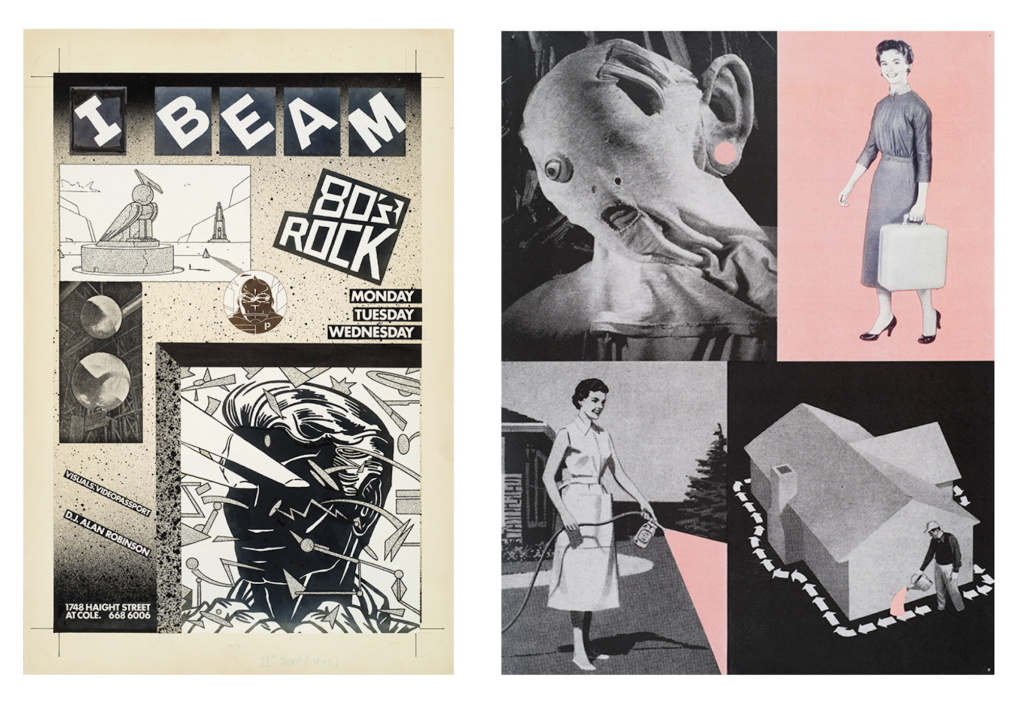
"altTag": "Two collages side by side. One showing a man with laser beams coming from his eyes. The other showing a hooded figure juxtaposed with a housewife and suburban home.",
"description": null,
"imgSizes": {
"medium": {
"file": "https://cdn.kqed.org/wp-content/uploads/sites/2/2024/10/d-king-800x555.png",
"width": 800,
"height": 555,
"mimeType": "image/png"
},
"large": {
"file": "https://cdn.kqed.org/wp-content/uploads/sites/2/2024/10/d-king-1020x708.png",
"width": 1020,
"height": 708,
"mimeType": "image/png"
},
"thumbnail": {
"file": "https://cdn.kqed.org/wp-content/uploads/sites/2/2024/10/d-king-160x111.png",
"width": 160,
"height": 111,
"mimeType": "image/png"
},
"medium_large": {
"file": "https://cdn.kqed.org/wp-content/uploads/sites/2/2024/10/d-king-768x533.png",
"width": 768,
"height": 533,
"mimeType": "image/png"
},
"1536x1536": {
"file": "https://cdn.kqed.org/wp-content/uploads/sites/2/2024/10/d-king-1536x1066.png",
"width": 1536,
"height": 1066,
"mimeType": "image/png"
},
"post-thumbnail": {
"file": "https://cdn.kqed.org/wp-content/uploads/sites/2/2024/10/d-king-672x372.png",
"width": 672,
"height": 372,
"mimeType": "image/png"
},
"twentyfourteen-full-width": {
"file": "https://cdn.kqed.org/wp-content/uploads/sites/2/2024/10/d-king-1038x576.png",
"width": 1038,
"height": 576,
"mimeType": "image/png"
},
"full-width": {
"file": "https://cdn.kqed.org/wp-content/uploads/sites/2/2024/10/d-king-1920x1332.png",
"width": 1920,
"height": 1332,
"mimeType": "image/png"
},
"kqedFullSize": {
"file": "https://cdn.kqed.org/wp-content/uploads/sites/2/2024/10/d-king.png",
"width": 2000,
"height": 1388
}
},
"isLoading": false,
"fetchFailed": false
},
"arts_13967268": {
"type": "attachments",
"id": "arts_13967268",
"meta": {
"index": "attachments_1716263798",
"site": "arts",
"id": "13967268",
"found": true
},
"title": "Mikey-Madison-as-Ani-and-Mark-Eydelshteyn-as-Ivan.-Courtesy-of-NEON_2000",
"publishDate": 1729803886,
"status": "inherit",
"parent": 13967226,
"modified": 1729803944,
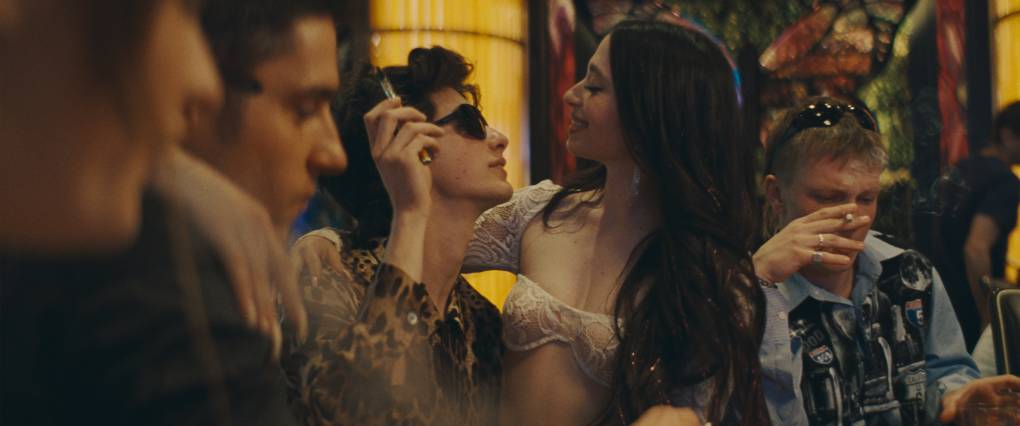
"caption": "Mikey Madison as Ani and Mark Eydelshteyn as Ivan in a scene from 'Anora.'",
"credit": "Courtesy of NEON",
"altTag": "in crowded scene, young woman sits on lap of young man in dark shades",
"description": null,
"imgSizes": {
"medium": {
"file": "https://cdn.kqed.org/wp-content/uploads/sites/2/2024/10/Mikey-Madison-as-Ani-and-Mark-Eydelshteyn-as-Ivan.-Courtesy-of-NEON_2000-800x334.jpg",
"width": 800,
"height": 334,
"mimeType": "image/jpeg"
},
"large": {
"file": "https://cdn.kqed.org/wp-content/uploads/sites/2/2024/10/Mikey-Madison-as-Ani-and-Mark-Eydelshteyn-as-Ivan.-Courtesy-of-NEON_2000-1020x426.jpg",
"width": 1020,
"height": 426,
"mimeType": "image/jpeg"
},
"thumbnail": {
"file": "https://cdn.kqed.org/wp-content/uploads/sites/2/2024/10/Mikey-Madison-as-Ani-and-Mark-Eydelshteyn-as-Ivan.-Courtesy-of-NEON_2000-160x67.jpg",
"width": 160,
"height": 67,
"mimeType": "image/jpeg"
},
"medium_large": {
"file": "https://cdn.kqed.org/wp-content/uploads/sites/2/2024/10/Mikey-Madison-as-Ani-and-Mark-Eydelshteyn-as-Ivan.-Courtesy-of-NEON_2000-768x321.jpg",
"width": 768,
"height": 321,
"mimeType": "image/jpeg"
},
"1536x1536": {
"file": "https://cdn.kqed.org/wp-content/uploads/sites/2/2024/10/Mikey-Madison-as-Ani-and-Mark-Eydelshteyn-as-Ivan.-Courtesy-of-NEON_2000-1536x642.jpg",
"width": 1536,
"height": 642,
"mimeType": "image/jpeg"
},
"post-thumbnail": {
"file": "https://cdn.kqed.org/wp-content/uploads/sites/2/2024/10/Mikey-Madison-as-Ani-and-Mark-Eydelshteyn-as-Ivan.-Courtesy-of-NEON_2000-672x372.jpg",
"width": 672,
"height": 372,
"mimeType": "image/jpeg"
},
"twentyfourteen-full-width": {
"file": "https://cdn.kqed.org/wp-content/uploads/sites/2/2024/10/Mikey-Madison-as-Ani-and-Mark-Eydelshteyn-as-Ivan.-Courtesy-of-NEON_2000-1038x576.jpg",
"width": 1038,
"height": 576,
"mimeType": "image/jpeg"
},
"full-width": {
"file": "https://cdn.kqed.org/wp-content/uploads/sites/2/2024/10/Mikey-Madison-as-Ani-and-Mark-Eydelshteyn-as-Ivan.-Courtesy-of-NEON_2000-1920x803.jpg",
"width": 1920,
"height": 803,
"mimeType": "image/jpeg"
},
"kqedFullSize": {
"file": "https://cdn.kqed.org/wp-content/uploads/sites/2/2024/10/Mikey-Madison-as-Ani-and-Mark-Eydelshteyn-as-Ivan.-Courtesy-of-NEON_2000.jpg",
"width": 2000,
"height": 836
}
},
"isLoading": false,
"fetchFailed": false
},
"arts_13967249": {
"type": "attachments",
"id": "arts_13967249",
"meta": {
"index": "attachments_1716263798",
"site": "arts",
"id": "13967249",
"found": true
},
"title": "el garage quesabirria crop",
"publishDate": 1729798567,
"status": "inherit",
"parent": 13967236,
"modified": 1729798649,
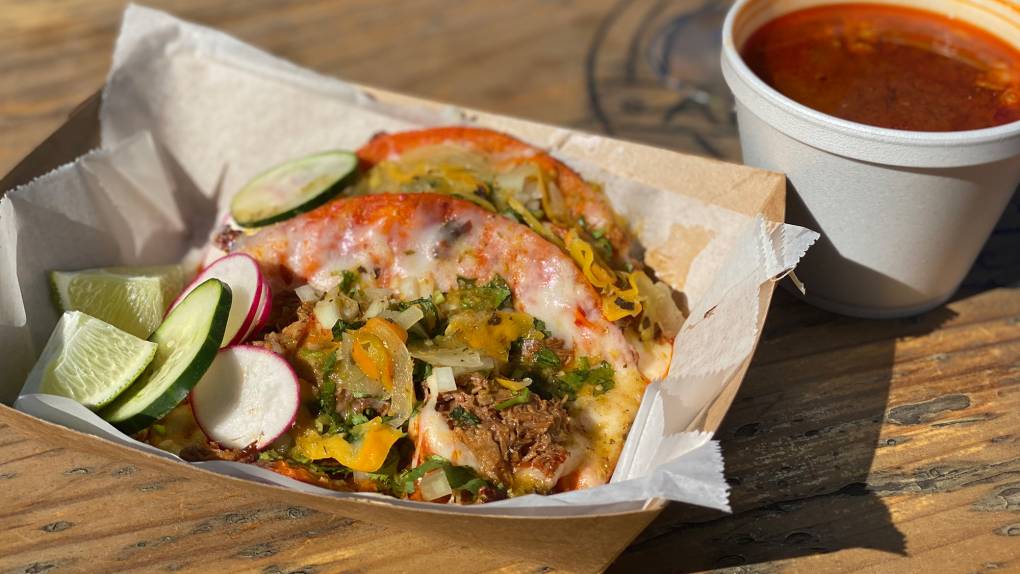
"caption": "El Garage was one of the first pop-ups and taquerias to help popularize quesabirria in the Bay Area.",
"credit": "Luke Tsai/KQED",
"altTag": "Two tacos topped with beef birria and melted cheese, with sliced cucumbers and radishes on the side.",
"description": null,
"imgSizes": {
"medium": {
"file": "https://cdn.kqed.org/wp-content/uploads/sites/2/2024/10/el-garage-quesabirria-crop-800x450.jpg",
"width": 800,
"height": 450,
"mimeType": "image/jpeg"
},
"large": {
"file": "https://cdn.kqed.org/wp-content/uploads/sites/2/2024/10/el-garage-quesabirria-crop-1020x574.jpg",
"width": 1020,
"height": 574,
"mimeType": "image/jpeg"
},
"thumbnail": {
"file": "https://cdn.kqed.org/wp-content/uploads/sites/2/2024/10/el-garage-quesabirria-crop-160x90.jpg",
"width": 160,
"height": 90,
"mimeType": "image/jpeg"
},
"medium_large": {
"file": "https://cdn.kqed.org/wp-content/uploads/sites/2/2024/10/el-garage-quesabirria-crop-768x432.jpg",
"width": 768,
"height": 432,
"mimeType": "image/jpeg"
},
"1536x1536": {
"file": "https://cdn.kqed.org/wp-content/uploads/sites/2/2024/10/el-garage-quesabirria-crop-1536x864.jpg",
"width": 1536,
"height": 864,
"mimeType": "image/jpeg"
},
"post-thumbnail": {
"file": "https://cdn.kqed.org/wp-content/uploads/sites/2/2024/10/el-garage-quesabirria-crop-672x372.jpg",
"width": 672,
"height": 372,
"mimeType": "image/jpeg"
},
"twentyfourteen-full-width": {
"file": "https://cdn.kqed.org/wp-content/uploads/sites/2/2024/10/el-garage-quesabirria-crop-1038x576.jpg",
"width": 1038,
"height": 576,
"mimeType": "image/jpeg"
},
"full-width": {
"file": "https://cdn.kqed.org/wp-content/uploads/sites/2/2024/10/el-garage-quesabirria-crop-1920x1080.jpg",
"width": 1920,
"height": 1080,
"mimeType": "image/jpeg"
},
"kqedFullSize": {
"file": "https://cdn.kqed.org/wp-content/uploads/sites/2/2024/10/el-garage-quesabirria-crop.jpg",
"width": 2000,
"height": 1125
}
},
"isLoading": false,
"fetchFailed": false
},
"arts_13967245": {
"type": "attachments",
"id": "arts_13967245",
"meta": {
"index": "attachments_1716263798",
"site": "arts",
"id": "13967245",
"found": true
},
"title": "Támal-pájis-(west-hill),-2024-Acrylic-on-canvas-60-x-80-x-1-inches-152.4-x-203.2-x-2.5-cm-Courtesy-of-the-artist-and-Anthony-Meier,-Mill-Valley-Photography-by-Chris-Grunder,-San-Francisco_2000",
"publishDate": 1729798112,
"status": "inherit",
"parent": 13967093,
"modified": 1729798183,
"caption": "Saif Azzuz, 'Támal pájis (west hill),' 2024.",
"credit": "Courtesy of the artist and Anthony Meier, Mill Valley; Photo by Chris Grunder",
"altTag": null,
"description": null,
"imgSizes": {
"medium": {
"file": "https://cdn.kqed.org/wp-content/uploads/sites/2/2024/10/Támal-pájis-west-hill-2024-Acrylic-on-canvas-60-x-80-x-1-inches-152.4-x-203.2-x-2.5-cm-Courtesy-of-the-artist-and-Anthony-Meier-Mill-Valley-Photography-by-Chris-Grunder-San-Francisco_2000-800x598.jpg",
"width": 800,
"height": 598,
"mimeType": "image/jpeg"
},
"large": {
"file": "https://cdn.kqed.org/wp-content/uploads/sites/2/2024/10/Támal-pájis-west-hill-2024-Acrylic-on-canvas-60-x-80-x-1-inches-152.4-x-203.2-x-2.5-cm-Courtesy-of-the-artist-and-Anthony-Meier-Mill-Valley-Photography-by-Chris-Grunder-San-Francisco_2000-1020x762.jpg",
"width": 1020,
"height": 762,
"mimeType": "image/jpeg"
},
"thumbnail": {
"file": "https://cdn.kqed.org/wp-content/uploads/sites/2/2024/10/Támal-pájis-west-hill-2024-Acrylic-on-canvas-60-x-80-x-1-inches-152.4-x-203.2-x-2.5-cm-Courtesy-of-the-artist-and-Anthony-Meier-Mill-Valley-Photography-by-Chris-Grunder-San-Francisco_2000-160x120.jpg",
"width": 160,
"height": 120,
"mimeType": "image/jpeg"
},
"medium_large": {
"file": "https://cdn.kqed.org/wp-content/uploads/sites/2/2024/10/Támal-pájis-west-hill-2024-Acrylic-on-canvas-60-x-80-x-1-inches-152.4-x-203.2-x-2.5-cm-Courtesy-of-the-artist-and-Anthony-Meier-Mill-Valley-Photography-by-Chris-Grunder-San-Francisco_2000-768x574.jpg",
"width": 768,
"height": 574,
"mimeType": "image/jpeg"
},
"1536x1536": {
"file": "https://cdn.kqed.org/wp-content/uploads/sites/2/2024/10/Támal-pájis-west-hill-2024-Acrylic-on-canvas-60-x-80-x-1-inches-152.4-x-203.2-x-2.5-cm-Courtesy-of-the-artist-and-Anthony-Meier-Mill-Valley-Photography-by-Chris-Grunder-San-Francisco_2000-1536x1148.jpg",
"width": 1536,
"height": 1148,
"mimeType": "image/jpeg"
},
"post-thumbnail": {
"file": "https://cdn.kqed.org/wp-content/uploads/sites/2/2024/10/Támal-pájis-west-hill-2024-Acrylic-on-canvas-60-x-80-x-1-inches-152.4-x-203.2-x-2.5-cm-Courtesy-of-the-artist-and-Anthony-Meier-Mill-Valley-Photography-by-Chris-Grunder-San-Francisco_2000-672x372.jpg",
"width": 672,
"height": 372,
"mimeType": "image/jpeg"
},
"twentyfourteen-full-width": {
"file": "https://cdn.kqed.org/wp-content/uploads/sites/2/2024/10/Támal-pájis-west-hill-2024-Acrylic-on-canvas-60-x-80-x-1-inches-152.4-x-203.2-x-2.5-cm-Courtesy-of-the-artist-and-Anthony-Meier-Mill-Valley-Photography-by-Chris-Grunder-San-Francisco_2000-1038x576.jpg",
"width": 1038,
"height": 576,
"mimeType": "image/jpeg"
},
"full-width": {
"file": "https://cdn.kqed.org/wp-content/uploads/sites/2/2024/10/Támal-pájis-west-hill-2024-Acrylic-on-canvas-60-x-80-x-1-inches-152.4-x-203.2-x-2.5-cm-Courtesy-of-the-artist-and-Anthony-Meier-Mill-Valley-Photography-by-Chris-Grunder-San-Francisco_2000-1920x1435.jpg",
"width": 1920,
"height": 1435,
"mimeType": "image/jpeg"
},
"kqedFullSize": {
"file": "https://cdn.kqed.org/wp-content/uploads/sites/2/2024/10/Támal-pájis-west-hill-2024-Acrylic-on-canvas-60-x-80-x-1-inches-152.4-x-203.2-x-2.5-cm-Courtesy-of-the-artist-and-Anthony-Meier-Mill-Valley-Photography-by-Chris-Grunder-San-Francisco_2000.jpg",
"width": 2000,
"height": 1495
}
},
"isLoading": false,
"fetchFailed": false
},
"arts_13967232": {
"type": "attachments",
"id": "arts_13967232",
"meta": {
"index": "attachments_1716263798",
"site": "arts",
"id": "13967232",
"found": true
},
"title": "_74A5626",
"publishDate": 1729797217,
"status": "inherit",
"parent": 13967202,
"modified": 1729797401,
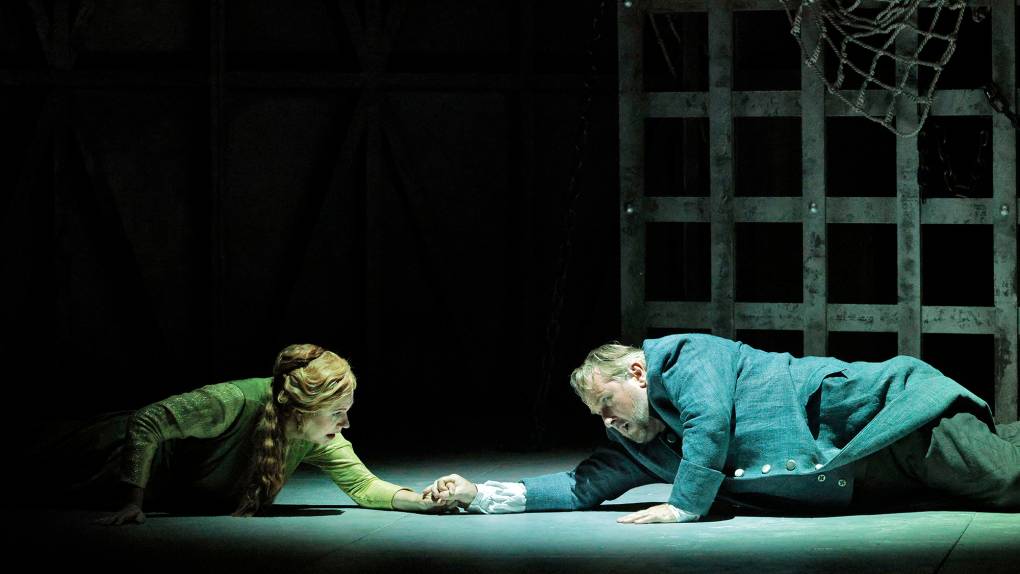
"caption": "Anja Kampe as Isolde and Simon O'Neill as Tristan in Wagner's ‘Tristan und Isolde.’",
"credit": "Cory Weaver/San Francisco Opera",
"altTag": null,
"description": null,
"imgSizes": {
"medium": {
"file": "https://cdn.kqed.org/wp-content/uploads/sites/2/2024/10/74A5626-800x450.jpg",
"width": 800,
"height": 450,
"mimeType": "image/jpeg"
},
"large": {
"file": "https://cdn.kqed.org/wp-content/uploads/sites/2/2024/10/74A5626-1020x574.jpg",
"width": 1020,
"height": 574,
"mimeType": "image/jpeg"
},
"thumbnail": {
"file": "https://cdn.kqed.org/wp-content/uploads/sites/2/2024/10/74A5626-160x90.jpg",
"width": 160,
"height": 90,
"mimeType": "image/jpeg"
},
"medium_large": {
"file": "https://cdn.kqed.org/wp-content/uploads/sites/2/2024/10/74A5626-768x432.jpg",
"width": 768,
"height": 432,
"mimeType": "image/jpeg"
},
"1536x1536": {
"file": "https://cdn.kqed.org/wp-content/uploads/sites/2/2024/10/74A5626-1536x864.jpg",
"width": 1536,
"height": 864,
"mimeType": "image/jpeg"
},
"post-thumbnail": {
"file": "https://cdn.kqed.org/wp-content/uploads/sites/2/2024/10/74A5626-672x372.jpg",
"width": 672,
"height": 372,
"mimeType": "image/jpeg"
},
"twentyfourteen-full-width": {
"file": "https://cdn.kqed.org/wp-content/uploads/sites/2/2024/10/74A5626-1038x576.jpg",
"width": 1038,
"height": 576,
"mimeType": "image/jpeg"
},
"full-width": {
"file": "https://cdn.kqed.org/wp-content/uploads/sites/2/2024/10/74A5626-1920x1080.jpg",
"width": 1920,
"height": 1080,
"mimeType": "image/jpeg"
},
"kqedFullSize": {
"file": "https://cdn.kqed.org/wp-content/uploads/sites/2/2024/10/74A5626.jpg",
"width": 2000,
"height": 1125
}
},
"isLoading": false,
"fetchFailed": false
}
},
"audioPlayerReducer": {
"postId": "stream_live",
"isPaused": true,
"isPlaying": false,
"pfsActive": false,
"pledgeModalIsOpen": true,
"playerDrawerIsOpen": false,
"liveAudioPlayStartedAt": 0,
"liveAudioPlayContext": ""
},
"authorsReducer": {
"byline_arts_13967330": {
"type": "authors",
"id": "byline_arts_13967330",
"meta": {
"override": true
},
"slug": "byline_arts_13967330",
"name": "Donna Edwards, Associated Press",
"isLoading": false
},
"mfox": {
"type": "authors",
"id": "22",
"meta": {
"index": "authors_1716337520",
"id": "22",
"found": true
},
"name": "Michael Fox",
"firstName": "Michael",
"lastName": "Fox",
"slug": "mfox",
"email": "foxonfilm@yahoo.com",
"display_author_email": false,
"staff_mastheads": [],
"title": "KQED Contributor",
"bio": "Michael Fox has written about film for dozens of publications since 1987. He is a founding member of the San Francisco Bay Area Film Critics Circle.",
"avatar": "https://secure.gravatar.com/avatar/d9849d6c659c41414795c471d907bb97b396e2a32b88e20e6ff66f65fbdd6dcd?s=600&d=blank&r=g",
"twitter": null,
"bluesky": null,
"facebook": null,
"instagram": null,
"linkedin": null,
"sites": [
{
"site": "arts",
"roles": [
"Contributor",
"contributor"
]
}
],
"headData": {
"title": "Michael Fox | KQED",
"description": "KQED Contributor",
"ogImgSrc": "https://secure.gravatar.com/avatar/d9849d6c659c41414795c471d907bb97b396e2a32b88e20e6ff66f65fbdd6dcd?s=600&d=blank&r=g",
"twImgSrc": "https://secure.gravatar.com/avatar/d9849d6c659c41414795c471d907bb97b396e2a32b88e20e6ff66f65fbdd6dcd?s=600&d=blank&r=g"
},
"isLoading": false,
"link": "/author/mfox"
},
"gmeline": {
"type": "authors",
"id": "185",
"meta": {
"index": "authors_1716337520",
"id": "185",
"found": true
},
"name": "Gabe Meline",
"firstName": "Gabe",
"lastName": "Meline",
"slug": "gmeline",
"email": "gmeline@kqed.org",
"display_author_email": true,
"staff_mastheads": [
"arts"
],
"title": "Senior Editor, KQED Arts & Culture",
"bio": "Gabe Meline entered journalism at age 15 making photocopied zines, and has since earned awards from the Edward R. Murrow Awards, the Society for Professional Journalists, the Online Journalism Awards, the Association of Alternative Newsweeklies and the California Newspaper Publishers Association. Prior to KQED, he was the editor of the \u003cem>North Bay Bohemian\u003c/em> and a touring musician. He lives with his wife and daughter in his hometown of Santa Rosa, CA.",
"avatar": "https://secure.gravatar.com/avatar/5bebe57be0d8bc2dd318934feb47299e2d2d10cba28d09d8d7afb389a2ce2bdd?s=600&d=blank&r=g",
"twitter": null,
"bluesky": null,
"facebook": null,
"instagram": null,
"linkedin": null,
"sites": [
{
"site": "",
"roles": [
"editor"
]
},
{
"site": "arts",
"roles": [
"administrator"
]
},
{
"site": "artschool",
"roles": [
"editor"
]
},
{
"site": "news",
"roles": [
"author"
]
},
{
"site": "pop",
"roles": [
"editor"
]
},
{
"site": "bayareabites",
"roles": [
"editor"
]
},
{
"site": "food",
"roles": [
"editor"
]
},
{
"site": "forum",
"roles": [
"administrator"
]
},
{
"site": "liveblog",
"roles": [
"editor"
]
},
{
"site": "hiphop",
"roles": [
"editor"
]
}
],
"headData": {
"title": "Gabe Meline | KQED",
"description": "Senior Editor, KQED Arts & Culture",
"ogImgSrc": "https://secure.gravatar.com/avatar/5bebe57be0d8bc2dd318934feb47299e2d2d10cba28d09d8d7afb389a2ce2bdd?s=600&d=blank&r=g",
"twImgSrc": "https://secure.gravatar.com/avatar/5bebe57be0d8bc2dd318934feb47299e2d2d10cba28d09d8d7afb389a2ce2bdd?s=600&d=blank&r=g"
},
"isLoading": false,
"link": "/author/gmeline"
},
"ralexandra": {
"type": "authors",
"id": "11242",
"meta": {
"index": "authors_1716337520",
"id": "11242",
"found": true
},
"name": "Rae Alexandra",
"firstName": "Rae",
"lastName": "Alexandra",
"slug": "ralexandra",
"email": "ralexandra@kqed.org",
"display_author_email": true,
"staff_mastheads": [],
"title": "Reporter/Producer",
"bio": "Rae Alexandra is a Reporter/Producer for KQED Arts & Culture, and the creator/author of the \u003ca href=\"https://www.kqed.org/arts/program/rebel-girls-from-bay-area-history\">Rebel Girls From Bay Area History\u003c/a> and \u003ca href=\"https://www.kqed.org/bizarrebayarea\">Bizarre Bay Area\u003c/a> series. Her debut book, \u003ca href=\"https://citylights.com/politics-current-events-history/unsung-heroines35-women-who-changed/\">Unsung Heroines: 35 Women Who Changed the Bay Area\u003c/a> was published by City Lights in March 2026. In 2023, Rae was awarded an SPJ Excellence in Journalism Award for Arts & Culture. Rae was born and raised in Wales and subsequently — even after two decades in Northern California — still uses phrases that regularly baffle her coworkers.",
"avatar": "https://secure.gravatar.com/avatar/edfee8176c80cc0a382b051190f5341997df378a934a5774dcb0977732dfd401?s=600&d=blank&r=g",
"twitter": null,
"bluesky": null,
"facebook": null,
"instagram": null,
"linkedin": null,
"sites": [
{
"site": "arts",
"roles": [
"subscriber"
]
},
{
"site": "news",
"roles": [
"subscriber"
]
},
{
"site": "pop",
"roles": [
"subscriber"
]
},
{
"site": "bayareabites",
"roles": [
"subscriber"
]
},
{
"site": "science",
"roles": [
"subscriber"
]
}
],
"headData": {
"title": "Rae Alexandra | KQED",
"description": "Reporter/Producer",
"ogImgSrc": "https://secure.gravatar.com/avatar/edfee8176c80cc0a382b051190f5341997df378a934a5774dcb0977732dfd401?s=600&d=blank&r=g",
"twImgSrc": "https://secure.gravatar.com/avatar/edfee8176c80cc0a382b051190f5341997df378a934a5774dcb0977732dfd401?s=600&d=blank&r=g"
},
"isLoading": false,
"link": "/author/ralexandra"
},
"nvoynovskaya": {
"type": "authors",
"id": "11387",
"meta": {
"index": "authors_1716337520",
"id": "11387",
"found": true
},
"name": "Nastia Voynovskaya",
"firstName": "Nastia",
"lastName": "Voynovskaya",
"slug": "nvoynovskaya",
"email": "nvoynovskaya@kqed.org",
"display_author_email": false,
"staff_mastheads": [
"arts"
],
"title": "Editor and reporter",
"bio": "Nastia Voynovskaya is a reporter, editor and host at KQED Arts & Culture. She's been covering the arts in the Bay Area for over a decade, with a focus on music, queer culture, labor issues and grassroots organizing. She has edited KQED story series such as Trans Bay: A History of San Francisco's Gender-Diverse Community, and co-created KQED's Bay Area hip-hop history project, That's My Word. Nastia's work has been recognized by the Society of Professional Journalists and San Francisco Press Club. She regularly appears on podcasts and radio programs, including NPR's All Songs Considered, and hosts live events where music, culture and conversation meet.",
"avatar": "https://secure.gravatar.com/avatar/5025ee460e5a85d69ca20ea6c6f2f80d7e17795c828f61ea3aecfcd924e9042e?s=600&d=blank&r=g",
"twitter": null,
"bluesky": null,
"facebook": null,
"instagram": "https://www.instagram.com/nananastia/",
"linkedin": null,
"sites": [
{
"site": "",
"roles": [
"editor"
]
},
{
"site": "arts",
"roles": [
"administrator"
]
},
{
"site": "news",
"roles": [
"editor"
]
},
{
"site": "pop",
"roles": [
"administrator"
]
},
{
"site": "bayareabites",
"roles": [
"editor"
]
},
{
"site": "podcasts",
"roles": [
"editor"
]
},
{
"site": "hiphop",
"roles": [
"editor"
]
}
],
"headData": {
"title": "Nastia Voynovskaya | KQED",
"description": "Editor and reporter",
"ogImgSrc": "https://secure.gravatar.com/avatar/5025ee460e5a85d69ca20ea6c6f2f80d7e17795c828f61ea3aecfcd924e9042e?s=600&d=blank&r=g",
"twImgSrc": "https://secure.gravatar.com/avatar/5025ee460e5a85d69ca20ea6c6f2f80d7e17795c828f61ea3aecfcd924e9042e?s=600&d=blank&r=g"
},
"isLoading": false,
"link": "/author/nvoynovskaya"
},
"twalsh": {
"type": "authors",
"id": "11696",
"meta": {
"index": "authors_1716337520",
"id": "11696",
"found": true
},
"name": "Theadora Walsh",
"firstName": "Theadora",
"lastName": "Walsh",
"slug": "twalsh",
"email": "theadora.walsh@gmail.com",
"display_author_email": false,
"staff_mastheads": [],
"title": "KQED Contributor",
"bio": "Theadora Walsh is a writer and digital artist. She has contributed criticism to Art Papers, SFMOMA's Open Space, BOMB, Hyperallergic, and elsewhere.",
"avatar": "https://secure.gravatar.com/avatar/f933ebf68ddf31c7a828c5671bd7af03?s=600&d=blank&r=g",
"twitter": "theadora_tm",
"facebook": null,
"instagram": null,
"linkedin": null,
"sites": [
{
"site": "arts",
"roles": [
"contributor"
]
}
],
"headData": {
"title": "Theadora Walsh | KQED",
"description": "KQED Contributor",
"ogImgSrc": "https://secure.gravatar.com/avatar/f933ebf68ddf31c7a828c5671bd7af03?s=600&d=blank&r=g",
"twImgSrc": "https://secure.gravatar.com/avatar/f933ebf68ddf31c7a828c5671bd7af03?s=600&d=blank&r=g"
},
"isLoading": false,
"link": "/author/twalsh"
},
"ltsai": {
"type": "authors",
"id": "11743",
"meta": {
"index": "authors_1716337520",
"id": "11743",
"found": true
},
"name": "Luke Tsai",
"firstName": "Luke",
"lastName": "Tsai",
"slug": "ltsai",
"email": "ltsai@kqed.org",
"display_author_email": true,
"staff_mastheads": [
"arts"
],
"title": "Food Editor",
"bio": "Luke Tsai is KQED's food editor and resident stinky tofu connoisseur. Prior to KQED, he was an editor at Eater SF, \u003cem>San Francisco \u003c/em>magazine, and the \u003cem>East Bay Express\u003c/em>, and his work has also appeared in TASTE, the \u003cem>San Francisco Chronicle\u003c/em>, and the \u003cem>Best Food Writing\u003c/em> anthology. When he isn't writing or editing, you'll find him eating most everything he can get his hands on.",
"avatar": "https://secure.gravatar.com/avatar/1e59b45bf191526e7339d6ba46e33a57b2030d25c27660ecc64ea3cb863e34f7?s=600&d=blank&r=g",
"twitter": "theluketsai",
"bluesky": null,
"facebook": null,
"instagram": null,
"linkedin": null,
"sites": [
{
"site": "",
"roles": [
"editor"
]
},
{
"site": "arts",
"roles": [
"administrator"
]
},
{
"site": "news",
"roles": [
"editor",
"contributor"
]
},
{
"site": "bayareabites",
"roles": [
"editor"
]
},
{
"site": "food",
"roles": [
"editor"
]
}
],
"headData": {
"title": "Luke Tsai | KQED",
"description": "Food Editor",
"ogImgSrc": "https://secure.gravatar.com/avatar/1e59b45bf191526e7339d6ba46e33a57b2030d25c27660ecc64ea3cb863e34f7?s=600&d=blank&r=g",
"twImgSrc": "https://secure.gravatar.com/avatar/1e59b45bf191526e7339d6ba46e33a57b2030d25c27660ecc64ea3cb863e34f7?s=600&d=blank&r=g"
},
"isLoading": false,
"link": "/author/ltsai"
},
"mblue": {
"type": "authors",
"id": "11917",
"meta": {
"index": "authors_1716337520",
"id": "11917",
"found": true
},
"name": "Max Blue",
"firstName": "Max",
"lastName": "Blue",
"slug": "mblue",
"email": "maxbluewriter@gmail.com",
"display_author_email": false,
"staff_mastheads": [],
"title": "KQED Contributor",
"bio": "Max Blue has contributed art criticism and reporting to Artsy, Cultured and Hyperallergic, among others. His short fiction has appeared in The MacGuffin and North Dakota Quarterly, among others. He lives in San Francisco.",
"avatar": "https://secure.gravatar.com/avatar/cf3bc08316ae54aaf34b606edc5721301b3306703234df5bee49a54e69d29843?s=600&d=blank&r=g",
"twitter": null,
"bluesky": null,
"facebook": null,
"instagram": "maxblueofficial",
"linkedin": null,
"sites": [
{
"site": "arts",
"roles": [
"contributor"
]
}
],
"headData": {
"title": "Max Blue | KQED",
"description": "KQED Contributor",
"ogImgSrc": "https://secure.gravatar.com/avatar/cf3bc08316ae54aaf34b606edc5721301b3306703234df5bee49a54e69d29843?s=600&d=blank&r=g",
"twImgSrc": "https://secure.gravatar.com/avatar/cf3bc08316ae54aaf34b606edc5721301b3306703234df5bee49a54e69d29843?s=600&d=blank&r=g"
},
"isLoading": false,
"link": "/author/mblue"
},
"sfaulise": {
"type": "authors",
"id": "11919",
"meta": {
"index": "authors_1716337520",
"id": "11919",
"found": true
},
"name": "Shannon Faulise",
"firstName": "Shannon",
"lastName": "Faulise",
"slug": "sfaulise",
"email": "sfaulise@kqed.org",
"display_author_email": false,
"staff_mastheads": [],
"title": "Contributor, KQED Arts & Culture",
"bio": "Shannon Faulise is a graduate of the UC Berkeley Graduate School of Journalism, where she concentrated on photojournalism and feature writing. Shannon's photos, audio pieces and written stories have appeared in The Oaklandside, The Redwood City Pulse and KALX. Outside of reporting, Shannon loves kpop, women's sports and concerts. She served as an intern for KQED Arts & Culture in 2024–25.",
"avatar": "https://secure.gravatar.com/avatar/76449df2627a603d6b02f0534ec3c913007029bff4f1c0572071401f9a293a02?s=600&d=blank&r=g",
"twitter": null,
"bluesky": null,
"facebook": null,
"instagram": null,
"linkedin": null,
"sites": [
{
"site": "arts",
"roles": [
"subscriber"
]
}
],
"headData": {
"title": "Shannon Faulise | KQED",
"description": "Contributor, KQED Arts & Culture",
"ogImgSrc": "https://secure.gravatar.com/avatar/76449df2627a603d6b02f0534ec3c913007029bff4f1c0572071401f9a293a02?s=600&d=blank&r=g",
"twImgSrc": "https://secure.gravatar.com/avatar/76449df2627a603d6b02f0534ec3c913007029bff4f1c0572071401f9a293a02?s=600&d=blank&r=g"
},
"isLoading": false,
"link": "/author/sfaulise"
}
},
"pagesReducer": {
"arts_category_the-do-list": {
"type": "terms",
"id": "arts_22313",
"meta": {
"index": "terms_1716263798",
"site": "arts",
"id": "22313",
"score": 13.107631
},
"name": "The Do List",
"slug": "the-do-list",
"taxonomy": "category",
"description": null,
"featImg": null,
"headData": {
"title": "The Do List | KQED Arts",
"description": null,
"ogTitle": null,
"ogDescription": null,
"ogImgId": null,
"twTitle": null,
"twDescription": null,
"twImgId": null
},
"ttid": 22325,
"isLoading": false,
"title": "The Do List",
"pageMeta": {
"site": "arts",
"WpPageTemplate": "page-topic-editorial",
"currentPage": 56
},
"blocks": [
{
"blockName": "kqed/post-list",
"attrs": {
"layout": "cardArticle2",
"query": "posts/arts?category=the-do-list",
"seeMore": false,
"paginated": true,
"page": 56
}
},
{
"blockName": "kqed/ad"
}
]
}
},
"pfsSessionReducer": {},
"postsReducer": {
"stream_live": {
"type": "live",
"id": "stream_live",
"audioUrl": "https://streams.kqed.org/kqedradio",
"title": "Live Stream",
"excerpt": "Live Stream information currently unavailable.",
"link": "/radio",
"featImg": "",
"label": {
"name": "KQED Live",
"link": "/"
}
},
"stream_kqedNewscast": {
"type": "posts",
"id": "stream_kqedNewscast",
"audioUrl": "https://www.kqed.org/.stream/anon/radio/RDnews/newscast.mp3?_=1",
"title": "KQED Newscast",
"featImg": "",
"label": {
"name": "88.5 FM",
"link": "/"
}
},
"arts_13967488": {
"type": "posts",
"id": "arts_13967488",
"meta": {
"index": "posts_1716263798",
"site": "arts",
"id": "13967488",
"score": null,
"sort": [
1730331763000
]
},
"guestAuthors": [],
"slug": "san-francisco-hip-hop-month-november-2024",
"title": "SF Hip-Hop Month Rolls Out Concerts, Dance Battles and More",
"publishDate": 1730331763,
"format": "standard",
"headTitle": "SF Hip-Hop Month Rolls Out Concerts, Dance Battles and More | KQED",
"labelTerm": {
"term": 140,
"site": "arts"
},
"content": "\u003cp>November is Hip-Hop History Month — Congress officially designated it last year — and the Bay Area is celebrating how we dance a little different. Starting Nov. 1, the organization \u003ca href=\"https://url.us.m.mimecastprotect.com/s/nfIqCrkYKnfnW234h7fxF4nfhf?domain=sfhiphop.org\">SF Hip-Hop\u003c/a> is rolling out a slate of events that kick off with \u003ca href=\"https://www.ticketmaster.com/event/1C0060D2D2D52EE7\">Hip-Hop Made the Bay\u003c/a>, a celebration of the old school at the SAP Center in San José. Local legends Too Short and RBL Posse will join Bone Thugs-N-Harmony, Ja Rule, Xzibit, DJ Quik, Baby Bash, Tha Dogg Pound and Lighter Shade of Brown.\u003c/p>\n\u003cp>“San Francisco’s always been at the forefront of breaking ground for a lot of new artists,” says Alex Aquino, who co-organized SF Hip-Hop Month with Kamel Jacot-Bell. Aquino points to the local radio station KPOO, which was one of the first to create a hip-hop show in the early ’80s.\u003c/p>\n\u003cp>“I think all these artists that are on those big shows have some San Francisco story of how we embraced them,” he adds.\u003c/p>\n\u003cp>As part of the festivities, Erykah Badu, whose Bay Area concerts always draw an intergenerational crowd in creative outfits, plays \u003ca href=\"https://www.ticketmaster.com/erykah-badu-san-francisco-california-11-16-2024/event/1C006108E7194ACE?\">Bill Graham Civic Auditorium on Nov. 16\u003c/a>. And San Francisco rapper Cellski — who started dancing as a b-boy and strutter as a kid in the ’80s — plays \u003ca href=\"https://sfhiphop.org/events2024/cellski-friends-the-midway-sf\">The Midway with Sacramento’s C-Bo and Oakland’s J Stalin on Nov. 15\u003c/a>. \u003ca href=\"https://www.ticketmaster.com/dave-chappelle-killer-mike-oakland-california-11-23-2024/event/1C006155196B36B2\">Dave Chappelle and Killer Mike\u003c/a> hit Oakland’s Paramount Theatre on Nov. 23, and Cream of Beat dance party arrives at San Francisco’s Great Northern on Nov. 28.\u003c/p>\n\u003cp>“He’s been a hip-hop pioneer since day one here,” says Aquino. “And so we just wanted to make sure that he gets his limelight.”\u003c/p>\n\u003cp>[ad fullwidth]\u003c/p>\n\u003cp>Dance crews from around the globe will showcase their best moves at the 26th annual \u003ca href=\"https://www.sfhiphopdancefest.com/dancefest\">San Francisco International Hip-Hop Dance Fest\u003c/a> Nov. 9–10 at San Francisco’s Palace of Fine Arts. And in San José on Nov. 23, \u003ca href=\"https://www.eventbrite.com/e/style-elements-crew-30th-anniversary-celebration-tickets-1034572804107\">Style Elements Crew\u003c/a> celebrates their 30th anniversary with dance performances and battles.\u003c/p>\n\u003cp>San Francisco Hip-Hop Month also offers a handful of free events. There are two movie nights (\u003ca href=\"https://sfhiphop.org/events2024/blackscalemovienight\">Hype Williams’ crime thriller \u003ci>Belly\u003c/i>\u003c/a> on Nov. 8 at 1121 Polk St. and \u003ca href=\"https://sfhiphop.org/events2024/truemovienight\">Spike Lee’s 1989 comedy-drama \u003ci>Do the Right Thing\u003c/i>\u003c/a> on Nov. 22 at 1409 Haight St.). San Francisco’s Fulton Plaza, right outside of Civic Center BART, will host a \u003ca href=\"https://sfhiphop.org/events2024/all-the-way-live-b-boy-turntablism-showcase-fulton-plaza-sf\">turntablism showcase on Nov. 9\u003c/a>. And SF Hip-Hop Month wraps up on Nov. 29 with a look into the future: a hip-hop and AI panel with an undisclosed lineup of industry experts at The Midway.\u003c/p>\n\u003chr>\n\u003cp>\u003c/p>\n\u003cp>\u003cem>Visit \u003ca href=\"https://www.instagram.com/sf.hiphop/\">SF Hip-Hop on Instagram\u003c/a> for the latest schedule and updates.\u003c/em>\u003c/p>\n\n",
"blocks": [],
"excerpt": "Local legends Too Short, RBL Posse and Cellski are part of the November celebrations. ",
"status": "publish",
"parent": 0,
"modified": 1730405956,
"stats": {
"hasAudio": false,
"hasVideo": false,
"hasChartOrMap": false,
"iframeSrcs": [],
"hasGoogleForm": false,
"hasGallery": false,
"hasHearkenModule": false,
"hasPolis": false,
"paragraphCount": 10,
"wordCount": 476
},
"headData": {
"title": "SF Hip-Hop Month: Concerts, Dance Battles and More | KQED",
"description": "Local legends Too Short, RBL Posse and Cellski are part of the November celebrations. ",
"ogTitle": "SF Hip-Hop Month Rolls Out Concerts, Dance Battles and More",
"ogDescription": "",
"ogImgId": "",
"twTitle": "SF Hip-Hop Month Rolls Out Concerts, Dance Battles and More",
"twDescription": "",
"twImgId": "",
"socialTitle": "SF Hip-Hop Month: Concerts, Dance Battles and More %%page%% %%sep%% KQED",
"schema": {
"@context": "https://schema.org",
"@type": "Article",
"headline": "SF Hip-Hop Month Rolls Out Concerts, Dance Battles and More",
"datePublished": "2024-10-30T16:42:43-07:00",
"dateModified": "2024-10-31T13:19:16-07:00",
"image": "https://cdn.kqed.org/wp-content/uploads/2020/02/KQED-OG-Image@1x.png"
}
},
"sticky": false,
"nprStoryId": "kqed-13967488",
"templateType": "standard",
"featuredImageType": "standard",
"excludeFromSiteSearch": "Include",
"articleAge": "0",
"path": "/arts/13967488/san-francisco-hip-hop-month-november-2024",
"audioTrackLength": null,
"parsedContent": [
{
"type": "contentString",
"content": "\u003cdiv class=\"post-body\">\u003cp>\u003cp>November is Hip-Hop History Month — Congress officially designated it last year — and the Bay Area is celebrating how we dance a little different. Starting Nov. 1, the organization \u003ca href=\"https://url.us.m.mimecastprotect.com/s/nfIqCrkYKnfnW234h7fxF4nfhf?domain=sfhiphop.org\">SF Hip-Hop\u003c/a> is rolling out a slate of events that kick off with \u003ca href=\"https://www.ticketmaster.com/event/1C0060D2D2D52EE7\">Hip-Hop Made the Bay\u003c/a>, a celebration of the old school at the SAP Center in San José. Local legends Too Short and RBL Posse will join Bone Thugs-N-Harmony, Ja Rule, Xzibit, DJ Quik, Baby Bash, Tha Dogg Pound and Lighter Shade of Brown.\u003c/p>\n\u003cp>“San Francisco’s always been at the forefront of breaking ground for a lot of new artists,” says Alex Aquino, who co-organized SF Hip-Hop Month with Kamel Jacot-Bell. Aquino points to the local radio station KPOO, which was one of the first to create a hip-hop show in the early ’80s.\u003c/p>\n\u003cp>“I think all these artists that are on those big shows have some San Francisco story of how we embraced them,” he adds.\u003c/p>\n\u003cp>As part of the festivities, Erykah Badu, whose Bay Area concerts always draw an intergenerational crowd in creative outfits, plays \u003ca href=\"https://www.ticketmaster.com/erykah-badu-san-francisco-california-11-16-2024/event/1C006108E7194ACE?\">Bill Graham Civic Auditorium on Nov. 16\u003c/a>. And San Francisco rapper Cellski — who started dancing as a b-boy and strutter as a kid in the ’80s — plays \u003ca href=\"https://sfhiphop.org/events2024/cellski-friends-the-midway-sf\">The Midway with Sacramento’s C-Bo and Oakland’s J Stalin on Nov. 15\u003c/a>. \u003ca href=\"https://www.ticketmaster.com/dave-chappelle-killer-mike-oakland-california-11-23-2024/event/1C006155196B36B2\">Dave Chappelle and Killer Mike\u003c/a> hit Oakland’s Paramount Theatre on Nov. 23, and Cream of Beat dance party arrives at San Francisco’s Great Northern on Nov. 28.\u003c/p>\n\u003cp>“He’s been a hip-hop pioneer since day one here,” says Aquino. “And so we just wanted to make sure that he gets his limelight.”\u003c/p>\n\u003cp>\u003c/p>\u003c/div>",
"attributes": {
"named": {},
"numeric": []
}
},
{
"type": "component",
"content": "",
"name": "ad",
"attributes": {
"named": {
"label": "fullwidth"
},
"numeric": [
"fullwidth"
]
}
},
{
"type": "contentString",
"content": "\u003cdiv class=\"post-body\">\u003cp>\u003c/p>\n\u003cp>Dance crews from around the globe will showcase their best moves at the 26th annual \u003ca href=\"https://www.sfhiphopdancefest.com/dancefest\">San Francisco International Hip-Hop Dance Fest\u003c/a> Nov. 9–10 at San Francisco’s Palace of Fine Arts. And in San José on Nov. 23, \u003ca href=\"https://www.eventbrite.com/e/style-elements-crew-30th-anniversary-celebration-tickets-1034572804107\">Style Elements Crew\u003c/a> celebrates their 30th anniversary with dance performances and battles.\u003c/p>\n\u003cp>San Francisco Hip-Hop Month also offers a handful of free events. There are two movie nights (\u003ca href=\"https://sfhiphop.org/events2024/blackscalemovienight\">Hype Williams’ crime thriller \u003ci>Belly\u003c/i>\u003c/a> on Nov. 8 at 1121 Polk St. and \u003ca href=\"https://sfhiphop.org/events2024/truemovienight\">Spike Lee’s 1989 comedy-drama \u003ci>Do the Right Thing\u003c/i>\u003c/a> on Nov. 22 at 1409 Haight St.). San Francisco’s Fulton Plaza, right outside of Civic Center BART, will host a \u003ca href=\"https://sfhiphop.org/events2024/all-the-way-live-b-boy-turntablism-showcase-fulton-plaza-sf\">turntablism showcase on Nov. 9\u003c/a>. And SF Hip-Hop Month wraps up on Nov. 29 with a look into the future: a hip-hop and AI panel with an undisclosed lineup of industry experts at The Midway.\u003c/p>\n\u003chr>\n\u003cp>\u003c/p>\n\u003cp>\u003cem>Visit \u003ca href=\"https://www.instagram.com/sf.hiphop/\">SF Hip-Hop on Instagram\u003c/a> for the latest schedule and updates.\u003c/em>\u003c/p>\n\n\u003c/div>\u003c/p>",
"attributes": {
"named": {},
"numeric": []
}
}
],
"link": "/arts/13967488/san-francisco-hip-hop-month-november-2024",
"authors": [
"11387"
],
"programs": [
"arts_140"
],
"categories": [
"arts_1",
"arts_966",
"arts_74",
"arts_69",
"arts_22313"
],
"tags": [
"arts_8505",
"arts_10278",
"arts_585"
],
"featImg": "arts_13903425",
"label": "arts_140"
},
"arts_13967439": {
"type": "posts",
"id": "arts_13967439",
"meta": {
"index": "posts_1716263798",
"site": "arts",
"id": "13967439",
"score": null,
"sort": [
1730313003000
]
},
"guestAuthors": [],
"slug": "merlin-the-pig-northern-california-animals-house-pig-mina-alali-davis",
"title": "Merlin the Pig Is Here to Get You Through the Election",
"publishDate": 1730313003,
"format": "standard",
"headTitle": "Merlin the Pig Is Here to Get You Through the Election | KQED",
"labelTerm": {
"term": 140,
"site": "arts"
},
"content": "\u003cp>It’s election week. Stakes are high. Nerves are frayed. And every reasonable person in America is sick and tired of waking up to a mailbox jammed full of unreasonably large flyers. You might be wondering how to get through this home stretch. Maybe you’ve run out of new ways to take mental health breaks.\u003c/p>\n\u003cp>Fear not voters, for we have figured out the perfect distraction. His name is Merlin, he’s a Davis-dwelling house pig and he knows how to \u003ca href=\"https://www.kqed.org/arts/13893259/get-to-know-tiktoks-talking-animals-bunny-billi-bastian-and-steve-b\">use those talking buttons to communicate\u003c/a> with his human roommates. His primary concern in the world is consuming vegetables and ice cubes and, when he doesn’t get them on demand, he has … feelings.\u003c/p>\n\u003cblockquote class=\"tiktok-embed\" style=\"max-width: 605px;min-width: 325px\" cite=\"https://www.tiktok.com/@mina.alali/video/7401228664081321258\" data-video-id=\"7401228664081321258\">\n\u003csection>\u003ca title=\"@mina.alali\" href=\"https://www.tiktok.com/@mina.alali?refer=embed\" target=\"_blank\" rel=\"noopener\">@mina.alali\u003c/a>istg he’s going through his teenager phase. he’ll be listening to my chemical romance in no time\u003ca title=\"♬ original sound - Mina Alali\" href=\"https://www.tiktok.com/music/original-sound-7401228592551594794?refer=embed\" target=\"_blank\" rel=\"noopener\">♬ original sound – Mina Alali\u003c/a>\u003c/section>\n\u003c/blockquote>\n\u003cp>[tiktok]\u003c/p>\n\u003cp>And it’s not just door-slamming Merlin is willing to employ when he doesn’t get his way. Check out his response to not getting to eat a snack that was never intended for him in the first place.\u003c/p>\n\u003cblockquote class=\"tiktok-embed\" style=\"max-width: 605px;min-width: 325px\" cite=\"https://www.tiktok.com/@mina.alali/video/7424261243382271275\" data-video-id=\"7424261243382271275\">\n\u003csection>\u003ca title=\"@mina.alali\" href=\"https://www.tiktok.com/@mina.alali?refer=embed\" target=\"_blank\" rel=\"noopener\">@mina.alali\u003c/a>I sincerely hope none of you ever have to experience a hoof to the tata\u003ca title=\"♬ original sound - Mina Alali\" href=\"https://www.tiktok.com/music/original-sound-7424261193591753514?refer=embed\" target=\"_blank\" rel=\"noopener\">♬ original sound – Mina Alali\u003c/a>\u003c/section>\n\u003c/blockquote>\n\u003cp>[tiktok]\u003c/p>\n\u003cp>Delightfully, he also hits a “child abuse!” button every time his doggie roommate Maverick wants to play.\u003c/p>\n\u003cblockquote class=\"tiktok-embed\" style=\"max-width: 605px;min-width: 325px\" cite=\"https://www.tiktok.com/@mina.alali/video/7415682202064686379\" data-video-id=\"7415682202064686379\">\n\u003csection>\u003ca title=\"@mina.alali\" href=\"https://www.tiktok.com/@mina.alali?refer=embed\" target=\"_blank\" rel=\"noopener\">@mina.alali\u003c/a>Merlin had a lot to say this morning\u003ca title=\"♬ original sound - Mina Alali\" href=\"https://www.tiktok.com/music/original-sound-7415682162273684267?refer=embed\" target=\"_blank\" rel=\"noopener\">♬ original sound – Mina Alali\u003c/a>\u003c/section>\n\u003c/blockquote>\n\u003cp>[tiktok]\u003c/p>\n\u003cp>Merlin’s owner Mina Alali is a \u003ca href=\"https://www.youtube.com/watch?v=sytGdkZwDHQ\">singer-songwriter\u003c/a> and influencer who also lives with \u003ca href=\"https://www.tiktok.com/@mina.alali/video/7422819374307855658?lang=en\">pigeons, rats and a bearded dragon\u003c/a>, in addition to taking care of \u003ca href=\"https://www.tiktok.com/@mina.alali/video/7416792818099785003?lang=en\">a rescued cow named Moo\u003c/a> that lives elsewhere. Together, they have over 92 million (!) likes on TikTok and 2.3 million followers.\u003c/p>\n\u003cp>[ad fullwidth]\u003c/p>\n\u003cp>Alali, along with her husband Alex, makes keeping this menagerie seem surprisingly normal, taking Merlin for (incredibly slow) walks.\u003c/p>\n\u003cblockquote class=\"tiktok-embed\" style=\"max-width: 605px;min-width: 325px\" cite=\"https://www.tiktok.com/@mina.alali/video/7411933177687706923\" data-video-id=\"7411933177687706923\">\n\u003csection>\u003ca title=\"@mina.alali\" href=\"https://www.tiktok.com/@mina.alali?refer=embed\" target=\"_blank\" rel=\"noopener\">@mina.alali\u003c/a>My boy really said, “no pictures or videos unless I get a treat🐽”\u003ca title=\"♬ original sound - Mina Alali\" href=\"https://www.tiktok.com/music/original-sound-7411933162856516394?refer=embed\" target=\"_blank\" rel=\"noopener\">♬ original sound – Mina Alali\u003c/a>\u003c/section>\n\u003c/blockquote>\n\u003cp>[tiktok]\u003c/p>\n\u003cp>As well as for hangouts at the Davis farmer’s market.\u003c/p>\n\u003cblockquote class=\"tiktok-embed\" style=\"max-width: 605px;min-width: 325px\" cite=\"https://www.tiktok.com/@mina.alali/video/7417215269124214059\" data-video-id=\"7417215269124214059\">\n\u003csection>\u003ca title=\"@mina.alali\" href=\"https://www.tiktok.com/@mina.alali?refer=embed\" target=\"_blank\" rel=\"noopener\">@mina.alali\u003c/a>king merlin stopped by for a visit at our local farmer’s market 🙂\u003ca title=\"♬ original sound - Mina Alali\" href=\"https://www.tiktok.com/music/original-sound-7417215268013411114?refer=embed\" target=\"_blank\" rel=\"noopener\">♬ original sound – Mina Alali\u003c/a>\u003c/section>\n\u003c/blockquote>\n\u003cp>[tiktok]\u003c/p>\n\u003cp>Alali is also teaching Merlin impeccable table manners, as one must with any willful child.\u003c/p>\n\u003cblockquote class=\"tiktok-embed\" style=\"max-width: 605px;min-width: 325px\" cite=\"https://www.tiktok.com/@mina.alali/video/7419799796900302122\" data-video-id=\"7419799796900302122\">\n\u003csection>\u003ca title=\"@mina.alali\" href=\"https://www.tiktok.com/@mina.alali?refer=embed\" target=\"_blank\" rel=\"noopener\">@mina.alali\u003c/a>Had to go over manners with Merlin cause he’s getting sassier by the day\u003ca title=\"♬ original sound - Mina Alali\" href=\"https://www.tiktok.com/music/original-sound-7419799805175565098?refer=embed\" target=\"_blank\" rel=\"noopener\">♬ original sound – Mina Alali\u003c/a>\u003c/section>\n\u003c/blockquote>\n\u003cp>[tiktok]\u003c/p>\n\u003cp>Especially one that will wreck a kitchen the second he’s left unattended.\u003c/p>\n\u003cblockquote class=\"tiktok-embed\" style=\"max-width: 605px;min-width: 325px\" cite=\"https://www.tiktok.com/@mina.alali/video/7374932270144113962\" data-video-id=\"7374932270144113962\">\n\u003csection>\u003ca title=\"@mina.alali\" href=\"https://www.tiktok.com/@mina.alali?refer=embed\" target=\"_blank\" rel=\"noopener\">@mina.alali\u003c/a>reason number 526 why you should maybe reconsider adopting a pig\u003ca title=\"♬ original sound - Mina Alali\" href=\"https://www.tiktok.com/music/original-sound-7374932289119062827?refer=embed\" target=\"_blank\" rel=\"noopener\">♬ original sound – Mina Alali\u003c/a>\u003c/section>\n\u003c/blockquote>\n\u003cp>[tiktok]\u003c/p>\n\u003cp>At least Merlin is learning to clean on command.\u003c/p>\n\u003cblockquote class=\"tiktok-embed\" style=\"max-width: 605px;min-width: 325px\" cite=\"https://www.tiktok.com/@mina.alali/video/7426452931735555374\" data-video-id=\"7426452931735555374\">\n\u003csection>\u003ca title=\"@mina.alali\" href=\"https://www.tiktok.com/@mina.alali?refer=embed\" target=\"_blank\" rel=\"noopener\">@mina.alali\u003c/a>Merlin still does housekeeping for anyone who’s interested, rate is 15 ice cubes & 18 blueberries per hour\u003ca title=\"♬ original sound - Mina Alali\" href=\"https://www.tiktok.com/music/original-sound-7426452875766795054?refer=embed\" target=\"_blank\" rel=\"noopener\">♬ original sound – Mina Alali\u003c/a>\u003c/section>\n\u003c/blockquote>\n\u003cp>[tiktok]\u003c/p>\n\u003cp>And when he’s content? He’s a perfect angel.\u003c/p>\n\u003cblockquote class=\"tiktok-embed\" style=\"max-width: 605px;min-width: 325px\" cite=\"https://www.tiktok.com/@mina.alali/video/7385301244438482219\" data-video-id=\"7385301244438482219\">\n\u003csection>\u003ca title=\"@mina.alali\" href=\"https://www.tiktok.com/@mina.alali?refer=embed\" target=\"_blank\" rel=\"noopener\">@mina.alali\u003c/a> my friend, simira, said watching this was more therapeutic than her last therapy session LMAO \u003ca title=\"merlinthepig\" href=\"https://www.tiktok.com/tag/merlinthepig?refer=embed\" target=\"_blank\" rel=\"noopener\">#merlinthepig\u003c/a> \u003ca title=\"rats\" href=\"https://www.tiktok.com/tag/rats?refer=embed\" target=\"_blank\" rel=\"noopener\">#rats\u003c/a> \u003ca title=\"ratsoftiktok\" href=\"https://www.tiktok.com/tag/ratsoftiktok?refer=embed\" target=\"_blank\" rel=\"noopener\">#ratsoftiktok\u003c/a> \u003ca title=\"cutestvideos\" href=\"https://www.tiktok.com/tag/cutestvideos?refer=embed\" target=\"_blank\" rel=\"noopener\">#cutestvideos\u003c/a> \u003ca title=\"pigsoftiktok\" href=\"https://www.tiktok.com/tag/pigsoftiktok?refer=embed\" target=\"_blank\" rel=\"noopener\">#pigsoftiktok\u003c/a> \u003ca title=\"mina\" href=\"https://www.tiktok.com/tag/mina?refer=embed\" target=\"_blank\" rel=\"noopener\">#mina\u003c/a> \u003ca title=\"fyp\" href=\"https://www.tiktok.com/tag/fyp?refer=embed\" target=\"_blank\" rel=\"noopener\">#fyp\u003c/a> \u003ca title=\"xyzbca\" href=\"https://www.tiktok.com/tag/xyzbca?refer=embed\" target=\"_blank\" rel=\"noopener\">#xyzbca\u003c/a> \u003ca title=\"♬ original sound - Mina Alali\" href=\"https://www.tiktok.com/music/original-sound-7385301266408278830?refer=embed\" target=\"_blank\" rel=\"noopener\">♬ original sound – Mina Alali\u003c/a>\u003c/section>\n\u003c/blockquote>\n\u003cp>[tiktok]\u003c/p>\n\u003cp>(Merlin’s love for his rat siblings is intense. Alali has previously disclosed that she had to put extra locks on her rat cage because \u003ca href=\"https://www.tiktok.com/@mina.alali/video/7394550883750612266?lang=en\">Merlin kept letting his rodent friends out\u003c/a> when she wasn’t looking. “I would come home and there would just be rats on his back,” she said, “crawling around the house.”)\u003c/p>\n\u003cp>\u003c/p>\n\u003cp>So, any time you need a break this week, remember: There’s always Merlin the pig. You can follow him, Alali and the whole gang on \u003ca href=\"https://www.tiktok.com/@mina.alali?lang=en\">TikTok\u003c/a>, \u003ca href=\"https://www.instagram.com/merlinthepig/?hl=en\">Instagram\u003c/a> and \u003ca href=\"https://www.facebook.com/p/Merlin-The-Pig-61552154128401/\">Facebook\u003c/a>.\u003c/p>\n\n",
"blocks": [],
"excerpt": "A mischievous pig who lives in Davis with his musician mom is what we need to get through the next week.",
"status": "publish",
"parent": 0,
"modified": 1730313003,
"stats": {
"hasAudio": false,
"hasVideo": false,
"hasChartOrMap": false,
"iframeSrcs": [],
"hasGoogleForm": false,
"hasGallery": false,
"hasHearkenModule": false,
"hasPolis": false,
"paragraphCount": 24,
"wordCount": 627
},
"headData": {
"title": "Meet Merlin, the Davis House Pig With Millions of Fans | KQED",
"description": "A mischievous pig who lives in Davis with his musician mom is what we need to get through the next week.",
"ogTitle": "Merlin the Pig Is Here to Get You Through the Election",
"ogDescription": "",
"ogImgId": "",
"twTitle": "Merlin the Pig Is Here to Get You Through the Election",
"twDescription": "",
"twImgId": "",
"socialTitle": "Meet Merlin, the Davis House Pig With Millions of Fans %%page%% %%sep%% KQED",
"schema": {
"@context": "https://schema.org",
"@type": "Article",
"headline": "Merlin the Pig Is Here to Get You Through the Election",
"datePublished": "2024-10-30T11:30:03-07:00",
"dateModified": "2024-10-30T11:30:03-07:00",
"image": "https://cdn.kqed.org/wp-content/uploads/2020/02/KQED-OG-Image@1x.png"
}
},
"sticky": false,
"nprStoryId": "kqed-13967439",
"templateType": "standard",
"featuredImageType": "standard",
"excludeFromSiteSearch": "Include",
"articleAge": "0",
"path": "/arts/13967439/merlin-the-pig-northern-california-animals-house-pig-mina-alali-davis",
"audioTrackLength": null,
"parsedContent": [
{
"type": "contentString",
"content": "\u003cdiv class=\"post-body\">\u003cp>\u003cp>It’s election week. Stakes are high. Nerves are frayed. And every reasonable person in America is sick and tired of waking up to a mailbox jammed full of unreasonably large flyers. You might be wondering how to get through this home stretch. Maybe you’ve run out of new ways to take mental health breaks.\u003c/p>\n\u003cp>Fear not voters, for we have figured out the perfect distraction. His name is Merlin, he’s a Davis-dwelling house pig and he knows how to \u003ca href=\"https://www.kqed.org/arts/13893259/get-to-know-tiktoks-talking-animals-bunny-billi-bastian-and-steve-b\">use those talking buttons to communicate\u003c/a> with his human roommates. His primary concern in the world is consuming vegetables and ice cubes and, when he doesn’t get them on demand, he has … feelings.\u003c/p>\n\u003cblockquote class=\"tiktok-embed\" style=\"max-width: 605px;min-width: 325px\" cite=\"https://www.tiktok.com/@mina.alali/video/7401228664081321258\" data-video-id=\"7401228664081321258\">\n\u003csection>\u003ca title=\"@mina.alali\" href=\"https://www.tiktok.com/@mina.alali?refer=embed\" target=\"_blank\" rel=\"noopener\">@mina.alali\u003c/a>istg he’s going through his teenager phase. he’ll be listening to my chemical romance in no time\u003ca title=\"♬ original sound - Mina Alali\" href=\"https://www.tiktok.com/music/original-sound-7401228592551594794?refer=embed\" target=\"_blank\" rel=\"noopener\">♬ original sound – Mina Alali\u003c/a>\u003c/section>\n\u003c/blockquote>\n\u003cp>\u003c/p>\u003c/div>",
"attributes": {
"named": {},
"numeric": []
}
},
{
"type": "component",
"content": "",
"name": "tiktok",
"attributes": {
"named": {
"label": ""
},
"numeric": []
}
},
{
"type": "contentString",
"content": "\u003cdiv class=\"post-body\">\u003cp>\u003c/p>\n\u003cp>And it’s not just door-slamming Merlin is willing to employ when he doesn’t get his way. Check out his response to not getting to eat a snack that was never intended for him in the first place.\u003c/p>\n\u003cblockquote class=\"tiktok-embed\" style=\"max-width: 605px;min-width: 325px\" cite=\"https://www.tiktok.com/@mina.alali/video/7424261243382271275\" data-video-id=\"7424261243382271275\">\n\u003csection>\u003ca title=\"@mina.alali\" href=\"https://www.tiktok.com/@mina.alali?refer=embed\" target=\"_blank\" rel=\"noopener\">@mina.alali\u003c/a>I sincerely hope none of you ever have to experience a hoof to the tata\u003ca title=\"♬ original sound - Mina Alali\" href=\"https://www.tiktok.com/music/original-sound-7424261193591753514?refer=embed\" target=\"_blank\" rel=\"noopener\">♬ original sound – Mina Alali\u003c/a>\u003c/section>\n\u003c/blockquote>\n\u003cp>\u003c/p>\u003c/div>",
"attributes": {
"named": {},
"numeric": []
}
},
{
"type": "component",
"content": "",
"name": "tiktok",
"attributes": {
"named": {
"label": ""
},
"numeric": []
}
},
{
"type": "contentString",
"content": "\u003cdiv class=\"post-body\">\u003cp>\u003c/p>\n\u003cp>Delightfully, he also hits a “child abuse!” button every time his doggie roommate Maverick wants to play.\u003c/p>\n\u003cblockquote class=\"tiktok-embed\" style=\"max-width: 605px;min-width: 325px\" cite=\"https://www.tiktok.com/@mina.alali/video/7415682202064686379\" data-video-id=\"7415682202064686379\">\n\u003csection>\u003ca title=\"@mina.alali\" href=\"https://www.tiktok.com/@mina.alali?refer=embed\" target=\"_blank\" rel=\"noopener\">@mina.alali\u003c/a>Merlin had a lot to say this morning\u003ca title=\"♬ original sound - Mina Alali\" href=\"https://www.tiktok.com/music/original-sound-7415682162273684267?refer=embed\" target=\"_blank\" rel=\"noopener\">♬ original sound – Mina Alali\u003c/a>\u003c/section>\n\u003c/blockquote>\n\u003cp>\u003c/p>\u003c/div>",
"attributes": {
"named": {},
"numeric": []
}
},
{
"type": "component",
"content": "",
"name": "tiktok",
"attributes": {
"named": {
"label": ""
},
"numeric": []
}
},
{
"type": "contentString",
"content": "\u003cdiv class=\"post-body\">\u003cp>\u003c/p>\n\u003cp>Merlin’s owner Mina Alali is a \u003ca href=\"https://www.youtube.com/watch?v=sytGdkZwDHQ\">singer-songwriter\u003c/a> and influencer who also lives with \u003ca href=\"https://www.tiktok.com/@mina.alali/video/7422819374307855658?lang=en\">pigeons, rats and a bearded dragon\u003c/a>, in addition to taking care of \u003ca href=\"https://www.tiktok.com/@mina.alali/video/7416792818099785003?lang=en\">a rescued cow named Moo\u003c/a> that lives elsewhere. Together, they have over 92 million (!) likes on TikTok and 2.3 million followers.\u003c/p>\n\u003cp>\u003c/p>\u003c/div>",
"attributes": {
"named": {},
"numeric": []
}
},
{
"type": "component",
"content": "",
"name": "ad",
"attributes": {
"named": {
"label": "fullwidth"
},
"numeric": [
"fullwidth"
]
}
},
{
"type": "contentString",
"content": "\u003cdiv class=\"post-body\">\u003cp>\u003c/p>\n\u003cp>Alali, along with her husband Alex, makes keeping this menagerie seem surprisingly normal, taking Merlin for (incredibly slow) walks.\u003c/p>\n\u003cblockquote class=\"tiktok-embed\" style=\"max-width: 605px;min-width: 325px\" cite=\"https://www.tiktok.com/@mina.alali/video/7411933177687706923\" data-video-id=\"7411933177687706923\">\n\u003csection>\u003ca title=\"@mina.alali\" href=\"https://www.tiktok.com/@mina.alali?refer=embed\" target=\"_blank\" rel=\"noopener\">@mina.alali\u003c/a>My boy really said, “no pictures or videos unless I get a treat🐽”\u003ca title=\"♬ original sound - Mina Alali\" href=\"https://www.tiktok.com/music/original-sound-7411933162856516394?refer=embed\" target=\"_blank\" rel=\"noopener\">♬ original sound – Mina Alali\u003c/a>\u003c/section>\n\u003c/blockquote>\n\u003cp>\u003c/p>\u003c/div>",
"attributes": {
"named": {},
"numeric": []
}
},
{
"type": "component",
"content": "",
"name": "tiktok",
"attributes": {
"named": {
"label": ""
},
"numeric": []
}
},
{
"type": "contentString",
"content": "\u003cdiv class=\"post-body\">\u003cp>\u003c/p>\n\u003cp>As well as for hangouts at the Davis farmer’s market.\u003c/p>\n\u003cblockquote class=\"tiktok-embed\" style=\"max-width: 605px;min-width: 325px\" cite=\"https://www.tiktok.com/@mina.alali/video/7417215269124214059\" data-video-id=\"7417215269124214059\">\n\u003csection>\u003ca title=\"@mina.alali\" href=\"https://www.tiktok.com/@mina.alali?refer=embed\" target=\"_blank\" rel=\"noopener\">@mina.alali\u003c/a>king merlin stopped by for a visit at our local farmer’s market 🙂\u003ca title=\"♬ original sound - Mina Alali\" href=\"https://www.tiktok.com/music/original-sound-7417215268013411114?refer=embed\" target=\"_blank\" rel=\"noopener\">♬ original sound – Mina Alali\u003c/a>\u003c/section>\n\u003c/blockquote>\n\u003cp>\u003c/p>\u003c/div>",
"attributes": {
"named": {},
"numeric": []
}
},
{
"type": "component",
"content": "",
"name": "tiktok",
"attributes": {
"named": {
"label": ""
},
"numeric": []
}
},
{
"type": "contentString",
"content": "\u003cdiv class=\"post-body\">\u003cp>\u003c/p>\n\u003cp>Alali is also teaching Merlin impeccable table manners, as one must with any willful child.\u003c/p>\n\u003cblockquote class=\"tiktok-embed\" style=\"max-width: 605px;min-width: 325px\" cite=\"https://www.tiktok.com/@mina.alali/video/7419799796900302122\" data-video-id=\"7419799796900302122\">\n\u003csection>\u003ca title=\"@mina.alali\" href=\"https://www.tiktok.com/@mina.alali?refer=embed\" target=\"_blank\" rel=\"noopener\">@mina.alali\u003c/a>Had to go over manners with Merlin cause he’s getting sassier by the day\u003ca title=\"♬ original sound - Mina Alali\" href=\"https://www.tiktok.com/music/original-sound-7419799805175565098?refer=embed\" target=\"_blank\" rel=\"noopener\">♬ original sound – Mina Alali\u003c/a>\u003c/section>\n\u003c/blockquote>\n\u003cp>\u003c/p>\u003c/div>",
"attributes": {
"named": {},
"numeric": []
}
},
{
"type": "component",
"content": "",
"name": "tiktok",
"attributes": {
"named": {
"label": ""
},
"numeric": []
}
},
{
"type": "contentString",
"content": "\u003cdiv class=\"post-body\">\u003cp>\u003c/p>\n\u003cp>Especially one that will wreck a kitchen the second he’s left unattended.\u003c/p>\n\u003cblockquote class=\"tiktok-embed\" style=\"max-width: 605px;min-width: 325px\" cite=\"https://www.tiktok.com/@mina.alali/video/7374932270144113962\" data-video-id=\"7374932270144113962\">\n\u003csection>\u003ca title=\"@mina.alali\" href=\"https://www.tiktok.com/@mina.alali?refer=embed\" target=\"_blank\" rel=\"noopener\">@mina.alali\u003c/a>reason number 526 why you should maybe reconsider adopting a pig\u003ca title=\"♬ original sound - Mina Alali\" href=\"https://www.tiktok.com/music/original-sound-7374932289119062827?refer=embed\" target=\"_blank\" rel=\"noopener\">♬ original sound – Mina Alali\u003c/a>\u003c/section>\n\u003c/blockquote>\n\u003cp>\u003c/p>\u003c/div>",
"attributes": {
"named": {},
"numeric": []
}
},
{
"type": "component",
"content": "",
"name": "tiktok",
"attributes": {
"named": {
"label": ""
},
"numeric": []
}
},
{
"type": "contentString",
"content": "\u003cdiv class=\"post-body\">\u003cp>\u003c/p>\n\u003cp>At least Merlin is learning to clean on command.\u003c/p>\n\u003cblockquote class=\"tiktok-embed\" style=\"max-width: 605px;min-width: 325px\" cite=\"https://www.tiktok.com/@mina.alali/video/7426452931735555374\" data-video-id=\"7426452931735555374\">\n\u003csection>\u003ca title=\"@mina.alali\" href=\"https://www.tiktok.com/@mina.alali?refer=embed\" target=\"_blank\" rel=\"noopener\">@mina.alali\u003c/a>Merlin still does housekeeping for anyone who’s interested, rate is 15 ice cubes & 18 blueberries per hour\u003ca title=\"♬ original sound - Mina Alali\" href=\"https://www.tiktok.com/music/original-sound-7426452875766795054?refer=embed\" target=\"_blank\" rel=\"noopener\">♬ original sound – Mina Alali\u003c/a>\u003c/section>\n\u003c/blockquote>\n\u003cp>\u003c/p>\u003c/div>",
"attributes": {
"named": {},
"numeric": []
}
},
{
"type": "component",
"content": "",
"name": "tiktok",
"attributes": {
"named": {
"label": ""
},
"numeric": []
}
},
{
"type": "contentString",
"content": "\u003cdiv class=\"post-body\">\u003cp>\u003c/p>\n\u003cp>And when he’s content? He’s a perfect angel.\u003c/p>\n\u003cblockquote class=\"tiktok-embed\" style=\"max-width: 605px;min-width: 325px\" cite=\"https://www.tiktok.com/@mina.alali/video/7385301244438482219\" data-video-id=\"7385301244438482219\">\n\u003csection>\u003ca title=\"@mina.alali\" href=\"https://www.tiktok.com/@mina.alali?refer=embed\" target=\"_blank\" rel=\"noopener\">@mina.alali\u003c/a> my friend, simira, said watching this was more therapeutic than her last therapy session LMAO \u003ca title=\"merlinthepig\" href=\"https://www.tiktok.com/tag/merlinthepig?refer=embed\" target=\"_blank\" rel=\"noopener\">#merlinthepig\u003c/a> \u003ca title=\"rats\" href=\"https://www.tiktok.com/tag/rats?refer=embed\" target=\"_blank\" rel=\"noopener\">#rats\u003c/a> \u003ca title=\"ratsoftiktok\" href=\"https://www.tiktok.com/tag/ratsoftiktok?refer=embed\" target=\"_blank\" rel=\"noopener\">#ratsoftiktok\u003c/a> \u003ca title=\"cutestvideos\" href=\"https://www.tiktok.com/tag/cutestvideos?refer=embed\" target=\"_blank\" rel=\"noopener\">#cutestvideos\u003c/a> \u003ca title=\"pigsoftiktok\" href=\"https://www.tiktok.com/tag/pigsoftiktok?refer=embed\" target=\"_blank\" rel=\"noopener\">#pigsoftiktok\u003c/a> \u003ca title=\"mina\" href=\"https://www.tiktok.com/tag/mina?refer=embed\" target=\"_blank\" rel=\"noopener\">#mina\u003c/a> \u003ca title=\"fyp\" href=\"https://www.tiktok.com/tag/fyp?refer=embed\" target=\"_blank\" rel=\"noopener\">#fyp\u003c/a> \u003ca title=\"xyzbca\" href=\"https://www.tiktok.com/tag/xyzbca?refer=embed\" target=\"_blank\" rel=\"noopener\">#xyzbca\u003c/a> \u003ca title=\"♬ original sound - Mina Alali\" href=\"https://www.tiktok.com/music/original-sound-7385301266408278830?refer=embed\" target=\"_blank\" rel=\"noopener\">♬ original sound – Mina Alali\u003c/a>\u003c/section>\n\u003c/blockquote>\n\u003cp>\u003c/p>\u003c/div>",
"attributes": {
"named": {},
"numeric": []
}
},
{
"type": "component",
"content": "",
"name": "tiktok",
"attributes": {
"named": {
"label": ""
},
"numeric": []
}
},
{
"type": "contentString",
"content": "\u003cdiv class=\"post-body\">\u003cp>\u003c/p>\n\u003cp>(Merlin’s love for his rat siblings is intense. Alali has previously disclosed that she had to put extra locks on her rat cage because \u003ca href=\"https://www.tiktok.com/@mina.alali/video/7394550883750612266?lang=en\">Merlin kept letting his rodent friends out\u003c/a> when she wasn’t looking. “I would come home and there would just be rats on his back,” she said, “crawling around the house.”)\u003c/p>\n\u003cp>\u003c/p>\n\u003cp>So, any time you need a break this week, remember: There’s always Merlin the pig. You can follow him, Alali and the whole gang on \u003ca href=\"https://www.tiktok.com/@mina.alali?lang=en\">TikTok\u003c/a>, \u003ca href=\"https://www.instagram.com/merlinthepig/?hl=en\">Instagram\u003c/a> and \u003ca href=\"https://www.facebook.com/p/Merlin-The-Pig-61552154128401/\">Facebook\u003c/a>.\u003c/p>\n\n\u003c/div>\u003c/p>",
"attributes": {
"named": {},
"numeric": []
}
}
],
"link": "/arts/13967439/merlin-the-pig-northern-california-animals-house-pig-mina-alali-davis",
"authors": [
"11242"
],
"programs": [
"arts_140"
],
"categories": [
"arts_1",
"arts_75",
"arts_22313"
],
"tags": [
"arts_9124",
"arts_10278",
"arts_2137",
"arts_2391",
"arts_585",
"arts_8491"
],
"featImg": "arts_13967480",
"label": "arts_140"
},
"arts_13967421": {
"type": "posts",
"id": "arts_13967421",
"meta": {
"index": "posts_1716263798",
"site": "arts",
"id": "13967421",
"score": null,
"sort": [
1730246019000
]
},
"guestAuthors": [],
"slug": "elijah-lovejoy-allison-oratorio-elijahs-call-premiere",
"title": "A World-Premiere Oratorio for a Anti-Slavery Abolitionist",
"publishDate": 1730246019,
"format": "standard",
"headTitle": "A World-Premiere Oratorio for a Anti-Slavery Abolitionist | KQED",
"labelTerm": {
"term": 140,
"site": "arts"
},
"content": "\u003cp>A few years ago, the pianist and composer Allison Lovejoy was looking into her family history when a name of a distant relative caught her attention.\u003c/p>\n\u003cp>Elijah Parish Lovejoy, born in 1802 to a deeply spiritual family, was a newspaper editor and devout abolitionist. Decades before the Civil War, Lovejoy received what he referred to as a calling from God to fight for an end to slavery.\u003c/p>\n\u003cp>In Missouri, Lovejoy was warned to stop printing and distributing his anti-slavery materials, and his printing presses were destroyed multiple times. Lovejoy kept replacing them, and continued his work until a pro-slavery mob murdered him in 1837. \u003c/p>\n\u003cp>Allison Lovejoy shared her findings with longtime friend and former San Francisco Poet Laureate Jack Hirschman. Hirschman recognized the Lovejoy name, and asked if she knew about Elijah’s legacy.\u003c/p>\n\u003cp>“I said Jack, yes, I was just reading about him the other night,” Lovejoy tells me today. “I was thinking of writing an opera.”\u003c/p>\n\u003cp>[ad fullwidth]\u003c/p>\n\u003cp>This week, Lovejoy is in rehearsals with the with the Golden Gate Symphony Orchestra and Chorus to premiere her oratorio dedicated to Lovejoy, \u003cem>Elijah’s Call\u003c/em>, on Sunday, Nov. 3 at the Palace of Fine Arts in San Francisco. It’s the culmination of years of work, sparked by a single family discovery, and a desire to honor a fearless ancestor.\u003c/p>\n\u003cfigure id=\"attachment_13967445\" class=\"wp-caption aligncenter\" style=\"max-width: 2000px\">\u003cimg loading=\"lazy\" decoding=\"async\" src=\"https://cdn.kqed.org/wp-content/uploads/sites/2/2024/10/Allison-Lovejoy_Composer_Elijahs-Call_2024_usedforPressRelease.jpg\" alt=\"\" width=\"2000\" height=\"2015\" class=\"size-full wp-image-13967445\" srcset=\"https://cdn.kqed.org/wp-content/uploads/sites/2/2024/10/Allison-Lovejoy_Composer_Elijahs-Call_2024_usedforPressRelease.jpg 2000w, https://cdn.kqed.org/wp-content/uploads/sites/2/2024/10/Allison-Lovejoy_Composer_Elijahs-Call_2024_usedforPressRelease-800x806.jpg 800w, https://cdn.kqed.org/wp-content/uploads/sites/2/2024/10/Allison-Lovejoy_Composer_Elijahs-Call_2024_usedforPressRelease-1020x1028.jpg 1020w, https://cdn.kqed.org/wp-content/uploads/sites/2/2024/10/Allison-Lovejoy_Composer_Elijahs-Call_2024_usedforPressRelease-160x161.jpg 160w, https://cdn.kqed.org/wp-content/uploads/sites/2/2024/10/Allison-Lovejoy_Composer_Elijahs-Call_2024_usedforPressRelease-768x774.jpg 768w, https://cdn.kqed.org/wp-content/uploads/sites/2/2024/10/Allison-Lovejoy_Composer_Elijahs-Call_2024_usedforPressRelease-1525x1536.jpg 1525w, https://cdn.kqed.org/wp-content/uploads/sites/2/2024/10/Allison-Lovejoy_Composer_Elijahs-Call_2024_usedforPressRelease-1920x1934.jpg 1920w\" sizes=\"(max-width: 2000px) 100vw, 2000px\">\u003cfigcaption class=\"wp-caption-text\">Allison Lovejoy. \u003ccite>(Artist Photo)\u003c/cite>\u003c/figcaption>\u003c/figure>\n\u003ch2>An Internal Conflict\u003c/h2>\n\u003cp>Elijah Lovejoy’s mother taught her children to read the Bible. But in early adulthood, Elijah felt lost, waiting for God to show him his life’s calling. Restless, he set out on an incredible journey on foot, walking from his hometown in Maine to what was then the edge of the country: St. Louis, Missouri.\u003c/p>\n\u003cp>It was this internal conflict, Lovejoy says, that would become the starting point for Lovejoy’s work. \u003c/p>\n\u003cp>Needing a librettist, Lovejoy brought in San Francisco writer and historian Gary Kamiya. Together, the two dove head-first into Elijah Lovejoy’s life and career. Kamiya helped select the most significant events of Lovejoy’s life to include; he also wrote lyrics, using Elijah Lovejoy’s words as a guide. \u003c/p>\n\u003cp>“We interpolated quite a few of Elijah Lovejoy’s own writings, as well as statements made by his enemies — political defenders of slavery,” Kamiya tells me. He studied books for added context, as well as family histories written by other relatives.\u003c/p>\n\u003cp>“[There was] a book written by his brothers, Joseph and Owen Lovejoy, called Memoir of the Reverend Elijah P. Lovejoy that has a lot of lengthy quotations, including poems that he wrote,” Kamiya says. \u003c/p>\n\u003cp>Allison Lovejoy, meanwhile, researched the language of the time to better understand Elijah Lovejoy’s rhetoric, and its influences from the era’s church preachers. She also read up on music of the 1820s. “I didn’t want to write in that style,” she says, “but I wanted to understand that sound.” \u003c/p>\n\u003cp>Ultimately, Lovejoy felt that an oratorio, not an opera or a cantata, would best tell Elijah Lovejoy’s story. She was worried, though.\u003c/p>\n\u003cp>“Oratorios sound scary because it sounds very biblical, very intimidating, like Handel’s \u003cem>Messiah\u003c/em>,” she says. “And I said, well then, I can’t call it ‘Elijah.’”\u003c/p>\n\u003cp>She kept thinking about Lovejoy on his long trek to St. Louis, waiting for his life’s calling, and about the moment he’d found that calling in abolition work. The oratorio’s title came to her: \u003cem>Elijah’s Call\u003c/em>.\u003c/p>\n\u003cfigure id=\"attachment_13967443\" class=\"wp-caption aligncenter\" style=\"max-width: 2000px\">\u003cimg loading=\"lazy\" decoding=\"async\" src=\"https://cdn.kqed.org/wp-content/uploads/sites/2/2024/10/Gary-and-Allison-phto-by-Kate-Stilley-Steiner.jpg\" alt=\"\" width=\"2000\" height=\"1500\" class=\"size-full wp-image-13967443\" srcset=\"https://cdn.kqed.org/wp-content/uploads/sites/2/2024/10/Gary-and-Allison-phto-by-Kate-Stilley-Steiner.jpg 2000w, https://cdn.kqed.org/wp-content/uploads/sites/2/2024/10/Gary-and-Allison-phto-by-Kate-Stilley-Steiner-800x600.jpg 800w, https://cdn.kqed.org/wp-content/uploads/sites/2/2024/10/Gary-and-Allison-phto-by-Kate-Stilley-Steiner-1020x765.jpg 1020w, https://cdn.kqed.org/wp-content/uploads/sites/2/2024/10/Gary-and-Allison-phto-by-Kate-Stilley-Steiner-160x120.jpg 160w, https://cdn.kqed.org/wp-content/uploads/sites/2/2024/10/Gary-and-Allison-phto-by-Kate-Stilley-Steiner-768x576.jpg 768w, https://cdn.kqed.org/wp-content/uploads/sites/2/2024/10/Gary-and-Allison-phto-by-Kate-Stilley-Steiner-1536x1152.jpg 1536w, https://cdn.kqed.org/wp-content/uploads/sites/2/2024/10/Gary-and-Allison-phto-by-Kate-Stilley-Steiner-1920x1440.jpg 1920w\" sizes=\"(max-width: 2000px) 100vw, 2000px\">\u003cfigcaption class=\"wp-caption-text\">Gary Kamiya and Allison Lovejoy in rehearsal for ‘Elijah’s Call.’ \u003ccite>(Kate Stilley Steiner)\u003c/cite>\u003c/figcaption>\u003c/figure>\n\u003ch2>A Life Cut Short By a Violent Mob\u003c/h2>\n\u003cp>“The whole thing about ‘the call’ is someone walking, step, step,” Lovejoy says. “A tired person, walking with this constant motor with this ostinato rhythm underneath, so you have a feeling of movement, but then you also have the voices of the chorus like a Greek choir, calling his conscience. ‘What are you going to do? Where are you going?’ And they give him the courage to move forward.” \u003c/p>\n\u003cp>Courage was certainly a necessity for an abolitionist in the slave state of Missouri. As the editor of the \u003cem>St. Louis Observer\u003c/em> in the early to mid-1830s, Elijah Lovejoy published editorials that began as anti-slavery pieces, but over time grew more radical, eventually calling for universal emancipation.\u003c/p>\n\u003cp>As his writings spread, Lovejoy’s enemies grew larger in rank, destroying his presses. Eventually Lovejoy left Missouri for the free state of Illinois and his family’s safety. \u003c/p>\n\u003cp>Settling across the Mississippi River in the town of Alton, Lovejoy ordered a new printing press to begin his work again. When it arrived in 1837, a violent mob formed and stormed the warehouse where the printing press was stored. While trying to stop the mob, Lovejoy was shot and killed. \u003c/p>\n\u003cp>Reviewing the tragic events of Lovejoy’s life and death, Allison Lovejoy thought long and hard on how to best evoke emotion through the oratorio. Lovejoy’s choices of tempo and key are one piece of it.\u003c/p>\n\u003cp>“But in addition to that, it’s dynamic layering and buildup,” she says. To that end, Lovejoy opted to tap a variety of influences for \u003cem>Elijah’s Call\u003c/em>, including Black gospel music. \u003c/p>\n\u003cfigure id=\"attachment_13967430\" class=\"wp-caption aligncenter\" style=\"max-width: 2000px\">\u003cimg loading=\"lazy\" decoding=\"async\" src=\"https://cdn.kqed.org/wp-content/uploads/sites/2/2024/10/ratio3x2_1920_.jpg\" alt=\"\" width=\"2000\" height=\"1333\" class=\"size-full wp-image-13967430\" srcset=\"https://cdn.kqed.org/wp-content/uploads/sites/2/2024/10/ratio3x2_1920_.jpg 2000w, https://cdn.kqed.org/wp-content/uploads/sites/2/2024/10/ratio3x2_1920_-800x533.jpg 800w, https://cdn.kqed.org/wp-content/uploads/sites/2/2024/10/ratio3x2_1920_-1020x680.jpg 1020w, https://cdn.kqed.org/wp-content/uploads/sites/2/2024/10/ratio3x2_1920_-160x107.jpg 160w, https://cdn.kqed.org/wp-content/uploads/sites/2/2024/10/ratio3x2_1920_-768x512.jpg 768w, https://cdn.kqed.org/wp-content/uploads/sites/2/2024/10/ratio3x2_1920_-1536x1024.jpg 1536w, https://cdn.kqed.org/wp-content/uploads/sites/2/2024/10/ratio3x2_1920_-1920x1280.jpg 1920w\" sizes=\"(max-width: 2000px) 100vw, 2000px\">\u003cfigcaption class=\"wp-caption-text\">Walter Riley. \u003ccite>(Courtesy photo)\u003c/cite>\u003c/figcaption>\u003c/figure>\n\u003ch2>The Civil Rights Attorney Joins\u003c/h2>\n\u003cp>Lovejoy’s initial dive into her family history began around 2020, when George Floyd was murdered. Lovejoy saw parallels between Elijah Lovejoy and Floyd — how their murders are part of a larger, intersectional fight for justice and safekeeping of Black lives and those who advocate for them.\u003c/p>\n\u003cp>In choosing the narrator of \u003cem>Elijah’s Call\u003c/em>, then, Lovejoy found a perfect fit in Oakland-based civil rights activist and lawyer Walter Riley. The father of musician and filmmaker Boots Riley and a longtime friend of Lovejoy, Riley was immediately drawn to Elijah Lovejoy’s story. \u003c/p>\n\u003cp>“The idea of fighting slavery … and the history of those folks who were building a movement resonates with me,” he says. “It’s the kind of work I do now: civil rights activism, social justice issues.”\u003c/p>\n\u003cp>When I ask Lovejoy what it’s like working with Riley, she smiles warmly. “It’s wonderful,” she says. “I’ve always admired his insights. His wisdom brings something to the piece that elevates it.” \u003c/p>\n\u003cfigure id=\"attachment_13967446\" class=\"wp-caption aligncenter\" style=\"max-width: 2000px\">\u003cimg loading=\"lazy\" decoding=\"async\" src=\"https://cdn.kqed.org/wp-content/uploads/sites/2/2024/10/Walter-Urs-Allison-and-Mike-_photo-by-Kate-Stilley-Steiner.jpg\" alt=\"\" width=\"2000\" height=\"1500\" class=\"size-full wp-image-13967446\" srcset=\"https://cdn.kqed.org/wp-content/uploads/sites/2/2024/10/Walter-Urs-Allison-and-Mike-_photo-by-Kate-Stilley-Steiner.jpg 2000w, https://cdn.kqed.org/wp-content/uploads/sites/2/2024/10/Walter-Urs-Allison-and-Mike-_photo-by-Kate-Stilley-Steiner-800x600.jpg 800w, https://cdn.kqed.org/wp-content/uploads/sites/2/2024/10/Walter-Urs-Allison-and-Mike-_photo-by-Kate-Stilley-Steiner-1020x765.jpg 1020w, https://cdn.kqed.org/wp-content/uploads/sites/2/2024/10/Walter-Urs-Allison-and-Mike-_photo-by-Kate-Stilley-Steiner-160x120.jpg 160w, https://cdn.kqed.org/wp-content/uploads/sites/2/2024/10/Walter-Urs-Allison-and-Mike-_photo-by-Kate-Stilley-Steiner-768x576.jpg 768w, https://cdn.kqed.org/wp-content/uploads/sites/2/2024/10/Walter-Urs-Allison-and-Mike-_photo-by-Kate-Stilley-Steiner-1536x1152.jpg 1536w, https://cdn.kqed.org/wp-content/uploads/sites/2/2024/10/Walter-Urs-Allison-and-Mike-_photo-by-Kate-Stilley-Steiner-1920x1440.jpg 1920w\" sizes=\"(max-width: 2000px) 100vw, 2000px\">\u003cfigcaption class=\"wp-caption-text\">(L–R, from behind) Walter Riley, Urs Leonhardt Steiner, Michael Desnoyers, Gary Kamiya and Allison Lovejoy in rehearsal with members of the Golden Gate Symphony Orchestra and Chorus for ‘Elijah’s Call.’ \u003ccite>(Kate Stilley Steiner)\u003c/cite>\u003c/figcaption>\u003c/figure>\n\u003ch2>Connecting the Past to the Present\u003c/h2>\n\u003cp>Elijah Lovejoy may not be widely known today, but Lovejoy hopes the oratorio will help change that. For both Lovejoy and Riley, Elijah Lovejoy’s story is directly connected to modern social movements, present-day civil rights efforts, and the language thereof. The phrase “I lit a lamp,” for example, which appears more than once in the oratorio, holds multiple meanings. \u003c/p>\n\u003cp>“I didn’t know that that [phrase] was a symbolic line — the lighting of the lamp of the Underground Railroad,” Lovejoy says. “I use that throughout the oratorio to say, light your lamp, keep it shining.” \u003c/p>\n\u003cp>For Riley, the connection between Elijah Lovejoy and today’s fight for racial justice was instantaneous.\u003c/p>\n\u003cp>“It’s the exact kind of story we see today,” he tells me. “It’s part of the struggle we face. And every time we see an example from history from… the folks who came before us, it’s useful to pay attention to that, and celebrate that, and then maybe we become a more…enlightened society.” He points a finger as he speaks. “That’s what Elijah learned in this story. He learned about and accepted the humanity of these Black folks…but they attacked him and killed him for it.” \u003c/p>\n\u003cp>Before Lovejoy has to head back into dress rehearsal for the oratorio, I ask what she hopes audiences will take away from \u003cem>Elijah’s Call\u003c/em>.\u003c/p>\n\u003cp>“Mainly,” she says, “Inspiration to do the right thing, and inspiration to stand together.” \u003c/p>\n\u003chr>\n\u003cp>[ad floatright]\u003c/p>\n\u003cp>\u003cem>‘Elijah’s Call’ premieres Sunday, Nov. 3, at the Palace of Fine Arts Theatre in San Francisco. Details here. \u003c/em>\u003c/p>\n\n",
"blocks": [],
"excerpt": "A classical piece premiering in San Francisco honors Elijah P. Lovejoy, who was killed for his anti-slavery beliefs.",
"status": "publish",
"parent": 0,
"modified": 1730246019,
"stats": {
"hasAudio": false,
"hasVideo": false,
"hasChartOrMap": false,
"iframeSrcs": [],
"hasGoogleForm": false,
"hasGallery": false,
"hasHearkenModule": false,
"hasPolis": false,
"paragraphCount": 34,
"wordCount": 1450
},
"headData": {
"title": "Allison Lovejoy Premieres New Oratorio ‘Elijah’s Call’ | KQED",
"description": "A classical piece premiering in San Francisco honors Elijah P. Lovejoy, who was killed for his anti-slavery beliefs.",
"ogTitle": "",
"ogDescription": "",
"ogImgId": "",
"twTitle": "",
"twDescription": "",
"twImgId": "",
"socialTitle": "Allison Lovejoy Premieres New Oratorio ‘Elijah’s Call’ %%page%% %%sep%% KQED",
"schema": {
"@context": "https://schema.org",
"@type": "Article",
"headline": "A World-Premiere Oratorio for a Anti-Slavery Abolitionist",
"datePublished": "2024-10-29T16:53:39-07:00",
"dateModified": "2024-10-29T16:53:39-07:00",
"image": "https://cdn.kqed.org/wp-content/uploads/2020/02/KQED-OG-Image@1x.png"
}
},
"sticky": false,
"nprStoryId": "kqed-13967421",
"templateType": "standard",
"featuredImageType": "standard",
"excludeFromSiteSearch": "Include",
"articleAge": "0",
"path": "/arts/13967421/elijah-lovejoy-allison-oratorio-elijahs-call-premiere",
"audioTrackLength": null,
"parsedContent": [
{
"type": "contentString",
"content": "\u003cdiv class=\"post-body\">\u003cp>\u003cp>A few years ago, the pianist and composer Allison Lovejoy was looking into her family history when a name of a distant relative caught her attention.\u003c/p>\n\u003cp>Elijah Parish Lovejoy, born in 1802 to a deeply spiritual family, was a newspaper editor and devout abolitionist. Decades before the Civil War, Lovejoy received what he referred to as a calling from God to fight for an end to slavery.\u003c/p>\n\u003cp>In Missouri, Lovejoy was warned to stop printing and distributing his anti-slavery materials, and his printing presses were destroyed multiple times. Lovejoy kept replacing them, and continued his work until a pro-slavery mob murdered him in 1837. \u003c/p>\n\u003cp>Allison Lovejoy shared her findings with longtime friend and former San Francisco Poet Laureate Jack Hirschman. Hirschman recognized the Lovejoy name, and asked if she knew about Elijah’s legacy.\u003c/p>\n\u003cp>“I said Jack, yes, I was just reading about him the other night,” Lovejoy tells me today. “I was thinking of writing an opera.”\u003c/p>\n\u003cp>\u003c/p>\u003c/div>",
"attributes": {
"named": {},
"numeric": []
}
},
{
"type": "component",
"content": "",
"name": "ad",
"attributes": {
"named": {
"label": "fullwidth"
},
"numeric": [
"fullwidth"
]
}
},
{
"type": "contentString",
"content": "\u003cdiv class=\"post-body\">\u003cp>\u003c/p>\n\u003cp>This week, Lovejoy is in rehearsals with the with the Golden Gate Symphony Orchestra and Chorus to premiere her oratorio dedicated to Lovejoy, \u003cem>Elijah’s Call\u003c/em>, on Sunday, Nov. 3 at the Palace of Fine Arts in San Francisco. It’s the culmination of years of work, sparked by a single family discovery, and a desire to honor a fearless ancestor.\u003c/p>\n\u003cfigure id=\"attachment_13967445\" class=\"wp-caption aligncenter\" style=\"max-width: 2000px\">\u003cimg loading=\"lazy\" decoding=\"async\" src=\"https://cdn.kqed.org/wp-content/uploads/sites/2/2024/10/Allison-Lovejoy_Composer_Elijahs-Call_2024_usedforPressRelease.jpg\" alt=\"\" width=\"2000\" height=\"2015\" class=\"size-full wp-image-13967445\" srcset=\"https://cdn.kqed.org/wp-content/uploads/sites/2/2024/10/Allison-Lovejoy_Composer_Elijahs-Call_2024_usedforPressRelease.jpg 2000w, https://cdn.kqed.org/wp-content/uploads/sites/2/2024/10/Allison-Lovejoy_Composer_Elijahs-Call_2024_usedforPressRelease-800x806.jpg 800w, https://cdn.kqed.org/wp-content/uploads/sites/2/2024/10/Allison-Lovejoy_Composer_Elijahs-Call_2024_usedforPressRelease-1020x1028.jpg 1020w, https://cdn.kqed.org/wp-content/uploads/sites/2/2024/10/Allison-Lovejoy_Composer_Elijahs-Call_2024_usedforPressRelease-160x161.jpg 160w, https://cdn.kqed.org/wp-content/uploads/sites/2/2024/10/Allison-Lovejoy_Composer_Elijahs-Call_2024_usedforPressRelease-768x774.jpg 768w, https://cdn.kqed.org/wp-content/uploads/sites/2/2024/10/Allison-Lovejoy_Composer_Elijahs-Call_2024_usedforPressRelease-1525x1536.jpg 1525w, https://cdn.kqed.org/wp-content/uploads/sites/2/2024/10/Allison-Lovejoy_Composer_Elijahs-Call_2024_usedforPressRelease-1920x1934.jpg 1920w\" sizes=\"(max-width: 2000px) 100vw, 2000px\">\u003cfigcaption class=\"wp-caption-text\">Allison Lovejoy. \u003ccite>(Artist Photo)\u003c/cite>\u003c/figcaption>\u003c/figure>\n\u003ch2>An Internal Conflict\u003c/h2>\n\u003cp>Elijah Lovejoy’s mother taught her children to read the Bible. But in early adulthood, Elijah felt lost, waiting for God to show him his life’s calling. Restless, he set out on an incredible journey on foot, walking from his hometown in Maine to what was then the edge of the country: St. Louis, Missouri.\u003c/p>\n\u003cp>It was this internal conflict, Lovejoy says, that would become the starting point for Lovejoy’s work. \u003c/p>\n\u003cp>Needing a librettist, Lovejoy brought in San Francisco writer and historian Gary Kamiya. Together, the two dove head-first into Elijah Lovejoy’s life and career. Kamiya helped select the most significant events of Lovejoy’s life to include; he also wrote lyrics, using Elijah Lovejoy’s words as a guide. \u003c/p>\n\u003cp>“We interpolated quite a few of Elijah Lovejoy’s own writings, as well as statements made by his enemies — political defenders of slavery,” Kamiya tells me. He studied books for added context, as well as family histories written by other relatives.\u003c/p>\n\u003cp>“[There was] a book written by his brothers, Joseph and Owen Lovejoy, called Memoir of the Reverend Elijah P. Lovejoy that has a lot of lengthy quotations, including poems that he wrote,” Kamiya says. \u003c/p>\n\u003cp>Allison Lovejoy, meanwhile, researched the language of the time to better understand Elijah Lovejoy’s rhetoric, and its influences from the era’s church preachers. She also read up on music of the 1820s. “I didn’t want to write in that style,” she says, “but I wanted to understand that sound.” \u003c/p>\n\u003cp>Ultimately, Lovejoy felt that an oratorio, not an opera or a cantata, would best tell Elijah Lovejoy’s story. She was worried, though.\u003c/p>\n\u003cp>“Oratorios sound scary because it sounds very biblical, very intimidating, like Handel’s \u003cem>Messiah\u003c/em>,” she says. “And I said, well then, I can’t call it ‘Elijah.’”\u003c/p>\n\u003cp>She kept thinking about Lovejoy on his long trek to St. Louis, waiting for his life’s calling, and about the moment he’d found that calling in abolition work. The oratorio’s title came to her: \u003cem>Elijah’s Call\u003c/em>.\u003c/p>\n\u003cfigure id=\"attachment_13967443\" class=\"wp-caption aligncenter\" style=\"max-width: 2000px\">\u003cimg loading=\"lazy\" decoding=\"async\" src=\"https://cdn.kqed.org/wp-content/uploads/sites/2/2024/10/Gary-and-Allison-phto-by-Kate-Stilley-Steiner.jpg\" alt=\"\" width=\"2000\" height=\"1500\" class=\"size-full wp-image-13967443\" srcset=\"https://cdn.kqed.org/wp-content/uploads/sites/2/2024/10/Gary-and-Allison-phto-by-Kate-Stilley-Steiner.jpg 2000w, https://cdn.kqed.org/wp-content/uploads/sites/2/2024/10/Gary-and-Allison-phto-by-Kate-Stilley-Steiner-800x600.jpg 800w, https://cdn.kqed.org/wp-content/uploads/sites/2/2024/10/Gary-and-Allison-phto-by-Kate-Stilley-Steiner-1020x765.jpg 1020w, https://cdn.kqed.org/wp-content/uploads/sites/2/2024/10/Gary-and-Allison-phto-by-Kate-Stilley-Steiner-160x120.jpg 160w, https://cdn.kqed.org/wp-content/uploads/sites/2/2024/10/Gary-and-Allison-phto-by-Kate-Stilley-Steiner-768x576.jpg 768w, https://cdn.kqed.org/wp-content/uploads/sites/2/2024/10/Gary-and-Allison-phto-by-Kate-Stilley-Steiner-1536x1152.jpg 1536w, https://cdn.kqed.org/wp-content/uploads/sites/2/2024/10/Gary-and-Allison-phto-by-Kate-Stilley-Steiner-1920x1440.jpg 1920w\" sizes=\"(max-width: 2000px) 100vw, 2000px\">\u003cfigcaption class=\"wp-caption-text\">Gary Kamiya and Allison Lovejoy in rehearsal for ‘Elijah’s Call.’ \u003ccite>(Kate Stilley Steiner)\u003c/cite>\u003c/figcaption>\u003c/figure>\n\u003ch2>A Life Cut Short By a Violent Mob\u003c/h2>\n\u003cp>“The whole thing about ‘the call’ is someone walking, step, step,” Lovejoy says. “A tired person, walking with this constant motor with this ostinato rhythm underneath, so you have a feeling of movement, but then you also have the voices of the chorus like a Greek choir, calling his conscience. ‘What are you going to do? Where are you going?’ And they give him the courage to move forward.” \u003c/p>\n\u003cp>Courage was certainly a necessity for an abolitionist in the slave state of Missouri. As the editor of the \u003cem>St. Louis Observer\u003c/em> in the early to mid-1830s, Elijah Lovejoy published editorials that began as anti-slavery pieces, but over time grew more radical, eventually calling for universal emancipation.\u003c/p>\n\u003cp>As his writings spread, Lovejoy’s enemies grew larger in rank, destroying his presses. Eventually Lovejoy left Missouri for the free state of Illinois and his family’s safety. \u003c/p>\n\u003cp>Settling across the Mississippi River in the town of Alton, Lovejoy ordered a new printing press to begin his work again. When it arrived in 1837, a violent mob formed and stormed the warehouse where the printing press was stored. While trying to stop the mob, Lovejoy was shot and killed. \u003c/p>\n\u003cp>Reviewing the tragic events of Lovejoy’s life and death, Allison Lovejoy thought long and hard on how to best evoke emotion through the oratorio. Lovejoy’s choices of tempo and key are one piece of it.\u003c/p>\n\u003cp>“But in addition to that, it’s dynamic layering and buildup,” she says. To that end, Lovejoy opted to tap a variety of influences for \u003cem>Elijah’s Call\u003c/em>, including Black gospel music. \u003c/p>\n\u003cfigure id=\"attachment_13967430\" class=\"wp-caption aligncenter\" style=\"max-width: 2000px\">\u003cimg loading=\"lazy\" decoding=\"async\" src=\"https://cdn.kqed.org/wp-content/uploads/sites/2/2024/10/ratio3x2_1920_.jpg\" alt=\"\" width=\"2000\" height=\"1333\" class=\"size-full wp-image-13967430\" srcset=\"https://cdn.kqed.org/wp-content/uploads/sites/2/2024/10/ratio3x2_1920_.jpg 2000w, https://cdn.kqed.org/wp-content/uploads/sites/2/2024/10/ratio3x2_1920_-800x533.jpg 800w, https://cdn.kqed.org/wp-content/uploads/sites/2/2024/10/ratio3x2_1920_-1020x680.jpg 1020w, https://cdn.kqed.org/wp-content/uploads/sites/2/2024/10/ratio3x2_1920_-160x107.jpg 160w, https://cdn.kqed.org/wp-content/uploads/sites/2/2024/10/ratio3x2_1920_-768x512.jpg 768w, https://cdn.kqed.org/wp-content/uploads/sites/2/2024/10/ratio3x2_1920_-1536x1024.jpg 1536w, https://cdn.kqed.org/wp-content/uploads/sites/2/2024/10/ratio3x2_1920_-1920x1280.jpg 1920w\" sizes=\"(max-width: 2000px) 100vw, 2000px\">\u003cfigcaption class=\"wp-caption-text\">Walter Riley. \u003ccite>(Courtesy photo)\u003c/cite>\u003c/figcaption>\u003c/figure>\n\u003ch2>The Civil Rights Attorney Joins\u003c/h2>\n\u003cp>Lovejoy’s initial dive into her family history began around 2020, when George Floyd was murdered. Lovejoy saw parallels between Elijah Lovejoy and Floyd — how their murders are part of a larger, intersectional fight for justice and safekeeping of Black lives and those who advocate for them.\u003c/p>\n\u003cp>In choosing the narrator of \u003cem>Elijah’s Call\u003c/em>, then, Lovejoy found a perfect fit in Oakland-based civil rights activist and lawyer Walter Riley. The father of musician and filmmaker Boots Riley and a longtime friend of Lovejoy, Riley was immediately drawn to Elijah Lovejoy’s story. \u003c/p>\n\u003cp>“The idea of fighting slavery … and the history of those folks who were building a movement resonates with me,” he says. “It’s the kind of work I do now: civil rights activism, social justice issues.”\u003c/p>\n\u003cp>When I ask Lovejoy what it’s like working with Riley, she smiles warmly. “It’s wonderful,” she says. “I’ve always admired his insights. His wisdom brings something to the piece that elevates it.” \u003c/p>\n\u003cfigure id=\"attachment_13967446\" class=\"wp-caption aligncenter\" style=\"max-width: 2000px\">\u003cimg loading=\"lazy\" decoding=\"async\" src=\"https://cdn.kqed.org/wp-content/uploads/sites/2/2024/10/Walter-Urs-Allison-and-Mike-_photo-by-Kate-Stilley-Steiner.jpg\" alt=\"\" width=\"2000\" height=\"1500\" class=\"size-full wp-image-13967446\" srcset=\"https://cdn.kqed.org/wp-content/uploads/sites/2/2024/10/Walter-Urs-Allison-and-Mike-_photo-by-Kate-Stilley-Steiner.jpg 2000w, https://cdn.kqed.org/wp-content/uploads/sites/2/2024/10/Walter-Urs-Allison-and-Mike-_photo-by-Kate-Stilley-Steiner-800x600.jpg 800w, https://cdn.kqed.org/wp-content/uploads/sites/2/2024/10/Walter-Urs-Allison-and-Mike-_photo-by-Kate-Stilley-Steiner-1020x765.jpg 1020w, https://cdn.kqed.org/wp-content/uploads/sites/2/2024/10/Walter-Urs-Allison-and-Mike-_photo-by-Kate-Stilley-Steiner-160x120.jpg 160w, https://cdn.kqed.org/wp-content/uploads/sites/2/2024/10/Walter-Urs-Allison-and-Mike-_photo-by-Kate-Stilley-Steiner-768x576.jpg 768w, https://cdn.kqed.org/wp-content/uploads/sites/2/2024/10/Walter-Urs-Allison-and-Mike-_photo-by-Kate-Stilley-Steiner-1536x1152.jpg 1536w, https://cdn.kqed.org/wp-content/uploads/sites/2/2024/10/Walter-Urs-Allison-and-Mike-_photo-by-Kate-Stilley-Steiner-1920x1440.jpg 1920w\" sizes=\"(max-width: 2000px) 100vw, 2000px\">\u003cfigcaption class=\"wp-caption-text\">(L–R, from behind) Walter Riley, Urs Leonhardt Steiner, Michael Desnoyers, Gary Kamiya and Allison Lovejoy in rehearsal with members of the Golden Gate Symphony Orchestra and Chorus for ‘Elijah’s Call.’ \u003ccite>(Kate Stilley Steiner)\u003c/cite>\u003c/figcaption>\u003c/figure>\n\u003ch2>Connecting the Past to the Present\u003c/h2>\n\u003cp>Elijah Lovejoy may not be widely known today, but Lovejoy hopes the oratorio will help change that. For both Lovejoy and Riley, Elijah Lovejoy’s story is directly connected to modern social movements, present-day civil rights efforts, and the language thereof. The phrase “I lit a lamp,” for example, which appears more than once in the oratorio, holds multiple meanings. \u003c/p>\n\u003cp>“I didn’t know that that [phrase] was a symbolic line — the lighting of the lamp of the Underground Railroad,” Lovejoy says. “I use that throughout the oratorio to say, light your lamp, keep it shining.” \u003c/p>\n\u003cp>For Riley, the connection between Elijah Lovejoy and today’s fight for racial justice was instantaneous.\u003c/p>\n\u003cp>“It’s the exact kind of story we see today,” he tells me. “It’s part of the struggle we face. And every time we see an example from history from… the folks who came before us, it’s useful to pay attention to that, and celebrate that, and then maybe we become a more…enlightened society.” He points a finger as he speaks. “That’s what Elijah learned in this story. He learned about and accepted the humanity of these Black folks…but they attacked him and killed him for it.” \u003c/p>\n\u003cp>Before Lovejoy has to head back into dress rehearsal for the oratorio, I ask what she hopes audiences will take away from \u003cem>Elijah’s Call\u003c/em>.\u003c/p>\n\u003cp>“Mainly,” she says, “Inspiration to do the right thing, and inspiration to stand together.” \u003c/p>\n\u003chr>\n\u003cp>\u003c/p>\u003c/div>",
"attributes": {
"named": {},
"numeric": []
}
},
{
"type": "component",
"content": "",
"name": "ad",
"attributes": {
"named": {
"label": "floatright"
},
"numeric": [
"floatright"
]
}
},
{
"type": "contentString",
"content": "\u003cdiv class=\"post-body\">\u003cp>\u003c/p>\n\u003cp>\u003cem>‘Elijah’s Call’ premieres Sunday, Nov. 3, at the Palace of Fine Arts Theatre in San Francisco. Details here. \u003c/em>\u003c/p>\n\n\u003c/div>\u003c/p>",
"attributes": {
"named": {},
"numeric": []
}
}
],
"link": "/arts/13967421/elijah-lovejoy-allison-oratorio-elijahs-call-premiere",
"authors": [
"11919"
],
"programs": [
"arts_140"
],
"categories": [
"arts_1",
"arts_7862",
"arts_69",
"arts_22313"
],
"tags": [
"arts_1312",
"arts_10278",
"arts_7723",
"arts_585"
],
"featImg": "arts_13967444",
"label": "arts_140"
},
"arts_13967284": {
"type": "posts",
"id": "arts_13967284",
"meta": {
"index": "posts_1716263798",
"site": "arts",
"id": "13967284",
"score": null,
"sort": [
1730219712000
]
},
"guestAuthors": [],
"slug": "leonie-guyer-house-of-seiko-three-and-three-and-one-review",
"title": "The Deceptive Minimalism of Léonie Guyer at House of Seiko",
"publishDate": 1730219712,
"format": "standard",
"headTitle": "The Deceptive Minimalism of Léonie Guyer at House of Seiko | KQED",
"labelTerm": {
"term": 140,
"site": "arts"
},
"content": "\u003cp>Every morning, when \u003ca href=\"https://www.leonieguyer.com/\">Léonie Guyer\u003c/a> enters her studio, she tries to trick herself.\u003c/p>\n\u003cp>“Before I cross the threshold,” she says excitedly, her face animated by the thought, “I try to trick myself into thinking that I’ve never been there before. So, when I first see the work inside, I don’t think of it as my work. It’s just the work, and every time I’m seeing it, it’s the first time.”\u003c/p>\n\u003cp>Guyer’s paintings require tremendous sensitivity before they can come into existence. The shapes that she captures in her works feel preexistent, more like forms she’s been patiently waiting to encounter than representations or expressions of inner thoughts.\u003c/p>\n\u003cp>\u003cem>\u003ca href=\"https://houseofseiko.info/present\">Three and Three and One\u003c/a>\u003c/em>, Guyer’s show at House of Seiko, is made up of three watercolors, three paintings on marble and a modest wall drawing painted on-site. The last feels the most alive, perhaps because its simple ovular shape is rendered in dappled shades of crimson. The gentle painting, semi-opaque against the gallery’s wall, seems to pull texture up into its body, drawing out the qualities of wood still preserved beneath the white paint.\u003c/p>\n\u003cfigure id=\"attachment_13967365\" class=\"wp-caption aligncenter\" style=\"max-width: 2000px\">\u003cimg loading=\"lazy\" decoding=\"async\" class=\"size-full wp-image-13967365\" src=\"https://cdn.kqed.org/wp-content/uploads/sites/2/2024/10/House-of-Seiko-Leonie-Guyer-Documentation-26_2000.jpg\" alt=\"three framed works on paper in white gallery space\" width=\"2000\" height=\"1333\" srcset=\"https://cdn.kqed.org/wp-content/uploads/sites/2/2024/10/House-of-Seiko-Leonie-Guyer-Documentation-26_2000.jpg 2000w, https://cdn.kqed.org/wp-content/uploads/sites/2/2024/10/House-of-Seiko-Leonie-Guyer-Documentation-26_2000-800x533.jpg 800w, https://cdn.kqed.org/wp-content/uploads/sites/2/2024/10/House-of-Seiko-Leonie-Guyer-Documentation-26_2000-1020x680.jpg 1020w, https://cdn.kqed.org/wp-content/uploads/sites/2/2024/10/House-of-Seiko-Leonie-Guyer-Documentation-26_2000-160x107.jpg 160w, https://cdn.kqed.org/wp-content/uploads/sites/2/2024/10/House-of-Seiko-Leonie-Guyer-Documentation-26_2000-768x512.jpg 768w, https://cdn.kqed.org/wp-content/uploads/sites/2/2024/10/House-of-Seiko-Leonie-Guyer-Documentation-26_2000-1536x1024.jpg 1536w, https://cdn.kqed.org/wp-content/uploads/sites/2/2024/10/House-of-Seiko-Leonie-Guyer-Documentation-26_2000-1920x1280.jpg 1920w\" sizes=\"(max-width: 2000px) 100vw, 2000px\">\u003cfigcaption class=\"wp-caption-text\">Installation view of Léonie Guyer’s ‘Three and Three and One’ at House of Seiko. \u003ccite>(House of Seiko; photo by Graham Holoch)\u003c/cite>\u003c/figcaption>\u003c/figure>\n\u003ch2>Material histories\u003c/h2>\n\u003cp>There is a bravery to the simplicity of Guyer’s paintings. Each appears to use only a single color; the strokes she makes on her chosen “canvases” are humble in size. The three watercolors on display, gray with oscillating warm and cold tones, enclose diluted expanses of color in tenuous outlines. Their boundaries are both discrete and gentle, vaguely reminiscent of a shark sack, the semi-translucent rectangular capsule that provides a shell for a shark’s embryo. In one watercolor, the form comes to a sharp horn on the side.\u003c/p>\n\u003cp>[ad fullwidth]\u003c/p>\n\u003cp>Her compositions are intimately bound with the material on which she paints. The paper for the watercolors, for example, lived in her studio for 21 years before she felt ready to mark it. During those years, the material wasn’t forgotten, but acted as an ever-present companion, occupying its place in the room as a silent collaborator. As if speaking about an old friend, Guyer happily recounts first encountering the double weight Indian jute paper at the art store New York Central in the early 2000s. With admiration, she describes the traditional process of shaping and drying it.\u003c/p>\n\u003cp>Histories like these are nestled into Guyer’s practice. And San Francisco, Guyer’s home of nearly 50 years, is foundational to her deceptively minimalist pieces. Since moving from Long Island to study at the San Francisco Art Institute, Guyer has been a stalwart Bay Area community member.\u003c/p>\n\u003ch2>‘Lines like writing’\u003c/h2>\n\u003cp>While she adamantly identifies as a painter, poetry plays a central role for the artist. She’s often provided a visual counterpart to the work poets do with words: freeing the image from the burden of narrative. In 2011, she collaborated with Bill Berkson, matching drawings to his monograph \u003cem>\u003ca href=\"https://www.metmuseum.org/art/collection/search/744930\">Not An Exit\u003c/a>\u003c/em>, put out by Jungle Garden Press.\u003c/p>\n\u003cfigure id=\"attachment_13967367\" class=\"wp-caption aligncenter\" style=\"max-width: 2000px\">\u003cimg loading=\"lazy\" decoding=\"async\" class=\"size-full wp-image-13967367\" src=\"https://cdn.kqed.org/wp-content/uploads/sites/2/2024/10/House-of-Seiko-Leonie-Guyer-Documentation-20_2000.jpg\" alt=\"\" width=\"2000\" height=\"1380\" srcset=\"https://cdn.kqed.org/wp-content/uploads/sites/2/2024/10/House-of-Seiko-Leonie-Guyer-Documentation-20_2000.jpg 2000w, https://cdn.kqed.org/wp-content/uploads/sites/2/2024/10/House-of-Seiko-Leonie-Guyer-Documentation-20_2000-800x552.jpg 800w, https://cdn.kqed.org/wp-content/uploads/sites/2/2024/10/House-of-Seiko-Leonie-Guyer-Documentation-20_2000-1020x704.jpg 1020w, https://cdn.kqed.org/wp-content/uploads/sites/2/2024/10/House-of-Seiko-Leonie-Guyer-Documentation-20_2000-160x110.jpg 160w, https://cdn.kqed.org/wp-content/uploads/sites/2/2024/10/House-of-Seiko-Leonie-Guyer-Documentation-20_2000-768x530.jpg 768w, https://cdn.kqed.org/wp-content/uploads/sites/2/2024/10/House-of-Seiko-Leonie-Guyer-Documentation-20_2000-1536x1060.jpg 1536w, https://cdn.kqed.org/wp-content/uploads/sites/2/2024/10/House-of-Seiko-Leonie-Guyer-Documentation-20_2000-1920x1325.jpg 1920w\" sizes=\"(max-width: 2000px) 100vw, 2000px\">\u003cfigcaption class=\"wp-caption-text\">Installation view of Léonie Guyer’s ‘Three and Three and One’ at House of Seiko. \u003ccite>(House of Seiko; photo by Graham Holoch)\u003c/cite>\u003c/figcaption>\u003c/figure>\n\u003cp>At House of Seiko, the works on marble, monochromatic paintings crisp against the stone’s mottled grays, can be understood in relation to another community close to Guyer’s heart. Though made in 2024, the marble pieces remind me of \u003cem>\u003ca href=\"https://openspace.sfmoma.org/2019/02/in-the-place-just-right/\">Gift\u003c/a>\u003c/em>, a 2006 site-based exhibition in which Guyer painted her signature forms on the top floor of a Shaker building, the historic 1829 Brethren’s Workshop in New Lebanon, New York.\u003c/p>\n\u003cp>Guyer first encountered Shaker gift drawings at San Francisco’s \u003ca href=\"https://fraenkelgallery.com/\">Fraenkel Gallery\u003c/a>, during a sweeping group show they’d hung salon-style. The gift drawing was high, high on the wall and semi-obscured by its position. “I’d never seen anything like it,” she recalls, “the lines look like writing. I could hardly tell what it looked like, but I felt the radiation off the page. It was humming.”\u003c/p>\n\u003cp>When she inquired about the piece, the gallery assistant demurred, chancing that the origins were totally unknown. As this was well before the internet, the encounter lived inside the artist’s mind for a long time, tenured in memory, until New York City’s Drawing Center mounted \u003cem>\u003ca href=\"https://drawingcenter.org/exhibitions/heavenly-visions-shaker-gift-drawings-and-gift-songs\">Heavenly Visions\u003c/a>\u003c/em>, a show of gift drawings and gift songs, in 2001.\u003c/p>\n\u003cp>Years after that, the artist \u003ca href=\"https://www.kqed.org/arts/13963630/sarah-cain-quiet-riot-anthony-meier-mill-valley-review\">Sarah Cain\u003c/a>, a student of Guyer’s at SFAI, recognized the images in a lecture and connected Guyer with the \u003ca href=\"https://www.shakermuseum.us/\">Shaker Museum\u003c/a>, where Cain’s mother coincidentally worked. The experience with the Shaker aesthetic became so important to her practice that when the Wattis Institute mounted \u003cem>\u003ca href=\"https://wattis.org/our-program/on-view/la-onie-guyer-form-in-the-realm-of-2018\">form in the realm of\u003c/a>\u003c/em>, a 2018 exhibition of Guyer’s work, they even procured a few actual gift drawings for an introductory vitrine.\u003c/p>\n\u003cfigure id=\"attachment_13967368\" class=\"wp-caption aligncenter\" style=\"max-width: 2000px\">\u003cimg loading=\"lazy\" decoding=\"async\" class=\"size-full wp-image-13967368\" src=\"https://cdn.kqed.org/wp-content/uploads/sites/2/2024/10/House-of-Seiko-Leonie-Guyer-Documentation-4_2000.jpg\" alt=\"delicate watercolor shape on off-white paper, black shape reminiscent of a cat on marble\" width=\"2000\" height=\"1290\" srcset=\"https://cdn.kqed.org/wp-content/uploads/sites/2/2024/10/House-of-Seiko-Leonie-Guyer-Documentation-4_2000.jpg 2000w, https://cdn.kqed.org/wp-content/uploads/sites/2/2024/10/House-of-Seiko-Leonie-Guyer-Documentation-4_2000-800x516.jpg 800w, https://cdn.kqed.org/wp-content/uploads/sites/2/2024/10/House-of-Seiko-Leonie-Guyer-Documentation-4_2000-1020x658.jpg 1020w, https://cdn.kqed.org/wp-content/uploads/sites/2/2024/10/House-of-Seiko-Leonie-Guyer-Documentation-4_2000-160x103.jpg 160w, https://cdn.kqed.org/wp-content/uploads/sites/2/2024/10/House-of-Seiko-Leonie-Guyer-Documentation-4_2000-768x495.jpg 768w, https://cdn.kqed.org/wp-content/uploads/sites/2/2024/10/House-of-Seiko-Leonie-Guyer-Documentation-4_2000-1536x991.jpg 1536w, https://cdn.kqed.org/wp-content/uploads/sites/2/2024/10/House-of-Seiko-Leonie-Guyer-Documentation-4_2000-1920x1238.jpg 1920w\" sizes=\"(max-width: 2000px) 100vw, 2000px\">\u003cfigcaption class=\"wp-caption-text\">Details of Léonie Guyer works. L: ‘Untitled, MHK-48,’ 2024; R: ‘Untitled, no. 117,’ 2023. \u003ccite>(House of Seiko; photos by Graham Holoch)\u003c/cite>\u003c/figcaption>\u003c/figure>\n\u003cp>The decorative, handmade gift drawings present language more for its aesthetic qualities than for its meaning. They remind me of how talking is so often less about communicating than keeping someone company. Easy, meaningless chatter does the difficult work of assuring someone “Yes, I am here, I am with you. I’m listening.” The Shaker gift drawings are like that: illustrations of small talk replete in its generosity.\u003c/p>\n\u003cp>Guyer’s paintings don’t talk, but they do populate space emphatically enough to offer a kind of companionship. The \u003ca href=\"https://www.poetryfoundation.org/poets/susan-howe\">Susan Howe poems\u003c/a> included in a booklet made for the House of Seiko show seem to vibrate in agreement.\u003c/p>\n\u003ch2>Ancient symbols\u003c/h2>\n\u003cp>Another touchstone for the artist is the Mycenean figurines of ancient Greece. These relics’ simple shapes adhere to a few stylistic properties. The Mycenean bird goddess, for example, always has a long stem and a small squat face that sits above a flattened ceramic circle gesturing at wings.\u003c/p>\n\u003cp>There’s one at the Metropolitan Museum of Art that Guyer visits often, sometimes using her recent status as a Guggenheim Fellow to access the exhibition in the off-hours. Its body is striped with simple brown paint, and defined by bowing curvature that leaves a trace of the hands that molded its shape, lending the ceramic an organic, living quality.\u003c/p>\n\u003cfigure id=\"attachment_13967369\" class=\"wp-caption aligncenter\" style=\"max-width: 2000px\">\u003cimg loading=\"lazy\" decoding=\"async\" class=\"size-full wp-image-13967369\" src=\"https://cdn.kqed.org/wp-content/uploads/sites/2/2024/10/House-of-Seiko-Leonie-Guyer-Documentation-24_2000.jpg\" alt=\"\" width=\"2000\" height=\"1333\" srcset=\"https://cdn.kqed.org/wp-content/uploads/sites/2/2024/10/House-of-Seiko-Leonie-Guyer-Documentation-24_2000.jpg 2000w, https://cdn.kqed.org/wp-content/uploads/sites/2/2024/10/House-of-Seiko-Leonie-Guyer-Documentation-24_2000-800x533.jpg 800w, https://cdn.kqed.org/wp-content/uploads/sites/2/2024/10/House-of-Seiko-Leonie-Guyer-Documentation-24_2000-1020x680.jpg 1020w, https://cdn.kqed.org/wp-content/uploads/sites/2/2024/10/House-of-Seiko-Leonie-Guyer-Documentation-24_2000-160x107.jpg 160w, https://cdn.kqed.org/wp-content/uploads/sites/2/2024/10/House-of-Seiko-Leonie-Guyer-Documentation-24_2000-768x512.jpg 768w, https://cdn.kqed.org/wp-content/uploads/sites/2/2024/10/House-of-Seiko-Leonie-Guyer-Documentation-24_2000-1536x1024.jpg 1536w, https://cdn.kqed.org/wp-content/uploads/sites/2/2024/10/House-of-Seiko-Leonie-Guyer-Documentation-24_2000-1920x1280.jpg 1920w\" sizes=\"(max-width: 2000px) 100vw, 2000px\">\u003cfigcaption class=\"wp-caption-text\">Installation view of Léonie Guyer’s ‘Three and Three and One’ at House of Seiko. \u003ccite>(House of Seiko; photo by Graham Holoch)\u003c/cite>\u003c/figcaption>\u003c/figure>\n\u003cp>Much like her own work, the Mycenean bird goddesses feel symbolic; they adhere to their own secret shorthand. Both her work and the figurines jump out of time, essential and audacious, refusing to be pinned to any specific context. Instead, they feel constantly at home in the present, almost already familiar to the viewer.\u003c/p>\n\u003cp>“Form has a meaning — but it is a meaning entirely its own,” writes the 20th-century art historian Henri Focillon in \u003cem>The Life of Forms in Art\u003c/em>, a foundational text for Guyer that shines a specific light on her practice.\u003c/p>\n\u003ch2>Bodies of pure, essential feeling\u003c/h2>\n\u003cp>The artist’s oblique, careful paintings turn simple shapes into bodies of pure, essential feeling. Her forms share a consistent style, patterned by their own hidden rules. I offer these considerations of gift drawings and Mycenean figures as just one way to look \u003cem>through\u003c/em> Guyer’s works at the interior logic of the universe from which they spring.\u003c/p>\n\u003cp>The imagist poet \u003ca href=\"https://www.poetryfoundation.org/poets/h-d\">H.D.\u003c/a> says we must be in love before we can understand the mysteries of vision. We must begin with the sympathy of thought. This intimacy feels alive in Guyer’s work. Each piece is nonrepresentational, it does not point away, or towards something else, but instead pulls the viewer inwards — towards itself, closer.\u003c/p>\n\u003cp>The vitality of Guyer’s work resists interpretation. In this way, her paintings offer the viewer a new encounter, every time.\u003c/p>\n\u003chr>\n\u003cp>[ad floatright]\u003c/p>\n\u003cp>\u003ci>‘\u003ca href=\"https://houseofseiko.info/present\">Three and Three and One\u003c/a>’ is on view at House of Seiko (3109 22nd St., San Francisco).\u003c/i>\u003c/p>\n\n",
"blocks": [],
"excerpt": "The San Francisco artist’s solo show pulls the viewer inwards, offering a new encounter every time.",
"status": "publish",
"parent": 0,
"modified": 1730244469,
"stats": {
"hasAudio": false,
"hasVideo": false,
"hasChartOrMap": false,
"iframeSrcs": [],
"hasGoogleForm": false,
"hasGallery": false,
"hasHearkenModule": false,
"hasPolis": false,
"paragraphCount": 24,
"wordCount": 1410
},
"headData": {
"title": "Léonie Guyer at House of Seiko: Deceptive Minimalism | KQED",
"description": "The San Francisco artist’s solo show pulls the viewer inwards, offering a new encounter every time.",
"ogTitle": "The Deceptive Minimalism of Léonie Guyer at House of Seiko",
"ogDescription": "",
"ogImgId": "",
"twTitle": "The Deceptive Minimalism of Léonie Guyer at House of Seiko",
"twDescription": "",
"twImgId": "",
"socialTitle": "Léonie Guyer at House of Seiko: Deceptive Minimalism %%page%% %%sep%% KQED",
"schema": {
"@context": "https://schema.org",
"@type": "Article",
"headline": "The Deceptive Minimalism of Léonie Guyer at House of Seiko",
"datePublished": "2024-10-29T09:35:12-07:00",
"dateModified": "2024-10-29T16:27:49-07:00",
"image": "https://cdn.kqed.org/wp-content/uploads/2020/02/KQED-OG-Image@1x.png"
}
},
"sticky": false,
"nprStoryId": "kqed-13967284",
"templateType": "standard",
"featuredImageType": "standard",
"excludeFromSiteSearch": "Include",
"articleAge": "0",
"path": "/arts/13967284/leonie-guyer-house-of-seiko-three-and-three-and-one-review",
"audioTrackLength": null,
"parsedContent": [
{
"type": "contentString",
"content": "\u003cdiv class=\"post-body\">\u003cp>\u003cp>Every morning, when \u003ca href=\"https://www.leonieguyer.com/\">Léonie Guyer\u003c/a> enters her studio, she tries to trick herself.\u003c/p>\n\u003cp>“Before I cross the threshold,” she says excitedly, her face animated by the thought, “I try to trick myself into thinking that I’ve never been there before. So, when I first see the work inside, I don’t think of it as my work. It’s just the work, and every time I’m seeing it, it’s the first time.”\u003c/p>\n\u003cp>Guyer’s paintings require tremendous sensitivity before they can come into existence. The shapes that she captures in her works feel preexistent, more like forms she’s been patiently waiting to encounter than representations or expressions of inner thoughts.\u003c/p>\n\u003cp>\u003cem>\u003ca href=\"https://houseofseiko.info/present\">Three and Three and One\u003c/a>\u003c/em>, Guyer’s show at House of Seiko, is made up of three watercolors, three paintings on marble and a modest wall drawing painted on-site. The last feels the most alive, perhaps because its simple ovular shape is rendered in dappled shades of crimson. The gentle painting, semi-opaque against the gallery’s wall, seems to pull texture up into its body, drawing out the qualities of wood still preserved beneath the white paint.\u003c/p>\n\u003cfigure id=\"attachment_13967365\" class=\"wp-caption aligncenter\" style=\"max-width: 2000px\">\u003cimg loading=\"lazy\" decoding=\"async\" class=\"size-full wp-image-13967365\" src=\"https://cdn.kqed.org/wp-content/uploads/sites/2/2024/10/House-of-Seiko-Leonie-Guyer-Documentation-26_2000.jpg\" alt=\"three framed works on paper in white gallery space\" width=\"2000\" height=\"1333\" srcset=\"https://cdn.kqed.org/wp-content/uploads/sites/2/2024/10/House-of-Seiko-Leonie-Guyer-Documentation-26_2000.jpg 2000w, https://cdn.kqed.org/wp-content/uploads/sites/2/2024/10/House-of-Seiko-Leonie-Guyer-Documentation-26_2000-800x533.jpg 800w, https://cdn.kqed.org/wp-content/uploads/sites/2/2024/10/House-of-Seiko-Leonie-Guyer-Documentation-26_2000-1020x680.jpg 1020w, https://cdn.kqed.org/wp-content/uploads/sites/2/2024/10/House-of-Seiko-Leonie-Guyer-Documentation-26_2000-160x107.jpg 160w, https://cdn.kqed.org/wp-content/uploads/sites/2/2024/10/House-of-Seiko-Leonie-Guyer-Documentation-26_2000-768x512.jpg 768w, https://cdn.kqed.org/wp-content/uploads/sites/2/2024/10/House-of-Seiko-Leonie-Guyer-Documentation-26_2000-1536x1024.jpg 1536w, https://cdn.kqed.org/wp-content/uploads/sites/2/2024/10/House-of-Seiko-Leonie-Guyer-Documentation-26_2000-1920x1280.jpg 1920w\" sizes=\"(max-width: 2000px) 100vw, 2000px\">\u003cfigcaption class=\"wp-caption-text\">Installation view of Léonie Guyer’s ‘Three and Three and One’ at House of Seiko. \u003ccite>(House of Seiko; photo by Graham Holoch)\u003c/cite>\u003c/figcaption>\u003c/figure>\n\u003ch2>Material histories\u003c/h2>\n\u003cp>There is a bravery to the simplicity of Guyer’s paintings. Each appears to use only a single color; the strokes she makes on her chosen “canvases” are humble in size. The three watercolors on display, gray with oscillating warm and cold tones, enclose diluted expanses of color in tenuous outlines. Their boundaries are both discrete and gentle, vaguely reminiscent of a shark sack, the semi-translucent rectangular capsule that provides a shell for a shark’s embryo. In one watercolor, the form comes to a sharp horn on the side.\u003c/p>\n\u003cp>\u003c/p>\u003c/div>",
"attributes": {
"named": {},
"numeric": []
}
},
{
"type": "component",
"content": "",
"name": "ad",
"attributes": {
"named": {
"label": "fullwidth"
},
"numeric": [
"fullwidth"
]
}
},
{
"type": "contentString",
"content": "\u003cdiv class=\"post-body\">\u003cp>\u003c/p>\n\u003cp>Her compositions are intimately bound with the material on which she paints. The paper for the watercolors, for example, lived in her studio for 21 years before she felt ready to mark it. During those years, the material wasn’t forgotten, but acted as an ever-present companion, occupying its place in the room as a silent collaborator. As if speaking about an old friend, Guyer happily recounts first encountering the double weight Indian jute paper at the art store New York Central in the early 2000s. With admiration, she describes the traditional process of shaping and drying it.\u003c/p>\n\u003cp>Histories like these are nestled into Guyer’s practice. And San Francisco, Guyer’s home of nearly 50 years, is foundational to her deceptively minimalist pieces. Since moving from Long Island to study at the San Francisco Art Institute, Guyer has been a stalwart Bay Area community member.\u003c/p>\n\u003ch2>‘Lines like writing’\u003c/h2>\n\u003cp>While she adamantly identifies as a painter, poetry plays a central role for the artist. She’s often provided a visual counterpart to the work poets do with words: freeing the image from the burden of narrative. In 2011, she collaborated with Bill Berkson, matching drawings to his monograph \u003cem>\u003ca href=\"https://www.metmuseum.org/art/collection/search/744930\">Not An Exit\u003c/a>\u003c/em>, put out by Jungle Garden Press.\u003c/p>\n\u003cfigure id=\"attachment_13967367\" class=\"wp-caption aligncenter\" style=\"max-width: 2000px\">\u003cimg loading=\"lazy\" decoding=\"async\" class=\"size-full wp-image-13967367\" src=\"https://cdn.kqed.org/wp-content/uploads/sites/2/2024/10/House-of-Seiko-Leonie-Guyer-Documentation-20_2000.jpg\" alt=\"\" width=\"2000\" height=\"1380\" srcset=\"https://cdn.kqed.org/wp-content/uploads/sites/2/2024/10/House-of-Seiko-Leonie-Guyer-Documentation-20_2000.jpg 2000w, https://cdn.kqed.org/wp-content/uploads/sites/2/2024/10/House-of-Seiko-Leonie-Guyer-Documentation-20_2000-800x552.jpg 800w, https://cdn.kqed.org/wp-content/uploads/sites/2/2024/10/House-of-Seiko-Leonie-Guyer-Documentation-20_2000-1020x704.jpg 1020w, https://cdn.kqed.org/wp-content/uploads/sites/2/2024/10/House-of-Seiko-Leonie-Guyer-Documentation-20_2000-160x110.jpg 160w, https://cdn.kqed.org/wp-content/uploads/sites/2/2024/10/House-of-Seiko-Leonie-Guyer-Documentation-20_2000-768x530.jpg 768w, https://cdn.kqed.org/wp-content/uploads/sites/2/2024/10/House-of-Seiko-Leonie-Guyer-Documentation-20_2000-1536x1060.jpg 1536w, https://cdn.kqed.org/wp-content/uploads/sites/2/2024/10/House-of-Seiko-Leonie-Guyer-Documentation-20_2000-1920x1325.jpg 1920w\" sizes=\"(max-width: 2000px) 100vw, 2000px\">\u003cfigcaption class=\"wp-caption-text\">Installation view of Léonie Guyer’s ‘Three and Three and One’ at House of Seiko. \u003ccite>(House of Seiko; photo by Graham Holoch)\u003c/cite>\u003c/figcaption>\u003c/figure>\n\u003cp>At House of Seiko, the works on marble, monochromatic paintings crisp against the stone’s mottled grays, can be understood in relation to another community close to Guyer’s heart. Though made in 2024, the marble pieces remind me of \u003cem>\u003ca href=\"https://openspace.sfmoma.org/2019/02/in-the-place-just-right/\">Gift\u003c/a>\u003c/em>, a 2006 site-based exhibition in which Guyer painted her signature forms on the top floor of a Shaker building, the historic 1829 Brethren’s Workshop in New Lebanon, New York.\u003c/p>\n\u003cp>Guyer first encountered Shaker gift drawings at San Francisco’s \u003ca href=\"https://fraenkelgallery.com/\">Fraenkel Gallery\u003c/a>, during a sweeping group show they’d hung salon-style. The gift drawing was high, high on the wall and semi-obscured by its position. “I’d never seen anything like it,” she recalls, “the lines look like writing. I could hardly tell what it looked like, but I felt the radiation off the page. It was humming.”\u003c/p>\n\u003cp>When she inquired about the piece, the gallery assistant demurred, chancing that the origins were totally unknown. As this was well before the internet, the encounter lived inside the artist’s mind for a long time, tenured in memory, until New York City’s Drawing Center mounted \u003cem>\u003ca href=\"https://drawingcenter.org/exhibitions/heavenly-visions-shaker-gift-drawings-and-gift-songs\">Heavenly Visions\u003c/a>\u003c/em>, a show of gift drawings and gift songs, in 2001.\u003c/p>\n\u003cp>Years after that, the artist \u003ca href=\"https://www.kqed.org/arts/13963630/sarah-cain-quiet-riot-anthony-meier-mill-valley-review\">Sarah Cain\u003c/a>, a student of Guyer’s at SFAI, recognized the images in a lecture and connected Guyer with the \u003ca href=\"https://www.shakermuseum.us/\">Shaker Museum\u003c/a>, where Cain’s mother coincidentally worked. The experience with the Shaker aesthetic became so important to her practice that when the Wattis Institute mounted \u003cem>\u003ca href=\"https://wattis.org/our-program/on-view/la-onie-guyer-form-in-the-realm-of-2018\">form in the realm of\u003c/a>\u003c/em>, a 2018 exhibition of Guyer’s work, they even procured a few actual gift drawings for an introductory vitrine.\u003c/p>\n\u003cfigure id=\"attachment_13967368\" class=\"wp-caption aligncenter\" style=\"max-width: 2000px\">\u003cimg loading=\"lazy\" decoding=\"async\" class=\"size-full wp-image-13967368\" src=\"https://cdn.kqed.org/wp-content/uploads/sites/2/2024/10/House-of-Seiko-Leonie-Guyer-Documentation-4_2000.jpg\" alt=\"delicate watercolor shape on off-white paper, black shape reminiscent of a cat on marble\" width=\"2000\" height=\"1290\" srcset=\"https://cdn.kqed.org/wp-content/uploads/sites/2/2024/10/House-of-Seiko-Leonie-Guyer-Documentation-4_2000.jpg 2000w, https://cdn.kqed.org/wp-content/uploads/sites/2/2024/10/House-of-Seiko-Leonie-Guyer-Documentation-4_2000-800x516.jpg 800w, https://cdn.kqed.org/wp-content/uploads/sites/2/2024/10/House-of-Seiko-Leonie-Guyer-Documentation-4_2000-1020x658.jpg 1020w, https://cdn.kqed.org/wp-content/uploads/sites/2/2024/10/House-of-Seiko-Leonie-Guyer-Documentation-4_2000-160x103.jpg 160w, https://cdn.kqed.org/wp-content/uploads/sites/2/2024/10/House-of-Seiko-Leonie-Guyer-Documentation-4_2000-768x495.jpg 768w, https://cdn.kqed.org/wp-content/uploads/sites/2/2024/10/House-of-Seiko-Leonie-Guyer-Documentation-4_2000-1536x991.jpg 1536w, https://cdn.kqed.org/wp-content/uploads/sites/2/2024/10/House-of-Seiko-Leonie-Guyer-Documentation-4_2000-1920x1238.jpg 1920w\" sizes=\"(max-width: 2000px) 100vw, 2000px\">\u003cfigcaption class=\"wp-caption-text\">Details of Léonie Guyer works. L: ‘Untitled, MHK-48,’ 2024; R: ‘Untitled, no. 117,’ 2023. \u003ccite>(House of Seiko; photos by Graham Holoch)\u003c/cite>\u003c/figcaption>\u003c/figure>\n\u003cp>The decorative, handmade gift drawings present language more for its aesthetic qualities than for its meaning. They remind me of how talking is so often less about communicating than keeping someone company. Easy, meaningless chatter does the difficult work of assuring someone “Yes, I am here, I am with you. I’m listening.” The Shaker gift drawings are like that: illustrations of small talk replete in its generosity.\u003c/p>\n\u003cp>Guyer’s paintings don’t talk, but they do populate space emphatically enough to offer a kind of companionship. The \u003ca href=\"https://www.poetryfoundation.org/poets/susan-howe\">Susan Howe poems\u003c/a> included in a booklet made for the House of Seiko show seem to vibrate in agreement.\u003c/p>\n\u003ch2>Ancient symbols\u003c/h2>\n\u003cp>Another touchstone for the artist is the Mycenean figurines of ancient Greece. These relics’ simple shapes adhere to a few stylistic properties. The Mycenean bird goddess, for example, always has a long stem and a small squat face that sits above a flattened ceramic circle gesturing at wings.\u003c/p>\n\u003cp>There’s one at the Metropolitan Museum of Art that Guyer visits often, sometimes using her recent status as a Guggenheim Fellow to access the exhibition in the off-hours. Its body is striped with simple brown paint, and defined by bowing curvature that leaves a trace of the hands that molded its shape, lending the ceramic an organic, living quality.\u003c/p>\n\u003cfigure id=\"attachment_13967369\" class=\"wp-caption aligncenter\" style=\"max-width: 2000px\">\u003cimg loading=\"lazy\" decoding=\"async\" class=\"size-full wp-image-13967369\" src=\"https://cdn.kqed.org/wp-content/uploads/sites/2/2024/10/House-of-Seiko-Leonie-Guyer-Documentation-24_2000.jpg\" alt=\"\" width=\"2000\" height=\"1333\" srcset=\"https://cdn.kqed.org/wp-content/uploads/sites/2/2024/10/House-of-Seiko-Leonie-Guyer-Documentation-24_2000.jpg 2000w, https://cdn.kqed.org/wp-content/uploads/sites/2/2024/10/House-of-Seiko-Leonie-Guyer-Documentation-24_2000-800x533.jpg 800w, https://cdn.kqed.org/wp-content/uploads/sites/2/2024/10/House-of-Seiko-Leonie-Guyer-Documentation-24_2000-1020x680.jpg 1020w, https://cdn.kqed.org/wp-content/uploads/sites/2/2024/10/House-of-Seiko-Leonie-Guyer-Documentation-24_2000-160x107.jpg 160w, https://cdn.kqed.org/wp-content/uploads/sites/2/2024/10/House-of-Seiko-Leonie-Guyer-Documentation-24_2000-768x512.jpg 768w, https://cdn.kqed.org/wp-content/uploads/sites/2/2024/10/House-of-Seiko-Leonie-Guyer-Documentation-24_2000-1536x1024.jpg 1536w, https://cdn.kqed.org/wp-content/uploads/sites/2/2024/10/House-of-Seiko-Leonie-Guyer-Documentation-24_2000-1920x1280.jpg 1920w\" sizes=\"(max-width: 2000px) 100vw, 2000px\">\u003cfigcaption class=\"wp-caption-text\">Installation view of Léonie Guyer’s ‘Three and Three and One’ at House of Seiko. \u003ccite>(House of Seiko; photo by Graham Holoch)\u003c/cite>\u003c/figcaption>\u003c/figure>\n\u003cp>Much like her own work, the Mycenean bird goddesses feel symbolic; they adhere to their own secret shorthand. Both her work and the figurines jump out of time, essential and audacious, refusing to be pinned to any specific context. Instead, they feel constantly at home in the present, almost already familiar to the viewer.\u003c/p>\n\u003cp>“Form has a meaning — but it is a meaning entirely its own,” writes the 20th-century art historian Henri Focillon in \u003cem>The Life of Forms in Art\u003c/em>, a foundational text for Guyer that shines a specific light on her practice.\u003c/p>\n\u003ch2>Bodies of pure, essential feeling\u003c/h2>\n\u003cp>The artist’s oblique, careful paintings turn simple shapes into bodies of pure, essential feeling. Her forms share a consistent style, patterned by their own hidden rules. I offer these considerations of gift drawings and Mycenean figures as just one way to look \u003cem>through\u003c/em> Guyer’s works at the interior logic of the universe from which they spring.\u003c/p>\n\u003cp>The imagist poet \u003ca href=\"https://www.poetryfoundation.org/poets/h-d\">H.D.\u003c/a> says we must be in love before we can understand the mysteries of vision. We must begin with the sympathy of thought. This intimacy feels alive in Guyer’s work. Each piece is nonrepresentational, it does not point away, or towards something else, but instead pulls the viewer inwards — towards itself, closer.\u003c/p>\n\u003cp>The vitality of Guyer’s work resists interpretation. In this way, her paintings offer the viewer a new encounter, every time.\u003c/p>\n\u003chr>\n\u003cp>\u003c/p>\u003c/div>",
"attributes": {
"named": {},
"numeric": []
}
},
{
"type": "component",
"content": "",
"name": "ad",
"attributes": {
"named": {
"label": "floatright"
},
"numeric": [
"floatright"
]
}
},
{
"type": "contentString",
"content": "\u003cdiv class=\"post-body\">\u003cp>\u003c/p>\n\u003cp>\u003ci>‘\u003ca href=\"https://houseofseiko.info/present\">Three and Three and One\u003c/a>’ is on view at House of Seiko (3109 22nd St., San Francisco).\u003c/i>\u003c/p>\n\n\u003c/div>\u003c/p>",
"attributes": {
"named": {},
"numeric": []
}
}
],
"link": "/arts/13967284/leonie-guyer-house-of-seiko-three-and-three-and-one-review",
"authors": [
"11696"
],
"programs": [
"arts_140"
],
"categories": [
"arts_1",
"arts_22313",
"arts_70"
],
"tags": [
"arts_10278",
"arts_769",
"arts_585",
"arts_901"
],
"featImg": "arts_13967384",
"label": "arts_140"
},
"arts_13967132": {
"type": "posts",
"id": "arts_13967132",
"meta": {
"index": "posts_1716263798",
"site": "arts",
"id": "13967132",
"score": null,
"sort": [
1730151500000
]
},
"guestAuthors": [],
"slug": "tobin-yelland-skateboard-photography-san-francisco-deluxe-mission-dlx",
"title": "Tobin Yelland Exhibit Launches Deluxe Skate Shop’s New Mission Location",
"publishDate": 1730151500,
"format": "standard",
"headTitle": "Tobin Yelland Exhibit Launches Deluxe Skate Shop’s New Mission Location | KQED",
"labelTerm": {
"term": 140,
"site": "arts"
},
"content": "\u003cp>\u003ca href=\"https://www.tobinyelland.com/\">Tobin Yelland\u003c/a> is a bonafide photographic legend, but nowhere is he more beloved than in \u003ca href=\"https://www.kqed.org/arts/13931352/skateboarding-san-francisco-ted-barrow-thrasher\">San Francisco’s skateboarding community\u003c/a>. Yelland grew up in the city and got his first skate photo published when he was just 15. His reverence, not just for skateboarding, but for his fellow skaters, shines through every shot — as does the community’s unruly camaraderie.\u003c/p>\n\u003cp>[aside postid='arts_13963560']It’s only fitting, then, that a collection of 24 of Yelland’s photographs is on display right now to celebrate the launch of \u003ca href=\"https://dlxskateshop.com/\">Deluxe Skate Shop\u003c/a>’s new location in the Mission. Deluxe is as much of a Bay Area institution as Yelland is; its Potrero-based distribution center opened in 1986.\u003c/p>\n\u003cp>The Yelland images on display at 2330 Mission St. were all captured between 1988 and 1993 — a game-changing period for street skating, when San Francisco was at the forefront. Yelland was one of only a handful of photographers working to capture it all.\u003c/p>\n\u003cfigure id=\"attachment_13967360\" class=\"wp-caption aligncenter\" style=\"max-width: 2000px\">\u003cimg loading=\"lazy\" decoding=\"async\" class=\"size-full wp-image-13967360\" src=\"https://cdn.kqed.org/wp-content/uploads/sites/2/2024/10/1989-0017-02_Jesse_Driggs_Tobin_Yelland-2.jpg\" alt=\"A young man balances on his skateboard on the top edge of a half pipe built behind someone's house. Spectators watch on from underneath.\" width=\"2000\" height=\"1500\" srcset=\"https://cdn.kqed.org/wp-content/uploads/sites/2/2024/10/1989-0017-02_Jesse_Driggs_Tobin_Yelland-2.jpg 2000w, https://cdn.kqed.org/wp-content/uploads/sites/2/2024/10/1989-0017-02_Jesse_Driggs_Tobin_Yelland-2-800x600.jpg 800w, https://cdn.kqed.org/wp-content/uploads/sites/2/2024/10/1989-0017-02_Jesse_Driggs_Tobin_Yelland-2-1020x765.jpg 1020w, https://cdn.kqed.org/wp-content/uploads/sites/2/2024/10/1989-0017-02_Jesse_Driggs_Tobin_Yelland-2-160x120.jpg 160w, https://cdn.kqed.org/wp-content/uploads/sites/2/2024/10/1989-0017-02_Jesse_Driggs_Tobin_Yelland-2-768x576.jpg 768w, https://cdn.kqed.org/wp-content/uploads/sites/2/2024/10/1989-0017-02_Jesse_Driggs_Tobin_Yelland-2-1536x1152.jpg 1536w, https://cdn.kqed.org/wp-content/uploads/sites/2/2024/10/1989-0017-02_Jesse_Driggs_Tobin_Yelland-2-1920x1440.jpg 1920w\" sizes=\"(max-width: 2000px) 100vw, 2000px\">\u003cfigcaption class=\"wp-caption-text\">Jesse Driggs skating a backyard half pipe in 1989, as captured by Tobin Yelland. \u003ccite>(Courtesy of Tobin Yelland)\u003c/cite>\u003c/figcaption>\u003c/figure>\n\u003cp>It’s clear that Yelland carefully curated the images for this show to give a well-rounded and complete picture of what was happening in San Francisco skate culture during that time: Wide shots of kids gathered with their boards at the Embarcadero (EMB) “Wave.” Wallrides outside the 16th Street Walgreens. Hill bombing in Twin Peaks. Three decades later, watching these young men mastering their craft remains a joy to behold.\u003c/p>\n\u003cp>Even better, there are as many stationary portraits of key individuals here as there are actual skate shots. And often, these are the images that tell you the most. Whether it’s a smiling Mark Gonzalez hanging outside of a deli or a haunted-looking John Cardiel in the passenger seat of a car, these small moments speak volumes. None louder than the image of Mickey Reyes and Jeff Whitehead detained in the back of a police car. (Whitehead looks thoroughly indifferent, Reyes is gleefully laughing.)\u003c/p>\n\u003cfigure id=\"attachment_13967374\" class=\"wp-caption aligncenter\" style=\"max-width: 1318px\">\u003cimg loading=\"lazy\" decoding=\"async\" class=\"wp-image-13967374 size-full\" src=\"https://cdn.kqed.org/wp-content/uploads/sites/2/2024/10/0008-89-27_ZZPhil_Shao_Tobin_Yelland.jpg\" alt=\"A young Asian man stands and smiles warmly for the camera in the middle of a city street.\" width=\"1318\" height=\"2000\" srcset=\"https://cdn.kqed.org/wp-content/uploads/sites/2/2024/10/0008-89-27_ZZPhil_Shao_Tobin_Yelland.jpg 1318w, https://cdn.kqed.org/wp-content/uploads/sites/2/2024/10/0008-89-27_ZZPhil_Shao_Tobin_Yelland-800x1214.jpg 800w, https://cdn.kqed.org/wp-content/uploads/sites/2/2024/10/0008-89-27_ZZPhil_Shao_Tobin_Yelland-1020x1548.jpg 1020w, https://cdn.kqed.org/wp-content/uploads/sites/2/2024/10/0008-89-27_ZZPhil_Shao_Tobin_Yelland-160x243.jpg 160w, https://cdn.kqed.org/wp-content/uploads/sites/2/2024/10/0008-89-27_ZZPhil_Shao_Tobin_Yelland-768x1165.jpg 768w, https://cdn.kqed.org/wp-content/uploads/sites/2/2024/10/0008-89-27_ZZPhil_Shao_Tobin_Yelland-1012x1536.jpg 1012w\" sizes=\"(max-width: 1318px) 100vw, 1318px\">\u003cfigcaption class=\"wp-caption-text\">A poignant portrait of Phil Shao at the Embarcadero in 1992. The beloved Redwood City skater died in a car crash, aged 24. \u003ccite>(Courtesy of Tobin Yelland)\u003c/cite>\u003c/figcaption>\u003c/figure>\n\u003cp>This particular period of images struck me as a good fit for the new Deluxe store for other, less exciting reasons. In many ways, Deluxe remains married to a period of skateboarding in which women were entirely invisible (unless they were in a state of objectification). Based on my visit, the new store is currently as male-focused as skating was throughout the 1990s, despite the emergence of \u003ca href=\"https://www.kqed.org/arts/13961542/minna-stess-skateboarding-petaluma-paris-olympics\">a new generation of female skaters\u003c/a> who are pushing the sport forward. Deluxe describes their clothing and footwear offerings as gender neutral, and women skaters’ pro decks are featured on the wall, and yet the lone instance of female imagery I saw in Deluxe were naked women inside a book.\u003c/p>\n\u003cp>[ad fullwidth]\u003c/p>\n\u003cp>[aside postid='arts_13961542']This oversight disappointed me, given how much thought has clearly gone into designing the store. Colorful figures painted by \u003ca href=\"https://www.instagram.com/jeffcheung1/?hl=en\">Jeffrey Cheung\u003c/a> decorate the wall outside the restroom and storeroom. Another wall is dominated by a San Francisco-themed mural by \u003ca href=\"https://altmansiegel.com/artists/chris-johanson/\">Chris Johanson\u003c/a> and \u003ca href=\"https://www.maxmarttila.com/about\">Max Marttila\u003c/a>. Then there’s the restroom, which features probably the greatest \u003ca href=\"https://toddfrancis.com/\">Todd Francis\u003c/a> pigeon mural I’ve ever seen. Ten birds circle the walls, one awkwardly giving “full blown eye contact,” another clutching the corner of a Taqueria Cancún menu, and two judging any men foolish enough to stand before the toilet bowl. To be in the center of it all is a jubilant experience.\u003c/p>\n\u003cblockquote class=\"tiktok-embed\" style=\"max-width: 605px;min-width: 325px\" cite=\"https://www.tiktok.com/@rae_alexandra/video/7430916865867746603\" data-video-id=\"7430916865867746603\">\n\u003csection>\u003ca title=\"@rae_alexandra\" href=\"https://www.tiktok.com/@rae_alexandra?refer=embed\" target=\"_blank\" rel=\"noopener\">@rae_alexandra\u003c/a>The Todd Francis bathroom at the new Mission Deluxe store is a thing of true beauty.\u003ca title=\"♬ original sound - rae_alexandra\" href=\"https://www.tiktok.com/music/original-sound-7430916856354982698?refer=embed\" target=\"_blank\" rel=\"noopener\">♬ original sound – rae_alexandra\u003c/a>\u003c/section>\n\u003cp>[tiktok]\u003c/p>\u003c/blockquote>\n\u003cp>These paintings will be permanent fixtures at Deluxe, while Yelland’s photos will be up for six months only. His images — a time capsule of sorts — capture a key moment in San Francisco history. The photographer may be based in Los Angeles now, but in an \u003ca href=\"https://www.monsterchildren.com/articles/tobin-yelland-20-year-issue\">interview with Australia’s \u003cem>Monster Children\u003c/em>\u003c/a> published earlier this year, Yelland himself noted, “Being in San Francisco was such a great place. I don’t think I could have done it in any other city.”\u003c/p>\n\u003chr>\n\u003cp>\u003cem>Tobin Yelland’s photography is on display at Deluxe Skate Shop (2330 Mission St., San Francisco) through April 2025.\u003c/em>\u003c/p>\n\u003cp>\u003c/p>\n\u003cp>\u003ci>This story was updated to more accurately reflect Deluxe’s clothing, footwear and skate deck offerings.\u003c/i>\u003c/p>\n\n",
"blocks": [],
"excerpt": "One of SF’s most iconic skate photographers has a new show — with one of the city’s most iconic skate shops.",
"status": "publish",
"parent": 0,
"modified": 1730336818,
"stats": {
"hasAudio": false,
"hasVideo": false,
"hasChartOrMap": false,
"iframeSrcs": [],
"hasGoogleForm": false,
"hasGallery": false,
"hasHearkenModule": false,
"hasPolis": false,
"paragraphCount": 13,
"wordCount": 761
},
"headData": {
"title": "New DLX SF Location Displays Tobin Yelland Skate Photos | KQED",
"description": "One of SF’s most iconic skate photographers has a new show — with one of the city’s most iconic skate shops.",
"ogTitle": "Tobin Yelland Exhibit Launches Deluxe Skate Shop’s New Mission Location",
"ogDescription": "",
"ogImgId": "",
"twTitle": "Tobin Yelland Exhibit Launches Deluxe Skate Shop’s New Mission Location",
"twDescription": "",
"twImgId": "",
"socialTitle": "New DLX SF Location Displays Tobin Yelland Skate Photos %%page%% %%sep%% KQED",
"schema": {
"@context": "https://schema.org",
"@type": "Article",
"headline": "Tobin Yelland Exhibit Launches Deluxe Skate Shop’s New Mission Location",
"datePublished": "2024-10-28T14:38:20-07:00",
"dateModified": "2024-10-30T18:06:58-07:00",
"image": "https://cdn.kqed.org/wp-content/uploads/2020/02/KQED-OG-Image@1x.png"
}
},
"sticky": false,
"nprStoryId": "kqed-13967132",
"templateType": "standard",
"featuredImageType": "standard",
"excludeFromSiteSearch": "Include",
"articleAge": "0",
"path": "/arts/13967132/tobin-yelland-skateboard-photography-san-francisco-deluxe-mission-dlx",
"audioTrackLength": null,
"parsedContent": [
{
"type": "contentString",
"content": "\u003cdiv class=\"post-body\">\u003cp>\u003cp>\u003ca href=\"https://www.tobinyelland.com/\">Tobin Yelland\u003c/a> is a bonafide photographic legend, but nowhere is he more beloved than in \u003ca href=\"https://www.kqed.org/arts/13931352/skateboarding-san-francisco-ted-barrow-thrasher\">San Francisco’s skateboarding community\u003c/a>. Yelland grew up in the city and got his first skate photo published when he was just 15. His reverence, not just for skateboarding, but for his fellow skaters, shines through every shot — as does the community’s unruly camaraderie.\u003c/p>\n\u003cp>\u003c/p>\u003c/div>",
"attributes": {
"named": {},
"numeric": []
}
},
{
"type": "component",
"content": "",
"name": "aside",
"attributes": {
"named": {
"postid": "arts_13963560",
"label": ""
},
"numeric": []
}
},
{
"type": "contentString",
"content": "\u003cdiv class=\"post-body\">\u003cp>It’s only fitting, then, that a collection of 24 of Yelland’s photographs is on display right now to celebrate the launch of \u003ca href=\"https://dlxskateshop.com/\">Deluxe Skate Shop\u003c/a>’s new location in the Mission. Deluxe is as much of a Bay Area institution as Yelland is; its Potrero-based distribution center opened in 1986.\u003c/p>\n\u003cp>The Yelland images on display at 2330 Mission St. were all captured between 1988 and 1993 — a game-changing period for street skating, when San Francisco was at the forefront. Yelland was one of only a handful of photographers working to capture it all.\u003c/p>\n\u003cfigure id=\"attachment_13967360\" class=\"wp-caption aligncenter\" style=\"max-width: 2000px\">\u003cimg loading=\"lazy\" decoding=\"async\" class=\"size-full wp-image-13967360\" src=\"https://cdn.kqed.org/wp-content/uploads/sites/2/2024/10/1989-0017-02_Jesse_Driggs_Tobin_Yelland-2.jpg\" alt=\"A young man balances on his skateboard on the top edge of a half pipe built behind someone's house. Spectators watch on from underneath.\" width=\"2000\" height=\"1500\" srcset=\"https://cdn.kqed.org/wp-content/uploads/sites/2/2024/10/1989-0017-02_Jesse_Driggs_Tobin_Yelland-2.jpg 2000w, https://cdn.kqed.org/wp-content/uploads/sites/2/2024/10/1989-0017-02_Jesse_Driggs_Tobin_Yelland-2-800x600.jpg 800w, https://cdn.kqed.org/wp-content/uploads/sites/2/2024/10/1989-0017-02_Jesse_Driggs_Tobin_Yelland-2-1020x765.jpg 1020w, https://cdn.kqed.org/wp-content/uploads/sites/2/2024/10/1989-0017-02_Jesse_Driggs_Tobin_Yelland-2-160x120.jpg 160w, https://cdn.kqed.org/wp-content/uploads/sites/2/2024/10/1989-0017-02_Jesse_Driggs_Tobin_Yelland-2-768x576.jpg 768w, https://cdn.kqed.org/wp-content/uploads/sites/2/2024/10/1989-0017-02_Jesse_Driggs_Tobin_Yelland-2-1536x1152.jpg 1536w, https://cdn.kqed.org/wp-content/uploads/sites/2/2024/10/1989-0017-02_Jesse_Driggs_Tobin_Yelland-2-1920x1440.jpg 1920w\" sizes=\"(max-width: 2000px) 100vw, 2000px\">\u003cfigcaption class=\"wp-caption-text\">Jesse Driggs skating a backyard half pipe in 1989, as captured by Tobin Yelland. \u003ccite>(Courtesy of Tobin Yelland)\u003c/cite>\u003c/figcaption>\u003c/figure>\n\u003cp>It’s clear that Yelland carefully curated the images for this show to give a well-rounded and complete picture of what was happening in San Francisco skate culture during that time: Wide shots of kids gathered with their boards at the Embarcadero (EMB) “Wave.” Wallrides outside the 16th Street Walgreens. Hill bombing in Twin Peaks. Three decades later, watching these young men mastering their craft remains a joy to behold.\u003c/p>\n\u003cp>Even better, there are as many stationary portraits of key individuals here as there are actual skate shots. And often, these are the images that tell you the most. Whether it’s a smiling Mark Gonzalez hanging outside of a deli or a haunted-looking John Cardiel in the passenger seat of a car, these small moments speak volumes. None louder than the image of Mickey Reyes and Jeff Whitehead detained in the back of a police car. (Whitehead looks thoroughly indifferent, Reyes is gleefully laughing.)\u003c/p>\n\u003cfigure id=\"attachment_13967374\" class=\"wp-caption aligncenter\" style=\"max-width: 1318px\">\u003cimg loading=\"lazy\" decoding=\"async\" class=\"wp-image-13967374 size-full\" src=\"https://cdn.kqed.org/wp-content/uploads/sites/2/2024/10/0008-89-27_ZZPhil_Shao_Tobin_Yelland.jpg\" alt=\"A young Asian man stands and smiles warmly for the camera in the middle of a city street.\" width=\"1318\" height=\"2000\" srcset=\"https://cdn.kqed.org/wp-content/uploads/sites/2/2024/10/0008-89-27_ZZPhil_Shao_Tobin_Yelland.jpg 1318w, https://cdn.kqed.org/wp-content/uploads/sites/2/2024/10/0008-89-27_ZZPhil_Shao_Tobin_Yelland-800x1214.jpg 800w, https://cdn.kqed.org/wp-content/uploads/sites/2/2024/10/0008-89-27_ZZPhil_Shao_Tobin_Yelland-1020x1548.jpg 1020w, https://cdn.kqed.org/wp-content/uploads/sites/2/2024/10/0008-89-27_ZZPhil_Shao_Tobin_Yelland-160x243.jpg 160w, https://cdn.kqed.org/wp-content/uploads/sites/2/2024/10/0008-89-27_ZZPhil_Shao_Tobin_Yelland-768x1165.jpg 768w, https://cdn.kqed.org/wp-content/uploads/sites/2/2024/10/0008-89-27_ZZPhil_Shao_Tobin_Yelland-1012x1536.jpg 1012w\" sizes=\"(max-width: 1318px) 100vw, 1318px\">\u003cfigcaption class=\"wp-caption-text\">A poignant portrait of Phil Shao at the Embarcadero in 1992. The beloved Redwood City skater died in a car crash, aged 24. \u003ccite>(Courtesy of Tobin Yelland)\u003c/cite>\u003c/figcaption>\u003c/figure>\n\u003cp>This particular period of images struck me as a good fit for the new Deluxe store for other, less exciting reasons. In many ways, Deluxe remains married to a period of skateboarding in which women were entirely invisible (unless they were in a state of objectification). Based on my visit, the new store is currently as male-focused as skating was throughout the 1990s, despite the emergence of \u003ca href=\"https://www.kqed.org/arts/13961542/minna-stess-skateboarding-petaluma-paris-olympics\">a new generation of female skaters\u003c/a> who are pushing the sport forward. Deluxe describes their clothing and footwear offerings as gender neutral, and women skaters’ pro decks are featured on the wall, and yet the lone instance of female imagery I saw in Deluxe were naked women inside a book.\u003c/p>\n\u003cp>\u003c/p>\u003c/div>",
"attributes": {
"named": {},
"numeric": []
}
},
{
"type": "component",
"content": "",
"name": "ad",
"attributes": {
"named": {
"label": "fullwidth"
},
"numeric": [
"fullwidth"
]
}
},
{
"type": "contentString",
"content": "\u003cdiv class=\"post-body\">\u003cp>\u003c/p>\n\u003cp>\u003c/p>\u003c/div>",
"attributes": {
"named": {},
"numeric": []
}
},
{
"type": "component",
"content": "",
"name": "aside",
"attributes": {
"named": {
"postid": "arts_13961542",
"label": ""
},
"numeric": []
}
},
{
"type": "contentString",
"content": "\u003cdiv class=\"post-body\">\u003cp>This oversight disappointed me, given how much thought has clearly gone into designing the store. Colorful figures painted by \u003ca href=\"https://www.instagram.com/jeffcheung1/?hl=en\">Jeffrey Cheung\u003c/a> decorate the wall outside the restroom and storeroom. Another wall is dominated by a San Francisco-themed mural by \u003ca href=\"https://altmansiegel.com/artists/chris-johanson/\">Chris Johanson\u003c/a> and \u003ca href=\"https://www.maxmarttila.com/about\">Max Marttila\u003c/a>. Then there’s the restroom, which features probably the greatest \u003ca href=\"https://toddfrancis.com/\">Todd Francis\u003c/a> pigeon mural I’ve ever seen. Ten birds circle the walls, one awkwardly giving “full blown eye contact,” another clutching the corner of a Taqueria Cancún menu, and two judging any men foolish enough to stand before the toilet bowl. To be in the center of it all is a jubilant experience.\u003c/p>\n\u003cblockquote class=\"tiktok-embed\" style=\"max-width: 605px;min-width: 325px\" cite=\"https://www.tiktok.com/@rae_alexandra/video/7430916865867746603\" data-video-id=\"7430916865867746603\">\n\u003csection>\u003ca title=\"@rae_alexandra\" href=\"https://www.tiktok.com/@rae_alexandra?refer=embed\" target=\"_blank\" rel=\"noopener\">@rae_alexandra\u003c/a>The Todd Francis bathroom at the new Mission Deluxe store is a thing of true beauty.\u003ca title=\"♬ original sound - rae_alexandra\" href=\"https://www.tiktok.com/music/original-sound-7430916856354982698?refer=embed\" target=\"_blank\" rel=\"noopener\">♬ original sound – rae_alexandra\u003c/a>\u003c/section>\n\u003cp>\u003c/p>\u003c/div>",
"attributes": {
"named": {},
"numeric": []
}
},
{
"type": "component",
"content": "",
"name": "tiktok",
"attributes": {
"named": {
"label": ""
},
"numeric": []
}
},
{
"type": "contentString",
"content": "\u003cdiv class=\"post-body\">\u003cp>\u003c/p>\u003c/blockquote>\n\u003cp>These paintings will be permanent fixtures at Deluxe, while Yelland’s photos will be up for six months only. His images — a time capsule of sorts — capture a key moment in San Francisco history. The photographer may be based in Los Angeles now, but in an \u003ca href=\"https://www.monsterchildren.com/articles/tobin-yelland-20-year-issue\">interview with Australia’s \u003cem>Monster Children\u003c/em>\u003c/a> published earlier this year, Yelland himself noted, “Being in San Francisco was such a great place. I don’t think I could have done it in any other city.”\u003c/p>\n\u003chr>\n\u003cp>\u003cem>Tobin Yelland’s photography is on display at Deluxe Skate Shop (2330 Mission St., San Francisco) through April 2025.\u003c/em>\u003c/p>\n\u003cp>\u003c/p>\n\u003cp>\u003ci>This story was updated to more accurately reflect Deluxe’s clothing, footwear and skate deck offerings.\u003c/i>\u003c/p>\n\n\u003c/div>\u003c/p>",
"attributes": {
"named": {},
"numeric": []
}
}
],
"link": "/arts/13967132/tobin-yelland-skateboard-photography-san-francisco-deluxe-mission-dlx",
"authors": [
"11242"
],
"programs": [
"arts_140"
],
"categories": [
"arts_1",
"arts_75",
"arts_13238",
"arts_22313"
],
"tags": [
"arts_822",
"arts_769",
"arts_1442",
"arts_585"
],
"featImg": "arts_13967363",
"label": "arts_140"
},
"arts_13967293": {
"type": "posts",
"id": "arts_13967293",
"meta": {
"index": "posts_1716263798",
"site": "arts",
"id": "13967293",
"score": null,
"sort": [
1730139677000
]
},
"guestAuthors": [],
"slug": "arab-film-festival-from-ground-zero-gaza-palestinian-short-films",
"title": "‘From Ground Zero’ Documents Gaza Life During Wartime",
"publishDate": 1730139677,
"format": "standard",
"headTitle": "‘From Ground Zero’ Documents Gaza Life During Wartime | KQED",
"labelTerm": {},
"content": "\u003cp>Consider the enormous difficulty of making a feature film in Gaza, even before the war of the last 13 months. Ahmed Hassouna persevered for four and a half years, he recounts in his blistering short film, \u003cem>Sorry Cinema\u003c/em>. When he finished in 2019, Palestine didn’t have even a single movie house to show it. \u003c/p>\n\u003cp>Hassouna includes a quick-cut montage of production shots from \u003cem>Istrupya\u003c/em> (\u003cem>Senseless Loss\u003c/em>), which feel terribly nostalgic juxtaposed with contemporary verité footage of bombed-out buildings and parachuted-in supplies. In need of firewood for cooking, he chops up his film slate (or clapperboard), ending \u003cem>Sorry Cinema\u003c/em> by watching his dreams literally go up in smoke.\u003c/p>\n\u003cp>A highlight among the 22 shorts that comprise the Arab Film Festival’s centerpiece film, \u003cem>\u003ca href=\"https://arabfilm2024.eventive.org/films/66e05f0fceca0300a4ccece7\">From Ground Zero\u003c/a>\u003c/em>, \u003cem>Sorry Cinema\u003c/em> eloquently conveys both the intangible costs of war and the impulse to make art in impossible circumstances.\u003c/p>\n\u003cfigure id=\"attachment_13967342\" class=\"wp-caption aligncenter\" style=\"max-width: 1920px\">\u003cimg loading=\"lazy\" decoding=\"async\" src=\"https://cdn.kqed.org/wp-content/uploads/sites/2/2024/10/Hell_s-Heaven-Karim-Satoum_04.jpg\" alt=\"boy plays drums on an assortment of upturned buckets, others watch\" width=\"1920\" height=\"1080\" class=\"size-full wp-image-13967342\" srcset=\"https://cdn.kqed.org/wp-content/uploads/sites/2/2024/10/Hell_s-Heaven-Karim-Satoum_04.jpg 1920w, https://cdn.kqed.org/wp-content/uploads/sites/2/2024/10/Hell_s-Heaven-Karim-Satoum_04-800x450.jpg 800w, https://cdn.kqed.org/wp-content/uploads/sites/2/2024/10/Hell_s-Heaven-Karim-Satoum_04-1020x574.jpg 1020w, https://cdn.kqed.org/wp-content/uploads/sites/2/2024/10/Hell_s-Heaven-Karim-Satoum_04-160x90.jpg 160w, https://cdn.kqed.org/wp-content/uploads/sites/2/2024/10/Hell_s-Heaven-Karim-Satoum_04-768x432.jpg 768w, https://cdn.kqed.org/wp-content/uploads/sites/2/2024/10/Hell_s-Heaven-Karim-Satoum_04-1536x864.jpg 1536w\" sizes=\"auto, (max-width: 1920px) 100vw, 1920px\">\u003cfigcaption class=\"wp-caption-text\">Still from Karim Satoum’s ‘Hell’s Heaven.’ \u003ccite>(Courtesy of Arab Film Festival)\u003c/cite>\u003c/figcaption>\u003c/figure>\n\u003cp>Another haunting first-person piece, Ala’a Islam Ayoub’s \u003cem>Overburden\u003c/em>, revisits the young filmmaker’s decision not to take any of her beloved books when she and her mother hurriedly fled the city of Gaza for the north. “What is heavier than oppression?” she asks bitterly. “How could I have thought for an instant that my books weighed more?”\u003c/p>\n\u003cp>Palestine’s official submission for the Academy Award for Best International Feature Film, \u003cem>From Ground Zero\u003c/em> screens Wednesday, Oct. 30 at the New Parkway Theater in Oakland. \u003ci>Editor’s note: The screening is sold out, and the film is not included in the festival’s online program, though attempts are being made as of publication to add an additional screening.\u003c/i>\u003c/p>\n\u003cp>[ad fullwidth]\u003c/p>\n\u003cp>Spearheaded and produced by Palestinian filmmaker Rashid Masharawi, \u003cem>From Ground Zero\u003c/em> encompasses films of varying ambition and accomplishment. The overall quality is remarkably high, especially given the uncertain and dangerous conditions on the ground. \u003c/p>\n\u003cp>The most jarring case of those conditions — reality, that is — eclipsing fiction is \u003cem>Taxi Wanissa\u003c/em>, a neorealist portrait of a man who makes a living carrying goods and passengers on a wagon pulled by his donkey Wanissa. Suddenly, filmmaker Etimad Washah appears on camera to recount the deaths of her brother and his children, her ensuing depression and inability to continue production. With that, the screen goes black, and the only appropriate reaction is stunned, respectful silence.\u003c/p>\n\u003cfigure id=\"attachment_13967345\" class=\"wp-caption aligncenter\" style=\"max-width: 1920px\">\u003cimg loading=\"lazy\" decoding=\"async\" src=\"https://cdn.kqed.org/wp-content/uploads/sites/2/2024/10/Out_of_frame-Neda_a-Abu-Hasna.jpg\" alt=\"woman in hijab stands next to art prints hung on wall\" width=\"1920\" height=\"1080\" class=\"size-full wp-image-13967345\" srcset=\"https://cdn.kqed.org/wp-content/uploads/sites/2/2024/10/Out_of_frame-Neda_a-Abu-Hasna.jpg 1920w, https://cdn.kqed.org/wp-content/uploads/sites/2/2024/10/Out_of_frame-Neda_a-Abu-Hasna-800x450.jpg 800w, https://cdn.kqed.org/wp-content/uploads/sites/2/2024/10/Out_of_frame-Neda_a-Abu-Hasna-1020x574.jpg 1020w, https://cdn.kqed.org/wp-content/uploads/sites/2/2024/10/Out_of_frame-Neda_a-Abu-Hasna-160x90.jpg 160w, https://cdn.kqed.org/wp-content/uploads/sites/2/2024/10/Out_of_frame-Neda_a-Abu-Hasna-768x432.jpg 768w, https://cdn.kqed.org/wp-content/uploads/sites/2/2024/10/Out_of_frame-Neda_a-Abu-Hasna-1536x864.jpg 1536w\" sizes=\"auto, (max-width: 1920px) 100vw, 1920px\">\u003cfigcaption class=\"wp-caption-text\">A still from Neda’a Abu Hasna’s ‘Out of Frame.’ \u003ccite>(Courtesy of Arab Film Festival)\u003c/cite>\u003c/figcaption>\u003c/figure>\n\u003cp>Another kind of horror invades Khamis Masharawi’s \u003cem>Soft Skin\u003c/em>. Several endearing refugee children in colorful clothes make cutout figures for a stop-motion animated film drawn from their experiences of war. They show off their names, scripted by their mothers on their arms and legs in bold black ink.\u003c/p>\n\u003cp>Why? No explanation is needed by this point, just seven films into \u003cem>From Ground Zero\u003c/em>. We’ve already seen enough piles of rubble — destroyed homes — where some people are buried and others are pulled from the wreckage. Think about it: children don’t carry ID.\u003c/p>\n\u003cp>Given the sanitized state of TV news and Americans’ general indifference to what goes on anywhere outside the U.S., \u003cem>From Ground Zero\u003c/em> is an enormously essential compilation that should be seen widely. Does that read like a political comment? Surely people with strong opinions who have taken a side in what is characterized as the war between Israel and Hamas will watch \u003cem>From Ground Zero\u003c/em> — and read reviews — from their own perspectives.\u003c/p>\n\u003cp>But I did not hear either entity invoked once across 22 films. No fingers are pointed. Aside from Ala’a Ayoub’s utterance of “oppression” and several invocations of “martyrs” to describe loved ones who were killed in air raids, the causes and sources of the violence are secondary to surviving it.\u003c/p>\n\u003cfigure id=\"attachment_13967343\" class=\"wp-caption aligncenter\" style=\"max-width: 1920px\">\u003cimg loading=\"lazy\" decoding=\"async\" src=\"https://cdn.kqed.org/wp-content/uploads/sites/2/2024/10/Everything-is-Fine-Nidal-Damo-e1730138242538.jpg\" alt=\"man in suit with sunglasses on head smiles with both arms raised\" width=\"1920\" height=\"1068\" class=\"size-full wp-image-13967343\" srcset=\"https://cdn.kqed.org/wp-content/uploads/sites/2/2024/10/Everything-is-Fine-Nidal-Damo-e1730138242538.jpg 1920w, https://cdn.kqed.org/wp-content/uploads/sites/2/2024/10/Everything-is-Fine-Nidal-Damo-e1730138242538-800x445.jpg 800w, https://cdn.kqed.org/wp-content/uploads/sites/2/2024/10/Everything-is-Fine-Nidal-Damo-e1730138242538-1020x567.jpg 1020w, https://cdn.kqed.org/wp-content/uploads/sites/2/2024/10/Everything-is-Fine-Nidal-Damo-e1730138242538-160x89.jpg 160w, https://cdn.kqed.org/wp-content/uploads/sites/2/2024/10/Everything-is-Fine-Nidal-Damo-e1730138242538-768x427.jpg 768w, https://cdn.kqed.org/wp-content/uploads/sites/2/2024/10/Everything-is-Fine-Nidal-Damo-e1730138242538-1536x854.jpg 1536w, https://cdn.kqed.org/wp-content/uploads/sites/2/2024/10/Everything-is-Fine-Nidal-Damo-e1730138242538-1038x576.jpg 1038w\" sizes=\"auto, (max-width: 1920px) 100vw, 1920px\">\u003cfigcaption class=\"wp-caption-text\">A still from Nidal Damo’s ‘Everything is Fine.’ \u003ccite>(Courtesy of Arab Film Festival)\u003c/cite>\u003c/figcaption>\u003c/figure>\n\u003cp>The subjects of the films, start to finish, are innocent civilians. Consequently, the vignettes of life during wartime that comprise \u003cem>From Ground Zero\u003c/em> take their place, sadly, in the long annals of human suffering. “I don’t know when the war will end,” writer Diana El Shinawy says in Mustafa Al Nabij’s \u003cem>Offering\u003c/em>. “We will all need therapy to endure all the pain. No one is OK.”\u003c/p>\n\u003cp>[aside postID='arts_13966771,arts_13966738']These 22 films are documents of powerlessness, and they are also cries of protest at that lack of power. For all the shots of rubble and tents, of people queuing for water and bread, \u003cem>From Ground Zero\u003c/em> is less a tour of hell than an affirmation of life. In fact, some viewers may find it hard to believe the hope and optimism willfully summoned by filmmaker Hana Eleiwa in \u003cem>No\u003c/em>. Dismissing suggestions to interview victims, she hangs out instead with a band that rejects despair. “No to everything that destroys us,” declares singer Rahaf Shamali, smiling in the sunshine.\u003c/p>\n\u003cp>You may be surprised, as I was, that a couple of the films take a mildly comedic slant. Nidal Damo’s \u003cem>Everything is Fine\u003c/em> follows a stand-up comic (!) traveling to and prepping for (outdoor haircut, makeshift shower) his gig that night. In \u003cem>Hell’s Heaven\u003c/em>, Karim Satoum awakens in a body bag, then displays a mordant wit reminiscent of Palestinian filmmaker Elia Suleiman in revisiting the events of the previous day that led to this moment.\u003c/p>\n\u003cp>You have to admire the spirit and the character of filmmakers seeing, or seeking, a glimmer of light among the clouds. Even then, Sartoum won’t, or can’t, ignore the truth. “Nothing remains of this city except the sea,” he says in voice-over, doggedly putting one foot in front of the other.\u003c/p>\n\u003chr>\n\u003cp>\u003c/p>\n\u003cp>\u003ci>‘From Ground Zero,’ now shortlisted for the Academy Award for International Feature Film plays \u003ca href=\"https://roxie.com/film/from-ground-zero/\">Jan. 7–20 at the Roxie\u003c/a>.\u003c/i>\u003c/p>\n\n",
"blocks": [],
"excerpt": "The powerful presentation collects 22 short films made during the last year.",
"status": "publish",
"parent": 0,
"modified": 1750185734,
"stats": {
"hasAudio": false,
"hasVideo": false,
"hasChartOrMap": false,
"iframeSrcs": [],
"hasGoogleForm": false,
"hasGallery": false,
"hasHearkenModule": false,
"hasPolis": false,
"paragraphCount": 18,
"wordCount": 1023
},
"headData": {
"title": "‘From Ground Zero’ Documents Gaza Life During Wartime | KQED",
"description": "The powerful presentation collects 22 short films made during the last year.",
"ogTitle": "",
"ogDescription": "",
"ogImgId": "",
"twTitle": "",
"twDescription": "",
"twImgId": "",
"schema": {
"@context": "https://schema.org",
"@type": "Article",
"headline": "‘From Ground Zero’ Documents Gaza Life During Wartime",
"datePublished": "2024-10-28T11:21:17-07:00",
"dateModified": "2025-06-17T11:42:14-07:00",
"image": "https://cdn.kqed.org/wp-content/uploads/2020/02/KQED-OG-Image@1x.png"
}
},
"source": "The Do List",
"sourceUrl": "https://www.kqed.org/thedolist",
"sticky": false,
"nprStoryId": "kqed-13967293",
"templateType": "standard",
"featuredImageType": "standard",
"excludeFromSiteSearch": "Include",
"articleAge": "0",
"path": "/arts/13967293/arab-film-festival-from-ground-zero-gaza-palestinian-short-films",
"audioTrackLength": null,
"parsedContent": [
{
"type": "contentString",
"content": "\u003cdiv class=\"post-body\">\u003cp>\u003cp>Consider the enormous difficulty of making a feature film in Gaza, even before the war of the last 13 months. Ahmed Hassouna persevered for four and a half years, he recounts in his blistering short film, \u003cem>Sorry Cinema\u003c/em>. When he finished in 2019, Palestine didn’t have even a single movie house to show it. \u003c/p>\n\u003cp>Hassouna includes a quick-cut montage of production shots from \u003cem>Istrupya\u003c/em> (\u003cem>Senseless Loss\u003c/em>), which feel terribly nostalgic juxtaposed with contemporary verité footage of bombed-out buildings and parachuted-in supplies. In need of firewood for cooking, he chops up his film slate (or clapperboard), ending \u003cem>Sorry Cinema\u003c/em> by watching his dreams literally go up in smoke.\u003c/p>\n\u003cp>A highlight among the 22 shorts that comprise the Arab Film Festival’s centerpiece film, \u003cem>\u003ca href=\"https://arabfilm2024.eventive.org/films/66e05f0fceca0300a4ccece7\">From Ground Zero\u003c/a>\u003c/em>, \u003cem>Sorry Cinema\u003c/em> eloquently conveys both the intangible costs of war and the impulse to make art in impossible circumstances.\u003c/p>\n\u003cfigure id=\"attachment_13967342\" class=\"wp-caption aligncenter\" style=\"max-width: 1920px\">\u003cimg loading=\"lazy\" decoding=\"async\" src=\"https://cdn.kqed.org/wp-content/uploads/sites/2/2024/10/Hell_s-Heaven-Karim-Satoum_04.jpg\" alt=\"boy plays drums on an assortment of upturned buckets, others watch\" width=\"1920\" height=\"1080\" class=\"size-full wp-image-13967342\" srcset=\"https://cdn.kqed.org/wp-content/uploads/sites/2/2024/10/Hell_s-Heaven-Karim-Satoum_04.jpg 1920w, https://cdn.kqed.org/wp-content/uploads/sites/2/2024/10/Hell_s-Heaven-Karim-Satoum_04-800x450.jpg 800w, https://cdn.kqed.org/wp-content/uploads/sites/2/2024/10/Hell_s-Heaven-Karim-Satoum_04-1020x574.jpg 1020w, https://cdn.kqed.org/wp-content/uploads/sites/2/2024/10/Hell_s-Heaven-Karim-Satoum_04-160x90.jpg 160w, https://cdn.kqed.org/wp-content/uploads/sites/2/2024/10/Hell_s-Heaven-Karim-Satoum_04-768x432.jpg 768w, https://cdn.kqed.org/wp-content/uploads/sites/2/2024/10/Hell_s-Heaven-Karim-Satoum_04-1536x864.jpg 1536w\" sizes=\"auto, (max-width: 1920px) 100vw, 1920px\">\u003cfigcaption class=\"wp-caption-text\">Still from Karim Satoum’s ‘Hell’s Heaven.’ \u003ccite>(Courtesy of Arab Film Festival)\u003c/cite>\u003c/figcaption>\u003c/figure>\n\u003cp>Another haunting first-person piece, Ala’a Islam Ayoub’s \u003cem>Overburden\u003c/em>, revisits the young filmmaker’s decision not to take any of her beloved books when she and her mother hurriedly fled the city of Gaza for the north. “What is heavier than oppression?” she asks bitterly. “How could I have thought for an instant that my books weighed more?”\u003c/p>\n\u003cp>Palestine’s official submission for the Academy Award for Best International Feature Film, \u003cem>From Ground Zero\u003c/em> screens Wednesday, Oct. 30 at the New Parkway Theater in Oakland. \u003ci>Editor’s note: The screening is sold out, and the film is not included in the festival’s online program, though attempts are being made as of publication to add an additional screening.\u003c/i>\u003c/p>\n\u003cp>\u003c/p>\u003c/div>",
"attributes": {
"named": {},
"numeric": []
}
},
{
"type": "component",
"content": "",
"name": "ad",
"attributes": {
"named": {
"label": "fullwidth"
},
"numeric": [
"fullwidth"
]
}
},
{
"type": "contentString",
"content": "\u003cdiv class=\"post-body\">\u003cp>\u003c/p>\n\u003cp>Spearheaded and produced by Palestinian filmmaker Rashid Masharawi, \u003cem>From Ground Zero\u003c/em> encompasses films of varying ambition and accomplishment. The overall quality is remarkably high, especially given the uncertain and dangerous conditions on the ground. \u003c/p>\n\u003cp>The most jarring case of those conditions — reality, that is — eclipsing fiction is \u003cem>Taxi Wanissa\u003c/em>, a neorealist portrait of a man who makes a living carrying goods and passengers on a wagon pulled by his donkey Wanissa. Suddenly, filmmaker Etimad Washah appears on camera to recount the deaths of her brother and his children, her ensuing depression and inability to continue production. With that, the screen goes black, and the only appropriate reaction is stunned, respectful silence.\u003c/p>\n\u003cfigure id=\"attachment_13967345\" class=\"wp-caption aligncenter\" style=\"max-width: 1920px\">\u003cimg loading=\"lazy\" decoding=\"async\" src=\"https://cdn.kqed.org/wp-content/uploads/sites/2/2024/10/Out_of_frame-Neda_a-Abu-Hasna.jpg\" alt=\"woman in hijab stands next to art prints hung on wall\" width=\"1920\" height=\"1080\" class=\"size-full wp-image-13967345\" srcset=\"https://cdn.kqed.org/wp-content/uploads/sites/2/2024/10/Out_of_frame-Neda_a-Abu-Hasna.jpg 1920w, https://cdn.kqed.org/wp-content/uploads/sites/2/2024/10/Out_of_frame-Neda_a-Abu-Hasna-800x450.jpg 800w, https://cdn.kqed.org/wp-content/uploads/sites/2/2024/10/Out_of_frame-Neda_a-Abu-Hasna-1020x574.jpg 1020w, https://cdn.kqed.org/wp-content/uploads/sites/2/2024/10/Out_of_frame-Neda_a-Abu-Hasna-160x90.jpg 160w, https://cdn.kqed.org/wp-content/uploads/sites/2/2024/10/Out_of_frame-Neda_a-Abu-Hasna-768x432.jpg 768w, https://cdn.kqed.org/wp-content/uploads/sites/2/2024/10/Out_of_frame-Neda_a-Abu-Hasna-1536x864.jpg 1536w\" sizes=\"auto, (max-width: 1920px) 100vw, 1920px\">\u003cfigcaption class=\"wp-caption-text\">A still from Neda’a Abu Hasna’s ‘Out of Frame.’ \u003ccite>(Courtesy of Arab Film Festival)\u003c/cite>\u003c/figcaption>\u003c/figure>\n\u003cp>Another kind of horror invades Khamis Masharawi’s \u003cem>Soft Skin\u003c/em>. Several endearing refugee children in colorful clothes make cutout figures for a stop-motion animated film drawn from their experiences of war. They show off their names, scripted by their mothers on their arms and legs in bold black ink.\u003c/p>\n\u003cp>Why? No explanation is needed by this point, just seven films into \u003cem>From Ground Zero\u003c/em>. We’ve already seen enough piles of rubble — destroyed homes — where some people are buried and others are pulled from the wreckage. Think about it: children don’t carry ID.\u003c/p>\n\u003cp>Given the sanitized state of TV news and Americans’ general indifference to what goes on anywhere outside the U.S., \u003cem>From Ground Zero\u003c/em> is an enormously essential compilation that should be seen widely. Does that read like a political comment? Surely people with strong opinions who have taken a side in what is characterized as the war between Israel and Hamas will watch \u003cem>From Ground Zero\u003c/em> — and read reviews — from their own perspectives.\u003c/p>\n\u003cp>But I did not hear either entity invoked once across 22 films. No fingers are pointed. Aside from Ala’a Ayoub’s utterance of “oppression” and several invocations of “martyrs” to describe loved ones who were killed in air raids, the causes and sources of the violence are secondary to surviving it.\u003c/p>\n\u003cfigure id=\"attachment_13967343\" class=\"wp-caption aligncenter\" style=\"max-width: 1920px\">\u003cimg loading=\"lazy\" decoding=\"async\" src=\"https://cdn.kqed.org/wp-content/uploads/sites/2/2024/10/Everything-is-Fine-Nidal-Damo-e1730138242538.jpg\" alt=\"man in suit with sunglasses on head smiles with both arms raised\" width=\"1920\" height=\"1068\" class=\"size-full wp-image-13967343\" srcset=\"https://cdn.kqed.org/wp-content/uploads/sites/2/2024/10/Everything-is-Fine-Nidal-Damo-e1730138242538.jpg 1920w, https://cdn.kqed.org/wp-content/uploads/sites/2/2024/10/Everything-is-Fine-Nidal-Damo-e1730138242538-800x445.jpg 800w, https://cdn.kqed.org/wp-content/uploads/sites/2/2024/10/Everything-is-Fine-Nidal-Damo-e1730138242538-1020x567.jpg 1020w, https://cdn.kqed.org/wp-content/uploads/sites/2/2024/10/Everything-is-Fine-Nidal-Damo-e1730138242538-160x89.jpg 160w, https://cdn.kqed.org/wp-content/uploads/sites/2/2024/10/Everything-is-Fine-Nidal-Damo-e1730138242538-768x427.jpg 768w, https://cdn.kqed.org/wp-content/uploads/sites/2/2024/10/Everything-is-Fine-Nidal-Damo-e1730138242538-1536x854.jpg 1536w, https://cdn.kqed.org/wp-content/uploads/sites/2/2024/10/Everything-is-Fine-Nidal-Damo-e1730138242538-1038x576.jpg 1038w\" sizes=\"auto, (max-width: 1920px) 100vw, 1920px\">\u003cfigcaption class=\"wp-caption-text\">A still from Nidal Damo’s ‘Everything is Fine.’ \u003ccite>(Courtesy of Arab Film Festival)\u003c/cite>\u003c/figcaption>\u003c/figure>\n\u003cp>The subjects of the films, start to finish, are innocent civilians. Consequently, the vignettes of life during wartime that comprise \u003cem>From Ground Zero\u003c/em> take their place, sadly, in the long annals of human suffering. “I don’t know when the war will end,” writer Diana El Shinawy says in Mustafa Al Nabij’s \u003cem>Offering\u003c/em>. “We will all need therapy to endure all the pain. No one is OK.”\u003c/p>\n\u003cp>\u003c/p>\u003c/div>",
"attributes": {
"named": {},
"numeric": []
}
},
{
"type": "component",
"content": "",
"name": "aside",
"attributes": {
"named": {
"postid": "arts_13966771,arts_13966738",
"label": ""
},
"numeric": []
}
},
{
"type": "contentString",
"content": "\u003cdiv class=\"post-body\">\u003cp>These 22 films are documents of powerlessness, and they are also cries of protest at that lack of power. For all the shots of rubble and tents, of people queuing for water and bread, \u003cem>From Ground Zero\u003c/em> is less a tour of hell than an affirmation of life. In fact, some viewers may find it hard to believe the hope and optimism willfully summoned by filmmaker Hana Eleiwa in \u003cem>No\u003c/em>. Dismissing suggestions to interview victims, she hangs out instead with a band that rejects despair. “No to everything that destroys us,” declares singer Rahaf Shamali, smiling in the sunshine.\u003c/p>\n\u003cp>You may be surprised, as I was, that a couple of the films take a mildly comedic slant. Nidal Damo’s \u003cem>Everything is Fine\u003c/em> follows a stand-up comic (!) traveling to and prepping for (outdoor haircut, makeshift shower) his gig that night. In \u003cem>Hell’s Heaven\u003c/em>, Karim Satoum awakens in a body bag, then displays a mordant wit reminiscent of Palestinian filmmaker Elia Suleiman in revisiting the events of the previous day that led to this moment.\u003c/p>\n\u003cp>You have to admire the spirit and the character of filmmakers seeing, or seeking, a glimmer of light among the clouds. Even then, Sartoum won’t, or can’t, ignore the truth. “Nothing remains of this city except the sea,” he says in voice-over, doggedly putting one foot in front of the other.\u003c/p>\n\u003chr>\n\u003cp>\u003c/p>\n\u003cp>\u003ci>‘From Ground Zero,’ now shortlisted for the Academy Award for International Feature Film plays \u003ca href=\"https://roxie.com/film/from-ground-zero/\">Jan. 7–20 at the Roxie\u003c/a>.\u003c/i>\u003c/p>\n\n\u003c/div>\u003c/p>",
"attributes": {
"named": {},
"numeric": []
}
}
],
"link": "/arts/13967293/arab-film-festival-from-ground-zero-gaza-palestinian-short-films",
"authors": [
"22"
],
"programs": [
"arts_140"
],
"categories": [
"arts_1",
"arts_74",
"arts_22313"
],
"tags": [
"arts_13672",
"arts_10278",
"arts_977",
"arts_8838",
"arts_769",
"arts_585"
],
"featImg": "arts_13967340",
"label": "source_arts_13967293"
},
"arts_13967330": {
"type": "posts",
"id": "arts_13967330",
"meta": {
"index": "posts_1716263798",
"site": "arts",
"id": "13967330",
"score": null,
"sort": [
1730134777000
]
},
"guestAuthors": [],
"slug": "masquerade-by-mike-fu-review-debut-novel-tin-house-books",
"title": "A Man Searches for Meaning in Mike Fu’s Unnerving Debut Novel, ‘Masquerade’",
"publishDate": 1730134777,
"format": "aside",
"headTitle": "A Man Searches for Meaning in Mike Fu’s Unnerving Debut Novel, ‘Masquerade’ | KQED",
"labelTerm": {
"term": 140,
"site": "arts"
},
"content": "\u003cfigure id=\"attachment_13967331\" class=\"wp-caption aligncenter\" style=\"max-width: 1344px\">\u003cimg loading=\"lazy\" decoding=\"async\" class=\"size-full wp-image-13967331\" src=\"https://cdn.kqed.org/wp-content/uploads/sites/2/2024/10/mike-fu.png\" alt=\"A book cover featuring an illustration of flowers against a yellow circle on a black background.\" width=\"1344\" height=\"2000\" srcset=\"https://cdn.kqed.org/wp-content/uploads/sites/2/2024/10/mike-fu.png 1344w, https://cdn.kqed.org/wp-content/uploads/sites/2/2024/10/mike-fu-800x1190.png 800w, https://cdn.kqed.org/wp-content/uploads/sites/2/2024/10/mike-fu-1020x1518.png 1020w, https://cdn.kqed.org/wp-content/uploads/sites/2/2024/10/mike-fu-160x238.png 160w, https://cdn.kqed.org/wp-content/uploads/sites/2/2024/10/mike-fu-768x1143.png 768w, https://cdn.kqed.org/wp-content/uploads/sites/2/2024/10/mike-fu-1032x1536.png 1032w\" sizes=\"(max-width: 1344px) 100vw, 1344px\">\u003cfigcaption class=\"wp-caption-text\">‘Masquerade’ by Mike Fu. \u003ccite>(Tin House Books)\u003c/cite>\u003c/figcaption>\u003c/figure>\n\u003cp>Meadow is coming up on 10 years living in New York, and he’s still adrift. His boyfriend ghosted him, his current residence is actually a housesitting gig, and his bartending job isn’t exactly filling his parents with pride. But this summer, strange things keep happening that will make or break him.\u003c/p>\n\u003cp>[aside postid='arts_13967077']Right at the start of Mike Fu’s debut novel, \u003cem>Masquerade\u003c/em>, Meadow finds a strange book called \u003cem>The Masquerade\u003c/em> — written by someone with his same name.\u003c/p>\n\u003cp>In a rush to catch the plane to visit his parents in Shanghai, he stuffs the book in his bag. As he reads it, he finds uncanny parallels between his life and the novel.\u003c/p>\n\u003cp>Dream-like, \u003cem>Masquerade\u003c/em> begins somewhat aimless, introducing small mysteries and oddities that provide an unnerving background hum to an otherwise aimless plot. Like Meadow, we’re not sure where this is all going, or what is going to prove important later, though the occasional foreshadowing reminds us there’s a bigger issue at hand.\u003c/p>\n\u003cp>There’s a disappearance. There’s an apparent doppelganger, and maybe a ghost, too. And a strange mirror haunts Meadow’s dreams.\u003c/p>\n\u003cp>[ad fullwidth]\u003c/p>\n\u003cp>Jumping around in time, Fu slowly reveals Meadow’s history — largely revolving around existential dread quieted or swept aside by a constant stream of parties and benders.\u003c/p>\n\u003cp>In his 20s, Meadow throws himself into postgraduate studies to avoid the financial crash, and then into office work to avoid the self-important but pointless academic work, then into bartending when he finds office work just as pointless and soul-sucking. Now in his 30s, he’s reckoning with a sort of second coming-of-age.\u003c/p>\n\u003cp>[aside postid='arts_13966822']\u003cem>Masquerade\u003c/em> is a meandering, surreal, and unsettling search for identity as Meadow examines the masks he’s worn throughout his adult life.\u003c/p>\n\u003cp>While various oddities turn out to be only mysterious — rather than actual mysteries — the novel’s ending has a hopefulness and purpose that helps counterbalance the main character’s lack of agency throughout most of the story.\u003c/p>\n\u003chr>\n\u003cp>\u003c/p>\n\u003cp>\u003cem>‘Masquerade’ by Mike Fu is released on Oct. 29, 2024, via Tin House Books.\u003c/em>\u003c/p>\n\n",
"blocks": [],
"excerpt": "A man finds a strange novel written by someone with his name. He soon finds uncanny parallels between his life and the book.",
"status": "publish",
"parent": 0,
"modified": 1730134777,
"stats": {
"hasAudio": false,
"hasVideo": false,
"hasChartOrMap": false,
"iframeSrcs": [],
"hasGoogleForm": false,
"hasGallery": false,
"hasHearkenModule": false,
"hasPolis": false,
"paragraphCount": 12,
"wordCount": 382
},
"headData": {
"title": "Book Review: ‘Masquerade’ by Mike Fu | KQED",
"description": "A man finds a strange novel written by someone with his name. He soon finds uncanny parallels between his life and the book.",
"ogTitle": "A Man Searches for Meaning in Mike Fu’s Unnerving Debut Novel, ‘Masquerade’",
"ogDescription": "",
"ogImgId": "",
"twTitle": "A Man Searches for Meaning in Mike Fu’s Unnerving Debut Novel, ‘Masquerade’",
"twDescription": "",
"twImgId": "",
"socialTitle": "Book Review: ‘Masquerade’ by Mike Fu %%page%% %%sep%% KQED",
"schema": {
"@context": "https://schema.org",
"@type": "Article",
"headline": "A Man Searches for Meaning in Mike Fu’s Unnerving Debut Novel, ‘Masquerade’",
"datePublished": "2024-10-28T09:59:37-07:00",
"dateModified": "2024-10-28T09:59:37-07:00",
"image": "https://cdn.kqed.org/wp-content/uploads/2020/02/KQED-OG-Image@1x.png"
}
},
"sticky": false,
"nprByline": "Donna Edwards, Associated Press",
"nprStoryId": "kqed-13967330",
"templateType": "standard",
"featuredImageType": "standard",
"excludeFromSiteSearch": "Include",
"showOnAuthorArchivePages": "No",
"articleAge": "0",
"path": "/arts/13967330/masquerade-by-mike-fu-review-debut-novel-tin-house-books",
"audioTrackLength": null,
"parsedContent": [
{
"type": "contentString",
"content": "\u003cdiv class=\"post-body\">\u003cp>\u003cfigure id=\"attachment_13967331\" class=\"wp-caption aligncenter\" style=\"max-width: 1344px\">\u003cimg loading=\"lazy\" decoding=\"async\" class=\"size-full wp-image-13967331\" src=\"https://cdn.kqed.org/wp-content/uploads/sites/2/2024/10/mike-fu.png\" alt=\"A book cover featuring an illustration of flowers against a yellow circle on a black background.\" width=\"1344\" height=\"2000\" srcset=\"https://cdn.kqed.org/wp-content/uploads/sites/2/2024/10/mike-fu.png 1344w, https://cdn.kqed.org/wp-content/uploads/sites/2/2024/10/mike-fu-800x1190.png 800w, https://cdn.kqed.org/wp-content/uploads/sites/2/2024/10/mike-fu-1020x1518.png 1020w, https://cdn.kqed.org/wp-content/uploads/sites/2/2024/10/mike-fu-160x238.png 160w, https://cdn.kqed.org/wp-content/uploads/sites/2/2024/10/mike-fu-768x1143.png 768w, https://cdn.kqed.org/wp-content/uploads/sites/2/2024/10/mike-fu-1032x1536.png 1032w\" sizes=\"(max-width: 1344px) 100vw, 1344px\">\u003cfigcaption class=\"wp-caption-text\">‘Masquerade’ by Mike Fu. \u003ccite>(Tin House Books)\u003c/cite>\u003c/figcaption>\u003c/figure>\n\u003cp>Meadow is coming up on 10 years living in New York, and he’s still adrift. His boyfriend ghosted him, his current residence is actually a housesitting gig, and his bartending job isn’t exactly filling his parents with pride. But this summer, strange things keep happening that will make or break him.\u003c/p>\n\u003cp>\u003c/p>\u003c/div>",
"attributes": {
"named": {},
"numeric": []
}
},
{
"type": "component",
"content": "",
"name": "aside",
"attributes": {
"named": {
"postid": "arts_13967077",
"label": ""
},
"numeric": []
}
},
{
"type": "contentString",
"content": "\u003cdiv class=\"post-body\">\u003cp>Right at the start of Mike Fu’s debut novel, \u003cem>Masquerade\u003c/em>, Meadow finds a strange book called \u003cem>The Masquerade\u003c/em> — written by someone with his same name.\u003c/p>\n\u003cp>In a rush to catch the plane to visit his parents in Shanghai, he stuffs the book in his bag. As he reads it, he finds uncanny parallels between his life and the novel.\u003c/p>\n\u003cp>Dream-like, \u003cem>Masquerade\u003c/em> begins somewhat aimless, introducing small mysteries and oddities that provide an unnerving background hum to an otherwise aimless plot. Like Meadow, we’re not sure where this is all going, or what is going to prove important later, though the occasional foreshadowing reminds us there’s a bigger issue at hand.\u003c/p>\n\u003cp>There’s a disappearance. There’s an apparent doppelganger, and maybe a ghost, too. And a strange mirror haunts Meadow’s dreams.\u003c/p>\n\u003cp>\u003c/p>\u003c/div>",
"attributes": {
"named": {},
"numeric": []
}
},
{
"type": "component",
"content": "",
"name": "ad",
"attributes": {
"named": {
"label": "fullwidth"
},
"numeric": [
"fullwidth"
]
}
},
{
"type": "contentString",
"content": "\u003cdiv class=\"post-body\">\u003cp>\u003c/p>\n\u003cp>Jumping around in time, Fu slowly reveals Meadow’s history — largely revolving around existential dread quieted or swept aside by a constant stream of parties and benders.\u003c/p>\n\u003cp>In his 20s, Meadow throws himself into postgraduate studies to avoid the financial crash, and then into office work to avoid the self-important but pointless academic work, then into bartending when he finds office work just as pointless and soul-sucking. Now in his 30s, he’s reckoning with a sort of second coming-of-age.\u003c/p>\n\u003cp>\u003c/p>\u003c/div>",
"attributes": {
"named": {},
"numeric": []
}
},
{
"type": "component",
"content": "",
"name": "aside",
"attributes": {
"named": {
"postid": "arts_13966822",
"label": ""
},
"numeric": []
}
},
{
"type": "contentString",
"content": "\u003cdiv class=\"post-body\">\u003cp>\u003cem>Masquerade\u003c/em> is a meandering, surreal, and unsettling search for identity as Meadow examines the masks he’s worn throughout his adult life.\u003c/p>\n\u003cp>While various oddities turn out to be only mysterious — rather than actual mysteries — the novel’s ending has a hopefulness and purpose that helps counterbalance the main character’s lack of agency throughout most of the story.\u003c/p>\n\u003chr>\n\u003cp>\u003c/p>\n\u003cp>\u003cem>‘Masquerade’ by Mike Fu is released on Oct. 29, 2024, via Tin House Books.\u003c/em>\u003c/p>\n\n\u003c/div>\u003c/p>",
"attributes": {
"named": {},
"numeric": []
}
}
],
"link": "/arts/13967330/masquerade-by-mike-fu-review-debut-novel-tin-house-books",
"authors": [
"byline_arts_13967330"
],
"programs": [
"arts_140"
],
"categories": [
"arts_1",
"arts_73",
"arts_75",
"arts_22313"
],
"tags": [
"arts_5221",
"arts_769",
"arts_585"
],
"featImg": "arts_13967332",
"label": "arts_140"
},
"arts_13967161": {
"type": "posts",
"id": "arts_13967161",
"meta": {
"index": "posts_1716263798",
"site": "arts",
"id": "13967161",
"score": null,
"sort": [
1729872047000
]
},
"guestAuthors": [],
"slug": "crass-logo-david-king-center-for-the-book-san-francisco-zines-flyers",
"title": "Crass Artist’s Subversive Zine Work Takes Over San Francisco Center for the Book",
"publishDate": 1729872047,
"format": "standard",
"headTitle": "Crass Artist’s Subversive Zine Work Takes Over San Francisco Center for the Book | KQED",
"labelTerm": {
"term": 140,
"site": "arts"
},
"content": "\u003cp>There are only a handful of punk logos that have stood the test of time, and they’re almost universally recognized: \u003ca href=\"https://www.kqed.org/arts/13962592/raymond-pettibon-auction-black-flag-fliers-punk-rock-ephemera-fab-mab-on-broadway\">Black Flag\u003c/a>‘s bars, Misfits’ Crimson Ghost and Crass’ anti-authority cross.\u003c/p>\n\u003cp>[aside postid='arts_13967093']The last was designed by \u003ca href=\"https://www.kqed.org/arts/13868611/david-king-san-francisco-artist-who-designed-iconic-crass-emblem-dies-at-71\">David King\u003c/a>, a British experimental artist, graphic designer and musician. He moved from England to New York City in 1977, before relocating to San Francisco three years later. Here, he made art and zines, performed in bands (including \u003ca href=\"https://www.discogs.com/master/673023-Brain-Rust-Brain-Rust\">Brain Rust\u003c/a>) and attended the \u003ca href=\"https://www.kqed.org/arts/tag/sfai\">San Francisco Art Institute\u003c/a>. King died in 2019 at the age of 71, but left a wealth of subversive, era-defining work behind him.\u003c/p>\n\u003cp>A selection of that work is currently on display at the San Francisco Center for the Book. \u003cem>David King Publications 1977-2019\u003c/em> focuses on the artist’s zine work and, to a lesser degree, his show flyers. King’s work, as curated by Luca Antonucci and Matt Borruso, is consistently imposing, provocative and caustically humorous. Many of his designs also clearly reflect the moment each piece was made. His 1980s work, in particular, makes a mockery of the leaders of the day, including Margaret Thatcher, Ronald Reagan and Queen Elizabeth II. (One doctored image of the Queen kicking a baby into a manhole is as funny as it is jarring.)\u003c/p>\n\u003cfigure id=\"attachment_13967299\" class=\"wp-caption aligncenter\" style=\"max-width: 2000px\">\u003cimg loading=\"lazy\" decoding=\"async\" class=\"size-full wp-image-13967299\" src=\"https://cdn.kqed.org/wp-content/uploads/sites/2/2024/10/sleeping-dogs.png\" alt=\"Two black and white pages. One featuring a bat signal with the Crass band logo. The other features Batman and Robin looking at a chart of symbols.\" width=\"2000\" height=\"1280\" srcset=\"https://cdn.kqed.org/wp-content/uploads/sites/2/2024/10/sleeping-dogs.png 2000w, https://cdn.kqed.org/wp-content/uploads/sites/2/2024/10/sleeping-dogs-800x512.png 800w, https://cdn.kqed.org/wp-content/uploads/sites/2/2024/10/sleeping-dogs-1020x653.png 1020w, https://cdn.kqed.org/wp-content/uploads/sites/2/2024/10/sleeping-dogs-160x102.png 160w, https://cdn.kqed.org/wp-content/uploads/sites/2/2024/10/sleeping-dogs-768x492.png 768w, https://cdn.kqed.org/wp-content/uploads/sites/2/2024/10/sleeping-dogs-1536x983.png 1536w, https://cdn.kqed.org/wp-content/uploads/sites/2/2024/10/sleeping-dogs-1920x1229.png 1920w\" sizes=\"(max-width: 2000px) 100vw, 2000px\">\u003cfigcaption class=\"wp-caption-text\">The first issue of ‘Sleeping Dogs’ zine, 1983. \u003ccite>(Courtesy of San Francisco Center for the Book)\u003c/cite>\u003c/figcaption>\u003c/figure>\n\u003cp>There is, of course, a Crass component within the exhibit. Original stencils hang starkly in frames. One comic book-style panel has the band logo projected into the night sky, like the Bat Signal. Sitting tantalizingly in a display case is even a copy of \u003cem>Christ’s Reality Asylum\u003c/em>, the 1977 pamphlet written by Crass drummer Penny Rimbaud that inspired the very first use of the now-legendary anti-authority symbol.\u003c/p>\n\u003cp>[aside postid='arts_13938024']Other ephemera from King’s life includes home photos (of himself, Crass singer Steve Ignorant and a series of masked figures) and book covers designed by the artist, including the sci-fi paperback \u003ca href=\"https://en.wikipedia.org/wiki/Non-Stop_(novel)\">\u003cem>Non-Stop\u003c/em> by Brian Aldiss\u003c/a>. There are a couple of curious collages too — one now-ironic piece titled \u003cem>21st Century Lower Manhattan\u003c/em>, depicts the New York skyline awash with World Trade Center towers. (A demonstration that even the sharpest social critics can’t predict \u003cem>everything\u003c/em>.)\u003c/p>\n\u003cp>[ad fullwidth]\u003c/p>\n\u003cp>King was prolific to a point that only the hugest of exhibitions could ever capture the breadth of what he created in his lifetime. \u003cem>David King Publications 1977-2019\u003c/em> can only act as a sort of tasting menu — but oh, what a delicious introduction it is.\u003c/p>\n\u003chr>\n\u003cp>\u003cem>‘\u003ca href=\"https://sfcb.org/davidanthonyking\">David King Publications 1977-2019\u003c/a>’ is on display now through Dec. 22, 2024 at \u003ca href=\"https://sfcb.org/\">San Francisco Center for the Book\u003c/a> (375 Rhode Island St.). \u003c/em>\u003c/p>\n\u003cp>\u003cem>An accompanying book, ‘David King Publications 1977–2019’ will be available in November via \u003ca href=\"https://www.colpapress.com/collections/frontpage\">Colpa Press\u003c/a> and San Francisco Center for the Book.\u003c/em>\u003c/p>\n\u003cp>\u003c/p>\n\u003cp>\u003cem>On Dec. 6, San Francisco Center for the Book will host a roundtable discussion with curators Luca Antonucci and Matt Borruso in conversation with David Senior, SF MoMA’s Director of the Library.\u003c/em>\u003c/p>\n\n",
"blocks": [],
"excerpt": "‘David King Publications 1977-2019’ brings together zines, flyers and ephemera by the punk rock provocateur.",
"status": "publish",
"parent": 0,
"modified": 1733187261,
"stats": {
"hasAudio": false,
"hasVideo": false,
"hasChartOrMap": false,
"iframeSrcs": [],
"hasGoogleForm": false,
"hasGallery": false,
"hasHearkenModule": false,
"hasPolis": false,
"paragraphCount": 11,
"wordCount": 534
},
"headData": {
"title": "Visual Arts Review: ‘David King Publications 1977-2019’ | KQED",
"description": "‘David King Publications 1977-2019’ brings together zines, flyers and ephemera by the punk rock provocateur.",
"ogTitle": "Crass Artist’s Subversive Zine Work Takes Over San Francisco Center for the Book",
"ogDescription": "",
"ogImgId": "",
"twTitle": "Crass Artist’s Subversive Zine Work Takes Over San Francisco Center for the Book",
"twDescription": "",
"twImgId": "",
"socialTitle": "Visual Arts Review: ‘David King Publications 1977-2019’%%page%% %%sep%% KQED",
"schema": {
"@context": "https://schema.org",
"@type": "Article",
"headline": "Crass Artist’s Subversive Zine Work Takes Over San Francisco Center for the Book",
"datePublished": "2024-10-25T09:00:47-07:00",
"dateModified": "2024-12-02T16:54:21-08:00",
"image": "https://cdn.kqed.org/wp-content/uploads/2020/02/KQED-OG-Image@1x.png"
}
},
"sticky": false,
"nprStoryId": "kqed-13967161",
"templateType": "standard",
"featuredImageType": "standard",
"excludeFromSiteSearch": "Include",
"articleAge": "0",
"path": "/arts/13967161/crass-logo-david-king-center-for-the-book-san-francisco-zines-flyers",
"audioTrackLength": null,
"parsedContent": [
{
"type": "contentString",
"content": "\u003cdiv class=\"post-body\">\u003cp>\u003cp>There are only a handful of punk logos that have stood the test of time, and they’re almost universally recognized: \u003ca href=\"https://www.kqed.org/arts/13962592/raymond-pettibon-auction-black-flag-fliers-punk-rock-ephemera-fab-mab-on-broadway\">Black Flag\u003c/a>‘s bars, Misfits’ Crimson Ghost and Crass’ anti-authority cross.\u003c/p>\n\u003cp>\u003c/p>\u003c/div>",
"attributes": {
"named": {},
"numeric": []
}
},
{
"type": "component",
"content": "",
"name": "aside",
"attributes": {
"named": {
"postid": "arts_13967093",
"label": ""
},
"numeric": []
}
},
{
"type": "contentString",
"content": "\u003cdiv class=\"post-body\">\u003cp>The last was designed by \u003ca href=\"https://www.kqed.org/arts/13868611/david-king-san-francisco-artist-who-designed-iconic-crass-emblem-dies-at-71\">David King\u003c/a>, a British experimental artist, graphic designer and musician. He moved from England to New York City in 1977, before relocating to San Francisco three years later. Here, he made art and zines, performed in bands (including \u003ca href=\"https://www.discogs.com/master/673023-Brain-Rust-Brain-Rust\">Brain Rust\u003c/a>) and attended the \u003ca href=\"https://www.kqed.org/arts/tag/sfai\">San Francisco Art Institute\u003c/a>. King died in 2019 at the age of 71, but left a wealth of subversive, era-defining work behind him.\u003c/p>\n\u003cp>A selection of that work is currently on display at the San Francisco Center for the Book. \u003cem>David King Publications 1977-2019\u003c/em> focuses on the artist’s zine work and, to a lesser degree, his show flyers. King’s work, as curated by Luca Antonucci and Matt Borruso, is consistently imposing, provocative and caustically humorous. Many of his designs also clearly reflect the moment each piece was made. His 1980s work, in particular, makes a mockery of the leaders of the day, including Margaret Thatcher, Ronald Reagan and Queen Elizabeth II. (One doctored image of the Queen kicking a baby into a manhole is as funny as it is jarring.)\u003c/p>\n\u003cfigure id=\"attachment_13967299\" class=\"wp-caption aligncenter\" style=\"max-width: 2000px\">\u003cimg loading=\"lazy\" decoding=\"async\" class=\"size-full wp-image-13967299\" src=\"https://cdn.kqed.org/wp-content/uploads/sites/2/2024/10/sleeping-dogs.png\" alt=\"Two black and white pages. One featuring a bat signal with the Crass band logo. The other features Batman and Robin looking at a chart of symbols.\" width=\"2000\" height=\"1280\" srcset=\"https://cdn.kqed.org/wp-content/uploads/sites/2/2024/10/sleeping-dogs.png 2000w, https://cdn.kqed.org/wp-content/uploads/sites/2/2024/10/sleeping-dogs-800x512.png 800w, https://cdn.kqed.org/wp-content/uploads/sites/2/2024/10/sleeping-dogs-1020x653.png 1020w, https://cdn.kqed.org/wp-content/uploads/sites/2/2024/10/sleeping-dogs-160x102.png 160w, https://cdn.kqed.org/wp-content/uploads/sites/2/2024/10/sleeping-dogs-768x492.png 768w, https://cdn.kqed.org/wp-content/uploads/sites/2/2024/10/sleeping-dogs-1536x983.png 1536w, https://cdn.kqed.org/wp-content/uploads/sites/2/2024/10/sleeping-dogs-1920x1229.png 1920w\" sizes=\"(max-width: 2000px) 100vw, 2000px\">\u003cfigcaption class=\"wp-caption-text\">The first issue of ‘Sleeping Dogs’ zine, 1983. \u003ccite>(Courtesy of San Francisco Center for the Book)\u003c/cite>\u003c/figcaption>\u003c/figure>\n\u003cp>There is, of course, a Crass component within the exhibit. Original stencils hang starkly in frames. One comic book-style panel has the band logo projected into the night sky, like the Bat Signal. Sitting tantalizingly in a display case is even a copy of \u003cem>Christ’s Reality Asylum\u003c/em>, the 1977 pamphlet written by Crass drummer Penny Rimbaud that inspired the very first use of the now-legendary anti-authority symbol.\u003c/p>\n\u003cp>\u003c/p>\u003c/div>",
"attributes": {
"named": {},
"numeric": []
}
},
{
"type": "component",
"content": "",
"name": "aside",
"attributes": {
"named": {
"postid": "arts_13938024",
"label": ""
},
"numeric": []
}
},
{
"type": "contentString",
"content": "\u003cdiv class=\"post-body\">\u003cp>Other ephemera from King’s life includes home photos (of himself, Crass singer Steve Ignorant and a series of masked figures) and book covers designed by the artist, including the sci-fi paperback \u003ca href=\"https://en.wikipedia.org/wiki/Non-Stop_(novel)\">\u003cem>Non-Stop\u003c/em> by Brian Aldiss\u003c/a>. There are a couple of curious collages too — one now-ironic piece titled \u003cem>21st Century Lower Manhattan\u003c/em>, depicts the New York skyline awash with World Trade Center towers. (A demonstration that even the sharpest social critics can’t predict \u003cem>everything\u003c/em>.)\u003c/p>\n\u003cp>\u003c/p>\u003c/div>",
"attributes": {
"named": {},
"numeric": []
}
},
{
"type": "component",
"content": "",
"name": "ad",
"attributes": {
"named": {
"label": "fullwidth"
},
"numeric": [
"fullwidth"
]
}
},
{
"type": "contentString",
"content": "\u003cdiv class=\"post-body\">\u003cp>\u003c/p>\n\u003cp>King was prolific to a point that only the hugest of exhibitions could ever capture the breadth of what he created in his lifetime. \u003cem>David King Publications 1977-2019\u003c/em> can only act as a sort of tasting menu — but oh, what a delicious introduction it is.\u003c/p>\n\u003chr>\n\u003cp>\u003cem>‘\u003ca href=\"https://sfcb.org/davidanthonyking\">David King Publications 1977-2019\u003c/a>’ is on display now through Dec. 22, 2024 at \u003ca href=\"https://sfcb.org/\">San Francisco Center for the Book\u003c/a> (375 Rhode Island St.). \u003c/em>\u003c/p>\n\u003cp>\u003cem>An accompanying book, ‘David King Publications 1977–2019’ will be available in November via \u003ca href=\"https://www.colpapress.com/collections/frontpage\">Colpa Press\u003c/a> and San Francisco Center for the Book.\u003c/em>\u003c/p>\n\u003cp>\u003c/p>\n\u003cp>\u003cem>On Dec. 6, San Francisco Center for the Book will host a roundtable discussion with curators Luca Antonucci and Matt Borruso in conversation with David Senior, SF MoMA’s Director of the Library.\u003c/em>\u003c/p>\n\n\u003c/div>\u003c/p>",
"attributes": {
"named": {},
"numeric": []
}
}
],
"link": "/arts/13967161/crass-logo-david-king-center-for-the-book-san-francisco-zines-flyers",
"authors": [
"11242"
],
"programs": [
"arts_140"
],
"categories": [
"arts_1",
"arts_73",
"arts_75",
"arts_22313",
"arts_70"
],
"tags": [
"arts_913",
"arts_769",
"arts_585",
"arts_914"
],
"featImg": "arts_13967179",
"label": "arts_140"
},
"arts_13967226": {
"type": "posts",
"id": "arts_13967226",
"meta": {
"index": "posts_1716263798",
"site": "arts",
"id": "13967226",
"score": null,
"sort": [
1729804966000
]
},
"guestAuthors": [],
"slug": "anora-movie-review-sean-baker-mikey-madison",
"title": "‘Anora’ Disguises Its Moral Center in a Swirl of Exuberance and Mayhem",
"publishDate": 1729804966,
"format": "standard",
"headTitle": "‘Anora’ Disguises Its Moral Center in a Swirl of Exuberance and Mayhem | KQED",
"labelTerm": {
"term": 140,
"site": "arts"
},
"content": "\u003cp>\u003cem>Anora\u003c/em>, like almost every film ever made about a sex worker, is a fable of power and freedom. Writer-director Sean Baker’s great triumph is concealing the story’s somewhat inevitable Marxist moral in an entertaining swirl of comic exuberance and manic mayhem.\u003c/p>\n\u003cp>Until, that is, the main character’s heartbreaking revelation literally at the last minute, in a sequence so stunningly executed by actress and director that it transforms the entire movie.\u003c/p>\n\u003cp>\u003cem>Anora\u003c/em> (opening Friday, Oct. 25 in the Bay Area) spans a month or so in the life of a 23-year-old exotic (i.e., lap) dancer at the top of her game. Mikey Madison portrays Ani with a convincing blend of after-hours swagger, rough-edge New York attitude and, under that crusty/smooth veneer, a streak of naiveté.\u003c/p>\n\u003cp>Ani, you see, thinks she’s in complete control of her situation. She uses her power — sex, that is — to make a good living, then mocks her customers’ compliance after they leave. She argues and negotiates with the club owner as if they’re equals (or she’s a superstar, like Aaron Judge) rather than his employee.\u003c/p>\n\u003cfigure id=\"attachment_13967269\" class=\"wp-caption aligncenter\" style=\"max-width: 2000px\">\u003cimg loading=\"lazy\" decoding=\"async\" src=\"https://cdn.kqed.org/wp-content/uploads/sites/2/2024/10/Mikey-Madison-as-Ani.-Courtesy-of-NEON_2000.jpg\" alt=\"blue and purple-lit woman on crowded dance floor\" width=\"2000\" height=\"1333\" class=\"size-full wp-image-13967269\" srcset=\"https://cdn.kqed.org/wp-content/uploads/sites/2/2024/10/Mikey-Madison-as-Ani.-Courtesy-of-NEON_2000.jpg 2000w, https://cdn.kqed.org/wp-content/uploads/sites/2/2024/10/Mikey-Madison-as-Ani.-Courtesy-of-NEON_2000-800x533.jpg 800w, https://cdn.kqed.org/wp-content/uploads/sites/2/2024/10/Mikey-Madison-as-Ani.-Courtesy-of-NEON_2000-1020x680.jpg 1020w, https://cdn.kqed.org/wp-content/uploads/sites/2/2024/10/Mikey-Madison-as-Ani.-Courtesy-of-NEON_2000-160x107.jpg 160w, https://cdn.kqed.org/wp-content/uploads/sites/2/2024/10/Mikey-Madison-as-Ani.-Courtesy-of-NEON_2000-768x512.jpg 768w, https://cdn.kqed.org/wp-content/uploads/sites/2/2024/10/Mikey-Madison-as-Ani.-Courtesy-of-NEON_2000-1536x1024.jpg 1536w, https://cdn.kqed.org/wp-content/uploads/sites/2/2024/10/Mikey-Madison-as-Ani.-Courtesy-of-NEON_2000-1920x1280.jpg 1920w\" sizes=\"(max-width: 2000px) 100vw, 2000px\">\u003cfigcaption class=\"wp-caption-text\">Mikey Madison as Ani in ‘Anora.’\u003c/figcaption>\u003c/figure>\n\u003cp>Baker (\u003cem>Tangerine\u003c/em>, \u003cem>The Florida Project\u003c/em>, \u003cem>Red Rocket\u003c/em>) skillfully walks a tightrope between two simplistic audience reactions. We aren’t encouraged to bask voyeuristically in Mikey’s hot nocturnal playground nor do we view her with the condescension of world-wise adults who know (from the movies, if not real life) that sex work is a grinding downward spiral.\u003c/p>\n\u003cp>[ad fullwidth]\u003c/p>\n\u003cp>Instead we see Ani as someone who has yet to learn what every woman who’s ever waited tables or mixed a drink knows: At the end of the day, the person with the money has the power. If you’re working for tips, you’re going to swallow some crap. To pretend otherwise is delusional.\u003c/p>\n\u003cp>Perhaps Ani harbors another pipe dream, that a well-off customer will woo her and take her out of the life. Rest assured that Baker doesn’t venture into \u003cem>Pretty Woman\u003c/em> territory, nor does he suggest that marriage can be a kinder, gentler variation of prostitution. We’re firmly in the post-feminist, girls-just-want-to-have-fun-on-their-own-terms world. (I suspect the Cannes jury gave \u003cem>Anora\u003c/em> the Palme d’Or for its portrait of contemporary female independence in tandem with its depiction of capitalism gone wild.)\u003c/p>\n\u003cp>Ani does win the lottery, in a manner of speaking, only the customer isn’t some divorced middle-aged guy but an immature Russian a few years younger than her. Ivan (Mark Eydelshteyn) has an even more compressed world view than Ani: Ensconced in his parents’ gated house with a bottomless allowance, he doesn’t look beyond his next video-game session or drug-fueled party.\u003c/p>\n\u003cfigure id=\"attachment_13967271\" class=\"wp-caption aligncenter\" style=\"max-width: 2000px\">\u003cimg loading=\"lazy\" decoding=\"async\" src=\"https://cdn.kqed.org/wp-content/uploads/sites/2/2024/10/Yura-Borisov-as-Igor-Vache-Tovmasyan-as-Garnick_2000.jpg\" alt=\"two men in car, smoking\" width=\"2000\" height=\"836\" class=\"size-full wp-image-13967271\" srcset=\"https://cdn.kqed.org/wp-content/uploads/sites/2/2024/10/Yura-Borisov-as-Igor-Vache-Tovmasyan-as-Garnick_2000.jpg 2000w, https://cdn.kqed.org/wp-content/uploads/sites/2/2024/10/Yura-Borisov-as-Igor-Vache-Tovmasyan-as-Garnick_2000-800x334.jpg 800w, https://cdn.kqed.org/wp-content/uploads/sites/2/2024/10/Yura-Borisov-as-Igor-Vache-Tovmasyan-as-Garnick_2000-1020x426.jpg 1020w, https://cdn.kqed.org/wp-content/uploads/sites/2/2024/10/Yura-Borisov-as-Igor-Vache-Tovmasyan-as-Garnick_2000-160x67.jpg 160w, https://cdn.kqed.org/wp-content/uploads/sites/2/2024/10/Yura-Borisov-as-Igor-Vache-Tovmasyan-as-Garnick_2000-768x321.jpg 768w, https://cdn.kqed.org/wp-content/uploads/sites/2/2024/10/Yura-Borisov-as-Igor-Vache-Tovmasyan-as-Garnick_2000-1536x642.jpg 1536w, https://cdn.kqed.org/wp-content/uploads/sites/2/2024/10/Yura-Borisov-as-Igor-Vache-Tovmasyan-as-Garnick_2000-1920x803.jpg 1920w\" sizes=\"(max-width: 2000px) 100vw, 2000px\">\u003cfigcaption class=\"wp-caption-text\">Yura Borisov as Igor and Vache Tovmasyan as Garnick in ‘Anora.’ \u003ccite>(Courtesy of NEON)\u003c/cite>\u003c/figcaption>\u003c/figure>\n\u003cp>\u003cem>Anora\u003c/em> envelops the viewer as well, in a succession of fantasy interiors: the purplish men’s club, an over-the-top Las Vegas hotel suite, the opulent isolation of Ivan’s house. We know that none of it is real, but Ani revels in every setting. If you’re thinking that Cyndi Lauper has passed the turntable to Tina Turner (what’s love got to do with it?), well, Baker has a twist for you.\u003c/p>\n\u003cp>What happened in Vegas doesn’t stay in Vegas, and Ivan’s parents are seriously displeased. They dispatch minions to the mansion, and for a few minutes it appears we’ve segued to the dangerous (and darkly funny) world of the Safdie brothers (\u003cem>Good Time\u003c/em>, \u003cem>Uncut Gems\u003c/em>) where minor miscreants find themselves on the wrong side of very, very bad people.\u003c/p>\n\u003cp>Violence is not in the offing, thankfully. But for Ani, who’s held captive and physically restrained — lest she destroy every piece of expensive bric-a-brac and art — nothing is worse than being denied her freedom. And her autonomy, for she insists on her and Ivan’s commitment to each other.\u003c/p>\n\u003cp>\u003cem>Anora\u003c/em> isn’t a Preston Sturges-style parable of conning a rube for money and unexpectedly falling in love. It’s hard to imagine Mikey Madison, who gives a wildly go-for-broke performance, as a calculating Barbara Stanwyck type. She’s a china-smashing bull in this fervid second half, where the movie becomes an upside-down comedy of manners with Ani the working-class outsider trampling the social order and rules with a remarkable steadfastness, purity and defiance.\u003c/p>\n\u003cfigure id=\"attachment_13967270\" class=\"wp-caption aligncenter\" style=\"max-width: 2000px\">\u003cimg loading=\"lazy\" decoding=\"async\" src=\"https://cdn.kqed.org/wp-content/uploads/sites/2/2024/10/Mikey-Madison-as-Ani.-Courtesy-of-NEON_2000b.jpg\" alt=\"woman smiles into mirror, holding up hand with wedding ring\" width=\"2000\" height=\"836\" class=\"size-full wp-image-13967270\" srcset=\"https://cdn.kqed.org/wp-content/uploads/sites/2/2024/10/Mikey-Madison-as-Ani.-Courtesy-of-NEON_2000b.jpg 2000w, https://cdn.kqed.org/wp-content/uploads/sites/2/2024/10/Mikey-Madison-as-Ani.-Courtesy-of-NEON_2000b-800x334.jpg 800w, https://cdn.kqed.org/wp-content/uploads/sites/2/2024/10/Mikey-Madison-as-Ani.-Courtesy-of-NEON_2000b-1020x426.jpg 1020w, https://cdn.kqed.org/wp-content/uploads/sites/2/2024/10/Mikey-Madison-as-Ani.-Courtesy-of-NEON_2000b-160x67.jpg 160w, https://cdn.kqed.org/wp-content/uploads/sites/2/2024/10/Mikey-Madison-as-Ani.-Courtesy-of-NEON_2000b-768x321.jpg 768w, https://cdn.kqed.org/wp-content/uploads/sites/2/2024/10/Mikey-Madison-as-Ani.-Courtesy-of-NEON_2000b-1536x642.jpg 1536w, https://cdn.kqed.org/wp-content/uploads/sites/2/2024/10/Mikey-Madison-as-Ani.-Courtesy-of-NEON_2000b-1920x803.jpg 1920w\" sizes=\"(max-width: 2000px) 100vw, 2000px\">\u003cfigcaption class=\"wp-caption-text\">Mikey Madison as Ani in ‘Anora.’ \u003ccite>(Courtesy of NEON)\u003c/cite>\u003c/figcaption>\u003c/figure>\n\u003cp>In transforming this powerless girl, a sex worker of no status and little education, into the film’s moral center, Baker has made a genuinely subversive work. The great pleasure and perhaps greater accomplishment of \u003cem>Anora\u003c/em> is that it doesn’t play at any point as social commentary. Ani has no agenda beyond (and no higher stakes than) her continued independence, and Baker and Madison keep us riveted on that.\u003c/p>\n\u003cp>Ani’s last-minute breakdown/breakthrough, in which she sees how she uses sex in every relationship to communicate and control, is as personal as it gets. And yet, as vital and au courant as \u003cem>Anora\u003c/em> is, I expect it will be pushed out of the year-end awards conversation by the unusually large number of “serious” movies coming our way in the next couple months.\u003c/p>\n\u003cp>Serious being a relative term, of course. I doubt that Ani has read \u003cem>The Great Gatsby\u003c/em>, but she would recognize her paramour in it.\u003c/p>\n\u003cp>“They were careless people,” F. Scott Fitzgerald wrote a century ago, “Tom and Daisy — they smashed up things and creatures and then retreated back into their money or their vast carelessness or whatever it was that kept them together, and let other people clean up the mess they had made.”\u003c/p>\n\u003chr>\n\u003cp>\u003c/p>\n\u003cp>\u003ci>‘Anora’ opens in Bay Area theaters on Friday, Oct. 25.\u003c/i>\u003c/p>\n\n",
"blocks": [],
"excerpt": "Like almost every film about a sex worker, Sean Baker’s Cannes-winning romp is a fable of power and freedom.",
"status": "publish",
"parent": 0,
"modified": 1729805020,
"stats": {
"hasAudio": false,
"hasVideo": false,
"hasChartOrMap": false,
"iframeSrcs": [],
"hasGoogleForm": false,
"hasGallery": false,
"hasHearkenModule": false,
"hasPolis": false,
"paragraphCount": 19,
"wordCount": 1034
},
"headData": {
"title": "‘Anora’ Review: An Entertaining Swirl With a Moral Center | KQED",
"description": "Like almost every film about a sex worker, Sean Baker’s Cannes-winning romp is a fable of power and freedom.",
"ogTitle": "‘Anora’ Disguises Its Moral Center in a Swirl of Exuberance and Mayhem",
"ogDescription": "",
"ogImgId": "",
"twTitle": "‘Anora’ Disguises Its Moral Center in a Swirl of Exuberance and Mayhem",
"twDescription": "",
"twImgId": "",
"socialTitle": "‘Anora’ Review: An Entertaining Swirl With a Moral Center %%page%% %%sep%% KQED",
"schema": {
"@context": "https://schema.org",
"@type": "Article",
"headline": "‘Anora’ Disguises Its Moral Center in a Swirl of Exuberance and Mayhem",
"datePublished": "2024-10-24T14:22:46-07:00",
"dateModified": "2024-10-24T14:23:40-07:00",
"image": "https://cdn.kqed.org/wp-content/uploads/2020/02/KQED-OG-Image@1x.png"
}
},
"sticky": false,
"nprStoryId": "kqed-13967226",
"templateType": "standard",
"featuredImageType": "standard",
"excludeFromSiteSearch": "Include",
"articleAge": "0",
"path": "/arts/13967226/anora-movie-review-sean-baker-mikey-madison",
"audioTrackLength": null,
"parsedContent": [
{
"type": "contentString",
"content": "\u003cdiv class=\"post-body\">\u003cp>\u003cp>\u003cem>Anora\u003c/em>, like almost every film ever made about a sex worker, is a fable of power and freedom. Writer-director Sean Baker’s great triumph is concealing the story’s somewhat inevitable Marxist moral in an entertaining swirl of comic exuberance and manic mayhem.\u003c/p>\n\u003cp>Until, that is, the main character’s heartbreaking revelation literally at the last minute, in a sequence so stunningly executed by actress and director that it transforms the entire movie.\u003c/p>\n\u003cp>\u003cem>Anora\u003c/em> (opening Friday, Oct. 25 in the Bay Area) spans a month or so in the life of a 23-year-old exotic (i.e., lap) dancer at the top of her game. Mikey Madison portrays Ani with a convincing blend of after-hours swagger, rough-edge New York attitude and, under that crusty/smooth veneer, a streak of naiveté.\u003c/p>\n\u003cp>Ani, you see, thinks she’s in complete control of her situation. She uses her power — sex, that is — to make a good living, then mocks her customers’ compliance after they leave. She argues and negotiates with the club owner as if they’re equals (or she’s a superstar, like Aaron Judge) rather than his employee.\u003c/p>\n\u003cfigure id=\"attachment_13967269\" class=\"wp-caption aligncenter\" style=\"max-width: 2000px\">\u003cimg loading=\"lazy\" decoding=\"async\" src=\"https://cdn.kqed.org/wp-content/uploads/sites/2/2024/10/Mikey-Madison-as-Ani.-Courtesy-of-NEON_2000.jpg\" alt=\"blue and purple-lit woman on crowded dance floor\" width=\"2000\" height=\"1333\" class=\"size-full wp-image-13967269\" srcset=\"https://cdn.kqed.org/wp-content/uploads/sites/2/2024/10/Mikey-Madison-as-Ani.-Courtesy-of-NEON_2000.jpg 2000w, https://cdn.kqed.org/wp-content/uploads/sites/2/2024/10/Mikey-Madison-as-Ani.-Courtesy-of-NEON_2000-800x533.jpg 800w, https://cdn.kqed.org/wp-content/uploads/sites/2/2024/10/Mikey-Madison-as-Ani.-Courtesy-of-NEON_2000-1020x680.jpg 1020w, https://cdn.kqed.org/wp-content/uploads/sites/2/2024/10/Mikey-Madison-as-Ani.-Courtesy-of-NEON_2000-160x107.jpg 160w, https://cdn.kqed.org/wp-content/uploads/sites/2/2024/10/Mikey-Madison-as-Ani.-Courtesy-of-NEON_2000-768x512.jpg 768w, https://cdn.kqed.org/wp-content/uploads/sites/2/2024/10/Mikey-Madison-as-Ani.-Courtesy-of-NEON_2000-1536x1024.jpg 1536w, https://cdn.kqed.org/wp-content/uploads/sites/2/2024/10/Mikey-Madison-as-Ani.-Courtesy-of-NEON_2000-1920x1280.jpg 1920w\" sizes=\"(max-width: 2000px) 100vw, 2000px\">\u003cfigcaption class=\"wp-caption-text\">Mikey Madison as Ani in ‘Anora.’\u003c/figcaption>\u003c/figure>\n\u003cp>Baker (\u003cem>Tangerine\u003c/em>, \u003cem>The Florida Project\u003c/em>, \u003cem>Red Rocket\u003c/em>) skillfully walks a tightrope between two simplistic audience reactions. We aren’t encouraged to bask voyeuristically in Mikey’s hot nocturnal playground nor do we view her with the condescension of world-wise adults who know (from the movies, if not real life) that sex work is a grinding downward spiral.\u003c/p>\n\u003cp>\u003c/p>\u003c/div>",
"attributes": {
"named": {},
"numeric": []
}
},
{
"type": "component",
"content": "",
"name": "ad",
"attributes": {
"named": {
"label": "fullwidth"
},
"numeric": [
"fullwidth"
]
}
},
{
"type": "contentString",
"content": "\u003cdiv class=\"post-body\">\u003cp>\u003c/p>\n\u003cp>Instead we see Ani as someone who has yet to learn what every woman who’s ever waited tables or mixed a drink knows: At the end of the day, the person with the money has the power. If you’re working for tips, you’re going to swallow some crap. To pretend otherwise is delusional.\u003c/p>\n\u003cp>Perhaps Ani harbors another pipe dream, that a well-off customer will woo her and take her out of the life. Rest assured that Baker doesn’t venture into \u003cem>Pretty Woman\u003c/em> territory, nor does he suggest that marriage can be a kinder, gentler variation of prostitution. We’re firmly in the post-feminist, girls-just-want-to-have-fun-on-their-own-terms world. (I suspect the Cannes jury gave \u003cem>Anora\u003c/em> the Palme d’Or for its portrait of contemporary female independence in tandem with its depiction of capitalism gone wild.)\u003c/p>\n\u003cp>Ani does win the lottery, in a manner of speaking, only the customer isn’t some divorced middle-aged guy but an immature Russian a few years younger than her. Ivan (Mark Eydelshteyn) has an even more compressed world view than Ani: Ensconced in his parents’ gated house with a bottomless allowance, he doesn’t look beyond his next video-game session or drug-fueled party.\u003c/p>\n\u003cfigure id=\"attachment_13967271\" class=\"wp-caption aligncenter\" style=\"max-width: 2000px\">\u003cimg loading=\"lazy\" decoding=\"async\" src=\"https://cdn.kqed.org/wp-content/uploads/sites/2/2024/10/Yura-Borisov-as-Igor-Vache-Tovmasyan-as-Garnick_2000.jpg\" alt=\"two men in car, smoking\" width=\"2000\" height=\"836\" class=\"size-full wp-image-13967271\" srcset=\"https://cdn.kqed.org/wp-content/uploads/sites/2/2024/10/Yura-Borisov-as-Igor-Vache-Tovmasyan-as-Garnick_2000.jpg 2000w, https://cdn.kqed.org/wp-content/uploads/sites/2/2024/10/Yura-Borisov-as-Igor-Vache-Tovmasyan-as-Garnick_2000-800x334.jpg 800w, https://cdn.kqed.org/wp-content/uploads/sites/2/2024/10/Yura-Borisov-as-Igor-Vache-Tovmasyan-as-Garnick_2000-1020x426.jpg 1020w, https://cdn.kqed.org/wp-content/uploads/sites/2/2024/10/Yura-Borisov-as-Igor-Vache-Tovmasyan-as-Garnick_2000-160x67.jpg 160w, https://cdn.kqed.org/wp-content/uploads/sites/2/2024/10/Yura-Borisov-as-Igor-Vache-Tovmasyan-as-Garnick_2000-768x321.jpg 768w, https://cdn.kqed.org/wp-content/uploads/sites/2/2024/10/Yura-Borisov-as-Igor-Vache-Tovmasyan-as-Garnick_2000-1536x642.jpg 1536w, https://cdn.kqed.org/wp-content/uploads/sites/2/2024/10/Yura-Borisov-as-Igor-Vache-Tovmasyan-as-Garnick_2000-1920x803.jpg 1920w\" sizes=\"(max-width: 2000px) 100vw, 2000px\">\u003cfigcaption class=\"wp-caption-text\">Yura Borisov as Igor and Vache Tovmasyan as Garnick in ‘Anora.’ \u003ccite>(Courtesy of NEON)\u003c/cite>\u003c/figcaption>\u003c/figure>\n\u003cp>\u003cem>Anora\u003c/em> envelops the viewer as well, in a succession of fantasy interiors: the purplish men’s club, an over-the-top Las Vegas hotel suite, the opulent isolation of Ivan’s house. We know that none of it is real, but Ani revels in every setting. If you’re thinking that Cyndi Lauper has passed the turntable to Tina Turner (what’s love got to do with it?), well, Baker has a twist for you.\u003c/p>\n\u003cp>What happened in Vegas doesn’t stay in Vegas, and Ivan’s parents are seriously displeased. They dispatch minions to the mansion, and for a few minutes it appears we’ve segued to the dangerous (and darkly funny) world of the Safdie brothers (\u003cem>Good Time\u003c/em>, \u003cem>Uncut Gems\u003c/em>) where minor miscreants find themselves on the wrong side of very, very bad people.\u003c/p>\n\u003cp>Violence is not in the offing, thankfully. But for Ani, who’s held captive and physically restrained — lest she destroy every piece of expensive bric-a-brac and art — nothing is worse than being denied her freedom. And her autonomy, for she insists on her and Ivan’s commitment to each other.\u003c/p>\n\u003cp>\u003cem>Anora\u003c/em> isn’t a Preston Sturges-style parable of conning a rube for money and unexpectedly falling in love. It’s hard to imagine Mikey Madison, who gives a wildly go-for-broke performance, as a calculating Barbara Stanwyck type. She’s a china-smashing bull in this fervid second half, where the movie becomes an upside-down comedy of manners with Ani the working-class outsider trampling the social order and rules with a remarkable steadfastness, purity and defiance.\u003c/p>\n\u003cfigure id=\"attachment_13967270\" class=\"wp-caption aligncenter\" style=\"max-width: 2000px\">\u003cimg loading=\"lazy\" decoding=\"async\" src=\"https://cdn.kqed.org/wp-content/uploads/sites/2/2024/10/Mikey-Madison-as-Ani.-Courtesy-of-NEON_2000b.jpg\" alt=\"woman smiles into mirror, holding up hand with wedding ring\" width=\"2000\" height=\"836\" class=\"size-full wp-image-13967270\" srcset=\"https://cdn.kqed.org/wp-content/uploads/sites/2/2024/10/Mikey-Madison-as-Ani.-Courtesy-of-NEON_2000b.jpg 2000w, https://cdn.kqed.org/wp-content/uploads/sites/2/2024/10/Mikey-Madison-as-Ani.-Courtesy-of-NEON_2000b-800x334.jpg 800w, https://cdn.kqed.org/wp-content/uploads/sites/2/2024/10/Mikey-Madison-as-Ani.-Courtesy-of-NEON_2000b-1020x426.jpg 1020w, https://cdn.kqed.org/wp-content/uploads/sites/2/2024/10/Mikey-Madison-as-Ani.-Courtesy-of-NEON_2000b-160x67.jpg 160w, https://cdn.kqed.org/wp-content/uploads/sites/2/2024/10/Mikey-Madison-as-Ani.-Courtesy-of-NEON_2000b-768x321.jpg 768w, https://cdn.kqed.org/wp-content/uploads/sites/2/2024/10/Mikey-Madison-as-Ani.-Courtesy-of-NEON_2000b-1536x642.jpg 1536w, https://cdn.kqed.org/wp-content/uploads/sites/2/2024/10/Mikey-Madison-as-Ani.-Courtesy-of-NEON_2000b-1920x803.jpg 1920w\" sizes=\"(max-width: 2000px) 100vw, 2000px\">\u003cfigcaption class=\"wp-caption-text\">Mikey Madison as Ani in ‘Anora.’ \u003ccite>(Courtesy of NEON)\u003c/cite>\u003c/figcaption>\u003c/figure>\n\u003cp>In transforming this powerless girl, a sex worker of no status and little education, into the film’s moral center, Baker has made a genuinely subversive work. The great pleasure and perhaps greater accomplishment of \u003cem>Anora\u003c/em> is that it doesn’t play at any point as social commentary. Ani has no agenda beyond (and no higher stakes than) her continued independence, and Baker and Madison keep us riveted on that.\u003c/p>\n\u003cp>Ani’s last-minute breakdown/breakthrough, in which she sees how she uses sex in every relationship to communicate and control, is as personal as it gets. And yet, as vital and au courant as \u003cem>Anora\u003c/em> is, I expect it will be pushed out of the year-end awards conversation by the unusually large number of “serious” movies coming our way in the next couple months.\u003c/p>\n\u003cp>Serious being a relative term, of course. I doubt that Ani has read \u003cem>The Great Gatsby\u003c/em>, but she would recognize her paramour in it.\u003c/p>\n\u003cp>“They were careless people,” F. Scott Fitzgerald wrote a century ago, “Tom and Daisy — they smashed up things and creatures and then retreated back into their money or their vast carelessness or whatever it was that kept them together, and let other people clean up the mess they had made.”\u003c/p>\n\u003chr>\n\u003cp>\u003c/p>\n\u003cp>\u003ci>‘Anora’ opens in Bay Area theaters on Friday, Oct. 25.\u003c/i>\u003c/p>\n\n\u003c/div>\u003c/p>",
"attributes": {
"named": {},
"numeric": []
}
}
],
"link": "/arts/13967226/anora-movie-review-sean-baker-mikey-madison",
"authors": [
"22"
],
"programs": [
"arts_140"
],
"categories": [
"arts_1",
"arts_74",
"arts_22313"
],
"tags": [
"arts_10278",
"arts_977",
"arts_769",
"arts_585"
],
"featImg": "arts_13967268",
"label": "arts_140"
},
"arts_13967236": {
"type": "posts",
"id": "arts_13967236",
"meta": {
"index": "posts_1716263798",
"site": "arts",
"id": "13967236",
"score": null,
"sort": [
1729802050000
]
},
"guestAuthors": [],
"slug": "el-garage-quesabirria-pop-up-dokkabier-berkeley-bowl",
"title": "El Garage Returns to Its Pop-Up Roots",
"publishDate": 1729802050,
"format": "standard",
"headTitle": "El Garage Returns to Its Pop-Up Roots | KQED",
"labelTerm": {},
"content": "\u003cp>These days, it feels like nearly every taco truck and taqueria in the Bay Area is slinging quesabirria — those glistening-red, consomé-soaked tacos with their crispy edges and long pulls of stretchy cheese. But before all that, there was El Garage. In the halcyon pre-pandemic days of 2019, the Richmond pop-up was the \u003ca href=\"https://sf.eater.com/2019/11/21/20937687/el-garage-quesabirria-birria-taco-richmond-instagram\">first quesabirria purveyor to truly blow up\u003c/a> in the Bay, and its success helped bring these Tijuana-by-way-of-L.A. beef birria tacos into the mainstream, paving the way for them to become a fixture of our region’s Mexican American food scene.\u003c/p>\n\u003cp>Then, in August, \u003ca href=\"https://www.instagram.com/p/DA7LNKbyL_6/?hl=en\">El Garage quietly closed\u003c/a> — or at least its brick-and-mortar restaurant in Richmond did, ending a four-year run.\u003c/p>\n\u003cp>But Viviana Montano, who runs the business along with her parents and sisters, says El Garage isn’t going anywhere. Instead, the family will focus once again on pop-ups and catering. They’ve already set up one twice-a-month gig at the \u003ca href=\"https://www.instagram.com/dokkaebier_oakland/?hl=en\">Dokkaebier\u003c/a> taproom in Oakland, and they have several other pop-ups in the works — including a possible regular collaboration with Berkeley Bowl.\u003c/p>\n\u003cfigure id=\"attachment_13967250\" class=\"wp-caption alignnone\" style=\"max-width: 2000px\">\u003cimg loading=\"lazy\" decoding=\"async\" class=\"size-full wp-image-13967250\" src=\"https://cdn.kqed.org/wp-content/uploads/sites/2/2024/10/el-garage-exterior.jpg\" alt=\"Exterior of El Garage taqueria on a sunny day.\" width=\"2000\" height=\"1374\" srcset=\"https://cdn.kqed.org/wp-content/uploads/sites/2/2024/10/el-garage-exterior.jpg 2000w, https://cdn.kqed.org/wp-content/uploads/sites/2/2024/10/el-garage-exterior-800x550.jpg 800w, https://cdn.kqed.org/wp-content/uploads/sites/2/2024/10/el-garage-exterior-1020x701.jpg 1020w, https://cdn.kqed.org/wp-content/uploads/sites/2/2024/10/el-garage-exterior-160x110.jpg 160w, https://cdn.kqed.org/wp-content/uploads/sites/2/2024/10/el-garage-exterior-768x528.jpg 768w, https://cdn.kqed.org/wp-content/uploads/sites/2/2024/10/el-garage-exterior-1536x1055.jpg 1536w, https://cdn.kqed.org/wp-content/uploads/sites/2/2024/10/el-garage-exterior-1920x1319.jpg 1920w\" sizes=\"(max-width: 2000px) 100vw, 2000px\">\u003cfigcaption class=\"wp-caption-text\">The brick-and-mortar restaurant in Richmond never got much foot traffic. \u003ccite>(Luke Tsai/KQED)\u003c/cite>\u003c/figcaption>\u003c/figure>\n\u003cp>According to Montano, closing the restaurant was one the hardest decisions her family has had to make, but it also seemed inevitable for the better part of a year. “We just weren’t bringing enough people in,” she says.\u003c/p>\n\u003cp>Fans of the taqueria might be familiar with the basic outlines of \u003ca href=\"https://sf.eater.com/2019/11/21/20937687/el-garage-quesabirria-birria-taco-richmond-instagram\">El Garage’s story\u003c/a>: It started as a modest driveway operation in a residential neighborhood, went viral on \u003ca href=\"https://www.instagram.com/el_gaaarage/?hl=en\">Instagram\u003c/a> to the point of routinely attracting hour-long lines and eventually, with much fanfare, \u003ca href=\"https://sf.eater.com/2020/7/9/21319032/quesabirria-tacos-el-garage-richmond\">opened a 5,000-square-foot restaurant\u003c/a> a few blocks away from the Richmond BART station. For many Bay Area food lovers, El Garage’s quesabirria wasn’t \u003ci>just\u003c/i> their introduction to a new taco style. It was one the best tacos they’d ever eaten, period.\u003c/p>\n\u003cp>[ad fullwidth]\u003c/p>\n\u003cp>But the brick-and-mortar restaurant just never caught on, even as the Montanos expanded their menu to include other crowdpleasers, like pozole and shrimp taquitos. Part of the problem was that there aren’t really any other notable restaurants or attractions in that particular stretch of Richmond, so foot traffic was minimal. Even at the height of El Garage’s popularity, almost all of the business at the restaurant came from takeout and catering. And even when a handful of dine-in customers did sit down for a meal, the dining room still looked empty and sad because it was so big. It became a sort of self-fulfilling feedback loop.\u003c/p>\n\u003cfigure id=\"attachment_13967251\" class=\"wp-caption alignnone\" style=\"max-width: 2000px\">\u003cimg loading=\"lazy\" decoding=\"async\" class=\"size-full wp-image-13967251\" src=\"https://cdn.kqed.org/wp-content/uploads/sites/2/2024/10/el-garage-shrimp-taquitos.jpg\" alt=\"Shrimp taquitos in a takeout container.\" width=\"2000\" height=\"1500\" srcset=\"https://cdn.kqed.org/wp-content/uploads/sites/2/2024/10/el-garage-shrimp-taquitos.jpg 2000w, https://cdn.kqed.org/wp-content/uploads/sites/2/2024/10/el-garage-shrimp-taquitos-800x600.jpg 800w, https://cdn.kqed.org/wp-content/uploads/sites/2/2024/10/el-garage-shrimp-taquitos-1020x765.jpg 1020w, https://cdn.kqed.org/wp-content/uploads/sites/2/2024/10/el-garage-shrimp-taquitos-160x120.jpg 160w, https://cdn.kqed.org/wp-content/uploads/sites/2/2024/10/el-garage-shrimp-taquitos-768x576.jpg 768w, https://cdn.kqed.org/wp-content/uploads/sites/2/2024/10/el-garage-shrimp-taquitos-1536x1152.jpg 1536w, https://cdn.kqed.org/wp-content/uploads/sites/2/2024/10/el-garage-shrimp-taquitos-1920x1440.jpg 1920w\" sizes=\"(max-width: 2000px) 100vw, 2000px\">\u003cfigcaption class=\"wp-caption-text\">The restaurant introduced new dishes, like this take on shrimp taquitos. \u003ccite>(Luke Tsai/KQED)\u003c/cite>\u003c/figcaption>\u003c/figure>\n\u003cp>“Most of our orders every day would just be DoorDash or UberEats. The restaurant was functioning as a ghost kitchen, essentially,” Montano says. In the end, paying rent for such a giant space just wasn’t sustainable.\u003c/p>\n\u003cp>[aside postID='arts_13963832,arts_13895488']Now that the restaurant is closed, the Montanos are fully focused on doing pop-ups and events — in a sense, going back to their roots as a renegade driveway taco stand. The one regular pop-up they’ve already set up — at Dokkaebier’s Jack London Square taproom — will take place every other Saturday. (The next one is on Oct. 26.) And Montano says she’s also in talks with a restaurant in San Francisco’s Mission District about the possibility of setting up another recurring pop-up there.\u003c/p>\n\u003cp>Perhaps most exciting, Montano says El Garage is currently in the process of scheduling its first pop-up at the cafe at \u003ca href=\"https://www.instagram.com/berkeleybowl/\">Berkeley Bowl West\u003c/a>, probably for sometime in November. If all goes well, that, too, might turn into a regular, long-term gig for as many as two or three days a week.\u003c/p>\n\u003cfigure id=\"attachment_13967253\" class=\"wp-caption alignnone\" style=\"max-width: 2000px\">\u003cimg loading=\"lazy\" decoding=\"async\" class=\"size-full wp-image-13967253\" src=\"https://cdn.kqed.org/wp-content/uploads/sites/2/2024/10/el-garage-original-pop-up.jpg\" alt=\"A cook makes tacos on a flat-top grill set up inside a tent.\" width=\"2000\" height=\"2000\" srcset=\"https://cdn.kqed.org/wp-content/uploads/sites/2/2024/10/el-garage-original-pop-up.jpg 2000w, https://cdn.kqed.org/wp-content/uploads/sites/2/2024/10/el-garage-original-pop-up-800x800.jpg 800w, https://cdn.kqed.org/wp-content/uploads/sites/2/2024/10/el-garage-original-pop-up-1020x1020.jpg 1020w, https://cdn.kqed.org/wp-content/uploads/sites/2/2024/10/el-garage-original-pop-up-160x160.jpg 160w, https://cdn.kqed.org/wp-content/uploads/sites/2/2024/10/el-garage-original-pop-up-768x768.jpg 768w, https://cdn.kqed.org/wp-content/uploads/sites/2/2024/10/el-garage-original-pop-up-1536x1536.jpg 1536w, https://cdn.kqed.org/wp-content/uploads/sites/2/2024/10/el-garage-original-pop-up-1920x1920.jpg 1920w\" sizes=\"(max-width: 2000px) 100vw, 2000px\">\u003cfigcaption class=\"wp-caption-text\">El Garage’s original pop-up (circa 2019) took place inside a tent that was set up in the Montanos’ driveway. \u003ccite>(Luke Tsai/KQED)\u003c/cite>\u003c/figcaption>\u003c/figure>\n\u003cp>In the future, Montano says, El Garage would be open to exploring the possibility of opening a smaller restaurant in a better, more central location. But for now, the family feels much more comfortable with the pop-up model — and they’re confident that their food is good enough, and has big enough of a following, that customers will seek them out.\u003c/p>\n\u003cp>“It’s a less stressful situation than having that 5,000-square-foot restaurant,” Montano says.\u003c/p>\n\u003chr>\n\u003cp>\u003c/p>\n\u003cp>\u003ca href=\"https://www.instagram.com/el_gaaarage/?hl=en\">\u003ci>El Garage\u003c/i>\u003c/a>\u003ci> currently pops up on every second and fourth Saturday of the month at \u003c/i>\u003ca href=\"https://www.instagram.com/dokkaebier_oakland/?hl=en\">\u003ci>Dokkaebier\u003c/i>\u003c/a>\u003ci> (420 3rd St.) in Oakland, 2–7:30 p.m. — the next one will be on Saturday, Oct. 26.\u003c/i>\u003c/p>\n\u003cfigure id=\"attachment_13967254\" class=\"wp-caption alignnone\" style=\"max-width: 2000px\">\u003cimg loading=\"lazy\" decoding=\"async\" class=\"size-full wp-image-13967254\" src=\"https://cdn.kqed.org/wp-content/uploads/sites/2/2024/10/el-garage-quesabirria-closeup.jpg\" alt=\"Closeup of a quesabirria taco, with charred edges on the outside of the tortilla.\" width=\"2000\" height=\"1500\" srcset=\"https://cdn.kqed.org/wp-content/uploads/sites/2/2024/10/el-garage-quesabirria-closeup.jpg 2000w, https://cdn.kqed.org/wp-content/uploads/sites/2/2024/10/el-garage-quesabirria-closeup-800x600.jpg 800w, https://cdn.kqed.org/wp-content/uploads/sites/2/2024/10/el-garage-quesabirria-closeup-1020x765.jpg 1020w, https://cdn.kqed.org/wp-content/uploads/sites/2/2024/10/el-garage-quesabirria-closeup-160x120.jpg 160w, https://cdn.kqed.org/wp-content/uploads/sites/2/2024/10/el-garage-quesabirria-closeup-768x576.jpg 768w, https://cdn.kqed.org/wp-content/uploads/sites/2/2024/10/el-garage-quesabirria-closeup-1536x1152.jpg 1536w, https://cdn.kqed.org/wp-content/uploads/sites/2/2024/10/el-garage-quesabirria-closeup-1920x1440.jpg 1920w\" sizes=\"(max-width: 2000px) 100vw, 2000px\">\u003cfigcaption class=\"wp-caption-text\">Close-up of the cheesy, well-charred goodness. \u003ccite>(Luke Tsai/KQED)\u003c/cite>\u003c/figcaption>\u003c/figure>\n\n",
"blocks": [],
"excerpt": "The quesabirria sensation’s Richmond brick-and-mortar just never really took off.",
"status": "publish",
"parent": 0,
"modified": 1729891824,
"stats": {
"hasAudio": false,
"hasVideo": false,
"hasChartOrMap": false,
"iframeSrcs": [],
"hasGoogleForm": false,
"hasGallery": false,
"hasHearkenModule": false,
"hasPolis": false,
"paragraphCount": 14,
"wordCount": 831
},
"headData": {
"title": "El Garage Returns to Its Pop-Up Roots | KQED",
"description": "The quesabirria sensation’s Richmond brick-and-mortar just never really took off.",
"ogTitle": "",
"ogDescription": "",
"ogImgId": "",
"twTitle": "",
"twDescription": "",
"twImgId": "",
"schema": {
"@context": "https://schema.org",
"@type": "Article",
"headline": "El Garage Returns to Its Pop-Up Roots",
"datePublished": "2024-10-24T13:34:10-07:00",
"dateModified": "2024-10-25T14:30:24-07:00",
"image": "https://cdn.kqed.org/wp-content/uploads/2020/02/KQED-OG-Image@1x.png"
}
},
"source": "Food",
"sourceUrl": "https://www.kqed.org/food",
"sticky": false,
"nprStoryId": "kqed-13967236",
"templateType": "standard",
"featuredImageType": "standard",
"excludeFromSiteSearch": "Include",
"articleAge": "0",
"path": "/arts/13967236/el-garage-quesabirria-pop-up-dokkabier-berkeley-bowl",
"audioTrackLength": null,
"parsedContent": [
{
"type": "contentString",
"content": "\u003cdiv class=\"post-body\">\u003cp>\u003cp>These days, it feels like nearly every taco truck and taqueria in the Bay Area is slinging quesabirria — those glistening-red, consomé-soaked tacos with their crispy edges and long pulls of stretchy cheese. But before all that, there was El Garage. In the halcyon pre-pandemic days of 2019, the Richmond pop-up was the \u003ca href=\"https://sf.eater.com/2019/11/21/20937687/el-garage-quesabirria-birria-taco-richmond-instagram\">first quesabirria purveyor to truly blow up\u003c/a> in the Bay, and its success helped bring these Tijuana-by-way-of-L.A. beef birria tacos into the mainstream, paving the way for them to become a fixture of our region’s Mexican American food scene.\u003c/p>\n\u003cp>Then, in August, \u003ca href=\"https://www.instagram.com/p/DA7LNKbyL_6/?hl=en\">El Garage quietly closed\u003c/a> — or at least its brick-and-mortar restaurant in Richmond did, ending a four-year run.\u003c/p>\n\u003cp>But Viviana Montano, who runs the business along with her parents and sisters, says El Garage isn’t going anywhere. Instead, the family will focus once again on pop-ups and catering. They’ve already set up one twice-a-month gig at the \u003ca href=\"https://www.instagram.com/dokkaebier_oakland/?hl=en\">Dokkaebier\u003c/a> taproom in Oakland, and they have several other pop-ups in the works — including a possible regular collaboration with Berkeley Bowl.\u003c/p>\n\u003cfigure id=\"attachment_13967250\" class=\"wp-caption alignnone\" style=\"max-width: 2000px\">\u003cimg loading=\"lazy\" decoding=\"async\" class=\"size-full wp-image-13967250\" src=\"https://cdn.kqed.org/wp-content/uploads/sites/2/2024/10/el-garage-exterior.jpg\" alt=\"Exterior of El Garage taqueria on a sunny day.\" width=\"2000\" height=\"1374\" srcset=\"https://cdn.kqed.org/wp-content/uploads/sites/2/2024/10/el-garage-exterior.jpg 2000w, https://cdn.kqed.org/wp-content/uploads/sites/2/2024/10/el-garage-exterior-800x550.jpg 800w, https://cdn.kqed.org/wp-content/uploads/sites/2/2024/10/el-garage-exterior-1020x701.jpg 1020w, https://cdn.kqed.org/wp-content/uploads/sites/2/2024/10/el-garage-exterior-160x110.jpg 160w, https://cdn.kqed.org/wp-content/uploads/sites/2/2024/10/el-garage-exterior-768x528.jpg 768w, https://cdn.kqed.org/wp-content/uploads/sites/2/2024/10/el-garage-exterior-1536x1055.jpg 1536w, https://cdn.kqed.org/wp-content/uploads/sites/2/2024/10/el-garage-exterior-1920x1319.jpg 1920w\" sizes=\"(max-width: 2000px) 100vw, 2000px\">\u003cfigcaption class=\"wp-caption-text\">The brick-and-mortar restaurant in Richmond never got much foot traffic. \u003ccite>(Luke Tsai/KQED)\u003c/cite>\u003c/figcaption>\u003c/figure>\n\u003cp>According to Montano, closing the restaurant was one the hardest decisions her family has had to make, but it also seemed inevitable for the better part of a year. “We just weren’t bringing enough people in,” she says.\u003c/p>\n\u003cp>Fans of the taqueria might be familiar with the basic outlines of \u003ca href=\"https://sf.eater.com/2019/11/21/20937687/el-garage-quesabirria-birria-taco-richmond-instagram\">El Garage’s story\u003c/a>: It started as a modest driveway operation in a residential neighborhood, went viral on \u003ca href=\"https://www.instagram.com/el_gaaarage/?hl=en\">Instagram\u003c/a> to the point of routinely attracting hour-long lines and eventually, with much fanfare, \u003ca href=\"https://sf.eater.com/2020/7/9/21319032/quesabirria-tacos-el-garage-richmond\">opened a 5,000-square-foot restaurant\u003c/a> a few blocks away from the Richmond BART station. For many Bay Area food lovers, El Garage’s quesabirria wasn’t \u003ci>just\u003c/i> their introduction to a new taco style. It was one the best tacos they’d ever eaten, period.\u003c/p>\n\u003cp>\u003c/p>\u003c/div>",
"attributes": {
"named": {},
"numeric": []
}
},
{
"type": "component",
"content": "",
"name": "ad",
"attributes": {
"named": {
"label": "fullwidth"
},
"numeric": [
"fullwidth"
]
}
},
{
"type": "contentString",
"content": "\u003cdiv class=\"post-body\">\u003cp>\u003c/p>\n\u003cp>But the brick-and-mortar restaurant just never caught on, even as the Montanos expanded their menu to include other crowdpleasers, like pozole and shrimp taquitos. Part of the problem was that there aren’t really any other notable restaurants or attractions in that particular stretch of Richmond, so foot traffic was minimal. Even at the height of El Garage’s popularity, almost all of the business at the restaurant came from takeout and catering. And even when a handful of dine-in customers did sit down for a meal, the dining room still looked empty and sad because it was so big. It became a sort of self-fulfilling feedback loop.\u003c/p>\n\u003cfigure id=\"attachment_13967251\" class=\"wp-caption alignnone\" style=\"max-width: 2000px\">\u003cimg loading=\"lazy\" decoding=\"async\" class=\"size-full wp-image-13967251\" src=\"https://cdn.kqed.org/wp-content/uploads/sites/2/2024/10/el-garage-shrimp-taquitos.jpg\" alt=\"Shrimp taquitos in a takeout container.\" width=\"2000\" height=\"1500\" srcset=\"https://cdn.kqed.org/wp-content/uploads/sites/2/2024/10/el-garage-shrimp-taquitos.jpg 2000w, https://cdn.kqed.org/wp-content/uploads/sites/2/2024/10/el-garage-shrimp-taquitos-800x600.jpg 800w, https://cdn.kqed.org/wp-content/uploads/sites/2/2024/10/el-garage-shrimp-taquitos-1020x765.jpg 1020w, https://cdn.kqed.org/wp-content/uploads/sites/2/2024/10/el-garage-shrimp-taquitos-160x120.jpg 160w, https://cdn.kqed.org/wp-content/uploads/sites/2/2024/10/el-garage-shrimp-taquitos-768x576.jpg 768w, https://cdn.kqed.org/wp-content/uploads/sites/2/2024/10/el-garage-shrimp-taquitos-1536x1152.jpg 1536w, https://cdn.kqed.org/wp-content/uploads/sites/2/2024/10/el-garage-shrimp-taquitos-1920x1440.jpg 1920w\" sizes=\"(max-width: 2000px) 100vw, 2000px\">\u003cfigcaption class=\"wp-caption-text\">The restaurant introduced new dishes, like this take on shrimp taquitos. \u003ccite>(Luke Tsai/KQED)\u003c/cite>\u003c/figcaption>\u003c/figure>\n\u003cp>“Most of our orders every day would just be DoorDash or UberEats. The restaurant was functioning as a ghost kitchen, essentially,” Montano says. In the end, paying rent for such a giant space just wasn’t sustainable.\u003c/p>\n\u003cp>\u003c/p>\u003c/div>",
"attributes": {
"named": {},
"numeric": []
}
},
{
"type": "component",
"content": "",
"name": "aside",
"attributes": {
"named": {
"postid": "arts_13963832,arts_13895488",
"label": ""
},
"numeric": []
}
},
{
"type": "contentString",
"content": "\u003cdiv class=\"post-body\">\u003cp>Now that the restaurant is closed, the Montanos are fully focused on doing pop-ups and events — in a sense, going back to their roots as a renegade driveway taco stand. The one regular pop-up they’ve already set up — at Dokkaebier’s Jack London Square taproom — will take place every other Saturday. (The next one is on Oct. 26.) And Montano says she’s also in talks with a restaurant in San Francisco’s Mission District about the possibility of setting up another recurring pop-up there.\u003c/p>\n\u003cp>Perhaps most exciting, Montano says El Garage is currently in the process of scheduling its first pop-up at the cafe at \u003ca href=\"https://www.instagram.com/berkeleybowl/\">Berkeley Bowl West\u003c/a>, probably for sometime in November. If all goes well, that, too, might turn into a regular, long-term gig for as many as two or three days a week.\u003c/p>\n\u003cfigure id=\"attachment_13967253\" class=\"wp-caption alignnone\" style=\"max-width: 2000px\">\u003cimg loading=\"lazy\" decoding=\"async\" class=\"size-full wp-image-13967253\" src=\"https://cdn.kqed.org/wp-content/uploads/sites/2/2024/10/el-garage-original-pop-up.jpg\" alt=\"A cook makes tacos on a flat-top grill set up inside a tent.\" width=\"2000\" height=\"2000\" srcset=\"https://cdn.kqed.org/wp-content/uploads/sites/2/2024/10/el-garage-original-pop-up.jpg 2000w, https://cdn.kqed.org/wp-content/uploads/sites/2/2024/10/el-garage-original-pop-up-800x800.jpg 800w, https://cdn.kqed.org/wp-content/uploads/sites/2/2024/10/el-garage-original-pop-up-1020x1020.jpg 1020w, https://cdn.kqed.org/wp-content/uploads/sites/2/2024/10/el-garage-original-pop-up-160x160.jpg 160w, https://cdn.kqed.org/wp-content/uploads/sites/2/2024/10/el-garage-original-pop-up-768x768.jpg 768w, https://cdn.kqed.org/wp-content/uploads/sites/2/2024/10/el-garage-original-pop-up-1536x1536.jpg 1536w, https://cdn.kqed.org/wp-content/uploads/sites/2/2024/10/el-garage-original-pop-up-1920x1920.jpg 1920w\" sizes=\"(max-width: 2000px) 100vw, 2000px\">\u003cfigcaption class=\"wp-caption-text\">El Garage’s original pop-up (circa 2019) took place inside a tent that was set up in the Montanos’ driveway. \u003ccite>(Luke Tsai/KQED)\u003c/cite>\u003c/figcaption>\u003c/figure>\n\u003cp>In the future, Montano says, El Garage would be open to exploring the possibility of opening a smaller restaurant in a better, more central location. But for now, the family feels much more comfortable with the pop-up model — and they’re confident that their food is good enough, and has big enough of a following, that customers will seek them out.\u003c/p>\n\u003cp>“It’s a less stressful situation than having that 5,000-square-foot restaurant,” Montano says.\u003c/p>\n\u003chr>\n\u003cp>\u003c/p>\n\u003cp>\u003ca href=\"https://www.instagram.com/el_gaaarage/?hl=en\">\u003ci>El Garage\u003c/i>\u003c/a>\u003ci> currently pops up on every second and fourth Saturday of the month at \u003c/i>\u003ca href=\"https://www.instagram.com/dokkaebier_oakland/?hl=en\">\u003ci>Dokkaebier\u003c/i>\u003c/a>\u003ci> (420 3rd St.) in Oakland, 2–7:30 p.m. — the next one will be on Saturday, Oct. 26.\u003c/i>\u003c/p>\n\u003cfigure id=\"attachment_13967254\" class=\"wp-caption alignnone\" style=\"max-width: 2000px\">\u003cimg loading=\"lazy\" decoding=\"async\" class=\"size-full wp-image-13967254\" src=\"https://cdn.kqed.org/wp-content/uploads/sites/2/2024/10/el-garage-quesabirria-closeup.jpg\" alt=\"Closeup of a quesabirria taco, with charred edges on the outside of the tortilla.\" width=\"2000\" height=\"1500\" srcset=\"https://cdn.kqed.org/wp-content/uploads/sites/2/2024/10/el-garage-quesabirria-closeup.jpg 2000w, https://cdn.kqed.org/wp-content/uploads/sites/2/2024/10/el-garage-quesabirria-closeup-800x600.jpg 800w, https://cdn.kqed.org/wp-content/uploads/sites/2/2024/10/el-garage-quesabirria-closeup-1020x765.jpg 1020w, https://cdn.kqed.org/wp-content/uploads/sites/2/2024/10/el-garage-quesabirria-closeup-160x120.jpg 160w, https://cdn.kqed.org/wp-content/uploads/sites/2/2024/10/el-garage-quesabirria-closeup-768x576.jpg 768w, https://cdn.kqed.org/wp-content/uploads/sites/2/2024/10/el-garage-quesabirria-closeup-1536x1152.jpg 1536w, https://cdn.kqed.org/wp-content/uploads/sites/2/2024/10/el-garage-quesabirria-closeup-1920x1440.jpg 1920w\" sizes=\"(max-width: 2000px) 100vw, 2000px\">\u003cfigcaption class=\"wp-caption-text\">Close-up of the cheesy, well-charred goodness. \u003ccite>(Luke Tsai/KQED)\u003c/cite>\u003c/figcaption>\u003c/figure>\n\n\u003c/div>\u003c/p>",
"attributes": {
"named": {},
"numeric": []
}
}
],
"link": "/arts/13967236/el-garage-quesabirria-pop-up-dokkabier-berkeley-bowl",
"authors": [
"11743"
],
"programs": [
"arts_140"
],
"categories": [
"arts_1",
"arts_12276",
"arts_22313"
],
"tags": [
"arts_1270",
"arts_10278",
"arts_1297",
"arts_14089",
"arts_14062",
"arts_2479",
"arts_14984",
"arts_585"
],
"featImg": "arts_13967249",
"label": "source_arts_13967236"
},
"arts_13967093": {
"type": "posts",
"id": "arts_13967093",
"meta": {
"index": "posts_1716263798",
"site": "arts",
"id": "13967093",
"score": null,
"sort": [
1729800421000
]
},
"guestAuthors": [],
"slug": "marinmoca-san-rafael-opening-the-mountain-review",
"title": "With a New Space, MarinMOCA Brings North Bay Art Front and Center",
"publishDate": 1729800421,
"format": "standard",
"headTitle": "With a New Space, MarinMOCA Brings North Bay Art Front and Center | KQED",
"labelTerm": {
"term": 140,
"site": "arts"
},
"content": "\u003cp>For many San Franciscans, myself included, Marin is a mysterious, majestic place with hidden pockets of culture and community, all nestled in the shadow of Mount Tamalpais. But there’s a rich history of accomplished artists in the area — and a generation on the rise. The Marin Museum of Contemporary Art, with a new exhibition space in San Rafael, is aiming to bring North Bay art front and center.\u003c/p>\n\u003cp>MarinMOCA San Rafael is a satellite location of the Novato museum, which has programmed exhibitions and housed artists’ studios at the former military base of Hamilton Field for nearly two decades, mostly with volunteer labor. The San Rafael space is, for now, just a gallery, on the ground floor of an office building the museum quickly designated as an unmissable art space by painting the façade bright pink. If all goes to plan, San Rafael’s burgeoning \u003ca href=\"https://www.caculturaldistricts.org/san-rafael\">Downtown Arts District\u003c/a> will likely become MarinMOCA’s full-time home.\u003c/p>\n\u003cp>“[The museum] has made many attempts to renegotiate its lease with the city of Novato, but at this point we’re realizing that, in terms of our public facing mission, another location is probably better,” says \u003ca href=\"https://pacificsun.com/meet-jodi-roberts-marinmocas-new-executive-director/\">recently appointed\u003c/a> MarinMOCA Director Jodi Roberts.\u003c/p>\n\u003cfigure id=\"attachment_13967242\" class=\"wp-caption aligncenter\" style=\"max-width: 1280px\">\u003cimg loading=\"lazy\" decoding=\"async\" src=\"https://cdn.kqed.org/wp-content/uploads/sites/2/2024/10/IMG_9535.jpeg\" alt=\"bright pink painted facade of building with trees in sidewalk\" width=\"1280\" height=\"958\" class=\"size-full wp-image-13967242\" srcset=\"https://cdn.kqed.org/wp-content/uploads/sites/2/2024/10/IMG_9535.jpeg 1280w, https://cdn.kqed.org/wp-content/uploads/sites/2/2024/10/IMG_9535-800x599.jpeg 800w, https://cdn.kqed.org/wp-content/uploads/sites/2/2024/10/IMG_9535-1020x763.jpeg 1020w, https://cdn.kqed.org/wp-content/uploads/sites/2/2024/10/IMG_9535-160x120.jpeg 160w, https://cdn.kqed.org/wp-content/uploads/sites/2/2024/10/IMG_9535-768x575.jpeg 768w\" sizes=\"(max-width: 1280px) 100vw, 1280px\">\u003cfigcaption class=\"wp-caption-text\">A view of MarinMOCA’s new San Rafael location at 1210 Fifth Ave. \u003ccite>(Courtesy MarinMOCA)\u003c/cite>\u003c/figcaption>\u003c/figure>\n\u003cp>Programming will continue in both locations through at least the end of this year. The museum’s lease in the San Rafael location is good through October 2025, at which point Roberts hopes to have found a larger, permanent home. The museum will remain free and continue its \u003ca href=\"https://marinmoca.org/join-artists-of-marinmoca/\">artist membership program\u003c/a> after the move. While Roberts’s sights are set on increasing MarinMOCA’s cultural impact, local artists are the key to doing so.\u003c/p>\n\u003cp>“There are so many artists who have had meaningful, productive periods in the North Bay,” Roberts says. “We want to put those stories out there and develop the history of how the North Bay has been a real touchstone for artists throughout the Bay Area.”\u003c/p>\n\u003cp>[ad fullwidth]\u003c/p>\n\u003cp>MarinMOCA San Rafael’s inaugural exhibition, \u003cem>\u003ca href=\"https://marinmoca.org/exhibitions/event/198/\">Opening the Mountain\u003c/a>\u003c/em> circles a lineage of North Bay artists. Marin’s history of affordability, its natural spaces and proximity to San Francisco, have inspired multiple generations of artists to make their home there. This range of ages and backgrounds is reflected in the exhibition, from the artists included to the curators behind it. Veteran curator Natasha Boas and recent college graduate Asha McGee selected a refreshing mix of 23 decorated and rising artists for the show, including Adeline Kent, Chris Johanson, Saif Azzuz and Daisy Sheff, all with some connection to Marin.\u003c/p>\n\u003cfigure id=\"attachment_13967241\" class=\"wp-caption aligncenter\" style=\"max-width: 1280px\">\u003cimg loading=\"lazy\" decoding=\"async\" src=\"https://cdn.kqed.org/wp-content/uploads/sites/2/2024/10/IMG_9524.jpeg\" alt=\"paintings and sculptures in large gallery space with windows\" width=\"1280\" height=\"958\" class=\"size-full wp-image-13967241\" srcset=\"https://cdn.kqed.org/wp-content/uploads/sites/2/2024/10/IMG_9524.jpeg 1280w, https://cdn.kqed.org/wp-content/uploads/sites/2/2024/10/IMG_9524-800x599.jpeg 800w, https://cdn.kqed.org/wp-content/uploads/sites/2/2024/10/IMG_9524-1020x763.jpeg 1020w, https://cdn.kqed.org/wp-content/uploads/sites/2/2024/10/IMG_9524-160x120.jpeg 160w, https://cdn.kqed.org/wp-content/uploads/sites/2/2024/10/IMG_9524-768x575.jpeg 768w\" sizes=\"(max-width: 1280px) 100vw, 1280px\">\u003cfigcaption class=\"wp-caption-text\">Installation view of ‘Opening the Mountain’ at MarinMOCA’s new San Rafael exhibition space. \u003ccite>(Courtesy MarinMOCA)\u003c/cite>\u003c/figcaption>\u003c/figure>\n\u003cp>“Both know this place well enough that they are able to pinpoint a historical moment and understand how that resonates,” Roberts says of the curators.\u003c/p>\n\u003cp>Many of the young artists come from McGee’s social circle.\u003c/p>\n\u003cp>“I’ve seen their art grow over the years,” she says. “I grew up seeing my dad [the artist \u003ca href=\"https://www.kqed.org/arts/13966446/barry-mcgee-new-era-berggruen-interview\">Barry McGee\u003c/a>] do shows and always bringing in his community and friends, which influenced me a lot. The idea of bringing everybody up with you and also paying homage to how much your community has affected your work or your life.”\u003c/p>\n\u003cp>For Boas, the show expands beyond geographical location to encompass that sense of art historical genealogy.\u003c/p>\n\u003cp>“I really don’t see this as a Marin show,” she says. “All the artists in the show have much larger audiences and geography is not the focal point — it is, rather, the jumping off point. It’s really about a certain kind of art-making, exhibition-making and kind of representation and practice that is tied to a generative community.”\u003c/p>\n\u003cfigure id=\"attachment_13967252\" class=\"wp-caption aligncenter\" style=\"max-width: 2000px\">\u003cimg loading=\"lazy\" decoding=\"async\" src=\"https://cdn.kqed.org/wp-content/uploads/sites/2/2024/10/Annabel-de-Vries-Hug-2022-courtesy-of-the-artist_2000.jpg\" alt=\"black-and-white photo of a young person hugging an older person\" width=\"2000\" height=\"2465\" class=\"size-full wp-image-13967252\" srcset=\"https://cdn.kqed.org/wp-content/uploads/sites/2/2024/10/Annabel-de-Vries-Hug-2022-courtesy-of-the-artist_2000.jpg 2000w, https://cdn.kqed.org/wp-content/uploads/sites/2/2024/10/Annabel-de-Vries-Hug-2022-courtesy-of-the-artist_2000-800x986.jpg 800w, https://cdn.kqed.org/wp-content/uploads/sites/2/2024/10/Annabel-de-Vries-Hug-2022-courtesy-of-the-artist_2000-1020x1257.jpg 1020w, https://cdn.kqed.org/wp-content/uploads/sites/2/2024/10/Annabel-de-Vries-Hug-2022-courtesy-of-the-artist_2000-160x197.jpg 160w, https://cdn.kqed.org/wp-content/uploads/sites/2/2024/10/Annabel-de-Vries-Hug-2022-courtesy-of-the-artist_2000-768x947.jpg 768w, https://cdn.kqed.org/wp-content/uploads/sites/2/2024/10/Annabel-de-Vries-Hug-2022-courtesy-of-the-artist_2000-1246x1536.jpg 1246w, https://cdn.kqed.org/wp-content/uploads/sites/2/2024/10/Annabel-de-Vries-Hug-2022-courtesy-of-the-artist_2000-1662x2048.jpg 1662w, https://cdn.kqed.org/wp-content/uploads/sites/2/2024/10/Annabel-de-Vries-Hug-2022-courtesy-of-the-artist_2000-1920x2366.jpg 1920w\" sizes=\"(max-width: 2000px) 100vw, 2000px\">\u003cfigcaption class=\"wp-caption-text\">Annabel de Vries, ‘Hug,’ 2022. \u003ccite>(Courtesy of the artist)\u003c/cite>\u003c/figcaption>\u003c/figure>\n\u003cp>The theme of intergenerational relationships is present throughout.\u003c/p>\n\u003cp>Anabel de Vries’s suite of black-and-white photographs of maternal care hang opposite Stella Kudritzki pictures of a group of young girls playing and posing for the camera. Alice Shaw’s riffs on Chinese brush painting — photographic prints of flowers on gold leaf — hang beside her mother Martha Shaw’s diffuse landscape paintings. Another direct mother-daughter relationship is present in the inclusion of stylized landscape paintings by McGee’s late mother, Margaret Kilgallen.\u003c/p>\n\u003cp>Still, the landscape shines as a strong inspiration throughout the show. A pair of Adaline Kent drawings, showing charcoal infinity symbols cascading into waterfalls, flank a \u003ci>Untitled (Mountain Meadow)\u003c/i> (all 1944), uniquely colorful and figurative for Kent’s typical drawing style. The artist, who was a mainstay of the interwar San Francisco art scene, spent most of her spare time in the nature of the North Bay. She also had generational ties — the city of Kentfield is named after her family.\u003c/p>\n\u003cp>Nick Gorham and July Guzman’s more recent oil paintings offer abstract, deeply felt interpretations of the land, evoking a recognizable feeling of the sublime in West Marin’s natural environment. And Ashwini Bhat’s abstract ceramic sculpture, a twisted vessel form, Self Portrait as California Landscape says it all: the landscape is as much a place we inhabit as something that inhabits us.\u003c/p>\n\u003cfigure id=\"attachment_13967256\" class=\"wp-caption aligncenter\" style=\"max-width: 972px\">\u003cimg loading=\"lazy\" decoding=\"async\" src=\"https://cdn.kqed.org/wp-content/uploads/sites/2/2024/10/Nick-Gorham-Sun-2024-courtesy-of-the-artist_plusKent.jpg\" alt=\"composite of two paintings, one with flowers and waterfall-like black lines, another abstract angled blocks of color\" width=\"972\" height=\"600\" class=\"size-full wp-image-13967256\" srcset=\"https://cdn.kqed.org/wp-content/uploads/sites/2/2024/10/Nick-Gorham-Sun-2024-courtesy-of-the-artist_plusKent.jpg 972w, https://cdn.kqed.org/wp-content/uploads/sites/2/2024/10/Nick-Gorham-Sun-2024-courtesy-of-the-artist_plusKent-800x494.jpg 800w, https://cdn.kqed.org/wp-content/uploads/sites/2/2024/10/Nick-Gorham-Sun-2024-courtesy-of-the-artist_plusKent-160x99.jpg 160w, https://cdn.kqed.org/wp-content/uploads/sites/2/2024/10/Nick-Gorham-Sun-2024-courtesy-of-the-artist_plusKent-768x474.jpg 768w\" sizes=\"(max-width: 972px) 100vw, 972px\">\u003cfigcaption class=\"wp-caption-text\">L: Adaline Kent, ‘Untitled (Mountain Meadow),’ c. 1944. R: Nick Gorham, ‘Sun,’ 2024. \u003ccite>(L: Courtesy of the Adaline Kent Estate and Altman Siegel, San Francisco; Photog by Ron Jones / R: Courtesy of the artist)\u003c/cite>\u003c/figcaption>\u003c/figure>\n\u003cp>The exhibition shares its title with a book about a Zen ritual walk around Mount Tamalpais undertaken by Beat Generation poets Allen Ginsberg, Gary Snyder and Philip Whalen in 1965. The show feels like a similar ambulation of the region; it’s a roving survey of all the vantages and vistas the place had to offer, and an opportunity for introspection on that legacy.\u003c/p>\n\u003cp>For McGee, both the sense of community, and of place, relate to the future as much as to the past and present.\u003c/p>\n\u003cp>“I think the Bay Area is ripe for the taking right now,” McGee says. “We’re at a point that feels very pivotal. Are we going to pick this community up and say, ‘We’re all together in this and we’re going to restore the Bay Area to what it used to be?’”\u003c/p>\n\u003cp>Opening the Mountain answers McGee’s question with a resounding yes. At least from the Marin artists. But will the rest of the Bay Area take note of the rumblings from beneath the mountain?\u003c/p>\n\u003cp>“It’s time for Marin to take its place as a cultural hotspot,” Roberts says. “It’s been that historically, it just hasn’t been recognized — and that’s the role that a cultural institution can play.”\u003c/p>\n\u003chr>\n\u003cp>[ad floatright]\u003c/p>\n\u003cp>\u003ci>‘Opening the Mountain’ is on view at MarinMOCA San Rafael (1210 Fifth Ave., San Rafael), through Dec. 21, 2024.\u003c/i>\u003c/p>\n\n",
"blocks": [],
"excerpt": "The intergenerational group show ‘Opening the Mountain’ sets the stage for a permanent move to San Rafael. ",
"status": "publish",
"parent": 0,
"modified": 1729800421,
"stats": {
"hasAudio": false,
"hasVideo": false,
"hasChartOrMap": false,
"iframeSrcs": [],
"hasGoogleForm": false,
"hasGallery": false,
"hasHearkenModule": false,
"hasPolis": false,
"paragraphCount": 23,
"wordCount": 1204
},
"headData": {
"title": "‘Opening the Mountain’: MarinMOCA Arrives in San Rafael | KQED",
"description": "The intergenerational group show ‘Opening the Mountain’ sets the stage for a permanent move to San Rafael. ",
"ogTitle": "With a New Space, MarinMOCA Brings North Bay Art Front and Center",
"ogDescription": "",
"ogImgId": "",
"twTitle": "With a New Space, MarinMOCA Brings North Bay Art Front and Center",
"twDescription": "",
"twImgId": "",
"socialTitle": "‘Opening the Mountain’: MarinMOCA Arrives in San Rafael %%page%% %%sep%% KQED",
"schema": {
"@context": "https://schema.org",
"@type": "Article",
"headline": "With a New Space, MarinMOCA Brings North Bay Art Front and Center",
"datePublished": "2024-10-24T13:07:01-07:00",
"dateModified": "2024-10-24T13:07:01-07:00",
"image": "https://cdn.kqed.org/wp-content/uploads/2020/02/KQED-OG-Image@1x.png"
}
},
"sticky": false,
"nprStoryId": "kqed-13967093",
"templateType": "standard",
"featuredImageType": "standard",
"excludeFromSiteSearch": "Include",
"articleAge": "0",
"path": "/arts/13967093/marinmoca-san-rafael-opening-the-mountain-review",
"audioTrackLength": null,
"parsedContent": [
{
"type": "contentString",
"content": "\u003cdiv class=\"post-body\">\u003cp>\u003cp>For many San Franciscans, myself included, Marin is a mysterious, majestic place with hidden pockets of culture and community, all nestled in the shadow of Mount Tamalpais. But there’s a rich history of accomplished artists in the area — and a generation on the rise. The Marin Museum of Contemporary Art, with a new exhibition space in San Rafael, is aiming to bring North Bay art front and center.\u003c/p>\n\u003cp>MarinMOCA San Rafael is a satellite location of the Novato museum, which has programmed exhibitions and housed artists’ studios at the former military base of Hamilton Field for nearly two decades, mostly with volunteer labor. The San Rafael space is, for now, just a gallery, on the ground floor of an office building the museum quickly designated as an unmissable art space by painting the façade bright pink. If all goes to plan, San Rafael’s burgeoning \u003ca href=\"https://www.caculturaldistricts.org/san-rafael\">Downtown Arts District\u003c/a> will likely become MarinMOCA’s full-time home.\u003c/p>\n\u003cp>“[The museum] has made many attempts to renegotiate its lease with the city of Novato, but at this point we’re realizing that, in terms of our public facing mission, another location is probably better,” says \u003ca href=\"https://pacificsun.com/meet-jodi-roberts-marinmocas-new-executive-director/\">recently appointed\u003c/a> MarinMOCA Director Jodi Roberts.\u003c/p>\n\u003cfigure id=\"attachment_13967242\" class=\"wp-caption aligncenter\" style=\"max-width: 1280px\">\u003cimg loading=\"lazy\" decoding=\"async\" src=\"https://cdn.kqed.org/wp-content/uploads/sites/2/2024/10/IMG_9535.jpeg\" alt=\"bright pink painted facade of building with trees in sidewalk\" width=\"1280\" height=\"958\" class=\"size-full wp-image-13967242\" srcset=\"https://cdn.kqed.org/wp-content/uploads/sites/2/2024/10/IMG_9535.jpeg 1280w, https://cdn.kqed.org/wp-content/uploads/sites/2/2024/10/IMG_9535-800x599.jpeg 800w, https://cdn.kqed.org/wp-content/uploads/sites/2/2024/10/IMG_9535-1020x763.jpeg 1020w, https://cdn.kqed.org/wp-content/uploads/sites/2/2024/10/IMG_9535-160x120.jpeg 160w, https://cdn.kqed.org/wp-content/uploads/sites/2/2024/10/IMG_9535-768x575.jpeg 768w\" sizes=\"(max-width: 1280px) 100vw, 1280px\">\u003cfigcaption class=\"wp-caption-text\">A view of MarinMOCA’s new San Rafael location at 1210 Fifth Ave. \u003ccite>(Courtesy MarinMOCA)\u003c/cite>\u003c/figcaption>\u003c/figure>\n\u003cp>Programming will continue in both locations through at least the end of this year. The museum’s lease in the San Rafael location is good through October 2025, at which point Roberts hopes to have found a larger, permanent home. The museum will remain free and continue its \u003ca href=\"https://marinmoca.org/join-artists-of-marinmoca/\">artist membership program\u003c/a> after the move. While Roberts’s sights are set on increasing MarinMOCA’s cultural impact, local artists are the key to doing so.\u003c/p>\n\u003cp>“There are so many artists who have had meaningful, productive periods in the North Bay,” Roberts says. “We want to put those stories out there and develop the history of how the North Bay has been a real touchstone for artists throughout the Bay Area.”\u003c/p>\n\u003cp>\u003c/p>\u003c/div>",
"attributes": {
"named": {},
"numeric": []
}
},
{
"type": "component",
"content": "",
"name": "ad",
"attributes": {
"named": {
"label": "fullwidth"
},
"numeric": [
"fullwidth"
]
}
},
{
"type": "contentString",
"content": "\u003cdiv class=\"post-body\">\u003cp>\u003c/p>\n\u003cp>MarinMOCA San Rafael’s inaugural exhibition, \u003cem>\u003ca href=\"https://marinmoca.org/exhibitions/event/198/\">Opening the Mountain\u003c/a>\u003c/em> circles a lineage of North Bay artists. Marin’s history of affordability, its natural spaces and proximity to San Francisco, have inspired multiple generations of artists to make their home there. This range of ages and backgrounds is reflected in the exhibition, from the artists included to the curators behind it. Veteran curator Natasha Boas and recent college graduate Asha McGee selected a refreshing mix of 23 decorated and rising artists for the show, including Adeline Kent, Chris Johanson, Saif Azzuz and Daisy Sheff, all with some connection to Marin.\u003c/p>\n\u003cfigure id=\"attachment_13967241\" class=\"wp-caption aligncenter\" style=\"max-width: 1280px\">\u003cimg loading=\"lazy\" decoding=\"async\" src=\"https://cdn.kqed.org/wp-content/uploads/sites/2/2024/10/IMG_9524.jpeg\" alt=\"paintings and sculptures in large gallery space with windows\" width=\"1280\" height=\"958\" class=\"size-full wp-image-13967241\" srcset=\"https://cdn.kqed.org/wp-content/uploads/sites/2/2024/10/IMG_9524.jpeg 1280w, https://cdn.kqed.org/wp-content/uploads/sites/2/2024/10/IMG_9524-800x599.jpeg 800w, https://cdn.kqed.org/wp-content/uploads/sites/2/2024/10/IMG_9524-1020x763.jpeg 1020w, https://cdn.kqed.org/wp-content/uploads/sites/2/2024/10/IMG_9524-160x120.jpeg 160w, https://cdn.kqed.org/wp-content/uploads/sites/2/2024/10/IMG_9524-768x575.jpeg 768w\" sizes=\"(max-width: 1280px) 100vw, 1280px\">\u003cfigcaption class=\"wp-caption-text\">Installation view of ‘Opening the Mountain’ at MarinMOCA’s new San Rafael exhibition space. \u003ccite>(Courtesy MarinMOCA)\u003c/cite>\u003c/figcaption>\u003c/figure>\n\u003cp>“Both know this place well enough that they are able to pinpoint a historical moment and understand how that resonates,” Roberts says of the curators.\u003c/p>\n\u003cp>Many of the young artists come from McGee’s social circle.\u003c/p>\n\u003cp>“I’ve seen their art grow over the years,” she says. “I grew up seeing my dad [the artist \u003ca href=\"https://www.kqed.org/arts/13966446/barry-mcgee-new-era-berggruen-interview\">Barry McGee\u003c/a>] do shows and always bringing in his community and friends, which influenced me a lot. The idea of bringing everybody up with you and also paying homage to how much your community has affected your work or your life.”\u003c/p>\n\u003cp>For Boas, the show expands beyond geographical location to encompass that sense of art historical genealogy.\u003c/p>\n\u003cp>“I really don’t see this as a Marin show,” she says. “All the artists in the show have much larger audiences and geography is not the focal point — it is, rather, the jumping off point. It’s really about a certain kind of art-making, exhibition-making and kind of representation and practice that is tied to a generative community.”\u003c/p>\n\u003cfigure id=\"attachment_13967252\" class=\"wp-caption aligncenter\" style=\"max-width: 2000px\">\u003cimg loading=\"lazy\" decoding=\"async\" src=\"https://cdn.kqed.org/wp-content/uploads/sites/2/2024/10/Annabel-de-Vries-Hug-2022-courtesy-of-the-artist_2000.jpg\" alt=\"black-and-white photo of a young person hugging an older person\" width=\"2000\" height=\"2465\" class=\"size-full wp-image-13967252\" srcset=\"https://cdn.kqed.org/wp-content/uploads/sites/2/2024/10/Annabel-de-Vries-Hug-2022-courtesy-of-the-artist_2000.jpg 2000w, https://cdn.kqed.org/wp-content/uploads/sites/2/2024/10/Annabel-de-Vries-Hug-2022-courtesy-of-the-artist_2000-800x986.jpg 800w, https://cdn.kqed.org/wp-content/uploads/sites/2/2024/10/Annabel-de-Vries-Hug-2022-courtesy-of-the-artist_2000-1020x1257.jpg 1020w, https://cdn.kqed.org/wp-content/uploads/sites/2/2024/10/Annabel-de-Vries-Hug-2022-courtesy-of-the-artist_2000-160x197.jpg 160w, https://cdn.kqed.org/wp-content/uploads/sites/2/2024/10/Annabel-de-Vries-Hug-2022-courtesy-of-the-artist_2000-768x947.jpg 768w, https://cdn.kqed.org/wp-content/uploads/sites/2/2024/10/Annabel-de-Vries-Hug-2022-courtesy-of-the-artist_2000-1246x1536.jpg 1246w, https://cdn.kqed.org/wp-content/uploads/sites/2/2024/10/Annabel-de-Vries-Hug-2022-courtesy-of-the-artist_2000-1662x2048.jpg 1662w, https://cdn.kqed.org/wp-content/uploads/sites/2/2024/10/Annabel-de-Vries-Hug-2022-courtesy-of-the-artist_2000-1920x2366.jpg 1920w\" sizes=\"(max-width: 2000px) 100vw, 2000px\">\u003cfigcaption class=\"wp-caption-text\">Annabel de Vries, ‘Hug,’ 2022. \u003ccite>(Courtesy of the artist)\u003c/cite>\u003c/figcaption>\u003c/figure>\n\u003cp>The theme of intergenerational relationships is present throughout.\u003c/p>\n\u003cp>Anabel de Vries’s suite of black-and-white photographs of maternal care hang opposite Stella Kudritzki pictures of a group of young girls playing and posing for the camera. Alice Shaw’s riffs on Chinese brush painting — photographic prints of flowers on gold leaf — hang beside her mother Martha Shaw’s diffuse landscape paintings. Another direct mother-daughter relationship is present in the inclusion of stylized landscape paintings by McGee’s late mother, Margaret Kilgallen.\u003c/p>\n\u003cp>Still, the landscape shines as a strong inspiration throughout the show. A pair of Adaline Kent drawings, showing charcoal infinity symbols cascading into waterfalls, flank a \u003ci>Untitled (Mountain Meadow)\u003c/i> (all 1944), uniquely colorful and figurative for Kent’s typical drawing style. The artist, who was a mainstay of the interwar San Francisco art scene, spent most of her spare time in the nature of the North Bay. She also had generational ties — the city of Kentfield is named after her family.\u003c/p>\n\u003cp>Nick Gorham and July Guzman’s more recent oil paintings offer abstract, deeply felt interpretations of the land, evoking a recognizable feeling of the sublime in West Marin’s natural environment. And Ashwini Bhat’s abstract ceramic sculpture, a twisted vessel form, Self Portrait as California Landscape says it all: the landscape is as much a place we inhabit as something that inhabits us.\u003c/p>\n\u003cfigure id=\"attachment_13967256\" class=\"wp-caption aligncenter\" style=\"max-width: 972px\">\u003cimg loading=\"lazy\" decoding=\"async\" src=\"https://cdn.kqed.org/wp-content/uploads/sites/2/2024/10/Nick-Gorham-Sun-2024-courtesy-of-the-artist_plusKent.jpg\" alt=\"composite of two paintings, one with flowers and waterfall-like black lines, another abstract angled blocks of color\" width=\"972\" height=\"600\" class=\"size-full wp-image-13967256\" srcset=\"https://cdn.kqed.org/wp-content/uploads/sites/2/2024/10/Nick-Gorham-Sun-2024-courtesy-of-the-artist_plusKent.jpg 972w, https://cdn.kqed.org/wp-content/uploads/sites/2/2024/10/Nick-Gorham-Sun-2024-courtesy-of-the-artist_plusKent-800x494.jpg 800w, https://cdn.kqed.org/wp-content/uploads/sites/2/2024/10/Nick-Gorham-Sun-2024-courtesy-of-the-artist_plusKent-160x99.jpg 160w, https://cdn.kqed.org/wp-content/uploads/sites/2/2024/10/Nick-Gorham-Sun-2024-courtesy-of-the-artist_plusKent-768x474.jpg 768w\" sizes=\"(max-width: 972px) 100vw, 972px\">\u003cfigcaption class=\"wp-caption-text\">L: Adaline Kent, ‘Untitled (Mountain Meadow),’ c. 1944. R: Nick Gorham, ‘Sun,’ 2024. \u003ccite>(L: Courtesy of the Adaline Kent Estate and Altman Siegel, San Francisco; Photog by Ron Jones / R: Courtesy of the artist)\u003c/cite>\u003c/figcaption>\u003c/figure>\n\u003cp>The exhibition shares its title with a book about a Zen ritual walk around Mount Tamalpais undertaken by Beat Generation poets Allen Ginsberg, Gary Snyder and Philip Whalen in 1965. The show feels like a similar ambulation of the region; it’s a roving survey of all the vantages and vistas the place had to offer, and an opportunity for introspection on that legacy.\u003c/p>\n\u003cp>For McGee, both the sense of community, and of place, relate to the future as much as to the past and present.\u003c/p>\n\u003cp>“I think the Bay Area is ripe for the taking right now,” McGee says. “We’re at a point that feels very pivotal. Are we going to pick this community up and say, ‘We’re all together in this and we’re going to restore the Bay Area to what it used to be?’”\u003c/p>\n\u003cp>Opening the Mountain answers McGee’s question with a resounding yes. At least from the Marin artists. But will the rest of the Bay Area take note of the rumblings from beneath the mountain?\u003c/p>\n\u003cp>“It’s time for Marin to take its place as a cultural hotspot,” Roberts says. “It’s been that historically, it just hasn’t been recognized — and that’s the role that a cultural institution can play.”\u003c/p>\n\u003chr>\n\u003cp>\u003c/p>\u003c/div>",
"attributes": {
"named": {},
"numeric": []
}
},
{
"type": "component",
"content": "",
"name": "ad",
"attributes": {
"named": {
"label": "floatright"
},
"numeric": [
"floatright"
]
}
},
{
"type": "contentString",
"content": "\u003cdiv class=\"post-body\">\u003cp>\u003c/p>\n\u003cp>\u003ci>‘Opening the Mountain’ is on view at MarinMOCA San Rafael (1210 Fifth Ave., San Rafael), through Dec. 21, 2024.\u003c/i>\u003c/p>\n\n\u003c/div>\u003c/p>",
"attributes": {
"named": {},
"numeric": []
}
}
],
"link": "/arts/13967093/marinmoca-san-rafael-opening-the-mountain-review",
"authors": [
"11917"
],
"programs": [
"arts_140"
],
"categories": [
"arts_1",
"arts_22313",
"arts_70"
],
"tags": [
"arts_10278",
"arts_22360",
"arts_769",
"arts_3595",
"arts_585"
],
"featImg": "arts_13967245",
"label": "arts_140"
},
"arts_13967202": {
"type": "posts",
"id": "arts_13967202",
"meta": {
"index": "posts_1716263798",
"site": "arts",
"id": "13967202",
"score": null,
"sort": [
1729800169000
]
},
"guestAuthors": [],
"slug": "review-tristan-and-isolde-sf-opera",
"title": "‘Tristan and Isolde’ at SF Opera: An Epic of Love, Death and Yearning",
"publishDate": 1729800169,
"format": "standard",
"headTitle": "‘Tristan and Isolde’ at SF Opera: An Epic of Love, Death and Yearning | KQED",
"labelTerm": {
"term": 140,
"site": "arts"
},
"content": "\u003cp>If you’ve never spent five hours at the opera for a story that would ordinarily take three minutes to tell, are you even living? Enter \u003cem>Tristan and Isolde\u003c/em>, Richard Wagner’s epic, tragic romance, with emphasis on epic — especially if you’re the couple who left the opera house last night at the three-hour mark, the wife muttering, “It’s just so \u003cem>long\u003c/em>.”\u003c/p>\n\u003cp>At San Francisco Opera through Nov. 5, \u003cem>Tristan and Isolde\u003c/em> is long, yes. (\u003ca href=\"https://slippedisc.com/2022/07/four-maestros-die-in-the-same-podium/\">Two conductors have died while conducting it\u003c/a>.) But like Wagner’s other great works, its effect is to warp time itself, stretching one’s mind and prying into the gaps. In \u003cem>Tristan\u003c/em>, what it shovels into those chasms is reams of love, death, and drama. Like a certain candidate’s campaign speeches, its characters ruminate endlessly: about passion, about mortality, about painful yearning, even though the one they yearn for is standing right there, next to them, also inexplicably yearning. \u003c/p>\n\u003cfigure id=\"attachment_13967237\" class=\"wp-caption aligncenter\" style=\"max-width: 2560px\">\u003cimg loading=\"lazy\" decoding=\"async\" src=\"https://cdn.kqed.org/wp-content/uploads/sites/2/2024/10/tristan.dip_-scaled.jpg\" alt=\"\" width=\"2560\" height=\"1896\" class=\"size-full wp-image-13967237\" srcset=\"https://cdn.kqed.org/wp-content/uploads/sites/2/2024/10/tristan.dip_-scaled.jpg 2560w, https://cdn.kqed.org/wp-content/uploads/sites/2/2024/10/tristan.dip_-800x593.jpg 800w, https://cdn.kqed.org/wp-content/uploads/sites/2/2024/10/tristan.dip_-1020x756.jpg 1020w, https://cdn.kqed.org/wp-content/uploads/sites/2/2024/10/tristan.dip_-160x119.jpg 160w, https://cdn.kqed.org/wp-content/uploads/sites/2/2024/10/tristan.dip_-768x569.jpg 768w, https://cdn.kqed.org/wp-content/uploads/sites/2/2024/10/tristan.dip_-1536x1138.jpg 1536w, https://cdn.kqed.org/wp-content/uploads/sites/2/2024/10/tristan.dip_-2048x1517.jpg 2048w, https://cdn.kqed.org/wp-content/uploads/sites/2/2024/10/tristan.dip_-1920x1422.jpg 1920w\" sizes=\"(max-width: 2560px) 100vw, 2560px\">\u003cfigcaption class=\"wp-caption-text\">At left, Annika Schlicht as Brangäne and Anja Kampe as Isolde; at right, Wolfgang Koch as Kurwenal and Simon O’Neill as Tristan. \u003ccite>(Cory Weaver/San Francisco Opera)\u003c/cite>\u003c/figcaption>\u003c/figure>\n\u003cp>If you don’t understand the attraction of this sort of thing, perhaps you never listened to The Smiths, or smoked cloves while bewailing the cruelty of the world with your dour-faced companions. At last night’s performance, halfway through Simon O’Neill’s tour de force in the third act as the dying-in-slow-motion Tristan, I started to think of the 19th-century Wagnerians as the original goth kids, flocking to the Bauhaus concerts of their day. \u003cem>An ardent burning love drives me from the fearful bliss of death\u003c/em>, indeed. \u003c/p>\n\u003cp>In San Francisco, the set for this \u003cem>Tristan\u003c/em> is bare bones; a framed wall hued in blue light signifies a ship, and a lone pruned, silver-painted tree substitutes for a garden. One could say this draws more focus on the performances, and their lengthy monologues that sometimes feel like recital anyway. No single singer steals the show here — Anja Kampe’s Isolde matches O’Neill scene-for-scene, Annika Schlicht (Brangäne) and Wolfgang Koch (Kurwenal) are excellent as their BFFs, and Kwangchul Youn sings King Marke with a strong, regal authority.\u003c/p>\n\u003cfigure id=\"attachment_13967243\" class=\"wp-caption aligncenter\" style=\"max-width: 2560px\">\u003cimg loading=\"lazy\" decoding=\"async\" src=\"https://cdn.kqed.org/wp-content/uploads/sites/2/2024/10/tristan.dip2_-scaled.jpg\" alt=\"\" width=\"2560\" height=\"1896\" class=\"size-full wp-image-13967243\" srcset=\"https://cdn.kqed.org/wp-content/uploads/sites/2/2024/10/tristan.dip2_-scaled.jpg 2560w, https://cdn.kqed.org/wp-content/uploads/sites/2/2024/10/tristan.dip2_-800x593.jpg 800w, https://cdn.kqed.org/wp-content/uploads/sites/2/2024/10/tristan.dip2_-1020x756.jpg 1020w, https://cdn.kqed.org/wp-content/uploads/sites/2/2024/10/tristan.dip2_-160x119.jpg 160w, https://cdn.kqed.org/wp-content/uploads/sites/2/2024/10/tristan.dip2_-768x569.jpg 768w, https://cdn.kqed.org/wp-content/uploads/sites/2/2024/10/tristan.dip2_-1536x1138.jpg 1536w, https://cdn.kqed.org/wp-content/uploads/sites/2/2024/10/tristan.dip2_-2048x1517.jpg 2048w, https://cdn.kqed.org/wp-content/uploads/sites/2/2024/10/tristan.dip2_-1920x1422.jpg 1920w\" sizes=\"(max-width: 2560px) 100vw, 2560px\">\u003cfigcaption class=\"wp-caption-text\">At left, Kwangchul Youn as King Marke; at right, Annika Schlicht as Brangäne. \u003ccite>(Cory Weaver/San Francisco Opera)\u003c/cite>\u003c/figcaption>\u003c/figure>\n\u003cp>At the heart of it all is the music of Wagner, whose melodic approach and chord phrasings persist to this day; I hear them in Bernard Herrmann, McCoy Tyner and Radiohead. Kudos, then, to the orchestra. And can we take a moment to appreciate the gift San Francisco has in Eun Sun Kim at the podium? All the dynamism of the score comes alive under her baton, making it welcome news that she’s \u003ca href=\"https://www.sfopera.com/press/press-releases/ESK-contract-extension\">just signed a five-year extension\u003c/a>. (Fittingly, she’s also committed to doing a Wagner opera each season, including an upcoming \u003cem>Ring\u003c/em> cycle.)\u003c/p>\n\u003cp>[ad fullwidth]\u003c/p>\n\u003cp>And perhaps it’s fine that some people skipped out early last night, like that tired couple I saw after Act II, leaving the diehards to their ritual. At \u003cem>Tristan and Isolde\u003c/em>’s end, as Kampe stood alone, illuminated on a dark stage, singing reverently of sweet breaths and swelling hearts, her crumpled lover at her feet, you could hear a pin drop.\u003c/p>\n\u003chr>\n\u003cp>\u003c/p>\n\u003cp>\u003cem>‘Tristan and Isolde’ runs through Tuesday, Nov. 5, at the War Memorial Opera House in San Francisco. \u003ca href=\"https://www.sfopera.com/operas/tristan-and-isolde/\">Details here\u003c/a>. \u003c/em>\u003c/p>\n\n",
"blocks": [],
"excerpt": "A bare-bones set focuses attention on Wagner’s endless ruminations of passion and yearning.",
"status": "publish",
"parent": 0,
"modified": 1730175327,
"stats": {
"hasAudio": false,
"hasVideo": false,
"hasChartOrMap": false,
"iframeSrcs": [],
"hasGoogleForm": false,
"hasGallery": false,
"hasHearkenModule": false,
"hasPolis": false,
"paragraphCount": 9,
"wordCount": 601
},
"headData": {
"title": "SF Opera’s ‘Tristan and Isolde’: Love, Death and Yearning | KQED",
"description": "A bare-bones set focuses attention on Wagner’s endless ruminations of passion and yearning.",
"ogTitle": "‘Tristan and Isolde’ at SF Opera: An Epic of Love, Death and Yearning",
"ogDescription": "",
"ogImgId": "",
"twTitle": "‘Tristan and Isolde’ at SF Opera: An Epic of Love, Death and Yearning",
"twDescription": "",
"twImgId": "",
"socialTitle": "SF Opera’s ‘Tristan and Isolde’: Love, Death and Yearning %%page%% %%sep%% KQED",
"schema": {
"@context": "https://schema.org",
"@type": "Article",
"headline": "‘Tristan and Isolde’ at SF Opera: An Epic of Love, Death and Yearning",
"datePublished": "2024-10-24T13:02:49-07:00",
"dateModified": "2024-10-28T21:15:27-07:00",
"image": "https://cdn.kqed.org/wp-content/uploads/2020/02/KQED-OG-Image@1x.png"
}
},
"sticky": false,
"nprStoryId": "kqed-13967202",
"templateType": "standard",
"featuredImageType": "standard",
"excludeFromSiteSearch": "Include",
"articleAge": "0",
"path": "/arts/13967202/review-tristan-and-isolde-sf-opera",
"audioTrackLength": null,
"parsedContent": [
{
"type": "contentString",
"content": "\u003cdiv class=\"post-body\">\u003cp>\u003cp>If you’ve never spent five hours at the opera for a story that would ordinarily take three minutes to tell, are you even living? Enter \u003cem>Tristan and Isolde\u003c/em>, Richard Wagner’s epic, tragic romance, with emphasis on epic — especially if you’re the couple who left the opera house last night at the three-hour mark, the wife muttering, “It’s just so \u003cem>long\u003c/em>.”\u003c/p>\n\u003cp>At San Francisco Opera through Nov. 5, \u003cem>Tristan and Isolde\u003c/em> is long, yes. (\u003ca href=\"https://slippedisc.com/2022/07/four-maestros-die-in-the-same-podium/\">Two conductors have died while conducting it\u003c/a>.) But like Wagner’s other great works, its effect is to warp time itself, stretching one’s mind and prying into the gaps. In \u003cem>Tristan\u003c/em>, what it shovels into those chasms is reams of love, death, and drama. Like a certain candidate’s campaign speeches, its characters ruminate endlessly: about passion, about mortality, about painful yearning, even though the one they yearn for is standing right there, next to them, also inexplicably yearning. \u003c/p>\n\u003cfigure id=\"attachment_13967237\" class=\"wp-caption aligncenter\" style=\"max-width: 2560px\">\u003cimg loading=\"lazy\" decoding=\"async\" src=\"https://cdn.kqed.org/wp-content/uploads/sites/2/2024/10/tristan.dip_-scaled.jpg\" alt=\"\" width=\"2560\" height=\"1896\" class=\"size-full wp-image-13967237\" srcset=\"https://cdn.kqed.org/wp-content/uploads/sites/2/2024/10/tristan.dip_-scaled.jpg 2560w, https://cdn.kqed.org/wp-content/uploads/sites/2/2024/10/tristan.dip_-800x593.jpg 800w, https://cdn.kqed.org/wp-content/uploads/sites/2/2024/10/tristan.dip_-1020x756.jpg 1020w, https://cdn.kqed.org/wp-content/uploads/sites/2/2024/10/tristan.dip_-160x119.jpg 160w, https://cdn.kqed.org/wp-content/uploads/sites/2/2024/10/tristan.dip_-768x569.jpg 768w, https://cdn.kqed.org/wp-content/uploads/sites/2/2024/10/tristan.dip_-1536x1138.jpg 1536w, https://cdn.kqed.org/wp-content/uploads/sites/2/2024/10/tristan.dip_-2048x1517.jpg 2048w, https://cdn.kqed.org/wp-content/uploads/sites/2/2024/10/tristan.dip_-1920x1422.jpg 1920w\" sizes=\"(max-width: 2560px) 100vw, 2560px\">\u003cfigcaption class=\"wp-caption-text\">At left, Annika Schlicht as Brangäne and Anja Kampe as Isolde; at right, Wolfgang Koch as Kurwenal and Simon O’Neill as Tristan. \u003ccite>(Cory Weaver/San Francisco Opera)\u003c/cite>\u003c/figcaption>\u003c/figure>\n\u003cp>If you don’t understand the attraction of this sort of thing, perhaps you never listened to The Smiths, or smoked cloves while bewailing the cruelty of the world with your dour-faced companions. At last night’s performance, halfway through Simon O’Neill’s tour de force in the third act as the dying-in-slow-motion Tristan, I started to think of the 19th-century Wagnerians as the original goth kids, flocking to the Bauhaus concerts of their day. \u003cem>An ardent burning love drives me from the fearful bliss of death\u003c/em>, indeed. \u003c/p>\n\u003cp>In San Francisco, the set for this \u003cem>Tristan\u003c/em> is bare bones; a framed wall hued in blue light signifies a ship, and a lone pruned, silver-painted tree substitutes for a garden. One could say this draws more focus on the performances, and their lengthy monologues that sometimes feel like recital anyway. No single singer steals the show here — Anja Kampe’s Isolde matches O’Neill scene-for-scene, Annika Schlicht (Brangäne) and Wolfgang Koch (Kurwenal) are excellent as their BFFs, and Kwangchul Youn sings King Marke with a strong, regal authority.\u003c/p>\n\u003cfigure id=\"attachment_13967243\" class=\"wp-caption aligncenter\" style=\"max-width: 2560px\">\u003cimg loading=\"lazy\" decoding=\"async\" src=\"https://cdn.kqed.org/wp-content/uploads/sites/2/2024/10/tristan.dip2_-scaled.jpg\" alt=\"\" width=\"2560\" height=\"1896\" class=\"size-full wp-image-13967243\" srcset=\"https://cdn.kqed.org/wp-content/uploads/sites/2/2024/10/tristan.dip2_-scaled.jpg 2560w, https://cdn.kqed.org/wp-content/uploads/sites/2/2024/10/tristan.dip2_-800x593.jpg 800w, https://cdn.kqed.org/wp-content/uploads/sites/2/2024/10/tristan.dip2_-1020x756.jpg 1020w, https://cdn.kqed.org/wp-content/uploads/sites/2/2024/10/tristan.dip2_-160x119.jpg 160w, https://cdn.kqed.org/wp-content/uploads/sites/2/2024/10/tristan.dip2_-768x569.jpg 768w, https://cdn.kqed.org/wp-content/uploads/sites/2/2024/10/tristan.dip2_-1536x1138.jpg 1536w, https://cdn.kqed.org/wp-content/uploads/sites/2/2024/10/tristan.dip2_-2048x1517.jpg 2048w, https://cdn.kqed.org/wp-content/uploads/sites/2/2024/10/tristan.dip2_-1920x1422.jpg 1920w\" sizes=\"(max-width: 2560px) 100vw, 2560px\">\u003cfigcaption class=\"wp-caption-text\">At left, Kwangchul Youn as King Marke; at right, Annika Schlicht as Brangäne. \u003ccite>(Cory Weaver/San Francisco Opera)\u003c/cite>\u003c/figcaption>\u003c/figure>\n\u003cp>At the heart of it all is the music of Wagner, whose melodic approach and chord phrasings persist to this day; I hear them in Bernard Herrmann, McCoy Tyner and Radiohead. Kudos, then, to the orchestra. And can we take a moment to appreciate the gift San Francisco has in Eun Sun Kim at the podium? All the dynamism of the score comes alive under her baton, making it welcome news that she’s \u003ca href=\"https://www.sfopera.com/press/press-releases/ESK-contract-extension\">just signed a five-year extension\u003c/a>. (Fittingly, she’s also committed to doing a Wagner opera each season, including an upcoming \u003cem>Ring\u003c/em> cycle.)\u003c/p>\n\u003cp>\u003c/p>\u003c/div>",
"attributes": {
"named": {},
"numeric": []
}
},
{
"type": "component",
"content": "",
"name": "ad",
"attributes": {
"named": {
"label": "fullwidth"
},
"numeric": [
"fullwidth"
]
}
},
{
"type": "contentString",
"content": "\u003cdiv class=\"post-body\">\u003cp>\u003c/p>\n\u003cp>And perhaps it’s fine that some people skipped out early last night, like that tired couple I saw after Act II, leaving the diehards to their ritual. At \u003cem>Tristan and Isolde\u003c/em>’s end, as Kampe stood alone, illuminated on a dark stage, singing reverently of sweet breaths and swelling hearts, her crumpled lover at her feet, you could hear a pin drop.\u003c/p>\n\u003chr>\n\u003cp>\u003c/p>\n\u003cp>\u003cem>‘Tristan and Isolde’ runs through Tuesday, Nov. 5, at the War Memorial Opera House in San Francisco. \u003ca href=\"https://www.sfopera.com/operas/tristan-and-isolde/\">Details here\u003c/a>. \u003c/em>\u003c/p>\n\n\u003c/div>\u003c/p>",
"attributes": {
"named": {},
"numeric": []
}
}
],
"link": "/arts/13967202/review-tristan-and-isolde-sf-opera",
"authors": [
"185"
],
"programs": [
"arts_140"
],
"categories": [
"arts_1",
"arts_69",
"arts_22313"
],
"tags": [
"arts_769",
"arts_1071",
"arts_3316",
"arts_585",
"arts_22171"
],
"featImg": "arts_13967232",
"label": "arts_140"
}
},
"podcastsReducer": {
"isFetching": false,
"fetchFailed": false,
"hasFetched": false,
"podcasts": {}
},
"radioProgramsReducer": {
"isFetching": false,
"fetchFailed": false,
"hasFetched": false,
"radioPrograms": {}
},
"radioSearchSegmentsReducer": {},
"programsReducer": {
"all-things-considered": {
"id": "all-things-considered",
"title": "All Things Considered",
"info": "Every weekday, \u003cem>All Things Considered\u003c/em> hosts Robert Siegel, Audie Cornish, Ari Shapiro, and Kelly McEvers present the program's trademark mix of news, interviews, commentaries, reviews, and offbeat features. Michel Martin hosts on the weekends.",
"airtime": "MON-FRI 1pm-2pm, 4:30pm-6:30pm\u003cbr />SAT-SUN 5pm-6pm",
"imageSrc": "https://cdn.kqed.org/wp-content/uploads/2024/04/All-Things-Considered-Podcast-Tile-360x360-1.jpg",
"officialWebsiteLink": "https://www.npr.org/programs/all-things-considered/",
"meta": {
"site": "news",
"source": "npr"
},
"link": "/radio/program/all-things-considered"
},
"american-suburb-podcast": {
"id": "american-suburb-podcast",
"title": "American Suburb: The Podcast",
"tagline": "The flip side of gentrification, told through one town",
"info": "Gentrification is changing cities across America, forcing people from neighborhoods they have long called home. Call them the displaced. Now those priced out of the Bay Area are looking for a better life in an unlikely place. American Suburb follows this migration to one California town along the Delta, 45 miles from San Francisco. But is this once sleepy suburb ready for them?",
"imageSrc": "https://cdn.kqed.org/wp-content/uploads/2024/04/American-Suburb-Podcast-Tile-703x703-1.jpg",
"officialWebsiteLink": "/news/series/american-suburb-podcast",
"meta": {
"site": "news",
"source": "kqed",
"order": 19
},
"link": "/news/series/american-suburb-podcast/",
"subscribe": {
"npr": "https://rpb3r.app.goo.gl/RBrW",
"apple": "https://itunes.apple.com/WebObjects/MZStore.woa/wa/viewPodcast?mt=2&id=1287748328",
"tuneIn": "https://tunein.com/radio/American-Suburb-p1086805/",
"rss": "https://ww2.kqed.org/news/series/american-suburb-podcast/feed/podcast",
"google": "https://podcasts.google.com/feed/aHR0cHM6Ly9mZWVkcy5tZWdhcGhvbmUuZm0vS1FJTkMzMDExODgxNjA5"
}
},
"baycurious": {
"id": "baycurious",
"title": "Bay Curious",
"tagline": "Exploring the Bay Area, one question at a time",
"info": "KQED’s new podcast, Bay Curious, gets to the bottom of the mysteries — both profound and peculiar — that give the Bay Area its unique identity. And we’ll do it with your help! You ask the questions. You decide what Bay Curious investigates. And you join us on the journey to find the answers.",
"imageSrc": "https://cdn.kqed.org/wp-content/uploads/2024/04/Bay-Curious-Podcast-Tile-703x703-1.jpg",
"imageAlt": "KQED Bay Curious",
"officialWebsiteLink": "/news/series/baycurious",
"meta": {
"site": "news",
"source": "kqed",
"order": 3
},
"link": "/podcasts/baycurious",
"subscribe": {
"apple": "https://podcasts.apple.com/us/podcast/bay-curious/id1172473406",
"npr": "https://www.npr.org/podcasts/500557090/bay-curious",
"rss": "https://ww2.kqed.org/news/category/bay-curious-podcast/feed/podcast",
"amazon": "https://music.amazon.com/podcasts/9a90d476-aa04-455d-9a4c-0871ed6216d4/bay-curious",
"stitcher": "https://www.stitcher.com/podcast/kqed/bay-curious",
"spotify": "https://open.spotify.com/show/6O76IdmhixfijmhTZLIJ8k"
}
},
"bbc-world-service": {
"id": "bbc-world-service",
"title": "BBC World Service",
"info": "The day's top stories from BBC News compiled twice daily in the week, once at weekends.",
"airtime": "MON-FRI 9pm-10pm, TUE-FRI 1am-2am",
"imageSrc": "https://cdn.kqed.org/wp-content/uploads/2024/04/BBC-World-Service-Podcast-Tile-360x360-1.jpg",
"officialWebsiteLink": "https://www.bbc.co.uk/sounds/play/live:bbc_world_service",
"meta": {
"site": "news",
"source": "BBC World Service"
},
"link": "/radio/program/bbc-world-service",
"subscribe": {
"apple": "https://itunes.apple.com/us/podcast/global-news-podcast/id135067274?mt=2",
"tuneIn": "https://tunein.com/radio/BBC-World-Service-p455581/",
"rss": "https://podcasts.files.bbci.co.uk/p02nq0gn.rss"
}
},
"californiareport": {
"id": "californiareport",
"title": "The California Report",
"tagline": "California, day by day",
"info": "KQED’s statewide radio news program providing daily coverage of issues, trends and public policy decisions.",
"imageSrc": "https://cdn.kqed.org/wp-content/uploads/2024/04/The-California-Report-Podcast-Tile-703x703-1.jpg",
"imageAlt": "KQED The California Report",
"officialWebsiteLink": "/californiareport",
"meta": {
"site": "news",
"source": "kqed",
"order": 8
},
"link": "/californiareport",
"subscribe": {
"apple": "https://podcasts.apple.com/us/podcast/kqeds-the-california-report/id79681292",
"amazon": "https://music.amazon.com/podcasts/26099305-72af-4542-9dde-ac1807fe36d5/kqed-s-the-california-report",
"npr": "https://www.npr.org/podcasts/432285393/the-california-report",
"stitcher": "https://www.stitcher.com/podcast/kqedfm-kqeds-the-california-report-podcast-8838",
"rss": "https://ww2.kqed.org/news/tag/tcram/feed/podcast"
}
},
"californiareportmagazine": {
"id": "californiareportmagazine",
"title": "The California Report Magazine",
"tagline": "Your state, your stories",
"info": "Every week, The California Report Magazine takes you on a road trip for the ears: to visit the places and meet the people who make California unique. The in-depth storytelling podcast from the California Report.",
"airtime": "FRI 4:30pm-5pm, 6:30pm-7pm, 11pm-11:30pm",
"imageSrc": "https://cdn.kqed.org/wp-content/uploads/2024/04/The-California-Report-Magazine-Podcast-Tile-703x703-1.jpg",
"imageAlt": "KQED The California Report Magazine",
"officialWebsiteLink": "/californiareportmagazine",
"meta": {
"site": "news",
"source": "kqed",
"order": 10
},
"link": "/californiareportmagazine",
"subscribe": {
"apple": "https://podcasts.apple.com/us/podcast/the-california-report-magazine/id1314750545",
"google": "https://podcasts.google.com/feed/aHR0cHM6Ly9mZWVkcy5tZWdhcGhvbmUuZm0vS1FJTkM3NjkwNjk1OTAz",
"npr": "https://www.npr.org/podcasts/564733126/the-california-report-magazine",
"stitcher": "https://www.stitcher.com/podcast/kqed/the-california-report-magazine",
"rss": "https://ww2.kqed.org/news/tag/tcrmag/feed/podcast"
}
},
"city-arts": {
"id": "city-arts",
"title": "City Arts & Lectures",
"info": "A one-hour radio program to hear celebrated writers, artists and thinkers address contemporary ideas and values, often discussing the creative process. Please note: tapes or transcripts are not available",
"imageSrc": "https://ww2.kqed.org/radio/wp-content/uploads/sites/50/2018/05/cityartsandlecture-300x300.jpg",
"officialWebsiteLink": "https://www.cityarts.net/",
"airtime": "SUN 1pm-2pm, TUE 10pm, WED 1am",
"meta": {
"site": "news",
"source": "City Arts & Lectures"
},
"link": "https://www.cityarts.net",
"subscribe": {
"tuneIn": "https://tunein.com/radio/City-Arts-and-Lectures-p692/",
"rss": "https://www.cityarts.net/feed/"
}
},
"closealltabs": {
"id": "closealltabs",
"title": "Close All Tabs",
"tagline": "Your irreverent guide to the trends redefining our world",
"info": "Close All Tabs breaks down how digital culture shapes our world through thoughtful insights and irreverent humor.",
"imageSrc": "https://cdn.kqed.org/wp-content/uploads/2025/02/CAT_2_Tile-scaled.jpg",
"imageAlt": "KQED Close All Tabs",
"officialWebsiteLink": "/podcasts/closealltabs",
"meta": {
"site": "news",
"source": "kqed",
"order": 1
},
"link": "/podcasts/closealltabs",
"subscribe": {
"apple": "https://podcasts.apple.com/us/podcast/close-all-tabs/id214663465",
"rss": "https://feeds.megaphone.fm/KQINC6993880386",
"amazon": "https://music.amazon.com/podcasts/92d9d4ac-67a3-4eed-b10a-fb45d45b1ef2/close-all-tabs",
"spotify": "https://open.spotify.com/show/6LAJFHnGK1pYXYzv6SIol6?si=deb0cae19813417c"
}
},
"code-switch-life-kit": {
"id": "code-switch-life-kit",
"title": "Code Switch / Life Kit",
"info": "\u003cem>Code Switch\u003c/em>, which listeners will hear in the first part of the hour, has fearless and much-needed conversations about race. Hosted by journalists of color, the show tackles the subject of race head-on, exploring how it impacts every part of society — from politics and pop culture to history, sports and more.\u003cbr />\u003cbr />\u003cem>Life Kit\u003c/em>, which will be in the second part of the hour, guides you through spaces and feelings no one prepares you for — from finances to mental health, from workplace microaggressions to imposter syndrome, from relationships to parenting. The show features experts with real world experience and shares their knowledge. Because everyone needs a little help being human.\u003cbr />\u003cbr />\u003ca href=\"https://www.npr.org/podcasts/510312/codeswitch\">\u003cem>Code Switch\u003c/em> offical site and podcast\u003c/a>\u003cbr />\u003ca href=\"https://www.npr.org/lifekit\">\u003cem>Life Kit\u003c/em> offical site and podcast\u003c/a>\u003cbr />",
"airtime": "SUN 9pm-10pm",
"imageSrc": "https://cdn.kqed.org/wp-content/uploads/2024/04/Code-Switch-Life-Kit-Podcast-Tile-360x360-1.jpg",
"meta": {
"site": "radio",
"source": "npr"
},
"link": "/radio/program/code-switch-life-kit",
"subscribe": {
"apple": "https://podcasts.apple.com/podcast/1112190608?mt=2&at=11l79Y&ct=nprdirectory",
"google": "https://podcasts.google.com/feed/aHR0cHM6Ly93d3cubnByLm9yZy9yc3MvcG9kY2FzdC5waHA_aWQ9NTEwMzEy",
"spotify": "https://open.spotify.com/show/3bExJ9JQpkwNhoHvaIIuyV",
"rss": "https://feeds.npr.org/510312/podcast.xml"
}
},
"commonwealth-club": {
"id": "commonwealth-club",
"title": "Commonwealth Club of California Podcast",
"info": "The Commonwealth Club of California is the nation's oldest and largest public affairs forum. As a non-partisan forum, The Club brings to the public airwaves diverse viewpoints on important topics. The Club's weekly radio broadcast - the oldest in the U.S., dating back to 1924 - is carried across the nation on public radio stations and is now podcasting. Our website archive features audio of our recent programs, as well as selected speeches from our long and distinguished history. This podcast feed is usually updated twice a week and is always un-edited.",
"airtime": "THU 10pm, FRI 1am",
"imageSrc": "https://cdn.kqed.org/wp-content/uploads/2024/04/Commonwealth-Club-Podcast-Tile-360x360-1.jpg",
"officialWebsiteLink": "https://www.commonwealthclub.org/podcasts",
"meta": {
"site": "news",
"source": "Commonwealth Club of California"
},
"link": "/radio/program/commonwealth-club",
"subscribe": {
"apple": "https://itunes.apple.com/us/podcast/commonwealth-club-of-california-podcast/id976334034?mt=2",
"google": "https://podcasts.google.com/feed/aHR0cDovL3d3dy5jb21tb253ZWFsdGhjbHViLm9yZy9hdWRpby9wb2RjYXN0L3dlZWtseS54bWw",
"tuneIn": "https://tunein.com/radio/Commonwealth-Club-of-California-p1060/"
}
},
"forum": {
"id": "forum",
"title": "Forum",
"tagline": "The conversation starts here",
"info": "KQED’s live call-in program discussing local, state, national and international issues, as well as in-depth interviews.",
"airtime": "MON-FRI 9am-11am, 10pm-11pm",
"imageSrc": "https://cdn.kqed.org/wp-content/uploads/2024/04/Forum-Podcast-Tile-703x703-1.jpg",
"imageAlt": "KQED Forum with Mina Kim and Alexis Madrigal",
"officialWebsiteLink": "/forum",
"meta": {
"site": "news",
"source": "kqed",
"order": 9
},
"link": "/forum",
"subscribe": {
"apple": "https://podcasts.apple.com/us/podcast/kqeds-forum/id73329719",
"google": "https://podcasts.google.com/feed/aHR0cHM6Ly9mZWVkcy5tZWdhcGhvbmUuZm0vS1FJTkM5NTU3MzgxNjMz",
"npr": "https://www.npr.org/podcasts/432307980/forum",
"stitcher": "https://www.stitcher.com/podcast/kqedfm-kqeds-forum-podcast",
"rss": "https://feeds.megaphone.fm/KQINC9557381633"
}
},
"freakonomics-radio": {
"id": "freakonomics-radio",
"title": "Freakonomics Radio",
"info": "Freakonomics Radio is a one-hour award-winning podcast and public-radio project hosted by Stephen Dubner, with co-author Steve Levitt as a regular guest. It is produced in partnership with WNYC.",
"imageSrc": "https://ww2.kqed.org/news/wp-content/uploads/sites/10/2018/05/freakonomicsRadio.png",
"officialWebsiteLink": "http://freakonomics.com/",
"airtime": "SUN 1am-2am, SAT 3pm-4pm",
"meta": {
"site": "radio",
"source": "WNYC"
},
"link": "/radio/program/freakonomics-radio",
"subscribe": {
"npr": "https://rpb3r.app.goo.gl/4s8b",
"apple": "https://itunes.apple.com/us/podcast/freakonomics-radio/id354668519",
"tuneIn": "https://tunein.com/podcasts/WNYC-Podcasts/Freakonomics-Radio-p272293/",
"rss": "https://feeds.feedburner.com/freakonomicsradio"
}
},
"fresh-air": {
"id": "fresh-air",
"title": "Fresh Air",
"info": "Hosted by Terry Gross, \u003cem>Fresh Air from WHYY\u003c/em> is the Peabody Award-winning weekday magazine of contemporary arts and issues. One of public radio's most popular programs, Fresh Air features intimate conversations with today's biggest luminaries.",
"airtime": "MON-FRI 7pm-8pm",
"imageSrc": "https://cdn.kqed.org/wp-content/uploads/2024/04/Fresh-Air-Podcast-Tile-360x360-1.jpg",
"officialWebsiteLink": "https://www.npr.org/programs/fresh-air/",
"meta": {
"site": "radio",
"source": "npr"
},
"link": "/radio/program/fresh-air",
"subscribe": {
"npr": "https://rpb3r.app.goo.gl/4s8b",
"apple": "https://itunes.apple.com/WebObjects/MZStore.woa/wa/viewPodcast?s=143441&mt=2&id=214089682&at=11l79Y&ct=nprdirectory",
"tuneIn": "https://tunein.com/radio/Fresh-Air-p17/",
"rss": "https://feeds.npr.org/381444908/podcast.xml"
}
},
"here-and-now": {
"id": "here-and-now",
"title": "Here & Now",
"info": "A live production of NPR and WBUR Boston, in collaboration with stations across the country, Here & Now reflects the fluid world of news as it's happening in the middle of the day, with timely, in-depth news, interviews and conversation. Hosted by Robin Young, Jeremy Hobson and Tonya Mosley.",
"airtime": "MON-THU 11am-12pm",
"imageSrc": "https://cdn.kqed.org/wp-content/uploads/2024/04/Here-And-Now-Podcast-Tile-360x360-1.jpg",
"officialWebsiteLink": "http://www.wbur.org/hereandnow",
"meta": {
"site": "news",
"source": "npr"
},
"link": "/radio/program/here-and-now",
"subsdcribe": {
"apple": "https://itunes.apple.com/WebObjects/MZStore.woa/wa/viewPodcast?mt=2&id=426698661",
"tuneIn": "https://tunein.com/radio/Here--Now-p211/",
"rss": "https://feeds.npr.org/510051/podcast.xml"
}
},
"hidden-brain": {
"id": "hidden-brain",
"title": "Hidden Brain",
"info": "Shankar Vedantam uses science and storytelling to reveal the unconscious patterns that drive human behavior, shape our choices and direct our relationships.",
"imageSrc": "https://ww2.kqed.org/radio/wp-content/uploads/sites/50/2018/05/hiddenbrain.jpg",
"officialWebsiteLink": "https://www.npr.org/series/423302056/hidden-brain",
"airtime": "SUN 7pm-8pm",
"meta": {
"site": "news",
"source": "NPR"
},
"link": "/radio/program/hidden-brain",
"subscribe": {
"apple": "https://itunes.apple.com/us/podcast/hidden-brain/id1028908750?mt=2",
"tuneIn": "https://tunein.com/podcasts/Science-Podcasts/Hidden-Brain-p787503/",
"rss": "https://feeds.npr.org/510308/podcast.xml"
}
},
"how-i-built-this": {
"id": "how-i-built-this",
"title": "How I Built This with Guy Raz",
"info": "Guy Raz dives into the stories behind some of the world's best known companies. How I Built This weaves a narrative journey about innovators, entrepreneurs and idealists—and the movements they built.",
"imageSrc": "https://ww2.kqed.org/news/wp-content/uploads/sites/10/2018/05/howIBuiltThis.png",
"officialWebsiteLink": "https://www.npr.org/podcasts/510313/how-i-built-this",
"airtime": "SUN 7:30pm-8pm",
"meta": {
"site": "news",
"source": "npr"
},
"link": "/radio/program/how-i-built-this",
"subscribe": {
"npr": "https://rpb3r.app.goo.gl/3zxy",
"apple": "https://itunes.apple.com/us/podcast/how-i-built-this-with-guy-raz/id1150510297?mt=2",
"tuneIn": "https://tunein.com/podcasts/Arts--Culture-Podcasts/How-I-Built-This-p910896/",
"rss": "https://feeds.npr.org/510313/podcast.xml"
}
},
"hyphenacion": {
"id": "hyphenacion",
"title": "Hyphenación",
"tagline": "Where conversation and cultura meet",
"info": "What kind of no sabo word is Hyphenación? For us, it’s about living within a hyphenation. Like being a third-gen Mexican-American from the Texas border now living that Bay Area Chicano life. Like Xorje! Each week we bring together a couple of hyphenated Latinos to talk all about personal life choices: family, careers, relationships, belonging … everything is on the table. ",
"imageSrc": "https://cdn.kqed.org/wp-content/uploads/2025/03/Hyphenacion_FinalAssets_PodcastTile.png",
"imageAlt": "KQED Hyphenación",
"officialWebsiteLink": "/podcasts/hyphenacion",
"meta": {
"site": "news",
"source": "kqed",
"order": 15
},
"link": "/podcasts/hyphenacion",
"subscribe": {
"apple": "https://podcasts.apple.com/us/podcast/hyphenaci%C3%B3n/id1191591838",
"spotify": "https://open.spotify.com/show/2p3Fifq96nw9BPcmFdIq0o?si=39209f7b25774f38",
"youtube": "https://www.youtube.com/c/kqedarts",
"amazon": "https://music.amazon.com/podcasts/6c3dd23c-93fb-4aab-97ba-1725fa6315f1/hyphenaci%C3%B3n",
"rss": "https://feeds.megaphone.fm/KQINC2275451163"
}
},
"jerrybrown": {
"id": "jerrybrown",
"title": "The Political Mind of Jerry Brown",
"tagline": "Lessons from a lifetime in politics",
"info": "The Political Mind of Jerry Brown brings listeners the wisdom of the former Governor, Mayor, and presidential candidate. Scott Shafer interviewed Brown for more than 40 hours, covering the former governor's life and half-century in the political game – and Brown has some lessons he'd like to share. ",
"imageSrc": "https://cdn.kqed.org/wp-content/uploads/2024/04/The-Political-Mind-of-Jerry-Brown-Podcast-Tile-703x703-1.jpg",
"imageAlt": "KQED The Political Mind of Jerry Brown",
"officialWebsiteLink": "/podcasts/jerrybrown",
"meta": {
"site": "news",
"source": "kqed",
"order": 18
},
"link": "/podcasts/jerrybrown",
"subscribe": {
"npr": "https://www.npr.org/podcasts/790253322/the-political-mind-of-jerry-brown",
"apple": "https://itunes.apple.com/us/podcast/id1492194549",
"rss": "https://ww2.kqed.org/news/series/jerrybrown/feed/podcast/",
"tuneIn": "http://tun.in/pjGcK",
"stitcher": "https://www.stitcher.com/podcast/kqed/the-political-mind-of-jerry-brown",
"spotify": "https://open.spotify.com/show/54C1dmuyFyKMFttY6X2j6r?si=K8SgRCoISNK6ZbjpXrX5-w",
"amazon": "https://music.amazon.com/podcasts/44420f75-3b0e-4301-ab3b-16da6b09e543/the-political-mind-of-jerry-brown"
}
},
"latino-usa": {
"id": "latino-usa",
"title": "Latino USA",
"airtime": "MON 1am-2am, SUN 6pm-7pm",
"info": "Latino USA, the radio journal of news and culture, is the only national, English-language radio program produced from a Latino perspective.",
"imageSrc": "https://ww2.kqed.org/radio/wp-content/uploads/sites/50/2018/04/latinoUsa.jpg",
"officialWebsiteLink": "http://latinousa.org/",
"meta": {
"site": "news",
"source": "npr"
},
"link": "/radio/program/latino-usa",
"subscribe": {
"npr": "https://rpb3r.app.goo.gl/xtTd",
"apple": "https://itunes.apple.com/WebObjects/MZStore.woa/wa/viewPodcast?s=143441&mt=2&id=79681317&at=11l79Y&ct=nprdirectory",
"tuneIn": "https://tunein.com/radio/Latino-USA-p621/",
"rss": "https://feeds.npr.org/510016/podcast.xml"
}
},
"marketplace": {
"id": "marketplace",
"title": "Marketplace",
"info": "Our flagship program, helmed by Kai Ryssdal, examines what the day in money delivered, through stories, conversations, newsworthy numbers and more. Updated Monday through Friday at about 3:30 p.m. PT.",
"airtime": "MON-FRI 4pm-4:30pm, MON-WED 6:30pm-7pm",
"imageSrc": "https://cdn.kqed.org/wp-content/uploads/2024/04/Marketplace-Podcast-Tile-360x360-1.jpg",
"officialWebsiteLink": "https://www.marketplace.org/",
"meta": {
"site": "news",
"source": "American Public Media"
},
"link": "/radio/program/marketplace",
"subscribe": {
"apple": "https://itunes.apple.com/WebObjects/MZStore.woa/wa/viewPodcast?s=143441&mt=2&id=201853034&at=11l79Y&ct=nprdirectory",
"tuneIn": "https://tunein.com/radio/APM-Marketplace-p88/",
"rss": "https://feeds.publicradio.org/public_feeds/marketplace-pm/rss/rss"
}
},
"masters-of-scale": {
"id": "masters-of-scale",
"title": "Masters of Scale",
"info": "Masters of Scale is an original podcast in which LinkedIn co-founder and Greylock Partner Reid Hoffman sets out to describe and prove theories that explain how great entrepreneurs take their companies from zero to a gazillion in ingenious fashion.",
"airtime": "Every other Wednesday June 12 through October 16 at 8pm (repeats Thursdays at 2am)",
"imageSrc": "https://cdn.kqed.org/wp-content/uploads/2024/04/Masters-of-Scale-Podcast-Tile-360x360-1.jpg",
"officialWebsiteLink": "https://mastersofscale.com/",
"meta": {
"site": "radio",
"source": "WaitWhat"
},
"link": "/radio/program/masters-of-scale",
"subscribe": {
"apple": "http://mastersofscale.app.link/",
"rss": "https://rss.art19.com/masters-of-scale"
}
},
"mindshift": {
"id": "mindshift",
"title": "MindShift",
"tagline": "A podcast about the future of learning and how we raise our kids",
"info": "The MindShift podcast explores the innovations in education that are shaping how kids learn. Hosts Ki Sung and Katrina Schwartz introduce listeners to educators, researchers, parents and students who are developing effective ways to improve how kids learn. We cover topics like how fed-up administrators are developing surprising tactics to deal with classroom disruptions; how listening to podcasts are helping kids develop reading skills; the consequences of overparenting; and why interdisciplinary learning can engage students on all ends of the traditional achievement spectrum. This podcast is part of the MindShift education site, a division of KQED News. KQED is an NPR/PBS member station based in San Francisco. You can also visit the MindShift website for episodes and supplemental blog posts or tweet us \u003ca href=\"https://twitter.com/MindShiftKQED\">@MindShiftKQED\u003c/a> or visit us at \u003ca href=\"/mindshift\">MindShift.KQED.org\u003c/a>",
"imageSrc": "https://cdn.kqed.org/wp-content/uploads/2024/04/Mindshift-Podcast-Tile-703x703-1.jpg",
"imageAlt": "KQED MindShift: How We Will Learn",
"officialWebsiteLink": "/mindshift/",
"meta": {
"site": "news",
"source": "kqed",
"order": 12
},
"link": "/podcasts/mindshift",
"subscribe": {
"apple": "https://podcasts.apple.com/us/podcast/mindshift-podcast/id1078765985",
"google": "https://podcasts.google.com/feed/aHR0cHM6Ly9mZWVkcy5tZWdhcGhvbmUuZm0vS1FJTkM1NzY0NjAwNDI5",
"npr": "https://www.npr.org/podcasts/464615685/mind-shift-podcast",
"stitcher": "https://www.stitcher.com/podcast/kqed/stories-teachers-share",
"spotify": "https://open.spotify.com/show/0MxSpNYZKNprFLCl7eEtyx"
}
},
"morning-edition": {
"id": "morning-edition",
"title": "Morning Edition",
"info": "\u003cem>Morning Edition\u003c/em> takes listeners around the country and the world with multi-faceted stories and commentaries every weekday. Hosts Steve Inskeep, David Greene and Rachel Martin bring you the latest breaking news and features to prepare you for the day.",
"airtime": "MON-FRI 3am-9am",
"imageSrc": "https://cdn.kqed.org/wp-content/uploads/2024/04/Morning-Edition-Podcast-Tile-360x360-1.jpg",
"officialWebsiteLink": "https://www.npr.org/programs/morning-edition/",
"meta": {
"site": "news",
"source": "npr"
},
"link": "/radio/program/morning-edition"
},
"onourwatch": {
"id": "onourwatch",
"title": "On Our Watch",
"tagline": "Deeply-reported investigative journalism",
"info": "For decades, the process for how police police themselves has been inconsistent – if not opaque. In some states, like California, these proceedings were completely hidden. After a new police transparency law unsealed scores of internal affairs files, our reporters set out to examine these cases and the shadow world of police discipline. On Our Watch brings listeners into the rooms where officers are questioned and witnesses are interrogated to find out who this system is really protecting. Is it the officers, or the public they've sworn to serve?",
"imageSrc": "https://cdn.kqed.org/wp-content/uploads/2024/04/On-Our-Watch-Podcast-Tile-703x703-1.jpg",
"imageAlt": "On Our Watch from NPR and KQED",
"officialWebsiteLink": "/podcasts/onourwatch",
"meta": {
"site": "news",
"source": "kqed",
"order": 11
},
"link": "/podcasts/onourwatch",
"subscribe": {
"apple": "https://podcasts.apple.com/podcast/id1567098962",
"google": "https://podcasts.google.com/feed/aHR0cHM6Ly9mZWVkcy5ucHIub3JnLzUxMDM2MC9wb2RjYXN0LnhtbD9zYz1nb29nbGVwb2RjYXN0cw",
"npr": "https://rpb3r.app.goo.gl/onourwatch",
"spotify": "https://open.spotify.com/show/0OLWoyizopu6tY1XiuX70x",
"tuneIn": "https://tunein.com/radio/On-Our-Watch-p1436229/",
"stitcher": "https://www.stitcher.com/show/on-our-watch",
"rss": "https://feeds.npr.org/510360/podcast.xml"
}
},
"on-the-media": {
"id": "on-the-media",
"title": "On The Media",
"info": "Our weekly podcast explores how the media 'sausage' is made, casts an incisive eye on fluctuations in the marketplace of ideas, and examines threats to the freedom of information and expression in America and abroad. For one hour a week, the show tries to lift the veil from the process of \"making media,\" especially news media, because it's through that lens that we see the world and the world sees us",
"airtime": "SUN 2pm-3pm, MON 12am-1am",
"imageSrc": "https://ww2.kqed.org/radio/wp-content/uploads/sites/50/2018/04/onTheMedia.png",
"officialWebsiteLink": "https://www.wnycstudios.org/shows/otm",
"meta": {
"site": "news",
"source": "wnyc"
},
"link": "/radio/program/on-the-media",
"subscribe": {
"apple": "https://itunes.apple.com/us/podcast/on-the-media/id73330715?mt=2",
"tuneIn": "https://tunein.com/radio/On-the-Media-p69/",
"rss": "http://feeds.wnyc.org/onthemedia"
}
},
"pbs-newshour": {
"id": "pbs-newshour",
"title": "PBS NewsHour",
"info": "Analysis, background reports and updates from the PBS NewsHour putting today's news in context.",
"airtime": "MON-FRI 3pm-4pm",
"imageSrc": "https://cdn.kqed.org/wp-content/uploads/2024/04/PBS-News-Hour-Podcast-Tile-360x360-1.jpg",
"officialWebsiteLink": "https://www.pbs.org/newshour/",
"meta": {
"site": "news",
"source": "pbs"
},
"link": "/radio/program/pbs-newshour",
"subscribe": {
"apple": "https://itunes.apple.com/us/podcast/pbs-newshour-full-show/id394432287?mt=2",
"tuneIn": "https://tunein.com/radio/PBS-NewsHour---Full-Show-p425698/",
"rss": "https://www.pbs.org/newshour/feeds/rss/podcasts/show"
}
},
"perspectives": {
"id": "perspectives",
"title": "Perspectives",
"tagline": "KQED's series of daily listener commentaries since 1991",
"info": "KQED's series of daily listener commentaries since 1991.",
"imageSrc": "https://cdn.kqed.org/wp-content/uploads/2025/01/Perspectives_Tile_Final.jpg",
"imageAlt": "KQED Perspectives",
"officialWebsiteLink": "/perspectives/",
"meta": {
"site": "radio",
"source": "kqed",
"order": 14
},
"link": "/perspectives",
"subscribe": {
"apple": "https://podcasts.apple.com/us/podcast/id73801135",
"npr": "https://www.npr.org/podcasts/432309616/perspectives",
"rss": "https://ww2.kqed.org/perspectives/category/perspectives/feed/",
"google": "https://podcasts.google.com/feed/aHR0cHM6Ly93dzIua3FlZC5vcmcvcGVyc3BlY3RpdmVzL2NhdGVnb3J5L3BlcnNwZWN0aXZlcy9mZWVkLw"
}
},
"planet-money": {
"id": "planet-money",
"title": "Planet Money",
"info": "The economy explained. Imagine you could call up a friend and say, Meet me at the bar and tell me what's going on with the economy. Now imagine that's actually a fun evening.",
"airtime": "SUN 3pm-4pm",
"imageSrc": "https://ww2.kqed.org/radio/wp-content/uploads/sites/50/2018/04/planetmoney.jpg",
"officialWebsiteLink": "https://www.npr.org/sections/money/",
"meta": {
"site": "news",
"source": "npr"
},
"link": "/radio/program/planet-money",
"subscribe": {
"npr": "https://rpb3r.app.goo.gl/M4f5",
"apple": "https://itunes.apple.com/us/podcast/planet-money/id290783428?mt=2",
"tuneIn": "https://tunein.com/podcasts/Business--Economics-Podcasts/Planet-Money-p164680/",
"rss": "https://feeds.npr.org/510289/podcast.xml"
}
},
"politicalbreakdown": {
"id": "politicalbreakdown",
"title": "Political Breakdown",
"tagline": "Politics from a personal perspective",
"info": "Political Breakdown is a new series that explores the political intersection of California and the nation. Each week hosts Scott Shafer and Marisa Lagos are joined with a new special guest to unpack politics -- with personality — and offer an insider’s glimpse at how politics happens.",
"airtime": "THU 6:30pm-7pm",
"imageSrc": "https://cdn.kqed.org/wp-content/uploads/2024/04/Political-Breakdown-2024-Podcast-Tile-703x703-1.jpg",
"imageAlt": "KQED Political Breakdown",
"officialWebsiteLink": "/podcasts/politicalbreakdown",
"meta": {
"site": "radio",
"source": "kqed",
"order": 5
},
"link": "/podcasts/politicalbreakdown",
"subscribe": {
"apple": "https://podcasts.apple.com/us/podcast/political-breakdown/id1327641087",
"amazon": "https://music.amazon.com/podcasts/e0c2d153-ad36-4c8d-901d-f1da6a724824/political-breakdown",
"npr": "https://www.npr.org/podcasts/572155894/political-breakdown",
"stitcher": "https://www.stitcher.com/podcast/kqed/political-breakdown",
"spotify": "https://open.spotify.com/show/07RVyIjIdk2WDuVehvBMoN",
"rss": "https://ww2.kqed.org/news/tag/political-breakdown/feed/podcast"
}
},
"possible": {
"id": "possible",
"title": "Possible",
"info": "Possible is hosted by entrepreneur Reid Hoffman and writer Aria Finger. Together in Possible, Hoffman and Finger lead enlightening discussions about building a brighter collective future. The show features interviews with visionary guests like Trevor Noah, Sam Altman and Janette Sadik-Khan. Possible paints an optimistic portrait of the world we can create through science, policy, business, art and our shared humanity. It asks: What if everything goes right for once? How can we get there? Each episode also includes a short fiction story generated by advanced AI GPT-4, serving as a thought-provoking springboard to speculate how humanity could leverage technology for good.",
"airtime": "SUN 2pm",
"imageSrc": "https://cdn.kqed.org/wp-content/uploads/2024/04/Possible-Podcast-Tile-360x360-1.jpg",
"officialWebsiteLink": "https://www.possible.fm/",
"meta": {
"site": "news",
"source": "Possible"
},
"link": "/radio/program/possible",
"subscribe": {
"apple": "https://podcasts.apple.com/us/podcast/possible/id1677184070",
"spotify": "https://open.spotify.com/show/730YpdUSNlMyPQwNnyjp4k"
}
},
"pri-the-world": {
"id": "pri-the-world",
"title": "PRI's The World: Latest Edition",
"info": "Each weekday, host Marco Werman and his team of producers bring you the world's most interesting stories in an hour of radio that reminds us just how small our planet really is.",
"airtime": "MON-FRI 2pm-3pm",
"imageSrc": "https://cdn.kqed.org/wp-content/uploads/2024/04/The-World-Podcast-Tile-360x360-1.jpg",
"officialWebsiteLink": "https://www.pri.org/programs/the-world",
"meta": {
"site": "news",
"source": "PRI"
},
"link": "/radio/program/pri-the-world",
"subscribe": {
"apple": "https://itunes.apple.com/us/podcast/pris-the-world-latest-edition/id278196007?mt=2",
"tuneIn": "https://tunein.com/podcasts/News--Politics-Podcasts/PRIs-The-World-p24/",
"rss": "http://feeds.feedburner.com/pri/theworld"
}
},
"radiolab": {
"id": "radiolab",
"title": "Radiolab",
"info": "A two-time Peabody Award-winner, Radiolab is an investigation told through sounds and stories, and centered around one big idea. In the Radiolab world, information sounds like music and science and culture collide. Hosted by Jad Abumrad and Robert Krulwich, the show is designed for listeners who demand skepticism, but appreciate wonder. WNYC Studios is the producer of other leading podcasts including Freakonomics Radio, Death, Sex & Money, On the Media and many more.",
"airtime": "SUN 12am-1am, SAT 2pm-3pm",
"imageSrc": "https://ww2.kqed.org/radio/wp-content/uploads/sites/50/2018/04/radiolab1400.png",
"officialWebsiteLink": "https://www.wnycstudios.org/shows/radiolab/",
"meta": {
"site": "science",
"source": "WNYC"
},
"link": "/radio/program/radiolab",
"subscribe": {
"apple": "https://itunes.apple.com/us/podcast/radiolab/id152249110?mt=2",
"tuneIn": "https://tunein.com/radio/RadioLab-p68032/",
"rss": "https://feeds.wnyc.org/radiolab"
}
},
"reveal": {
"id": "reveal",
"title": "Reveal",
"info": "Created by The Center for Investigative Reporting and PRX, Reveal is public radios first one-hour weekly radio show and podcast dedicated to investigative reporting. Credible, fact based and without a partisan agenda, Reveal combines the power and artistry of driveway moment storytelling with data-rich reporting on critically important issues. The result is stories that inform and inspire, arming our listeners with information to right injustices, hold the powerful accountable and improve lives.Reveal is hosted by Al Letson and showcases the award-winning work of CIR and newsrooms large and small across the nation. In a radio and podcast market crowded with choices, Reveal focuses on important and often surprising stories that illuminate the world for our listeners.",
"airtime": "SAT 4pm-5pm",
"imageSrc": "https://ww2.kqed.org/radio/wp-content/uploads/sites/50/2018/04/reveal300px.png",
"officialWebsiteLink": "https://www.revealnews.org/episodes/",
"meta": {
"site": "news",
"source": "npr"
},
"link": "/radio/program/reveal",
"subscribe": {
"apple": "https://itunes.apple.com/us/podcast/reveal/id886009669",
"tuneIn": "https://tunein.com/radio/Reveal-p679597/",
"rss": "http://feeds.revealradio.org/revealpodcast"
}
},
"rightnowish": {
"id": "rightnowish",
"title": "Rightnowish",
"tagline": "Art is where you find it",
"info": "Rightnowish digs into life in the Bay Area right now… ish. Journalist Pendarvis Harshaw takes us to galleries painted on the sides of liquor stores in West Oakland. We'll dance in warehouses in the Bayview, make smoothies with kids in South Berkeley, and listen to classical music in a 1984 Cutlass Supreme in Richmond. Every week, Pen talks to movers and shakers about how the Bay Area shapes what they create, and how they shape the place we call home.",
"imageSrc": "https://cdn.kqed.org/wp-content/uploads/2024/04/Rightnowish-Podcast-Tile-500x500-1.jpg",
"imageAlt": "KQED Rightnowish with Pendarvis Harshaw",
"officialWebsiteLink": "/podcasts/rightnowish",
"meta": {
"site": "arts",
"source": "kqed",
"order": 16
},
"link": "/podcasts/rightnowish",
"subscribe": {
"npr": "https://www.npr.org/podcasts/721590300/rightnowish",
"rss": "https://ww2.kqed.org/arts/programs/rightnowish/feed/podcast",
"apple": "https://podcasts.apple.com/us/podcast/rightnowish/id1482187648",
"stitcher": "https://www.stitcher.com/podcast/kqed/rightnowish",
"google": "https://podcasts.google.com/feed/aHR0cHM6Ly9mZWVkcy5tZWdhcGhvbmUuZm0vS1FJTkMxMjU5MTY3NDc4",
"spotify": "https://open.spotify.com/show/7kEJuafTzTVan7B78ttz1I"
}
},
"science-friday": {
"id": "science-friday",
"title": "Science Friday",
"info": "Science Friday is a weekly science talk show, broadcast live over public radio stations nationwide. Each week, the show focuses on science topics that are in the news and tries to bring an educated, balanced discussion to bear on the scientific issues at hand. Panels of expert guests join host Ira Flatow, a veteran science journalist, to discuss science and to take questions from listeners during the call-in portion of the program.",
"airtime": "FRI 11am-1pm",
"imageSrc": "https://cdn.kqed.org/wp-content/uploads/2024/04/Science-Friday-Podcast-Tile-360x360-1.jpg",
"officialWebsiteLink": "https://www.wnycstudios.org/shows/science-friday",
"meta": {
"site": "news",
"source": "npr"
},
"link": "/radio/program/science-friday",
"subscribe": {
"apple": "https://itunes.apple.com/WebObjects/MZStore.woa/wa/viewPodcast?s=143441&mt=2&id=73329284&at=11l79Y&ct=nprdirectory",
"tuneIn": "https://tunein.com/radio/Science-Friday-p394/",
"rss": "http://feeds.wnyc.org/science-friday"
}
},
"snap-judgment": {
"id": "snap-judgment",
"title": "Snap Judgment",
"tagline": "Real stories with killer beats",
"info": "The Snap Judgment radio show and podcast mixes real stories with killer beats to produce cinematic, dramatic radio. Snap's musical brand of storytelling dares listeners to see the world through the eyes of another. This is storytelling... with a BEAT!! Snap first aired on public radio stations nationwide in July 2010. Today, Snap Judgment airs on over 450 public radio stations and is brought to the airwaves by KQED & PRX.",
"airtime": "SAT 1pm-2pm, 9pm-10pm",
"imageSrc": "https://cdn.kqed.org/wp-content/uploads/2024/05/Snap-Judgment-Podcast-Tile-703x703-1.jpg",
"imageAlt": "KQED Snap Judgment",
"officialWebsiteLink": "https://snapjudgment.org",
"meta": {
"site": "arts",
"source": "kqed",
"order": 4
},
"link": "https://snapjudgment.org",
"subscribe": {
"apple": "https://podcasts.apple.com/us/podcast/snap-judgment/id283657561",
"npr": "https://www.npr.org/podcasts/449018144/snap-judgment",
"stitcher": "https://www.pandora.com/podcast/snap-judgment/PC:241?source=stitcher-sunset",
"spotify": "https://open.spotify.com/show/3Cct7ZWmxHNAtLgBTqjC5v",
"rss": "https://snap.feed.snapjudgment.org/"
}
},
"soldout": {
"id": "soldout",
"title": "SOLD OUT: Rethinking Housing in America",
"tagline": "A new future for housing",
"info": "Sold Out: Rethinking Housing in America",
"imageSrc": "https://cdn.kqed.org/wp-content/uploads/2024/04/Sold-Out-Podcast-Tile-703x703-1.jpg",
"imageAlt": "KQED Sold Out: Rethinking Housing in America",
"officialWebsiteLink": "/podcasts/soldout",
"meta": {
"site": "news",
"source": "kqed",
"order": 13
},
"link": "/podcasts/soldout",
"subscribe": {
"npr": "https://www.npr.org/podcasts/911586047/s-o-l-d-o-u-t-a-new-future-for-housing",
"apple": "https://podcasts.apple.com/us/podcast/introducing-sold-out-rethinking-housing-in-america/id1531354937",
"rss": "https://feeds.megaphone.fm/soldout",
"spotify": "https://open.spotify.com/show/38dTBSk2ISFoPiyYNoKn1X",
"stitcher": "https://www.stitcher.com/podcast/kqed/sold-out-rethinking-housing-in-america",
"tunein": "https://tunein.com/radio/SOLD-OUT-Rethinking-Housing-in-America-p1365871/"
}
},
"spooked": {
"id": "spooked",
"title": "Spooked",
"tagline": "True-life supernatural stories",
"info": "",
"imageSrc": "https://cdn.kqed.org/wp-content/uploads/2024/10/Spooked-Podcast-Tile-703x703-1.jpg",
"imageAlt": "KQED Spooked",
"officialWebsiteLink": "https://spookedpodcast.org/",
"meta": {
"site": "news",
"source": "kqed",
"order": 7
},
"link": "https://spookedpodcast.org/",
"subscribe": {
"apple": "https://podcasts.apple.com/us/podcast/spooked/id1279361017",
"npr": "https://www.npr.org/podcasts/549547848/snap-judgment-presents-spooked",
"spotify": "https://open.spotify.com/show/76571Rfl3m7PLJQZKQIGCT",
"rss": "https://feeds.simplecast.com/TBotaapn"
}
},
"tech-nation": {
"id": "tech-nation",
"title": "Tech Nation Radio Podcast",
"info": "Tech Nation is a weekly public radio program, hosted by Dr. Moira Gunn. Founded in 1993, it has grown from a simple interview show to a multi-faceted production, featuring conversations with noted technology and science leaders, and a weekly science and technology-related commentary.",
"airtime": "FRI 10pm",
"imageSrc": "https://cdn.kqed.org/wp-content/uploads/2024/04/Tech-Nation-Radio-Podcast-Tile-360x360-1.jpg",
"officialWebsiteLink": "http://technation.podomatic.com/",
"meta": {
"site": "science",
"source": "Tech Nation Media"
},
"link": "/radio/program/tech-nation",
"subscribe": {
"rss": "https://technation.podomatic.com/rss2.xml"
}
},
"ted-radio-hour": {
"id": "ted-radio-hour",
"title": "TED Radio Hour",
"info": "The TED Radio Hour is a journey through fascinating ideas, astonishing inventions, fresh approaches to old problems, and new ways to think and create.",
"airtime": "SUN 3pm-4pm, SAT 10pm-11pm",
"imageSrc": "https://ww2.kqed.org/radio/wp-content/uploads/sites/50/2018/04/tedRadioHour.jpg",
"officialWebsiteLink": "https://www.npr.org/programs/ted-radio-hour/?showDate=2018-06-22",
"meta": {
"site": "news",
"source": "npr"
},
"link": "/radio/program/ted-radio-hour",
"subscribe": {
"npr": "https://rpb3r.app.goo.gl/8vsS",
"apple": "https://itunes.apple.com/WebObjects/MZStore.woa/wa/viewPodcast?s=143441&mt=2&id=523121474&at=11l79Y&ct=nprdirectory",
"tuneIn": "https://tunein.com/radio/TED-Radio-Hour-p418021/",
"rss": "https://feeds.npr.org/510298/podcast.xml"
}
},
"thebay": {
"id": "thebay",
"title": "The Bay",
"tagline": "Local news to keep you rooted",
"info": "Host Devin Katayama walks you through the biggest story of the day with reporters and newsmakers.",
"imageSrc": "https://cdn.kqed.org/wp-content/uploads/2024/04/The-Bay-Podcast-Tile-703x703-1.jpg",
"imageAlt": "KQED The Bay",
"officialWebsiteLink": "/podcasts/thebay",
"meta": {
"site": "radio",
"source": "kqed",
"order": 2
},
"link": "/podcasts/thebay",
"subscribe": {
"apple": "https://podcasts.apple.com/us/podcast/the-bay/id1350043452",
"amazon": "https://music.amazon.com/podcasts/d800ea4c-7a2c-42f2-b861-edaf78a5db0b/the-bay",
"npr": "https://www.npr.org/podcasts/586725995/the-bay",
"stitcher": "https://www.stitcher.com/podcast/kqed/the-bay",
"spotify": "https://open.spotify.com/show/4BIKBKIujizLHlIlBNaAqQ",
"rss": "https://feeds.megaphone.fm/KQINC8259786327"
}
},
"thelatest": {
"id": "thelatest",
"title": "The Latest",
"tagline": "Trusted local news in real time",
"info": "",
"imageSrc": "https://cdn.kqed.org/wp-content/uploads/2025/05/The-Latest-2025-Podcast-Tile-703x703-1.jpg",
"imageAlt": "KQED The Latest",
"officialWebsiteLink": "/thelatest",
"meta": {
"site": "news",
"source": "kqed",
"order": 6
},
"link": "/thelatest",
"subscribe": {
"apple": "https://podcasts.apple.com/us/podcast/the-latest-from-kqed/id1197721799",
"npr": "https://www.npr.org/podcasts/1257949365/the-latest-from-k-q-e-d",
"spotify": "https://open.spotify.com/show/5KIIXMgM9GTi5AepwOYvIZ?si=bd3053fec7244dba",
"rss": "https://feeds.megaphone.fm/KQINC9137121918"
}
},
"theleap": {
"id": "theleap",
"title": "The Leap",
"tagline": "What if you closed your eyes, and jumped?",
"info": "Stories about people making dramatic, risky changes, told by award-winning public radio reporter Judy Campbell.",
"imageSrc": "https://cdn.kqed.org/wp-content/uploads/2024/04/The-Leap-Podcast-Tile-703x703-1.jpg",
"imageAlt": "KQED The Leap",
"officialWebsiteLink": "/podcasts/theleap",
"meta": {
"site": "news",
"source": "kqed",
"order": 17
},
"link": "/podcasts/theleap",
"subscribe": {
"apple": "https://podcasts.apple.com/us/podcast/the-leap/id1046668171",
"npr": "https://www.npr.org/podcasts/447248267/the-leap",
"stitcher": "https://www.stitcher.com/podcast/kqed/the-leap",
"spotify": "https://open.spotify.com/show/3sSlVHHzU0ytLwuGs1SD1U",
"rss": "https://ww2.kqed.org/news/programs/the-leap/feed/podcast"
}
},
"the-moth-radio-hour": {
"id": "the-moth-radio-hour",
"title": "The Moth Radio Hour",
"info": "Since its launch in 1997, The Moth has presented thousands of true stories, told live and without notes, to standing-room-only crowds worldwide. Moth storytellers stand alone, under a spotlight, with only a microphone and a roomful of strangers. The storyteller and the audience embark on a high-wire act of shared experience which is both terrifying and exhilarating. Since 2008, The Moth podcast has featured many of our favorite stories told live on Moth stages around the country. For information on all of our programs and live events, visit themoth.org.",
"airtime": "SAT 8pm-9pm and SUN 11am-12pm",
"imageSrc": "https://ww2.kqed.org/radio/wp-content/uploads/sites/50/2018/04/theMoth.jpg",
"officialWebsiteLink": "https://themoth.org/",
"meta": {
"site": "arts",
"source": "prx"
},
"link": "/radio/program/the-moth-radio-hour",
"subscribe": {
"apple": "https://itunes.apple.com/us/podcast/the-moth-podcast/id275699983?mt=2",
"tuneIn": "https://tunein.com/radio/The-Moth-p273888/",
"rss": "http://feeds.themoth.org/themothpodcast"
}
},
"the-new-yorker-radio-hour": {
"id": "the-new-yorker-radio-hour",
"title": "The New Yorker Radio Hour",
"info": "The New Yorker Radio Hour is a weekly program presented by the magazine's editor, David Remnick, and produced by WNYC Studios and The New Yorker. Each episode features a diverse mix of interviews, profiles, storytelling, and an occasional burst of humor inspired by the magazine, and shaped by its writers, artists, and editors. This isn't a radio version of a magazine, but something all its own, reflecting the rich possibilities of audio storytelling and conversation. Theme music for the show was composed and performed by Merrill Garbus of tUnE-YArDs.",
"airtime": "SAT 10am-11am",
"imageSrc": "https://cdn.kqed.org/wp-content/uploads/2024/04/The-New-Yorker-Podcast-Tile-360x360-1.jpg",
"officialWebsiteLink": "https://www.wnycstudios.org/shows/tnyradiohour",
"meta": {
"site": "arts",
"source": "WNYC"
},
"link": "/radio/program/the-new-yorker-radio-hour",
"subscribe": {
"apple": "https://itunes.apple.com/us/podcast/id1050430296",
"tuneIn": "https://tunein.com/podcasts/WNYC-Podcasts/New-Yorker-Radio-Hour-p803804/",
"rss": "https://feeds.feedburner.com/newyorkerradiohour"
}
},
"the-sam-sanders-show": {
"id": "the-sam-sanders-show",
"title": "The Sam Sanders Show",
"info": "One of public radio's most dynamic voices, Sam Sanders helped launch The NPR Politics Podcast and hosted NPR's hit show It's Been A Minute. Now, the award-winning host returns with something brand new, The Sam Sanders Show. Every week, Sam Sanders and friends dig into the culture that shapes our lives: what's driving the biggest trends, how artists really think, and even the memes you can't stop scrolling past. Sam is beloved for his way of unpacking the world and bringing you up close to fresh currents and engaging conversations. The Sam Sanders Show is smart, funny and always a good time.",
"airtime": "FRI 12-1pm AND SAT 11am-12pm",
"imageSrc": "https://cdn.kqed.org/wp-content/uploads/2025/11/The-Sam-Sanders-Show-Podcast-Tile-400x400-1.jpg",
"officialWebsiteLink": "https://www.kcrw.com/shows/the-sam-sanders-show/latest",
"meta": {
"site": "arts",
"source": "KCRW"
},
"link": "https://www.kcrw.com/shows/the-sam-sanders-show/latest",
"subscribe": {
"rss": "https://feed.cdnstream1.com/zjb/feed/download/ac/28/59/ac28594c-e1d0-4231-8728-61865cdc80e8.xml"
}
},
"the-splendid-table": {
"id": "the-splendid-table",
"title": "The Splendid Table",
"info": "\u003cem>The Splendid Table\u003c/em> hosts our nation's conversations about cooking, sustainability and food culture.",
"imageSrc": "https://cdn.kqed.org/wp-content/uploads/2024/04/The-Splendid-Table-Podcast-Tile-360x360-1.jpg",
"officialWebsiteLink": "https://www.splendidtable.org/",
"airtime": "SUN 10-11 pm",
"meta": {
"site": "radio",
"source": "npr"
},
"link": "/radio/program/the-splendid-table"
},
"this-american-life": {
"id": "this-american-life",
"title": "This American Life",
"info": "This American Life is a weekly public radio show, heard by 2.2 million people on more than 500 stations. Another 2.5 million people download the weekly podcast. It is hosted by Ira Glass, produced in collaboration with Chicago Public Media, delivered to stations by PRX The Public Radio Exchange, and has won all of the major broadcasting awards.",
"airtime": "SAT 12pm-1pm, 7pm-8pm",
"imageSrc": "https://ww2.kqed.org/radio/wp-content/uploads/sites/50/2018/04/thisAmericanLife.png",
"officialWebsiteLink": "https://www.thisamericanlife.org/",
"meta": {
"site": "news",
"source": "wbez"
},
"link": "/radio/program/this-american-life",
"subscribe": {
"apple": "https://itunes.apple.com/WebObjects/MZStore.woa/wa/viewPodcast?s=143441&mt=2&id=201671138&at=11l79Y&ct=nprdirectory",
"rss": "https://www.thisamericanlife.org/podcast/rss.xml"
}
},
"tinydeskradio": {
"id": "tinydeskradio",
"title": "Tiny Desk Radio",
"info": "We're bringing the best of Tiny Desk to the airwaves, only on public radio.",
"airtime": "SUN 8pm and SAT 9pm",
"imageSrc": "https://cdn.kqed.org/wp-content/uploads/2025/04/300x300-For-Member-Station-Logo-Tiny-Desk-Radio-@2x.png",
"officialWebsiteLink": "https://www.npr.org/series/g-s1-52030/tiny-desk-radio",
"meta": {
"site": "news",
"source": "npr"
},
"link": "/radio/program/tinydeskradio",
"subscribe": {
"rss": "https://feeds.npr.org/g-s1-52030/rss.xml"
}
},
"wait-wait-dont-tell-me": {
"id": "wait-wait-dont-tell-me",
"title": "Wait Wait... Don't Tell Me!",
"info": "Peter Sagal and Bill Kurtis host the weekly NPR News quiz show alongside some of the best and brightest news and entertainment personalities.",
"airtime": "SUN 10am-11am, SAT 11am-12pm, SAT 6pm-7pm",
"imageSrc": "https://cdn.kqed.org/wp-content/uploads/2024/04/Wait-Wait-Podcast-Tile-300x300-1.jpg",
"officialWebsiteLink": "https://www.npr.org/programs/wait-wait-dont-tell-me/",
"meta": {
"site": "news",
"source": "npr"
},
"link": "/radio/program/wait-wait-dont-tell-me",
"subscribe": {
"npr": "https://rpb3r.app.goo.gl/Xogv",
"apple": "https://itunes.apple.com/WebObjects/MZStore.woa/wa/viewPodcast?s=143441&mt=2&id=121493804&at=11l79Y&ct=nprdirectory",
"tuneIn": "https://tunein.com/radio/Wait-Wait-Dont-Tell-Me-p46/",
"rss": "https://feeds.npr.org/344098539/podcast.xml"
}
},
"weekend-edition-saturday": {
"id": "weekend-edition-saturday",
"title": "Weekend Edition Saturday",
"info": "Weekend Edition Saturday wraps up the week's news and offers a mix of analysis and features on a wide range of topics, including arts, sports, entertainment, and human interest stories. The two-hour program is hosted by NPR's Peabody Award-winning Scott Simon.",
"airtime": "SAT 5am-10am",
"imageSrc": "https://cdn.kqed.org/wp-content/uploads/2024/04/Weekend-Edition-Podcast-Tile-360x360-1.jpg",
"officialWebsiteLink": "https://www.npr.org/programs/weekend-edition-saturday/",
"meta": {
"site": "news",
"source": "npr"
},
"link": "/radio/program/weekend-edition-saturday"
},
"weekend-edition-sunday": {
"id": "weekend-edition-sunday",
"title": "Weekend Edition Sunday",
"info": "Weekend Edition Sunday features interviews with newsmakers, artists, scientists, politicians, musicians, writers, theologians and historians. The program has covered news events from Nelson Mandela's 1990 release from a South African prison to the capture of Saddam Hussein.",
"airtime": "SUN 5am-10am",
"imageSrc": "https://cdn.kqed.org/wp-content/uploads/2024/04/Weekend-Edition-Podcast-Tile-360x360-1.jpg",
"officialWebsiteLink": "https://www.npr.org/programs/weekend-edition-sunday/",
"meta": {
"site": "news",
"source": "npr"
},
"link": "/radio/program/weekend-edition-sunday"
}
},
"racesReducer": {},
"racesGenElectionReducer": {},
"racesGenElection2026Reducer": {},
"racesGenElection2026PresidentialReducer": {},
"radioSchedulesReducer": {},
"listsReducer": {
"posts/arts?category=the-do-list": {
"isFetching": false,
"latestQuery": {
"from": 660,
"size": 12
},
"vitalsOnly": false,
"totalRequested": 12,
"isLoading": false,
"isLoadingMore": true,
"total": {
"value": 715,
"relation": "eq"
},
"items": [
"arts_13967488",
"arts_13967439",
"arts_13967421",
"arts_13967284",
"arts_13967132",
"arts_13967293",
"arts_13967330",
"arts_13967161",
"arts_13967226",
"arts_13967236",
"arts_13967093",
"arts_13967202"
],
"complete": true
}
},
"recallGuideReducer": {
"intros": {},
"policy": {},
"candidates": {}
},
"savedArticleReducer": {
"articles": [],
"status": {}
},
"newslettersReducer": {
"isFetching": false,
"fetchFailed": false,
"hasFetched": false,
"newsletters": {},
"isSubscribing": false,
"isUnsubscribing": false,
"subscribedNewsletters": {}
},
"termsReducer": {
"about": {
"name": "About",
"type": "terms",
"id": "about",
"slug": "about",
"link": "/about",
"taxonomy": "site"
},
"arts": {
"name": "Arts & Culture",
"grouping": [
"arts",
"pop",
"trulyca"
],
"description": "KQED Arts provides daily in-depth coverage of the Bay Area's music, art, film, performing arts, literature and arts news, as well as cultural commentary and criticism.",
"type": "terms",
"id": "arts",
"slug": "arts",
"link": "/arts",
"taxonomy": "site"
},
"artschool": {
"name": "Art School",
"parent": "arts",
"type": "terms",
"id": "artschool",
"slug": "artschool",
"link": "/artschool",
"taxonomy": "site"
},
"bayareabites": {
"name": "KQED food",
"grouping": [
"food",
"bayareabites",
"checkplease"
],
"parent": "food",
"type": "terms",
"id": "bayareabites",
"slug": "bayareabites",
"link": "/food",
"taxonomy": "site"
},
"bayareahiphop": {
"name": "Bay Area Hiphop",
"type": "terms",
"id": "bayareahiphop",
"slug": "bayareahiphop",
"link": "/bayareahiphop",
"taxonomy": "site"
},
"campaign21": {
"name": "Campaign 21",
"type": "terms",
"id": "campaign21",
"slug": "campaign21",
"link": "/campaign21",
"taxonomy": "site"
},
"careers": {
"name": "Careers",
"type": "terms",
"id": "careers",
"slug": "careers",
"link": "/careers",
"taxonomy": "site"
},
"checkplease": {
"name": "KQED food",
"grouping": [
"food",
"bayareabites",
"checkplease"
],
"parent": "food",
"type": "terms",
"id": "checkplease",
"slug": "checkplease",
"link": "/food",
"taxonomy": "site"
},
"education": {
"name": "Education",
"grouping": [
"education"
],
"type": "terms",
"id": "education",
"slug": "education",
"link": "/education",
"taxonomy": "site"
},
"elections": {
"name": "Elections",
"type": "terms",
"id": "elections",
"slug": "elections",
"link": "/elections",
"taxonomy": "site"
},
"events": {
"name": "Events",
"type": "terms",
"id": "events",
"slug": "events",
"link": "/events",
"taxonomy": "site"
},
"event": {
"name": "Event",
"alias": "events",
"type": "terms",
"id": "event",
"slug": "event",
"link": "/event",
"taxonomy": "site"
},
"filmschoolshorts": {
"name": "Film School Shorts",
"type": "terms",
"id": "filmschoolshorts",
"slug": "filmschoolshorts",
"link": "/filmschoolshorts",
"taxonomy": "site"
},
"food": {
"name": "KQED food",
"grouping": [
"food",
"bayareabites",
"checkplease"
],
"type": "terms",
"id": "food",
"slug": "food",
"link": "/food",
"taxonomy": "site"
},
"forum": {
"name": "Forum",
"relatedContentQuery": "posts/forum?",
"parent": "news",
"type": "terms",
"id": "forum",
"slug": "forum",
"link": "/forum",
"taxonomy": "site"
},
"futureofyou": {
"name": "Future of You",
"grouping": [
"science",
"futureofyou"
],
"parent": "science",
"type": "terms",
"id": "futureofyou",
"slug": "futureofyou",
"link": "/futureofyou",
"taxonomy": "site"
},
"jpepinheart": {
"name": "KQED food",
"relatedContentQuery": "posts/food,bayareabites,checkplease",
"parent": "food",
"type": "terms",
"id": "jpepinheart",
"slug": "jpepinheart",
"link": "/food",
"taxonomy": "site"
},
"liveblog": {
"name": "Live Blog",
"type": "terms",
"id": "liveblog",
"slug": "liveblog",
"link": "/liveblog",
"taxonomy": "site"
},
"livetv": {
"name": "Live TV",
"parent": "tv",
"type": "terms",
"id": "livetv",
"slug": "livetv",
"link": "/livetv",
"taxonomy": "site"
},
"lowdown": {
"name": "The Lowdown",
"relatedContentQuery": "posts/lowdown?",
"parent": "news",
"type": "terms",
"id": "lowdown",
"slug": "lowdown",
"link": "/lowdown",
"taxonomy": "site"
},
"mindshift": {
"name": "Mindshift",
"parent": "news",
"description": "MindShift explores the future of education by highlighting the innovative – and sometimes counterintuitive – ways educators and parents are helping all children succeed.",
"type": "terms",
"id": "mindshift",
"slug": "mindshift",
"link": "/mindshift",
"taxonomy": "site"
},
"news": {
"name": "News",
"grouping": [
"news",
"forum"
],
"type": "terms",
"id": "news",
"slug": "news",
"link": "/news",
"taxonomy": "site"
},
"newsletters": {
"name": "newsletters",
"type": "terms",
"id": "newsletters",
"slug": "newsletters",
"link": "/newsletters",
"taxonomy": "site"
},
"perspectives": {
"name": "Perspectives",
"parent": "radio",
"type": "terms",
"id": "perspectives",
"slug": "perspectives",
"link": "/perspectives",
"taxonomy": "site"
},
"podcasts": {
"name": "Podcasts",
"type": "terms",
"id": "podcasts",
"slug": "podcasts",
"link": "/podcasts",
"taxonomy": "site"
},
"pop": {
"name": "Pop",
"parent": "arts",
"type": "terms",
"id": "pop",
"slug": "pop",
"link": "/pop",
"taxonomy": "site"
},
"pressroom": {
"name": "Pressroom",
"type": "terms",
"id": "pressroom",
"slug": "pressroom",
"link": "/pressroom",
"taxonomy": "site"
},
"quest": {
"name": "Quest",
"parent": "science",
"type": "terms",
"id": "quest",
"slug": "quest",
"link": "/quest",
"taxonomy": "site"
},
"radio": {
"name": "Radio",
"grouping": [
"forum",
"perspectives"
],
"description": "Listen to KQED Public Radio – home of Forum and The California Report – on 88.5 FM in San Francisco, 89.3 FM in Sacramento, 88.3 FM in Santa Rosa and 88.1 FM in Martinez.",
"type": "terms",
"id": "radio",
"slug": "radio",
"link": "/radio",
"taxonomy": "site"
},
"root": {
"name": "KQED",
"image": "https://ww2.kqed.org/app/uploads/2020/02/KQED-OG-Image@1x.png",
"imageWidth": 1200,
"imageHeight": 630,
"headData": {
"title": "KQED | News, Radio, Podcasts, TV | Public Media for Northern California",
"description": "KQED provides public radio, television, and independent reporting on issues that matter to the Bay Area. We’re the NPR and PBS member station for Northern California."
},
"type": "terms",
"id": "root",
"slug": "root",
"link": "/root",
"taxonomy": "site"
},
"science": {
"name": "Science",
"grouping": [
"science",
"futureofyou"
],
"description": "KQED Science brings you award-winning science and environment coverage from the Bay Area and beyond.",
"type": "terms",
"id": "science",
"slug": "science",
"link": "/science",
"taxonomy": "site"
},
"stateofhealth": {
"name": "State of Health",
"parent": "science",
"type": "terms",
"id": "stateofhealth",
"slug": "stateofhealth",
"link": "/stateofhealth",
"taxonomy": "site"
},
"support": {
"name": "Support",
"type": "terms",
"id": "support",
"slug": "support",
"link": "/support",
"taxonomy": "site"
},
"thedolist": {
"name": "The Do List",
"parent": "arts",
"type": "terms",
"id": "thedolist",
"slug": "thedolist",
"link": "/thedolist",
"taxonomy": "site"
},
"trulyca": {
"name": "Truly CA",
"grouping": [
"arts",
"pop",
"trulyca"
],
"parent": "arts",
"type": "terms",
"id": "trulyca",
"slug": "trulyca",
"link": "/trulyca",
"taxonomy": "site"
},
"tv": {
"name": "TV",
"type": "terms",
"id": "tv",
"slug": "tv",
"link": "/tv",
"taxonomy": "site"
},
"voterguide": {
"name": "Voter Guide",
"parent": "elections",
"alias": "elections",
"type": "terms",
"id": "voterguide",
"slug": "voterguide",
"link": "/voterguide",
"taxonomy": "site"
},
"guiaelectoral": {
"name": "Guia Electoral",
"parent": "elections",
"alias": "elections",
"type": "terms",
"id": "guiaelectoral",
"slug": "guiaelectoral",
"link": "/guiaelectoral",
"taxonomy": "site"
},
"arts_category_the-do-list": {
"isLoading": true
},
"arts_22313": {
"type": "terms",
"id": "arts_22313",
"meta": {
"index": "terms_1716263798",
"site": "arts",
"id": "22313",
"found": true
},
"relationships": {},
"name": "The Do List",
"slug": "the-do-list",
"taxonomy": "category",
"description": null,
"featImg": null,
"headData": {
"title": "The Do List | KQED Arts",
"description": null,
"ogTitle": null,
"ogDescription": null,
"ogImgId": null,
"twTitle": null,
"twDescription": null,
"twImgId": null
},
"ttid": 22325,
"isLoading": false,
"link": "/arts/category/the-do-list"
},
"source_arts_13967293": {
"type": "terms",
"id": "source_arts_13967293",
"meta": {
"override": true
},
"name": "The Do List",
"link": "https://www.kqed.org/thedolist",
"isLoading": false
},
"source_arts_13967236": {
"type": "terms",
"id": "source_arts_13967236",
"meta": {
"override": true
},
"name": "Food",
"link": "https://www.kqed.org/food",
"isLoading": false
},
"arts_140": {
"type": "terms",
"id": "arts_140",
"meta": {
"index": "terms_1716263798",
"site": "arts",
"id": "140",
"found": true
},
"relationships": {},
"name": "The Do List",
"slug": "the-do-list",
"taxonomy": "program",
"description": null,
"featImg": "https://cdn.kqed.org/wp-content/uploads/sites/2/2015/11/The-Do-LIst-logo-2014-horizontal-015.png",
"headData": {
"title": "The Do List Archives | KQED Arts",
"description": null,
"ogTitle": null,
"ogDescription": null,
"ogImgId": null,
"twTitle": null,
"twDescription": null,
"twImgId": null
},
"ttid": 141,
"isLoading": false,
"link": "/arts/program/the-do-list"
},
"arts_1": {
"type": "terms",
"id": "arts_1",
"meta": {
"index": "terms_1716263798",
"site": "arts",
"id": "1",
"found": true
},
"relationships": {},
"featImg": null,
"name": "Arts",
"description": null,
"taxonomy": "category",
"headData": {
"twImgId": null,
"twTitle": null,
"ogTitle": null,
"ogImgId": null,
"twDescription": null,
"description": null,
"title": "Arts Archives | KQED Arts",
"ogDescription": null
},
"ttid": 1,
"slug": "arts",
"isLoading": false,
"link": "/arts/category/arts"
},
"arts_966": {
"type": "terms",
"id": "arts_966",
"meta": {
"index": "terms_1716263798",
"site": "arts",
"id": "966",
"found": true
},
"relationships": {},
"featImg": null,
"name": "Dance",
"description": null,
"taxonomy": "category",
"headData": {
"twImgId": null,
"twTitle": null,
"ogTitle": null,
"ogImgId": null,
"twDescription": null,
"description": null,
"title": "Dance Archives | KQED Arts",
"ogDescription": null
},
"ttid": 984,
"slug": "dance",
"isLoading": false,
"link": "/arts/category/dance"
},
"arts_74": {
"type": "terms",
"id": "arts_74",
"meta": {
"index": "terms_1716263798",
"site": "arts",
"id": "74",
"found": true
},
"relationships": {},
"featImg": null,
"name": "Movies",
"description": null,
"taxonomy": "category",
"headData": {
"twImgId": null,
"twTitle": null,
"ogTitle": null,
"ogImgId": null,
"twDescription": null,
"description": null,
"title": "Movies Archives | KQED Arts",
"ogDescription": null
},
"ttid": 75,
"slug": "movies",
"isLoading": false,
"link": "/arts/category/movies"
},
"arts_69": {
"type": "terms",
"id": "arts_69",
"meta": {
"index": "terms_1716263798",
"site": "arts",
"id": "69",
"found": true
},
"relationships": {},
"featImg": null,
"name": "Music",
"description": null,
"taxonomy": "category",
"headData": {
"twImgId": null,
"twTitle": null,
"ogTitle": null,
"ogImgId": null,
"twDescription": null,
"description": null,
"title": "Music Archives | KQED Arts",
"ogDescription": null
},
"ttid": 70,
"slug": "music",
"isLoading": false,
"link": "/arts/category/music"
},
"arts_8505": {
"type": "terms",
"id": "arts_8505",
"meta": {
"index": "terms_1716263798",
"site": "arts",
"id": "8505",
"found": true
},
"relationships": {},
"featImg": null,
"name": "bay area hip-hop",
"description": null,
"taxonomy": "tag",
"headData": {
"twImgId": null,
"twTitle": null,
"ogTitle": null,
"ogImgId": null,
"twDescription": null,
"description": null,
"title": "bay area hip-hop Archives | KQED Arts",
"ogDescription": null
},
"ttid": 8517,
"slug": "bay-area-hip-hop",
"isLoading": false,
"link": "/arts/tag/bay-area-hip-hop"
},
"arts_10278": {
"type": "terms",
"id": "arts_10278",
"meta": {
"index": "terms_1716263798",
"site": "arts",
"id": "10278",
"found": true
},
"relationships": {},
"featImg": null,
"name": "featured-arts",
"description": null,
"taxonomy": "tag",
"headData": {
"twImgId": null,
"twTitle": null,
"ogTitle": null,
"ogImgId": null,
"twDescription": null,
"description": null,
"title": "featured-arts Archives | KQED Arts",
"ogDescription": null
},
"ttid": 10290,
"slug": "featured-arts",
"isLoading": false,
"link": "/arts/tag/featured-arts"
},
"arts_585": {
"type": "terms",
"id": "arts_585",
"meta": {
"index": "terms_1716263798",
"site": "arts",
"id": "585",
"found": true
},
"relationships": {},
"featImg": null,
"name": "thedolist",
"description": null,
"taxonomy": "tag",
"headData": {
"twImgId": null,
"twTitle": null,
"ogTitle": null,
"ogImgId": null,
"twDescription": null,
"description": null,
"title": "thedolist Archives | KQED Arts",
"ogDescription": null
},
"ttid": 590,
"slug": "thedolist",
"isLoading": false,
"link": "/arts/tag/thedolist"
},
"arts_21866": {
"type": "terms",
"id": "arts_21866",
"meta": {
"index": "terms_1716263798",
"site": "arts",
"id": "21866",
"found": true
},
"relationships": {},
"featImg": null,
"name": "Arts and Culture",
"description": null,
"taxonomy": "interest",
"headData": {
"twImgId": null,
"twTitle": null,
"ogTitle": null,
"ogImgId": null,
"twDescription": null,
"description": null,
"title": "Arts and Culture Archives | KQED Arts",
"ogDescription": null
},
"ttid": 21878,
"slug": "arts-and-culture",
"isLoading": false,
"link": "/arts/interest/arts-and-culture"
},
"arts_21879": {
"type": "terms",
"id": "arts_21879",
"meta": {
"index": "terms_1716263798",
"site": "arts",
"id": "21879",
"found": true
},
"relationships": {},
"featImg": null,
"name": "Entertainment",
"description": null,
"taxonomy": "interest",
"headData": {
"twImgId": null,
"twTitle": null,
"ogTitle": null,
"ogImgId": null,
"twDescription": null,
"description": null,
"title": "Entertainment Archives | KQED Arts",
"ogDescription": null
},
"ttid": 21891,
"slug": "entertainment",
"isLoading": false,
"link": "/arts/interest/entertainment"
},
"arts_21860": {
"type": "terms",
"id": "arts_21860",
"meta": {
"index": "terms_1716263798",
"site": "arts",
"id": "21860",
"found": true
},
"relationships": {},
"featImg": null,
"name": "Oakland",
"description": null,
"taxonomy": "interest",
"headData": {
"twImgId": null,
"twTitle": null,
"ogTitle": null,
"ogImgId": null,
"twDescription": null,
"description": null,
"title": "Oakland Archives | KQED Arts",
"ogDescription": null
},
"ttid": 21872,
"slug": "oakland",
"isLoading": false,
"link": "/arts/interest/oakland"
},
"arts_21859": {
"type": "terms",
"id": "arts_21859",
"meta": {
"index": "terms_1716263798",
"site": "arts",
"id": "21859",
"found": true
},
"relationships": {},
"featImg": null,
"name": "San Francisco",
"description": null,
"taxonomy": "interest",
"headData": {
"twImgId": null,
"twTitle": null,
"ogTitle": null,
"ogImgId": null,
"twDescription": null,
"description": null,
"title": "San Francisco Archives | KQED Arts",
"ogDescription": null
},
"ttid": 21871,
"slug": "san-francisco",
"isLoading": false,
"link": "/arts/interest/san-francisco"
},
"arts_21861": {
"type": "terms",
"id": "arts_21861",
"meta": {
"index": "terms_1716263798",
"site": "arts",
"id": "21861",
"found": true
},
"relationships": {},
"featImg": null,
"name": "South Bay",
"description": null,
"taxonomy": "interest",
"headData": {
"twImgId": null,
"twTitle": null,
"ogTitle": null,
"ogImgId": null,
"twDescription": null,
"description": null,
"title": "South Bay Archives | KQED Arts",
"ogDescription": null
},
"ttid": 21873,
"slug": "south-bay",
"isLoading": false,
"link": "/arts/interest/south-bay"
},
"arts_75": {
"type": "terms",
"id": "arts_75",
"meta": {
"index": "terms_1716263798",
"site": "arts",
"id": "75",
"found": true
},
"relationships": {},
"featImg": null,
"name": "Pop Culture",
"description": null,
"taxonomy": "category",
"headData": {
"twImgId": null,
"twTitle": null,
"ogTitle": null,
"ogImgId": null,
"twDescription": null,
"description": null,
"title": "Pop Culture Archives | KQED Arts",
"ogDescription": null
},
"ttid": 76,
"slug": "popculture",
"isLoading": false,
"link": "/arts/category/popculture"
},
"arts_9124": {
"type": "terms",
"id": "arts_9124",
"meta": {
"index": "terms_1716263798",
"site": "arts",
"id": "9124",
"found": true
},
"relationships": {},
"name": "Animals",
"slug": "animals",
"taxonomy": "tag",
"description": null,
"featImg": null,
"headData": {
"title": "Animals | KQED Arts",
"description": null,
"ogTitle": null,
"ogDescription": null,
"ogImgId": null,
"twTitle": null,
"twDescription": null,
"twImgId": null
},
"ttid": 9136,
"isLoading": false,
"link": "/arts/tag/animals"
},
"arts_2137": {
"type": "terms",
"id": "arts_2137",
"meta": {
"index": "terms_1716263798",
"site": "arts",
"id": "2137",
"found": true
},
"relationships": {},
"featImg": null,
"name": "social media",
"description": null,
"taxonomy": "tag",
"headData": {
"twImgId": null,
"twTitle": null,
"ogTitle": null,
"ogImgId": null,
"twDescription": null,
"description": null,
"title": "social media Archives | KQED Arts",
"ogDescription": null
},
"ttid": 2149,
"slug": "social-media",
"isLoading": false,
"link": "/arts/tag/social-media"
},
"arts_2391": {
"type": "terms",
"id": "arts_2391",
"meta": {
"index": "terms_1716263798",
"site": "arts",
"id": "2391",
"found": true
},
"relationships": {},
"featImg": null,
"name": "the internet",
"description": null,
"taxonomy": "tag",
"headData": {
"twImgId": null,
"twTitle": null,
"ogTitle": null,
"ogImgId": null,
"twDescription": null,
"description": null,
"title": "the internet Archives | KQED Arts",
"ogDescription": null
},
"ttid": 2403,
"slug": "the-internet",
"isLoading": false,
"link": "/arts/tag/the-internet"
},
"arts_8491": {
"type": "terms",
"id": "arts_8491",
"meta": {
"index": "terms_1716263798",
"site": "arts",
"id": "8491",
"found": true
},
"relationships": {},
"featImg": null,
"name": "viral video",
"description": null,
"taxonomy": "tag",
"headData": {
"twImgId": null,
"twTitle": null,
"ogTitle": null,
"ogImgId": null,
"twDescription": null,
"description": null,
"title": "viral video Archives | KQED Arts",
"ogDescription": null
},
"ttid": 8503,
"slug": "viral-video",
"isLoading": false,
"link": "/arts/tag/viral-video"
},
"arts_21868": {
"type": "terms",
"id": "arts_21868",
"meta": {
"index": "terms_1716263798",
"site": "arts",
"id": "21868",
"found": true
},
"relationships": {},
"featImg": null,
"name": "California",
"description": null,
"taxonomy": "interest",
"headData": {
"twImgId": null,
"twTitle": null,
"ogTitle": null,
"ogImgId": null,
"twDescription": null,
"description": null,
"title": "California Archives | KQED Arts",
"ogDescription": null
},
"ttid": 21880,
"slug": "california",
"isLoading": false,
"link": "/arts/interest/california"
},
"arts_7862": {
"type": "terms",
"id": "arts_7862",
"meta": {
"index": "terms_1716263798",
"site": "arts",
"id": "7862",
"found": true
},
"relationships": {},
"featImg": null,
"name": "History",
"description": null,
"taxonomy": "category",
"headData": {
"twImgId": null,
"twTitle": null,
"ogTitle": null,
"ogImgId": null,
"twDescription": null,
"description": null,
"title": "History Archives | KQED Arts",
"ogDescription": null
},
"ttid": 7874,
"slug": "history",
"isLoading": false,
"link": "/arts/category/history"
},
"arts_1312": {
"type": "terms",
"id": "arts_1312",
"meta": {
"index": "terms_1716263798",
"site": "arts",
"id": "1312",
"found": true
},
"relationships": {},
"featImg": null,
"name": "classical music",
"description": null,
"taxonomy": "tag",
"headData": {
"twImgId": null,
"twTitle": null,
"socialTitle": "From Symphony Hall to Hidden Gems: Bay Area's Classical Music Stories",
"ogTitle": null,
"ogImgId": null,
"twDescription": null,
"description": "Immerse yourself in the Bay Area's rich classical music world! KQED brings you news, educational resources, and event listings.",
"metaRobotsNoIndex": "index",
"title": "From Symphony Hall to Hidden Gems: Bay Area's Classical Music Stories",
"ogDescription": null
},
"ttid": 1324,
"slug": "classical-music",
"isLoading": false,
"link": "/arts/tag/classical-music"
},
"arts_7723": {
"type": "terms",
"id": "arts_7723",
"meta": {
"index": "terms_1716263798",
"site": "arts",
"id": "7723",
"found": true
},
"relationships": {},
"featImg": null,
"name": "slavery",
"description": null,
"taxonomy": "tag",
"headData": {
"twImgId": null,
"twTitle": null,
"ogTitle": null,
"ogImgId": null,
"twDescription": null,
"description": null,
"title": "slavery Archives | KQED Arts",
"ogDescription": null
},
"ttid": 7735,
"slug": "slavery",
"isLoading": false,
"link": "/arts/tag/slavery"
},
"arts_21870": {
"type": "terms",
"id": "arts_21870",
"meta": {
"index": "terms_1716263798",
"site": "arts",
"id": "21870",
"found": true
},
"relationships": {},
"featImg": null,
"name": "Events",
"description": null,
"taxonomy": "interest",
"headData": {
"twImgId": null,
"twTitle": null,
"ogTitle": null,
"ogImgId": null,
"twDescription": null,
"description": null,
"title": "Events Archives | KQED Arts",
"ogDescription": null
},
"ttid": 21882,
"slug": "events",
"isLoading": false,
"link": "/arts/interest/events"
},
"arts_70": {
"type": "terms",
"id": "arts_70",
"meta": {
"index": "terms_1716263798",
"site": "arts",
"id": "70",
"found": true
},
"relationships": {},
"featImg": null,
"name": "Visual Arts",
"description": null,
"taxonomy": "category",
"headData": {
"twImgId": null,
"twTitle": null,
"ogTitle": null,
"ogImgId": null,
"twDescription": null,
"description": null,
"title": "Visual Arts Archives | KQED Arts",
"ogDescription": null
},
"ttid": 71,
"slug": "visualarts",
"isLoading": false,
"link": "/arts/category/visualarts"
},
"arts_769": {
"type": "terms",
"id": "arts_769",
"meta": {
"index": "terms_1716263798",
"site": "arts",
"id": "769",
"found": true
},
"relationships": {},
"featImg": null,
"name": "review",
"description": null,
"taxonomy": "tag",
"headData": {
"twImgId": null,
"twTitle": null,
"ogTitle": null,
"ogImgId": null,
"twDescription": null,
"description": null,
"title": "review Archives | KQED Arts",
"ogDescription": null
},
"ttid": 787,
"slug": "review",
"isLoading": false,
"link": "/arts/tag/review"
},
"arts_901": {
"type": "terms",
"id": "arts_901",
"meta": {
"index": "terms_1716263798",
"site": "arts",
"id": "901",
"found": true
},
"relationships": {},
"featImg": null,
"name": "visual art",
"description": null,
"taxonomy": "tag",
"headData": {
"twImgId": null,
"twTitle": null,
"ogTitle": null,
"ogImgId": null,
"twDescription": null,
"description": null,
"title": "visual art Archives | KQED Arts",
"ogDescription": null
},
"ttid": 919,
"slug": "visual-art",
"isLoading": false,
"link": "/arts/tag/visual-art"
},
"arts_13238": {
"type": "terms",
"id": "arts_13238",
"meta": {
"index": "terms_1716263798",
"site": "arts",
"id": "13238",
"found": true
},
"relationships": {},
"featImg": null,
"name": "Sports",
"description": null,
"taxonomy": "category",
"headData": {
"twImgId": null,
"twTitle": null,
"ogTitle": null,
"ogImgId": null,
"twDescription": null,
"description": null,
"title": "Sports Archives | KQED Arts",
"ogDescription": null
},
"ttid": 13250,
"slug": "sports",
"isLoading": false,
"link": "/arts/category/sports"
},
"arts_822": {
"type": "terms",
"id": "arts_822",
"meta": {
"index": "terms_1716263798",
"site": "arts",
"id": "822",
"found": true
},
"relationships": {},
"featImg": null,
"name": "photography",
"description": null,
"taxonomy": "tag",
"headData": {
"twImgId": null,
"twTitle": null,
"ogTitle": null,
"ogImgId": null,
"twDescription": null,
"description": null,
"title": "photography Archives | KQED Arts",
"ogDescription": null
},
"ttid": 840,
"slug": "photography",
"isLoading": false,
"link": "/arts/tag/photography"
},
"arts_1442": {
"type": "terms",
"id": "arts_1442",
"meta": {
"index": "terms_1716263798",
"site": "arts",
"id": "1442",
"found": true
},
"relationships": {},
"featImg": null,
"name": "skateboarding",
"description": null,
"taxonomy": "tag",
"headData": {
"twImgId": null,
"twTitle": null,
"ogTitle": null,
"ogImgId": null,
"twDescription": null,
"description": null,
"title": "skateboarding Archives | KQED Arts",
"ogDescription": null
},
"ttid": 1454,
"slug": "skateboarding",
"isLoading": false,
"link": "/arts/tag/skateboarding"
},
"arts_13672": {
"type": "terms",
"id": "arts_13672",
"meta": {
"index": "terms_1716263798",
"site": "arts",
"id": "13672",
"found": true
},
"relationships": {},
"name": "Documentaries",
"slug": "documentaries",
"taxonomy": "tag",
"description": null,
"featImg": null,
"headData": {
"title": "Documentaries | KQED Arts",
"description": null,
"ogTitle": null,
"ogDescription": null,
"ogImgId": null,
"twTitle": null,
"twDescription": null,
"twImgId": null
},
"ttid": 13684,
"isLoading": false,
"link": "/arts/tag/documentaries"
},
"arts_977": {
"type": "terms",
"id": "arts_977",
"meta": {
"index": "terms_1716263798",
"site": "arts",
"id": "977",
"found": true
},
"relationships": {},
"name": "Film",
"slug": "film",
"taxonomy": "tag",
"description": null,
"featImg": null,
"headData": {
"title": "Film Archives | KQED Arts",
"description": null,
"ogTitle": null,
"ogDescription": null,
"ogImgId": null,
"twTitle": null,
"twDescription": null,
"twImgId": null
},
"ttid": 995,
"isLoading": false,
"link": "/arts/tag/film"
},
"arts_8838": {
"type": "terms",
"id": "arts_8838",
"meta": {
"index": "terms_1716263798",
"site": "arts",
"id": "8838",
"found": true
},
"relationships": {},
"featImg": null,
"name": "gaza",
"description": null,
"taxonomy": "tag",
"headData": {
"twImgId": null,
"twTitle": null,
"ogTitle": null,
"ogImgId": null,
"twDescription": null,
"description": null,
"title": "gaza Archives | KQED Arts",
"ogDescription": null
},
"ttid": 8850,
"slug": "gaza",
"isLoading": false,
"link": "/arts/tag/gaza"
},
"arts_73": {
"type": "terms",
"id": "arts_73",
"meta": {
"index": "terms_1716263798",
"site": "arts",
"id": "73",
"found": true
},
"relationships": {},
"featImg": null,
"name": "Books",
"description": null,
"taxonomy": "category",
"headData": {
"twImgId": null,
"twTitle": null,
"ogTitle": null,
"ogImgId": null,
"twDescription": null,
"description": null,
"title": "Books Archives | KQED Arts",
"ogDescription": null
},
"ttid": 74,
"slug": "literature",
"isLoading": false,
"link": "/arts/category/literature"
},
"arts_5221": {
"type": "terms",
"id": "arts_5221",
"meta": {
"index": "terms_1716263798",
"site": "arts",
"id": "5221",
"found": true
},
"relationships": {},
"featImg": null,
"name": "fiction",
"description": null,
"taxonomy": "tag",
"headData": {
"twImgId": null,
"twTitle": null,
"ogTitle": null,
"ogImgId": null,
"twDescription": null,
"description": null,
"title": "fiction Archives | KQED Arts",
"ogDescription": null
},
"ttid": 5233,
"slug": "fiction",
"isLoading": false,
"link": "/arts/tag/fiction"
},
"arts_913": {
"type": "terms",
"id": "arts_913",
"meta": {
"index": "terms_1716263798",
"site": "arts",
"id": "913",
"found": true
},
"relationships": {},
"featImg": null,
"name": "punk",
"description": null,
"taxonomy": "tag",
"headData": {
"twImgId": null,
"twTitle": null,
"ogTitle": null,
"ogImgId": null,
"twDescription": null,
"description": null,
"title": "punk Archives | KQED Arts",
"ogDescription": null
},
"ttid": 931,
"slug": "punk",
"isLoading": false,
"link": "/arts/tag/punk"
},
"arts_914": {
"type": "terms",
"id": "arts_914",
"meta": {
"index": "terms_1716263798",
"site": "arts",
"id": "914",
"found": true
},
"relationships": {},
"featImg": null,
"name": "zines",
"description": null,
"taxonomy": "tag",
"headData": {
"twImgId": null,
"twTitle": null,
"ogTitle": null,
"ogImgId": null,
"twDescription": null,
"description": null,
"title": "zines Archives | KQED Arts",
"ogDescription": null
},
"ttid": 932,
"slug": "zines",
"isLoading": false,
"link": "/arts/tag/zines"
},
"arts_12276": {
"type": "terms",
"id": "arts_12276",
"meta": {
"index": "terms_1716263798",
"site": "arts",
"id": "12276",
"found": true
},
"relationships": {},
"featImg": null,
"name": "Food",
"description": null,
"taxonomy": "category",
"headData": {
"twImgId": null,
"twTitle": null,
"ogTitle": null,
"ogImgId": null,
"twDescription": null,
"description": "Explore the Bay Area culinary scene through KQED's food stories, recipes, dining experiences, and stories from the diverse tastemakers that define the Bay's cuisines.",
"title": "Bay Area Food Archives, Articles, News, and Reviews | KQED",
"ogDescription": null
},
"ttid": 12288,
"slug": "food",
"isLoading": false,
"link": "/arts/category/food"
},
"arts_1270": {
"type": "terms",
"id": "arts_1270",
"meta": {
"index": "terms_1716263798",
"site": "arts",
"id": "1270",
"found": true
},
"relationships": {},
"featImg": null,
"name": "Berkeley",
"description": null,
"taxonomy": "tag",
"headData": {
"twImgId": null,
"twTitle": null,
"ogTitle": null,
"ogImgId": null,
"twDescription": null,
"description": null,
"title": "Berkeley Archives | KQED Arts",
"ogDescription": null
},
"ttid": 1282,
"slug": "berkeley",
"isLoading": false,
"link": "/arts/tag/berkeley"
},
"arts_1297": {
"type": "terms",
"id": "arts_1297",
"meta": {
"index": "terms_1716263798",
"site": "arts",
"id": "1297",
"found": true
},
"relationships": {},
"featImg": null,
"name": "food",
"description": null,
"taxonomy": "tag",
"headData": {
"twImgId": null,
"twTitle": null,
"ogTitle": null,
"ogImgId": null,
"twDescription": null,
"description": null,
"title": "food Archives | KQED Arts",
"ogDescription": null
},
"ttid": 1309,
"slug": "food",
"isLoading": false,
"link": "/arts/tag/food"
},
"arts_14089": {
"type": "terms",
"id": "arts_14089",
"meta": {
"index": "terms_1716263798",
"site": "arts",
"id": "14089",
"found": true
},
"relationships": {},
"featImg": null,
"name": "pop-up",
"description": null,
"taxonomy": "tag",
"headData": {
"twImgId": null,
"twTitle": null,
"ogTitle": null,
"ogImgId": null,
"twDescription": null,
"description": null,
"title": "pop-up Archives | KQED Arts",
"ogDescription": null
},
"ttid": 14101,
"slug": "pop-up",
"isLoading": false,
"link": "/arts/tag/pop-up"
},
"arts_14062": {
"type": "terms",
"id": "arts_14062",
"meta": {
"index": "terms_1716263798",
"site": "arts",
"id": "14062",
"found": true
},
"relationships": {},
"featImg": null,
"name": "quesabirria",
"description": null,
"taxonomy": "tag",
"headData": {
"twImgId": null,
"twTitle": null,
"ogTitle": null,
"ogImgId": null,
"twDescription": null,
"description": null,
"title": "quesabirria Archives | KQED Arts",
"ogDescription": null
},
"ttid": 14074,
"slug": "quesabirria",
"isLoading": false,
"link": "/arts/tag/quesabirria"
},
"arts_2479": {
"type": "terms",
"id": "arts_2479",
"meta": {
"index": "terms_1716263798",
"site": "arts",
"id": "2479",
"found": true
},
"relationships": {},
"featImg": null,
"name": "Richmond",
"description": null,
"taxonomy": "tag",
"headData": {
"twImgId": null,
"twTitle": null,
"ogTitle": null,
"ogImgId": null,
"twDescription": null,
"description": null,
"title": "Richmond Archives | KQED Arts",
"ogDescription": null
},
"ttid": 2491,
"slug": "richmond",
"isLoading": false,
"link": "/arts/tag/richmond"
},
"arts_14984": {
"type": "terms",
"id": "arts_14984",
"meta": {
"index": "terms_1716263798",
"site": "arts",
"id": "14984",
"found": true
},
"relationships": {},
"featImg": null,
"name": "tacos",
"description": null,
"taxonomy": "tag",
"headData": {
"twImgId": null,
"twTitle": null,
"ogTitle": null,
"ogImgId": null,
"twDescription": null,
"description": null,
"title": "tacos Archives | KQED Arts",
"ogDescription": null
},
"ttid": 14996,
"slug": "tacos",
"isLoading": false,
"link": "/arts/tag/tacos"
},
"arts_21872": {
"type": "terms",
"id": "arts_21872",
"meta": {
"index": "terms_1716263798",
"site": "arts",
"id": "21872",
"found": true
},
"relationships": {},
"featImg": null,
"name": "Berkeley",
"description": null,
"taxonomy": "interest",
"headData": {
"twImgId": null,
"twTitle": null,
"ogTitle": null,
"ogImgId": null,
"twDescription": null,
"description": null,
"title": "Berkeley Archives | KQED Arts",
"ogDescription": null
},
"ttid": 21884,
"slug": "berkeley",
"isLoading": false,
"link": "/arts/interest/berkeley"
},
"arts_21871": {
"type": "terms",
"id": "arts_21871",
"meta": {
"index": "terms_1716263798",
"site": "arts",
"id": "21871",
"found": true
},
"relationships": {},
"featImg": null,
"name": "East Bay",
"description": null,
"taxonomy": "interest",
"headData": {
"twImgId": null,
"twTitle": null,
"ogTitle": null,
"ogImgId": null,
"twDescription": null,
"description": null,
"title": "East Bay Archives | KQED Arts",
"ogDescription": null
},
"ttid": 21883,
"slug": "east-bay",
"isLoading": false,
"link": "/arts/interest/east-bay"
},
"arts_21865": {
"type": "terms",
"id": "arts_21865",
"meta": {
"index": "terms_1716263798",
"site": "arts",
"id": "21865",
"found": true
},
"relationships": {},
"featImg": null,
"name": "Food and Drink",
"description": null,
"taxonomy": "interest",
"headData": {
"twImgId": null,
"twTitle": null,
"ogTitle": null,
"ogImgId": null,
"twDescription": null,
"description": null,
"title": "Food and Drink Archives | KQED Arts",
"ogDescription": null
},
"ttid": 21877,
"slug": "food-and-drink",
"isLoading": false,
"link": "/arts/interest/food-and-drink"
},
"arts_22360": {
"type": "terms",
"id": "arts_22360",
"meta": {
"index": "terms_1716263798",
"site": "arts",
"id": "22360",
"found": true
},
"relationships": {},
"name": "marinmoca",
"slug": "marinmoca",
"taxonomy": "tag",
"description": null,
"featImg": null,
"headData": {
"title": "marinmoca | KQED Arts",
"description": null,
"ogTitle": null,
"ogDescription": null,
"ogImgId": null,
"twTitle": null,
"twDescription": null,
"twImgId": null
},
"ttid": 22372,
"isLoading": false,
"link": "/arts/tag/marinmoca"
},
"arts_3595": {
"type": "terms",
"id": "arts_3595",
"meta": {
"index": "terms_1716263798",
"site": "arts",
"id": "3595",
"found": true
},
"relationships": {},
"featImg": null,
"name": "san rafael",
"description": null,
"taxonomy": "tag",
"headData": {
"twImgId": null,
"twTitle": null,
"ogTitle": null,
"ogImgId": null,
"twDescription": null,
"description": null,
"title": "san rafael Archives | KQED Arts",
"ogDescription": null
},
"ttid": 3607,
"slug": "san-rafael",
"isLoading": false,
"link": "/arts/tag/san-rafael"
},
"arts_21873": {
"type": "terms",
"id": "arts_21873",
"meta": {
"index": "terms_1716263798",
"site": "arts",
"id": "21873",
"found": true
},
"relationships": {},
"featImg": null,
"name": "North Bay",
"description": null,
"taxonomy": "interest",
"headData": {
"twImgId": null,
"twTitle": null,
"ogTitle": null,
"ogImgId": null,
"twDescription": null,
"description": null,
"title": "North Bay Archives | KQED Arts",
"ogDescription": null
},
"ttid": 21885,
"slug": "north-bay",
"isLoading": false,
"link": "/arts/interest/north-bay"
},
"arts_1071": {
"type": "terms",
"id": "arts_1071",
"meta": {
"index": "terms_1716263798",
"site": "arts",
"id": "1071",
"found": true
},
"relationships": {},
"featImg": null,
"name": "San Francisco Opera",
"description": null,
"taxonomy": "tag",
"headData": {
"twImgId": null,
"twTitle": null,
"ogTitle": null,
"ogImgId": null,
"twDescription": null,
"description": null,
"title": "San Francisco Opera Archives | KQED Arts",
"ogDescription": null
},
"ttid": 1088,
"slug": "san-francisco-opera",
"isLoading": false,
"link": "/arts/tag/san-francisco-opera"
},
"arts_3316": {
"type": "terms",
"id": "arts_3316",
"meta": {
"index": "terms_1716263798",
"site": "arts",
"id": "3316",
"found": true
},
"relationships": {},
"featImg": null,
"name": "SF Opera",
"description": null,
"taxonomy": "tag",
"headData": {
"twImgId": null,
"twTitle": null,
"ogTitle": null,
"ogImgId": null,
"twDescription": null,
"description": null,
"title": "SF Opera Archives | KQED Arts",
"ogDescription": null
},
"ttid": 3328,
"slug": "sf-opera",
"isLoading": false,
"link": "/arts/tag/sf-opera"
},
"arts_22171": {
"type": "terms",
"id": "arts_22171",
"meta": {
"index": "terms_1716263798",
"site": "arts",
"id": "22171",
"found": true
},
"relationships": {},
"name": "war memorial opera house",
"slug": "war-memorial-opera-house",
"taxonomy": "tag",
"description": null,
"featImg": null,
"headData": {
"title": "war memorial opera house Archives | KQED Arts",
"description": null,
"ogTitle": null,
"ogDescription": null,
"ogImgId": null,
"twTitle": null,
"twDescription": null,
"twImgId": null
},
"ttid": 22183,
"isLoading": false,
"link": "/arts/tag/war-memorial-opera-house"
}
},
"userPermissionsReducer": {
"wpLoggedIn": false
},
"eventsReducer": {},
"fssReducer": {},
"tvDailyScheduleReducer": {},
"tvWeeklyScheduleReducer": {},
"tvPrimetimeScheduleReducer": {},
"tvMonthlyScheduleReducer": {},
"userAccountReducer": {
"user": {
"email": null,
"emailStatus": "EMAIL_UNVALIDATED",
"loggedStatus": "LOGGED_OUT",
"loggingChecked": false,
"articles": [],
"firstName": null,
"lastName": null,
"phoneNumber": null,
"fetchingMembership": false,
"membershipError": false,
"memberships": [
{
"id": null,
"startDate": null,
"firstName": null,
"lastName": null,
"familyNumber": null,
"memberNumber": null,
"memberSince": null,
"expirationDate": null,
"pfsEligible": false,
"isSustaining": false,
"membershipLevel": "Prospect",
"membershipStatus": "Non Member",
"lastGiftDate": null,
"renewalDate": null,
"lastDonationAmount": null
}
]
},
"authModal": {
"isOpen": false,
"view": "LANDING_VIEW"
},
"error": null
},
"youthMediaReducer": {},
"checkPleaseReducer": {
"filterData": {
"region": {
"key": "Restaurant Region",
"filters": [
"Any Region"
]
},
"cuisine": {
"key": "Restaurant Cuisine",
"filters": [
"Any Cuisine"
]
}
},
"restaurantDataById": {},
"restaurantIdsSorted": [],
"error": null
},
"userAgentReducer": {
"userAgent": "Mozilla/5.0 AppleWebKit/537.36 (KHTML, like Gecko; compatible; ClaudeBot/1.0; +claudebot@anthropic.com)",
"isBot": true
},
"requestOutcomesReducer": {
"notFound": []
}
}