window.__IS_SSR__=true
window.__INITIAL_STATE__={
"attachmentsReducer": {
"audio_0": {
"type": "attachments",
"id": "audio_0",
"imgSizes": {
"kqedFullSize": {
"file": "https://ww2.kqed.org/news/wp-content/themes/KQED-unified/img/audio_bgs/background0.jpg"
}
}
},
"audio_1": {
"type": "attachments",
"id": "audio_1",
"imgSizes": {
"kqedFullSize": {
"file": "https://ww2.kqed.org/news/wp-content/themes/KQED-unified/img/audio_bgs/background1.jpg"
}
}
},
"audio_2": {
"type": "attachments",
"id": "audio_2",
"imgSizes": {
"kqedFullSize": {
"file": "https://ww2.kqed.org/news/wp-content/themes/KQED-unified/img/audio_bgs/background2.jpg"
}
}
},
"audio_3": {
"type": "attachments",
"id": "audio_3",
"imgSizes": {
"kqedFullSize": {
"file": "https://ww2.kqed.org/news/wp-content/themes/KQED-unified/img/audio_bgs/background3.jpg"
}
}
},
"audio_4": {
"type": "attachments",
"id": "audio_4",
"imgSizes": {
"kqedFullSize": {
"file": "https://ww2.kqed.org/news/wp-content/themes/KQED-unified/img/audio_bgs/background4.jpg"
}
}
},
"placeholder": {
"type": "attachments",
"id": "placeholder",
"imgSizes": {
"thumbnail": {
"file": "https://cdn.kqed.org/wp-content/uploads/2024/12/KQED-Default-Image-816638274-2000x1333-1-160x107.jpg",
"width": 160,
"height": 107,
"mimeType": "image/jpeg"
},
"medium": {
"file": "https://cdn.kqed.org/wp-content/uploads/2024/12/KQED-Default-Image-816638274-2000x1333-1-800x533.jpg",
"width": 800,
"height": 533,
"mimeType": "image/jpeg"
},
"medium_large": {
"file": "https://cdn.kqed.org/wp-content/uploads/2024/12/KQED-Default-Image-816638274-2000x1333-1-768x512.jpg",
"width": 768,
"height": 512,
"mimeType": "image/jpeg"
},
"large": {
"file": "https://cdn.kqed.org/wp-content/uploads/2024/12/KQED-Default-Image-816638274-2000x1333-1-1020x680.jpg",
"width": 1020,
"height": 680,
"mimeType": "image/jpeg"
},
"1536x1536": {
"file": "https://cdn.kqed.org/wp-content/uploads/2024/12/KQED-Default-Image-816638274-2000x1333-1-1536x1024.jpg",
"width": 1536,
"height": 1024,
"mimeType": "image/jpeg"
},
"fd-lrg": {
"file": "https://cdn.kqed.org/wp-content/uploads/2024/12/KQED-Default-Image-816638274-2000x1333-1-1536x1024.jpg",
"width": 1536,
"height": 1024,
"mimeType": "image/jpeg"
},
"fd-med": {
"file": "https://cdn.kqed.org/wp-content/uploads/2024/12/KQED-Default-Image-816638274-2000x1333-1-1020x680.jpg",
"width": 1020,
"height": 680,
"mimeType": "image/jpeg"
},
"fd-sm": {
"file": "https://cdn.kqed.org/wp-content/uploads/2024/12/KQED-Default-Image-816638274-2000x1333-1-800x533.jpg",
"width": 800,
"height": 533,
"mimeType": "image/jpeg"
},
"post-thumbnail": {
"file": "https://cdn.kqed.org/wp-content/uploads/2024/12/KQED-Default-Image-816638274-2000x1333-1-672x372.jpg",
"width": 672,
"height": 372,
"mimeType": "image/jpeg"
},
"twentyfourteen-full-width": {
"file": "https://cdn.kqed.org/wp-content/uploads/2024/12/KQED-Default-Image-816638274-2000x1333-1-1038x576.jpg",
"width": 1038,
"height": 576,
"mimeType": "image/jpeg"
},
"xxsmall": {
"file": "https://cdn.kqed.org/wp-content/uploads/2024/12/KQED-Default-Image-816638274-2000x1333-1-160x107.jpg",
"width": 160,
"height": 107,
"mimeType": "image/jpeg"
},
"xsmall": {
"file": "https://cdn.kqed.org/wp-content/uploads/2024/12/KQED-Default-Image-816638274-2000x1333-1-672x372.jpg",
"width": 672,
"height": 372,
"mimeType": "image/jpeg"
},
"small": {
"file": "https://cdn.kqed.org/wp-content/uploads/2024/12/KQED-Default-Image-816638274-2000x1333-1-672x372.jpg",
"width": 672,
"height": 372,
"mimeType": "image/jpeg"
},
"xlarge": {
"file": "https://cdn.kqed.org/wp-content/uploads/2024/12/KQED-Default-Image-816638274-2000x1333-1-1020x680.jpg",
"width": 1020,
"height": 680,
"mimeType": "image/jpeg"
},
"full-width": {
"file": "https://cdn.kqed.org/wp-content/uploads/2024/12/KQED-Default-Image-816638274-2000x1333-1-1920x1280.jpg",
"width": 1920,
"height": 1280,
"mimeType": "image/jpeg"
},
"guest-author-32": {
"file": "https://cdn.kqed.org/wp-content/uploads/2025/01/KQED-Default-Image-816638274-1333x1333-1-160x160.jpg",
"width": 32,
"height": 32,
"mimeType": "image/jpeg"
},
"guest-author-50": {
"file": "https://cdn.kqed.org/wp-content/uploads/2025/01/KQED-Default-Image-816638274-1333x1333-1-160x160.jpg",
"width": 50,
"height": 50,
"mimeType": "image/jpeg"
},
"guest-author-64": {
"file": "https://cdn.kqed.org/wp-content/uploads/2025/01/KQED-Default-Image-816638274-1333x1333-1-160x160.jpg",
"width": 64,
"height": 64,
"mimeType": "image/jpeg"
},
"guest-author-96": {
"file": "https://cdn.kqed.org/wp-content/uploads/2025/01/KQED-Default-Image-816638274-1333x1333-1-160x160.jpg",
"width": 96,
"height": 96,
"mimeType": "image/jpeg"
},
"guest-author-128": {
"file": "https://cdn.kqed.org/wp-content/uploads/2025/01/KQED-Default-Image-816638274-1333x1333-1-160x160.jpg",
"width": 128,
"height": 128,
"mimeType": "image/jpeg"
},
"detail": {
"file": "https://cdn.kqed.org/wp-content/uploads/2025/01/KQED-Default-Image-816638274-1333x1333-1-160x160.jpg",
"width": 160,
"height": 160,
"mimeType": "image/jpeg"
},
"kqedFullSize": {
"file": "https://cdn.kqed.org/wp-content/uploads/2024/12/KQED-Default-Image-816638274-2000x1333-1.jpg",
"width": 2000,
"height": 1333
}
}
},
"arts_13971590": {
"type": "attachments",
"id": "arts_13971590",
"meta": {
"index": "attachments_1716263798",
"site": "arts",
"id": "13971590",
"found": true
},
"title": null,
"publishDate": 1739196558,
"status": "inherit",
"parent": 13971589,
"modified": 1739218493,
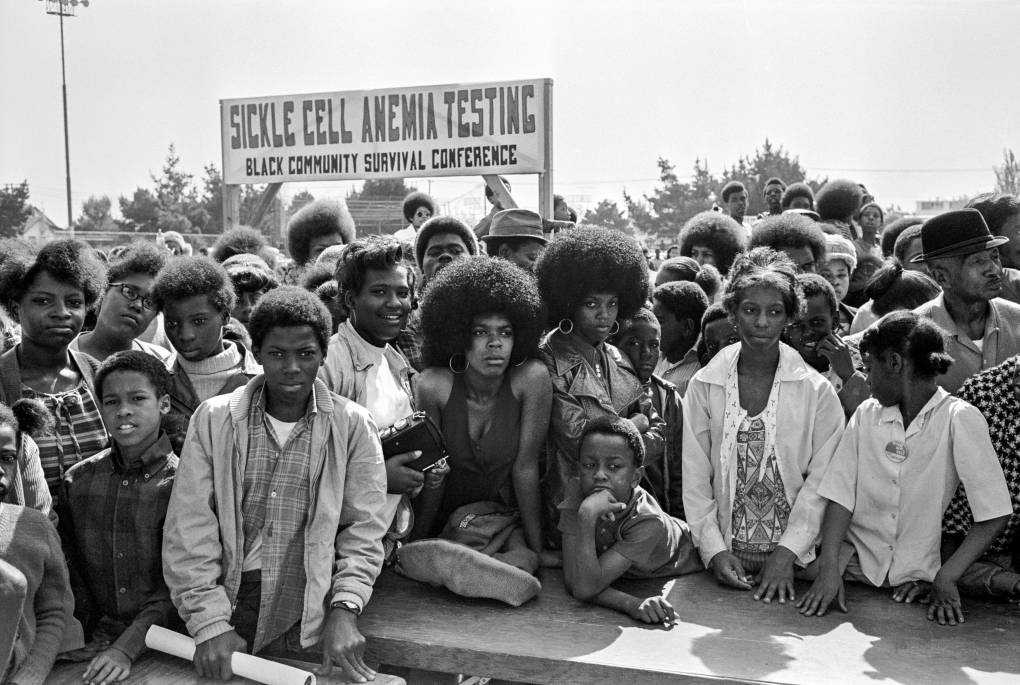
"caption": "People gather at a Black Panther Party-run sickle cell anemia testing site at Greenman Field in Oakland on March 31, 1972. ",
"credit": "Stephen Shames",
"altTag": "A black and white archival photo of a large group of African-American people gathered outside, behind them a sign reads \"sickle cell anemia testing.\"",
"description": null,
"imgSizes": {
"medium": {
"file": "https://cdn.kqed.org/wp-content/uploads/sites/2/2025/02/fgD1zByP-800x537.jpg",
"width": 800,
"height": 537,
"mimeType": "image/jpeg"
},
"large": {
"file": "https://cdn.kqed.org/wp-content/uploads/sites/2/2025/02/fgD1zByP-1020x685.jpg",
"width": 1020,
"height": 685,
"mimeType": "image/jpeg"
},
"thumbnail": {
"file": "https://cdn.kqed.org/wp-content/uploads/sites/2/2025/02/fgD1zByP-160x107.jpg",
"width": 160,
"height": 107,
"mimeType": "image/jpeg"
},
"medium_large": {
"file": "https://cdn.kqed.org/wp-content/uploads/sites/2/2025/02/fgD1zByP-768x516.jpg",
"width": 768,
"height": 516,
"mimeType": "image/jpeg"
},
"1536x1536": {
"file": "https://cdn.kqed.org/wp-content/uploads/sites/2/2025/02/fgD1zByP-1536x1031.jpg",
"width": 1536,
"height": 1031,
"mimeType": "image/jpeg"
},
"2048x2048": {
"file": "https://cdn.kqed.org/wp-content/uploads/sites/2/2025/02/fgD1zByP-2048x1375.jpg",
"width": 2048,
"height": 1375,
"mimeType": "image/jpeg"
},
"post-thumbnail": {
"file": "https://cdn.kqed.org/wp-content/uploads/sites/2/2025/02/fgD1zByP-672x372.jpg",
"width": 672,
"height": 372,
"mimeType": "image/jpeg"
},
"twentyfourteen-full-width": {
"file": "https://cdn.kqed.org/wp-content/uploads/sites/2/2025/02/fgD1zByP-1038x576.jpg",
"width": 1038,
"height": 576,
"mimeType": "image/jpeg"
},
"full-width": {
"file": "https://cdn.kqed.org/wp-content/uploads/sites/2/2025/02/fgD1zByP-1920x1289.jpg",
"width": 1920,
"height": 1289,
"mimeType": "image/jpeg"
},
"kqedFullSize": {
"file": "https://cdn.kqed.org/wp-content/uploads/sites/2/2025/02/fgD1zByP-scaled.jpg",
"width": 2560,
"height": 1719
}
},
"isLoading": false,
"fetchFailed": false
},
"arts_13971566": {
"type": "attachments",
"id": "arts_13971566",
"meta": {
"index": "attachments_1716263798",
"site": "arts",
"id": "13971566",
"found": true
},
"title": "long time gone",
"publishDate": 1738954532,
"status": "inherit",
"parent": 13971564,
"modified": 1738954576,
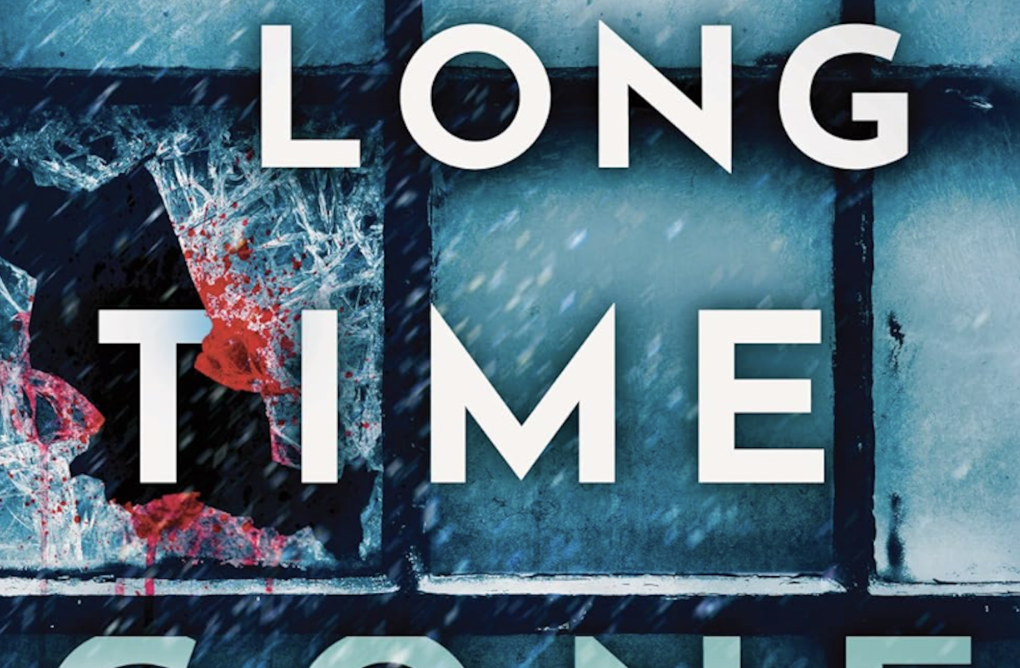
"caption": "‘A Long Time Gone’ by Joshua Moehling.",
"credit": "Poisoned Pen Press",
"altTag": "A book cover featuring a smashed windowpane with blood on the edges of the pane.",
"description": null,
"imgSizes": {
"medium": {
"file": "https://cdn.kqed.org/wp-content/uploads/sites/2/2025/02/long-time-gone-1-800x524.png",
"width": 800,
"height": 524,
"mimeType": "image/png"
},
"large": {
"file": "https://cdn.kqed.org/wp-content/uploads/sites/2/2025/02/long-time-gone-1-1020x668.png",
"width": 1020,
"height": 668,
"mimeType": "image/png"
},
"thumbnail": {
"file": "https://cdn.kqed.org/wp-content/uploads/sites/2/2025/02/long-time-gone-1-160x105.png",
"width": 160,
"height": 105,
"mimeType": "image/png"
},
"medium_large": {
"file": "https://cdn.kqed.org/wp-content/uploads/sites/2/2025/02/long-time-gone-1-768x503.png",
"width": 768,
"height": 503,
"mimeType": "image/png"
},
"1536x1536": {
"file": "https://cdn.kqed.org/wp-content/uploads/sites/2/2025/02/long-time-gone-1-1536x1005.png",
"width": 1536,
"height": 1005,
"mimeType": "image/png"
},
"post-thumbnail": {
"file": "https://cdn.kqed.org/wp-content/uploads/sites/2/2025/02/long-time-gone-1-672x372.png",
"width": 672,
"height": 372,
"mimeType": "image/png"
},
"twentyfourteen-full-width": {
"file": "https://cdn.kqed.org/wp-content/uploads/sites/2/2025/02/long-time-gone-1-1038x576.png",
"width": 1038,
"height": 576,
"mimeType": "image/png"
},
"full-width": {
"file": "https://cdn.kqed.org/wp-content/uploads/sites/2/2025/02/long-time-gone-1-1920x1257.png",
"width": 1920,
"height": 1257,
"mimeType": "image/png"
},
"kqedFullSize": {
"file": "https://cdn.kqed.org/wp-content/uploads/sites/2/2025/02/long-time-gone-1.png",
"width": 2000,
"height": 1309
}
},
"isLoading": false,
"fetchFailed": false
},
"arts_13971555": {
"type": "attachments",
"id": "arts_13971555",
"meta": {
"index": "attachments_1716263798",
"site": "arts",
"id": "13971555",
"found": true
},
"title": "lovers lane cropped 2",
"publishDate": 1738949940,
"status": "inherit",
"parent": 13971508,
"modified": 1738950063,
"caption": "Lovers Lane block party is a celebration of artists and activists in the Mission. ",
"credit": "Andrew Brobst",
"altTag": null,
"description": null,
"imgSizes": {
"medium": {
"file": "https://cdn.kqed.org/wp-content/uploads/sites/2/2025/02/lovers-lane-cropped-2-800x450.jpg",
"width": 800,
"height": 450,
"mimeType": "image/jpeg"
},
"large": {
"file": "https://cdn.kqed.org/wp-content/uploads/sites/2/2025/02/lovers-lane-cropped-2-1020x574.jpg",
"width": 1020,
"height": 574,
"mimeType": "image/jpeg"
},
"thumbnail": {
"file": "https://cdn.kqed.org/wp-content/uploads/sites/2/2025/02/lovers-lane-cropped-2-160x90.jpg",
"width": 160,
"height": 90,
"mimeType": "image/jpeg"
},
"medium_large": {
"file": "https://cdn.kqed.org/wp-content/uploads/sites/2/2025/02/lovers-lane-cropped-2-768x432.jpg",
"width": 768,
"height": 432,
"mimeType": "image/jpeg"
},
"1536x1536": {
"file": "https://cdn.kqed.org/wp-content/uploads/sites/2/2025/02/lovers-lane-cropped-2-1536x864.jpg",
"width": 1536,
"height": 864,
"mimeType": "image/jpeg"
},
"post-thumbnail": {
"file": "https://cdn.kqed.org/wp-content/uploads/sites/2/2025/02/lovers-lane-cropped-2-672x372.jpg",
"width": 672,
"height": 372,
"mimeType": "image/jpeg"
},
"twentyfourteen-full-width": {
"file": "https://cdn.kqed.org/wp-content/uploads/sites/2/2025/02/lovers-lane-cropped-2-1038x576.jpg",
"width": 1038,
"height": 576,
"mimeType": "image/jpeg"
},
"full-width": {
"file": "https://cdn.kqed.org/wp-content/uploads/sites/2/2025/02/lovers-lane-cropped-2-1920x1080.jpg",
"width": 1920,
"height": 1080,
"mimeType": "image/jpeg"
},
"kqedFullSize": {
"file": "https://cdn.kqed.org/wp-content/uploads/sites/2/2025/02/lovers-lane-cropped-2.jpg",
"width": 2000,
"height": 1125
}
},
"isLoading": false,
"fetchFailed": false
},
"arts_13971498": {
"type": "attachments",
"id": "arts_13971498",
"meta": {
"index": "attachments_1716263798",
"site": "arts",
"id": "13971498",
"found": true
},
"title": "DeMareonGipson.16x9",
"publishDate": 1738882152,
"status": "inherit",
"parent": 13970936,
"modified": 1738882209,
"caption": "DeMareon Gipson, published author and Berkeley Public Library employee, holds up a copy of Sly and the Family Stone's \"There's A Riot Goin' On\" album while sitting in front of Berkeley Public Library's large record collection. ",
"credit": "Jaylin Williams",
"altTag": null,
"description": null,
"imgSizes": {
"medium": {
"file": "https://cdn.kqed.org/wp-content/uploads/sites/2/2025/02/DeMareonGipson.16x9-800x450.jpg",
"width": 800,
"height": 450,
"mimeType": "image/jpeg"
},
"thumbnail": {
"file": "https://cdn.kqed.org/wp-content/uploads/sites/2/2025/02/DeMareonGipson.16x9-160x90.jpg",
"width": 160,
"height": 90,
"mimeType": "image/jpeg"
},
"medium_large": {
"file": "https://cdn.kqed.org/wp-content/uploads/sites/2/2025/02/DeMareonGipson.16x9-768x432.jpg",
"width": 768,
"height": 432,
"mimeType": "image/jpeg"
},
"post-thumbnail": {
"file": "https://cdn.kqed.org/wp-content/uploads/sites/2/2025/02/DeMareonGipson.16x9-672x372.jpg",
"width": 672,
"height": 372,
"mimeType": "image/jpeg"
},
"kqedFullSize": {
"file": "https://cdn.kqed.org/wp-content/uploads/sites/2/2025/02/DeMareonGipson.16x9.jpg",
"width": 1020,
"height": 574
}
},
"isLoading": false,
"fetchFailed": false
},
"arts_13971434": {
"type": "attachments",
"id": "arts_13971434",
"meta": {
"index": "attachments_1716263798",
"site": "arts",
"id": "13971434",
"found": true
},
"title": "NLA_MM-4_2000",
"publishDate": 1738805698,
"status": "inherit",
"parent": 13971409,
"modified": 1738805795,
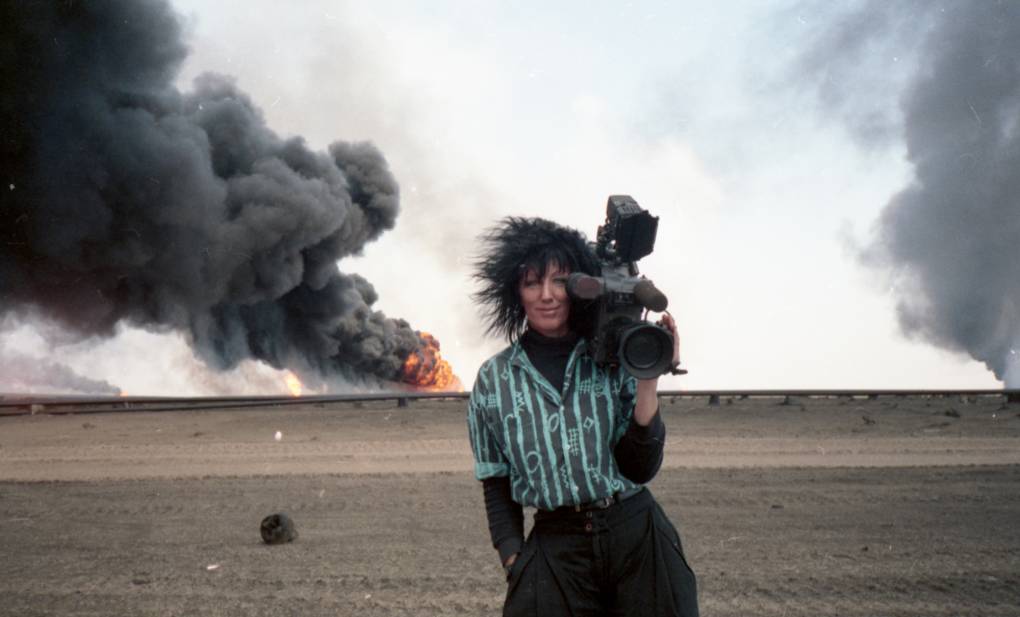
"caption": "Margaret Moth in a still from 'Never Look Away,' directed by Lucy Lawless.",
"credit": "Greenwich Entertainment",
"altTag": "woman with wild black hair stands with camera, smoke from fires in background",
"description": null,
"imgSizes": {
"medium": {
"file": "https://cdn.kqed.org/wp-content/uploads/sites/2/2025/02/NLA_MM-4_2000-800x484.jpg",
"width": 800,
"height": 484,
"mimeType": "image/jpeg"
},
"large": {
"file": "https://cdn.kqed.org/wp-content/uploads/sites/2/2025/02/NLA_MM-4_2000-1020x617.jpg",
"width": 1020,
"height": 617,
"mimeType": "image/jpeg"
},
"thumbnail": {
"file": "https://cdn.kqed.org/wp-content/uploads/sites/2/2025/02/NLA_MM-4_2000-160x97.jpg",
"width": 160,
"height": 97,
"mimeType": "image/jpeg"
},
"medium_large": {
"file": "https://cdn.kqed.org/wp-content/uploads/sites/2/2025/02/NLA_MM-4_2000-768x465.jpg",
"width": 768,
"height": 465,
"mimeType": "image/jpeg"
},
"1536x1536": {
"file": "https://cdn.kqed.org/wp-content/uploads/sites/2/2025/02/NLA_MM-4_2000-1536x929.jpg",
"width": 1536,
"height": 929,
"mimeType": "image/jpeg"
},
"post-thumbnail": {
"file": "https://cdn.kqed.org/wp-content/uploads/sites/2/2025/02/NLA_MM-4_2000-672x372.jpg",
"width": 672,
"height": 372,
"mimeType": "image/jpeg"
},
"twentyfourteen-full-width": {
"file": "https://cdn.kqed.org/wp-content/uploads/sites/2/2025/02/NLA_MM-4_2000-1038x576.jpg",
"width": 1038,
"height": 576,
"mimeType": "image/jpeg"
},
"full-width": {
"file": "https://cdn.kqed.org/wp-content/uploads/sites/2/2025/02/NLA_MM-4_2000-1920x1162.jpg",
"width": 1920,
"height": 1162,
"mimeType": "image/jpeg"
},
"kqedFullSize": {
"file": "https://cdn.kqed.org/wp-content/uploads/sites/2/2025/02/NLA_MM-4_2000.jpg",
"width": 2000,
"height": 1210
}
},
"isLoading": false,
"fetchFailed": false
},
"arts_13971423": {
"type": "attachments",
"id": "arts_13971423",
"meta": {
"index": "attachments_1716263798",
"site": "arts",
"id": "13971423",
"found": true
},
"title": "armand",
"publishDate": 1738803711,
"status": "inherit",
"parent": 13971421,
"modified": 1738803780,
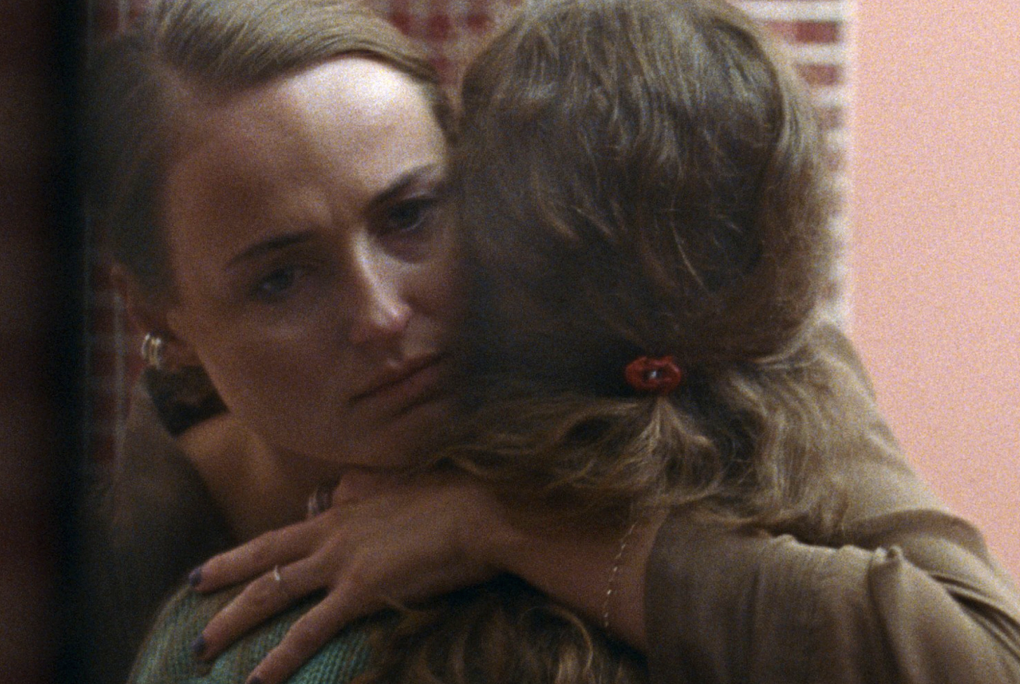
"caption": "Renate Reinsve in a scene from ‘Armand.’",
"credit": "IFC Films via AP",
"altTag": "A woman's forlorn face is visible as she embraces a second woman whose back is to the camera.",
"description": null,
"imgSizes": {
"medium": {
"file": "https://cdn.kqed.org/wp-content/uploads/sites/2/2025/02/armand-800x536.png",
"width": 800,
"height": 536,
"mimeType": "image/png"
},
"large": {
"file": "https://cdn.kqed.org/wp-content/uploads/sites/2/2025/02/armand-1020x684.png",
"width": 1020,
"height": 684,
"mimeType": "image/png"
},
"thumbnail": {
"file": "https://cdn.kqed.org/wp-content/uploads/sites/2/2025/02/armand-160x107.png",
"width": 160,
"height": 107,
"mimeType": "image/png"
},
"medium_large": {
"file": "https://cdn.kqed.org/wp-content/uploads/sites/2/2025/02/armand-768x515.png",
"width": 768,
"height": 515,
"mimeType": "image/png"
},
"1536x1536": {
"file": "https://cdn.kqed.org/wp-content/uploads/sites/2/2025/02/armand-1536x1030.png",
"width": 1536,
"height": 1030,
"mimeType": "image/png"
},
"post-thumbnail": {
"file": "https://cdn.kqed.org/wp-content/uploads/sites/2/2025/02/armand-672x372.png",
"width": 672,
"height": 372,
"mimeType": "image/png"
},
"twentyfourteen-full-width": {
"file": "https://cdn.kqed.org/wp-content/uploads/sites/2/2025/02/armand-1038x576.png",
"width": 1038,
"height": 576,
"mimeType": "image/png"
},
"full-width": {
"file": "https://cdn.kqed.org/wp-content/uploads/sites/2/2025/02/armand-1920x1287.png",
"width": 1920,
"height": 1287,
"mimeType": "image/png"
},
"kqedFullSize": {
"file": "https://cdn.kqed.org/wp-content/uploads/sites/2/2025/02/armand.png",
"width": 2000,
"height": 1341
}
},
"isLoading": false,
"fetchFailed": false
},
"arts_13971357": {
"type": "attachments",
"id": "arts_13971357",
"meta": {
"index": "attachments_1716263798",
"site": "arts",
"id": "13971357",
"found": true
},
"title": null,
"publishDate": 1738780515,
"status": "inherit",
"parent": 13971322,
"modified": 1738804593,
"caption": "A Black Film Connect meetup. ",
"credit": "Wallah Umoja",
"altTag": "A group of over 25 people gather around a couch as they pose for a photo.",
"description": null,
"imgSizes": {
"medium": {
"file": "https://cdn.kqed.org/wp-content/uploads/sites/2/2025/02/93ec25eb-047b-481b-ac15-032f2311aa34-800x533.jpg",
"width": 800,
"height": 533,
"mimeType": "image/jpeg"
},
"large": {
"file": "https://cdn.kqed.org/wp-content/uploads/sites/2/2025/02/93ec25eb-047b-481b-ac15-032f2311aa34-1020x680.jpg",
"width": 1020,
"height": 680,
"mimeType": "image/jpeg"
},
"thumbnail": {
"file": "https://cdn.kqed.org/wp-content/uploads/sites/2/2025/02/93ec25eb-047b-481b-ac15-032f2311aa34-160x107.jpg",
"width": 160,
"height": 107,
"mimeType": "image/jpeg"
},
"medium_large": {
"file": "https://cdn.kqed.org/wp-content/uploads/sites/2/2025/02/93ec25eb-047b-481b-ac15-032f2311aa34-768x512.jpg",
"width": 768,
"height": 512,
"mimeType": "image/jpeg"
},
"1536x1536": {
"file": "https://cdn.kqed.org/wp-content/uploads/sites/2/2025/02/93ec25eb-047b-481b-ac15-032f2311aa34-1536x1024.jpg",
"width": 1536,
"height": 1024,
"mimeType": "image/jpeg"
},
"2048x2048": {
"file": "https://cdn.kqed.org/wp-content/uploads/sites/2/2025/02/93ec25eb-047b-481b-ac15-032f2311aa34-2048x1365.jpg",
"width": 2048,
"height": 1365,
"mimeType": "image/jpeg"
},
"post-thumbnail": {
"file": "https://cdn.kqed.org/wp-content/uploads/sites/2/2025/02/93ec25eb-047b-481b-ac15-032f2311aa34-672x372.jpg",
"width": 672,
"height": 372,
"mimeType": "image/jpeg"
},
"twentyfourteen-full-width": {
"file": "https://cdn.kqed.org/wp-content/uploads/sites/2/2025/02/93ec25eb-047b-481b-ac15-032f2311aa34-1038x576.jpg",
"width": 1038,
"height": 576,
"mimeType": "image/jpeg"
},
"full-width": {
"file": "https://cdn.kqed.org/wp-content/uploads/sites/2/2025/02/93ec25eb-047b-481b-ac15-032f2311aa34-1920x1280.jpg",
"width": 1920,
"height": 1280,
"mimeType": "image/jpeg"
},
"kqedFullSize": {
"file": "https://cdn.kqed.org/wp-content/uploads/sites/2/2025/02/93ec25eb-047b-481b-ac15-032f2311aa34-scaled.jpg",
"width": 2560,
"height": 1706
}
},
"isLoading": false,
"fetchFailed": false
},
"arts_13971404": {
"type": "attachments",
"id": "arts_13971404",
"meta": {
"index": "attachments_1716263798",
"site": "arts",
"id": "13971404",
"found": true
},
"title": "Installation view, Leonora Carrington_ Mythopoesis, Gallery Wendi Norris, San Francisco, CA, 2025. Photo by Glen Cheriton(4)",
"publishDate": 1738790642,
"status": "inherit",
"parent": 13971331,
"modified": 1738790695,
"caption": "Installation view of Leonora Carrington, 'Mythopoesis,' at Gallery Wendi Norris in San Francisco.",
"credit": "Photo by Glen Cheriton",
"altTag": null,
"description": null,
"imgSizes": {
"medium": {
"file": "https://cdn.kqed.org/wp-content/uploads/sites/2/2025/02/Installation-view-Leonora-Carrington_-Mythopoesis-Gallery-Wendi-Norris-San-Francisco-CA-2025.-Photo-by-Glen-Cheriton4-800x533.jpg",
"width": 800,
"height": 533,
"mimeType": "image/jpeg"
},
"large": {
"file": "https://cdn.kqed.org/wp-content/uploads/sites/2/2025/02/Installation-view-Leonora-Carrington_-Mythopoesis-Gallery-Wendi-Norris-San-Francisco-CA-2025.-Photo-by-Glen-Cheriton4-1020x680.jpg",
"width": 1020,
"height": 680,
"mimeType": "image/jpeg"
},
"thumbnail": {
"file": "https://cdn.kqed.org/wp-content/uploads/sites/2/2025/02/Installation-view-Leonora-Carrington_-Mythopoesis-Gallery-Wendi-Norris-San-Francisco-CA-2025.-Photo-by-Glen-Cheriton4-160x107.jpg",
"width": 160,
"height": 107,
"mimeType": "image/jpeg"
},
"medium_large": {
"file": "https://cdn.kqed.org/wp-content/uploads/sites/2/2025/02/Installation-view-Leonora-Carrington_-Mythopoesis-Gallery-Wendi-Norris-San-Francisco-CA-2025.-Photo-by-Glen-Cheriton4-768x512.jpg",
"width": 768,
"height": 512,
"mimeType": "image/jpeg"
},
"1536x1536": {
"file": "https://cdn.kqed.org/wp-content/uploads/sites/2/2025/02/Installation-view-Leonora-Carrington_-Mythopoesis-Gallery-Wendi-Norris-San-Francisco-CA-2025.-Photo-by-Glen-Cheriton4-1536x1024.jpg",
"width": 1536,
"height": 1024,
"mimeType": "image/jpeg"
},
"post-thumbnail": {
"file": "https://cdn.kqed.org/wp-content/uploads/sites/2/2025/02/Installation-view-Leonora-Carrington_-Mythopoesis-Gallery-Wendi-Norris-San-Francisco-CA-2025.-Photo-by-Glen-Cheriton4-672x372.jpg",
"width": 672,
"height": 372,
"mimeType": "image/jpeg"
},
"twentyfourteen-full-width": {
"file": "https://cdn.kqed.org/wp-content/uploads/sites/2/2025/02/Installation-view-Leonora-Carrington_-Mythopoesis-Gallery-Wendi-Norris-San-Francisco-CA-2025.-Photo-by-Glen-Cheriton4-1038x576.jpg",
"width": 1038,
"height": 576,
"mimeType": "image/jpeg"
},
"full-width": {
"file": "https://cdn.kqed.org/wp-content/uploads/sites/2/2025/02/Installation-view-Leonora-Carrington_-Mythopoesis-Gallery-Wendi-Norris-San-Francisco-CA-2025.-Photo-by-Glen-Cheriton4-1920x1280.jpg",
"width": 1920,
"height": 1280,
"mimeType": "image/jpeg"
},
"kqedFullSize": {
"file": "https://cdn.kqed.org/wp-content/uploads/sites/2/2025/02/Installation-view-Leonora-Carrington_-Mythopoesis-Gallery-Wendi-Norris-San-Francisco-CA-2025.-Photo-by-Glen-Cheriton4.jpg",
"width": 2000,
"height": 1333
}
},
"isLoading": false,
"fetchFailed": false
},
"arts_13971340": {
"type": "attachments",
"id": "arts_13971340",
"meta": {
"index": "attachments_1716263798",
"site": "arts",
"id": "13971340",
"found": true
},
"title": "sirens call",
"publishDate": 1738712218,
"status": "inherit",
"parent": 13971338,
"modified": 1738712279,
"caption": "‘The Sirens’ Call: How Attention Became the World’s Most Endangered Resource’ by Chris Hayes.",
"credit": "Penguin Press",
"altTag": "A grey book cover with block lettering and neon green geometric pattern.",
"description": null,
"imgSizes": {
"medium": {
"file": "https://cdn.kqed.org/wp-content/uploads/sites/2/2025/02/sirens-call-1-800x446.png",
"width": 800,
"height": 446,
"mimeType": "image/png"
},
"large": {
"file": "https://cdn.kqed.org/wp-content/uploads/sites/2/2025/02/sirens-call-1-1020x568.png",
"width": 1020,
"height": 568,
"mimeType": "image/png"
},
"thumbnail": {
"file": "https://cdn.kqed.org/wp-content/uploads/sites/2/2025/02/sirens-call-1-160x89.png",
"width": 160,
"height": 89,
"mimeType": "image/png"
},
"medium_large": {
"file": "https://cdn.kqed.org/wp-content/uploads/sites/2/2025/02/sirens-call-1-768x428.png",
"width": 768,
"height": 428,
"mimeType": "image/png"
},
"1536x1536": {
"file": "https://cdn.kqed.org/wp-content/uploads/sites/2/2025/02/sirens-call-1-1536x856.png",
"width": 1536,
"height": 856,
"mimeType": "image/png"
},
"post-thumbnail": {
"file": "https://cdn.kqed.org/wp-content/uploads/sites/2/2025/02/sirens-call-1-672x372.png",
"width": 672,
"height": 372,
"mimeType": "image/png"
},
"twentyfourteen-full-width": {
"file": "https://cdn.kqed.org/wp-content/uploads/sites/2/2025/02/sirens-call-1-1038x576.png",
"width": 1038,
"height": 576,
"mimeType": "image/png"
},
"full-width": {
"file": "https://cdn.kqed.org/wp-content/uploads/sites/2/2025/02/sirens-call-1-1920x1069.png",
"width": 1920,
"height": 1069,
"mimeType": "image/png"
},
"kqedFullSize": {
"file": "https://cdn.kqed.org/wp-content/uploads/sites/2/2025/02/sirens-call-1.png",
"width": 2000,
"height": 1114
}
},
"isLoading": false,
"fetchFailed": false
},
"arts_13971221": {
"type": "attachments",
"id": "arts_13971221",
"meta": {
"index": "attachments_1716263798",
"site": "arts",
"id": "13971221",
"found": true
},
"title": "ramos bus stop",
"publishDate": 1738618201,
"status": "inherit",
"parent": 13968576,
"modified": 1738618325,
"caption": "‘Couple with Baby, Sixteenth Street Bus Stop’ from ‘A Fearless Eye: The Photography of Barbara Ramos.’",
"credit": "Chronicle Books",
"altTag": "A young woman with backcombed hair stands in fur coat and flat shoes clutching a baby. Behind her a young man with a pompador crouches. Behind him is an older man wearing a raincoat and hat.",
"description": null,
"imgSizes": {
"medium": {
"file": "https://cdn.kqed.org/wp-content/uploads/sites/2/2025/02/ramos-bus-stop-800x609.png",
"width": 800,
"height": 609,
"mimeType": "image/png"
},
"large": {
"file": "https://cdn.kqed.org/wp-content/uploads/sites/2/2025/02/ramos-bus-stop-1020x777.png",
"width": 1020,
"height": 777,
"mimeType": "image/png"
},
"thumbnail": {
"file": "https://cdn.kqed.org/wp-content/uploads/sites/2/2025/02/ramos-bus-stop-160x122.png",
"width": 160,
"height": 122,
"mimeType": "image/png"
},
"medium_large": {
"file": "https://cdn.kqed.org/wp-content/uploads/sites/2/2025/02/ramos-bus-stop-768x585.png",
"width": 768,
"height": 585,
"mimeType": "image/png"
},
"1536x1536": {
"file": "https://cdn.kqed.org/wp-content/uploads/sites/2/2025/02/ramos-bus-stop-1536x1170.png",
"width": 1536,
"height": 1170,
"mimeType": "image/png"
},
"post-thumbnail": {
"file": "https://cdn.kqed.org/wp-content/uploads/sites/2/2025/02/ramos-bus-stop-672x372.png",
"width": 672,
"height": 372,
"mimeType": "image/png"
},
"twentyfourteen-full-width": {
"file": "https://cdn.kqed.org/wp-content/uploads/sites/2/2025/02/ramos-bus-stop-1038x576.png",
"width": 1038,
"height": 576,
"mimeType": "image/png"
},
"full-width": {
"file": "https://cdn.kqed.org/wp-content/uploads/sites/2/2025/02/ramos-bus-stop-1920x1462.png",
"width": 1920,
"height": 1462,
"mimeType": "image/png"
},
"kqedFullSize": {
"file": "https://cdn.kqed.org/wp-content/uploads/sites/2/2025/02/ramos-bus-stop.png",
"width": 2000,
"height": 1523
}
},
"isLoading": false,
"fetchFailed": false
},
"arts_13971271": {
"type": "attachments",
"id": "arts_13971271",
"meta": {
"index": "attachments_1716263798",
"site": "arts",
"id": "13971271",
"found": true
},
"title": "Siama and Kiazi Malonga",
"publishDate": 1738687867,
"status": "inherit",
"parent": 13971034,
"modified": 1738688333,
"caption": "Siama and her father Kiazi Malonga share smiles as they pose for a photo. ",
"credit": "Bryon Malik",
"altTag": "A girl smiles skyward as she stands next to her father, who is squatting and smiling while holding a drum.",
"description": null,
"imgSizes": {
"medium": {
"file": "https://cdn.kqed.org/wp-content/uploads/sites/2/2025/02/DSC_7503-r-800x560.jpg",
"width": 800,
"height": 560,
"mimeType": "image/jpeg"
},
"large": {
"file": "https://cdn.kqed.org/wp-content/uploads/sites/2/2025/02/DSC_7503-r-1020x714.jpg",
"width": 1020,
"height": 714,
"mimeType": "image/jpeg"
},
"thumbnail": {
"file": "https://cdn.kqed.org/wp-content/uploads/sites/2/2025/02/DSC_7503-r-160x112.jpg",
"width": 160,
"height": 112,
"mimeType": "image/jpeg"
},
"medium_large": {
"file": "https://cdn.kqed.org/wp-content/uploads/sites/2/2025/02/DSC_7503-r-768x538.jpg",
"width": 768,
"height": 538,
"mimeType": "image/jpeg"
},
"1536x1536": {
"file": "https://cdn.kqed.org/wp-content/uploads/sites/2/2025/02/DSC_7503-r-1536x1076.jpg",
"width": 1536,
"height": 1076,
"mimeType": "image/jpeg"
},
"2048x2048": {
"file": "https://cdn.kqed.org/wp-content/uploads/sites/2/2025/02/DSC_7503-r-2048x1434.jpg",
"width": 2048,
"height": 1434,
"mimeType": "image/jpeg"
},
"post-thumbnail": {
"file": "https://cdn.kqed.org/wp-content/uploads/sites/2/2025/02/DSC_7503-r-672x372.jpg",
"width": 672,
"height": 372,
"mimeType": "image/jpeg"
},
"twentyfourteen-full-width": {
"file": "https://cdn.kqed.org/wp-content/uploads/sites/2/2025/02/DSC_7503-r-1038x576.jpg",
"width": 1038,
"height": 576,
"mimeType": "image/jpeg"
},
"full-width": {
"file": "https://cdn.kqed.org/wp-content/uploads/sites/2/2025/02/DSC_7503-r-1920x1345.jpg",
"width": 1920,
"height": 1345,
"mimeType": "image/jpeg"
},
"kqedFullSize": {
"file": "https://cdn.kqed.org/wp-content/uploads/sites/2/2025/02/DSC_7503-r.jpg",
"width": 2350,
"height": 1646
}
},
"isLoading": false,
"fetchFailed": false
},
"arts_13971307": {
"type": "attachments",
"id": "arts_13971307",
"meta": {
"index": "attachments_1716263798",
"site": "arts",
"id": "13971307",
"found": true
},
"title": "_37A4926",
"publishDate": 1738697928,
"status": "inherit",
"parent": 13971294,
"modified": 1738699134,
"caption": "Richard Strauss’ ‘Elektra’ returns to San Francisco Opera in June 2026. ",
"credit": "Cory Weaver/San Francisco Opera",
"altTag": "An Ancient Greek-inspired opera set in which a performer wields an axe prop.",
"description": null,
"imgSizes": {
"medium": {
"file": "https://cdn.kqed.org/wp-content/uploads/sites/2/2025/02/37A4926-800x533.jpg",
"width": 800,
"height": 533,
"mimeType": "image/jpeg"
},
"large": {
"file": "https://cdn.kqed.org/wp-content/uploads/sites/2/2025/02/37A4926-1020x679.jpg",
"width": 1020,
"height": 679,
"mimeType": "image/jpeg"
},
"thumbnail": {
"file": "https://cdn.kqed.org/wp-content/uploads/sites/2/2025/02/37A4926-160x107.jpg",
"width": 160,
"height": 107,
"mimeType": "image/jpeg"
},
"medium_large": {
"file": "https://cdn.kqed.org/wp-content/uploads/sites/2/2025/02/37A4926-768x511.jpg",
"width": 768,
"height": 511,
"mimeType": "image/jpeg"
},
"1536x1536": {
"file": "https://cdn.kqed.org/wp-content/uploads/sites/2/2025/02/37A4926-1536x1023.jpg",
"width": 1536,
"height": 1023,
"mimeType": "image/jpeg"
},
"post-thumbnail": {
"file": "https://cdn.kqed.org/wp-content/uploads/sites/2/2025/02/37A4926-672x372.jpg",
"width": 672,
"height": 372,
"mimeType": "image/jpeg"
},
"twentyfourteen-full-width": {
"file": "https://cdn.kqed.org/wp-content/uploads/sites/2/2025/02/37A4926-1038x576.jpg",
"width": 1038,
"height": 576,
"mimeType": "image/jpeg"
},
"full-width": {
"file": "https://cdn.kqed.org/wp-content/uploads/sites/2/2025/02/37A4926-1920x1279.jpg",
"width": 1920,
"height": 1279,
"mimeType": "image/jpeg"
},
"kqedFullSize": {
"file": "https://cdn.kqed.org/wp-content/uploads/sites/2/2025/02/37A4926.jpg",
"width": 2000,
"height": 1332
}
},
"isLoading": false,
"fetchFailed": false
}
},
"audioPlayerReducer": {
"postId": "stream_live",
"isPaused": true,
"isPlaying": false,
"pfsActive": false,
"pledgeModalIsOpen": true,
"playerDrawerIsOpen": false,
"liveAudioPlayStartedAt": 0,
"liveAudioPlayContext": ""
},
"authorsReducer": {
"byline_arts_13971564": {
"type": "authors",
"id": "byline_arts_13971564",
"meta": {
"override": true
},
"slug": "byline_arts_13971564",
"name": "Donna Edwards, Associated Press",
"isLoading": false
},
"byline_arts_13971421": {
"type": "authors",
"id": "byline_arts_13971421",
"meta": {
"override": true
},
"slug": "byline_arts_13971421",
"name": "Lindsey Bahr, Associated Press",
"isLoading": false
},
"byline_arts_13971331": {
"type": "authors",
"id": "byline_arts_13971331",
"meta": {
"override": true
},
"slug": "byline_arts_13971331",
"name": "Brian Karl",
"isLoading": false
},
"byline_arts_13971338": {
"type": "authors",
"id": "byline_arts_13971338",
"meta": {
"override": true
},
"slug": "byline_arts_13971338",
"name": "Andrew DeMillo, Associated Press",
"isLoading": false
},
"mfox": {
"type": "authors",
"id": "22",
"meta": {
"index": "authors_1716337520",
"id": "22",
"found": true
},
"name": "Michael Fox",
"firstName": "Michael",
"lastName": "Fox",
"slug": "mfox",
"email": "foxonfilm@yahoo.com",
"display_author_email": false,
"staff_mastheads": [],
"title": "KQED Contributor",
"bio": "Michael Fox has written about film for dozens of publications since 1987. He is a founding member of the San Francisco Bay Area Film Critics Circle.",
"avatar": "https://secure.gravatar.com/avatar/d9849d6c659c41414795c471d907bb97b396e2a32b88e20e6ff66f65fbdd6dcd?s=600&d=blank&r=g",
"twitter": null,
"bluesky": null,
"facebook": null,
"instagram": null,
"linkedin": null,
"sites": [
{
"site": "arts",
"roles": [
"Contributor",
"contributor"
]
}
],
"headData": {
"title": "Michael Fox | KQED",
"description": "KQED Contributor",
"ogImgSrc": "https://secure.gravatar.com/avatar/d9849d6c659c41414795c471d907bb97b396e2a32b88e20e6ff66f65fbdd6dcd?s=600&d=blank&r=g",
"twImgSrc": "https://secure.gravatar.com/avatar/d9849d6c659c41414795c471d907bb97b396e2a32b88e20e6ff66f65fbdd6dcd?s=600&d=blank&r=g"
},
"isLoading": false,
"link": "/author/mfox"
},
"ralexandra": {
"type": "authors",
"id": "11242",
"meta": {
"index": "authors_1716337520",
"id": "11242",
"found": true
},
"name": "Rae Alexandra",
"firstName": "Rae",
"lastName": "Alexandra",
"slug": "ralexandra",
"email": "ralexandra@kqed.org",
"display_author_email": true,
"staff_mastheads": [],
"title": "Reporter/Producer",
"bio": "Rae Alexandra is a Reporter/Producer for KQED Arts & Culture, and the creator/author of the \u003ca href=\"https://www.kqed.org/arts/program/rebel-girls-from-bay-area-history\">Rebel Girls From Bay Area History\u003c/a> and \u003ca href=\"https://www.kqed.org/bizarrebayarea\">Bizarre Bay Area\u003c/a> series. Her debut book, \u003ca href=\"https://citylights.com/politics-current-events-history/unsung-heroines35-women-who-changed/\">Unsung Heroines: 35 Women Who Changed the Bay Area\u003c/a> was published by City Lights in March 2026. In 2023, Rae was awarded an SPJ Excellence in Journalism Award for Arts & Culture. Rae was born and raised in Wales and subsequently — even after two decades in Northern California — still uses phrases that regularly baffle her coworkers.",
"avatar": "https://secure.gravatar.com/avatar/edfee8176c80cc0a382b051190f5341997df378a934a5774dcb0977732dfd401?s=600&d=blank&r=g",
"twitter": null,
"bluesky": null,
"facebook": null,
"instagram": null,
"linkedin": null,
"sites": [
{
"site": "arts",
"roles": [
"subscriber"
]
},
{
"site": "news",
"roles": [
"subscriber"
]
},
{
"site": "pop",
"roles": [
"subscriber"
]
},
{
"site": "bayareabites",
"roles": [
"subscriber"
]
},
{
"site": "science",
"roles": [
"subscriber"
]
}
],
"headData": {
"title": "Rae Alexandra | KQED",
"description": "Reporter/Producer",
"ogImgSrc": "https://secure.gravatar.com/avatar/edfee8176c80cc0a382b051190f5341997df378a934a5774dcb0977732dfd401?s=600&d=blank&r=g",
"twImgSrc": "https://secure.gravatar.com/avatar/edfee8176c80cc0a382b051190f5341997df378a934a5774dcb0977732dfd401?s=600&d=blank&r=g"
},
"isLoading": false,
"link": "/author/ralexandra"
},
"nvoynovskaya": {
"type": "authors",
"id": "11387",
"meta": {
"index": "authors_1716337520",
"id": "11387",
"found": true
},
"name": "Nastia Voynovskaya",
"firstName": "Nastia",
"lastName": "Voynovskaya",
"slug": "nvoynovskaya",
"email": "nvoynovskaya@kqed.org",
"display_author_email": false,
"staff_mastheads": [
"arts"
],
"title": "Editor and reporter",
"bio": "Nastia Voynovskaya is a reporter, editor and host at KQED Arts & Culture. She's been covering the arts in the Bay Area for over a decade, with a focus on music, queer culture, labor issues and grassroots organizing. She has edited KQED story series such as Trans Bay: A History of San Francisco's Gender-Diverse Community, and co-created KQED's Bay Area hip-hop history project, That's My Word. Nastia's work has been recognized by the Society of Professional Journalists and San Francisco Press Club. She regularly appears on podcasts and radio programs, including NPR's All Songs Considered, and hosts live events where music, culture and conversation meet.",
"avatar": "https://secure.gravatar.com/avatar/5025ee460e5a85d69ca20ea6c6f2f80d7e17795c828f61ea3aecfcd924e9042e?s=600&d=blank&r=g",
"twitter": null,
"bluesky": null,
"facebook": null,
"instagram": "https://www.instagram.com/nananastia/",
"linkedin": null,
"sites": [
{
"site": "",
"roles": [
"editor"
]
},
{
"site": "arts",
"roles": [
"administrator"
]
},
{
"site": "news",
"roles": [
"editor"
]
},
{
"site": "pop",
"roles": [
"administrator"
]
},
{
"site": "bayareabites",
"roles": [
"editor"
]
},
{
"site": "podcasts",
"roles": [
"editor"
]
},
{
"site": "hiphop",
"roles": [
"editor"
]
}
],
"headData": {
"title": "Nastia Voynovskaya | KQED",
"description": "Editor and reporter",
"ogImgSrc": "https://secure.gravatar.com/avatar/5025ee460e5a85d69ca20ea6c6f2f80d7e17795c828f61ea3aecfcd924e9042e?s=600&d=blank&r=g",
"twImgSrc": "https://secure.gravatar.com/avatar/5025ee460e5a85d69ca20ea6c6f2f80d7e17795c828f61ea3aecfcd924e9042e?s=600&d=blank&r=g"
},
"isLoading": false,
"link": "/author/nvoynovskaya"
},
"ogpenn": {
"type": "authors",
"id": "11491",
"meta": {
"index": "authors_1716337520",
"id": "11491",
"found": true
},
"name": "Pendarvis Harshaw",
"firstName": "Pendarvis",
"lastName": "Harshaw",
"slug": "ogpenn",
"email": "ogpenn@gmail.com",
"display_author_email": false,
"staff_mastheads": [
"arts"
],
"title": "Community Engagement Reporter",
"bio": "Pendarvis Harshaw is an educator, host and writer with KQED Arts.",
"avatar": "https://secure.gravatar.com/avatar/972b77ee8e3f346ae2b00622661187fbfabd059b5693bbdc1475ea7a722fd4cd?s=600&d=blank&r=g",
"twitter": null,
"bluesky": null,
"facebook": null,
"instagram": "ogpenn",
"linkedin": null,
"sites": [
{
"site": "arts",
"roles": [
"administrator"
]
},
{
"site": "news",
"roles": [
"editor"
]
},
{
"site": "bayareabites",
"roles": [
"author"
]
},
{
"site": "hiphop",
"roles": [
"editor"
]
}
],
"headData": {
"title": "Pendarvis Harshaw | KQED",
"description": "Community Engagement Reporter",
"ogImgSrc": "https://secure.gravatar.com/avatar/972b77ee8e3f346ae2b00622661187fbfabd059b5693bbdc1475ea7a722fd4cd?s=600&d=blank&r=g",
"twImgSrc": "https://secure.gravatar.com/avatar/972b77ee8e3f346ae2b00622661187fbfabd059b5693bbdc1475ea7a722fd4cd?s=600&d=blank&r=g"
},
"isLoading": false,
"link": "/author/ogpenn"
}
},
"pagesReducer": {
"arts_category_the-do-list": {
"type": "terms",
"id": "arts_22313",
"meta": {
"index": "terms_1716263798",
"site": "arts",
"id": "22313",
"score": 13.107631
},
"name": "The Do List",
"slug": "the-do-list",
"taxonomy": "category",
"description": null,
"featImg": null,
"headData": {
"title": "The Do List | KQED Arts",
"description": null,
"ogTitle": null,
"ogDescription": null,
"ogImgId": null,
"twTitle": null,
"twDescription": null,
"twImgId": null
},
"ttid": 22325,
"isLoading": false,
"title": "The Do List",
"pageMeta": {
"site": "arts",
"WpPageTemplate": "page-topic-editorial",
"currentPage": 45
},
"blocks": [
{
"blockName": "kqed/post-list",
"attrs": {
"layout": "cardArticle2",
"query": "posts/arts?category=the-do-list",
"seeMore": false,
"paginated": true,
"page": 45
}
},
{
"blockName": "kqed/ad"
}
]
}
},
"pfsSessionReducer": {},
"postsReducer": {
"stream_live": {
"type": "live",
"id": "stream_live",
"audioUrl": "https://streams.kqed.org/kqedradio",
"title": "Live Stream",
"excerpt": "Live Stream information currently unavailable.",
"link": "/radio",
"featImg": "",
"label": {
"name": "KQED Live",
"link": "/"
}
},
"stream_kqedNewscast": {
"type": "posts",
"id": "stream_kqedNewscast",
"audioUrl": "https://www.kqed.org/.stream/anon/radio/RDnews/newscast.mp3?_=1",
"title": "KQED Newscast",
"featImg": "",
"label": {
"name": "88.5 FM",
"link": "/"
}
},
"arts_13971589": {
"type": "posts",
"id": "arts_13971589",
"meta": {
"index": "posts_1716263798",
"site": "arts",
"id": "13971589",
"score": null,
"sort": [
1739219642000
]
},
"guestAuthors": [],
"slug": "black-panther-party-survival-programs-exhibit",
"title": "Applying The Black Panther Party's Survival Programs to Today",
"publishDate": 1739219642,
"format": "standard",
"headTitle": "Applying The Black Panther Party’s Survival Programs to Today | KQED",
"labelTerm": {},
"content": "\u003cp>The Black Panther Party For Self-Defense, founded in Oakland in 1966, was a landmark organization that uplifted the Black community by providing resources to neighborhoods neglected by the local and federal government.\u003c/p>\n\u003cp>The Party was well-known for its Free Breakfast Program and its independent newspaper, \u003cem>The Black Panther. \u003c/em>The group was also widely recognized for its fashion, as its members regularly dressed in sleek black leather jackets and berets.\u003c/p>\n\u003cp>But the history of the organization’s survival programs, 65 of them in total ranging from health services to transportation assistance, are often misunderstood or overlooked.\u003c/p>\n\u003cp>To illuminate these programs’ significance, on Thursday, Feb. 13, the\u003ca href=\"https://hueypnewtonfoundation.org/\" target=\"_blank\" rel=\"noopener\"> Dr. Huey P. Newton Foundation\u003c/a> debuts an exhibition of archival photography titled \u003cem>\u003ca href=\"https://www.eventbrite.com/e/survival-pending-revolution-exhibition-opening-tickets-1219614562989?aff=ebdsoporgprofile\" target=\"_blank\" rel=\"noopener\">Survival Pending Revolution: The Black Panther Party Service to the People Programs \u003c/a>\u003c/em>at the \u003ca href=\"https://www.blackpantherpartymuseum.org/\" target=\"_blank\" rel=\"noopener\">Black Panther Party Museum\u003c/a> in downtown Oakland.\u003c/p>\n\u003cfigure id=\"attachment_13971591\" class=\"wp-caption aligncenter\" style=\"max-width: 800px\">\u003cimg loading=\"lazy\" decoding=\"async\" class=\"wp-image-13971591 size-medium\" src=\"https://cdn.kqed.org/wp-content/uploads/sites/2/2025/02/vB7ZgqMy-800x531.jpg\" alt=\"\" width=\"800\" height=\"531\" srcset=\"https://cdn.kqed.org/wp-content/uploads/sites/2/2025/02/vB7ZgqMy-800x531.jpg 800w, https://cdn.kqed.org/wp-content/uploads/sites/2/2025/02/vB7ZgqMy-1020x677.jpg 1020w, https://cdn.kqed.org/wp-content/uploads/sites/2/2025/02/vB7ZgqMy-160x106.jpg 160w, https://cdn.kqed.org/wp-content/uploads/sites/2/2025/02/vB7ZgqMy-768x510.jpg 768w\" sizes=\"auto, (max-width: 800px) 100vw, 800px\">\u003cfigcaption class=\"wp-caption-text\">A glimpse inside one of The Black Panther Party’s survival programs. \u003ccite>(Stephen Shames)\u003c/cite>\u003c/figcaption>\u003c/figure>\n\u003cp>“A lot of folks know about the free breakfast for schoolchildren,” says \u003ca href=\"https://www.xaviergbuck.com/\" target=\"_blank\" rel=\"noopener\">Dr. Xavier Buck\u003c/a>, the executive director of the Dr. Huey P. Newton Foundation. “Some may even know about the free medical clinics.”\u003c/p>\n\u003cp>[ad fullwidth]\u003c/p>\n\u003cp>As for the contents of the exhibition, Dr. Buck explains, “We’re going to talk about the free ambulance service, the free pest control, the free bussing to prisons so families wouldn’t be broken up.”\u003c/p>\n\u003cp>By exhibiting rarely seen photos and sharing insight from veteran party members, Dr. Buck says attendees will gain a better understanding of what the Party did, how they did it and why they did it.\u003c/p>\n\u003cp>Another goal of the exhibition is to dispel the notion of the survival programs as some form of charity. Instead, Dr. Buck explains, the Black Panther Party saw them as organizing tools.\u003c/p>\n\u003cp>[aside postID='news_12014210']An example is the free breakfast program. “Yes, it was feeding kids in our schools,” Dr. Buck says. But it also served as an entry point for party members to inspire children to think critically about their circumstances — by asking questions like, “In such a wealthy country, why were you so hungry in the first place?” says Dr. Buck.\u003c/p>\n\u003cp>In Oakland, grassroots organizing has long connected to electoral politics. Dr. Buck points to the 1973 political campaigns of Black Panther Party co-founder Bobby Seale and former Black Panther Party leader Elaine Brown.\u003c/p>\n\u003cp>“They engaged a new voter bloc,” says Dr. Buck of the Black Panther Party leaders. And four years later, in 1977, when the Black Panthers pushed forward the campaign of mayoral candidate Lionel Wilson, Dr. Buck says, they leveraged that same organized bloc from the survival programs.\u003c/p>\n\u003cp>In result, Wilson was elected as Oakland’s first Black mayor.\u003c/p>\n\u003cp>“It’s really about how we tie the services that we give the people to how we actually gain political power,” says Dr. Buck.\u003c/p>\n\u003cfigure id=\"attachment_13971595\" class=\"wp-caption aligncenter\" style=\"max-width: 1669px\">\u003cimg loading=\"lazy\" decoding=\"async\" class=\"wp-image-13971595 size-full\" src=\"https://cdn.kqed.org/wp-content/uploads/sites/2/2025/02/B49mDBoT-scaled.jpg\" alt=\"\" width=\"1669\" height=\"2560\">\u003cfigcaption class=\"wp-caption-text\">‘The Black Panther,’ the official newspaper of the Black Panther Party, which was circulated to hundreds of thousands of readers all around the United States. \u003ccite>(Stephen Shames)\u003c/cite>\u003c/figcaption>\u003c/figure>\n\u003cp>The forthcoming exhibition shows the practitioners and the beneficiaries of the Black Panther Party’s survival programs through the lens of photographers \u003ca href=\"https://www.duchodennis.com/#/\" target=\"_blank\" rel=\"noopener\">Ducho Dennis\u003c/a>, \u003ca href=\"https://stephenshames.com/\" target=\"_blank\" rel=\"noopener\">Stephen Shames\u003c/a> and \u003ca href=\"https://exhibits.stanford.edu/fitch\" target=\"_blank\" rel=\"noopener\">Bob Fitch\u003c/a>, as well as\u003ca href=\"https://oac.cdlib.org/findaid/ark:/13030/c8b85cfn/\" target=\"_blank\" rel=\"noopener\"> Ruth Marion-Baruch and Pirkle Jones.\u003c/a>\u003c/p>\n\u003cp>The exhibition is set to open on Feb. 13 with a three-hour event where attendees can guide themselves through a tour of the photos; there will also be a 45-minute presentation.\u003c/p>\n\u003cp>Four days later, on Feb. 17, the Dr. Huey P. Newton Foundation will celebrate its 30th anniversary on what would’ve been the late Dr. Huey P. Newton’s 83rd birthday.\u003c/p>\n\u003chr>\n\u003cp>\u003c/p>\n\u003cp>\u003cem>The \u003ca href=\"https://hueypnewtonfoundation.org/\" target=\"_blank\" rel=\"noopener\">Dr. Huey P. Newton Foundation\u003c/a> presents ‘\u003ca href=\"https://www.eventbrite.com/e/survival-pending-revolution-exhibition-opening-tickets-1219614562989?aff=ebdsoporgprofile\" target=\"_blank\" rel=\"noopener\">Survival Pending Revolution: The Black Panther Party Service to the People Programs\u003c/a>’ at the \u003ca href=\"https://www.blackpantherpartymuseum.org/\" target=\"_blank\" rel=\"noopener\">Black Panther Party Museum\u003c/a> in downtown Oakland on Thursday, Feb. 13. \u003ca href=\"https://www.eventbrite.com/e/survival-pending-revolution-exhibition-opening-tickets-1219614562989?aff=ebdsoporgprofile\" target=\"_blank\" rel=\"noopener\">Details here\u003c/a>.\u003c/em>\u003c/p>\n\n",
"blocks": [],
"excerpt": "An exhibit at the Black Panther Party museum shows what a community can do when the government fails them.",
"status": "publish",
"parent": 0,
"modified": 1787684122,
"stats": {
"hasAudio": false,
"hasVideo": false,
"hasChartOrMap": false,
"iframeSrcs": [],
"hasGoogleForm": false,
"hasGallery": false,
"hasHearkenModule": false,
"hasPolis": false,
"paragraphCount": 19,
"wordCount": 665
},
"headData": {
"title": "Applying The Black Panther Party's Survival Programs to Today | KQED",
"description": "An exhibit at the Black Panther Party museum shows what a community can do when the government fails them.",
"ogTitle": "",
"ogDescription": "",
"ogImgId": "",
"twTitle": "",
"twDescription": "",
"twImgId": "",
"schema": {
"@context": "https://schema.org",
"@type": "Article",
"headline": "Applying The Black Panther Party's Survival Programs to Today",
"datePublished": "2025-02-10T12:34:02-08:00",
"dateModified": "2026-08-25T11:55:22-07:00",
"image": "https://cdn.kqed.org/wp-content/uploads/2020/02/KQED-OG-Image@1x.png"
}
},
"primaryCategory": {
"termId": 1,
"slug": "arts",
"name": "Arts"
},
"source": "The Do List",
"sourceUrl": "https://www.kqed.org/thedolist",
"sticky": false,
"nprStoryId": "kqed-13971589",
"templateType": "standard",
"featuredImageType": "standard",
"excludeFromSiteSearch": "Include",
"articleAge": "0",
"path": "/arts/13971589/black-panther-party-survival-programs-exhibit",
"audioTrackLength": null,
"parsedContent": [
{
"type": "contentString",
"content": "\u003cdiv class=\"post-body\">\u003cp>\u003cp>The Black Panther Party For Self-Defense, founded in Oakland in 1966, was a landmark organization that uplifted the Black community by providing resources to neighborhoods neglected by the local and federal government.\u003c/p>\n\u003cp>The Party was well-known for its Free Breakfast Program and its independent newspaper, \u003cem>The Black Panther. \u003c/em>The group was also widely recognized for its fashion, as its members regularly dressed in sleek black leather jackets and berets.\u003c/p>\n\u003cp>But the history of the organization’s survival programs, 65 of them in total ranging from health services to transportation assistance, are often misunderstood or overlooked.\u003c/p>\n\u003cp>To illuminate these programs’ significance, on Thursday, Feb. 13, the\u003ca href=\"https://hueypnewtonfoundation.org/\" target=\"_blank\" rel=\"noopener\"> Dr. Huey P. Newton Foundation\u003c/a> debuts an exhibition of archival photography titled \u003cem>\u003ca href=\"https://www.eventbrite.com/e/survival-pending-revolution-exhibition-opening-tickets-1219614562989?aff=ebdsoporgprofile\" target=\"_blank\" rel=\"noopener\">Survival Pending Revolution: The Black Panther Party Service to the People Programs \u003c/a>\u003c/em>at the \u003ca href=\"https://www.blackpantherpartymuseum.org/\" target=\"_blank\" rel=\"noopener\">Black Panther Party Museum\u003c/a> in downtown Oakland.\u003c/p>\n\u003cfigure id=\"attachment_13971591\" class=\"wp-caption aligncenter\" style=\"max-width: 800px\">\u003cimg loading=\"lazy\" decoding=\"async\" class=\"wp-image-13971591 size-medium\" src=\"https://cdn.kqed.org/wp-content/uploads/sites/2/2025/02/vB7ZgqMy-800x531.jpg\" alt=\"\" width=\"800\" height=\"531\" srcset=\"https://cdn.kqed.org/wp-content/uploads/sites/2/2025/02/vB7ZgqMy-800x531.jpg 800w, https://cdn.kqed.org/wp-content/uploads/sites/2/2025/02/vB7ZgqMy-1020x677.jpg 1020w, https://cdn.kqed.org/wp-content/uploads/sites/2/2025/02/vB7ZgqMy-160x106.jpg 160w, https://cdn.kqed.org/wp-content/uploads/sites/2/2025/02/vB7ZgqMy-768x510.jpg 768w\" sizes=\"auto, (max-width: 800px) 100vw, 800px\">\u003cfigcaption class=\"wp-caption-text\">A glimpse inside one of The Black Panther Party’s survival programs. \u003ccite>(Stephen Shames)\u003c/cite>\u003c/figcaption>\u003c/figure>\n\u003cp>“A lot of folks know about the free breakfast for schoolchildren,” says \u003ca href=\"https://www.xaviergbuck.com/\" target=\"_blank\" rel=\"noopener\">Dr. Xavier Buck\u003c/a>, the executive director of the Dr. Huey P. Newton Foundation. “Some may even know about the free medical clinics.”\u003c/p>\n\u003cp>\u003c/p>\u003c/div>",
"attributes": {
"named": {},
"numeric": []
}
},
{
"type": "component",
"content": "",
"name": "ad",
"attributes": {
"named": {
"label": "fullwidth"
},
"numeric": [
"fullwidth"
]
}
},
{
"type": "contentString",
"content": "\u003cdiv class=\"post-body\">\u003cp>\u003c/p>\n\u003cp>As for the contents of the exhibition, Dr. Buck explains, “We’re going to talk about the free ambulance service, the free pest control, the free bussing to prisons so families wouldn’t be broken up.”\u003c/p>\n\u003cp>By exhibiting rarely seen photos and sharing insight from veteran party members, Dr. Buck says attendees will gain a better understanding of what the Party did, how they did it and why they did it.\u003c/p>\n\u003cp>Another goal of the exhibition is to dispel the notion of the survival programs as some form of charity. Instead, Dr. Buck explains, the Black Panther Party saw them as organizing tools.\u003c/p>\n\u003cp>\u003c/p>\u003c/div>",
"attributes": {
"named": {},
"numeric": []
}
},
{
"type": "component",
"content": "",
"name": "aside",
"attributes": {
"named": {
"postid": "news_12014210",
"label": ""
},
"numeric": []
}
},
{
"type": "contentString",
"content": "\u003cdiv class=\"post-body\">\u003cp>An example is the free breakfast program. “Yes, it was feeding kids in our schools,” Dr. Buck says. But it also served as an entry point for party members to inspire children to think critically about their circumstances — by asking questions like, “In such a wealthy country, why were you so hungry in the first place?” says Dr. Buck.\u003c/p>\n\u003cp>In Oakland, grassroots organizing has long connected to electoral politics. Dr. Buck points to the 1973 political campaigns of Black Panther Party co-founder Bobby Seale and former Black Panther Party leader Elaine Brown.\u003c/p>\n\u003cp>“They engaged a new voter bloc,” says Dr. Buck of the Black Panther Party leaders. And four years later, in 1977, when the Black Panthers pushed forward the campaign of mayoral candidate Lionel Wilson, Dr. Buck says, they leveraged that same organized bloc from the survival programs.\u003c/p>\n\u003cp>In result, Wilson was elected as Oakland’s first Black mayor.\u003c/p>\n\u003cp>“It’s really about how we tie the services that we give the people to how we actually gain political power,” says Dr. Buck.\u003c/p>\n\u003cfigure id=\"attachment_13971595\" class=\"wp-caption aligncenter\" style=\"max-width: 1669px\">\u003cimg loading=\"lazy\" decoding=\"async\" class=\"wp-image-13971595 size-full\" src=\"https://cdn.kqed.org/wp-content/uploads/sites/2/2025/02/B49mDBoT-scaled.jpg\" alt=\"\" width=\"1669\" height=\"2560\">\u003cfigcaption class=\"wp-caption-text\">‘The Black Panther,’ the official newspaper of the Black Panther Party, which was circulated to hundreds of thousands of readers all around the United States. \u003ccite>(Stephen Shames)\u003c/cite>\u003c/figcaption>\u003c/figure>\n\u003cp>The forthcoming exhibition shows the practitioners and the beneficiaries of the Black Panther Party’s survival programs through the lens of photographers \u003ca href=\"https://www.duchodennis.com/#/\" target=\"_blank\" rel=\"noopener\">Ducho Dennis\u003c/a>, \u003ca href=\"https://stephenshames.com/\" target=\"_blank\" rel=\"noopener\">Stephen Shames\u003c/a> and \u003ca href=\"https://exhibits.stanford.edu/fitch\" target=\"_blank\" rel=\"noopener\">Bob Fitch\u003c/a>, as well as\u003ca href=\"https://oac.cdlib.org/findaid/ark:/13030/c8b85cfn/\" target=\"_blank\" rel=\"noopener\"> Ruth Marion-Baruch and Pirkle Jones.\u003c/a>\u003c/p>\n\u003cp>The exhibition is set to open on Feb. 13 with a three-hour event where attendees can guide themselves through a tour of the photos; there will also be a 45-minute presentation.\u003c/p>\n\u003cp>Four days later, on Feb. 17, the Dr. Huey P. Newton Foundation will celebrate its 30th anniversary on what would’ve been the late Dr. Huey P. Newton’s 83rd birthday.\u003c/p>\n\u003chr>\n\u003cp>\u003c/p>\n\u003cp>\u003cem>The \u003ca href=\"https://hueypnewtonfoundation.org/\" target=\"_blank\" rel=\"noopener\">Dr. Huey P. Newton Foundation\u003c/a> presents ‘\u003ca href=\"https://www.eventbrite.com/e/survival-pending-revolution-exhibition-opening-tickets-1219614562989?aff=ebdsoporgprofile\" target=\"_blank\" rel=\"noopener\">Survival Pending Revolution: The Black Panther Party Service to the People Programs\u003c/a>’ at the \u003ca href=\"https://www.blackpantherpartymuseum.org/\" target=\"_blank\" rel=\"noopener\">Black Panther Party Museum\u003c/a> in downtown Oakland on Thursday, Feb. 13. \u003ca href=\"https://www.eventbrite.com/e/survival-pending-revolution-exhibition-opening-tickets-1219614562989?aff=ebdsoporgprofile\" target=\"_blank\" rel=\"noopener\">Details here\u003c/a>.\u003c/em>\u003c/p>\n\n\u003c/div>\u003c/p>",
"attributes": {
"named": {},
"numeric": []
}
}
],
"link": "/arts/13971589/black-panther-party-survival-programs-exhibit",
"authors": [
"11491"
],
"programs": [
"arts_140"
],
"categories": [
"arts_1",
"arts_7862",
"arts_22313",
"arts_70"
],
"tags": [
"arts_6775",
"arts_1346",
"arts_10278",
"arts_5035",
"arts_1143"
],
"featImg": "arts_13971590",
"label": "source_arts_13971589"
},
"arts_13971564": {
"type": "posts",
"id": "arts_13971564",
"meta": {
"index": "posts_1716263798",
"site": "arts",
"id": "13971564",
"score": null,
"sort": [
1738954801000
]
},
"guestAuthors": [],
"slug": "book-review-a-long-time-gone-joshua-moehling-ben-packard-mystery",
"title": "‘A Long Time Gone’ Is a Fast-Paced Thriller That Ends a 3-Book-Long Mystery",
"publishDate": 1738954801,
"format": "aside",
"headTitle": "‘A Long Time Gone’ Is a Fast-Paced Thriller That Ends a 3-Book-Long Mystery | KQED",
"labelTerm": {
"term": 140,
"site": "arts"
},
"content": "\u003cfigure id=\"attachment_13971565\" class=\"wp-caption aligncenter\" style=\"max-width: 1356px\">\u003cimg loading=\"lazy\" decoding=\"async\" class=\"size-full wp-image-13971565\" src=\"https://cdn.kqed.org/wp-content/uploads/sites/2/2025/02/long-time-gone.png\" alt=\"A book cover featuring a smashed windowpane with blood on the edges of the pane.\" width=\"1356\" height=\"2000\" srcset=\"https://cdn.kqed.org/wp-content/uploads/sites/2/2025/02/long-time-gone.png 1356w, https://cdn.kqed.org/wp-content/uploads/sites/2/2025/02/long-time-gone-800x1180.png 800w, https://cdn.kqed.org/wp-content/uploads/sites/2/2025/02/long-time-gone-1020x1504.png 1020w, https://cdn.kqed.org/wp-content/uploads/sites/2/2025/02/long-time-gone-160x236.png 160w, https://cdn.kqed.org/wp-content/uploads/sites/2/2025/02/long-time-gone-768x1133.png 768w, https://cdn.kqed.org/wp-content/uploads/sites/2/2025/02/long-time-gone-1041x1536.png 1041w\" sizes=\"auto, (max-width: 1356px) 100vw, 1356px\">\u003cfigcaption class=\"wp-caption-text\">‘A Long Time Gone’ by Joshua Moehling. \u003ccite>(Poisoned Pen Press)\u003c/cite>\u003c/figcaption>\u003c/figure>\n\u003cp>Ben Packard was 12 when he saw his brother Nick sneak out the door of their grandparents’ lake house in the middle of a frigid Minnesota winter night. Nick never returned and Ben was the last person to see him.\u003c/p>\n\u003cp>In the third installment of Joshua Moehling’s Ben Packard series, \u003cem>A Long Time Gone\u003c/em>, we finally get answers to the mystery that’s been plaguing him for three decades.\u003c/p>\n\u003cp>[aside postid='arts_13968576']Packard, fresh off losing the race for sheriff and demoted from detective to court security, is at a career low when he gets put on administrative leave for use of force. Unable to face the emotional baggage he’s been building up over the years, he pours himself into the cold case of his missing brother. When that leads him to a separate suspected murder, he’s more than willing to pull threads and follow leads if it means he can keep burying his trauma. But trauma has a way of catching up with you.\u003c/p>\n\u003cp>Moehling balances a triple-pronged story, hopping between the Nick cold case; the investigation into Packard that raises personal and societal concerns in the wake of George Floyd being murdered in Minneapolis; and the suspected killing of Louise Larsen, the woman who lived in the lake house where he spent childhood breaks from school and where Nick disappeared from.\u003c/p>\n\u003cp>All these things seem to be connected, and there is definitely money and greed at play, but we only know what Packard knows and there is a whole laundry list of people who are potentially involved.\u003c/p>\n\u003cp>[ad fullwidth]\u003c/p>\n\u003cp>Plus, as in any good mystery, Moehling includes little side dramas: simmering tensions from when Packard ran for sheriff, a coworker whose questionable health is a quiet but constant stream of worry, a lawyer involved in the Larsen estate who Packard thought of as an ally but might be withholding information.\u003c/p>\n\u003cp>Packard is a fun character to root for. His sincerity, dedication and honesty make him empathetic, even when he’s hazing the new guy or intentionally poking the bear. It’s hard not to love this trauma-riddled detective with his three-legged rescue Corgi and delicious home-cooked meals. And, in this book, we get to meet Packard’s mom, his perfect foil who brings a lot of comedic relief in her insistence that her son should chat up a handsome local and get himself laid.\u003c/p>\n\u003cp>[aside postid='arts_13971201']While the main focus is Packard and the mystery at hand, other contemporary issues are surfaced. Foremost is lingering stigma aimed at LGBTQ+ people like Packard, but Moehling also shines a light on COVID-relief fraud, police brutality, long-term issues springing from combat and PTSD, work-life balance, gun ownership, and even the Paris trash strikes.\u003c/p>\n\u003cp>All the while, wry humor and Midwestern witticisms pepper the novel with levity.\u003c/p>\n\u003cp>Moehling’s third novel cements the Ben Packard series as a must-read for anyone interested in crime, thrillers, or small-town novels. This big-hearted, fast-paced finale has enough context built in that it could stand alone, but the excellent writing, thrilling cases and bursts of action make it worth starting at the beginning. \u003cem>A Long Time Gone\u003c/em> brings it all home for an emotional, deeply satisfying conclusion.\u003c/p>\n\u003chr>\n\u003cp>\u003c/p>\n\u003cp>\u003cem>‘A Long Time Gone’ by Joshua Moehling is out now, via Poisoned Pen Press.\u003c/em>\u003c/p>\n\n",
"blocks": [],
"excerpt": "The third installment of Joshua Moehling’s Ben Packard series finally provides answers to three decades of questions.",
"status": "publish",
"parent": 0,
"modified": 1738954801,
"stats": {
"hasAudio": false,
"hasVideo": false,
"hasChartOrMap": false,
"iframeSrcs": [],
"hasGoogleForm": false,
"hasGallery": false,
"hasHearkenModule": false,
"hasPolis": false,
"paragraphCount": 13,
"wordCount": 583
},
"headData": {
"title": "Book Review: ‘A Long Time Gone’ by Joshua Moehling | KQED",
"description": "The third installment of Joshua Moehling’s Ben Packard series finally provides answers to three decades of questions.",
"ogTitle": "‘A Long Time Gone’ Is a Fast-Paced Thriller That Ends a 3-Book-Long Mystery",
"ogDescription": "",
"ogImgId": "",
"twTitle": "‘A Long Time Gone’ Is a Fast-Paced Thriller That Ends a 3-Book-Long Mystery",
"twDescription": "",
"twImgId": "",
"socialTitle": "Book Review: ‘A Long Time Gone’ by Joshua Moehling %%page%% %%sep%% KQED",
"schema": {
"@context": "https://schema.org",
"@type": "Article",
"headline": "‘A Long Time Gone’ Is a Fast-Paced Thriller That Ends a 3-Book-Long Mystery",
"datePublished": "2025-02-07T11:00:01-08:00",
"dateModified": "2025-02-07T11:00:01-08:00",
"image": "https://cdn.kqed.org/wp-content/uploads/2020/02/KQED-OG-Image@1x.png"
}
},
"sticky": false,
"nprByline": "Donna Edwards, Associated Press",
"nprStoryId": "kqed-13971564",
"templateType": "standard",
"featuredImageType": "standard",
"excludeFromSiteSearch": "Include",
"showOnAuthorArchivePages": "No",
"articleAge": "0",
"path": "/arts/13971564/book-review-a-long-time-gone-joshua-moehling-ben-packard-mystery",
"audioTrackLength": null,
"parsedContent": [
{
"type": "contentString",
"content": "\u003cdiv class=\"post-body\">\u003cp>\u003cfigure id=\"attachment_13971565\" class=\"wp-caption aligncenter\" style=\"max-width: 1356px\">\u003cimg loading=\"lazy\" decoding=\"async\" class=\"size-full wp-image-13971565\" src=\"https://cdn.kqed.org/wp-content/uploads/sites/2/2025/02/long-time-gone.png\" alt=\"A book cover featuring a smashed windowpane with blood on the edges of the pane.\" width=\"1356\" height=\"2000\" srcset=\"https://cdn.kqed.org/wp-content/uploads/sites/2/2025/02/long-time-gone.png 1356w, https://cdn.kqed.org/wp-content/uploads/sites/2/2025/02/long-time-gone-800x1180.png 800w, https://cdn.kqed.org/wp-content/uploads/sites/2/2025/02/long-time-gone-1020x1504.png 1020w, https://cdn.kqed.org/wp-content/uploads/sites/2/2025/02/long-time-gone-160x236.png 160w, https://cdn.kqed.org/wp-content/uploads/sites/2/2025/02/long-time-gone-768x1133.png 768w, https://cdn.kqed.org/wp-content/uploads/sites/2/2025/02/long-time-gone-1041x1536.png 1041w\" sizes=\"auto, (max-width: 1356px) 100vw, 1356px\">\u003cfigcaption class=\"wp-caption-text\">‘A Long Time Gone’ by Joshua Moehling. \u003ccite>(Poisoned Pen Press)\u003c/cite>\u003c/figcaption>\u003c/figure>\n\u003cp>Ben Packard was 12 when he saw his brother Nick sneak out the door of their grandparents’ lake house in the middle of a frigid Minnesota winter night. Nick never returned and Ben was the last person to see him.\u003c/p>\n\u003cp>In the third installment of Joshua Moehling’s Ben Packard series, \u003cem>A Long Time Gone\u003c/em>, we finally get answers to the mystery that’s been plaguing him for three decades.\u003c/p>\n\u003cp>\u003c/p>\u003c/div>",
"attributes": {
"named": {},
"numeric": []
}
},
{
"type": "component",
"content": "",
"name": "aside",
"attributes": {
"named": {
"postid": "arts_13968576",
"label": ""
},
"numeric": []
}
},
{
"type": "contentString",
"content": "\u003cdiv class=\"post-body\">\u003cp>Packard, fresh off losing the race for sheriff and demoted from detective to court security, is at a career low when he gets put on administrative leave for use of force. Unable to face the emotional baggage he’s been building up over the years, he pours himself into the cold case of his missing brother. When that leads him to a separate suspected murder, he’s more than willing to pull threads and follow leads if it means he can keep burying his trauma. But trauma has a way of catching up with you.\u003c/p>\n\u003cp>Moehling balances a triple-pronged story, hopping between the Nick cold case; the investigation into Packard that raises personal and societal concerns in the wake of George Floyd being murdered in Minneapolis; and the suspected killing of Louise Larsen, the woman who lived in the lake house where he spent childhood breaks from school and where Nick disappeared from.\u003c/p>\n\u003cp>All these things seem to be connected, and there is definitely money and greed at play, but we only know what Packard knows and there is a whole laundry list of people who are potentially involved.\u003c/p>\n\u003cp>\u003c/p>\u003c/div>",
"attributes": {
"named": {},
"numeric": []
}
},
{
"type": "component",
"content": "",
"name": "ad",
"attributes": {
"named": {
"label": "fullwidth"
},
"numeric": [
"fullwidth"
]
}
},
{
"type": "contentString",
"content": "\u003cdiv class=\"post-body\">\u003cp>\u003c/p>\n\u003cp>Plus, as in any good mystery, Moehling includes little side dramas: simmering tensions from when Packard ran for sheriff, a coworker whose questionable health is a quiet but constant stream of worry, a lawyer involved in the Larsen estate who Packard thought of as an ally but might be withholding information.\u003c/p>\n\u003cp>Packard is a fun character to root for. His sincerity, dedication and honesty make him empathetic, even when he’s hazing the new guy or intentionally poking the bear. It’s hard not to love this trauma-riddled detective with his three-legged rescue Corgi and delicious home-cooked meals. And, in this book, we get to meet Packard’s mom, his perfect foil who brings a lot of comedic relief in her insistence that her son should chat up a handsome local and get himself laid.\u003c/p>\n\u003cp>\u003c/p>\u003c/div>",
"attributes": {
"named": {},
"numeric": []
}
},
{
"type": "component",
"content": "",
"name": "aside",
"attributes": {
"named": {
"postid": "arts_13971201",
"label": ""
},
"numeric": []
}
},
{
"type": "contentString",
"content": "\u003cdiv class=\"post-body\">\u003cp>While the main focus is Packard and the mystery at hand, other contemporary issues are surfaced. Foremost is lingering stigma aimed at LGBTQ+ people like Packard, but Moehling also shines a light on COVID-relief fraud, police brutality, long-term issues springing from combat and PTSD, work-life balance, gun ownership, and even the Paris trash strikes.\u003c/p>\n\u003cp>All the while, wry humor and Midwestern witticisms pepper the novel with levity.\u003c/p>\n\u003cp>Moehling’s third novel cements the Ben Packard series as a must-read for anyone interested in crime, thrillers, or small-town novels. This big-hearted, fast-paced finale has enough context built in that it could stand alone, but the excellent writing, thrilling cases and bursts of action make it worth starting at the beginning. \u003cem>A Long Time Gone\u003c/em> brings it all home for an emotional, deeply satisfying conclusion.\u003c/p>\n\u003chr>\n\u003cp>\u003c/p>\n\u003cp>\u003cem>‘A Long Time Gone’ by Joshua Moehling is out now, via Poisoned Pen Press.\u003c/em>\u003c/p>\n\n\u003c/div>\u003c/p>",
"attributes": {
"named": {},
"numeric": []
}
}
],
"link": "/arts/13971564/book-review-a-long-time-gone-joshua-moehling-ben-packard-mystery",
"authors": [
"byline_arts_13971564"
],
"programs": [
"arts_140"
],
"categories": [
"arts_1",
"arts_73",
"arts_75",
"arts_22313"
],
"tags": [
"arts_5221",
"arts_10157",
"arts_769",
"arts_585",
"arts_11718"
],
"featImg": "arts_13971566",
"label": "arts_140"
},
"arts_13971508": {
"type": "posts",
"id": "arts_13971508",
"meta": {
"index": "posts_1716263798",
"site": "arts",
"id": "13971508",
"score": null,
"sort": [
1738952996000
]
},
"guestAuthors": [],
"slug": "lovers-lane-block-party-2025-mission-district-san-francisco",
"title": "At Lovers Lane, the Mission District Can Be Your Valentine",
"publishDate": 1738952996,
"format": "aside",
"headTitle": "At Lovers Lane, the Mission District Can Be Your Valentine | KQED",
"labelTerm": {
"term": 140,
"site": "arts"
},
"content": "\u003cfigure id=\"attachment_13971556\" class=\"wp-caption aligncenter\" style=\"max-width: 1703px\">\u003cimg loading=\"lazy\" decoding=\"async\" class=\"size-full wp-image-13971556\" src=\"https://cdn.kqed.org/wp-content/uploads/sites/2/2025/02/dsc_8385-scaled.jpg\" alt=\"\" width=\"1703\" height=\"2560\" srcset=\"https://cdn.kqed.org/wp-content/uploads/sites/2/2025/02/dsc_8385-scaled.jpg 1703w, https://cdn.kqed.org/wp-content/uploads/sites/2/2025/02/dsc_8385-800x1202.jpg 800w, https://cdn.kqed.org/wp-content/uploads/sites/2/2025/02/dsc_8385-1020x1533.jpg 1020w, https://cdn.kqed.org/wp-content/uploads/sites/2/2025/02/dsc_8385-160x240.jpg 160w, https://cdn.kqed.org/wp-content/uploads/sites/2/2025/02/dsc_8385-768x1154.jpg 768w, https://cdn.kqed.org/wp-content/uploads/sites/2/2025/02/dsc_8385-1022x1536.jpg 1022w, https://cdn.kqed.org/wp-content/uploads/sites/2/2025/02/dsc_8385-1363x2048.jpg 1363w, https://cdn.kqed.org/wp-content/uploads/sites/2/2025/02/dsc_8385-1920x2886.jpg 1920w\" sizes=\"auto, (max-width: 1703px) 100vw, 1703px\">\u003cfigcaption class=\"wp-caption-text\">Lovers Lane block party is a celebration of artists and activists in the Mission. \u003ccite>(Andrew Brobst)\u003c/cite>\u003c/figcaption>\u003c/figure>\n\u003cp>Valentine’s Day is around the corner, and whether or not you have a boo, don’t stress. On Feb. 8, the Mission District’s signature V-Day event, \u003ca href=\"https://loverslanesf.com/\">Lovers Lane\u003c/a>, returns to celebrate love for San Francisco and its creative community.\u003c/p>\n\u003cp>The free block party takes over Balmy Alley, plus 25th Street from Harrison to Treat, for a Saturday of performances, food, artist vendors, family-friendly activities, lowriders, wellness services like massage and other resources.\u003c/p>\n\u003cp>Lovers Lane was founded by artists Lucia Gonzalez Ippolito (whose work is currently featured in SOMArts’ Palestine solidarity show, \u003ca href=\"https://www.kqed.org/arts/13971380/muralist-chris-gazaleh-from-the-river-to-the-bay-somarts\">\u003cem>From the River to the Bay\u003c/em>\u003c/a>) and Alfredo Uribe. Grounded in Chicano culture, the event uplifts the many diverse creatives and community activists of the Mission.\u003c/p>\n\u003cfigure id=\"attachment_13971557\" class=\"wp-caption aligncenter\" style=\"max-width: 1703px\">\u003cimg loading=\"lazy\" decoding=\"async\" class=\"size-full wp-image-13971557\" src=\"https://cdn.kqed.org/wp-content/uploads/sites/2/2025/02/DSC_8258-1-scaled.jpg\" alt='A sign over Balmy Alley in San Francisco reads \"Loves Lane.\" Lowriders are parked at the entrance, and event-goers stroll around.' width=\"1703\" height=\"2560\" srcset=\"https://cdn.kqed.org/wp-content/uploads/sites/2/2025/02/DSC_8258-1-scaled.jpg 1703w, https://cdn.kqed.org/wp-content/uploads/sites/2/2025/02/DSC_8258-1-800x1202.jpg 800w, https://cdn.kqed.org/wp-content/uploads/sites/2/2025/02/DSC_8258-1-1020x1533.jpg 1020w, https://cdn.kqed.org/wp-content/uploads/sites/2/2025/02/DSC_8258-1-160x240.jpg 160w, https://cdn.kqed.org/wp-content/uploads/sites/2/2025/02/DSC_8258-1-768x1154.jpg 768w, https://cdn.kqed.org/wp-content/uploads/sites/2/2025/02/DSC_8258-1-1022x1536.jpg 1022w, https://cdn.kqed.org/wp-content/uploads/sites/2/2025/02/DSC_8258-1-1363x2048.jpg 1363w, https://cdn.kqed.org/wp-content/uploads/sites/2/2025/02/DSC_8258-1-1920x2886.jpg 1920w\" sizes=\"auto, (max-width: 1703px) 100vw, 1703px\">\u003cfigcaption class=\"wp-caption-text\">Lowriders at the Lovers Lane block party in 2024. \u003ccite>(Andrew Brobst)\u003c/cite>\u003c/figcaption>\u003c/figure>\n\u003cp>Performances on the main stage include danza azteca from Coyolxauqui SF; an oldies DJ set from Thee Homegirls of Soul; live hip-hop from Sin Fronteras Dreams, Diabbla and Afterthought and the Top Chefs; jazz and soul vocals by Lizzy Paris; live mariachi music from CMC Mariaci; son jarocho and Arabic folk music by Corazón de Cedro; and many more.\u003c/p>\n\u003cp>Artists Pancho Peskador, 357 Peps, Agana, Josue Rojas, B Fitz and Twick will paint live. And the kids zone offers plenty of activities for families, including a hip-hop bounce house, bubbles, live reptiles and face painting. Hungry party-goers, meanwhile, will have over a dozen food vendors to choose from, including Asúkar Palestinian Cuban Fusion, Cocina Nicaborriqua and Hyphy Iceez.\u003c/p>\n\u003chr>\n\u003cp>\u003cem>Lovers Lane takes over Balmy Alley and 25th Street between Harrison and Treat in San Francisco on Saturday, Feb. 8, from 11 a.m.–6 p.m. \u003ca href=\"https://www.instagram.com/loverslanesf/p/DFTKUqIS56X/\">Details here\u003c/a>.\u003c/em>\u003c/p>\n\u003cp>[ad fullwidth]\u003c/p>\u003cp>\u003c/p>\n",
"blocks": [],
"excerpt": "The free block party has a stacked lineup of performers and local vendors, family activities and more. ",
"status": "publish",
"parent": 0,
"modified": 1738952996,
"stats": {
"hasAudio": false,
"hasVideo": false,
"hasChartOrMap": false,
"iframeSrcs": [],
"hasGoogleForm": false,
"hasGallery": false,
"hasHearkenModule": false,
"hasPolis": false,
"paragraphCount": 8,
"wordCount": 309
},
"headData": {
"title": "At Lovers Lane, the Mission District Can Be Your Valentine | KQED",
"description": "The free block party has a stacked lineup of performers and local vendors, family activities and more. ",
"ogTitle": "",
"ogDescription": "",
"ogImgId": "",
"twTitle": "",
"twDescription": "",
"twImgId": "",
"schema": {
"@context": "https://schema.org",
"@type": "Article",
"headline": "At Lovers Lane, the Mission District Can Be Your Valentine",
"datePublished": "2025-02-07T10:29:56-08:00",
"dateModified": "2025-02-07T10:29:56-08:00",
"image": "https://cdn.kqed.org/wp-content/uploads/2020/02/KQED-OG-Image@1x.png"
}
},
"sticky": false,
"nprStoryId": "kqed-13971508",
"templateType": "standard",
"featuredImageType": "standard",
"excludeFromSiteSearch": "Include",
"articleAge": "0",
"path": "/arts/13971508/lovers-lane-block-party-2025-mission-district-san-francisco",
"audioTrackLength": null,
"parsedContent": [
{
"type": "contentString",
"content": "\u003cdiv class=\"post-body\">\u003cp>\u003cfigure id=\"attachment_13971556\" class=\"wp-caption aligncenter\" style=\"max-width: 1703px\">\u003cimg loading=\"lazy\" decoding=\"async\" class=\"size-full wp-image-13971556\" src=\"https://cdn.kqed.org/wp-content/uploads/sites/2/2025/02/dsc_8385-scaled.jpg\" alt=\"\" width=\"1703\" height=\"2560\" srcset=\"https://cdn.kqed.org/wp-content/uploads/sites/2/2025/02/dsc_8385-scaled.jpg 1703w, https://cdn.kqed.org/wp-content/uploads/sites/2/2025/02/dsc_8385-800x1202.jpg 800w, https://cdn.kqed.org/wp-content/uploads/sites/2/2025/02/dsc_8385-1020x1533.jpg 1020w, https://cdn.kqed.org/wp-content/uploads/sites/2/2025/02/dsc_8385-160x240.jpg 160w, https://cdn.kqed.org/wp-content/uploads/sites/2/2025/02/dsc_8385-768x1154.jpg 768w, https://cdn.kqed.org/wp-content/uploads/sites/2/2025/02/dsc_8385-1022x1536.jpg 1022w, https://cdn.kqed.org/wp-content/uploads/sites/2/2025/02/dsc_8385-1363x2048.jpg 1363w, https://cdn.kqed.org/wp-content/uploads/sites/2/2025/02/dsc_8385-1920x2886.jpg 1920w\" sizes=\"auto, (max-width: 1703px) 100vw, 1703px\">\u003cfigcaption class=\"wp-caption-text\">Lovers Lane block party is a celebration of artists and activists in the Mission. \u003ccite>(Andrew Brobst)\u003c/cite>\u003c/figcaption>\u003c/figure>\n\u003cp>Valentine’s Day is around the corner, and whether or not you have a boo, don’t stress. On Feb. 8, the Mission District’s signature V-Day event, \u003ca href=\"https://loverslanesf.com/\">Lovers Lane\u003c/a>, returns to celebrate love for San Francisco and its creative community.\u003c/p>\n\u003cp>The free block party takes over Balmy Alley, plus 25th Street from Harrison to Treat, for a Saturday of performances, food, artist vendors, family-friendly activities, lowriders, wellness services like massage and other resources.\u003c/p>\n\u003cp>Lovers Lane was founded by artists Lucia Gonzalez Ippolito (whose work is currently featured in SOMArts’ Palestine solidarity show, \u003ca href=\"https://www.kqed.org/arts/13971380/muralist-chris-gazaleh-from-the-river-to-the-bay-somarts\">\u003cem>From the River to the Bay\u003c/em>\u003c/a>) and Alfredo Uribe. Grounded in Chicano culture, the event uplifts the many diverse creatives and community activists of the Mission.\u003c/p>\n\u003cfigure id=\"attachment_13971557\" class=\"wp-caption aligncenter\" style=\"max-width: 1703px\">\u003cimg loading=\"lazy\" decoding=\"async\" class=\"size-full wp-image-13971557\" src=\"https://cdn.kqed.org/wp-content/uploads/sites/2/2025/02/DSC_8258-1-scaled.jpg\" alt='A sign over Balmy Alley in San Francisco reads \"Loves Lane.\" Lowriders are parked at the entrance, and event-goers stroll around.' width=\"1703\" height=\"2560\" srcset=\"https://cdn.kqed.org/wp-content/uploads/sites/2/2025/02/DSC_8258-1-scaled.jpg 1703w, https://cdn.kqed.org/wp-content/uploads/sites/2/2025/02/DSC_8258-1-800x1202.jpg 800w, https://cdn.kqed.org/wp-content/uploads/sites/2/2025/02/DSC_8258-1-1020x1533.jpg 1020w, https://cdn.kqed.org/wp-content/uploads/sites/2/2025/02/DSC_8258-1-160x240.jpg 160w, https://cdn.kqed.org/wp-content/uploads/sites/2/2025/02/DSC_8258-1-768x1154.jpg 768w, https://cdn.kqed.org/wp-content/uploads/sites/2/2025/02/DSC_8258-1-1022x1536.jpg 1022w, https://cdn.kqed.org/wp-content/uploads/sites/2/2025/02/DSC_8258-1-1363x2048.jpg 1363w, https://cdn.kqed.org/wp-content/uploads/sites/2/2025/02/DSC_8258-1-1920x2886.jpg 1920w\" sizes=\"auto, (max-width: 1703px) 100vw, 1703px\">\u003cfigcaption class=\"wp-caption-text\">Lowriders at the Lovers Lane block party in 2024. \u003ccite>(Andrew Brobst)\u003c/cite>\u003c/figcaption>\u003c/figure>\n\u003cp>Performances on the main stage include danza azteca from Coyolxauqui SF; an oldies DJ set from Thee Homegirls of Soul; live hip-hop from Sin Fronteras Dreams, Diabbla and Afterthought and the Top Chefs; jazz and soul vocals by Lizzy Paris; live mariachi music from CMC Mariaci; son jarocho and Arabic folk music by Corazón de Cedro; and many more.\u003c/p>\n\u003cp>Artists Pancho Peskador, 357 Peps, Agana, Josue Rojas, B Fitz and Twick will paint live. And the kids zone offers plenty of activities for families, including a hip-hop bounce house, bubbles, live reptiles and face painting. Hungry party-goers, meanwhile, will have over a dozen food vendors to choose from, including Asúkar Palestinian Cuban Fusion, Cocina Nicaborriqua and Hyphy Iceez.\u003c/p>\n\u003chr>\n\u003cp>\u003cem>Lovers Lane takes over Balmy Alley and 25th Street between Harrison and Treat in San Francisco on Saturday, Feb. 8, from 11 a.m.–6 p.m. \u003ca href=\"https://www.instagram.com/loverslanesf/p/DFTKUqIS56X/\">Details here\u003c/a>.\u003c/em>\u003c/p>\n\u003cp>\u003c/p>\u003c/div>",
"attributes": {
"named": {},
"numeric": []
}
},
{
"type": "component",
"content": "",
"name": "ad",
"attributes": {
"named": {
"label": "fullwidth"
},
"numeric": [
"fullwidth"
]
}
},
{
"type": "contentString",
"content": "\u003cdiv class=\"post-body\">\u003cp>\u003c/p>\u003cp>\u003c/p>\n\u003c/div>\u003c/p>",
"attributes": {
"named": {},
"numeric": []
}
}
],
"link": "/arts/13971508/lovers-lane-block-party-2025-mission-district-san-francisco",
"authors": [
"11387"
],
"programs": [
"arts_140"
],
"categories": [
"arts_1",
"arts_69",
"arts_22313",
"arts_70"
],
"tags": [
"arts_10278",
"arts_1257",
"arts_1146",
"arts_585",
"arts_3923"
],
"featImg": "arts_13971555",
"label": "arts_140"
},
"arts_13970936": {
"type": "posts",
"id": "arts_13970936",
"meta": {
"index": "posts_1716263798",
"site": "arts",
"id": "13970936",
"score": null,
"sort": [
1738883420000
]
},
"guestAuthors": [],
"slug": "funk-music-bellbottoms-mothership-connection-south-berkeley-library",
"title": "Lessons in Funk Music and Bellbottom-Making at the South Berkeley Library",
"publishDate": 1738883420,
"format": "aside",
"headTitle": "Lessons in Funk Music and Bellbottom-Making at the South Berkeley Library | KQED",
"labelTerm": {
"term": 140,
"site": "arts"
},
"content": "\u003cfigure id=\"attachment_13971344\" class=\"wp-caption aligncenter\" style=\"max-width: 2560px\">\u003cimg loading=\"lazy\" decoding=\"async\" class=\"size-full wp-image-13971344\" src=\"https://cdn.kqed.org/wp-content/uploads/sites/2/2025/02/IMG_6776-scaled.jpg\" alt=\"A black and white photo of a man holding a record while sitting in a room with a bunch of other records on the wall.\" width=\"2560\" height=\"1707\" srcset=\"https://cdn.kqed.org/wp-content/uploads/sites/2/2025/02/IMG_6776-scaled.jpg 2560w, https://cdn.kqed.org/wp-content/uploads/sites/2/2025/02/IMG_6776-800x533.jpg 800w, https://cdn.kqed.org/wp-content/uploads/sites/2/2025/02/IMG_6776-1020x680.jpg 1020w, https://cdn.kqed.org/wp-content/uploads/sites/2/2025/02/IMG_6776-160x107.jpg 160w, https://cdn.kqed.org/wp-content/uploads/sites/2/2025/02/IMG_6776-768x512.jpg 768w, https://cdn.kqed.org/wp-content/uploads/sites/2/2025/02/IMG_6776-1536x1024.jpg 1536w, https://cdn.kqed.org/wp-content/uploads/sites/2/2025/02/IMG_6776-2048x1365.jpg 2048w, https://cdn.kqed.org/wp-content/uploads/sites/2/2025/02/IMG_6776-1920x1280.jpg 1920w\" sizes=\"auto, (max-width: 2560px) 100vw, 2560px\">\u003cfigcaption class=\"wp-caption-text\">DeMareon Gipson, published author and Berkeley Public Library employee, holds up a copy of Sly and the Family Stone’s ‘There’s A Riot Goin’ On’ album flanked by Berkeley Public Library’s large record collection. \u003ccite>(Jaylin Williams)\u003c/cite>\u003c/figcaption>\u003c/figure>\n\u003cp>We’re used to decades-old funk songs being sampled in hip-hop and R&B, and clothing once considered fashionable making a comeback a generation or two later. It’s clear that history moves in cycles.\u003c/p>\n\u003cp>But a few East Bay creatives believe it also moves in “upcycles.”\u003c/p>\n\u003cp>That’s the concept behind \u003ca href=\"https://www.berkeleypubliclibrary.org/events/berkeley-record-club-mothership-connection\" target=\"_blank\" rel=\"noopener\">Mothership Connection\u003c/a>, a Feb. 27 event at the Tarea Hall Pittman South Berkeley Branch of the Berkeley Public Library.\u003c/p>\n\u003cfigure id=\"attachment_13971325\" class=\"wp-caption aligncenter\" style=\"max-width: 800px\">\u003cimg loading=\"lazy\" decoding=\"async\" class=\"wp-image-13971325 size-medium\" src=\"https://cdn.kqed.org/wp-content/uploads/sites/2/2025/02/DSC08873-800x1200.jpg\" alt=\"An older woman in glasses stands over the shoulder of a little girl as both of them use a sewing machine. \" width=\"800\" height=\"1200\" srcset=\"https://cdn.kqed.org/wp-content/uploads/sites/2/2025/02/DSC08873-800x1200.jpg 800w, https://cdn.kqed.org/wp-content/uploads/sites/2/2025/02/DSC08873-1020x1530.jpg 1020w, https://cdn.kqed.org/wp-content/uploads/sites/2/2025/02/DSC08873-160x240.jpg 160w, https://cdn.kqed.org/wp-content/uploads/sites/2/2025/02/DSC08873-768x1152.jpg 768w, https://cdn.kqed.org/wp-content/uploads/sites/2/2025/02/DSC08873-1024x1536.jpg 1024w, https://cdn.kqed.org/wp-content/uploads/sites/2/2025/02/DSC08873-1365x2048.jpg 1365w, https://cdn.kqed.org/wp-content/uploads/sites/2/2025/02/DSC08873.jpg 1536w\" sizes=\"auto, (max-width: 800px) 100vw, 800px\">\u003cfigcaption class=\"wp-caption-text\">Antioch’s Deborah Marchland stands over the shoulder of a young student to demonstrate proper use of a sewing machine. \u003ccite>( Sabira Williams)\u003c/cite>\u003c/figcaption>\u003c/figure>\n\u003cp>Hosted by the Berkeley Record Club in association with Oakland-based nonprofit \u003ca href=\"https://www.communityfits.com/\" target=\"_blank\" rel=\"noopener\">Community Fits\u003c/a>, the free, all-ages event gives attendees a chance to explore the Berkeley Public Library’s collection of funk albums and to discuss their cultural impact.\u003c/p>\n\u003cp>People will also have the opportunity to upcycle their old jeans, making them look like pants from yesteryear — on par with the latest fashion.\u003c/p>\n\u003cp>[ad fullwidth]\u003c/p>\n\u003cp>“Wider jeans and bellbottoms are coming back in style,” says Brittani Kaigler, founder and director of \u003ca href=\"https://www.instagram.com/communityfits_/\" target=\"_blank\" rel=\"noopener\">Community Fits.\u003c/a>\u003c/p>\n\u003cp>Kaigler, who will lead a sewing machine tutorial at the event, is asking community members to bring their own pair of pants so they can cut slits into them, add fabric and turn them into bellbottoms.\u003c/p>\n\u003cp>It’s a potentially time-intensive process, so those who don’t finish at the event will be able to stop by her organization’s headquarters during one of their open studio sessions.\u003c/p>\n\u003cfigure id=\"attachment_13971324\" class=\"wp-caption aligncenter\" style=\"max-width: 800px\">\u003cimg loading=\"lazy\" decoding=\"async\" class=\"size-medium wp-image-13971324\" src=\"https://cdn.kqed.org/wp-content/uploads/sites/2/2025/01/DSC08918-800x533.jpg\" alt=\"A woman teaches a young boy how to use a sewing machine.\" width=\"800\" height=\"533\" srcset=\"https://cdn.kqed.org/wp-content/uploads/sites/2/2025/01/DSC08918-800x533.jpg 800w, https://cdn.kqed.org/wp-content/uploads/sites/2/2025/01/DSC08918-1020x680.jpg 1020w, https://cdn.kqed.org/wp-content/uploads/sites/2/2025/01/DSC08918-160x107.jpg 160w, https://cdn.kqed.org/wp-content/uploads/sites/2/2025/01/DSC08918-768x512.jpg 768w, https://cdn.kqed.org/wp-content/uploads/sites/2/2025/01/DSC08918-1536x1024.jpg 1536w, https://cdn.kqed.org/wp-content/uploads/sites/2/2025/01/DSC08918-2048x1365.jpg 2048w, https://cdn.kqed.org/wp-content/uploads/sites/2/2025/01/DSC08918-1920x1280.jpg 1920w\" sizes=\"auto, (max-width: 800px) 100vw, 800px\">\u003cfigcaption class=\"wp-caption-text\">Brittani Kaigler leans in as she teaches a young student how to use a sewing machine. \u003ccite>( Sabira Williams)\u003c/cite>\u003c/figcaption>\u003c/figure>\n\u003cp>“We provide free programing for youth from marginalized communities,” says Kaigler of Community Fits. “And then we fund everything through adult classes,” Kaigler says, adding that the monthly schedule of classes covers a wide variety of textile arts.\u003c/p>\n\u003cp>Through those classes, Kaigler’s witnessed changes in fashion firsthand. “A lot of things that are coming back now were around when I was in middle school and high school,” says Kaigler, now in her mid-30s. “It all repeats itself. It just comes back in a modernized way.”\u003c/p>\n\u003cp>[aside postID='arts_13924126']After two years of running Community Fits, Kaigler has learned that the work isn’t just about fashion. “It’s really about providing culturally relevant programming to the community I’m serving,” Kaigler says, referring to the the long history of quilt-making and sewing in the African American community.\u003c/p>\n\u003cp>Pairing sewing with music, then, just made sense. “Funk music is distinctly Black,” says event co-organizer \u003ca href=\"https://www.instagram.com/gipson.fwd/\" target=\"_blank\" rel=\"noopener\">DeMareon Gipson\u003c/a>, “but its influence hasn’t been properly explored.”\u003c/p>\n\u003cp>Funk has been “a backbone genre” that’s served generations of Black people, Gipson says. He cites jazz artists that changed their sound due to funk’s influence, as well as R&B and hip-hop artists who’ve stood on the shoulders of the funk movement. “It’s Black History Month, so we’re celebrating a cornerstone of Black music,” he says.\u003c/p>\n\u003cfigure id=\"attachment_13971345\" class=\"wp-caption aligncenter\" style=\"max-width: 800px\">\u003cimg loading=\"lazy\" decoding=\"async\" class=\"size-medium wp-image-13971345\" src=\"https://cdn.kqed.org/wp-content/uploads/sites/2/2025/02/IMG_6783-800x533.jpg\" alt=\"A black and white photo of a man holding a vinyl record, pointing to the image on the album's cover. \" width=\"800\" height=\"533\" srcset=\"https://cdn.kqed.org/wp-content/uploads/sites/2/2025/02/IMG_6783-800x533.jpg 800w, https://cdn.kqed.org/wp-content/uploads/sites/2/2025/02/IMG_6783-1020x680.jpg 1020w, https://cdn.kqed.org/wp-content/uploads/sites/2/2025/02/IMG_6783-160x107.jpg 160w, https://cdn.kqed.org/wp-content/uploads/sites/2/2025/02/IMG_6783-768x512.jpg 768w, https://cdn.kqed.org/wp-content/uploads/sites/2/2025/02/IMG_6783-1536x1024.jpg 1536w, https://cdn.kqed.org/wp-content/uploads/sites/2/2025/02/IMG_6783-2048x1365.jpg 2048w, https://cdn.kqed.org/wp-content/uploads/sites/2/2025/02/IMG_6783-1920x1280.jpg 1920w\" sizes=\"auto, (max-width: 800px) 100vw, 800px\">\u003cfigcaption class=\"wp-caption-text\">The back cover of Sly and the Family Stone’s album ‘There’s a Riot Goin’ On.’ \u003ccite>(Jaylin Williams)\u003c/cite>\u003c/figcaption>\u003c/figure>\n\u003cp>At the event, Gipson, along with co-organizer Nico Ledwith, will spin songs on both vinyl and CD that shaped funk music. During the final 30 minutes of the two-hour event, attendees are invited to play songs from some of their own favorite funk albums.\u003c/p>\n\u003cp>“Plus there’ll be a raffle at the end,” says Gipson, noting that someone will leave with a new record to add to their collection.\u003c/p>\n\u003chr>\n\u003cp>\u003cem>‘Mothership Connection’ gets up for the down stroke on Thursday, Feb. 27, at the South Berkeley branch of the Berkeley Public Library. \u003ca href=\"https://www.berkeleypubliclibrary.org/events/berkeley-record-club-mothership-connection\" target=\"_blank\" rel=\"noopener\">Details here\u003c/a>. \u003c/em>\u003c/p>\n\u003cp>\u003c/p>\n\u003cp> \u003c/p>\n\n",
"blocks": [],
"excerpt": "Vinyl LPs and sewing machines converge for an educational public event about Black traditions.",
"status": "publish",
"parent": 0,
"modified": 1738902728,
"stats": {
"hasAudio": false,
"hasVideo": false,
"hasChartOrMap": false,
"iframeSrcs": [],
"hasGoogleForm": false,
"hasGallery": false,
"hasHearkenModule": false,
"hasPolis": false,
"paragraphCount": 18,
"wordCount": 709
},
"headData": {
"title": "Lessons in Funk Music and Bellbottom-Making at the South Berkeley Library | KQED",
"description": "Vinyl LPs and sewing machines converge for an educational public event about Black traditions.",
"ogTitle": "",
"ogDescription": "",
"ogImgId": "",
"twTitle": "",
"twDescription": "",
"twImgId": "",
"schema": {
"@context": "https://schema.org",
"@type": "Article",
"headline": "Lessons in Funk Music and Bellbottom-Making at the South Berkeley Library",
"datePublished": "2025-02-06T15:10:20-08:00",
"dateModified": "2025-02-06T20:32:08-08:00",
"image": "https://cdn.kqed.org/wp-content/uploads/2020/02/KQED-OG-Image@1x.png"
}
},
"sticky": false,
"nprStoryId": "kqed-13970936",
"templateType": "standard",
"featuredImageType": "standard",
"excludeFromSiteSearch": "Include",
"articleAge": "0",
"path": "/arts/13970936/funk-music-bellbottoms-mothership-connection-south-berkeley-library",
"audioTrackLength": null,
"parsedContent": [
{
"type": "contentString",
"content": "\u003cdiv class=\"post-body\">\u003cp>\u003cfigure id=\"attachment_13971344\" class=\"wp-caption aligncenter\" style=\"max-width: 2560px\">\u003cimg loading=\"lazy\" decoding=\"async\" class=\"size-full wp-image-13971344\" src=\"https://cdn.kqed.org/wp-content/uploads/sites/2/2025/02/IMG_6776-scaled.jpg\" alt=\"A black and white photo of a man holding a record while sitting in a room with a bunch of other records on the wall.\" width=\"2560\" height=\"1707\" srcset=\"https://cdn.kqed.org/wp-content/uploads/sites/2/2025/02/IMG_6776-scaled.jpg 2560w, https://cdn.kqed.org/wp-content/uploads/sites/2/2025/02/IMG_6776-800x533.jpg 800w, https://cdn.kqed.org/wp-content/uploads/sites/2/2025/02/IMG_6776-1020x680.jpg 1020w, https://cdn.kqed.org/wp-content/uploads/sites/2/2025/02/IMG_6776-160x107.jpg 160w, https://cdn.kqed.org/wp-content/uploads/sites/2/2025/02/IMG_6776-768x512.jpg 768w, https://cdn.kqed.org/wp-content/uploads/sites/2/2025/02/IMG_6776-1536x1024.jpg 1536w, https://cdn.kqed.org/wp-content/uploads/sites/2/2025/02/IMG_6776-2048x1365.jpg 2048w, https://cdn.kqed.org/wp-content/uploads/sites/2/2025/02/IMG_6776-1920x1280.jpg 1920w\" sizes=\"auto, (max-width: 2560px) 100vw, 2560px\">\u003cfigcaption class=\"wp-caption-text\">DeMareon Gipson, published author and Berkeley Public Library employee, holds up a copy of Sly and the Family Stone’s ‘There’s A Riot Goin’ On’ album flanked by Berkeley Public Library’s large record collection. \u003ccite>(Jaylin Williams)\u003c/cite>\u003c/figcaption>\u003c/figure>\n\u003cp>We’re used to decades-old funk songs being sampled in hip-hop and R&B, and clothing once considered fashionable making a comeback a generation or two later. It’s clear that history moves in cycles.\u003c/p>\n\u003cp>But a few East Bay creatives believe it also moves in “upcycles.”\u003c/p>\n\u003cp>That’s the concept behind \u003ca href=\"https://www.berkeleypubliclibrary.org/events/berkeley-record-club-mothership-connection\" target=\"_blank\" rel=\"noopener\">Mothership Connection\u003c/a>, a Feb. 27 event at the Tarea Hall Pittman South Berkeley Branch of the Berkeley Public Library.\u003c/p>\n\u003cfigure id=\"attachment_13971325\" class=\"wp-caption aligncenter\" style=\"max-width: 800px\">\u003cimg loading=\"lazy\" decoding=\"async\" class=\"wp-image-13971325 size-medium\" src=\"https://cdn.kqed.org/wp-content/uploads/sites/2/2025/02/DSC08873-800x1200.jpg\" alt=\"An older woman in glasses stands over the shoulder of a little girl as both of them use a sewing machine. \" width=\"800\" height=\"1200\" srcset=\"https://cdn.kqed.org/wp-content/uploads/sites/2/2025/02/DSC08873-800x1200.jpg 800w, https://cdn.kqed.org/wp-content/uploads/sites/2/2025/02/DSC08873-1020x1530.jpg 1020w, https://cdn.kqed.org/wp-content/uploads/sites/2/2025/02/DSC08873-160x240.jpg 160w, https://cdn.kqed.org/wp-content/uploads/sites/2/2025/02/DSC08873-768x1152.jpg 768w, https://cdn.kqed.org/wp-content/uploads/sites/2/2025/02/DSC08873-1024x1536.jpg 1024w, https://cdn.kqed.org/wp-content/uploads/sites/2/2025/02/DSC08873-1365x2048.jpg 1365w, https://cdn.kqed.org/wp-content/uploads/sites/2/2025/02/DSC08873.jpg 1536w\" sizes=\"auto, (max-width: 800px) 100vw, 800px\">\u003cfigcaption class=\"wp-caption-text\">Antioch’s Deborah Marchland stands over the shoulder of a young student to demonstrate proper use of a sewing machine. \u003ccite>( Sabira Williams)\u003c/cite>\u003c/figcaption>\u003c/figure>\n\u003cp>Hosted by the Berkeley Record Club in association with Oakland-based nonprofit \u003ca href=\"https://www.communityfits.com/\" target=\"_blank\" rel=\"noopener\">Community Fits\u003c/a>, the free, all-ages event gives attendees a chance to explore the Berkeley Public Library’s collection of funk albums and to discuss their cultural impact.\u003c/p>\n\u003cp>People will also have the opportunity to upcycle their old jeans, making them look like pants from yesteryear — on par with the latest fashion.\u003c/p>\n\u003cp>\u003c/p>\u003c/div>",
"attributes": {
"named": {},
"numeric": []
}
},
{
"type": "component",
"content": "",
"name": "ad",
"attributes": {
"named": {
"label": "fullwidth"
},
"numeric": [
"fullwidth"
]
}
},
{
"type": "contentString",
"content": "\u003cdiv class=\"post-body\">\u003cp>\u003c/p>\n\u003cp>“Wider jeans and bellbottoms are coming back in style,” says Brittani Kaigler, founder and director of \u003ca href=\"https://www.instagram.com/communityfits_/\" target=\"_blank\" rel=\"noopener\">Community Fits.\u003c/a>\u003c/p>\n\u003cp>Kaigler, who will lead a sewing machine tutorial at the event, is asking community members to bring their own pair of pants so they can cut slits into them, add fabric and turn them into bellbottoms.\u003c/p>\n\u003cp>It’s a potentially time-intensive process, so those who don’t finish at the event will be able to stop by her organization’s headquarters during one of their open studio sessions.\u003c/p>\n\u003cfigure id=\"attachment_13971324\" class=\"wp-caption aligncenter\" style=\"max-width: 800px\">\u003cimg loading=\"lazy\" decoding=\"async\" class=\"size-medium wp-image-13971324\" src=\"https://cdn.kqed.org/wp-content/uploads/sites/2/2025/01/DSC08918-800x533.jpg\" alt=\"A woman teaches a young boy how to use a sewing machine.\" width=\"800\" height=\"533\" srcset=\"https://cdn.kqed.org/wp-content/uploads/sites/2/2025/01/DSC08918-800x533.jpg 800w, https://cdn.kqed.org/wp-content/uploads/sites/2/2025/01/DSC08918-1020x680.jpg 1020w, https://cdn.kqed.org/wp-content/uploads/sites/2/2025/01/DSC08918-160x107.jpg 160w, https://cdn.kqed.org/wp-content/uploads/sites/2/2025/01/DSC08918-768x512.jpg 768w, https://cdn.kqed.org/wp-content/uploads/sites/2/2025/01/DSC08918-1536x1024.jpg 1536w, https://cdn.kqed.org/wp-content/uploads/sites/2/2025/01/DSC08918-2048x1365.jpg 2048w, https://cdn.kqed.org/wp-content/uploads/sites/2/2025/01/DSC08918-1920x1280.jpg 1920w\" sizes=\"auto, (max-width: 800px) 100vw, 800px\">\u003cfigcaption class=\"wp-caption-text\">Brittani Kaigler leans in as she teaches a young student how to use a sewing machine. \u003ccite>( Sabira Williams)\u003c/cite>\u003c/figcaption>\u003c/figure>\n\u003cp>“We provide free programing for youth from marginalized communities,” says Kaigler of Community Fits. “And then we fund everything through adult classes,” Kaigler says, adding that the monthly schedule of classes covers a wide variety of textile arts.\u003c/p>\n\u003cp>Through those classes, Kaigler’s witnessed changes in fashion firsthand. “A lot of things that are coming back now were around when I was in middle school and high school,” says Kaigler, now in her mid-30s. “It all repeats itself. It just comes back in a modernized way.”\u003c/p>\n\u003cp>\u003c/p>\u003c/div>",
"attributes": {
"named": {},
"numeric": []
}
},
{
"type": "component",
"content": "",
"name": "aside",
"attributes": {
"named": {
"postid": "arts_13924126",
"label": ""
},
"numeric": []
}
},
{
"type": "contentString",
"content": "\u003cdiv class=\"post-body\">\u003cp>After two years of running Community Fits, Kaigler has learned that the work isn’t just about fashion. “It’s really about providing culturally relevant programming to the community I’m serving,” Kaigler says, referring to the the long history of quilt-making and sewing in the African American community.\u003c/p>\n\u003cp>Pairing sewing with music, then, just made sense. “Funk music is distinctly Black,” says event co-organizer \u003ca href=\"https://www.instagram.com/gipson.fwd/\" target=\"_blank\" rel=\"noopener\">DeMareon Gipson\u003c/a>, “but its influence hasn’t been properly explored.”\u003c/p>\n\u003cp>Funk has been “a backbone genre” that’s served generations of Black people, Gipson says. He cites jazz artists that changed their sound due to funk’s influence, as well as R&B and hip-hop artists who’ve stood on the shoulders of the funk movement. “It’s Black History Month, so we’re celebrating a cornerstone of Black music,” he says.\u003c/p>\n\u003cfigure id=\"attachment_13971345\" class=\"wp-caption aligncenter\" style=\"max-width: 800px\">\u003cimg loading=\"lazy\" decoding=\"async\" class=\"size-medium wp-image-13971345\" src=\"https://cdn.kqed.org/wp-content/uploads/sites/2/2025/02/IMG_6783-800x533.jpg\" alt=\"A black and white photo of a man holding a vinyl record, pointing to the image on the album's cover. \" width=\"800\" height=\"533\" srcset=\"https://cdn.kqed.org/wp-content/uploads/sites/2/2025/02/IMG_6783-800x533.jpg 800w, https://cdn.kqed.org/wp-content/uploads/sites/2/2025/02/IMG_6783-1020x680.jpg 1020w, https://cdn.kqed.org/wp-content/uploads/sites/2/2025/02/IMG_6783-160x107.jpg 160w, https://cdn.kqed.org/wp-content/uploads/sites/2/2025/02/IMG_6783-768x512.jpg 768w, https://cdn.kqed.org/wp-content/uploads/sites/2/2025/02/IMG_6783-1536x1024.jpg 1536w, https://cdn.kqed.org/wp-content/uploads/sites/2/2025/02/IMG_6783-2048x1365.jpg 2048w, https://cdn.kqed.org/wp-content/uploads/sites/2/2025/02/IMG_6783-1920x1280.jpg 1920w\" sizes=\"auto, (max-width: 800px) 100vw, 800px\">\u003cfigcaption class=\"wp-caption-text\">The back cover of Sly and the Family Stone’s album ‘There’s a Riot Goin’ On.’ \u003ccite>(Jaylin Williams)\u003c/cite>\u003c/figcaption>\u003c/figure>\n\u003cp>At the event, Gipson, along with co-organizer Nico Ledwith, will spin songs on both vinyl and CD that shaped funk music. During the final 30 minutes of the two-hour event, attendees are invited to play songs from some of their own favorite funk albums.\u003c/p>\n\u003cp>“Plus there’ll be a raffle at the end,” says Gipson, noting that someone will leave with a new record to add to their collection.\u003c/p>\n\u003chr>\n\u003cp>\u003cem>‘Mothership Connection’ gets up for the down stroke on Thursday, Feb. 27, at the South Berkeley branch of the Berkeley Public Library. \u003ca href=\"https://www.berkeleypubliclibrary.org/events/berkeley-record-club-mothership-connection\" target=\"_blank\" rel=\"noopener\">Details here\u003c/a>. \u003c/em>\u003c/p>\n\u003cp>\u003c/p>\n\u003cp> \u003c/p>\n\n\u003c/div>\u003c/p>",
"attributes": {
"named": {},
"numeric": []
}
}
],
"link": "/arts/13970936/funk-music-bellbottoms-mothership-connection-south-berkeley-library",
"authors": [
"11491"
],
"programs": [
"arts_140"
],
"categories": [
"arts_1",
"arts_76",
"arts_69",
"arts_22313"
],
"tags": [
"arts_1270",
"arts_22402",
"arts_9646",
"arts_585",
"arts_3741"
],
"featImg": "arts_13971498",
"label": "arts_140"
},
"arts_13971409": {
"type": "posts",
"id": "arts_13971409",
"meta": {
"index": "posts_1716263798",
"site": "arts",
"id": "13971409",
"score": null,
"sort": [
1738857626000
]
},
"guestAuthors": [],
"slug": "war-videographer-margaret-moth-gets-the-shot-in-never-look-away",
"title": "War Videographer Margaret Moth Gets the Shot in ‘Never Look Away’",
"publishDate": 1738857626,
"format": "standard",
"headTitle": "War Videographer Margaret Moth Gets the Shot in ‘Never Look Away’ | KQED",
"labelTerm": {
"site": "arts"
},
"content": "\u003cp>My cheery takeaway from \u003cem>Never Look Away\u003c/em>, Lucy Lawless’s hectic documentary about fellow New Zealander and late CNN cameraperson Margaret Moth, is that it is a wonderful and rare thing when people get to do the work they are meant to.\u003c/p>\n\u003cp>Especially when that mission — in this case, racing to transmit war’s catastrophic impact on civilians to living rooms around the globe — is urgent and important. Moth embraced both the physical dangers and the existential dilemmas inherent in her job because of a profound need to give voice, saying, “The story has to be told.”\u003c/p>\n\u003cp>\u003cem>Never Look Away\u003c/em>, which premiered one year ago at the Sundance Film Festival, screens Saturday, Feb. 8 at 12:15 p.m. as part of the \u003ca href=\"https://mostlybritish.org/all-films/\">Mostly British Film Festival\u003c/a> at the Vogue Theater. Lawless will make an appearance via Zoom.\u003c/p>\n\u003cp>Moth had a complicated personality, like many war correspondents and photojournalists. We are introduced to her in Houston circa 1980 by the 17-year-old who dropped by her apartment to sell her weed. At first sight, Jeff Russi thought the exotic 30-year-old was “a gypsy fortune-teller.” In fact, he learned, Moth was a party-hearty skydiver for whom nothing was out of bounds.\u003c/p>\n\u003cfigure id=\"attachment_13971438\" class=\"wp-caption aligncenter\" style=\"max-width: 2000px\">\u003cimg loading=\"lazy\" decoding=\"async\" src=\"https://cdn.kqed.org/wp-content/uploads/sites/2/2025/02/NLA_JEFF-6_2000.jpg\" alt=\"young white man shirtless at swimming pool\" width=\"2000\" height=\"1335\" class=\"size-full wp-image-13971438\" srcset=\"https://cdn.kqed.org/wp-content/uploads/sites/2/2025/02/NLA_JEFF-6_2000.jpg 2000w, https://cdn.kqed.org/wp-content/uploads/sites/2/2025/02/NLA_JEFF-6_2000-800x534.jpg 800w, https://cdn.kqed.org/wp-content/uploads/sites/2/2025/02/NLA_JEFF-6_2000-1020x681.jpg 1020w, https://cdn.kqed.org/wp-content/uploads/sites/2/2025/02/NLA_JEFF-6_2000-160x107.jpg 160w, https://cdn.kqed.org/wp-content/uploads/sites/2/2025/02/NLA_JEFF-6_2000-768x513.jpg 768w, https://cdn.kqed.org/wp-content/uploads/sites/2/2025/02/NLA_JEFF-6_2000-1536x1025.jpg 1536w, https://cdn.kqed.org/wp-content/uploads/sites/2/2025/02/NLA_JEFF-6_2000-1920x1282.jpg 1920w\" sizes=\"auto, (max-width: 2000px) 100vw, 2000px\">\u003cfigcaption class=\"wp-caption-text\">Jeff Russi in a still from ‘Never Look Away.’ \u003ccite>(Greenwich Entertainment)\u003c/cite>\u003c/figcaption>\u003c/figure>\n\u003cp>They were lovers during Russi’s senior year and well beyond, even while Moth maintained relationships with other men at home and later on assignment. The lingering import of Russi’s poignant appearance in \u003cem>Never Look Away\u003c/em> isn’t his recitation of hedonistic excess and full-tilt boogies but the lifelong imprint that the free- and full-spirited Moth left on him.\u003c/p>\n\u003cp>[ad fullwidth]\u003c/p>\n\u003cp>Lawless tosses the hard-edged rock of Heart’s \u003cem>Barracuda\u003c/em> on the soundtrack, a fitting sonic companion to Moth’s spiky black hairdo and heavy eyeliner. But that’s as far as she is willing to push the aesthetics to mirror her subject’s rebelliousness and defiance. Except for a few recreations and animated sequences, \u003cem>Never Look Away\u003c/em> conforms to the talking-heads-and-news-clips approach. While the doc is steeped fully in Moth’s passion for living on her own terms, I would have welcomed a more ragged and jagged style.\u003c/p>\n\u003cp>Very quickly, the picture of Moth as a fiercely strong-willed, completely autonomous woman comes into focus. Other lovers-slash-professional cohorts from the ’80s and ’90s, notably former CNN correspondent Stefano Kotsonis and French location-sound recordist Yaschinka (pop stars aren’t the only ones who go by one name, apparently), explain how Moth made a smooth transition from shooting staid corporate press conferences for CNN in Dallas to filming conflict zones in Bosnia, Rwanda, Iraq, Zaire and Lebanon.\u003c/p>\n\u003cfigure id=\"attachment_13971439\" class=\"wp-caption aligncenter\" style=\"max-width: 2000px\">\u003cimg loading=\"lazy\" decoding=\"async\" src=\"https://cdn.kqed.org/wp-content/uploads/sites/2/2025/02/NLA_MM-1_2000.jpg\" alt=\"two men in military uniforms and a woman pose with peace signs and guns\" width=\"2000\" height=\"1394\" class=\"size-full wp-image-13971439\" srcset=\"https://cdn.kqed.org/wp-content/uploads/sites/2/2025/02/NLA_MM-1_2000.jpg 2000w, https://cdn.kqed.org/wp-content/uploads/sites/2/2025/02/NLA_MM-1_2000-800x558.jpg 800w, https://cdn.kqed.org/wp-content/uploads/sites/2/2025/02/NLA_MM-1_2000-1020x711.jpg 1020w, https://cdn.kqed.org/wp-content/uploads/sites/2/2025/02/NLA_MM-1_2000-160x112.jpg 160w, https://cdn.kqed.org/wp-content/uploads/sites/2/2025/02/NLA_MM-1_2000-768x535.jpg 768w, https://cdn.kqed.org/wp-content/uploads/sites/2/2025/02/NLA_MM-1_2000-1536x1071.jpg 1536w, https://cdn.kqed.org/wp-content/uploads/sites/2/2025/02/NLA_MM-1_2000-1920x1338.jpg 1920w\" sizes=\"auto, (max-width: 2000px) 100vw, 2000px\">\u003cfigcaption class=\"wp-caption-text\">Margaret Moth (right) in a still from ‘Never Look Away.’ \u003ccite>(Greenwich Entertainment)\u003c/cite>\u003c/figcaption>\u003c/figure>\n\u003cp>“At a certain point,” Russi recalls, “sex, drugs and rock ‘n’ roll wasn’t enough. War was the ultimate drug.”\u003c/p>\n\u003cp>The perception in popular culture of war correspondents and image-makers is that they are 1) adrenaline junkies; 2) jaded about human suffering; and 3) cynical about human nature. The most recent example, Alex Garland’s 2024 provocation \u003cem>\u003ca href=\"https://www.kqed.org/arts/13955639/in-alex-garlands-potent-civil-war-journalists-are-americas-last-hope\">Civil War\u003c/a>\u003c/em>, centered on a seen-it-all photojournalist (Kirsten Dunst) heading to Washington, D.C. to snap the reactionary president before opposition forces can take him out. (An uneven blend of action flick and role-of-journalism inquiry, the film is even more relevant now than when it opened last April.) \u003c/p>\n\u003cp>Lawless (known for the TV series \u003cem>Xena: Warrior Princess\u003c/em> and \u003cem>My Life is Murder\u003c/em>) isn’t interested in peddling the anything-for-a-rush stereotype. Through Moth’s black-ink drawings and interviews with her siblings, she reveals a traumatic childhood with a bullying, alcoholic father and an equally resentful mother.\u003c/p>\n\u003cfigure id=\"attachment_13971442\" class=\"wp-caption aligncenter\" style=\"max-width: 2000px\">\u003cimg loading=\"lazy\" decoding=\"async\" src=\"https://cdn.kqed.org/wp-content/uploads/sites/2/2025/02/NLA_MM-5_2000.jpg\" alt=\"woman with one bloodshot eye and scar at corner of mouth\" width=\"2000\" height=\"1336\" class=\"size-full wp-image-13971442\" srcset=\"https://cdn.kqed.org/wp-content/uploads/sites/2/2025/02/NLA_MM-5_2000.jpg 2000w, https://cdn.kqed.org/wp-content/uploads/sites/2/2025/02/NLA_MM-5_2000-800x534.jpg 800w, https://cdn.kqed.org/wp-content/uploads/sites/2/2025/02/NLA_MM-5_2000-1020x681.jpg 1020w, https://cdn.kqed.org/wp-content/uploads/sites/2/2025/02/NLA_MM-5_2000-160x107.jpg 160w, https://cdn.kqed.org/wp-content/uploads/sites/2/2025/02/NLA_MM-5_2000-768x513.jpg 768w, https://cdn.kqed.org/wp-content/uploads/sites/2/2025/02/NLA_MM-5_2000-1536x1026.jpg 1536w, https://cdn.kqed.org/wp-content/uploads/sites/2/2025/02/NLA_MM-5_2000-1920x1283.jpg 1920w\" sizes=\"auto, (max-width: 2000px) 100vw, 2000px\">\u003cfigcaption class=\"wp-caption-text\">Margaret Moth after her injury and reconstructive surgery in a still from ‘Never Look Away.’ \u003ccite>(Greenwich Entertainment)\u003c/cite>\u003c/figcaption>\u003c/figure>\n\u003cp>While the cameraperson wouldn’t talk about her past with anyone — born Margaret Wilson, she reinvented herself as Margaret Moth after fleeing New Zealand — the implication is she alchemized her upbringing into a determination to convey the plights of helpless innocents (especially children) in war zones. She got as close as she could with her camera, at great personal risk, to bear witness.\u003c/p>\n\u003cp>The grievous injury that Moth incurred on assignment — she was shot in the jaw while riding in a press vehicle through Sarajevo’s so-called Sniper Alley in 1992 — can’t be attributed to foolhardy behavior, however. \u003cem>Never Look Away\u003c/em> devotes a considerable amount of time to her rehabilitation and recovery.\u003c/p>\n\u003cp>Moth survived and eventually returned to work, with perhaps even greater intensity. “She didn’t do less war after she got shot,” Kotsonis recalls. “She did more. She doubled down on war.”\u003c/p>\n\u003cp>Curiously, \u003cem>Never Look Away\u003c/em> doesn’t give us anywhere near as much of Moth’s voice as we expect or want. Lawless includes fleeting bits of audio in the film’s first half; the few clips after Moss’s injury and reconstructive surgery illustrate that she lost the ability to speak clearly and powerfully. \u003c/p>\n\u003cfigure id=\"attachment_13971440\" class=\"wp-caption aligncenter\" style=\"max-width: 2000px\">\u003cimg loading=\"lazy\" decoding=\"async\" src=\"https://cdn.kqed.org/wp-content/uploads/sites/2/2025/02/NLA_Christiane_2000.jpg\" alt=\"woman standing with hand on open door of car with 'TV' on side\" width=\"2000\" height=\"1404\" class=\"size-full wp-image-13971440\" srcset=\"https://cdn.kqed.org/wp-content/uploads/sites/2/2025/02/NLA_Christiane_2000.jpg 2000w, https://cdn.kqed.org/wp-content/uploads/sites/2/2025/02/NLA_Christiane_2000-800x562.jpg 800w, https://cdn.kqed.org/wp-content/uploads/sites/2/2025/02/NLA_Christiane_2000-1020x716.jpg 1020w, https://cdn.kqed.org/wp-content/uploads/sites/2/2025/02/NLA_Christiane_2000-160x112.jpg 160w, https://cdn.kqed.org/wp-content/uploads/sites/2/2025/02/NLA_Christiane_2000-768x539.jpg 768w, https://cdn.kqed.org/wp-content/uploads/sites/2/2025/02/NLA_Christiane_2000-1536x1078.jpg 1536w, https://cdn.kqed.org/wp-content/uploads/sites/2/2025/02/NLA_Christiane_2000-1920x1348.jpg 1920w\" sizes=\"auto, (max-width: 2000px) 100vw, 2000px\">\u003cfigcaption class=\"wp-caption-text\">Christiane Amanpour in a still from ‘Never Look Away.’ \u003ccite>(Greenwich Entertainment)\u003c/cite>\u003c/figcaption>\u003c/figure>\n\u003cp>Interviews with female peers like longtime CNN international correspondent Christiane Amanpour, producer Sausan Ghosheh and BBC camerawoman Susan Stein partially fill the void, and also offset the less-than-optimal experience of getting to know Margaret Moth through the main men in her life.\u003c/p>\n\u003cp>Yet our overall experience of her is a mediated one, filtered through other people’s eyes. If there’s anybody who you want to hear from directly, it’s the woman who smoked cigars with Gen. Norman Schwarzkopf in the evening during the first invasion of Iraq.\u003c/p>\n\u003cp>Nonetheless, we get a taste of both the necessity and the futility of shooting news video of casualties of war. Moth felt obligated to show their faces, knowing full well that there would be another war in another place next year, and another, and another.\u003c/p>\n\u003cp>“War is a tough job and we self-medicated,” Kotsonis says. “You walk away covered in suffering.”\u003c/p>\n\u003chr>\n\u003cp>\u003c/p>\n\u003cp>\u003ci>‘Never Look Away’ plays Saturday, Feb. 8 at 12:15 p.m. as part of the \u003ca href=\"https://mostlybritish.org/all-films/\">Mostly British Film Festival\u003c/a> at the Vogue Theater (3290 Sacramento St., San Francisco).\u003c/i>\u003c/p>\n\n",
"blocks": [],
"excerpt": "Lucy Lawless’ documentary captures a complicated CNN cameraperson who believed in the necessity of her work.",
"status": "publish",
"parent": 0,
"modified": 1738806762,
"stats": {
"hasAudio": false,
"hasVideo": false,
"hasChartOrMap": false,
"iframeSrcs": [],
"hasGoogleForm": false,
"hasGallery": false,
"hasHearkenModule": false,
"hasPolis": false,
"paragraphCount": 21,
"wordCount": 1098
},
"headData": {
"title": "War Videographer Margaret Moth Gets the Shot in ‘Never Look Away’ | KQED",
"description": "Lucy Lawless’ documentary captures a complicated CNN cameraperson who believed in the necessity of her work.",
"ogTitle": "",
"ogDescription": "",
"ogImgId": "",
"twTitle": "",
"twDescription": "",
"twImgId": "",
"schema": {
"@context": "https://schema.org",
"@type": "Article",
"headline": "War Videographer Margaret Moth Gets the Shot in ‘Never Look Away’",
"datePublished": "2025-02-06T08:00:26-08:00",
"dateModified": "2025-02-05T17:52:42-08:00",
"image": "https://cdn.kqed.org/wp-content/uploads/2020/02/KQED-OG-Image@1x.png"
}
},
"sticky": false,
"templateType": "standard",
"featuredImageType": "standard",
"excludeFromSiteSearch": "Include",
"articleAge": "0",
"path": "/arts/13971409/war-videographer-margaret-moth-gets-the-shot-in-never-look-away",
"audioTrackLength": null,
"parsedContent": [
{
"type": "contentString",
"content": "\u003cdiv class=\"post-body\">\u003cp>\u003cp>My cheery takeaway from \u003cem>Never Look Away\u003c/em>, Lucy Lawless’s hectic documentary about fellow New Zealander and late CNN cameraperson Margaret Moth, is that it is a wonderful and rare thing when people get to do the work they are meant to.\u003c/p>\n\u003cp>Especially when that mission — in this case, racing to transmit war’s catastrophic impact on civilians to living rooms around the globe — is urgent and important. Moth embraced both the physical dangers and the existential dilemmas inherent in her job because of a profound need to give voice, saying, “The story has to be told.”\u003c/p>\n\u003cp>\u003cem>Never Look Away\u003c/em>, which premiered one year ago at the Sundance Film Festival, screens Saturday, Feb. 8 at 12:15 p.m. as part of the \u003ca href=\"https://mostlybritish.org/all-films/\">Mostly British Film Festival\u003c/a> at the Vogue Theater. Lawless will make an appearance via Zoom.\u003c/p>\n\u003cp>Moth had a complicated personality, like many war correspondents and photojournalists. We are introduced to her in Houston circa 1980 by the 17-year-old who dropped by her apartment to sell her weed. At first sight, Jeff Russi thought the exotic 30-year-old was “a gypsy fortune-teller.” In fact, he learned, Moth was a party-hearty skydiver for whom nothing was out of bounds.\u003c/p>\n\u003cfigure id=\"attachment_13971438\" class=\"wp-caption aligncenter\" style=\"max-width: 2000px\">\u003cimg loading=\"lazy\" decoding=\"async\" src=\"https://cdn.kqed.org/wp-content/uploads/sites/2/2025/02/NLA_JEFF-6_2000.jpg\" alt=\"young white man shirtless at swimming pool\" width=\"2000\" height=\"1335\" class=\"size-full wp-image-13971438\" srcset=\"https://cdn.kqed.org/wp-content/uploads/sites/2/2025/02/NLA_JEFF-6_2000.jpg 2000w, https://cdn.kqed.org/wp-content/uploads/sites/2/2025/02/NLA_JEFF-6_2000-800x534.jpg 800w, https://cdn.kqed.org/wp-content/uploads/sites/2/2025/02/NLA_JEFF-6_2000-1020x681.jpg 1020w, https://cdn.kqed.org/wp-content/uploads/sites/2/2025/02/NLA_JEFF-6_2000-160x107.jpg 160w, https://cdn.kqed.org/wp-content/uploads/sites/2/2025/02/NLA_JEFF-6_2000-768x513.jpg 768w, https://cdn.kqed.org/wp-content/uploads/sites/2/2025/02/NLA_JEFF-6_2000-1536x1025.jpg 1536w, https://cdn.kqed.org/wp-content/uploads/sites/2/2025/02/NLA_JEFF-6_2000-1920x1282.jpg 1920w\" sizes=\"auto, (max-width: 2000px) 100vw, 2000px\">\u003cfigcaption class=\"wp-caption-text\">Jeff Russi in a still from ‘Never Look Away.’ \u003ccite>(Greenwich Entertainment)\u003c/cite>\u003c/figcaption>\u003c/figure>\n\u003cp>They were lovers during Russi’s senior year and well beyond, even while Moth maintained relationships with other men at home and later on assignment. The lingering import of Russi’s poignant appearance in \u003cem>Never Look Away\u003c/em> isn’t his recitation of hedonistic excess and full-tilt boogies but the lifelong imprint that the free- and full-spirited Moth left on him.\u003c/p>\n\u003cp>\u003c/p>\u003c/div>",
"attributes": {
"named": {},
"numeric": []
}
},
{
"type": "component",
"content": "",
"name": "ad",
"attributes": {
"named": {
"label": "fullwidth"
},
"numeric": [
"fullwidth"
]
}
},
{
"type": "contentString",
"content": "\u003cdiv class=\"post-body\">\u003cp>\u003c/p>\n\u003cp>Lawless tosses the hard-edged rock of Heart’s \u003cem>Barracuda\u003c/em> on the soundtrack, a fitting sonic companion to Moth’s spiky black hairdo and heavy eyeliner. But that’s as far as she is willing to push the aesthetics to mirror her subject’s rebelliousness and defiance. Except for a few recreations and animated sequences, \u003cem>Never Look Away\u003c/em> conforms to the talking-heads-and-news-clips approach. While the doc is steeped fully in Moth’s passion for living on her own terms, I would have welcomed a more ragged and jagged style.\u003c/p>\n\u003cp>Very quickly, the picture of Moth as a fiercely strong-willed, completely autonomous woman comes into focus. Other lovers-slash-professional cohorts from the ’80s and ’90s, notably former CNN correspondent Stefano Kotsonis and French location-sound recordist Yaschinka (pop stars aren’t the only ones who go by one name, apparently), explain how Moth made a smooth transition from shooting staid corporate press conferences for CNN in Dallas to filming conflict zones in Bosnia, Rwanda, Iraq, Zaire and Lebanon.\u003c/p>\n\u003cfigure id=\"attachment_13971439\" class=\"wp-caption aligncenter\" style=\"max-width: 2000px\">\u003cimg loading=\"lazy\" decoding=\"async\" src=\"https://cdn.kqed.org/wp-content/uploads/sites/2/2025/02/NLA_MM-1_2000.jpg\" alt=\"two men in military uniforms and a woman pose with peace signs and guns\" width=\"2000\" height=\"1394\" class=\"size-full wp-image-13971439\" srcset=\"https://cdn.kqed.org/wp-content/uploads/sites/2/2025/02/NLA_MM-1_2000.jpg 2000w, https://cdn.kqed.org/wp-content/uploads/sites/2/2025/02/NLA_MM-1_2000-800x558.jpg 800w, https://cdn.kqed.org/wp-content/uploads/sites/2/2025/02/NLA_MM-1_2000-1020x711.jpg 1020w, https://cdn.kqed.org/wp-content/uploads/sites/2/2025/02/NLA_MM-1_2000-160x112.jpg 160w, https://cdn.kqed.org/wp-content/uploads/sites/2/2025/02/NLA_MM-1_2000-768x535.jpg 768w, https://cdn.kqed.org/wp-content/uploads/sites/2/2025/02/NLA_MM-1_2000-1536x1071.jpg 1536w, https://cdn.kqed.org/wp-content/uploads/sites/2/2025/02/NLA_MM-1_2000-1920x1338.jpg 1920w\" sizes=\"auto, (max-width: 2000px) 100vw, 2000px\">\u003cfigcaption class=\"wp-caption-text\">Margaret Moth (right) in a still from ‘Never Look Away.’ \u003ccite>(Greenwich Entertainment)\u003c/cite>\u003c/figcaption>\u003c/figure>\n\u003cp>“At a certain point,” Russi recalls, “sex, drugs and rock ‘n’ roll wasn’t enough. War was the ultimate drug.”\u003c/p>\n\u003cp>The perception in popular culture of war correspondents and image-makers is that they are 1) adrenaline junkies; 2) jaded about human suffering; and 3) cynical about human nature. The most recent example, Alex Garland’s 2024 provocation \u003cem>\u003ca href=\"https://www.kqed.org/arts/13955639/in-alex-garlands-potent-civil-war-journalists-are-americas-last-hope\">Civil War\u003c/a>\u003c/em>, centered on a seen-it-all photojournalist (Kirsten Dunst) heading to Washington, D.C. to snap the reactionary president before opposition forces can take him out. (An uneven blend of action flick and role-of-journalism inquiry, the film is even more relevant now than when it opened last April.) \u003c/p>\n\u003cp>Lawless (known for the TV series \u003cem>Xena: Warrior Princess\u003c/em> and \u003cem>My Life is Murder\u003c/em>) isn’t interested in peddling the anything-for-a-rush stereotype. Through Moth’s black-ink drawings and interviews with her siblings, she reveals a traumatic childhood with a bullying, alcoholic father and an equally resentful mother.\u003c/p>\n\u003cfigure id=\"attachment_13971442\" class=\"wp-caption aligncenter\" style=\"max-width: 2000px\">\u003cimg loading=\"lazy\" decoding=\"async\" src=\"https://cdn.kqed.org/wp-content/uploads/sites/2/2025/02/NLA_MM-5_2000.jpg\" alt=\"woman with one bloodshot eye and scar at corner of mouth\" width=\"2000\" height=\"1336\" class=\"size-full wp-image-13971442\" srcset=\"https://cdn.kqed.org/wp-content/uploads/sites/2/2025/02/NLA_MM-5_2000.jpg 2000w, https://cdn.kqed.org/wp-content/uploads/sites/2/2025/02/NLA_MM-5_2000-800x534.jpg 800w, https://cdn.kqed.org/wp-content/uploads/sites/2/2025/02/NLA_MM-5_2000-1020x681.jpg 1020w, https://cdn.kqed.org/wp-content/uploads/sites/2/2025/02/NLA_MM-5_2000-160x107.jpg 160w, https://cdn.kqed.org/wp-content/uploads/sites/2/2025/02/NLA_MM-5_2000-768x513.jpg 768w, https://cdn.kqed.org/wp-content/uploads/sites/2/2025/02/NLA_MM-5_2000-1536x1026.jpg 1536w, https://cdn.kqed.org/wp-content/uploads/sites/2/2025/02/NLA_MM-5_2000-1920x1283.jpg 1920w\" sizes=\"auto, (max-width: 2000px) 100vw, 2000px\">\u003cfigcaption class=\"wp-caption-text\">Margaret Moth after her injury and reconstructive surgery in a still from ‘Never Look Away.’ \u003ccite>(Greenwich Entertainment)\u003c/cite>\u003c/figcaption>\u003c/figure>\n\u003cp>While the cameraperson wouldn’t talk about her past with anyone — born Margaret Wilson, she reinvented herself as Margaret Moth after fleeing New Zealand — the implication is she alchemized her upbringing into a determination to convey the plights of helpless innocents (especially children) in war zones. She got as close as she could with her camera, at great personal risk, to bear witness.\u003c/p>\n\u003cp>The grievous injury that Moth incurred on assignment — she was shot in the jaw while riding in a press vehicle through Sarajevo’s so-called Sniper Alley in 1992 — can’t be attributed to foolhardy behavior, however. \u003cem>Never Look Away\u003c/em> devotes a considerable amount of time to her rehabilitation and recovery.\u003c/p>\n\u003cp>Moth survived and eventually returned to work, with perhaps even greater intensity. “She didn’t do less war after she got shot,” Kotsonis recalls. “She did more. She doubled down on war.”\u003c/p>\n\u003cp>Curiously, \u003cem>Never Look Away\u003c/em> doesn’t give us anywhere near as much of Moth’s voice as we expect or want. Lawless includes fleeting bits of audio in the film’s first half; the few clips after Moss’s injury and reconstructive surgery illustrate that she lost the ability to speak clearly and powerfully. \u003c/p>\n\u003cfigure id=\"attachment_13971440\" class=\"wp-caption aligncenter\" style=\"max-width: 2000px\">\u003cimg loading=\"lazy\" decoding=\"async\" src=\"https://cdn.kqed.org/wp-content/uploads/sites/2/2025/02/NLA_Christiane_2000.jpg\" alt=\"woman standing with hand on open door of car with 'TV' on side\" width=\"2000\" height=\"1404\" class=\"size-full wp-image-13971440\" srcset=\"https://cdn.kqed.org/wp-content/uploads/sites/2/2025/02/NLA_Christiane_2000.jpg 2000w, https://cdn.kqed.org/wp-content/uploads/sites/2/2025/02/NLA_Christiane_2000-800x562.jpg 800w, https://cdn.kqed.org/wp-content/uploads/sites/2/2025/02/NLA_Christiane_2000-1020x716.jpg 1020w, https://cdn.kqed.org/wp-content/uploads/sites/2/2025/02/NLA_Christiane_2000-160x112.jpg 160w, https://cdn.kqed.org/wp-content/uploads/sites/2/2025/02/NLA_Christiane_2000-768x539.jpg 768w, https://cdn.kqed.org/wp-content/uploads/sites/2/2025/02/NLA_Christiane_2000-1536x1078.jpg 1536w, https://cdn.kqed.org/wp-content/uploads/sites/2/2025/02/NLA_Christiane_2000-1920x1348.jpg 1920w\" sizes=\"auto, (max-width: 2000px) 100vw, 2000px\">\u003cfigcaption class=\"wp-caption-text\">Christiane Amanpour in a still from ‘Never Look Away.’ \u003ccite>(Greenwich Entertainment)\u003c/cite>\u003c/figcaption>\u003c/figure>\n\u003cp>Interviews with female peers like longtime CNN international correspondent Christiane Amanpour, producer Sausan Ghosheh and BBC camerawoman Susan Stein partially fill the void, and also offset the less-than-optimal experience of getting to know Margaret Moth through the main men in her life.\u003c/p>\n\u003cp>Yet our overall experience of her is a mediated one, filtered through other people’s eyes. If there’s anybody who you want to hear from directly, it’s the woman who smoked cigars with Gen. Norman Schwarzkopf in the evening during the first invasion of Iraq.\u003c/p>\n\u003cp>Nonetheless, we get a taste of both the necessity and the futility of shooting news video of casualties of war. Moth felt obligated to show their faces, knowing full well that there would be another war in another place next year, and another, and another.\u003c/p>\n\u003cp>“War is a tough job and we self-medicated,” Kotsonis says. “You walk away covered in suffering.”\u003c/p>\n\u003chr>\n\u003cp>\u003c/p>\n\u003cp>\u003ci>‘Never Look Away’ plays Saturday, Feb. 8 at 12:15 p.m. as part of the \u003ca href=\"https://mostlybritish.org/all-films/\">Mostly British Film Festival\u003c/a> at the Vogue Theater (3290 Sacramento St., San Francisco).\u003c/i>\u003c/p>\n\n\u003c/div>\u003c/p>",
"attributes": {
"named": {},
"numeric": []
}
}
],
"link": "/arts/13971409/war-videographer-margaret-moth-gets-the-shot-in-never-look-away",
"authors": [
"22"
],
"categories": [
"arts_1",
"arts_74",
"arts_22313"
],
"tags": [
"arts_10278",
"arts_977",
"arts_769"
],
"featImg": "arts_13971434",
"label": "arts"
},
"arts_13971421": {
"type": "posts",
"id": "arts_13971421",
"meta": {
"index": "posts_1716263798",
"site": "arts",
"id": "13971421",
"score": null,
"sort": [
1738854505000
]
},
"guestAuthors": [],
"slug": "armand-movie-review-renate-reinsve-norwegian-drama",
"title": "Norwegian Film ‘Armand’ Is a Deftly Choreographed Parents’ Nightmare",
"publishDate": 1738854505,
"format": "standard",
"headTitle": "Norwegian Film ‘Armand’ Is a Deftly Choreographed Parents’ Nightmare | KQED",
"labelTerm": {
"term": 140,
"site": "arts"
},
"content": "\u003cp>A mother is called to her child’s school for an urgent meeting with his teachers in the Norwegian film \u003cem>Armand\u003c/em>, a riff on a claustrophobic courtroom thriller set in a primary school classroom.\u003c/p>\n\u003cp>The film, which won the best first feature prize at Cannes last year, doles out bits and pieces of information slowly and purposefully, building not a solid set of answers but a web of complications and ambiguities. It is a strange and fascinating experience that may be a bit frustratingly inconclusive but is never not compelling.\u003c/p>\n\u003cp>[aside postid='arts_13971133']Even the inciting incident is withheld from the audience for a time. We’re thrown into a conversation between a junior teacher, Sunna (Thea Lambrechts Vaulen), an administrator type Asja (Vera Veljovic) and the school’s principal, Jarle (Øysten Røger). Asja and Jarle are entrusting Sunna to lead this conversation (though they’ll have to join eventually). None of them are even quite sure what exactly happened, whether it was innocent or malicious, or what to do if they can get to the bottom of it. Jarle advises Sunna to treat it soberly, whatever that’s supposed to mean.\u003c/p>\n\u003cp>Not even Armand’s mother Elisabeth (\u003cem>The Worst Person in the World’\u003c/em>s Renate Reinsve) gets a hint as to what the meeting is about. She’s a famous actress whose career has come to a halt and who has been tabloid fodder recently. Elisabeth arrives at the classroom first and wants answers, understandably. Sunna must awkwardly delay providing any information until the other parents arrive to Elisabeth’s increasing frustration. Sunna even stammers something reassuring that it’s not too bad. She is, of course, lying because the accusation is serious and beyond any of their depths.\u003c/p>\n\u003cp>Armand’s classmate Jon has apparently told his parents, Sarah (Ellen Dorrit Petersen) and Anders (Endre Hellestve) that Armand has sexually abused and threatened him. They’re both 6-year-olds.\u003c/p>\n\u003cp>[ad fullwidth]\u003c/p>\n\u003cp>https://www.youtube.com/watch?v=0kqGkQ1qxN0\u003c/p>\n\u003cp>These aren’t just schoolmates either but cousins and that’s only the tip of the iceberg of trauma and shared history in this room, haunted by characters who aren’t even present: Armand and his dead father, Thomas. Neither of the kids is shown through the duration, and there’s much debate over whether 6-year-olds would use the language that the adults allege.\u003c/p>\n\u003cp>\u003cem>Armand\u003c/em> is the directorial debut of writer-director Halfdan Ullmann Tøndel, who has the daunting pressure of being a descendant of cinema royalty. As if making a movie isn’t hard enough on its own, Tøndel’s grandparents are Liv Ullmann and Ingmar Bergman. And perhaps because of that, \u003cem>Armand\u003c/em> pushes away from the conventions of a straightforward, talky character study and plays with our perception of reality. Twice Elisabeth breaks into choreographed dance — both expressions of her emotional state and one of which takes a particularly sinister turn.\u003c/p>\n\u003cp>[aside postid='arts_13970126']One might expect that two unexpected dance sequences would be the standouts in a film, but \u003cem>Armand\u003c/em> has another. It’s also a release, in a way. After a while of back and forth, debates, reveals and non-starters, Elisabeth breaks out into uncontrollable laughter. This stretches on for several agonizing, astonishingly impressive minutes of mad exertion. It’s really quite an acting marvel from Reinsve — and everyone else in the scene watching it all play out. A broken fire alarm that goes off sporadically helps keep the atmosphere nice and tense, as does Asja’s random nose bleeds that always seem to derail pivotal decision-making moments.\u003c/p>\n\u003cp>\u003cem>Armand\u003c/em> engages in some stylish wheel spinning, broken up by some revelations and cathartic moments. And yet every time you feel like you have a grasp on the situation, something else arises that seems to undermine it. Ambiguity and inconclusiveness can be satisfying in cinematic storytelling, but this feels a little too underbaked either way. Ideas are introduced and abandoned, or not fleshed out well. Why, exactly, has she stopped working, for instance. And what’s the story behind Anders’ and Elisabeth’s relationship? It’s a promising debut from Tøndel, nonetheless — a film that will keep you engaged if not entirely satisfied.\u003c/p>\n\u003chr>\n\u003cp>\u003c/p>\n\u003cp>\u003cem>‘Armand’ is released nationwide on Feb. 7, 2025.\u003c/em>\u003c/p>\n\n",
"blocks": [],
"excerpt": "A 6-year-old accuses a classmate of sexual abuse. The parents are left to figure things out in this compelling drama.",
"status": "publish",
"parent": 0,
"modified": 1738804135,
"stats": {
"hasAudio": false,
"hasVideo": true,
"hasChartOrMap": false,
"iframeSrcs": [],
"hasGoogleForm": false,
"hasGallery": false,
"hasHearkenModule": false,
"hasPolis": false,
"paragraphCount": 12,
"wordCount": 746
},
"headData": {
"title": "Movie Review: ‘Armand’ Is a Compelling Norwegian Drama | KQED",
"description": "A 6-year-old accuses a classmate of sexual abuse. The parents are left to figure things out in this compelling drama.",
"ogTitle": "Norwegian Film ‘Armand’ Is a Deftly Choreographed Parents’ Nightmare",
"ogDescription": "",
"ogImgId": "",
"twTitle": "Norwegian Film ‘Armand’ Is a Deftly Choreographed Parents’ Nightmare",
"twDescription": "",
"twImgId": "",
"socialTitle": "Movie Review: ‘Armand’ Is a Compelling Norwegian Drama%%page%% %%sep%% KQED",
"schema": {
"@context": "https://schema.org",
"@type": "Article",
"headline": "Norwegian Film ‘Armand’ Is a Deftly Choreographed Parents’ Nightmare",
"datePublished": "2025-02-06T07:08:25-08:00",
"dateModified": "2025-02-05T17:08:55-08:00",
"image": "https://cdn.kqed.org/wp-content/uploads/2020/02/KQED-OG-Image@1x.png"
}
},
"sticky": false,
"nprByline": "Lindsey Bahr, Associated Press",
"templateType": "standard",
"featuredImageType": "standard",
"excludeFromSiteSearch": "Include",
"showOnAuthorArchivePages": "No",
"articleAge": "0",
"path": "/arts/13971421/armand-movie-review-renate-reinsve-norwegian-drama",
"audioTrackLength": null,
"parsedContent": [
{
"type": "contentString",
"content": "\u003cdiv class=\"post-body\">\u003cp>\u003cp>A mother is called to her child’s school for an urgent meeting with his teachers in the Norwegian film \u003cem>Armand\u003c/em>, a riff on a claustrophobic courtroom thriller set in a primary school classroom.\u003c/p>\n\u003cp>The film, which won the best first feature prize at Cannes last year, doles out bits and pieces of information slowly and purposefully, building not a solid set of answers but a web of complications and ambiguities. It is a strange and fascinating experience that may be a bit frustratingly inconclusive but is never not compelling.\u003c/p>\n\u003cp>\u003c/p>\u003c/div>",
"attributes": {
"named": {},
"numeric": []
}
},
{
"type": "component",
"content": "",
"name": "aside",
"attributes": {
"named": {
"postid": "arts_13971133",
"label": ""
},
"numeric": []
}
},
{
"type": "contentString",
"content": "\u003cdiv class=\"post-body\">\u003cp>Even the inciting incident is withheld from the audience for a time. We’re thrown into a conversation between a junior teacher, Sunna (Thea Lambrechts Vaulen), an administrator type Asja (Vera Veljovic) and the school’s principal, Jarle (Øysten Røger). Asja and Jarle are entrusting Sunna to lead this conversation (though they’ll have to join eventually). None of them are even quite sure what exactly happened, whether it was innocent or malicious, or what to do if they can get to the bottom of it. Jarle advises Sunna to treat it soberly, whatever that’s supposed to mean.\u003c/p>\n\u003cp>Not even Armand’s mother Elisabeth (\u003cem>The Worst Person in the World’\u003c/em>s Renate Reinsve) gets a hint as to what the meeting is about. She’s a famous actress whose career has come to a halt and who has been tabloid fodder recently. Elisabeth arrives at the classroom first and wants answers, understandably. Sunna must awkwardly delay providing any information until the other parents arrive to Elisabeth’s increasing frustration. Sunna even stammers something reassuring that it’s not too bad. She is, of course, lying because the accusation is serious and beyond any of their depths.\u003c/p>\n\u003cp>Armand’s classmate Jon has apparently told his parents, Sarah (Ellen Dorrit Petersen) and Anders (Endre Hellestve) that Armand has sexually abused and threatened him. They’re both 6-year-olds.\u003c/p>\n\u003cp>\u003c/p>\u003c/div>",
"attributes": {
"named": {},
"numeric": []
}
},
{
"type": "component",
"content": "",
"name": "ad",
"attributes": {
"named": {
"label": "fullwidth"
},
"numeric": [
"fullwidth"
]
}
},
{
"type": "contentString",
"content": "\u003cdiv class=\"post-body\">\u003cp>\u003c/p>\u003c/p>\u003cp>\u003cspan class='utils-parseShortcode-shortcodes-__youtubeShortcode__embedYoutube'>\n \u003cspan class='utils-parseShortcode-shortcodes-__youtubeShortcode__embedYoutubeInside'>\n \u003ciframe\n loading='lazy'\n class='utils-parseShortcode-shortcodes-__youtubeShortcode__youtubePlayer'\n type='text/html'\n src='//www.youtube.com/embed/0kqGkQ1qxN0'\n title='//www.youtube.com/embed/0kqGkQ1qxN0'\n allowfullscreen='true'\n style='border:0;'>\u003c/iframe>\n \u003c/span>\n \u003c/span>\u003c/p>\u003cp>\u003cp>These aren’t just schoolmates either but cousins and that’s only the tip of the iceberg of trauma and shared history in this room, haunted by characters who aren’t even present: Armand and his dead father, Thomas. Neither of the kids is shown through the duration, and there’s much debate over whether 6-year-olds would use the language that the adults allege.\u003c/p>\n\u003cp>\u003cem>Armand\u003c/em> is the directorial debut of writer-director Halfdan Ullmann Tøndel, who has the daunting pressure of being a descendant of cinema royalty. As if making a movie isn’t hard enough on its own, Tøndel’s grandparents are Liv Ullmann and Ingmar Bergman. And perhaps because of that, \u003cem>Armand\u003c/em> pushes away from the conventions of a straightforward, talky character study and plays with our perception of reality. Twice Elisabeth breaks into choreographed dance — both expressions of her emotional state and one of which takes a particularly sinister turn.\u003c/p>\n\u003cp>\u003c/p>\u003c/div>",
"attributes": {
"named": {},
"numeric": []
}
},
{
"type": "component",
"content": "",
"name": "aside",
"attributes": {
"named": {
"postid": "arts_13970126",
"label": ""
},
"numeric": []
}
},
{
"type": "contentString",
"content": "\u003cdiv class=\"post-body\">\u003cp>One might expect that two unexpected dance sequences would be the standouts in a film, but \u003cem>Armand\u003c/em> has another. It’s also a release, in a way. After a while of back and forth, debates, reveals and non-starters, Elisabeth breaks out into uncontrollable laughter. This stretches on for several agonizing, astonishingly impressive minutes of mad exertion. It’s really quite an acting marvel from Reinsve — and everyone else in the scene watching it all play out. A broken fire alarm that goes off sporadically helps keep the atmosphere nice and tense, as does Asja’s random nose bleeds that always seem to derail pivotal decision-making moments.\u003c/p>\n\u003cp>\u003cem>Armand\u003c/em> engages in some stylish wheel spinning, broken up by some revelations and cathartic moments. And yet every time you feel like you have a grasp on the situation, something else arises that seems to undermine it. Ambiguity and inconclusiveness can be satisfying in cinematic storytelling, but this feels a little too underbaked either way. Ideas are introduced and abandoned, or not fleshed out well. Why, exactly, has she stopped working, for instance. And what’s the story behind Anders’ and Elisabeth’s relationship? It’s a promising debut from Tøndel, nonetheless — a film that will keep you engaged if not entirely satisfied.\u003c/p>\n\u003chr>\n\u003cp>\u003c/p>\n\u003cp>\u003cem>‘Armand’ is released nationwide on Feb. 7, 2025.\u003c/em>\u003c/p>\n\n\u003c/div>\u003c/p>",
"attributes": {
"named": {},
"numeric": []
}
}
],
"link": "/arts/13971421/armand-movie-review-renate-reinsve-norwegian-drama",
"authors": [
"byline_arts_13971421"
],
"programs": [
"arts_140"
],
"categories": [
"arts_1",
"arts_74",
"arts_75",
"arts_22313"
],
"tags": [
"arts_8905",
"arts_769",
"arts_585"
],
"featImg": "arts_13971423",
"label": "arts_140"
},
"arts_13971322": {
"type": "posts",
"id": "arts_13971322",
"meta": {
"index": "posts_1716263798",
"site": "arts",
"id": "13971322",
"score": null,
"sort": [
1738804646000
]
},
"guestAuthors": [],
"slug": "black-film-connect-all-star-movie-night-grand-lake-theatre",
"title": "An All-Star Movie Night at the Grand Lake Theatre",
"publishDate": 1738804646,
"format": "standard",
"headTitle": "An All-Star Movie Night at the Grand Lake Theatre | KQED",
"labelTerm": {
"term": 140,
"site": "arts"
},
"content": "\u003cp>As NBA superstars descend upon the region for All-Star Weekend, the stories of some of the Town’s top hip-hop talents will be on display in the East Bay.\u003c/p>\n\u003cp>On Wednesday, Feb. 12, complete with a red-carpet entry, Oakland’s Grand Lake Theatre will host The Black Film Connect’s All-Star Movie Night. With an informative panel discussion and a live afterparty at Oakland’s Root’d In The 510 venue, the event serves as a high-energy kickoff to NBA All-Star weekend.\u003c/p>\n\u003cp>“Oakland is in a film renaissance right now,” says Seretse Njemanze, co-founder of The Black Film Connect. As evidence, he cites \u003cem>I’m a Virgo\u003c/em> and \u003cem>Blindspotting\u003c/em>, and other films in production, while praising local filmmakers for doing “the work.”\u003c/p>\n\u003cp>Njemanze wants to make sure that work is seen by a broad audience.\u003c/p>\n\u003cfigure id=\"attachment_13971367\" class=\"wp-caption aligncenter\" style=\"max-width: 800px\">\u003cimg loading=\"lazy\" decoding=\"async\" class=\"size-medium wp-image-13971367\" src=\"https://cdn.kqed.org/wp-content/uploads/sites/2/2025/02/unnamed-800x600.jpg\" alt=\"11 men stand in a semicircle as they pose for a photo. \" width=\"800\" height=\"600\" srcset=\"https://cdn.kqed.org/wp-content/uploads/sites/2/2025/02/unnamed-800x600.jpg 800w, https://cdn.kqed.org/wp-content/uploads/sites/2/2025/02/unnamed-1020x765.jpg 1020w, https://cdn.kqed.org/wp-content/uploads/sites/2/2025/02/unnamed-160x120.jpg 160w, https://cdn.kqed.org/wp-content/uploads/sites/2/2025/02/unnamed-768x576.jpg 768w, https://cdn.kqed.org/wp-content/uploads/sites/2/2025/02/unnamed-1536x1152.jpg 1536w, https://cdn.kqed.org/wp-content/uploads/sites/2/2025/02/unnamed-1920x1440.jpg 1920w, https://cdn.kqed.org/wp-content/uploads/sites/2/2025/02/unnamed.jpg 2048w\" sizes=\"auto, (max-width: 800px) 100vw, 800px\">\u003cfigcaption class=\"wp-caption-text\">The Jacka docu-series crew & cast members. From left to right: Tehan Davis, ‘Uzi,’ Tim Slater, Joaquin ‘Wok’ Mixon, Rob ‘Rob Lo’ Mixon, ‘Tony Milwaukee,’ Addae Hill, Seretse Njemanze, Micah J. Allen and Trent Hanible. \u003ccite>(D-Ray)\u003c/cite>\u003c/figcaption>\u003c/figure>\n\u003cp>Wednesday’s event begins with a red-carpet walk followed by a panel discussion with artists, creatives and representatives from the East Bay Film Collective’s \u003ca href=\"https://www.instagram.com/makeitbay/\" target=\"_blank\" rel=\"noopener\">#MakeItBay\u003c/a> platform on the current state of the Bay Area’s film industry.\u003c/p>\n\u003cp>[ad fullwidth]\u003c/p>\n\u003cp>Njemanze, the director of \u003cem>See It Thru: The Jacka Documentary\u003c/em> — a forthcoming docu-series on late East Bay rapper \u003ca href=\"https://www.kqed.org/arts/13931795/the-jacka-allah-muslim-bay-area-islam-hip-hop\" target=\"_blank\" rel=\"noopener\">The Jacka\u003c/a> — will show a teaser from his latest production. That will be paired with a trailer for \u003cem>Pay The Producer,\u003c/em> a film directed by \u003ca href=\"https://www.instagram.com/themekanix/?hl=en\" target=\"_blank\" rel=\"noopener\">The Mekanix\u003c/a>. Plus attendees will get a glimpse of a film about beloved West Oakland rapper \u003ca href=\"https://www.instagram.com/jstalinlivewire/?hl=en\" target=\"_blank\" rel=\"noopener\">J. Stalin\u003c/a> and his music label, it’s titled \u003cem>Cypress: The Livewire Story.\u003c/em>\u003c/p>\n\u003cp>The evening also features the short film \u003cem>\u003ca href=\"https://www.imdb.com/title/tt29260401/\" target=\"_blank\" rel=\"noopener\">Sweet Santa Barbara Brown\u003c/a>\u003c/em>, based on the true 1983 story of African American Harlem Globetrotter basketball players being racially profiled by police in the beach town of Santa Barabra.\u003c/p>\n\u003cp>After the two-hour film block, a 20-minute Q&A with the participating filmmakers takes place. Then the festivities skip across town to Root’d In The 510 for a performance by \u003ca href=\"https://www.instagram.com/stunnaman02/\" target=\"_blank\" rel=\"noopener\">StunnaMan02\u003c/a> and perfomance sets from The Mekanix and \u003ca href=\"https://www.instagram.com/djtourehiero/\" target=\"_blank\" rel=\"noopener\">DJ Tourè\u003c/a> of Hieroglyphics.\u003c/p>\n\u003cfigure id=\"attachment_13971358\" class=\"wp-caption aligncenter\" style=\"max-width: 800px\">\u003cimg loading=\"lazy\" decoding=\"async\" class=\"size-medium wp-image-13971358\" src=\"https://cdn.kqed.org/wp-content/uploads/sites/2/2025/02/IMG_3795-800x533.jpg\" alt=\"Roughly a dozen people stand outside as they pose for a photo in front of a wall where a film is being projected.\" width=\"800\" height=\"533\" srcset=\"https://cdn.kqed.org/wp-content/uploads/sites/2/2025/02/IMG_3795-800x533.jpg 800w, https://cdn.kqed.org/wp-content/uploads/sites/2/2025/02/IMG_3795-1020x680.jpg 1020w, https://cdn.kqed.org/wp-content/uploads/sites/2/2025/02/IMG_3795-160x107.jpg 160w, https://cdn.kqed.org/wp-content/uploads/sites/2/2025/02/IMG_3795-768x512.jpg 768w, https://cdn.kqed.org/wp-content/uploads/sites/2/2025/02/IMG_3795-1536x1024.jpg 1536w, https://cdn.kqed.org/wp-content/uploads/sites/2/2025/02/IMG_3795-2048x1365.jpg 2048w, https://cdn.kqed.org/wp-content/uploads/sites/2/2025/02/IMG_3795-1920x1280.jpg 1920w\" sizes=\"auto, (max-width: 800px) 100vw, 800px\">\u003cfigcaption class=\"wp-caption-text\">‘Black 2 Da Movies,’ a pandemic-era film event hosted by The Black Film Connect for Halloween 2020. \u003ccite>(Seretse Njemanze)\u003c/cite>\u003c/figcaption>\u003c/figure>\n\u003cp>The event continues the work of The \u003ca href=\"https://blackfilmconnect.org/\" target=\"_blank\" rel=\"noopener\">Black Film Connect\u003c/a> since its founding during the COVID-19 pandemic.\u003c/p>\n\u003cp>In 2020, the group held a COVID-safe movie screening outside. Ever since, the group has held social events where filmmakers congregate and discuss projects, the industry and employment opportunities.\u003c/p>\n\u003cp>The Black Film Connect has also focused on increasing inclusion on Bay Area film sets. “We staffed a lot of the positions,” says Njemanze, rattling off occupations such as location department and production assistant, examples of the types of gigs people have been connected with on local productions.\u003c/p>\n\u003cp>“We’ve even done feature films in-house,” Njemanze says, in reference to the Jesse Kuba-directed 2024 film \u003cem>\u003ca href=\"https://www.imdb.com/title/tt28571562/\" target=\"_blank\" rel=\"noopener\">The Moon is in Aquarius\u003c/a>\u003c/em>.\u003c/p>\n\u003cp>Njemanze, a 30 year-old who spent most his life between Oakland and the South Bay, surveys the Bay Area and sees a “cultural explosion” happening amidst the All-Star Movie Night. “And that’s what we want to show our audience,” he says.\u003c/p>\n\u003chr>\n\u003cp>\u003c/p>\n\u003cp>\u003cem>The Black Film Connect’s All-Star Movie Night takes place on Wednesday, Feb. 12 at Oakland’s Grand Lake Theatre. \u003ca href=\"https://www.tickettailor.com/events/dreammoviellc/1580367\">Tickets and details here\u003c/a>.\u003c/em>\u003c/p>\n\n",
"blocks": [],
"excerpt": "Before All-Star Weekend, The Black Film Connect hosts a film night, panel discussion and afterparty. ",
"status": "publish",
"parent": 0,
"modified": 1738881738,
"stats": {
"hasAudio": false,
"hasVideo": false,
"hasChartOrMap": false,
"iframeSrcs": [],
"hasGoogleForm": false,
"hasGallery": false,
"hasHearkenModule": false,
"hasPolis": false,
"paragraphCount": 16,
"wordCount": 625
},
"headData": {
"title": "An All-Star Movie Night at the Grand Lake Theatre | KQED",
"description": "Before All-Star Weekend, The Black Film Connect hosts a film night, panel discussion and afterparty. ",
"ogTitle": "",
"ogDescription": "",
"ogImgId": "",
"twTitle": "",
"twDescription": "",
"twImgId": "",
"schema": {
"@context": "https://schema.org",
"@type": "Article",
"headline": "An All-Star Movie Night at the Grand Lake Theatre",
"datePublished": "2025-02-05T17:17:26-08:00",
"dateModified": "2025-02-06T14:42:18-08:00",
"image": "https://cdn.kqed.org/wp-content/uploads/2020/02/KQED-OG-Image@1x.png"
}
},
"sticky": false,
"nprStoryId": "kqed-13971322",
"templateType": "standard",
"featuredImageType": "standard",
"excludeFromSiteSearch": "Include",
"articleAge": "0",
"path": "/arts/13971322/black-film-connect-all-star-movie-night-grand-lake-theatre",
"audioTrackLength": null,
"parsedContent": [
{
"type": "contentString",
"content": "\u003cdiv class=\"post-body\">\u003cp>\u003cp>As NBA superstars descend upon the region for All-Star Weekend, the stories of some of the Town’s top hip-hop talents will be on display in the East Bay.\u003c/p>\n\u003cp>On Wednesday, Feb. 12, complete with a red-carpet entry, Oakland’s Grand Lake Theatre will host The Black Film Connect’s All-Star Movie Night. With an informative panel discussion and a live afterparty at Oakland’s Root’d In The 510 venue, the event serves as a high-energy kickoff to NBA All-Star weekend.\u003c/p>\n\u003cp>“Oakland is in a film renaissance right now,” says Seretse Njemanze, co-founder of The Black Film Connect. As evidence, he cites \u003cem>I’m a Virgo\u003c/em> and \u003cem>Blindspotting\u003c/em>, and other films in production, while praising local filmmakers for doing “the work.”\u003c/p>\n\u003cp>Njemanze wants to make sure that work is seen by a broad audience.\u003c/p>\n\u003cfigure id=\"attachment_13971367\" class=\"wp-caption aligncenter\" style=\"max-width: 800px\">\u003cimg loading=\"lazy\" decoding=\"async\" class=\"size-medium wp-image-13971367\" src=\"https://cdn.kqed.org/wp-content/uploads/sites/2/2025/02/unnamed-800x600.jpg\" alt=\"11 men stand in a semicircle as they pose for a photo. \" width=\"800\" height=\"600\" srcset=\"https://cdn.kqed.org/wp-content/uploads/sites/2/2025/02/unnamed-800x600.jpg 800w, https://cdn.kqed.org/wp-content/uploads/sites/2/2025/02/unnamed-1020x765.jpg 1020w, https://cdn.kqed.org/wp-content/uploads/sites/2/2025/02/unnamed-160x120.jpg 160w, https://cdn.kqed.org/wp-content/uploads/sites/2/2025/02/unnamed-768x576.jpg 768w, https://cdn.kqed.org/wp-content/uploads/sites/2/2025/02/unnamed-1536x1152.jpg 1536w, https://cdn.kqed.org/wp-content/uploads/sites/2/2025/02/unnamed-1920x1440.jpg 1920w, https://cdn.kqed.org/wp-content/uploads/sites/2/2025/02/unnamed.jpg 2048w\" sizes=\"auto, (max-width: 800px) 100vw, 800px\">\u003cfigcaption class=\"wp-caption-text\">The Jacka docu-series crew & cast members. From left to right: Tehan Davis, ‘Uzi,’ Tim Slater, Joaquin ‘Wok’ Mixon, Rob ‘Rob Lo’ Mixon, ‘Tony Milwaukee,’ Addae Hill, Seretse Njemanze, Micah J. Allen and Trent Hanible. \u003ccite>(D-Ray)\u003c/cite>\u003c/figcaption>\u003c/figure>\n\u003cp>Wednesday’s event begins with a red-carpet walk followed by a panel discussion with artists, creatives and representatives from the East Bay Film Collective’s \u003ca href=\"https://www.instagram.com/makeitbay/\" target=\"_blank\" rel=\"noopener\">#MakeItBay\u003c/a> platform on the current state of the Bay Area’s film industry.\u003c/p>\n\u003cp>\u003c/p>\u003c/div>",
"attributes": {
"named": {},
"numeric": []
}
},
{
"type": "component",
"content": "",
"name": "ad",
"attributes": {
"named": {
"label": "fullwidth"
},
"numeric": [
"fullwidth"
]
}
},
{
"type": "contentString",
"content": "\u003cdiv class=\"post-body\">\u003cp>\u003c/p>\n\u003cp>Njemanze, the director of \u003cem>See It Thru: The Jacka Documentary\u003c/em> — a forthcoming docu-series on late East Bay rapper \u003ca href=\"https://www.kqed.org/arts/13931795/the-jacka-allah-muslim-bay-area-islam-hip-hop\" target=\"_blank\" rel=\"noopener\">The Jacka\u003c/a> — will show a teaser from his latest production. That will be paired with a trailer for \u003cem>Pay The Producer,\u003c/em> a film directed by \u003ca href=\"https://www.instagram.com/themekanix/?hl=en\" target=\"_blank\" rel=\"noopener\">The Mekanix\u003c/a>. Plus attendees will get a glimpse of a film about beloved West Oakland rapper \u003ca href=\"https://www.instagram.com/jstalinlivewire/?hl=en\" target=\"_blank\" rel=\"noopener\">J. Stalin\u003c/a> and his music label, it’s titled \u003cem>Cypress: The Livewire Story.\u003c/em>\u003c/p>\n\u003cp>The evening also features the short film \u003cem>\u003ca href=\"https://www.imdb.com/title/tt29260401/\" target=\"_blank\" rel=\"noopener\">Sweet Santa Barbara Brown\u003c/a>\u003c/em>, based on the true 1983 story of African American Harlem Globetrotter basketball players being racially profiled by police in the beach town of Santa Barabra.\u003c/p>\n\u003cp>After the two-hour film block, a 20-minute Q&A with the participating filmmakers takes place. Then the festivities skip across town to Root’d In The 510 for a performance by \u003ca href=\"https://www.instagram.com/stunnaman02/\" target=\"_blank\" rel=\"noopener\">StunnaMan02\u003c/a> and perfomance sets from The Mekanix and \u003ca href=\"https://www.instagram.com/djtourehiero/\" target=\"_blank\" rel=\"noopener\">DJ Tourè\u003c/a> of Hieroglyphics.\u003c/p>\n\u003cfigure id=\"attachment_13971358\" class=\"wp-caption aligncenter\" style=\"max-width: 800px\">\u003cimg loading=\"lazy\" decoding=\"async\" class=\"size-medium wp-image-13971358\" src=\"https://cdn.kqed.org/wp-content/uploads/sites/2/2025/02/IMG_3795-800x533.jpg\" alt=\"Roughly a dozen people stand outside as they pose for a photo in front of a wall where a film is being projected.\" width=\"800\" height=\"533\" srcset=\"https://cdn.kqed.org/wp-content/uploads/sites/2/2025/02/IMG_3795-800x533.jpg 800w, https://cdn.kqed.org/wp-content/uploads/sites/2/2025/02/IMG_3795-1020x680.jpg 1020w, https://cdn.kqed.org/wp-content/uploads/sites/2/2025/02/IMG_3795-160x107.jpg 160w, https://cdn.kqed.org/wp-content/uploads/sites/2/2025/02/IMG_3795-768x512.jpg 768w, https://cdn.kqed.org/wp-content/uploads/sites/2/2025/02/IMG_3795-1536x1024.jpg 1536w, https://cdn.kqed.org/wp-content/uploads/sites/2/2025/02/IMG_3795-2048x1365.jpg 2048w, https://cdn.kqed.org/wp-content/uploads/sites/2/2025/02/IMG_3795-1920x1280.jpg 1920w\" sizes=\"auto, (max-width: 800px) 100vw, 800px\">\u003cfigcaption class=\"wp-caption-text\">‘Black 2 Da Movies,’ a pandemic-era film event hosted by The Black Film Connect for Halloween 2020. \u003ccite>(Seretse Njemanze)\u003c/cite>\u003c/figcaption>\u003c/figure>\n\u003cp>The event continues the work of The \u003ca href=\"https://blackfilmconnect.org/\" target=\"_blank\" rel=\"noopener\">Black Film Connect\u003c/a> since its founding during the COVID-19 pandemic.\u003c/p>\n\u003cp>In 2020, the group held a COVID-safe movie screening outside. Ever since, the group has held social events where filmmakers congregate and discuss projects, the industry and employment opportunities.\u003c/p>\n\u003cp>The Black Film Connect has also focused on increasing inclusion on Bay Area film sets. “We staffed a lot of the positions,” says Njemanze, rattling off occupations such as location department and production assistant, examples of the types of gigs people have been connected with on local productions.\u003c/p>\n\u003cp>“We’ve even done feature films in-house,” Njemanze says, in reference to the Jesse Kuba-directed 2024 film \u003cem>\u003ca href=\"https://www.imdb.com/title/tt28571562/\" target=\"_blank\" rel=\"noopener\">The Moon is in Aquarius\u003c/a>\u003c/em>.\u003c/p>\n\u003cp>Njemanze, a 30 year-old who spent most his life between Oakland and the South Bay, surveys the Bay Area and sees a “cultural explosion” happening amidst the All-Star Movie Night. “And that’s what we want to show our audience,” he says.\u003c/p>\n\u003chr>\n\u003cp>\u003c/p>\n\u003cp>\u003cem>The Black Film Connect’s All-Star Movie Night takes place on Wednesday, Feb. 12 at Oakland’s Grand Lake Theatre. \u003ca href=\"https://www.tickettailor.com/events/dreammoviellc/1580367\">Tickets and details here\u003c/a>.\u003c/em>\u003c/p>\n\n\u003c/div>\u003c/p>",
"attributes": {
"named": {},
"numeric": []
}
}
],
"link": "/arts/13971322/black-film-connect-all-star-movie-night-grand-lake-theatre",
"authors": [
"11491"
],
"programs": [
"arts_140"
],
"categories": [
"arts_1",
"arts_74",
"arts_69",
"arts_22313"
],
"tags": [
"arts_22117",
"arts_1143",
"arts_585"
],
"featImg": "arts_13971357",
"label": "arts_140"
},
"arts_13971331": {
"type": "posts",
"id": "arts_13971331",
"meta": {
"index": "posts_1716263798",
"site": "arts",
"id": "13971331",
"score": null,
"sort": [
1738791288000
]
},
"guestAuthors": [],
"slug": "leonora-carrington-mythopoesis-gallery-wendi-norris-review",
"title": "Who Needs AI Dreamscapes When We Have Leonora Carrington?",
"publishDate": 1738791288,
"format": "standard",
"headTitle": "Who Needs AI Dreamscapes When We Have Leonora Carrington? | KQED",
"labelTerm": {},
"content": "\u003cp>Where do dreams come from? Questions about their origin are worth asking on occasion, especially when a sampling of the work of the prolific, late Surrealist artist Leonora Carrington (1917–2011) is on view at San Francisco’s \u003ca href=\"https://gallerywendinorris.com/exhibitions/102-leonora-carrington-mythopoesis/\">Gallery Wendi Norris\u003c/a>. \u003c/p>\n\u003cp>Even in a modern world filled with streams of amazing imagery coming from the likes of Disney, Studio Ghibli and AI-generated visuals, Carrington’s phantasms glow with illuminating persistence, emanating from a unique, focused and enduring intelligence. In the show \u003ci>Mythopoesis\u003c/i>, on view through March 15, her work doesn’t simply present striking characters, it prompts cascades of thoughts about the very nature of dreaming.\u003c/p>\n\u003cp>Each artwork in this show — whether woven, carved, painted, or sketched — is rich in its own details and nuances, balancing the imaginary with the real. Alternate universes are populated by fantastic, half-familiar creatures who perform striking but just-recognizable rituals.\u003c/p>\n\u003cfigure id=\"attachment_13971402\" class=\"wp-caption aligncenter\" style=\"max-width: 2000px\">\u003cimg loading=\"lazy\" decoding=\"async\" src=\"https://cdn.kqed.org/wp-content/uploads/sites/2/2025/02/LC0155_Sidhe-the-White-People-of-Thuatha-de-Danaan-1954_2000.jpg\" alt=\"atmospheric painting of figures around a table\" width=\"2000\" height=\"1514\" class=\"size-full wp-image-13971402\" srcset=\"https://cdn.kqed.org/wp-content/uploads/sites/2/2025/02/LC0155_Sidhe-the-White-People-of-Thuatha-de-Danaan-1954_2000.jpg 2000w, https://cdn.kqed.org/wp-content/uploads/sites/2/2025/02/LC0155_Sidhe-the-White-People-of-Thuatha-de-Danaan-1954_2000-800x606.jpg 800w, https://cdn.kqed.org/wp-content/uploads/sites/2/2025/02/LC0155_Sidhe-the-White-People-of-Thuatha-de-Danaan-1954_2000-1020x772.jpg 1020w, https://cdn.kqed.org/wp-content/uploads/sites/2/2025/02/LC0155_Sidhe-the-White-People-of-Thuatha-de-Danaan-1954_2000-160x121.jpg 160w, https://cdn.kqed.org/wp-content/uploads/sites/2/2025/02/LC0155_Sidhe-the-White-People-of-Thuatha-de-Danaan-1954_2000-768x581.jpg 768w, https://cdn.kqed.org/wp-content/uploads/sites/2/2025/02/LC0155_Sidhe-the-White-People-of-Thuatha-de-Danaan-1954_2000-1536x1163.jpg 1536w, https://cdn.kqed.org/wp-content/uploads/sites/2/2025/02/LC0155_Sidhe-the-White-People-of-Thuatha-de-Danaan-1954_2000-1920x1453.jpg 1920w\" sizes=\"auto, (max-width: 2000px) 100vw, 2000px\">\u003cfigcaption class=\"wp-caption-text\">Leonora Carrington, ‘Sidhe, the White People of Tuatha dé Danann,’ 1954. \u003ccite>(Courtesy of Gallery Wendi Norris, San Francisco, CA; Photo by Scott Saraceno)\u003c/cite>\u003c/figcaption>\u003c/figure>\n\u003cp>Picture the odd scene portrayed in the painting \u003cem>Sidhe, the White People of Tuatha dé Danann\u003c/em>. Four ghostly humanoids circle a table as if sharing a small meal. Most guests are seated, but only on thick air. One rests on the back of a white goose, while another guest with a long white tail stands, juggling glowing white globes amid a vaporous cloud. A faint if full-bodied horse stares at the viewer, as if in a dream itself. The stark realism of colorful victuals on the table and a lively rooster wandering the floor emphasize the otherworldly quality of the rest of the surroundings. \u003c/p>\n\u003cp>Visions like this could be individually generated, springing full-blown from the artist’s mind and experiences. Or they may be drawn from a collective unconscious. \u003c/p>\n\u003cp>[ad fullwidth]\u003c/p>\n\u003cp>Surrealism as a movement set out to generate insights from the unconscious, from which dreams derive. Concepts by Sigmund Freud and Carl Jung strongly influenced founding Surrealists in the early 20th century, when Carrington fled her oppressive bourgeois British family and sought self-exile in New York and Paris before settling in Mexico. \u003c/p>\n\u003cp>A cosmopolitan spirit in a pre-globalized world, and one of the few recognized female Surrealists, Carrington exemplified how a singular creative intelligence could re-channel mythic figures and narratives via personal reckonings. Her art reflects her status as a stranger in strange lands; she drew deeply from the myths and mysteries of cultures she was not born into, including from Celtic and pre-Columbian Mexican sources. \u003c/p>\n\u003cfigure id=\"attachment_13971403\" class=\"wp-caption aligncenter\" style=\"max-width: 2000px\">\u003cimg loading=\"lazy\" decoding=\"async\" src=\"https://cdn.kqed.org/wp-content/uploads/sites/2/2025/02/LC0151_Untitled-c.-1948-1958_2000.jpg\" alt=\"woven artwork of ship with creatures riding on blue background\" width=\"2000\" height=\"1174\" class=\"size-full wp-image-13971403\" srcset=\"https://cdn.kqed.org/wp-content/uploads/sites/2/2025/02/LC0151_Untitled-c.-1948-1958_2000.jpg 2000w, https://cdn.kqed.org/wp-content/uploads/sites/2/2025/02/LC0151_Untitled-c.-1948-1958_2000-800x470.jpg 800w, https://cdn.kqed.org/wp-content/uploads/sites/2/2025/02/LC0151_Untitled-c.-1948-1958_2000-1020x599.jpg 1020w, https://cdn.kqed.org/wp-content/uploads/sites/2/2025/02/LC0151_Untitled-c.-1948-1958_2000-160x94.jpg 160w, https://cdn.kqed.org/wp-content/uploads/sites/2/2025/02/LC0151_Untitled-c.-1948-1958_2000-768x451.jpg 768w, https://cdn.kqed.org/wp-content/uploads/sites/2/2025/02/LC0151_Untitled-c.-1948-1958_2000-1536x902.jpg 1536w, https://cdn.kqed.org/wp-content/uploads/sites/2/2025/02/LC0151_Untitled-c.-1948-1958_2000-1920x1127.jpg 1920w\" sizes=\"auto, (max-width: 2000px) 100vw, 2000px\">\u003cfigcaption class=\"wp-caption-text\">Leonora Carrington, Untitled wool wall hanging, c. 1948–1955. \u003ccite>(Courtesy of Gallery Wendi Norris, San Francisco, CA; Photo by Scott Saraceno)\u003c/cite>\u003c/figcaption>\u003c/figure>\n\u003cp>The dream-like figures showing up in force in Carrington’s work include creatures with human and animal qualities. They seem to have seeped through some supernatural portal, taking their places within stylized, built and natural worlds. \u003c/p>\n\u003cp>One dazzling tour de force is a large, untitled and boldly colored wool wall hanging of a boat and its passengers, co-created with the Rosales family of weavers. A version of the Aztec god Quetzalcoatl appears as the dragon prow of the vessel, while two large masked creatures ride inside, one holding a dark orb before the figurehead, as if tempting it forward. Though one of the sailors possesses powerful human hands, beneath its mask lies a large flower head on a spindly green stalk. \u003c/p>\n\u003cp>The show’s most magnificent object is the wooden sculpture \u003cem>La cuna (The Cradle)\u003c/em>, created during Carrington’s early time in Mexico. No mere toy, the weight of the wood can be sensed in the carved vessel and the wave-form stand cradling it. On the boat’s sides, fantastic painted creatures parade. Noah’s ark-like, some disembark post-catastrophe, though darker figures imply catastrophes to come. Painted stages of the sun run in succession along one side, phases of the moon along the other — cosmological guidance for sea-going vessels, and other creatures too. \u003c/p>\n\u003cfigure id=\"attachment_13971405\" class=\"wp-caption aligncenter\" style=\"max-width: 2000px\">\u003cimg loading=\"lazy\" decoding=\"async\" src=\"https://cdn.kqed.org/wp-content/uploads/sites/2/2025/02/LC0150-Rueda-de-los-caballos_2000.jpg\" alt=\"round top-like object with galloping horses\" width=\"2000\" height=\"2000\" class=\"size-full wp-image-13971405\" srcset=\"https://cdn.kqed.org/wp-content/uploads/sites/2/2025/02/LC0150-Rueda-de-los-caballos_2000.jpg 2000w, https://cdn.kqed.org/wp-content/uploads/sites/2/2025/02/LC0150-Rueda-de-los-caballos_2000-800x800.jpg 800w, https://cdn.kqed.org/wp-content/uploads/sites/2/2025/02/LC0150-Rueda-de-los-caballos_2000-1020x1020.jpg 1020w, https://cdn.kqed.org/wp-content/uploads/sites/2/2025/02/LC0150-Rueda-de-los-caballos_2000-160x160.jpg 160w, https://cdn.kqed.org/wp-content/uploads/sites/2/2025/02/LC0150-Rueda-de-los-caballos_2000-768x768.jpg 768w, https://cdn.kqed.org/wp-content/uploads/sites/2/2025/02/LC0150-Rueda-de-los-caballos_2000-1536x1536.jpg 1536w, https://cdn.kqed.org/wp-content/uploads/sites/2/2025/02/LC0150-Rueda-de-los-caballos_2000-1920x1920.jpg 1920w\" sizes=\"auto, (max-width: 2000px) 100vw, 2000px\">\u003cfigcaption class=\"wp-caption-text\">Leonora Carrington, ‘Rueda de los caballos.’ \u003ccite>(Courtesy of Gallery Wendi Norris, San Francisco, CA; Photo by Scott Saraceno)\u003c/cite>\u003c/figcaption>\u003c/figure>\n\u003cp>To create \u003cem>La cuna\u003c/em>, Carrington worked alongside artist José Horna, who also co-crafted \u003cem>Rueda de los caballos\u003c/em>. Here, eight colorful horses are frozen mid-canter around a wooden wheel, poised as if awaiting a spin to put them in motion. \u003cem>Rueda de los caballos\u003c/em> recalls early moving picture technologies, another form of fantasy.\u003c/p>\n\u003cp>[aside postID='arts_13971101']Carrington paid great attention to other creatures, most notably in her diverse representations of horses, lifelong avatars of self-identification. A striking horse takes center stage in the canvas \u003cem>Equinoxio\u003c/em>, radiating layers of combined cosmic and the earthly imagery. Living creatures, celestial bodies and abstract figures overlap one another, hover upside-down, and surge toward or subside from easy view. These dense overlays suggest blurrings of time and space, a favorite Surrealist notion. Hovering above is a complex image of an eye-portal — an all-seeing universal access point to the cosmological infinite.\u003c/p>\n\u003cp>Such unusual specimens came out of Carrington’s idiosyncratic sensibility. She was dedicated to creating and channeling visions. Her images counter the machined dreams of AI: random, middling, surrealist-\u003cem>seeming\u003c/em> results generated from an average of existing cultural products. \u003c/p>\n\u003cp>Carrington drew and transmuted distinct imagery from the reservoirs of her own subconscious, the collective well of cultural possibilities and the mysteries of the lands she found herself in. Her creative interventions remind and inspire, pointing not only to the sources of dreams but to how meaningful dreaming can be.\u003c/p>\n\u003chr>\n\u003cp>\u003c/p>\n\u003cp>\u003ci>‘\u003ca href=\"https://gallerywendinorris.com/exhibitions/102-leonora-carrington-mythopoesis/\">Mythopoesis\u003c/a>’ is on view at Gallery Wendi Norris through March 15, 2025.\u003c/i>\u003c/p>\n\n",
"blocks": [],
"excerpt": "The late Surrealist’s show at Gallery Wendi Norris glows with her unique, focused and enduring intelligence.",
"status": "publish",
"parent": 0,
"modified": 1783463322,
"stats": {
"hasAudio": false,
"hasVideo": false,
"hasChartOrMap": false,
"iframeSrcs": [],
"hasGoogleForm": false,
"hasGallery": false,
"hasHearkenModule": false,
"hasPolis": false,
"paragraphCount": 17,
"wordCount": 958
},
"headData": {
"title": "Review: Leonora Carrington’s Surrealism at Wendi Norris | KQED",
"description": "The late Surrealist’s show at Gallery Wendi Norris glows with her unique, focused and enduring intelligence.",
"ogTitle": "Who Needs AI Dreamscapes When We Have Leonora Carrington?",
"ogDescription": "",
"ogImgId": "",
"twTitle": "Who Needs AI Dreamscapes When We Have Leonora Carrington?",
"twDescription": "",
"twImgId": "",
"socialTitle": "Review: Leonora Carrington’s Surrealism at Wendi Norris %%page%% %%sep%% KQED",
"schema": {
"@context": "https://schema.org",
"@type": "Article",
"headline": "Who Needs AI Dreamscapes When We Have Leonora Carrington?",
"datePublished": "2025-02-05T13:34:48-08:00",
"dateModified": "2026-07-07T15:28:42-07:00",
"image": "https://cdn.kqed.org/wp-content/uploads/2020/02/KQED-OG-Image@1x.png"
}
},
"primaryCategory": {
"termId": 1,
"slug": "arts",
"name": "Arts"
},
"source": "The Do List",
"sourceUrl": "https://www.kqed.org/thedolist",
"sticky": false,
"nprByline": "Brian Karl",
"nprStoryId": "kqed-13971331",
"templateType": "standard",
"featuredImageType": "standard",
"excludeFromSiteSearch": "Include",
"showOnAuthorArchivePages": "No",
"articleAge": "0",
"path": "/arts/13971331/leonora-carrington-mythopoesis-gallery-wendi-norris-review",
"audioTrackLength": null,
"parsedContent": [
{
"type": "contentString",
"content": "\u003cdiv class=\"post-body\">\u003cp>\u003cp>Where do dreams come from? Questions about their origin are worth asking on occasion, especially when a sampling of the work of the prolific, late Surrealist artist Leonora Carrington (1917–2011) is on view at San Francisco’s \u003ca href=\"https://gallerywendinorris.com/exhibitions/102-leonora-carrington-mythopoesis/\">Gallery Wendi Norris\u003c/a>. \u003c/p>\n\u003cp>Even in a modern world filled with streams of amazing imagery coming from the likes of Disney, Studio Ghibli and AI-generated visuals, Carrington’s phantasms glow with illuminating persistence, emanating from a unique, focused and enduring intelligence. In the show \u003ci>Mythopoesis\u003c/i>, on view through March 15, her work doesn’t simply present striking characters, it prompts cascades of thoughts about the very nature of dreaming.\u003c/p>\n\u003cp>Each artwork in this show — whether woven, carved, painted, or sketched — is rich in its own details and nuances, balancing the imaginary with the real. Alternate universes are populated by fantastic, half-familiar creatures who perform striking but just-recognizable rituals.\u003c/p>\n\u003cfigure id=\"attachment_13971402\" class=\"wp-caption aligncenter\" style=\"max-width: 2000px\">\u003cimg loading=\"lazy\" decoding=\"async\" src=\"https://cdn.kqed.org/wp-content/uploads/sites/2/2025/02/LC0155_Sidhe-the-White-People-of-Thuatha-de-Danaan-1954_2000.jpg\" alt=\"atmospheric painting of figures around a table\" width=\"2000\" height=\"1514\" class=\"size-full wp-image-13971402\" srcset=\"https://cdn.kqed.org/wp-content/uploads/sites/2/2025/02/LC0155_Sidhe-the-White-People-of-Thuatha-de-Danaan-1954_2000.jpg 2000w, https://cdn.kqed.org/wp-content/uploads/sites/2/2025/02/LC0155_Sidhe-the-White-People-of-Thuatha-de-Danaan-1954_2000-800x606.jpg 800w, https://cdn.kqed.org/wp-content/uploads/sites/2/2025/02/LC0155_Sidhe-the-White-People-of-Thuatha-de-Danaan-1954_2000-1020x772.jpg 1020w, https://cdn.kqed.org/wp-content/uploads/sites/2/2025/02/LC0155_Sidhe-the-White-People-of-Thuatha-de-Danaan-1954_2000-160x121.jpg 160w, https://cdn.kqed.org/wp-content/uploads/sites/2/2025/02/LC0155_Sidhe-the-White-People-of-Thuatha-de-Danaan-1954_2000-768x581.jpg 768w, https://cdn.kqed.org/wp-content/uploads/sites/2/2025/02/LC0155_Sidhe-the-White-People-of-Thuatha-de-Danaan-1954_2000-1536x1163.jpg 1536w, https://cdn.kqed.org/wp-content/uploads/sites/2/2025/02/LC0155_Sidhe-the-White-People-of-Thuatha-de-Danaan-1954_2000-1920x1453.jpg 1920w\" sizes=\"auto, (max-width: 2000px) 100vw, 2000px\">\u003cfigcaption class=\"wp-caption-text\">Leonora Carrington, ‘Sidhe, the White People of Tuatha dé Danann,’ 1954. \u003ccite>(Courtesy of Gallery Wendi Norris, San Francisco, CA; Photo by Scott Saraceno)\u003c/cite>\u003c/figcaption>\u003c/figure>\n\u003cp>Picture the odd scene portrayed in the painting \u003cem>Sidhe, the White People of Tuatha dé Danann\u003c/em>. Four ghostly humanoids circle a table as if sharing a small meal. Most guests are seated, but only on thick air. One rests on the back of a white goose, while another guest with a long white tail stands, juggling glowing white globes amid a vaporous cloud. A faint if full-bodied horse stares at the viewer, as if in a dream itself. The stark realism of colorful victuals on the table and a lively rooster wandering the floor emphasize the otherworldly quality of the rest of the surroundings. \u003c/p>\n\u003cp>Visions like this could be individually generated, springing full-blown from the artist’s mind and experiences. Or they may be drawn from a collective unconscious. \u003c/p>\n\u003cp>\u003c/p>\u003c/div>",
"attributes": {
"named": {},
"numeric": []
}
},
{
"type": "component",
"content": "",
"name": "ad",
"attributes": {
"named": {
"label": "fullwidth"
},
"numeric": [
"fullwidth"
]
}
},
{
"type": "contentString",
"content": "\u003cdiv class=\"post-body\">\u003cp>\u003c/p>\n\u003cp>Surrealism as a movement set out to generate insights from the unconscious, from which dreams derive. Concepts by Sigmund Freud and Carl Jung strongly influenced founding Surrealists in the early 20th century, when Carrington fled her oppressive bourgeois British family and sought self-exile in New York and Paris before settling in Mexico. \u003c/p>\n\u003cp>A cosmopolitan spirit in a pre-globalized world, and one of the few recognized female Surrealists, Carrington exemplified how a singular creative intelligence could re-channel mythic figures and narratives via personal reckonings. Her art reflects her status as a stranger in strange lands; she drew deeply from the myths and mysteries of cultures she was not born into, including from Celtic and pre-Columbian Mexican sources. \u003c/p>\n\u003cfigure id=\"attachment_13971403\" class=\"wp-caption aligncenter\" style=\"max-width: 2000px\">\u003cimg loading=\"lazy\" decoding=\"async\" src=\"https://cdn.kqed.org/wp-content/uploads/sites/2/2025/02/LC0151_Untitled-c.-1948-1958_2000.jpg\" alt=\"woven artwork of ship with creatures riding on blue background\" width=\"2000\" height=\"1174\" class=\"size-full wp-image-13971403\" srcset=\"https://cdn.kqed.org/wp-content/uploads/sites/2/2025/02/LC0151_Untitled-c.-1948-1958_2000.jpg 2000w, https://cdn.kqed.org/wp-content/uploads/sites/2/2025/02/LC0151_Untitled-c.-1948-1958_2000-800x470.jpg 800w, https://cdn.kqed.org/wp-content/uploads/sites/2/2025/02/LC0151_Untitled-c.-1948-1958_2000-1020x599.jpg 1020w, https://cdn.kqed.org/wp-content/uploads/sites/2/2025/02/LC0151_Untitled-c.-1948-1958_2000-160x94.jpg 160w, https://cdn.kqed.org/wp-content/uploads/sites/2/2025/02/LC0151_Untitled-c.-1948-1958_2000-768x451.jpg 768w, https://cdn.kqed.org/wp-content/uploads/sites/2/2025/02/LC0151_Untitled-c.-1948-1958_2000-1536x902.jpg 1536w, https://cdn.kqed.org/wp-content/uploads/sites/2/2025/02/LC0151_Untitled-c.-1948-1958_2000-1920x1127.jpg 1920w\" sizes=\"auto, (max-width: 2000px) 100vw, 2000px\">\u003cfigcaption class=\"wp-caption-text\">Leonora Carrington, Untitled wool wall hanging, c. 1948–1955. \u003ccite>(Courtesy of Gallery Wendi Norris, San Francisco, CA; Photo by Scott Saraceno)\u003c/cite>\u003c/figcaption>\u003c/figure>\n\u003cp>The dream-like figures showing up in force in Carrington’s work include creatures with human and animal qualities. They seem to have seeped through some supernatural portal, taking their places within stylized, built and natural worlds. \u003c/p>\n\u003cp>One dazzling tour de force is a large, untitled and boldly colored wool wall hanging of a boat and its passengers, co-created with the Rosales family of weavers. A version of the Aztec god Quetzalcoatl appears as the dragon prow of the vessel, while two large masked creatures ride inside, one holding a dark orb before the figurehead, as if tempting it forward. Though one of the sailors possesses powerful human hands, beneath its mask lies a large flower head on a spindly green stalk. \u003c/p>\n\u003cp>The show’s most magnificent object is the wooden sculpture \u003cem>La cuna (The Cradle)\u003c/em>, created during Carrington’s early time in Mexico. No mere toy, the weight of the wood can be sensed in the carved vessel and the wave-form stand cradling it. On the boat’s sides, fantastic painted creatures parade. Noah’s ark-like, some disembark post-catastrophe, though darker figures imply catastrophes to come. Painted stages of the sun run in succession along one side, phases of the moon along the other — cosmological guidance for sea-going vessels, and other creatures too. \u003c/p>\n\u003cfigure id=\"attachment_13971405\" class=\"wp-caption aligncenter\" style=\"max-width: 2000px\">\u003cimg loading=\"lazy\" decoding=\"async\" src=\"https://cdn.kqed.org/wp-content/uploads/sites/2/2025/02/LC0150-Rueda-de-los-caballos_2000.jpg\" alt=\"round top-like object with galloping horses\" width=\"2000\" height=\"2000\" class=\"size-full wp-image-13971405\" srcset=\"https://cdn.kqed.org/wp-content/uploads/sites/2/2025/02/LC0150-Rueda-de-los-caballos_2000.jpg 2000w, https://cdn.kqed.org/wp-content/uploads/sites/2/2025/02/LC0150-Rueda-de-los-caballos_2000-800x800.jpg 800w, https://cdn.kqed.org/wp-content/uploads/sites/2/2025/02/LC0150-Rueda-de-los-caballos_2000-1020x1020.jpg 1020w, https://cdn.kqed.org/wp-content/uploads/sites/2/2025/02/LC0150-Rueda-de-los-caballos_2000-160x160.jpg 160w, https://cdn.kqed.org/wp-content/uploads/sites/2/2025/02/LC0150-Rueda-de-los-caballos_2000-768x768.jpg 768w, https://cdn.kqed.org/wp-content/uploads/sites/2/2025/02/LC0150-Rueda-de-los-caballos_2000-1536x1536.jpg 1536w, https://cdn.kqed.org/wp-content/uploads/sites/2/2025/02/LC0150-Rueda-de-los-caballos_2000-1920x1920.jpg 1920w\" sizes=\"auto, (max-width: 2000px) 100vw, 2000px\">\u003cfigcaption class=\"wp-caption-text\">Leonora Carrington, ‘Rueda de los caballos.’ \u003ccite>(Courtesy of Gallery Wendi Norris, San Francisco, CA; Photo by Scott Saraceno)\u003c/cite>\u003c/figcaption>\u003c/figure>\n\u003cp>To create \u003cem>La cuna\u003c/em>, Carrington worked alongside artist José Horna, who also co-crafted \u003cem>Rueda de los caballos\u003c/em>. Here, eight colorful horses are frozen mid-canter around a wooden wheel, poised as if awaiting a spin to put them in motion. \u003cem>Rueda de los caballos\u003c/em> recalls early moving picture technologies, another form of fantasy.\u003c/p>\n\u003cp>\u003c/p>\u003c/div>",
"attributes": {
"named": {},
"numeric": []
}
},
{
"type": "component",
"content": "",
"name": "aside",
"attributes": {
"named": {
"postid": "arts_13971101",
"label": ""
},
"numeric": []
}
},
{
"type": "contentString",
"content": "\u003cdiv class=\"post-body\">\u003cp>Carrington paid great attention to other creatures, most notably in her diverse representations of horses, lifelong avatars of self-identification. A striking horse takes center stage in the canvas \u003cem>Equinoxio\u003c/em>, radiating layers of combined cosmic and the earthly imagery. Living creatures, celestial bodies and abstract figures overlap one another, hover upside-down, and surge toward or subside from easy view. These dense overlays suggest blurrings of time and space, a favorite Surrealist notion. Hovering above is a complex image of an eye-portal — an all-seeing universal access point to the cosmological infinite.\u003c/p>\n\u003cp>Such unusual specimens came out of Carrington’s idiosyncratic sensibility. She was dedicated to creating and channeling visions. Her images counter the machined dreams of AI: random, middling, surrealist-\u003cem>seeming\u003c/em> results generated from an average of existing cultural products. \u003c/p>\n\u003cp>Carrington drew and transmuted distinct imagery from the reservoirs of her own subconscious, the collective well of cultural possibilities and the mysteries of the lands she found herself in. Her creative interventions remind and inspire, pointing not only to the sources of dreams but to how meaningful dreaming can be.\u003c/p>\n\u003chr>\n\u003cp>\u003c/p>\n\u003cp>\u003ci>‘\u003ca href=\"https://gallerywendinorris.com/exhibitions/102-leonora-carrington-mythopoesis/\">Mythopoesis\u003c/a>’ is on view at Gallery Wendi Norris through March 15, 2025.\u003c/i>\u003c/p>\n\n\u003c/div>\u003c/p>",
"attributes": {
"named": {},
"numeric": []
}
}
],
"link": "/arts/13971331/leonora-carrington-mythopoesis-gallery-wendi-norris-review",
"authors": [
"byline_arts_13971331"
],
"programs": [
"arts_140"
],
"categories": [
"arts_1",
"arts_22313",
"arts_70"
],
"tags": [
"arts_769",
"arts_585"
],
"featImg": "arts_13971404",
"label": "source_arts_13971331"
},
"arts_13971338": {
"type": "posts",
"id": "arts_13971338",
"meta": {
"index": "posts_1716263798",
"site": "arts",
"id": "13971338",
"score": null,
"sort": [
1738713015000
]
},
"guestAuthors": [],
"slug": "chris-hayes-sirens-call-book-review-social-media-nonfiction-attention-spans",
"title": "Chris Hayes’ ‘Sirens’ Call’ Examines the Fight for Attention in Modern Age",
"publishDate": 1738713015,
"format": "aside",
"headTitle": "Chris Hayes’ ‘Sirens’ Call’ Examines the Fight for Attention in Modern Age | KQED",
"labelTerm": {
"term": 140,
"site": "arts"
},
"content": "\u003cfigure id=\"attachment_13971339\" class=\"wp-caption aligncenter\" style=\"max-width: 1368px\">\u003cimg loading=\"lazy\" decoding=\"async\" class=\"size-full wp-image-13971339\" src=\"https://cdn.kqed.org/wp-content/uploads/sites/2/2025/02/sirens-call.png\" alt=\"A grey book cover with block lettering and neon green geometric pattern.\" width=\"1368\" height=\"2000\" srcset=\"https://cdn.kqed.org/wp-content/uploads/sites/2/2025/02/sirens-call.png 1368w, https://cdn.kqed.org/wp-content/uploads/sites/2/2025/02/sirens-call-800x1170.png 800w, https://cdn.kqed.org/wp-content/uploads/sites/2/2025/02/sirens-call-1020x1491.png 1020w, https://cdn.kqed.org/wp-content/uploads/sites/2/2025/02/sirens-call-160x234.png 160w, https://cdn.kqed.org/wp-content/uploads/sites/2/2025/02/sirens-call-768x1123.png 768w, https://cdn.kqed.org/wp-content/uploads/sites/2/2025/02/sirens-call-1051x1536.png 1051w\" sizes=\"auto, (max-width: 1368px) 100vw, 1368px\">\u003cfigcaption class=\"wp-caption-text\">‘The Sirens’ Call: How Attention Became the World’s Most Endangered Resource’ by Chris Hayes. \u003ccite>(Penguin Press)\u003c/cite>\u003c/figcaption>\u003c/figure>\n\u003cp>It’s no new big news that we’re living in an era of distraction. States are trying to clamp down on cell phones in schools, social media has been called a health risk for kids and some are trying undergo various “digital detox” practices.\u003c/p>\n\u003cp>With \u003cem>The Sirens’ Call: How Attention Became the World’s Most Endangered Resource\u003c/em> MSNBC host Chris Hayes isn’t trying to join an already crowded shelf of books warning of the ills of being online 24/7. Instead he’s exploring how we got to this point, and the result is a fascinating history of what he calls the attention age.\u003c/p>\n\u003cp>[aside postid='arts_13971000']Hayes’ book describes how attention has become a commodity, with social media, websites and news outlets all competing for a limited number of eyeballs.\u003c/p>\n\u003cp>“Public discourse is now a war of all against all for attention,” Hayes writes.\u003c/p>\n\u003cp>Given the debate over the future of TikTok and the role Elon Musk and other tech figures are playing in the Trump administration, Hayes’ book is a timely guide that’s not just about the attention industry that social media is consuming.\u003c/p>\n\u003cp>[ad fullwidth]\u003c/p>\n\u003cp>He also explains the impact that the fight for attention is having on the consumers themselves, and how public discourse has devolved from the hours-long Lincoln-Douglas debates to personal attacks on X.\u003c/p>\n\u003cp>Hayes notes how fitting of a messenger he is for exploring this topic, given his role working for a cable news network that’s also competing for the finite amount of attention.\u003c/p>\n\u003cp>[aside postid='arts_13968576']\u003cem>Sirens\u003c/em> is a unique approach to a topic that is on everyone’s minds, but avoids feeling like a retread of already mined material on the topic.\u003c/p>\n\u003cp>Probably the only weak portion is when Hayes explores potential solutions that felt incomplete like “attentional farmers’ markets” for people who are tired of their attention being treated by companies like a commodity. Those proposals, however, at least offer hope that the existing attention economy isn’t our destiny.\u003c/p>\n\u003chr>\n\u003cp>\u003c/p>\n\u003cp>‘\u003cem>The Sirens’ Call: How Attention Became the World’s Most Endangered Resource’ by\u003c/em> \u003cem>Chris Hayes is out now via Penguin Press.\u003c/em>\u003c/p>\n\n",
"blocks": [],
"excerpt": "The MSNBC host’s book is a timely guide to social media, the attention industry and the effect both are having on consumers.",
"status": "publish",
"parent": 0,
"modified": 1741715445,
"stats": {
"hasAudio": false,
"hasVideo": false,
"hasChartOrMap": false,
"iframeSrcs": [],
"hasGoogleForm": false,
"hasGallery": false,
"hasHearkenModule": false,
"hasPolis": false,
"paragraphCount": 12,
"wordCount": 401
},
"headData": {
"title": "Book Review: ‘Siren’s Call’ by MSNBC’s Chris Hayes | KQED",
"description": "The MSNBC host’s book is a timely guide to social media, the attention industry and the effect both are having on consumers.",
"ogTitle": "Chris Hayes’ ‘Sirens’ Call’ Examines the Fight for Attention in Modern Age",
"ogDescription": "",
"ogImgId": "",
"twTitle": "Chris Hayes’ ‘Sirens’ Call’ Examines the Fight for Attention in Modern Age",
"twDescription": "",
"twImgId": "",
"socialTitle": "Book Review: ‘Siren’s Call’ by MSNBC’s Chris Hayes %%page%% %%sep%% KQED",
"schema": {
"@context": "https://schema.org",
"@type": "Article",
"headline": "Chris Hayes’ ‘Sirens’ Call’ Examines the Fight for Attention in Modern Age",
"datePublished": "2025-02-04T15:50:15-08:00",
"dateModified": "2025-03-11T10:50:45-07:00",
"image": "https://cdn.kqed.org/wp-content/uploads/2020/02/KQED-OG-Image@1x.png"
}
},
"sticky": false,
"nprByline": "Andrew DeMillo, Associated Press",
"nprStoryId": "kqed-13971338",
"templateType": "standard",
"featuredImageType": "standard",
"excludeFromSiteSearch": "Include",
"showOnAuthorArchivePages": "No",
"articleAge": "0",
"path": "/arts/13971338/chris-hayes-sirens-call-book-review-social-media-nonfiction-attention-spans",
"audioTrackLength": null,
"parsedContent": [
{
"type": "contentString",
"content": "\u003cdiv class=\"post-body\">\u003cp>\u003cfigure id=\"attachment_13971339\" class=\"wp-caption aligncenter\" style=\"max-width: 1368px\">\u003cimg loading=\"lazy\" decoding=\"async\" class=\"size-full wp-image-13971339\" src=\"https://cdn.kqed.org/wp-content/uploads/sites/2/2025/02/sirens-call.png\" alt=\"A grey book cover with block lettering and neon green geometric pattern.\" width=\"1368\" height=\"2000\" srcset=\"https://cdn.kqed.org/wp-content/uploads/sites/2/2025/02/sirens-call.png 1368w, https://cdn.kqed.org/wp-content/uploads/sites/2/2025/02/sirens-call-800x1170.png 800w, https://cdn.kqed.org/wp-content/uploads/sites/2/2025/02/sirens-call-1020x1491.png 1020w, https://cdn.kqed.org/wp-content/uploads/sites/2/2025/02/sirens-call-160x234.png 160w, https://cdn.kqed.org/wp-content/uploads/sites/2/2025/02/sirens-call-768x1123.png 768w, https://cdn.kqed.org/wp-content/uploads/sites/2/2025/02/sirens-call-1051x1536.png 1051w\" sizes=\"auto, (max-width: 1368px) 100vw, 1368px\">\u003cfigcaption class=\"wp-caption-text\">‘The Sirens’ Call: How Attention Became the World’s Most Endangered Resource’ by Chris Hayes. \u003ccite>(Penguin Press)\u003c/cite>\u003c/figcaption>\u003c/figure>\n\u003cp>It’s no new big news that we’re living in an era of distraction. States are trying to clamp down on cell phones in schools, social media has been called a health risk for kids and some are trying undergo various “digital detox” practices.\u003c/p>\n\u003cp>With \u003cem>The Sirens’ Call: How Attention Became the World’s Most Endangered Resource\u003c/em> MSNBC host Chris Hayes isn’t trying to join an already crowded shelf of books warning of the ills of being online 24/7. Instead he’s exploring how we got to this point, and the result is a fascinating history of what he calls the attention age.\u003c/p>\n\u003cp>\u003c/p>\u003c/div>",
"attributes": {
"named": {},
"numeric": []
}
},
{
"type": "component",
"content": "",
"name": "aside",
"attributes": {
"named": {
"postid": "arts_13971000",
"label": ""
},
"numeric": []
}
},
{
"type": "contentString",
"content": "\u003cdiv class=\"post-body\">\u003cp>Hayes’ book describes how attention has become a commodity, with social media, websites and news outlets all competing for a limited number of eyeballs.\u003c/p>\n\u003cp>“Public discourse is now a war of all against all for attention,” Hayes writes.\u003c/p>\n\u003cp>Given the debate over the future of TikTok and the role Elon Musk and other tech figures are playing in the Trump administration, Hayes’ book is a timely guide that’s not just about the attention industry that social media is consuming.\u003c/p>\n\u003cp>\u003c/p>\u003c/div>",
"attributes": {
"named": {},
"numeric": []
}
},
{
"type": "component",
"content": "",
"name": "ad",
"attributes": {
"named": {
"label": "fullwidth"
},
"numeric": [
"fullwidth"
]
}
},
{
"type": "contentString",
"content": "\u003cdiv class=\"post-body\">\u003cp>\u003c/p>\n\u003cp>He also explains the impact that the fight for attention is having on the consumers themselves, and how public discourse has devolved from the hours-long Lincoln-Douglas debates to personal attacks on X.\u003c/p>\n\u003cp>Hayes notes how fitting of a messenger he is for exploring this topic, given his role working for a cable news network that’s also competing for the finite amount of attention.\u003c/p>\n\u003cp>\u003c/p>\u003c/div>",
"attributes": {
"named": {},
"numeric": []
}
},
{
"type": "component",
"content": "",
"name": "aside",
"attributes": {
"named": {
"postid": "arts_13968576",
"label": ""
},
"numeric": []
}
},
{
"type": "contentString",
"content": "\u003cdiv class=\"post-body\">\u003cp>\u003cem>Sirens\u003c/em> is a unique approach to a topic that is on everyone’s minds, but avoids feeling like a retread of already mined material on the topic.\u003c/p>\n\u003cp>Probably the only weak portion is when Hayes explores potential solutions that felt incomplete like “attentional farmers’ markets” for people who are tired of their attention being treated by companies like a commodity. Those proposals, however, at least offer hope that the existing attention economy isn’t our destiny.\u003c/p>\n\u003chr>\n\u003cp>\u003c/p>\n\u003cp>‘\u003cem>The Sirens’ Call: How Attention Became the World’s Most Endangered Resource’ by\u003c/em> \u003cem>Chris Hayes is out now via Penguin Press.\u003c/em>\u003c/p>\n\n\u003c/div>\u003c/p>",
"attributes": {
"named": {},
"numeric": []
}
}
],
"link": "/arts/13971338/chris-hayes-sirens-call-book-review-social-media-nonfiction-attention-spans",
"authors": [
"byline_arts_13971338"
],
"programs": [
"arts_140"
],
"categories": [
"arts_1",
"arts_73",
"arts_75",
"arts_22313"
],
"tags": [
"arts_22296",
"arts_769",
"arts_2137",
"arts_585"
],
"featImg": "arts_13971340",
"label": "arts_140"
},
"arts_13968576": {
"type": "posts",
"id": "arts_13968576",
"meta": {
"index": "posts_1716263798",
"site": "arts",
"id": "13968576",
"score": null,
"sort": [
1738704649000
]
},
"guestAuthors": [],
"slug": "book-review-barbara-ramos-san-francisco-photography-fearless-eye",
"title": "Barbara Ramos’ Extraordinary Photos Immortalize Everyday San Franciscans",
"publishDate": 1738704649,
"format": "aside",
"headTitle": "Barbara Ramos’ Extraordinary Photos Immortalize Everyday San Franciscans | KQED",
"labelTerm": {
"term": 140,
"site": "arts"
},
"content": "\u003cfigure id=\"attachment_13968577\" class=\"wp-caption aligncenter\" style=\"max-width: 1804px\">\u003cimg loading=\"lazy\" decoding=\"async\" class=\"size-full wp-image-13968577\" src=\"https://cdn.kqed.org/wp-content/uploads/sites/2/2024/11/barbara-ramos.png\" alt=\"A book cover featuring a black and white image of two white women dressed in 1960s-era clothing eating cotton candy and popcorn in the street.\" width=\"1804\" height=\"2000\" srcset=\"https://cdn.kqed.org/wp-content/uploads/sites/2/2024/11/barbara-ramos.png 1804w, https://cdn.kqed.org/wp-content/uploads/sites/2/2024/11/barbara-ramos-800x887.png 800w, https://cdn.kqed.org/wp-content/uploads/sites/2/2024/11/barbara-ramos-1020x1131.png 1020w, https://cdn.kqed.org/wp-content/uploads/sites/2/2024/11/barbara-ramos-160x177.png 160w, https://cdn.kqed.org/wp-content/uploads/sites/2/2024/11/barbara-ramos-768x851.png 768w, https://cdn.kqed.org/wp-content/uploads/sites/2/2024/11/barbara-ramos-1385x1536.png 1385w\" sizes=\"auto, (max-width: 1804px) 100vw, 1804px\">\u003cfigcaption class=\"wp-caption-text\">‘A Fearless Eye: The Photography of Barbara Ramos’ is out Feb. 11, 2025 from Chronicle Books. \u003ccite>(Chronicle Books)\u003c/cite>\u003c/figcaption>\u003c/figure>\n\u003cp>A young, barefoot white woman with tousled blonde hair, seated in the rear doorway of a van. An older Asian gentleman wearing a smart suit and Chuck Taylors at the pool hall. A young Black man, shades on, casually watching TV at the Greyhound bus depot. Three very different subjects with one big thing in common: They are all effortlessly cool — as is most everyone immortalized in \u003cem>\u003ca href=\"https://www.chroniclebooks.com/products/fearless-eye-the-photography-of-barbara-ramos\">A Fearless Eye: The Photography of Barbara Ramos\u003c/a>\u003c/em>.\u003c/p>\n\u003cp>Ramos’ black-and-white photography doesn’t just reflect the fashions of a bygone era (specifically 1969 to 1973), she also has a knack for singling out the most fascinating everyday humans and capturing them at their most unguarded. Whether it’s two older ladies gleefully giving each other noogies at the laundromat, or a young rocker passed out on a car at Altamont, the images on every page feel like a moments worth savoring.\u003c/p>\n\u003cfigure id=\"attachment_13971221\" class=\"wp-caption aligncenter\" style=\"max-width: 2000px\">\u003cimg loading=\"lazy\" decoding=\"async\" class=\"size-full wp-image-13971221\" src=\"https://cdn.kqed.org/wp-content/uploads/sites/2/2025/02/ramos-bus-stop.png\" alt=\"A young woman with backcombed hair stands in fur coat and flat shoes clutching a baby. Behind her a young man with a pompador crouches. Behind him is an older man wearing a raincoat and hat.\" width=\"2000\" height=\"1523\" srcset=\"https://cdn.kqed.org/wp-content/uploads/sites/2/2025/02/ramos-bus-stop.png 2000w, https://cdn.kqed.org/wp-content/uploads/sites/2/2025/02/ramos-bus-stop-800x609.png 800w, https://cdn.kqed.org/wp-content/uploads/sites/2/2025/02/ramos-bus-stop-1020x777.png 1020w, https://cdn.kqed.org/wp-content/uploads/sites/2/2025/02/ramos-bus-stop-160x122.png 160w, https://cdn.kqed.org/wp-content/uploads/sites/2/2025/02/ramos-bus-stop-768x585.png 768w, https://cdn.kqed.org/wp-content/uploads/sites/2/2025/02/ramos-bus-stop-1536x1170.png 1536w, https://cdn.kqed.org/wp-content/uploads/sites/2/2025/02/ramos-bus-stop-1920x1462.png 1920w\" sizes=\"auto, (max-width: 2000px) 100vw, 2000px\">\u003cfigcaption class=\"wp-caption-text\">‘Couple with Baby, Sixteenth Street Bus Stop’ from ‘A Fearless Eye: The Photography of Barbara Ramos.’ \u003ccite>(Chronicle Books)\u003c/cite>\u003c/figcaption>\u003c/figure>\n\u003cp>\u003cem>A Fearless Eye\u003c/em> is a collection of images that Ramos began taking after she moved from Los Angeles in 1969 to study photography at the \u003ca href=\"https://www.kqed.org/arts/tag/san-francisco-art-institute\">San Francisco Art Institute\u003c/a>. She later got a master’s degree in interdisciplinary creative arts from \u003ca href=\"https://www.kqed.org/arts/tag/sfsu\">San Francisco State University\u003c/a>. To support her studies, Ramos got a job taking photos of patrons and tourists at the \u003ca href=\"https://www.kqed.org/arts/13886781/californias-trailblazing-female-architect-built-lavishly-lived-simply\">Fairmont Hotel\u003c/a>, as well as at bars like Top of the Mark and \u003ca href=\"https://www.kqed.org/news/11980160/how-sfs-drag-queens-shaped-the-city-and-the-world\">Finnochio’s\u003c/a>. She spent her college years in the city honing and perfecting her photography skills obsessively … only to suddenly quit to take up a career in jewelry design.\u003c/p>\n\u003cp>The photos in \u003cem>A Fearless Eye\u003c/em> might have been lost forever if Ramos hadn’t decided to revisit her old negatives during the pandemic, at the urging of her husband. What she unearthed is a vibrant slice of San Francisco life — at bus stops, inside businesses and classrooms, at prestigious events, on street corners and riding public transport. Nobody and nowhere is off limits.\u003c/p>\n\u003cfigure id=\"attachment_13971249\" class=\"wp-caption aligncenter\" style=\"max-width: 2000px\">\u003cimg loading=\"lazy\" decoding=\"async\" class=\"size-full wp-image-13971249\" src=\"https://cdn.kqed.org/wp-content/uploads/sites/2/2025/02/North-Beach-man.png\" alt=\"An older man, dressed rustically, gestures passionately as he sings. Sunlight is shining on his face.\" width=\"2000\" height=\"1997\" srcset=\"https://cdn.kqed.org/wp-content/uploads/sites/2/2025/02/North-Beach-man.png 2000w, https://cdn.kqed.org/wp-content/uploads/sites/2/2025/02/North-Beach-man-800x799.png 800w, https://cdn.kqed.org/wp-content/uploads/sites/2/2025/02/North-Beach-man-1020x1018.png 1020w, https://cdn.kqed.org/wp-content/uploads/sites/2/2025/02/North-Beach-man-160x160.png 160w, https://cdn.kqed.org/wp-content/uploads/sites/2/2025/02/North-Beach-man-768x767.png 768w, https://cdn.kqed.org/wp-content/uploads/sites/2/2025/02/North-Beach-man-1536x1534.png 1536w, https://cdn.kqed.org/wp-content/uploads/sites/2/2025/02/North-Beach-man-1920x1917.png 1920w\" sizes=\"auto, (max-width: 2000px) 100vw, 2000px\">\u003cfigcaption class=\"wp-caption-text\">‘Man Singing, North Beach’ from ‘A Fearless Eye: The Photography of Barbara Ramos.’ \u003ccite>(Chronicle Books)\u003c/cite>\u003c/figcaption>\u003c/figure>\n\u003cp>Under Ramos’ gaze, every individual is as essential as the last, whether her subjects are glamorous women attending an art opening or carnies working at \u003ca href=\"https://www.tiktok.com/@kqedofficial/video/7410911247966719263\">Playland on the Beach\u003c/a>. The magic is in the fact that these characters are consistently unperturbed by the camera’s lens. Because Ramos gives these individuals space to breathe, she is better able to capture their essences.\u003c/p>\n\u003cp>[ad fullwidth]\u003c/p>\n\u003cp>[aside postid='arts_13968840']Though much of the book is concerned with San Francisco, it also features photos from Los Angeles. And all three essays come from L.A.-based writers. One is by Sally Stein, an art historian from UC Irvine who assisted Ramos in selecting the book’s images. Writer, photographer and teacher Steven A. Heller convincingly compares Ramos to both \u003ca href=\"https://www.kqed.org/arts/10134699/the_making_of_an_artist_diane_arbus_at_fraenkel_gallery\">Diane Arbus\u003c/a> and \u003ca href=\"https://www.kqed.org/arts/13866278/remembering-influential-documentary-photographer-robert-frank\">Robert Frank\u003c/a>, even if her circumstances do more closely resemble \u003ca href=\"https://www.kqed.org/arts/10134713/vivian-maier-brings-nanny-photographers-life-into-focus\">Vivian Maier\u003c/a>’s.\u003c/p>\n\u003cp>The most enjoyable words here are by author \u003ca href=\"https://www.npr.org/2024/09/10/nx-s1-5104725/creation-lake-review-rachel-kushner\">Rachel Kushner\u003c/a>, who allows Ramos’ images to spark her own memories of lingering at San Francisco street corners and bus stops during her adolescence in the ’80s. At one point, Kushner writes, “Just as the people in these photographs, like the young rockabilly family on Sixteenth Street, are waiting still, in some everlasting plane of reality, there is a part of me that is waiting also, and in those very same places.”\u003c/p>\n\u003cfigure id=\"attachment_13971255\" class=\"wp-caption aligncenter\" style=\"max-width: 1952px\">\u003cimg loading=\"lazy\" decoding=\"async\" class=\"size-full wp-image-13971255\" src=\"https://cdn.kqed.org/wp-content/uploads/sites/2/2025/02/dad-car.png\" alt=\"A shirtless man with a shaved head, wearing sunglasses, sits on the ground next to a car, which has one door propped open. A cute little girl with pigtails sits directly in front of the man.\" width=\"1952\" height=\"2000\" srcset=\"https://cdn.kqed.org/wp-content/uploads/sites/2/2025/02/dad-car.png 1952w, https://cdn.kqed.org/wp-content/uploads/sites/2/2025/02/dad-car-800x820.png 800w, https://cdn.kqed.org/wp-content/uploads/sites/2/2025/02/dad-car-1020x1045.png 1020w, https://cdn.kqed.org/wp-content/uploads/sites/2/2025/02/dad-car-160x164.png 160w, https://cdn.kqed.org/wp-content/uploads/sites/2/2025/02/dad-car-768x787.png 768w, https://cdn.kqed.org/wp-content/uploads/sites/2/2025/02/dad-car-1499x1536.png 1499w, https://cdn.kqed.org/wp-content/uploads/sites/2/2025/02/dad-car-1920x1967.png 1920w\" sizes=\"auto, (max-width: 1952px) 100vw, 1952px\">\u003cfigcaption class=\"wp-caption-text\">‘Father and Daughter and Car,’ from ‘A Fearless Eye: The Photography of Barbara Ramos.’ \u003ccite>(Chronicle Books)\u003c/cite>\u003c/figcaption>\u003c/figure>\n\u003cp>Ramos’ decision to release \u003cem>A Fearless Eye\u003c/em> now, after a 50-year hiatus from photography, is certainly a gift to California and beyond. But it’s especially a gift to those of us who love San Francisco: its streets, its people, its history. Ramos has frozen each of those in time and given us a gorgeous permanent record of this city’s past.\u003c/p>\n\u003chr>\n\u003cp>\u003c/p>\n\u003cp>\u003cem>‘\u003ca href=\"https://www.chroniclebooks.com/products/fearless-eye-the-photography-of-barbara-ramos\">A Fearless Eye: The Photography of Barbara Ramos, San Francisco and California, 1969–1973\u003c/a>,’ is out Feb. 11, 2025 from Chronicle Books.\u003c/em>\u003c/p>\n\n",
"blocks": [],
"excerpt": "‘A Fearless Eye: The Photography of Barbara Ramos’ is a portal to San Francisco’s past, buried for 50 years.",
"status": "publish",
"parent": 0,
"modified": 1738710404,
"stats": {
"hasAudio": false,
"hasVideo": false,
"hasChartOrMap": false,
"iframeSrcs": [],
"hasGoogleForm": false,
"hasGallery": false,
"hasHearkenModule": false,
"hasPolis": false,
"paragraphCount": 11,
"wordCount": 728
},
"headData": {
"title": "Barbara Ramos’ Photo Book Captures 1970s San Francisco | KQED",
"description": "‘A Fearless Eye: The Photography of Barbara Ramos’ is a portal to San Francisco’s past, buried for 50 years.",
"ogTitle": "Barbara Ramos’ Extraordinary Photos Immortalize Everyday San Franciscans",
"ogDescription": "",
"ogImgId": "",
"twTitle": "Barbara Ramos’ Extraordinary Photos Immortalize Everyday San Franciscans",
"twDescription": "",
"twImgId": "",
"socialTitle": "Barbara Ramos’ Photo Book Captures 1970s San Francisco %%page%% %%sep%% KQED",
"schema": {
"@context": "https://schema.org",
"@type": "Article",
"headline": "Barbara Ramos’ Extraordinary Photos Immortalize Everyday San Franciscans",
"datePublished": "2025-02-04T13:30:49-08:00",
"dateModified": "2025-02-04T15:06:44-08:00",
"image": "https://cdn.kqed.org/wp-content/uploads/2020/02/KQED-OG-Image@1x.png"
}
},
"sticky": false,
"nprStoryId": "kqed-13968576",
"templateType": "standard",
"featuredImageType": "standard",
"excludeFromSiteSearch": "Include",
"articleAge": "0",
"path": "/arts/13968576/book-review-barbara-ramos-san-francisco-photography-fearless-eye",
"audioTrackLength": null,
"parsedContent": [
{
"type": "contentString",
"content": "\u003cdiv class=\"post-body\">\u003cp>\u003cfigure id=\"attachment_13968577\" class=\"wp-caption aligncenter\" style=\"max-width: 1804px\">\u003cimg loading=\"lazy\" decoding=\"async\" class=\"size-full wp-image-13968577\" src=\"https://cdn.kqed.org/wp-content/uploads/sites/2/2024/11/barbara-ramos.png\" alt=\"A book cover featuring a black and white image of two white women dressed in 1960s-era clothing eating cotton candy and popcorn in the street.\" width=\"1804\" height=\"2000\" srcset=\"https://cdn.kqed.org/wp-content/uploads/sites/2/2024/11/barbara-ramos.png 1804w, https://cdn.kqed.org/wp-content/uploads/sites/2/2024/11/barbara-ramos-800x887.png 800w, https://cdn.kqed.org/wp-content/uploads/sites/2/2024/11/barbara-ramos-1020x1131.png 1020w, https://cdn.kqed.org/wp-content/uploads/sites/2/2024/11/barbara-ramos-160x177.png 160w, https://cdn.kqed.org/wp-content/uploads/sites/2/2024/11/barbara-ramos-768x851.png 768w, https://cdn.kqed.org/wp-content/uploads/sites/2/2024/11/barbara-ramos-1385x1536.png 1385w\" sizes=\"auto, (max-width: 1804px) 100vw, 1804px\">\u003cfigcaption class=\"wp-caption-text\">‘A Fearless Eye: The Photography of Barbara Ramos’ is out Feb. 11, 2025 from Chronicle Books. \u003ccite>(Chronicle Books)\u003c/cite>\u003c/figcaption>\u003c/figure>\n\u003cp>A young, barefoot white woman with tousled blonde hair, seated in the rear doorway of a van. An older Asian gentleman wearing a smart suit and Chuck Taylors at the pool hall. A young Black man, shades on, casually watching TV at the Greyhound bus depot. Three very different subjects with one big thing in common: They are all effortlessly cool — as is most everyone immortalized in \u003cem>\u003ca href=\"https://www.chroniclebooks.com/products/fearless-eye-the-photography-of-barbara-ramos\">A Fearless Eye: The Photography of Barbara Ramos\u003c/a>\u003c/em>.\u003c/p>\n\u003cp>Ramos’ black-and-white photography doesn’t just reflect the fashions of a bygone era (specifically 1969 to 1973), she also has a knack for singling out the most fascinating everyday humans and capturing them at their most unguarded. Whether it’s two older ladies gleefully giving each other noogies at the laundromat, or a young rocker passed out on a car at Altamont, the images on every page feel like a moments worth savoring.\u003c/p>\n\u003cfigure id=\"attachment_13971221\" class=\"wp-caption aligncenter\" style=\"max-width: 2000px\">\u003cimg loading=\"lazy\" decoding=\"async\" class=\"size-full wp-image-13971221\" src=\"https://cdn.kqed.org/wp-content/uploads/sites/2/2025/02/ramos-bus-stop.png\" alt=\"A young woman with backcombed hair stands in fur coat and flat shoes clutching a baby. Behind her a young man with a pompador crouches. Behind him is an older man wearing a raincoat and hat.\" width=\"2000\" height=\"1523\" srcset=\"https://cdn.kqed.org/wp-content/uploads/sites/2/2025/02/ramos-bus-stop.png 2000w, https://cdn.kqed.org/wp-content/uploads/sites/2/2025/02/ramos-bus-stop-800x609.png 800w, https://cdn.kqed.org/wp-content/uploads/sites/2/2025/02/ramos-bus-stop-1020x777.png 1020w, https://cdn.kqed.org/wp-content/uploads/sites/2/2025/02/ramos-bus-stop-160x122.png 160w, https://cdn.kqed.org/wp-content/uploads/sites/2/2025/02/ramos-bus-stop-768x585.png 768w, https://cdn.kqed.org/wp-content/uploads/sites/2/2025/02/ramos-bus-stop-1536x1170.png 1536w, https://cdn.kqed.org/wp-content/uploads/sites/2/2025/02/ramos-bus-stop-1920x1462.png 1920w\" sizes=\"auto, (max-width: 2000px) 100vw, 2000px\">\u003cfigcaption class=\"wp-caption-text\">‘Couple with Baby, Sixteenth Street Bus Stop’ from ‘A Fearless Eye: The Photography of Barbara Ramos.’ \u003ccite>(Chronicle Books)\u003c/cite>\u003c/figcaption>\u003c/figure>\n\u003cp>\u003cem>A Fearless Eye\u003c/em> is a collection of images that Ramos began taking after she moved from Los Angeles in 1969 to study photography at the \u003ca href=\"https://www.kqed.org/arts/tag/san-francisco-art-institute\">San Francisco Art Institute\u003c/a>. She later got a master’s degree in interdisciplinary creative arts from \u003ca href=\"https://www.kqed.org/arts/tag/sfsu\">San Francisco State University\u003c/a>. To support her studies, Ramos got a job taking photos of patrons and tourists at the \u003ca href=\"https://www.kqed.org/arts/13886781/californias-trailblazing-female-architect-built-lavishly-lived-simply\">Fairmont Hotel\u003c/a>, as well as at bars like Top of the Mark and \u003ca href=\"https://www.kqed.org/news/11980160/how-sfs-drag-queens-shaped-the-city-and-the-world\">Finnochio’s\u003c/a>. She spent her college years in the city honing and perfecting her photography skills obsessively … only to suddenly quit to take up a career in jewelry design.\u003c/p>\n\u003cp>The photos in \u003cem>A Fearless Eye\u003c/em> might have been lost forever if Ramos hadn’t decided to revisit her old negatives during the pandemic, at the urging of her husband. What she unearthed is a vibrant slice of San Francisco life — at bus stops, inside businesses and classrooms, at prestigious events, on street corners and riding public transport. Nobody and nowhere is off limits.\u003c/p>\n\u003cfigure id=\"attachment_13971249\" class=\"wp-caption aligncenter\" style=\"max-width: 2000px\">\u003cimg loading=\"lazy\" decoding=\"async\" class=\"size-full wp-image-13971249\" src=\"https://cdn.kqed.org/wp-content/uploads/sites/2/2025/02/North-Beach-man.png\" alt=\"An older man, dressed rustically, gestures passionately as he sings. Sunlight is shining on his face.\" width=\"2000\" height=\"1997\" srcset=\"https://cdn.kqed.org/wp-content/uploads/sites/2/2025/02/North-Beach-man.png 2000w, https://cdn.kqed.org/wp-content/uploads/sites/2/2025/02/North-Beach-man-800x799.png 800w, https://cdn.kqed.org/wp-content/uploads/sites/2/2025/02/North-Beach-man-1020x1018.png 1020w, https://cdn.kqed.org/wp-content/uploads/sites/2/2025/02/North-Beach-man-160x160.png 160w, https://cdn.kqed.org/wp-content/uploads/sites/2/2025/02/North-Beach-man-768x767.png 768w, https://cdn.kqed.org/wp-content/uploads/sites/2/2025/02/North-Beach-man-1536x1534.png 1536w, https://cdn.kqed.org/wp-content/uploads/sites/2/2025/02/North-Beach-man-1920x1917.png 1920w\" sizes=\"auto, (max-width: 2000px) 100vw, 2000px\">\u003cfigcaption class=\"wp-caption-text\">‘Man Singing, North Beach’ from ‘A Fearless Eye: The Photography of Barbara Ramos.’ \u003ccite>(Chronicle Books)\u003c/cite>\u003c/figcaption>\u003c/figure>\n\u003cp>Under Ramos’ gaze, every individual is as essential as the last, whether her subjects are glamorous women attending an art opening or carnies working at \u003ca href=\"https://www.tiktok.com/@kqedofficial/video/7410911247966719263\">Playland on the Beach\u003c/a>. The magic is in the fact that these characters are consistently unperturbed by the camera’s lens. Because Ramos gives these individuals space to breathe, she is better able to capture their essences.\u003c/p>\n\u003cp>\u003c/p>\u003c/div>",
"attributes": {
"named": {},
"numeric": []
}
},
{
"type": "component",
"content": "",
"name": "ad",
"attributes": {
"named": {
"label": "fullwidth"
},
"numeric": [
"fullwidth"
]
}
},
{
"type": "contentString",
"content": "\u003cdiv class=\"post-body\">\u003cp>\u003c/p>\n\u003cp>\u003c/p>\u003c/div>",
"attributes": {
"named": {},
"numeric": []
}
},
{
"type": "component",
"content": "",
"name": "aside",
"attributes": {
"named": {
"postid": "arts_13968840",
"label": ""
},
"numeric": []
}
},
{
"type": "contentString",
"content": "\u003cdiv class=\"post-body\">\u003cp>Though much of the book is concerned with San Francisco, it also features photos from Los Angeles. And all three essays come from L.A.-based writers. One is by Sally Stein, an art historian from UC Irvine who assisted Ramos in selecting the book’s images. Writer, photographer and teacher Steven A. Heller convincingly compares Ramos to both \u003ca href=\"https://www.kqed.org/arts/10134699/the_making_of_an_artist_diane_arbus_at_fraenkel_gallery\">Diane Arbus\u003c/a> and \u003ca href=\"https://www.kqed.org/arts/13866278/remembering-influential-documentary-photographer-robert-frank\">Robert Frank\u003c/a>, even if her circumstances do more closely resemble \u003ca href=\"https://www.kqed.org/arts/10134713/vivian-maier-brings-nanny-photographers-life-into-focus\">Vivian Maier\u003c/a>’s.\u003c/p>\n\u003cp>The most enjoyable words here are by author \u003ca href=\"https://www.npr.org/2024/09/10/nx-s1-5104725/creation-lake-review-rachel-kushner\">Rachel Kushner\u003c/a>, who allows Ramos’ images to spark her own memories of lingering at San Francisco street corners and bus stops during her adolescence in the ’80s. At one point, Kushner writes, “Just as the people in these photographs, like the young rockabilly family on Sixteenth Street, are waiting still, in some everlasting plane of reality, there is a part of me that is waiting also, and in those very same places.”\u003c/p>\n\u003cfigure id=\"attachment_13971255\" class=\"wp-caption aligncenter\" style=\"max-width: 1952px\">\u003cimg loading=\"lazy\" decoding=\"async\" class=\"size-full wp-image-13971255\" src=\"https://cdn.kqed.org/wp-content/uploads/sites/2/2025/02/dad-car.png\" alt=\"A shirtless man with a shaved head, wearing sunglasses, sits on the ground next to a car, which has one door propped open. A cute little girl with pigtails sits directly in front of the man.\" width=\"1952\" height=\"2000\" srcset=\"https://cdn.kqed.org/wp-content/uploads/sites/2/2025/02/dad-car.png 1952w, https://cdn.kqed.org/wp-content/uploads/sites/2/2025/02/dad-car-800x820.png 800w, https://cdn.kqed.org/wp-content/uploads/sites/2/2025/02/dad-car-1020x1045.png 1020w, https://cdn.kqed.org/wp-content/uploads/sites/2/2025/02/dad-car-160x164.png 160w, https://cdn.kqed.org/wp-content/uploads/sites/2/2025/02/dad-car-768x787.png 768w, https://cdn.kqed.org/wp-content/uploads/sites/2/2025/02/dad-car-1499x1536.png 1499w, https://cdn.kqed.org/wp-content/uploads/sites/2/2025/02/dad-car-1920x1967.png 1920w\" sizes=\"auto, (max-width: 1952px) 100vw, 1952px\">\u003cfigcaption class=\"wp-caption-text\">‘Father and Daughter and Car,’ from ‘A Fearless Eye: The Photography of Barbara Ramos.’ \u003ccite>(Chronicle Books)\u003c/cite>\u003c/figcaption>\u003c/figure>\n\u003cp>Ramos’ decision to release \u003cem>A Fearless Eye\u003c/em> now, after a 50-year hiatus from photography, is certainly a gift to California and beyond. But it’s especially a gift to those of us who love San Francisco: its streets, its people, its history. Ramos has frozen each of those in time and given us a gorgeous permanent record of this city’s past.\u003c/p>\n\u003chr>\n\u003cp>\u003c/p>\n\u003cp>\u003cem>‘\u003ca href=\"https://www.chroniclebooks.com/products/fearless-eye-the-photography-of-barbara-ramos\">A Fearless Eye: The Photography of Barbara Ramos, San Francisco and California, 1969–1973\u003c/a>,’ is out Feb. 11, 2025 from Chronicle Books.\u003c/em>\u003c/p>\n\n\u003c/div>\u003c/p>",
"attributes": {
"named": {},
"numeric": []
}
}
],
"link": "/arts/13968576/book-review-barbara-ramos-san-francisco-photography-fearless-eye",
"authors": [
"11242"
],
"programs": [
"arts_140"
],
"categories": [
"arts_1",
"arts_73",
"arts_7862",
"arts_22313",
"arts_70"
],
"tags": [
"arts_5426",
"arts_8530",
"arts_10278",
"arts_822",
"arts_585"
],
"featImg": "arts_13971221",
"label": "arts_140"
},
"arts_13971034": {
"type": "posts",
"id": "arts_13971034",
"meta": {
"index": "posts_1716263798",
"site": "arts",
"id": "13971034",
"score": null,
"sort": [
1738704135000
]
},
"guestAuthors": [],
"slug": "kiazi-malonga-fatherhood-oakland",
"title": "Drumming Up Something For the Fathers",
"publishDate": 1738704135,
"format": "standard",
"headTitle": "Drumming Up Something For the Fathers | KQED",
"labelTerm": {
"term": 140,
"site": "arts"
},
"content": "\u003cp>In 2003, renowned drummer and college professor Malonga Casquelourd was tragically killed in a car accident in Oakland on Fathers Day. The Congolese artist, community activist and father of four was memorialized by the City of Oakland, as the city-run Alice Arts Center was officially renamed the Malonga Casquelourd Center for the Arts.\u003c/p>\n\u003cp>Two decades later, his son \u003ca href=\"https://linktr.ee/KiaziMalonga?fbclid=PAZXh0bgNhZW0CMTEAAaZOIzQuMPmpciQGobU5xM4ZU_hE8S8z6f9br4Xrl1UbTkJFt_nIQ5PGooI_aem_NPrfUli4xjr7CkDtVWp4XA\" target=\"_blank\" rel=\"noopener\">Kiazi Malonga\u003c/a> is a 42-year-old culture bearer; a master drummer who offers weekly classes at the Malonga Center; and an active recording artist. (Last month, he released the collaboration with Likala Moto, “\u003ca href=\"https://open.spotify.com/track/5lPVc5DqOZtt4WJGoaKZzg?si=a0dc7695fc4d44b3\" target=\"_blank\" rel=\"noopener\">Biloko Ya Mboka\u003c/a>.”)\u003c/p>\n\u003cfigure id=\"attachment_13971272\" class=\"wp-caption aligncenter\" style=\"max-width: 800px\">\u003cimg loading=\"lazy\" decoding=\"async\" class=\"size-medium wp-image-13971272\" src=\"https://cdn.kqed.org/wp-content/uploads/sites/2/2025/02/DSC_7315-r-800x1155.jpg\" alt=\"Kiazi Malonga, master drummer, posing while playing a drum.\" width=\"800\" height=\"1155\" srcset=\"https://cdn.kqed.org/wp-content/uploads/sites/2/2025/02/DSC_7315-r-800x1155.jpg 800w, https://cdn.kqed.org/wp-content/uploads/sites/2/2025/02/DSC_7315-r-1020x1473.jpg 1020w, https://cdn.kqed.org/wp-content/uploads/sites/2/2025/02/DSC_7315-r-160x231.jpg 160w, https://cdn.kqed.org/wp-content/uploads/sites/2/2025/02/DSC_7315-r-768x1109.jpg 768w, https://cdn.kqed.org/wp-content/uploads/sites/2/2025/02/DSC_7315-r-1064x1536.jpg 1064w, https://cdn.kqed.org/wp-content/uploads/sites/2/2025/02/DSC_7315-r.jpg 1140w\" sizes=\"auto, (max-width: 800px) 100vw, 800px\">\u003cfigcaption class=\"wp-caption-text\">Master drummer Kiazi Malonga. \u003ccite>(Bryon Malik)\u003c/cite>\u003c/figcaption>\u003c/figure>\n\u003cp>Kiazi also the father of a four-year-old girl named Siama. And this weekend, he’s merging his identities as parent and musician to serve his community, just as his father would.\u003c/p>\n\u003cp>On Sunday, Feb. 9, music will be played, food will be served and resources for dads will be distributed at \u003ca href=\"https://www.eventbrite.com/e/beats-bonding-fatherhood-collective-tickets-1138466296339?utm_experiment=test_share_listing&aff=ebdsshios&fbclid=PAZXh0bgNhZW0CMTEAAaZC-dOnZzSPZhT01XmhKfghKIVTzF-WEVd6ZKdiVZlgdTIU51D5U76CTAs_aem_iW7YSXFR4Mj0dbo0qWJ2Tw\" target=\"_blank\" rel=\"noopener\">The Beats & Bonding Fatherhood Event\u003c/a>, a three-and-a-half-hour exercise in community building at \u003ca href=\"https://calabasheats.com/\" target=\"_blank\" rel=\"noopener\">Calabash in Oakland\u003c/a>.\u003c/p>\n\u003cp>The event, tailor-made for Black and Brown fathers and children, will center on three prongs geared towards health, “and not necessarily ‘health and wellness,'” says Kiazi, but a deeper state of well-being.\u003c/p>\n\u003cp>[ad fullwidth]\u003c/p>\n\u003cp>The first priority is nutrition, as \u003ca href=\"https://www.instagram.com/calabasheats/\" target=\"_blank\" rel=\"noopener\">Calabash’s Chef Nigel Jones\u003c/a> will serve up hot plates of Afro-Caribbean and Jamaican cuisine.\u003c/p>\n\u003cfigure id=\"attachment_13971274\" class=\"wp-caption aligncenter\" style=\"max-width: 800px\">\u003cimg loading=\"lazy\" decoding=\"async\" class=\"wp-image-13971274 size-medium\" src=\"https://cdn.kqed.org/wp-content/uploads/sites/2/2025/02/Kiazi-Malonga-800x600.jpg\" alt=\"Man on stage pauses drumming performance to wave at the audience.\" width=\"800\" height=\"600\" srcset=\"https://cdn.kqed.org/wp-content/uploads/sites/2/2025/02/Kiazi-Malonga-800x600.jpg 800w, https://cdn.kqed.org/wp-content/uploads/sites/2/2025/02/Kiazi-Malonga-1020x765.jpg 1020w, https://cdn.kqed.org/wp-content/uploads/sites/2/2025/02/Kiazi-Malonga-160x120.jpg 160w, https://cdn.kqed.org/wp-content/uploads/sites/2/2025/02/Kiazi-Malonga-768x576.jpg 768w, https://cdn.kqed.org/wp-content/uploads/sites/2/2025/02/Kiazi-Malonga-1536x1152.jpg 1536w, https://cdn.kqed.org/wp-content/uploads/sites/2/2025/02/Kiazi-Malonga-2048x1536.jpg 2048w, https://cdn.kqed.org/wp-content/uploads/sites/2/2025/02/Kiazi-Malonga-1920x1440.jpg 1920w\" sizes=\"auto, (max-width: 800px) 100vw, 800px\">\u003cfigcaption class=\"wp-caption-text\">Kiazi Malonga waves to the audience at the Guild Theatre in Menlo Park during his album release party in March of 2024. \u003ccite>(Courtesy of Kiazi Malonga)\u003c/cite>\u003c/figcaption>\u003c/figure>\n\u003cp>The second element will be a music workshop on “the healing rhythms and components of history,” says Kiazi, who will demonstrate traditional methods of Congolese drumming.\u003c/p>\n\u003cp>As he discusses the origins of the instrument he plays, he pronounces the country’s name with a hard “K” sound, speaking to the historical Kingdom of Kongo, as the land was known well before \u003ca href=\"https://www.npr.org/2025/01/31/nx-s1-5281422/congo-goma-fighting-m23-rwanda-drc\" target=\"_blank\" rel=\"noopener\">the current regional conflicts\u003c/a>.\u003c/p>\n\u003cp>“It’s called the Ngoma drum,” Kiazi says during a phone call. “It’s played all throughout Bantu-speaking Africa; geographically speaking, Sub-Sahara Africa.”\u003c/p>\n\u003cp>In addition to drum instruction, Kiazi will also demonstrate shakers and bells during an interactive workshop for people of all ages.\u003c/p>\n\u003cp>https://www.youtube.com/watch?v=OVSmsrdnsxc\u003c/p>\n\u003cp>The third pillar of the event is conversation, as award-winning lyricist and educator \u003ca href=\"https://www.instagram.com/karegabailey/\" target=\"_blank\" rel=\"noopener\">Karega Bailey\u003c/a> will lead the audience through a panel discussion with local artists and fathers, including multiple Grammy-Award winning blues musician \u003ca href=\"https://www.instagram.com/fantasticnegrito/?hl=en\" target=\"_blank\" rel=\"noopener\">Fantastic Negrito\u003c/a>, R&B artist Dr. Cameron “\u003ca href=\"https://www.instagram.com/cashcampain/?hl=en\" target=\"_blank\" rel=\"noopener\">Cash Campain\u003c/a>” Parker and more.\u003c/p>\n\u003cp>With support from First 5 Alameda, the Oakland Roots and Kingmakers of Oakland, there will also be barbers offering free haircuts — and a broadcast of the Super Bowl for folks who stay after the event concludes.\u003c/p>\n\u003cp>In organizing this gathering, Kiazi reflects on his personal experience as a father and says, “Sometimes it feels lonely, brother; just trying to figure it out.”\u003c/p>\n\u003cp>After a failed marriage, Kiazi recognized that his responsibilities as a dad were just beginning. But he was having trouble finding resources. “For whatever reason,” says Kiazi, “at the time, they weren’t on my radar.”\u003c/p>\n\u003cp>Through organizing this event, he’s since become aware of initiatives out there for fathers. With community support, in addition to inspiration from the legacy of his own father, Kiazi now finds himself in position more beneficial for him, his family and his community.\u003c/p>\n\u003cfigure id=\"attachment_13971268\" class=\"wp-caption aligncenter\" style=\"max-width: 800px\">\u003cimg loading=\"lazy\" decoding=\"async\" class=\"size-medium wp-image-13971268\" src=\"https://cdn.kqed.org/wp-content/uploads/sites/2/2025/02/DSC_7487-r-800x1200.jpg\" alt=\"\" width=\"800\" height=\"1200\" srcset=\"https://cdn.kqed.org/wp-content/uploads/sites/2/2025/02/DSC_7487-r-800x1200.jpg 800w, https://cdn.kqed.org/wp-content/uploads/sites/2/2025/02/DSC_7487-r-1020x1529.jpg 1020w, https://cdn.kqed.org/wp-content/uploads/sites/2/2025/02/DSC_7487-r-160x240.jpg 160w, https://cdn.kqed.org/wp-content/uploads/sites/2/2025/02/DSC_7487-r-768x1152.jpg 768w, https://cdn.kqed.org/wp-content/uploads/sites/2/2025/02/DSC_7487-r-1024x1536.jpg 1024w, https://cdn.kqed.org/wp-content/uploads/sites/2/2025/02/DSC_7487-r-1366x2048.jpg 1366w, https://cdn.kqed.org/wp-content/uploads/sites/2/2025/02/DSC_7487-r-1920x2879.jpg 1920w, https://cdn.kqed.org/wp-content/uploads/sites/2/2025/02/DSC_7487-r-scaled.jpg 1707w\" sizes=\"auto, (max-width: 800px) 100vw, 800px\">\u003cfigcaption class=\"wp-caption-text\">Siama and her father Kiazi Malonga. \u003ccite>(Bryon Malik)\u003c/cite>\u003c/figcaption>\u003c/figure>\n\u003cp>“This event is 100% birthed out of my journey,” Kiazi says, adding that the ultimate goal of Sunday’s meet-up is to “provide a safe haven, a place for us to get together to share resources and to share stories.”\u003c/p>\n\u003cp>Tickets for the Beats & Bonding Event are $25 to cover the cost of food, but Kiazi urges people to come no matter what.\u003c/p>\n\u003cp>“If you’re a father, bring your kids,” he says. “If you’re not a father but you’re planning on being a father, you’re welcomed as well.”\u003c/p>\n\u003chr>\n\u003cp>\u003c/p>\n\u003cp>\u003cem>The Beats & Bonding Event takes place on Sunday, Feb. 9, from 11 a.m.–2:30 p.m. at Calabash in Oakland. \u003ca href=\"https://www.eventbrite.com/e/beats-bonding-fatherhood-collective-tickets-1138466296339?utm_experiment=test_share_listing&aff=ebdsshios&fbclid=PAZXh0bgNhZW0CMTEAAaZC-dOnZzSPZhT01XmhKfghKIVTzF-WEVd6ZKdiVZlgdTIU51D5U76CTAs_aem_iW7YSXFR4Mj0dbo0qWJ2Tw\" target=\"_blank\" rel=\"noopener\">Details here\u003c/a>.\u003c/em>\u003c/p>\n\n",
"blocks": [],
"excerpt": "Master drummer Kiazi Malonga hosts a workshop of music, health and conversation centered on fatherhood.",
"status": "publish",
"parent": 0,
"modified": 1738708941,
"stats": {
"hasAudio": false,
"hasVideo": true,
"hasChartOrMap": false,
"iframeSrcs": [],
"hasGoogleForm": false,
"hasGallery": false,
"hasHearkenModule": false,
"hasPolis": false,
"paragraphCount": 21,
"wordCount": 738
},
"headData": {
"title": "Kiazi Malonga’s Workshop for Fathers in Oakland | KQED",
"description": "Master drummer Kiazi Malonga hosts a workshop of music, health and conversation centered on fatherhood.",
"ogTitle": "",
"ogDescription": "",
"ogImgId": "",
"twTitle": "",
"twDescription": "",
"twImgId": "",
"socialTitle": "Kiazi Malonga’s Workshop for Fathers in Oakland %%page%% %%sep%% KQED",
"schema": {
"@context": "https://schema.org",
"@type": "Article",
"headline": "Drumming Up Something For the Fathers",
"datePublished": "2025-02-04T13:22:15-08:00",
"dateModified": "2025-02-04T14:42:21-08:00",
"image": "https://cdn.kqed.org/wp-content/uploads/2020/02/KQED-OG-Image@1x.png"
}
},
"sticky": false,
"WpOldSlug": "drumming-up-something-for-the-fathers",
"nprStoryId": "kqed-13971034",
"templateType": "standard",
"featuredImageType": "standard",
"excludeFromSiteSearch": "Include",
"articleAge": "0",
"path": "/arts/13971034/kiazi-malonga-fatherhood-oakland",
"audioTrackLength": null,
"parsedContent": [
{
"type": "contentString",
"content": "\u003cdiv class=\"post-body\">\u003cp>\u003cp>In 2003, renowned drummer and college professor Malonga Casquelourd was tragically killed in a car accident in Oakland on Fathers Day. The Congolese artist, community activist and father of four was memorialized by the City of Oakland, as the city-run Alice Arts Center was officially renamed the Malonga Casquelourd Center for the Arts.\u003c/p>\n\u003cp>Two decades later, his son \u003ca href=\"https://linktr.ee/KiaziMalonga?fbclid=PAZXh0bgNhZW0CMTEAAaZOIzQuMPmpciQGobU5xM4ZU_hE8S8z6f9br4Xrl1UbTkJFt_nIQ5PGooI_aem_NPrfUli4xjr7CkDtVWp4XA\" target=\"_blank\" rel=\"noopener\">Kiazi Malonga\u003c/a> is a 42-year-old culture bearer; a master drummer who offers weekly classes at the Malonga Center; and an active recording artist. (Last month, he released the collaboration with Likala Moto, “\u003ca href=\"https://open.spotify.com/track/5lPVc5DqOZtt4WJGoaKZzg?si=a0dc7695fc4d44b3\" target=\"_blank\" rel=\"noopener\">Biloko Ya Mboka\u003c/a>.”)\u003c/p>\n\u003cfigure id=\"attachment_13971272\" class=\"wp-caption aligncenter\" style=\"max-width: 800px\">\u003cimg loading=\"lazy\" decoding=\"async\" class=\"size-medium wp-image-13971272\" src=\"https://cdn.kqed.org/wp-content/uploads/sites/2/2025/02/DSC_7315-r-800x1155.jpg\" alt=\"Kiazi Malonga, master drummer, posing while playing a drum.\" width=\"800\" height=\"1155\" srcset=\"https://cdn.kqed.org/wp-content/uploads/sites/2/2025/02/DSC_7315-r-800x1155.jpg 800w, https://cdn.kqed.org/wp-content/uploads/sites/2/2025/02/DSC_7315-r-1020x1473.jpg 1020w, https://cdn.kqed.org/wp-content/uploads/sites/2/2025/02/DSC_7315-r-160x231.jpg 160w, https://cdn.kqed.org/wp-content/uploads/sites/2/2025/02/DSC_7315-r-768x1109.jpg 768w, https://cdn.kqed.org/wp-content/uploads/sites/2/2025/02/DSC_7315-r-1064x1536.jpg 1064w, https://cdn.kqed.org/wp-content/uploads/sites/2/2025/02/DSC_7315-r.jpg 1140w\" sizes=\"auto, (max-width: 800px) 100vw, 800px\">\u003cfigcaption class=\"wp-caption-text\">Master drummer Kiazi Malonga. \u003ccite>(Bryon Malik)\u003c/cite>\u003c/figcaption>\u003c/figure>\n\u003cp>Kiazi also the father of a four-year-old girl named Siama. And this weekend, he’s merging his identities as parent and musician to serve his community, just as his father would.\u003c/p>\n\u003cp>On Sunday, Feb. 9, music will be played, food will be served and resources for dads will be distributed at \u003ca href=\"https://www.eventbrite.com/e/beats-bonding-fatherhood-collective-tickets-1138466296339?utm_experiment=test_share_listing&aff=ebdsshios&fbclid=PAZXh0bgNhZW0CMTEAAaZC-dOnZzSPZhT01XmhKfghKIVTzF-WEVd6ZKdiVZlgdTIU51D5U76CTAs_aem_iW7YSXFR4Mj0dbo0qWJ2Tw\" target=\"_blank\" rel=\"noopener\">The Beats & Bonding Fatherhood Event\u003c/a>, a three-and-a-half-hour exercise in community building at \u003ca href=\"https://calabasheats.com/\" target=\"_blank\" rel=\"noopener\">Calabash in Oakland\u003c/a>.\u003c/p>\n\u003cp>The event, tailor-made for Black and Brown fathers and children, will center on three prongs geared towards health, “and not necessarily ‘health and wellness,'” says Kiazi, but a deeper state of well-being.\u003c/p>\n\u003cp>\u003c/p>\u003c/div>",
"attributes": {
"named": {},
"numeric": []
}
},
{
"type": "component",
"content": "",
"name": "ad",
"attributes": {
"named": {
"label": "fullwidth"
},
"numeric": [
"fullwidth"
]
}
},
{
"type": "contentString",
"content": "\u003cdiv class=\"post-body\">\u003cp>\u003c/p>\n\u003cp>The first priority is nutrition, as \u003ca href=\"https://www.instagram.com/calabasheats/\" target=\"_blank\" rel=\"noopener\">Calabash’s Chef Nigel Jones\u003c/a> will serve up hot plates of Afro-Caribbean and Jamaican cuisine.\u003c/p>\n\u003cfigure id=\"attachment_13971274\" class=\"wp-caption aligncenter\" style=\"max-width: 800px\">\u003cimg loading=\"lazy\" decoding=\"async\" class=\"wp-image-13971274 size-medium\" src=\"https://cdn.kqed.org/wp-content/uploads/sites/2/2025/02/Kiazi-Malonga-800x600.jpg\" alt=\"Man on stage pauses drumming performance to wave at the audience.\" width=\"800\" height=\"600\" srcset=\"https://cdn.kqed.org/wp-content/uploads/sites/2/2025/02/Kiazi-Malonga-800x600.jpg 800w, https://cdn.kqed.org/wp-content/uploads/sites/2/2025/02/Kiazi-Malonga-1020x765.jpg 1020w, https://cdn.kqed.org/wp-content/uploads/sites/2/2025/02/Kiazi-Malonga-160x120.jpg 160w, https://cdn.kqed.org/wp-content/uploads/sites/2/2025/02/Kiazi-Malonga-768x576.jpg 768w, https://cdn.kqed.org/wp-content/uploads/sites/2/2025/02/Kiazi-Malonga-1536x1152.jpg 1536w, https://cdn.kqed.org/wp-content/uploads/sites/2/2025/02/Kiazi-Malonga-2048x1536.jpg 2048w, https://cdn.kqed.org/wp-content/uploads/sites/2/2025/02/Kiazi-Malonga-1920x1440.jpg 1920w\" sizes=\"auto, (max-width: 800px) 100vw, 800px\">\u003cfigcaption class=\"wp-caption-text\">Kiazi Malonga waves to the audience at the Guild Theatre in Menlo Park during his album release party in March of 2024. \u003ccite>(Courtesy of Kiazi Malonga)\u003c/cite>\u003c/figcaption>\u003c/figure>\n\u003cp>The second element will be a music workshop on “the healing rhythms and components of history,” says Kiazi, who will demonstrate traditional methods of Congolese drumming.\u003c/p>\n\u003cp>As he discusses the origins of the instrument he plays, he pronounces the country’s name with a hard “K” sound, speaking to the historical Kingdom of Kongo, as the land was known well before \u003ca href=\"https://www.npr.org/2025/01/31/nx-s1-5281422/congo-goma-fighting-m23-rwanda-drc\" target=\"_blank\" rel=\"noopener\">the current regional conflicts\u003c/a>.\u003c/p>\n\u003cp>“It’s called the Ngoma drum,” Kiazi says during a phone call. “It’s played all throughout Bantu-speaking Africa; geographically speaking, Sub-Sahara Africa.”\u003c/p>\n\u003cp>In addition to drum instruction, Kiazi will also demonstrate shakers and bells during an interactive workshop for people of all ages.\u003c/p>\u003c/p>\u003cp>\u003cspan class='utils-parseShortcode-shortcodes-__youtubeShortcode__embedYoutube'>\n \u003cspan class='utils-parseShortcode-shortcodes-__youtubeShortcode__embedYoutubeInside'>\n \u003ciframe\n loading='lazy'\n class='utils-parseShortcode-shortcodes-__youtubeShortcode__youtubePlayer'\n type='text/html'\n src='//www.youtube.com/embed/OVSmsrdnsxc'\n title='//www.youtube.com/embed/OVSmsrdnsxc'\n allowfullscreen='true'\n style='border:0;'>\u003c/iframe>\n \u003c/span>\n \u003c/span>\u003c/p>\u003cp>\u003cp>The third pillar of the event is conversation, as award-winning lyricist and educator \u003ca href=\"https://www.instagram.com/karegabailey/\" target=\"_blank\" rel=\"noopener\">Karega Bailey\u003c/a> will lead the audience through a panel discussion with local artists and fathers, including multiple Grammy-Award winning blues musician \u003ca href=\"https://www.instagram.com/fantasticnegrito/?hl=en\" target=\"_blank\" rel=\"noopener\">Fantastic Negrito\u003c/a>, R&B artist Dr. Cameron “\u003ca href=\"https://www.instagram.com/cashcampain/?hl=en\" target=\"_blank\" rel=\"noopener\">Cash Campain\u003c/a>” Parker and more.\u003c/p>\n\u003cp>With support from First 5 Alameda, the Oakland Roots and Kingmakers of Oakland, there will also be barbers offering free haircuts — and a broadcast of the Super Bowl for folks who stay after the event concludes.\u003c/p>\n\u003cp>In organizing this gathering, Kiazi reflects on his personal experience as a father and says, “Sometimes it feels lonely, brother; just trying to figure it out.”\u003c/p>\n\u003cp>After a failed marriage, Kiazi recognized that his responsibilities as a dad were just beginning. But he was having trouble finding resources. “For whatever reason,” says Kiazi, “at the time, they weren’t on my radar.”\u003c/p>\n\u003cp>Through organizing this event, he’s since become aware of initiatives out there for fathers. With community support, in addition to inspiration from the legacy of his own father, Kiazi now finds himself in position more beneficial for him, his family and his community.\u003c/p>\n\u003cfigure id=\"attachment_13971268\" class=\"wp-caption aligncenter\" style=\"max-width: 800px\">\u003cimg loading=\"lazy\" decoding=\"async\" class=\"size-medium wp-image-13971268\" src=\"https://cdn.kqed.org/wp-content/uploads/sites/2/2025/02/DSC_7487-r-800x1200.jpg\" alt=\"\" width=\"800\" height=\"1200\" srcset=\"https://cdn.kqed.org/wp-content/uploads/sites/2/2025/02/DSC_7487-r-800x1200.jpg 800w, https://cdn.kqed.org/wp-content/uploads/sites/2/2025/02/DSC_7487-r-1020x1529.jpg 1020w, https://cdn.kqed.org/wp-content/uploads/sites/2/2025/02/DSC_7487-r-160x240.jpg 160w, https://cdn.kqed.org/wp-content/uploads/sites/2/2025/02/DSC_7487-r-768x1152.jpg 768w, https://cdn.kqed.org/wp-content/uploads/sites/2/2025/02/DSC_7487-r-1024x1536.jpg 1024w, https://cdn.kqed.org/wp-content/uploads/sites/2/2025/02/DSC_7487-r-1366x2048.jpg 1366w, https://cdn.kqed.org/wp-content/uploads/sites/2/2025/02/DSC_7487-r-1920x2879.jpg 1920w, https://cdn.kqed.org/wp-content/uploads/sites/2/2025/02/DSC_7487-r-scaled.jpg 1707w\" sizes=\"auto, (max-width: 800px) 100vw, 800px\">\u003cfigcaption class=\"wp-caption-text\">Siama and her father Kiazi Malonga. \u003ccite>(Bryon Malik)\u003c/cite>\u003c/figcaption>\u003c/figure>\n\u003cp>“This event is 100% birthed out of my journey,” Kiazi says, adding that the ultimate goal of Sunday’s meet-up is to “provide a safe haven, a place for us to get together to share resources and to share stories.”\u003c/p>\n\u003cp>Tickets for the Beats & Bonding Event are $25 to cover the cost of food, but Kiazi urges people to come no matter what.\u003c/p>\n\u003cp>“If you’re a father, bring your kids,” he says. “If you’re not a father but you’re planning on being a father, you’re welcomed as well.”\u003c/p>\n\u003chr>\n\u003cp>\u003c/p>\n\u003cp>\u003cem>The Beats & Bonding Event takes place on Sunday, Feb. 9, from 11 a.m.–2:30 p.m. at Calabash in Oakland. \u003ca href=\"https://www.eventbrite.com/e/beats-bonding-fatherhood-collective-tickets-1138466296339?utm_experiment=test_share_listing&aff=ebdsshios&fbclid=PAZXh0bgNhZW0CMTEAAaZC-dOnZzSPZhT01XmhKfghKIVTzF-WEVd6ZKdiVZlgdTIU51D5U76CTAs_aem_iW7YSXFR4Mj0dbo0qWJ2Tw\" target=\"_blank\" rel=\"noopener\">Details here\u003c/a>.\u003c/em>\u003c/p>\n\n\u003c/div>\u003c/p>",
"attributes": {
"named": {},
"numeric": []
}
}
],
"link": "/arts/13971034/kiazi-malonga-fatherhood-oakland",
"authors": [
"11491"
],
"programs": [
"arts_140"
],
"categories": [
"arts_1",
"arts_69",
"arts_22313"
],
"tags": [
"arts_21720",
"arts_1143",
"arts_585"
],
"featImg": "arts_13971271",
"label": "arts_140"
},
"arts_13971294": {
"type": "posts",
"id": "arts_13971294",
"meta": {
"index": "posts_1716263798",
"site": "arts",
"id": "13971294",
"score": null,
"sort": [
1738702772000
]
},
"guestAuthors": [],
"slug": "san-francisco-opera-103rd-season-2025-2026-monkey-king-dead-man-walking",
"title": "SF Opera’s New Season: ‘Dead Man Walking,’ ‘The Monkey King’ and More",
"publishDate": 1738702772,
"format": "standard",
"headTitle": "SF Opera’s New Season: ‘Dead Man Walking,’ ‘The Monkey King’ and More | KQED",
"labelTerm": {
"term": 140,
"site": "arts"
},
"content": "\u003cp>The \u003ca href=\"https://www.kqed.org/arts/tag/sf-opera\">San Francisco Opera\u003c/a> on Tuesday announced a dynamic 2025–26 season, the centerpiece of which is a highly anticipated new commission: \u003ci>The Monkey King\u003c/i>, an action-adventure opera by composer Huang Ruo and librettist Henry David Hwang.\u003c/p>\n\u003cp>Premiering Nov. 14, \u003ci>The Monkey King\u003c/i> is based on \u003ci>Journey to the West\u003c/i>, a 1592 Chinese literary classic that’s inspired countless films, animations and even a massively popular video game, \u003ci>Black Myth: Wukong\u003c/i>. The new work, which runs through Nov. 30, promises to push SF Opera to new technical heights, utilizing dance and puppetry to tell the story of the ruler of the monkey kingdom who faces off against gods, demons and his own ego in his quest for immortality.\u003c/p>\n\u003cfigure id=\"attachment_13971300\" class=\"wp-caption aligncenter\" style=\"max-width: 2000px\">\u003cimg loading=\"lazy\" decoding=\"async\" class=\"size-full wp-image-13971300\" src=\"https://cdn.kqed.org/wp-content/uploads/sites/2/2025/02/The-Gods-Erland-and-his-brothers.jpg\" alt=\"A digital sketch of colorful costumes inspired by traditional Chinese clothing. \" width=\"2000\" height=\"1294\" srcset=\"https://cdn.kqed.org/wp-content/uploads/sites/2/2025/02/The-Gods-Erland-and-his-brothers.jpg 2000w, https://cdn.kqed.org/wp-content/uploads/sites/2/2025/02/The-Gods-Erland-and-his-brothers-800x518.jpg 800w, https://cdn.kqed.org/wp-content/uploads/sites/2/2025/02/The-Gods-Erland-and-his-brothers-1020x660.jpg 1020w, https://cdn.kqed.org/wp-content/uploads/sites/2/2025/02/The-Gods-Erland-and-his-brothers-160x104.jpg 160w, https://cdn.kqed.org/wp-content/uploads/sites/2/2025/02/The-Gods-Erland-and-his-brothers-768x497.jpg 768w, https://cdn.kqed.org/wp-content/uploads/sites/2/2025/02/The-Gods-Erland-and-his-brothers-1536x994.jpg 1536w, https://cdn.kqed.org/wp-content/uploads/sites/2/2025/02/The-Gods-Erland-and-his-brothers-1920x1242.jpg 1920w\" sizes=\"auto, (max-width: 2000px) 100vw, 2000px\">\u003cfigcaption class=\"wp-caption-text\">Costume designs by Anita Yavich for Erlang and the gods in Huang Ruo and David Henry Hwang’s ‘The Monkey King.’ \u003ccite>(Anita Yavich/Courtesy of SF Opera)\u003c/cite>\u003c/figcaption>\u003c/figure>\n\u003cp>Another season highlight is the return of \u003ci>Dead Man Walking\u003c/i>, which premiered at SF Opera 25 years ago and has since become one of the most popular modern operas of this century. Coming to the War Memorial Opera House stage Sept. 14–28, the libretto by Terrence McNally tells the real-life story of Sister Helen Prejean as she undergoes a spiritual journey while ministering to a man facing the death penalty.\u003c/p>\n\u003cp>The season kicks off with Verdi’s \u003cem>Rigoletto\u003c/em>, running Sept. 5–27, with a cast that includes Mongolian baritone Amartuvshin Enkhbat in the title role alongside Adela Zaharia, Giovanni Sala, J’Nai Bridges, Peixin Chen and Aleksey Bogdanov.\u003c/p>\n\u003cp>From Oct. 25–Nov. 13, SF Opera will present a new production of Richard Wagner’s final work, \u003ci>Parsifal\u003c/i>, the story of a knight’s spiritual quest, which — like \u003ci>The Monkey King\u003c/i> — is heavily influenced by Buddhism. The opera is part of SF Opera Music Director Eun Sun Kim’s ongoing exploration of the 19th century German composer’s work, and will be directed by Matthew Ozawa. (Kim and SF Opera General Director Matthew Shilvock will appear live at KQED’s Mission District venue, The Commons, on Feb. 4 for a \u003ca href=\"https://www.kqed.org/event/4930\">conversation with \u003cem>Forum\u003c/em> host Mina Kim\u003c/a>.)\u003c/p>\n\u003cfigure id=\"attachment_13971302\" class=\"wp-caption aligncenter\" style=\"max-width: 2000px\">\u003cimg loading=\"lazy\" decoding=\"async\" class=\"size-full wp-image-13971302\" src=\"https://cdn.kqed.org/wp-content/uploads/sites/2/2025/02/DEAD-MAN-WALKING_Lyric-Opera-of-Chicago_c-Andrew-Cioffi.jpg\" alt=\"An opera set with fences and barbed wire that look like a prison. \" width=\"2000\" height=\"1333\" srcset=\"https://cdn.kqed.org/wp-content/uploads/sites/2/2025/02/DEAD-MAN-WALKING_Lyric-Opera-of-Chicago_c-Andrew-Cioffi.jpg 2000w, https://cdn.kqed.org/wp-content/uploads/sites/2/2025/02/DEAD-MAN-WALKING_Lyric-Opera-of-Chicago_c-Andrew-Cioffi-800x533.jpg 800w, https://cdn.kqed.org/wp-content/uploads/sites/2/2025/02/DEAD-MAN-WALKING_Lyric-Opera-of-Chicago_c-Andrew-Cioffi-1020x680.jpg 1020w, https://cdn.kqed.org/wp-content/uploads/sites/2/2025/02/DEAD-MAN-WALKING_Lyric-Opera-of-Chicago_c-Andrew-Cioffi-160x107.jpg 160w, https://cdn.kqed.org/wp-content/uploads/sites/2/2025/02/DEAD-MAN-WALKING_Lyric-Opera-of-Chicago_c-Andrew-Cioffi-768x512.jpg 768w, https://cdn.kqed.org/wp-content/uploads/sites/2/2025/02/DEAD-MAN-WALKING_Lyric-Opera-of-Chicago_c-Andrew-Cioffi-1536x1024.jpg 1536w, https://cdn.kqed.org/wp-content/uploads/sites/2/2025/02/DEAD-MAN-WALKING_Lyric-Opera-of-Chicago_c-Andrew-Cioffi-1920x1280.jpg 1920w\" sizes=\"auto, (max-width: 2000px) 100vw, 2000px\">\u003cfigcaption class=\"wp-caption-text\">Jake Heggie and Terrence McNally’s ‘Dead Man Walking.’ \u003ccite>(Andrew Cioffi/Lyric Opera of Chicago)\u003c/cite>\u003c/figcaption>\u003c/figure>\n\u003cp>Other season highlights include a June 2026 staging of Gioachino Rossini’s iconic 19th-century comedy \u003ci>The Barber of Seville\u003c/i> and Richard Strauss’ Greek mythology-fueled \u003ci>Elektra\u003c/i>. A special concert for Pride month is also slated for June.\u003c/p>\n\u003cp>[ad fullwidth]\u003c/p>\n\u003cp>This season, SF Opera will offer new Saturday matinee concerts; some of the season’s productions will also be livestreamed on select dates. SF Opera will also present its annual Opera in the Park, a free concert in Golden Gate Park’s Robin Williams Meadow, on Sept. 7, featuring the SF Opera Orchestra and soloists with Kim at the podium.\u003c/p>\n\u003cp>\u003c/p>\n\u003cp>The San Francisco Opera’s 103rd season kicks off Sept. 5. \u003ca href=\"https://www.sfopera.com/\">A full schedule of events can be found here\u003c/a>.\u003c/p>\n\n",
"blocks": [],
"excerpt": "The season includes an anticipated premiere, the return of a modern masterpiece and reimagined classics.",
"status": "publish",
"parent": 0,
"modified": 1738707086,
"stats": {
"hasAudio": false,
"hasVideo": false,
"hasChartOrMap": false,
"iframeSrcs": [],
"hasGoogleForm": false,
"hasGallery": false,
"hasHearkenModule": false,
"hasPolis": false,
"paragraphCount": 10,
"wordCount": 513
},
"headData": {
"title": "San Francisco Opera Reveals Its 103rd Season | KQED",
"description": "The season includes an anticipated premiere, the return of a modern masterpiece and reimagined classics.",
"ogTitle": "SF Opera’s New Season Features ‘The Monkey King,’ ‘Dead Man Walking’ and More",
"ogDescription": "",
"ogImgId": "",
"twTitle": "SF Opera’s New Season Features ‘The Monkey King,’ ‘Dead Man Walking’ and More",
"twDescription": "",
"twImgId": "",
"socialTitle": "San Francisco Opera Reveals Its 103rd Season %%page%% %%sep%% KQED",
"schema": {
"@context": "https://schema.org",
"@type": "Article",
"headline": "SF Opera’s New Season: ‘Dead Man Walking,’ ‘The Monkey King’ and More",
"datePublished": "2025-02-04T12:59:32-08:00",
"dateModified": "2025-02-04T14:11:26-08:00",
"image": "https://cdn.kqed.org/wp-content/uploads/2020/02/KQED-OG-Image@1x.png"
}
},
"sticky": false,
"nprStoryId": "kqed-13971294",
"templateType": "standard",
"featuredImageType": "standard",
"excludeFromSiteSearch": "Include",
"articleAge": "0",
"path": "/arts/13971294/san-francisco-opera-103rd-season-2025-2026-monkey-king-dead-man-walking",
"audioTrackLength": null,
"parsedContent": [
{
"type": "contentString",
"content": "\u003cdiv class=\"post-body\">\u003cp>\u003cp>The \u003ca href=\"https://www.kqed.org/arts/tag/sf-opera\">San Francisco Opera\u003c/a> on Tuesday announced a dynamic 2025–26 season, the centerpiece of which is a highly anticipated new commission: \u003ci>The Monkey King\u003c/i>, an action-adventure opera by composer Huang Ruo and librettist Henry David Hwang.\u003c/p>\n\u003cp>Premiering Nov. 14, \u003ci>The Monkey King\u003c/i> is based on \u003ci>Journey to the West\u003c/i>, a 1592 Chinese literary classic that’s inspired countless films, animations and even a massively popular video game, \u003ci>Black Myth: Wukong\u003c/i>. The new work, which runs through Nov. 30, promises to push SF Opera to new technical heights, utilizing dance and puppetry to tell the story of the ruler of the monkey kingdom who faces off against gods, demons and his own ego in his quest for immortality.\u003c/p>\n\u003cfigure id=\"attachment_13971300\" class=\"wp-caption aligncenter\" style=\"max-width: 2000px\">\u003cimg loading=\"lazy\" decoding=\"async\" class=\"size-full wp-image-13971300\" src=\"https://cdn.kqed.org/wp-content/uploads/sites/2/2025/02/The-Gods-Erland-and-his-brothers.jpg\" alt=\"A digital sketch of colorful costumes inspired by traditional Chinese clothing. \" width=\"2000\" height=\"1294\" srcset=\"https://cdn.kqed.org/wp-content/uploads/sites/2/2025/02/The-Gods-Erland-and-his-brothers.jpg 2000w, https://cdn.kqed.org/wp-content/uploads/sites/2/2025/02/The-Gods-Erland-and-his-brothers-800x518.jpg 800w, https://cdn.kqed.org/wp-content/uploads/sites/2/2025/02/The-Gods-Erland-and-his-brothers-1020x660.jpg 1020w, https://cdn.kqed.org/wp-content/uploads/sites/2/2025/02/The-Gods-Erland-and-his-brothers-160x104.jpg 160w, https://cdn.kqed.org/wp-content/uploads/sites/2/2025/02/The-Gods-Erland-and-his-brothers-768x497.jpg 768w, https://cdn.kqed.org/wp-content/uploads/sites/2/2025/02/The-Gods-Erland-and-his-brothers-1536x994.jpg 1536w, https://cdn.kqed.org/wp-content/uploads/sites/2/2025/02/The-Gods-Erland-and-his-brothers-1920x1242.jpg 1920w\" sizes=\"auto, (max-width: 2000px) 100vw, 2000px\">\u003cfigcaption class=\"wp-caption-text\">Costume designs by Anita Yavich for Erlang and the gods in Huang Ruo and David Henry Hwang’s ‘The Monkey King.’ \u003ccite>(Anita Yavich/Courtesy of SF Opera)\u003c/cite>\u003c/figcaption>\u003c/figure>\n\u003cp>Another season highlight is the return of \u003ci>Dead Man Walking\u003c/i>, which premiered at SF Opera 25 years ago and has since become one of the most popular modern operas of this century. Coming to the War Memorial Opera House stage Sept. 14–28, the libretto by Terrence McNally tells the real-life story of Sister Helen Prejean as she undergoes a spiritual journey while ministering to a man facing the death penalty.\u003c/p>\n\u003cp>The season kicks off with Verdi’s \u003cem>Rigoletto\u003c/em>, running Sept. 5–27, with a cast that includes Mongolian baritone Amartuvshin Enkhbat in the title role alongside Adela Zaharia, Giovanni Sala, J’Nai Bridges, Peixin Chen and Aleksey Bogdanov.\u003c/p>\n\u003cp>From Oct. 25–Nov. 13, SF Opera will present a new production of Richard Wagner’s final work, \u003ci>Parsifal\u003c/i>, the story of a knight’s spiritual quest, which — like \u003ci>The Monkey King\u003c/i> — is heavily influenced by Buddhism. The opera is part of SF Opera Music Director Eun Sun Kim’s ongoing exploration of the 19th century German composer’s work, and will be directed by Matthew Ozawa. (Kim and SF Opera General Director Matthew Shilvock will appear live at KQED’s Mission District venue, The Commons, on Feb. 4 for a \u003ca href=\"https://www.kqed.org/event/4930\">conversation with \u003cem>Forum\u003c/em> host Mina Kim\u003c/a>.)\u003c/p>\n\u003cfigure id=\"attachment_13971302\" class=\"wp-caption aligncenter\" style=\"max-width: 2000px\">\u003cimg loading=\"lazy\" decoding=\"async\" class=\"size-full wp-image-13971302\" src=\"https://cdn.kqed.org/wp-content/uploads/sites/2/2025/02/DEAD-MAN-WALKING_Lyric-Opera-of-Chicago_c-Andrew-Cioffi.jpg\" alt=\"An opera set with fences and barbed wire that look like a prison. \" width=\"2000\" height=\"1333\" srcset=\"https://cdn.kqed.org/wp-content/uploads/sites/2/2025/02/DEAD-MAN-WALKING_Lyric-Opera-of-Chicago_c-Andrew-Cioffi.jpg 2000w, https://cdn.kqed.org/wp-content/uploads/sites/2/2025/02/DEAD-MAN-WALKING_Lyric-Opera-of-Chicago_c-Andrew-Cioffi-800x533.jpg 800w, https://cdn.kqed.org/wp-content/uploads/sites/2/2025/02/DEAD-MAN-WALKING_Lyric-Opera-of-Chicago_c-Andrew-Cioffi-1020x680.jpg 1020w, https://cdn.kqed.org/wp-content/uploads/sites/2/2025/02/DEAD-MAN-WALKING_Lyric-Opera-of-Chicago_c-Andrew-Cioffi-160x107.jpg 160w, https://cdn.kqed.org/wp-content/uploads/sites/2/2025/02/DEAD-MAN-WALKING_Lyric-Opera-of-Chicago_c-Andrew-Cioffi-768x512.jpg 768w, https://cdn.kqed.org/wp-content/uploads/sites/2/2025/02/DEAD-MAN-WALKING_Lyric-Opera-of-Chicago_c-Andrew-Cioffi-1536x1024.jpg 1536w, https://cdn.kqed.org/wp-content/uploads/sites/2/2025/02/DEAD-MAN-WALKING_Lyric-Opera-of-Chicago_c-Andrew-Cioffi-1920x1280.jpg 1920w\" sizes=\"auto, (max-width: 2000px) 100vw, 2000px\">\u003cfigcaption class=\"wp-caption-text\">Jake Heggie and Terrence McNally’s ‘Dead Man Walking.’ \u003ccite>(Andrew Cioffi/Lyric Opera of Chicago)\u003c/cite>\u003c/figcaption>\u003c/figure>\n\u003cp>Other season highlights include a June 2026 staging of Gioachino Rossini’s iconic 19th-century comedy \u003ci>The Barber of Seville\u003c/i> and Richard Strauss’ Greek mythology-fueled \u003ci>Elektra\u003c/i>. A special concert for Pride month is also slated for June.\u003c/p>\n\u003cp>\u003c/p>\u003c/div>",
"attributes": {
"named": {},
"numeric": []
}
},
{
"type": "component",
"content": "",
"name": "ad",
"attributes": {
"named": {
"label": "fullwidth"
},
"numeric": [
"fullwidth"
]
}
},
{
"type": "contentString",
"content": "\u003cdiv class=\"post-body\">\u003cp>\u003c/p>\n\u003cp>This season, SF Opera will offer new Saturday matinee concerts; some of the season’s productions will also be livestreamed on select dates. SF Opera will also present its annual Opera in the Park, a free concert in Golden Gate Park’s Robin Williams Meadow, on Sept. 7, featuring the SF Opera Orchestra and soloists with Kim at the podium.\u003c/p>\n\u003cp>\u003c/p>\n\u003cp>The San Francisco Opera’s 103rd season kicks off Sept. 5. \u003ca href=\"https://www.sfopera.com/\">A full schedule of events can be found here\u003c/a>.\u003c/p>\n\n\u003c/div>\u003c/p>",
"attributes": {
"named": {},
"numeric": []
}
}
],
"link": "/arts/13971294/san-francisco-opera-103rd-season-2025-2026-monkey-king-dead-man-walking",
"authors": [
"11387"
],
"programs": [
"arts_140"
],
"categories": [
"arts_1",
"arts_69",
"arts_22313",
"arts_967"
],
"tags": [
"arts_10278",
"arts_1071",
"arts_3316",
"arts_585"
],
"featImg": "arts_13971307",
"label": "arts_140"
}
},
"podcastsReducer": {
"isFetching": false,
"fetchFailed": false,
"hasFetched": false,
"podcasts": {}
},
"radioProgramsReducer": {
"isFetching": false,
"fetchFailed": false,
"hasFetched": false,
"radioPrograms": {}
},
"radioSearchSegmentsReducer": {},
"programsReducer": {
"all-things-considered": {
"id": "all-things-considered",
"title": "All Things Considered",
"info": "Every weekday, \u003cem>All Things Considered\u003c/em> hosts Robert Siegel, Audie Cornish, Ari Shapiro, and Kelly McEvers present the program's trademark mix of news, interviews, commentaries, reviews, and offbeat features. Michel Martin hosts on the weekends.",
"airtime": "MON-FRI 1pm-2pm, 4:30pm-6:30pm\u003cbr />SAT-SUN 5pm-6pm",
"imageSrc": "https://cdn.kqed.org/wp-content/uploads/2024/04/All-Things-Considered-Podcast-Tile-360x360-1.jpg",
"officialWebsiteLink": "https://www.npr.org/programs/all-things-considered/",
"meta": {
"site": "news",
"source": "npr"
},
"link": "/radio/program/all-things-considered"
},
"american-suburb-podcast": {
"id": "american-suburb-podcast",
"title": "American Suburb: The Podcast",
"tagline": "The flip side of gentrification, told through one town",
"info": "Gentrification is changing cities across America, forcing people from neighborhoods they have long called home. Call them the displaced. Now those priced out of the Bay Area are looking for a better life in an unlikely place. American Suburb follows this migration to one California town along the Delta, 45 miles from San Francisco. But is this once sleepy suburb ready for them?",
"imageSrc": "https://cdn.kqed.org/wp-content/uploads/2024/04/American-Suburb-Podcast-Tile-703x703-1.jpg",
"officialWebsiteLink": "/news/series/american-suburb-podcast",
"meta": {
"site": "news",
"source": "kqed",
"order": 19
},
"link": "/news/series/american-suburb-podcast/",
"subscribe": {
"npr": "https://rpb3r.app.goo.gl/RBrW",
"apple": "https://itunes.apple.com/WebObjects/MZStore.woa/wa/viewPodcast?mt=2&id=1287748328",
"tuneIn": "https://tunein.com/radio/American-Suburb-p1086805/",
"rss": "https://ww2.kqed.org/news/series/american-suburb-podcast/feed/podcast",
"google": "https://podcasts.google.com/feed/aHR0cHM6Ly9mZWVkcy5tZWdhcGhvbmUuZm0vS1FJTkMzMDExODgxNjA5"
}
},
"baycurious": {
"id": "baycurious",
"title": "Bay Curious",
"tagline": "Exploring the Bay Area, one question at a time",
"info": "KQED’s new podcast, Bay Curious, gets to the bottom of the mysteries — both profound and peculiar — that give the Bay Area its unique identity. And we’ll do it with your help! You ask the questions. You decide what Bay Curious investigates. And you join us on the journey to find the answers.",
"imageSrc": "https://cdn.kqed.org/wp-content/uploads/2024/04/Bay-Curious-Podcast-Tile-703x703-1.jpg",
"imageAlt": "KQED Bay Curious",
"officialWebsiteLink": "/news/series/baycurious",
"meta": {
"site": "news",
"source": "kqed",
"order": 3
},
"link": "/podcasts/baycurious",
"subscribe": {
"apple": "https://podcasts.apple.com/us/podcast/bay-curious/id1172473406",
"npr": "https://www.npr.org/podcasts/500557090/bay-curious",
"rss": "https://ww2.kqed.org/news/category/bay-curious-podcast/feed/podcast",
"amazon": "https://music.amazon.com/podcasts/9a90d476-aa04-455d-9a4c-0871ed6216d4/bay-curious",
"stitcher": "https://www.stitcher.com/podcast/kqed/bay-curious",
"spotify": "https://open.spotify.com/show/6O76IdmhixfijmhTZLIJ8k"
}
},
"bbc-world-service": {
"id": "bbc-world-service",
"title": "BBC World Service",
"info": "The day's top stories from BBC News compiled twice daily in the week, once at weekends.",
"airtime": "MON-FRI 9pm-10pm, TUE-FRI 1am-2am",
"imageSrc": "https://cdn.kqed.org/wp-content/uploads/2024/04/BBC-World-Service-Podcast-Tile-360x360-1.jpg",
"officialWebsiteLink": "https://www.bbc.co.uk/sounds/play/live:bbc_world_service",
"meta": {
"site": "news",
"source": "BBC World Service"
},
"link": "/radio/program/bbc-world-service",
"subscribe": {
"apple": "https://itunes.apple.com/us/podcast/global-news-podcast/id135067274?mt=2",
"tuneIn": "https://tunein.com/radio/BBC-World-Service-p455581/",
"rss": "https://podcasts.files.bbci.co.uk/p02nq0gn.rss"
}
},
"californiareport": {
"id": "californiareport",
"title": "The California Report",
"tagline": "California, day by day",
"info": "KQED’s statewide radio news program providing daily coverage of issues, trends and public policy decisions.",
"imageSrc": "https://cdn.kqed.org/wp-content/uploads/2024/04/The-California-Report-Podcast-Tile-703x703-1.jpg",
"imageAlt": "KQED The California Report",
"officialWebsiteLink": "/californiareport",
"meta": {
"site": "news",
"source": "kqed",
"order": 8
},
"link": "/californiareport",
"subscribe": {
"apple": "https://podcasts.apple.com/us/podcast/kqeds-the-california-report/id79681292",
"amazon": "https://music.amazon.com/podcasts/26099305-72af-4542-9dde-ac1807fe36d5/kqed-s-the-california-report",
"npr": "https://www.npr.org/podcasts/432285393/the-california-report",
"stitcher": "https://www.stitcher.com/podcast/kqedfm-kqeds-the-california-report-podcast-8838",
"rss": "https://ww2.kqed.org/news/tag/tcram/feed/podcast"
}
},
"californiareportmagazine": {
"id": "californiareportmagazine",
"title": "The California Report Magazine",
"tagline": "Your state, your stories",
"info": "Every week, The California Report Magazine takes you on a road trip for the ears: to visit the places and meet the people who make California unique. The in-depth storytelling podcast from the California Report.",
"airtime": "FRI 4:30pm-5pm, 6:30pm-7pm, 11pm-11:30pm",
"imageSrc": "https://cdn.kqed.org/wp-content/uploads/2024/04/The-California-Report-Magazine-Podcast-Tile-703x703-1.jpg",
"imageAlt": "KQED The California Report Magazine",
"officialWebsiteLink": "/californiareportmagazine",
"meta": {
"site": "news",
"source": "kqed",
"order": 10
},
"link": "/californiareportmagazine",
"subscribe": {
"apple": "https://podcasts.apple.com/us/podcast/the-california-report-magazine/id1314750545",
"google": "https://podcasts.google.com/feed/aHR0cHM6Ly9mZWVkcy5tZWdhcGhvbmUuZm0vS1FJTkM3NjkwNjk1OTAz",
"npr": "https://www.npr.org/podcasts/564733126/the-california-report-magazine",
"stitcher": "https://www.stitcher.com/podcast/kqed/the-california-report-magazine",
"rss": "https://ww2.kqed.org/news/tag/tcrmag/feed/podcast"
}
},
"city-arts": {
"id": "city-arts",
"title": "City Arts & Lectures",
"info": "A one-hour radio program to hear celebrated writers, artists and thinkers address contemporary ideas and values, often discussing the creative process. Please note: tapes or transcripts are not available",
"imageSrc": "https://ww2.kqed.org/radio/wp-content/uploads/sites/50/2018/05/cityartsandlecture-300x300.jpg",
"officialWebsiteLink": "https://www.cityarts.net/",
"airtime": "SUN 1pm-2pm, TUE 10pm, WED 1am",
"meta": {
"site": "news",
"source": "City Arts & Lectures"
},
"link": "https://www.cityarts.net",
"subscribe": {
"tuneIn": "https://tunein.com/radio/City-Arts-and-Lectures-p692/",
"rss": "https://www.cityarts.net/feed/"
}
},
"closealltabs": {
"id": "closealltabs",
"title": "Close All Tabs",
"tagline": "Your irreverent guide to the trends redefining our world",
"info": "Close All Tabs breaks down how digital culture shapes our world through thoughtful insights and irreverent humor.",
"imageSrc": "https://cdn.kqed.org/wp-content/uploads/2025/02/CAT_2_Tile-scaled.jpg",
"imageAlt": "KQED Close All Tabs",
"officialWebsiteLink": "/podcasts/closealltabs",
"meta": {
"site": "news",
"source": "kqed",
"order": 1
},
"link": "/podcasts/closealltabs",
"subscribe": {
"apple": "https://podcasts.apple.com/us/podcast/close-all-tabs/id214663465",
"rss": "https://feeds.megaphone.fm/KQINC6993880386",
"amazon": "https://music.amazon.com/podcasts/92d9d4ac-67a3-4eed-b10a-fb45d45b1ef2/close-all-tabs",
"spotify": "https://open.spotify.com/show/6LAJFHnGK1pYXYzv6SIol6?si=deb0cae19813417c"
}
},
"code-switch-life-kit": {
"id": "code-switch-life-kit",
"title": "Code Switch / Life Kit",
"info": "\u003cem>Code Switch\u003c/em>, which listeners will hear in the first part of the hour, has fearless and much-needed conversations about race. Hosted by journalists of color, the show tackles the subject of race head-on, exploring how it impacts every part of society — from politics and pop culture to history, sports and more.\u003cbr />\u003cbr />\u003cem>Life Kit\u003c/em>, which will be in the second part of the hour, guides you through spaces and feelings no one prepares you for — from finances to mental health, from workplace microaggressions to imposter syndrome, from relationships to parenting. The show features experts with real world experience and shares their knowledge. Because everyone needs a little help being human.\u003cbr />\u003cbr />\u003ca href=\"https://www.npr.org/podcasts/510312/codeswitch\">\u003cem>Code Switch\u003c/em> offical site and podcast\u003c/a>\u003cbr />\u003ca href=\"https://www.npr.org/lifekit\">\u003cem>Life Kit\u003c/em> offical site and podcast\u003c/a>\u003cbr />",
"airtime": "SUN 9pm-10pm",
"imageSrc": "https://cdn.kqed.org/wp-content/uploads/2024/04/Code-Switch-Life-Kit-Podcast-Tile-360x360-1.jpg",
"meta": {
"site": "radio",
"source": "npr"
},
"link": "/radio/program/code-switch-life-kit",
"subscribe": {
"apple": "https://podcasts.apple.com/podcast/1112190608?mt=2&at=11l79Y&ct=nprdirectory",
"google": "https://podcasts.google.com/feed/aHR0cHM6Ly93d3cubnByLm9yZy9yc3MvcG9kY2FzdC5waHA_aWQ9NTEwMzEy",
"spotify": "https://open.spotify.com/show/3bExJ9JQpkwNhoHvaIIuyV",
"rss": "https://feeds.npr.org/510312/podcast.xml"
}
},
"commonwealth-club": {
"id": "commonwealth-club",
"title": "Commonwealth Club of California Podcast",
"info": "The Commonwealth Club of California is the nation's oldest and largest public affairs forum. As a non-partisan forum, The Club brings to the public airwaves diverse viewpoints on important topics. The Club's weekly radio broadcast - the oldest in the U.S., dating back to 1924 - is carried across the nation on public radio stations and is now podcasting. Our website archive features audio of our recent programs, as well as selected speeches from our long and distinguished history. This podcast feed is usually updated twice a week and is always un-edited.",
"airtime": "THU 10pm, FRI 1am",
"imageSrc": "https://cdn.kqed.org/wp-content/uploads/2024/04/Commonwealth-Club-Podcast-Tile-360x360-1.jpg",
"officialWebsiteLink": "https://www.commonwealthclub.org/podcasts",
"meta": {
"site": "news",
"source": "Commonwealth Club of California"
},
"link": "/radio/program/commonwealth-club",
"subscribe": {
"apple": "https://itunes.apple.com/us/podcast/commonwealth-club-of-california-podcast/id976334034?mt=2",
"google": "https://podcasts.google.com/feed/aHR0cDovL3d3dy5jb21tb253ZWFsdGhjbHViLm9yZy9hdWRpby9wb2RjYXN0L3dlZWtseS54bWw",
"tuneIn": "https://tunein.com/radio/Commonwealth-Club-of-California-p1060/"
}
},
"forum": {
"id": "forum",
"title": "Forum",
"tagline": "The conversation starts here",
"info": "KQED’s live call-in program discussing local, state, national and international issues, as well as in-depth interviews.",
"airtime": "MON-FRI 9am-11am, 10pm-11pm",
"imageSrc": "https://cdn.kqed.org/wp-content/uploads/2024/04/Forum-Podcast-Tile-703x703-1.jpg",
"imageAlt": "KQED Forum with Mina Kim and Alexis Madrigal",
"officialWebsiteLink": "/forum",
"meta": {
"site": "news",
"source": "kqed",
"order": 9
},
"link": "/forum",
"subscribe": {
"apple": "https://podcasts.apple.com/us/podcast/kqeds-forum/id73329719",
"google": "https://podcasts.google.com/feed/aHR0cHM6Ly9mZWVkcy5tZWdhcGhvbmUuZm0vS1FJTkM5NTU3MzgxNjMz",
"npr": "https://www.npr.org/podcasts/432307980/forum",
"stitcher": "https://www.stitcher.com/podcast/kqedfm-kqeds-forum-podcast",
"rss": "https://feeds.megaphone.fm/KQINC9557381633"
}
},
"freakonomics-radio": {
"id": "freakonomics-radio",
"title": "Freakonomics Radio",
"info": "Freakonomics Radio is a one-hour award-winning podcast and public-radio project hosted by Stephen Dubner, with co-author Steve Levitt as a regular guest. It is produced in partnership with WNYC.",
"imageSrc": "https://ww2.kqed.org/news/wp-content/uploads/sites/10/2018/05/freakonomicsRadio.png",
"officialWebsiteLink": "http://freakonomics.com/",
"airtime": "SUN 1am-2am, SAT 3pm-4pm",
"meta": {
"site": "radio",
"source": "WNYC"
},
"link": "/radio/program/freakonomics-radio",
"subscribe": {
"npr": "https://rpb3r.app.goo.gl/4s8b",
"apple": "https://itunes.apple.com/us/podcast/freakonomics-radio/id354668519",
"tuneIn": "https://tunein.com/podcasts/WNYC-Podcasts/Freakonomics-Radio-p272293/",
"rss": "https://feeds.feedburner.com/freakonomicsradio"
}
},
"fresh-air": {
"id": "fresh-air",
"title": "Fresh Air",
"info": "Hosted by Terry Gross, \u003cem>Fresh Air from WHYY\u003c/em> is the Peabody Award-winning weekday magazine of contemporary arts and issues. One of public radio's most popular programs, Fresh Air features intimate conversations with today's biggest luminaries.",
"airtime": "MON-FRI 7pm-8pm",
"imageSrc": "https://cdn.kqed.org/wp-content/uploads/2024/04/Fresh-Air-Podcast-Tile-360x360-1.jpg",
"officialWebsiteLink": "https://www.npr.org/programs/fresh-air/",
"meta": {
"site": "radio",
"source": "npr"
},
"link": "/radio/program/fresh-air",
"subscribe": {
"npr": "https://rpb3r.app.goo.gl/4s8b",
"apple": "https://itunes.apple.com/WebObjects/MZStore.woa/wa/viewPodcast?s=143441&mt=2&id=214089682&at=11l79Y&ct=nprdirectory",
"tuneIn": "https://tunein.com/radio/Fresh-Air-p17/",
"rss": "https://feeds.npr.org/381444908/podcast.xml"
}
},
"here-and-now": {
"id": "here-and-now",
"title": "Here & Now",
"info": "A live production of NPR and WBUR Boston, in collaboration with stations across the country, Here & Now reflects the fluid world of news as it's happening in the middle of the day, with timely, in-depth news, interviews and conversation. Hosted by Robin Young, Jeremy Hobson and Tonya Mosley.",
"airtime": "MON-THU 11am-12pm",
"imageSrc": "https://cdn.kqed.org/wp-content/uploads/2024/04/Here-And-Now-Podcast-Tile-360x360-1.jpg",
"officialWebsiteLink": "http://www.wbur.org/hereandnow",
"meta": {
"site": "news",
"source": "npr"
},
"link": "/radio/program/here-and-now",
"subsdcribe": {
"apple": "https://itunes.apple.com/WebObjects/MZStore.woa/wa/viewPodcast?mt=2&id=426698661",
"tuneIn": "https://tunein.com/radio/Here--Now-p211/",
"rss": "https://feeds.npr.org/510051/podcast.xml"
}
},
"hidden-brain": {
"id": "hidden-brain",
"title": "Hidden Brain",
"info": "Shankar Vedantam uses science and storytelling to reveal the unconscious patterns that drive human behavior, shape our choices and direct our relationships.",
"imageSrc": "https://ww2.kqed.org/radio/wp-content/uploads/sites/50/2018/05/hiddenbrain.jpg",
"officialWebsiteLink": "https://www.npr.org/series/423302056/hidden-brain",
"airtime": "SUN 7pm-8pm",
"meta": {
"site": "news",
"source": "NPR"
},
"link": "/radio/program/hidden-brain",
"subscribe": {
"apple": "https://itunes.apple.com/us/podcast/hidden-brain/id1028908750?mt=2",
"tuneIn": "https://tunein.com/podcasts/Science-Podcasts/Hidden-Brain-p787503/",
"rss": "https://feeds.npr.org/510308/podcast.xml"
}
},
"how-i-built-this": {
"id": "how-i-built-this",
"title": "How I Built This with Guy Raz",
"info": "Guy Raz dives into the stories behind some of the world's best known companies. How I Built This weaves a narrative journey about innovators, entrepreneurs and idealists—and the movements they built.",
"imageSrc": "https://ww2.kqed.org/news/wp-content/uploads/sites/10/2018/05/howIBuiltThis.png",
"officialWebsiteLink": "https://www.npr.org/podcasts/510313/how-i-built-this",
"airtime": "SUN 7:30pm-8pm",
"meta": {
"site": "news",
"source": "npr"
},
"link": "/radio/program/how-i-built-this",
"subscribe": {
"npr": "https://rpb3r.app.goo.gl/3zxy",
"apple": "https://itunes.apple.com/us/podcast/how-i-built-this-with-guy-raz/id1150510297?mt=2",
"tuneIn": "https://tunein.com/podcasts/Arts--Culture-Podcasts/How-I-Built-This-p910896/",
"rss": "https://feeds.npr.org/510313/podcast.xml"
}
},
"hyphenacion": {
"id": "hyphenacion",
"title": "Hyphenación",
"tagline": "Where conversation and cultura meet",
"info": "What kind of no sabo word is Hyphenación? For us, it’s about living within a hyphenation. Like being a third-gen Mexican-American from the Texas border now living that Bay Area Chicano life. Like Xorje! Each week we bring together a couple of hyphenated Latinos to talk all about personal life choices: family, careers, relationships, belonging … everything is on the table. ",
"imageSrc": "https://cdn.kqed.org/wp-content/uploads/2025/03/Hyphenacion_FinalAssets_PodcastTile.png",
"imageAlt": "KQED Hyphenación",
"officialWebsiteLink": "/podcasts/hyphenacion",
"meta": {
"site": "news",
"source": "kqed",
"order": 15
},
"link": "/podcasts/hyphenacion",
"subscribe": {
"apple": "https://podcasts.apple.com/us/podcast/hyphenaci%C3%B3n/id1191591838",
"spotify": "https://open.spotify.com/show/2p3Fifq96nw9BPcmFdIq0o?si=39209f7b25774f38",
"youtube": "https://www.youtube.com/c/kqedarts",
"amazon": "https://music.amazon.com/podcasts/6c3dd23c-93fb-4aab-97ba-1725fa6315f1/hyphenaci%C3%B3n",
"rss": "https://feeds.megaphone.fm/KQINC2275451163"
}
},
"jerrybrown": {
"id": "jerrybrown",
"title": "The Political Mind of Jerry Brown",
"tagline": "Lessons from a lifetime in politics",
"info": "The Political Mind of Jerry Brown brings listeners the wisdom of the former Governor, Mayor, and presidential candidate. Scott Shafer interviewed Brown for more than 40 hours, covering the former governor's life and half-century in the political game – and Brown has some lessons he'd like to share. ",
"imageSrc": "https://cdn.kqed.org/wp-content/uploads/2024/04/The-Political-Mind-of-Jerry-Brown-Podcast-Tile-703x703-1.jpg",
"imageAlt": "KQED The Political Mind of Jerry Brown",
"officialWebsiteLink": "/podcasts/jerrybrown",
"meta": {
"site": "news",
"source": "kqed",
"order": 18
},
"link": "/podcasts/jerrybrown",
"subscribe": {
"npr": "https://www.npr.org/podcasts/790253322/the-political-mind-of-jerry-brown",
"apple": "https://itunes.apple.com/us/podcast/id1492194549",
"rss": "https://ww2.kqed.org/news/series/jerrybrown/feed/podcast/",
"tuneIn": "http://tun.in/pjGcK",
"stitcher": "https://www.stitcher.com/podcast/kqed/the-political-mind-of-jerry-brown",
"spotify": "https://open.spotify.com/show/54C1dmuyFyKMFttY6X2j6r?si=K8SgRCoISNK6ZbjpXrX5-w",
"amazon": "https://music.amazon.com/podcasts/44420f75-3b0e-4301-ab3b-16da6b09e543/the-political-mind-of-jerry-brown"
}
},
"latino-usa": {
"id": "latino-usa",
"title": "Latino USA",
"airtime": "MON 1am-2am, SUN 6pm-7pm",
"info": "Latino USA, the radio journal of news and culture, is the only national, English-language radio program produced from a Latino perspective.",
"imageSrc": "https://ww2.kqed.org/radio/wp-content/uploads/sites/50/2018/04/latinoUsa.jpg",
"officialWebsiteLink": "http://latinousa.org/",
"meta": {
"site": "news",
"source": "npr"
},
"link": "/radio/program/latino-usa",
"subscribe": {
"npr": "https://rpb3r.app.goo.gl/xtTd",
"apple": "https://itunes.apple.com/WebObjects/MZStore.woa/wa/viewPodcast?s=143441&mt=2&id=79681317&at=11l79Y&ct=nprdirectory",
"tuneIn": "https://tunein.com/radio/Latino-USA-p621/",
"rss": "https://feeds.npr.org/510016/podcast.xml"
}
},
"marketplace": {
"id": "marketplace",
"title": "Marketplace",
"info": "Our flagship program, helmed by Kai Ryssdal, examines what the day in money delivered, through stories, conversations, newsworthy numbers and more. Updated Monday through Friday at about 3:30 p.m. PT.",
"airtime": "MON-FRI 4pm-4:30pm, MON-WED 6:30pm-7pm",
"imageSrc": "https://cdn.kqed.org/wp-content/uploads/2024/04/Marketplace-Podcast-Tile-360x360-1.jpg",
"officialWebsiteLink": "https://www.marketplace.org/",
"meta": {
"site": "news",
"source": "American Public Media"
},
"link": "/radio/program/marketplace",
"subscribe": {
"apple": "https://itunes.apple.com/WebObjects/MZStore.woa/wa/viewPodcast?s=143441&mt=2&id=201853034&at=11l79Y&ct=nprdirectory",
"tuneIn": "https://tunein.com/radio/APM-Marketplace-p88/",
"rss": "https://feeds.publicradio.org/public_feeds/marketplace-pm/rss/rss"
}
},
"masters-of-scale": {
"id": "masters-of-scale",
"title": "Masters of Scale",
"info": "Masters of Scale is an original podcast in which LinkedIn co-founder and Greylock Partner Reid Hoffman sets out to describe and prove theories that explain how great entrepreneurs take their companies from zero to a gazillion in ingenious fashion.",
"airtime": "Every other Wednesday June 12 through October 16 at 8pm (repeats Thursdays at 2am)",
"imageSrc": "https://cdn.kqed.org/wp-content/uploads/2024/04/Masters-of-Scale-Podcast-Tile-360x360-1.jpg",
"officialWebsiteLink": "https://mastersofscale.com/",
"meta": {
"site": "radio",
"source": "WaitWhat"
},
"link": "/radio/program/masters-of-scale",
"subscribe": {
"apple": "http://mastersofscale.app.link/",
"rss": "https://rss.art19.com/masters-of-scale"
}
},
"mindshift": {
"id": "mindshift",
"title": "MindShift",
"tagline": "A podcast about the future of learning and how we raise our kids",
"info": "The MindShift podcast explores the innovations in education that are shaping how kids learn. Hosts Ki Sung and Katrina Schwartz introduce listeners to educators, researchers, parents and students who are developing effective ways to improve how kids learn. We cover topics like how fed-up administrators are developing surprising tactics to deal with classroom disruptions; how listening to podcasts are helping kids develop reading skills; the consequences of overparenting; and why interdisciplinary learning can engage students on all ends of the traditional achievement spectrum. This podcast is part of the MindShift education site, a division of KQED News. KQED is an NPR/PBS member station based in San Francisco. You can also visit the MindShift website for episodes and supplemental blog posts or tweet us \u003ca href=\"https://twitter.com/MindShiftKQED\">@MindShiftKQED\u003c/a> or visit us at \u003ca href=\"/mindshift\">MindShift.KQED.org\u003c/a>",
"imageSrc": "https://cdn.kqed.org/wp-content/uploads/2024/04/Mindshift-Podcast-Tile-703x703-1.jpg",
"imageAlt": "KQED MindShift: How We Will Learn",
"officialWebsiteLink": "/mindshift/",
"meta": {
"site": "news",
"source": "kqed",
"order": 12
},
"link": "/podcasts/mindshift",
"subscribe": {
"apple": "https://podcasts.apple.com/us/podcast/mindshift-podcast/id1078765985",
"google": "https://podcasts.google.com/feed/aHR0cHM6Ly9mZWVkcy5tZWdhcGhvbmUuZm0vS1FJTkM1NzY0NjAwNDI5",
"npr": "https://www.npr.org/podcasts/464615685/mind-shift-podcast",
"stitcher": "https://www.stitcher.com/podcast/kqed/stories-teachers-share",
"spotify": "https://open.spotify.com/show/0MxSpNYZKNprFLCl7eEtyx"
}
},
"morning-edition": {
"id": "morning-edition",
"title": "Morning Edition",
"info": "\u003cem>Morning Edition\u003c/em> takes listeners around the country and the world with multi-faceted stories and commentaries every weekday. Hosts Steve Inskeep, David Greene and Rachel Martin bring you the latest breaking news and features to prepare you for the day.",
"airtime": "MON-FRI 3am-9am",
"imageSrc": "https://cdn.kqed.org/wp-content/uploads/2024/04/Morning-Edition-Podcast-Tile-360x360-1.jpg",
"officialWebsiteLink": "https://www.npr.org/programs/morning-edition/",
"meta": {
"site": "news",
"source": "npr"
},
"link": "/radio/program/morning-edition"
},
"onourwatch": {
"id": "onourwatch",
"title": "On Our Watch",
"tagline": "Deeply-reported investigative journalism",
"info": "For decades, the process for how police police themselves has been inconsistent – if not opaque. In some states, like California, these proceedings were completely hidden. After a new police transparency law unsealed scores of internal affairs files, our reporters set out to examine these cases and the shadow world of police discipline. On Our Watch brings listeners into the rooms where officers are questioned and witnesses are interrogated to find out who this system is really protecting. Is it the officers, or the public they've sworn to serve?",
"imageSrc": "https://cdn.kqed.org/wp-content/uploads/2024/04/On-Our-Watch-Podcast-Tile-703x703-1.jpg",
"imageAlt": "On Our Watch from NPR and KQED",
"officialWebsiteLink": "/podcasts/onourwatch",
"meta": {
"site": "news",
"source": "kqed",
"order": 11
},
"link": "/podcasts/onourwatch",
"subscribe": {
"apple": "https://podcasts.apple.com/podcast/id1567098962",
"google": "https://podcasts.google.com/feed/aHR0cHM6Ly9mZWVkcy5ucHIub3JnLzUxMDM2MC9wb2RjYXN0LnhtbD9zYz1nb29nbGVwb2RjYXN0cw",
"npr": "https://rpb3r.app.goo.gl/onourwatch",
"spotify": "https://open.spotify.com/show/0OLWoyizopu6tY1XiuX70x",
"tuneIn": "https://tunein.com/radio/On-Our-Watch-p1436229/",
"stitcher": "https://www.stitcher.com/show/on-our-watch",
"rss": "https://feeds.npr.org/510360/podcast.xml"
}
},
"on-the-media": {
"id": "on-the-media",
"title": "On The Media",
"info": "Our weekly podcast explores how the media 'sausage' is made, casts an incisive eye on fluctuations in the marketplace of ideas, and examines threats to the freedom of information and expression in America and abroad. For one hour a week, the show tries to lift the veil from the process of \"making media,\" especially news media, because it's through that lens that we see the world and the world sees us",
"airtime": "SUN 2pm-3pm, MON 12am-1am",
"imageSrc": "https://ww2.kqed.org/radio/wp-content/uploads/sites/50/2018/04/onTheMedia.png",
"officialWebsiteLink": "https://www.wnycstudios.org/shows/otm",
"meta": {
"site": "news",
"source": "wnyc"
},
"link": "/radio/program/on-the-media",
"subscribe": {
"apple": "https://itunes.apple.com/us/podcast/on-the-media/id73330715?mt=2",
"tuneIn": "https://tunein.com/radio/On-the-Media-p69/",
"rss": "http://feeds.wnyc.org/onthemedia"
}
},
"pbs-newshour": {
"id": "pbs-newshour",
"title": "PBS NewsHour",
"info": "Analysis, background reports and updates from the PBS NewsHour putting today's news in context.",
"airtime": "MON-FRI 3pm-4pm",
"imageSrc": "https://cdn.kqed.org/wp-content/uploads/2024/04/PBS-News-Hour-Podcast-Tile-360x360-1.jpg",
"officialWebsiteLink": "https://www.pbs.org/newshour/",
"meta": {
"site": "news",
"source": "pbs"
},
"link": "/radio/program/pbs-newshour",
"subscribe": {
"apple": "https://itunes.apple.com/us/podcast/pbs-newshour-full-show/id394432287?mt=2",
"tuneIn": "https://tunein.com/radio/PBS-NewsHour---Full-Show-p425698/",
"rss": "https://www.pbs.org/newshour/feeds/rss/podcasts/show"
}
},
"perspectives": {
"id": "perspectives",
"title": "Perspectives",
"tagline": "KQED's series of daily listener commentaries since 1991",
"info": "KQED's series of daily listener commentaries since 1991.",
"imageSrc": "https://cdn.kqed.org/wp-content/uploads/2025/01/Perspectives_Tile_Final.jpg",
"imageAlt": "KQED Perspectives",
"officialWebsiteLink": "/perspectives/",
"meta": {
"site": "radio",
"source": "kqed",
"order": 14
},
"link": "/perspectives",
"subscribe": {
"apple": "https://podcasts.apple.com/us/podcast/id73801135",
"npr": "https://www.npr.org/podcasts/432309616/perspectives",
"rss": "https://ww2.kqed.org/perspectives/category/perspectives/feed/",
"google": "https://podcasts.google.com/feed/aHR0cHM6Ly93dzIua3FlZC5vcmcvcGVyc3BlY3RpdmVzL2NhdGVnb3J5L3BlcnNwZWN0aXZlcy9mZWVkLw"
}
},
"planet-money": {
"id": "planet-money",
"title": "Planet Money",
"info": "The economy explained. Imagine you could call up a friend and say, Meet me at the bar and tell me what's going on with the economy. Now imagine that's actually a fun evening.",
"airtime": "SUN 3pm-4pm",
"imageSrc": "https://ww2.kqed.org/radio/wp-content/uploads/sites/50/2018/04/planetmoney.jpg",
"officialWebsiteLink": "https://www.npr.org/sections/money/",
"meta": {
"site": "news",
"source": "npr"
},
"link": "/radio/program/planet-money",
"subscribe": {
"npr": "https://rpb3r.app.goo.gl/M4f5",
"apple": "https://itunes.apple.com/us/podcast/planet-money/id290783428?mt=2",
"tuneIn": "https://tunein.com/podcasts/Business--Economics-Podcasts/Planet-Money-p164680/",
"rss": "https://feeds.npr.org/510289/podcast.xml"
}
},
"politicalbreakdown": {
"id": "politicalbreakdown",
"title": "Political Breakdown",
"tagline": "Politics from a personal perspective",
"info": "Political Breakdown is a new series that explores the political intersection of California and the nation. Each week hosts Scott Shafer and Marisa Lagos are joined with a new special guest to unpack politics -- with personality — and offer an insider’s glimpse at how politics happens.",
"airtime": "THU 6:30pm-7pm",
"imageSrc": "https://cdn.kqed.org/wp-content/uploads/2024/04/Political-Breakdown-2024-Podcast-Tile-703x703-1.jpg",
"imageAlt": "KQED Political Breakdown",
"officialWebsiteLink": "/podcasts/politicalbreakdown",
"meta": {
"site": "radio",
"source": "kqed",
"order": 5
},
"link": "/podcasts/politicalbreakdown",
"subscribe": {
"apple": "https://podcasts.apple.com/us/podcast/political-breakdown/id1327641087",
"amazon": "https://music.amazon.com/podcasts/e0c2d153-ad36-4c8d-901d-f1da6a724824/political-breakdown",
"npr": "https://www.npr.org/podcasts/572155894/political-breakdown",
"stitcher": "https://www.stitcher.com/podcast/kqed/political-breakdown",
"spotify": "https://open.spotify.com/show/07RVyIjIdk2WDuVehvBMoN",
"rss": "https://ww2.kqed.org/news/tag/political-breakdown/feed/podcast"
}
},
"possible": {
"id": "possible",
"title": "Possible",
"info": "Possible is hosted by entrepreneur Reid Hoffman and writer Aria Finger. Together in Possible, Hoffman and Finger lead enlightening discussions about building a brighter collective future. The show features interviews with visionary guests like Trevor Noah, Sam Altman and Janette Sadik-Khan. Possible paints an optimistic portrait of the world we can create through science, policy, business, art and our shared humanity. It asks: What if everything goes right for once? How can we get there? Each episode also includes a short fiction story generated by advanced AI GPT-4, serving as a thought-provoking springboard to speculate how humanity could leverage technology for good.",
"airtime": "SUN 2pm",
"imageSrc": "https://cdn.kqed.org/wp-content/uploads/2024/04/Possible-Podcast-Tile-360x360-1.jpg",
"officialWebsiteLink": "https://www.possible.fm/",
"meta": {
"site": "news",
"source": "Possible"
},
"link": "/radio/program/possible",
"subscribe": {
"apple": "https://podcasts.apple.com/us/podcast/possible/id1677184070",
"spotify": "https://open.spotify.com/show/730YpdUSNlMyPQwNnyjp4k"
}
},
"pri-the-world": {
"id": "pri-the-world",
"title": "PRI's The World: Latest Edition",
"info": "Each weekday, host Marco Werman and his team of producers bring you the world's most interesting stories in an hour of radio that reminds us just how small our planet really is.",
"airtime": "MON-FRI 2pm-3pm",
"imageSrc": "https://cdn.kqed.org/wp-content/uploads/2024/04/The-World-Podcast-Tile-360x360-1.jpg",
"officialWebsiteLink": "https://www.pri.org/programs/the-world",
"meta": {
"site": "news",
"source": "PRI"
},
"link": "/radio/program/pri-the-world",
"subscribe": {
"apple": "https://itunes.apple.com/us/podcast/pris-the-world-latest-edition/id278196007?mt=2",
"tuneIn": "https://tunein.com/podcasts/News--Politics-Podcasts/PRIs-The-World-p24/",
"rss": "http://feeds.feedburner.com/pri/theworld"
}
},
"radiolab": {
"id": "radiolab",
"title": "Radiolab",
"info": "A two-time Peabody Award-winner, Radiolab is an investigation told through sounds and stories, and centered around one big idea. In the Radiolab world, information sounds like music and science and culture collide. Hosted by Jad Abumrad and Robert Krulwich, the show is designed for listeners who demand skepticism, but appreciate wonder. WNYC Studios is the producer of other leading podcasts including Freakonomics Radio, Death, Sex & Money, On the Media and many more.",
"airtime": "SUN 12am-1am, SAT 2pm-3pm",
"imageSrc": "https://ww2.kqed.org/radio/wp-content/uploads/sites/50/2018/04/radiolab1400.png",
"officialWebsiteLink": "https://www.wnycstudios.org/shows/radiolab/",
"meta": {
"site": "science",
"source": "WNYC"
},
"link": "/radio/program/radiolab",
"subscribe": {
"apple": "https://itunes.apple.com/us/podcast/radiolab/id152249110?mt=2",
"tuneIn": "https://tunein.com/radio/RadioLab-p68032/",
"rss": "https://feeds.wnyc.org/radiolab"
}
},
"reveal": {
"id": "reveal",
"title": "Reveal",
"info": "Created by The Center for Investigative Reporting and PRX, Reveal is public radios first one-hour weekly radio show and podcast dedicated to investigative reporting. Credible, fact based and without a partisan agenda, Reveal combines the power and artistry of driveway moment storytelling with data-rich reporting on critically important issues. The result is stories that inform and inspire, arming our listeners with information to right injustices, hold the powerful accountable and improve lives.Reveal is hosted by Al Letson and showcases the award-winning work of CIR and newsrooms large and small across the nation. In a radio and podcast market crowded with choices, Reveal focuses on important and often surprising stories that illuminate the world for our listeners.",
"airtime": "SAT 4pm-5pm",
"imageSrc": "https://ww2.kqed.org/radio/wp-content/uploads/sites/50/2018/04/reveal300px.png",
"officialWebsiteLink": "https://www.revealnews.org/episodes/",
"meta": {
"site": "news",
"source": "npr"
},
"link": "/radio/program/reveal",
"subscribe": {
"apple": "https://itunes.apple.com/us/podcast/reveal/id886009669",
"tuneIn": "https://tunein.com/radio/Reveal-p679597/",
"rss": "http://feeds.revealradio.org/revealpodcast"
}
},
"rightnowish": {
"id": "rightnowish",
"title": "Rightnowish",
"tagline": "Art is where you find it",
"info": "Rightnowish digs into life in the Bay Area right now… ish. Journalist Pendarvis Harshaw takes us to galleries painted on the sides of liquor stores in West Oakland. We'll dance in warehouses in the Bayview, make smoothies with kids in South Berkeley, and listen to classical music in a 1984 Cutlass Supreme in Richmond. Every week, Pen talks to movers and shakers about how the Bay Area shapes what they create, and how they shape the place we call home.",
"imageSrc": "https://cdn.kqed.org/wp-content/uploads/2024/04/Rightnowish-Podcast-Tile-500x500-1.jpg",
"imageAlt": "KQED Rightnowish with Pendarvis Harshaw",
"officialWebsiteLink": "/podcasts/rightnowish",
"meta": {
"site": "arts",
"source": "kqed",
"order": 16
},
"link": "/podcasts/rightnowish",
"subscribe": {
"npr": "https://www.npr.org/podcasts/721590300/rightnowish",
"rss": "https://ww2.kqed.org/arts/programs/rightnowish/feed/podcast",
"apple": "https://podcasts.apple.com/us/podcast/rightnowish/id1482187648",
"stitcher": "https://www.stitcher.com/podcast/kqed/rightnowish",
"google": "https://podcasts.google.com/feed/aHR0cHM6Ly9mZWVkcy5tZWdhcGhvbmUuZm0vS1FJTkMxMjU5MTY3NDc4",
"spotify": "https://open.spotify.com/show/7kEJuafTzTVan7B78ttz1I"
}
},
"science-friday": {
"id": "science-friday",
"title": "Science Friday",
"info": "Science Friday is a weekly science talk show, broadcast live over public radio stations nationwide. Each week, the show focuses on science topics that are in the news and tries to bring an educated, balanced discussion to bear on the scientific issues at hand. Panels of expert guests join host Ira Flatow, a veteran science journalist, to discuss science and to take questions from listeners during the call-in portion of the program.",
"airtime": "FRI 11am-1pm",
"imageSrc": "https://cdn.kqed.org/wp-content/uploads/2024/04/Science-Friday-Podcast-Tile-360x360-1.jpg",
"officialWebsiteLink": "https://www.wnycstudios.org/shows/science-friday",
"meta": {
"site": "news",
"source": "npr"
},
"link": "/radio/program/science-friday",
"subscribe": {
"apple": "https://itunes.apple.com/WebObjects/MZStore.woa/wa/viewPodcast?s=143441&mt=2&id=73329284&at=11l79Y&ct=nprdirectory",
"tuneIn": "https://tunein.com/radio/Science-Friday-p394/",
"rss": "http://feeds.wnyc.org/science-friday"
}
},
"snap-judgment": {
"id": "snap-judgment",
"title": "Snap Judgment",
"tagline": "Real stories with killer beats",
"info": "The Snap Judgment radio show and podcast mixes real stories with killer beats to produce cinematic, dramatic radio. Snap's musical brand of storytelling dares listeners to see the world through the eyes of another. This is storytelling... with a BEAT!! Snap first aired on public radio stations nationwide in July 2010. Today, Snap Judgment airs on over 450 public radio stations and is brought to the airwaves by KQED & PRX.",
"airtime": "SAT 1pm-2pm, 9pm-10pm",
"imageSrc": "https://cdn.kqed.org/wp-content/uploads/2024/05/Snap-Judgment-Podcast-Tile-703x703-1.jpg",
"imageAlt": "KQED Snap Judgment",
"officialWebsiteLink": "https://snapjudgment.org",
"meta": {
"site": "arts",
"source": "kqed",
"order": 4
},
"link": "https://snapjudgment.org",
"subscribe": {
"apple": "https://podcasts.apple.com/us/podcast/snap-judgment/id283657561",
"npr": "https://www.npr.org/podcasts/449018144/snap-judgment",
"stitcher": "https://www.pandora.com/podcast/snap-judgment/PC:241?source=stitcher-sunset",
"spotify": "https://open.spotify.com/show/3Cct7ZWmxHNAtLgBTqjC5v",
"rss": "https://snap.feed.snapjudgment.org/"
}
},
"soldout": {
"id": "soldout",
"title": "SOLD OUT: Rethinking Housing in America",
"tagline": "A new future for housing",
"info": "Sold Out: Rethinking Housing in America",
"imageSrc": "https://cdn.kqed.org/wp-content/uploads/2024/04/Sold-Out-Podcast-Tile-703x703-1.jpg",
"imageAlt": "KQED Sold Out: Rethinking Housing in America",
"officialWebsiteLink": "/podcasts/soldout",
"meta": {
"site": "news",
"source": "kqed",
"order": 13
},
"link": "/podcasts/soldout",
"subscribe": {
"npr": "https://www.npr.org/podcasts/911586047/s-o-l-d-o-u-t-a-new-future-for-housing",
"apple": "https://podcasts.apple.com/us/podcast/introducing-sold-out-rethinking-housing-in-america/id1531354937",
"rss": "https://feeds.megaphone.fm/soldout",
"spotify": "https://open.spotify.com/show/38dTBSk2ISFoPiyYNoKn1X",
"stitcher": "https://www.stitcher.com/podcast/kqed/sold-out-rethinking-housing-in-america",
"tunein": "https://tunein.com/radio/SOLD-OUT-Rethinking-Housing-in-America-p1365871/"
}
},
"spooked": {
"id": "spooked",
"title": "Spooked",
"tagline": "True-life supernatural stories",
"info": "",
"imageSrc": "https://cdn.kqed.org/wp-content/uploads/2024/10/Spooked-Podcast-Tile-703x703-1.jpg",
"imageAlt": "KQED Spooked",
"officialWebsiteLink": "https://spookedpodcast.org/",
"meta": {
"site": "news",
"source": "kqed",
"order": 7
},
"link": "https://spookedpodcast.org/",
"subscribe": {
"apple": "https://podcasts.apple.com/us/podcast/spooked/id1279361017",
"npr": "https://www.npr.org/podcasts/549547848/snap-judgment-presents-spooked",
"spotify": "https://open.spotify.com/show/76571Rfl3m7PLJQZKQIGCT",
"rss": "https://feeds.simplecast.com/TBotaapn"
}
},
"tech-nation": {
"id": "tech-nation",
"title": "Tech Nation Radio Podcast",
"info": "Tech Nation is a weekly public radio program, hosted by Dr. Moira Gunn. Founded in 1993, it has grown from a simple interview show to a multi-faceted production, featuring conversations with noted technology and science leaders, and a weekly science and technology-related commentary.",
"airtime": "FRI 10pm",
"imageSrc": "https://cdn.kqed.org/wp-content/uploads/2024/04/Tech-Nation-Radio-Podcast-Tile-360x360-1.jpg",
"officialWebsiteLink": "http://technation.podomatic.com/",
"meta": {
"site": "science",
"source": "Tech Nation Media"
},
"link": "/radio/program/tech-nation",
"subscribe": {
"rss": "https://technation.podomatic.com/rss2.xml"
}
},
"ted-radio-hour": {
"id": "ted-radio-hour",
"title": "TED Radio Hour",
"info": "The TED Radio Hour is a journey through fascinating ideas, astonishing inventions, fresh approaches to old problems, and new ways to think and create.",
"airtime": "SUN 3pm-4pm, SAT 10pm-11pm",
"imageSrc": "https://ww2.kqed.org/radio/wp-content/uploads/sites/50/2018/04/tedRadioHour.jpg",
"officialWebsiteLink": "https://www.npr.org/programs/ted-radio-hour/?showDate=2018-06-22",
"meta": {
"site": "news",
"source": "npr"
},
"link": "/radio/program/ted-radio-hour",
"subscribe": {
"npr": "https://rpb3r.app.goo.gl/8vsS",
"apple": "https://itunes.apple.com/WebObjects/MZStore.woa/wa/viewPodcast?s=143441&mt=2&id=523121474&at=11l79Y&ct=nprdirectory",
"tuneIn": "https://tunein.com/radio/TED-Radio-Hour-p418021/",
"rss": "https://feeds.npr.org/510298/podcast.xml"
}
},
"thebay": {
"id": "thebay",
"title": "The Bay",
"tagline": "Local news to keep you rooted",
"info": "Host Devin Katayama walks you through the biggest story of the day with reporters and newsmakers.",
"imageSrc": "https://cdn.kqed.org/wp-content/uploads/2024/04/The-Bay-Podcast-Tile-703x703-1.jpg",
"imageAlt": "KQED The Bay",
"officialWebsiteLink": "/podcasts/thebay",
"meta": {
"site": "radio",
"source": "kqed",
"order": 2
},
"link": "/podcasts/thebay",
"subscribe": {
"apple": "https://podcasts.apple.com/us/podcast/the-bay/id1350043452",
"amazon": "https://music.amazon.com/podcasts/d800ea4c-7a2c-42f2-b861-edaf78a5db0b/the-bay",
"npr": "https://www.npr.org/podcasts/586725995/the-bay",
"stitcher": "https://www.stitcher.com/podcast/kqed/the-bay",
"spotify": "https://open.spotify.com/show/4BIKBKIujizLHlIlBNaAqQ",
"rss": "https://feeds.megaphone.fm/KQINC8259786327"
}
},
"thelatest": {
"id": "thelatest",
"title": "The Latest",
"tagline": "Trusted local news in real time",
"info": "",
"imageSrc": "https://cdn.kqed.org/wp-content/uploads/2025/05/The-Latest-2025-Podcast-Tile-703x703-1.jpg",
"imageAlt": "KQED The Latest",
"officialWebsiteLink": "/thelatest",
"meta": {
"site": "news",
"source": "kqed",
"order": 6
},
"link": "/thelatest",
"subscribe": {
"apple": "https://podcasts.apple.com/us/podcast/the-latest-from-kqed/id1197721799",
"npr": "https://www.npr.org/podcasts/1257949365/the-latest-from-k-q-e-d",
"spotify": "https://open.spotify.com/show/5KIIXMgM9GTi5AepwOYvIZ?si=bd3053fec7244dba",
"rss": "https://feeds.megaphone.fm/KQINC9137121918"
}
},
"theleap": {
"id": "theleap",
"title": "The Leap",
"tagline": "What if you closed your eyes, and jumped?",
"info": "Stories about people making dramatic, risky changes, told by award-winning public radio reporter Judy Campbell.",
"imageSrc": "https://cdn.kqed.org/wp-content/uploads/2024/04/The-Leap-Podcast-Tile-703x703-1.jpg",
"imageAlt": "KQED The Leap",
"officialWebsiteLink": "/podcasts/theleap",
"meta": {
"site": "news",
"source": "kqed",
"order": 17
},
"link": "/podcasts/theleap",
"subscribe": {
"apple": "https://podcasts.apple.com/us/podcast/the-leap/id1046668171",
"npr": "https://www.npr.org/podcasts/447248267/the-leap",
"stitcher": "https://www.stitcher.com/podcast/kqed/the-leap",
"spotify": "https://open.spotify.com/show/3sSlVHHzU0ytLwuGs1SD1U",
"rss": "https://ww2.kqed.org/news/programs/the-leap/feed/podcast"
}
},
"the-moth-radio-hour": {
"id": "the-moth-radio-hour",
"title": "The Moth Radio Hour",
"info": "Since its launch in 1997, The Moth has presented thousands of true stories, told live and without notes, to standing-room-only crowds worldwide. Moth storytellers stand alone, under a spotlight, with only a microphone and a roomful of strangers. The storyteller and the audience embark on a high-wire act of shared experience which is both terrifying and exhilarating. Since 2008, The Moth podcast has featured many of our favorite stories told live on Moth stages around the country. For information on all of our programs and live events, visit themoth.org.",
"airtime": "SAT 8pm-9pm and SUN 11am-12pm",
"imageSrc": "https://ww2.kqed.org/radio/wp-content/uploads/sites/50/2018/04/theMoth.jpg",
"officialWebsiteLink": "https://themoth.org/",
"meta": {
"site": "arts",
"source": "prx"
},
"link": "/radio/program/the-moth-radio-hour",
"subscribe": {
"apple": "https://itunes.apple.com/us/podcast/the-moth-podcast/id275699983?mt=2",
"tuneIn": "https://tunein.com/radio/The-Moth-p273888/",
"rss": "http://feeds.themoth.org/themothpodcast"
}
},
"the-new-yorker-radio-hour": {
"id": "the-new-yorker-radio-hour",
"title": "The New Yorker Radio Hour",
"info": "The New Yorker Radio Hour is a weekly program presented by the magazine's editor, David Remnick, and produced by WNYC Studios and The New Yorker. Each episode features a diverse mix of interviews, profiles, storytelling, and an occasional burst of humor inspired by the magazine, and shaped by its writers, artists, and editors. This isn't a radio version of a magazine, but something all its own, reflecting the rich possibilities of audio storytelling and conversation. Theme music for the show was composed and performed by Merrill Garbus of tUnE-YArDs.",
"airtime": "SAT 10am-11am",
"imageSrc": "https://cdn.kqed.org/wp-content/uploads/2024/04/The-New-Yorker-Podcast-Tile-360x360-1.jpg",
"officialWebsiteLink": "https://www.wnycstudios.org/shows/tnyradiohour",
"meta": {
"site": "arts",
"source": "WNYC"
},
"link": "/radio/program/the-new-yorker-radio-hour",
"subscribe": {
"apple": "https://itunes.apple.com/us/podcast/id1050430296",
"tuneIn": "https://tunein.com/podcasts/WNYC-Podcasts/New-Yorker-Radio-Hour-p803804/",
"rss": "https://feeds.feedburner.com/newyorkerradiohour"
}
},
"the-sam-sanders-show": {
"id": "the-sam-sanders-show",
"title": "The Sam Sanders Show",
"info": "One of public radio's most dynamic voices, Sam Sanders helped launch The NPR Politics Podcast and hosted NPR's hit show It's Been A Minute. Now, the award-winning host returns with something brand new, The Sam Sanders Show. Every week, Sam Sanders and friends dig into the culture that shapes our lives: what's driving the biggest trends, how artists really think, and even the memes you can't stop scrolling past. Sam is beloved for his way of unpacking the world and bringing you up close to fresh currents and engaging conversations. The Sam Sanders Show is smart, funny and always a good time.",
"airtime": "FRI 12-1pm AND SAT 11am-12pm",
"imageSrc": "https://cdn.kqed.org/wp-content/uploads/2025/11/The-Sam-Sanders-Show-Podcast-Tile-400x400-1.jpg",
"officialWebsiteLink": "https://www.kcrw.com/shows/the-sam-sanders-show/latest",
"meta": {
"site": "arts",
"source": "KCRW"
},
"link": "https://www.kcrw.com/shows/the-sam-sanders-show/latest",
"subscribe": {
"rss": "https://feed.cdnstream1.com/zjb/feed/download/ac/28/59/ac28594c-e1d0-4231-8728-61865cdc80e8.xml"
}
},
"the-splendid-table": {
"id": "the-splendid-table",
"title": "The Splendid Table",
"info": "\u003cem>The Splendid Table\u003c/em> hosts our nation's conversations about cooking, sustainability and food culture.",
"imageSrc": "https://cdn.kqed.org/wp-content/uploads/2024/04/The-Splendid-Table-Podcast-Tile-360x360-1.jpg",
"officialWebsiteLink": "https://www.splendidtable.org/",
"airtime": "SUN 10-11 pm",
"meta": {
"site": "radio",
"source": "npr"
},
"link": "/radio/program/the-splendid-table"
},
"this-american-life": {
"id": "this-american-life",
"title": "This American Life",
"info": "This American Life is a weekly public radio show, heard by 2.2 million people on more than 500 stations. Another 2.5 million people download the weekly podcast. It is hosted by Ira Glass, produced in collaboration with Chicago Public Media, delivered to stations by PRX The Public Radio Exchange, and has won all of the major broadcasting awards.",
"airtime": "SAT 12pm-1pm, 7pm-8pm",
"imageSrc": "https://ww2.kqed.org/radio/wp-content/uploads/sites/50/2018/04/thisAmericanLife.png",
"officialWebsiteLink": "https://www.thisamericanlife.org/",
"meta": {
"site": "news",
"source": "wbez"
},
"link": "/radio/program/this-american-life",
"subscribe": {
"apple": "https://itunes.apple.com/WebObjects/MZStore.woa/wa/viewPodcast?s=143441&mt=2&id=201671138&at=11l79Y&ct=nprdirectory",
"rss": "https://www.thisamericanlife.org/podcast/rss.xml"
}
},
"tinydeskradio": {
"id": "tinydeskradio",
"title": "Tiny Desk Radio",
"info": "We're bringing the best of Tiny Desk to the airwaves, only on public radio.",
"airtime": "SUN 8pm and SAT 9pm",
"imageSrc": "https://cdn.kqed.org/wp-content/uploads/2025/04/300x300-For-Member-Station-Logo-Tiny-Desk-Radio-@2x.png",
"officialWebsiteLink": "https://www.npr.org/series/g-s1-52030/tiny-desk-radio",
"meta": {
"site": "news",
"source": "npr"
},
"link": "/radio/program/tinydeskradio",
"subscribe": {
"rss": "https://feeds.npr.org/g-s1-52030/rss.xml"
}
},
"wait-wait-dont-tell-me": {
"id": "wait-wait-dont-tell-me",
"title": "Wait Wait... Don't Tell Me!",
"info": "Peter Sagal and Bill Kurtis host the weekly NPR News quiz show alongside some of the best and brightest news and entertainment personalities.",
"airtime": "SUN 10am-11am, SAT 11am-12pm, SAT 6pm-7pm",
"imageSrc": "https://cdn.kqed.org/wp-content/uploads/2024/04/Wait-Wait-Podcast-Tile-300x300-1.jpg",
"officialWebsiteLink": "https://www.npr.org/programs/wait-wait-dont-tell-me/",
"meta": {
"site": "news",
"source": "npr"
},
"link": "/radio/program/wait-wait-dont-tell-me",
"subscribe": {
"npr": "https://rpb3r.app.goo.gl/Xogv",
"apple": "https://itunes.apple.com/WebObjects/MZStore.woa/wa/viewPodcast?s=143441&mt=2&id=121493804&at=11l79Y&ct=nprdirectory",
"tuneIn": "https://tunein.com/radio/Wait-Wait-Dont-Tell-Me-p46/",
"rss": "https://feeds.npr.org/344098539/podcast.xml"
}
},
"weekend-edition-saturday": {
"id": "weekend-edition-saturday",
"title": "Weekend Edition Saturday",
"info": "Weekend Edition Saturday wraps up the week's news and offers a mix of analysis and features on a wide range of topics, including arts, sports, entertainment, and human interest stories. The two-hour program is hosted by NPR's Peabody Award-winning Scott Simon.",
"airtime": "SAT 5am-10am",
"imageSrc": "https://cdn.kqed.org/wp-content/uploads/2024/04/Weekend-Edition-Podcast-Tile-360x360-1.jpg",
"officialWebsiteLink": "https://www.npr.org/programs/weekend-edition-saturday/",
"meta": {
"site": "news",
"source": "npr"
},
"link": "/radio/program/weekend-edition-saturday"
},
"weekend-edition-sunday": {
"id": "weekend-edition-sunday",
"title": "Weekend Edition Sunday",
"info": "Weekend Edition Sunday features interviews with newsmakers, artists, scientists, politicians, musicians, writers, theologians and historians. The program has covered news events from Nelson Mandela's 1990 release from a South African prison to the capture of Saddam Hussein.",
"airtime": "SUN 5am-10am",
"imageSrc": "https://cdn.kqed.org/wp-content/uploads/2024/04/Weekend-Edition-Podcast-Tile-360x360-1.jpg",
"officialWebsiteLink": "https://www.npr.org/programs/weekend-edition-sunday/",
"meta": {
"site": "news",
"source": "npr"
},
"link": "/radio/program/weekend-edition-sunday"
}
},
"racesReducer": {},
"racesGenElectionReducer": {},
"racesGenElection2026Reducer": {},
"racesGenElection2026PresidentialReducer": {},
"radioSchedulesReducer": {},
"listsReducer": {
"posts/arts?category=the-do-list": {
"isFetching": false,
"latestQuery": {
"from": 528,
"size": 12
},
"vitalsOnly": false,
"totalRequested": 12,
"isLoading": false,
"isLoadingMore": true,
"total": {
"value": 715,
"relation": "eq"
},
"items": [
"arts_13971589",
"arts_13971564",
"arts_13971508",
"arts_13970936",
"arts_13971409",
"arts_13971421",
"arts_13971322",
"arts_13971331",
"arts_13971338",
"arts_13968576",
"arts_13971034",
"arts_13971294"
],
"complete": true
}
},
"recallGuideReducer": {
"intros": {},
"policy": {},
"candidates": {}
},
"savedArticleReducer": {
"articles": [],
"status": {}
},
"newslettersReducer": {
"isFetching": false,
"fetchFailed": false,
"hasFetched": false,
"newsletters": {},
"isSubscribing": false,
"isUnsubscribing": false,
"subscribedNewsletters": {}
},
"termsReducer": {
"about": {
"name": "About",
"type": "terms",
"id": "about",
"slug": "about",
"link": "/about",
"taxonomy": "site"
},
"arts": {
"name": "Arts & Culture",
"grouping": [
"arts",
"pop",
"trulyca"
],
"description": "KQED Arts provides daily in-depth coverage of the Bay Area's music, art, film, performing arts, literature and arts news, as well as cultural commentary and criticism.",
"type": "terms",
"id": "arts",
"slug": "arts",
"link": "/arts",
"taxonomy": "site"
},
"artschool": {
"name": "Art School",
"parent": "arts",
"type": "terms",
"id": "artschool",
"slug": "artschool",
"link": "/artschool",
"taxonomy": "site"
},
"bayareabites": {
"name": "KQED food",
"grouping": [
"food",
"bayareabites",
"checkplease"
],
"parent": "food",
"type": "terms",
"id": "bayareabites",
"slug": "bayareabites",
"link": "/food",
"taxonomy": "site"
},
"bayareahiphop": {
"name": "Bay Area Hiphop",
"type": "terms",
"id": "bayareahiphop",
"slug": "bayareahiphop",
"link": "/bayareahiphop",
"taxonomy": "site"
},
"campaign21": {
"name": "Campaign 21",
"type": "terms",
"id": "campaign21",
"slug": "campaign21",
"link": "/campaign21",
"taxonomy": "site"
},
"careers": {
"name": "Careers",
"type": "terms",
"id": "careers",
"slug": "careers",
"link": "/careers",
"taxonomy": "site"
},
"checkplease": {
"name": "KQED food",
"grouping": [
"food",
"bayareabites",
"checkplease"
],
"parent": "food",
"type": "terms",
"id": "checkplease",
"slug": "checkplease",
"link": "/food",
"taxonomy": "site"
},
"education": {
"name": "Education",
"grouping": [
"education"
],
"type": "terms",
"id": "education",
"slug": "education",
"link": "/education",
"taxonomy": "site"
},
"elections": {
"name": "Elections",
"type": "terms",
"id": "elections",
"slug": "elections",
"link": "/elections",
"taxonomy": "site"
},
"events": {
"name": "Events",
"type": "terms",
"id": "events",
"slug": "events",
"link": "/events",
"taxonomy": "site"
},
"event": {
"name": "Event",
"alias": "events",
"type": "terms",
"id": "event",
"slug": "event",
"link": "/event",
"taxonomy": "site"
},
"filmschoolshorts": {
"name": "Film School Shorts",
"type": "terms",
"id": "filmschoolshorts",
"slug": "filmschoolshorts",
"link": "/filmschoolshorts",
"taxonomy": "site"
},
"food": {
"name": "KQED food",
"grouping": [
"food",
"bayareabites",
"checkplease"
],
"type": "terms",
"id": "food",
"slug": "food",
"link": "/food",
"taxonomy": "site"
},
"forum": {
"name": "Forum",
"relatedContentQuery": "posts/forum?",
"parent": "news",
"type": "terms",
"id": "forum",
"slug": "forum",
"link": "/forum",
"taxonomy": "site"
},
"futureofyou": {
"name": "Future of You",
"grouping": [
"science",
"futureofyou"
],
"parent": "science",
"type": "terms",
"id": "futureofyou",
"slug": "futureofyou",
"link": "/futureofyou",
"taxonomy": "site"
},
"jpepinheart": {
"name": "KQED food",
"relatedContentQuery": "posts/food,bayareabites,checkplease",
"parent": "food",
"type": "terms",
"id": "jpepinheart",
"slug": "jpepinheart",
"link": "/food",
"taxonomy": "site"
},
"liveblog": {
"name": "Live Blog",
"type": "terms",
"id": "liveblog",
"slug": "liveblog",
"link": "/liveblog",
"taxonomy": "site"
},
"livetv": {
"name": "Live TV",
"parent": "tv",
"type": "terms",
"id": "livetv",
"slug": "livetv",
"link": "/livetv",
"taxonomy": "site"
},
"lowdown": {
"name": "The Lowdown",
"relatedContentQuery": "posts/lowdown?",
"parent": "news",
"type": "terms",
"id": "lowdown",
"slug": "lowdown",
"link": "/lowdown",
"taxonomy": "site"
},
"mindshift": {
"name": "Mindshift",
"parent": "news",
"description": "MindShift explores the future of education by highlighting the innovative – and sometimes counterintuitive – ways educators and parents are helping all children succeed.",
"type": "terms",
"id": "mindshift",
"slug": "mindshift",
"link": "/mindshift",
"taxonomy": "site"
},
"news": {
"name": "News",
"grouping": [
"news",
"forum"
],
"type": "terms",
"id": "news",
"slug": "news",
"link": "/news",
"taxonomy": "site"
},
"newsletters": {
"name": "newsletters",
"type": "terms",
"id": "newsletters",
"slug": "newsletters",
"link": "/newsletters",
"taxonomy": "site"
},
"perspectives": {
"name": "Perspectives",
"parent": "radio",
"type": "terms",
"id": "perspectives",
"slug": "perspectives",
"link": "/perspectives",
"taxonomy": "site"
},
"podcasts": {
"name": "Podcasts",
"type": "terms",
"id": "podcasts",
"slug": "podcasts",
"link": "/podcasts",
"taxonomy": "site"
},
"pop": {
"name": "Pop",
"parent": "arts",
"type": "terms",
"id": "pop",
"slug": "pop",
"link": "/pop",
"taxonomy": "site"
},
"pressroom": {
"name": "Pressroom",
"type": "terms",
"id": "pressroom",
"slug": "pressroom",
"link": "/pressroom",
"taxonomy": "site"
},
"quest": {
"name": "Quest",
"parent": "science",
"type": "terms",
"id": "quest",
"slug": "quest",
"link": "/quest",
"taxonomy": "site"
},
"radio": {
"name": "Radio",
"grouping": [
"forum",
"perspectives"
],
"description": "Listen to KQED Public Radio – home of Forum and The California Report – on 88.5 FM in San Francisco, 89.3 FM in Sacramento, 88.3 FM in Santa Rosa and 88.1 FM in Martinez.",
"type": "terms",
"id": "radio",
"slug": "radio",
"link": "/radio",
"taxonomy": "site"
},
"root": {
"name": "KQED",
"image": "https://ww2.kqed.org/app/uploads/2020/02/KQED-OG-Image@1x.png",
"imageWidth": 1200,
"imageHeight": 630,
"headData": {
"title": "KQED | News, Radio, Podcasts, TV | Public Media for Northern California",
"description": "KQED provides public radio, television, and independent reporting on issues that matter to the Bay Area. We’re the NPR and PBS member station for Northern California."
},
"type": "terms",
"id": "root",
"slug": "root",
"link": "/root",
"taxonomy": "site"
},
"science": {
"name": "Science",
"grouping": [
"science",
"futureofyou"
],
"description": "KQED Science brings you award-winning science and environment coverage from the Bay Area and beyond.",
"type": "terms",
"id": "science",
"slug": "science",
"link": "/science",
"taxonomy": "site"
},
"stateofhealth": {
"name": "State of Health",
"parent": "science",
"type": "terms",
"id": "stateofhealth",
"slug": "stateofhealth",
"link": "/stateofhealth",
"taxonomy": "site"
},
"support": {
"name": "Support",
"type": "terms",
"id": "support",
"slug": "support",
"link": "/support",
"taxonomy": "site"
},
"thedolist": {
"name": "The Do List",
"parent": "arts",
"type": "terms",
"id": "thedolist",
"slug": "thedolist",
"link": "/thedolist",
"taxonomy": "site"
},
"trulyca": {
"name": "Truly CA",
"grouping": [
"arts",
"pop",
"trulyca"
],
"parent": "arts",
"type": "terms",
"id": "trulyca",
"slug": "trulyca",
"link": "/trulyca",
"taxonomy": "site"
},
"tv": {
"name": "TV",
"type": "terms",
"id": "tv",
"slug": "tv",
"link": "/tv",
"taxonomy": "site"
},
"voterguide": {
"name": "Voter Guide",
"parent": "elections",
"alias": "elections",
"type": "terms",
"id": "voterguide",
"slug": "voterguide",
"link": "/voterguide",
"taxonomy": "site"
},
"guiaelectoral": {
"name": "Guia Electoral",
"parent": "elections",
"alias": "elections",
"type": "terms",
"id": "guiaelectoral",
"slug": "guiaelectoral",
"link": "/guiaelectoral",
"taxonomy": "site"
},
"arts_category_the-do-list": {
"isLoading": true
},
"arts_22313": {
"type": "terms",
"id": "arts_22313",
"meta": {
"index": "terms_1716263798",
"site": "arts",
"id": "22313",
"found": true
},
"relationships": {},
"name": "The Do List",
"slug": "the-do-list",
"taxonomy": "category",
"description": null,
"featImg": null,
"headData": {
"title": "The Do List | KQED Arts",
"description": null,
"ogTitle": null,
"ogDescription": null,
"ogImgId": null,
"twTitle": null,
"twDescription": null,
"twImgId": null
},
"ttid": 22325,
"isLoading": false,
"link": "/arts/category/the-do-list"
},
"source_arts_13971589": {
"type": "terms",
"id": "source_arts_13971589",
"meta": {
"override": true
},
"name": "The Do List",
"link": "https://www.kqed.org/thedolist",
"isLoading": false
},
"source_arts_13971331": {
"type": "terms",
"id": "source_arts_13971331",
"meta": {
"override": true
},
"name": "The Do List",
"link": "https://www.kqed.org/thedolist",
"isLoading": false
},
"arts_140": {
"type": "terms",
"id": "arts_140",
"meta": {
"index": "terms_1716263798",
"site": "arts",
"id": "140",
"found": true
},
"relationships": {},
"name": "The Do List",
"slug": "the-do-list",
"taxonomy": "program",
"description": null,
"featImg": "https://cdn.kqed.org/wp-content/uploads/sites/2/2015/11/The-Do-LIst-logo-2014-horizontal-015.png",
"headData": {
"title": "The Do List Archives | KQED Arts",
"description": null,
"ogTitle": null,
"ogDescription": null,
"ogImgId": null,
"twTitle": null,
"twDescription": null,
"twImgId": null
},
"ttid": 141,
"isLoading": false,
"link": "/arts/program/the-do-list"
},
"arts_1": {
"type": "terms",
"id": "arts_1",
"meta": {
"index": "terms_1716263798",
"site": "arts",
"id": "1",
"found": true
},
"relationships": {},
"featImg": null,
"name": "Arts",
"description": null,
"taxonomy": "category",
"headData": {
"twImgId": null,
"twTitle": null,
"ogTitle": null,
"ogImgId": null,
"twDescription": null,
"description": null,
"title": "Arts Archives | KQED Arts",
"ogDescription": null
},
"ttid": 1,
"slug": "arts",
"isLoading": false,
"link": "/arts/category/arts"
},
"arts_7862": {
"type": "terms",
"id": "arts_7862",
"meta": {
"index": "terms_1716263798",
"site": "arts",
"id": "7862",
"found": true
},
"relationships": {},
"featImg": null,
"name": "History",
"description": null,
"taxonomy": "category",
"headData": {
"twImgId": null,
"twTitle": null,
"ogTitle": null,
"ogImgId": null,
"twDescription": null,
"description": null,
"title": "History Archives | KQED Arts",
"ogDescription": null
},
"ttid": 7874,
"slug": "history",
"isLoading": false,
"link": "/arts/category/history"
},
"arts_70": {
"type": "terms",
"id": "arts_70",
"meta": {
"index": "terms_1716263798",
"site": "arts",
"id": "70",
"found": true
},
"relationships": {},
"featImg": null,
"name": "Visual Arts",
"description": null,
"taxonomy": "category",
"headData": {
"twImgId": null,
"twTitle": null,
"ogTitle": null,
"ogImgId": null,
"twDescription": null,
"description": null,
"title": "Visual Arts Archives | KQED Arts",
"ogDescription": null
},
"ttid": 71,
"slug": "visualarts",
"isLoading": false,
"link": "/arts/category/visualarts"
},
"arts_6775": {
"type": "terms",
"id": "arts_6775",
"meta": {
"index": "terms_1716263798",
"site": "arts",
"id": "6775",
"found": true
},
"relationships": {},
"featImg": null,
"name": "black panther party",
"description": null,
"taxonomy": "tag",
"headData": {
"twImgId": null,
"twTitle": null,
"ogTitle": null,
"ogImgId": null,
"twDescription": null,
"description": null,
"title": "black panther party Archives | KQED Arts",
"ogDescription": null
},
"ttid": 6787,
"slug": "black-panther-party",
"isLoading": false,
"link": "/arts/tag/black-panther-party"
},
"arts_1346": {
"type": "terms",
"id": "arts_1346",
"meta": {
"index": "terms_1716263798",
"site": "arts",
"id": "1346",
"found": true
},
"relationships": {},
"featImg": null,
"name": "Black Panthers",
"description": null,
"taxonomy": "tag",
"headData": {
"twImgId": null,
"twTitle": null,
"ogTitle": null,
"ogImgId": null,
"twDescription": null,
"description": null,
"title": "Black Panthers Archives | KQED Arts",
"ogDescription": null
},
"ttid": 1358,
"slug": "black-panthers",
"isLoading": false,
"link": "/arts/tag/black-panthers"
},
"arts_10278": {
"type": "terms",
"id": "arts_10278",
"meta": {
"index": "terms_1716263798",
"site": "arts",
"id": "10278",
"found": true
},
"relationships": {},
"featImg": null,
"name": "featured-arts",
"description": null,
"taxonomy": "tag",
"headData": {
"twImgId": null,
"twTitle": null,
"ogTitle": null,
"ogImgId": null,
"twDescription": null,
"description": null,
"title": "featured-arts Archives | KQED Arts",
"ogDescription": null
},
"ttid": 10290,
"slug": "featured-arts",
"isLoading": false,
"link": "/arts/tag/featured-arts"
},
"arts_5035": {
"type": "terms",
"id": "arts_5035",
"meta": {
"index": "terms_1716263798",
"site": "arts",
"id": "5035",
"found": true
},
"relationships": {},
"featImg": null,
"name": "Huey Newton",
"description": null,
"taxonomy": "tag",
"headData": {
"twImgId": null,
"twTitle": null,
"ogTitle": null,
"ogImgId": null,
"twDescription": null,
"description": null,
"title": "Huey Newton Archives | KQED Arts",
"ogDescription": null
},
"ttid": 5047,
"slug": "huey-newton",
"isLoading": false,
"link": "/arts/tag/huey-newton"
},
"arts_1143": {
"type": "terms",
"id": "arts_1143",
"meta": {
"index": "terms_1716263798",
"site": "arts",
"id": "1143",
"found": true
},
"relationships": {},
"featImg": null,
"name": "Oakland",
"description": null,
"taxonomy": "tag",
"headData": {
"twImgId": null,
"twTitle": null,
"ogTitle": null,
"ogImgId": null,
"twDescription": null,
"description": null,
"title": "Oakland Archives | KQED Arts",
"ogDescription": null
},
"ttid": 692,
"slug": "oakland",
"isLoading": false,
"link": "/arts/tag/oakland"
},
"arts_21866": {
"type": "terms",
"id": "arts_21866",
"meta": {
"index": "terms_1716263798",
"site": "arts",
"id": "21866",
"found": true
},
"relationships": {},
"featImg": null,
"name": "Arts and Culture",
"description": null,
"taxonomy": "interest",
"headData": {
"twImgId": null,
"twTitle": null,
"ogTitle": null,
"ogImgId": null,
"twDescription": null,
"description": null,
"title": "Arts and Culture Archives | KQED Arts",
"ogDescription": null
},
"ttid": 21878,
"slug": "arts-and-culture",
"isLoading": false,
"link": "/arts/interest/arts-and-culture"
},
"arts_21871": {
"type": "terms",
"id": "arts_21871",
"meta": {
"index": "terms_1716263798",
"site": "arts",
"id": "21871",
"found": true
},
"relationships": {},
"featImg": null,
"name": "East Bay",
"description": null,
"taxonomy": "interest",
"headData": {
"twImgId": null,
"twTitle": null,
"ogTitle": null,
"ogImgId": null,
"twDescription": null,
"description": null,
"title": "East Bay Archives | KQED Arts",
"ogDescription": null
},
"ttid": 21883,
"slug": "east-bay",
"isLoading": false,
"link": "/arts/interest/east-bay"
},
"arts_21870": {
"type": "terms",
"id": "arts_21870",
"meta": {
"index": "terms_1716263798",
"site": "arts",
"id": "21870",
"found": true
},
"relationships": {},
"featImg": null,
"name": "Events",
"description": null,
"taxonomy": "interest",
"headData": {
"twImgId": null,
"twTitle": null,
"ogTitle": null,
"ogImgId": null,
"twDescription": null,
"description": null,
"title": "Events Archives | KQED Arts",
"ogDescription": null
},
"ttid": 21882,
"slug": "events",
"isLoading": false,
"link": "/arts/interest/events"
},
"arts_21860": {
"type": "terms",
"id": "arts_21860",
"meta": {
"index": "terms_1716263798",
"site": "arts",
"id": "21860",
"found": true
},
"relationships": {},
"featImg": null,
"name": "Oakland",
"description": null,
"taxonomy": "interest",
"headData": {
"twImgId": null,
"twTitle": null,
"ogTitle": null,
"ogImgId": null,
"twDescription": null,
"description": null,
"title": "Oakland Archives | KQED Arts",
"ogDescription": null
},
"ttid": 21872,
"slug": "oakland",
"isLoading": false,
"link": "/arts/interest/oakland"
},
"arts_73": {
"type": "terms",
"id": "arts_73",
"meta": {
"index": "terms_1716263798",
"site": "arts",
"id": "73",
"found": true
},
"relationships": {},
"featImg": null,
"name": "Books",
"description": null,
"taxonomy": "category",
"headData": {
"twImgId": null,
"twTitle": null,
"ogTitle": null,
"ogImgId": null,
"twDescription": null,
"description": null,
"title": "Books Archives | KQED Arts",
"ogDescription": null
},
"ttid": 74,
"slug": "literature",
"isLoading": false,
"link": "/arts/category/literature"
},
"arts_75": {
"type": "terms",
"id": "arts_75",
"meta": {
"index": "terms_1716263798",
"site": "arts",
"id": "75",
"found": true
},
"relationships": {},
"featImg": null,
"name": "Pop Culture",
"description": null,
"taxonomy": "category",
"headData": {
"twImgId": null,
"twTitle": null,
"ogTitle": null,
"ogImgId": null,
"twDescription": null,
"description": null,
"title": "Pop Culture Archives | KQED Arts",
"ogDescription": null
},
"ttid": 76,
"slug": "popculture",
"isLoading": false,
"link": "/arts/category/popculture"
},
"arts_5221": {
"type": "terms",
"id": "arts_5221",
"meta": {
"index": "terms_1716263798",
"site": "arts",
"id": "5221",
"found": true
},
"relationships": {},
"featImg": null,
"name": "fiction",
"description": null,
"taxonomy": "tag",
"headData": {
"twImgId": null,
"twTitle": null,
"ogTitle": null,
"ogImgId": null,
"twDescription": null,
"description": null,
"title": "fiction Archives | KQED Arts",
"ogDescription": null
},
"ttid": 5233,
"slug": "fiction",
"isLoading": false,
"link": "/arts/tag/fiction"
},
"arts_10157": {
"type": "terms",
"id": "arts_10157",
"meta": {
"index": "terms_1716263798",
"site": "arts",
"id": "10157",
"found": true
},
"relationships": {},
"featImg": null,
"name": "mystery",
"description": null,
"taxonomy": "tag",
"headData": {
"twImgId": null,
"twTitle": null,
"ogTitle": null,
"ogImgId": null,
"twDescription": null,
"description": null,
"title": "mystery Archives | KQED Arts",
"ogDescription": null
},
"ttid": 10169,
"slug": "mystery",
"isLoading": false,
"link": "/arts/tag/mystery"
},
"arts_769": {
"type": "terms",
"id": "arts_769",
"meta": {
"index": "terms_1716263798",
"site": "arts",
"id": "769",
"found": true
},
"relationships": {},
"featImg": null,
"name": "review",
"description": null,
"taxonomy": "tag",
"headData": {
"twImgId": null,
"twTitle": null,
"ogTitle": null,
"ogImgId": null,
"twDescription": null,
"description": null,
"title": "review Archives | KQED Arts",
"ogDescription": null
},
"ttid": 787,
"slug": "review",
"isLoading": false,
"link": "/arts/tag/review"
},
"arts_585": {
"type": "terms",
"id": "arts_585",
"meta": {
"index": "terms_1716263798",
"site": "arts",
"id": "585",
"found": true
},
"relationships": {},
"featImg": null,
"name": "thedolist",
"description": null,
"taxonomy": "tag",
"headData": {
"twImgId": null,
"twTitle": null,
"ogTitle": null,
"ogImgId": null,
"twDescription": null,
"description": null,
"title": "thedolist Archives | KQED Arts",
"ogDescription": null
},
"ttid": 590,
"slug": "thedolist",
"isLoading": false,
"link": "/arts/tag/thedolist"
},
"arts_11718": {
"type": "terms",
"id": "arts_11718",
"meta": {
"index": "terms_1716263798",
"site": "arts",
"id": "11718",
"found": true
},
"relationships": {},
"featImg": null,
"name": "thriller",
"description": null,
"taxonomy": "tag",
"headData": {
"twImgId": null,
"twTitle": null,
"ogTitle": null,
"ogImgId": null,
"twDescription": null,
"description": null,
"title": "thriller Archives | KQED Arts",
"ogDescription": null
},
"ttid": 11730,
"slug": "thriller",
"isLoading": false,
"link": "/arts/tag/thriller"
},
"arts_21879": {
"type": "terms",
"id": "arts_21879",
"meta": {
"index": "terms_1716263798",
"site": "arts",
"id": "21879",
"found": true
},
"relationships": {},
"featImg": null,
"name": "Entertainment",
"description": null,
"taxonomy": "interest",
"headData": {
"twImgId": null,
"twTitle": null,
"ogTitle": null,
"ogImgId": null,
"twDescription": null,
"description": null,
"title": "Entertainment Archives | KQED Arts",
"ogDescription": null
},
"ttid": 21891,
"slug": "entertainment",
"isLoading": false,
"link": "/arts/interest/entertainment"
},
"arts_69": {
"type": "terms",
"id": "arts_69",
"meta": {
"index": "terms_1716263798",
"site": "arts",
"id": "69",
"found": true
},
"relationships": {},
"featImg": null,
"name": "Music",
"description": null,
"taxonomy": "category",
"headData": {
"twImgId": null,
"twTitle": null,
"ogTitle": null,
"ogImgId": null,
"twDescription": null,
"description": null,
"title": "Music Archives | KQED Arts",
"ogDescription": null
},
"ttid": 70,
"slug": "music",
"isLoading": false,
"link": "/arts/category/music"
},
"arts_1257": {
"type": "terms",
"id": "arts_1257",
"meta": {
"index": "terms_1716263798",
"site": "arts",
"id": "1257",
"found": true
},
"relationships": {},
"featImg": null,
"name": "Mission District",
"description": null,
"taxonomy": "tag",
"headData": {
"twImgId": null,
"twTitle": null,
"ogTitle": null,
"ogImgId": null,
"twDescription": null,
"description": null,
"title": "Mission District Archives | KQED Arts",
"ogDescription": null
},
"ttid": 1269,
"slug": "mission-district",
"isLoading": false,
"link": "/arts/tag/mission-district"
},
"arts_1146": {
"type": "terms",
"id": "arts_1146",
"meta": {
"index": "terms_1716263798",
"site": "arts",
"id": "1146",
"found": true
},
"relationships": {},
"featImg": null,
"name": "San Francisco",
"description": null,
"taxonomy": "tag",
"headData": {
"twImgId": null,
"twTitle": null,
"ogTitle": null,
"ogImgId": null,
"twDescription": null,
"description": null,
"title": "San Francisco Archives | KQED Arts",
"ogDescription": null
},
"ttid": 701,
"slug": "san-francisco",
"isLoading": false,
"link": "/arts/tag/san-francisco"
},
"arts_3923": {
"type": "terms",
"id": "arts_3923",
"meta": {
"index": "terms_1716263798",
"site": "arts",
"id": "3923",
"found": true
},
"relationships": {},
"featImg": null,
"name": "valentines day",
"description": null,
"taxonomy": "tag",
"headData": {
"twImgId": null,
"twTitle": null,
"ogTitle": null,
"ogImgId": null,
"twDescription": null,
"description": null,
"title": "valentines day Archives | KQED Arts",
"ogDescription": null
},
"ttid": 3935,
"slug": "valentines-day",
"isLoading": false,
"link": "/arts/tag/valentines-day"
},
"arts_21859": {
"type": "terms",
"id": "arts_21859",
"meta": {
"index": "terms_1716263798",
"site": "arts",
"id": "21859",
"found": true
},
"relationships": {},
"featImg": null,
"name": "San Francisco",
"description": null,
"taxonomy": "interest",
"headData": {
"twImgId": null,
"twTitle": null,
"ogTitle": null,
"ogImgId": null,
"twDescription": null,
"description": null,
"title": "San Francisco Archives | KQED Arts",
"ogDescription": null
},
"ttid": 21871,
"slug": "san-francisco",
"isLoading": false,
"link": "/arts/interest/san-francisco"
},
"arts_76": {
"type": "terms",
"id": "arts_76",
"meta": {
"index": "terms_1716263798",
"site": "arts",
"id": "76",
"found": true
},
"relationships": {},
"featImg": null,
"name": "Fashion/Design",
"description": null,
"taxonomy": "category",
"headData": {
"twImgId": null,
"twTitle": null,
"ogTitle": null,
"ogImgId": null,
"twDescription": null,
"description": null,
"title": "Fashion/Design Archives | KQED Arts",
"ogDescription": null
},
"ttid": 77,
"slug": "design",
"isLoading": false,
"link": "/arts/category/design"
},
"arts_1270": {
"type": "terms",
"id": "arts_1270",
"meta": {
"index": "terms_1716263798",
"site": "arts",
"id": "1270",
"found": true
},
"relationships": {},
"featImg": null,
"name": "Berkeley",
"description": null,
"taxonomy": "tag",
"headData": {
"twImgId": null,
"twTitle": null,
"ogTitle": null,
"ogImgId": null,
"twDescription": null,
"description": null,
"title": "Berkeley Archives | KQED Arts",
"ogDescription": null
},
"ttid": 1282,
"slug": "berkeley",
"isLoading": false,
"link": "/arts/tag/berkeley"
},
"arts_22402": {
"type": "terms",
"id": "arts_22402",
"meta": {
"index": "terms_1716263798",
"site": "arts",
"id": "22402",
"found": true
},
"relationships": {},
"name": "funk music",
"slug": "funk-music",
"taxonomy": "tag",
"description": null,
"featImg": null,
"headData": {
"title": "funk music | KQED Arts",
"description": null,
"ogTitle": null,
"ogDescription": null,
"ogImgId": null,
"twTitle": null,
"twDescription": null,
"twImgId": null
},
"ttid": 22414,
"isLoading": false,
"link": "/arts/tag/funk-music"
},
"arts_9646": {
"type": "terms",
"id": "arts_9646",
"meta": {
"index": "terms_1716263798",
"site": "arts",
"id": "9646",
"found": true
},
"relationships": {},
"featImg": null,
"name": "libraries",
"description": null,
"taxonomy": "tag",
"headData": {
"twImgId": null,
"twTitle": null,
"ogTitle": null,
"ogImgId": null,
"twDescription": null,
"description": null,
"title": "libraries Archives | KQED Arts",
"ogDescription": null
},
"ttid": 9658,
"slug": "libraries",
"isLoading": false,
"link": "/arts/tag/libraries"
},
"arts_3741": {
"type": "terms",
"id": "arts_3741",
"meta": {
"index": "terms_1716263798",
"site": "arts",
"id": "3741",
"found": true
},
"relationships": {},
"featImg": null,
"name": "Vinyl",
"description": null,
"taxonomy": "tag",
"headData": {
"twImgId": null,
"twTitle": null,
"ogTitle": null,
"ogImgId": null,
"twDescription": null,
"description": null,
"title": "Vinyl Archives | KQED Arts",
"ogDescription": null
},
"ttid": 3753,
"slug": "vinyl",
"isLoading": false,
"link": "/arts/tag/vinyl"
},
"arts_21872": {
"type": "terms",
"id": "arts_21872",
"meta": {
"index": "terms_1716263798",
"site": "arts",
"id": "21872",
"found": true
},
"relationships": {},
"featImg": null,
"name": "Berkeley",
"description": null,
"taxonomy": "interest",
"headData": {
"twImgId": null,
"twTitle": null,
"ogTitle": null,
"ogImgId": null,
"twDescription": null,
"description": null,
"title": "Berkeley Archives | KQED Arts",
"ogDescription": null
},
"ttid": 21884,
"slug": "berkeley",
"isLoading": false,
"link": "/arts/interest/berkeley"
},
"arts_74": {
"type": "terms",
"id": "arts_74",
"meta": {
"index": "terms_1716263798",
"site": "arts",
"id": "74",
"found": true
},
"relationships": {},
"featImg": null,
"name": "Movies",
"description": null,
"taxonomy": "category",
"headData": {
"twImgId": null,
"twTitle": null,
"ogTitle": null,
"ogImgId": null,
"twDescription": null,
"description": null,
"title": "Movies Archives | KQED Arts",
"ogDescription": null
},
"ttid": 75,
"slug": "movies",
"isLoading": false,
"link": "/arts/category/movies"
},
"arts_977": {
"type": "terms",
"id": "arts_977",
"meta": {
"index": "terms_1716263798",
"site": "arts",
"id": "977",
"found": true
},
"relationships": {},
"name": "Film",
"slug": "film",
"taxonomy": "tag",
"description": null,
"featImg": null,
"headData": {
"title": "Film Archives | KQED Arts",
"description": null,
"ogTitle": null,
"ogDescription": null,
"ogImgId": null,
"twTitle": null,
"twDescription": null,
"twImgId": null
},
"ttid": 995,
"isLoading": false,
"link": "/arts/tag/film"
},
"arts_8905": {
"type": "terms",
"id": "arts_8905",
"meta": {
"index": "terms_1716263798",
"site": "arts",
"id": "8905",
"found": true
},
"relationships": {},
"featImg": null,
"name": "drama",
"description": null,
"taxonomy": "tag",
"headData": {
"twImgId": null,
"twTitle": null,
"ogTitle": null,
"ogImgId": null,
"twDescription": null,
"description": null,
"title": "drama Archives | KQED Arts",
"ogDescription": null
},
"ttid": 8917,
"slug": "drama",
"isLoading": false,
"link": "/arts/tag/drama"
},
"arts_22117": {
"type": "terms",
"id": "arts_22117",
"meta": {
"index": "terms_1716263798",
"site": "arts",
"id": "22117",
"found": true
},
"relationships": {},
"featImg": null,
"name": "grand lake theatre",
"description": null,
"taxonomy": "tag",
"headData": {
"twImgId": null,
"twTitle": null,
"ogTitle": null,
"ogImgId": null,
"twDescription": null,
"description": null,
"title": "grand lake theatre Archives | KQED Arts",
"ogDescription": null
},
"ttid": 22129,
"slug": "grand-lake-theatre",
"isLoading": false,
"link": "/arts/tag/grand-lake-theatre"
},
"arts_22296": {
"type": "terms",
"id": "arts_22296",
"meta": {
"index": "terms_1716263798",
"site": "arts",
"id": "22296",
"found": true
},
"relationships": {},
"name": "nonfiction",
"slug": "nonfiction",
"taxonomy": "tag",
"description": null,
"featImg": null,
"headData": {
"title": "nonfiction | KQED Arts",
"description": null,
"ogTitle": null,
"ogDescription": null,
"ogImgId": null,
"twTitle": null,
"twDescription": null,
"twImgId": null
},
"ttid": 22308,
"isLoading": false,
"link": "/arts/tag/nonfiction"
},
"arts_2137": {
"type": "terms",
"id": "arts_2137",
"meta": {
"index": "terms_1716263798",
"site": "arts",
"id": "2137",
"found": true
},
"relationships": {},
"featImg": null,
"name": "social media",
"description": null,
"taxonomy": "tag",
"headData": {
"twImgId": null,
"twTitle": null,
"ogTitle": null,
"ogImgId": null,
"twDescription": null,
"description": null,
"title": "social media Archives | KQED Arts",
"ogDescription": null
},
"ttid": 2149,
"slug": "social-media",
"isLoading": false,
"link": "/arts/tag/social-media"
},
"arts_5426": {
"type": "terms",
"id": "arts_5426",
"meta": {
"index": "terms_1716263798",
"site": "arts",
"id": "5426",
"found": true
},
"relationships": {},
"name": "1960s",
"slug": "1960s",
"taxonomy": "tag",
"description": null,
"featImg": null,
"headData": {
"title": "1960s | KQED Arts",
"description": null,
"ogTitle": null,
"ogDescription": null,
"ogImgId": null,
"twTitle": null,
"twDescription": null,
"twImgId": null
},
"ttid": 5438,
"isLoading": false,
"link": "/arts/tag/1960s"
},
"arts_8530": {
"type": "terms",
"id": "arts_8530",
"meta": {
"index": "terms_1716263798",
"site": "arts",
"id": "8530",
"found": true
},
"relationships": {},
"featImg": null,
"name": "1970s",
"description": null,
"taxonomy": "tag",
"headData": {
"twImgId": null,
"twTitle": null,
"ogTitle": null,
"ogImgId": null,
"twDescription": null,
"description": null,
"title": "1970s Archives | KQED Arts",
"ogDescription": null
},
"ttid": 8542,
"slug": "1970s",
"isLoading": false,
"link": "/arts/tag/1970s"
},
"arts_822": {
"type": "terms",
"id": "arts_822",
"meta": {
"index": "terms_1716263798",
"site": "arts",
"id": "822",
"found": true
},
"relationships": {},
"featImg": null,
"name": "photography",
"description": null,
"taxonomy": "tag",
"headData": {
"twImgId": null,
"twTitle": null,
"ogTitle": null,
"ogImgId": null,
"twDescription": null,
"description": null,
"title": "photography Archives | KQED Arts",
"ogDescription": null
},
"ttid": 840,
"slug": "photography",
"isLoading": false,
"link": "/arts/tag/photography"
},
"arts_21868": {
"type": "terms",
"id": "arts_21868",
"meta": {
"index": "terms_1716263798",
"site": "arts",
"id": "21868",
"found": true
},
"relationships": {},
"featImg": null,
"name": "California",
"description": null,
"taxonomy": "interest",
"headData": {
"twImgId": null,
"twTitle": null,
"ogTitle": null,
"ogImgId": null,
"twDescription": null,
"description": null,
"title": "California Archives | KQED Arts",
"ogDescription": null
},
"ttid": 21880,
"slug": "california",
"isLoading": false,
"link": "/arts/interest/california"
},
"arts_21720": {
"type": "terms",
"id": "arts_21720",
"meta": {
"index": "terms_1716263798",
"site": "arts",
"id": "21720",
"found": true
},
"relationships": {},
"featImg": null,
"name": "Fatherhood",
"description": null,
"taxonomy": "tag",
"headData": {
"twImgId": null,
"twTitle": null,
"ogTitle": null,
"ogImgId": null,
"twDescription": null,
"description": null,
"title": "Fatherhood Archives | KQED Arts",
"ogDescription": null
},
"ttid": 21732,
"slug": "fatherhood",
"isLoading": false,
"link": "/arts/tag/fatherhood"
},
"arts_967": {
"type": "terms",
"id": "arts_967",
"meta": {
"index": "terms_1716263798",
"site": "arts",
"id": "967",
"found": true
},
"relationships": {},
"featImg": null,
"name": "Theater",
"description": null,
"taxonomy": "category",
"headData": {
"twImgId": null,
"twTitle": null,
"ogTitle": null,
"ogImgId": null,
"twDescription": null,
"description": null,
"title": "Theater Archives | KQED Arts",
"ogDescription": null
},
"ttid": 985,
"slug": "theater",
"isLoading": false,
"link": "/arts/category/theater"
},
"arts_1071": {
"type": "terms",
"id": "arts_1071",
"meta": {
"index": "terms_1716263798",
"site": "arts",
"id": "1071",
"found": true
},
"relationships": {},
"featImg": null,
"name": "San Francisco Opera",
"description": null,
"taxonomy": "tag",
"headData": {
"twImgId": null,
"twTitle": null,
"ogTitle": null,
"ogImgId": null,
"twDescription": null,
"description": null,
"title": "San Francisco Opera Archives | KQED Arts",
"ogDescription": null
},
"ttid": 1088,
"slug": "san-francisco-opera",
"isLoading": false,
"link": "/arts/tag/san-francisco-opera"
},
"arts_3316": {
"type": "terms",
"id": "arts_3316",
"meta": {
"index": "terms_1716263798",
"site": "arts",
"id": "3316",
"found": true
},
"relationships": {},
"featImg": null,
"name": "SF Opera",
"description": null,
"taxonomy": "tag",
"headData": {
"twImgId": null,
"twTitle": null,
"ogTitle": null,
"ogImgId": null,
"twDescription": null,
"description": null,
"title": "SF Opera Archives | KQED Arts",
"ogDescription": null
},
"ttid": 3328,
"slug": "sf-opera",
"isLoading": false,
"link": "/arts/tag/sf-opera"
}
},
"userPermissionsReducer": {
"wpLoggedIn": false
},
"eventsReducer": {},
"fssReducer": {},
"tvDailyScheduleReducer": {},
"tvWeeklyScheduleReducer": {},
"tvPrimetimeScheduleReducer": {},
"tvMonthlyScheduleReducer": {},
"userAccountReducer": {
"user": {
"email": null,
"emailStatus": "EMAIL_UNVALIDATED",
"loggedStatus": "LOGGED_OUT",
"loggingChecked": false,
"articles": [],
"firstName": null,
"lastName": null,
"phoneNumber": null,
"fetchingMembership": false,
"membershipError": false,
"memberships": [
{
"id": null,
"startDate": null,
"firstName": null,
"lastName": null,
"familyNumber": null,
"memberNumber": null,
"memberSince": null,
"expirationDate": null,
"pfsEligible": false,
"isSustaining": false,
"membershipLevel": "Prospect",
"membershipStatus": "Non Member",
"lastGiftDate": null,
"renewalDate": null,
"lastDonationAmount": null
}
]
},
"authModal": {
"isOpen": false,
"view": "LANDING_VIEW"
},
"error": null
},
"youthMediaReducer": {},
"checkPleaseReducer": {
"filterData": {
"region": {
"key": "Restaurant Region",
"filters": [
"Any Region"
]
},
"cuisine": {
"key": "Restaurant Cuisine",
"filters": [
"Any Cuisine"
]
}
},
"restaurantDataById": {},
"restaurantIdsSorted": [],
"error": null
},
"userAgentReducer": {
"userAgent": "Mozilla/5.0 AppleWebKit/537.36 (KHTML, like Gecko; compatible; ClaudeBot/1.0; +claudebot@anthropic.com)",
"isBot": true
},
"requestOutcomesReducer": {
"notFound": []
}
}