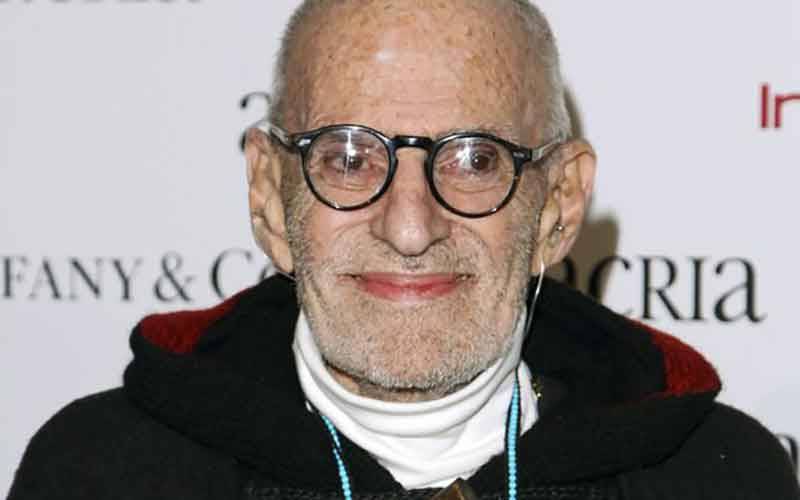
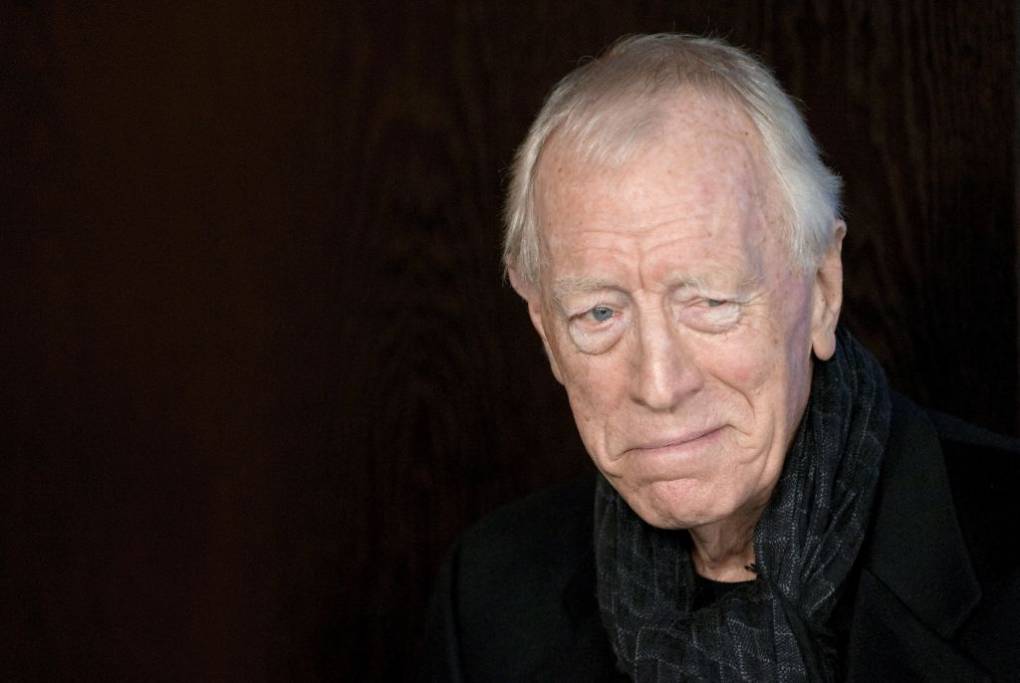
window.__IS_SSR__=true
window.__INITIAL_STATE__={
"attachmentsReducer": {
"audio_0": {
"type": "attachments",
"id": "audio_0",
"imgSizes": {
"kqedFullSize": {
"file": "https://ww2.kqed.org/news/wp-content/themes/KQED-unified/img/audio_bgs/background0.jpg"
}
}
},
"audio_1": {
"type": "attachments",
"id": "audio_1",
"imgSizes": {
"kqedFullSize": {
"file": "https://ww2.kqed.org/news/wp-content/themes/KQED-unified/img/audio_bgs/background1.jpg"
}
}
},
"audio_2": {
"type": "attachments",
"id": "audio_2",
"imgSizes": {
"kqedFullSize": {
"file": "https://ww2.kqed.org/news/wp-content/themes/KQED-unified/img/audio_bgs/background2.jpg"
}
}
},
"audio_3": {
"type": "attachments",
"id": "audio_3",
"imgSizes": {
"kqedFullSize": {
"file": "https://ww2.kqed.org/news/wp-content/themes/KQED-unified/img/audio_bgs/background3.jpg"
}
}
},
"audio_4": {
"type": "attachments",
"id": "audio_4",
"imgSizes": {
"kqedFullSize": {
"file": "https://ww2.kqed.org/news/wp-content/themes/KQED-unified/img/audio_bgs/background4.jpg"
}
}
},
"placeholder": {
"type": "attachments",
"id": "placeholder",
"imgSizes": {
"thumbnail": {
"file": "https://cdn.kqed.org/wp-content/uploads/2024/12/KQED-Default-Image-816638274-2000x1333-1-160x107.jpg",
"width": 160,
"height": 107,
"mimeType": "image/jpeg"
},
"medium": {
"file": "https://cdn.kqed.org/wp-content/uploads/2024/12/KQED-Default-Image-816638274-2000x1333-1-800x533.jpg",
"width": 800,
"height": 533,
"mimeType": "image/jpeg"
},
"medium_large": {
"file": "https://cdn.kqed.org/wp-content/uploads/2024/12/KQED-Default-Image-816638274-2000x1333-1-768x512.jpg",
"width": 768,
"height": 512,
"mimeType": "image/jpeg"
},
"large": {
"file": "https://cdn.kqed.org/wp-content/uploads/2024/12/KQED-Default-Image-816638274-2000x1333-1-1020x680.jpg",
"width": 1020,
"height": 680,
"mimeType": "image/jpeg"
},
"1536x1536": {
"file": "https://cdn.kqed.org/wp-content/uploads/2024/12/KQED-Default-Image-816638274-2000x1333-1-1536x1024.jpg",
"width": 1536,
"height": 1024,
"mimeType": "image/jpeg"
},
"fd-lrg": {
"file": "https://cdn.kqed.org/wp-content/uploads/2024/12/KQED-Default-Image-816638274-2000x1333-1-1536x1024.jpg",
"width": 1536,
"height": 1024,
"mimeType": "image/jpeg"
},
"fd-med": {
"file": "https://cdn.kqed.org/wp-content/uploads/2024/12/KQED-Default-Image-816638274-2000x1333-1-1020x680.jpg",
"width": 1020,
"height": 680,
"mimeType": "image/jpeg"
},
"fd-sm": {
"file": "https://cdn.kqed.org/wp-content/uploads/2024/12/KQED-Default-Image-816638274-2000x1333-1-800x533.jpg",
"width": 800,
"height": 533,
"mimeType": "image/jpeg"
},
"post-thumbnail": {
"file": "https://cdn.kqed.org/wp-content/uploads/2024/12/KQED-Default-Image-816638274-2000x1333-1-672x372.jpg",
"width": 672,
"height": 372,
"mimeType": "image/jpeg"
},
"twentyfourteen-full-width": {
"file": "https://cdn.kqed.org/wp-content/uploads/2024/12/KQED-Default-Image-816638274-2000x1333-1-1038x576.jpg",
"width": 1038,
"height": 576,
"mimeType": "image/jpeg"
},
"xxsmall": {
"file": "https://cdn.kqed.org/wp-content/uploads/2024/12/KQED-Default-Image-816638274-2000x1333-1-160x107.jpg",
"width": 160,
"height": 107,
"mimeType": "image/jpeg"
},
"xsmall": {
"file": "https://cdn.kqed.org/wp-content/uploads/2024/12/KQED-Default-Image-816638274-2000x1333-1-672x372.jpg",
"width": 672,
"height": 372,
"mimeType": "image/jpeg"
},
"small": {
"file": "https://cdn.kqed.org/wp-content/uploads/2024/12/KQED-Default-Image-816638274-2000x1333-1-672x372.jpg",
"width": 672,
"height": 372,
"mimeType": "image/jpeg"
},
"xlarge": {
"file": "https://cdn.kqed.org/wp-content/uploads/2024/12/KQED-Default-Image-816638274-2000x1333-1-1020x680.jpg",
"width": 1020,
"height": 680,
"mimeType": "image/jpeg"
},
"full-width": {
"file": "https://cdn.kqed.org/wp-content/uploads/2024/12/KQED-Default-Image-816638274-2000x1333-1-1920x1280.jpg",
"width": 1920,
"height": 1280,
"mimeType": "image/jpeg"
},
"guest-author-32": {
"file": "https://cdn.kqed.org/wp-content/uploads/2025/01/KQED-Default-Image-816638274-1333x1333-1-160x160.jpg",
"width": 32,
"height": 32,
"mimeType": "image/jpeg"
},
"guest-author-50": {
"file": "https://cdn.kqed.org/wp-content/uploads/2025/01/KQED-Default-Image-816638274-1333x1333-1-160x160.jpg",
"width": 50,
"height": 50,
"mimeType": "image/jpeg"
},
"guest-author-64": {
"file": "https://cdn.kqed.org/wp-content/uploads/2025/01/KQED-Default-Image-816638274-1333x1333-1-160x160.jpg",
"width": 64,
"height": 64,
"mimeType": "image/jpeg"
},
"guest-author-96": {
"file": "https://cdn.kqed.org/wp-content/uploads/2025/01/KQED-Default-Image-816638274-1333x1333-1-160x160.jpg",
"width": 96,
"height": 96,
"mimeType": "image/jpeg"
},
"guest-author-128": {
"file": "https://cdn.kqed.org/wp-content/uploads/2025/01/KQED-Default-Image-816638274-1333x1333-1-160x160.jpg",
"width": 128,
"height": 128,
"mimeType": "image/jpeg"
},
"detail": {
"file": "https://cdn.kqed.org/wp-content/uploads/2025/01/KQED-Default-Image-816638274-1333x1333-1-160x160.jpg",
"width": 160,
"height": 160,
"mimeType": "image/jpeg"
},
"kqedFullSize": {
"file": "https://cdn.kqed.org/wp-content/uploads/2024/12/KQED-Default-Image-816638274-2000x1333-1.jpg",
"width": 2000,
"height": 1333
}
}
},
"arts_13881622": {
"type": "attachments",
"id": "arts_13881622",
"meta": {
"index": "attachments_1716263798",
"site": "arts",
"id": "13881622",
"found": true
},
"parent": 13881621,
"imgSizes": {
"twentyfourteen-full-width": {
"file": "https://ww2.kqed.org/app/uploads/sites/2/2020/06/bonnie-pointer-1000x576.jpeg",
"width": 1000,
"mimeType": "image/jpeg",
"height": 576
},
"thumbnail": {
"file": "https://ww2.kqed.org/app/uploads/sites/2/2020/06/bonnie-pointer-160x129.jpeg",
"width": 160,
"mimeType": "image/jpeg",
"height": 129
},
"post-thumbnail": {
"file": "https://ww2.kqed.org/app/uploads/sites/2/2020/06/bonnie-pointer-672x372.jpeg",
"width": 672,
"mimeType": "image/jpeg",
"height": 372
},
"kqedFullSize": {
"file": "https://ww2.kqed.org/app/uploads/sites/2/2020/06/bonnie-pointer.jpeg",
"width": 1000,
"height": 806
},
"medium": {
"file": "https://ww2.kqed.org/app/uploads/sites/2/2020/06/bonnie-pointer-800x645.jpeg",
"width": 800,
"mimeType": "image/jpeg",
"height": 645
},
"medium_large": {
"file": "https://ww2.kqed.org/app/uploads/sites/2/2020/06/bonnie-pointer-768x619.jpeg",
"width": 768,
"mimeType": "image/jpeg",
"height": 619
}
},
"publishDate": 1591663420,
"modified": 1591663450,
"caption": "In this June 16, 2012 file photo, Bonnie Pointer attends the 100th Anniversary of The Beverly Hills Hotel in Beverly Hills, Calif. Pointer, founding member of the Pointer Sisters, has died. Publicist Roger Neal says Pointer died of cardiac arrest in Los Angeles on Monday. She was 69.",
"description": "In this June 16, 2012 file photo, Bonnie Pointer attends the 100th Anniversary of The Beverly Hills Hotel in Beverly Hills, Calif. Pointer, founding member of the Pointer Sisters, has died. Publicist Roger Neal says Pointer died of cardiac arrest in Los Angeles on Monday. She was 69.",
"title": "bonnie pointer",
"credit": "Katy Winn/Invision/AP",
"status": "inherit",
"isLoading": false,
"fetchFailed": false
},
"arts_13881050": {
"type": "attachments",
"id": "arts_13881050",
"meta": {
"index": "attachments_1716263798",
"site": "arts",
"id": "13881050",
"found": true
},
"parent": 13881048,
"imgSizes": {
"thumbnail": {
"file": "https://ww2.kqed.org/app/uploads/sites/2/2020/05/LarryKramer-160x100.jpg",
"width": 160,
"mimeType": "image/jpeg",
"height": 100
},
"post-thumbnail": {
"file": "https://ww2.kqed.org/app/uploads/sites/2/2020/05/LarryKramer-672x372.jpg",
"width": 672,
"mimeType": "image/jpeg",
"height": 372
},
"kqedFullSize": {
"file": "https://ww2.kqed.org/app/uploads/sites/2/2020/05/LarryKramer.jpg",
"width": 800,
"height": 500
},
"medium": {
"file": "https://ww2.kqed.org/app/uploads/sites/2/2020/05/LarryKramer-800x500.jpg",
"width": 800,
"mimeType": "image/jpeg",
"height": 500
},
"medium_large": {
"file": "https://ww2.kqed.org/app/uploads/sites/2/2020/05/LarryKramer-768x480.jpg",
"width": 768,
"mimeType": "image/jpeg",
"height": 480
}
},
"publishDate": 1590601829,
"modified": 1590601869,
"caption": "Larry Kramer, the playwright whose angry voice and pen raised theatergoers’ consciousness about AIDS and roused thousands to militant protests in the early years of the epidemic, died Wednesday, May 27, 2020 in Manhattan of pneumonia. He was 84. ",
"description": "Larry Kramer, the playwright whose angry voice and pen raised theatergoers’ consciousness about AIDS and roused thousands to militant protests in the early years of the epidemic, died Wednesday, May 27, 2020 in Manhattan of pneumonia. He was 84. ",
"title": "LarryKramer",
"credit": "Donald Traill/Invision/AP",
"status": "inherit",
"isLoading": false,
"fetchFailed": false
},
"arts_13880085": {
"type": "attachments",
"id": "arts_13880085",
"meta": {
"index": "attachments_1716263798",
"site": "arts",
"id": "13880085",
"found": true
},
"parent": 13880084,
"imgSizes": {
"twentyfourteen-full-width": {
"file": "https://ww2.kqed.org/app/uploads/sites/2/2020/05/gettyimages-83168908_custom-c6957cbaa192da15ea398c62b7d6cbe4e02e562c-1038x576.jpg",
"width": 1038,
"mimeType": "image/jpeg",
"height": 576
},
"thumbnail": {
"file": "https://ww2.kqed.org/app/uploads/sites/2/2020/05/gettyimages-83168908_custom-c6957cbaa192da15ea398c62b7d6cbe4e02e562c-160x106.jpg",
"width": 160,
"mimeType": "image/jpeg",
"height": 106
},
"post-thumbnail": {
"file": "https://ww2.kqed.org/app/uploads/sites/2/2020/05/gettyimages-83168908_custom-c6957cbaa192da15ea398c62b7d6cbe4e02e562c-672x372.jpg",
"width": 672,
"mimeType": "image/jpeg",
"height": 372
},
"kqedFullSize": {
"file": "https://ww2.kqed.org/app/uploads/sites/2/2020/05/gettyimages-83168908_custom-c6957cbaa192da15ea398c62b7d6cbe4e02e562c.jpg",
"width": 4256,
"height": 2827
},
"large": {
"file": "https://ww2.kqed.org/app/uploads/sites/2/2020/05/gettyimages-83168908_custom-c6957cbaa192da15ea398c62b7d6cbe4e02e562c-1020x678.jpg",
"width": 1020,
"mimeType": "image/jpeg",
"height": 678
},
"full-width": {
"file": "https://ww2.kqed.org/app/uploads/sites/2/2020/05/gettyimages-83168908_custom-c6957cbaa192da15ea398c62b7d6cbe4e02e562c-1920x1275.jpg",
"width": 1920,
"mimeType": "image/jpeg",
"height": 1275
},
"medium": {
"file": "https://ww2.kqed.org/app/uploads/sites/2/2020/05/gettyimages-83168908_custom-c6957cbaa192da15ea398c62b7d6cbe4e02e562c-800x531.jpg",
"width": 800,
"mimeType": "image/jpeg",
"height": 531
},
"medium_large": {
"file": "https://ww2.kqed.org/app/uploads/sites/2/2020/05/gettyimages-83168908_custom-c6957cbaa192da15ea398c62b7d6cbe4e02e562c-768x510.jpg",
"width": 768,
"mimeType": "image/jpeg",
"height": 510
}
},
"publishDate": 1589213698,
"modified": 1589213698,
"caption": null,
"description": "Jerry Stiller performed in a comedy duo with his wife, Anne Meara, and also appeared in films and on Broadway and television. Onscreen, he was George Costanza's father; in real life, he was dad to actor Ben Stiller. He's pictured above in New York City in October 2008.",
"title": "Jerry Stiller performed in a comedy duo with his wife, Anne Meara, and also appeared in films and on Broadway and television. Onscreen, he was George Costanza's father; in real life, he was dad to actor Ben Stiller. He's pictured above in New York City in October 2008.",
"credit": null,
"status": "inherit",
"isLoading": false,
"fetchFailed": false
},
"arts_13880017": {
"type": "attachments",
"id": "arts_13880017",
"meta": {
"index": "attachments_1716263798",
"site": "arts",
"id": "13880017",
"found": true
},
"parent": 13880016,
"imgSizes": {
"twentyfourteen-full-width": {
"file": "https://ww2.kqed.org/app/uploads/sites/2/2020/05/LittleRichard-1038x576.jpg",
"width": 1038,
"mimeType": "image/jpeg",
"height": 576
},
"thumbnail": {
"file": "https://ww2.kqed.org/app/uploads/sites/2/2020/05/LittleRichard-160x100.jpg",
"width": 160,
"mimeType": "image/jpeg",
"height": 100
},
"post-thumbnail": {
"file": "https://ww2.kqed.org/app/uploads/sites/2/2020/05/LittleRichard-672x372.jpg",
"width": 672,
"mimeType": "image/jpeg",
"height": 372
},
"kqedFullSize": {
"file": "https://ww2.kqed.org/app/uploads/sites/2/2020/05/LittleRichard.jpg",
"width": 1920,
"height": 1200
},
"large": {
"file": "https://ww2.kqed.org/app/uploads/sites/2/2020/05/LittleRichard-1020x638.jpg",
"width": 1020,
"mimeType": "image/jpeg",
"height": 638
},
"full-width": {
"file": "https://ww2.kqed.org/app/uploads/sites/2/2020/05/LittleRichard-1920x1200.jpg",
"width": 1920,
"mimeType": "image/jpeg",
"height": 1200
},
"medium": {
"file": "https://ww2.kqed.org/app/uploads/sites/2/2020/05/LittleRichard-800x500.jpg",
"width": 800,
"mimeType": "image/jpeg",
"height": 500
},
"medium_large": {
"file": "https://ww2.kqed.org/app/uploads/sites/2/2020/05/LittleRichard-768x480.jpg",
"width": 768,
"mimeType": "image/jpeg",
"height": 480
}
},
"publishDate": 1589036605,
"modified": 1589036662,
"caption": "Little Richard on 'The Tonight Show with Jay Leno' in 2002, performing with Chuck Berry.",
"description": "Little Richard on 'The Tonight Show with Jay Leno' in 2002, performing with Chuck Berry.",
"title": "LittleRichard",
"credit": "Kevin Winter/Getty Images",
"status": "inherit",
"isLoading": false,
"fetchFailed": false
},
"arts_13879859": {
"type": "attachments",
"id": "arts_13879859",
"meta": {
"index": "attachments_1716263798",
"site": "arts",
"id": "13879859",
"found": true
},
"parent": 13879858,
"imgSizes": {
"twentyfourteen-full-width": {
"file": "https://ww2.kqed.org/app/uploads/sites/2/2020/05/gettyimages-541783167-d46d2a06da48fac3cf5f9098edff69535c789472-1038x576.jpg",
"width": 1038,
"mimeType": "image/jpeg",
"height": 576
},
"thumbnail": {
"file": "https://ww2.kqed.org/app/uploads/sites/2/2020/05/gettyimages-541783167-d46d2a06da48fac3cf5f9098edff69535c789472-160x120.jpg",
"width": 160,
"mimeType": "image/jpeg",
"height": 120
},
"post-thumbnail": {
"file": "https://ww2.kqed.org/app/uploads/sites/2/2020/05/gettyimages-541783167-d46d2a06da48fac3cf5f9098edff69535c789472-672x372.jpg",
"width": 672,
"mimeType": "image/jpeg",
"height": 372
},
"kqedFullSize": {
"file": "https://ww2.kqed.org/app/uploads/sites/2/2020/05/gettyimages-541783167-d46d2a06da48fac3cf5f9098edff69535c789472-e1588793431779.jpg",
"width": 1920,
"height": 1440
},
"large": {
"file": "https://ww2.kqed.org/app/uploads/sites/2/2020/05/gettyimages-541783167-d46d2a06da48fac3cf5f9098edff69535c789472-1020x765.jpg",
"width": 1020,
"mimeType": "image/jpeg",
"height": 765
},
"full-width": {
"file": "https://ww2.kqed.org/app/uploads/sites/2/2020/05/gettyimages-541783167-d46d2a06da48fac3cf5f9098edff69535c789472-1920x1440.jpg",
"width": 1920,
"mimeType": "image/jpeg",
"height": 1440
},
"medium": {
"file": "https://ww2.kqed.org/app/uploads/sites/2/2020/05/gettyimages-541783167-d46d2a06da48fac3cf5f9098edff69535c789472-800x600.jpg",
"width": 800,
"mimeType": "image/jpeg",
"height": 600
},
"medium_large": {
"file": "https://ww2.kqed.org/app/uploads/sites/2/2020/05/gettyimages-541783167-d46d2a06da48fac3cf5f9098edff69535c789472-768x576.jpg",
"width": 768,
"mimeType": "image/jpeg",
"height": 576
}
},
"publishDate": 1588793040,
"modified": 1588793460,
"caption": "A 1998 portrait of Florian Schneider-Esleben, co-founder of Kraftwerk.",
"description": "A 1998 portrait of Florian Schneider-Esleben, co-founder of Kraftwerk.",
"title": "A 1998 portrait of Florian Schneider-Esleben, co-founder of Kraftwerk.",
"credit": "Hülzer/ullstein bild/Getty Images",
"status": "inherit",
"isLoading": false,
"fetchFailed": false
},
"arts_13878323": {
"type": "attachments",
"id": "arts_13878323",
"meta": {
"index": "attachments_1716263798",
"site": "arts",
"id": "13878323",
"found": true
},
"parent": 0,
"imgSizes": {
"twentyfourteen-full-width": {
"file": "https://ww2.kqed.org/app/uploads/sites/2/2020/04/JohnPrine.SweetRevenge.Cove_-1038x576.jpg",
"width": 1038,
"mimeType": "image/jpeg",
"height": 576
},
"thumbnail": {
"file": "https://ww2.kqed.org/app/uploads/sites/2/2020/04/JohnPrine.SweetRevenge.Cove_-160x102.jpg",
"width": 160,
"mimeType": "image/jpeg",
"height": 102
},
"post-thumbnail": {
"file": "https://ww2.kqed.org/app/uploads/sites/2/2020/04/JohnPrine.SweetRevenge.Cove_-672x372.jpg",
"width": 672,
"mimeType": "image/jpeg",
"height": 372
},
"kqedFullSize": {
"file": "https://ww2.kqed.org/app/uploads/sites/2/2020/04/JohnPrine.SweetRevenge.Cove_.jpg",
"width": 1920,
"height": 1223
},
"large": {
"file": "https://ww2.kqed.org/app/uploads/sites/2/2020/04/JohnPrine.SweetRevenge.Cove_-1020x650.jpg",
"width": 1020,
"mimeType": "image/jpeg",
"height": 650
},
"full-width": {
"file": "https://ww2.kqed.org/app/uploads/sites/2/2020/04/JohnPrine.SweetRevenge.Cove_-1920x1223.jpg",
"width": 1920,
"mimeType": "image/jpeg",
"height": 1223
},
"medium": {
"file": "https://ww2.kqed.org/app/uploads/sites/2/2020/04/JohnPrine.SweetRevenge.Cove_-800x510.jpg",
"width": 800,
"mimeType": "image/jpeg",
"height": 510
},
"medium_large": {
"file": "https://ww2.kqed.org/app/uploads/sites/2/2020/04/JohnPrine.SweetRevenge.Cove_-768x489.jpg",
"width": 768,
"mimeType": "image/jpeg",
"height": 489
}
},
"publishDate": 1586363345,
"modified": 1586364140,
"caption": "John Prine in the 1970s.",
"description": "John Prine in the 1970s.",
"title": "JohnPrine.SweetRevenge.Cove",
"credit": "Atlantic Records",
"status": "inherit",
"isLoading": false,
"fetchFailed": false
},
"arts_13878296": {
"type": "attachments",
"id": "arts_13878296",
"meta": {
"index": "attachments_1716263798",
"site": "arts",
"id": "13878296",
"found": true
},
"parent": 13878295,
"imgSizes": {
"twentyfourteen-full-width": {
"file": "https://ww2.kqed.org/app/uploads/sites/2/2020/04/gettyimages-487145121-d0b41850c1de2134d6c6a17be93abcfdc4674f45-1038x576.jpg",
"width": 1038,
"mimeType": "image/jpeg",
"height": 576
},
"thumbnail": {
"file": "https://ww2.kqed.org/app/uploads/sites/2/2020/04/gettyimages-487145121-d0b41850c1de2134d6c6a17be93abcfdc4674f45-160x120.jpg",
"width": 160,
"mimeType": "image/jpeg",
"height": 120
},
"post-thumbnail": {
"file": "https://ww2.kqed.org/app/uploads/sites/2/2020/04/gettyimages-487145121-d0b41850c1de2134d6c6a17be93abcfdc4674f45-672x372.jpg",
"width": 672,
"mimeType": "image/jpeg",
"height": 372
},
"kqedFullSize": {
"file": "https://ww2.kqed.org/app/uploads/sites/2/2020/04/gettyimages-487145121-d0b41850c1de2134d6c6a17be93abcfdc4674f45.jpg",
"width": 3649,
"height": 2737
},
"large": {
"file": "https://ww2.kqed.org/app/uploads/sites/2/2020/04/gettyimages-487145121-d0b41850c1de2134d6c6a17be93abcfdc4674f45-1020x765.jpg",
"width": 1020,
"mimeType": "image/jpeg",
"height": 765
},
"full-width": {
"file": "https://ww2.kqed.org/app/uploads/sites/2/2020/04/gettyimages-487145121-d0b41850c1de2134d6c6a17be93abcfdc4674f45-1920x1440.jpg",
"width": 1920,
"mimeType": "image/jpeg",
"height": 1440
},
"medium": {
"file": "https://ww2.kqed.org/app/uploads/sites/2/2020/04/gettyimages-487145121-d0b41850c1de2134d6c6a17be93abcfdc4674f45-800x600.jpg",
"width": 800,
"mimeType": "image/jpeg",
"height": 600
},
"medium_large": {
"file": "https://ww2.kqed.org/app/uploads/sites/2/2020/04/gettyimages-487145121-d0b41850c1de2134d6c6a17be93abcfdc4674f45-768x576.jpg",
"width": 768,
"mimeType": "image/jpeg",
"height": 576
}
},
"publishDate": 1586310489,
"modified": 1586310489,
"caption": null,
"description": "John Prine, performing during Coachella on April 27, 2014.",
"title": "John Prine, performing during Coachella on April 27, 2014.",
"credit": null,
"status": "inherit",
"isLoading": false,
"fetchFailed": false
},
"arts_13878090": {
"type": "attachments",
"id": "arts_13878090",
"meta": {
"index": "attachments_1716263798",
"site": "arts",
"id": "13878090",
"found": true
},
"parent": 13878089,
"imgSizes": {
"twentyfourteen-full-width": {
"file": "https://ww2.kqed.org/app/uploads/sites/2/2020/04/bill-withers-album-1038x576.jpg",
"width": 1038,
"mimeType": "image/jpeg",
"height": 576
},
"thumbnail": {
"file": "https://ww2.kqed.org/app/uploads/sites/2/2020/04/bill-withers-album-160x98.jpg",
"width": 160,
"mimeType": "image/jpeg",
"height": 98
},
"post-thumbnail": {
"file": "https://ww2.kqed.org/app/uploads/sites/2/2020/04/bill-withers-album-672x372.jpg",
"width": 672,
"mimeType": "image/jpeg",
"height": 372
},
"kqedFullSize": {
"file": "https://ww2.kqed.org/app/uploads/sites/2/2020/04/bill-withers-album.jpg",
"width": 1200,
"height": 737
},
"large": {
"file": "https://ww2.kqed.org/app/uploads/sites/2/2020/04/bill-withers-album-1020x626.jpg",
"width": 1020,
"mimeType": "image/jpeg",
"height": 626
},
"medium": {
"file": "https://ww2.kqed.org/app/uploads/sites/2/2020/04/bill-withers-album-800x491.jpg",
"width": 800,
"mimeType": "image/jpeg",
"height": 491
},
"medium_large": {
"file": "https://ww2.kqed.org/app/uploads/sites/2/2020/04/bill-withers-album-768x472.jpg",
"width": 768,
"mimeType": "image/jpeg",
"height": 472
}
},
"publishDate": 1585926402,
"modified": 1585926474,
"caption": "Withers, who wrote and sang a string of soulful songs in the 1970s that have stood the test of time. Detail of album \"The Essential Bill Withers.\"",
"description": "Withers, who wrote and sang a string of soulful songs in the 1970s that have stood the test of time. Detail of album \"The Essential Bill Withers.\"",
"title": "bill-withers-album",
"credit": null,
"status": "inherit",
"isLoading": false,
"fetchFailed": false
},
"arts_13878031": {
"type": "attachments",
"id": "arts_13878031",
"meta": {
"index": "attachments_1716263798",
"site": "arts",
"id": "13878031",
"found": true
},
"parent": 13878030,
"imgSizes": {
"twentyfourteen-full-width": {
"file": "https://ww2.kqed.org/app/uploads/sites/2/2020/04/gettyimages-168640716_wide-37bc951c62f853c887771a8bf29350f4091055d7-1038x576.jpg",
"width": 1038,
"mimeType": "image/jpeg",
"height": 576
},
"thumbnail": {
"file": "https://ww2.kqed.org/app/uploads/sites/2/2020/04/gettyimages-168640716_wide-37bc951c62f853c887771a8bf29350f4091055d7-160x90.jpg",
"width": 160,
"mimeType": "image/jpeg",
"height": 90
},
"post-thumbnail": {
"file": "https://ww2.kqed.org/app/uploads/sites/2/2020/04/gettyimages-168640716_wide-37bc951c62f853c887771a8bf29350f4091055d7-672x372.jpg",
"width": 672,
"mimeType": "image/jpeg",
"height": 372
},
"kqedFullSize": {
"file": "https://ww2.kqed.org/app/uploads/sites/2/2020/04/gettyimages-168640716_wide-37bc951c62f853c887771a8bf29350f4091055d7.jpg",
"width": 4691,
"height": 2639
},
"large": {
"file": "https://ww2.kqed.org/app/uploads/sites/2/2020/04/gettyimages-168640716_wide-37bc951c62f853c887771a8bf29350f4091055d7-1020x574.jpg",
"width": 1020,
"mimeType": "image/jpeg",
"height": 574
},
"full-width": {
"file": "https://ww2.kqed.org/app/uploads/sites/2/2020/04/gettyimages-168640716_wide-37bc951c62f853c887771a8bf29350f4091055d7-1920x1080.jpg",
"width": 1920,
"mimeType": "image/jpeg",
"height": 1080
},
"medium": {
"file": "https://ww2.kqed.org/app/uploads/sites/2/2020/04/gettyimages-168640716_wide-37bc951c62f853c887771a8bf29350f4091055d7-800x450.jpg",
"width": 800,
"mimeType": "image/jpeg",
"height": 450
},
"medium_large": {
"file": "https://ww2.kqed.org/app/uploads/sites/2/2020/04/gettyimages-168640716_wide-37bc951c62f853c887771a8bf29350f4091055d7-768x432.jpg",
"width": 768,
"mimeType": "image/jpeg",
"height": 432
}
},
"publishDate": 1585841829,
"modified": 1585841829,
"caption": null,
"description": "Ellis Marsalis performs during the 2013 New Orleans Jazz",
"title": "Ellis Marsalis performs during the 2013 New Orleans Jazz & Heritage Music Festival.",
"credit": null,
"status": "inherit",
"isLoading": false,
"fetchFailed": false
},
"arts_13877992": {
"type": "attachments",
"id": "arts_13877992",
"meta": {
"index": "attachments_1716263798",
"site": "arts",
"id": "13877992",
"found": true
},
"parent": 13877991,
"imgSizes": {
"twentyfourteen-full-width": {
"file": "https://ww2.kqed.org/app/uploads/sites/2/2020/04/gettyimages-109202199-d6d1d1fdf143a65197e0b00ca41dd603bd475475-1038x576.jpg",
"width": 1038,
"mimeType": "image/jpeg",
"height": 576
},
"thumbnail": {
"file": "https://ww2.kqed.org/app/uploads/sites/2/2020/04/gettyimages-109202199-d6d1d1fdf143a65197e0b00ca41dd603bd475475-160x120.jpg",
"width": 160,
"mimeType": "image/jpeg",
"height": 120
},
"post-thumbnail": {
"file": "https://ww2.kqed.org/app/uploads/sites/2/2020/04/gettyimages-109202199-d6d1d1fdf143a65197e0b00ca41dd603bd475475-672x372.jpg",
"width": 672,
"mimeType": "image/jpeg",
"height": 372
},
"kqedFullSize": {
"file": "https://ww2.kqed.org/app/uploads/sites/2/2020/04/gettyimages-109202199-d6d1d1fdf143a65197e0b00ca41dd603bd475475.jpg",
"width": 2801,
"height": 2100
},
"large": {
"file": "https://ww2.kqed.org/app/uploads/sites/2/2020/04/gettyimages-109202199-d6d1d1fdf143a65197e0b00ca41dd603bd475475-1020x765.jpg",
"width": 1020,
"mimeType": "image/jpeg",
"height": 765
},
"full-width": {
"file": "https://ww2.kqed.org/app/uploads/sites/2/2020/04/gettyimages-109202199-d6d1d1fdf143a65197e0b00ca41dd603bd475475-1920x1439.jpg",
"width": 1920,
"mimeType": "image/jpeg",
"height": 1439
},
"medium": {
"file": "https://ww2.kqed.org/app/uploads/sites/2/2020/04/gettyimages-109202199-d6d1d1fdf143a65197e0b00ca41dd603bd475475-800x600.jpg",
"width": 800,
"mimeType": "image/jpeg",
"height": 600
},
"medium_large": {
"file": "https://ww2.kqed.org/app/uploads/sites/2/2020/04/gettyimages-109202199-d6d1d1fdf143a65197e0b00ca41dd603bd475475-768x576.jpg",
"width": 768,
"mimeType": "image/jpeg",
"height": 576
}
},
"publishDate": 1585785377,
"modified": 1585785377,
"caption": null,
"description": "Adam Schlesinger of Fountains of Wayne performs at the Bonnaroo Music",
"title": "Adam Schlesinger of Fountains of Wayne performs at the Bonnaroo Music & Arts Festival in 2007.",
"credit": null,
"status": "inherit",
"isLoading": false,
"fetchFailed": false
},
"arts_13876224": {
"type": "attachments",
"id": "arts_13876224",
"meta": {
"index": "attachments_1716263798",
"site": "arts",
"id": "13876224",
"found": true
},
"parent": 13876214,
"imgSizes": {
"twentyfourteen-full-width": {
"file": "https://ww2.kqed.org/app/uploads/sites/2/2020/03/GettyImages-1206164051-1024x576.jpg",
"width": 1024,
"mimeType": "image/jpeg",
"height": 576
},
"thumbnail": {
"file": "https://ww2.kqed.org/app/uploads/sites/2/2020/03/GettyImages-1206164051-160x107.jpg",
"width": 160,
"mimeType": "image/jpeg",
"height": 107
},
"post-thumbnail": {
"file": "https://ww2.kqed.org/app/uploads/sites/2/2020/03/GettyImages-1206164051-672x372.jpg",
"width": 672,
"mimeType": "image/jpeg",
"height": 372
},
"kqedFullSize": {
"file": "https://ww2.kqed.org/app/uploads/sites/2/2020/03/GettyImages-1206164051.jpg",
"width": 1024,
"height": 686
},
"large": {
"file": "https://ww2.kqed.org/app/uploads/sites/2/2020/03/GettyImages-1206164051-1020x683.jpg",
"width": 1020,
"mimeType": "image/jpeg",
"height": 683
},
"medium": {
"file": "https://ww2.kqed.org/app/uploads/sites/2/2020/03/GettyImages-1206164051-800x536.jpg",
"width": 800,
"mimeType": "image/jpeg",
"height": 536
},
"medium_large": {
"file": "https://ww2.kqed.org/app/uploads/sites/2/2020/03/GettyImages-1206164051-768x515.jpg",
"width": 768,
"mimeType": "image/jpeg",
"height": 515
}
},
"publishDate": 1583780823,
"modified": 1583781081,
"caption": "Max von Sydow leaves after a photocall for the film 'Extremely Loud and Incredibly Close' on February 10, 2012, in Berlin.",
"description": "Max von Sydow leaves after a photocall for the film 'Extremely Loud and Incredibly Close' on February 10, 2012, in Berlin.",
"title": "Max von Sydow leaves after a photocall for the film 'Extremely Loud and Incredibly Close' on February 10, 2012, in Berlin.",
"credit": "BARBARA SAX/AFP via Getty Images",
"status": "inherit",
"isLoading": false,
"fetchFailed": false
},
"arts_13876113": {
"type": "attachments",
"id": "arts_13876113",
"meta": {
"index": "attachments_1716263798",
"site": "arts",
"id": "13876113",
"found": true
},
"parent": 13876109,
"imgSizes": {
"thumbnail": {
"file": "https://ww2.kqed.org/app/uploads/sites/2/2020/03/TynerThumb-160x90.jpg",
"width": 160,
"mimeType": "image/jpeg",
"height": 90
},
"post-thumbnail": {
"file": "https://ww2.kqed.org/app/uploads/sites/2/2020/03/TynerThumb-672x372.jpg",
"width": 672,
"mimeType": "image/jpeg",
"height": 372
},
"kqedFullSize": {
"file": "https://ww2.kqed.org/app/uploads/sites/2/2020/03/TynerThumb.jpg",
"width": 800,
"height": 450
},
"medium": {
"file": "https://ww2.kqed.org/app/uploads/sites/2/2020/03/TynerThumb-800x450.jpg",
"width": 800,
"mimeType": "image/jpeg",
"height": 450
},
"medium_large": {
"file": "https://ww2.kqed.org/app/uploads/sites/2/2020/03/TynerThumb-768x432.jpg",
"width": 768,
"mimeType": "image/jpeg",
"height": 432
}
},
"publishDate": 1583533107,
"modified": 1583533107,
"caption": null,
"description": null,
"title": "TynerThumb",
"credit": null,
"status": "inherit",
"isLoading": false,
"fetchFailed": false
}
},
"audioPlayerReducer": {
"postId": "stream_live",
"isPaused": true,
"isPlaying": false,
"pfsActive": false,
"pledgeModalIsOpen": true,
"playerDrawerIsOpen": false,
"liveAudioPlayStartedAt": 0,
"liveAudioPlayContext": ""
},
"authorsReducer": {
"byline_arts_13881621": {
"type": "authors",
"id": "byline_arts_13881621",
"meta": {
"override": true
},
"slug": "byline_arts_13881621",
"name": "Andrew Dalton, Associated Press",
"isLoading": false
},
"byline_arts_13881048": {
"type": "authors",
"id": "byline_arts_13881048",
"meta": {
"override": true
},
"slug": "byline_arts_13881048",
"name": "Mark Kennedy, Associated Press",
"isLoading": false
},
"byline_arts_13880084": {
"type": "authors",
"id": "byline_arts_13880084",
"meta": {
"override": true
},
"slug": "byline_arts_13880084",
"name": "Alex Cohen",
"isLoading": false
},
"byline_arts_13880016": {
"type": "authors",
"id": "byline_arts_13880016",
"meta": {
"override": true
},
"slug": "byline_arts_13880016",
"name": "Kristin M. Hall, Associated Press",
"isLoading": false
},
"byline_arts_13879858": {
"type": "authors",
"id": "byline_arts_13879858",
"meta": {
"override": true
},
"slug": "byline_arts_13879858",
"name": "Anastasia Tsioulcas",
"isLoading": false
},
"byline_arts_13878295": {
"type": "authors",
"id": "byline_arts_13878295",
"meta": {
"override": true
},
"slug": "byline_arts_13878295",
"name": "Annie Zaleski",
"isLoading": false
},
"byline_arts_13878089": {
"type": "authors",
"id": "byline_arts_13878089",
"meta": {
"override": true
},
"slug": "byline_arts_13878089",
"name": "Mark Kennedy, Associated Press",
"isLoading": false
},
"byline_arts_13878030": {
"type": "authors",
"id": "byline_arts_13878030",
"meta": {
"override": true
},
"slug": "byline_arts_13878030",
"name": "Andrew Limbong",
"isLoading": false
},
"byline_arts_13877991": {
"type": "authors",
"id": "byline_arts_13877991",
"meta": {
"override": true
},
"slug": "byline_arts_13877991",
"name": "Stephen Thompson",
"isLoading": false
},
"byline_arts_13876214": {
"type": "authors",
"id": "byline_arts_13876214",
"meta": {
"override": true
},
"slug": "byline_arts_13876214",
"name": "Bob Mondello",
"isLoading": false
},
"byline_arts_13876109": {
"type": "authors",
"id": "byline_arts_13876109",
"meta": {
"override": true
},
"slug": "byline_arts_13876109",
"name": "Nate Chinen",
"isLoading": false
},
"gmeline": {
"type": "authors",
"id": "185",
"meta": {
"index": "authors_1716337520",
"id": "185",
"found": true
},
"name": "Gabe Meline",
"firstName": "Gabe",
"lastName": "Meline",
"slug": "gmeline",
"email": "gmeline@kqed.org",
"display_author_email": true,
"staff_mastheads": [
"arts"
],
"title": "Senior Editor, KQED Arts & Culture",
"bio": "Gabe Meline entered journalism at age 15 making photocopied zines, and has since earned awards from the Edward R. Murrow Awards, the Society for Professional Journalists, the Online Journalism Awards, the Association of Alternative Newsweeklies and the California Newspaper Publishers Association. Prior to KQED, he was the editor of the \u003cem>North Bay Bohemian\u003c/em> and a touring musician. He lives with his wife and daughter in his hometown of Santa Rosa, CA.",
"avatar": "https://secure.gravatar.com/avatar/5bebe57be0d8bc2dd318934feb47299e2d2d10cba28d09d8d7afb389a2ce2bdd?s=600&d=blank&r=g",
"twitter": null,
"bluesky": null,
"facebook": null,
"instagram": null,
"linkedin": null,
"sites": [
{
"site": "",
"roles": [
"editor"
]
},
{
"site": "arts",
"roles": [
"administrator"
]
},
{
"site": "artschool",
"roles": [
"editor"
]
},
{
"site": "news",
"roles": [
"author"
]
},
{
"site": "pop",
"roles": [
"editor"
]
},
{
"site": "bayareabites",
"roles": [
"editor"
]
},
{
"site": "food",
"roles": [
"editor"
]
},
{
"site": "forum",
"roles": [
"administrator"
]
},
{
"site": "liveblog",
"roles": [
"editor"
]
},
{
"site": "hiphop",
"roles": [
"editor"
]
}
],
"headData": {
"title": "Gabe Meline | KQED",
"description": "Senior Editor, KQED Arts & Culture",
"ogImgSrc": "https://secure.gravatar.com/avatar/5bebe57be0d8bc2dd318934feb47299e2d2d10cba28d09d8d7afb389a2ce2bdd?s=600&d=blank&r=g",
"twImgSrc": "https://secure.gravatar.com/avatar/5bebe57be0d8bc2dd318934feb47299e2d2d10cba28d09d8d7afb389a2ce2bdd?s=600&d=blank&r=g"
},
"isLoading": false,
"link": "/author/gmeline"
}
},
"pagesReducer": {
"arts_category_remembrance": {
"type": "terms",
"id": "arts_1564",
"meta": {
"index": "terms_1716263798",
"site": "arts",
"id": "1564",
"score": 13.107925
},
"featImg": null,
"name": "Remembrance",
"description": null,
"taxonomy": "category",
"headData": {
"twImgId": null,
"twTitle": null,
"ogTitle": null,
"ogImgId": null,
"twDescription": null,
"description": null,
"title": "Remembrance Archives | KQED Arts",
"ogDescription": null
},
"ttid": 1576,
"slug": "remembrance",
"isLoading": false,
"title": "Remembrance",
"pageMeta": {
"site": "arts",
"WpPageTemplate": "page-topic-editorial",
"currentPage": 16
},
"blocks": [
{
"blockName": "kqed/post-list",
"attrs": {
"layout": "cardArticle2",
"query": "posts/arts?category=remembrance",
"seeMore": false,
"paginated": true,
"page": 16
}
},
{
"blockName": "kqed/ad"
}
]
}
},
"pfsSessionReducer": {},
"postsReducer": {
"stream_live": {
"type": "live",
"id": "stream_live",
"audioUrl": "https://streams.kqed.org/kqedradio",
"title": "Live Stream",
"excerpt": "Live Stream information currently unavailable.",
"link": "/radio",
"featImg": "",
"label": {
"name": "KQED Live",
"link": "/"
}
},
"stream_kqedNewscast": {
"type": "posts",
"id": "stream_kqedNewscast",
"audioUrl": "https://www.kqed.org/.stream/anon/radio/RDnews/newscast.mp3?_=1",
"title": "KQED Newscast",
"featImg": "",
"label": {
"name": "88.5 FM",
"link": "/"
}
},
"arts_13881621": {
"type": "posts",
"id": "arts_13881621",
"meta": {
"index": "posts_1716263798",
"site": "arts",
"id": "13881621",
"score": null,
"sort": [
1591663628000
]
},
"parent": 0,
"labelTerm": {
"site": "arts"
},
"blocks": [],
"publishDate": 1591663628,
"format": "standard",
"title": "Bonnie Pointer, Early Member of Pointer Sisters, Dies at 69",
"headTitle": "Bonnie Pointer, Early Member of Pointer Sisters, Dies at 69 | KQED",
"content": "\u003cp class=\"Component-root-0-2-135 Component-p-0-2-127\">Bonnie Pointer, who in 1969 convinced three of her church-singing siblings to form the Pointer Sisters, which would become one of the biggest acts of the next two decades, died Monday.\u003c/p>\n\u003cp class=\"Component-root-0-2-135 Component-p-0-2-127\">The Grammy winner died of cardiac arrest in Los Angeles, publicist Roger Neal said. She was 69.\u003c/p>\n\u003cp class=\"Component-root-0-2-135 Component-p-0-2-127\">“It is with great sadness that I have to announce to the fans of the Pointer Sisters that my sister, Bonnie died this morning,” sister Anita Pointer said in a statement. “Our family is devastated, on behalf of my siblings and I and the entire Pointer family, we ask for your prayers at this time.”\u003c/p>\n\u003cdiv class=\"Component-dfp-0-2-131\">\u003c/div>\n\u003cp class=\"Component-root-0-2-135 Component-p-0-2-127\">Bonnie Pointer often sang lead and was an essential member of the group through its early hits including “Yes We Can Can” and “Fairytale.” She would leave for a short and modest solo career in 1977 as her sisters went on to have several mega-hits without her.\u003c/p>\n\u003cp class=\"Component-root-0-2-135 Component-p-0-2-127\">Ruth, Anita, Bonnie and June, born the daughters of a minister who also had two older sons, grew up singing in his church in Oakland, California.\u003c/p>\n\u003cp>[ad fullwidth]\u003c/p>\n\u003cp class=\"Component-root-0-2-135 Component-p-0-2-127\">It was Bonnie, shortly after graduating high school, who first wanted to move away from singing gospel songs into clubs to pursue a professional singing career.\u003c/p>\n\u003cp class=\"Component-root-0-2-135 Component-p-0-2-127\">“The Pointer Sisters would never have happened had it not been for Bonnie,” Anita Pointer said in her statement. [aside postid='arts_13881529']\u003c/p>\n\u003cp class=\"Component-root-0-2-135 Component-p-0-2-127\">She convinced younger sister June to join her, and the two began doing gigs together as a duo in 1969. Eventually they’d enlist their two older sisters, who were already married with children, to join them.\u003c/p>\n\u003cp class=\"Component-root-0-2-135 Component-p-0-2-127\">The quartet brought unique fusion of funk, soul and 1940s-style jazz, scat and pop to their act, often dressing in a retro style that resembled their forerunners the Andrews Sisters.\u003c/p>\n\u003cp class=\"Component-root-0-2-135 Component-p-0-2-127\">They worked as backup singers for Taj Mahal, Boz Scaggs, Elvin Bishop and others before releasing their self-titled debut album in 1973, and the song “Yes We Can Can,” a funky anthem calling for unity and tolerance, became their breakout hit.\u003c/p>\n\u003cp class=\"Component-root-0-2-135 Component-p-0-2-127\">They followed up with “That’s A Plenty,” which featured an eclectic mix of musical styles ranging from jazz to gospel to pop.\u003c/p>\n\u003cp class=\"Component-root-0-2-135 Component-p-0-2-127\">They even delved into country. Bonnie and Anita co-wrote the song “Fairytale” about a crumbling relationship. The song earned them a groundbreaking gig performing as a rare African American act at the Grand Ole Opry, and they would win their first Grammy, for best country vocal performance by a group.\u003c/p>\n\u003cp class=\"Component-root-0-2-135 Component-p-0-2-127\">Bonnie Pointer left the group in 1977, signing a solo deal with Motown Records. [aside postid='arts_13881399']\u003c/p>\n\u003cp class=\"Component-root-0-2-135 Component-p-0-2-127\">“We were devastated,” Anita Pointer told The Associated Press in 1990. “We did a show the night she left, but after that, we just stopped. We thought it wasn’t going to work without Bonnie.”\u003c/p>\n\u003cp class=\"Component-root-0-2-135 Component-p-0-2-127\">She would have only modest solo success. Her biggest hit was “Heaven Must Have Sent You,” a 1979 disco cover of an earlier Motown hit by the Elgins. It reached No. 11 on the Billboard Hot 100 in 1979.\u003c/p>\n\u003cp class=\"Component-root-0-2-135 Component-p-0-2-127\">After making three albums for Motown, she would retire from the studio, and only perform occasionally.\u003c/p>\n\u003cp class=\"Component-root-0-2-135 Component-p-0-2-127\">Her three sisters, who had nearly disbanded when she quit, instead regrouped, shed their retro image for a modern pop sound, and became one of the biggest acts of the 1980s with huge hits including “He’s So Shy,” “Jump (For My Love)” and “Neutron Dance.”\u003c/p>\n\u003cp class=\"Component-root-0-2-135 Component-p-0-2-127\">Bonnie married Motown producer Jeffrey Bowen in 1978. The two separated in 2004 and divorced in 2016.\u003c/p>\n\u003cp class=\"Component-root-0-2-135 Component-p-0-2-127\">She twice reunited with her sisters for public appearances. Once in 1994, when they received a star on the Hollywood Walk of Fame, and again in 1996 at a show in Las Vegas.\u003c/p>\n\u003cp class=\"Component-root-0-2-135 Component-p-0-2-127\">“She had always told me, mother, I want something for myself,” Bonnie’s mother Sarah Pointer told Ebony in 1974. “I want to be somebody in this world.”\u003c/p>\n\u003cp class=\"Component-root-0-2-135 Component-p-0-2-127\">June Pointer, the youngest of the sisters, died in 2006.\u003c/p>\n\u003cp class=\"Component-root-0-2-135 Component-p-0-2-127\">In addition to Ruth and Anita, Bonnie Pointer is survived by her two older brothers, Aaron and Fritz.\u003c/p>\n\u003cp>\u003c/p>\n\u003cp class=\"Component-root-0-2-135 Component-p-0-2-127\">\u003cem>Follow AP Entertainment Writer Andrew Dalton on Twitter: \u003ca class=\"\" href=\"https://twitter.com/andyjamesdalton.\" target=\"_blank\" rel=\"noopener noreferrer\">https://twitter.com/andyjamesdalton.\u003c/a>\u003c/em>\u003c/p>\n\n",
"stats": {
"hasVideo": false,
"hasChartOrMap": false,
"hasAudio": false,
"hasPolis": false,
"wordCount": 721,
"hasGoogleForm": false,
"hasGallery": false,
"hasHearkenModule": false,
"iframeSrcs": [],
"paragraphCount": 2
},
"modified": 1705020619,
"excerpt": "She sang lead on the influential Oakland pop, funk and soul group’s early hits.",
"headData": {
"twImgId": "",
"twTitle": "",
"ogTitle": "",
"ogImgId": "",
"twDescription": "",
"description": "She sang lead on the influential Oakland pop, funk and soul group’s early hits.",
"title": "Bonnie Pointer, Early Member of Pointer Sisters, Dies at 69 | KQED",
"ogDescription": "",
"schema": {
"@context": "https://schema.org",
"@type": "Article",
"headline": "Bonnie Pointer, Early Member of Pointer Sisters, Dies at 69",
"datePublished": "2020-06-08T17:47:08-07:00",
"dateModified": "2024-01-11T16:50:19-08:00",
"image": "https://cdn.kqed.org/wp-content/uploads/2020/02/KQED-OG-Image@1x.png"
}
},
"guestAuthors": [],
"slug": "bonnie-pointer-early-member-of-pointer-sisters-dies-at-69",
"status": "publish",
"templateType": "standard",
"nprByline": "Andrew Dalton, Associated Press",
"featuredImageType": "standard",
"sticky": false,
"path": "/arts/13881621/bonnie-pointer-early-member-of-pointer-sisters-dies-at-69",
"audioTrackLength": null,
"parsedContent": [
{
"type": "contentString",
"content": "\u003cdiv class=\"post-body\">\u003cp>\u003cp class=\"Component-root-0-2-135 Component-p-0-2-127\">Bonnie Pointer, who in 1969 convinced three of her church-singing siblings to form the Pointer Sisters, which would become one of the biggest acts of the next two decades, died Monday.\u003c/p>\n\u003cp class=\"Component-root-0-2-135 Component-p-0-2-127\">The Grammy winner died of cardiac arrest in Los Angeles, publicist Roger Neal said. She was 69.\u003c/p>\n\u003cp class=\"Component-root-0-2-135 Component-p-0-2-127\">“It is with great sadness that I have to announce to the fans of the Pointer Sisters that my sister, Bonnie died this morning,” sister Anita Pointer said in a statement. “Our family is devastated, on behalf of my siblings and I and the entire Pointer family, we ask for your prayers at this time.”\u003c/p>\n\u003cdiv class=\"Component-dfp-0-2-131\">\u003c/div>\n\u003cp class=\"Component-root-0-2-135 Component-p-0-2-127\">Bonnie Pointer often sang lead and was an essential member of the group through its early hits including “Yes We Can Can” and “Fairytale.” She would leave for a short and modest solo career in 1977 as her sisters went on to have several mega-hits without her.\u003c/p>\n\u003cp class=\"Component-root-0-2-135 Component-p-0-2-127\">Ruth, Anita, Bonnie and June, born the daughters of a minister who also had two older sons, grew up singing in his church in Oakland, California.\u003c/p>\n\u003cp>\u003c/p>\u003c/div>",
"attributes": {
"named": {},
"numeric": []
}
},
{
"type": "component",
"content": "",
"name": "ad",
"attributes": {
"named": {
"label": "fullwidth"
},
"numeric": [
"fullwidth"
]
}
},
{
"type": "contentString",
"content": "\u003cdiv class=\"post-body\">\u003cp>\u003c/p>\n\u003cp class=\"Component-root-0-2-135 Component-p-0-2-127\">It was Bonnie, shortly after graduating high school, who first wanted to move away from singing gospel songs into clubs to pursue a professional singing career.\u003c/p>\n\u003cp class=\"Component-root-0-2-135 Component-p-0-2-127\">“The Pointer Sisters would never have happened had it not been for Bonnie,” Anita Pointer said in her statement. \u003c/p>\u003c/div>",
"attributes": {
"named": {},
"numeric": []
}
},
{
"type": "component",
"content": "",
"name": "aside",
"attributes": {
"named": {
"postid": "arts_13881529",
"label": ""
},
"numeric": []
}
},
{
"type": "contentString",
"content": "\u003cdiv class=\"post-body\">\u003cp>\u003c/p>\n\u003cp class=\"Component-root-0-2-135 Component-p-0-2-127\">She convinced younger sister June to join her, and the two began doing gigs together as a duo in 1969. Eventually they’d enlist their two older sisters, who were already married with children, to join them.\u003c/p>\n\u003cp class=\"Component-root-0-2-135 Component-p-0-2-127\">The quartet brought unique fusion of funk, soul and 1940s-style jazz, scat and pop to their act, often dressing in a retro style that resembled their forerunners the Andrews Sisters.\u003c/p>\n\u003cp class=\"Component-root-0-2-135 Component-p-0-2-127\">They worked as backup singers for Taj Mahal, Boz Scaggs, Elvin Bishop and others before releasing their self-titled debut album in 1973, and the song “Yes We Can Can,” a funky anthem calling for unity and tolerance, became their breakout hit.\u003c/p>\n\u003cp class=\"Component-root-0-2-135 Component-p-0-2-127\">They followed up with “That’s A Plenty,” which featured an eclectic mix of musical styles ranging from jazz to gospel to pop.\u003c/p>\n\u003cp class=\"Component-root-0-2-135 Component-p-0-2-127\">They even delved into country. Bonnie and Anita co-wrote the song “Fairytale” about a crumbling relationship. The song earned them a groundbreaking gig performing as a rare African American act at the Grand Ole Opry, and they would win their first Grammy, for best country vocal performance by a group.\u003c/p>\n\u003cp class=\"Component-root-0-2-135 Component-p-0-2-127\">Bonnie Pointer left the group in 1977, signing a solo deal with Motown Records. \u003c/p>\u003c/div>",
"attributes": {
"named": {},
"numeric": []
}
},
{
"type": "component",
"content": "",
"name": "aside",
"attributes": {
"named": {
"postid": "arts_13881399",
"label": ""
},
"numeric": []
}
},
{
"type": "contentString",
"content": "\u003cdiv class=\"post-body\">\u003cp>\u003c/p>\n\u003cp class=\"Component-root-0-2-135 Component-p-0-2-127\">“We were devastated,” Anita Pointer told The Associated Press in 1990. “We did a show the night she left, but after that, we just stopped. We thought it wasn’t going to work without Bonnie.”\u003c/p>\n\u003cp class=\"Component-root-0-2-135 Component-p-0-2-127\">She would have only modest solo success. Her biggest hit was “Heaven Must Have Sent You,” a 1979 disco cover of an earlier Motown hit by the Elgins. It reached No. 11 on the Billboard Hot 100 in 1979.\u003c/p>\n\u003cp class=\"Component-root-0-2-135 Component-p-0-2-127\">After making three albums for Motown, she would retire from the studio, and only perform occasionally.\u003c/p>\n\u003cp class=\"Component-root-0-2-135 Component-p-0-2-127\">Her three sisters, who had nearly disbanded when she quit, instead regrouped, shed their retro image for a modern pop sound, and became one of the biggest acts of the 1980s with huge hits including “He’s So Shy,” “Jump (For My Love)” and “Neutron Dance.”\u003c/p>\n\u003cp class=\"Component-root-0-2-135 Component-p-0-2-127\">Bonnie married Motown producer Jeffrey Bowen in 1978. The two separated in 2004 and divorced in 2016.\u003c/p>\n\u003cp class=\"Component-root-0-2-135 Component-p-0-2-127\">She twice reunited with her sisters for public appearances. Once in 1994, when they received a star on the Hollywood Walk of Fame, and again in 1996 at a show in Las Vegas.\u003c/p>\n\u003cp class=\"Component-root-0-2-135 Component-p-0-2-127\">“She had always told me, mother, I want something for myself,” Bonnie’s mother Sarah Pointer told Ebony in 1974. “I want to be somebody in this world.”\u003c/p>\n\u003cp class=\"Component-root-0-2-135 Component-p-0-2-127\">June Pointer, the youngest of the sisters, died in 2006.\u003c/p>\n\u003cp class=\"Component-root-0-2-135 Component-p-0-2-127\">In addition to Ruth and Anita, Bonnie Pointer is survived by her two older brothers, Aaron and Fritz.\u003c/p>\n\u003cp>\u003c/p>\n\u003cp class=\"Component-root-0-2-135 Component-p-0-2-127\">\u003cem>Follow AP Entertainment Writer Andrew Dalton on Twitter: \u003ca class=\"\" href=\"https://twitter.com/andyjamesdalton.\" target=\"_blank\" rel=\"noopener noreferrer\">https://twitter.com/andyjamesdalton.\u003c/a>\u003c/em>\u003c/p>\n\n\u003c/div>\u003c/p>",
"attributes": {
"named": {},
"numeric": []
}
}
],
"link": "/arts/13881621/bonnie-pointer-early-member-of-pointer-sisters-dies-at-69",
"authors": [
"byline_arts_13881621"
],
"categories": [
"arts_1",
"arts_1564"
],
"featImg": "arts_13881622",
"label": "arts"
},
"arts_13881048": {
"type": "posts",
"id": "arts_13881048",
"meta": {
"index": "posts_1716263798",
"site": "arts",
"id": "13881048",
"score": null,
"sort": [
1590602082000
]
},
"guestAuthors": [],
"slug": "larry-kramer-playwright-and-aids-activist-dies-at-84",
"title": "Larry Kramer, Playwright and AIDS Activist, Dies at 84",
"publishDate": 1590602082,
"format": "standard",
"headTitle": "Larry Kramer, Playwright and AIDS Activist, Dies at 84 | KQED",
"labelTerm": {
"site": "arts"
},
"content": "\u003cp>Larry Kramer, the playwright whose angry voice and pen raised theatergoers’ consciousness about AIDS and roused thousands to militant protests in the early years of the epidemic, has died at 84.\u003c/p>\n\u003cp>Bill Goldstein, a writer who was working on a biography of Kramer, confirmed the news to The Associated Press. Kramer’s husband, David Webster, told \u003cem>The New York Times\u003c/em> that Kramer died Wednesday of pneumonia.\u003c/p>\n\u003cp>“We have lost a giant of a man who stood up for gay rights like a warrior. His anger was needed at a time when gay men’s deaths to AIDS were being ignored by the American government,” said Elton John in a statement.\u003c/p>\n\u003cp>Kramer, who wrote \u003cem>The Normal Heart\u003c/em> and founded the AIDS Coalition to Unleash Power, or ACT UP, lost his lover to acquired immune deficiency syndrome in 1984 and was himself infected with the virus. He also suffered from hepatitis B and received a liver transplant in 2001 because the virus had caused liver failure.\u003c/p>\n\u003cp>He was nominated for an Academy Award for his screenplay for \u003cem>Women in Love\u003c/em>, the 1969 adaptation of D.H. Lawrence’s novel. It starred Glenda Jackson, who won her first Oscar for her performance.\u003c/p>\n\u003cp>[ad fullwidth]\u003c/p>\n\u003cp>He also wrote the 1972 screenplay \u003cem>Lost Horizon\u003c/em>, a novel, \u003cem>Faggots\u003c/em>, and the plays \u003cem>Sissies’ Scrapbook, The Furniture of Home, Just Say No\u003c/em> and \u003cem>The Destiny of Me\u003c/em>, which was a finalist for the Pulitzer Prize in 1993.\u003c/p>\n\u003cp>But for many years he was best known for his public fight to secure medical treatment, acceptance and civil rights for people with AIDS. He loudly told everyone that the gay community was grappling with a plague.\u003c/p>\n\u003cp>Tributes from the arts community flooded in Wednesday, with Lin-Manuel Miranda on Twitter saying “What an extraordinary writer, what a life.” Dan Savage wrote: “He ordered us to love ourselves and each other and to fight for our lives. He was a hero.”\u003c/p>\n\u003cp>In 1981, when AIDS had not yet acquired its name and only a few dozen people had been diagnosed with it, Kramer and a group of his friends in New York City founded Gay Men’s Health Crisis, one of the first groups in the country to address the epidemic.\u003c/p>\n\u003cp>He tried to rouse the gay community with speeches and articles such as “1,112 and Counting,” published in gay newspapers in 1983.\u003c/p>\n\u003cp>“Our continued existence as gay men upon the face of this earth is at stake,” he wrote. “Unless we fight for our lives, we shall die.”\u003c/p>\n\u003cp>The late journalist Randy Shilts, in his best selling account of the AIDS epidemic \u003cem>And the Band Played On\u003c/em>, called that article “inarguably one of the most influential works of advocacy journalism of the decade” and credited it with “crystallizing the epidemic into a political movement for the gay community.”\u003c/p>\n\u003cp>Kramer lived to see gay marriage a reality — and married himself in 2013 — but never rested. “I’m married,” he told The AP. “But that’s only part of where we are. AIDS is still decimating us and we still don’t have protection under the law.”\u003c/p>\n\u003cp>Kramer split with GMHC in 1983 after other board members decided to concentrate on providing support services to people with AIDS. It remains one of the largest AIDS-service groups in the country.\u003c/p>\n\u003cp>After leaving GMHC, Kramer wrote \u003cem>The Normal Heart\u003c/em>, in which a furious young writer — not unlike Kramer himself — battles politicians, society, the media and other gay leaders to bring attention to the crisis.\u003c/p>\n\u003cp>The play premiered at The Public Theater in April 1985. Associated Press drama critic Michael Kuchwara called it an “angry but compelling indictment of a society as well as a subculture for failing to respond adequately to the tragedy.”\u003c/p>\n\u003cp>A revival in 2011 was almost universally praised by critics and earned the best revival Tony. Two actors from it — Ellen Barkin and John Benjamin Hickey — also won Tonys. Joe Mantello played the main character of Ned Weeks, the alter ego of Kramer.\u003c/p>\n\u003cp>“I’m very moved that it moved so many people,” he said at the time. Kramer often stood outside the theater passing out fliers asking the world to take action against HIV/AIDS. “Please know that AIDS is a worldwide plague. Please know there is no cure,” it said.\u003c/p>\n\u003cp>The play was turned into a TV film for HBO in 2014 starring Mark Ruffalo, Jonathan Groff, Matt Bomer, Taylor Kitsch, Jim Parsons, Alfred Molina, Joe Mantello and Julia Roberts. It won the Emmy for best movie. Kramer stood onstage in heavy winter clothing as the statuette was presented to director Ryan Murphy.\u003c/p>\n\u003cp>The 1992 play \u003cem>The Destiny of Me\u003c/em> continues the story of Weeks from \u003cem>The Normal Heart\u003c/em>. Weeks, in the hospital for an experimental AIDS treatment, reflects on the past, particularly his relationship with his family. His parents and brother appear to act out what happened in the past, as does the young Ned, who confronts his older self.\u003c/p>\n\u003cp>In 1987, Kramer founded ACT UP, the group that became famous for staging civil disobedience at places like the Food and Drug Administration, the New York Stock Exchange and Burroughs-Wellcome Corp., the maker of the chief anti-AIDS drug, AZT.\u003c/p>\n\u003cp>ACT UP’s protests helped persuade the FDA to speed the approval of new drugs and Burroughs-Wellcome to lower its price for AZT. He also battled — and later reconciled — with Dr. Anthony Fauci, the longtime director of the National Institute of Allergy and Infectious Diseases, who has been leading the national response to the coronavirus pandemic.\u003c/p>\n\u003cp>Kramer soon relinquished a leadership role in ACT UP, and as support for AIDS research increased, he found some common ground with health officials whom ACT UP had bitterly criticized.\u003c/p>\n\u003cp>Kramer never softened the urgency of his demands. In 2011, he helped the American Foundation for Equal Rights mount their play \u003cem>8\u003c/em> on Broadway about the legal battle over same-sex marriage in California.\u003c/p>\n\u003cp>“The one nice thing that I seem to have acquired, accidentally, is this reputation of everyone afraid of my voice,” he told The AP in 2015. “So I get heard, whether it changes anything or not.”\u003c/p>\n\u003cp>One of his last projects was the massive two-volume \u003cem>The American People\u003c/em>, which chronicled the history of gay people in America and took decades to write.\u003c/p>\n\u003cp>“I just think it’s so important that we know our history — the history of how badly we’re treated and how hard we have to fight to get what we deserve, which is equality,” he told The AP.\u003c/p>\n\u003cp>At the 2013 Tonys, he was honored with the Isabelle Stevenson Award, given to a member of the theater community for philanthropic or civic efforts.\u003c/p>\n\u003cp>[ad floatright]\u003c/p>\n\u003cp>A few months later, Kramer married his longtime partner, architect David Webster, in the intensive care unit of NYU Langone Medical Center, where Kramer was recovering from surgery for a bowel obstruction.\u003c/p>\n\n",
"blocks": [],
"excerpt": "The playwright, whose work raised consciousness about the AIDS epidemic, has died at 84.",
"status": "publish",
"parent": 0,
"modified": 1726762004,
"stats": {
"hasAudio": false,
"hasVideo": false,
"hasChartOrMap": false,
"iframeSrcs": [],
"hasGoogleForm": false,
"hasGallery": false,
"hasHearkenModule": false,
"hasPolis": false,
"paragraphCount": 31,
"wordCount": 1201
},
"headData": {
"title": "Larry Kramer, Playwright and AIDS Activist, Dies at 84 | KQED",
"description": "The playwright, whose work raised consciousness about the AIDS epidemic, has died at 84.",
"ogTitle": "",
"ogDescription": "",
"ogImgId": "",
"twTitle": "",
"twDescription": "",
"twImgId": "",
"schema": {
"@context": "https://schema.org",
"@type": "Article",
"headline": "Larry Kramer, Playwright and AIDS Activist, Dies at 84",
"datePublished": "2020-05-27T10:54:42-07:00",
"dateModified": "2024-09-19T09:06:44-07:00",
"image": "https://cdn.kqed.org/wp-content/uploads/2020/02/KQED-OG-Image@1x.png"
}
},
"sticky": false,
"nprByline": "Mark Kennedy, Associated Press",
"templateType": "standard",
"featuredImageType": "standard",
"path": "/arts/13881048/larry-kramer-playwright-and-aids-activist-dies-at-84",
"audioTrackLength": null,
"parsedContent": [
{
"type": "contentString",
"content": "\u003cdiv class=\"post-body\">\u003cp>\u003cp>Larry Kramer, the playwright whose angry voice and pen raised theatergoers’ consciousness about AIDS and roused thousands to militant protests in the early years of the epidemic, has died at 84.\u003c/p>\n\u003cp>Bill Goldstein, a writer who was working on a biography of Kramer, confirmed the news to The Associated Press. Kramer’s husband, David Webster, told \u003cem>The New York Times\u003c/em> that Kramer died Wednesday of pneumonia.\u003c/p>\n\u003cp>“We have lost a giant of a man who stood up for gay rights like a warrior. His anger was needed at a time when gay men’s deaths to AIDS were being ignored by the American government,” said Elton John in a statement.\u003c/p>\n\u003cp>Kramer, who wrote \u003cem>The Normal Heart\u003c/em> and founded the AIDS Coalition to Unleash Power, or ACT UP, lost his lover to acquired immune deficiency syndrome in 1984 and was himself infected with the virus. He also suffered from hepatitis B and received a liver transplant in 2001 because the virus had caused liver failure.\u003c/p>\n\u003cp>He was nominated for an Academy Award for his screenplay for \u003cem>Women in Love\u003c/em>, the 1969 adaptation of D.H. Lawrence’s novel. It starred Glenda Jackson, who won her first Oscar for her performance.\u003c/p>\n\u003cp>\u003c/p>\u003c/div>",
"attributes": {
"named": {},
"numeric": []
}
},
{
"type": "component",
"content": "",
"name": "ad",
"attributes": {
"named": {
"label": "fullwidth"
},
"numeric": [
"fullwidth"
]
}
},
{
"type": "contentString",
"content": "\u003cdiv class=\"post-body\">\u003cp>\u003c/p>\n\u003cp>He also wrote the 1972 screenplay \u003cem>Lost Horizon\u003c/em>, a novel, \u003cem>Faggots\u003c/em>, and the plays \u003cem>Sissies’ Scrapbook, The Furniture of Home, Just Say No\u003c/em> and \u003cem>The Destiny of Me\u003c/em>, which was a finalist for the Pulitzer Prize in 1993.\u003c/p>\n\u003cp>But for many years he was best known for his public fight to secure medical treatment, acceptance and civil rights for people with AIDS. He loudly told everyone that the gay community was grappling with a plague.\u003c/p>\n\u003cp>Tributes from the arts community flooded in Wednesday, with Lin-Manuel Miranda on Twitter saying “What an extraordinary writer, what a life.” Dan Savage wrote: “He ordered us to love ourselves and each other and to fight for our lives. He was a hero.”\u003c/p>\n\u003cp>In 1981, when AIDS had not yet acquired its name and only a few dozen people had been diagnosed with it, Kramer and a group of his friends in New York City founded Gay Men’s Health Crisis, one of the first groups in the country to address the epidemic.\u003c/p>\n\u003cp>He tried to rouse the gay community with speeches and articles such as “1,112 and Counting,” published in gay newspapers in 1983.\u003c/p>\n\u003cp>“Our continued existence as gay men upon the face of this earth is at stake,” he wrote. “Unless we fight for our lives, we shall die.”\u003c/p>\n\u003cp>The late journalist Randy Shilts, in his best selling account of the AIDS epidemic \u003cem>And the Band Played On\u003c/em>, called that article “inarguably one of the most influential works of advocacy journalism of the decade” and credited it with “crystallizing the epidemic into a political movement for the gay community.”\u003c/p>\n\u003cp>Kramer lived to see gay marriage a reality — and married himself in 2013 — but never rested. “I’m married,” he told The AP. “But that’s only part of where we are. AIDS is still decimating us and we still don’t have protection under the law.”\u003c/p>\n\u003cp>Kramer split with GMHC in 1983 after other board members decided to concentrate on providing support services to people with AIDS. It remains one of the largest AIDS-service groups in the country.\u003c/p>\n\u003cp>After leaving GMHC, Kramer wrote \u003cem>The Normal Heart\u003c/em>, in which a furious young writer — not unlike Kramer himself — battles politicians, society, the media and other gay leaders to bring attention to the crisis.\u003c/p>\n\u003cp>The play premiered at The Public Theater in April 1985. Associated Press drama critic Michael Kuchwara called it an “angry but compelling indictment of a society as well as a subculture for failing to respond adequately to the tragedy.”\u003c/p>\n\u003cp>A revival in 2011 was almost universally praised by critics and earned the best revival Tony. Two actors from it — Ellen Barkin and John Benjamin Hickey — also won Tonys. Joe Mantello played the main character of Ned Weeks, the alter ego of Kramer.\u003c/p>\n\u003cp>“I’m very moved that it moved so many people,” he said at the time. Kramer often stood outside the theater passing out fliers asking the world to take action against HIV/AIDS. “Please know that AIDS is a worldwide plague. Please know there is no cure,” it said.\u003c/p>\n\u003cp>The play was turned into a TV film for HBO in 2014 starring Mark Ruffalo, Jonathan Groff, Matt Bomer, Taylor Kitsch, Jim Parsons, Alfred Molina, Joe Mantello and Julia Roberts. It won the Emmy for best movie. Kramer stood onstage in heavy winter clothing as the statuette was presented to director Ryan Murphy.\u003c/p>\n\u003cp>The 1992 play \u003cem>The Destiny of Me\u003c/em> continues the story of Weeks from \u003cem>The Normal Heart\u003c/em>. Weeks, in the hospital for an experimental AIDS treatment, reflects on the past, particularly his relationship with his family. His parents and brother appear to act out what happened in the past, as does the young Ned, who confronts his older self.\u003c/p>\n\u003cp>In 1987, Kramer founded ACT UP, the group that became famous for staging civil disobedience at places like the Food and Drug Administration, the New York Stock Exchange and Burroughs-Wellcome Corp., the maker of the chief anti-AIDS drug, AZT.\u003c/p>\n\u003cp>ACT UP’s protests helped persuade the FDA to speed the approval of new drugs and Burroughs-Wellcome to lower its price for AZT. He also battled — and later reconciled — with Dr. Anthony Fauci, the longtime director of the National Institute of Allergy and Infectious Diseases, who has been leading the national response to the coronavirus pandemic.\u003c/p>\n\u003cp>Kramer soon relinquished a leadership role in ACT UP, and as support for AIDS research increased, he found some common ground with health officials whom ACT UP had bitterly criticized.\u003c/p>\n\u003cp>Kramer never softened the urgency of his demands. In 2011, he helped the American Foundation for Equal Rights mount their play \u003cem>8\u003c/em> on Broadway about the legal battle over same-sex marriage in California.\u003c/p>\n\u003cp>“The one nice thing that I seem to have acquired, accidentally, is this reputation of everyone afraid of my voice,” he told The AP in 2015. “So I get heard, whether it changes anything or not.”\u003c/p>\n\u003cp>One of his last projects was the massive two-volume \u003cem>The American People\u003c/em>, which chronicled the history of gay people in America and took decades to write.\u003c/p>\n\u003cp>“I just think it’s so important that we know our history — the history of how badly we’re treated and how hard we have to fight to get what we deserve, which is equality,” he told The AP.\u003c/p>\n\u003cp>At the 2013 Tonys, he was honored with the Isabelle Stevenson Award, given to a member of the theater community for philanthropic or civic efforts.\u003c/p>\n\u003cp>\u003c/p>\u003c/div>",
"attributes": {
"named": {},
"numeric": []
}
},
{
"type": "component",
"content": "",
"name": "ad",
"attributes": {
"named": {
"label": "floatright"
},
"numeric": [
"floatright"
]
}
},
{
"type": "contentString",
"content": "\u003cdiv class=\"post-body\">\u003cp>\u003c/p>\n\u003cp>A few months later, Kramer married his longtime partner, architect David Webster, in the intensive care unit of NYU Langone Medical Center, where Kramer was recovering from surgery for a bowel obstruction.\u003c/p>\n\n\u003c/div>\u003c/p>",
"attributes": {
"named": {},
"numeric": []
}
}
],
"link": "/arts/13881048/larry-kramer-playwright-and-aids-activist-dies-at-84",
"authors": [
"byline_arts_13881048"
],
"categories": [
"arts_1",
"arts_73",
"arts_7862",
"arts_74",
"arts_235",
"arts_1564",
"arts_967",
"arts_990"
],
"tags": [
"arts_2449",
"arts_1072"
],
"featImg": "arts_13881050",
"label": "arts"
},
"arts_13880084": {
"type": "posts",
"id": "arts_13880084",
"meta": {
"index": "posts_1716263798",
"site": "arts",
"id": "13880084",
"score": null,
"sort": [
1589213860000
]
},
"parent": 0,
"labelTerm": {
"site": "arts",
"term": 137
},
"blocks": [],
"publishDate": 1589213860,
"format": "standard",
"title": "Jerry Stiller, Who Played Hot-Headed Dad On 'Seinfeld,' Dies At 92",
"headTitle": "Jerry Stiller, Who Played Hot-Headed Dad On ‘Seinfeld,’ Dies At 92 | KQED",
"content": "\u003cp>When Jerry Stiller told his father he wanted to become an actor, his father offered an alternate plan. He said, “Why don’t you be a stagehand — that’s like being on the stage — at least you’ll be working every night,” Stiller told \u003cem>Fresh Air\u003c/em> in 1993.\u003c/p>\n\u003cp>Stiller did not heed his father’s advice and went on to have a long career in show business. He performed comedy on stage and screen, and, in later years, made a name for himself playing George Costanza’s hot-headed father on \u003cem>Seinfeld. \u003c/em>Stiller died of natural causes, his son Ben Stiller \u003ca href=\"https://twitter.com/RedHourBen/status/1259759084309446657?s=20\">tweeted\u003c/a> Monday.\u003c/p>\n\u003cp>Stiller was born in Brooklyn in 1927. After serving in World War II, he teamed up with his wife, Anne Meara, to form the Stiller and Meara comedy duo — a practical move motivated by love. “We wanted to keep the marriage together,” he joked — she was tall and Catholic, he was short and Jewish — and until they partnered up, “we never got jobs together,” Stiller told the Archive of American Television.\u003c/p>\n\u003cp>Stiller and Meara enjoyed success as a duo for many years but eventually decided to pursue careers on their own. Looking back in 1993, Stiller told \u003cem>Fresh Air\u003c/em> he and Meara were young parents juggling a show business schedule — and trying “to figure out a way to do everything.”\u003c/p>\n\u003cp>“Here were a husband and wife working together and suddenly you’re being asked to play Las Vegas,” he recalled. “What do you do, pick up the two children and the nanny and go to Vegas and get ready to do the nightclub act?”\u003c/p>\n\u003cp>[ad fullwidth]\u003c/p>\n\u003cp>After stints on Broadway and on several TV shows in the 1970s, Stiller’s most notable role came in the early ’90s, when he joined the cast of \u003cem>Seinfeld.\u003c/em>\u003c/p>\n\u003cp>Stiller said producer Larry David was looking for an actor who would “play it down” — and he did at first — but felt the approach wasn’t working. So, in a final dress rehearsal in front of a live audience, Stiller played Costanza’s temperament up — way up.\u003c/p>\n\u003cp>In a now-famous episode, the frequently furious Costanza is encouraged to recite the mantra “serenity now” every time he gets riled up. Stiller went on to earn an Emmy nomination for his work on\u003cem> Seinfeld\u003c/em>. Years later, he played another angry dad on the show \u003cem>King of Queens.\u003c/em>\u003c/p>\n\u003cp>Stiller was also a father in real life, but not one fueled by anger. His son, actor Ben Stiller, told NPR that his dad was always supportive — and hilarious.\u003c/p>\n\u003cp>“He just can’t help but be funny because he’s so committed to being who he is,” Stiller said.\u003c/p>\n\u003cp>The father and son appeared together in Ben’s \u003cem>Zoolander \u003c/em>movies.\u003c/p>\n\u003cp>When Meara died in 2015, she and Stiller had been married for more than 60 years.\u003c/p>\n\u003cp>\u003c/p>\n\u003cp>Ben Stiller said his mother’s humor tended to be dark, but his father’s was always intended to bring joy, and perhaps a bit of “serenity now,” to others. \u003c/p>\n\u003cdiv class=\"fullattribution\">Copyright 2020 NPR. To see more, visit \u003ca href=\"https://www.npr.org\" rel=\"noopener noreferrer\" target=\"_blank\">NPR\u003c/a>.\u003cimg decoding=\"async\" src=\"https://www.google-analytics.com/__utm.gif?utmac=UA-5828686-4&utmdt=Comedian+Jerry+Stiller%2C+Who+Played+Hot-Headed+Dad+On+%27Seinfeld%2C%27+Dies+At+92&utme=8(APIKey)9(MDAxOTAwOTE4MDEyMTkxMDAzNjczZDljZA004)\">\u003c/div>\n\n",
"stats": {
"hasVideo": false,
"hasChartOrMap": false,
"hasAudio": false,
"hasPolis": false,
"wordCount": 553,
"hasGoogleForm": false,
"hasGallery": false,
"hasHearkenModule": false,
"iframeSrcs": [],
"paragraphCount": 15
},
"modified": 1705020779,
"excerpt": "Onscreen, Stiller was George Costanza's father; in real life, he was dad to actor Ben Stiller.",
"headData": {
"twImgId": "",
"twTitle": "",
"ogTitle": "",
"ogImgId": "",
"twDescription": "",
"description": "Onscreen, Stiller was George Costanza's father; in real life, he was dad to actor Ben Stiller.",
"title": "Jerry Stiller, Who Played Hot-Headed Dad On 'Seinfeld,' Dies At 92 | KQED",
"ogDescription": "",
"schema": {
"@context": "https://schema.org",
"@type": "Article",
"headline": "Jerry Stiller, Who Played Hot-Headed Dad On 'Seinfeld,' Dies At 92",
"datePublished": "2020-05-11T09:17:40-07:00",
"dateModified": "2024-01-11T16:52:59-08:00",
"image": "https://cdn.kqed.org/wp-content/uploads/2020/02/KQED-OG-Image@1x.png"
}
},
"guestAuthors": [],
"slug": "jerry-stiller-who-played-hot-headed-dad-on-seinfeld-dies-at-92",
"status": "publish",
"nprApiLink": "http://api.npr.org/query?id=698175656&apiKey=MDAxOTAwOTE4MDEyMTkxMDAzNjczZDljZA004",
"templateType": "standard",
"nprStoryDate": "Mon, 11 May 2020 08:00:00 -0400",
"nprLastModifiedDate": "Mon, 11 May 2020 09:37:18 -0400",
"featuredImageType": "standard",
"nprHtmlLink": "https://www.npr.org/2020/05/11/698175656/comedian-jerry-stiller-who-played-hot-headed-dad-on-seinfeld-dies-at-92?ft=nprml&f=698175656",
"nprAudio": "https://ondemand.npr.org/anon.npr-mp3/npr/me/2020/05/20200511_me_jerry_stiller_remembrance.mp3?orgId=1&topicId=1062&d=206&p=3&story=698175656&ft=nprml&f=698175656",
"nprImageAgency": "Getty Images",
"nprAudioM3u": "http://api.npr.org/m3u/1853644632-1c563f.m3u?orgId=1&topicId=1062&d=206&p=3&story=698175656&ft=nprml&f=698175656",
"nprStoryId": "698175656",
"nprByline": "Alex Cohen",
"sticky": false,
"nprImageCredit": "Brad Barket",
"nprRetrievedStory": "1",
"nprPubDate": "Mon, 11 May 2020 09:37:00 -0400",
"path": "/arts/13880084/jerry-stiller-who-played-hot-headed-dad-on-seinfeld-dies-at-92",
"audioUrl": "https://ondemand.npr.org/anon.npr-mp3/npr/me/2020/05/20200511_me_jerry_stiller_remembrance.mp3?orgId=1&topicId=1062&d=206&p=3&story=698175656&ft=nprml&f=698175656",
"audioTrackLength": null,
"parsedContent": [
{
"type": "contentString",
"content": "\u003cdiv class=\"post-body\">\u003cp>\u003cp>When Jerry Stiller told his father he wanted to become an actor, his father offered an alternate plan. He said, “Why don’t you be a stagehand — that’s like being on the stage — at least you’ll be working every night,” Stiller told \u003cem>Fresh Air\u003c/em> in 1993.\u003c/p>\n\u003cp>Stiller did not heed his father’s advice and went on to have a long career in show business. He performed comedy on stage and screen, and, in later years, made a name for himself playing George Costanza’s hot-headed father on \u003cem>Seinfeld. \u003c/em>Stiller died of natural causes, his son Ben Stiller \u003ca href=\"https://twitter.com/RedHourBen/status/1259759084309446657?s=20\">tweeted\u003c/a> Monday.\u003c/p>\n\u003cp>Stiller was born in Brooklyn in 1927. After serving in World War II, he teamed up with his wife, Anne Meara, to form the Stiller and Meara comedy duo — a practical move motivated by love. “We wanted to keep the marriage together,” he joked — she was tall and Catholic, he was short and Jewish — and until they partnered up, “we never got jobs together,” Stiller told the Archive of American Television.\u003c/p>\n\u003cp>Stiller and Meara enjoyed success as a duo for many years but eventually decided to pursue careers on their own. Looking back in 1993, Stiller told \u003cem>Fresh Air\u003c/em> he and Meara were young parents juggling a show business schedule — and trying “to figure out a way to do everything.”\u003c/p>\n\u003cp>“Here were a husband and wife working together and suddenly you’re being asked to play Las Vegas,” he recalled. “What do you do, pick up the two children and the nanny and go to Vegas and get ready to do the nightclub act?”\u003c/p>\n\u003cp>\u003c/p>\u003c/div>",
"attributes": {
"named": {},
"numeric": []
}
},
{
"type": "component",
"content": "",
"name": "ad",
"attributes": {
"named": {
"label": "fullwidth"
},
"numeric": [
"fullwidth"
]
}
},
{
"type": "contentString",
"content": "\u003cdiv class=\"post-body\">\u003cp>\u003c/p>\n\u003cp>After stints on Broadway and on several TV shows in the 1970s, Stiller’s most notable role came in the early ’90s, when he joined the cast of \u003cem>Seinfeld.\u003c/em>\u003c/p>\n\u003cp>Stiller said producer Larry David was looking for an actor who would “play it down” — and he did at first — but felt the approach wasn’t working. So, in a final dress rehearsal in front of a live audience, Stiller played Costanza’s temperament up — way up.\u003c/p>\n\u003cp>In a now-famous episode, the frequently furious Costanza is encouraged to recite the mantra “serenity now” every time he gets riled up. Stiller went on to earn an Emmy nomination for his work on\u003cem> Seinfeld\u003c/em>. Years later, he played another angry dad on the show \u003cem>King of Queens.\u003c/em>\u003c/p>\n\u003cp>Stiller was also a father in real life, but not one fueled by anger. His son, actor Ben Stiller, told NPR that his dad was always supportive — and hilarious.\u003c/p>\n\u003cp>“He just can’t help but be funny because he’s so committed to being who he is,” Stiller said.\u003c/p>\n\u003cp>The father and son appeared together in Ben’s \u003cem>Zoolander \u003c/em>movies.\u003c/p>\n\u003cp>When Meara died in 2015, she and Stiller had been married for more than 60 years.\u003c/p>\n\u003cp>\u003c/p>\n\u003cp>Ben Stiller said his mother’s humor tended to be dark, but his father’s was always intended to bring joy, and perhaps a bit of “serenity now,” to others. \u003c/p>\n\u003cdiv class=\"fullattribution\">Copyright 2020 NPR. To see more, visit \u003ca href=\"https://www.npr.org\" rel=\"noopener noreferrer\" target=\"_blank\">NPR\u003c/a>.\u003cimg decoding=\"async\" src=\"https://www.google-analytics.com/__utm.gif?utmac=UA-5828686-4&utmdt=Comedian+Jerry+Stiller%2C+Who+Played+Hot-Headed+Dad+On+%27Seinfeld%2C%27+Dies+At+92&utme=8(APIKey)9(MDAxOTAwOTE4MDEyMTkxMDAzNjczZDljZA004)\">\u003c/div>\n\n\u003c/div>\u003c/p>",
"attributes": {
"named": {},
"numeric": []
}
}
],
"link": "/arts/13880084/jerry-stiller-who-played-hot-headed-dad-on-seinfeld-dies-at-92",
"authors": [
"byline_arts_13880084"
],
"categories": [
"arts_1",
"arts_75",
"arts_1564",
"arts_990"
],
"tags": [
"arts_977",
"arts_1091"
],
"affiliates": [
"arts_137"
],
"featImg": "arts_13880085",
"label": "arts_137"
},
"arts_13880016": {
"type": "posts",
"id": "arts_13880016",
"meta": {
"index": "posts_1716263798",
"site": "arts",
"id": "13880016",
"score": null,
"sort": [
1589036956000
]
},
"parent": 0,
"labelTerm": {
"site": "arts"
},
"blocks": [],
"publishDate": 1589036956,
"format": "standard",
"title": "Little Richard, 'Architect of Rock ‘n’ Roll,' Dies at 87",
"headTitle": "Little Richard, ‘Architect of Rock ‘n’ Roll,’ Dies at 87 | KQED",
"content": "\u003cp>Little Richard, the self-proclaimed “architect of rock ‘n’ roll” whose piercing wail, pounding piano and towering pompadour irrevocably altered popular music while introducing black R&B to white America, died Saturday. He was 87.\u003c/p>\n\u003cp>Pastor Bill Minson, a close friend of Little Richard’s, told The Associated Press that Little Richard died Saturday morning. Minson said he also spoke to Little Richard’s son and brother.\u003c/p>\n\u003cp>Minson added that the family is not releasing the cause of death.\u003c/p>\n\u003cp>Born Richard Penniman, Little Richard was one of rock ‘n’ roll’s founding fathers who helped shatter the color line on the music charts, joining Chuck Berry and Fats Domino in bringing what was once called “race music” into the mainstream. Richard’s hyperkinetic piano playing, coupled with his howling vocals and hairdo, made him an implausible sensation — a gay, black man celebrated across America during the buttoned-down Eisenhower era.\u003c/p>\n\u003cp>He sold more than 30 million records worldwide, and his influence on other musicians was equally staggering, from the Beatles and Otis Redding to Creedence Clearwater Revival and David Bowie. In his personal life, he wavered between raunch and religion, alternately embracing the Good Book and outrageous behavior.\u003c/p>\n\u003cp>[ad fullwidth]\u003c/p>\n\u003cp>“Little Richard? That’s rock ‘n’ roll,” Neil Young, who heard Richard’s riffs on the radio in Canada, told biographer Jimmy McDonough. “Little Richard was great on every record.”\u003c/p>\n\u003cp>It was 1956 when his classic “Tutti Frutti” landed like a hand grenade in the Top 40, exploding from radios and off turntables across the country. It was highlighted by Richard’s memorable call of “wop-bop-a-loo-bop-a-lop-bam-boom.”\u003c/p>\n\u003cp>A string of hits followed, providing the foundation of rock music: “Lucille,” “Keep A Knockin’,” “Long Tall Sally,” “Good Golly Miss Molly.” More than 40 years after the latter charted, Bruce Springsteen was still performing “Good Golly Miss Molly” live.\u003c/p>\n\u003cp>The Beatles’ Paul McCartney imitated Richard’s signature yelps — perhaps most notably in the “Wooooo!” from the hit “She Loves You.” Ex-bandmate John Lennon covered Richard’s “Rip It Up” and “Ready Teddy” on the 1975 “Rock and Roll” album.\u003c/p>\n\u003cp>When the Rock and Roll Hall of Fame opened in 1986, he was among the charter members with Elvis Presley, Berry, Buddy Holly, Jerry Lee Lewis, Sam Cooke and others.\u003c/p>\n\u003cp>Few were quicker to acknowledge Little Richard’s seminal role than Richard himself. The flamboyant singer claimed he paved the way for Elvis, provided Mick Jagger with his stage moves and conducted vocal lessons for McCartney.\u003c/p>\n\u003cp>“I am the architect of rock ‘n’ roll!” Little Richard crowed at the 1988 Grammy Awards as the crowd rose in a standing ovation. “I am the originator!”\u003c/p>\n\u003cp>Richard Wayne Penniman was born in Macon, Georgia, during the Great Depression, one of 12 children. He was ostracized because he was effeminate and suffered a small deformity: his right leg was shorter than his left.\u003c/p>\n\u003cp>The family was religious, and Richard sang in local churches with a group called the Tiny Tots. The tug-of-war between his upbringing and rock ‘n’ roll excess tormented Penniman throughout his career.\u003c/p>\n\u003cp>Penniman was performing with bands by the age of 14, but there were problems at home over his sexual orientation. His father beat the boy and derided him as “half a son.”\u003c/p>\n\u003cp>Richard left home to join a minstrel show run by a man known as Sugarloaf Sam, occasionally appearing in drag.\u003c/p>\n\u003cp>In late 1955, Little Richard recorded the bawdy “Tutti Frutti,” with lyrics that were sanitized by a New Orleans songwriter. It went on to sell 1 million records over the next year.\u003c/p>\n\u003cp>When Little Richard’s hit was banned by many white-owned radio stations, white performers like Pat Boone and Elvis Presley did cover versions that topped the charts.\u003c/p>\n\u003cp>Little Richard went Hollywood with an appearance in “Don’t Knock the Rock.” But his wild lifestyle remained at odds with his faith, and a conflicted Richard quit the business in 1957 to enroll in a theological school and get married.\u003c/p>\n\u003cp>Richard remained on the charts when his label released previously recorded material. And he recorded a gospel record, returning to his roots.\u003c/p>\n\u003cp>A 1962 arrest for a homosexual encounter in a bus station restroom led to his divorce and return to performing.\u003c/p>\n\u003cp>He mounted three tours of England between 1962 and 1964, with the Beatles and the Rolling Stones serving as opening acts. Back in the States, he put together a band that included guitarist Jimi Hendrix — and later fired Hendrix when he was late for a bus.\u003c/p>\n\u003cp>In 1968, Richard hit Las Vegas and relaunched his career. Within two years, he had another hit single and made the cover of Rolling Stone.\u003c/p>\n\u003cp>By the mid-1970s, Richard was battling a $1,000-a-day cocaine problem and once again abandoned his musical career. He returned to religion, selling Bibles and renouncing homosexuality. For more than a decade, he vanished.\u003c/p>\n\u003cp>“If God can save an old homosexual like me, he can save anybody,” Richard said.\u003c/p>\n\u003cp>But he returned, in 1986, in spectacular fashion. Little Richard was inducted into the Rock and Roll Hall of Fame, and appeared in the movie “Down and Out in Beverly Hills.”\u003c/p>\n\u003cp>A Little Richard song from the soundtrack, “Great Gosh A’Mighty,” even put him back on the charts for the first time in more than 15 years. Little Richard was back to stay, enjoying another dose of celebrity that he fully embraced.\u003c/p>\n\u003cp>Macon, Georgia, named a street after its favorite son. And Little Richard was given a star on the Hollywood Walk of Fame. In August 2002, he announced his retirement from live performing. But he continued to appear frequently on television, including a humorous appearance on a 2006 commercial for GEICO insurance.\u003c/p>\n\u003cp>\u003c/p>\n\u003cp>Richard had hip surgery in November 2009 at Vanderbilt University Medical Center in Nashville, and asked fans at the time to pray for him. He lived in the Nashville area at the time.\u003c/p>\n\n",
"stats": {
"hasVideo": false,
"hasChartOrMap": false,
"hasAudio": false,
"hasPolis": false,
"wordCount": 1071,
"hasGoogleForm": false,
"hasGallery": false,
"hasHearkenModule": false,
"iframeSrcs": [],
"paragraphCount": 31
},
"modified": 1705020782,
"excerpt": "The flamboyant singer, whose piercing wail and pounding piano irrevocably altered popular music, has died.",
"headData": {
"twImgId": "",
"twTitle": "",
"ogTitle": "",
"ogImgId": "",
"twDescription": "",
"description": "The flamboyant singer, whose piercing wail and pounding piano irrevocably altered popular music, has died.",
"title": "Little Richard, 'Architect of Rock ‘n’ Roll,' Dies at 87 | KQED",
"ogDescription": "",
"schema": {
"@context": "https://schema.org",
"@type": "Article",
"headline": "Little Richard, 'Architect of Rock ‘n’ Roll,' Dies at 87",
"datePublished": "2020-05-09T08:09:16-07:00",
"dateModified": "2024-01-11T16:53:02-08:00",
"image": "https://cdn.kqed.org/wp-content/uploads/2020/02/KQED-OG-Image@1x.png"
}
},
"guestAuthors": [],
"slug": "little-richard-architect-of-rock-n-roll-dies-at-87",
"status": "publish",
"templateType": "standard",
"nprByline": "Kristin M. Hall, Associated Press",
"featuredImageType": "standard",
"sticky": false,
"path": "/arts/13880016/little-richard-architect-of-rock-n-roll-dies-at-87",
"audioTrackLength": null,
"parsedContent": [
{
"type": "contentString",
"content": "\u003cdiv class=\"post-body\">\u003cp>\u003cp>Little Richard, the self-proclaimed “architect of rock ‘n’ roll” whose piercing wail, pounding piano and towering pompadour irrevocably altered popular music while introducing black R&B to white America, died Saturday. He was 87.\u003c/p>\n\u003cp>Pastor Bill Minson, a close friend of Little Richard’s, told The Associated Press that Little Richard died Saturday morning. Minson said he also spoke to Little Richard’s son and brother.\u003c/p>\n\u003cp>Minson added that the family is not releasing the cause of death.\u003c/p>\n\u003cp>Born Richard Penniman, Little Richard was one of rock ‘n’ roll’s founding fathers who helped shatter the color line on the music charts, joining Chuck Berry and Fats Domino in bringing what was once called “race music” into the mainstream. Richard’s hyperkinetic piano playing, coupled with his howling vocals and hairdo, made him an implausible sensation — a gay, black man celebrated across America during the buttoned-down Eisenhower era.\u003c/p>\n\u003cp>He sold more than 30 million records worldwide, and his influence on other musicians was equally staggering, from the Beatles and Otis Redding to Creedence Clearwater Revival and David Bowie. In his personal life, he wavered between raunch and religion, alternately embracing the Good Book and outrageous behavior.\u003c/p>\n\u003cp>\u003c/p>\u003c/div>",
"attributes": {
"named": {},
"numeric": []
}
},
{
"type": "component",
"content": "",
"name": "ad",
"attributes": {
"named": {
"label": "fullwidth"
},
"numeric": [
"fullwidth"
]
}
},
{
"type": "contentString",
"content": "\u003cdiv class=\"post-body\">\u003cp>\u003c/p>\n\u003cp>“Little Richard? That’s rock ‘n’ roll,” Neil Young, who heard Richard’s riffs on the radio in Canada, told biographer Jimmy McDonough. “Little Richard was great on every record.”\u003c/p>\n\u003cp>It was 1956 when his classic “Tutti Frutti” landed like a hand grenade in the Top 40, exploding from radios and off turntables across the country. It was highlighted by Richard’s memorable call of “wop-bop-a-loo-bop-a-lop-bam-boom.”\u003c/p>\n\u003cp>A string of hits followed, providing the foundation of rock music: “Lucille,” “Keep A Knockin’,” “Long Tall Sally,” “Good Golly Miss Molly.” More than 40 years after the latter charted, Bruce Springsteen was still performing “Good Golly Miss Molly” live.\u003c/p>\n\u003cp>The Beatles’ Paul McCartney imitated Richard’s signature yelps — perhaps most notably in the “Wooooo!” from the hit “She Loves You.” Ex-bandmate John Lennon covered Richard’s “Rip It Up” and “Ready Teddy” on the 1975 “Rock and Roll” album.\u003c/p>\n\u003cp>When the Rock and Roll Hall of Fame opened in 1986, he was among the charter members with Elvis Presley, Berry, Buddy Holly, Jerry Lee Lewis, Sam Cooke and others.\u003c/p>\n\u003cp>Few were quicker to acknowledge Little Richard’s seminal role than Richard himself. The flamboyant singer claimed he paved the way for Elvis, provided Mick Jagger with his stage moves and conducted vocal lessons for McCartney.\u003c/p>\n\u003cp>“I am the architect of rock ‘n’ roll!” Little Richard crowed at the 1988 Grammy Awards as the crowd rose in a standing ovation. “I am the originator!”\u003c/p>\n\u003cp>Richard Wayne Penniman was born in Macon, Georgia, during the Great Depression, one of 12 children. He was ostracized because he was effeminate and suffered a small deformity: his right leg was shorter than his left.\u003c/p>\n\u003cp>The family was religious, and Richard sang in local churches with a group called the Tiny Tots. The tug-of-war between his upbringing and rock ‘n’ roll excess tormented Penniman throughout his career.\u003c/p>\n\u003cp>Penniman was performing with bands by the age of 14, but there were problems at home over his sexual orientation. His father beat the boy and derided him as “half a son.”\u003c/p>\n\u003cp>Richard left home to join a minstrel show run by a man known as Sugarloaf Sam, occasionally appearing in drag.\u003c/p>\n\u003cp>In late 1955, Little Richard recorded the bawdy “Tutti Frutti,” with lyrics that were sanitized by a New Orleans songwriter. It went on to sell 1 million records over the next year.\u003c/p>\n\u003cp>When Little Richard’s hit was banned by many white-owned radio stations, white performers like Pat Boone and Elvis Presley did cover versions that topped the charts.\u003c/p>\n\u003cp>Little Richard went Hollywood with an appearance in “Don’t Knock the Rock.” But his wild lifestyle remained at odds with his faith, and a conflicted Richard quit the business in 1957 to enroll in a theological school and get married.\u003c/p>\n\u003cp>Richard remained on the charts when his label released previously recorded material. And he recorded a gospel record, returning to his roots.\u003c/p>\n\u003cp>A 1962 arrest for a homosexual encounter in a bus station restroom led to his divorce and return to performing.\u003c/p>\n\u003cp>He mounted three tours of England between 1962 and 1964, with the Beatles and the Rolling Stones serving as opening acts. Back in the States, he put together a band that included guitarist Jimi Hendrix — and later fired Hendrix when he was late for a bus.\u003c/p>\n\u003cp>In 1968, Richard hit Las Vegas and relaunched his career. Within two years, he had another hit single and made the cover of Rolling Stone.\u003c/p>\n\u003cp>By the mid-1970s, Richard was battling a $1,000-a-day cocaine problem and once again abandoned his musical career. He returned to religion, selling Bibles and renouncing homosexuality. For more than a decade, he vanished.\u003c/p>\n\u003cp>“If God can save an old homosexual like me, he can save anybody,” Richard said.\u003c/p>\n\u003cp>But he returned, in 1986, in spectacular fashion. Little Richard was inducted into the Rock and Roll Hall of Fame, and appeared in the movie “Down and Out in Beverly Hills.”\u003c/p>\n\u003cp>A Little Richard song from the soundtrack, “Great Gosh A’Mighty,” even put him back on the charts for the first time in more than 15 years. Little Richard was back to stay, enjoying another dose of celebrity that he fully embraced.\u003c/p>\n\u003cp>Macon, Georgia, named a street after its favorite son. And Little Richard was given a star on the Hollywood Walk of Fame. In August 2002, he announced his retirement from live performing. But he continued to appear frequently on television, including a humorous appearance on a 2006 commercial for GEICO insurance.\u003c/p>\n\u003cp>\u003c/p>\n\u003cp>Richard had hip surgery in November 2009 at Vanderbilt University Medical Center in Nashville, and asked fans at the time to pray for him. He lived in the Nashville area at the time.\u003c/p>\n\n\u003c/div>\u003c/p>",
"attributes": {
"named": {},
"numeric": []
}
}
],
"link": "/arts/13880016/little-richard-architect-of-rock-n-roll-dies-at-87",
"authors": [
"byline_arts_13880016"
],
"categories": [
"arts_1",
"arts_69",
"arts_235",
"arts_75",
"arts_1564"
],
"tags": [
"arts_746"
],
"featImg": "arts_13880017",
"label": "arts"
},
"arts_13879858": {
"type": "posts",
"id": "arts_13879858",
"meta": {
"index": "posts_1716263798",
"site": "arts",
"id": "13879858",
"score": null,
"sort": [
1588793649000
]
},
"parent": 0,
"labelTerm": {
"site": "arts",
"term": 137
},
"blocks": [],
"publishDate": 1588793649,
"format": "standard",
"title": "Co-Founder of Kraftwerk, Florian Schneider, Has Died",
"headTitle": "Co-Founder of Kraftwerk, Florian Schneider, Has Died | KQED",
"content": "\u003cp>Florian Schneider, one of the founders of the pioneering and highly influential German electronic music group Kraftwerk, has died. He was 73 years old.\u003c/p>\n\u003cp>His death was confirmed by his former bandmate, Ralf Hütter, in a statement issued Wednesday. Hütter said that Schneider died “from a short cancer disease just a few days after his seventy-third birthday.” No other details were provided.\u003c/p>\n\u003cp>Schneider was the son of the well-known German modernist architect \u003ca href=\"https://www.deutsche-biographie.de/sfz114511.html\" target=\"_blank\" rel=\"noopener noreferrer\">Paul Schneider-Esleben\u003c/a>. He began playing with Hütter, Kraftwerk’s other founder, in 1968 when both were students at the Robert Schumann Conservatory. Originally, they teamed up as the group Organisation; under that name, they released an album, \u003ca href=\"https://www.youtube.com/watch?v=s-wNx-6mMkU\" target=\"_blank\" rel=\"noopener noreferrer\">\u003cem>Tone Float\u003c/em>\u003c/a>, in 1969.\u003c/p>\n\u003cp>The following year, they reshaped their musical vision into Kraftwerk (“power station” in German), and opened a studio, Kling Klang, in their home city of Dusseldorf. That was also when the band released its first, eponymously titled album.\u003c/p>\n\u003cp>Schneider sang and played a variety of instruments, including synthesizer, electric flute, electric guitar and violin. Hütter sang and played keyboards.\u003c/p>\n\u003cp>[ad fullwidth]\u003c/p>\n\u003cp>Kraftwerk—which Hütter described in Wednesday’s statement as a “multi-media project” rather than a band—offered a new, industrialized, robotic sound. In an \u003ca href=\"https://daily.redbullmusicacademy.com/2012/08/kraftwerk-interview\" target=\"_blank\" rel=\"noopener noreferrer\">2010 interview\u003c/a> with Red Bull Music Academy, Hütter said Kraftwerk was very much linked to the political and artistic atmosphere not just of post-war Germany, but also specifically the upheavals of \u003ca href=\"https://www.npr.org/series/576782307/1968-how-we-got-here\" target=\"_blank\" rel=\"noopener noreferrer\">1968\u003c/a>.\u003c/p>\n\u003cp>“We had no father figures, no continuous tradition of entertainment,” Hütter said. “Through the 50s and 60s everything was Americanized, directed towards consumer behavior. So, we were part of this ’68 movement, where suddenly there were possibilities, and we performed at happenings and art situations.”\u003c/p>\n\u003cp>Of their recordings, only one album, 1974’s \u003cem>Autobahn\u003c/em>, became a certified hit in the U.S.; its title tune cracked the Top 40. But through their performances and ten studio albums, the band influenced a dizzying array—and generations—of musicians who followed. Kraftwerk’s music had a significant impact on new wave, rock, pop, industrial, hip-hop, and of course electronic dance music.\u003c/p>\n\u003cp>On his \u003cem>Heroes\u003c/em> album, David Bowie paid homage to Kraftwerk’s co-founder on his song “V-2 Schneider,” and Kraftwerk has been sampled in hundreds of other artists’ songs, including music by Afrika Bambaataa, New Order, Madonna, Jay-Z and Coldplay.\u003c/p>\n\u003cp>Schneider left the group at the end of 2008. In 2014, he, along with the band’s other members, were given a Grammy \u003ca href=\"https://www.grammy.com/grammys/news/lifetime-achievement-award-kraftwerk\" target=\"_blank\" rel=\"noopener noreferrer\">Lifetime Achievement\u003c/a> Award. In its citation, the Recording Academy said: “Along came this music that sounded as mechanized as a Ford assembly plant … and music would never be the same.”\u003c/p>\n\u003cp>\u003c/p>\n\u003cp>https://www.youtube.com/watch?v=OQIYEPe6DWY\u003c/p>\n\u003cdiv class=\"fullattribution\">\u003cem>Copyright 2020 NPR. To see more, visit \u003ca href=\"https://www.npr.org\" target=\"_blank\" rel=\"noopener noreferrer\">NPR\u003c/a>.\u003cimg decoding=\"async\" src=\"https://www.google-analytics.com/__utm.gif?utmac=UA-5828686-4&utmdt=Co-Founder+of+Kraftwerk%2C+Florian+Schneider%2C+Has+Died&utme=8(APIKey)9(MDAxOTAwOTE4MDEyMTkxMDAzNjczZDljZA004)\">\u003c/em>\u003c/div>\n\n",
"stats": {
"hasVideo": true,
"hasChartOrMap": false,
"hasAudio": false,
"hasPolis": false,
"wordCount": 496,
"hasGoogleForm": false,
"hasGallery": false,
"hasHearkenModule": false,
"iframeSrcs": [],
"paragraphCount": 12
},
"modified": 1705020797,
"excerpt": "The multi-instrumentalist and vocalist who co-founded the enormously influential German band Kraftwerk, died just a few days after his 73rd birthday.",
"headData": {
"twImgId": "",
"twTitle": "",
"ogTitle": "",
"ogImgId": "",
"twDescription": "",
"description": "The multi-instrumentalist and vocalist who co-founded the enormously influential German band Kraftwerk, died just a few days after his 73rd birthday.",
"title": "Co-Founder of Kraftwerk, Florian Schneider, Has Died | KQED",
"ogDescription": "",
"schema": {
"@context": "https://schema.org",
"@type": "Article",
"headline": "Co-Founder of Kraftwerk, Florian Schneider, Has Died",
"datePublished": "2020-05-06T12:34:09-07:00",
"dateModified": "2024-01-11T16:53:17-08:00",
"image": "https://cdn.kqed.org/wp-content/uploads/2020/02/KQED-OG-Image@1x.png"
}
},
"guestAuthors": [],
"slug": "co-founder-of-kraftwerk-florian-schneider-has-died",
"status": "publish",
"nprApiLink": "http://api.npr.org/query?id=851343980&apiKey=MDAxOTAwOTE4MDEyMTkxMDAzNjczZDljZA004",
"templateType": "standard",
"nprStoryDate": "Wed, 06 May 2020 14:17:57 -0400",
"nprLastModifiedDate": "Wed, 06 May 2020 14:18:19 -0400",
"featuredImageType": "standard",
"nprHtmlLink": "https://www.npr.org/2020/05/06/851343980/co-founder-of-kraftwerk-florian-schneider-has-died?ft=nprml&f=851343980",
"nprImageAgency": "Getty Images",
"nprStoryId": "851343980",
"nprByline": "Anastasia Tsioulcas",
"sticky": false,
"nprImageCredit": "Hülzer/ullstein bild",
"nprRetrievedStory": "1",
"nprPubDate": "Wed, 06 May 2020 14:17:00 -0400",
"path": "/arts/13879858/co-founder-of-kraftwerk-florian-schneider-has-died",
"audioTrackLength": null,
"parsedContent": [
{
"type": "contentString",
"content": "\u003cdiv class=\"post-body\">\u003cp>\u003cp>Florian Schneider, one of the founders of the pioneering and highly influential German electronic music group Kraftwerk, has died. He was 73 years old.\u003c/p>\n\u003cp>His death was confirmed by his former bandmate, Ralf Hütter, in a statement issued Wednesday. Hütter said that Schneider died “from a short cancer disease just a few days after his seventy-third birthday.” No other details were provided.\u003c/p>\n\u003cp>Schneider was the son of the well-known German modernist architect \u003ca href=\"https://www.deutsche-biographie.de/sfz114511.html\" target=\"_blank\" rel=\"noopener noreferrer\">Paul Schneider-Esleben\u003c/a>. He began playing with Hütter, Kraftwerk’s other founder, in 1968 when both were students at the Robert Schumann Conservatory. Originally, they teamed up as the group Organisation; under that name, they released an album, \u003ca href=\"https://www.youtube.com/watch?v=s-wNx-6mMkU\" target=\"_blank\" rel=\"noopener noreferrer\">\u003cem>Tone Float\u003c/em>\u003c/a>, in 1969.\u003c/p>\n\u003cp>The following year, they reshaped their musical vision into Kraftwerk (“power station” in German), and opened a studio, Kling Klang, in their home city of Dusseldorf. That was also when the band released its first, eponymously titled album.\u003c/p>\n\u003cp>Schneider sang and played a variety of instruments, including synthesizer, electric flute, electric guitar and violin. Hütter sang and played keyboards.\u003c/p>\n\u003cp>\u003c/p>\u003c/div>",
"attributes": {
"named": {},
"numeric": []
}
},
{
"type": "component",
"content": "",
"name": "ad",
"attributes": {
"named": {
"label": "fullwidth"
},
"numeric": [
"fullwidth"
]
}
},
{
"type": "contentString",
"content": "\u003cdiv class=\"post-body\">\u003cp>\u003c/p>\n\u003cp>Kraftwerk—which Hütter described in Wednesday’s statement as a “multi-media project” rather than a band—offered a new, industrialized, robotic sound. In an \u003ca href=\"https://daily.redbullmusicacademy.com/2012/08/kraftwerk-interview\" target=\"_blank\" rel=\"noopener noreferrer\">2010 interview\u003c/a> with Red Bull Music Academy, Hütter said Kraftwerk was very much linked to the political and artistic atmosphere not just of post-war Germany, but also specifically the upheavals of \u003ca href=\"https://www.npr.org/series/576782307/1968-how-we-got-here\" target=\"_blank\" rel=\"noopener noreferrer\">1968\u003c/a>.\u003c/p>\n\u003cp>“We had no father figures, no continuous tradition of entertainment,” Hütter said. “Through the 50s and 60s everything was Americanized, directed towards consumer behavior. So, we were part of this ’68 movement, where suddenly there were possibilities, and we performed at happenings and art situations.”\u003c/p>\n\u003cp>Of their recordings, only one album, 1974’s \u003cem>Autobahn\u003c/em>, became a certified hit in the U.S.; its title tune cracked the Top 40. But through their performances and ten studio albums, the band influenced a dizzying array—and generations—of musicians who followed. Kraftwerk’s music had a significant impact on new wave, rock, pop, industrial, hip-hop, and of course electronic dance music.\u003c/p>\n\u003cp>On his \u003cem>Heroes\u003c/em> album, David Bowie paid homage to Kraftwerk’s co-founder on his song “V-2 Schneider,” and Kraftwerk has been sampled in hundreds of other artists’ songs, including music by Afrika Bambaataa, New Order, Madonna, Jay-Z and Coldplay.\u003c/p>\n\u003cp>Schneider left the group at the end of 2008. In 2014, he, along with the band’s other members, were given a Grammy \u003ca href=\"https://www.grammy.com/grammys/news/lifetime-achievement-award-kraftwerk\" target=\"_blank\" rel=\"noopener noreferrer\">Lifetime Achievement\u003c/a> Award. In its citation, the Recording Academy said: “Along came this music that sounded as mechanized as a Ford assembly plant … and music would never be the same.”\u003c/p>\n\u003cp>\u003c/p>\u003c/p>\u003cp>\u003cspan class='utils-parseShortcode-shortcodes-__youtubeShortcode__embedYoutube'>\n \u003cspan class='utils-parseShortcode-shortcodes-__youtubeShortcode__embedYoutubeInside'>\n \u003ciframe\n loading='lazy'\n class='utils-parseShortcode-shortcodes-__youtubeShortcode__youtubePlayer'\n type='text/html'\n src='//www.youtube.com/embed/OQIYEPe6DWY'\n title='//www.youtube.com/embed/OQIYEPe6DWY'\n allowfullscreen='true'\n style='border:0;'>\u003c/iframe>\n \u003c/span>\n \u003c/span>\u003c/p>\u003cp>\u003cdiv class=\"fullattribution\">\u003cem>Copyright 2020 NPR. To see more, visit \u003ca href=\"https://www.npr.org\" target=\"_blank\" rel=\"noopener noreferrer\">NPR\u003c/a>.\u003cimg decoding=\"async\" src=\"https://www.google-analytics.com/__utm.gif?utmac=UA-5828686-4&utmdt=Co-Founder+of+Kraftwerk%2C+Florian+Schneider%2C+Has+Died&utme=8(APIKey)9(MDAxOTAwOTE4MDEyMTkxMDAzNjczZDljZA004)\">\u003c/em>\u003c/div>\n\n\u003c/div>\u003c/p>",
"attributes": {
"named": {},
"numeric": []
}
}
],
"link": "/arts/13879858/co-founder-of-kraftwerk-florian-schneider-has-died",
"authors": [
"byline_arts_13879858"
],
"categories": [
"arts_1",
"arts_1564"
],
"tags": [
"arts_1501",
"arts_925"
],
"affiliates": [
"arts_137"
],
"featImg": "arts_13879859",
"label": "arts_137"
},
"arts_13878306": {
"type": "posts",
"id": "arts_13878306",
"meta": {
"index": "posts_1716263798",
"site": "arts",
"id": "13878306",
"score": null,
"sort": [
1586364085000
]
},
"parent": 0,
"labelTerm": {
"site": "arts"
},
"blocks": [],
"publishDate": 1586364085,
"format": "image",
"title": "Six Short Stories About John Prine",
"headTitle": "Six Short Stories About John Prine | KQED",
"content": "\u003ch2>1.\u003c/h2>\n\u003cp>I was 24 when I first met John Prine. \u003c/p>\n\u003cp>He’d been on stage earlier that night, and a group of fans had gathered by the stage door. John talked to each and every one, including me, as I stuttered out a your-music-has-gotten-me-through-some-hard-times speech that he’d surely heard a hundred times before. In the process, I recited \u003ca href=\"https://www.youtube.com/watch?v=4iyyhnNIKe4\" rel=\"noopener noreferrer\" target=\"_blank\">some of his own lyrics\u003c/a> back to him that had helped, and that he’d surely sung thousands of times:\u003c/p>\n\u003cp>\u003cem>You can gaze out your window, get mad and get madder\u003c/em>\u003cbr>\n\u003cem>Throw your hands in the air, say ‘what does it matter’\u003c/em>\u003cbr>\n\u003cem>But it don’t do no good to get angry, so help me, I know\u003c/em>\u003c/p>\n\u003cp>He was gracious about it, of course. For a guy whose songs involved so many small things—old pawn shops, frozen bathtub water, being scared of bees—it was the big-question songs that people always wanted to quote to him. The ones about age, memory, death. “Hello in There.” “Souvenirs.” “Angel From Montgomery.”\u003c/p>\n\u003cp>But in time, I grew to understand Prine’s focus on the little things. It’s a tool that songwriters talk about often: show, don’t tell. As I got older, I understood that “A heart stained in anger grows weak and grows bitter” was powerful, sure, but no more powerful than “There was four Italian sausages cooking on the outdoor grill, and man, they were \u003cem>ssssssssizzlin’\u003c/em>.”\u003c/p>\n\u003cp>\u003cimg loading=\"lazy\" decoding=\"async\" src=\"https://ww2.kqed.org/app/uploads/sites/2/2020/04/Prine.BruisedCover-800x450.jpg\" alt=\"\" width=\"800\" height=\"450\" class=\"aligncenter size-medium wp-image-13878313\" srcset=\"https://cdn.kqed.org/wp-content/uploads/sites/2/2020/04/Prine.BruisedCover-800x450.jpg 800w, https://cdn.kqed.org/wp-content/uploads/sites/2/2020/04/Prine.BruisedCover-160x90.jpg 160w, https://cdn.kqed.org/wp-content/uploads/sites/2/2020/04/Prine.BruisedCover-768x432.jpg 768w, https://cdn.kqed.org/wp-content/uploads/sites/2/2020/04/Prine.BruisedCover-1020x574.jpg 1020w, https://cdn.kqed.org/wp-content/uploads/sites/2/2020/04/Prine.BruisedCover.jpg 1100w\" sizes=\"(max-width: 800px) 100vw, 800px\">\u003c/p>\n\u003ch2>2.\u003c/h2>\n\u003cp>Somewhere in the middle of those two opposites in John Prine’s music, the big stuff and the small details, lay “\u003ca href=\"https://www.youtube.com/watch?v=vXqWdF0L4F4\" rel=\"noopener noreferrer\" target=\"_blank\">The Late John Garfield Blues\u003c/a>.” When I lived alone, subsisting on ramen and scotch in a tiny downtown apartment, I gravitated to the song. Prine sang of everyday things like broken lamppost bulbs and fish that don’t bite, and in the middle, the big life revelations:\u003c/p>\n\u003cp>\u003cem>Old man sleeps with his conscience at night, young kid sleeps with his dreams\u003c/em>\u003cbr>\n\u003cem>While the mentally ill sit perfectly still and live through life’s in-betweens\u003c/em>\u003c/p>\n\u003cp>I’d play it over and over on my guitar, and sing the words, meditating on my condition. Was I veering toward mental illness? Was I just lonesome? Was there a difference? And why John Garfield, of all people?\u003c/p>\n\u003cp>Fast-forward a few years and I’m on the phone with Kris Kristofferson. He \u003ca href=\"https://www.youtube.com/watch?v=WJwToR_Nokw\" rel=\"noopener noreferrer\" target=\"_blank\">covered\u003c/a> “The Late John Garfield Blues” a few times, so I asked him what the song was about. “Oh, I’ll tell you a funny story about that song,” he said.\u003c/p>\n\u003cp>Kristofferson told me that when he was living at Rita Coolidge’s place in Hollywood, he bought Prine’s latest album \u003cem>Diamonds in the Rough\u003c/em> one day and was playing it on the turntable. “And it got to that song, and it kept stopping in that song! I said ‘What the hell’s wrong with this thing?’” Kristofferson said.\u003c/p>\n\u003cp>“And we looked at the title, ‘The Late John Garfield Blues,’ and Rita said, ‘My God. \u003cem>This\u003c/em> was John Garfield’s house!’ There we were in John Garfield’s old house, and the record stopped twice to call our attention to it.”\u003c/p>\n\u003cp>A mysterious happening for an even more mysterious tune. “As to what it’s about?” Kristofferson added. “God, I don’t know. But I love the song.”\u003c/p>\n\u003cp>https://www.youtube.com/watch?v=vXqWdF0L4F4\u003c/p>\n\u003ch2>3.\u003c/h2>\n\u003cp>I saw John Prine five or six times. I watched him sing “Angel From Montgomery” with Bonnie Raitt, “Paradise” with Todd Snider, “In Spite of Ourselves” with Iris Dement. That last one was special: he’d just beaten throat cancer, and had a hit comeback with \u003cem>In Spite of Ourselves\u003c/em>, an album of duets about cheating and infidelity. \u003c/p>\n\u003cp>At every show I saw, Prine was showered with adoration, and not just from the fans. Once, at a songwriters-in-the-round benefit with Emmylou Harris, Steve Earle, Bruce Cockburn and Nanci Griffith, I witnessed the obvious reverence they all had for Prine when he sang. \u003c/p>\n\u003cp>His songs were covered by classic country singers like Johnny Cash, new country singers like Miranda Lambert, and rock bands like R.E.M. It was proof that his songs crossed generations, genres, and borders. (Imagine what a rap producer could do with the line “You know what blood looks like in a black and white video? / Shadows / \u003cem>Shhhhhhadows!\u003c/em>”)\u003c/p>\n\u003cp>Once, at the Hardly Strictly Bluegrass festival in Golden Gate Park, I climbed a tree to catch a glimpse of Prine’s set. From my perch, I could see the meadow overflowing with people, spilling into the bushes, over the fences, and high up on any hill that would provide a view. It was an incredible sight. \u003c/p>\n\u003cp>He was loved that much.\u003c/p>\n\u003cfigure id=\"attachment_13878314\" class=\"wp-caption aligncenter\" style=\"max-width: 800px\">\u003cimg loading=\"lazy\" decoding=\"async\" src=\"https://ww2.kqed.org/app/uploads/sites/2/2020/04/Prine.Raitt_-800x534.jpg\" alt=\"(L-R) Bonnie Raitt and John Prine perform onstage at the Ryman Auditorium in Nashville on September 11, 2019.\" width=\"800\" height=\"534\" class=\"size-medium wp-image-13878314\" srcset=\"https://cdn.kqed.org/wp-content/uploads/sites/2/2020/04/Prine.Raitt_-800x534.jpg 800w, https://cdn.kqed.org/wp-content/uploads/sites/2/2020/04/Prine.Raitt_-160x107.jpg 160w, https://cdn.kqed.org/wp-content/uploads/sites/2/2020/04/Prine.Raitt_-768x512.jpg 768w, https://cdn.kqed.org/wp-content/uploads/sites/2/2020/04/Prine.Raitt_-1020x680.jpg 1020w, https://cdn.kqed.org/wp-content/uploads/sites/2/2020/04/Prine.Raitt_.jpg 1024w\" sizes=\"(max-width: 800px) 100vw, 800px\">\u003cfigcaption class=\"wp-caption-text\">(L-R) Bonnie Raitt and John Prine perform onstage at the Ryman Auditorium in Nashville on September 11, 2019. \u003ccite>(Terry Wyatt/Getty Images for Americana Music Association)\u003c/cite>\u003c/figcaption>\u003c/figure>\n\u003ch2>4.\u003c/h2>\n\u003cp>At the record store, I ran into some musician friends, Henry and Brian. “Hey,” I suggested, “John Prine’s not gonna live forever. What say we put together a set of his songs so we can play a tribute show for him when he dies?”\u003c/p>\n\u003cp>“Why wait until he dies?” Henry replied.\u003c/p>\n\u003cp>And so last year, we started rehearsing together, once a week, in Henry’s living room. We didn’t have to practice too hard; the songs ran in our blood. “Illegal Smile.” “Fish and Whistle.” “The Great Compromise.” \u003c/p>\n\u003cp>In every corner of Prine’s catalog, we found unexpected riches beyond the well-known hits. “Grandpa Was a Carpenter,” an ode to ancestry and the simple life. “Clocks and Spoons,” a sweet lullaby. “Sabu Visits the Twin Cities Alone,” a quirky story about a child actor and his manager. \u003c/p>\n\u003cp>[ad fullwidth]\u003c/p>\n\u003cp>We’d play and sing, dissect the songs, tell stories about how they related to various phases of our lives, and ask ourselves things like, “Is there anything more heartbreaking than ‘\u003ca href=\"https://www.youtube.com/watch?v=_ujOTP8oPpY\" rel=\"noopener noreferrer\" target=\"_blank\">Far From Me\u003c/a>?’”:\u003c/p>\n\u003cp>\u003cem>Why we used to laugh together, and we’d dance to any old song\u003c/em>\u003cbr>\n\u003cem>Well you know, she still laughs with me, but she waits just a second too long\u003c/em>\u003c/p>\n\u003cp>We worked up over 20 of his songs, and were ready for the big tribute show. And wouldn’t you know it, right when John Prine died, we weren’t allowed to perform them, by law. I can just imagine him looking down at us and laughing, and saying: \u003cem>that’s the way the world goes ’round.\u003c/em>\u003c/p>\n\u003cp>\u003cimg loading=\"lazy\" decoding=\"async\" src=\"https://ww2.kqed.org/app/uploads/sites/2/2018/02/john-prine-danny-clinch_custom-3263393f8040f375dab3b42b2615eccf60b8ab24-800x532.jpg\" width=\"800\" height=\"532\" class=\"size-medium wp-image-13824006\" srcset=\"https://cdn.kqed.org/wp-content/uploads/sites/2/2018/02/john-prine-danny-clinch_custom-3263393f8040f375dab3b42b2615eccf60b8ab24-800x532.jpg 800w, https://cdn.kqed.org/wp-content/uploads/sites/2/2018/02/john-prine-danny-clinch_custom-3263393f8040f375dab3b42b2615eccf60b8ab24-160x106.jpg 160w, https://cdn.kqed.org/wp-content/uploads/sites/2/2018/02/john-prine-danny-clinch_custom-3263393f8040f375dab3b42b2615eccf60b8ab24-768x511.jpg 768w, https://cdn.kqed.org/wp-content/uploads/sites/2/2018/02/john-prine-danny-clinch_custom-3263393f8040f375dab3b42b2615eccf60b8ab24-240x160.jpg 240w, https://cdn.kqed.org/wp-content/uploads/sites/2/2018/02/john-prine-danny-clinch_custom-3263393f8040f375dab3b42b2615eccf60b8ab24-375x250.jpg 375w, https://cdn.kqed.org/wp-content/uploads/sites/2/2018/02/john-prine-danny-clinch_custom-3263393f8040f375dab3b42b2615eccf60b8ab24-520x346.jpg 520w, https://cdn.kqed.org/wp-content/uploads/sites/2/2018/02/john-prine-danny-clinch_custom-3263393f8040f375dab3b42b2615eccf60b8ab24.jpg 909w\" sizes=\"(max-width: 800px) 100vw, 800px\">\u003c/p>\n\u003ch2>5.\u003c/h2>\n\u003cp>John Prine called my house one morning a few years back. We talked for 15 minutes, a typical phone interview to promote a concert in town. He’d just put out \u003cem>The Tree of Forgiveness\u003c/em>, his final album.\u003c/p>\n\u003cp>“I think everybody needs a little forgiveness,” Prine told me. “And I think the person who’s hardest to forgive is probably yourself.”\u003c/p>\n\u003cp>I didn’t think to ask what he needed to forgive himself for. Instead, we talked about things that excited him: reading newspapers, meeting younger fans, buying old cars on eBay late at night. \u003c/p>\n\u003cp>He was excited, too, that the United States had term limits, and the fact that Trump “can’t be in there for more than eight years,” he said, adding, “I’m hoping he’s out of there in four.”\u003c/p>\n\u003cp>\u003cimg loading=\"lazy\" decoding=\"async\" src=\"https://ww2.kqed.org/app/uploads/sites/2/2020/04/Prine.SelfTitled-800x450.jpg\" alt=\"\" width=\"800\" height=\"450\" class=\"aligncenter size-medium wp-image-13878315\" srcset=\"https://cdn.kqed.org/wp-content/uploads/sites/2/2020/04/Prine.SelfTitled-800x450.jpg 800w, https://cdn.kqed.org/wp-content/uploads/sites/2/2020/04/Prine.SelfTitled-160x90.jpg 160w, https://cdn.kqed.org/wp-content/uploads/sites/2/2020/04/Prine.SelfTitled-768x432.jpg 768w, https://cdn.kqed.org/wp-content/uploads/sites/2/2020/04/Prine.SelfTitled-1020x574.jpg 1020w, https://cdn.kqed.org/wp-content/uploads/sites/2/2020/04/Prine.SelfTitled.jpg 1920w\" sizes=\"(max-width: 800px) 100vw, 800px\">\u003c/p>\n\u003ch2>6.\u003c/h2>\n\u003cp>On Tuesday, I was reading that Trump \u003ca href=\"https://www.washingtonpost.com/national-security/trump-removes-inspector-general-who-was-to-oversee-2-trillion-stimulus-spending/2020/04/07/2f0c6cb8-78ea-11ea-9bee-c5bf9d2e3288_story.html\" rel=\"noopener noreferrer\" target=\"_blank\">fired the inspector general assigned to oversee the $2.2 trillion coronavirus relief bill\u003c/a>, and thinking about words like dictatorship and kleptocracy, as one does these days. And then I saw that Prine had died. \u003c/p>\n\u003cp>I walked around my neighborhood in a daze. I knew it was coming, but the cause and the timing angered me. Prine died from the coronavirus, which Trump \u003ca href=\"https://www.washingtonpost.com/politics/2020/03/12/trump-coronavirus-timeline/\" rel=\"noopener noreferrer\" target=\"_blank\">spectacularly downplayed\u003c/a> for months, delaying preventative, life-saving measures. Now, as news of Prine’s death arrived, the president was ridding the government of those seen as disloyal, and effectively securing a blank checkbook for himself. It was all too much: the ascendancy of corruption and the death of good.\u003c/p>\n\u003cp>For comfort, I started singing “\u003ca href=\"https://www.youtube.com/watch?v=kJ7sc9Cbuiw\" rel=\"noopener noreferrer\" target=\"_blank\">Souvenirs\u003c/a>,” blending it with “\u003ca href=\"https://www.youtube.com/watch?v=OLVWEYUqGew\" rel=\"noopener noreferrer\" target=\"_blank\">Sam Stone\u003c/a>”—with the line “sweet songs never last too long on broken radios.” But I could only think about how our radio is broken, and how John Prine was the sweetest song of all.\u003c/p>\n\u003cp>Then I tried singing “\u003ca href=\"https://www.youtube.com/watch?v=nmgYCI3OWw4\" rel=\"noopener noreferrer\" target=\"_blank\">Please Don’t Bury Me\u003c/a>,” one of Prine’s many songs about dying, with the part about giving his ears to the deaf “if they don’t mind the size.” A funny line, but I couldn’t bring myself to laugh. \u003c/p>\n\u003cp>But then something else happened as I walked around. I noticed the small things, for a change. I poked my head inside a ’73 Volkswagen bug and studied the dashboard. I passed a few cats sitting in driveways, regal and unwilling to be pet. I examined the bark of a magnolia tree, which I’d never considered before. I watched a few people outside the old folks’ home, sitting on the bench talking, like they always do.\u003c/p>\n\u003cp>I breathed a little easier. It was the quilt of little things that make up a life.\u003c/p>\n\u003cp>It all felt like a John Prine song. \u003c/p>\n\u003cp>[ad floatright]\u003c/p>\n",
"stats": {
"hasVideo": true,
"hasChartOrMap": false,
"hasAudio": false,
"hasPolis": false,
"wordCount": 1659,
"hasGoogleForm": false,
"hasGallery": false,
"hasHearkenModule": false,
"iframeSrcs": [],
"paragraphCount": 40
},
"modified": 1705020925,
"excerpt": "John Prine's songs watch over us, entwined with the details of our lives.",
"headData": {
"twImgId": "",
"twTitle": "",
"ogTitle": "",
"ogImgId": "",
"twDescription": "",
"description": "John Prine's songs watch over us, entwined with the details of our lives.",
"title": "Six Short Stories About John Prine | KQED",
"ogDescription": "",
"schema": {
"@context": "https://schema.org",
"@type": "Article",
"headline": "Six Short Stories About John Prine",
"datePublished": "2020-04-08T09:41:25-07:00",
"dateModified": "2024-01-11T16:55:25-08:00",
"image": "https://cdn.kqed.org/wp-content/uploads/2020/02/KQED-OG-Image@1x.png"
}
},
"guestAuthors": [],
"slug": "six-short-stories-about-john-prine",
"status": "publish",
"templateType": "standard",
"featuredImageType": "standard",
"sticky": false,
"path": "/arts/13878306/six-short-stories-about-john-prine",
"audioTrackLength": null,
"parsedContent": [
{
"type": "contentString",
"content": "\u003cdiv class=\"post-body\">\u003cp>\u003ch2>1.\u003c/h2>\n\u003cp>I was 24 when I first met John Prine. \u003c/p>\n\u003cp>He’d been on stage earlier that night, and a group of fans had gathered by the stage door. John talked to each and every one, including me, as I stuttered out a your-music-has-gotten-me-through-some-hard-times speech that he’d surely heard a hundred times before. In the process, I recited \u003ca href=\"https://www.youtube.com/watch?v=4iyyhnNIKe4\" rel=\"noopener noreferrer\" target=\"_blank\">some of his own lyrics\u003c/a> back to him that had helped, and that he’d surely sung thousands of times:\u003c/p>\n\u003cp>\u003cem>You can gaze out your window, get mad and get madder\u003c/em>\u003cbr>\n\u003cem>Throw your hands in the air, say ‘what does it matter’\u003c/em>\u003cbr>\n\u003cem>But it don’t do no good to get angry, so help me, I know\u003c/em>\u003c/p>\n\u003cp>He was gracious about it, of course. For a guy whose songs involved so many small things—old pawn shops, frozen bathtub water, being scared of bees—it was the big-question songs that people always wanted to quote to him. The ones about age, memory, death. “Hello in There.” “Souvenirs.” “Angel From Montgomery.”\u003c/p>\n\u003cp>But in time, I grew to understand Prine’s focus on the little things. It’s a tool that songwriters talk about often: show, don’t tell. As I got older, I understood that “A heart stained in anger grows weak and grows bitter” was powerful, sure, but no more powerful than “There was four Italian sausages cooking on the outdoor grill, and man, they were \u003cem>ssssssssizzlin’\u003c/em>.”\u003c/p>\n\u003cp>\u003cimg loading=\"lazy\" decoding=\"async\" src=\"https://ww2.kqed.org/app/uploads/sites/2/2020/04/Prine.BruisedCover-800x450.jpg\" alt=\"\" width=\"800\" height=\"450\" class=\"aligncenter size-medium wp-image-13878313\" srcset=\"https://cdn.kqed.org/wp-content/uploads/sites/2/2020/04/Prine.BruisedCover-800x450.jpg 800w, https://cdn.kqed.org/wp-content/uploads/sites/2/2020/04/Prine.BruisedCover-160x90.jpg 160w, https://cdn.kqed.org/wp-content/uploads/sites/2/2020/04/Prine.BruisedCover-768x432.jpg 768w, https://cdn.kqed.org/wp-content/uploads/sites/2/2020/04/Prine.BruisedCover-1020x574.jpg 1020w, https://cdn.kqed.org/wp-content/uploads/sites/2/2020/04/Prine.BruisedCover.jpg 1100w\" sizes=\"(max-width: 800px) 100vw, 800px\">\u003c/p>\n\u003ch2>2.\u003c/h2>\n\u003cp>Somewhere in the middle of those two opposites in John Prine’s music, the big stuff and the small details, lay “\u003ca href=\"https://www.youtube.com/watch?v=vXqWdF0L4F4\" rel=\"noopener noreferrer\" target=\"_blank\">The Late John Garfield Blues\u003c/a>.” When I lived alone, subsisting on ramen and scotch in a tiny downtown apartment, I gravitated to the song. Prine sang of everyday things like broken lamppost bulbs and fish that don’t bite, and in the middle, the big life revelations:\u003c/p>\n\u003cp>\u003cem>Old man sleeps with his conscience at night, young kid sleeps with his dreams\u003c/em>\u003cbr>\n\u003cem>While the mentally ill sit perfectly still and live through life’s in-betweens\u003c/em>\u003c/p>\n\u003cp>I’d play it over and over on my guitar, and sing the words, meditating on my condition. Was I veering toward mental illness? Was I just lonesome? Was there a difference? And why John Garfield, of all people?\u003c/p>\n\u003cp>Fast-forward a few years and I’m on the phone with Kris Kristofferson. He \u003ca href=\"https://www.youtube.com/watch?v=WJwToR_Nokw\" rel=\"noopener noreferrer\" target=\"_blank\">covered\u003c/a> “The Late John Garfield Blues” a few times, so I asked him what the song was about. “Oh, I’ll tell you a funny story about that song,” he said.\u003c/p>\n\u003cp>Kristofferson told me that when he was living at Rita Coolidge’s place in Hollywood, he bought Prine’s latest album \u003cem>Diamonds in the Rough\u003c/em> one day and was playing it on the turntable. “And it got to that song, and it kept stopping in that song! I said ‘What the hell’s wrong with this thing?’” Kristofferson said.\u003c/p>\n\u003cp>“And we looked at the title, ‘The Late John Garfield Blues,’ and Rita said, ‘My God. \u003cem>This\u003c/em> was John Garfield’s house!’ There we were in John Garfield’s old house, and the record stopped twice to call our attention to it.”\u003c/p>\n\u003cp>A mysterious happening for an even more mysterious tune. “As to what it’s about?” Kristofferson added. “God, I don’t know. But I love the song.”\u003c/p>\u003c/p>\u003cp>\u003cspan class='utils-parseShortcode-shortcodes-__youtubeShortcode__embedYoutube'>\n \u003cspan class='utils-parseShortcode-shortcodes-__youtubeShortcode__embedYoutubeInside'>\n \u003ciframe\n loading='lazy'\n class='utils-parseShortcode-shortcodes-__youtubeShortcode__youtubePlayer'\n type='text/html'\n src='//www.youtube.com/embed/vXqWdF0L4F4'\n title='//www.youtube.com/embed/vXqWdF0L4F4'\n allowfullscreen='true'\n style='border:0;'>\u003c/iframe>\n \u003c/span>\n \u003c/span>\u003c/p>\u003cp>\u003ch2>3.\u003c/h2>\n\u003cp>I saw John Prine five or six times. I watched him sing “Angel From Montgomery” with Bonnie Raitt, “Paradise” with Todd Snider, “In Spite of Ourselves” with Iris Dement. That last one was special: he’d just beaten throat cancer, and had a hit comeback with \u003cem>In Spite of Ourselves\u003c/em>, an album of duets about cheating and infidelity. \u003c/p>\n\u003cp>At every show I saw, Prine was showered with adoration, and not just from the fans. Once, at a songwriters-in-the-round benefit with Emmylou Harris, Steve Earle, Bruce Cockburn and Nanci Griffith, I witnessed the obvious reverence they all had for Prine when he sang. \u003c/p>\n\u003cp>His songs were covered by classic country singers like Johnny Cash, new country singers like Miranda Lambert, and rock bands like R.E.M. It was proof that his songs crossed generations, genres, and borders. (Imagine what a rap producer could do with the line “You know what blood looks like in a black and white video? / Shadows / \u003cem>Shhhhhhadows!\u003c/em>”)\u003c/p>\n\u003cp>Once, at the Hardly Strictly Bluegrass festival in Golden Gate Park, I climbed a tree to catch a glimpse of Prine’s set. From my perch, I could see the meadow overflowing with people, spilling into the bushes, over the fences, and high up on any hill that would provide a view. It was an incredible sight. \u003c/p>\n\u003cp>He was loved that much.\u003c/p>\n\u003cfigure id=\"attachment_13878314\" class=\"wp-caption aligncenter\" style=\"max-width: 800px\">\u003cimg loading=\"lazy\" decoding=\"async\" src=\"https://ww2.kqed.org/app/uploads/sites/2/2020/04/Prine.Raitt_-800x534.jpg\" alt=\"(L-R) Bonnie Raitt and John Prine perform onstage at the Ryman Auditorium in Nashville on September 11, 2019.\" width=\"800\" height=\"534\" class=\"size-medium wp-image-13878314\" srcset=\"https://cdn.kqed.org/wp-content/uploads/sites/2/2020/04/Prine.Raitt_-800x534.jpg 800w, https://cdn.kqed.org/wp-content/uploads/sites/2/2020/04/Prine.Raitt_-160x107.jpg 160w, https://cdn.kqed.org/wp-content/uploads/sites/2/2020/04/Prine.Raitt_-768x512.jpg 768w, https://cdn.kqed.org/wp-content/uploads/sites/2/2020/04/Prine.Raitt_-1020x680.jpg 1020w, https://cdn.kqed.org/wp-content/uploads/sites/2/2020/04/Prine.Raitt_.jpg 1024w\" sizes=\"(max-width: 800px) 100vw, 800px\">\u003cfigcaption class=\"wp-caption-text\">(L-R) Bonnie Raitt and John Prine perform onstage at the Ryman Auditorium in Nashville on September 11, 2019. \u003ccite>(Terry Wyatt/Getty Images for Americana Music Association)\u003c/cite>\u003c/figcaption>\u003c/figure>\n\u003ch2>4.\u003c/h2>\n\u003cp>At the record store, I ran into some musician friends, Henry and Brian. “Hey,” I suggested, “John Prine’s not gonna live forever. What say we put together a set of his songs so we can play a tribute show for him when he dies?”\u003c/p>\n\u003cp>“Why wait until he dies?” Henry replied.\u003c/p>\n\u003cp>And so last year, we started rehearsing together, once a week, in Henry’s living room. We didn’t have to practice too hard; the songs ran in our blood. “Illegal Smile.” “Fish and Whistle.” “The Great Compromise.” \u003c/p>\n\u003cp>In every corner of Prine’s catalog, we found unexpected riches beyond the well-known hits. “Grandpa Was a Carpenter,” an ode to ancestry and the simple life. “Clocks and Spoons,” a sweet lullaby. “Sabu Visits the Twin Cities Alone,” a quirky story about a child actor and his manager. \u003c/p>\n\u003cp>\u003c/p>\u003c/div>",
"attributes": {
"named": {},
"numeric": []
}
},
{
"type": "component",
"content": "",
"name": "ad",
"attributes": {
"named": {
"label": "fullwidth"
},
"numeric": [
"fullwidth"
]
}
},
{
"type": "contentString",
"content": "\u003cdiv class=\"post-body\">\u003cp>\u003c/p>\n\u003cp>We’d play and sing, dissect the songs, tell stories about how they related to various phases of our lives, and ask ourselves things like, “Is there anything more heartbreaking than ‘\u003ca href=\"https://www.youtube.com/watch?v=_ujOTP8oPpY\" rel=\"noopener noreferrer\" target=\"_blank\">Far From Me\u003c/a>?’”:\u003c/p>\n\u003cp>\u003cem>Why we used to laugh together, and we’d dance to any old song\u003c/em>\u003cbr>\n\u003cem>Well you know, she still laughs with me, but she waits just a second too long\u003c/em>\u003c/p>\n\u003cp>We worked up over 20 of his songs, and were ready for the big tribute show. And wouldn’t you know it, right when John Prine died, we weren’t allowed to perform them, by law. I can just imagine him looking down at us and laughing, and saying: \u003cem>that’s the way the world goes ’round.\u003c/em>\u003c/p>\n\u003cp>\u003cimg loading=\"lazy\" decoding=\"async\" src=\"https://ww2.kqed.org/app/uploads/sites/2/2018/02/john-prine-danny-clinch_custom-3263393f8040f375dab3b42b2615eccf60b8ab24-800x532.jpg\" width=\"800\" height=\"532\" class=\"size-medium wp-image-13824006\" srcset=\"https://cdn.kqed.org/wp-content/uploads/sites/2/2018/02/john-prine-danny-clinch_custom-3263393f8040f375dab3b42b2615eccf60b8ab24-800x532.jpg 800w, https://cdn.kqed.org/wp-content/uploads/sites/2/2018/02/john-prine-danny-clinch_custom-3263393f8040f375dab3b42b2615eccf60b8ab24-160x106.jpg 160w, https://cdn.kqed.org/wp-content/uploads/sites/2/2018/02/john-prine-danny-clinch_custom-3263393f8040f375dab3b42b2615eccf60b8ab24-768x511.jpg 768w, https://cdn.kqed.org/wp-content/uploads/sites/2/2018/02/john-prine-danny-clinch_custom-3263393f8040f375dab3b42b2615eccf60b8ab24-240x160.jpg 240w, https://cdn.kqed.org/wp-content/uploads/sites/2/2018/02/john-prine-danny-clinch_custom-3263393f8040f375dab3b42b2615eccf60b8ab24-375x250.jpg 375w, https://cdn.kqed.org/wp-content/uploads/sites/2/2018/02/john-prine-danny-clinch_custom-3263393f8040f375dab3b42b2615eccf60b8ab24-520x346.jpg 520w, https://cdn.kqed.org/wp-content/uploads/sites/2/2018/02/john-prine-danny-clinch_custom-3263393f8040f375dab3b42b2615eccf60b8ab24.jpg 909w\" sizes=\"(max-width: 800px) 100vw, 800px\">\u003c/p>\n\u003ch2>5.\u003c/h2>\n\u003cp>John Prine called my house one morning a few years back. We talked for 15 minutes, a typical phone interview to promote a concert in town. He’d just put out \u003cem>The Tree of Forgiveness\u003c/em>, his final album.\u003c/p>\n\u003cp>“I think everybody needs a little forgiveness,” Prine told me. “And I think the person who’s hardest to forgive is probably yourself.”\u003c/p>\n\u003cp>I didn’t think to ask what he needed to forgive himself for. Instead, we talked about things that excited him: reading newspapers, meeting younger fans, buying old cars on eBay late at night. \u003c/p>\n\u003cp>He was excited, too, that the United States had term limits, and the fact that Trump “can’t be in there for more than eight years,” he said, adding, “I’m hoping he’s out of there in four.”\u003c/p>\n\u003cp>\u003cimg loading=\"lazy\" decoding=\"async\" src=\"https://ww2.kqed.org/app/uploads/sites/2/2020/04/Prine.SelfTitled-800x450.jpg\" alt=\"\" width=\"800\" height=\"450\" class=\"aligncenter size-medium wp-image-13878315\" srcset=\"https://cdn.kqed.org/wp-content/uploads/sites/2/2020/04/Prine.SelfTitled-800x450.jpg 800w, https://cdn.kqed.org/wp-content/uploads/sites/2/2020/04/Prine.SelfTitled-160x90.jpg 160w, https://cdn.kqed.org/wp-content/uploads/sites/2/2020/04/Prine.SelfTitled-768x432.jpg 768w, https://cdn.kqed.org/wp-content/uploads/sites/2/2020/04/Prine.SelfTitled-1020x574.jpg 1020w, https://cdn.kqed.org/wp-content/uploads/sites/2/2020/04/Prine.SelfTitled.jpg 1920w\" sizes=\"(max-width: 800px) 100vw, 800px\">\u003c/p>\n\u003ch2>6.\u003c/h2>\n\u003cp>On Tuesday, I was reading that Trump \u003ca href=\"https://www.washingtonpost.com/national-security/trump-removes-inspector-general-who-was-to-oversee-2-trillion-stimulus-spending/2020/04/07/2f0c6cb8-78ea-11ea-9bee-c5bf9d2e3288_story.html\" rel=\"noopener noreferrer\" target=\"_blank\">fired the inspector general assigned to oversee the $2.2 trillion coronavirus relief bill\u003c/a>, and thinking about words like dictatorship and kleptocracy, as one does these days. And then I saw that Prine had died. \u003c/p>\n\u003cp>I walked around my neighborhood in a daze. I knew it was coming, but the cause and the timing angered me. Prine died from the coronavirus, which Trump \u003ca href=\"https://www.washingtonpost.com/politics/2020/03/12/trump-coronavirus-timeline/\" rel=\"noopener noreferrer\" target=\"_blank\">spectacularly downplayed\u003c/a> for months, delaying preventative, life-saving measures. Now, as news of Prine’s death arrived, the president was ridding the government of those seen as disloyal, and effectively securing a blank checkbook for himself. It was all too much: the ascendancy of corruption and the death of good.\u003c/p>\n\u003cp>For comfort, I started singing “\u003ca href=\"https://www.youtube.com/watch?v=kJ7sc9Cbuiw\" rel=\"noopener noreferrer\" target=\"_blank\">Souvenirs\u003c/a>,” blending it with “\u003ca href=\"https://www.youtube.com/watch?v=OLVWEYUqGew\" rel=\"noopener noreferrer\" target=\"_blank\">Sam Stone\u003c/a>”—with the line “sweet songs never last too long on broken radios.” But I could only think about how our radio is broken, and how John Prine was the sweetest song of all.\u003c/p>\n\u003cp>Then I tried singing “\u003ca href=\"https://www.youtube.com/watch?v=nmgYCI3OWw4\" rel=\"noopener noreferrer\" target=\"_blank\">Please Don’t Bury Me\u003c/a>,” one of Prine’s many songs about dying, with the part about giving his ears to the deaf “if they don’t mind the size.” A funny line, but I couldn’t bring myself to laugh. \u003c/p>\n\u003cp>But then something else happened as I walked around. I noticed the small things, for a change. I poked my head inside a ’73 Volkswagen bug and studied the dashboard. I passed a few cats sitting in driveways, regal and unwilling to be pet. I examined the bark of a magnolia tree, which I’d never considered before. I watched a few people outside the old folks’ home, sitting on the bench talking, like they always do.\u003c/p>\n\u003cp>I breathed a little easier. It was the quilt of little things that make up a life.\u003c/p>\n\u003cp>It all felt like a John Prine song. \u003c/p>\n\u003cp>\u003c/p>\u003c/div>",
"attributes": {
"named": {},
"numeric": []
}
},
{
"type": "component",
"content": "",
"name": "ad",
"attributes": {
"named": {
"label": "floatright"
},
"numeric": [
"floatright"
]
}
},
{
"type": "contentString",
"content": "\u003cdiv class=\"post-body\">\u003cp>\u003c/p>\n\u003c/div>\u003c/p>",
"attributes": {
"named": {},
"numeric": []
}
}
],
"link": "/arts/13878306/six-short-stories-about-john-prine",
"authors": [
"185"
],
"categories": [
"arts_1",
"arts_2303",
"arts_69",
"arts_1564"
],
"tags": [
"arts_2767",
"arts_7534",
"arts_10342",
"arts_10278"
],
"featImg": "arts_13878323",
"label": "arts"
},
"arts_13878295": {
"type": "posts",
"id": "arts_13878295",
"meta": {
"index": "posts_1716263798",
"site": "arts",
"id": "13878295",
"score": null,
"sort": [
1586310754000
]
},
"parent": 0,
"labelTerm": {
"site": "arts"
},
"blocks": [],
"publishDate": 1586310754,
"format": "standard",
"title": "John Prine, Master of Songwriting, Dies After Developing COVID-19 Symptoms",
"headTitle": "John Prine, Master of Songwriting, Dies After Developing COVID-19 Symptoms | KQED",
"content": "\u003cp>John Prine, a wry and perceptive writer whose songs often resembled vivid short stories, died Tuesday in Nashville from complications related to COVID-19. His death was confirmed by his publicist, on behalf of his family. He was 73 years old. \u003c/p>\n\u003cp>Prine was hospitalized last week after falling ill and put on a ventilator Saturday night, according to \u003ca href=\"https://www.facebook.com/JohnPrine/photos/a.10151864916729446/10158311124894446/?type=3&__xts__%5B0%5D=68.ARDLYlQAcqfsEIWYTQWX7fPO2qpLLnIYIUMoAAmI3L6USE1C8wwAuGl8UgMx7cciLLlFQOzaRR7QZ0vDe89ifJjTS-KNX8OuwdvXr6mecUejeVFU_cOLmj1FCA-MYdn2UlcEMeu526Iif1uzvRHQm4UjXWUywkYFTxD6Zxxfe7JaSoQQbXJUpiBbrTyETRhmTiLuygYUQJKrONQJmgxaKba36A5JssEuqOWS0u4yDOIIvWDlmboGAxtGt8hz4QXYX705qPZ9lATNZs9RS2sjGzmJ9j3JPy4clXs_2C2YgdK8U2kFF-1dWchujIhtdlBlL5r4mQ5GQo-Iwao8-g&__tn__=-R\">a statement\u003c/a> from his family.\u003c/p>\n\u003cp>Even as a young man, Prine — who famously worked as a mailman before turning to music full-time — wrote evocative songs that belied his age. With a conversational vocal approach, he quickly developed a reputation as a performer who empathized with his characters. His beloved 1971 self-titled debut features the aching “Hello In There,” written from the perspective of a lonely elderly man who simply wants to be noticed, and the equally bittersweet “Angel From Montgomery.” The latter song is narrated by a middle-aged woman with deep regrets over the way her life turned out, married to a man who’s merely “another child that’s grown old.”\u003c/p>\n\u003cp>Bestowing dignity on the overlooked and marginalized was a common theme throughout Prine’s career; he became known for detailed vignettes about ordinary people that illustrated larger truths about society. One of his signature songs, “Sam Stone,” is an empathetic tale of a decorated veteran who overdoses because he has trouble readjusting to real life after the war. (Prine has said he based the protagonist around friends who were Vietnam War veterans, and also soldiers he encountered during his own two-year stint as an Army mechanic.)\u003c/p>\n\u003cp>Like “Sam Stone,” many of Prine’s songs also had an uncanny ability to address (if not predict) the societal and political zeitgeist. The understated 1984 song “Unwed Fathers” illustrates pernicious double standards pertaining to gender: The titular group “can’t be bothered / They run like water, through a mountain stream,” while the young women they impregnate are shamed and face consequences. Recorded for \u003cem>John Prine\u003c/em>, “Your Flag Decal Won’t Get You Into Heaven Anymore” criticizes people who use piety and patriotism as a cover for supporting an unjust war — a theme he’d revisit on 2005’s “Some Humans Ain’t Human,” which pulls no punches slamming both hypocritical people and the Iraq War started by George W. Bush.\u003c/p>\n\u003cp>\u003ciframe loading=\"lazy\" src=\"https://open.spotify.com/embed/playlist/5HCBeYj2VCeiyQNpSezVvQ\" width=\"100%\" height=\"380\" frameborder=\"0\" allowtransparency=\"true\" allow=\"encrypted-media\">\u003c/iframe>\u003c/p>\n\u003cp>But like fellow songwriting iconoclast Shel Silverstein, Prine also cloaked his pointed commentary within whimsical wordplay. “Some Humans Ain’t Human” claims that inside the heart of these turncoats is “a few frozen pizzas, some ice cubes with hair and a broken Popsicle,” while “Dear Abby” has a lilting, rollicking rhythm to its verses, as it gently chides advice-column complainers to count their blessings. “Bruised Orange (Chain of Sorrow)” uses both absurdity (an altar boy struck by a train) and the mundane (a bench makeout) to encourage people to stay positive and have gratitude.\u003c/p>\n\u003cp>And “Christmas In Prison” boasts one of his best lyrics — “She reminds me of a chess game with someone I admire” — while embodying his quiet irreverence. “It’s about a person being somewhere like a prison, in a situation they don’t want to be in, and wishing they were somewhere else,” he wrote in the liner notes to 1993’s \u003cem>Great Days: The John Prine Anthology\u003c/em>, adding that “I used all the imagery as if it were an actual prison. … And being a sentimental guy, I put it at Christmas.”\u003c/p>\n\u003cp>Prine was born on October 10, 1946, to parents with strong family ties to Paradise, Kentucky, a place that later served as the backdrop to “Paradise,” his cautionary tale about a coal country town destroyed and discarded by corporate interests.\u003c/p>\n\u003cp>[ad fullwidth]\u003c/p>\n\u003cp>Raised in Maywood, a suburb of Chicago,, the young Prine devoured 45s from Buddy Holly, Johnny Cash and Little Richard, and soaked up the country music his father loved, such as Hank Williams Sr., Ernest Tubb and Roy Acuff. More crucially, Prine learned rudimentary guitar skills from his oldest brother, Dave, a folk fan who memorably gifted him a Carter Family LP. “I learned all those songs,” he\u003ca href=\"https://www.npr.org/2019/06/21/734391998/john-prine-on-music-cancer-and-why-he-never-expected-to-be-a-recording-artist\"> told NPR’s Terry Gross\u003c/a> in 2018. “And not too long after that, I started writing when I was 14. And my melodies always came out like old-timey country stuff.” Around this time, Prine also started to learn finger-picking by playing songs by Elizabeth Cotten and Mississippi John Hurt, he added: “I’d sit in the closet in the dark in case I ever went blind, to see if I could play.”\u003c/p>\n\u003cp>Although Prine also started taking guitar lessons at Chicago’s Old Town School of Folk Music starting in fall 1963, he still wasn’t considering pursuing music as a full-time career. In fact, he was working as a mailman and playing gigs at night on the side when a generous live review from critic Roger Ebert in late 1970 boosted his reputation in Chicago’s nascent folk scene. A record deal with Atlantic Records came in early 1971, after then-executive Jerry Wexler saw Prine perform three songs during a Kris Kristofferson set at the Bottom Line in New York City.\u003c/p>\n\u003cfigure id=\"attachment_13878302\" class=\"wp-caption alignright\" style=\"max-width: 600px\">\u003cimg loading=\"lazy\" decoding=\"async\" src=\"https://ww2.kqed.org/app/uploads/sites/2/2020/04/prine.jpg\" alt=\"John Prine, hanging out at Georgia State College in 1975.\" width=\"600\" height=\"896\" class=\"size-full wp-image-13878302\" srcset=\"https://cdn.kqed.org/wp-content/uploads/sites/2/2020/04/prine.jpg 600w, https://cdn.kqed.org/wp-content/uploads/sites/2/2020/04/prine-160x239.jpg 160w\" sizes=\"(max-width: 600px) 100vw, 600px\">\u003cfigcaption class=\"wp-caption-text\">John Prine, hanging out at Georgia State College in 1975.\u003cbr> \u003ccite>(Tom Hill/WireImage)\u003c/cite>\u003c/figcaption>\u003c/figure>\n\u003cp>Prine received a Grammy nomination for Best New Artist in 1972, on the strength of his debut, and started turning out records at a brisk pace for the rest of the 1970s. Almost immediately, his songs were covered by other artists: Bonnie Raitt did a version of “Angel From Montgomery” (as did John Denver and Tanya Tucker), while Bette Midler, Everly Brothers, Swamp Dogg and, later, the Highwaymen also recorded Prine-penned songs.\u003c/p>\n\u003cp>Being in the spotlight didn’t come naturally. “I had a difficult time listening back to them because I was so nervous,” he told NPR’s Gross about his early records. “I didn’t expect to do this for a living, be a recording artist. I was just playing music for the fun of it and writing songs to … that was kind of my escape, you know, from the humdrum of the world.”\u003c/p>\n\u003cp>But Prine’s early success allowed him to start approaching his career on his own terms. With manager Al Bunetta, he formed the independent label Oh Boy Records in 1981, launching it with a Christmas single, “I Saw Mommy Kissing Santa Claus.” Prine slowed down his output in the ’80s and ’90s but expanded his sonic purview, co-writing “Jackie O” with John Cougar Mellencamp for the latter’s hit 1983 LP \u003cem>Uh-Huh\u003c/em> and collaborating with members of Tom Petty & The Heartbreakers for his 1991 album \u003cem>The Missing Years\u003c/em>, which won a Grammy for Best Contemporary Folk Album. (Prine also won in the same category for 2005’s \u003cem>Fair & Square\u003c/em>.)\u003c/p>\n\u003cp>Starting in the mid-’90s, Prine also dealt with several serious health issues. He had a cancerous tumor in his neck removed in 1996, successfully beat lung cancer in 2013, and had a heart stent implanted in 2019. In 2018, he admitted to NPR’s Terry Gross that his 1996 cancer surgery changed his voice. “It dropped down lower, and it feels friendlier to me,” he said. “So I can actually sit in the studio and listen to my singing play back. Before, I’d run the other way.” He debuted his new voice — which did feel a bit rougher of comfort, like a rock swathed in moss — with 1999’s \u003cem>In Spite of Ourselves\u003c/em>, which featured duets on covers with female artists such as Iris DeMent, Patty Loveless and Lucinda Williams. He released a kindred-spirit sequel in 2016, \u003cem>For Better, or Worse\u003c/em>, that also featured DeMent, in addition to duets with contemporary artists Miranda Lambert, Kacey Musgraves and Morgane Stapleton.\u003c/p>\n\u003cfigure id=\"attachment_13878298\" class=\"wp-caption aligncenter\" style=\"max-width: 800px\">\u003cimg loading=\"lazy\" decoding=\"async\" src=\"https://ww2.kqed.org/app/uploads/sites/2/2020/04/gettyimages-97302206_wide-57ed4cefc4d38ff148e44281eb4233b6b2cdef30-800x450.jpg\" alt=\"John Prine at the Edison Hotel in Times Square, 1999.\" width=\"800\" height=\"450\" class=\"size-medium wp-image-13878298\" srcset=\"https://cdn.kqed.org/wp-content/uploads/sites/2/2020/04/gettyimages-97302206_wide-57ed4cefc4d38ff148e44281eb4233b6b2cdef30-800x450.jpg 800w, https://cdn.kqed.org/wp-content/uploads/sites/2/2020/04/gettyimages-97302206_wide-57ed4cefc4d38ff148e44281eb4233b6b2cdef30-160x90.jpg 160w, https://cdn.kqed.org/wp-content/uploads/sites/2/2020/04/gettyimages-97302206_wide-57ed4cefc4d38ff148e44281eb4233b6b2cdef30-768x432.jpg 768w, https://cdn.kqed.org/wp-content/uploads/sites/2/2020/04/gettyimages-97302206_wide-57ed4cefc4d38ff148e44281eb4233b6b2cdef30-1020x573.jpg 1020w, https://cdn.kqed.org/wp-content/uploads/sites/2/2020/04/gettyimages-97302206_wide-57ed4cefc4d38ff148e44281eb4233b6b2cdef30.jpg 1809w\" sizes=\"(max-width: 800px) 100vw, 800px\">\u003cfigcaption class=\"wp-caption-text\">John Prine at the Edison Hotel in Times Square, 1999. \u003ccite>(New York Daily News Archive/NY Daily News via Getty Images)\u003c/cite>\u003c/figcaption>\u003c/figure>\n\u003cp>Prine’s career received another boost more recently, too, after his work was championed by modern Americana acts such as Jason Isbell and Amanda Shires — two artists with whom Prine collaborated — Sturgill Simpson and Margo Price. In 2019, he was inducted into the Songwriters Hall of Fame, the year after releasing \u003cem>The Tree of Forgiveness\u003c/em>, his first album of all-new original songs since \u003cem>Fair & Square\u003c/em>. The album featured co-writes with Dan Auerbach and long-time foils Pat McLaughlin and Keith Sykes, and debuted at No. 5 on \u003cem>Billboard\u003c/em>‘s Top 200.\u003c/p>\n\u003cp>\u003cem>The Tree of Forgiveness\u003c/em> ends with a song called “When I Get to Heaven,” a detailed look at what Prine said he intended to do after he dies: start a band, see dearly departed family members, order a cocktail, shake God’s hand, and encourage rampant forgiveness. (In a nod to his usual wryness, he also said he’d enjoy a cigarette that’s “nine miles long,” no doubt because he gave up smoking after his cancer bouts.) The lyrics are sentimental and freewheeling, making it clear that Prine planned to keep the good times going up in heaven. It’s likely that the song was intended to be a winking bit of foreshadowing about his own mortality, although now, perhaps it’s better interpreted as Prine providing a blueprint for how to live life with gusto while you’re still here. \u003c/p>\n\u003cdiv class=\"fullattribution\">Copyright 2020 NPR. To see more, visit https://www.npr.org.\u003cimg decoding=\"async\" src=\"https://www.google-analytics.com/__utm.gif?utmac=UA-5828686-4&utmdt=John+Prine%2C+Hero+Of+%27New%27+Nashville%2C+Dies+After+Developing+COVID-19+Symptoms&utme=8(APIKey)9(MDAxOTAwOTE4MDEyMTkxMDAzNjczZDljZA004)\">\u003c/div>\n\u003cp>[ad floatright]\u003c/p>\n",
"stats": {
"hasVideo": false,
"hasChartOrMap": false,
"hasAudio": false,
"hasPolis": false,
"wordCount": 1666,
"hasGoogleForm": false,
"hasGallery": false,
"hasHearkenModule": false,
"iframeSrcs": [],
"paragraphCount": 19
},
"modified": 1705020928,
"excerpt": "The beloved singer-songwriter who influenced generations of artists died Tuesday at the age of 73.",
"headData": {
"twImgId": "",
"twTitle": "",
"ogTitle": "",
"ogImgId": "",
"twDescription": "",
"description": "The beloved singer-songwriter who influenced generations of artists died Tuesday at the age of 73.",
"title": "John Prine, Master of Songwriting, Dies After Developing COVID-19 Symptoms | KQED",
"ogDescription": "",
"schema": {
"@context": "https://schema.org",
"@type": "Article",
"headline": "John Prine, Master of Songwriting, Dies After Developing COVID-19 Symptoms",
"datePublished": "2020-04-07T18:52:34-07:00",
"dateModified": "2024-01-11T16:55:28-08:00",
"image": "https://cdn.kqed.org/wp-content/uploads/2020/02/KQED-OG-Image@1x.png"
}
},
"guestAuthors": [],
"slug": "john-prine-master-of-songwriting-dies-after-developing-covid-19-symptoms",
"status": "publish",
"nprApiLink": "http://api.npr.org/query?id=750894794&apiKey=MDAxOTAwOTE4MDEyMTkxMDAzNjczZDljZA004",
"templateType": "standard",
"nprStoryDate": "Tue, 07 Apr 2020 21:40:52 -0400",
"nprLastModifiedDate": "Tue, 07 Apr 2020 21:41:47 -0400",
"featuredImageType": "standard",
"nprHtmlLink": "https://www.npr.org/2020/04/07/750894794/john-prine-obituary?ft=nprml&f=750894794",
"nprImageAgency": "Getty Images",
"nprStoryId": "750894794",
"nprByline": "Annie Zaleski",
"sticky": false,
"nprImageCredit": "Frazer Harrison",
"nprRetrievedStory": "1",
"nprPubDate": "Tue, 07 Apr 2020 21:41:00 -0400",
"path": "/arts/13878295/john-prine-master-of-songwriting-dies-after-developing-covid-19-symptoms",
"audioTrackLength": null,
"parsedContent": [
{
"type": "contentString",
"content": "\u003cdiv class=\"post-body\">\u003cp>\u003cp>John Prine, a wry and perceptive writer whose songs often resembled vivid short stories, died Tuesday in Nashville from complications related to COVID-19. His death was confirmed by his publicist, on behalf of his family. He was 73 years old. \u003c/p>\n\u003cp>Prine was hospitalized last week after falling ill and put on a ventilator Saturday night, according to \u003ca href=\"https://www.facebook.com/JohnPrine/photos/a.10151864916729446/10158311124894446/?type=3&__xts__%5B0%5D=68.ARDLYlQAcqfsEIWYTQWX7fPO2qpLLnIYIUMoAAmI3L6USE1C8wwAuGl8UgMx7cciLLlFQOzaRR7QZ0vDe89ifJjTS-KNX8OuwdvXr6mecUejeVFU_cOLmj1FCA-MYdn2UlcEMeu526Iif1uzvRHQm4UjXWUywkYFTxD6Zxxfe7JaSoQQbXJUpiBbrTyETRhmTiLuygYUQJKrONQJmgxaKba36A5JssEuqOWS0u4yDOIIvWDlmboGAxtGt8hz4QXYX705qPZ9lATNZs9RS2sjGzmJ9j3JPy4clXs_2C2YgdK8U2kFF-1dWchujIhtdlBlL5r4mQ5GQo-Iwao8-g&__tn__=-R\">a statement\u003c/a> from his family.\u003c/p>\n\u003cp>Even as a young man, Prine — who famously worked as a mailman before turning to music full-time — wrote evocative songs that belied his age. With a conversational vocal approach, he quickly developed a reputation as a performer who empathized with his characters. His beloved 1971 self-titled debut features the aching “Hello In There,” written from the perspective of a lonely elderly man who simply wants to be noticed, and the equally bittersweet “Angel From Montgomery.” The latter song is narrated by a middle-aged woman with deep regrets over the way her life turned out, married to a man who’s merely “another child that’s grown old.”\u003c/p>\n\u003cp>Bestowing dignity on the overlooked and marginalized was a common theme throughout Prine’s career; he became known for detailed vignettes about ordinary people that illustrated larger truths about society. One of his signature songs, “Sam Stone,” is an empathetic tale of a decorated veteran who overdoses because he has trouble readjusting to real life after the war. (Prine has said he based the protagonist around friends who were Vietnam War veterans, and also soldiers he encountered during his own two-year stint as an Army mechanic.)\u003c/p>\n\u003cp>Like “Sam Stone,” many of Prine’s songs also had an uncanny ability to address (if not predict) the societal and political zeitgeist. The understated 1984 song “Unwed Fathers” illustrates pernicious double standards pertaining to gender: The titular group “can’t be bothered / They run like water, through a mountain stream,” while the young women they impregnate are shamed and face consequences. Recorded for \u003cem>John Prine\u003c/em>, “Your Flag Decal Won’t Get You Into Heaven Anymore” criticizes people who use piety and patriotism as a cover for supporting an unjust war — a theme he’d revisit on 2005’s “Some Humans Ain’t Human,” which pulls no punches slamming both hypocritical people and the Iraq War started by George W. Bush.\u003c/p>\n\u003cp>\u003ciframe loading=\"lazy\" src=\"https://open.spotify.com/embed/playlist/5HCBeYj2VCeiyQNpSezVvQ\" width=\"100%\" height=\"380\" frameborder=\"0\" allowtransparency=\"true\" allow=\"encrypted-media\">\u003c/iframe>\u003c/p>\n\u003cp>But like fellow songwriting iconoclast Shel Silverstein, Prine also cloaked his pointed commentary within whimsical wordplay. “Some Humans Ain’t Human” claims that inside the heart of these turncoats is “a few frozen pizzas, some ice cubes with hair and a broken Popsicle,” while “Dear Abby” has a lilting, rollicking rhythm to its verses, as it gently chides advice-column complainers to count their blessings. “Bruised Orange (Chain of Sorrow)” uses both absurdity (an altar boy struck by a train) and the mundane (a bench makeout) to encourage people to stay positive and have gratitude.\u003c/p>\n\u003cp>And “Christmas In Prison” boasts one of his best lyrics — “She reminds me of a chess game with someone I admire” — while embodying his quiet irreverence. “It’s about a person being somewhere like a prison, in a situation they don’t want to be in, and wishing they were somewhere else,” he wrote in the liner notes to 1993’s \u003cem>Great Days: The John Prine Anthology\u003c/em>, adding that “I used all the imagery as if it were an actual prison. … And being a sentimental guy, I put it at Christmas.”\u003c/p>\n\u003cp>Prine was born on October 10, 1946, to parents with strong family ties to Paradise, Kentucky, a place that later served as the backdrop to “Paradise,” his cautionary tale about a coal country town destroyed and discarded by corporate interests.\u003c/p>\n\u003cp>\u003c/p>\u003c/div>",
"attributes": {
"named": {},
"numeric": []
}
},
{
"type": "component",
"content": "",
"name": "ad",
"attributes": {
"named": {
"label": "fullwidth"
},
"numeric": [
"fullwidth"
]
}
},
{
"type": "contentString",
"content": "\u003cdiv class=\"post-body\">\u003cp>\u003c/p>\n\u003cp>Raised in Maywood, a suburb of Chicago,, the young Prine devoured 45s from Buddy Holly, Johnny Cash and Little Richard, and soaked up the country music his father loved, such as Hank Williams Sr., Ernest Tubb and Roy Acuff. More crucially, Prine learned rudimentary guitar skills from his oldest brother, Dave, a folk fan who memorably gifted him a Carter Family LP. “I learned all those songs,” he\u003ca href=\"https://www.npr.org/2019/06/21/734391998/john-prine-on-music-cancer-and-why-he-never-expected-to-be-a-recording-artist\"> told NPR’s Terry Gross\u003c/a> in 2018. “And not too long after that, I started writing when I was 14. And my melodies always came out like old-timey country stuff.” Around this time, Prine also started to learn finger-picking by playing songs by Elizabeth Cotten and Mississippi John Hurt, he added: “I’d sit in the closet in the dark in case I ever went blind, to see if I could play.”\u003c/p>\n\u003cp>Although Prine also started taking guitar lessons at Chicago’s Old Town School of Folk Music starting in fall 1963, he still wasn’t considering pursuing music as a full-time career. In fact, he was working as a mailman and playing gigs at night on the side when a generous live review from critic Roger Ebert in late 1970 boosted his reputation in Chicago’s nascent folk scene. A record deal with Atlantic Records came in early 1971, after then-executive Jerry Wexler saw Prine perform three songs during a Kris Kristofferson set at the Bottom Line in New York City.\u003c/p>\n\u003cfigure id=\"attachment_13878302\" class=\"wp-caption alignright\" style=\"max-width: 600px\">\u003cimg loading=\"lazy\" decoding=\"async\" src=\"https://ww2.kqed.org/app/uploads/sites/2/2020/04/prine.jpg\" alt=\"John Prine, hanging out at Georgia State College in 1975.\" width=\"600\" height=\"896\" class=\"size-full wp-image-13878302\" srcset=\"https://cdn.kqed.org/wp-content/uploads/sites/2/2020/04/prine.jpg 600w, https://cdn.kqed.org/wp-content/uploads/sites/2/2020/04/prine-160x239.jpg 160w\" sizes=\"(max-width: 600px) 100vw, 600px\">\u003cfigcaption class=\"wp-caption-text\">John Prine, hanging out at Georgia State College in 1975.\u003cbr> \u003ccite>(Tom Hill/WireImage)\u003c/cite>\u003c/figcaption>\u003c/figure>\n\u003cp>Prine received a Grammy nomination for Best New Artist in 1972, on the strength of his debut, and started turning out records at a brisk pace for the rest of the 1970s. Almost immediately, his songs were covered by other artists: Bonnie Raitt did a version of “Angel From Montgomery” (as did John Denver and Tanya Tucker), while Bette Midler, Everly Brothers, Swamp Dogg and, later, the Highwaymen also recorded Prine-penned songs.\u003c/p>\n\u003cp>Being in the spotlight didn’t come naturally. “I had a difficult time listening back to them because I was so nervous,” he told NPR’s Gross about his early records. “I didn’t expect to do this for a living, be a recording artist. I was just playing music for the fun of it and writing songs to … that was kind of my escape, you know, from the humdrum of the world.”\u003c/p>\n\u003cp>But Prine’s early success allowed him to start approaching his career on his own terms. With manager Al Bunetta, he formed the independent label Oh Boy Records in 1981, launching it with a Christmas single, “I Saw Mommy Kissing Santa Claus.” Prine slowed down his output in the ’80s and ’90s but expanded his sonic purview, co-writing “Jackie O” with John Cougar Mellencamp for the latter’s hit 1983 LP \u003cem>Uh-Huh\u003c/em> and collaborating with members of Tom Petty & The Heartbreakers for his 1991 album \u003cem>The Missing Years\u003c/em>, which won a Grammy for Best Contemporary Folk Album. (Prine also won in the same category for 2005’s \u003cem>Fair & Square\u003c/em>.)\u003c/p>\n\u003cp>Starting in the mid-’90s, Prine also dealt with several serious health issues. He had a cancerous tumor in his neck removed in 1996, successfully beat lung cancer in 2013, and had a heart stent implanted in 2019. In 2018, he admitted to NPR’s Terry Gross that his 1996 cancer surgery changed his voice. “It dropped down lower, and it feels friendlier to me,” he said. “So I can actually sit in the studio and listen to my singing play back. Before, I’d run the other way.” He debuted his new voice — which did feel a bit rougher of comfort, like a rock swathed in moss — with 1999’s \u003cem>In Spite of Ourselves\u003c/em>, which featured duets on covers with female artists such as Iris DeMent, Patty Loveless and Lucinda Williams. He released a kindred-spirit sequel in 2016, \u003cem>For Better, or Worse\u003c/em>, that also featured DeMent, in addition to duets with contemporary artists Miranda Lambert, Kacey Musgraves and Morgane Stapleton.\u003c/p>\n\u003cfigure id=\"attachment_13878298\" class=\"wp-caption aligncenter\" style=\"max-width: 800px\">\u003cimg loading=\"lazy\" decoding=\"async\" src=\"https://ww2.kqed.org/app/uploads/sites/2/2020/04/gettyimages-97302206_wide-57ed4cefc4d38ff148e44281eb4233b6b2cdef30-800x450.jpg\" alt=\"John Prine at the Edison Hotel in Times Square, 1999.\" width=\"800\" height=\"450\" class=\"size-medium wp-image-13878298\" srcset=\"https://cdn.kqed.org/wp-content/uploads/sites/2/2020/04/gettyimages-97302206_wide-57ed4cefc4d38ff148e44281eb4233b6b2cdef30-800x450.jpg 800w, https://cdn.kqed.org/wp-content/uploads/sites/2/2020/04/gettyimages-97302206_wide-57ed4cefc4d38ff148e44281eb4233b6b2cdef30-160x90.jpg 160w, https://cdn.kqed.org/wp-content/uploads/sites/2/2020/04/gettyimages-97302206_wide-57ed4cefc4d38ff148e44281eb4233b6b2cdef30-768x432.jpg 768w, https://cdn.kqed.org/wp-content/uploads/sites/2/2020/04/gettyimages-97302206_wide-57ed4cefc4d38ff148e44281eb4233b6b2cdef30-1020x573.jpg 1020w, https://cdn.kqed.org/wp-content/uploads/sites/2/2020/04/gettyimages-97302206_wide-57ed4cefc4d38ff148e44281eb4233b6b2cdef30.jpg 1809w\" sizes=\"(max-width: 800px) 100vw, 800px\">\u003cfigcaption class=\"wp-caption-text\">John Prine at the Edison Hotel in Times Square, 1999. \u003ccite>(New York Daily News Archive/NY Daily News via Getty Images)\u003c/cite>\u003c/figcaption>\u003c/figure>\n\u003cp>Prine’s career received another boost more recently, too, after his work was championed by modern Americana acts such as Jason Isbell and Amanda Shires — two artists with whom Prine collaborated — Sturgill Simpson and Margo Price. In 2019, he was inducted into the Songwriters Hall of Fame, the year after releasing \u003cem>The Tree of Forgiveness\u003c/em>, his first album of all-new original songs since \u003cem>Fair & Square\u003c/em>. The album featured co-writes with Dan Auerbach and long-time foils Pat McLaughlin and Keith Sykes, and debuted at No. 5 on \u003cem>Billboard\u003c/em>‘s Top 200.\u003c/p>\n\u003cp>\u003cem>The Tree of Forgiveness\u003c/em> ends with a song called “When I Get to Heaven,” a detailed look at what Prine said he intended to do after he dies: start a band, see dearly departed family members, order a cocktail, shake God’s hand, and encourage rampant forgiveness. (In a nod to his usual wryness, he also said he’d enjoy a cigarette that’s “nine miles long,” no doubt because he gave up smoking after his cancer bouts.) The lyrics are sentimental and freewheeling, making it clear that Prine planned to keep the good times going up in heaven. It’s likely that the song was intended to be a winking bit of foreshadowing about his own mortality, although now, perhaps it’s better interpreted as Prine providing a blueprint for how to live life with gusto while you’re still here. \u003c/p>\n\u003cdiv class=\"fullattribution\">Copyright 2020 NPR. To see more, visit https://www.npr.org.\u003cimg decoding=\"async\" src=\"https://www.google-analytics.com/__utm.gif?utmac=UA-5828686-4&utmdt=John+Prine%2C+Hero+Of+%27New%27+Nashville%2C+Dies+After+Developing+COVID-19+Symptoms&utme=8(APIKey)9(MDAxOTAwOTE4MDEyMTkxMDAzNjczZDljZA004)\">\u003c/div>\n\u003cp>\u003c/p>\u003c/div>",
"attributes": {
"named": {},
"numeric": []
}
},
{
"type": "component",
"content": "",
"name": "ad",
"attributes": {
"named": {
"label": "floatright"
},
"numeric": [
"floatright"
]
}
},
{
"type": "contentString",
"content": "\u003cdiv class=\"post-body\">\u003cp>\u003c/p>\n\u003c/div>\u003c/p>",
"attributes": {
"named": {},
"numeric": []
}
}
],
"link": "/arts/13878295/john-prine-master-of-songwriting-dies-after-developing-covid-19-symptoms",
"authors": [
"byline_arts_13878295"
],
"categories": [
"arts_1",
"arts_69",
"arts_235",
"arts_1564"
],
"tags": [
"arts_10126",
"arts_7534",
"arts_10278",
"arts_10501"
],
"featImg": "arts_13878296",
"label": "arts"
},
"arts_13878089": {
"type": "posts",
"id": "arts_13878089",
"meta": {
"index": "posts_1716263798",
"site": "arts",
"id": "13878089",
"score": null,
"sort": [
1585926575000
]
},
"parent": 0,
"labelTerm": {
"site": "arts"
},
"blocks": [],
"publishDate": 1585926575,
"format": "standard",
"title": "‘Lean On Me,’ ‘Lovely Day’ Singer Bill Withers Dies at 81",
"headTitle": "‘Lean On Me,’ ‘Lovely Day’ Singer Bill Withers Dies at 81 | KQED",
"content": "\u003cp>Bill Withers, who wrote and sang a string of soulful songs in the 1970s that have stood the test of time, including “ Lean on Me, ” “Lovely Day” and “Ain’t No Sunshine,” has died from heart complications, his family said in a statement to The Associated Press. He was 81.\u003c/p>\n\u003cp>The three-time Grammy Award winner, who withdrew from making music in the mid-1980s, died on Monday in Los Angeles, the statement said. His death comes as the public has drawn inspiration from his music during the coronavirus pandemic, with health care workers, choirs, artists and more posting their own renditions on “Lean on Me” to help get through the difficult times.\u003c/p>\n\u003cp>“We are devastated by the loss of our beloved, devoted husband and father. A solitary man with a heart driven to connect to the world at large, with his poetry and music, he spoke honestly to people and connected them to each other,” the family statement read. “As private a life as he lived close to intimate family and friends, his music forever belongs to the world. In this difficult time, we pray his music offers comfort and entertainment as fans hold tight to loved ones.”\u003c/p>\n\u003cp>Withers’ songs during his brief career have become the soundtracks of countless engagements, weddings and backyard parties. They have powerful melodies and perfect grooves melded with a smooth voice that conveys honesty and complex emotions without vocal acrobatics.\u003c/p>\n\u003cp>“Lean on Me,” a paean to friendship, was performed at the inaugurations of both Barack Obama and Bill Clinton. “Ain’t No Sunshine” and “Lean on Me” are among Rolling Stone’s list of the 500 Greatest Songs of All Time.\u003c/p>\n\u003cp>[ad fullwidth]\u003c/p>\n\u003cp>https://www.youtube.com/watch?v=CICIOJqEb5c\u003c/p>\n\u003cp>“He’s the last African-American Everyman,” musician and band leader Questlove told Rolling Stone in 2015. “Bill Withers is the closest thing black people have to a Bruce Springsteen.”\u003c/p>\n\u003cp>His death caused a torrent of appreciation on social media, including from former Obama adviser Valerie Jarrett, who said Withers’ music has been a cherished part of her life. “It added to my joy in the good times, and also gave me comfort and inspiration when I needed it most,” she tweeted. Singer José James said “we need his message of unity now more than ever” and Billy Dee Williams tweeted “your music cheered my heart and soothed my soul.”\u003c/p>\n\u003cp>“We lost a giant of songwriting today,” ASCAP President and Chairman Paul Williams said in a statement. “Bill Withers’ songs are among the most treasured and profound in the American songbook — universal in the way they touch people all over the world, transcending genre and generation. He was a beautiful man with a stunning sense of humor and a gift for truth.”\u003c/p>\n\u003cp>Withers, who overcame a childhood stutter, was born the last of six children in the coal mining town of Slab Fork, West Virginia. After his parents divorced when he was 3, Withers was raised by his mother’s family in nearby Beckley.\u003c/p>\n\u003cp>He joined the Navy at 17 and spent nine years in the service as an aircraft mechanic installing toilets. After his discharge, he moved to Los Angeles, worked at an aircraft parts factory, bought a guitar at a pawn shop and recorded demos of his tunes in hopes of landing a recording contract.\u003c/p>\n\u003cp>In 1971, signed to Sussex Records, he put out his first album, “Just As I Am,” with the legendary Booker T. Jones at the helm. It had the hits “Grandma’s Hands” and “Ain’t No Sunshine,” which was inspired by the Jack Lemmon film “Days of Wine and Roses.” He was photographed on the cover, smiling and holding his lunch pail.\u003c/p>\n\u003cp>“Ain’t No Sunshine” was originally released as the B-side of his debut single, “Harlem.” But radio DJs flipped the disc and the song climbed to No. 3 on the Billboard charts and spent a total of 16 weeks in the top 40.\u003c/p>\n\u003cp>Withers went on to generate more hits a year later with the inspirational “Lean on Me,” the menacing “Who Is He (and What Is He to You)” and the slinky “Use Me” on his second album, “Still Bill.”\u003c/p>\n\u003cp>https://www.youtube.com/watch?v=bEeaS6fuUoA\u003c/p>\n\u003cp>Later would come the striking “Lovely Day,” co-written with Skip Scarborough and featuring Withers holding the word “day” for almost 19 seconds, and “Just the Two Of Us,” co-written with Ralph MacDonald and William Salter. His “Live at Carnegie Hall” in 1973 made Rolling Stone’s 50 Greatest Live Albums of All Time.\u003c/p>\n\u003cp>“The hardest thing in songwriting is to be simple and yet profound. And Bill seemed to understand, intrinsically and instinctively, how to do that,” Sting said in “Still Bill,” a 2010 documentary of Withers.\u003c/p>\n\u003cp>But Withers’ career stalled when Sussex Records went bankrupt and he was scooped up by Columbia Records. He no longer had complete control over his music and chafed when it was suggested he do an Elvis cover. His new executives found Withers difficult.\u003c/p>\n\u003cp>None of his Columbia albums reached the Top 40 except for 1977’s “Menagerie,” which produced “Lovely Day.” (His hit duet with Grover Washington Jr. “Just the Two of Us” was on Washington’s label). Withers’ last album was 1985′s “Watching You Watching Me.”\u003c/p>\n\u003cp>Though his songs often dealt with relationships, Withers also wrote ones with social commentary, including “Better Off Dead” about an alcoholic’s suicide, and “I Can’t Write Left-Handed,” about an injured Vietnam War veteran.\u003c/p>\n\u003cp>He was awarded Grammys as a songwriter for “Ain’t No Sunshine” in 1971 and for “Just the Two Of Us” in 1981. In 1987, Bill received his ninth Grammy nomination and third Grammy as a songwriter for the re-recording of the 1972 hit “ Lean on Me” by Club Nouveau.\u003c/p>\n\u003cp>He was inducted into the Rock and Roll Hall of Fame in 2015 by Stevie Wonder. Withers thanked his wife as well as the R&B pioneers who helped his career like Ray Jackson, Al Bell and Booker T. Jones. He also got in a few jabs at the record industry, saying A&R stood for “antagonistic and redundant.” Withers also was inducted into the Songwriters Hall of Fame in 2005.\u003c/p>\n\u003cp>His music has been covered by such artists as Barbra Streisand, Michael Jackson, Aretha Franklin, Tom Jones, Linda Ronstadt, Paul McCartney, Sting, Johnny Mathis, Aaron Neville, Al Jarreau, Mick Jagger, Nancy Wilson, Diana Ross. His music has been sampled for BlackStreet’s “No Diggity,” Will Smith’s version of “ Just the Two Of Us, ” Black Eyed Peas’ “Bridging the Gap” and Twista’s “Sunshine.” The song “Lean on Me” was the title theme of a 1989 movie starring Morgan Freeman.\u003c/p>\n\u003cp>His songs are often used on the big screen, including “The Hangover,” “28 Days,” “American Beauty,” “Jerry Maguire,” “Crooklyn,” “Flight,” “Beauty Shop,” “The Secret Life of Pets” and “Flight.”\u003c/p>\n\u003cp>“I’m not a virtuoso, but I was able to write songs that people could identify with. I don’t think I’ve done bad for a guy from Slab Fork, West Virginia,” Withers told Rolling Stone in 2015.\u003c/p>\n\u003cp>[ad floatright]\u003c/p>\n\u003cp>He is survived by his wife, Marcia, and children, Todd and Kori.\u003c/p>\n\n",
"stats": {
"hasVideo": true,
"hasChartOrMap": false,
"hasAudio": false,
"hasPolis": false,
"wordCount": 1347,
"hasGoogleForm": false,
"hasGallery": false,
"hasHearkenModule": false,
"iframeSrcs": [],
"paragraphCount": 26
},
"modified": 1705020952,
"excerpt": "Withers, who wrote and sang a string of soulful songs in the 1970s that have stood the test of time, including “Lean On Me,” “Lovely Day” and “Ain’t No Sunshine,\" died in Los Angeles from heart complications on Monday, March 30, 2020. He was 81.",
"headData": {
"twImgId": "",
"twTitle": "",
"ogTitle": "",
"ogImgId": "",
"twDescription": "",
"description": "Withers, who wrote and sang a string of soulful songs in the 1970s that have stood the test of time, including “Lean On Me,” “Lovely Day” and “Ain’t No Sunshine," died in Los Angeles from heart complications on Monday, March 30, 2020. He was 81.",
"title": "‘Lean On Me,’ ‘Lovely Day’ Singer Bill Withers Dies at 81 | KQED",
"ogDescription": "",
"schema": {
"@context": "https://schema.org",
"@type": "Article",
"headline": "‘Lean On Me,’ ‘Lovely Day’ Singer Bill Withers Dies at 81",
"datePublished": "2020-04-03T08:09:35-07:00",
"dateModified": "2024-01-11T16:55:52-08:00",
"image": "https://cdn.kqed.org/wp-content/uploads/2020/02/KQED-OG-Image@1x.png"
}
},
"guestAuthors": [],
"slug": "lean-on-me-lovely-day-singer-bill-withers-dies-at-81",
"status": "publish",
"templateType": "standard",
"nprByline": "Mark Kennedy, Associated Press",
"featuredImageType": "standard",
"sticky": false,
"path": "/arts/13878089/lean-on-me-lovely-day-singer-bill-withers-dies-at-81",
"audioTrackLength": null,
"parsedContent": [
{
"type": "contentString",
"content": "\u003cdiv class=\"post-body\">\u003cp>\u003cp>Bill Withers, who wrote and sang a string of soulful songs in the 1970s that have stood the test of time, including “ Lean on Me, ” “Lovely Day” and “Ain’t No Sunshine,” has died from heart complications, his family said in a statement to The Associated Press. He was 81.\u003c/p>\n\u003cp>The three-time Grammy Award winner, who withdrew from making music in the mid-1980s, died on Monday in Los Angeles, the statement said. His death comes as the public has drawn inspiration from his music during the coronavirus pandemic, with health care workers, choirs, artists and more posting their own renditions on “Lean on Me” to help get through the difficult times.\u003c/p>\n\u003cp>“We are devastated by the loss of our beloved, devoted husband and father. A solitary man with a heart driven to connect to the world at large, with his poetry and music, he spoke honestly to people and connected them to each other,” the family statement read. “As private a life as he lived close to intimate family and friends, his music forever belongs to the world. In this difficult time, we pray his music offers comfort and entertainment as fans hold tight to loved ones.”\u003c/p>\n\u003cp>Withers’ songs during his brief career have become the soundtracks of countless engagements, weddings and backyard parties. They have powerful melodies and perfect grooves melded with a smooth voice that conveys honesty and complex emotions without vocal acrobatics.\u003c/p>\n\u003cp>“Lean on Me,” a paean to friendship, was performed at the inaugurations of both Barack Obama and Bill Clinton. “Ain’t No Sunshine” and “Lean on Me” are among Rolling Stone’s list of the 500 Greatest Songs of All Time.\u003c/p>\n\u003cp>\u003c/p>\u003c/div>",
"attributes": {
"named": {},
"numeric": []
}
},
{
"type": "component",
"content": "",
"name": "ad",
"attributes": {
"named": {
"label": "fullwidth"
},
"numeric": [
"fullwidth"
]
}
},
{
"type": "contentString",
"content": "\u003cdiv class=\"post-body\">\u003cp>\u003c/p>\u003c/p>\u003cp>\u003cspan class='utils-parseShortcode-shortcodes-__youtubeShortcode__embedYoutube'>\n \u003cspan class='utils-parseShortcode-shortcodes-__youtubeShortcode__embedYoutubeInside'>\n \u003ciframe\n loading='lazy'\n class='utils-parseShortcode-shortcodes-__youtubeShortcode__youtubePlayer'\n type='text/html'\n src='//www.youtube.com/embed/CICIOJqEb5c'\n title='//www.youtube.com/embed/CICIOJqEb5c'\n allowfullscreen='true'\n style='border:0;'>\u003c/iframe>\n \u003c/span>\n \u003c/span>\u003c/p>\u003cp>\u003cp>“He’s the last African-American Everyman,” musician and band leader Questlove told Rolling Stone in 2015. “Bill Withers is the closest thing black people have to a Bruce Springsteen.”\u003c/p>\n\u003cp>His death caused a torrent of appreciation on social media, including from former Obama adviser Valerie Jarrett, who said Withers’ music has been a cherished part of her life. “It added to my joy in the good times, and also gave me comfort and inspiration when I needed it most,” she tweeted. Singer José James said “we need his message of unity now more than ever” and Billy Dee Williams tweeted “your music cheered my heart and soothed my soul.”\u003c/p>\n\u003cp>“We lost a giant of songwriting today,” ASCAP President and Chairman Paul Williams said in a statement. “Bill Withers’ songs are among the most treasured and profound in the American songbook — universal in the way they touch people all over the world, transcending genre and generation. He was a beautiful man with a stunning sense of humor and a gift for truth.”\u003c/p>\n\u003cp>Withers, who overcame a childhood stutter, was born the last of six children in the coal mining town of Slab Fork, West Virginia. After his parents divorced when he was 3, Withers was raised by his mother’s family in nearby Beckley.\u003c/p>\n\u003cp>He joined the Navy at 17 and spent nine years in the service as an aircraft mechanic installing toilets. After his discharge, he moved to Los Angeles, worked at an aircraft parts factory, bought a guitar at a pawn shop and recorded demos of his tunes in hopes of landing a recording contract.\u003c/p>\n\u003cp>In 1971, signed to Sussex Records, he put out his first album, “Just As I Am,” with the legendary Booker T. Jones at the helm. It had the hits “Grandma’s Hands” and “Ain’t No Sunshine,” which was inspired by the Jack Lemmon film “Days of Wine and Roses.” He was photographed on the cover, smiling and holding his lunch pail.\u003c/p>\n\u003cp>“Ain’t No Sunshine” was originally released as the B-side of his debut single, “Harlem.” But radio DJs flipped the disc and the song climbed to No. 3 on the Billboard charts and spent a total of 16 weeks in the top 40.\u003c/p>\n\u003cp>Withers went on to generate more hits a year later with the inspirational “Lean on Me,” the menacing “Who Is He (and What Is He to You)” and the slinky “Use Me” on his second album, “Still Bill.”\u003c/p>\u003c/p>\u003cp>\u003cspan class='utils-parseShortcode-shortcodes-__youtubeShortcode__embedYoutube'>\n \u003cspan class='utils-parseShortcode-shortcodes-__youtubeShortcode__embedYoutubeInside'>\n \u003ciframe\n loading='lazy'\n class='utils-parseShortcode-shortcodes-__youtubeShortcode__youtubePlayer'\n type='text/html'\n src='//www.youtube.com/embed/bEeaS6fuUoA'\n title='//www.youtube.com/embed/bEeaS6fuUoA'\n allowfullscreen='true'\n style='border:0;'>\u003c/iframe>\n \u003c/span>\n \u003c/span>\u003c/p>\u003cp>\u003cp>Later would come the striking “Lovely Day,” co-written with Skip Scarborough and featuring Withers holding the word “day” for almost 19 seconds, and “Just the Two Of Us,” co-written with Ralph MacDonald and William Salter. His “Live at Carnegie Hall” in 1973 made Rolling Stone’s 50 Greatest Live Albums of All Time.\u003c/p>\n\u003cp>“The hardest thing in songwriting is to be simple and yet profound. And Bill seemed to understand, intrinsically and instinctively, how to do that,” Sting said in “Still Bill,” a 2010 documentary of Withers.\u003c/p>\n\u003cp>But Withers’ career stalled when Sussex Records went bankrupt and he was scooped up by Columbia Records. He no longer had complete control over his music and chafed when it was suggested he do an Elvis cover. His new executives found Withers difficult.\u003c/p>\n\u003cp>None of his Columbia albums reached the Top 40 except for 1977’s “Menagerie,” which produced “Lovely Day.” (His hit duet with Grover Washington Jr. “Just the Two of Us” was on Washington’s label). Withers’ last album was 1985′s “Watching You Watching Me.”\u003c/p>\n\u003cp>Though his songs often dealt with relationships, Withers also wrote ones with social commentary, including “Better Off Dead” about an alcoholic’s suicide, and “I Can’t Write Left-Handed,” about an injured Vietnam War veteran.\u003c/p>\n\u003cp>He was awarded Grammys as a songwriter for “Ain’t No Sunshine” in 1971 and for “Just the Two Of Us” in 1981. In 1987, Bill received his ninth Grammy nomination and third Grammy as a songwriter for the re-recording of the 1972 hit “ Lean on Me” by Club Nouveau.\u003c/p>\n\u003cp>He was inducted into the Rock and Roll Hall of Fame in 2015 by Stevie Wonder. Withers thanked his wife as well as the R&B pioneers who helped his career like Ray Jackson, Al Bell and Booker T. Jones. He also got in a few jabs at the record industry, saying A&R stood for “antagonistic and redundant.” Withers also was inducted into the Songwriters Hall of Fame in 2005.\u003c/p>\n\u003cp>His music has been covered by such artists as Barbra Streisand, Michael Jackson, Aretha Franklin, Tom Jones, Linda Ronstadt, Paul McCartney, Sting, Johnny Mathis, Aaron Neville, Al Jarreau, Mick Jagger, Nancy Wilson, Diana Ross. His music has been sampled for BlackStreet’s “No Diggity,” Will Smith’s version of “ Just the Two Of Us, ” Black Eyed Peas’ “Bridging the Gap” and Twista’s “Sunshine.” The song “Lean on Me” was the title theme of a 1989 movie starring Morgan Freeman.\u003c/p>\n\u003cp>His songs are often used on the big screen, including “The Hangover,” “28 Days,” “American Beauty,” “Jerry Maguire,” “Crooklyn,” “Flight,” “Beauty Shop,” “The Secret Life of Pets” and “Flight.”\u003c/p>\n\u003cp>“I’m not a virtuoso, but I was able to write songs that people could identify with. I don’t think I’ve done bad for a guy from Slab Fork, West Virginia,” Withers told Rolling Stone in 2015.\u003c/p>\n\u003cp>\u003c/p>\u003c/div>",
"attributes": {
"named": {},
"numeric": []
}
},
{
"type": "component",
"content": "",
"name": "ad",
"attributes": {
"named": {
"label": "floatright"
},
"numeric": [
"floatright"
]
}
},
{
"type": "contentString",
"content": "\u003cdiv class=\"post-body\">\u003cp>\u003c/p>\n\u003cp>He is survived by his wife, Marcia, and children, Todd and Kori.\u003c/p>\n\n\u003c/div>\u003c/p>",
"attributes": {
"named": {},
"numeric": []
}
}
],
"link": "/arts/13878089/lean-on-me-lovely-day-singer-bill-withers-dies-at-81",
"authors": [
"byline_arts_13878089"
],
"categories": [
"arts_69",
"arts_235",
"arts_1564"
],
"tags": [
"arts_10278",
"arts_6929",
"arts_596"
],
"featImg": "arts_13878090",
"label": "arts"
},
"arts_13878030": {
"type": "posts",
"id": "arts_13878030",
"meta": {
"index": "posts_1716263798",
"site": "arts",
"id": "13878030",
"score": null,
"sort": [
1585842021000
]
},
"parent": 0,
"labelTerm": {
"site": "arts"
},
"blocks": [],
"publishDate": 1585842021,
"format": "standard",
"title": "Ellis Marsalis, Patriarch Of New Orleans' Most Famous Musical Family, Dies at 85",
"headTitle": "Ellis Marsalis, Patriarch Of New Orleans’ Most Famous Musical Family, Dies at 85 | KQED",
"content": "\u003cp>Ellis Marsalis, jazz pianist, educator, and patriarch of the Marsalis family, has died at the age of 85. His death was announced in tweets from New Orleans Mayor LaToya Cantrell and Jazz at Lincoln Center, where his son Wynton is managing and artistic director.\u003c/p>\n\u003cp>Marsalis reportedly went into the hospital over the weekend with symptoms of pneumonia. \u003cem>The New York Times\u003c/em> \u003ca href=\"https://www.nytimes.com/2020/04/01/arts/music/ellis-marsalis-dead-virus.html\">reports\u003c/a> that his son Branford says the cause of death was complications from COVID-19.\u003c/p>\n\u003cp>Ellis Louis Marsalis Jr. was born on Nov. 14, 1934. He graduated from Dillard University in New Orleans with a B.A. in music education, and that was the field to which he devoted himself. Despite playing with such notable jazz musicians as Cannonball and Nat Adderley, he was most proud of his work as an educator. His music students included Terence Blanchard, Donald Harrison, Harry Connick Jr. and four of his sons: Wynton, Branford, Delfeayo and Jason Marsalis.\u003c/p>\n\u003cp>Ellis Marsalis taught at the first full-time public arts high school in New Orleans, the New Orleans Center for Creative Arts, where he instructed students on the harsh realities of pursuing a career in the arts.\u003c/p>\n\u003cp>The former Marine put it this way to NPR in 1985: “There is no such thing as fair. The world’s not fair, it’s not about being fair.”\u003c/p>\n\u003cp>[ad fullwidth]\u003c/p>\n\u003cp>Marsalis went on to become Commonwealth Professor at Virginia Commonwealth University in Richmond before returning to his hometown to teach at the University of New Orleans. Yet he still managed to record more than 15 albums of his own, in addition to collaborations with his sons.\u003c/p>\n\u003cp>\u003c/p>\n\u003cp>And on top of all that, he played a weekly gig at a small New Orleans club, Snug Harbor Jazz Bistro, for three decades before retiring just this year. \u003c/p>\n\u003cdiv class=\"fullattribution\">Copyright 2020 NPR. To see more, visit \u003ca href=\"https://www.npr.org\" rel=\"noopener noreferrer\" target=\"_blank\">NPR\u003c/a>.\u003cimg decoding=\"async\" src=\"https://www.google-analytics.com/__utm.gif?utmac=UA-5828686-4&utmdt=Ellis+Marsalis%2C+Patriarch+Of+New+Orleans%27+Most+Famous+Musical+Family%2C+Has+Died&utme=8(APIKey)9(MDAxOTAwOTE4MDEyMTkxMDAzNjczZDljZA004)\">\u003c/div>\n\n",
"stats": {
"hasVideo": false,
"hasChartOrMap": false,
"hasAudio": false,
"hasPolis": false,
"wordCount": 310,
"hasGoogleForm": false,
"hasGallery": false,
"hasHearkenModule": false,
"iframeSrcs": [],
"paragraphCount": 9
},
"modified": 1705020962,
"excerpt": "Son Branford Marsalis says the cause of death was complications from COVID-19.",
"headData": {
"twImgId": "",
"twTitle": "",
"ogTitle": "",
"ogImgId": "",
"twDescription": "",
"description": "Son Branford Marsalis says the cause of death was complications from COVID-19.",
"title": "Ellis Marsalis, Patriarch Of New Orleans' Most Famous Musical Family, Dies at 85 | KQED",
"ogDescription": "",
"schema": {
"@context": "https://schema.org",
"@type": "Article",
"headline": "Ellis Marsalis, Patriarch Of New Orleans' Most Famous Musical Family, Dies at 85",
"datePublished": "2020-04-02T08:40:21-07:00",
"dateModified": "2024-01-11T16:56:02-08:00",
"image": "https://cdn.kqed.org/wp-content/uploads/2020/02/KQED-OG-Image@1x.png"
}
},
"guestAuthors": [],
"slug": "ellis-marsalis-patriarch-of-new-orleans-most-famous-musical-family-dies-at-85",
"status": "publish",
"nprApiLink": "http://api.npr.org/query?id=825717204&apiKey=MDAxOTAwOTE4MDEyMTkxMDAzNjczZDljZA004",
"templateType": "standard",
"nprStoryDate": "Thu, 02 Apr 2020 00:31:00 -0400",
"nprLastModifiedDate": "Thu, 02 Apr 2020 10:03:45 -0400",
"featuredImageType": "standard",
"nprHtmlLink": "https://www.npr.org/sections/coronavirus-live-updates/2020/04/02/825717204/ellis-marsalis-patriarch-of-new-orleans-most-famous-musical-family-has-died?ft=nprml&f=825717204",
"nprImageAgency": "FilmMagic/Getty Images",
"nprStoryId": "825717204",
"nprByline": "Andrew Limbong",
"sticky": false,
"nprImageCredit": "Tyler Kaufman",
"nprRetrievedStory": "1",
"nprPubDate": "Thu, 02 Apr 2020 10:03:00 -0400",
"path": "/arts/13878030/ellis-marsalis-patriarch-of-new-orleans-most-famous-musical-family-dies-at-85",
"audioTrackLength": null,
"parsedContent": [
{
"type": "contentString",
"content": "\u003cdiv class=\"post-body\">\u003cp>\u003cp>Ellis Marsalis, jazz pianist, educator, and patriarch of the Marsalis family, has died at the age of 85. His death was announced in tweets from New Orleans Mayor LaToya Cantrell and Jazz at Lincoln Center, where his son Wynton is managing and artistic director.\u003c/p>\n\u003cp>Marsalis reportedly went into the hospital over the weekend with symptoms of pneumonia. \u003cem>The New York Times\u003c/em> \u003ca href=\"https://www.nytimes.com/2020/04/01/arts/music/ellis-marsalis-dead-virus.html\">reports\u003c/a> that his son Branford says the cause of death was complications from COVID-19.\u003c/p>\n\u003cp>Ellis Louis Marsalis Jr. was born on Nov. 14, 1934. He graduated from Dillard University in New Orleans with a B.A. in music education, and that was the field to which he devoted himself. Despite playing with such notable jazz musicians as Cannonball and Nat Adderley, he was most proud of his work as an educator. His music students included Terence Blanchard, Donald Harrison, Harry Connick Jr. and four of his sons: Wynton, Branford, Delfeayo and Jason Marsalis.\u003c/p>\n\u003cp>Ellis Marsalis taught at the first full-time public arts high school in New Orleans, the New Orleans Center for Creative Arts, where he instructed students on the harsh realities of pursuing a career in the arts.\u003c/p>\n\u003cp>The former Marine put it this way to NPR in 1985: “There is no such thing as fair. The world’s not fair, it’s not about being fair.”\u003c/p>\n\u003cp>\u003c/p>\u003c/div>",
"attributes": {
"named": {},
"numeric": []
}
},
{
"type": "component",
"content": "",
"name": "ad",
"attributes": {
"named": {
"label": "fullwidth"
},
"numeric": [
"fullwidth"
]
}
},
{
"type": "contentString",
"content": "\u003cdiv class=\"post-body\">\u003cp>\u003c/p>\n\u003cp>Marsalis went on to become Commonwealth Professor at Virginia Commonwealth University in Richmond before returning to his hometown to teach at the University of New Orleans. Yet he still managed to record more than 15 albums of his own, in addition to collaborations with his sons.\u003c/p>\n\u003cp>\u003c/p>\n\u003cp>And on top of all that, he played a weekly gig at a small New Orleans club, Snug Harbor Jazz Bistro, for three decades before retiring just this year. \u003c/p>\n\u003cdiv class=\"fullattribution\">Copyright 2020 NPR. To see more, visit \u003ca href=\"https://www.npr.org\" rel=\"noopener noreferrer\" target=\"_blank\">NPR\u003c/a>.\u003cimg decoding=\"async\" src=\"https://www.google-analytics.com/__utm.gif?utmac=UA-5828686-4&utmdt=Ellis+Marsalis%2C+Patriarch+Of+New+Orleans%27+Most+Famous+Musical+Family%2C+Has+Died&utme=8(APIKey)9(MDAxOTAwOTE4MDEyMTkxMDAzNjczZDljZA004)\">\u003c/div>\n\n\u003c/div>\u003c/p>",
"attributes": {
"named": {},
"numeric": []
}
}
],
"link": "/arts/13878030/ellis-marsalis-patriarch-of-new-orleans-most-famous-musical-family-dies-at-85",
"authors": [
"byline_arts_13878030"
],
"categories": [
"arts_69",
"arts_1564"
],
"tags": [
"arts_10126",
"arts_2171",
"arts_1091"
],
"featImg": "arts_13878031",
"label": "arts"
},
"arts_13877991": {
"type": "posts",
"id": "arts_13877991",
"meta": {
"index": "posts_1716263798",
"site": "arts",
"id": "13877991",
"score": null,
"sort": [
1585785594000
]
},
"parent": 0,
"labelTerm": {
"site": "arts"
},
"blocks": [],
"publishDate": 1585785594,
"format": "standard",
"title": "Fountains Of Wayne's Adam Schlesinger Dies At 52 After Contracting COVID-19",
"headTitle": "Fountains Of Wayne’s Adam Schlesinger Dies At 52 After Contracting COVID-19 | KQED",
"content": "\u003cp>Adam Schlesinger, one of the most prolific and decorated songwriters of his generation, died Wednesday from complications caused by COVID-19. He was 52.\u003c/p>\n\u003cp>His death was confirmed to NPR by his lawyer, Josh Grier.\u003c/p>\n\u003cp>With former songwriting partner Chris Collingwood, Schlesinger enjoyed his greatest commercial success as a musician with \u003ca href=\"https://www.npr.org/artists/15303781/fountains-of-wayne\">Fountains of Wayne\u003c/a>, which released five studio albums between 1996 and 2011. In 2003, “Stacy’s Mom” was a hit for the band; that song later helped Fountains of Wayne land a pair of Grammy nominations.\u003c/p>\n\u003cp>But Schlesinger also kept busy outside Fountains of Wayne, even during its commercial peak: He played in \u003ca href=\"https://www.npr.org/artists/15700553/ivy\">Ivy\u003c/a> (whose six albums came out more or less concurrently with Fountains’ output), \u003ca href=\"https://www.npr.org/artists/101902166/tinted-windows\">Tinted Windows\u003c/a> (a short-lived power-pop project with Taylor Hanson of Hanson, Bun E. Carlos of Cheap Trick and James Iha of The Smashing Pumpkins) and the synth-pop group Fever High. He also produced albums for many other artists.\u003c/p>\n\u003cp>Schlesinger’s career extended well beyond his work in bands. He had a hand in many of the songs that populated the critically beloved TV series \u003cem>Crazy Ex-Girlfriend\u003c/em>, and he won three Emmys — one for \u003cem>Crazy Ex-Girlfriend\u003c/em> and two, both with David Javerbaum, for co-writing songs performed in Tony Awards telecasts. With Javerbaum, Schlesinger was nominated for two Tonys (both for 2008’s \u003cem>Cry-Baby\u003c/em>) and won a Grammy for \u003cem>A Colbert Christmas: The Greatest Gift of All!.\u003c/em>\u003c/p>\n\u003cp>[ad fullwidth]\u003c/p>\n\u003cp>A versatile songwriter with a gift for straddling genres and musical eras, Schlesinger wrote frequently for film, with credits ranging from three songs in the romantic comedy \u003cem>Music and Lyrics\u003c/em> to the Oscar-nominated title track to Tom Hanks’ 1996 film \u003cem>That Thing You Do!.\u003c/em>\u003c/p>\n\u003cp>Tributes began appearing on Twitter as news of Schlesinger’s death circulated. Javerbaum described Schlesinger as “a brilliant songwriter, musician, collaborator and friend,” adding, “You enriched millions of lives with your boundless creativity, none more than mine.”\u003c/p>\n\u003cp>\u003c/p>\n\u003cp>https://twitter.com/davidjaverbaum/status/1245485087249981441\u003c/p>\n\u003cdiv class=\"fullattribution\">Copyright 2020 NPR. To see more, visit \u003ca href=\"https://www.npr.org\" rel=\"noopener noreferrer\" target=\"_blank\">NPR\u003c/a>.\u003cimg decoding=\"async\" src=\"https://www.google-analytics.com/__utm.gif?utmac=UA-5828686-4&utmdt=Fountains+Of+Wayne%27s+Adam+Schlesinger+Dies+At+52+After+Contracting+COVID-19&utme=8(APIKey)9(MDAxOTAwOTE4MDEyMTkxMDAzNjczZDljZA004)\">\u003c/div>\n\n",
"stats": {
"hasVideo": false,
"hasChartOrMap": false,
"hasAudio": false,
"hasPolis": false,
"wordCount": 350,
"hasGoogleForm": false,
"hasGallery": false,
"hasHearkenModule": false,
"iframeSrcs": [],
"paragraphCount": 9
},
"modified": 1705020966,
"excerpt": "Schlesinger, one of the most prolific and decorated songwriters of his generation, died Wednesday.",
"headData": {
"twImgId": "",
"twTitle": "",
"ogTitle": "",
"ogImgId": "",
"twDescription": "",
"description": "Schlesinger, one of the most prolific and decorated songwriters of his generation, died Wednesday.",
"title": "Fountains Of Wayne's Adam Schlesinger Dies At 52 After Contracting COVID-19 | KQED",
"ogDescription": "",
"schema": {
"@context": "https://schema.org",
"@type": "Article",
"headline": "Fountains Of Wayne's Adam Schlesinger Dies At 52 After Contracting COVID-19",
"datePublished": "2020-04-01T16:59:54-07:00",
"dateModified": "2024-01-11T16:56:06-08:00",
"image": "https://cdn.kqed.org/wp-content/uploads/2020/02/KQED-OG-Image@1x.png"
}
},
"guestAuthors": [],
"slug": "fountains-of-waynes-adam-schlesinger-dies-at-52-after-contracting-covid-19",
"status": "publish",
"nprApiLink": "http://api.npr.org/query?id=824683454&apiKey=MDAxOTAwOTE4MDEyMTkxMDAzNjczZDljZA004",
"templateType": "standard",
"nprStoryDate": "Wed, 01 Apr 2020 19:03:00 -0400",
"nprLastModifiedDate": "Wed, 01 Apr 2020 19:46:50 -0400",
"featuredImageType": "standard",
"nprHtmlLink": "https://www.npr.org/sections/coronavirus-live-updates/2020/04/01/824683454/fountains-of-waynes-adam-schlesinger-dies-at-52-after-contracting-covid-19?ft=nprml&f=824683454",
"nprImageAgency": "FilmMagic for Superfly Presents",
"nprStoryId": "824683454",
"nprByline": "Stephen Thompson",
"sticky": false,
"nprImageCredit": "Jason Merritt/TERM",
"nprRetrievedStory": "1",
"nprPubDate": "Wed, 01 Apr 2020 19:46:00 -0400",
"path": "/arts/13877991/fountains-of-waynes-adam-schlesinger-dies-at-52-after-contracting-covid-19",
"audioTrackLength": null,
"parsedContent": [
{
"type": "contentString",
"content": "\u003cdiv class=\"post-body\">\u003cp>\u003cp>Adam Schlesinger, one of the most prolific and decorated songwriters of his generation, died Wednesday from complications caused by COVID-19. He was 52.\u003c/p>\n\u003cp>His death was confirmed to NPR by his lawyer, Josh Grier.\u003c/p>\n\u003cp>With former songwriting partner Chris Collingwood, Schlesinger enjoyed his greatest commercial success as a musician with \u003ca href=\"https://www.npr.org/artists/15303781/fountains-of-wayne\">Fountains of Wayne\u003c/a>, which released five studio albums between 1996 and 2011. In 2003, “Stacy’s Mom” was a hit for the band; that song later helped Fountains of Wayne land a pair of Grammy nominations.\u003c/p>\n\u003cp>But Schlesinger also kept busy outside Fountains of Wayne, even during its commercial peak: He played in \u003ca href=\"https://www.npr.org/artists/15700553/ivy\">Ivy\u003c/a> (whose six albums came out more or less concurrently with Fountains’ output), \u003ca href=\"https://www.npr.org/artists/101902166/tinted-windows\">Tinted Windows\u003c/a> (a short-lived power-pop project with Taylor Hanson of Hanson, Bun E. Carlos of Cheap Trick and James Iha of The Smashing Pumpkins) and the synth-pop group Fever High. He also produced albums for many other artists.\u003c/p>\n\u003cp>Schlesinger’s career extended well beyond his work in bands. He had a hand in many of the songs that populated the critically beloved TV series \u003cem>Crazy Ex-Girlfriend\u003c/em>, and he won three Emmys — one for \u003cem>Crazy Ex-Girlfriend\u003c/em> and two, both with David Javerbaum, for co-writing songs performed in Tony Awards telecasts. With Javerbaum, Schlesinger was nominated for two Tonys (both for 2008’s \u003cem>Cry-Baby\u003c/em>) and won a Grammy for \u003cem>A Colbert Christmas: The Greatest Gift of All!.\u003c/em>\u003c/p>\n\u003cp>\u003c/p>\u003c/div>",
"attributes": {
"named": {},
"numeric": []
}
},
{
"type": "component",
"content": "",
"name": "ad",
"attributes": {
"named": {
"label": "fullwidth"
},
"numeric": [
"fullwidth"
]
}
},
{
"type": "contentString",
"content": "\u003cdiv class=\"post-body\">\u003cp>\u003c/p>\n\u003cp>A versatile songwriter with a gift for straddling genres and musical eras, Schlesinger wrote frequently for film, with credits ranging from three songs in the romantic comedy \u003cem>Music and Lyrics\u003c/em> to the Oscar-nominated title track to Tom Hanks’ 1996 film \u003cem>That Thing You Do!.\u003c/em>\u003c/p>\n\u003cp>Tributes began appearing on Twitter as news of Schlesinger’s death circulated. Javerbaum described Schlesinger as “a brilliant songwriter, musician, collaborator and friend,” adding, “You enriched millions of lives with your boundless creativity, none more than mine.”\u003c/p>\n\u003cp>\u003c/p>\u003c/p>\u003c/div>",
"attributes": {
"named": {},
"numeric": []
}
},
{
"type": "component",
"content": "",
"name": "singleTwitterStatus",
"attributes": {
"named": {
"id": "1245485087249981441"
},
"numeric": []
}
},
{
"type": "contentString",
"content": "\u003cdiv class=\"post-body\">\u003cp>\n\u003cdiv class=\"fullattribution\">Copyright 2020 NPR. To see more, visit \u003ca href=\"https://www.npr.org\" rel=\"noopener noreferrer\" target=\"_blank\">NPR\u003c/a>.\u003cimg decoding=\"async\" src=\"https://www.google-analytics.com/__utm.gif?utmac=UA-5828686-4&utmdt=Fountains+Of+Wayne%27s+Adam+Schlesinger+Dies+At+52+After+Contracting+COVID-19&utme=8(APIKey)9(MDAxOTAwOTE4MDEyMTkxMDAzNjczZDljZA004)\">\u003c/div>\n\n\u003c/div>\u003c/p>",
"attributes": {
"named": {},
"numeric": []
}
}
],
"link": "/arts/13877991/fountains-of-waynes-adam-schlesinger-dies-at-52-after-contracting-covid-19",
"authors": [
"byline_arts_13877991"
],
"categories": [
"arts_69",
"arts_235",
"arts_1564"
],
"tags": [
"arts_10126",
"arts_1091"
],
"featImg": "arts_13877992",
"label": "arts"
},
"arts_13876214": {
"type": "posts",
"id": "arts_13876214",
"meta": {
"index": "posts_1716263798",
"site": "arts",
"id": "13876214",
"score": null,
"sort": [
1583781149000
]
},
"parent": 0,
"labelTerm": {
"site": "arts",
"term": 137
},
"blocks": [],
"publishDate": 1583781149,
"format": "standard",
"title": "Remembering Actor Max Von Sydow, From Bergman to 'Game of Thrones'",
"headTitle": "Remembering Actor Max Von Sydow, From Bergman to ‘Game of Thrones’ | KQED",
"content": "\u003cp>Actor Max von Sydow, whose career stretched across seven decades, died Sunday at the age of 90. The imposing Swedish star played the title character in \u003cem>The Exorcist\u003c/em> and more than 100 other roles.\u003c/p>\n\u003cp>In his 20s, near the start of his career, von Sydow played chess with Death—and lost. Director Ingmar Bergman had cast the then-unknown actor as a medieval knight in \u003cem>The Seventh Seal \u003c/em>(1957), which is set in a land ravaged by the plague. The knight tries to delay the inevitable by challenging Death to a game of chess. The agreement is that his soul won’t be claimed for as long as he can keep the game going.\u003c/p>\n\u003cfigure id=\"attachment_13876221\" class=\"wp-caption alignright\" style=\"max-width: 255px\">\u003cimg loading=\"lazy\" decoding=\"async\" class=\"size-full wp-image-13876221\" src=\"https://ww2.kqed.org/app/uploads/sites/2/2020/03/images.jpg\" alt=\"Max von Sydow played a medieval knight who takes on Death in a game of chess in 1957’s The Seventh Seal.’\" width=\"255\" height=\"198\" srcset=\"https://cdn.kqed.org/wp-content/uploads/sites/2/2020/03/images.jpg 255w, https://cdn.kqed.org/wp-content/uploads/sites/2/2020/03/images-160x124.jpg 160w\" sizes=\"(max-width: 255px) 100vw, 255px\">\u003cfigcaption class=\"wp-caption-text\">Max von Sydow played a medieval knight who takes on Death in a game of chess in 1957’s The Seventh Seal.’\u003c/figcaption>\u003c/figure>\n\u003cp>In real life, von Sydow kept the game going for decades, through a plethora of onscreen lives. Ten other Bergman features cemented his stature on the art house circuit, and dozens of roles helped make him into an international star. Two of those films also helped make his career in English: \u003cem>The Greatest Story Ever Told \u003c/em>(1965), in which he played Jesus, and \u003cem>Hawaii\u003c/em> (1966), in which he played a prim and proper missionary who is all but undone by Julie Andrews before he even embarks on his journey.\u003c/p>\n\u003cp>Though tall and handsome, von Sydow wasn’t often viewed by directors as a leading man, and especially not as a romantic lead. His deep voice and stern aspect often led to his being cast in more severe roles. In his mid-40s, for instance, he played Father Merrin, the frail, elderly title character in \u003cem>The Exorcist\u003c/em> (1973).\u003c/p>\n\u003cfigure id=\"attachment_13876216\" class=\"wp-caption aligncenter\" style=\"max-width: 800px\">\u003cimg loading=\"lazy\" decoding=\"async\" class=\"size-medium wp-image-13876216\" src=\"https://ww2.kqed.org/app/uploads/sites/2/2020/03/ap_6501280124-d9e0068a9cb8c8e623df9279f64b82f2e13e5ff0-800x600.jpg\" alt=\"Von Sydow played Jesus in 1965's 'The Greatest Story Ever Told.'\" width=\"800\" height=\"600\" srcset=\"https://cdn.kqed.org/wp-content/uploads/sites/2/2020/03/ap_6501280124-d9e0068a9cb8c8e623df9279f64b82f2e13e5ff0-800x600.jpg 800w, https://cdn.kqed.org/wp-content/uploads/sites/2/2020/03/ap_6501280124-d9e0068a9cb8c8e623df9279f64b82f2e13e5ff0-160x120.jpg 160w, https://cdn.kqed.org/wp-content/uploads/sites/2/2020/03/ap_6501280124-d9e0068a9cb8c8e623df9279f64b82f2e13e5ff0-768x576.jpg 768w, https://cdn.kqed.org/wp-content/uploads/sites/2/2020/03/ap_6501280124-d9e0068a9cb8c8e623df9279f64b82f2e13e5ff0-1020x765.jpg 1020w, https://cdn.kqed.org/wp-content/uploads/sites/2/2020/03/ap_6501280124-d9e0068a9cb8c8e623df9279f64b82f2e13e5ff0-1920x1440.jpg 1920w\" sizes=\"(max-width: 800px) 100vw, 800px\">\u003cfigcaption class=\"wp-caption-text\">Von Sydow played Jesus in 1965’s ‘The Greatest Story Ever Told.’ \u003ccite>(AP)\u003c/cite>\u003c/figcaption>\u003c/figure>\n\u003cp>As von Sydow aged, his craggy face and steely gaze made him much in demand as a flat-out bad guy. He was a fedora-wearing assassin in \u003cem>Three Days of the Condor \u003c/em>(1975), Ming the Merciless in \u003cem>Flash Gordon\u003c/em> (1980), a Bond villain in \u003cem>Never Say Never Again\u003c/em> (1983) and a murderous bureaucrat in \u003cem>Minority Report\u003c/em> (2002). Even Woody Allen cast him as a spoiler of sorts: In \u003cem>Hannah and Her Sisters\u003c/em> (1986), he played a reclusive intellectual who sneers at a world with which he refuses to engage.\u003c/p>\n\u003cp>[ad fullwidth]\u003c/p>\n\u003cp>But von Sydow also excelled in playing the diametric opposite of those dyspeptic souls: rugged farmers and working men overcoming hardship in such epic dramas as \u003cem>The Emigrants\u003c/em> (1971) and \u003cem>Pelle the Conqueror \u003c/em>(1987), which won him his first Oscar nomination.\u003c/p>\n\u003cfigure id=\"attachment_13876217\" class=\"wp-caption aligncenter\" style=\"max-width: 800px\">\u003cimg loading=\"lazy\" decoding=\"async\" class=\"size-medium wp-image-13876217\" src=\"https://ww2.kqed.org/app/uploads/sites/2/2020/03/ap_650520076-05b5fccf34e5e87eab1833c94f4542b545896170-800x600.jpg\" alt=\"'Hawaii' (1966) starred von Sydow and Julie Andrews as 19th-century American missionaries who travel to the islands to convert their inhabitants.\" width=\"800\" height=\"600\" srcset=\"https://cdn.kqed.org/wp-content/uploads/sites/2/2020/03/ap_650520076-05b5fccf34e5e87eab1833c94f4542b545896170-800x600.jpg 800w, https://cdn.kqed.org/wp-content/uploads/sites/2/2020/03/ap_650520076-05b5fccf34e5e87eab1833c94f4542b545896170-160x120.jpg 160w, https://cdn.kqed.org/wp-content/uploads/sites/2/2020/03/ap_650520076-05b5fccf34e5e87eab1833c94f4542b545896170-768x576.jpg 768w, https://cdn.kqed.org/wp-content/uploads/sites/2/2020/03/ap_650520076-05b5fccf34e5e87eab1833c94f4542b545896170-1020x766.jpg 1020w, https://cdn.kqed.org/wp-content/uploads/sites/2/2020/03/ap_650520076-05b5fccf34e5e87eab1833c94f4542b545896170-1920x1441.jpg 1920w\" sizes=\"(max-width: 800px) 100vw, 800px\">\u003cfigcaption class=\"wp-caption-text\">‘Hawaii’ (1966) starred von Sydow and Julie Andrews as 19th-century American missionaries who travel to the islands to convert their inhabitants. \u003ccite>(AP)\u003c/cite>\u003c/figcaption>\u003c/figure>\n\u003cp>Von Sydow was fluent in Swedish, Danish, English, Italian and French. That last one was spoken by one of his most rending characters: a helpless, wheelchair-bound father who discovers he has much in common with his paralyzed son in \u003cem>The Diving Bell and the Butterfly\u003c/em> (2007). And for all von Sydow’s facility with language, he earned his other Oscar nomination for a character in \u003cem>Extremely Loud & Incredibly Close\u003c/em> (2011) who doesn’t speak a word.\u003c/p>\n\u003cfigure id=\"attachment_13876223\" class=\"wp-caption alignright\" style=\"max-width: 268px\">\u003cimg loading=\"lazy\" decoding=\"async\" class=\"size-full wp-image-13876223\" src=\"https://ww2.kqed.org/app/uploads/sites/2/2020/03/Screen-Shot-2020-03-09-at-11.59.55-AM.png\" alt=\"Von Sydow played the Three-Eyed Raven on 'Game of Thrones.'\" width=\"268\" height=\"171\" srcset=\"https://cdn.kqed.org/wp-content/uploads/sites/2/2020/03/Screen-Shot-2020-03-09-at-11.59.55-AM.png 268w, https://cdn.kqed.org/wp-content/uploads/sites/2/2020/03/Screen-Shot-2020-03-09-at-11.59.55-AM-160x102.png 160w\" sizes=\"(max-width: 268px) 100vw, 268px\">\u003cfigcaption class=\"wp-caption-text\">Von Sydow played the Three-Eyed Raven on ‘Game of Thrones.’ \u003ccite>(HBO)\u003c/cite>\u003c/figcaption>\u003c/figure>\n\u003cp>The imagination of Hollywood producers being less than boundless, acting’s elder statesmen tend to be given mostly bit parts at the end of their careers, and von Sydow—who played old before his time—was no exception. But he invariably made his onscreen minutes count, whether guiding young star-warriors in \u003cem>Star Wars: The Force Awakens \u003c/em>(2015) or stepping in as the Three-Eyed Raven to guide young Bran Stark in HBO’s \u003cem>Game of Thrones\u003c/em>.\u003c/p>\n\u003cp>\u003c/p>\n\u003cp>\u003cem>Editor\u003c/em> \u003ca href=\"http://www.npr.org/people/348780107/nina-gregory\">Nina Gregory\u003c/a>,\u003cem> producer \u003c/em>\u003ca href=\"http://www.npr.org/people/348740829/andrew-limbong\">Andrew Limbong\u003c/a> \u003cem>and digital producer \u003c/em>\u003ca href=\"http://www.npr.org/people/348780034/nicole-cohen\">Nicole Cohen\u003c/a> \u003cem>contributed to this report.\u003c/em>\u003c/p>\n\u003cdiv class=\"fullattribution\">\u003cem>Copyright 2020 NPR. To see more, visit \u003ca href=\"https://www.npr.org\" target=\"_blank\" rel=\"noopener noreferrer\">NPR.\u003c/a>\u003cimg decoding=\"async\" src=\"https://www.google-analytics.com/__utm.gif?utmac=UA-5828686-4&utmdt=Remembering+Actor+Max+Von+Sydow%2C+From+Bergman+To+%27Game+Of+Thrones%27&utme=8(APIKey)9(MDAxOTAwOTE4MDEyMTkxMDAzNjczZDljZA004)\">\u003c/em>\u003c/div>\n\n",
"stats": {
"hasVideo": false,
"hasChartOrMap": false,
"hasAudio": false,
"hasPolis": false,
"wordCount": 660,
"hasGoogleForm": false,
"hasGallery": false,
"hasHearkenModule": false,
"iframeSrcs": [],
"paragraphCount": 11
},
"modified": 1705021137,
"excerpt": "After director Ingmar Bergman helped launch von Sydow's career, the imposing Swedish star went on to play Jesus, a Bond villain, an elderly exorcist and scores of other roles.",
"headData": {
"twImgId": "",
"twTitle": "",
"ogTitle": "",
"ogImgId": "",
"twDescription": "",
"description": "After director Ingmar Bergman helped launch von Sydow's career, the imposing Swedish star went on to play Jesus, a Bond villain, an elderly exorcist and scores of other roles.",
"title": "Remembering Actor Max Von Sydow, From Bergman to 'Game of Thrones' | KQED",
"ogDescription": "",
"schema": {
"@context": "https://schema.org",
"@type": "Article",
"headline": "Remembering Actor Max Von Sydow, From Bergman to 'Game of Thrones'",
"datePublished": "2020-03-09T12:12:29-07:00",
"dateModified": "2024-01-11T16:58:57-08:00",
"image": "https://cdn.kqed.org/wp-content/uploads/2020/02/KQED-OG-Image@1x.png"
}
},
"guestAuthors": [],
"slug": "remembering-actor-max-von-sydow-from-bergman-to-game-of-thrones",
"status": "publish",
"nprApiLink": "http://api.npr.org/query?id=521704797&apiKey=MDAxOTAwOTE4MDEyMTkxMDAzNjczZDljZA004",
"templateType": "standard",
"nprStoryDate": "Mon, 09 Mar 2020 09:39:00 -0400",
"nprLastModifiedDate": "Mon, 09 Mar 2020 10:26:50 -0400",
"featuredImageType": "standard",
"nprHtmlLink": "https://www.npr.org/2020/03/09/521704797/remembering-actor-max-von-sydow-from-bergman-to-game-of-thrones?ft=nprml&f=521704797",
"nprAudio": "https://ondemand.npr.org/anon.npr-mp3/npr/me/2020/03/20200309_me_von_sydow_max.mp3?orgId=1&topicId=1062&d=260&p=3&story=521704797&ft=nprml&f=521704797",
"nprImageAgency": "AFP/Getty Images",
"nprAudioM3u": "http://api.npr.org/m3u/1813620628-d36d99.m3u?orgId=1&topicId=1062&d=260&p=3&story=521704797&ft=nprml&f=521704797",
"nprStoryId": "521704797",
"nprByline": "Bob Mondello",
"sticky": false,
"nprImageCredit": "Alberto Pizzoli",
"nprRetrievedStory": "1",
"nprPubDate": "Mon, 09 Mar 2020 11:45:00 -0400",
"path": "/arts/13876214/remembering-actor-max-von-sydow-from-bergman-to-game-of-thrones",
"audioUrl": "https://ondemand.npr.org/anon.npr-mp3/npr/me/2020/03/20200309_me_von_sydow_max.mp3?orgId=1&topicId=1062&d=260&p=3&story=521704797&ft=nprml&f=521704797",
"audioTrackLength": null,
"parsedContent": [
{
"type": "contentString",
"content": "\u003cdiv class=\"post-body\">\u003cp>\u003cp>Actor Max von Sydow, whose career stretched across seven decades, died Sunday at the age of 90. The imposing Swedish star played the title character in \u003cem>The Exorcist\u003c/em> and more than 100 other roles.\u003c/p>\n\u003cp>In his 20s, near the start of his career, von Sydow played chess with Death—and lost. Director Ingmar Bergman had cast the then-unknown actor as a medieval knight in \u003cem>The Seventh Seal \u003c/em>(1957), which is set in a land ravaged by the plague. The knight tries to delay the inevitable by challenging Death to a game of chess. The agreement is that his soul won’t be claimed for as long as he can keep the game going.\u003c/p>\n\u003cfigure id=\"attachment_13876221\" class=\"wp-caption alignright\" style=\"max-width: 255px\">\u003cimg loading=\"lazy\" decoding=\"async\" class=\"size-full wp-image-13876221\" src=\"https://ww2.kqed.org/app/uploads/sites/2/2020/03/images.jpg\" alt=\"Max von Sydow played a medieval knight who takes on Death in a game of chess in 1957’s The Seventh Seal.’\" width=\"255\" height=\"198\" srcset=\"https://cdn.kqed.org/wp-content/uploads/sites/2/2020/03/images.jpg 255w, https://cdn.kqed.org/wp-content/uploads/sites/2/2020/03/images-160x124.jpg 160w\" sizes=\"(max-width: 255px) 100vw, 255px\">\u003cfigcaption class=\"wp-caption-text\">Max von Sydow played a medieval knight who takes on Death in a game of chess in 1957’s The Seventh Seal.’\u003c/figcaption>\u003c/figure>\n\u003cp>In real life, von Sydow kept the game going for decades, through a plethora of onscreen lives. Ten other Bergman features cemented his stature on the art house circuit, and dozens of roles helped make him into an international star. Two of those films also helped make his career in English: \u003cem>The Greatest Story Ever Told \u003c/em>(1965), in which he played Jesus, and \u003cem>Hawaii\u003c/em> (1966), in which he played a prim and proper missionary who is all but undone by Julie Andrews before he even embarks on his journey.\u003c/p>\n\u003cp>Though tall and handsome, von Sydow wasn’t often viewed by directors as a leading man, and especially not as a romantic lead. His deep voice and stern aspect often led to his being cast in more severe roles. In his mid-40s, for instance, he played Father Merrin, the frail, elderly title character in \u003cem>The Exorcist\u003c/em> (1973).\u003c/p>\n\u003cfigure id=\"attachment_13876216\" class=\"wp-caption aligncenter\" style=\"max-width: 800px\">\u003cimg loading=\"lazy\" decoding=\"async\" class=\"size-medium wp-image-13876216\" src=\"https://ww2.kqed.org/app/uploads/sites/2/2020/03/ap_6501280124-d9e0068a9cb8c8e623df9279f64b82f2e13e5ff0-800x600.jpg\" alt=\"Von Sydow played Jesus in 1965's 'The Greatest Story Ever Told.'\" width=\"800\" height=\"600\" srcset=\"https://cdn.kqed.org/wp-content/uploads/sites/2/2020/03/ap_6501280124-d9e0068a9cb8c8e623df9279f64b82f2e13e5ff0-800x600.jpg 800w, https://cdn.kqed.org/wp-content/uploads/sites/2/2020/03/ap_6501280124-d9e0068a9cb8c8e623df9279f64b82f2e13e5ff0-160x120.jpg 160w, https://cdn.kqed.org/wp-content/uploads/sites/2/2020/03/ap_6501280124-d9e0068a9cb8c8e623df9279f64b82f2e13e5ff0-768x576.jpg 768w, https://cdn.kqed.org/wp-content/uploads/sites/2/2020/03/ap_6501280124-d9e0068a9cb8c8e623df9279f64b82f2e13e5ff0-1020x765.jpg 1020w, https://cdn.kqed.org/wp-content/uploads/sites/2/2020/03/ap_6501280124-d9e0068a9cb8c8e623df9279f64b82f2e13e5ff0-1920x1440.jpg 1920w\" sizes=\"(max-width: 800px) 100vw, 800px\">\u003cfigcaption class=\"wp-caption-text\">Von Sydow played Jesus in 1965’s ‘The Greatest Story Ever Told.’ \u003ccite>(AP)\u003c/cite>\u003c/figcaption>\u003c/figure>\n\u003cp>As von Sydow aged, his craggy face and steely gaze made him much in demand as a flat-out bad guy. He was a fedora-wearing assassin in \u003cem>Three Days of the Condor \u003c/em>(1975), Ming the Merciless in \u003cem>Flash Gordon\u003c/em> (1980), a Bond villain in \u003cem>Never Say Never Again\u003c/em> (1983) and a murderous bureaucrat in \u003cem>Minority Report\u003c/em> (2002). Even Woody Allen cast him as a spoiler of sorts: In \u003cem>Hannah and Her Sisters\u003c/em> (1986), he played a reclusive intellectual who sneers at a world with which he refuses to engage.\u003c/p>\n\u003cp>\u003c/p>\u003c/div>",
"attributes": {
"named": {},
"numeric": []
}
},
{
"type": "component",
"content": "",
"name": "ad",
"attributes": {
"named": {
"label": "fullwidth"
},
"numeric": [
"fullwidth"
]
}
},
{
"type": "contentString",
"content": "\u003cdiv class=\"post-body\">\u003cp>\u003c/p>\n\u003cp>But von Sydow also excelled in playing the diametric opposite of those dyspeptic souls: rugged farmers and working men overcoming hardship in such epic dramas as \u003cem>The Emigrants\u003c/em> (1971) and \u003cem>Pelle the Conqueror \u003c/em>(1987), which won him his first Oscar nomination.\u003c/p>\n\u003cfigure id=\"attachment_13876217\" class=\"wp-caption aligncenter\" style=\"max-width: 800px\">\u003cimg loading=\"lazy\" decoding=\"async\" class=\"size-medium wp-image-13876217\" src=\"https://ww2.kqed.org/app/uploads/sites/2/2020/03/ap_650520076-05b5fccf34e5e87eab1833c94f4542b545896170-800x600.jpg\" alt=\"'Hawaii' (1966) starred von Sydow and Julie Andrews as 19th-century American missionaries who travel to the islands to convert their inhabitants.\" width=\"800\" height=\"600\" srcset=\"https://cdn.kqed.org/wp-content/uploads/sites/2/2020/03/ap_650520076-05b5fccf34e5e87eab1833c94f4542b545896170-800x600.jpg 800w, https://cdn.kqed.org/wp-content/uploads/sites/2/2020/03/ap_650520076-05b5fccf34e5e87eab1833c94f4542b545896170-160x120.jpg 160w, https://cdn.kqed.org/wp-content/uploads/sites/2/2020/03/ap_650520076-05b5fccf34e5e87eab1833c94f4542b545896170-768x576.jpg 768w, https://cdn.kqed.org/wp-content/uploads/sites/2/2020/03/ap_650520076-05b5fccf34e5e87eab1833c94f4542b545896170-1020x766.jpg 1020w, https://cdn.kqed.org/wp-content/uploads/sites/2/2020/03/ap_650520076-05b5fccf34e5e87eab1833c94f4542b545896170-1920x1441.jpg 1920w\" sizes=\"(max-width: 800px) 100vw, 800px\">\u003cfigcaption class=\"wp-caption-text\">‘Hawaii’ (1966) starred von Sydow and Julie Andrews as 19th-century American missionaries who travel to the islands to convert their inhabitants. \u003ccite>(AP)\u003c/cite>\u003c/figcaption>\u003c/figure>\n\u003cp>Von Sydow was fluent in Swedish, Danish, English, Italian and French. That last one was spoken by one of his most rending characters: a helpless, wheelchair-bound father who discovers he has much in common with his paralyzed son in \u003cem>The Diving Bell and the Butterfly\u003c/em> (2007). And for all von Sydow’s facility with language, he earned his other Oscar nomination for a character in \u003cem>Extremely Loud & Incredibly Close\u003c/em> (2011) who doesn’t speak a word.\u003c/p>\n\u003cfigure id=\"attachment_13876223\" class=\"wp-caption alignright\" style=\"max-width: 268px\">\u003cimg loading=\"lazy\" decoding=\"async\" class=\"size-full wp-image-13876223\" src=\"https://ww2.kqed.org/app/uploads/sites/2/2020/03/Screen-Shot-2020-03-09-at-11.59.55-AM.png\" alt=\"Von Sydow played the Three-Eyed Raven on 'Game of Thrones.'\" width=\"268\" height=\"171\" srcset=\"https://cdn.kqed.org/wp-content/uploads/sites/2/2020/03/Screen-Shot-2020-03-09-at-11.59.55-AM.png 268w, https://cdn.kqed.org/wp-content/uploads/sites/2/2020/03/Screen-Shot-2020-03-09-at-11.59.55-AM-160x102.png 160w\" sizes=\"(max-width: 268px) 100vw, 268px\">\u003cfigcaption class=\"wp-caption-text\">Von Sydow played the Three-Eyed Raven on ‘Game of Thrones.’ \u003ccite>(HBO)\u003c/cite>\u003c/figcaption>\u003c/figure>\n\u003cp>The imagination of Hollywood producers being less than boundless, acting’s elder statesmen tend to be given mostly bit parts at the end of their careers, and von Sydow—who played old before his time—was no exception. But he invariably made his onscreen minutes count, whether guiding young star-warriors in \u003cem>Star Wars: The Force Awakens \u003c/em>(2015) or stepping in as the Three-Eyed Raven to guide young Bran Stark in HBO’s \u003cem>Game of Thrones\u003c/em>.\u003c/p>\n\u003cp>\u003c/p>\n\u003cp>\u003cem>Editor\u003c/em> \u003ca href=\"http://www.npr.org/people/348780107/nina-gregory\">Nina Gregory\u003c/a>,\u003cem> producer \u003c/em>\u003ca href=\"http://www.npr.org/people/348740829/andrew-limbong\">Andrew Limbong\u003c/a> \u003cem>and digital producer \u003c/em>\u003ca href=\"http://www.npr.org/people/348780034/nicole-cohen\">Nicole Cohen\u003c/a> \u003cem>contributed to this report.\u003c/em>\u003c/p>\n\u003cdiv class=\"fullattribution\">\u003cem>Copyright 2020 NPR. To see more, visit \u003ca href=\"https://www.npr.org\" target=\"_blank\" rel=\"noopener noreferrer\">NPR.\u003c/a>\u003cimg decoding=\"async\" src=\"https://www.google-analytics.com/__utm.gif?utmac=UA-5828686-4&utmdt=Remembering+Actor+Max+Von+Sydow%2C+From+Bergman+To+%27Game+Of+Thrones%27&utme=8(APIKey)9(MDAxOTAwOTE4MDEyMTkxMDAzNjczZDljZA004)\">\u003c/em>\u003c/div>\n\n\u003c/div>\u003c/p>",
"attributes": {
"named": {},
"numeric": []
}
}
],
"link": "/arts/13876214/remembering-actor-max-von-sydow-from-bergman-to-game-of-thrones",
"authors": [
"byline_arts_13876214"
],
"categories": [
"arts_74",
"arts_1564"
],
"tags": [
"arts_1945"
],
"affiliates": [
"arts_137"
],
"featImg": "arts_13876224",
"label": "arts_137"
},
"arts_13876109": {
"type": "posts",
"id": "arts_13876109",
"meta": {
"index": "posts_1716263798",
"site": "arts",
"id": "13876109",
"score": null,
"sort": [
1583533303000
]
},
"parent": 0,
"labelTerm": {
"site": "arts"
},
"blocks": [],
"publishDate": 1583533303,
"format": "aside",
"title": "McCoy Tyner, Groundbreaking Pianist Of 20th Century Jazz, Dies At 81",
"headTitle": "McCoy Tyner, Groundbreaking Pianist Of 20th Century Jazz, Dies At 81 | KQED",
"content": "\u003cfigure id=\"attachment_13876110\" class=\"wp-caption aligncenter\" style=\"max-width: 800px\">\u003cimg loading=\"lazy\" decoding=\"async\" src=\"https://ww2.kqed.org/app/uploads/sites/2/2020/03/gettyimages-74299476_sq-bf39695229cbd30225c0180578fa883fd9767eab-800x800.jpg\" alt=\"Jazz great McCoy Tyner, seen here in a 1970 photo, died Friday at the age of 81.\" width=\"800\" height=\"800\" class=\"size-medium wp-image-13876110\" srcset=\"https://cdn.kqed.org/wp-content/uploads/sites/2/2020/03/gettyimages-74299476_sq-bf39695229cbd30225c0180578fa883fd9767eab-800x800.jpg 800w, https://cdn.kqed.org/wp-content/uploads/sites/2/2020/03/gettyimages-74299476_sq-bf39695229cbd30225c0180578fa883fd9767eab-160x160.jpg 160w, https://cdn.kqed.org/wp-content/uploads/sites/2/2020/03/gettyimages-74299476_sq-bf39695229cbd30225c0180578fa883fd9767eab-768x768.jpg 768w, https://cdn.kqed.org/wp-content/uploads/sites/2/2020/03/gettyimages-74299476_sq-bf39695229cbd30225c0180578fa883fd9767eab-1020x1020.jpg 1020w, https://cdn.kqed.org/wp-content/uploads/sites/2/2020/03/gettyimages-74299476_sq-bf39695229cbd30225c0180578fa883fd9767eab-1920x1920.jpg 1920w\" sizes=\"(max-width: 800px) 100vw, 800px\">\u003cfigcaption class=\"wp-caption-text\">Jazz great McCoy Tyner, seen here in a 1970 photo, died Friday at the age of 81. \u003ccite>(Michael Ochs Archives/Getty Images)\u003c/cite>\u003c/figcaption>\u003c/figure>\n\u003cp>McCoy Tyner, a pianist whose deep resonance, hammering attack and sublime harmonic invention made him a game-changing catalyst in jazz and beyond, died Friday, March 6, at his home in New Jersey. His death was confirmed by his manager. No cause of death was given. He was 81. \u003c/p>\n\u003cp>Tyner was the last surviving member of the John Coltrane Quartet, among the most momentous groups in jazz history. Few musicians have ever exerted as much influence as a sideman. His crucial role in the group’s articulation of modal harmony, from the early 1960s on, will always stand as a defining achievement: The ringing intervals in his left hand, often perfect fourths or fifths, became the cornerstone of a style that endures today. \u003c/p>\n\u003cp>But Tyner was always a more multidimensional musician than the sum of his mannerisms would seem to suggest. And he had a long, consequential post-Coltrane career as a composer and bandleader. Among his dozens of albums are a handful regarded as classics, like \u003cem>Reaching Fourth, The Real McCoy \u003c/em>and \u003cem>Atlantis\u003c/em>. A number of his compositions, including “Passion Dance” and “Peresina,” have entered the common repertory.\u003c/p>\n\u003cp>https://www.youtube.com/watch?v=yaPVbKglRu8\u003c/p>\n\u003cp>Alfred McCoy Tyner was born Dec. 11, 1938 in Philadelphia, the oldest child of Jarvis Tyner and the former Beatrice Stevenson. The oldest of three siblings, he began taking piano lessons at 13. Within a few years he was playing professionally in and around Philadelphia, as part of a modern jazz scene that was one of the most vibrant in the country. \u003c/p>\n\u003cp>[ad fullwidth]\u003c/p>\n\u003cp>In 1959, Tyner joined trumpeter Art Farmer and saxophonist Benny Golson in a group they called The Jazztet; he appeared on its first album, released the following year. That same year, 1960, Tyner played on Coltrane’s album \u003cem>My Favorite Things\u003c/em>; his tolling, meditative chords on the title track, a popular song borrowed from the hit Broadway musical \u003cem>The Sound of Music\u003c/em>, were a key part of its allure. \u003c/p>\n\u003cp>The classic John Coltrane Quartet — with Tyner, Jimmy Garrison on bass and Elvin Jones on drums — formally coalesced in 1962. For the next several years it created at a prodigious pace, recording landmark albums like \u003cem>Crescent \u003c/em>and \u003cem>A Love Supreme\u003c/em>, and setting a fearsome bar for intensity on the bandstand. Recordings like \u003cem>Live at Birdland \u003c/em>have been prized by generations of musicians and fans; in 2005 another live document, \u003cem>Live at the Half Note: One Down, One Up\u003c/em>, left another major impression, 40 years after its recording date. \u003c/p>\n\u003cp>Tyner stayed with Coltrane until soon after that recording, as the music grew more cacophonous, rhythmically abstract and untethered from root tonality. His piano chair was passed on to Alice Coltrane, who quickly made it her own.\u003c/p>\n\u003cp>“I was so immersed in the music when I was with John,” Tyner told me in 1997. “The influence was so great, and the roles we all played in that group were so powerful; you couldn’t divorce yourself from it just because you weren’t physically there. For a while there, all the horn players that were with me wanted to sound like John. So I deliberately started using alto sax instead of tenor, and other instruments, because I wanted to kind of try something different.”\u003c/p>\n\u003cp>https://youtu.be/EnQJsrUYb8Q\u003c/p>\n\u003cp>But the intrepid tone and earnest spiritualism in Coltrane’s music carried over into Tyner’s — especially during a feverish stretch in the 1970s, on a series of searching, Afrocentric albums like \u003cem>Extensions\u003c/em> and \u003cem>Sahara\u003c/em>. The critic Gary Giddins, \u003ca href=\"https://www.villagevoice.com/2019/12/11/jazz-wars-in-the-70s/?fbclid=IwAR0Cvhl1bgEvWjkbaawmIdSxsud5jjztvLIwsjUqvyO3Z69NXBUHTbLDr4M\">reflecting on the 1970s\u003c/a> in \u003cem>The Village Voice, \u003c/em>once pegged Tyner “the most influential pianist of the decade,” an assessment that could credibly be extended outside that frame.\u003c/p>\n\u003cp>Tyner was a 2002 NEA Jazz Master, and a five-time Grammy winner — most recently in 2004 for his album \u003cem>Illuminations\u003c/em>, featuring a band with trumpeter Terence Blanchard, alto saxophonist Gary Bartz, bassist Christian McBride and drummer Lewis Nash. He worked extensively in a trio format; one longtime working band had Avery Sharpe on bass and Aaron Scott on drums.\u003c/p>\n\u003cp>The legacy of Tyner’s pianism can be heard far and wide, in the music of everyone from salsa legend Eddie Palmieri to \u003cem>Late Show \u003c/em>bandleader Jon Batiste. His innovations in harmony, with their intimations of transcendence, form a standard proudly upheld by contemporary pianists like Nduduzo Makhathini, whose forthcoming Blue Note debut bears the influence unmistakably.\u003c/p>\n\u003cp>“I feel very honored, actually,” Tyner told me about the legions of pianists who have emulated his style. “I really do, because I think that if I could make a statement that makes a difference, and the influence could be preserved through the generations to come, that means that my stay here on earth has a meaning.”\u003c/p>\n\u003ch3>Stream Our In Memoriam Playlist\u003c/h3>\n\u003cp>\u003c/p>\n\u003cp>\u003ciframe loading=\"lazy\" src=\"https://open.spotify.com/embed/playlist/5xzNO6v9SpMT4XD0zUQcYA\" width=\"100%\" height=\"380\" frameborder=\"0\" allowtransparency=\"true\" allow=\"encrypted-media\">\u003c/iframe>\u003c/p>\n\u003cdiv class=\"fullattribution\">Copyright 2020 NPR. To see more, visit \u003ca href=\"https://www.npr.org\" rel=\"noopener noreferrer\" target=\"_blank\">NPR\u003c/a>.\u003cimg decoding=\"async\" src=\"https://www.google-analytics.com/__utm.gif?utmac=UA-5828686-4&utmdt=McCoy+Tyner%2C+Groundbreaking+Pianist+Of+20th+Century+Jazz%2C+Dies+At+81&utme=8(APIKey)9(MDAxOTAwOTE4MDEyMTkxMDAzNjczZDljZA004)\">\u003c/div>\n\n",
"stats": {
"hasVideo": true,
"hasChartOrMap": false,
"hasAudio": false,
"hasPolis": false,
"wordCount": 846,
"hasGoogleForm": false,
"hasGallery": false,
"hasHearkenModule": false,
"iframeSrcs": [],
"paragraphCount": 15
},
"modified": 1705021146,
"excerpt": "An innovative member of the John Coltrane quartet, Tyner had a long, influential career leading bands of his own.",
"headData": {
"twImgId": "",
"twTitle": "",
"ogTitle": "",
"ogImgId": "",
"twDescription": "",
"description": "An innovative member of the John Coltrane quartet, Tyner had a long, influential career leading bands of his own.",
"title": "McCoy Tyner, Groundbreaking Pianist Of 20th Century Jazz, Dies At 81 | KQED",
"ogDescription": "",
"schema": {
"@context": "https://schema.org",
"@type": "Article",
"headline": "McCoy Tyner, Groundbreaking Pianist Of 20th Century Jazz, Dies At 81",
"datePublished": "2020-03-06T14:21:43-08:00",
"dateModified": "2024-01-11T16:59:06-08:00",
"image": "https://cdn.kqed.org/wp-content/uploads/2020/02/KQED-OG-Image@1x.png"
}
},
"guestAuthors": [],
"slug": "mccoy-tyner-groundbreaking-pianist-of-20th-century-jazz-dies-at-81",
"status": "publish",
"nprApiLink": "http://api.npr.org/query?id=812940062&apiKey=MDAxOTAwOTE4MDEyMTkxMDAzNjczZDljZA004",
"templateType": "standard",
"nprStoryDate": "Fri, 06 Mar 2020 16:54:26 -0500",
"nprLastModifiedDate": "Fri, 06 Mar 2020 17:05:31 -0500",
"featuredImageType": "standard",
"nprHtmlLink": "https://www.npr.org/2020/03/06/812940062/mccoy-tyner-groundbreaking-pianist-of-20th-century-jazz-dies-at-81?ft=nprml&f=812940062",
"nprImageAgency": "Getty Images",
"nprStoryId": "812940062",
"nprByline": "Nate Chinen",
"sticky": false,
"nprImageCredit": "Michael Ochs Archives",
"nprRetrievedStory": "1",
"nprPubDate": "Fri, 06 Mar 2020 17:05:00 -0500",
"path": "/arts/13876109/mccoy-tyner-groundbreaking-pianist-of-20th-century-jazz-dies-at-81",
"audioTrackLength": null,
"parsedContent": [
{
"type": "contentString",
"content": "\u003cdiv class=\"post-body\">\u003cp>\u003cfigure id=\"attachment_13876110\" class=\"wp-caption aligncenter\" style=\"max-width: 800px\">\u003cimg loading=\"lazy\" decoding=\"async\" src=\"https://ww2.kqed.org/app/uploads/sites/2/2020/03/gettyimages-74299476_sq-bf39695229cbd30225c0180578fa883fd9767eab-800x800.jpg\" alt=\"Jazz great McCoy Tyner, seen here in a 1970 photo, died Friday at the age of 81.\" width=\"800\" height=\"800\" class=\"size-medium wp-image-13876110\" srcset=\"https://cdn.kqed.org/wp-content/uploads/sites/2/2020/03/gettyimages-74299476_sq-bf39695229cbd30225c0180578fa883fd9767eab-800x800.jpg 800w, https://cdn.kqed.org/wp-content/uploads/sites/2/2020/03/gettyimages-74299476_sq-bf39695229cbd30225c0180578fa883fd9767eab-160x160.jpg 160w, https://cdn.kqed.org/wp-content/uploads/sites/2/2020/03/gettyimages-74299476_sq-bf39695229cbd30225c0180578fa883fd9767eab-768x768.jpg 768w, https://cdn.kqed.org/wp-content/uploads/sites/2/2020/03/gettyimages-74299476_sq-bf39695229cbd30225c0180578fa883fd9767eab-1020x1020.jpg 1020w, https://cdn.kqed.org/wp-content/uploads/sites/2/2020/03/gettyimages-74299476_sq-bf39695229cbd30225c0180578fa883fd9767eab-1920x1920.jpg 1920w\" sizes=\"(max-width: 800px) 100vw, 800px\">\u003cfigcaption class=\"wp-caption-text\">Jazz great McCoy Tyner, seen here in a 1970 photo, died Friday at the age of 81. \u003ccite>(Michael Ochs Archives/Getty Images)\u003c/cite>\u003c/figcaption>\u003c/figure>\n\u003cp>McCoy Tyner, a pianist whose deep resonance, hammering attack and sublime harmonic invention made him a game-changing catalyst in jazz and beyond, died Friday, March 6, at his home in New Jersey. His death was confirmed by his manager. No cause of death was given. He was 81. \u003c/p>\n\u003cp>Tyner was the last surviving member of the John Coltrane Quartet, among the most momentous groups in jazz history. Few musicians have ever exerted as much influence as a sideman. His crucial role in the group’s articulation of modal harmony, from the early 1960s on, will always stand as a defining achievement: The ringing intervals in his left hand, often perfect fourths or fifths, became the cornerstone of a style that endures today. \u003c/p>\n\u003cp>But Tyner was always a more multidimensional musician than the sum of his mannerisms would seem to suggest. And he had a long, consequential post-Coltrane career as a composer and bandleader. Among his dozens of albums are a handful regarded as classics, like \u003cem>Reaching Fourth, The Real McCoy \u003c/em>and \u003cem>Atlantis\u003c/em>. A number of his compositions, including “Passion Dance” and “Peresina,” have entered the common repertory.\u003c/p>\u003c/p>\u003cp>\u003cspan class='utils-parseShortcode-shortcodes-__youtubeShortcode__embedYoutube'>\n \u003cspan class='utils-parseShortcode-shortcodes-__youtubeShortcode__embedYoutubeInside'>\n \u003ciframe\n loading='lazy'\n class='utils-parseShortcode-shortcodes-__youtubeShortcode__youtubePlayer'\n type='text/html'\n src='//www.youtube.com/embed/yaPVbKglRu8'\n title='//www.youtube.com/embed/yaPVbKglRu8'\n allowfullscreen='true'\n style='border:0;'>\u003c/iframe>\n \u003c/span>\n \u003c/span>\u003c/p>\u003cp>\u003cp>Alfred McCoy Tyner was born Dec. 11, 1938 in Philadelphia, the oldest child of Jarvis Tyner and the former Beatrice Stevenson. The oldest of three siblings, he began taking piano lessons at 13. Within a few years he was playing professionally in and around Philadelphia, as part of a modern jazz scene that was one of the most vibrant in the country. \u003c/p>\n\u003cp>\u003c/p>\u003c/div>",
"attributes": {
"named": {},
"numeric": []
}
},
{
"type": "component",
"content": "",
"name": "ad",
"attributes": {
"named": {
"label": "fullwidth"
},
"numeric": [
"fullwidth"
]
}
},
{
"type": "contentString",
"content": "\u003cdiv class=\"post-body\">\u003cp>\u003c/p>\n\u003cp>In 1959, Tyner joined trumpeter Art Farmer and saxophonist Benny Golson in a group they called The Jazztet; he appeared on its first album, released the following year. That same year, 1960, Tyner played on Coltrane’s album \u003cem>My Favorite Things\u003c/em>; his tolling, meditative chords on the title track, a popular song borrowed from the hit Broadway musical \u003cem>The Sound of Music\u003c/em>, were a key part of its allure. \u003c/p>\n\u003cp>The classic John Coltrane Quartet — with Tyner, Jimmy Garrison on bass and Elvin Jones on drums — formally coalesced in 1962. For the next several years it created at a prodigious pace, recording landmark albums like \u003cem>Crescent \u003c/em>and \u003cem>A Love Supreme\u003c/em>, and setting a fearsome bar for intensity on the bandstand. Recordings like \u003cem>Live at Birdland \u003c/em>have been prized by generations of musicians and fans; in 2005 another live document, \u003cem>Live at the Half Note: One Down, One Up\u003c/em>, left another major impression, 40 years after its recording date. \u003c/p>\n\u003cp>Tyner stayed with Coltrane until soon after that recording, as the music grew more cacophonous, rhythmically abstract and untethered from root tonality. His piano chair was passed on to Alice Coltrane, who quickly made it her own.\u003c/p>\n\u003cp>“I was so immersed in the music when I was with John,” Tyner told me in 1997. “The influence was so great, and the roles we all played in that group were so powerful; you couldn’t divorce yourself from it just because you weren’t physically there. For a while there, all the horn players that were with me wanted to sound like John. So I deliberately started using alto sax instead of tenor, and other instruments, because I wanted to kind of try something different.”\u003c/p>\u003c/p>\u003cp>\u003cspan class='utils-parseShortcode-shortcodes-__youtubeShortcode__embedYoutube'>\n \u003cspan class='utils-parseShortcode-shortcodes-__youtubeShortcode__embedYoutubeInside'>\n \u003ciframe\n loading='lazy'\n class='utils-parseShortcode-shortcodes-__youtubeShortcode__youtubePlayer'\n type='text/html'\n src='//www.youtube.com/embed/EnQJsrUYb8Q'\n title='//www.youtube.com/embed/EnQJsrUYb8Q'\n allowfullscreen='true'\n style='border:0;'>\u003c/iframe>\n \u003c/span>\n \u003c/span>\u003c/p>\u003cp>\u003cp>But the intrepid tone and earnest spiritualism in Coltrane’s music carried over into Tyner’s — especially during a feverish stretch in the 1970s, on a series of searching, Afrocentric albums like \u003cem>Extensions\u003c/em> and \u003cem>Sahara\u003c/em>. The critic Gary Giddins, \u003ca href=\"https://www.villagevoice.com/2019/12/11/jazz-wars-in-the-70s/?fbclid=IwAR0Cvhl1bgEvWjkbaawmIdSxsud5jjztvLIwsjUqvyO3Z69NXBUHTbLDr4M\">reflecting on the 1970s\u003c/a> in \u003cem>The Village Voice, \u003c/em>once pegged Tyner “the most influential pianist of the decade,” an assessment that could credibly be extended outside that frame.\u003c/p>\n\u003cp>Tyner was a 2002 NEA Jazz Master, and a five-time Grammy winner — most recently in 2004 for his album \u003cem>Illuminations\u003c/em>, featuring a band with trumpeter Terence Blanchard, alto saxophonist Gary Bartz, bassist Christian McBride and drummer Lewis Nash. He worked extensively in a trio format; one longtime working band had Avery Sharpe on bass and Aaron Scott on drums.\u003c/p>\n\u003cp>The legacy of Tyner’s pianism can be heard far and wide, in the music of everyone from salsa legend Eddie Palmieri to \u003cem>Late Show \u003c/em>bandleader Jon Batiste. His innovations in harmony, with their intimations of transcendence, form a standard proudly upheld by contemporary pianists like Nduduzo Makhathini, whose forthcoming Blue Note debut bears the influence unmistakably.\u003c/p>\n\u003cp>“I feel very honored, actually,” Tyner told me about the legions of pianists who have emulated his style. “I really do, because I think that if I could make a statement that makes a difference, and the influence could be preserved through the generations to come, that means that my stay here on earth has a meaning.”\u003c/p>\n\u003ch3>Stream Our In Memoriam Playlist\u003c/h3>\n\u003cp>\u003c/p>\n\u003cp>\u003ciframe loading=\"lazy\" src=\"https://open.spotify.com/embed/playlist/5xzNO6v9SpMT4XD0zUQcYA\" width=\"100%\" height=\"380\" frameborder=\"0\" allowtransparency=\"true\" allow=\"encrypted-media\">\u003c/iframe>\u003c/p>\n\u003cdiv class=\"fullattribution\">Copyright 2020 NPR. To see more, visit \u003ca href=\"https://www.npr.org\" rel=\"noopener noreferrer\" target=\"_blank\">NPR\u003c/a>.\u003cimg decoding=\"async\" src=\"https://www.google-analytics.com/__utm.gif?utmac=UA-5828686-4&utmdt=McCoy+Tyner%2C+Groundbreaking+Pianist+Of+20th+Century+Jazz%2C+Dies+At+81&utme=8(APIKey)9(MDAxOTAwOTE4MDEyMTkxMDAzNjczZDljZA004)\">\u003c/div>\n\n\u003c/div>\u003c/p>",
"attributes": {
"named": {},
"numeric": []
}
}
],
"link": "/arts/13876109/mccoy-tyner-groundbreaking-pianist-of-20th-century-jazz-dies-at-81",
"authors": [
"byline_arts_13876109"
],
"categories": [
"arts_69",
"arts_1564"
],
"tags": [
"arts_1420",
"arts_2269",
"arts_1091"
],
"featImg": "arts_13876113",
"label": "arts"
}
},
"podcastsReducer": {
"isFetching": false,
"fetchFailed": false,
"hasFetched": false,
"podcasts": {}
},
"radioProgramsReducer": {
"isFetching": false,
"fetchFailed": false,
"hasFetched": false,
"radioPrograms": {}
},
"radioSearchSegmentsReducer": {},
"programsReducer": {
"all-things-considered": {
"id": "all-things-considered",
"title": "All Things Considered",
"info": "Every weekday, \u003cem>All Things Considered\u003c/em> hosts Robert Siegel, Audie Cornish, Ari Shapiro, and Kelly McEvers present the program's trademark mix of news, interviews, commentaries, reviews, and offbeat features. Michel Martin hosts on the weekends.",
"airtime": "MON-FRI 1pm-2pm, 4:30pm-6:30pm\u003cbr />SAT-SUN 5pm-6pm",
"imageSrc": "https://cdn.kqed.org/wp-content/uploads/2024/04/All-Things-Considered-Podcast-Tile-360x360-1.jpg",
"officialWebsiteLink": "https://www.npr.org/programs/all-things-considered/",
"meta": {
"site": "news",
"source": "npr"
},
"link": "/radio/program/all-things-considered"
},
"american-suburb-podcast": {
"id": "american-suburb-podcast",
"title": "American Suburb: The Podcast",
"tagline": "The flip side of gentrification, told through one town",
"info": "Gentrification is changing cities across America, forcing people from neighborhoods they have long called home. Call them the displaced. Now those priced out of the Bay Area are looking for a better life in an unlikely place. American Suburb follows this migration to one California town along the Delta, 45 miles from San Francisco. But is this once sleepy suburb ready for them?",
"imageSrc": "https://cdn.kqed.org/wp-content/uploads/2024/04/American-Suburb-Podcast-Tile-703x703-1.jpg",
"officialWebsiteLink": "/news/series/american-suburb-podcast",
"meta": {
"site": "news",
"source": "kqed",
"order": 19
},
"link": "/news/series/american-suburb-podcast/",
"subscribe": {
"npr": "https://rpb3r.app.goo.gl/RBrW",
"apple": "https://itunes.apple.com/WebObjects/MZStore.woa/wa/viewPodcast?mt=2&id=1287748328",
"tuneIn": "https://tunein.com/radio/American-Suburb-p1086805/",
"rss": "https://ww2.kqed.org/news/series/american-suburb-podcast/feed/podcast",
"google": "https://podcasts.google.com/feed/aHR0cHM6Ly9mZWVkcy5tZWdhcGhvbmUuZm0vS1FJTkMzMDExODgxNjA5"
}
},
"baycurious": {
"id": "baycurious",
"title": "Bay Curious",
"tagline": "Exploring the Bay Area, one question at a time",
"info": "KQED’s new podcast, Bay Curious, gets to the bottom of the mysteries — both profound and peculiar — that give the Bay Area its unique identity. And we’ll do it with your help! You ask the questions. You decide what Bay Curious investigates. And you join us on the journey to find the answers.",
"imageSrc": "https://cdn.kqed.org/wp-content/uploads/2024/04/Bay-Curious-Podcast-Tile-703x703-1.jpg",
"imageAlt": "KQED Bay Curious",
"officialWebsiteLink": "/news/series/baycurious",
"meta": {
"site": "news",
"source": "kqed",
"order": 3
},
"link": "/podcasts/baycurious",
"subscribe": {
"apple": "https://podcasts.apple.com/us/podcast/bay-curious/id1172473406",
"npr": "https://www.npr.org/podcasts/500557090/bay-curious",
"rss": "https://ww2.kqed.org/news/category/bay-curious-podcast/feed/podcast",
"amazon": "https://music.amazon.com/podcasts/9a90d476-aa04-455d-9a4c-0871ed6216d4/bay-curious",
"stitcher": "https://www.stitcher.com/podcast/kqed/bay-curious",
"spotify": "https://open.spotify.com/show/6O76IdmhixfijmhTZLIJ8k"
}
},
"bbc-world-service": {
"id": "bbc-world-service",
"title": "BBC World Service",
"info": "The day's top stories from BBC News compiled twice daily in the week, once at weekends.",
"airtime": "MON-FRI 9pm-10pm, TUE-FRI 1am-2am",
"imageSrc": "https://cdn.kqed.org/wp-content/uploads/2024/04/BBC-World-Service-Podcast-Tile-360x360-1.jpg",
"officialWebsiteLink": "https://www.bbc.co.uk/sounds/play/live:bbc_world_service",
"meta": {
"site": "news",
"source": "BBC World Service"
},
"link": "/radio/program/bbc-world-service",
"subscribe": {
"apple": "https://itunes.apple.com/us/podcast/global-news-podcast/id135067274?mt=2",
"tuneIn": "https://tunein.com/radio/BBC-World-Service-p455581/",
"rss": "https://podcasts.files.bbci.co.uk/p02nq0gn.rss"
}
},
"californiareport": {
"id": "californiareport",
"title": "The California Report",
"tagline": "California, day by day",
"info": "KQED’s statewide radio news program providing daily coverage of issues, trends and public policy decisions.",
"imageSrc": "https://cdn.kqed.org/wp-content/uploads/2024/04/The-California-Report-Podcast-Tile-703x703-1.jpg",
"imageAlt": "KQED The California Report",
"officialWebsiteLink": "/californiareport",
"meta": {
"site": "news",
"source": "kqed",
"order": 8
},
"link": "/californiareport",
"subscribe": {
"apple": "https://podcasts.apple.com/us/podcast/kqeds-the-california-report/id79681292",
"amazon": "https://music.amazon.com/podcasts/26099305-72af-4542-9dde-ac1807fe36d5/kqed-s-the-california-report",
"npr": "https://www.npr.org/podcasts/432285393/the-california-report",
"stitcher": "https://www.stitcher.com/podcast/kqedfm-kqeds-the-california-report-podcast-8838",
"rss": "https://ww2.kqed.org/news/tag/tcram/feed/podcast"
}
},
"californiareportmagazine": {
"id": "californiareportmagazine",
"title": "The California Report Magazine",
"tagline": "Your state, your stories",
"info": "Every week, The California Report Magazine takes you on a road trip for the ears: to visit the places and meet the people who make California unique. The in-depth storytelling podcast from the California Report.",
"airtime": "FRI 4:30pm-5pm, 6:30pm-7pm, 11pm-11:30pm",
"imageSrc": "https://cdn.kqed.org/wp-content/uploads/2024/04/The-California-Report-Magazine-Podcast-Tile-703x703-1.jpg",
"imageAlt": "KQED The California Report Magazine",
"officialWebsiteLink": "/californiareportmagazine",
"meta": {
"site": "news",
"source": "kqed",
"order": 10
},
"link": "/californiareportmagazine",
"subscribe": {
"apple": "https://podcasts.apple.com/us/podcast/the-california-report-magazine/id1314750545",
"google": "https://podcasts.google.com/feed/aHR0cHM6Ly9mZWVkcy5tZWdhcGhvbmUuZm0vS1FJTkM3NjkwNjk1OTAz",
"npr": "https://www.npr.org/podcasts/564733126/the-california-report-magazine",
"stitcher": "https://www.stitcher.com/podcast/kqed/the-california-report-magazine",
"rss": "https://ww2.kqed.org/news/tag/tcrmag/feed/podcast"
}
},
"city-arts": {
"id": "city-arts",
"title": "City Arts & Lectures",
"info": "A one-hour radio program to hear celebrated writers, artists and thinkers address contemporary ideas and values, often discussing the creative process. Please note: tapes or transcripts are not available",
"imageSrc": "https://ww2.kqed.org/radio/wp-content/uploads/sites/50/2018/05/cityartsandlecture-300x300.jpg",
"officialWebsiteLink": "https://www.cityarts.net/",
"airtime": "SUN 1pm-2pm, TUE 10pm, WED 1am",
"meta": {
"site": "news",
"source": "City Arts & Lectures"
},
"link": "https://www.cityarts.net",
"subscribe": {
"tuneIn": "https://tunein.com/radio/City-Arts-and-Lectures-p692/",
"rss": "https://www.cityarts.net/feed/"
}
},
"closealltabs": {
"id": "closealltabs",
"title": "Close All Tabs",
"tagline": "Your irreverent guide to the trends redefining our world",
"info": "Close All Tabs breaks down how digital culture shapes our world through thoughtful insights and irreverent humor.",
"imageSrc": "https://cdn.kqed.org/wp-content/uploads/2025/02/CAT_2_Tile-scaled.jpg",
"imageAlt": "KQED Close All Tabs",
"officialWebsiteLink": "/podcasts/closealltabs",
"meta": {
"site": "news",
"source": "kqed",
"order": 1
},
"link": "/podcasts/closealltabs",
"subscribe": {
"apple": "https://podcasts.apple.com/us/podcast/close-all-tabs/id214663465",
"rss": "https://feeds.megaphone.fm/KQINC6993880386",
"amazon": "https://music.amazon.com/podcasts/92d9d4ac-67a3-4eed-b10a-fb45d45b1ef2/close-all-tabs",
"spotify": "https://open.spotify.com/show/6LAJFHnGK1pYXYzv6SIol6?si=deb0cae19813417c"
}
},
"code-switch-life-kit": {
"id": "code-switch-life-kit",
"title": "Code Switch / Life Kit",
"info": "\u003cem>Code Switch\u003c/em>, which listeners will hear in the first part of the hour, has fearless and much-needed conversations about race. Hosted by journalists of color, the show tackles the subject of race head-on, exploring how it impacts every part of society — from politics and pop culture to history, sports and more.\u003cbr />\u003cbr />\u003cem>Life Kit\u003c/em>, which will be in the second part of the hour, guides you through spaces and feelings no one prepares you for — from finances to mental health, from workplace microaggressions to imposter syndrome, from relationships to parenting. The show features experts with real world experience and shares their knowledge. Because everyone needs a little help being human.\u003cbr />\u003cbr />\u003ca href=\"https://www.npr.org/podcasts/510312/codeswitch\">\u003cem>Code Switch\u003c/em> offical site and podcast\u003c/a>\u003cbr />\u003ca href=\"https://www.npr.org/lifekit\">\u003cem>Life Kit\u003c/em> offical site and podcast\u003c/a>\u003cbr />",
"airtime": "SUN 9pm-10pm",
"imageSrc": "https://cdn.kqed.org/wp-content/uploads/2024/04/Code-Switch-Life-Kit-Podcast-Tile-360x360-1.jpg",
"meta": {
"site": "radio",
"source": "npr"
},
"link": "/radio/program/code-switch-life-kit",
"subscribe": {
"apple": "https://podcasts.apple.com/podcast/1112190608?mt=2&at=11l79Y&ct=nprdirectory",
"google": "https://podcasts.google.com/feed/aHR0cHM6Ly93d3cubnByLm9yZy9yc3MvcG9kY2FzdC5waHA_aWQ9NTEwMzEy",
"spotify": "https://open.spotify.com/show/3bExJ9JQpkwNhoHvaIIuyV",
"rss": "https://feeds.npr.org/510312/podcast.xml"
}
},
"commonwealth-club": {
"id": "commonwealth-club",
"title": "Commonwealth Club of California Podcast",
"info": "The Commonwealth Club of California is the nation's oldest and largest public affairs forum. As a non-partisan forum, The Club brings to the public airwaves diverse viewpoints on important topics. The Club's weekly radio broadcast - the oldest in the U.S., dating back to 1924 - is carried across the nation on public radio stations and is now podcasting. Our website archive features audio of our recent programs, as well as selected speeches from our long and distinguished history. This podcast feed is usually updated twice a week and is always un-edited.",
"airtime": "THU 10pm, FRI 1am",
"imageSrc": "https://cdn.kqed.org/wp-content/uploads/2024/04/Commonwealth-Club-Podcast-Tile-360x360-1.jpg",
"officialWebsiteLink": "https://www.commonwealthclub.org/podcasts",
"meta": {
"site": "news",
"source": "Commonwealth Club of California"
},
"link": "/radio/program/commonwealth-club",
"subscribe": {
"apple": "https://itunes.apple.com/us/podcast/commonwealth-club-of-california-podcast/id976334034?mt=2",
"google": "https://podcasts.google.com/feed/aHR0cDovL3d3dy5jb21tb253ZWFsdGhjbHViLm9yZy9hdWRpby9wb2RjYXN0L3dlZWtseS54bWw",
"tuneIn": "https://tunein.com/radio/Commonwealth-Club-of-California-p1060/"
}
},
"forum": {
"id": "forum",
"title": "Forum",
"tagline": "The conversation starts here",
"info": "KQED’s live call-in program discussing local, state, national and international issues, as well as in-depth interviews.",
"airtime": "MON-FRI 9am-11am, 10pm-11pm",
"imageSrc": "https://cdn.kqed.org/wp-content/uploads/2024/04/Forum-Podcast-Tile-703x703-1.jpg",
"imageAlt": "KQED Forum with Mina Kim and Alexis Madrigal",
"officialWebsiteLink": "/forum",
"meta": {
"site": "news",
"source": "kqed",
"order": 9
},
"link": "/forum",
"subscribe": {
"apple": "https://podcasts.apple.com/us/podcast/kqeds-forum/id73329719",
"google": "https://podcasts.google.com/feed/aHR0cHM6Ly9mZWVkcy5tZWdhcGhvbmUuZm0vS1FJTkM5NTU3MzgxNjMz",
"npr": "https://www.npr.org/podcasts/432307980/forum",
"stitcher": "https://www.stitcher.com/podcast/kqedfm-kqeds-forum-podcast",
"rss": "https://feeds.megaphone.fm/KQINC9557381633"
}
},
"freakonomics-radio": {
"id": "freakonomics-radio",
"title": "Freakonomics Radio",
"info": "Freakonomics Radio is a one-hour award-winning podcast and public-radio project hosted by Stephen Dubner, with co-author Steve Levitt as a regular guest. It is produced in partnership with WNYC.",
"imageSrc": "https://ww2.kqed.org/news/wp-content/uploads/sites/10/2018/05/freakonomicsRadio.png",
"officialWebsiteLink": "http://freakonomics.com/",
"airtime": "SUN 1am-2am, SAT 3pm-4pm",
"meta": {
"site": "radio",
"source": "WNYC"
},
"link": "/radio/program/freakonomics-radio",
"subscribe": {
"npr": "https://rpb3r.app.goo.gl/4s8b",
"apple": "https://itunes.apple.com/us/podcast/freakonomics-radio/id354668519",
"tuneIn": "https://tunein.com/podcasts/WNYC-Podcasts/Freakonomics-Radio-p272293/",
"rss": "https://feeds.feedburner.com/freakonomicsradio"
}
},
"fresh-air": {
"id": "fresh-air",
"title": "Fresh Air",
"info": "Hosted by Terry Gross, \u003cem>Fresh Air from WHYY\u003c/em> is the Peabody Award-winning weekday magazine of contemporary arts and issues. One of public radio's most popular programs, Fresh Air features intimate conversations with today's biggest luminaries.",
"airtime": "MON-FRI 7pm-8pm",
"imageSrc": "https://cdn.kqed.org/wp-content/uploads/2024/04/Fresh-Air-Podcast-Tile-360x360-1.jpg",
"officialWebsiteLink": "https://www.npr.org/programs/fresh-air/",
"meta": {
"site": "radio",
"source": "npr"
},
"link": "/radio/program/fresh-air",
"subscribe": {
"npr": "https://rpb3r.app.goo.gl/4s8b",
"apple": "https://itunes.apple.com/WebObjects/MZStore.woa/wa/viewPodcast?s=143441&mt=2&id=214089682&at=11l79Y&ct=nprdirectory",
"tuneIn": "https://tunein.com/radio/Fresh-Air-p17/",
"rss": "https://feeds.npr.org/381444908/podcast.xml"
}
},
"here-and-now": {
"id": "here-and-now",
"title": "Here & Now",
"info": "A live production of NPR and WBUR Boston, in collaboration with stations across the country, Here & Now reflects the fluid world of news as it's happening in the middle of the day, with timely, in-depth news, interviews and conversation. Hosted by Robin Young, Jeremy Hobson and Tonya Mosley.",
"airtime": "MON-THU 11am-12pm",
"imageSrc": "https://cdn.kqed.org/wp-content/uploads/2024/04/Here-And-Now-Podcast-Tile-360x360-1.jpg",
"officialWebsiteLink": "http://www.wbur.org/hereandnow",
"meta": {
"site": "news",
"source": "npr"
},
"link": "/radio/program/here-and-now",
"subsdcribe": {
"apple": "https://itunes.apple.com/WebObjects/MZStore.woa/wa/viewPodcast?mt=2&id=426698661",
"tuneIn": "https://tunein.com/radio/Here--Now-p211/",
"rss": "https://feeds.npr.org/510051/podcast.xml"
}
},
"hidden-brain": {
"id": "hidden-brain",
"title": "Hidden Brain",
"info": "Shankar Vedantam uses science and storytelling to reveal the unconscious patterns that drive human behavior, shape our choices and direct our relationships.",
"imageSrc": "https://ww2.kqed.org/radio/wp-content/uploads/sites/50/2018/05/hiddenbrain.jpg",
"officialWebsiteLink": "https://www.npr.org/series/423302056/hidden-brain",
"airtime": "SUN 7pm-8pm",
"meta": {
"site": "news",
"source": "NPR"
},
"link": "/radio/program/hidden-brain",
"subscribe": {
"apple": "https://itunes.apple.com/us/podcast/hidden-brain/id1028908750?mt=2",
"tuneIn": "https://tunein.com/podcasts/Science-Podcasts/Hidden-Brain-p787503/",
"rss": "https://feeds.npr.org/510308/podcast.xml"
}
},
"how-i-built-this": {
"id": "how-i-built-this",
"title": "How I Built This with Guy Raz",
"info": "Guy Raz dives into the stories behind some of the world's best known companies. How I Built This weaves a narrative journey about innovators, entrepreneurs and idealists—and the movements they built.",
"imageSrc": "https://ww2.kqed.org/news/wp-content/uploads/sites/10/2018/05/howIBuiltThis.png",
"officialWebsiteLink": "https://www.npr.org/podcasts/510313/how-i-built-this",
"airtime": "SUN 7:30pm-8pm",
"meta": {
"site": "news",
"source": "npr"
},
"link": "/radio/program/how-i-built-this",
"subscribe": {
"npr": "https://rpb3r.app.goo.gl/3zxy",
"apple": "https://itunes.apple.com/us/podcast/how-i-built-this-with-guy-raz/id1150510297?mt=2",
"tuneIn": "https://tunein.com/podcasts/Arts--Culture-Podcasts/How-I-Built-This-p910896/",
"rss": "https://feeds.npr.org/510313/podcast.xml"
}
},
"hyphenacion": {
"id": "hyphenacion",
"title": "Hyphenación",
"tagline": "Where conversation and cultura meet",
"info": "What kind of no sabo word is Hyphenación? For us, it’s about living within a hyphenation. Like being a third-gen Mexican-American from the Texas border now living that Bay Area Chicano life. Like Xorje! Each week we bring together a couple of hyphenated Latinos to talk all about personal life choices: family, careers, relationships, belonging … everything is on the table. ",
"imageSrc": "https://cdn.kqed.org/wp-content/uploads/2025/03/Hyphenacion_FinalAssets_PodcastTile.png",
"imageAlt": "KQED Hyphenación",
"officialWebsiteLink": "/podcasts/hyphenacion",
"meta": {
"site": "news",
"source": "kqed",
"order": 15
},
"link": "/podcasts/hyphenacion",
"subscribe": {
"apple": "https://podcasts.apple.com/us/podcast/hyphenaci%C3%B3n/id1191591838",
"spotify": "https://open.spotify.com/show/2p3Fifq96nw9BPcmFdIq0o?si=39209f7b25774f38",
"youtube": "https://www.youtube.com/c/kqedarts",
"amazon": "https://music.amazon.com/podcasts/6c3dd23c-93fb-4aab-97ba-1725fa6315f1/hyphenaci%C3%B3n",
"rss": "https://feeds.megaphone.fm/KQINC2275451163"
}
},
"jerrybrown": {
"id": "jerrybrown",
"title": "The Political Mind of Jerry Brown",
"tagline": "Lessons from a lifetime in politics",
"info": "The Political Mind of Jerry Brown brings listeners the wisdom of the former Governor, Mayor, and presidential candidate. Scott Shafer interviewed Brown for more than 40 hours, covering the former governor's life and half-century in the political game – and Brown has some lessons he'd like to share. ",
"imageSrc": "https://cdn.kqed.org/wp-content/uploads/2024/04/The-Political-Mind-of-Jerry-Brown-Podcast-Tile-703x703-1.jpg",
"imageAlt": "KQED The Political Mind of Jerry Brown",
"officialWebsiteLink": "/podcasts/jerrybrown",
"meta": {
"site": "news",
"source": "kqed",
"order": 18
},
"link": "/podcasts/jerrybrown",
"subscribe": {
"npr": "https://www.npr.org/podcasts/790253322/the-political-mind-of-jerry-brown",
"apple": "https://itunes.apple.com/us/podcast/id1492194549",
"rss": "https://ww2.kqed.org/news/series/jerrybrown/feed/podcast/",
"tuneIn": "http://tun.in/pjGcK",
"stitcher": "https://www.stitcher.com/podcast/kqed/the-political-mind-of-jerry-brown",
"spotify": "https://open.spotify.com/show/54C1dmuyFyKMFttY6X2j6r?si=K8SgRCoISNK6ZbjpXrX5-w",
"amazon": "https://music.amazon.com/podcasts/44420f75-3b0e-4301-ab3b-16da6b09e543/the-political-mind-of-jerry-brown"
}
},
"latino-usa": {
"id": "latino-usa",
"title": "Latino USA",
"airtime": "MON 1am-2am, SUN 6pm-7pm",
"info": "Latino USA, the radio journal of news and culture, is the only national, English-language radio program produced from a Latino perspective.",
"imageSrc": "https://ww2.kqed.org/radio/wp-content/uploads/sites/50/2018/04/latinoUsa.jpg",
"officialWebsiteLink": "http://latinousa.org/",
"meta": {
"site": "news",
"source": "npr"
},
"link": "/radio/program/latino-usa",
"subscribe": {
"npr": "https://rpb3r.app.goo.gl/xtTd",
"apple": "https://itunes.apple.com/WebObjects/MZStore.woa/wa/viewPodcast?s=143441&mt=2&id=79681317&at=11l79Y&ct=nprdirectory",
"tuneIn": "https://tunein.com/radio/Latino-USA-p621/",
"rss": "https://feeds.npr.org/510016/podcast.xml"
}
},
"marketplace": {
"id": "marketplace",
"title": "Marketplace",
"info": "Our flagship program, helmed by Kai Ryssdal, examines what the day in money delivered, through stories, conversations, newsworthy numbers and more. Updated Monday through Friday at about 3:30 p.m. PT.",
"airtime": "MON-FRI 4pm-4:30pm, MON-WED 6:30pm-7pm",
"imageSrc": "https://cdn.kqed.org/wp-content/uploads/2024/04/Marketplace-Podcast-Tile-360x360-1.jpg",
"officialWebsiteLink": "https://www.marketplace.org/",
"meta": {
"site": "news",
"source": "American Public Media"
},
"link": "/radio/program/marketplace",
"subscribe": {
"apple": "https://itunes.apple.com/WebObjects/MZStore.woa/wa/viewPodcast?s=143441&mt=2&id=201853034&at=11l79Y&ct=nprdirectory",
"tuneIn": "https://tunein.com/radio/APM-Marketplace-p88/",
"rss": "https://feeds.publicradio.org/public_feeds/marketplace-pm/rss/rss"
}
},
"masters-of-scale": {
"id": "masters-of-scale",
"title": "Masters of Scale",
"info": "Masters of Scale is an original podcast in which LinkedIn co-founder and Greylock Partner Reid Hoffman sets out to describe and prove theories that explain how great entrepreneurs take their companies from zero to a gazillion in ingenious fashion.",
"airtime": "Every other Wednesday June 12 through October 16 at 8pm (repeats Thursdays at 2am)",
"imageSrc": "https://cdn.kqed.org/wp-content/uploads/2024/04/Masters-of-Scale-Podcast-Tile-360x360-1.jpg",
"officialWebsiteLink": "https://mastersofscale.com/",
"meta": {
"site": "radio",
"source": "WaitWhat"
},
"link": "/radio/program/masters-of-scale",
"subscribe": {
"apple": "http://mastersofscale.app.link/",
"rss": "https://rss.art19.com/masters-of-scale"
}
},
"mindshift": {
"id": "mindshift",
"title": "MindShift",
"tagline": "A podcast about the future of learning and how we raise our kids",
"info": "The MindShift podcast explores the innovations in education that are shaping how kids learn. Hosts Ki Sung and Katrina Schwartz introduce listeners to educators, researchers, parents and students who are developing effective ways to improve how kids learn. We cover topics like how fed-up administrators are developing surprising tactics to deal with classroom disruptions; how listening to podcasts are helping kids develop reading skills; the consequences of overparenting; and why interdisciplinary learning can engage students on all ends of the traditional achievement spectrum. This podcast is part of the MindShift education site, a division of KQED News. KQED is an NPR/PBS member station based in San Francisco. You can also visit the MindShift website for episodes and supplemental blog posts or tweet us \u003ca href=\"https://twitter.com/MindShiftKQED\">@MindShiftKQED\u003c/a> or visit us at \u003ca href=\"/mindshift\">MindShift.KQED.org\u003c/a>",
"imageSrc": "https://cdn.kqed.org/wp-content/uploads/2024/04/Mindshift-Podcast-Tile-703x703-1.jpg",
"imageAlt": "KQED MindShift: How We Will Learn",
"officialWebsiteLink": "/mindshift/",
"meta": {
"site": "news",
"source": "kqed",
"order": 12
},
"link": "/podcasts/mindshift",
"subscribe": {
"apple": "https://podcasts.apple.com/us/podcast/mindshift-podcast/id1078765985",
"google": "https://podcasts.google.com/feed/aHR0cHM6Ly9mZWVkcy5tZWdhcGhvbmUuZm0vS1FJTkM1NzY0NjAwNDI5",
"npr": "https://www.npr.org/podcasts/464615685/mind-shift-podcast",
"stitcher": "https://www.stitcher.com/podcast/kqed/stories-teachers-share",
"spotify": "https://open.spotify.com/show/0MxSpNYZKNprFLCl7eEtyx"
}
},
"morning-edition": {
"id": "morning-edition",
"title": "Morning Edition",
"info": "\u003cem>Morning Edition\u003c/em> takes listeners around the country and the world with multi-faceted stories and commentaries every weekday. Hosts Steve Inskeep, David Greene and Rachel Martin bring you the latest breaking news and features to prepare you for the day.",
"airtime": "MON-FRI 3am-9am",
"imageSrc": "https://cdn.kqed.org/wp-content/uploads/2024/04/Morning-Edition-Podcast-Tile-360x360-1.jpg",
"officialWebsiteLink": "https://www.npr.org/programs/morning-edition/",
"meta": {
"site": "news",
"source": "npr"
},
"link": "/radio/program/morning-edition"
},
"onourwatch": {
"id": "onourwatch",
"title": "On Our Watch",
"tagline": "Deeply-reported investigative journalism",
"info": "For decades, the process for how police police themselves has been inconsistent – if not opaque. In some states, like California, these proceedings were completely hidden. After a new police transparency law unsealed scores of internal affairs files, our reporters set out to examine these cases and the shadow world of police discipline. On Our Watch brings listeners into the rooms where officers are questioned and witnesses are interrogated to find out who this system is really protecting. Is it the officers, or the public they've sworn to serve?",
"imageSrc": "https://cdn.kqed.org/wp-content/uploads/2024/04/On-Our-Watch-Podcast-Tile-703x703-1.jpg",
"imageAlt": "On Our Watch from NPR and KQED",
"officialWebsiteLink": "/podcasts/onourwatch",
"meta": {
"site": "news",
"source": "kqed",
"order": 11
},
"link": "/podcasts/onourwatch",
"subscribe": {
"apple": "https://podcasts.apple.com/podcast/id1567098962",
"google": "https://podcasts.google.com/feed/aHR0cHM6Ly9mZWVkcy5ucHIub3JnLzUxMDM2MC9wb2RjYXN0LnhtbD9zYz1nb29nbGVwb2RjYXN0cw",
"npr": "https://rpb3r.app.goo.gl/onourwatch",
"spotify": "https://open.spotify.com/show/0OLWoyizopu6tY1XiuX70x",
"tuneIn": "https://tunein.com/radio/On-Our-Watch-p1436229/",
"stitcher": "https://www.stitcher.com/show/on-our-watch",
"rss": "https://feeds.npr.org/510360/podcast.xml"
}
},
"on-the-media": {
"id": "on-the-media",
"title": "On The Media",
"info": "Our weekly podcast explores how the media 'sausage' is made, casts an incisive eye on fluctuations in the marketplace of ideas, and examines threats to the freedom of information and expression in America and abroad. For one hour a week, the show tries to lift the veil from the process of \"making media,\" especially news media, because it's through that lens that we see the world and the world sees us",
"airtime": "SUN 2pm-3pm, MON 12am-1am",
"imageSrc": "https://ww2.kqed.org/radio/wp-content/uploads/sites/50/2018/04/onTheMedia.png",
"officialWebsiteLink": "https://www.wnycstudios.org/shows/otm",
"meta": {
"site": "news",
"source": "wnyc"
},
"link": "/radio/program/on-the-media",
"subscribe": {
"apple": "https://itunes.apple.com/us/podcast/on-the-media/id73330715?mt=2",
"tuneIn": "https://tunein.com/radio/On-the-Media-p69/",
"rss": "http://feeds.wnyc.org/onthemedia"
}
},
"pbs-newshour": {
"id": "pbs-newshour",
"title": "PBS NewsHour",
"info": "Analysis, background reports and updates from the PBS NewsHour putting today's news in context.",
"airtime": "MON-FRI 3pm-4pm",
"imageSrc": "https://cdn.kqed.org/wp-content/uploads/2024/04/PBS-News-Hour-Podcast-Tile-360x360-1.jpg",
"officialWebsiteLink": "https://www.pbs.org/newshour/",
"meta": {
"site": "news",
"source": "pbs"
},
"link": "/radio/program/pbs-newshour",
"subscribe": {
"apple": "https://itunes.apple.com/us/podcast/pbs-newshour-full-show/id394432287?mt=2",
"tuneIn": "https://tunein.com/radio/PBS-NewsHour---Full-Show-p425698/",
"rss": "https://www.pbs.org/newshour/feeds/rss/podcasts/show"
}
},
"perspectives": {
"id": "perspectives",
"title": "Perspectives",
"tagline": "KQED's series of daily listener commentaries since 1991",
"info": "KQED's series of daily listener commentaries since 1991.",
"imageSrc": "https://cdn.kqed.org/wp-content/uploads/2025/01/Perspectives_Tile_Final.jpg",
"imageAlt": "KQED Perspectives",
"officialWebsiteLink": "/perspectives/",
"meta": {
"site": "radio",
"source": "kqed",
"order": 14
},
"link": "/perspectives",
"subscribe": {
"apple": "https://podcasts.apple.com/us/podcast/id73801135",
"npr": "https://www.npr.org/podcasts/432309616/perspectives",
"rss": "https://ww2.kqed.org/perspectives/category/perspectives/feed/",
"google": "https://podcasts.google.com/feed/aHR0cHM6Ly93dzIua3FlZC5vcmcvcGVyc3BlY3RpdmVzL2NhdGVnb3J5L3BlcnNwZWN0aXZlcy9mZWVkLw"
}
},
"planet-money": {
"id": "planet-money",
"title": "Planet Money",
"info": "The economy explained. Imagine you could call up a friend and say, Meet me at the bar and tell me what's going on with the economy. Now imagine that's actually a fun evening.",
"airtime": "SUN 3pm-4pm",
"imageSrc": "https://ww2.kqed.org/radio/wp-content/uploads/sites/50/2018/04/planetmoney.jpg",
"officialWebsiteLink": "https://www.npr.org/sections/money/",
"meta": {
"site": "news",
"source": "npr"
},
"link": "/radio/program/planet-money",
"subscribe": {
"npr": "https://rpb3r.app.goo.gl/M4f5",
"apple": "https://itunes.apple.com/us/podcast/planet-money/id290783428?mt=2",
"tuneIn": "https://tunein.com/podcasts/Business--Economics-Podcasts/Planet-Money-p164680/",
"rss": "https://feeds.npr.org/510289/podcast.xml"
}
},
"politicalbreakdown": {
"id": "politicalbreakdown",
"title": "Political Breakdown",
"tagline": "Politics from a personal perspective",
"info": "Political Breakdown is a new series that explores the political intersection of California and the nation. Each week hosts Scott Shafer and Marisa Lagos are joined with a new special guest to unpack politics -- with personality — and offer an insider’s glimpse at how politics happens.",
"airtime": "THU 6:30pm-7pm",
"imageSrc": "https://cdn.kqed.org/wp-content/uploads/2024/04/Political-Breakdown-2024-Podcast-Tile-703x703-1.jpg",
"imageAlt": "KQED Political Breakdown",
"officialWebsiteLink": "/podcasts/politicalbreakdown",
"meta": {
"site": "radio",
"source": "kqed",
"order": 5
},
"link": "/podcasts/politicalbreakdown",
"subscribe": {
"apple": "https://podcasts.apple.com/us/podcast/political-breakdown/id1327641087",
"amazon": "https://music.amazon.com/podcasts/e0c2d153-ad36-4c8d-901d-f1da6a724824/political-breakdown",
"npr": "https://www.npr.org/podcasts/572155894/political-breakdown",
"stitcher": "https://www.stitcher.com/podcast/kqed/political-breakdown",
"spotify": "https://open.spotify.com/show/07RVyIjIdk2WDuVehvBMoN",
"rss": "https://ww2.kqed.org/news/tag/political-breakdown/feed/podcast"
}
},
"possible": {
"id": "possible",
"title": "Possible",
"info": "Possible is hosted by entrepreneur Reid Hoffman and writer Aria Finger. Together in Possible, Hoffman and Finger lead enlightening discussions about building a brighter collective future. The show features interviews with visionary guests like Trevor Noah, Sam Altman and Janette Sadik-Khan. Possible paints an optimistic portrait of the world we can create through science, policy, business, art and our shared humanity. It asks: What if everything goes right for once? How can we get there? Each episode also includes a short fiction story generated by advanced AI GPT-4, serving as a thought-provoking springboard to speculate how humanity could leverage technology for good.",
"airtime": "SUN 2pm",
"imageSrc": "https://cdn.kqed.org/wp-content/uploads/2024/04/Possible-Podcast-Tile-360x360-1.jpg",
"officialWebsiteLink": "https://www.possible.fm/",
"meta": {
"site": "news",
"source": "Possible"
},
"link": "/radio/program/possible",
"subscribe": {
"apple": "https://podcasts.apple.com/us/podcast/possible/id1677184070",
"spotify": "https://open.spotify.com/show/730YpdUSNlMyPQwNnyjp4k"
}
},
"pri-the-world": {
"id": "pri-the-world",
"title": "PRI's The World: Latest Edition",
"info": "Each weekday, host Marco Werman and his team of producers bring you the world's most interesting stories in an hour of radio that reminds us just how small our planet really is.",
"airtime": "MON-FRI 2pm-3pm",
"imageSrc": "https://cdn.kqed.org/wp-content/uploads/2024/04/The-World-Podcast-Tile-360x360-1.jpg",
"officialWebsiteLink": "https://www.pri.org/programs/the-world",
"meta": {
"site": "news",
"source": "PRI"
},
"link": "/radio/program/pri-the-world",
"subscribe": {
"apple": "https://itunes.apple.com/us/podcast/pris-the-world-latest-edition/id278196007?mt=2",
"tuneIn": "https://tunein.com/podcasts/News--Politics-Podcasts/PRIs-The-World-p24/",
"rss": "http://feeds.feedburner.com/pri/theworld"
}
},
"radiolab": {
"id": "radiolab",
"title": "Radiolab",
"info": "A two-time Peabody Award-winner, Radiolab is an investigation told through sounds and stories, and centered around one big idea. In the Radiolab world, information sounds like music and science and culture collide. Hosted by Jad Abumrad and Robert Krulwich, the show is designed for listeners who demand skepticism, but appreciate wonder. WNYC Studios is the producer of other leading podcasts including Freakonomics Radio, Death, Sex & Money, On the Media and many more.",
"airtime": "SUN 12am-1am, SAT 2pm-3pm",
"imageSrc": "https://ww2.kqed.org/radio/wp-content/uploads/sites/50/2018/04/radiolab1400.png",
"officialWebsiteLink": "https://www.wnycstudios.org/shows/radiolab/",
"meta": {
"site": "science",
"source": "WNYC"
},
"link": "/radio/program/radiolab",
"subscribe": {
"apple": "https://itunes.apple.com/us/podcast/radiolab/id152249110?mt=2",
"tuneIn": "https://tunein.com/radio/RadioLab-p68032/",
"rss": "https://feeds.wnyc.org/radiolab"
}
},
"reveal": {
"id": "reveal",
"title": "Reveal",
"info": "Created by The Center for Investigative Reporting and PRX, Reveal is public radios first one-hour weekly radio show and podcast dedicated to investigative reporting. Credible, fact based and without a partisan agenda, Reveal combines the power and artistry of driveway moment storytelling with data-rich reporting on critically important issues. The result is stories that inform and inspire, arming our listeners with information to right injustices, hold the powerful accountable and improve lives.Reveal is hosted by Al Letson and showcases the award-winning work of CIR and newsrooms large and small across the nation. In a radio and podcast market crowded with choices, Reveal focuses on important and often surprising stories that illuminate the world for our listeners.",
"airtime": "SAT 4pm-5pm",
"imageSrc": "https://ww2.kqed.org/radio/wp-content/uploads/sites/50/2018/04/reveal300px.png",
"officialWebsiteLink": "https://www.revealnews.org/episodes/",
"meta": {
"site": "news",
"source": "npr"
},
"link": "/radio/program/reveal",
"subscribe": {
"apple": "https://itunes.apple.com/us/podcast/reveal/id886009669",
"tuneIn": "https://tunein.com/radio/Reveal-p679597/",
"rss": "http://feeds.revealradio.org/revealpodcast"
}
},
"rightnowish": {
"id": "rightnowish",
"title": "Rightnowish",
"tagline": "Art is where you find it",
"info": "Rightnowish digs into life in the Bay Area right now… ish. Journalist Pendarvis Harshaw takes us to galleries painted on the sides of liquor stores in West Oakland. We'll dance in warehouses in the Bayview, make smoothies with kids in South Berkeley, and listen to classical music in a 1984 Cutlass Supreme in Richmond. Every week, Pen talks to movers and shakers about how the Bay Area shapes what they create, and how they shape the place we call home.",
"imageSrc": "https://cdn.kqed.org/wp-content/uploads/2024/04/Rightnowish-Podcast-Tile-500x500-1.jpg",
"imageAlt": "KQED Rightnowish with Pendarvis Harshaw",
"officialWebsiteLink": "/podcasts/rightnowish",
"meta": {
"site": "arts",
"source": "kqed",
"order": 16
},
"link": "/podcasts/rightnowish",
"subscribe": {
"npr": "https://www.npr.org/podcasts/721590300/rightnowish",
"rss": "https://ww2.kqed.org/arts/programs/rightnowish/feed/podcast",
"apple": "https://podcasts.apple.com/us/podcast/rightnowish/id1482187648",
"stitcher": "https://www.stitcher.com/podcast/kqed/rightnowish",
"google": "https://podcasts.google.com/feed/aHR0cHM6Ly9mZWVkcy5tZWdhcGhvbmUuZm0vS1FJTkMxMjU5MTY3NDc4",
"spotify": "https://open.spotify.com/show/7kEJuafTzTVan7B78ttz1I"
}
},
"science-friday": {
"id": "science-friday",
"title": "Science Friday",
"info": "Science Friday is a weekly science talk show, broadcast live over public radio stations nationwide. Each week, the show focuses on science topics that are in the news and tries to bring an educated, balanced discussion to bear on the scientific issues at hand. Panels of expert guests join host Ira Flatow, a veteran science journalist, to discuss science and to take questions from listeners during the call-in portion of the program.",
"airtime": "FRI 11am-1pm",
"imageSrc": "https://cdn.kqed.org/wp-content/uploads/2024/04/Science-Friday-Podcast-Tile-360x360-1.jpg",
"officialWebsiteLink": "https://www.wnycstudios.org/shows/science-friday",
"meta": {
"site": "news",
"source": "npr"
},
"link": "/radio/program/science-friday",
"subscribe": {
"apple": "https://itunes.apple.com/WebObjects/MZStore.woa/wa/viewPodcast?s=143441&mt=2&id=73329284&at=11l79Y&ct=nprdirectory",
"tuneIn": "https://tunein.com/radio/Science-Friday-p394/",
"rss": "http://feeds.wnyc.org/science-friday"
}
},
"snap-judgment": {
"id": "snap-judgment",
"title": "Snap Judgment",
"tagline": "Real stories with killer beats",
"info": "The Snap Judgment radio show and podcast mixes real stories with killer beats to produce cinematic, dramatic radio. Snap's musical brand of storytelling dares listeners to see the world through the eyes of another. This is storytelling... with a BEAT!! Snap first aired on public radio stations nationwide in July 2010. Today, Snap Judgment airs on over 450 public radio stations and is brought to the airwaves by KQED & PRX.",
"airtime": "SAT 1pm-2pm, 9pm-10pm",
"imageSrc": "https://cdn.kqed.org/wp-content/uploads/2024/05/Snap-Judgment-Podcast-Tile-703x703-1.jpg",
"imageAlt": "KQED Snap Judgment",
"officialWebsiteLink": "https://snapjudgment.org",
"meta": {
"site": "arts",
"source": "kqed",
"order": 4
},
"link": "https://snapjudgment.org",
"subscribe": {
"apple": "https://podcasts.apple.com/us/podcast/snap-judgment/id283657561",
"npr": "https://www.npr.org/podcasts/449018144/snap-judgment",
"stitcher": "https://www.pandora.com/podcast/snap-judgment/PC:241?source=stitcher-sunset",
"spotify": "https://open.spotify.com/show/3Cct7ZWmxHNAtLgBTqjC5v",
"rss": "https://snap.feed.snapjudgment.org/"
}
},
"soldout": {
"id": "soldout",
"title": "SOLD OUT: Rethinking Housing in America",
"tagline": "A new future for housing",
"info": "Sold Out: Rethinking Housing in America",
"imageSrc": "https://cdn.kqed.org/wp-content/uploads/2024/04/Sold-Out-Podcast-Tile-703x703-1.jpg",
"imageAlt": "KQED Sold Out: Rethinking Housing in America",
"officialWebsiteLink": "/podcasts/soldout",
"meta": {
"site": "news",
"source": "kqed",
"order": 13
},
"link": "/podcasts/soldout",
"subscribe": {
"npr": "https://www.npr.org/podcasts/911586047/s-o-l-d-o-u-t-a-new-future-for-housing",
"apple": "https://podcasts.apple.com/us/podcast/introducing-sold-out-rethinking-housing-in-america/id1531354937",
"rss": "https://feeds.megaphone.fm/soldout",
"spotify": "https://open.spotify.com/show/38dTBSk2ISFoPiyYNoKn1X",
"stitcher": "https://www.stitcher.com/podcast/kqed/sold-out-rethinking-housing-in-america",
"tunein": "https://tunein.com/radio/SOLD-OUT-Rethinking-Housing-in-America-p1365871/"
}
},
"spooked": {
"id": "spooked",
"title": "Spooked",
"tagline": "True-life supernatural stories",
"info": "",
"imageSrc": "https://cdn.kqed.org/wp-content/uploads/2024/10/Spooked-Podcast-Tile-703x703-1.jpg",
"imageAlt": "KQED Spooked",
"officialWebsiteLink": "https://spookedpodcast.org/",
"meta": {
"site": "news",
"source": "kqed",
"order": 7
},
"link": "https://spookedpodcast.org/",
"subscribe": {
"apple": "https://podcasts.apple.com/us/podcast/spooked/id1279361017",
"npr": "https://www.npr.org/podcasts/549547848/snap-judgment-presents-spooked",
"spotify": "https://open.spotify.com/show/76571Rfl3m7PLJQZKQIGCT",
"rss": "https://feeds.simplecast.com/TBotaapn"
}
},
"tech-nation": {
"id": "tech-nation",
"title": "Tech Nation Radio Podcast",
"info": "Tech Nation is a weekly public radio program, hosted by Dr. Moira Gunn. Founded in 1993, it has grown from a simple interview show to a multi-faceted production, featuring conversations with noted technology and science leaders, and a weekly science and technology-related commentary.",
"airtime": "FRI 10pm",
"imageSrc": "https://cdn.kqed.org/wp-content/uploads/2024/04/Tech-Nation-Radio-Podcast-Tile-360x360-1.jpg",
"officialWebsiteLink": "http://technation.podomatic.com/",
"meta": {
"site": "science",
"source": "Tech Nation Media"
},
"link": "/radio/program/tech-nation",
"subscribe": {
"rss": "https://technation.podomatic.com/rss2.xml"
}
},
"ted-radio-hour": {
"id": "ted-radio-hour",
"title": "TED Radio Hour",
"info": "The TED Radio Hour is a journey through fascinating ideas, astonishing inventions, fresh approaches to old problems, and new ways to think and create.",
"airtime": "SUN 3pm-4pm, SAT 10pm-11pm",
"imageSrc": "https://ww2.kqed.org/radio/wp-content/uploads/sites/50/2018/04/tedRadioHour.jpg",
"officialWebsiteLink": "https://www.npr.org/programs/ted-radio-hour/?showDate=2018-06-22",
"meta": {
"site": "news",
"source": "npr"
},
"link": "/radio/program/ted-radio-hour",
"subscribe": {
"npr": "https://rpb3r.app.goo.gl/8vsS",
"apple": "https://itunes.apple.com/WebObjects/MZStore.woa/wa/viewPodcast?s=143441&mt=2&id=523121474&at=11l79Y&ct=nprdirectory",
"tuneIn": "https://tunein.com/radio/TED-Radio-Hour-p418021/",
"rss": "https://feeds.npr.org/510298/podcast.xml"
}
},
"thebay": {
"id": "thebay",
"title": "The Bay",
"tagline": "Local news to keep you rooted",
"info": "Host Devin Katayama walks you through the biggest story of the day with reporters and newsmakers.",
"imageSrc": "https://cdn.kqed.org/wp-content/uploads/2024/04/The-Bay-Podcast-Tile-703x703-1.jpg",
"imageAlt": "KQED The Bay",
"officialWebsiteLink": "/podcasts/thebay",
"meta": {
"site": "radio",
"source": "kqed",
"order": 2
},
"link": "/podcasts/thebay",
"subscribe": {
"apple": "https://podcasts.apple.com/us/podcast/the-bay/id1350043452",
"amazon": "https://music.amazon.com/podcasts/d800ea4c-7a2c-42f2-b861-edaf78a5db0b/the-bay",
"npr": "https://www.npr.org/podcasts/586725995/the-bay",
"stitcher": "https://www.stitcher.com/podcast/kqed/the-bay",
"spotify": "https://open.spotify.com/show/4BIKBKIujizLHlIlBNaAqQ",
"rss": "https://feeds.megaphone.fm/KQINC8259786327"
}
},
"thelatest": {
"id": "thelatest",
"title": "The Latest",
"tagline": "Trusted local news in real time",
"info": "",
"imageSrc": "https://cdn.kqed.org/wp-content/uploads/2025/05/The-Latest-2025-Podcast-Tile-703x703-1.jpg",
"imageAlt": "KQED The Latest",
"officialWebsiteLink": "/thelatest",
"meta": {
"site": "news",
"source": "kqed",
"order": 6
},
"link": "/thelatest",
"subscribe": {
"apple": "https://podcasts.apple.com/us/podcast/the-latest-from-kqed/id1197721799",
"npr": "https://www.npr.org/podcasts/1257949365/the-latest-from-k-q-e-d",
"spotify": "https://open.spotify.com/show/5KIIXMgM9GTi5AepwOYvIZ?si=bd3053fec7244dba",
"rss": "https://feeds.megaphone.fm/KQINC9137121918"
}
},
"theleap": {
"id": "theleap",
"title": "The Leap",
"tagline": "What if you closed your eyes, and jumped?",
"info": "Stories about people making dramatic, risky changes, told by award-winning public radio reporter Judy Campbell.",
"imageSrc": "https://cdn.kqed.org/wp-content/uploads/2024/04/The-Leap-Podcast-Tile-703x703-1.jpg",
"imageAlt": "KQED The Leap",
"officialWebsiteLink": "/podcasts/theleap",
"meta": {
"site": "news",
"source": "kqed",
"order": 17
},
"link": "/podcasts/theleap",
"subscribe": {
"apple": "https://podcasts.apple.com/us/podcast/the-leap/id1046668171",
"npr": "https://www.npr.org/podcasts/447248267/the-leap",
"stitcher": "https://www.stitcher.com/podcast/kqed/the-leap",
"spotify": "https://open.spotify.com/show/3sSlVHHzU0ytLwuGs1SD1U",
"rss": "https://ww2.kqed.org/news/programs/the-leap/feed/podcast"
}
},
"the-moth-radio-hour": {
"id": "the-moth-radio-hour",
"title": "The Moth Radio Hour",
"info": "Since its launch in 1997, The Moth has presented thousands of true stories, told live and without notes, to standing-room-only crowds worldwide. Moth storytellers stand alone, under a spotlight, with only a microphone and a roomful of strangers. The storyteller and the audience embark on a high-wire act of shared experience which is both terrifying and exhilarating. Since 2008, The Moth podcast has featured many of our favorite stories told live on Moth stages around the country. For information on all of our programs and live events, visit themoth.org.",
"airtime": "SAT 8pm-9pm and SUN 11am-12pm",
"imageSrc": "https://ww2.kqed.org/radio/wp-content/uploads/sites/50/2018/04/theMoth.jpg",
"officialWebsiteLink": "https://themoth.org/",
"meta": {
"site": "arts",
"source": "prx"
},
"link": "/radio/program/the-moth-radio-hour",
"subscribe": {
"apple": "https://itunes.apple.com/us/podcast/the-moth-podcast/id275699983?mt=2",
"tuneIn": "https://tunein.com/radio/The-Moth-p273888/",
"rss": "http://feeds.themoth.org/themothpodcast"
}
},
"the-new-yorker-radio-hour": {
"id": "the-new-yorker-radio-hour",
"title": "The New Yorker Radio Hour",
"info": "The New Yorker Radio Hour is a weekly program presented by the magazine's editor, David Remnick, and produced by WNYC Studios and The New Yorker. Each episode features a diverse mix of interviews, profiles, storytelling, and an occasional burst of humor inspired by the magazine, and shaped by its writers, artists, and editors. This isn't a radio version of a magazine, but something all its own, reflecting the rich possibilities of audio storytelling and conversation. Theme music for the show was composed and performed by Merrill Garbus of tUnE-YArDs.",
"airtime": "SAT 10am-11am",
"imageSrc": "https://cdn.kqed.org/wp-content/uploads/2024/04/The-New-Yorker-Podcast-Tile-360x360-1.jpg",
"officialWebsiteLink": "https://www.wnycstudios.org/shows/tnyradiohour",
"meta": {
"site": "arts",
"source": "WNYC"
},
"link": "/radio/program/the-new-yorker-radio-hour",
"subscribe": {
"apple": "https://itunes.apple.com/us/podcast/id1050430296",
"tuneIn": "https://tunein.com/podcasts/WNYC-Podcasts/New-Yorker-Radio-Hour-p803804/",
"rss": "https://feeds.feedburner.com/newyorkerradiohour"
}
},
"the-sam-sanders-show": {
"id": "the-sam-sanders-show",
"title": "The Sam Sanders Show",
"info": "One of public radio's most dynamic voices, Sam Sanders helped launch The NPR Politics Podcast and hosted NPR's hit show It's Been A Minute. Now, the award-winning host returns with something brand new, The Sam Sanders Show. Every week, Sam Sanders and friends dig into the culture that shapes our lives: what's driving the biggest trends, how artists really think, and even the memes you can't stop scrolling past. Sam is beloved for his way of unpacking the world and bringing you up close to fresh currents and engaging conversations. The Sam Sanders Show is smart, funny and always a good time.",
"airtime": "FRI 12-1pm AND SAT 11am-12pm",
"imageSrc": "https://cdn.kqed.org/wp-content/uploads/2025/11/The-Sam-Sanders-Show-Podcast-Tile-400x400-1.jpg",
"officialWebsiteLink": "https://www.kcrw.com/shows/the-sam-sanders-show/latest",
"meta": {
"site": "arts",
"source": "KCRW"
},
"link": "https://www.kcrw.com/shows/the-sam-sanders-show/latest",
"subscribe": {
"rss": "https://feed.cdnstream1.com/zjb/feed/download/ac/28/59/ac28594c-e1d0-4231-8728-61865cdc80e8.xml"
}
},
"the-splendid-table": {
"id": "the-splendid-table",
"title": "The Splendid Table",
"info": "\u003cem>The Splendid Table\u003c/em> hosts our nation's conversations about cooking, sustainability and food culture.",
"imageSrc": "https://cdn.kqed.org/wp-content/uploads/2024/04/The-Splendid-Table-Podcast-Tile-360x360-1.jpg",
"officialWebsiteLink": "https://www.splendidtable.org/",
"airtime": "SUN 10-11 pm",
"meta": {
"site": "radio",
"source": "npr"
},
"link": "/radio/program/the-splendid-table"
},
"this-american-life": {
"id": "this-american-life",
"title": "This American Life",
"info": "This American Life is a weekly public radio show, heard by 2.2 million people on more than 500 stations. Another 2.5 million people download the weekly podcast. It is hosted by Ira Glass, produced in collaboration with Chicago Public Media, delivered to stations by PRX The Public Radio Exchange, and has won all of the major broadcasting awards.",
"airtime": "SAT 12pm-1pm, 7pm-8pm",
"imageSrc": "https://ww2.kqed.org/radio/wp-content/uploads/sites/50/2018/04/thisAmericanLife.png",
"officialWebsiteLink": "https://www.thisamericanlife.org/",
"meta": {
"site": "news",
"source": "wbez"
},
"link": "/radio/program/this-american-life",
"subscribe": {
"apple": "https://itunes.apple.com/WebObjects/MZStore.woa/wa/viewPodcast?s=143441&mt=2&id=201671138&at=11l79Y&ct=nprdirectory",
"rss": "https://www.thisamericanlife.org/podcast/rss.xml"
}
},
"tinydeskradio": {
"id": "tinydeskradio",
"title": "Tiny Desk Radio",
"info": "We're bringing the best of Tiny Desk to the airwaves, only on public radio.",
"airtime": "SUN 8pm and SAT 9pm",
"imageSrc": "https://cdn.kqed.org/wp-content/uploads/2025/04/300x300-For-Member-Station-Logo-Tiny-Desk-Radio-@2x.png",
"officialWebsiteLink": "https://www.npr.org/series/g-s1-52030/tiny-desk-radio",
"meta": {
"site": "news",
"source": "npr"
},
"link": "/radio/program/tinydeskradio",
"subscribe": {
"rss": "https://feeds.npr.org/g-s1-52030/rss.xml"
}
},
"wait-wait-dont-tell-me": {
"id": "wait-wait-dont-tell-me",
"title": "Wait Wait... Don't Tell Me!",
"info": "Peter Sagal and Bill Kurtis host the weekly NPR News quiz show alongside some of the best and brightest news and entertainment personalities.",
"airtime": "SUN 10am-11am, SAT 11am-12pm, SAT 6pm-7pm",
"imageSrc": "https://cdn.kqed.org/wp-content/uploads/2024/04/Wait-Wait-Podcast-Tile-300x300-1.jpg",
"officialWebsiteLink": "https://www.npr.org/programs/wait-wait-dont-tell-me/",
"meta": {
"site": "news",
"source": "npr"
},
"link": "/radio/program/wait-wait-dont-tell-me",
"subscribe": {
"npr": "https://rpb3r.app.goo.gl/Xogv",
"apple": "https://itunes.apple.com/WebObjects/MZStore.woa/wa/viewPodcast?s=143441&mt=2&id=121493804&at=11l79Y&ct=nprdirectory",
"tuneIn": "https://tunein.com/radio/Wait-Wait-Dont-Tell-Me-p46/",
"rss": "https://feeds.npr.org/344098539/podcast.xml"
}
},
"weekend-edition-saturday": {
"id": "weekend-edition-saturday",
"title": "Weekend Edition Saturday",
"info": "Weekend Edition Saturday wraps up the week's news and offers a mix of analysis and features on a wide range of topics, including arts, sports, entertainment, and human interest stories. The two-hour program is hosted by NPR's Peabody Award-winning Scott Simon.",
"airtime": "SAT 5am-10am",
"imageSrc": "https://cdn.kqed.org/wp-content/uploads/2024/04/Weekend-Edition-Podcast-Tile-360x360-1.jpg",
"officialWebsiteLink": "https://www.npr.org/programs/weekend-edition-saturday/",
"meta": {
"site": "news",
"source": "npr"
},
"link": "/radio/program/weekend-edition-saturday"
},
"weekend-edition-sunday": {
"id": "weekend-edition-sunday",
"title": "Weekend Edition Sunday",
"info": "Weekend Edition Sunday features interviews with newsmakers, artists, scientists, politicians, musicians, writers, theologians and historians. The program has covered news events from Nelson Mandela's 1990 release from a South African prison to the capture of Saddam Hussein.",
"airtime": "SUN 5am-10am",
"imageSrc": "https://cdn.kqed.org/wp-content/uploads/2024/04/Weekend-Edition-Podcast-Tile-360x360-1.jpg",
"officialWebsiteLink": "https://www.npr.org/programs/weekend-edition-sunday/",
"meta": {
"site": "news",
"source": "npr"
},
"link": "/radio/program/weekend-edition-sunday"
}
},
"racesReducer": {},
"racesGenElectionReducer": {},
"racesGenElection2026Reducer": {},
"racesGenElection2026PresidentialReducer": {},
"radioSchedulesReducer": {},
"listsReducer": {
"posts/arts?category=remembrance": {
"isFetching": false,
"latestQuery": {
"from": 180,
"size": 12
},
"vitalsOnly": false,
"totalRequested": 12,
"isLoading": false,
"isLoadingMore": true,
"total": {
"value": 298,
"relation": "eq"
},
"items": [
"arts_13881621",
"arts_13881048",
"arts_13880084",
"arts_13880016",
"arts_13879858",
"arts_13878306",
"arts_13878295",
"arts_13878089",
"arts_13878030",
"arts_13877991",
"arts_13876214",
"arts_13876109"
],
"complete": true
}
},
"recallGuideReducer": {
"intros": {},
"policy": {},
"candidates": {}
},
"savedArticleReducer": {
"articles": [],
"status": {}
},
"newslettersReducer": {
"isFetching": false,
"fetchFailed": false,
"hasFetched": false,
"newsletters": {},
"isSubscribing": false,
"isUnsubscribing": false,
"subscribedNewsletters": {}
},
"termsReducer": {
"about": {
"name": "About",
"type": "terms",
"id": "about",
"slug": "about",
"link": "/about",
"taxonomy": "site"
},
"arts": {
"name": "Arts & Culture",
"grouping": [
"arts",
"pop",
"trulyca"
],
"description": "KQED Arts provides daily in-depth coverage of the Bay Area's music, art, film, performing arts, literature and arts news, as well as cultural commentary and criticism.",
"type": "terms",
"id": "arts",
"slug": "arts",
"link": "/arts",
"taxonomy": "site"
},
"artschool": {
"name": "Art School",
"parent": "arts",
"type": "terms",
"id": "artschool",
"slug": "artschool",
"link": "/artschool",
"taxonomy": "site"
},
"bayareabites": {
"name": "KQED food",
"grouping": [
"food",
"bayareabites",
"checkplease"
],
"parent": "food",
"type": "terms",
"id": "bayareabites",
"slug": "bayareabites",
"link": "/food",
"taxonomy": "site"
},
"bayareahiphop": {
"name": "Bay Area Hiphop",
"type": "terms",
"id": "bayareahiphop",
"slug": "bayareahiphop",
"link": "/bayareahiphop",
"taxonomy": "site"
},
"campaign21": {
"name": "Campaign 21",
"type": "terms",
"id": "campaign21",
"slug": "campaign21",
"link": "/campaign21",
"taxonomy": "site"
},
"careers": {
"name": "Careers",
"type": "terms",
"id": "careers",
"slug": "careers",
"link": "/careers",
"taxonomy": "site"
},
"checkplease": {
"name": "KQED food",
"grouping": [
"food",
"bayareabites",
"checkplease"
],
"parent": "food",
"type": "terms",
"id": "checkplease",
"slug": "checkplease",
"link": "/food",
"taxonomy": "site"
},
"education": {
"name": "Education",
"grouping": [
"education"
],
"type": "terms",
"id": "education",
"slug": "education",
"link": "/education",
"taxonomy": "site"
},
"elections": {
"name": "Elections",
"type": "terms",
"id": "elections",
"slug": "elections",
"link": "/elections",
"taxonomy": "site"
},
"events": {
"name": "Events",
"type": "terms",
"id": "events",
"slug": "events",
"link": "/events",
"taxonomy": "site"
},
"event": {
"name": "Event",
"alias": "events",
"type": "terms",
"id": "event",
"slug": "event",
"link": "/event",
"taxonomy": "site"
},
"filmschoolshorts": {
"name": "Film School Shorts",
"type": "terms",
"id": "filmschoolshorts",
"slug": "filmschoolshorts",
"link": "/filmschoolshorts",
"taxonomy": "site"
},
"food": {
"name": "KQED food",
"grouping": [
"food",
"bayareabites",
"checkplease"
],
"type": "terms",
"id": "food",
"slug": "food",
"link": "/food",
"taxonomy": "site"
},
"forum": {
"name": "Forum",
"relatedContentQuery": "posts/forum?",
"parent": "news",
"type": "terms",
"id": "forum",
"slug": "forum",
"link": "/forum",
"taxonomy": "site"
},
"futureofyou": {
"name": "Future of You",
"grouping": [
"science",
"futureofyou"
],
"parent": "science",
"type": "terms",
"id": "futureofyou",
"slug": "futureofyou",
"link": "/futureofyou",
"taxonomy": "site"
},
"jpepinheart": {
"name": "KQED food",
"relatedContentQuery": "posts/food,bayareabites,checkplease",
"parent": "food",
"type": "terms",
"id": "jpepinheart",
"slug": "jpepinheart",
"link": "/food",
"taxonomy": "site"
},
"liveblog": {
"name": "Live Blog",
"type": "terms",
"id": "liveblog",
"slug": "liveblog",
"link": "/liveblog",
"taxonomy": "site"
},
"livetv": {
"name": "Live TV",
"parent": "tv",
"type": "terms",
"id": "livetv",
"slug": "livetv",
"link": "/livetv",
"taxonomy": "site"
},
"lowdown": {
"name": "The Lowdown",
"relatedContentQuery": "posts/lowdown?",
"parent": "news",
"type": "terms",
"id": "lowdown",
"slug": "lowdown",
"link": "/lowdown",
"taxonomy": "site"
},
"mindshift": {
"name": "Mindshift",
"parent": "news",
"description": "MindShift explores the future of education by highlighting the innovative – and sometimes counterintuitive – ways educators and parents are helping all children succeed.",
"type": "terms",
"id": "mindshift",
"slug": "mindshift",
"link": "/mindshift",
"taxonomy": "site"
},
"news": {
"name": "News",
"grouping": [
"news",
"forum"
],
"type": "terms",
"id": "news",
"slug": "news",
"link": "/news",
"taxonomy": "site"
},
"newsletters": {
"name": "newsletters",
"type": "terms",
"id": "newsletters",
"slug": "newsletters",
"link": "/newsletters",
"taxonomy": "site"
},
"perspectives": {
"name": "Perspectives",
"parent": "radio",
"type": "terms",
"id": "perspectives",
"slug": "perspectives",
"link": "/perspectives",
"taxonomy": "site"
},
"podcasts": {
"name": "Podcasts",
"type": "terms",
"id": "podcasts",
"slug": "podcasts",
"link": "/podcasts",
"taxonomy": "site"
},
"pop": {
"name": "Pop",
"parent": "arts",
"type": "terms",
"id": "pop",
"slug": "pop",
"link": "/pop",
"taxonomy": "site"
},
"pressroom": {
"name": "Pressroom",
"type": "terms",
"id": "pressroom",
"slug": "pressroom",
"link": "/pressroom",
"taxonomy": "site"
},
"quest": {
"name": "Quest",
"parent": "science",
"type": "terms",
"id": "quest",
"slug": "quest",
"link": "/quest",
"taxonomy": "site"
},
"radio": {
"name": "Radio",
"grouping": [
"forum",
"perspectives"
],
"description": "Listen to KQED Public Radio – home of Forum and The California Report – on 88.5 FM in San Francisco, 89.3 FM in Sacramento, 88.3 FM in Santa Rosa and 88.1 FM in Martinez.",
"type": "terms",
"id": "radio",
"slug": "radio",
"link": "/radio",
"taxonomy": "site"
},
"root": {
"name": "KQED",
"image": "https://ww2.kqed.org/app/uploads/2020/02/KQED-OG-Image@1x.png",
"imageWidth": 1200,
"imageHeight": 630,
"headData": {
"title": "KQED | News, Radio, Podcasts, TV | Public Media for Northern California",
"description": "KQED provides public radio, television, and independent reporting on issues that matter to the Bay Area. We’re the NPR and PBS member station for Northern California."
},
"type": "terms",
"id": "root",
"slug": "root",
"link": "/root",
"taxonomy": "site"
},
"science": {
"name": "Science",
"grouping": [
"science",
"futureofyou"
],
"description": "KQED Science brings you award-winning science and environment coverage from the Bay Area and beyond.",
"type": "terms",
"id": "science",
"slug": "science",
"link": "/science",
"taxonomy": "site"
},
"stateofhealth": {
"name": "State of Health",
"parent": "science",
"type": "terms",
"id": "stateofhealth",
"slug": "stateofhealth",
"link": "/stateofhealth",
"taxonomy": "site"
},
"support": {
"name": "Support",
"type": "terms",
"id": "support",
"slug": "support",
"link": "/support",
"taxonomy": "site"
},
"thedolist": {
"name": "The Do List",
"parent": "arts",
"type": "terms",
"id": "thedolist",
"slug": "thedolist",
"link": "/thedolist",
"taxonomy": "site"
},
"trulyca": {
"name": "Truly CA",
"grouping": [
"arts",
"pop",
"trulyca"
],
"parent": "arts",
"type": "terms",
"id": "trulyca",
"slug": "trulyca",
"link": "/trulyca",
"taxonomy": "site"
},
"tv": {
"name": "TV",
"type": "terms",
"id": "tv",
"slug": "tv",
"link": "/tv",
"taxonomy": "site"
},
"voterguide": {
"name": "Voter Guide",
"parent": "elections",
"alias": "elections",
"type": "terms",
"id": "voterguide",
"slug": "voterguide",
"link": "/voterguide",
"taxonomy": "site"
},
"guiaelectoral": {
"name": "Guia Electoral",
"parent": "elections",
"alias": "elections",
"type": "terms",
"id": "guiaelectoral",
"slug": "guiaelectoral",
"link": "/guiaelectoral",
"taxonomy": "site"
},
"arts_category_remembrance": {
"isLoading": true
},
"arts_1564": {
"type": "terms",
"id": "arts_1564",
"meta": {
"index": "terms_1716263798",
"site": "arts",
"id": "1564",
"found": true
},
"relationships": {},
"featImg": null,
"name": "Remembrance",
"description": null,
"taxonomy": "category",
"headData": {
"twImgId": null,
"twTitle": null,
"ogTitle": null,
"ogImgId": null,
"twDescription": null,
"description": null,
"title": "Remembrance Archives | KQED Arts",
"ogDescription": null
},
"ttid": 1576,
"slug": "remembrance",
"isLoading": false,
"link": "/arts/category/remembrance"
},
"arts_1": {
"type": "terms",
"id": "arts_1",
"meta": {
"index": "terms_1716263798",
"site": "arts",
"id": "1",
"found": true
},
"relationships": {},
"featImg": null,
"name": "Arts",
"description": null,
"taxonomy": "category",
"headData": {
"twImgId": null,
"twTitle": null,
"ogTitle": null,
"ogImgId": null,
"twDescription": null,
"description": null,
"title": "Arts Archives | KQED Arts",
"ogDescription": null
},
"ttid": 1,
"slug": "arts",
"isLoading": false,
"link": "/arts/category/arts"
},
"arts_73": {
"type": "terms",
"id": "arts_73",
"meta": {
"index": "terms_1716263798",
"site": "arts",
"id": "73",
"found": true
},
"relationships": {},
"featImg": null,
"name": "Books",
"description": null,
"taxonomy": "category",
"headData": {
"twImgId": null,
"twTitle": null,
"ogTitle": null,
"ogImgId": null,
"twDescription": null,
"description": null,
"title": "Books Archives | KQED Arts",
"ogDescription": null
},
"ttid": 74,
"slug": "literature",
"isLoading": false,
"link": "/arts/category/literature"
},
"arts_7862": {
"type": "terms",
"id": "arts_7862",
"meta": {
"index": "terms_1716263798",
"site": "arts",
"id": "7862",
"found": true
},
"relationships": {},
"featImg": null,
"name": "History",
"description": null,
"taxonomy": "category",
"headData": {
"twImgId": null,
"twTitle": null,
"ogTitle": null,
"ogImgId": null,
"twDescription": null,
"description": null,
"title": "History Archives | KQED Arts",
"ogDescription": null
},
"ttid": 7874,
"slug": "history",
"isLoading": false,
"link": "/arts/category/history"
},
"arts_74": {
"type": "terms",
"id": "arts_74",
"meta": {
"index": "terms_1716263798",
"site": "arts",
"id": "74",
"found": true
},
"relationships": {},
"featImg": null,
"name": "Movies",
"description": null,
"taxonomy": "category",
"headData": {
"twImgId": null,
"twTitle": null,
"ogTitle": null,
"ogImgId": null,
"twDescription": null,
"description": null,
"title": "Movies Archives | KQED Arts",
"ogDescription": null
},
"ttid": 75,
"slug": "movies",
"isLoading": false,
"link": "/arts/category/movies"
},
"arts_235": {
"type": "terms",
"id": "arts_235",
"meta": {
"index": "terms_1716263798",
"site": "arts",
"id": "235",
"found": true
},
"relationships": {},
"featImg": null,
"name": "News",
"description": null,
"taxonomy": "category",
"headData": {
"twImgId": null,
"twTitle": null,
"ogTitle": null,
"ogImgId": null,
"twDescription": null,
"description": null,
"title": "News Archives | KQED Arts",
"ogDescription": null
},
"ttid": 236,
"slug": "news",
"isLoading": false,
"link": "/arts/category/news"
},
"arts_967": {
"type": "terms",
"id": "arts_967",
"meta": {
"index": "terms_1716263798",
"site": "arts",
"id": "967",
"found": true
},
"relationships": {},
"featImg": null,
"name": "Theater",
"description": null,
"taxonomy": "category",
"headData": {
"twImgId": null,
"twTitle": null,
"ogTitle": null,
"ogImgId": null,
"twDescription": null,
"description": null,
"title": "Theater Archives | KQED Arts",
"ogDescription": null
},
"ttid": 985,
"slug": "theater",
"isLoading": false,
"link": "/arts/category/theater"
},
"arts_990": {
"type": "terms",
"id": "arts_990",
"meta": {
"index": "terms_1716263798",
"site": "arts",
"id": "990",
"found": true
},
"relationships": {},
"featImg": null,
"name": "TV",
"description": null,
"taxonomy": "category",
"headData": {
"twImgId": null,
"twTitle": null,
"ogTitle": null,
"ogImgId": null,
"twDescription": null,
"description": null,
"title": "TV Archives | KQED Arts",
"ogDescription": null
},
"ttid": 1008,
"slug": "tv",
"isLoading": false,
"link": "/arts/category/tv"
},
"arts_2449": {
"type": "terms",
"id": "arts_2449",
"meta": {
"index": "terms_1716263798",
"site": "arts",
"id": "2449",
"found": true
},
"relationships": {},
"featImg": null,
"name": "AIDS",
"description": null,
"taxonomy": "tag",
"headData": {
"twImgId": null,
"twTitle": null,
"ogTitle": null,
"ogImgId": null,
"twDescription": null,
"description": null,
"title": "AIDS Archives | KQED Arts",
"ogDescription": null
},
"ttid": 2461,
"slug": "aids",
"isLoading": false,
"link": "/arts/tag/aids"
},
"arts_1072": {
"type": "terms",
"id": "arts_1072",
"meta": {
"index": "terms_1716263798",
"site": "arts",
"id": "1072",
"found": true
},
"relationships": {},
"featImg": null,
"name": "theater",
"description": null,
"taxonomy": "tag",
"headData": {
"twImgId": null,
"twTitle": null,
"ogTitle": null,
"ogImgId": null,
"twDescription": null,
"description": null,
"title": "theater Archives | KQED Arts",
"ogDescription": null
},
"ttid": 1089,
"slug": "theater",
"isLoading": false,
"link": "/arts/tag/theater"
},
"arts_75": {
"type": "terms",
"id": "arts_75",
"meta": {
"index": "terms_1716263798",
"site": "arts",
"id": "75",
"found": true
},
"relationships": {},
"featImg": null,
"name": "Pop Culture",
"description": null,
"taxonomy": "category",
"headData": {
"twImgId": null,
"twTitle": null,
"ogTitle": null,
"ogImgId": null,
"twDescription": null,
"description": null,
"title": "Pop Culture Archives | KQED Arts",
"ogDescription": null
},
"ttid": 76,
"slug": "popculture",
"isLoading": false,
"link": "/arts/category/popculture"
},
"arts_977": {
"type": "terms",
"id": "arts_977",
"meta": {
"index": "terms_1716263798",
"site": "arts",
"id": "977",
"found": true
},
"relationships": {},
"name": "Film",
"slug": "film",
"taxonomy": "tag",
"description": null,
"featImg": null,
"headData": {
"title": "Film Archives | KQED Arts",
"description": null,
"ogTitle": null,
"ogDescription": null,
"ogImgId": null,
"twTitle": null,
"twDescription": null,
"twImgId": null
},
"ttid": 995,
"isLoading": false,
"link": "/arts/tag/film"
},
"arts_1091": {
"type": "terms",
"id": "arts_1091",
"meta": {
"index": "terms_1716263798",
"site": "arts",
"id": "1091",
"found": true
},
"relationships": {},
"featImg": null,
"name": "obit",
"description": null,
"taxonomy": "tag",
"headData": {
"twImgId": null,
"twTitle": null,
"ogTitle": null,
"ogImgId": null,
"twDescription": null,
"description": null,
"title": "obit Archives | KQED Arts",
"ogDescription": null
},
"ttid": 1108,
"slug": "obit",
"isLoading": false,
"link": "/arts/tag/obit"
},
"arts_137": {
"type": "terms",
"id": "arts_137",
"meta": {
"index": "terms_1716263798",
"site": "arts",
"id": "137",
"found": true
},
"relationships": {},
"featImg": "https://ww2.kqed.org/app/uploads/sites/2/2014/04/logo-npr-lg1.png",
"name": "NPR",
"description": null,
"taxonomy": "affiliate",
"headData": {
"twImgId": null,
"twTitle": null,
"ogTitle": null,
"ogImgId": null,
"twDescription": null,
"description": null,
"title": "NPR Archives | KQED Arts",
"ogDescription": null
},
"ttid": 138,
"slug": "npr",
"isLoading": false,
"link": "/arts/affiliate/npr"
},
"arts_69": {
"type": "terms",
"id": "arts_69",
"meta": {
"index": "terms_1716263798",
"site": "arts",
"id": "69",
"found": true
},
"relationships": {},
"featImg": null,
"name": "Music",
"description": null,
"taxonomy": "category",
"headData": {
"twImgId": null,
"twTitle": null,
"ogTitle": null,
"ogImgId": null,
"twDescription": null,
"description": null,
"title": "Music Archives | KQED Arts",
"ogDescription": null
},
"ttid": 70,
"slug": "music",
"isLoading": false,
"link": "/arts/category/music"
},
"arts_746": {
"type": "terms",
"id": "arts_746",
"meta": {
"index": "terms_1716263798",
"site": "arts",
"id": "746",
"found": true
},
"relationships": {},
"featImg": null,
"name": "news",
"description": null,
"taxonomy": "tag",
"headData": {
"twImgId": null,
"twTitle": null,
"ogTitle": null,
"ogImgId": null,
"twDescription": null,
"description": null,
"title": "news Archives | KQED Arts",
"ogDescription": null
},
"ttid": 764,
"slug": "news-2",
"isLoading": false,
"link": "/arts/tag/news-2"
},
"arts_1501": {
"type": "terms",
"id": "arts_1501",
"meta": {
"index": "terms_1716263798",
"site": "arts",
"id": "1501",
"found": true
},
"relationships": {},
"featImg": null,
"name": "electronic music",
"description": null,
"taxonomy": "tag",
"headData": {
"twImgId": null,
"twTitle": null,
"ogTitle": null,
"ogImgId": null,
"twDescription": null,
"description": null,
"title": "electronic music Archives | KQED Arts",
"ogDescription": null
},
"ttid": 1513,
"slug": "electronic-music",
"isLoading": false,
"link": "/arts/tag/electronic-music"
},
"arts_925": {
"type": "terms",
"id": "arts_925",
"meta": {
"index": "terms_1716263798",
"site": "arts",
"id": "925",
"found": true
},
"relationships": {},
"featImg": null,
"name": "pop",
"description": null,
"taxonomy": "tag",
"headData": {
"twImgId": null,
"twTitle": null,
"ogTitle": null,
"ogImgId": null,
"twDescription": null,
"description": null,
"title": "pop Archives | KQED Arts",
"ogDescription": null
},
"ttid": 943,
"slug": "pop",
"isLoading": false,
"link": "/arts/tag/pop"
},
"arts_2303": {
"type": "terms",
"id": "arts_2303",
"meta": {
"index": "terms_1716263798",
"site": "arts",
"id": "2303",
"found": true
},
"relationships": {},
"featImg": null,
"name": "Commentary",
"description": null,
"taxonomy": "category",
"headData": {
"twImgId": null,
"twTitle": null,
"ogTitle": null,
"ogImgId": null,
"twDescription": null,
"description": null,
"title": "Commentary Archives | KQED Arts",
"ogDescription": null
},
"ttid": 2315,
"slug": "commentary",
"isLoading": false,
"link": "/arts/category/commentary"
},
"arts_2767": {
"type": "terms",
"id": "arts_2767",
"meta": {
"index": "terms_1716263798",
"site": "arts",
"id": "2767",
"found": true
},
"relationships": {},
"featImg": null,
"name": "commentary",
"description": null,
"taxonomy": "tag",
"headData": {
"twImgId": null,
"twTitle": null,
"ogTitle": null,
"ogImgId": null,
"twDescription": null,
"description": null,
"title": "commentary Archives | KQED Arts",
"ogDescription": null
},
"ttid": 2779,
"slug": "commentary",
"isLoading": false,
"link": "/arts/tag/commentary"
},
"arts_7534": {
"type": "terms",
"id": "arts_7534",
"meta": {
"index": "terms_1716263798",
"site": "arts",
"id": "7534",
"found": true
},
"relationships": {},
"featImg": null,
"name": "country music",
"description": null,
"taxonomy": "tag",
"headData": {
"twImgId": null,
"twTitle": null,
"ogTitle": null,
"ogImgId": null,
"twDescription": null,
"description": null,
"title": "country music Archives | KQED Arts",
"ogDescription": null
},
"ttid": 7546,
"slug": "country-music",
"isLoading": false,
"link": "/arts/tag/country-music"
},
"arts_10342": {
"type": "terms",
"id": "arts_10342",
"meta": {
"index": "terms_1716263798",
"site": "arts",
"id": "10342",
"found": true
},
"relationships": {},
"featImg": null,
"name": "editorspick",
"description": null,
"taxonomy": "tag",
"headData": {
"twImgId": null,
"twTitle": null,
"ogTitle": null,
"ogImgId": null,
"twDescription": null,
"description": null,
"title": "editorspick Archives | KQED Arts",
"ogDescription": null
},
"ttid": 10354,
"slug": "editorspick",
"isLoading": false,
"link": "/arts/tag/editorspick"
},
"arts_10278": {
"type": "terms",
"id": "arts_10278",
"meta": {
"index": "terms_1716263798",
"site": "arts",
"id": "10278",
"found": true
},
"relationships": {},
"featImg": null,
"name": "featured-arts",
"description": null,
"taxonomy": "tag",
"headData": {
"twImgId": null,
"twTitle": null,
"ogTitle": null,
"ogImgId": null,
"twDescription": null,
"description": null,
"title": "featured-arts Archives | KQED Arts",
"ogDescription": null
},
"ttid": 10290,
"slug": "featured-arts",
"isLoading": false,
"link": "/arts/tag/featured-arts"
},
"arts_10126": {
"type": "terms",
"id": "arts_10126",
"meta": {
"index": "terms_1716263798",
"site": "arts",
"id": "10126",
"found": true
},
"relationships": {},
"featImg": null,
"name": "coronavirus",
"description": null,
"taxonomy": "tag",
"headData": {
"twImgId": null,
"twTitle": null,
"ogTitle": null,
"ogImgId": null,
"twDescription": null,
"description": null,
"title": "coronavirus Archives | KQED Arts",
"ogDescription": null
},
"ttid": 10138,
"slug": "coronavirus",
"isLoading": false,
"link": "/arts/tag/coronavirus"
},
"arts_10501": {
"type": "terms",
"id": "arts_10501",
"meta": {
"index": "terms_1716263798",
"site": "arts",
"id": "10501",
"found": true
},
"relationships": {},
"featImg": null,
"name": "john prine coronavirus",
"description": null,
"taxonomy": "tag",
"headData": {
"twImgId": null,
"twTitle": null,
"ogTitle": null,
"ogImgId": null,
"twDescription": null,
"description": null,
"title": "john prine coronavirus Archives | KQED Arts",
"ogDescription": null
},
"ttid": 10513,
"slug": "john-prine-coronavirus",
"isLoading": false,
"link": "/arts/tag/john-prine-coronavirus"
},
"arts_6929": {
"type": "terms",
"id": "arts_6929",
"meta": {
"index": "terms_1716263798",
"site": "arts",
"id": "6929",
"found": true
},
"relationships": {},
"featImg": null,
"name": "in remembrance",
"description": null,
"taxonomy": "tag",
"headData": {
"twImgId": null,
"twTitle": null,
"ogTitle": null,
"ogImgId": null,
"twDescription": null,
"description": null,
"title": "in remembrance Archives | KQED Arts",
"ogDescription": null
},
"ttid": 6941,
"slug": "in-remembrance",
"isLoading": false,
"link": "/arts/tag/in-remembrance"
},
"arts_596": {
"type": "terms",
"id": "arts_596",
"meta": {
"index": "terms_1716263798",
"site": "arts",
"id": "596",
"found": true
},
"relationships": {},
"featImg": null,
"name": "ntv",
"description": null,
"taxonomy": "tag",
"headData": {
"twImgId": null,
"twTitle": null,
"ogTitle": null,
"ogImgId": null,
"twDescription": null,
"description": null,
"title": "ntv Archives | KQED Arts",
"ogDescription": null
},
"ttid": 602,
"slug": "ntv",
"isLoading": false,
"link": "/arts/tag/ntv"
},
"arts_2171": {
"type": "terms",
"id": "arts_2171",
"meta": {
"index": "terms_1716263798",
"site": "arts",
"id": "2171",
"found": true
},
"relationships": {},
"featImg": null,
"name": "New Orleans",
"description": null,
"taxonomy": "tag",
"headData": {
"twImgId": null,
"twTitle": null,
"ogTitle": null,
"ogImgId": null,
"twDescription": null,
"description": null,
"title": "New Orleans Archives | KQED Arts",
"ogDescription": null
},
"ttid": 2183,
"slug": "new-orleans",
"isLoading": false,
"link": "/arts/tag/new-orleans"
},
"arts_1945": {
"type": "terms",
"id": "arts_1945",
"meta": {
"index": "terms_1716263798",
"site": "arts",
"id": "1945",
"found": true
},
"relationships": {},
"featImg": null,
"name": "Game of Thrones",
"description": null,
"taxonomy": "tag",
"headData": {
"twImgId": null,
"twTitle": null,
"ogTitle": null,
"ogImgId": null,
"twDescription": null,
"description": null,
"title": "Game of Thrones Archives | KQED Arts",
"ogDescription": null
},
"ttid": 1957,
"slug": "game-of-thrones",
"isLoading": false,
"link": "/arts/tag/game-of-thrones"
},
"arts_1420": {
"type": "terms",
"id": "arts_1420",
"meta": {
"index": "terms_1716263798",
"site": "arts",
"id": "1420",
"found": true
},
"relationships": {},
"featImg": null,
"name": "jazz",
"description": null,
"taxonomy": "tag",
"headData": {
"twImgId": null,
"twTitle": null,
"ogTitle": null,
"ogImgId": null,
"twDescription": null,
"description": null,
"title": "jazz Archives | KQED Arts",
"ogDescription": null
},
"ttid": 1432,
"slug": "jazz",
"isLoading": false,
"link": "/arts/tag/jazz"
},
"arts_2269": {
"type": "terms",
"id": "arts_2269",
"meta": {
"index": "terms_1716263798",
"site": "arts",
"id": "2269",
"found": true
},
"relationships": {},
"featImg": null,
"name": "john coltrane",
"description": null,
"taxonomy": "tag",
"headData": {
"twImgId": null,
"twTitle": null,
"ogTitle": null,
"ogImgId": null,
"twDescription": null,
"description": null,
"title": "john coltrane Archives | KQED Arts",
"ogDescription": null
},
"ttid": 2281,
"slug": "john-coltrane",
"isLoading": false,
"link": "/arts/tag/john-coltrane"
}
},
"userPermissionsReducer": {
"wpLoggedIn": false
},
"eventsReducer": {},
"fssReducer": {},
"tvDailyScheduleReducer": {},
"tvWeeklyScheduleReducer": {},
"tvPrimetimeScheduleReducer": {},
"tvMonthlyScheduleReducer": {},
"userAccountReducer": {
"user": {
"email": null,
"emailStatus": "EMAIL_UNVALIDATED",
"loggedStatus": "LOGGED_OUT",
"loggingChecked": false,
"articles": [],
"firstName": null,
"lastName": null,
"phoneNumber": null,
"fetchingMembership": false,
"membershipError": false,
"memberships": [
{
"id": null,
"startDate": null,
"firstName": null,
"lastName": null,
"familyNumber": null,
"memberNumber": null,
"memberSince": null,
"expirationDate": null,
"pfsEligible": false,
"isSustaining": false,
"membershipLevel": "Prospect",
"membershipStatus": "Non Member",
"lastGiftDate": null,
"renewalDate": null,
"lastDonationAmount": null
}
]
},
"authModal": {
"isOpen": false,
"view": "LANDING_VIEW"
},
"error": null
},
"youthMediaReducer": {},
"checkPleaseReducer": {
"filterData": {
"region": {
"key": "Restaurant Region",
"filters": [
"Any Region"
]
},
"cuisine": {
"key": "Restaurant Cuisine",
"filters": [
"Any Cuisine"
]
}
},
"restaurantDataById": {},
"restaurantIdsSorted": [],
"error": null
},
"userAgentReducer": {
"userAgent": "Mozilla/5.0 AppleWebKit/537.36 (KHTML, like Gecko; compatible; ClaudeBot/1.0; +claudebot@anthropic.com)",
"isBot": true
},
"requestOutcomesReducer": {
"notFound": []
}
}